By far, the absolute coolest component of our time in Istanbul was our visit to the Basilica Cistern beneath the city.

The moniker comes from its location beneath a Roman-era basilica constructed in the 4th century but that no longer exists. (It’s also known by its Turkish name Yerebatan Sarayı (“Sunken Palace”), which is way more descriptive and evocative.)
An hour-or-so-long line snaked around the corner from the entrance to the cistern when we wandered by, so we hired a guide on the spot – not for his guidance, per se (we had plenty of written guidance with us, and typically prefer this approach) – but because we could skip the entire line if we hired a guide. Done and done.

One of hundreds of ancient cisterns build beneath Constantinople, but by far the largest, the great water storage cavern originally was built by Emperor Constantine in the 4th century.

But the colonnaded space we got to experience resulted from an Emperor Justinian infrastructure improvement project after the Nika riots devastated the city in the 6th century. (The no-longer-in-existence hippodrome played a major role in this conflict, which destroyed half the city.)

The great cistern supplied water to major buildings of the city, including the palace, but was forgotten by city administrators after the Ottoman conquest and was lost to memory to all but some locals living above it.

The cistern was rediscovered in 1565 when a Dutch traveler who was researching Byzantium ruins in Istanbul observed locals in the area fetching water by lowering buckets into a dark space below their basement floors.
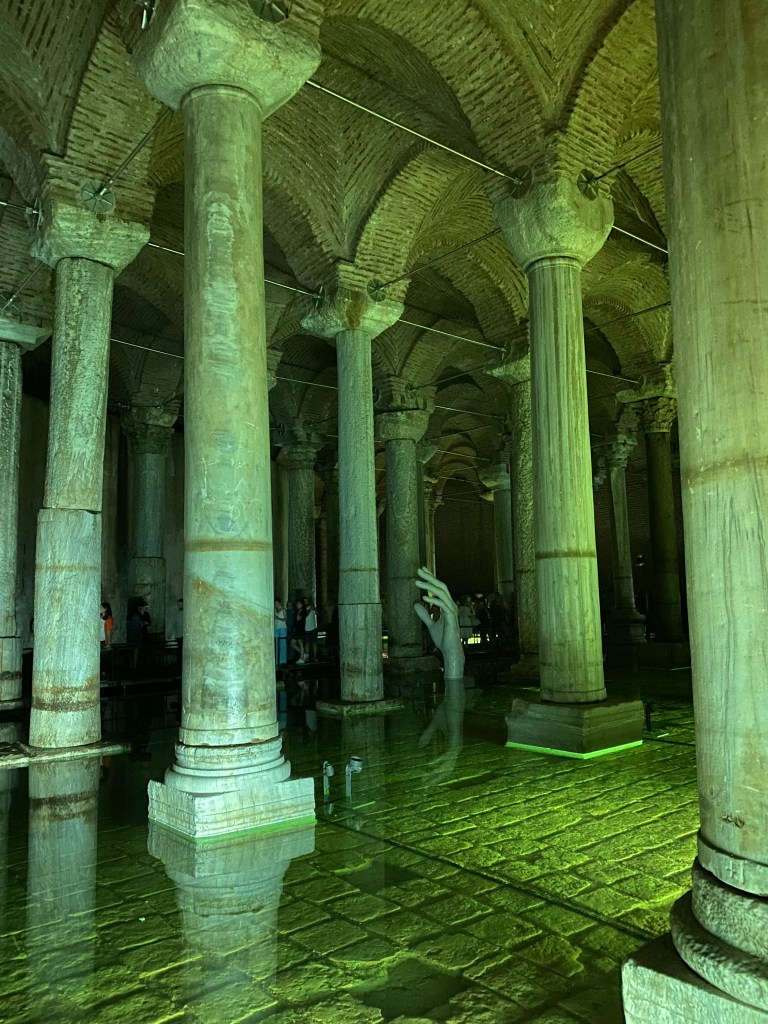
More recently, James Bond navigated the cistern in From Russia with Love (although the MI6 Istanbul Station Chief mis-attributes its creation to Constantine, rather than Justinian):
Although most of the 336 marble columns are pretty standard supports with Ionic and Corinthian (and a few Doric) capitals – cannibalized from Roman temples across the empire for use here, the bases of two columns are quite strikingly different.
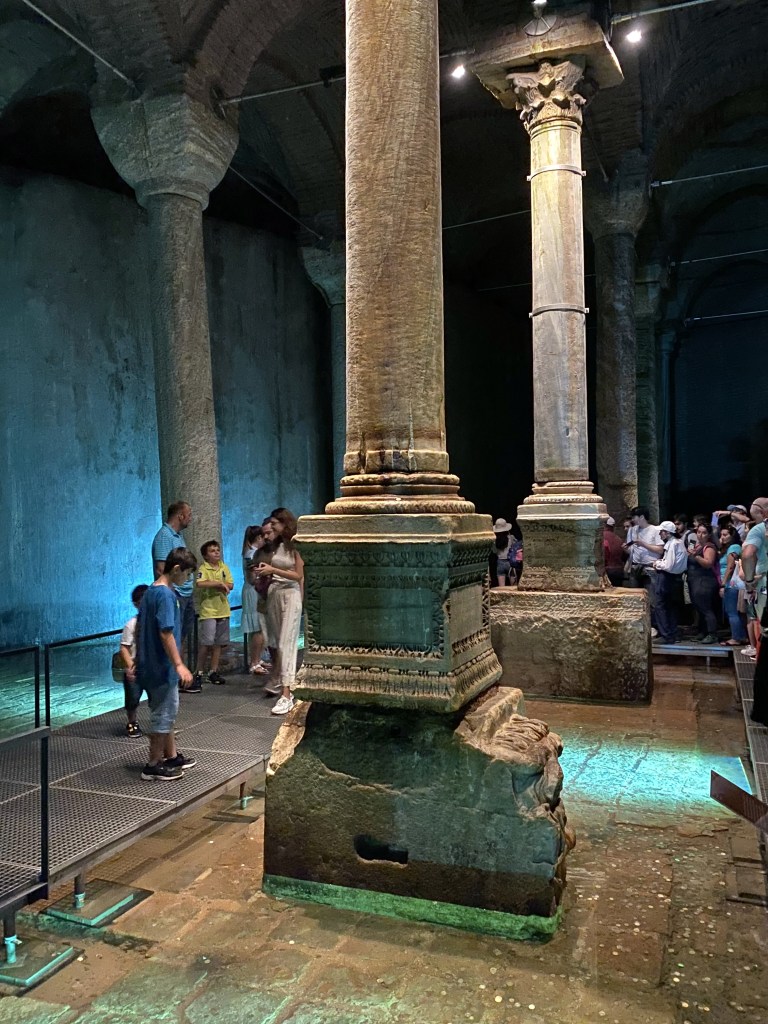
They’re heads of a Gorgon – more specifically, Medusa. The origins are unknown, but the thinking is that they were repurposed from a late Roman temple that was regarded as pagan and simply used as a quarry, and the heads were used along with the columns.

Pagan or not, the Orthodox Christians still took the risk of the Gorgon’s gaze seriously and installed one on its side and the other upside down to neutralize their power. “A similar Gorgon head, now at the Istanbul Archaeological Museums, was found at the Forum of Constantine, which suggests the two Gorgon heads of the Basilica Cistern might also originally decorated the Forum of Constantine.” (From here.)

And one column is carved with raised pictures of a Hen’s Eyes, or Peacock Eyes, tear drops, which apparently was a style similar to the columns on a 4th-century Triumphal Arch of Theodosius (one of the Byzantine emperors referenced with the hippodrome).


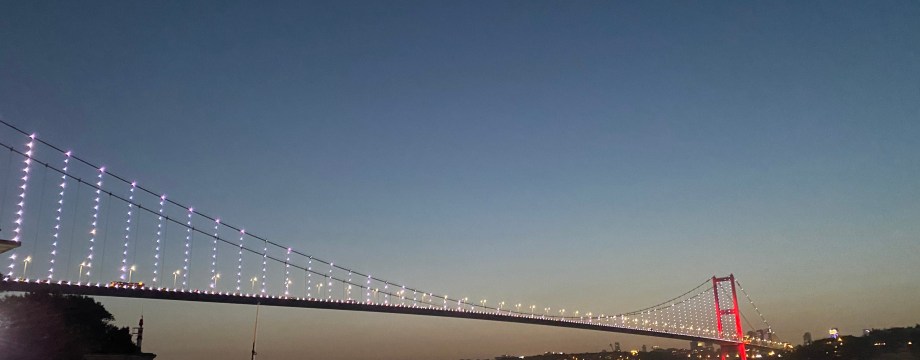
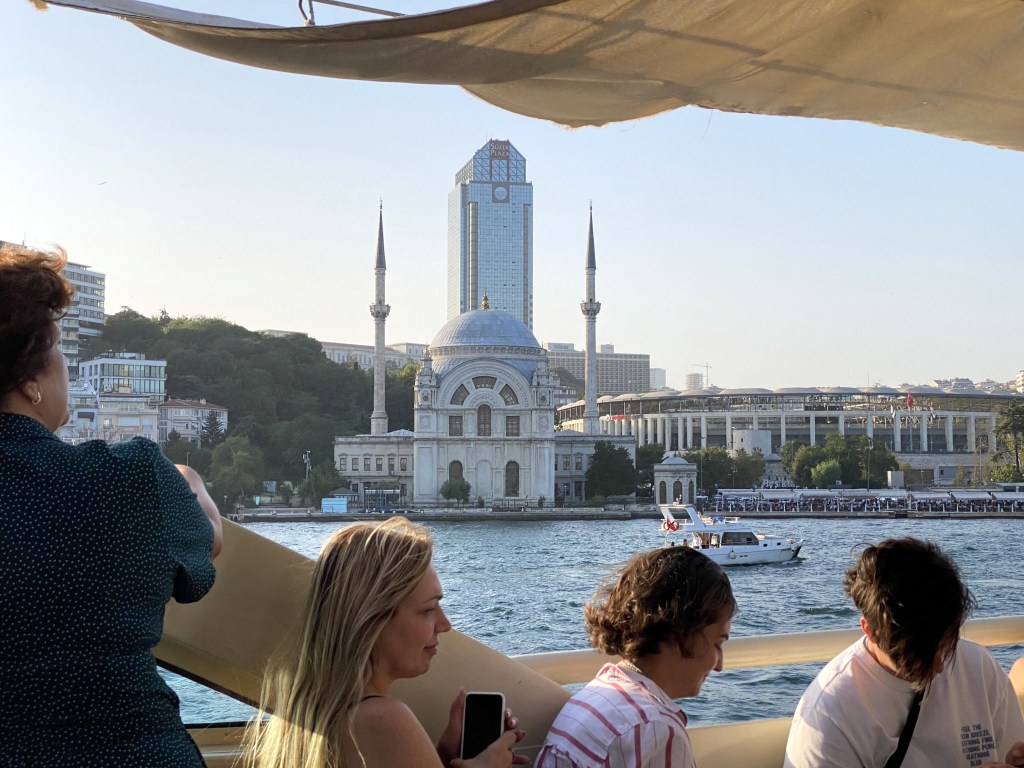
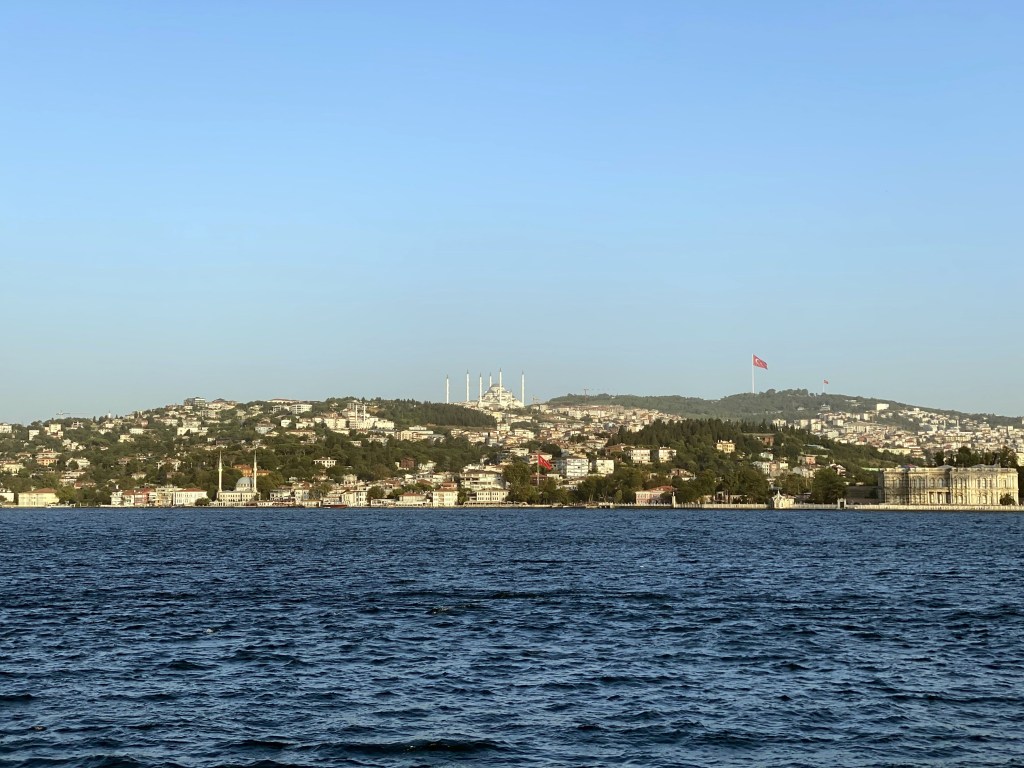
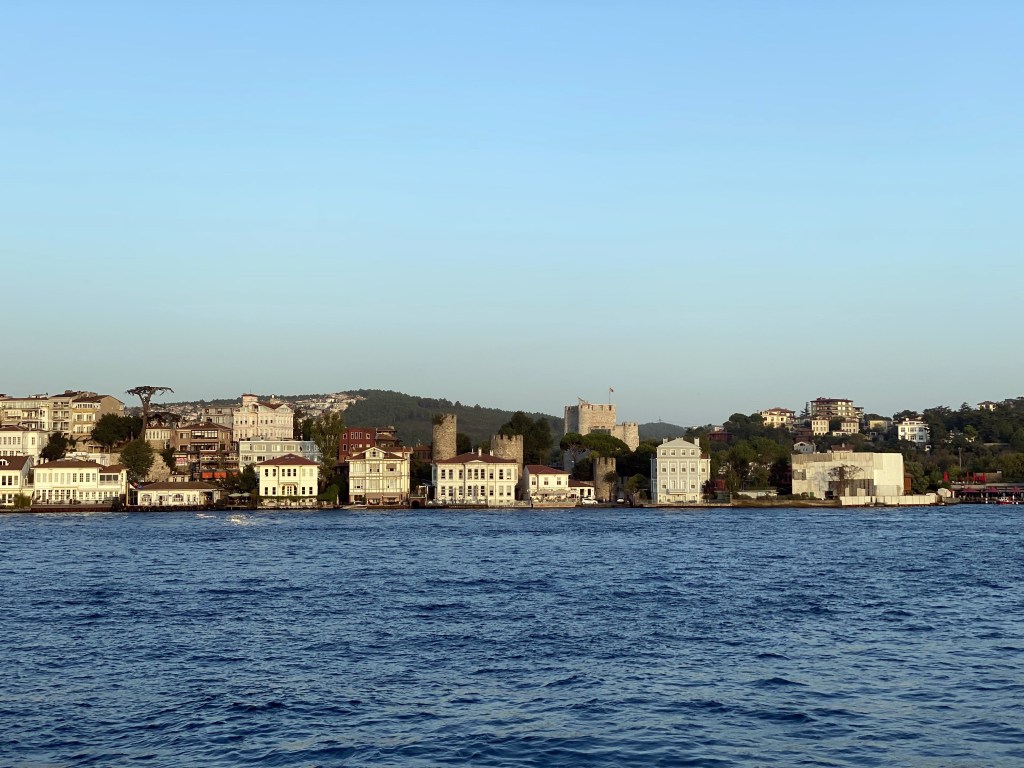
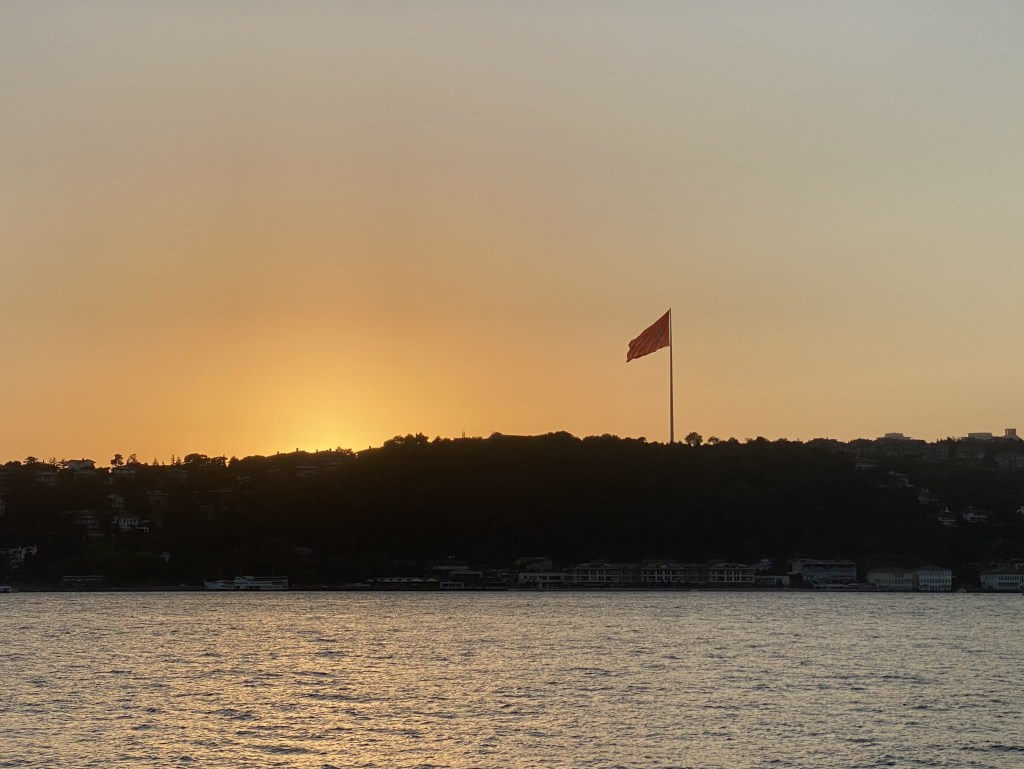
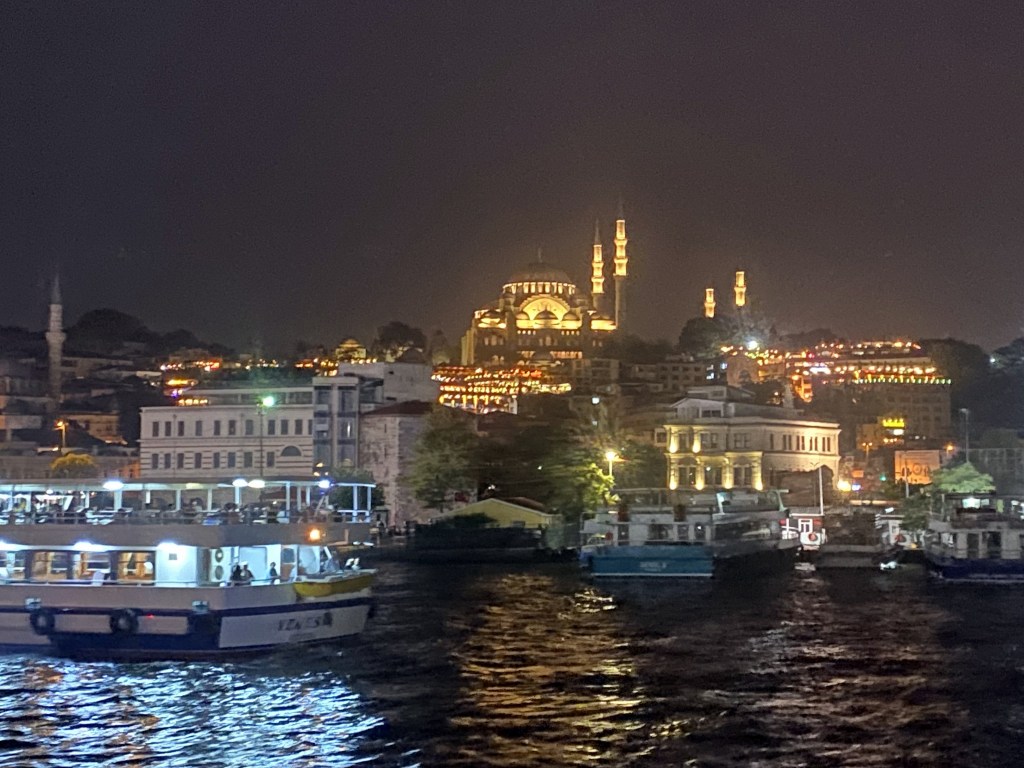
Evening boat ride up (down?) the Bosporus:



 WolfeStreetTravel