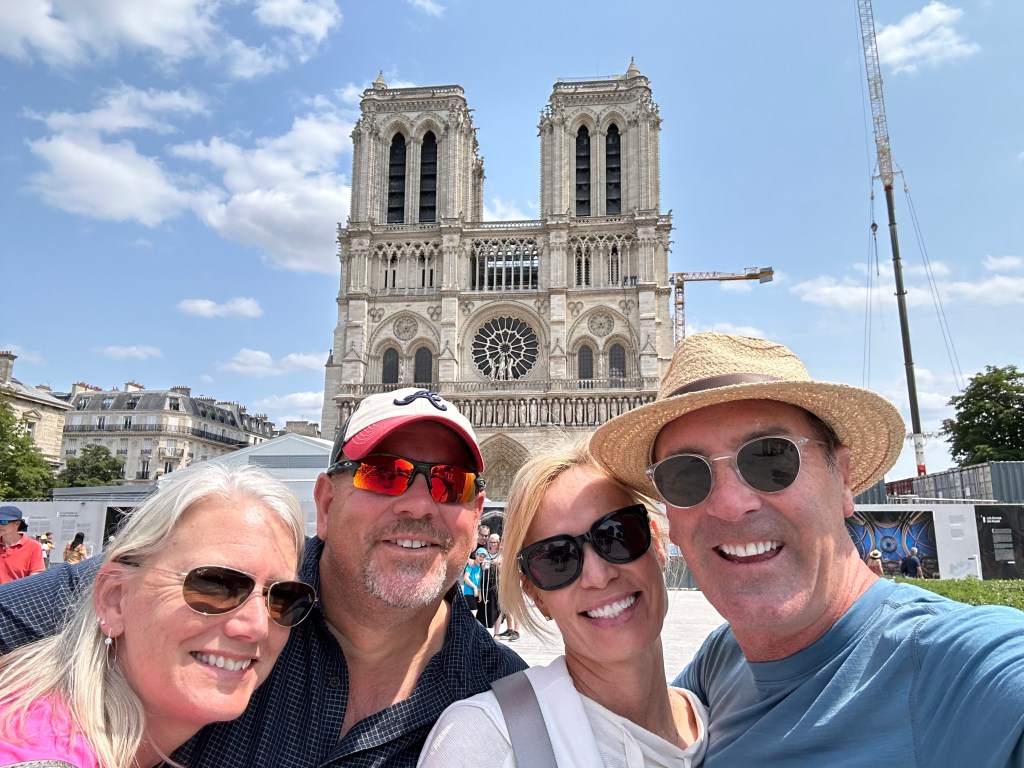
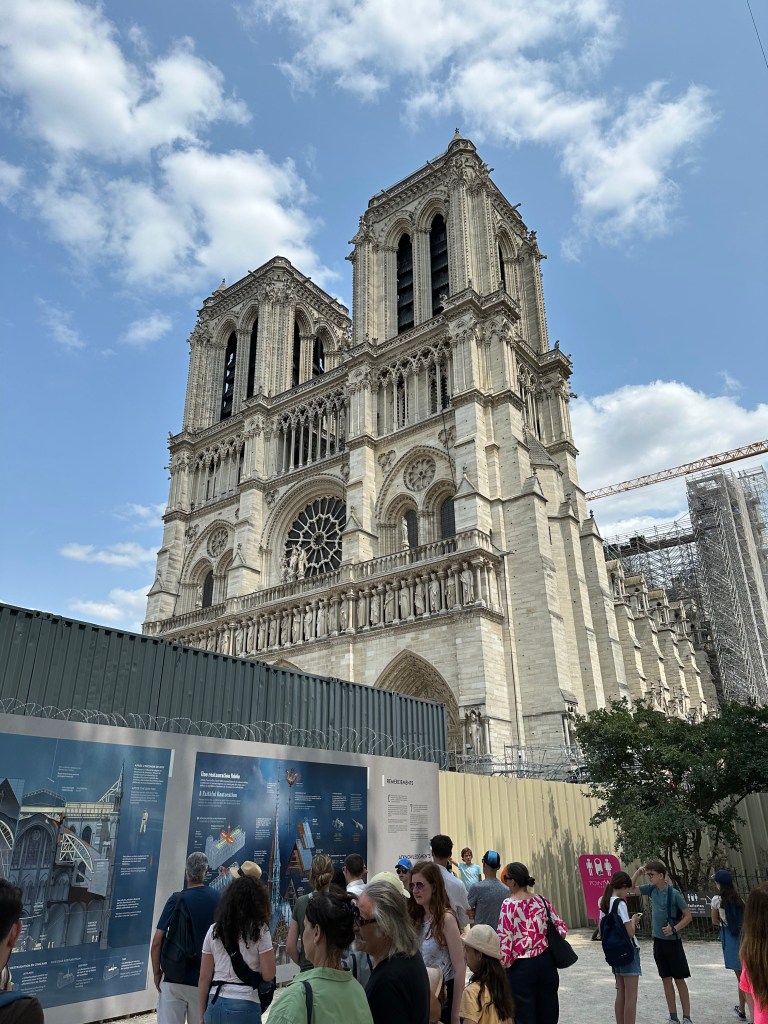
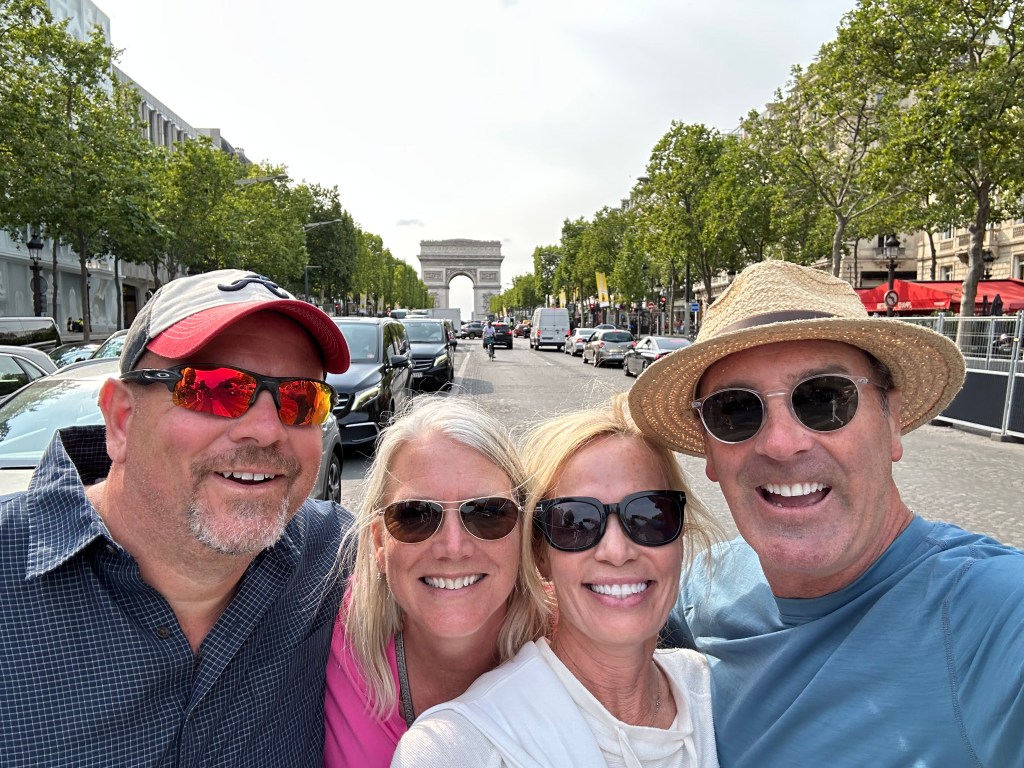
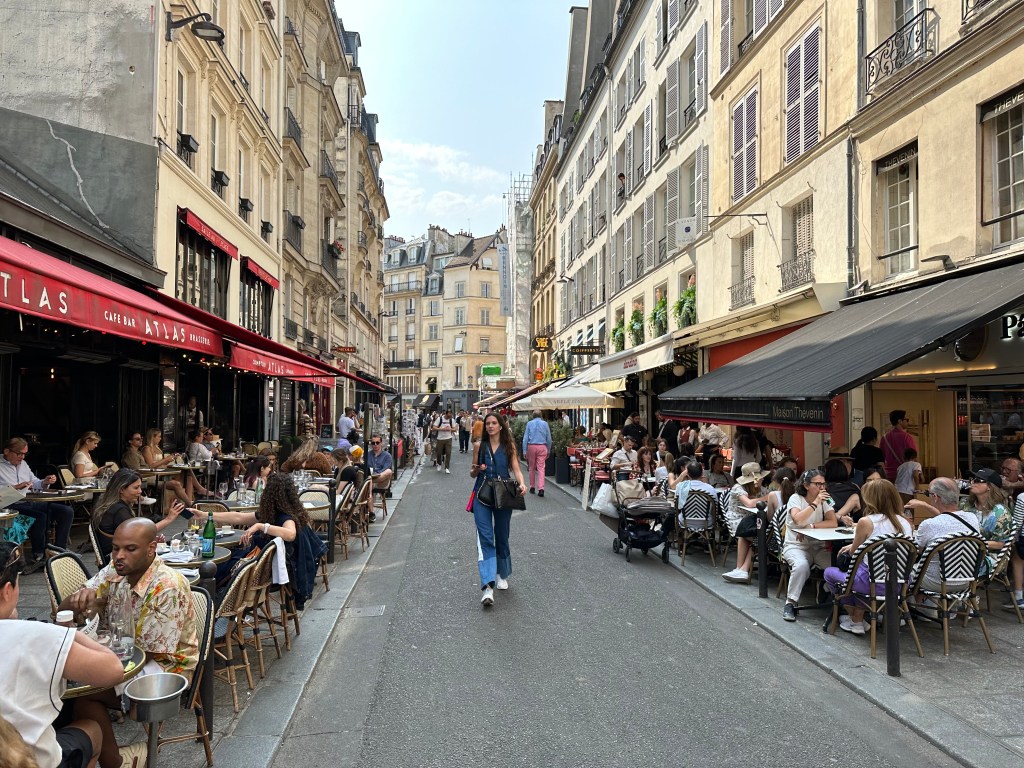
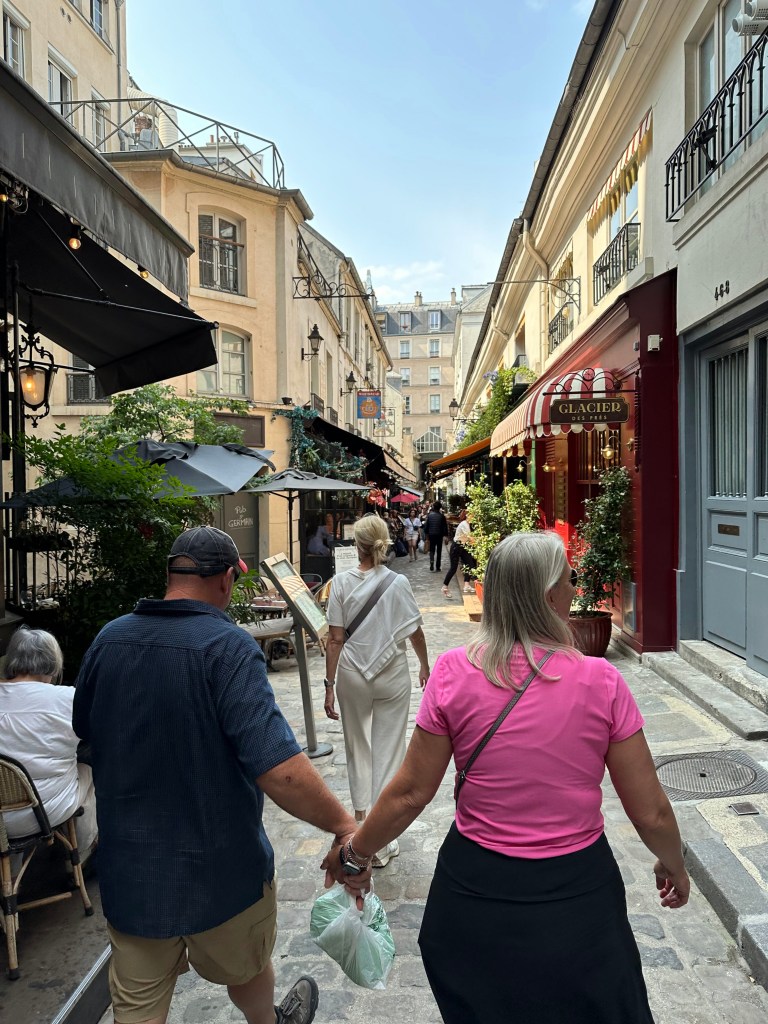
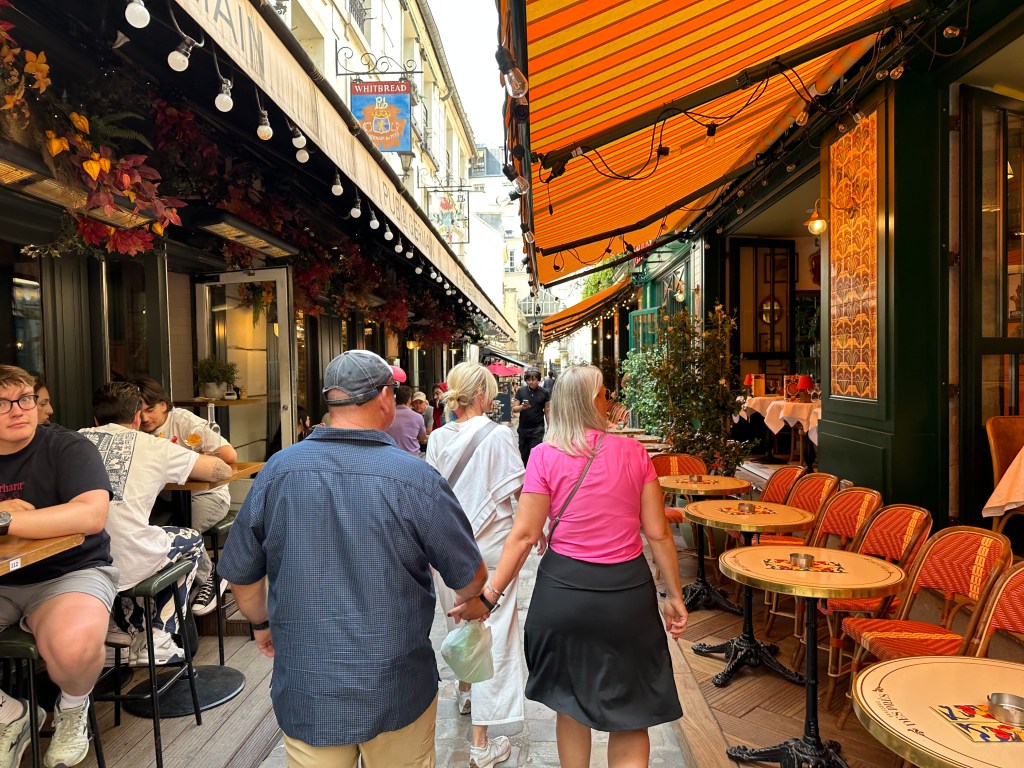
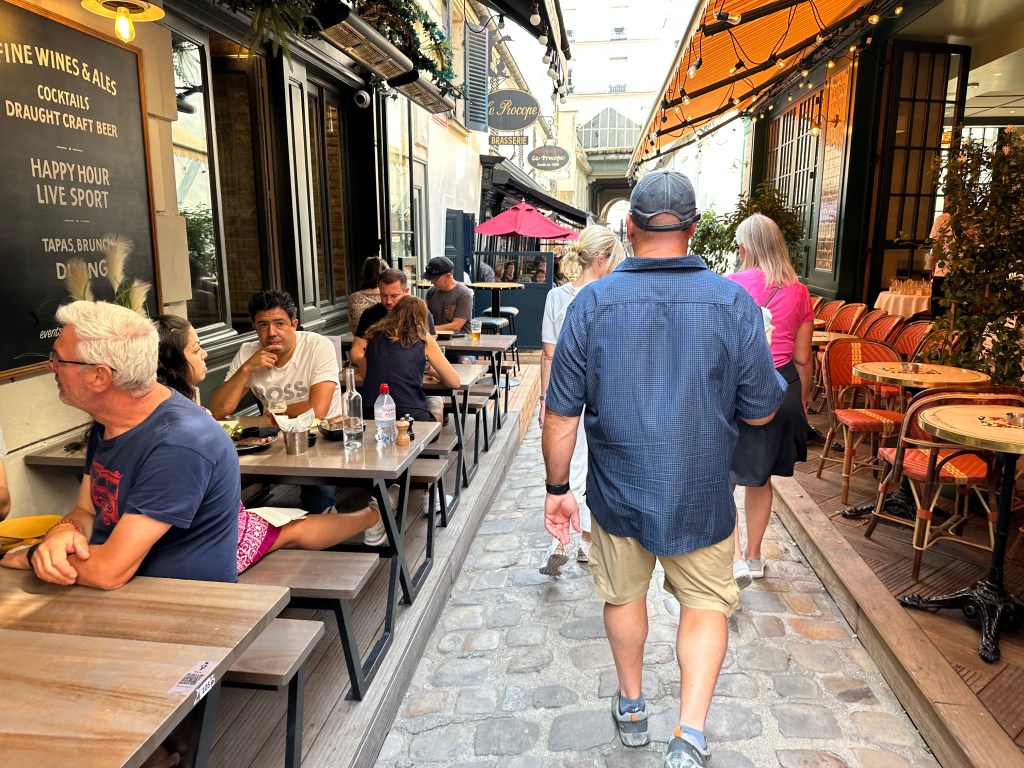
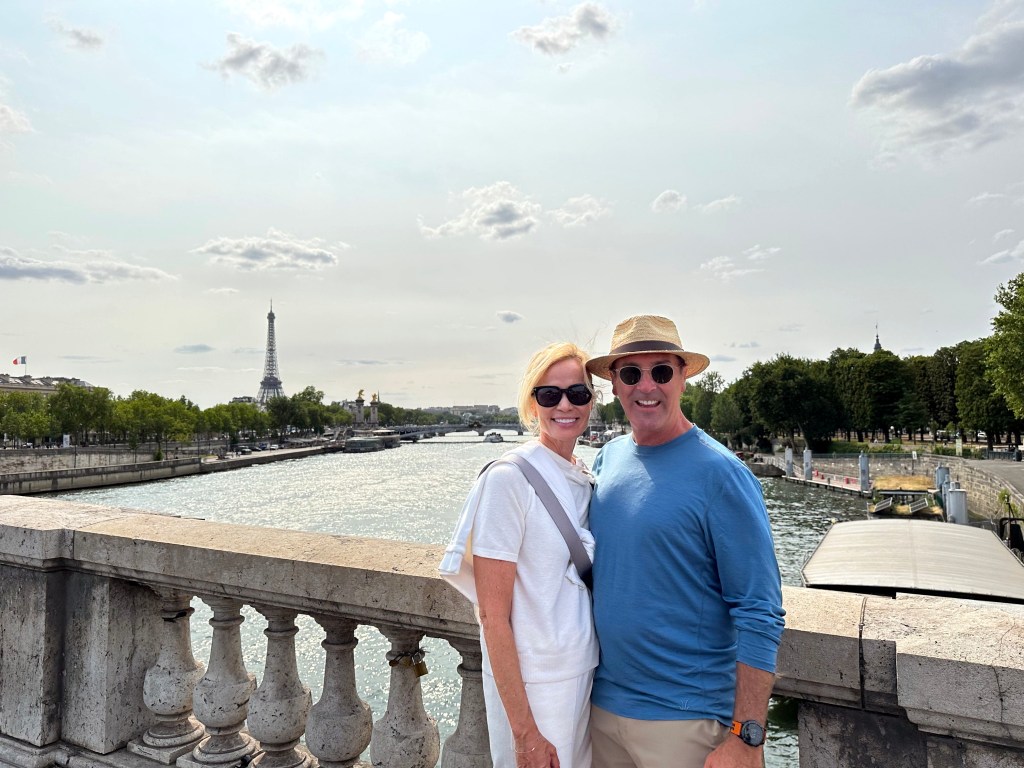
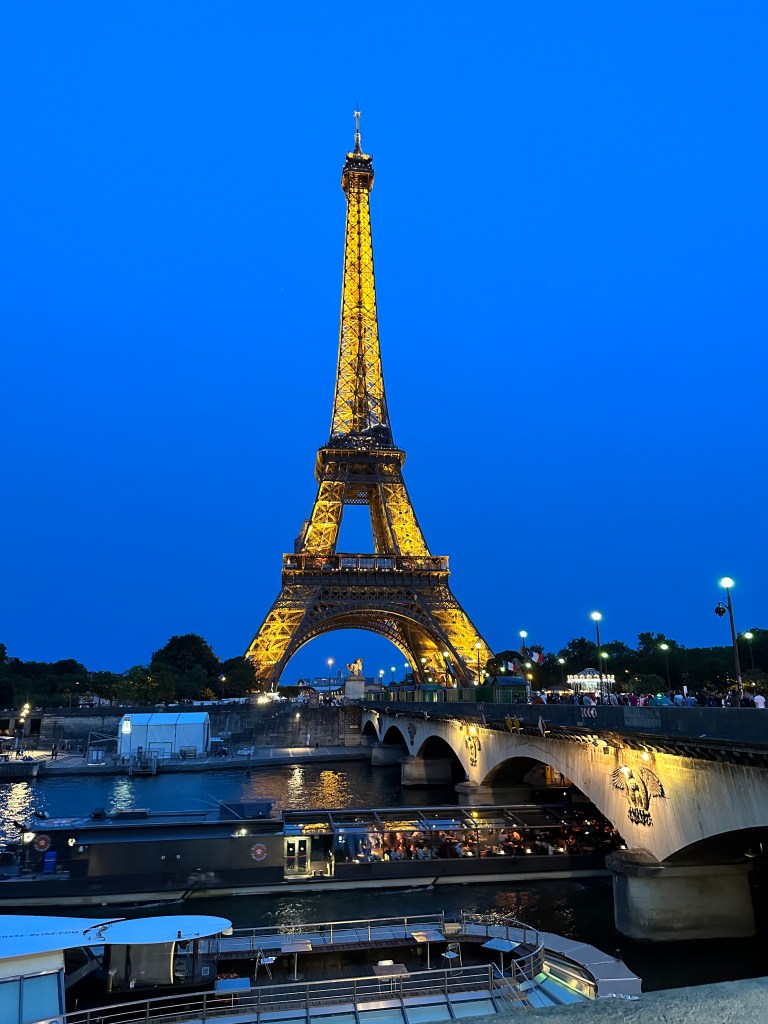
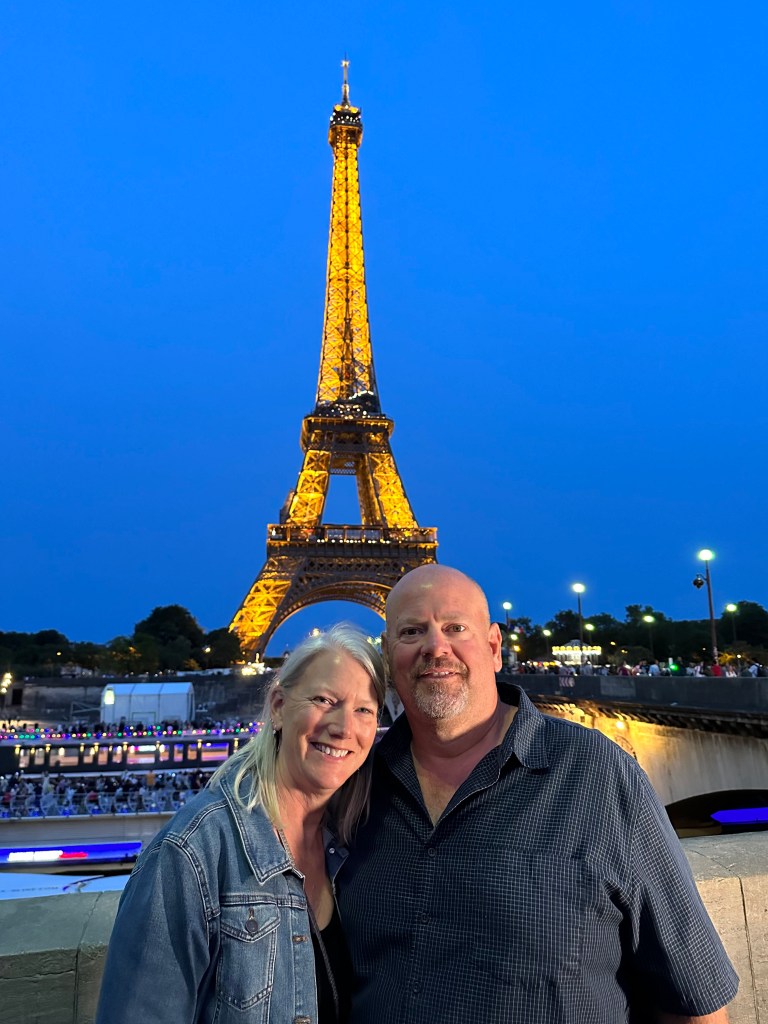
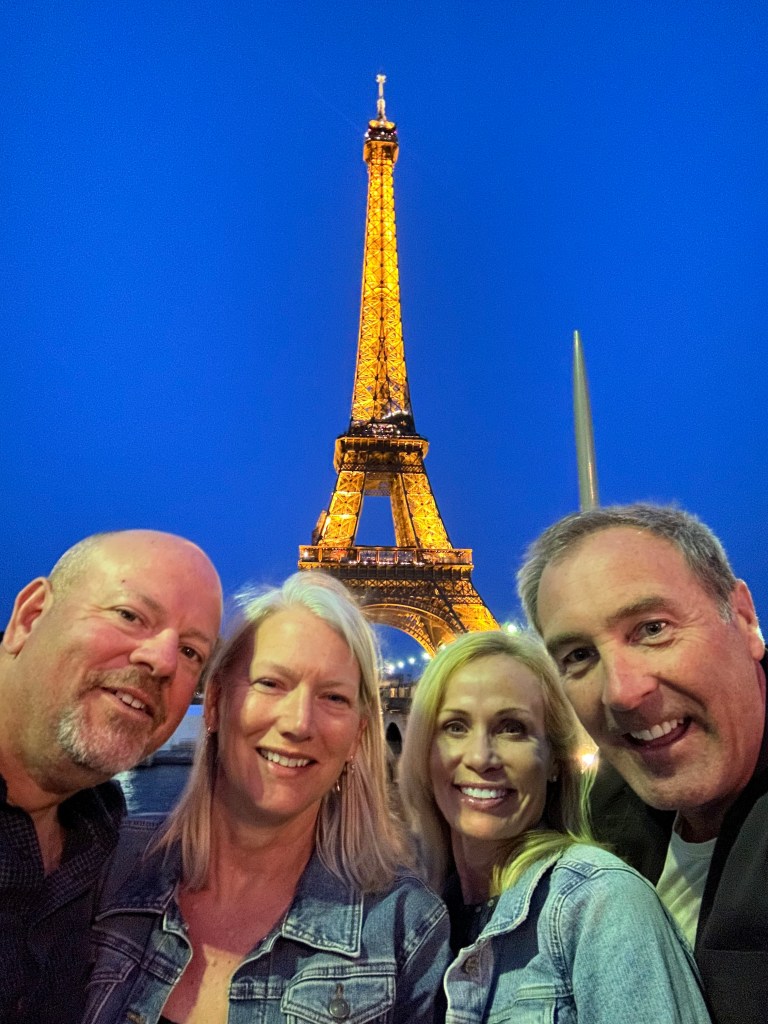
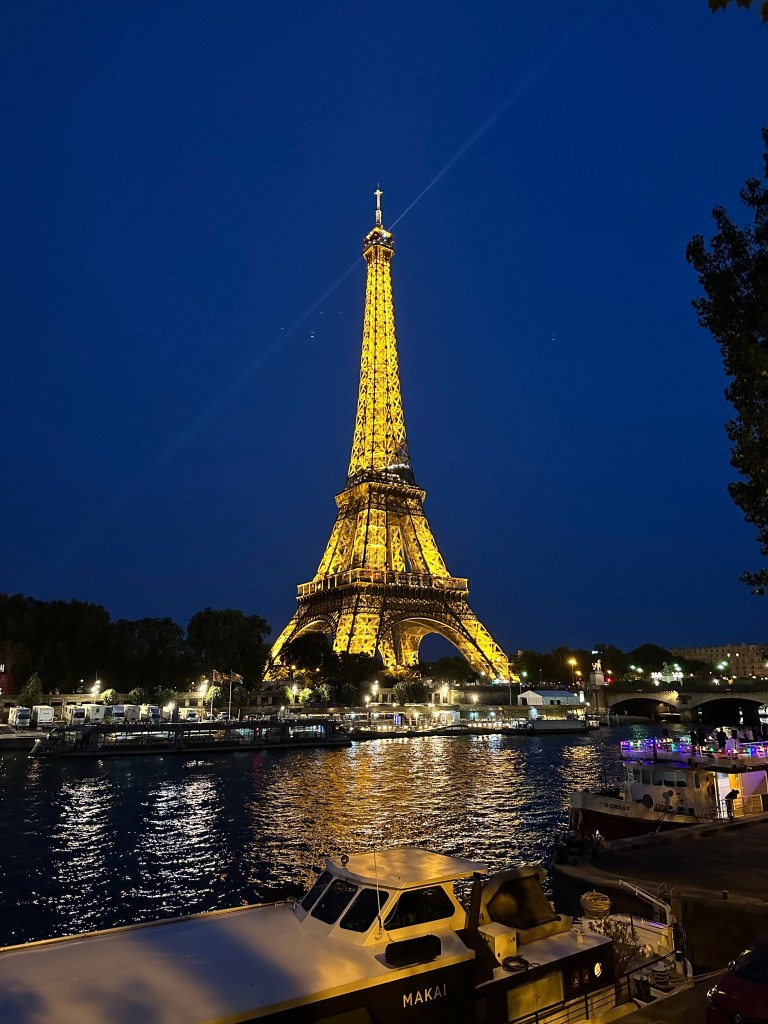
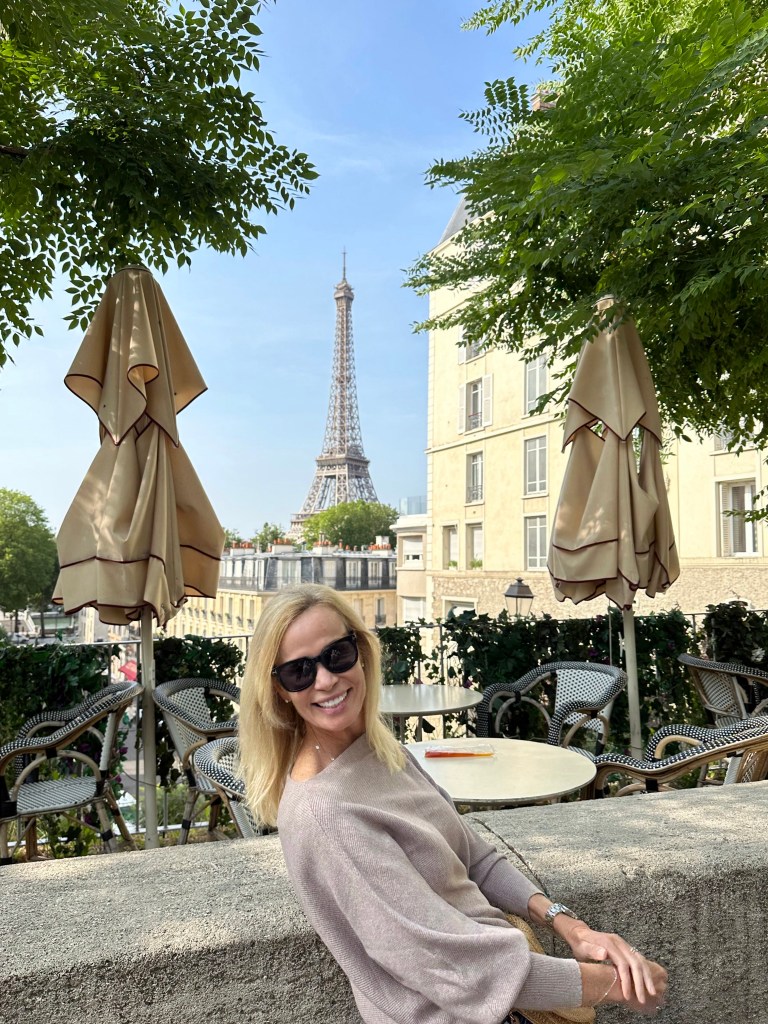
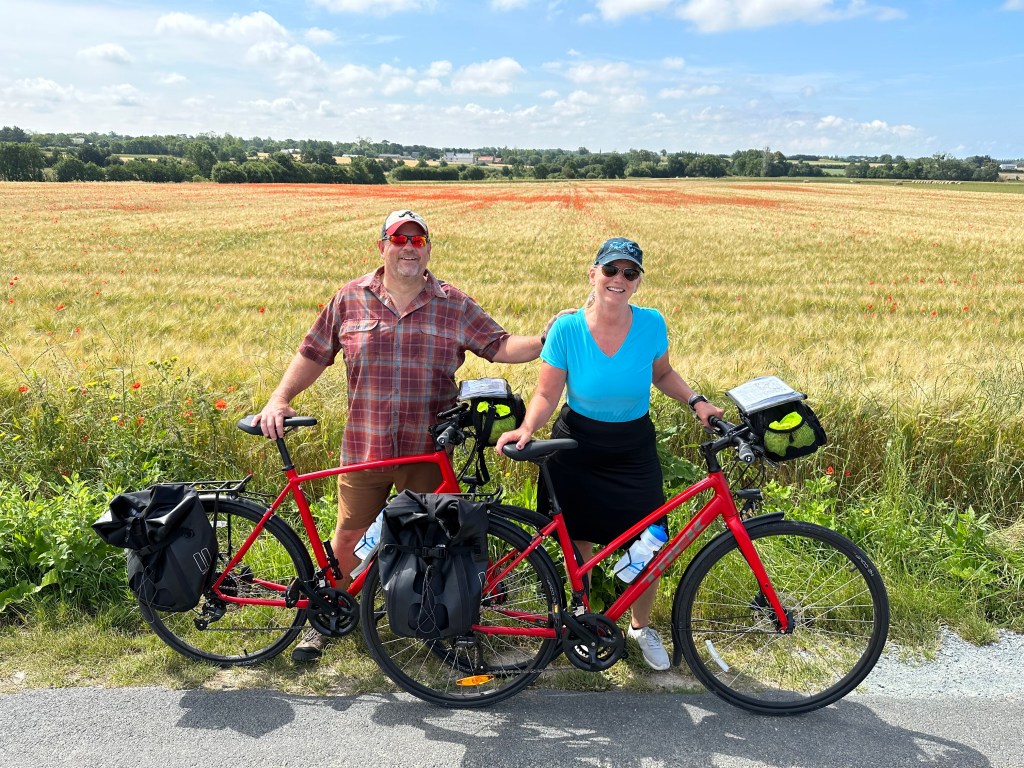
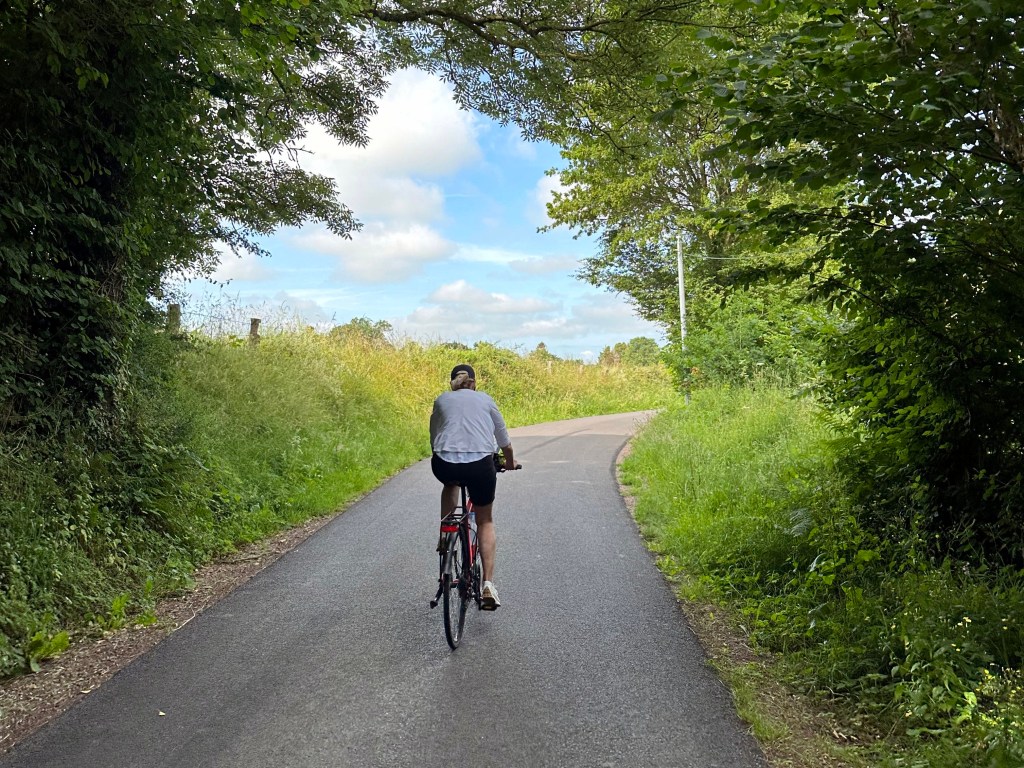
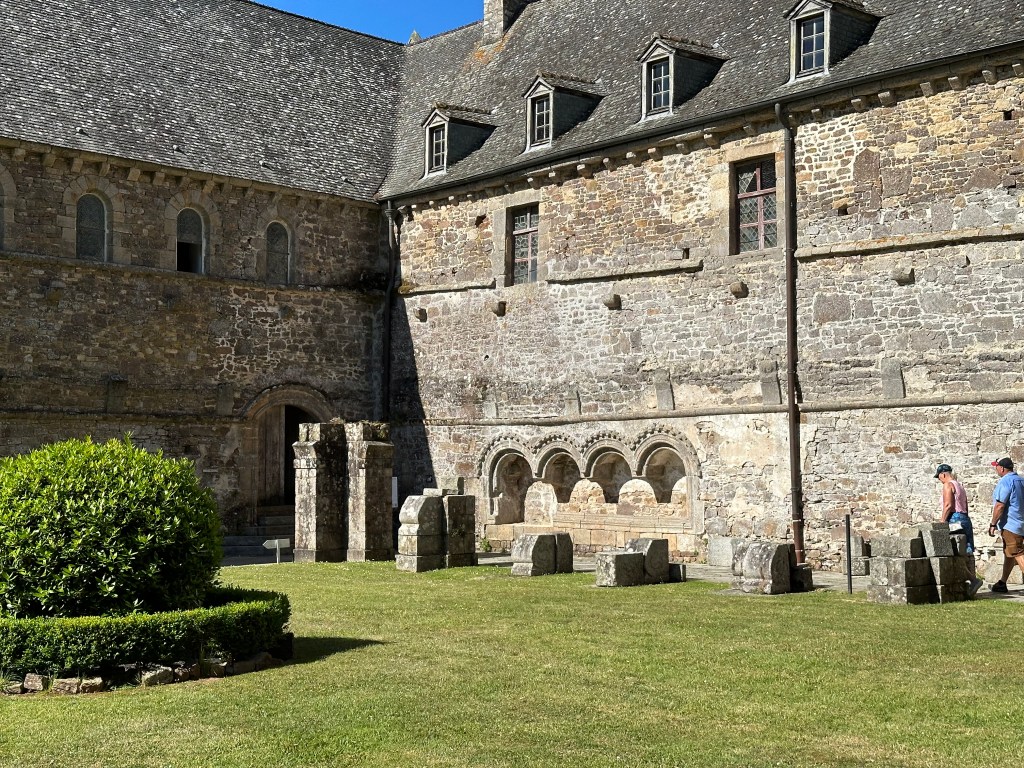
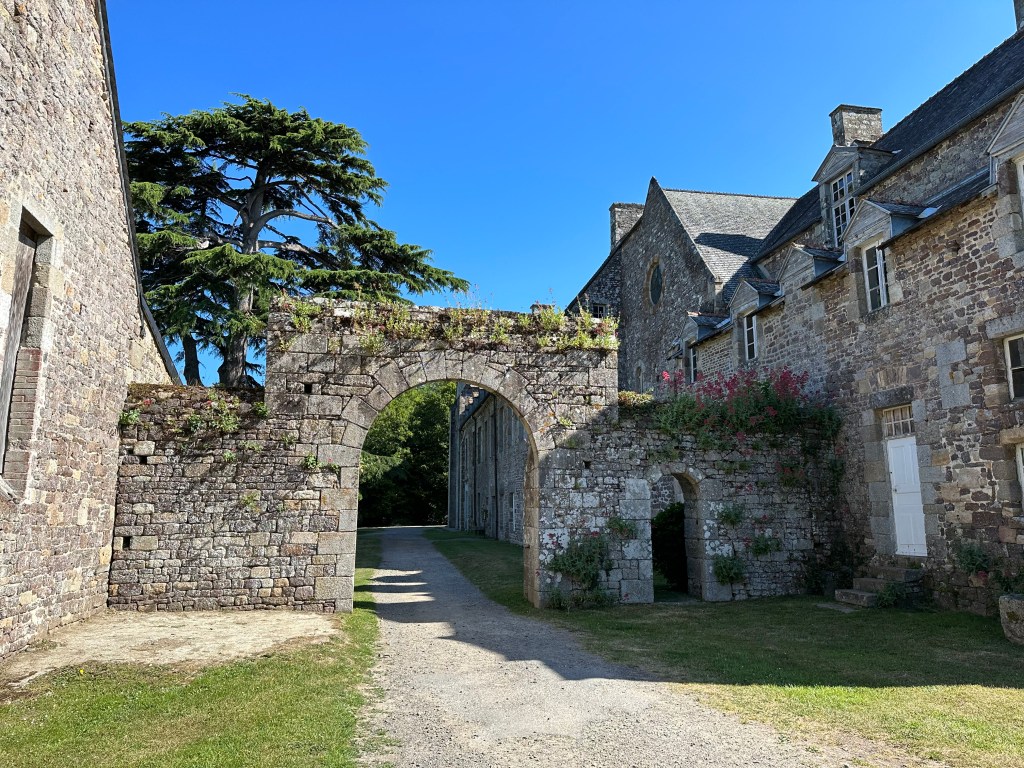
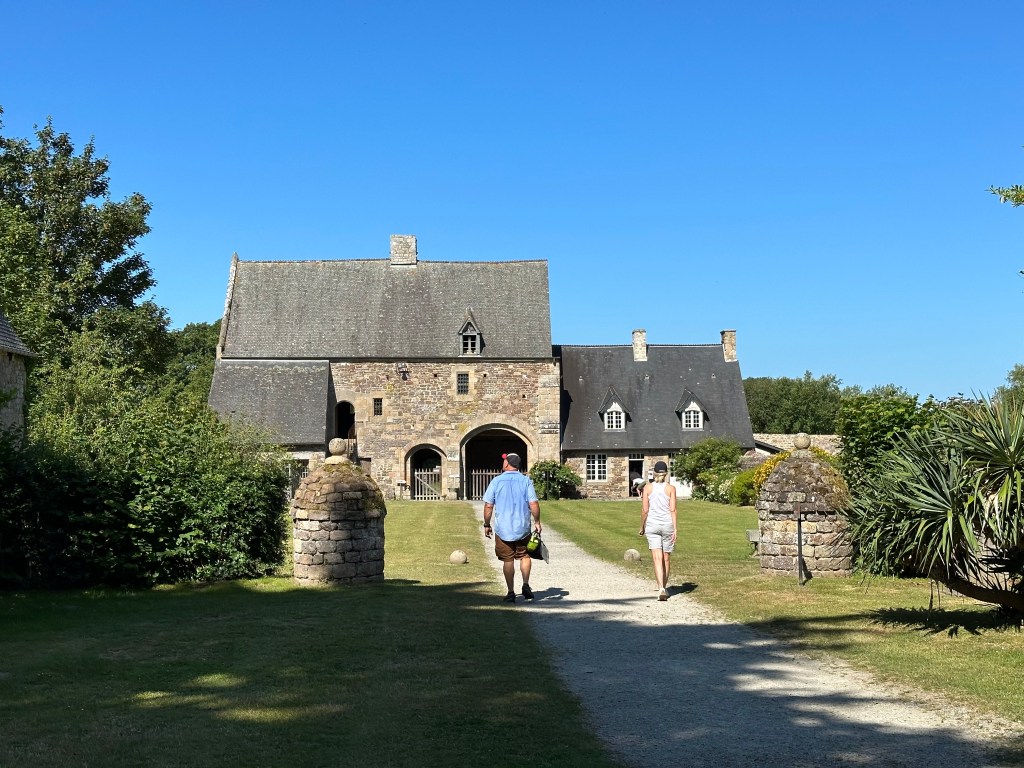
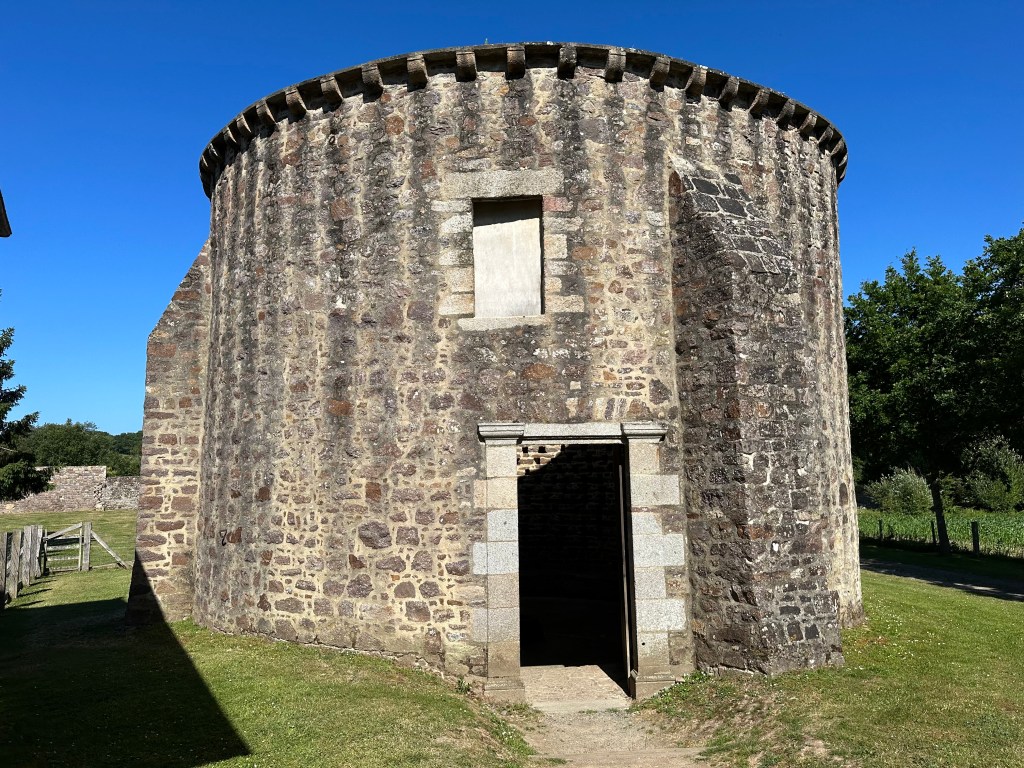
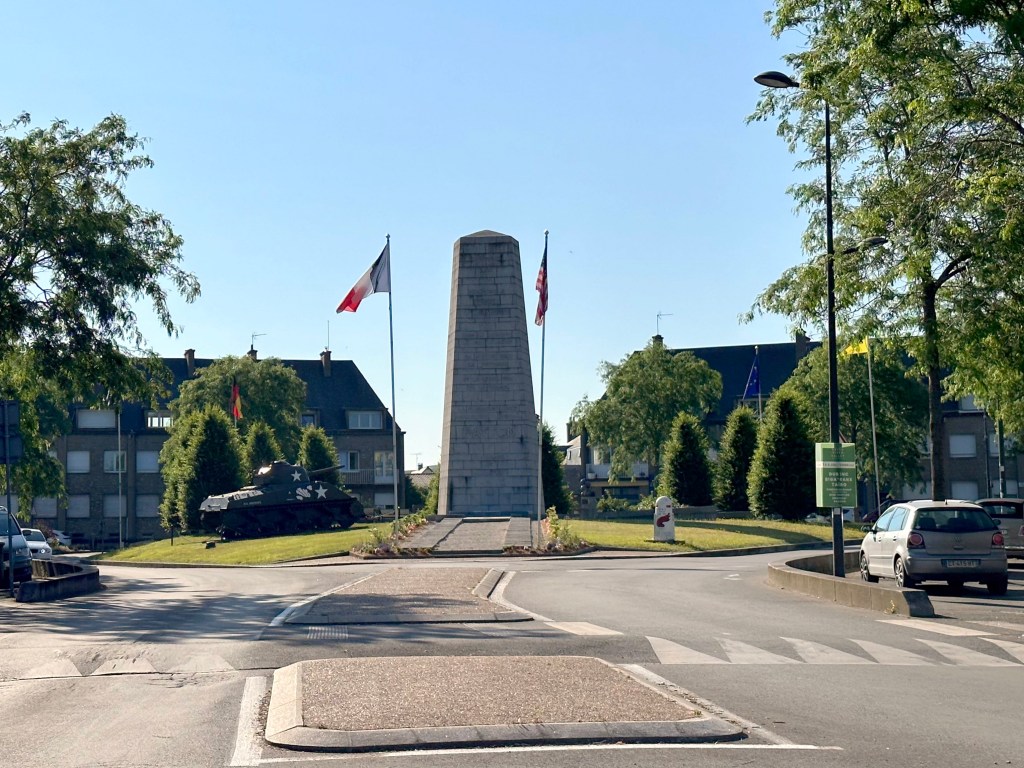
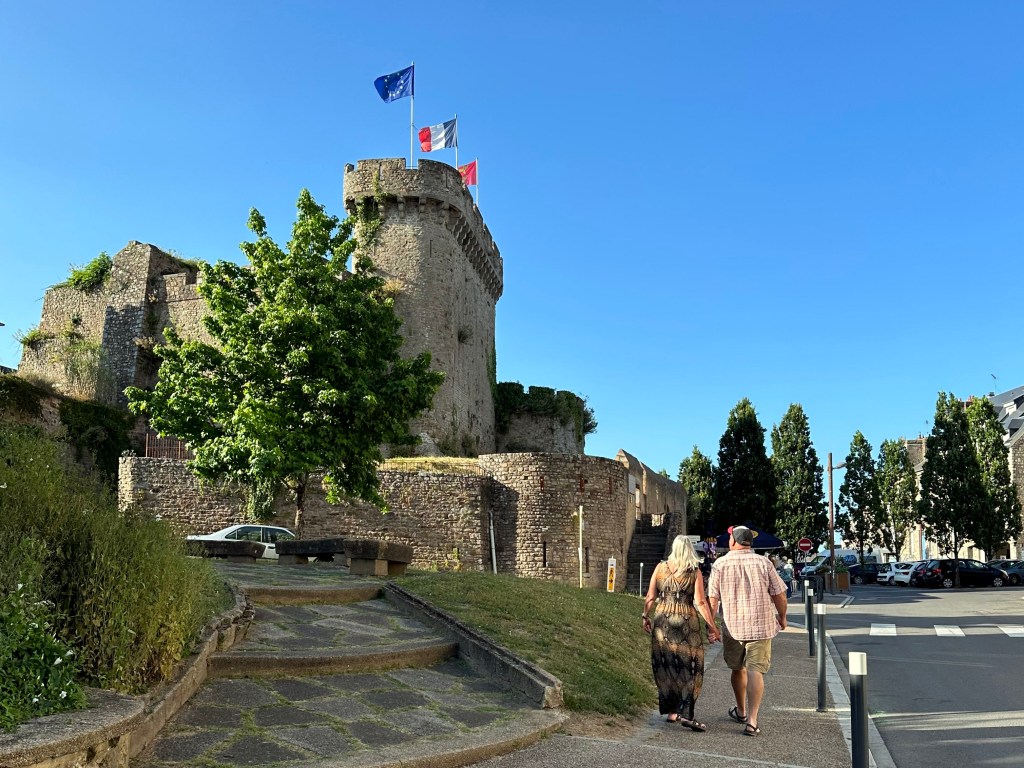
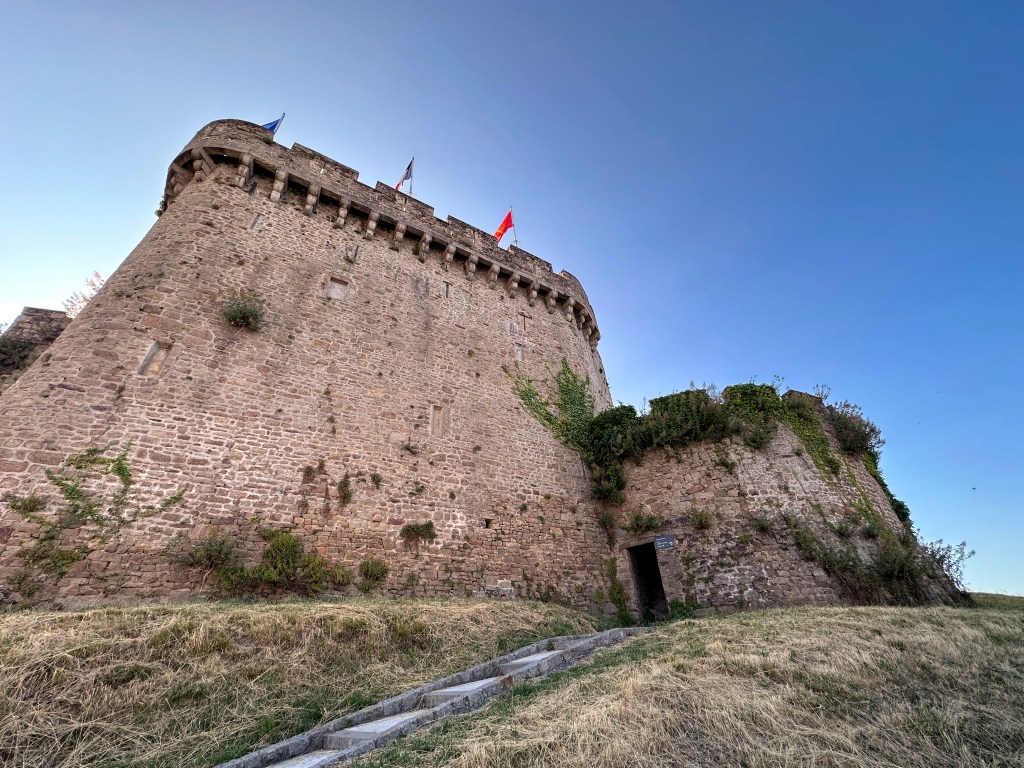
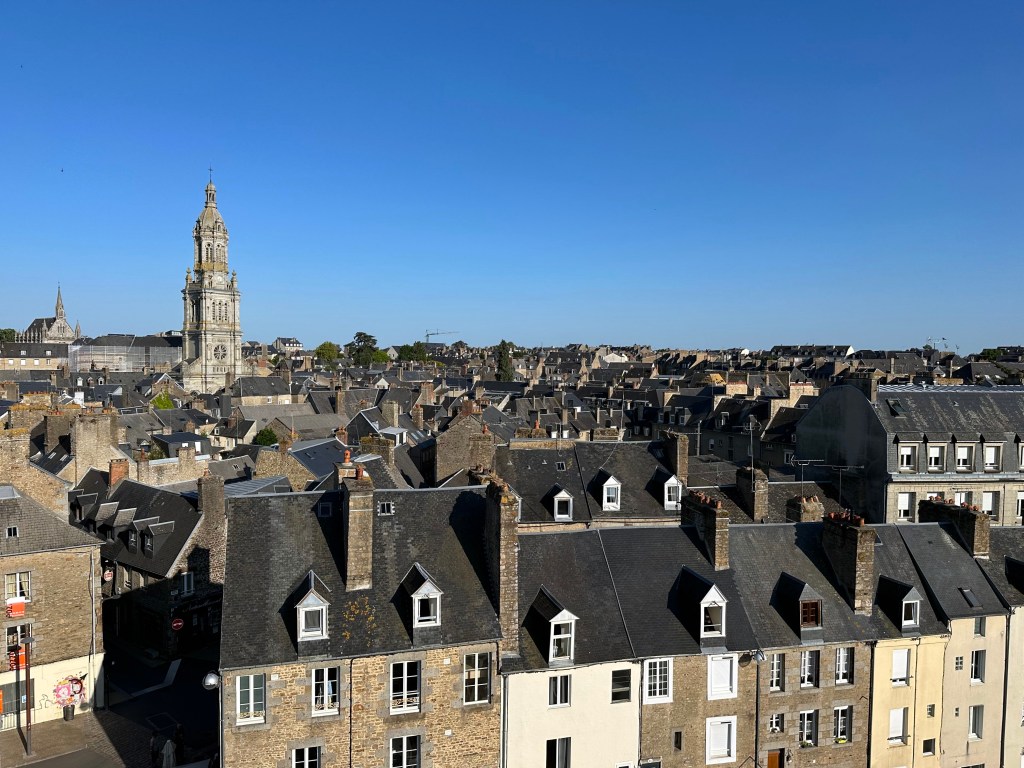
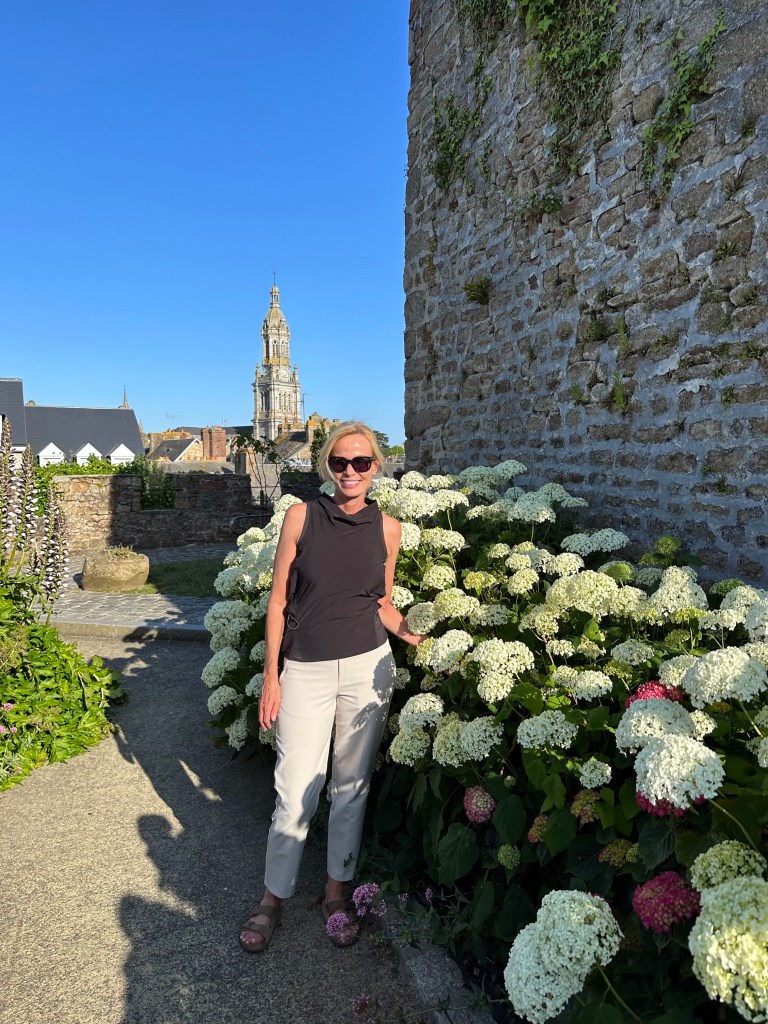
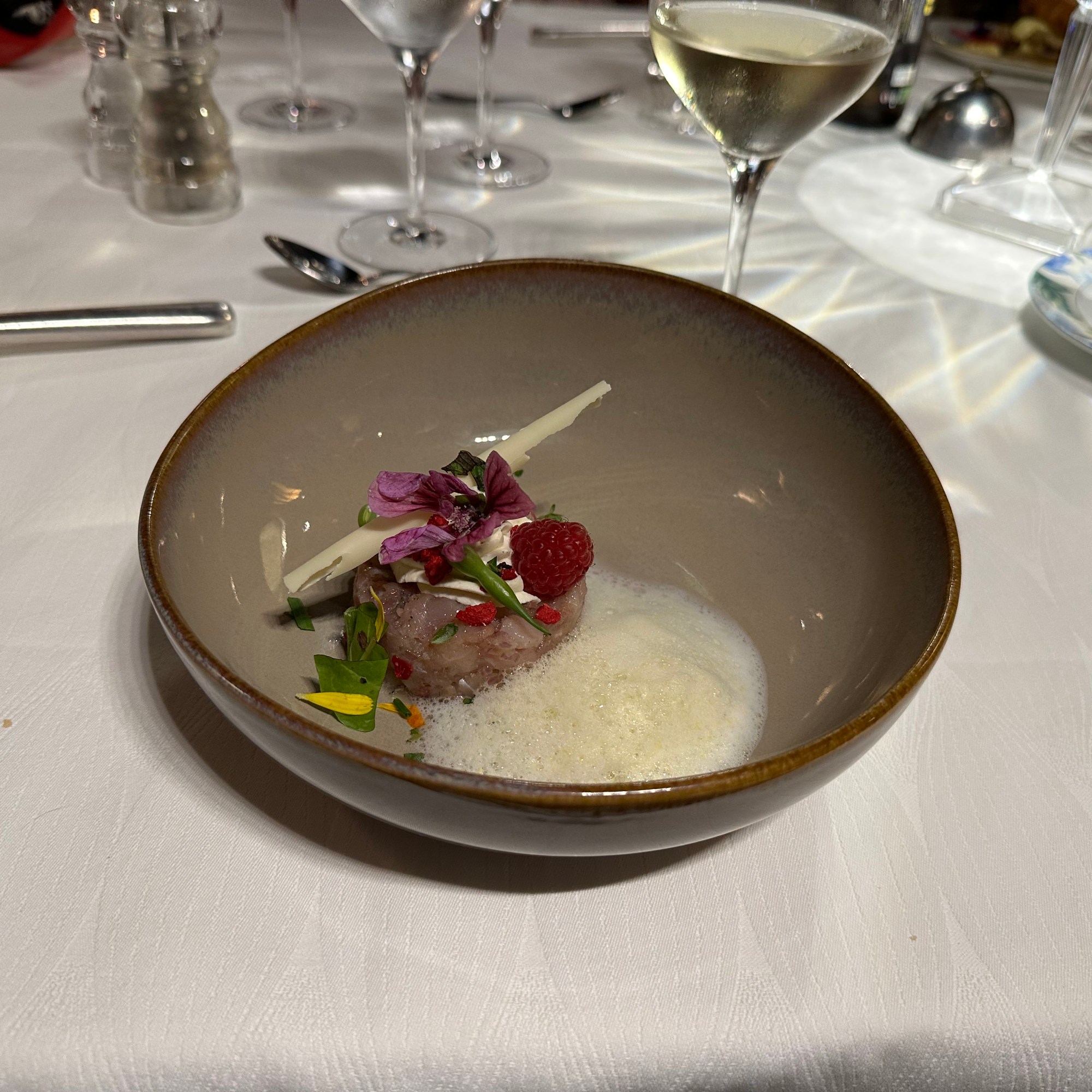
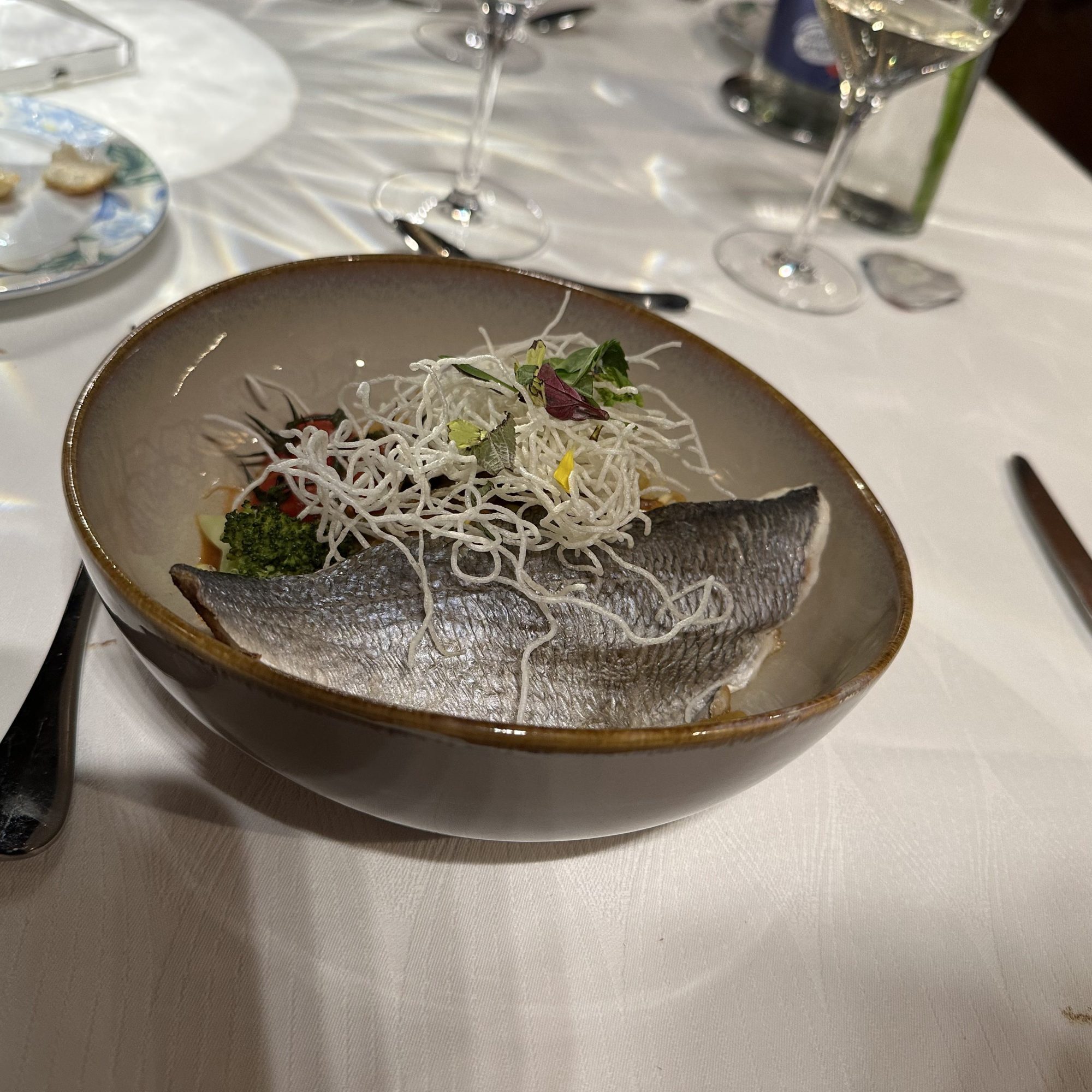
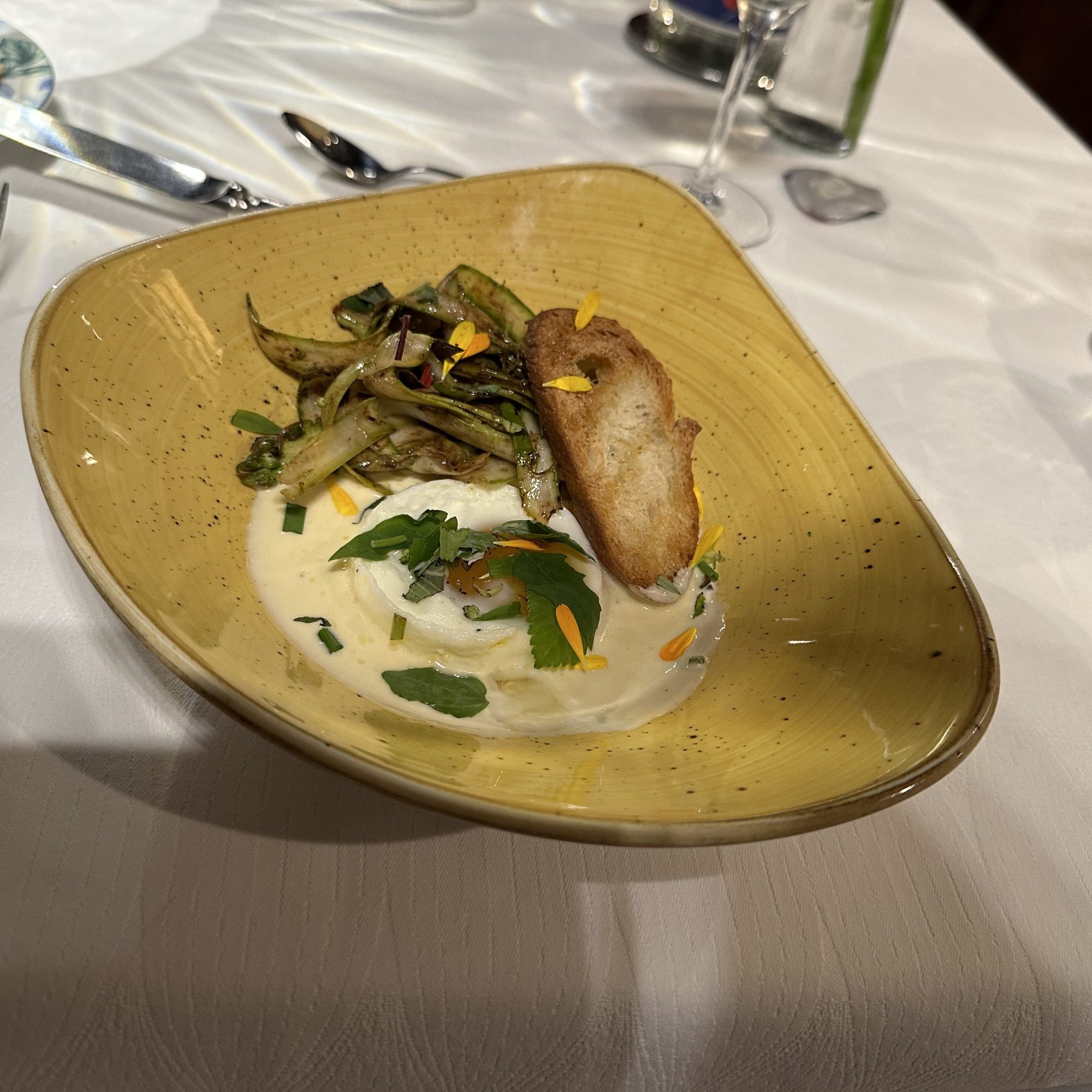
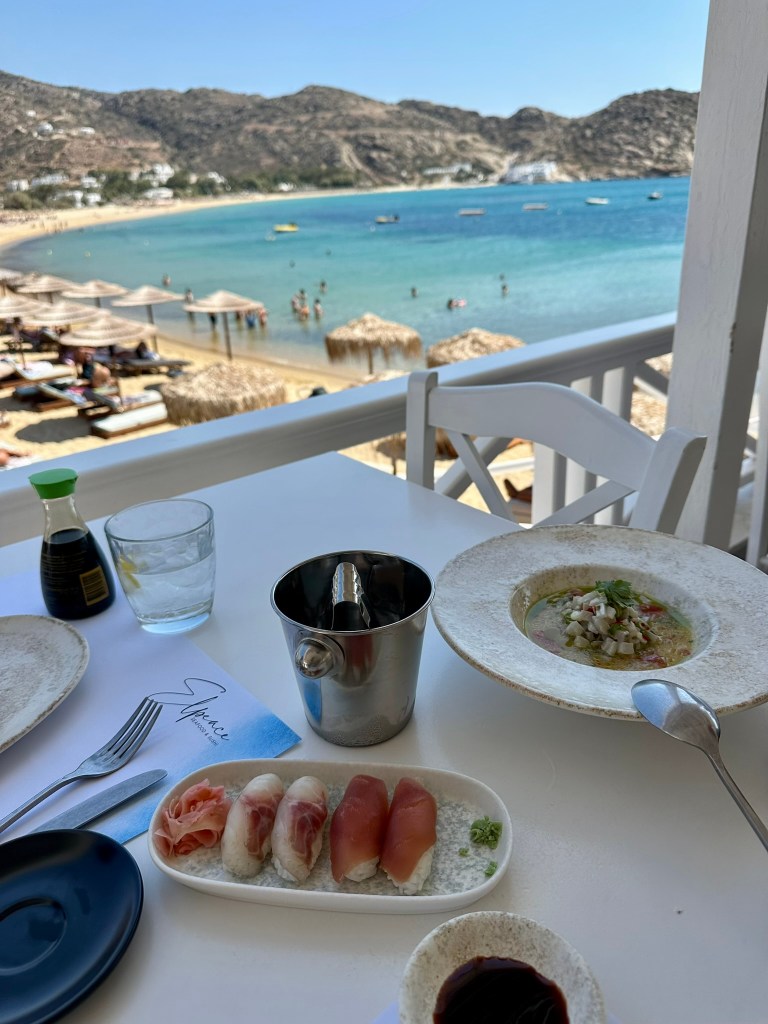
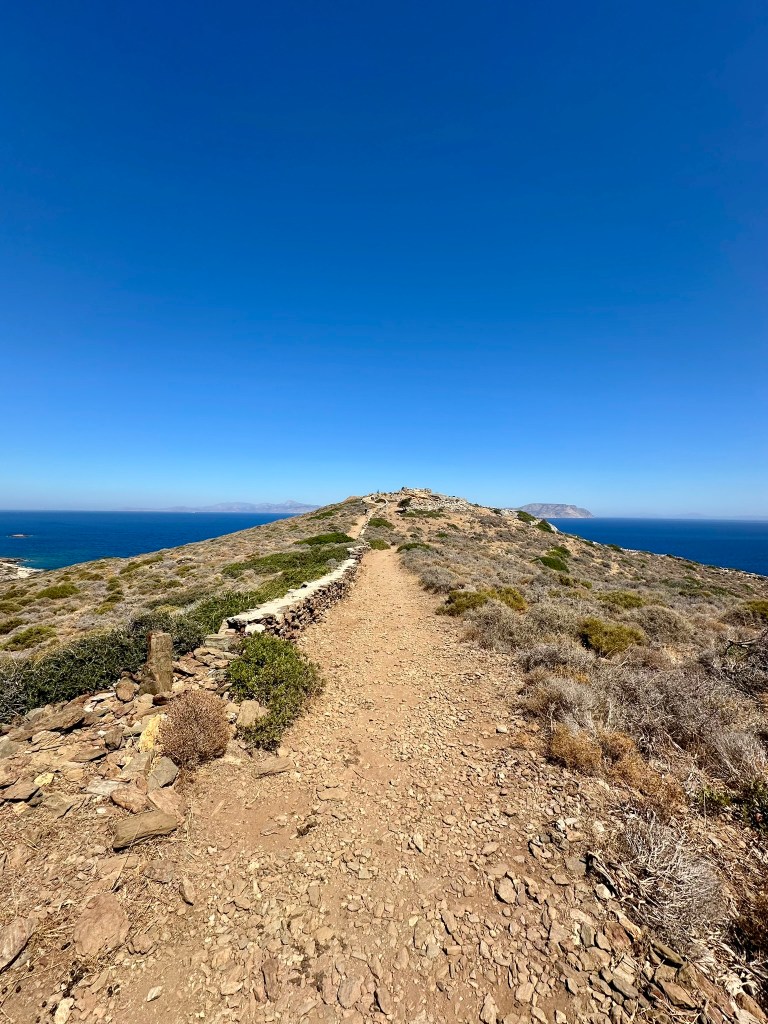
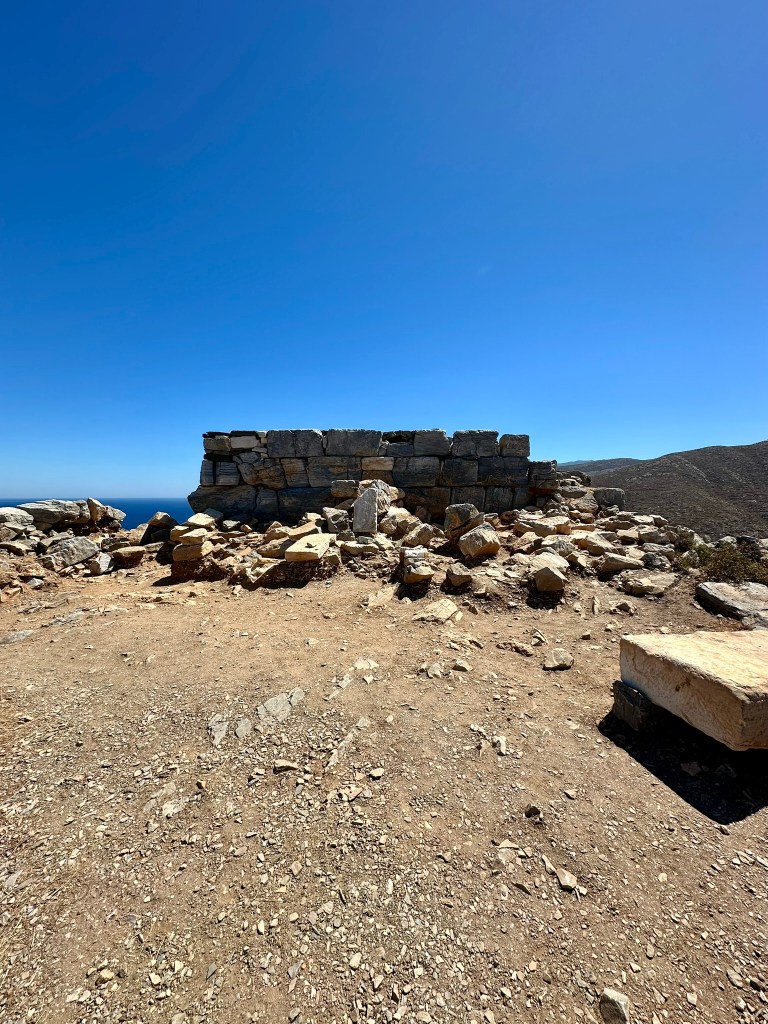
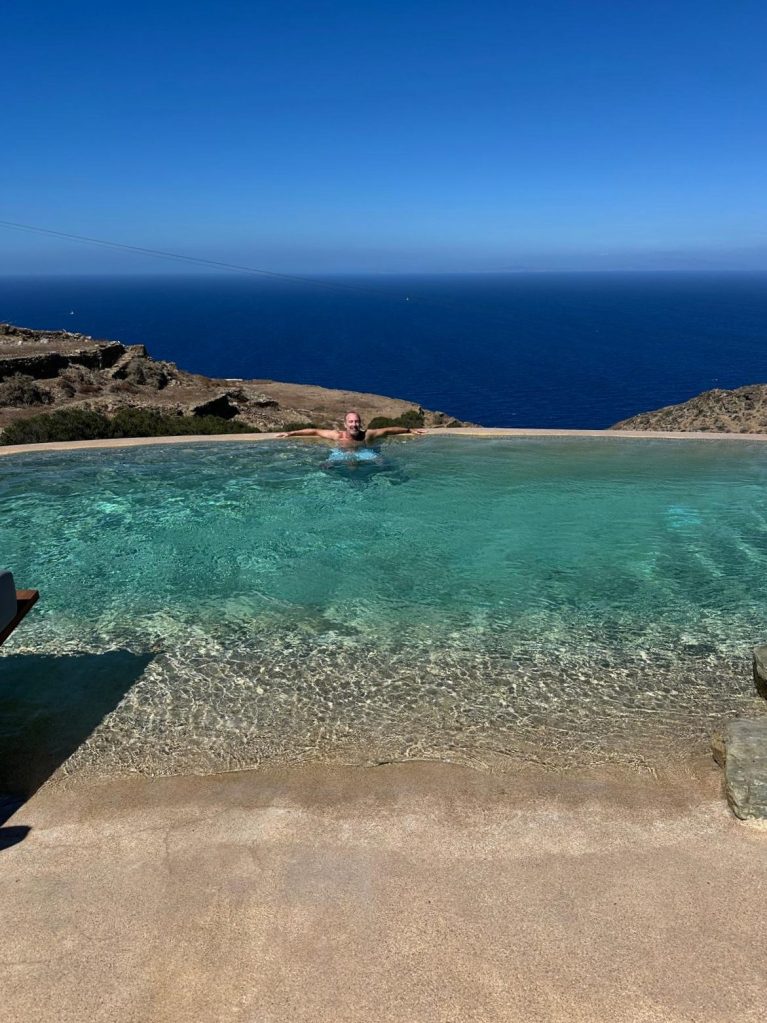
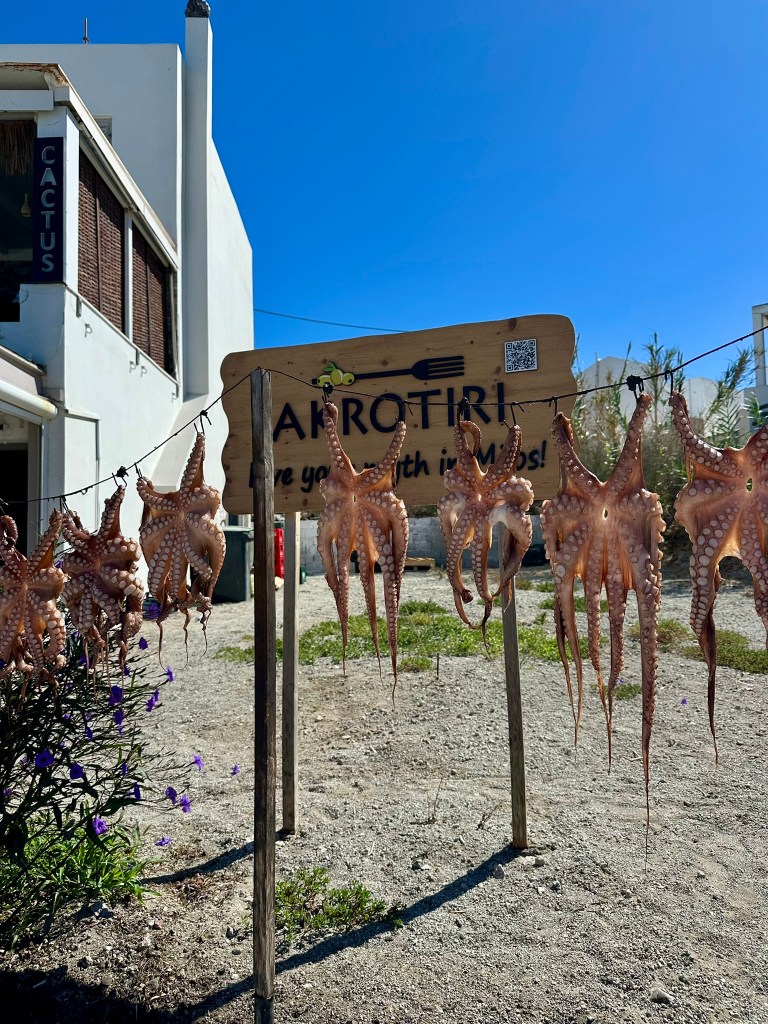
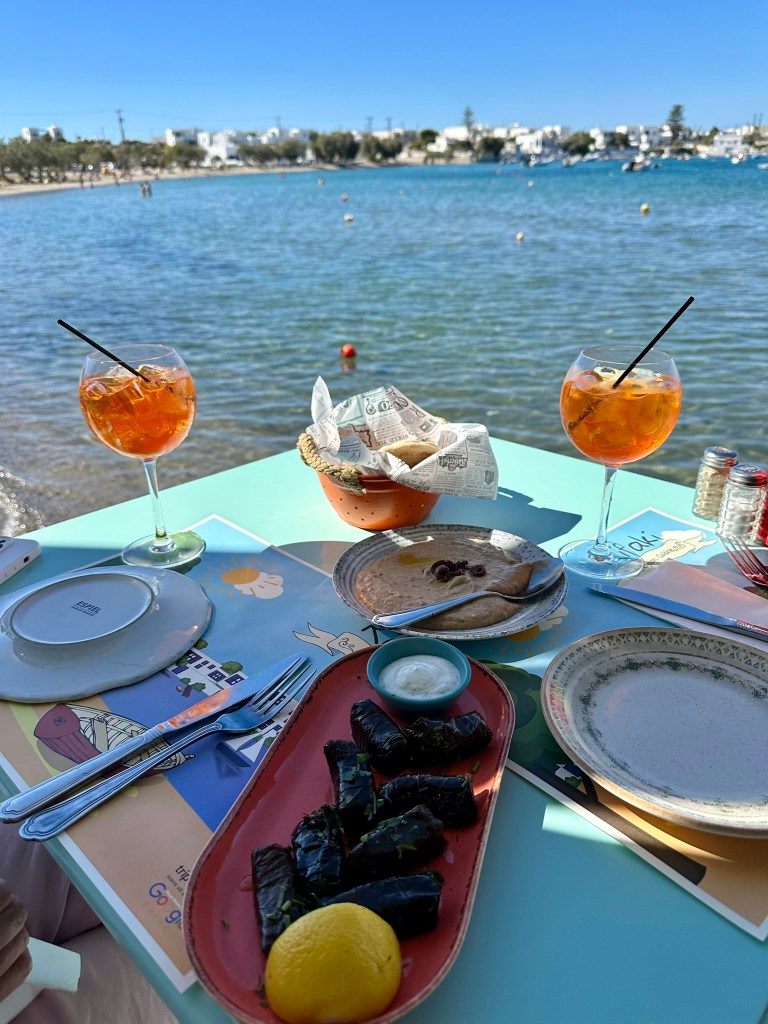
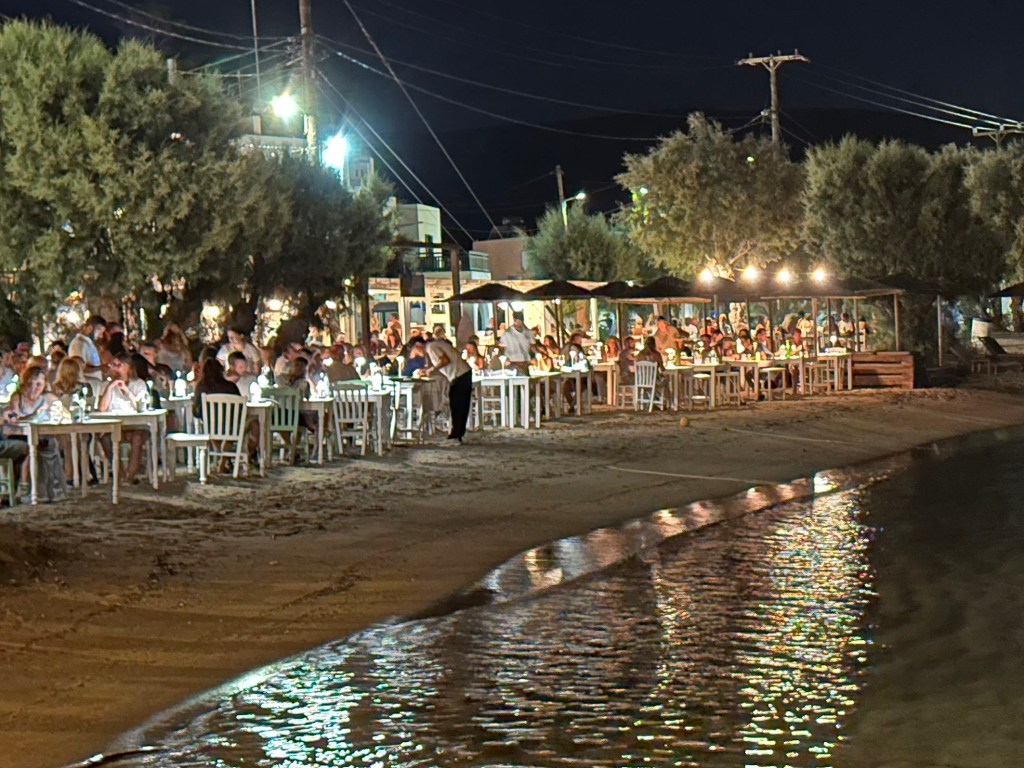
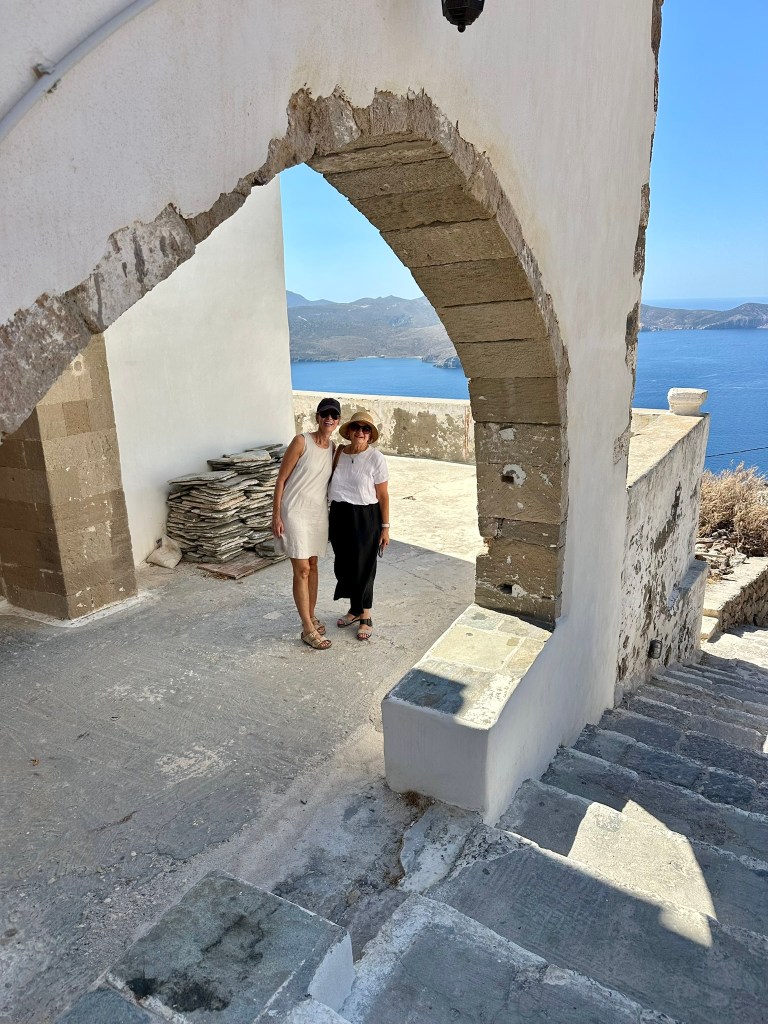
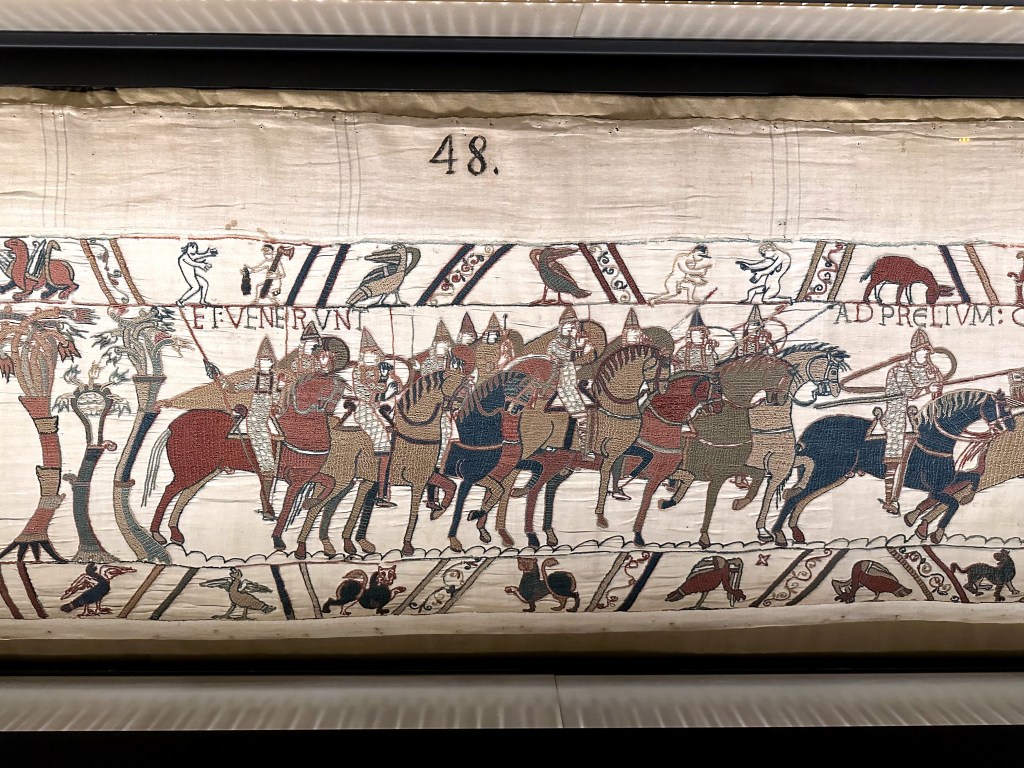
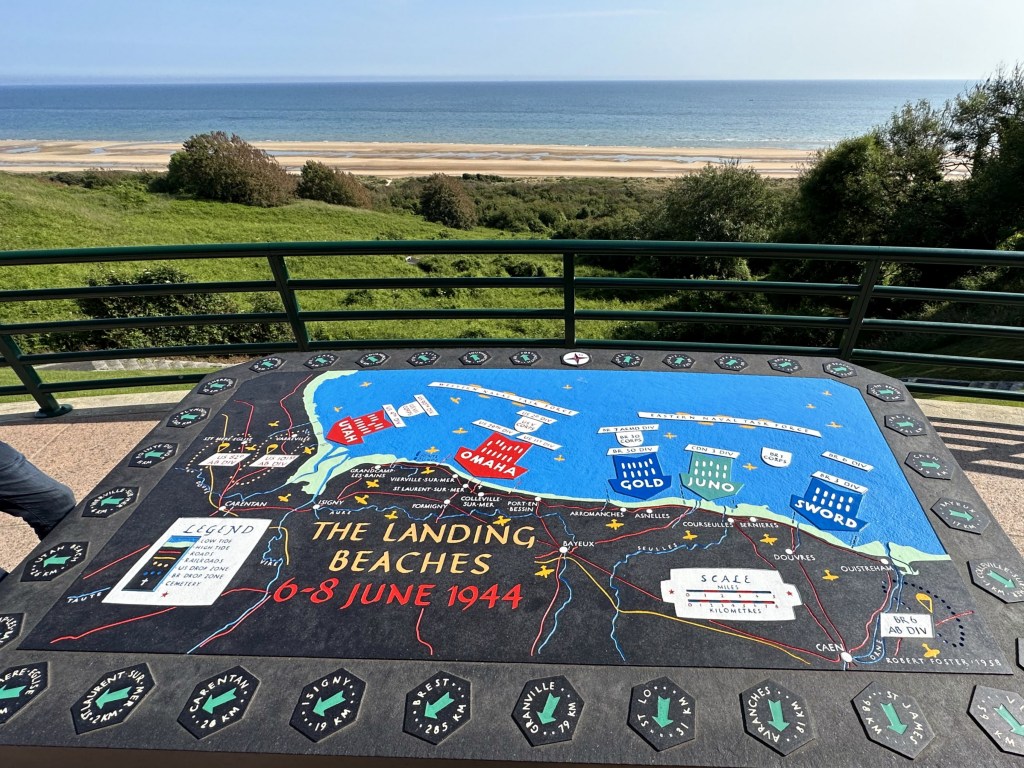
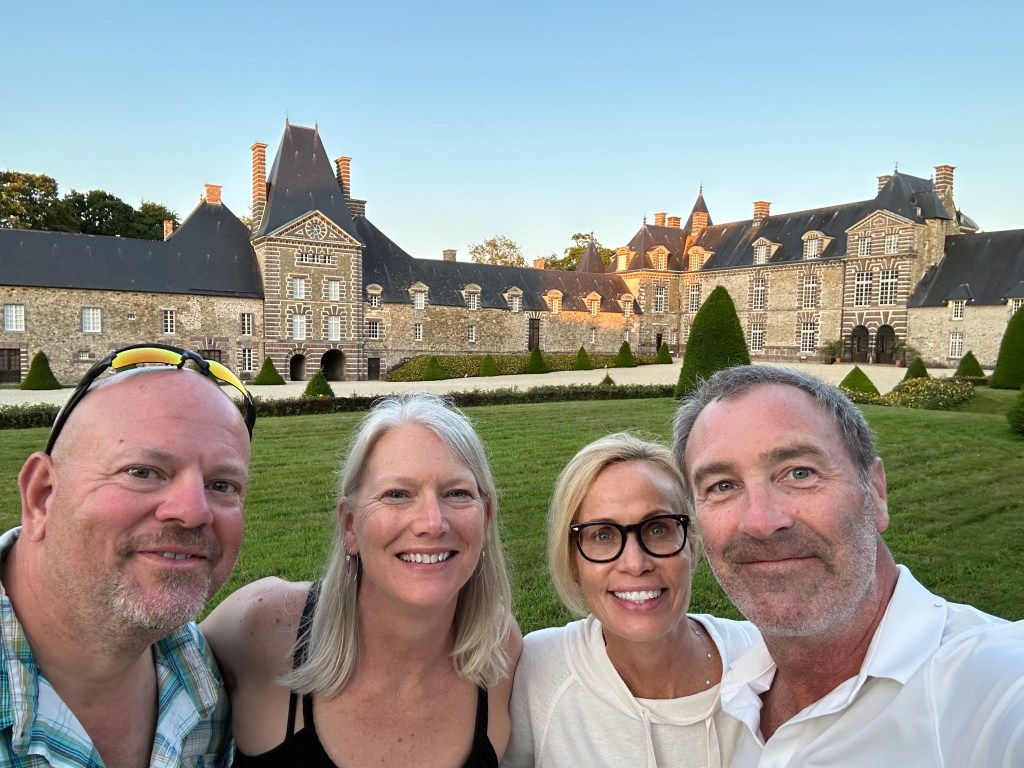
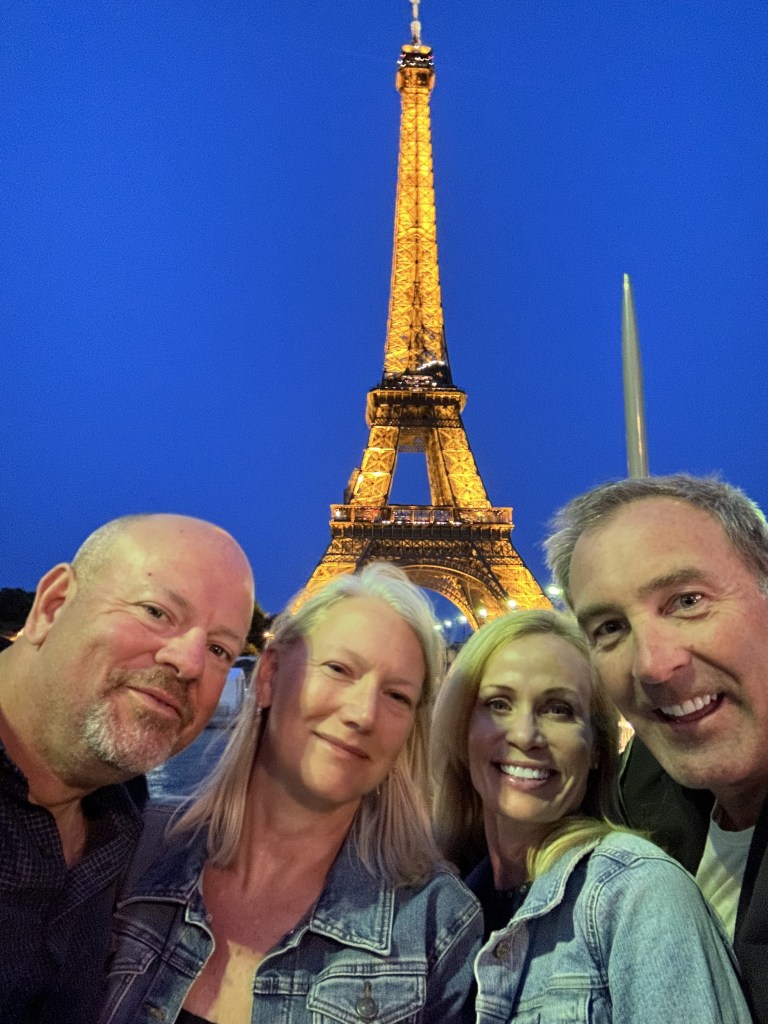
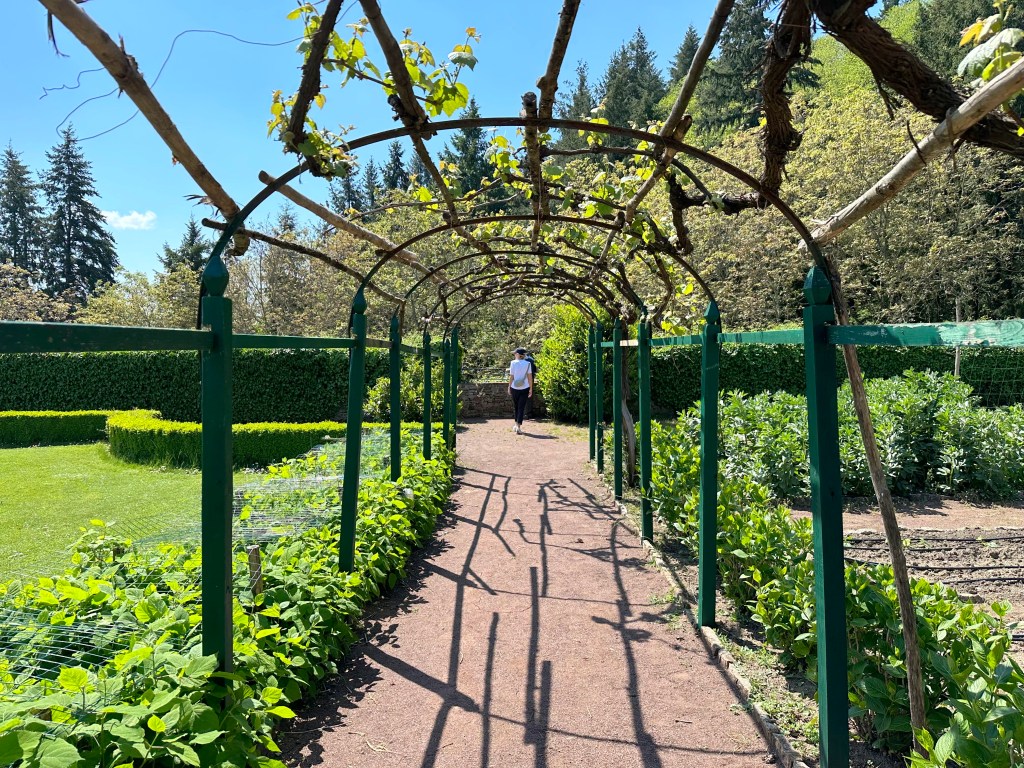
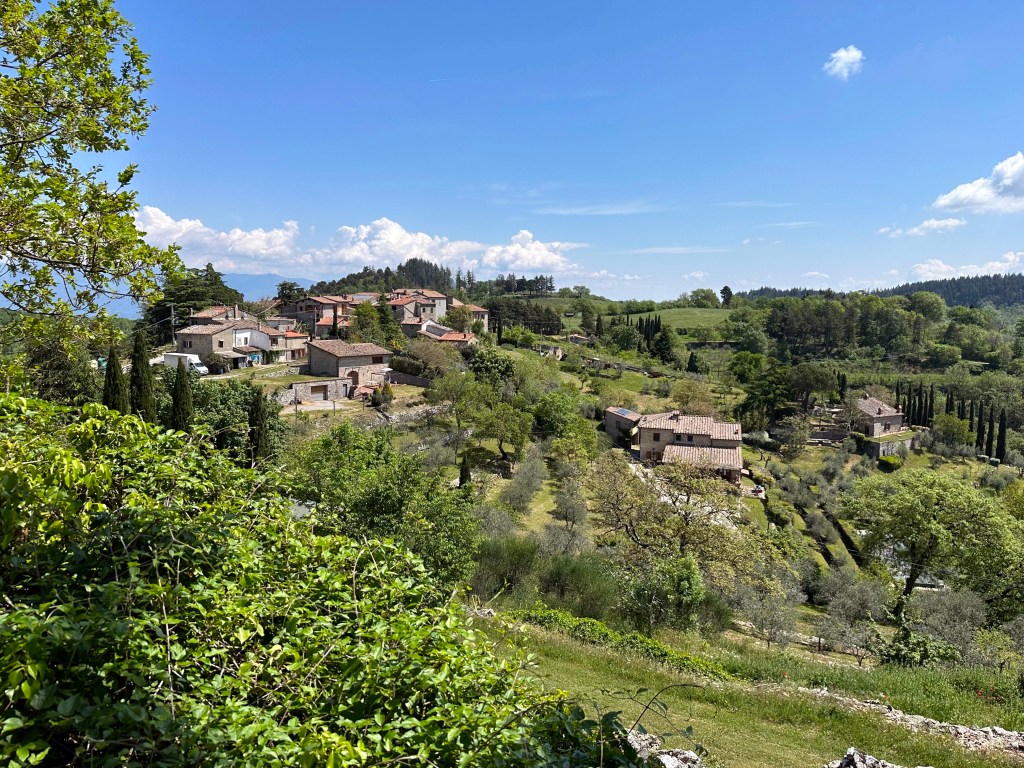
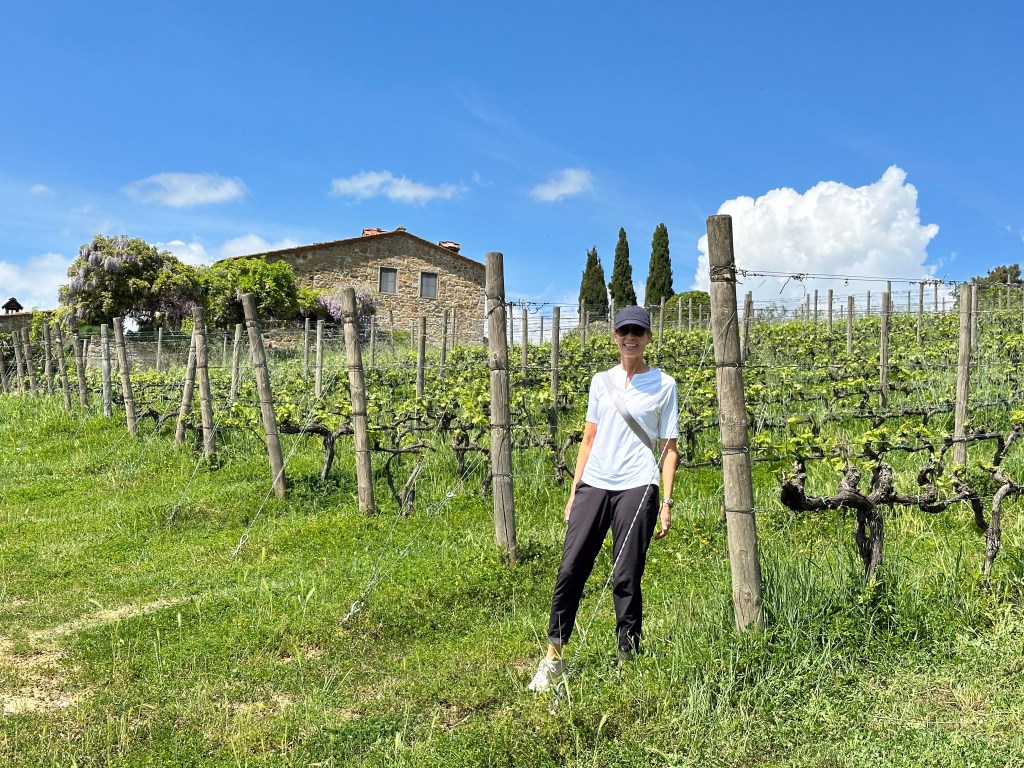
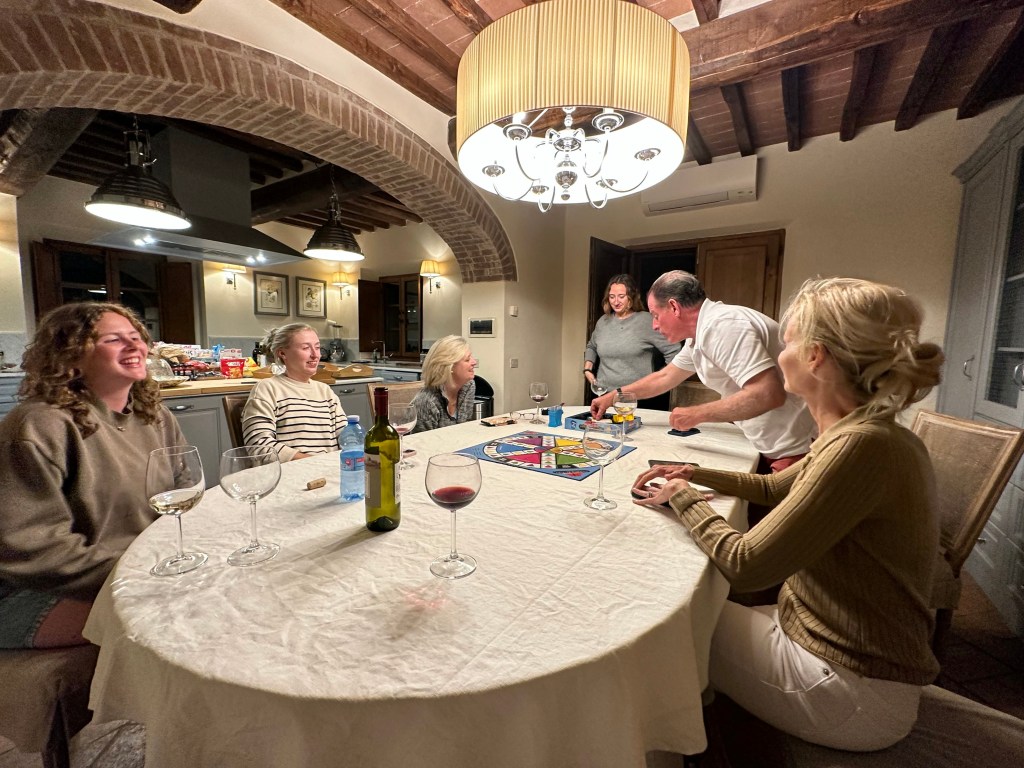
After our final day of biking in Normandy, we headed to Paris for a day. Fourth time for some of us, first time for others.
Notre Dame, still under renovation:
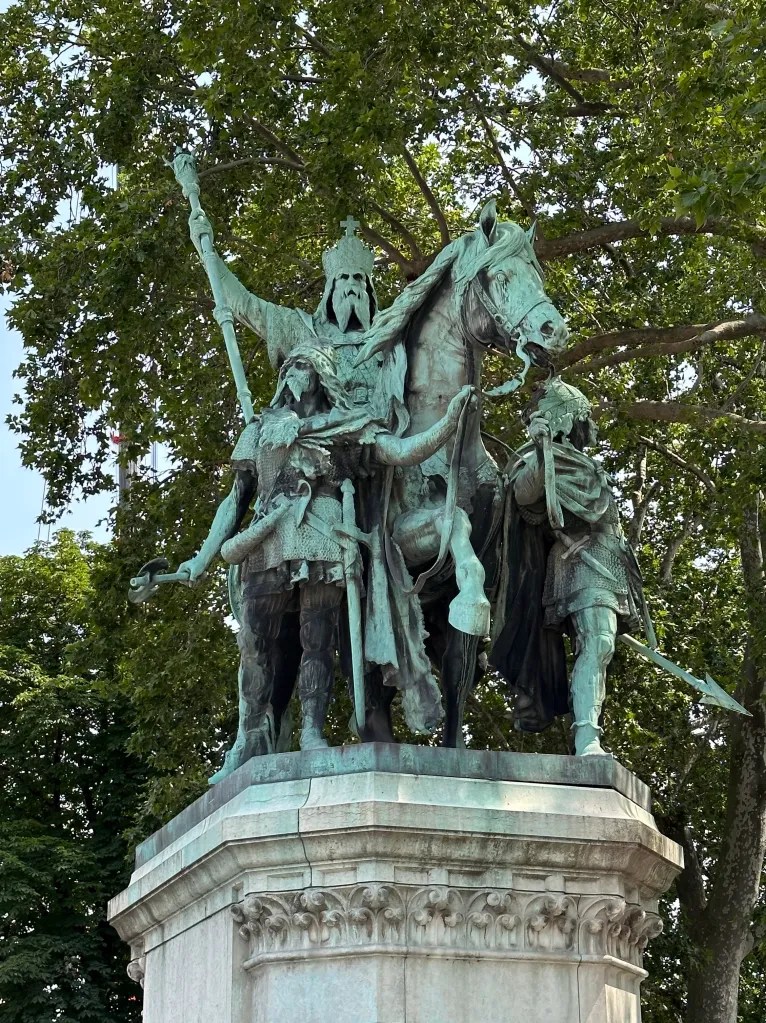
Statue of Charlemagne et ses Leudes (“Charlemagne and His Paladins”) next to Notre Dame, which depicts Charlemagne; Roland (of the Song of Roland); and Olivier, Roland’s companion. The only problem is that Roland died 22 years before Charlemagne was coronated in 800. . .
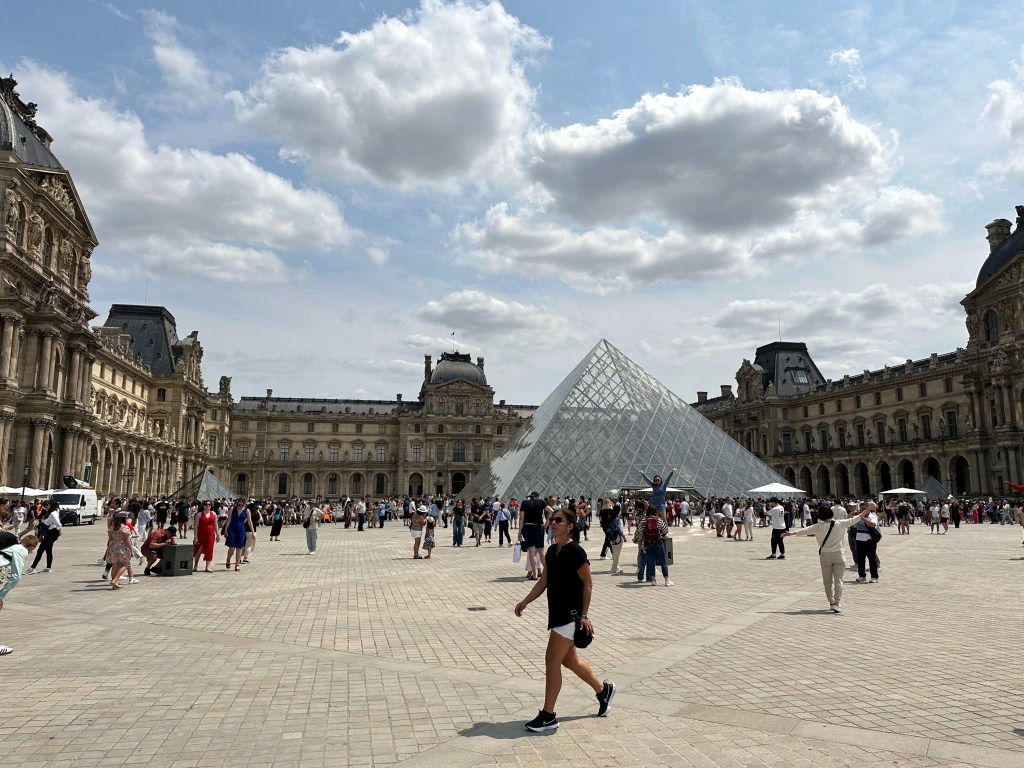
IM Pei’s entrance to the Louvre (we did not enter on this trip):
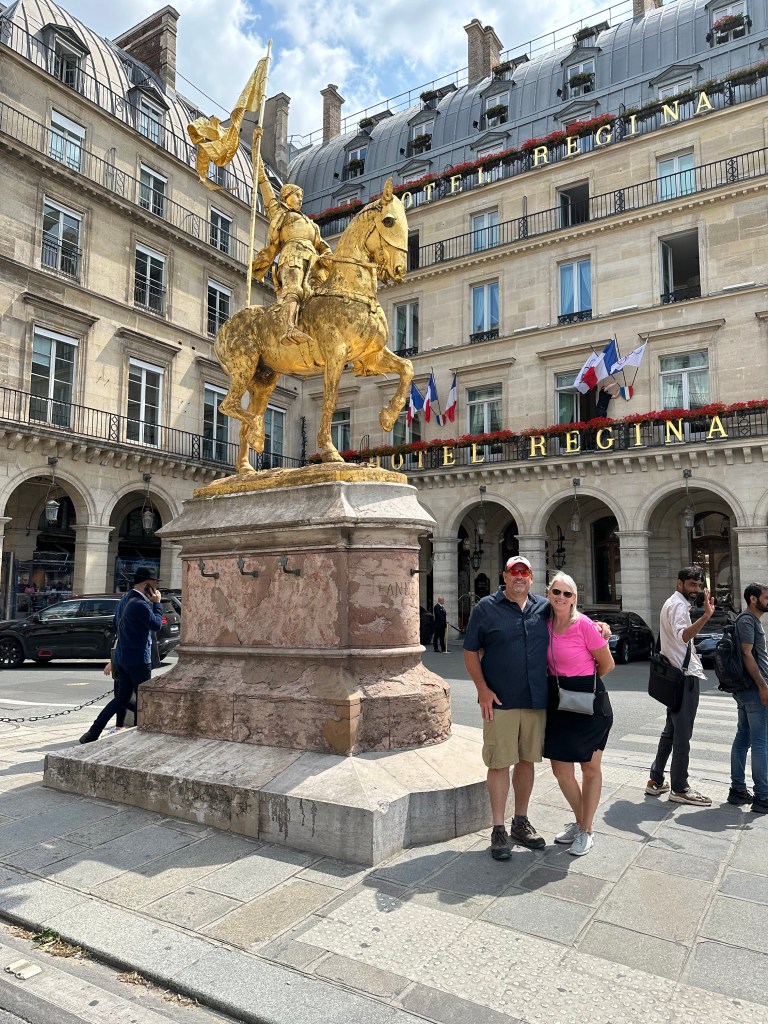
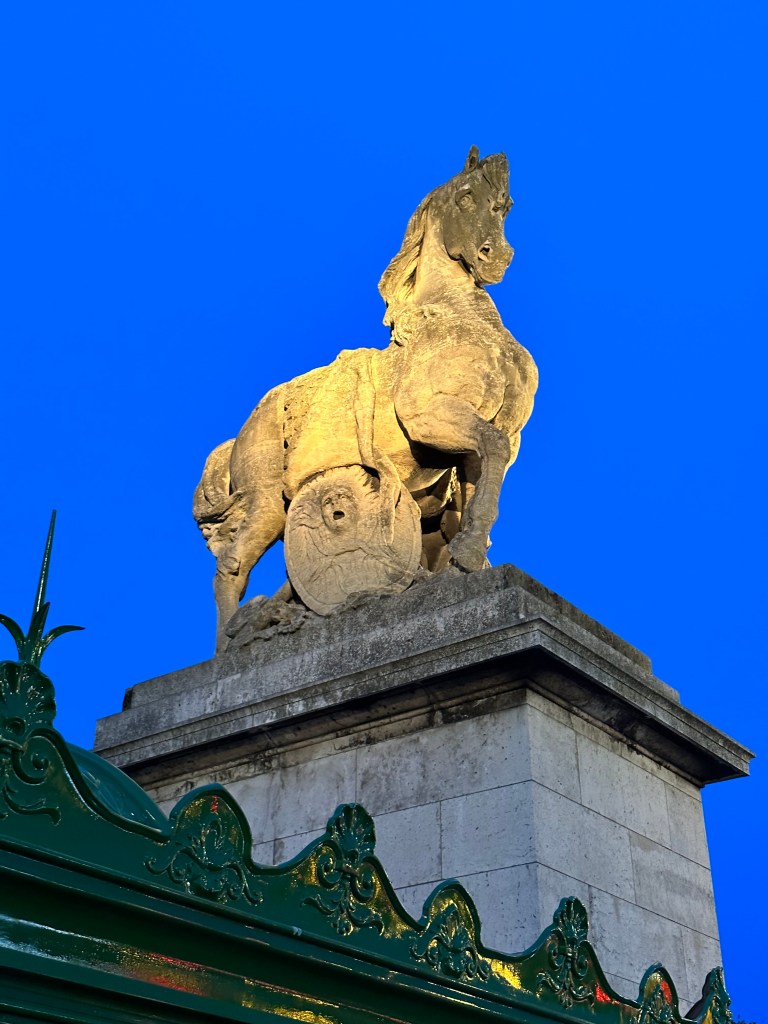
The Tour de France-famous statue of Jean d’Arc, which riders pass every time they emerge from the tunnel on the last stage of the race.
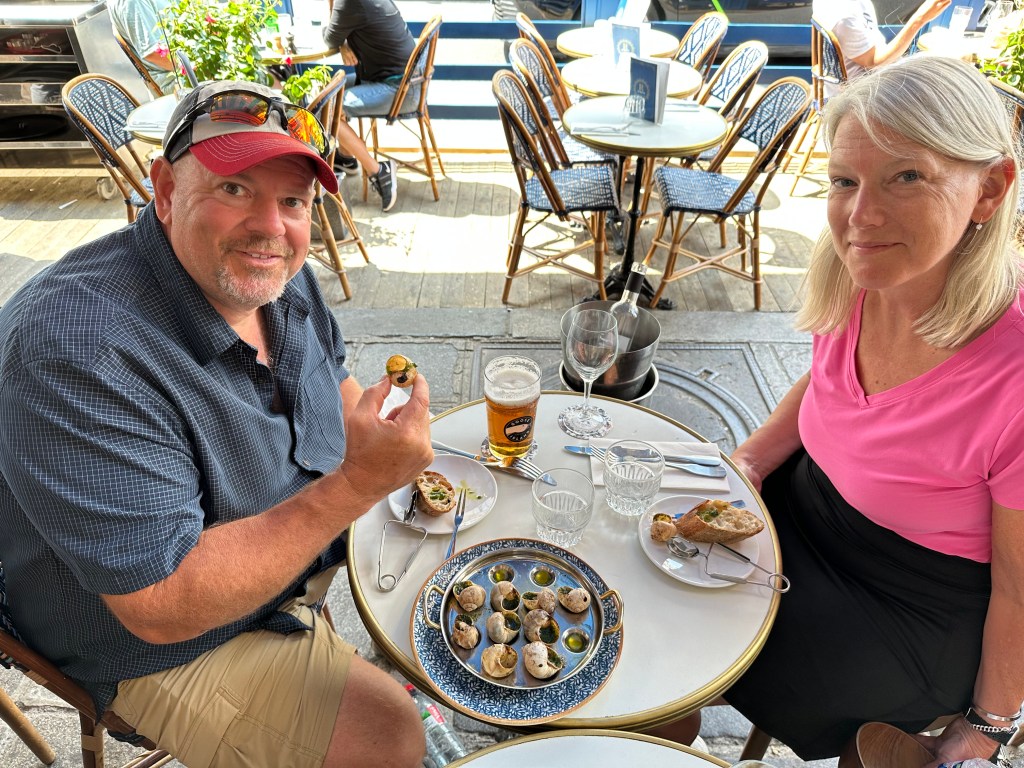
Escargot, but of course:
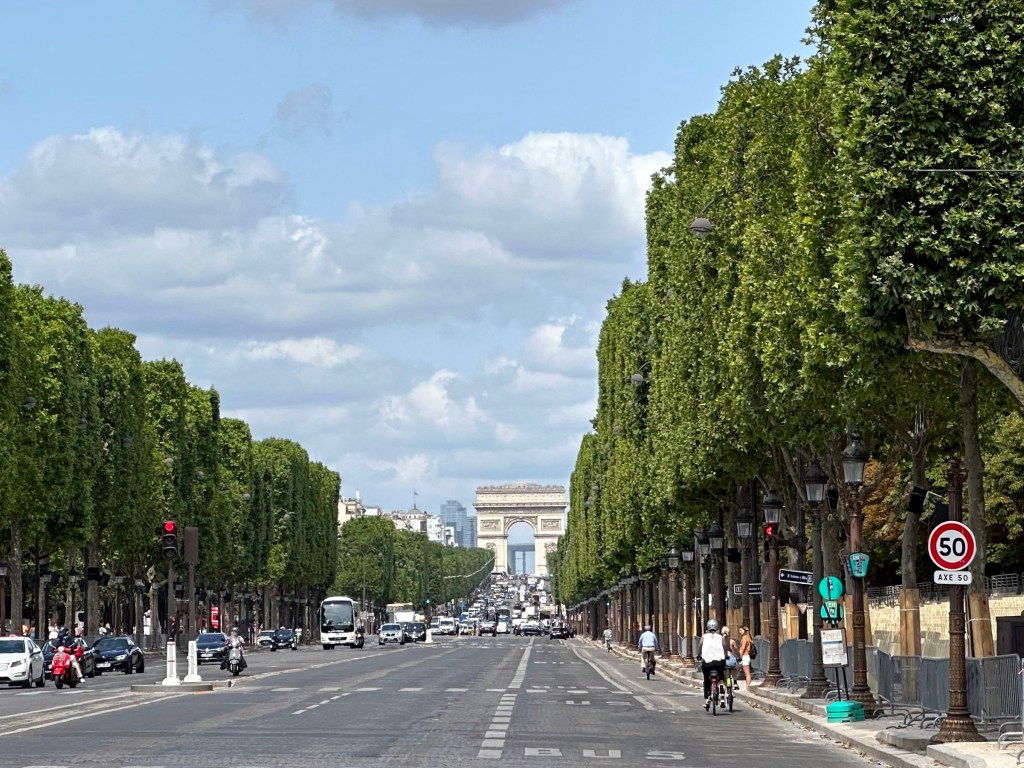
Champs Elysees (also Tour related, natch):
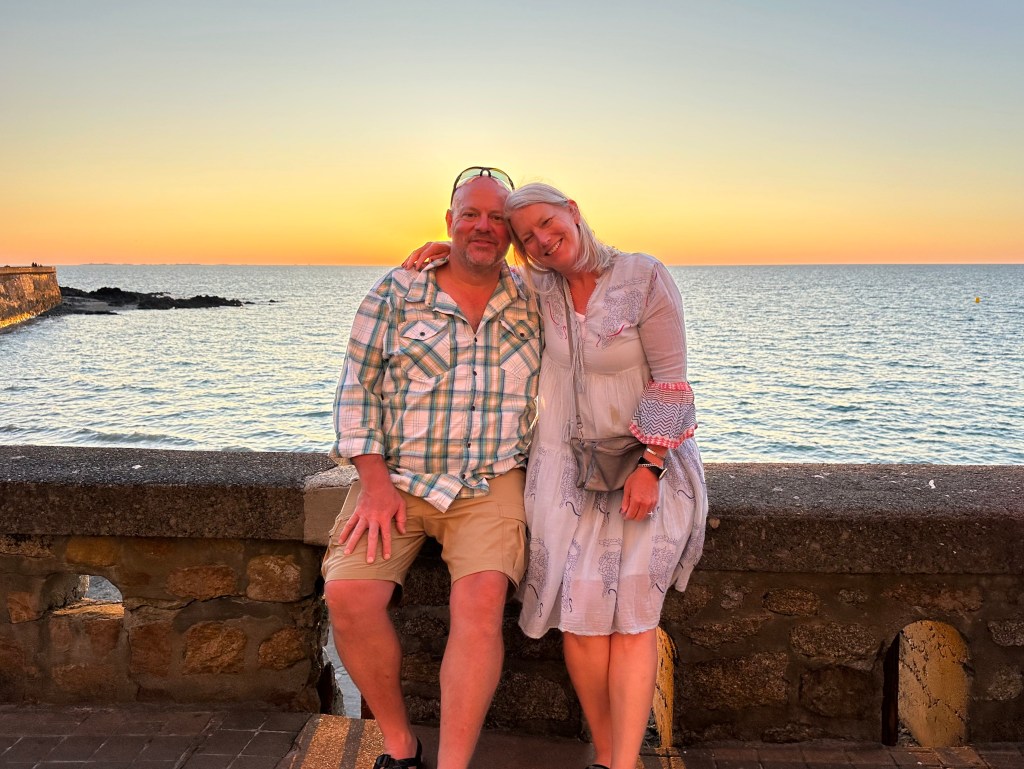
Last night in France. . .
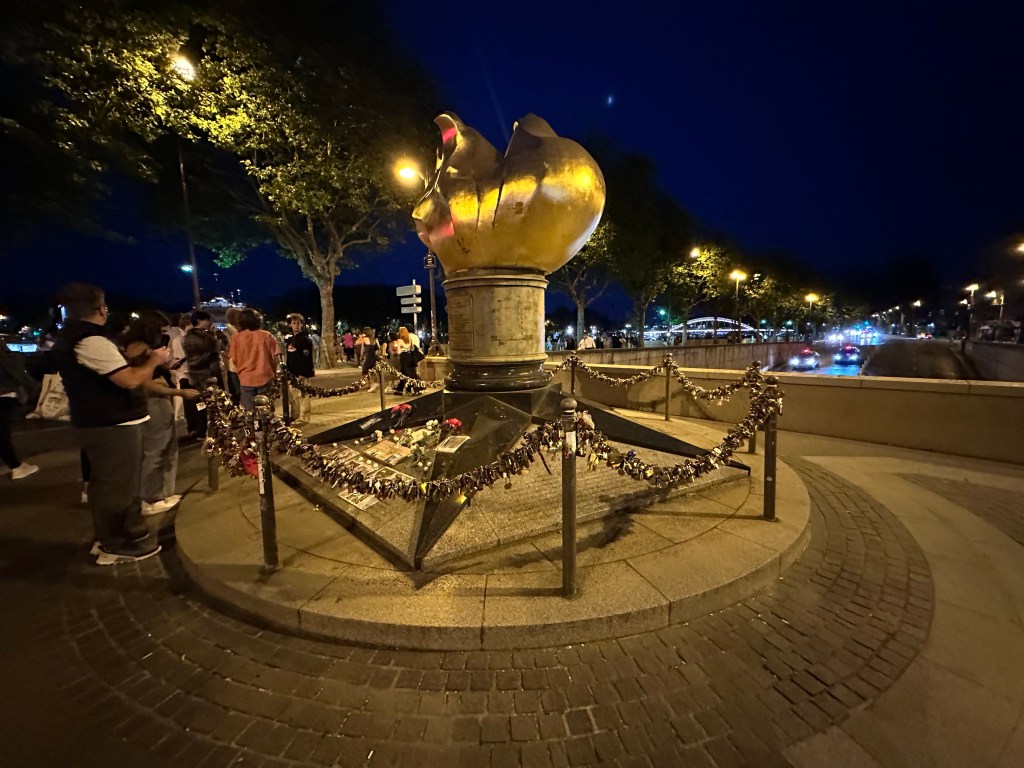
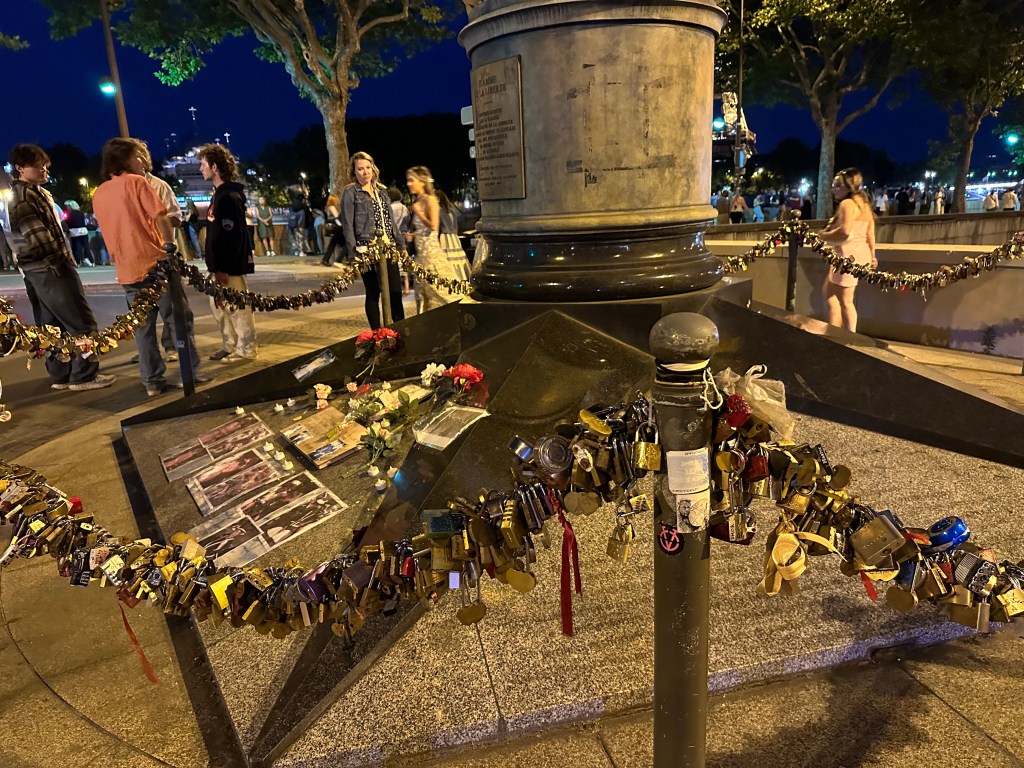
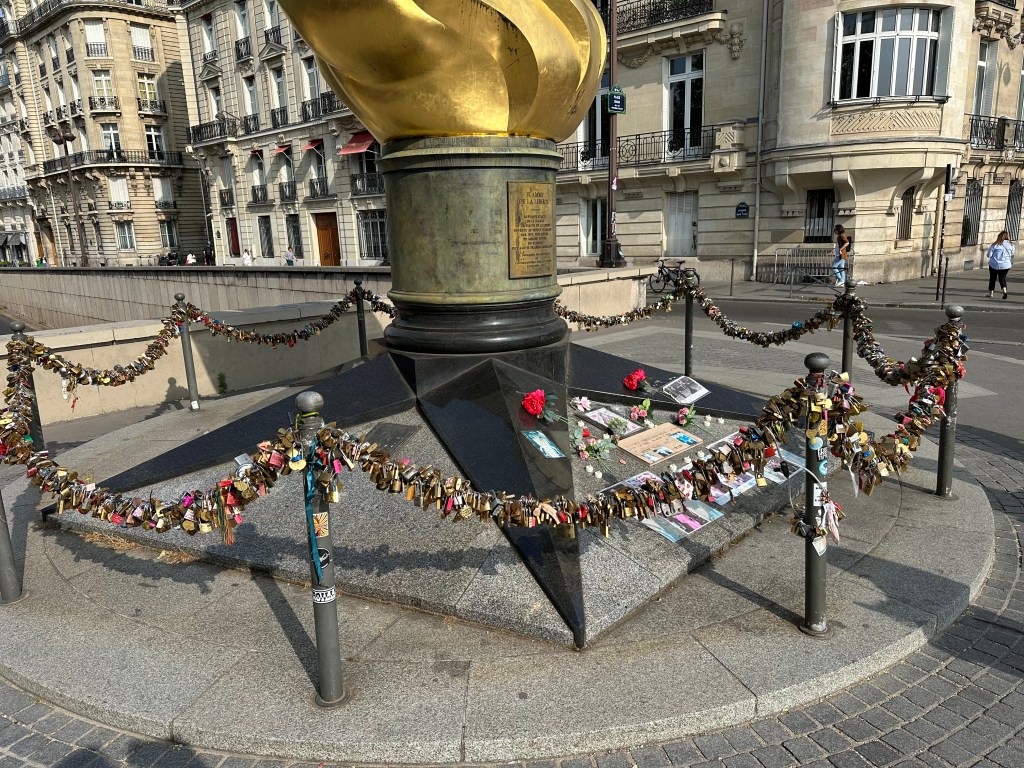
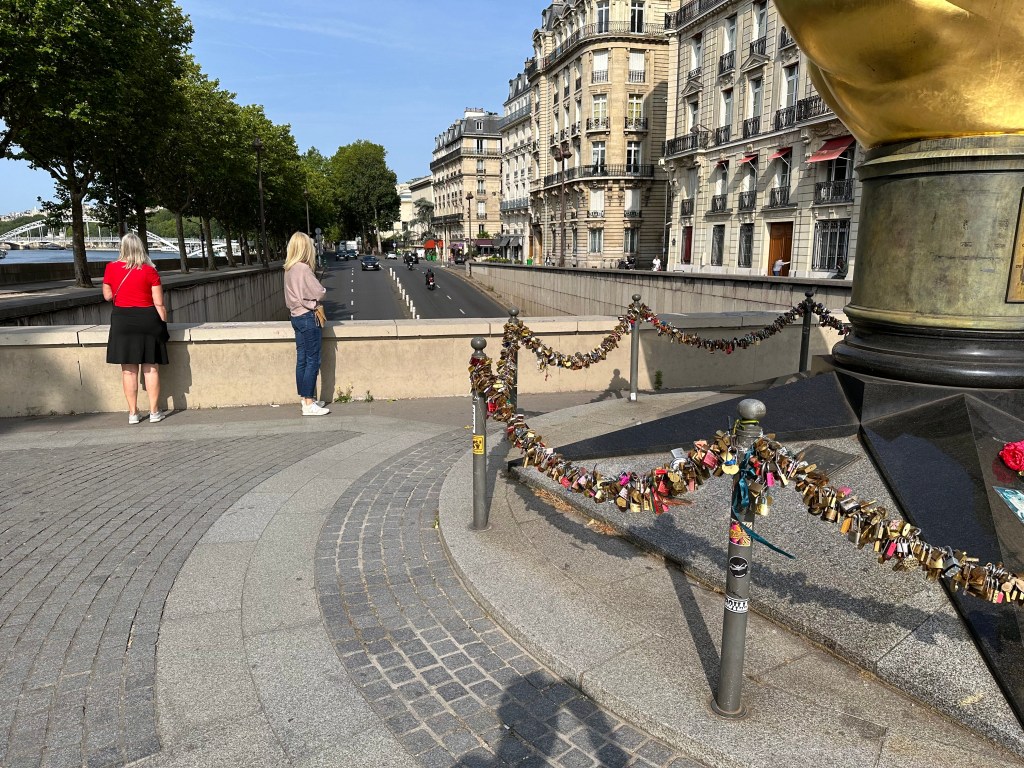
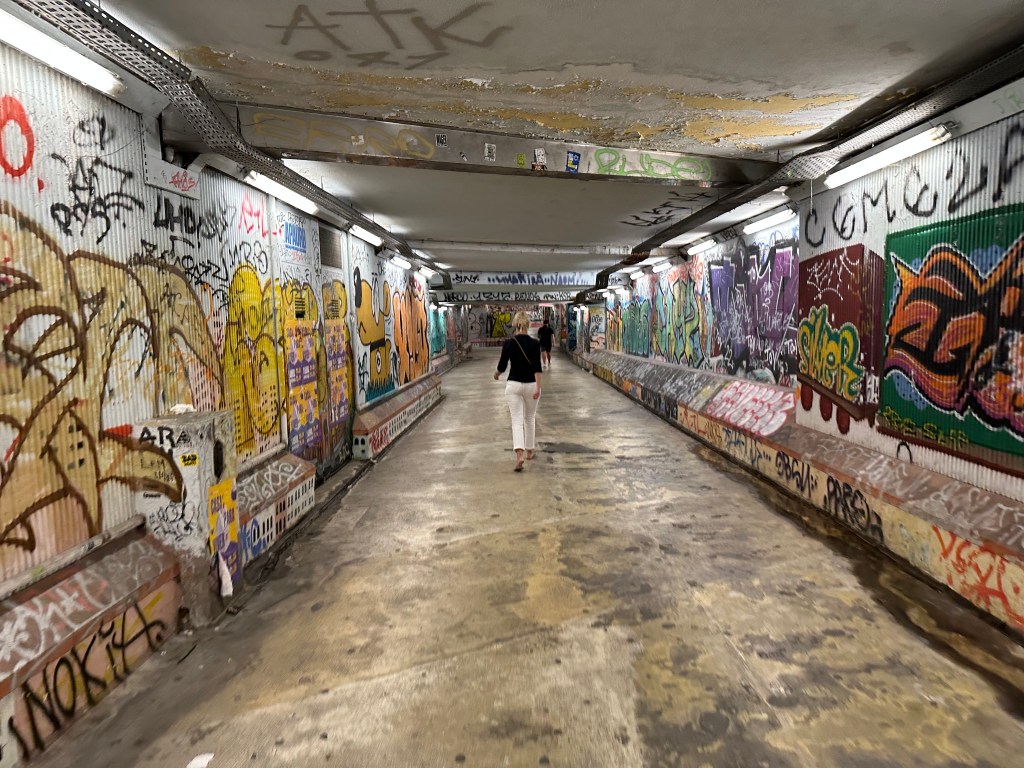
We stumbled upon the Lady Diana memorial on the way home – she crashed in the tunnel below.
And apparently wandered by the next morning on the way to grab some breakfast, as well. . .
On to the last leg of our Prolonged Foray to Europe! And the one that was not planned at all before we left. . .
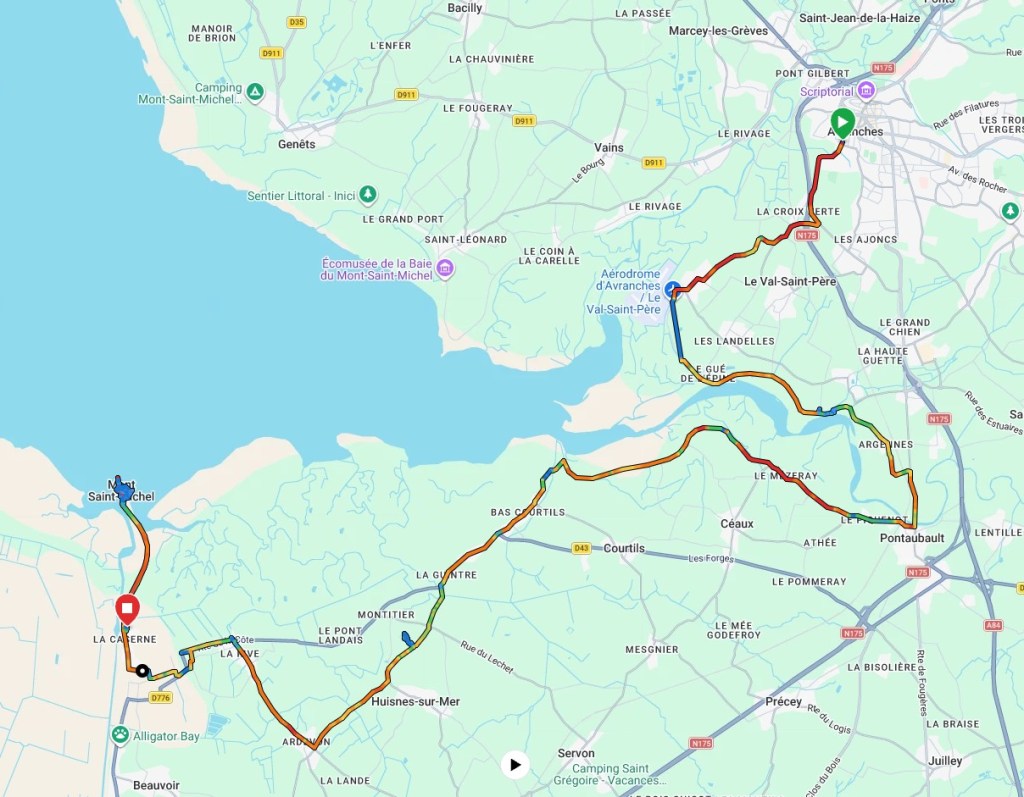
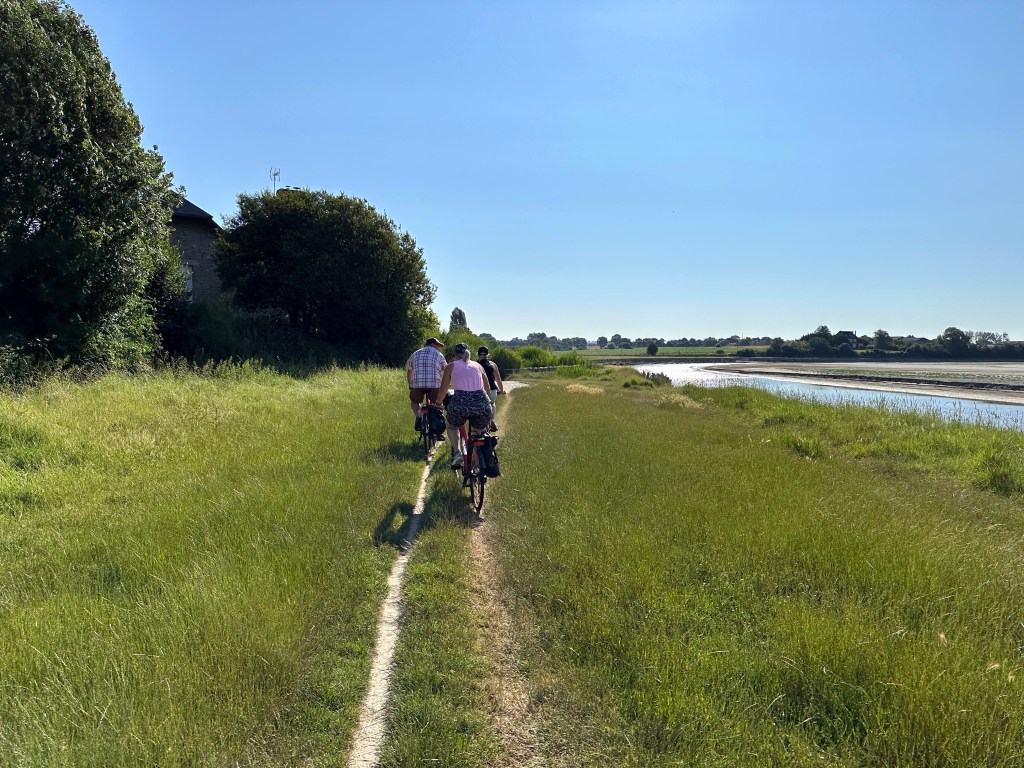
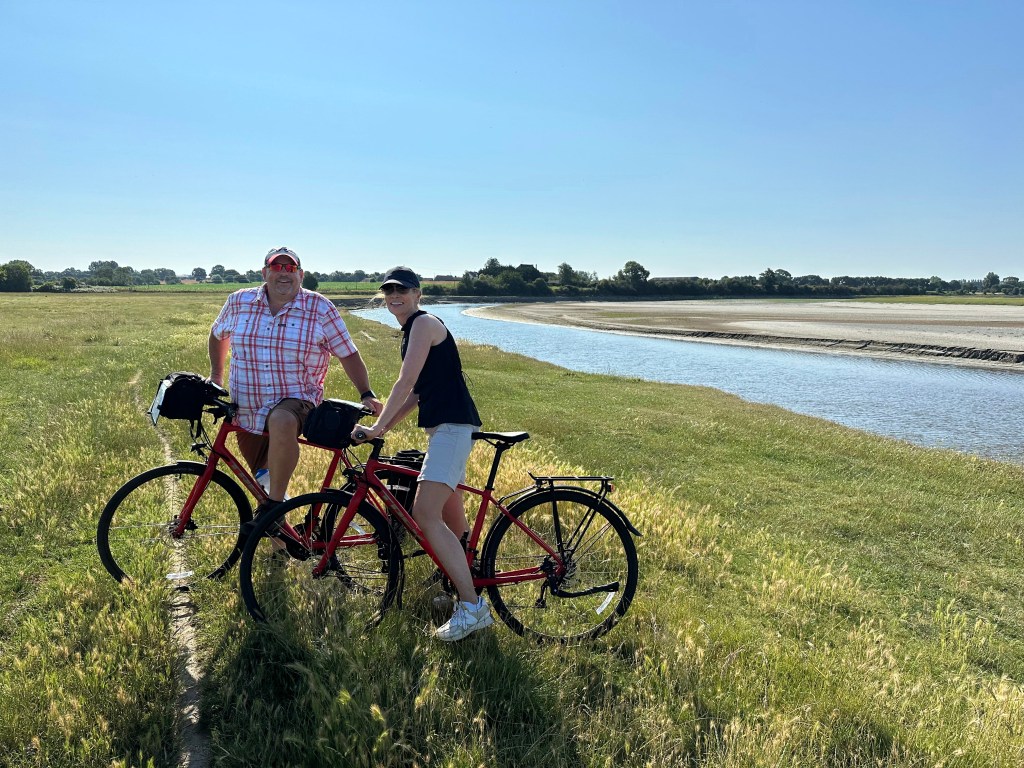
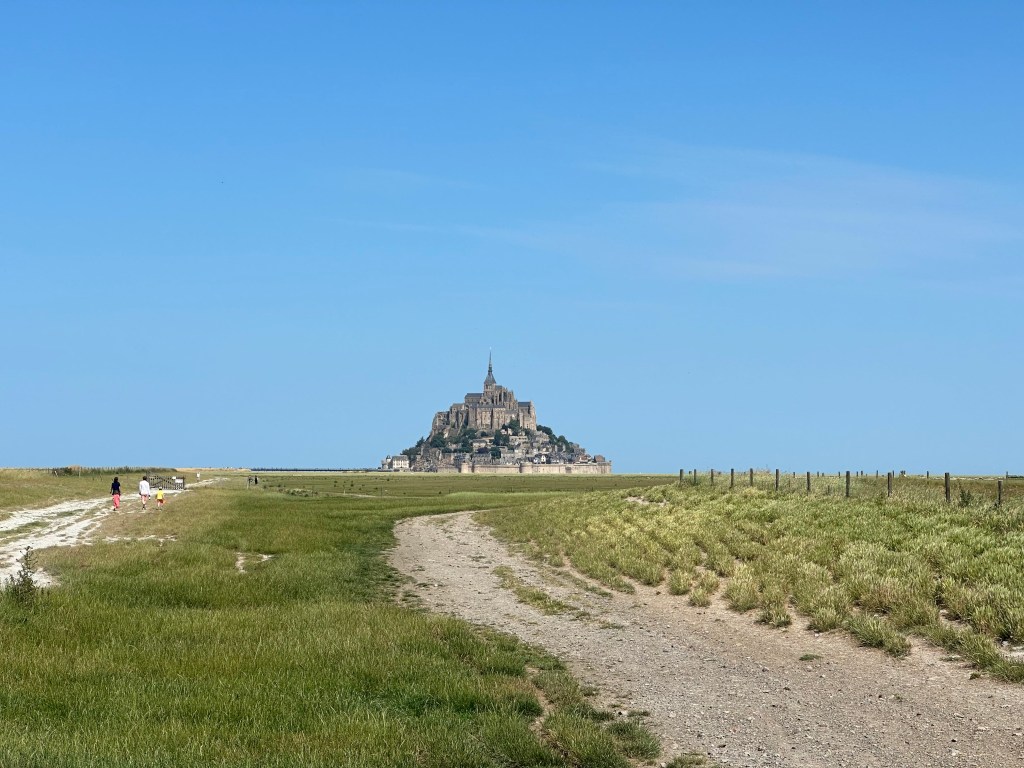
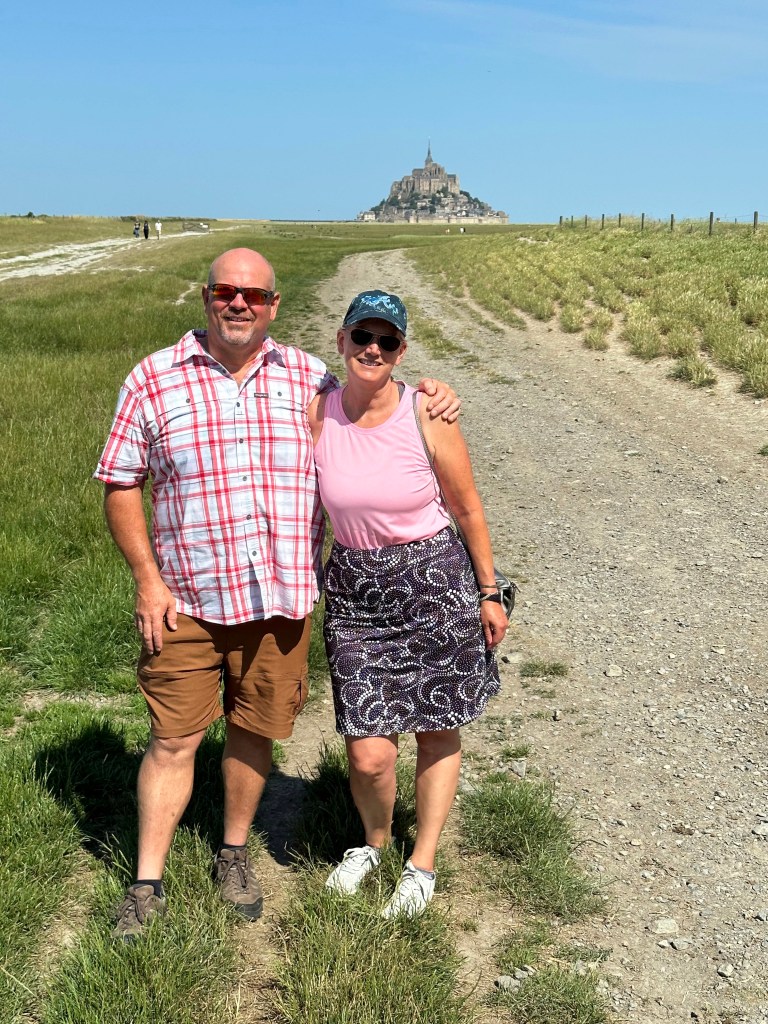
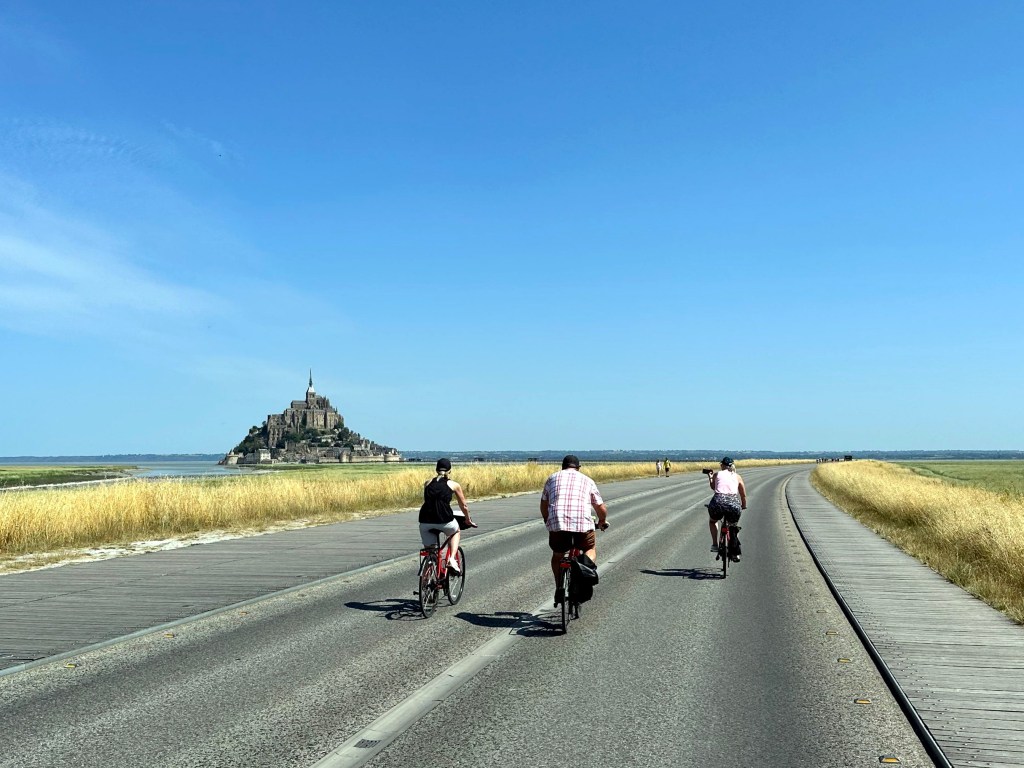
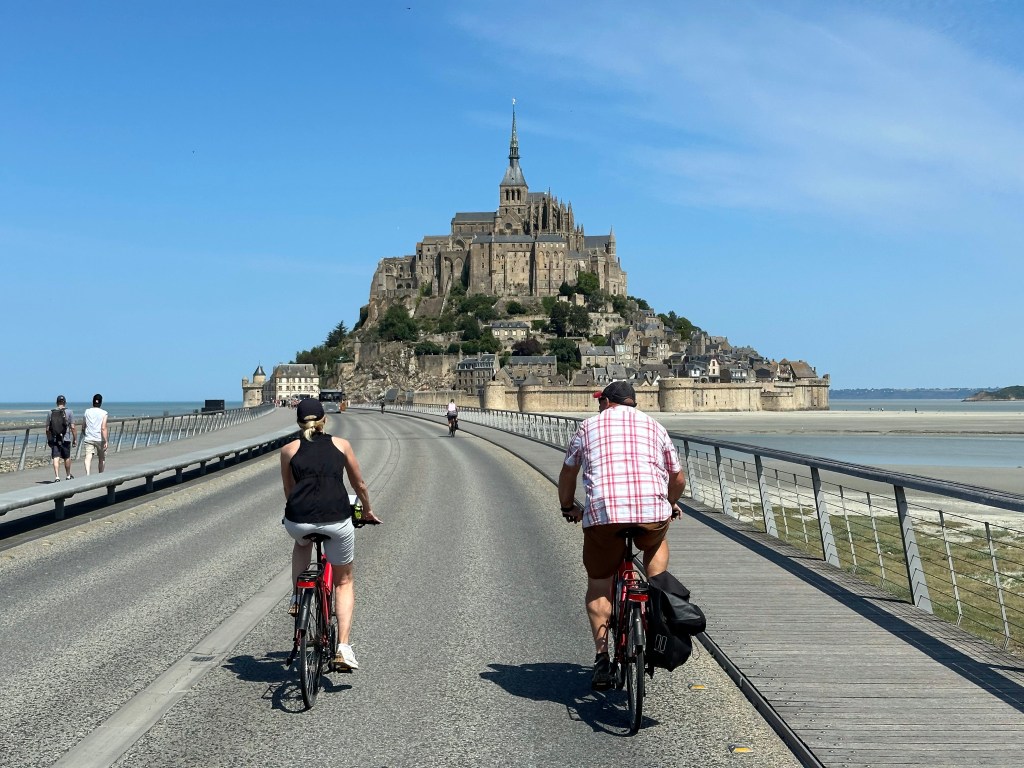
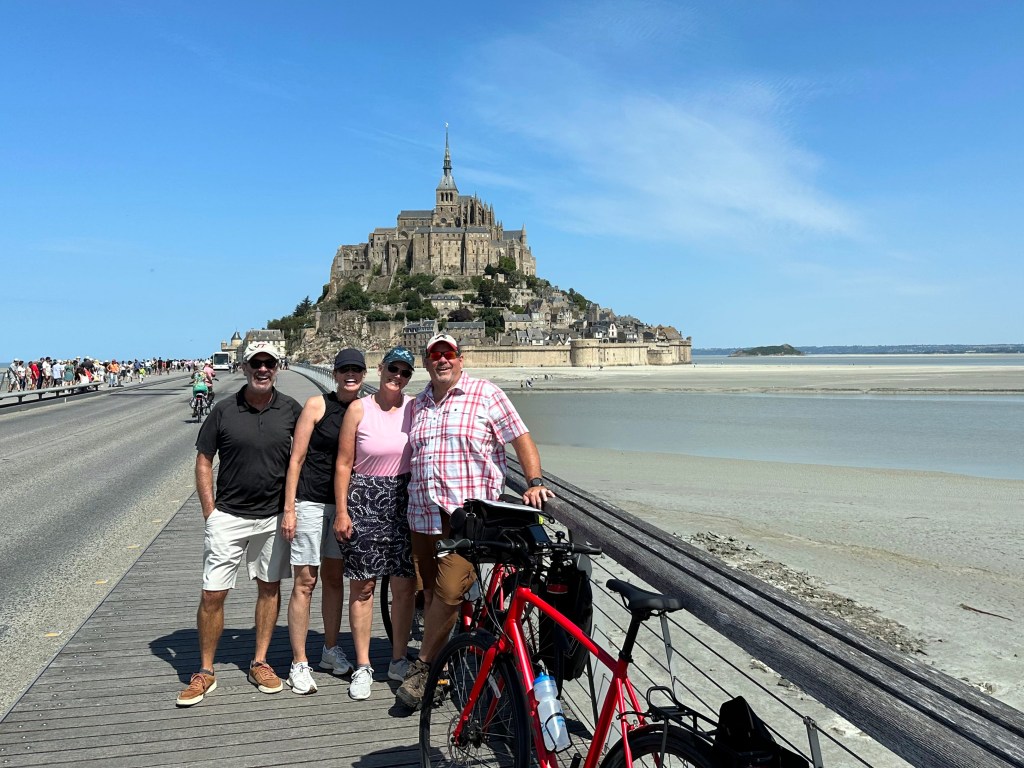
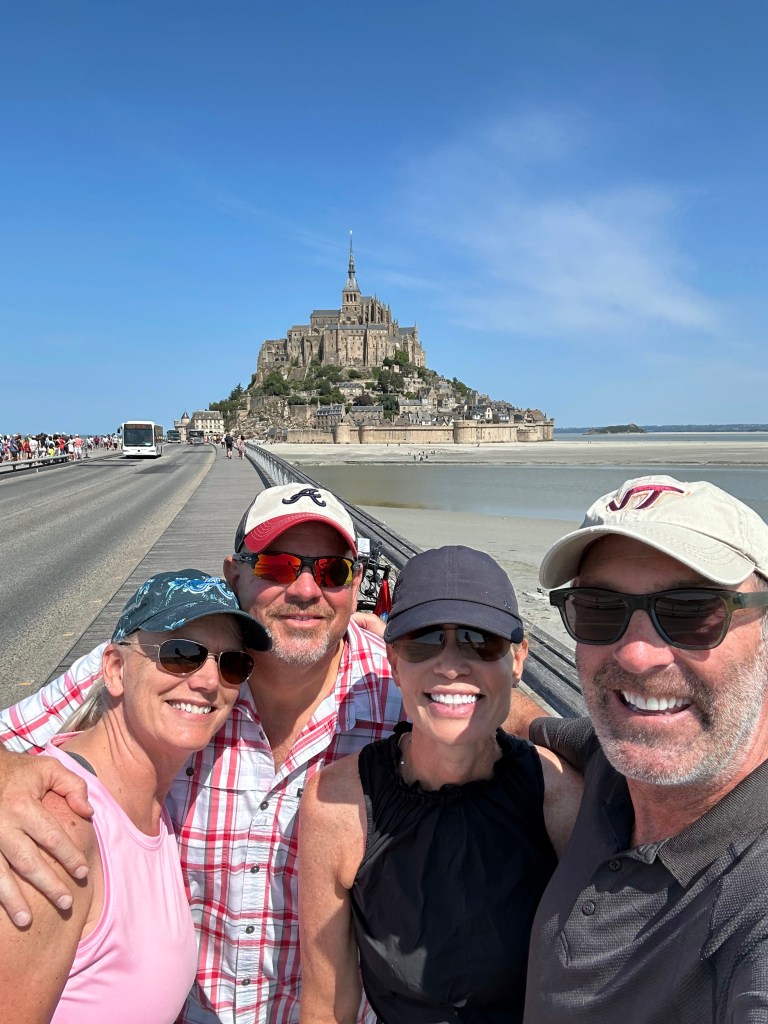
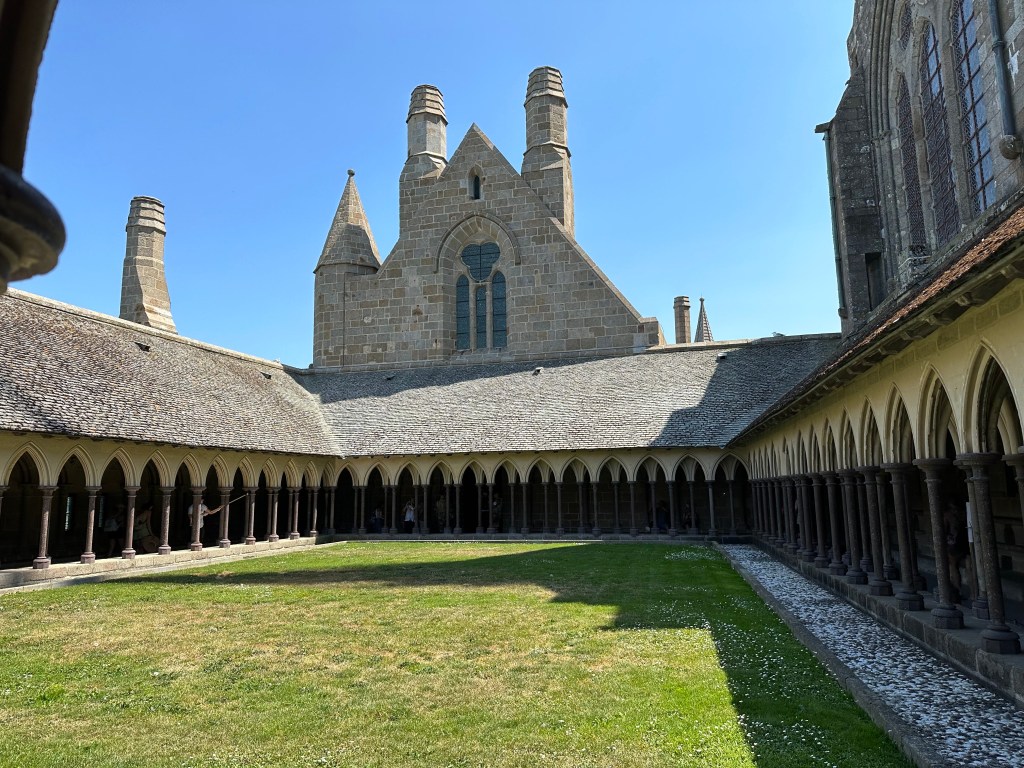
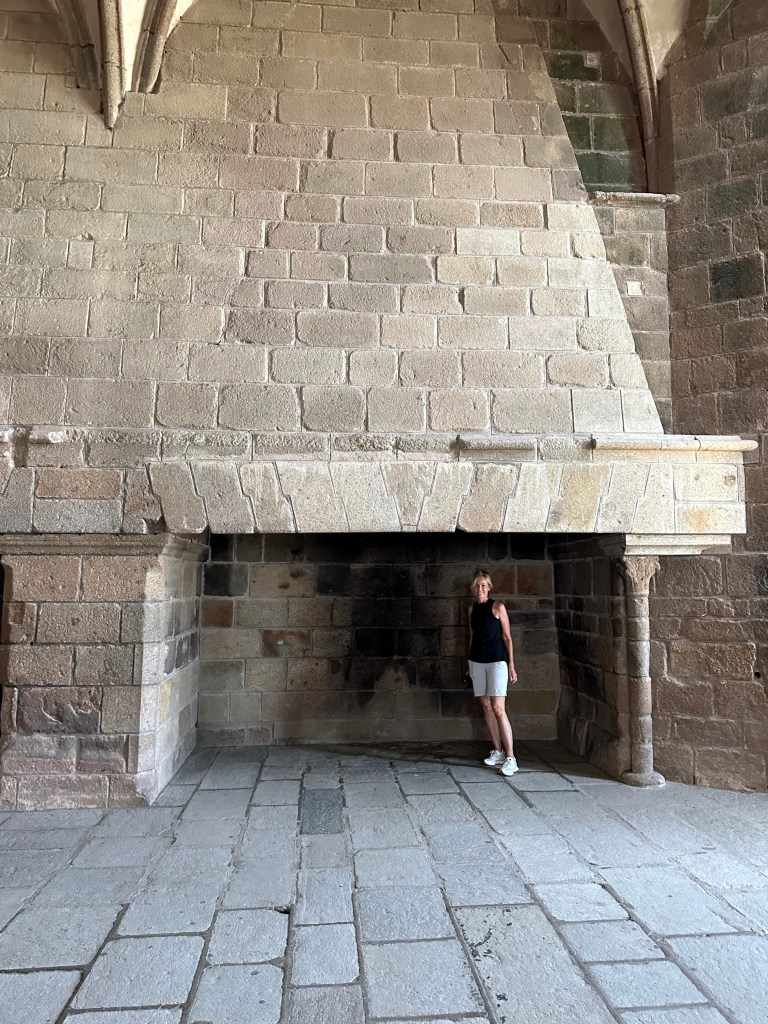
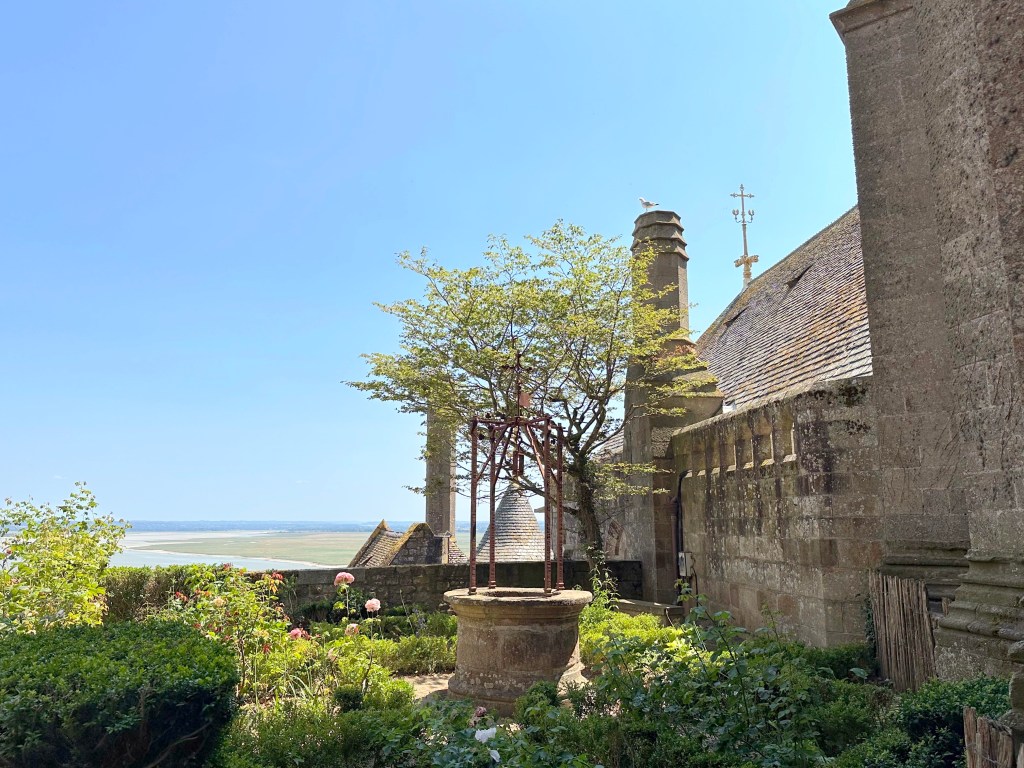
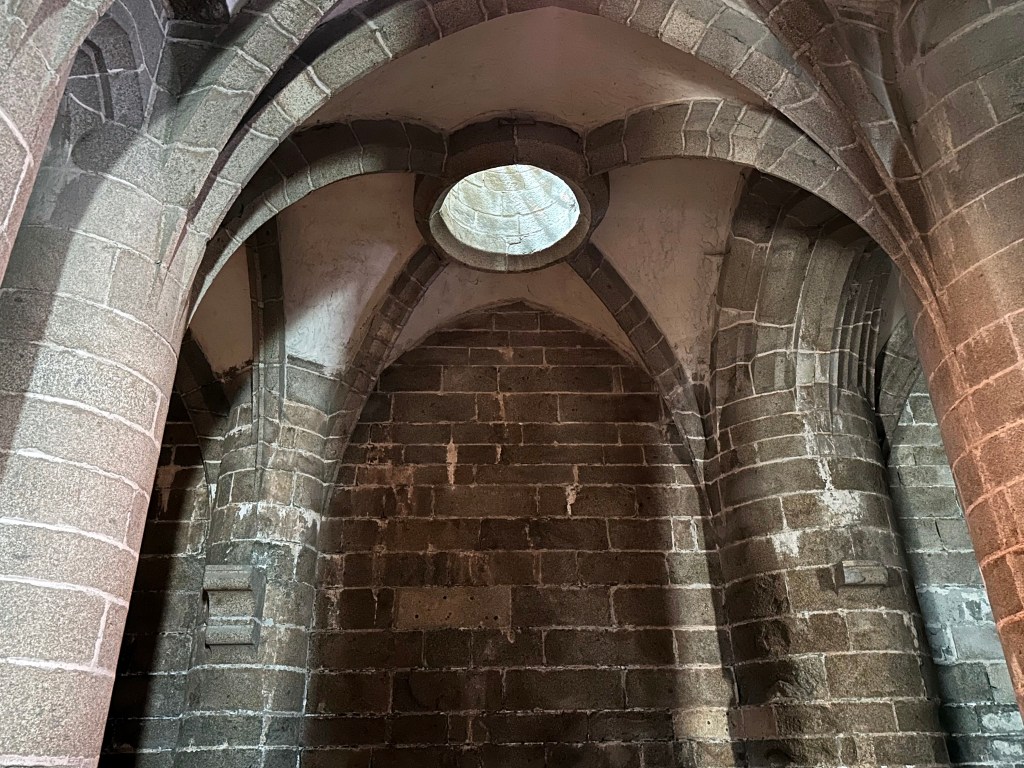
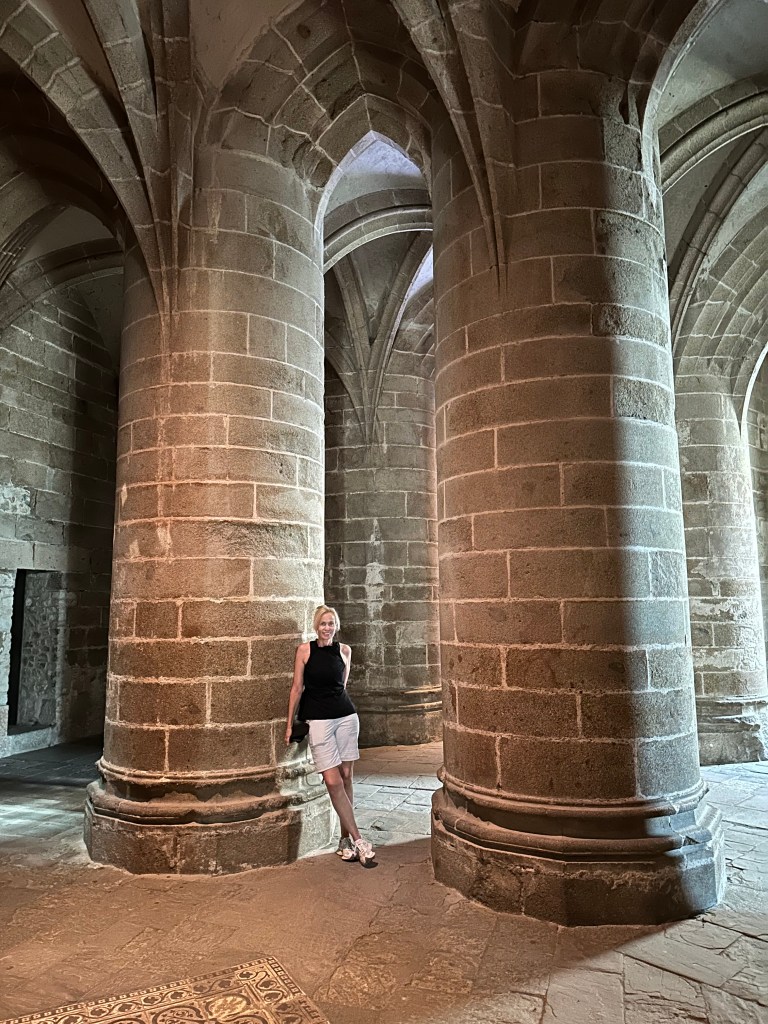
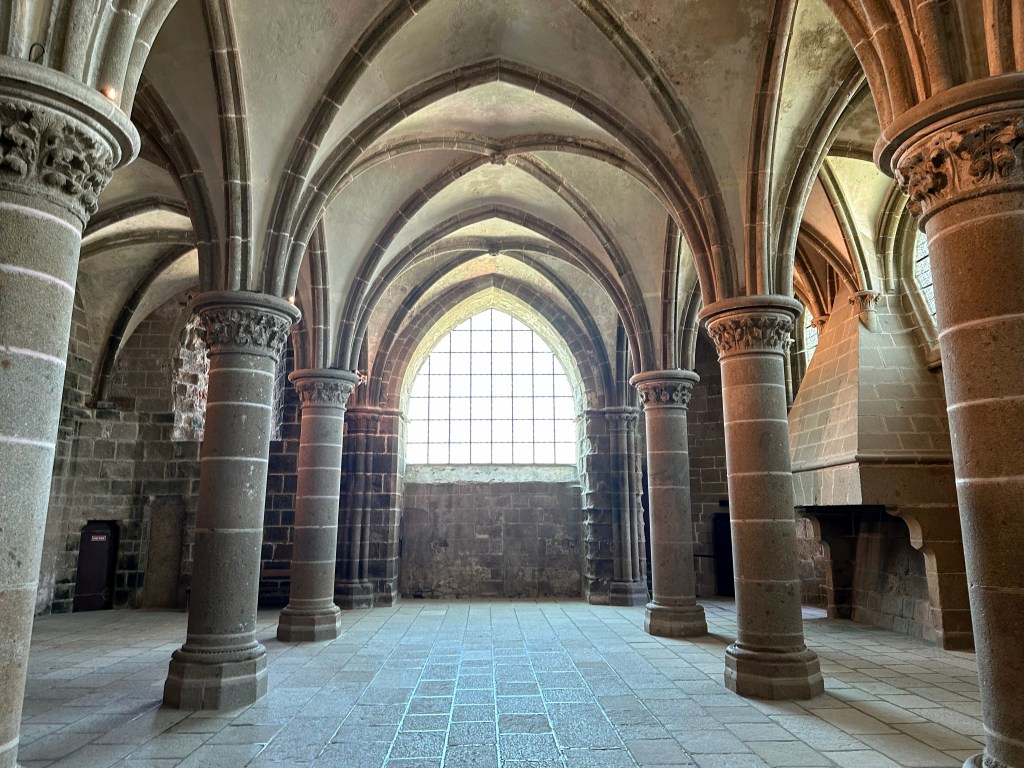
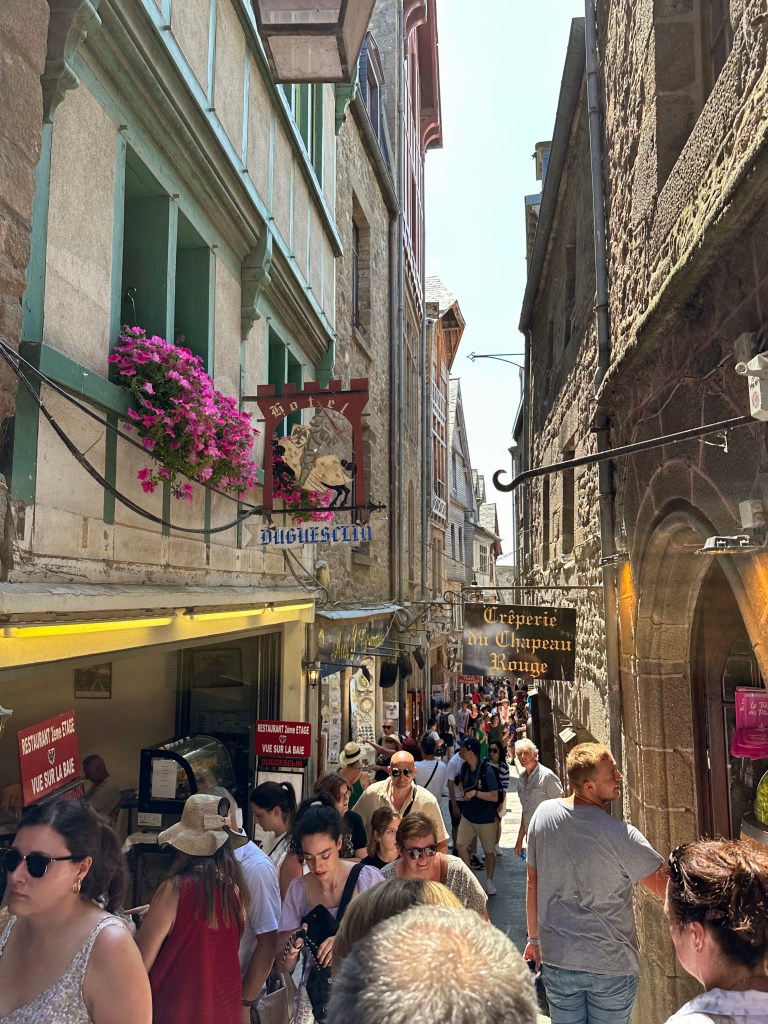
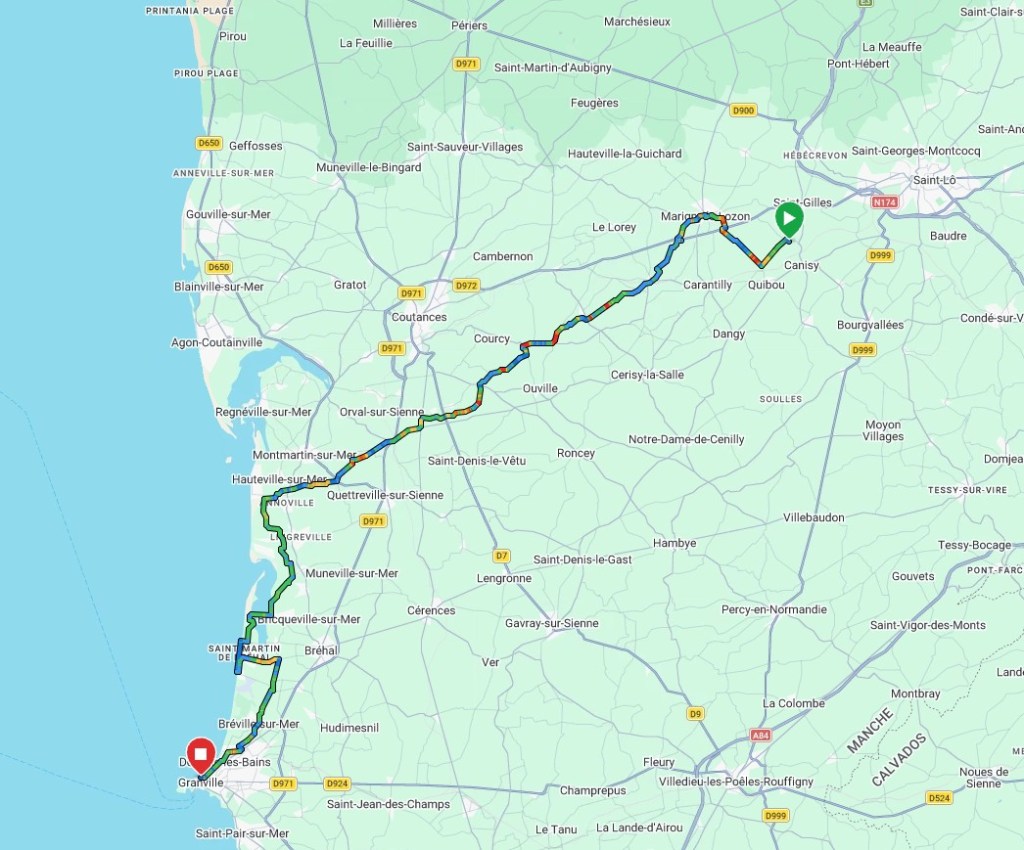
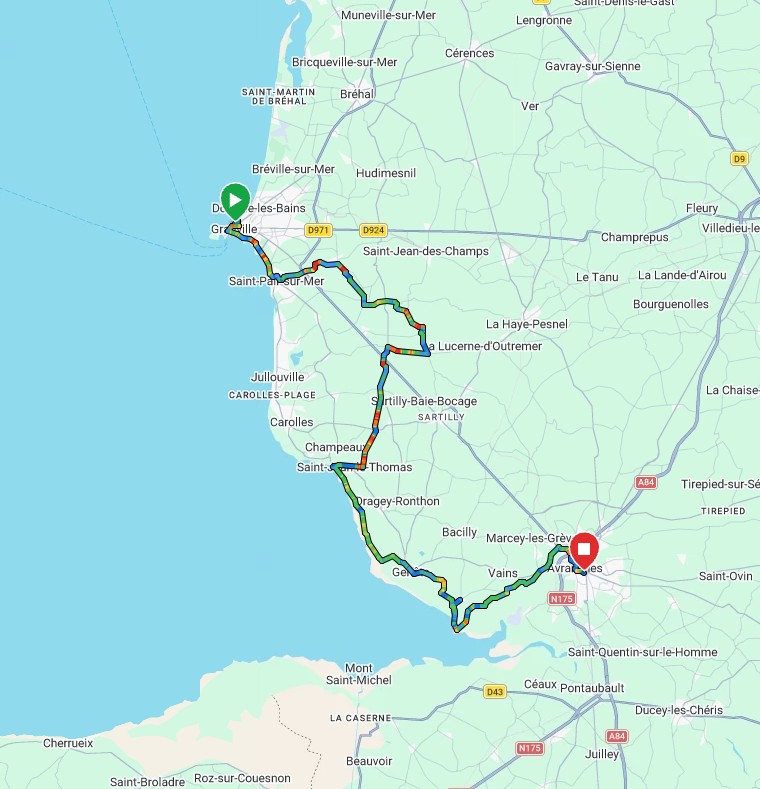
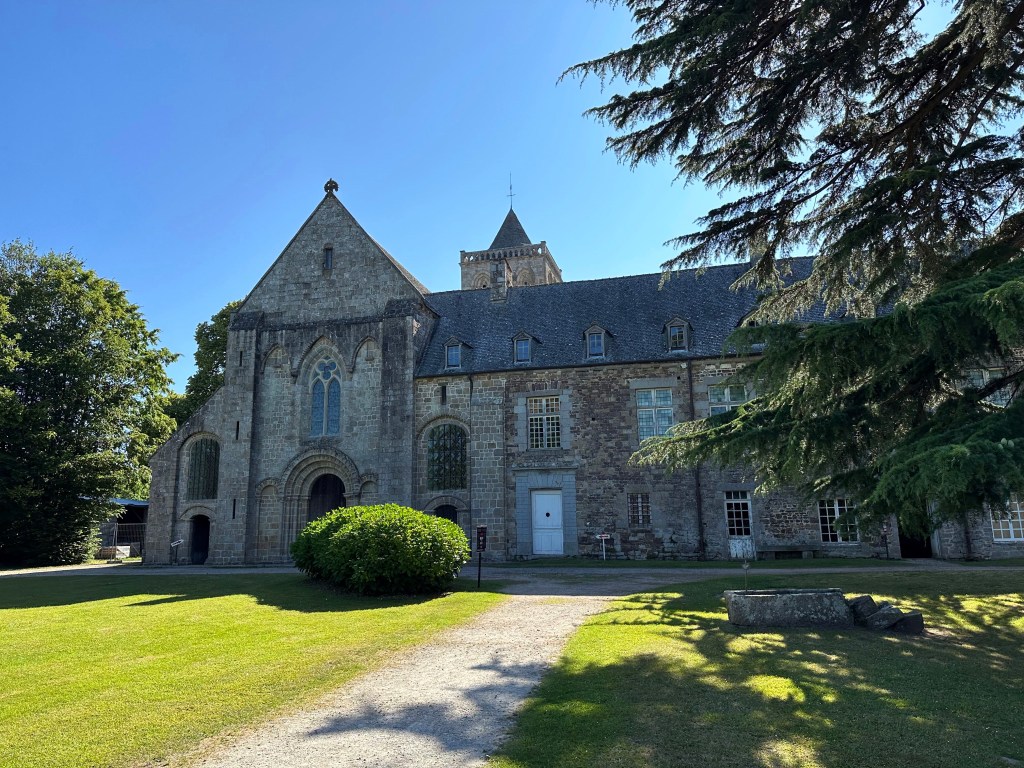
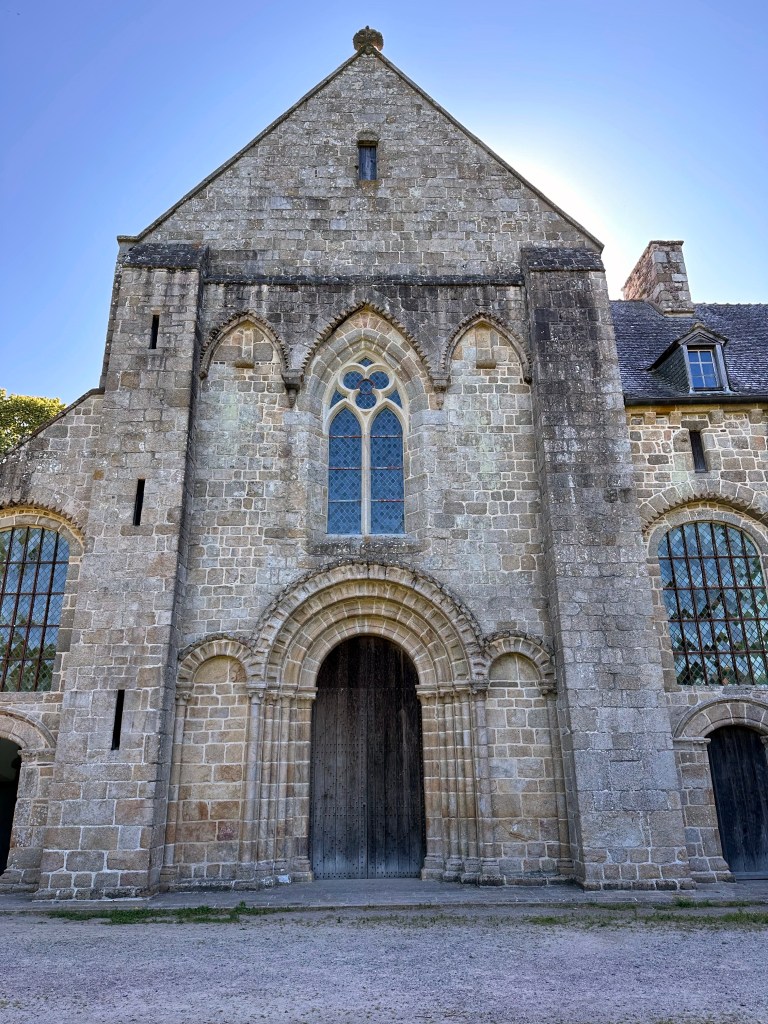
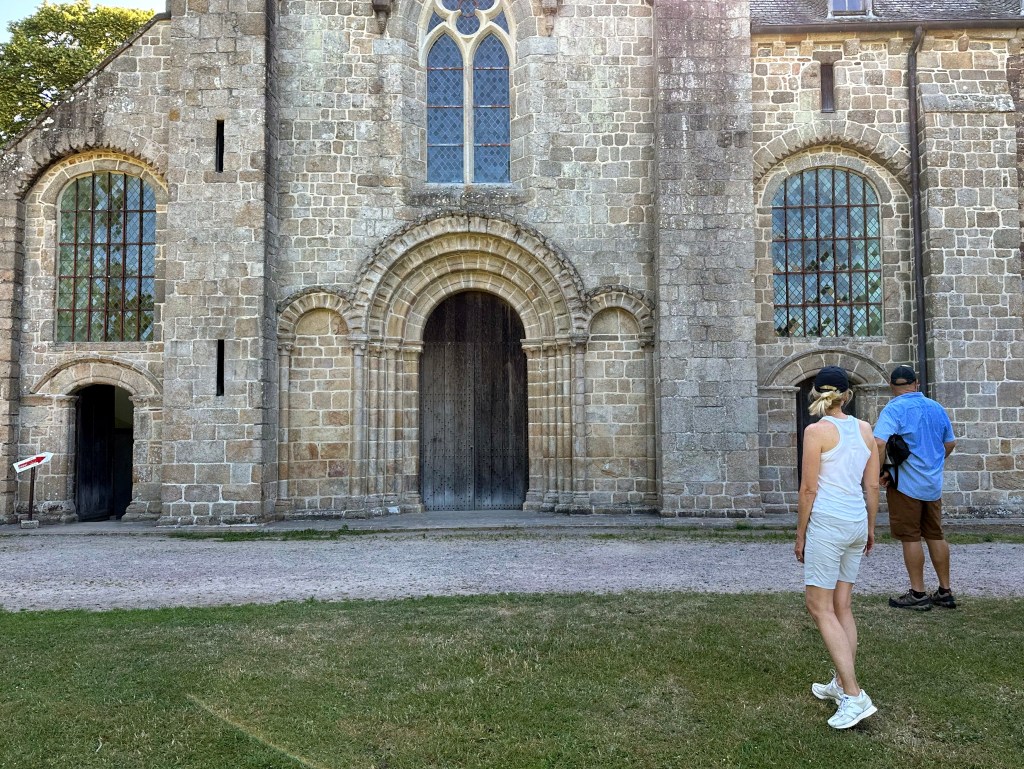
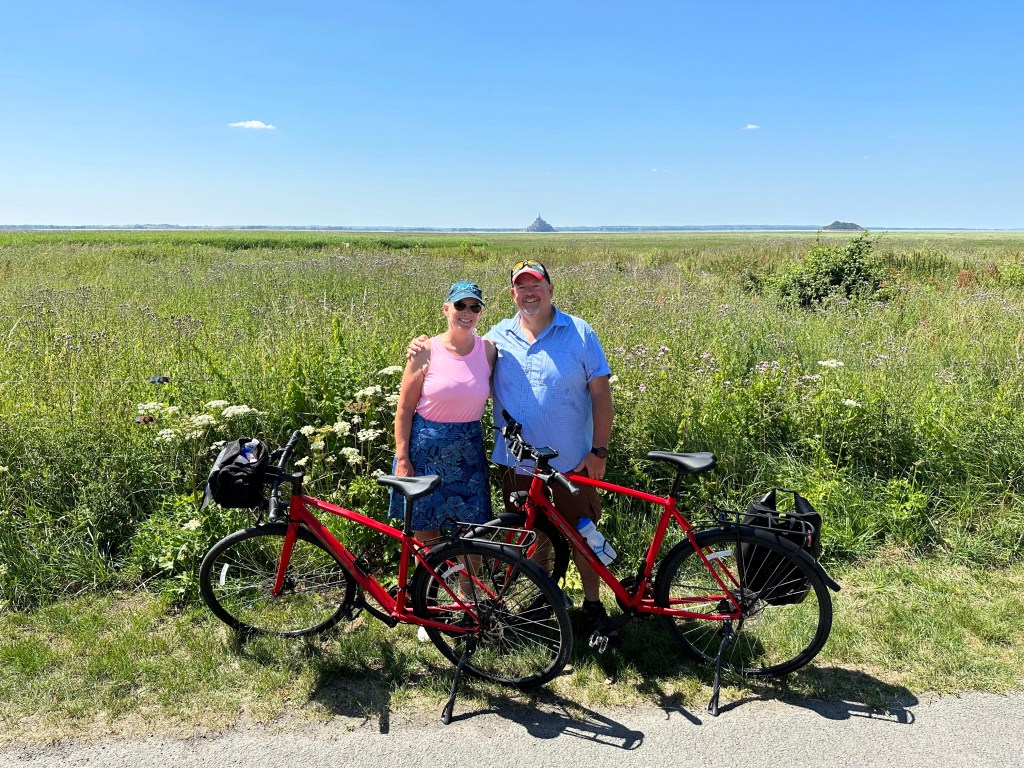
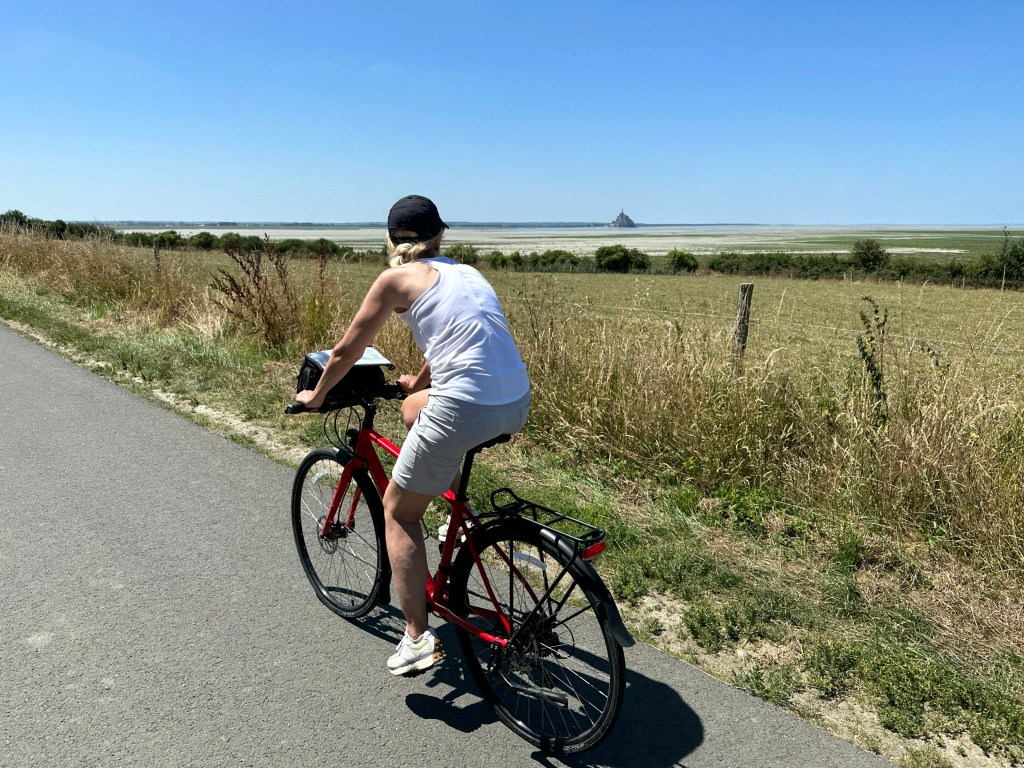
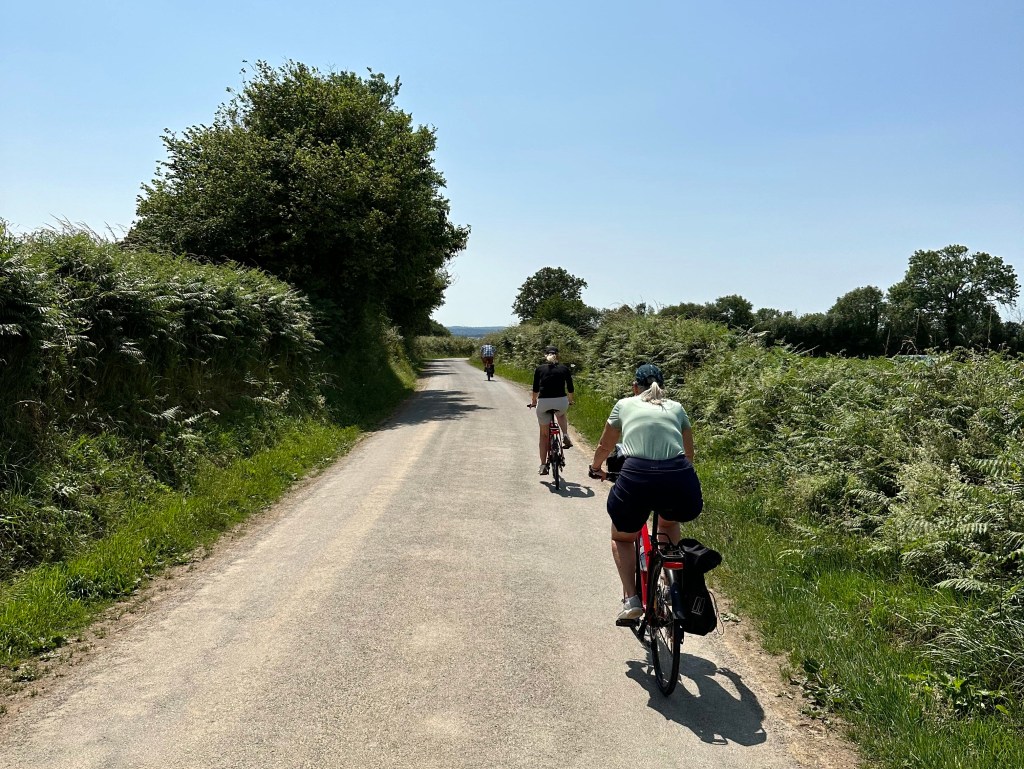
Our final day of biking in Normandy entailed riding from Avranches to the final major sight on the itinerary: the quasi-island abbey of Mont Saint Michel.
Route for the day, from Avranches to Mont Saint Michel (we forgot we had all of these and are adding them to previous Normandy biking posts):
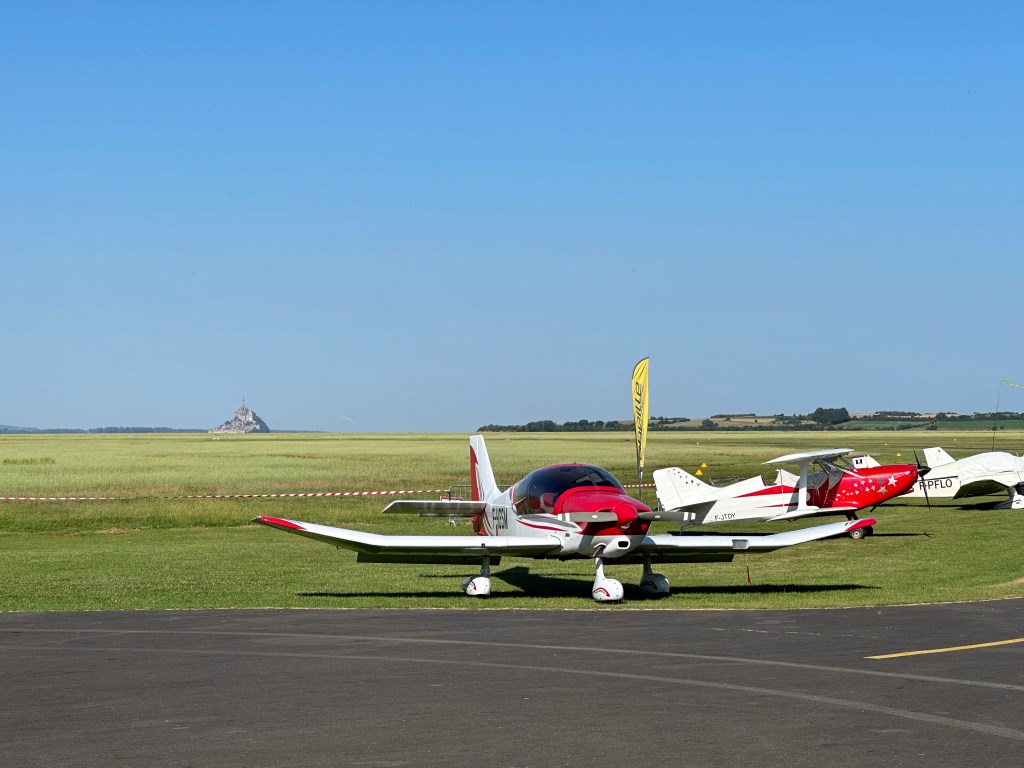
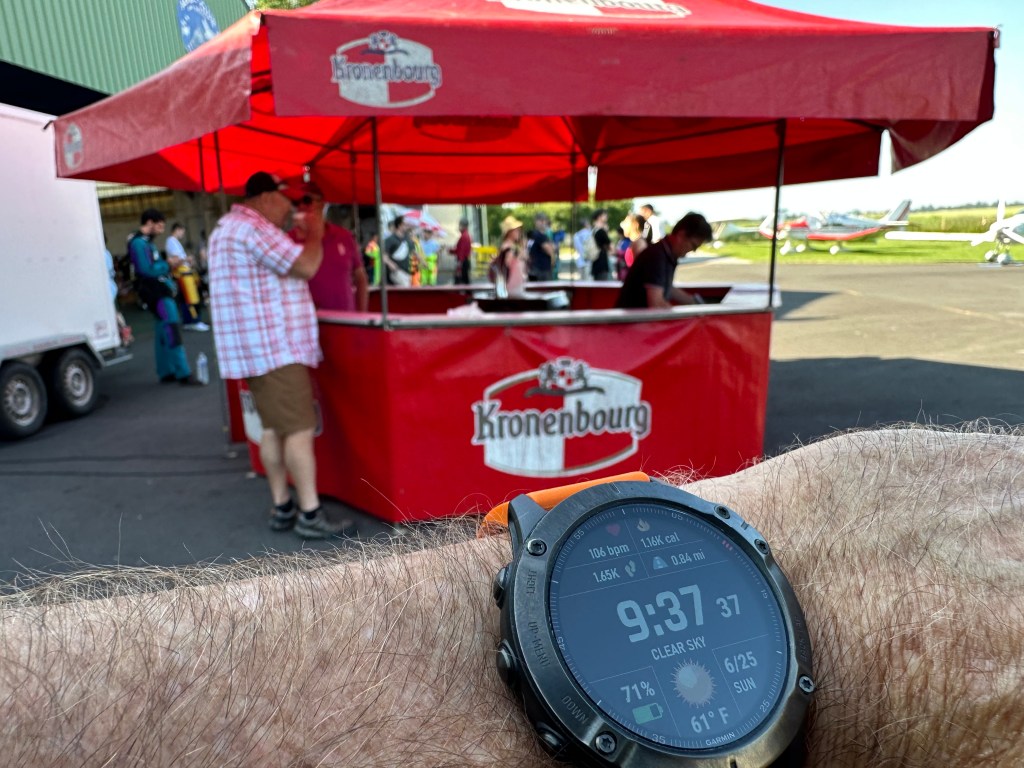
Just a short distance out of town we came upon an air show at the Aerodrome d’Avranches:
Where Thomas immediately took advantage of the beer tent:
Onward!
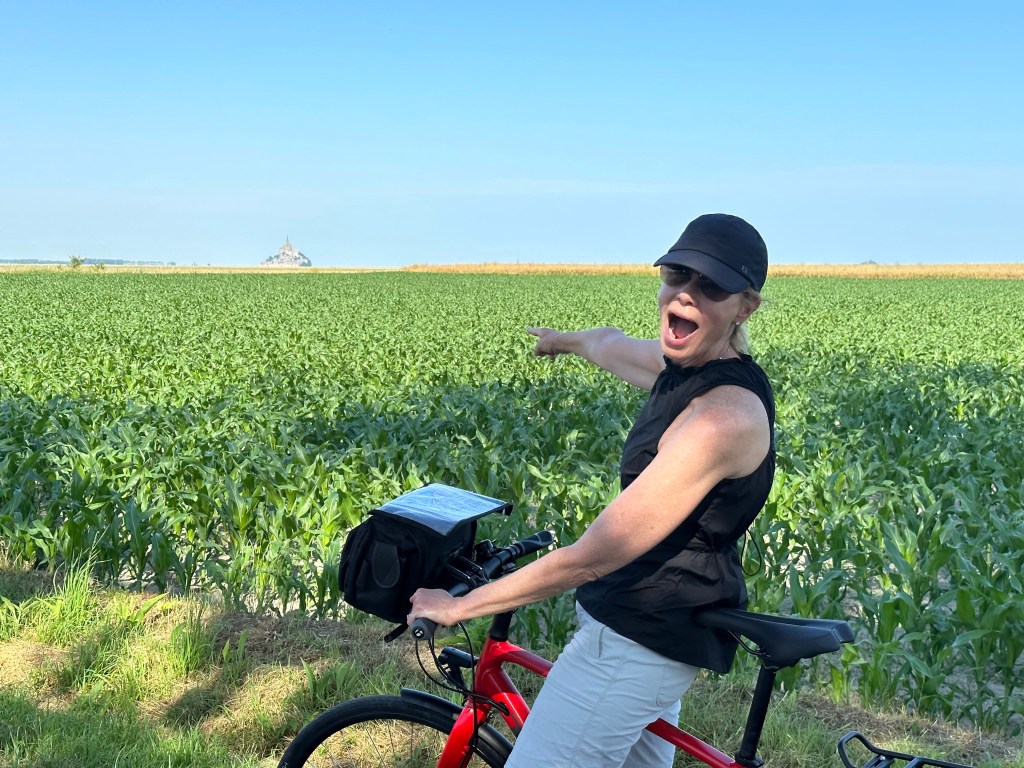
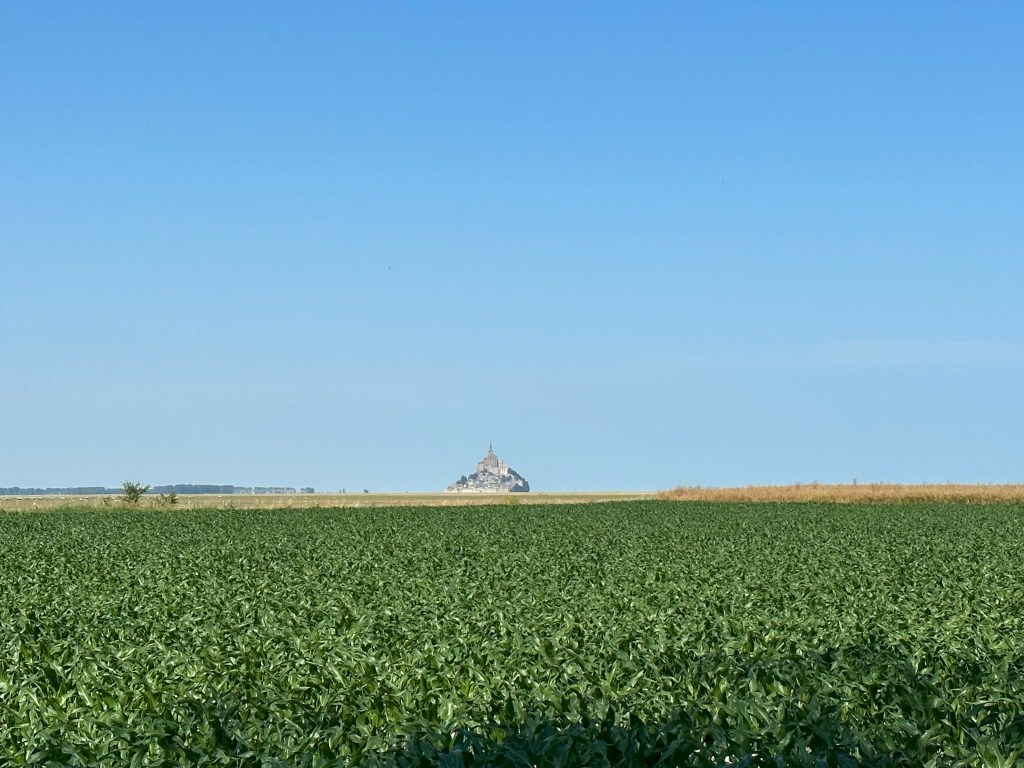
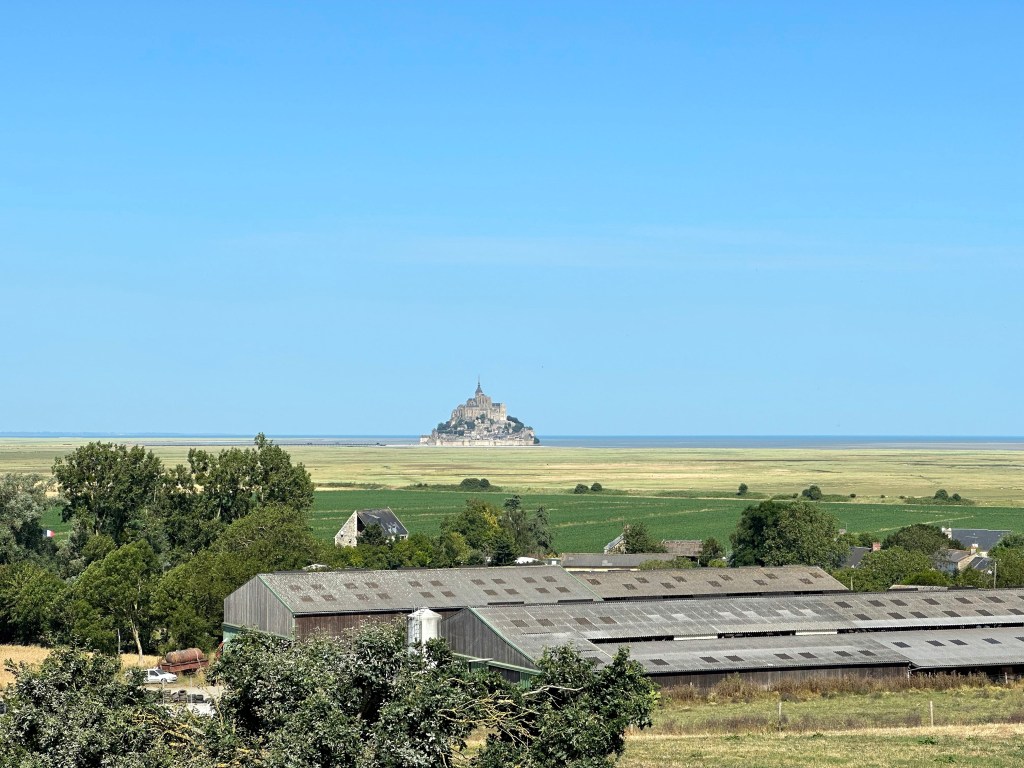
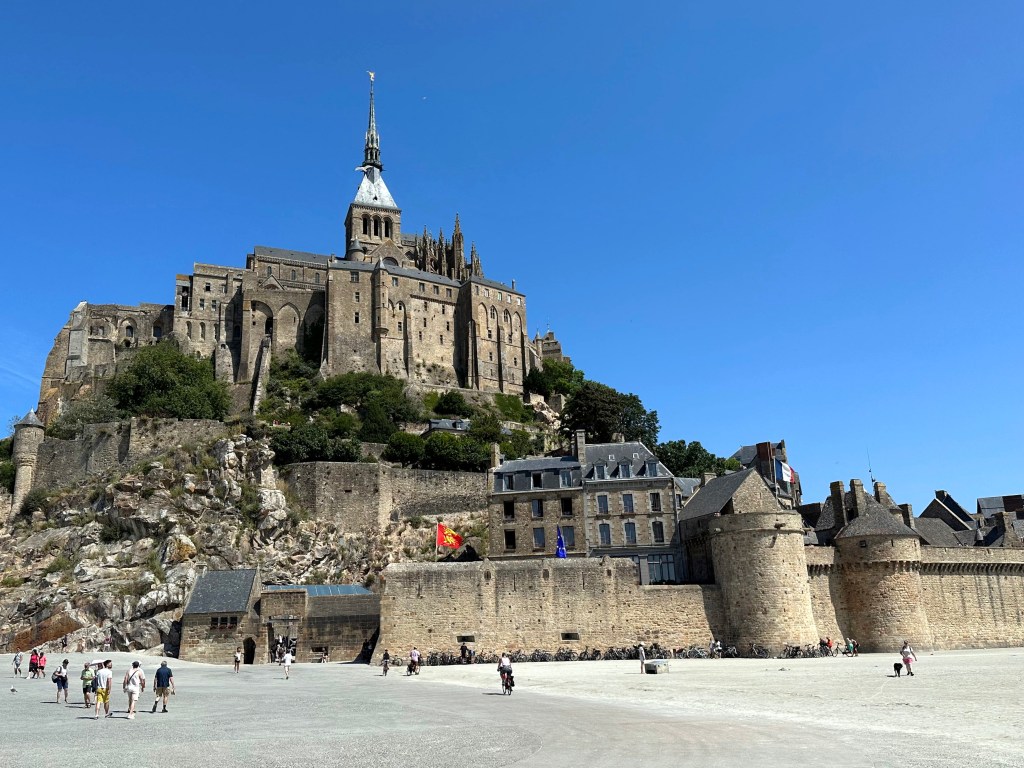
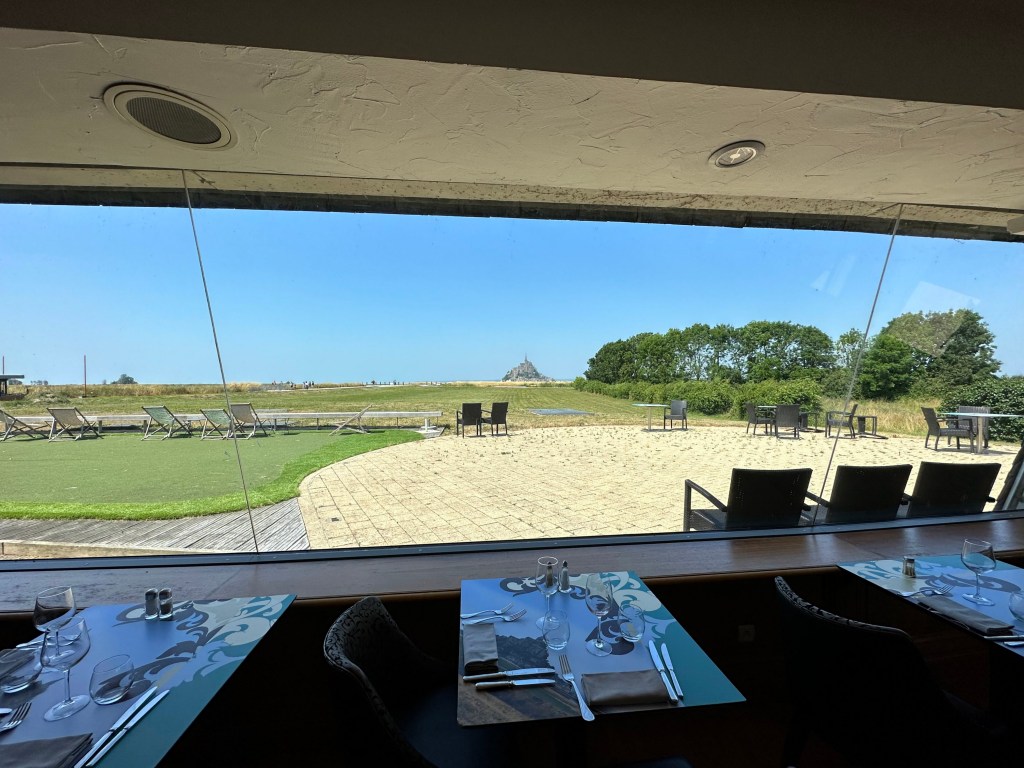
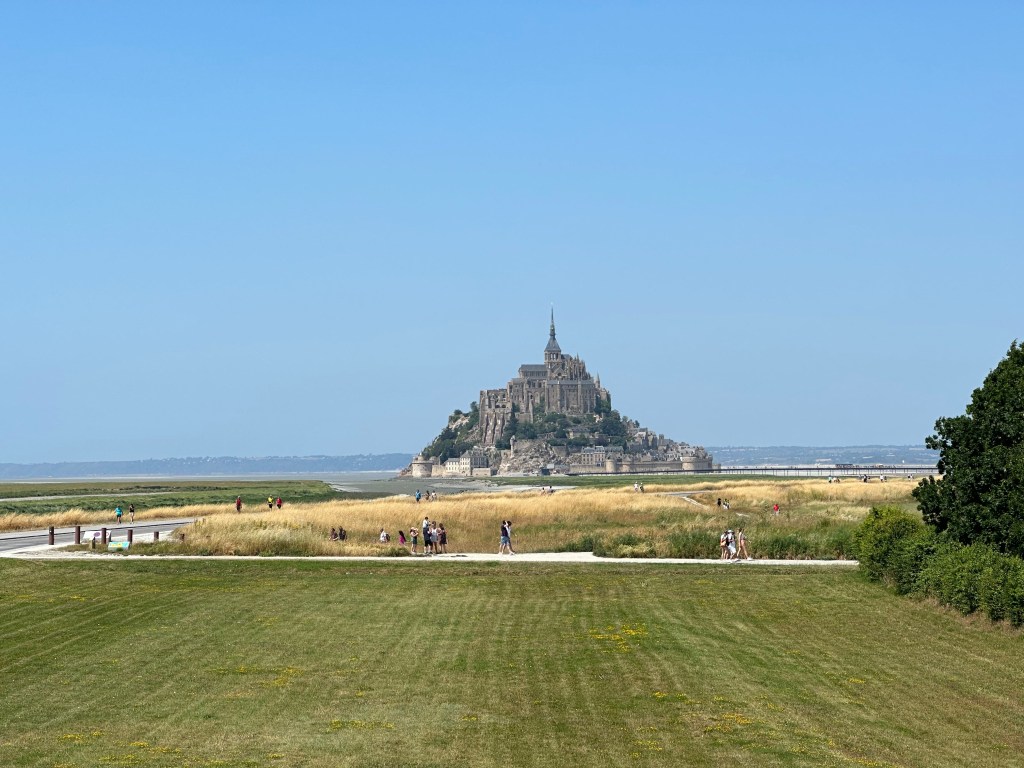
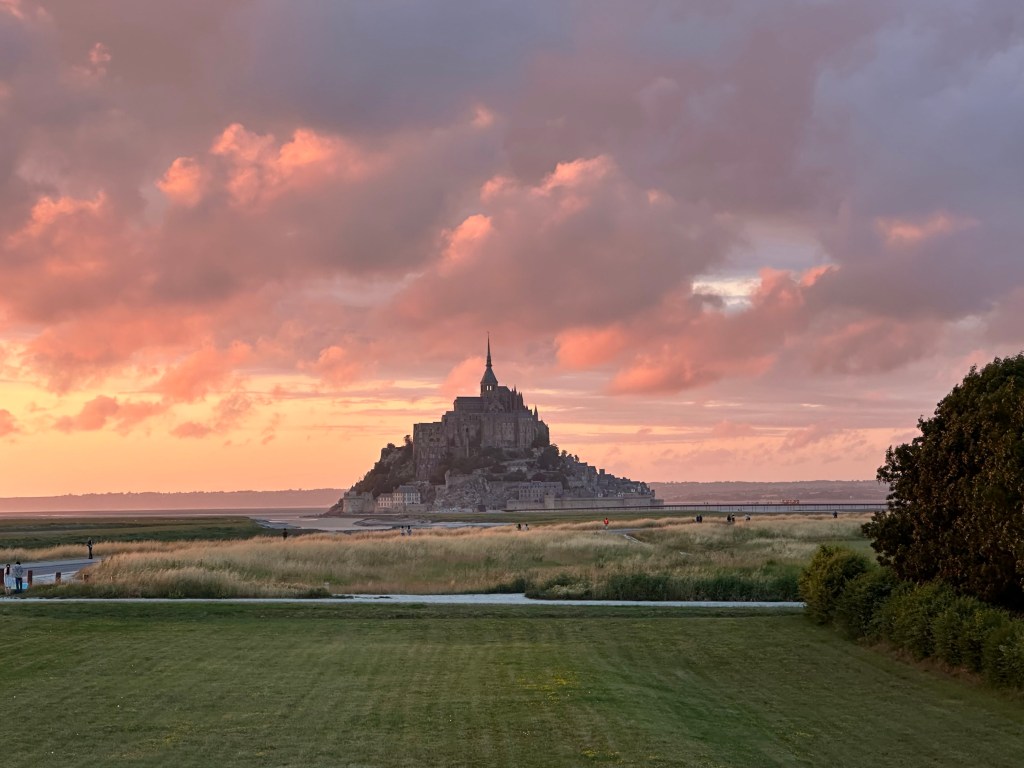
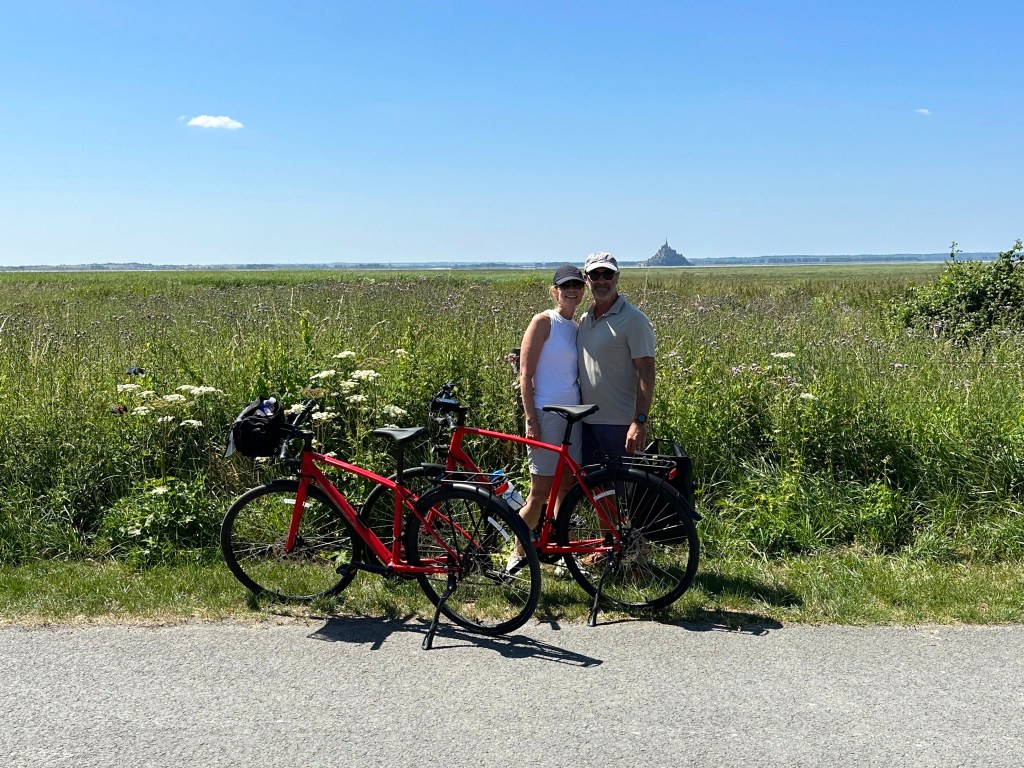
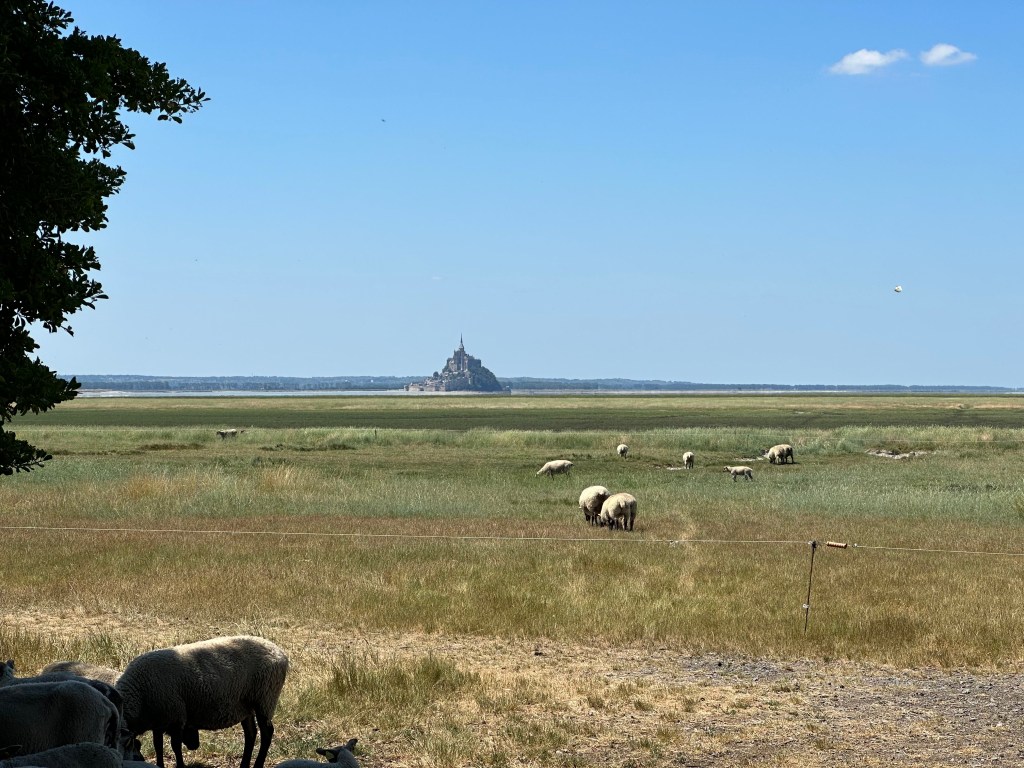
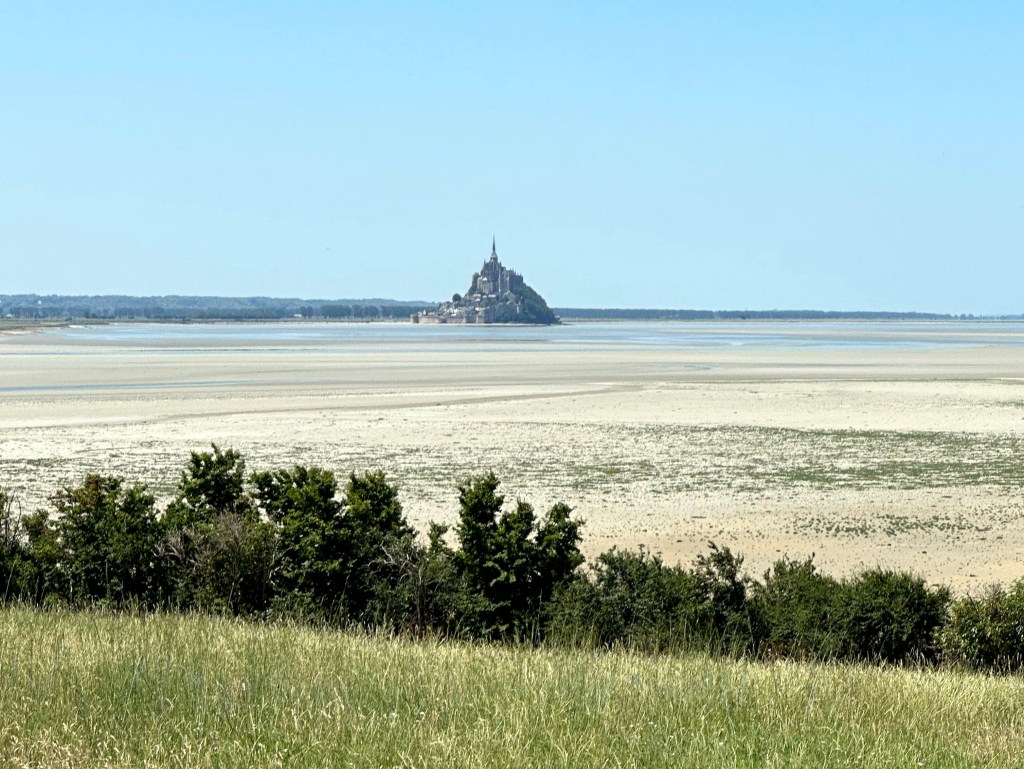
Our destination for the day, looking every bit like a sand castle in the distance:
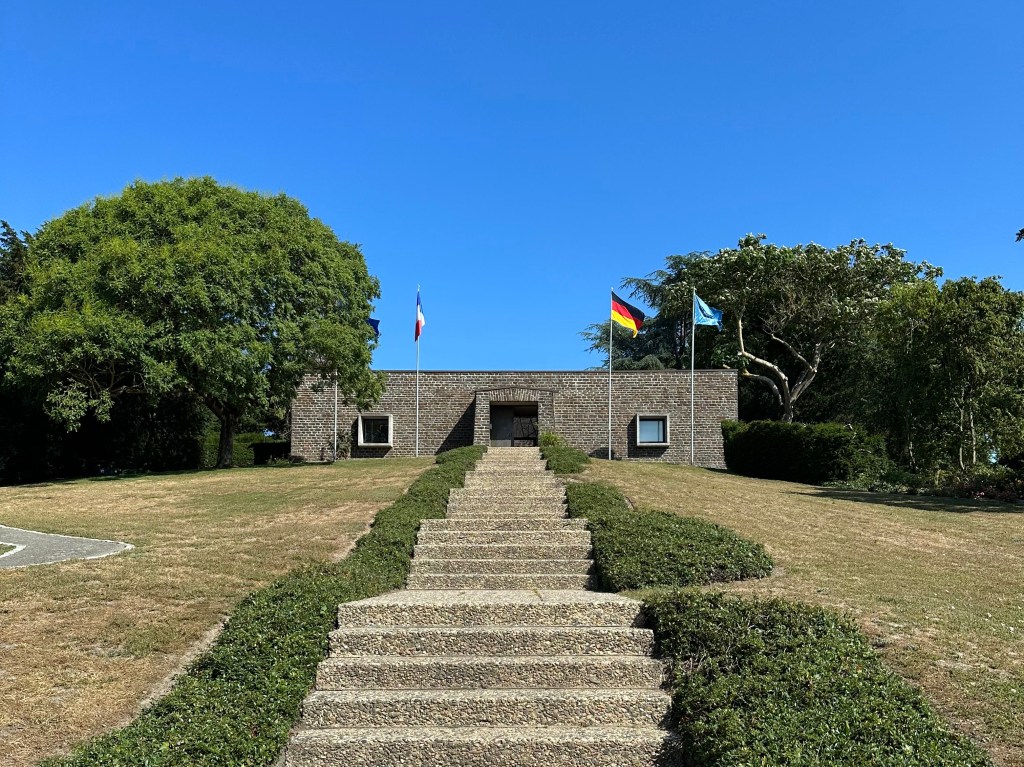
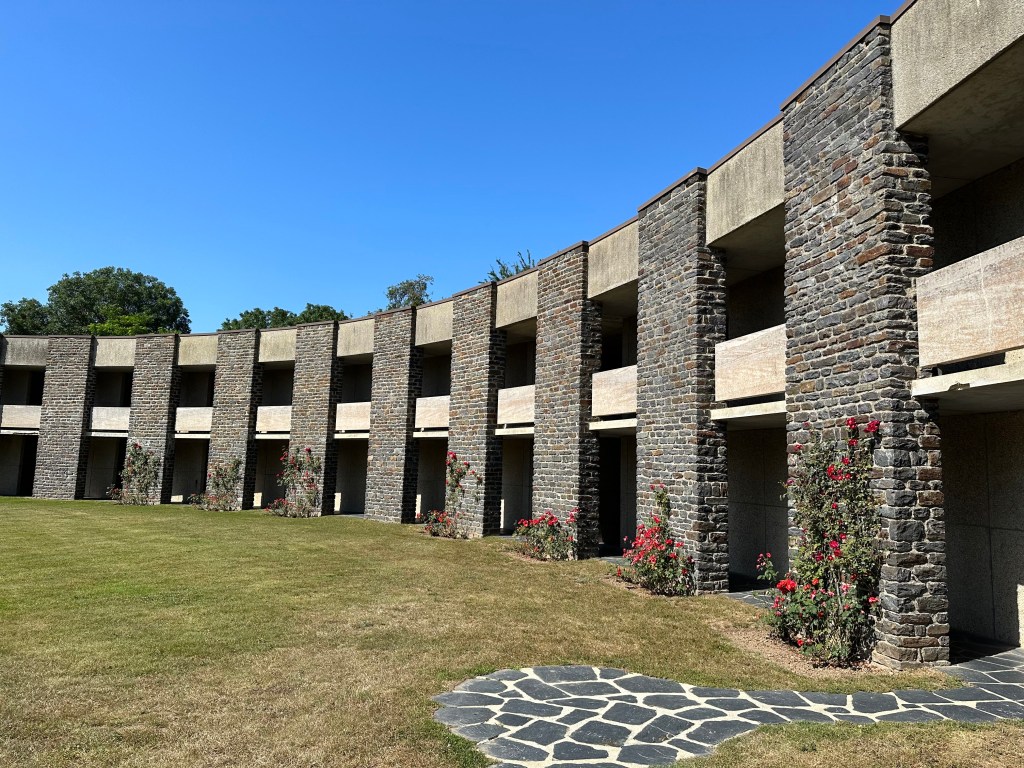
The heretofore unknown-to-us German War Cemetery in Normandy:
It’s an unassuming columbarium containing the remains of 12,000 war dead from western France and the Channel Islands.
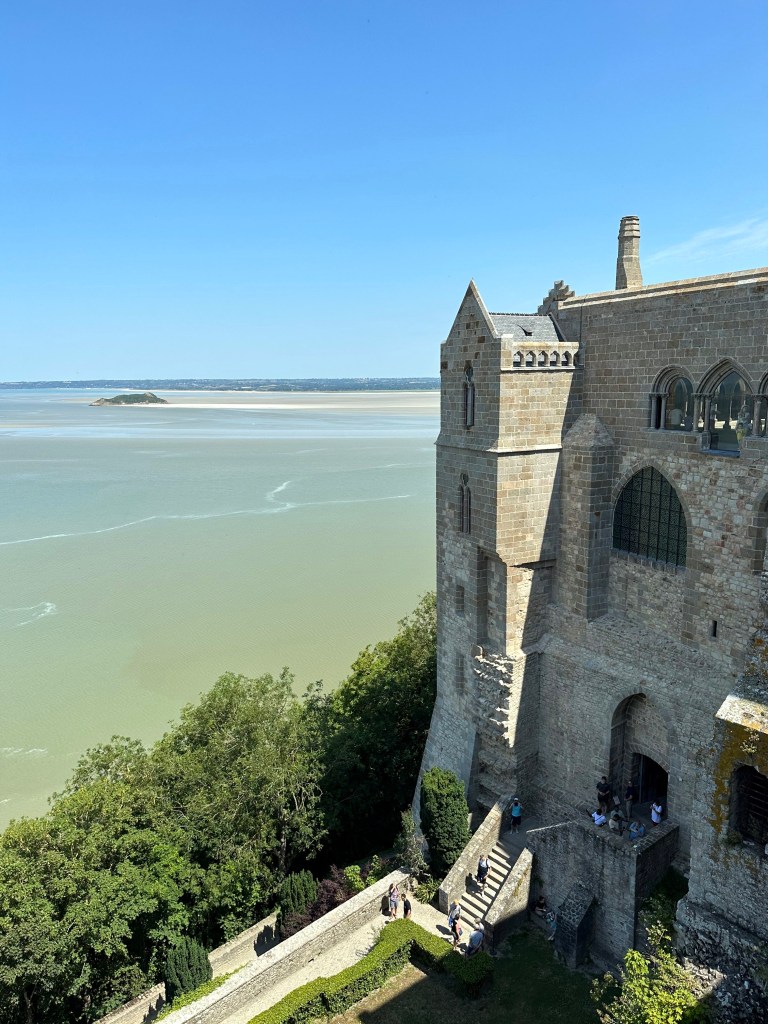
With another view of Mont Saint Michel from the top:
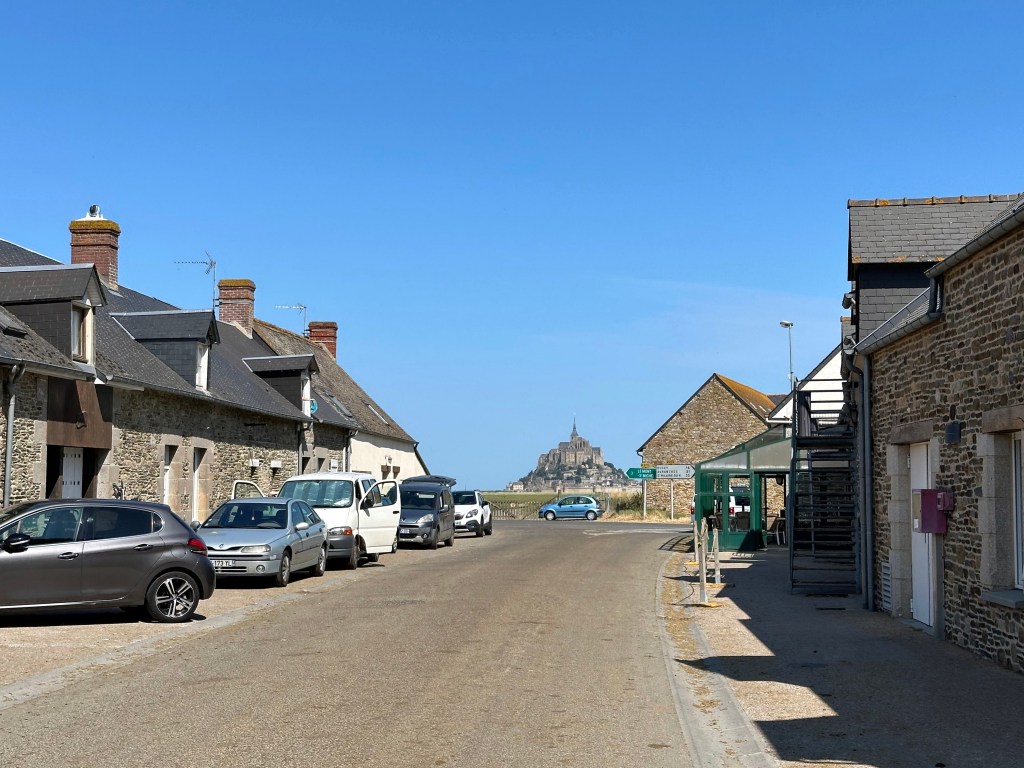
The little hamlet of La Rive, with a trailhead to the monastery:
On the causeway, site of an individual time trial in the 2013 Tour de France:
The place is like a wedding cake.
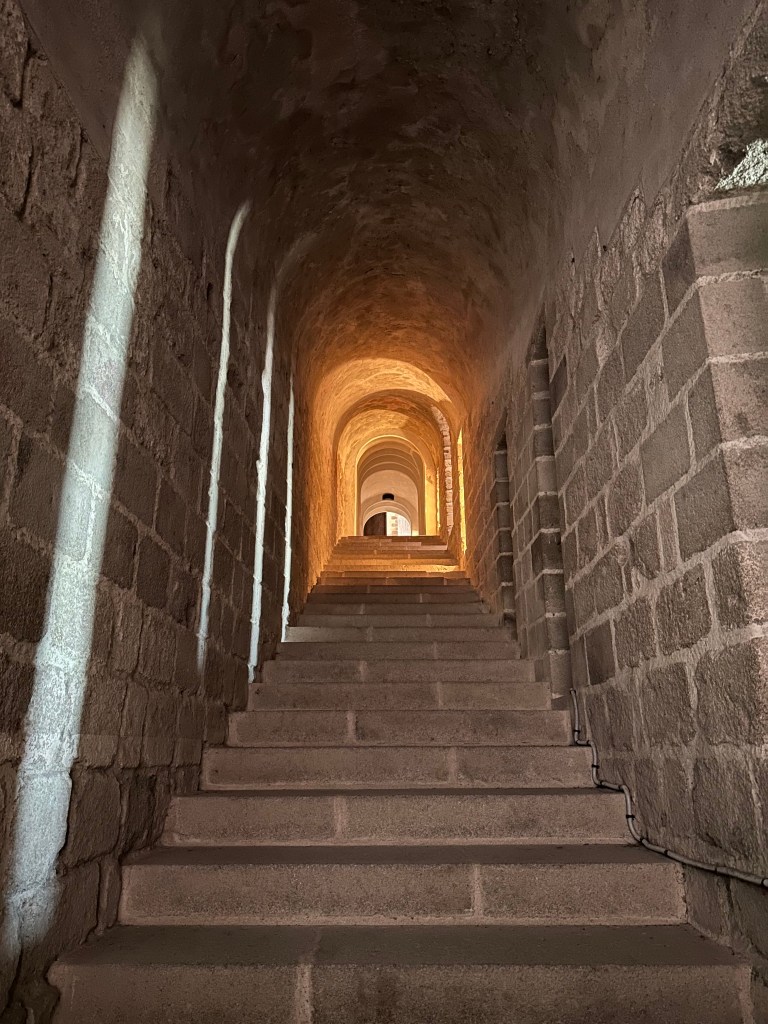
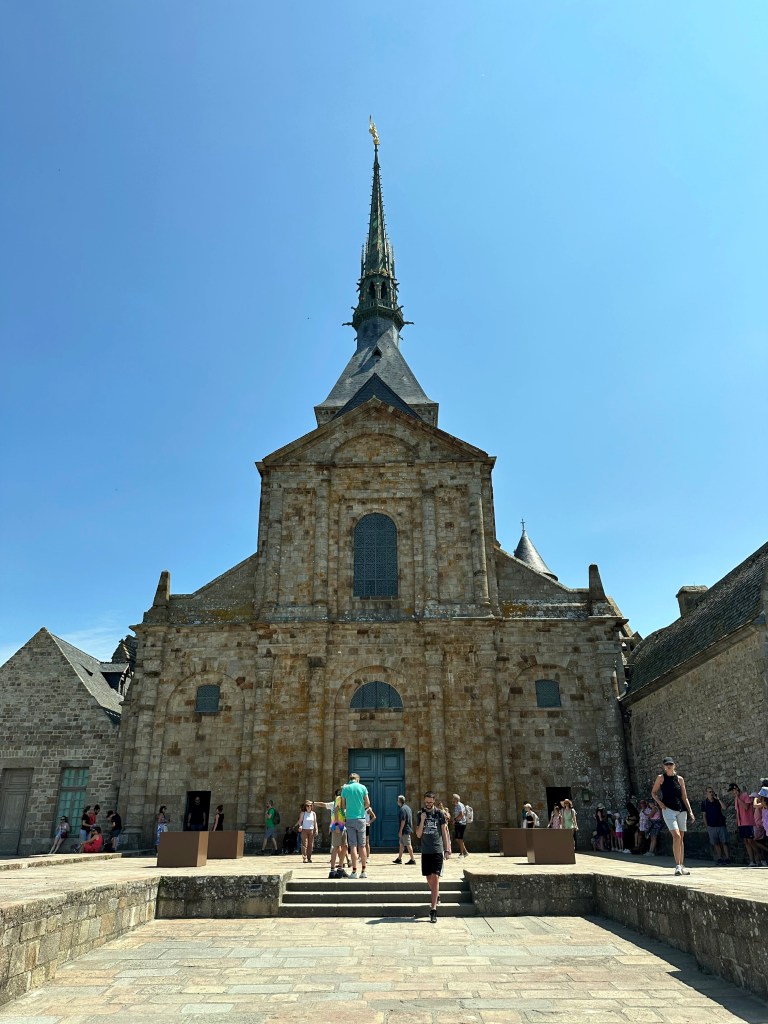
Once inside the walled abbey and its little encircling town, we made a beeline to the top of the complex.
Mont Saint-Michel’s history began in 708 AD, when, according to tradition, the Archangel Michael appeared to Aubert, Bishop of Avranches, and instructed him to build a sanctuary on the rocky tidal island.
Benedictine monks established an abbey there in 966, transforming it into a major medieval pilgrimage destination.
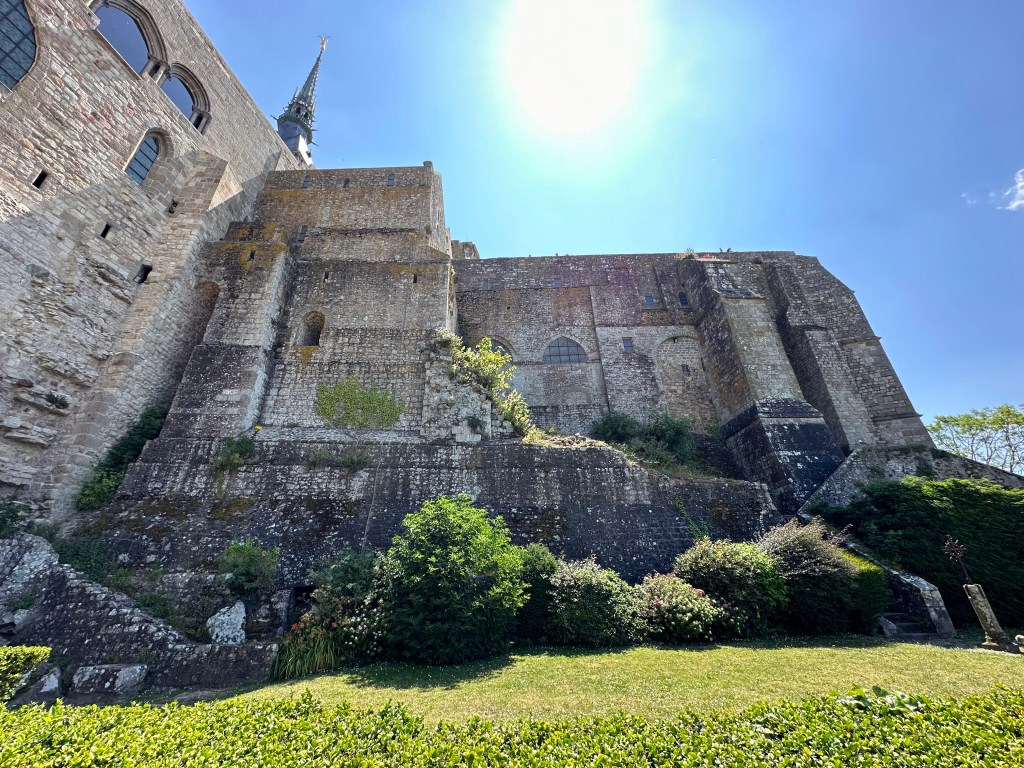
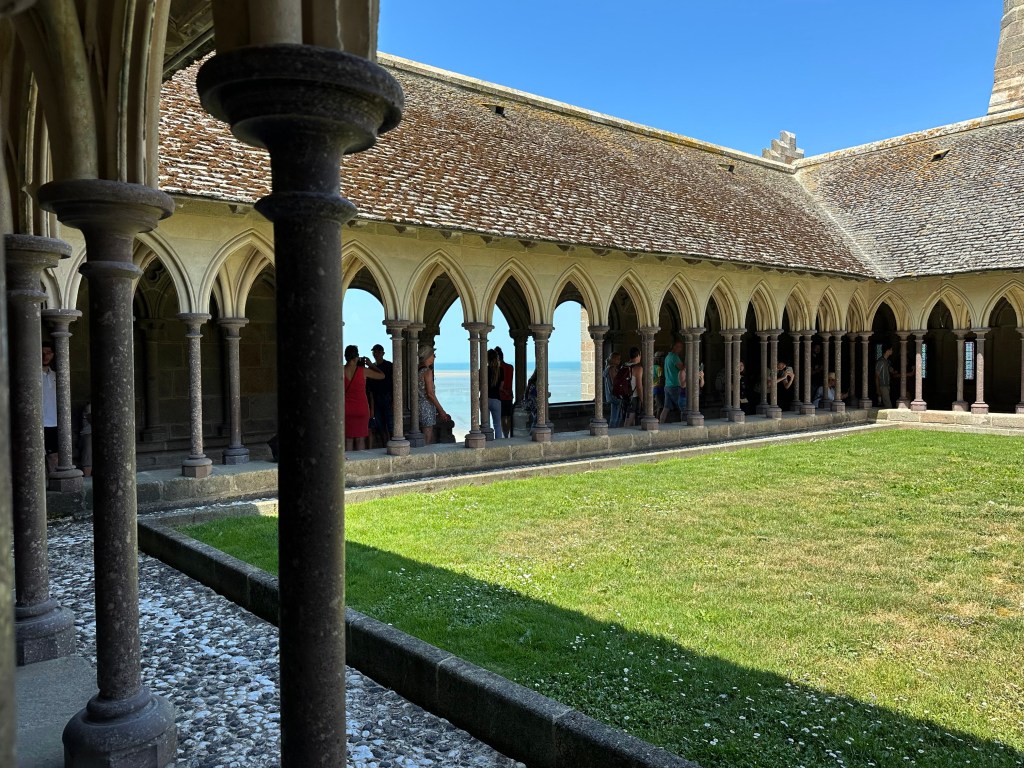
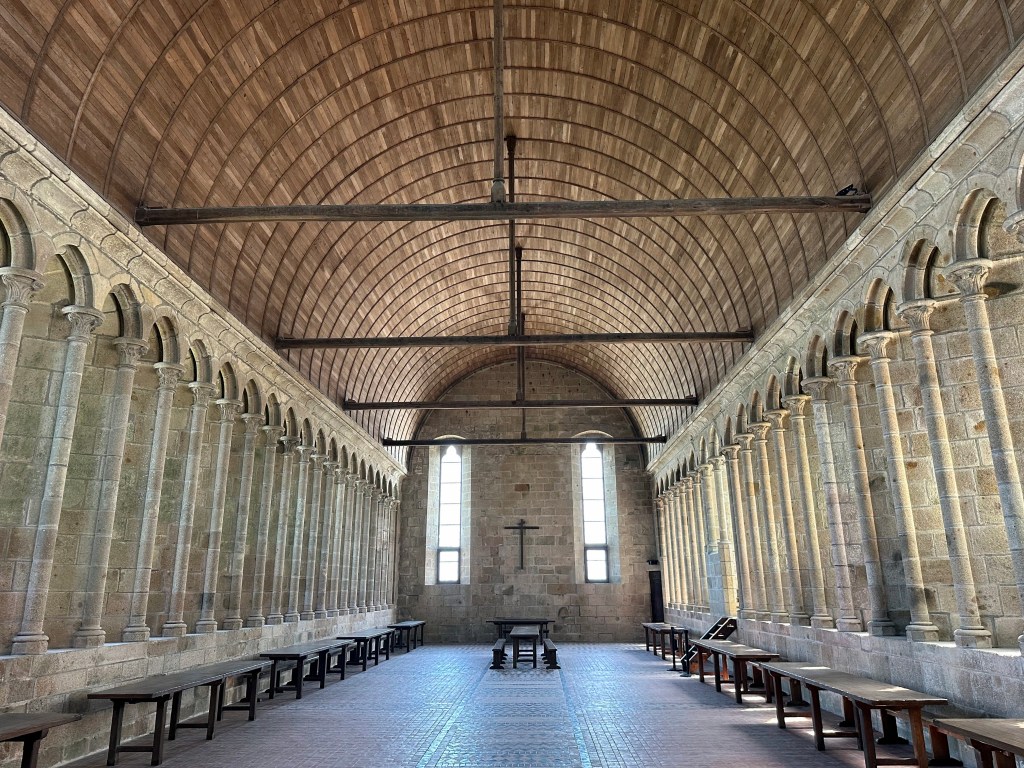
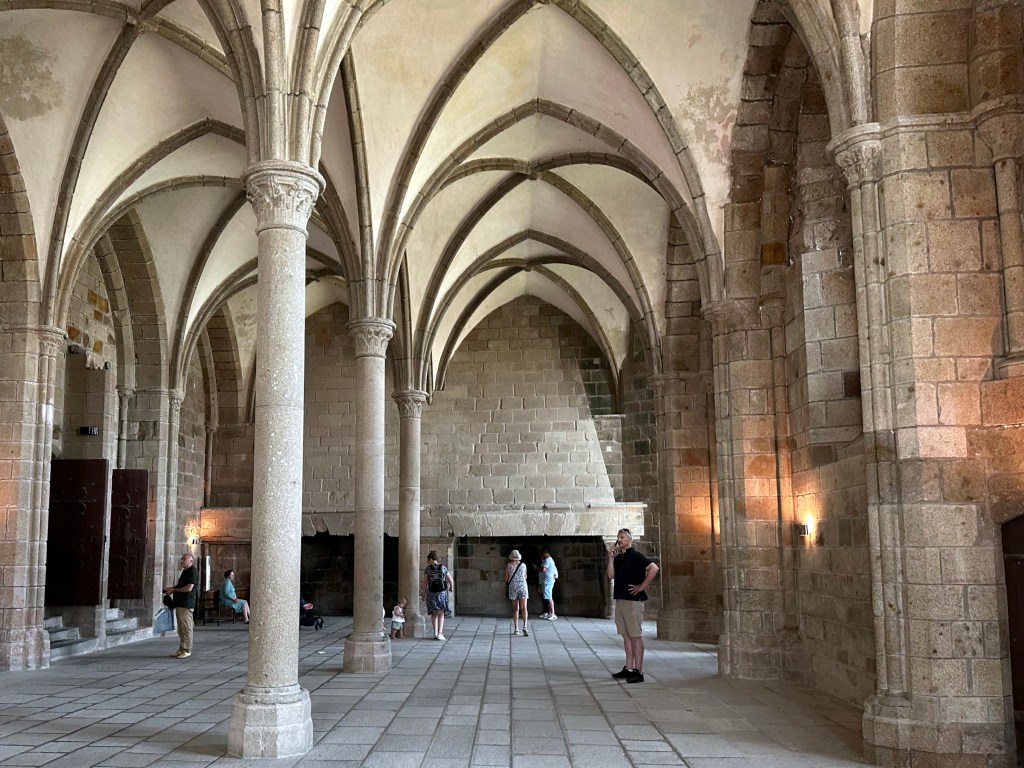
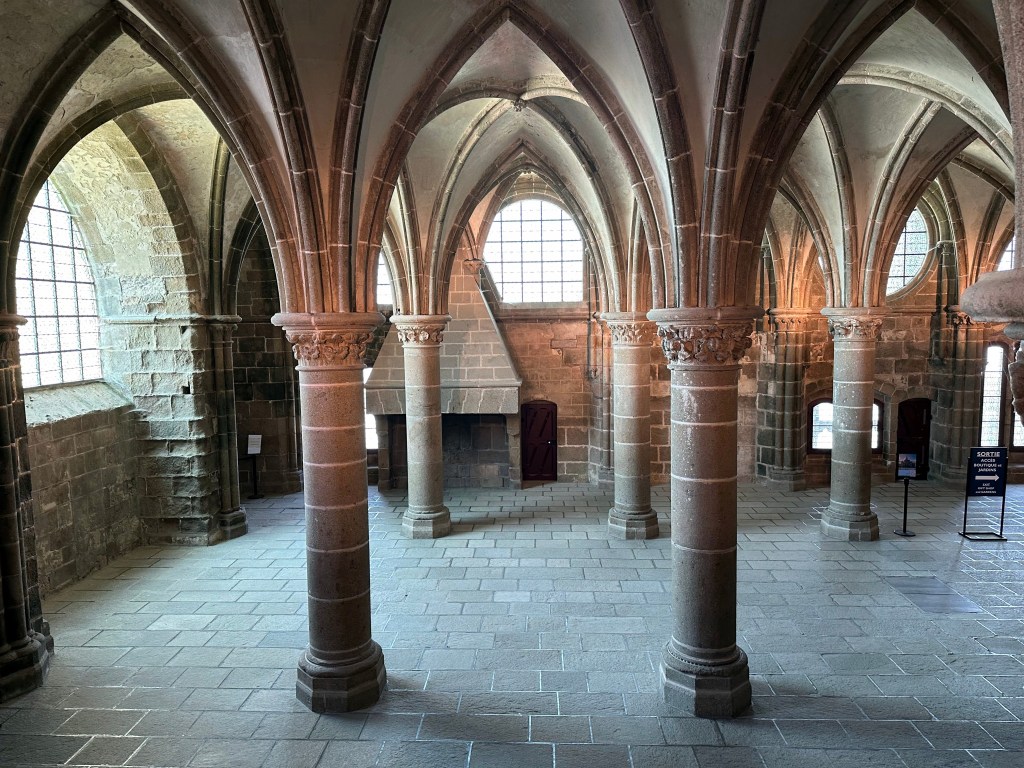
An extraordinary Gothic complex, known as La Merveille (“The Marvel”) was built on the abbey’s north side in the early 13th century.
During the Hundred Years’ War, its formidable fortifications helped it withstand English attacks, making it a powerful symbol of French resistance.
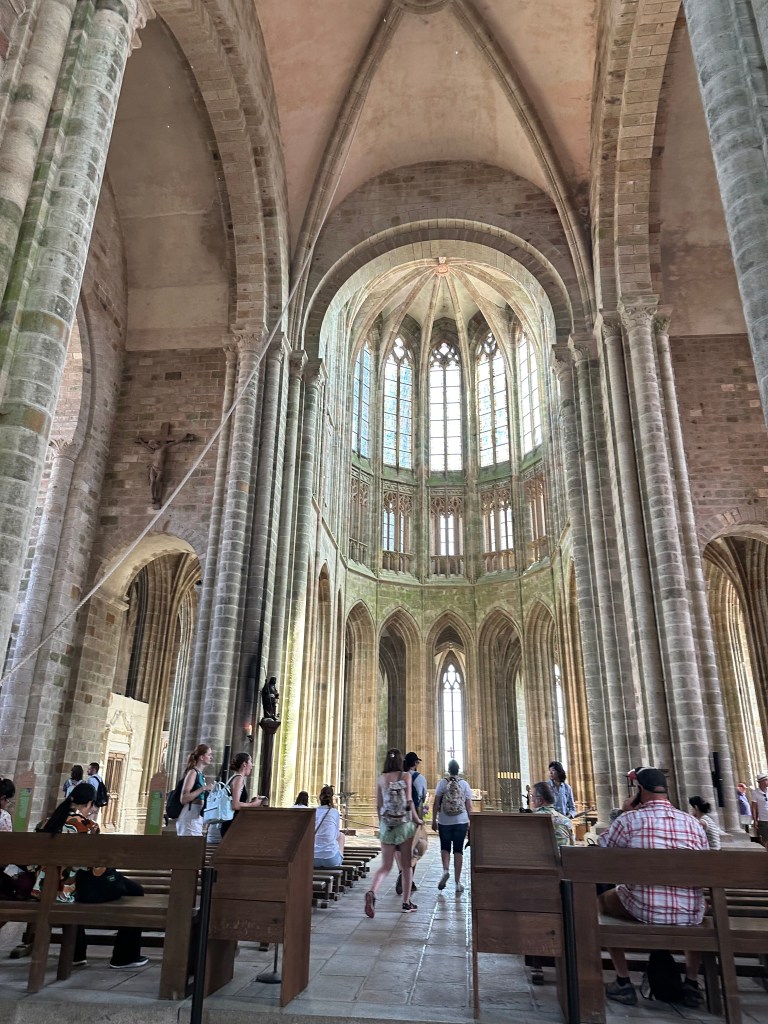
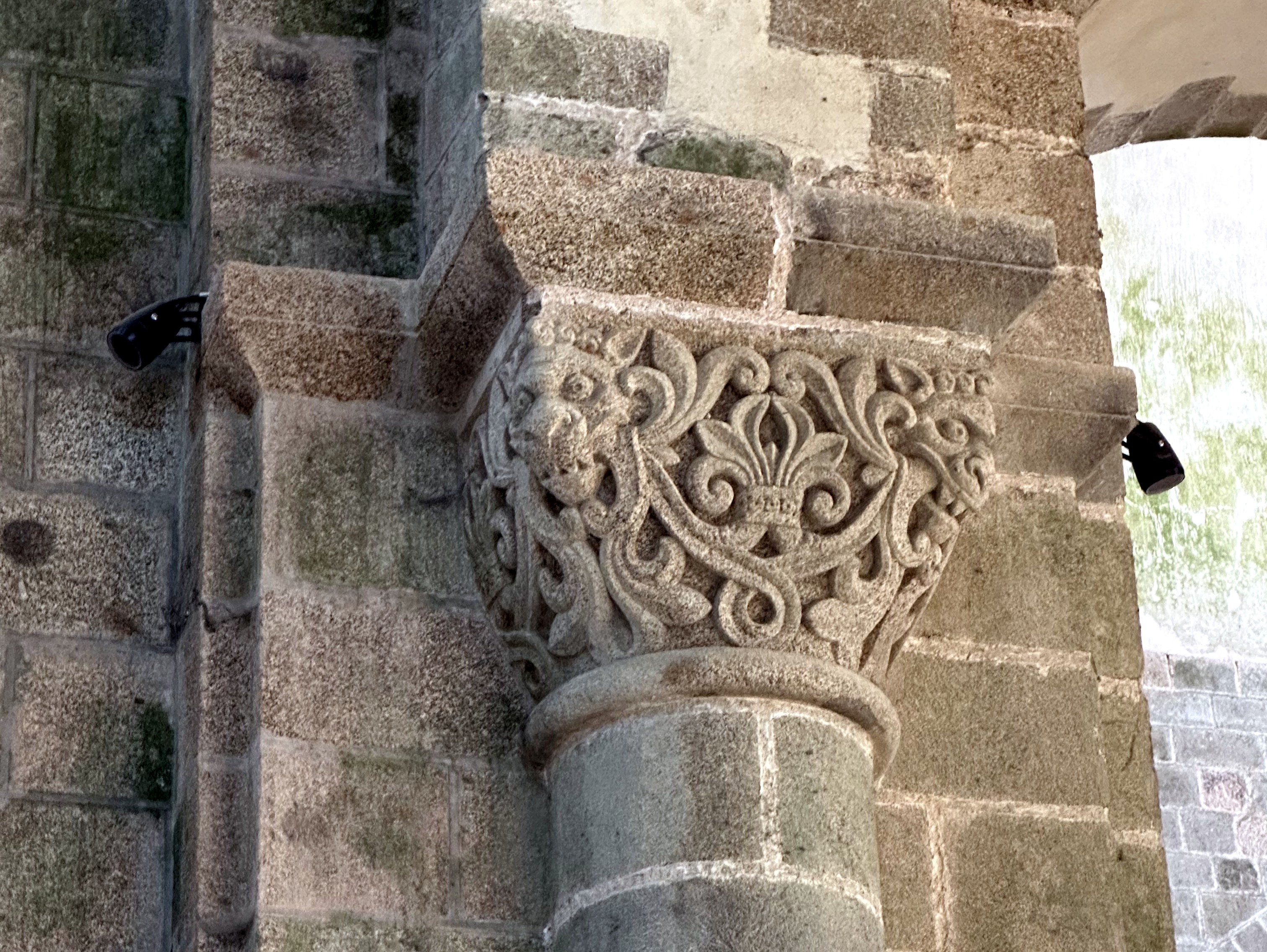
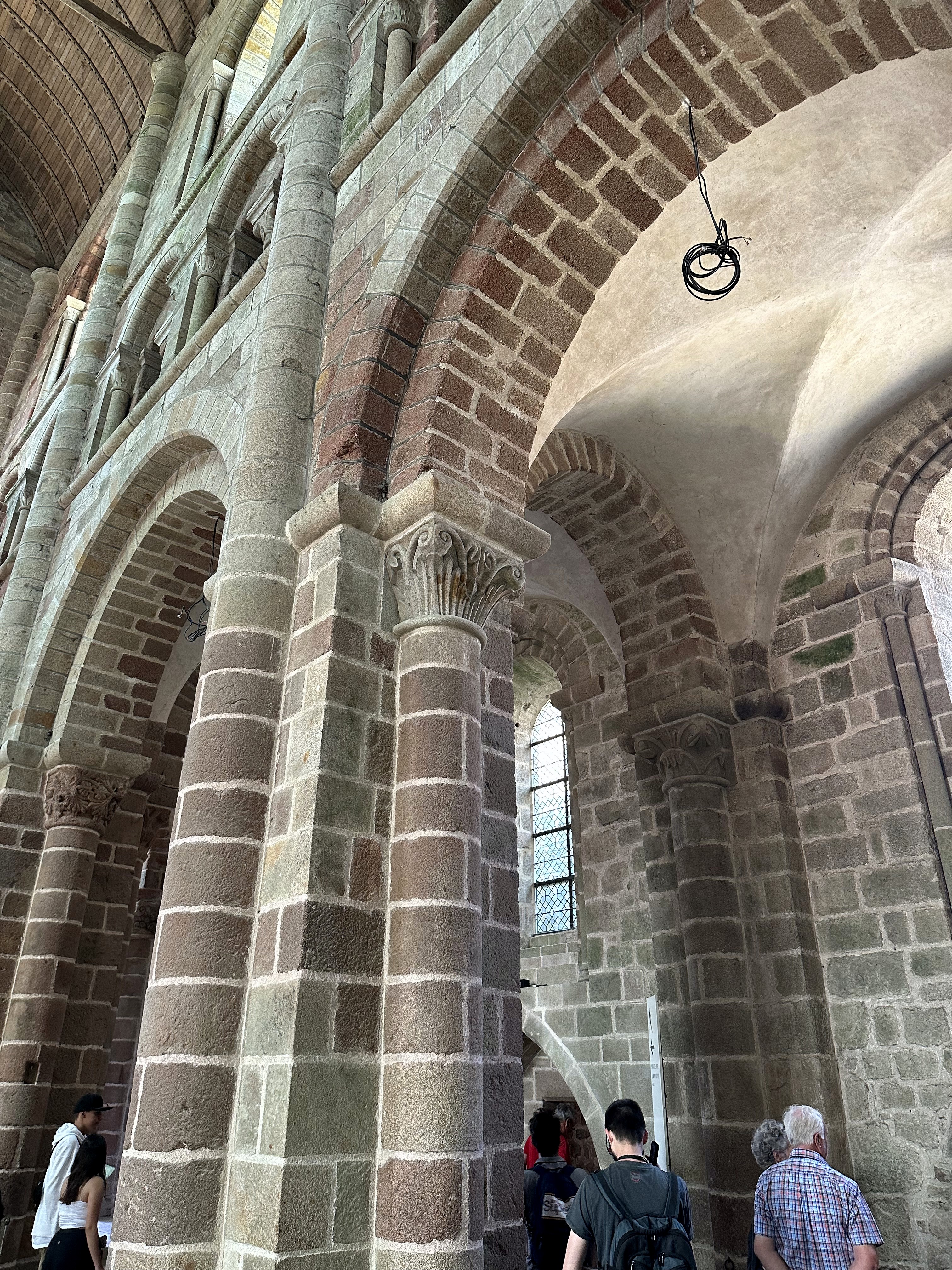
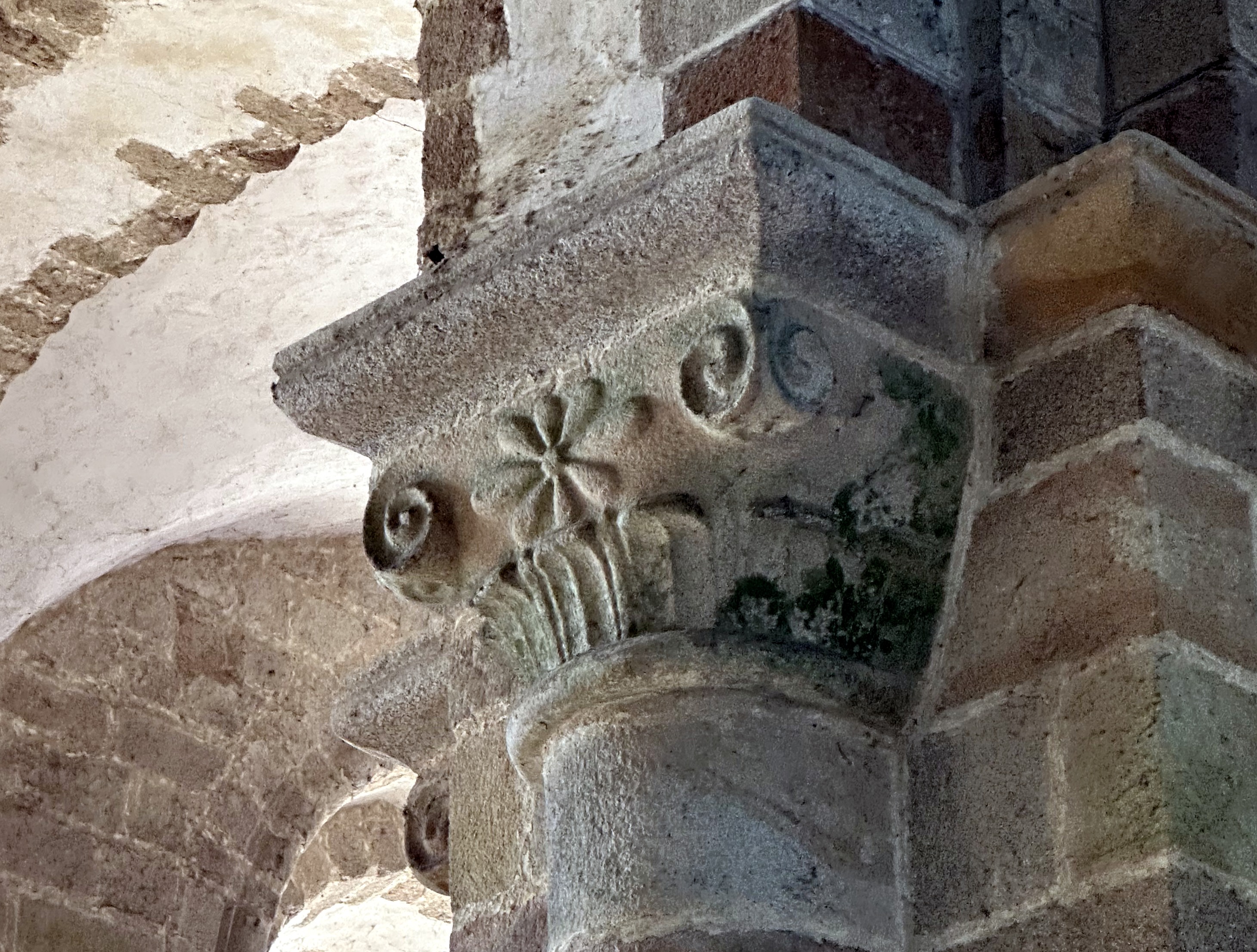
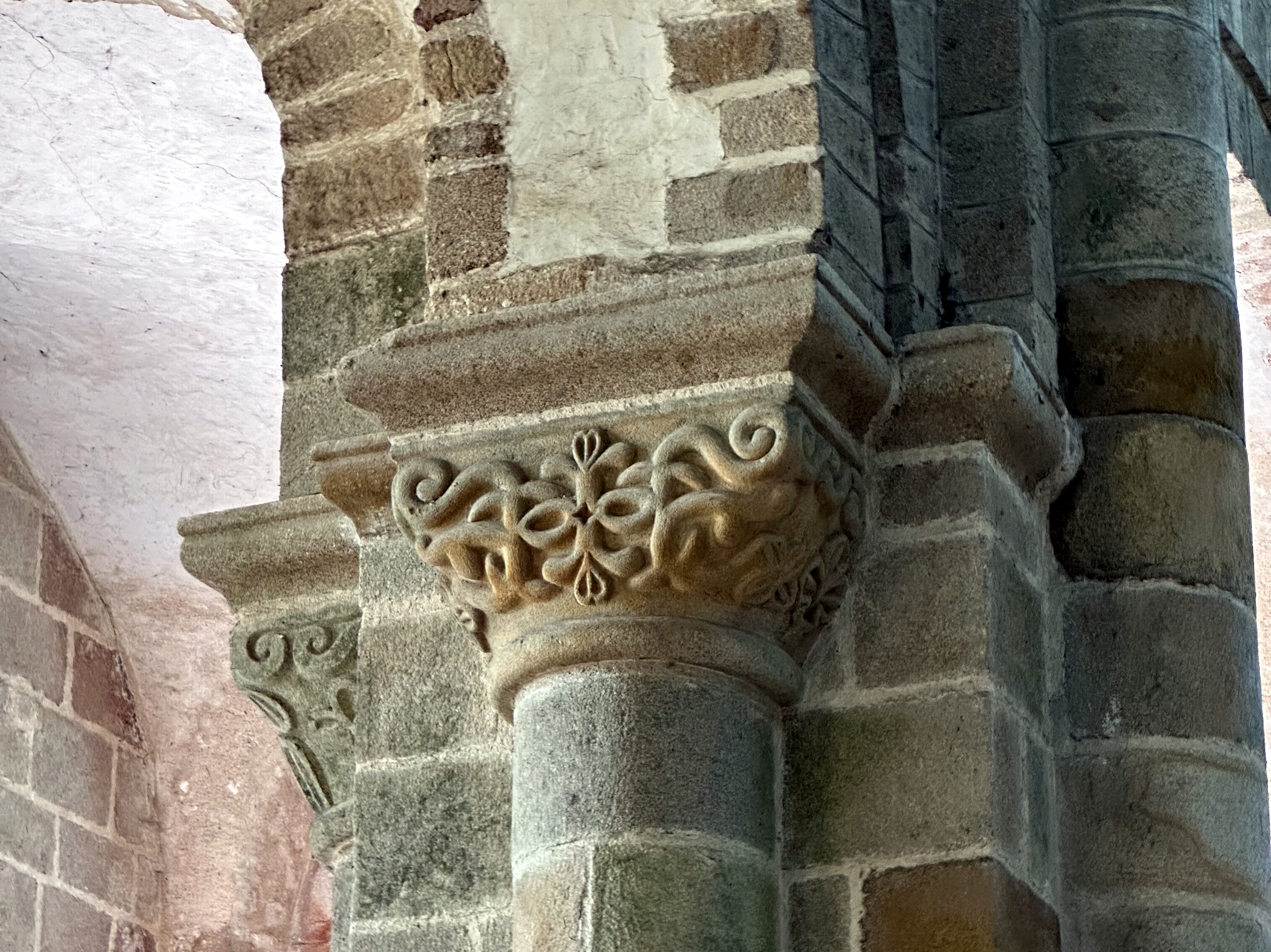
Cool capitals on the church columns:
“A marvel within the “Merveille,” the cloister offers a timeless experience, between sky and sea. The Merveille is a group of Gothic buildings, built on the north side of the rock, composed of three levels, a magnificent testimony to the know-how of the 13th century builders.” (From here.)
After the French Revolution, the abbey was converted into a prison, which operated until 1863, before restoration efforts revived its religious and historic significance.
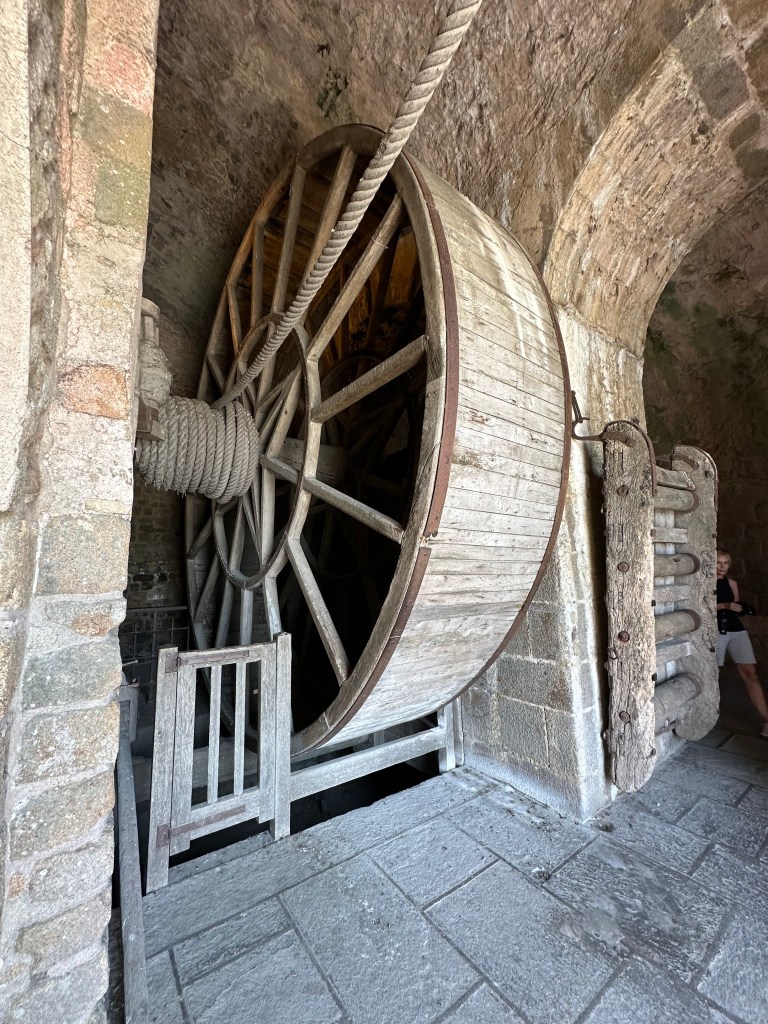
Elevator / crane:
Our abbey tour concluded, we headed back through the throngs and out to our bikes.
And rode to our hotel, right at the edge of the causeway.
The hotel’s location was phenomenal.
Even if the hotel itself was for shite.
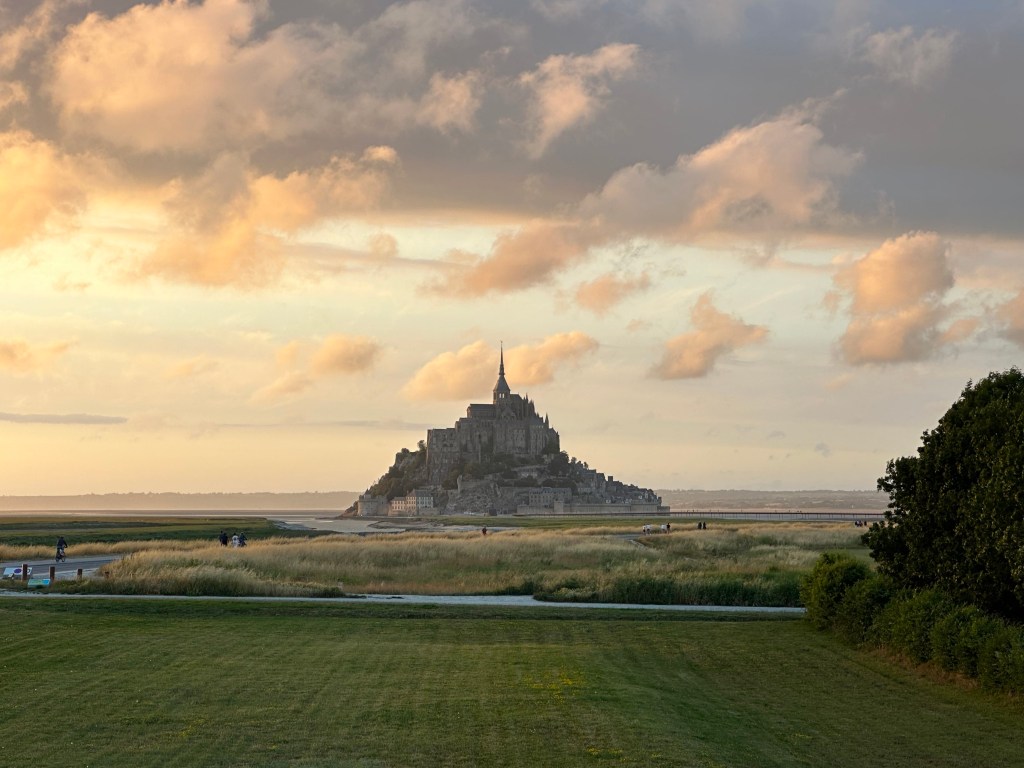
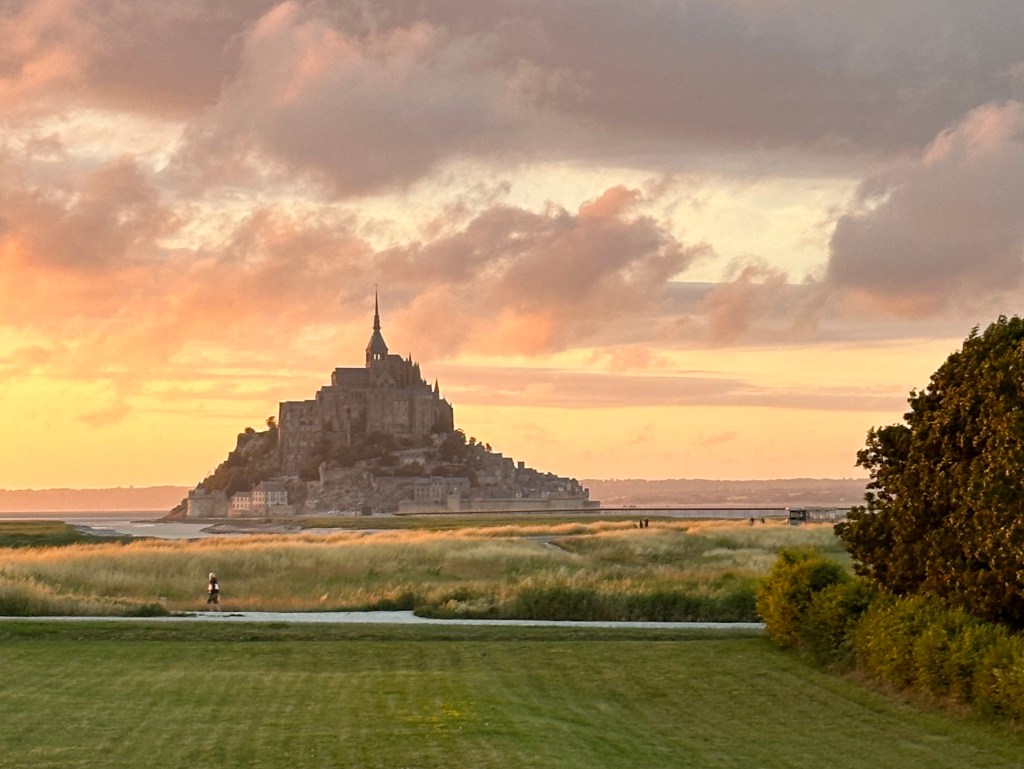
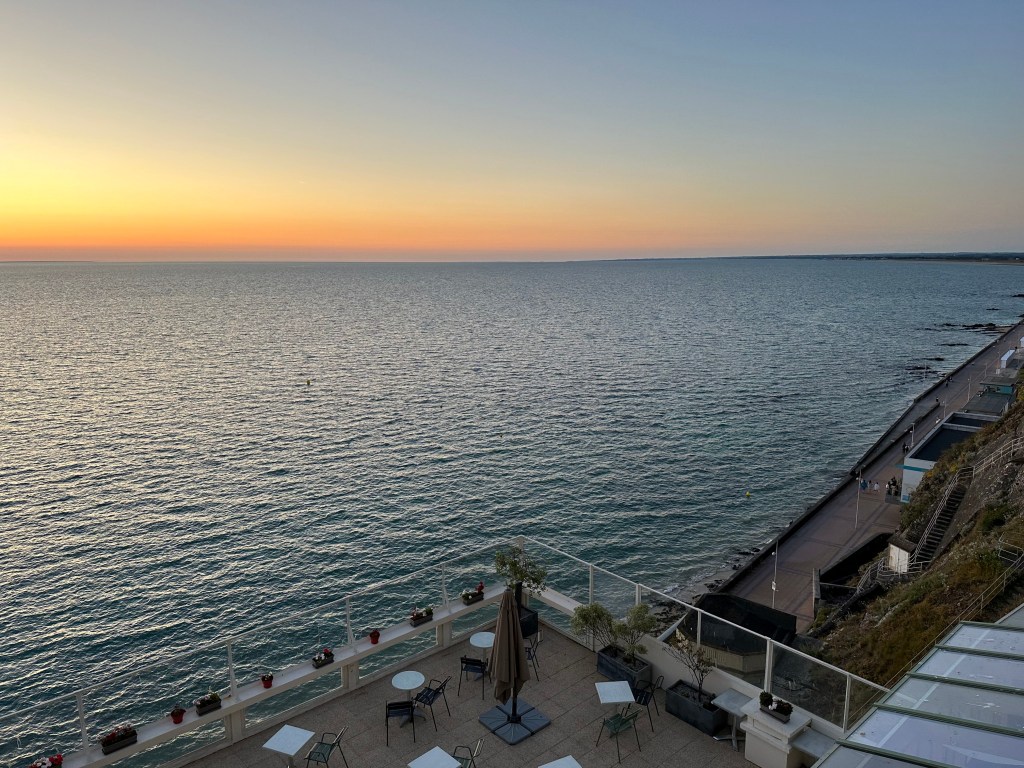
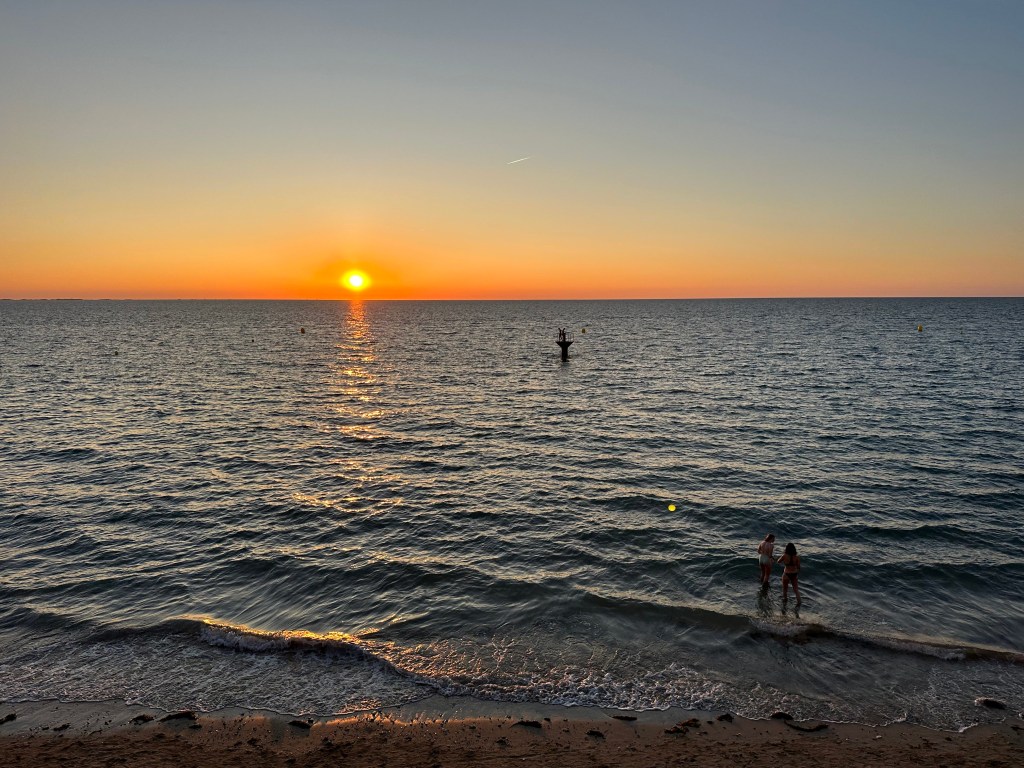
Watching the sunset from our terraces – pretty awesome.
Despite our fears, all four bikers survived the night alone and abandoned in the haunted chateau.
We woke to another perfect Normandy morning.
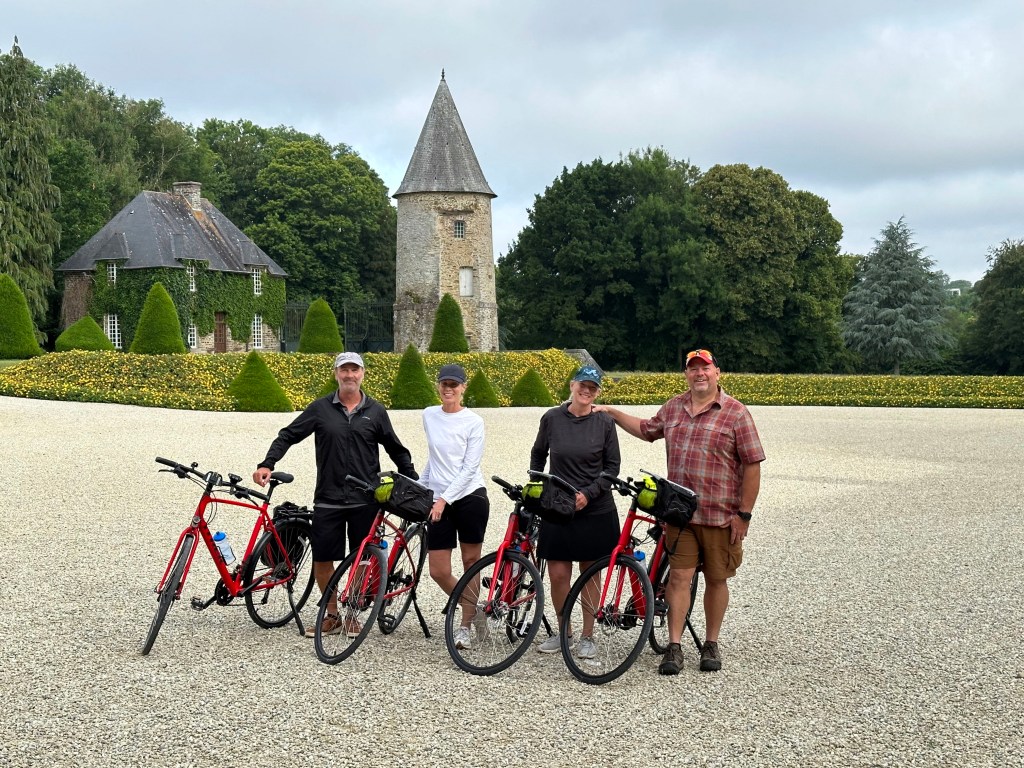
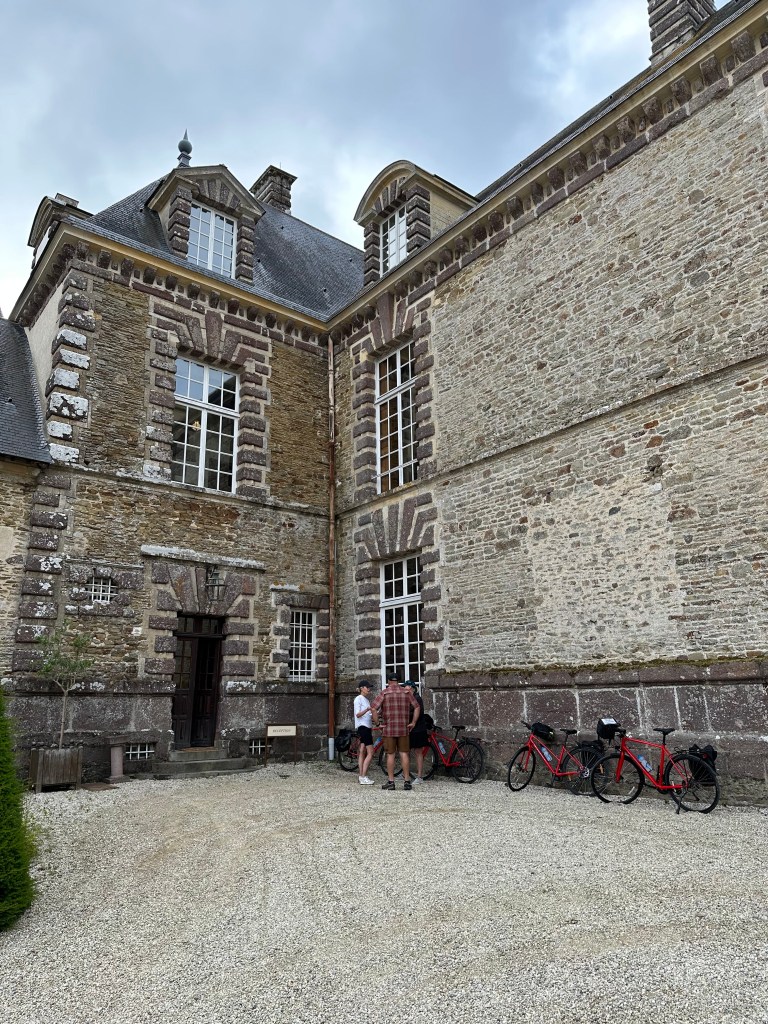
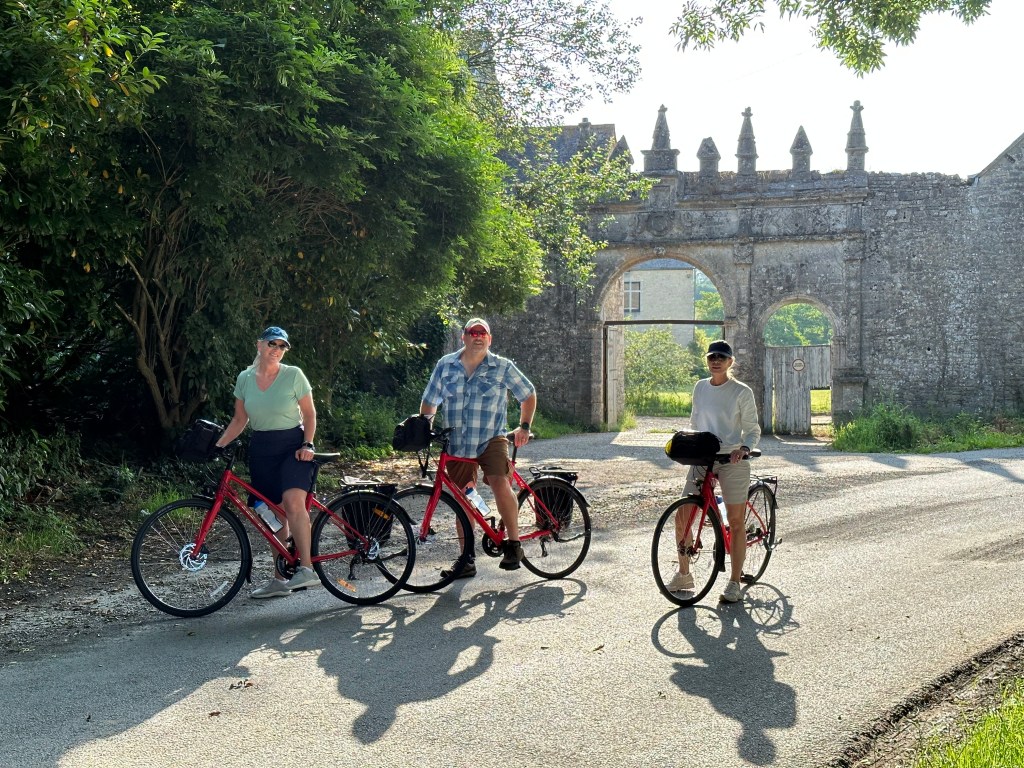
The riders prepare in the shadow of the chateau for the day’s excursion to the coast.
So long, Chateau de Canisy, you crazy gal.
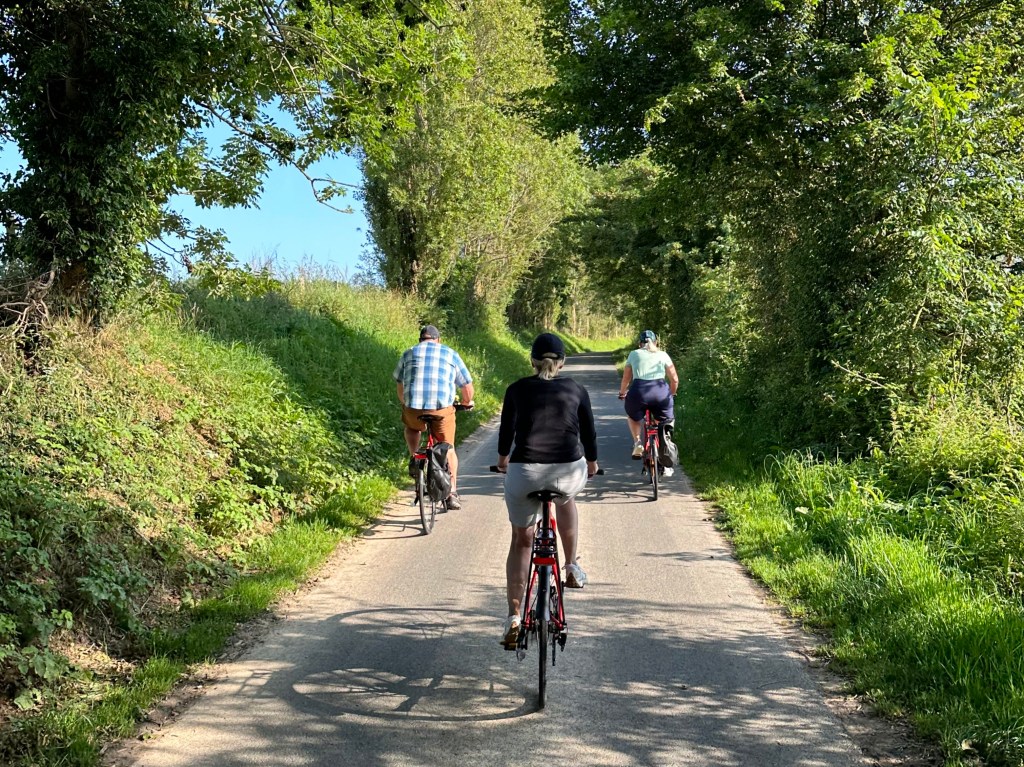
Not too much to see on the day’s ride, but nice scenery.
We actually stopped for lunch on the coast about 5 miles (if that) away from Granville, where we’d be spending the night, but didn’t take any pics there. Notably, we feasted once again on Normandy oysters, and when we asked where they were from, he hooked his thumb behind him, pointed to the shoreline about 50 yards away, and said, “right there.” Pretty awesome, as were the oysters.
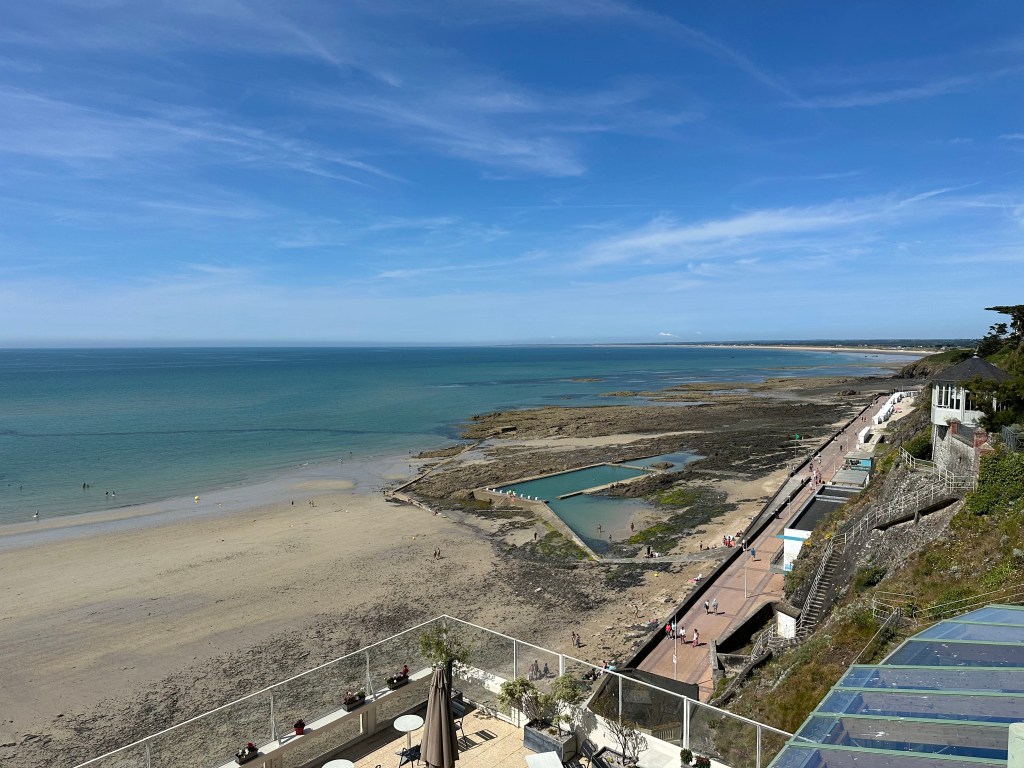
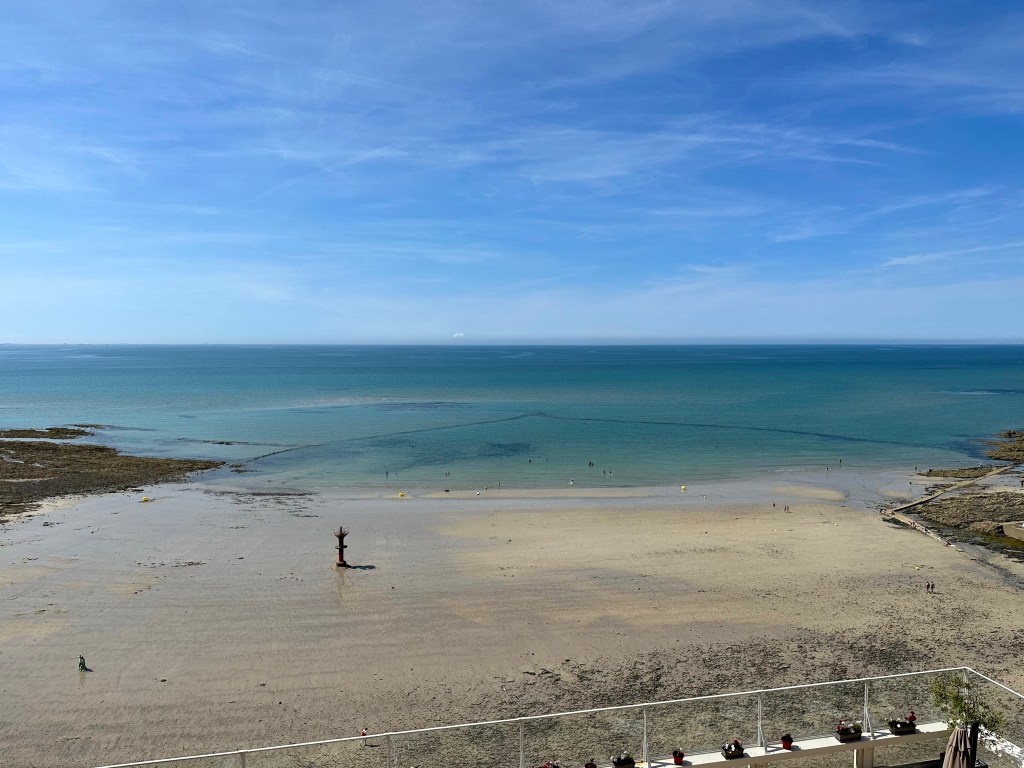
The beach town of Granville. Two items of interest here:
The first is the saltwater pool, there in the middle. Very cool; refreshed twice a day as the tide comes in and overwhelms it before heading back and and revealing the pool once again. We had a nice swim there, as well as in the ocean proper.
The second is the insane tidal extreme. Granville boasts some of the most dramatic tides in France. The combination of the bay’s shape, the shallow seabed, and tidal forces of the Atlantic-facing English Chanel produce tidal ranges of up to 46 feet.
To wit, the same view at high tide:
Low tide:
High tide.
And these two:
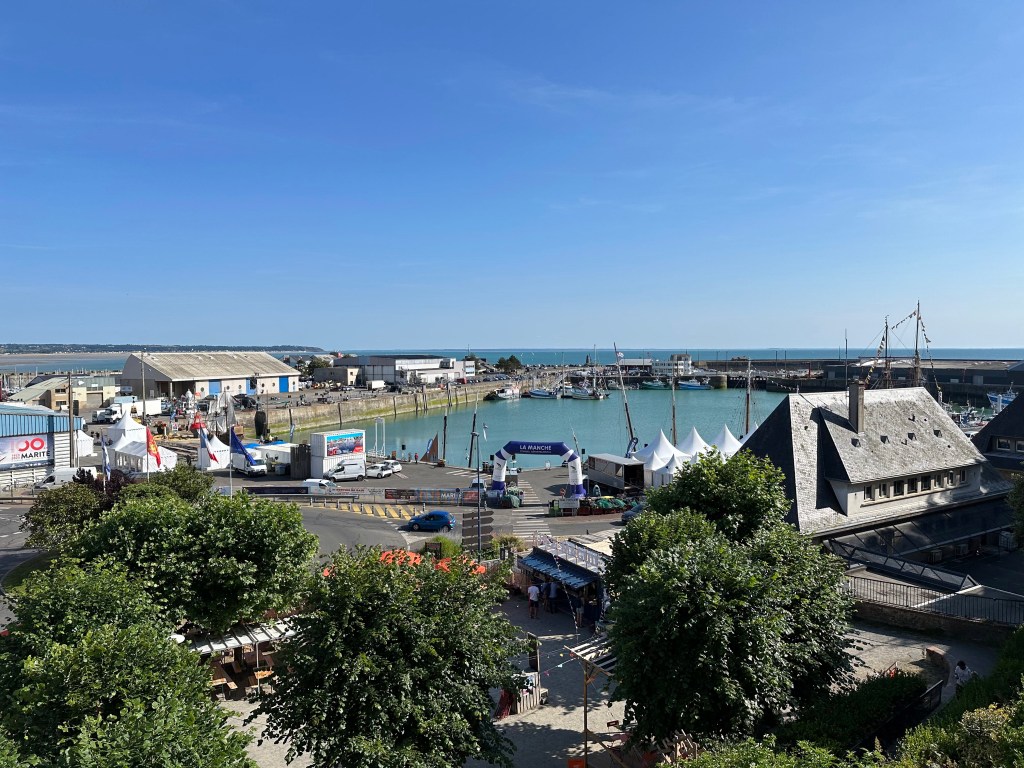
The little port area of the town, where some festival offered the opportunity for a bunch of beers on picnic benches in a tent.
A little entertainment by the locals:
On the road the next day:
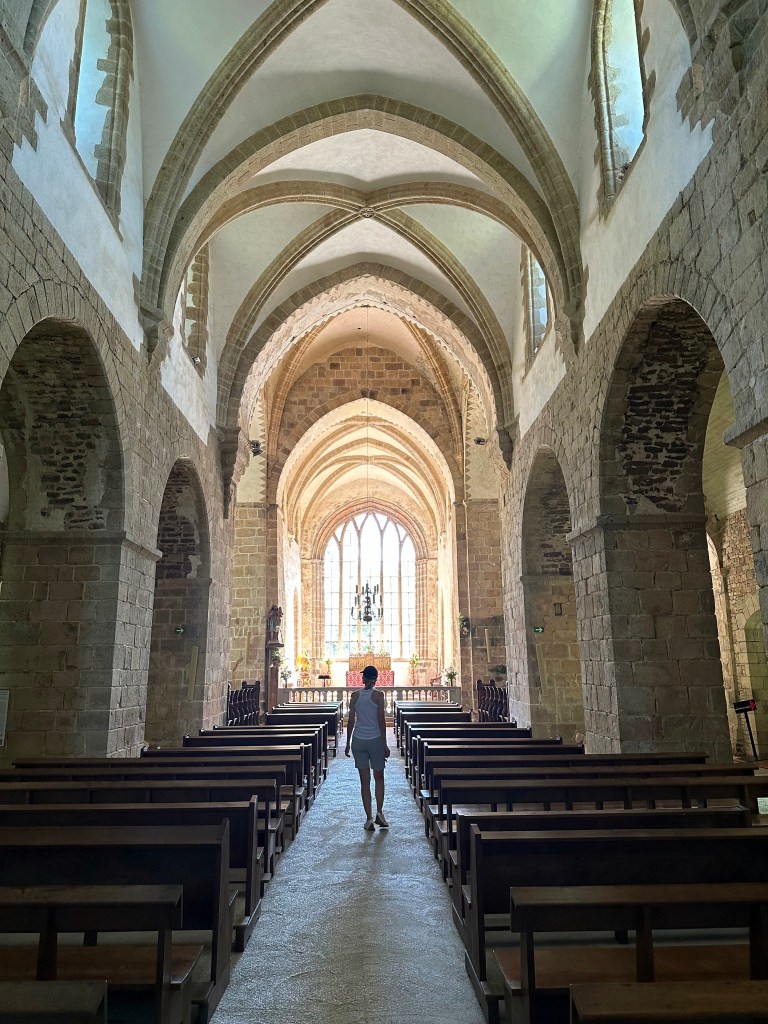
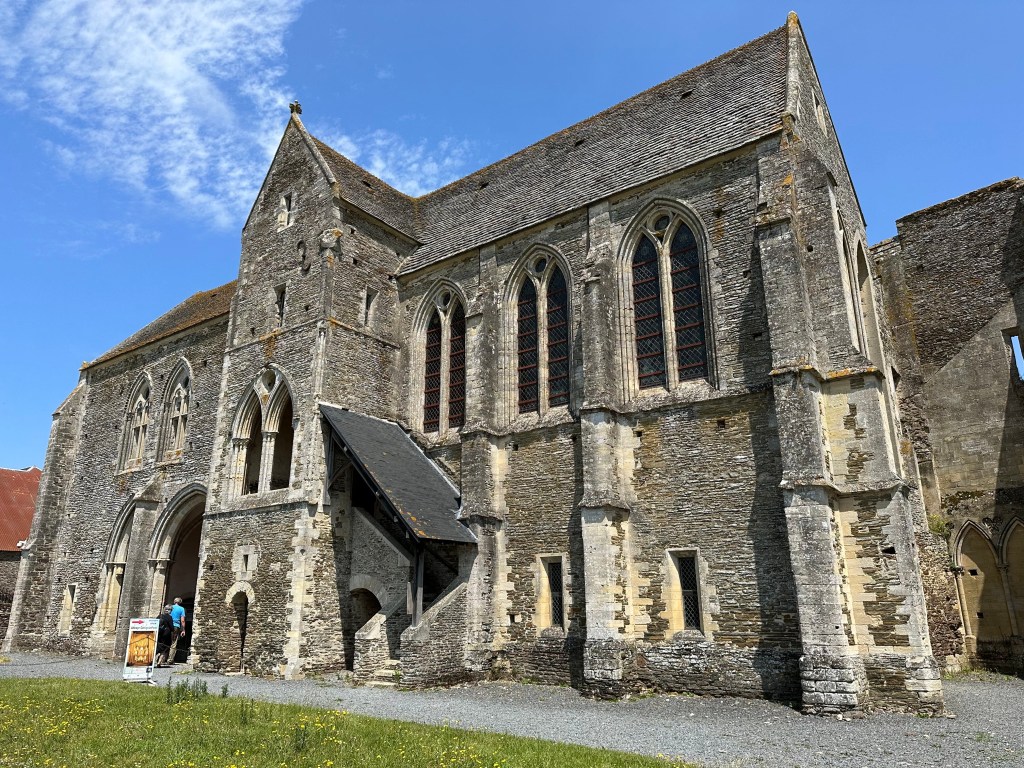
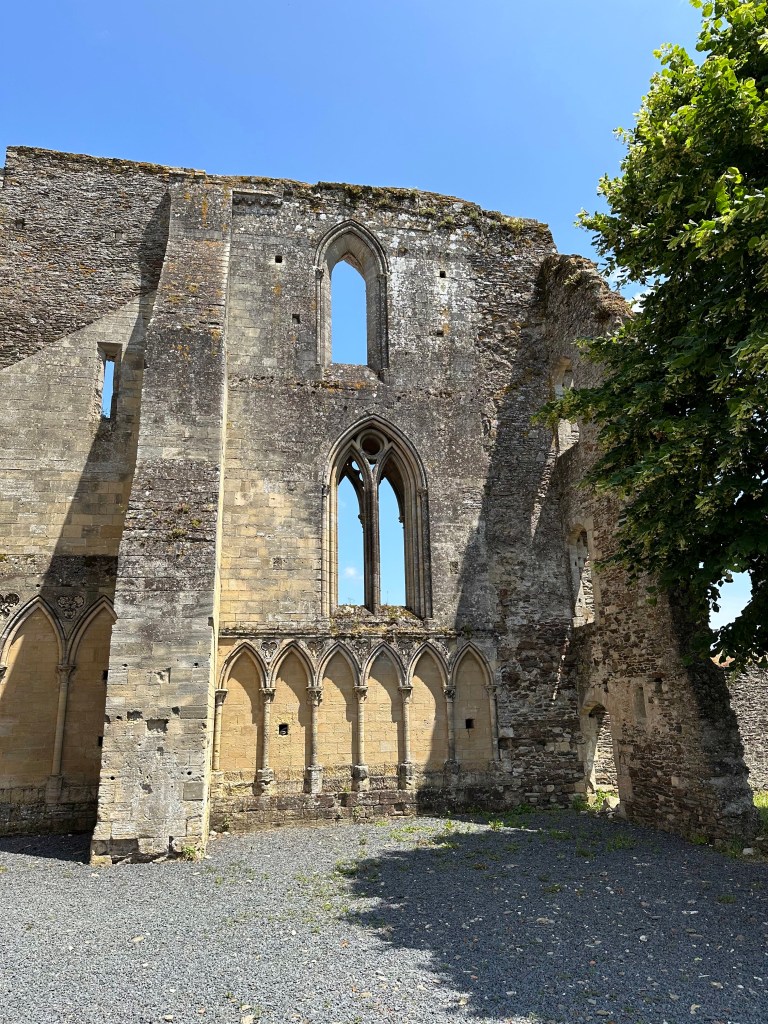
First stop, Abbey de Lucerne.
The abbey itself was founded in 1143, but in a different location that was too remote and too damp, apparently. So they reestablished it here in 1164.
The abbey was partly destroyed during the Hundred Years’ War, then restored in the 15th century.
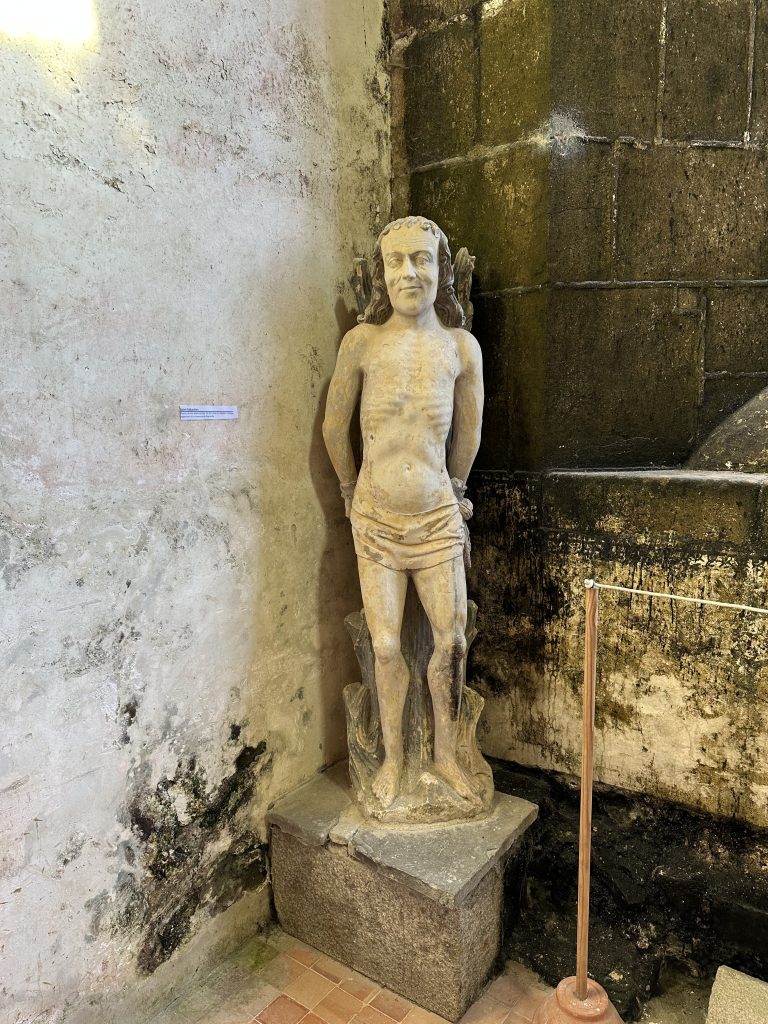
The abbey is home to this rather smarmy little 16th-century depiction of Saint Sebastian, who was martyred under Emperor Diocletian in the 3rd century.
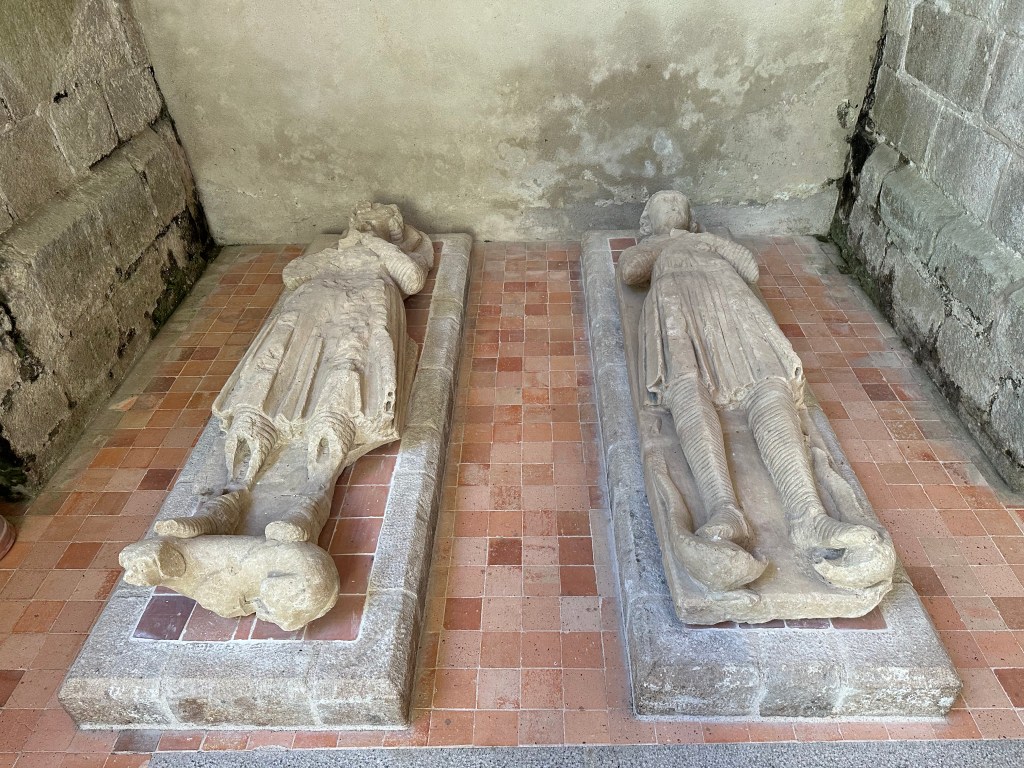
On the left, a recumbent effigy of Guillaume de Saint-Jean Limestone from the first half of the 13th century unearthed during archaeological excavations of the church’s northern chapels in 1990. He financed the construction of the abbey in the 12th century and was then buried here. The dog lying to the right at his feet is a symbol of fidelity, obedience, and gratitude.
O the right, a recumbent effigy of Hasculphe de Subligny from the 13th century, also unearthed during archaeological excavations of the church’s northern chapels in 1990. His feet rest medieval salamanders, a creature believed to be an elemental being linked to fire, and also the emblem of Francis I, which we encountered during a previous French bike trip in the Loire Valley.
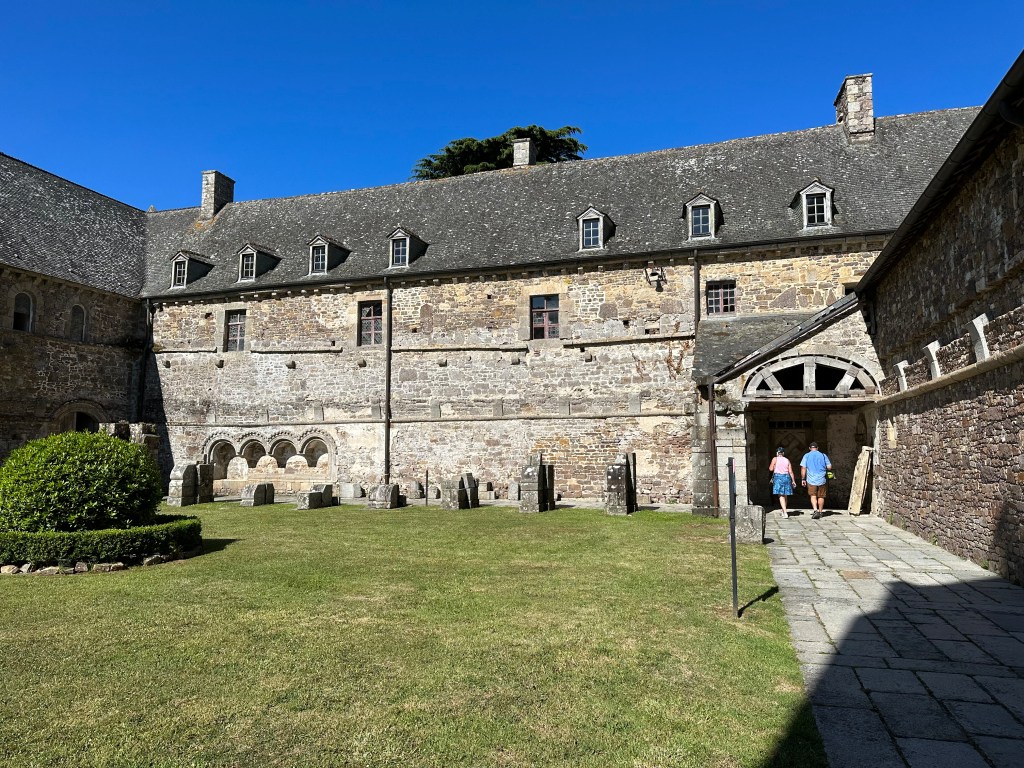
The abbey was sold as national property during the French Revolution.
And then transformed into a cotton spinning mill,
and then a limestone sawmill.
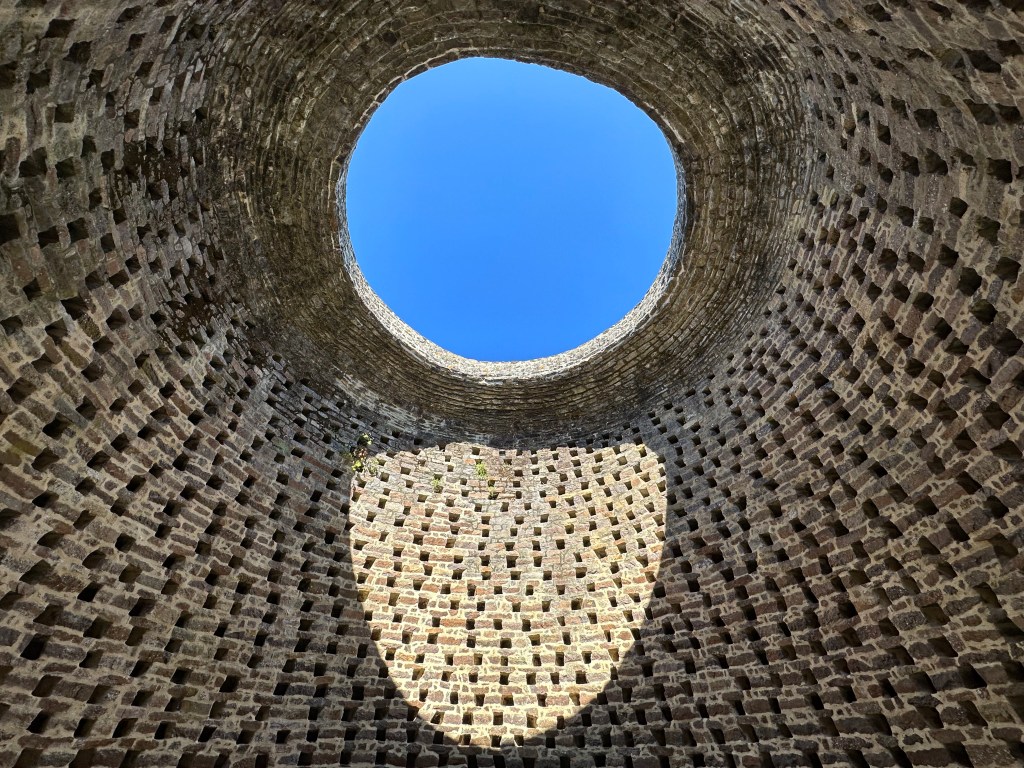
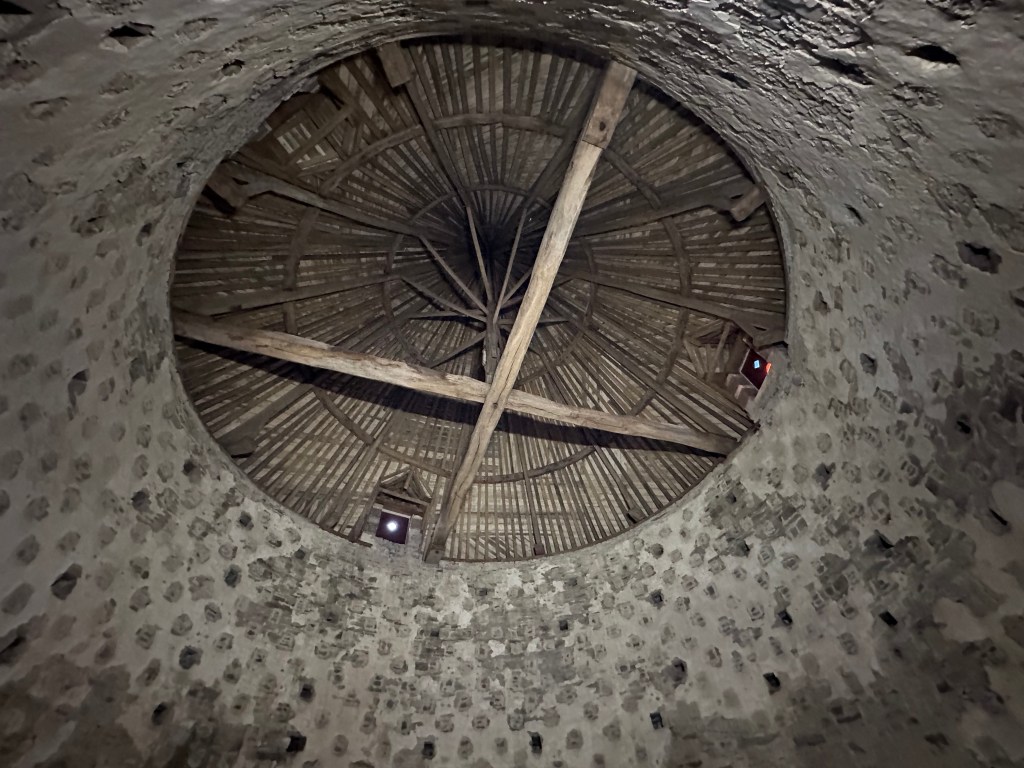
Cool-ass dovecote:
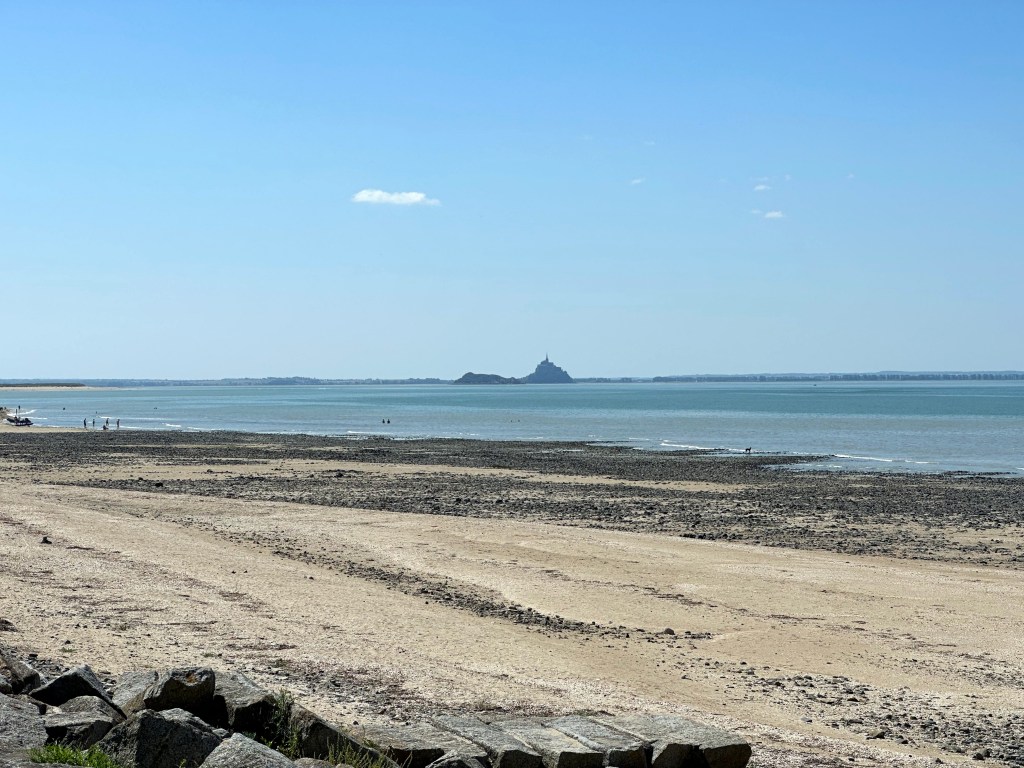
Reaching the coast again, we get our first glimpse of our objective the next (and final) day – Mont Saint Michel.
It would be with us on and off for the next 2 days of biking.
And there are pilgrims that depart across the tidal plain (which becomes boot-sucking mud when you get our further) each day:
Heading back inland to our destination for the evening. . .
Avranches. The liberation of Avranches during WWII was led by Patton and began on the very auspicious day of July 31 (1944).
The Donjon d’Avranches:
The castle was built in 950 on the remains of an old Roman fort.
The view from the donjon over a very Normandy-looking town:
And some hydrangeas.
Pretty good bites that night.
On to Mont Saint Michel and the last bike day of the trip!
After 2 nights in Bayeux and a loop ride to the coast and the British and Canadian Normandy beaches on Day 1 of biking, Day 2 took us back to the coast to the American beaches, and then inland.
Some historic estate or other a few miles outside of town:
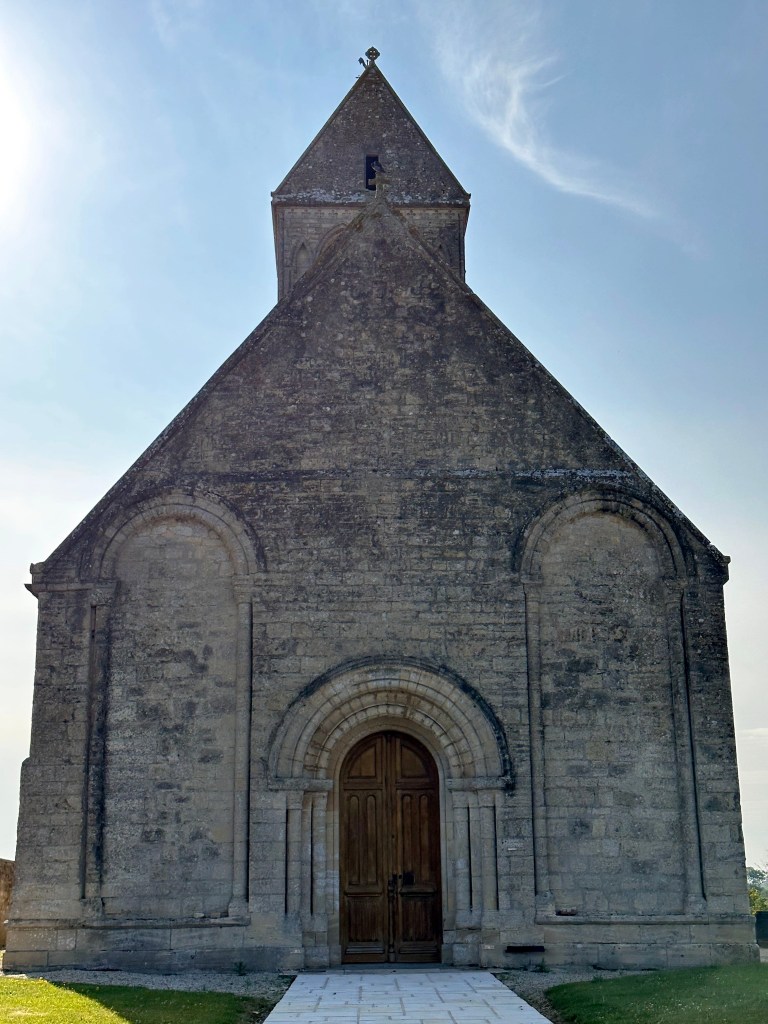
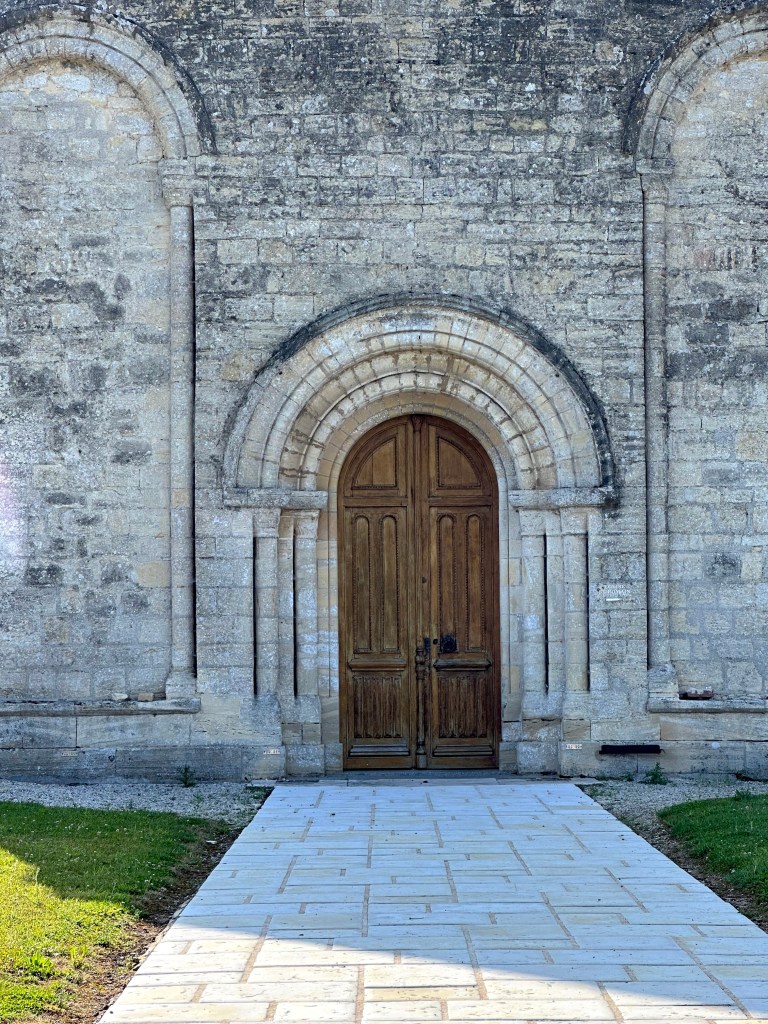
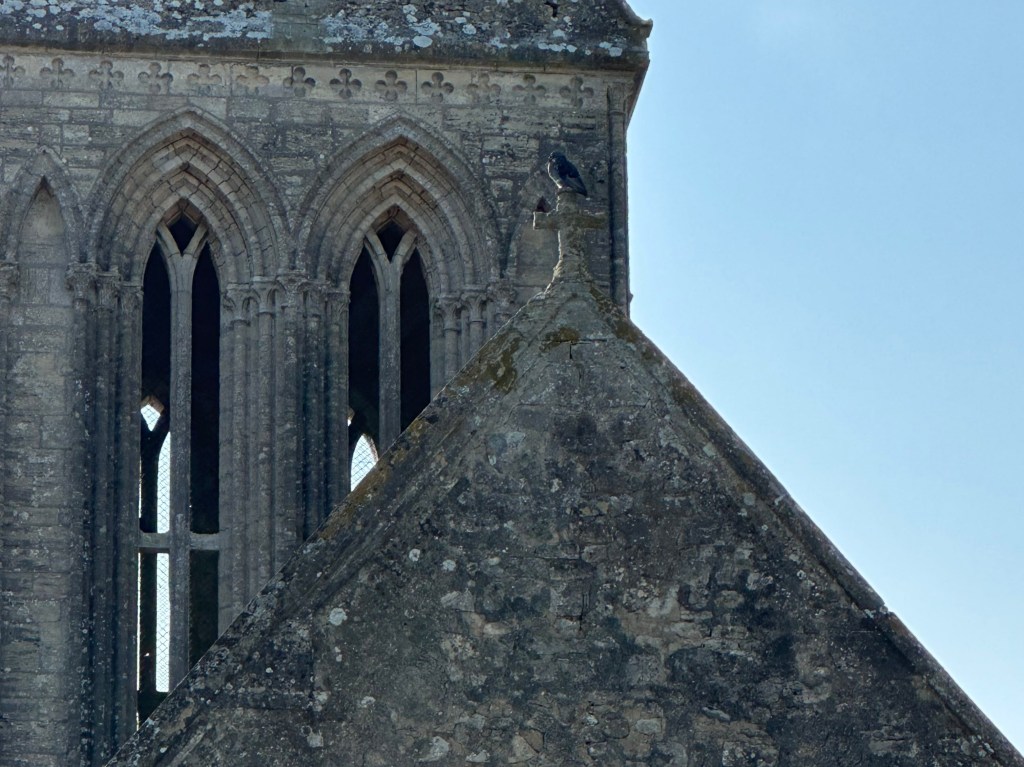
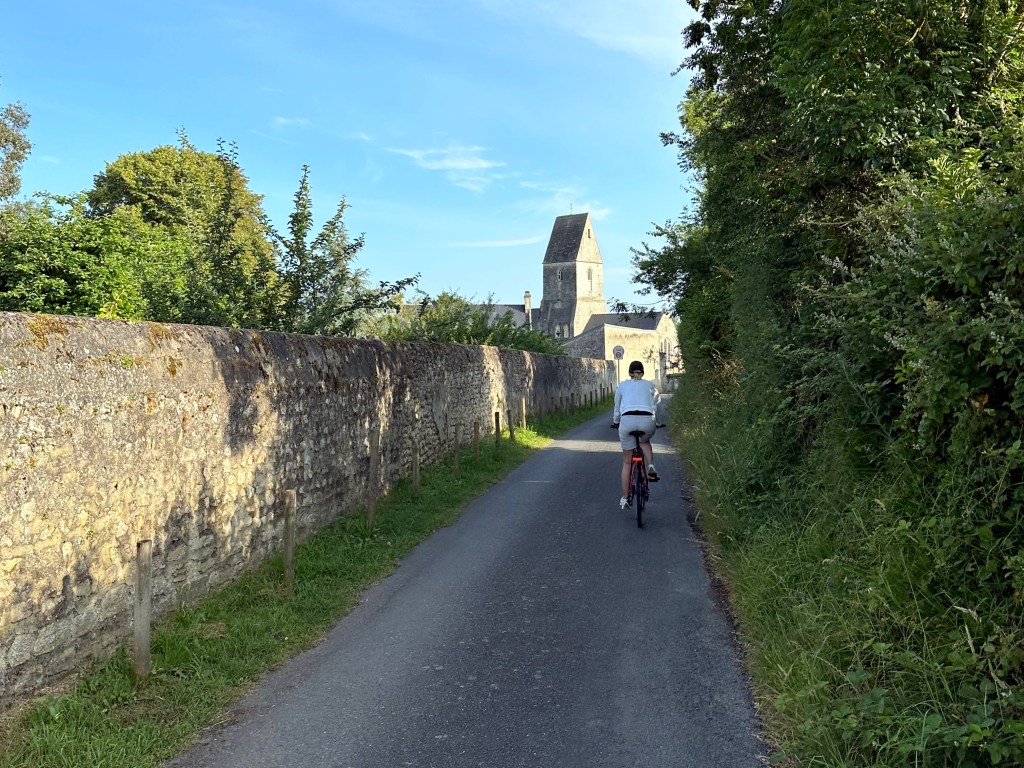
Passing by the Église Saint-Romain de Étréham, the Church of Saint-Roman.
Originally built in the 11th century, but renovated over time, it still retains its Romanesque west facade.
And 12th-century tower.
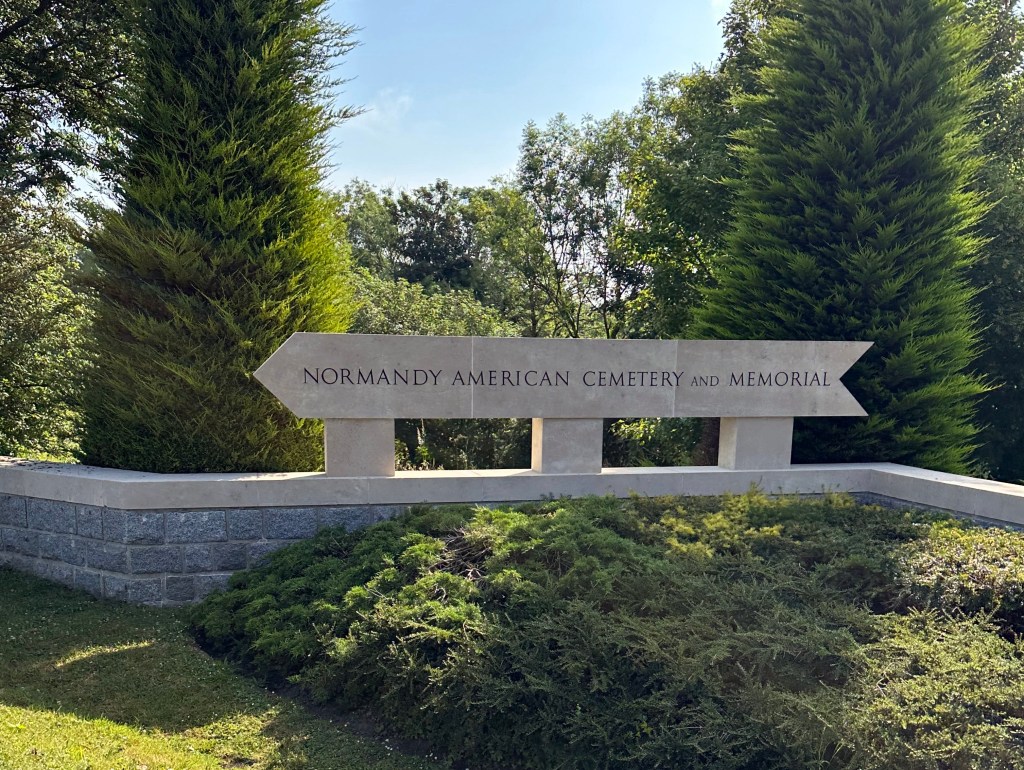
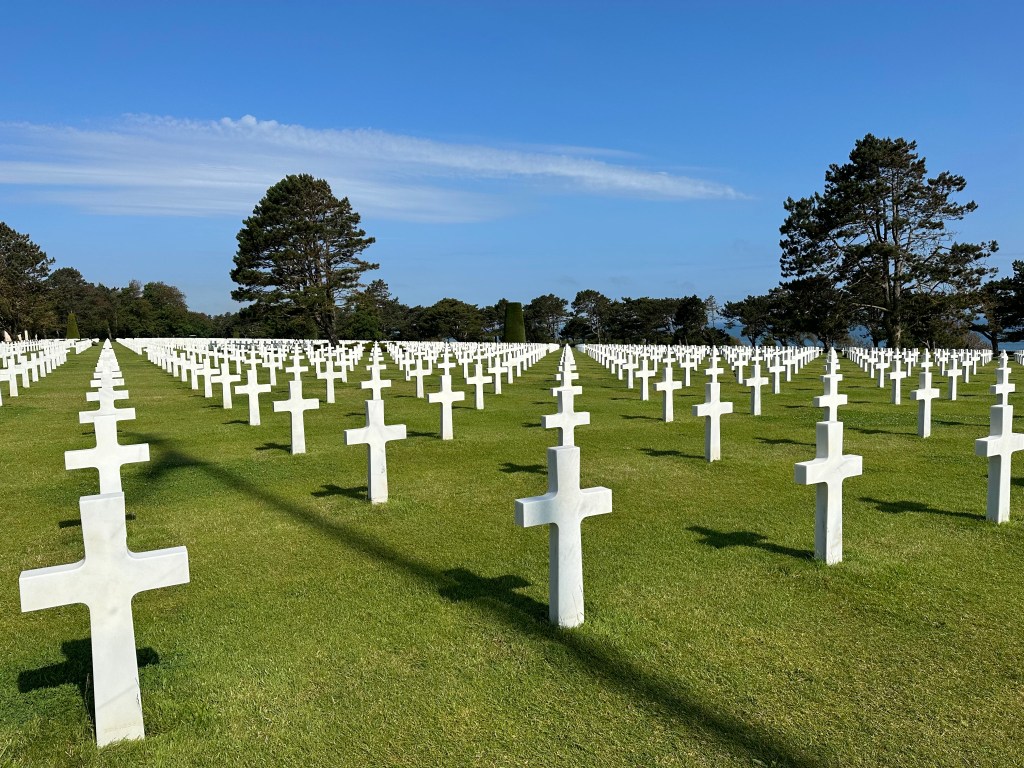
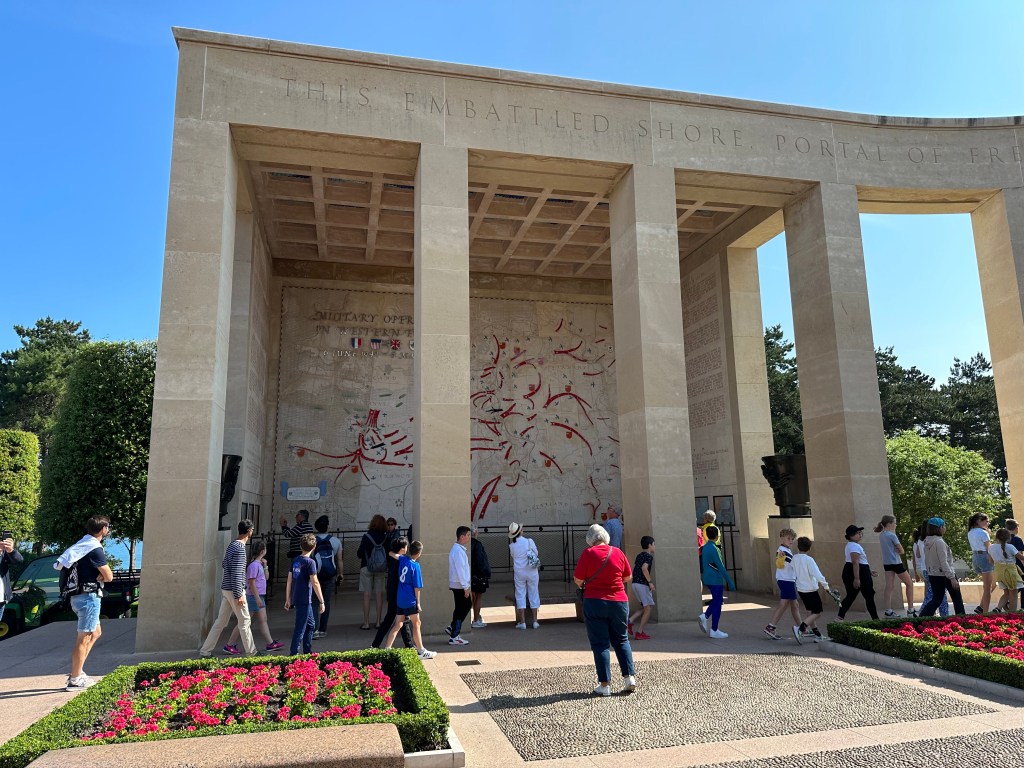
Highlight of the day’s ride, at Omaha Beach:
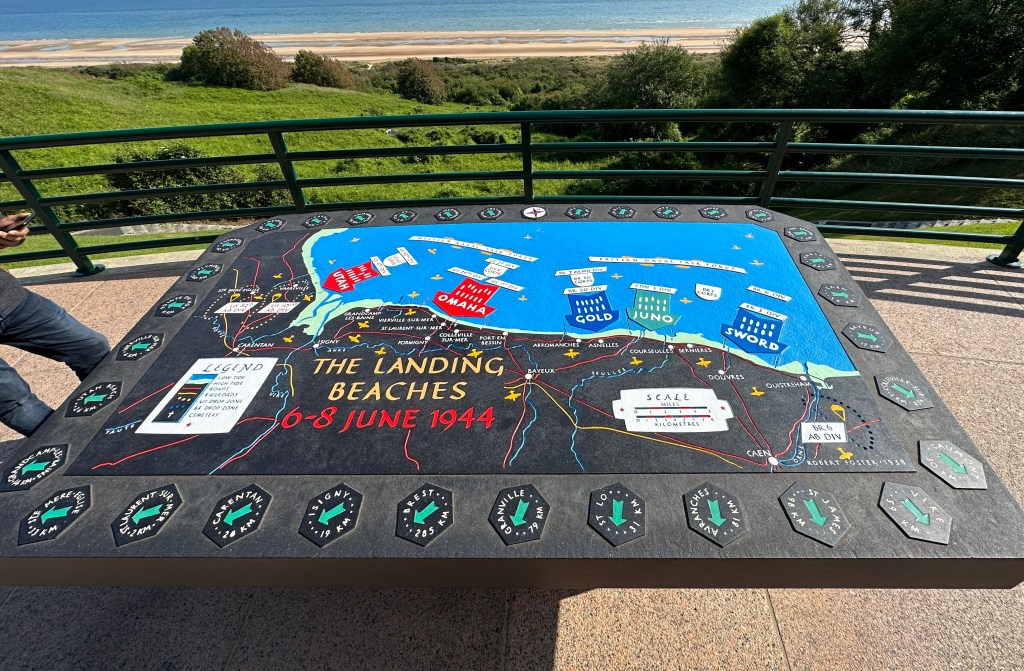
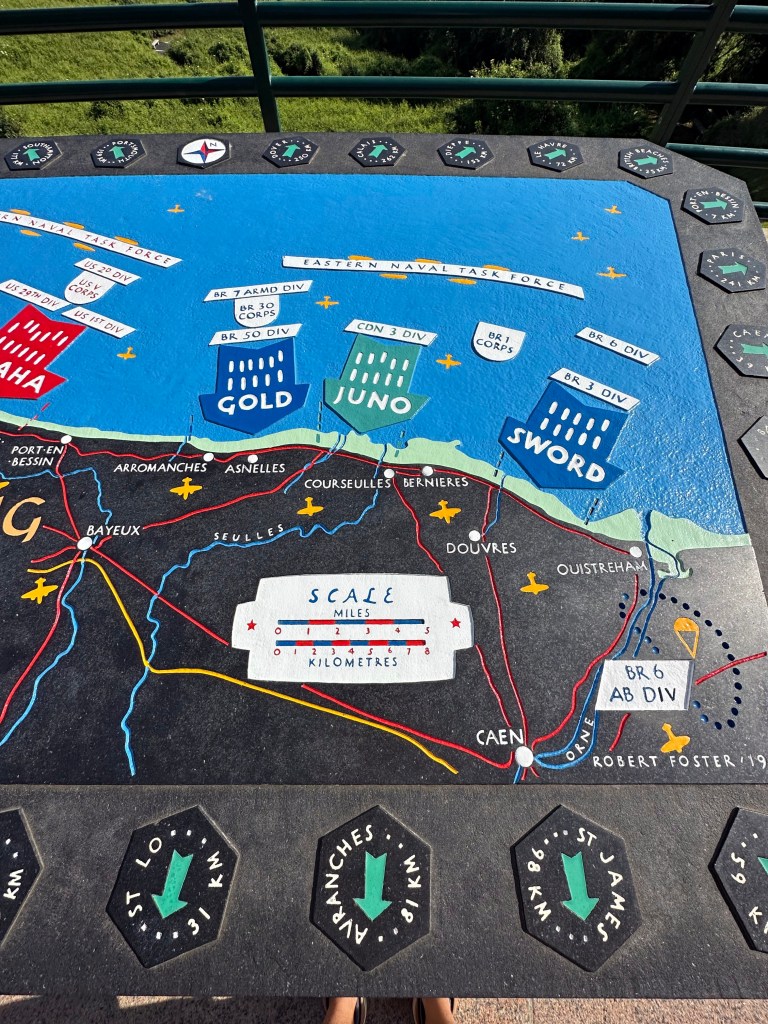
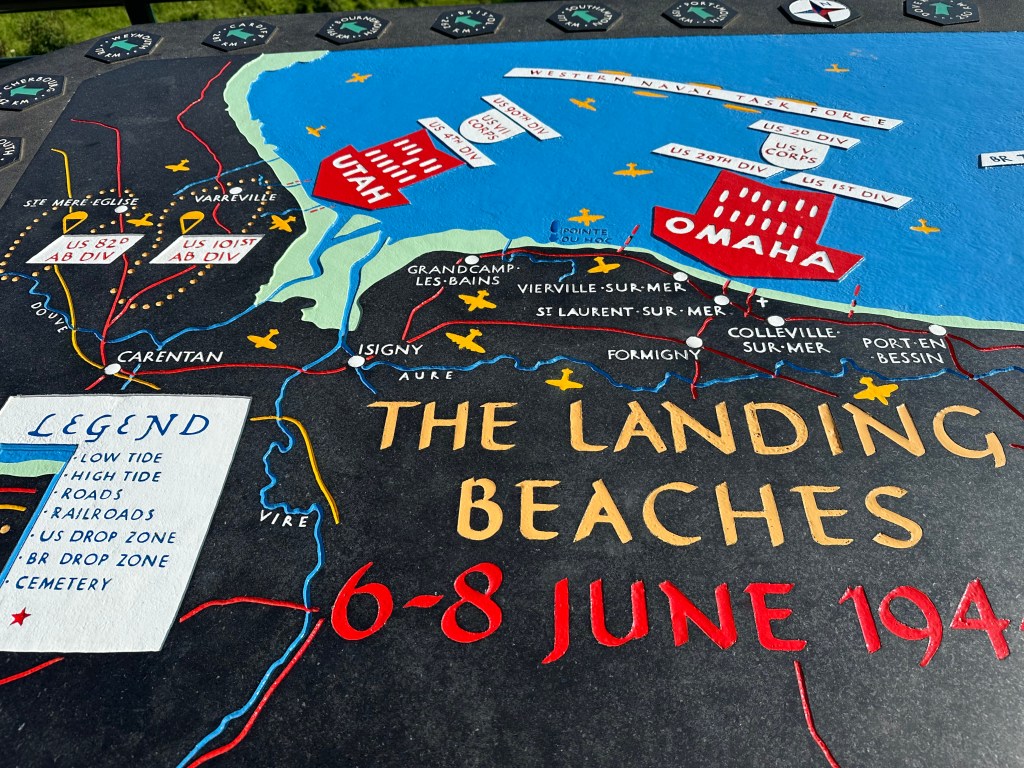
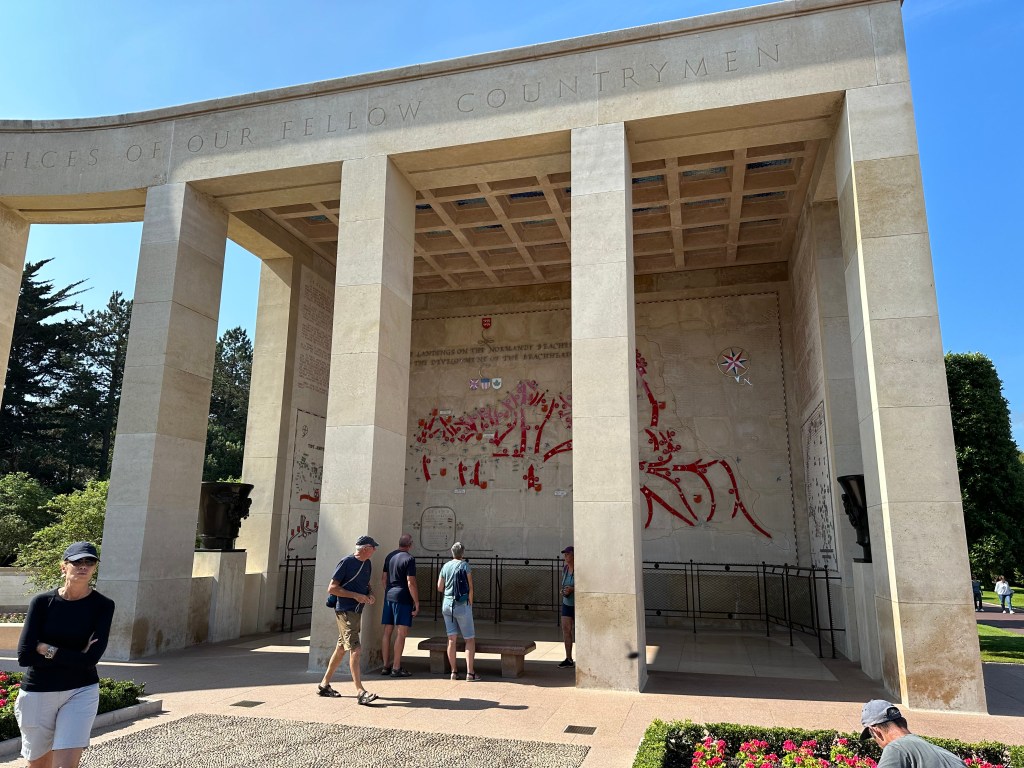
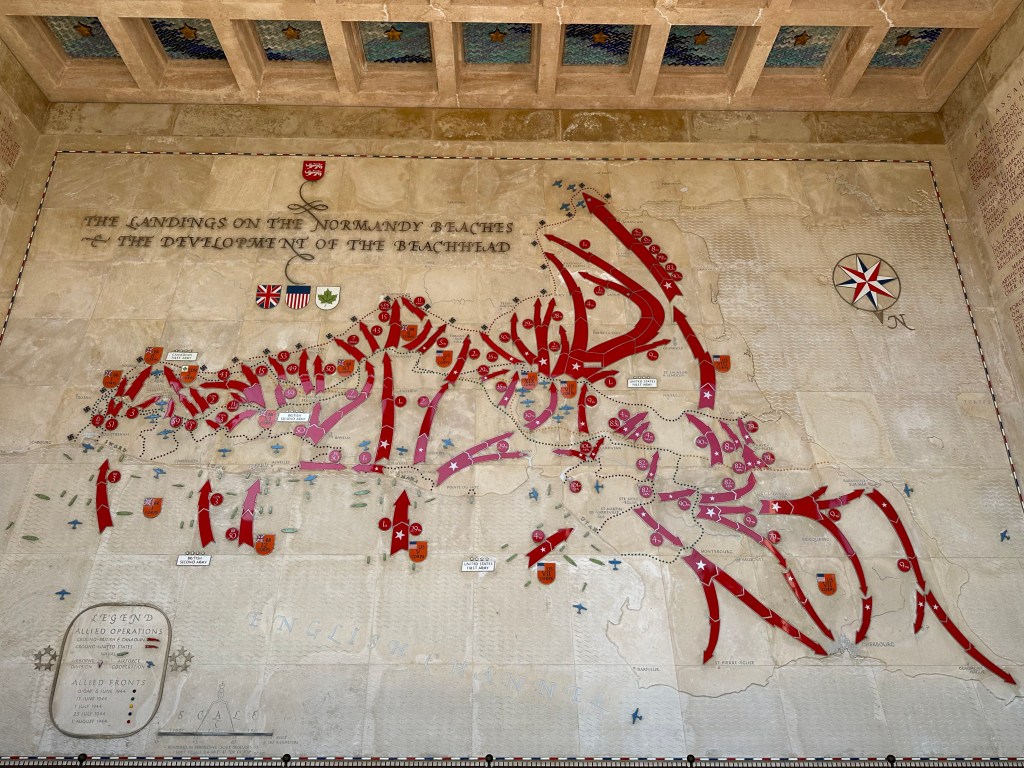
Cool map of the Normandy landings at the cemetery:
Yesterday, we were there:
Today, we are here:
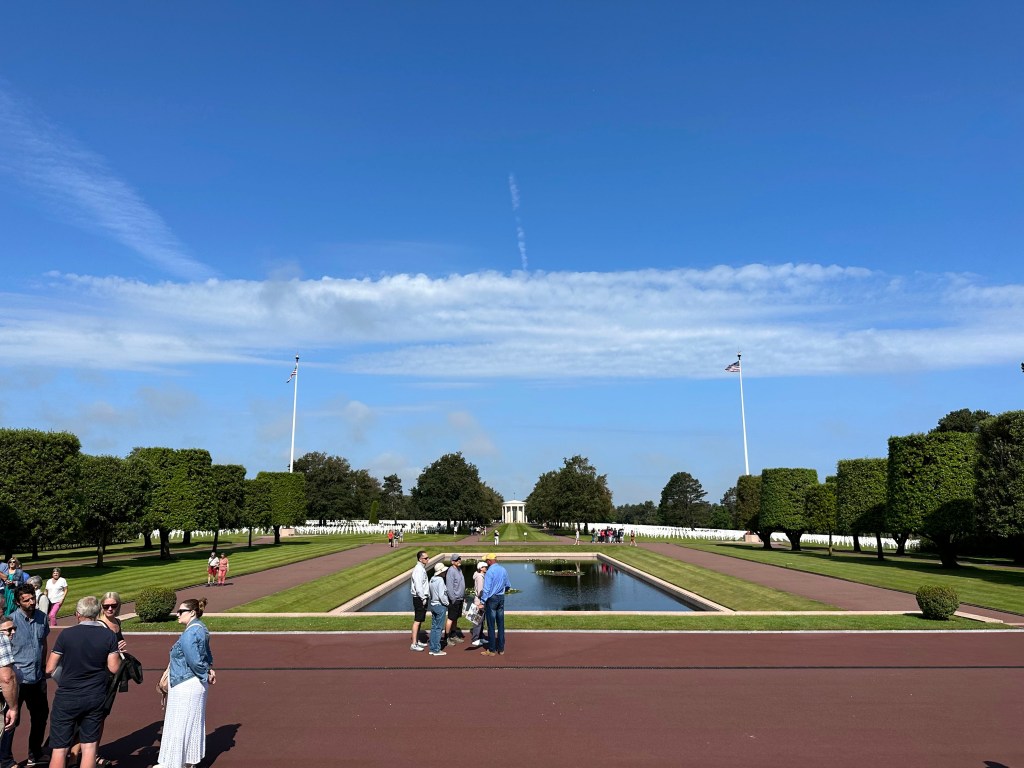
Sobering but serene.
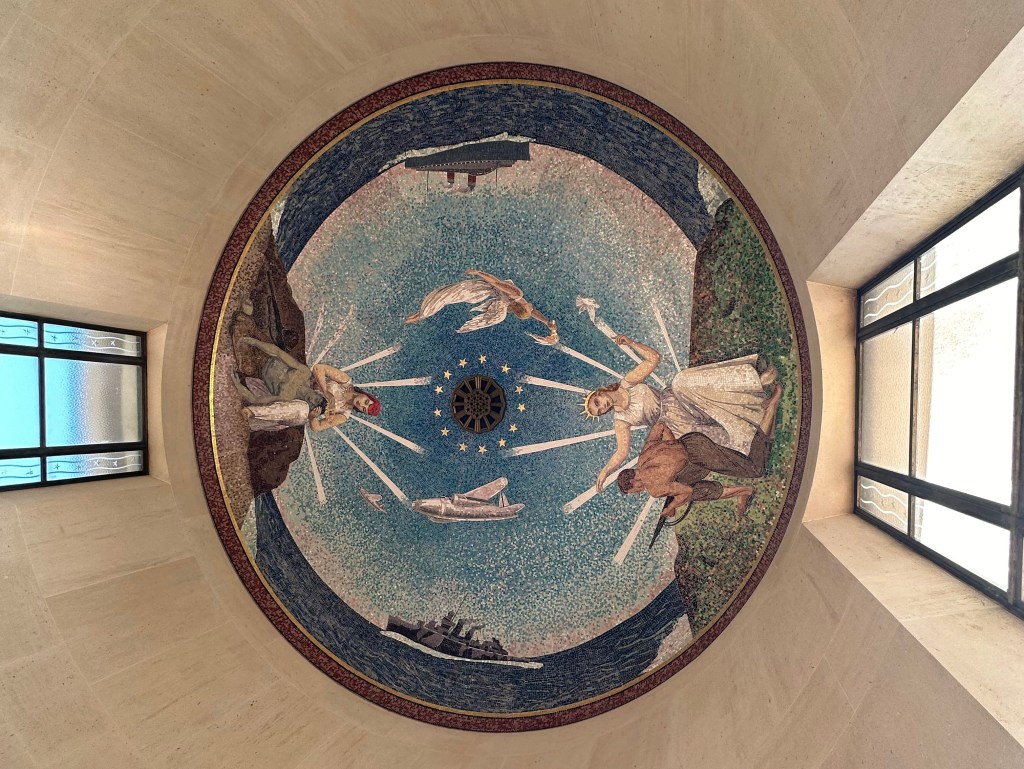
Cool mosaic capturing the cycle of Americans traveling to and fighting in Normandy on the ceiling of the cemetery’s chapel:
Massive mural of the landings and subsequent beachheads:
And a short distance away. . .
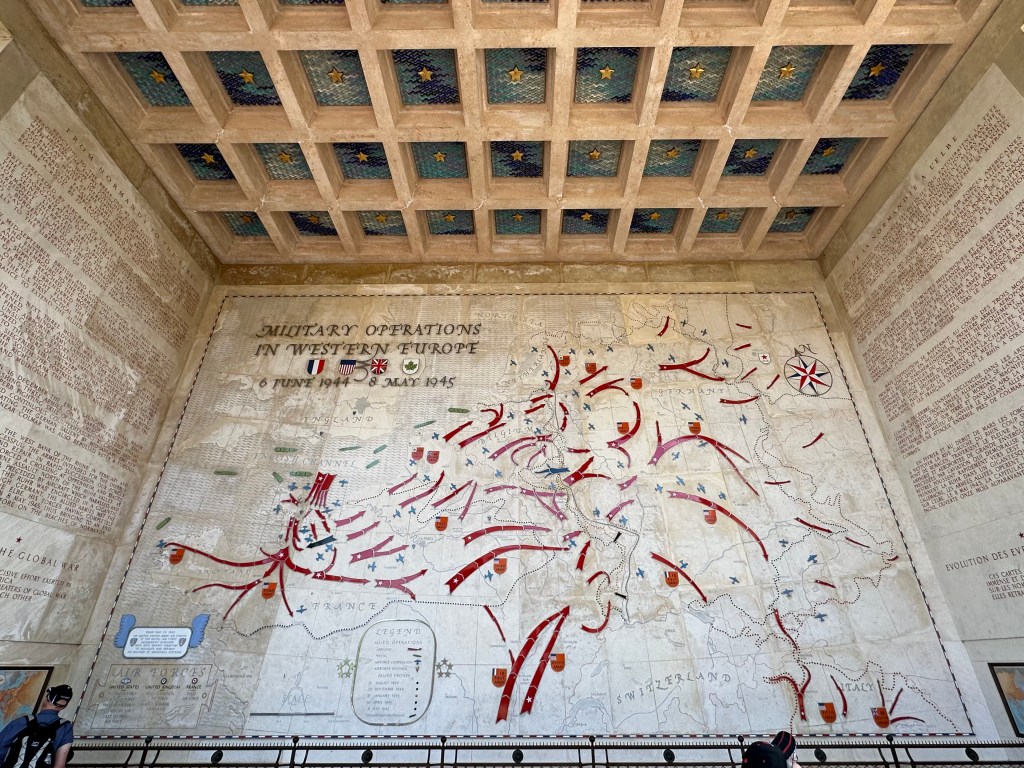
the entire European theater (from the non-Soviet POV, anyway):
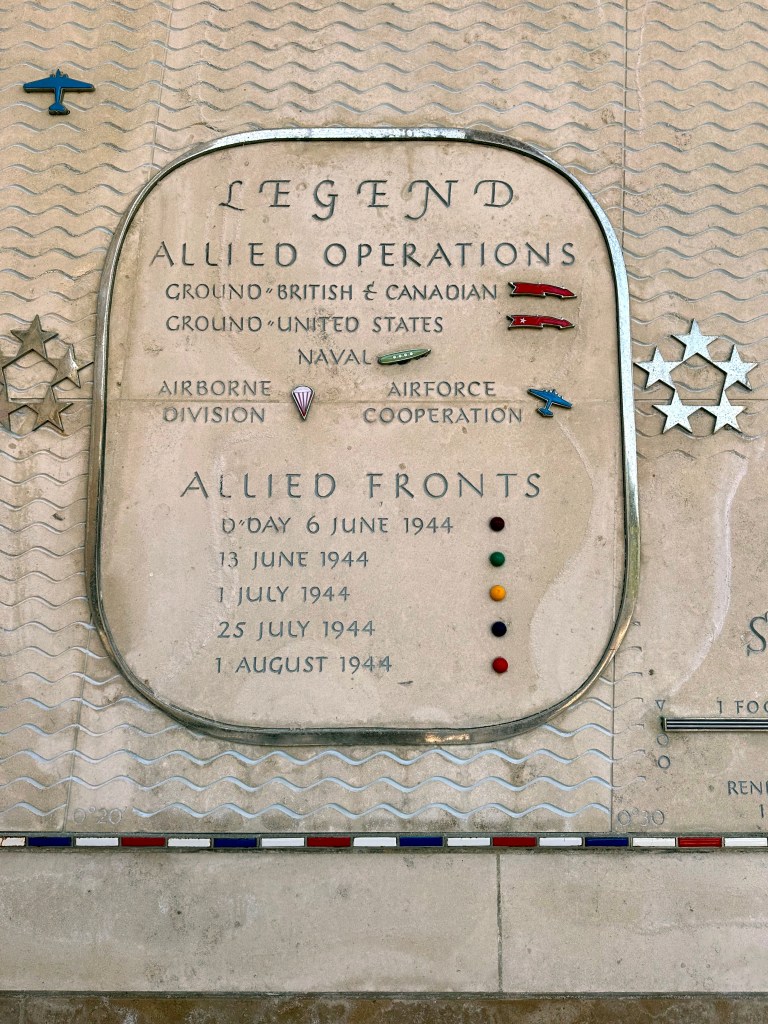
Both with handy legends.
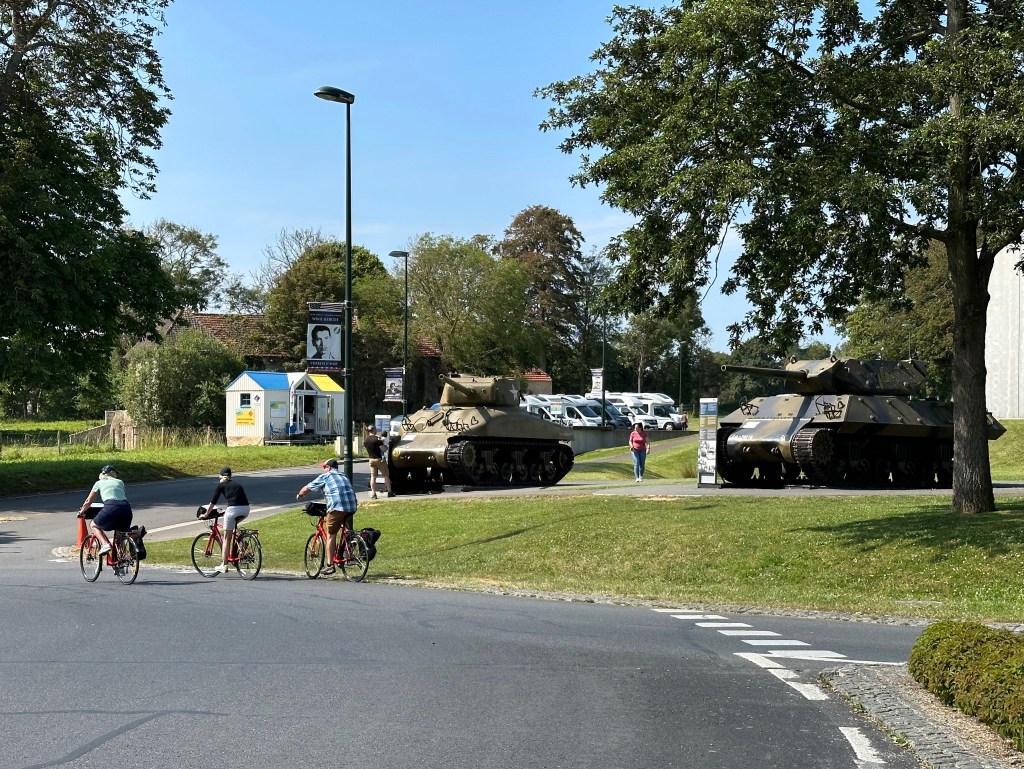
Onward (and more tanks!).
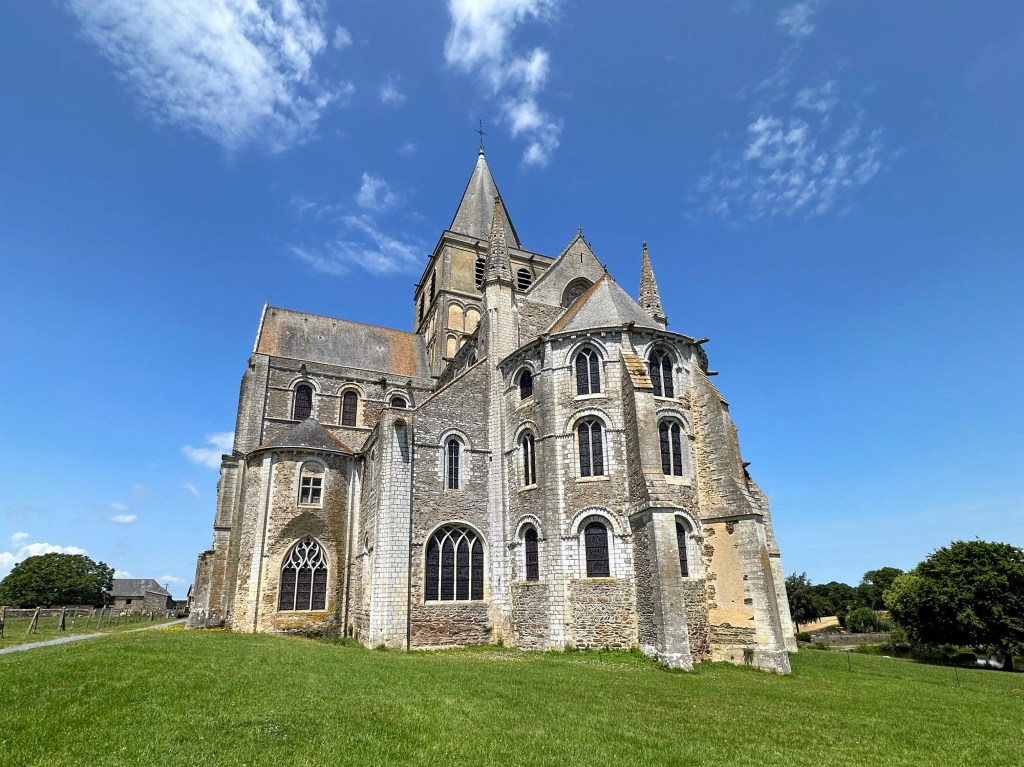
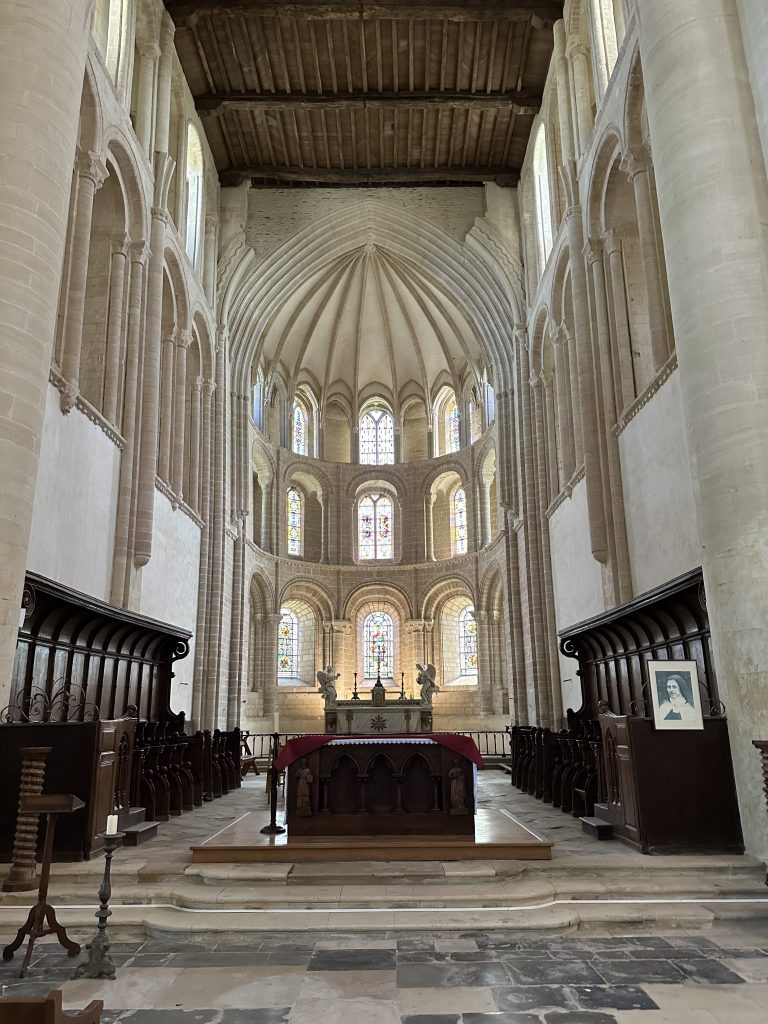
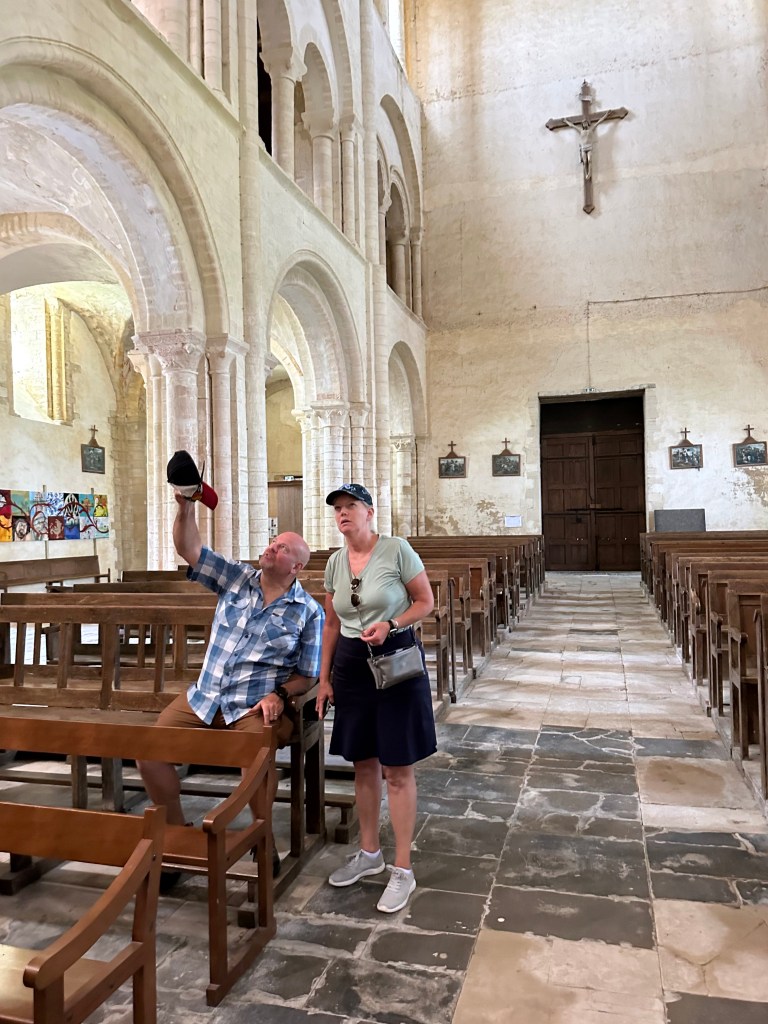
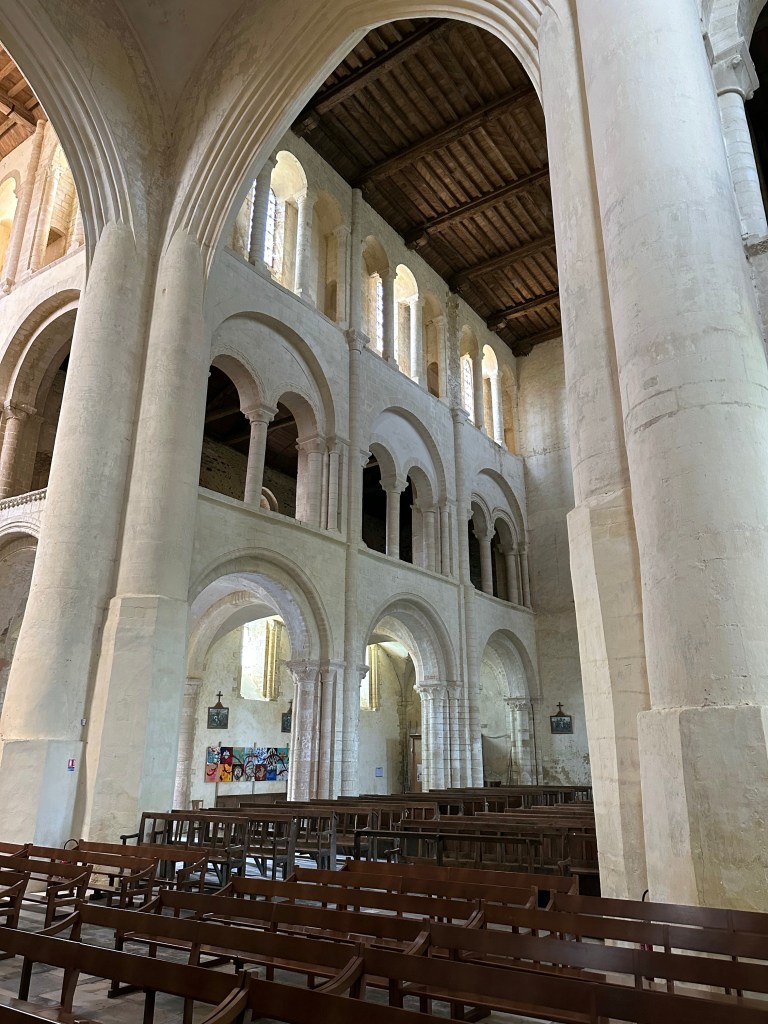
The Abbey of Saint Vigor, founded in 1032 by Duke of Normandy, Robert the Magnificent (father of William the Bastard, who went on to become William the Conqueror). (Robert the Vigorous would have been much funnier and more apropos.)
In the 12th century, the abbey extended its powers over nearby, former Merovingian abbeys, and also founded several priories, becoming more influential and wealthy in the process.
“In 1337, the dynastic rivalries between the Valois and the kings of England precipitated the country into the Hundred Years War, which plunged the country into misery, aggravated by epidemics of plague. The abbey was fortified and a garrison settled there. In 1418, Richard de Silly, knight and captain of the abbey, was obliged to cede the abbey to the King of England. However, after the victory of the constable de Richemont over the English at Formigny in 1450, Normandy returned definitively to the kingdom of France.” (From here.)
The monks left the abbey during the French Revolution, and the abbey became the unique parish church of the village of Cerisy-la-Forêt in 1790.
The abbey was built on the ruins of an older monastery destroyed by the Normans during their invasion.
Of the French. When the Normans were still Vikings and did not yet benefit from Rollo’s permanent settlement here. . .
Final (and very long) stretch of the day’s ride.
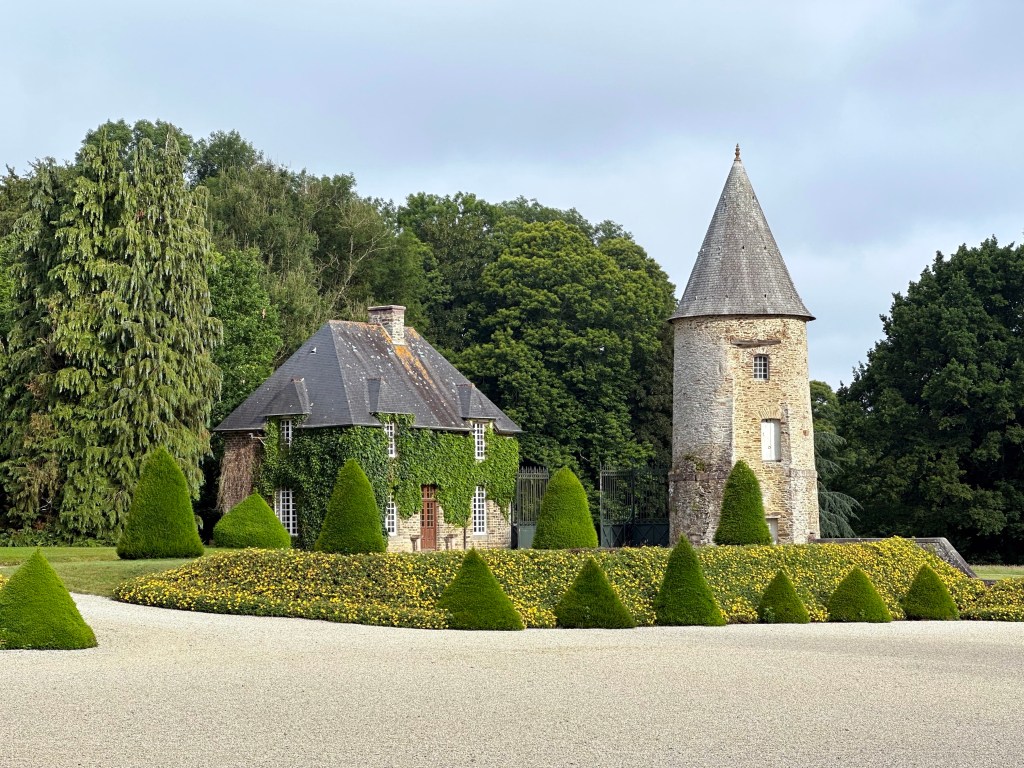
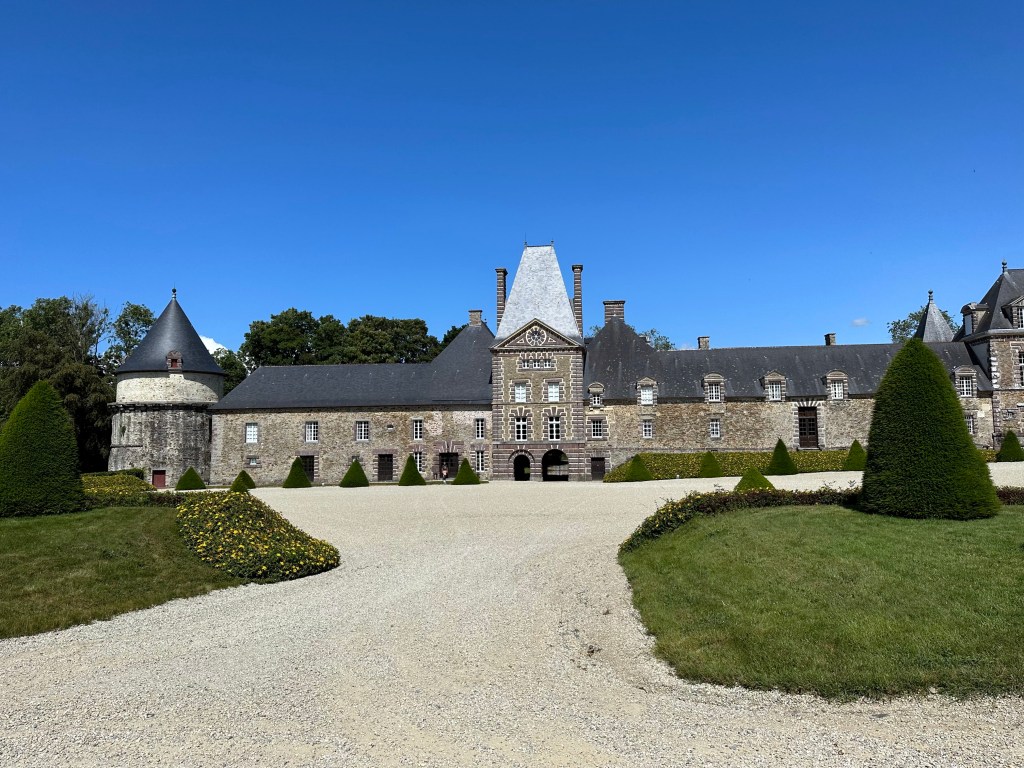
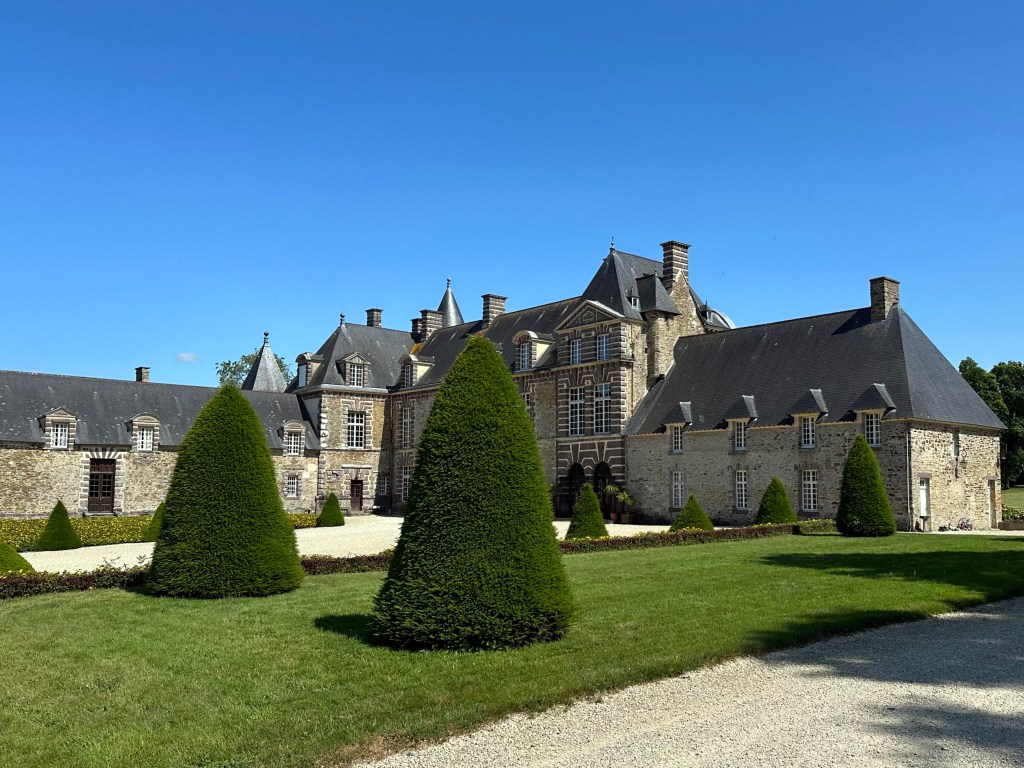
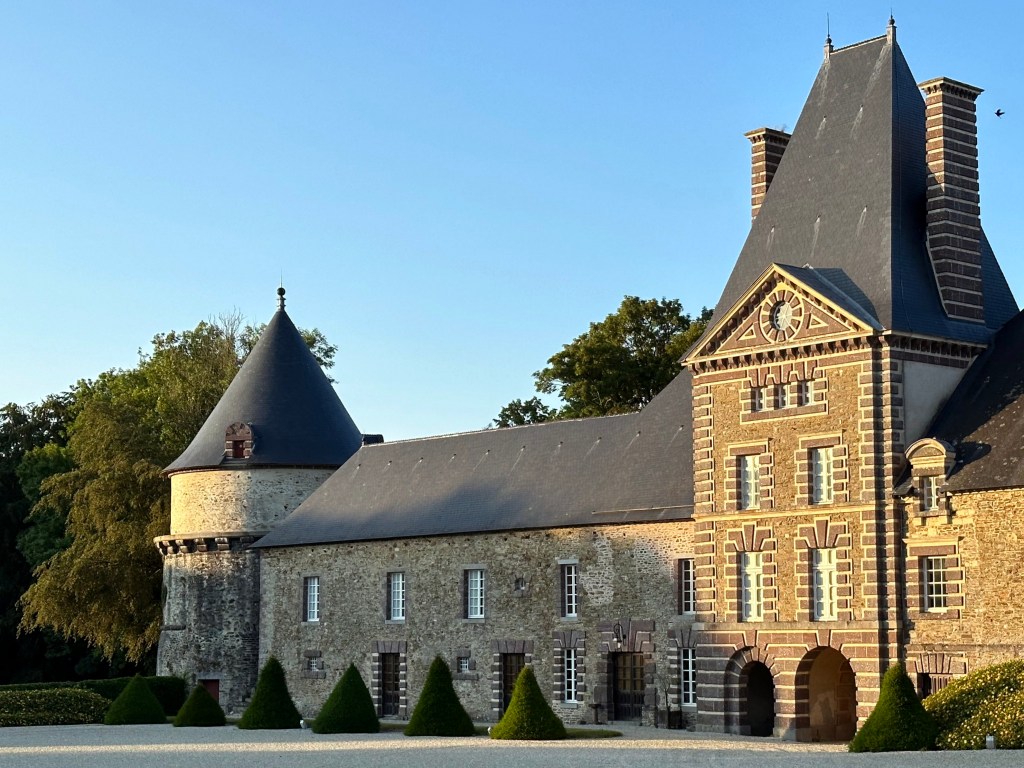
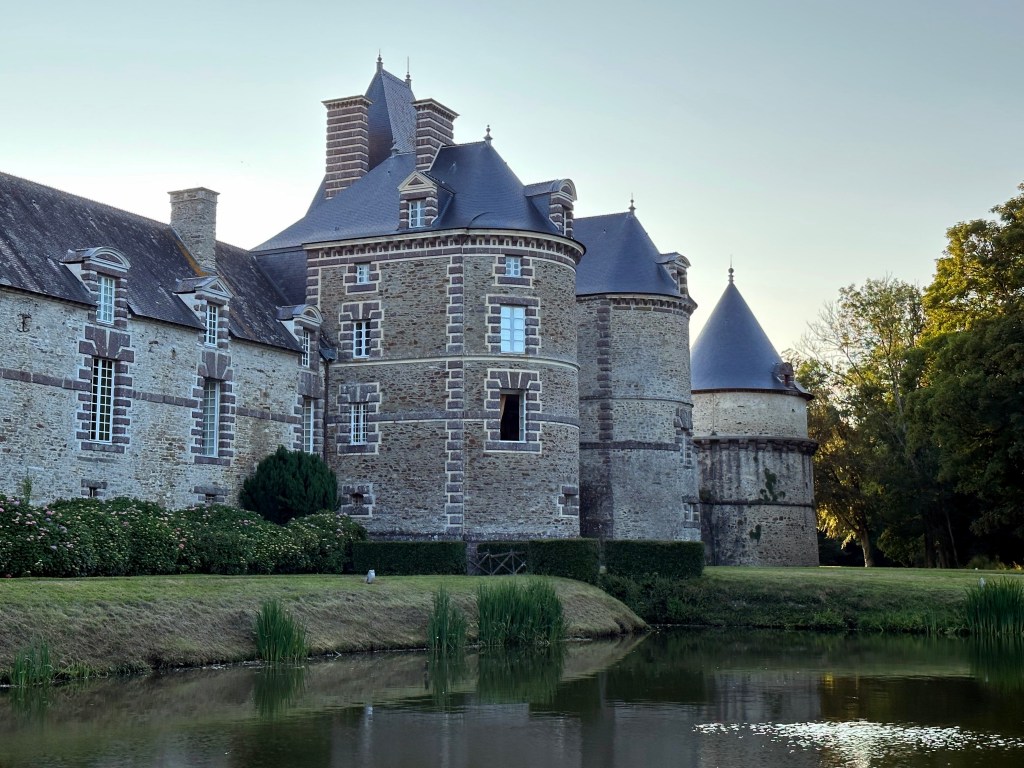
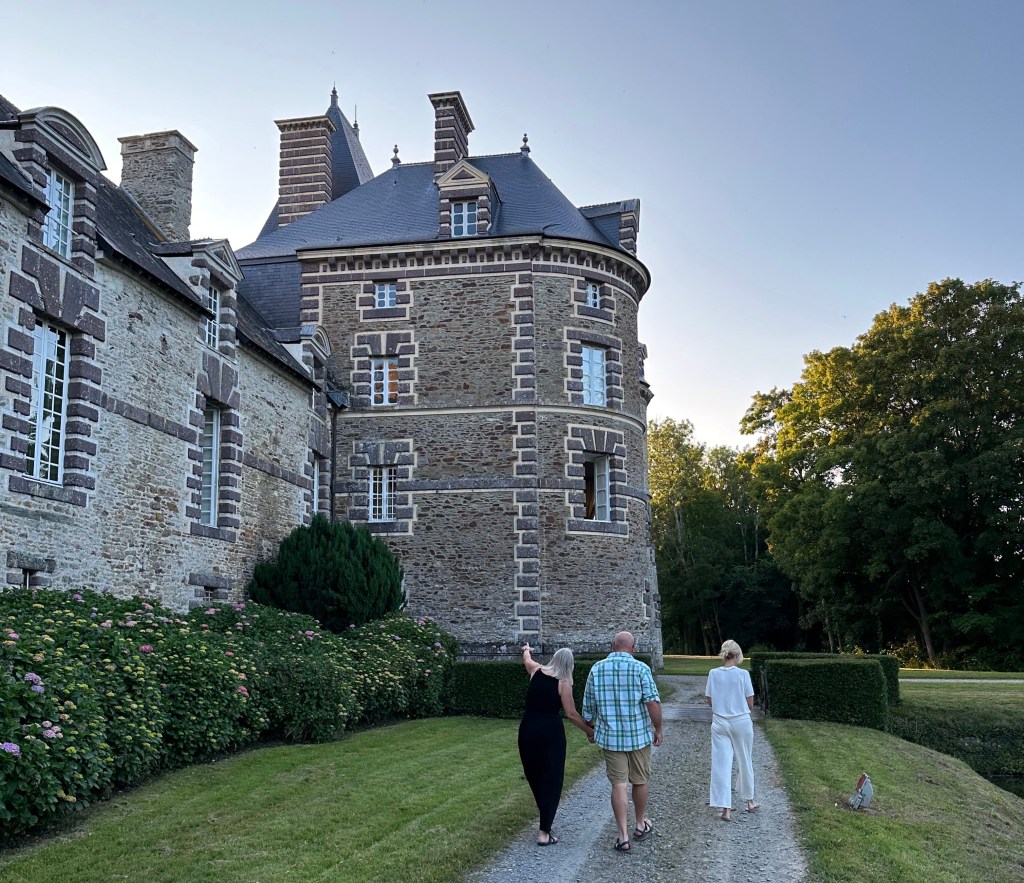
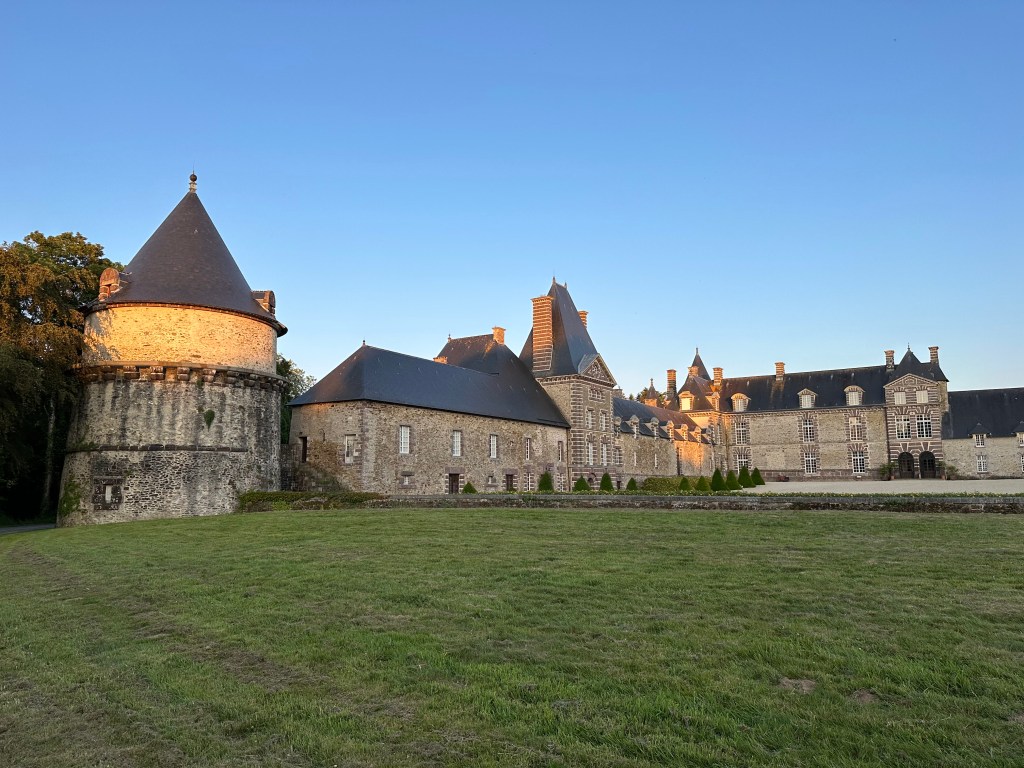
But with a pretty cool conclusion: Chateau de Canisy, our lodging for the evening.
About which we have much to discuss – both the very cool (its history) and the very bizarre (our actual stay).
First, some history. Chateau de Canisy dates to the freakin’ 11th century. Definitely the oldest and most historic place we’ve stayed (just off the top of our head – we did stay in a Welsh castle 2 years earlier, but we think that was built maybe 100 years later (by Normans, as it happens)).
AND there’s a connection to Billy the Conq and the first of the two invasions referenced during our Day 1 post of the trip. In 1066, Hughe de Carbonnel participated in the conquest of England alongside William the Conqueror. At that time, Hugues de Carbonnel already was Lord of Canisy. Of the medieval chateau, one fortified tower and part of the living quarters remain. The family also remains – the current occupants, the Count and Countess Denis de Kergorlay, are direct descendants of Hugues de Carbonnel. The Countess, we would learn, is quite a piece of work.
Most of the Chateau de Canisy’s present architecture dates from the time of Henry IV, when Herve de Carbonnel (1558 – 1625) undertook the construction of a castle to mark his illustrious alliance with Anne de Matignon, daughter of the Count of Thorigny, Marshal of France. In 1588, he commissioned much of the rest of the chateau to be built by architect François Gabriel, (the ancestor of Ange-Jacques Gabriel, one of the architects of the Château de Versailles). A monumental granite staircase was designed by Gabriel, as well as “the addition to the magnificent Cotentin stone of the pudding stone, a purple stone with amethyst reflections, for creating bosses and door and window frames.”
And who wouldn’t want to adorn their chateau with pudding stones?!
In the 20th century, Chateau de Canisy remained a stronghold of the Kergorlay family. From generation to generation, the family has lived in the chateau and has preserved and restored it. Damaged by the fighting during the allied landings in 1944, the chateau was restored with the help of the Historical Monument administration and classified as “Monument Historique” in 1945. Therein ends the cool, historical aspect of our visit.
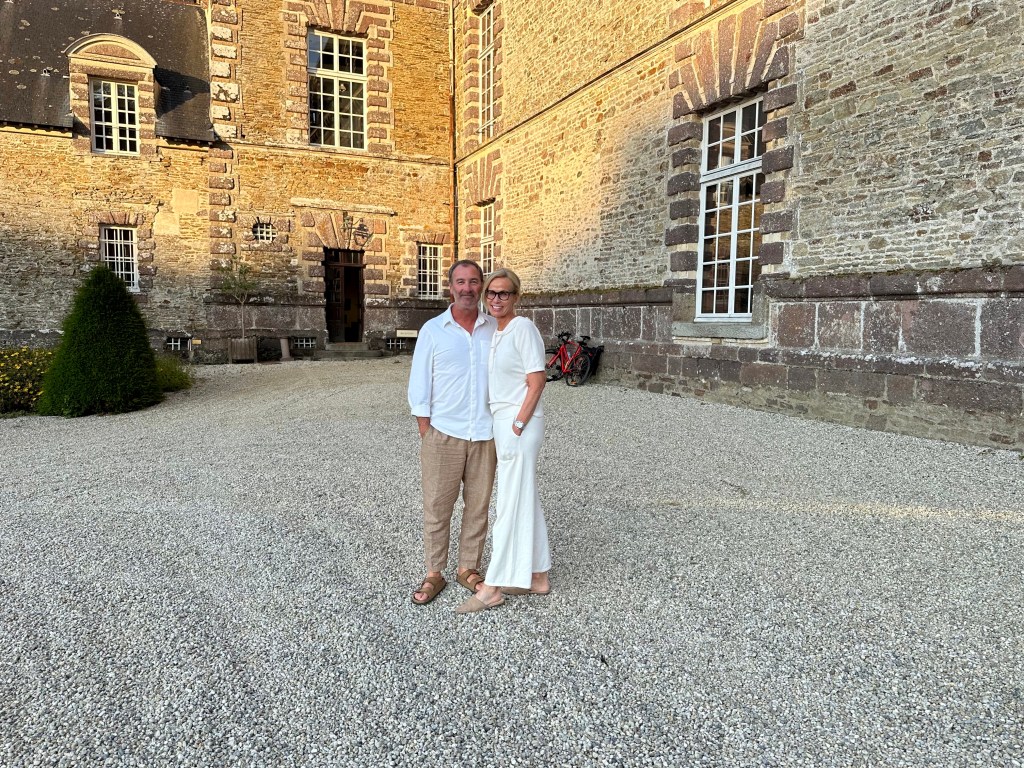
On to our stay itself. We were the only guests there. The good news? Both couples got massive, luxurious, royal accommodations with tons of character. That was pretty much the only good news. The first bad news was that only a receptionist, manager, and cook were in residence. No bar, no bartender, and no one spoke English. Using Google Translate, we ended up ordering the beers we so desperately needed after the long last leg of the ride. When we stay we ordered the beers, we ordered all of their beers. They had maybe 3/4 of a case? Maybe? We had them bring all of them out, where they were rapidly consumed.
Then the receptionist left, and we were served dinner (in the music room located in a turret, which was cool, although we have notes on the meal itself). After this, the manager announced the second bad news: they were leaving and that we should lock the front door when we went to bed.
We’ll be alone here by ourselves, we asked?
Oui.
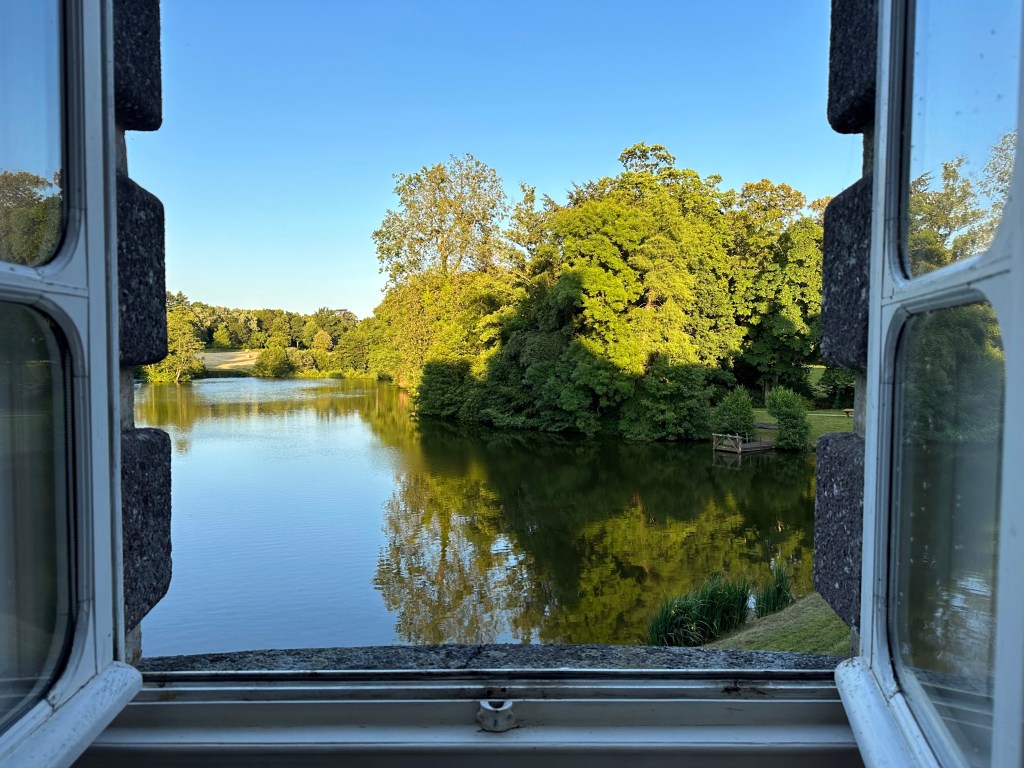
So, because nightfall came so late in Normandy in July, our first act of our now-independent stay was to take a walk all around the grounds, which were very nice.
“Is that a pudding stone?”
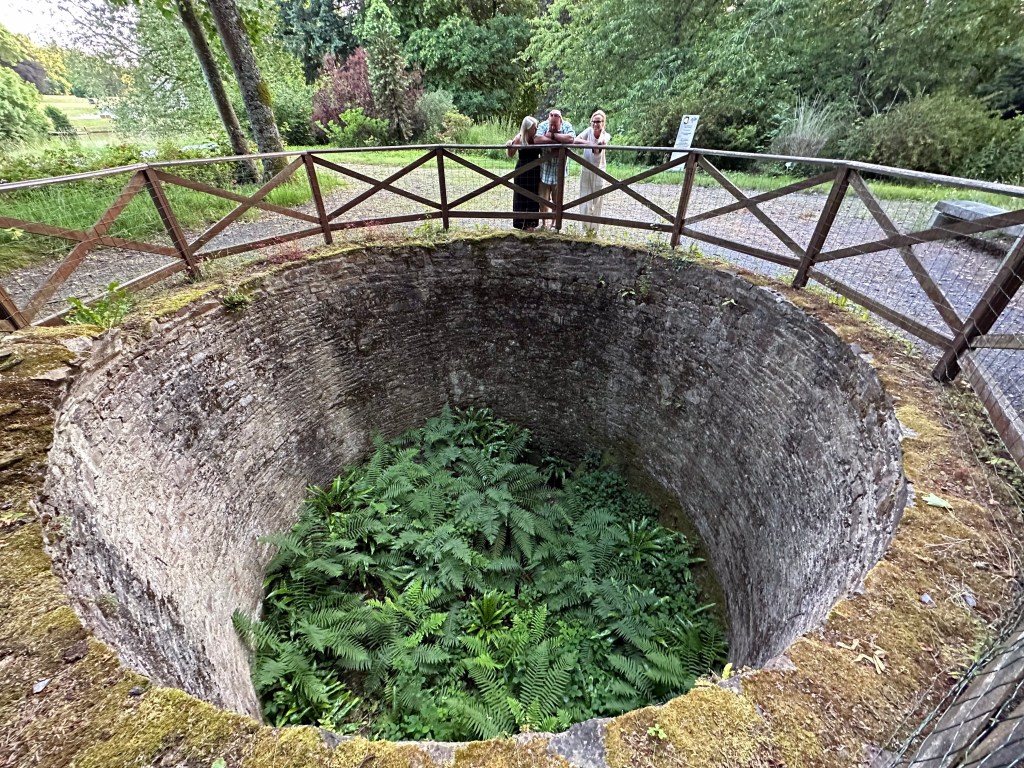
The chateau’s 16th-century ice house (minus roof and “entrance airlock”), discovered in the 1850s.
Then, we reentered the chateau to explore there. On our own. Alone and unsupervised.
We explored every inch of this place, from the barrel-vaulted basement (no dungeon or torture chamber was evident, but there could always have been a secret door that we missed. . .), to the 1980s era bar (!) and disco, to the unused hallway of standard hotel rooms on the second floor, to the attic space above.
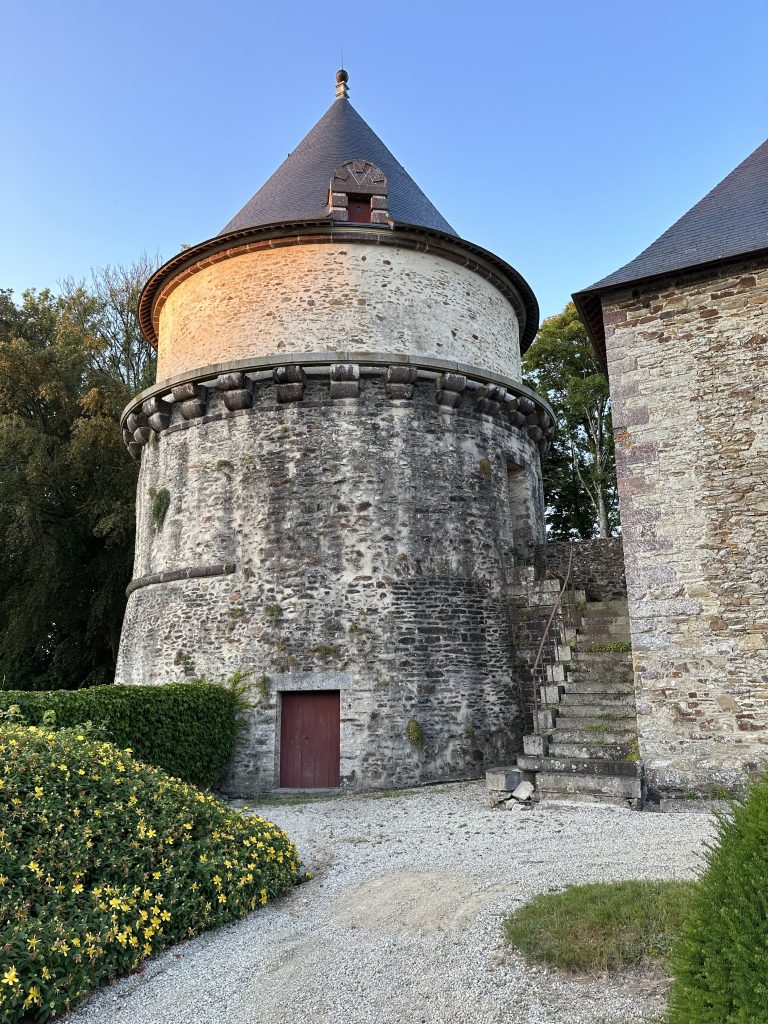
And also the inside of this original tower from the 11th century.
After all of the exploring, and because we had consumed the entire chateau’s supply of booze, we decided to turn in.
As we locked the front door per the creepy – and now absent – manager’s instructions, and resigned ourselves to spending the night in a deserted, 11th-century chateau, we truly and sincerely turned to each other and somberly pronounced “see you tomorrow to whoever makes it through the night here alive.”
Seriously. It was like retiring for the night knowing that you’re in an unsettling horror film where something bad is going to happen. But you don’t know what; or to whom.
But with fewer cobwebs.
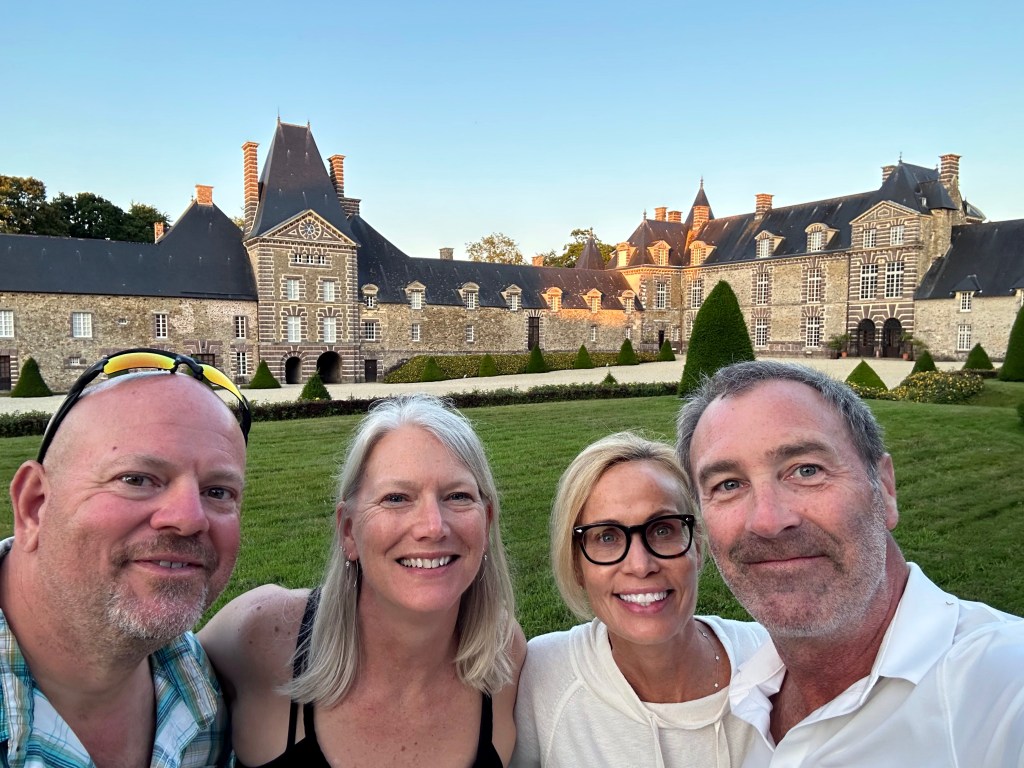
The intrepid group of ghost hunters who dared to spend the night alone in a medieval chateau.
There’s a postscript to this adventure: WolfeStreetTravel posted a review a few months later on TripAdvisor, on which we’ve posted many of our stays to that point (we submitted 290 reviews). The review reflected the narrative above, complementing the chateau’s history and architecture but also expressing bewilderment and unease over being left alone there overnight. The countess decided to respond to the review by denying all of this and stating that staff were there during our entire stay. Which, all four of us will contend, was patently untrue.
TripAdvisor apparently lets the hotel – not the guest reviewing the hotel – have the last word, and so we were not provided the opportunity to rebut the blatant fiction peddled by the countess. We were annoyed, but that was that.
Then, when, 3 years later, WolfeStreetTravel FINALLY gets around to posting this experience to our blog, we went to copy the review to simply paste it here only to find that TRIPADVISOR HAS REMOVED OUR REVIEW ENTIRELY.
We’re going to try to confront TripAdvisor about this, but it’ll take some effort to navigate through the turrets and walls they (and every other corporate entity on the web) have erected to delay, deny, or distract an actual person from contacting them. But we’re pretty annoyed, so we’ll give it a shot. If this effort bears fruit, we’ll post a follow up here.
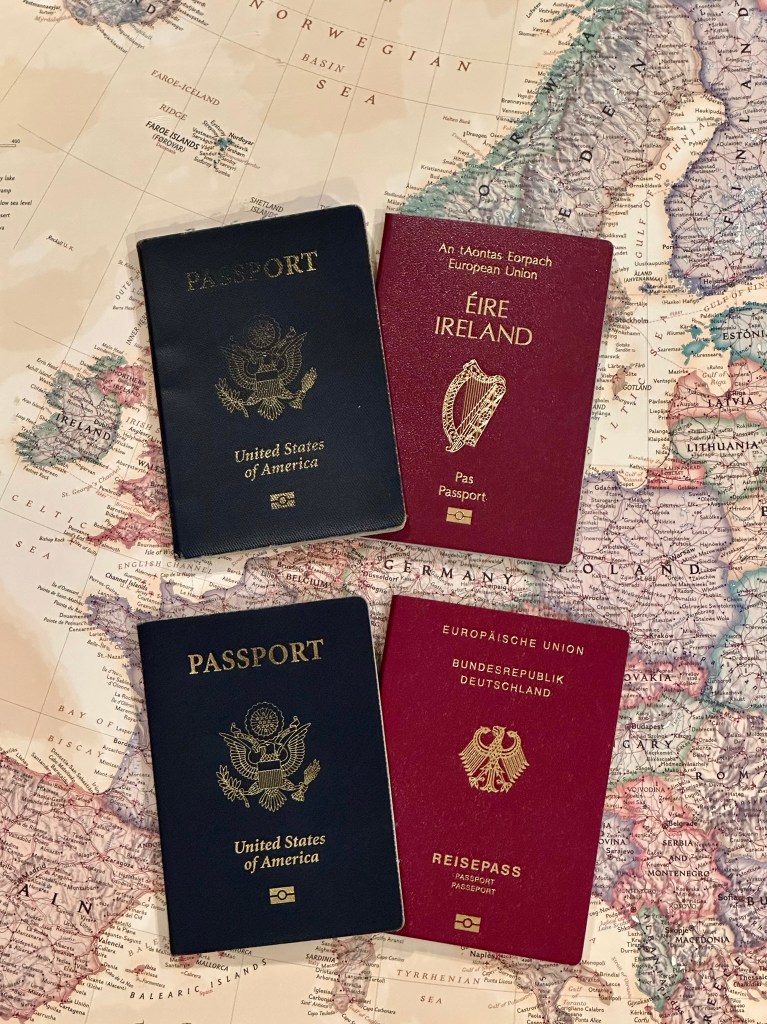
The first trip to Europe, as it happened, where both WolfeStreetTravelers passed through EU immigration using our EU passports:
We had two, segmented goals for this trip:
Explore three towns in France that allegedly were comparable in some ways to our home town, Old Town Alexandria, and were therefore potential home base candidates in Europe
Plus, as an added bonus, a little appendix to the Greek islands jaunt with a leg on the mainland to join the Seattles in checking out epic, millenia-old Orthodox monasteries perched on the clifftops of Meteora in northern Greece.
More South of France Leg
Our ongoing quest to locate a suitable home base in Europe has intensified, now that we also have Irish and German citizenship and can stay / reside in Europe without time restrictions. Home bases we’ve previously considered include Uzes in French Languedoc; Arles in French Provence (home to WolfeStreetTravel’s Gallic fountain avatar); Ronda in Spanish Andalusia; Lucca and Sienna in Italian Tuscany; and Rovinj in Croatian Istria. None of these fit the bill exactly (although Lucca, Ronda, and Rovinj are all high-scoring candidates that we’ll visit again [and already have, in the case of Rovinj]).
After quite a bit of consideration and research with our AI buddies, we targeted the South of France as the best place for us to continue our search – we wanted the southern European / Mediterranean lifestyle, cuisine, and architecture and France was more centrally located than Spain, Italy, or Croatia, the other Mediterranean candidates. We’d visited a couple of times before (for our first European trip [and first bike trip] in 2002, and then the Slow Roll in 2021), so we knew we’d like the area.
In evaluating potential South of France home base candidates for WolfeStreetTravel, we had several criteria (all of which reflected core characteristics of Old Town, Alexandria, the most charming and livable town in the world, as far as we’re concerned):
Medium-sized (we don’t like big cities and prefer more accessible, less intimidating towns that nonetheless offer all of the attractions of their bigger cousins); the population of Alexandria is 160,000 and 12,000 live in Old Town
Restaurant density that “punches above the town’s weight” in the parlance of one of our AI assistants; Old Town Alexandria is densely packed with restaurants due to the proximity to DC and now National Harbor in Maryland, with the associated tourists
Close to a major transportation hub, to enable seamless travel to other European locations (this is also why Spain, Italy, and Croatia were less attractive candidates than France, which is more centrally located for travel to Portugal, Sweden, and Greece, for example, with relatively similar distances); Alexandria is 10 minutes from DCA and 40 minutes to IAD
On a river or lake, providing both atmosphere and water-based activities; Alexandria’s Potomac riverfront plays a major role in our day-to-day at home
Good running paths / routes; we run every day at home, and if we are going to spend extensive time in a European town, we want the same running access, so we don’t fatten up on wine and cheese
Using these criteria, we identified three towns in Provence: Aix-en-Provence, Sommieres, and Vienne. Aix has a reputation as a medium-sized vibrant and charming town very much like Old Town (albeit not on a water body) and both Sommieres and Vienne were located on the Rhone River. After further consideration, we dropped Sommieres from the list as too small, but then added Annency in France’s Savoy region, due to its canals and lakefront location, even though it wasn’t strictly in the Mediterranean cultural belt of the South of France. (We found out about Antibes, Cassis, and Menton on the French coast too late to be included in this evaluation, but Antibes, in particular, is now on our radar for future exploration.)
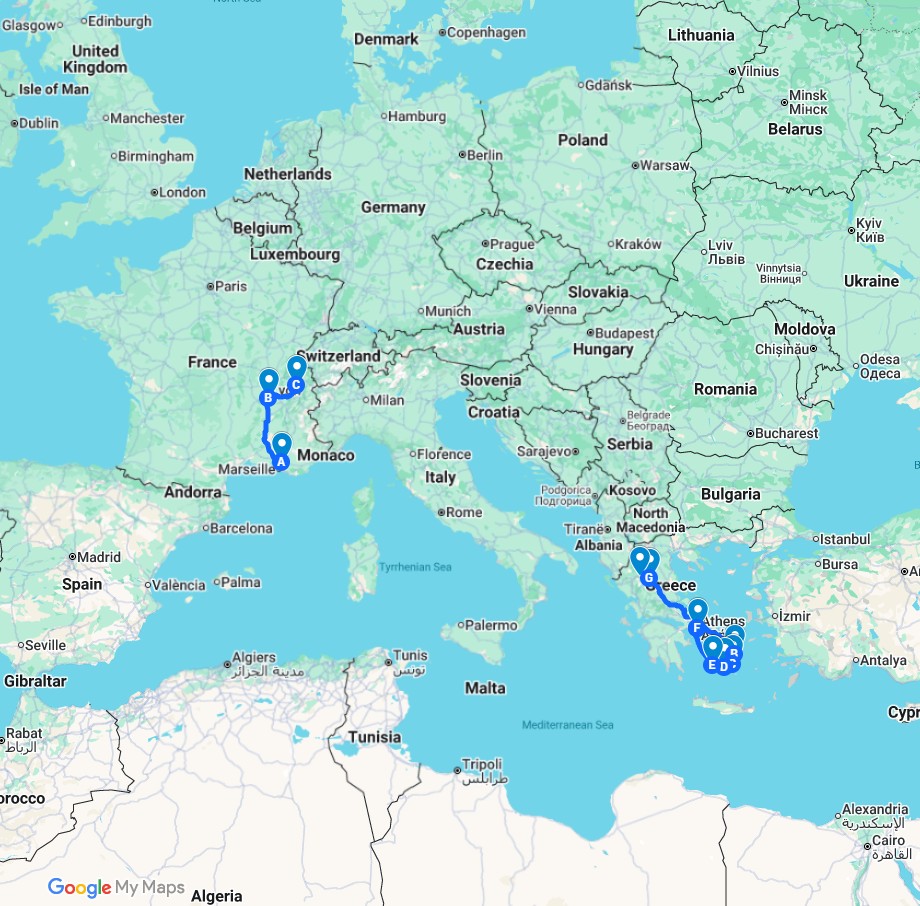
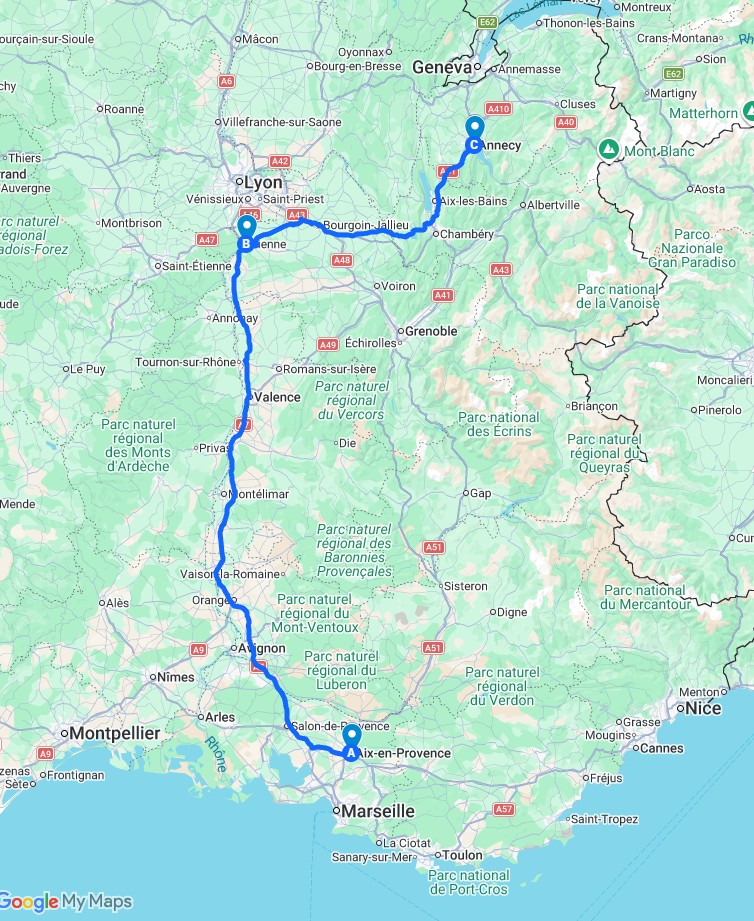
The final route for the French leg:
We’d fly into Marseille airport, grab a car, and spend 5 days in Aix, 1 day in Vienne (it seemed less and less appealing, the more we looked into it), and 4 days in Annecy.
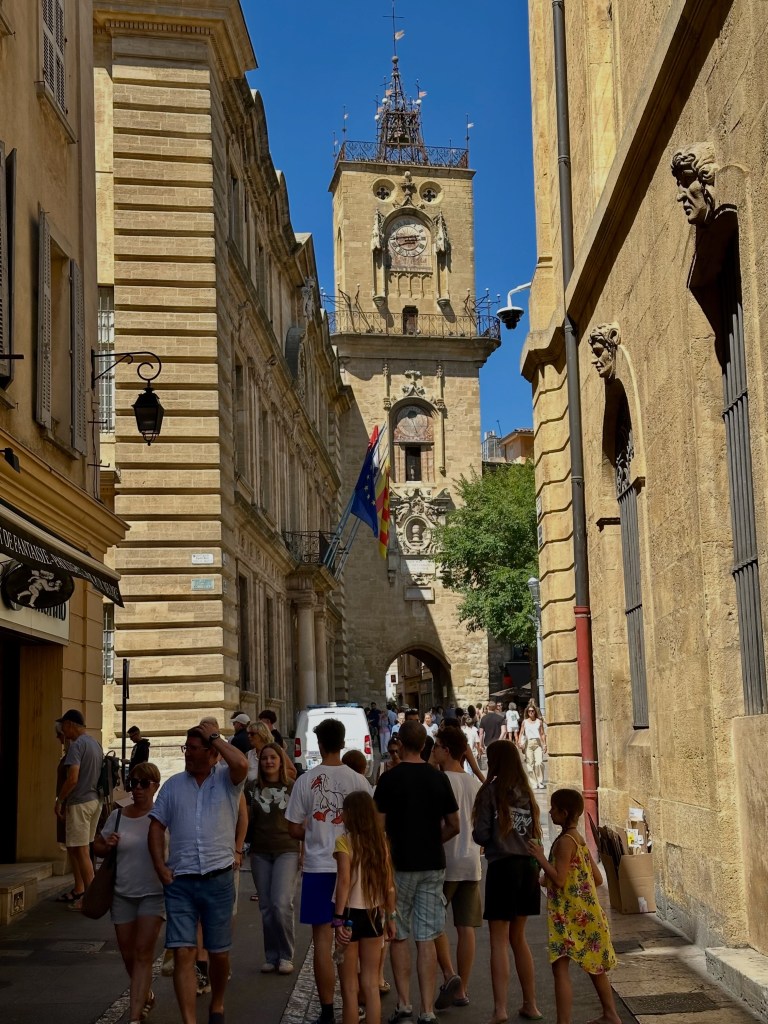
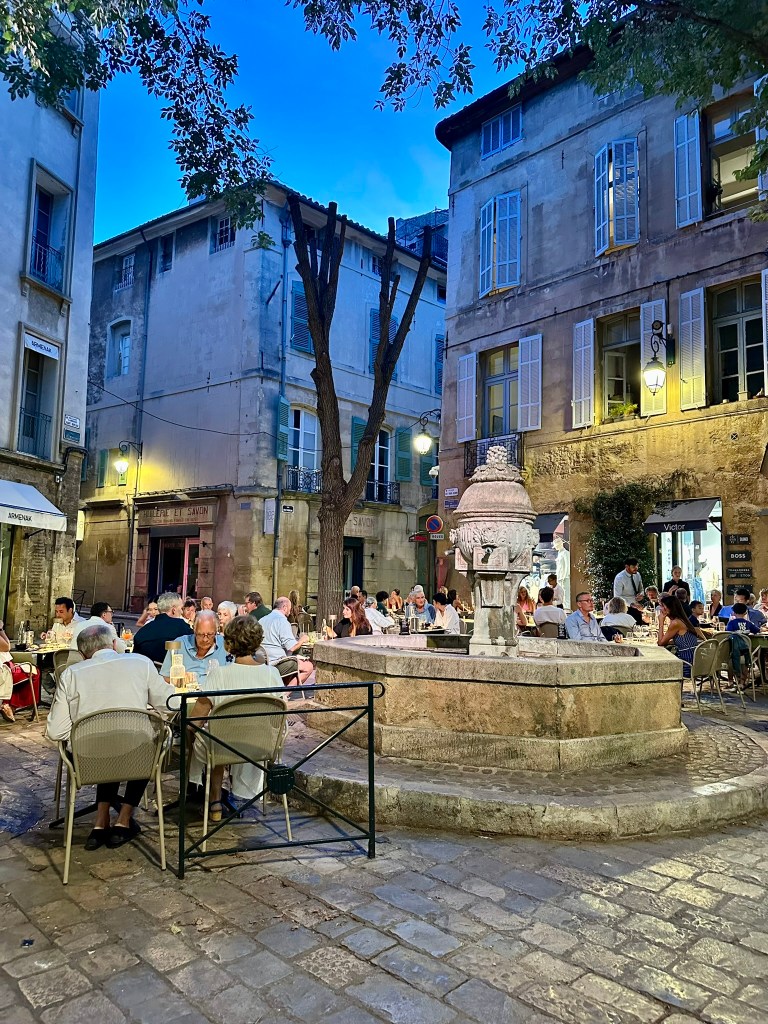
Aix-en-Provence was exactly as we envisioned, with honeyed limestone facades and an charming centre ville:
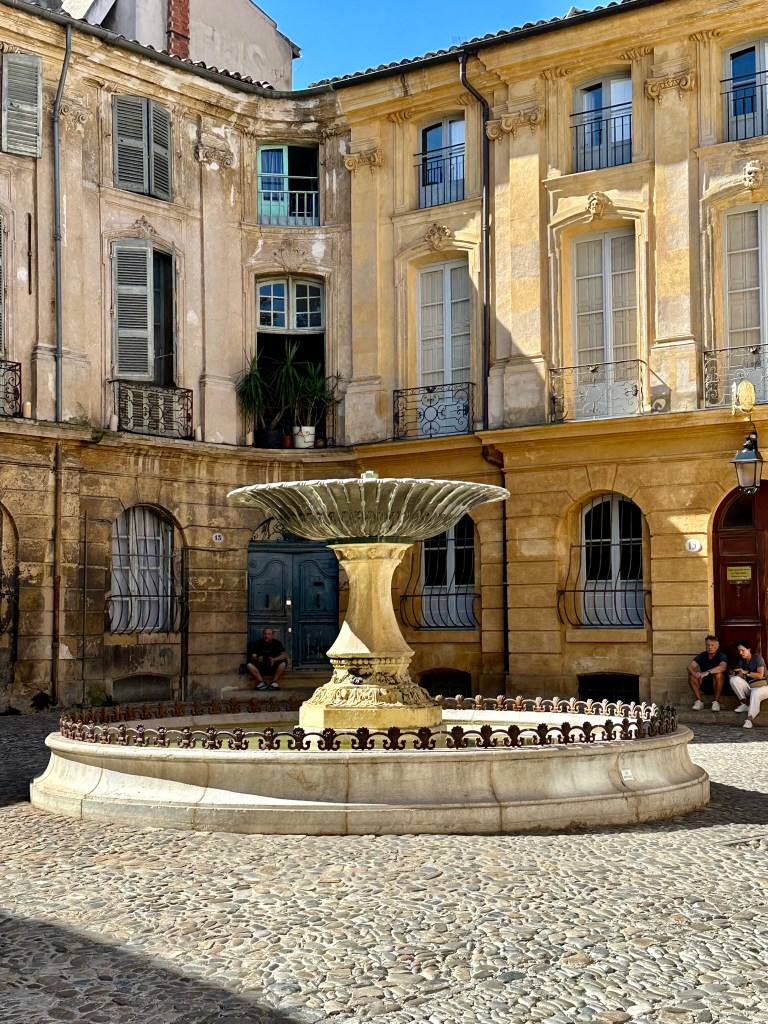
But, as the “city of fountains,” we were disappointed – an ongoing drought shut almost all of them down (and they were everywhere):
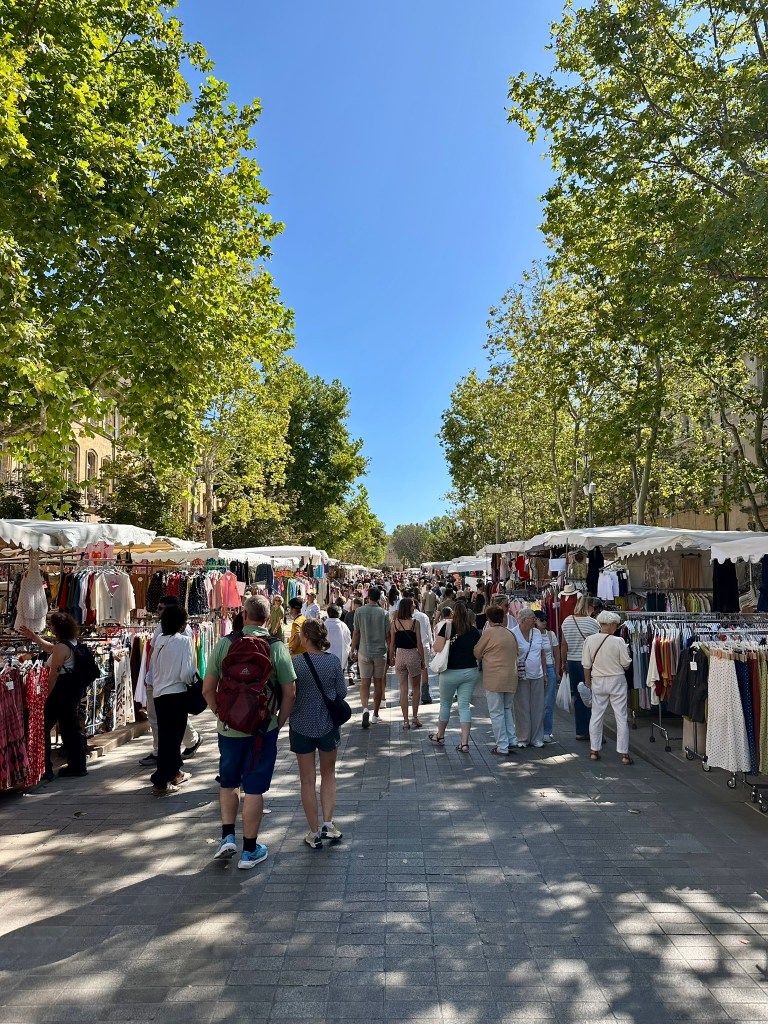
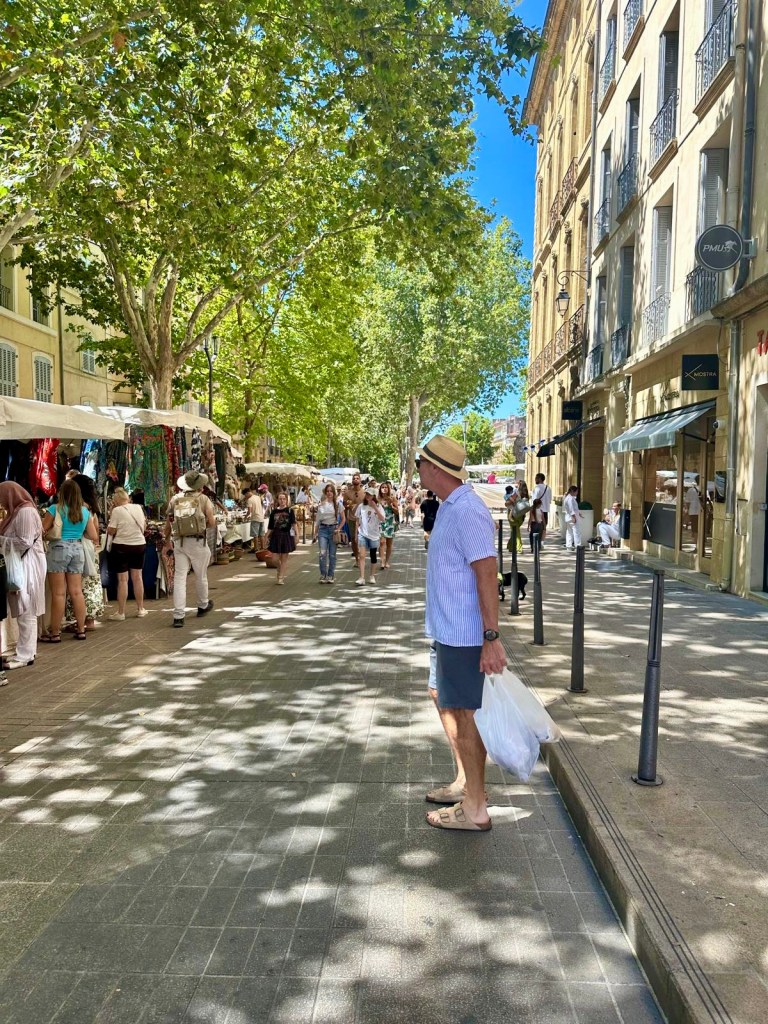
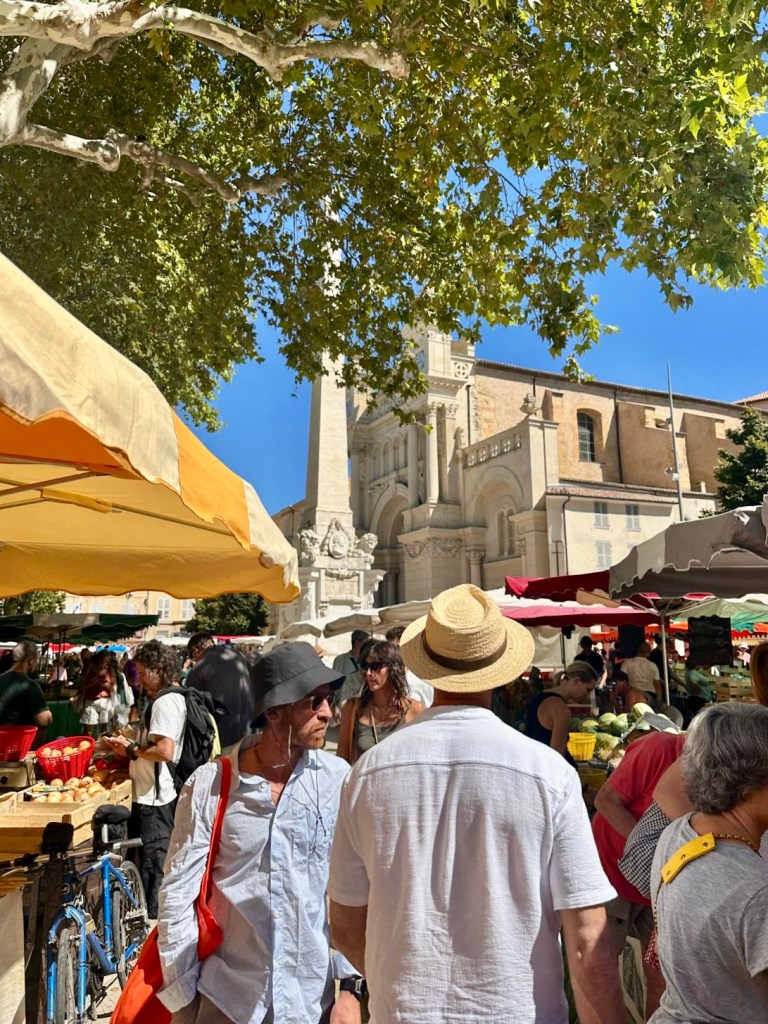
The big event during our stay was market day on Saturday. Half the town turned into a market place:
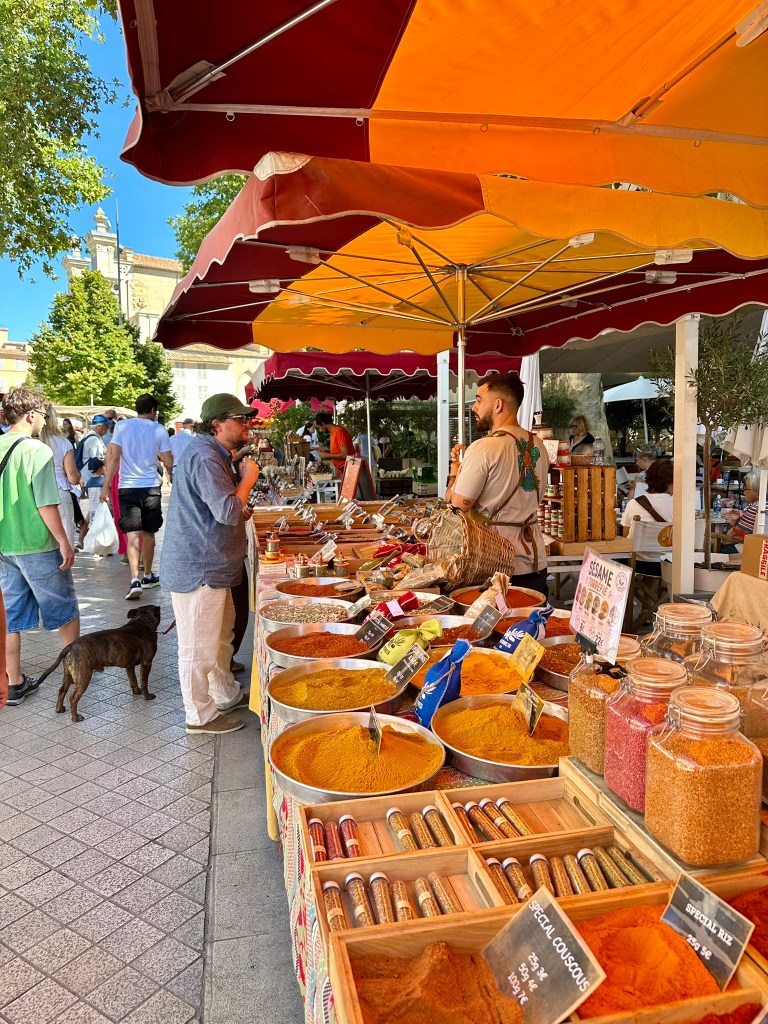
The locals were all out stocking up on groceries for the week ahead.
We followed suit. . .
Alfresco dining throughout our stay.
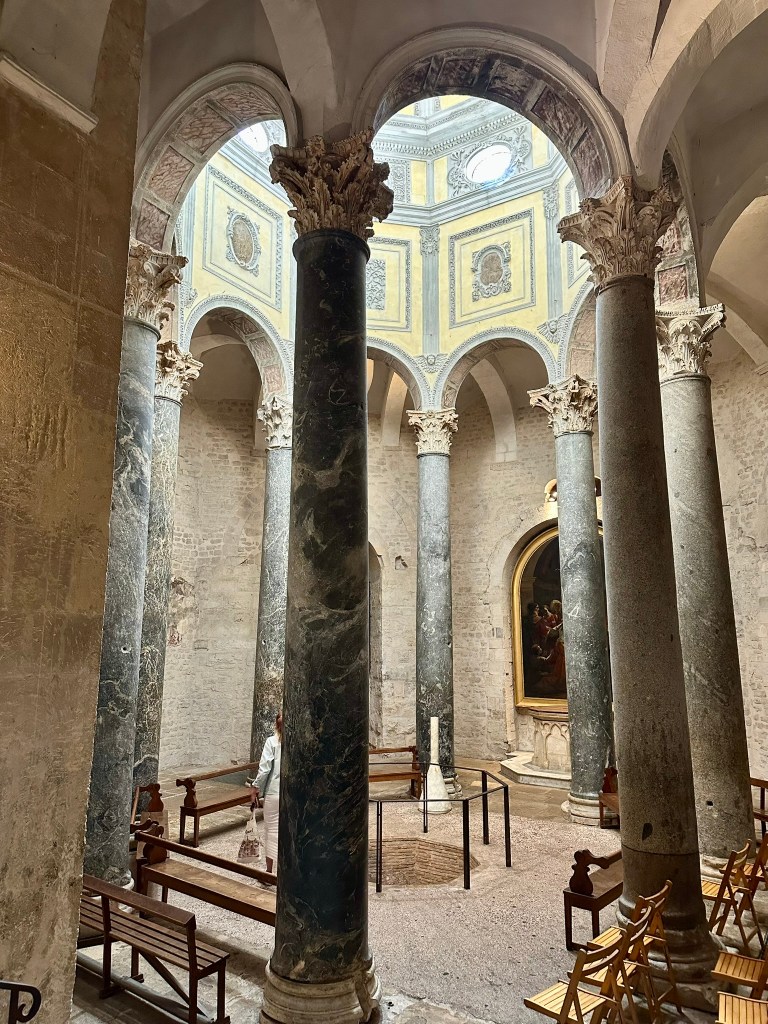
And it wouldn’t be WolfeStreetTravel if there’s not some cool (ideally medieval) history. To wit: The early 6th century Baptistery of Saint-Sauveur Cathedral, built when Aix was transitioning from the Roman world to Christianity – the oldest surviving baptistry in France. Several of the columns are reused from the Roman forum in this location.
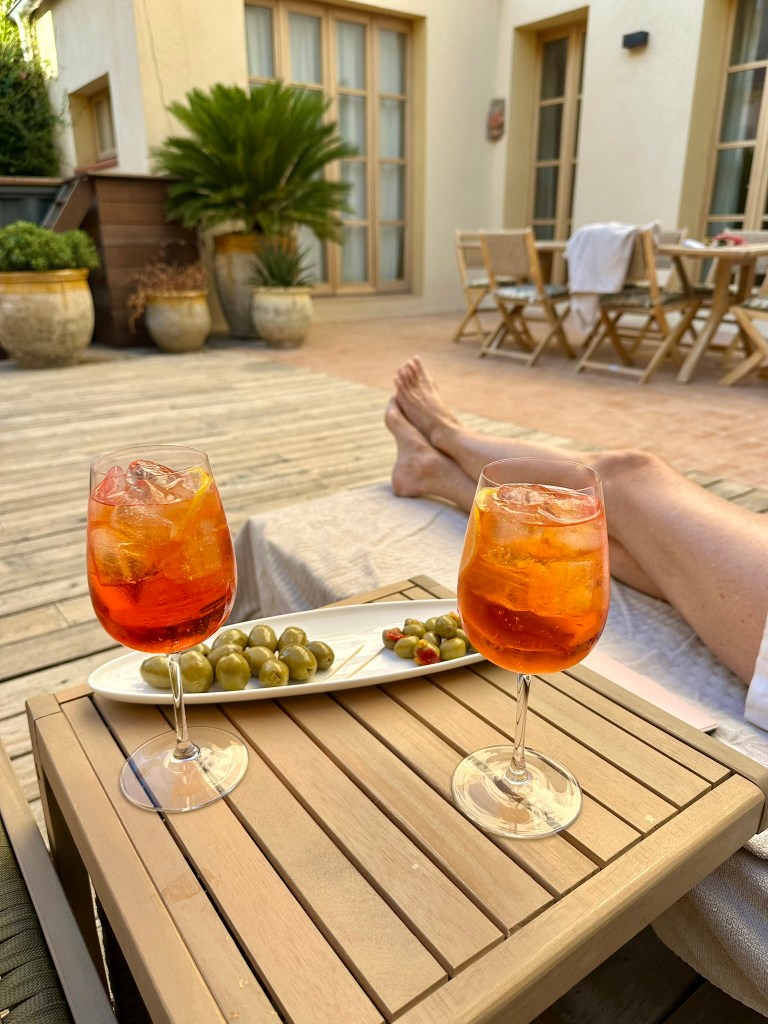
And Aperols each evening in a pretty cool AirBnB (the Chief Adventure Officer’s rule of thumb is to book AirBnBs for stays of 5 days or more and also every 10-14 days of hotels for laundry).
After those 5 days, it was time to move north; Aix was beautiful but, we decided, very much one note. We’re glad we visited, but this wasn’t the home base for us.
Vienne, just south of Lyon on the Rhone, offered the next potential home base location. According to our AI buddies, Claude and Chatty G, Vienne’s river utilization included a promenade along the Rhone. This was a lie. It did not.
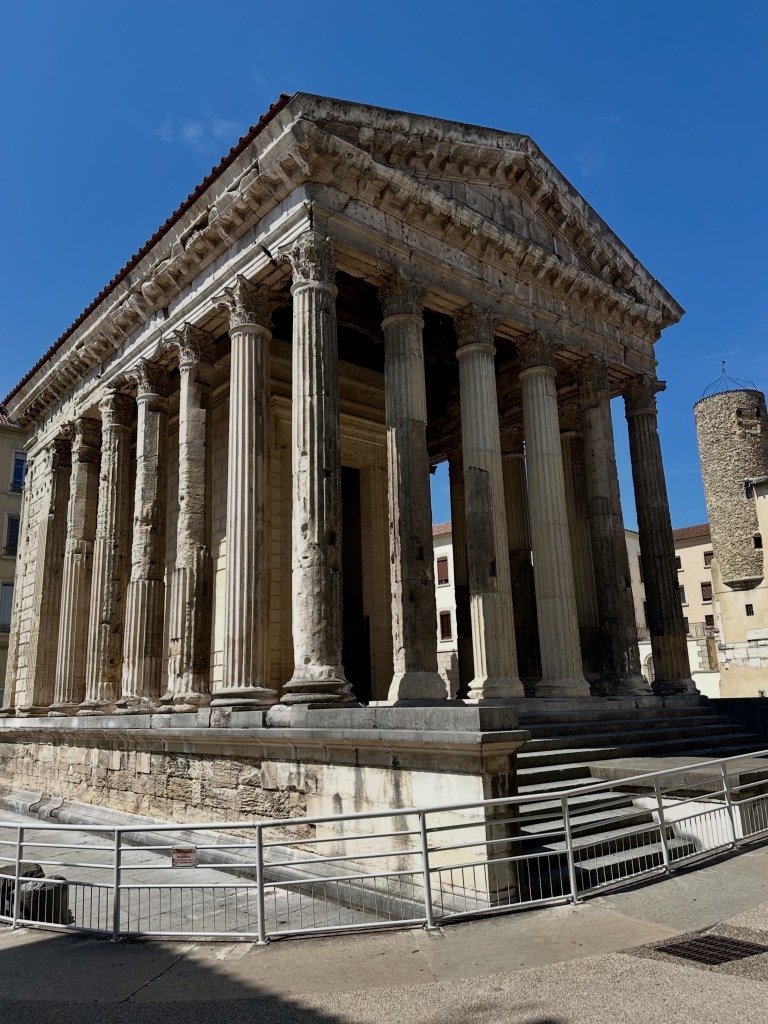
It did have some pretty awesome Roman artifacts, dating to Vienne’s time as an extraordinarily wealthy Roman trading city. This includes the 1st century BC Roman temple dedicated to Emperor Augustus and his wife Livia, right in the middle of town:
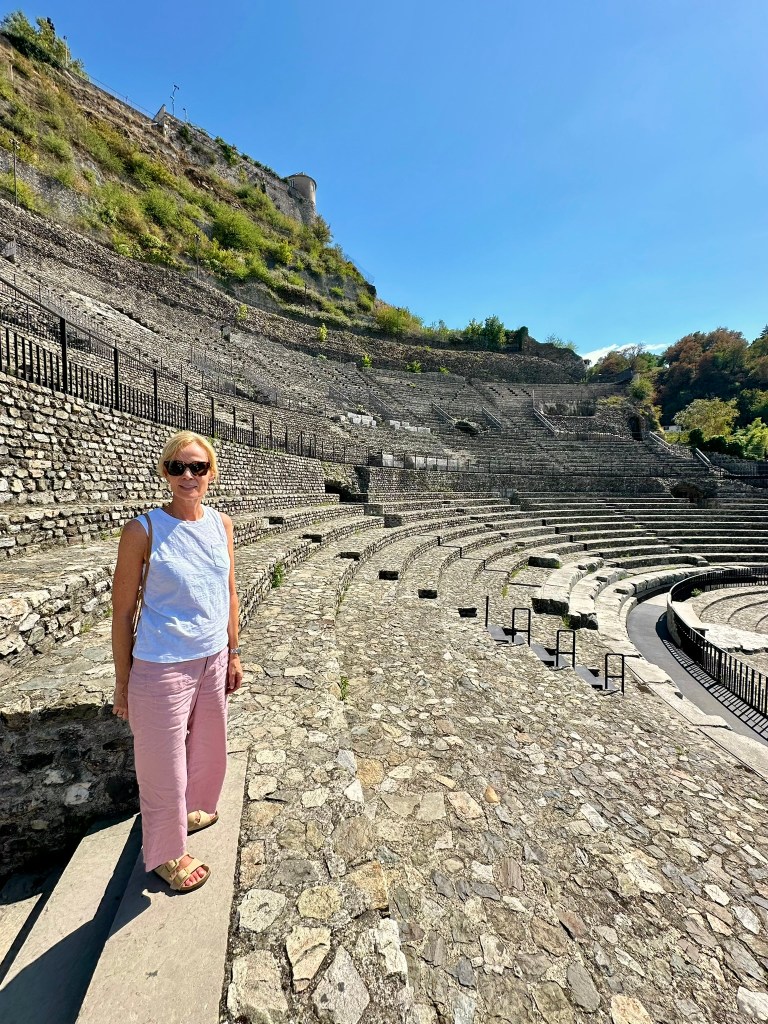
And the town’s massive Roman theater, built into a rocky hillside just above town in the 1st century AD:
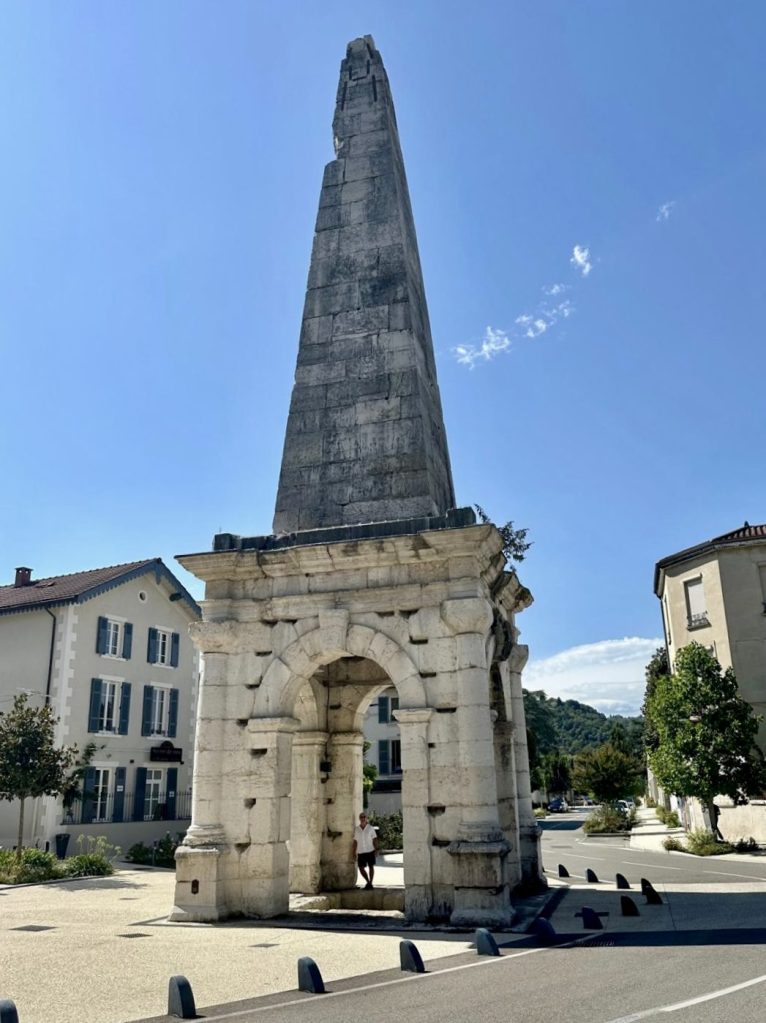
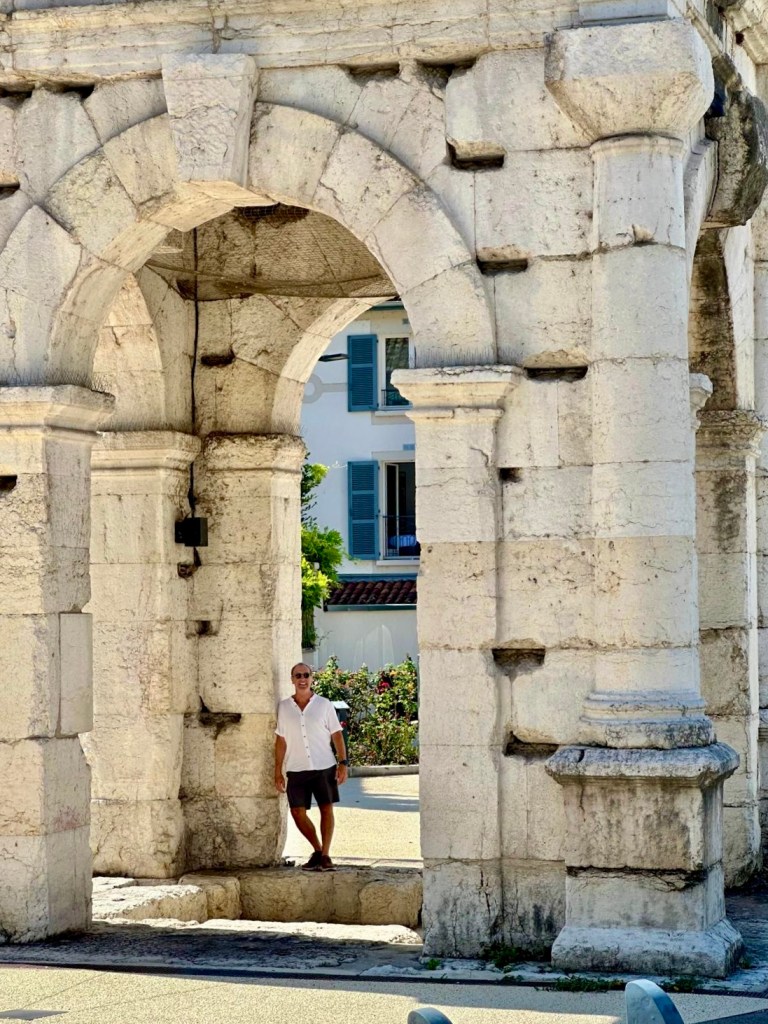
And, finally (there’s a bunch more, but this is a trip overview post), the 2nd – 3rd century AD Pyramide de Vienne, right next to our hotel. It’s actually the surviving central monument of the spina – the long central barrier – of Vienne’s enormous Roman circus for chariot races:
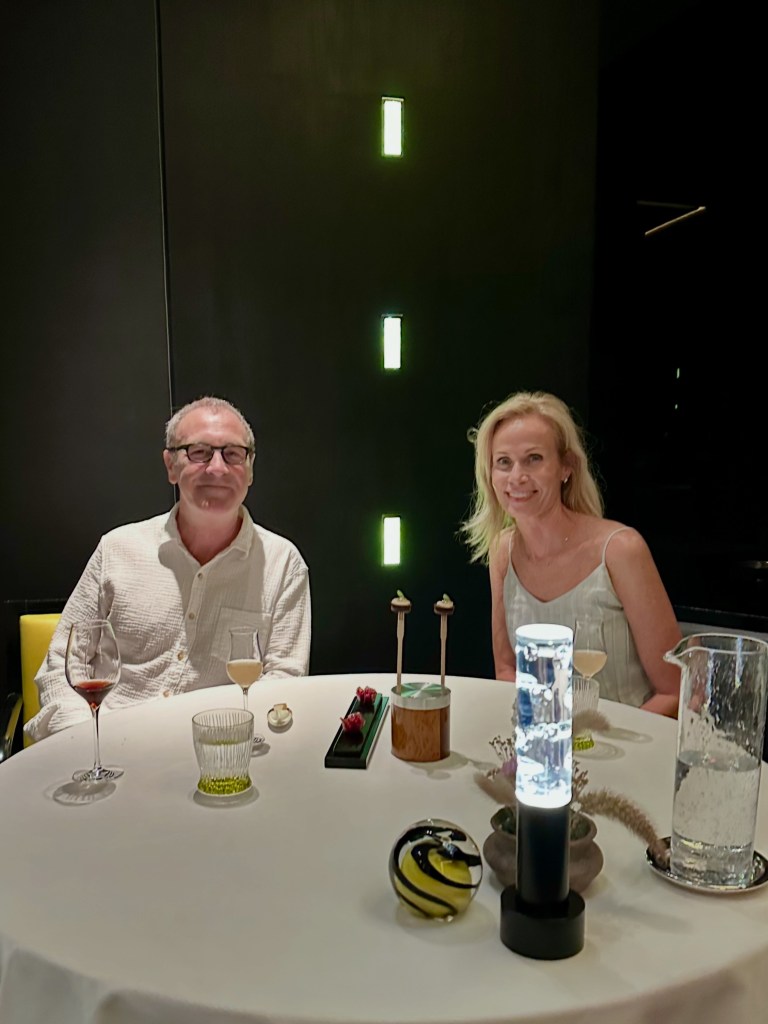
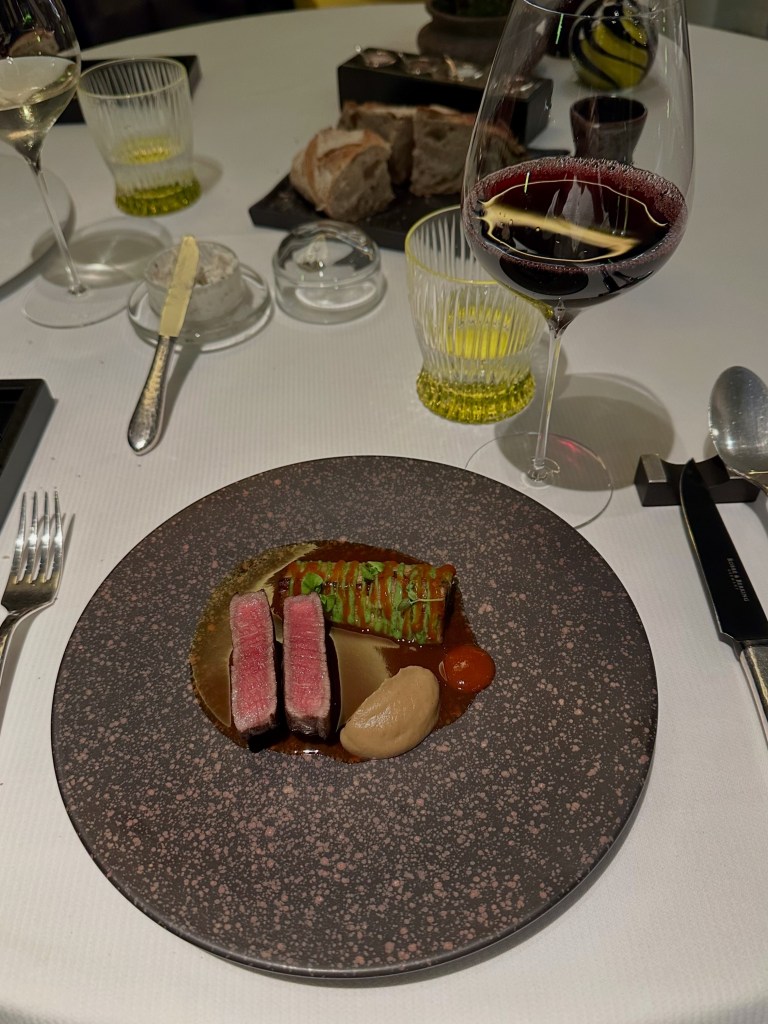
The hotel’s restaurant served as our only Michelin-starred dinner of the trip.
Meh. Good not great. Our anniversary dinner on Ios later in the trip was much better (as was our first, great, fish dinner on Naxos).
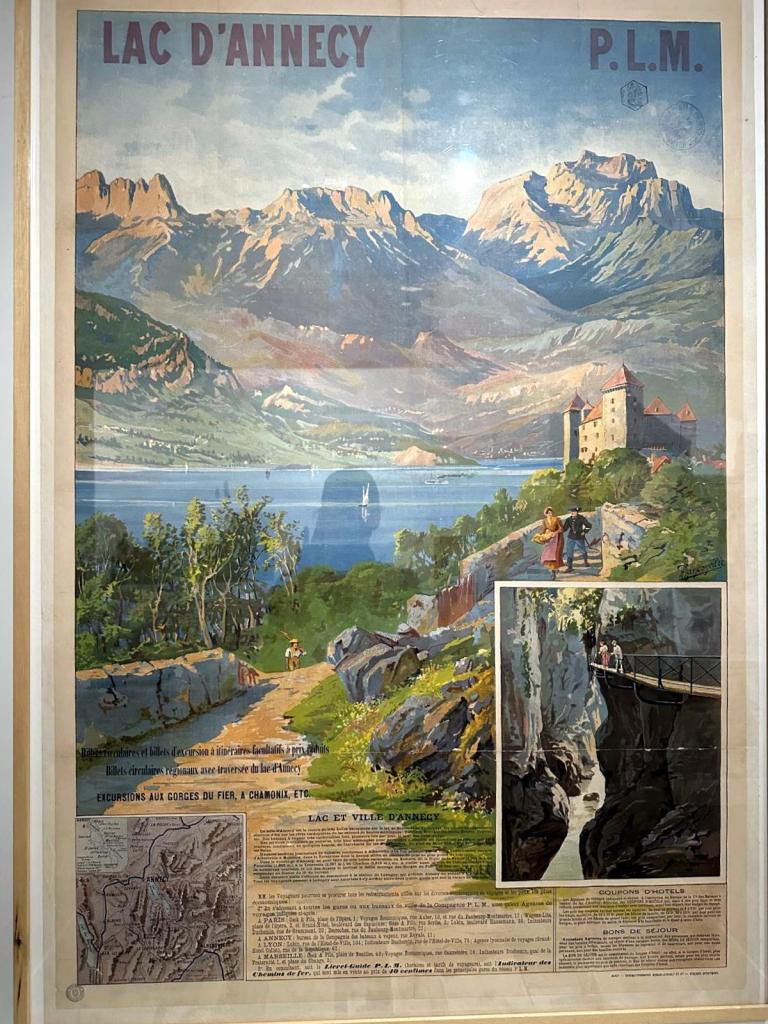
With the Vienne box checked, we roamed northwest to Annecy, which is decidedly NOT the South of France or Mediterranean in lifestyle, culture, cuisine, or architecture. It’s in the Savoy, just 20 minutes away from Geneva. But we kept seeing this place in our Instagram feeds, evaluated it thoroughly as a candidate, and thought highly enough of its potential that it bumped out Sommieres and consumed a day of Vienne time from our draft itinerary.
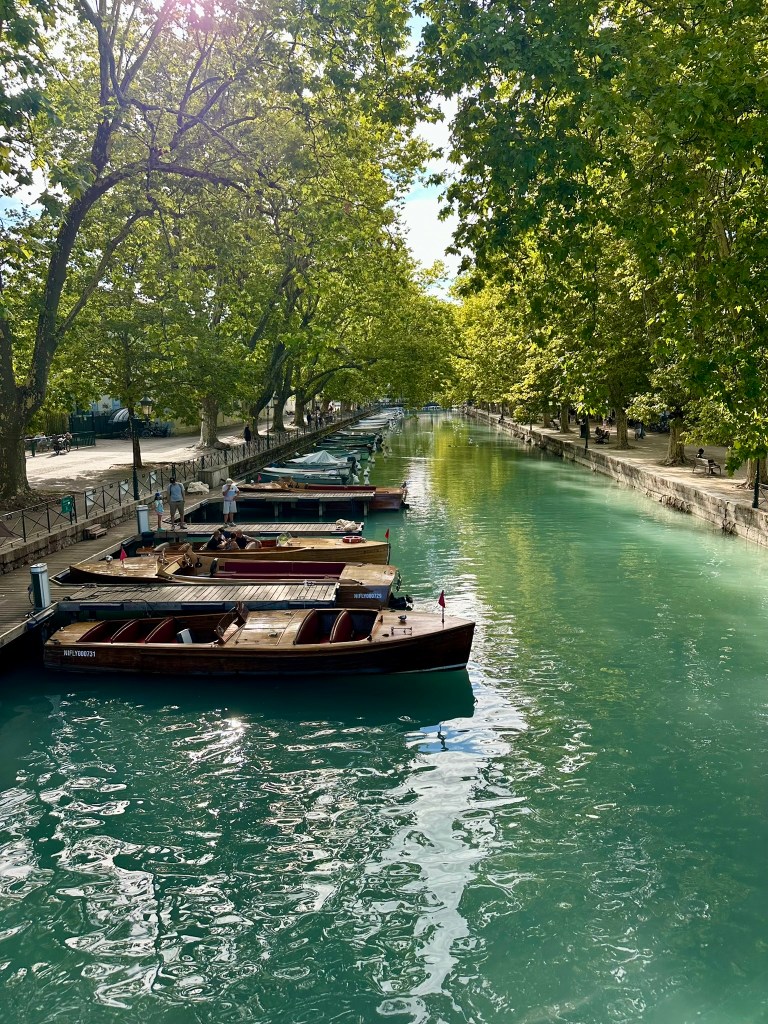
Good call. This place was awesome. Canals in the city (Annecy is the “Venice of the Alps”) and Lake Annecy just beyond.
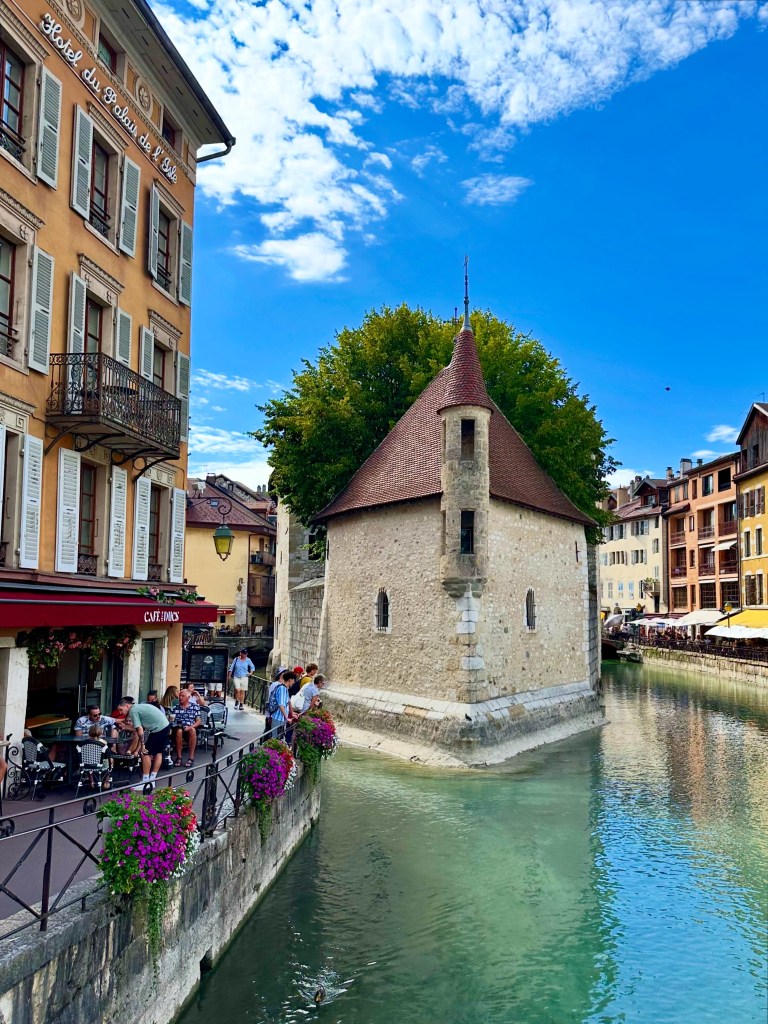
12th-century Palais de I’lle in the middle of Annecy’s main canal leading to the river (behind us):
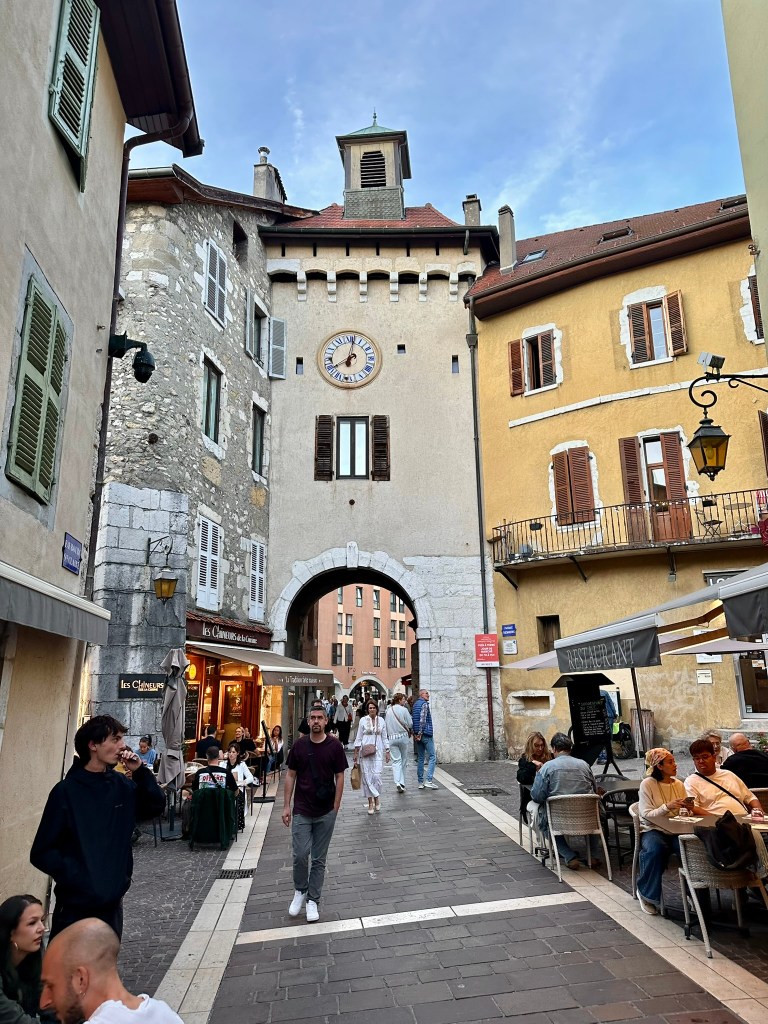
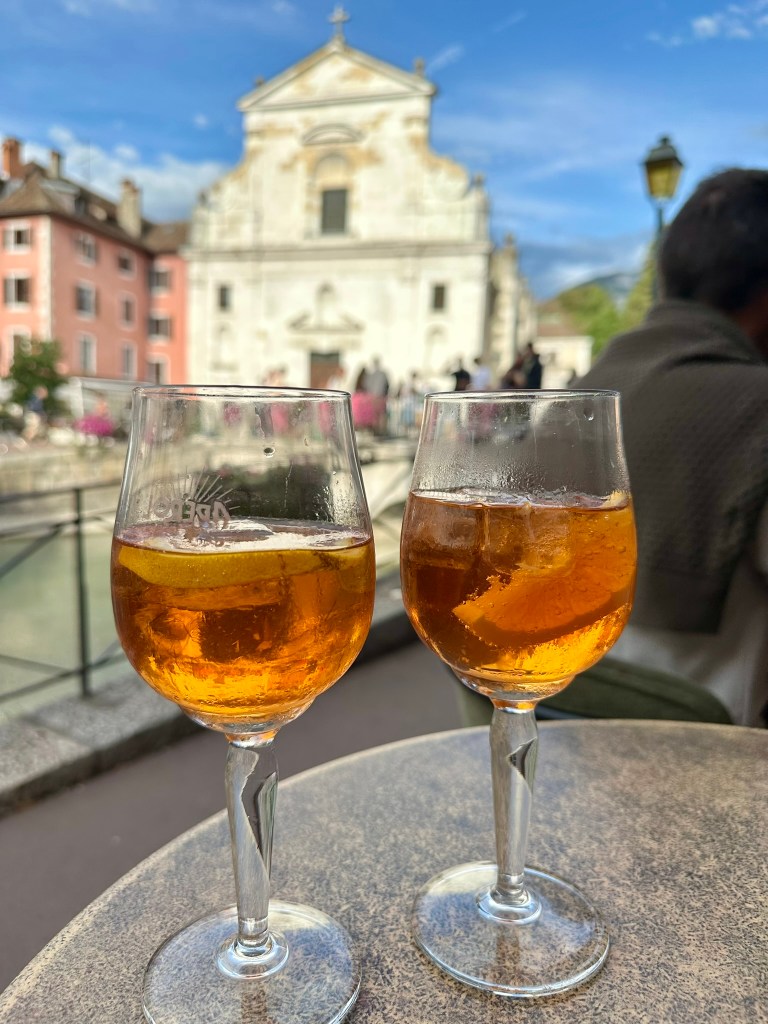
Annecy’s old town is full of 17th- and 18th-century structures and definitely punches above its weight in restaurants (and wine bars, as we’d learn):
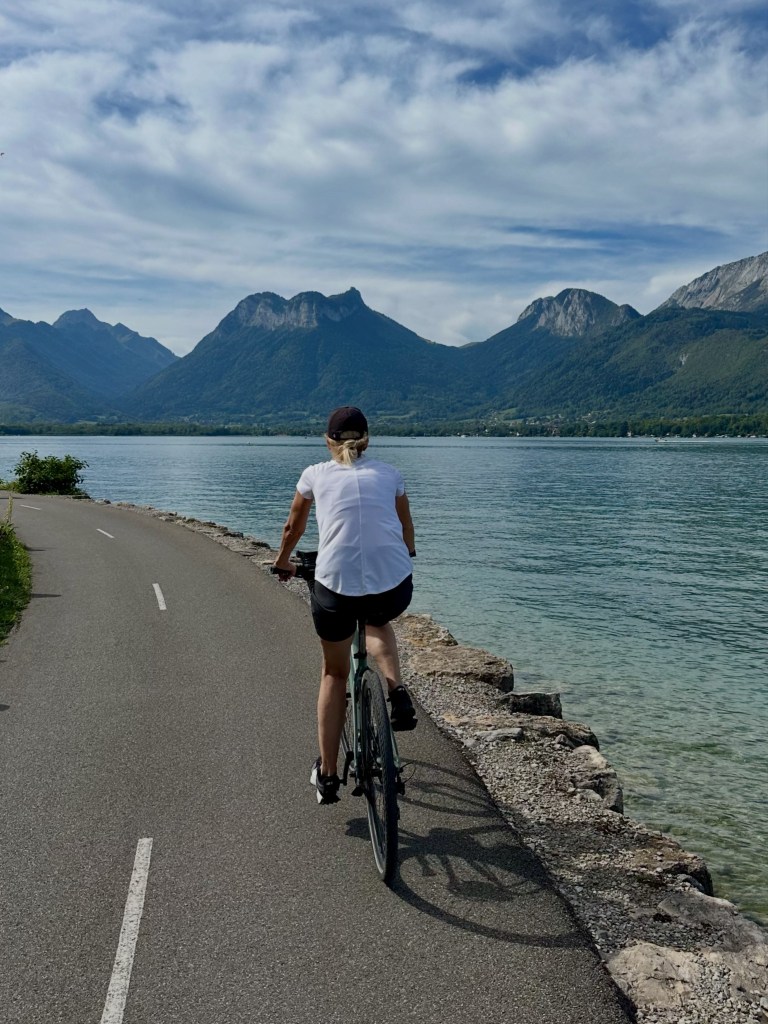
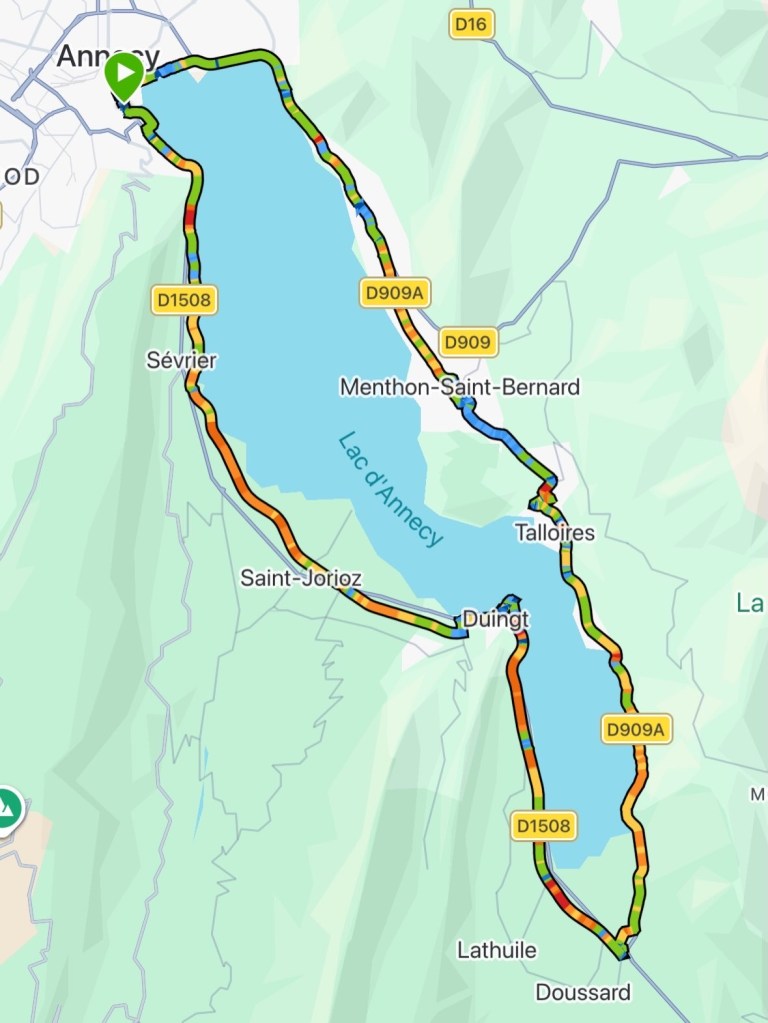
During our stay, we’d swim in the lake, drive around it to another small village, and, the pièce de résistance (literally “piece of resistance” per Dave Barry), biking the 25-mile loop around the lake.
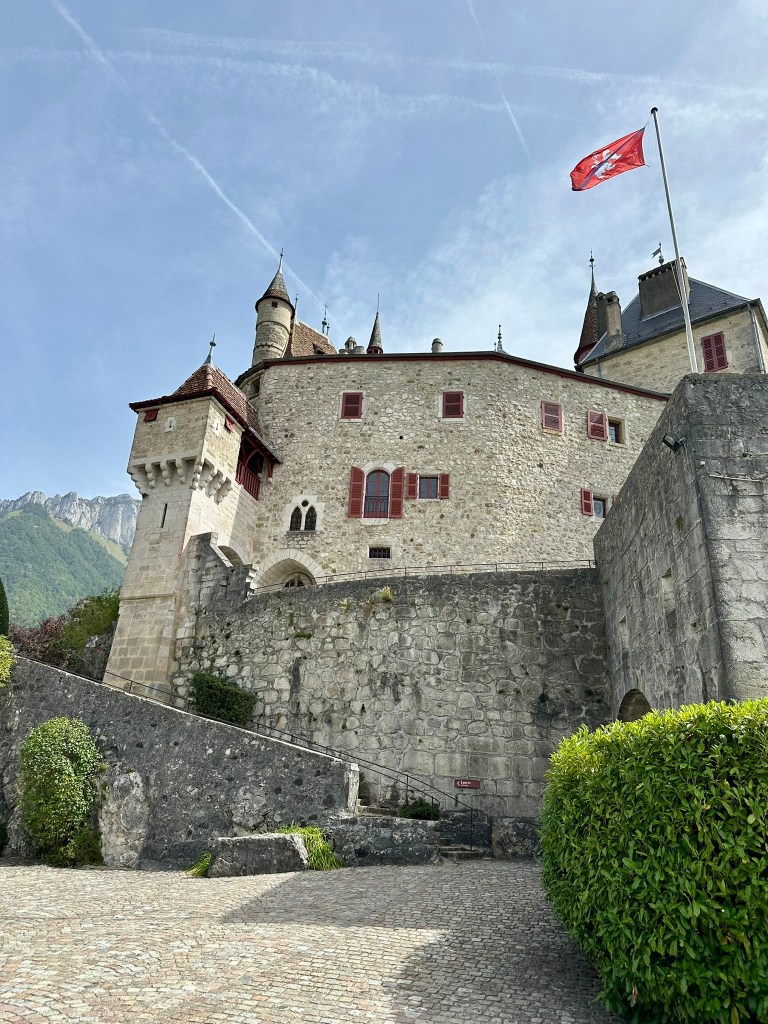
Little side trip to Chateau de Menthon-Saint-Bernard after lunch in the charming village of Talloirs.
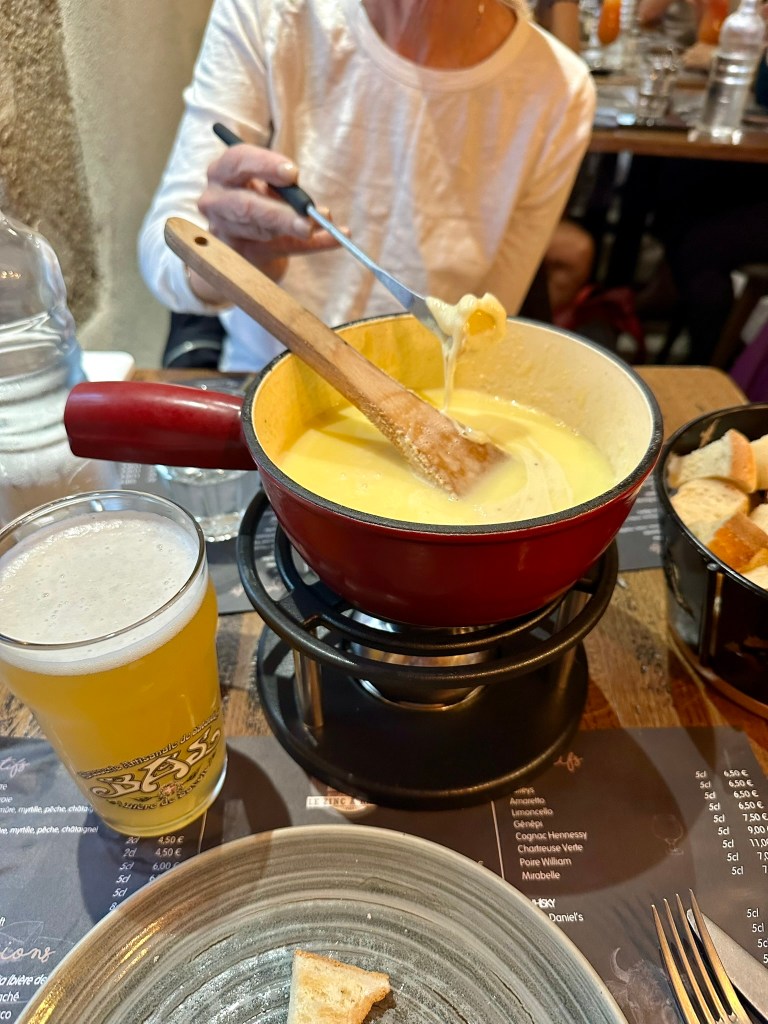
And for lunch on the one rainy day during our trip, fondue – a Savoyard specialty.
Annecy was amazing. The town hit ALMOST all of the European home base criteria we had established, based on Old Town, Alexandria. Although it fell short in proximity to a travel hub (we did get a nonstop from Lyon to Athens for our next leg, but the Lyon airport cannot be considered a real travel hub, and Geneva’s is not in the EU). It also exuded Savoyard character, not Mediterranean. But Annecy is a four-season town with hiking skiing in the French Alps (Chamonix is about 75 minutes away), complementing its lakeside charm as a summer getaway. So we’ll be back.
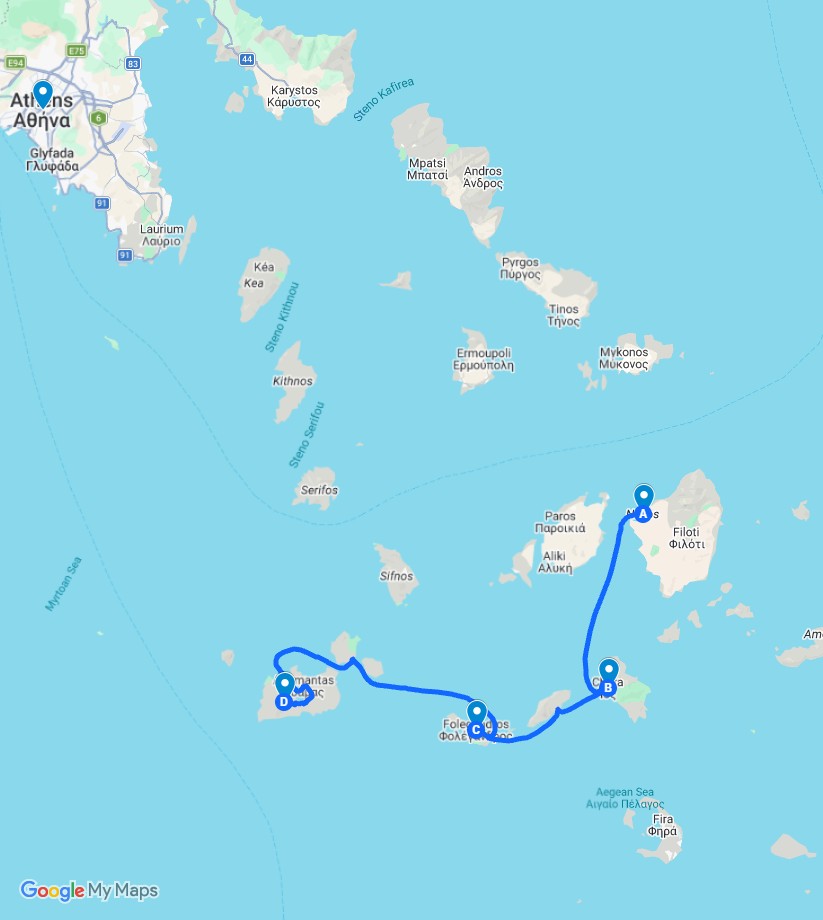
More Greek Cyclades Leg
The second WolfeStreetTraveler had planned to retire in August 2022, immediately after which we would travel to Turkey and four Greek Cyclades islands – Paros, Naxos, Folegandros, and Milos. Supercomputing issues related to the worst high-performance computing vendor in the world scuttled this plan, and retirement was postponed to ensure the issues were resolved. The Turkey & Greece trip of 2022 contracted to include just one Cyclades island: Paros. (Which was amazing – still our favorite island.)
To the missing islands of Naxos, Folegandros, and Milos, we added little Ios to our itinerary, simply because it was there:
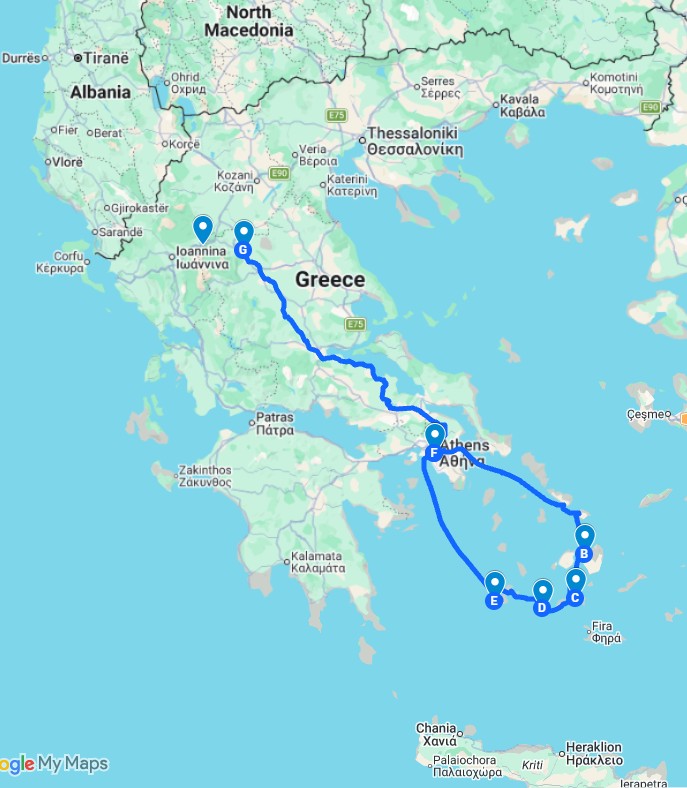
We would spend 5 days on Naxos, then 3 days on Ios, 3 days on Folegandros, and 4 days on Milos (all determined sort of based on their size). We’d connect from Lyon to Naxos through Athens, then fast ferry from Naxos to Ios to Folegandros to Milos, then fly back to Athens for a bonus leg, renting cars at each stop.
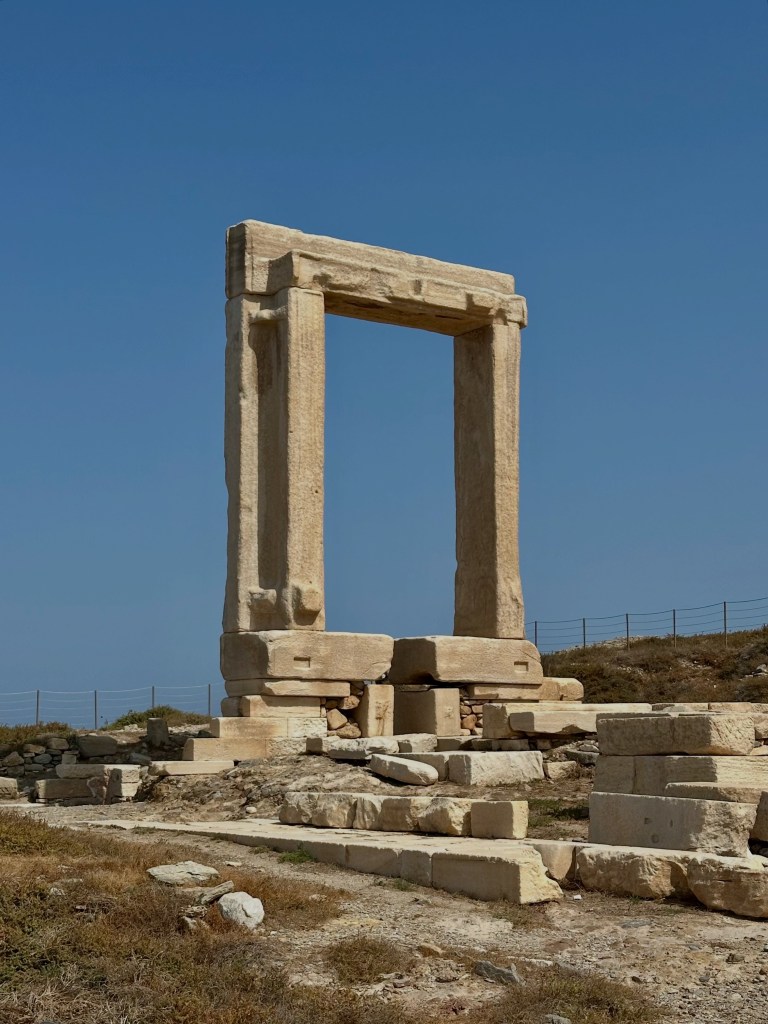
The monumental Portara of Naxos, the start of what was to be a massive temple to Apollo begun in 530 BC. They didn’t get too far, but this baby has been standing for the 2500 years since.
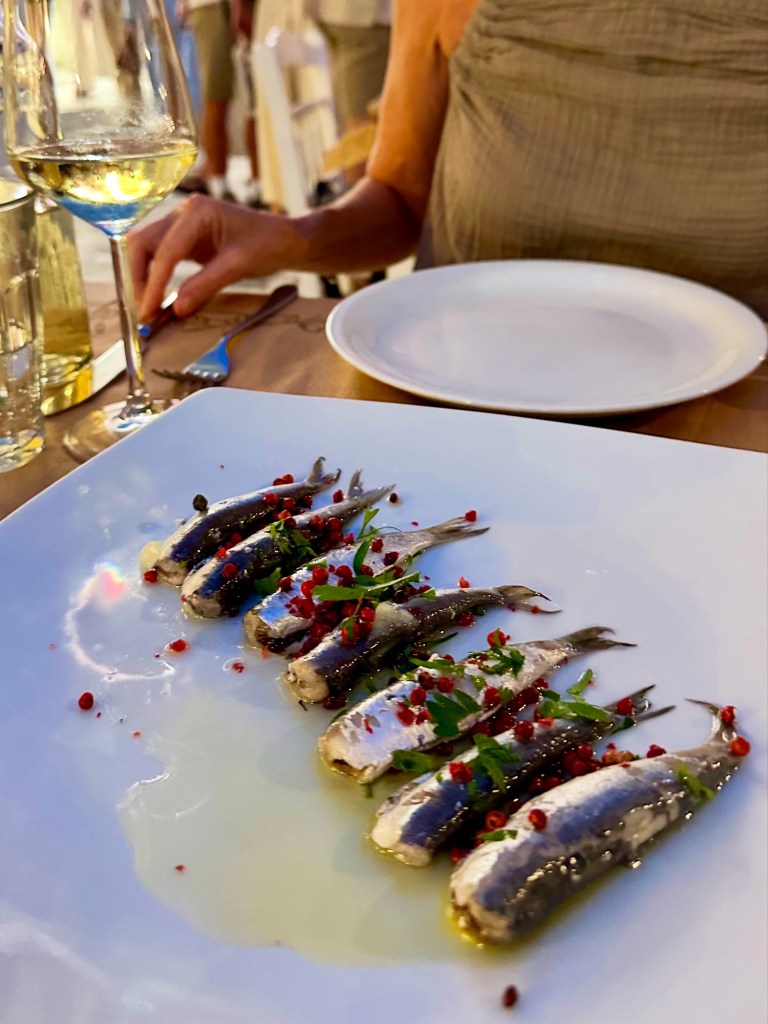
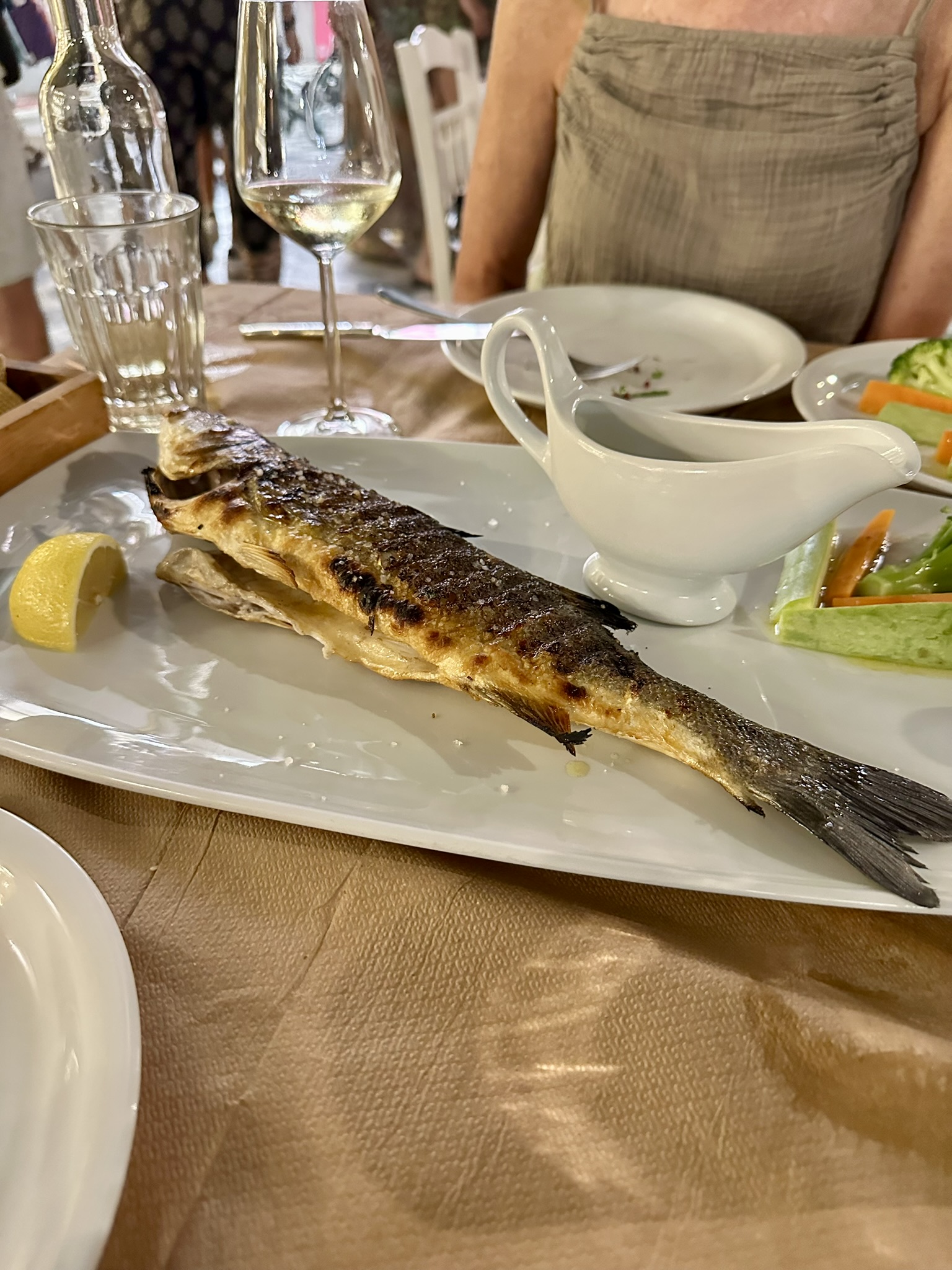
Probably the best single fish dining experience of the trip at Sarris in the middle of Naxos Town.
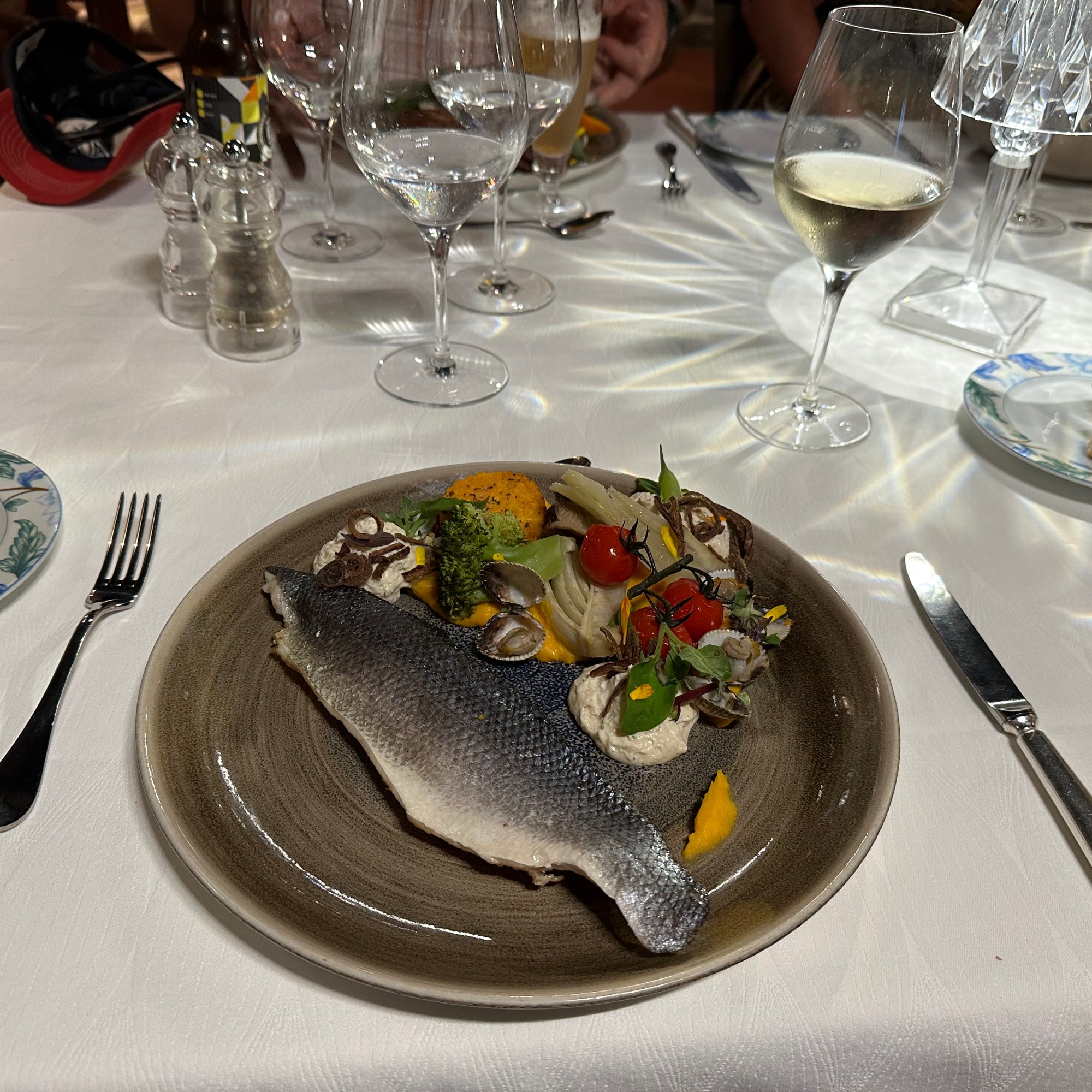
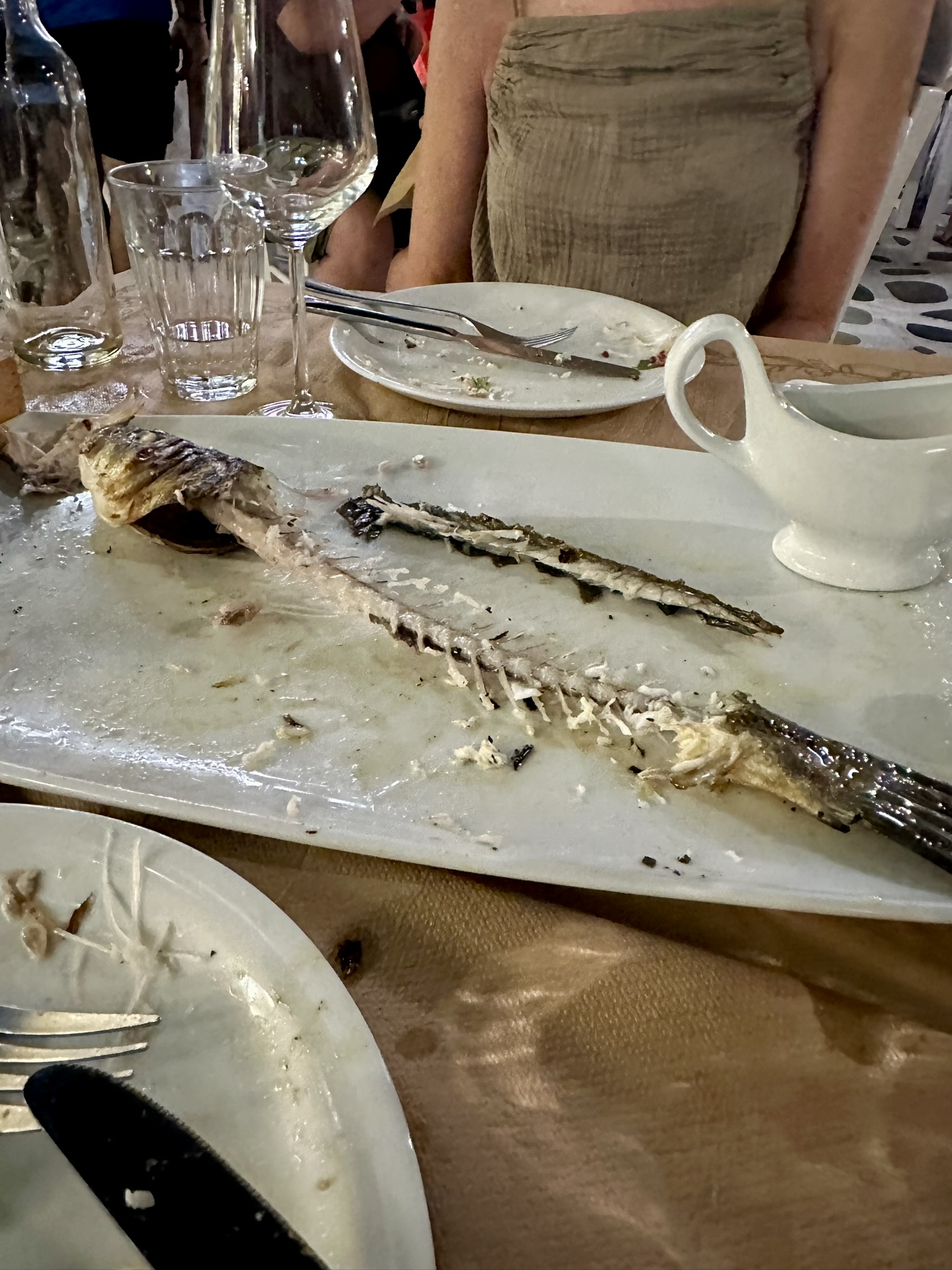
Sea bass, before and after.
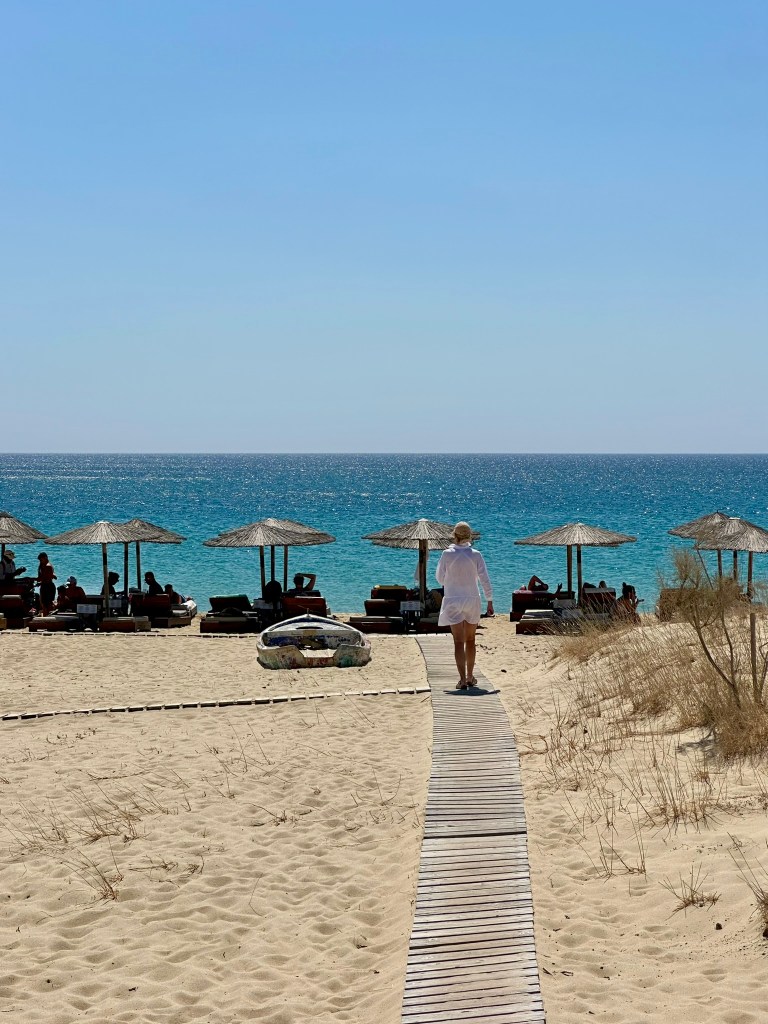
Naxos beaches in the low season were outstanding – water’s still warm, but the crows have abated.
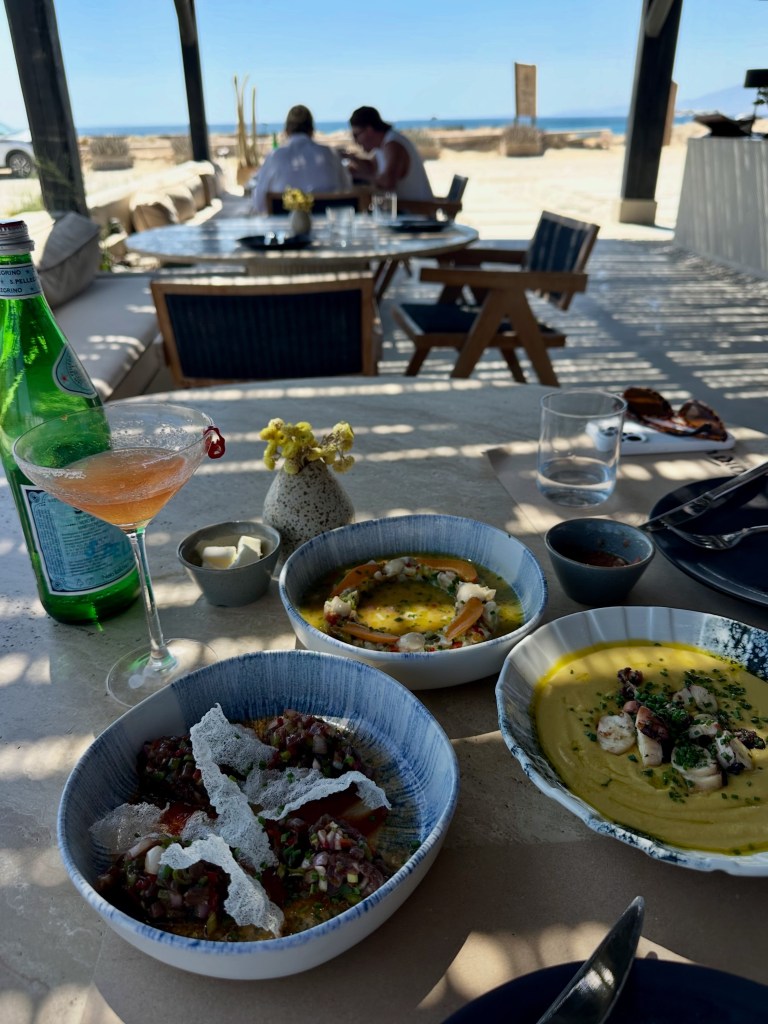
Just as on Paros, some great restaurants right behind the beach for a pretty nice break in the day.
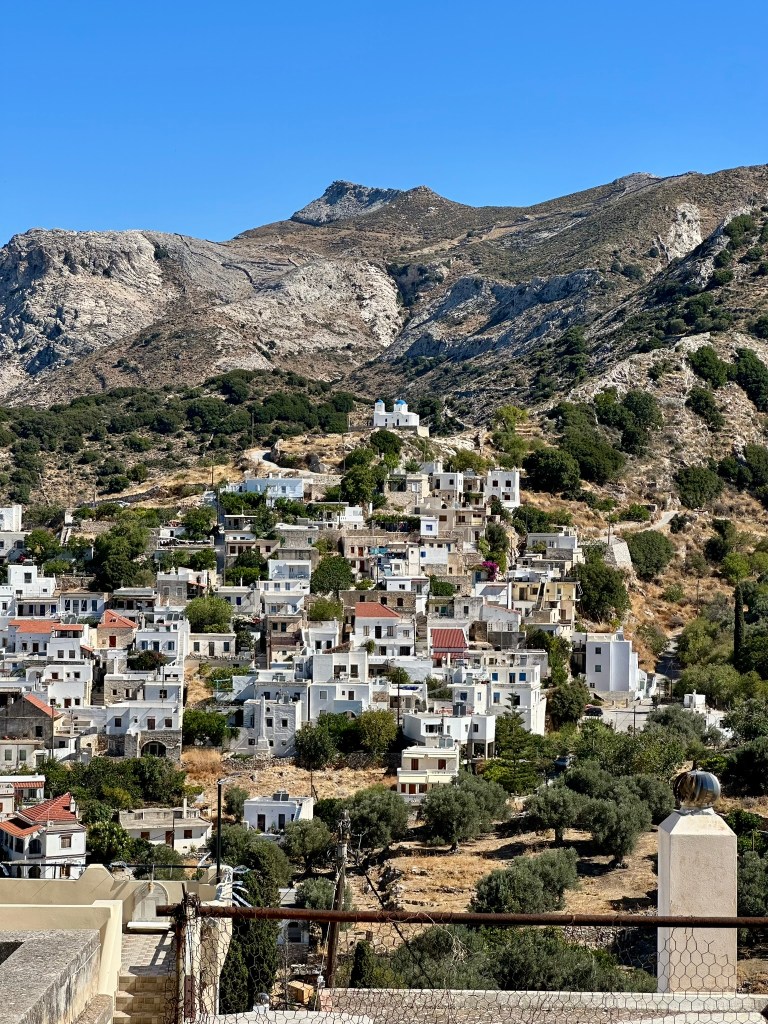
We drove into the middle of the island and up into the mountains to visit the villages of Filoti and Apeiranthos.
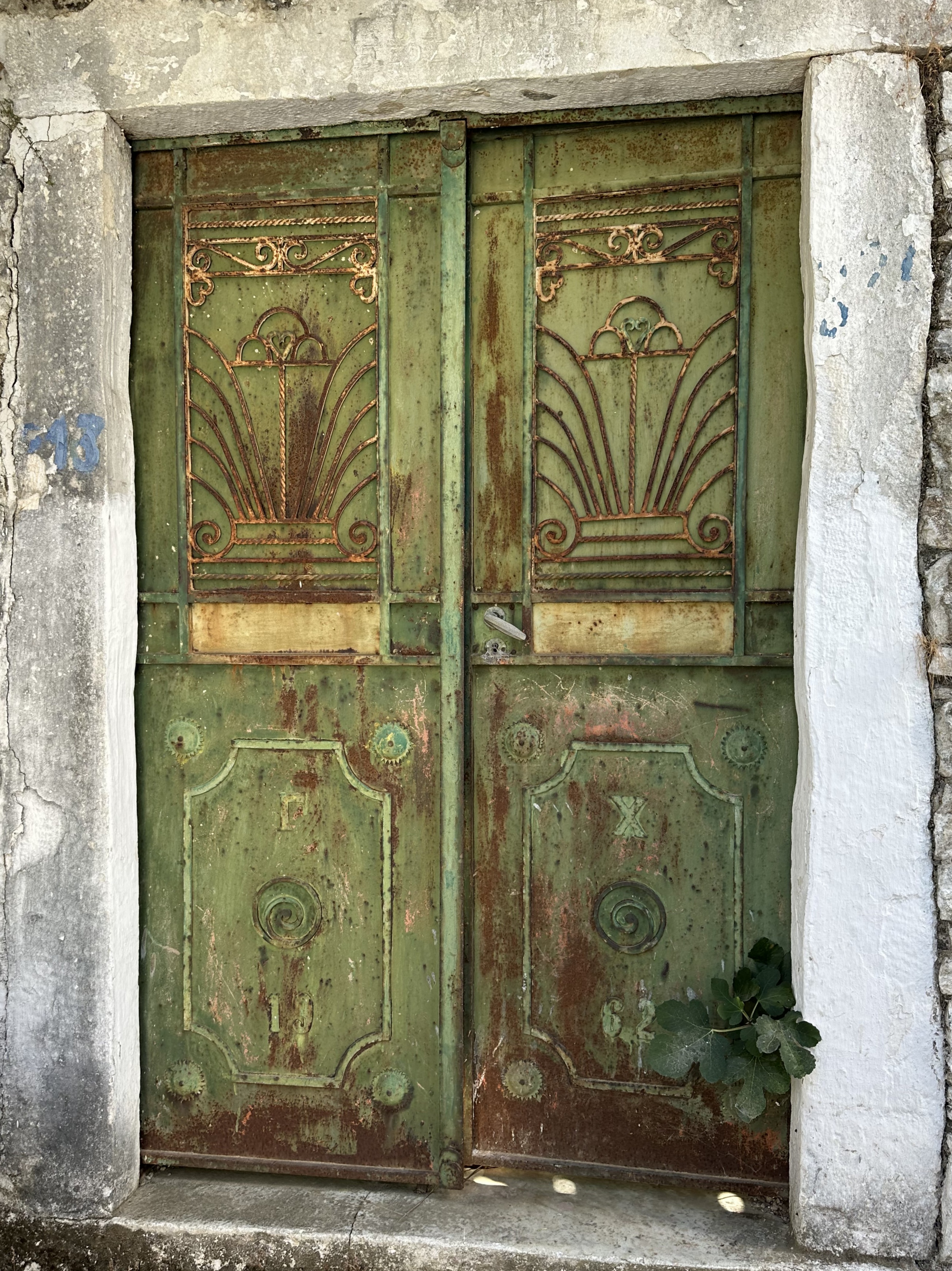
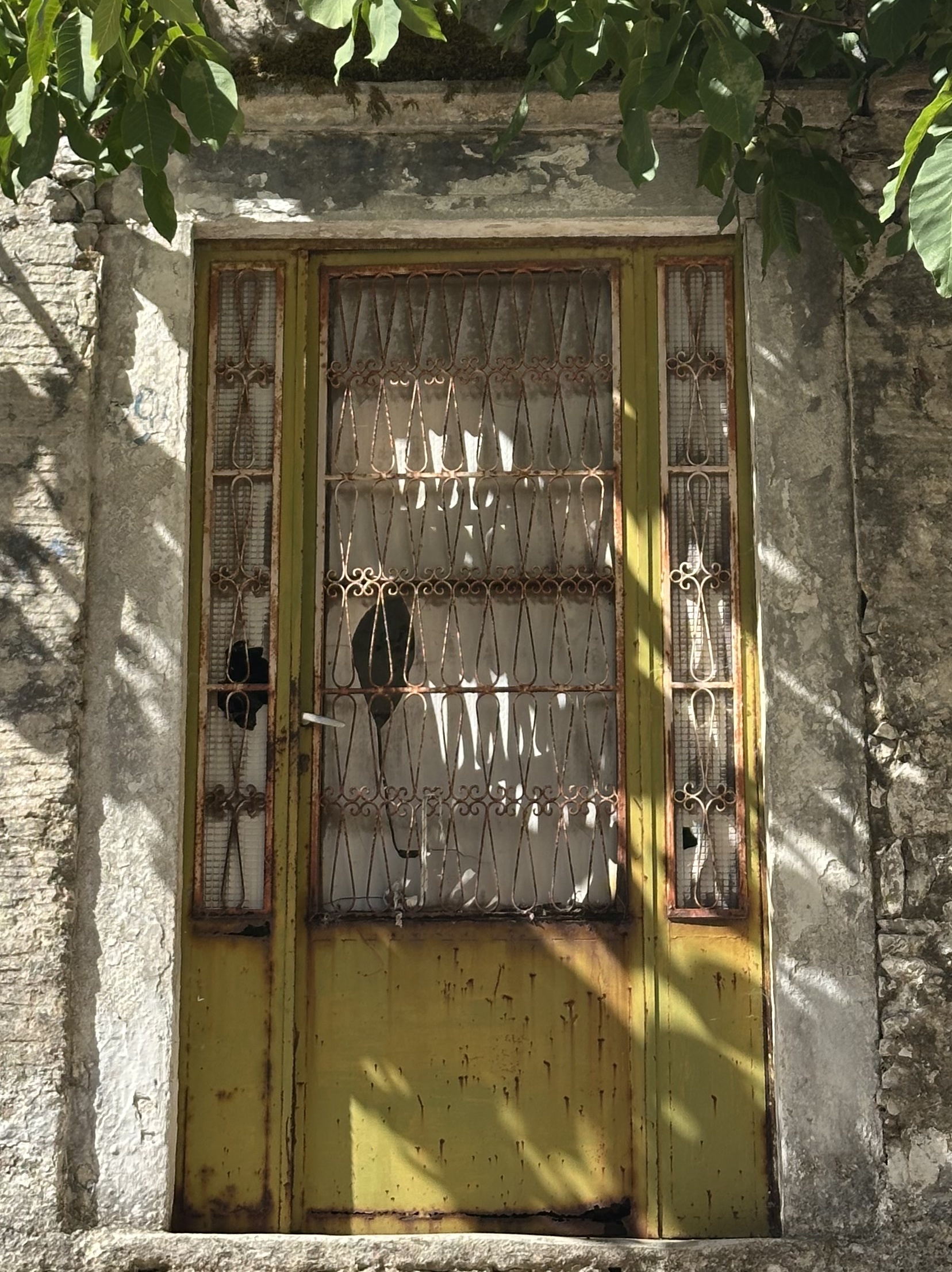
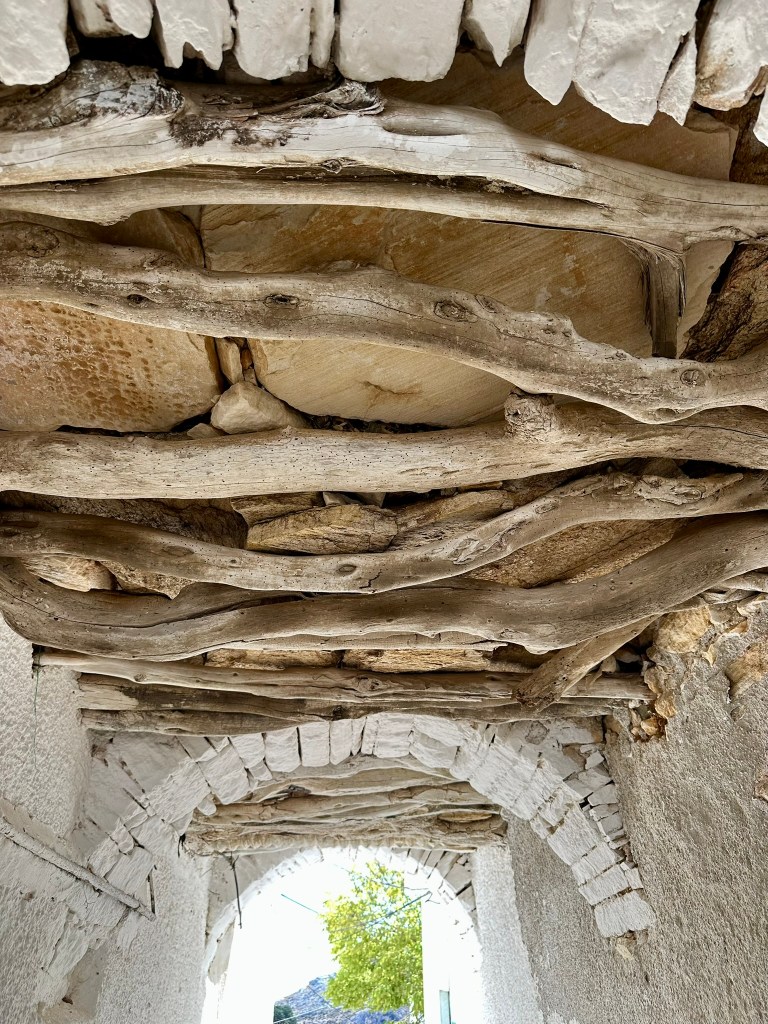
Which offered pretty atmospheric doorways.
Pretty OSHA non-compliant doorways.
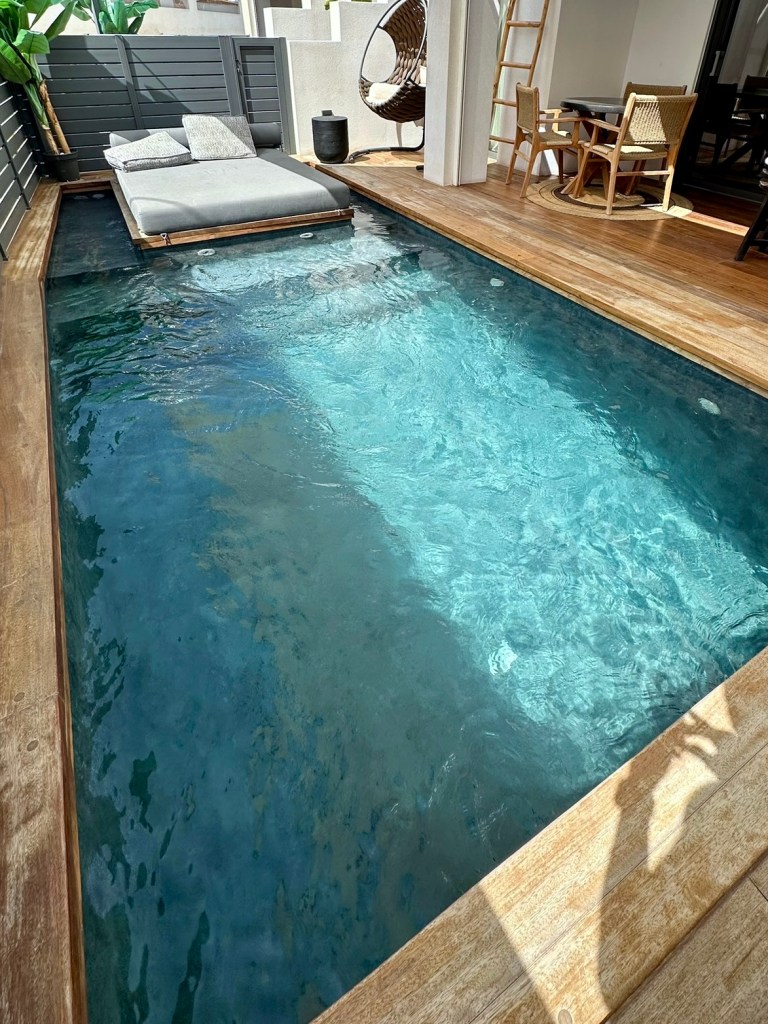
A 5-day stay meant another AirBnB. Pretty good digs.
Our next stop was Ios, where we spent time immediately after our arrival to stroll around the island’s main town of Chora.
And later celebrated our 28th anniversary on Ios.
Our place had spectacular sunsets every night, elevating aperitivos hour.
Another Greek island, another beach.
Some pretty good fish at a Greek / Japanese fusion place on said beach.
And, since we were reading The Odysseus on this leg of the trip (it was a slog), we visited the purported tomb of Homer (which does not address the dominant theory that he was, in fact, multiple poets conveying the story through oral histories, but a millenia-old island tradition is a millenia-old island tradition, after all).
The tomb was an unmarked pile of rocks. Pretty underwhelming.
But there’s a pretty good view getting there:
Anniversary abode.
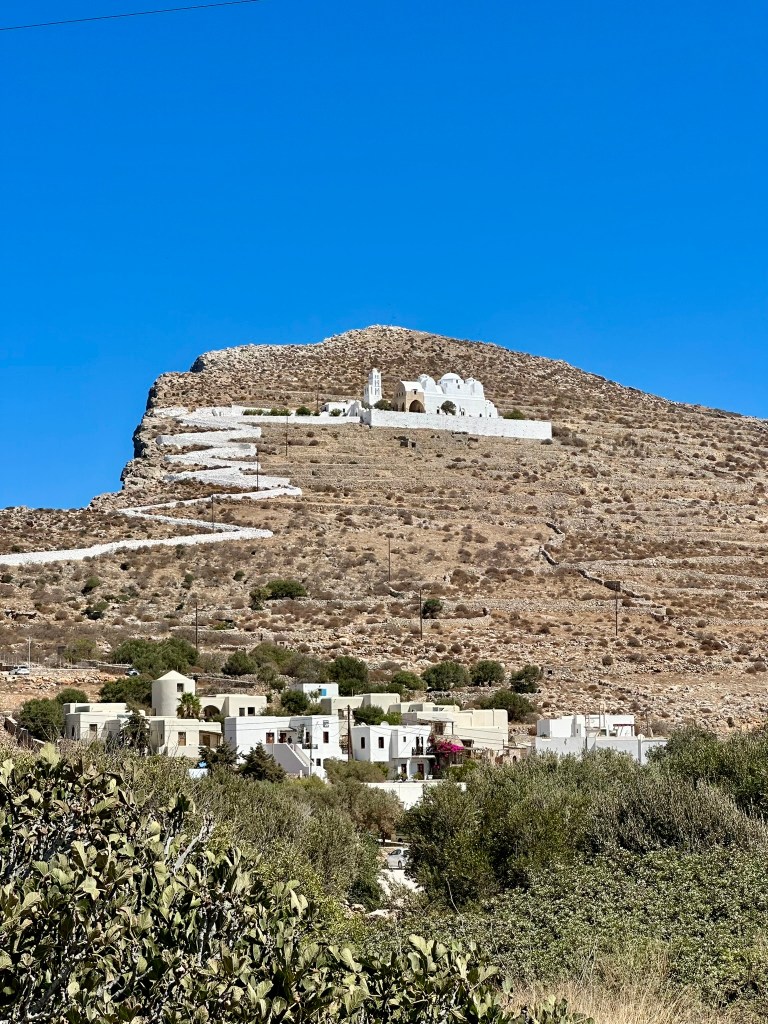
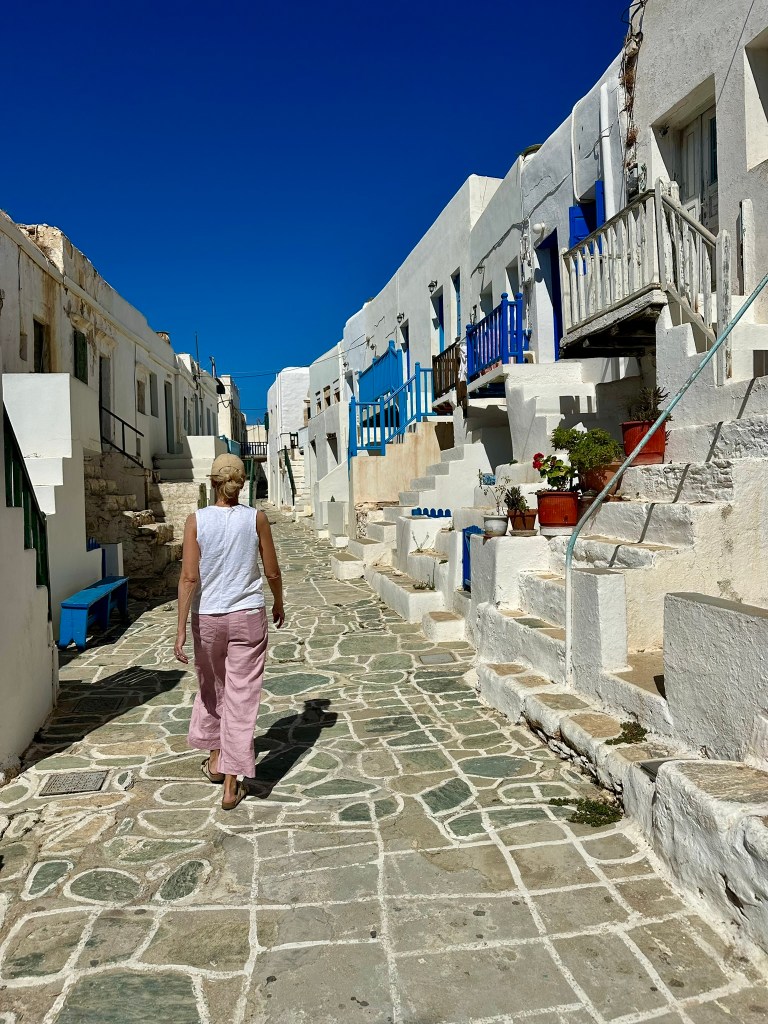
Ios was small, but Folegandros even smaller. It’s main town (also Chora – Folegandros is so small it can’t afford to buy a unique name for its main town; it had to borrow Ios’) is dominated by the Church of Panagia, accessed by a serpentine path up a mountain:
From which there is ALSO a pretty good view:
Chora’s Kastro, a remarkably preserved medieval fortified quarter built under Venetian rule to shelter Folegandros from pirates. Many of the town’s residents still live within its walls.
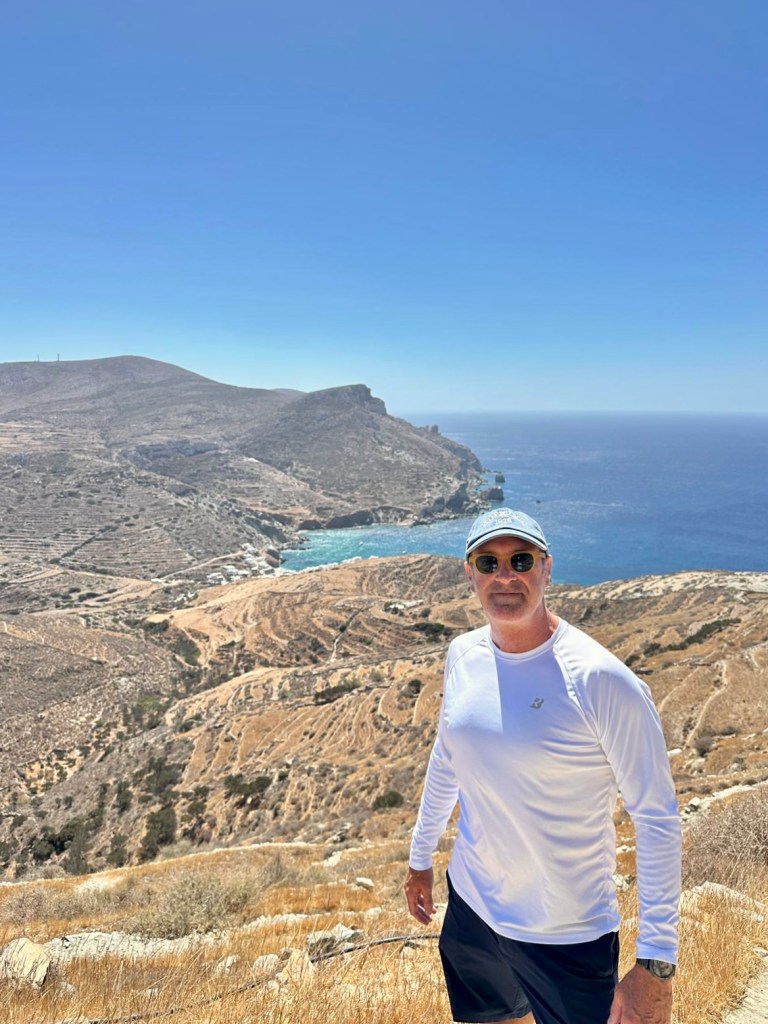
Folegandros had a sort of saddle across the middle of the island, where you could see both sides, so we hiked this one day. Pretty cool.
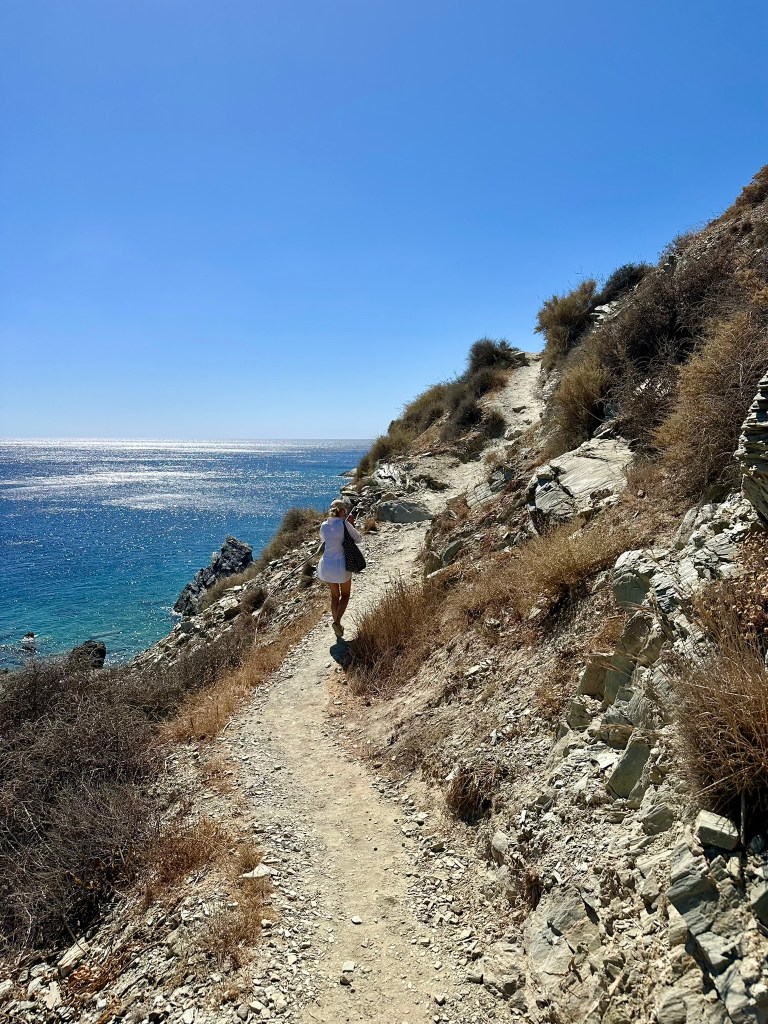
And also hiked to Agios Nikolaus beach from the larger Agkali beach one day; the island’s mayor wants to discourage tourism build up, and so prohibits organized beach businesses (read: sunbeds and drink orders), so everything’s pretty rustic.
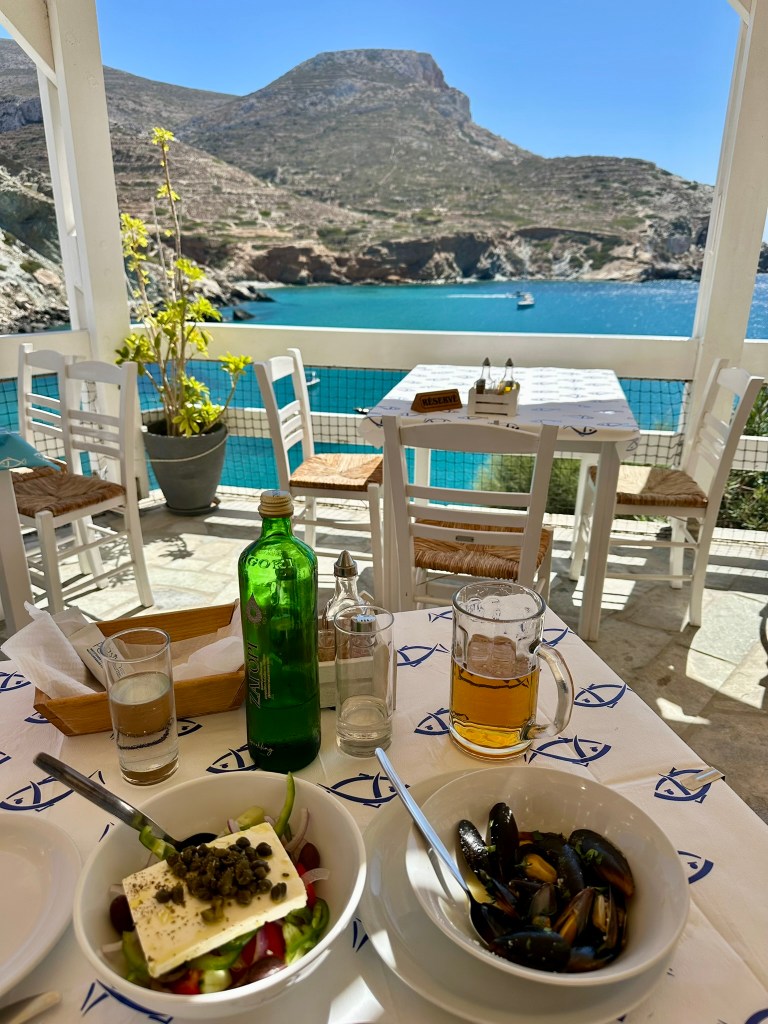
Although lunch in Akgali over that beach was pretty picture perfect.
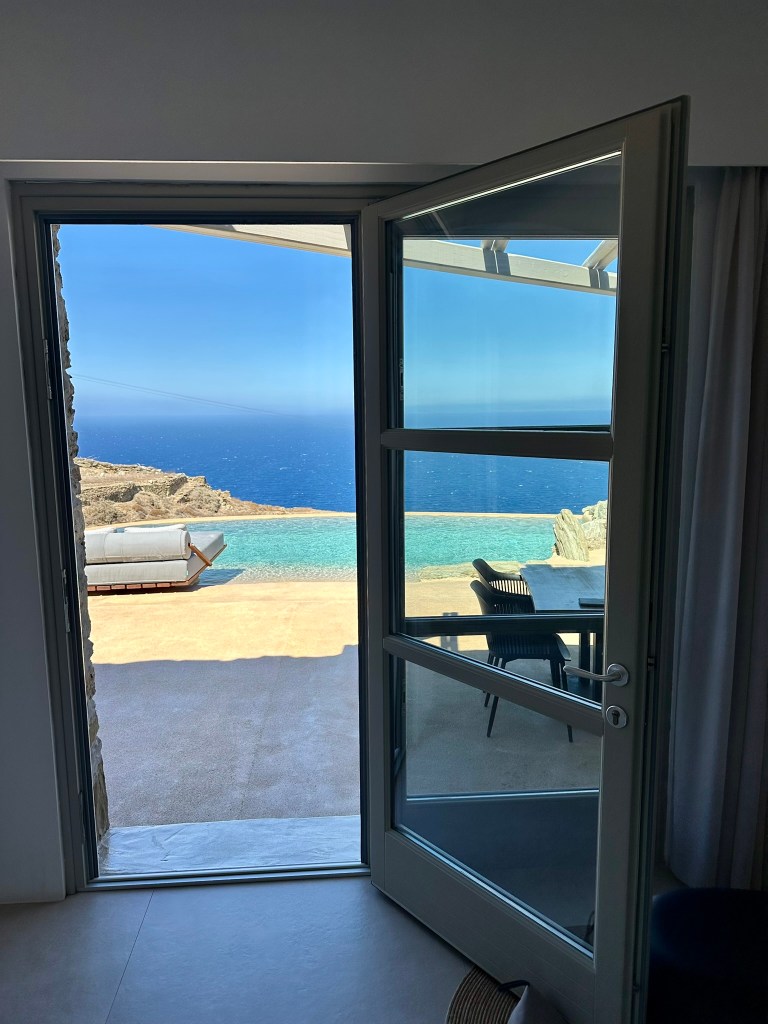
Also pretty good digs on Folegandros:
Thence to our final island of Milos, where we stayed in the harbor town of Pollonia (which was composed almost entirely of restaurants that formed an arc around most of the harbor.
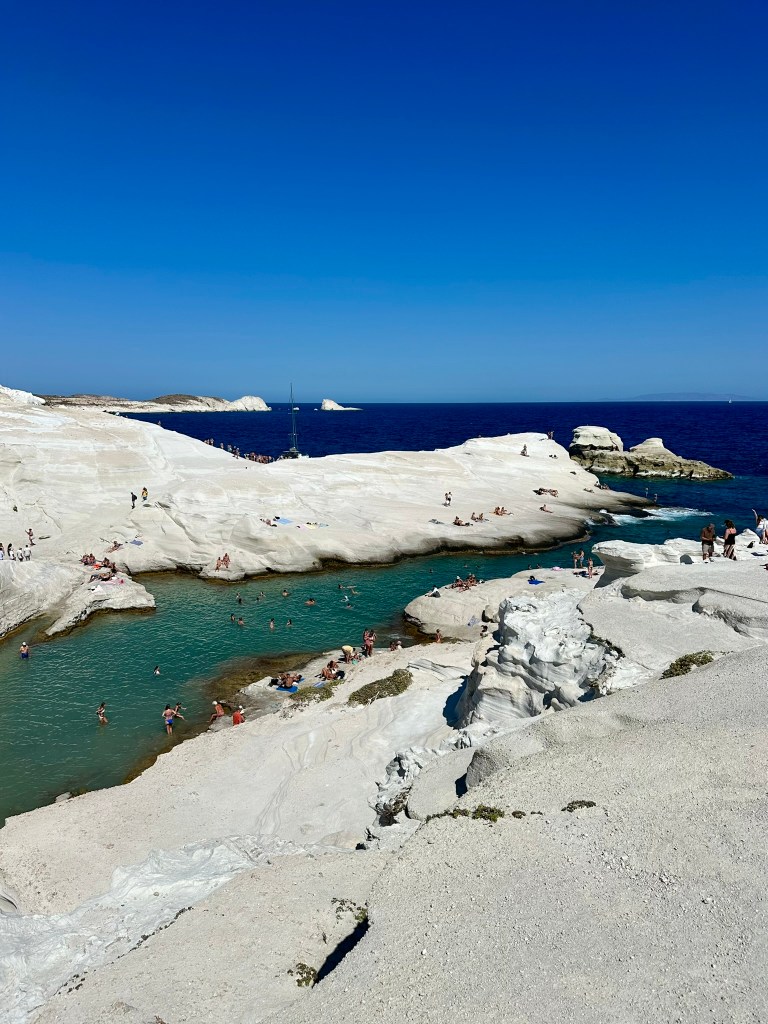
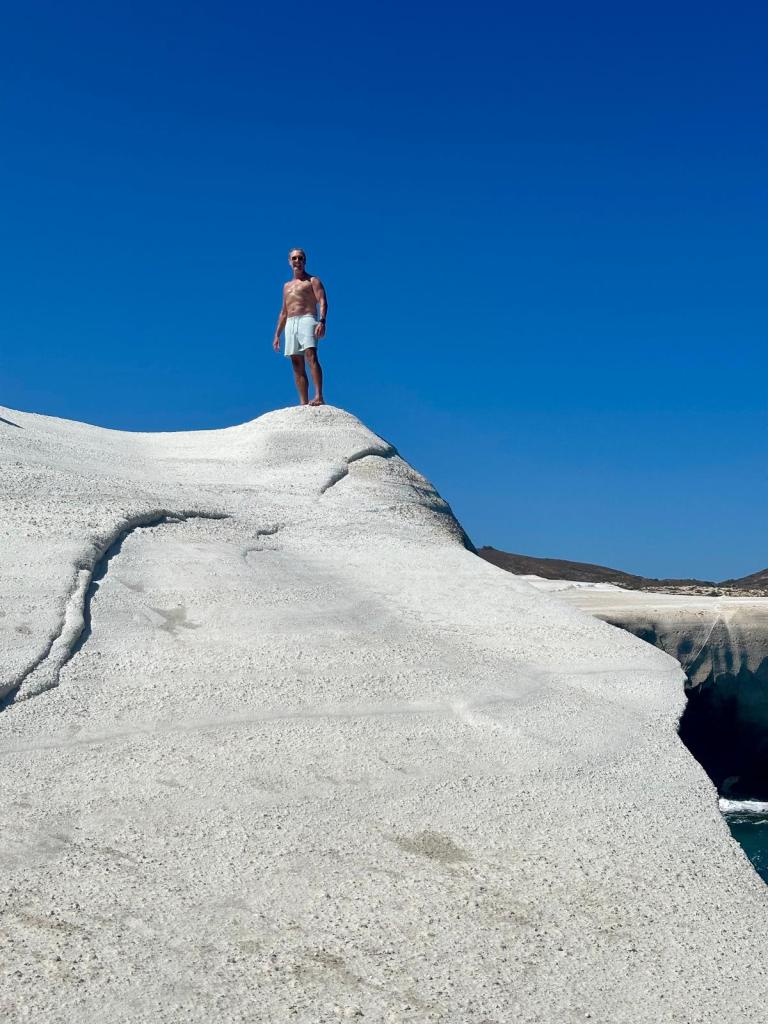
Our first full day, we hightailed it over to Sarakiniko Beach, home to the limestone cliffs and rocks that create a dramatic shoreline against the Aegean blue.
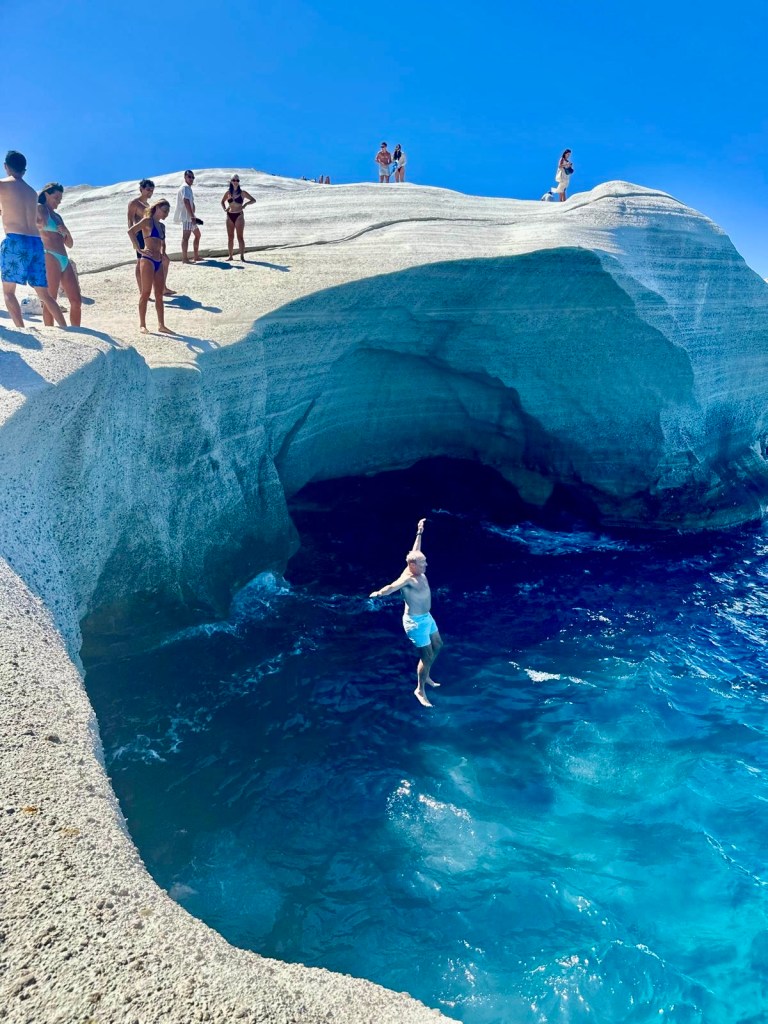
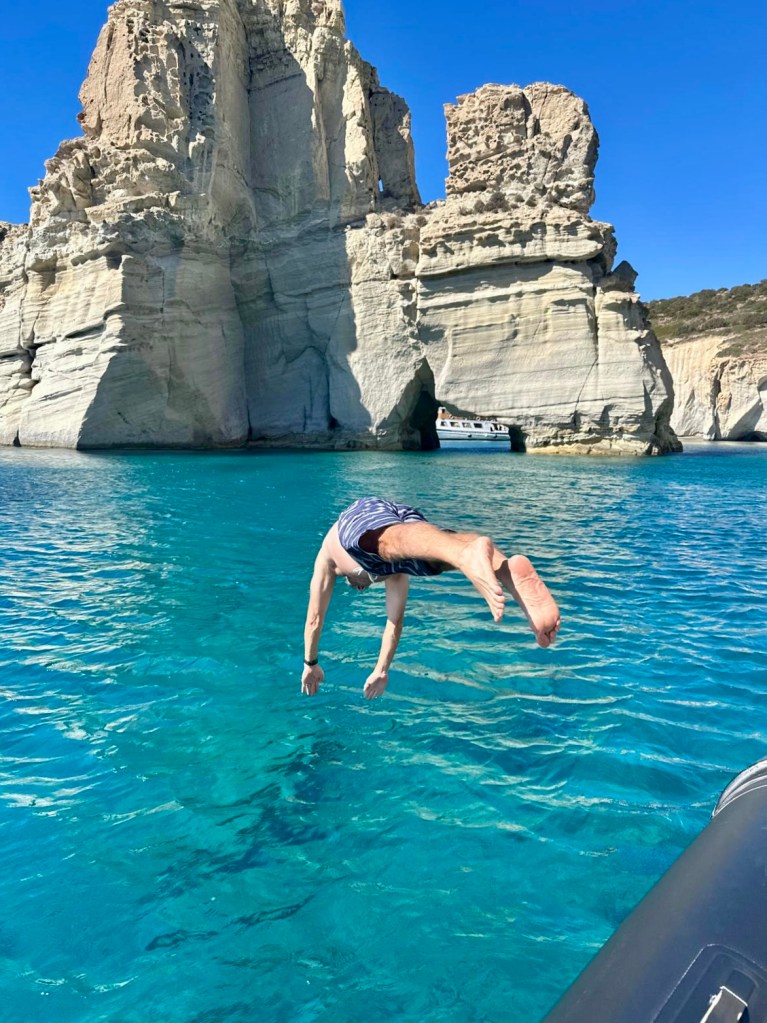
Cliff diving turned out to be pretty good there.
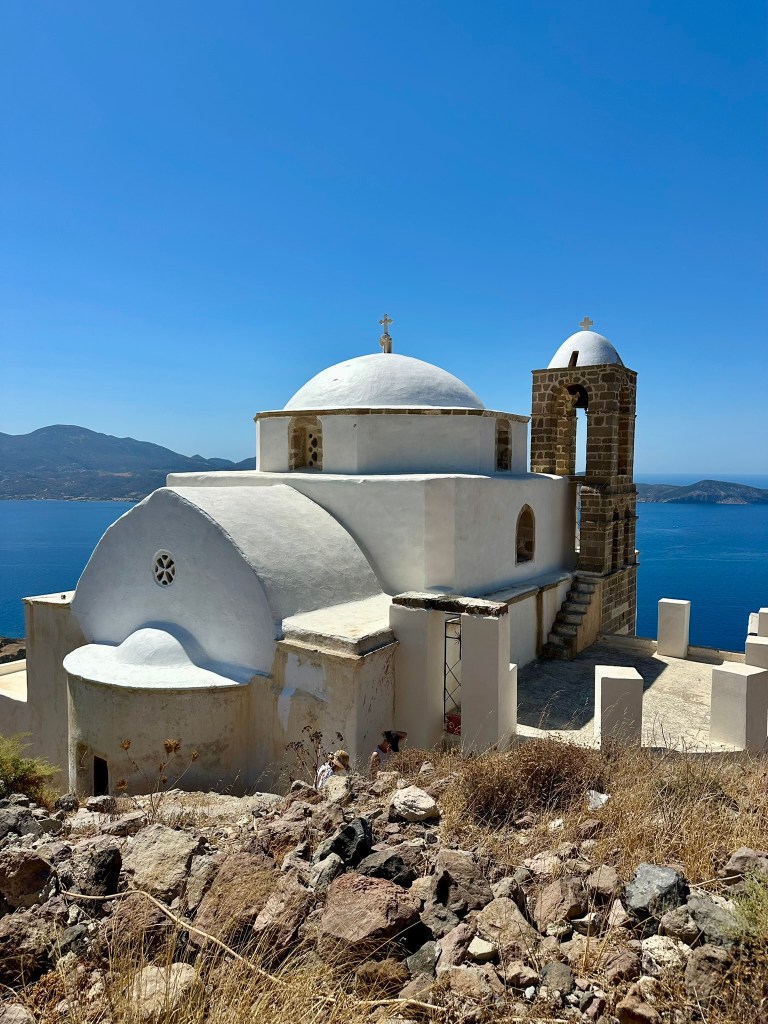
We hiked up to the castra on top of Milos’ main town of Plaka.
Where we met Cena, a charming solo traveler from North Macedonia (by way of Toronto), waiting at the bottom of the steps for someone to accompany her. Very nice experience!
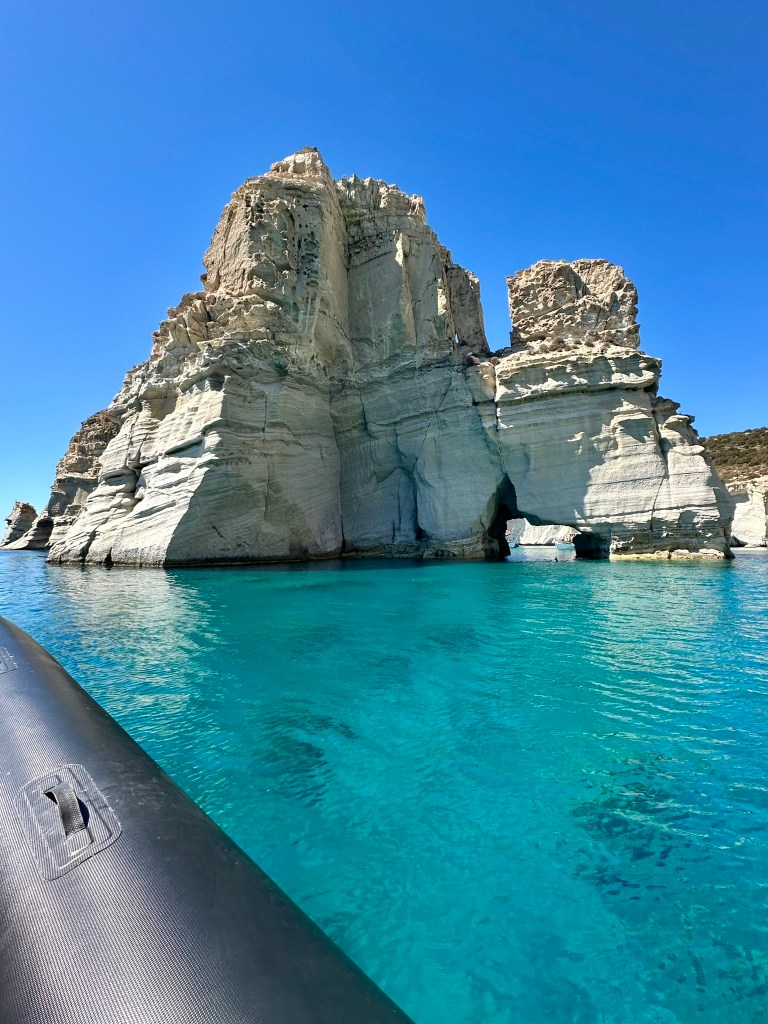
Cool ass boat trip the next day to Milos’ Kleftiko cliffs.
Where more diving and swimming ensued.
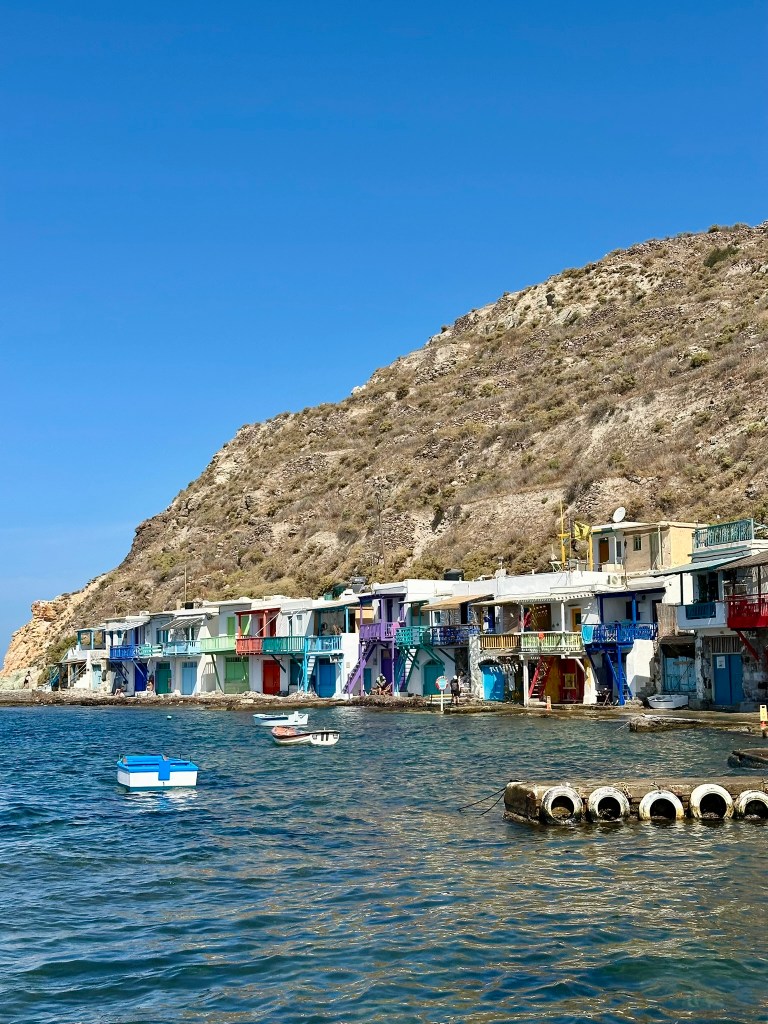
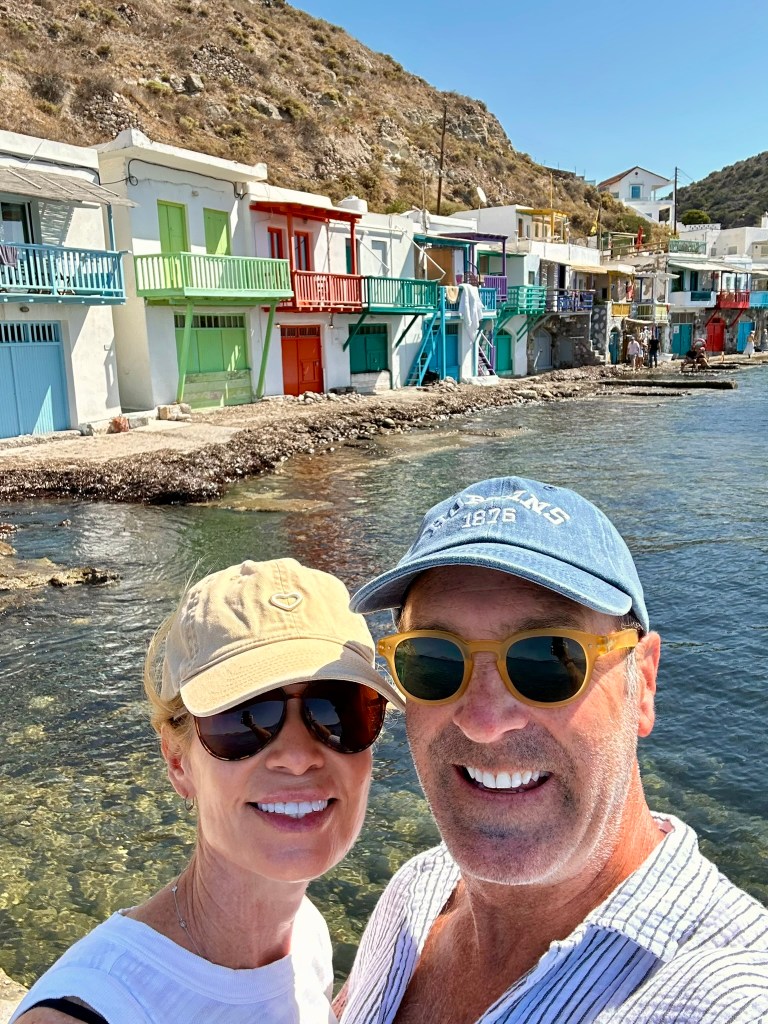
The picturesque fishing villages-cum-guest house community of Klima.
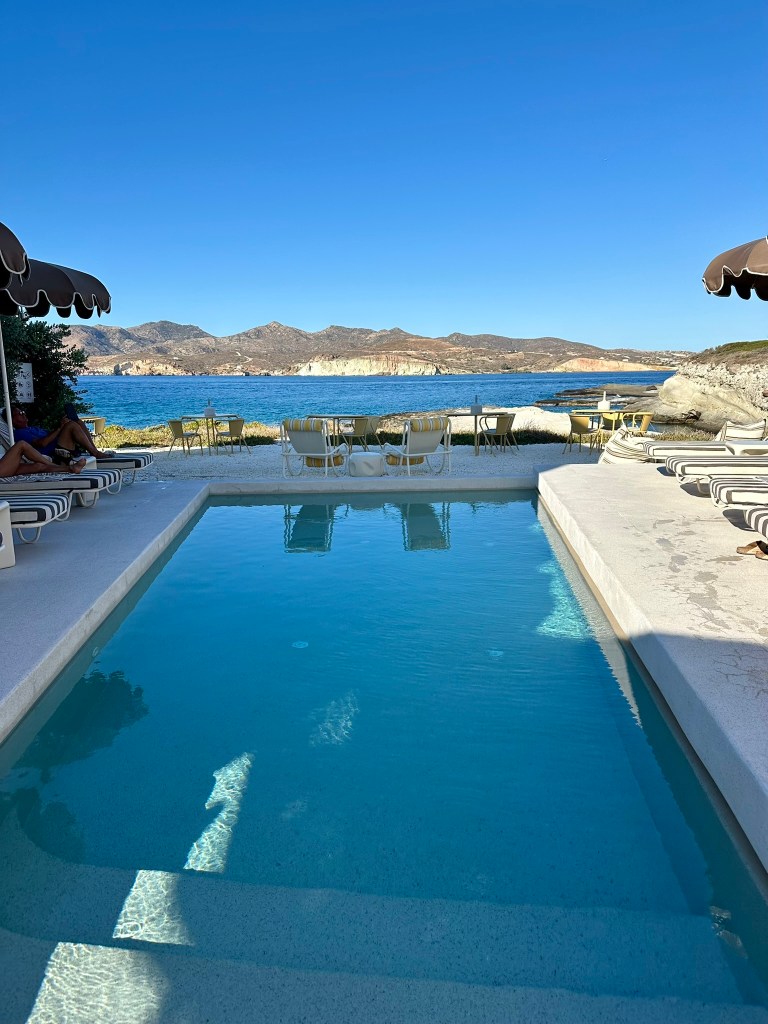
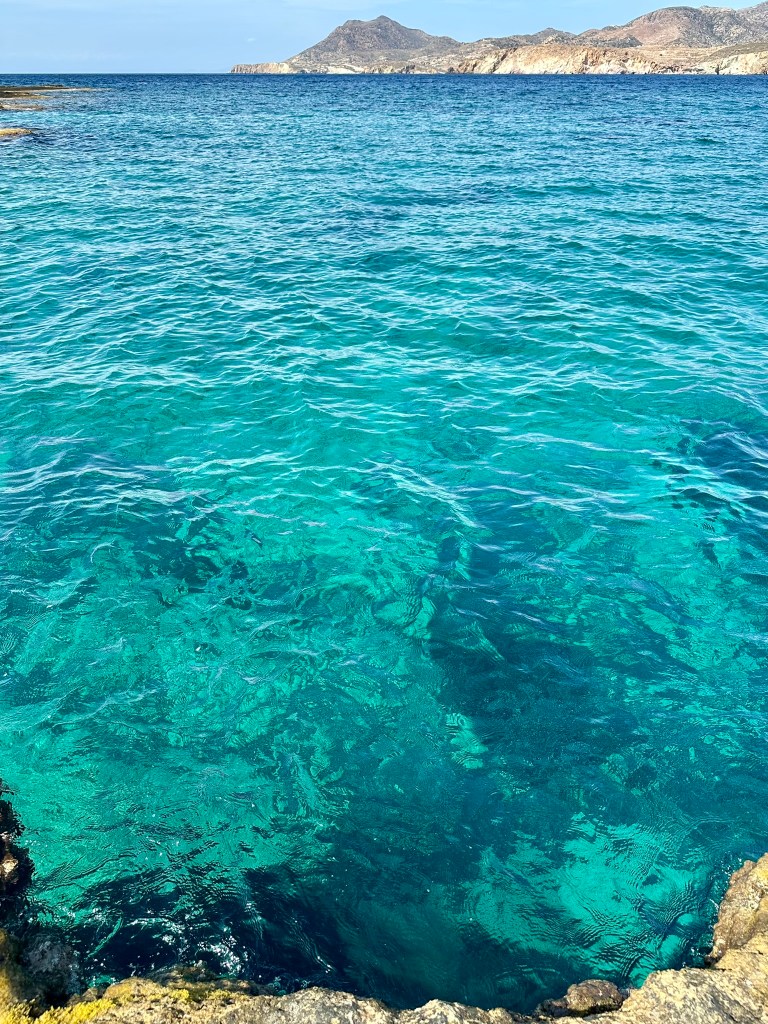
More good digs in Pollonia, where we laid low on our final day, and dove and swam off the rocks into the deep water right outside our place; pretty good setup.
Last evening on Milos.
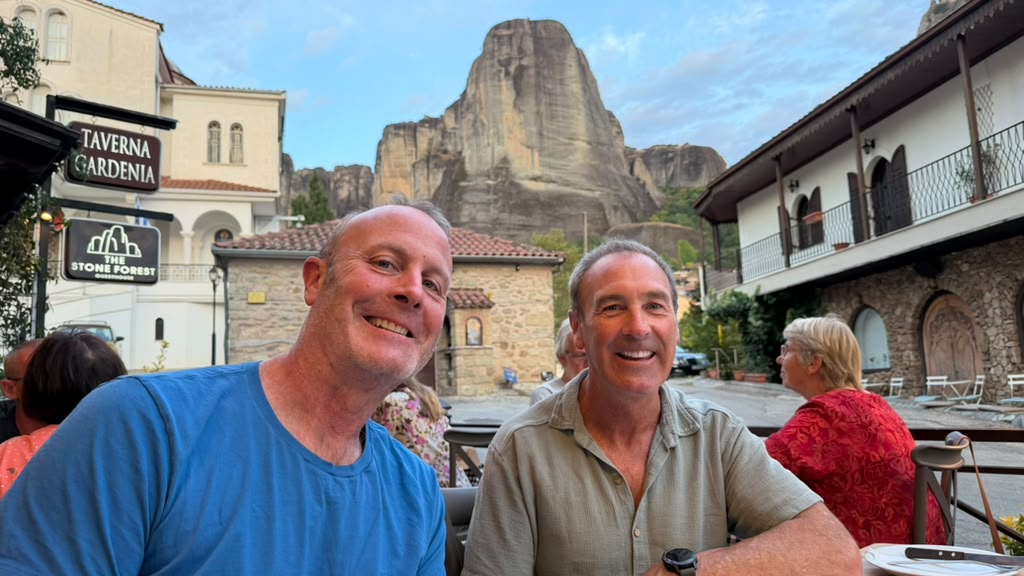
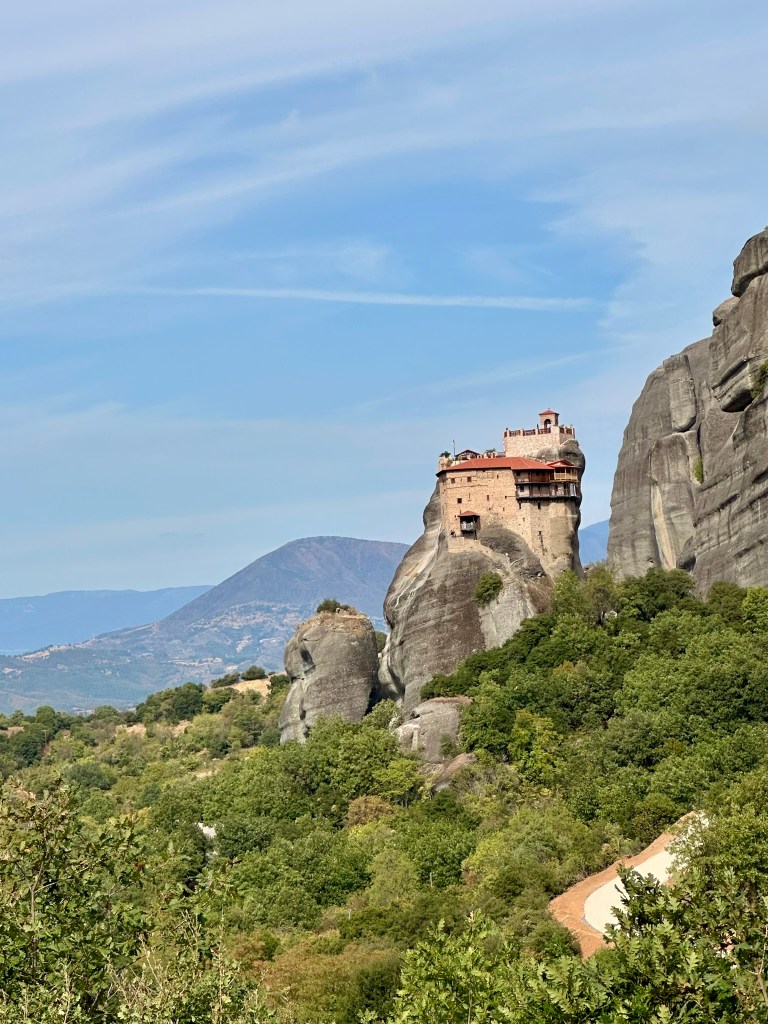
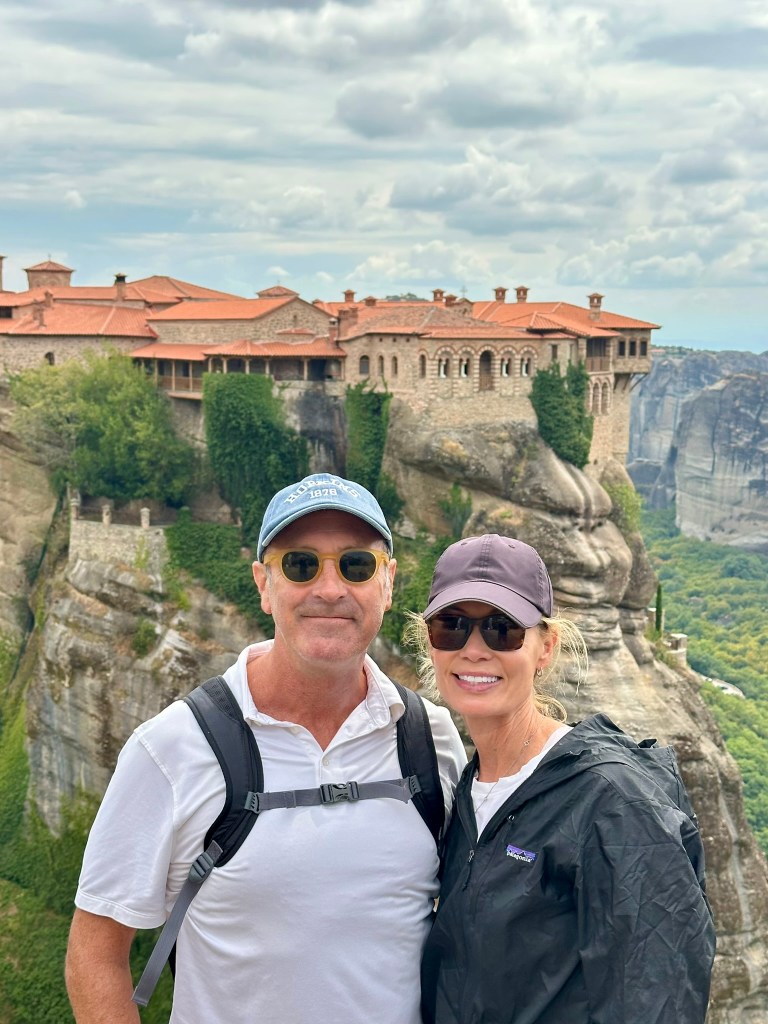
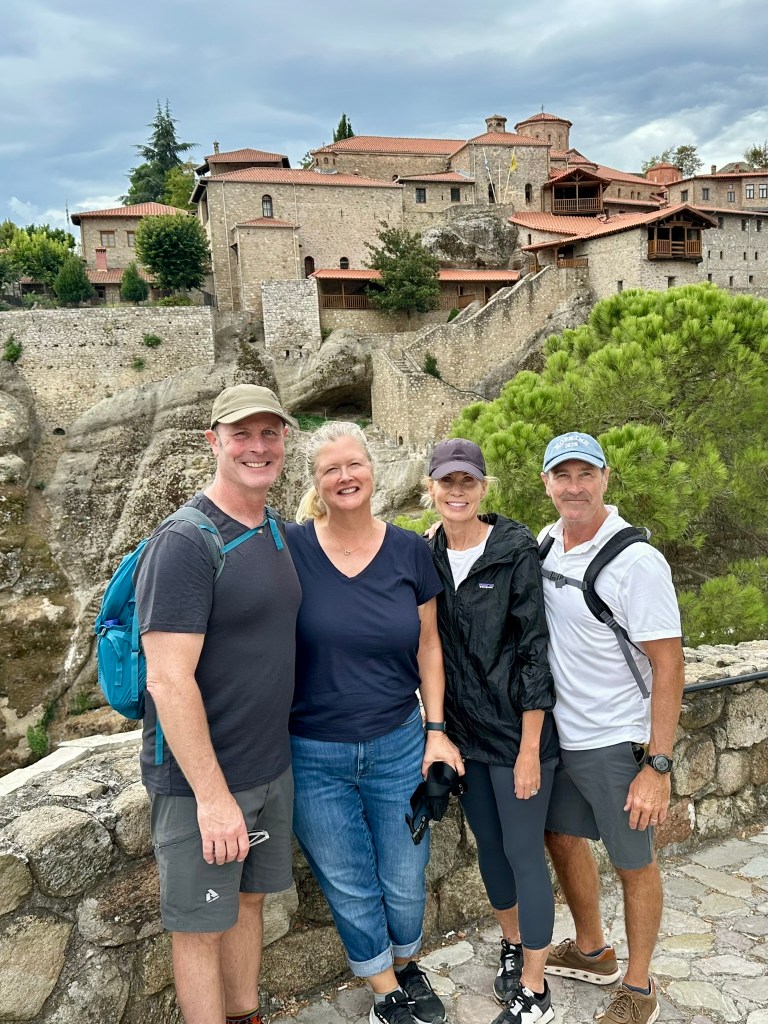
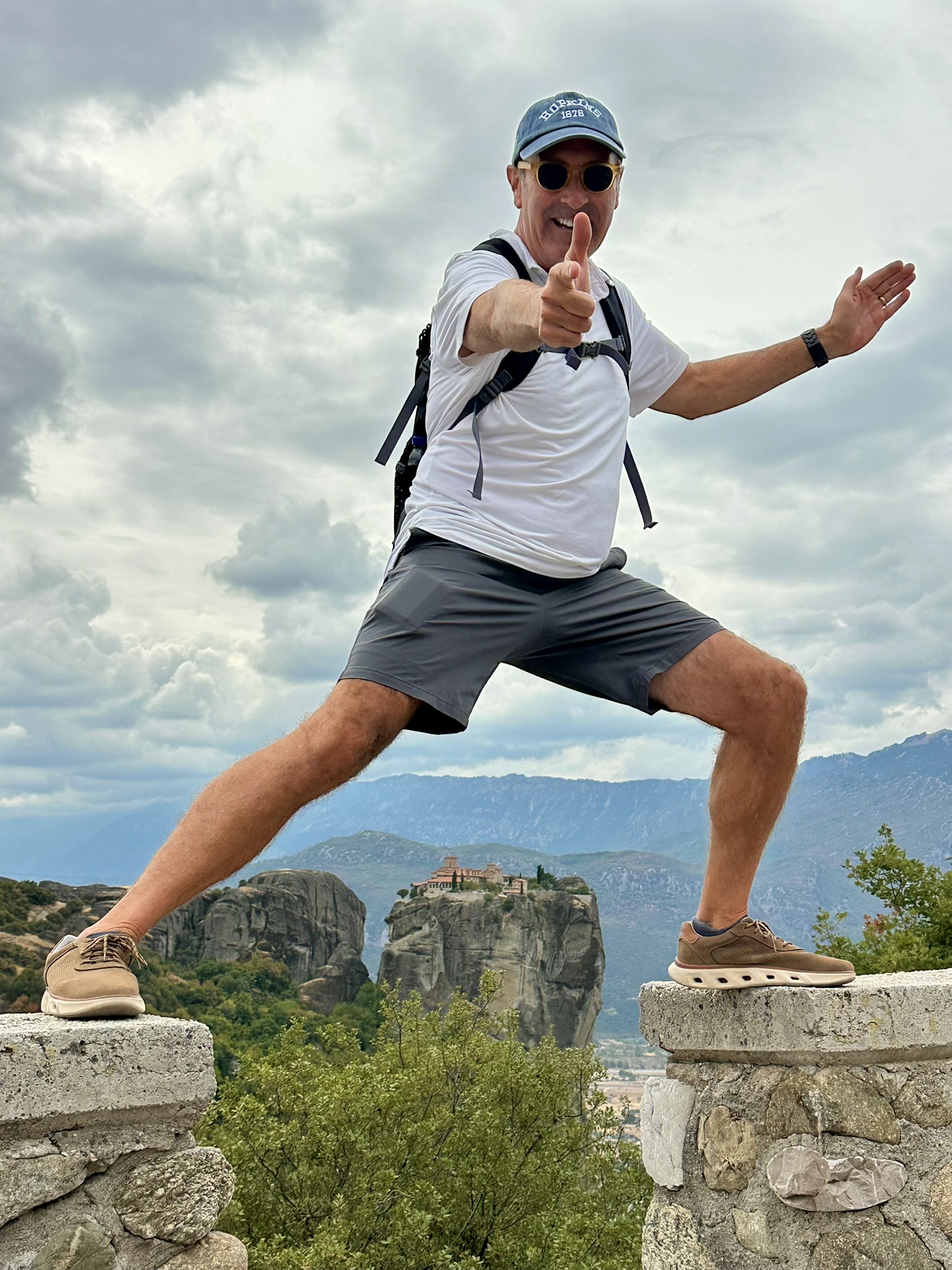
And then linking up with the Seattles, who were just starting their Greek sailing trip with a leg in northern Greece to visit the clifftop monasteries of Meteora. This was not part of our original itinerary, but we realized that we’d have an overlap, and coordinated to overlap together.
A pretty great addition to the trip. We had not even heard of Meteora before, so the Seattles were adding value all over the place.
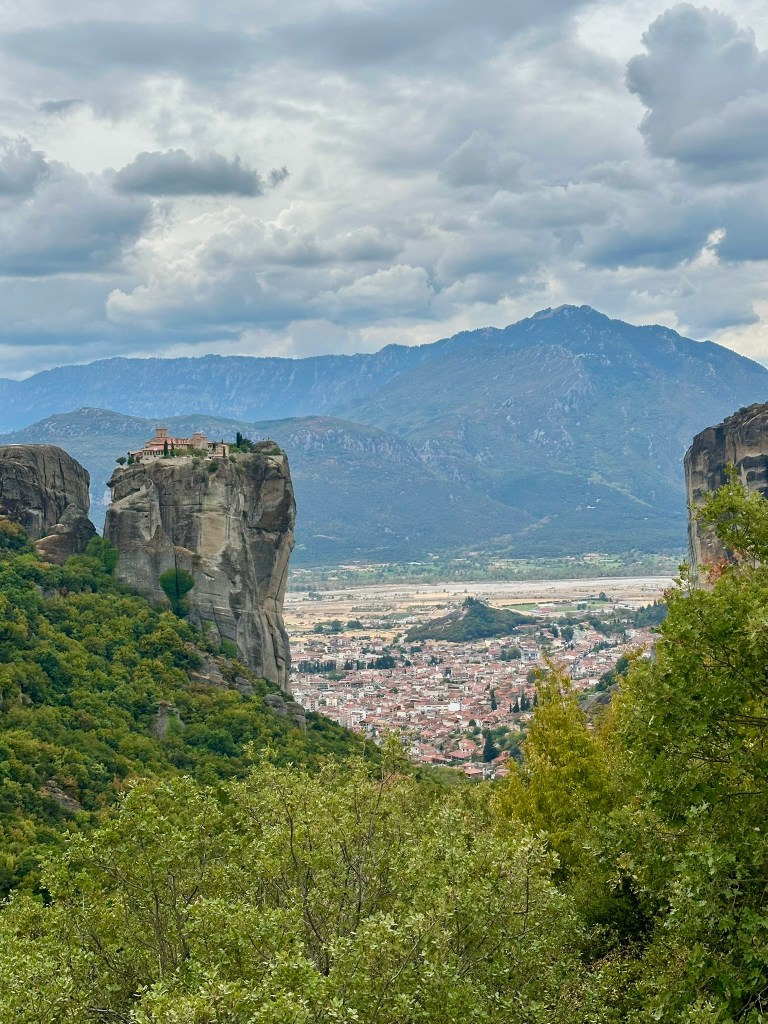
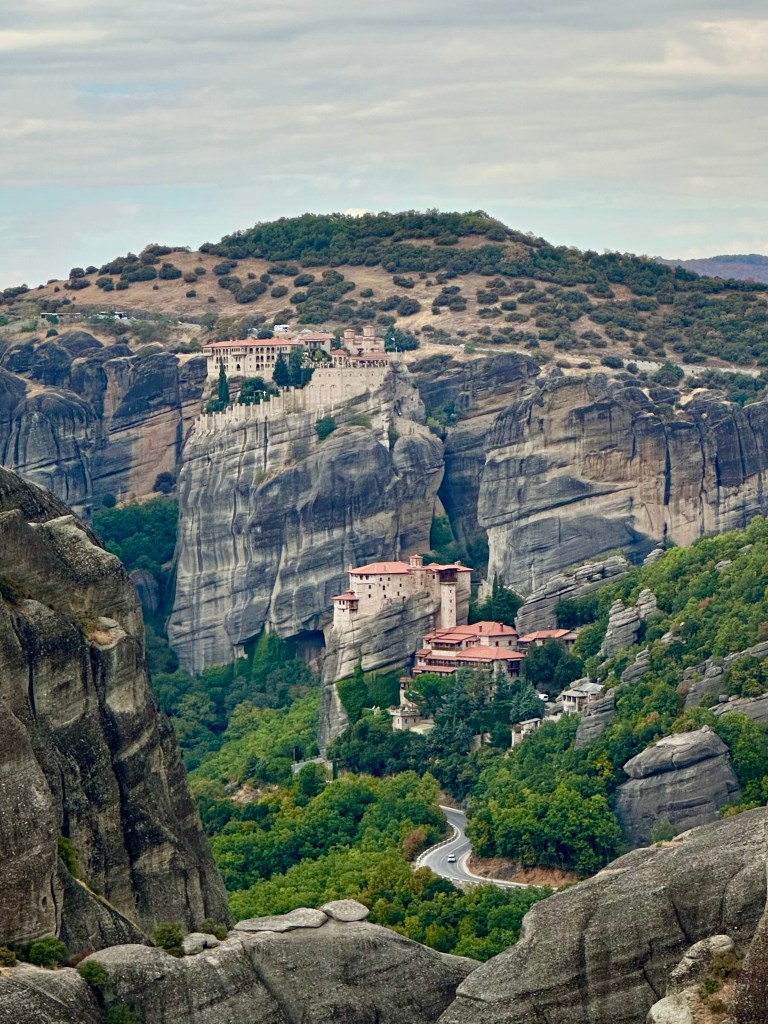
The monasteries began in the 14th century when Orthodox monks seeking solitude and protection from political turmoil established hermitages atop the region’s towering sandstone pillars.
We took a bike tour that lasted the entire first full day in the area, and were able to visit four monasteries.
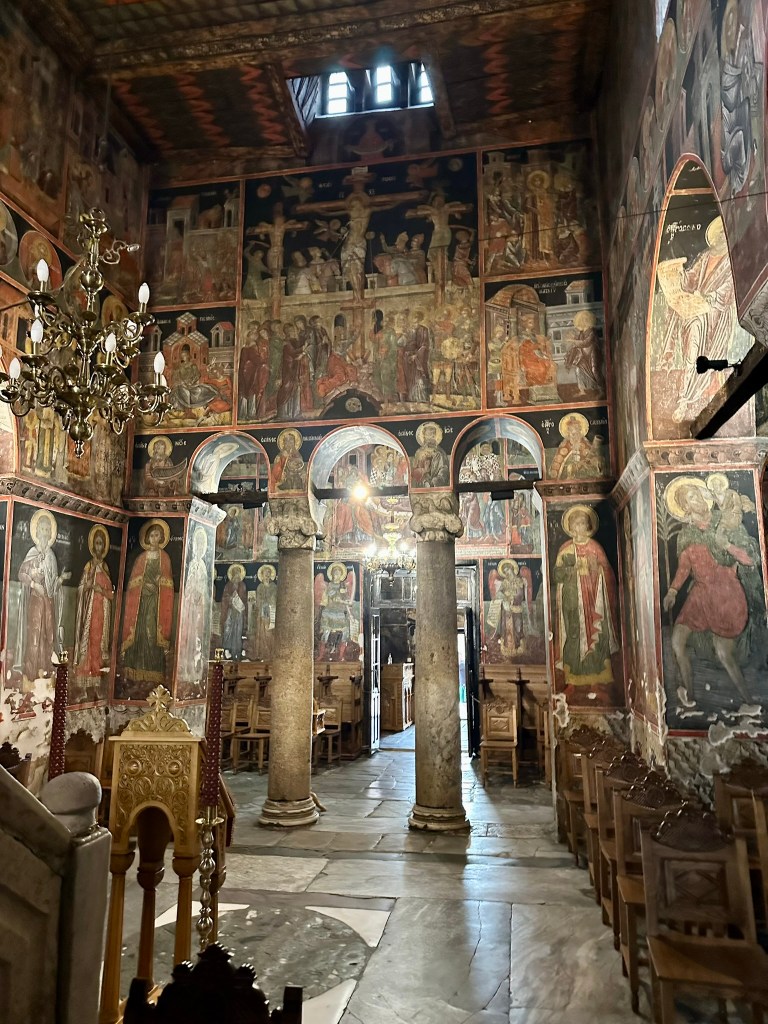
Although we had not heard of Meteora before, we were familiar with one of the monastery’s roles in James Bond’s For Your Eyes Only. . .
The interior of an ancient Greek Orthodox church atop the nearby town of Kalabata, which was built (as so many were) atop a Roman temple to Apollo, and incorporates (as so many did) physical elements of the temple into the Christian church.
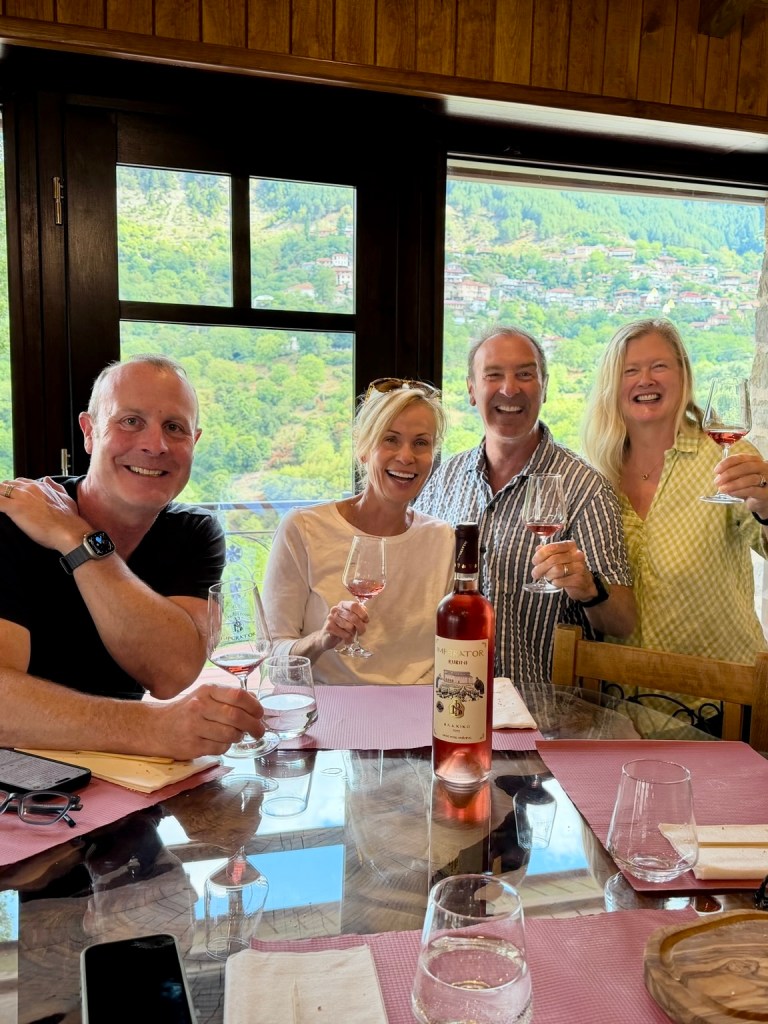
Wine tasting the next day 90 minutes north at the Monastery of Agios Nikolaos, where the monks have been making wine for centuries.
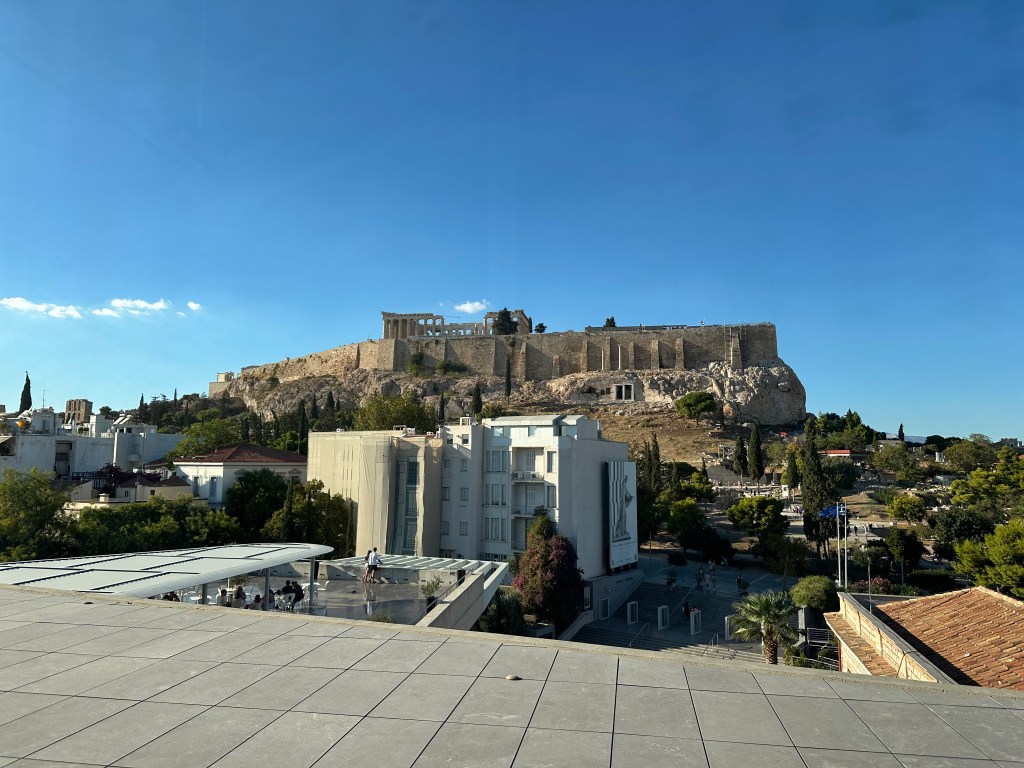
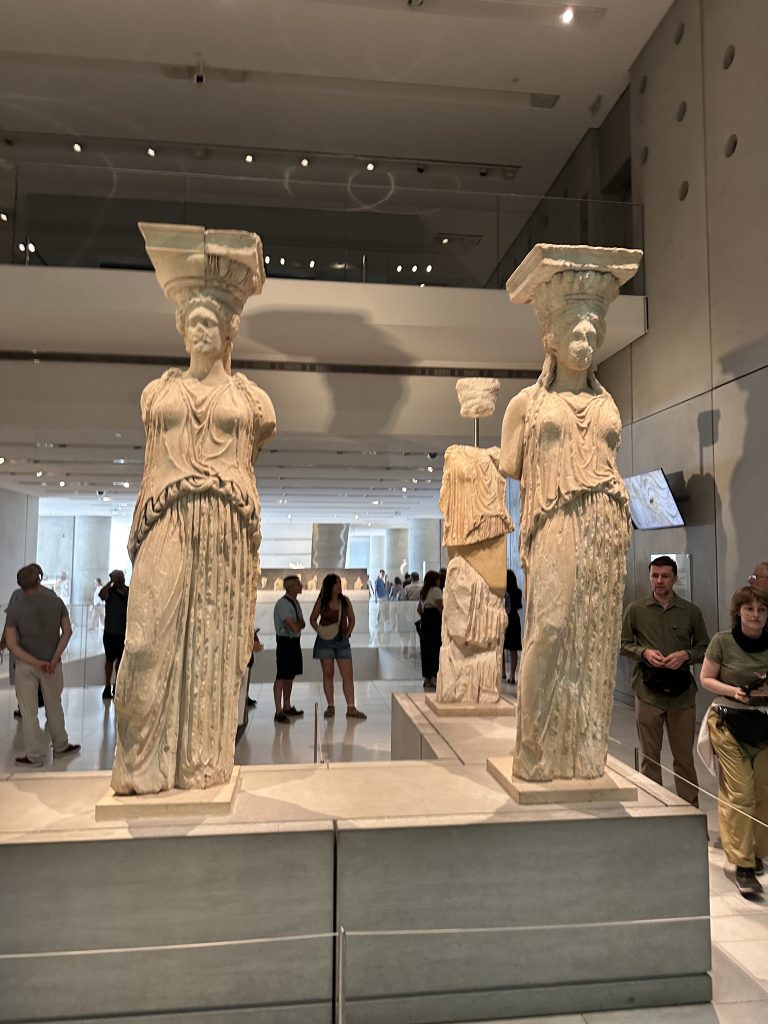
After 3 days, the Seattles continued on to Paros and the start of their sailing excursion, while the Old Towns spent an evening in Athens, and checked out the Acropolis museum there. It did not disappoint.
After 4 weeks, 3 legs, and 9 stops, we headed back home to prepare for our next outing. . . farther afield this time.
Our second trip this year turned out to be domestic – no new countries this time. Instead, we headed to Seattle and points north in Washington for our niece Gracie’s graduation and then to the American Southwest to hike and experience some iconic national parks – a longtime goal. Our original itinerary included the following:
Pacific Northwest for 6 days:
2 days in Seattle
3 days in Bellingham
Travel day from Bellingham to overnight stay in Las Vegas to pick up a car
American Southwest for 10 days:
Zion for 4 days
Bryce for 3 days
Lake Powell for 3 days
Travel day from Lake Powell (Page, AZ) to overnight stay in Las Vegas then fly home
But discussions with relatives in Tucson convinced us to nix the Lake Powell leg due to extreme temperatures. Then, during our stay in the Bellingham area, discussions with the Bostons and Seattles convinced us to add Page, AZ, back for a day so we could visit Lower Antelope Canyon. So, we lopped off a day in Zion and added a day in Page for the second stage of the trip:
American Southwest for 7 days:
Zion for 3 days
Antelope Canyon for 1 day
Bryce for 3 days
Trip is off to a good start! On arrival at SEATAC, we were picked up by the CEO of Crooked Spoon in his tricked out ice cream truck:
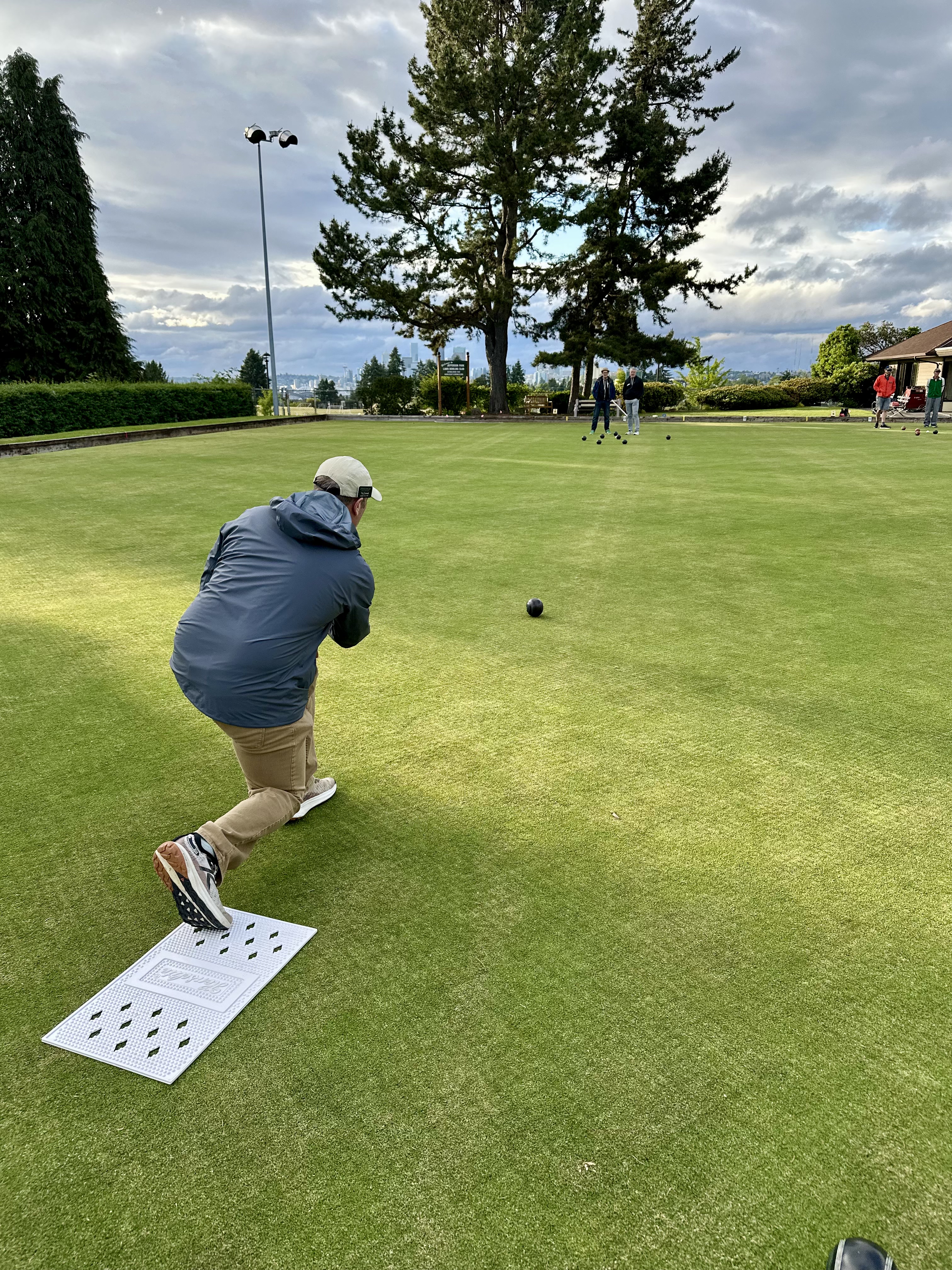
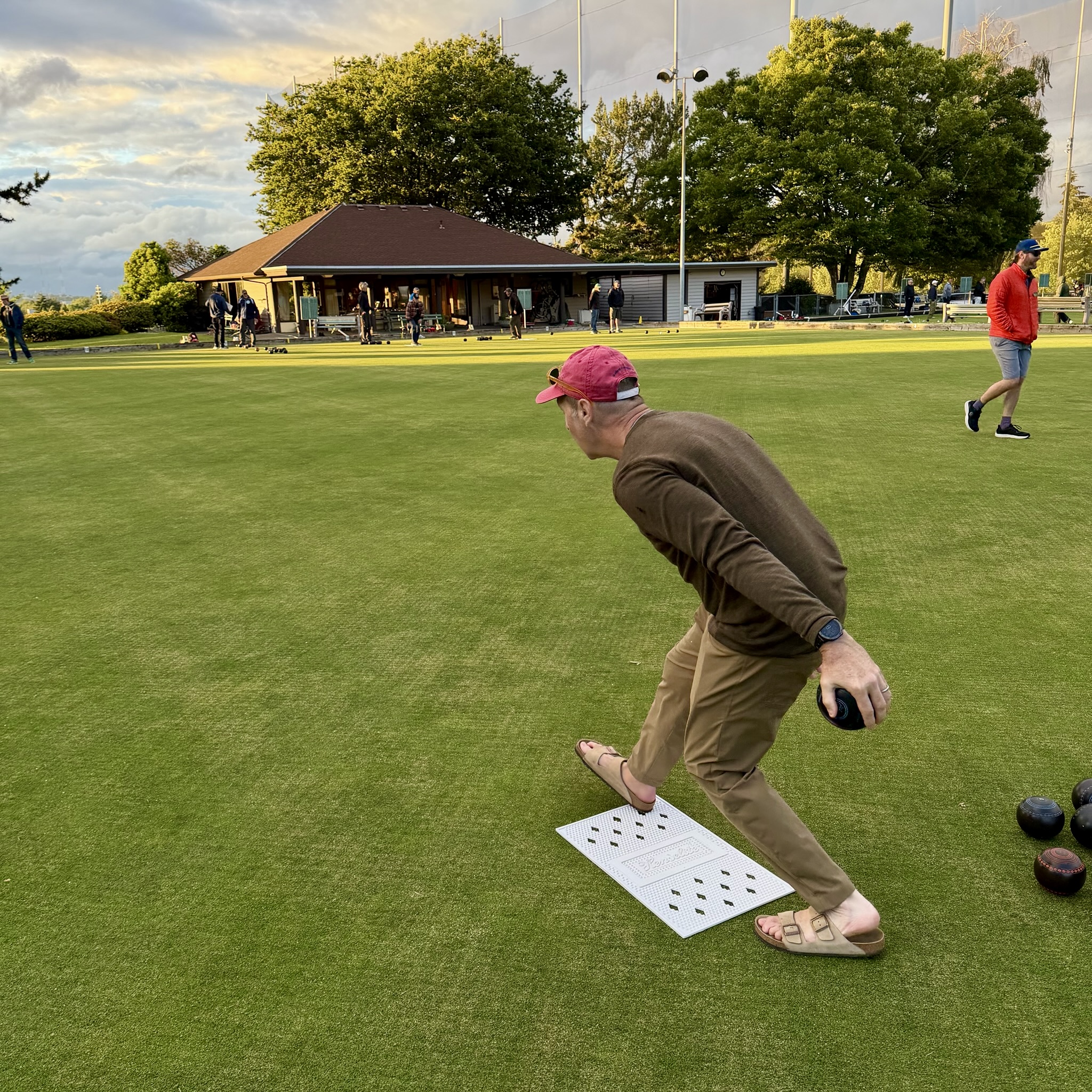
A little lawn bowling that evening – very cool. Played with oblong balls that arced when you rolled them, so it was like putting on a green with a rise on it.
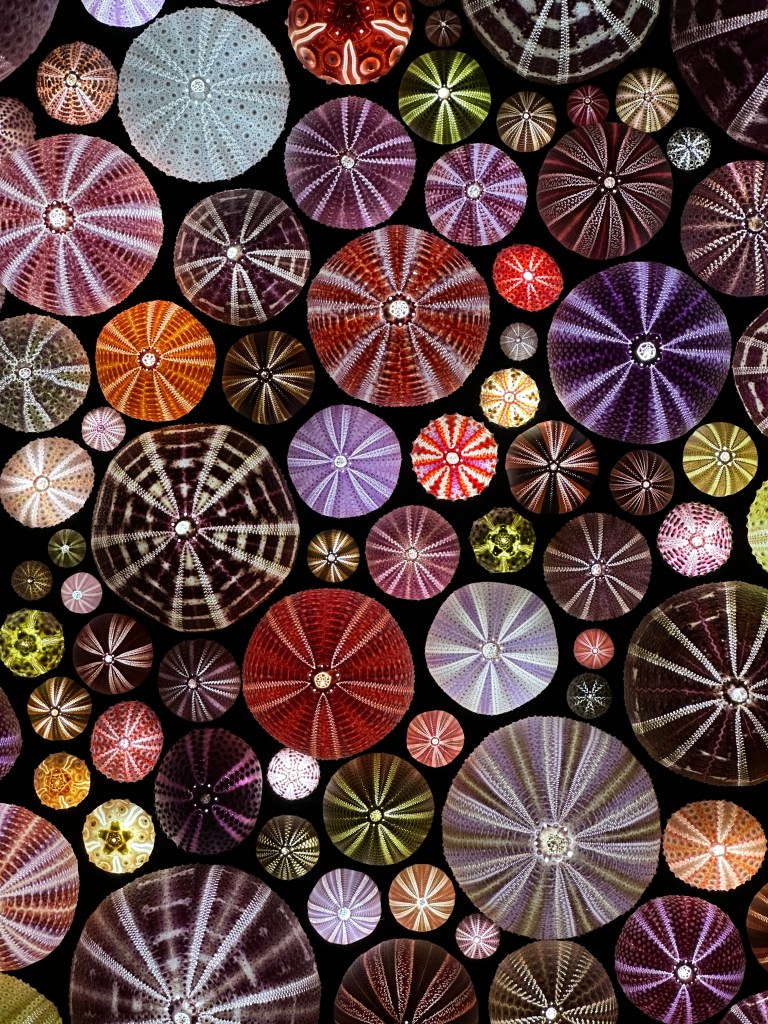
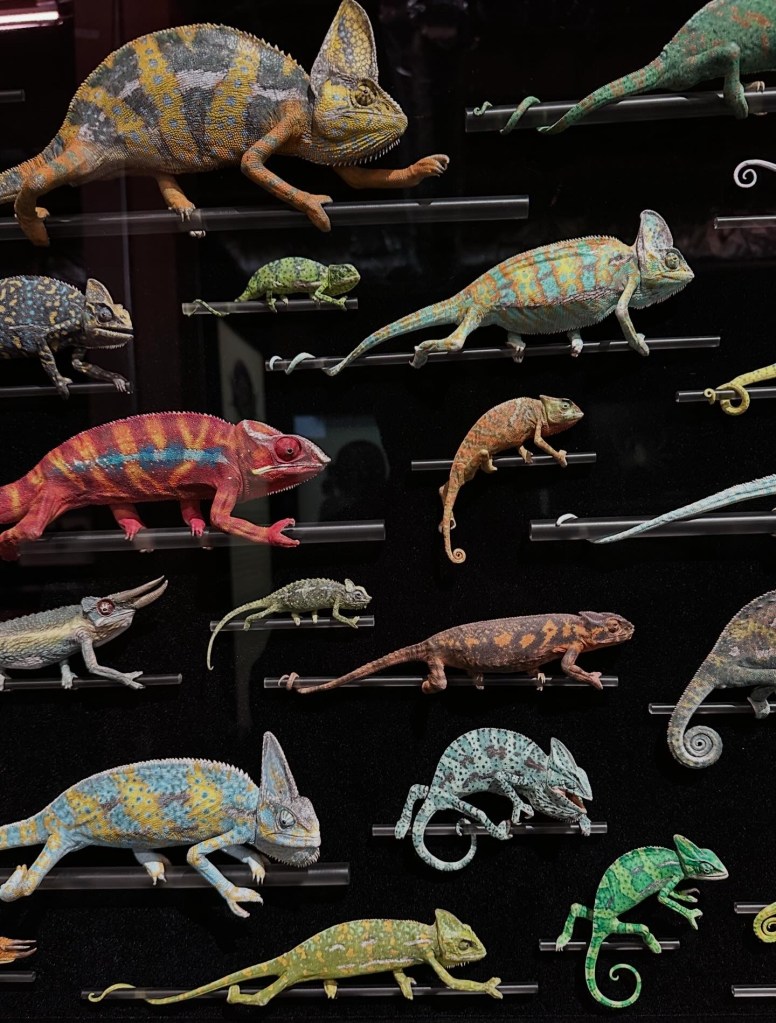
The Extraordinary Creatures exhibit in Seattle, featuring real organisms and their real colors. A cool convergence of nature and art.
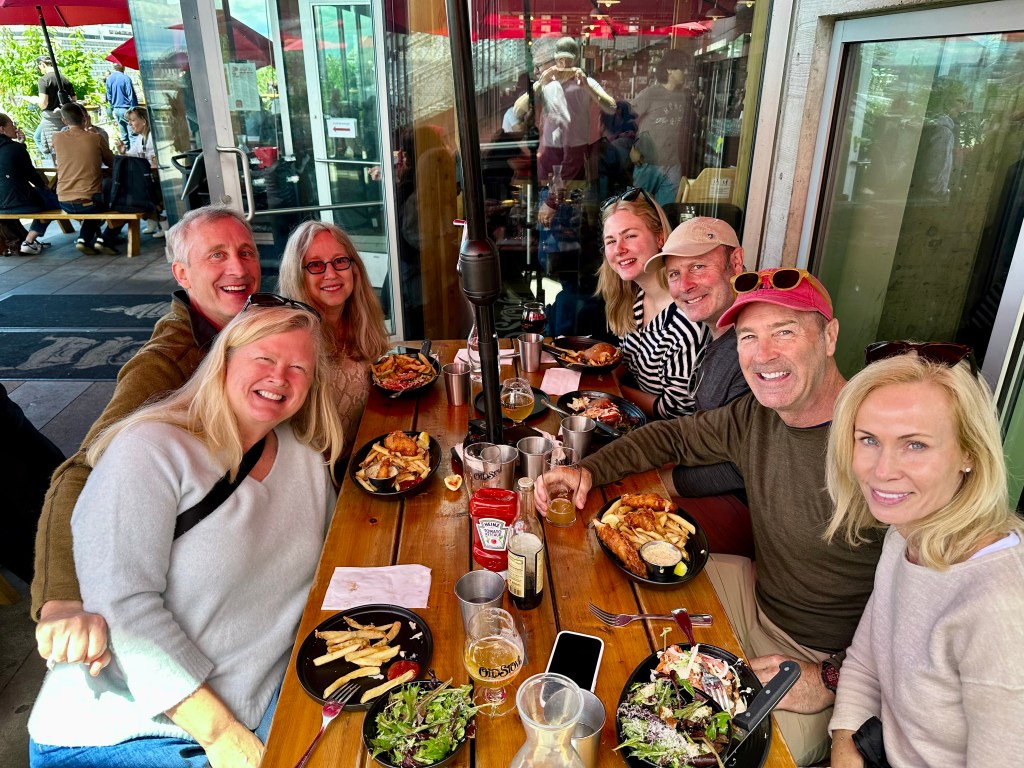
Brew pub group lunch after in Seattle:
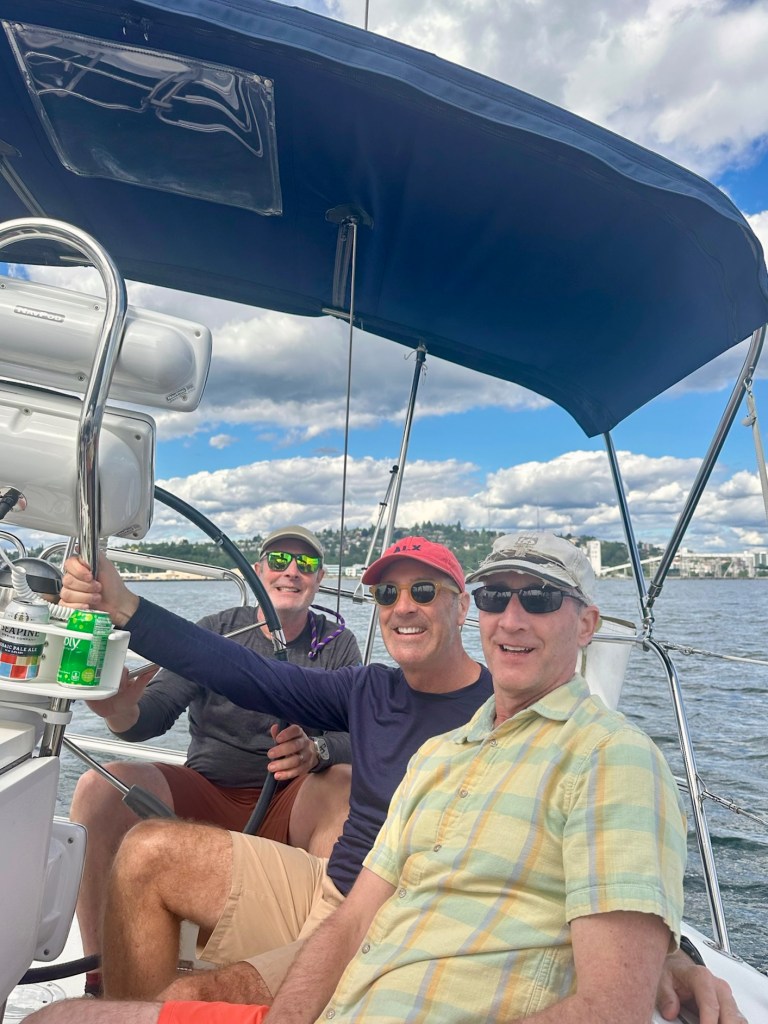
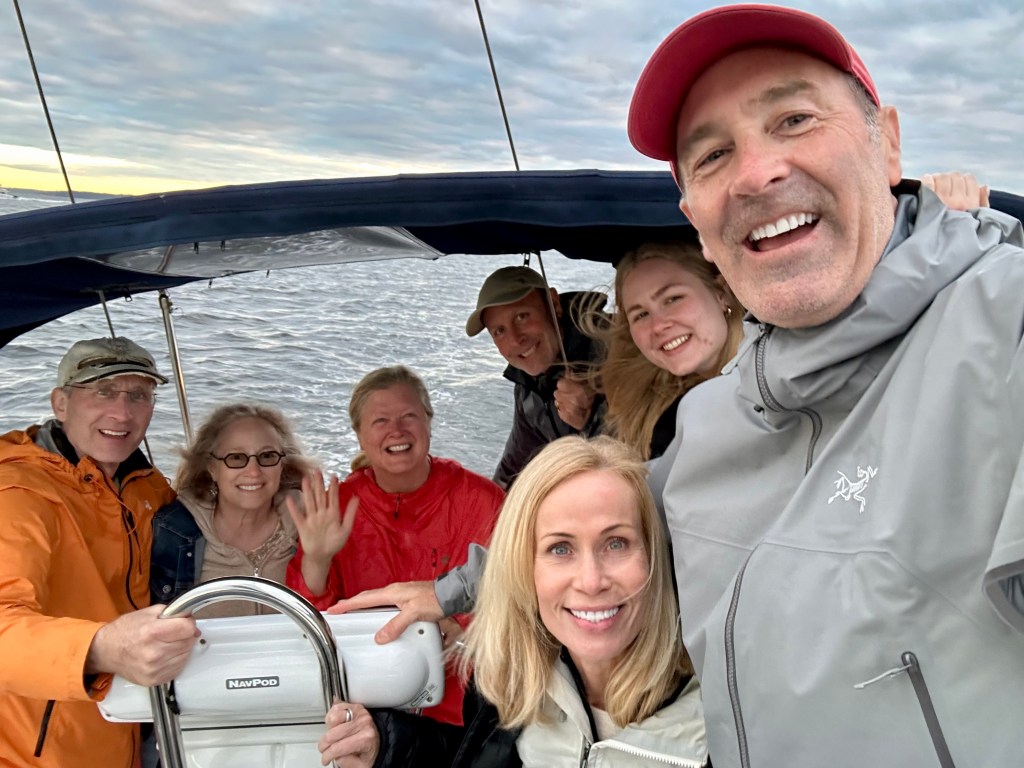
Then a sail to Bainbridge Island on Tim and Anne’s boat:
The next day, a drive up to Bellingham for the graduation, with a stop at Taylor Shellfish Farms for a buttload of oysters and ceviche.
Hike up to Oyster Dome:
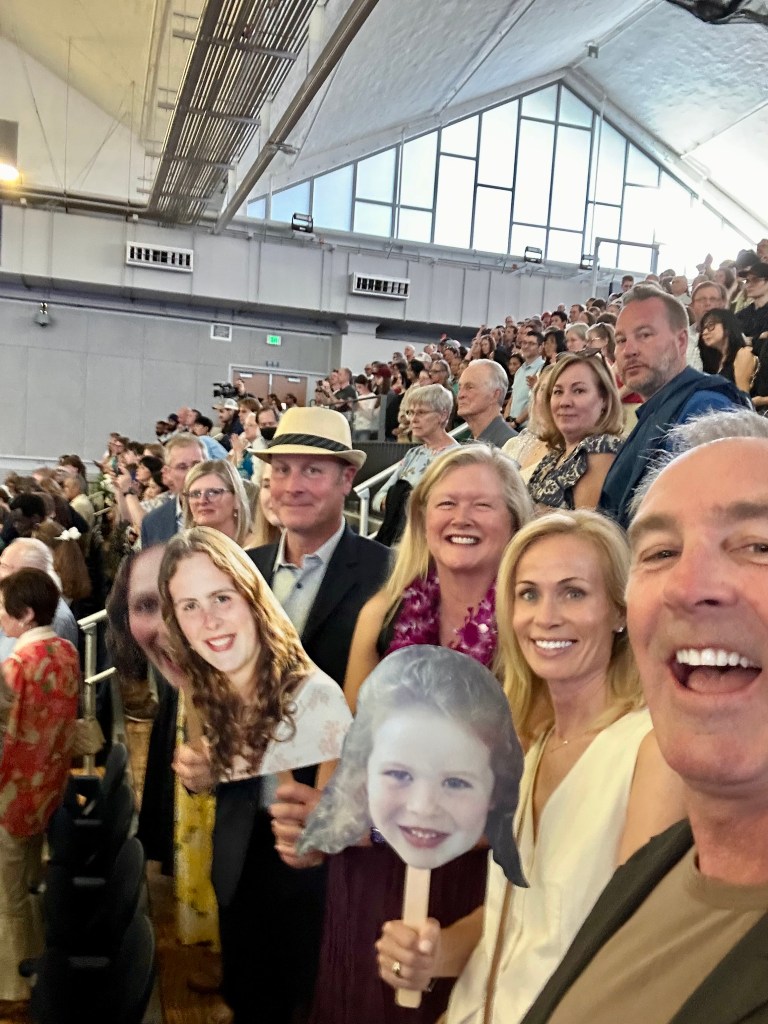
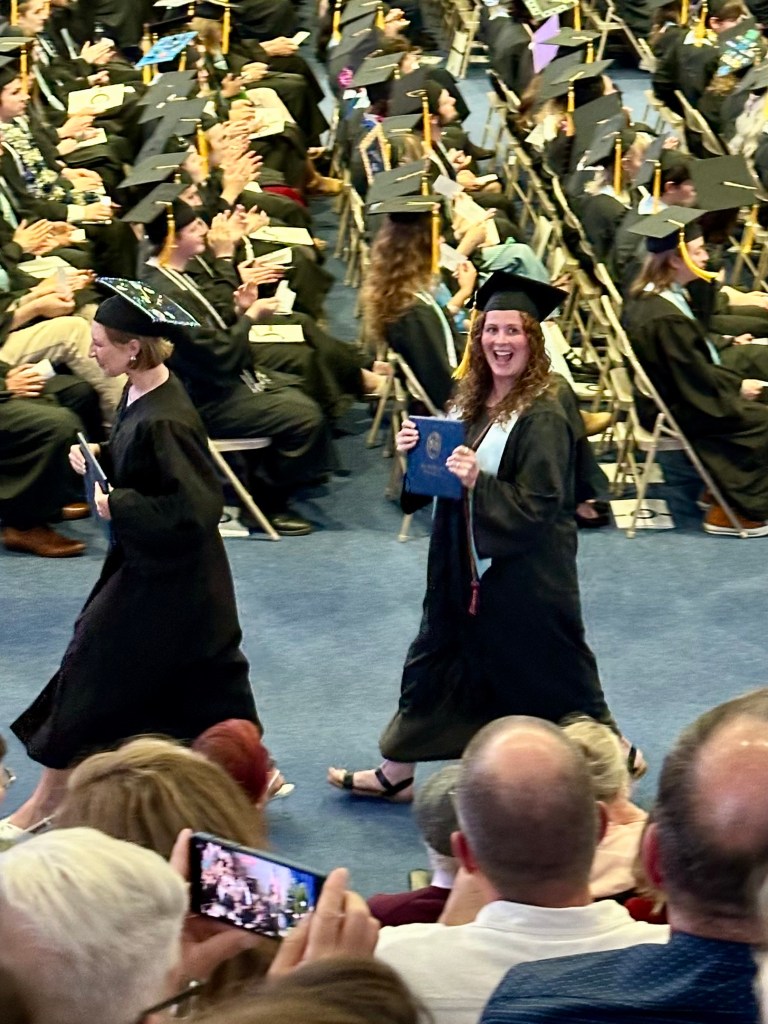
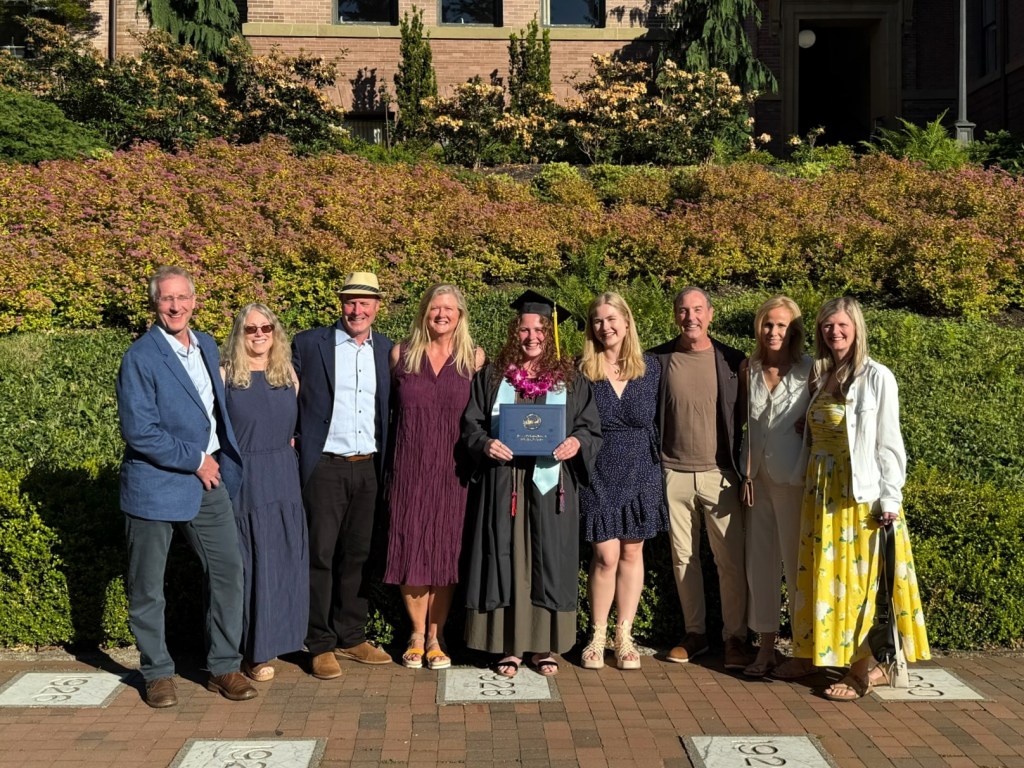
The graduation itself:
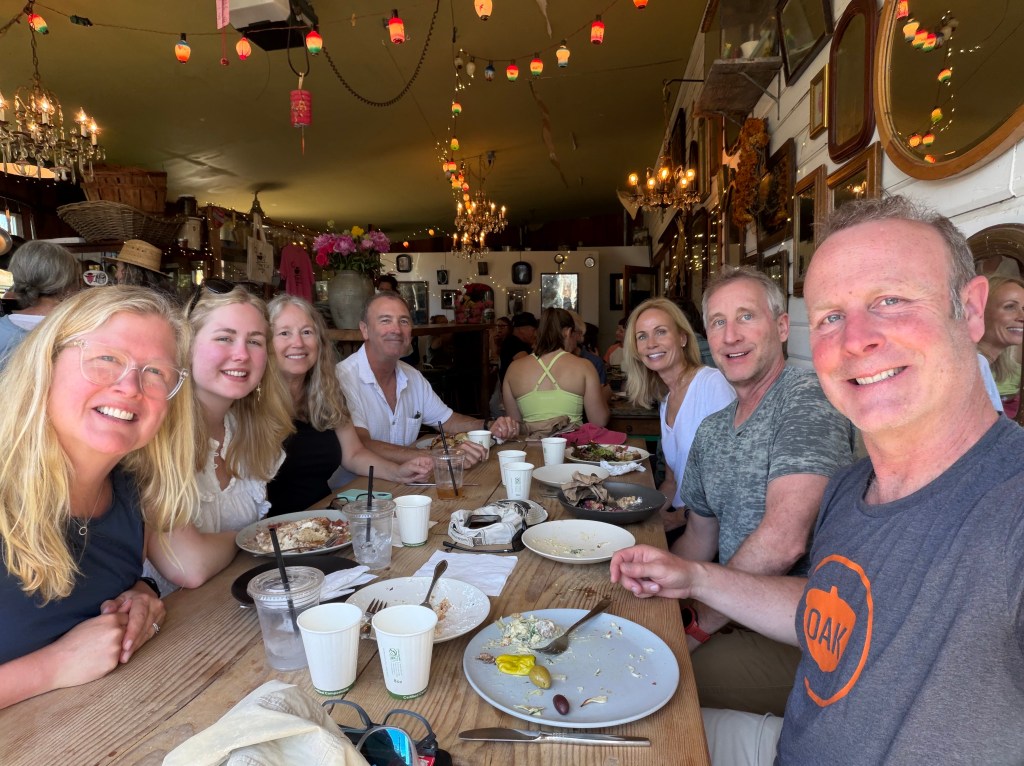
A final lunch in Bow Edison before we head to Vegas for the start of the second stage of the trip and the Bostons head home:
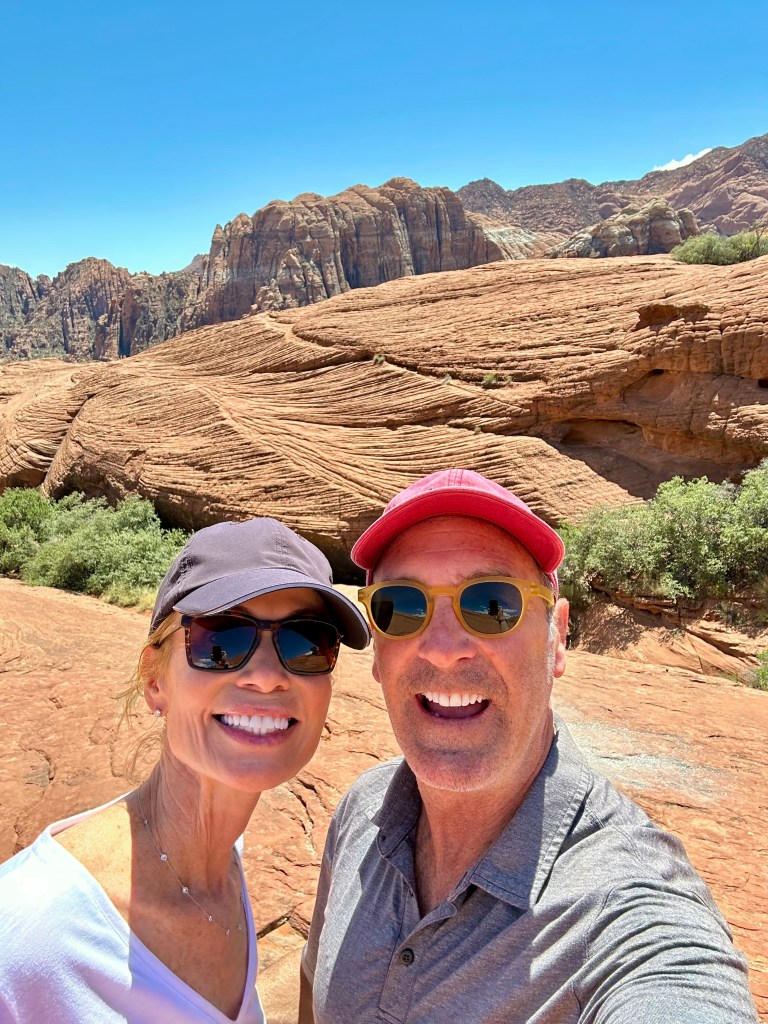
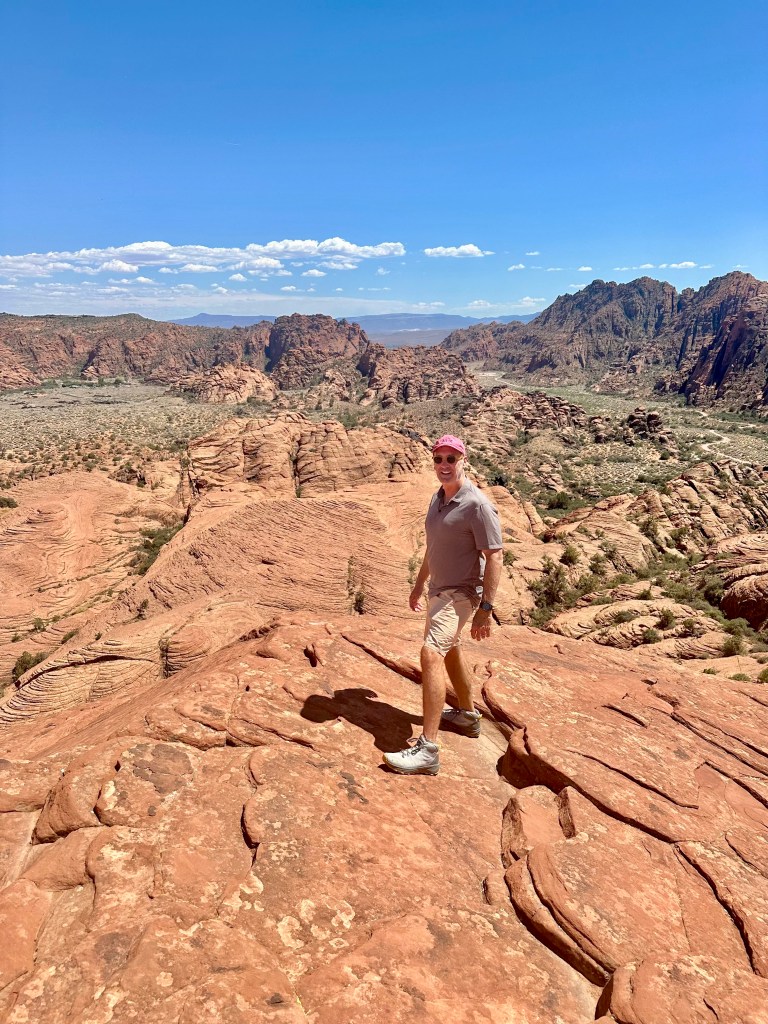
First ~hiking stop on the way from Vegas to Zion – Petrified Sand Dunes at St. George, a recommendation by the Seattles, who have St. George Frequent Flier status:
Very cool first taste of American Southwest landscape:
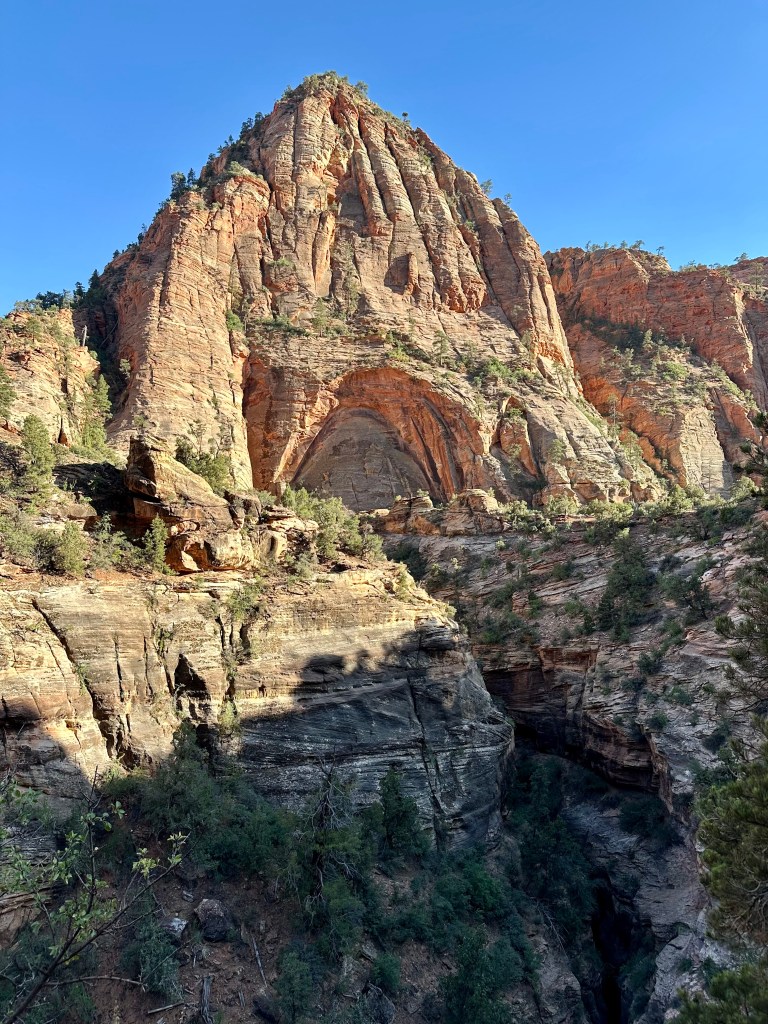
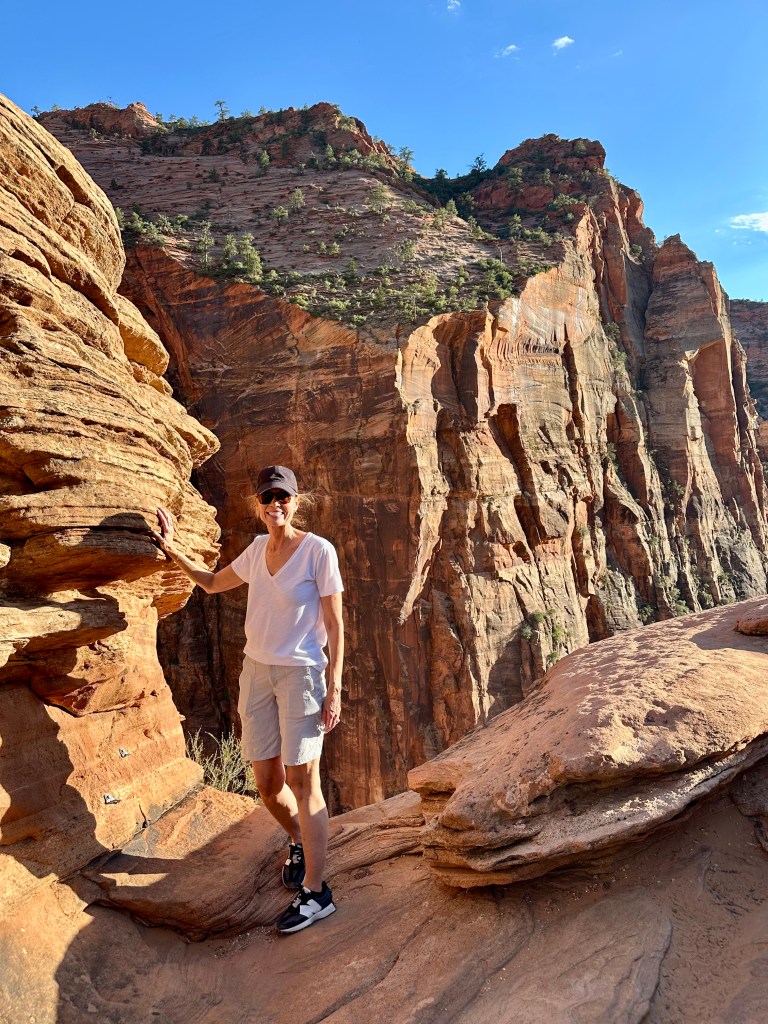
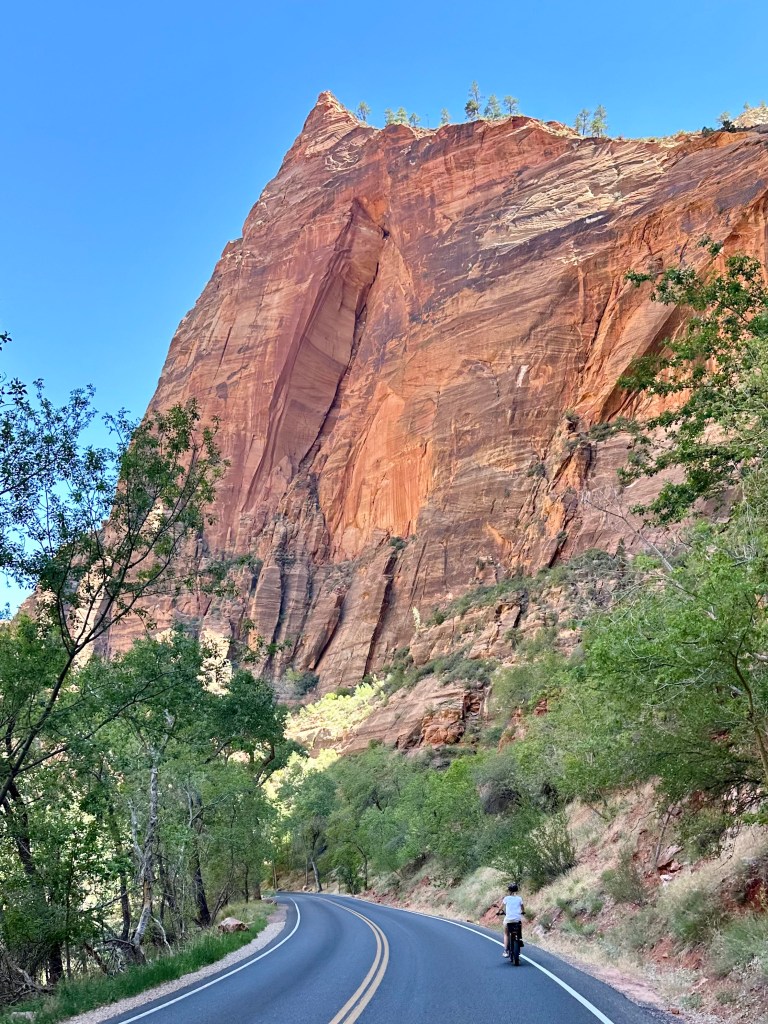
After arriving at Zion and chilling at our place for a bit in the late afternoon, we headed out to the first ~hike (~ aren’t really hikes – they’re more like decent walks), Canyon Overlook near sunset (but not too near, inasmuch as the Zion restaurants all close at 9 and we didn’t want to starve). The Grand Arch:
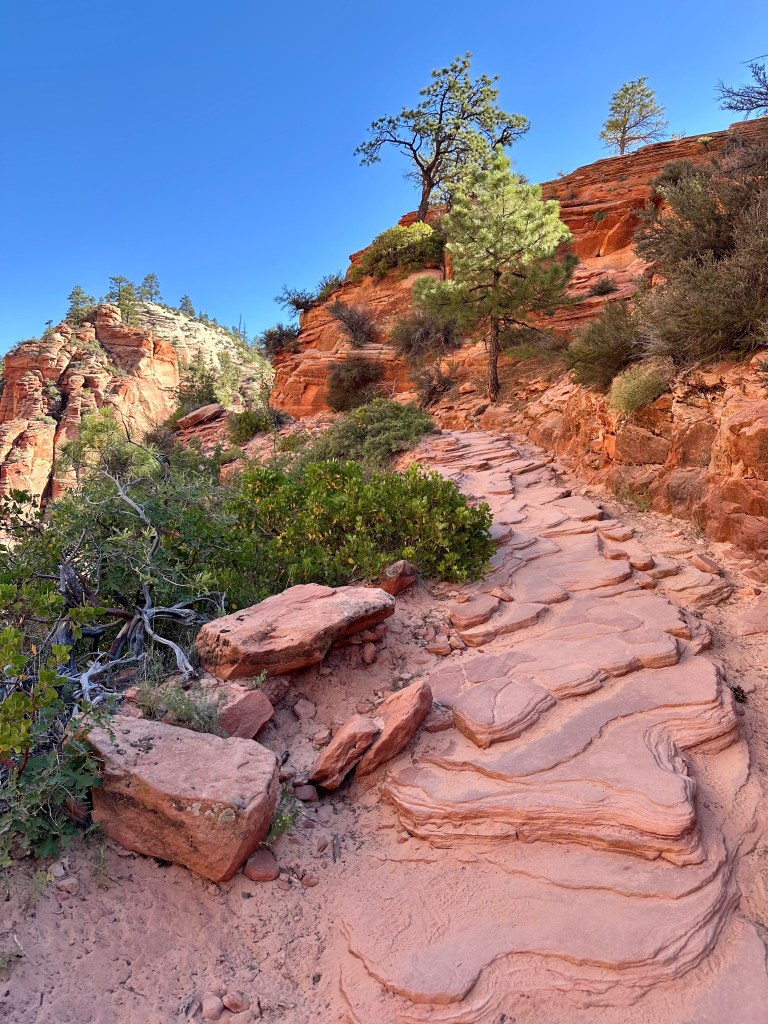
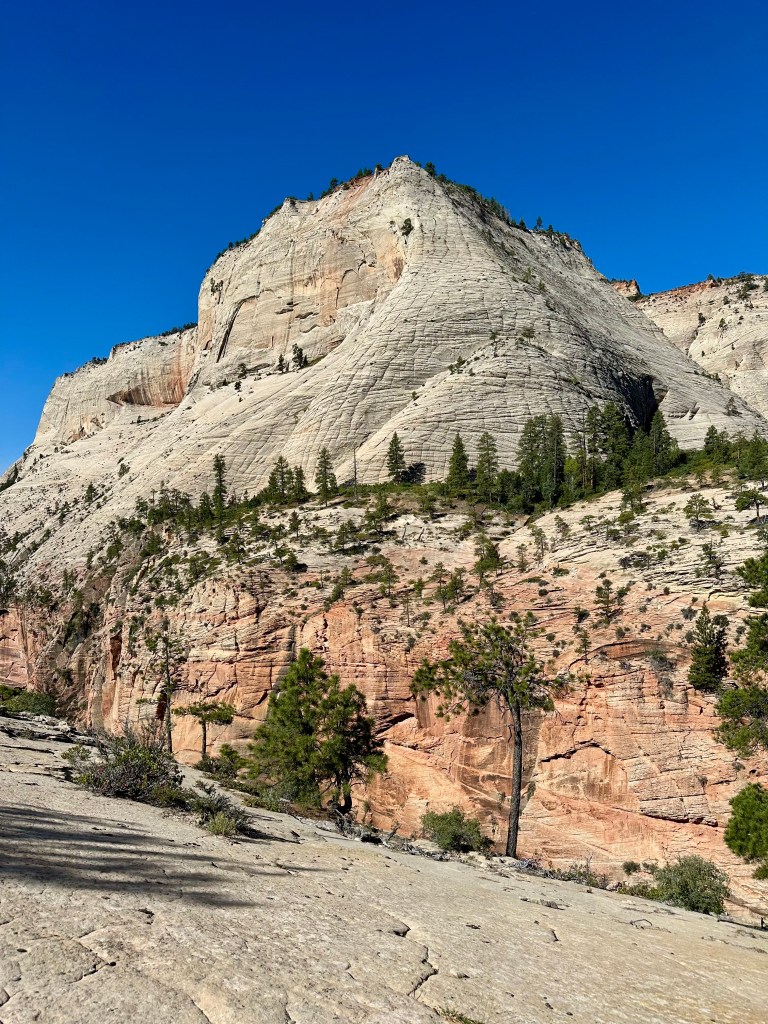
The next morning, we eBiked to the first of our real Zion hikes – Scout’s Lookout and Western Rim trail:
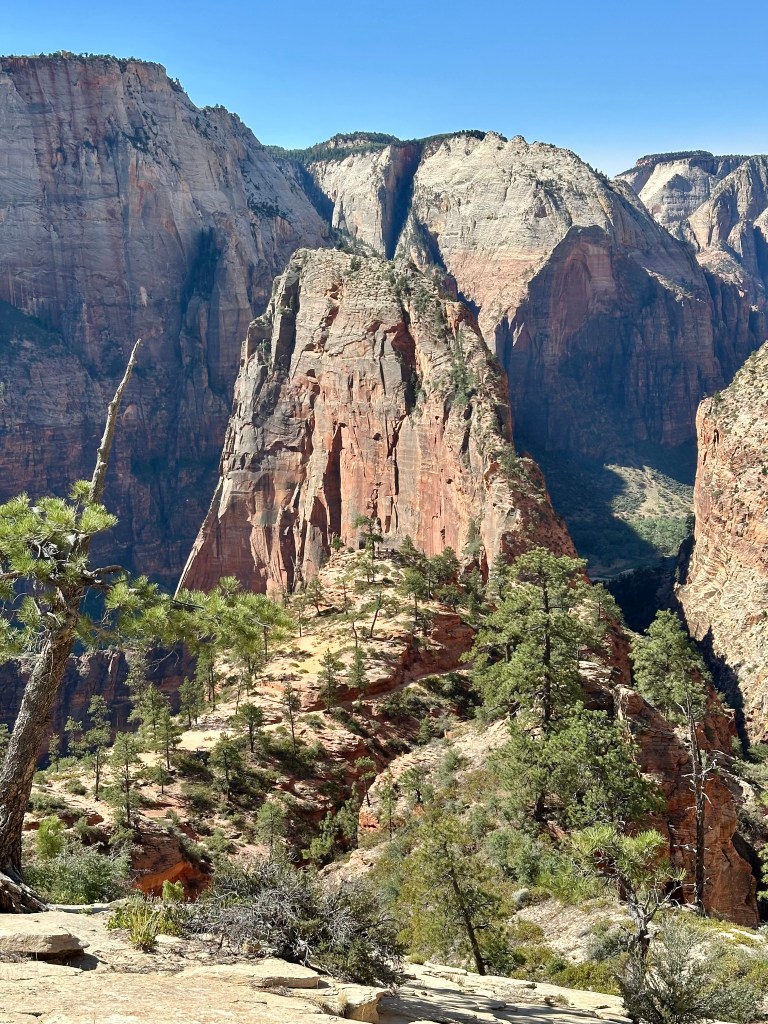
A view of Angel’s Landing, which we did not do:
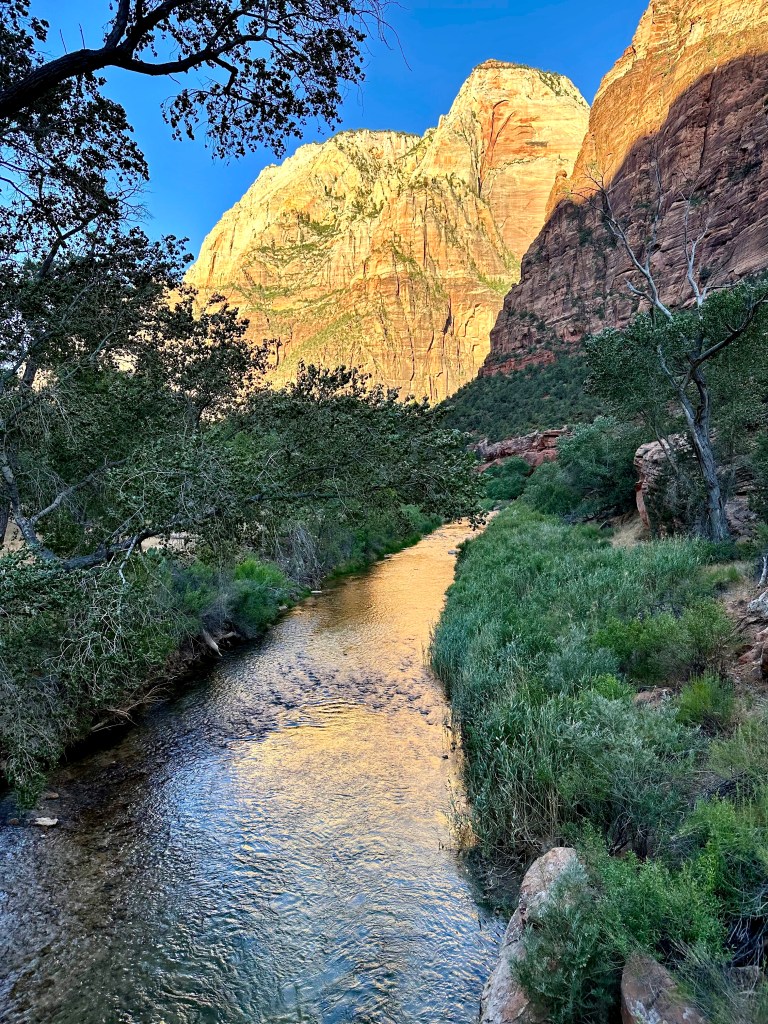
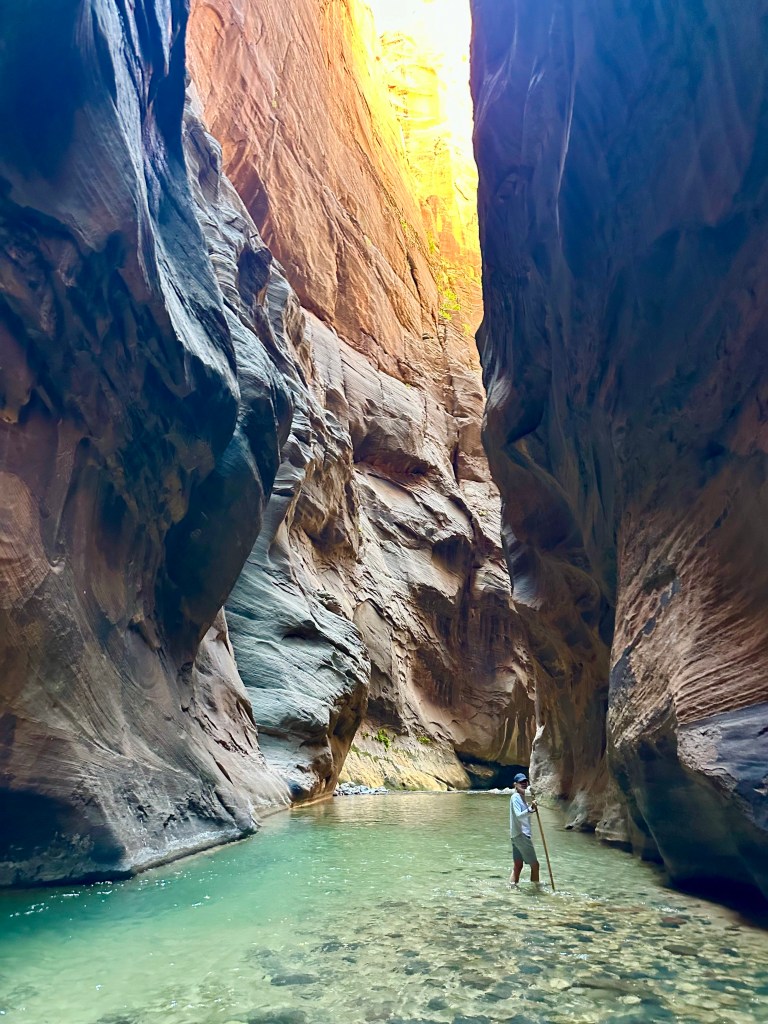
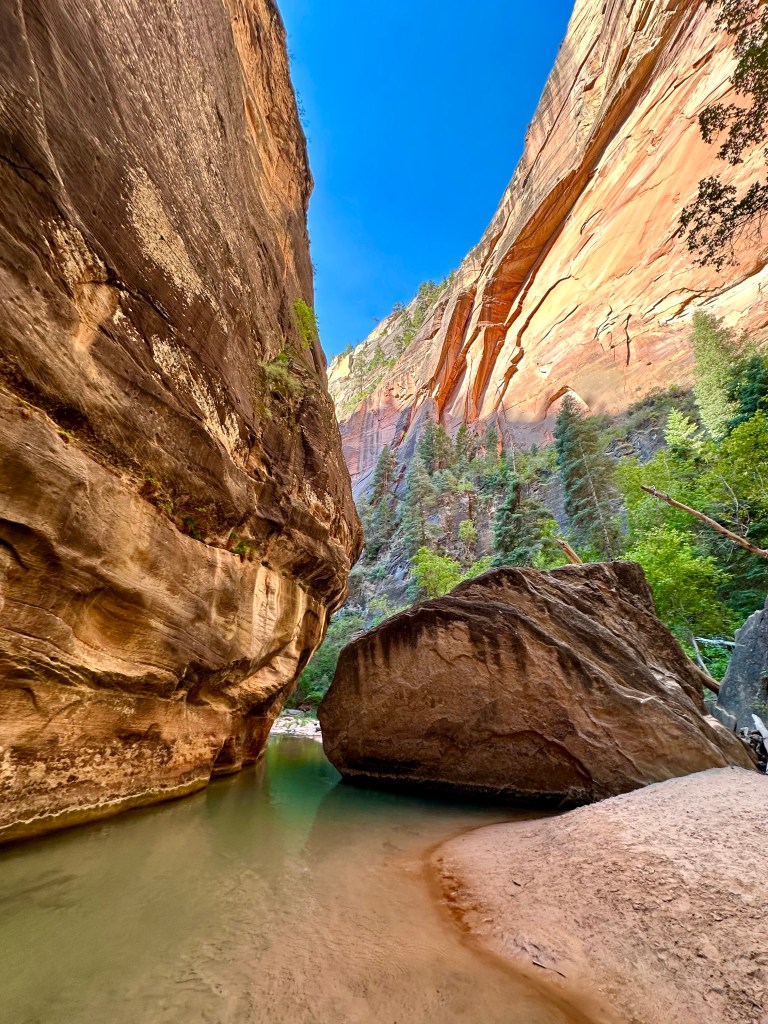
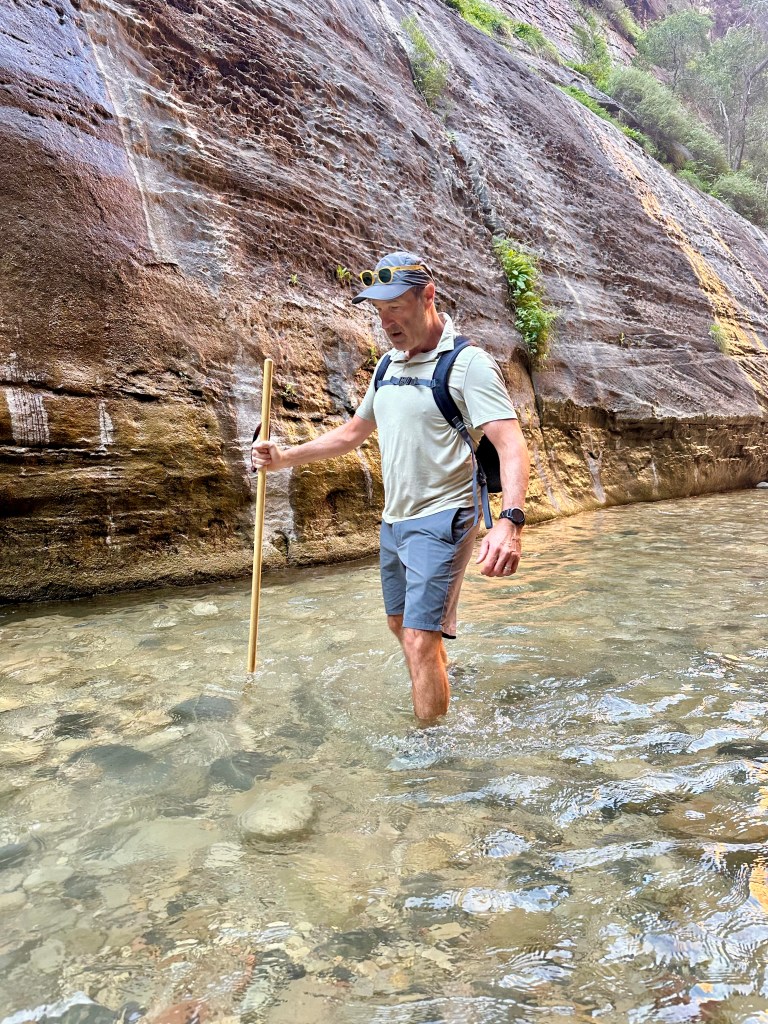
The second hike (and best of the entire trip); 11-mile out-and-back trek / wade through The Narrows:
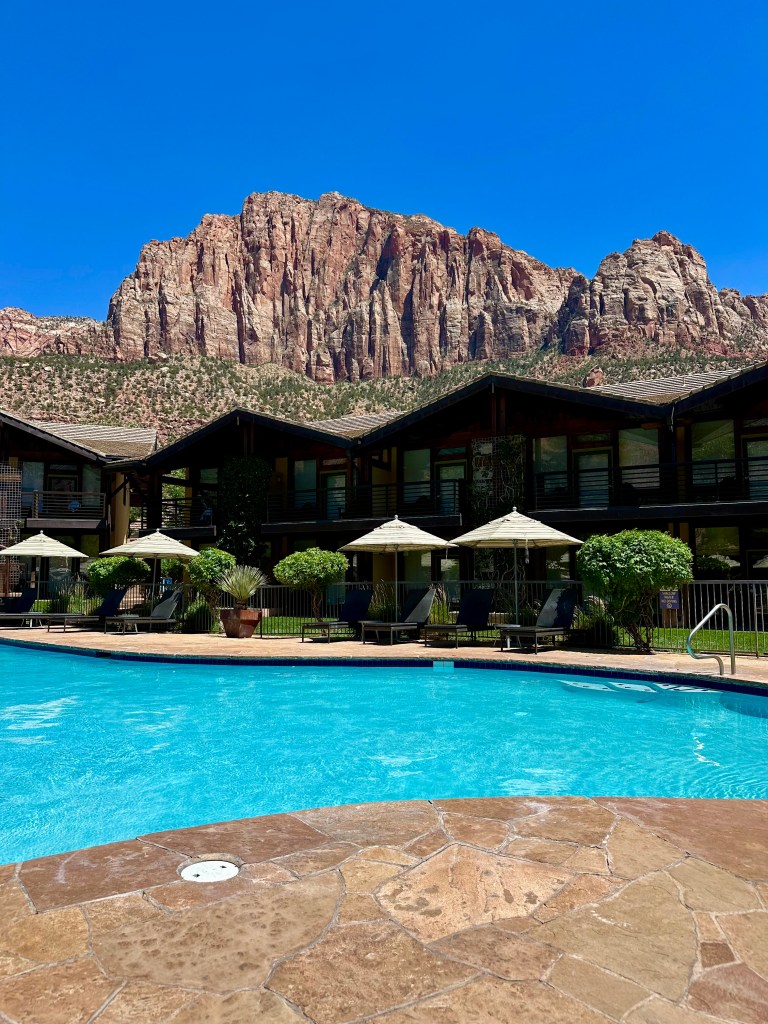
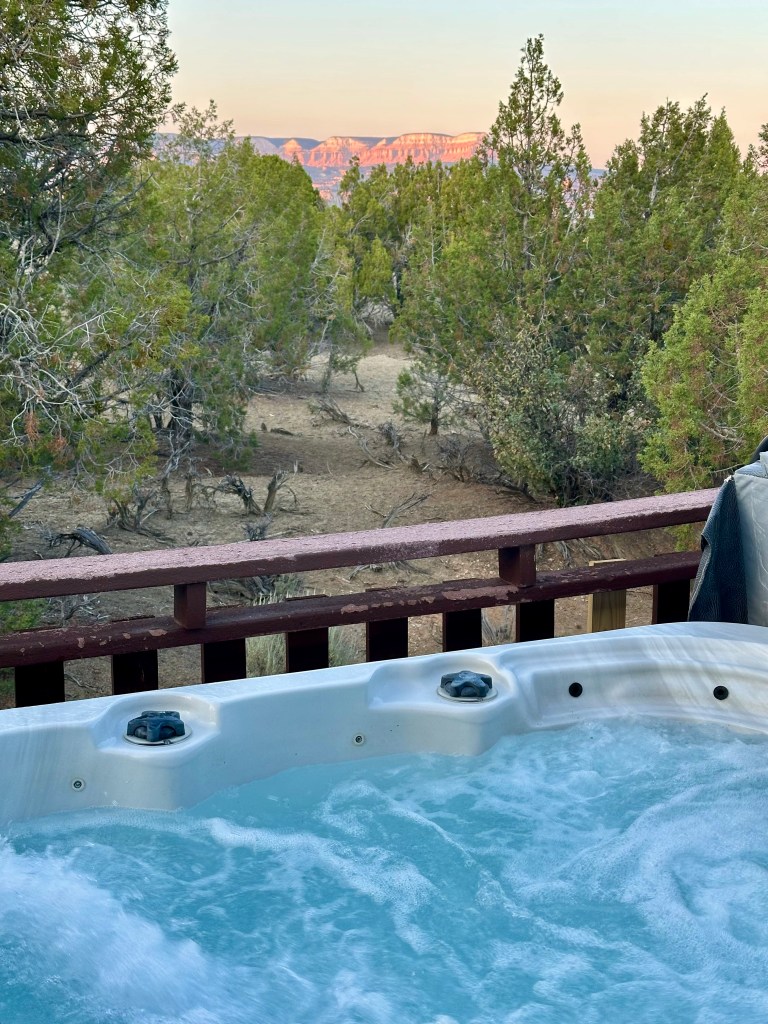
Weather in Zion reached >90 degrees, so we ensured that we booked a place with a pool; the iconic view behind it was an unexpected added bonus:
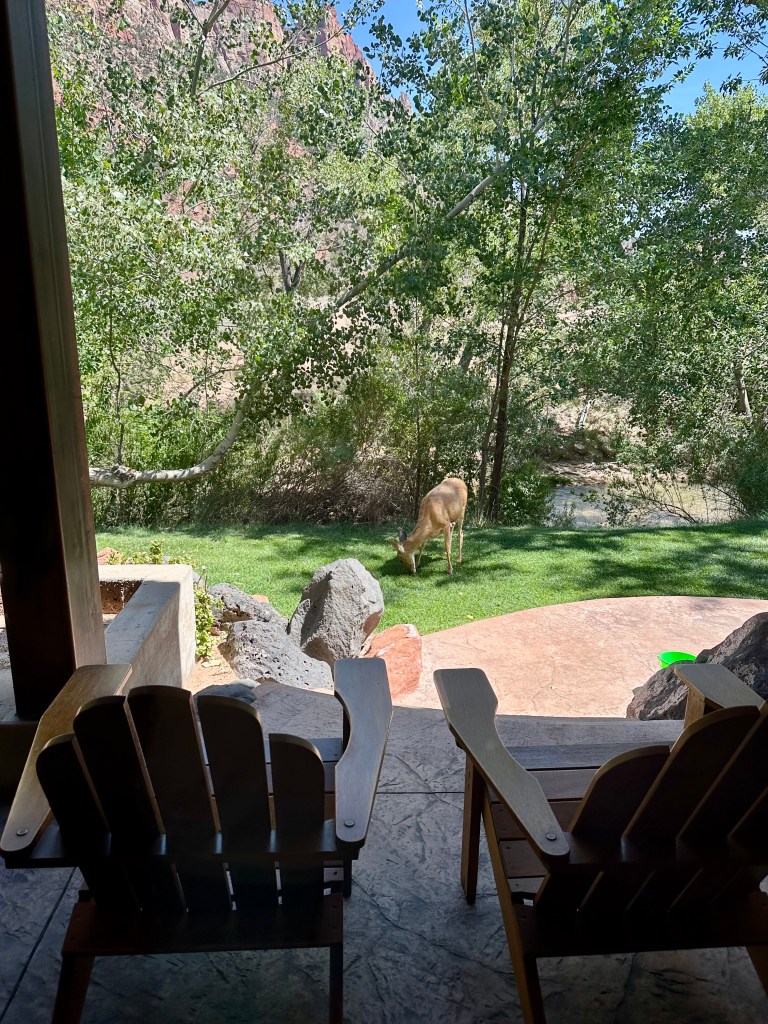
And the place came with resident wildlife for morning coffee entertainment:
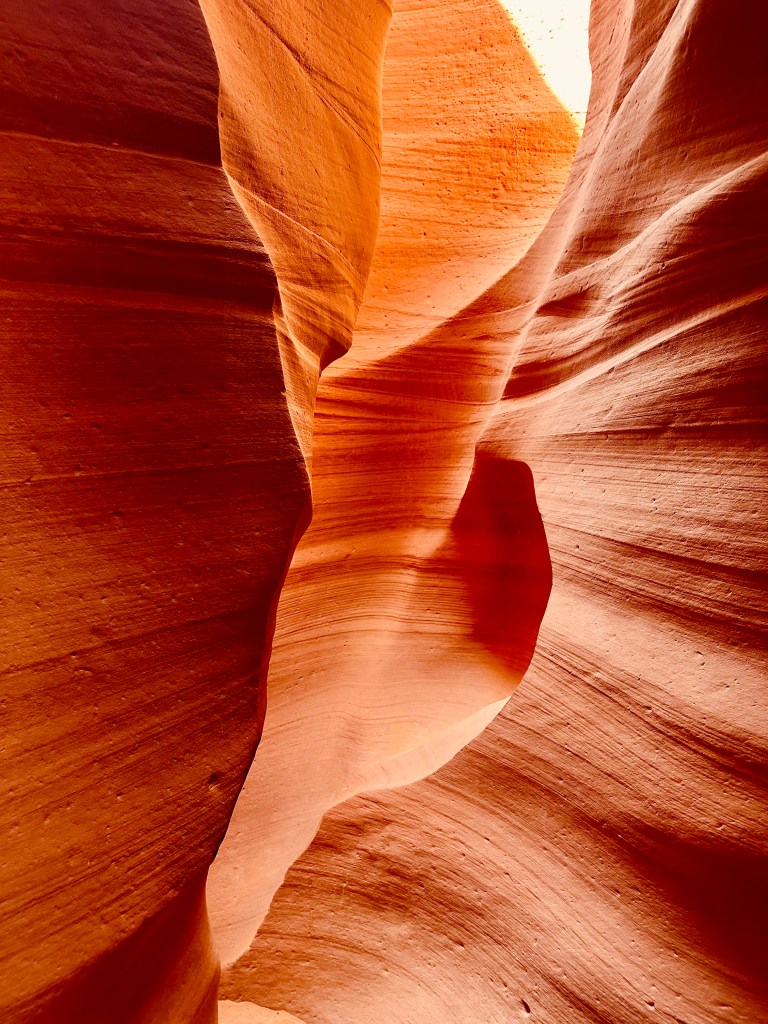
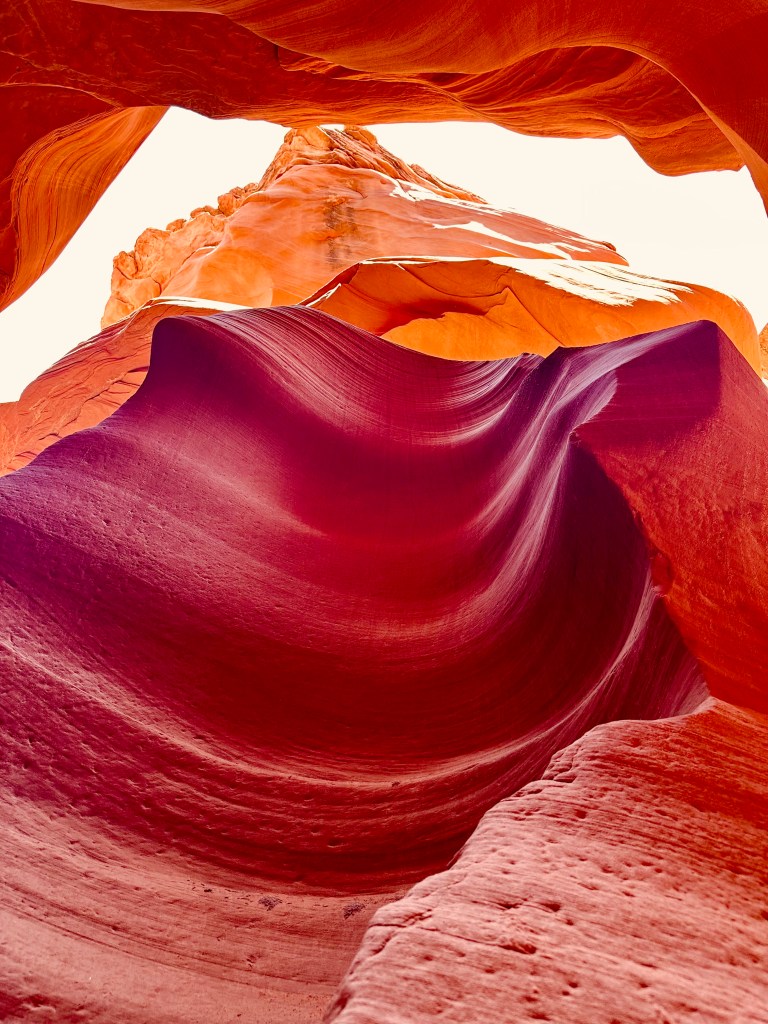
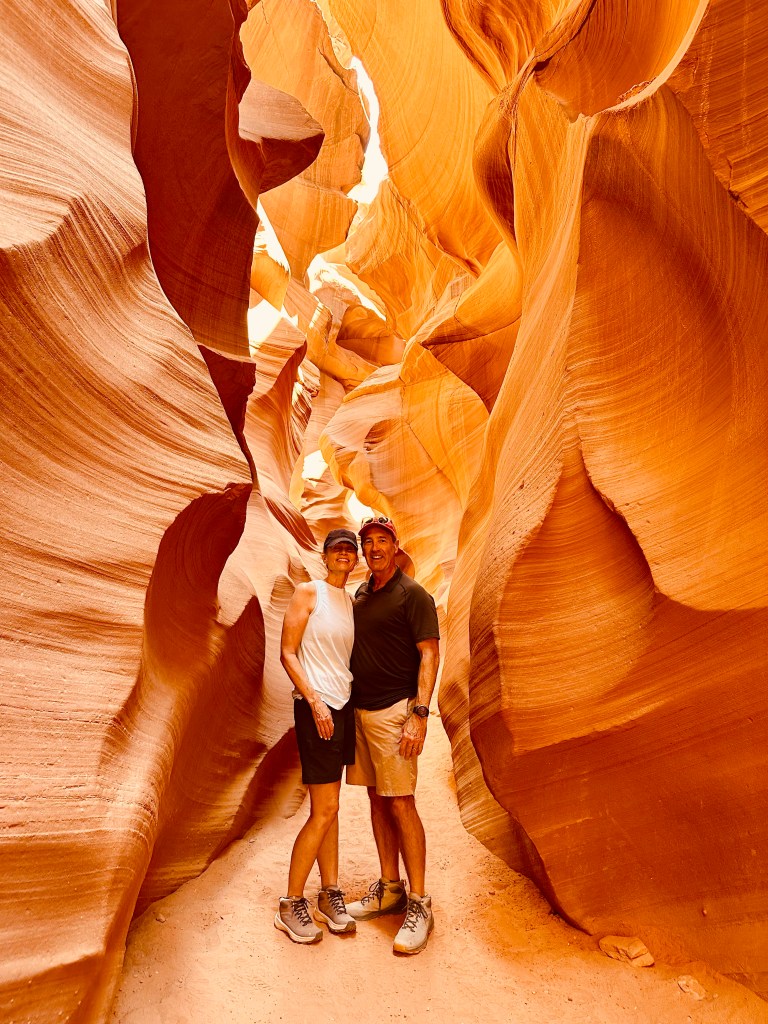
Then, a drive southeastward to Page, AZ, and a Navajo tour of Lower Antelope Canyon:
Pretty amazing and a good last-minute addition to the trip.
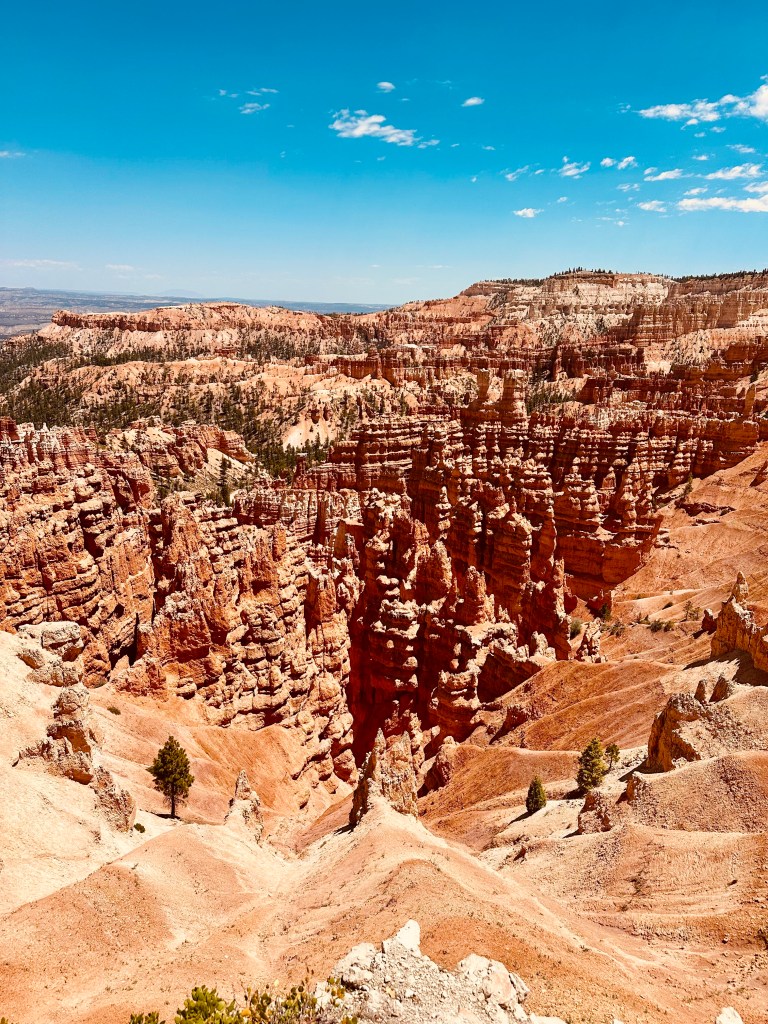
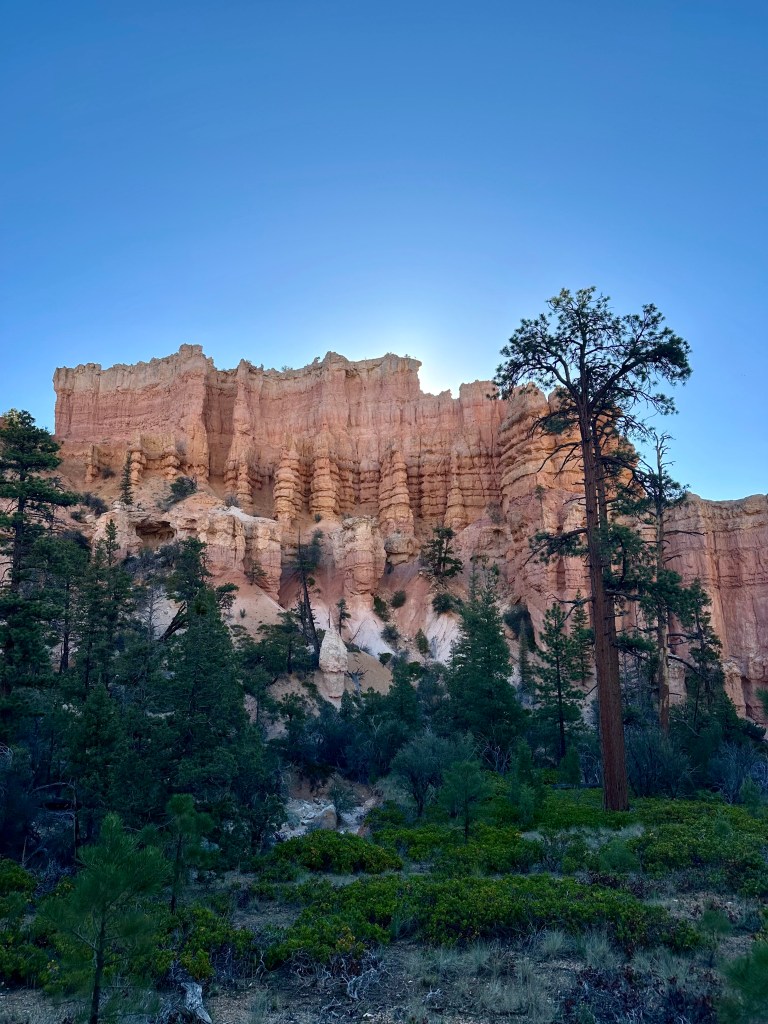
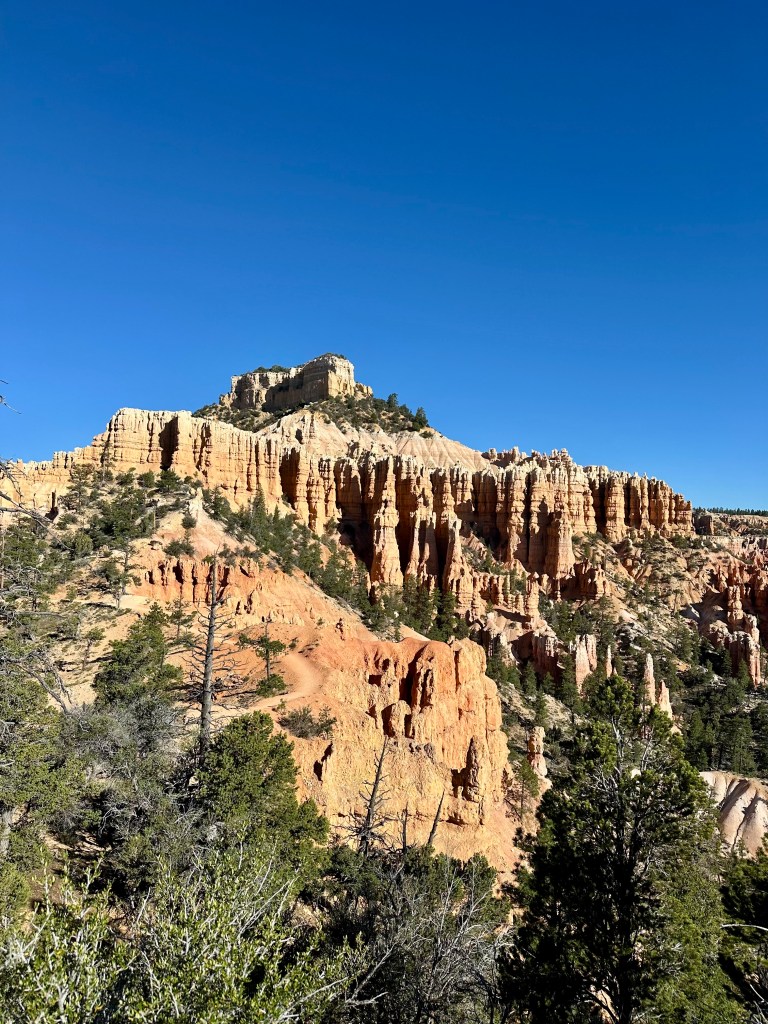
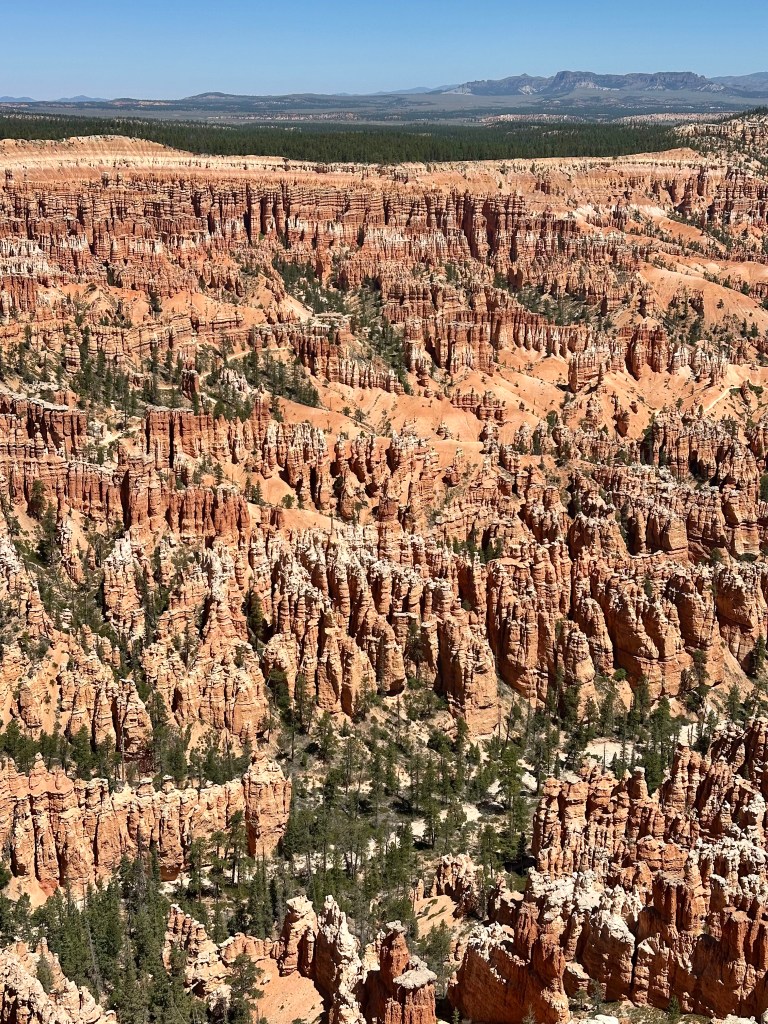
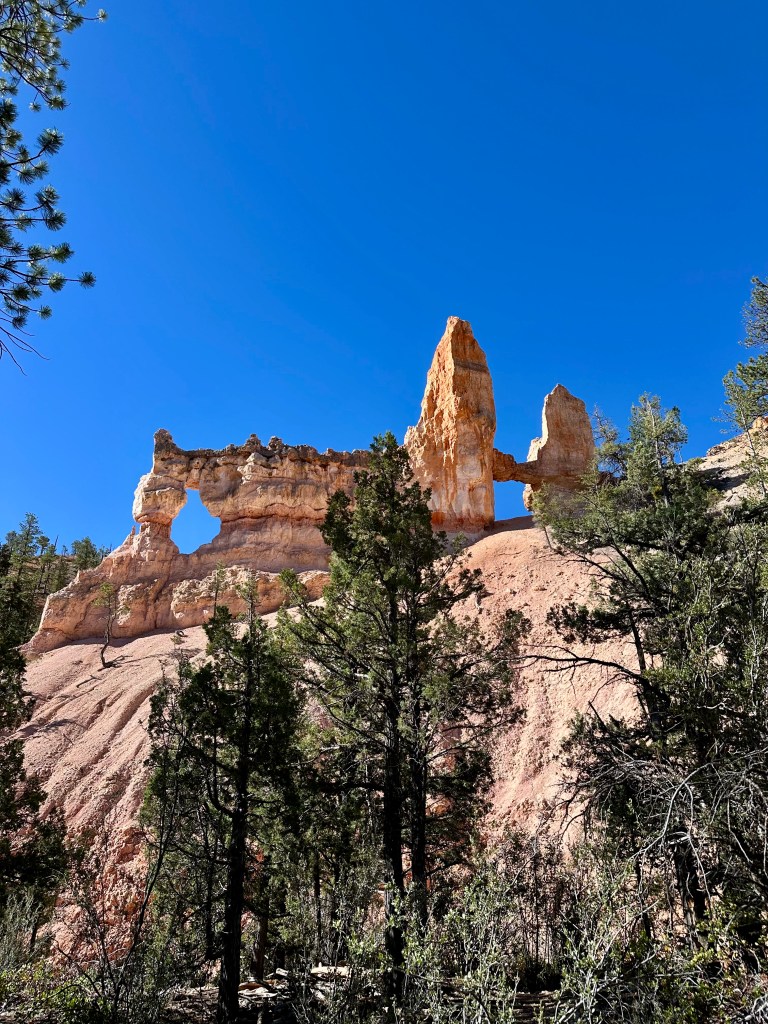
But then we had to drive back northwestward to our next park destination: Bryce Canyon, featuring its iconic hoodoos eroded rock formations:
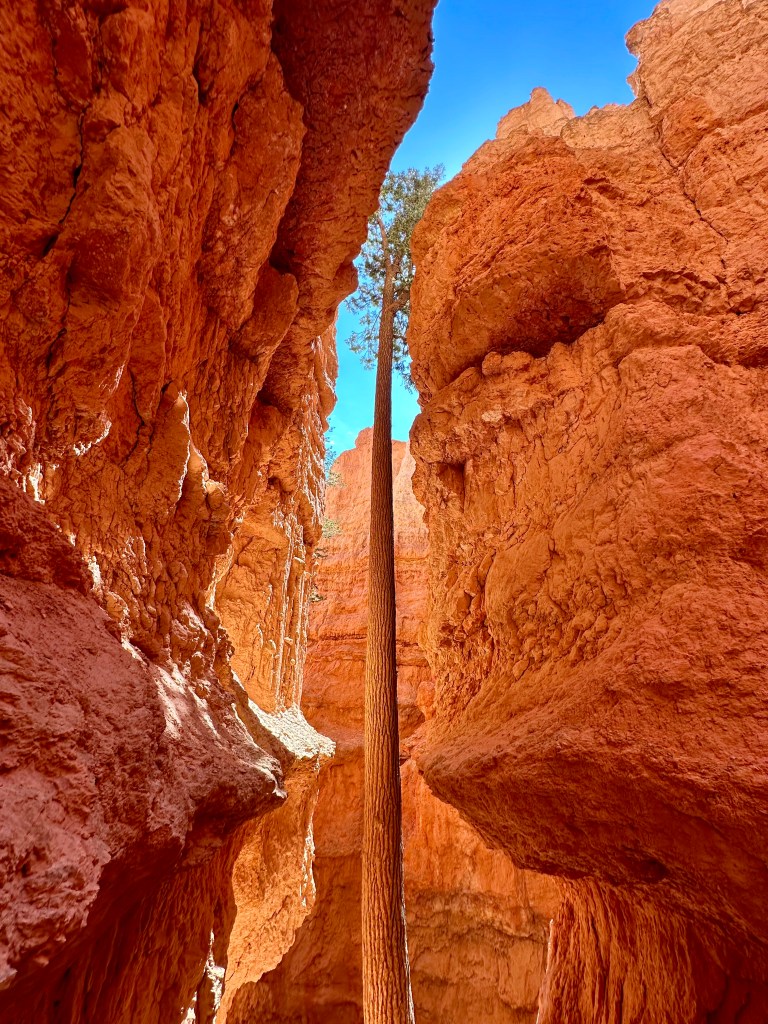
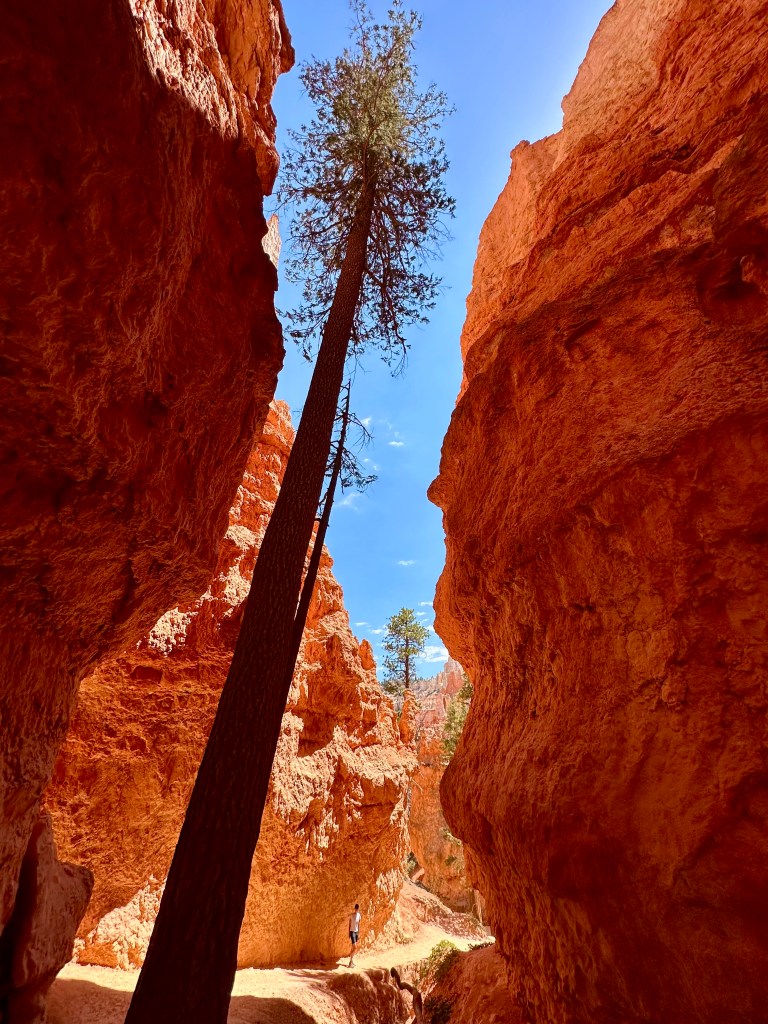
And crazy, isolated, unbelievably tall Douglass Firs, growing where no tree should be:
Our highlight there was an 8-mile loop hike from Fairlyland Point, with a 7:00 AM start to secure one of the very few parking spaces at the trailhead:
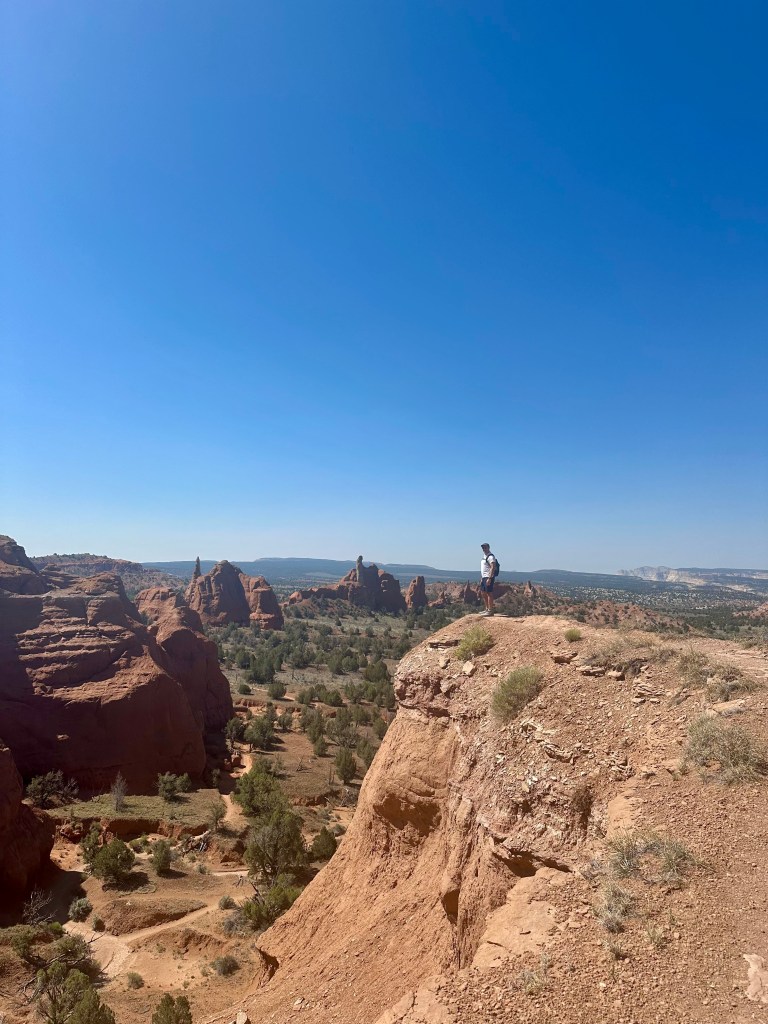
The next day, we intended to head to a very cool slot canyon outside of the park that seemed to offer an appealing combination of the grandeur of The Narrows at Zion with the sculpted walls of Lower Antelope Canyon. But the dirt road to reach the trailhead included an uphill sandy portion that our rental could not pass, despite repeated attempts. So, we headed instead to Utah’s Kodachrome Basin State Park:
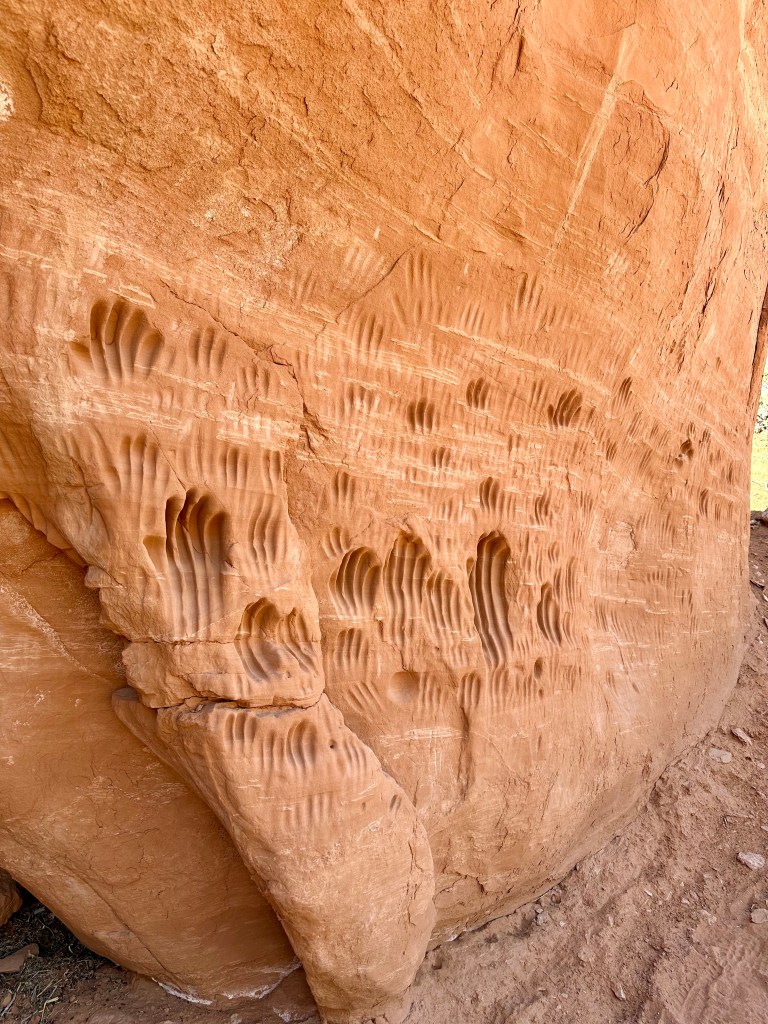
Awesome hand sculptures into the sandstone that we were hoping were Indian and centuries old. Nope. A range we later consulted said that they were from bored ranchers and settlers in the 19th century. Still pretty wild.
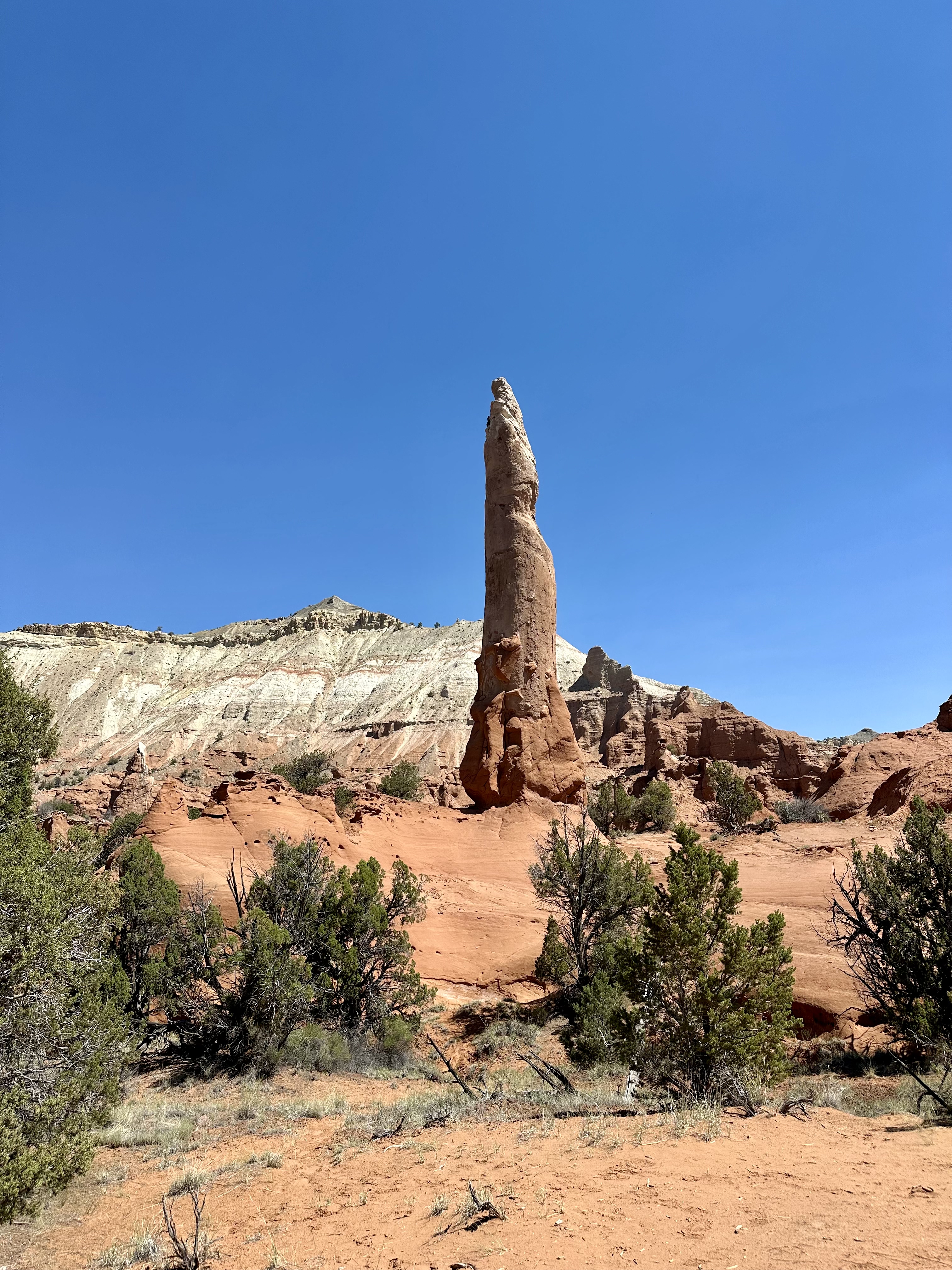
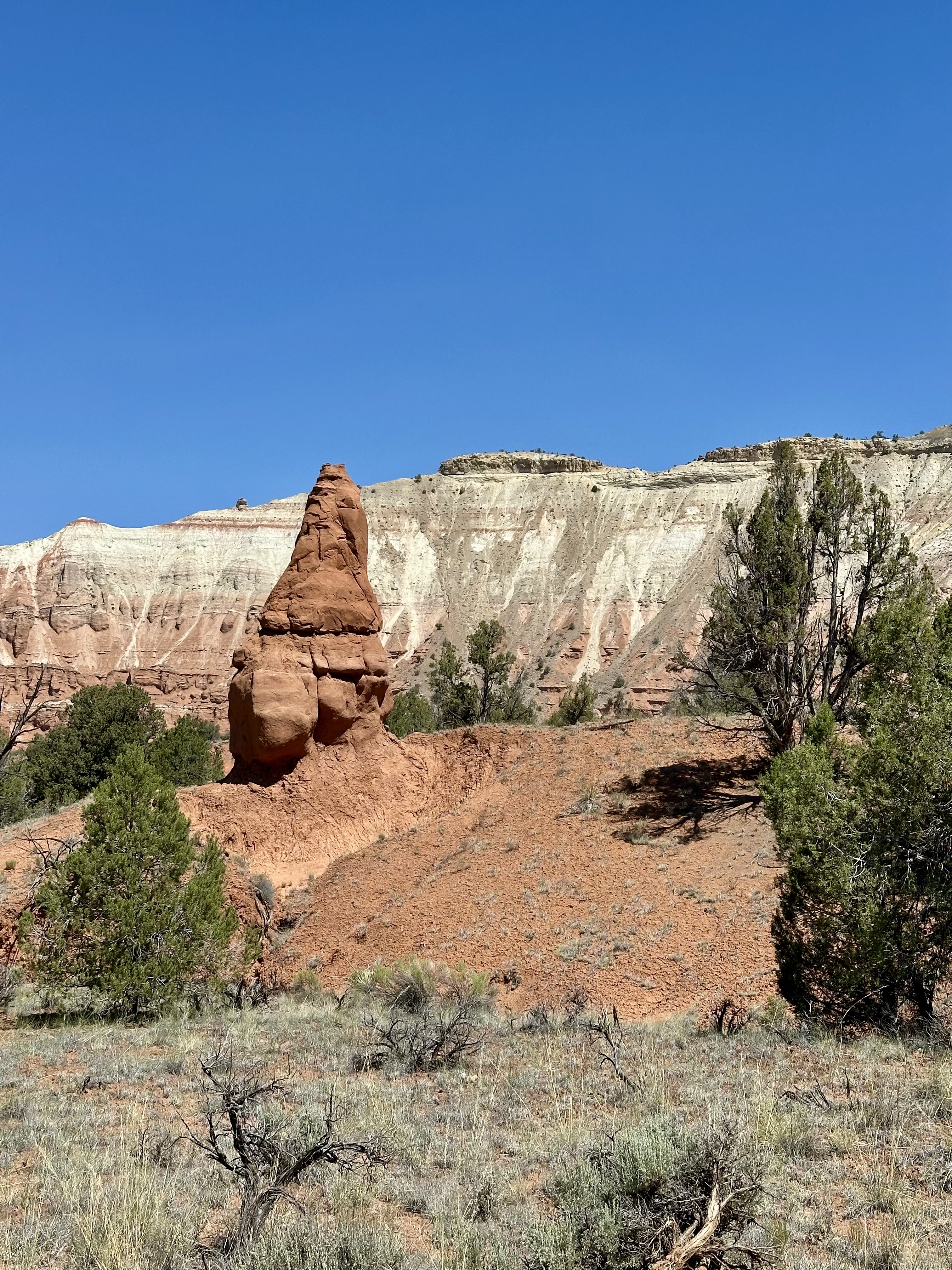
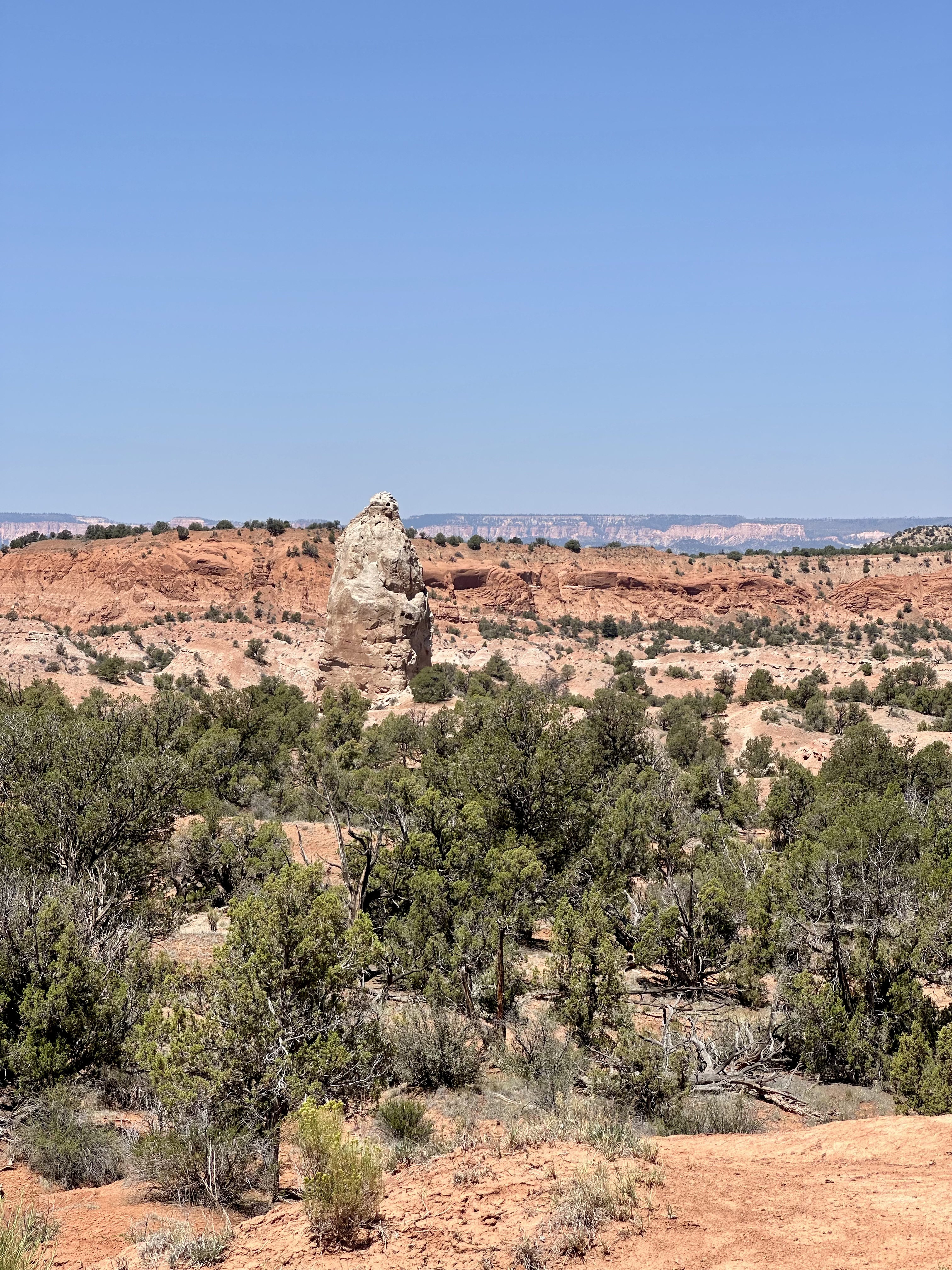
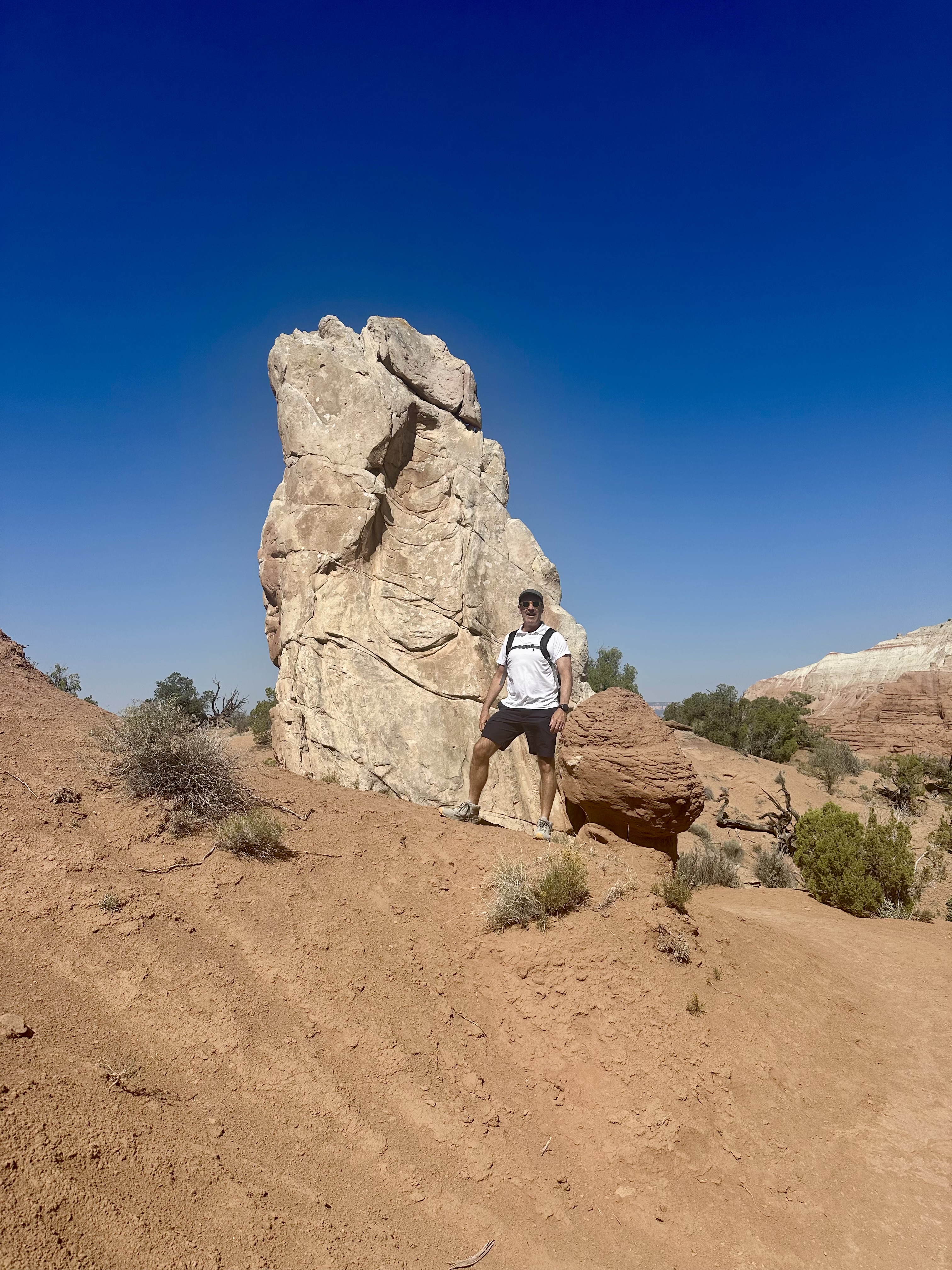
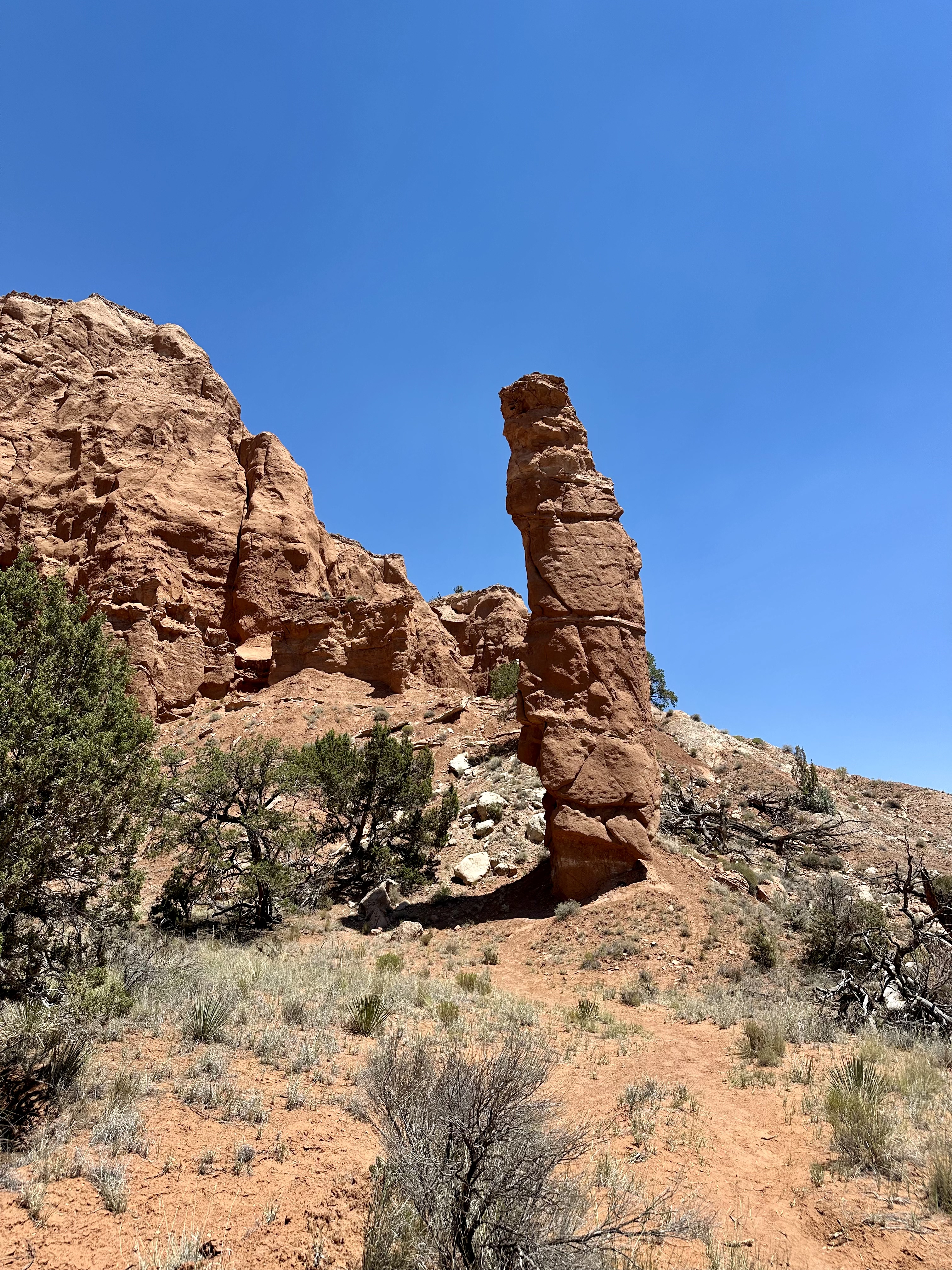
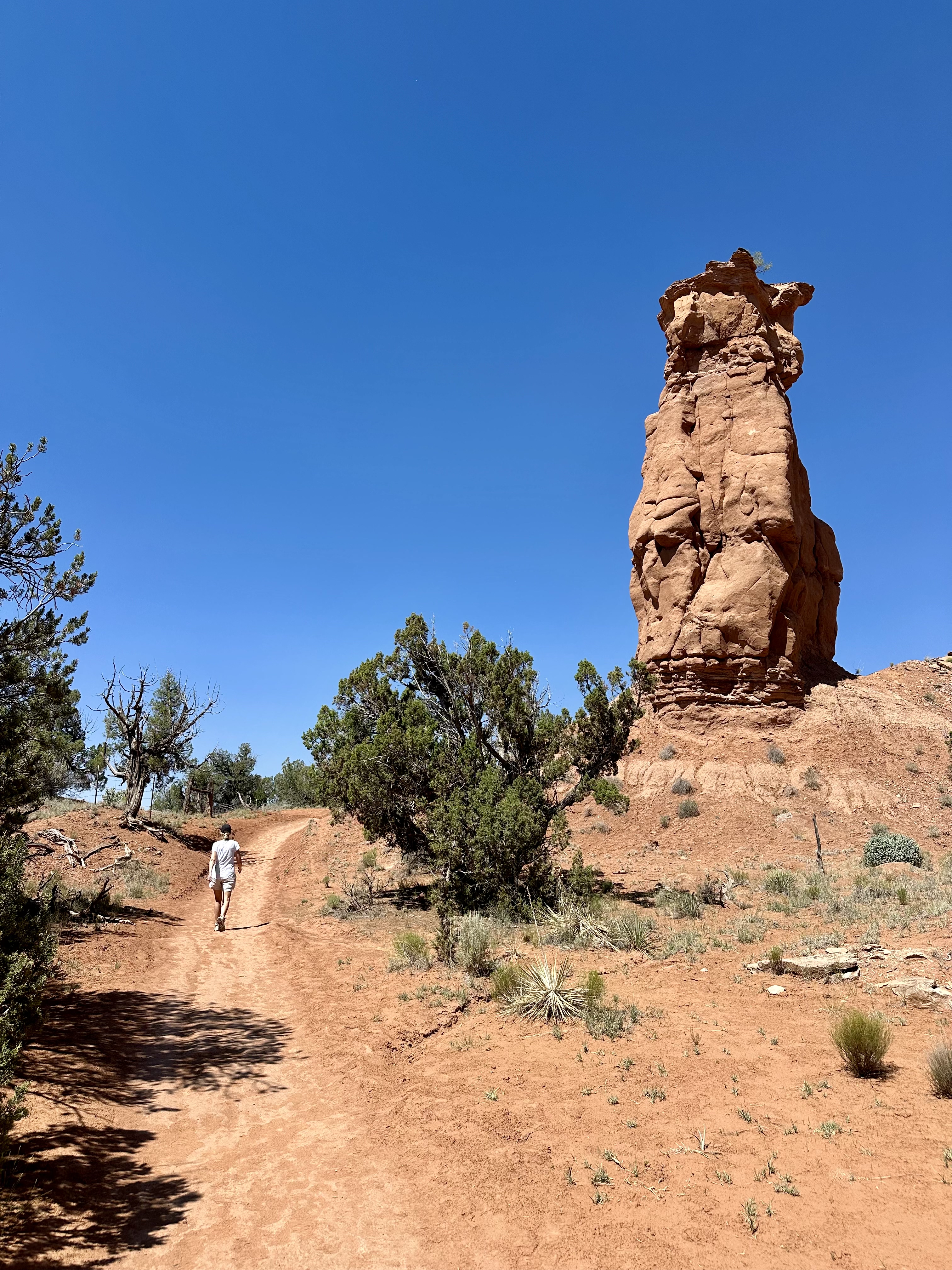
The spires of Kodachrome Basin, a park presumably established by the Society of Geologists Who Keep Elbowing Each Other and Giggling Like 9-Year-Olds:
Pretty good digs in Tropic, a town near Bryce Canyon:
From Bryce, we headed back to Las Vegas for a night (and a show), then headed home. More on each leg later, but we first need to posts the remaining stops on the 2023 Prolonged Foray to Europe.
Following the strategy articulated in the overview for our 6-week trip up the Adriatic coast (and into the Dolomites and Bavaria) earlier this summer, we bookended the summer with another 6-week, shoulder-season trip. Last time, we left on June 1 and returned on July 15. After a 6-week respite at home, we left for this trip the last week of August and returned the first week of October, which still provided us with great weather in Mallorca and Cornwall, but without the crowds that would be there in July and August.
And, unlike the “pick-up-a-car-in-Sarajevo-and-drop-it-off-6-weeks-later-in-Munich” approach from the last trip, where we luxuriated in a car that we could hang on to during the entire, 6-week road trip, we popped in and out of five rental cars in as many trip legs for this journey.
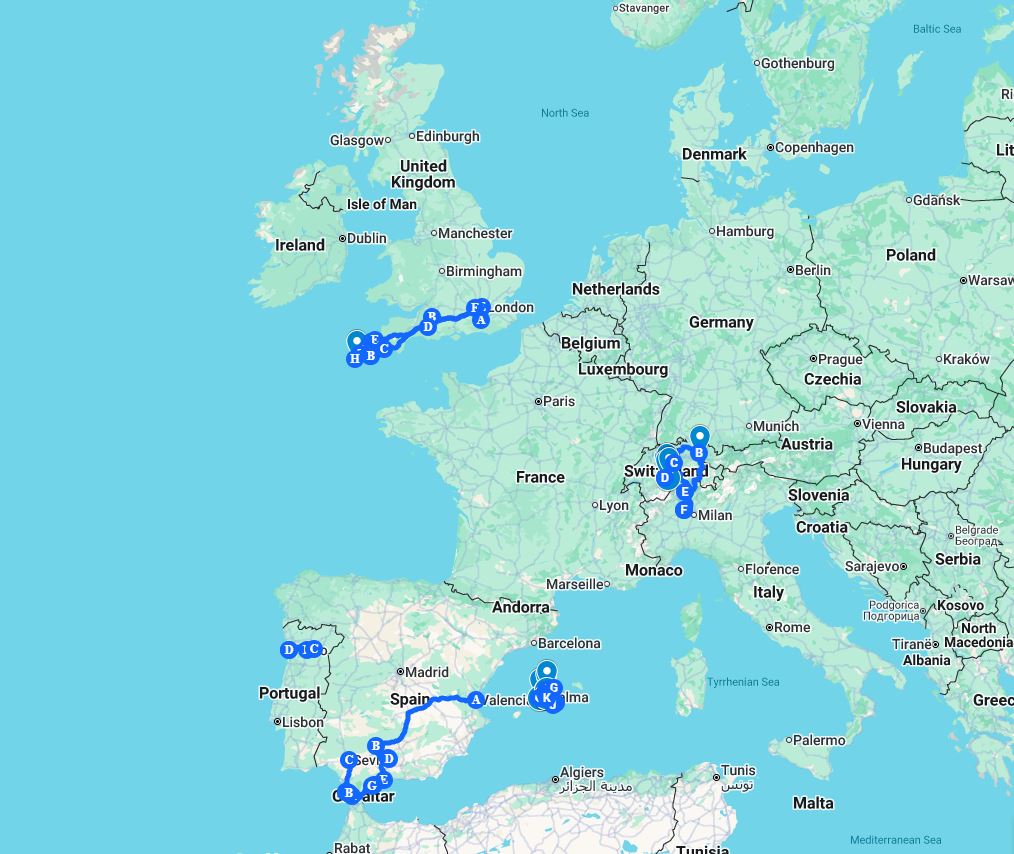
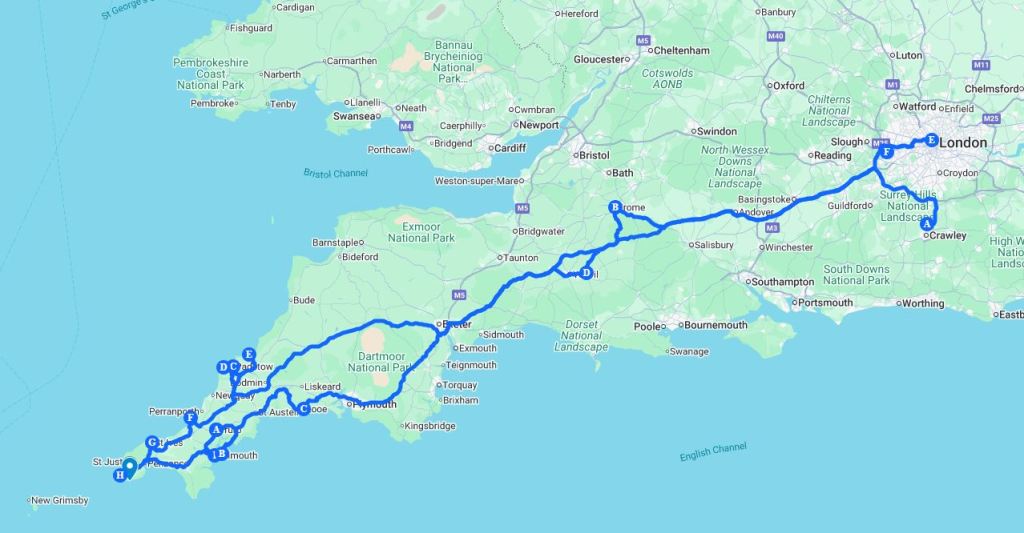
A cartographic overview of the trip’s five legs is pasted below:
Treating the map above as a clock, our route rolled out like this:
We began our trip at the 3:00 spot, with an 8-day loop around Switzerland
Then flew counterclockwise south to the 5:00 location, with an 8-day loop around Mallorca
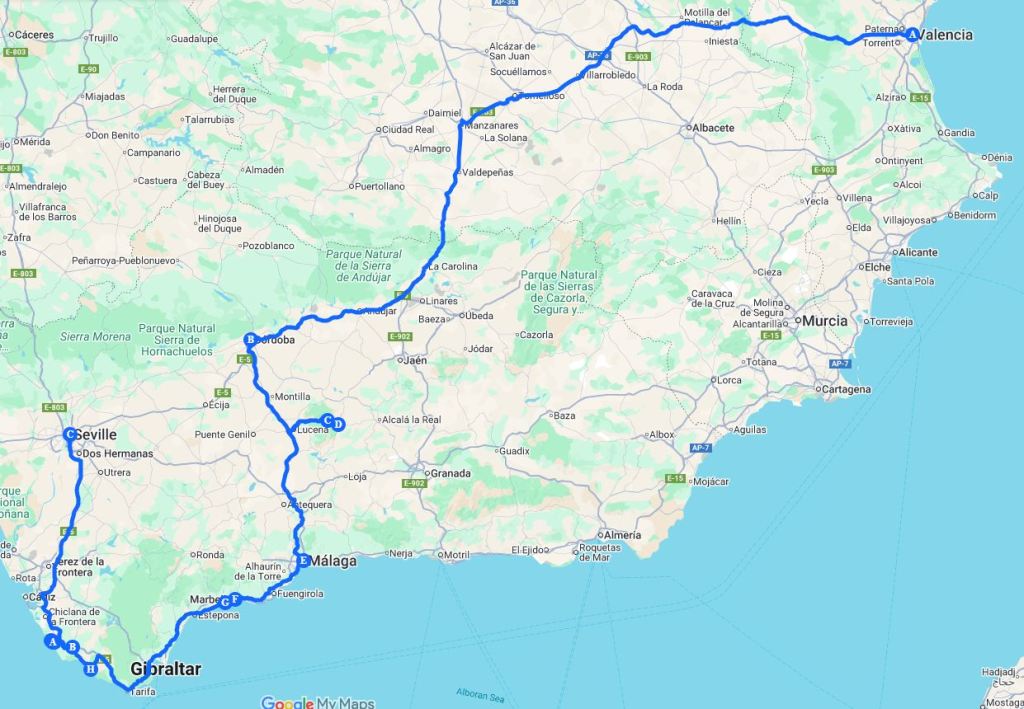
Then flew to Valencia at the 6:00 spot, after a couple of days there, we began an 9-day drive west to multiple locations in Andalusia in Spain
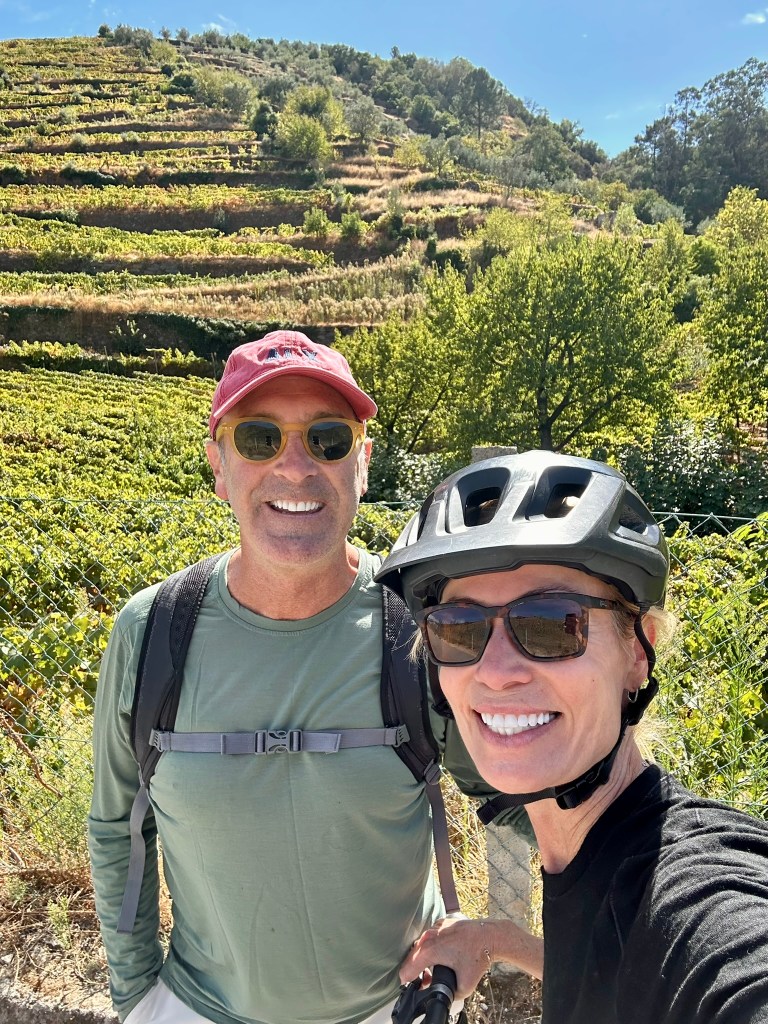
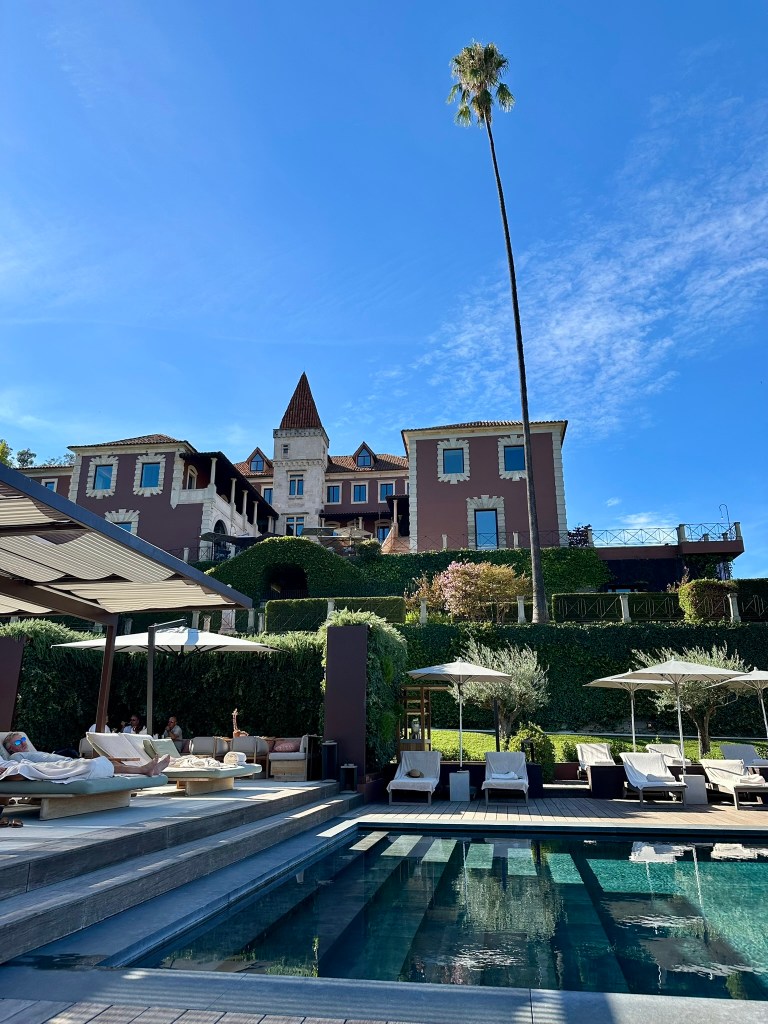
Then flew up to Portugal at the 9:00 location for 3 days in the Douro Valley and then back to Porto for day
And finally ended the trip at the 12:00 spot with a 10-day loop around Cornwall and back to London in the UK
An interactive, zoomable map of the legs is provided below:
The route around the Switzerland leg of the trip also proceeded in counterclockwise fashion (and provided a second opportunity to visit (or at least drive through) Liechtenstein!):
Although we’d spend all of our time on this leg in the land of cantons, we nonetheless began at the Milan airport in Italy, since this location provided a more logical start and end point for a loop route that would cover several mountainous regions as well as Switzerland’s lake-happy Ticino canton in the south.
Our first stop in Switzerland – straight from the airport – was a gondola ride and hike to the Aescher Gashaus near Appenzel for a little lunch – pretty great perch to kick off our time in Switzerland (other than the first of the two parking tickets we’d get on this trip):
Just a normal day of traffic in Appenzel:
Our time in Appenzel, hiking and otherwise, was pretty damp the entire stay:
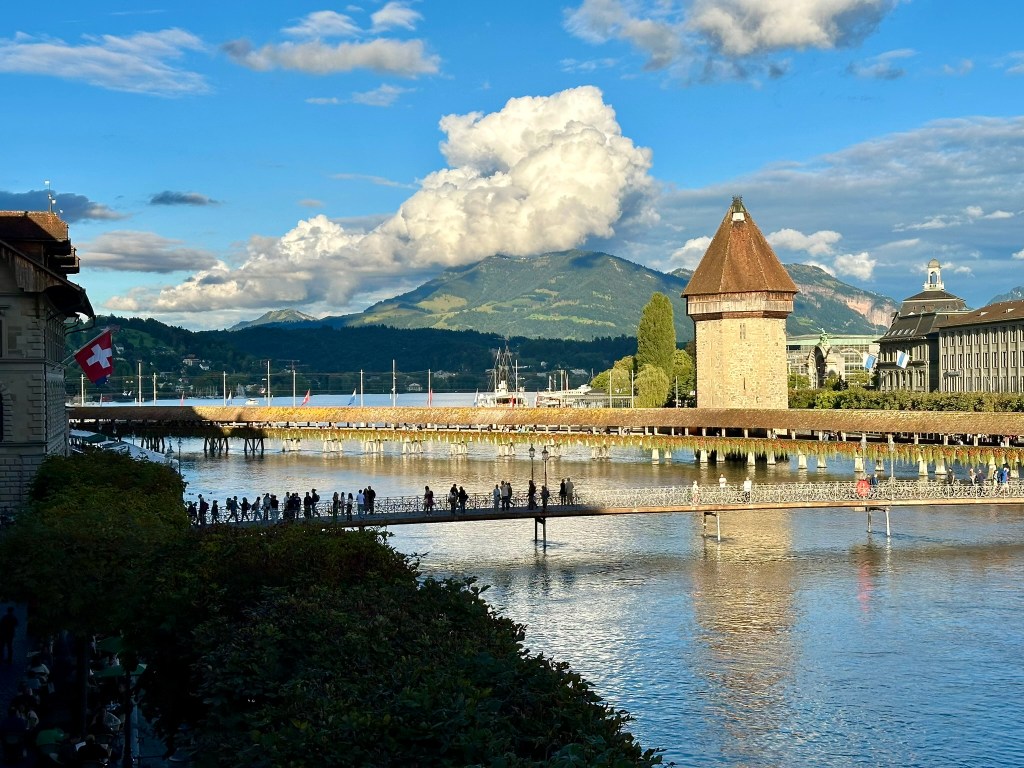
So onward we headed – first to Lucerne:
Really atmospheric and enjoyable – plus a great, historic footbridge!
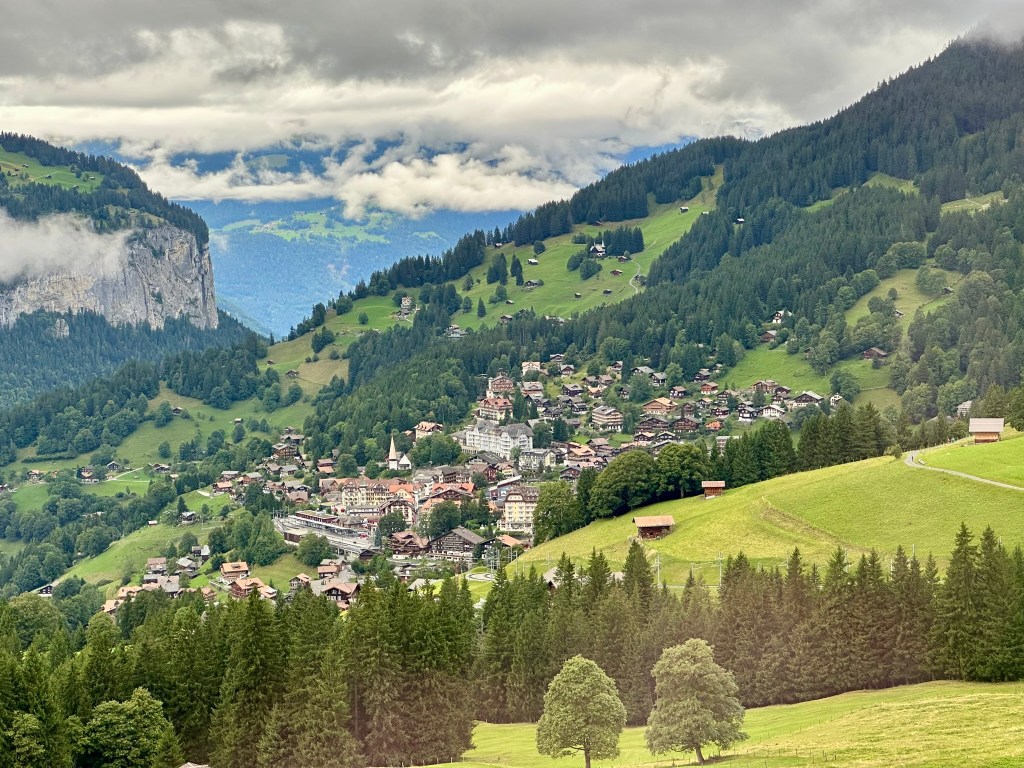
Then to the car-free mountain town of Wengen in the Lauterbrunnen region:
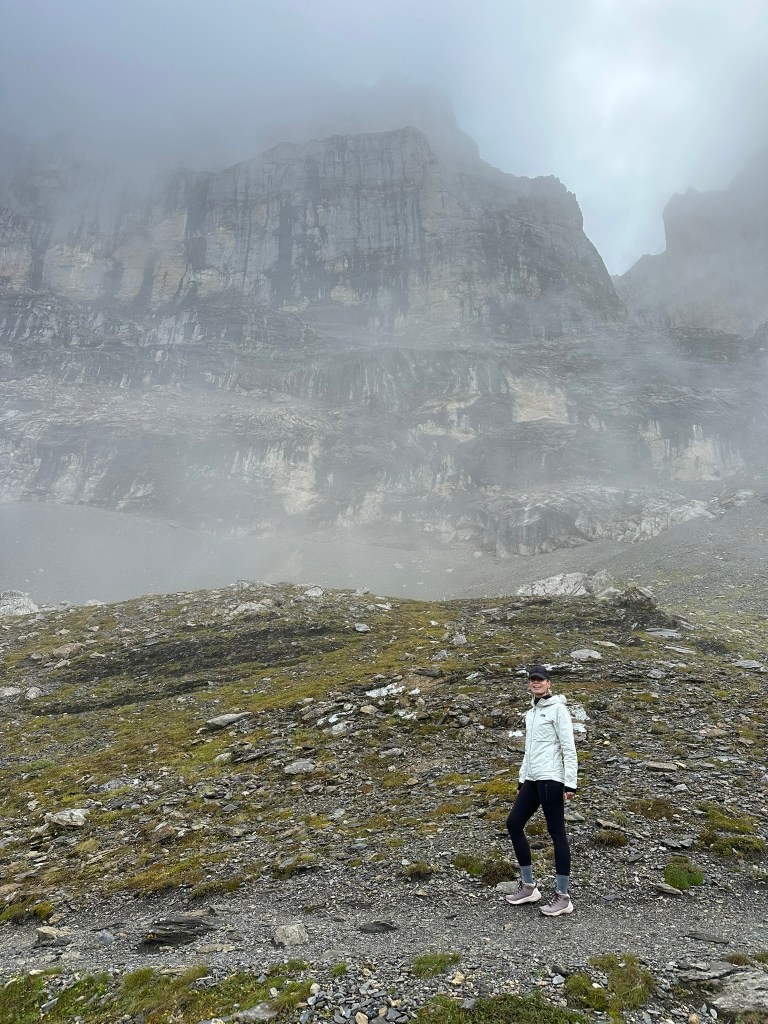
From whence we experienced one of the most spectacular hikes ever, in the Swiss Alps:
View from the nearby, smaller hamlet of Murren to the Junfrau and Eiger:
Our final hike – the Eiger Trail – and more mist and rain, unfortunately:
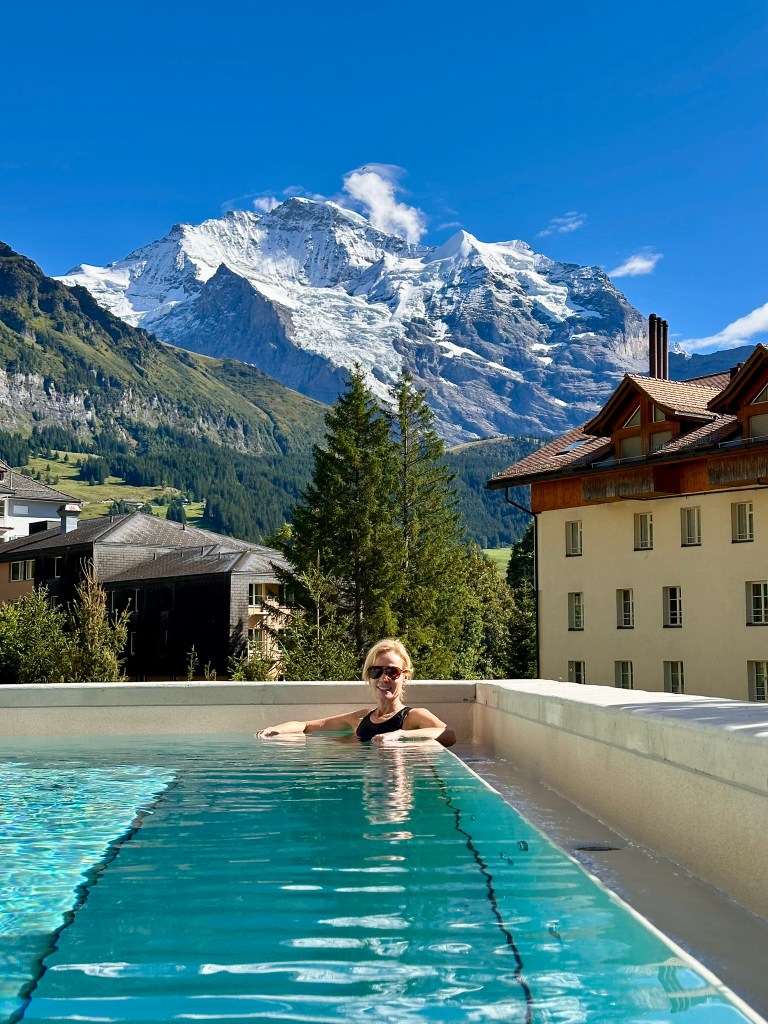
But our digs in Wengen helped assuage this a bit:
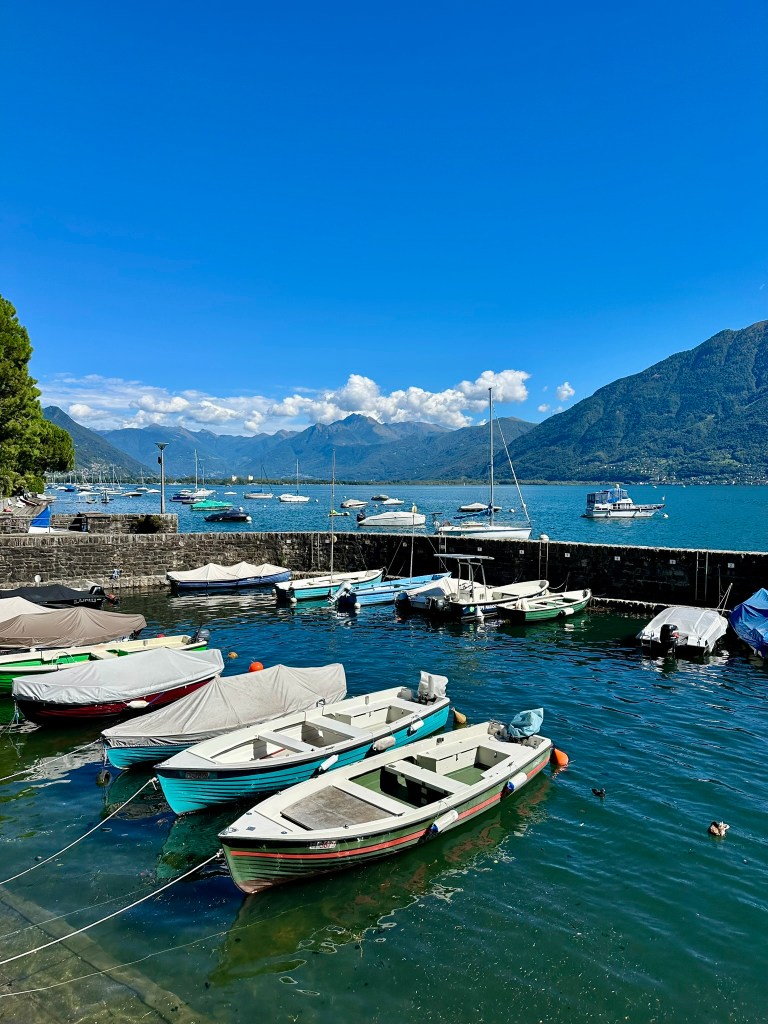
After a week, we ended our loop with an 8th day in the Swiss town of Locarno on Lake Maggiore (strategically booked at an AirBnB with a washer / dryer – a key element to our long-duration trips):
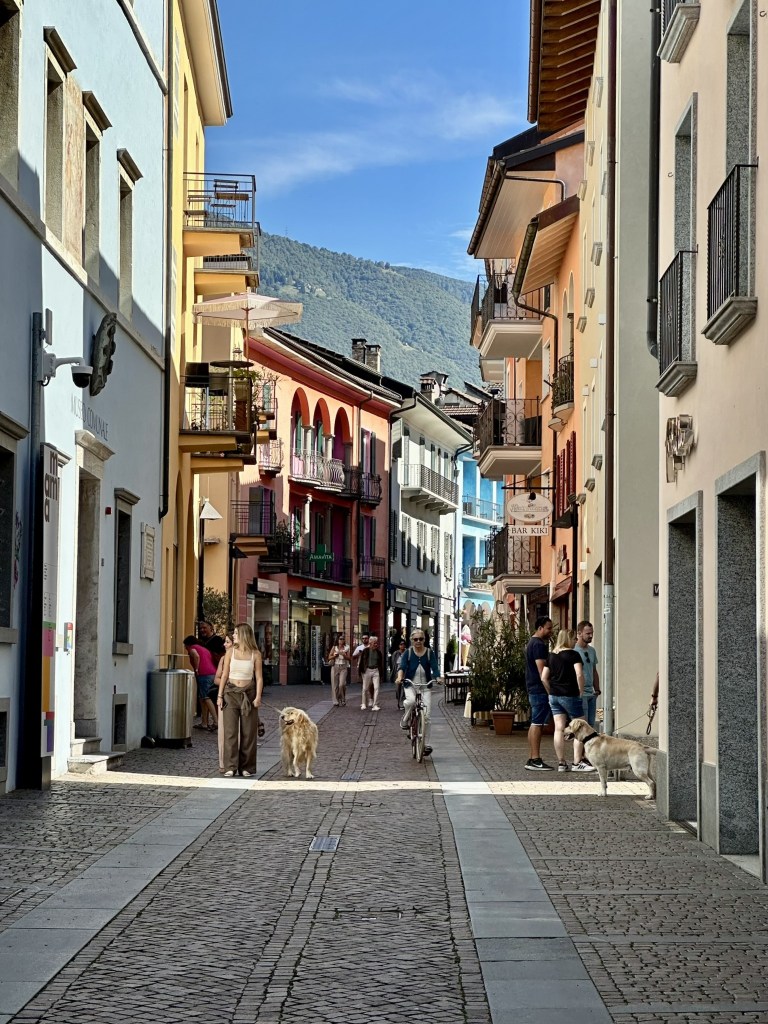
Then spent the next morning in Locarno’s even more charming sister town of Ascona before heading to the Milan airport for a flight to our next leg in. . .
the Spanish Balearic island of Mallorca, where we’d spend the next 8 days:
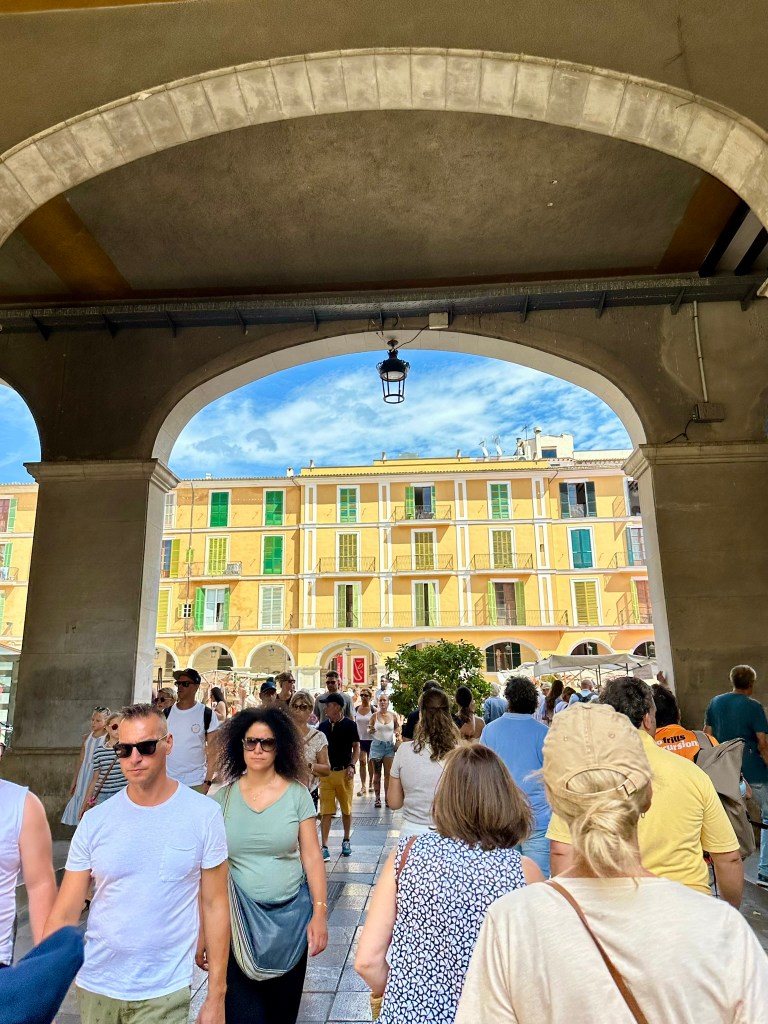
Mallorca’s capital of Palma, the biggest town (and only city) on the island:
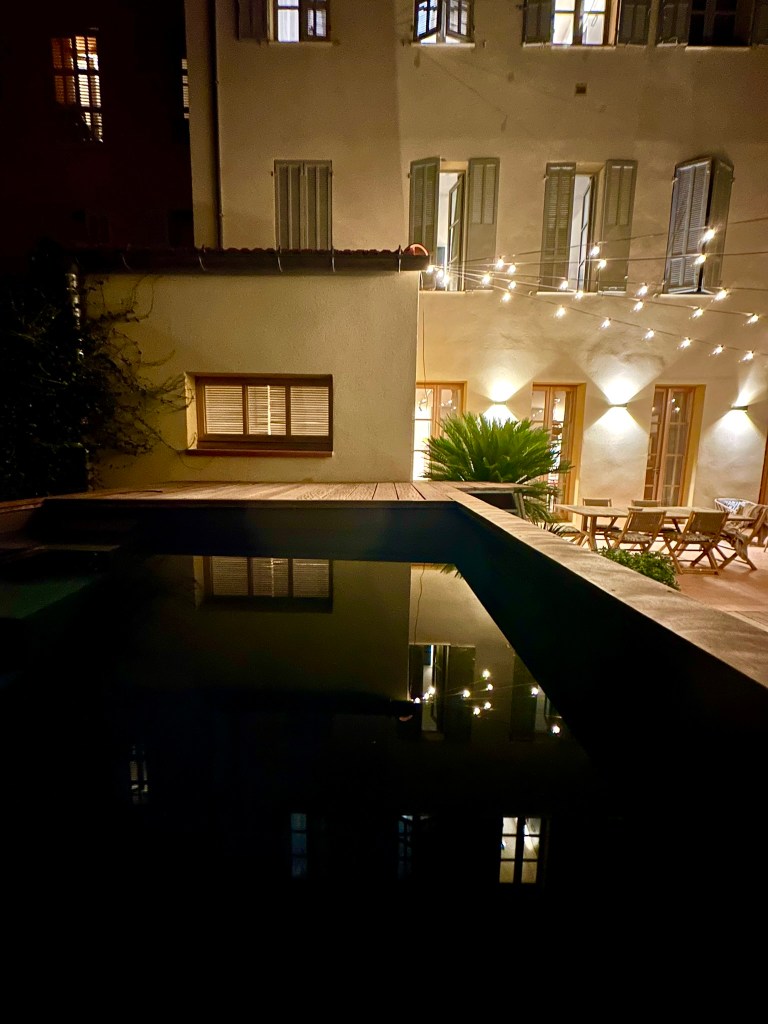
Cool pool in the shadow of one of Palma’s massive churches (very reminiscent of our pool sitch in Carcassonne in 2017 and Uzes in 2021):
Strolling Palma on the way to our 27th anniversary dinner:
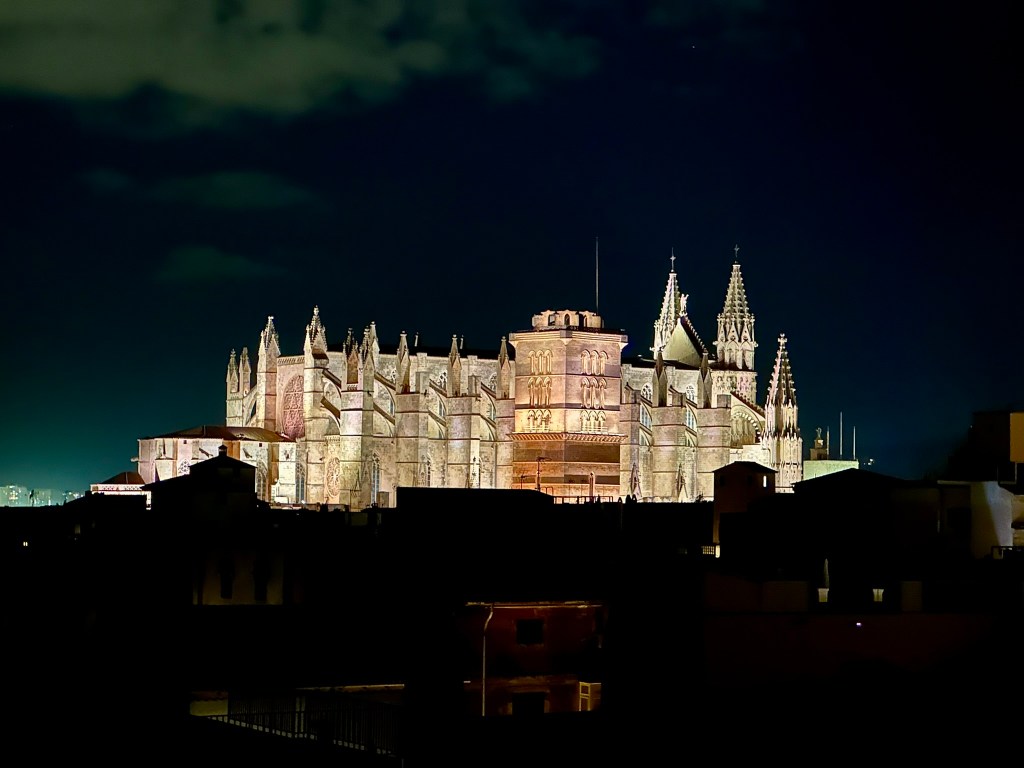
Palma’s cathedral lit up at night from our terrace:
And strolling amidst its flying buttresses the next day:
On to a couple of days in Port de Soller on the island’s west coast:
Cool perch over the port and ocean on our last night:
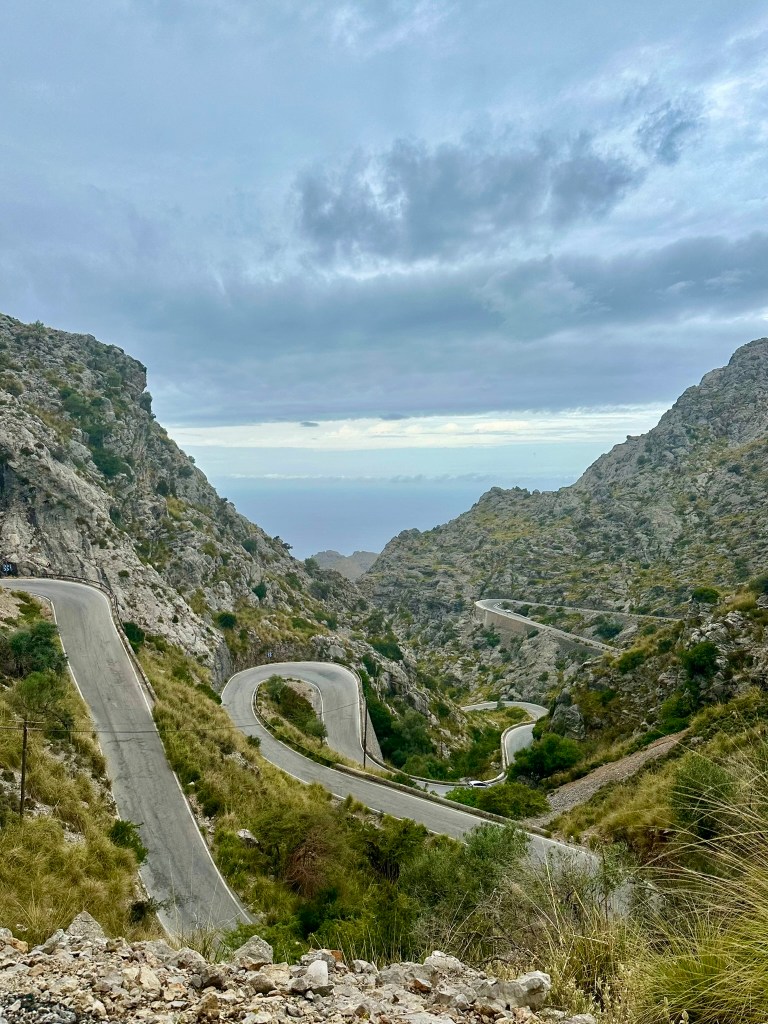
On to Pollença on the north end of the island, which necessarily entailed driving the absolute most insane road we’ve ever experienced:
Super charming town of Pollença, with it’s 365 steps to reach the town’s Oratori del Calvari chapel:
After swimming in the ocean and trying the nearby beach for all of 20 minutes, we decided that this arrangement would better suit our interests for the day. We were right.
Our last town of Colónia di Sant Jordi (and another AirBnB laundry stop), in the southeast corner of Mallorca
On to the Spanish mainland!
Although we’d spend the rest of our time in Spain exploring more of Andalusia (after seeing and loving much of it during our bike trip in the region in 2017), we’d first bop around Valencia on the east coast for a few days:
Spectacular city – super vibrant and fun and very Beaux Arts-y. The unbelievably perfect weather undoubtedly had a lot to do with this impression.
Cool little bike tour one day around the city and out to the beach:
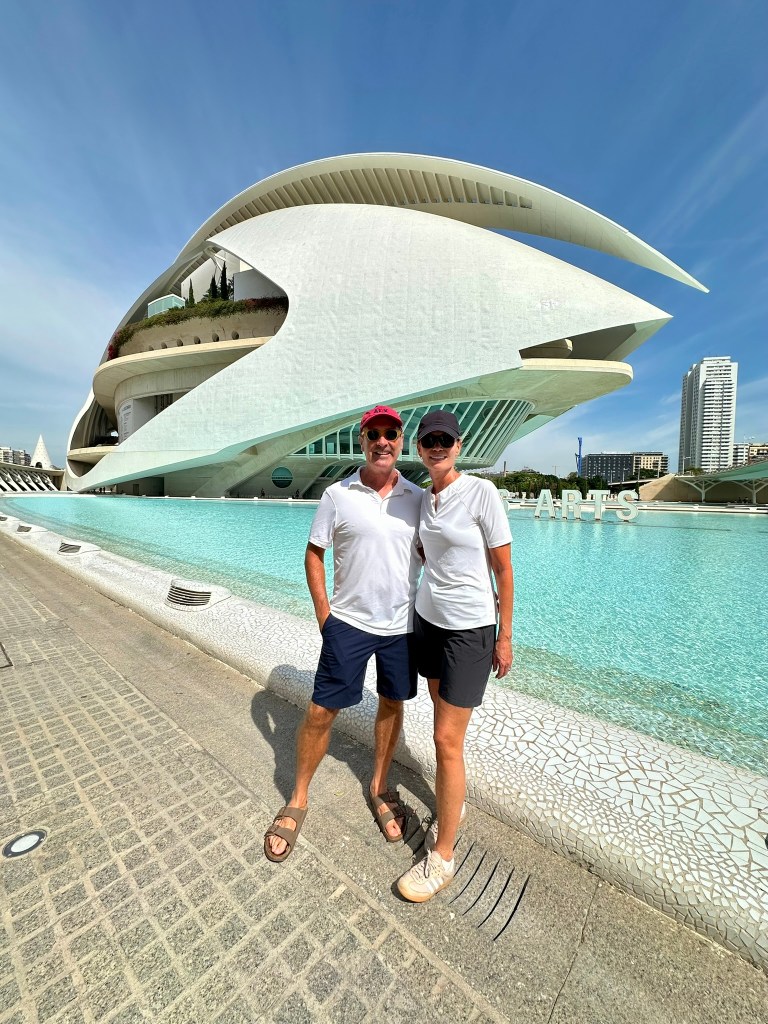
Including riding through Valencia’s sci-fi City of Arts and Sciences:
Then, a long drive west to our first Andalusian town that we missed on our bike trip: Cordoba.
Star of the show? The absolutely unique Mosque–Cathedral of Córdoba. Originally built as a grand mosque in the 8th century under the Umayyad dynasty, it was converted into a Catholic cathedral after the Christian Reconquista in 1236. Unlike every other instance of these conversions, however, the existing mosque structure and architecture was not razed, but retained.
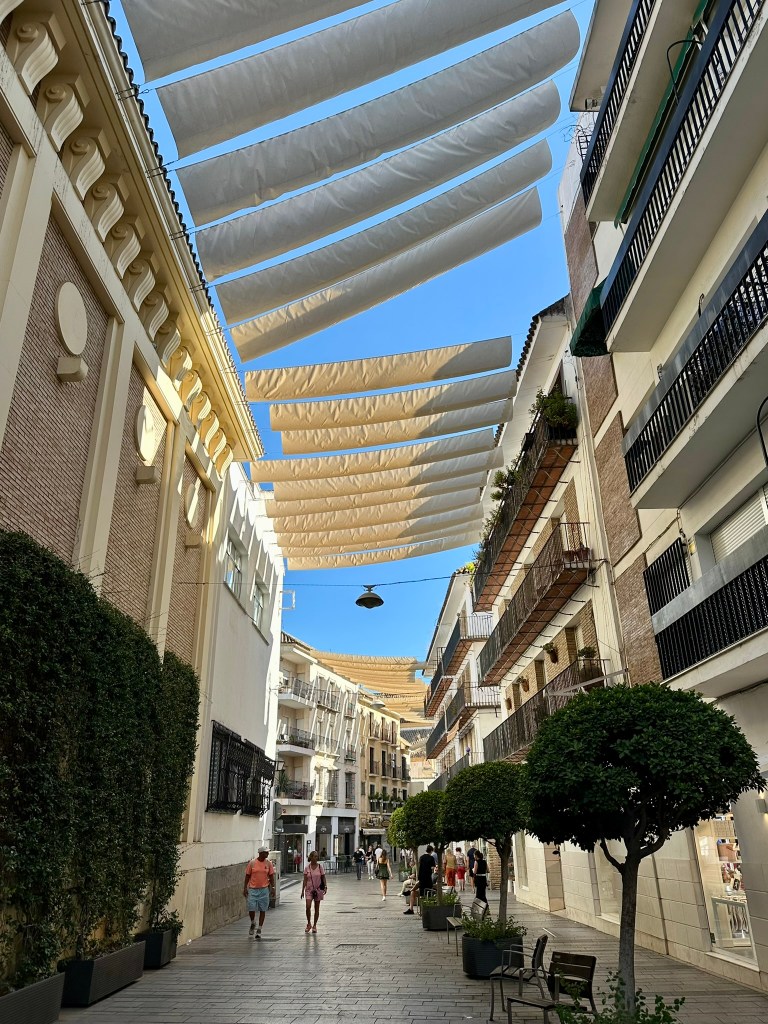
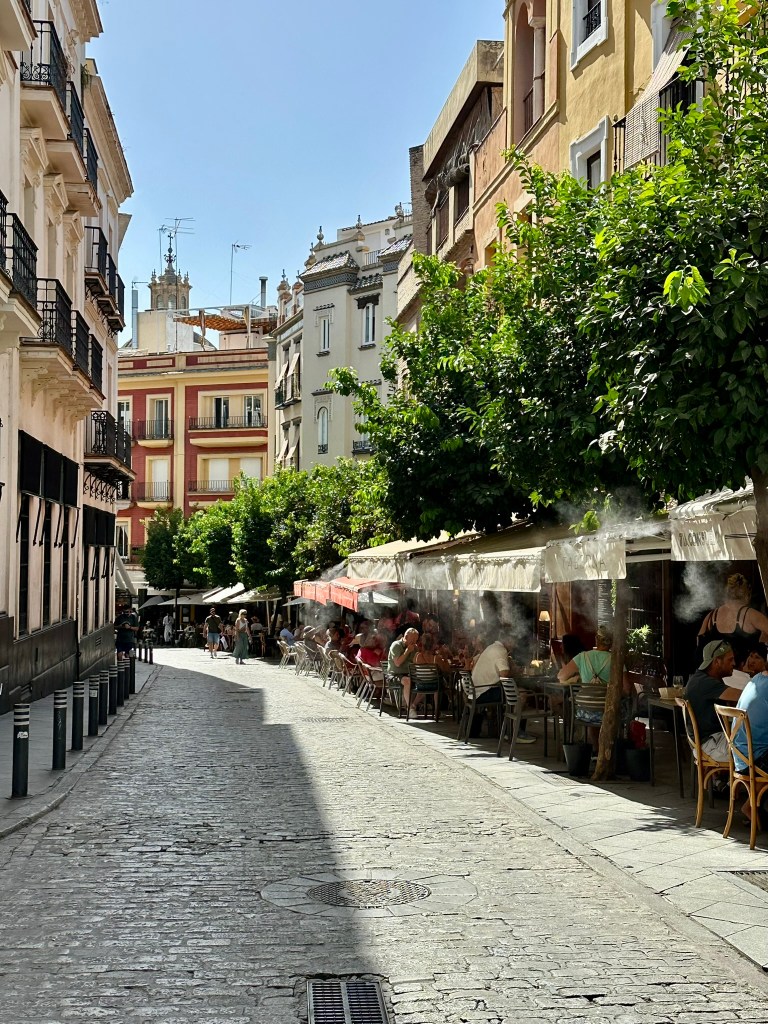
First of several times we’d see this street-cooling technique used in Andalusia:
At one end of Cordoba’s Roman Bridge lies the Moorish Tower (Torre de la Calahorra), a fortified gate built by the Moors in the 12th century to defend the southern end of the bridge.
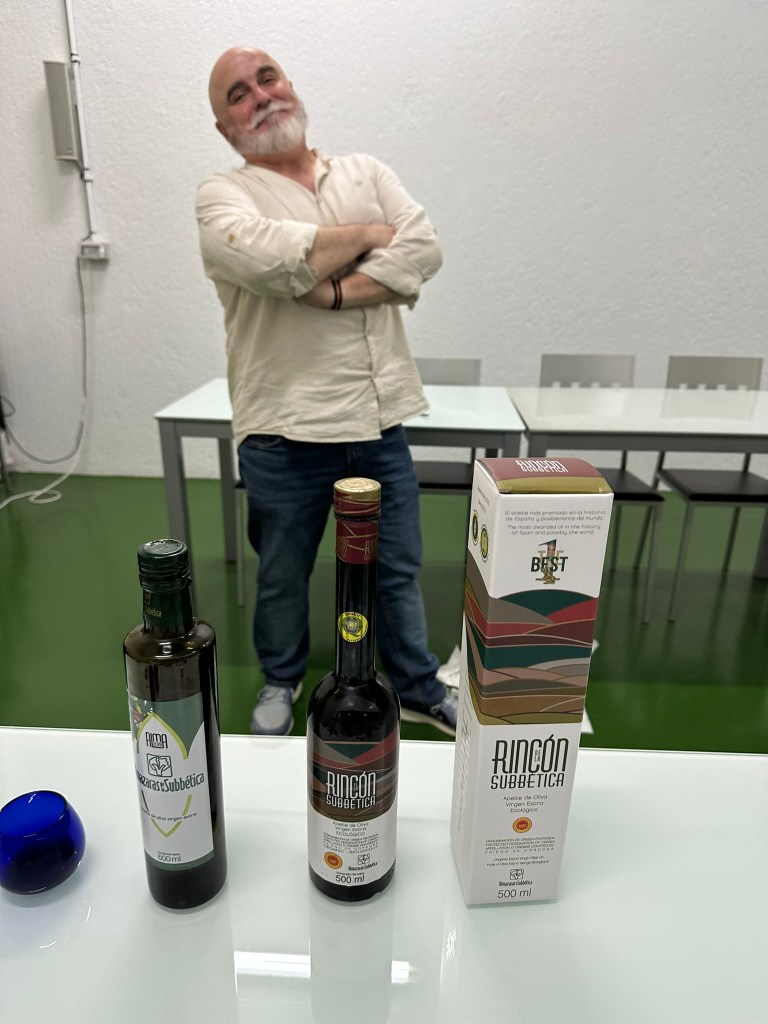
On the drive from Cordoba to Malaga, a stop at an olive oil processing facility for a tour and tasting at the Almazaras de la Subbética cooperative south of Córdoba – winner of the World’s Best Olive Oil competition in 2024/2025. And the 10 previous years. Super cool.
That’s a LOT of olive oil!
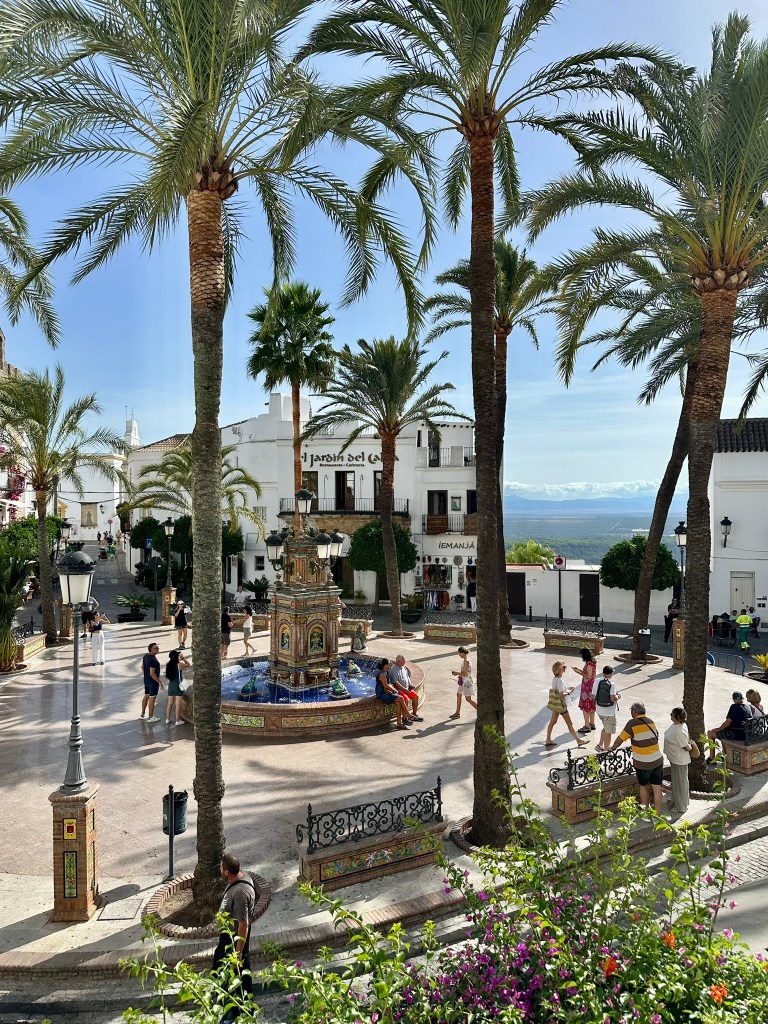
Priego de Cordoba, another white-washed Andalusian town visited on the drive to Malaga:
Malaga, the second (and final) iconic Andalusian town we missed on our previous bike trip:
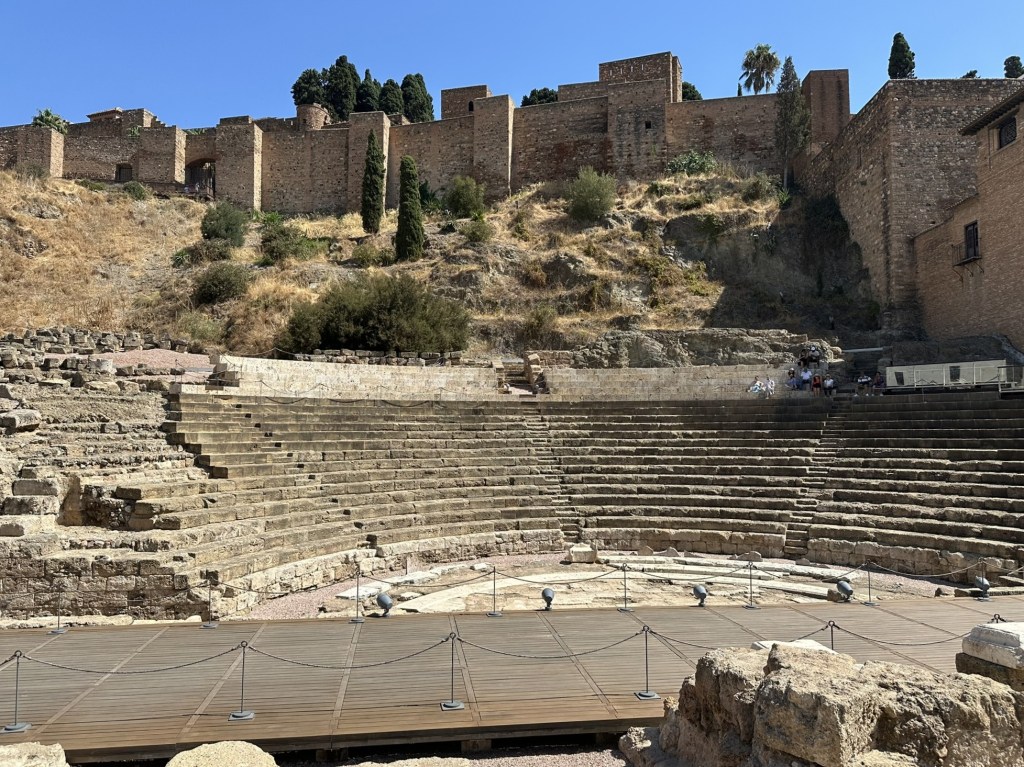
Right in the heart of town lies a Moorish calabaza atop a Roman amphitheater. The history half of WolfeStreetTravel was delighted.
Cool little tapas tour our first night; it turns out that maybe we DIDN’T need to pack 45 cigars for the trip (which we certainly did).
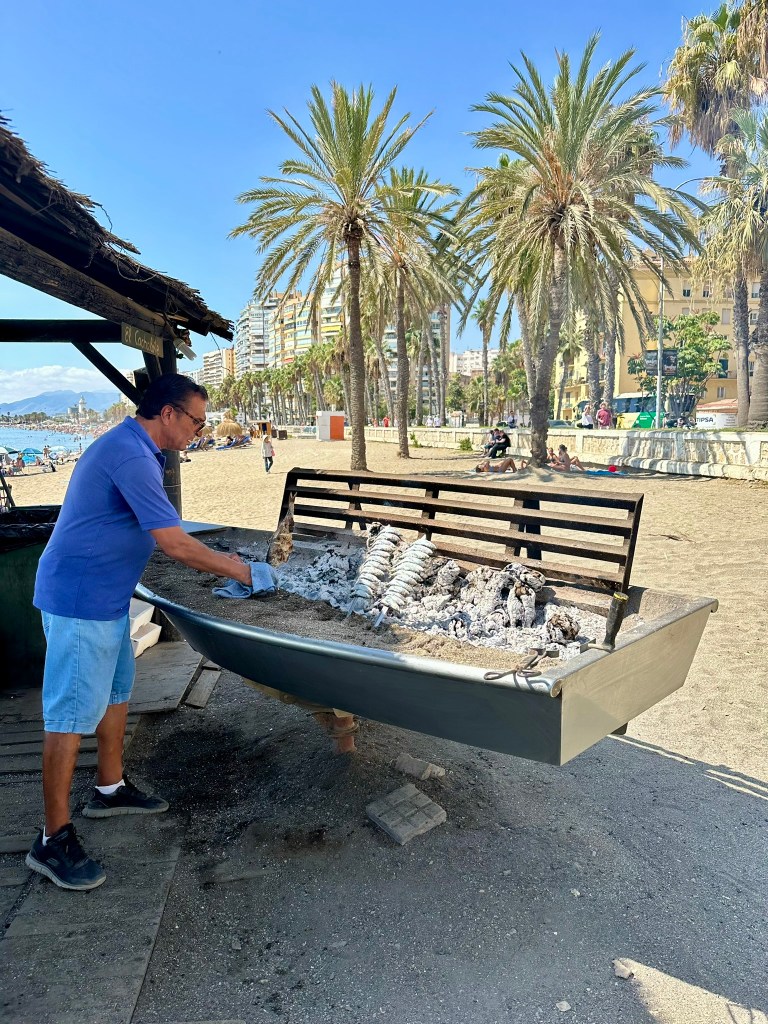
One of our goals? Chow down on espetos at a chiringuito – a beach fish-grilling restaurant (which we learned about on The Amazing Race, for what it’s worth).
Definitely lived up to the hype (especially accompanied by a few tinto de veranos).
A stopover in Marbella en route from Malaga to our next town. Despite high expectations for a super awesome area – meh.
After months of the Mediterranean (first in Croatia on the initial bookend and then in Mallorca, Valencia, and Malaga on this trip), we transitioned to the Atlantic after driving past Gibraltar to get to Playa Zahara de los Atunes.
Where we stumbled, during our only night there, into a cool little concert at a beach bar down the street:
Continuing our little U-shaped arc around Andalusia, we headed next to Conil de la Frontera (our third de la Frontera, designating a frontier town between Christian and Moorish territories in the 900s):
Fried fish frenzy.
And a little day trip to Vejer de la Frontera:
Even more atmospheric Andalusian town (and our forth de la Frontera):
More beach fish at Playa de la Fontanilla:
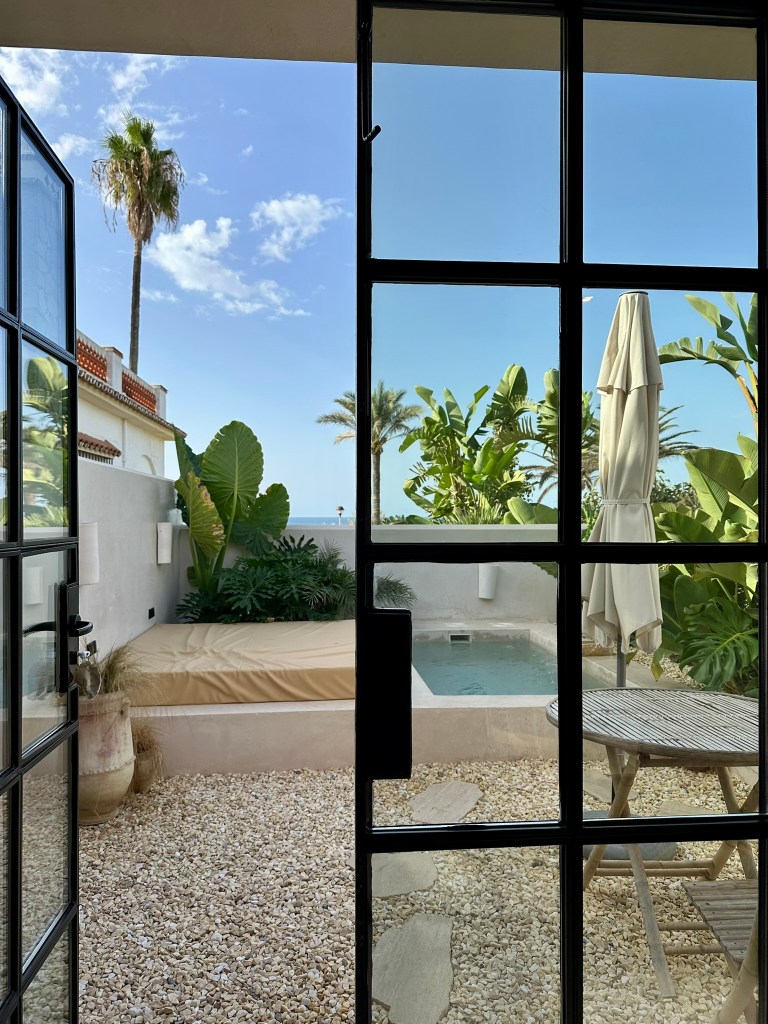
And our casita for 2 days right down the beach. One of the best AirBnBs we’ve experienced (plus a laundry stop):
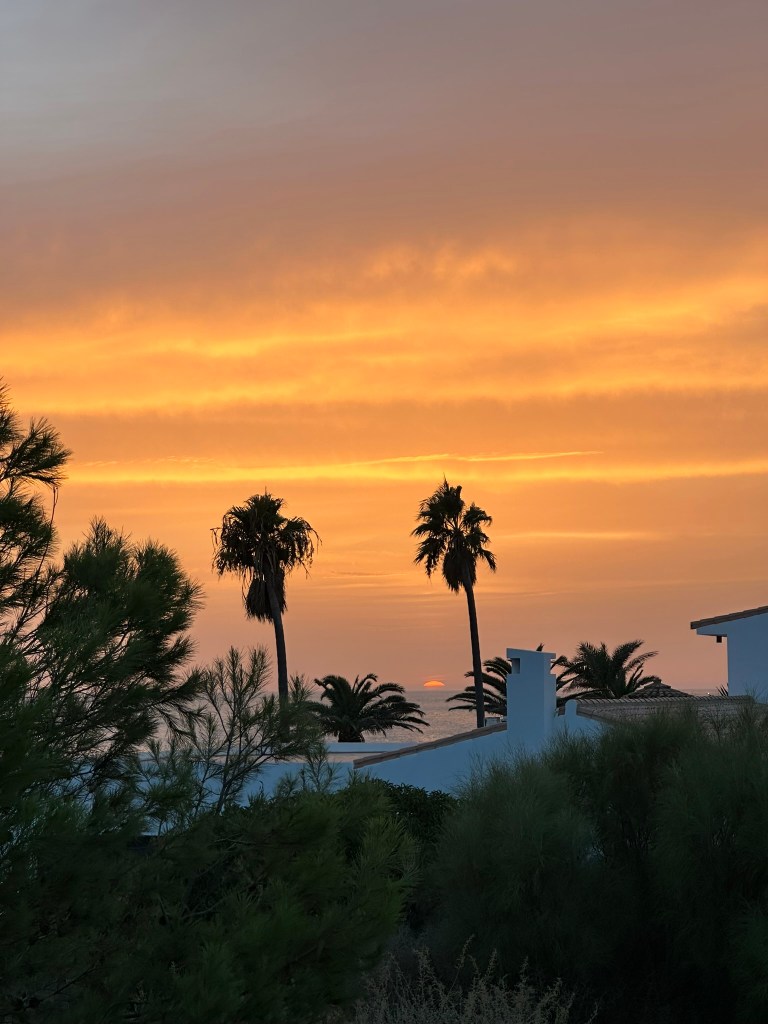
Amazing sunsets from the casita’s roof deck:
Then, back to Seville, which we really enjoyed when we first visited in 2017.
Never got to see the “mushroom” during that visit; this has been corrected:
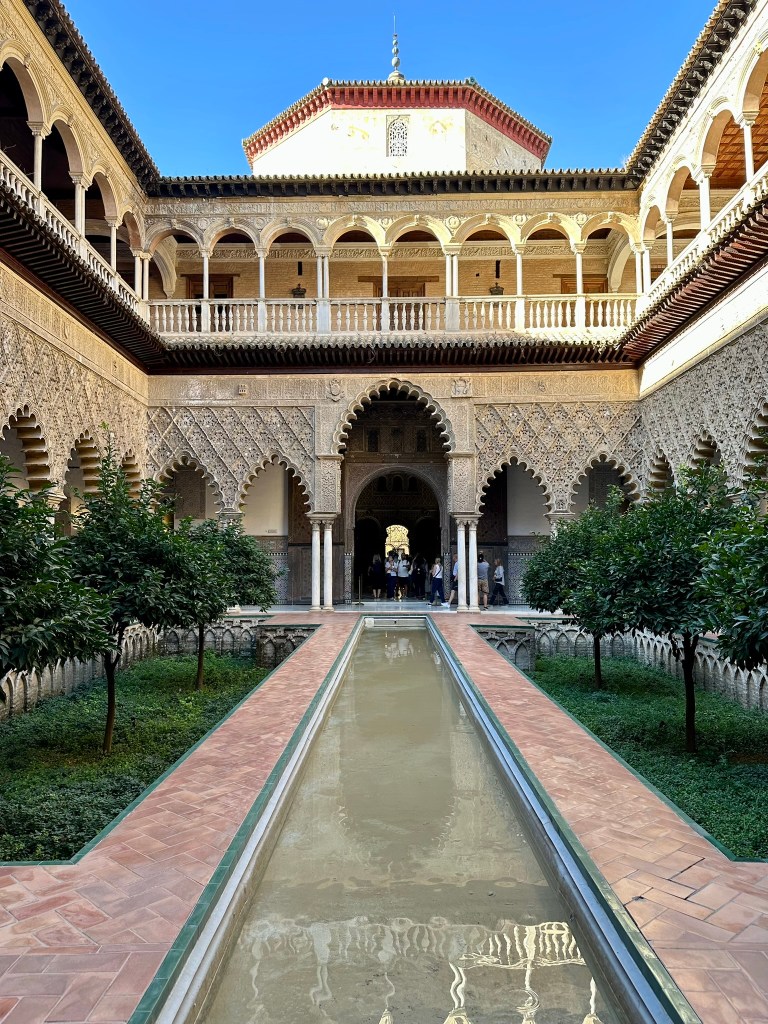
And we spent our limited time in 2017 visiting Seville’s storied cathedral and did not have an opportunity to visit its alcazar. This also was corrected:
And, reminiscent of our days feasting on pinxos in San Sebastian in 2021, a dinner in Seville that included baby eels. Delicious.
Seville served as our last stop in Andalusia; from there, we flew to Porto, Portugal, picked up another car, and headed immediately east to the Douro Valley – Portugal’s wine country.
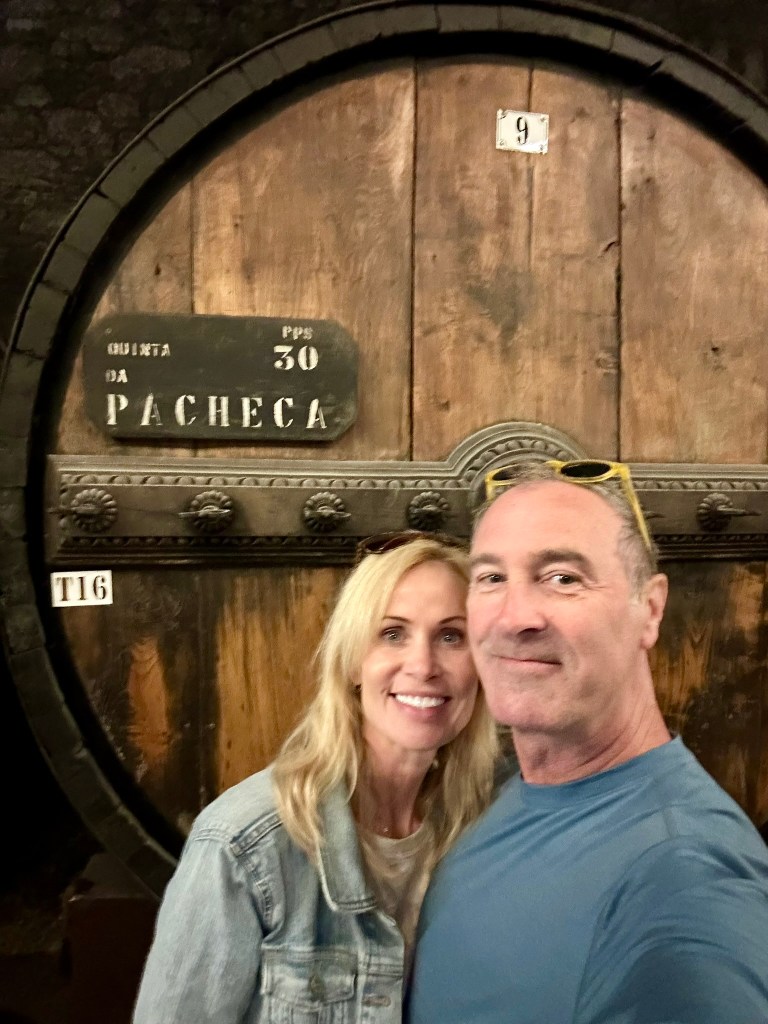
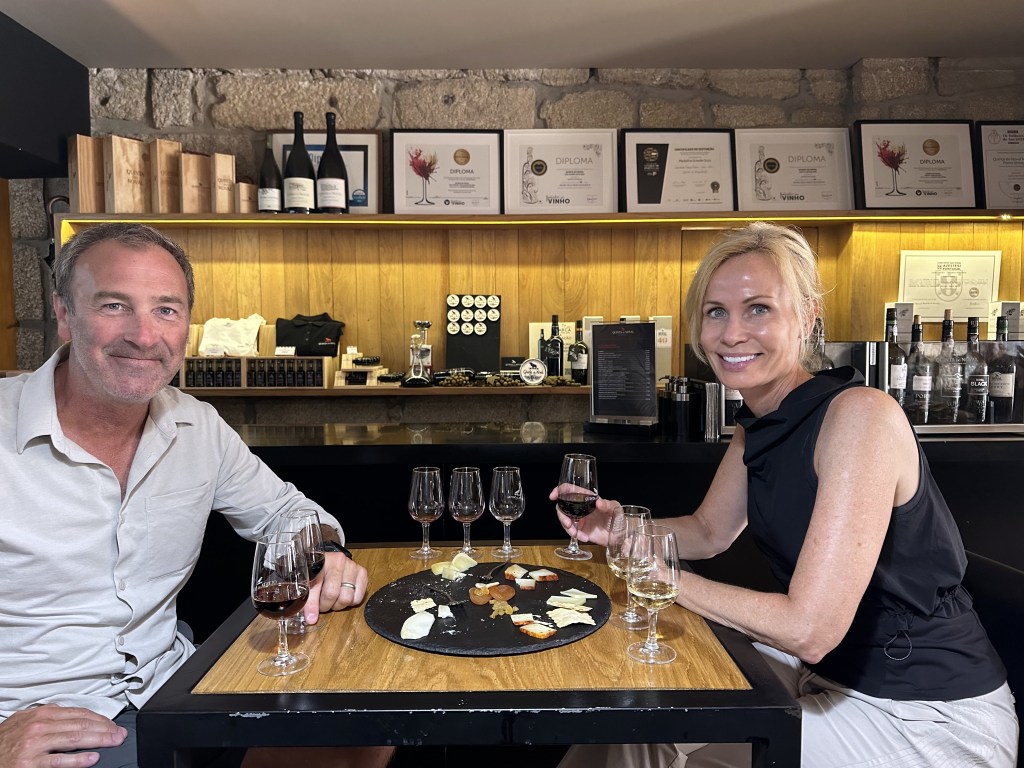
Our first stop – literally straight from the airport – was a tour and tasting at Quinta da Pacheca. Good wine. Great port.
And the Douro Valley wineries really DO still stomp grapes, a la I Love Lucy. Pretty wild.
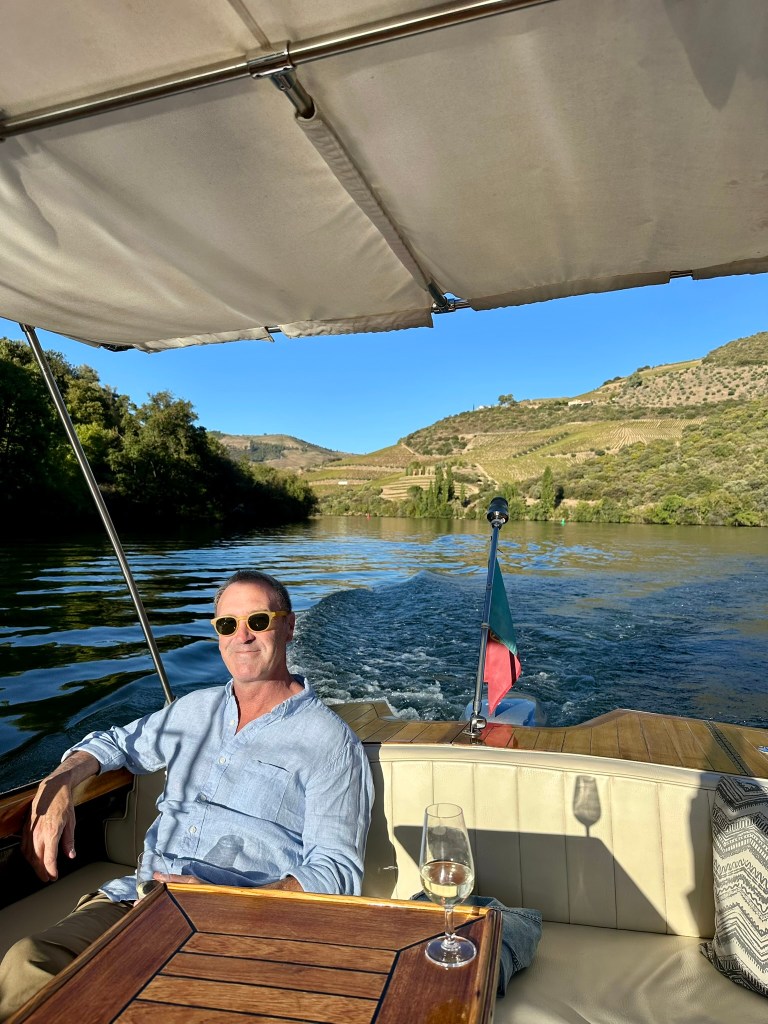
Cool little sunset boat trip on the Douro River:
And a full day of biking through vineyards (none of which accommodated walk-in tastings – you had to have reservations, which we thought was insane:
Douro needs to learn lessons from the Virginia (and sure, California) wine region.
Pretty good digs for our 3-day stay:
The day after biking, we did end up calling and then visiting Quinta de Fojo, which offered an outstanding and authentic tasting experience at a generations-old family winery:
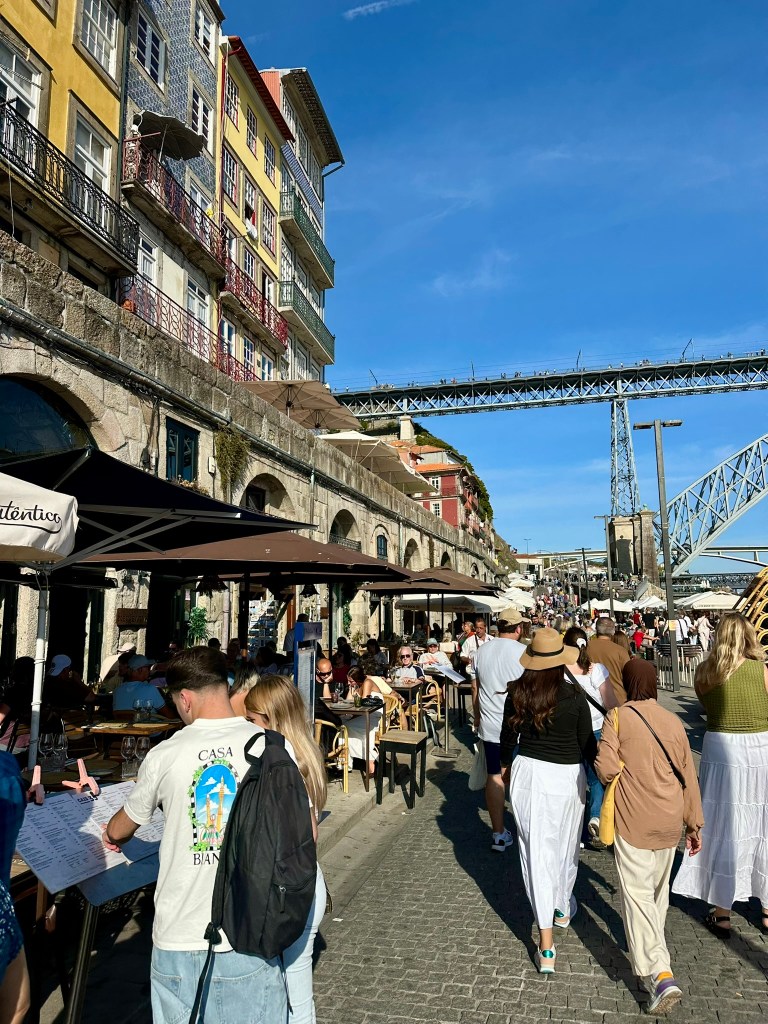
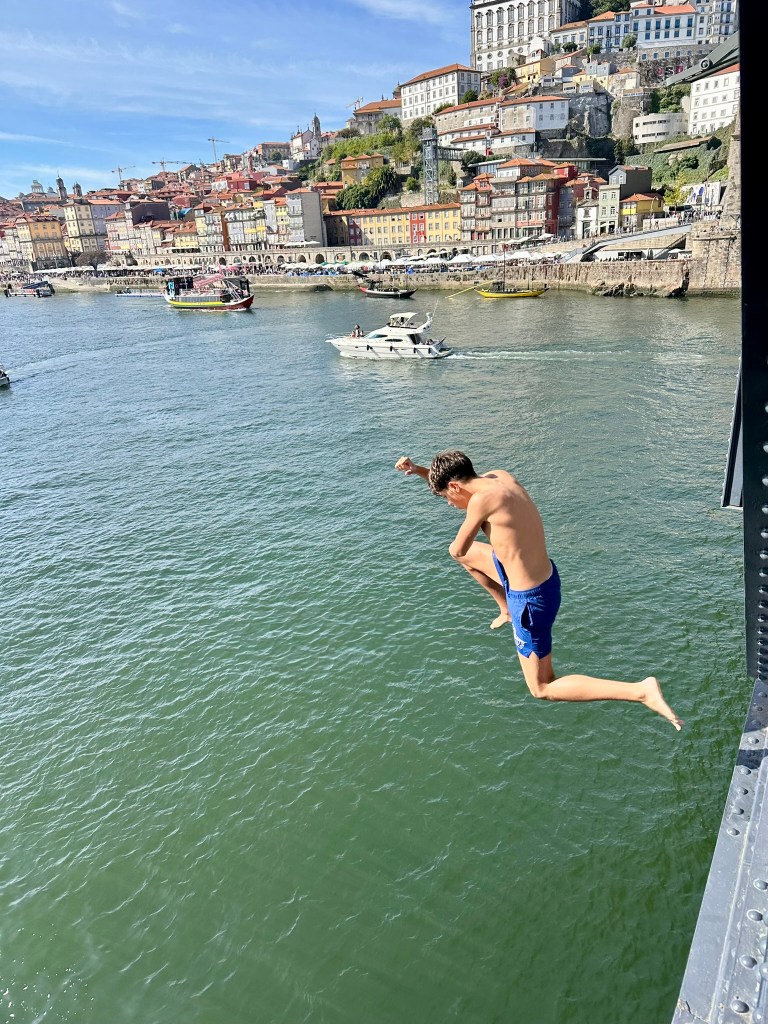
Then, back to Porto for a day; we first visited at the tail end of our inaugural post-retirement long trip in 2023 and definitely wanted to return, even if only for a short time:
Like our second visit to Rovinj, Croatia, a few months earlier, we stayed across the river from Porto’s core instead of inside – definitely a different point of view!
From Porto, we flew to our final leg: Cornwall in the southernmost tip of England:
Due to the length of the drive from London to our first Cornwall location (we try to keep drives between locations under 4 hours, and ideally no more than 3), we stopped halfway in the town of Frome, in Somerset:
Turned out to be pretty cool, and with a remarkably high ratio of pubs to people, which was a plus for us:
Then, to our first stop in Cornwall – Padstow:
Rather than stay in town, which was a little bereft of cool lodging options, we stayed about 10 minutes away, at. . . The Pig. Which was a cool lodging option, it turned out:
But we did get into town our second night to dine at The Seafood Restaurant, the flagship eatery of Rick Stein, who we had never before heard of, but who turns out to be a beloved English restauranteur and a seafood magnate in Padstow (the restaurant was one of at least three Rick Stein joints in town):
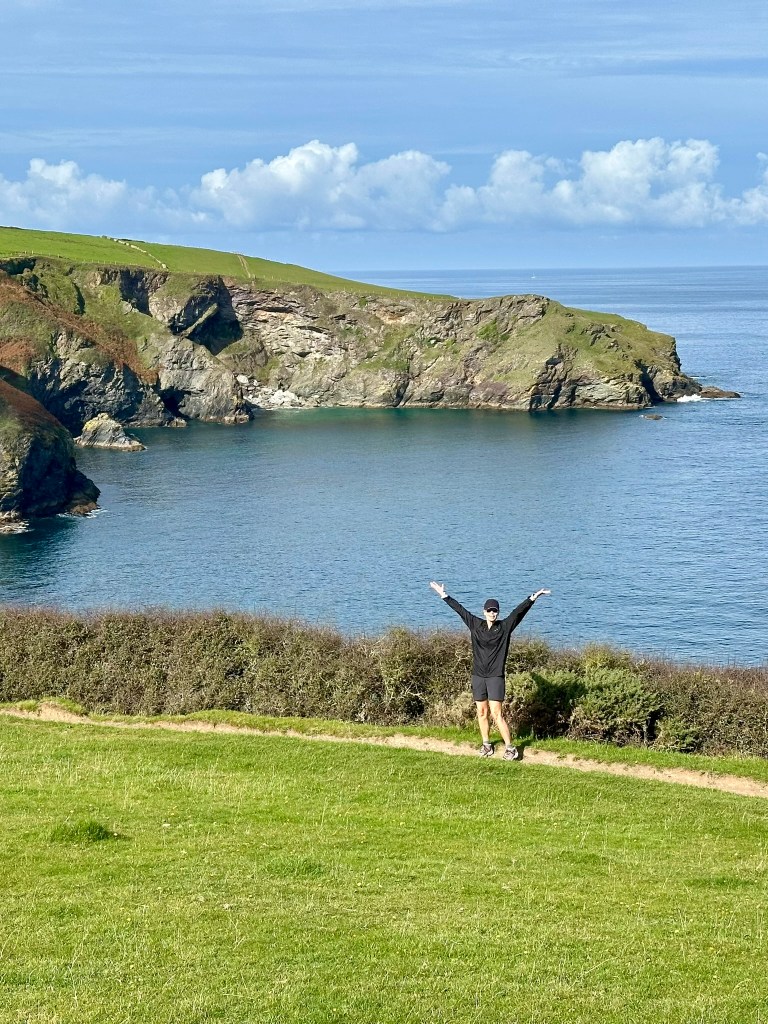
And on our first full day, our real purpose for visiting the region: spectacular hiking. In this instance, a quasi-loop hike between the achingly charming village of Port Isaac to the even smaller hamlet of Port Quin:
The hike exceeded all expectations:
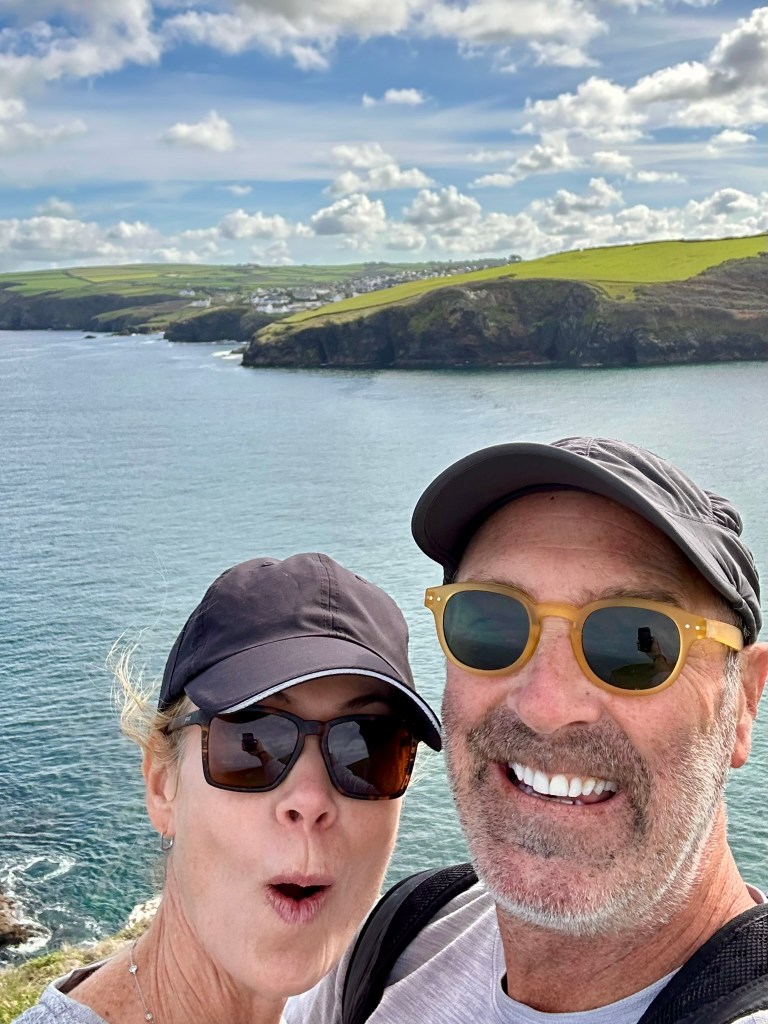
Our excitement manifested itself in different ways, to be sure:
Port Isaac in the distance:
The local cows seemed excited to see hikers come by, since all of them crowded the fence when they saw us coming:
Our reward once back in Port Isaac? The first of several fish and chips (less than half a dozen during this trip, much less than the daily dosage we sought in our 2-week Cotswolds and Wales trip in 2022 that packed on so many pounds that we had to wear muumuus when we got home):
Our next hike en route from Padstow to St. Ives represented the most iconic views from the British TV series Poldark, which essentially inspired this entire leg. At the start of the hike lay the very tin mine that Poldark worked in the show, Wheal Coates:
Cliffside hiking at its best:
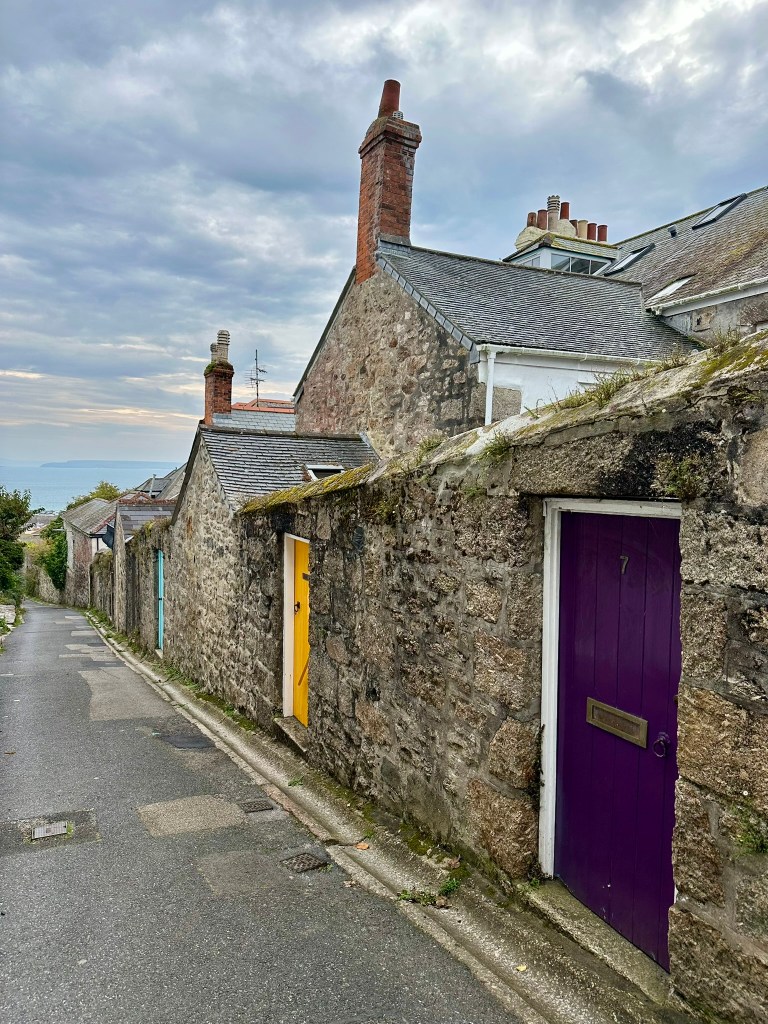
Our next base, St. Ives:
(Which always seemed to be at low tide during our stay, oddly enough):
But had a legit, picturesque English port town charm to it, even if most days were overcast (which seemed to amplify the Englishness of it all):
En route to our next hike, we stopped at the Minack Theatre, which was reputed to be an amazing venue for performances on a cliff facing the water. All of the facts were correct, but it was, in fact, meh:
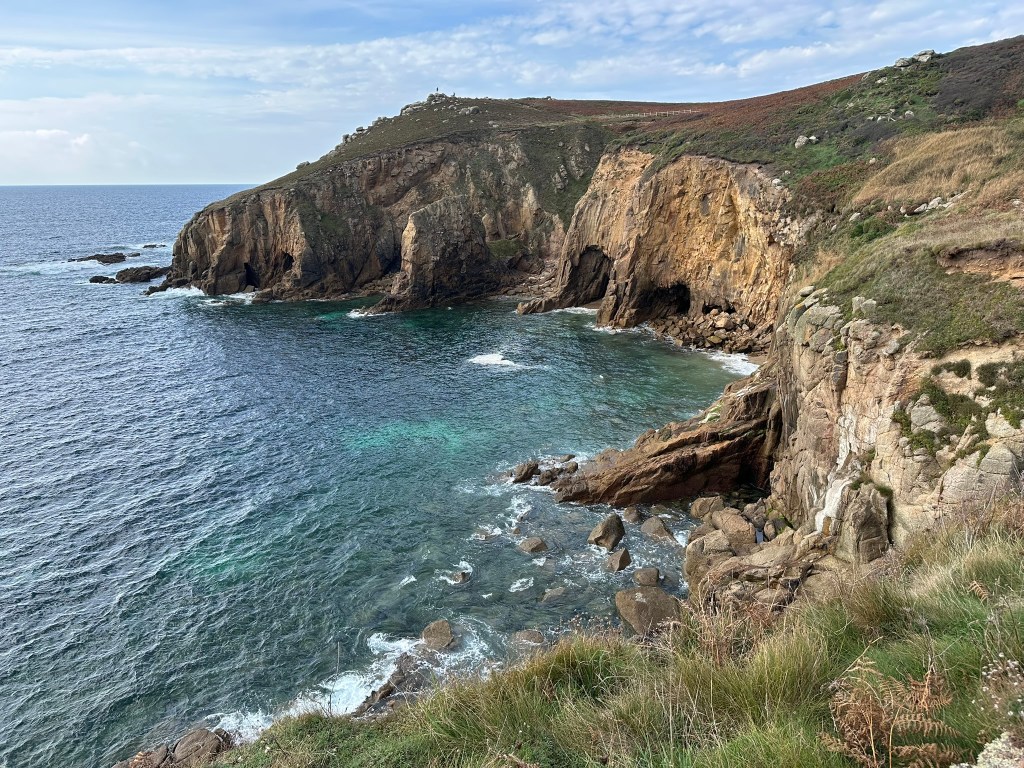
The next hike? Around Lands End! The actual, for real most southwestern most point in England (and the UK):
More unbelievable Cornish cliffside walks:
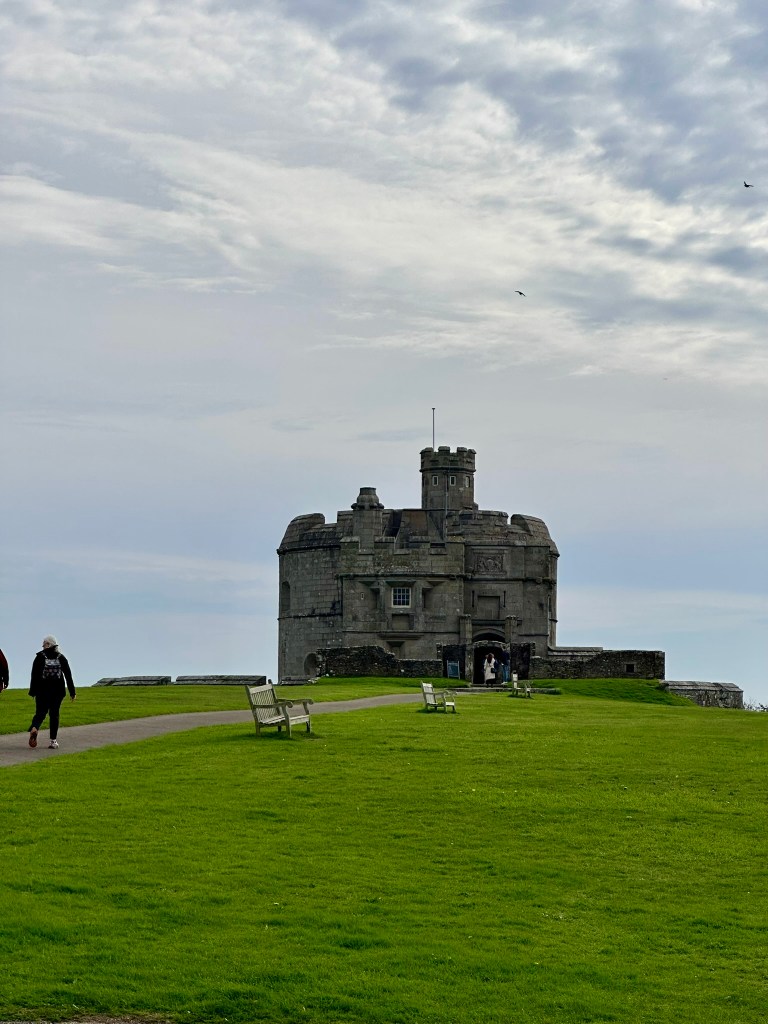
Then, around the horn of Lands End and on to the first of our last two Cornish stops: Falmouth.
Meh.
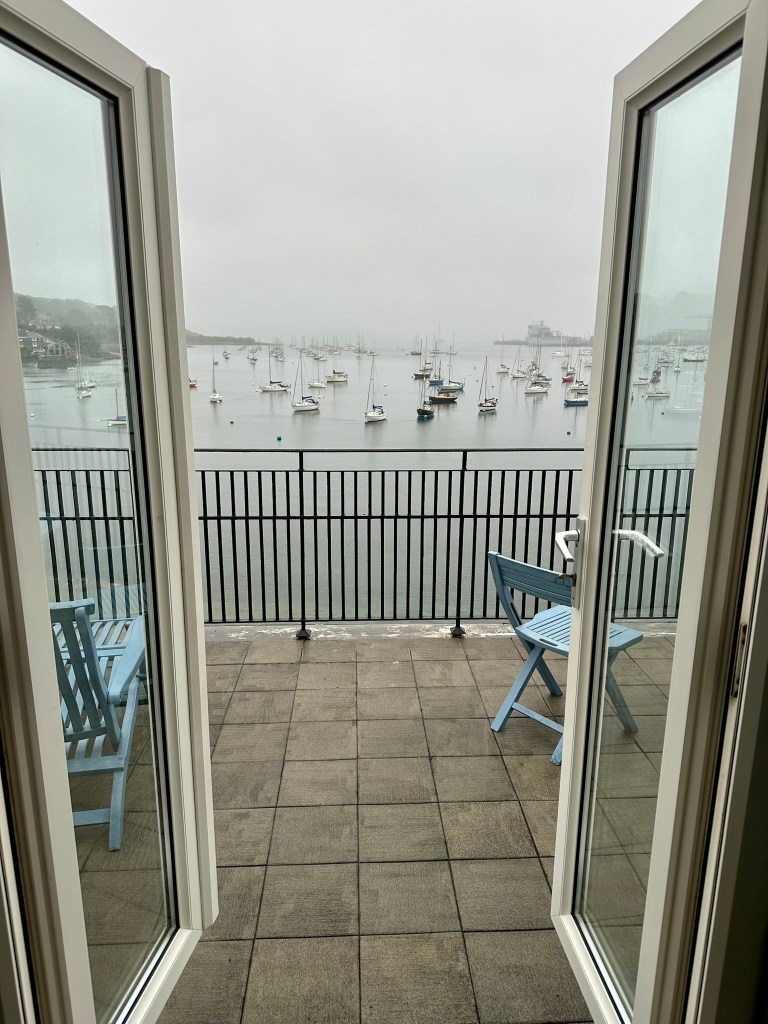
The weather during our stay may have, however, influenced this assessment:
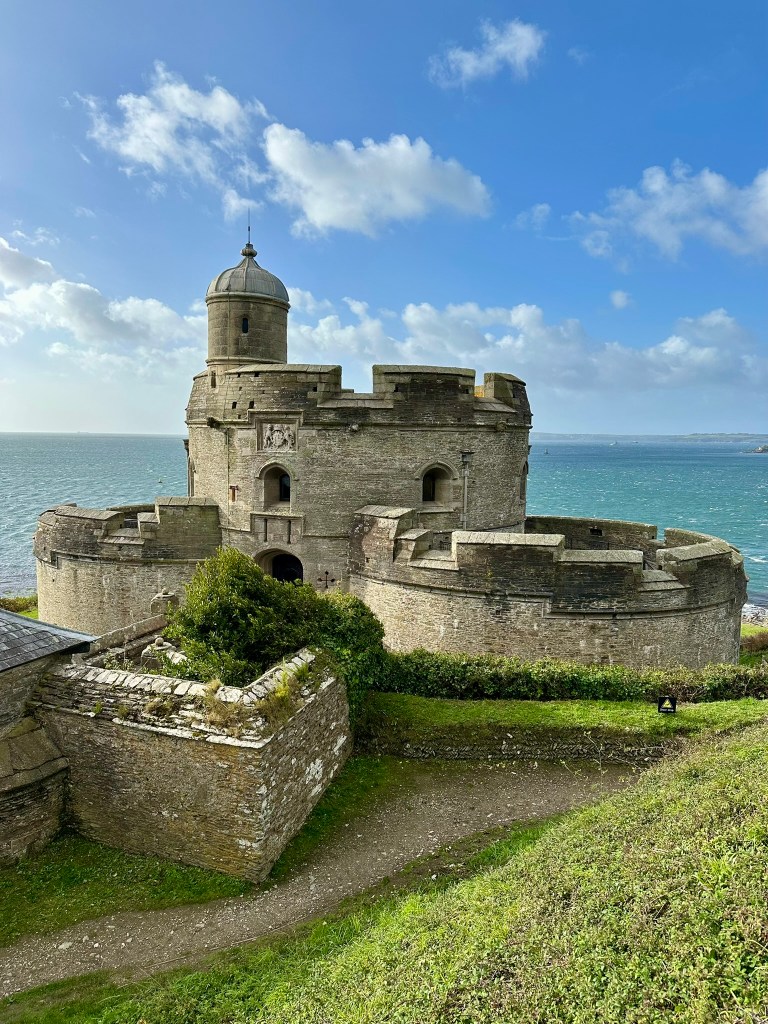
And the final Cornish stop, St. Mawes. More shitty weather, but a super picturesque Cornish seaside village:
And, of course, the weather improves the day we depart:
On the way back to London (by way of Sherborne), we literally drive right by Stonehenge. It turns out that we never actually needed to buy the entrance fee in 2022!
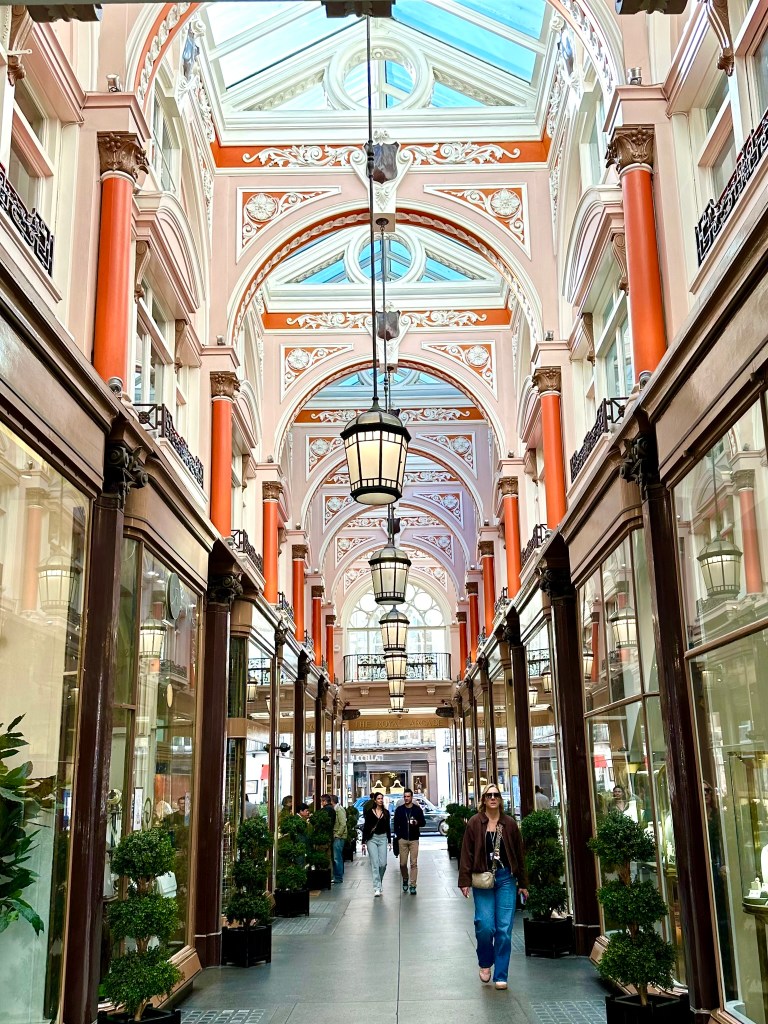
One of the many block-bisecting arcades of London, our final stop.
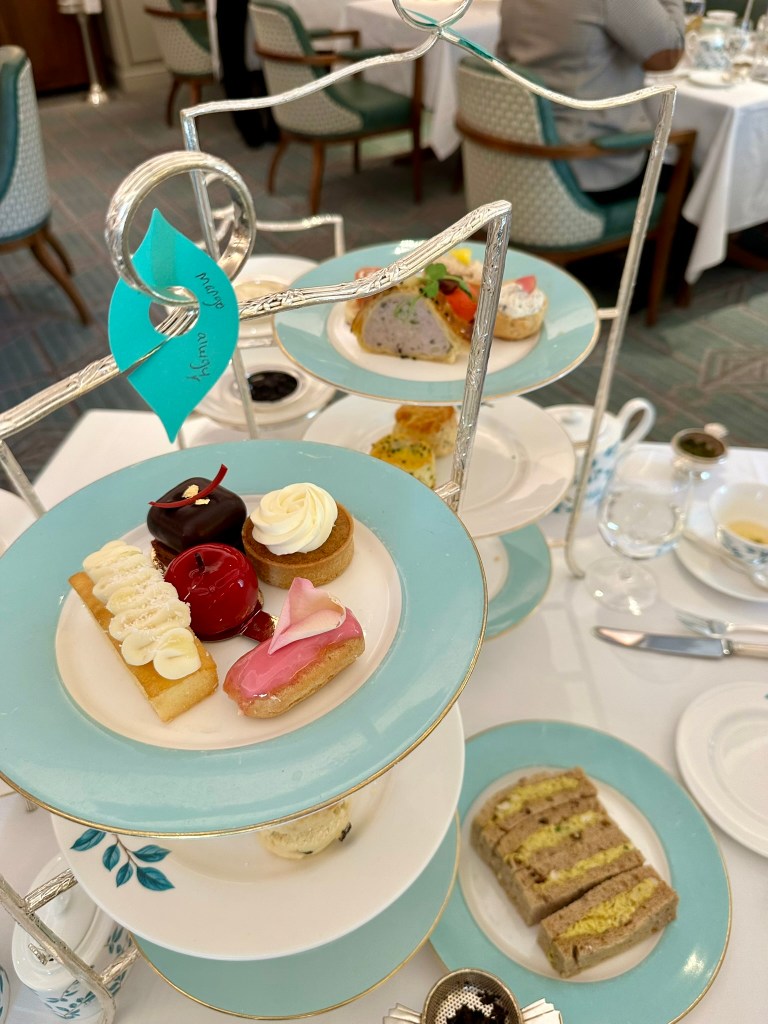
This was our fourth stay there, and we base ourselves in a different neighborhood each time – this time was Marylebone. Also, since we forewent the whole high tea experience on each of our previous three stays, we concluded that the fourth time was the charm:
The next day, a visit to London’s 3rd century Mithraeum, discovered beneath the modern city in 1954. This was a Roman temple dedicated to the god Mithras, a mystery cult popular among soldiers in the 2nd and 3rd centuries and could have continued to be more popular than early Christianity as an alternative to the traditional Roman pantheon had it not been for the pivotal backing of the latter by a couple of Roman emperors.
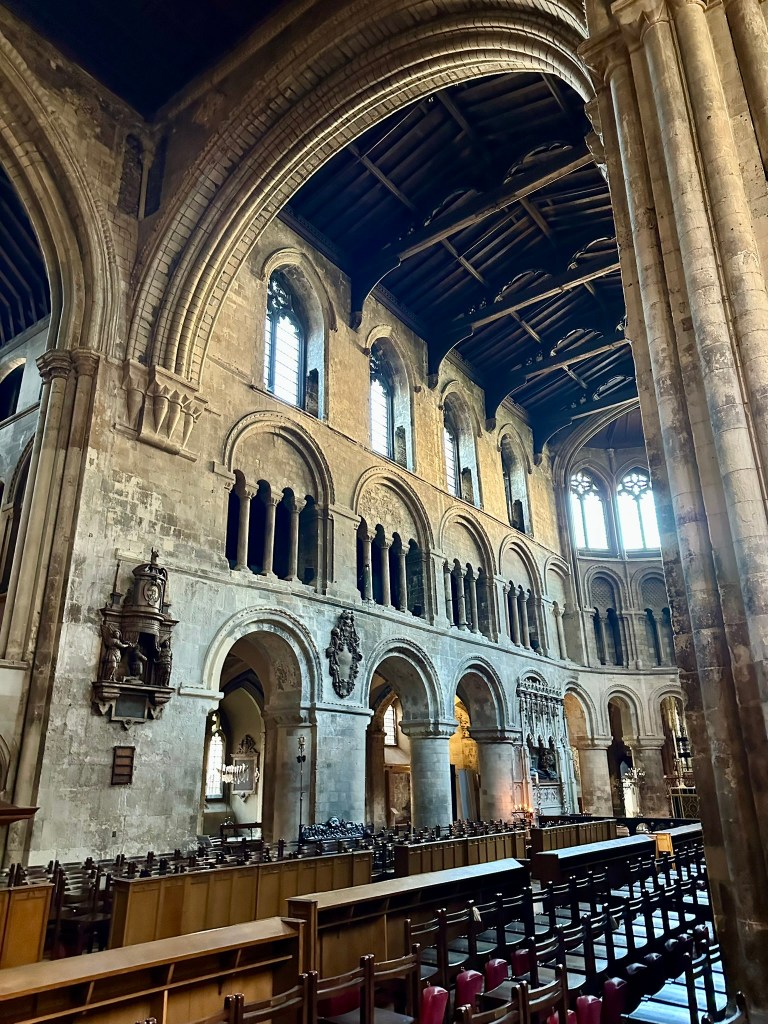
And a visit to St. Bartholomew the Great church, founded in 1123 – London’s oldest surviving parish church and a rare masterpiece of Norman architecture. Its Romanesque nave and medieval chancel evoke nearly nine centuries of continuous use, surviving the Great Fire, the Reformation, and the Blitz.
Definitely a historic end to an epic 6-week journey of 5 legs!
We’re definitely done traveling for the next few months – we need a break and some recovery time to revel in the most appealing town of all: Old Town Alexandria. So, this is where we’ll hang and try (really try!) to post some of the growing backlog of trip photos that are piling up (and have, in fact, now contributed to maxing out the storage capacity to the home PC, prompting a replacement).
Deviating from the international flavor of the three long-duration trips we’ve embarked on since retirement (in Europe, the South Pacific, and South America), WolfeStreetTravel this summer chose a region closer to home for a 2.5-month-long road trip to escape the oppressive heat and humidity of Alexandria: New England and eastern Canada. We spent all of July and August and the first part of September on the road north of here and out of the heat (mostly).
In all, we visited 8 states and 4 Canadian provinces, staying in 28 locations, including 18 hotels, 6 AirB&Bs, and a few relatives’ places. Here’s a Google map of the entire road trip (with stops in order, if you can follow the letters):
Previously, during our 2-week-long road trip through England and Wales, we ate so many fish and chips lunches, for cod sake, that our consumption became a trip theme. In the truest form of homage to this tradition, we ate our way on this trip through more than 20 dozen oysters – almost daily during the second half of the trip when we were traveling exclusively in coastal areas – resulting in an undeniable oyster theme to the trip. Not since biking along the coast of Normandy with Thomas and Lisa had the world more been our oyster.
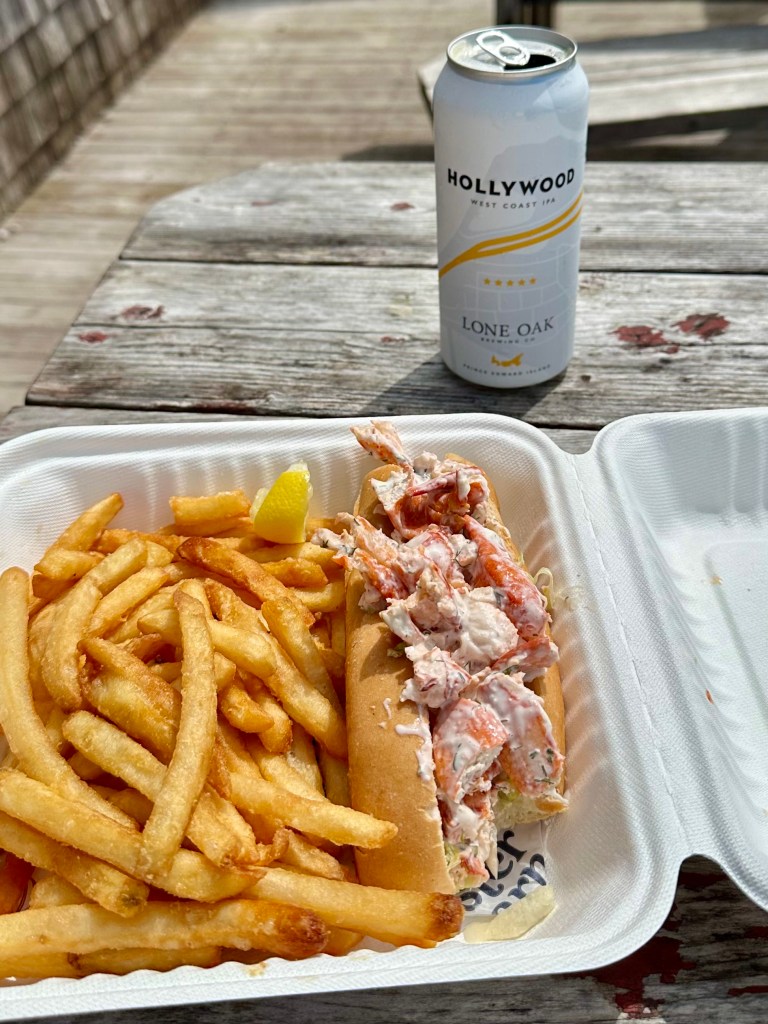
But the trip themes didn’t end with the bewitching bivalve – additional food- and non-food-related recurrences worked themselves unintentionally but inexorably into our travels. We checked out two dozen lighthouse, took eight ferries (from full-blown car ferries to little bike- and people-only ferries), drove over a half dozen covered bridges, and consumed almost a dozen lobster rolls. All distinctive features and foods that became the ongoing themes of our trip (and subjects of our real-time Instagram posts @WolfeStreetTravel).
Our trip route took the general form of an arc that slanted and slumped towards the northeast:
We first headed north to the apex of the arc on the west side of the map, through New York and Vermont, into the province of Quebec
We reached our northeast apex during a week-long stay in Prince Edward Island
And then headed southwest to complete the arc, down the coasts of Maine, New Hampshire, Massachusetts, and Rhode Island.
Since we went back and forth, east and west, a few times in the beginning of the trip to see friends and relatives when they were available, the arc concept doesn’t really apply to the first few weeks (but it’s still a great travel construct!).
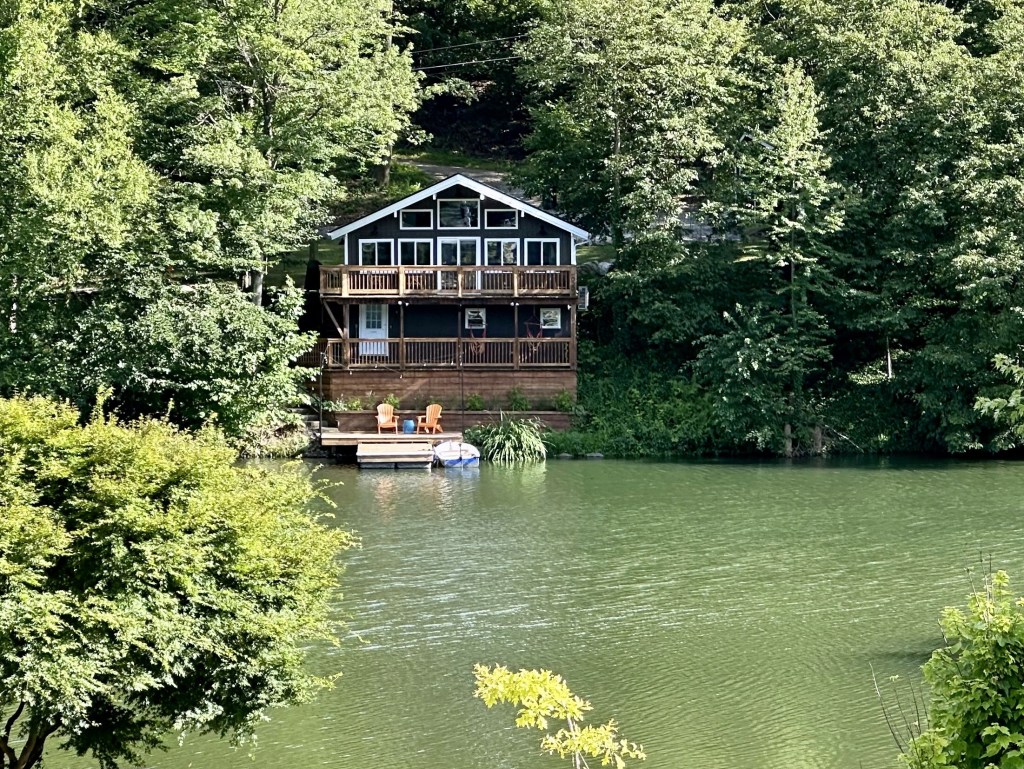
We began on July 1 not in New England, but in Pennsylvania to spend a few days in what one of us thought was a very appealing lake house.
Appealing though it was, indeed, this was a mistake.
The lake was more of a pond, and, although we hiked and ran in the area, there wasn’t a lot around. The only really appealing aspect of this stop was the little cabin itself. But that wasn’t enough to satisfy a 3-day stay – which one of the WolfeStreetTravelers totally predicted and warned against, but the other ignored. Not an auspicious start.
The area did offer the first covered bridge, though – a theme unique to the first half of the trip. Other, more prevalent themes would emerge later in the journey.
From the little pond house, we headed east to visit our first targeted relative, but not directly. Since it was July 4, and since we had never been there before, we toured West Point:
And then spent a couple of days in the pretty cool town of Beacon, NY, on the Hudson, where even the churches prize efficiency:
And then on to Stamford, CT, and our first relative of the trip: KJQ, skipper of the Quick Getaway:
Plus, the Sprucks!
Then, back west, again, to the Adirondacks region of NY, to occupy a lake house (for real this time – not a pond house) for 5 days:
Pretty good digs.
Plus, a little pontoon boat action:
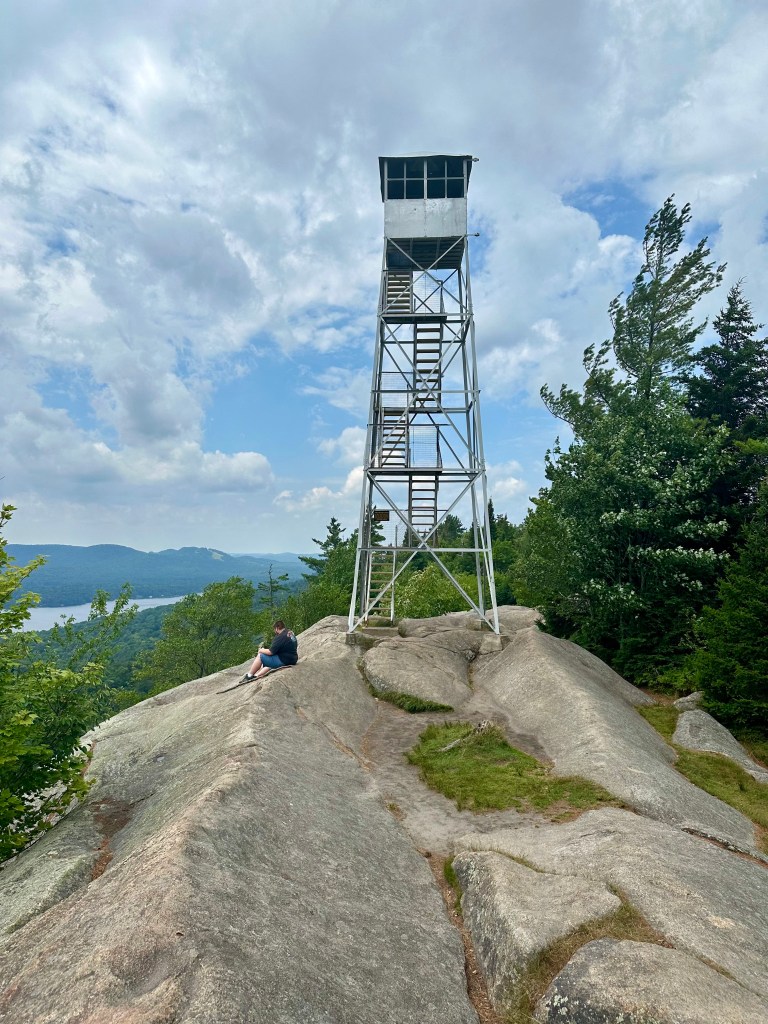
And some decent hikes:
And then back east – again!
First for a couple of days in “The Berkshires” in North Adams, which really did not feel like the Berkshires to us. Our stay straddled the Appalachian Trail, so, some decent hiking / running, but the place really was for shite, in our view.
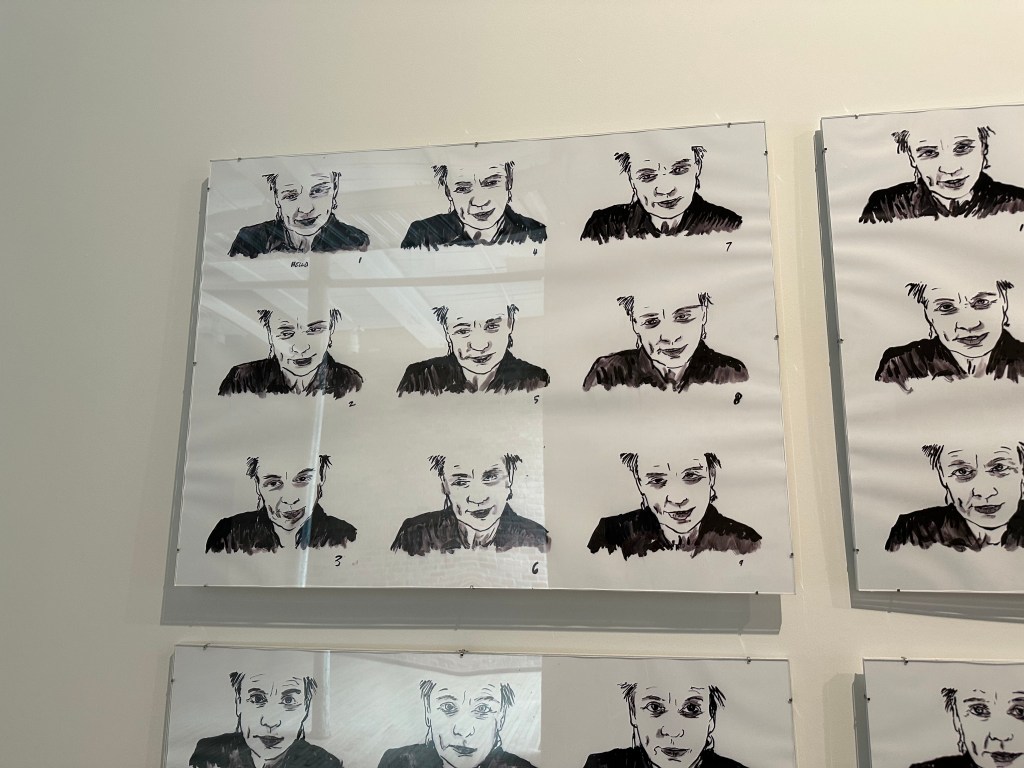
The only redeeming quality presented itself in the form of an art museum: the Massachusetts Museum of Contemporary Art (MASS MoCA), which was pretty outstanding, actually. Plus, Laurie Anderson (an Avant Garde favorite of one of us since her release of “O Superman” in the early 80s.
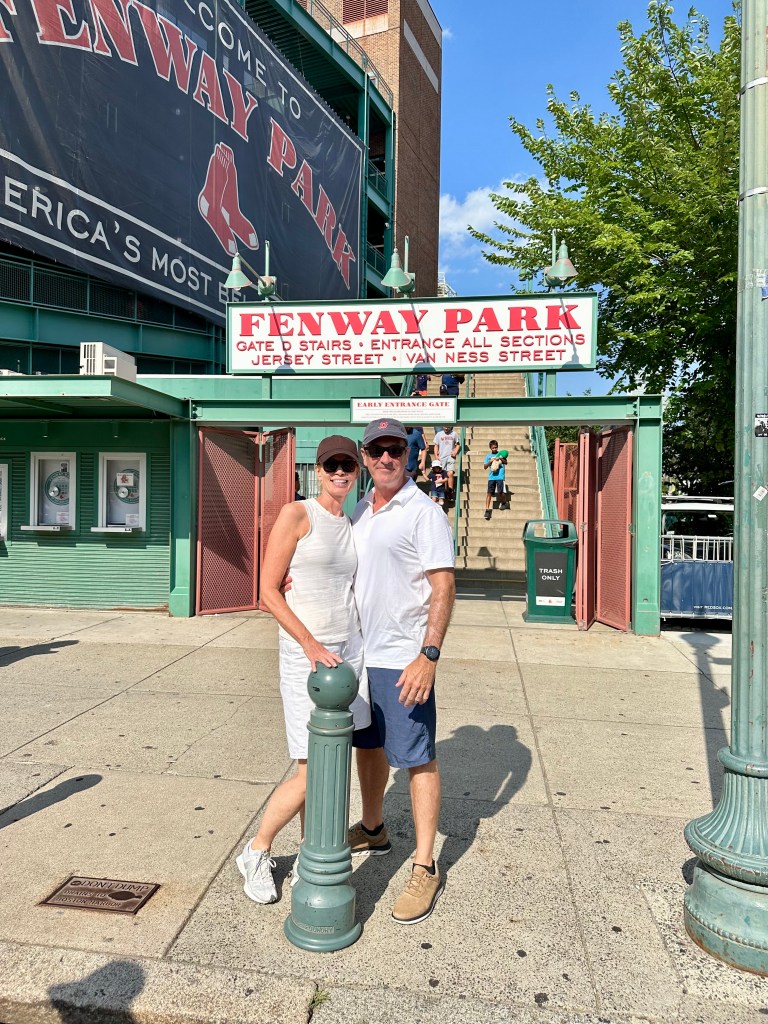
Thence on to Boston, and the Boston Connells! Who treated us to a Red Socks game:
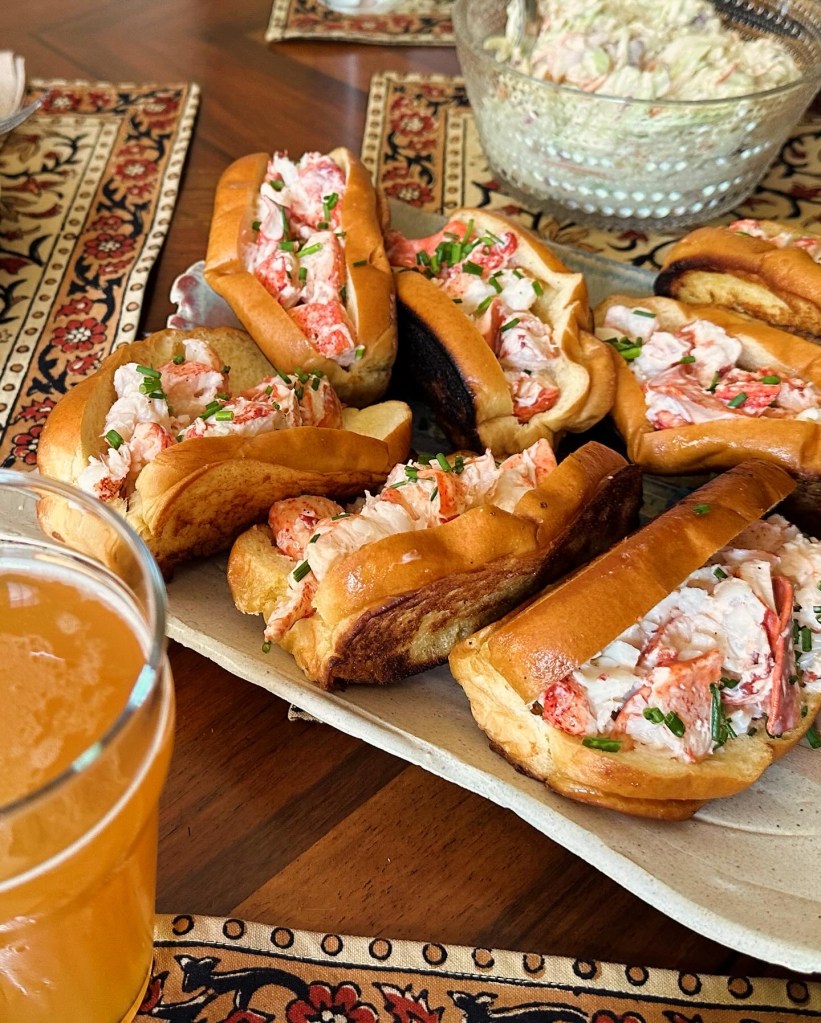
And amazing, authentic lobster rolls, which were to become another theme of the trip, as you’ll see; and it all started here:
A day exploring Boston with Dan, including the North Church:
And the very compelling JFK Museum with both of the Boston Connells:
Then, north(ish), first for a quick stop for lunch in Portsmouth, NH,
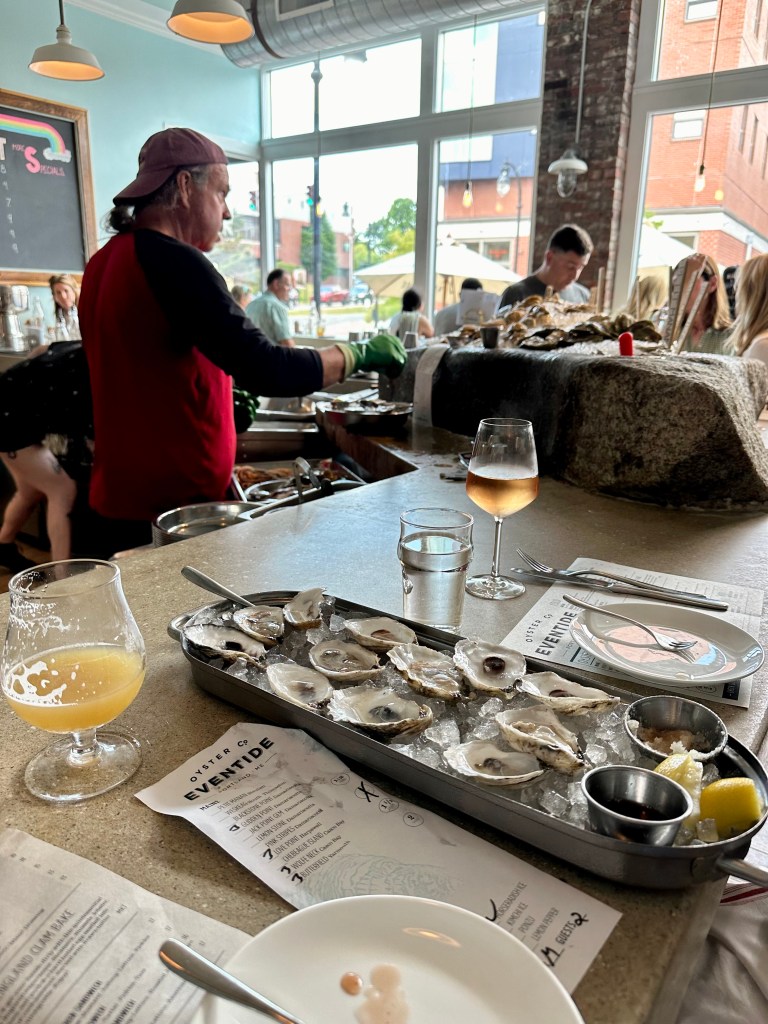
Then to Portland/Yarmouth/Freeport, Maine, and Bill! Our first stop was our must-visit oyster bar in Portland, EvenTide:
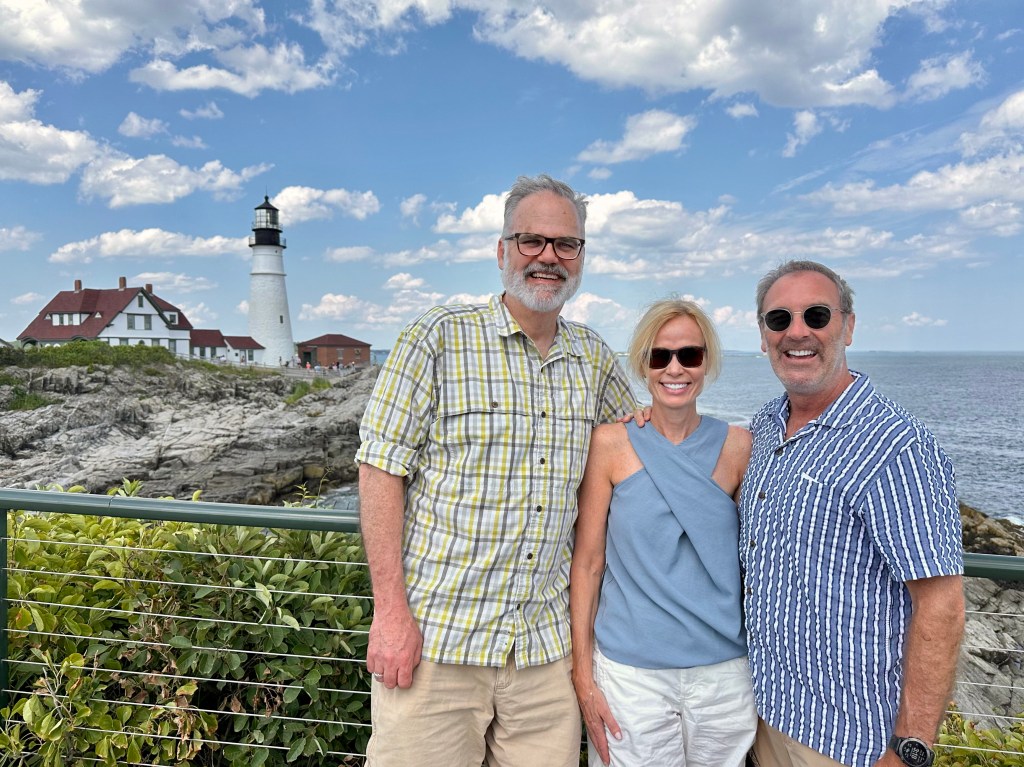
Portland Head Light, w Bill (and the first sighting of another trip theme):
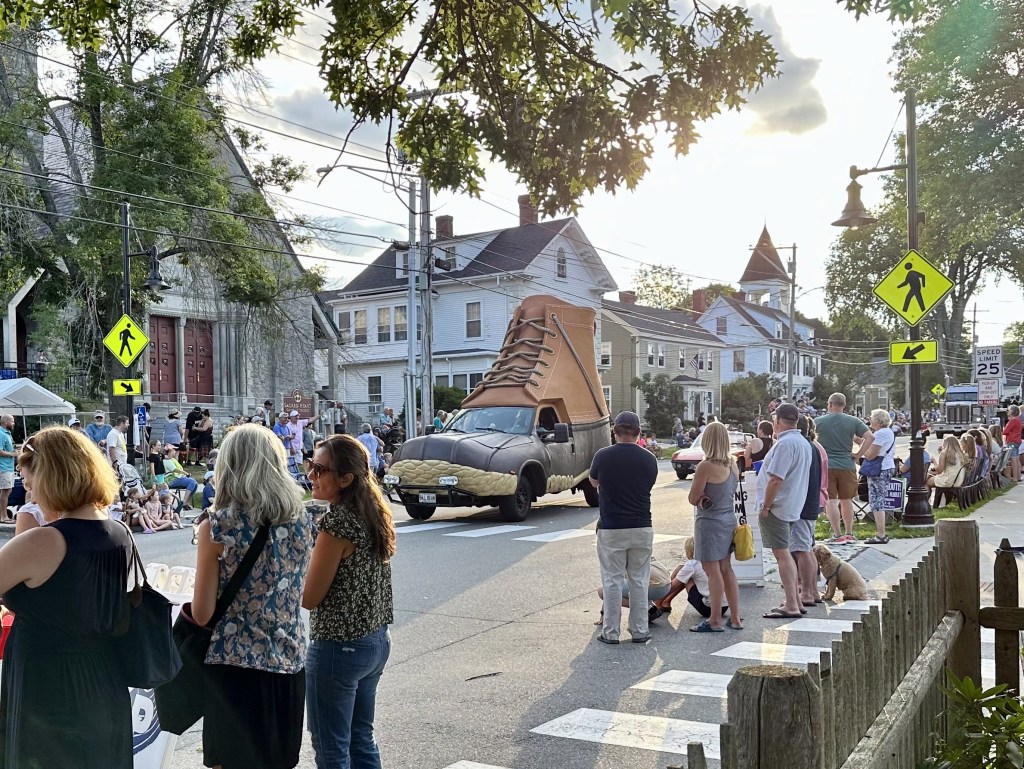
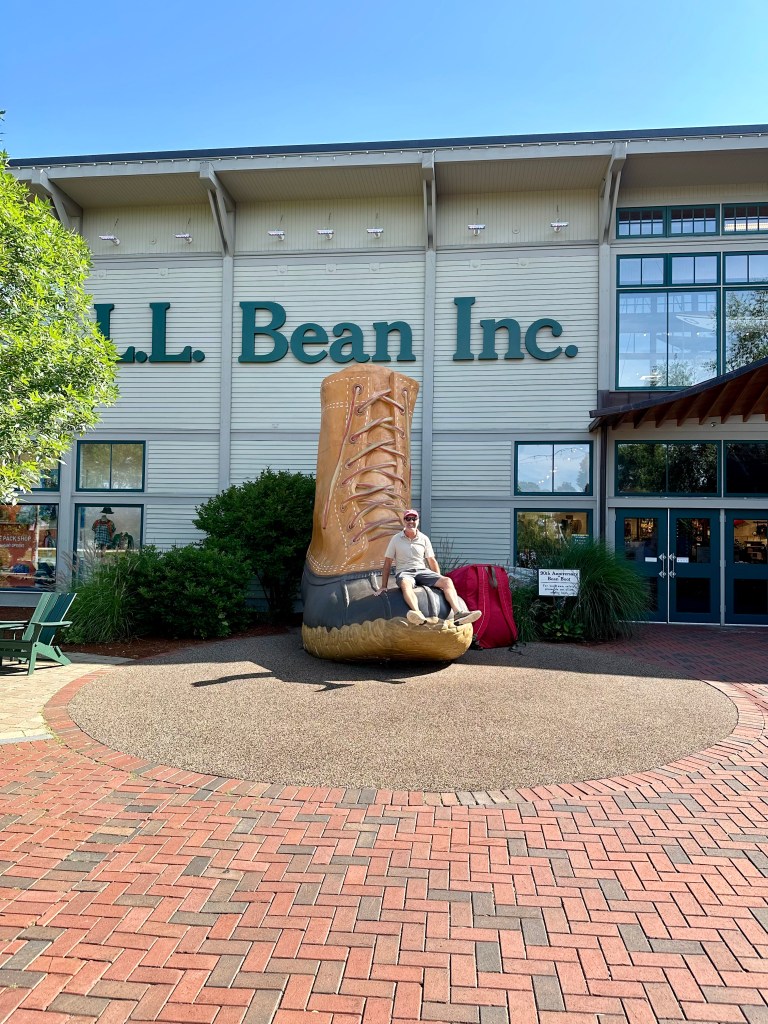
The truly Rockwell-esque Clam Festival in Bill’s adopted hometown of Yarmouth, ME, featuring the LL Bean Bootmobile:
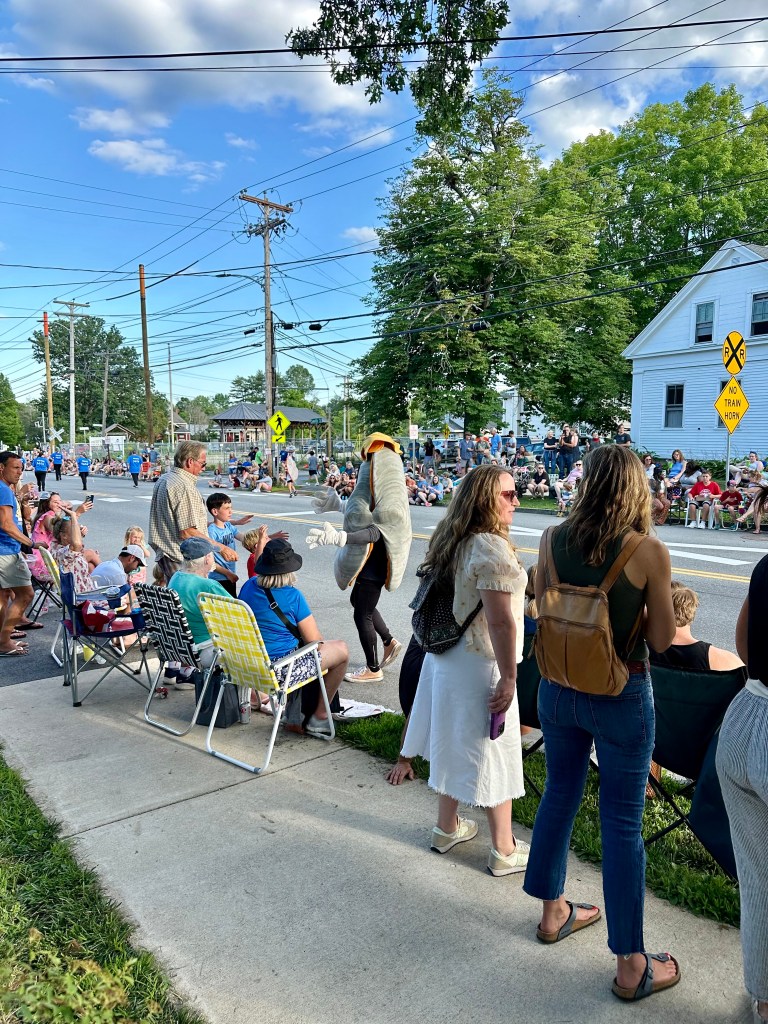
And, of course, Shucky the Clam!
And our second lobster rolls of the trip at Five Islands with Bill, Aine, and Kieran:
An obligatory stop the morning we headed out:
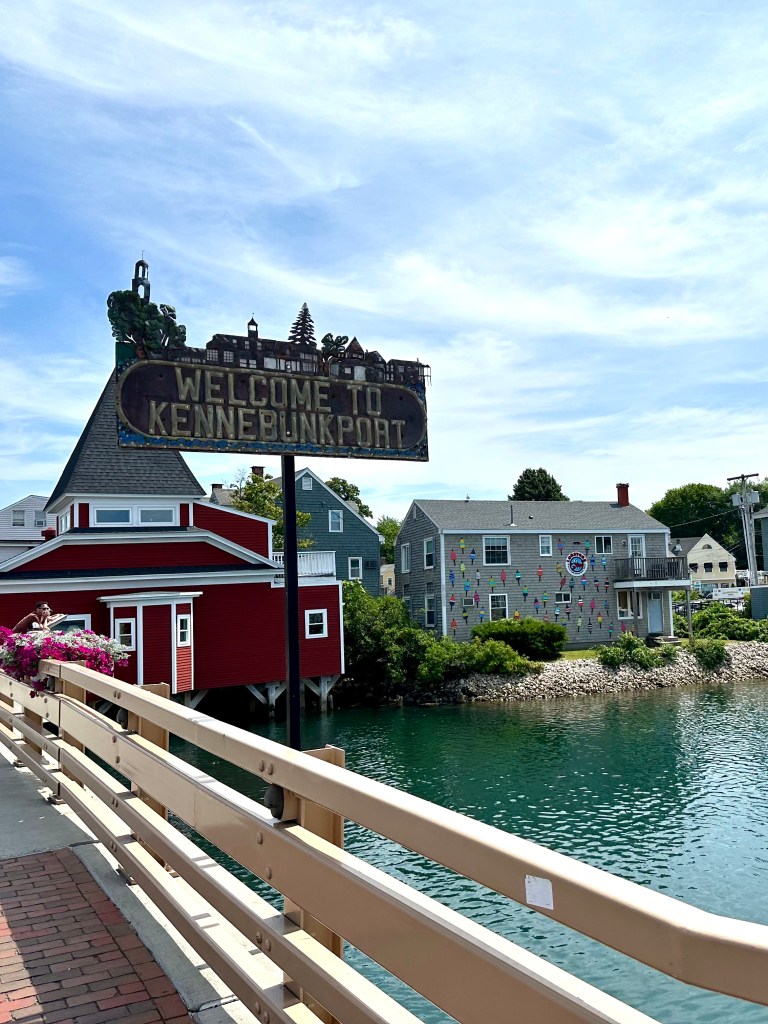
After the long-overdue visits to friends and family in Massachusetts and Maine, we headed west again. But, on the way: a stop for lunch in Kennebunkport. Home to the Bush family compound and, nearby, some Kellys, now in California.
Then, on to Vermont, and the true western arc northward on the trip, beginning with 2 nights based in the tiny hamlet of Grafton.
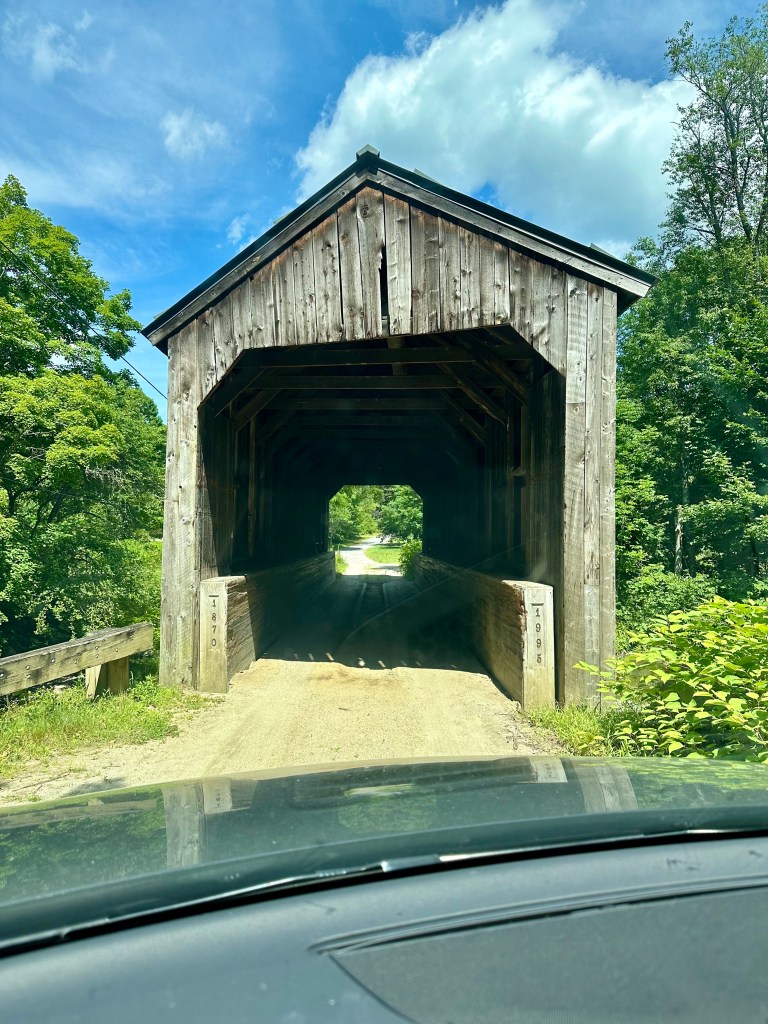
Which was home to two more covered bridges:
Good digs, in a 19th-century Air B&B:
A little day trip to Weston, home to the famous (and pretty interesting, actually) Vermont Country Store:
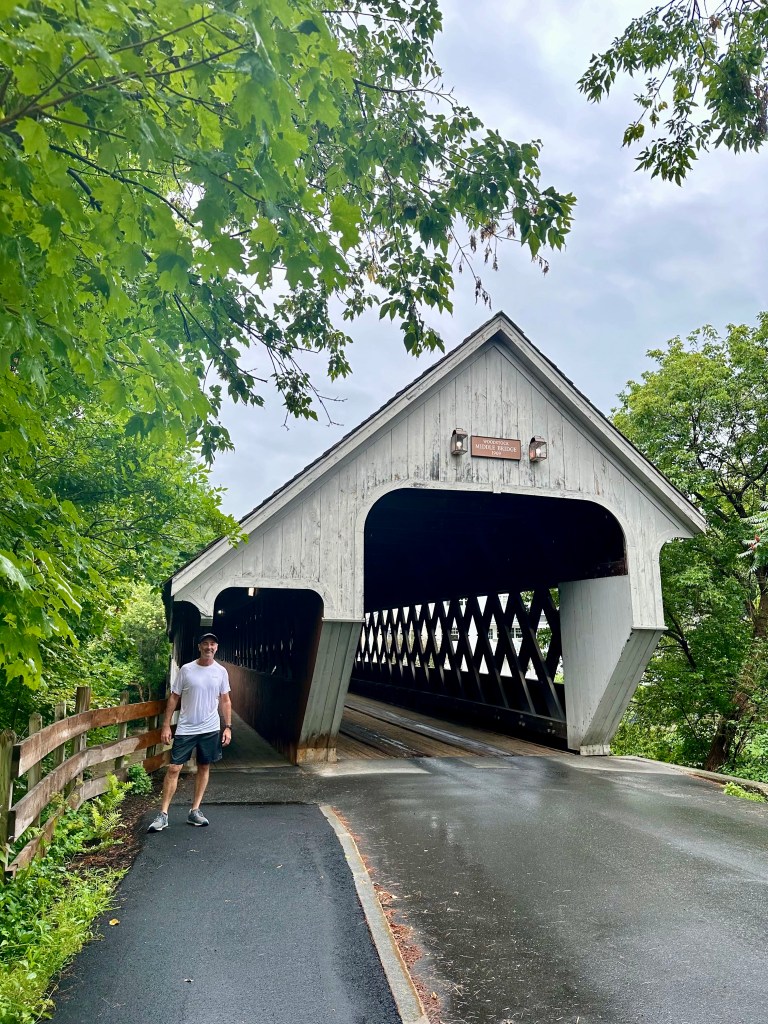
We engaged on a bunch of additional day trips to other allegedly charming towns that also were just tiny hamlets and a little underwhelming, so we’ll move on in this summary to our next destination: Woodstock, VT, home to yet another covered bridge and the only such bridge with a dedicated pedestrian section (visited at the end of a rainy run the morning we left):
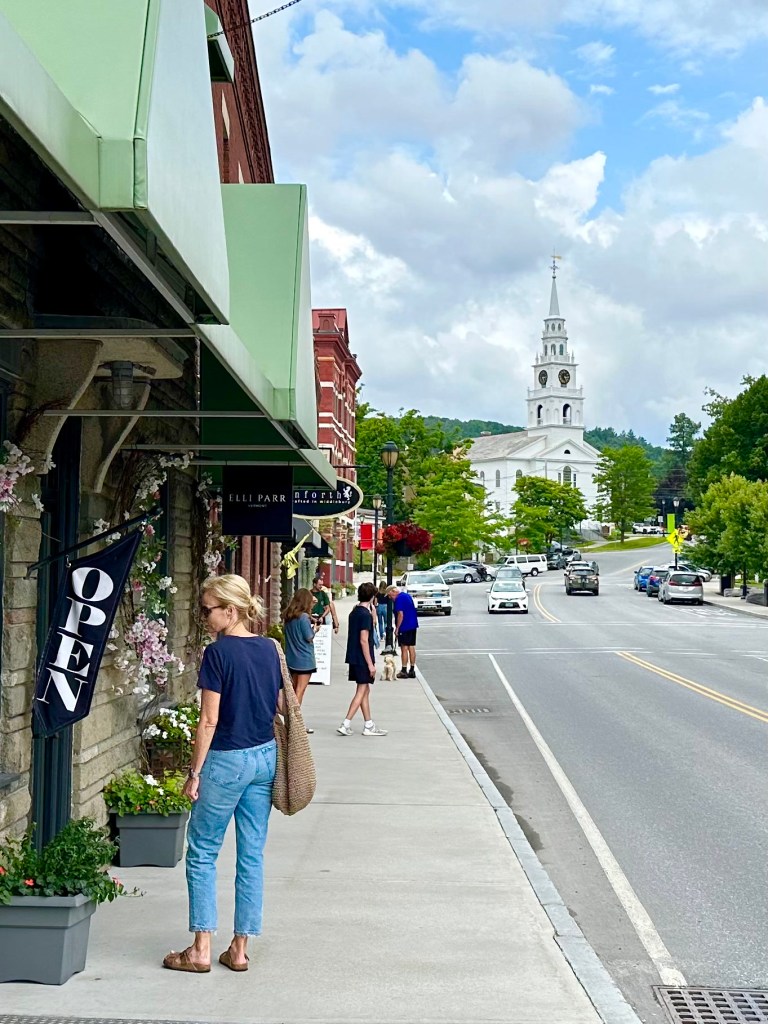
And then, on to Middlebury for 2 nights. We held high hopes for this location, based on family recommendations. Not so. Not so at all.
But here’s an interesting (the only interesting?) item from this college town: a Union civil war memorial. One of many (many!) that we’d encounter up north, and distinctively different in appearance from the Confederate monuments that we both grew up around. Not just down the street from us in Alexandria, but all over Virginia and the South. We’ll discuss this in a future post, but the distinctive Union versus Confederate soldier image was striking to us.
Middlebury. Meh.
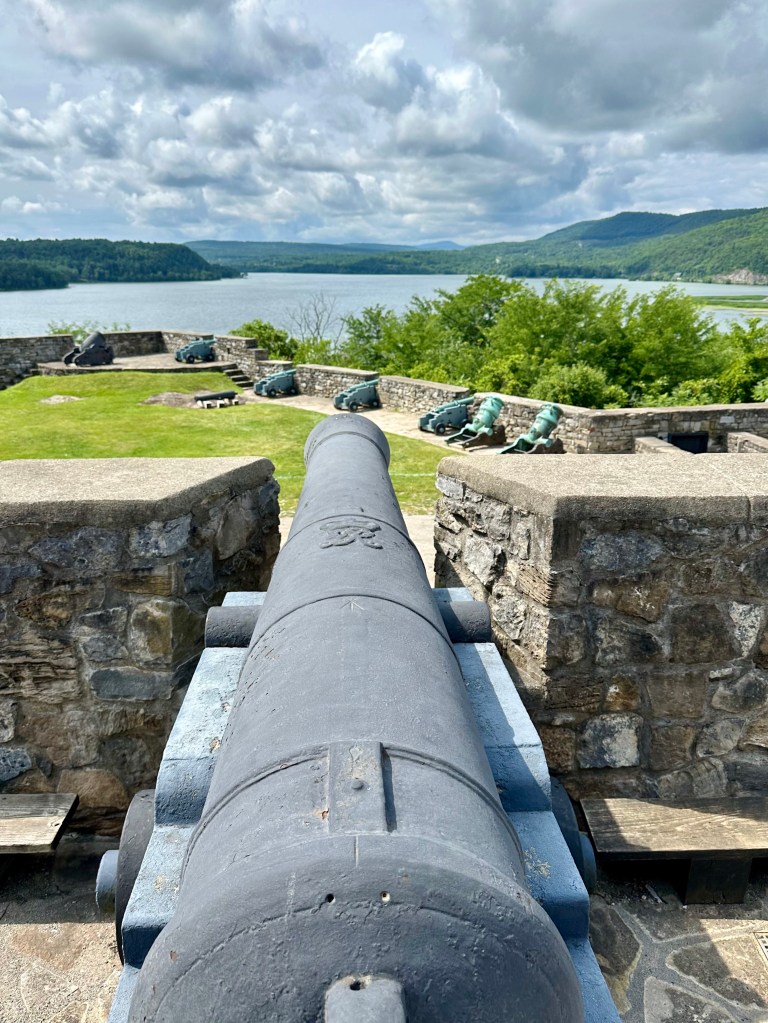
But a day trip away from Middlebury to a 18th-century fort? On a freaking cable ferry?! Hell yeah (and we love a cable ferry):
Fort Ticonderoga, site of French and Indian and Revolutionary War actions – pretty cool!
And across the lake, Mount Defiance:
And departing middling Middlebury via it’s unique two-lane covered bridge – crappy town, but great addition to the covered bridge theme!
En route to Burlington, we stopped over for a hike and lunch at Shelburne farms, at Caren’s suggestion. Cool experimental, sustainable farm initially owned by the Varnderbilts:
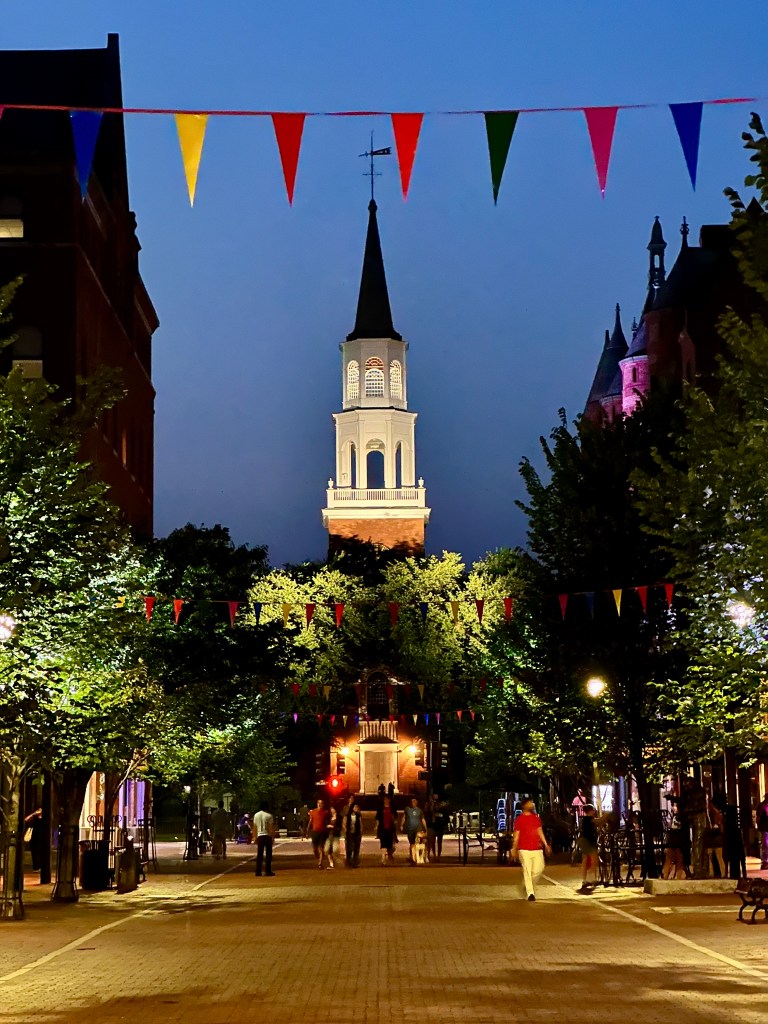
And then on to 3 days in Burlington, VT – good running each morning along Lake Champlain, great food and culture, but tons of homeless, pot-smoking douchebags shambling about the public spaces. But, you gotta take your good with your bad, right! Overall, a great location to visit.
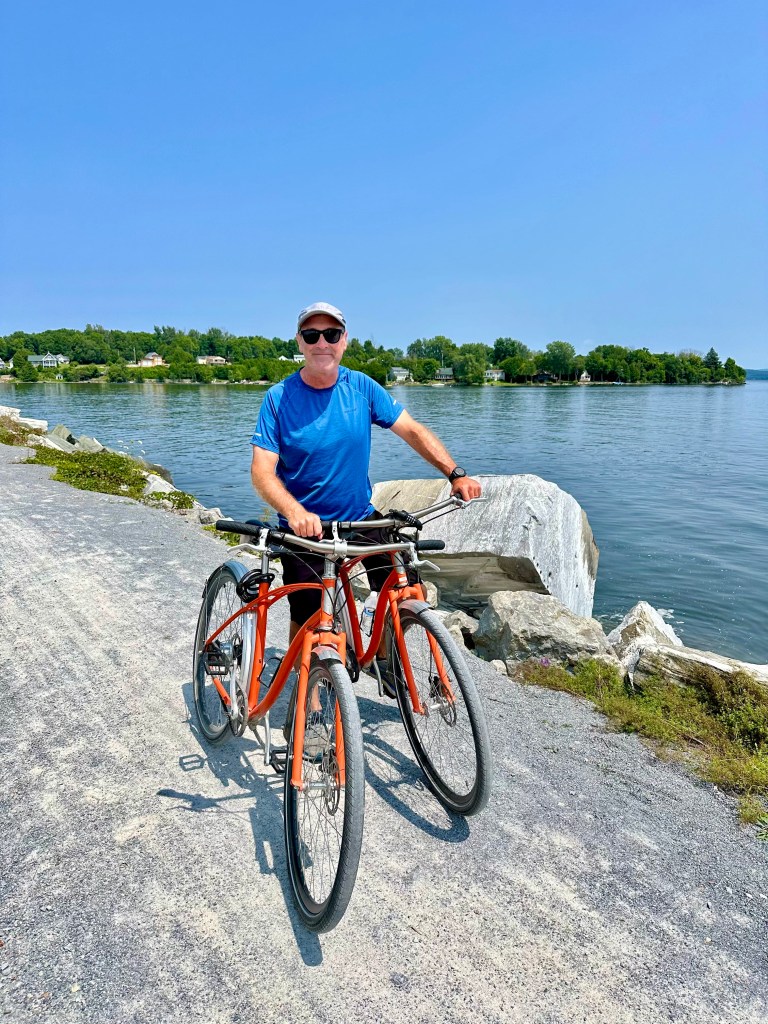
The highlight of our stay was, without question, the totally impromptu, 26-mile round-trip, bike ride up Burlington’s bike causeway to Grande Isle for a maple creemee (Vermont parlance for a maple-flavored, soft serve ice cream cone):
And the causeway came with a dedicated bike ferry to bridge a cut for boats right before you reached Grand Isle – our second ferry!
Totally worth the ride.
Burlington was cool, but after 3 days, we were ready to move on.
Via yet ANOTHER ferry! This one once again across Lake Champlain to New York, but in a larger format than our first cable ferry.
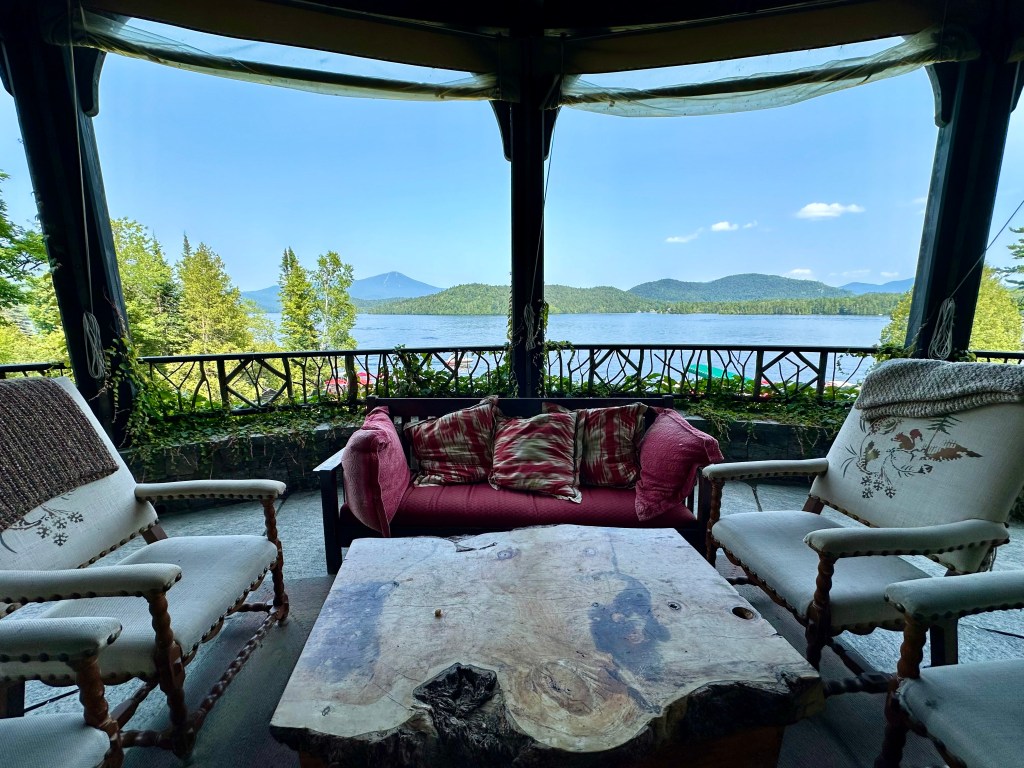
We spent the next 3 days on Lake Placid in a classic Adirondack lodge.
The aesthetics were everything we had hoped – super cool.
Including our cabin:
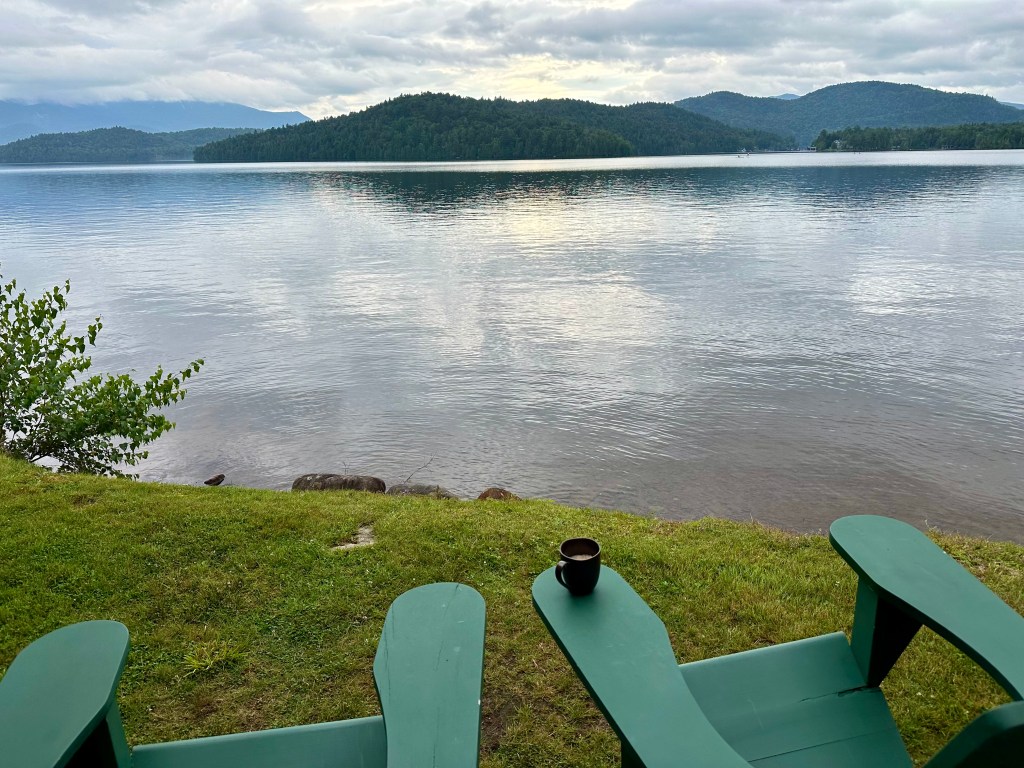
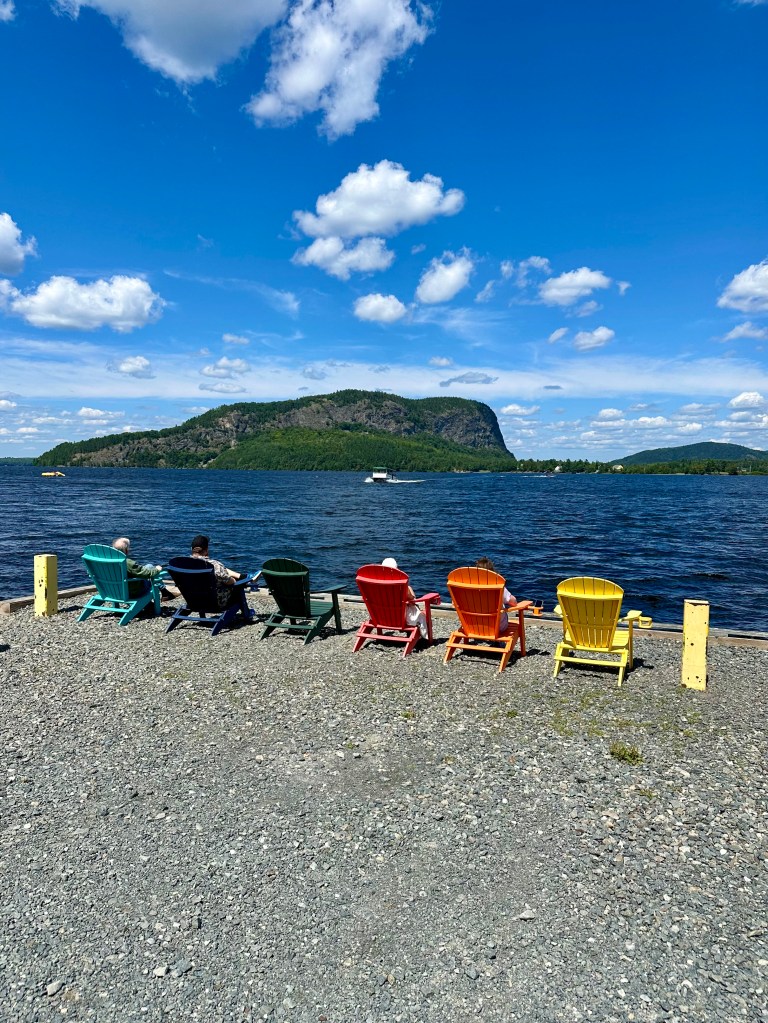
Adirondack chairs in the Adirondacks:
And classic wood boats to watch, plying the lake:
We spent some time at the Olympic center, home to the Miracle on Ice – this was the US Hockey Team’s locker room during the 1980 Olympics:
And the Olympics ski jump – who knew you didn’t need snow?
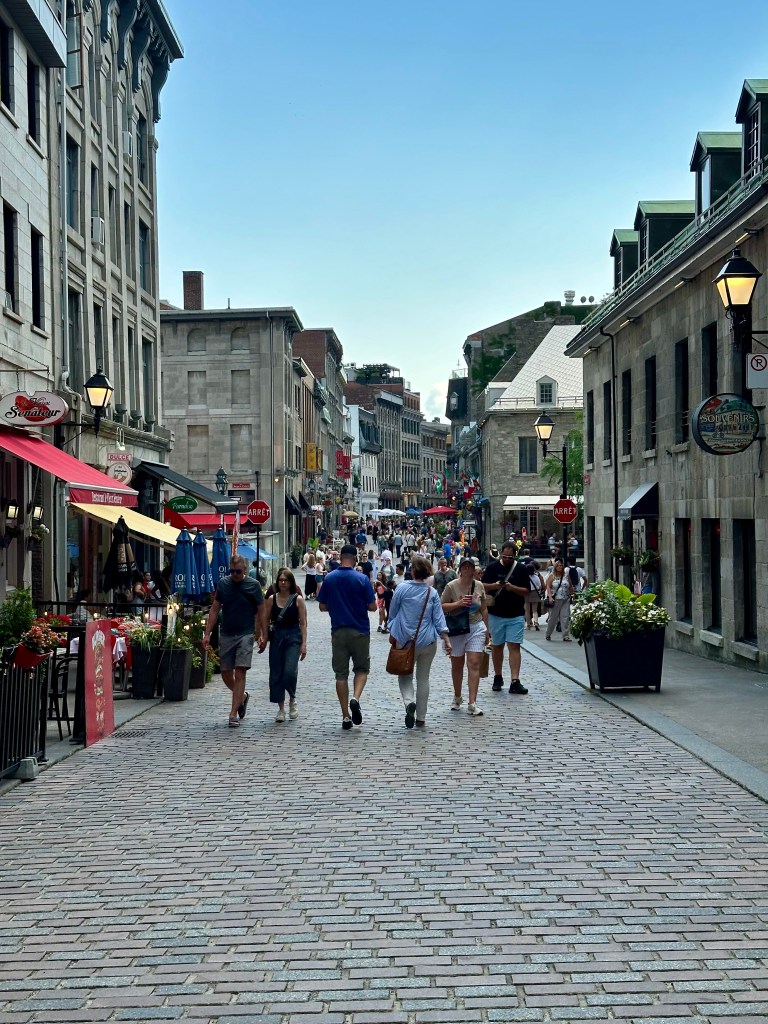
And then north, across the frontier to Canada and Montreal, where we celebrated one of our birthdays:
Although we’d been to Quebec City before, that trip was 25 years ago, for our first anniversary, and we vaguely recall that the province was noticeably bilingual. Things have changed: Montreal is thoroughly and very intentionally Francophone, and we encountered plenty of residents who spoke only French. The English may have conquered New France in the 18th century, but the French culture is clearly victorious in Montreal in the 21st.
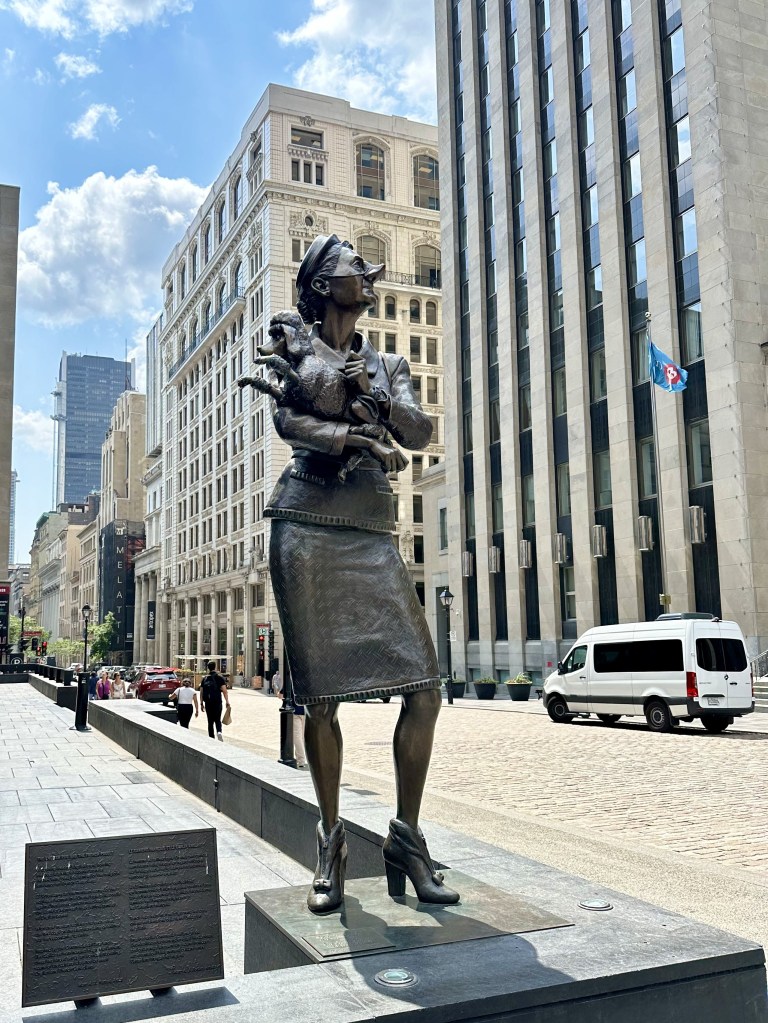
We’ll post details in a future post on how and why this happened over the past 40 years, but let these statues on Montreal’s main square provide some insight for now. On one side, an English man holding an English bulldog, turning up his nose at the French; on the other, a French woman holding a French poodle returning the gesture. There is no love lost between the two cultures in Montreal.
Because this was a domestic road trip unbroken by planes to and from home, we were able to pack a little more, including running gear (and a Nespresso machine). We successfully ran about two thirds of the mornings of our trip, including each of our three mornings here, along Montreal’s harbor, dominated on one end by the Molson beer building (there’s also a Molson bank in town).
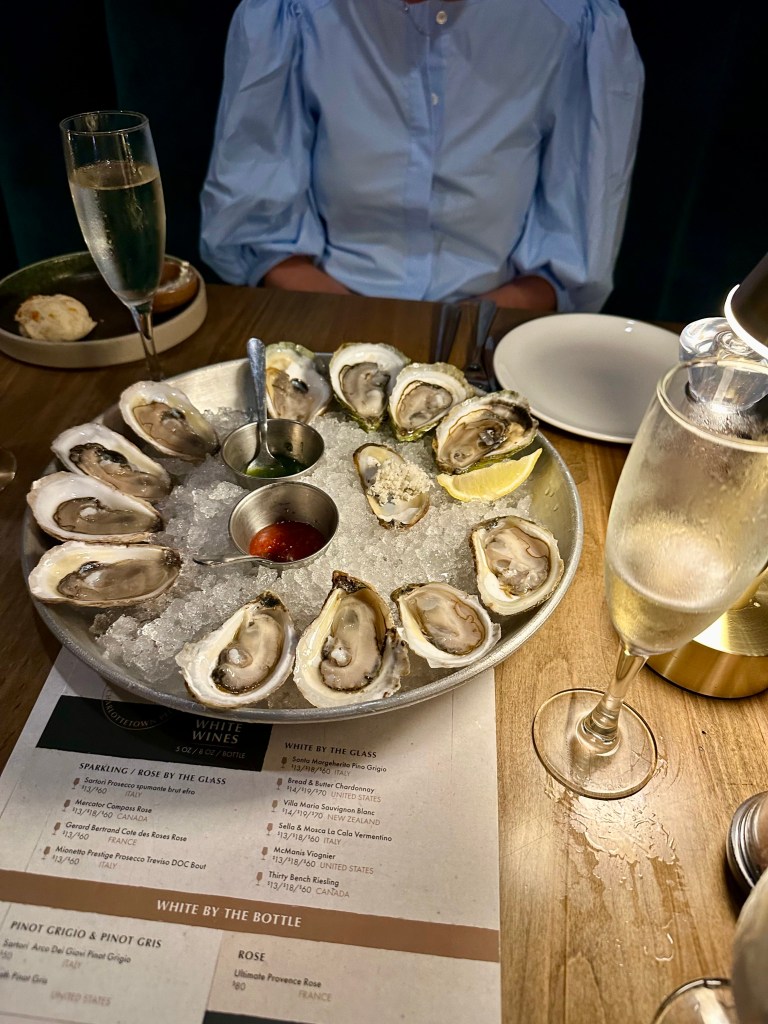
More oysters! Although the best were yet to come (and in significant quantities), we experienced more consecutive outstanding dining experiences in Montreal than anywhere else (PEI was a close second, though).
We hadn’t planned on visiting giant Olmec heads on our trip, but there they were in Montreal’s Museum of Archeology. Only 23 have ever been discovered. And they are, indeed, giant.
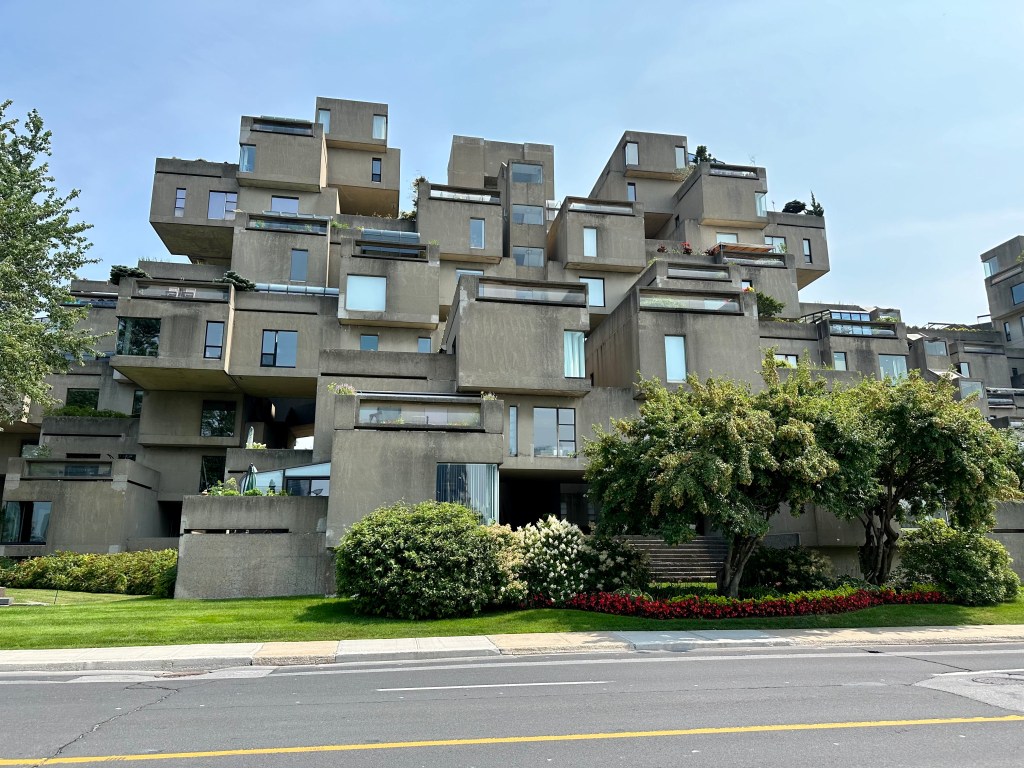
Across the harbor from Montreal proper lies the wildly cubist Habitat ’67 residences. Initially created in advance of Montreal’s winter Olympics, they’re now high-priced condos very much in demand due to their city skyline view (and uniqueness).
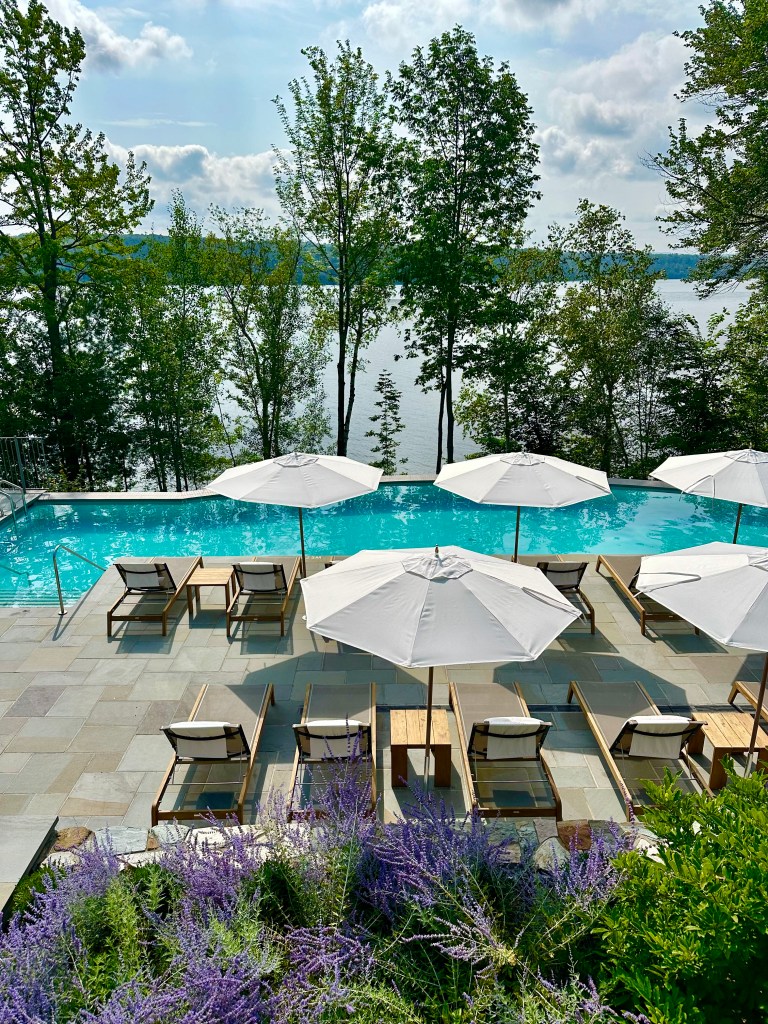
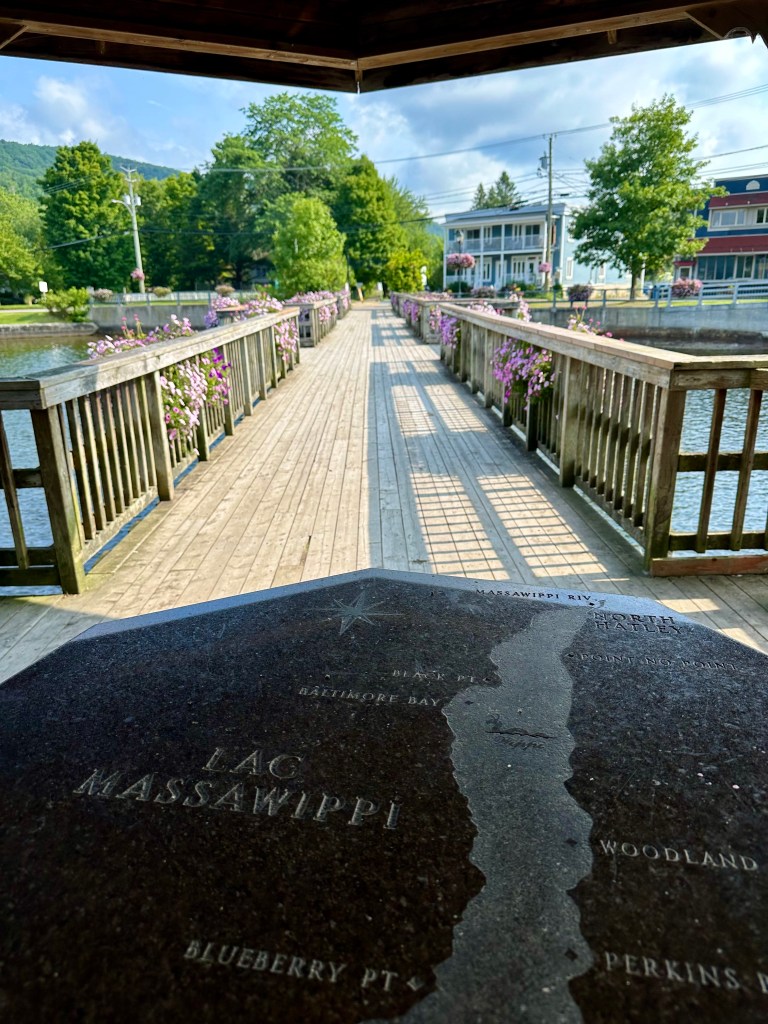
From Montreal, we drove east, more specifically to North Hatley, in Quebec’s Eastern Townships. Nice place along Lac Massawippi to hang for a few days.
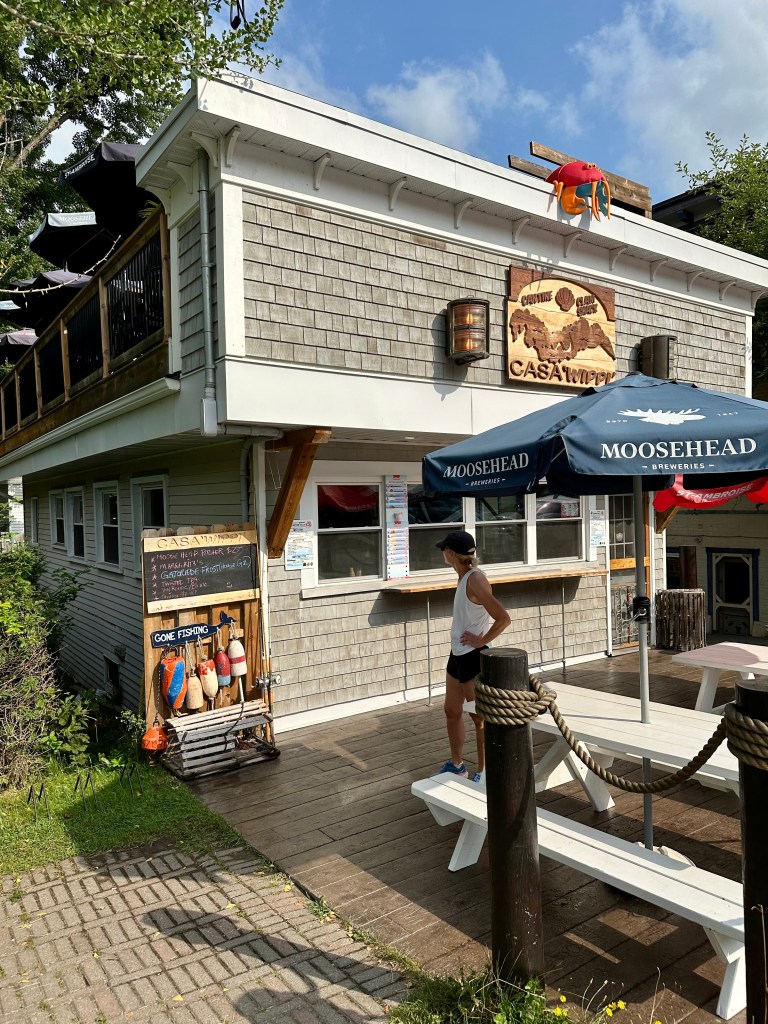
The town’s lobster shack:
More lobster rolls (and fried clams) in North Hatley – definitely a contender!
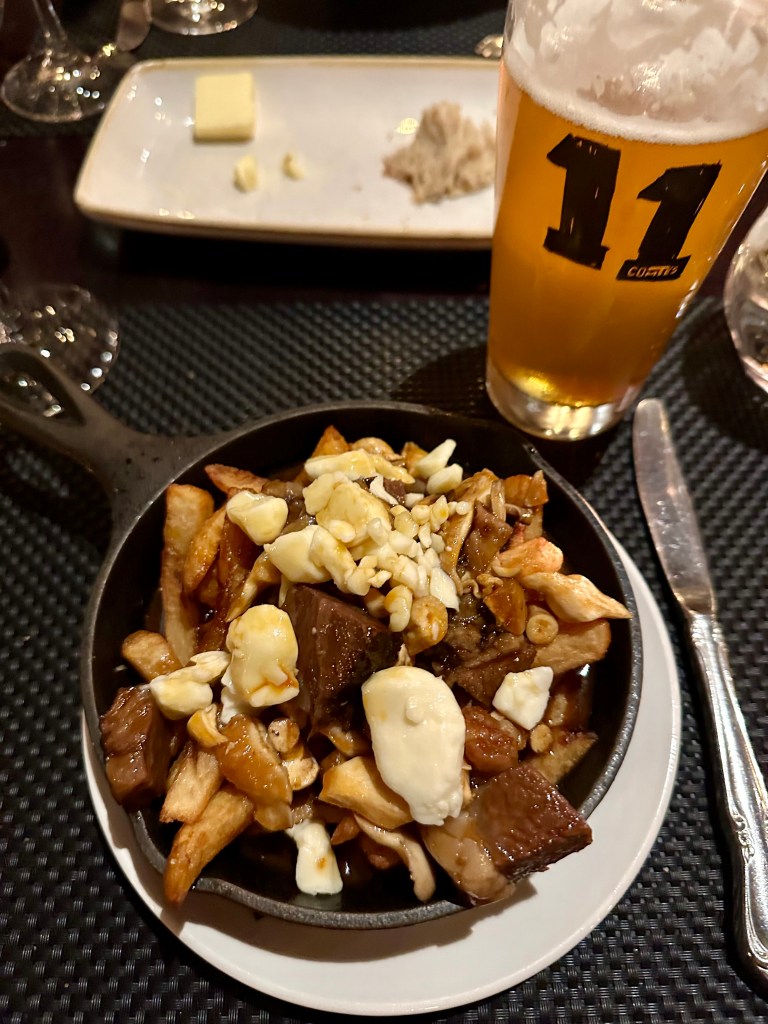
And also our first (and only) helping of Canada’s signature poutine – artery-clogging goodness!
And back across the border again, to Maine’s North Woods:
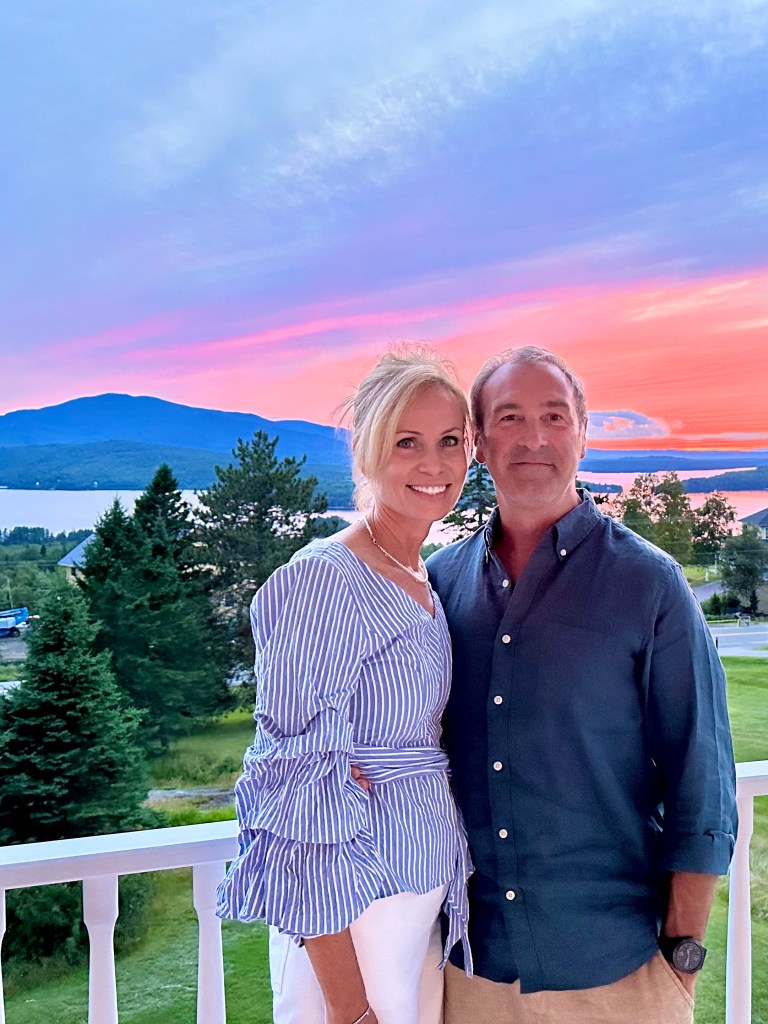
One of the two most spectacular sunsets of the trip (both conveniently during cocktail hour):
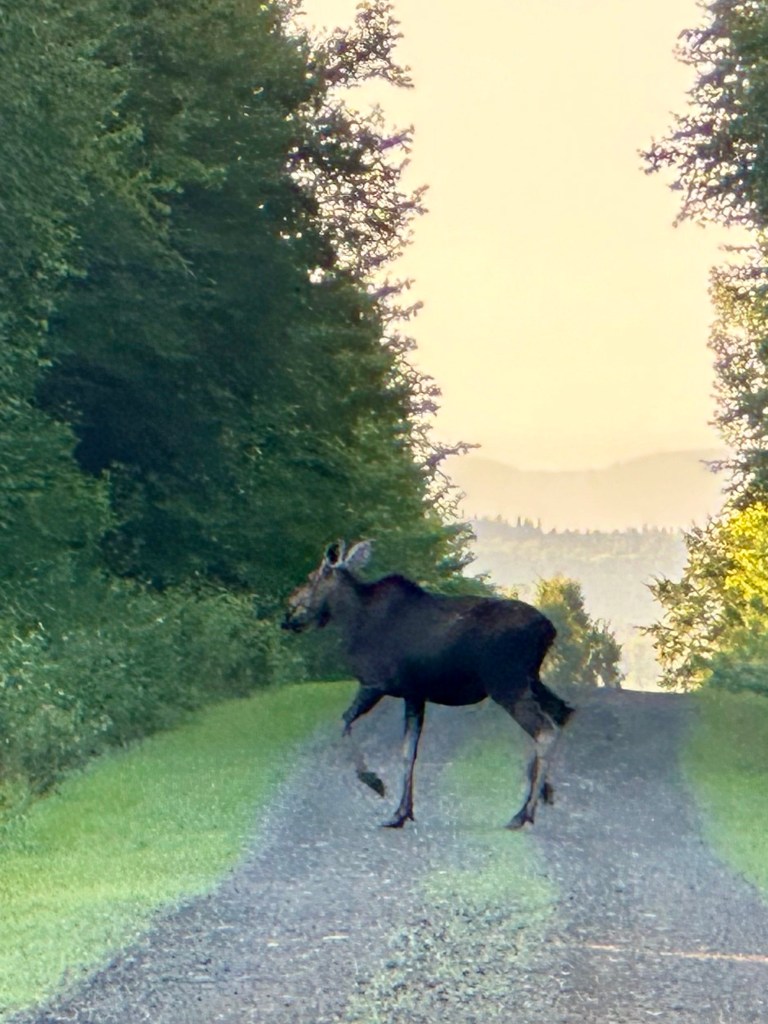
We awoke at 4:30 one morning to go on a moose safari deep in paper company forests. We only saw one moose, though, and a female without a rack, at that.
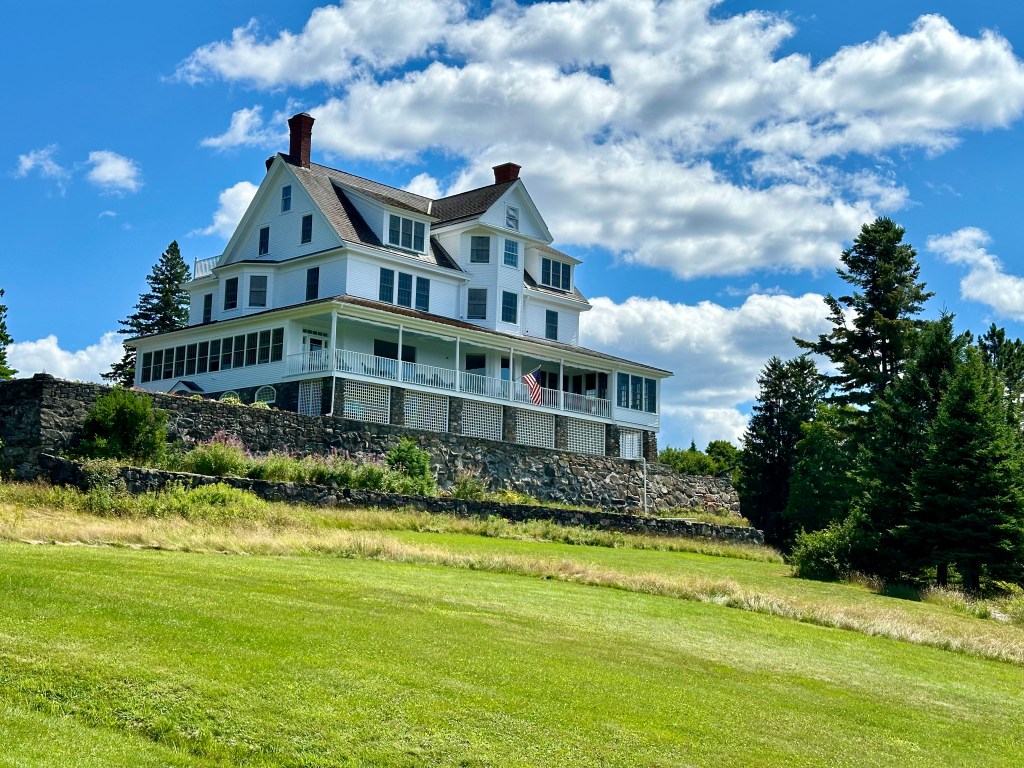
Great setting along Moosehead Lake, though!
Another ferry – this time pedestrian only – across Moosehead lake to climb the island of Mount Kineo:
Pretty great views!
Perhaps the most Maine Adirondack chair ever:
Another hike up Burnt Jacket Mountain. No charred outerwear at the top, but there was a surprise swing.
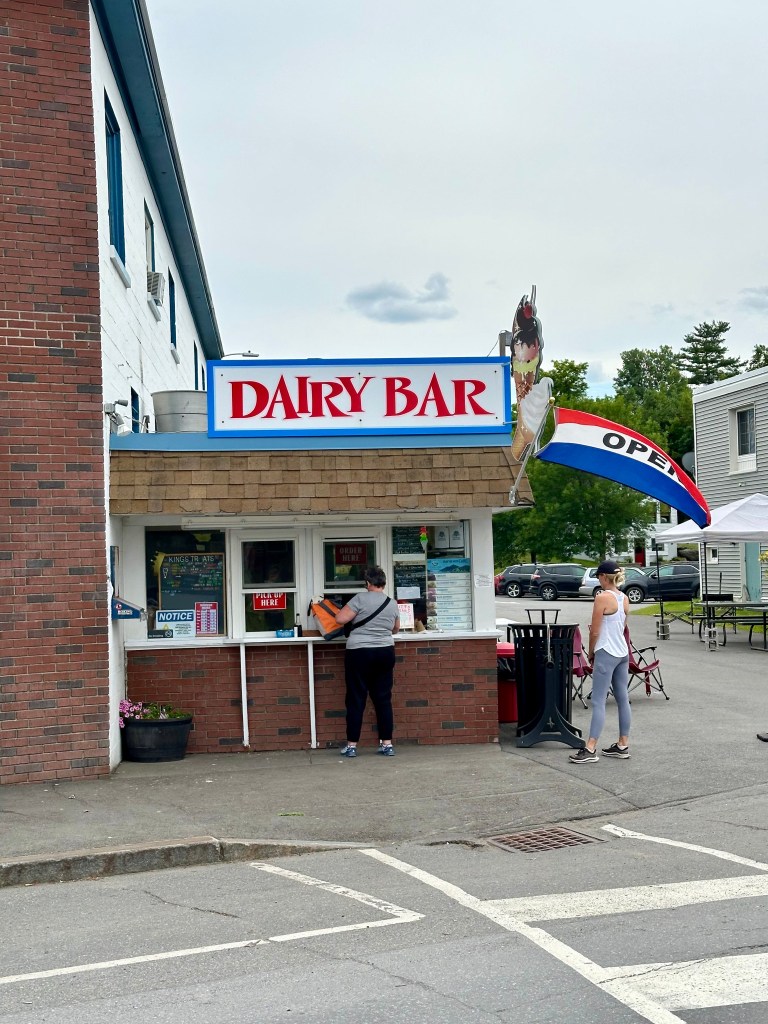
Vermont has creemees; Maine has dairy bars. Both offered delicious soft-serve – perfect for a post-ride or post-hike treat.
Last evening on Moosehead Lake before heading east and north, to Prince Edward Island.
By way of New Brunswick’s capital of Frederickton, which was dreary the evening and morning of our stopover.
Which did nothing but enhance the weather on PEI – spectacular! We would spend a full week on this Canadian island province at the apex of our trip’s arc.
And more oysters!
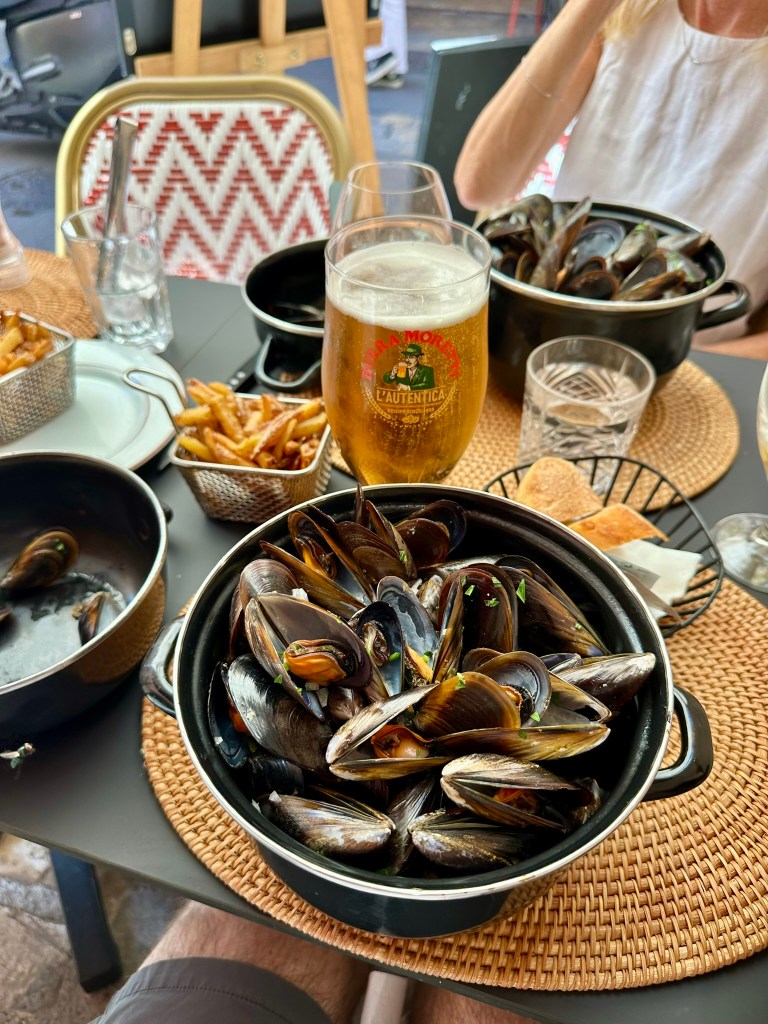
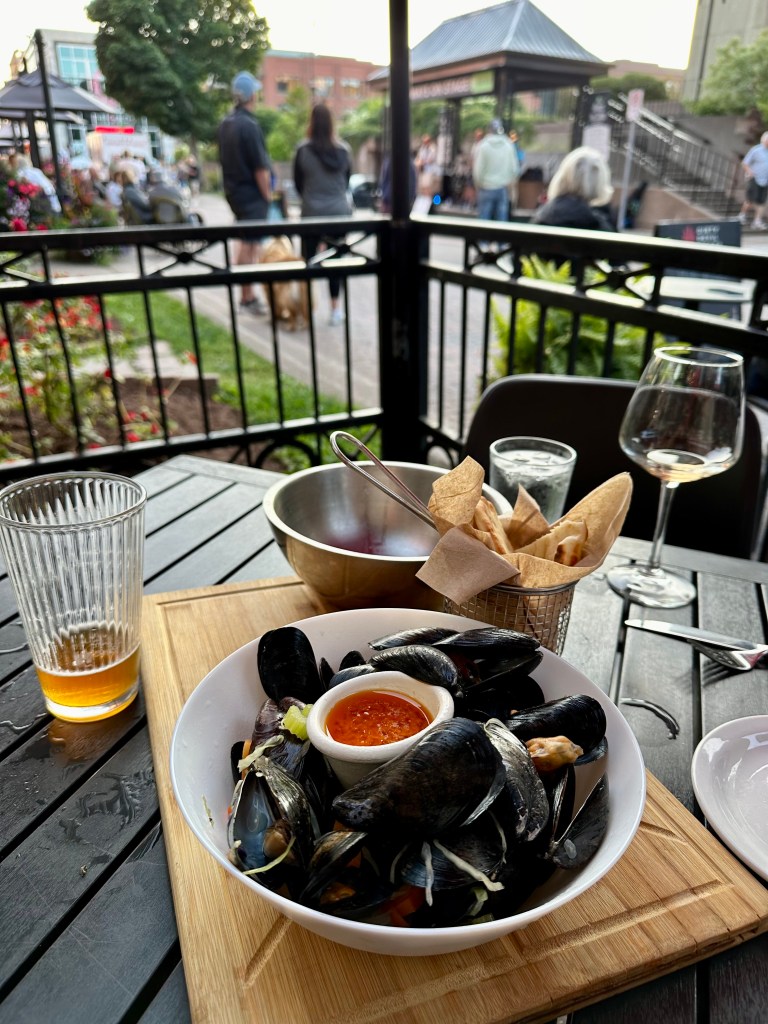
And PEI’s renowned mussels – the first of several orders during our week on the island.
More biking! This time a 26-mile trip, but on e-bikes, which we initially eschewed, even though we had a fun time riding them in San Antonio as part of Emma’s graduation celebration. We’re now totally converts for when we’re just traveling – e-bikes just make touring around tons more fun.
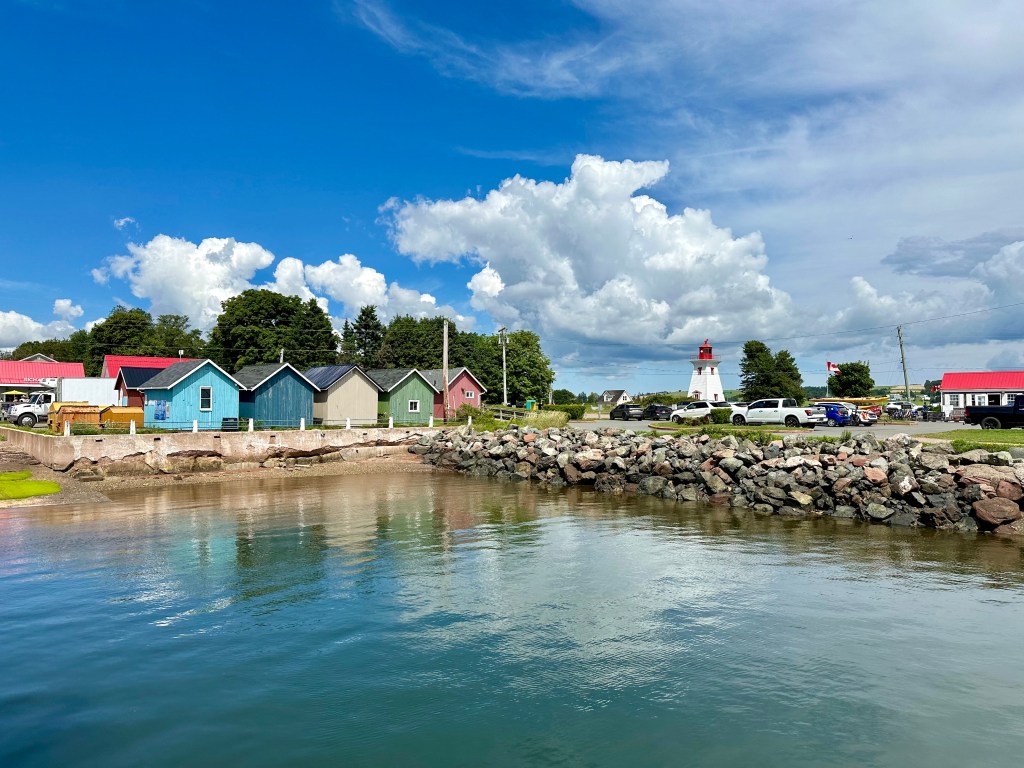
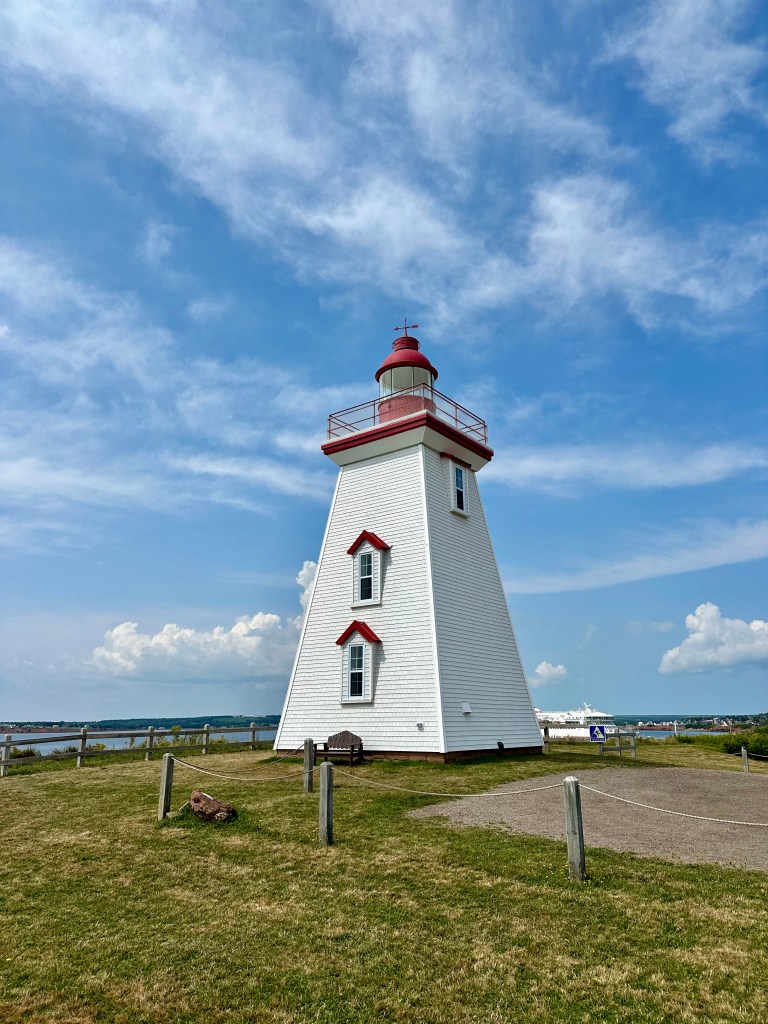
The first of PEI’s characteristic lighthouses along the bike ride – adding to one of our trip’s themes.
And the objective of the ride? We were on a roll with lobster rolls!
Another quintessential PEI lighthouse on our morning run along the harbor, which was so enjoyable that we ran all seven mornings of our stay.
The remarkably picturesque town of Victoria-by-the-Sea, which offered us a trifecta of trip themes during our midday field trip.
More oysters. . . .
More lobster rolls. . .
And the best PEI lighthouse yet!
More PEI mussels at the renowned Blue Mussel on the north coast, in the little fishing hamlet of North Rustico:
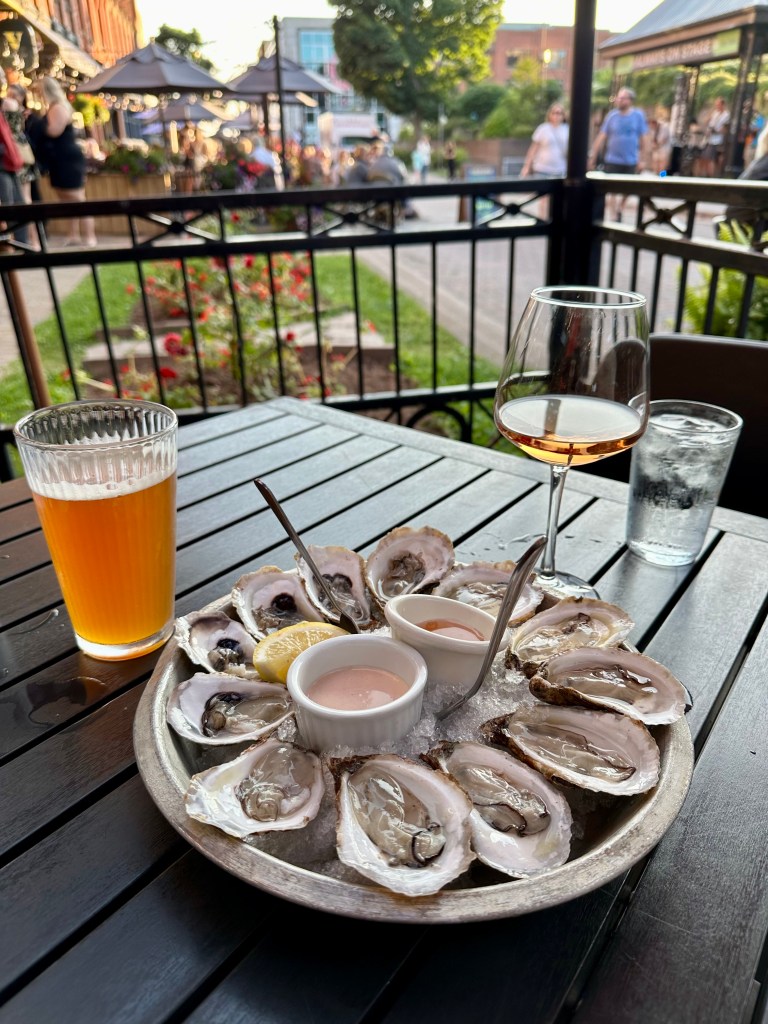
And more oysters, natch! With blueberry ale, a frequent offering that we’d been sampling (along with copious hazys) ever since our lunch in Portsmouth, NH.
Another PEI lighthouse encountered on a lunch excursion to Souris on the east side of the island.
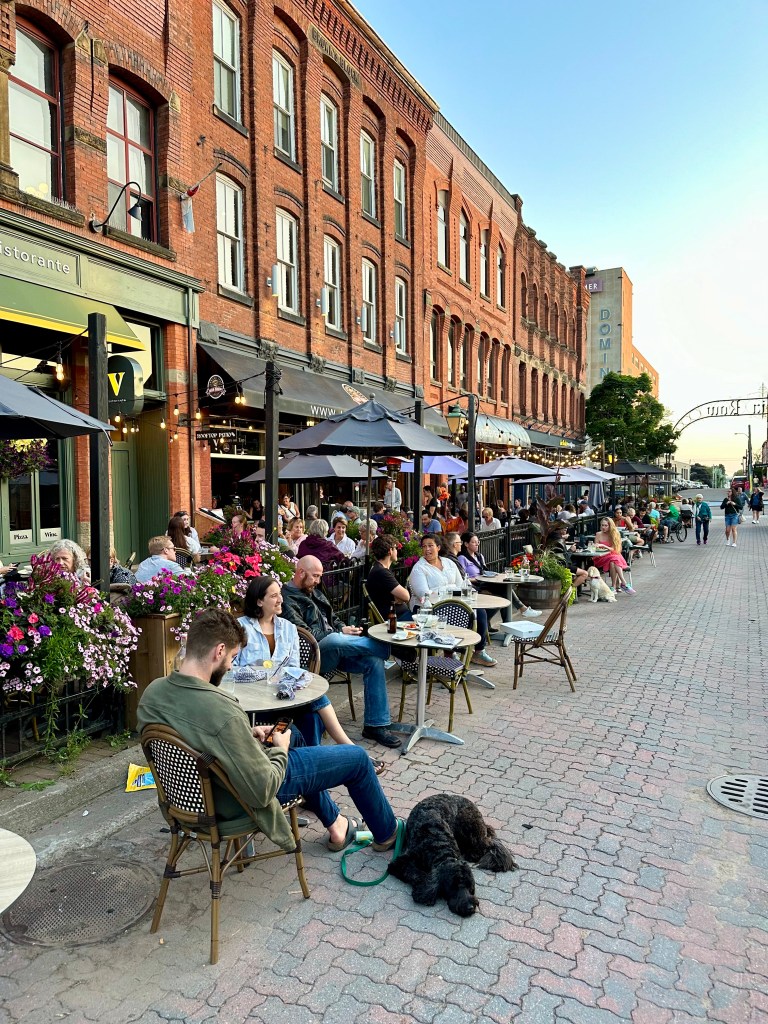
Our home base of Charlottetown – very reminiscent of Old Town. Right on the water and tons of restaurants. It even sports a King Street, Queen Street, and Prince Street. Perfect home for WolfeStreetTravel for a week!
The town’s vibrant Victoria Row a few blocks from the water.
Good setting for some more oysters!
And our last PEI mussels on PEI. . .
Sunset on Victoria Row.
Our last lobster roll on PEI (and easily the greatest underperformer of the trip – look how thin that loser is!):
And our last oysters (these, on the other hand, were great) on the island during our final dinner before arcing southeast to begin our return leg.
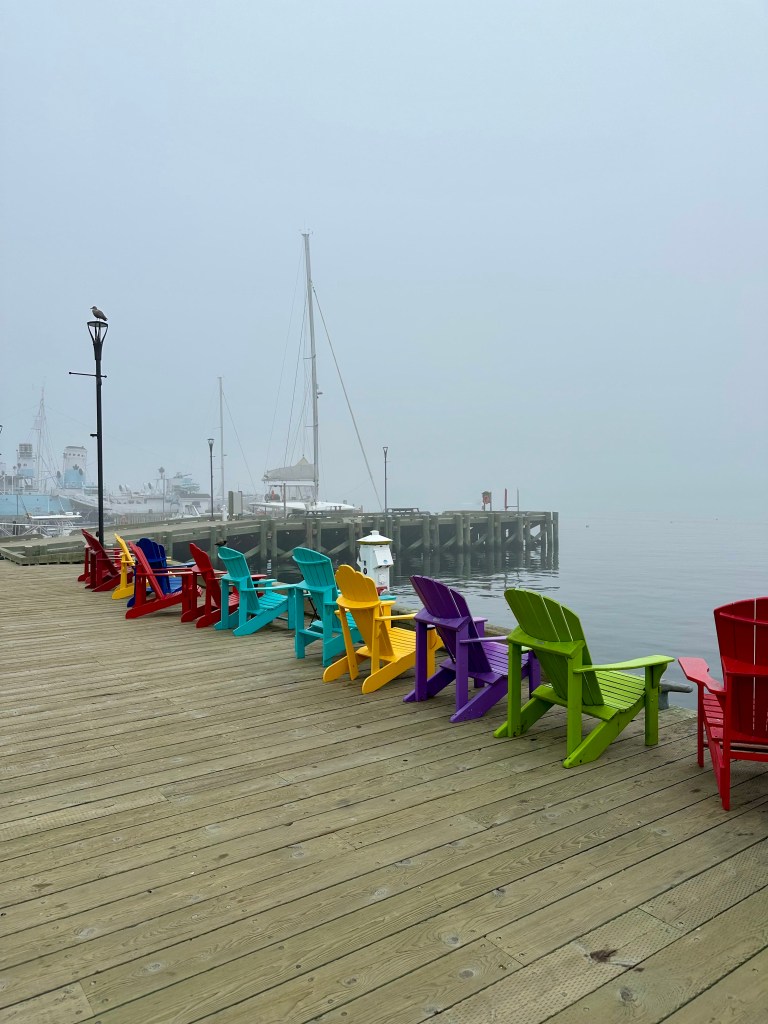
We headed over the internal Canadian border to our fourth province: Nova Scotia, where we spent 2 days in Halifax, right on the water. Which was super cloudy our first morning in town:
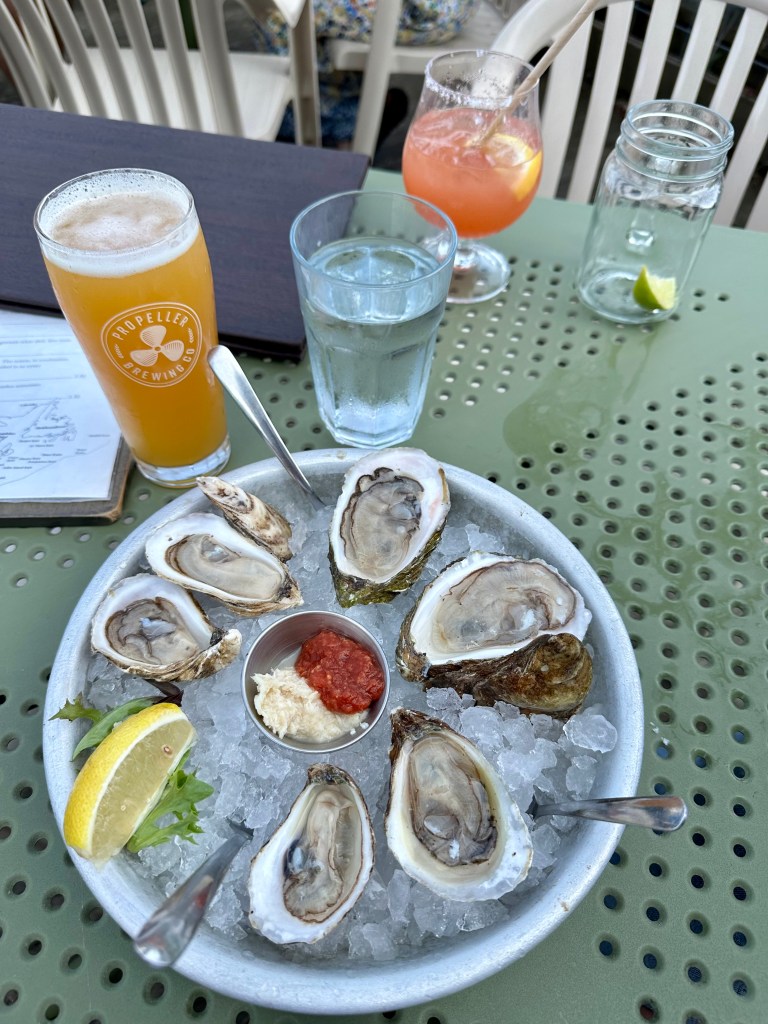
But with oysters, hazys, and Aperols, no one’s complaining.
Halifax’s harbor and boardwalk, which was really scenic.
During both day and night.
Heading up to Halifax’s British fortress on the hill above town:
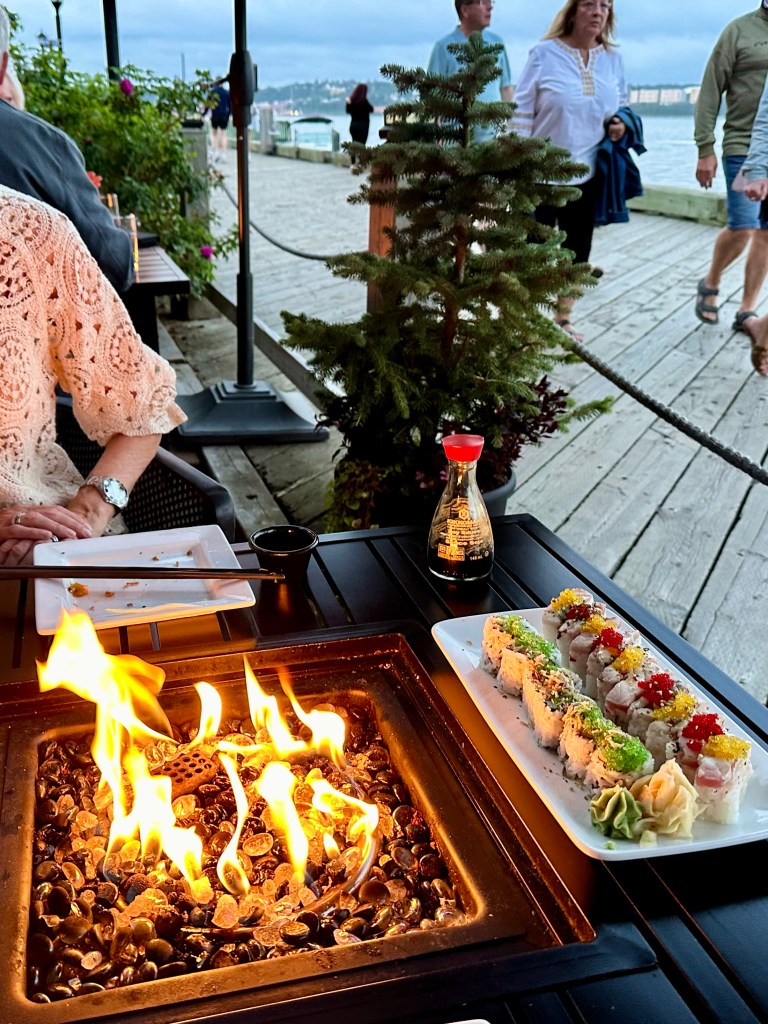
And a pretty awesome dinner our last night at Sea Smoke on the boardwalk,
where you could have fireside sushi while people watching. Perfect.
An addition to the lighthouse theme in Halifax harbor.
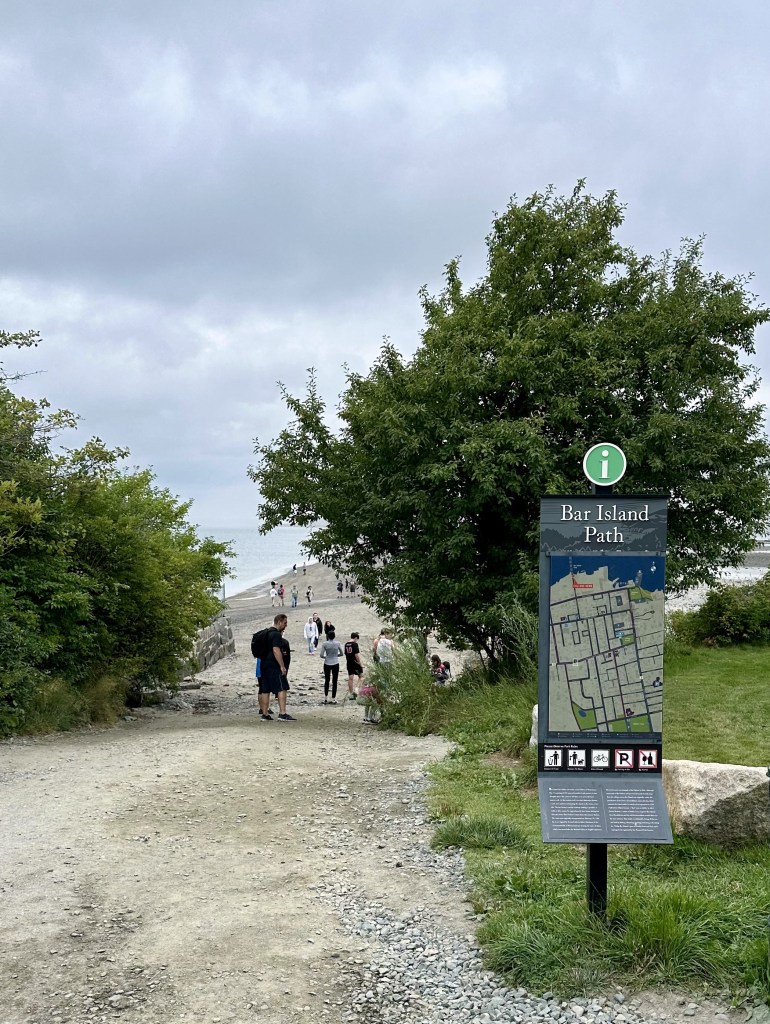
And then, across an actual border for the last time to drive down the coast of Maine, stopping first in Bar Harbor.
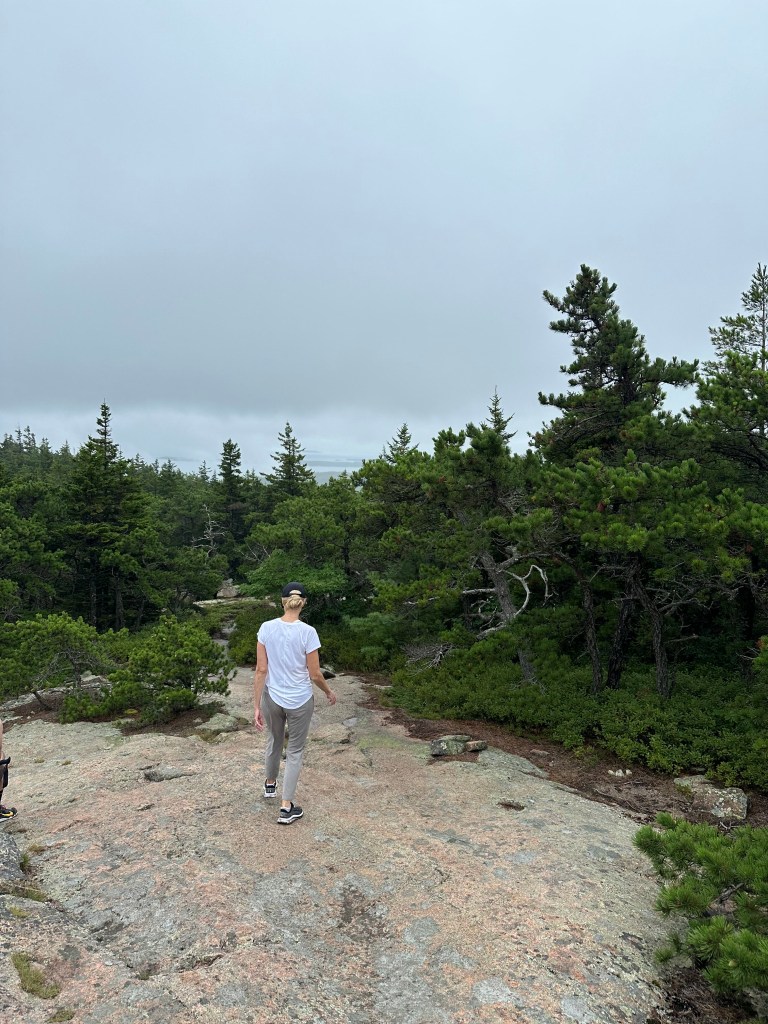
Including on our hike up Cadillac Ridge in Acadia,
where we encountered zero visibility at the top, identical to our experience on Arthur’s Seat in Edinburgh.
But, the fog also led to a bumper crop of mushrooms on the trail, much to the delight of the WolfeStreetTraveler who took a full year of graduate-level mycology as an undergrad.
And, on our final morning, a whale watching cruise! Great, right?!
Nope! Also zero visibility, and with huge swells, leading to a third of the boat becoming seasick:
The cruise was cut short and refunds were issued to all due to both factors (we did see two whales off in the fog, though).
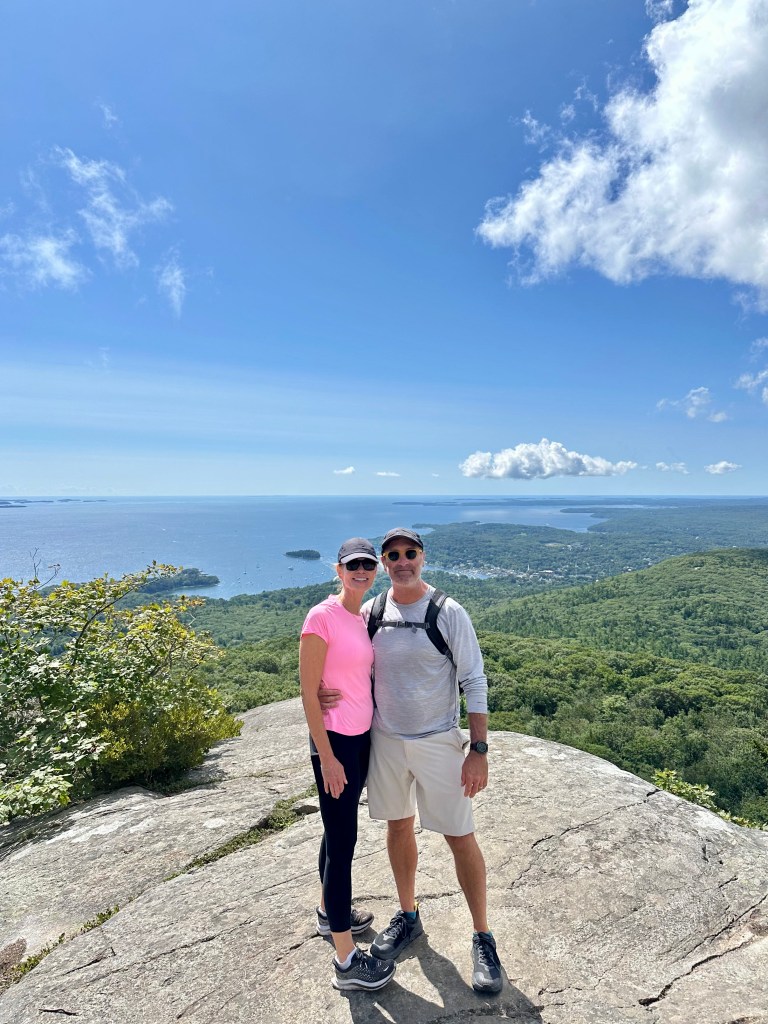
From Bar Harbor, we continued down the coast to the charming port town of Camden.
Home to a classic harbor inn.
And the iconic views from Mount Megunticook:
And, notwithstanding the three consecutive outstanding dinners in Montreal and tons of great dining on PEI, we actually experienced our best dining experience of the trip on our final night in Camden at Camden Harbor Inn’s Natalie’s.
Based on recommendations from a couple we met around a fire at Lake Placid, we stopped for lunch at Cliff House in Ogunquit on the way to Kara’s in New Hampshire. More oysters, natch.
And then to Bedford, NH, for Jen’s 60th birthday party and the Olympic Jentathalon, pitting two teams of family members against each other in contests of skill, determination, and an eclectic mix of life skills.
Thence, on to Cape Cod. First, to Chatham, a lovely town that was not part of our original itinerary. We left 2 days after Jen’s party unplanned, in case there were follow on activities. Seeing none, we followed the advice of the Spruck’s at KJQ’s back in July, and booked 2 nights in Chatham, located at the elbow of the flexed arm that is Cape Cod.
More oysters!
An evening at Chatham Bars Inn – we declined to stay there, but still took advantage of the setting for drinks and dinner our first night.
Atmospheric final morning during our run in Chatham. . .
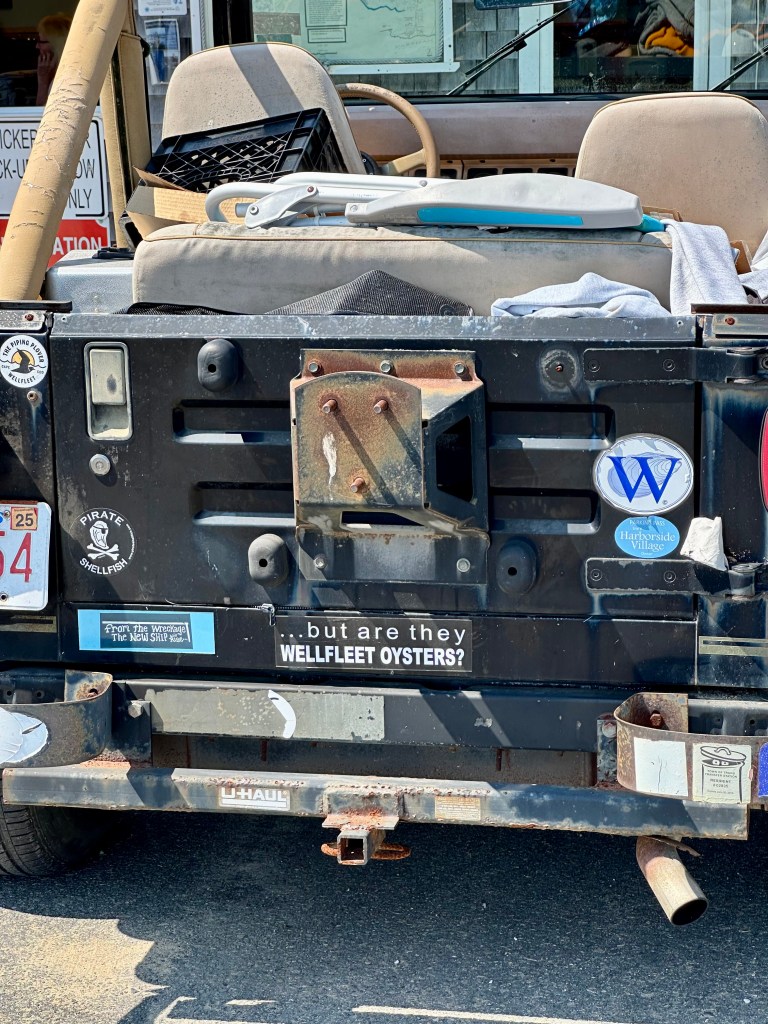
We then headed up Cape Cod’s arm to Provincetown, stopping for lunch in Wellfleet, as famous for their oysters as PEI is for their mussels:
A well-deserved reputation!
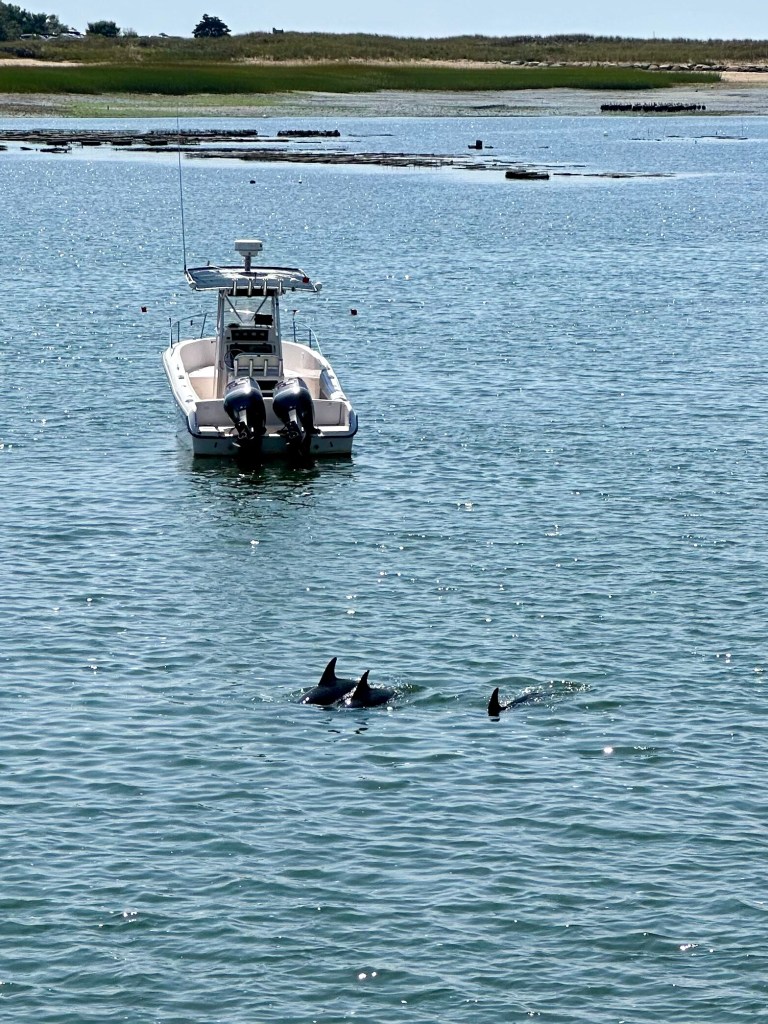
While we were there, bottle-nosed dolphins got stranded in their harbor and a team of marine mammal specialists were trying to shoo them out.
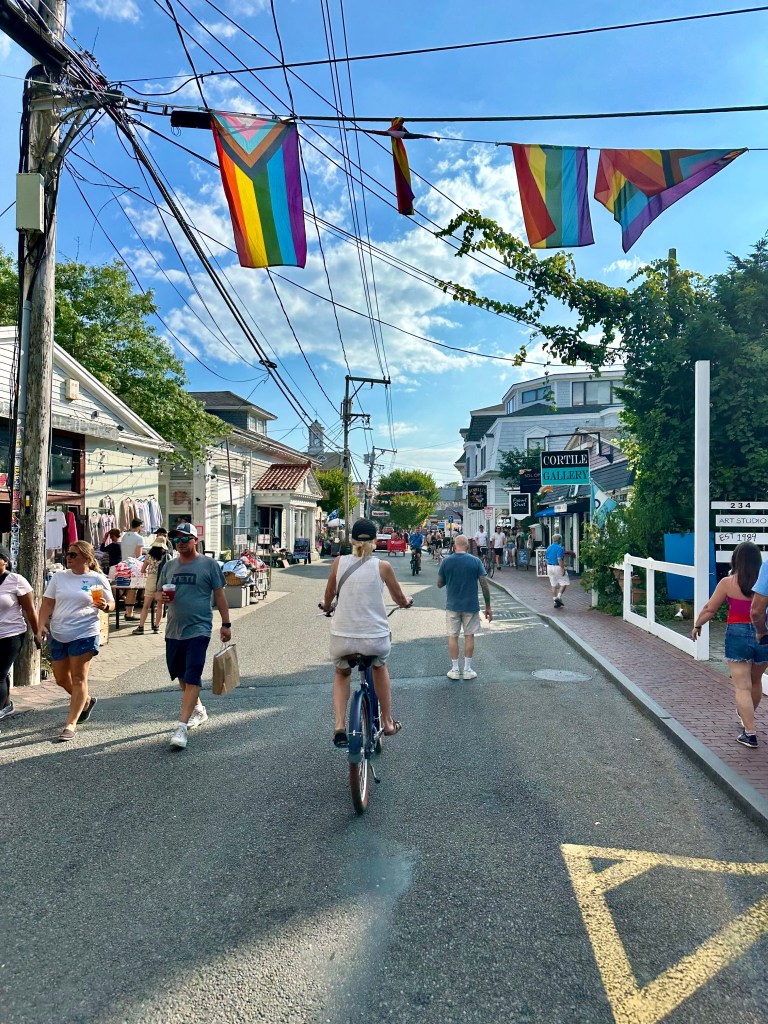
And then – Provincetown. Super entertaining! Super fun! Super gay!
Definitely a cool place to visit for 3 days.
And, with super oysters (natch).
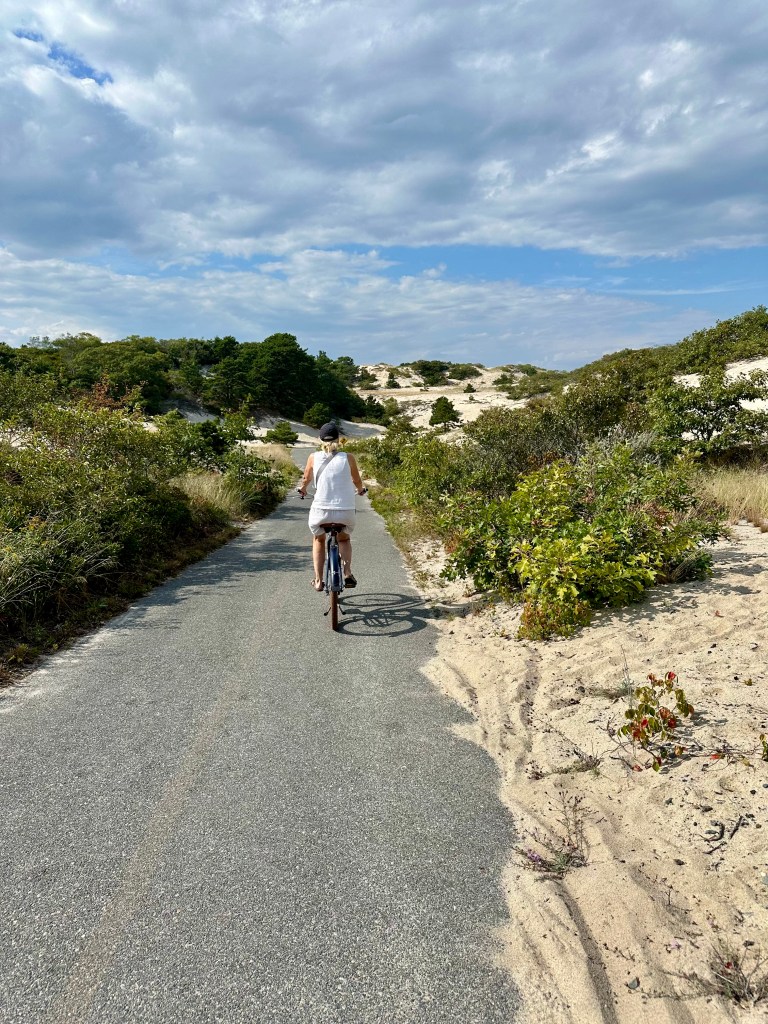
We grabbed our inn’s bikes one day and biked to Race Point Beach, on the other side of the peninsula.
Which was full of great white sharks.
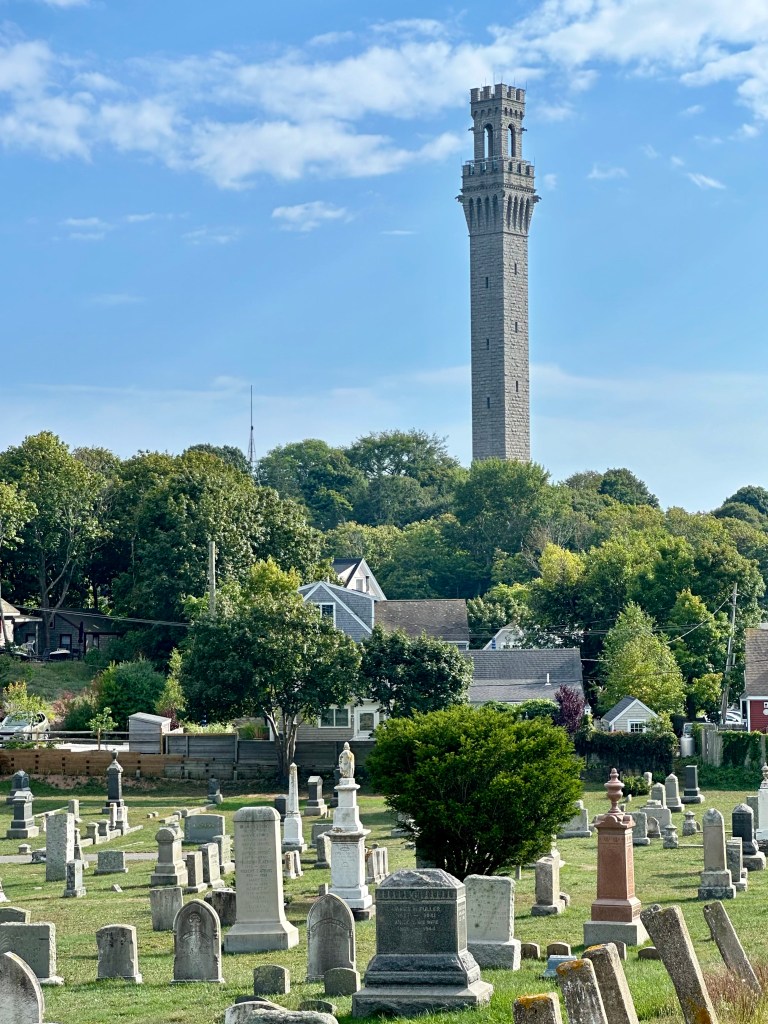
Pilgrim Monument looming over town.
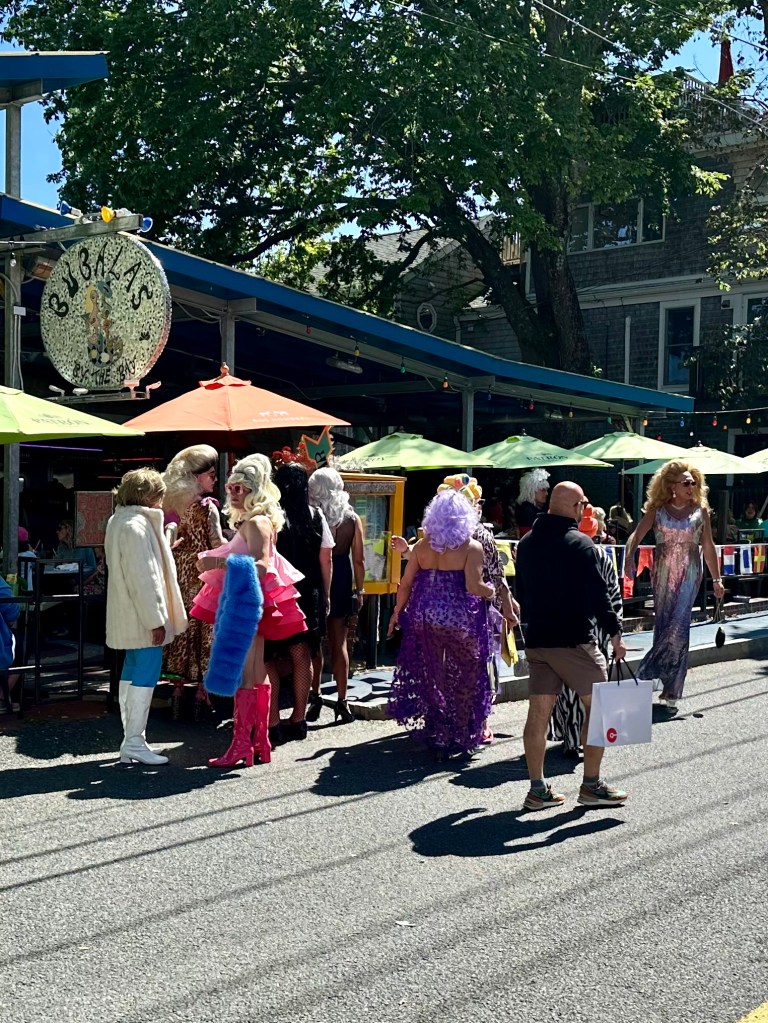
Drag queens at brunch.
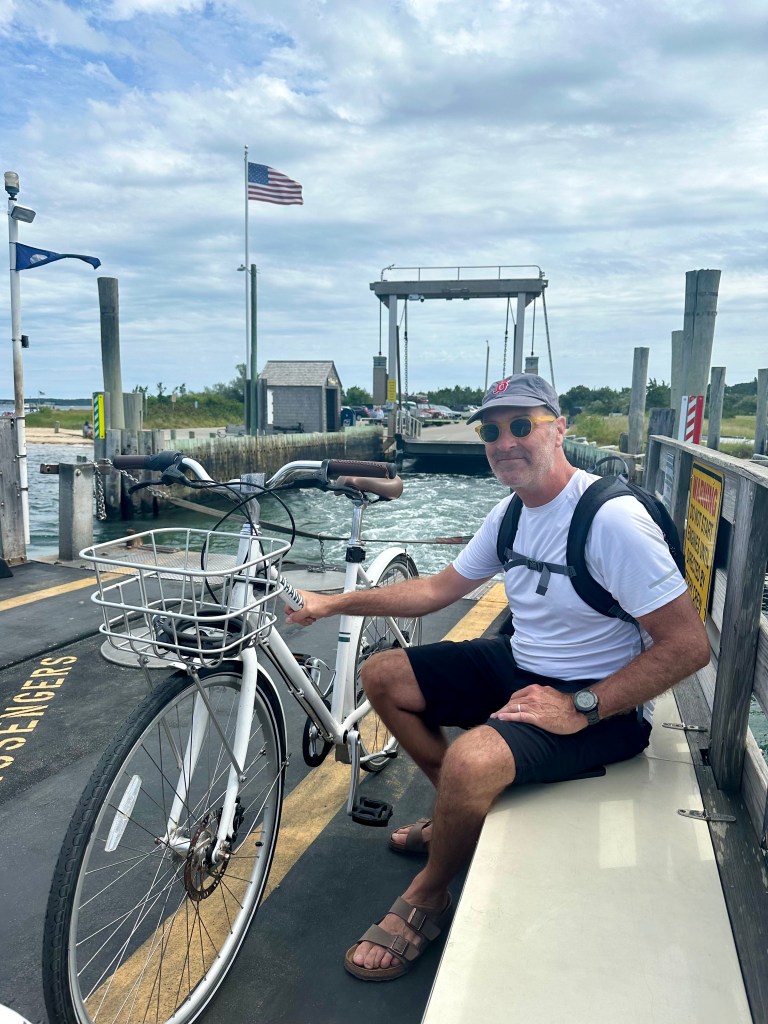
And then, our next ferry, from Woods Hole, Cape Cod, to Oak Bluffs, Martha’s Vineyard, our first of two towns on the island.
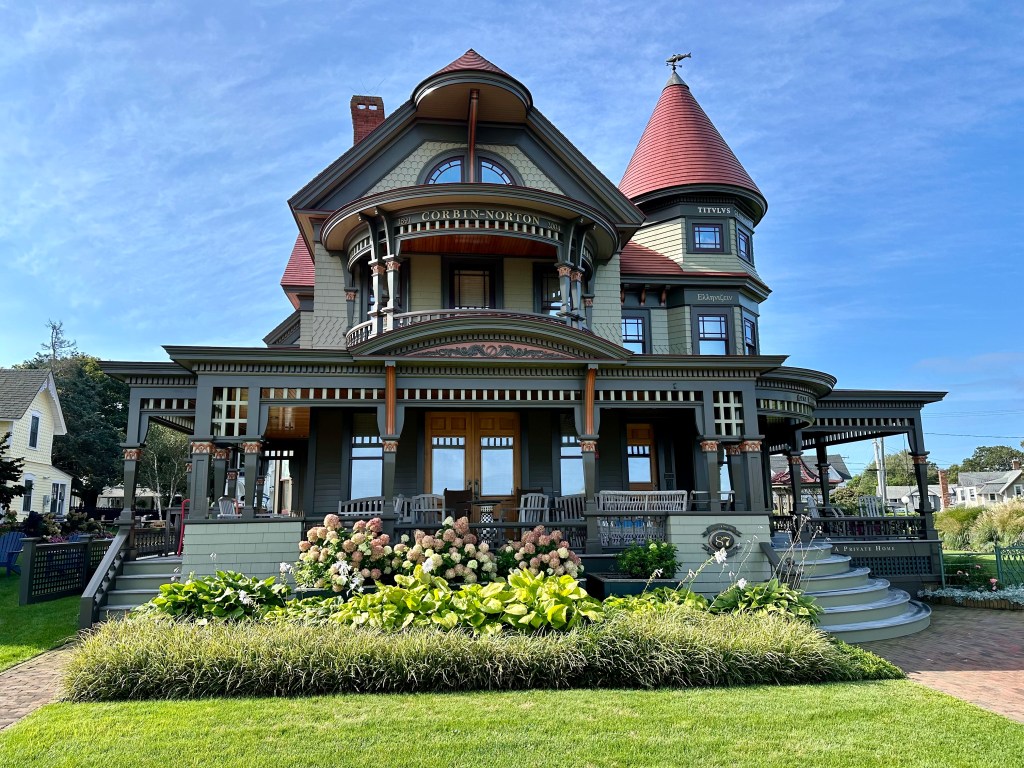
The big Victorians on Oak Bluffs:
And the tiny revival Victorian cottages:
And, of course, oysters, during lunch in Vineyard Haven down the road.
Dropping by Gay Head Light on the west end of the island during our migration from Oak Bluffs (not our favorite, frankly) to Edgartown (very, very good).
And ANOTHER bike ferry, this one across a cut to the fishing village of Chilmark for lunch:
Adding to one of the five themes of the trip, we present the Edgartown Harbor Lighthouse:
(And more oysters.)
Yet another ferry from Edgartown to the island of Chappaquiddick to circumnavigate the island by bike.
Pretty good digs while in Edgartown.
And, after our final ferry from Martha’s Vineyard back to Woods Hole, our final lobster roll of the trip in Newport.
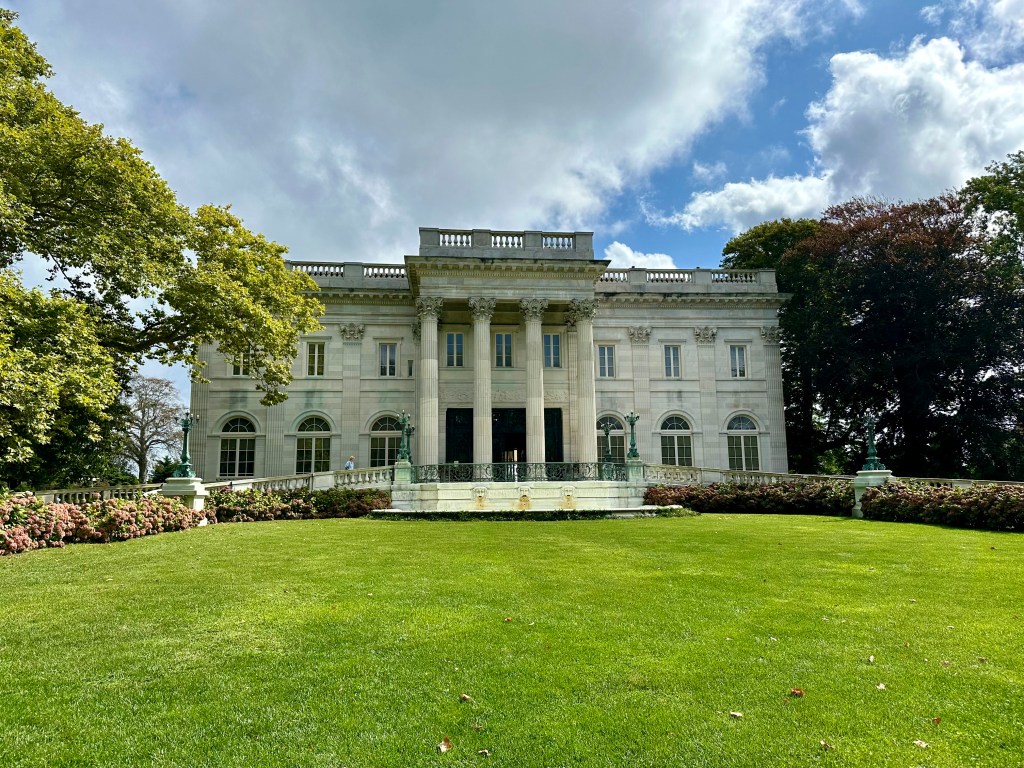
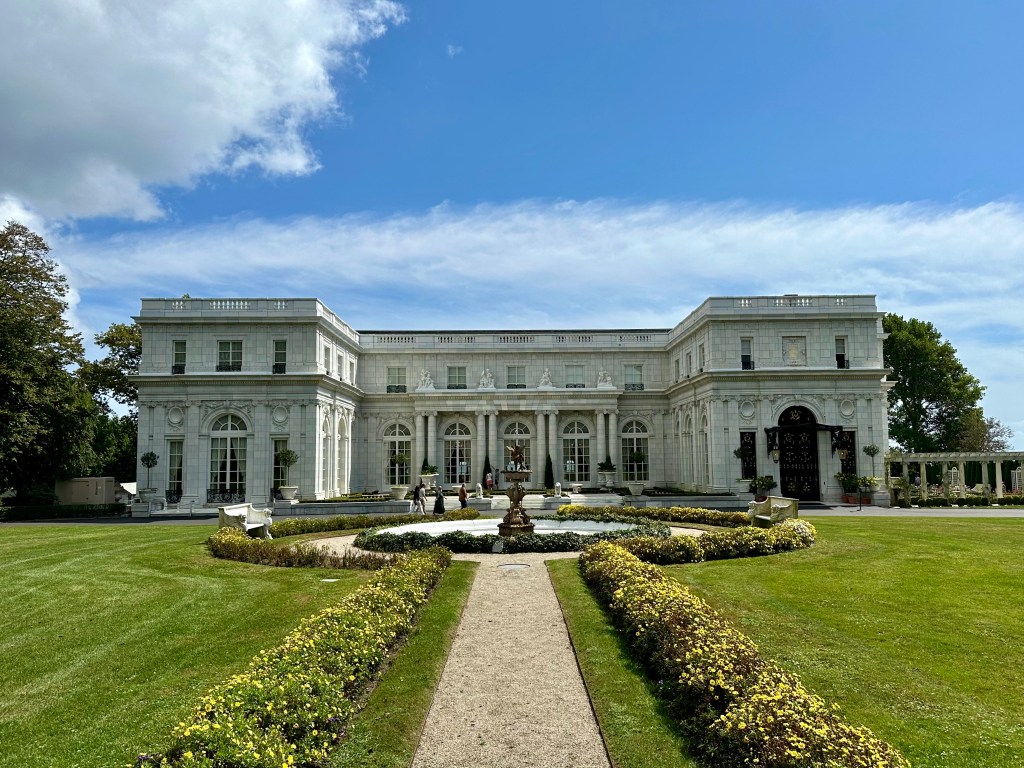
As an appropriate accompaniment to lobster, we visited three Gilded Age mansions in Newport, starting with The Breakers.
Followed by Marble House.
And ending with Rose Cliff.
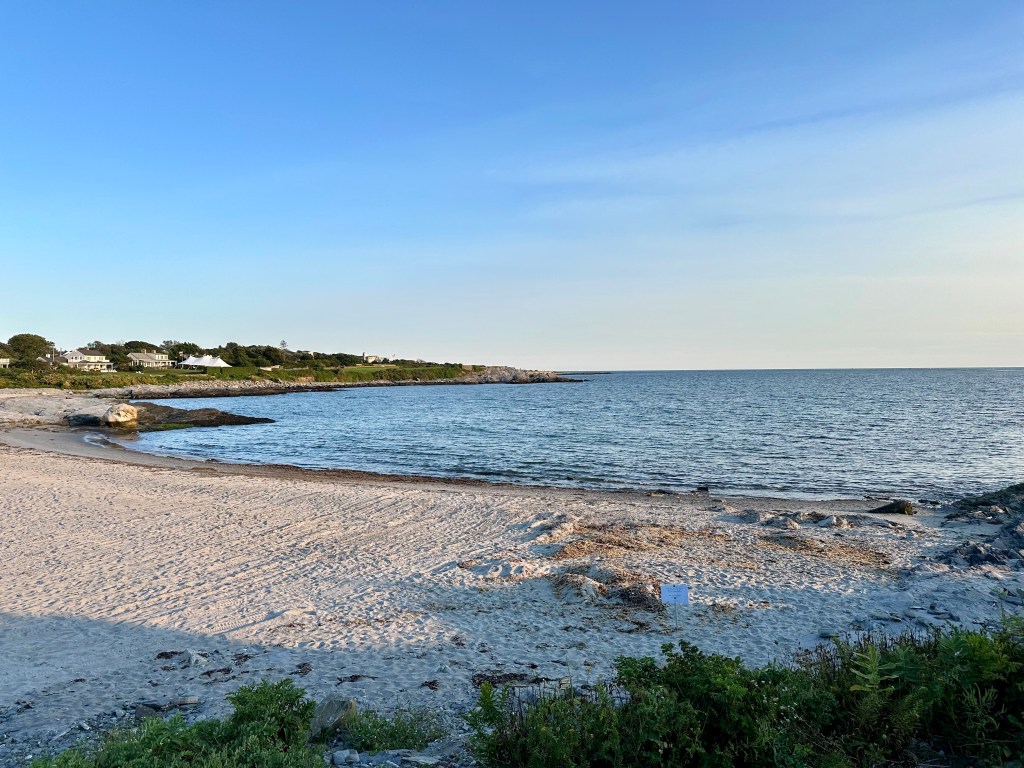
Also pretty good digs at Castle Hill Inn’s beach house.
The final lighthouse of the trip: Castle Hill Lighthouse on Narragansett Bay, in Rhode Island.
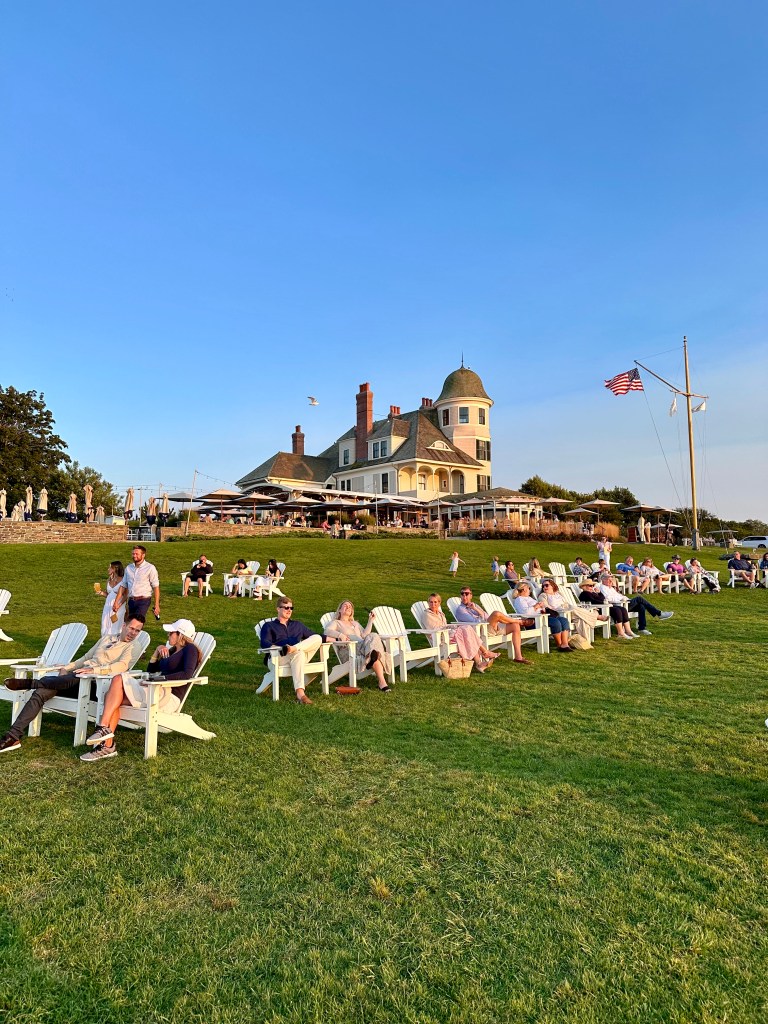
Our last stop in Newport, RI, also was the location of the best sunset cocktail hour scene of the entire trip: Castle Hill Inn’s lawn of Adirondack chairs.
Accompanied one evening by a completely unexpected air show by, everyone assumed, the naval station up the bay. We still don’t know, but it was awesome:
And at Castle Hill Inn to end the trip: A. Final. Order. of. Oysters.
Pretty good trip. We’ll publish more detailed posts after we address our backlog. Likely in 2028 or something.
After limiting our travel each year for the past several decades to 1- and 2-week trips abroad due to work responsibilities, retirement by the second of the two travelers in 2023 eliminated this constraint. So, we kicked off WolfeStreetTravel’s 2023 journeys with one-way tickets to Italy with no plans to return.
The original vision for this prolonged foray to Europe assumed that we’d have an itinerary and lodging planned for the first week or two, then we’d wing it from there. However, this approach proved to be completely unbearable for the travel-planning arm of the consortium. As a result, our entire itinerary, including all destinations, transportation, and accommodations (and about a half a dozen dinners) were planned for the first 7 weeks of the trip.
We still had no return plans, maintaining fidelity to the spirit of the trip, but we definitely weren’t winging it, either.
The trip, which began on May 5, can be logically sequenced into the following legs:
Italian peninsula road trip (17 days)
Sardinian break (4 days, including overnight ferry to Palermo)
Sicily road trip (18 days)
Malta break (4 days)
Normandy bike trip (8 days, including a day before and after biking)
Portugal (8 days)
The color coding of each leg above aligns to the destinations depicted in the interactive map below:
In addition to the color coding, the map breaks down our travels using the following icons:
Bed = hotel stay
House = villa / Airbnb stay
Pin = day trip
Hiker = uh, a hike
Biker = a stage in our Normandy bike trip
We’ll file detailed posts on the trip later, but each of the legs is summarized in this post. We really have tried to keep this overview to a bare minimum, but it’ll still be the longest update we’ve ever posted – sorry!
Italian Peninsula Road Trip
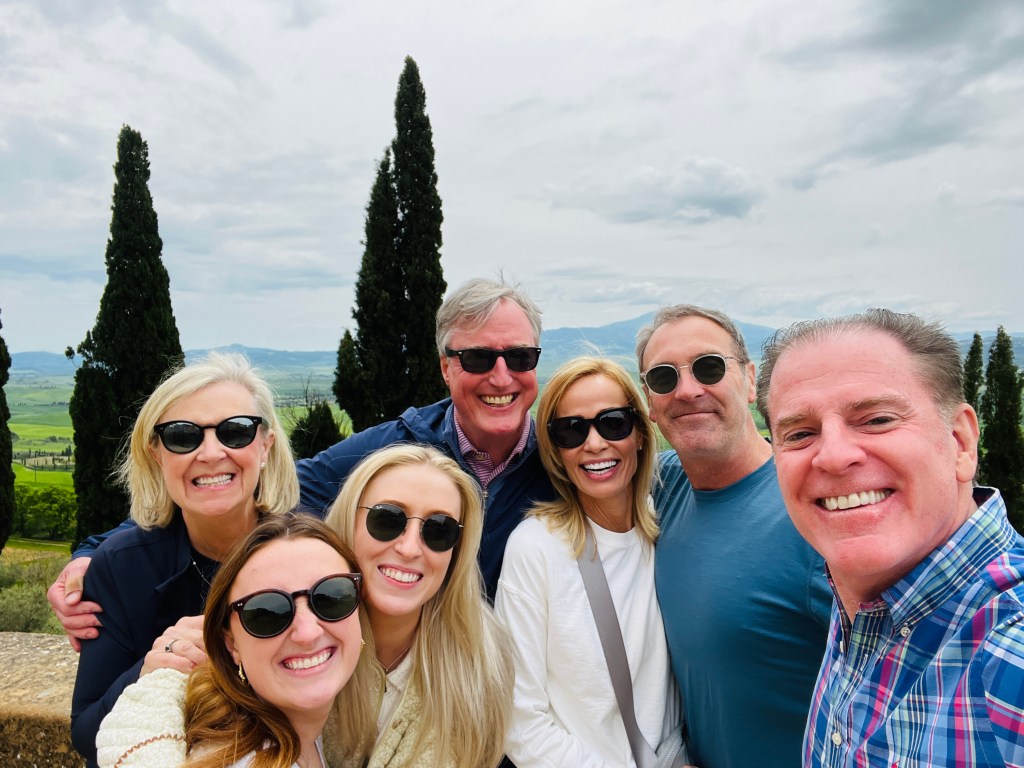
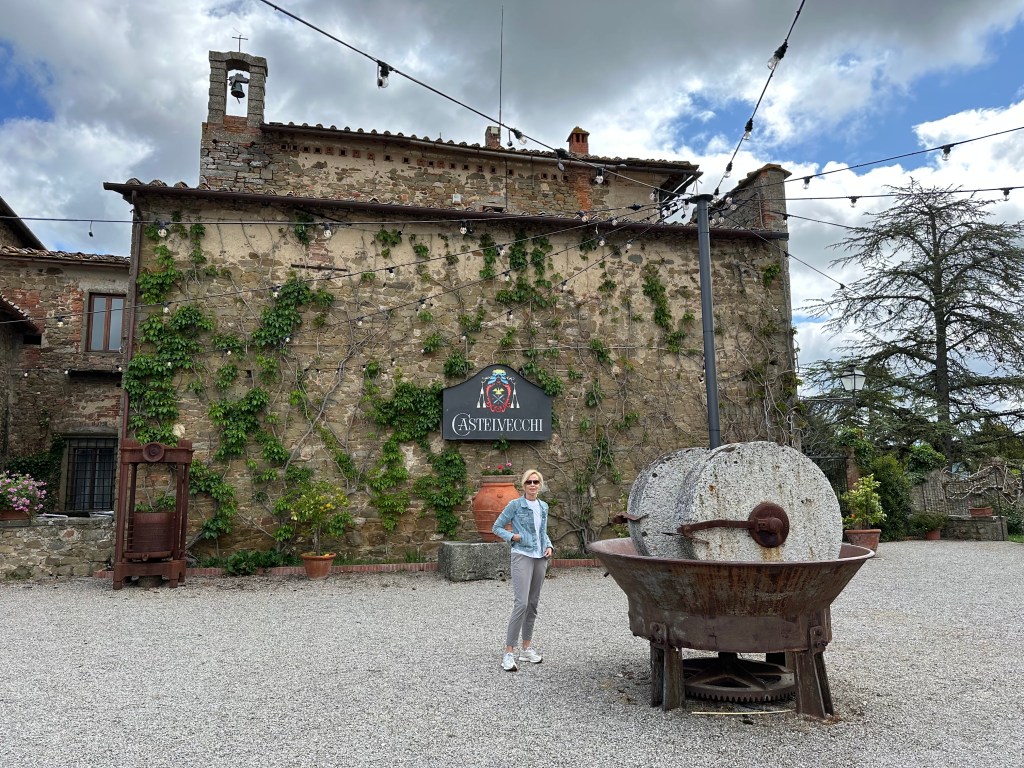
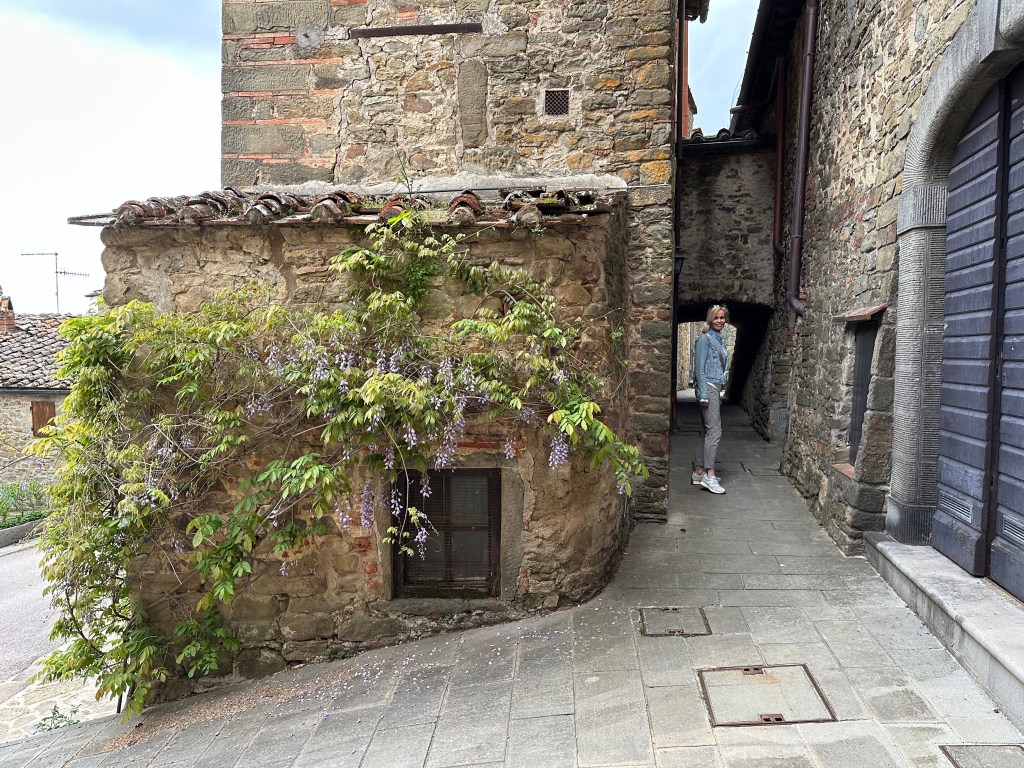
The trip began in Tuscany, where we’d spend 5 days with the Brandts and KJQ in a beautiful area just northeast of Siena.
Overlooking the Val d’Orcia:
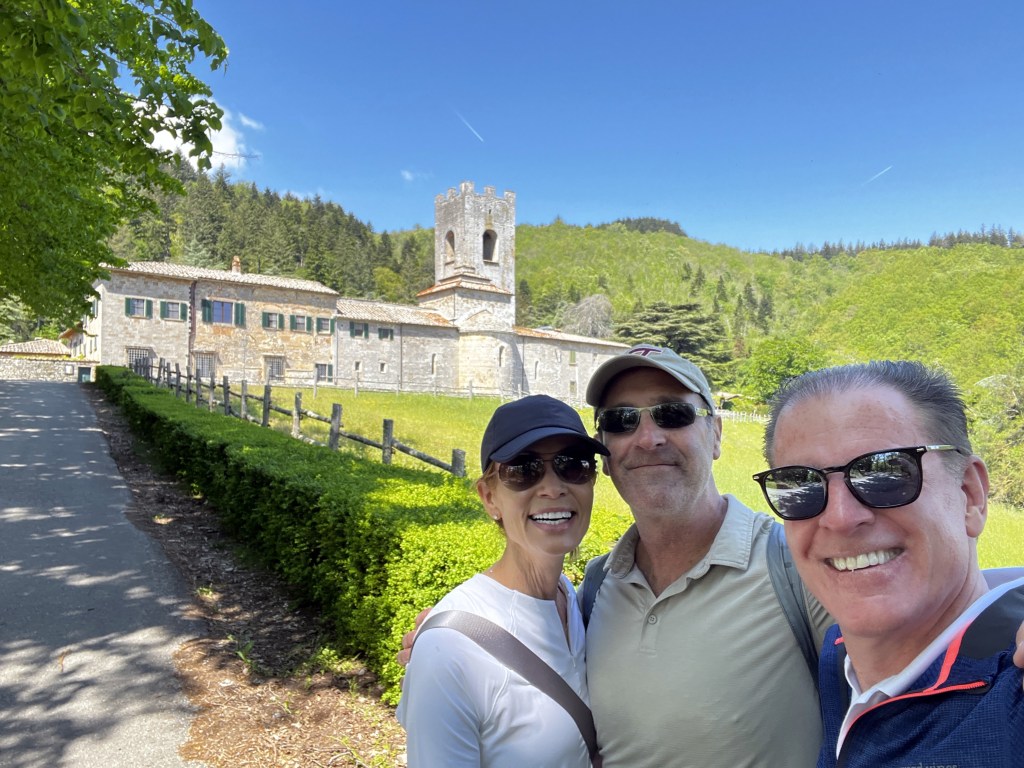
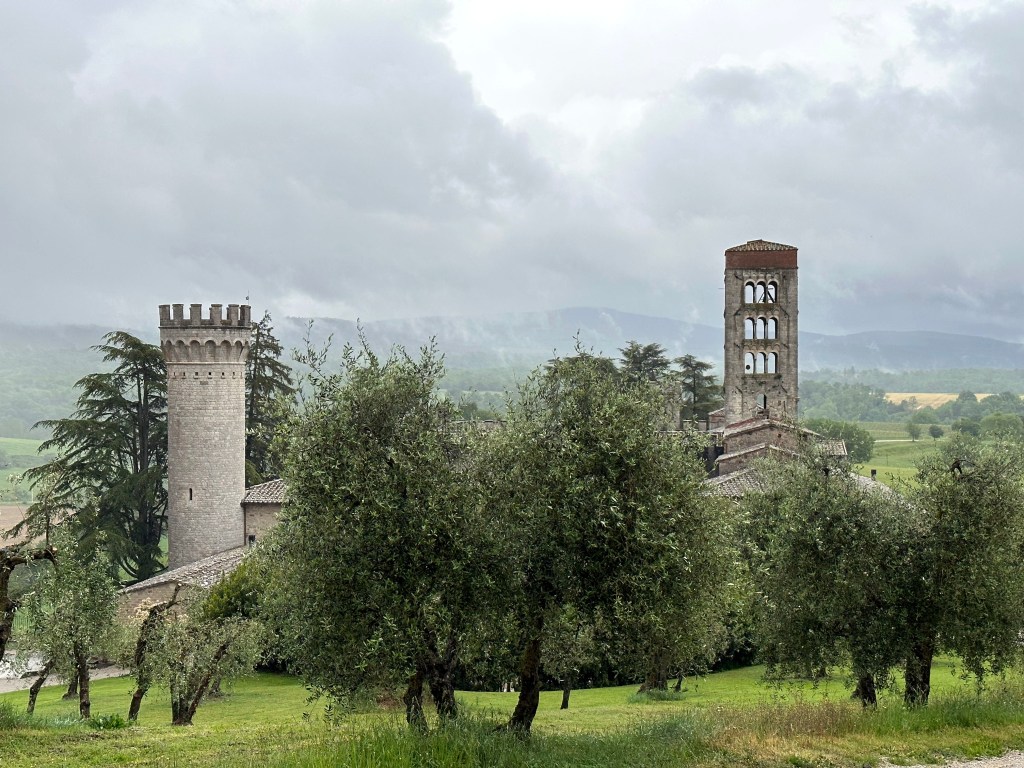
We hiked w KJQ one day to the Abbey of San Lorenzo a Coltibuono (and, about 5 miles later, to a harrowing shortcut escaped only through an opening KJQ dubbed The Gate to Salvation):
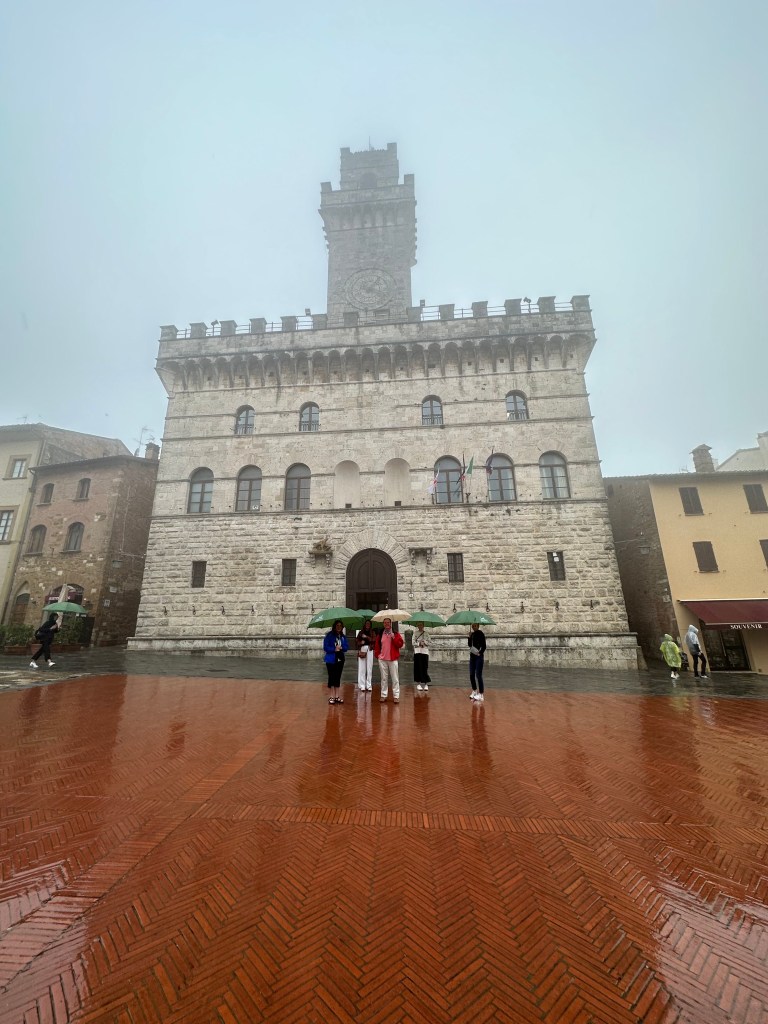
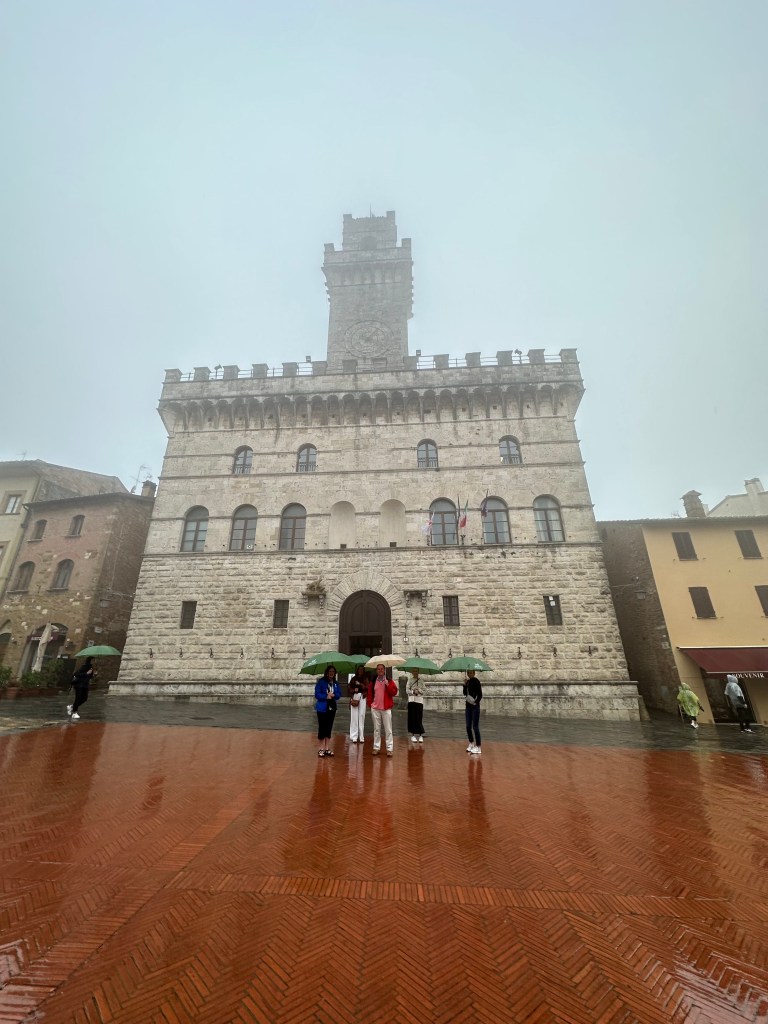
Tuscany wasn’t all sunshine and Brunello, though – it freaking poured in Montepulciano:
Gracie joined us for a portion of the stay, as well (and a team comprised of her and Madison cleaned up on two successive nights of Trivial Pursuit)
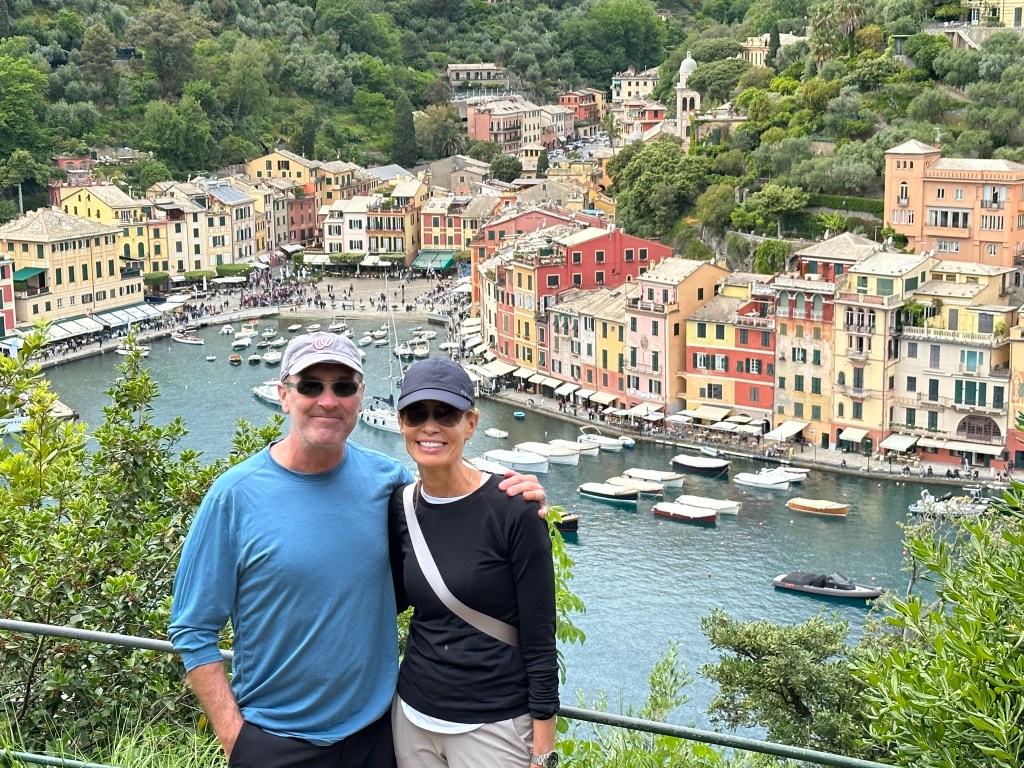
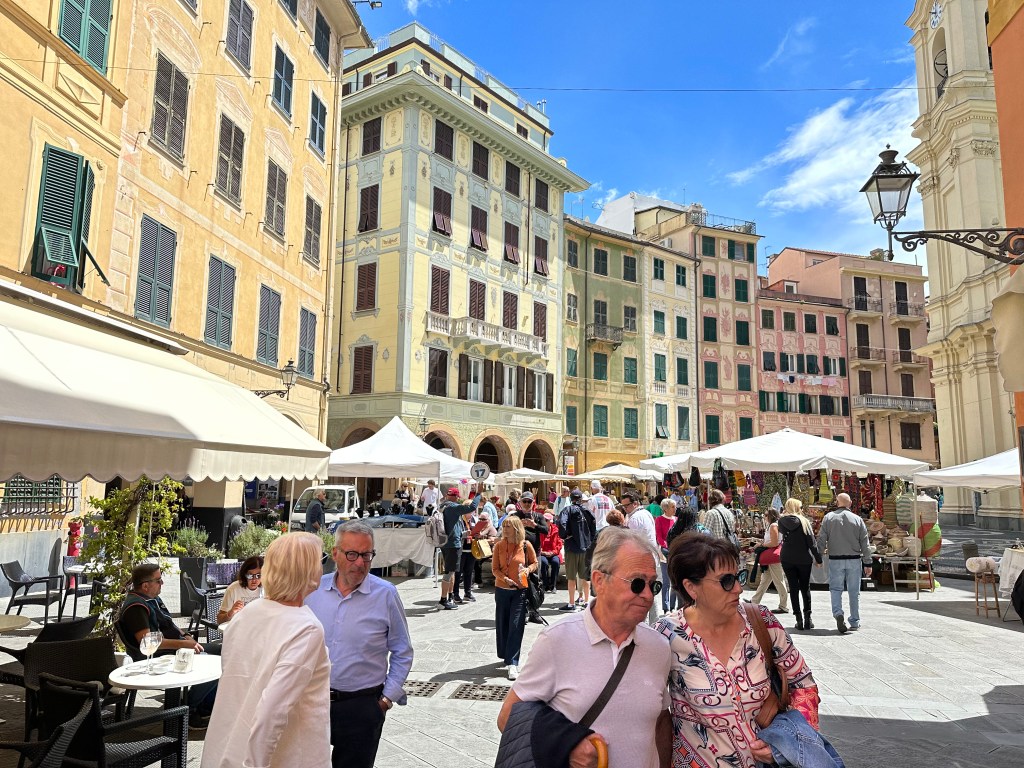
From Tuscany, we drove north, to Portofino on the Ligurian coast – a town that had been on Lisa’s wish list for several years. It did not disappoint.
We continued our hiking habit in Portofino, hiking one day to the Abbey of San Fruttuoso:
And the next along the coastline to Santa Margherita Ligure:
Portofino also was the jumping off point to scores and scores of Aperol spritzes consumed as aperitivos throughout the trip.
From the Ligurian coast, we drove south, back through Tuscany, and over the border to Umbria, and the medieval town of Orvietto for a stopover on our way to the Amalfi coast:
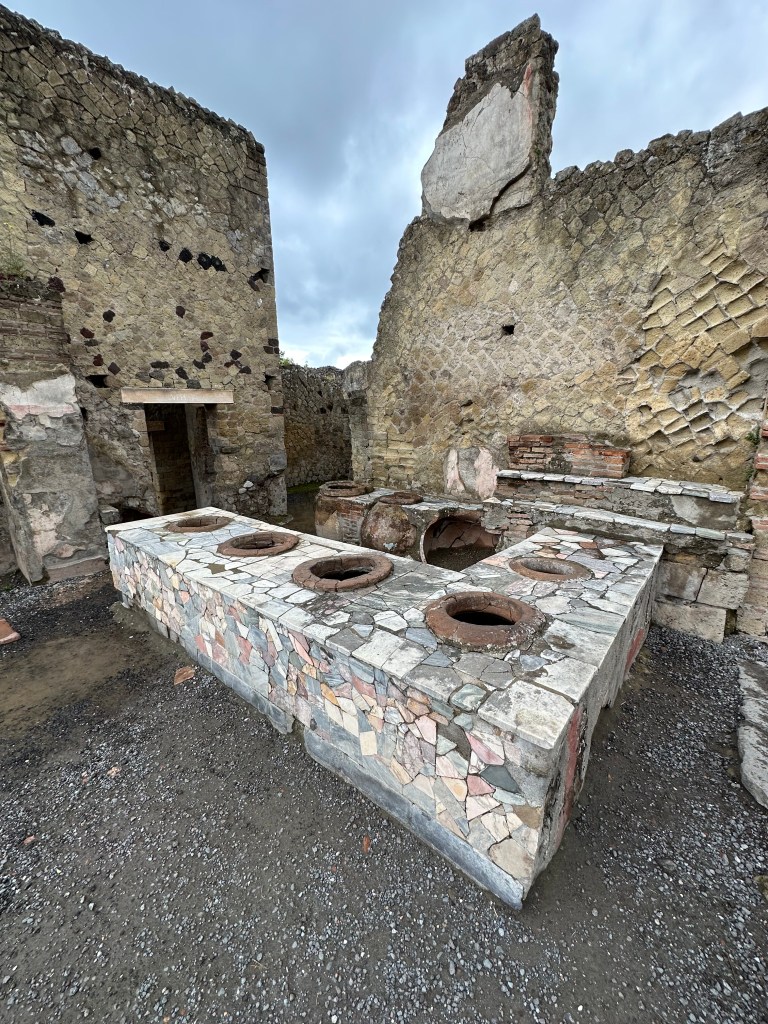
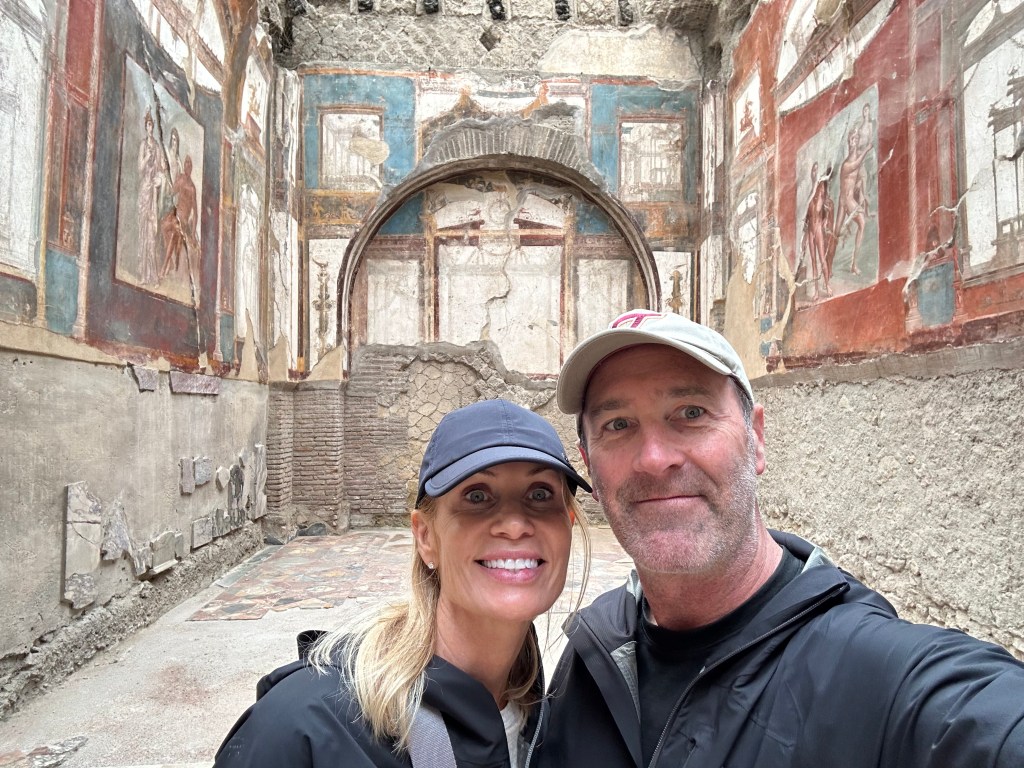
We continued south the next day, to Herculaneum. A smaller town than Pompeii, Herculaneum also was nonetheless lost due to the eruption of Mount Vesuvius in 79 AD, but it was covered in ash and pumice, rather than being flattened by rocky debris, preserving it much better, including numerous, intact, Roman snack bars:
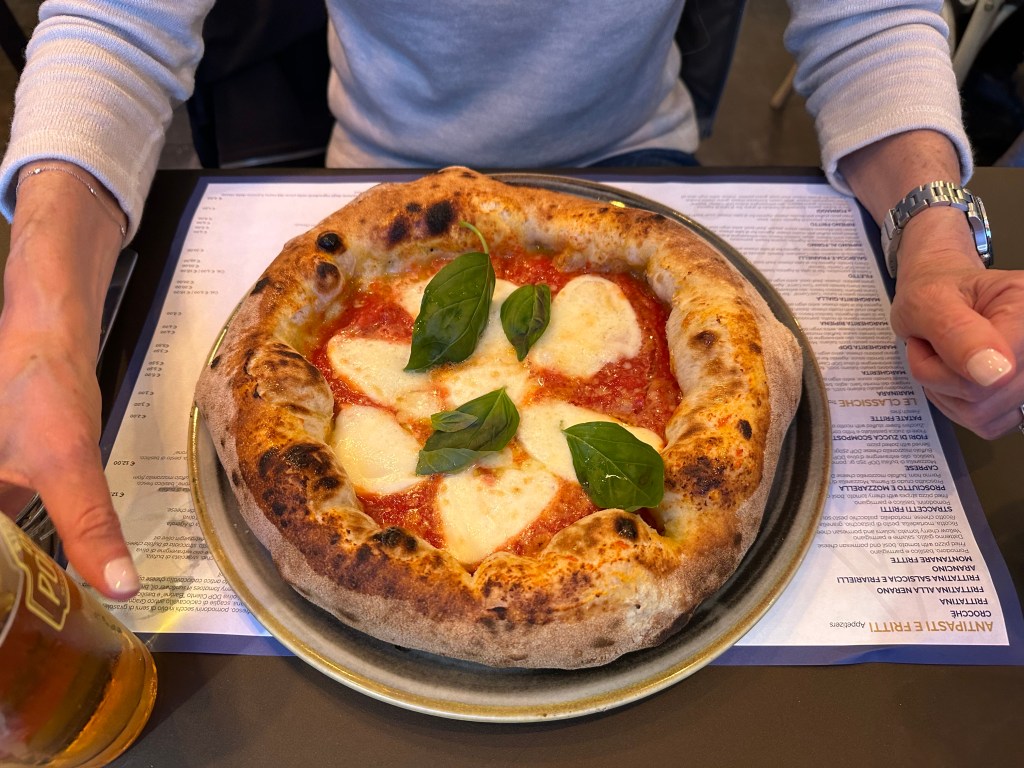
After a quick overnight in Naples (in which our only goal was to score some iconic Neapolitan pizza), we headed to Capri for a couple of days, leaving the car in Sorrento:
Our stay on Capri was one of the highlights of the trip – we will definitely be back. View over Capri Town from our place:
Hikes each day, including to the ruins of Emperor Tiberius’ villa:
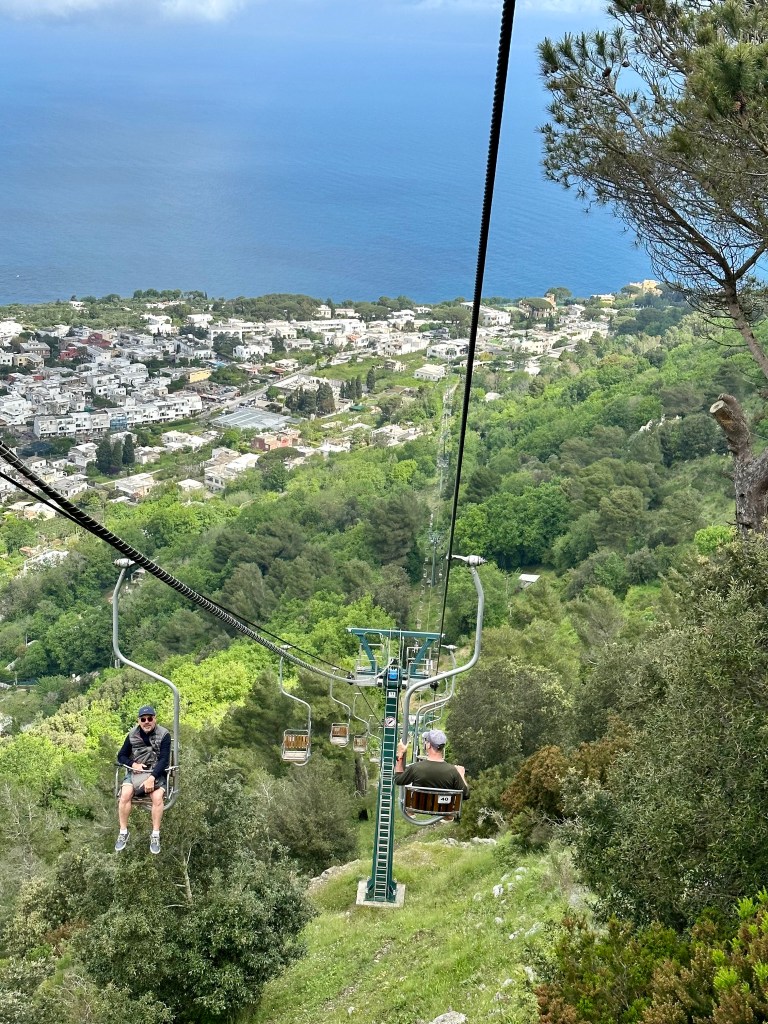
And a hike from Capri to Anacapri, followed by a hike up Monte Solaro because fog reduced visibility to zero for a ride up the cool little cable chairs:
But the weather cleared for a chair ride back down:
We ferried from Capri back to Sorrento, retrieved our car, and began the most harrowing aspect of our peninsular road trip: driving on the Amalfi coast. Seriously – really treacherous.
Luckily, relief was at hand in Praiano, our home for the next 3 days:
We headed a few miles down the road to Positano the next morning, only to retreat back to Praiano after a half a day there. A lot of travelers characterize Positano as the “Jewel in the Crown of the Amalfi Coast.” It’s not. Its a cruise ship packed full of tourists and shitty shops that happens be be tumbling down a cliff in a picturesque way.
We enjoyed Positano much more from a distance, content at our place in Praiano:
The next morning we hiked the Path of the Gods from Praiano to Positano:
Once the path paralleled the coastline, the going was a little technical, but not a big problem. The challenge to the 5-mile-long Path of the Gods hike was the >2000 feet of incline and decline, almost all of which is straight up from Praiano and then straight down 1700 steps into Positano.
Praiano also hosted the first of three Michelin-starred gastronomic dinners of the trip. Plus, a ridiculous perch over the Tyrrhenian Sea on the Amalfi Coast:
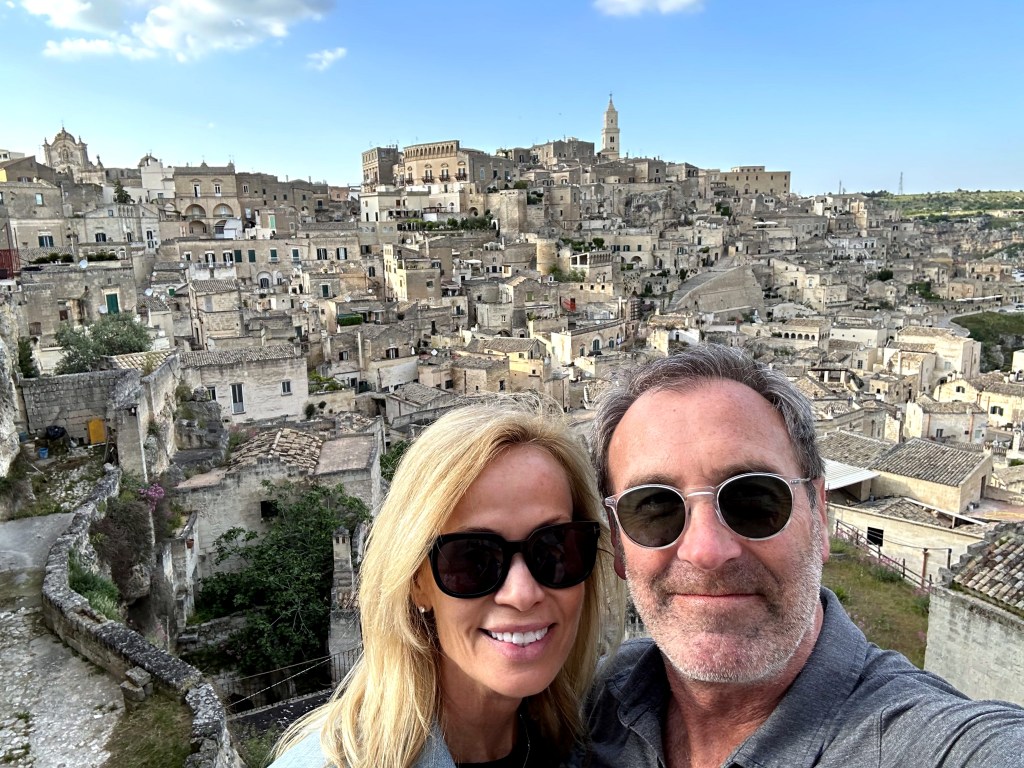
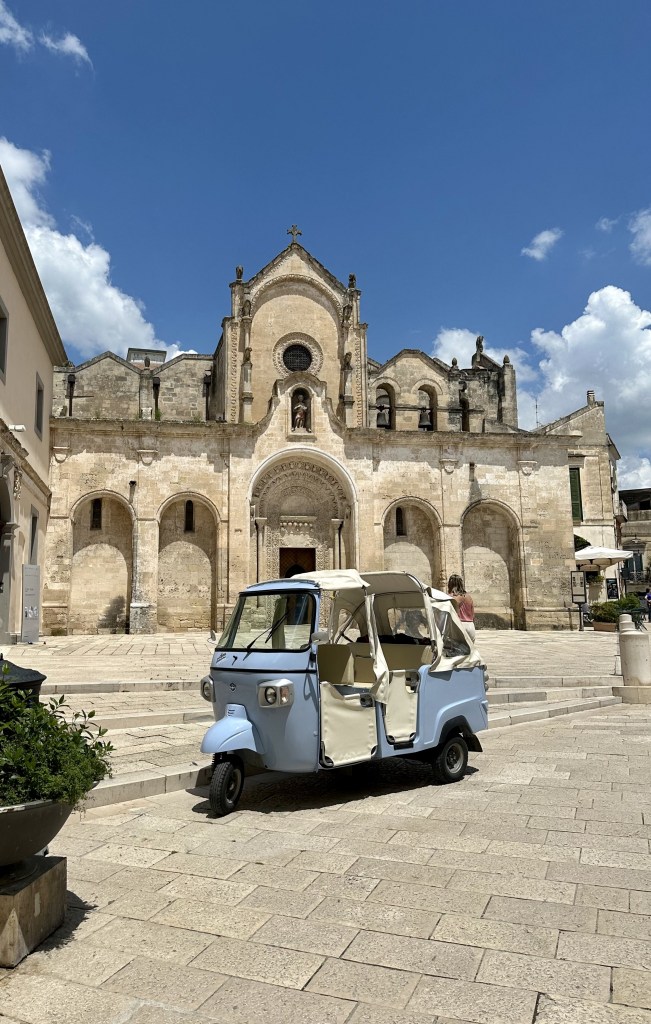
From the Amalfi Coast, we drove southeast for a couple of days in Matera, Italy’s oldest city:
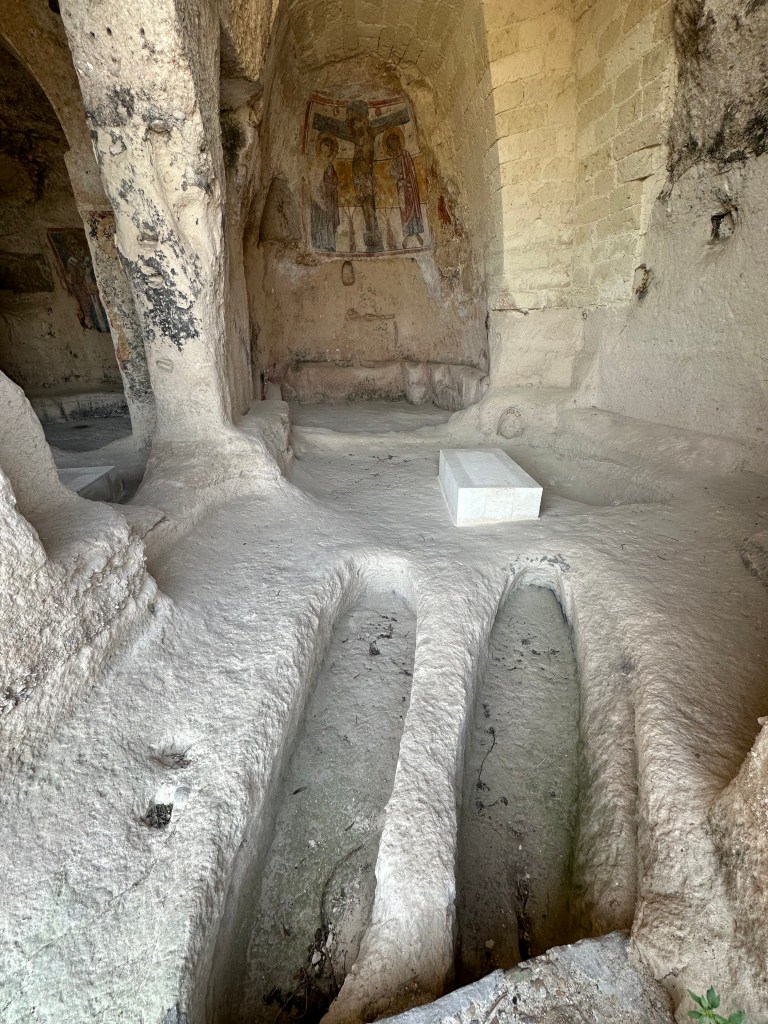
Similar to our experience in Capadocica in Turkey, Matera sported tons of centuries-old troglodite homes, churches, and tombs:
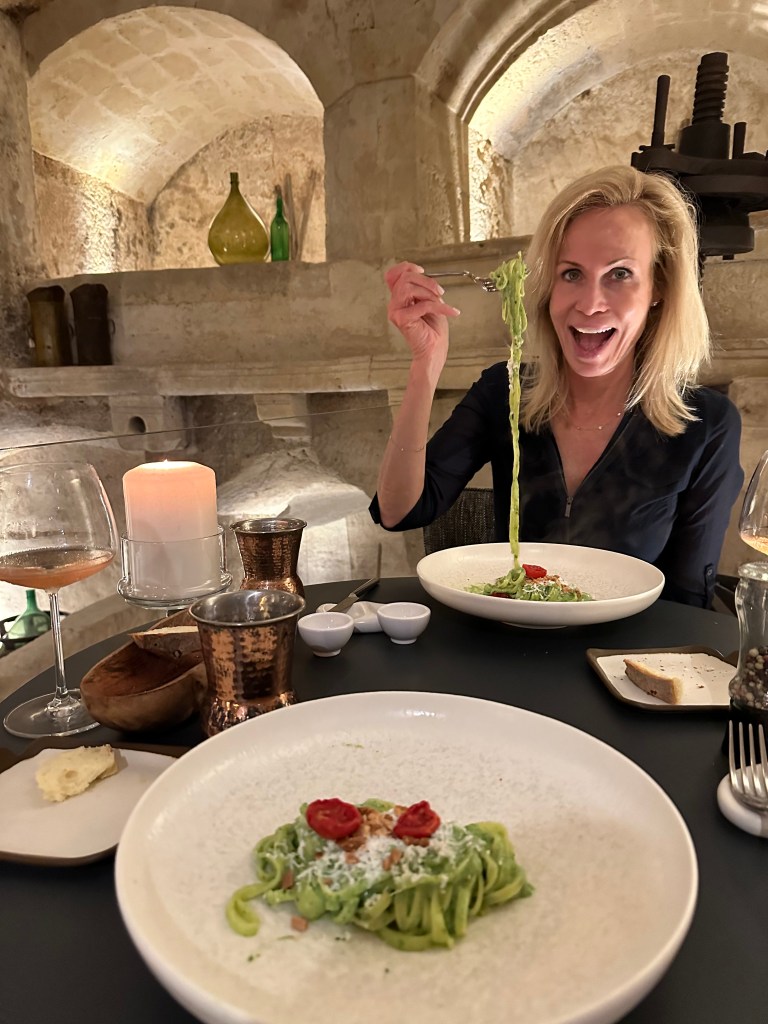
And cave restaurants, too:
Our last night on the Italian peninsula:
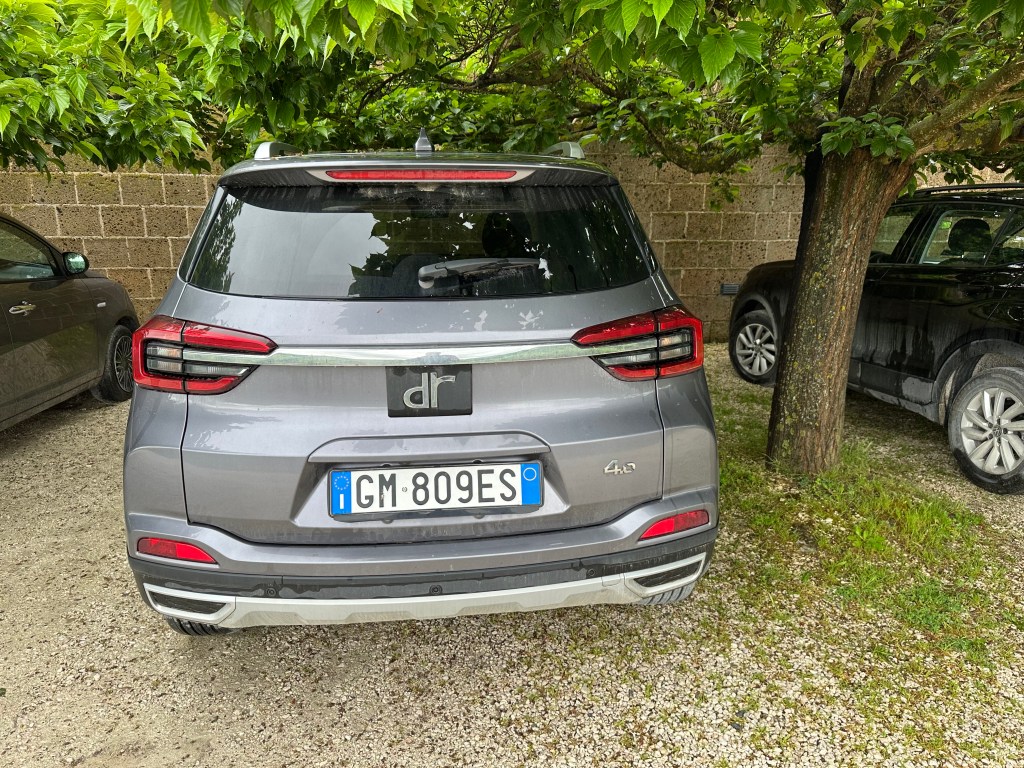
The next morning, we surrendered our ride for the past 3 weeks (a dr, a brand none of us – not even KJQ – had heard of before), and flew to the island of Sardinia:
Sardinian Break
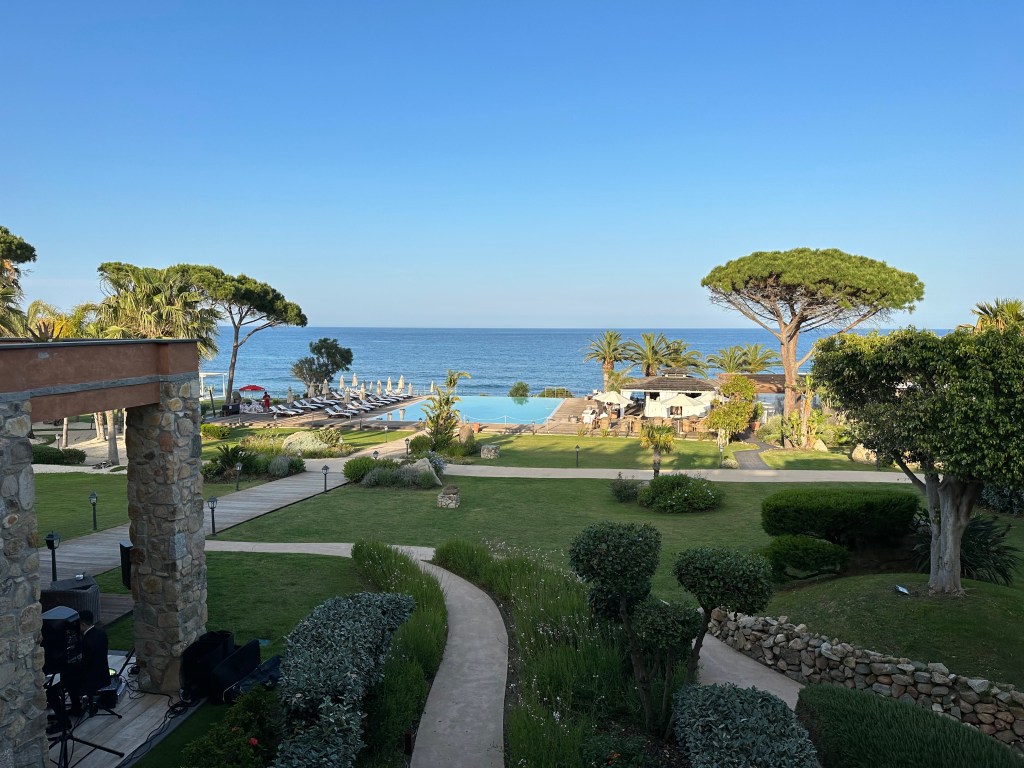
Between the end of one 3-week road trip, and the start of the next, we built into the itinerary a little down time on the the Costa Rei on the southeastern coast of Sardinia.
Not a lot to report – a few miles of walking each morning along the beach:
And some killer seafood, including and in particular, Sardinian oysters. (We thought these were the best we had every tasted until we later encountered even better ones in Normandy.)
Then an overnight ferry to Palermo, when we’d start another road trip leg across Sicily.
Sicily Road Trip
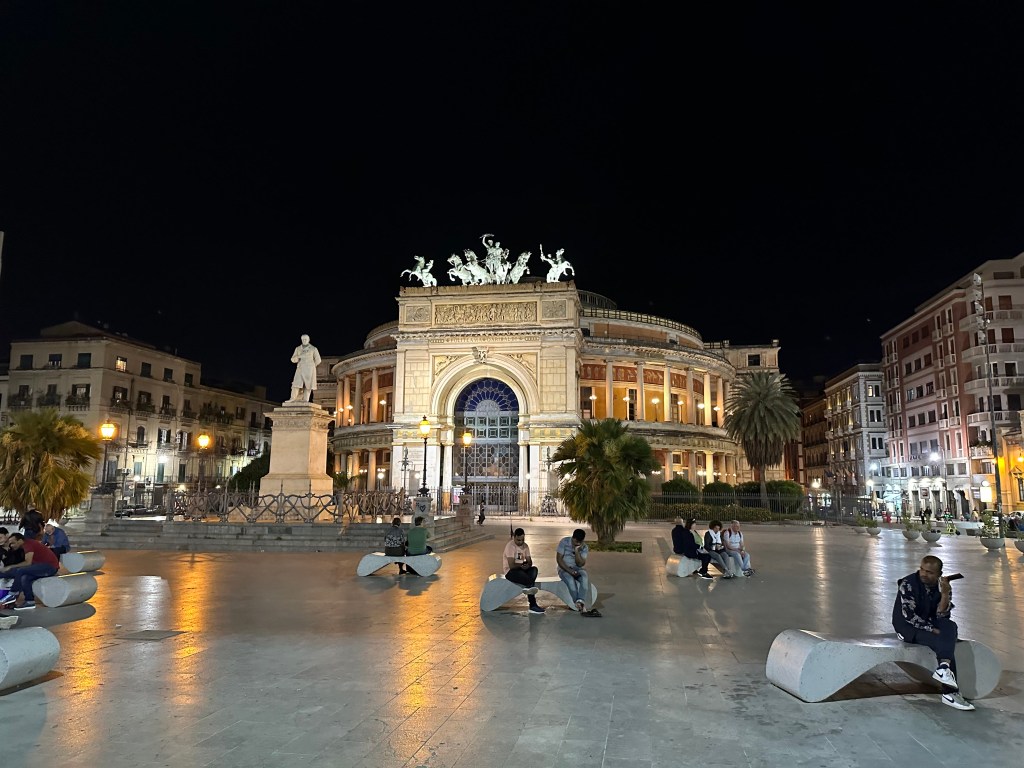
The surprisingly vibrant and enjoyable city of Palermo – very different from the gritty and sketchy image that we had prior to our time there:
And the first of many cool encounters with Arabo-Norman architecture in Sicily at the city’s 12-century Church of San Cataldo:
And our introduction to the ubiquity of pistachios on everything in Sicily:
And the most horrific of the catacombs of our entire journey below Palermo’s Capuchin Monastery:
And a cool, 3-hour street food tour, featuring a spleen sandwich (4/10: would not try again):
Our last evening in Palermo:
We drove from Palermo to the south-center of the island, to Agrigento, home to the most intact Doric Greek temples in the world, dating to 400 BC:
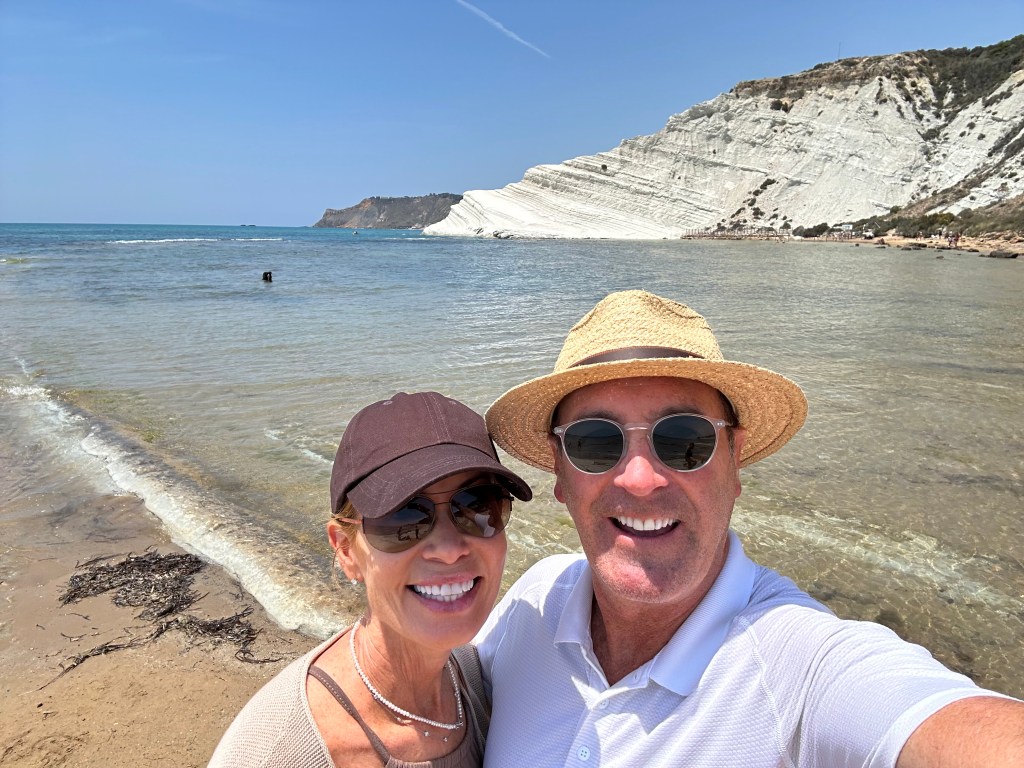
And spent a little time on the coast while we were there:
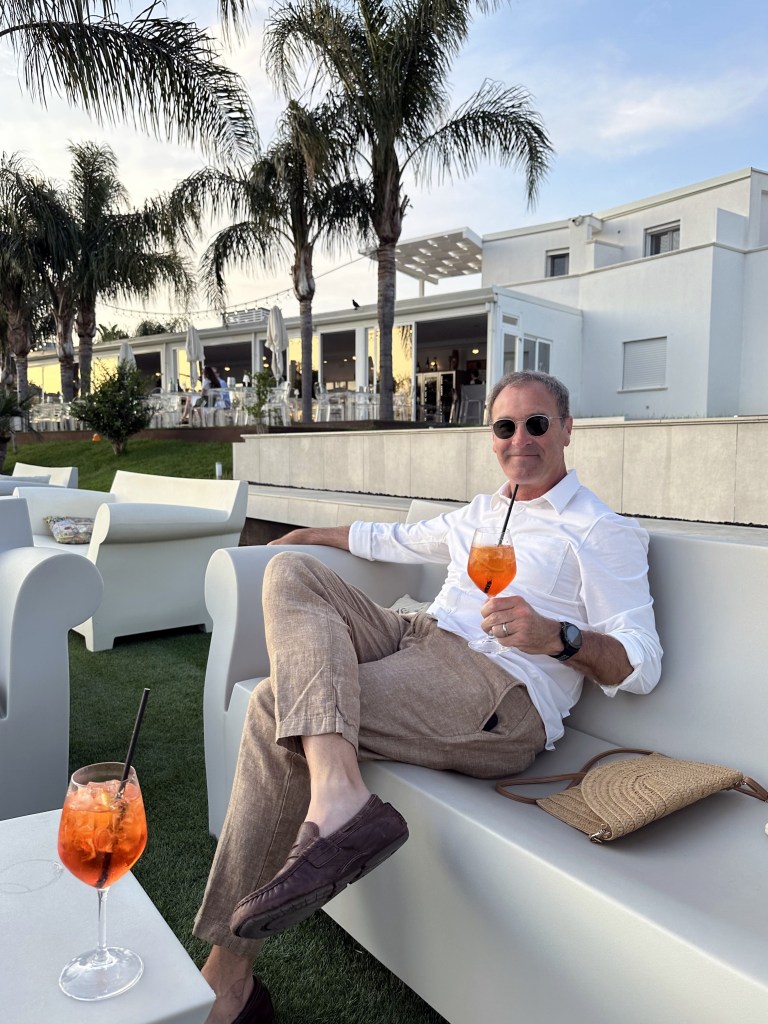
And continued the recommended daily doses of Aperol:
Final evening in Agrigento, with a view to the Temple of Juno and the sea:
From Agrigento, we headed due east to a cluster of Baroque towns, so called because they were all destroyed by an earthquake in 1796 and were all rebuilt in the Baroque style du jour. We based ourselves in the town of Modica for 6 days:
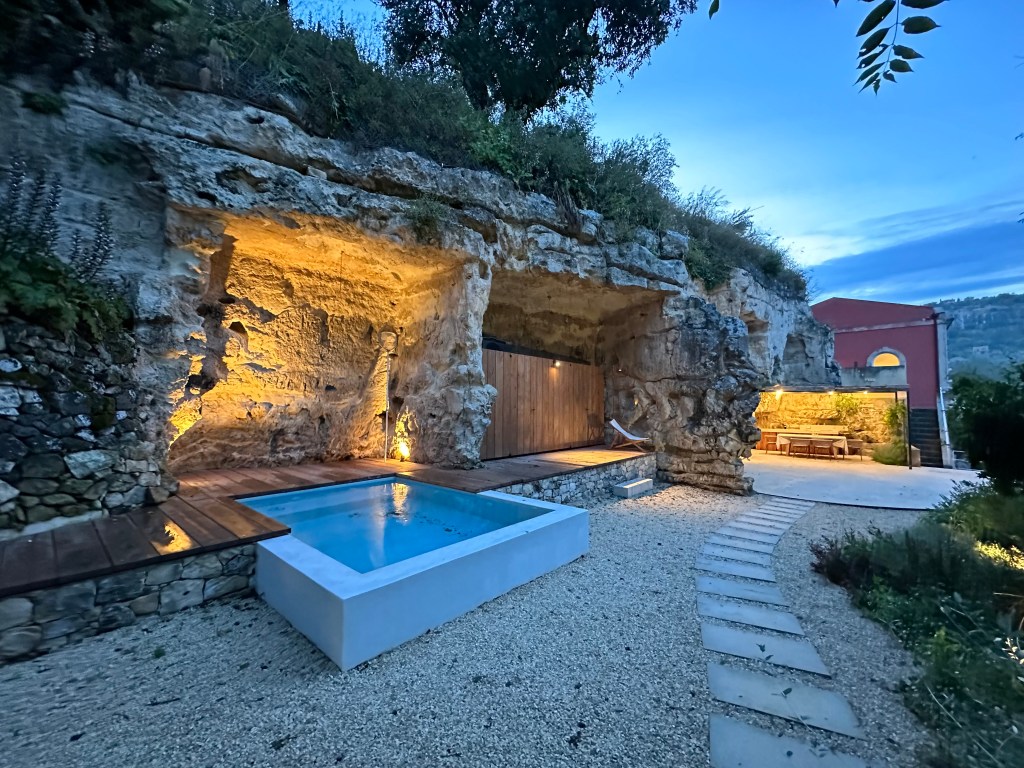
Which sported a pretty cool AirB&B that was built into a cliff:
The Baroque Church of San Giorgo in the nearby town of Ragusa Ibla:
The main piazza (such as it is) of the Baroque town of Scicli:
And the spectacularly picturesque Baroque town of Noto:
Modica also was just 20 minutes from the beach, so we started two of our mornings during our stay with some pretty great beach hikes along the Sicilian coast:
Second gastronomic experience on the trip at the tiny Michelin-starred hole in the wall of Accursio, featuring, among other things, Sicily’s orange wine (the color, not the fruit):
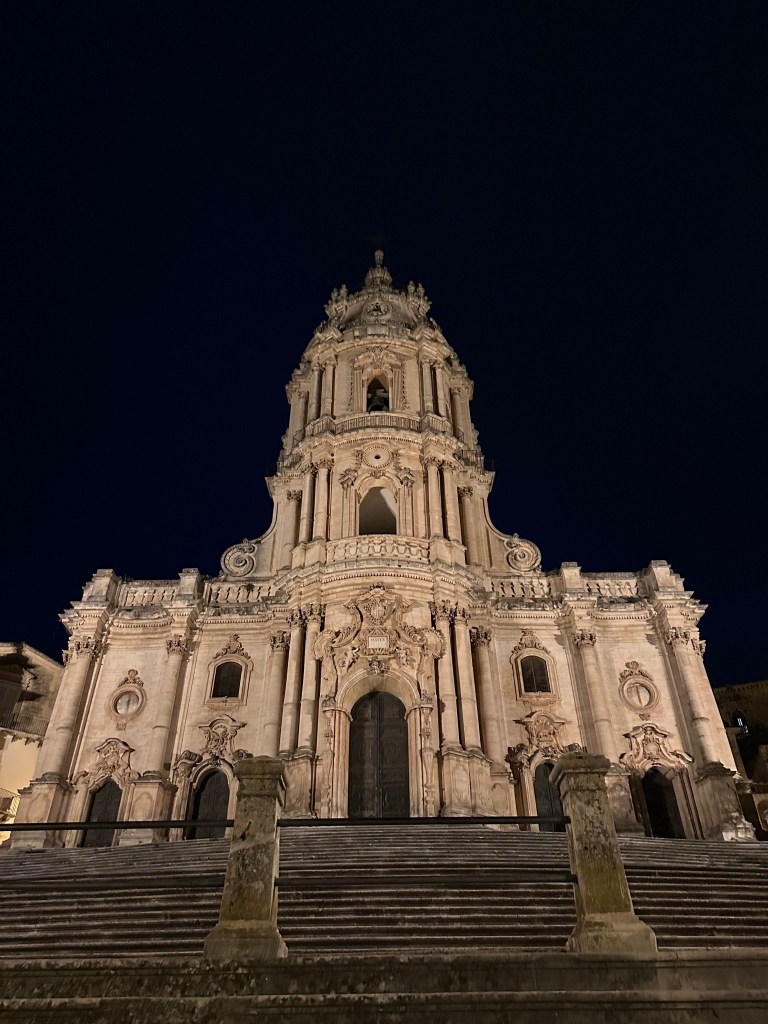
Modica’s Baroque Church of San Giorgio (same name as in Ragusa, same style, just different town) on our last night:
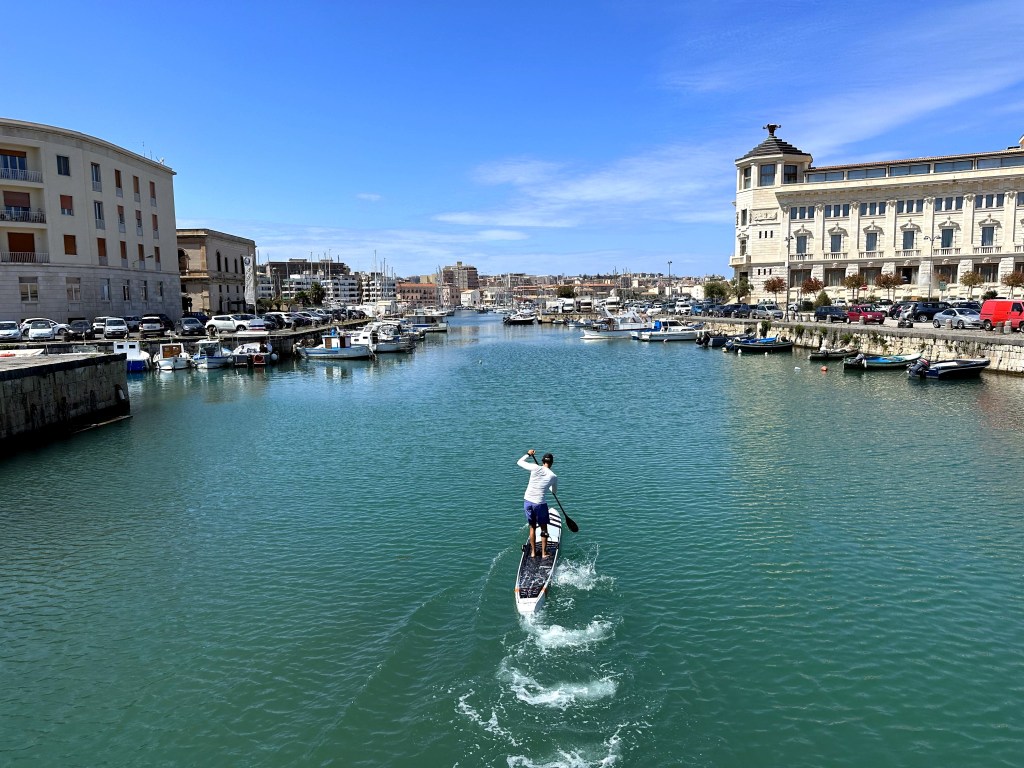
The ancient town / island of Syracuse served as our final stop in the south of Sicily – also another city we liked so much that we may return:
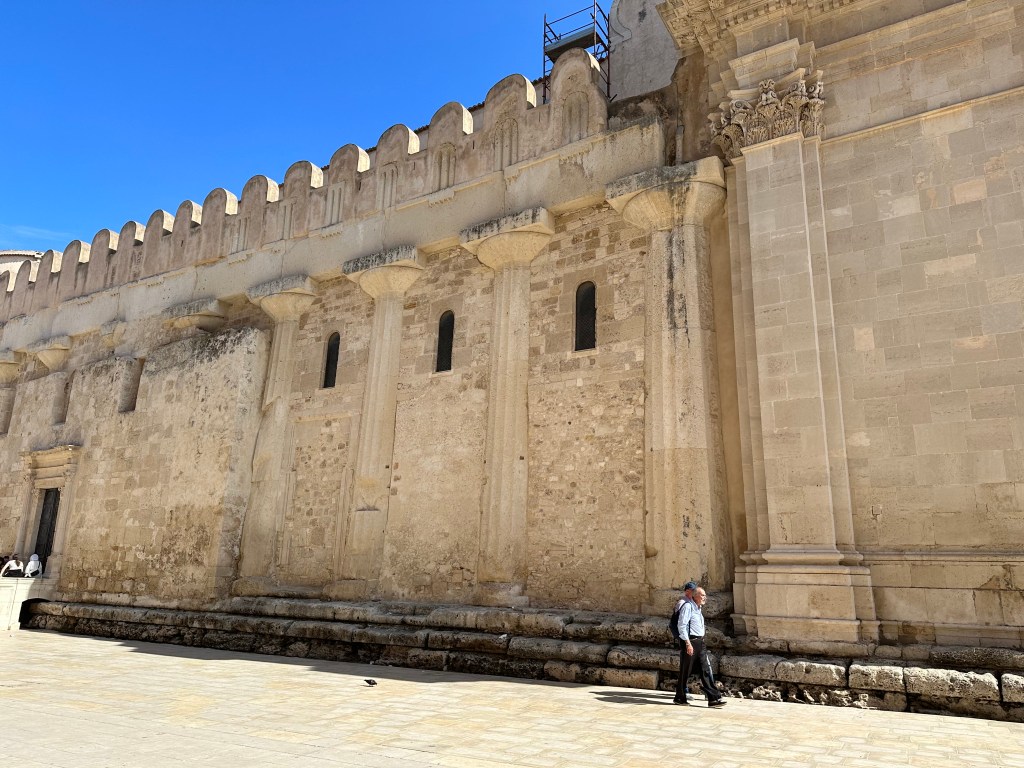
Sicily’s most captivating characteristic, at least to WolfeStreetTravel, must be the convergence and layers upon layers of different cultures that have dominated the island. We witnessed this with the mélange of Arab and Norman architectural styles in churches in Palermo and Monreal, for example. But nowhere was it more evident than Siracusa’s cathedral, which began as a Greek temple to Athena in 480 BC. In our travels, we’ve seen tons of churches build on top of pagan temples, replacing them. That was how they operated. Good site, but obliterate the offending structure. Not so in Siracusa. In the 6th century AD, the Byzantines just filled in the spaces between the Doric columns and incorporated the temple into their new church. Then the Normans added to it in the 11th century w crenellations reflective of their military-style churches. AND IT’S ALL STILL STANDING. You can see the ~2500-year-old Doric columns and capitals inside and outside the church (which was hosting a wedding while we were there, reinforcing how Sicilians simply live through their amazing history).
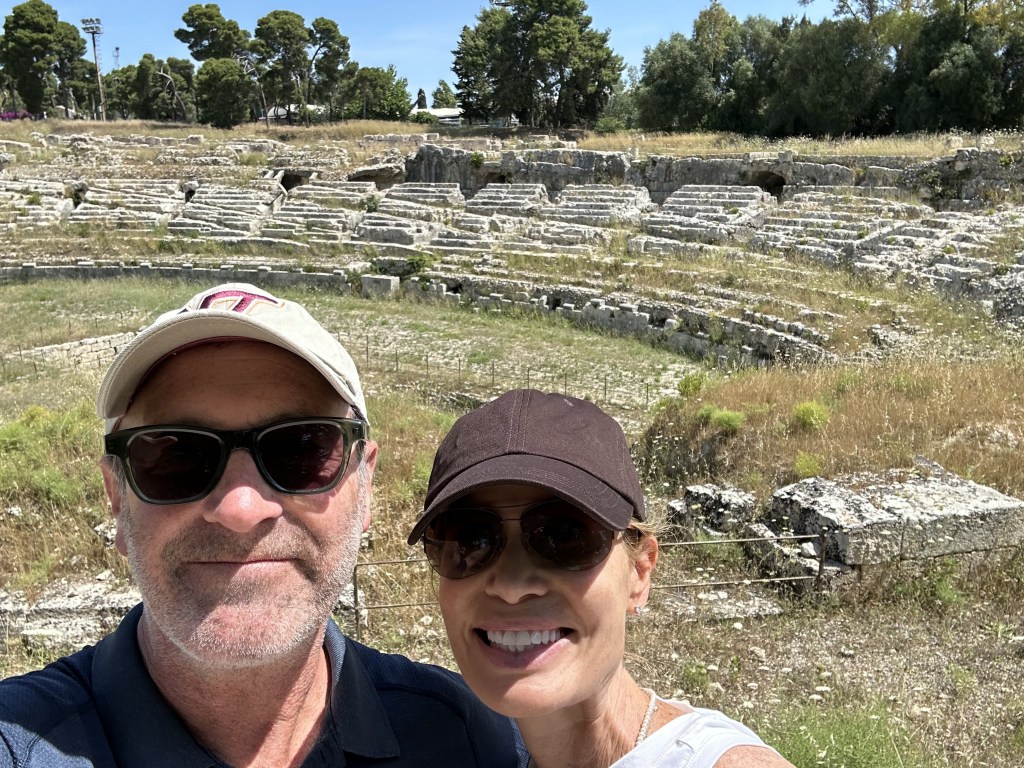
Another case in point, the Syracuse’s abandoned, 1st-century Roman amphitheater. . .
But just up a path lies the city’s even older, 5th-century BC Greek amphitheater, which is still in use today:
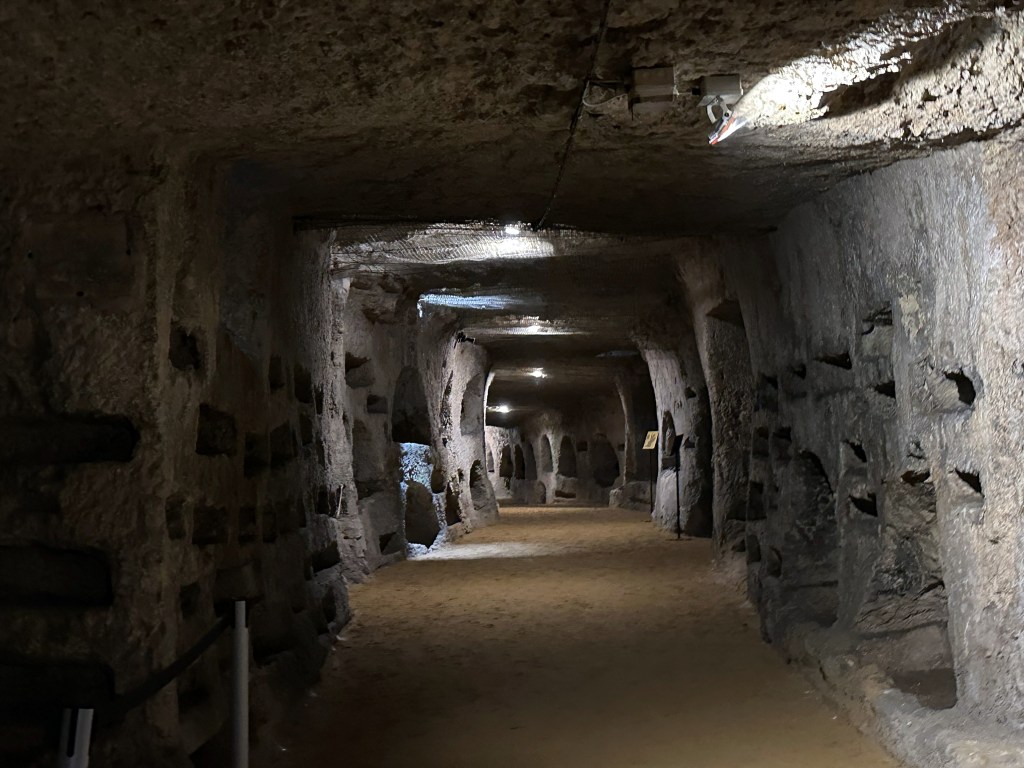
And, of course, we checked out the local catacombs:
Imbibing our daily recommeneded allowance of Aperol spritzes at one of the cooler little roadside cafes on Syracuse’s ancient Ortigia island old town:
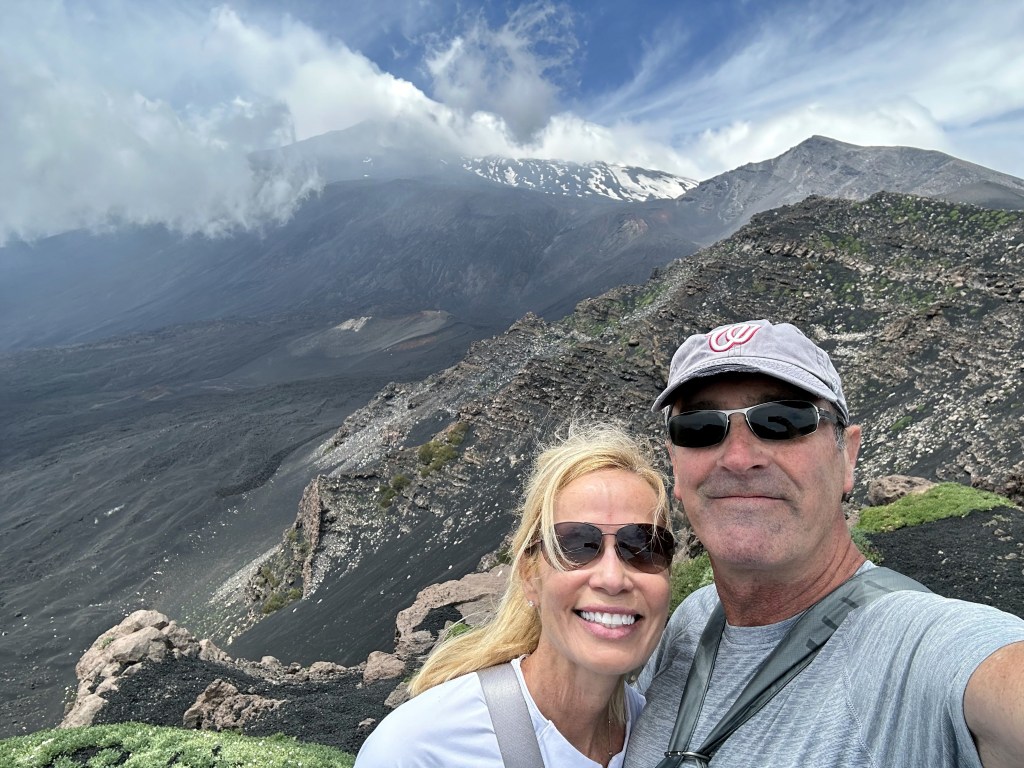
And then north! To hike Sicily’s still-active Mount Etna. Twice.
The first day’s hike, from the caldera’s southern approach was okay, but not particularly thrilling. The next day, we hiked up from the eastern approach. Holy shit – absolutely stunning. First, a legit old lava tube:
And then, at the top, along the rim of the old caldera, a view of the still active peak, plus smoky evidence in the old caldera of still active volcanic evolution:
And finally, to the northeast(ish) of Sicily, and the now hyperpopular town of Taormina, setting for White Lotus Season 2 (although we didn’t know this when we planned the trip).
We challenge anyone to locate a more stunning, atmospheric setting for a classical theater than the one in Taormina. It began as a 3rd-century-BC Greek theater, then 1st-century-BC Roman theater, then 2nd-century-AD Roman theater, then 18th- 19th- and 20th-century restorations. Pretty freaking cool. And, like Syracuse’s Greek theater, still in use today.
Our digs for 5 days, perched above IsolaBella. Wins the prize for best AirB&B pool on the trip.
Last night in Taormina:
The next day, we flew from Sicily to Malta, dropping off our trusty Citroen C3 – the second time we’ve had one of these for a European road trip. It looks like a sneaker with the unnecessary side effects, but this car grows on you!
Malta Break
And then, Malta! Country no. 71 for WolfeStreetTravel.
Downtown Valletta, the tiny country’s capital, with its unique wooden balcony boxes (gallarija):
And on the heels of the best AirB&B pool in Taormina, the best hotel pool at our digs in Sanglea built into an old fortress and overlooking Malta’s Grand Harbour:
A side trip to Mdina, Malta’s golden limestone old capital:
Last night in Malta along the harbor:
To avoid potential flight issues to reach our next destination in Normandy, where we had a hard start, we flew to France a day early, and stopped over in Chantilly, home to Chateau de Chantilly. No delay, but good call – cool place.
Normandy Biking
The next leg of the our extended foray to Europe entailed our latest biking trip – this time with Thomas and Lisa, in celebration of their wedding (albeit delayed for 2 years).
The five stages of the bike trip spanned two invasions. The first in 1066, by William the Conqueror conquering England from Normandy, as depicted in the 11th-century Bayeux Tapestry, as seen in Bayeux, our starting town:
The next almost a thousand years later, this time and invasion of Normandy in 1944. On our first day we visited three bunkers in a German battery on Gold Beach:
And on the same ride, the first of our dozens and dozens of dozen oysters ordered in Normandy:
Invasion overview at the American Cemetary at Omaha Beach:
And a night in a 13th- and 14th-century chateau, which may have been the most surreal night of our entire travelling lives. There’s an entire story about this insane evening, but we’ll deal with that in a separate post.
The conclusion of our biking journey at Mont Saint Michel. Originating in 708, the site has attracted pilgrims who still trek across the sandy estuary at low tide for more than 1300 years, staved off an entire English army during the 100 Years War with a garrison of just 100 Norman knights, and is claimed to this day by both Normandy and Brittany.
Then, a day in Paris:
Of all of the legs of the trip, only Portugal was unplanned. We knew while in Malta that we didn’t want to go home after biking, and considered either grabbing a car after Thomas and Lisa departed Paris and then driving south to the Dordogne region for a week or two or flying to Portugal at the same time as their return flight. We’re going to save Dordogne for another bike trip, and so we decided to head to Portugal. Still without having a set itinerary there or a return flight home, though!
Portugal
We decided to first spend 4 days in Porto, in northern Portugal. This turned out to be the absolute best location of the entire trip. We’ll be back to spend a month or two here in the future.
Porto’s medieval Ribeira District and south Porto astride the Duoro River:
Everything in Porto is clad in tile:
And, after 7 weeks of Aperol spritzes:
Local port and tonics suddenly dominated the scene:
And an afternoon of port tastings:
Then, a train south, to Lisbon, the first European destination we had ever visited, back in 2002:
With some monumental areas:
And some more sketchy areas:
And a day trip to Sintra, home to the Pena Palace:
And a final gastronomic meal:
Final night in Lisbon before finally flying home, accompanied by July’s Blood Moon:
All told, we traveled for 2 months, experienced 4 countries, 41 towns, stayed in 19 hotels, 5 AirB&Bs/villas, and traveled by trains, planes, and automobiles (and ferries, trams, tuk tuks, and bikes). Amazing trip!
We’re finally posting on the locations from our first, epic, post-retirement trip, which entailed, as noted above, a prolonged foray to Europe that ultimately spanned more than 2 months. As noted in the trip overview, this trip entailed multiple segments – in the Italian peninsula, Sardinia, Sicily, Malta, Normandy, and Portugal. Pretty great experience that commenced shortly after the second WolfeStreetTraveler retired, where we bought one-way tickets and could explore locations without having to solve crises at work or worrying about getting home in time for an important meeting. Very liberating change of pace.
Sunrise over Italy’s west coast as we head into Rome.
Tuscany served as our kickoff location for the trip. This would be our third time in the region, which really is quite awesome. The first took place in 2004, when we biked through the area. We then returned in 2021 for a road trip through Cinque Terre and Tuscany. And now, just 2 years later, we found ourselves here again. Although we knew we wanted to start our inaugural, post-retirement trip in Italy, we could have launched our journey anywhere on the peninsula.
But the Brandts (and KJQ) coincidentally were heading to Tuscany at the same time we were heading to Italy, so the timing was perfect to hang with them as the start of our trip. We would spend the first 5 days here, before heading north (and then immediately south, but that’s the story of the next post).
Another sunrise the first day in Italy from the terrace at our guest house on the estate of Castello Brandt.
First stop: Pienza. “It is first mentioned in documents from the 9th century. Around 1300 parts of the village became property of the Piccolomini family after Enghelberto d’Ugo Piccolomini had received the fief of Montertari in Val d’Orcia from the emperor Frederick II in 1220.“
We were delighted to visit, inasmuch this was a well-regarded Tuscan hill town that we had yet to experience during or previous two Tuscan tours.
The remarkably monochromatic and stately Duomo di Santa Maria Assunta (Pienza’s cathedral):
The cathedral was commissioned by Pope Pius II (a member of the Piccolomini family who was born in Pienza) and consecrated in 1642; the piazzetta in front is named for the pope.
“Pienza Cathedral prominently features the Piccolomini coat of arms (a crescent moon with stars, representing Pope Pius II’s family) on its facade and a gothic window behind the altar, often combined with the Vatican keys and tiara, symbolizing papal authority and the Pope’s power over heaven and earth, linking the church to the Holy See. These symbols, especially the crossed keys (gold for heaven, silver for earth), are central to the cathedral’s design, reflecting Pius II’s vision for his ideal Renaissance city.
Key Elements:
Piccolomini Arms: The distinctive crescent moon and stars are the family emblem of Pope Pius II (Enea Silvio Piccolomini), who commissioned the cathedral.
Keys of St. Peter: Two crossed keys, one gold (heaven) and one silver (earth), signify the Pope’s spiritual authority, as seen on the well in Palazzo Piccolomini and potentially in the cathedral’s decoration.
Papal Tiara: The three-tiered crown (tiara) often accompanies the keys, representing the Pope’s threefold power (teacher, judge, ruler).”
Pienza certainly ranks up there in charm, but it’s super tiny. Based on the strong recommendation we received from our safari travel friends that this was their favorite Tuscan town, we thought it would be just as charming as it turned out to be, but more substantial.
KJQ selfie hijinks:
Pienza’s bell tower, which was silenced the year we visited due to complaints by tourists in nearby hotels. Which pissed off the locals who consider the bells to be part of the town’s character (kind of like us when Appomattox was removed from the intersection of Washington and Prince in 2020. . .). Smithsonian magazine featured an article on the row titled, “This Italian Town Silenced a Historic Bell That Kept Tourists Awake. Now, Locals Can’t Sleep.” Indeed.
Dunno – some cloister somewhere? This was 2.5 years ago, so we don’t remember everything. But it was picturesque and atmospheric nonetheless.
Pretty cool portal from Pienza to the Val d’Orcia below:
Another pathway to the Val d’Orcia:
And there it is:
Pretty quintessentially Tuscan, as it happens:
Pretty awesome lunch at Ristorante la Terrazza della Val d’Orcia:
Heading out of Pienza, through its city walls:
Next field trip: Tenuta Valdipiatta for some fine brunellos (albeit in the rain – but this gets way worse):
A brief respite on a belvedere over the vineyards:
The wine tasting clearly elicited different emotions from the tasters:
Next day: a decent hike near Gaiole in Chianti.
Starting with a stroll around the 1000-year-old Badia Coltibuono Abbey:
Including the gardens that we were not supposed to be in, and from which we were brusquely ushered out (still worth it!):
The hike continues through countryside. . .
And the village of Montegrossi, founded in 500 – 600:
Small but mighty (and mighty old):
And a cool winery that we stalked through, seeking KJQ’s gate to salvation to cut a leg off the hike and get to town to grab a well-deserved lunch:
The gate!
Key component of a post-hike lunch:
And the first of two nights of epic Trivial Pursuit competitions at Castello Brandt:
The winners of the first night:
Here’s the much worse rain – torrents during our visit to Montepulciano, which we had visited back in 2005 during our bike trip in Tuscany:
Wet but happy(ish):
On the way back, a quick stop (for a few of us) at the monastery Badia a Monastero, founded in 867 (beating the longevity of the monastery visited during our hike):
A final hike starting at Borgo Castelvecci (similar in structure to the borgo we stayed at during our last visit to Tuscany in 2021 – an ancient village converted into a hotel campus):
And then a stroll around the nearby hamlet of Valpaia, followed by a final Tuscan lunch before heading out the next morning.
The Brandt villa:
Pretty good digs:
And the cocktail that would dominate all of our European travels henceforth, but that one of the WolfeStreetTravelers would not imbibe, initially decreeing it too girly, and sticking to red wine. That point of view would change rather dramatically as the trip progressed. . .
Final evening in Tuscany:
And a final game of Trivial pursuit, where Team MadiGrace won once again:
Morning of departure at the guest house:
You can take the herpetologist out of the country but not the herp out of the herpetologist.
Gracie would be moving on, too – first to Venice, then to Valencia to stay with her cousin Quinn, who was in his second Spanish semester of mechanical engineering.
The Cyprus-tree lined lane departing the villa’s area on our departure: