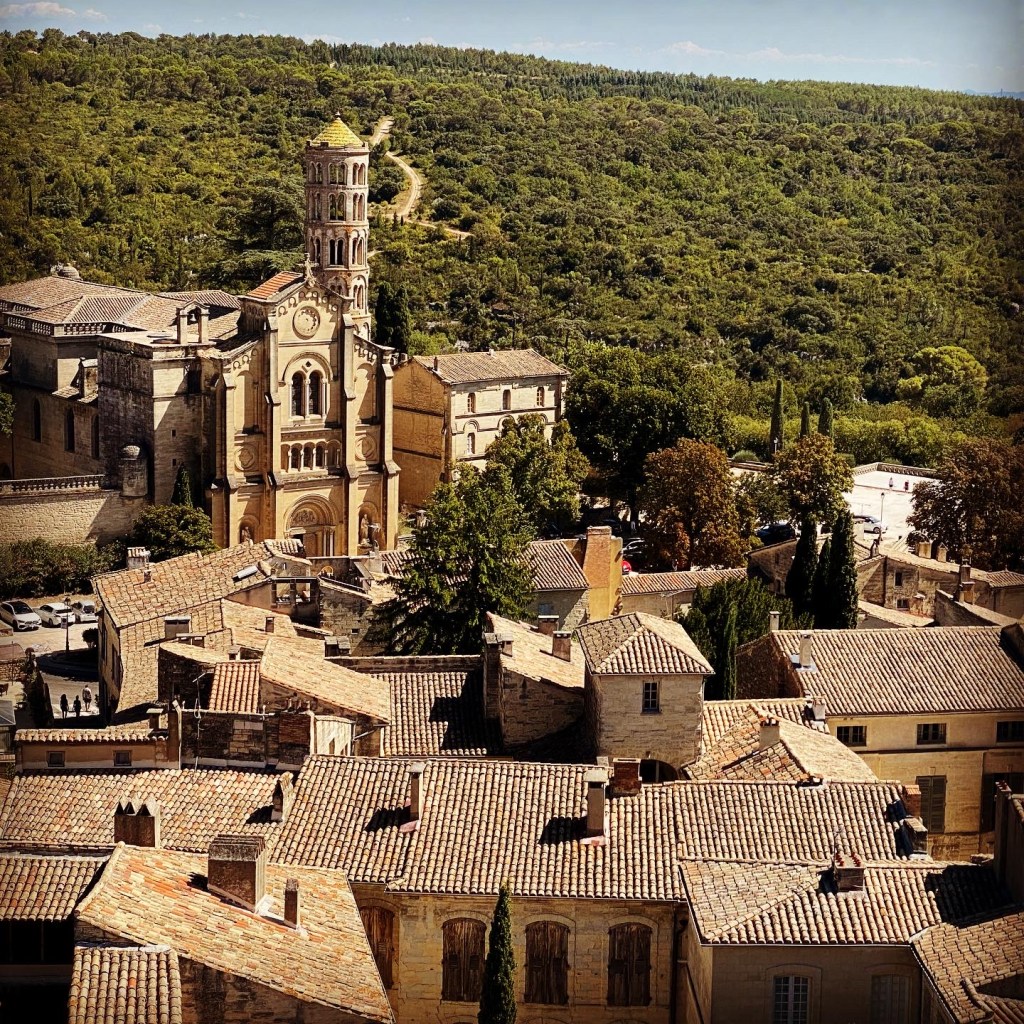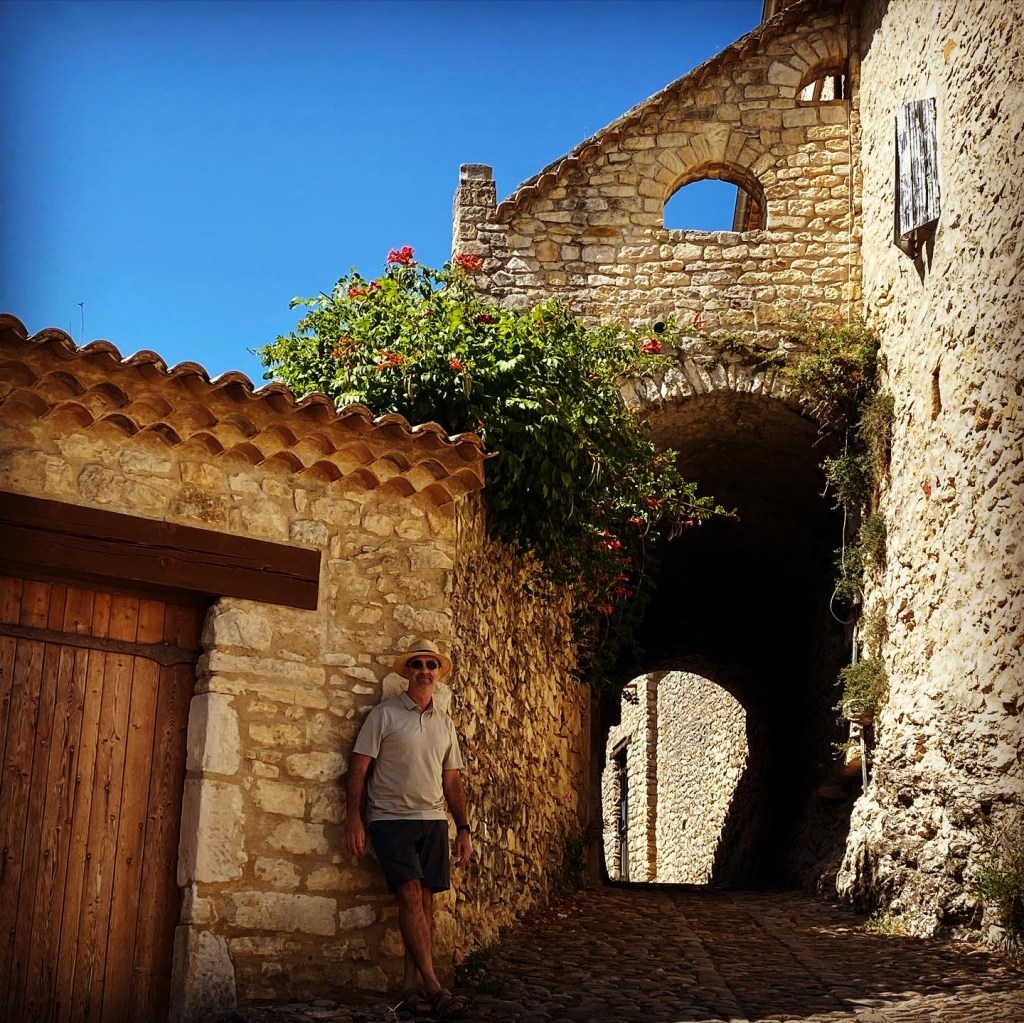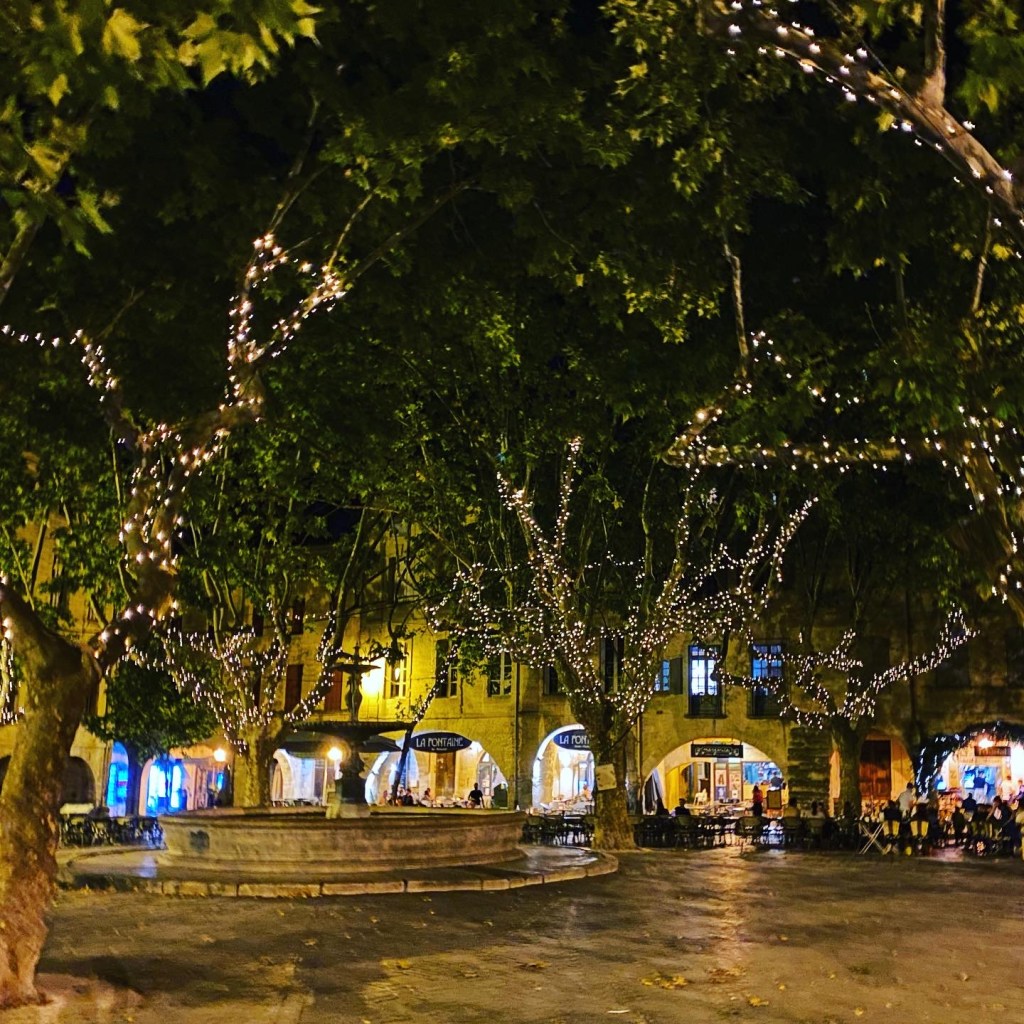
Provence

More South of France and More Cyclades: Trip Overview

After our domestic forays earlier this year to the Pacific Northwest and Southwest and Maryland’s Eastern Shore, as well as a brief stint to country #82 in the Caribbean, we headed back to Europe for our latest trip.

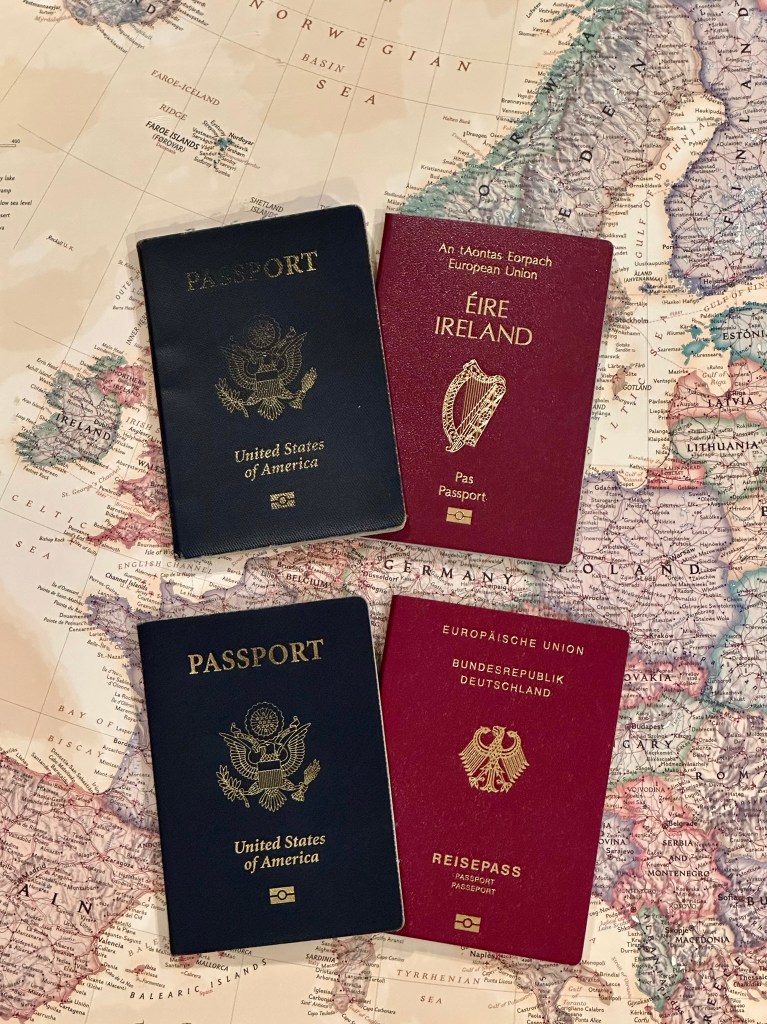
The first trip to Europe, as it happened, where both WolfeStreetTravelers passed through EU immigration using our EU passports:
We had two, segmented goals for this trip:

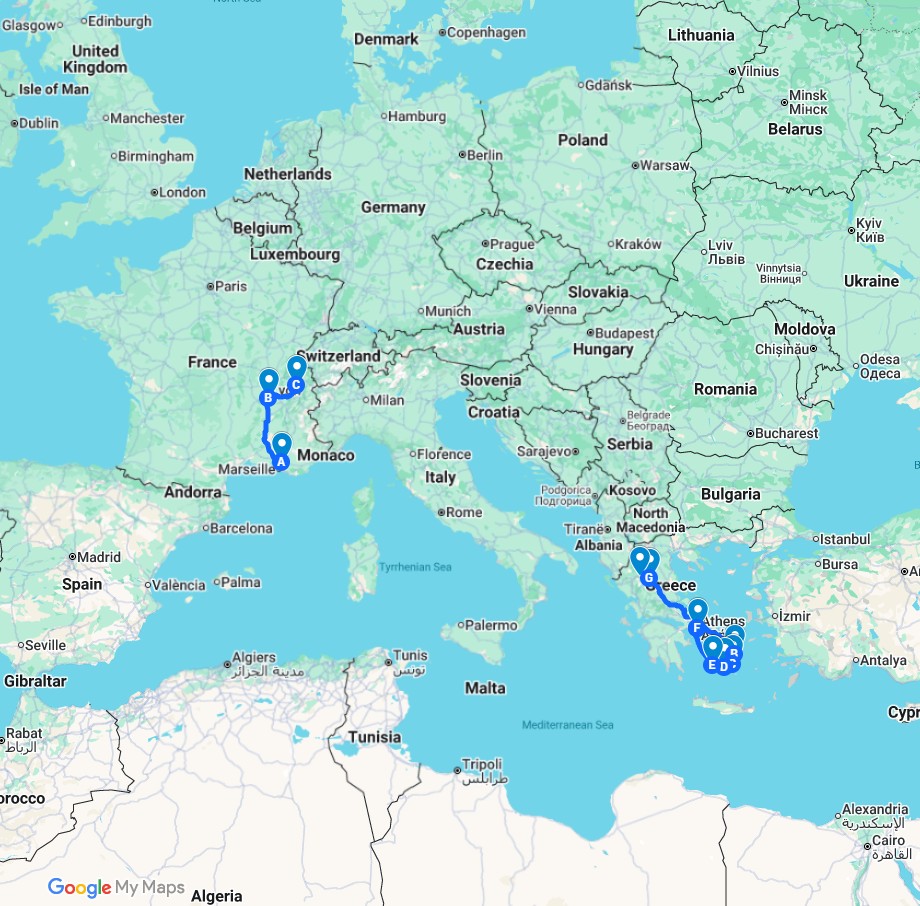
  1. Explore three towns in France that allegedly were comparable in some ways to our home town, Old Town Alexandria, and were therefore potential home base candidates in Europe
  2. Return Greece to visit more Cyclades islands, after fantastic trips to Santorini, Myconos, and Delos in 2017; and Paros in 2022.

Plus, as an added bonus, a little appendix to the Greek islands jaunt with a leg on the mainland to join the Seattles in checking out epic, millenia-old Orthodox monasteries perched on the clifftops of Meteora in northern Greece.
More South of France Leg

Our ongoing quest to locate a suitable home base in Europe has intensified, now that we also have Irish and German citizenship and can stay / reside in Europe without time restrictions. Home bases we’ve previously considered include Uzes in French Languedoc; Arles in French Provence (home to WolfeStreetTravel’s Gallic fountain avatar); Ronda in Spanish Andalusia; Lucca and Sienna in Italian Tuscany; and Rovinj in Croatian Istria. None of these fit the bill exactly (although Lucca, Ronda, and Rovinj are all high-scoring candidates that we’ll visit again [and already have, in the case of Rovinj]).

After quite a bit of consideration and research with our AI buddies, we targeted the South of France as the best place for us to continue our search – we wanted the southern European / Mediterranean lifestyle, cuisine, and architecture and France was more centrally located than Spain, Italy, or Croatia, the other Mediterranean candidates. We’d visited a couple of times before (for our first European trip [and first bike trip] in 2002, and then the Slow Roll in 2021), so we knew we’d like the area.

In evaluating potential South of France home base candidates for WolfeStreetTravel, we had several criteria (all of which reflected core characteristics of Old Town, Alexandria, the most charming and livable town in the world, as far as we’re concerned):

  • Medium-sized (we don’t like big cities and prefer more accessible, less intimidating towns that nonetheless offer all of the attractions of their bigger cousins); the population of Alexandria is 160,000 and 12,000 live in Old Town
  • Restaurant density that “punches above the town’s weight” in the parlance of one of our AI assistants; Old Town Alexandria is densely packed with restaurants due to the proximity to DC and now National Harbor in Maryland, with the associated tourists
  • Close to a major transportation hub, to enable seamless travel to other European locations (this is also why Spain, Italy, and Croatia were less attractive candidates than France, which is more centrally located for travel to Portugal, Sweden, and Greece, for example, with relatively similar distances); Alexandria is 10 minutes from DCA and 40 minutes to IAD
  • On a river or lake, providing both atmosphere and water-based activities; Alexandria’s Potomac riverfront plays a major role in our day-to-day at home
  • Good running paths / routes; we run every day at home, and if we are going to spend extensive time in a European town, we want the same running access, so we don’t fatten up on wine and cheese

Using these criteria, we identified three towns in Provence: Aix-en-Provence, Sommieres, and Vienne. Aix has a reputation as a medium-sized vibrant and charming town very much like Old Town (albeit not on a water body) and both Sommieres and Vienne were located on the Rhone River. After further consideration, we dropped Sommieres from the list as too small, but then added Annency in France’s Savoy region, due to its canals and lakefront location, even though it wasn’t strictly in the Mediterranean cultural belt of the South of France. (We found out about Antibes, Cassis, and Menton on the French coast too late to be included in this evaluation, but Antibes, in particular, is now on our radar for future exploration.)

The final route for the French leg:
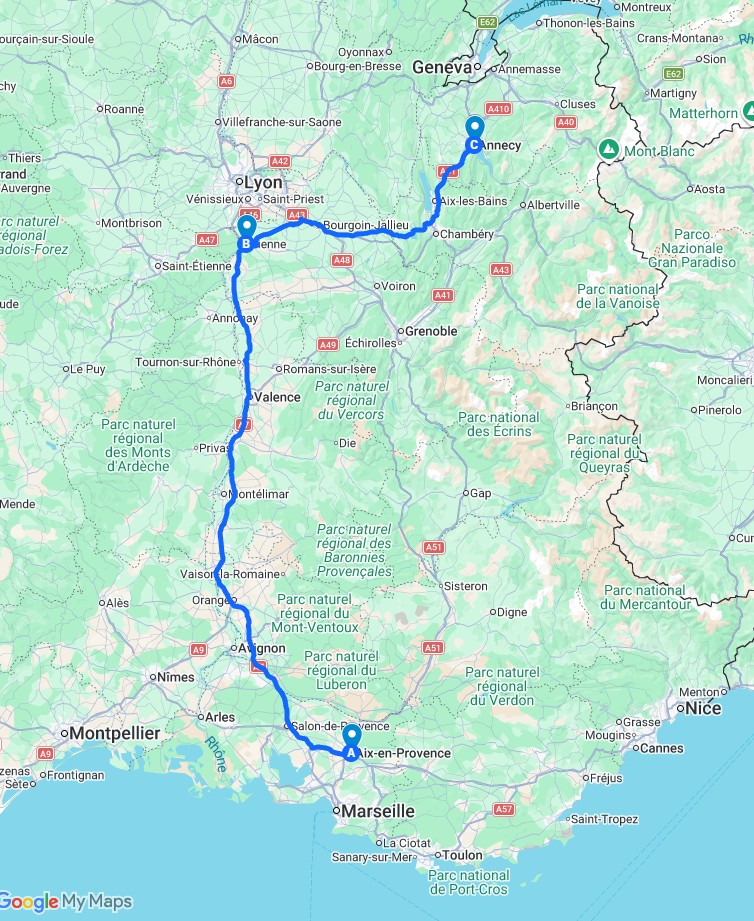
We’d fly into Marseille airport, grab a car, and spend 5 days in Aix, 1 day in Vienne (it seemed less and less appealing, the more we looked into it), and 4 days in Annecy.

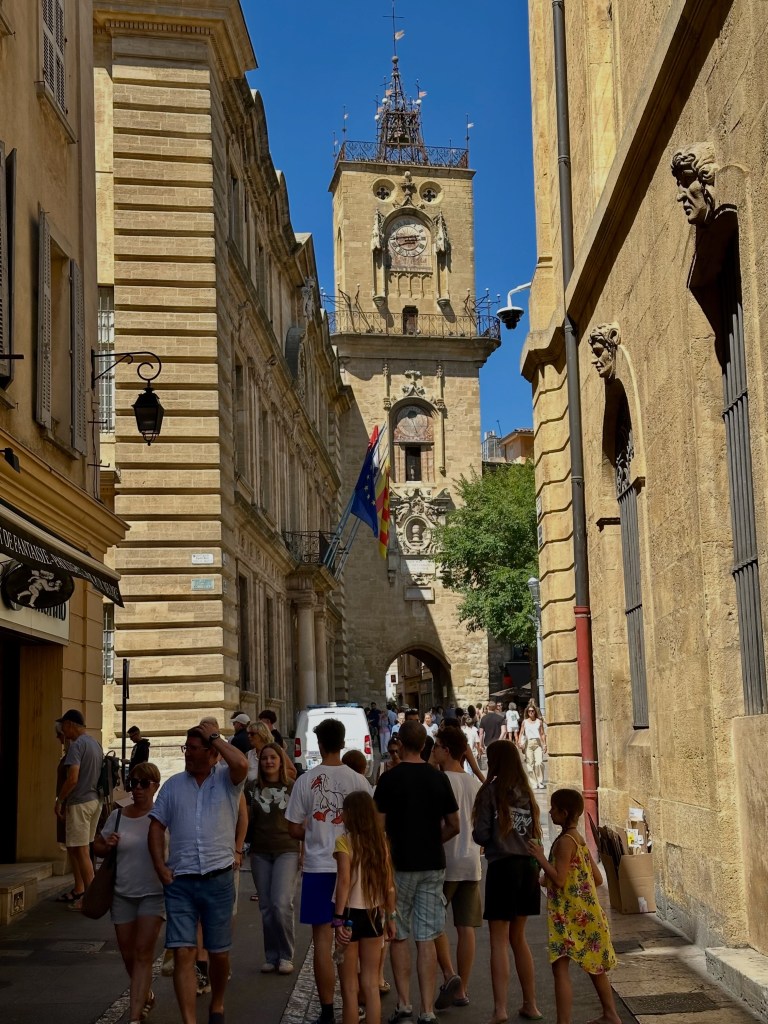
Aix-en-Provence was exactly as we envisioned, with honeyed limestone facades and an charming centre ville:
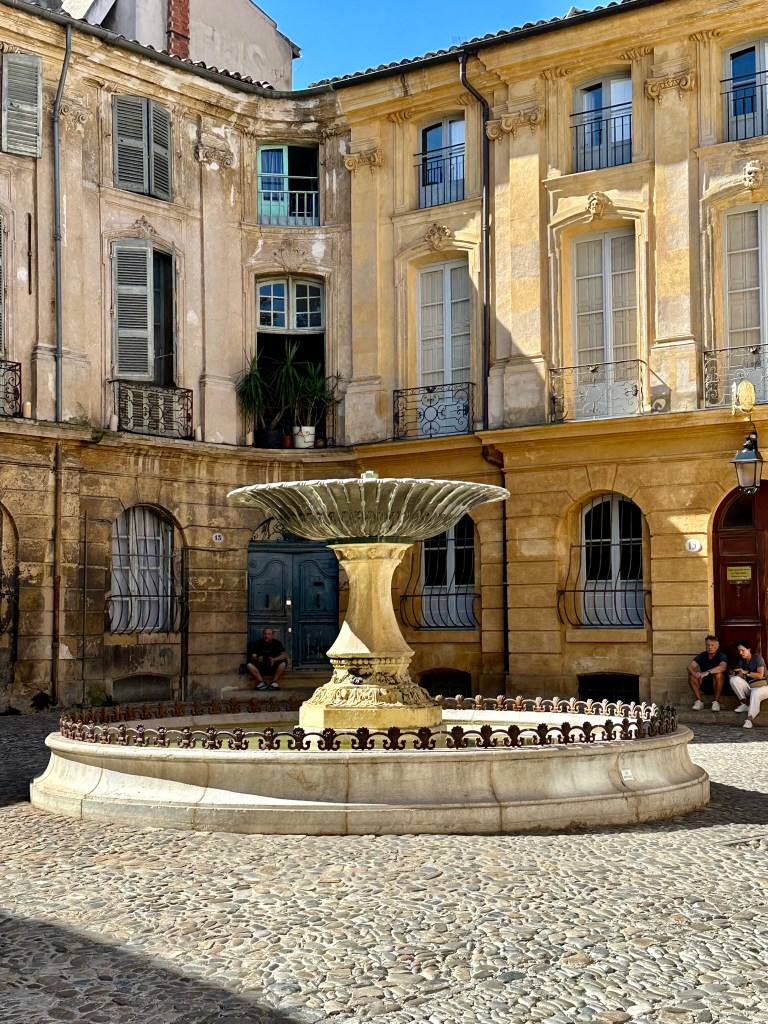
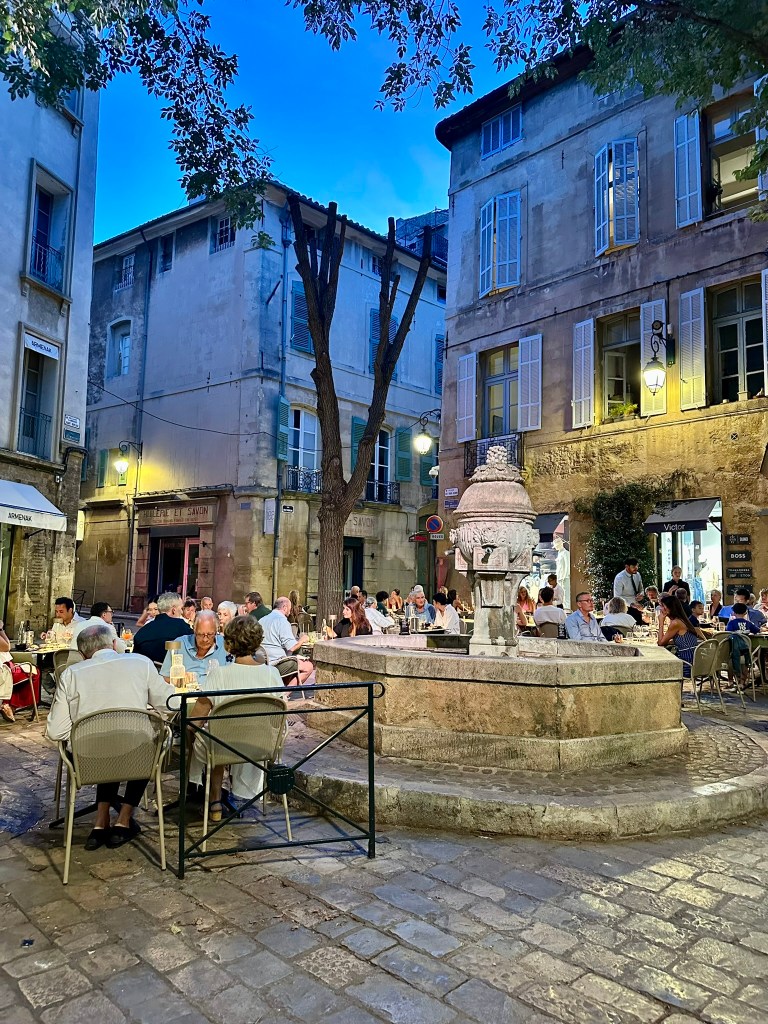
But, as the “city of fountains,” we were disappointed – an ongoing drought shut almost all of them down (and they were everywhere):
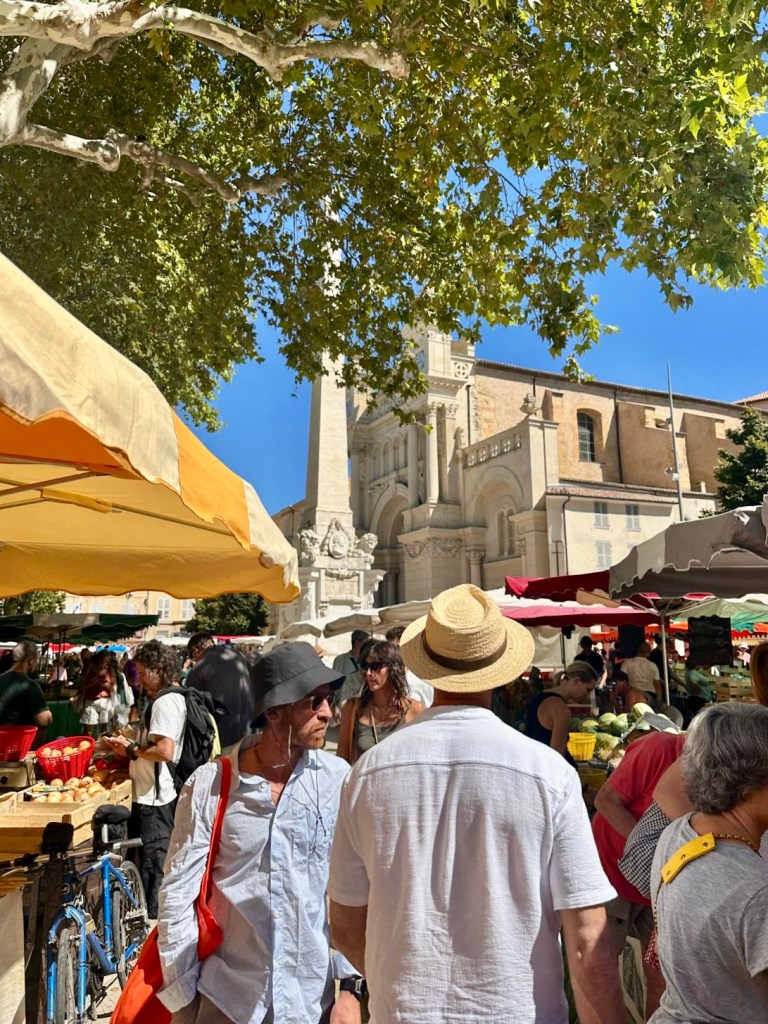
The big event during our stay was market day on Saturday. Half the town turned into a market place:
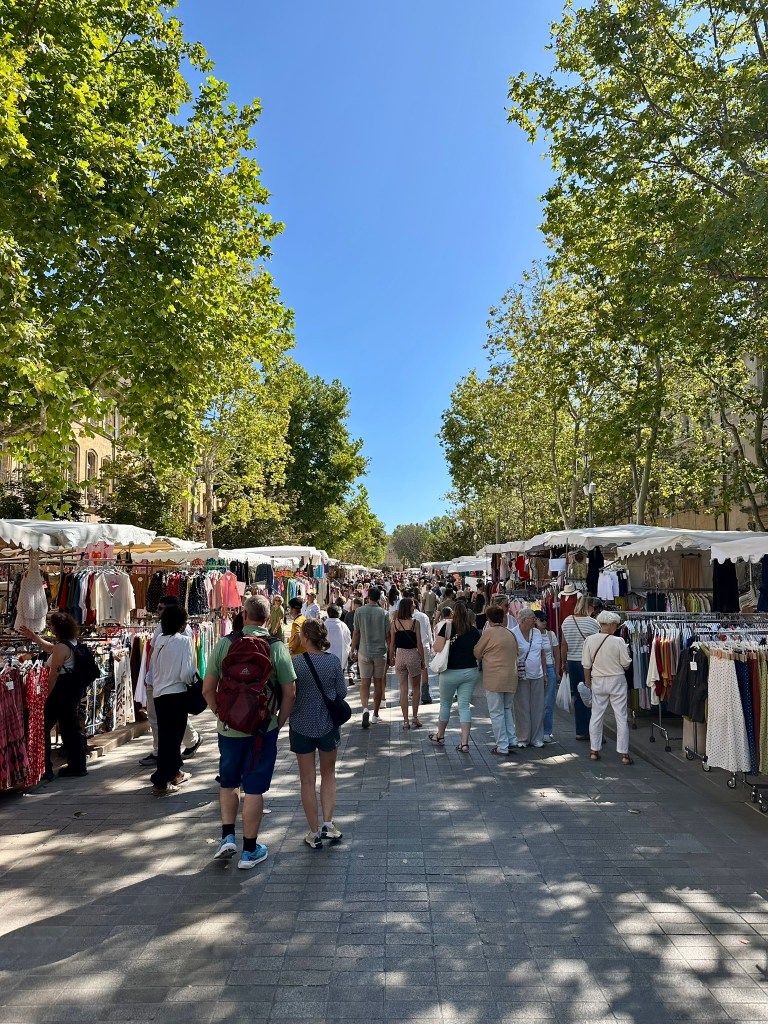
The locals were all out stocking up on groceries for the week ahead.
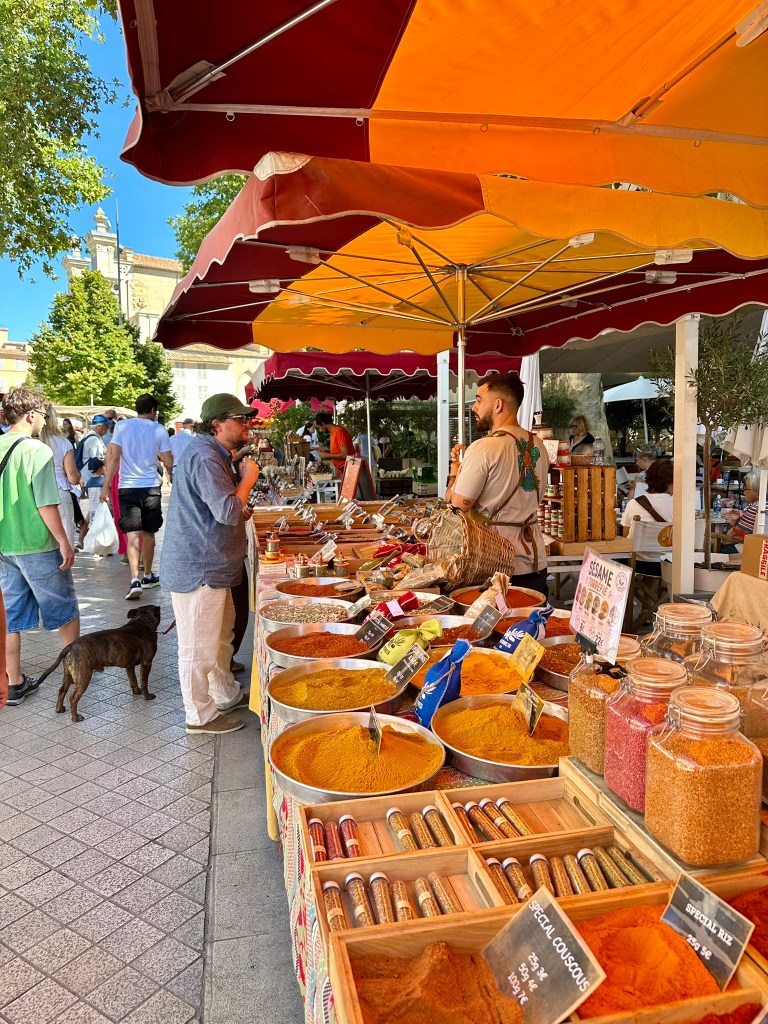
We followed suit. . .
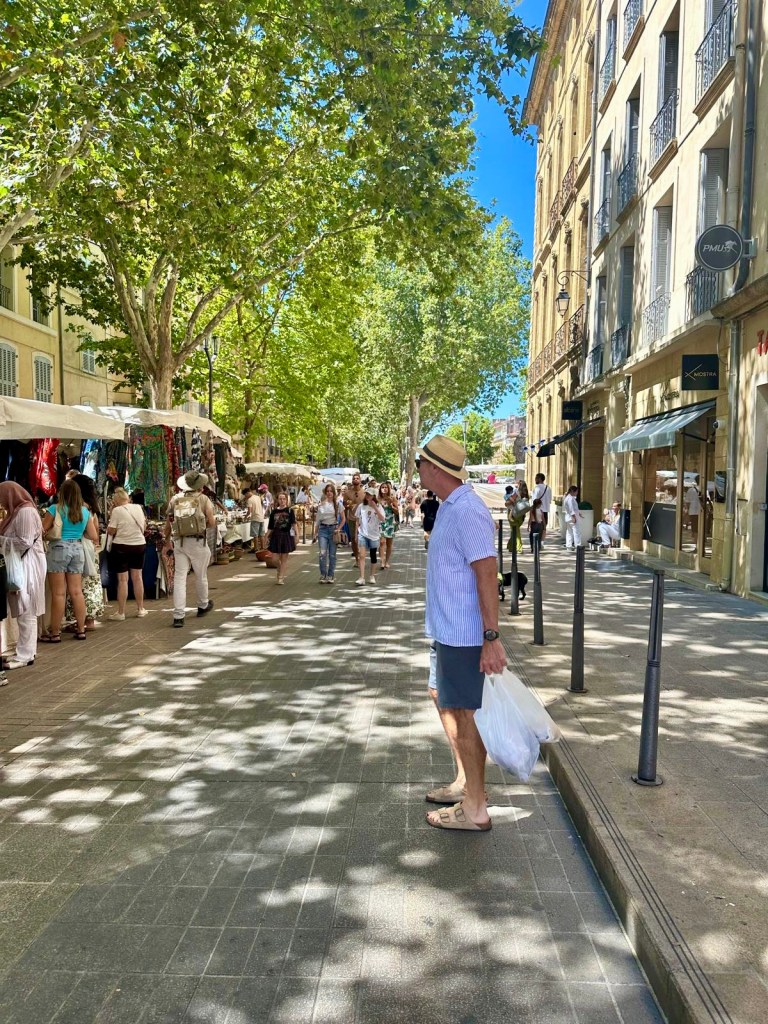
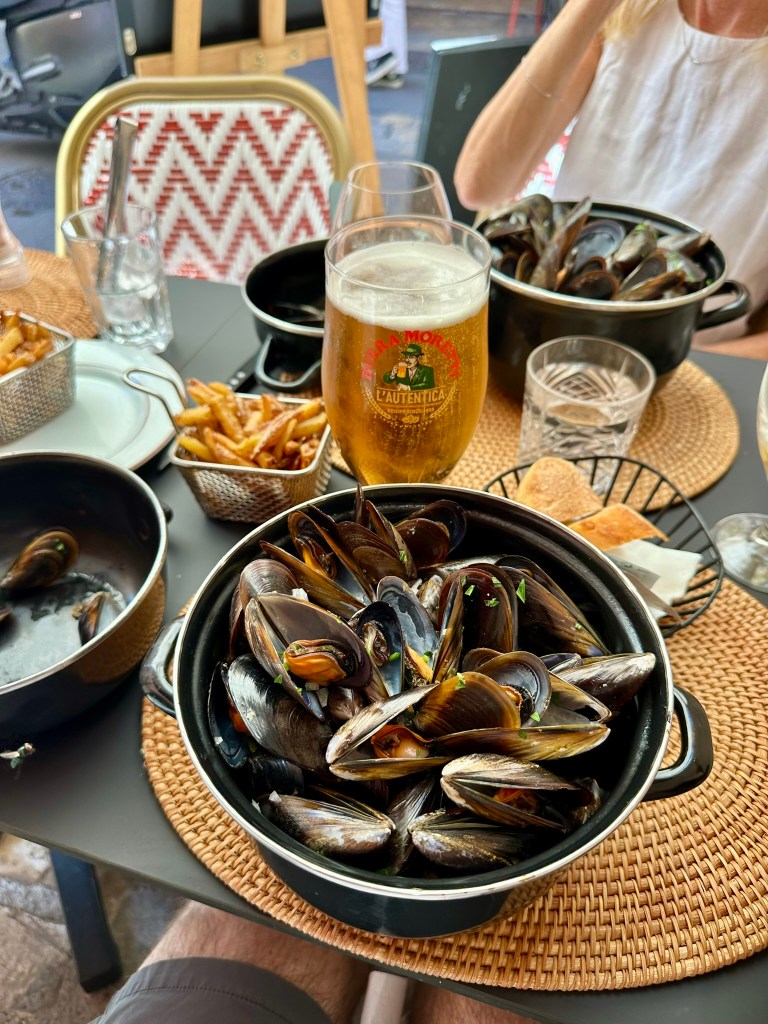
Alfresco dining throughout our stay.
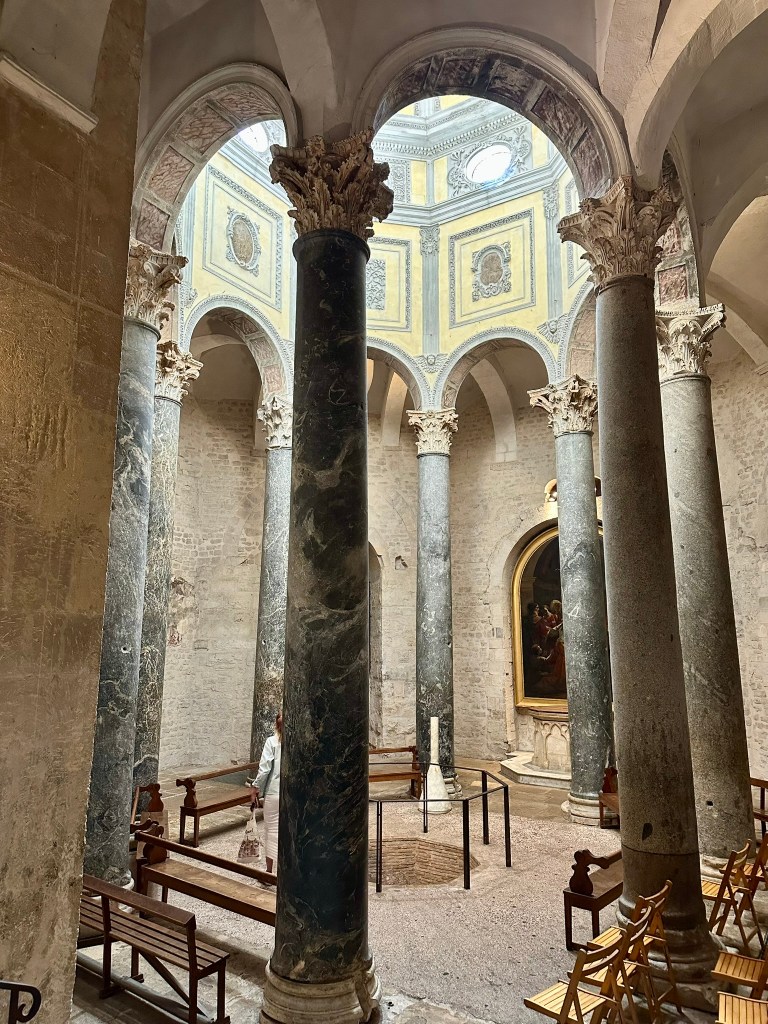
And it wouldn’t be WolfeStreetTravel if there’s not some cool (ideally medieval) history. To wit: The early 6th century Baptistery of Saint-Sauveur Cathedral, built when Aix was transitioning from the Roman world to Christianity – the oldest surviving baptistry in France. Several of the columns are reused from the Roman forum in this location.
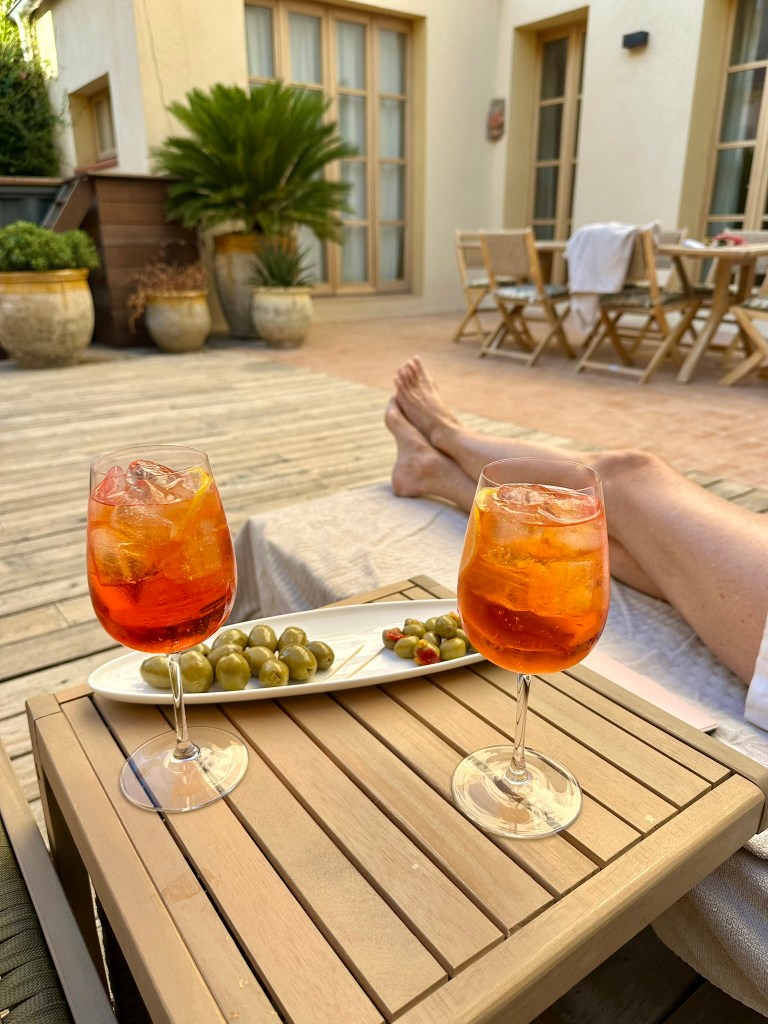
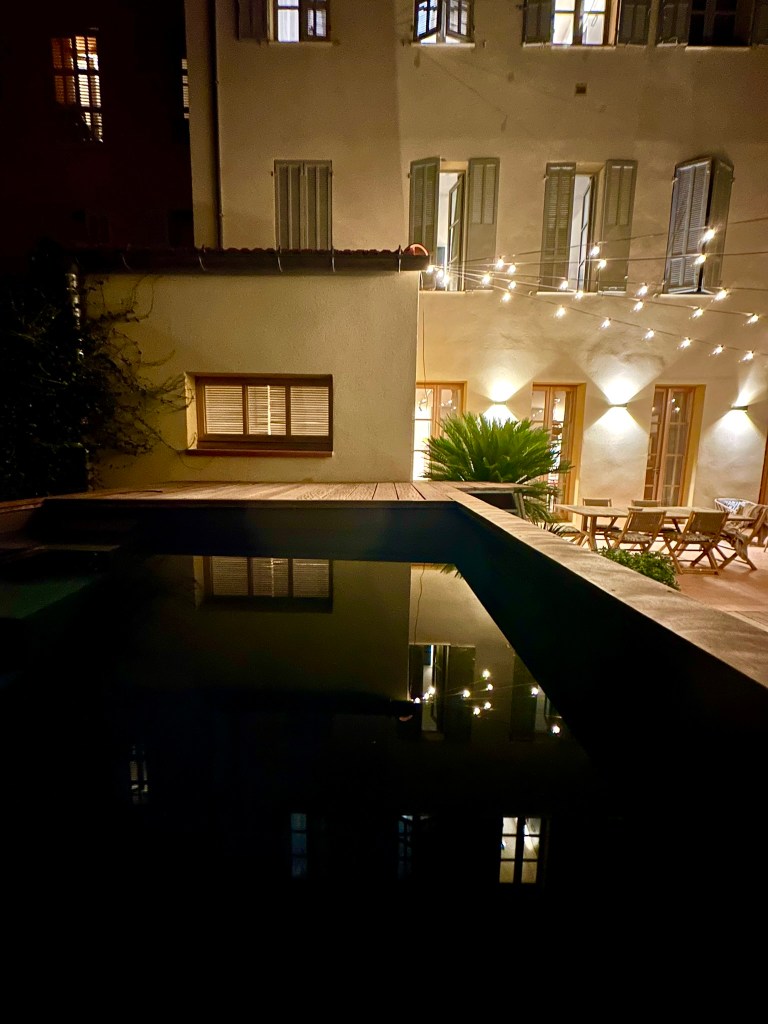
And Aperols each evening in a pretty cool AirBnB (the Chief Adventure Officer’s rule of thumb is to book AirBnBs for stays of 5 days or more and also every 10-14 days of hotels for laundry).
After those 5 days, it was time to move north; Aix was beautiful but, we decided, very much one note. We’re glad we visited, but this wasn’t the home base for us.
Vienne, just south of Lyon on the Rhone, offered the next potential home base location. According to our AI buddies, Claude and Chatty G, Vienne’s river utilization included a promenade along the Rhone. This was a lie. It did not.

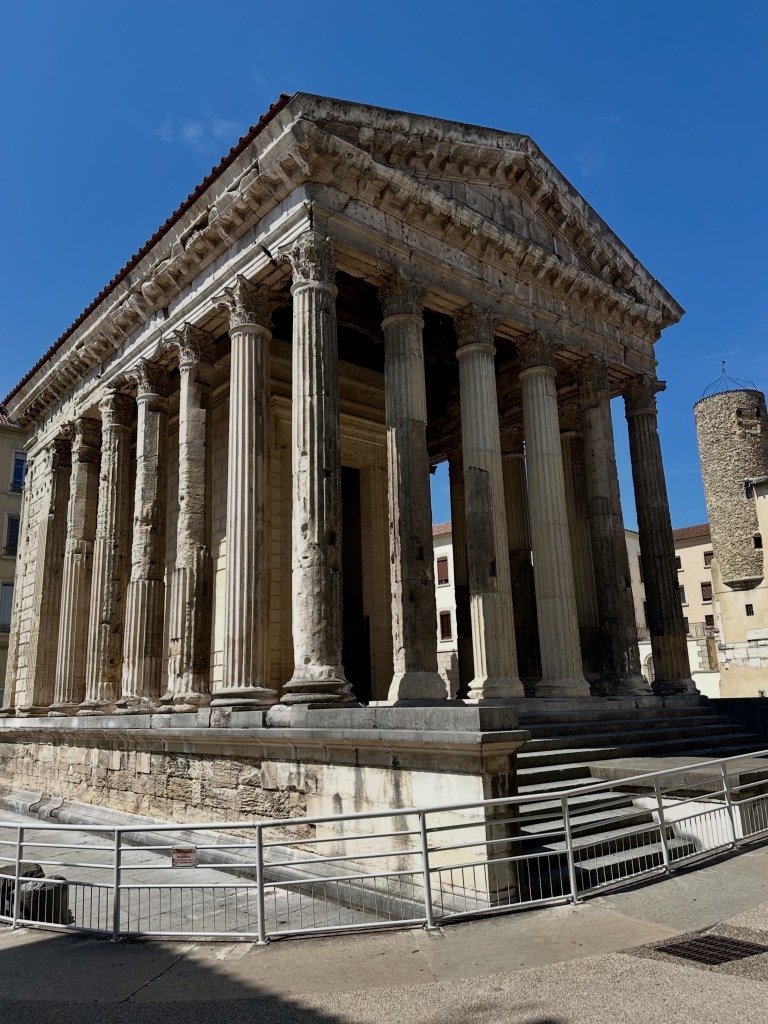
It did have some pretty awesome Roman artifacts, dating to Vienne’s time as an extraordinarily wealthy Roman trading city. This includes the 1st century BC Roman temple dedicated to Emperor Augustus and his wife Livia, right in the middle of town:
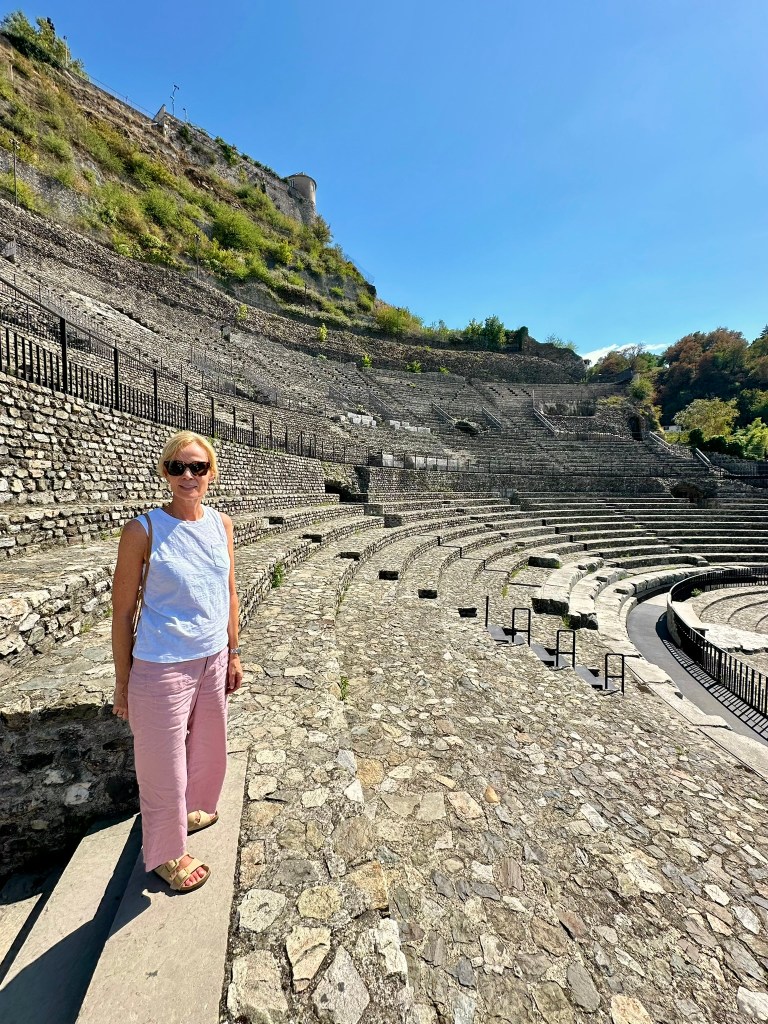
And the town’s massive Roman theater, built into a rocky hillside just above town in the 1st century AD:
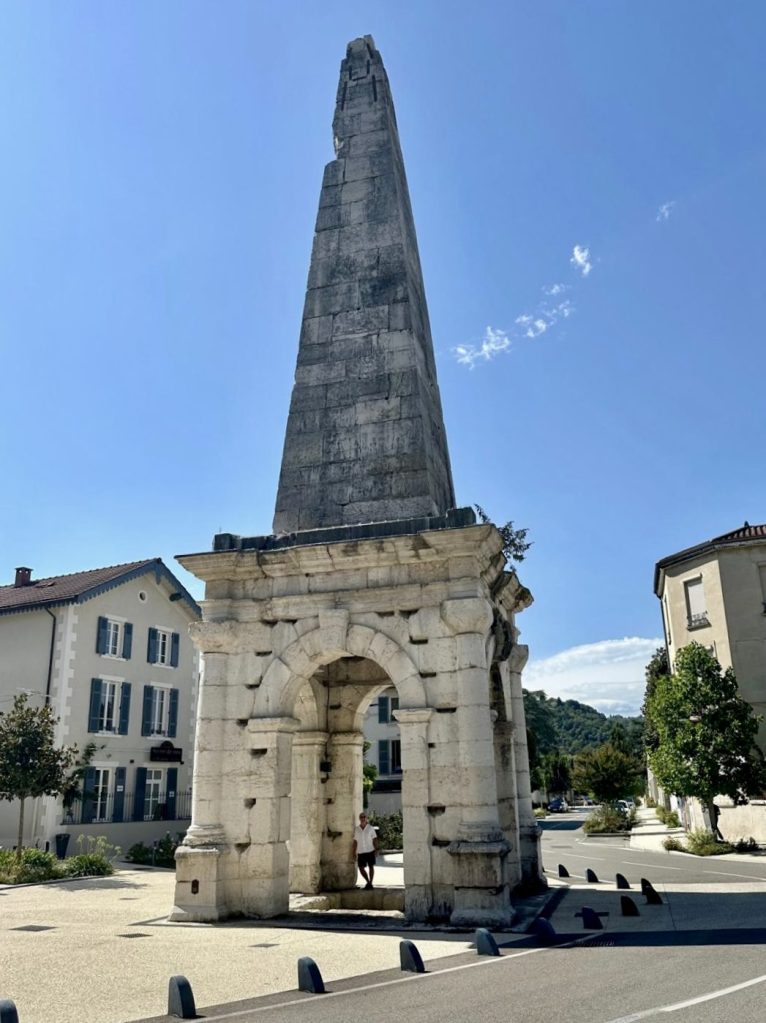
And, finally (there’s a bunch more, but this is a trip overview post), the 2nd – 3rd century AD Pyramide de Vienne, right next to our hotel. It’s actually the surviving central monument of the spina – the long central barrier – of Vienne’s enormous Roman circus for chariot races:
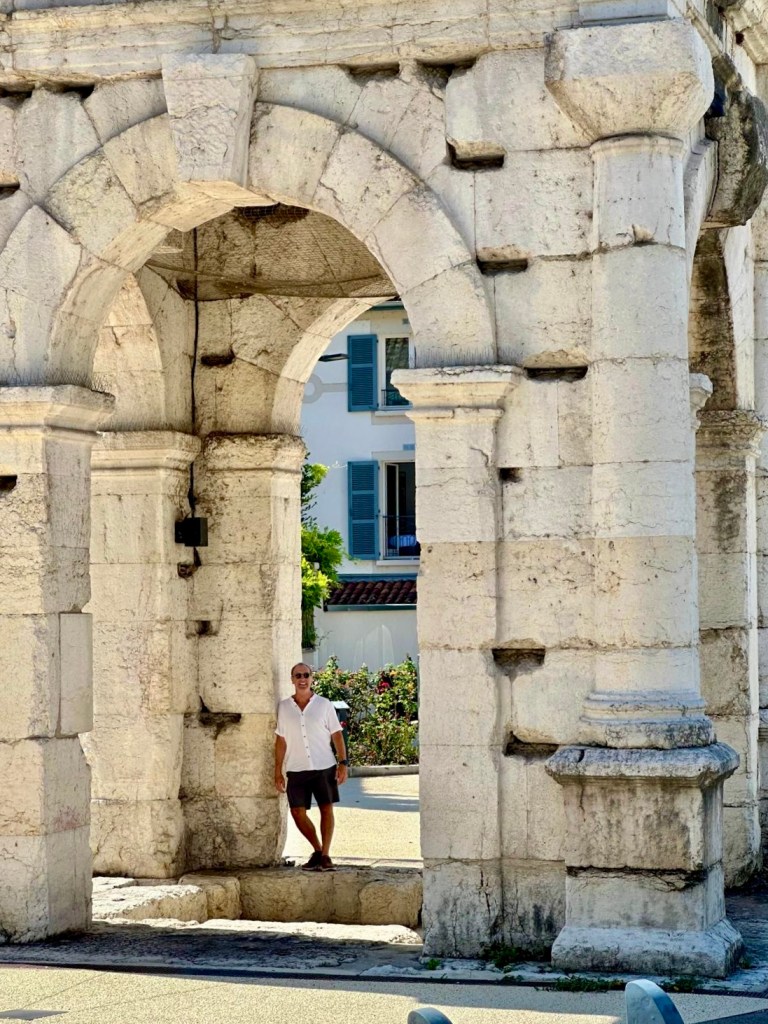
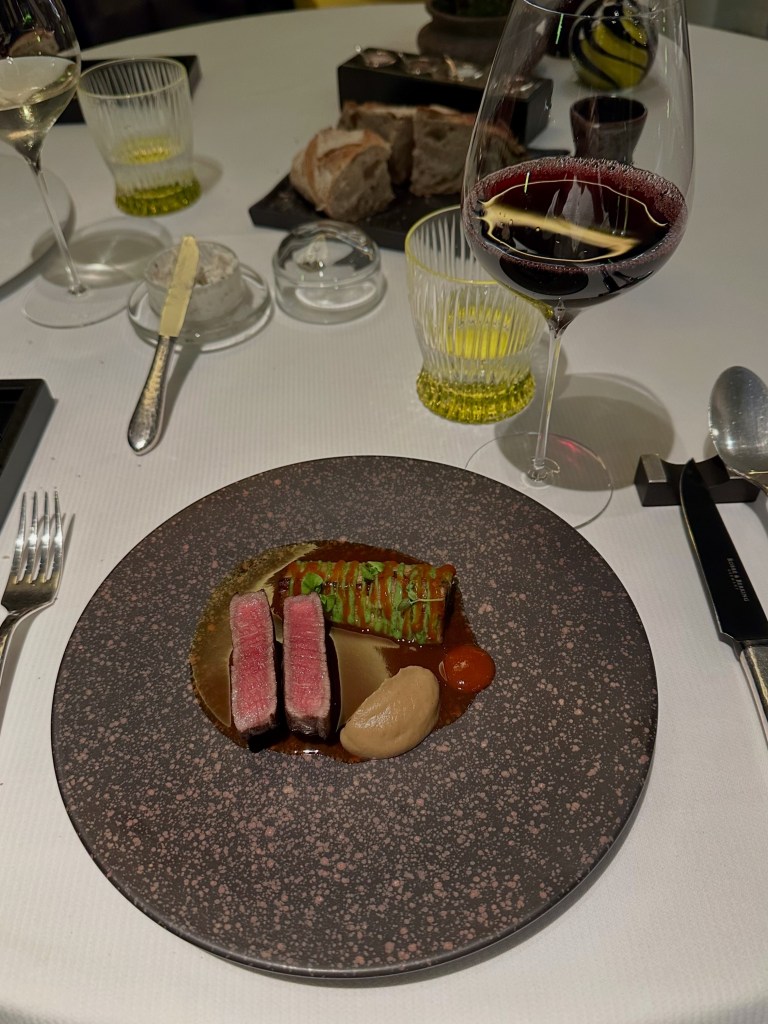
The hotel’s restaurant served as our only Michelin-starred dinner of the trip.
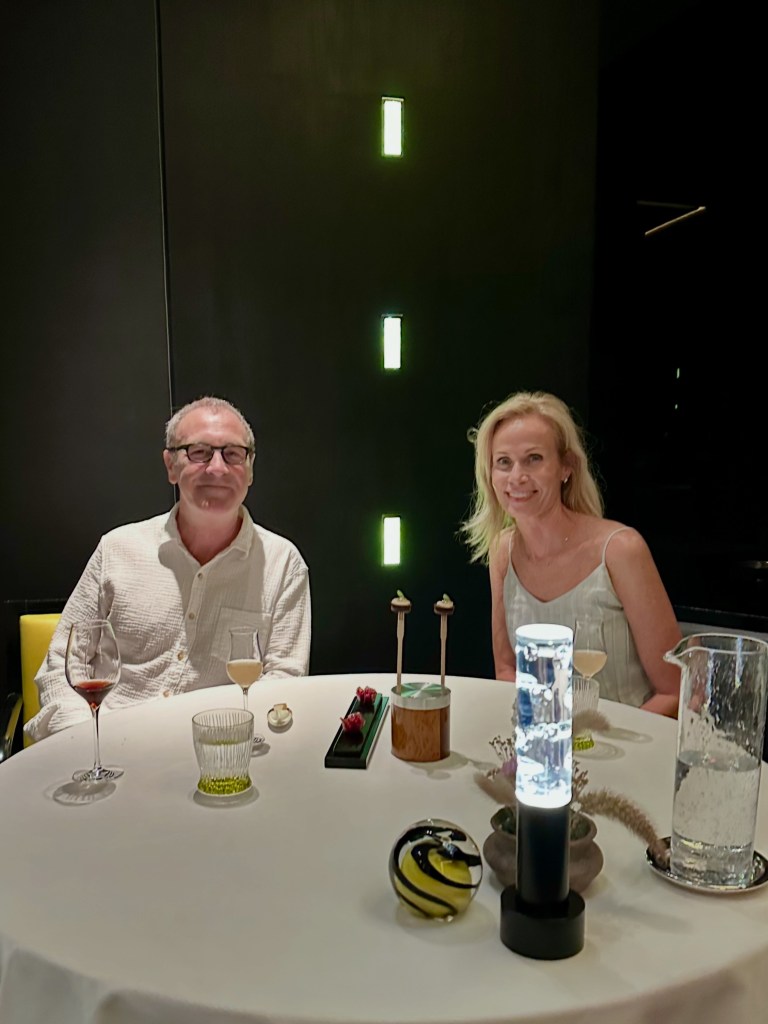
Meh. Good not great. Our anniversary dinner on Ios later in the trip was much better (as was our first, great, fish dinner on Naxos).
With the Vienne box checked, we roamed northwest to Annecy, which is decidedly NOT the South of France or Mediterranean in lifestyle, culture, cuisine, or architecture. It’s in the Savoy, just 20 minutes away from Geneva. But we kept seeing this place in our Instagram feeds, evaluated it thoroughly as a candidate, and thought highly enough of its potential that it bumped out Sommieres and consumed a day of Vienne time from our draft itinerary.
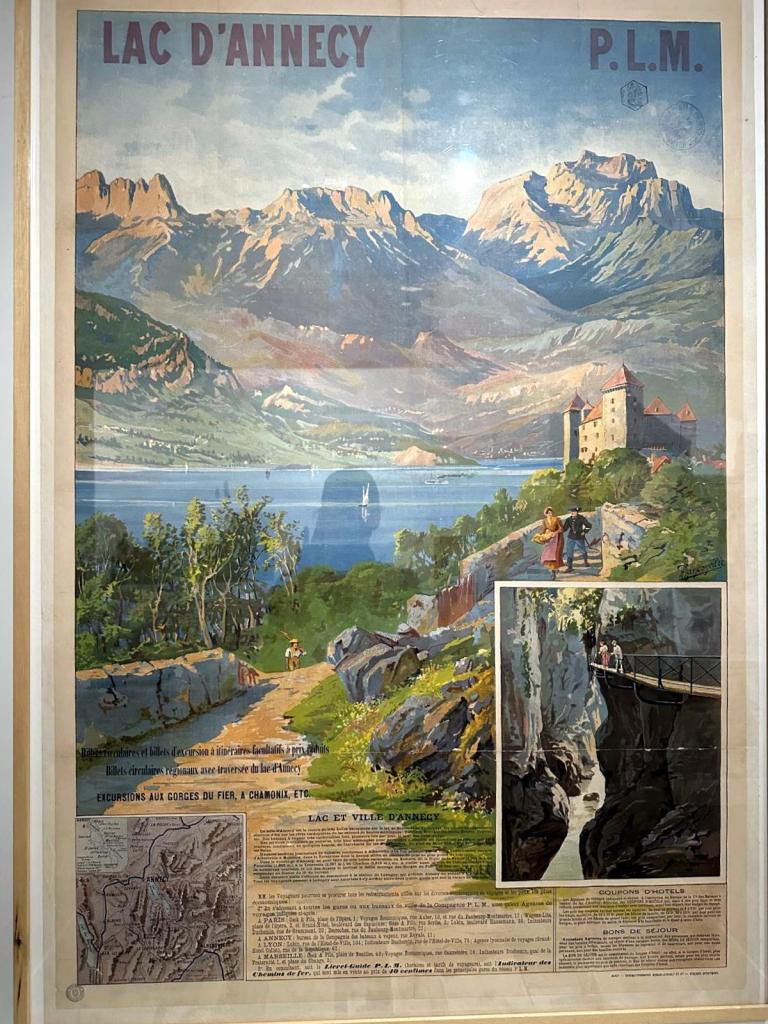
Good call. This place was awesome. Canals in the city (Annecy is the “Venice of the Alps”) and Lake Annecy just beyond.

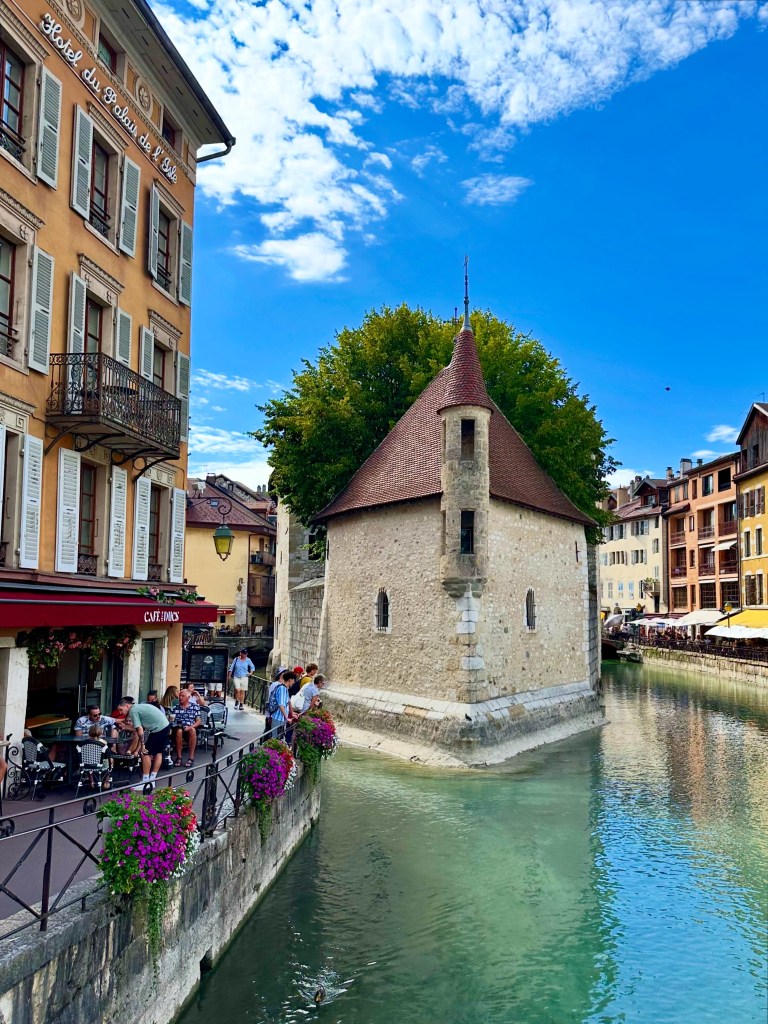
12th-century Palais de I’lle in the middle of Annecy’s main canal leading to the river (behind us):
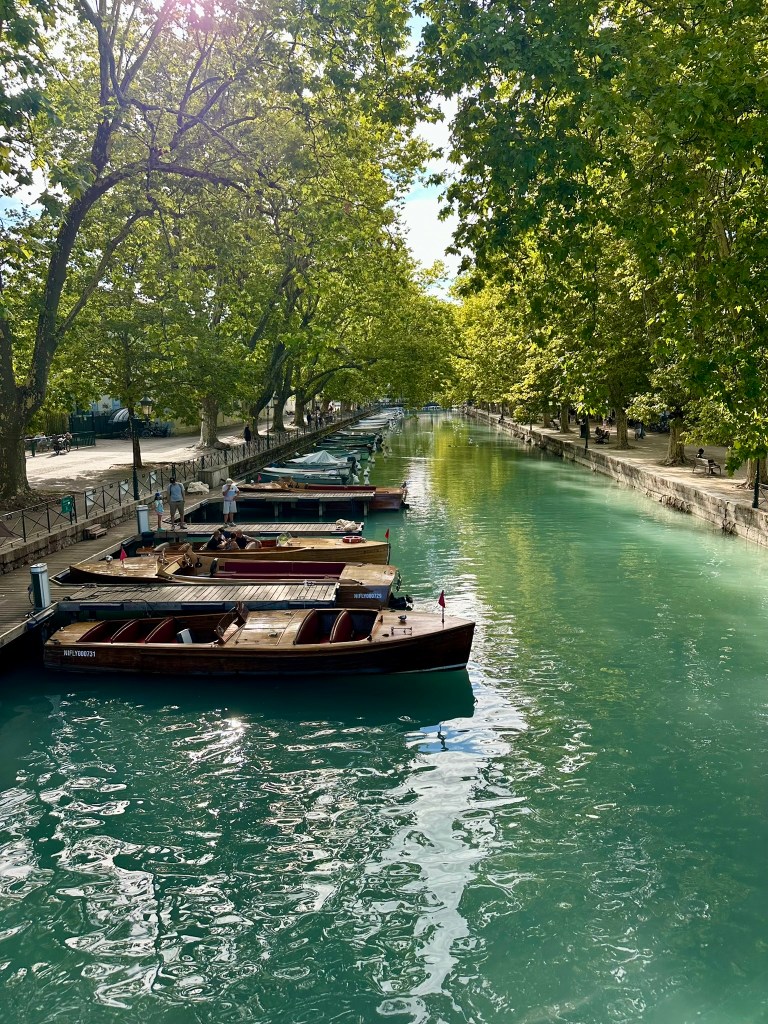
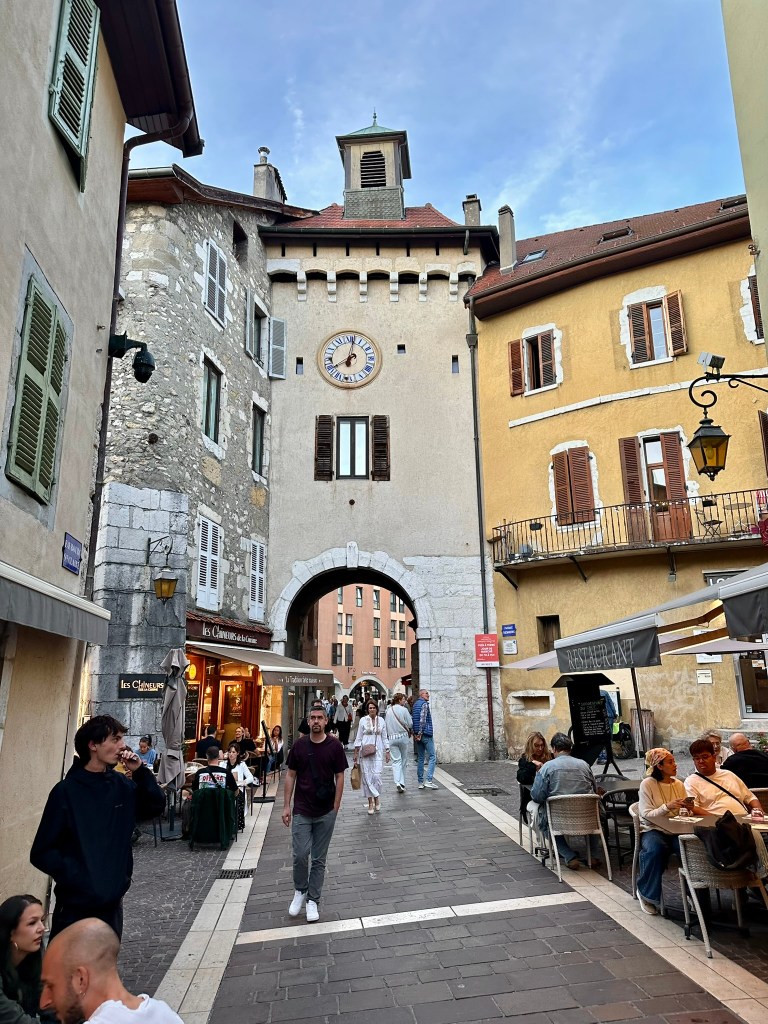
Annecy’s old town is full of 17th- and 18th-century structures and definitely punches above its weight in restaurants (and wine bars, as we’d learn):
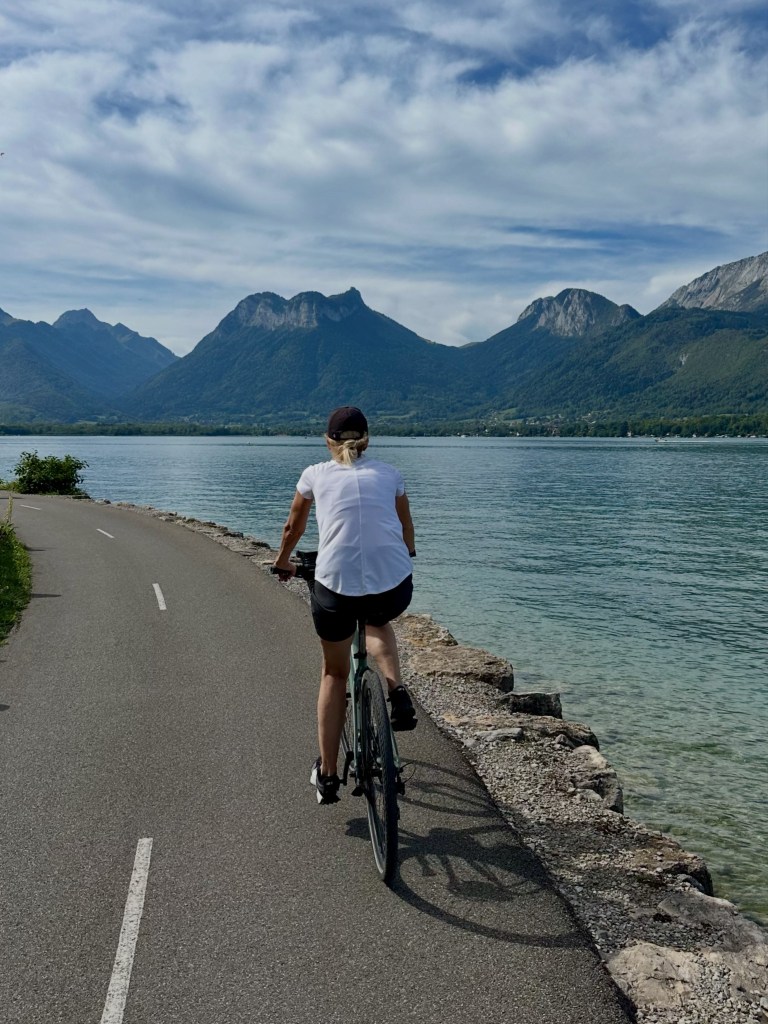
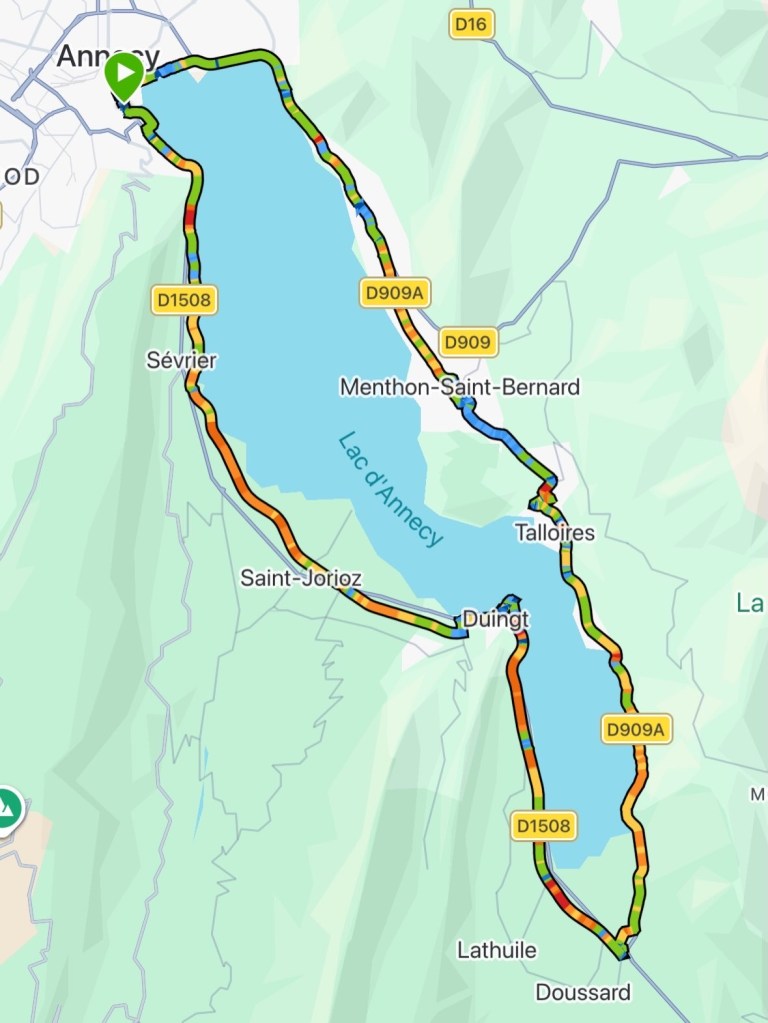
During our stay, we’d swim in the lake, drive around it to another small village, and, the pièce de résistance (literally “piece of resistance” per Dave Barry), biking the 25-mile loop around the lake.
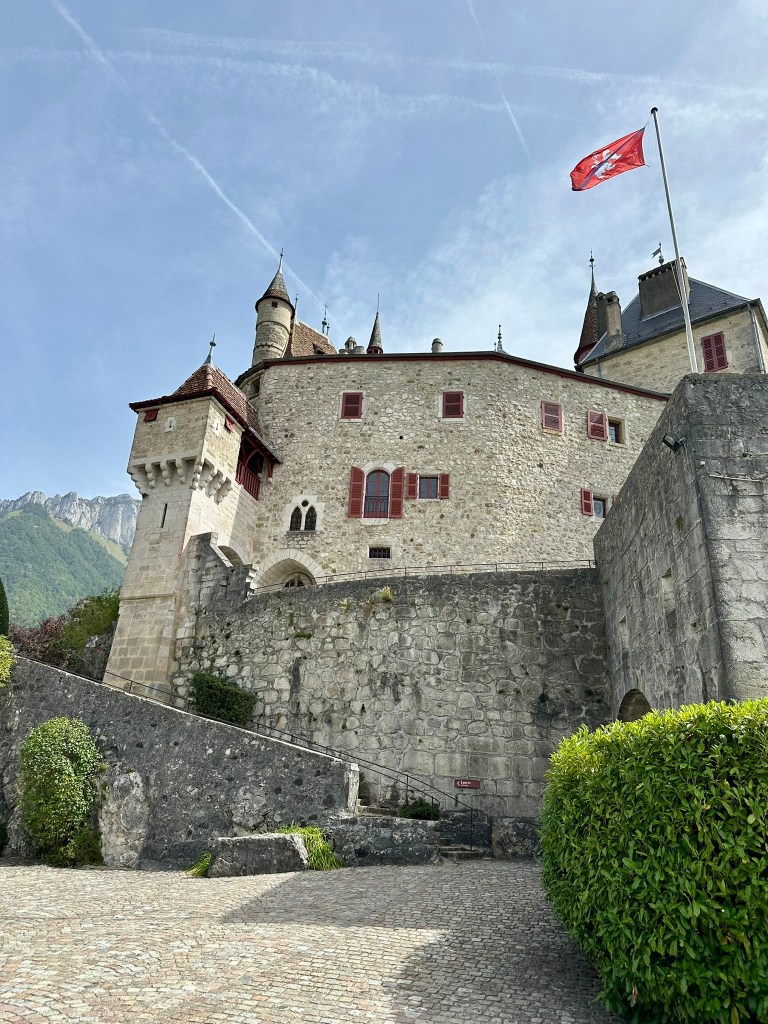
Little side trip to Chateau de Menthon-Saint-Bernard after lunch in the charming village of Talloirs.
And for lunch on the one rainy day during our trip, fondue – a Savoyard specialty.
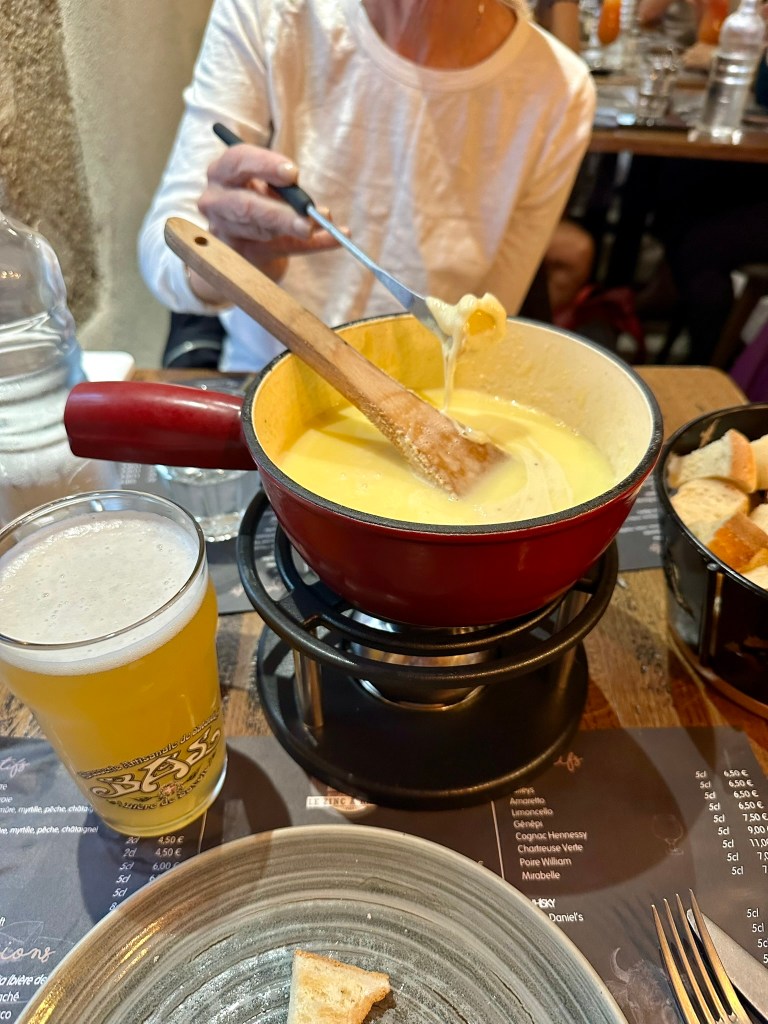
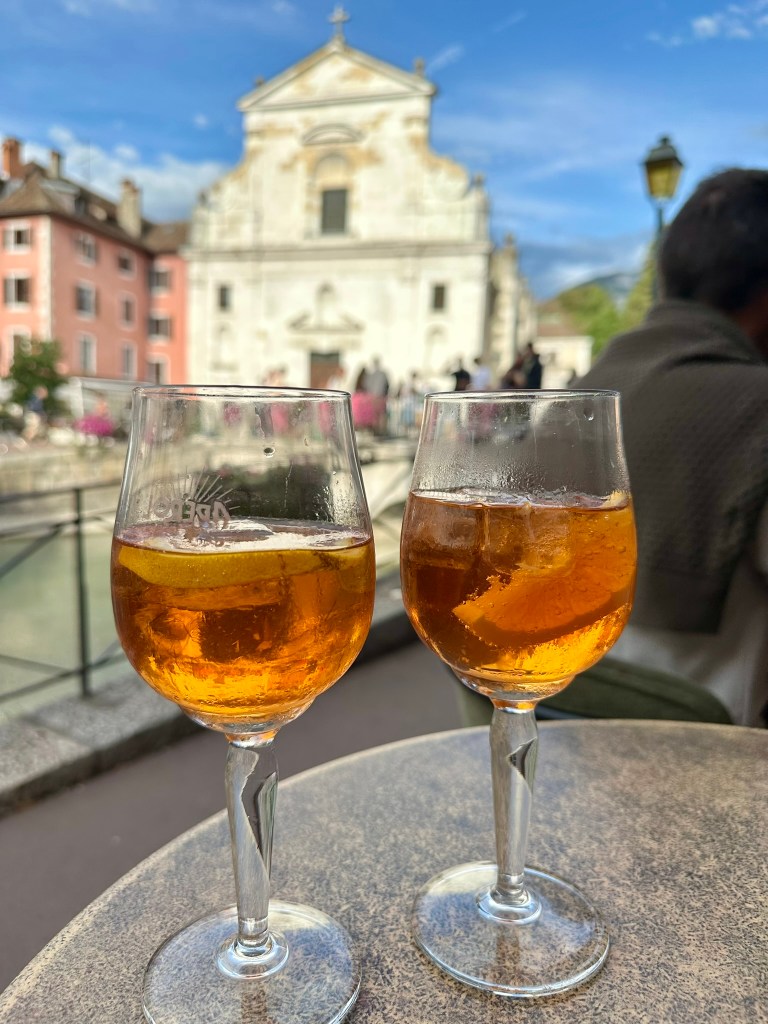
Annecy was amazing. The town hit ALMOST all of the European home base criteria we had established, based on Old Town, Alexandria. Although it fell short in proximity to a travel hub (we did get a nonstop from Lyon to Athens for our next leg, but the Lyon airport cannot be considered a real travel hub, and Geneva’s is not in the EU). It also exuded Savoyard character, not Mediterranean. But Annecy is a four-season town with hiking skiing in the French Alps (Chamonix is about 75 minutes away), complementing its lakeside charm as a summer getaway. So we’ll be back.
More Greek Cyclades Leg

The second WolfeStreetTraveler had planned to retire in August 2022, immediately after which we would travel to Turkey and four Greek Cyclades islands – Paros, Naxos, Folegandros, and Milos. Supercomputing issues related to the worst high-performance computing vendor in the world scuttled this plan, and retirement was postponed to ensure the issues were resolved. The Turkey & Greece trip of 2022 contracted to include just one Cyclades island: Paros. (Which was amazing – still our favorite island.)

To the missing islands of Naxos, Folegandros, and Milos, we added little Ios to our itinerary, simply because it was there:
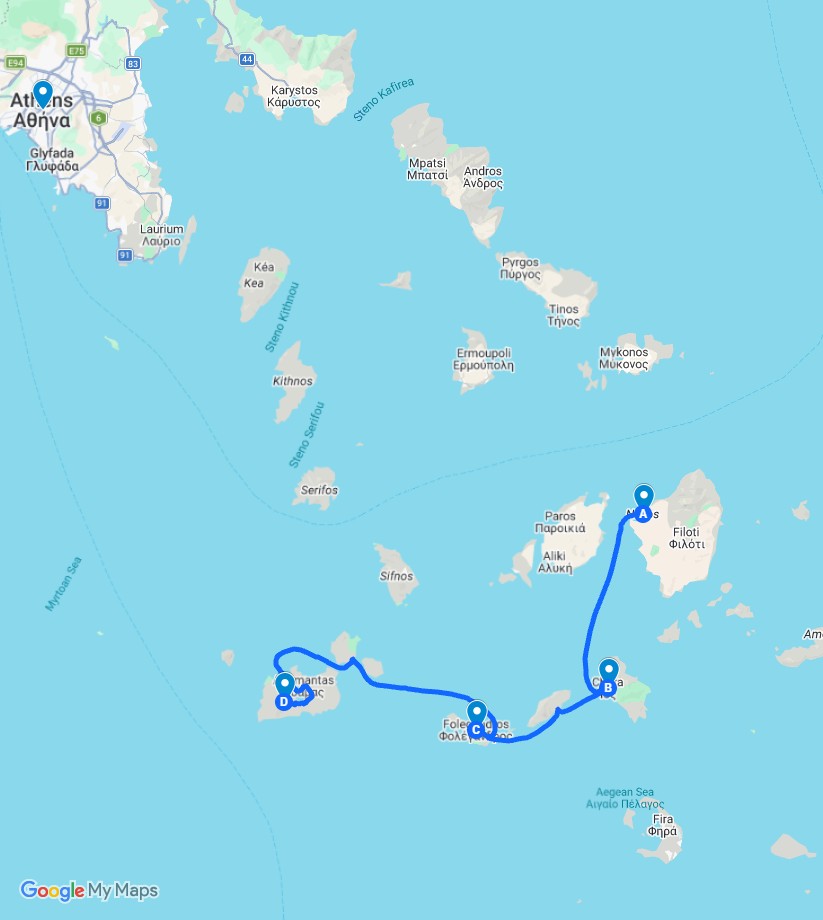
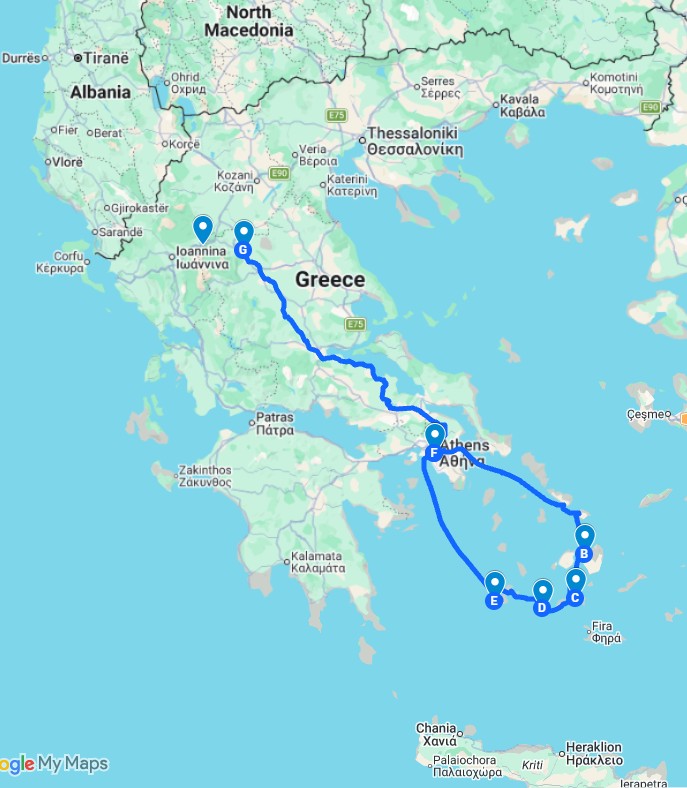
We would spend 5 days on Naxos, then 3 days on Ios, 3 days on Folegandros, and 4 days on Milos (all determined sort of based on their size). We’d connect from Lyon to Naxos through Athens, then fast ferry from Naxos to Ios to Folegandros to Milos, then fly back to Athens for a bonus leg, renting cars at each stop.

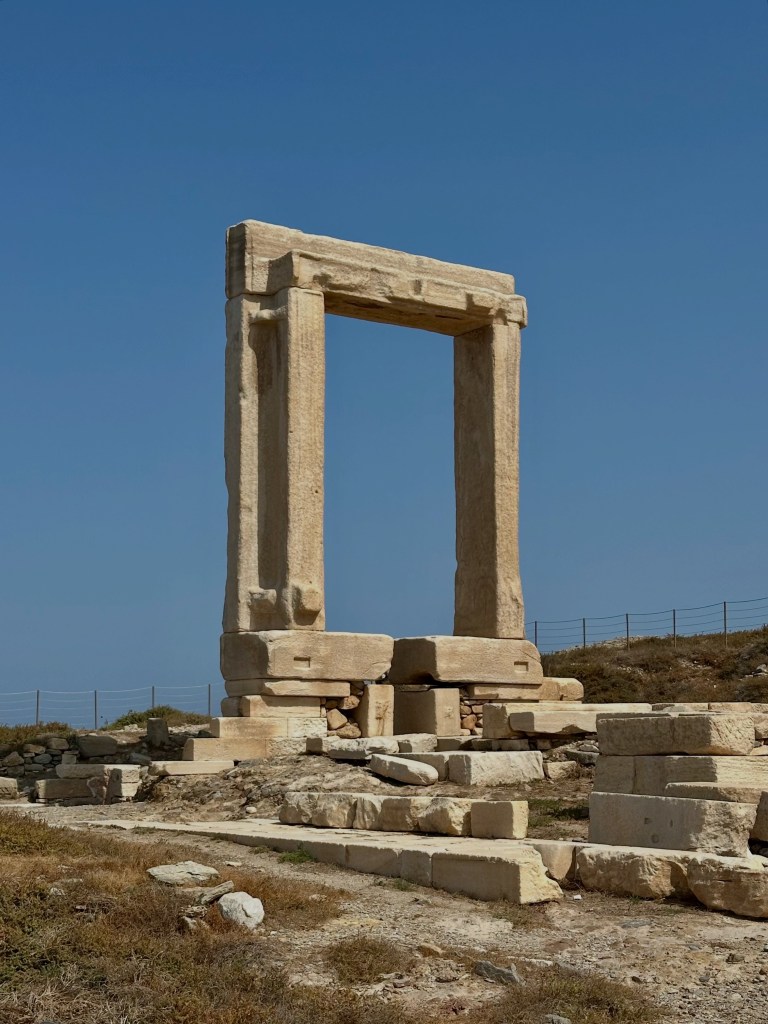
The monumental Portara of Naxos, the start of what was to be a massive temple to Apollo begun in 530 BC. They didn’t get too far, but this baby has been standing for the 2500 years since.
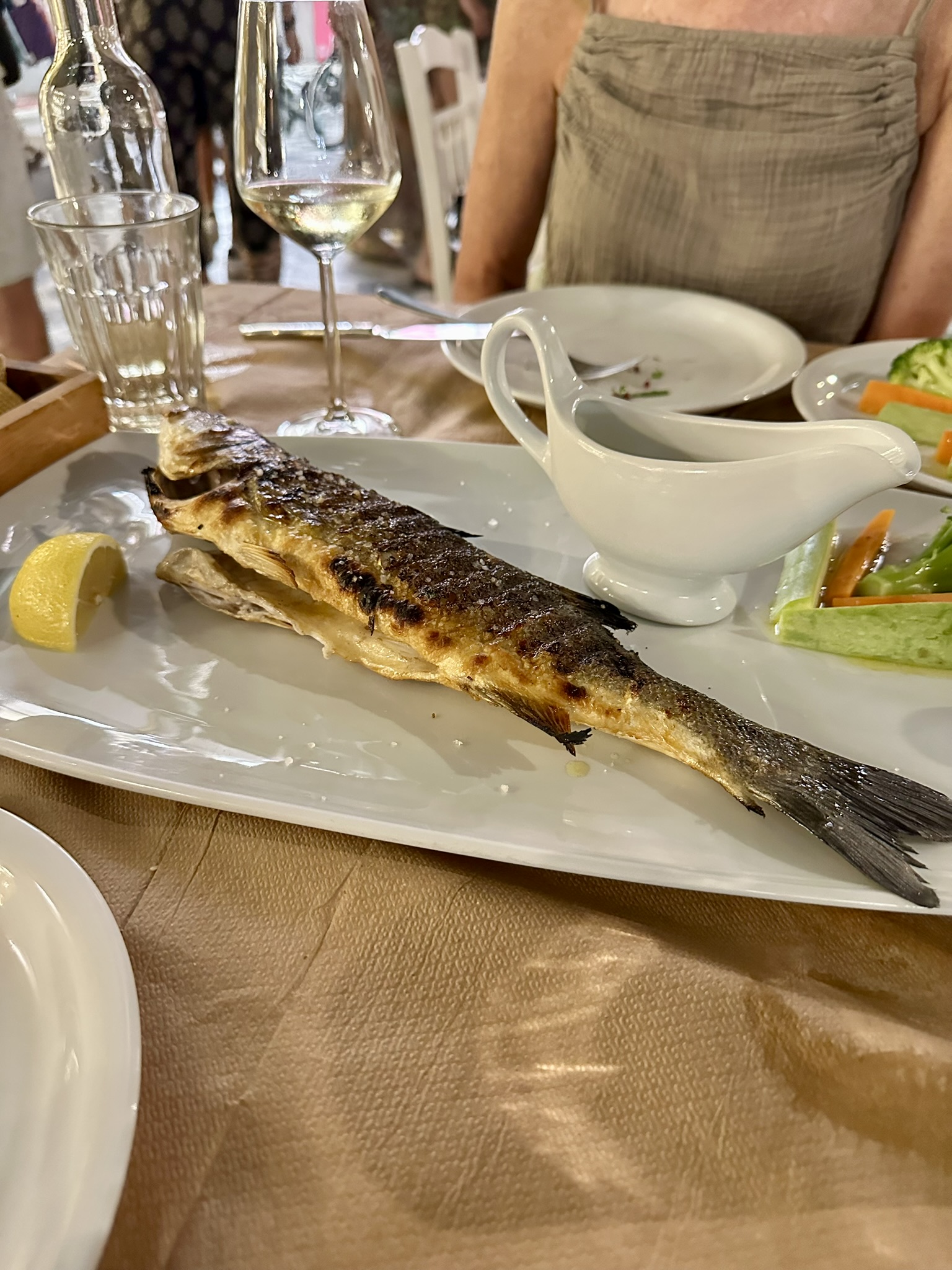
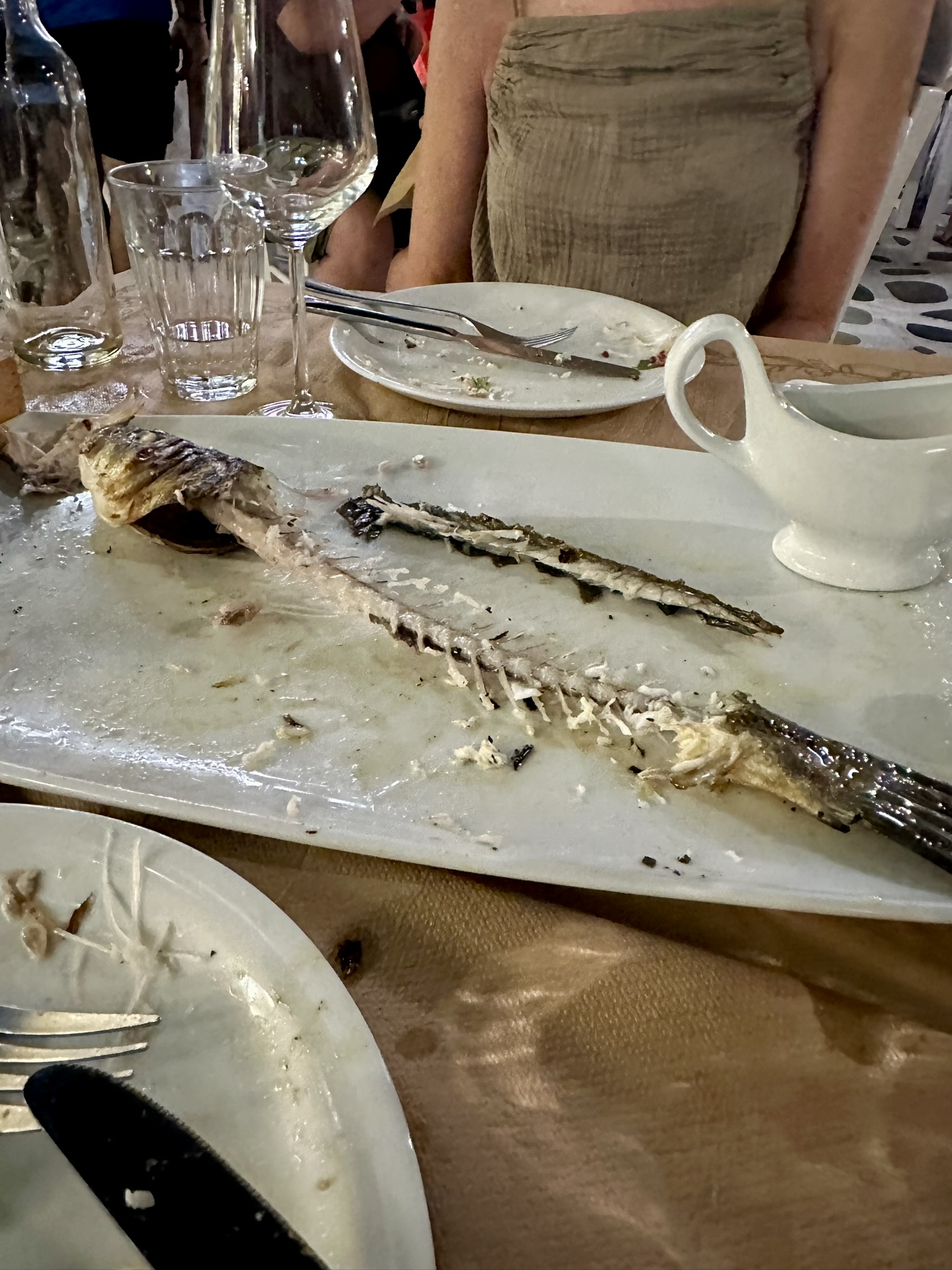
Probably the best single fish dining experience of the trip at Sarris in the middle of Naxos Town.
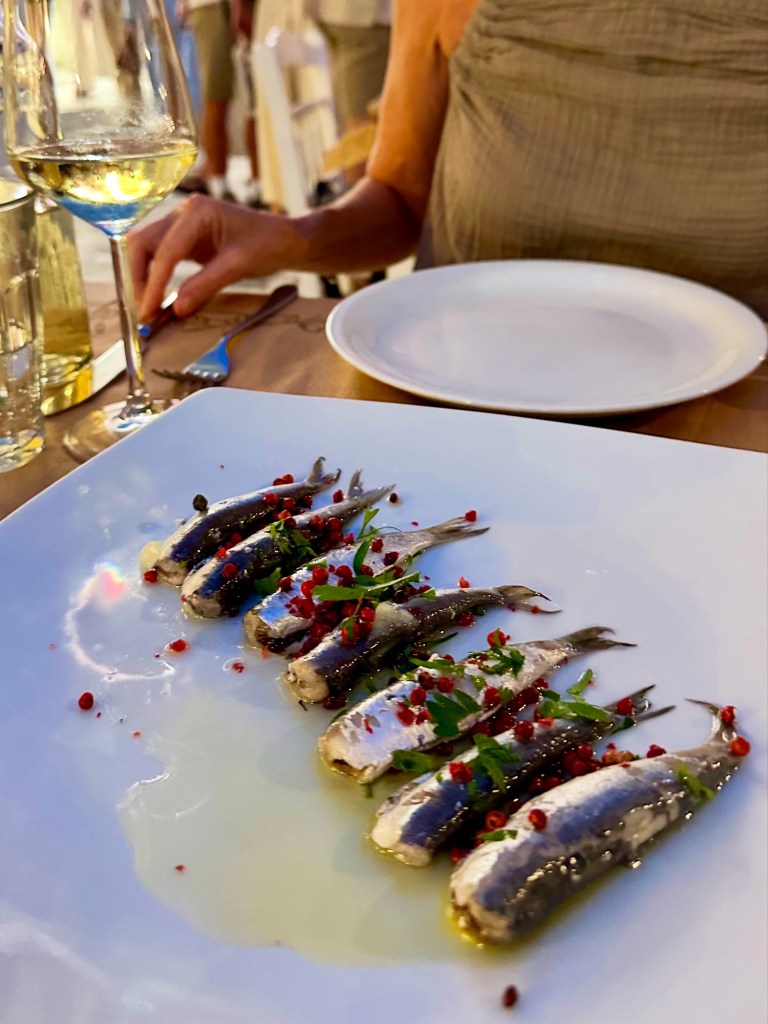
Sea bass, before and after.
Naxos beaches in the low season were outstanding – water’s still warm, but the crows have abated.
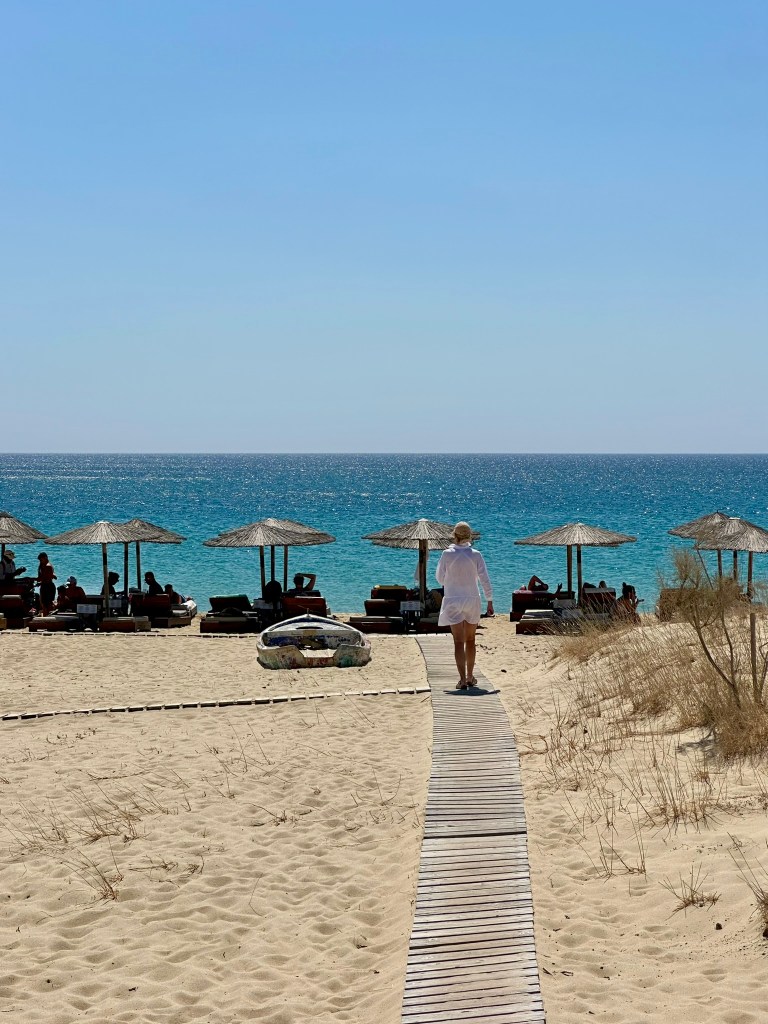
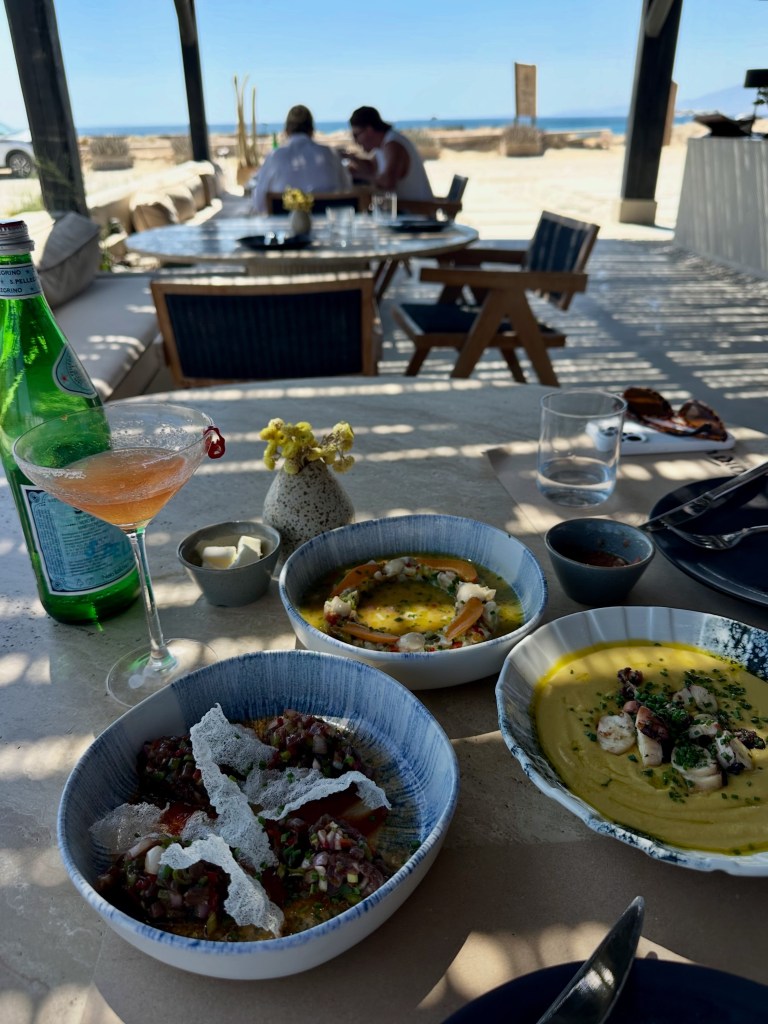
Just as on Paros, some great restaurants right behind the beach for a pretty nice break in the day.
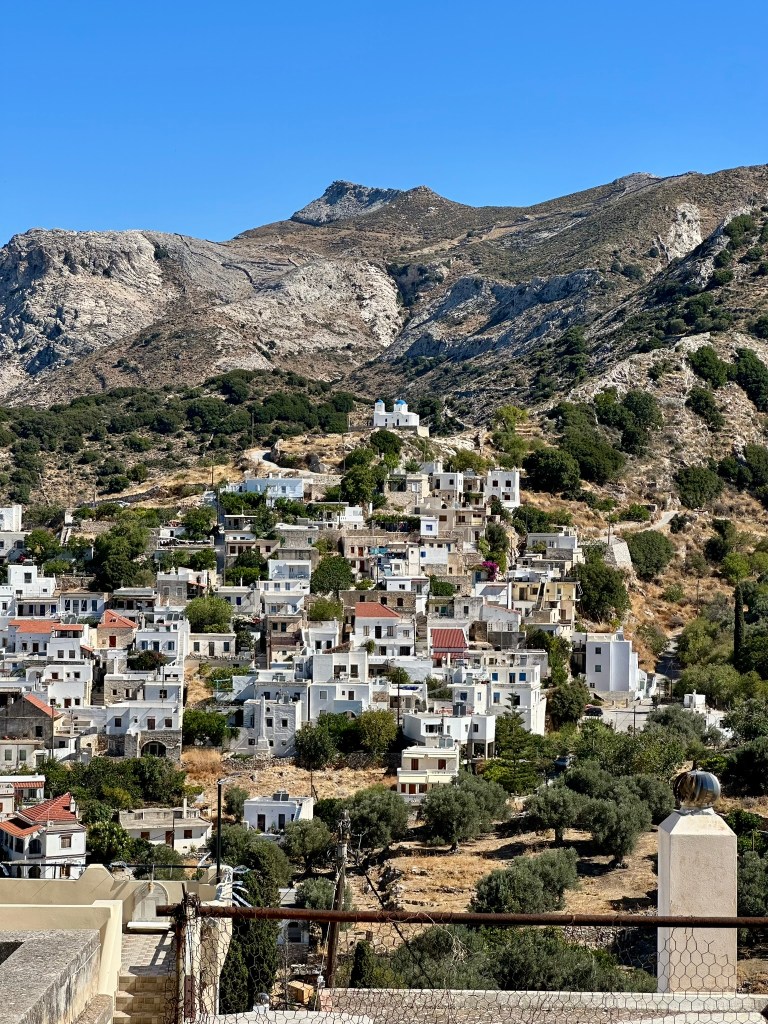
We drove into the middle of the island and up into the mountains to visit the villages of Filoti and Apeiranthos.
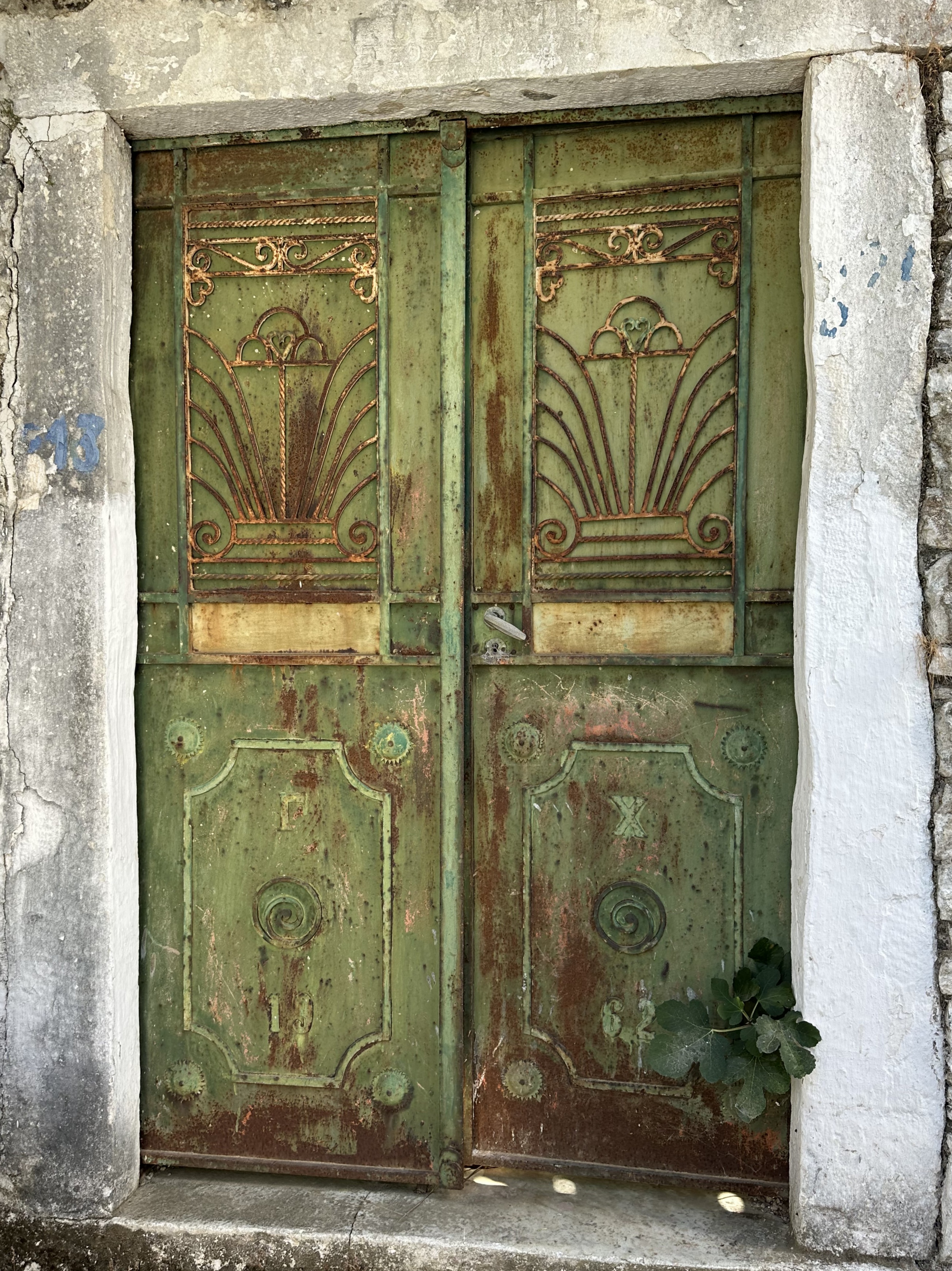
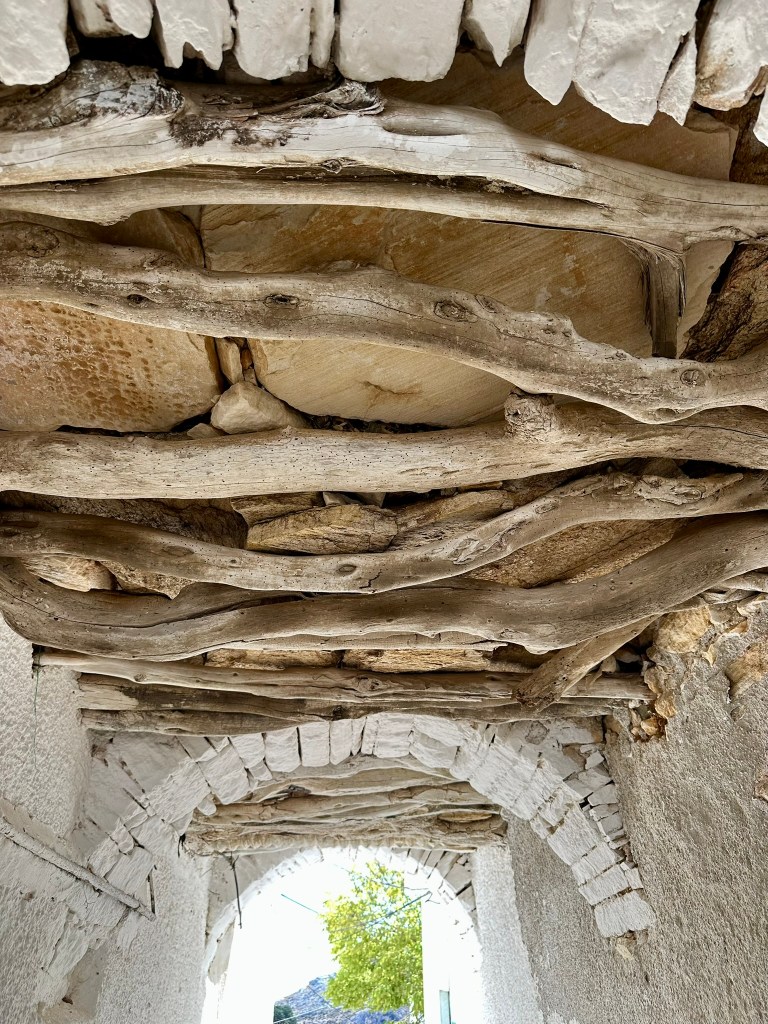
Which offered pretty atmospheric doorways.
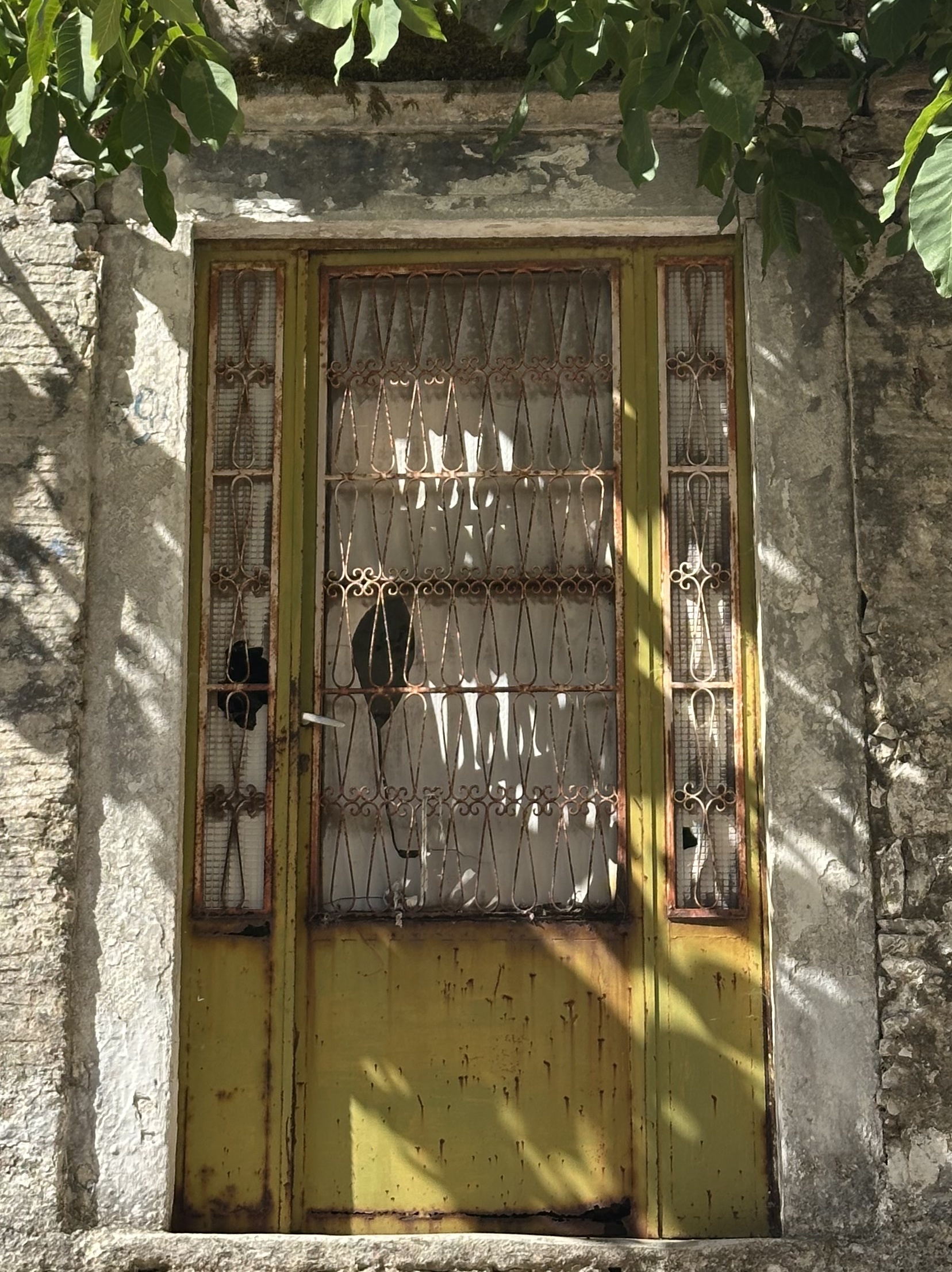
Pretty OSHA non-compliant doorways.
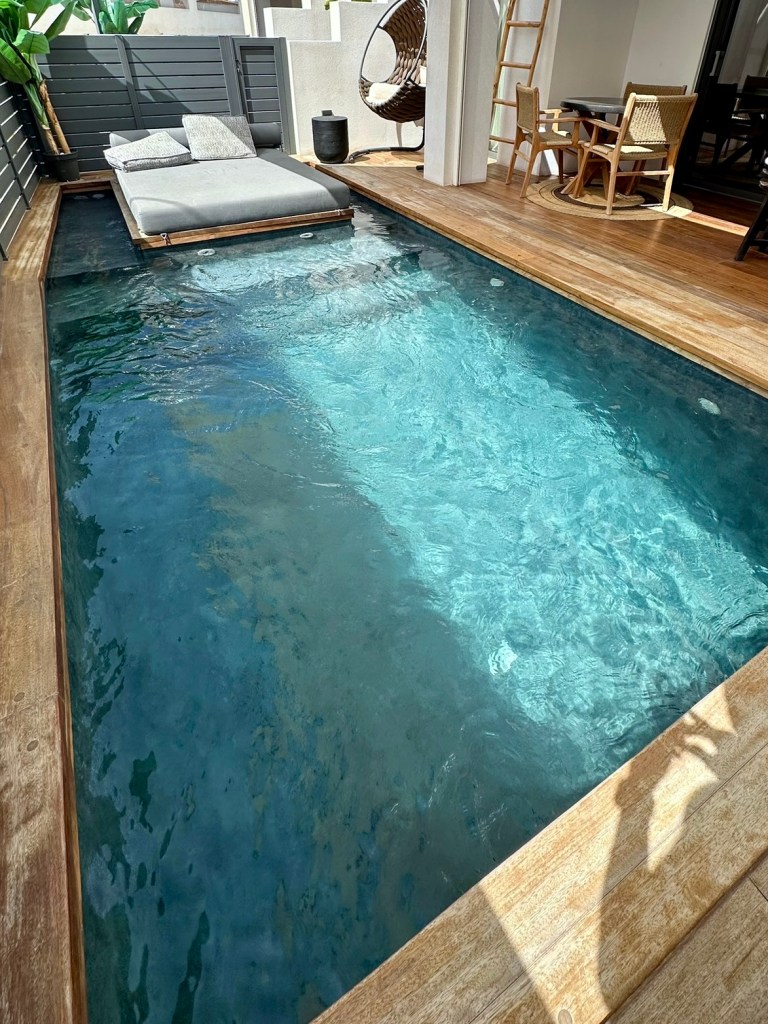
A 5-day stay meant another AirBnB. Pretty good digs.
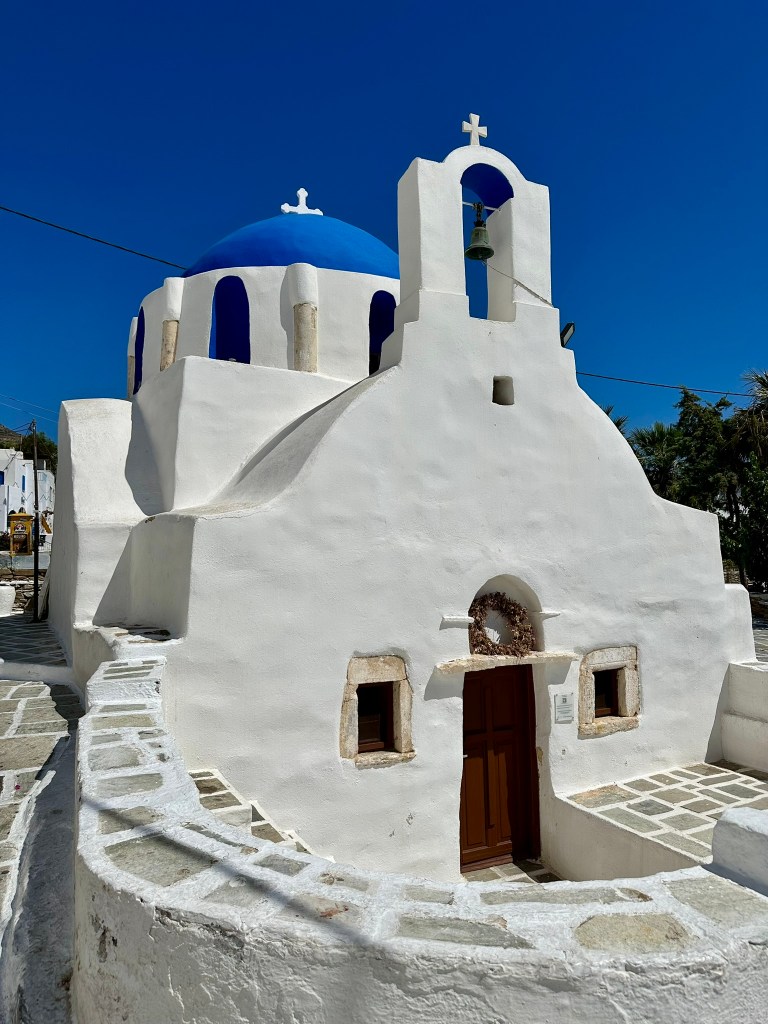
Our next stop was Ios, where we spent time immediately after our arrival to stroll around the island’s main town of Chora.
And later celebrated our 28th anniversary on Ios.
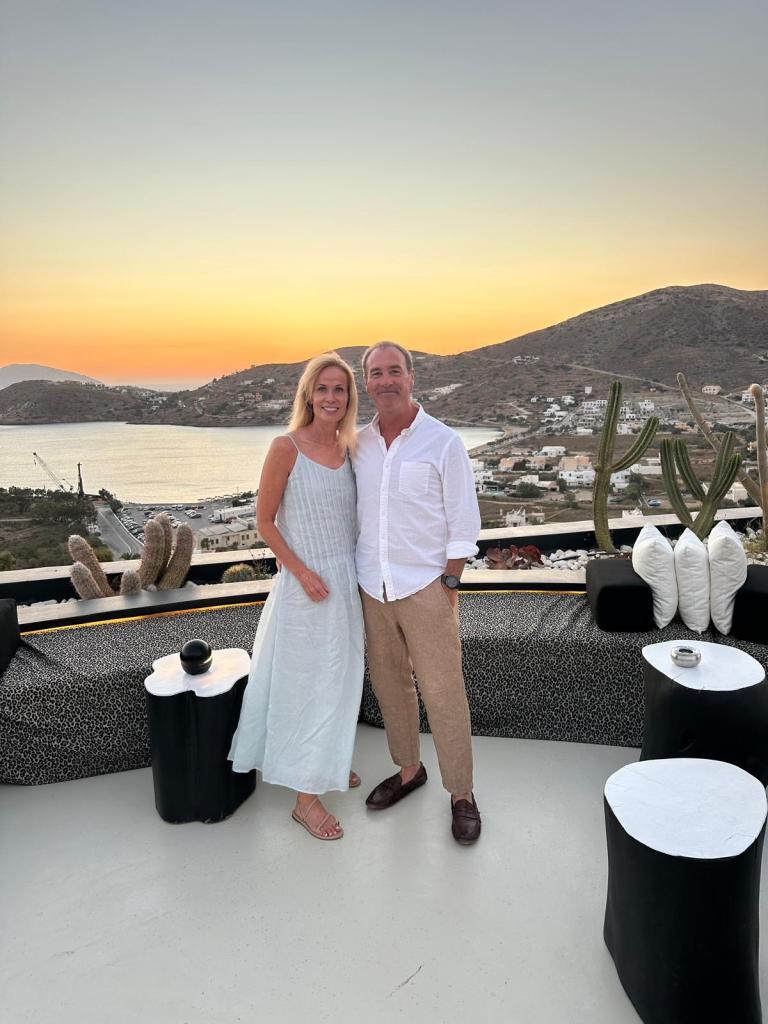
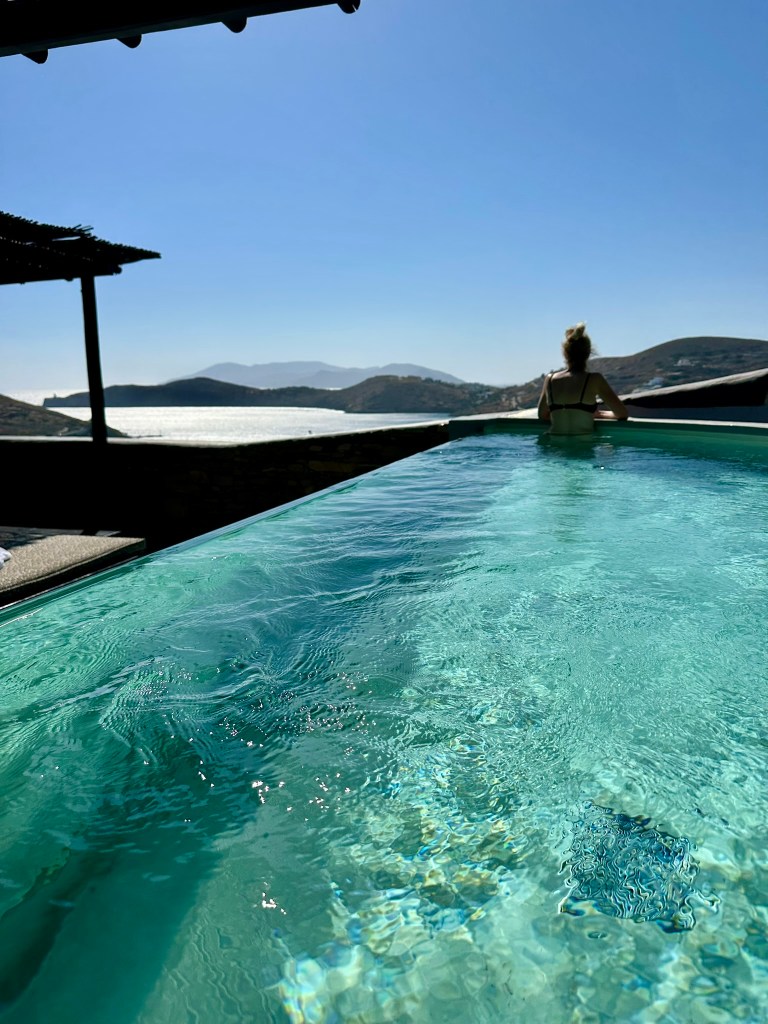
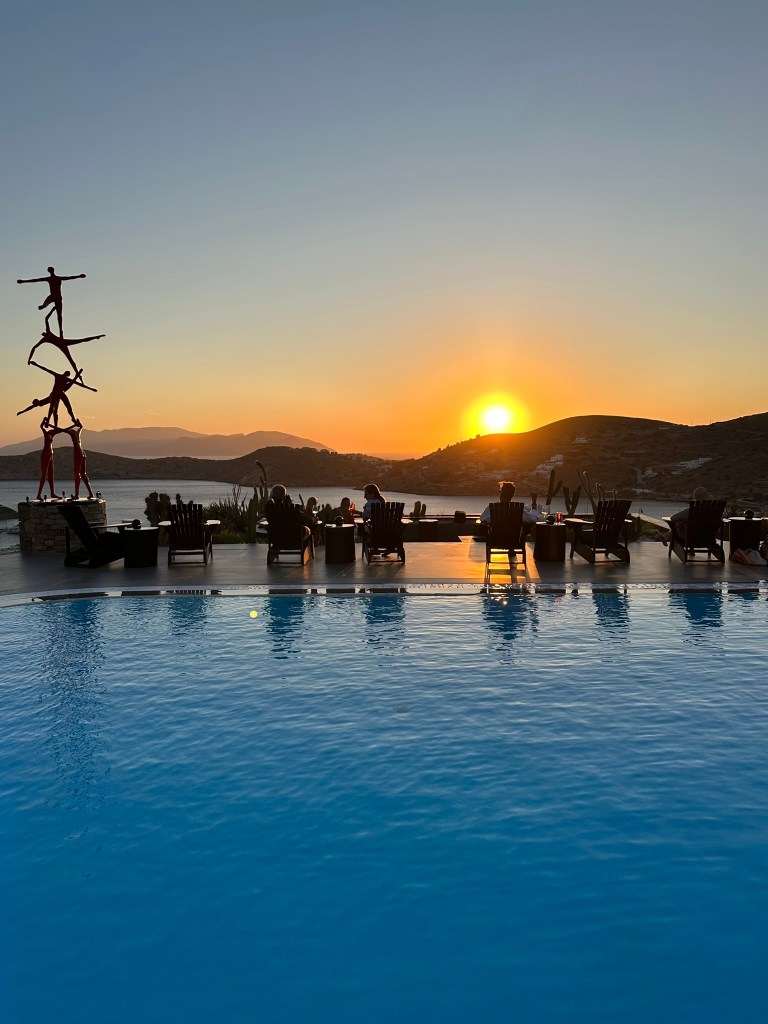
Our place had spectacular sunsets every night, elevating aperitivos hour.
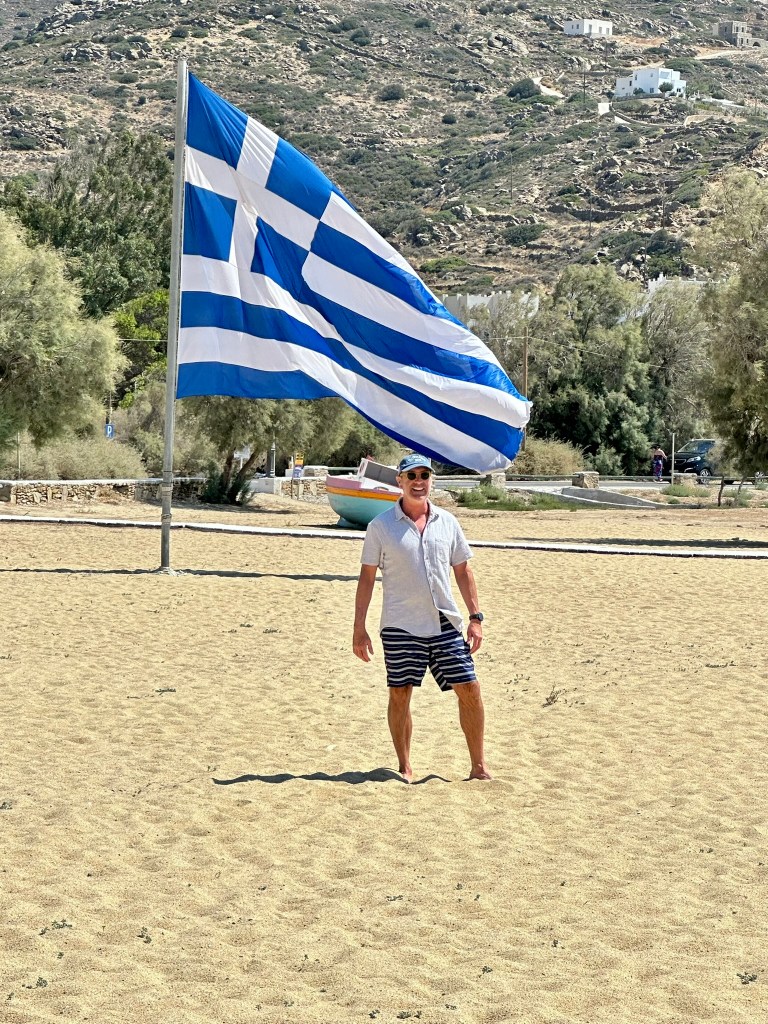
Another Greek island, another beach.
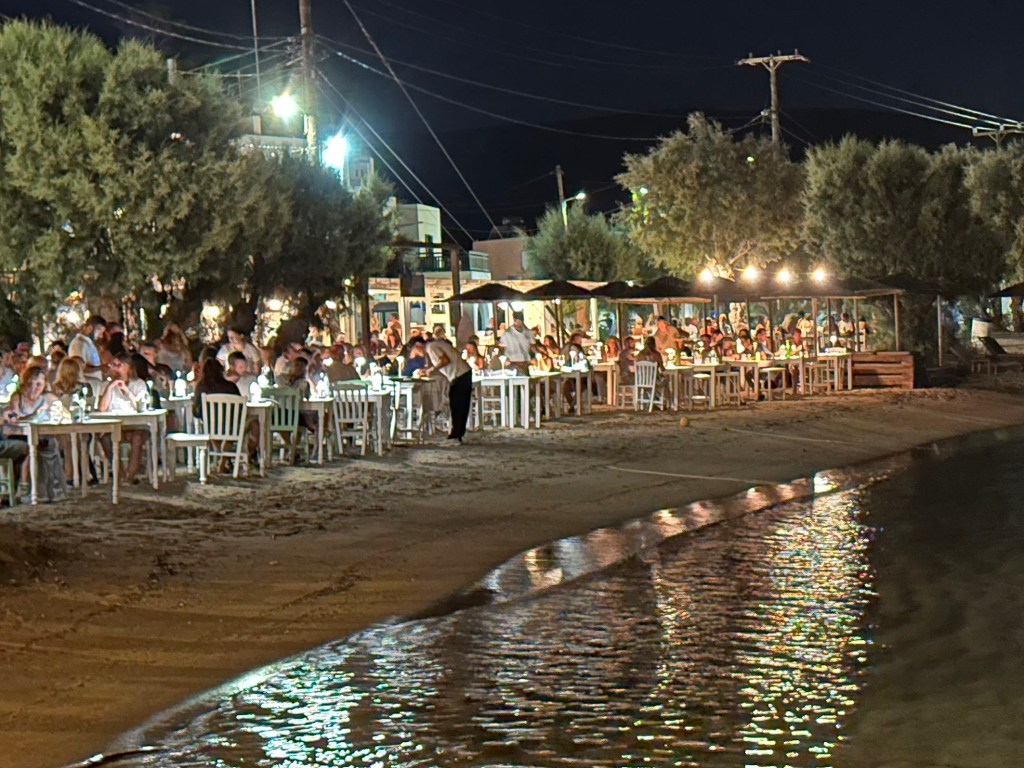
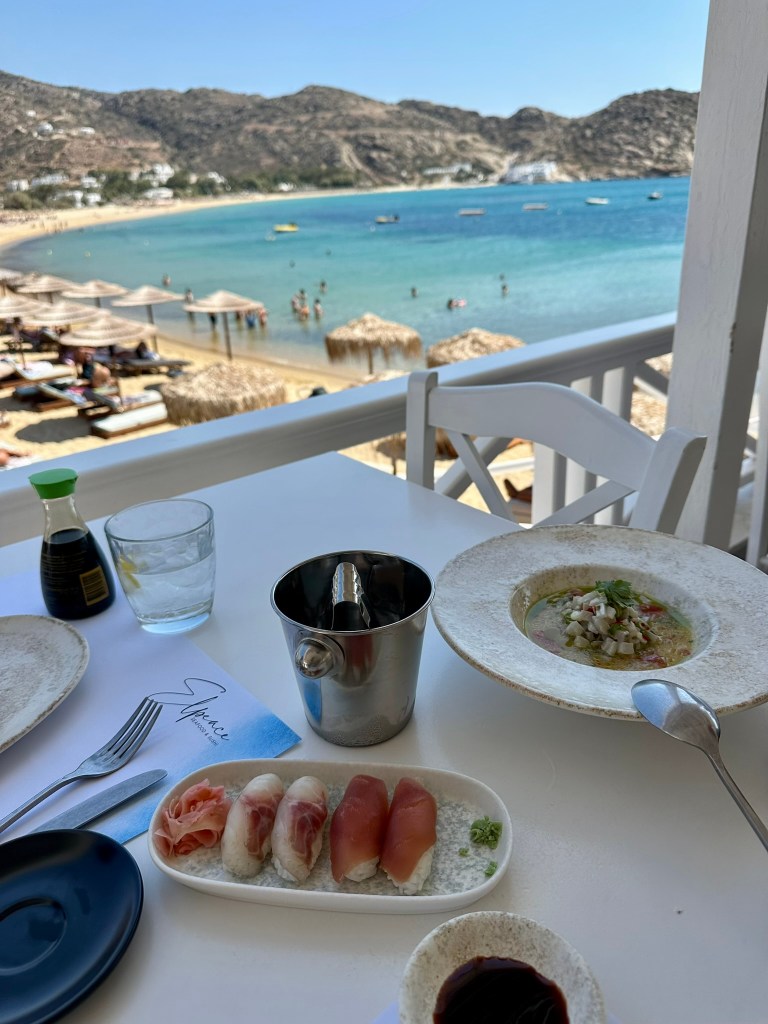
Some pretty good fish at a Greek / Japanese fusion place on said beach.
And, since we were reading The Odysseus on this leg of the trip (it was a slog), we visited the purported tomb of Homer (which does not address the dominant theory that he was, in fact, multiple poets conveying the story through oral histories, but a millenia-old island tradition is a millenia-old island tradition, after all).
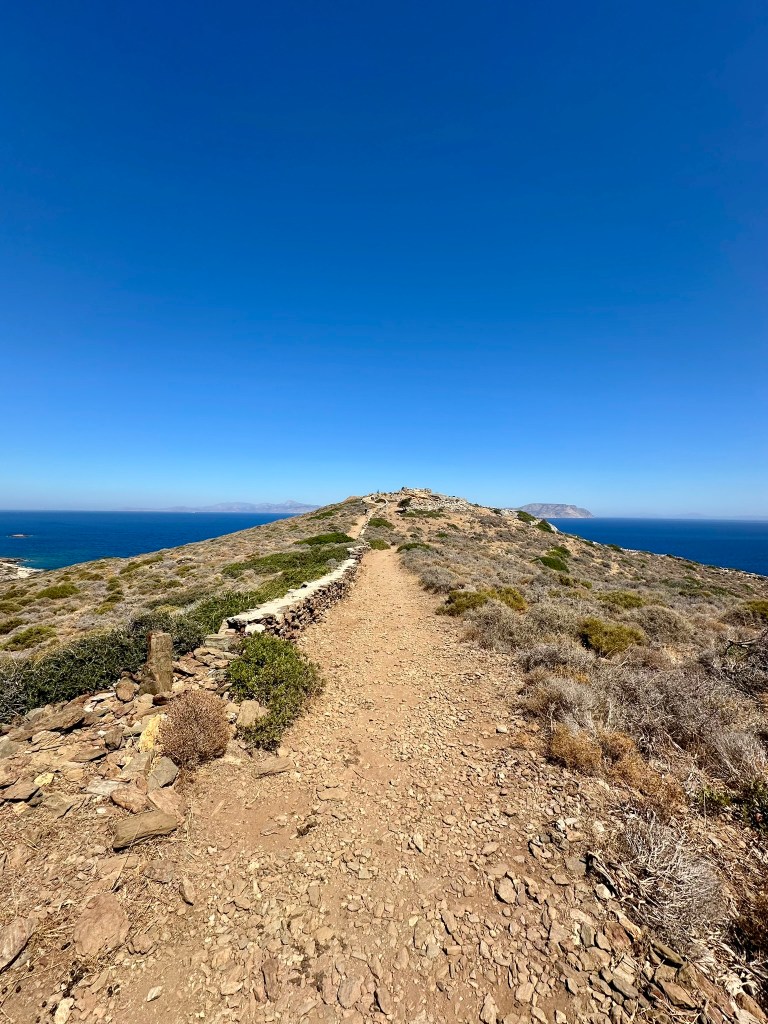
The tomb was an unmarked pile of rocks. Pretty underwhelming.
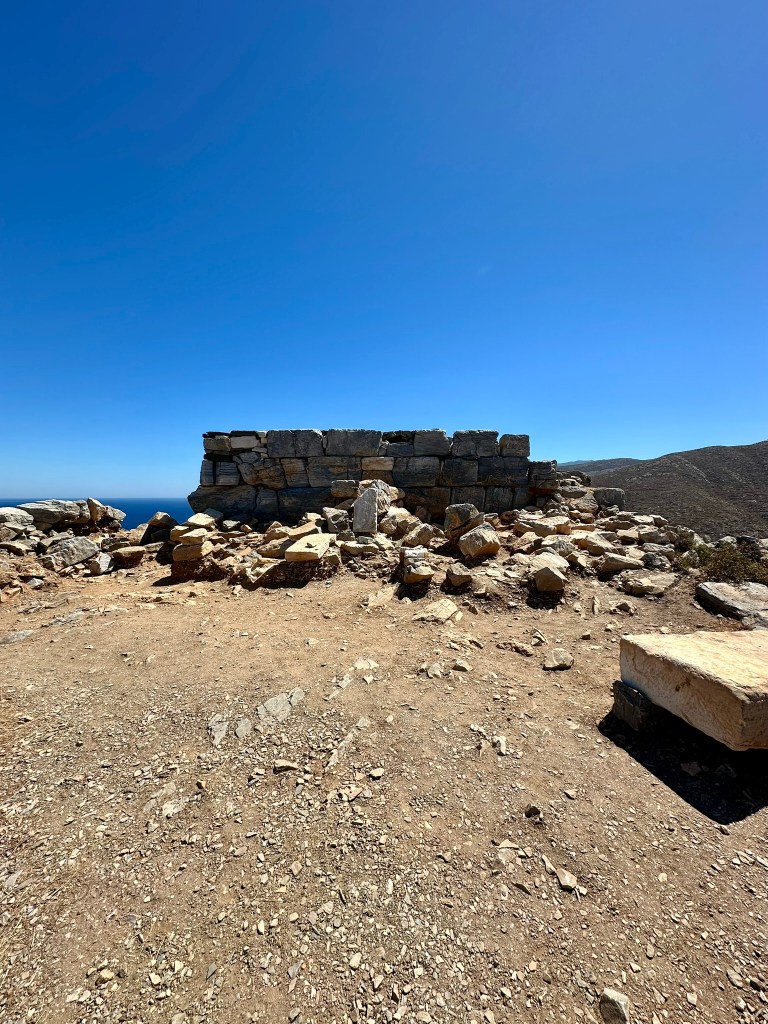
But there’s a pretty good view getting there:

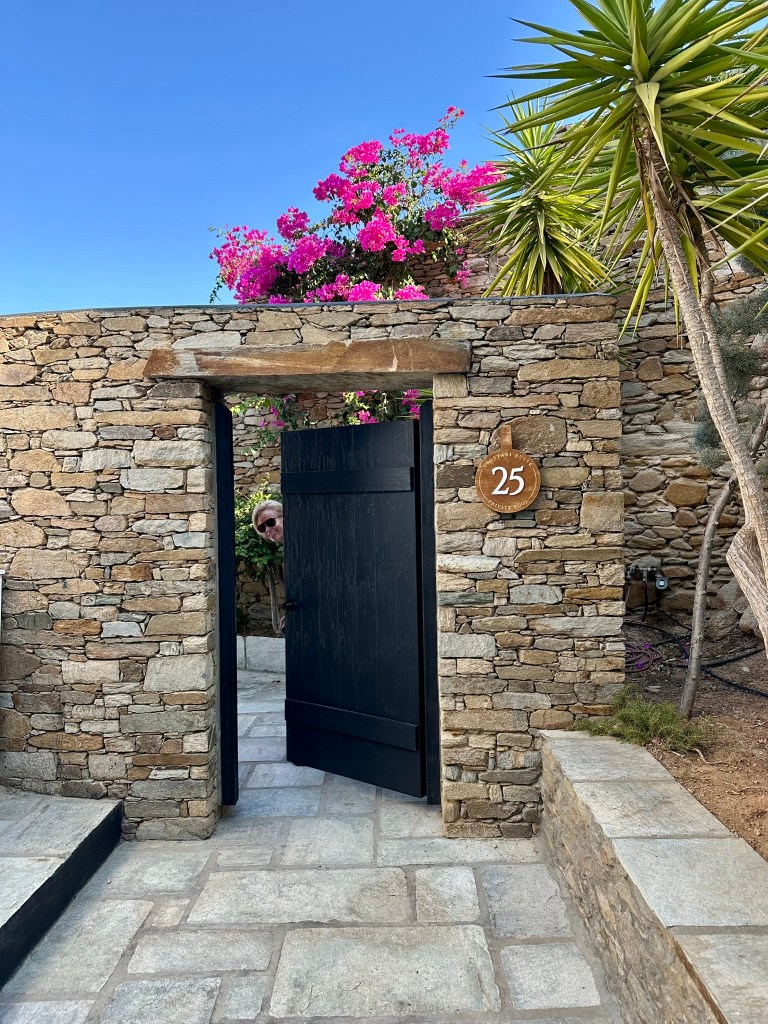
Anniversary abode.
Ios was small, but Folegandros even smaller. It’s main town (also Chora – Folegandros is so small it can’t afford to buy a unique name for its main town; it had to borrow Ios’) is dominated by the Church of Panagia, accessed by a serpentine path up a mountain:
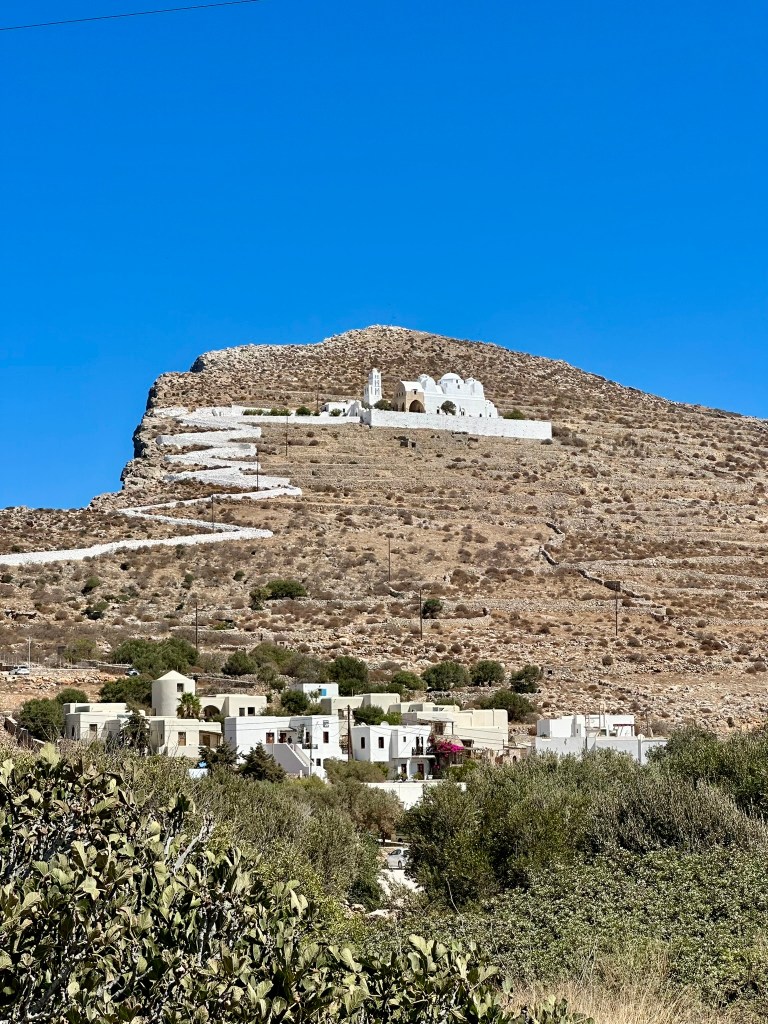
From which there is ALSO a pretty good view:

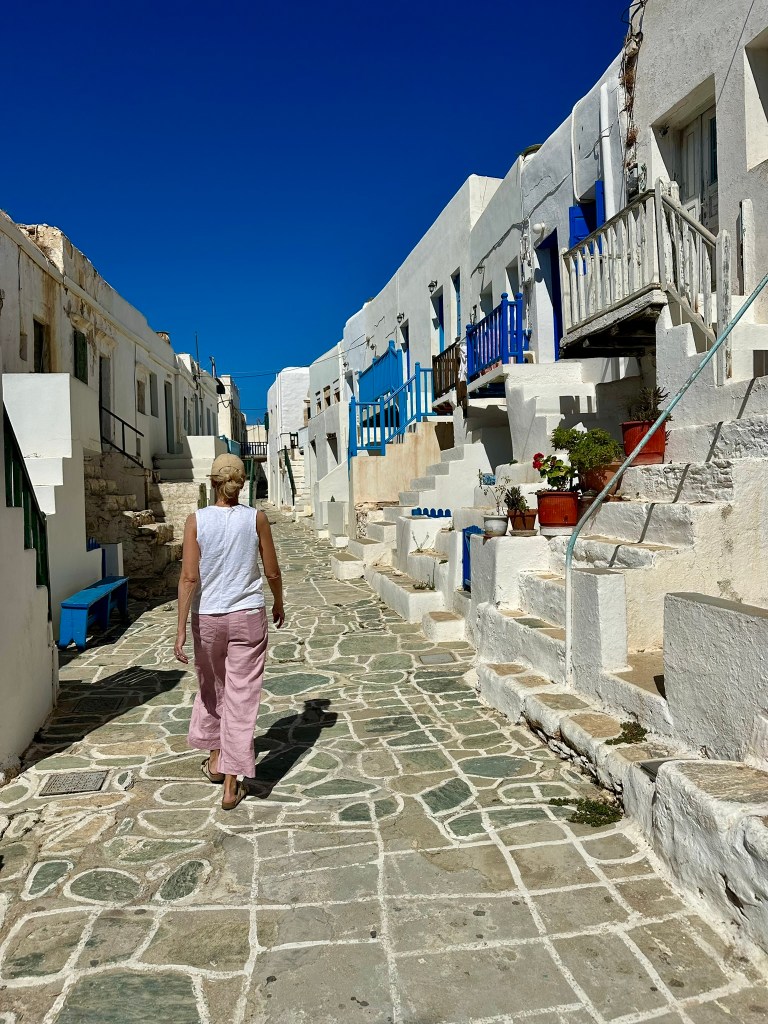
Chora’s Kastro, a remarkably preserved medieval fortified quarter built under Venetian rule to shelter Folegandros from pirates. Many of the town’s residents still live within its walls.
Folegandros had a sort of saddle across the middle of the island, where you could see both sides, so we hiked this one day. Pretty cool.
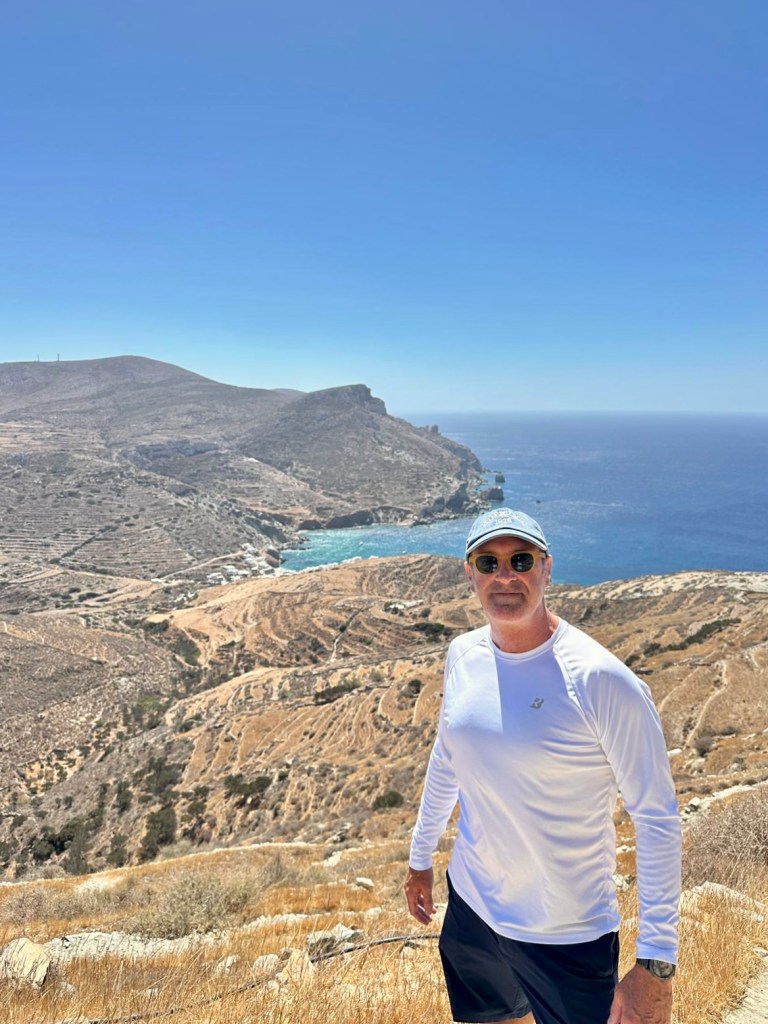
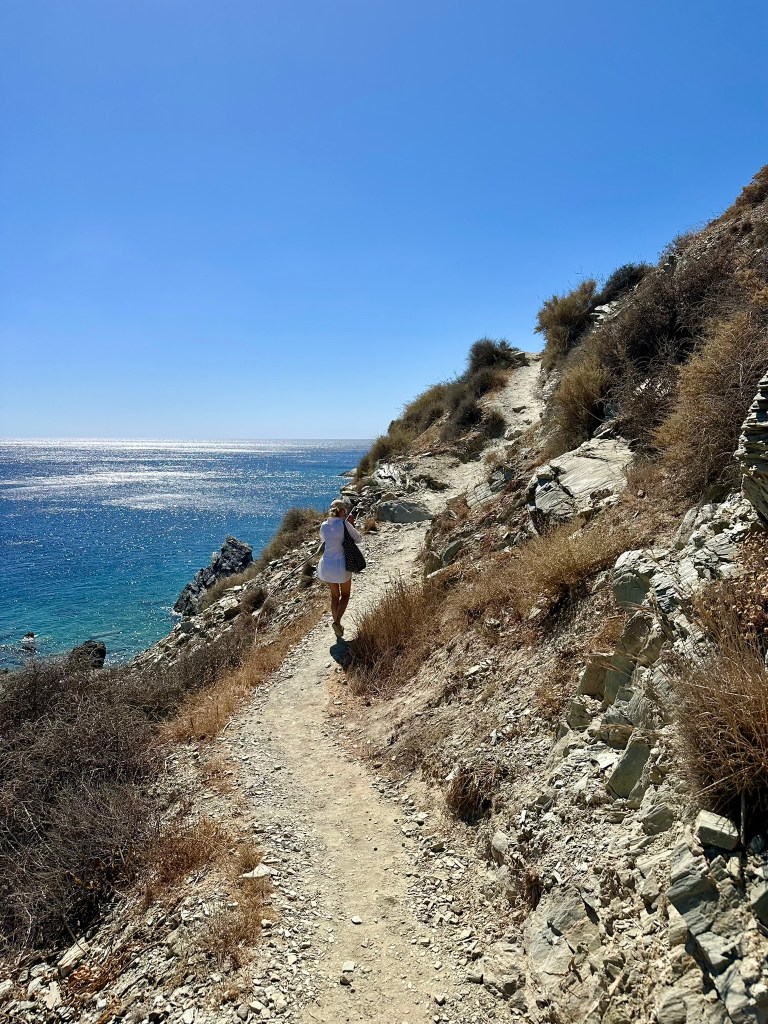
And also hiked to Agios Nikolaus beach from the larger Agkali beach one day; the island’s mayor wants to discourage tourism build up, and so prohibits organized beach businesses (read: sunbeds and drink orders), so everything’s pretty rustic.
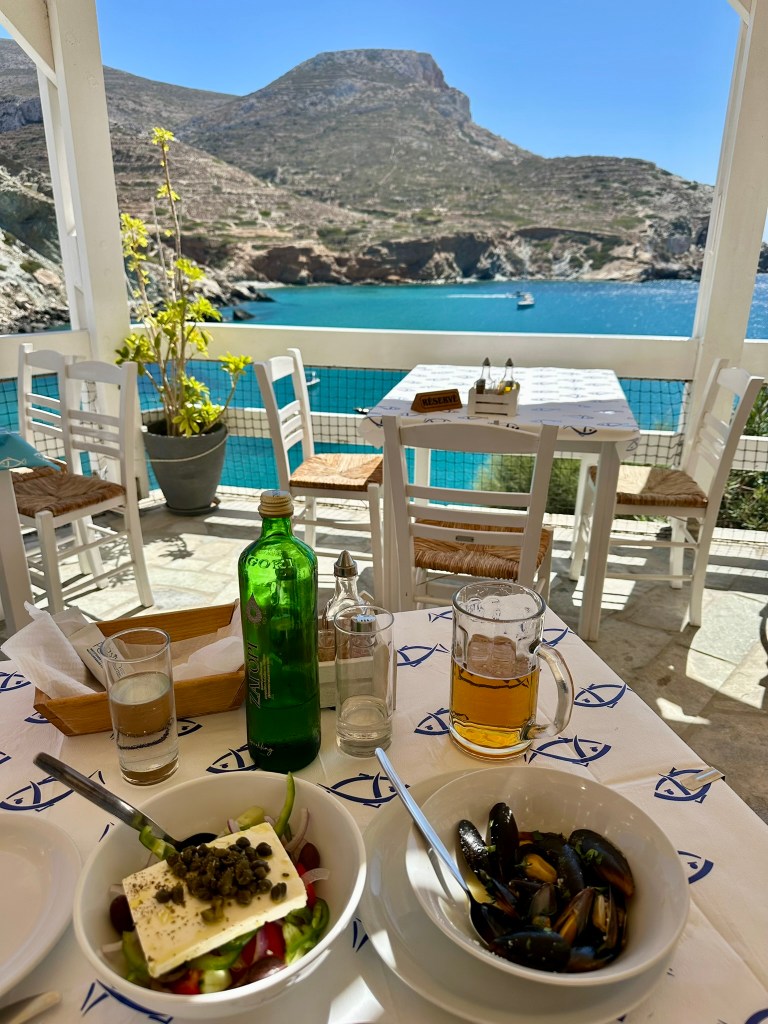
Although lunch in Akgali over that beach was pretty picture perfect.
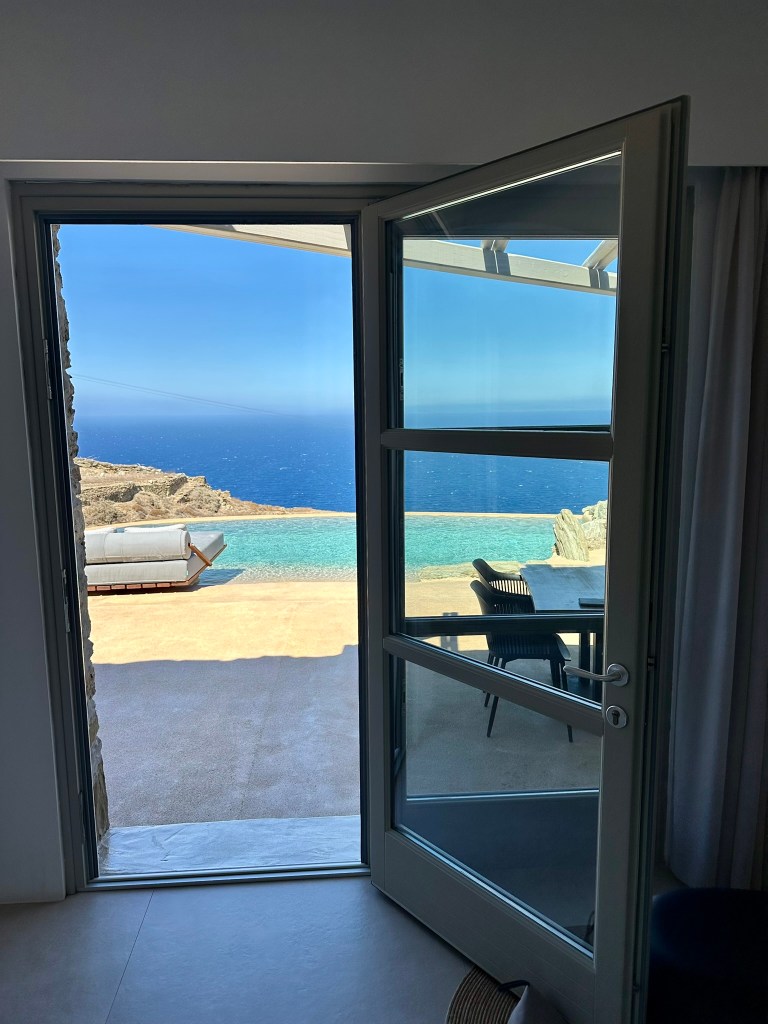
Also pretty good digs on Folegandros:
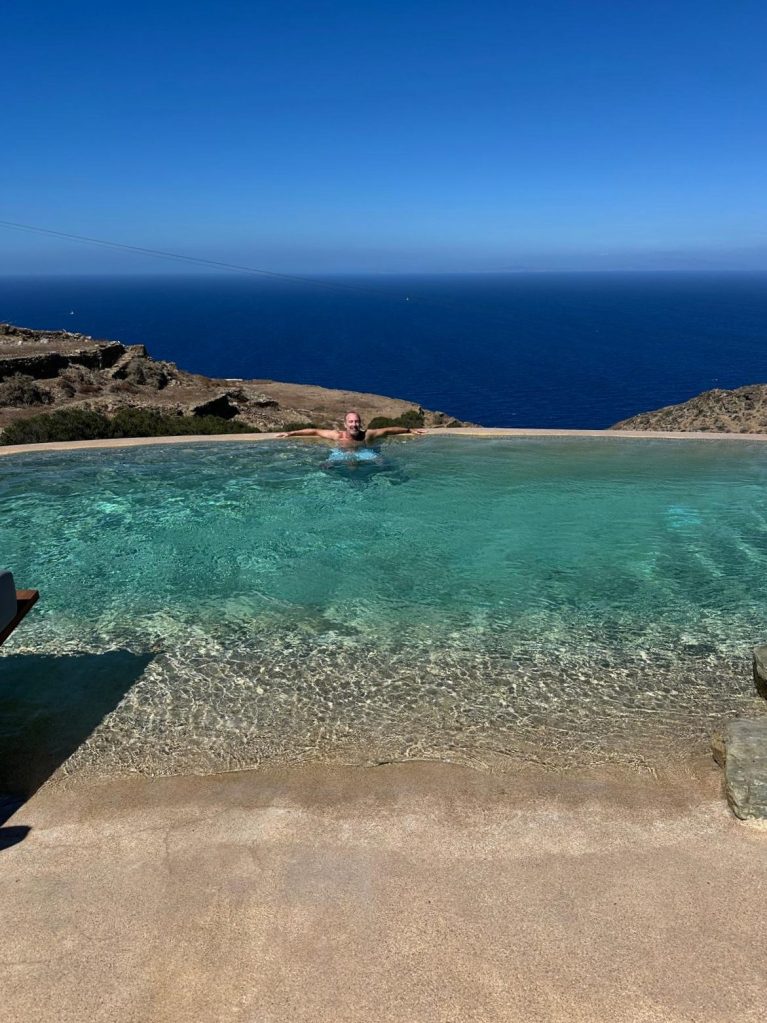
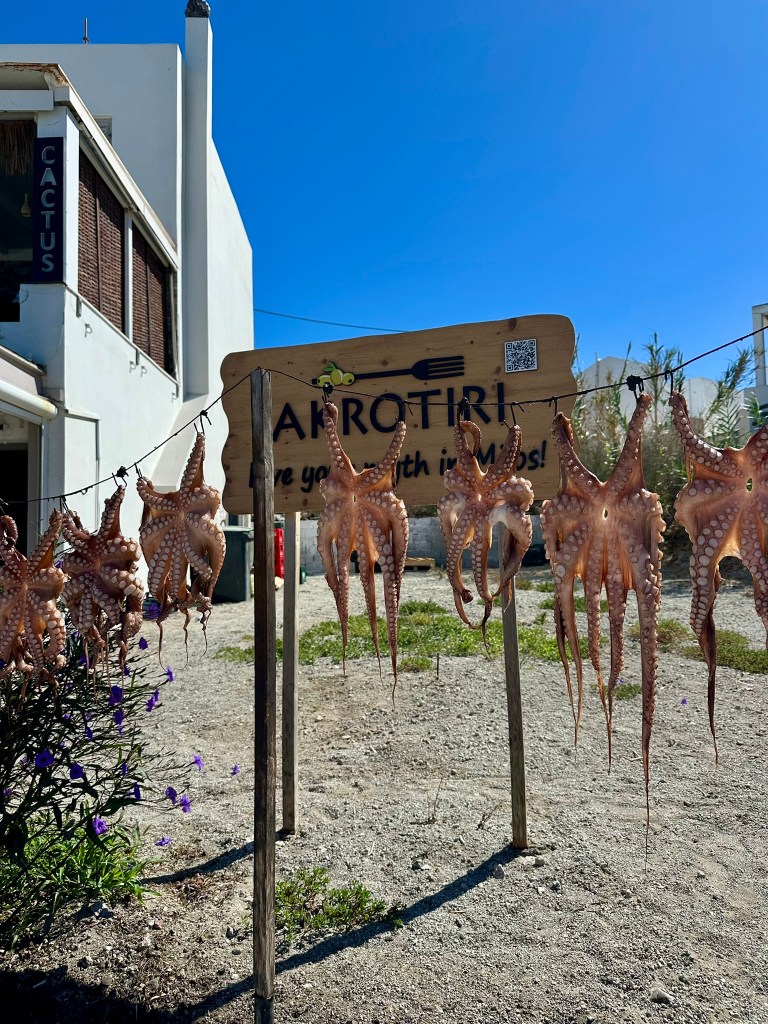
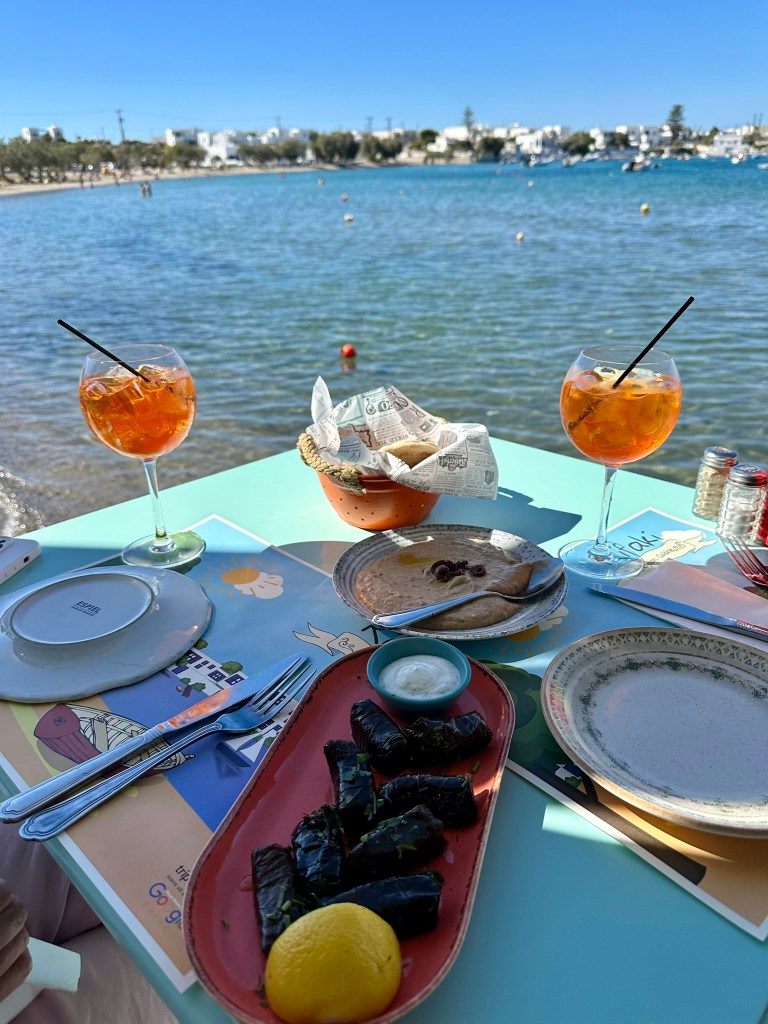
Thence to our final island of Milos, where we stayed in the harbor town of Pollonia (which was composed almost entirely of restaurants that formed an arc around most of the harbor.
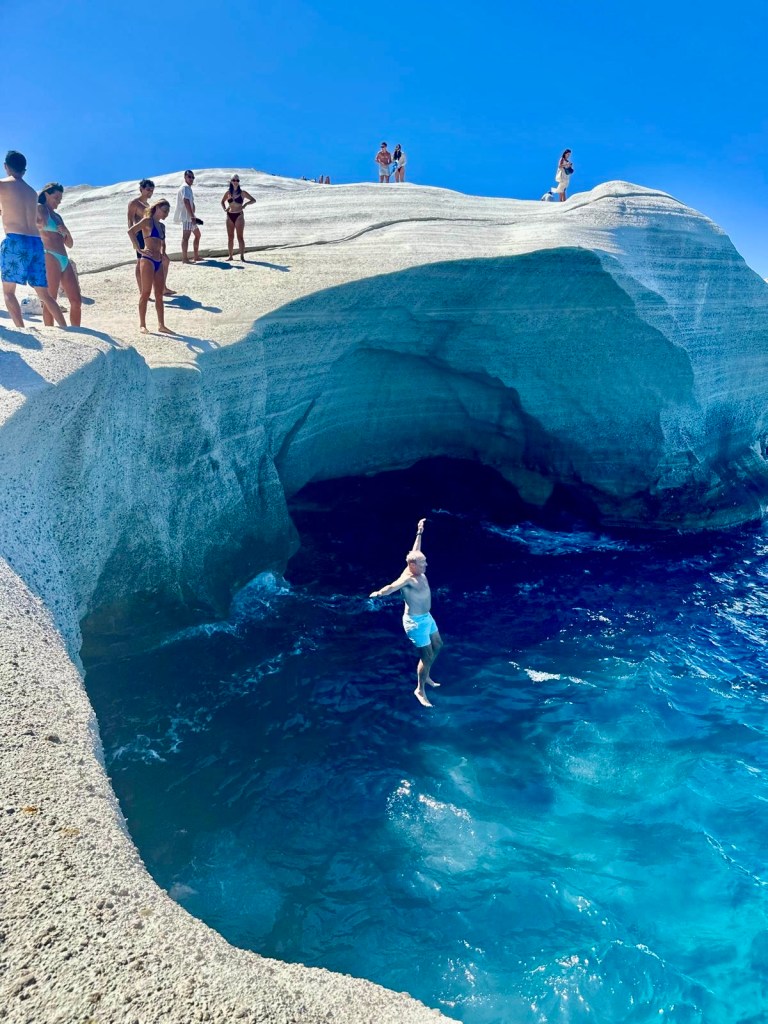
Our first full day, we hightailed it over to Sarakiniko Beach, home to the limestone cliffs and rocks that create a dramatic shoreline against the Aegean blue.
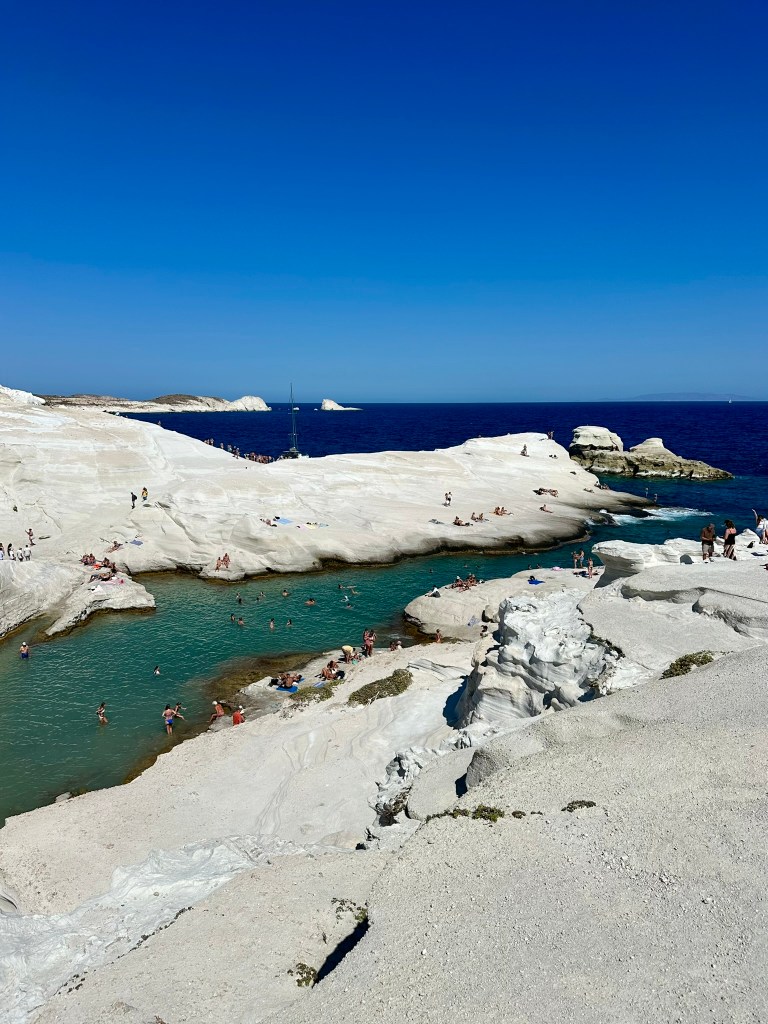
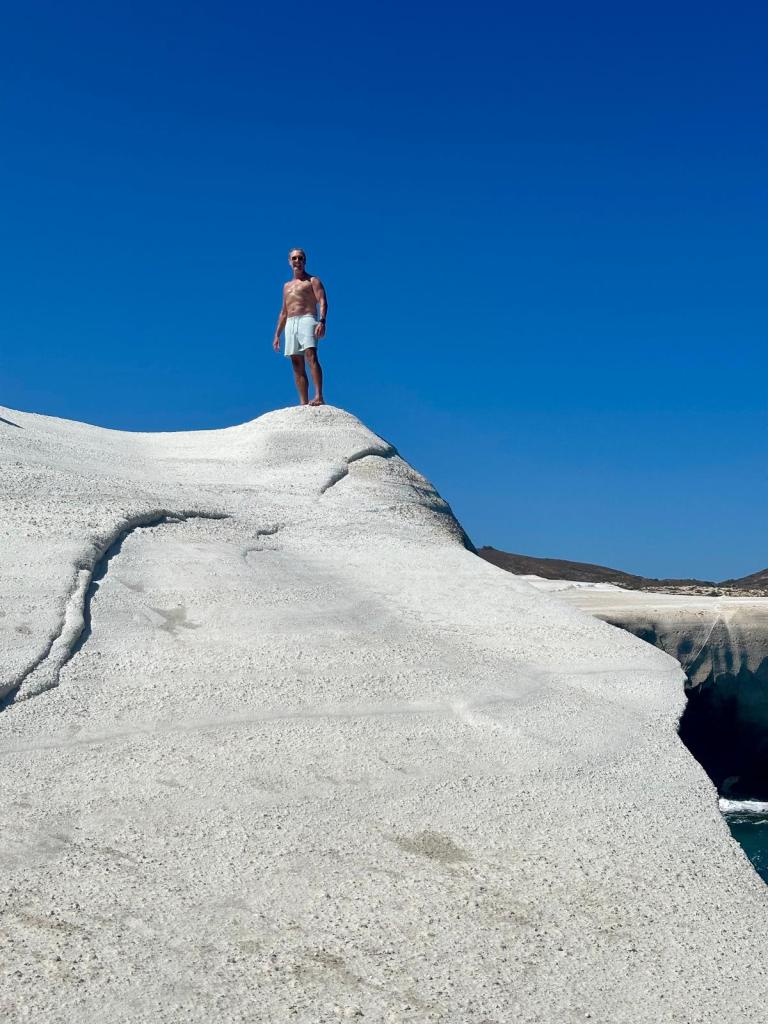
Cliff diving turned out to be pretty good there.
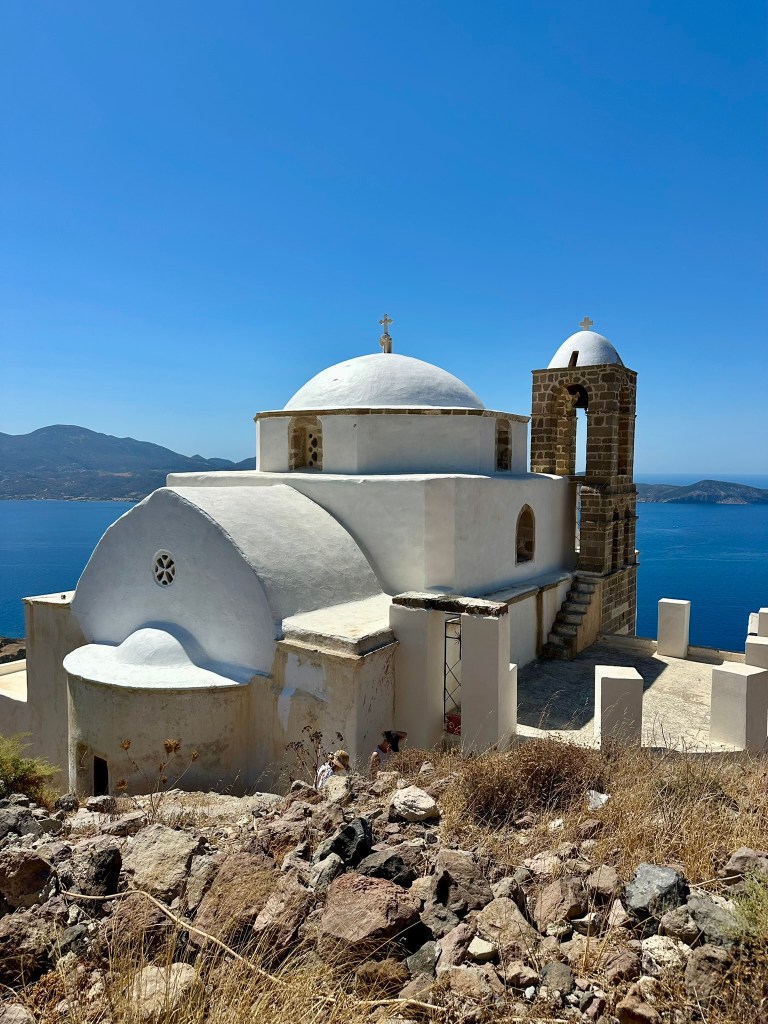
We hiked up to the castra on top of Milos’ main town of Plaka.
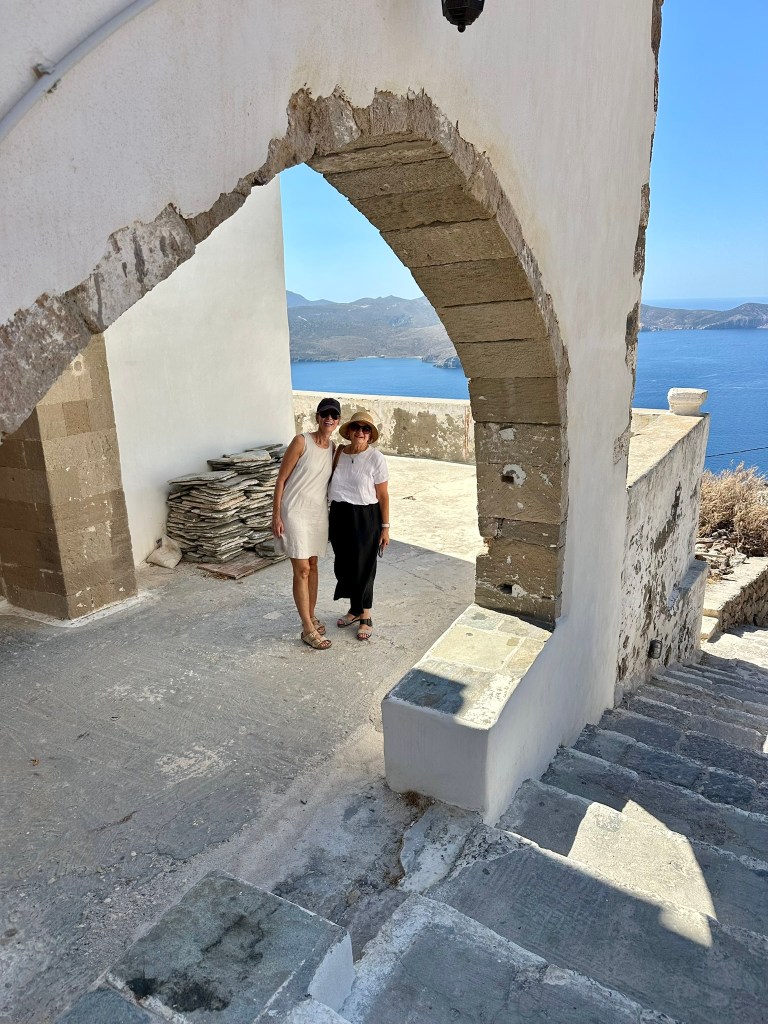
Where we met Cena, a charming solo traveler from North Macedonia (by way of Toronto), waiting at the bottom of the steps for someone to accompany her. Very nice experience!
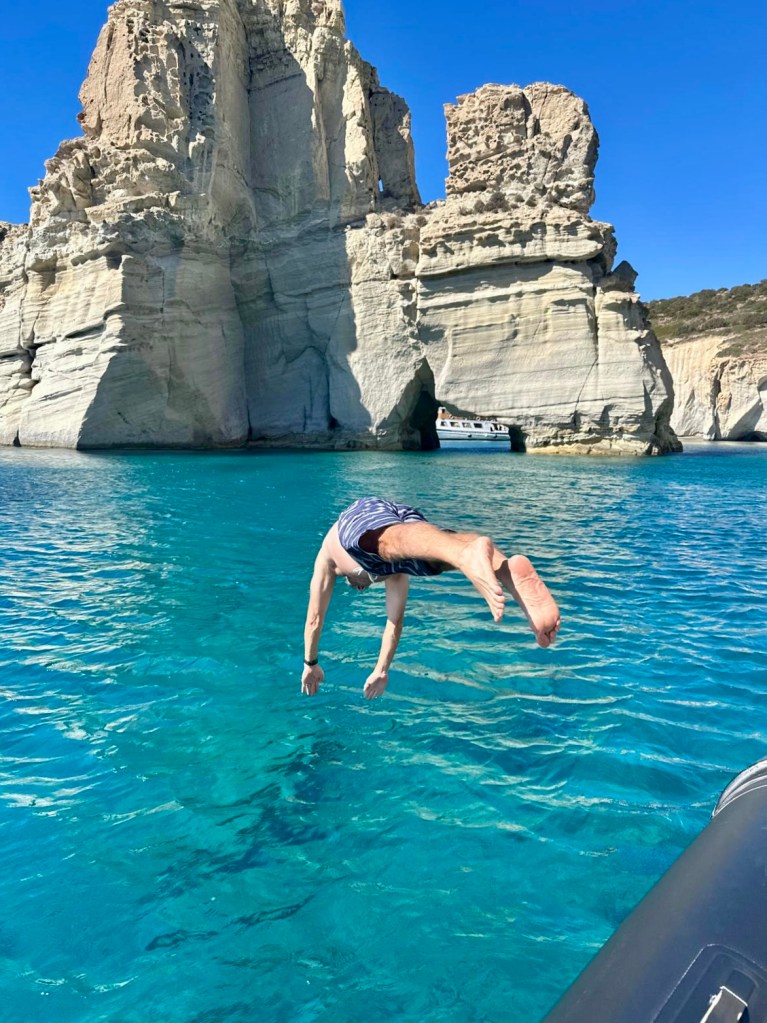
Cool ass boat trip the next day to Milos’ Kleftiko cliffs.
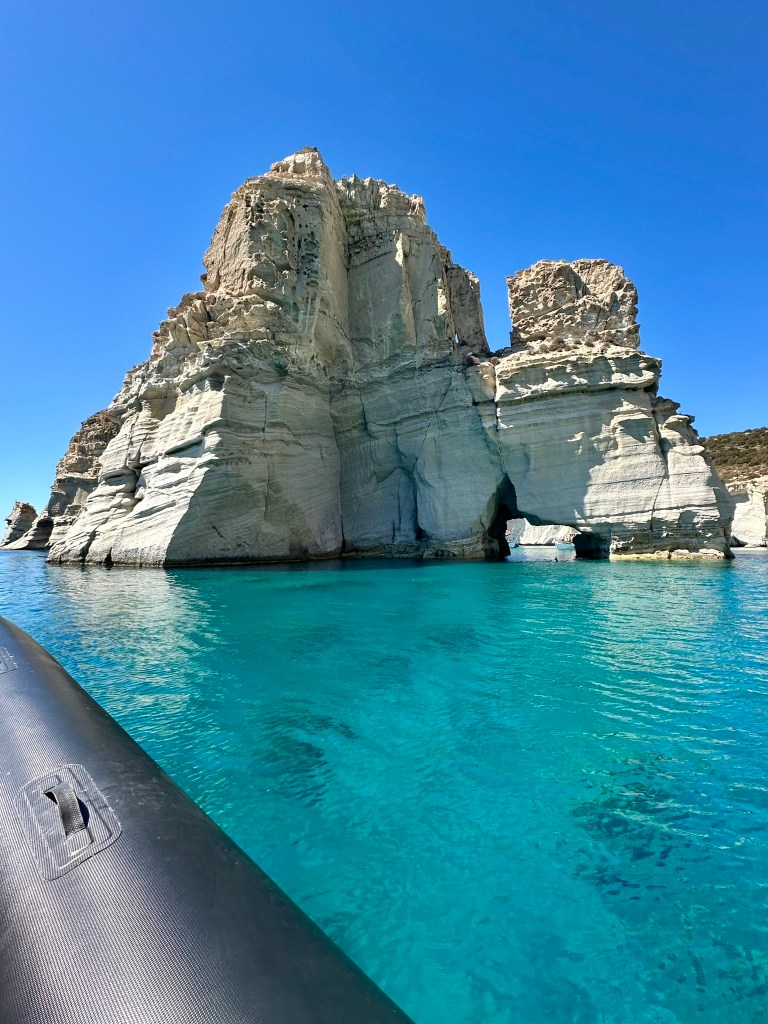
Where more diving and swimming ensued.
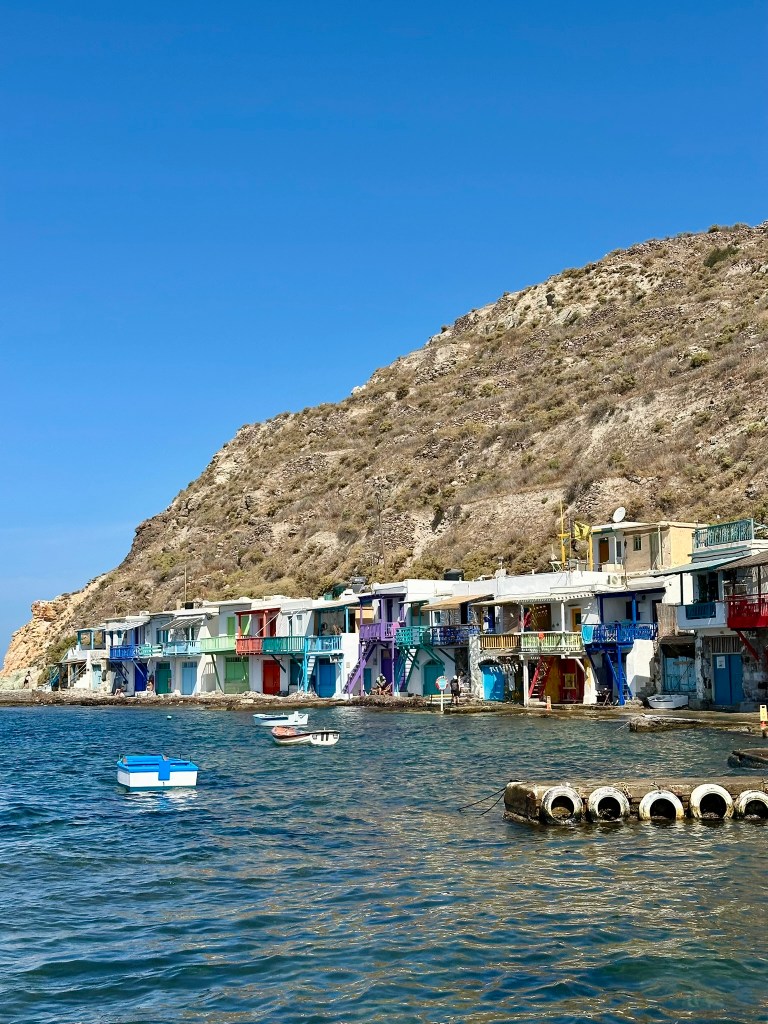
The picturesque fishing villages-cum-guest house community of Klima.
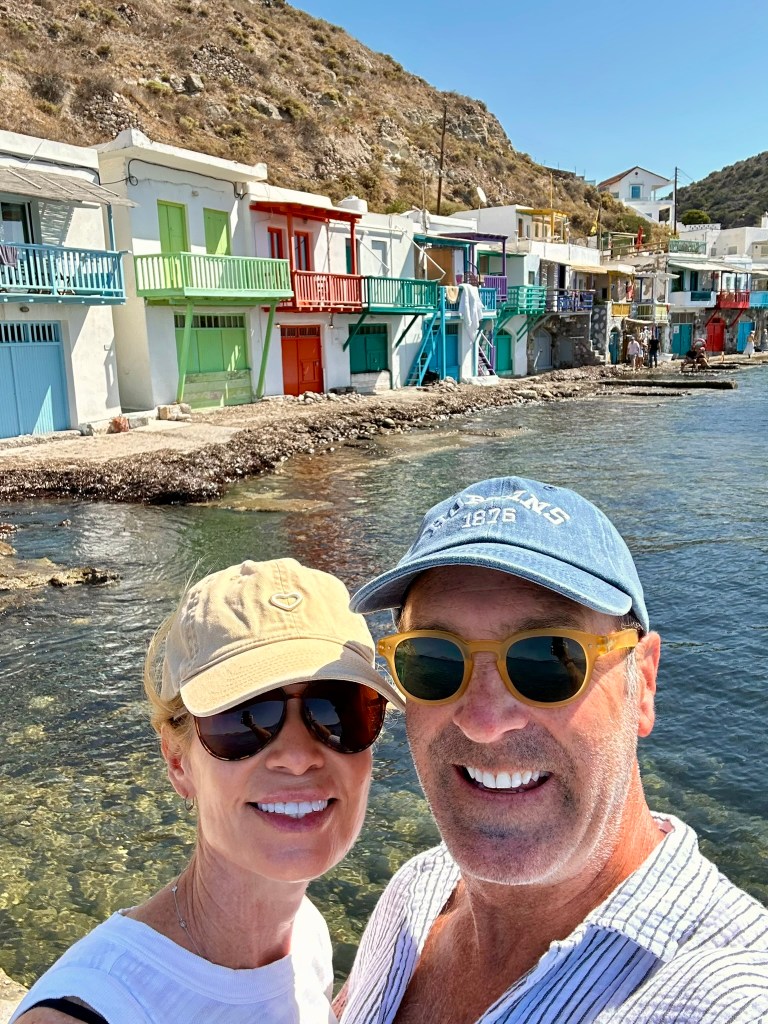
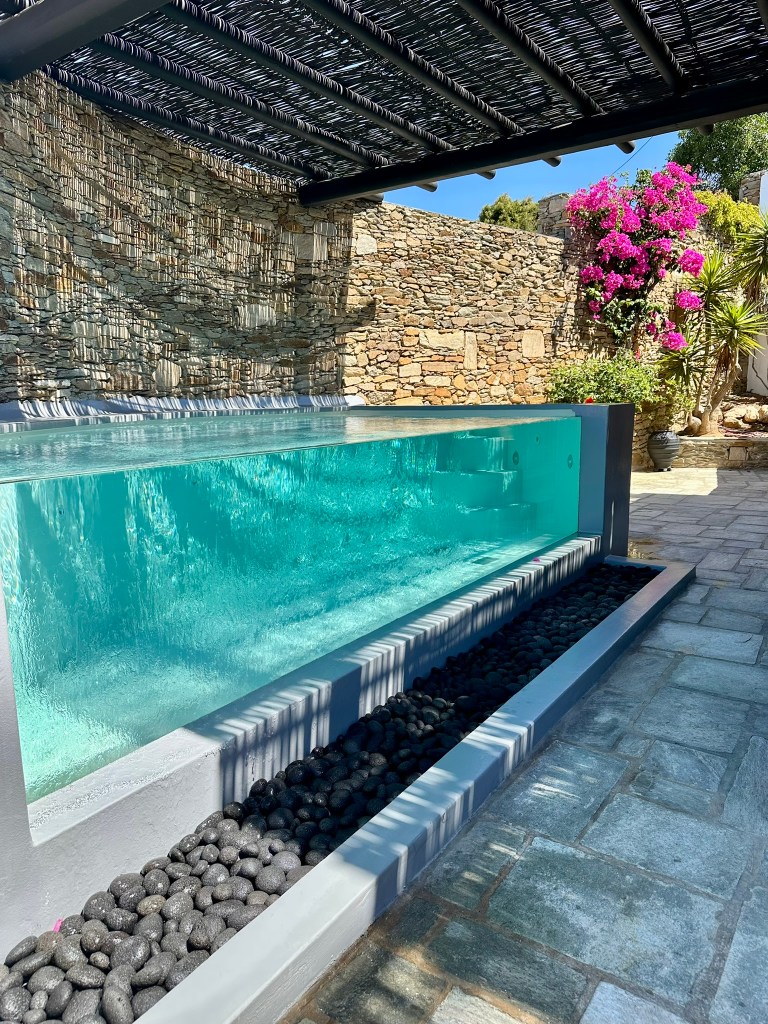
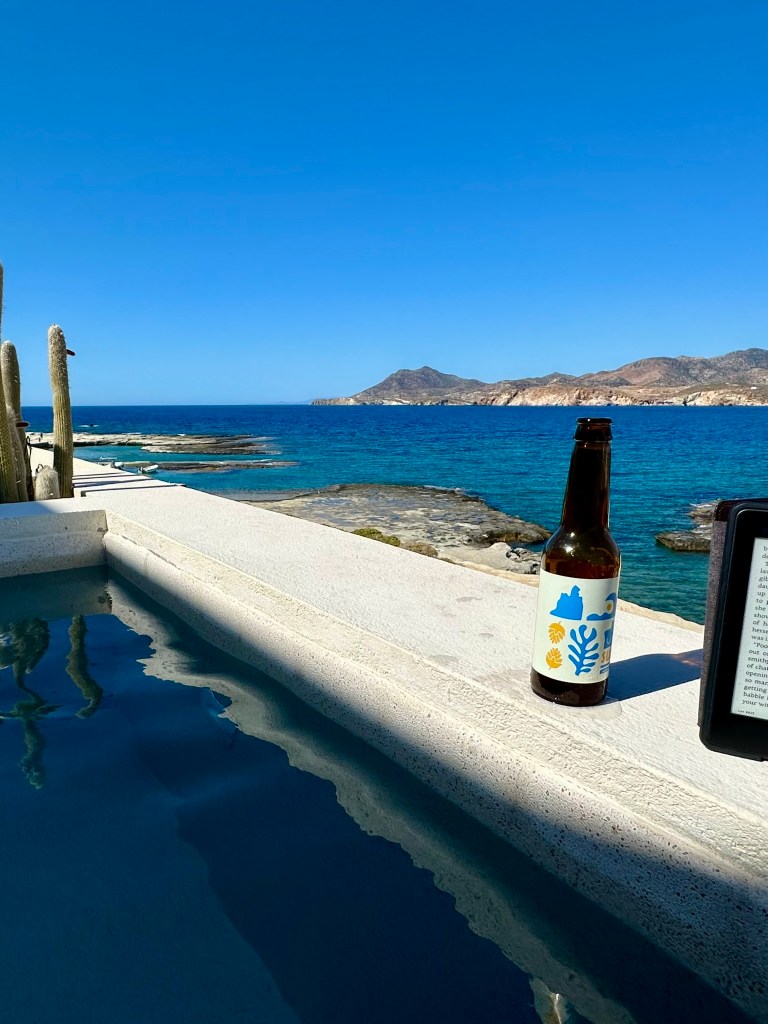
More good digs in Pollonia, where we laid low on our final day, and dove and swam off the rocks into the deep water right outside our place; pretty good setup.
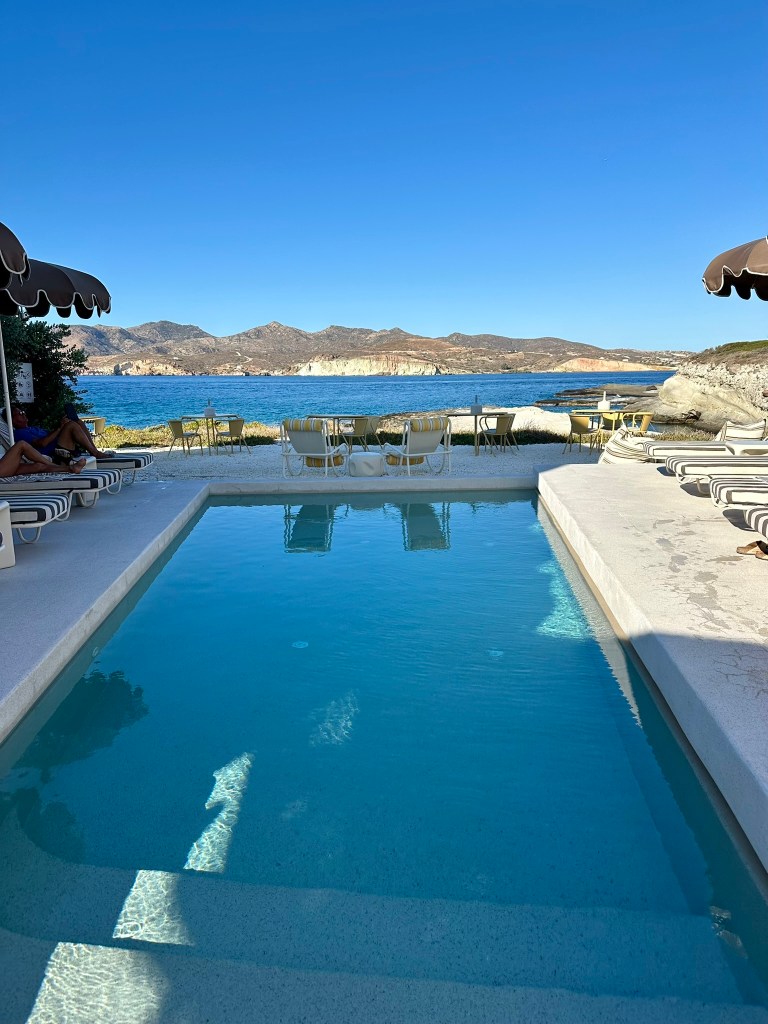
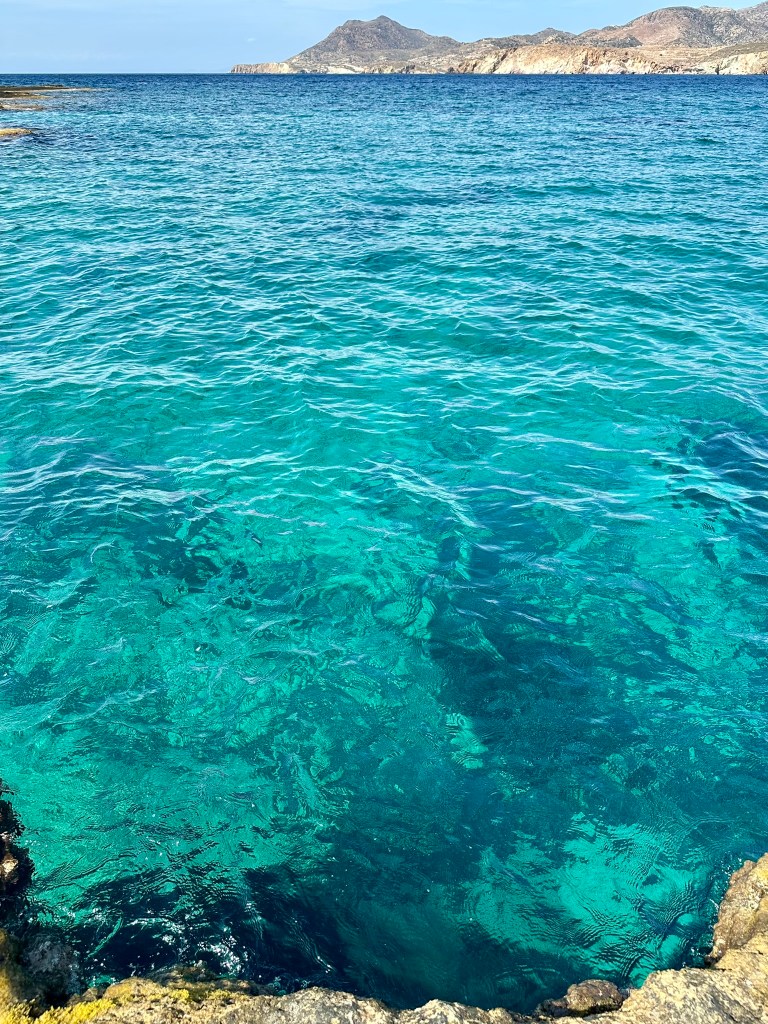
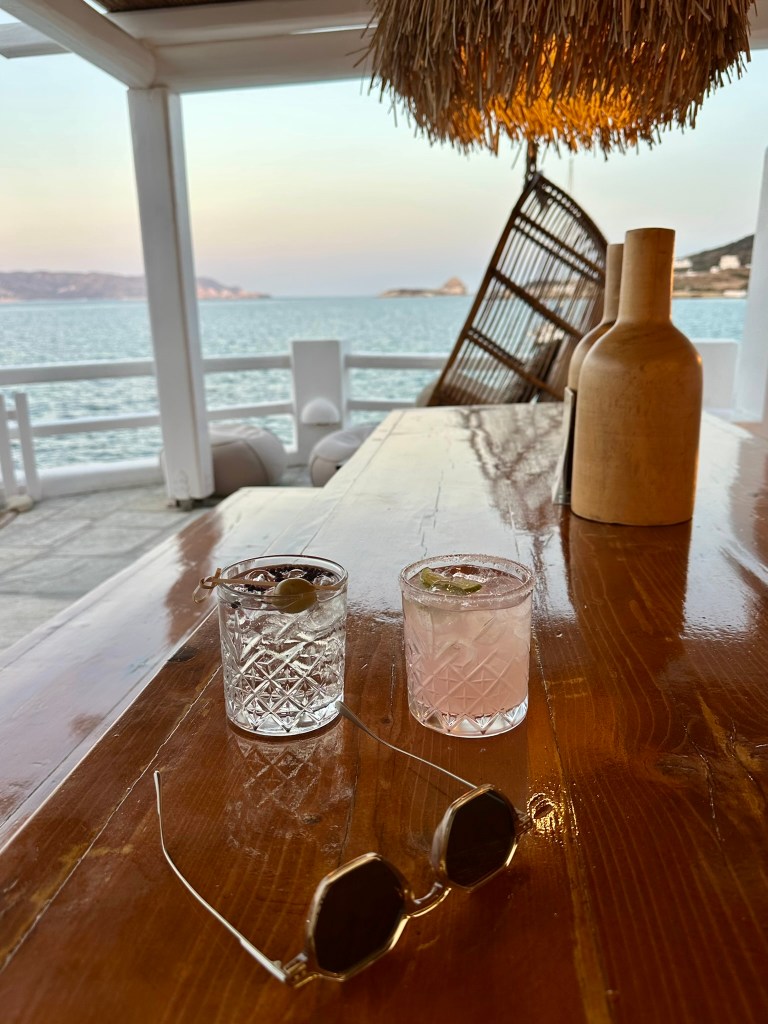
Last evening on Milos.
And then linking up with the Seattles, who were just starting their Greek sailing trip with a leg in northern Greece to visit the clifftop monasteries of Meteora. This was not part of our original itinerary, but we realized that we’d have an overlap, and coordinated to overlap together.
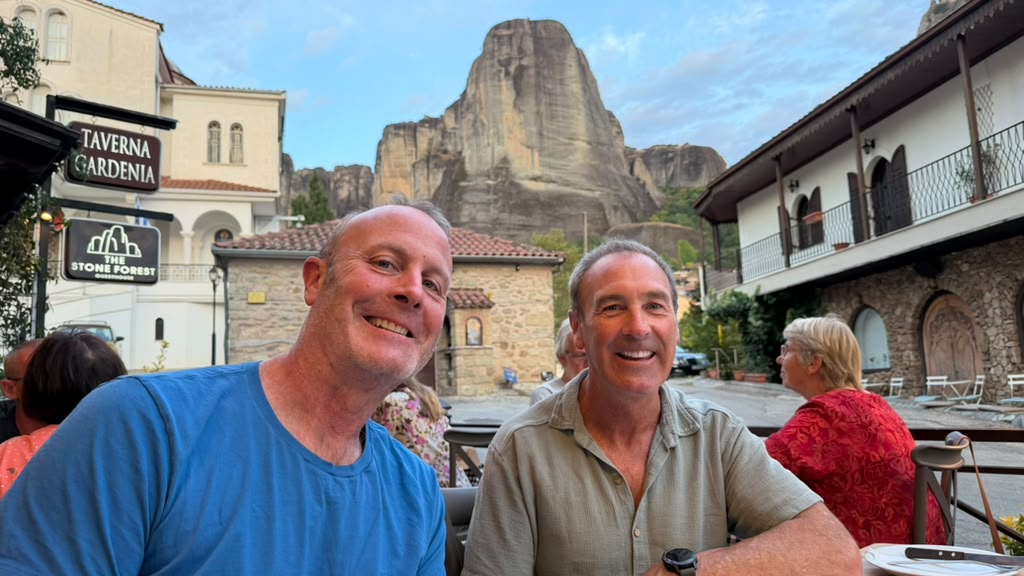
A pretty great addition to the trip. We had not even heard of Meteora before, so the Seattles were adding value all over the place.
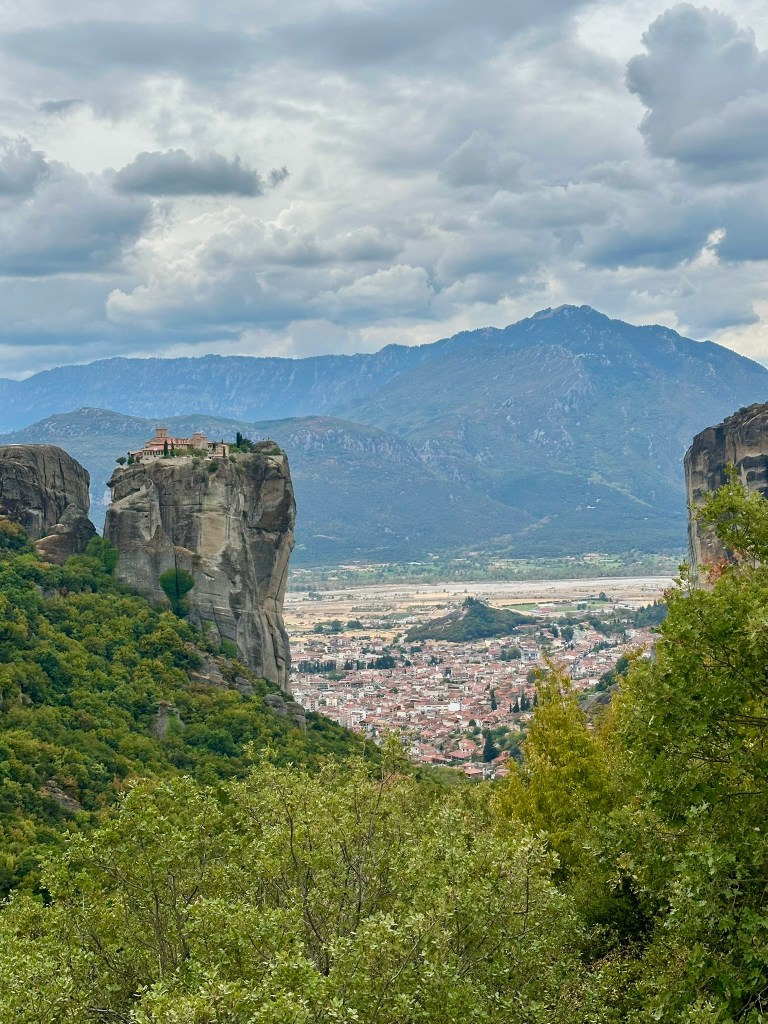
The monasteries began in the 14th century when Orthodox monks seeking solitude and protection from political turmoil established hermitages atop the region’s towering sandstone pillars.
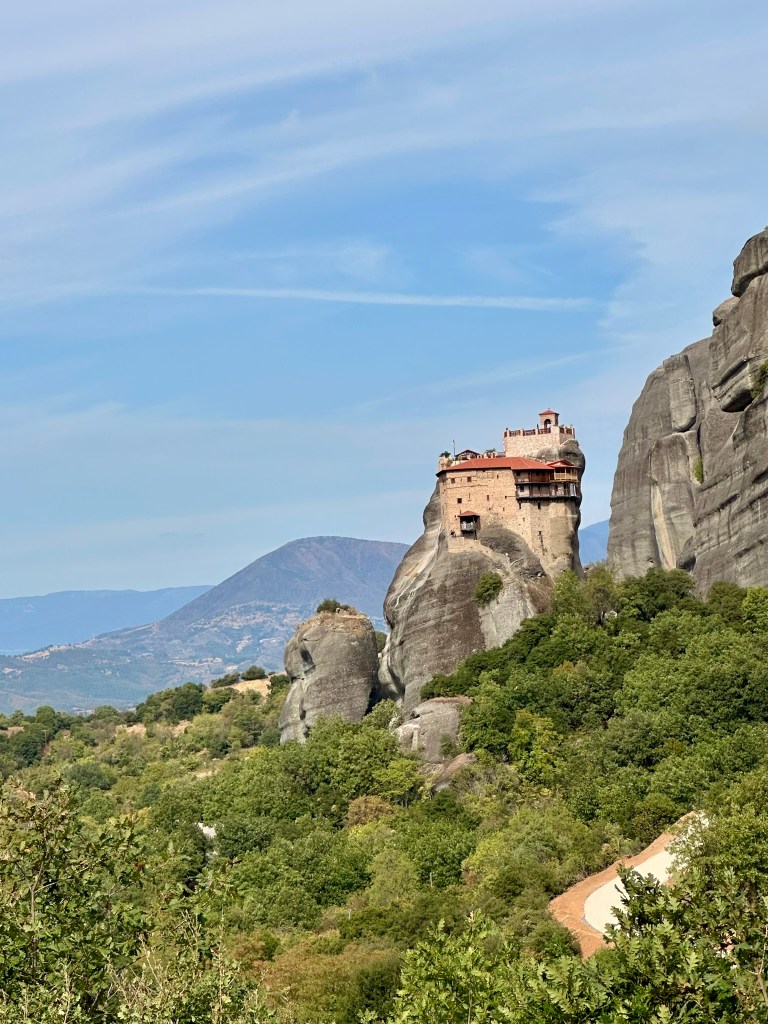
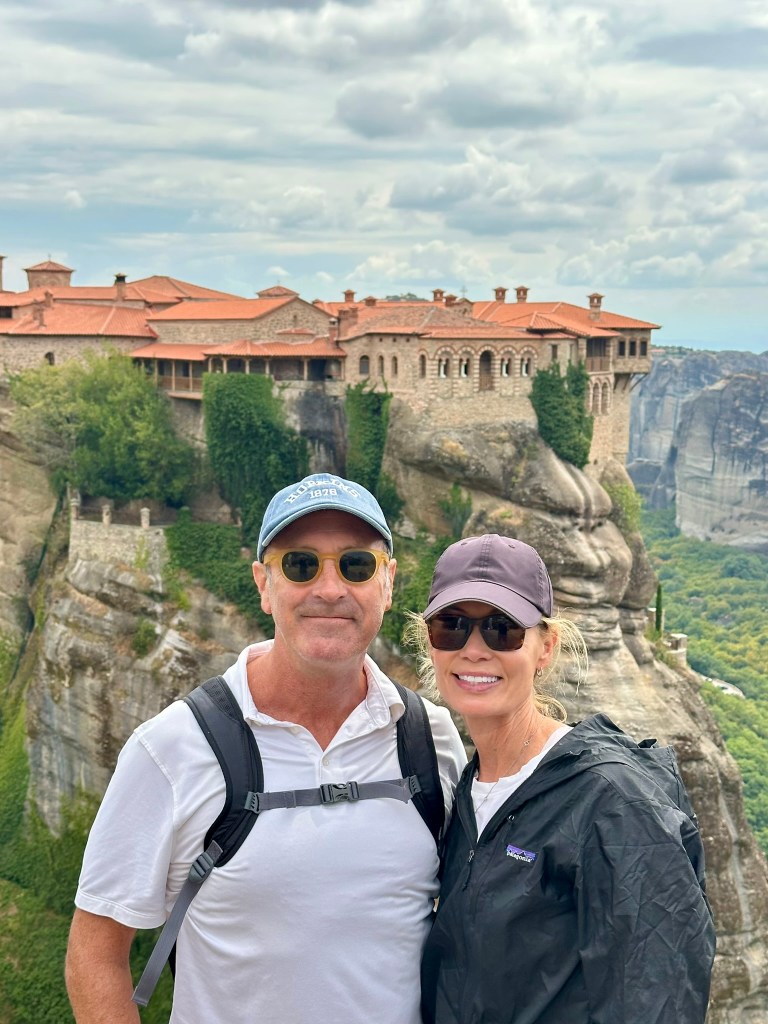
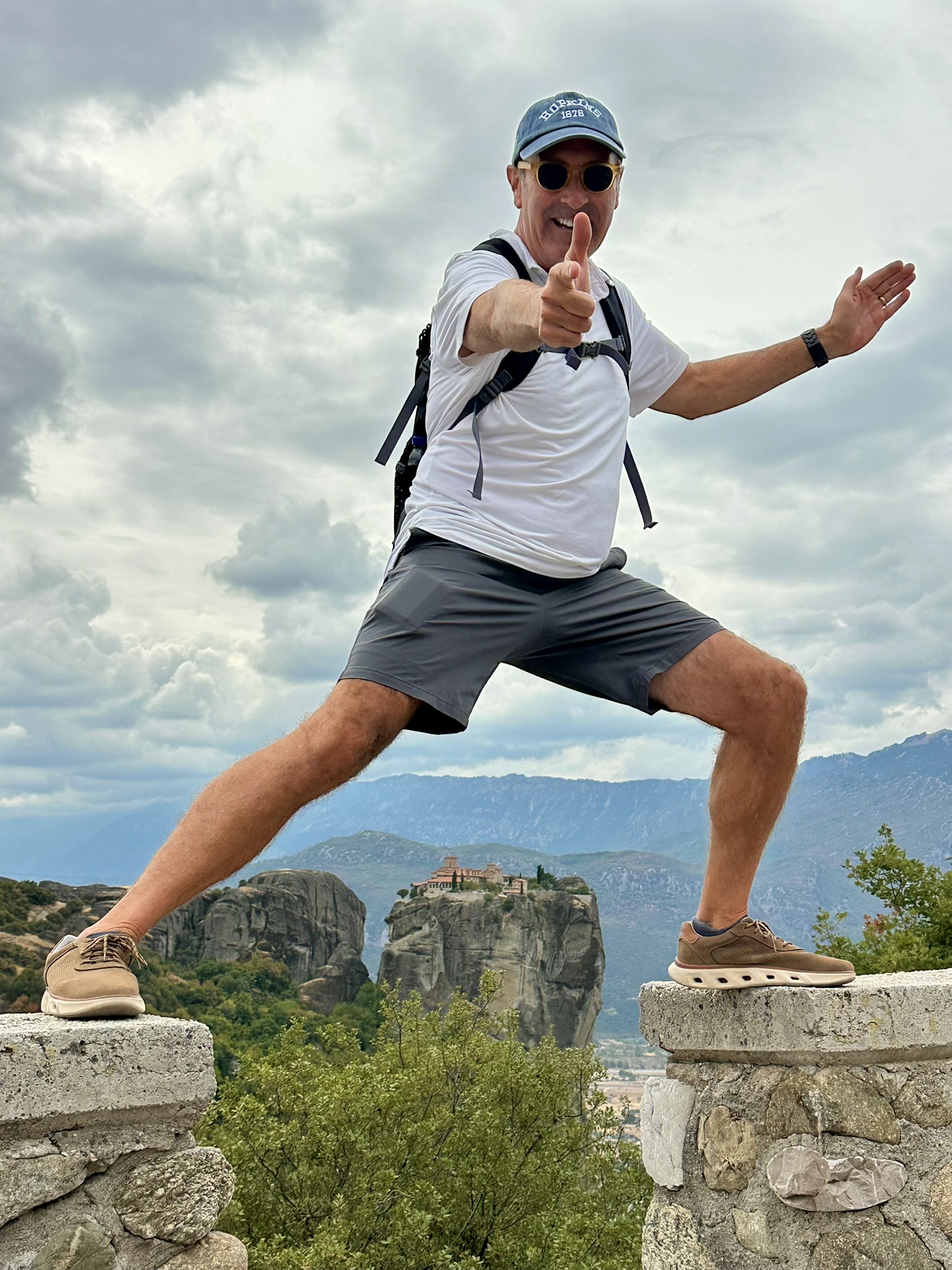
We took a bike tour that lasted the entire first full day in the area, and were able to visit four monasteries.
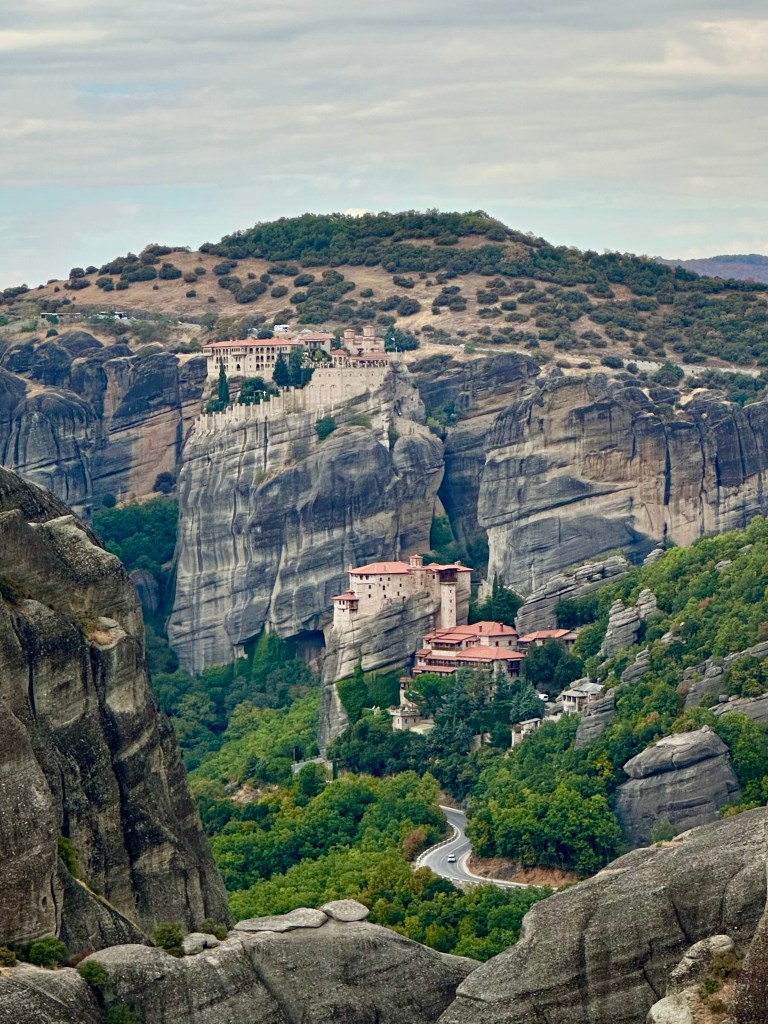
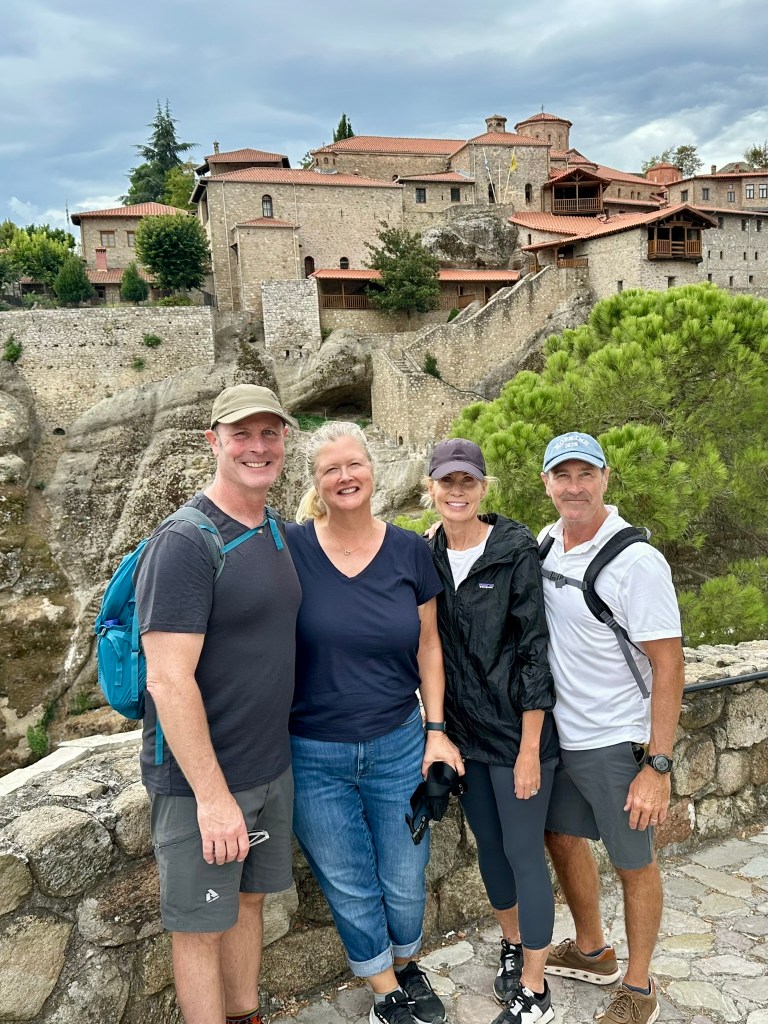
Although we had not heard of Meteora before, we were familiar with one of the monastery’s roles in James Bond’s For Your Eyes Only. . .

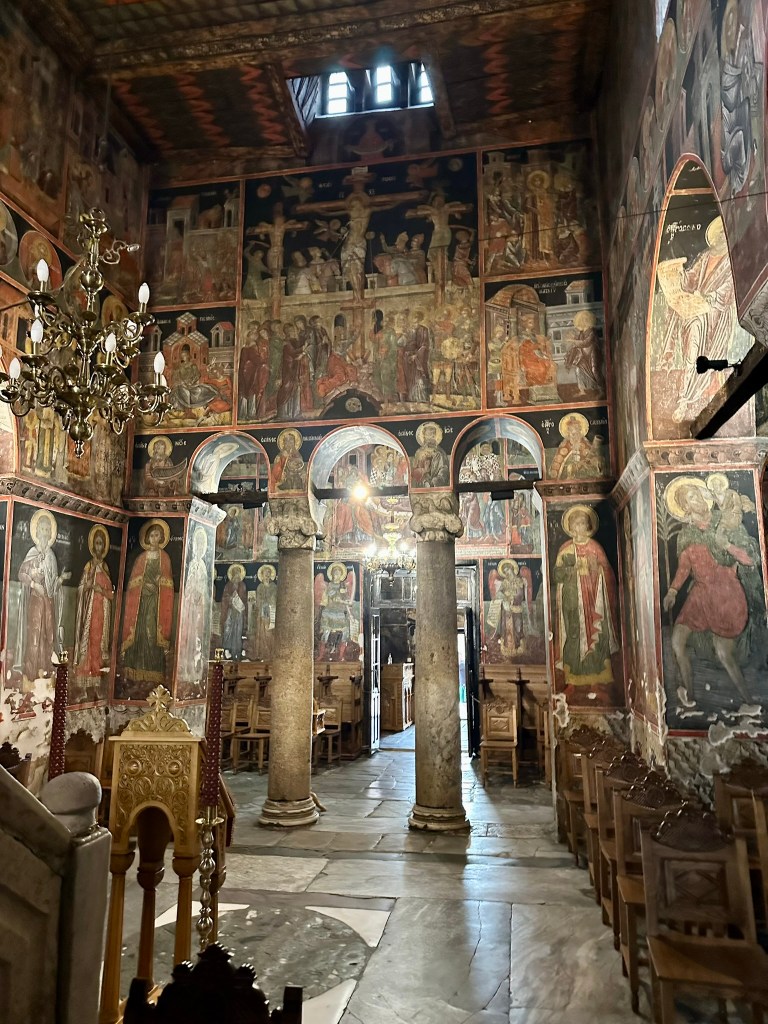
The interior of an ancient Greek Orthodox church atop the nearby town of Kalabata, which was built (as so many were) atop a Roman temple to Apollo, and incorporates (as so many did) physical elements of the temple into the Christian church.
Wine tasting the next day 90 minutes north at the Monastery of Agios Nikolaos, where the monks have been making wine for centuries.
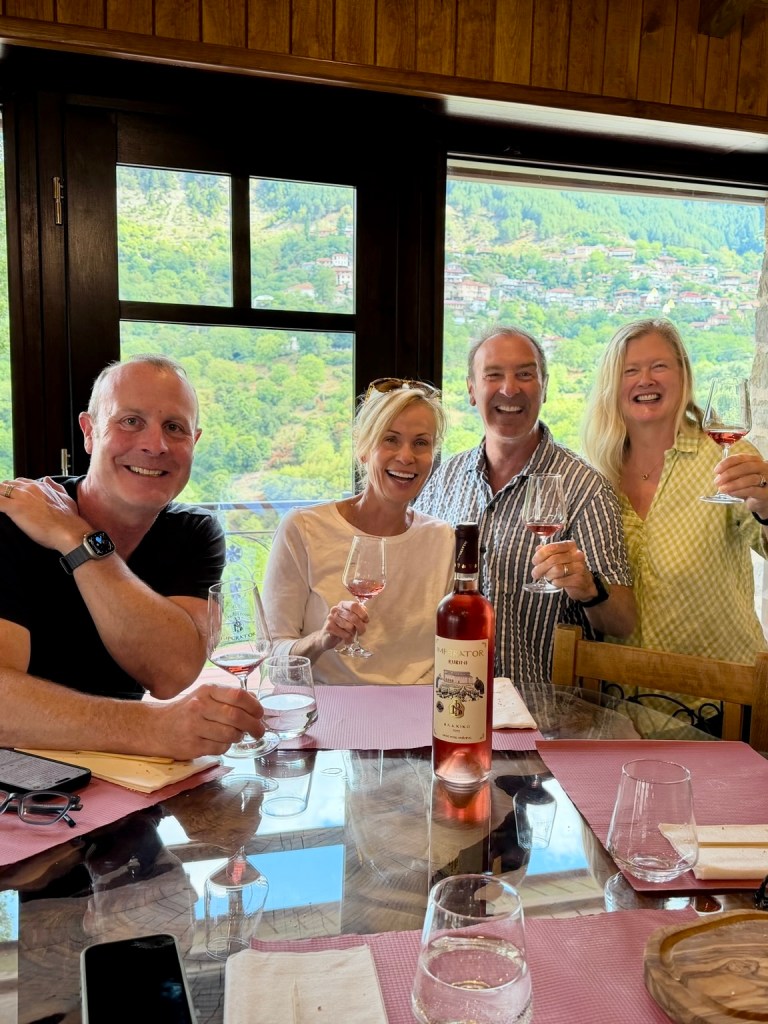
After 3 days, the Seattles continued on to Paros and the start of their sailing excursion, while the Old Towns spent an evening in Athens, and checked out the Acropolis museum there. It did not disappoint.
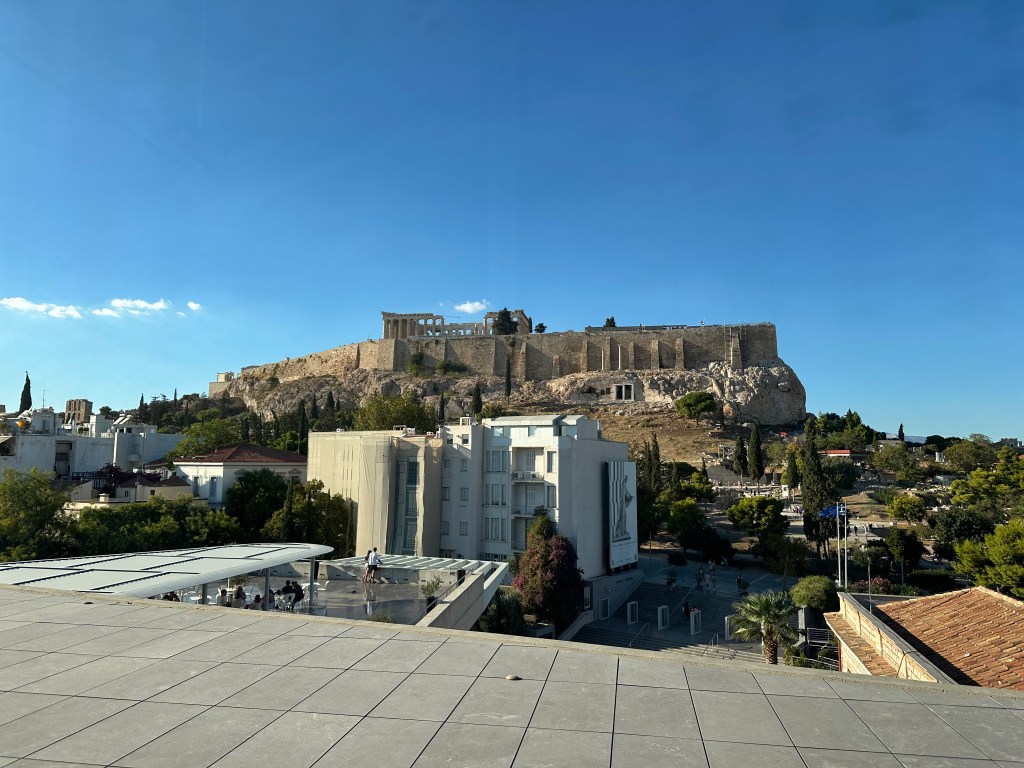
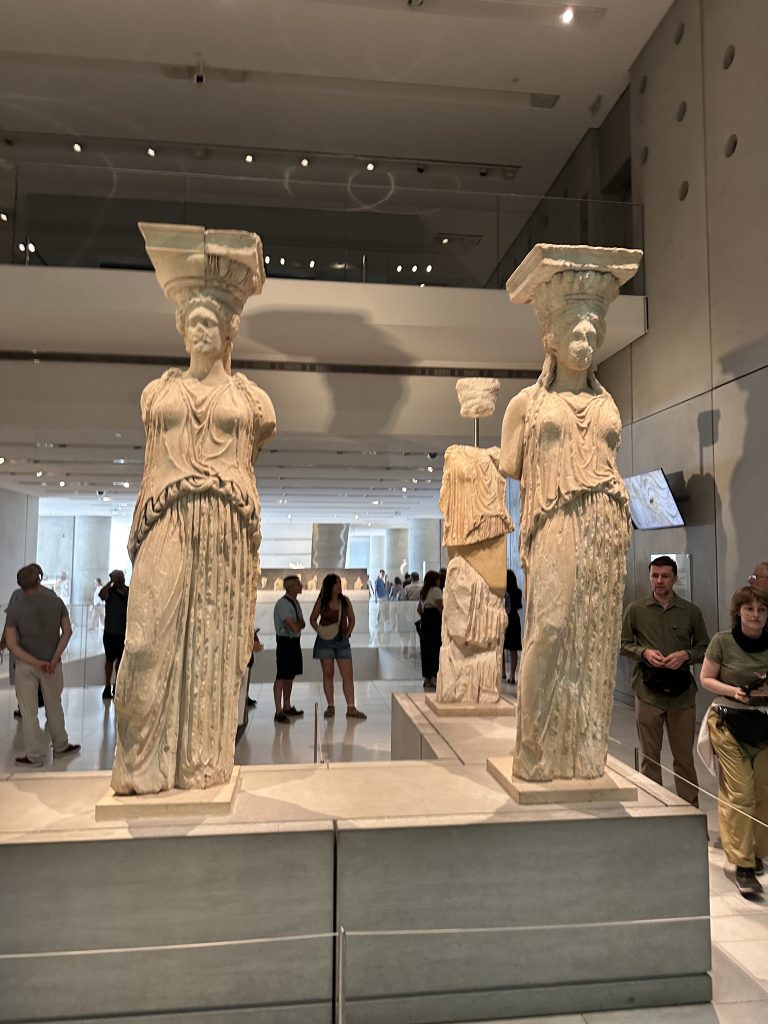
After 4 weeks, 3 legs, and 9 stops, we headed back home to prepare for our next outing. . . farther afield this time.

Categories: Islands, Mainland, More of South of France and More Cyclades, Provence, Savoy | Tags: , , , , , , , , , , , , , , | Leave a comment

A Slow Roll through Languedoc, Provence, and Basque Country: Trip Overview

We’re back in action!

After 17 months of travel limted to the Mid-Atlantic and the Caribbean, we finally made it out of the country for real. This time to Europe, to finally execute a trip that we planned for this time last year.

As noted in our previous post, our ability to execute our plan very much depended on our securing a French passe sanitaire QR code, which would demonstrate to Air France and restaurants everywhere that we were vaccinated, a prerequisite to boarding or entering. After applying in early August and waiting more than 2 weeks, we received our passes at the 11th hour. Literally. The passes arrived late in the morning of the day we flew out of IAD at 5 PM. But we had them, and the relief in having this risk mitigated really was palpable.

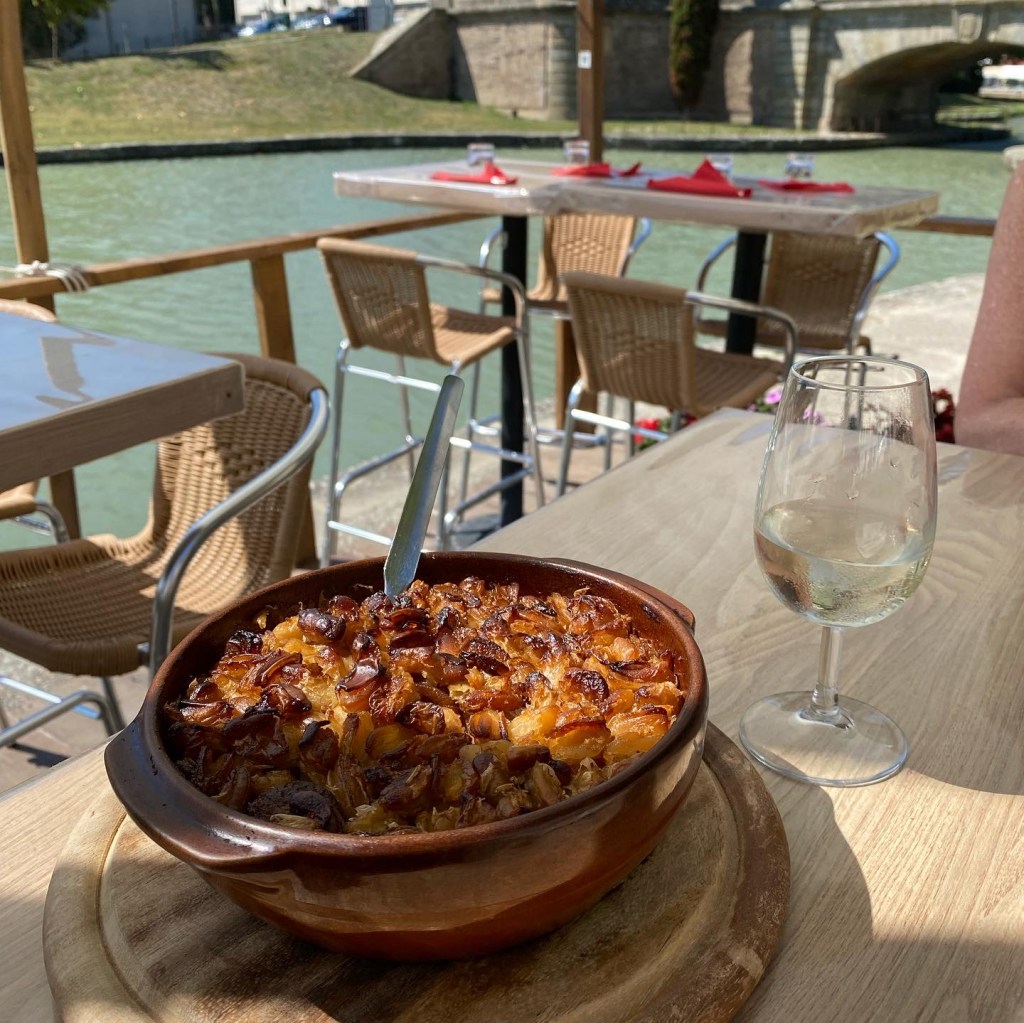
And the passes made all the difference. Everyone required them in France. Not just the gate agents for our domestic flight from Paris to Montpellier, and not just maitre d’s guarding the doors to indoor dining, but small restaurants serving exclusively outside, where there’s really minimal risk. And not just in the bigger towns, like Avignon, Arles, and Uzes, but in tiny hamlets like Castelnaudary, halfway between the Mediterranean and Toulouse, where we feasted on cassoulet outdoors by a canal. Even there, they required verification of vaccination via the passe sanitaire. Luckily, we were able to produce them and do everything we wanted to; no constraints.

We encountered the exact opposite in Spain – no one checked and no one cared. And despite the reference to indoor dining in France above, we only dined indoors there three times. But they checked every time. In San Sebastián, Spain, where Michelin-starred dining was our primary goal, dining was indoors each time. And each time, there was no concern and no checking. This served as an interesting contrast between EU countries. We’ll see what Italy does, when we head to Tuscany in October.

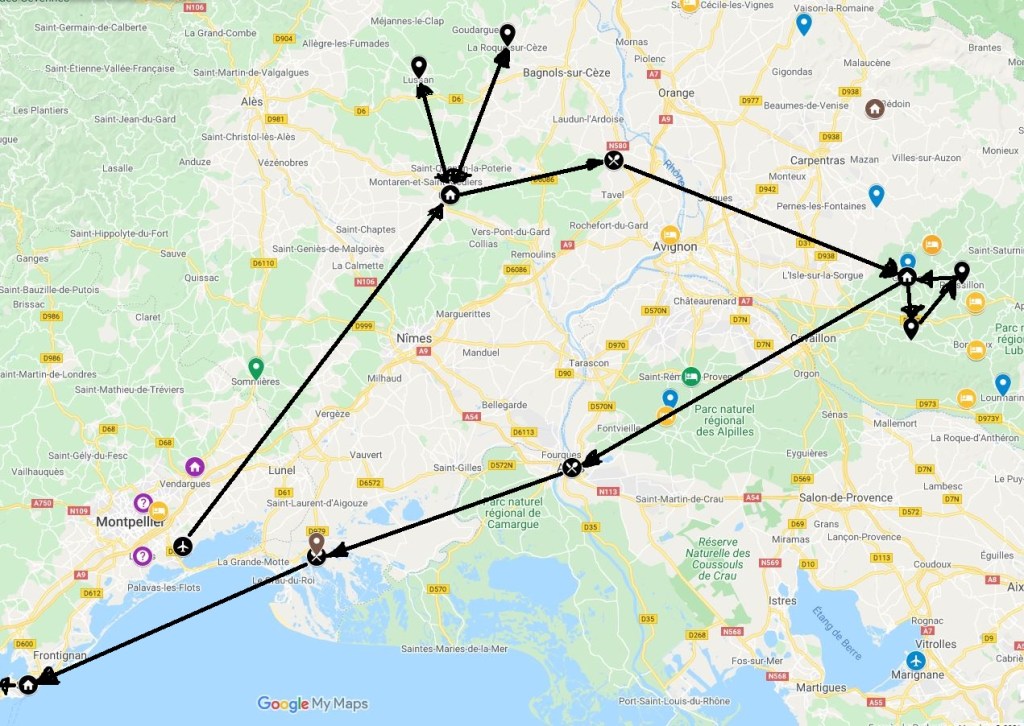
We spent most of our time on the 2-week trip in Languedoc, west of the Rhone, and in Provence, east of the Rhone, basing ourselves first in Uzès, then Gordes, and finally Sète, on the Mediterranean. The itinerary, such as it was, is depicted below, starting at the Montpellier airport and heading northeast first to Uzès, with a bunch of day trip, then to Gordes, with more forays, then to Sète, Toulouse, and finally San Sebastián on the Atlantic coast. We’d pop back up to France to fly back out of Biaritz to avoid an absurd drop fee if we returned the car we picked up in France in Spain, instead.

Although we spent the last 4 days in San Sebastián, in the Basque region of Spain, to get there from the South of France required a 7-hour drive, which is why we stopped half way in Toulouse. The black pins are places we saw during the trip, further delineated by house icons (towns where we stayed) and fork and spoon icons (typically stopover locations between home towns):

Despite all of the risks – we wouldn’t get our health passes, there would be no rental car waiting due to the crazy demand, we’d encounter issues or delays on the road and in towns – the trip went exactly as planned. Almost for the first time for us. Plus, we had awesome weather for all but one afternoon and evening.

Quick highlights from the trip are below, before more detailed posts to come.

First, 4 nights in Uzès in Languedoc, a town we were hoping was a European version of Old Town based on a lot of research last year:

Close (and really charming), but no cigar.

A day trip from Uzès to the fortified hilltop town of Lussan:

Hiking the crazy, river eroded Concluses de Lussan down the road from the little hamlet:

And another side trip to a similar aerie: La Roque-sur-Cèze:

One last evening in Uzès:

On to Gordes, by way first of a return trip to the 2000-year-old Roman aqueduct of Pont du Gard, which we first visited during our first bike trip in Europe in September of 2002:

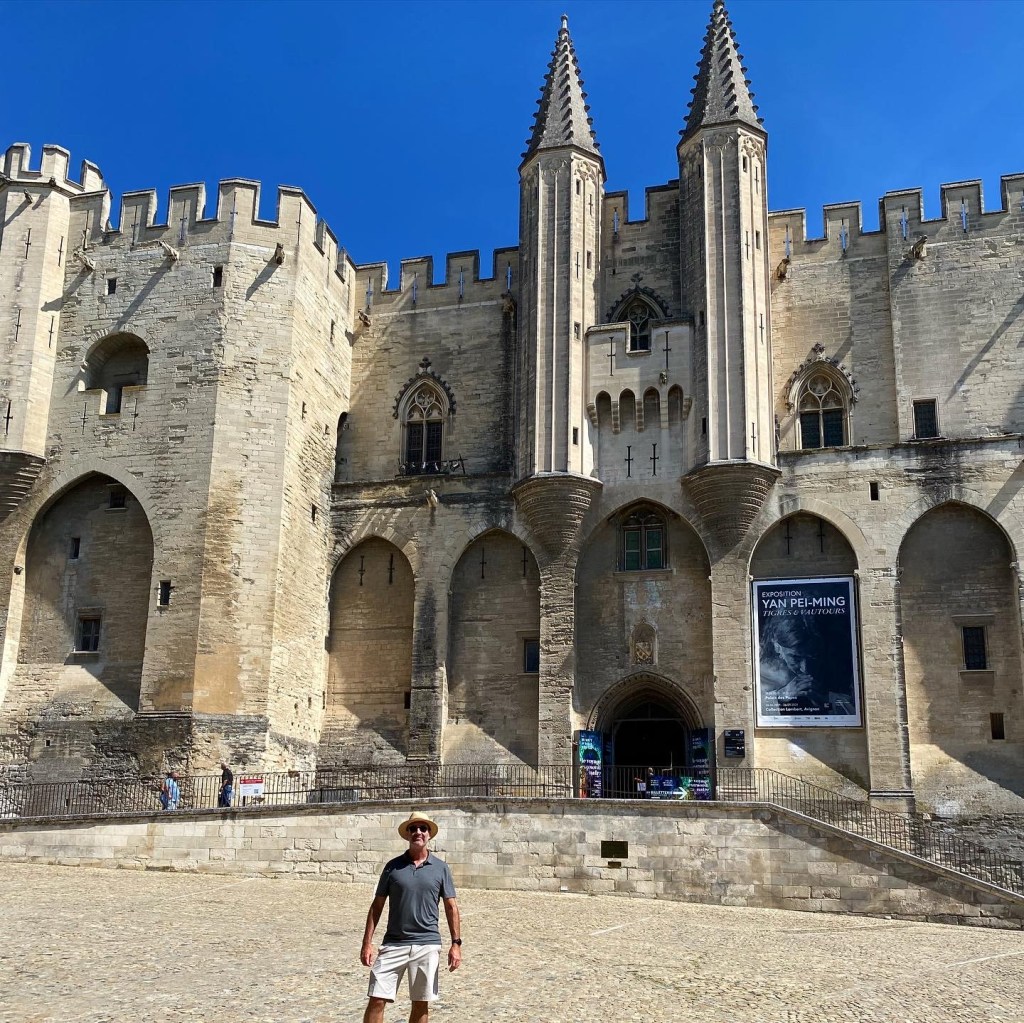
Followed by a return trip to Avignon, home to the Antipopes, for a little stroll and some lunch in front of the Palais des Papes:

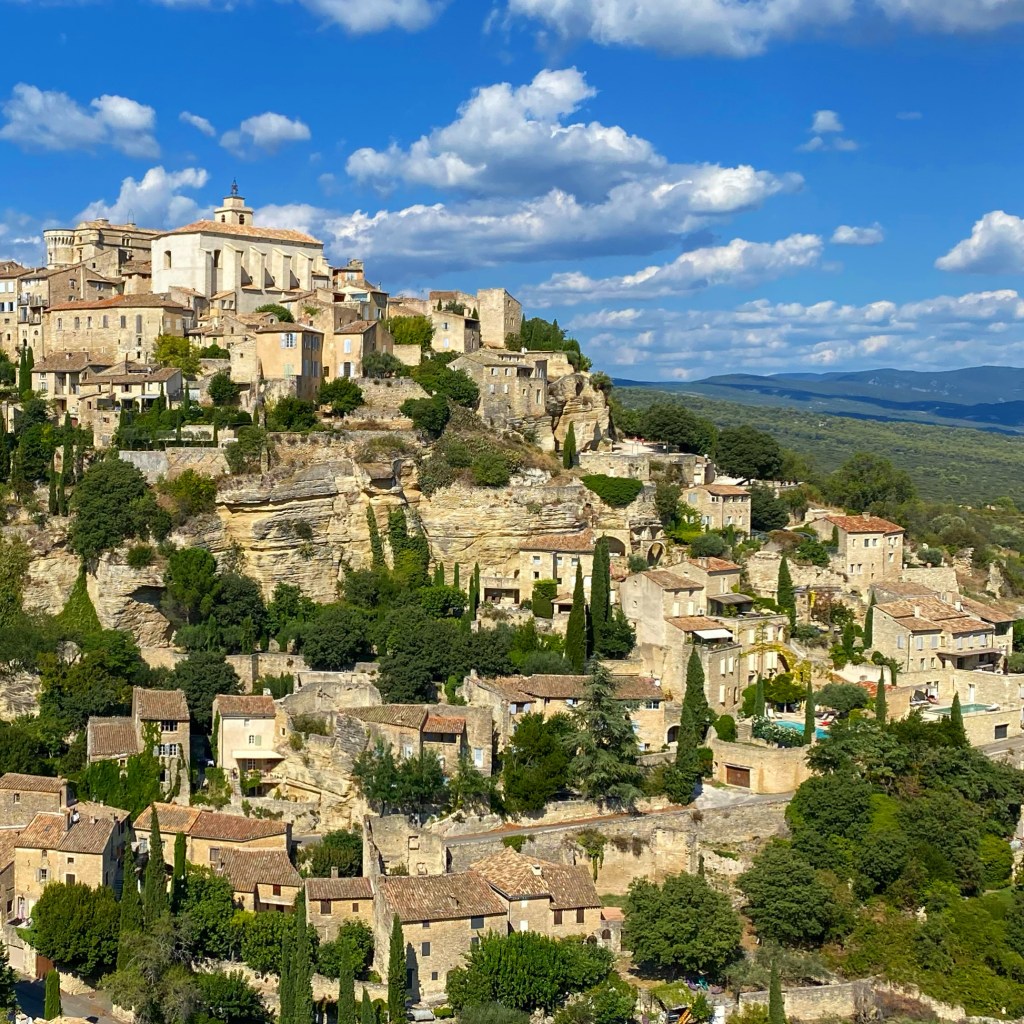
Before finally arriving in Gordes – the crown jewel of the Luberon in Provence:

The dry-set rock huts of the bories a few miles’ hike away from town:

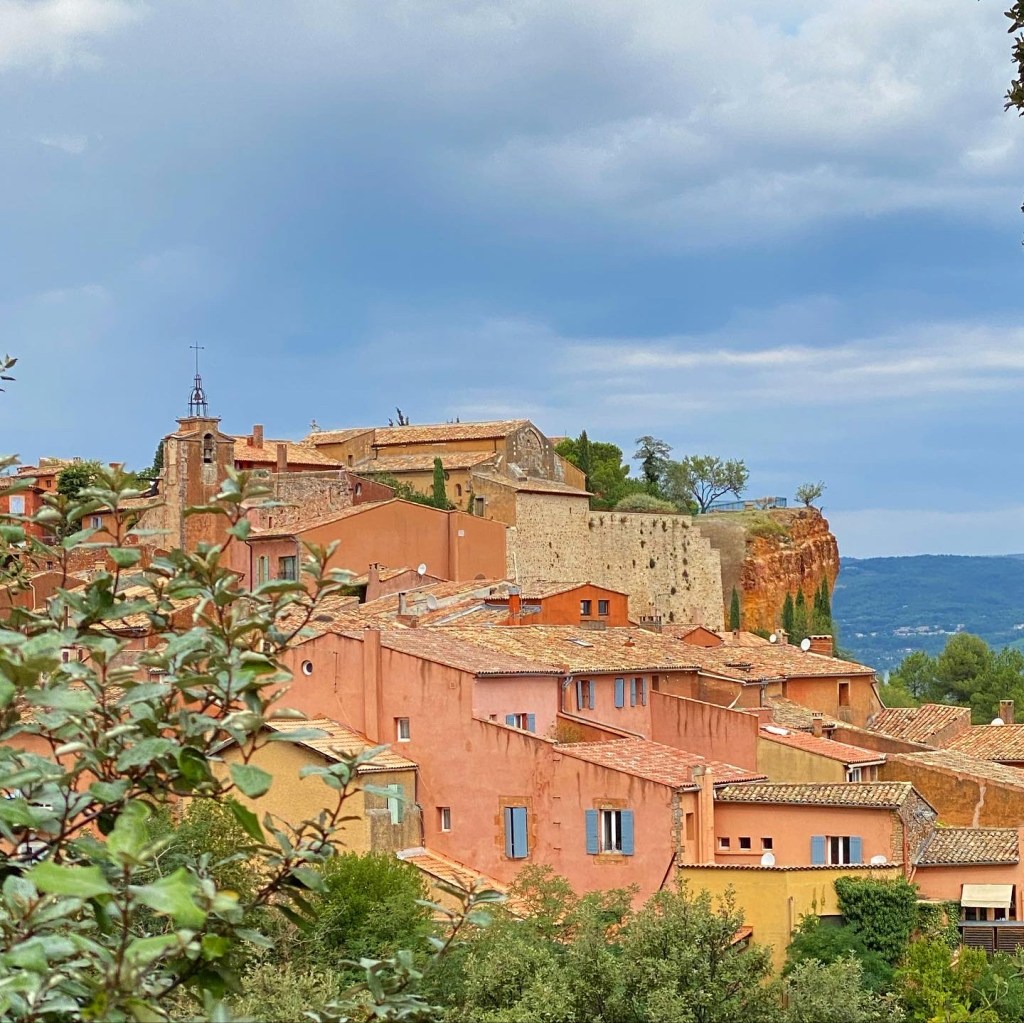
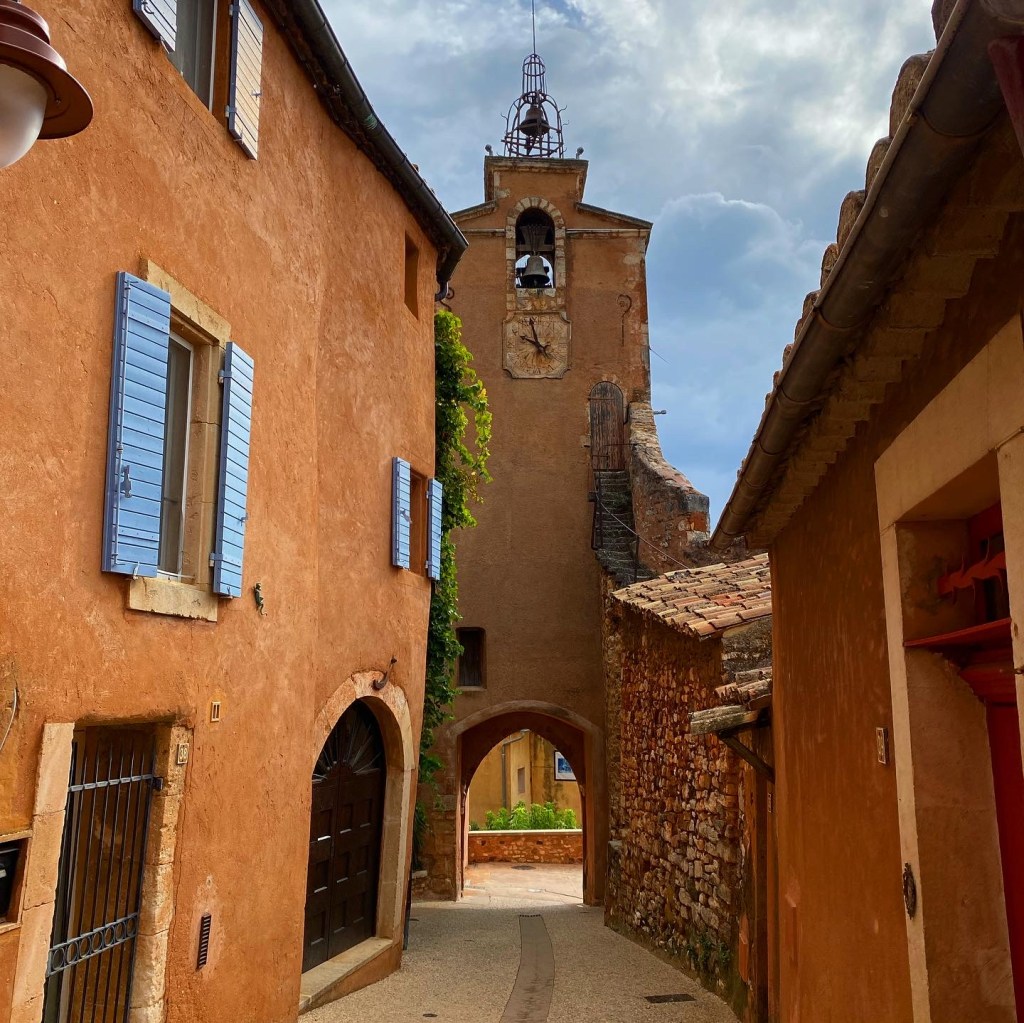
A morning drive to Roussillon, a hilltop town near Gordes built on ochre mining (in more ways than one):

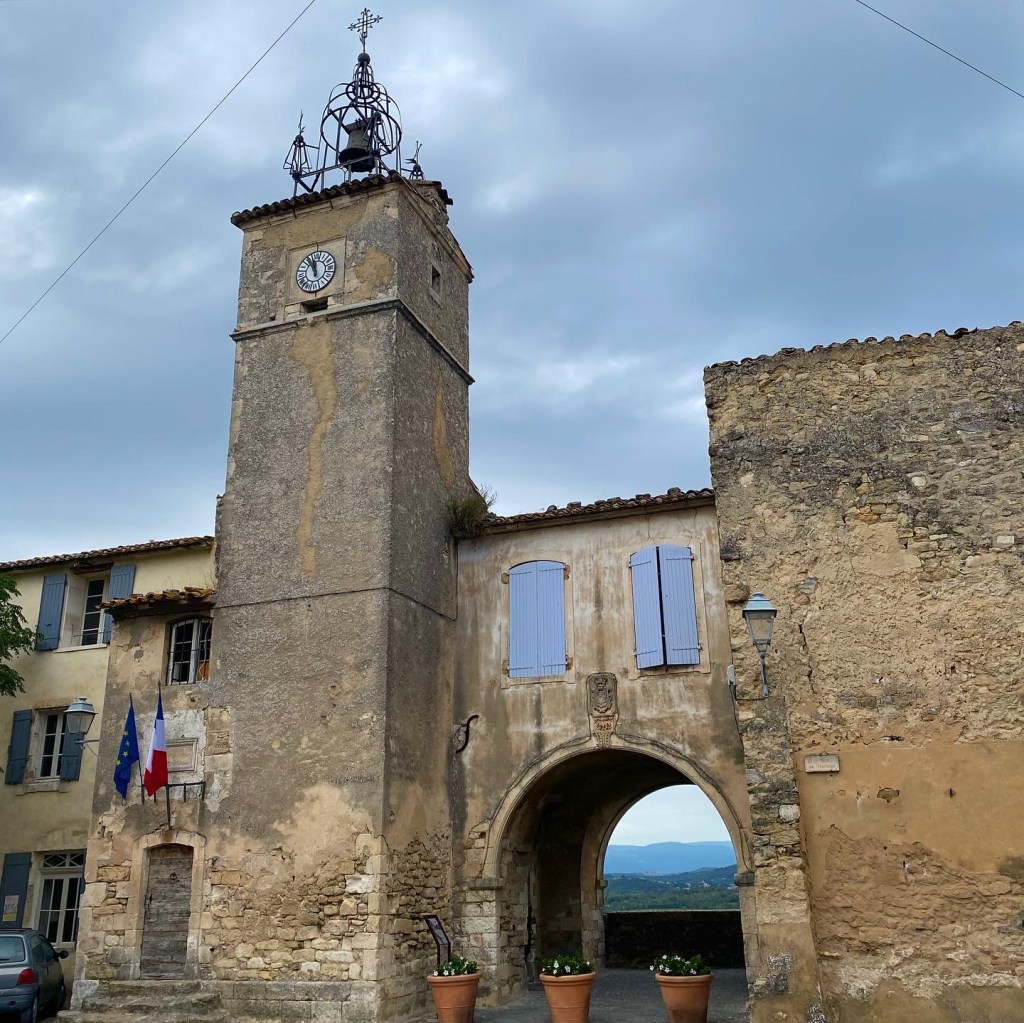
Followed by a trip to another hilltop town in the Luberon – Menerbes:

Including a really great lunch at the edge of town that included “parsley knives” (an amusing quirk of translation that we’ll explain in a subsequent post). Also, both Languedoc and Provence are massive producers of rose, which we fully exploited.

And finally, a jaunt through the abandoned hilltop town of Oppedes:

Our last night in Gordes by the chateau at the top of the town and our only spot of weather:

From Gordes, we drove south, to the Mediterranean and the fishing port town of Sète. But on the way, a stop for lunch in Arles to revisit our favorite town from our Provence bike trip almost 2 decades ago.

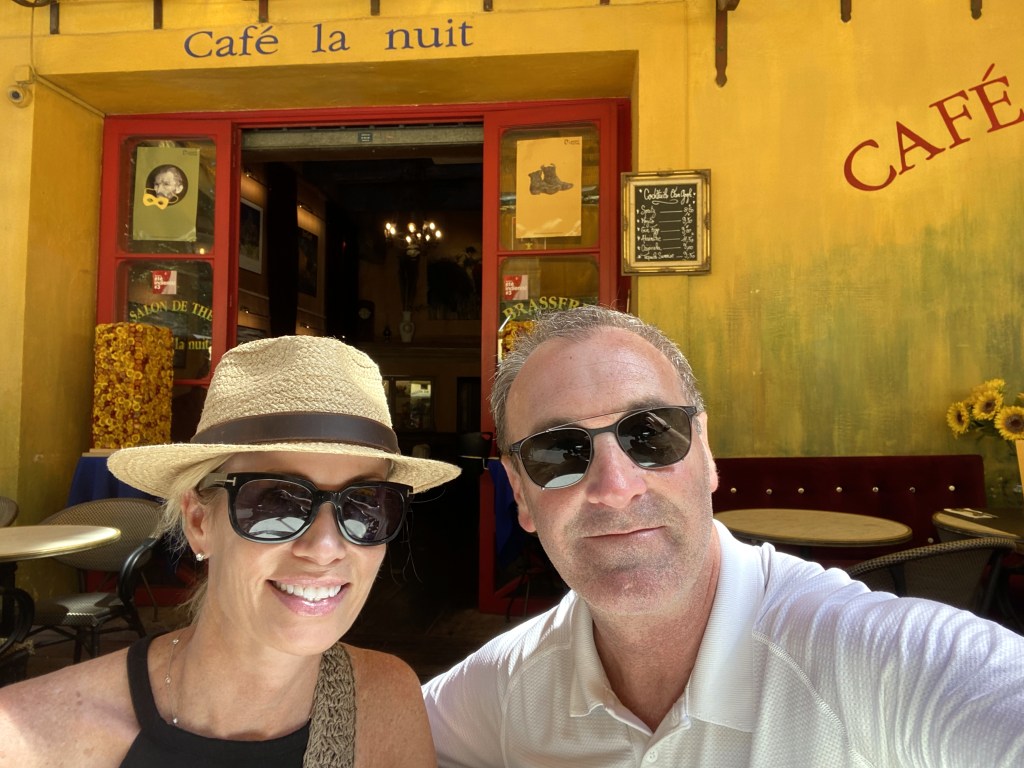
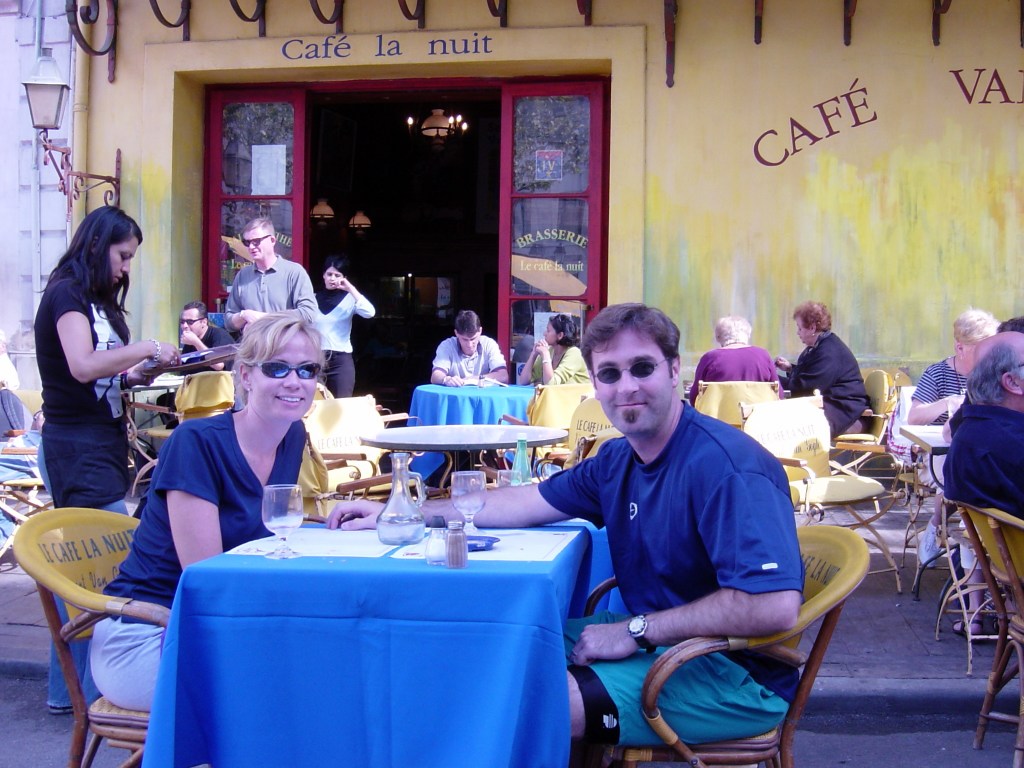
Same cafe, almost 20 years later!

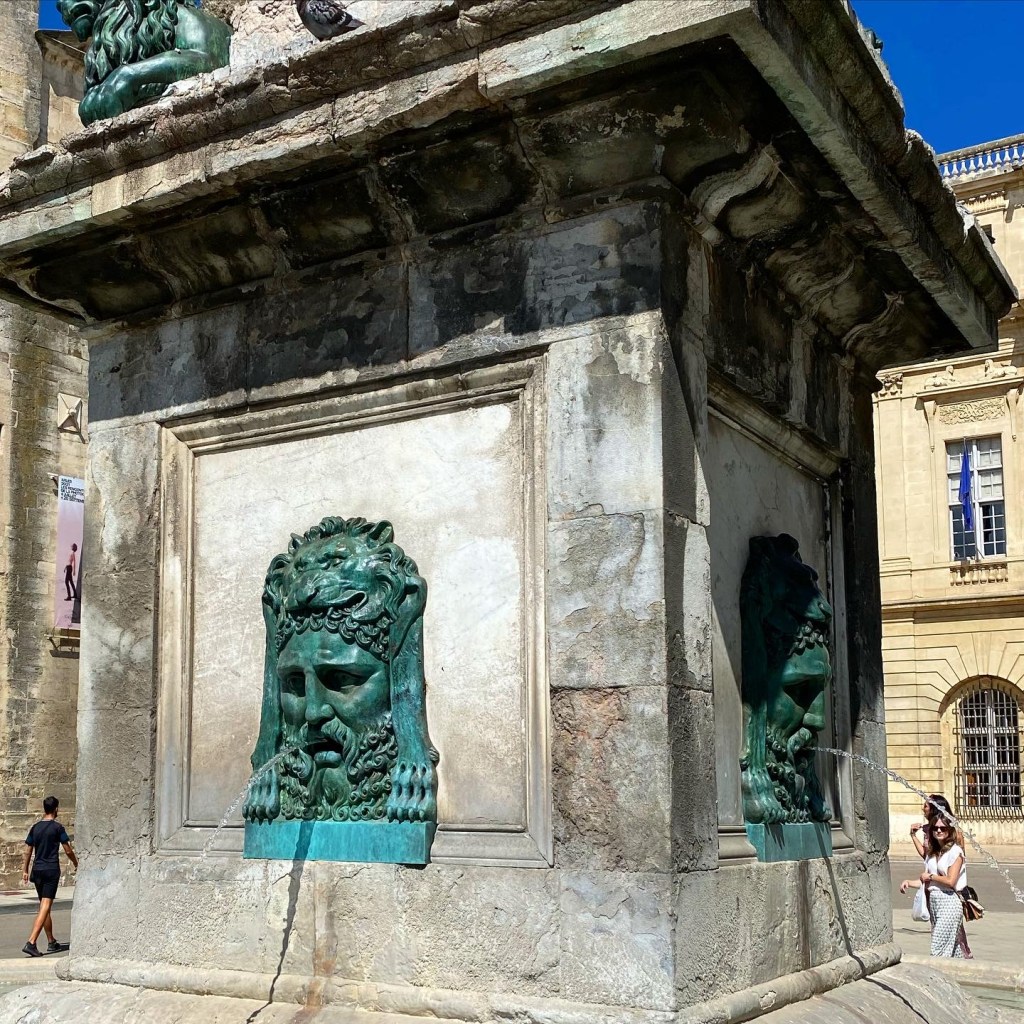
Plus, a visit to the WolfeStreetTravel avatar in the town square. Our guy clearly had been gussied up since our last visit, compared to the image of our blog avatar.

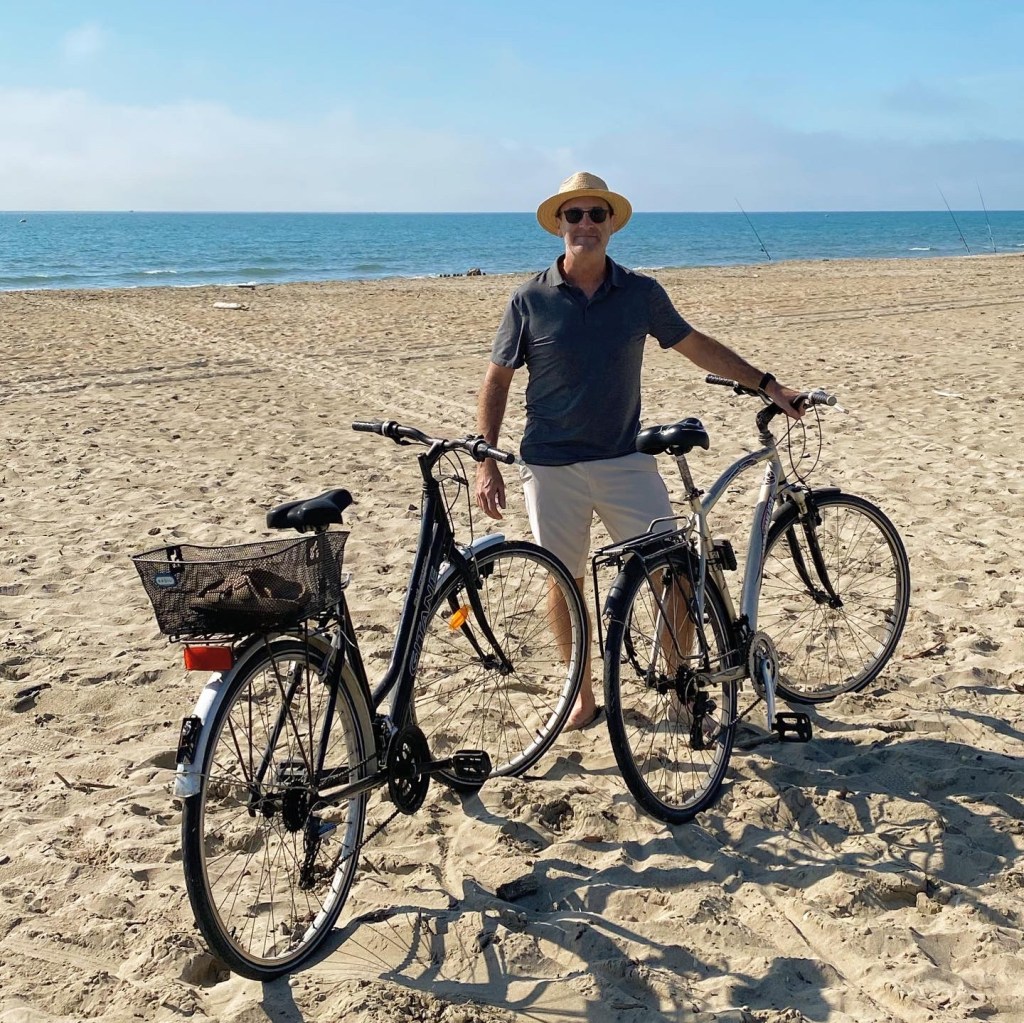
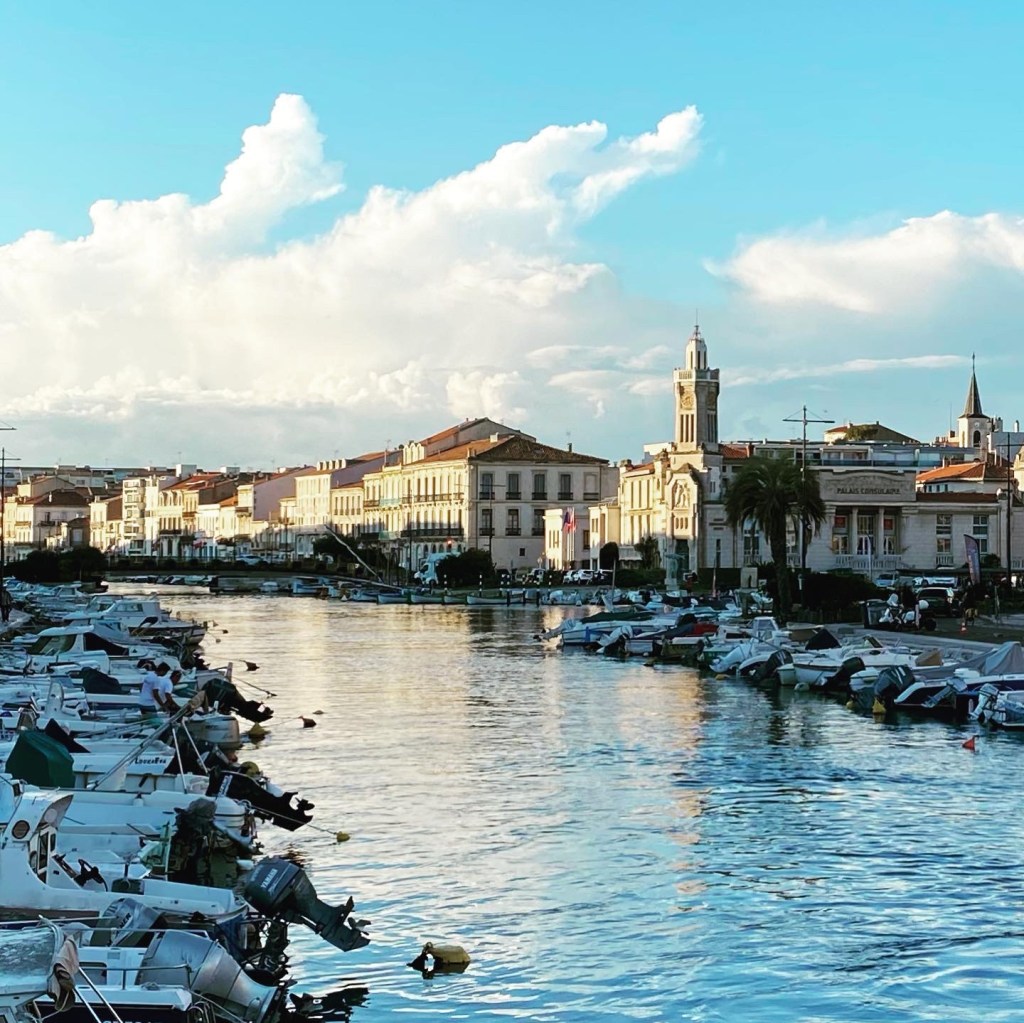
Two nights in Sète, for which we had moderate expectations, having been described as a “gritty port town.” It was perfect, and a great, seaside contrast to the hill towns of the Luberon, so we were able to bike for miles along the sea. The Sète fishing fleet includes trawlers with piggyback Mini me boats that are deployed at sea to haul the other side of the trawl or net:

Having completed the South of France portion of the slow roll, we slow rolled to San Sebastian, Spain. But first, a stop in Toulouse, by way of Castelnaudary, the birthplace of cassoulet (which made our lunch choice there pretty easy):

And then, there was No. Time. Toulouse!
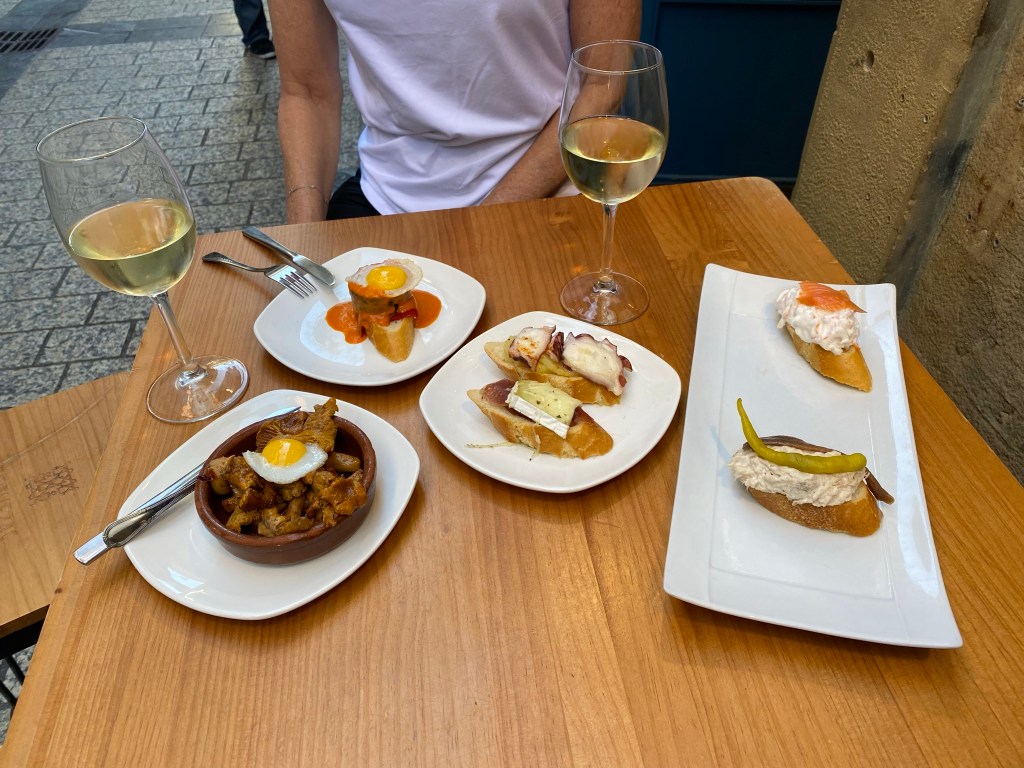
Our final destination – the gastronomic capital of the world, San Sebastián, Spain.

Where we participated in the age-old dining conflict between cheap, quick, delicious pintxos in the Old Town:

Or Michelin-starred fine dining in the outskirts:

A solid tie in this gastronomic war, in our view.

Final evening in San Sebastián:

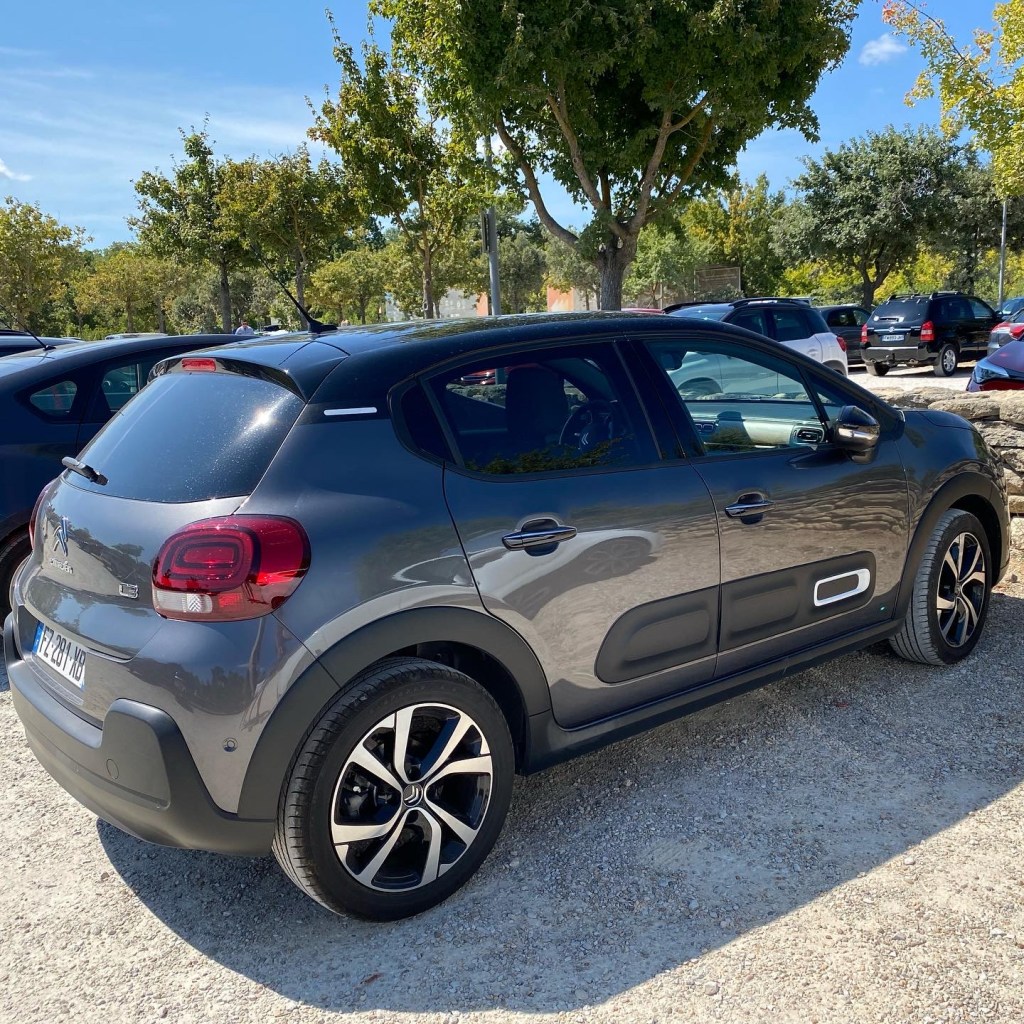
And the trip was powerfully reminiscent of our epic Micronations Road Trip of 2017. Although we did not move every day, like we did on that trip, we had an awesome little diesel family truckster (a Citroen that looked like a sneaker this time, instead of the trundling Skoda):

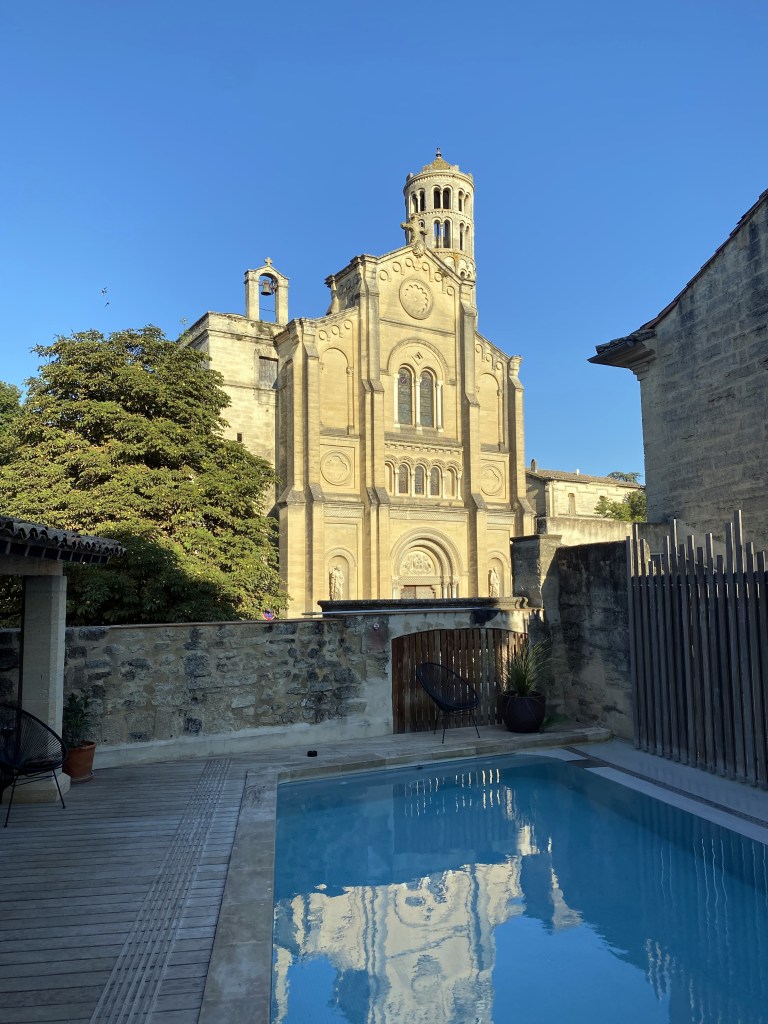
And we had some awesome downtime by pools at our base-camp towns, including one in the shadow of a cathedral, exactly like the one in Carcassonne in the Micronations Road Trip

Next up: Uzès.

Categories: Basque Region, France, Languedoc, Provence, Spain, The Slow Roll: South of France+ | Tags: , , , , , , , , , , , , , , , | 2 Comments

Protected: The Slow Roll: Return to Pont du Gard and Avignon

This content is password-protected. To view it, please enter the password below.

Categories: France, Provence, The Slow Roll: South of France+ | Tags: , , | Enter your password to view comments.

Protected: The Slow Roll: Gordes

This content is password-protected. To view it, please enter the password below.

Categories: France, Provence, The Slow Roll: South of France+ | Enter your password to view comments.

Protected: The Slow Roll: Roussillon

This content is password-protected. To view it, please enter the password below.

Categories: France, Provence, The Slow Roll: South of France+ | Enter your password to view comments.

Protected: The Slow Roll: Ménerbes

This content is password-protected. To view it, please enter the password below.

Categories: France, Provence, The Slow Roll: South of France+ | Tags: , | Enter your password to view comments.

Protected: The Slow Roll: Oppède

This content is password-protected. To view it, please enter the password below.

Categories: France, Provence, The Slow Roll: South of France+ | Enter your password to view comments.

Protected: The Slow Roll: Village des Bories

This content is password-protected. To view it, please enter the password below.

Categories: France, Provence, The Slow Roll: South of France+ | Enter your password to view comments.

Protected: The Slow Roll: Return to Arles

This content is password-protected. To view it, please enter the password below.

Categories: France, Provence, The Slow Roll: South of France+ | Enter your password to view comments.

Final? Post on Trip Planning and Itineraries

With the widespread availability of COVID vaccines in the US starting in April and the dramatic and steady increase in vaccinations by June, we were feeling bullish once again about travel this summer. Most importantly, about resurrecting our ill-fated South of France road trip planned for Labor Day 2020. This discarded trip was sadly documented in the last “trip planning and itineraries” post here, as well as on our subsequent post on the consolation to the consolation prize that took its place. Last year sucked.

So, this past June – full of vaccinated confidence and excitement – we booked three sets of flights to reassert our road trip through Languedoc, Provence, and beyond.

Then, of course:

The f’ing Delta variant is screwing everything up.

So, here’s where things stand as of this morning:

  • France has opened their borders to Americans if you’re vaccinated. No worries here. We are, so we’re good.
  • We have a non-stop, round-trip flight on United from Dulles to Paris on Friday evening, August 27. We can upload images of our vaccination cards to United to meet the French entry requirement above, so, no worries – we’re still good there.
  • We have a separately booked, one-way flight on Air France from Paris to Montpellier. Air France requires passengers to have the French passe sanitaire (health pass) to board. This is a QR code that gets screened in order to enter restaurants, museums, flights, etc. We do not have this. So, some worries – we’re not good here.
  • But! France announced on August 9 that a new program has been established to issue health passes to non-EU travelers to France if you submit a completed application, photo of vaccination card, photo of passport, and photo of plane reservations. We did so on August 11.
  • It’s now August 22 and we have not received anything. We still have time, but, as is attested by the previously planning posts, we (one of us, anyway) like all variables to be locked down before we travel. As a result, we’re consumed with this lack of a health pass. There’s a real possibility that we’ll get to Paris and not be able to board our internal flight south.

But all is not lost. The French government website for the health pass program for non-EU residents was updated this past Thursday to clarify that they’re only processing applications for travelers currently in the country or who will be arriving by today. Hopefully, the next processing window will include August 28.

In addition to potentially receiving French health passes in the next few days, we have the following backup plans:

  1. Take COVID tests 2 days before we leave, like we did for Turks and Aruba, and present the negative tests to a health care professional at Paris CDG airport to get health pass QR codes.
  2. Take COVID rapid antigen tests in the airport itself after landing in Paris to accomplish the same. These are available at CDG in the public area, so even if we don’t have tickets yet, we could access this. We have a 6-hour layover there because the only direct flight from Paris to Montpellier was in the early afternoon, so would be able to swing this, timewise.
  3. Present our vaccination cards to board instead of a QR pass and hope for the best. This has worked at restaurants and other venues, based on research on the interwebs, but not always. And the Air France web site cites the requirement for the passe sanitaire, not just proof of vaccination.

We like Option 2 and will likely exercise this if we don’t get a QR code before we leave. However, the ones you get from proof of a negative test are only valid for 72 hours, which would mean repeating the process every 3 days while we’re there. Def would rather get the permanent one now . . .

So, the trip. In brief, we’ll:

  • Rent a car in Montpellier, on the Mediterranean coast, and drive all over the place in both the Languedoc and Provence regions of the South of France, a la the epic Micronations Road Trip,
  • End up on the Atlantic coast in San Sebastian, Spain, for a few days,
  • Drop the car off across the French border in Biaritz to avoid an even more mammoth drop fee than we’re already facing simply by dropping it at another location in the same country,
  • Fly back to Paris, then fly back home.

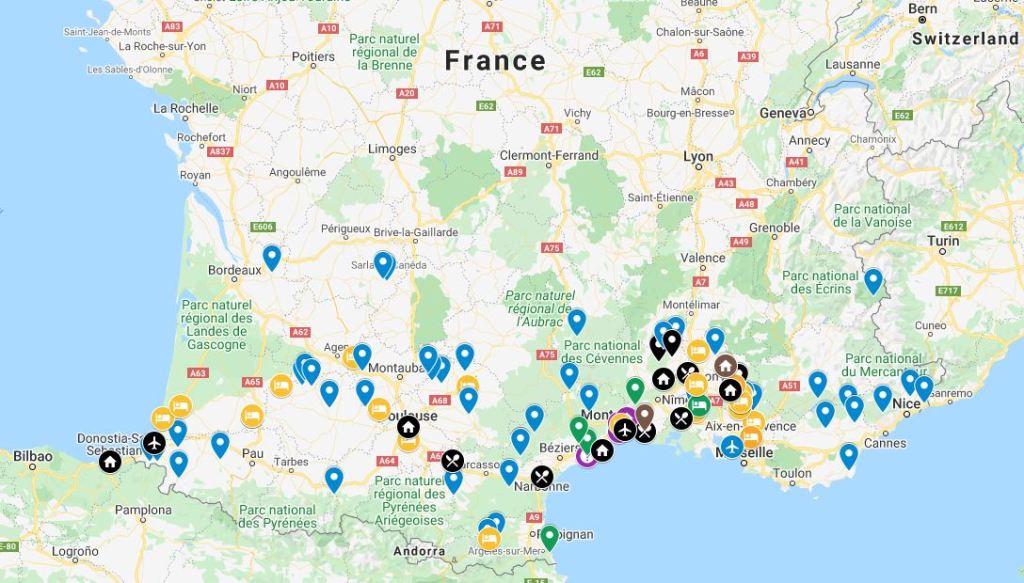
As explained in our previous trip planning post, Google My Maps served a pivotal function in planning (and then replanning) this trip. The result was this useful mess:

The previous post explained the the pin colors and icons used on the map. The end result, though, is the distilled-down itinerary for this here trip, which is represented by the black pins. If we blow up the South of France portion of the map, we can see these icons more clearly:

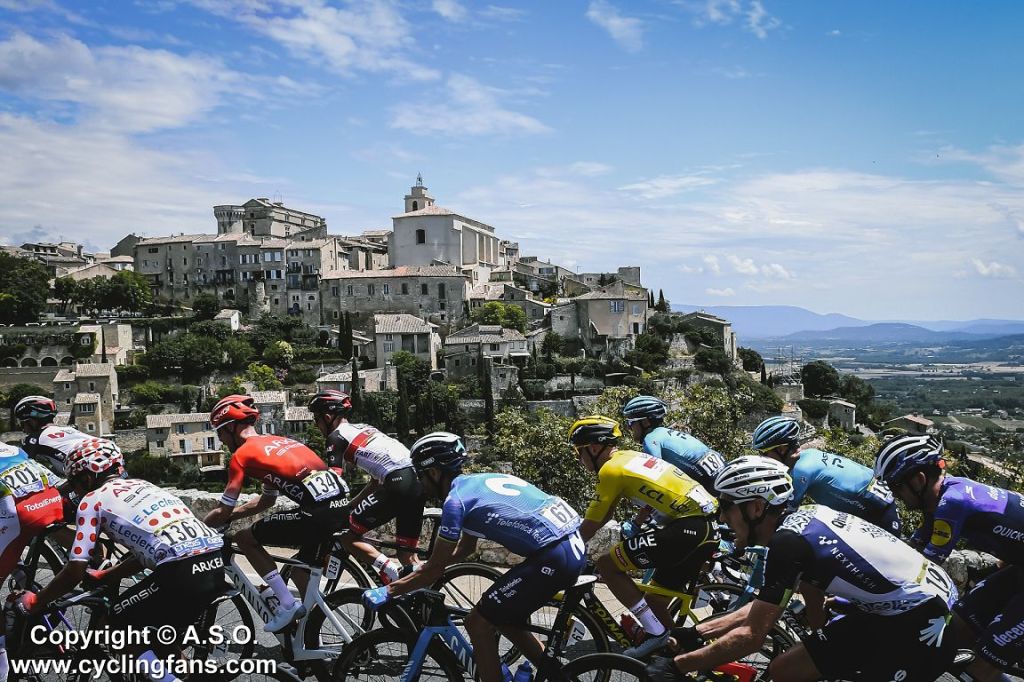
The little houses are towns we’re staying in (Uzes for 4 nights, Gordes for 3 nights, Sete for 2 nights, in that order). The plain black pins are other Les Plus Beaux Villages de France (“the most beautiful villages of France”) that we’ll day trip to from our base towns. If you watched the Tour de France this year, btw, you would have seen the peloton ride through both Uzes (Stage 12) and Gordes (Stage 11).

The little knife and fork guys are stopovers on the longer trips between base towns.

We chose to stay in Sete (extreme lower left) for a couple of days simply because one of us thought that, if we’re so freakin’ close to the Mediterranean, then we should at least spend some time there. So we are.

From Sete, we head northwest to Toulouse for the night (we booked this totally cool castle turret in the middle of town on Air B&B only to have this unceremoniously cancelled on us without explanation a couple of weeks later). We still haven’t booked a replacement; since the stop in Toulouse is just to break up a 7-hour drive from Sete, France, to San Sebastian, Spain, and because there don’t appear to be any particularly charming places to lock in (other than our ill-fated castle turret), we’ll just deal with this when we’re over there.

From Toulouse, we’ll drive the same distance as the day before, but to the southwest, to San Sebastian, just over the border in the Basque region of Spain. We’ll spend 4 days there – the center of gravity of the world’s gastronomic dining scene, where there’s higher density of Michelin-starred restaurants than anywhere else on Earth. There’s also pintxo, which holds an equal appeal for us.

An interactive version of the full itinerary-planning map is here:

To get back home, we’ll have to find another COVID testing station in Spain to secure the required negative test results to reenter the US. We assume that won’t be a problem, but then, there’s this recent article in the New York Times: “Blindsided Abroad: Vaccinated but Testing Positive on a Trip to Europe,” with anecdotes of travelers in our situation having to quarantine due to a positive result from a test taken to get back to the US.

Definitely some risks, but definitely still worth it. We’re looking forward to busting out of here.

Categories: France, Maps and Miscellany, Provence, Trip Planning | 4 Comments

Blog at WordPress.com.