
After a couple of days in Haarlem, we headed to the first of our actual Baltic destinations: Estonia and its capital city of Tallinn. We were hoping for snow, and we got some! (Initially, anyway.)

Tallinn’s main square and Christmas Market on our first evening – perfect!

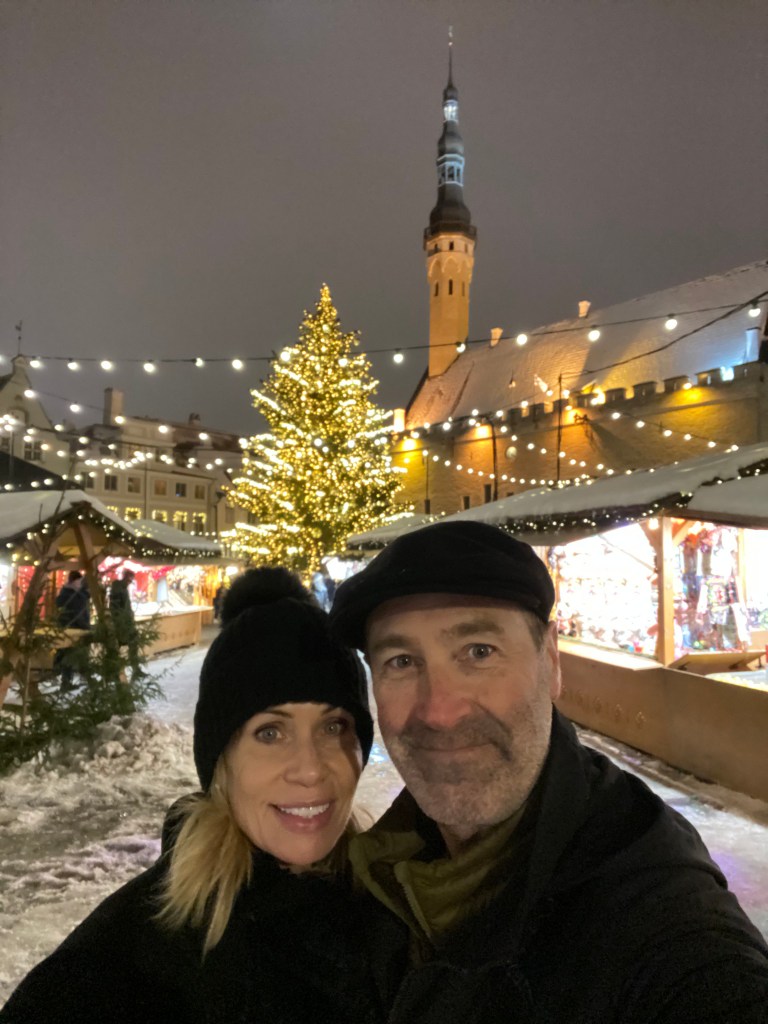
But the next day (and throughout our stay), the snow on many of the streets and squares turned a little slushy.

Definitely more of a winter, Christmas atmosphere than Alexandria, but still. . .

Tallin’s settlement dates back thousands of years but the first fortress appeared around 1050 AD, demonstrating the importance of the town to the north Estonia region.
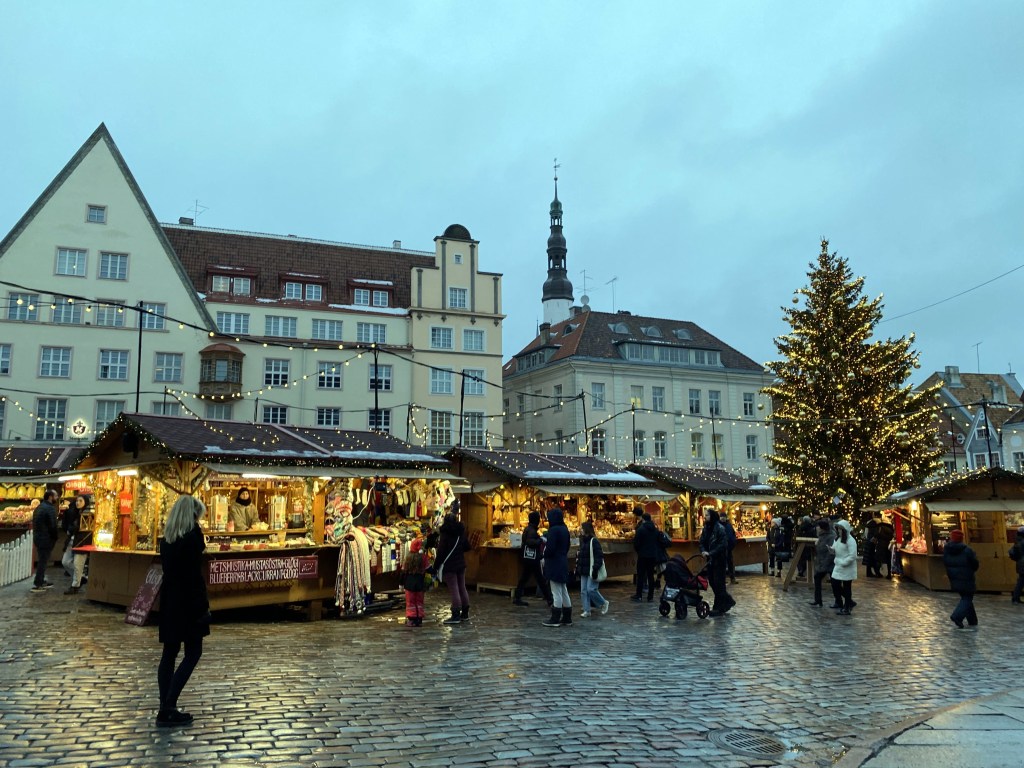
As a trading town on the Baltic coast, the town (then known as Reval) became a member of the Hanseatic League in 1285. We previously visited the Hanseatic towns of Lübeck and Hamburg in Germany and Bergen, Norway. (Riga, Latvia, another Hanseatic town, would be our next stop on this trip. Apparently, Berlin, Cologne, and Krakow also were Hanseatic towns due to the river system, but we have decided to ignore this because they’re not on the Baltic coast.)

Snow still covered some streets – very cool medieval town.

Tallinn Old Town is one of the best-preserved medieval cities in Europe and is listed as a UNESCO World Heritage Site.

The spire of Tallinn’s Town Hall:
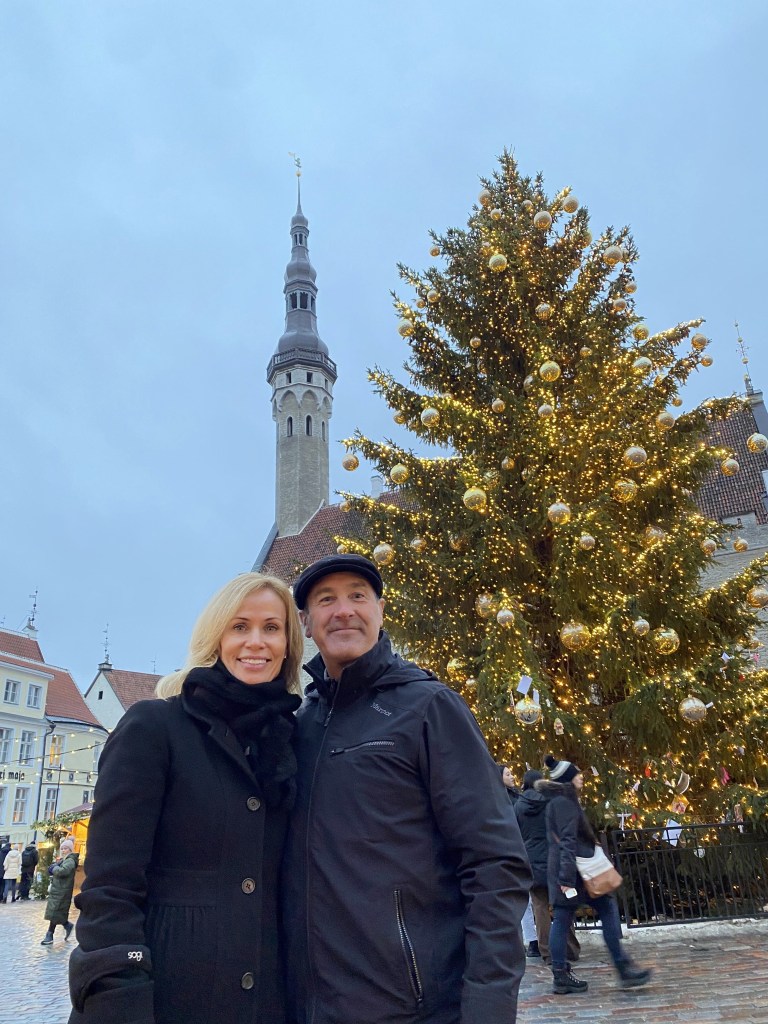
The town hall was first mentioned in 1322,

but the structure actually dates back to the 1200s.

It’s the oldest surviving town hall in Europe.

At the top of the spire stands Old Thomas, first placed there in 1530.
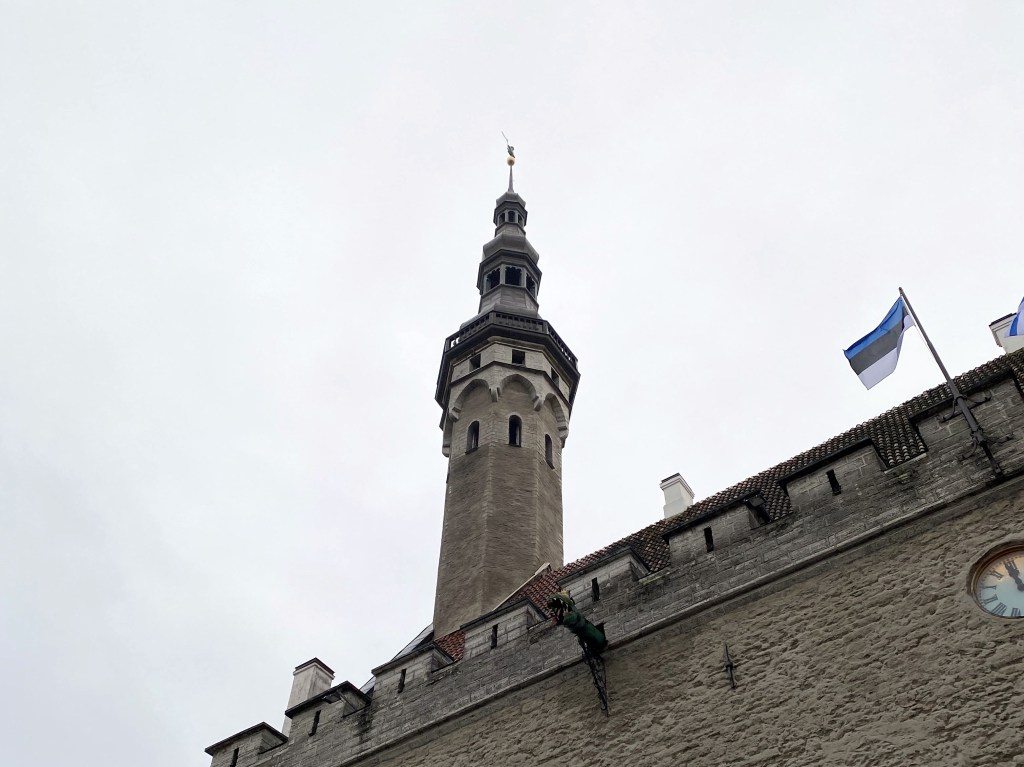
The figure memorializes a peasant who became famous for winning a crossbow competition held by the Baltic German Elite.

The tower – and Old Thomas – was damaged in 1944 during a bomb attack during the war. A new Old Thomas went up with the repaired tower in 1952, but it was weathering too much, and the Estonians put another one up there in 1996. The 1952 Old Thomas hangs out in the Tallinn City Museum. Nice codpiece.

Viru Gate – one of the original eight gates in Tallinn’s city walls.

The first wall around Tallinn was ordered to be constructed by Queen Margaret of Denmark in 1265 (Denmark controlled northern Estonia from the early 13th century until 1346, when the Danish king sold it to the Teutonic Knights).

Fully taking shape during the next three centuries, Tallinn’s city wall was one of the strongest defense systems in Northern Europe at the time.

Plus, there are chunks that are still intact and walkable (that’s Tower behind Monks in the background)

Not a lot of snow, but Tallinn proved to be pretty atmospherically wintery, nonetheless:
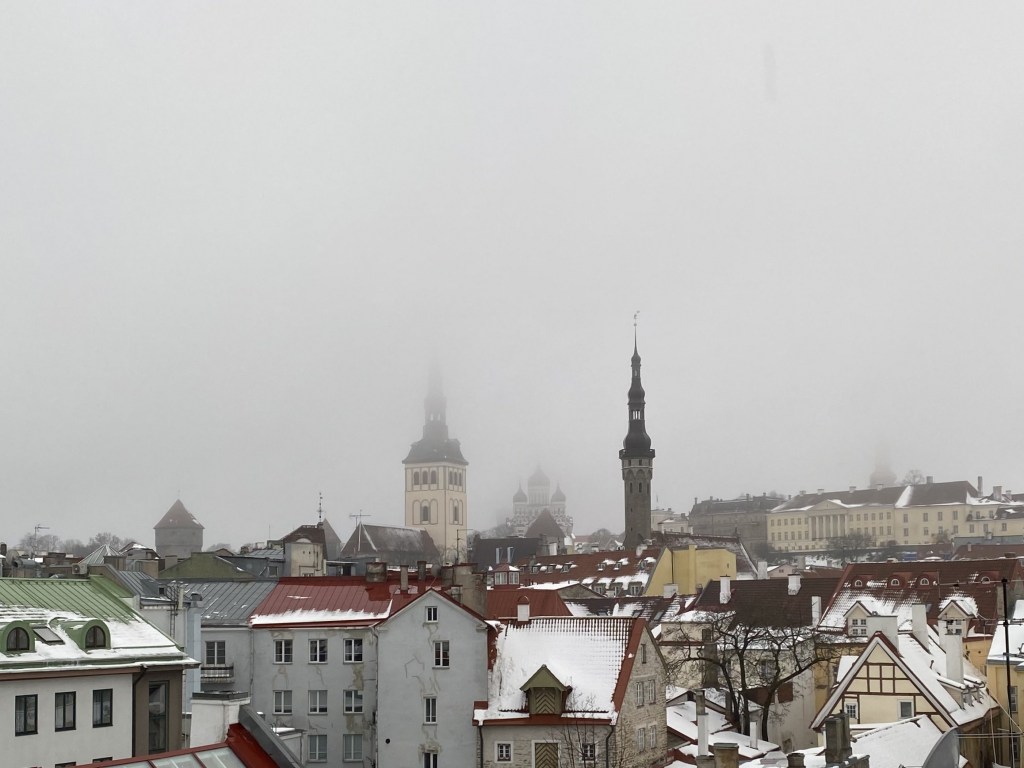
Located across town, we found Tallinn’s Great Coastal Gate, first mentioned in 1359:
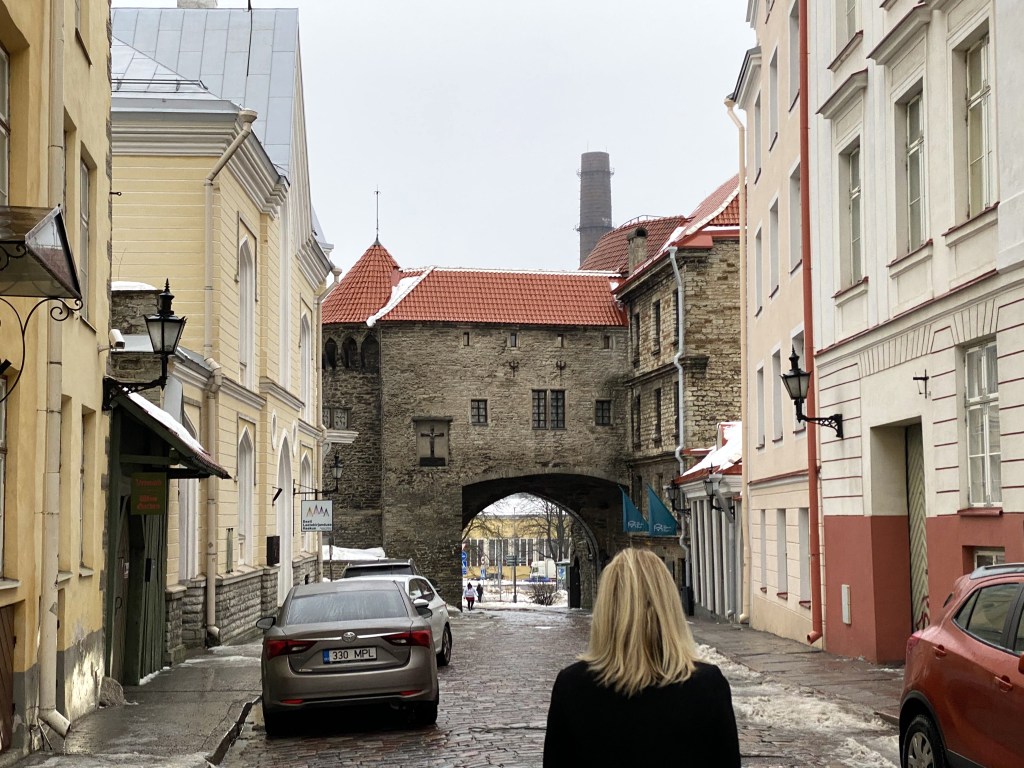
The Great Coastal Gate was the most important gate when Tallinn was a Hanseatic town because it protected the main route for traffic between the port and the market square.

Above the gate stands an impressive dolomite carving bearing Tallinn’s coat of arms (from 1529):

Protecting the Great Coastal Gate? FAT MARGARET! Dating from the early 16th century, Fat Margaret not only served as a fortification against invaders of the town’s port but also a military monstrosity to impress visitors arriving by sea.

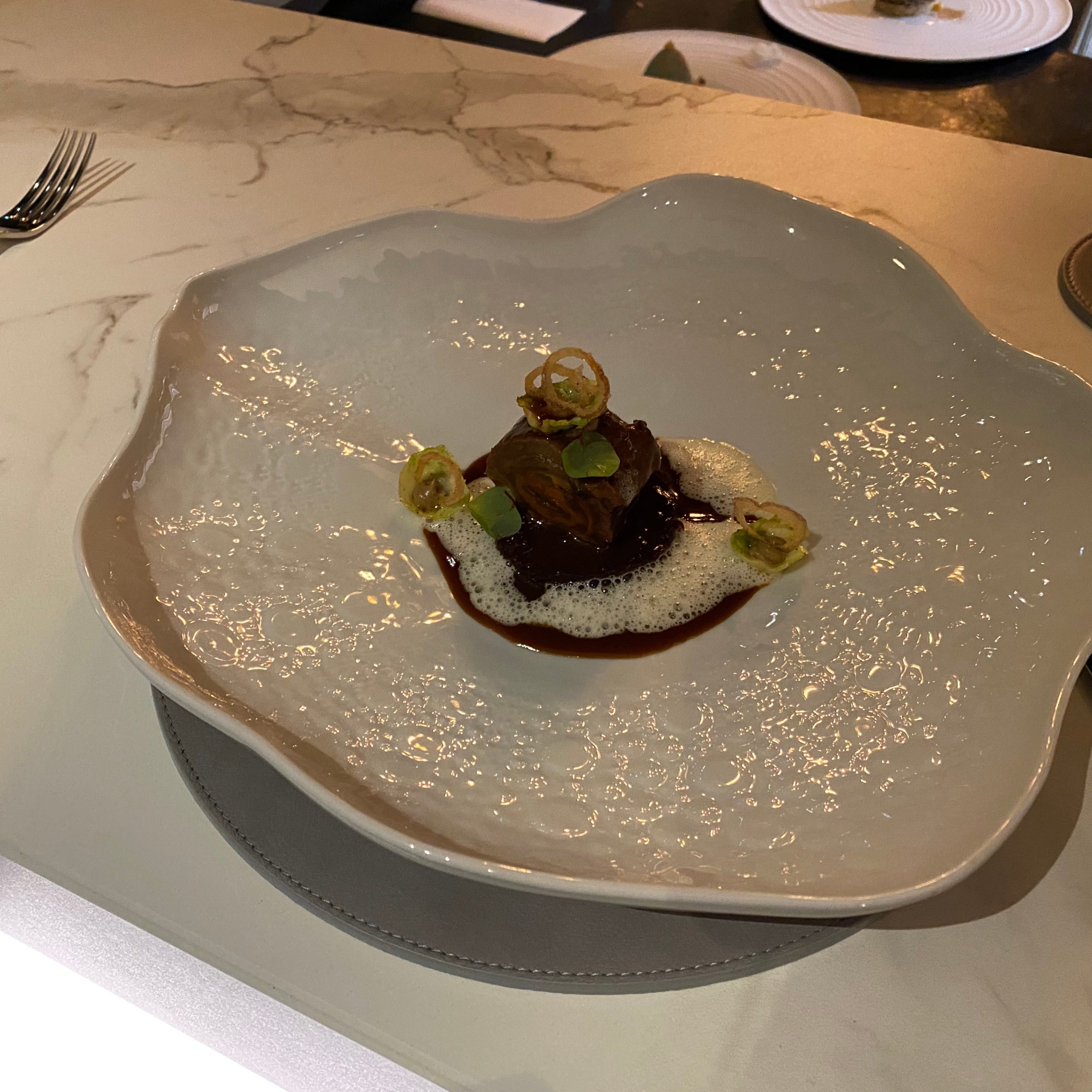
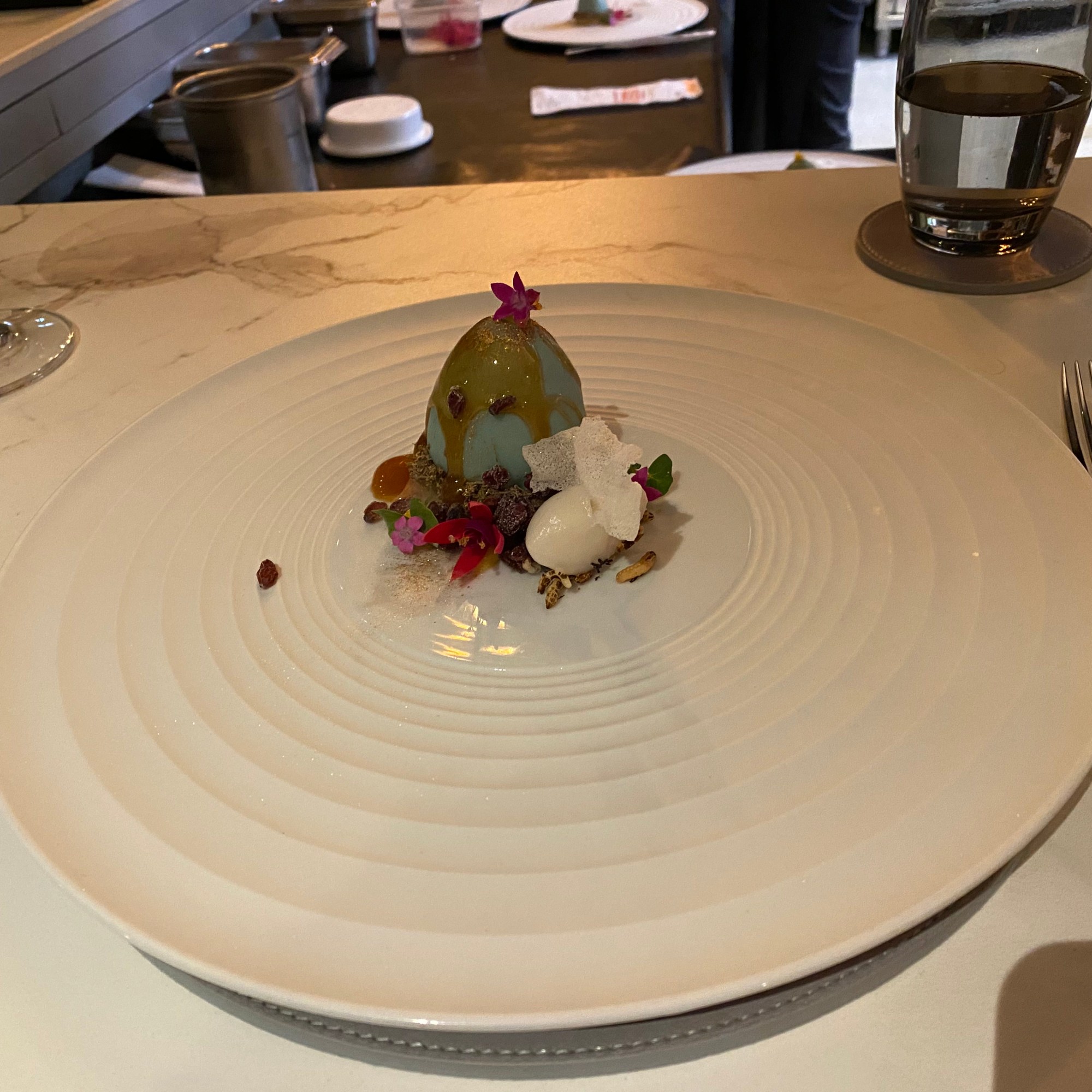
Michelin 2* dining experience at 180 Degrees:

Pretty good perch at the Chef’s Table

where we could watch all the cooking and prep work for multiple courses.



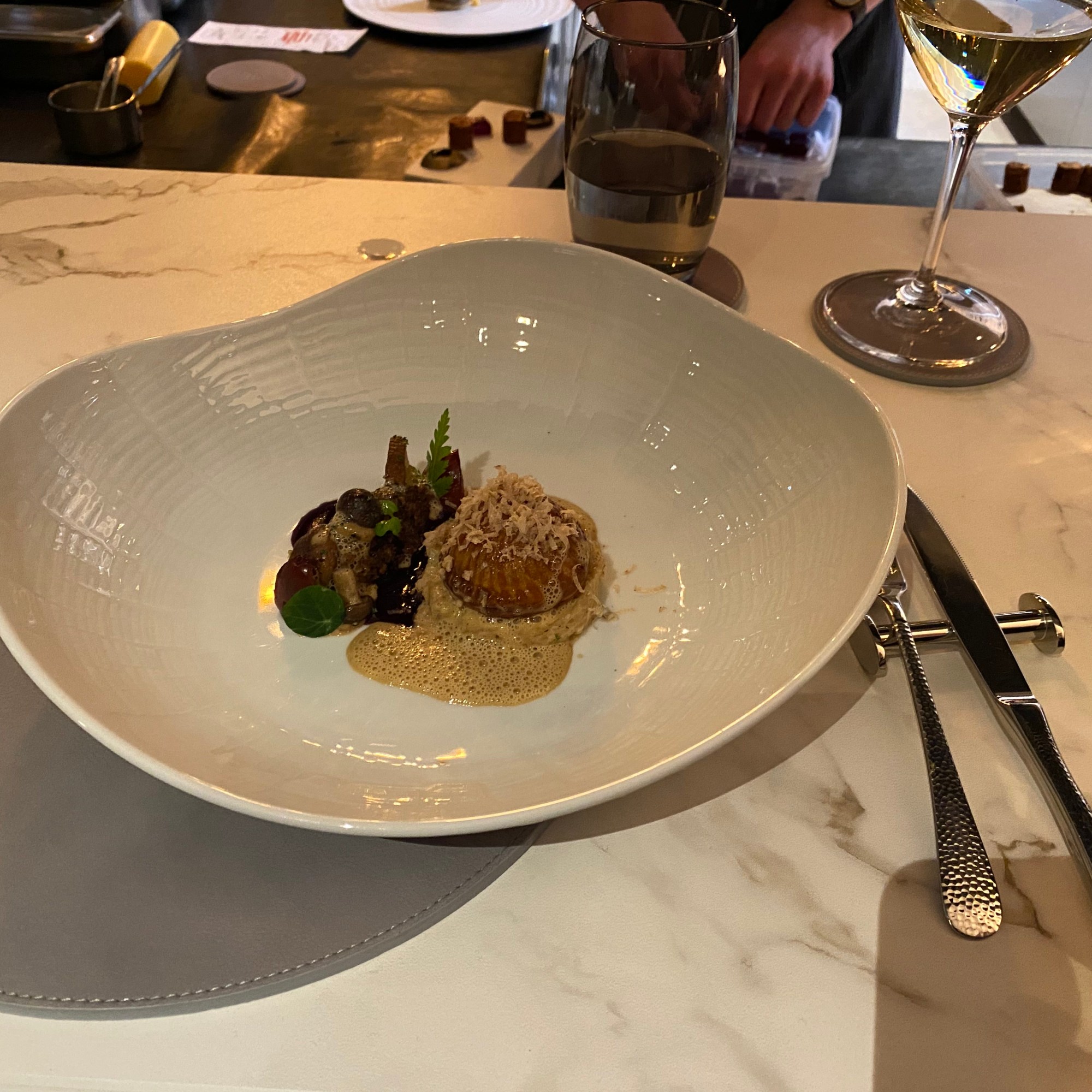
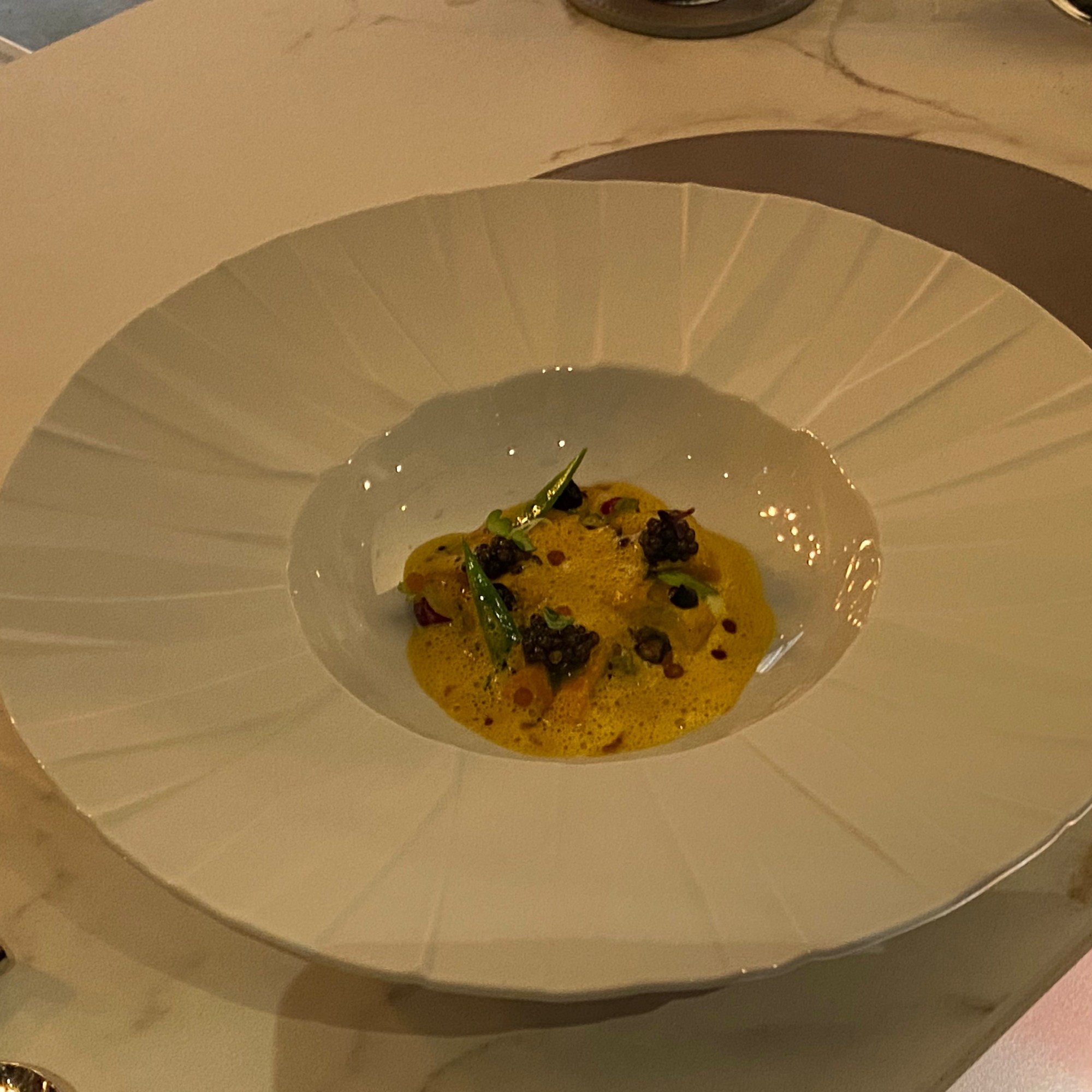
Heading up the next morning to Toompea, Tallinn’s central hill district, which is home to. . .

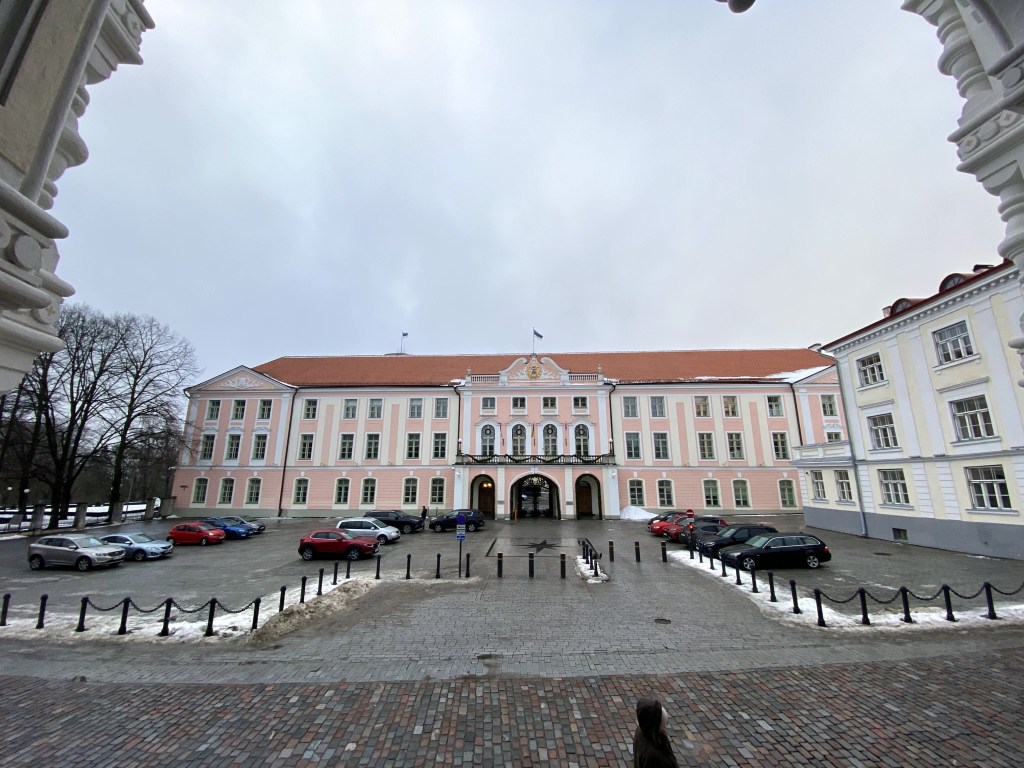
Estonia’s Parliament, the Riigikogu:
And also the Orthodox Alexander Nevsky Cathedral, built in the late 19th century:

Crests for local noble families along one wall:

Because the church was built when Estonia was part of the former Russian Empire, and because it represents Russian Orthodoxy, and because the Estonians are outraged by Russia’s aggression against Ukraine, there’s a movement in Tallinn to raze it and replace it with a park.

Back through the walls:

To yet another stretch of Tallinn’s extant city wall. Here, we have Kiek in de Kok (“Peek into the Kitchen”) on the left, an artillery tower so named because the garrison could see into the kitchens of the nearby houses; and Maiden’s Tower on the right.

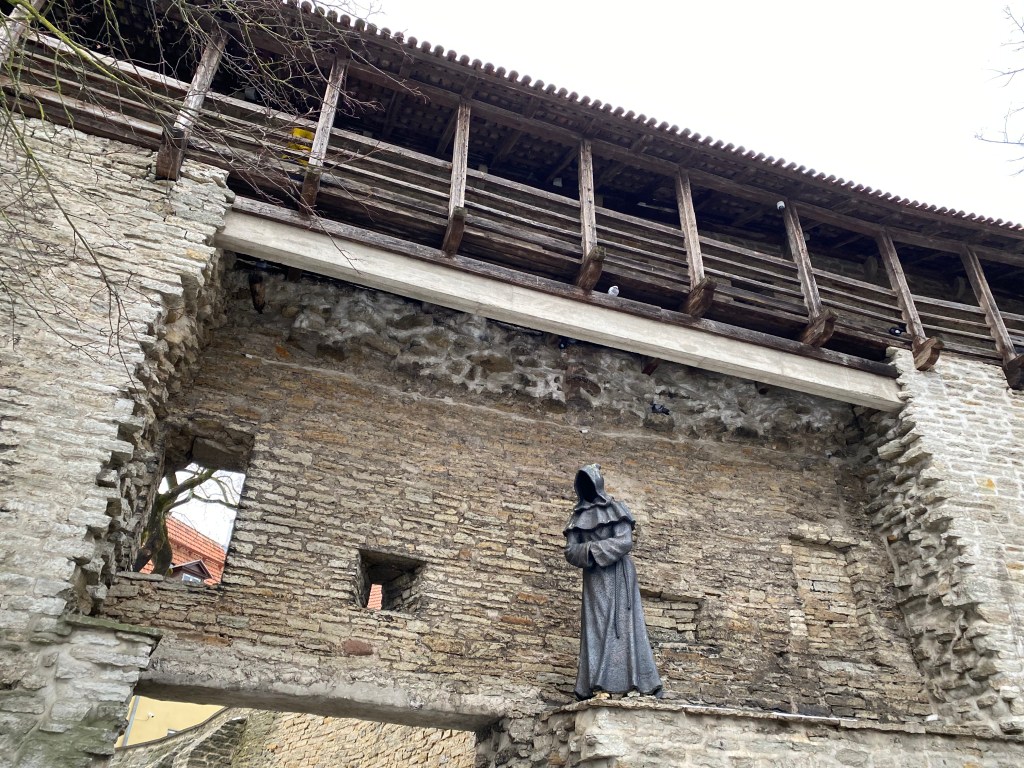
And a creepy, faceless monk statue perched on one segment of the wall. This is one of three faceless monks in this area; this one is “Observing Monk.”
More city wall-and-towers action:
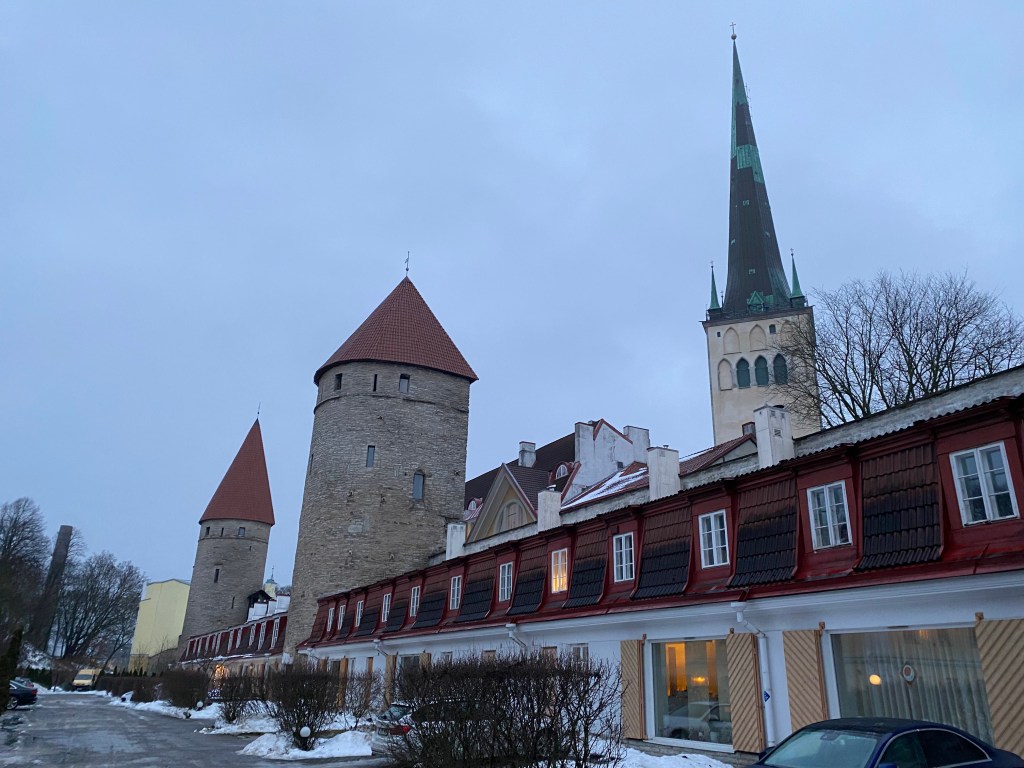

Loewenschede Tower:

Enough with the tower names; here’s a buttload of towers. Definitely a cool, preserved medieval town.
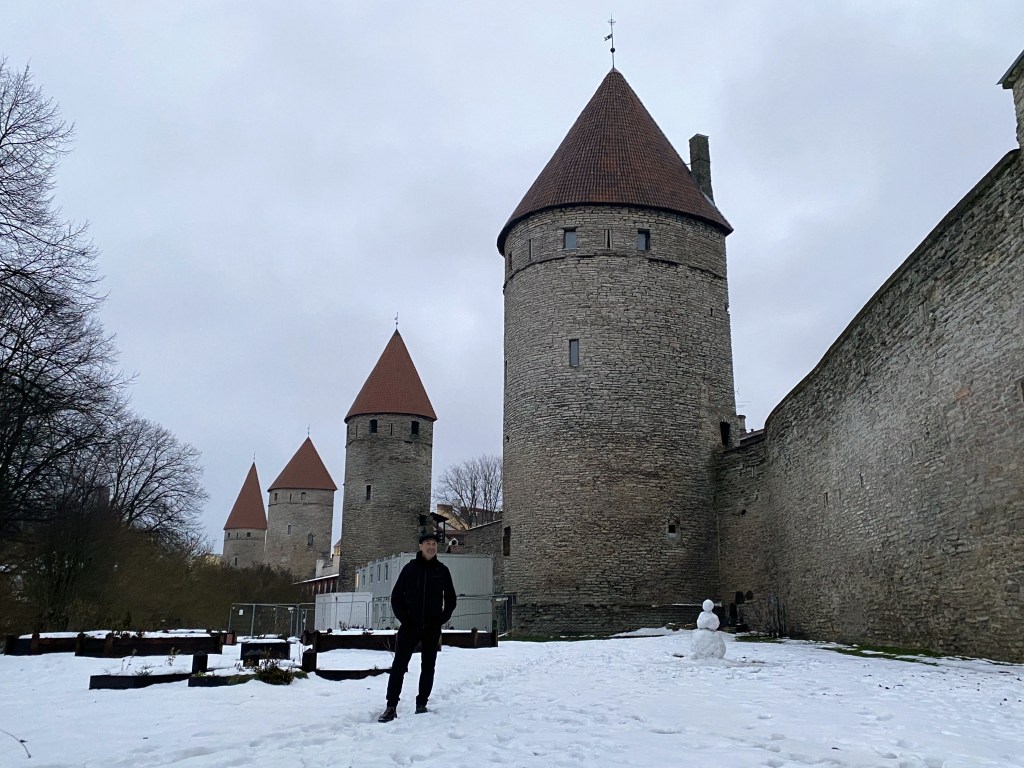
Heading to dinner one night; one cannot escape the walls, man.
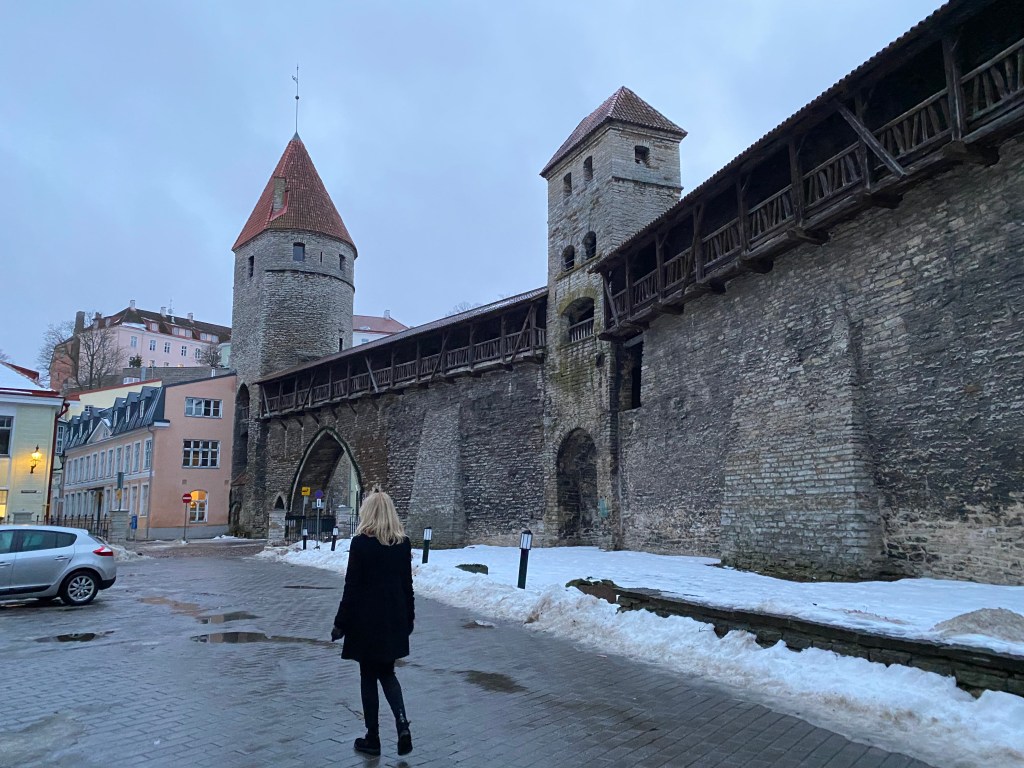
Rataskaevu Street, where the novels featuring Melchior, the 15th-century Tallinn apothecary / amateur sleuth are set (or at least where his apothecary is located). The first book – pretty good! The second – should have been tossed down that well.

Featured in the Apothecary Melchior novels are Tallinn’s medieval guilds. The Great Guild hall, dating from the very early 15th century is right off the main square. It was used as the headquarters of various merchant and artisan guilds until as recent as 1920.

Aaand, the House of the Brotherhood of Black Heads. Also featured in the Melchior novels.

Described as a social club for single merchants and other tradesmen in the Melchior books, it “was a professional association of ship owners, merchants, and foreigners dating from the 14th century.“
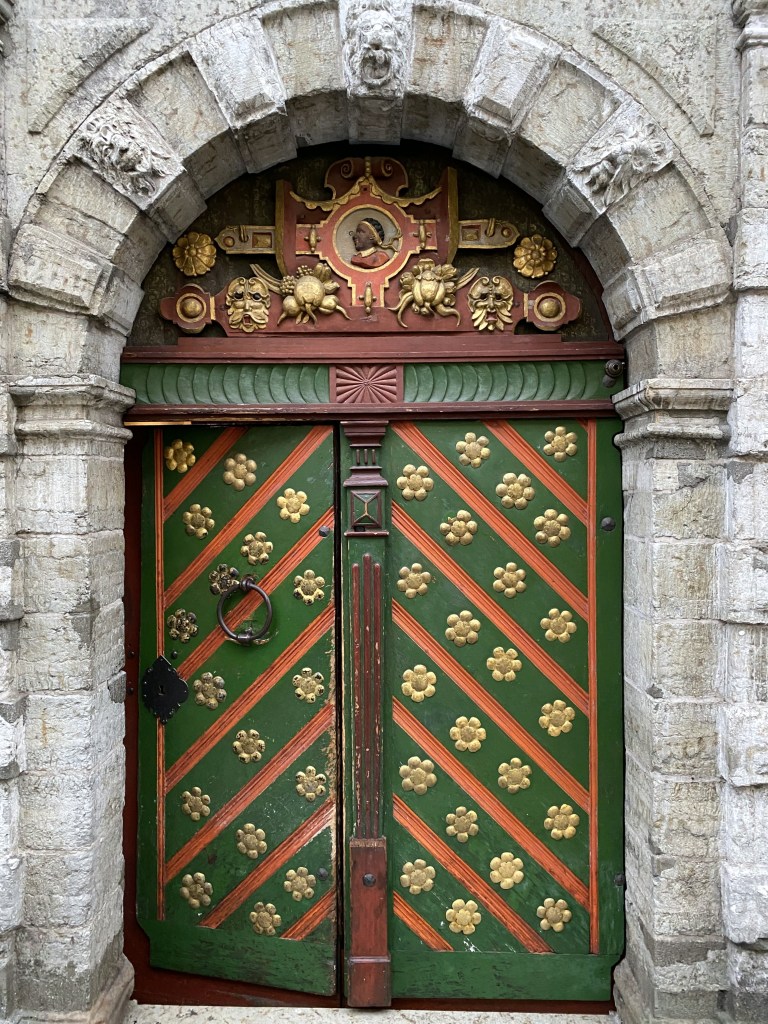
“The House of the Blackheads was visited by several Russian Emperors including Peter I, Paul I and Alexander I who also became honorable members the Brotherhood.“

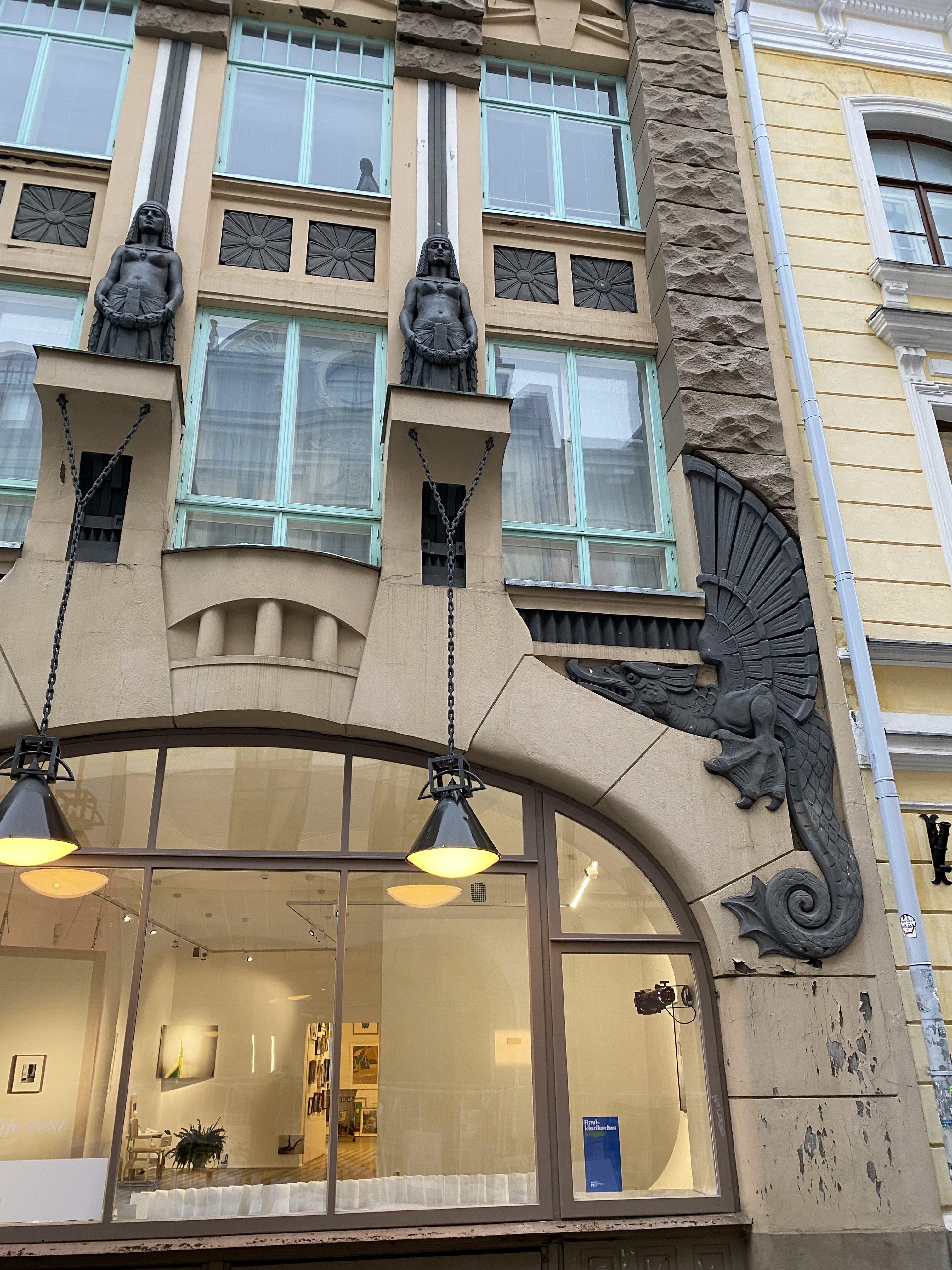
Just some Art Nouveau architecture down the street, which was pretty cool. (But NOTHING like we’d see later in Riga.)


Toompea at night.

Tallinn’s Victory Column on Freedom Square, commemorating the Estonian War of Independence at the end of WW I.

More winter scenes from Toompea’s stretch of wall.


Next stop: Riga!
 WolfeStreetTravel