We are seriously going to try to post the entirety of our trip backlog this year. Starting with the remaining two dozen posts on this, our first, post-retirement, long-duration trip. Posts on WolfeStreetTravel.com unfortunately take a back seat, priority-wise, to trip planning and actual trips, relegating this activity to “when we have some time.” But the first half of this year offers a rare opportunity of no planned travel, so we should be able knock a bunch of backlogged posts out over the next 6 months. The reason for no planned travel is that the ACTUAL Wolfe Street (an actual place where we really do reside), is getting torn up for a sewer upsizing project that one of the WolfeStreetTravelers pressured the city into undertaking for reasons we don’t need to go into here. (The city’s project page is here.)
The reason we want to be in residence during this process and not in Japan or Slovenia or Ecuador or something is that we have 100-year-old clay lateral lines that connect our house to the sewer pipe in our street. Read that again. 100-year-old CLAY pipes. Seriously. Because these fragile artifacts are prone to damage during this construction, we don’t want to have to deal with problems remotely or, worse, cut short a trip to come home and deal with them. So, we’re sticking around until we can confirm that our fragile porcelain China plumbing fixtures are undamaged and the project has progressed beyond the point where they are endangered.
With that, back to travel.
After completing our detour north to picture-perfect Portofino, we finally headed south within the Italian peninsula to our next destination: the Roman ruins of Herculaneum. But the drive was unacceptably long (we try to keep our road trip daily drives to no more than 4 hours), so we stopped at a halfway point: Orvieto in Umbria. (This was not our first choice, however. We originally planned to stop in Montemerano, in southern Tuscany, based on its small, hill-town charm and a Michelin-starred restaurant there. But the restaurant abruptly cancelled our reservation during our planning phase, citing a private event, so we pivoted to another appealing stop that still would be approximately halfway between Portofino and Herculaneum.)
So, why Orvieto? Popes and history (and a cool perch on a defensive bluff). But before the popery and such, a little earlier history. As with Volterra, far to its north, Orvieto originated as an Etruscan metropolis, and celebrated, historic Etruscan tombs punctuate the area (none of which we had time to visit, but they sounded very cool, to be sure). Then, Rome overran the area in the 3rd century BC, then Western Roman Empire collapsed, then Goths controlled the area, then the Lombards, and – finally – the city became a self-governing commune in the 10th century. But one with close ties with the papacy that would grow closer still with each successive century.
Pope Benedict VII was fond of the city, and his nephew became consul of the commune in 1016; Orvieto became Benedict’s retreat from Rome. A pattern emerged, and Orvieto sported three papal palaces from their extended stays there by the 13th century. The role of papal retreat reached its apogee with Pope Urban IV, who resided in Orvieto instead of Rome from 1262 to 1264. (As an aside, we cannot recommend highly enough reading Absolute Monarchs: A History of the Papacy, in which Orvieto appears on every third page or something during the reign of the medieval popes. Regardless, a wildly entertaining, mildly entertaining history tome.)
Considering all of this, Orvieto fell under de facto papal control starting in 1200 and ultimately became an official part of the Papal States in 1354. This rule lasted until 1860, during Italian unification.
With that historical context addressed, let’s check out the town.
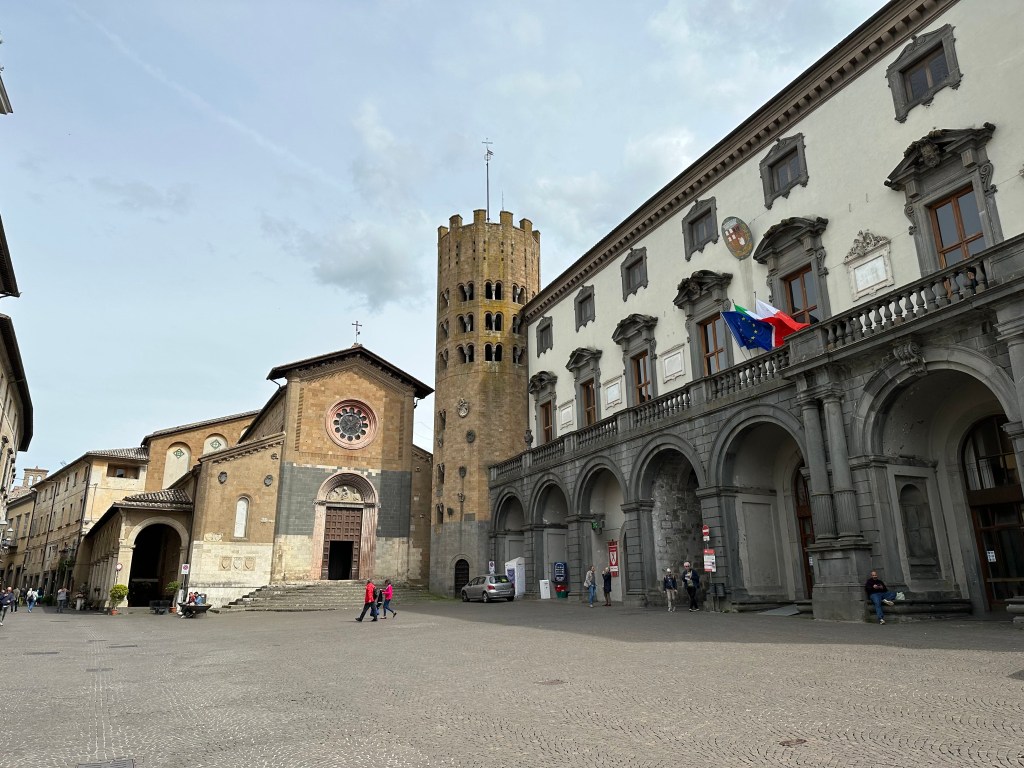
The Romanesque, 12th-century Sant’Andrea church and its distinctive, 13th-century decagonal bell tower.
The whole town is build on an escarpment, but the elevation doesn’t stop after you enter the walled town:
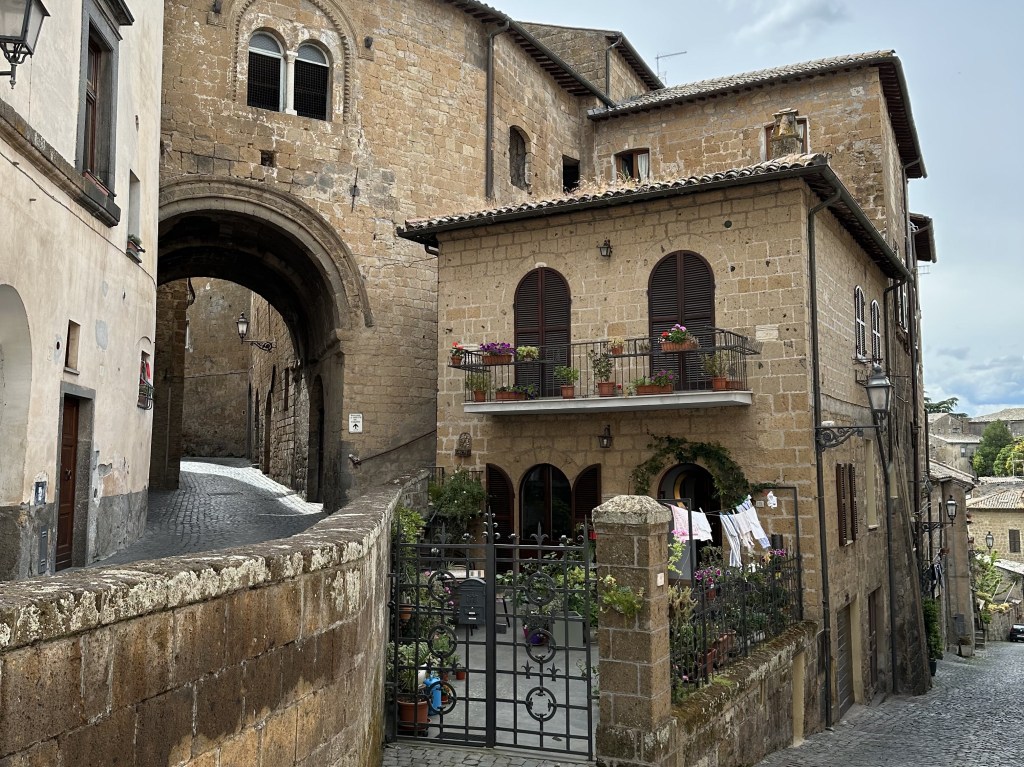
There are pretty cool, medieval warren of streets in some areas:
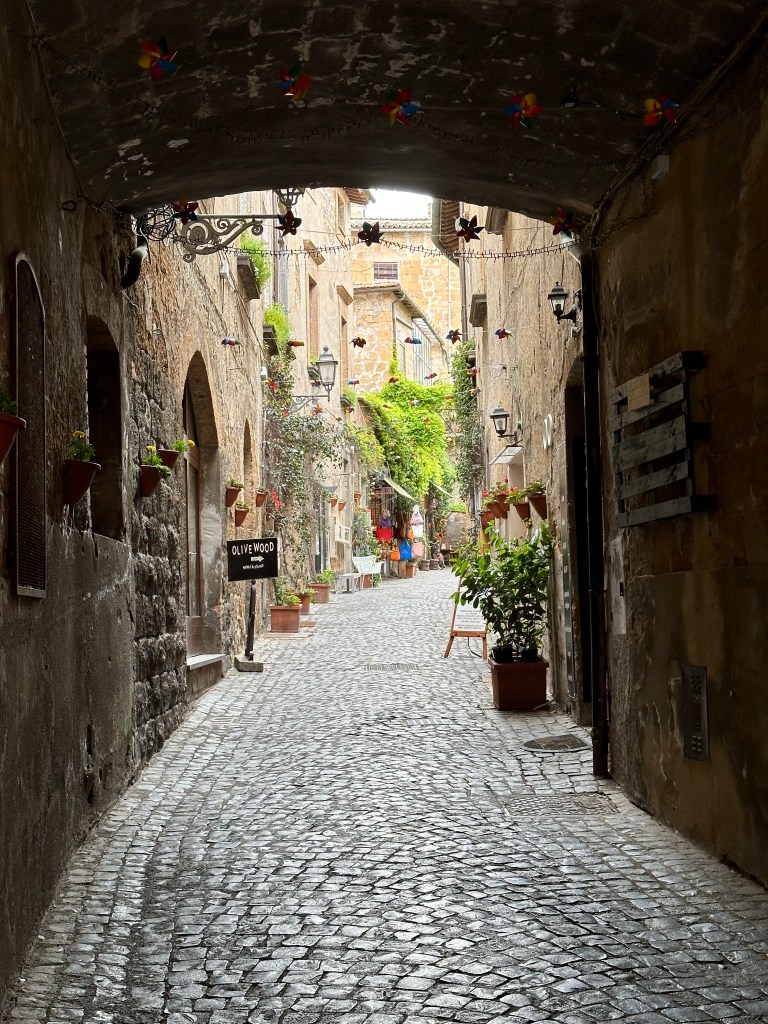
while others are more spaced out, like the street heading to the cathedral:

Orvieto’s primary attraction (other than the town-on-the-cliff itself): the 14th-century Duomo di Orvieto (also, the Cattredale di Santa Maria Assunta), seen here from la torre del Moro, which we’ll address below.
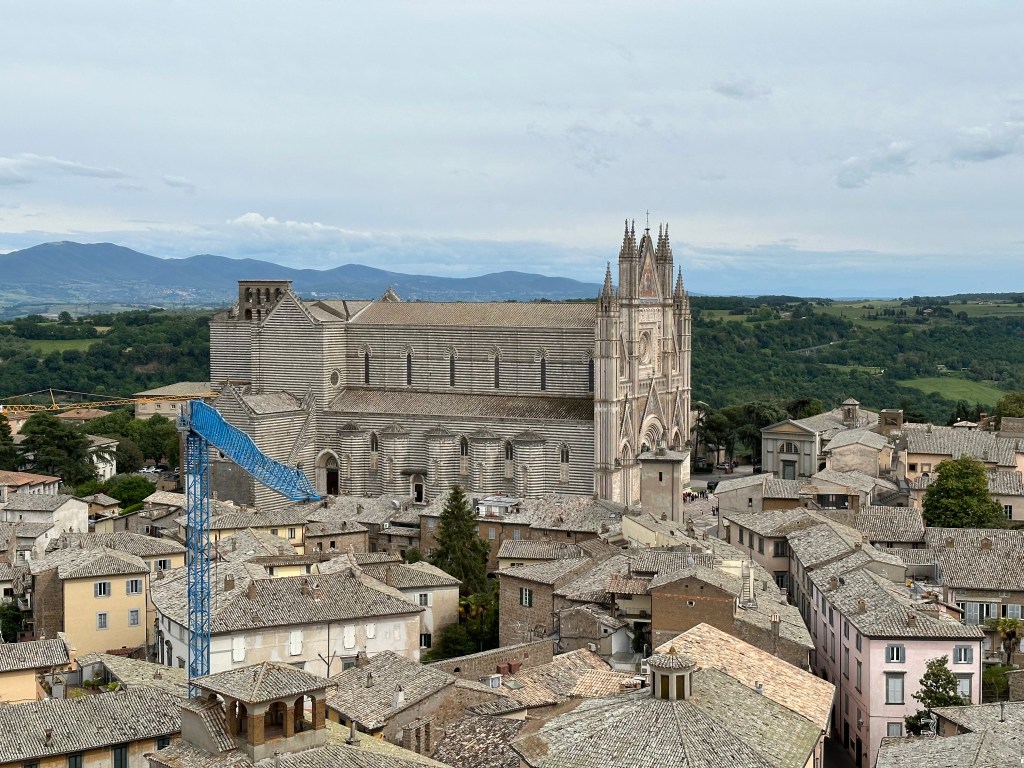
Those familiar with our posts from Cinque Terre will recognize the Ligurian Romanesque (or Pisan Romanesque) black-and-white stacked architectural style of the cathedral:
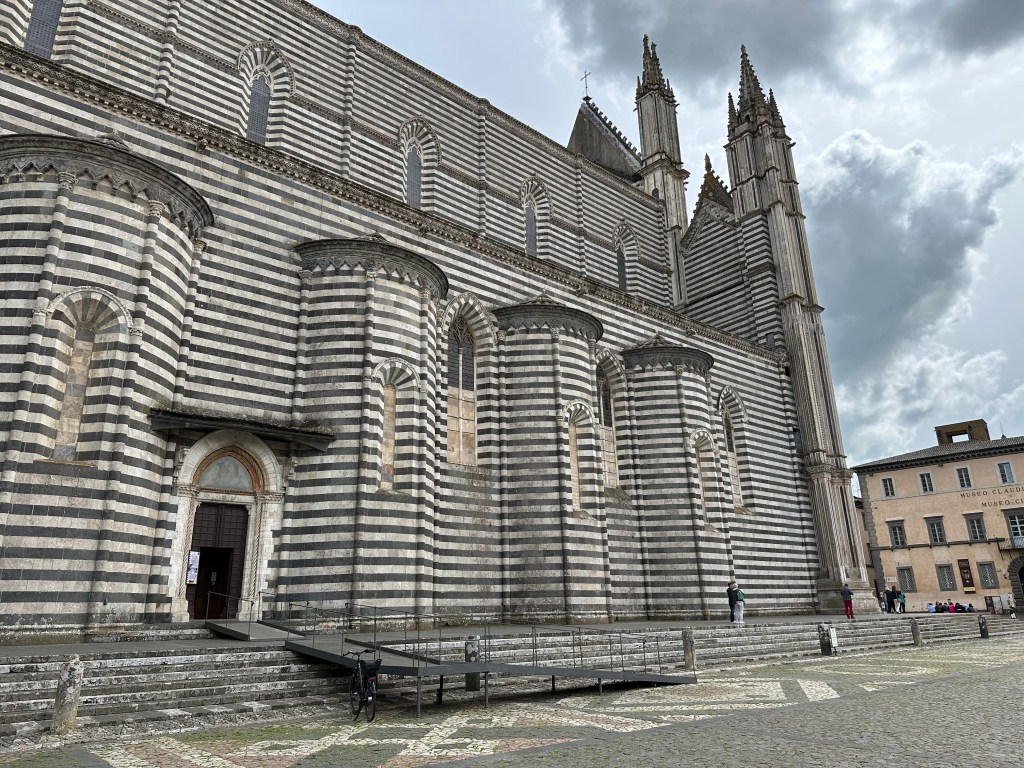
“The building was constructed under the orders of Pope Urban IV to commemorate and provide a suitable home for the Corporal of Bolsena, the relic of miracle which is said to have occurred in 1263 in the nearby town of Bolsena, when a traveling priest who had doubts about the truth of transubstantiation found that his Host was bleeding so much that it stained the altar cloth. The cloth is now stored in the Chapel of the Corporal inside the cathedral.” (From here.)
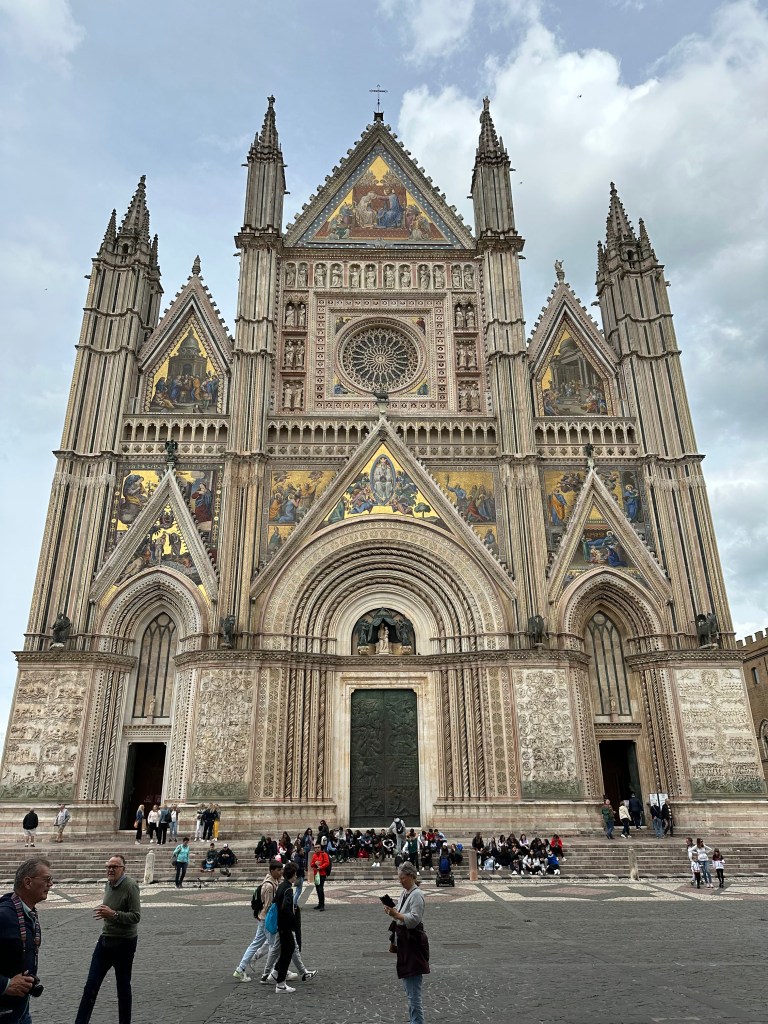
Pretty awesome, polychrome facade of the cathedral – a Late Middle Ages architectural masterpiece (but oddly still not as cool to us as the other polychrome facade we came across one evening in Lucca).
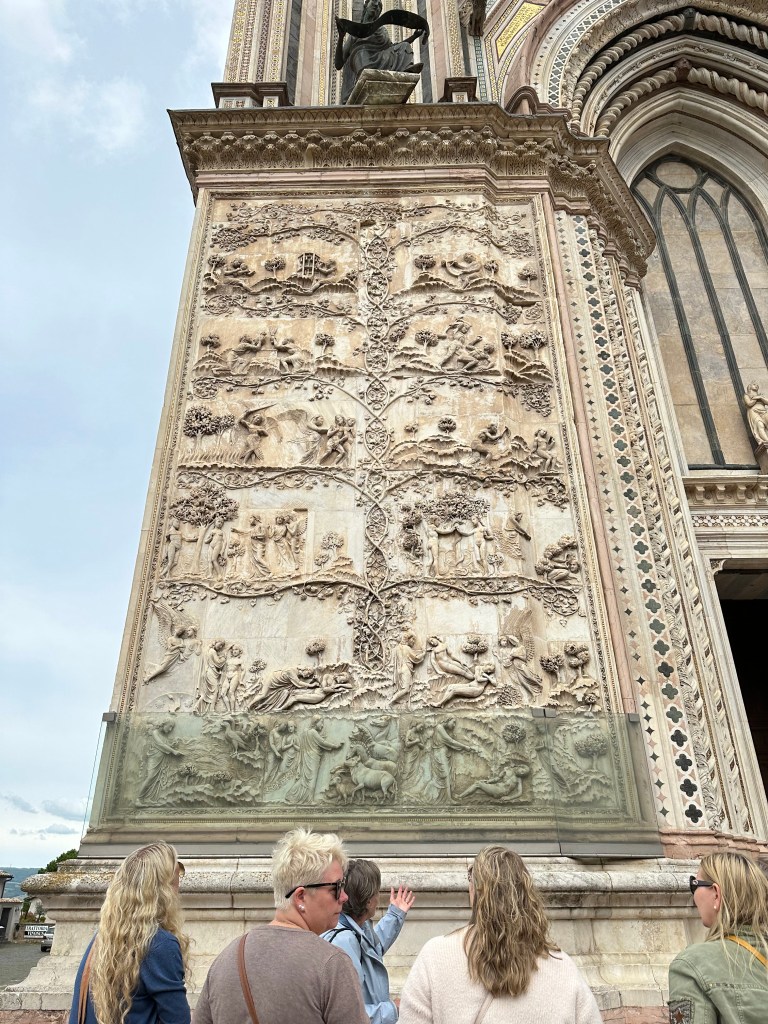
Bas relief of Genesis on the extreme left of the cathedral’s exterior:
The cathedral’s soaring exterior and trussed timber roof:
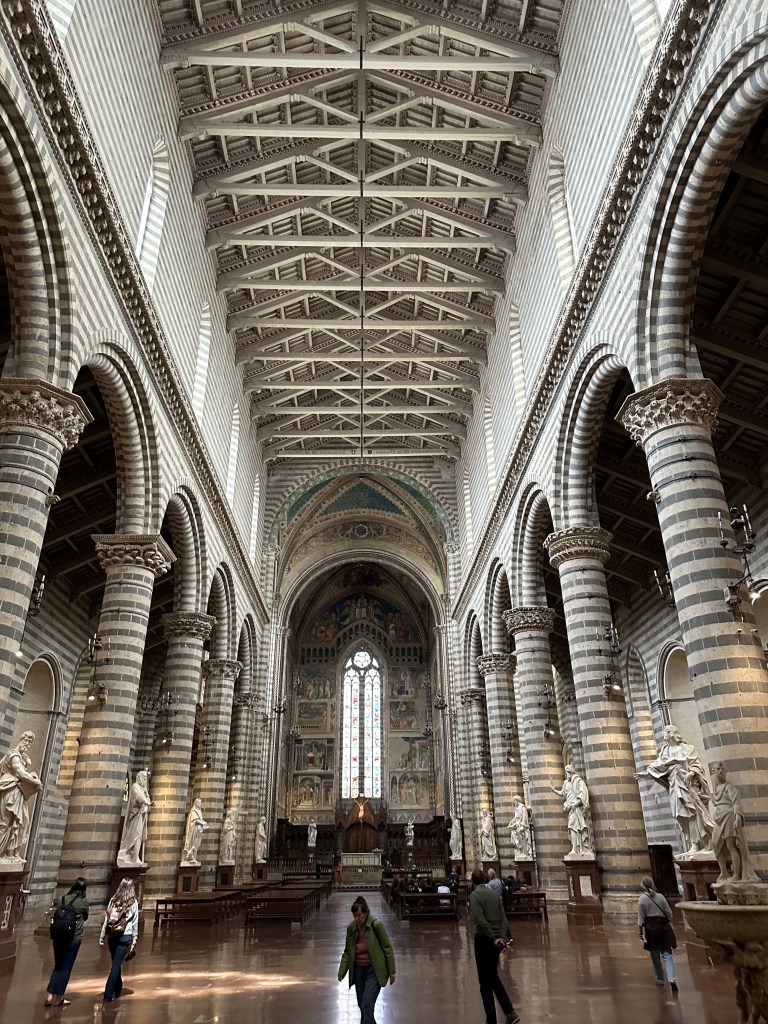
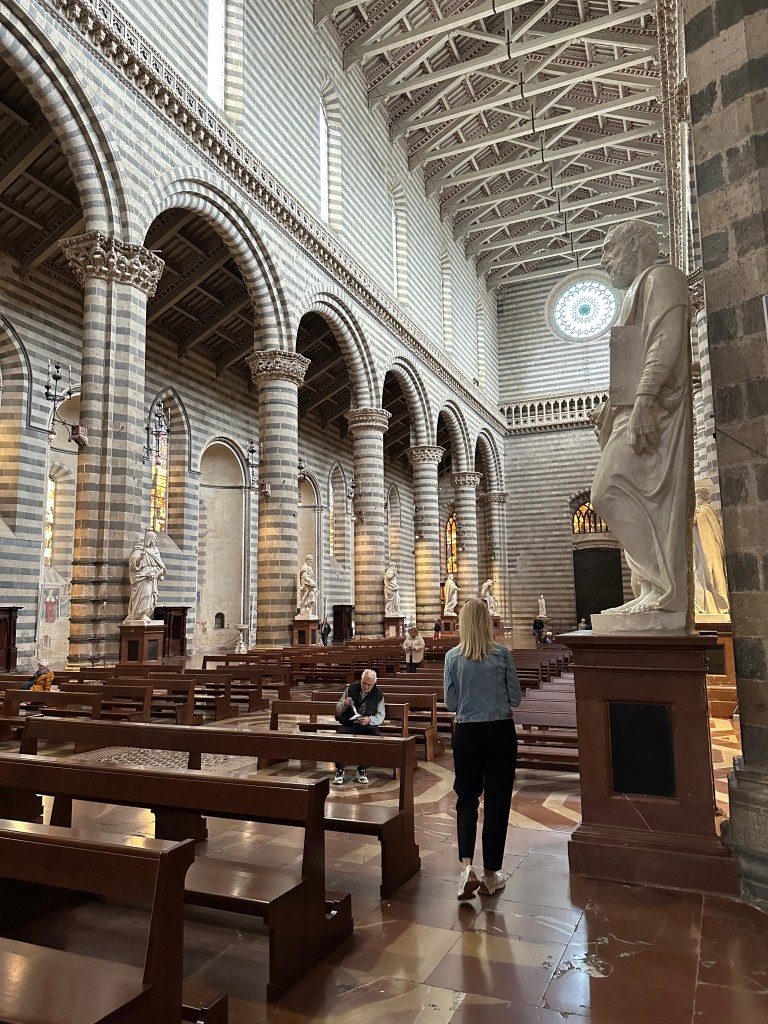
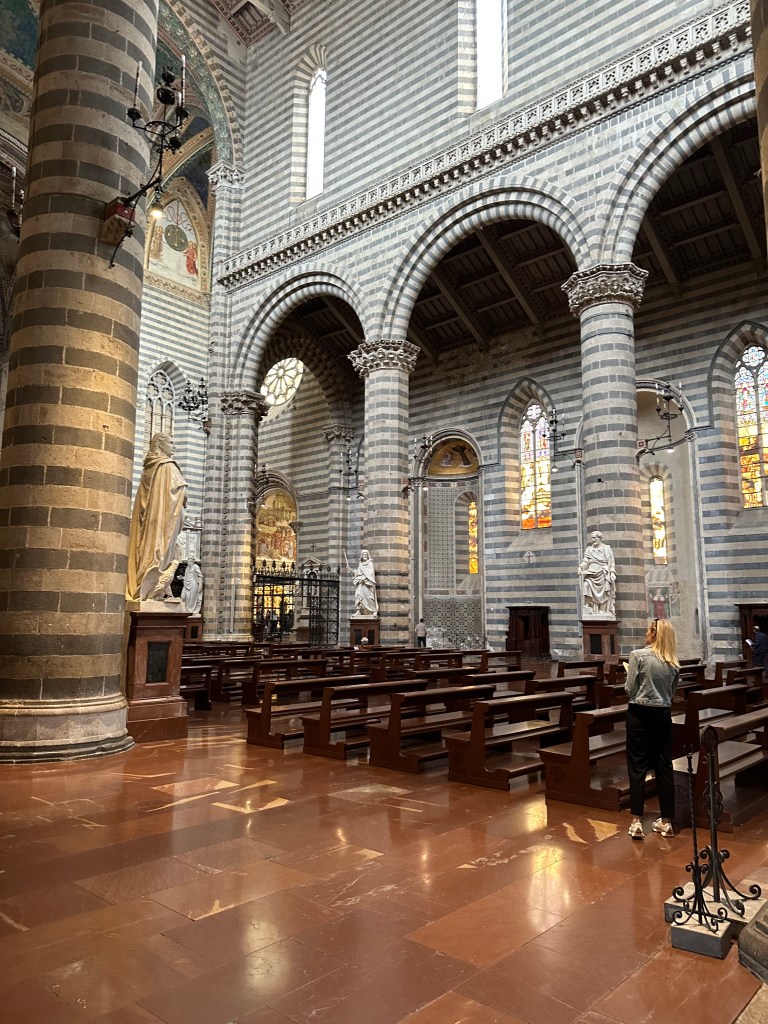
But its size is surprisingly intimate:
Frescos abound:
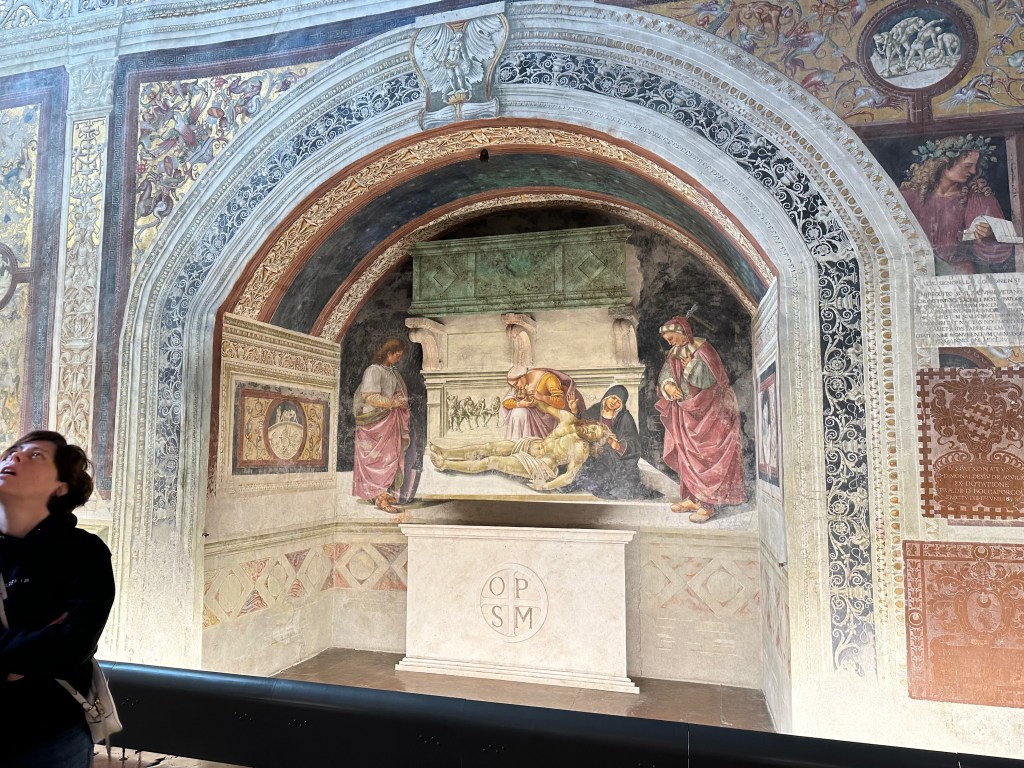
As do small chapels:
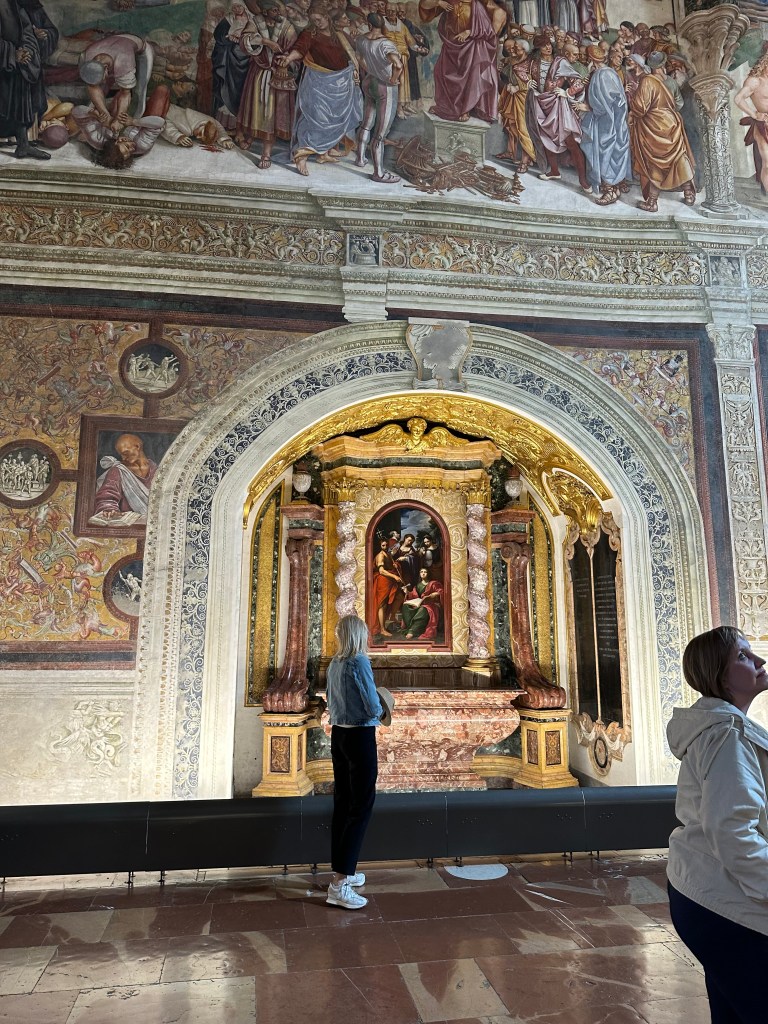
The later, 15th-century Chapel of the Corporal, with some pretty cool vaulting, all completely covered in frescoes (Christ in Judgement, apparently).

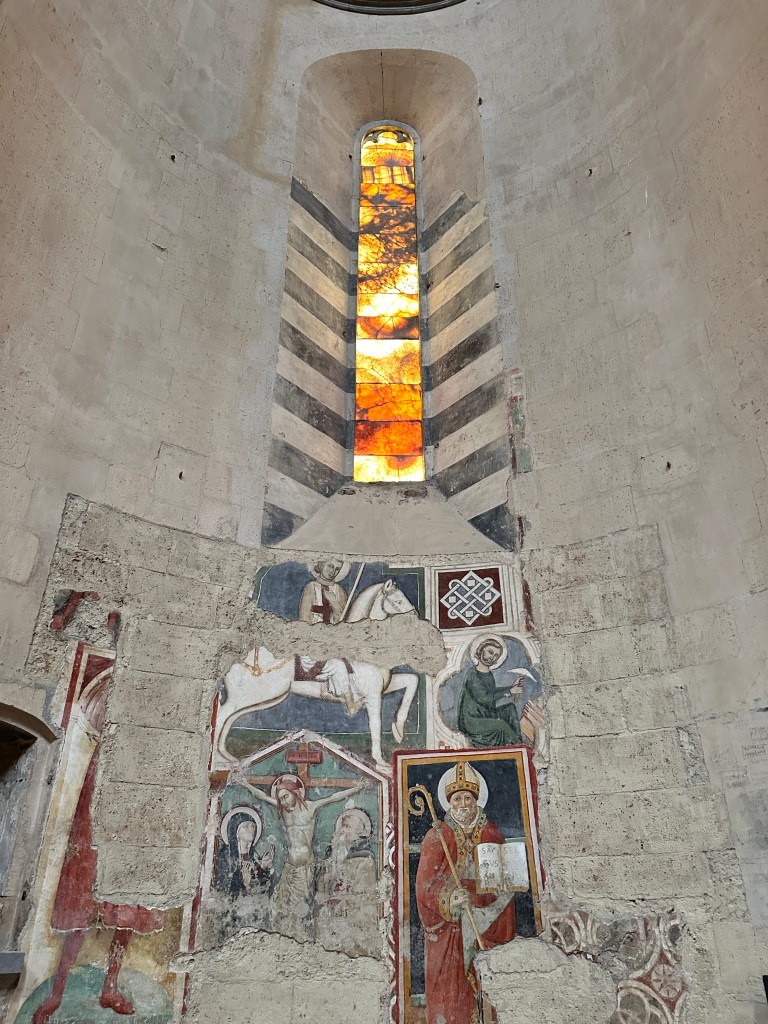
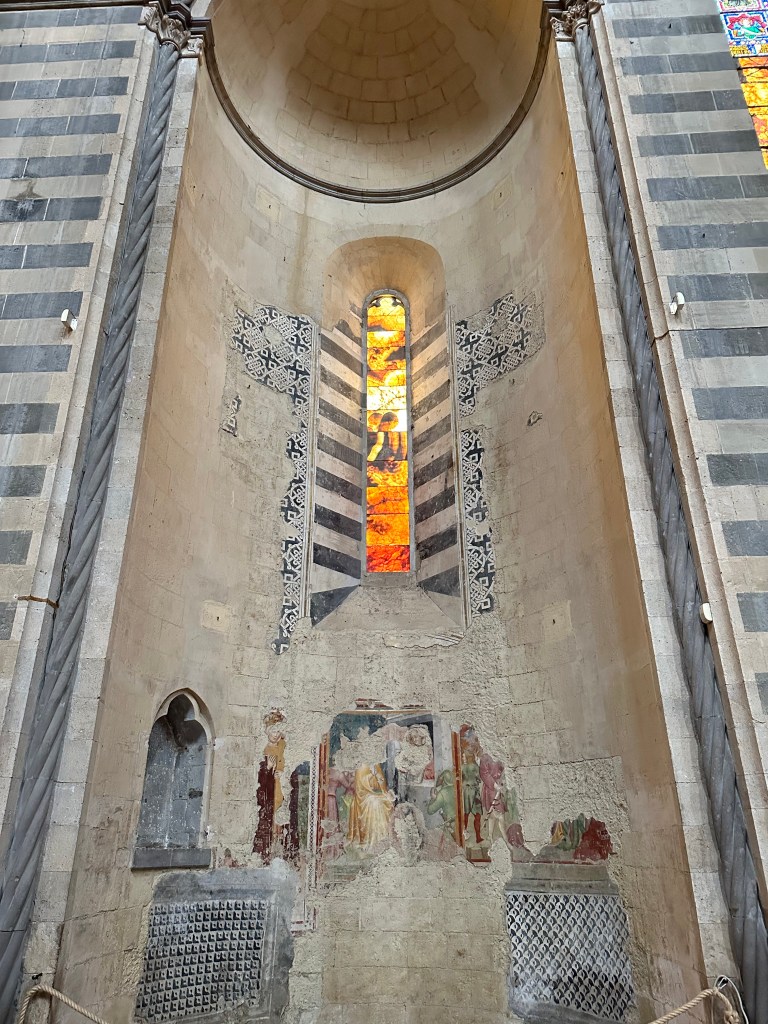
The remains of earlier decorations still visible in the cathedral (as well as alabaster windows, which are always of interest):
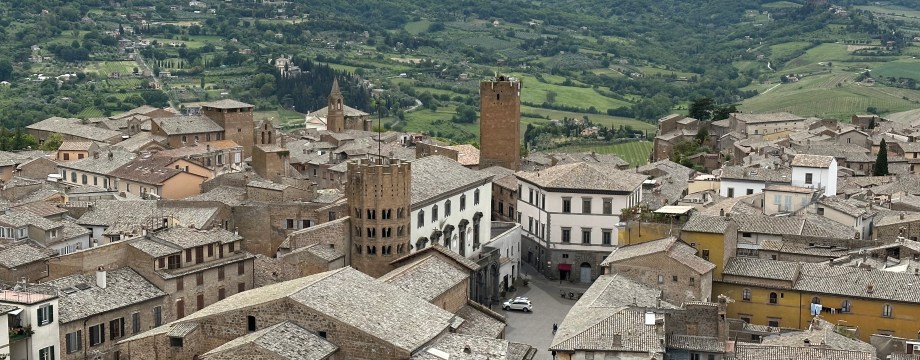
The visit to the cathedral complete, we headed to Torre del Moro (Tower of the Moor) built in 1200 for a view over Orvieto:
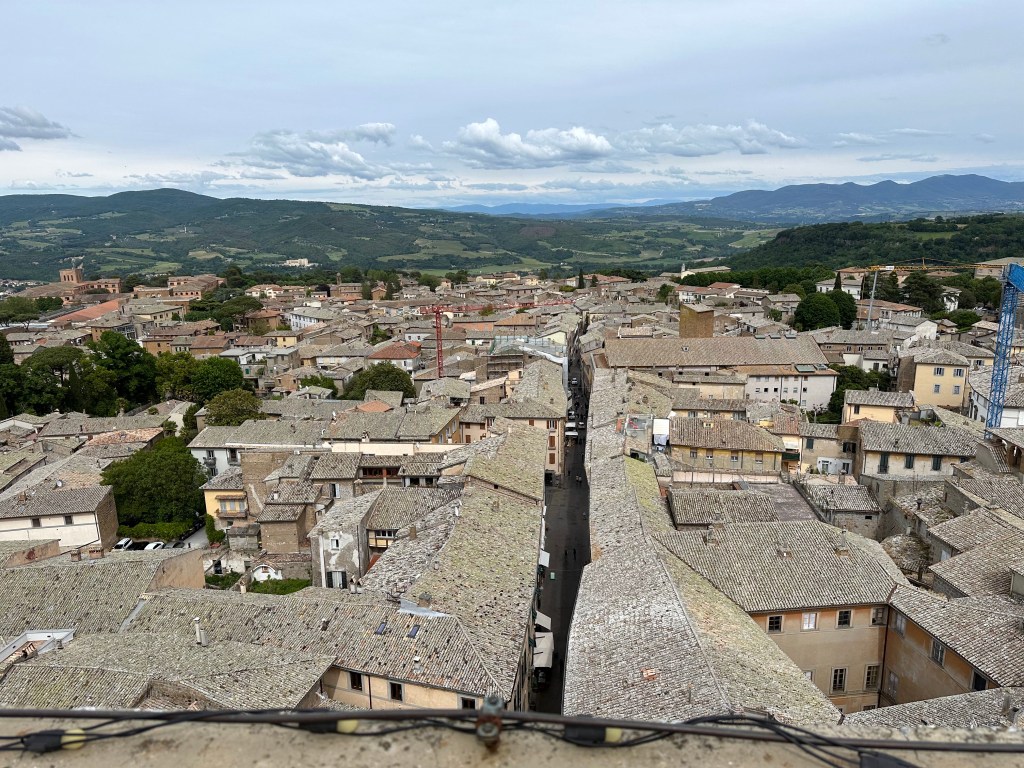
A view of the Capitano del Popolo, the Captain of the People (basically the representative head of the city):
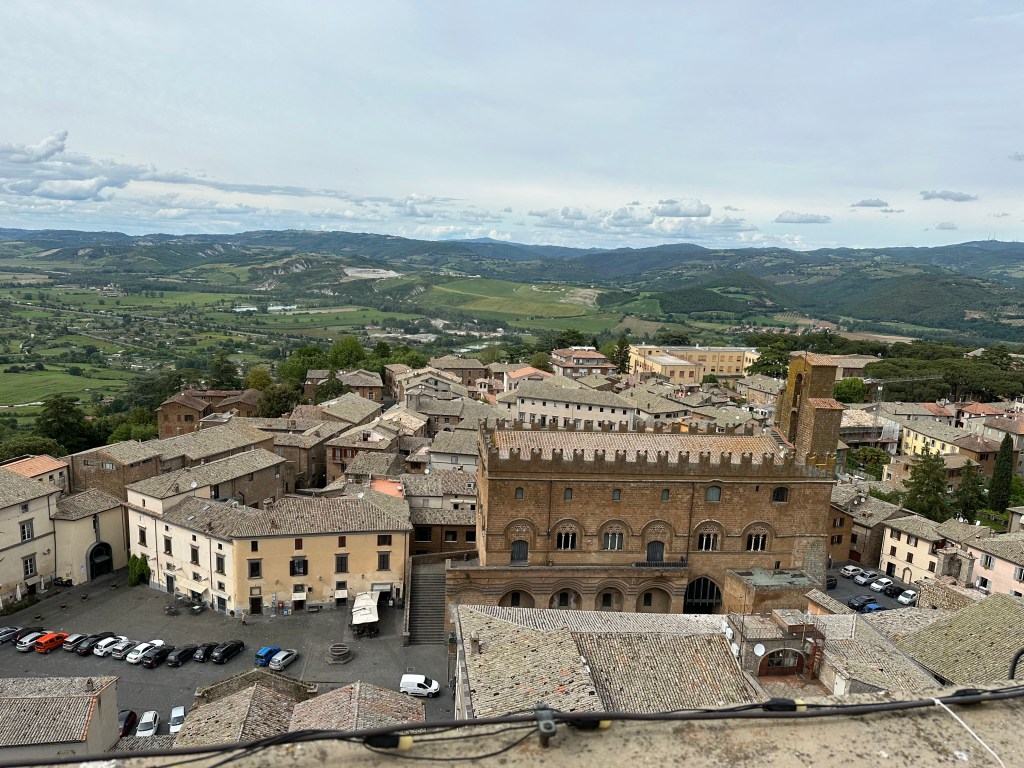
A different perspective on the Sant’Andrea church and its decagonal bell tower encountered earlier when we entered Orvieto:

And then on to our lodging for the evening, a location we selected because of its similarly storied history.
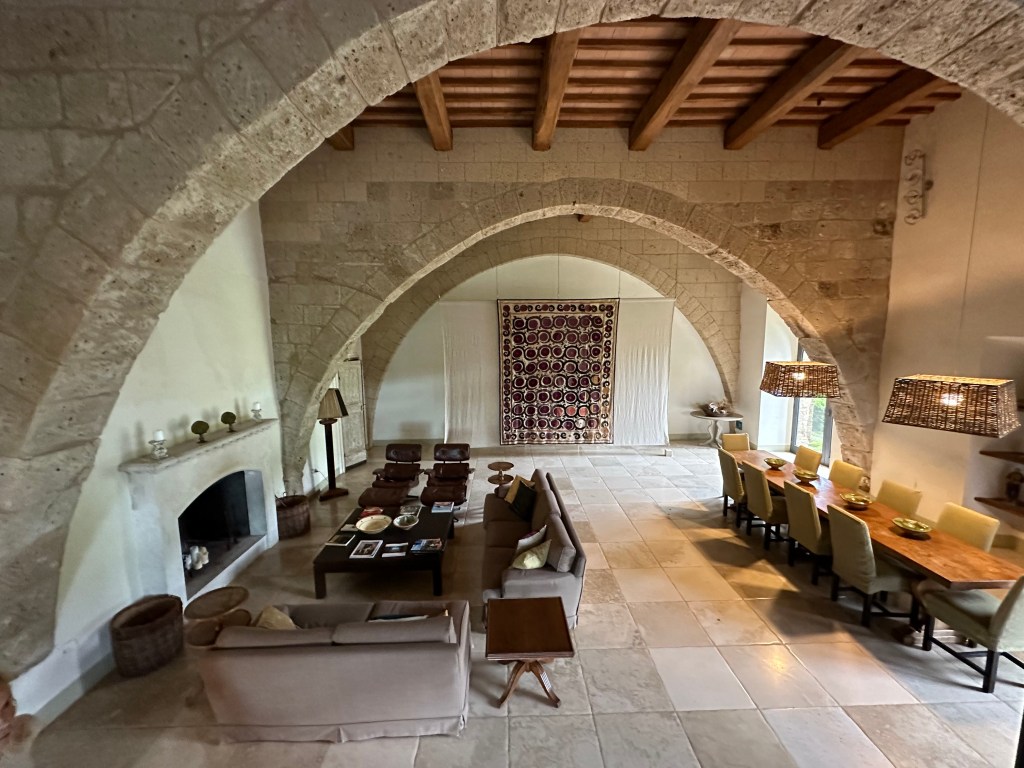
“Locanda Palazzone is a historic residence from the medieval period. . . Taking into account its residential typology and its location of relative isolation in the countryside in the vicinity of Orvieto, it can be thought that the building may have been built as a “hospitalis,” in the sense of a hostel for prelates and wayfarers or a post station for pilgrims heading to Rome, since it was precisely in 1300 that Boniface VIII formalized the first Jubilee.”
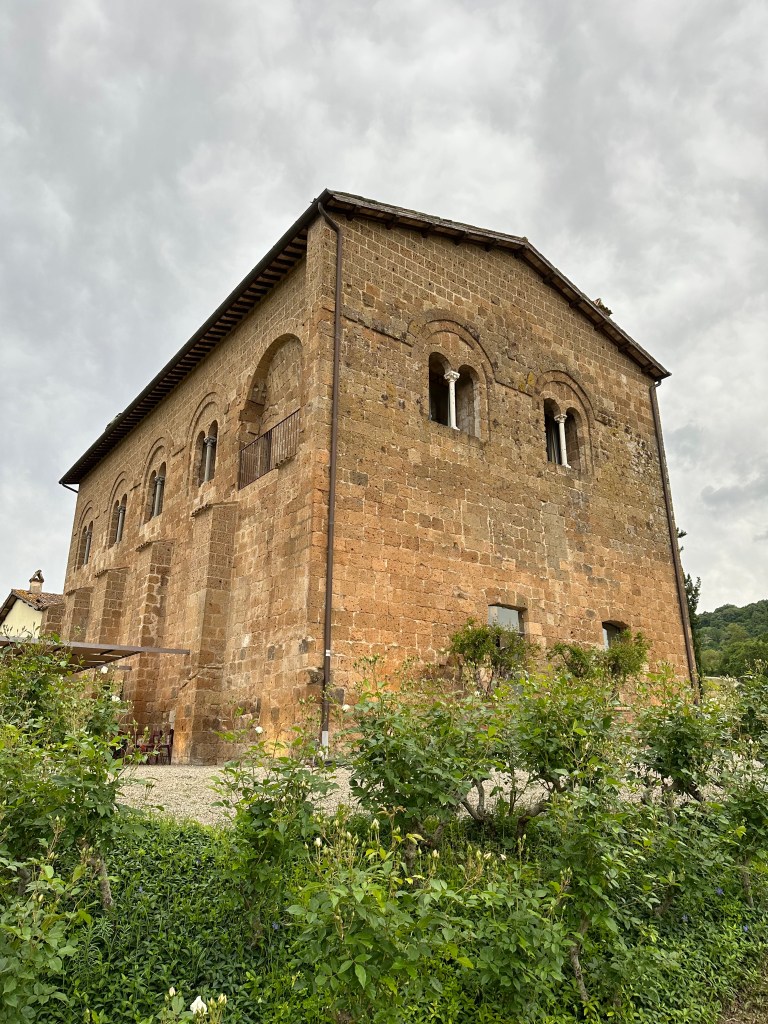
View out the ornate window of our room. . .
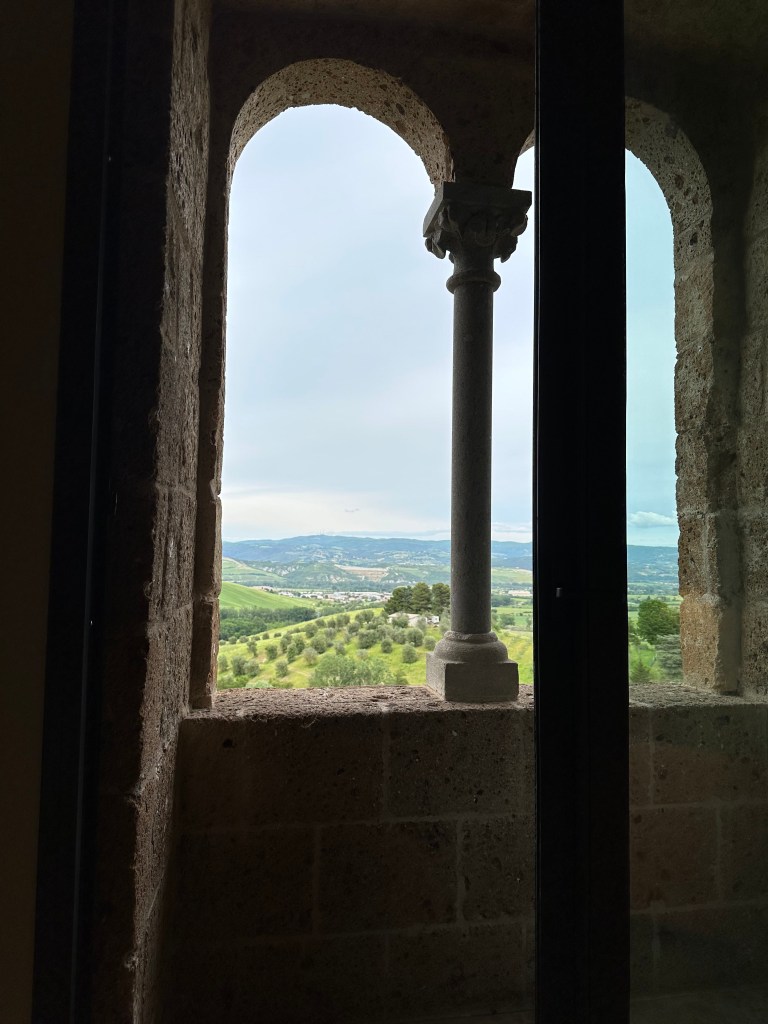
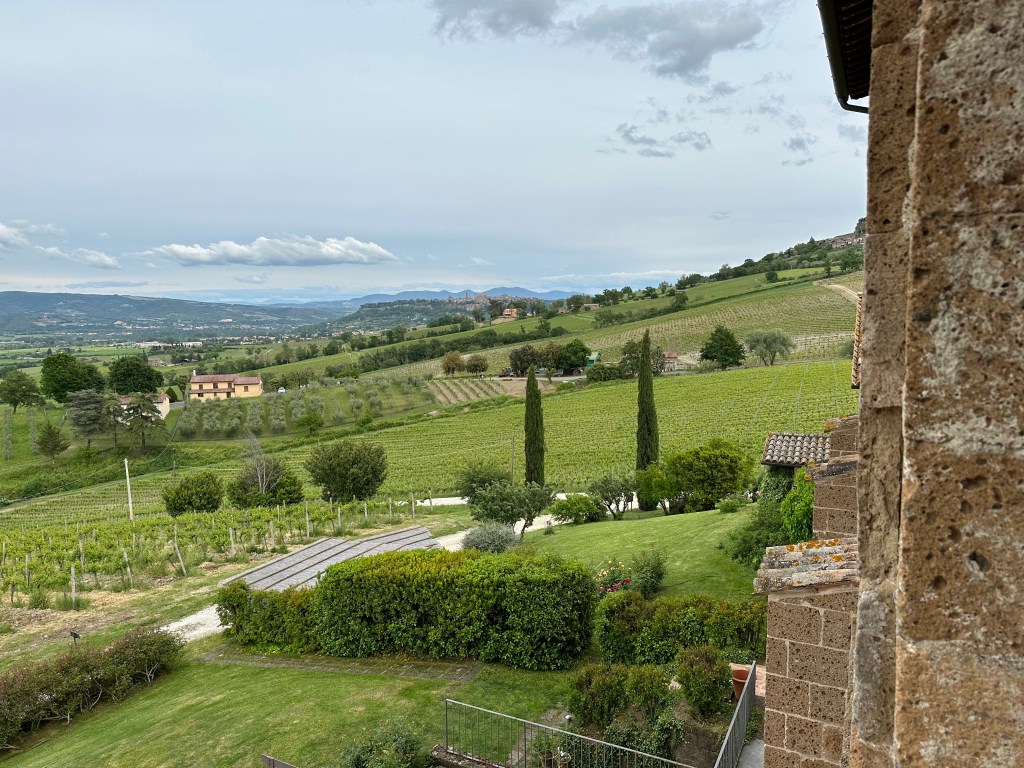
which, if you crane your neck out an around. . .
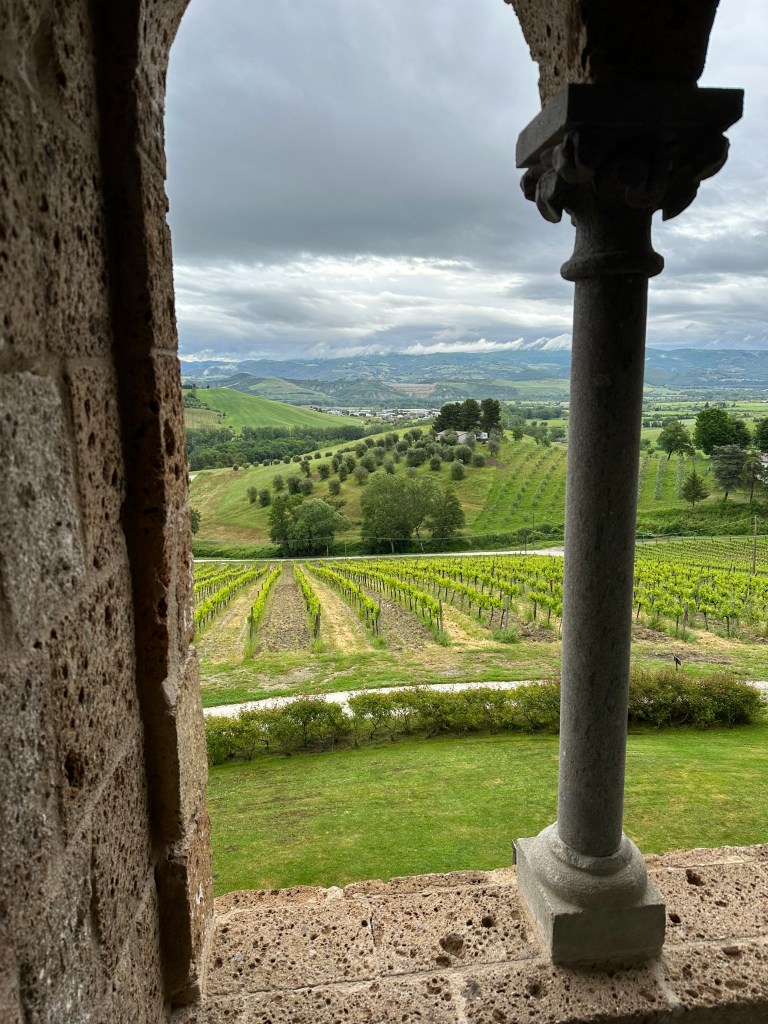
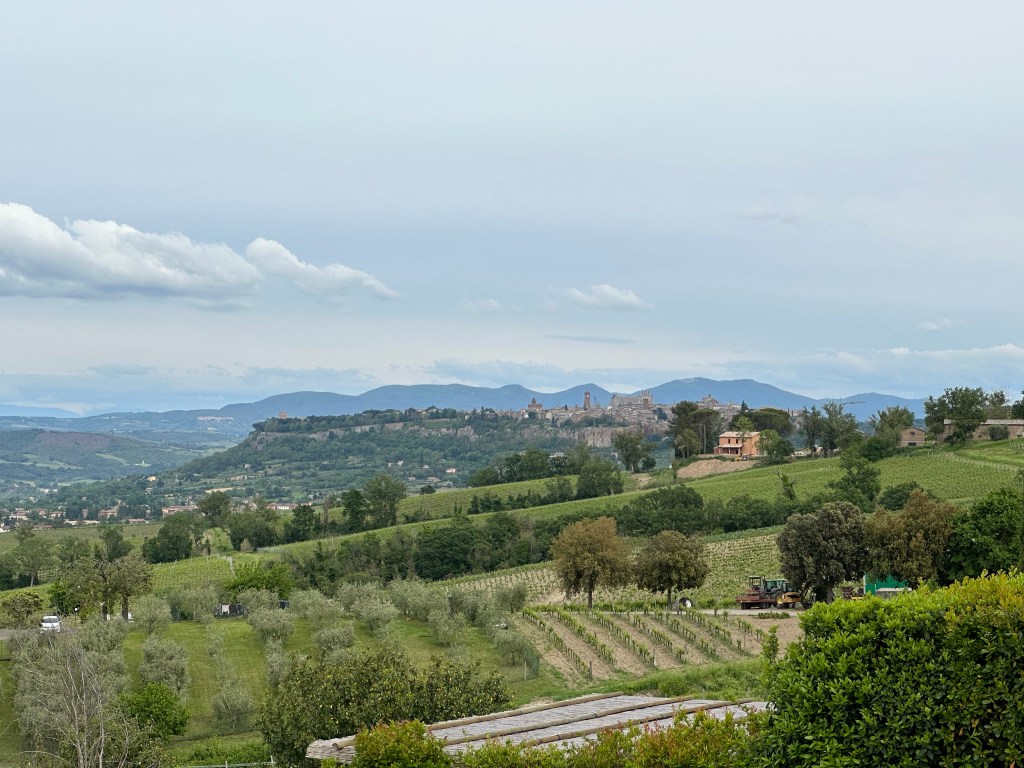
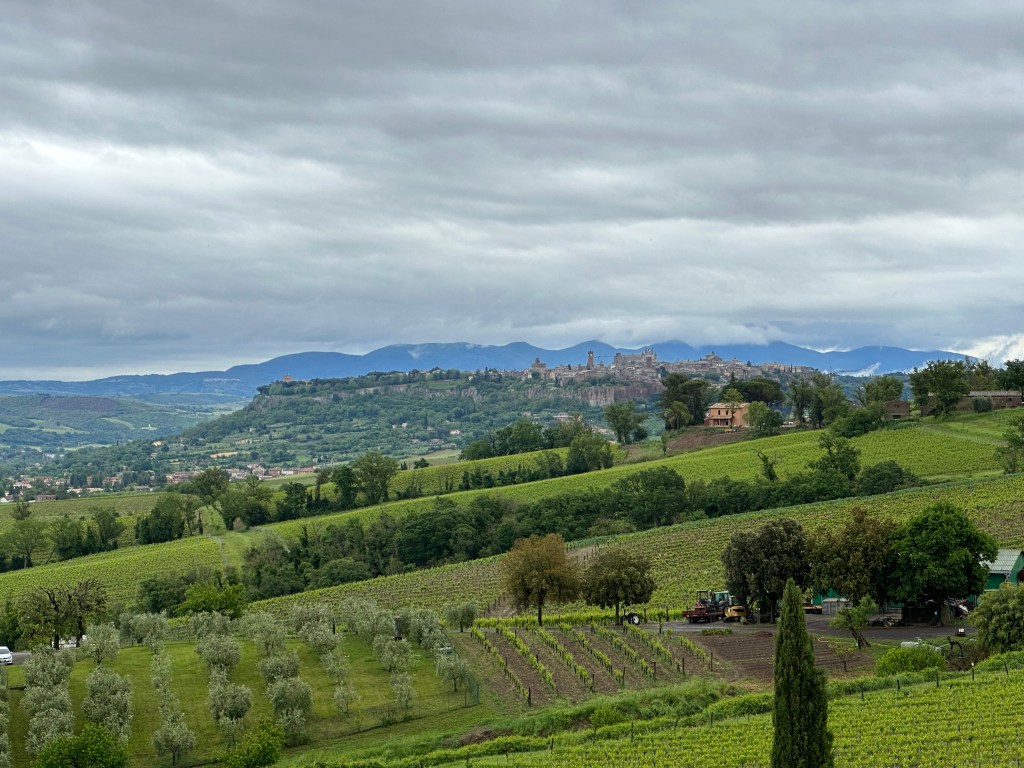
allows for a view across the valley. . .
to Orvieto itself.
Pretty cool place with lots of history.
On to Herculaneum and an amazing time capsule of Roman culture!
 WolfeStreetTravel