
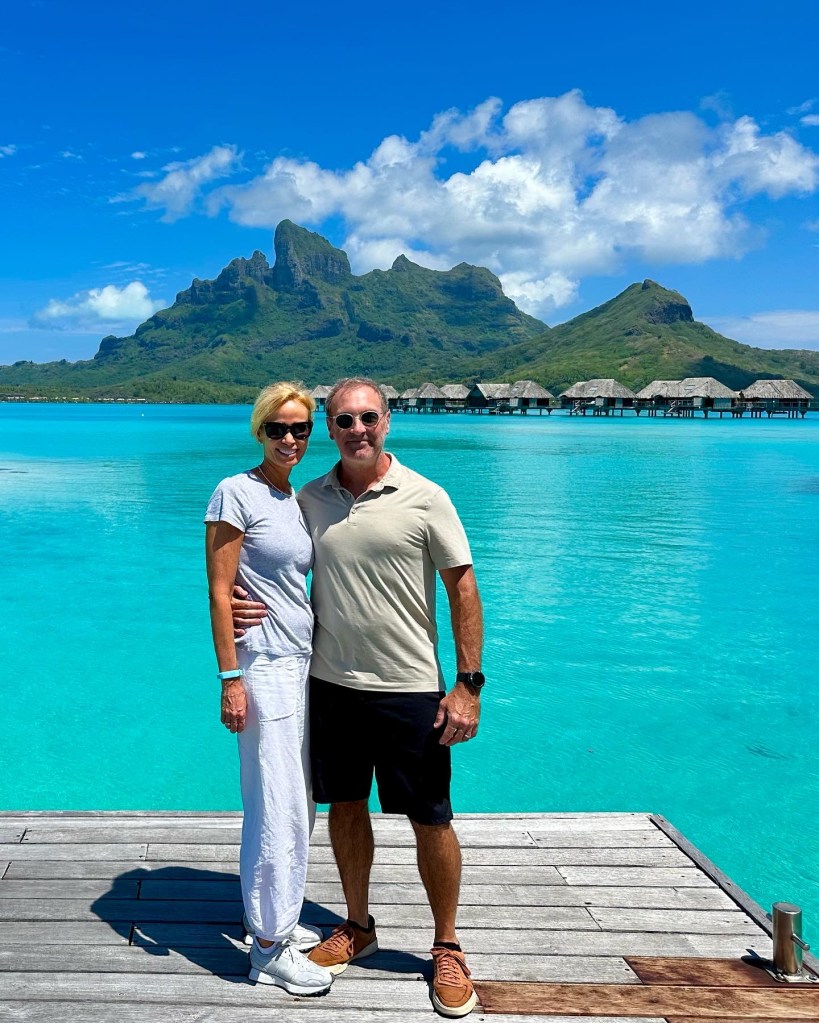
After a little less than 2 months of recovery from a prolonged foray to Italy, Malta, France, and Portugal, we embarked on another journey in September, this time to the other side of the globe: we headed to Bora Bora in French Polynesia to celebrate our 25th anniversary.
Since we already were going to be traveling to the middle of the Pacific for just 7 days, we decided to travel a little further after to visit another remote country that had been on our list for 2 decades: New Zealand. We’d spend another 2.5 weeks road tripping there – first on the North Island, then, after a ferry ride across the Cook Strait, on the South Island.
Our travel locations / itinerary for this trip can be found in the interactive travel map below:
Upon arrival in French Polynesia, we spent the night and the next morning in Tahiti (home to the international airport), then made our way to our actual destination in the French Overseas Territory. Bora Bora’s great appeal and unique geographical / oceanographic situation: its turquoise-blue lagoon. The island consists of an extinct volcano in the middle, a coral atoll that encircles it, and a serene lagoon in between:
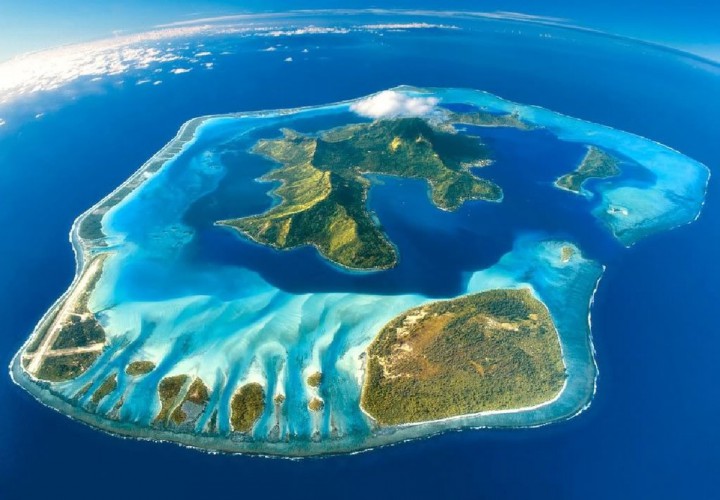
The lagoon is protected by the atoll from ocean waves, resulting in an ideal setting for overwater bungalows that otherwise would not survive in more challenging ocean environments. THIS is why we targeted Bora Bora for our milestone.
Turned out to be a pretty good setting for a 25th anniversary celebration. . .


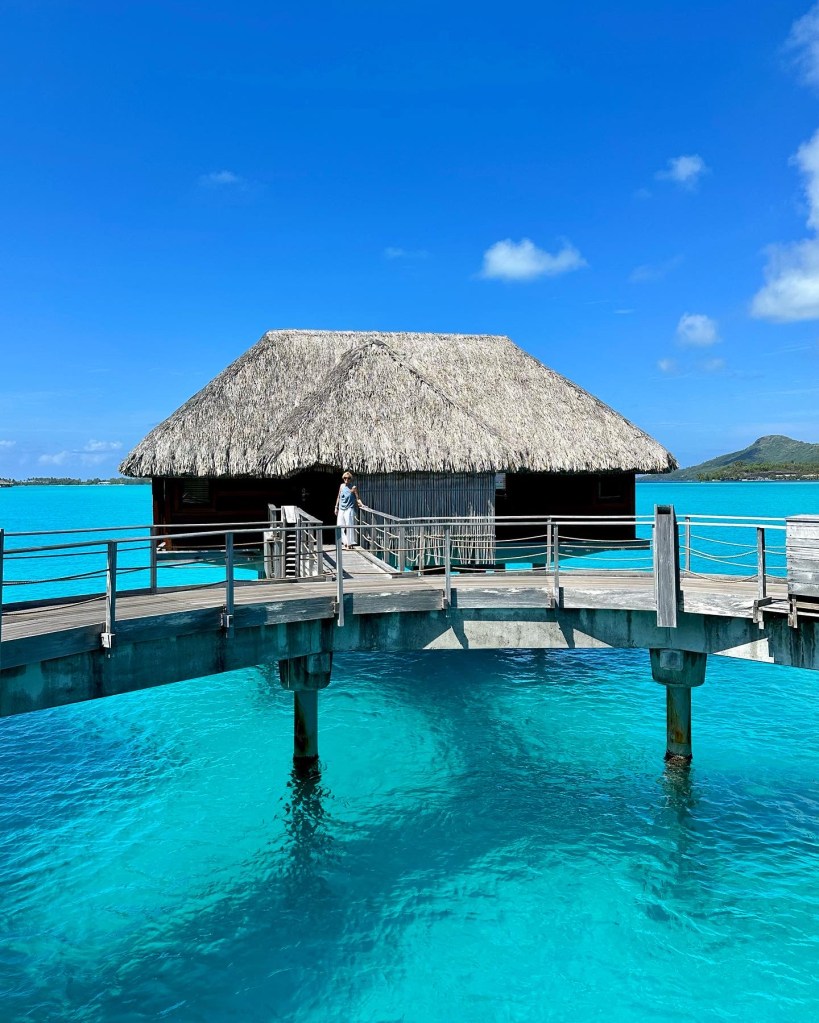
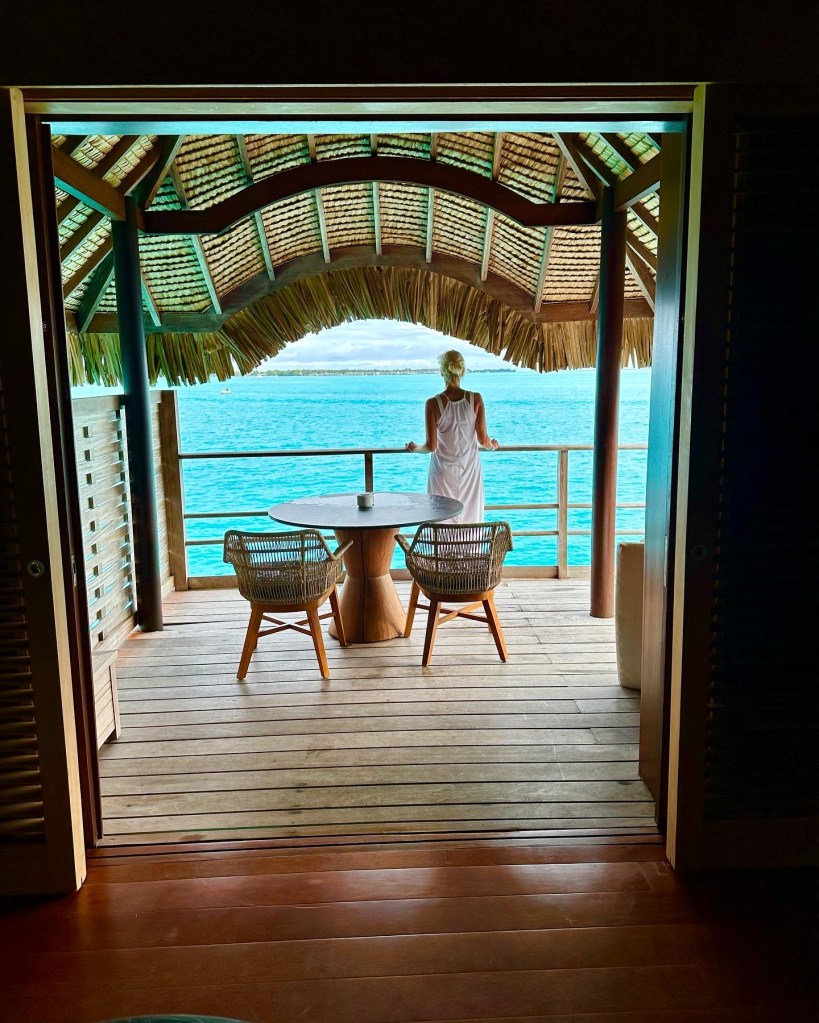
Nice housing / diving platform:
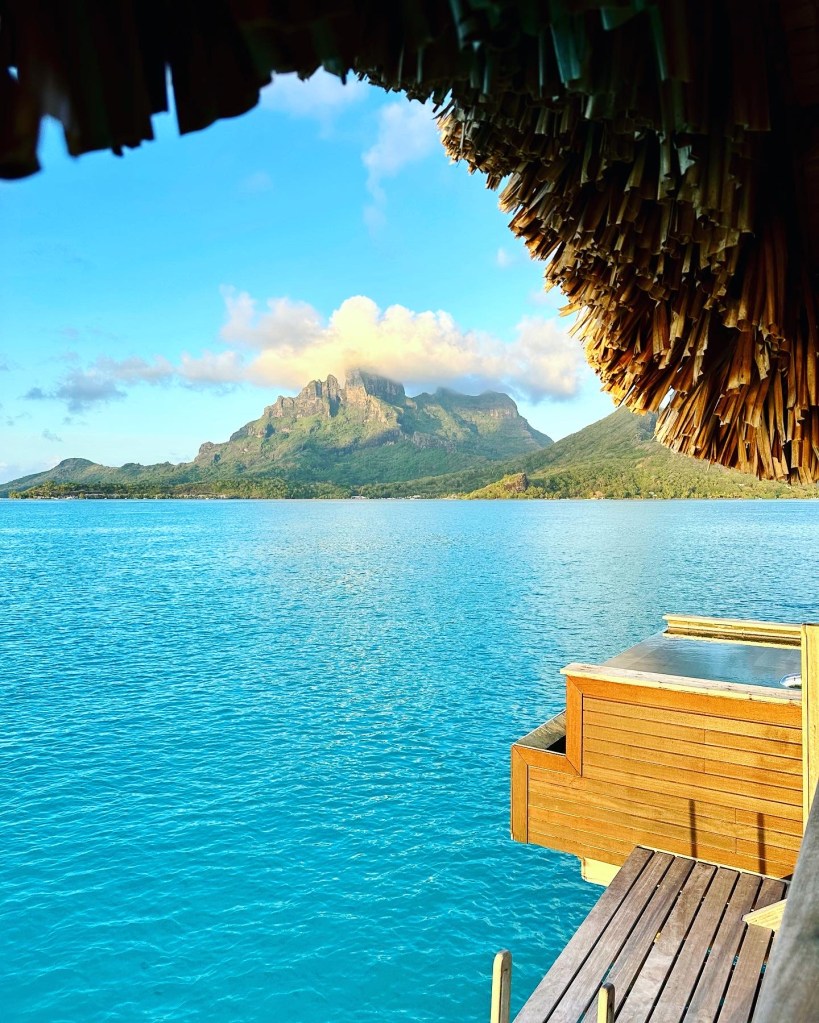
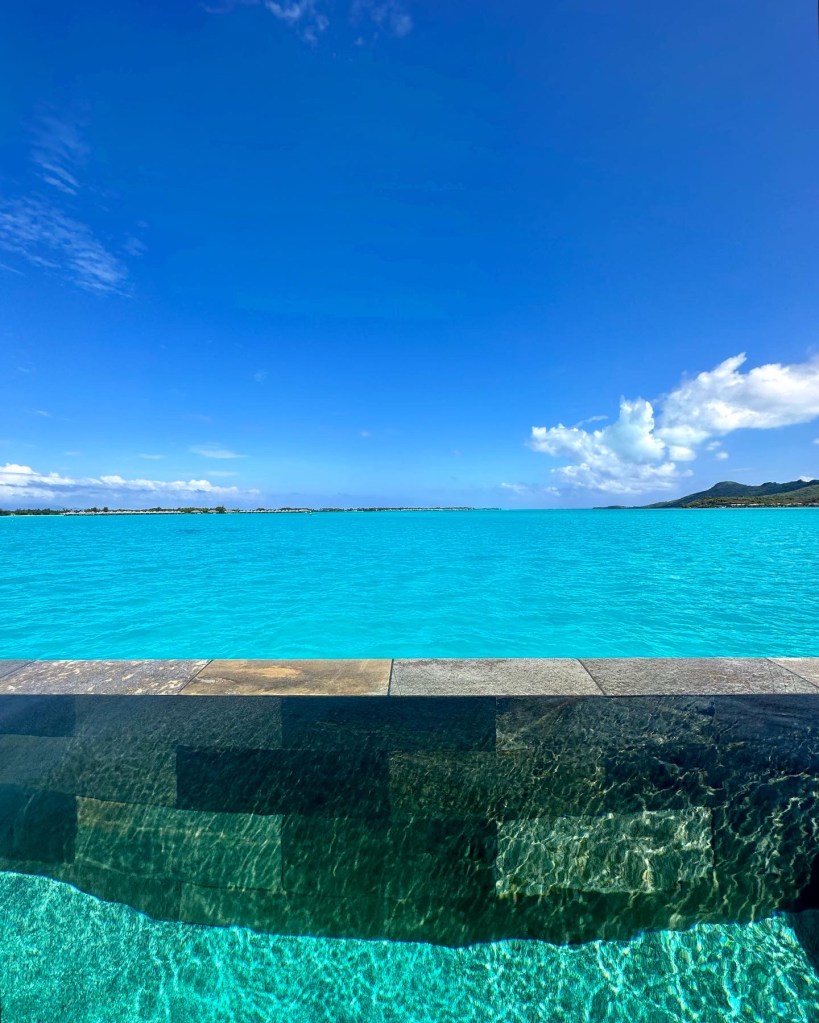

The snorkeling in the lagoon turned out to be as memorable as the bungalow – we’ve never seen healthier, more vibrant coral ecosystems outside of Carricou, one of the Grenadian islands, exactly 25 years earlier.


And spinner dolphins – a whole pod of them at the break in the coral that’s the main point of ingress and egress to the lagoon from the sea (located at the 3:00 position on the island pic above).


Bora Bora also is home to manta rays, and we tried diligently to find them, circumnavigating the entire lagoon in our quest and diving where we were hoping they’d be:
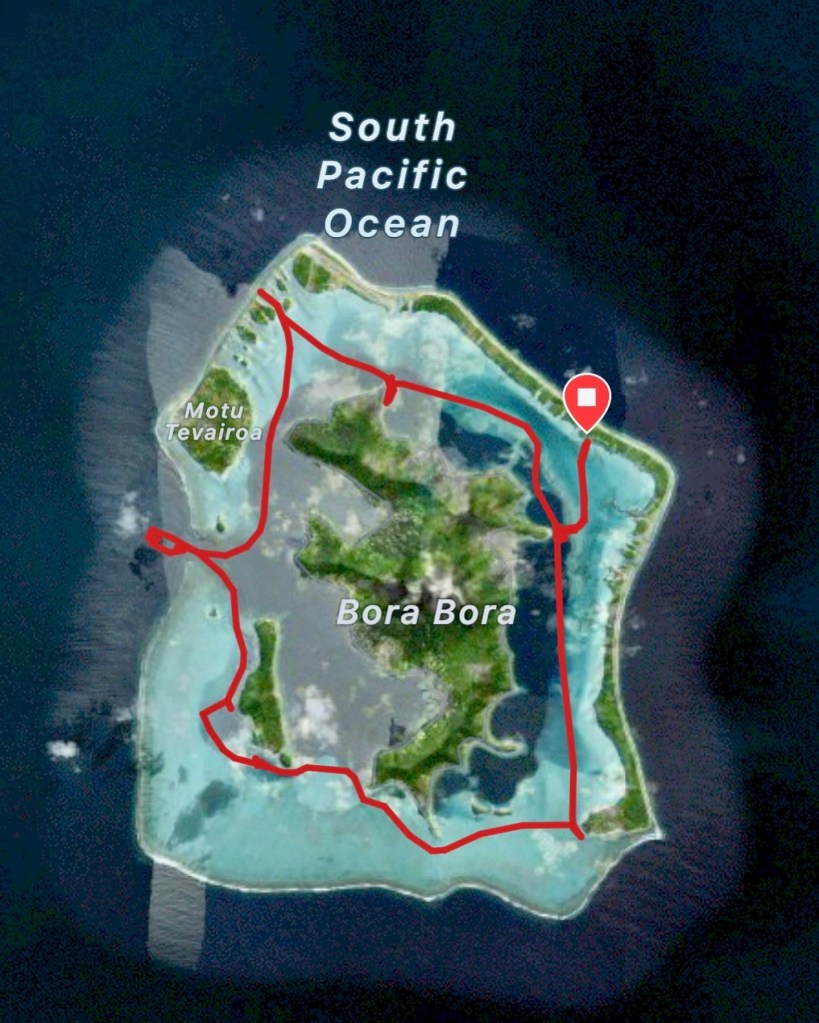
But came up empty. All we found was a lousy eagle ray:

After 5 days, it was time to move on:

After another overnight in Tahiti, we proceeded on to New Zealand for the start of our north-to-south Kiwi road trip. We landed in Auckland, New Zealand’s largest city, in the north of the North Island. The place is home to a significant harbor complex and ample evidence of the country’s sailing prowess, as the first nation to take the America’s Cup away from us.
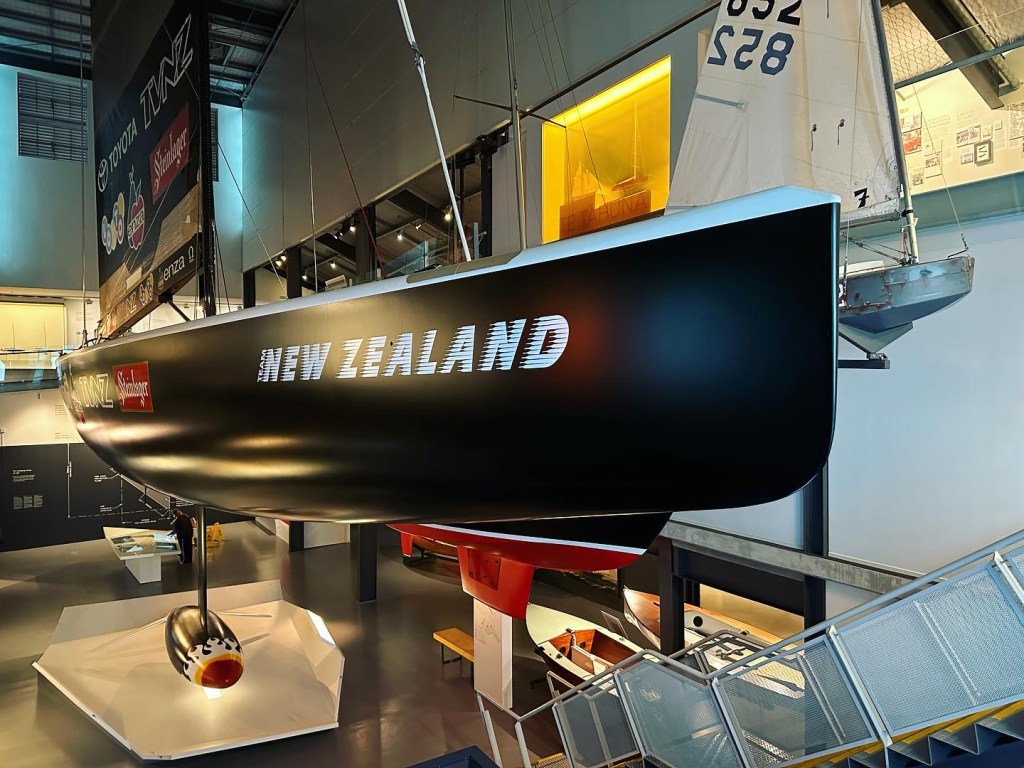
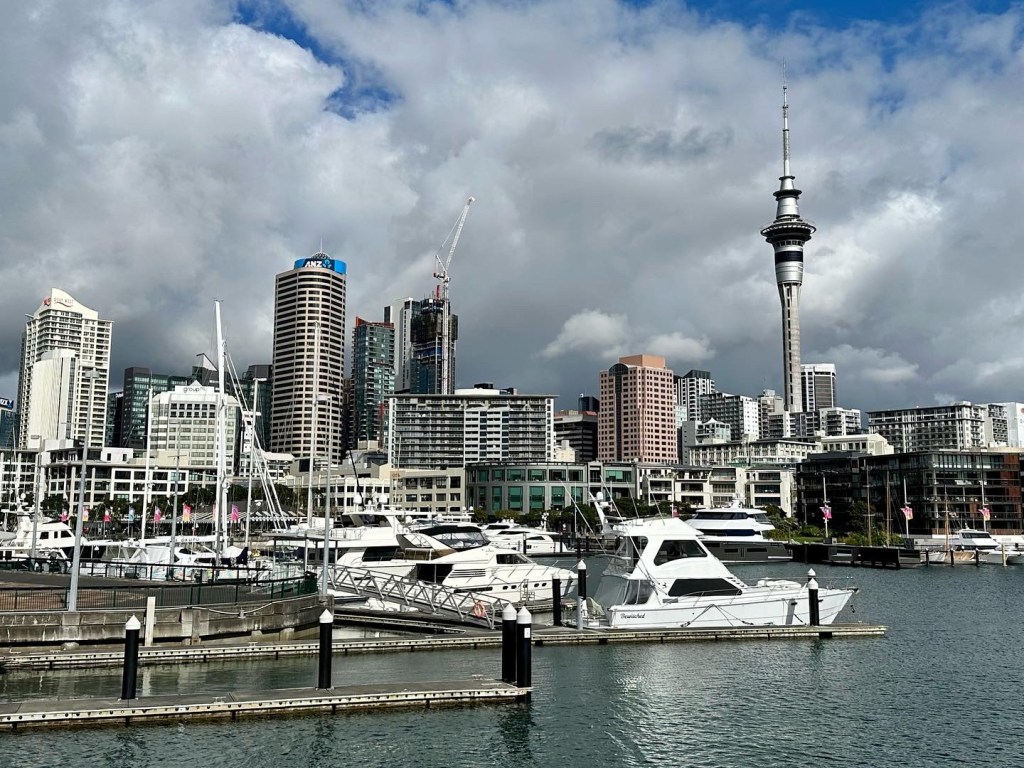
Across the harbor from Auckland in Devonport:

We then drove south, stopping on our first leg to hike the Waimangu volcanic valley, the youngest volcanically active site on earth:
While residing in our our base town of Taupo, in the center of the North Island, we headed northwest for a day to go blackwater rafting through the Waitomo cave complex, the highlight of which is an impressive density of glow worms on the cavern ceiling that you experience floating through, in the pitch black (after launching backward into the darkness over a small waterfall). To experience the thrill of blackwater rafting, however, one must accept the indignities of the mandatory getups.

Located directly above Taupo, we hiked Mount Tauhara, home to an inexplicable trench system in lieu of trails. Compression? Erosion? WWI reenactors? We still don’t know.
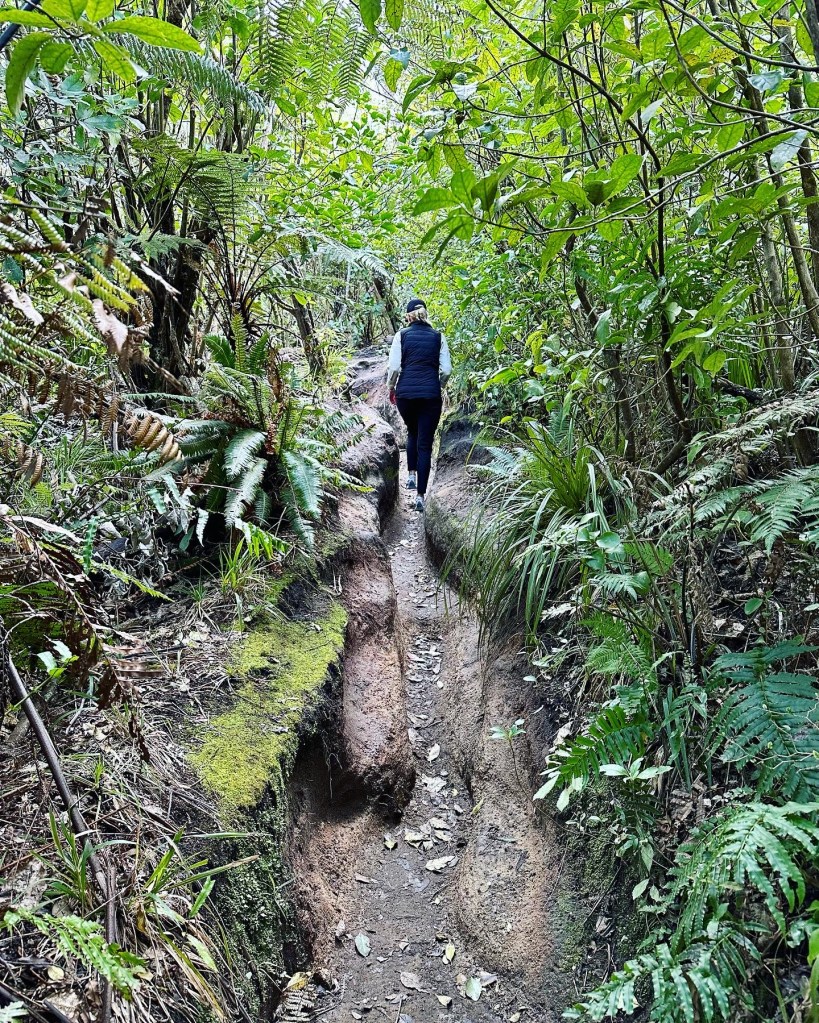
At the top, with a view of Lake Taupo:

And hiked west from town to the Huka Falls, fed by Lake Taupo:
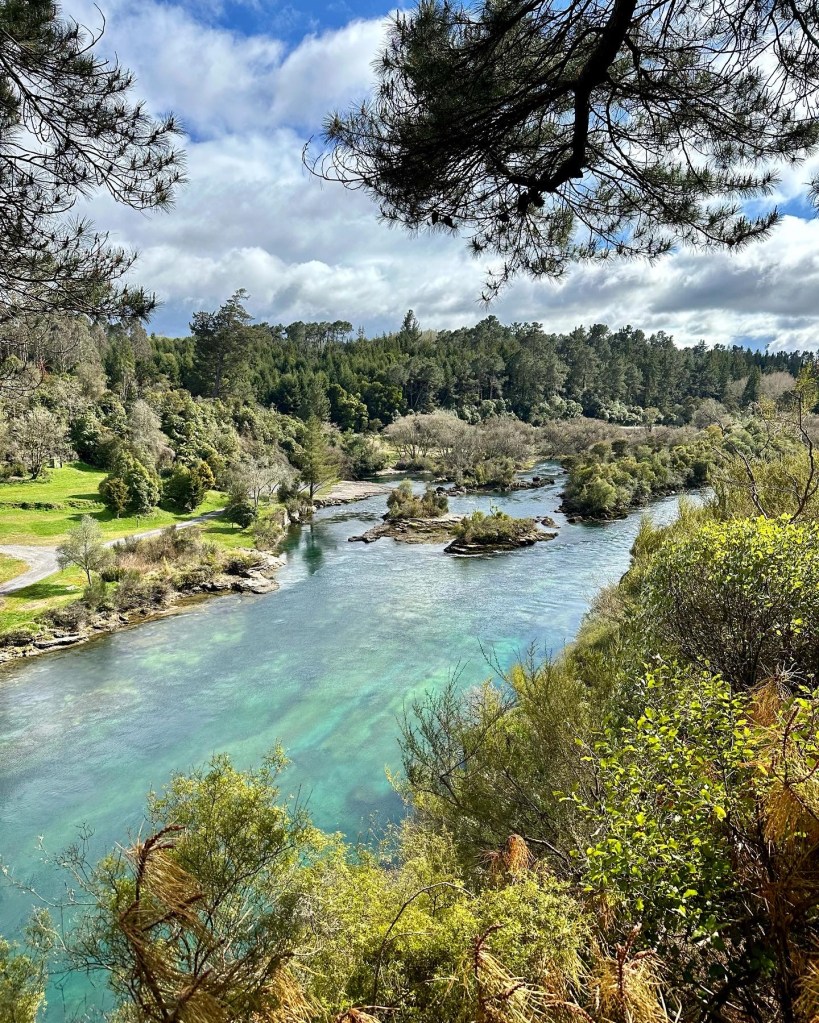

Then drove south, to Wellington, stopping for a day hike on the Tongariro Alpine Crossing:


Wellington is home to Zealandia, a wildlife refuge for New Zealand’s native fauna and flora, including, and in particular, the Tuatara, the last remaining member of an otherwise long extinct order of reptiles. (Since one of us originally went to school to be a herpetologist, this may have been a close second to Bora Bora as the highlight of the trip.)

From Wellington, we crossed the Cook Strait to the South Island and New Zealand’s wine region: Marlborough. Despite the optimistic suggestion of the next morning’s rainbow, we biked the entire next day in the rain for a six-winery bike tour. The wine helped, but only a little.
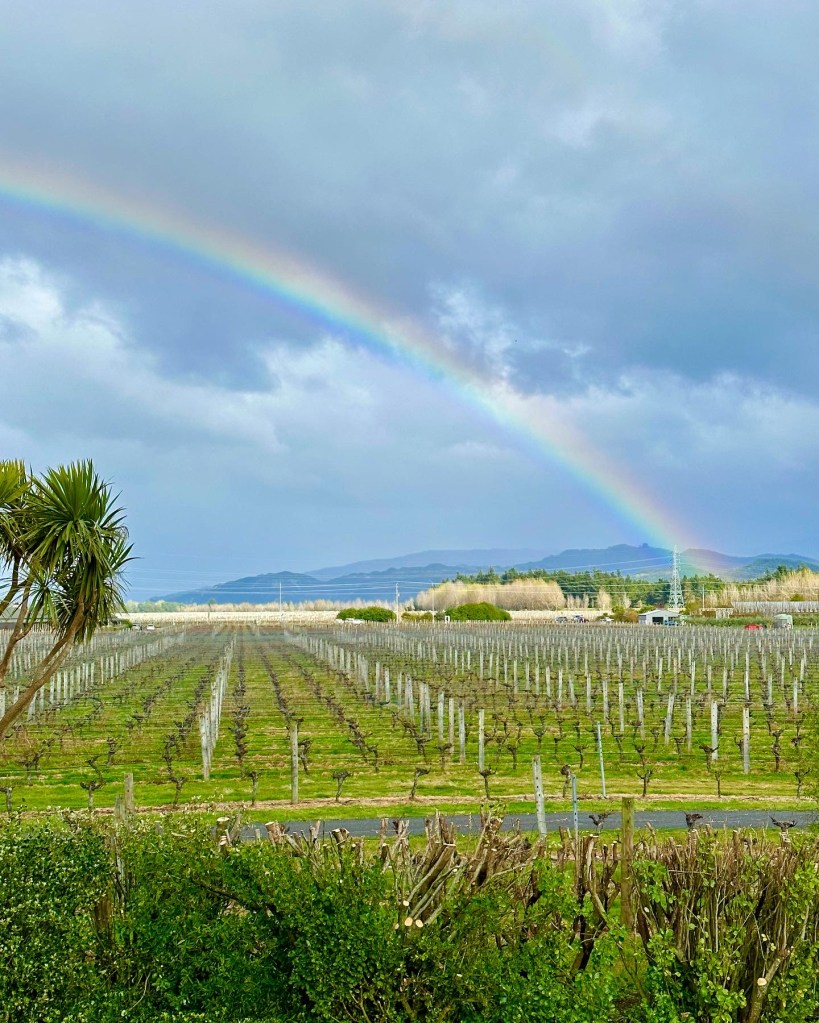
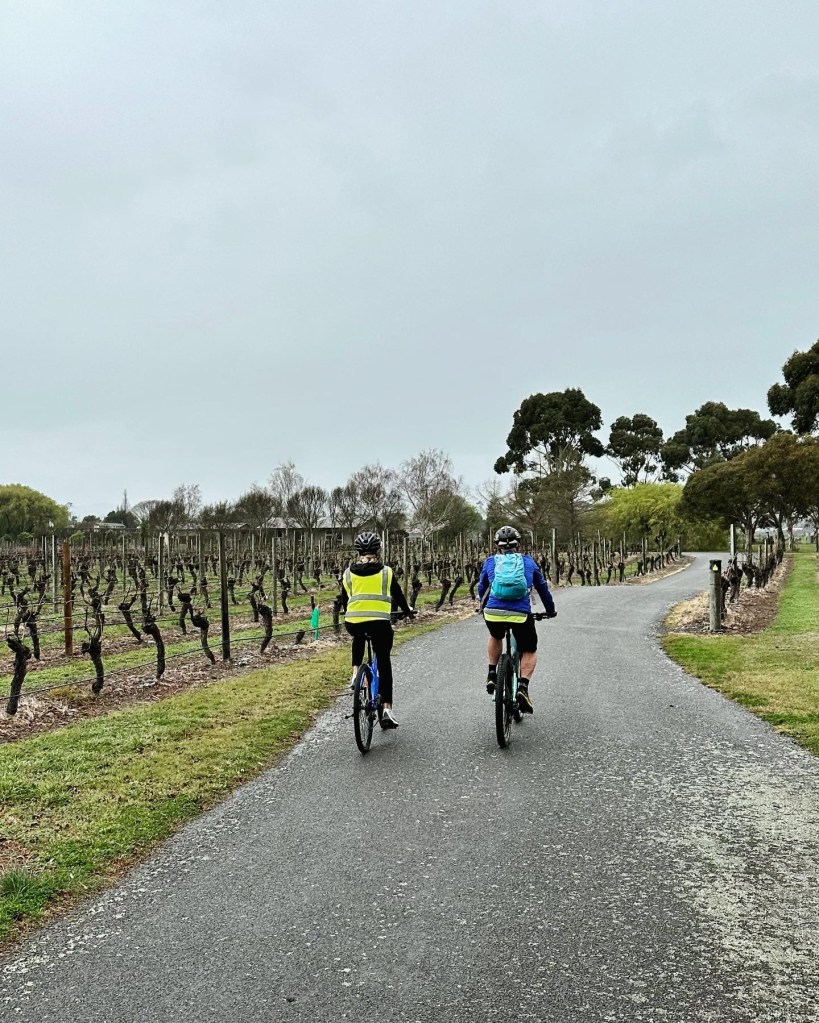
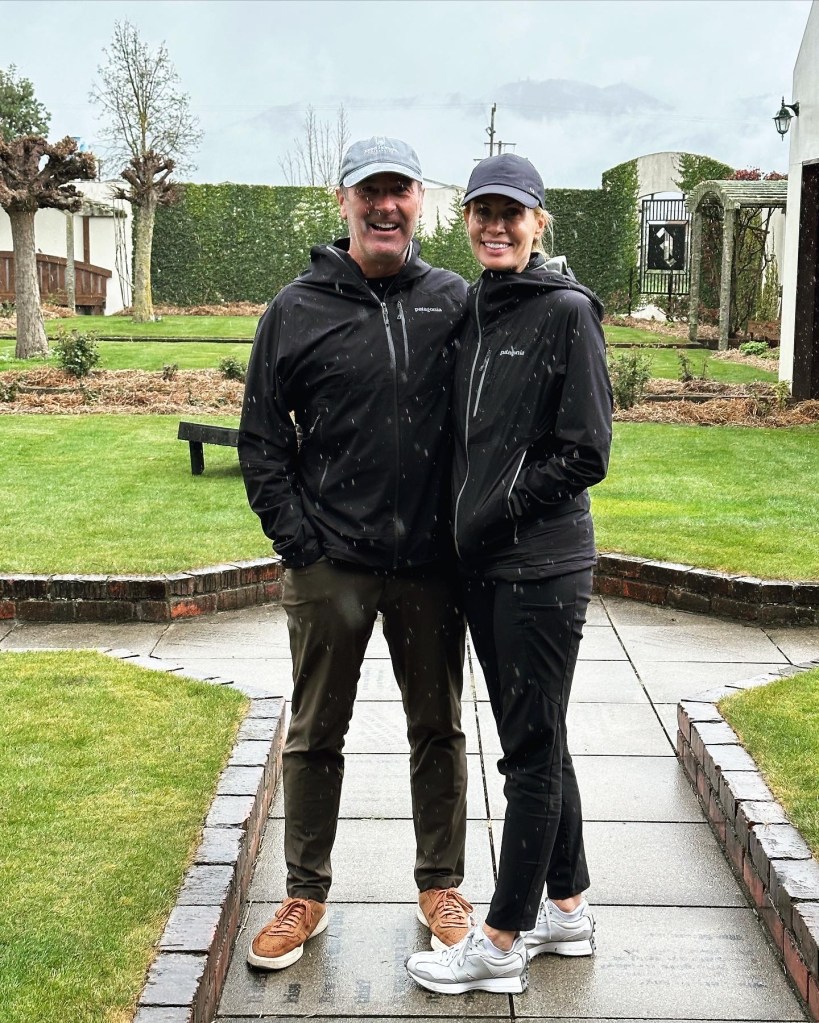
And then on to the South Island coastal town of Kaikora, located near an undersea chasm that’s home to giant squid – and hence, sperm whales. But the rain had other plans, and the whale watching was cancelled for the entire day. We seal watched, since there was a colony in the area, but it really wasn’t the same thing.

From Kaikoura, we headed further south to Christchurch, stopping to hike along the Lewis Pass in New Zealand’s Southern Alps.

And then Christchurch, our final destination.
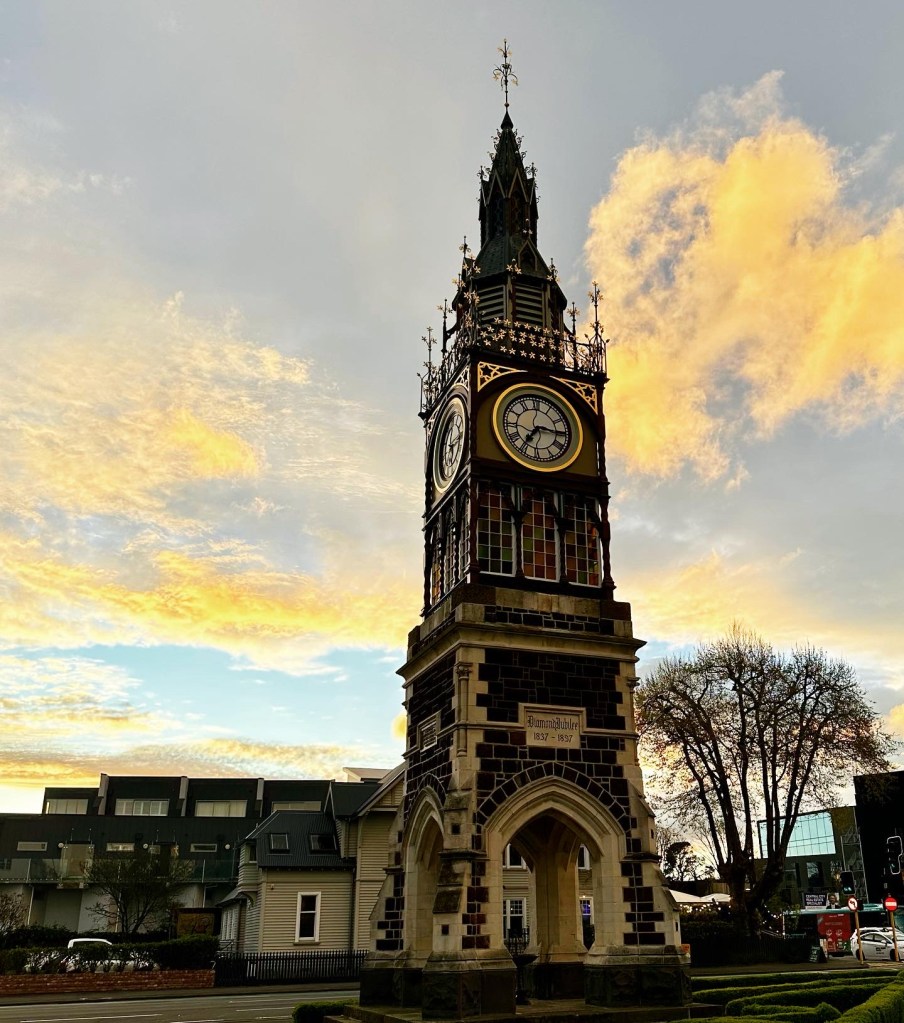
New Zealand’s towns, we’re sorry to say, are devoid of charm and pretty utilitarian. The only one that struck us as appealing was Christchurch, where the architecture was a mix of English charm and ultramodern, due to a massive rebuilding effort after a devastating series of earthquakes in 2011. One example is the Transitional Christchurch Cathedral – also called the Cardboard Cathedral, due to its cardboard tube construction (for virtually every element), befitting its temporary status simply until the real cathedral is rebuilt.

The River Avon, which winds through Christchurch like an eel, constituted one of the elements of town we found appealing:

After 3 nights in Christchurch, we headed home, through Auckland, and then Tahiti again (of course). But this time, we would alter the space / time continuum, and arrive in Tahiti the day before we left Auckland:

 WolfeStreetTravel