
Arguably the most important castle in Wales also is indisputably the most distinctive in style: Caernarfon Castle in the northwest corner of the country.

The Romans recognized the strategic value of the site a thousand years before the Normans, and constructed their own fort – Segontium, or Caer Segent, to the Welsh (caer is Welsh for fort or castle, for those who read about Caer Dallben and Caer Dathyl when they were kids). When Edward built the current castle in the 13th century, he allegedly found the body of Roman Emperor Magnus Maximus and reburied it in a new church built in his honor. (Magnus Maximus was, indeed, the Roman governor of Britain in the 4th century, and usurped Gratian to supplant him as emperor, but Magnus Maximus was executed in Gaul, so there’s little chance of Edward finding him on the northwest coast of the island.) Little is known of the history of the site during the 600 years between the Roman’s departure and the Norman’s arrival.

After the Normans got down to business, though, the place becomes very well documented. A marcher lord under William already was in place according to the Domesday survey in 1088, and his successor (the first one was killed by the Welsh) built the first Caernarfon Castle – a rudimentary motte and bailey fortification.

The Welsh reconquered the region (then, as today, Gwynedd) in 1115, and Llywelyn the Great (who we’d see a couple of days later in Conwy) and later Llywelyn ap Gruffudd both stayed in Caernarfon on occasion. Then Edward came along. . .
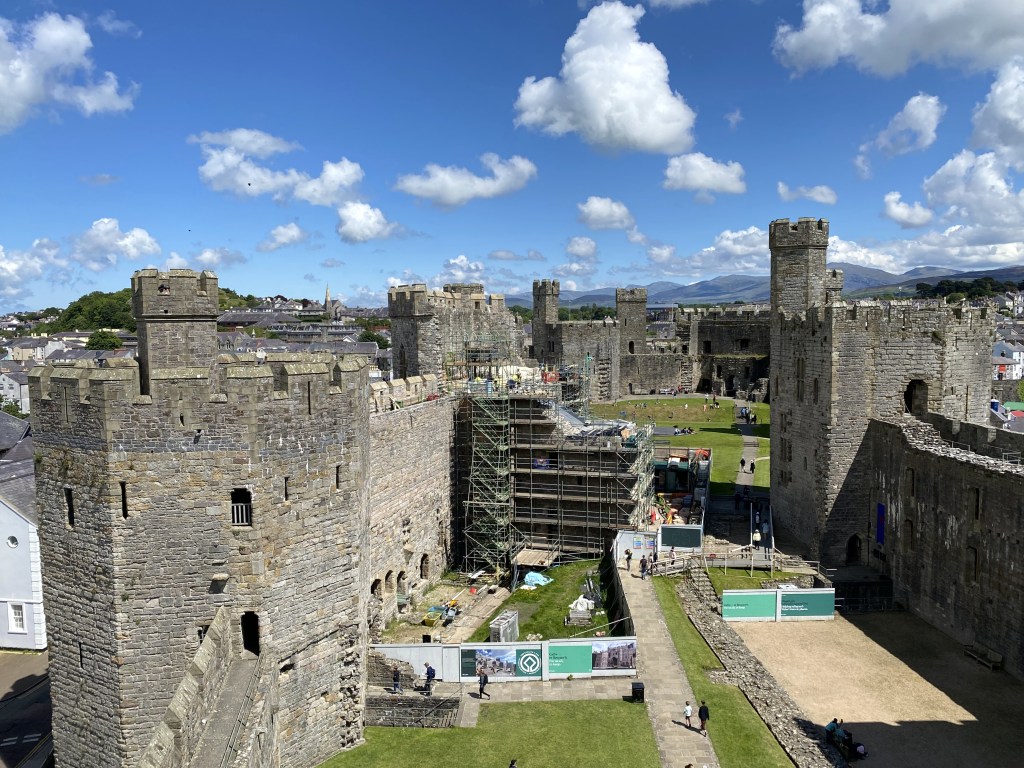
Hostilities between the English and the Welsh broke out again in 1282 and by 1283, Edward’s forces were surging through Gwynedd recapturing existing castles and building others. Including Harlech, Conwy, and Caernarfon.

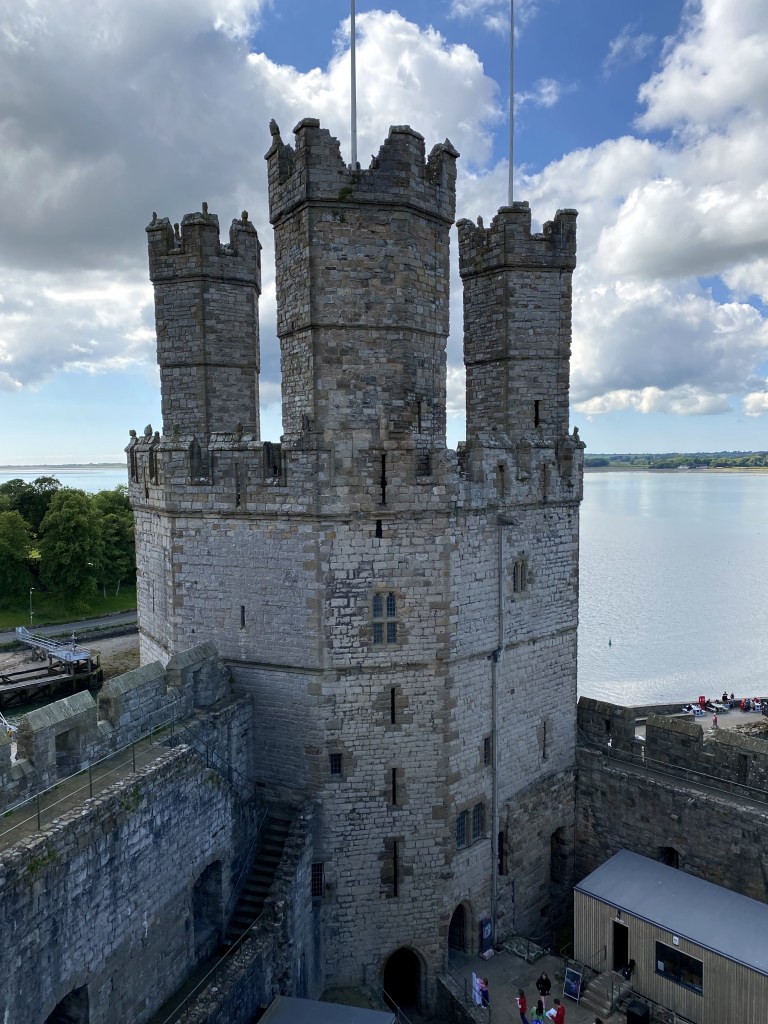
The distinctive angular turrets (versus the rounded turrets of Harlech and, soon, Conwy), were designed by Edward I’s royal military engineer to evoke images of Constantinople to convey Edward’s vision of his rule extending from Britain and Gascony to now Wales, as an empire. Super distinctive from other Norman castles in Britain (less so from some of the angled Crusader castles of the same time period in the Levant).

Wales once again rebelled under Madog ap Llywelyn, Prince of Wales and the Welsh attacked and then took Caernarfon and Caernarfon Castle as one of their first acts, since the English based their administration of Gwynedd here.

The English quickly retook the town and refortified the castle. (Which, true to so many of our travels, was under renovation when we visited.)

The hollowed out hull of one of the towers (King’s Gate tower, we think), with a fireplace serving a middle floor still visible.
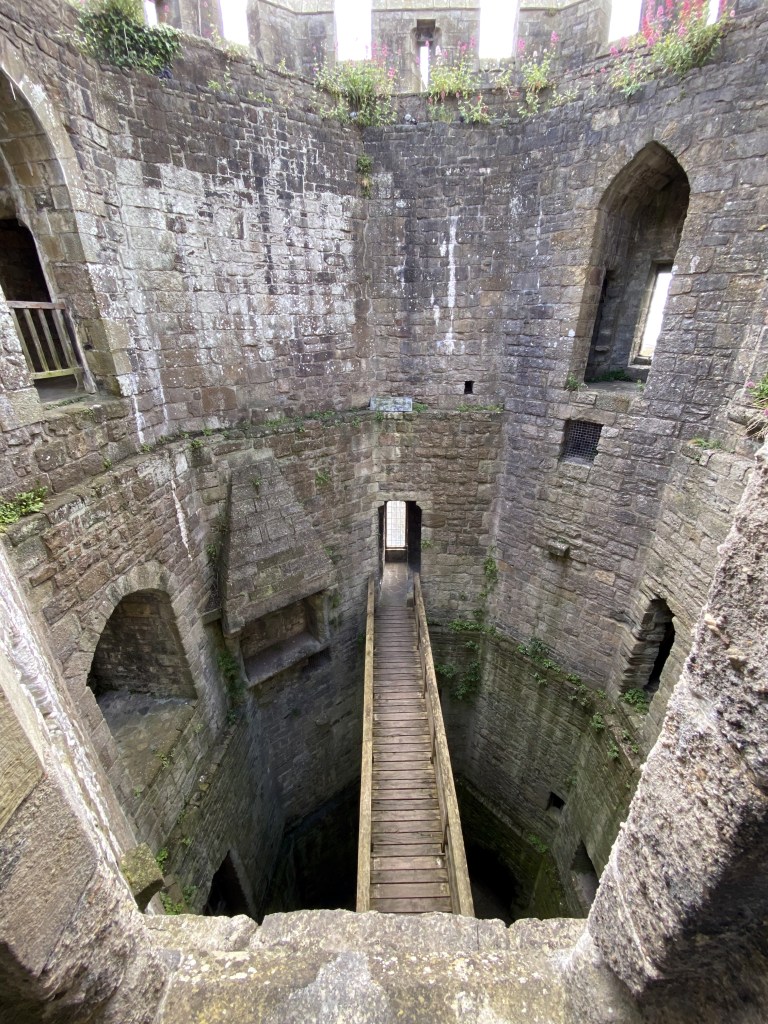

The Upper Ward.

In addition to its distinctive angled tower walls, Caernarfon Castle offers another notable element: the birthplace of the first English Prince of Wales and the site of investiture of the modern Princes of Wales. According to tradition Edward’s first-born son, Edward II, was born in the newly constructed Caernarfon Castle in 1284, and Edward proclaimed him in 1301 to be Prince of Wales, with control over the country and its income. Since then the title has traditionally been held by the eldest son of the monarch, including the dude who just this year became King of England.

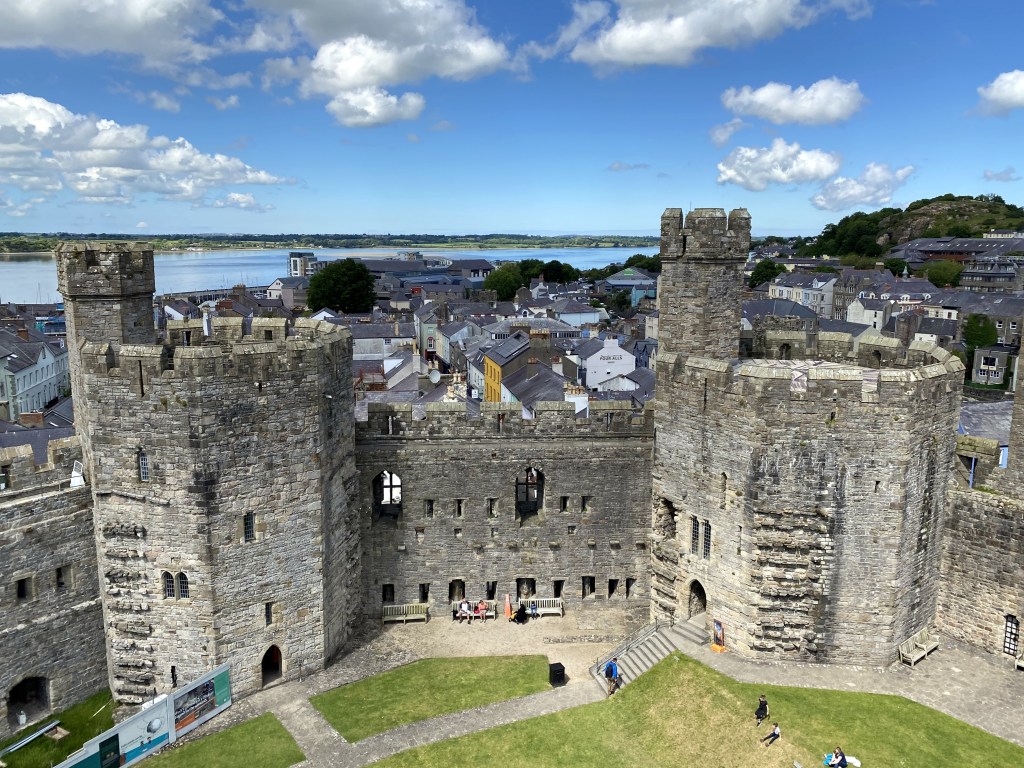
The dais in the middle of the Upper Ward commemorates the spot of Charles’ investiture as Prince of Wales in 1969.
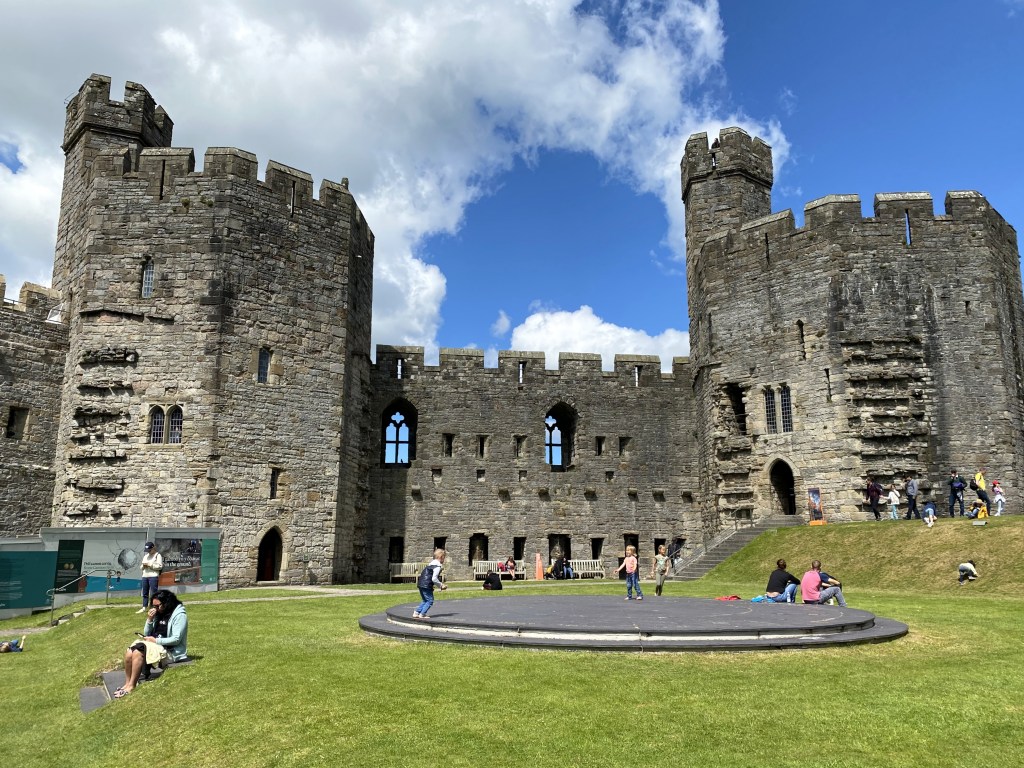

Inside the castle walls.
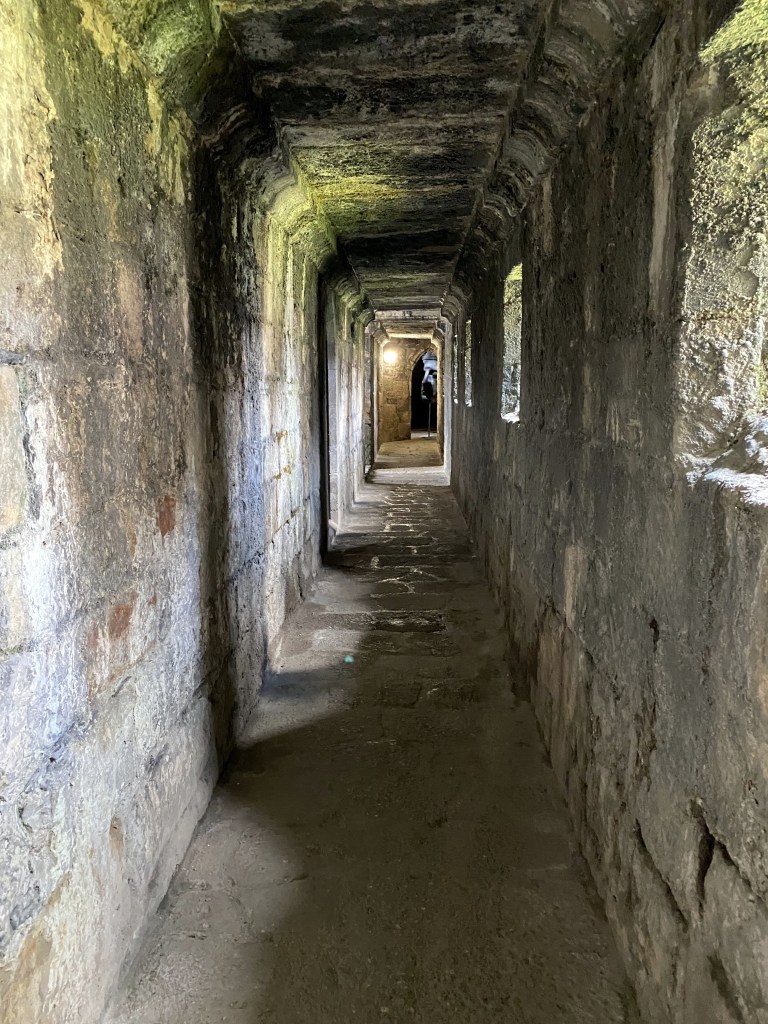
In the early 15th century, rebellion again broke out in Wales, and Caernarfon Castle was besieged, but held.

The rise of the Tudor dynasty in the late 15th century brought about an improved relationship between the English and the Welsh, and the reduced tensions – and resulting reduced need for fortified bases with armed garrisons in “occupied” Wales – led to Caernarfon Castle falling into disrepair.
The last time the castle witnessed warfare was in the 17th century, when Royalists held the castle (successfully) against Parliamentarians.

Peering over the walls and between two of the castle’s nine towers into the small, adjacent town of Caernarfon.

A street through one of the old gates into the walled town of Caernarfon. . .

sporting one of the better street names we’ve seen on our travels.















 WolfeStreetTravel