
From Orvieto (purely a stopover town – albeit a very nice one – to keep our drive time under control), we headed further south to our next real destination: Pompeii’s red-haired step brother, Herculaneum.
The eruption of nearby Mount Vesuvius destroyed Pompeii slowly with pumice and ash, collapsing roofs but preserving buildings and voids. The same eruption destroyed Herculaneum (an affluent seaside resort town much smaller than Pompeii) but with high-velocity pyroclastic surges, which immediately carbonized all of the organic matter, in addition to instantaneously encasing (and preserving) buildings. As a result, entire structures, mosaics, murals, ceramics, and even wood framing materials and furniture were better preserved than in Pompeii. Plus, fewer tourists; always a bonus.
A partial view over Herculaneum; the arches in the bottom left corner were part of the port, when the Town abutted the coast.
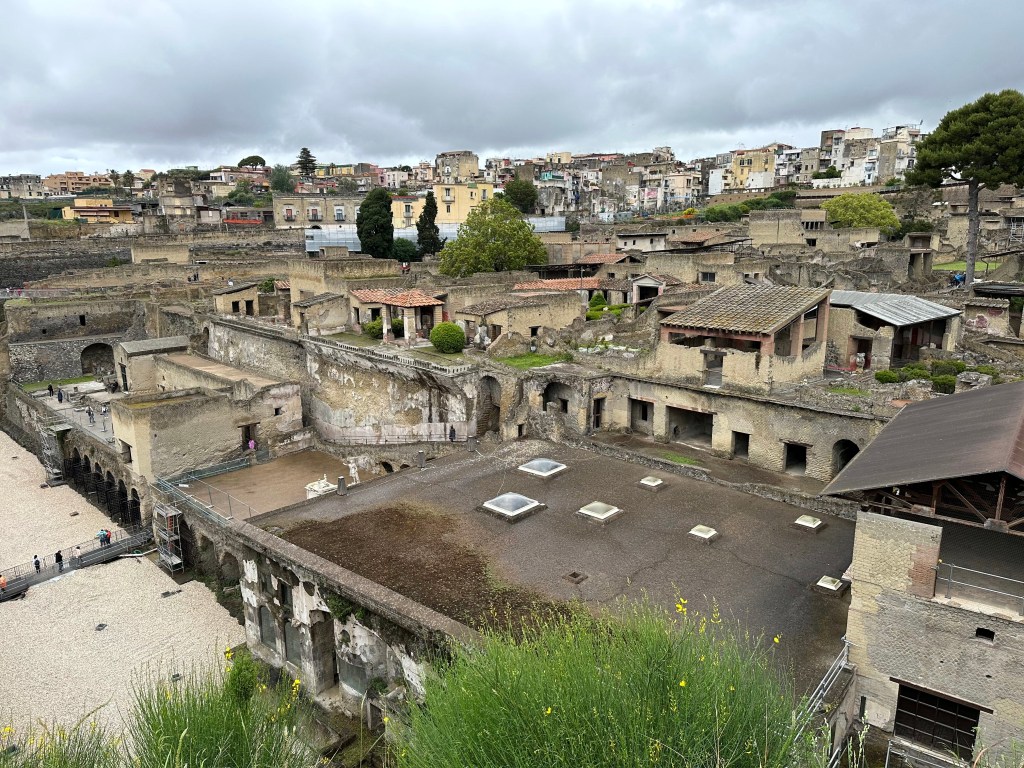
Despite the multiple blocks of the town that are now exposed, 75% of Herculaneum still is unexcavated.
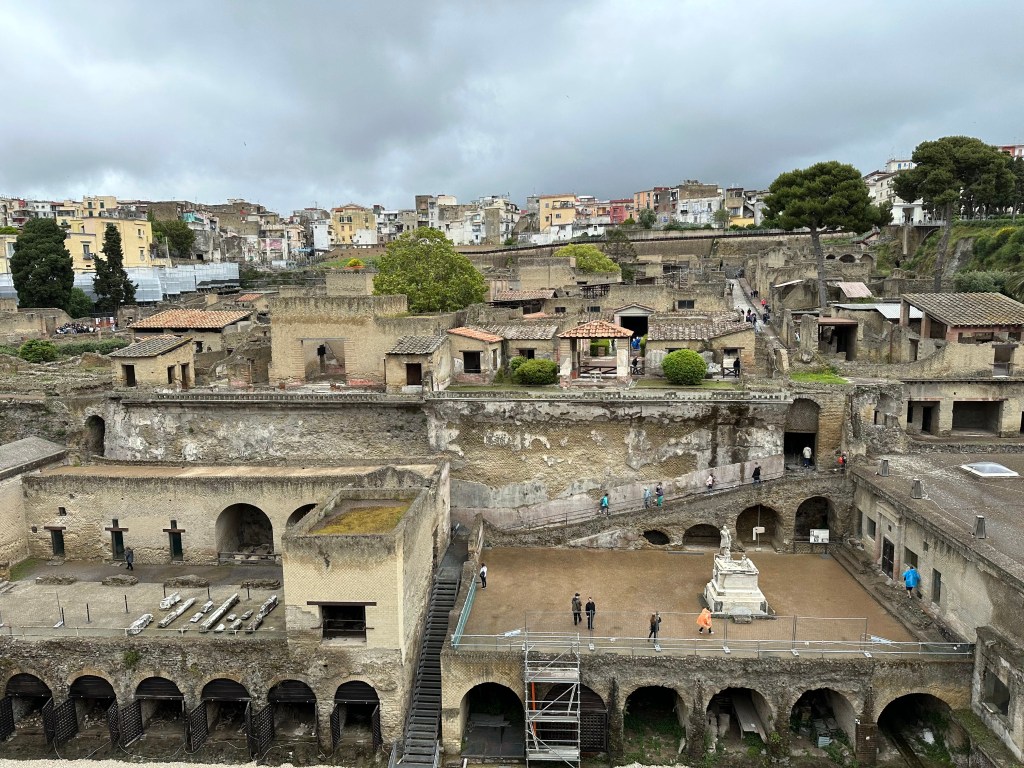
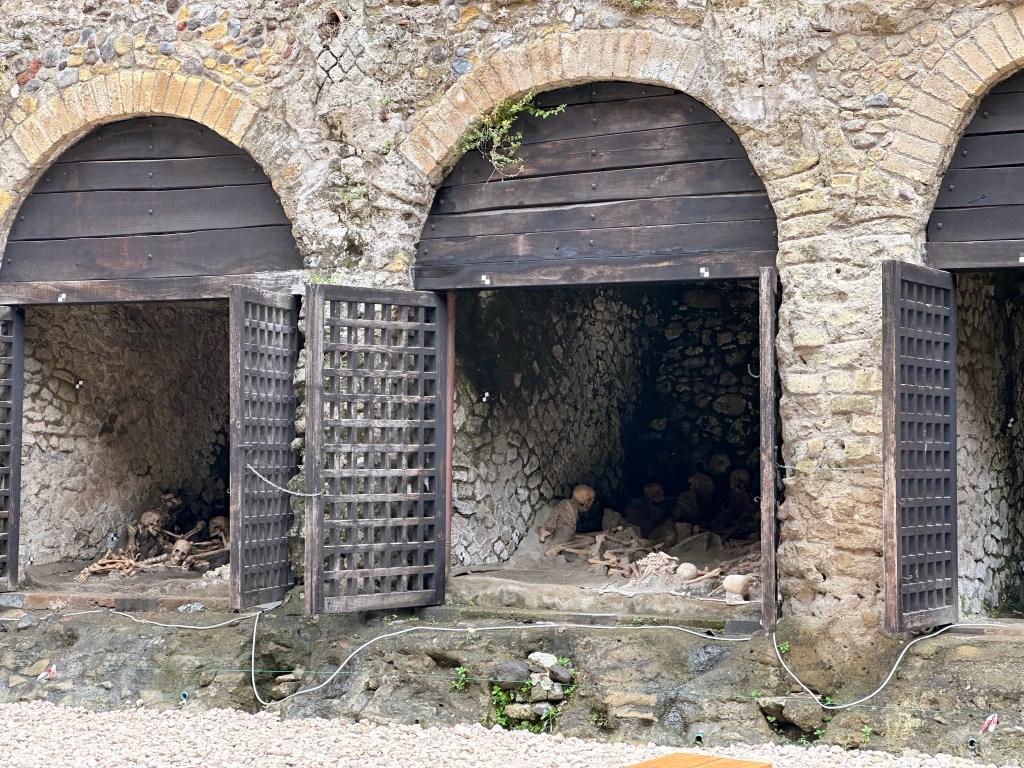
In addition to the preserved building components that we’d see, one of the first preserved elements we encountered were casts of skeletons of the residents who unsuccessfully sought refuge in the port’s boat sheds:
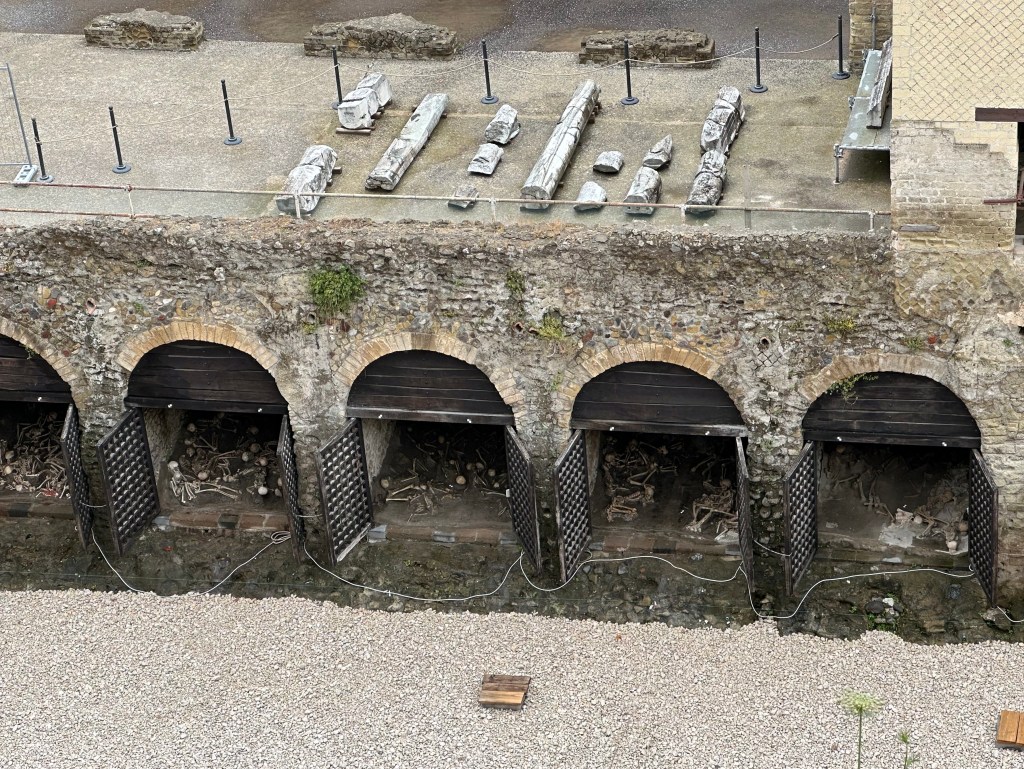
More than 300 skeletons are in the sheds.
A perfectly preserved Roman street in Herculaneum:
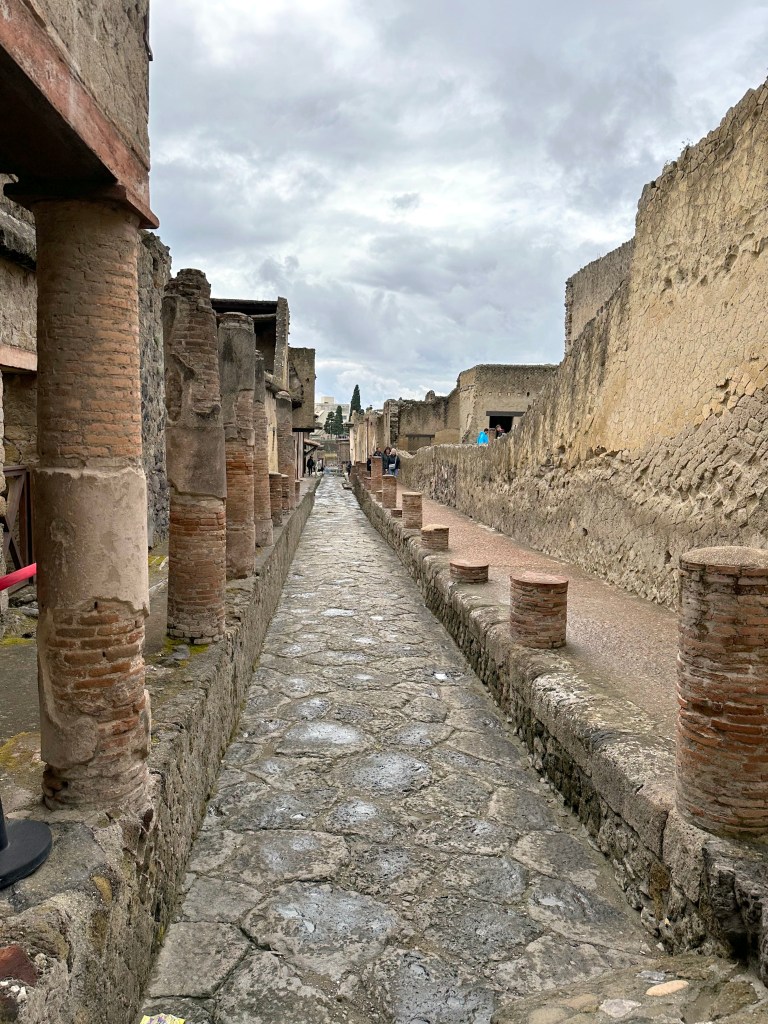
The preserved interiors of houses along the street. . .
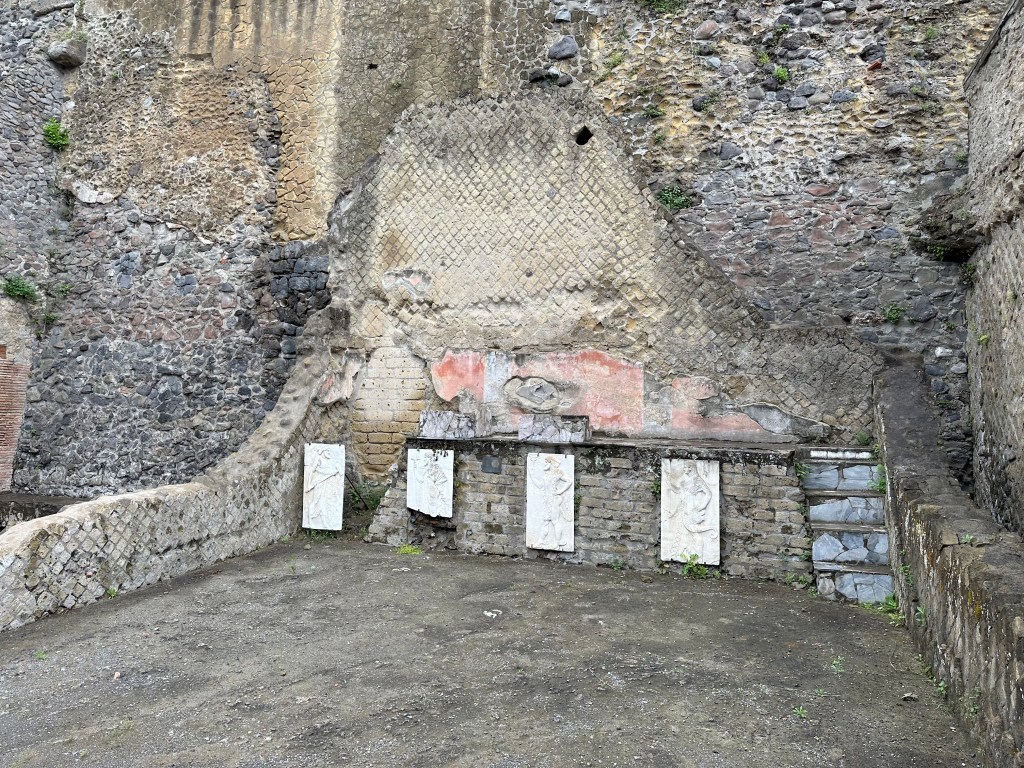
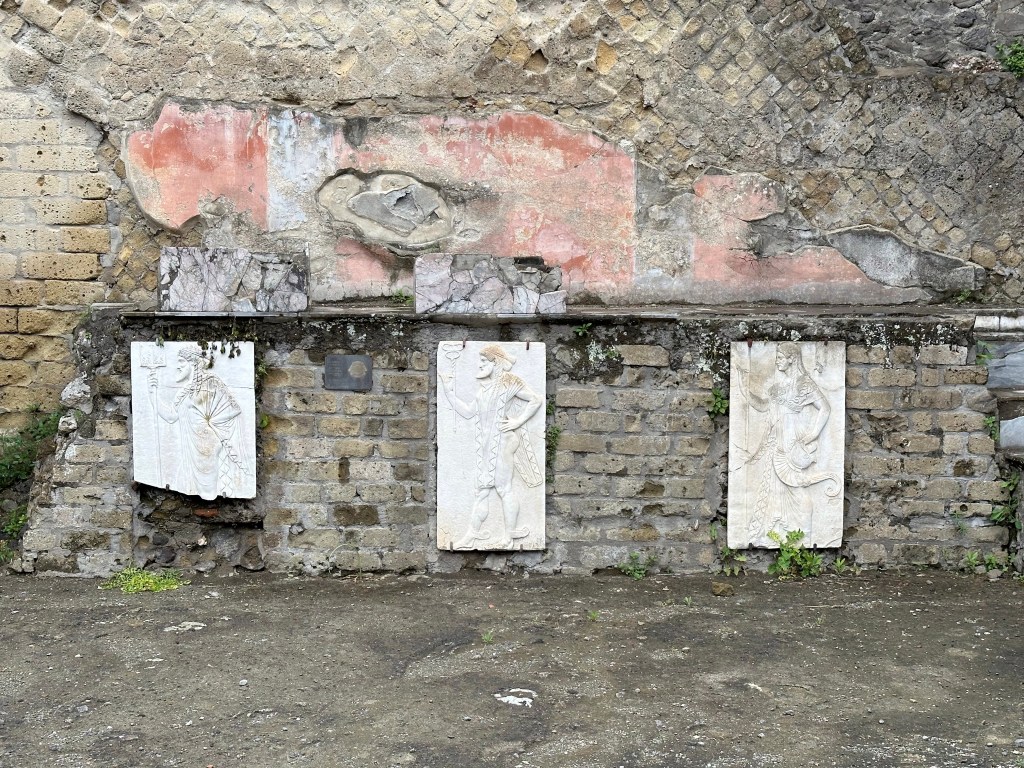
including bas relief sculptures found there.
More house facades. . .
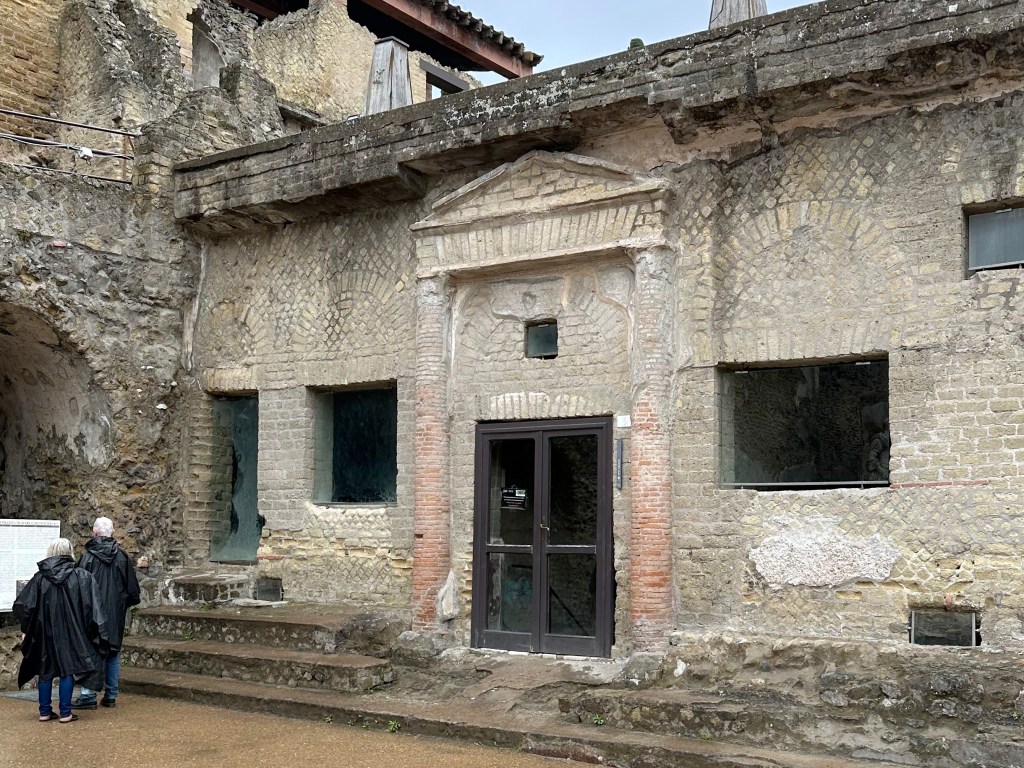
Including those with preserved polychrome-painted pillars.
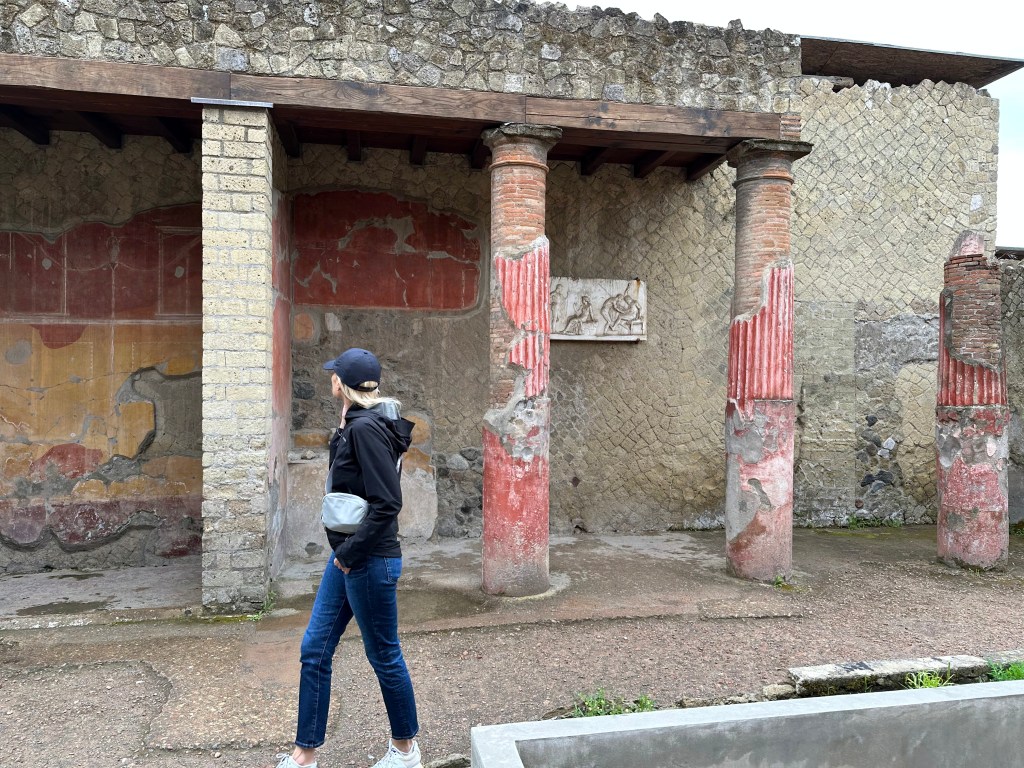
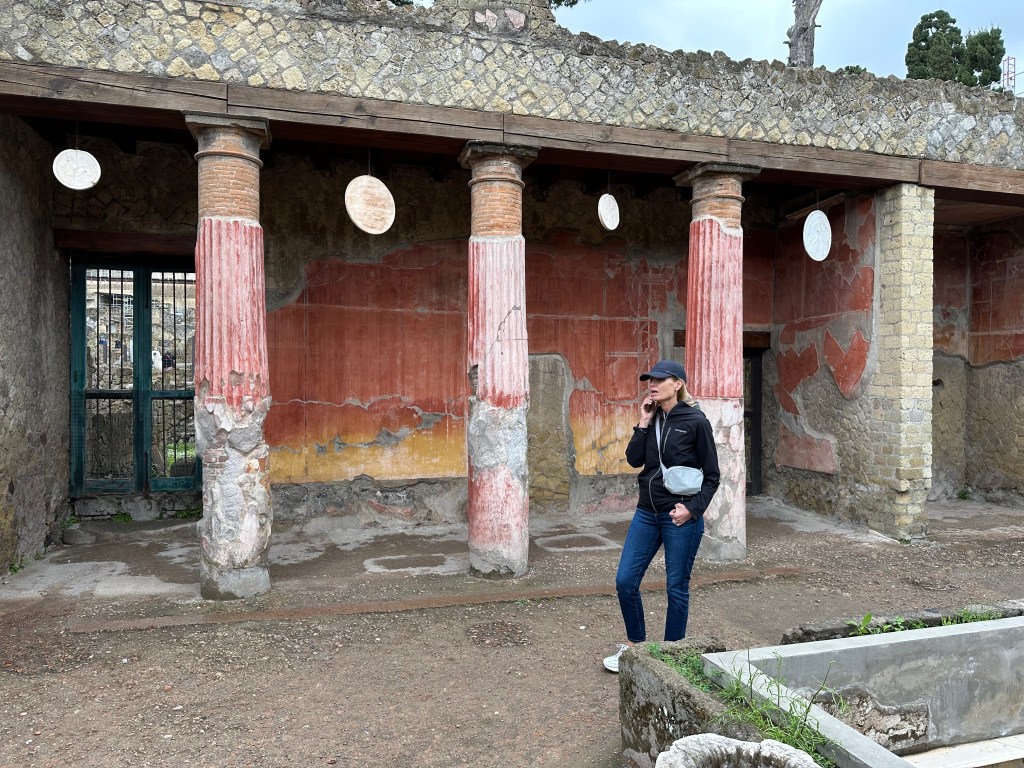
“Built between 27 BC and 14 AD on the panoramic ridge overlooking the marina, this three-story home was decorated with a number of sculptures from the Neo-Attic school, including one with a relief of Telephus (Rilievo di Telefo), son of legendary found of the city, Hercules. The atrium is lined with columns supporting the upper floor, and the spaces between them were decorated with oscilla, or marble discs with reliefs of Dionysus used to guard against evil spirits.” (From here [or maybe from the audio guide Lisa’s listening to. Who knows?])
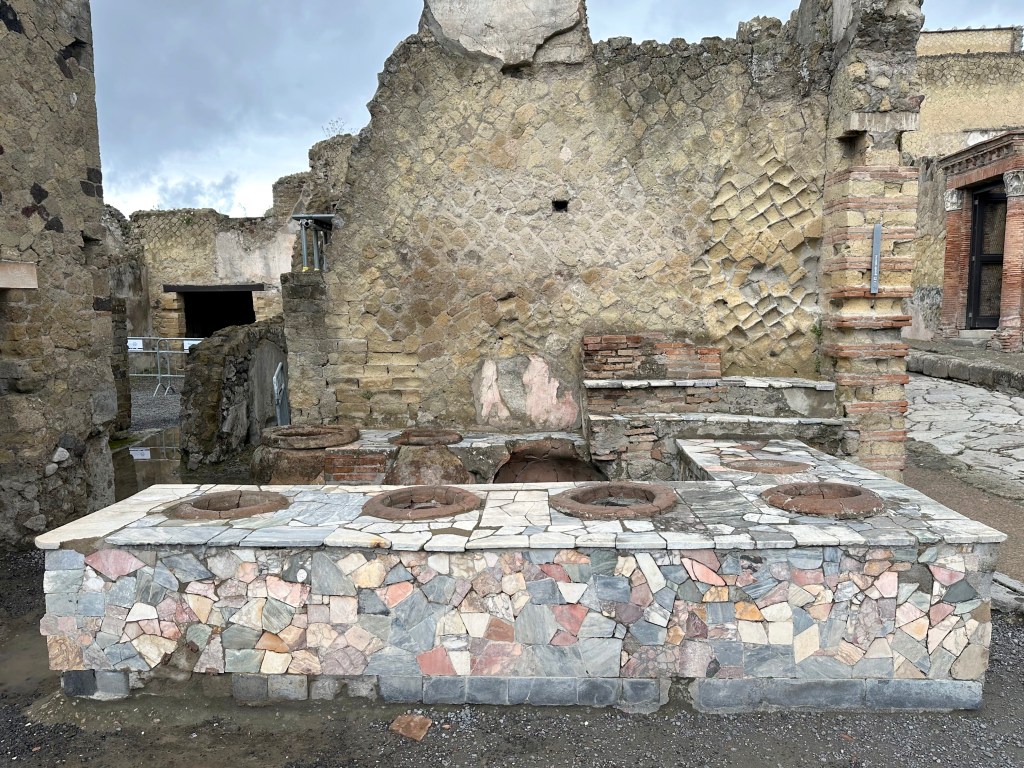
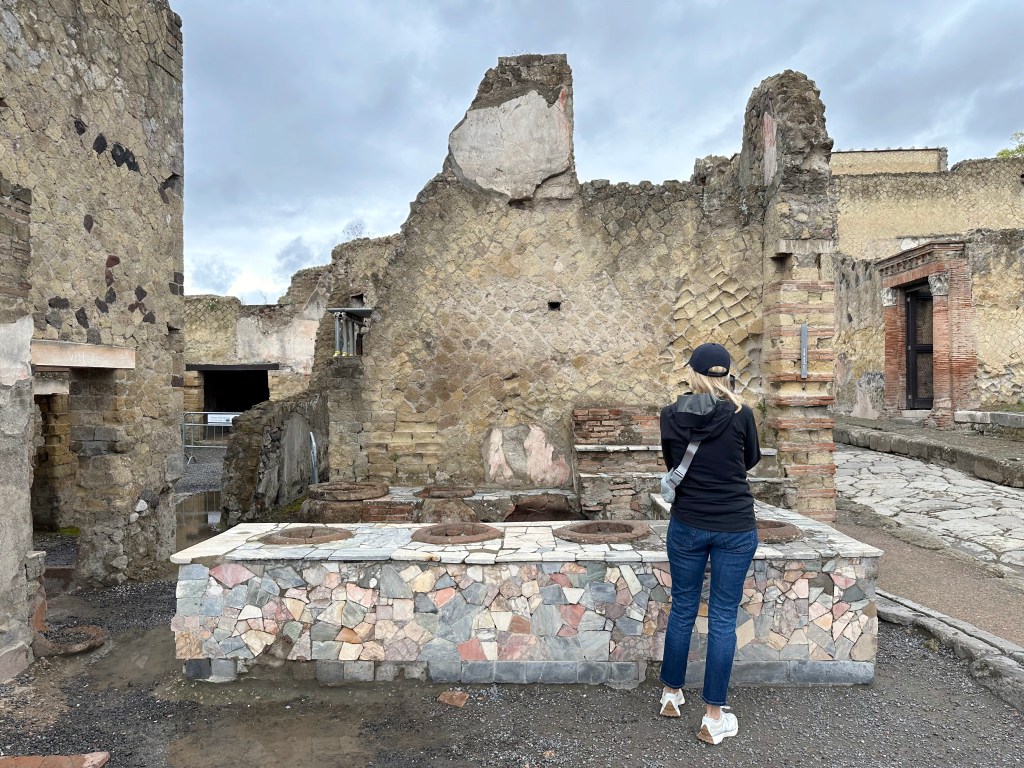
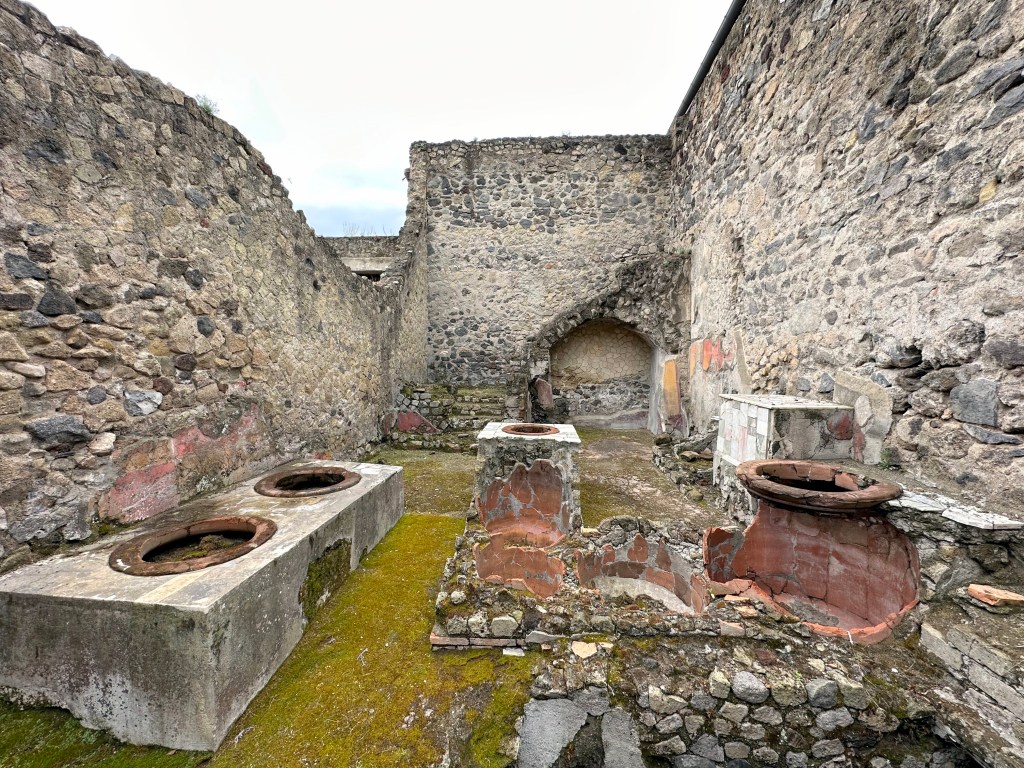
Aaaaand a snack bar! They appear every block or so; the Romans loved their fast food, served right out of heated, sunken amphora. Pretty amazing, frozen-in-time, cultural nugget.
One of us may have been getting hungry.
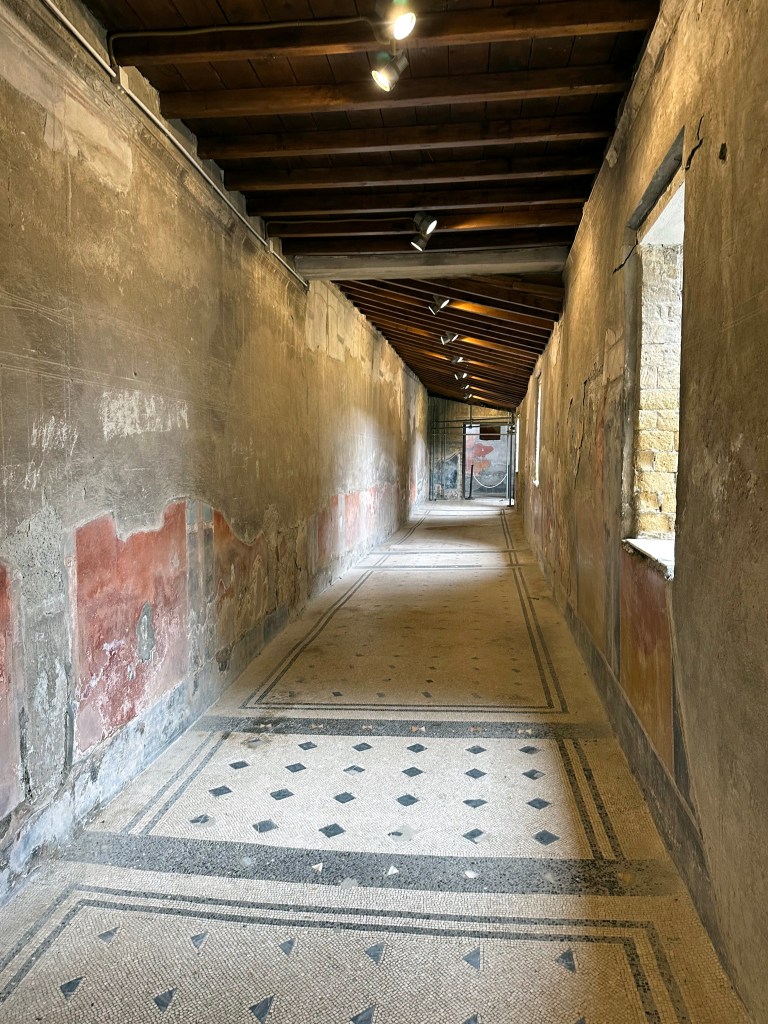
Preserved hallway and mosaic floors in the House of the Beautiful Courtyard / House of the Black Salon:
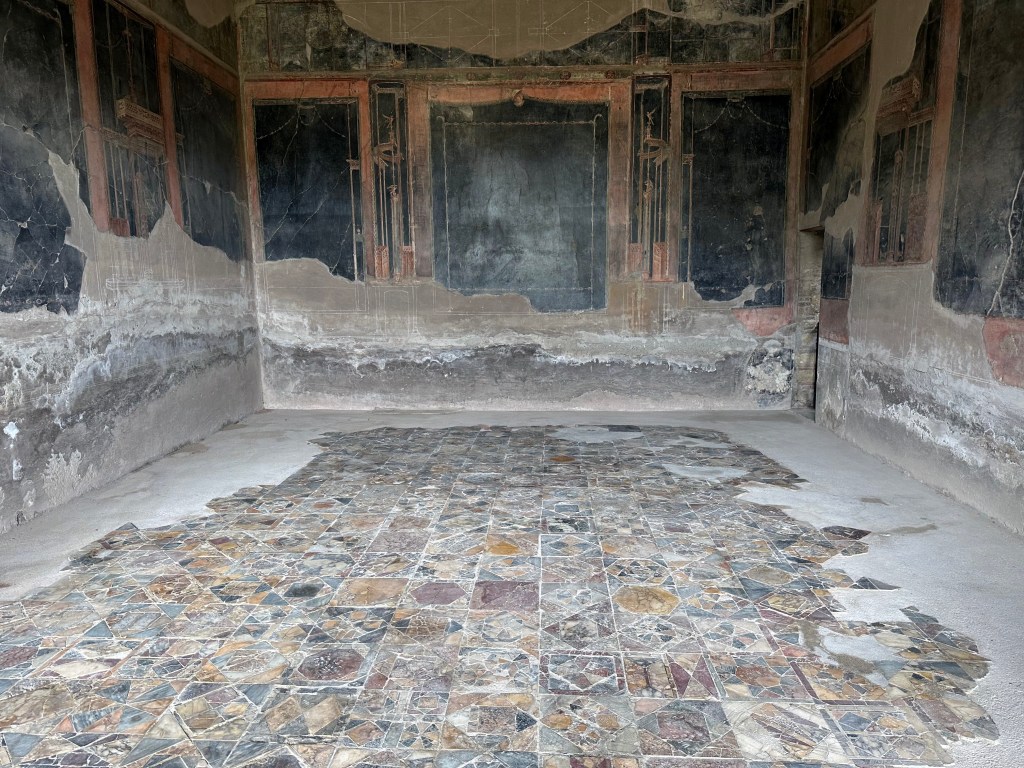
To wit, the Black Salon (albeit with colorful, inlaid marble floors):
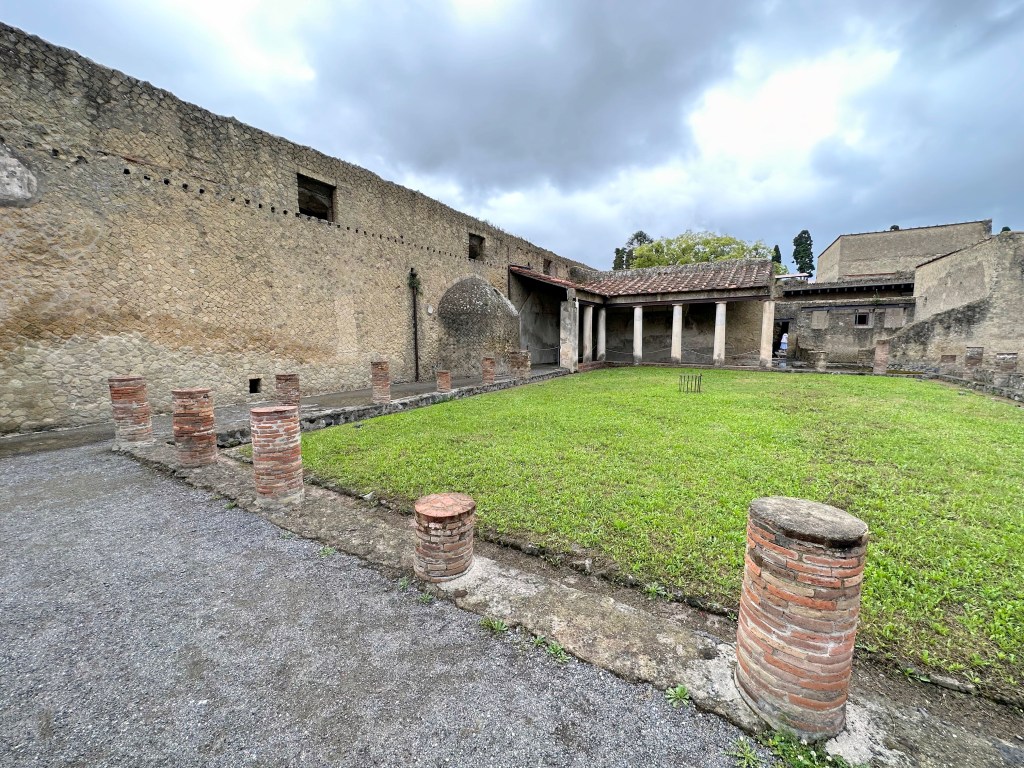
Exterior of Herculaneum’s all important Terme Centrali (Central Baths):
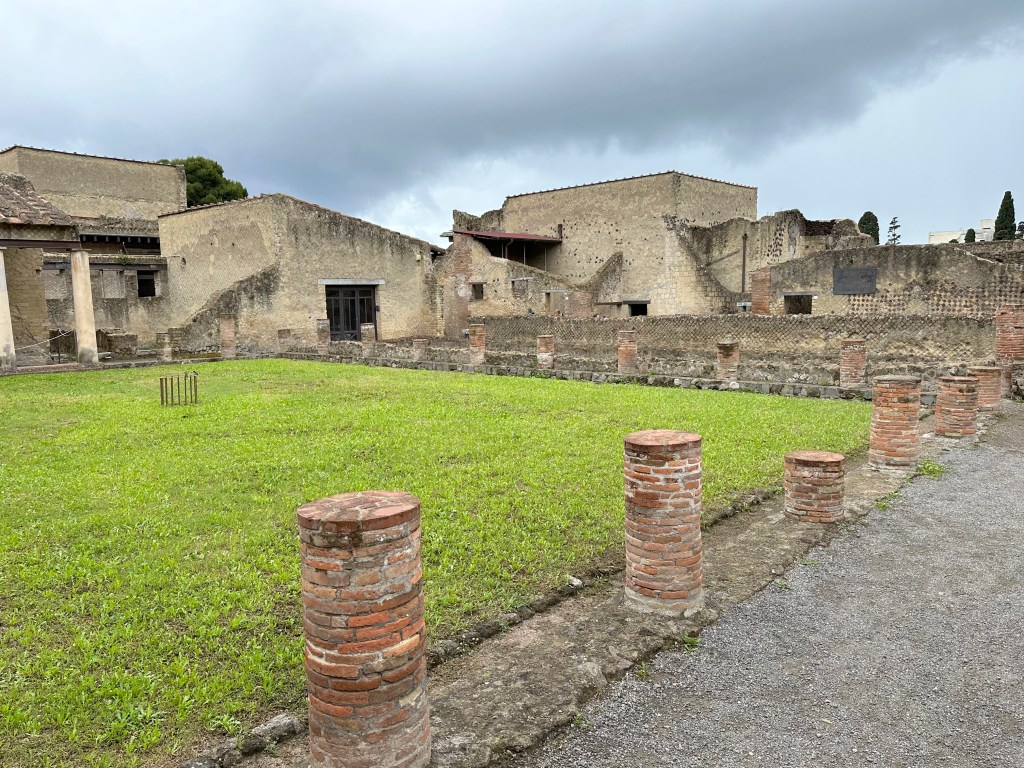
The baths date from the second half of the 1st century BC.
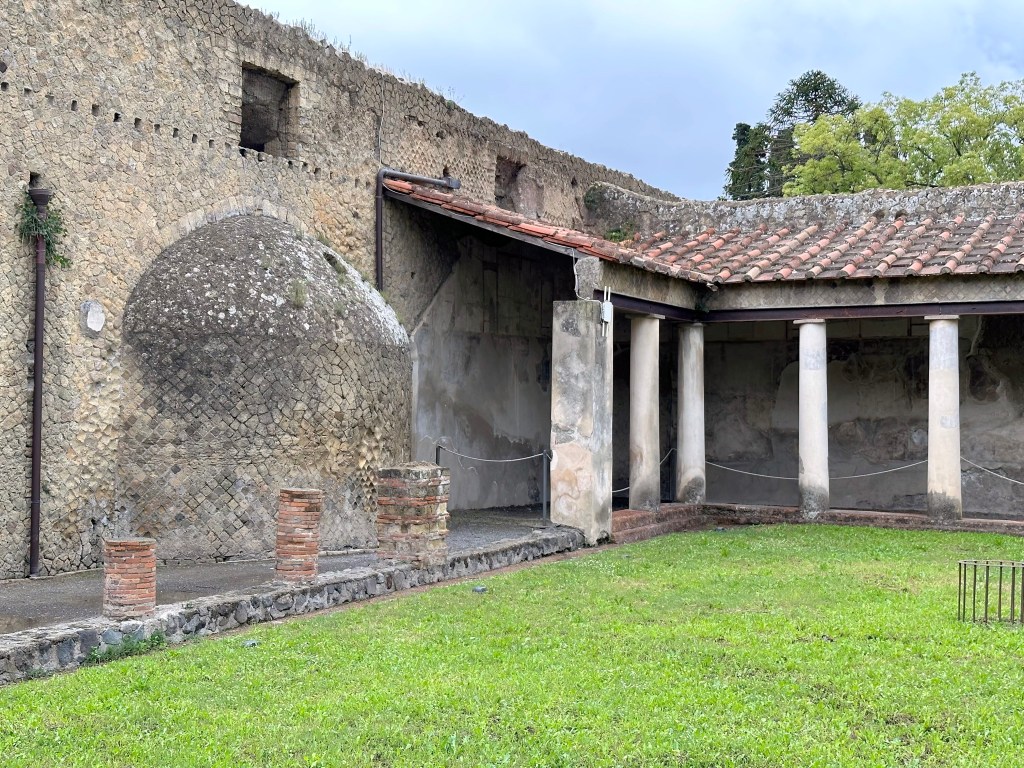
Interior, with niche on the other side of the exterior bulge on the above pic.
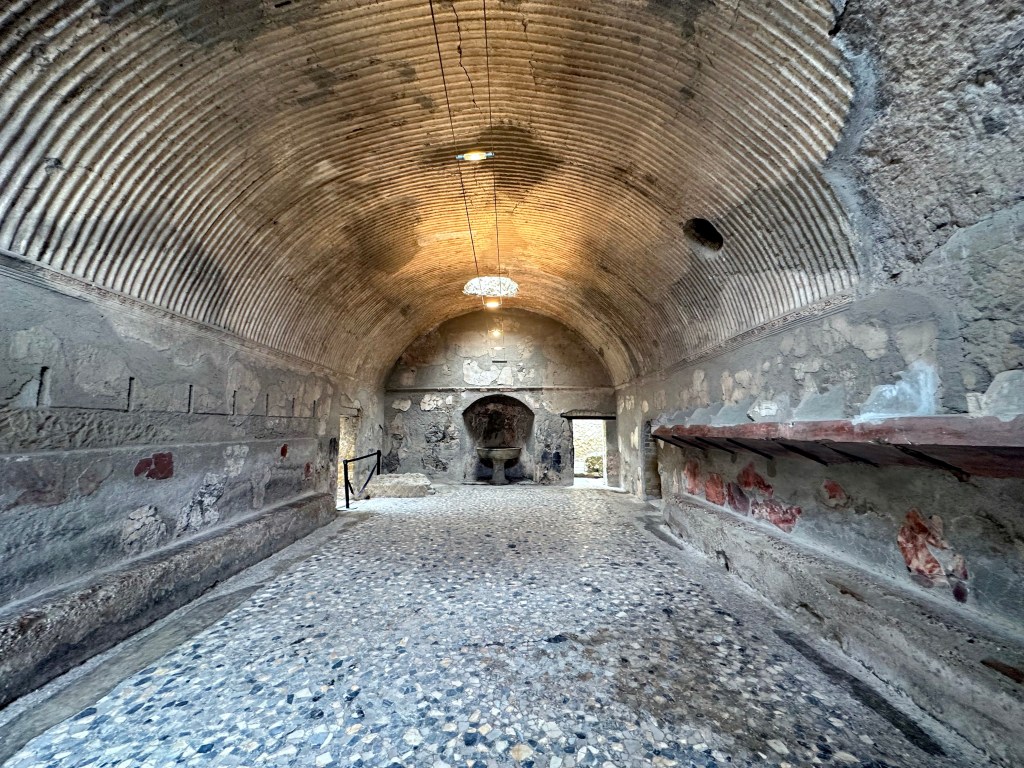
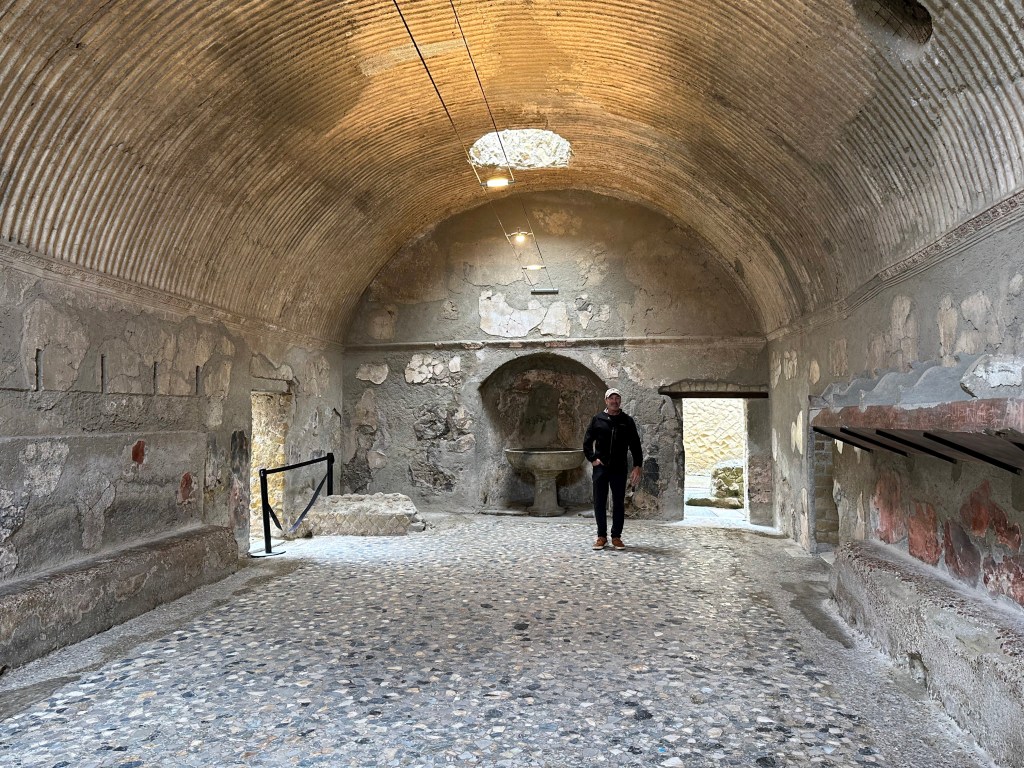
Inside the cavernous Termi Machili – men’s side:
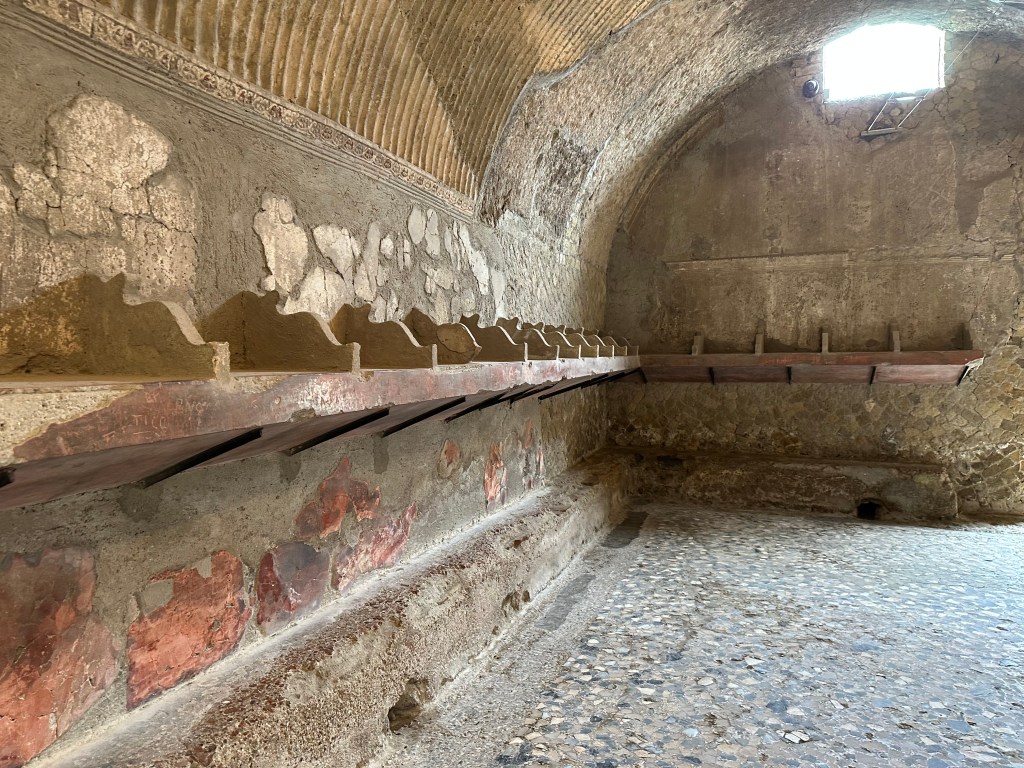
With niches to store your duds:
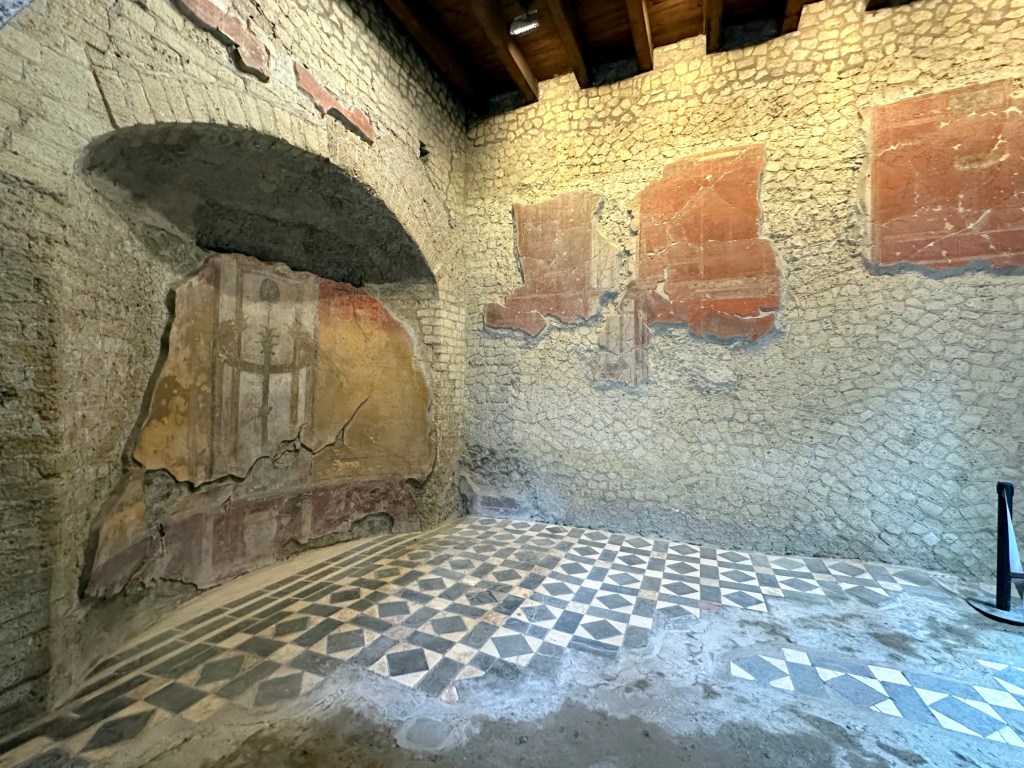
Another house, this time with a mosaic tile ancestors altar:
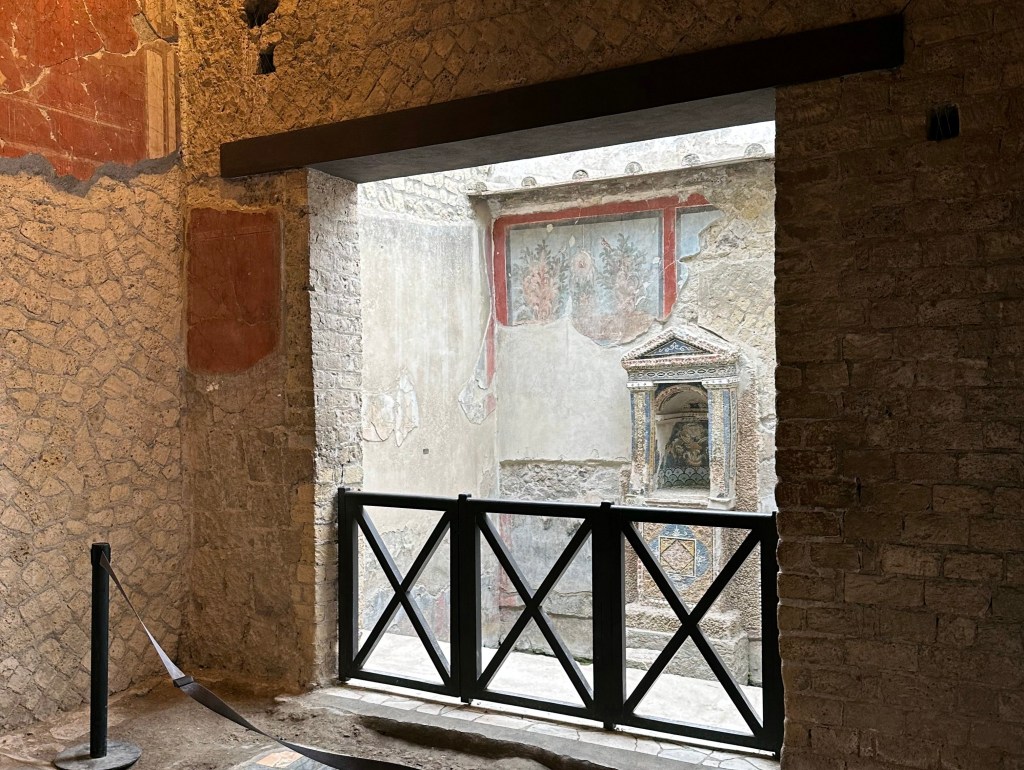
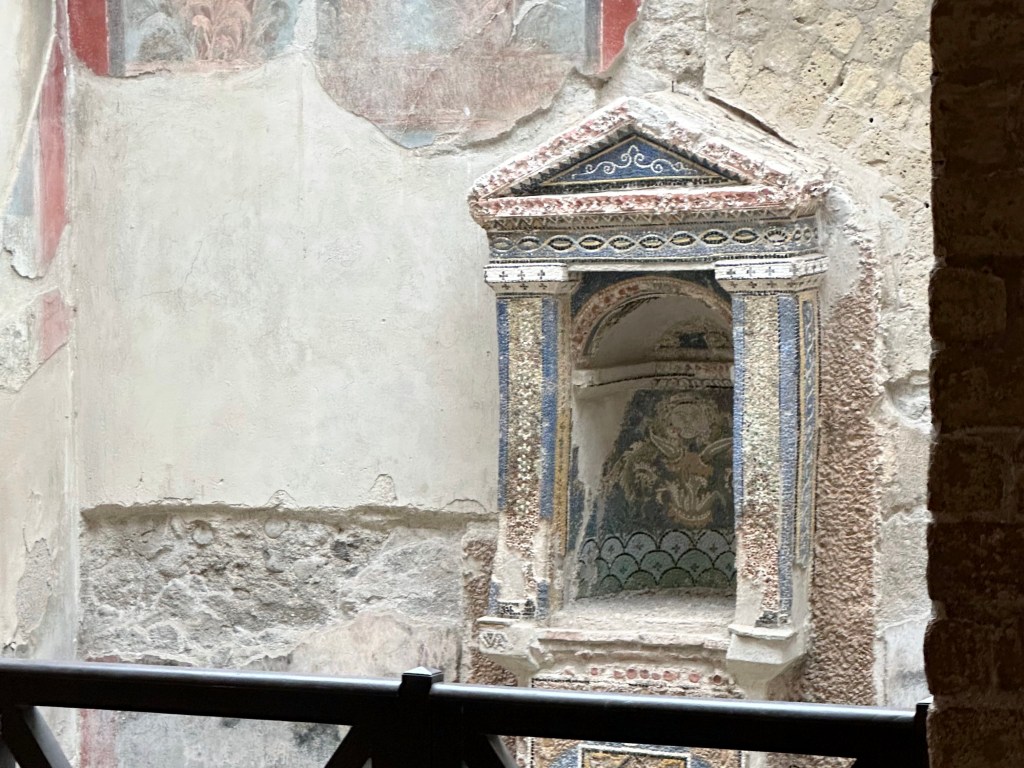
More street views:
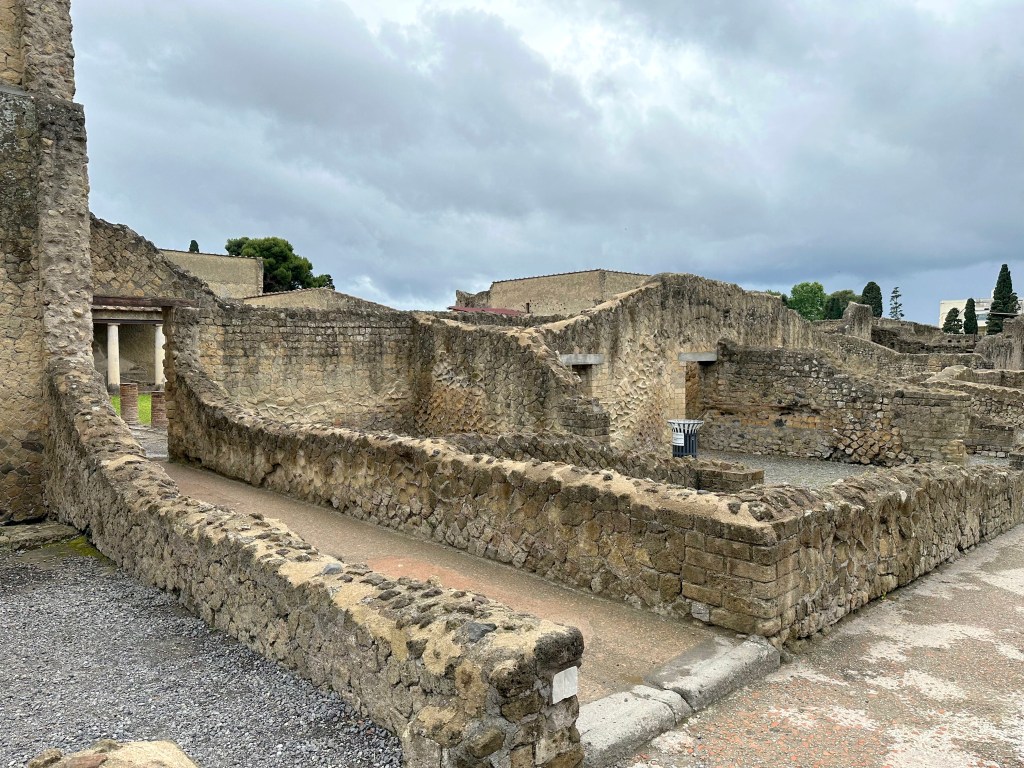
Awesome house facade:
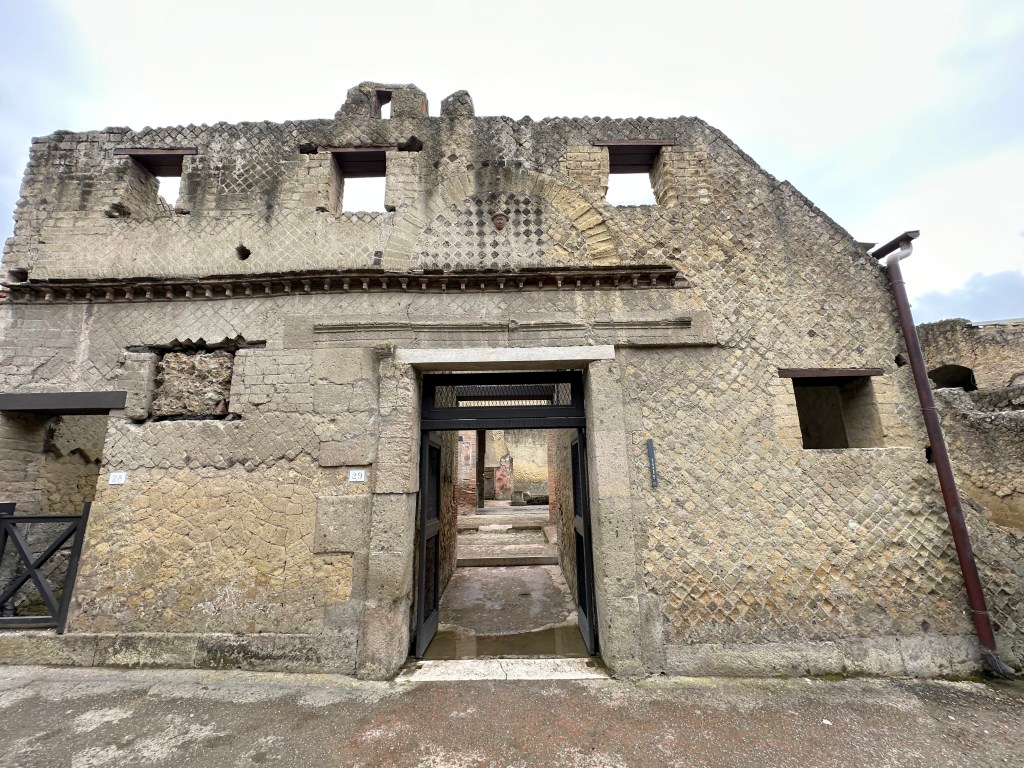
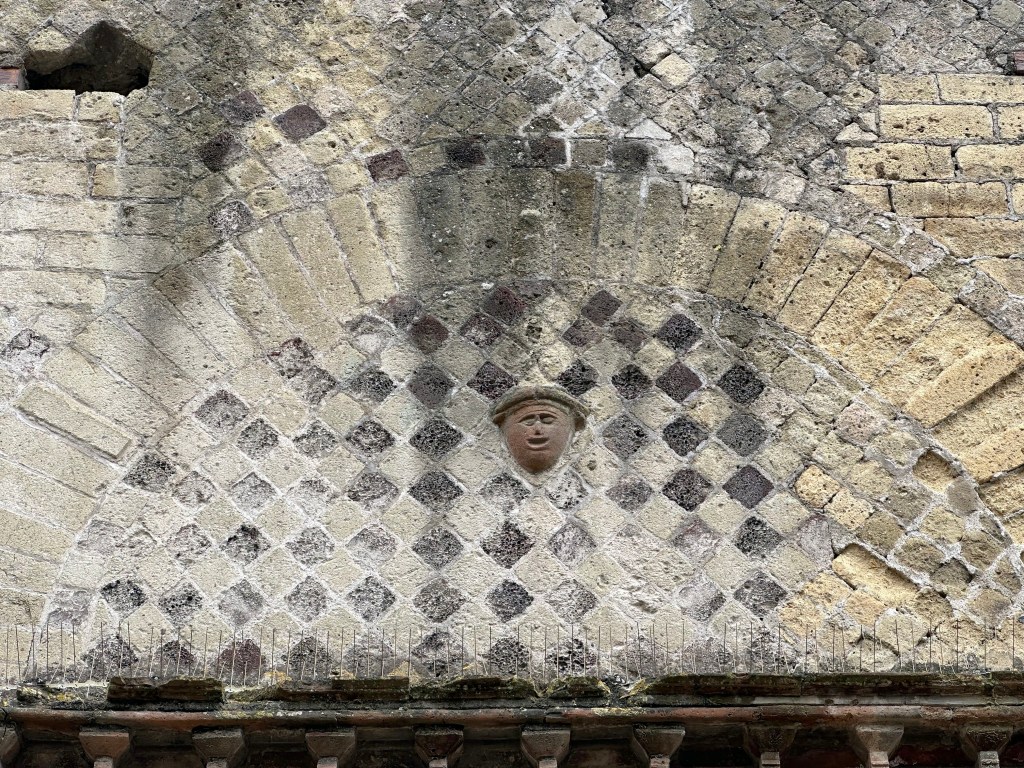
With a happy little guy in the middle of the lunette over the door:
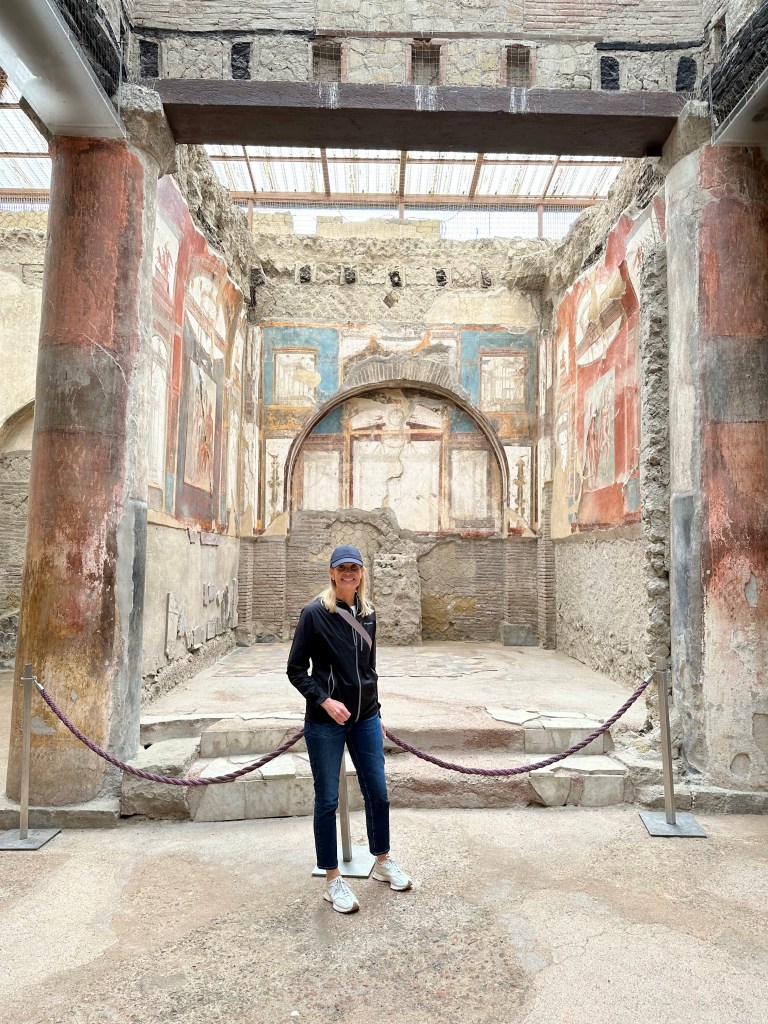
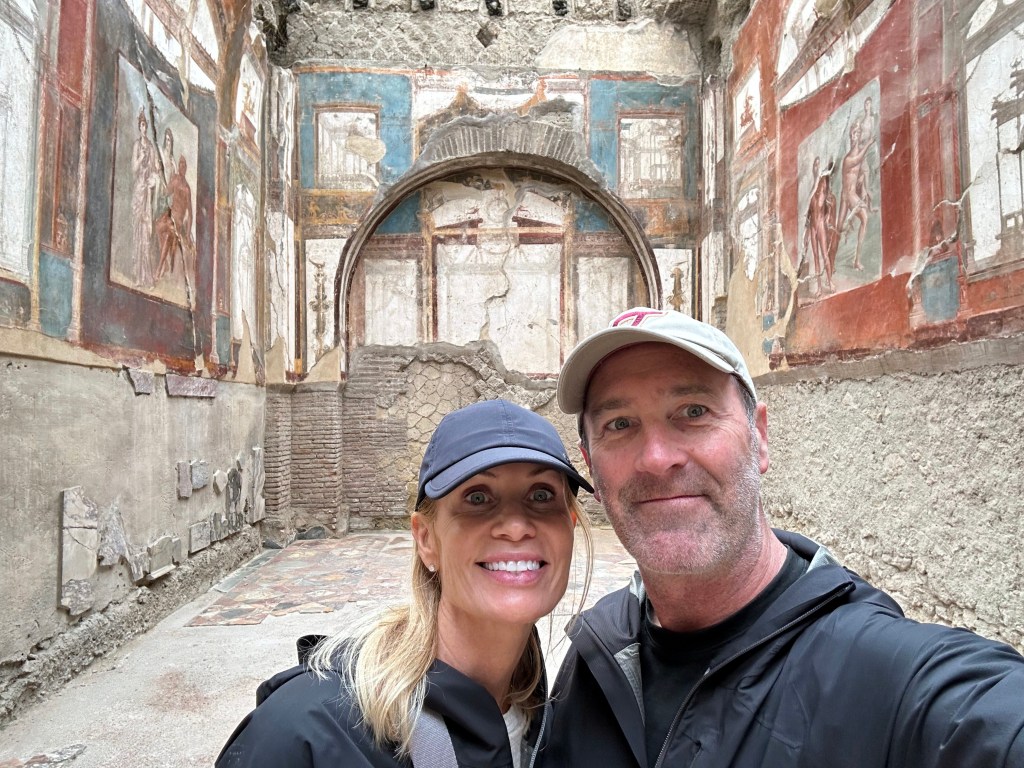
The incredibly preserved reception or audience room of the College of the Augustales, the gathering place for the cult of the emperor. Freakin’ unbelievable.
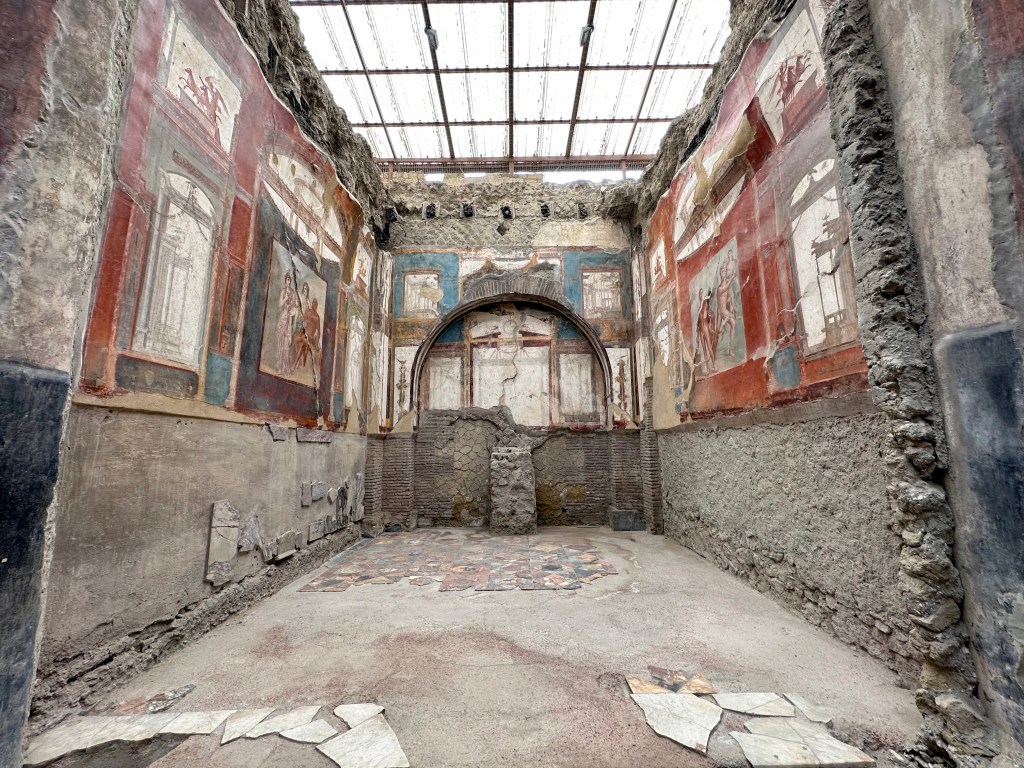
“This magnificent square structure was seat to the College of the Augustales, free men who were devotees of the cult of the Emperor Augustus. Columns, arches, cocciopesto floors, and two splendid frescoes: on the left wall, there is a depiction of Hercules entering Mount Olympus accompanied by Jupiter, Juno, and Minerva; the fresco on the right wall depicts Hercules wrestling Achelous. The skeleton of the building’s custodian was found in his quarters, laid out on the bed.” (From here.)
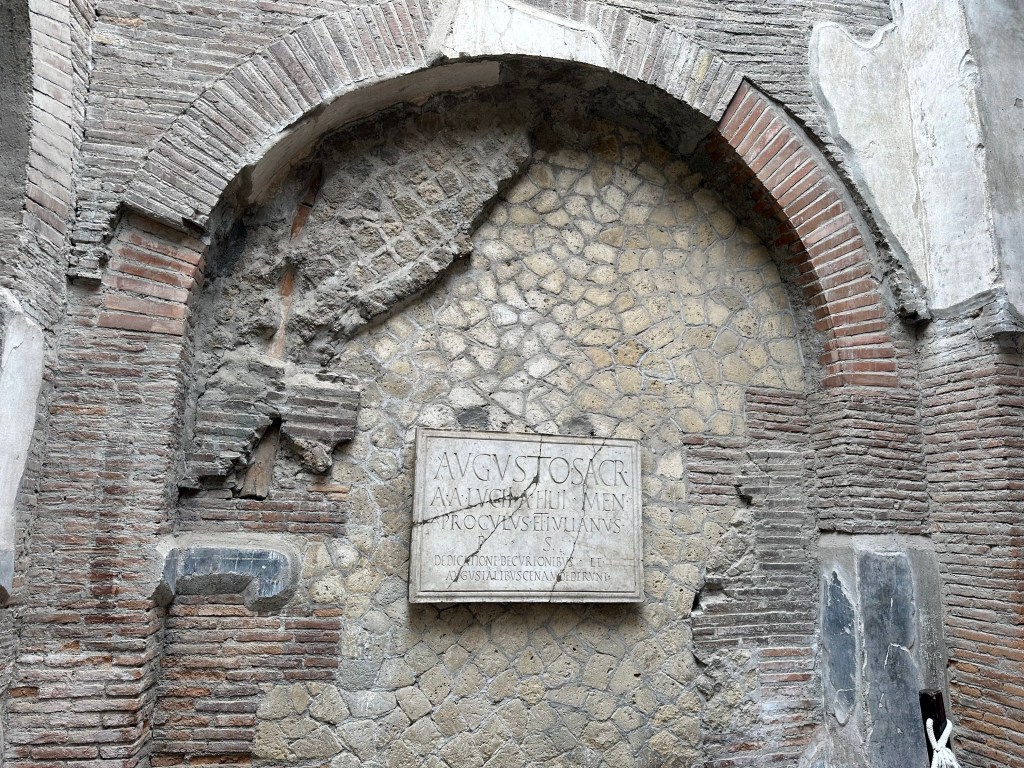
Carved stone plaque honoring Emperor Augustus by a pair of notable citizens who funded a civic feature in town. The plaque reads: “Sacred to Augustus. Proculus and Julianus, sons of Aulus (of the Menenian tribe), dedicated this.”
Around the corner? Another snack bar!
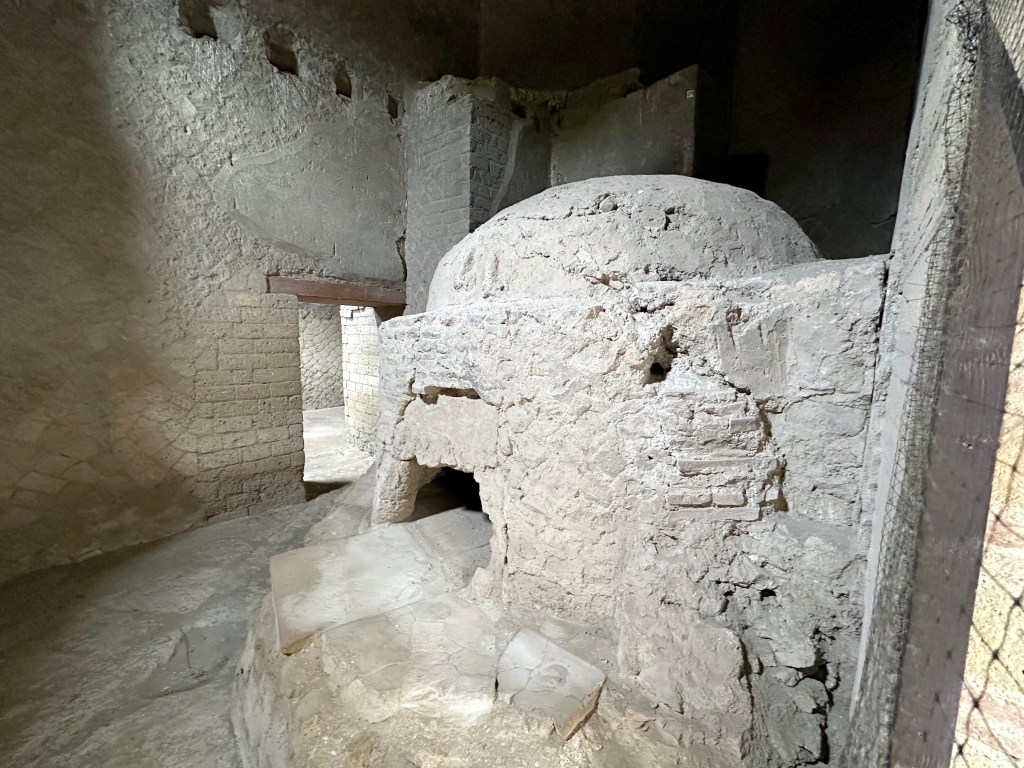
A bakery in Herculaneum, with its large bread oven:
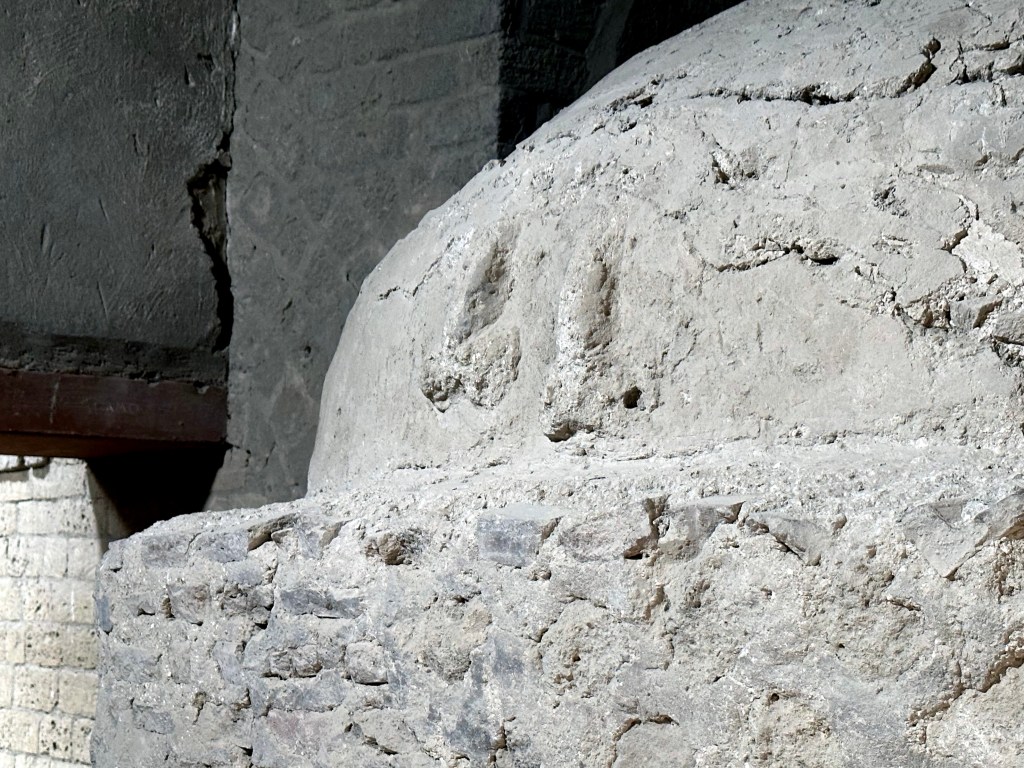
And, just was we saw next to the gate in the stone wall in the Roman ruins of Empuries in Catalonia, two prominent phalluses right above the door to this oven. (Maybe they specialized in baguettes hahahaha!)
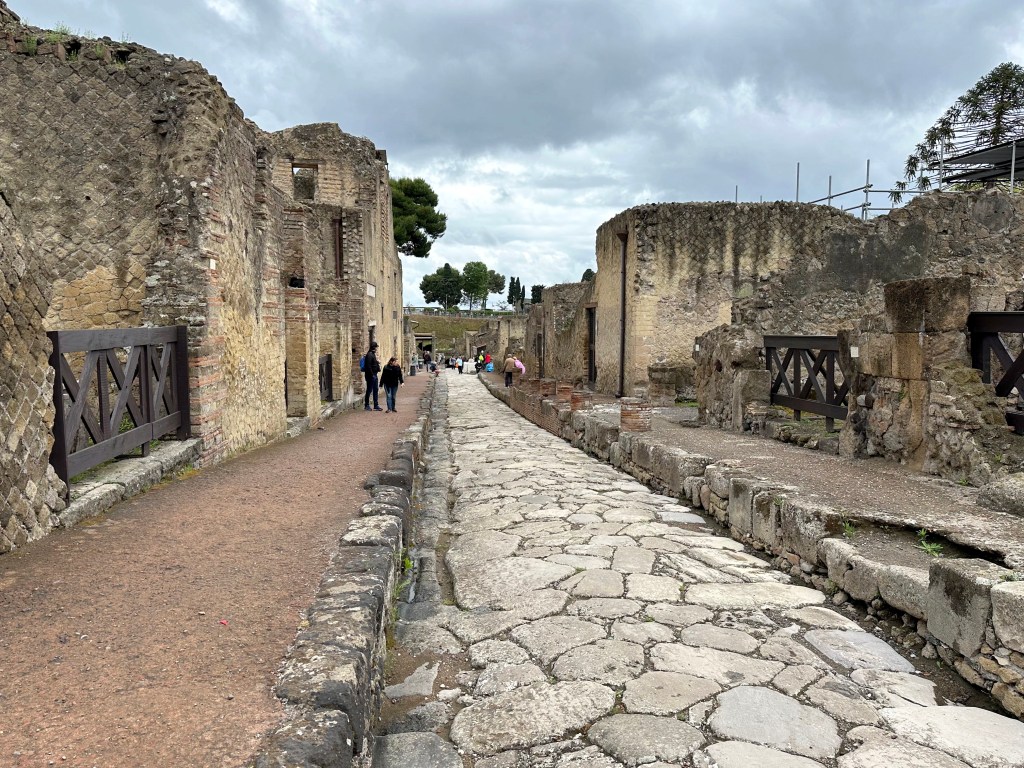
Another preserved, Roman-engineered street, complete with textbook cambering.
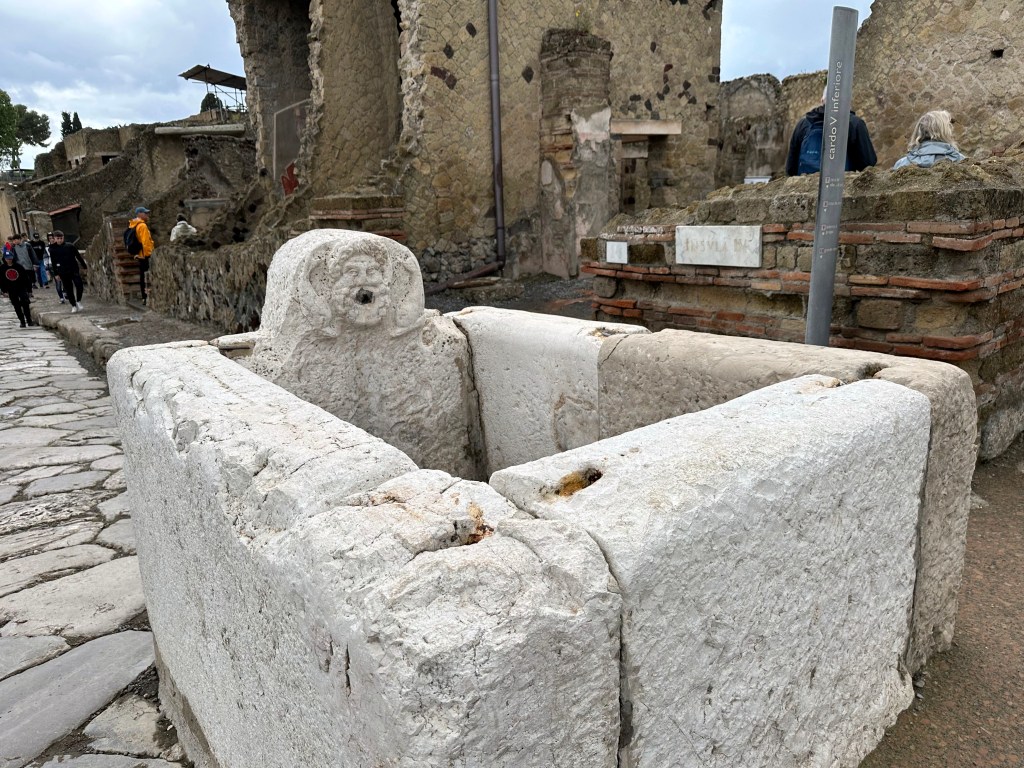
One of many preserved fountains / wash basins scattered throughout town:
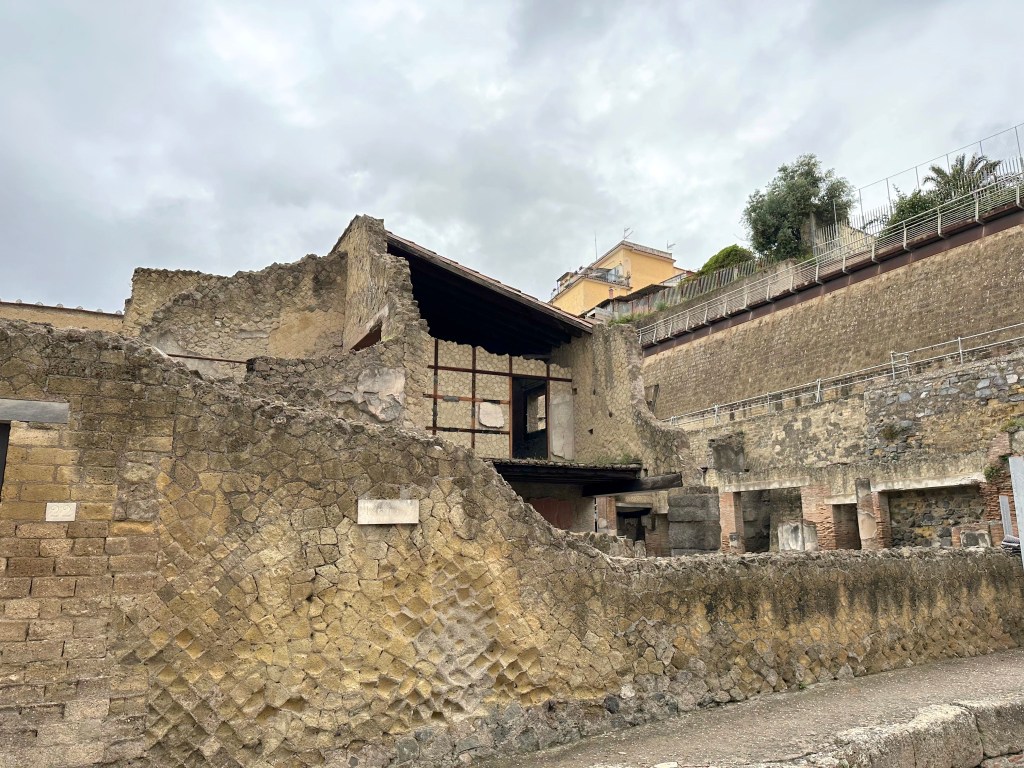
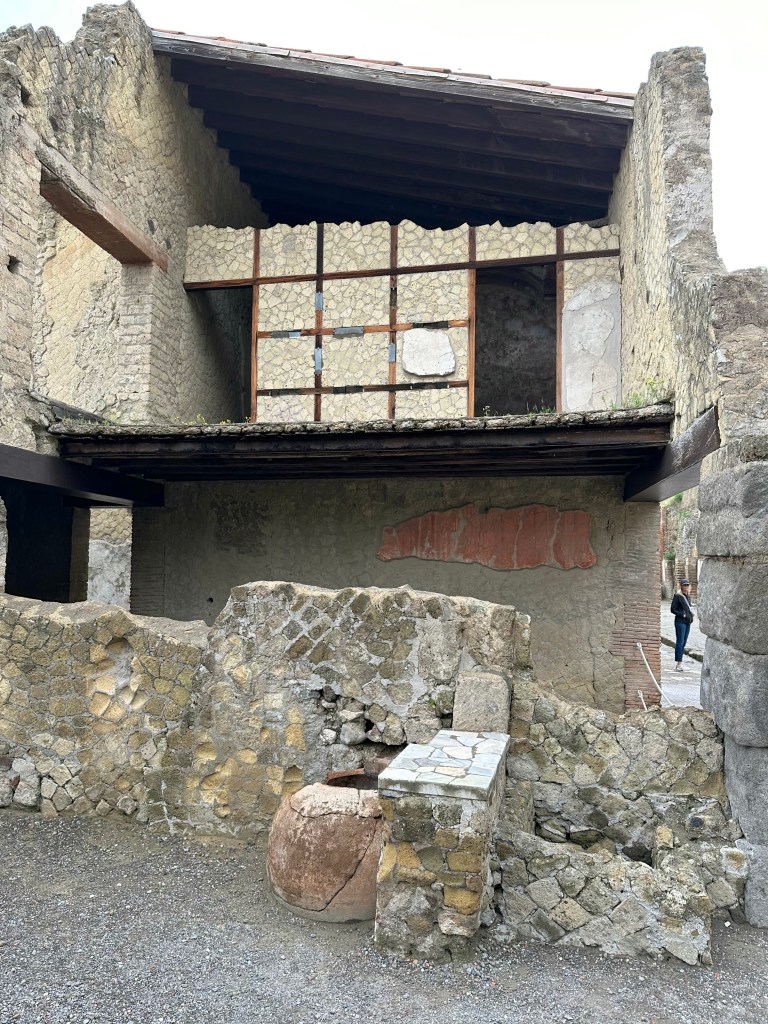
Preserved second floor residence over a shop:
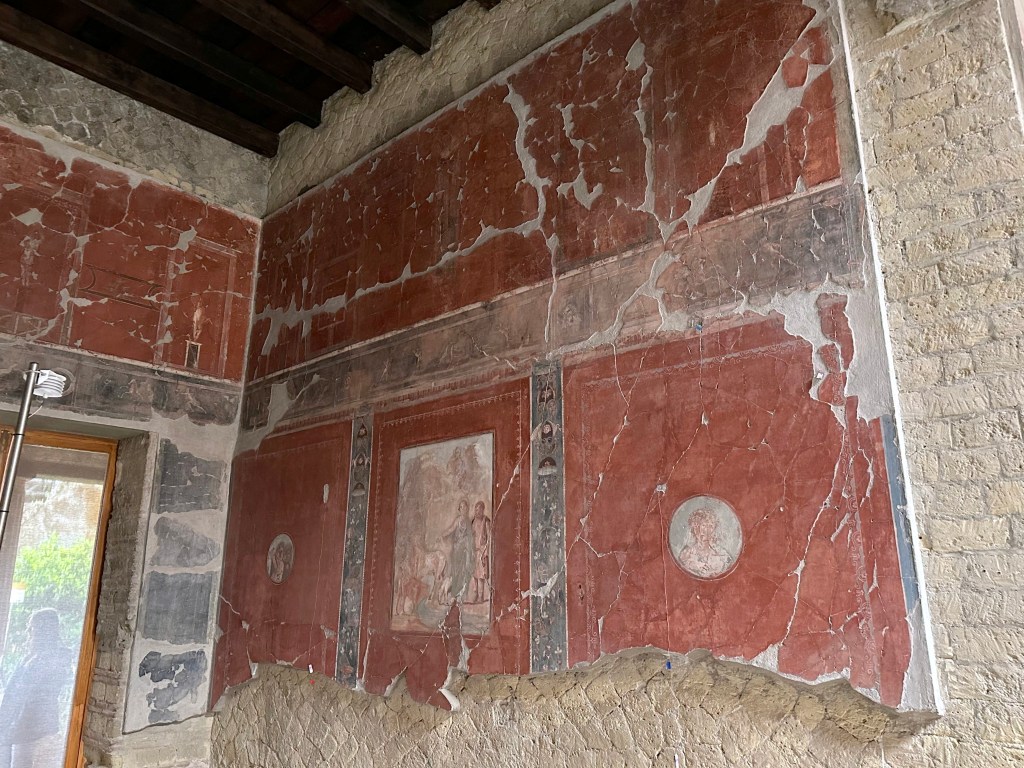
Still-vibrant, ornate, painted walls preserved by Vesuvius’ pyroclastic surges, which sealed the buildings and their interiors:
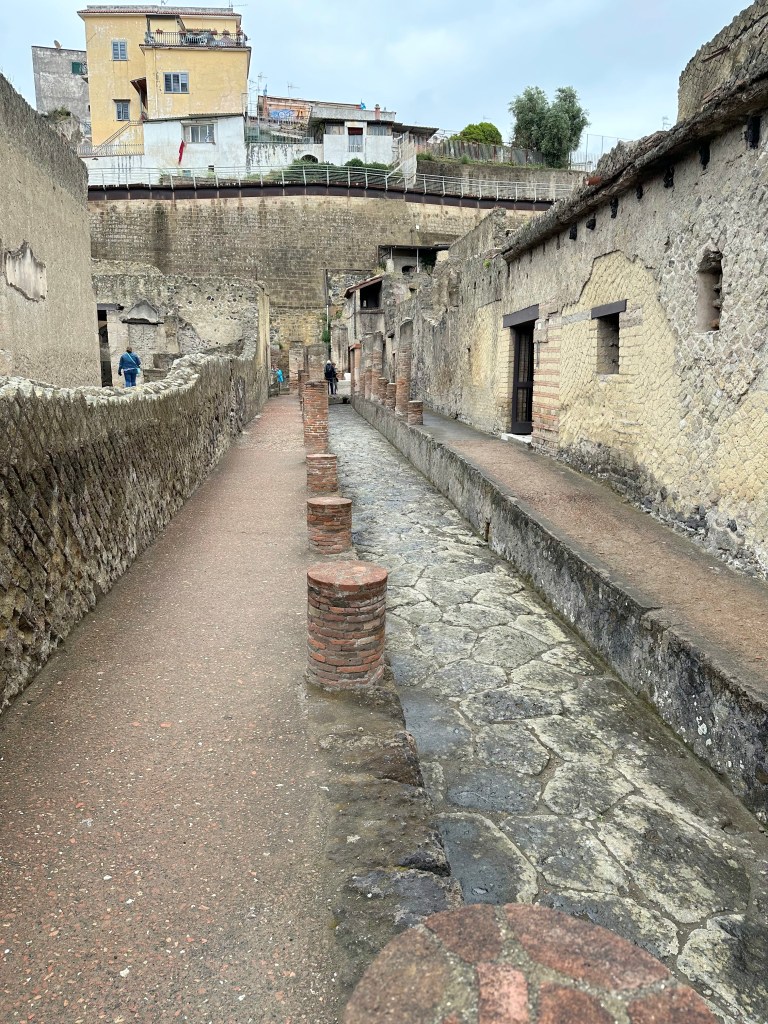
Yet another colonnaded street; due to materials from the eruption and over time, Herculaneum lies tens of meters beneath the modern town above:
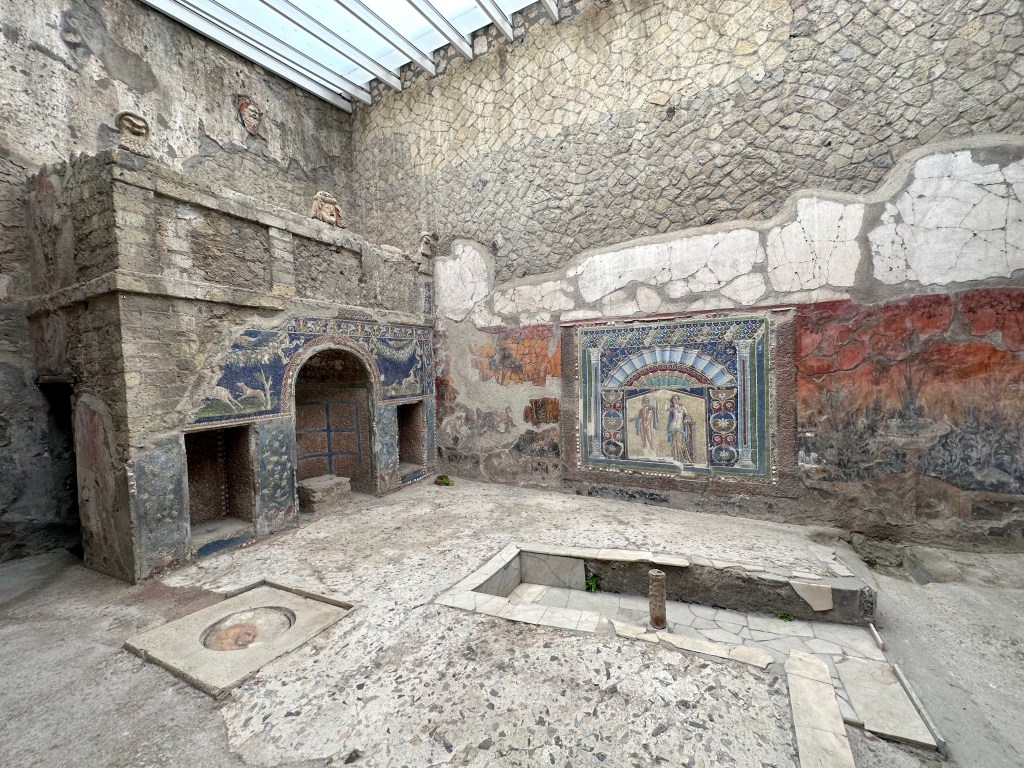
The “House of Neptune and Amphitrite,” so called because of its exceptional polychrome mosaics. The best are in the triclinium – a dining area defined by a three-sided dining couch, below in the middle.
The house’s namesake mosaic of Neptune and Amphrite on the eastern wall of the triclinium, visible from the street:
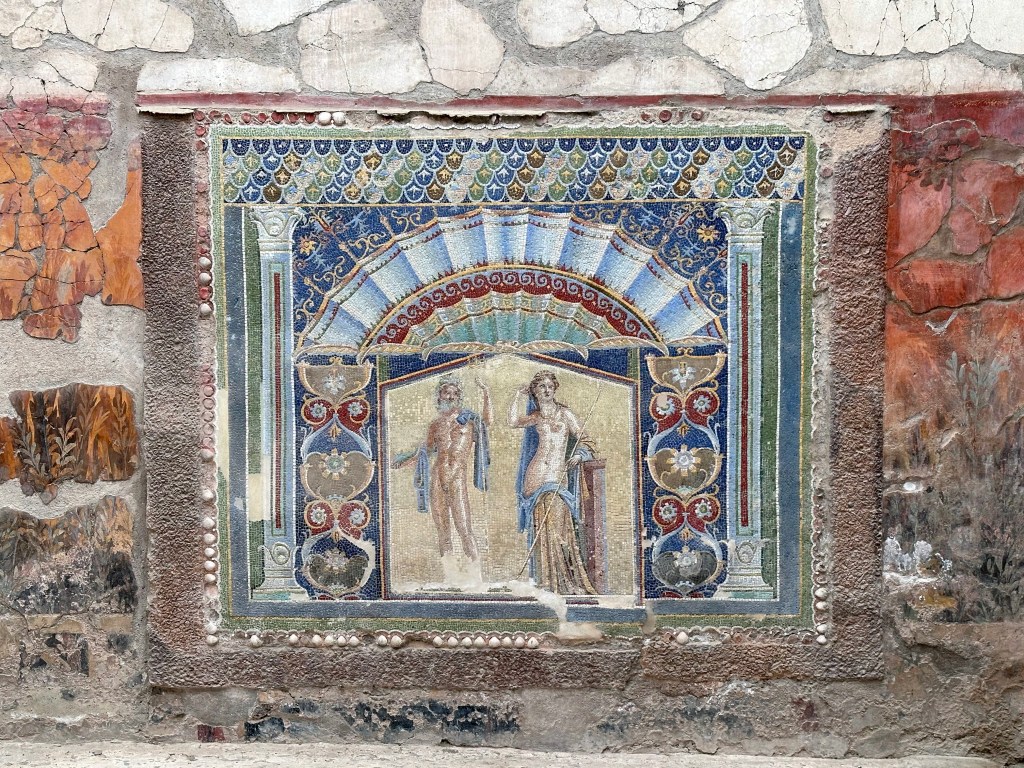
“Neptune, the god of the sea, is recognizable by his trident, his wild beard, flowing locks, and blue mantle, while Amphitrite (in Latin as Salacia), semi-nude, appears as the queen of the sea, adorned with a diadem, necklace, arm band, and earrings. Neptune fell in love with Amphitrite, but she initially fled him. With the help of Delphinus, the dolphin, Neptune found her. Delphinus was rewarded by being turned into a constellation, and Amphitrite became the goddess of the sea. Even though the artist was working with small stones, he still artfully conveyed Neptune’s musculature and Amphitrite’s shapely curves. In both cases, the drapery responds to the shape of their bodies. He stands in a contrapposto pose, suggesting a sculpture of a god or athlete might have been the source for his pose, while she leans against a pillar, indicating that the inspiration for this mosaic was a statue—perhaps, one of Venus. [5]
The gods stand beneath a fan-like light blue sail, under which are scrolls decorated with a red wave pattern, and elaborate vegetal scrolls—composed of red, green, Egyptian blue, and white tesserae, which appear to support the lintel and conch. The mosaic is framed by a border of shells and pumice, reinforcing the mosaic’s maritime theme. The mosaic was inserted into a background of garden paintings, which date to an earlier decorative phase.” (From here.)
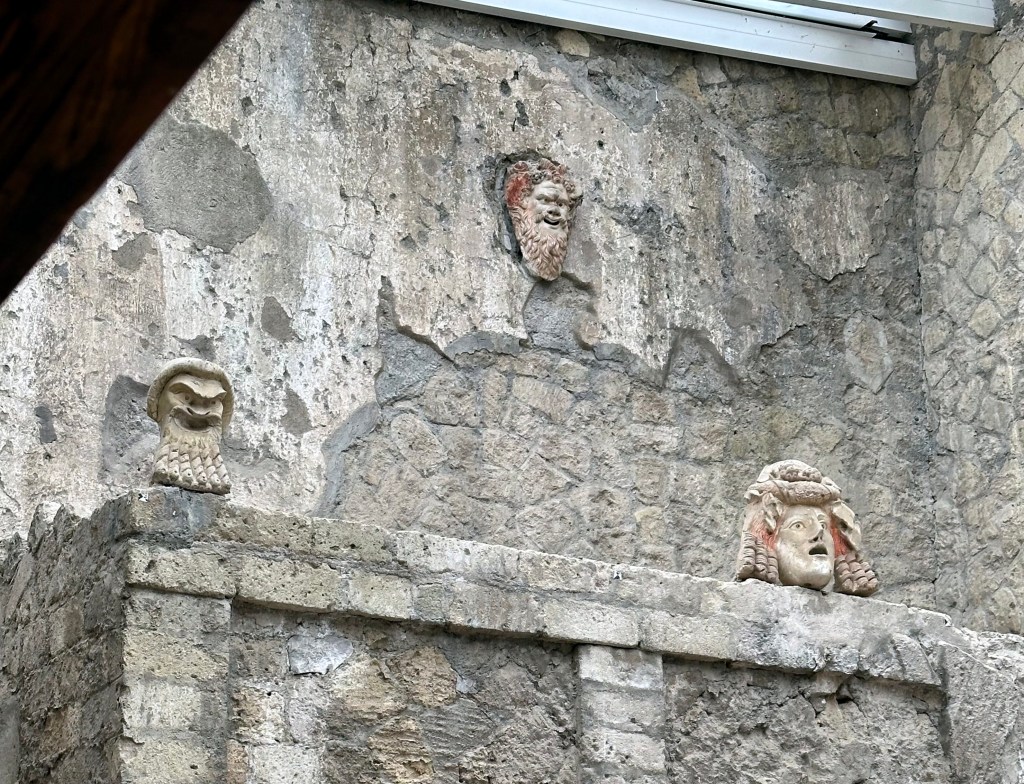
And, above the nymphaeum on the north wall lie three theatre masks: comic on either side and tragic in the center:
Visit complete!
From Herculaneum, we drove about 20 minutes to our location for the night: Naples.
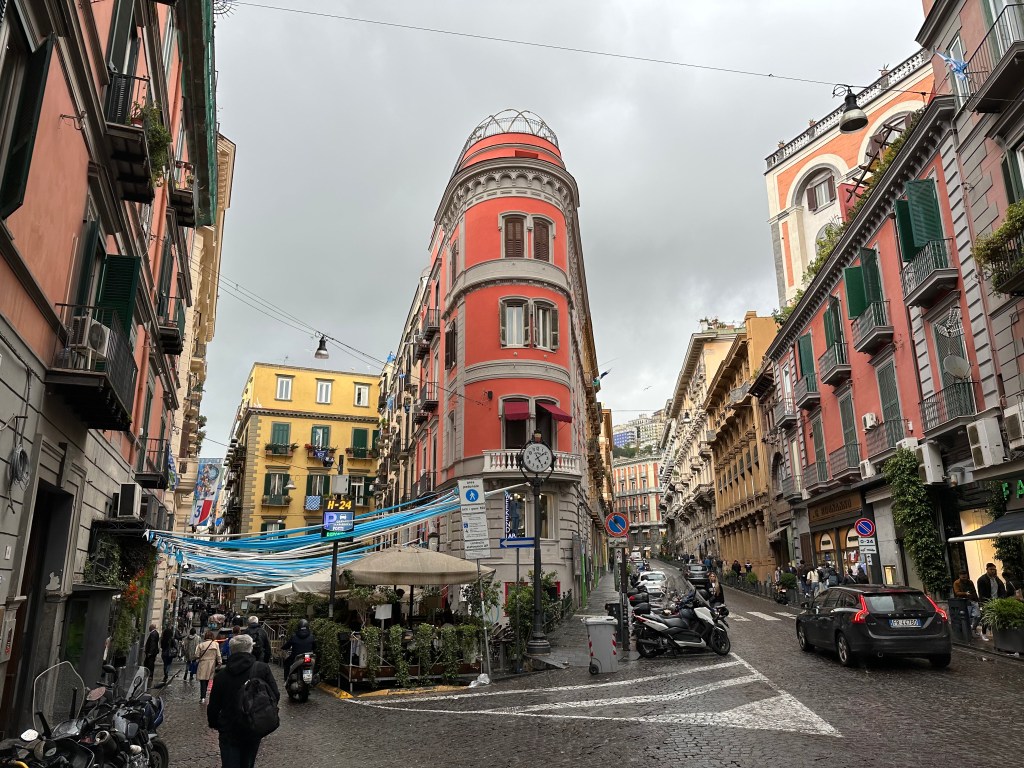
We had NO interest in Naples as a town (city) to visit, but logistically it made sense to stay there.
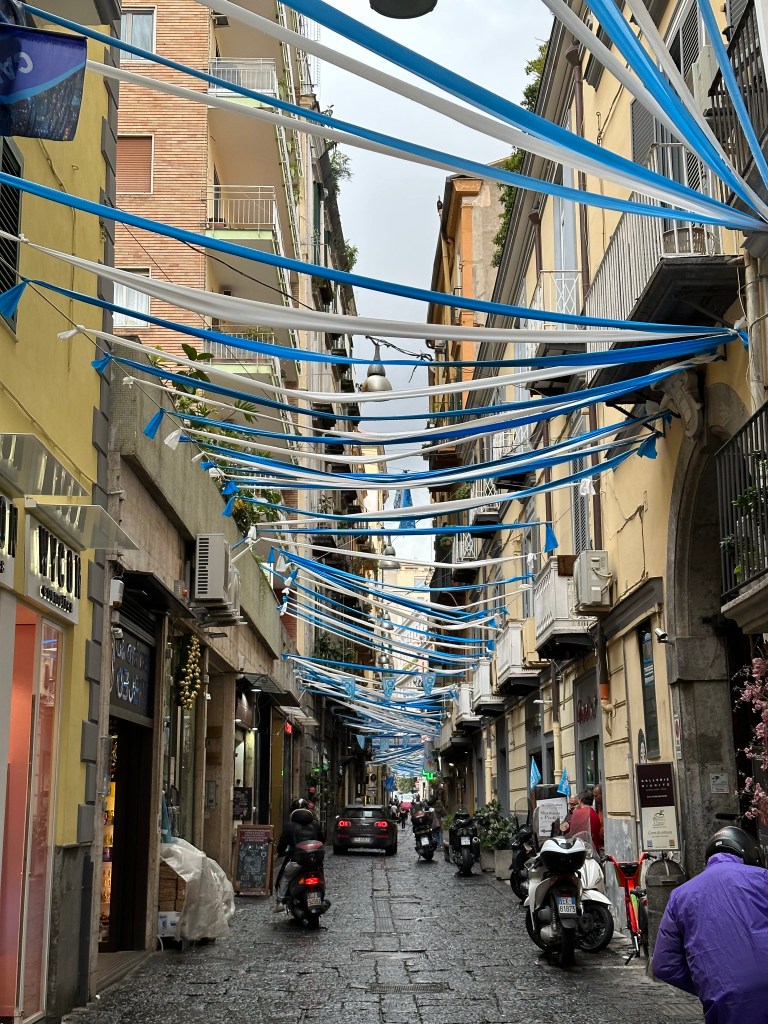
But because we’d heard horror stories about the traffic in town (the pic above is a mild example; we were most concerned not with an obstacle-course of a narrow street to navigate – which we do in Europe all the time – but in the no-rules battle royale among drivers that takes place on Naples busy thoroughfares), we chose a place on the very edge of the city next to the coast so we didn’t need to venture too far in from the highway.
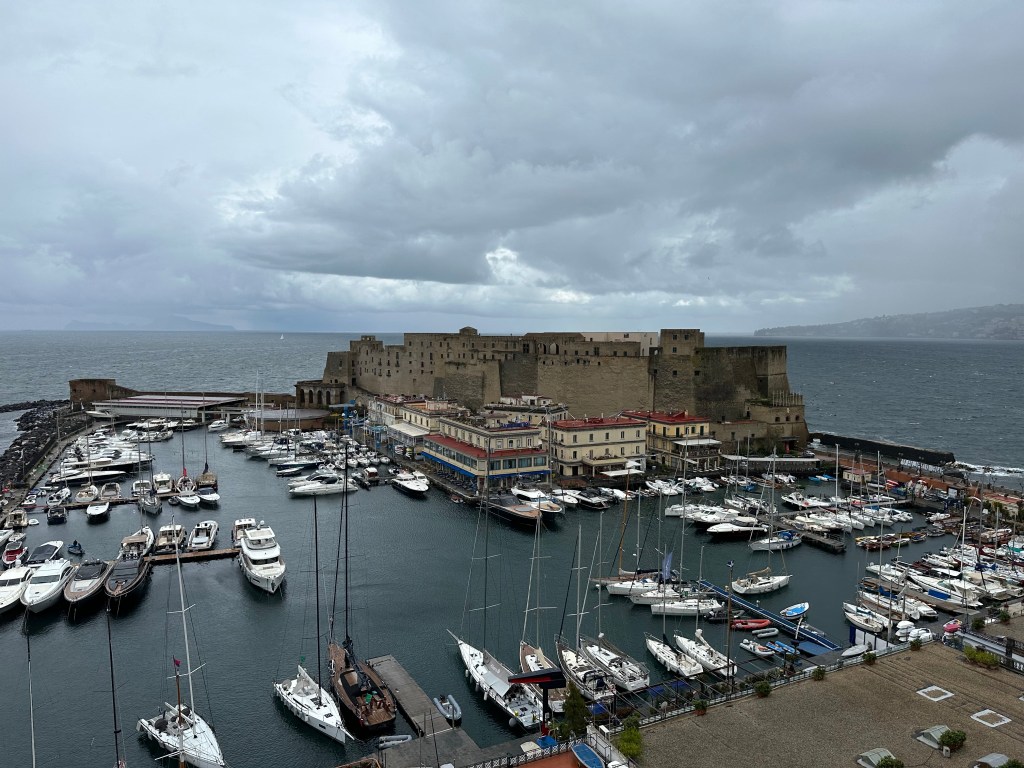
The only objective that Lisa had for Naples was to snag some Neapolitan pizza, so after wandering around in the rain to check out the neighborhood for a while, we focused solely on that.
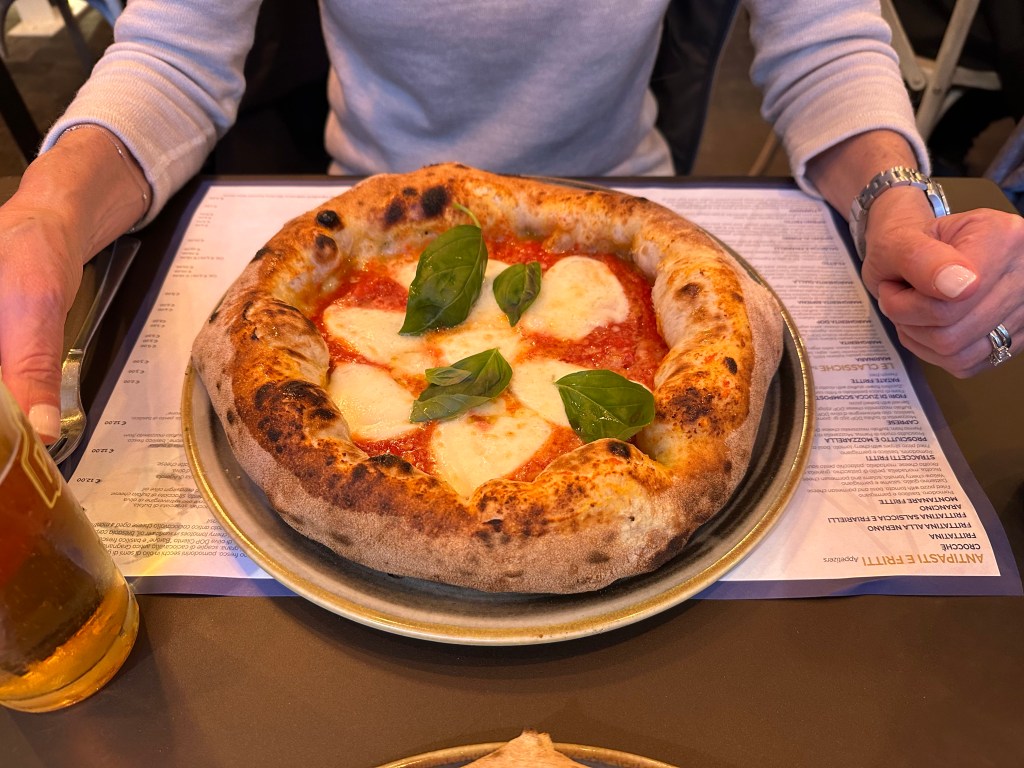
With great success!
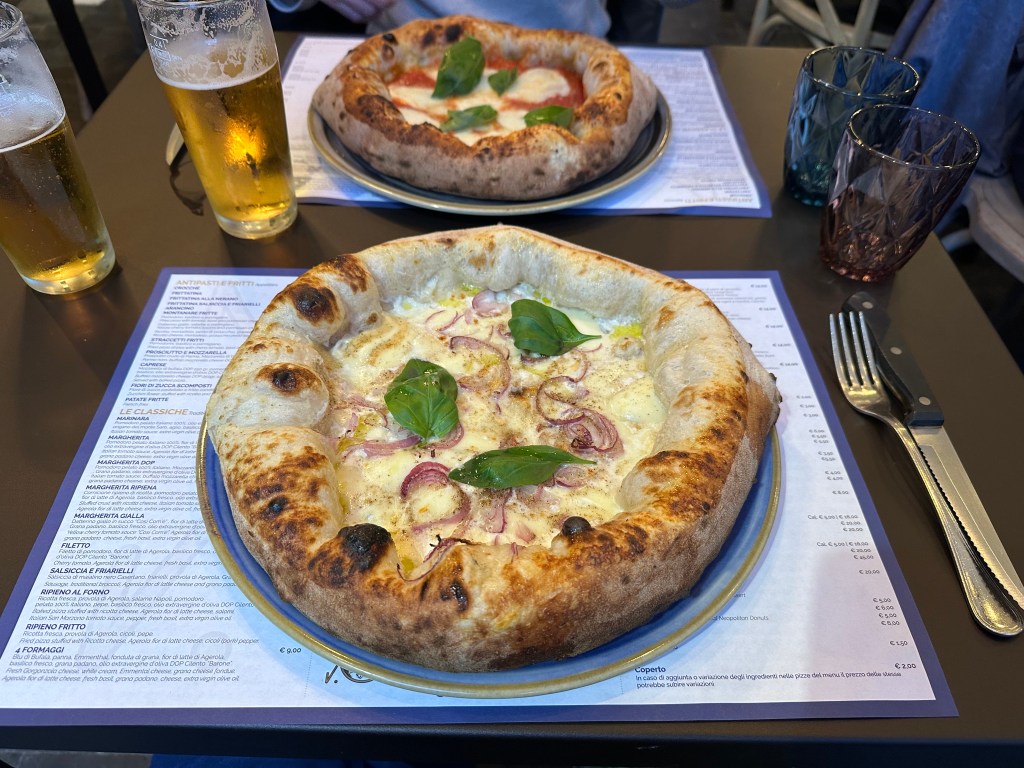
Up next: ditching the car and heading to Capri.
 WolfeStreetTravel