
Traveling to Mexico and Scotland in the same month turned out to be just the kind of contrast we were looking for in May. The latter trip was prompted by three factors:
- We wanted to travel over Memorial Day
- United just started nonstop service from Dulles to Edinburgh on the Thursday before Memorial Day weekend
- We had never been to Edinburgh
Done!
We traveled on the inaugural direct flight from DC to Edinburgh for a long weekend in Scotland. The allotted time turned out to be ideal – three full days in Edinburgh was just enough time to see everything we wanted to see.
We spent the first day wandering around the upper half of the Royal Mile and into New Town below the castle. We’ll get to that later. Let’s instead focus immediately on haggis, the national dish of Scotland. Haggis consists of a sheep’s or calf’s offal mixed with suet, oatmeal, and seasoning and boiled in a bag, traditionally one made from the animal’s stomach, which looks like this:
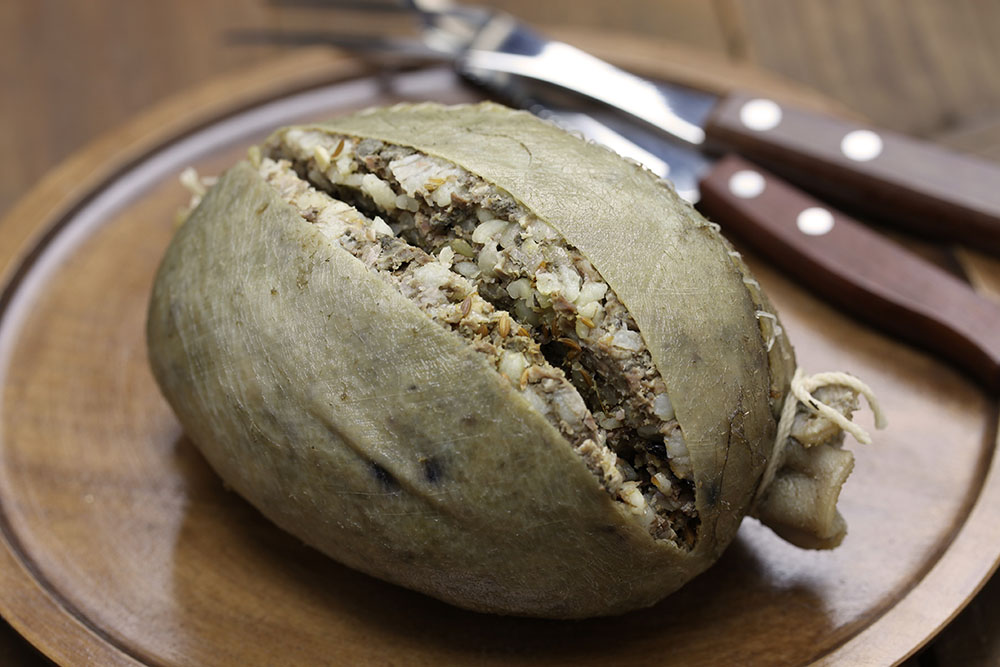
Disgusting? Delicious? Who knew?
We lived for years just blocks from Scotland Yard restaurant on King Street in Old Town. We always told ourselves that we’d pop in one evening, brace ourselves, and try this culinary abomination. The years went by, we never took action, and Scotland Yard closed (as well as its sister shop next door – an interminably idiosyncratic wool cape store that we couldn’t believe survived as long as it did).
Now that we were finally heading to the haggis homeland, we were determined not to let another opportunity pass us by. So, our first night in Edinburgh, we ordered it up.
Our haggis from that evening is the brown item on left. It may have been effect of the flight of four whiskeys that we also ordered or it may have been the fact that it was served outside a sheep stomach casing, but it was surprisingly delicious! So much so that we enjoyed it three more times during our trip.

Served traditionally with neeps and tatties (rutabagas and potatoes – left and right on the plate), these starch bombs only enhanced the haggis experience. We could now add our haggis meal in Edinburgh to eating minke whale and puffin in Reykjavik, foal in Ljubljana, and wallaby and Moreton Bay bugs in Sydney.
Topping off the evening, we wandered by – then in – a bar with totally casual and awfully good live music:

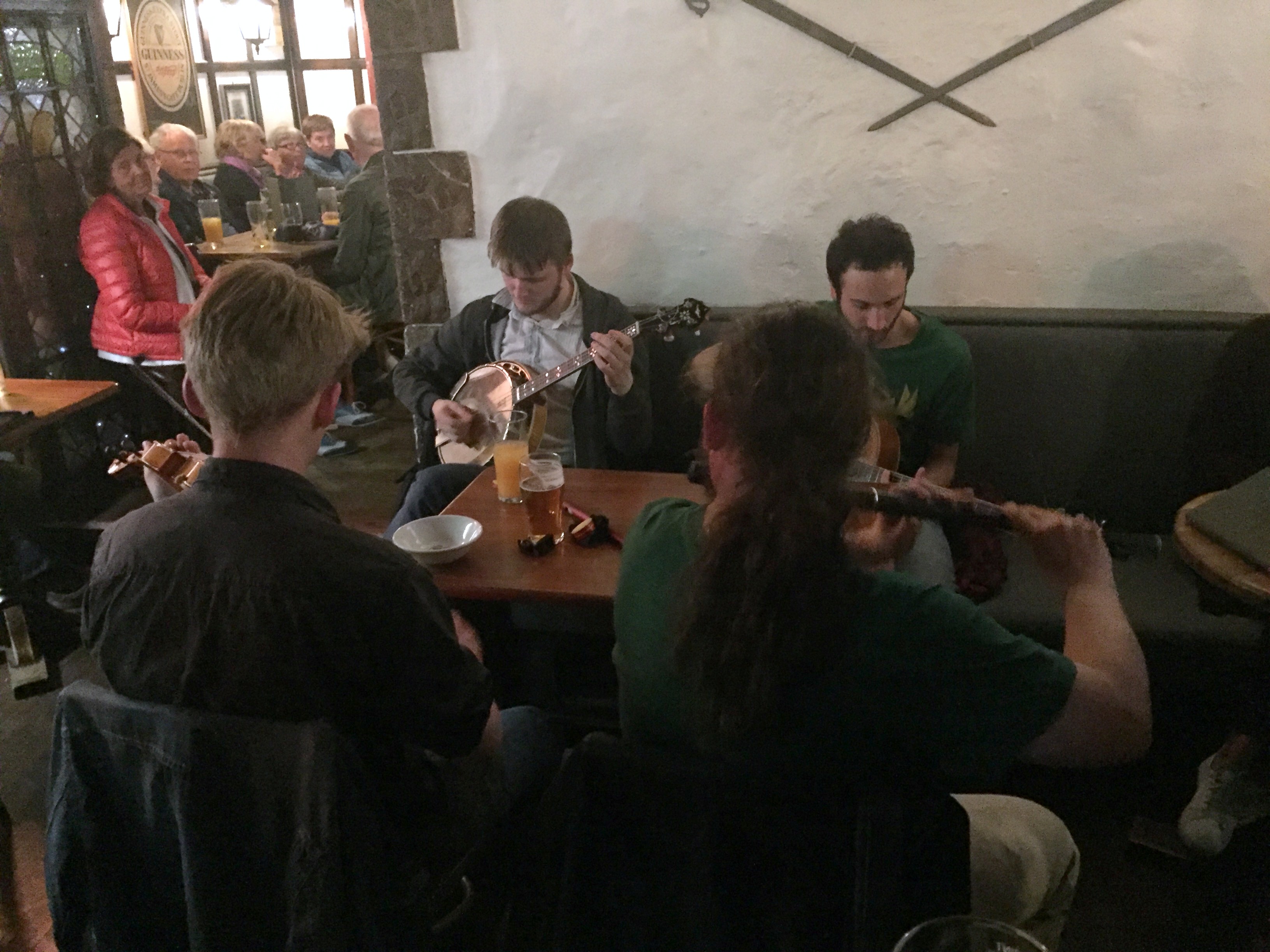
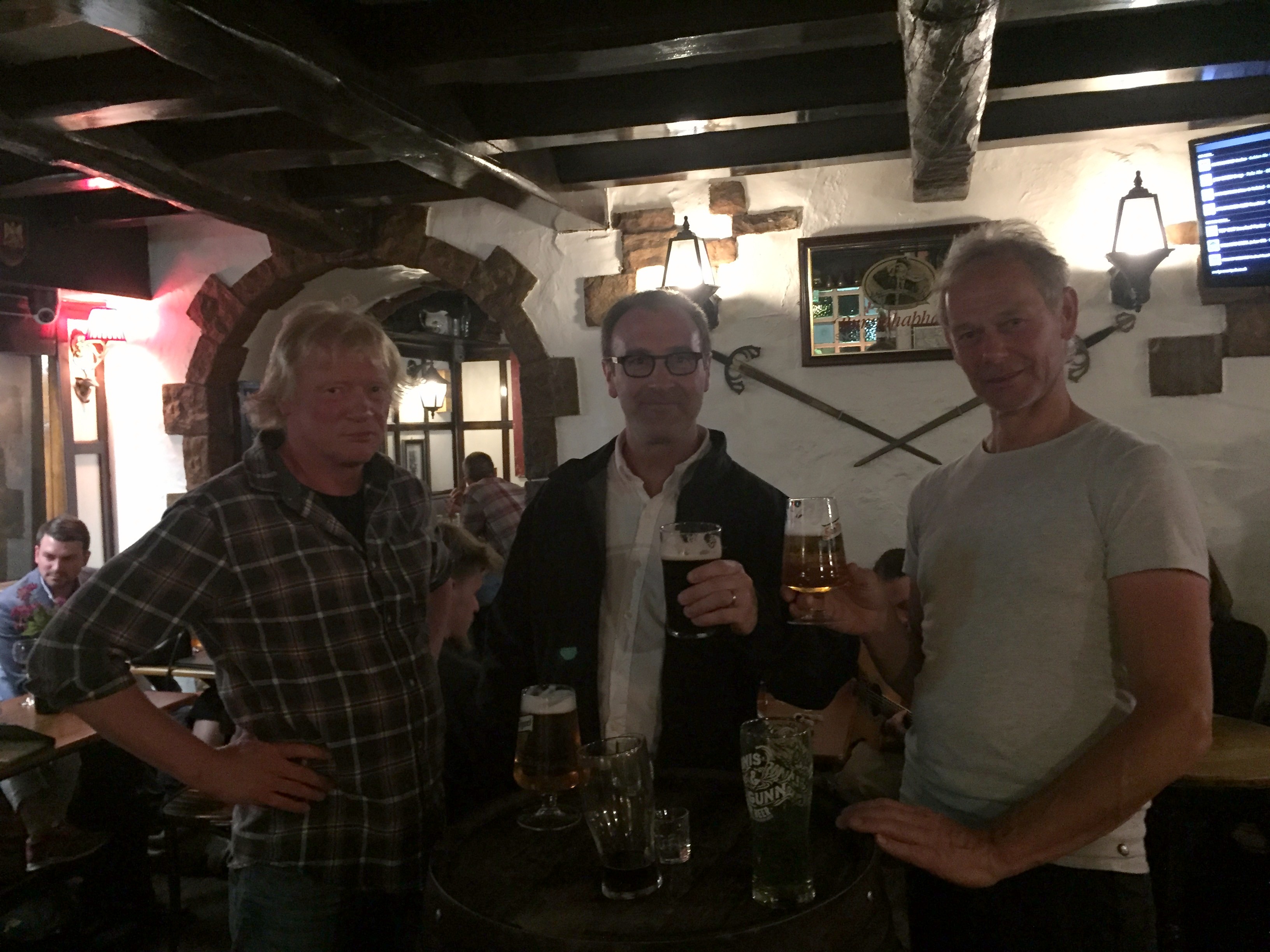
Also in attendance were some Rhinelanders who were passing through town on their way home after hiking the Scottish highlands. We hung out for the evening enjoying the music; all of us liked beer quite a lot, so we got along swimmingly.
The next morning, we headed to Edinburgh Castle at the top of the Royal Mile.

Not fans of mobs of tourists, we procured castle tickets for the opening time before we left the US. One of us indulged the other in getting up (relatively) early to make this happen, and we beat the crowds into the castle. (We’d like to rent out Angkor Wat and Machu Picchu for the day for the same reason on future trips, but still haven’t figured this out.)

Robert the Bruce and William Wallace flank the entrance.


A brief history of the castle, which originated in the 600’s. Saved you a trip!


Following some advice from a travel site researched before we left, we made a bee line to the tower with the crown jewels to avoid being crammed into the Crown Jewels room with the unwashed masses – we were the first there, so the plan was sound.

No pics allowed in the Crown Jewels room, so we took one of the Stone of Scone on the way out. Scottish kings have been crowned atop the stone since the 9th century. Edward Longshanks snagged the stone as a spoil of war in the 13th century and hauled it to London, where it was placed inside the English Coronation Chair, upon which virtually all subsequent English, and then British, monarchs have been crowned, including QEII in 1953. The other occupants of the room include a gold crown dating from Robert the Bruce’s coronation in 1306 and a scepter and sword added to the coronation rite by James IV in the 1500s.
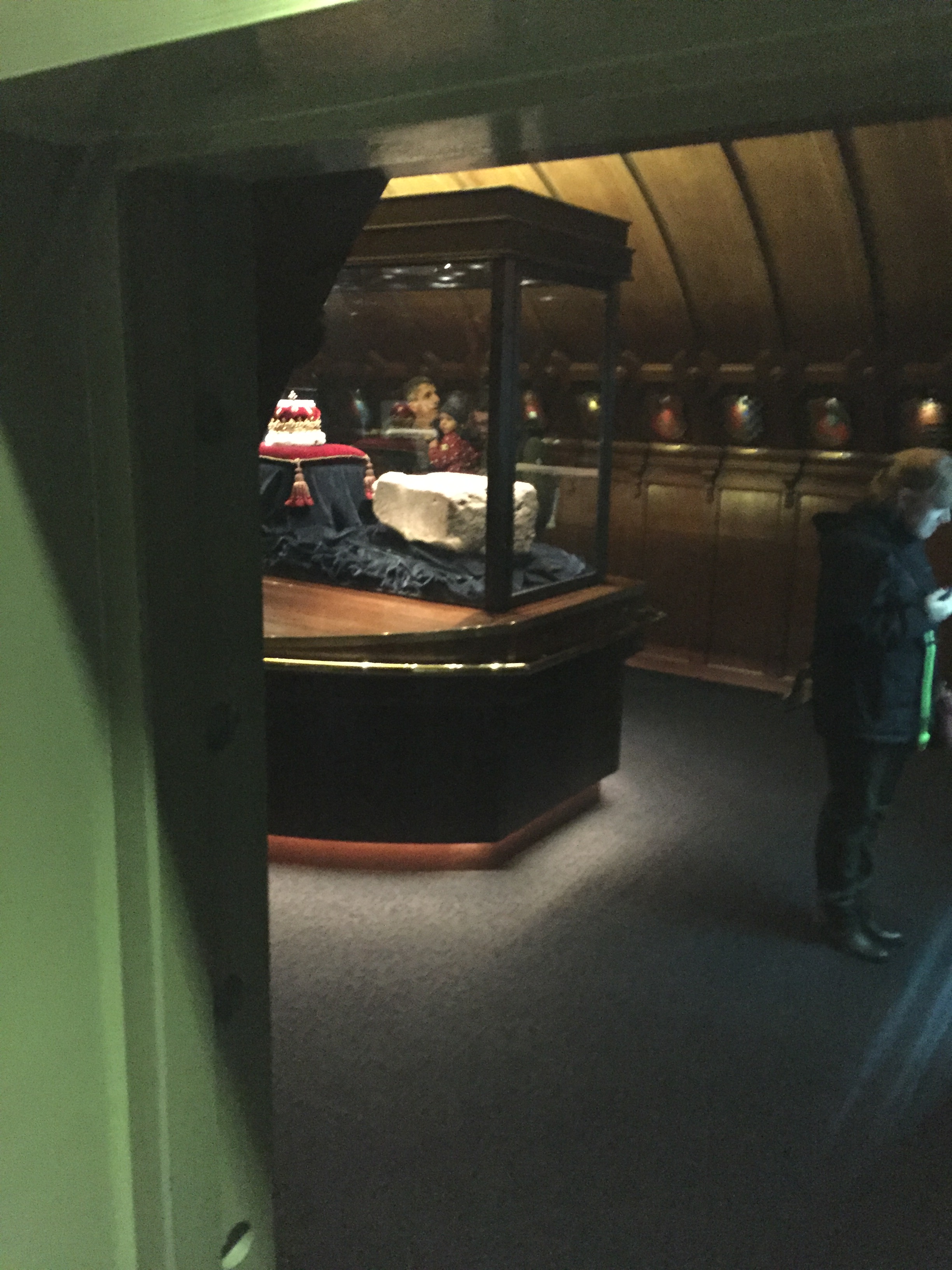
A quick summary of the loss and rediscovery of the crown jewels from this helpful Mental Floss site:
“The Scottish crown jewels are known as the Honours of Scotland and consist of a crown that was remodeled by James V in 1540, a scepter given to James IV in 1494, and the sword of state, which was given to James IV in 1507. The jewels were first used all together at the coronation of all Scottish monarchs starting in 1543, but during the English Civil War, when Oliver Cromwell had Charles I executed, the Scottish crown jewels were spirited away and hidden to prevent Cromwell from destroying them.
The monarchy was restored in 1660, and in 1707 Scotland officially became unified with England under James I. At that point, the historical pieces were placed in storage in Edinburgh Castle for safekeeping. Largely forgotten, they were thought lost until 1818, when the celebrated novelist (and ardent Scot) Sir Walter Scott led a search party through the storerooms of Edinburgh Castle in search of the jewels. Scott stumbled upon a locked oak chest, and there, hidden underneath piles of linen, were the Scottish crown jewels, exactly where they had been left in 1707. Since then the rediscovered jewels have been on display at Edinburgh Castle for all to admire.”
The omnipresent and overtly anatomically correct crest of Scotland, found throughout the castle and all over Edinburgh.


Great Hall of the Royal Apartments, featuring cool armor and arms, including pikes, different styles of halberds (interesting to us inasmuch as we were reading a novel set during the Hundred Years’ War while on the trip), and a kick-ass claymore.


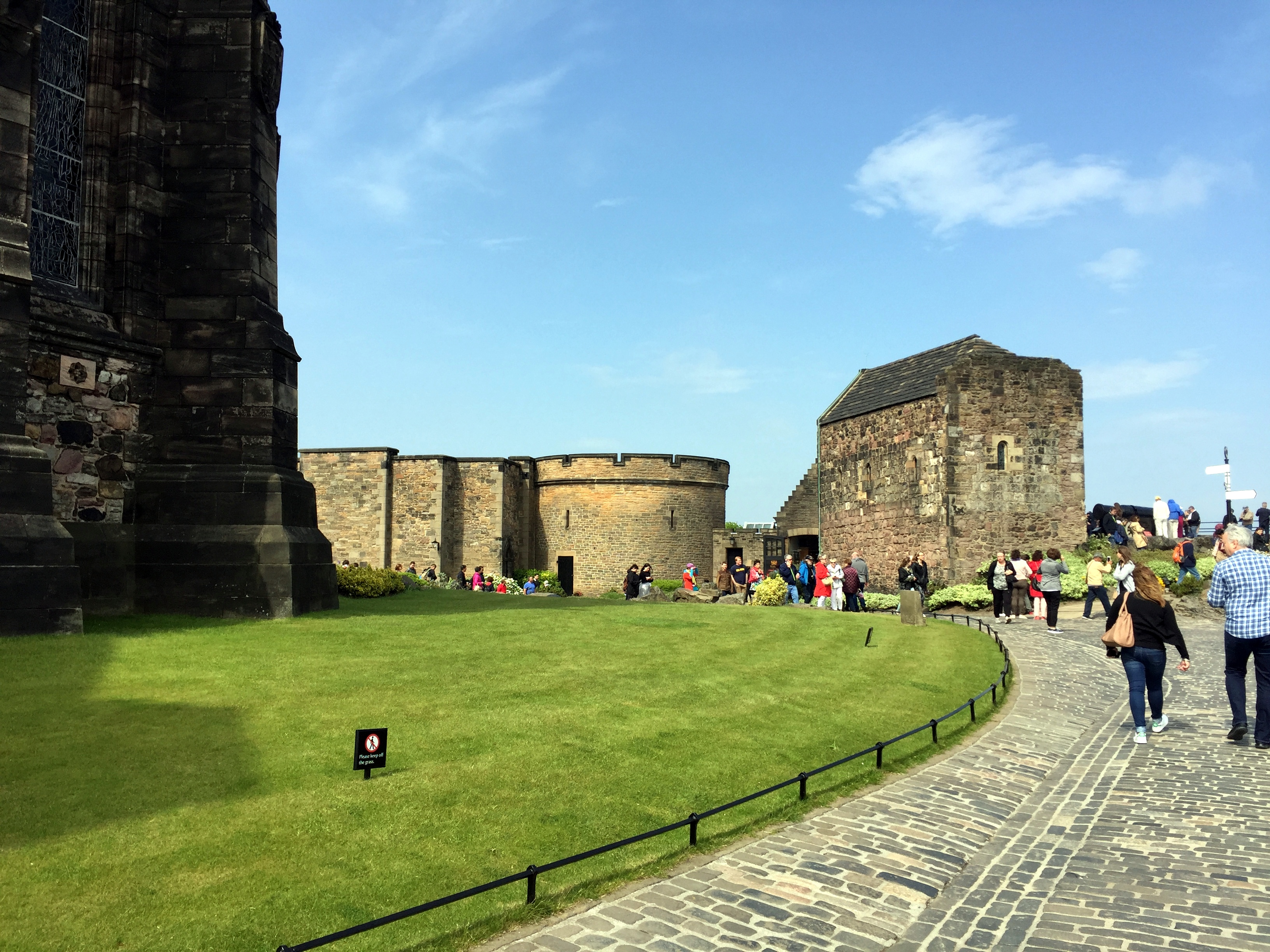
Heading down from the upper castle to the Romanesque St. Margaret’s Chapel, built by Scottish King David in the 12th century as a private chapel for the royal family – it’s one of the only 12th-century structures surviving in any Scottish castle and is the oldest structure in Edinburgh Castle. It was used as a gunpowder store starting in the 16th century, and restored as a chapel in the 19th.

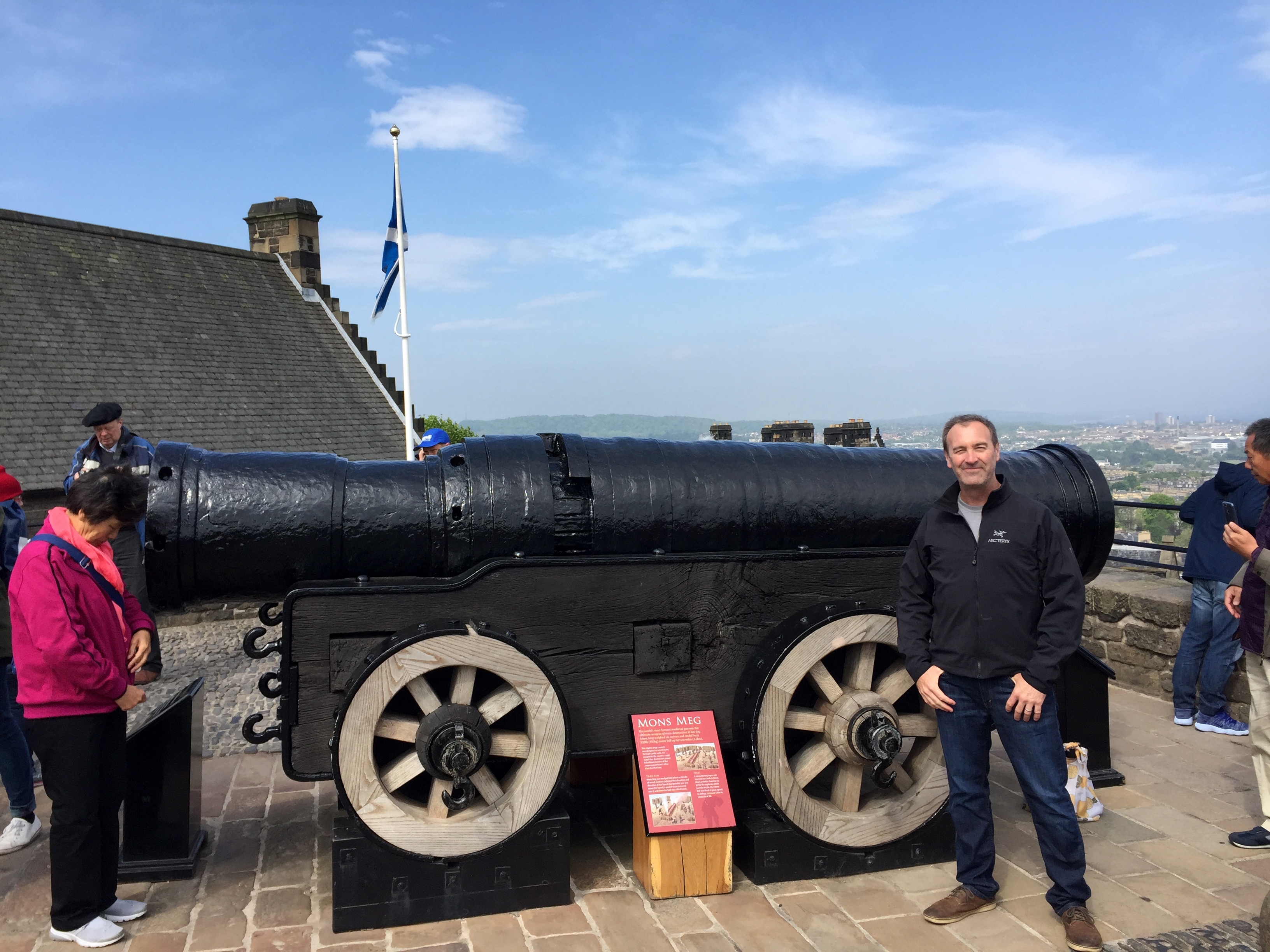
In front of the chapel lies Mons Meg, the castle’s famous medieval bombard and one of the largest cannon in the world, based on caliber (the bore is 20″ in diameter). The weapon was a gift to James II from Philip of Burgundy in the mid 15th century. It was used during sieges for the next century, then was relegated to ceremonial use. The British moved Mons Meg to the Tower of London in the 18th century, and Sir Walter Scott and others lobbied for it’s return in the 19th – which it was.
Inside the cramped, but stark and perfectly Romanesque chapel.

We have no idea what this symbol is on an unassuming stone on a wall in St. Margaret’s Chapel – we took a picture of it while there were people around us to see what would happen; every one of them did the same thing after us, not knowing what it was, but figuring this was something due to the picture. (Seriously, though, if anyone knows what this is, we’d like to know . . .).

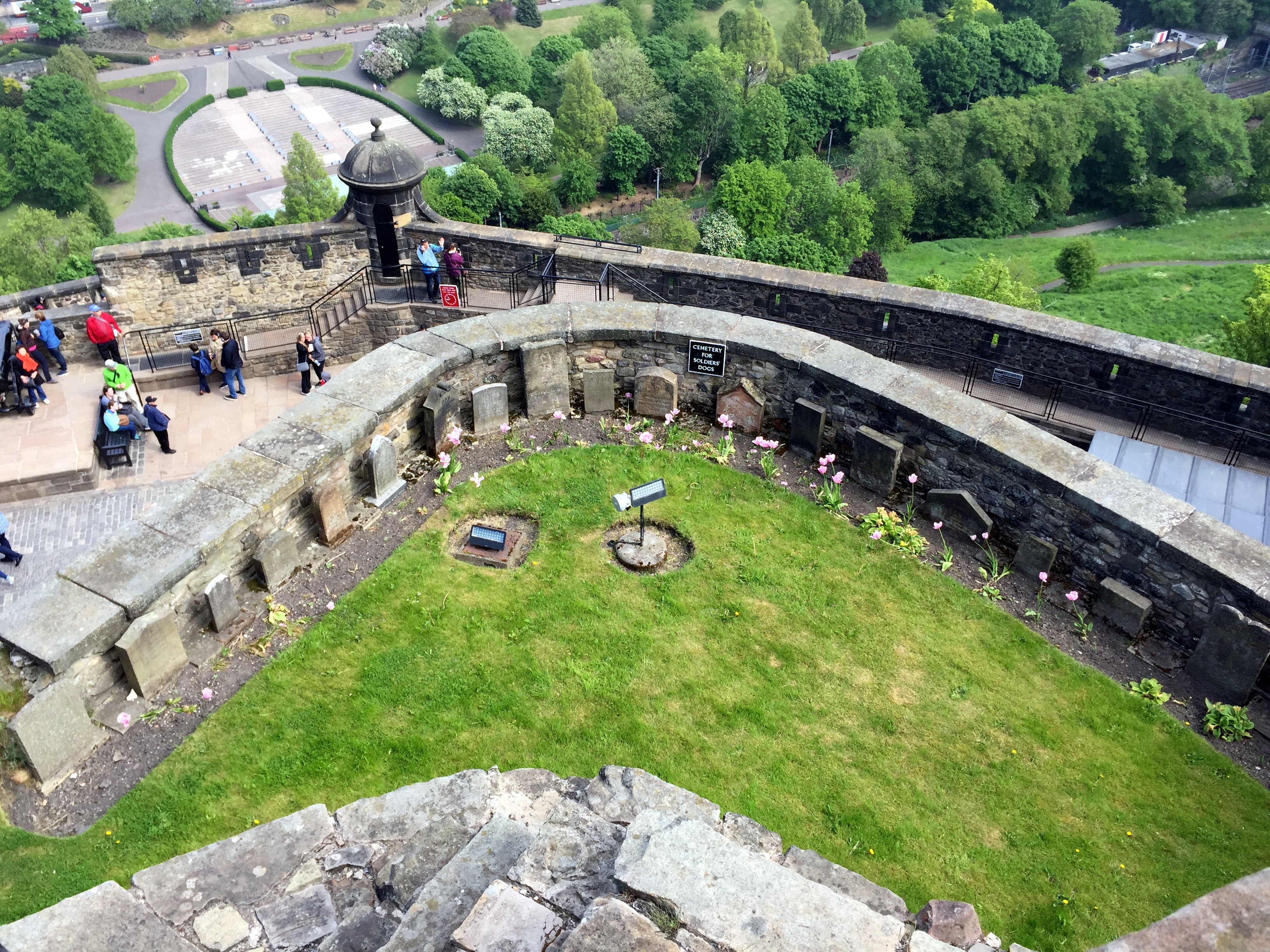
Right over the side near Mons Meg and the chapel is a small burial ground for garrison dogs:
Cannon along the distinctive semicircular Half Moon Battery seen from the town:

With an, uh, helpful arrow to ensure cannon is pointed the right direction?

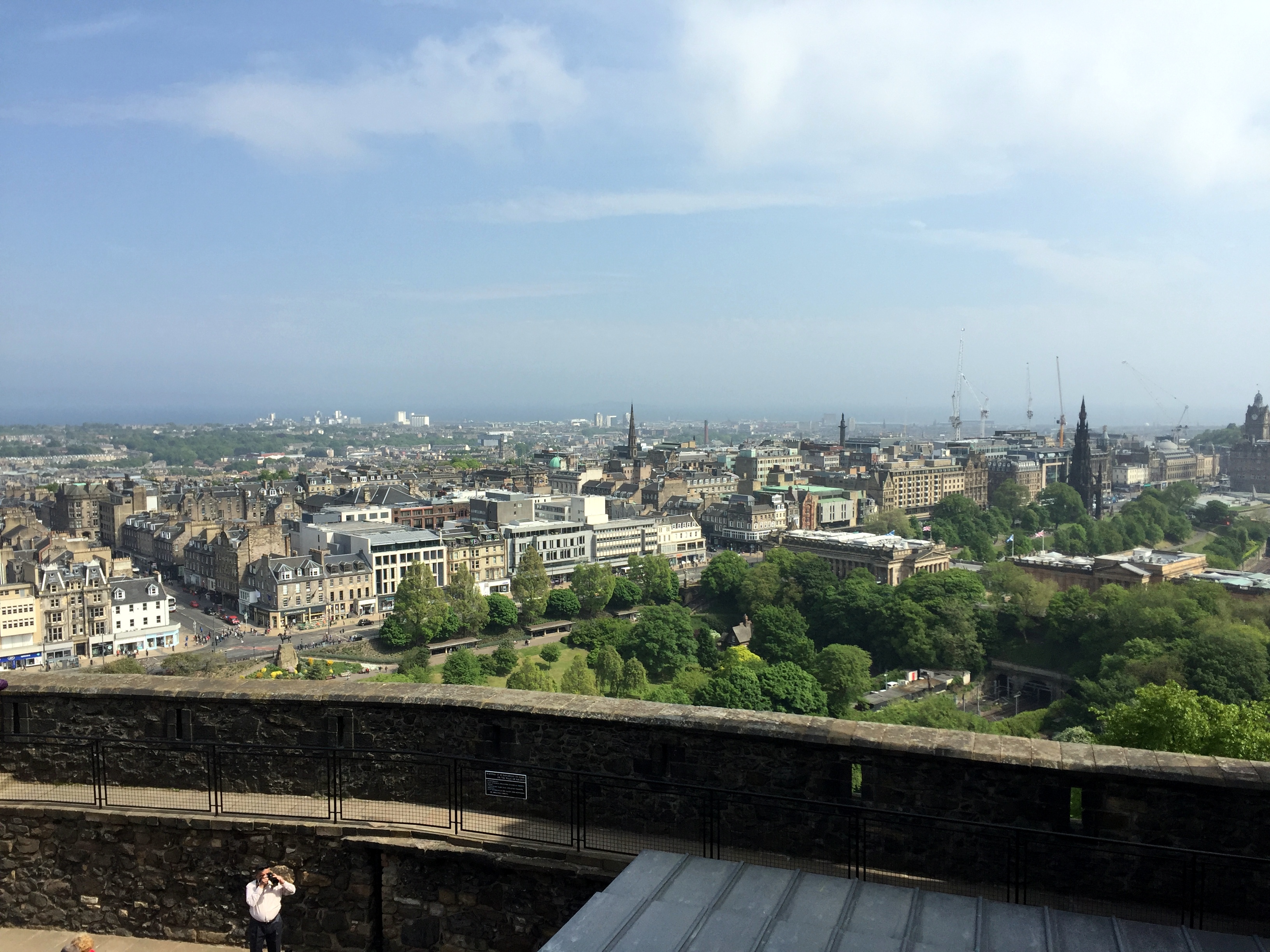
Great view into New Town and the Walter Scott Memorial on the right from the Half Moon Battery:
Uniquely Scottish weapons – plus a remarkably creepy WW I gas mask – from the National War Museum within the walls of Edinburgh Castle


View into town from the other side of the castle.

The castle from the same location below, later in the trip:

View of Arthur’s Seat (the yellow-flowered covered mountain) as we’re leaving the castle. Note the great weather and visibility; not going to be the case for us when we hike it a day later, unfortunately.

A little early lunch after visiting the castle at The Witchery, which had been recommended on the way over to Scotland.

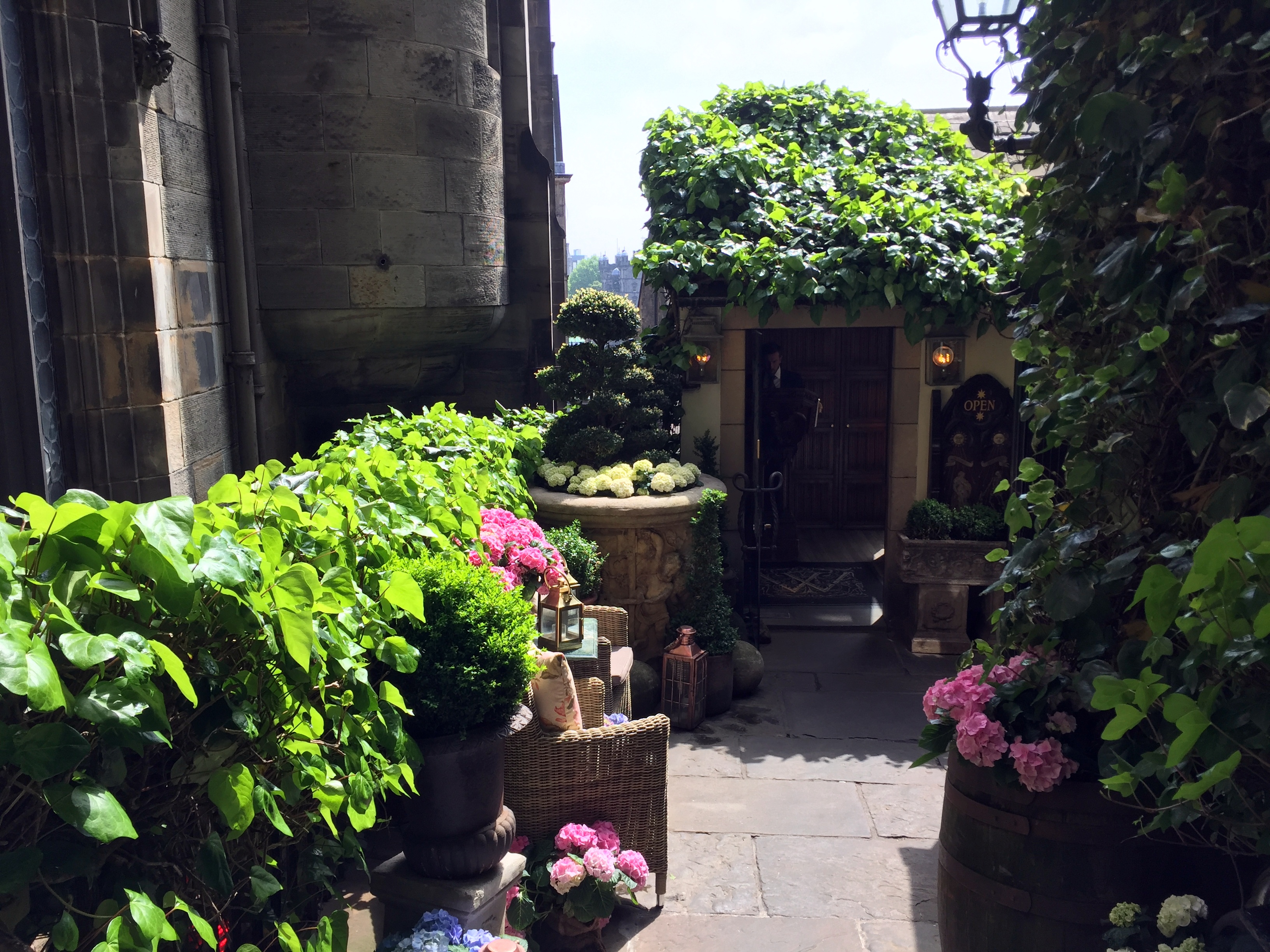
It didn’t disappoint. Haggis #2 and fried neeps, plus an inventive steak tartar and asparagus ravioli.


Scenes from around the upper Royal Mile:


In and around Gile’s Cathedral, Scotland’s version of Westminster Abbey (or of Poland’s Wawel Cathedral, visited a few Christmases ago). Elements of the cathedral date from the 12th century, but the crown steeple is from the 15th. The church features more than memorials to Great Scot!s, including literary greats Robert Burns, Robert Lewis Stevenson, and Edinburgh’s favorite – and omnipresent – son, Sir Walter Scot.


Video taken for Stephanie on the way to the initial haggis dinner – perfect timing and nice atmospherics along the Royal Mile.
Discover more from WolfeStreetTravel
Subscribe to get the latest posts sent to your email.

I spent about an hour last night (while listening to the Phillies beat the Nats on my earphones) searching Scottish and Viking runes to
find that cute one on the wall–no luck. Close, but ,,,,,,
LikeLike
Thanks for trying! Still curious . . .
LikeLike