Although we’d spend each evening in or near Naousa, we’d field trip around the island each day to explore, hike, or swim.
Including driving up to the traditional Cyclades mountain village of Lefkes.
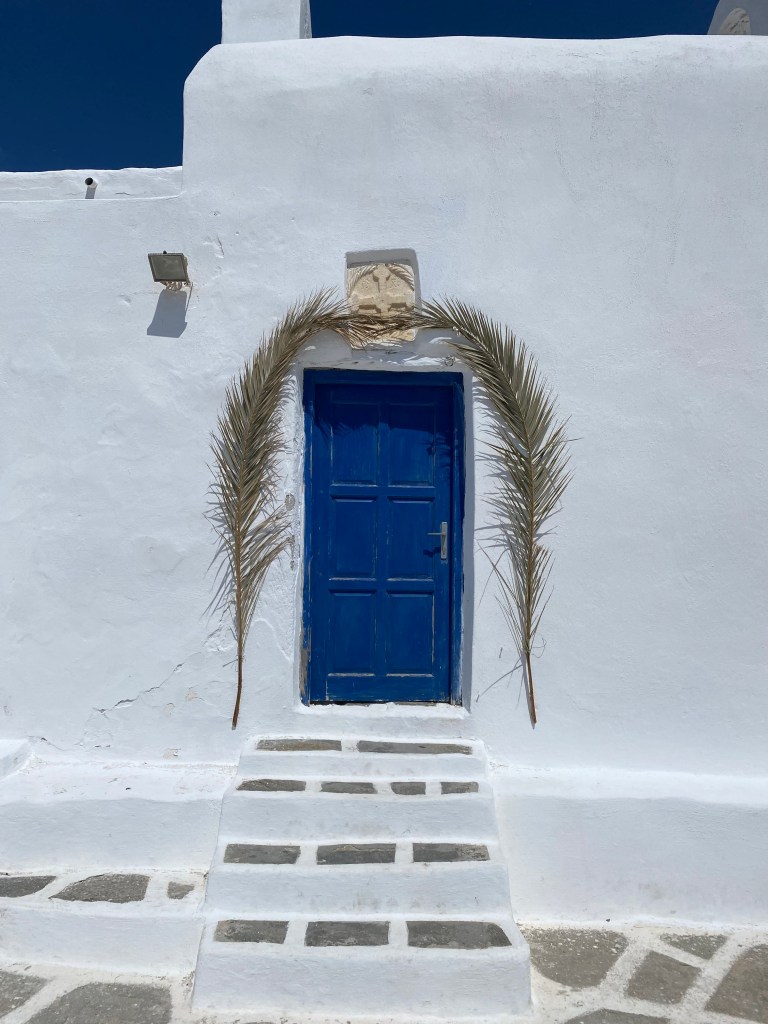
Which featured quite a few picturesque Greek churches.
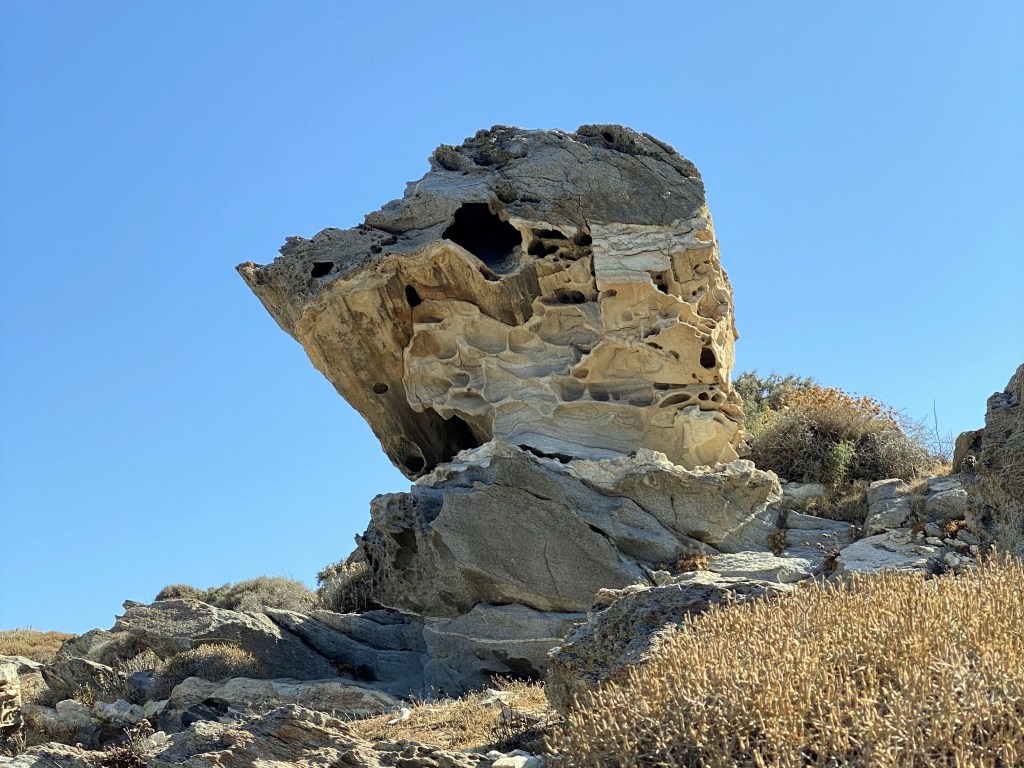
Grabbing some lunch at Anemos Taverna above the eroded-rocky Kolympethres Beach:
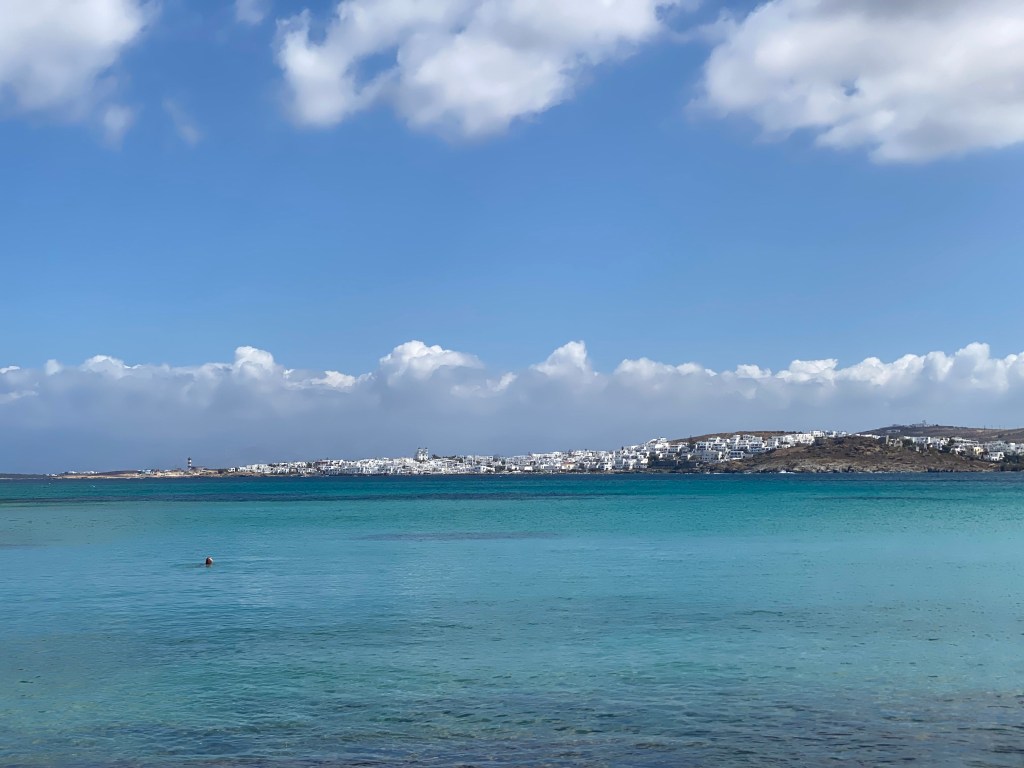
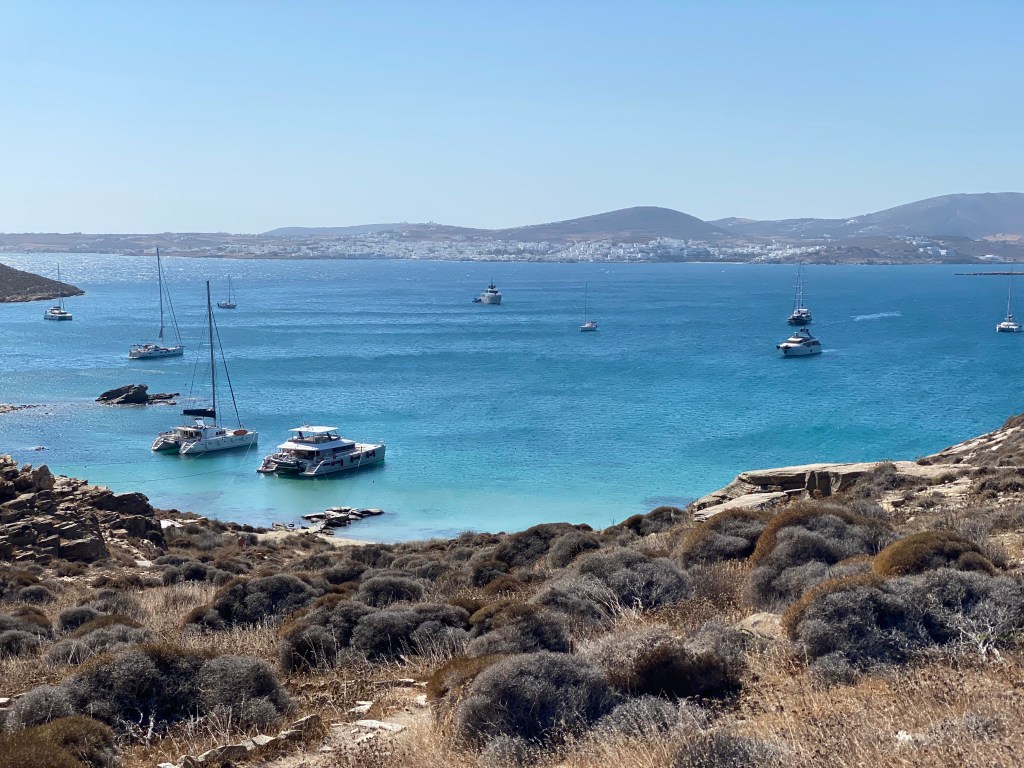
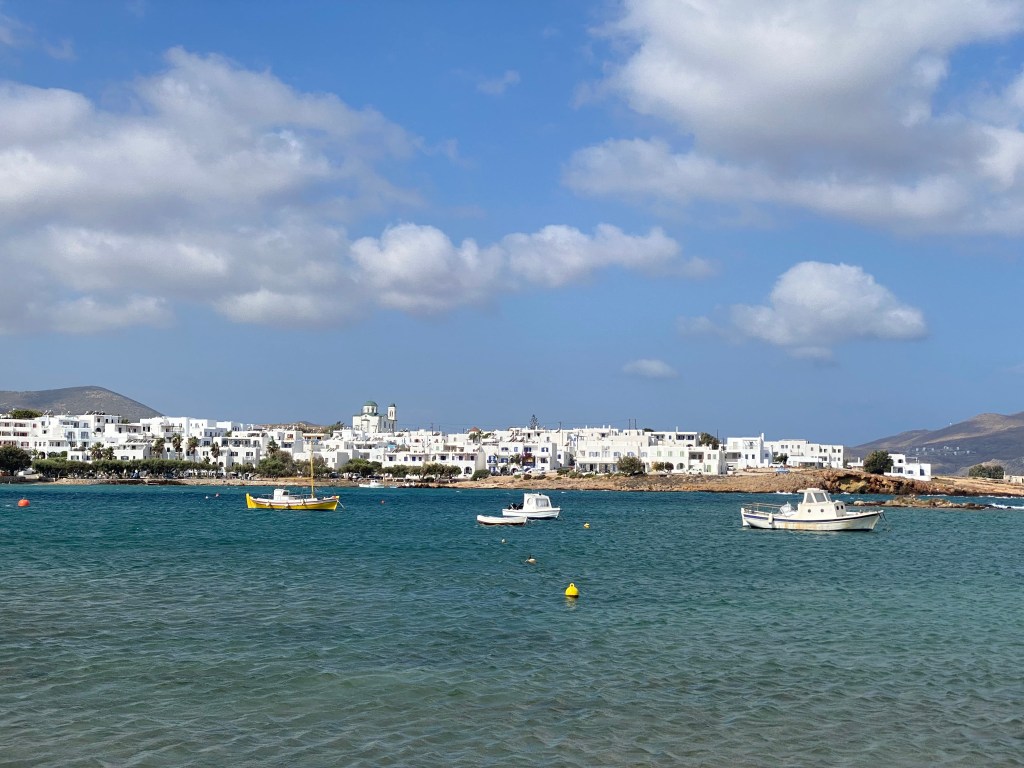
White-washed Naousa in the distance:
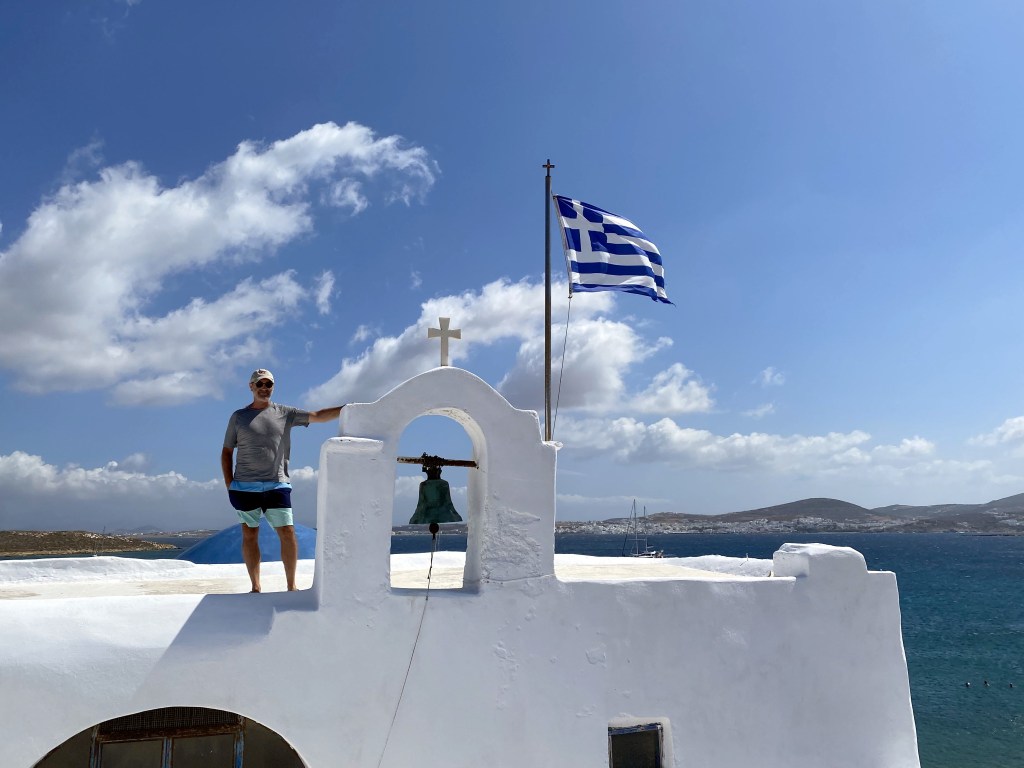
A visit to the Monastery of St. Johns of Deti:
Which offered a pretty great, quintessentially Greek view from the roof:
And also a view to the very commercial Monastiri Beach. Typical density of many European (and especially Italian) beaches, but a little packed in for our taste.
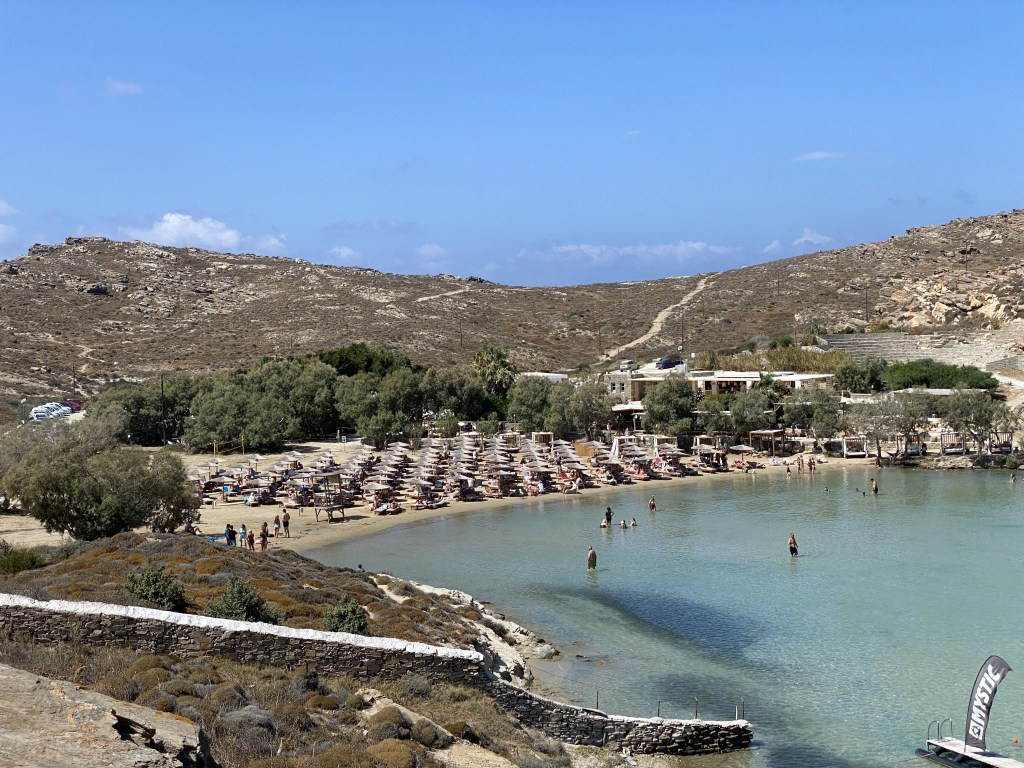
Much more appealing to us was Ampelas Beach on the other side of the island:
Great swimming and lower key. . .
and with two amazing restaurants available for lunch.
Aspro Paros, with it’s spectacular zucchini salad (and calamari and smelt, natch):
And Blue Oyster right next door:
Everything amazingly fresh.
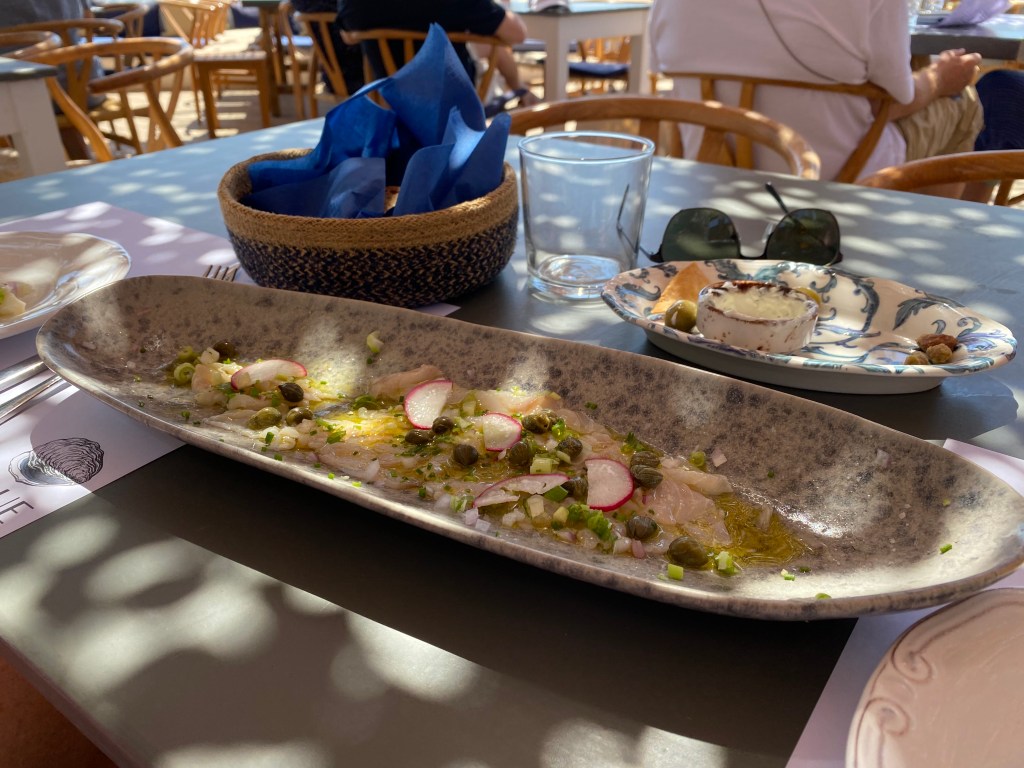
Including some zesty ceviche and Greek cheese:
We’d return to Ampelas Beach three times during our stay. Perfect experience each time.
Next up: the mercifully last post before we move beyond this trip and thence to the Baltics and a starkly different, winter climate.
The final post on the Turkey and Back to Greece trip (finally!). And just in the nick of time: we’re hitting the road (and the Adriatic Sea) tomorrow, and so won’t be posting any of the other backlogged trips for a while. These are all the long trips (versus week-long trips that we responsibly posted immediately after getting back from each), and include the following:
We’ll eventually post the detailed content on each of these trips here on WolfeStreetTravel.com; in the meantime, we’ll be posting pics in real time during two upcoming extended trips over the next 5 months @wolfestreettravel on Instagram, if you’re interested.
Back to our final post on Paros. . .
Although we chose not to stay in the largest town on the island (for reasons obvious here), we nonetheless headed to Parikia one day during our stay on Paros as a day trip.
Very cool, bustling burg. With equally cool, wooden-framed bikes to boot.
The absolute most intriguing site in town has to be the Frankish Castle.
Built by the Venetians in the 1200s on the site of the town’s ancient acropolis, the “castle” (actually the remains of a tower that was part of a castle wall) was constructed Jenga-style using the vestiges of classical temples from around the island.
Little remains of the original fortification, and nearby structures incorporate what remains into their own walls.
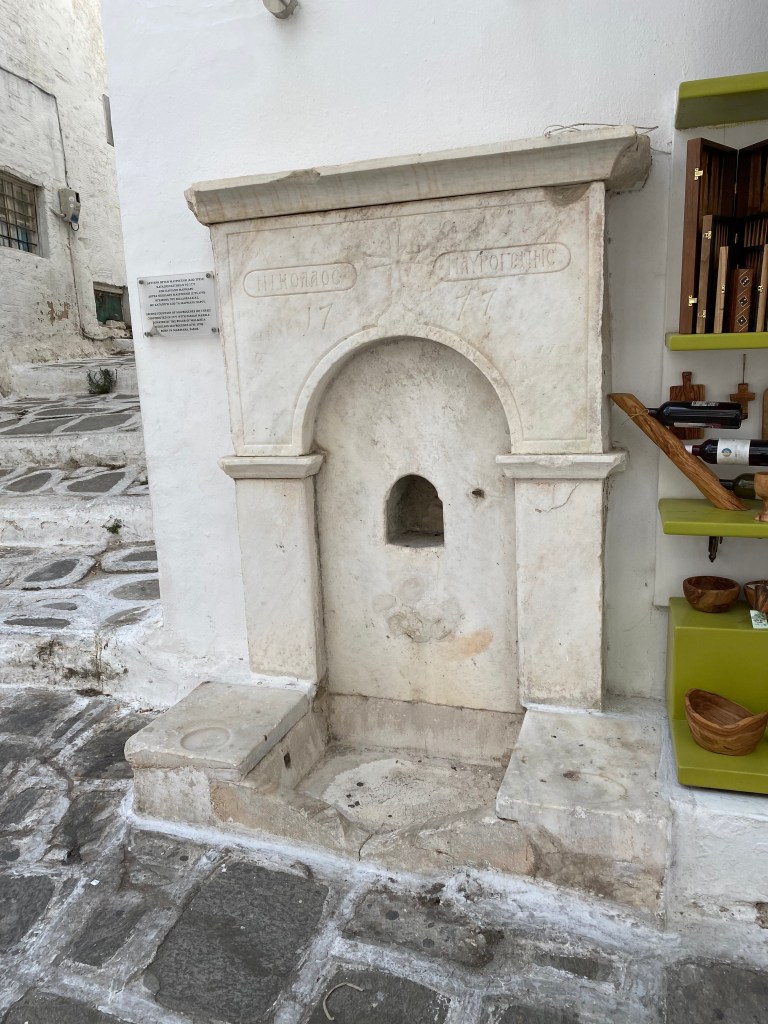
One of the three “Mavrogenus’ Fountains” found around town. ” Nicolaos Mavrogenus was one of the prodigal sons of Parikia, Paros Island main town in the Greek Cyclades. Missing his native Aegean and as Wallachia governor decided benefit his hometown providing a public drinking water supply [in 1777]: three beautiful marble fountains.” (From here.)
And another (we never came across the third):
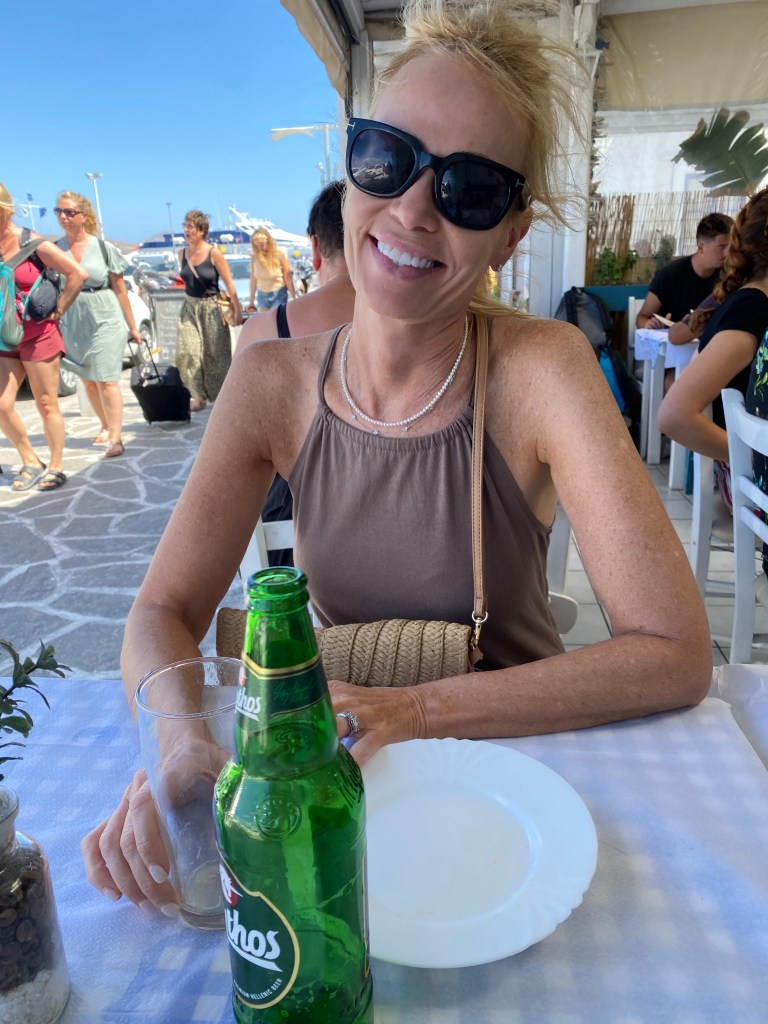
Finally getting a gyro at a local place in Parikia’s port (the empty plate would soon be filled):
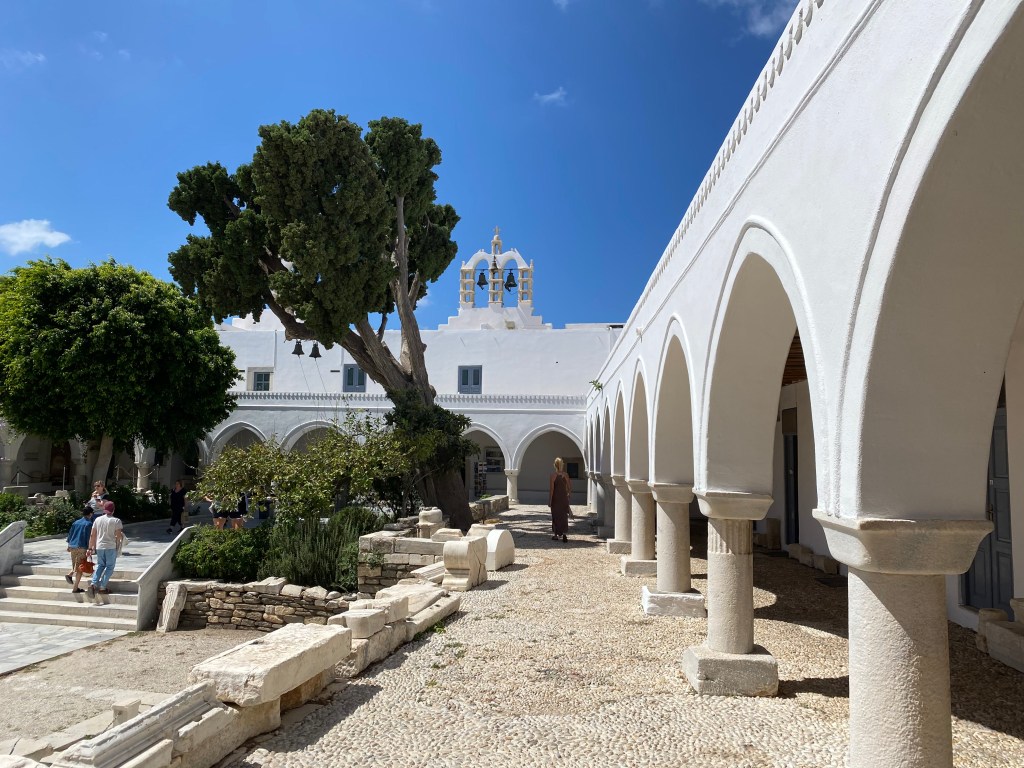
The Byzantine-era church complex of Panagia Ekatontapiliani (The Church with 100 Doors):
According to tradition, the church currently has 99 doors and a secret, 100th door will open when the church of Hagia Sofia in Constantinople become Orthodox Christian again.
The original church dates back to 326, during the reign of Roman Emperor Constantine, and purportedly was founded by his mother, Helene (whose sarcophagus we came across during the micronations road trip).
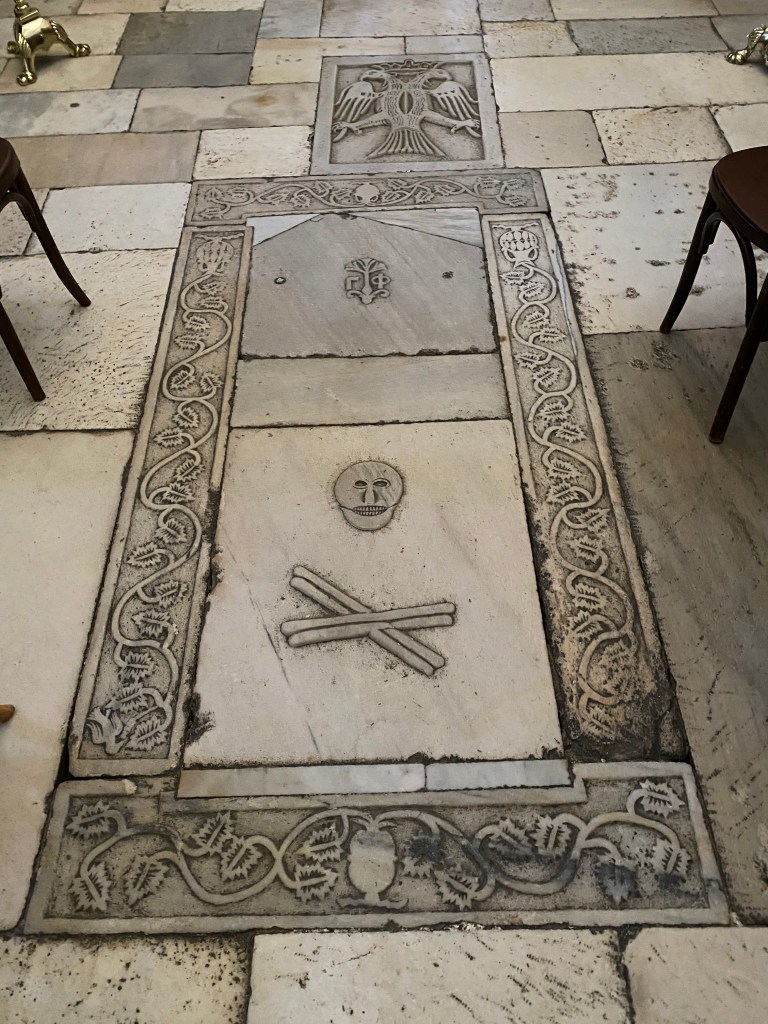
We think the church elders employed third graders to carve the church’s tombstones:
In the 6th century, Byzantine Emperor Justinian enhanced the church and added a dome.
Another view of the Frankish Castle as we head out of town.
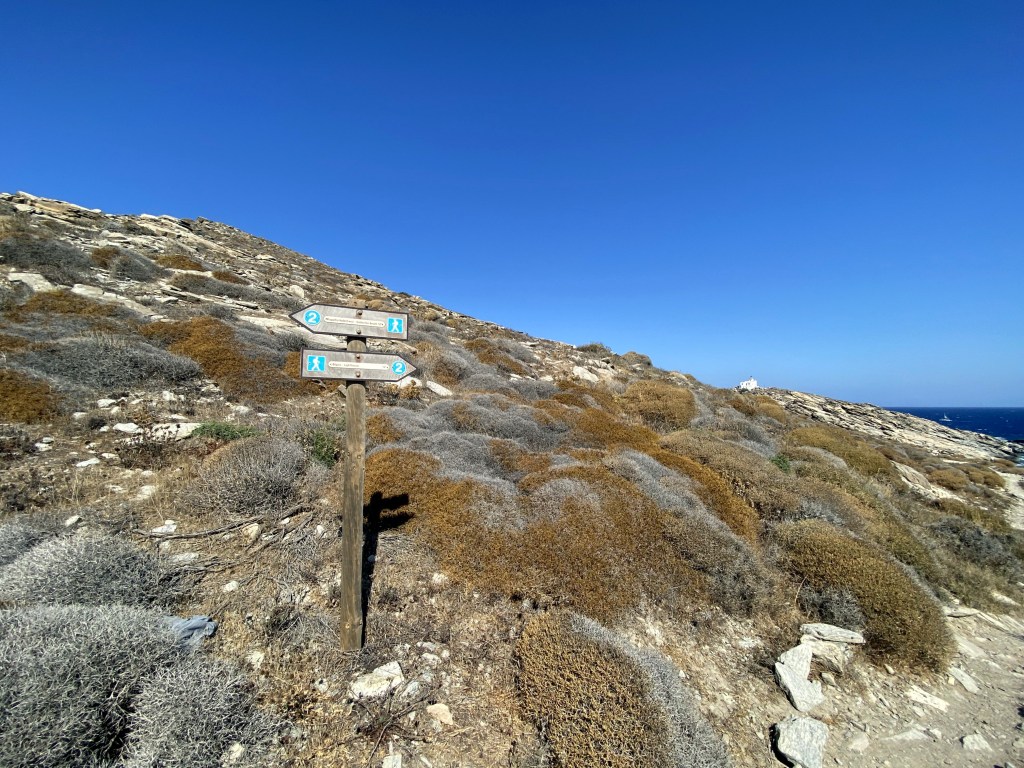
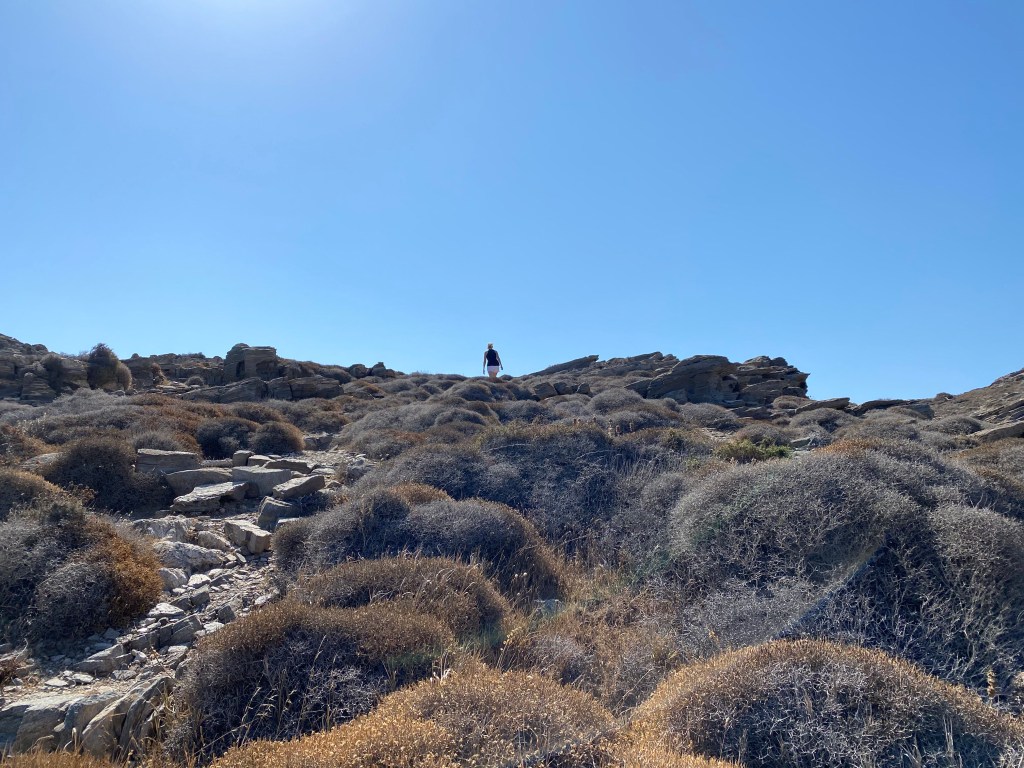
The best hike we experienced on the island took us to the Korakas Cape Lighthouse at the northwest tip of the island.
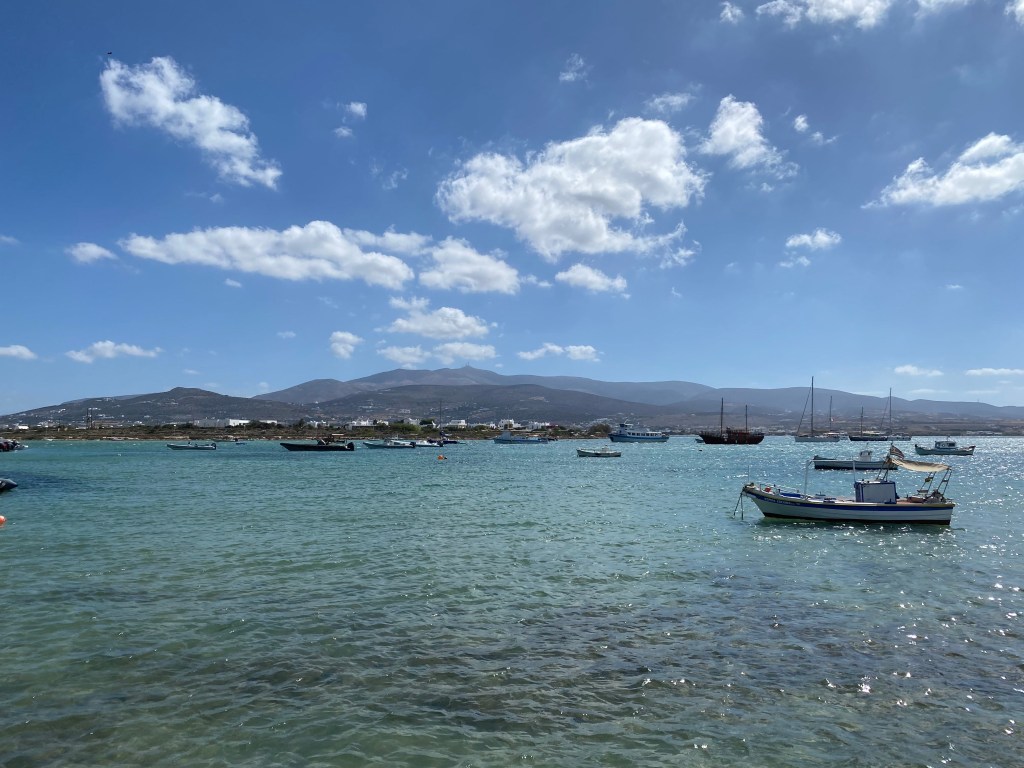
Another field trip, this time a short ferry ride to the polar opposite of the island of Paros: Antiparos (it’s just a smaller island than Paros).
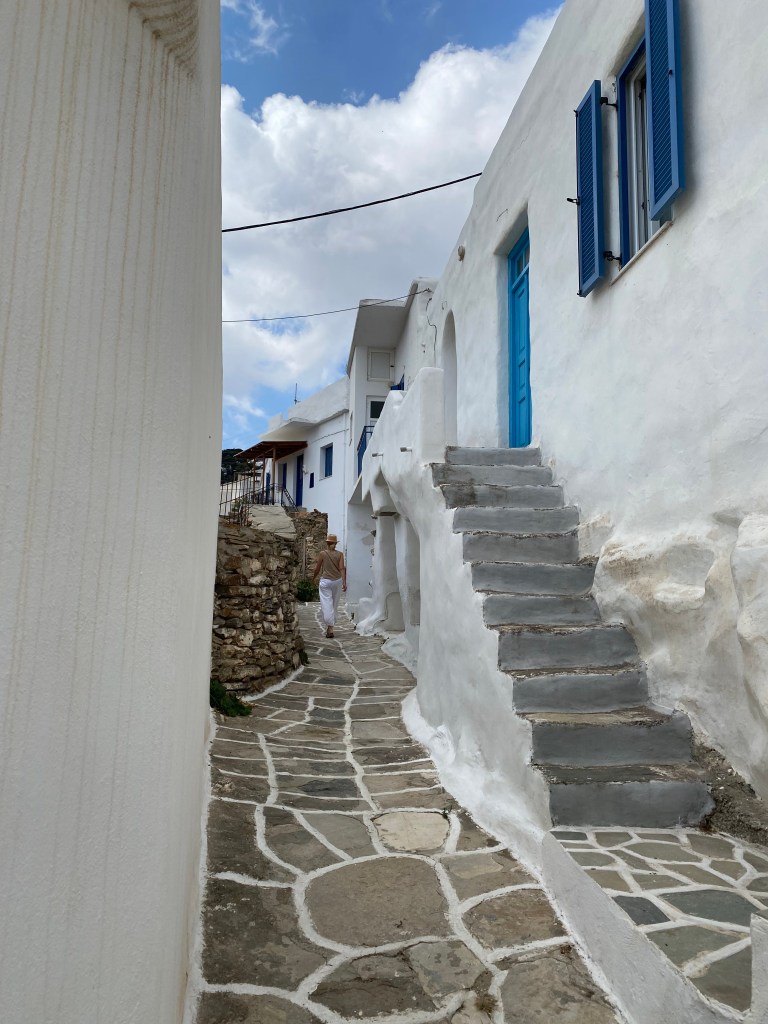
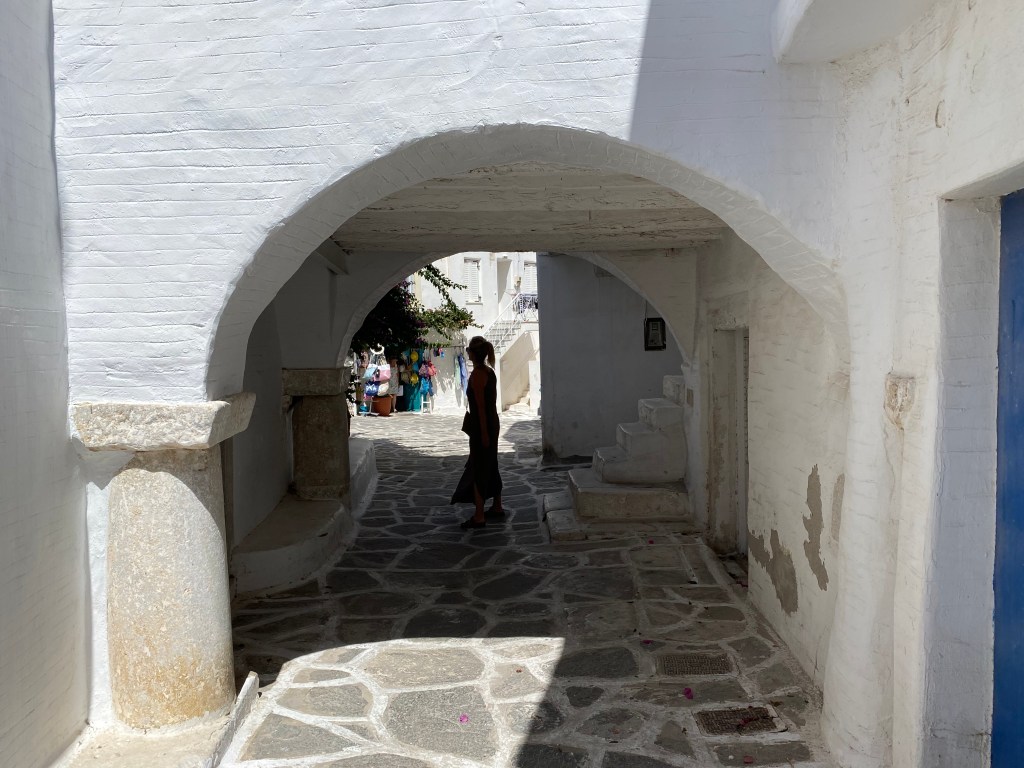
With a really picturesque main town:
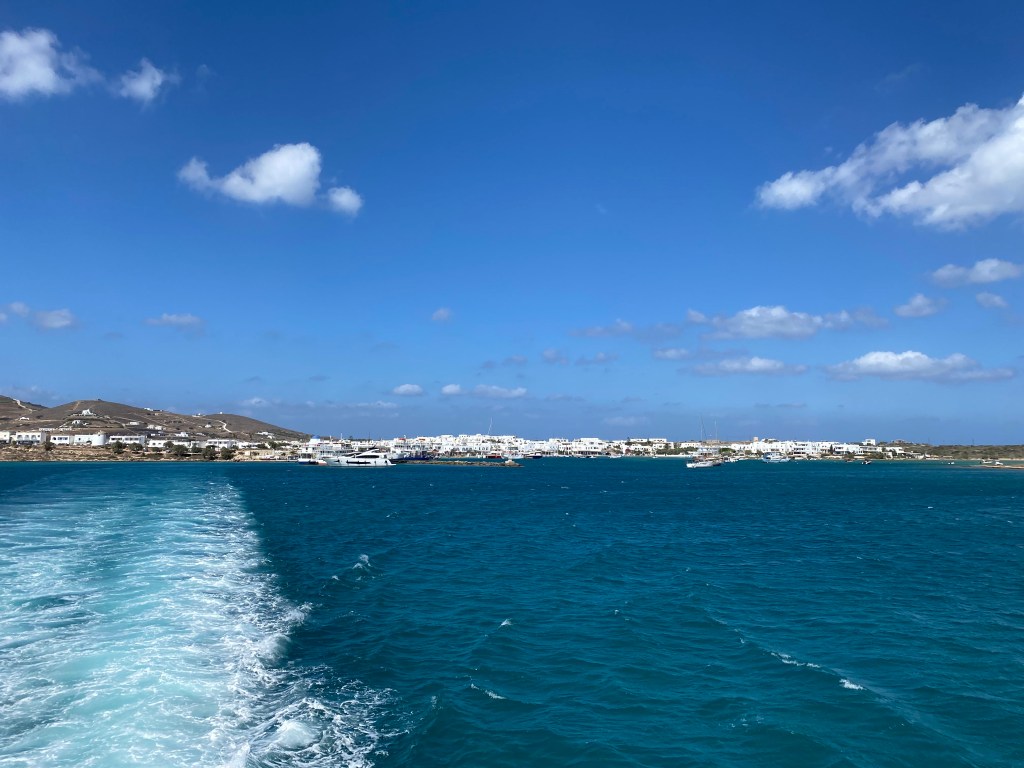
Bye, Antiparos.
And bye, Paros, and Cappadocia, and Istanbul. Trip posts complete!
This, at long last, represents the final tranche of posts for our September 2022 Turkey and Greece trip: a week on the Greek island of Paros in the Cyclades archipelago.
The Turkey and Back to Greece trip, as originally planned, was to be our first post-retirement travel excursion. The second WolfeStreetTraveler would retire in mid-August 2022 (the first had retired the previous year), and then we’d immediately spend a full month on the road – leaving in late August and returning in late September. After a week in Turkey, we’d spend 3 weeks island hopping in the Cyclades:
Paros for 1 week
Milos for 4 days
Folegandros for 3 days
Naxos for 1 week
But a perpetually problematic NOAA weather forecasting supercomputing support contract in the otherwise optimally operating Science & Engineering business run by on of the WolfeStreetTravelers had other plans. The recalcitrant actions of the most uncooperative data center and the most incompetent supercomputing vendor to ever play a role in weather forecasting would require, it turns out, another 6 months to address. So that WolfeStreetTraveler postponed retirement, canceled the Milos / Folegandros / Naxos legs of the trip (for which both the ferry fares and the hotel / AirBnB reservations were refundable, which was a relief), enjoyed the remaining first legs of the trip, then returned to work to dig in for another half year to pound on pernicious program problems.
But that’s okay – a week in Paros was unbelievably great. And we’d get to the other Cyclades islands later (in fact, they were supposed to comprise the second half of a 6-week trip planned later this year, but earthquakes in the area scared us off, so we’re hitting Mallorca and Andalusia instead, which should be pretty great, too). We’ll get back to the remaining Cyclades soon enough.
In Paros, we based ourselves in the town of Naousa at the north end of the island. Although the main city and ferry port on the island, Parika, held some appeal, our research suggested that Naousa offered more of what we were looking for; and we could always day trip to Parika (which we did).
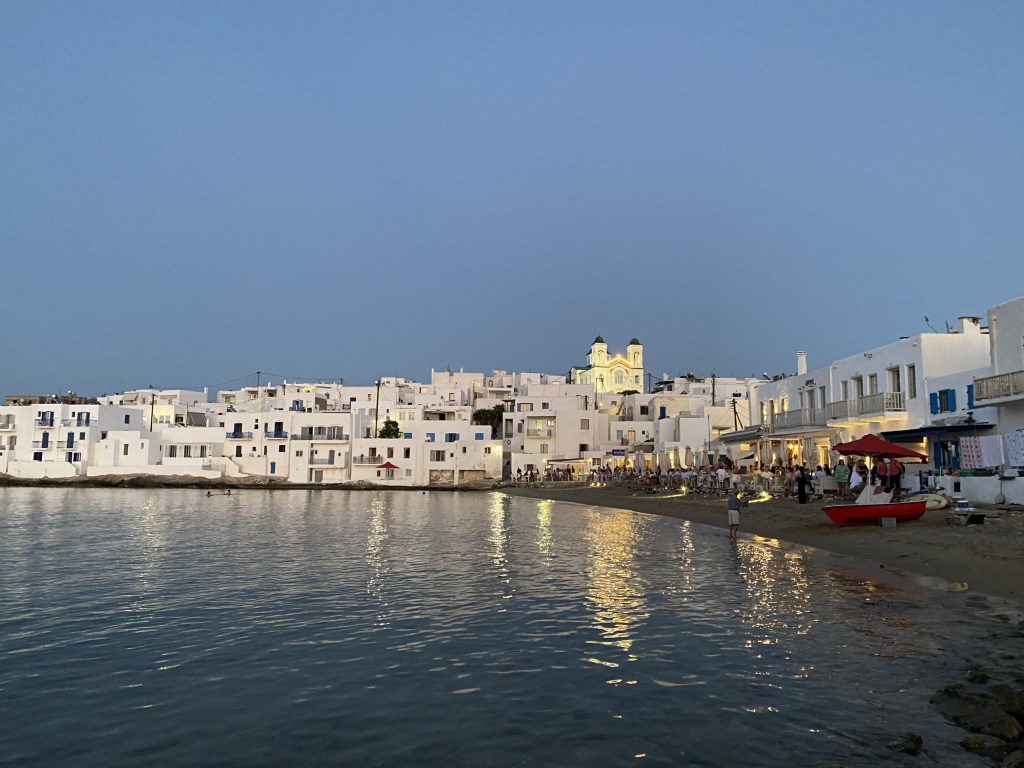
And Naousa was absolutely perfect for us:
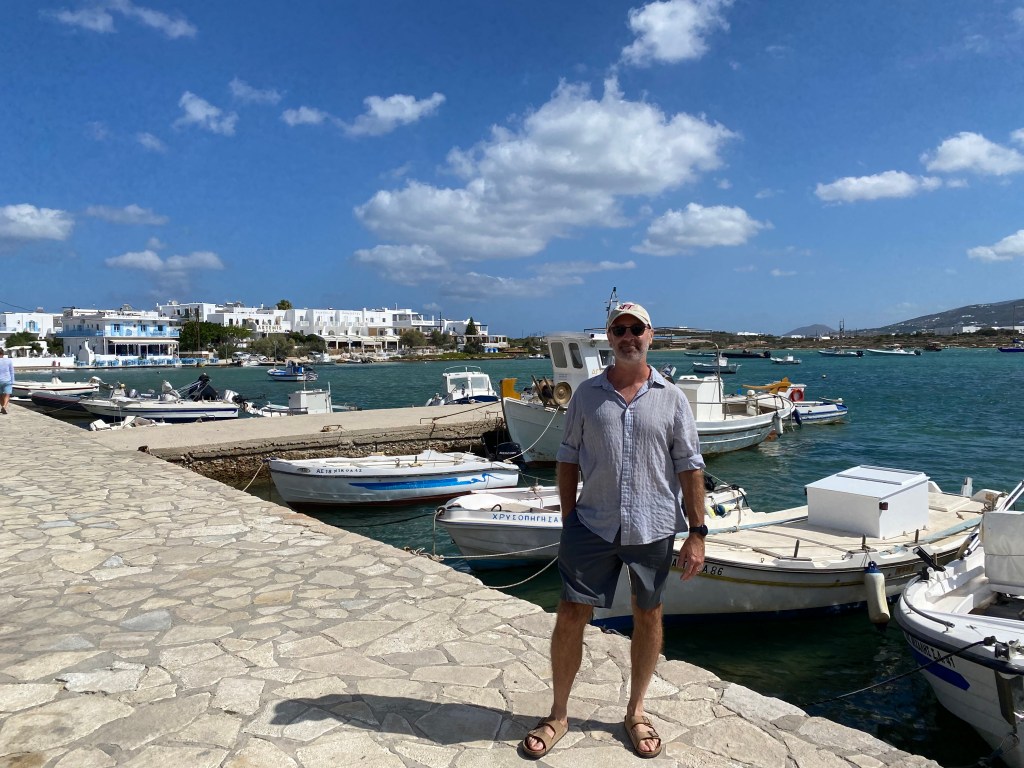
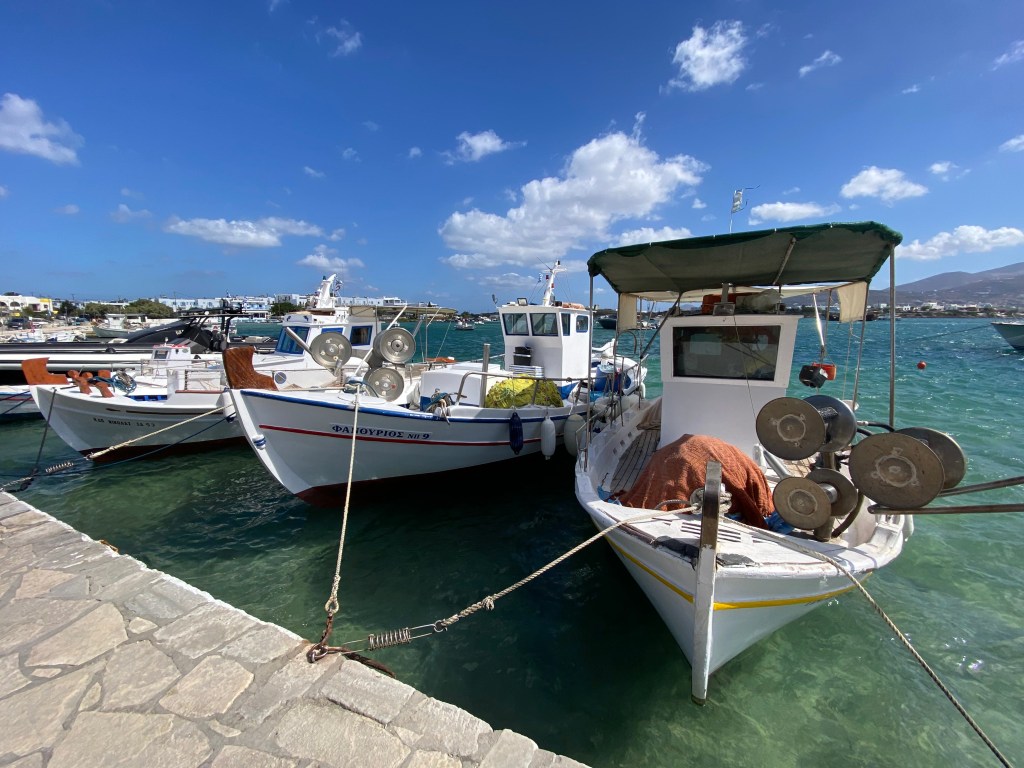
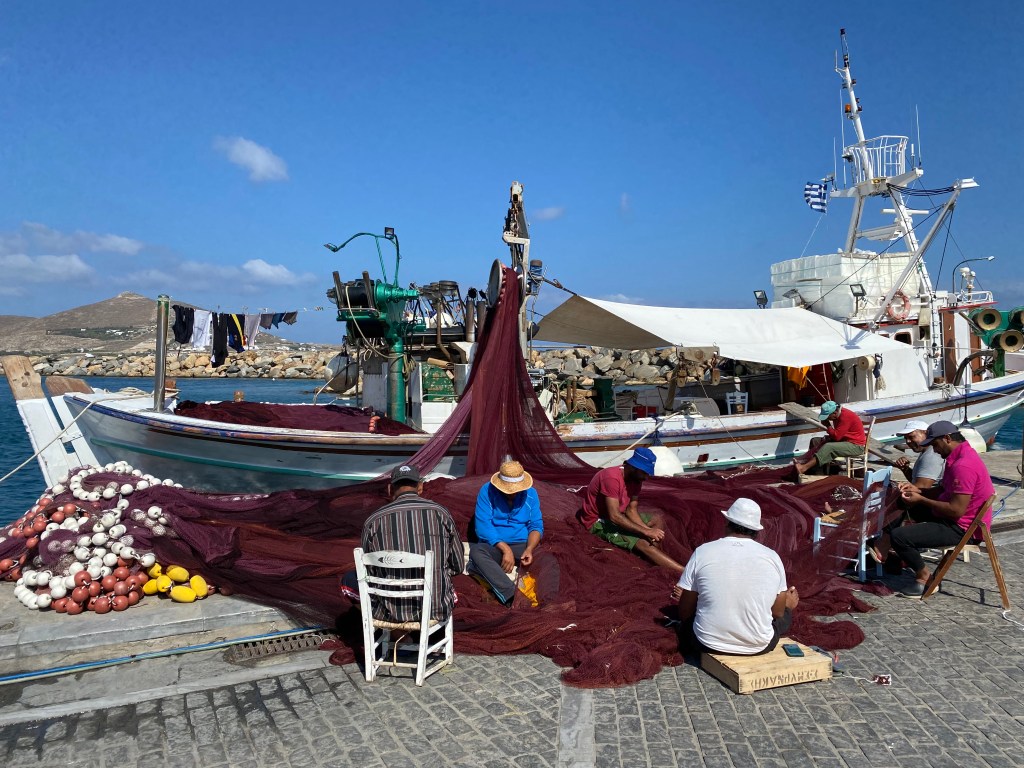
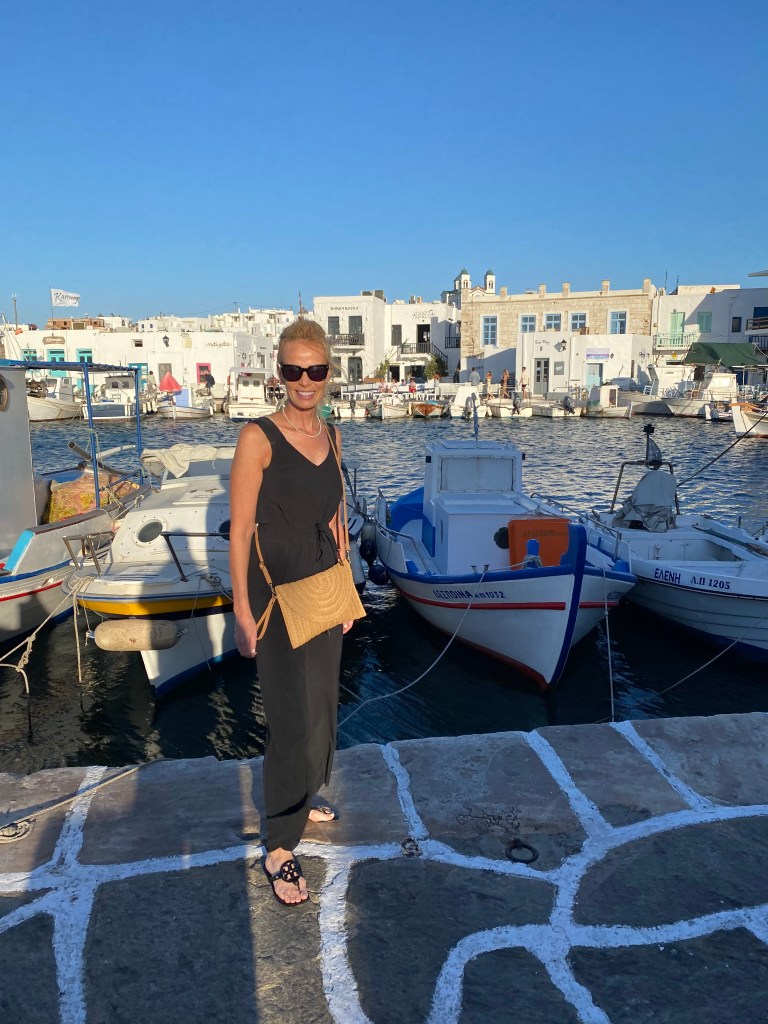
Although definitely a tourist town, Naousa still operated as a working fishing port
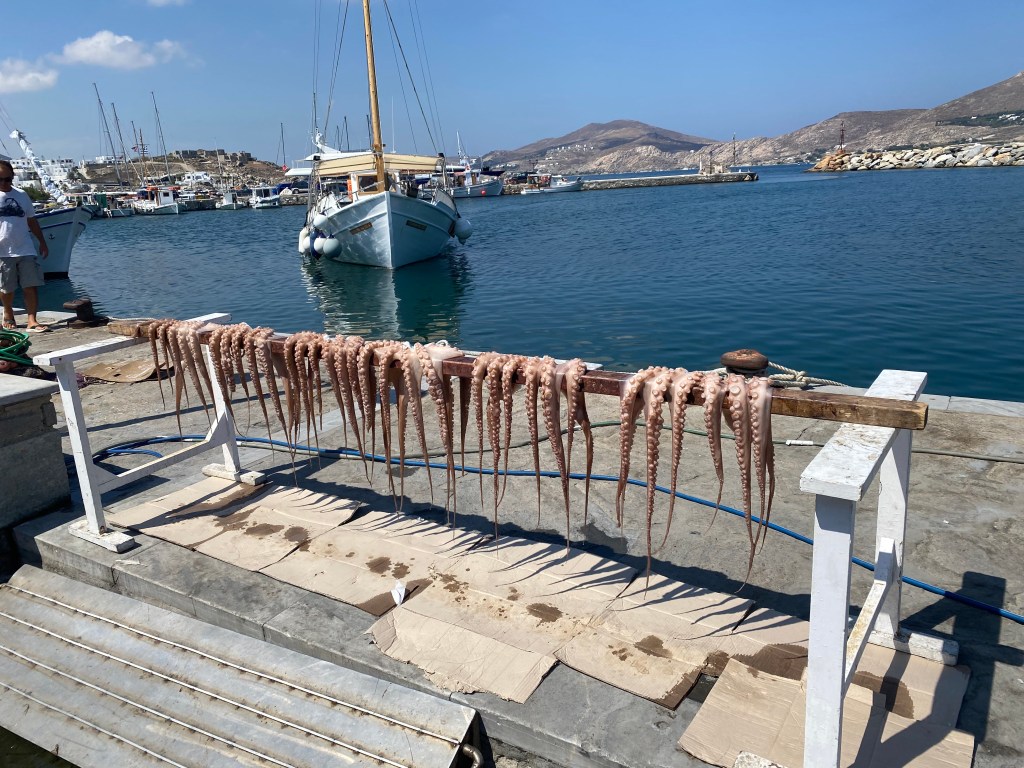
where the catch of the day would appear on your table for lunch and dinner.
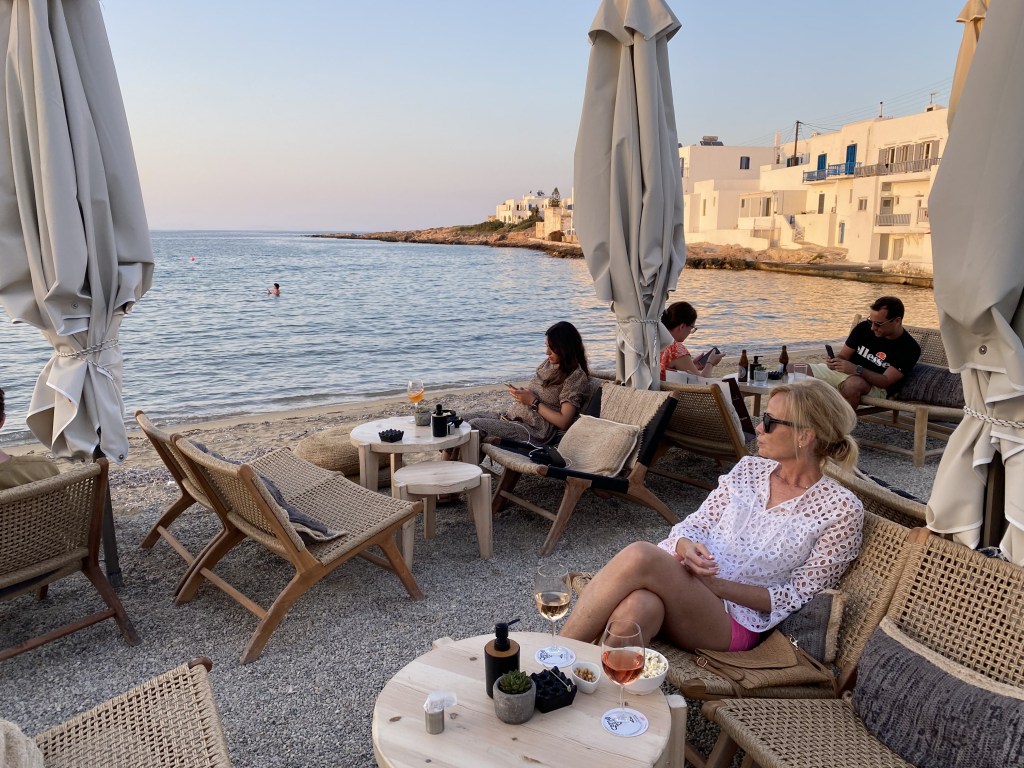
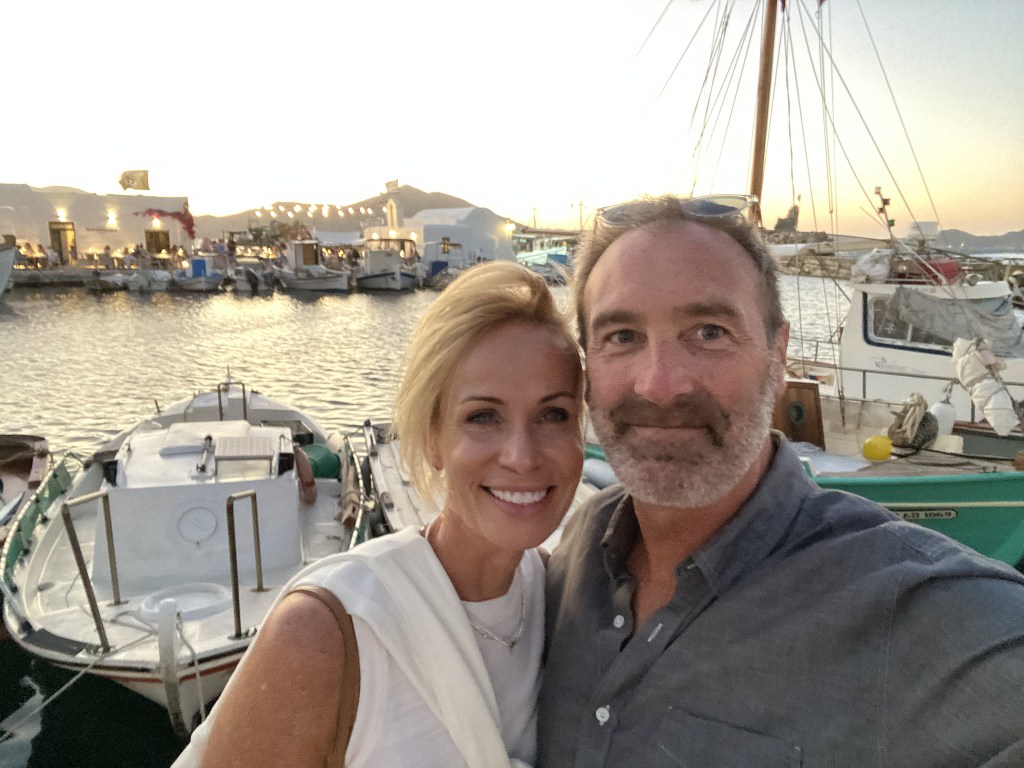
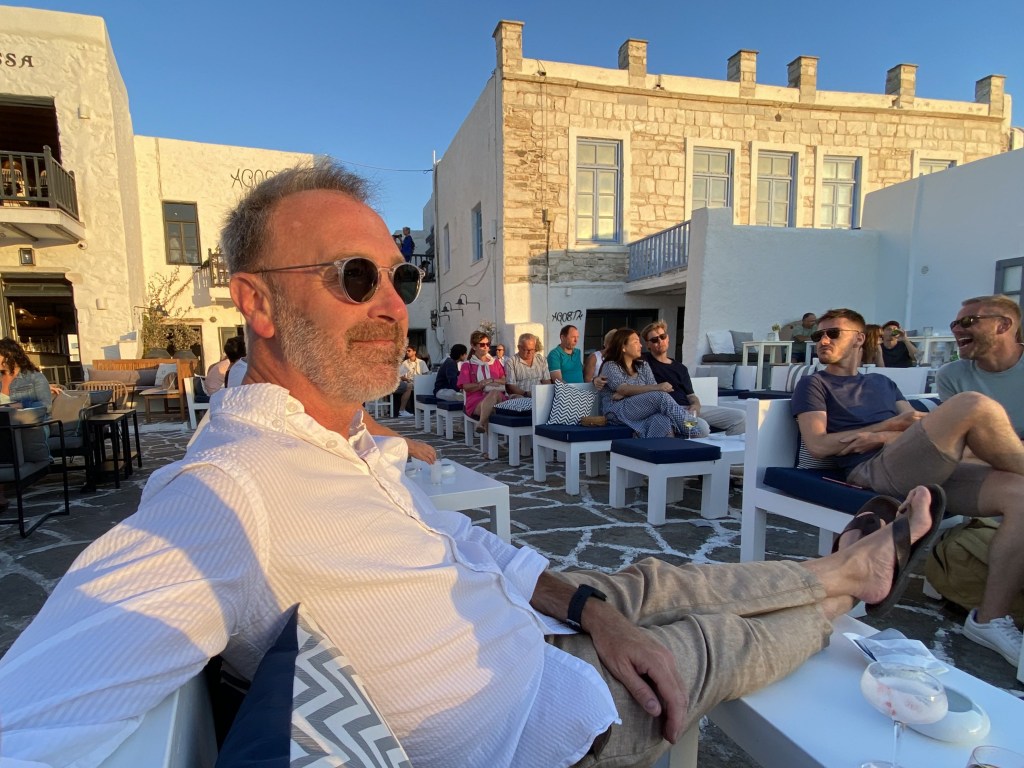
For the entire week, we’d begin each evening with sunset cocktails on the water, then wander into town to find dinner. The best of these, which we’d patronize three evenings during our stay, was called – fittingly enough – Come Back. So we did. Again and again.
And for obvious reasons.
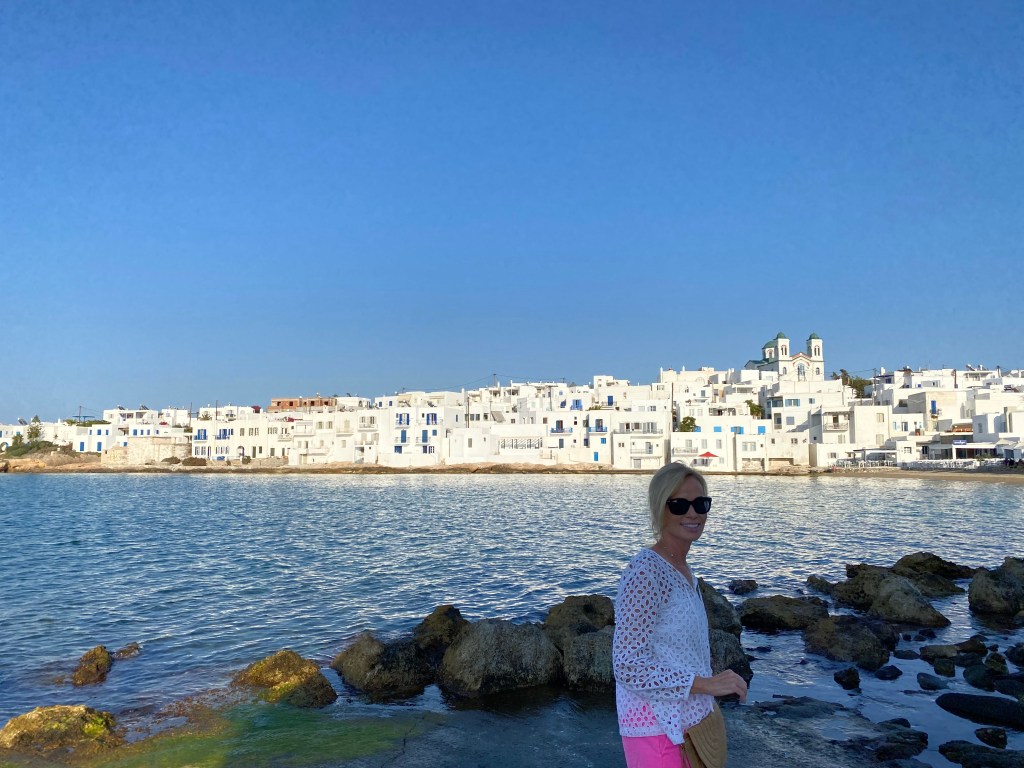
Sunset in Naousa from the Come Back beach:
And thence, into Naousa for some seafood.
Pretty great weather – mostly – during out stay. We did have a day and a half of super windy weather that was part of the normal weather cycle in the Cyclades, but that also was strong enough that it curtailed some activities.
Fishing wasn’t one of them.
Our time on Paros also encompassed our anniversary, which was great.
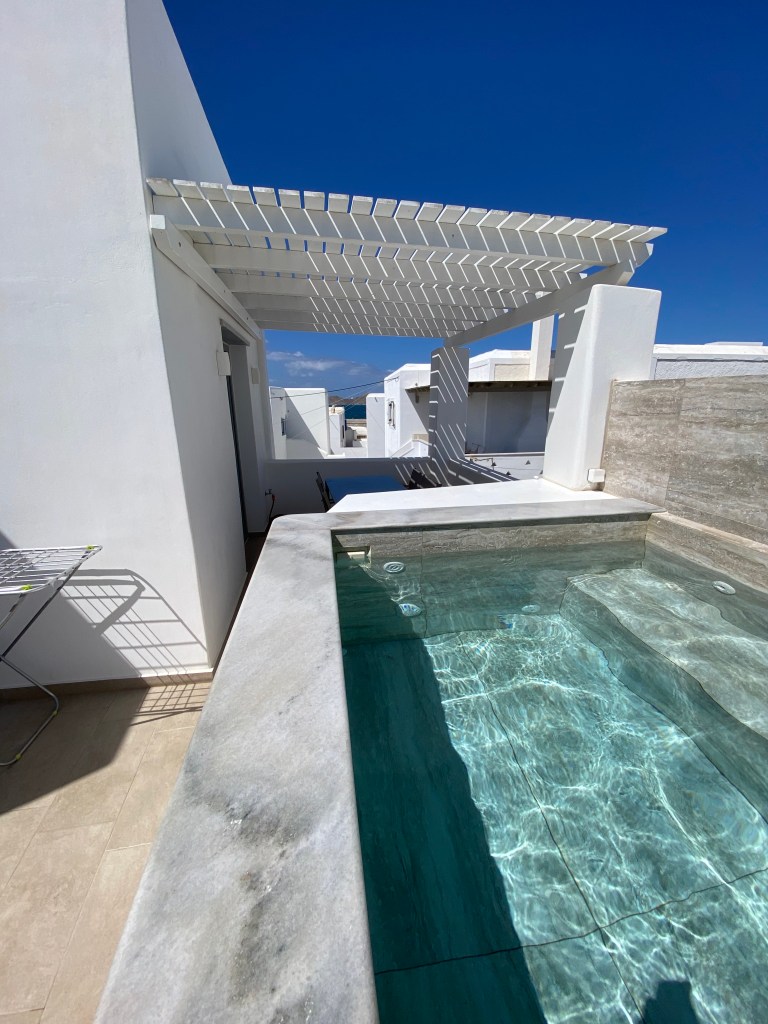
Pretty good AirBnB digs.
Another evening, another round (or three) of cocktails at Come Back.
And another sunset. Pretty good routine.
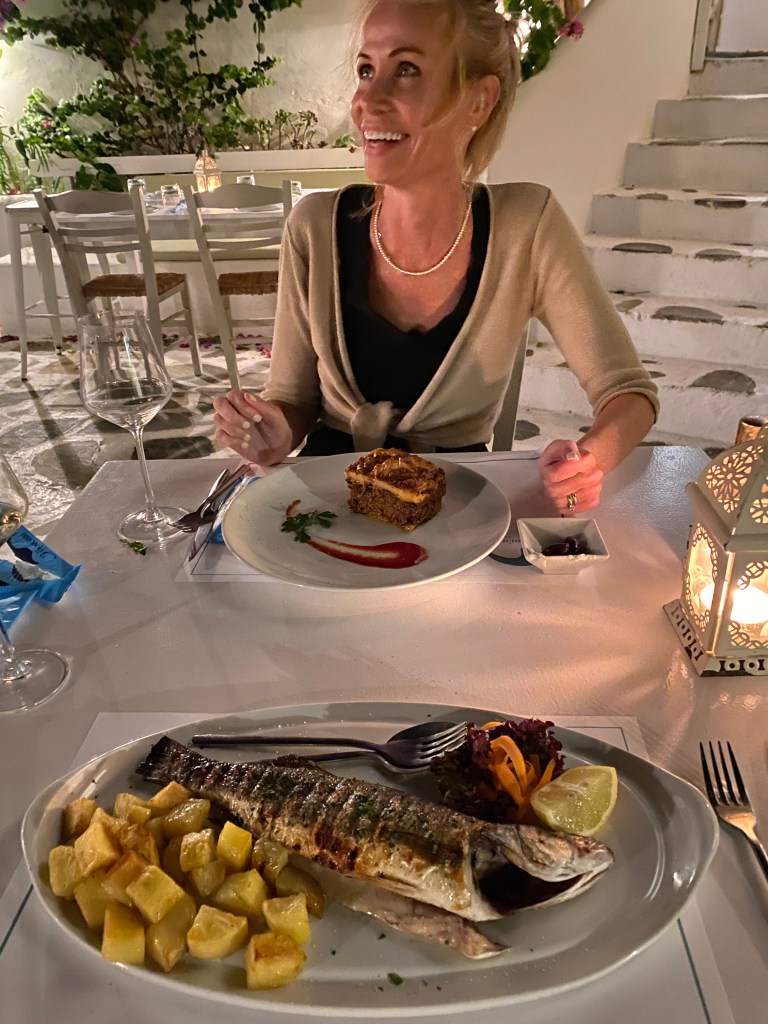
A break from fish with some moussaka.
One of the most photographed spots in Naousa, based on our Instagram feed before the trip. Colorful, yes, but empty.
And then night falls:
Another sunset, and our second favorite cocktail spot.
Maybe they should name this place “Also Come Back Here.”
As you may have discerned from the flurry of recent (but paradoxically still dated) posts on a trip back in September 2022, we’re trying to get our act together and get WolfeStreetTravel.com up to date. (@wolfestreetravel on Instagram is always current, for what it’s worth, inasmuch as we post there in real time during our travels.)
With that context, this post mercifully is our last one on the Cappadocia leg of the Turkey / Greece trip, before we pivot to the trip’s second leg in Greece. (We’re trying to address the entirety of the remainder of this trip before we take off soon for another long jaunt in Europe, when where posting will once again cease for a while. Upon our return we’ll get to the other four backlogged trips (which will have grown to five by then).)
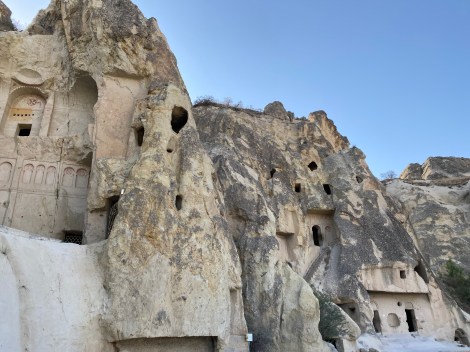
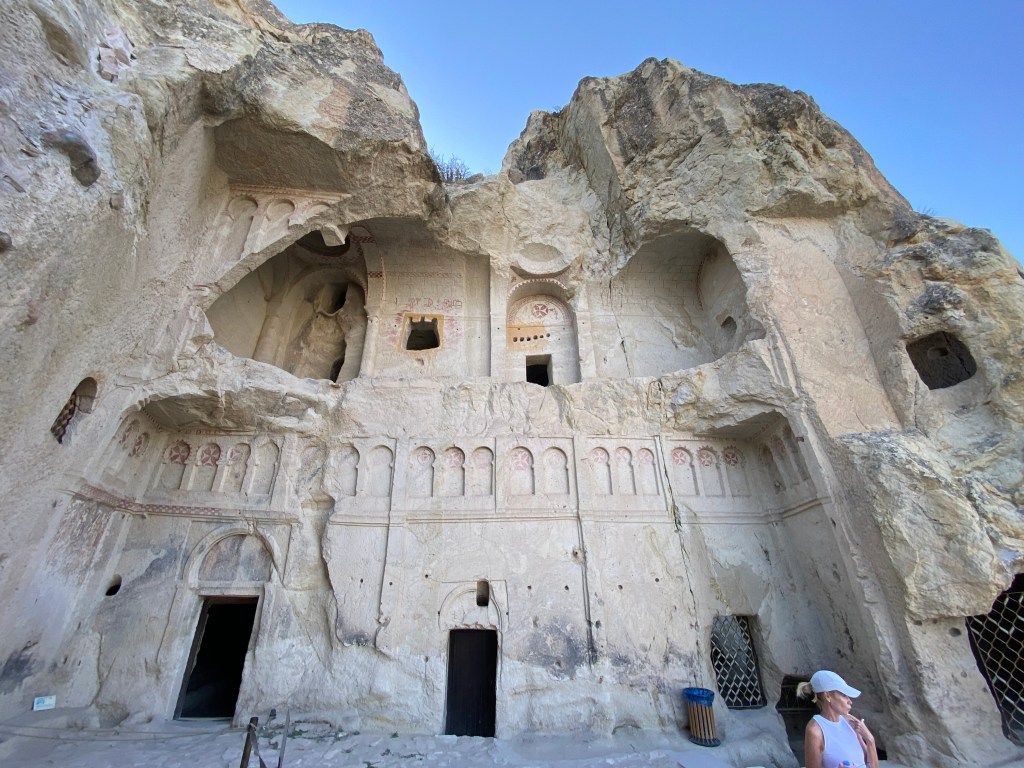
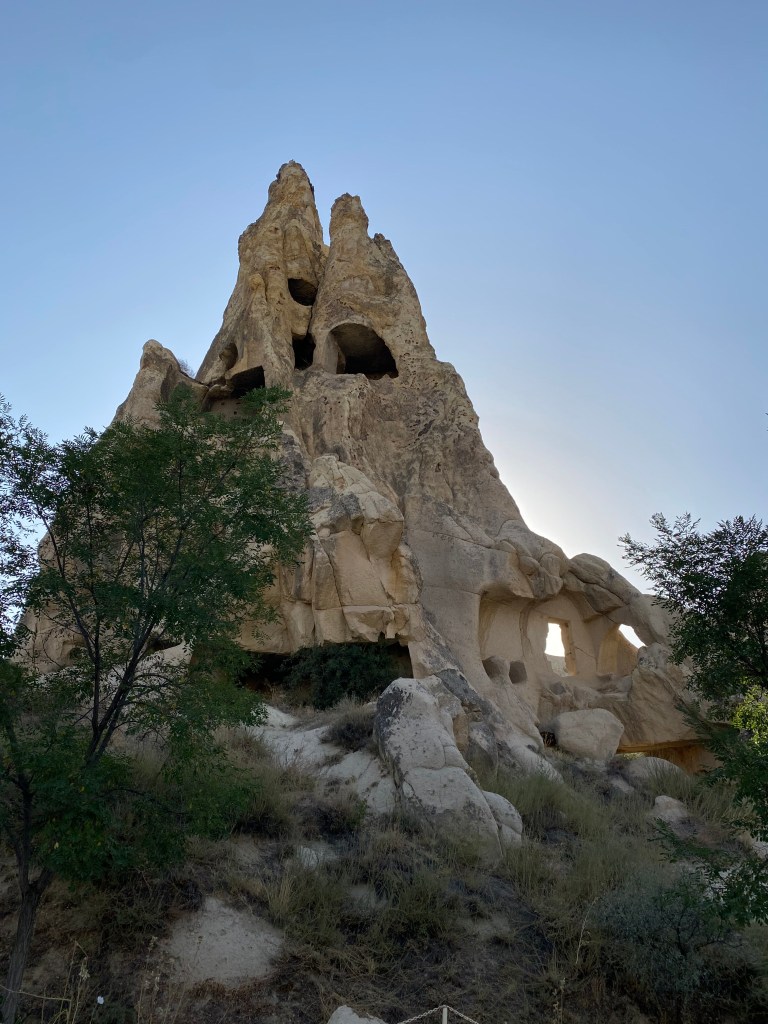
Our flight departing Cappadocia for Athens took off in the afternoon, so we spent the morning of our last day wandering through the Göreme Cave Monastery complex down the road from our base town. Founded in the 4th century on the instruction of Saint Basil of Caesarea, this complex of monasteries, nunneries, churches, and chapels existed for a thousand years. It was far and away the coolest of the troglodyte settlements we visited in Cappadocia for reasons that will immediately become apparent.
There were so many structures here to appreciate – predominantly cave churches – that it became a little overwhelming to take everything in. One delineation of cave church decoration helped us contextualize things, though: did the cave feature rudimentary symbols and patterns (representative of the iconoclastic era) or were the walls and ceiling drenched in richly illustrated frescos of saints and other religious themes that characterized the post-iconoclastic era? The former represented an era in the 8th and 9th centuries, when while the Byzantine church found religious images to be idolatrous, and the latter were created later, when the iconophiles won out in arguing that these depictions were acceptable – and even desirable – for enlightening the illiterate (similar to western European medieval church frescos and, later, stained windows).
The first church we encountered (which we forgot to identify for later review) exemplified the iconoclastic style:
Just red ochre symbols and patterns:
But that was just the beginning.
St. Barbara
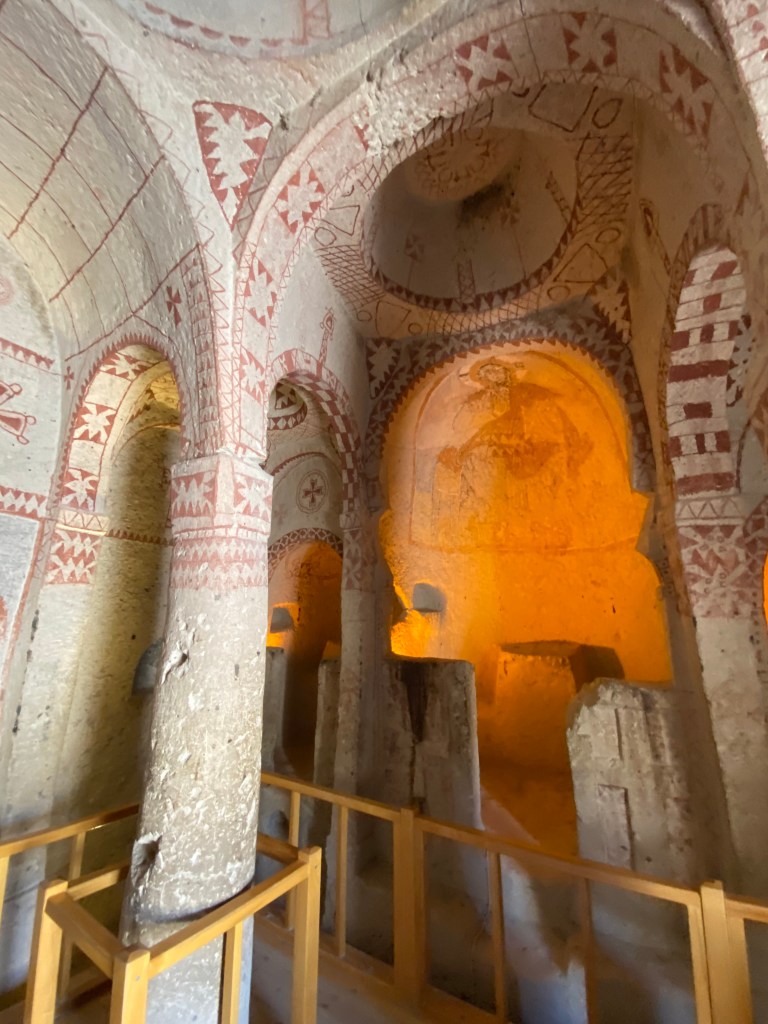
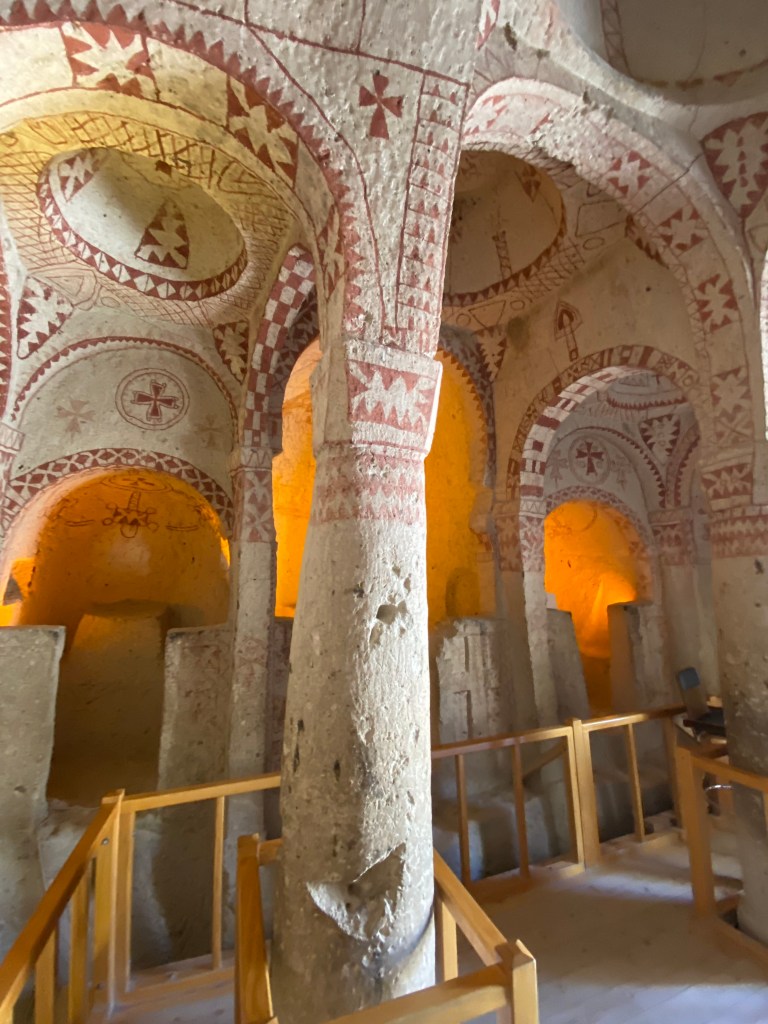
The iconoclastic style also adorned the raw rock walls of this much more ornately decorated cave church.
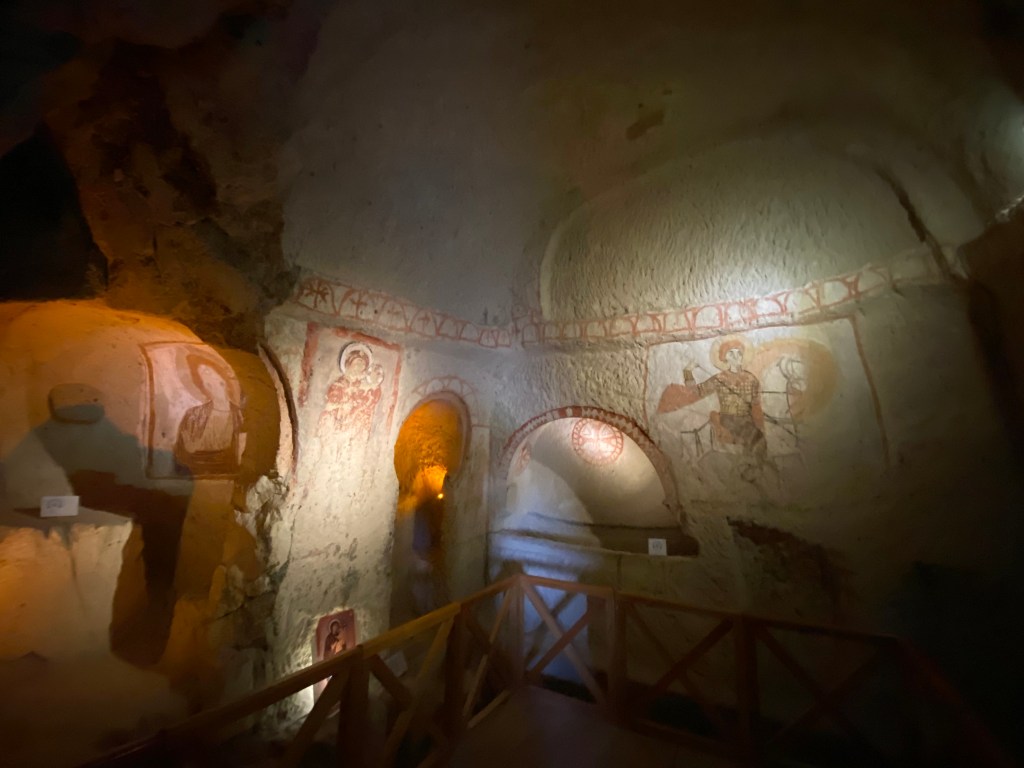
Decorated almost entirely in red ochre geometric designs and religious symbols, every soffit, cornice, and pendentive (triangles supporting the domes) are embellished.
These mostly are manifested as triangles, checks, lightning-bolt-looking things, and Maltese crosses.
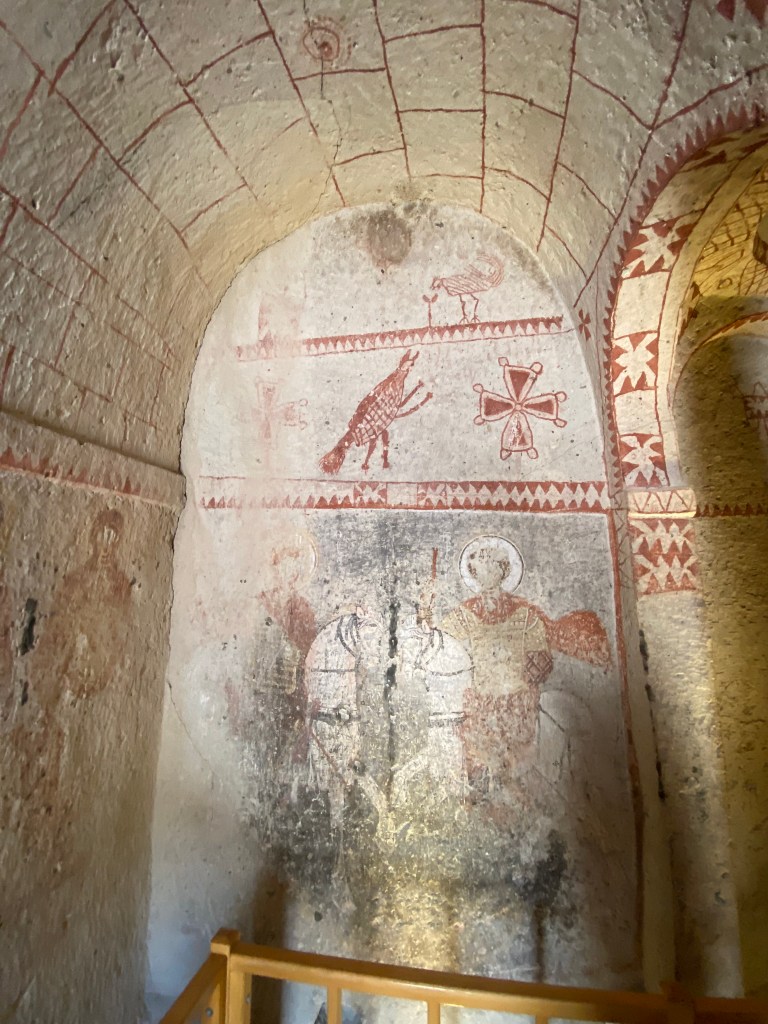
Oh – and there’s a boxing pheasant on one end of a barrel vault in St. Barbara? Or something? Definitely the most amusing yet mysterious of the images.
Below the boxing pheasant, of course, is a very post-iconoclastic images of Saint George and Saint Theodore. Not sure what to say about this juxtaposition.
Whether iconoclastic symbols or lush paintings, we found these churches to be so compelling because of the incredible age of the art and the palpable presence of everything so present with you, where you could reach out and touch a symbol that a monk applied to an arch more than a millennium ago.
Our hometown is old and, with a founding date of 1749, we pass by centuries’ old buildings and artifacts every day. Hell, our house is 100 years old. But St. Barbara dates to ~1100 (don’t ask how to reconcile how this falls after the iconoclast era), and being so casually close to religious art that old and yet so accessible elicited a pretty palpably powerful feeling of awe.
Dark Church
At the opposite end of the spectrum is the foreboding-sounding “Dark Church” (so named not for serving as the unholy site of arcane acts and an upside down cross, but because the only illumination of the church results from a small window in the church’s narthex). As a result of this paucity of sunlight, the paintings inside have been remarkably preserved.
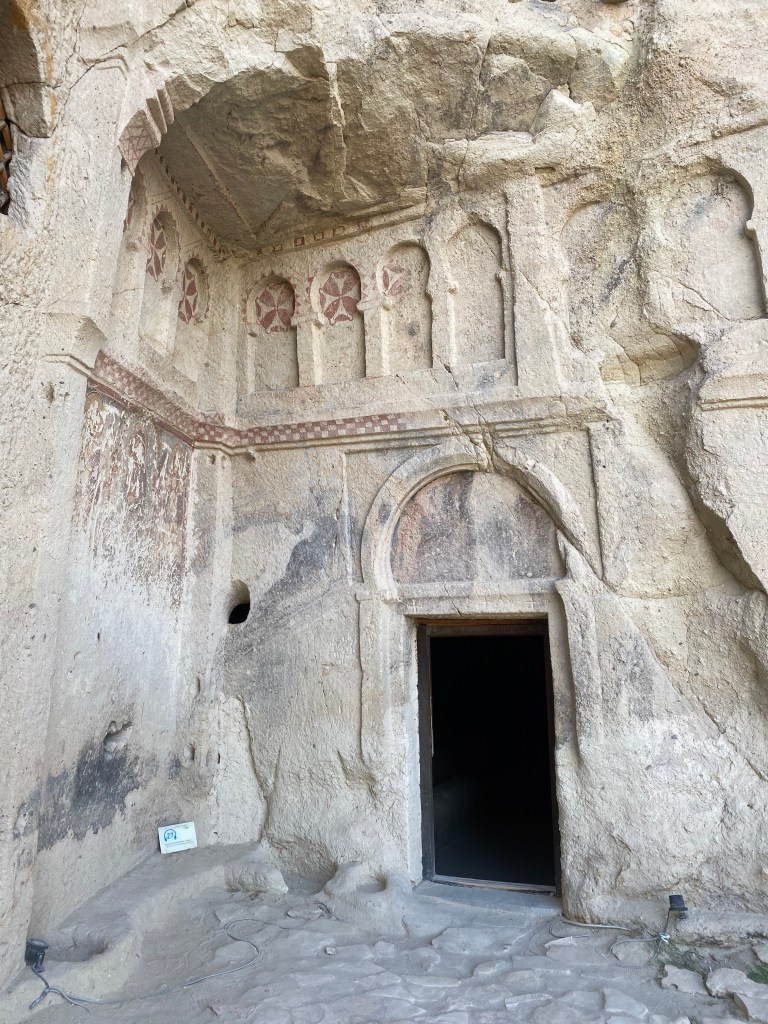
The Dark Church definitely had the most ornate exterior. While the other churches’ exteriors were simply the rocky hillside, the Dark Church exterior featured a carved façade, including a series of keyhole niches with Greek crosses.
The entrance:
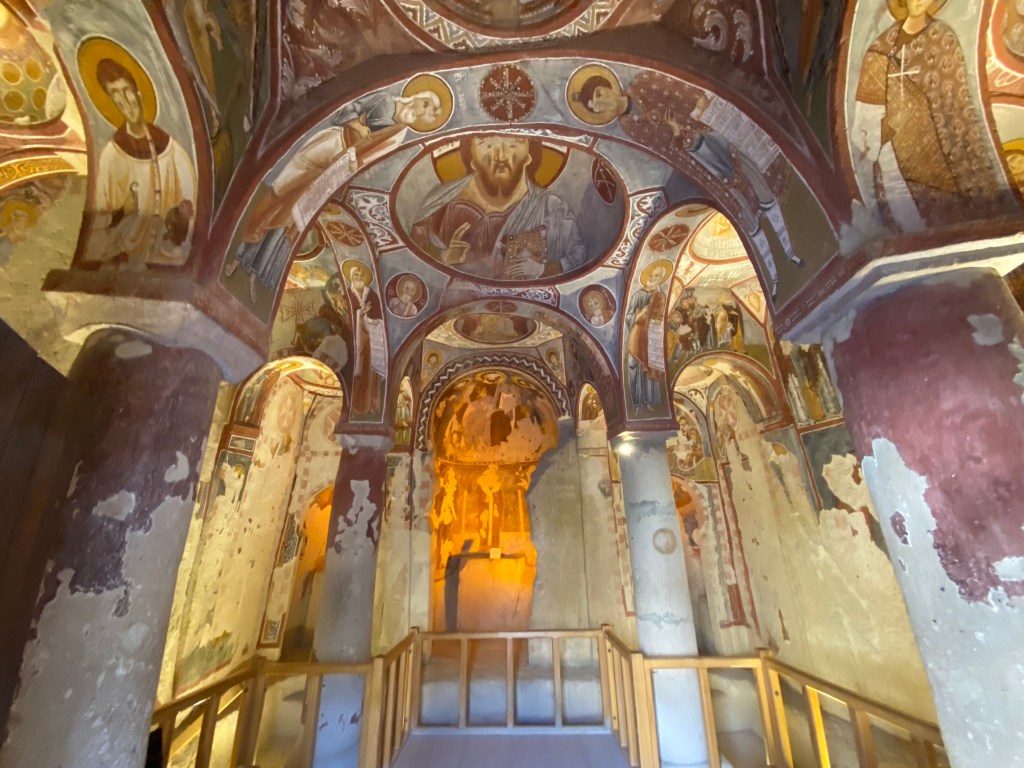
Very different interior from the iconoclastic churches!
The central dome features the very Byzantine Christ Pantocrator image and the four archangels (Gabriel, Michael, Raphael, and Azrael) occupy the four small domes surrounding it.
These paintings all date from the latter half of the 11th century.
Amazing that this work from 1100 years ago still remains, unaltered, to appreciate:
Snake Church
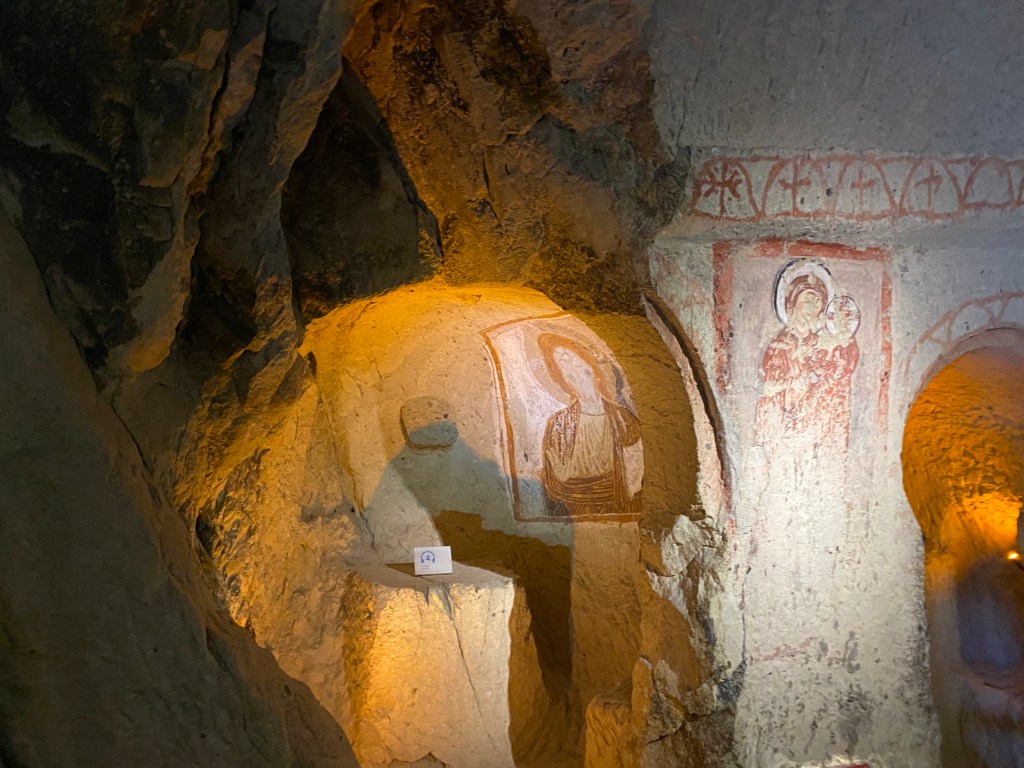
Although the Snake Church clearly demonstrates full illustrations representative of the post-iconoclasm period, it nonetheless also represents something of a transition in its liberal use of simple drawings and symbols, including on the outside of the cave church:
“The mural painting on the left has five figures—St. Onesimus standing in a red robe, Saints George and Theodore on horseback, and Saints Constantine and Helen holding the True Cross.
The figure nearest the door is St. Onesimus, mentioned in the New Testament letter Philemon. He was a first-century slave who escaped from his master in Colossae (near modern Pamukale/Denizli). As Onesimus was hiding in Rome, he encountered the apostle Paul and became a Christian. To restore their relationship, Paul sent Onesimus back to his master Philemon (who happened to be Paul’s friend), requesting forgiveness. According to church tradition, Onesimus was later martyred, as symbolized by the white cross that he holds.” (From here.)
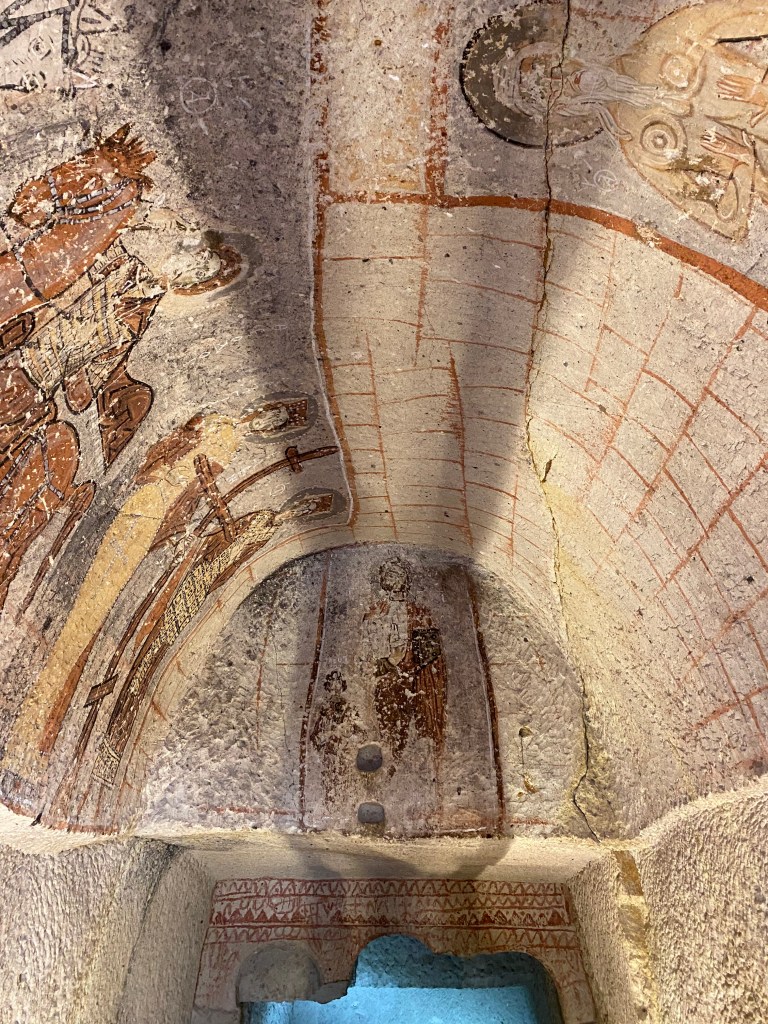
Inside, along one side of the nave, can be found the reason behind the name: an image of Saint George and Saint Theodore slaying a dragon, here depicted as a snake (you can make out the scaly body on the right bottom and the tail on the left, but there’s not a lot left to make out of the head):
More of the mix of iconoclastic and post-iconoclastic imagery on the barrel-vaulted ceiling of the nave.
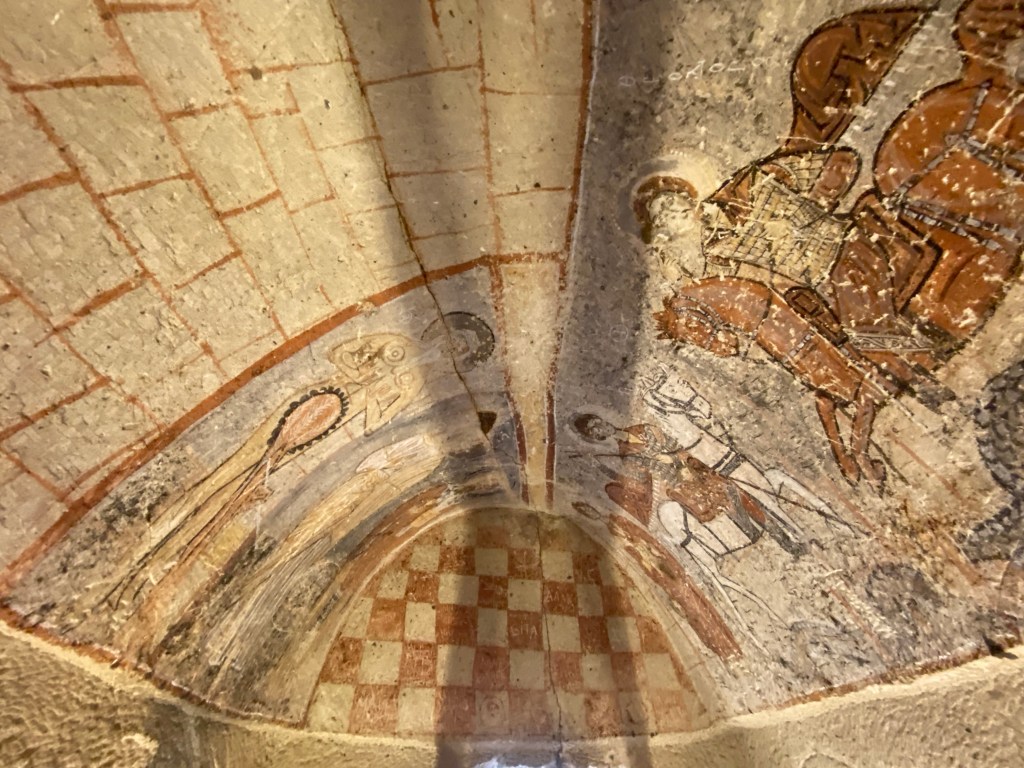
At the far end, a rudimentary apse with Jebus on the lunette above:
And a cool checkerboard pattern above the entrance:
St. Basil’s Chapel
“The left wall has two panel icons. The tall image on the left is St. Basil the Great, the famed bishop of Caesarea (d. 379 AD) who defended Nicene Orthodoxy and pioneered Byzantine monasticism.
The larger square image is St. Theodore on a red horse, spearing a snake. His clothing mimics Roman military attire, but has subtle Persian designs. Theodore Stratelates (“The General”) was martyred in 319 AD in Pontus (northern Turkey).” (From here.)
“The large, square icon is St. George riding a white horse. He was a Roman officer from Cappadocia who died in the early 300’s, in Nicomedia (the first capital of the Eastern Roman Empire, modern Izmit).” (From here.)
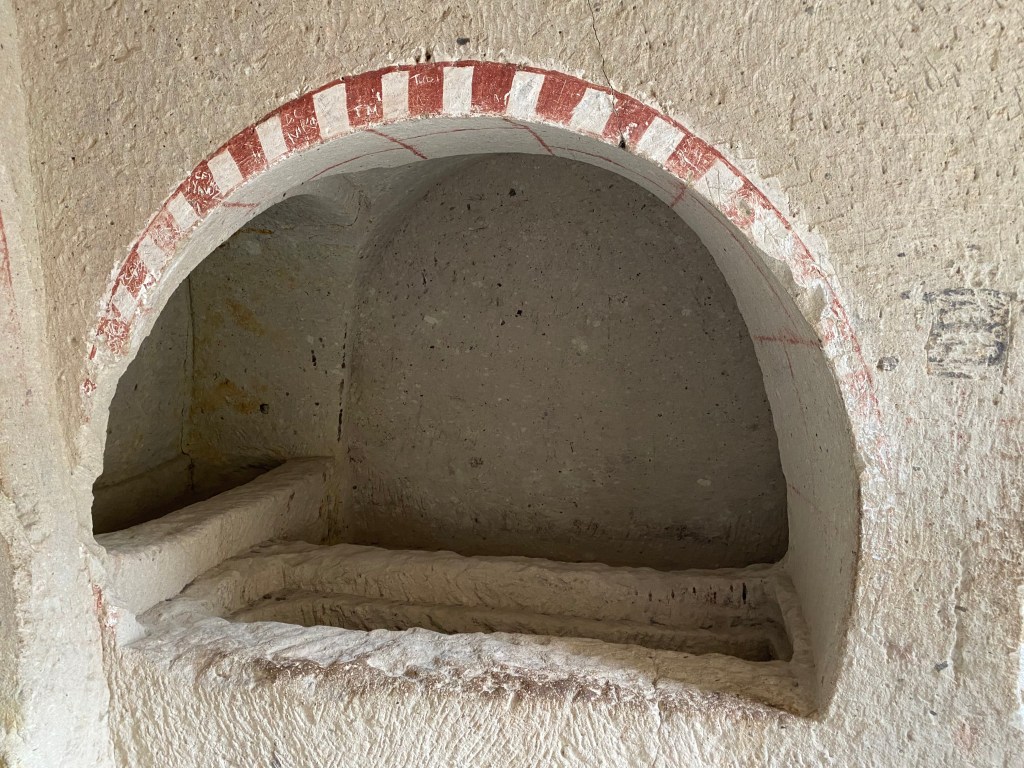
The coolest aspects of St. Basil’s though had to be the tombs. In a cave. (Cave graves, if you will.) The acrosolium (arched recess with grave) below was part of the original church design:
However, twelve more were later carved into the stone floor of the church – adults in the middle and infants on the side:
Cappadocia complete! From here, we hightailed it back to our place in Göreme, grabbed our luggage, and headed to the airport – and thence to the Greek Cyclades island of Paros.
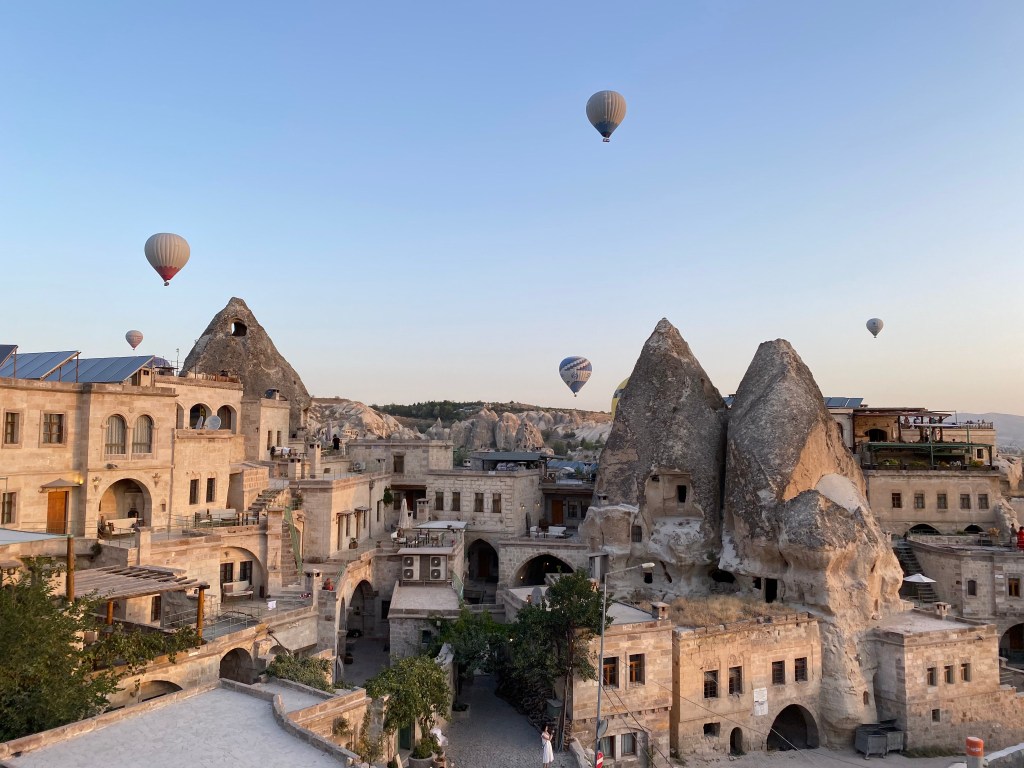
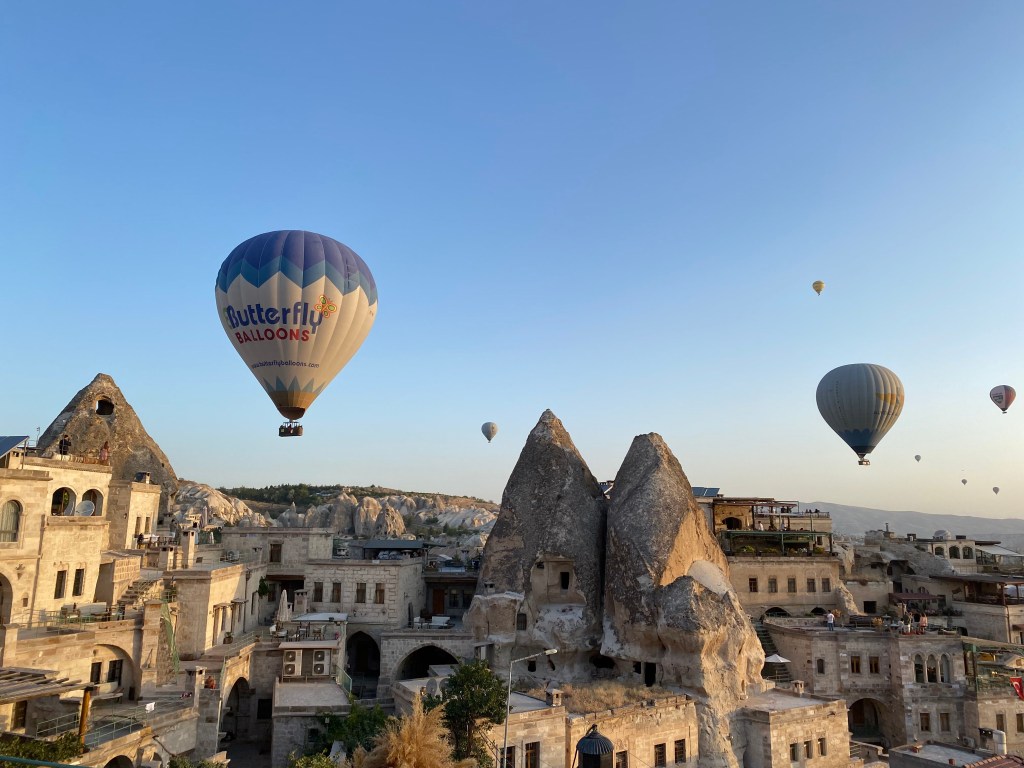
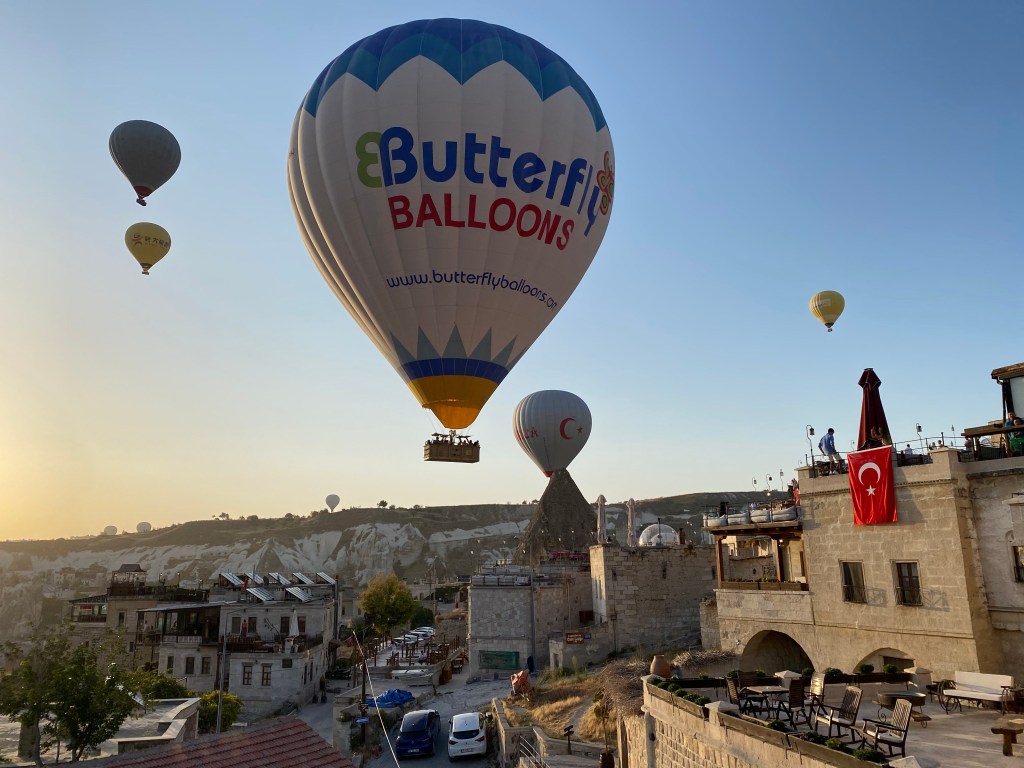
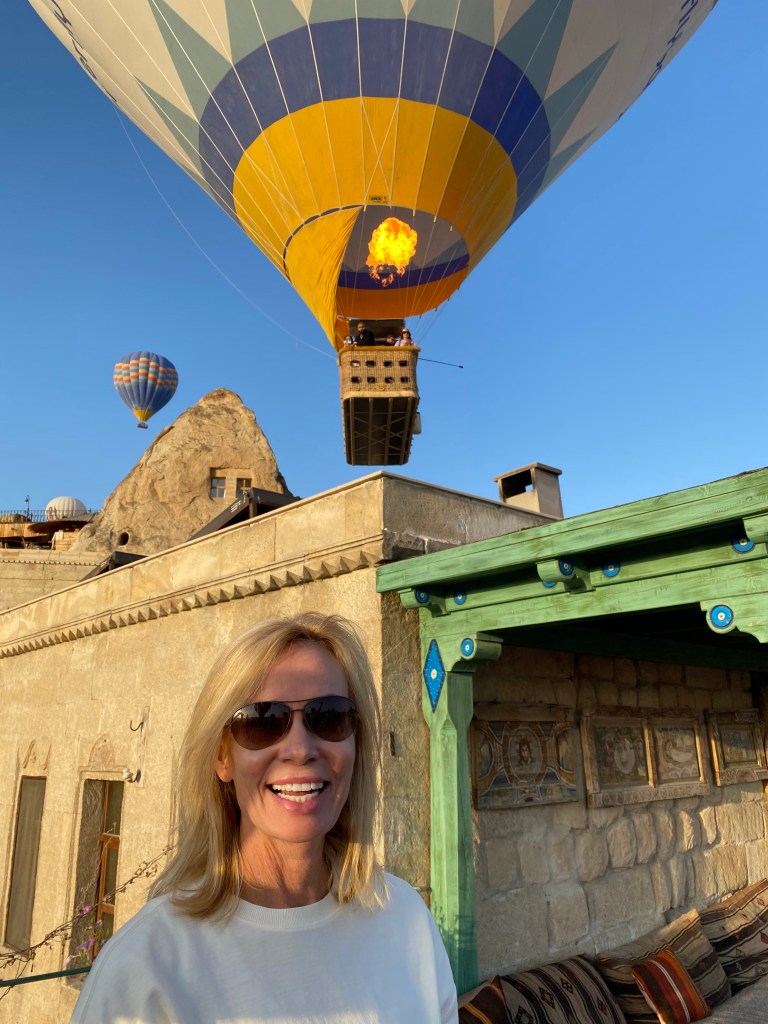
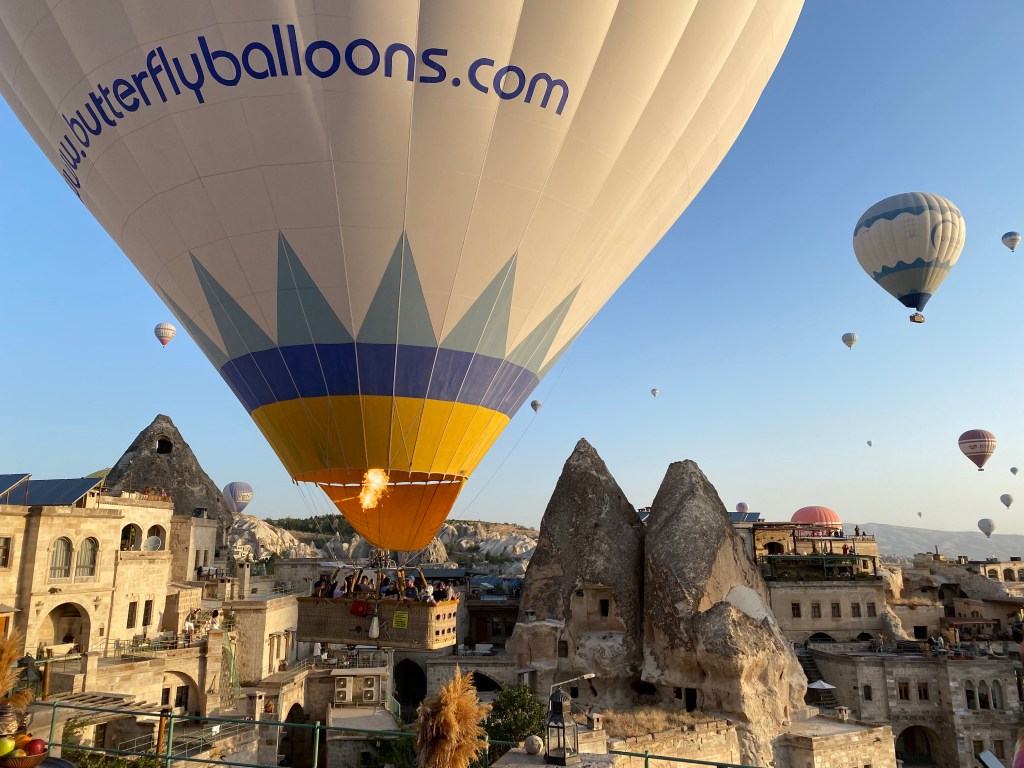
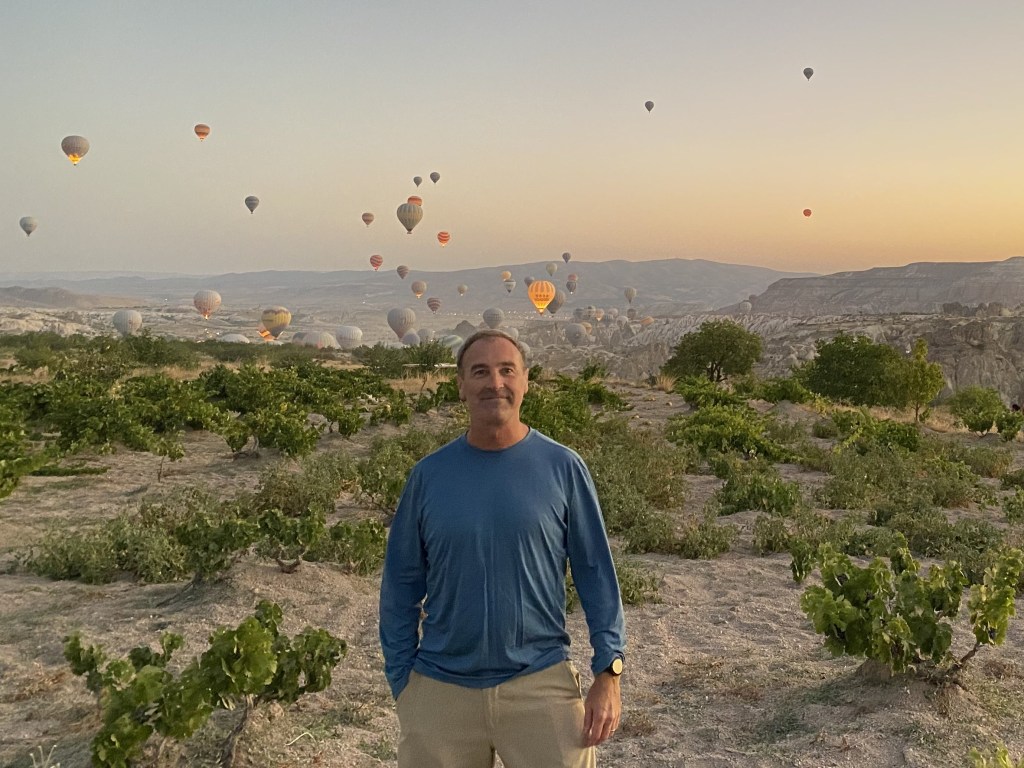
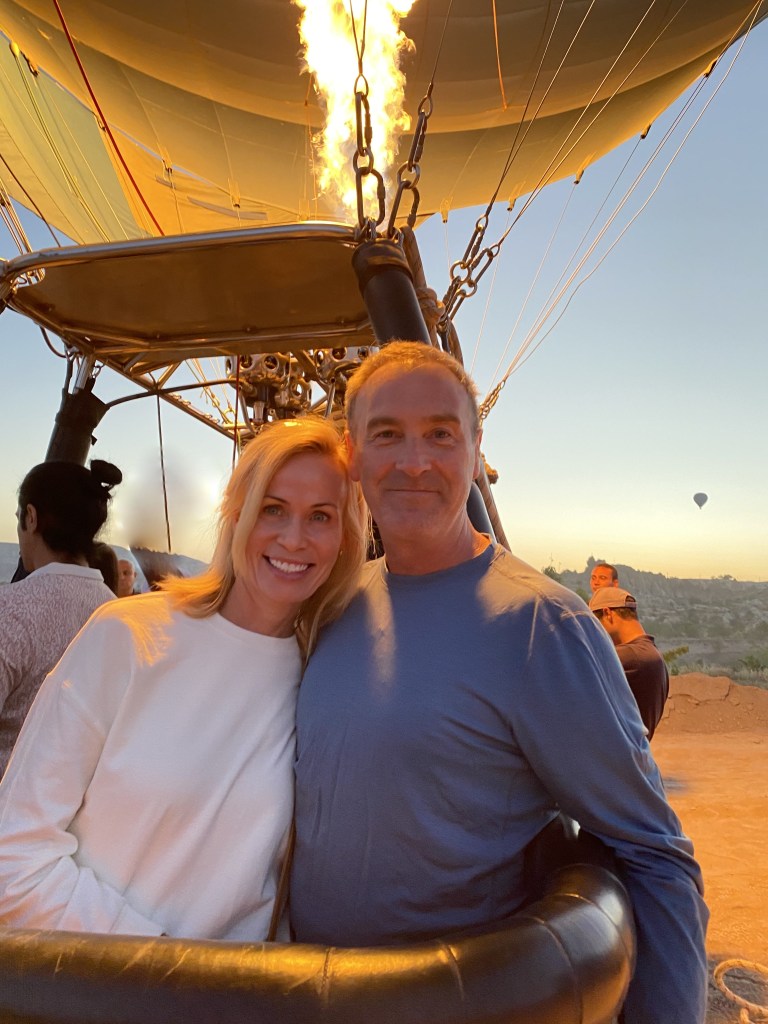
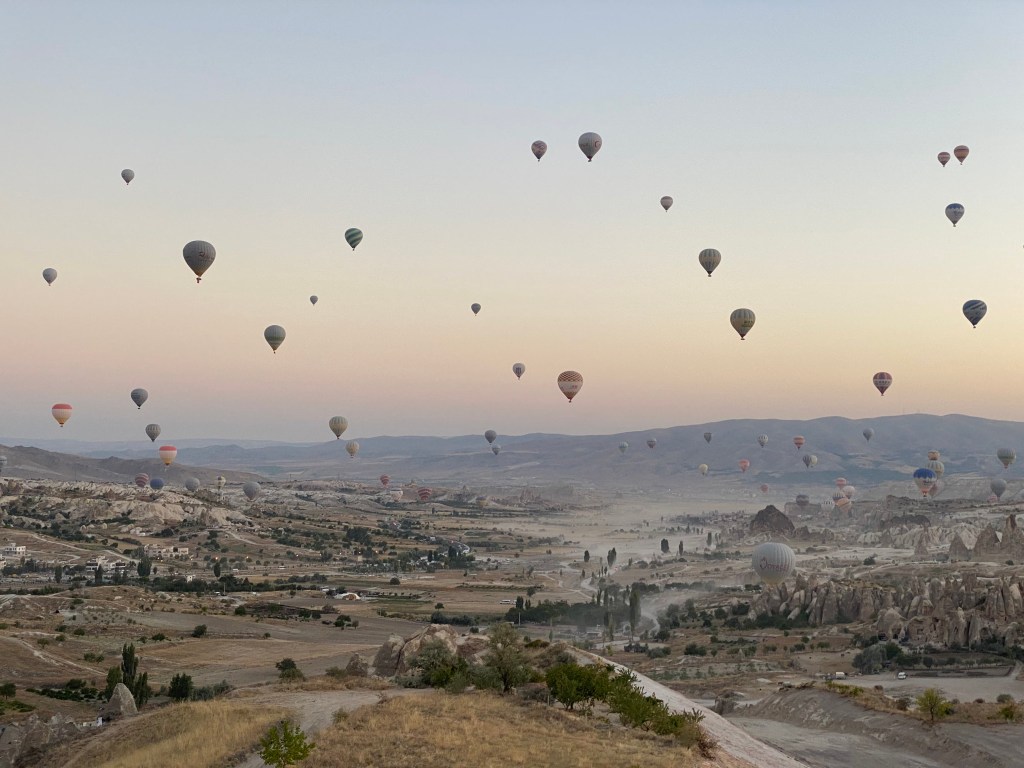
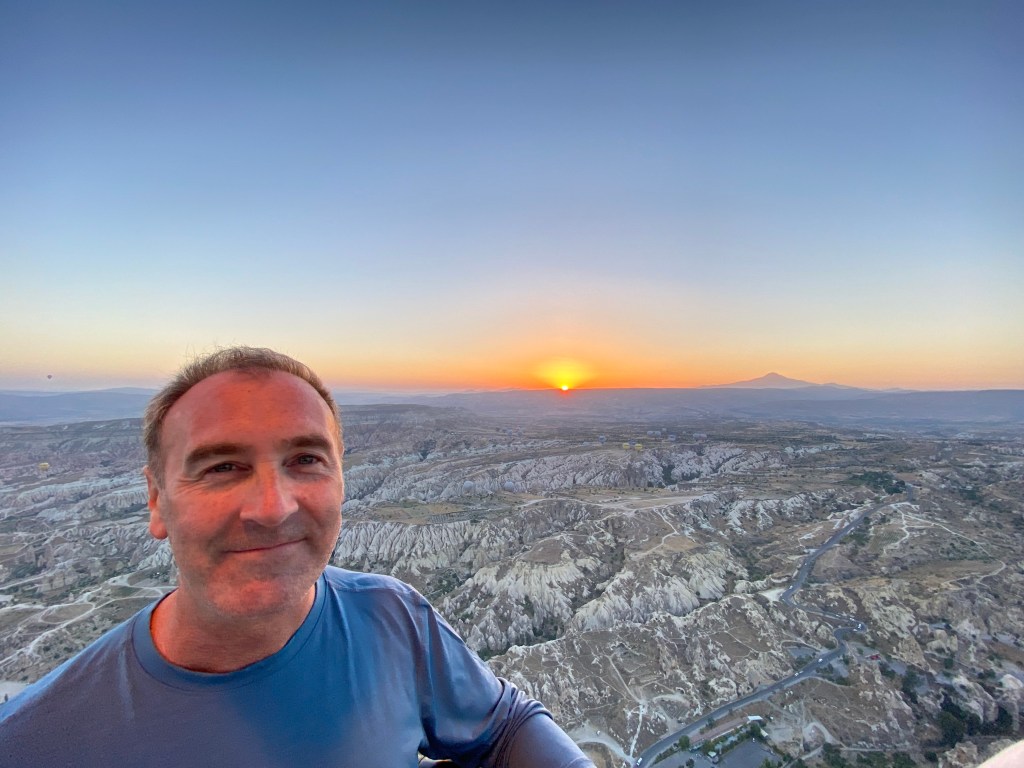
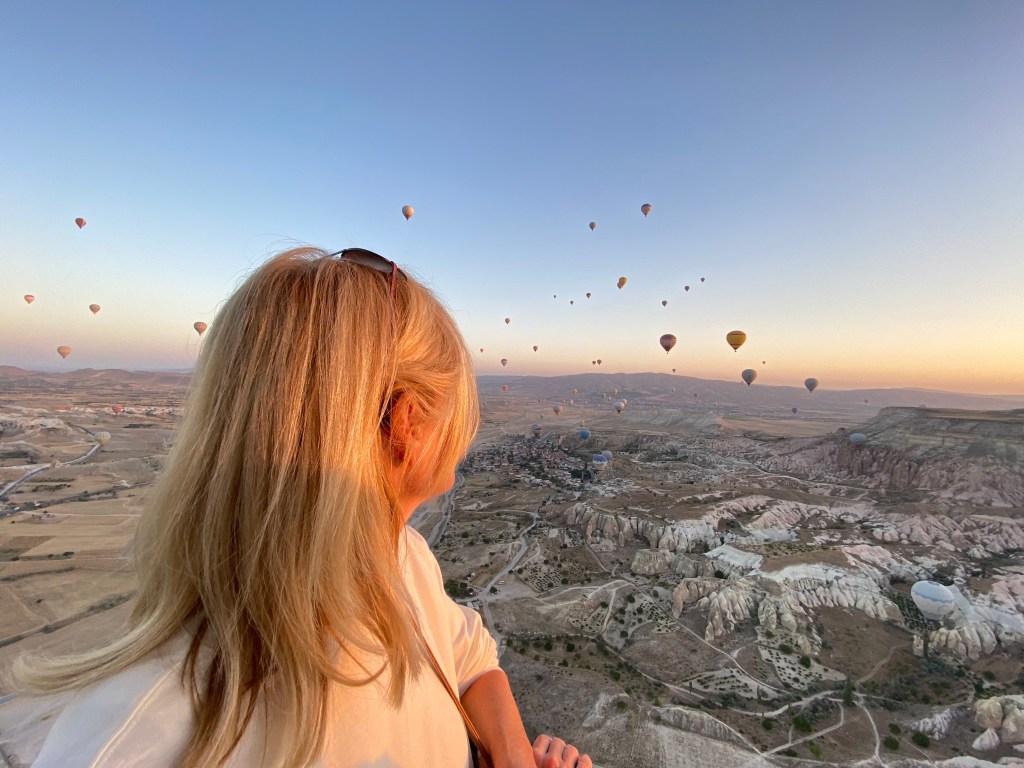
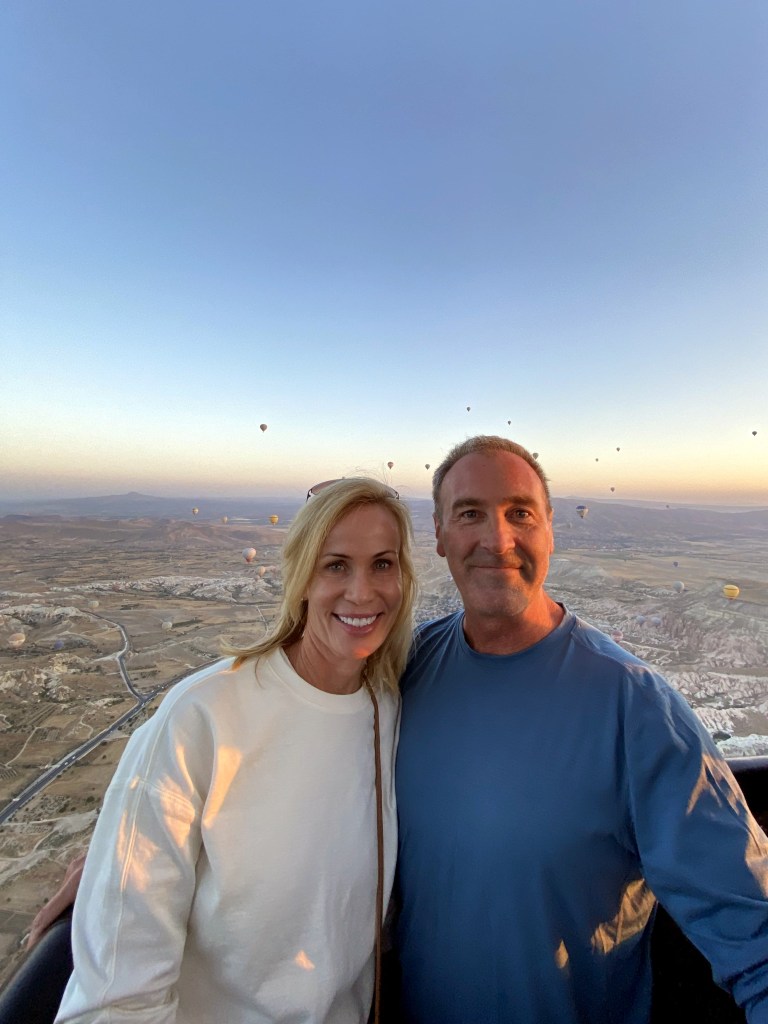
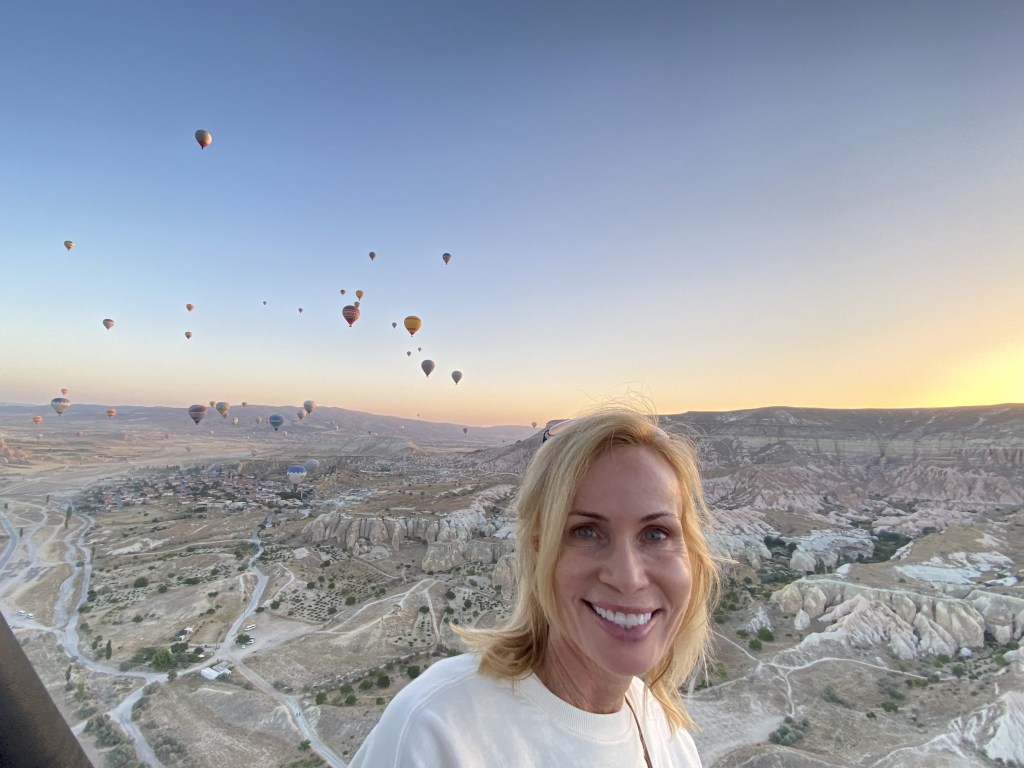
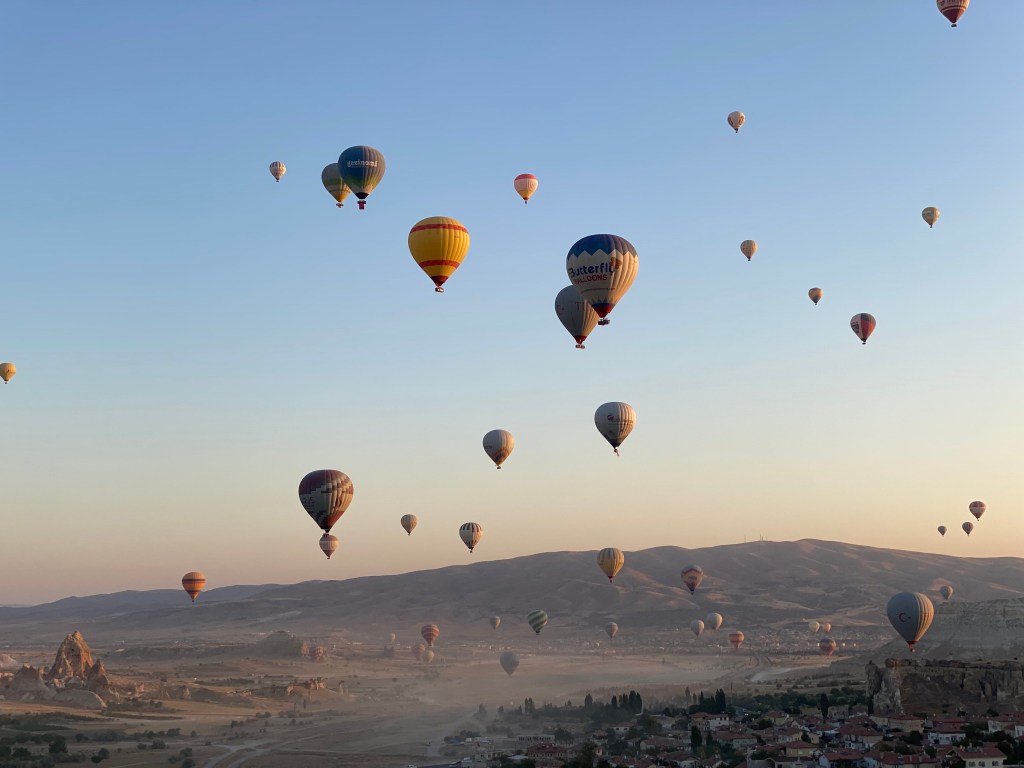
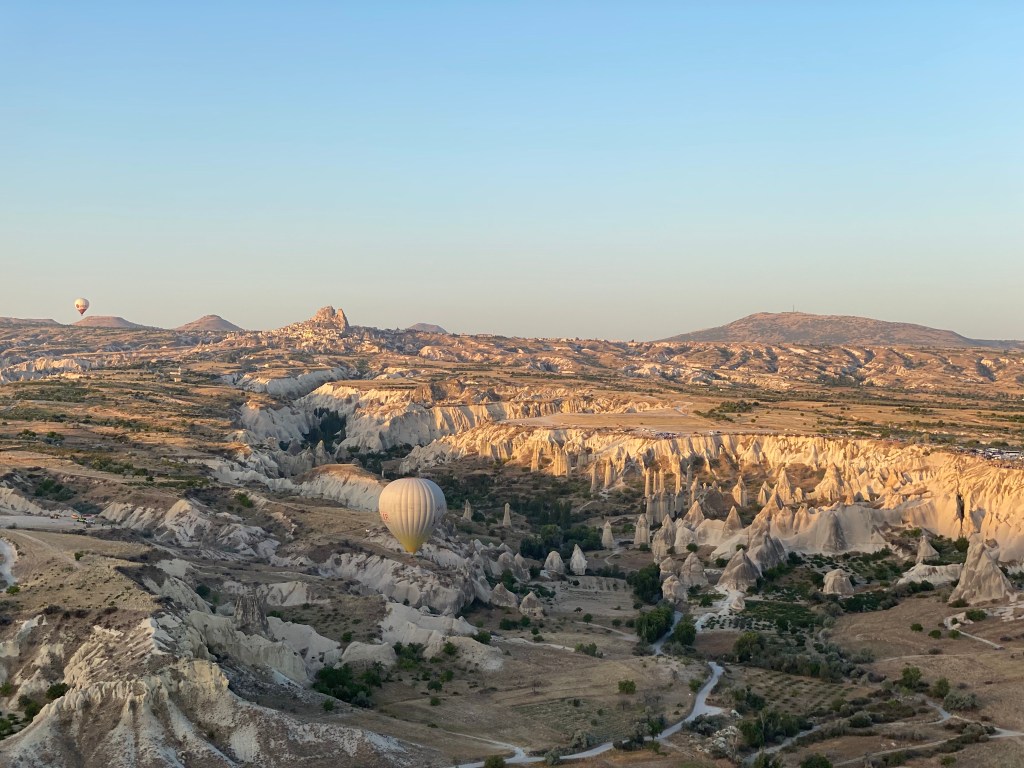
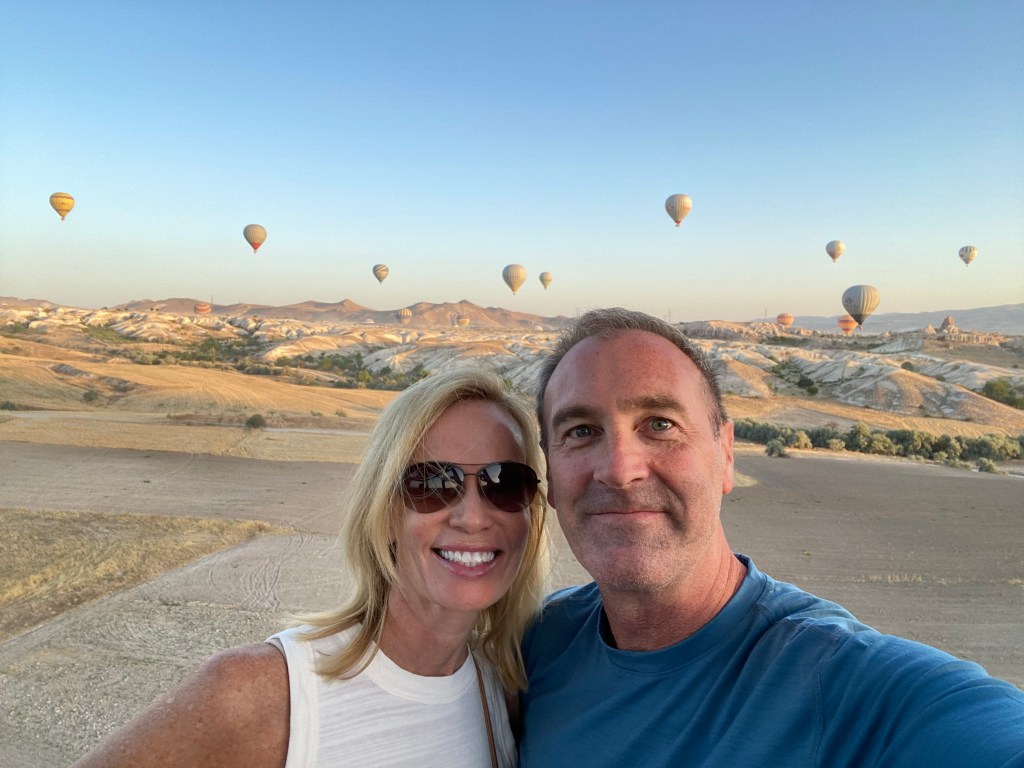
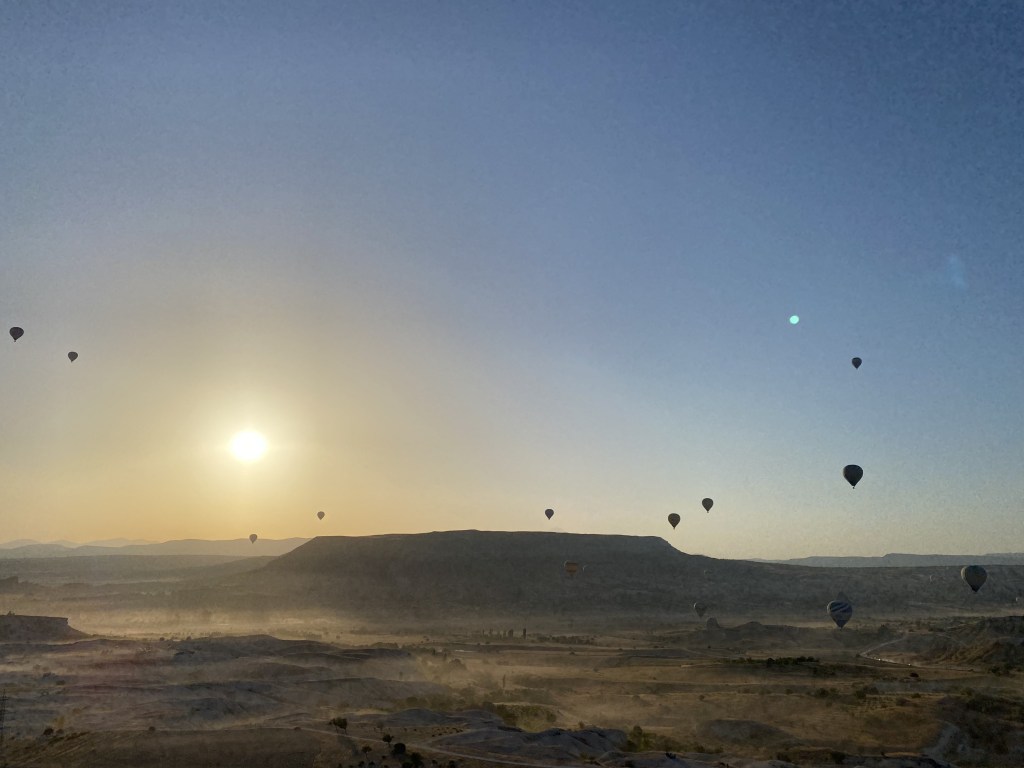
We hopped into a balloon our first morning in Cappadocia, which was pretty magical, considering the region’s surreal moonscape topography. On the other two mornings, we just hung out on our hotel terrace and watched the dawn parade of balloons from the ground.
We’re not sure which experience we found more rewarding, frankly. This was awesome to watch, with a double espresso in hand.
The dude in this video piloting the balloon was on a totally different skill level. Would have been awesome to have been in the basket for that ride.
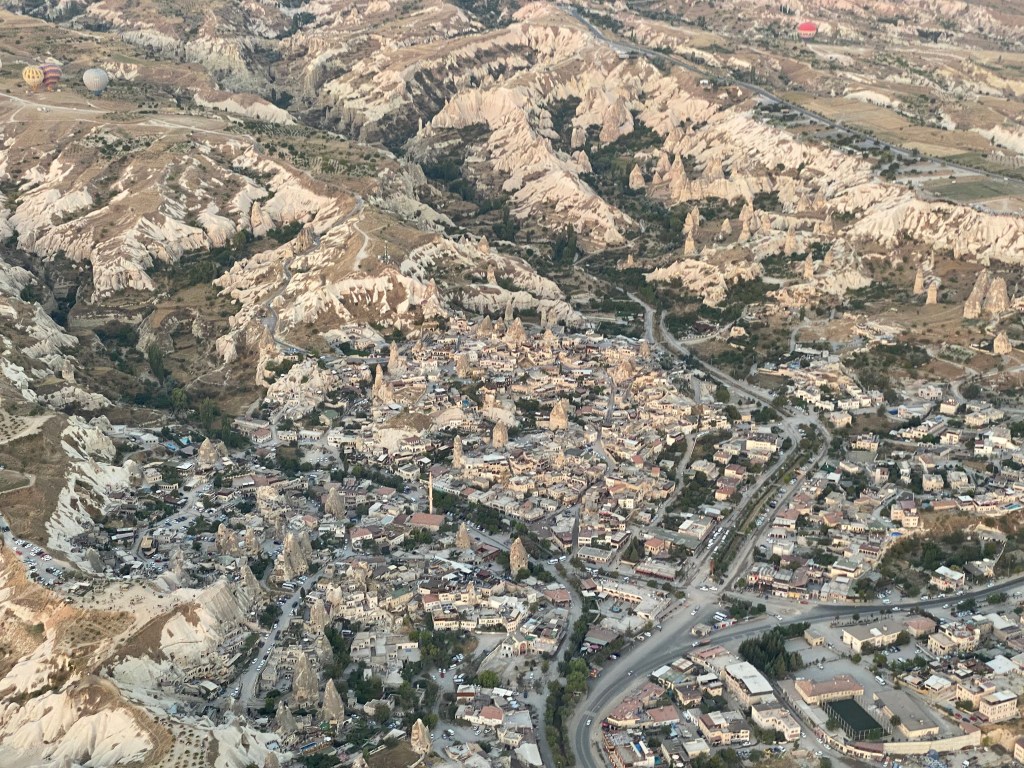
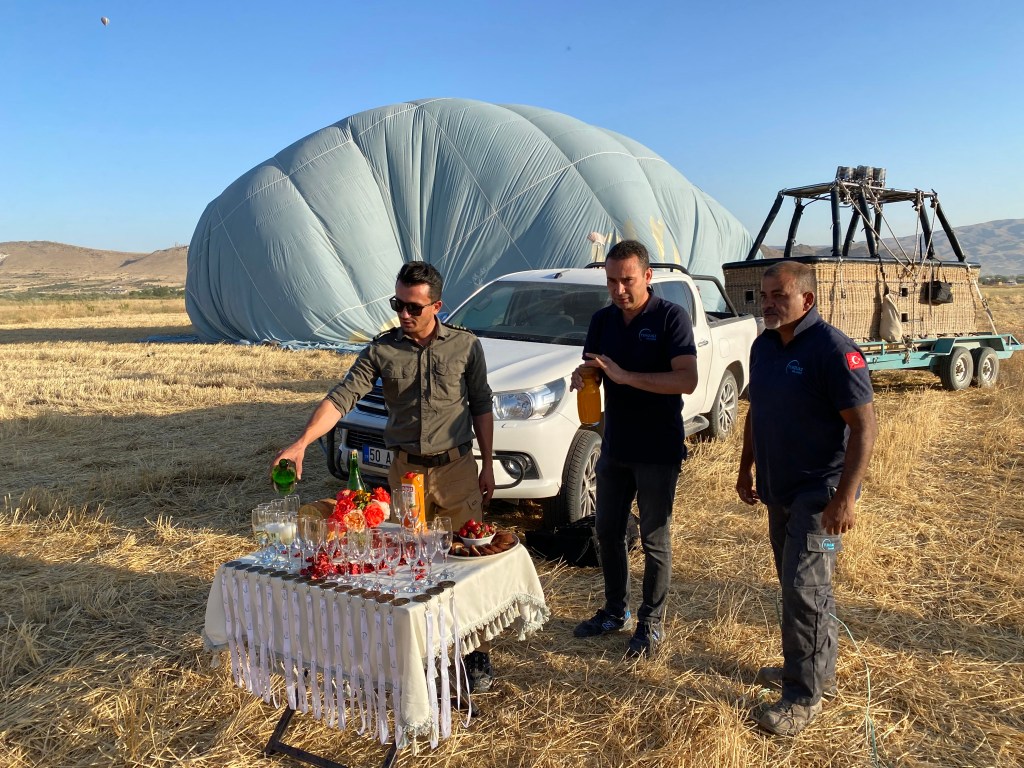
After too long of a respite in posting our backlog, herewith please find our epic balloon ride over the Cappadocian moonscape in Turkey.
Here’s our lone commentary moment in this post: that red thing is an idiot Instagrammer who not only rented a flowing red gown for a social media photo shoot, but that crane next to it, from which a swing dangles. This is what some people do with their time and money. The same thing, but on a smaller scale, occurred each dawn on our hotel terrace due to its view – a bunch of vapid Instagrammer girls in rented gown pouting and preening for pictures against the backdrop of hundreds of balloons at dawn over Cappadocia.
(Just continuing to post on backlogged trips – this one from September 2022.)
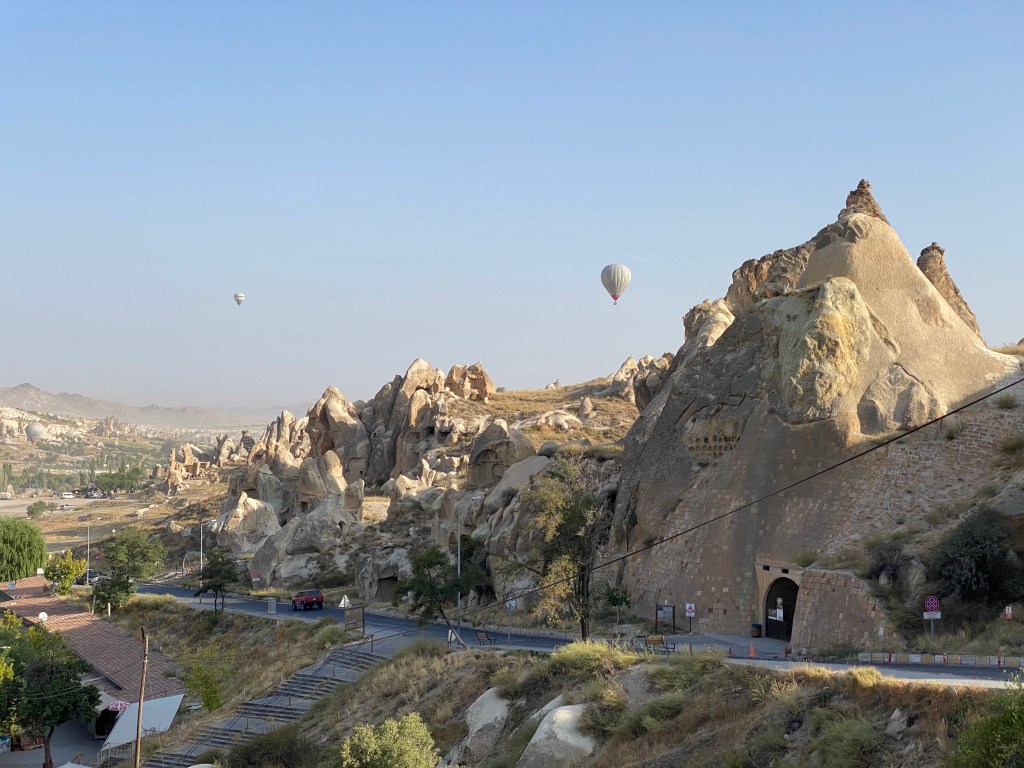
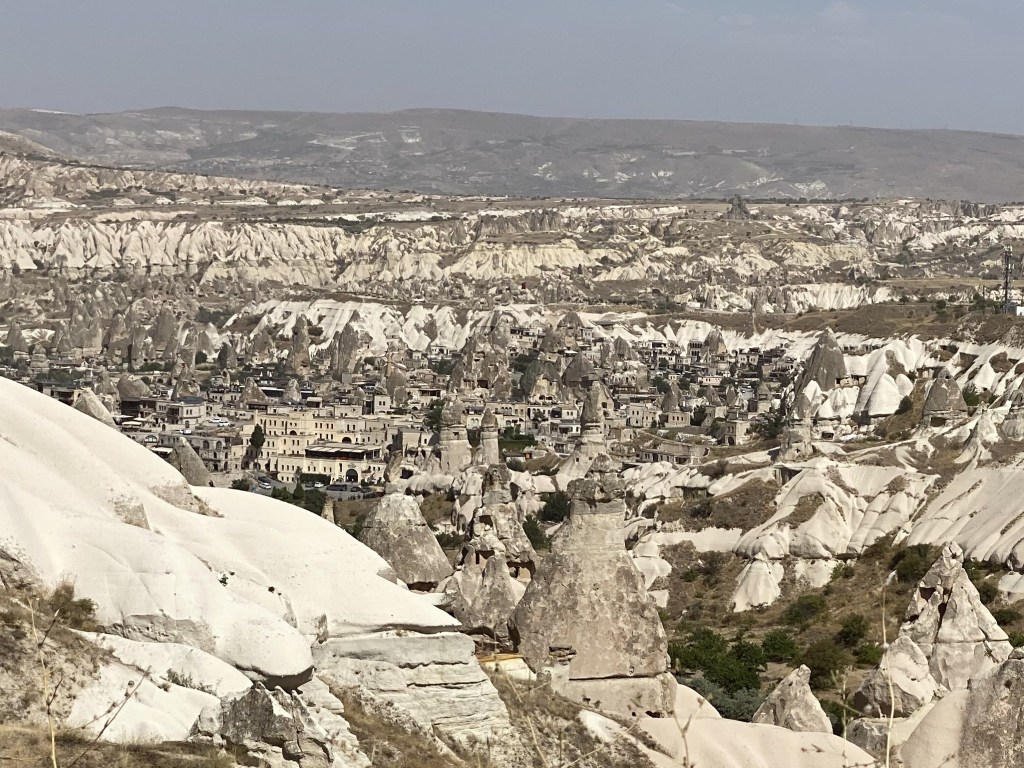
From Istanbul, we flew to Kayseri in Cappadocia, rented a car, and drove to Göreme, our base town to explore the area for the next 3 days. Göreme lies at the heart of a network of valleys in a landscape of tuff – volcanic ash that has piled up over millennia. Over time, the elements eroded this soft deposit of rock to create not only valleys, but “fairy chimneys” where denser rock withstood erosion and led to natural obelisks set amidst a sandy and desolate landscape.
Until maybe the 3rd century; maybe earlier – hard to tell. But then, Christianity hit the area in the 4th or 5th centuries and cave churches, monasteries, and houses carved into the tuff flourished.
Leading, inexorably, to the creation of Göreme.
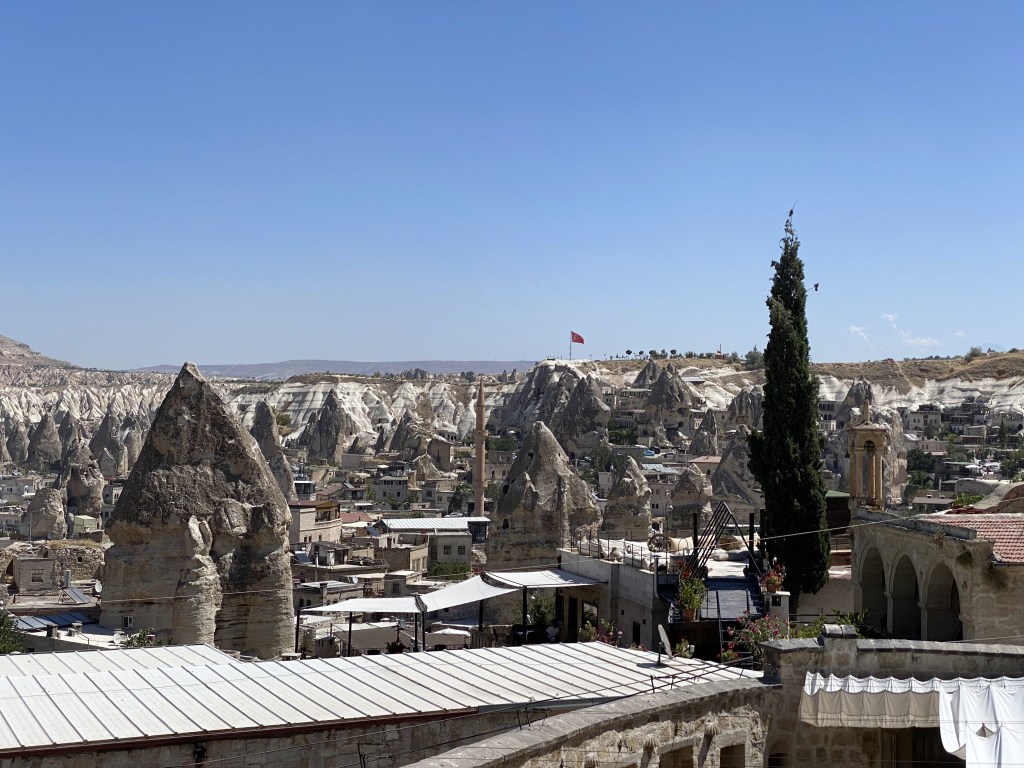
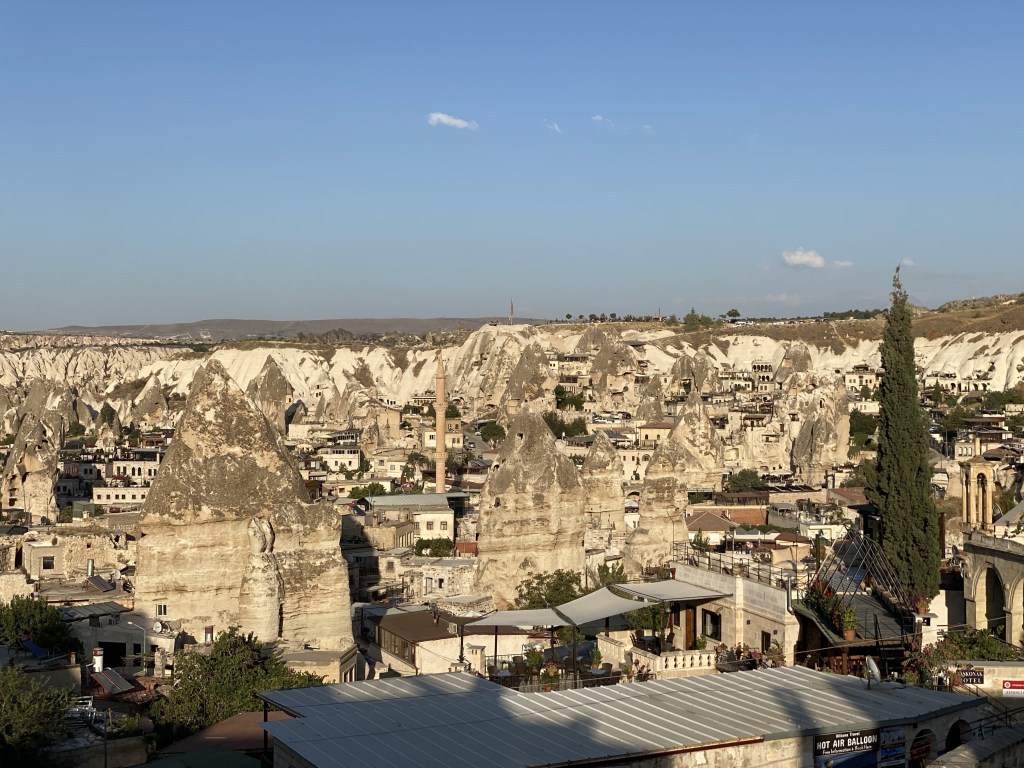
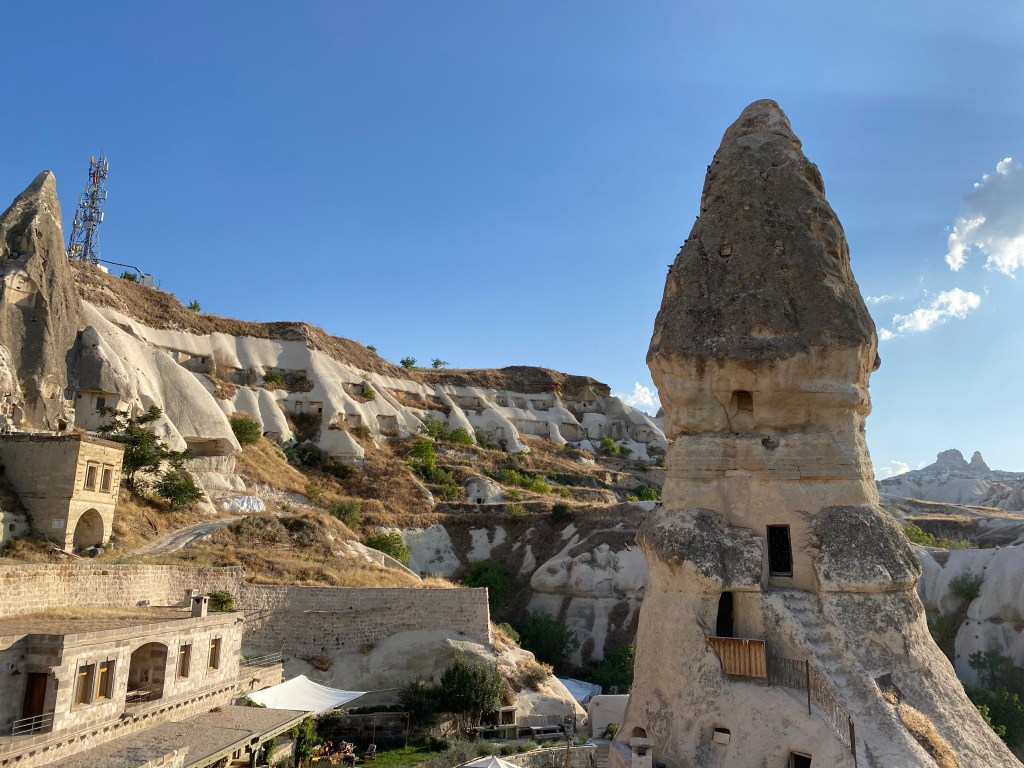
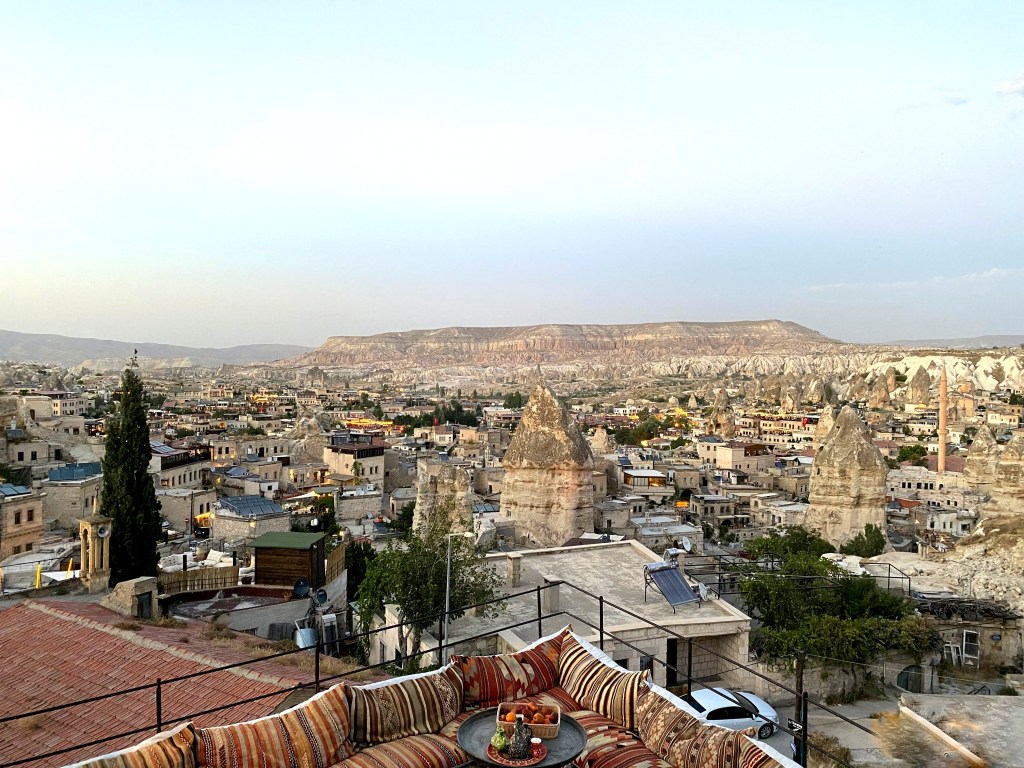
View from our cave hotel:
Time of day simply enhanced the optics of the town:
A view of Göreme from up the road near a little field trip to Uçhisar:
A minaret features prominently in town:
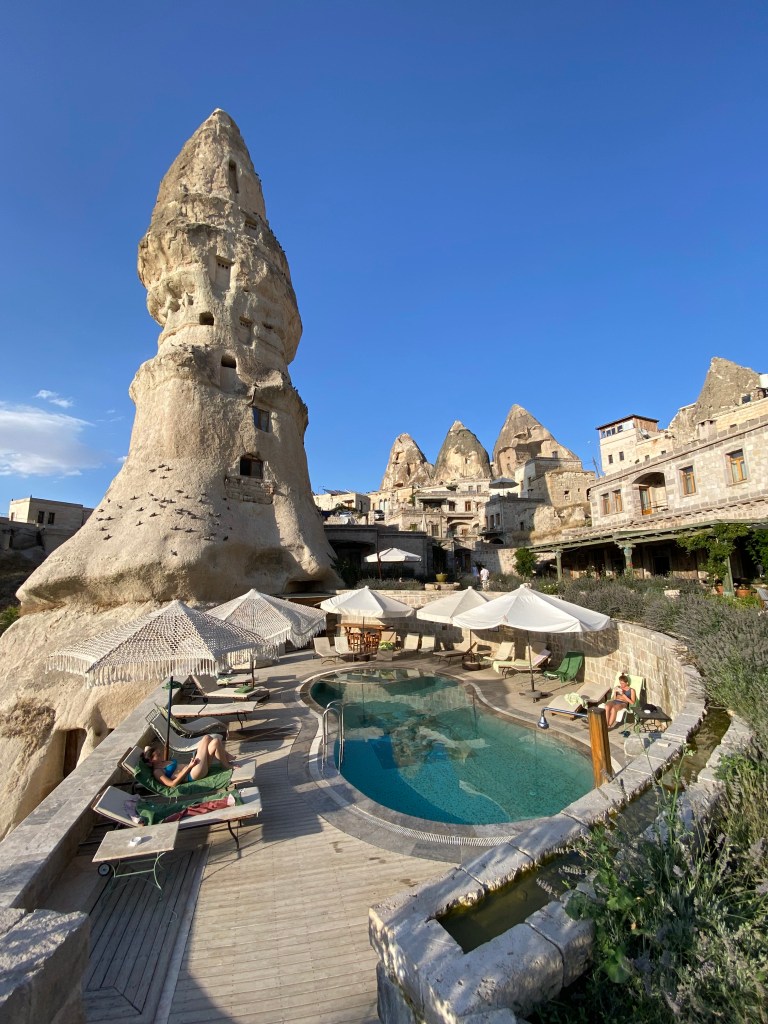
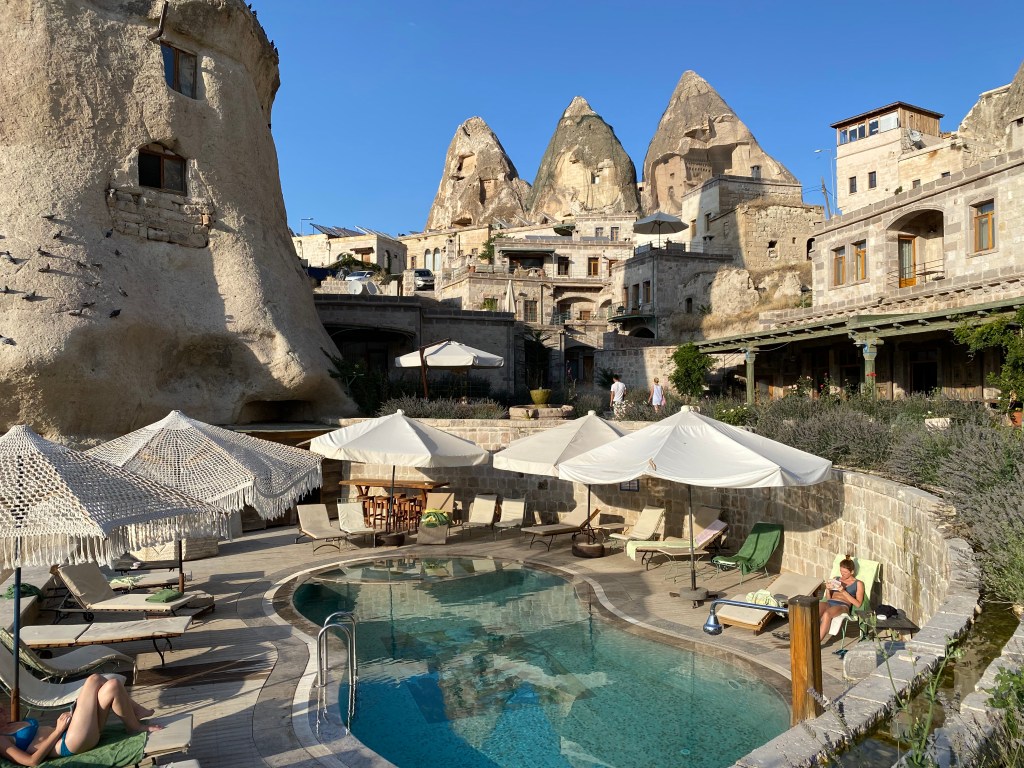
It was hot. There was a pool.
Maybe the coolest pool we’ve experienced?
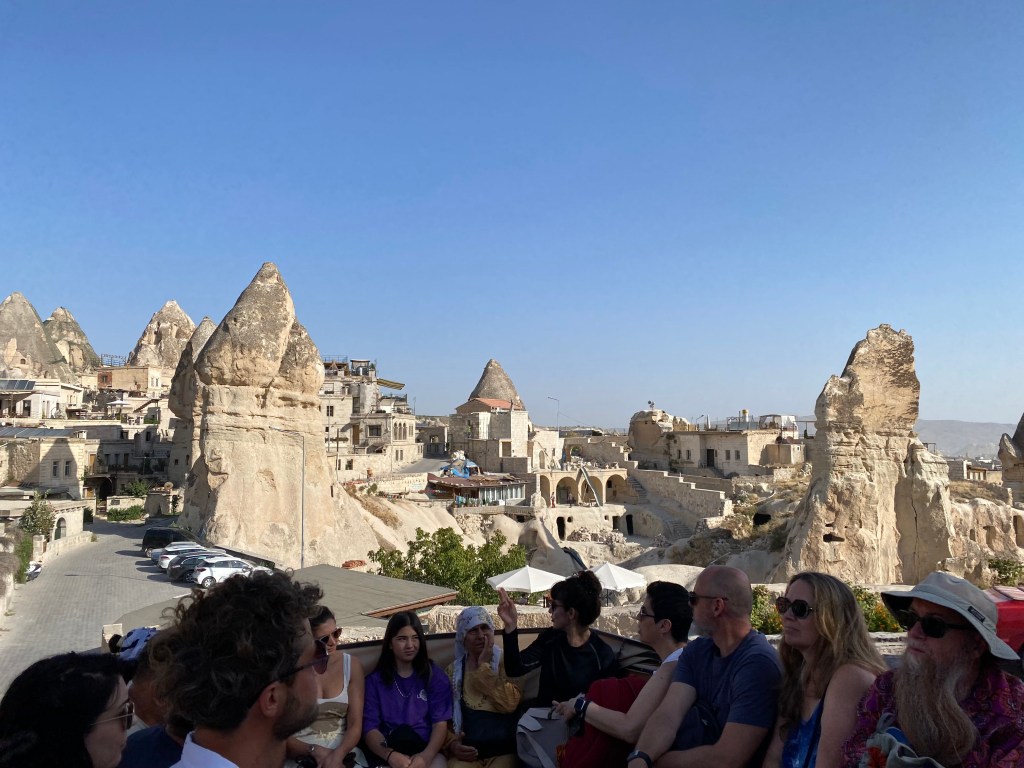
A little wagon ride down into the valley below Göreme for a farm breakfast.
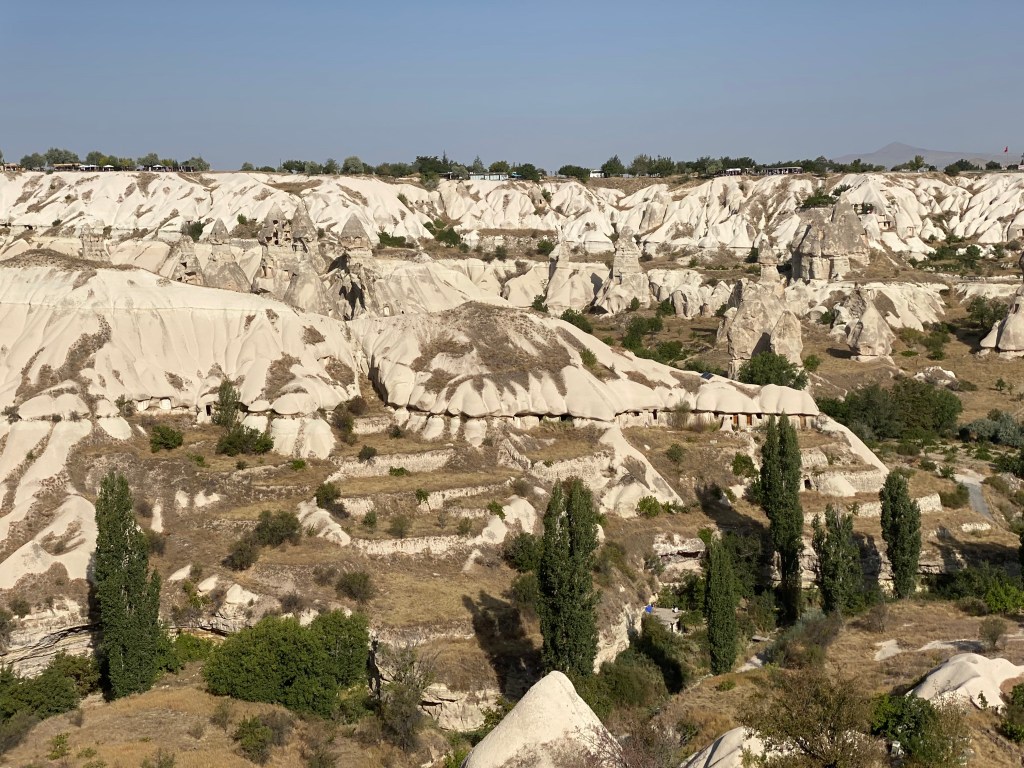
Another nearby valley on the way. Although some of the holes in the fairy chimneys are homes, most are little caves carved out to allow pigeons to roost. And then collect the shit for fertilizer. Which is pretty effective and brilliant, frankly.
Our ride. And Uçhisar in the distance.
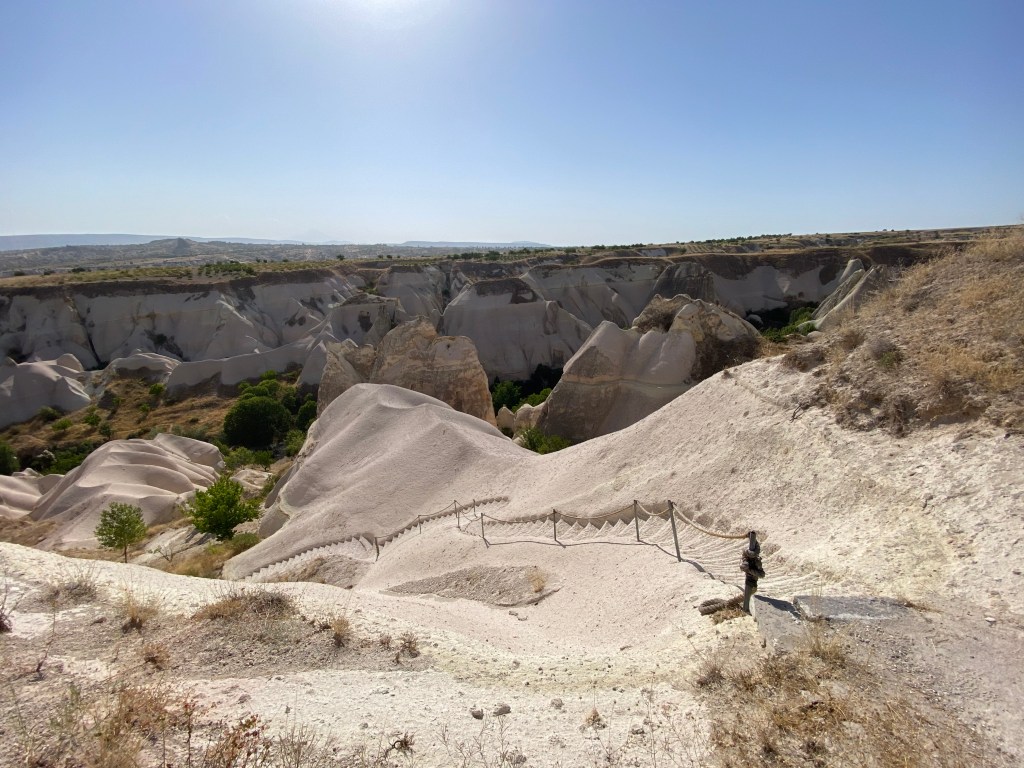
The carved steps to doom.
Or breakfast. Whichever.
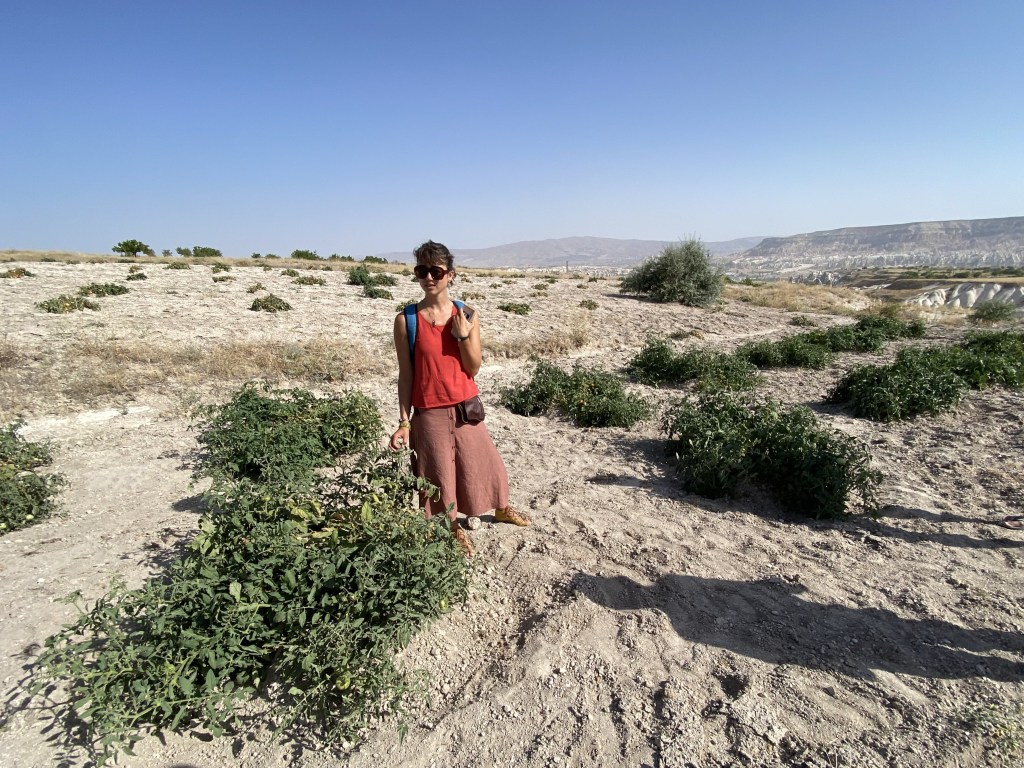
A brief tutorial on the arid garden supplying the farm.
And the farm itself, deep within the valley.
Breakfast underway.
We totally did not take pictures of the spread – which we very much should have, because it was pretty awesome. But we were so hungry we forewent all of that and just gorged. Sorry.
But here’s a carved and quite refined cave home within the tuff:
Farm infrastructure, also carved into the soft rock:
Uçhisar in the distance on the way back. (We’ll have full coverage of that outrageous outcrop in a future post – trust us.)
The terrace of our cave hotel, which is the most popular perch to perceive. . .
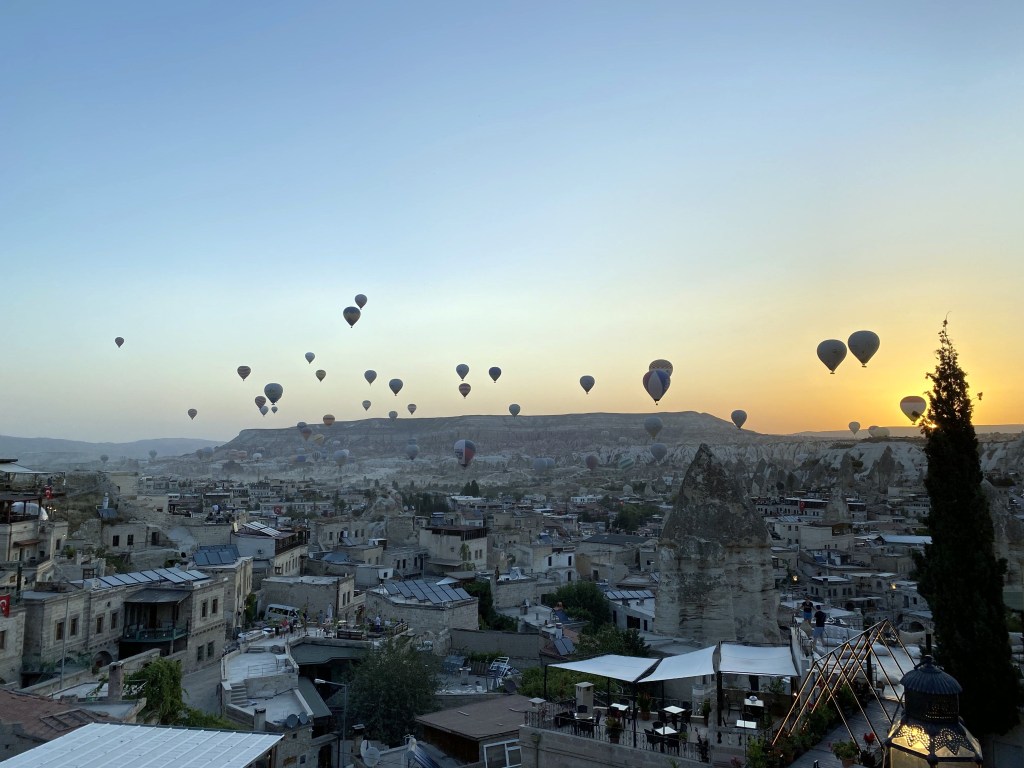
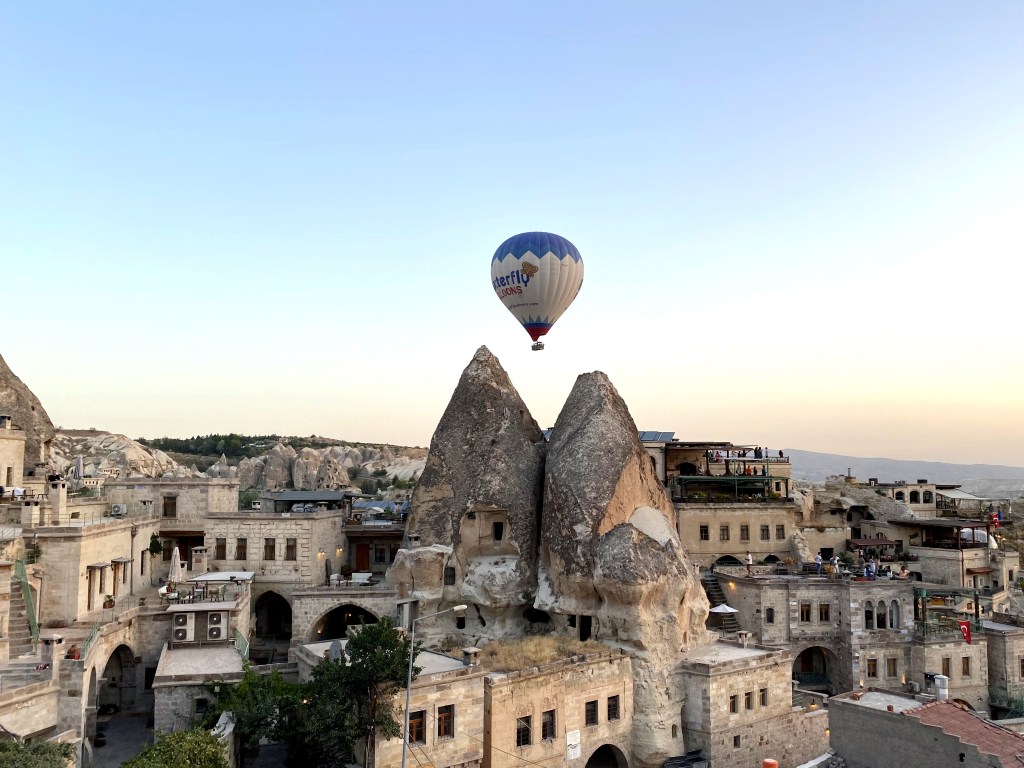
This! Every morning! Scores (hundreds?) of balloons taking advantage of the dawn thermals over the valley.
We’ll get to experience it ourselves the next day. But that’s a different post.
Final night in Göreme (but definitely not in Cappadocia – freakin’ awesome place with lots to show).
Our final morning, we made a beeline to Topkapi Palace, hidden first behind an impressive set of exterior walls, through which one passes through the Imperial Gate:
And then another set of more modest interior ones, entered through the Gate of Salutation:
The grounds offered a cool oasis to the stone-clad urban environment outside the walls.
The Library of Sultan Ahmmed III, a prime example of 18th-century Ottoman architecture.
The 15th-century Audience Hall
A fragment of Piri Reis’ intriguing and controversial 1513 map, which includes remarkably accurate depictions of the Caribbean and South American coast, despite the map’s creation just 3 decades after Columbus discovered America.
A view of the Golden Horn from the Iftar Pavilion:
The Yerevan Kiosk – a pavilion fronted by a fountain meant for religious retreat.
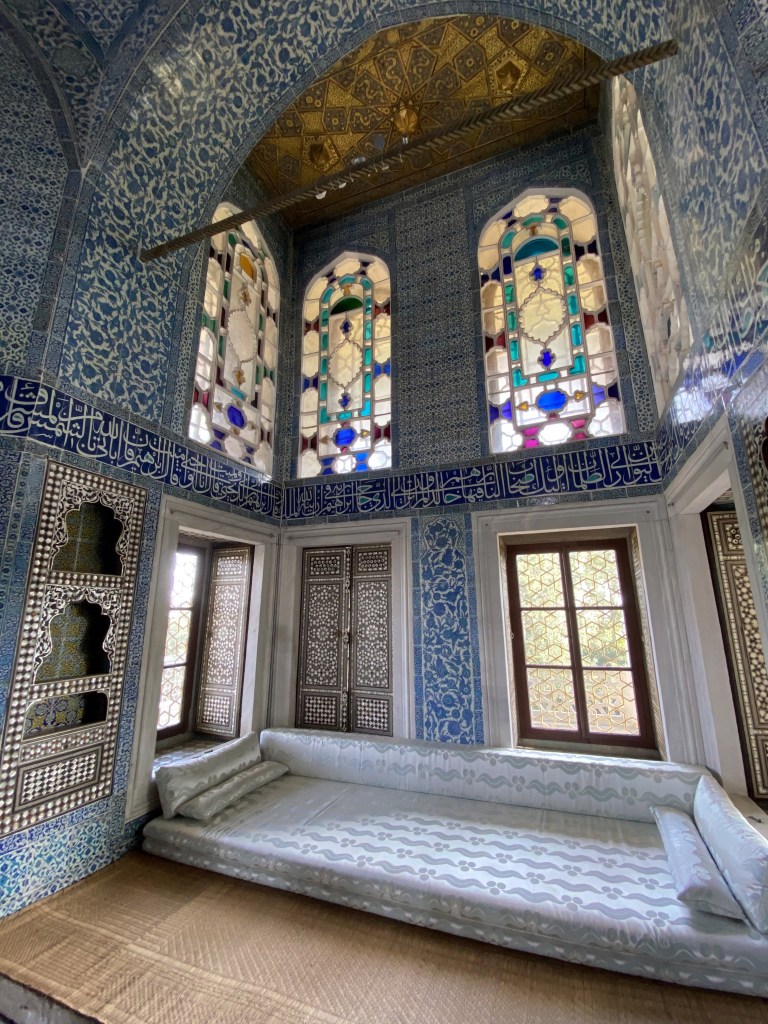
The Baghdad Kiosk built circa 1638 to commemorate the Baghdad Campaign of Murad IV.
Its interior is meant to depict an ideal Ottoman room.
Which apparently required a huge couch.
And some attendance, natch.
The palace’s Imperial Council Hall, with the Tower of Justice atop. Originally built in the late 15th century and restored in the 17th after a harem fire, the Imperial Council, led by the Grand Vizier, met here.
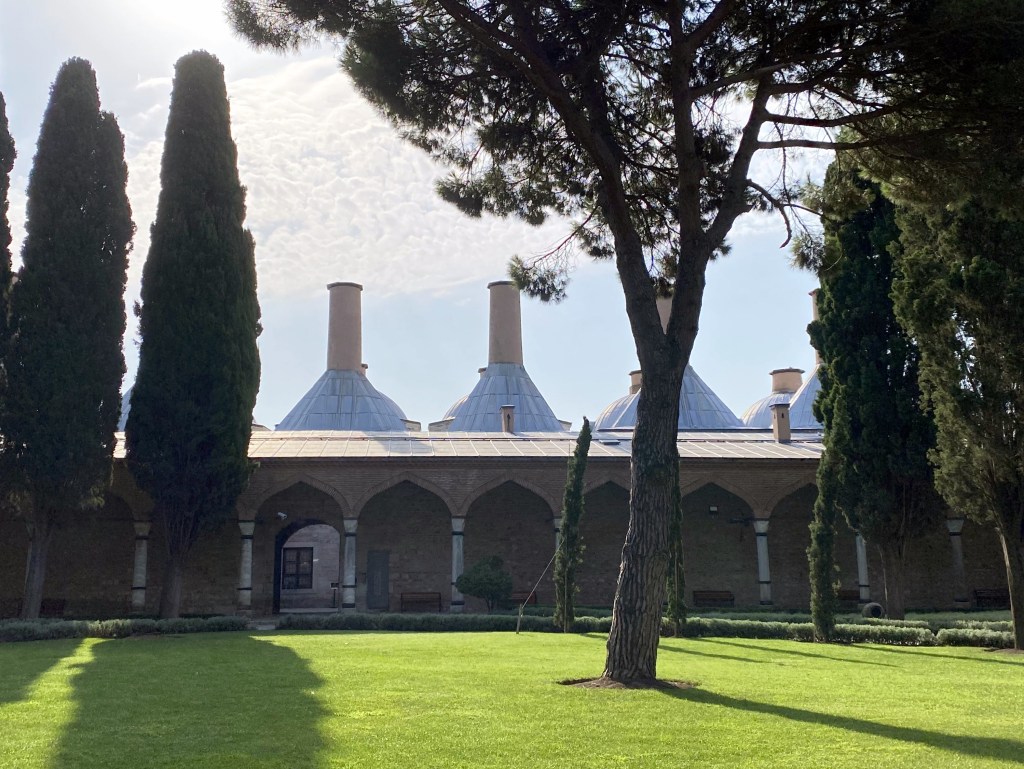
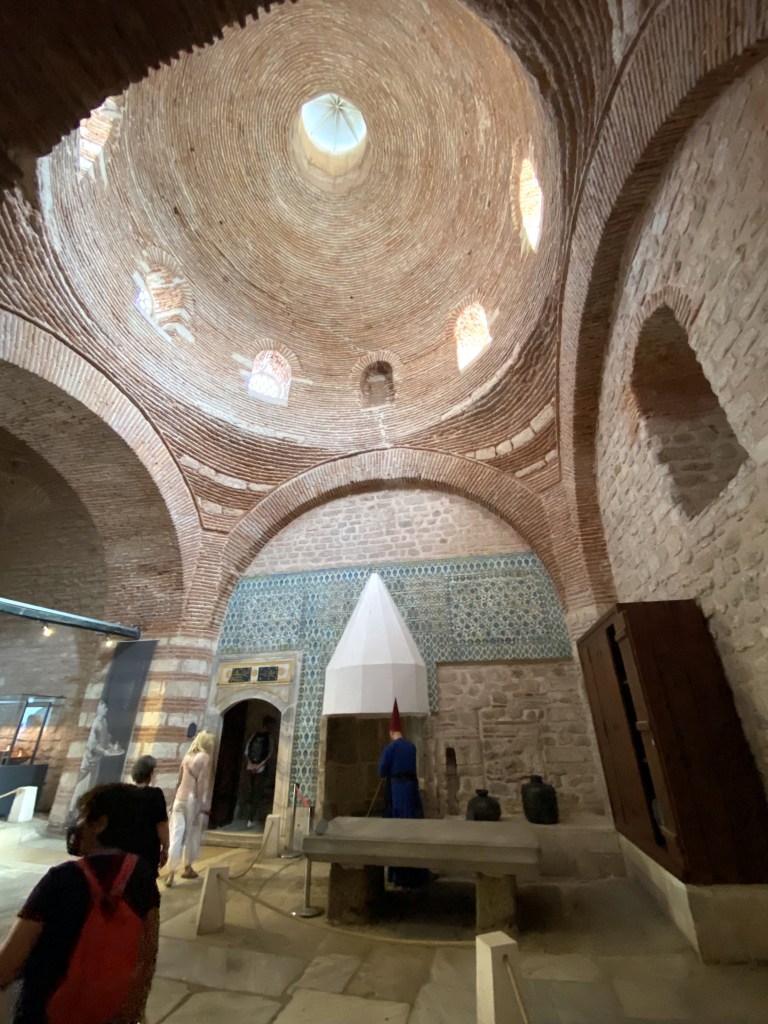
The palace kitchens – the largest in the Ottoman Empire, with a capability to feed 4000 people.
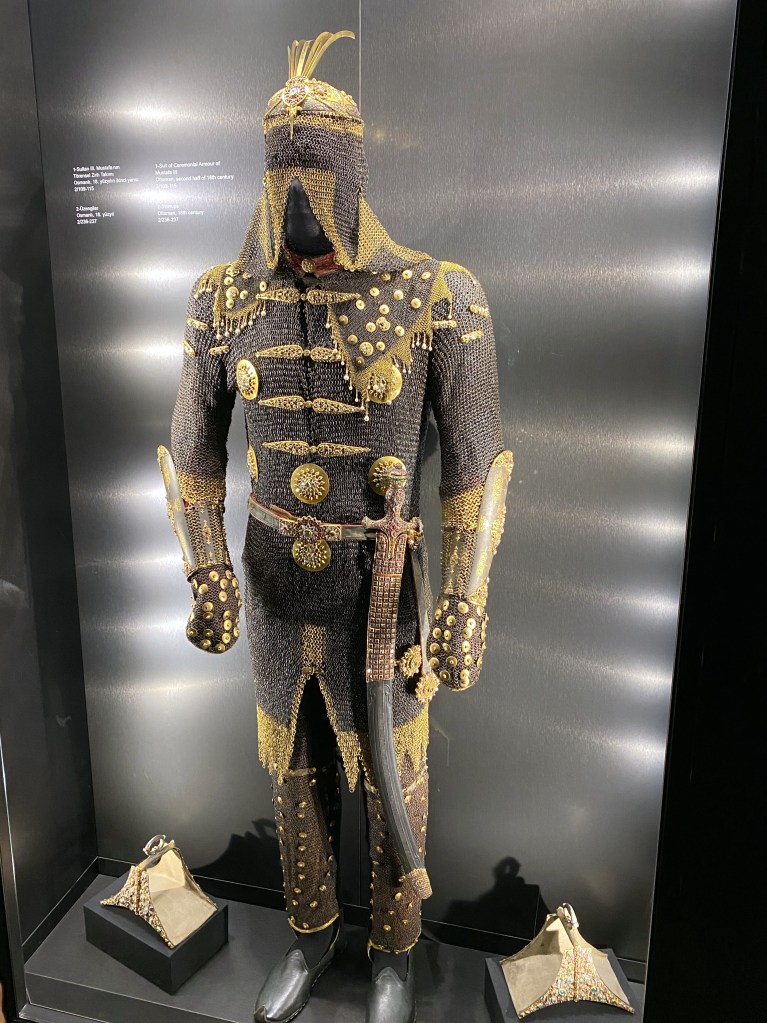
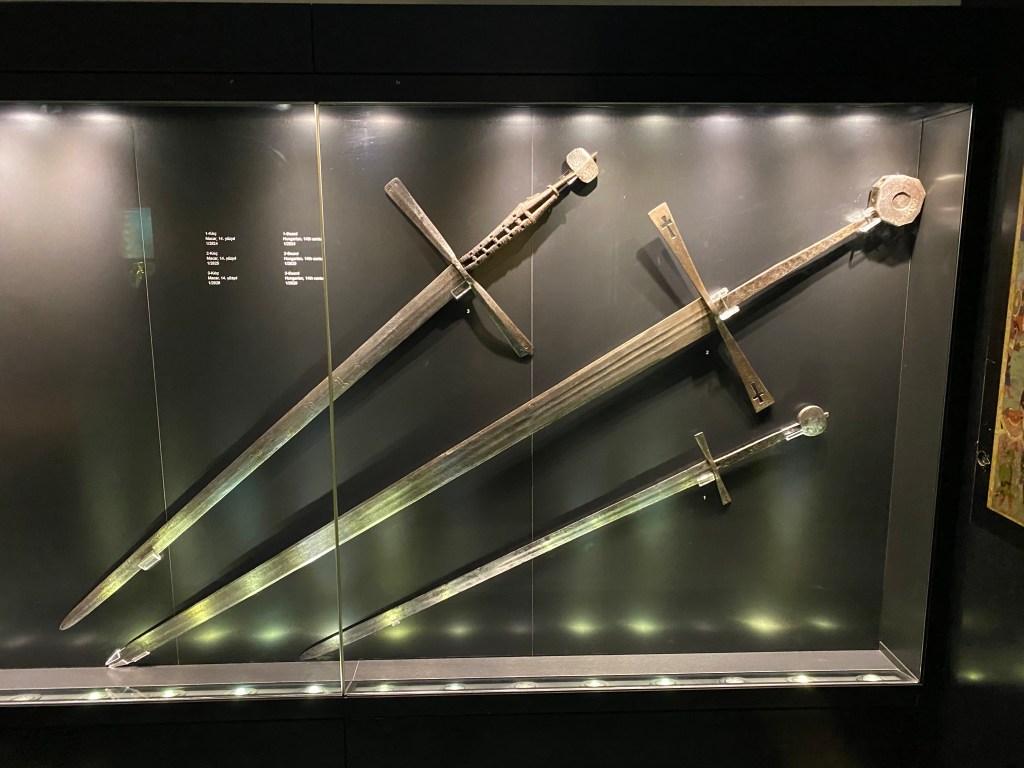
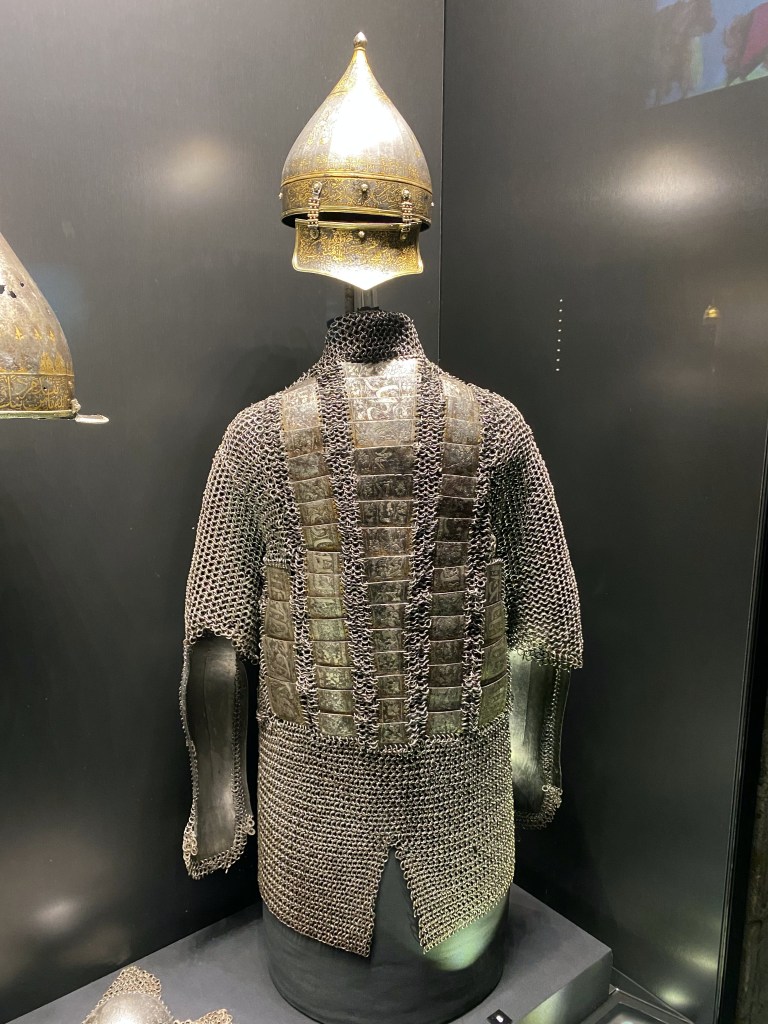
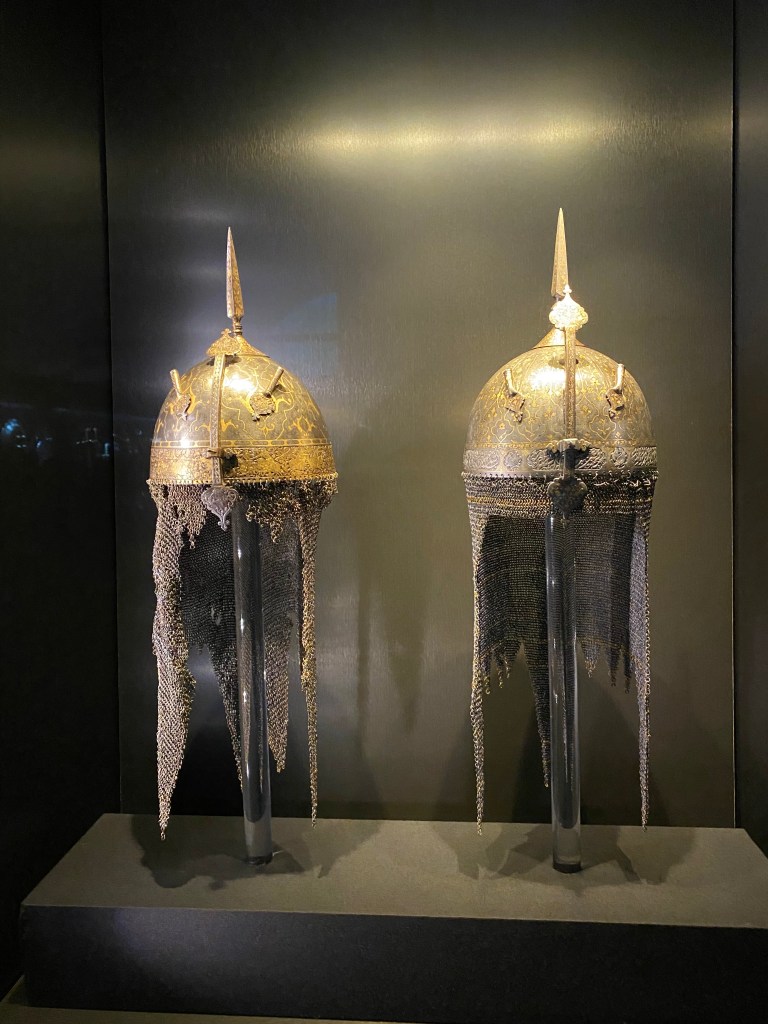
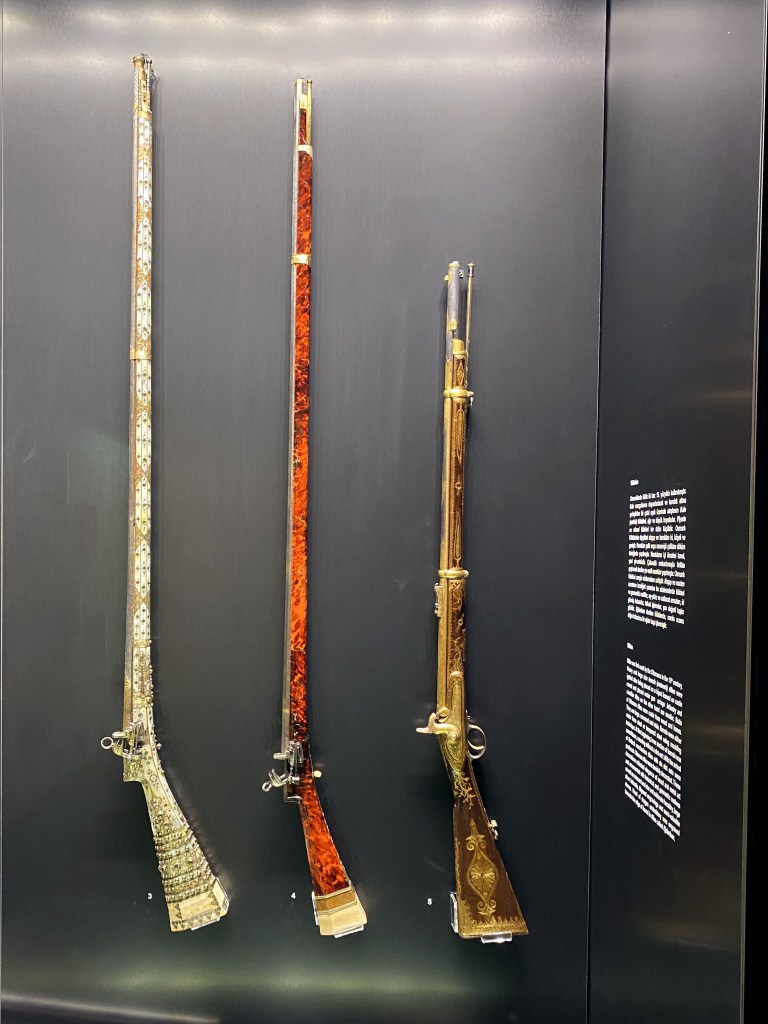
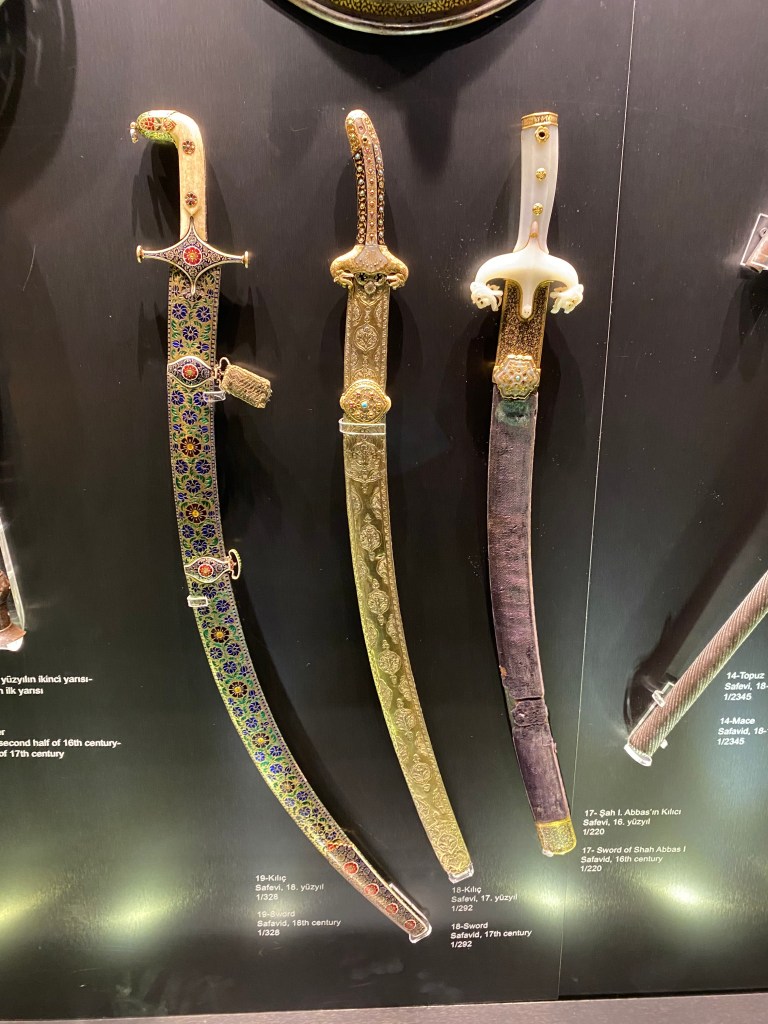
The palace museum, home to some pretty cool examples of Islamic arms and armor from the Ottoman period.
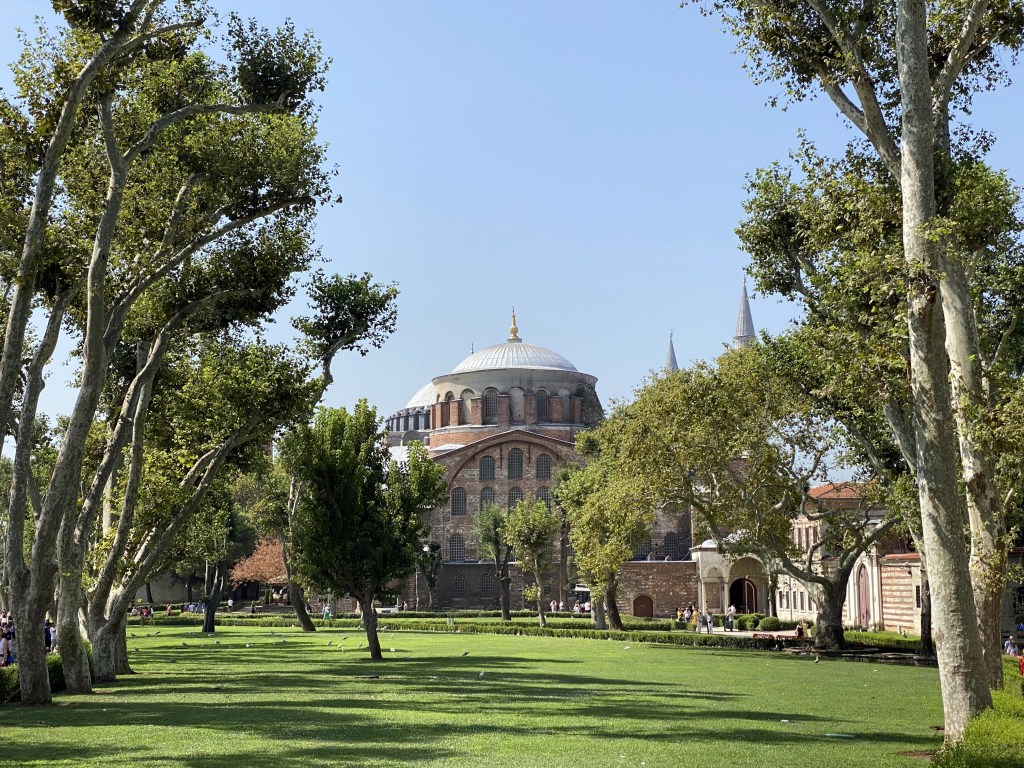
And, on the way out, but still on the grounds, the forlorn husk of Hagia Irene, Istanbul’s second largest church after Hagia Sophia. The Romans constructed a temple on this spot in the 4th century, but this wooden structure was superseded by a stone structure before this, too, was replaced by a much larger Byzantine basilica in the mid 500s after its predecessor was destroyed during the Nika riots of Justianian’s reign. (Hagia Sophia suffered a similar fate and Justinian had this rebuilt in grander fashion at the same time.)
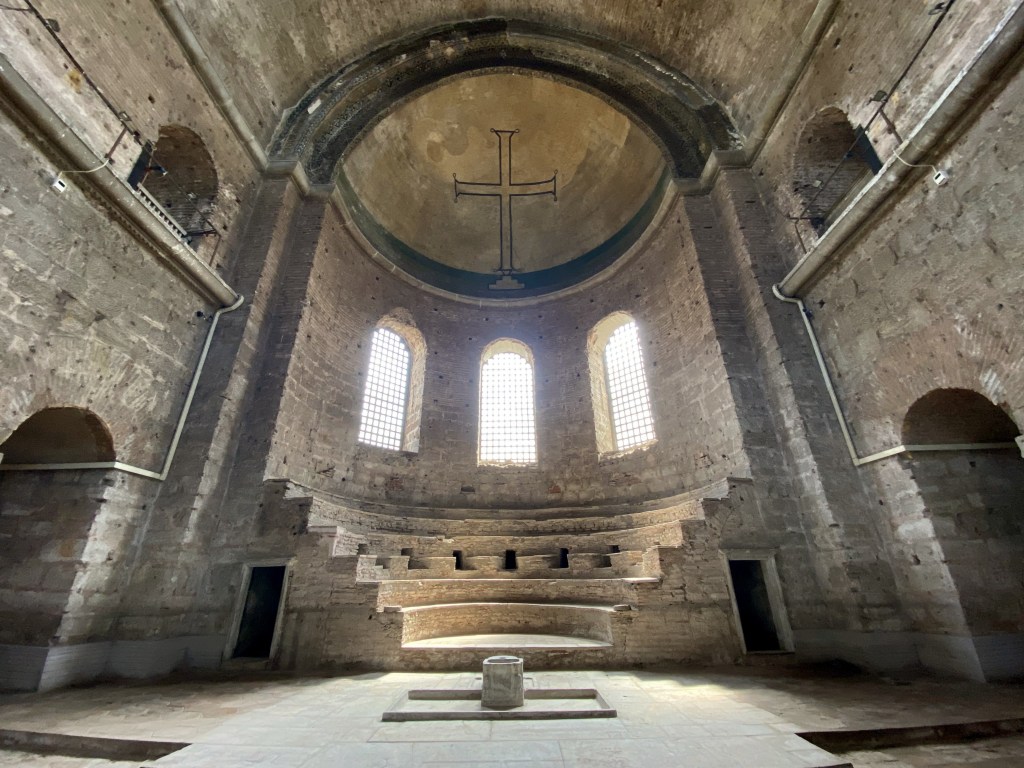
Unlike the typical Ottoman habit of turning churches into mosques, Hagia Irene was converted to a gun depot.
The cross mosaic in what may be an apse(?) – It was really hard to tell, and Byzantine churches had different layouts than Latin Christian churches, with their nave, transept, apse structure that wasn’t apparent here – was created during the reign of Leo III the Isaurian in the first half of the 8th century (we add this detail only so was can say “Leo the Isaurian” which has a vaguely Ghostbusters’ Gozer the Gozerian vibe to it).
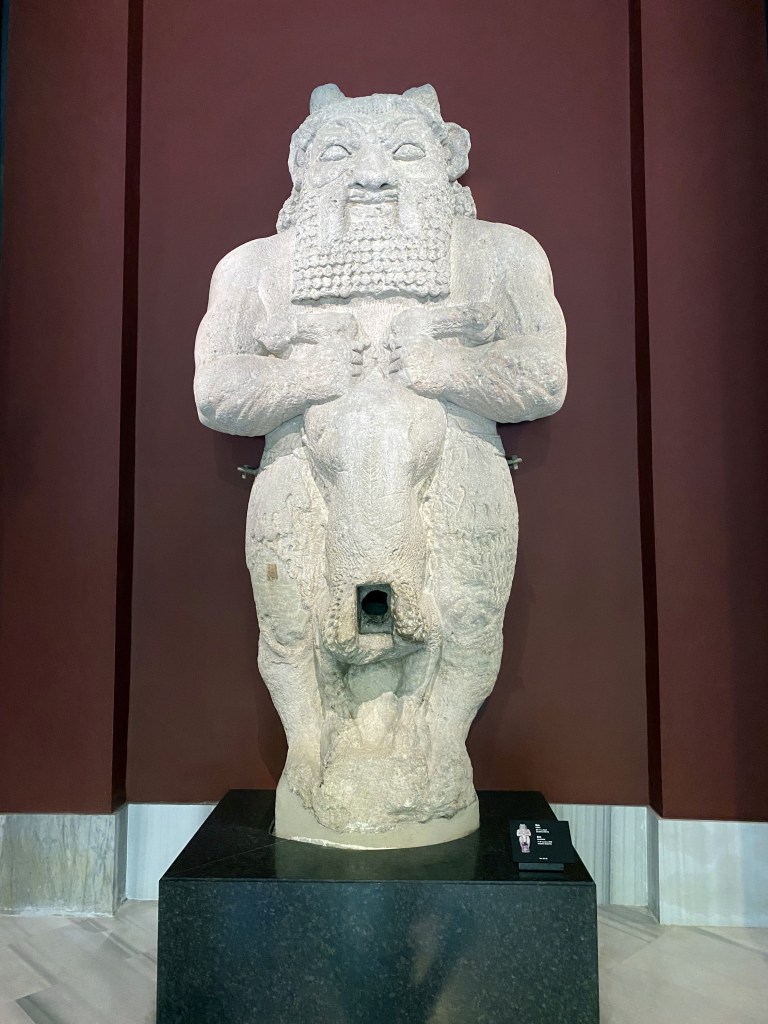
At the Istanbul Archeological Museum just a hundred yards downhill from Topkapi Palace an impressive (like 12 feet?) statue of the Egyptian god Bes, found on Cyprus where he was popular with the Phoenician colonizers.
Statue of Emperor Hadrian found on Crete, and shown squishing his conquered foe.
Reconstruction of the stratified layers of sequential building and destruction of Troy, located elsewhere in Turkey, but highlighted through a pretty impressive wing in the museum.
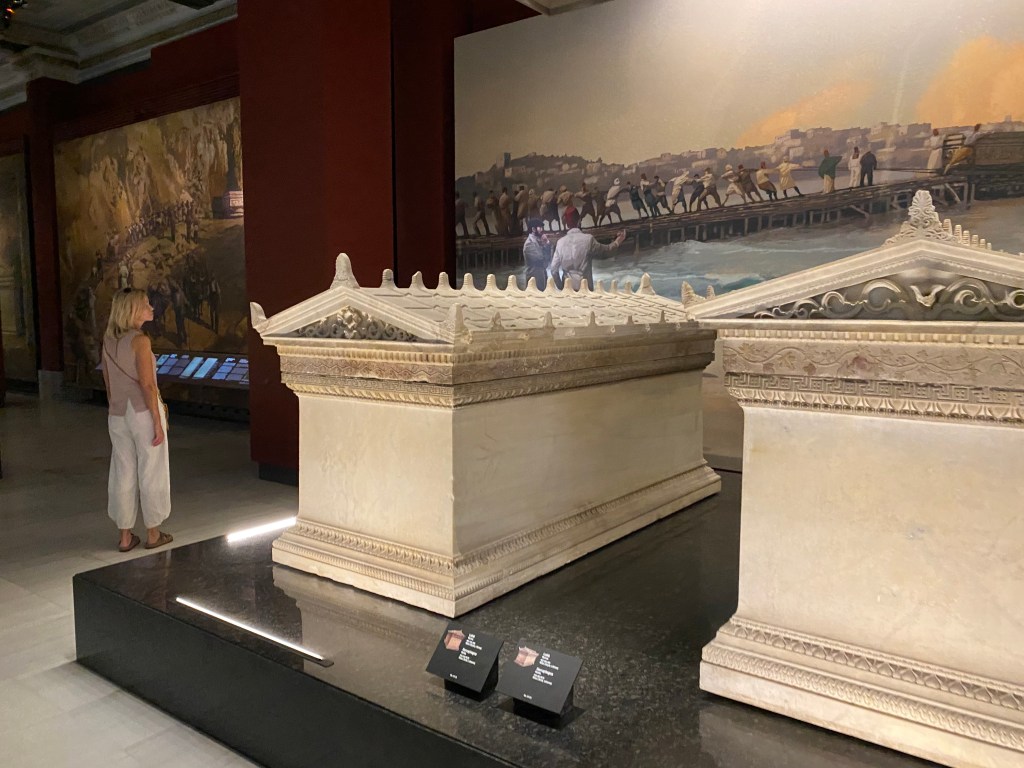
Some cool ancient Greek sarcophagi.
Even cooler Greco-Persian Sarcophagus of Sidamara – at 32 tons, the heaviest sarcaphogas ever found – from Anatolia.
After dinner drinks and snacks in ANOTHER cistern, this one converted into a really cool restaurant.
Which featured live music – great end to our stay in Istanbul.
Next up: the cavernous (literally) cornucopia of Cappadocia!

























































































 WolfeStreetTravel