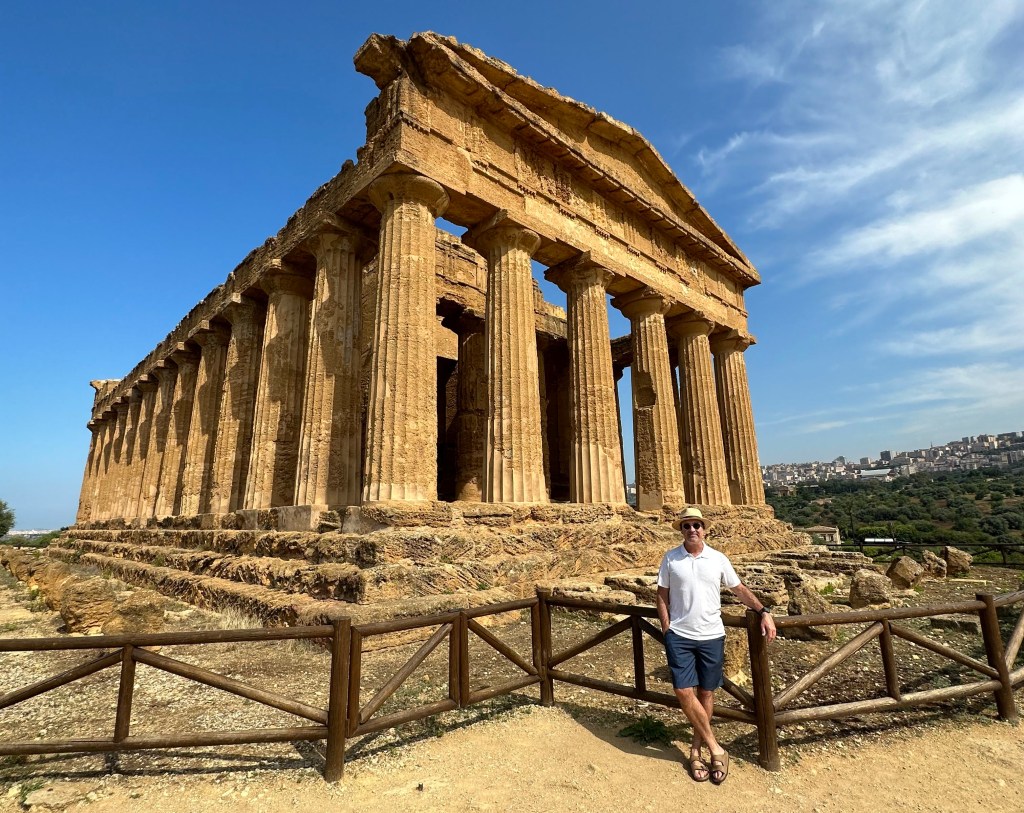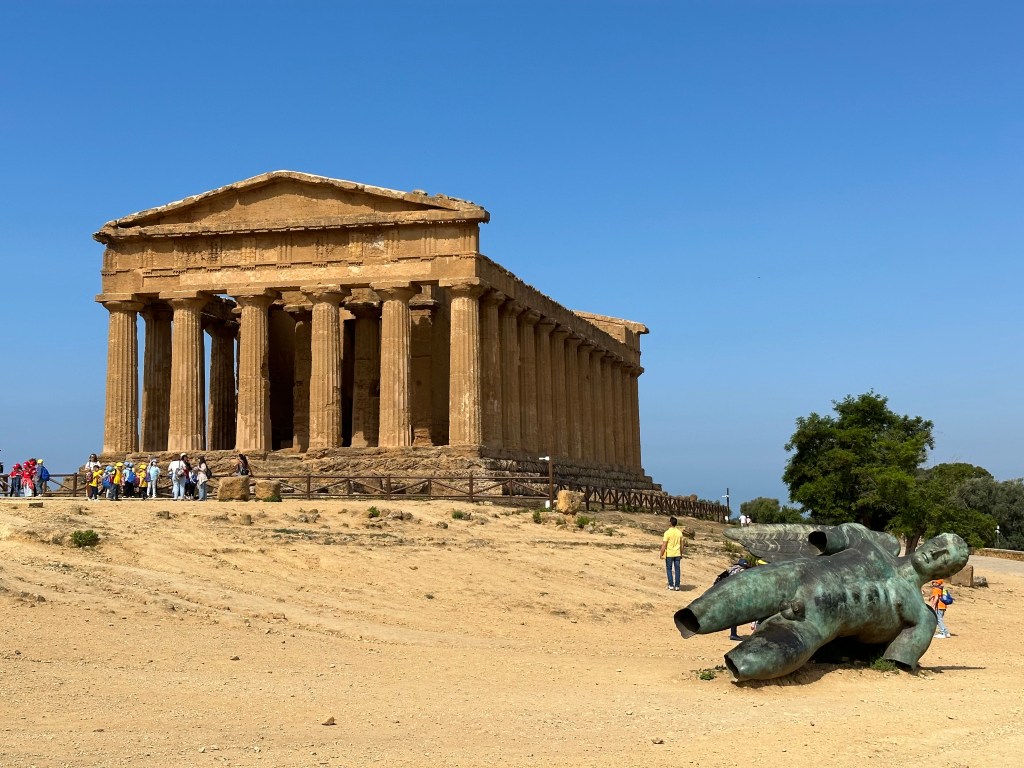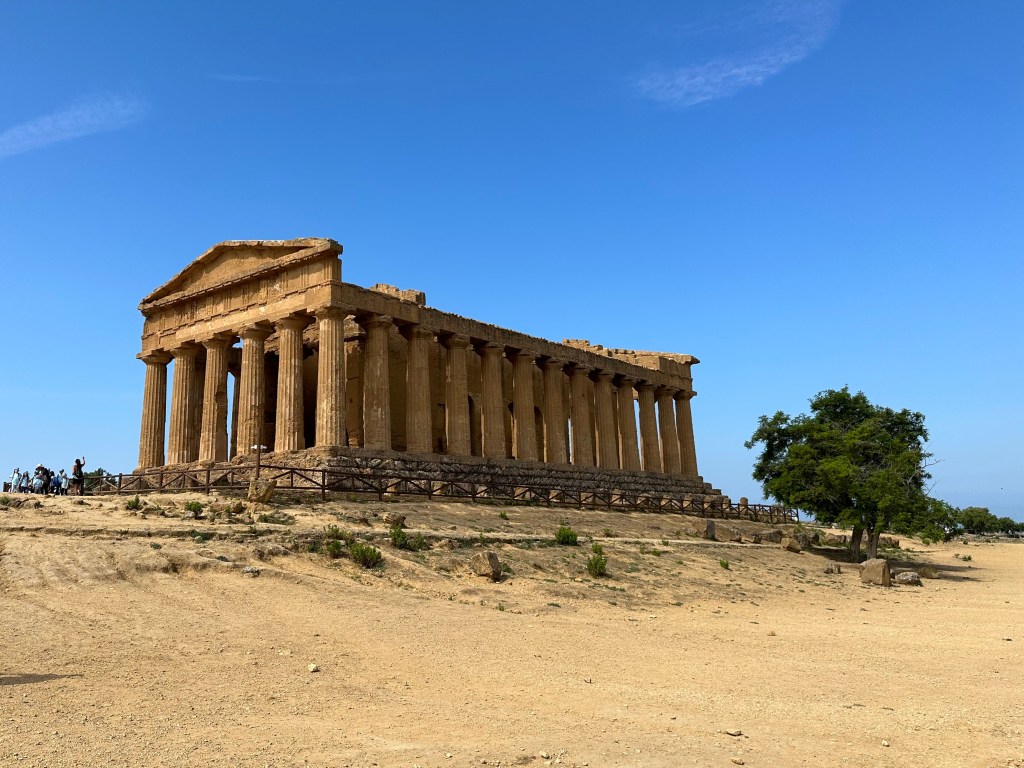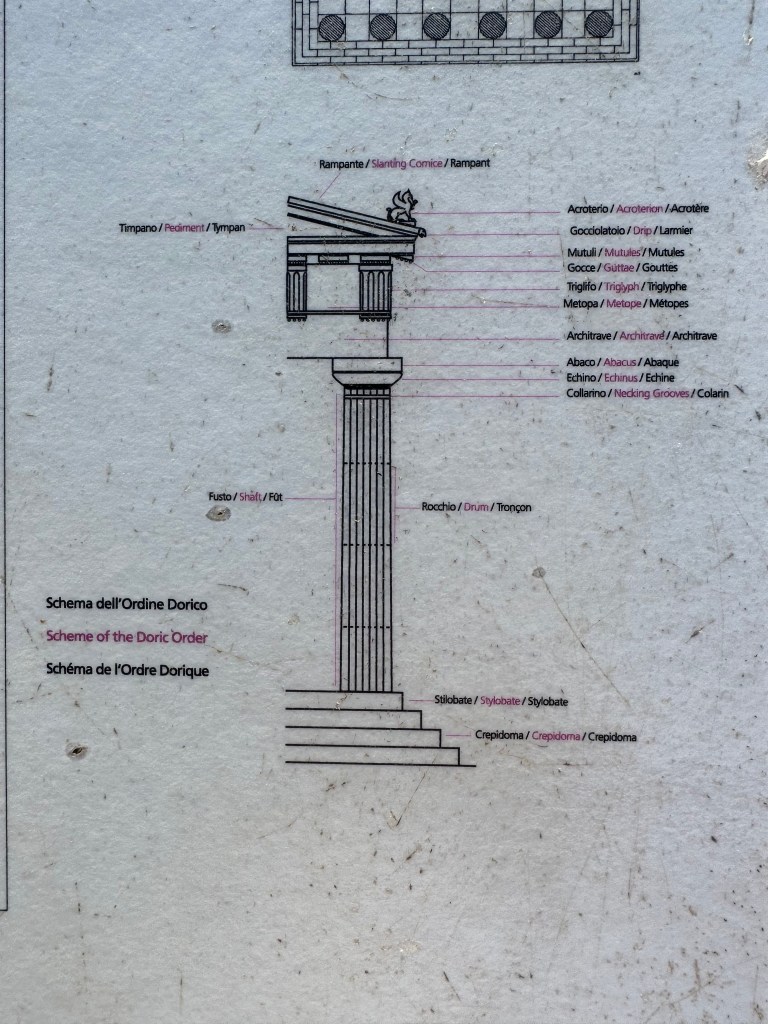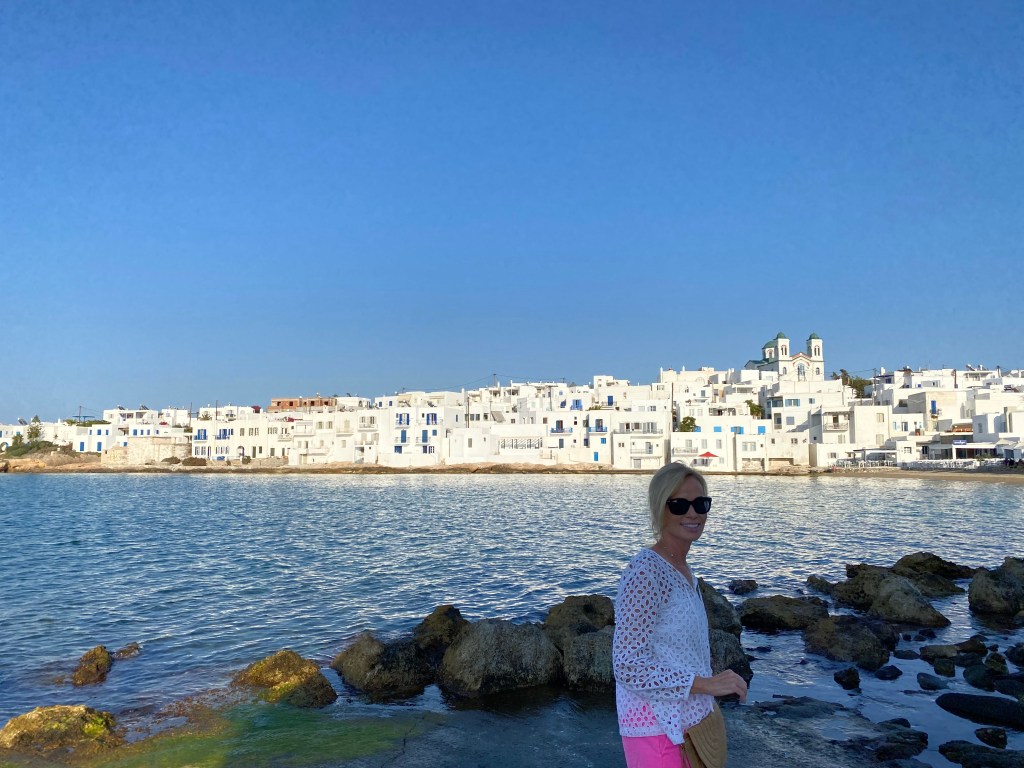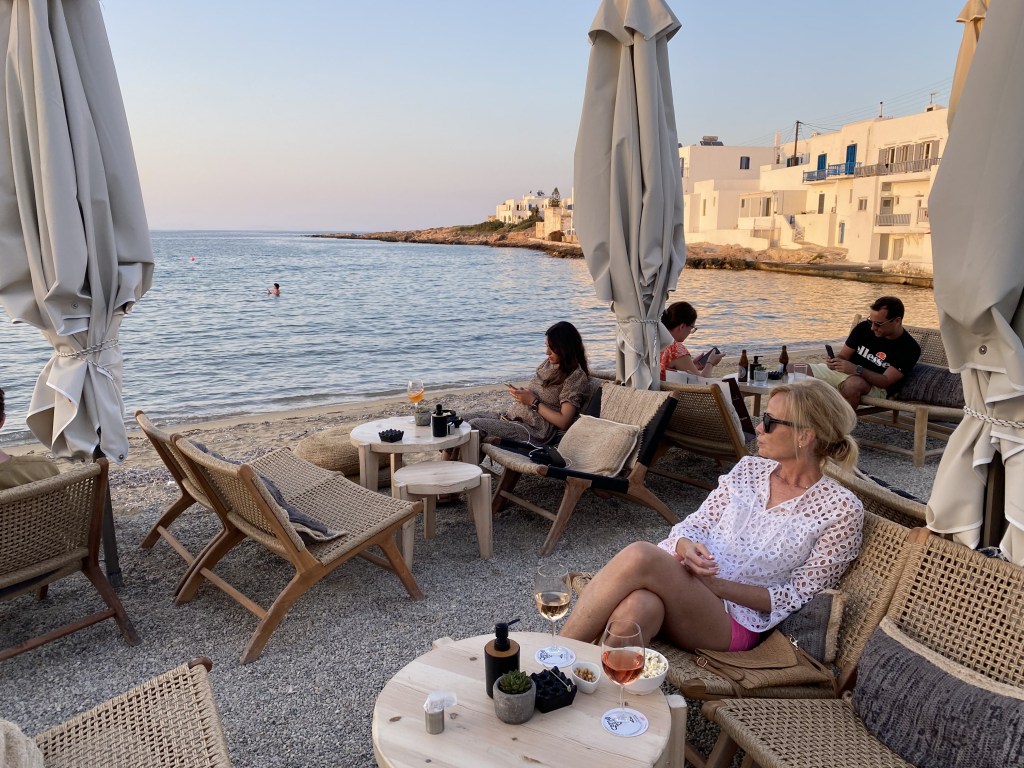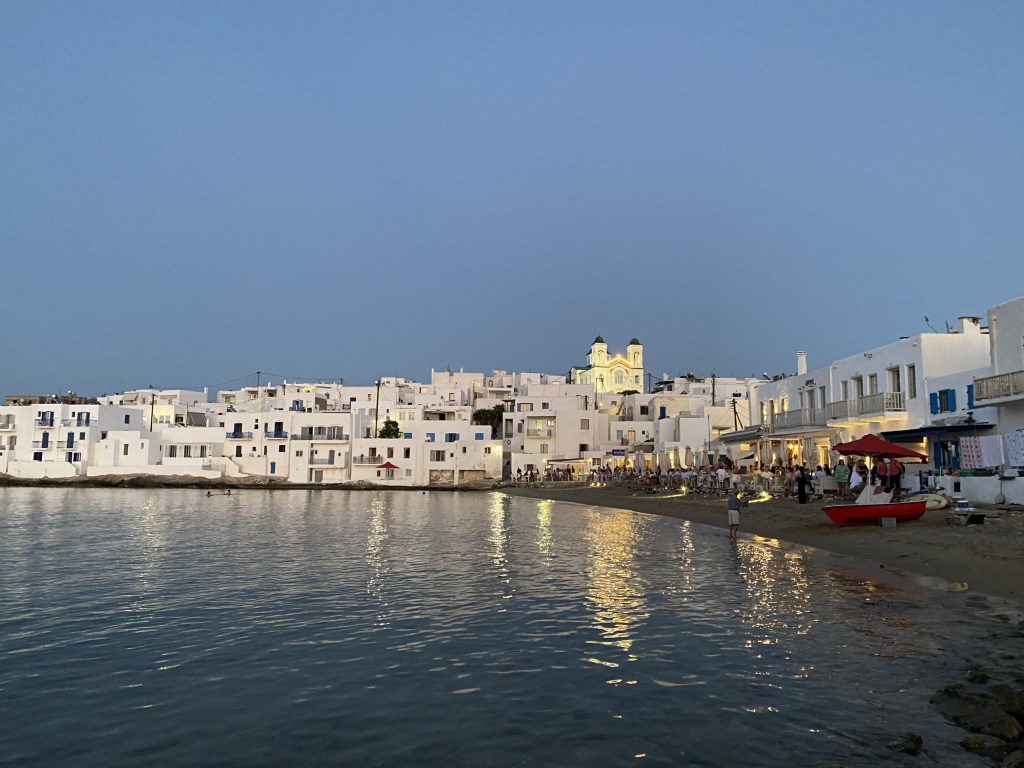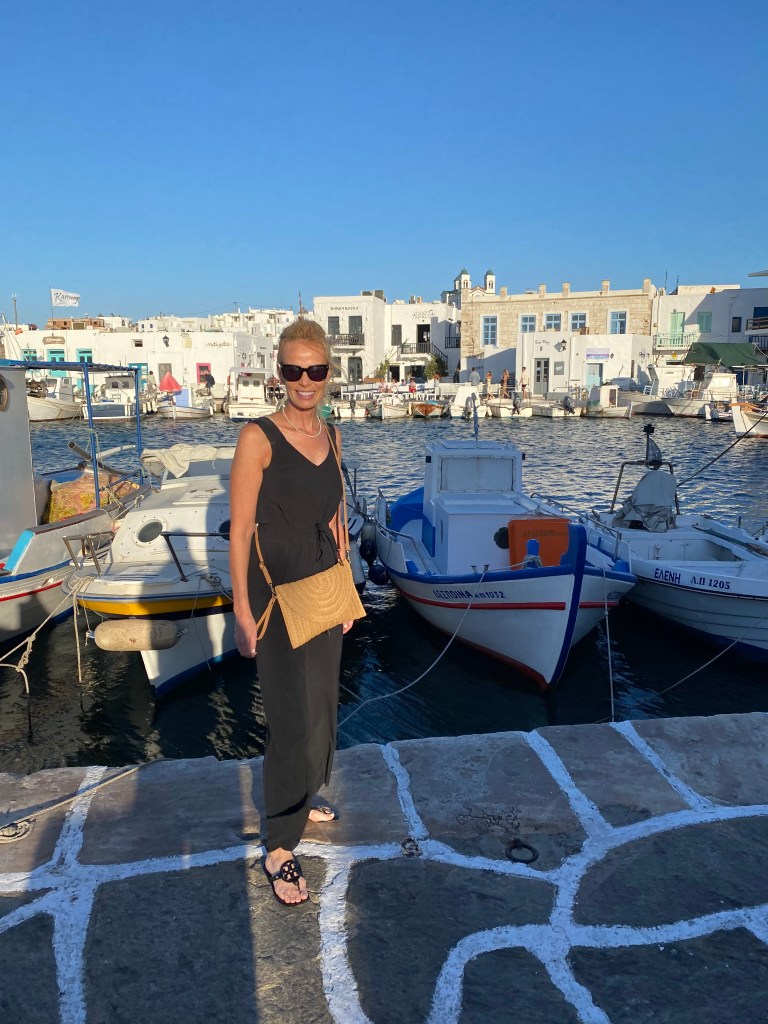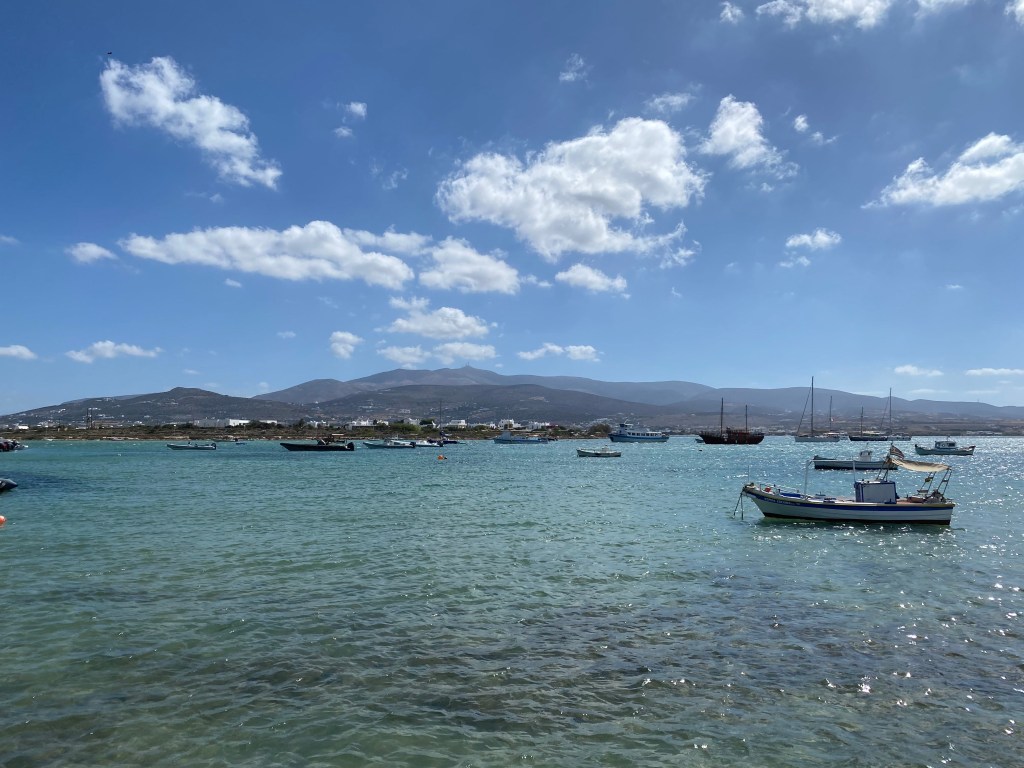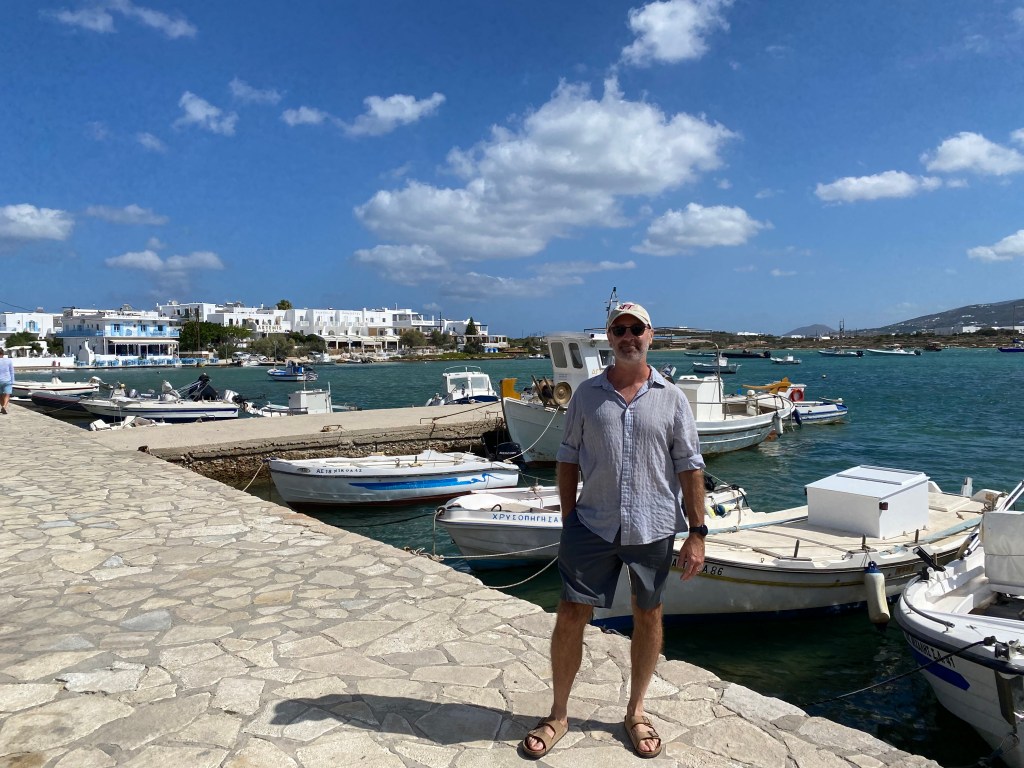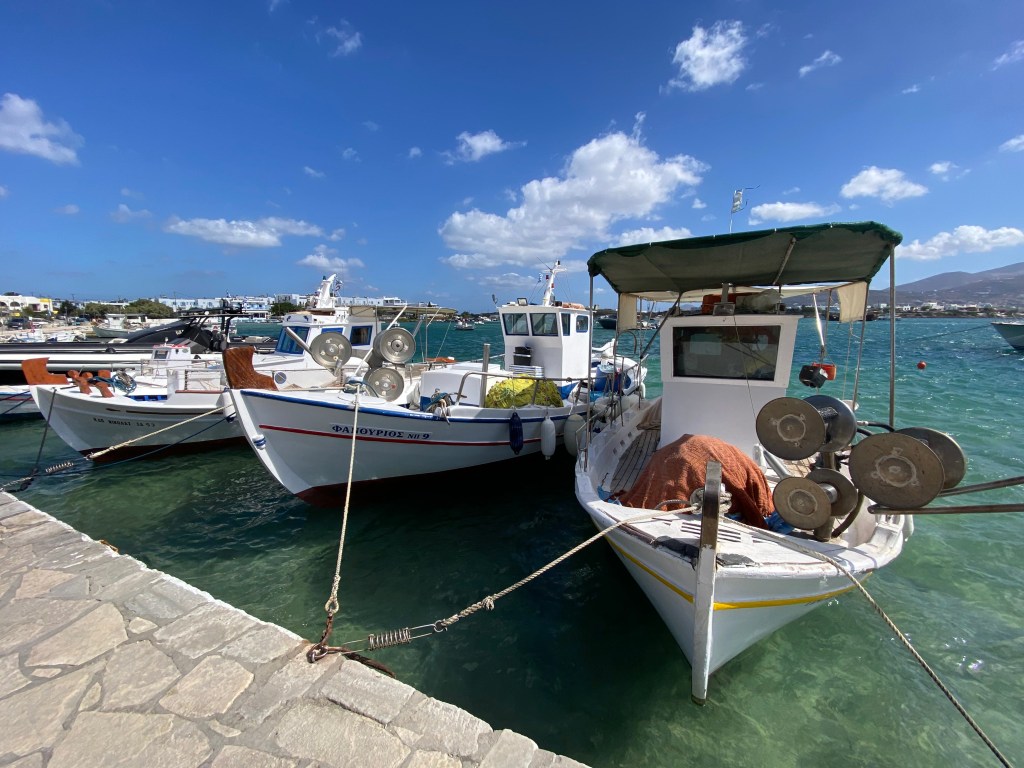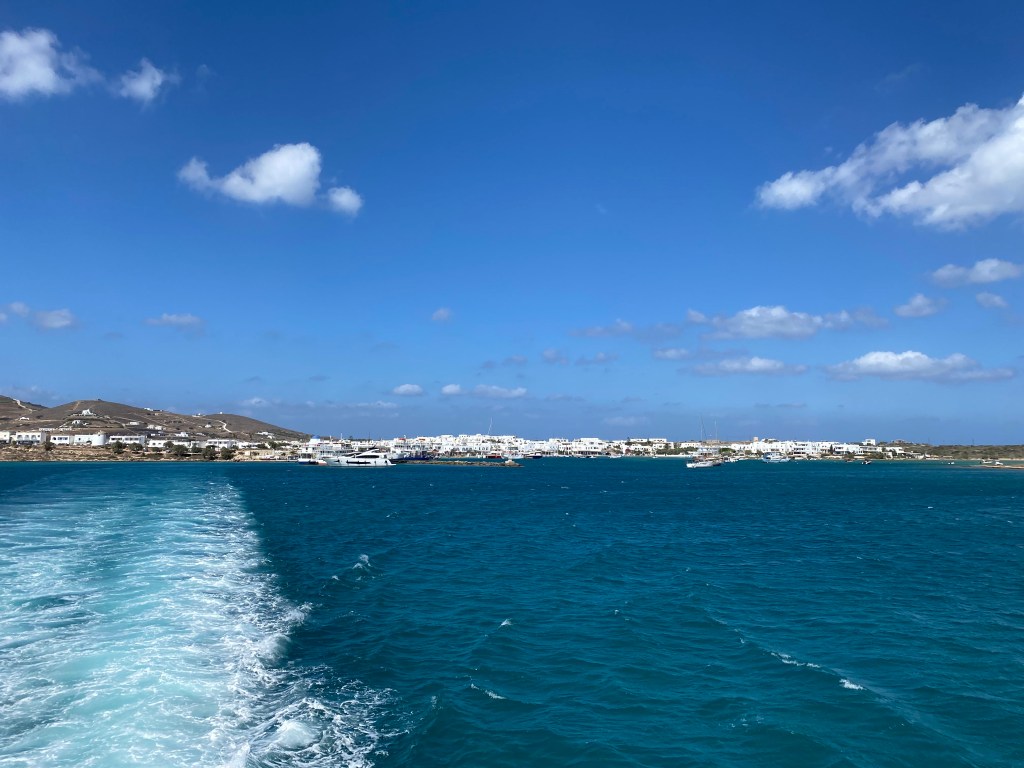
After our domestic forays earlier this year to the Pacific Northwest and Southwest and Maryland’s Eastern Shore, as well as a brief stint to country #82 in the Caribbean, we headed back to Europe for our latest trip.
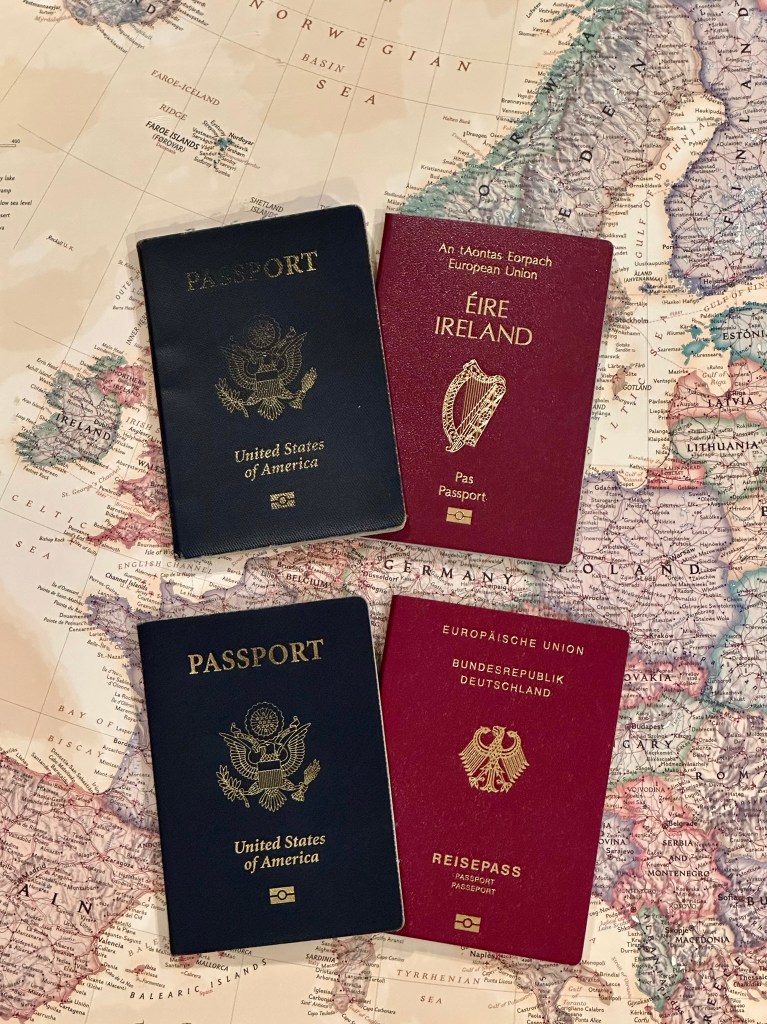
The first trip to Europe, as it happened, where both WolfeStreetTravelers passed through EU immigration using our EU passports:
We had two, segmented goals for this trip:
- Explore three towns in France that allegedly were comparable in some ways to our home town, Old Town Alexandria, and were therefore potential home base candidates in Europe
- Return Greece to visit more Cyclades islands, after fantastic trips to Santorini, Myconos, and Delos in 2017; and Paros in 2022.
Plus, as an added bonus, a little appendix to the Greek islands jaunt with a leg on the mainland to join the Seattles in checking out epic, millenia-old Orthodox monasteries perched on the clifftops of Meteora in northern Greece.
More South of France Leg
Our ongoing quest to locate a suitable home base in Europe has intensified, now that we also have Irish and German citizenship and can stay / reside in Europe without time restrictions. Home bases we’ve previously considered include Uzes in French Languedoc; Arles in French Provence (home to WolfeStreetTravel’s Gallic fountain avatar); Ronda in Spanish Andalusia; Lucca and Sienna in Italian Tuscany; and Rovinj in Croatian Istria. None of these fit the bill exactly (although Lucca, Ronda, and Rovinj are all high-scoring candidates that we’ll visit again [and already have, in the case of Rovinj]).
After quite a bit of consideration and research with our AI buddies, we targeted the South of France as the best place for us to continue our search – we wanted the southern European / Mediterranean lifestyle, cuisine, and architecture and France was more centrally located than Spain, Italy, or Croatia, the other Mediterranean candidates. We’d visited a couple of times before (for our first European trip [and first bike trip] in 2002, and then the Slow Roll in 2021), so we knew we’d like the area.
In evaluating potential South of France home base candidates for WolfeStreetTravel, we had several criteria (all of which reflected core characteristics of Old Town, Alexandria, the most charming and livable town in the world, as far as we’re concerned):
- Medium-sized (we don’t like big cities and prefer more accessible, less intimidating towns that nonetheless offer all of the attractions of their bigger cousins); the population of Alexandria is 160,000 and 12,000 live in Old Town
- Restaurant density that “punches above the town’s weight” in the parlance of one of our AI assistants; Old Town Alexandria is densely packed with restaurants due to the proximity to DC and now National Harbor in Maryland, with the associated tourists
- Close to a major transportation hub, to enable seamless travel to other European locations (this is also why Spain, Italy, and Croatia were less attractive candidates than France, which is more centrally located for travel to Portugal, Sweden, and Greece, for example, with relatively similar distances); Alexandria is 10 minutes from DCA and 40 minutes to IAD
- On a river or lake, providing both atmosphere and water-based activities; Alexandria’s Potomac riverfront plays a major role in our day-to-day at home
- Good running paths / routes; we run every day at home, and if we are going to spend extensive time in a European town, we want the same running access, so we don’t fatten up on wine and cheese
Using these criteria, we identified three towns in Provence: Aix-en-Provence, Sommieres, and Vienne. Aix has a reputation as a medium-sized vibrant and charming town very much like Old Town (albeit not on a water body) and both Sommieres and Vienne were located on the Rhone River. After further consideration, we dropped Sommieres from the list as too small, but then added Annency in France’s Savoy region, due to its canals and lakefront location, even though it wasn’t strictly in the Mediterranean cultural belt of the South of France. (We found out about Antibes, Cassis, and Menton on the French coast too late to be included in this evaluation, but Antibes, in particular, is now on our radar for future exploration.)
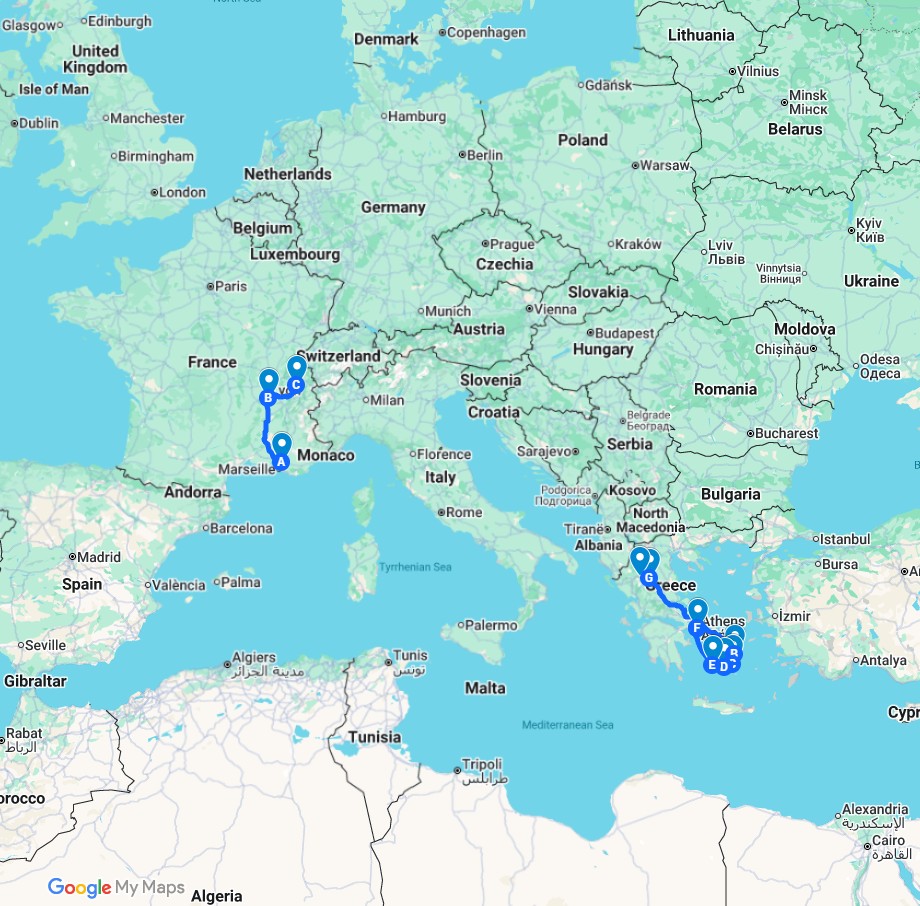
The final route for the French leg:
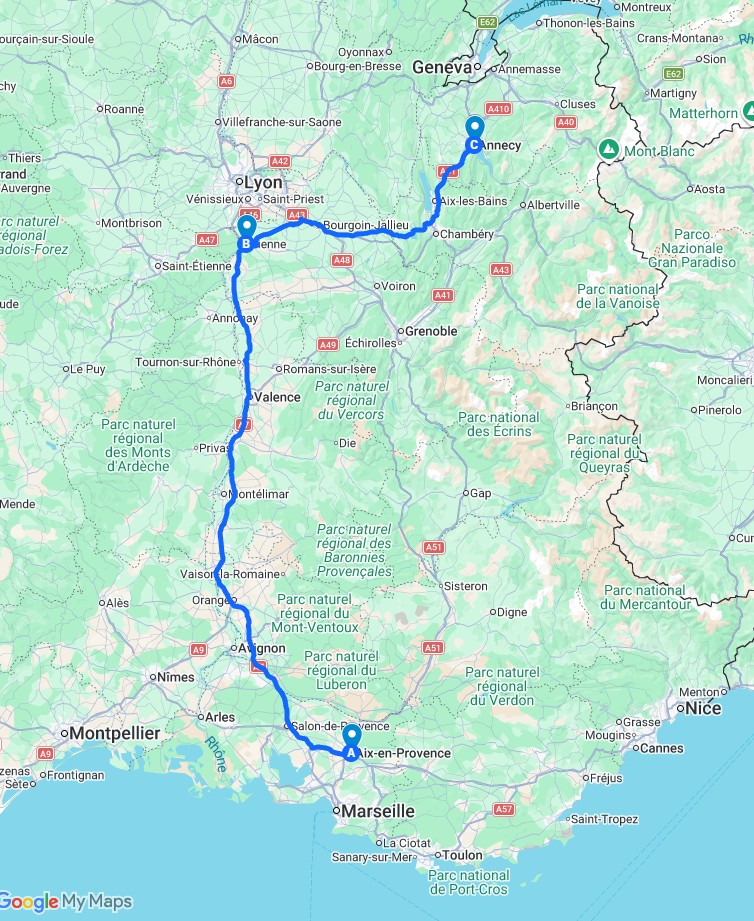
We’d fly into Marseille airport, grab a car, and spend 5 days in Aix, 1 day in Vienne (it seemed less and less appealing, the more we looked into it), and 4 days in Annecy.
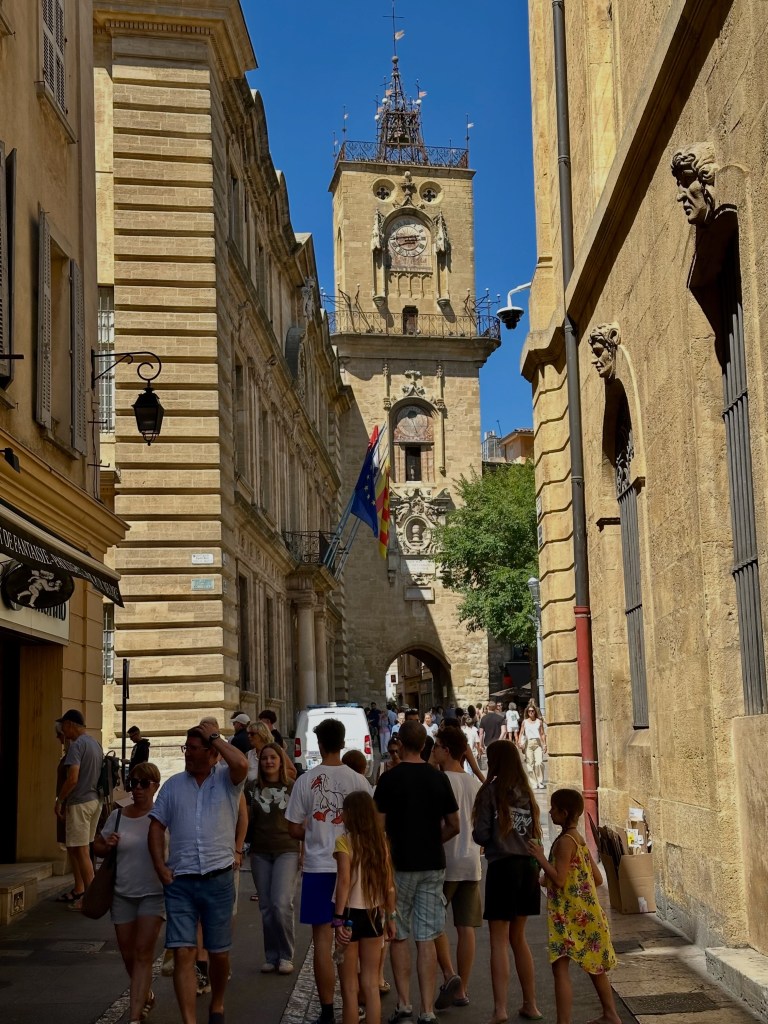
Aix-en-Provence was exactly as we envisioned, with honeyed limestone facades and an charming centre ville:
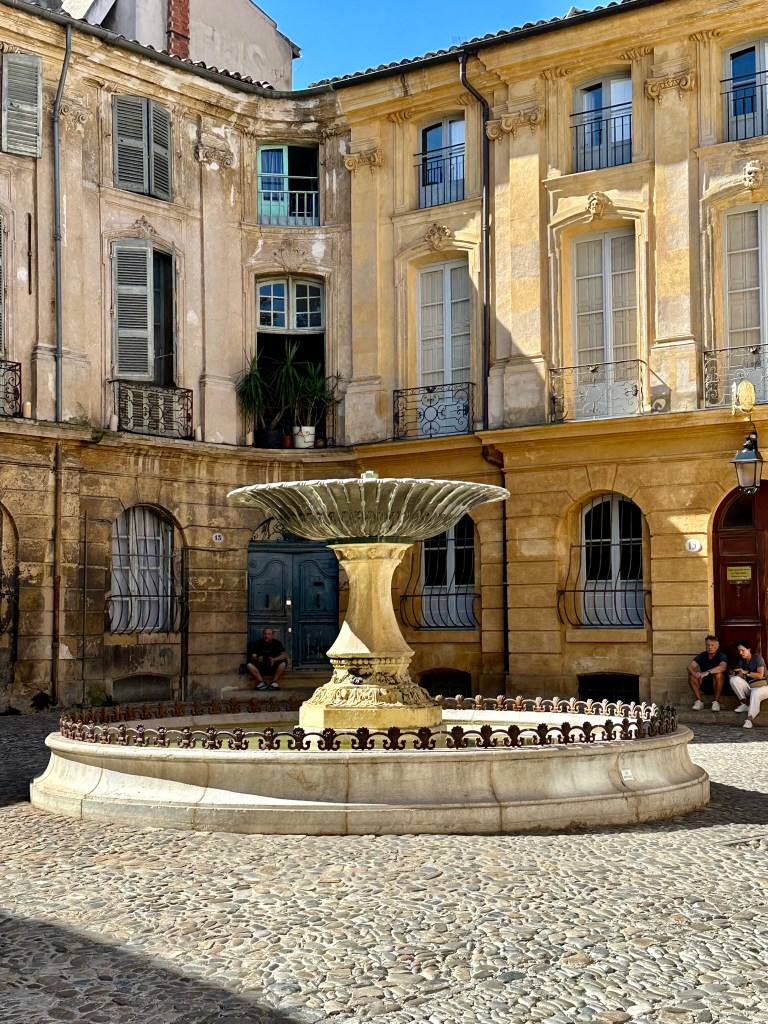
But, as the “city of fountains,” we were disappointed – an ongoing drought shut almost all of them down (and they were everywhere):
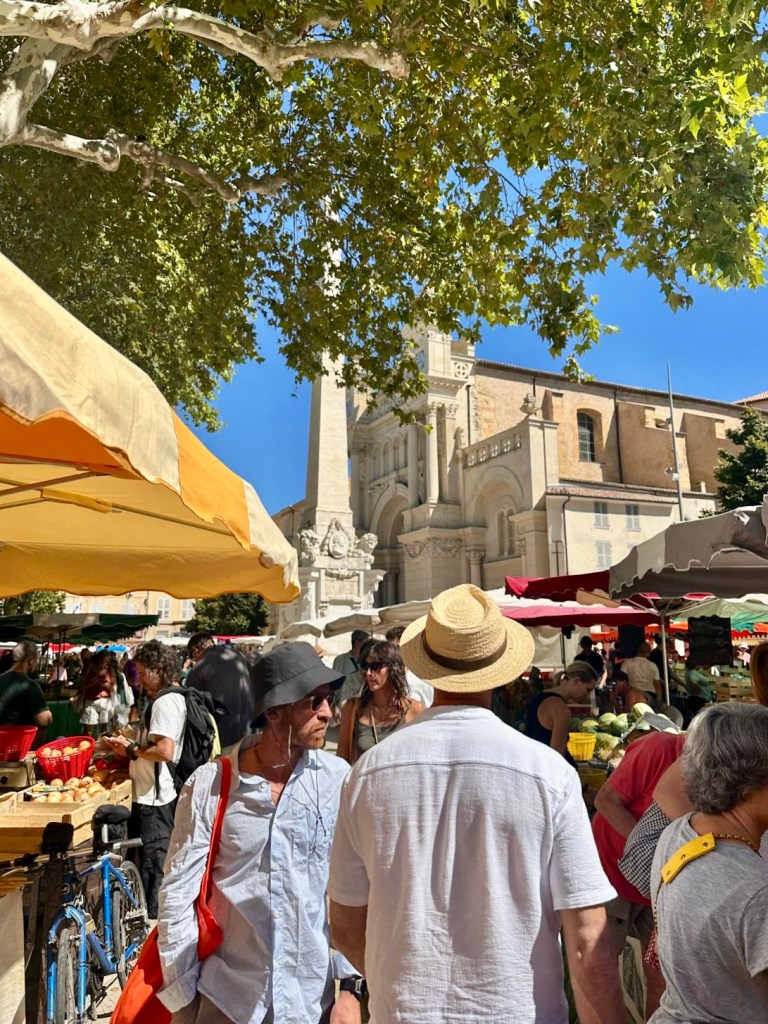
The big event during our stay was market day on Saturday. Half the town turned into a market place:
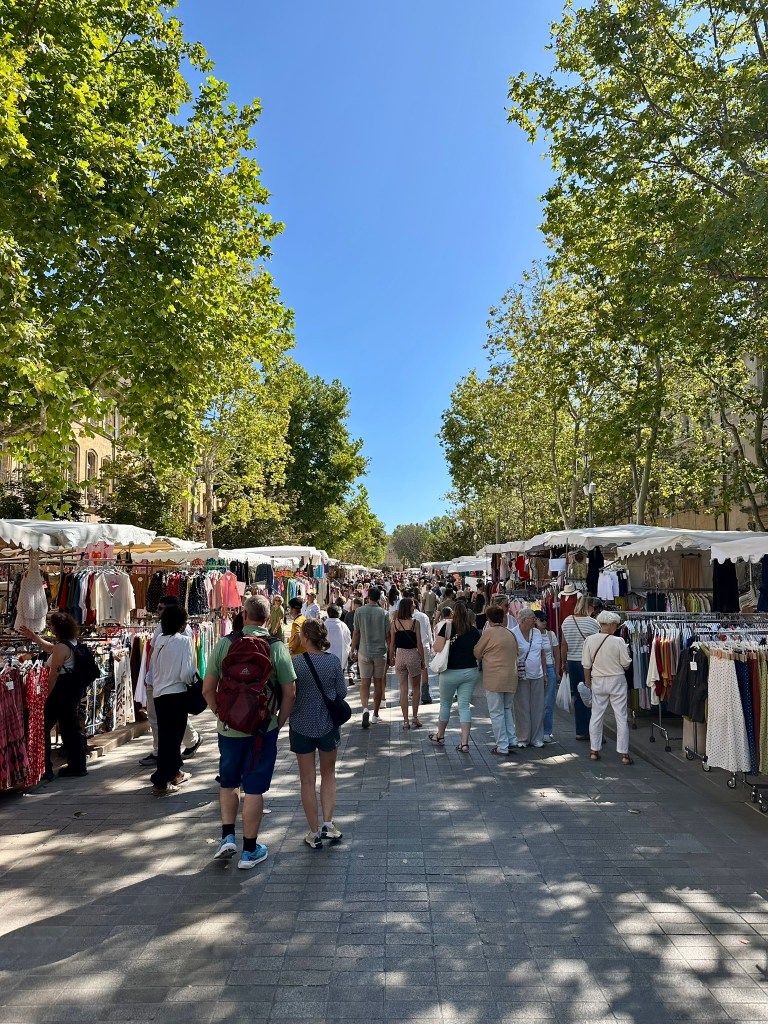
The locals were all out stocking up on groceries for the week ahead.
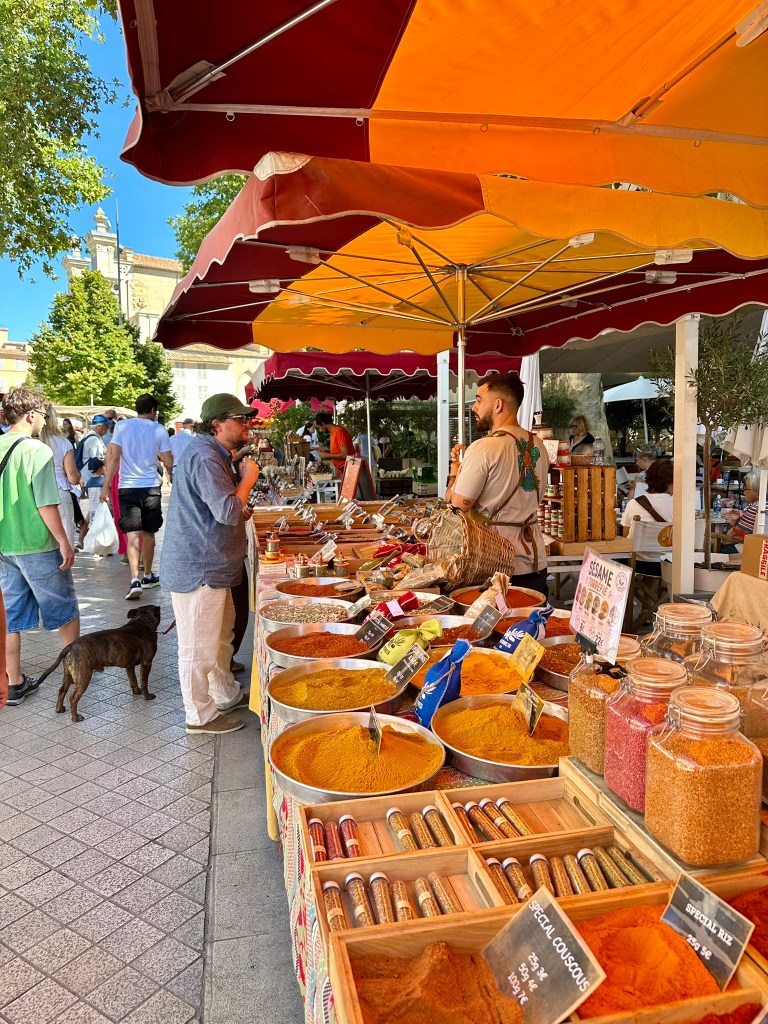
We followed suit. . .
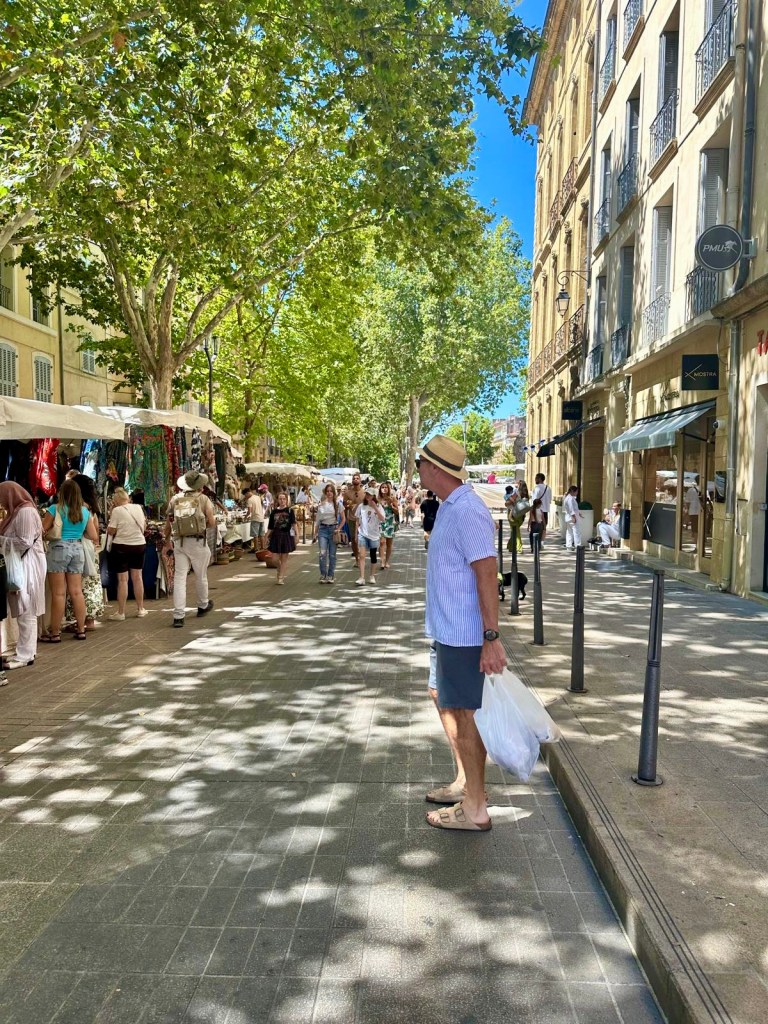
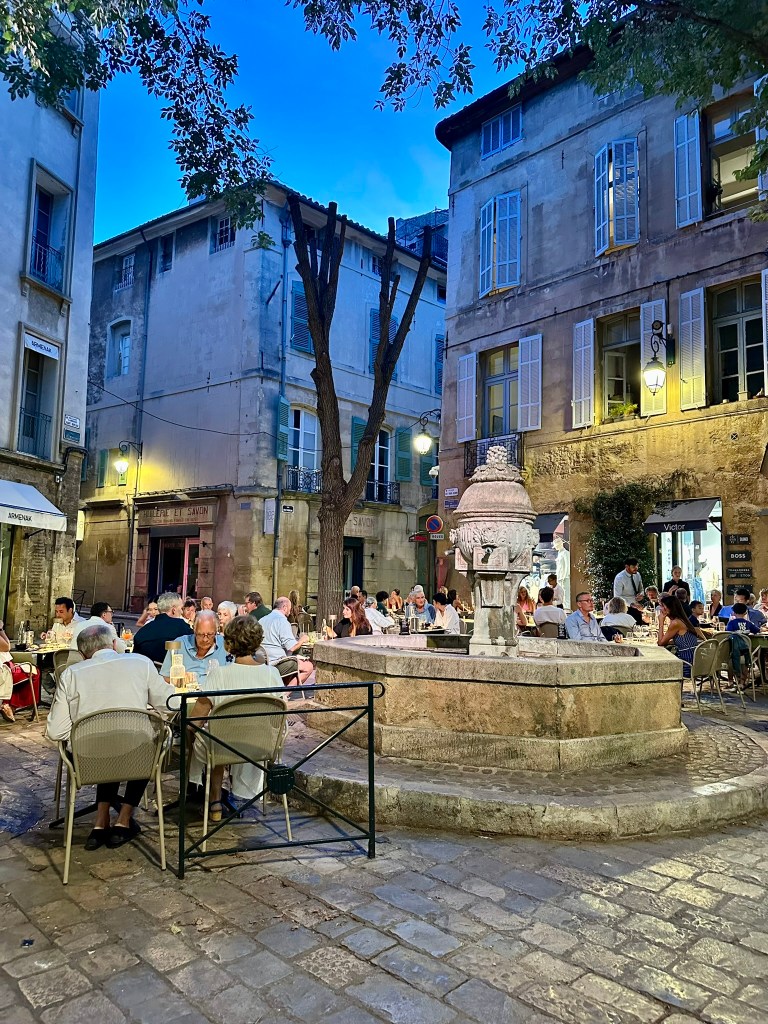
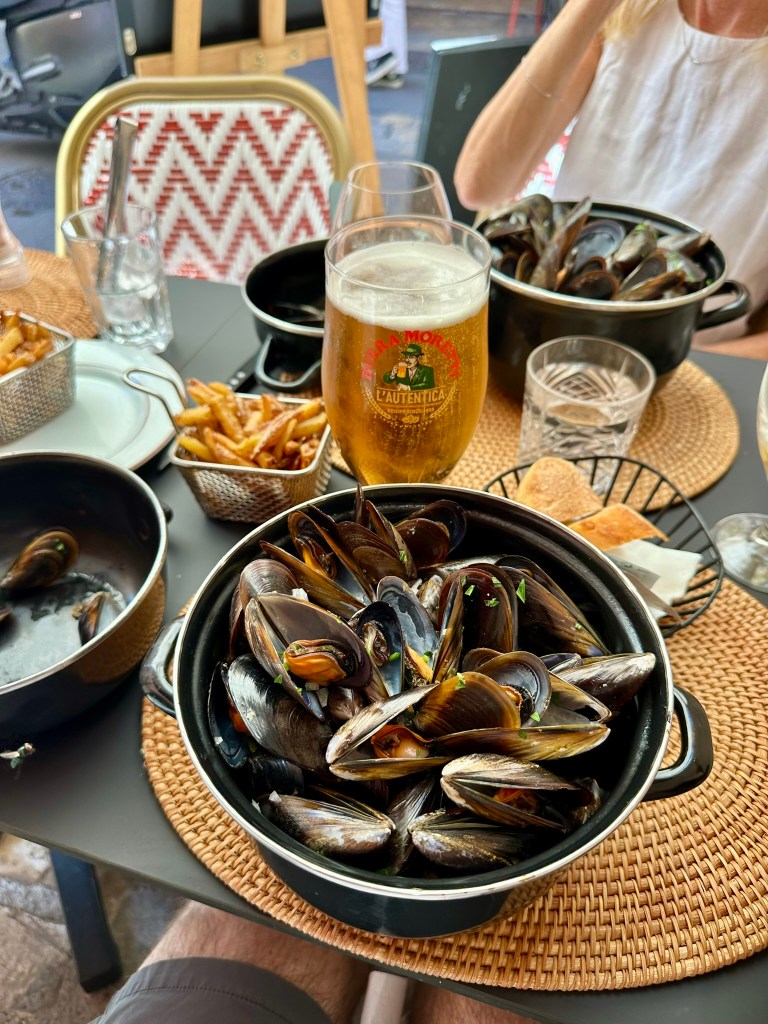
Alfresco dining throughout our stay.
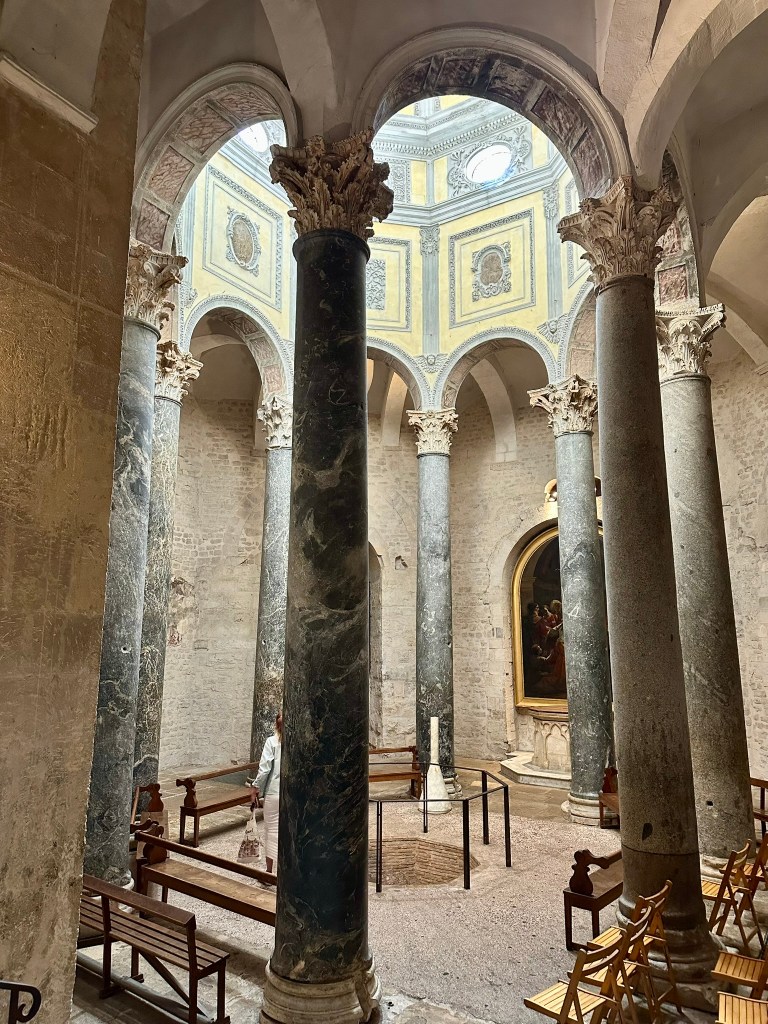
And it wouldn’t be WolfeStreetTravel if there’s not some cool (ideally medieval) history. To wit: The early 6th century Baptistery of Saint-Sauveur Cathedral, built when Aix was transitioning from the Roman world to Christianity – the oldest surviving baptistry in France. Several of the columns are reused from the Roman forum in this location.
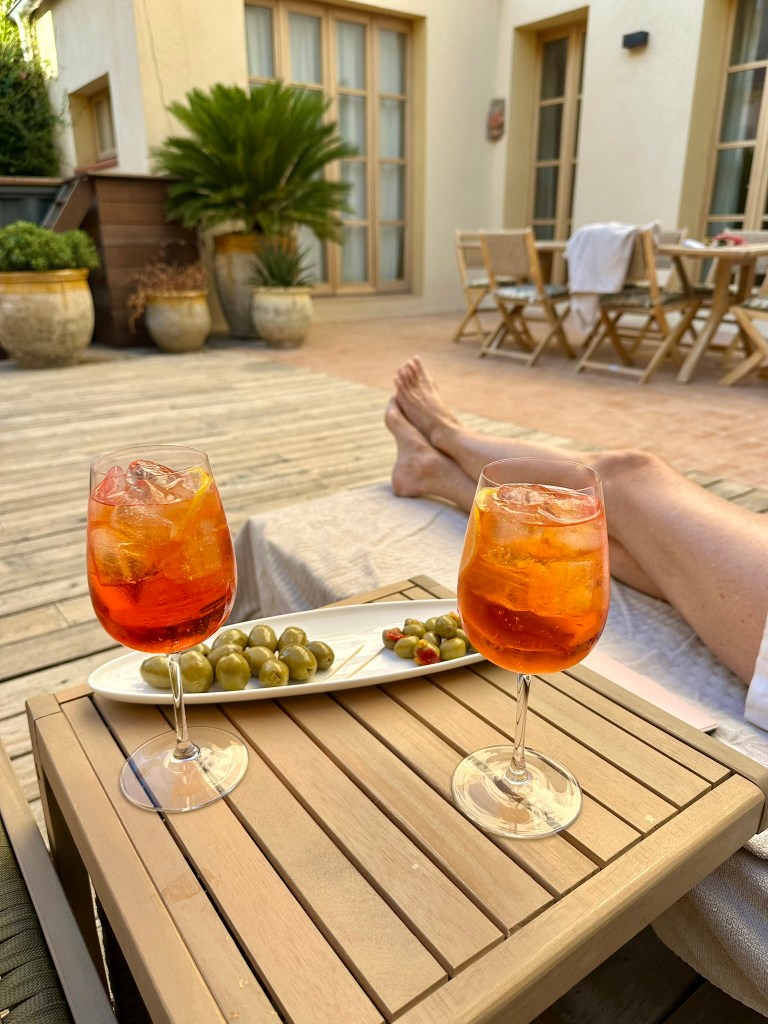
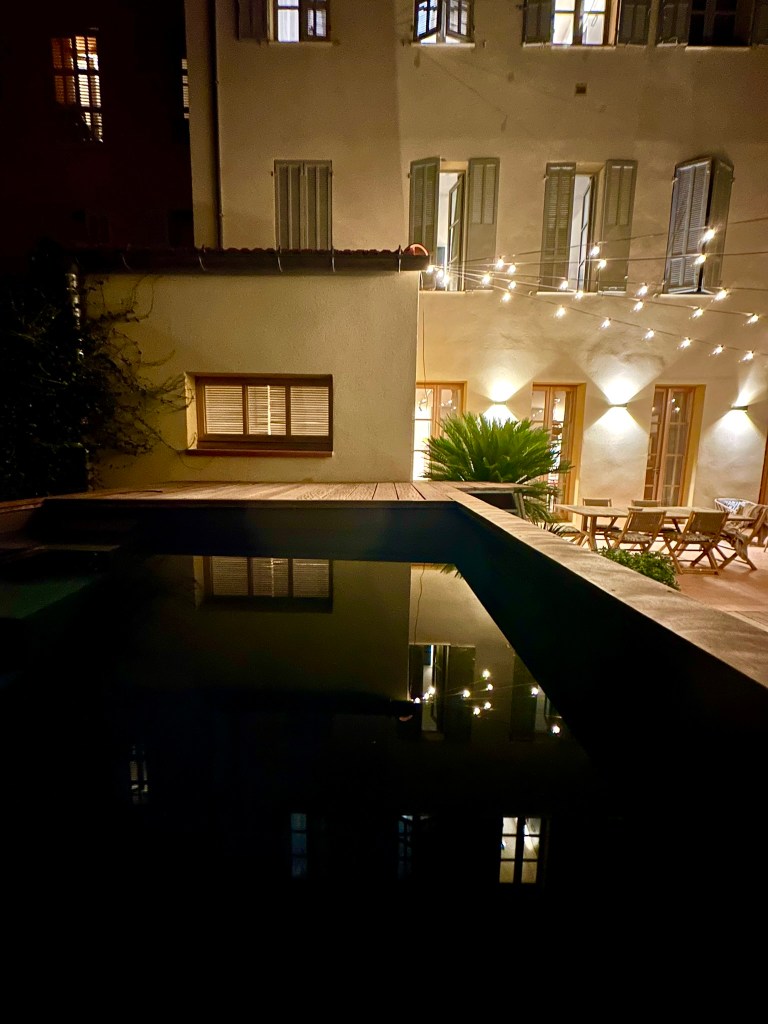
And Aperols each evening in a pretty cool AirBnB (the Chief Adventure Officer’s rule of thumb is to book AirBnBs for stays of 5 days or more and also every 10-14 days of hotels for laundry).
After those 5 days, it was time to move north; Aix was beautiful but, we decided, very much one note. We’re glad we visited, but this wasn’t the home base for us.
Vienne, just south of Lyon on the Rhone, offered the next potential home base location. According to our AI buddies, Claude and Chatty G, Vienne’s river utilization included a promenade along the Rhone. This was a lie. It did not.
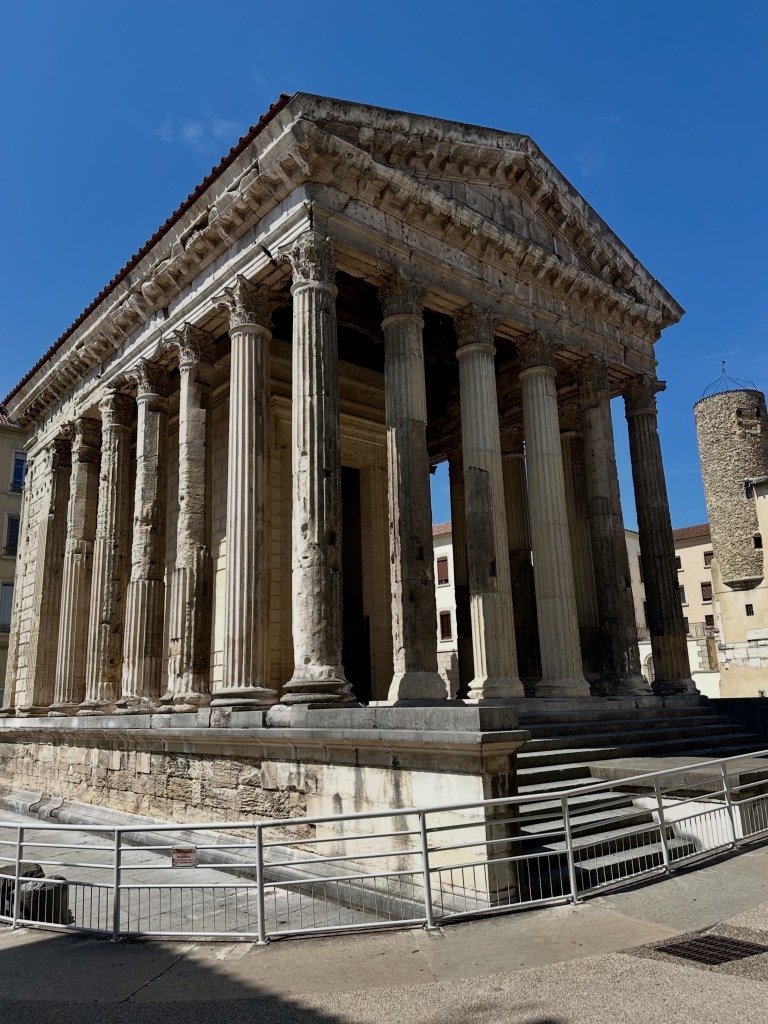
It did have some pretty awesome Roman artifacts, dating to Vienne’s time as an extraordinarily wealthy Roman trading city. This includes the 1st century BC Roman temple dedicated to Emperor Augustus and his wife Livia, right in the middle of town:
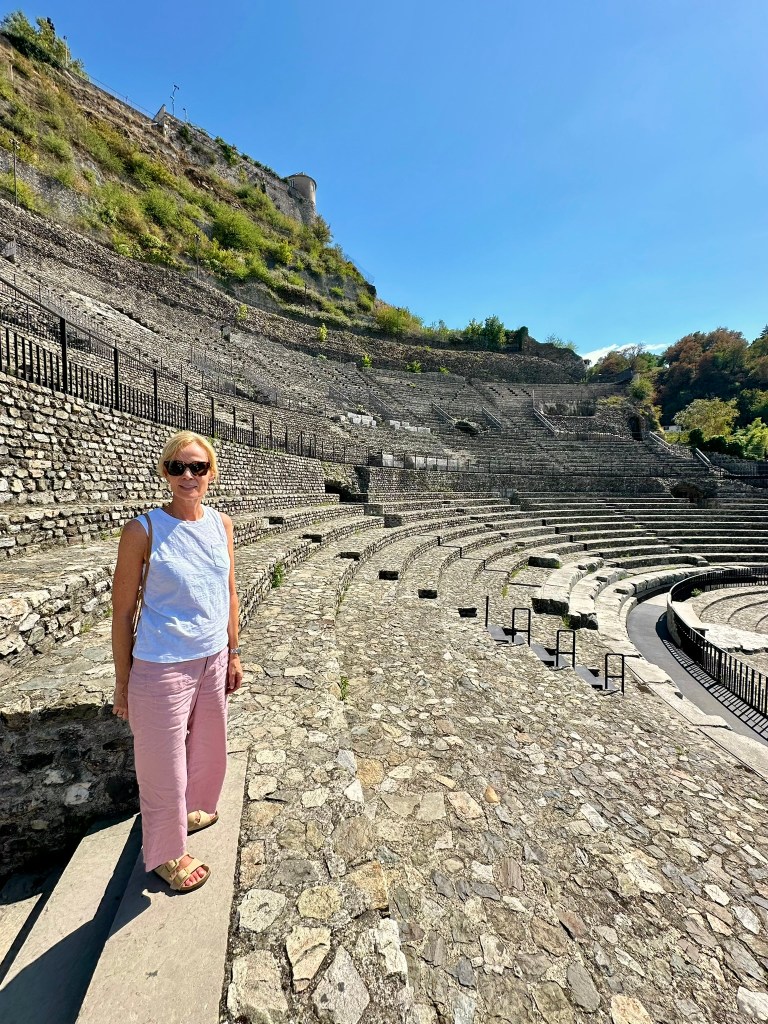
And the town’s massive Roman theater, built into a rocky hillside just above town in the 1st century AD:
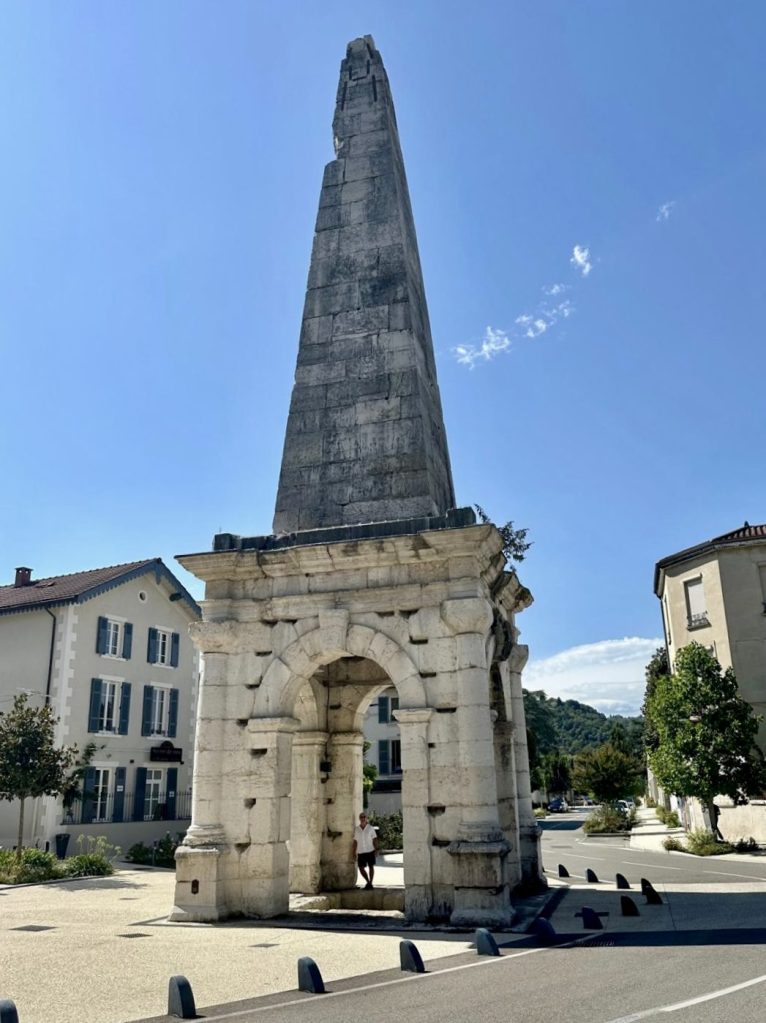
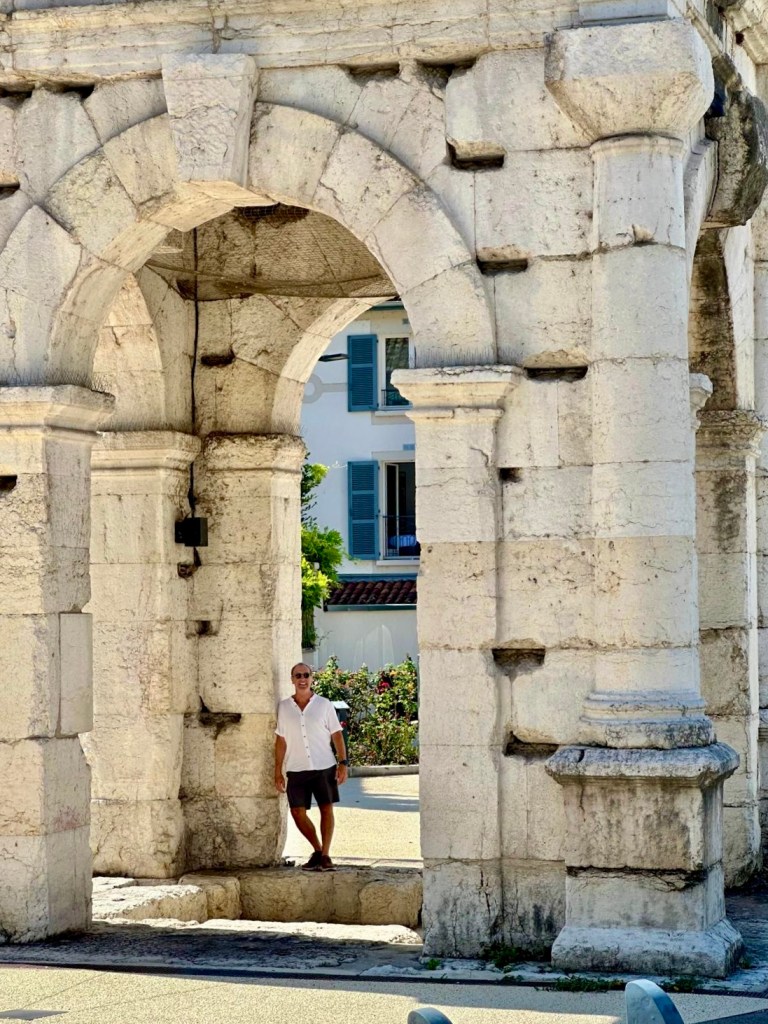
And, finally (there’s a bunch more, but this is a trip overview post), the 2nd – 3rd century AD Pyramide de Vienne, right next to our hotel. It’s actually the surviving central monument of the spina – the long central barrier – of Vienne’s enormous Roman circus for chariot races:
The hotel’s restaurant served as our only Michelin-starred dinner of the trip.
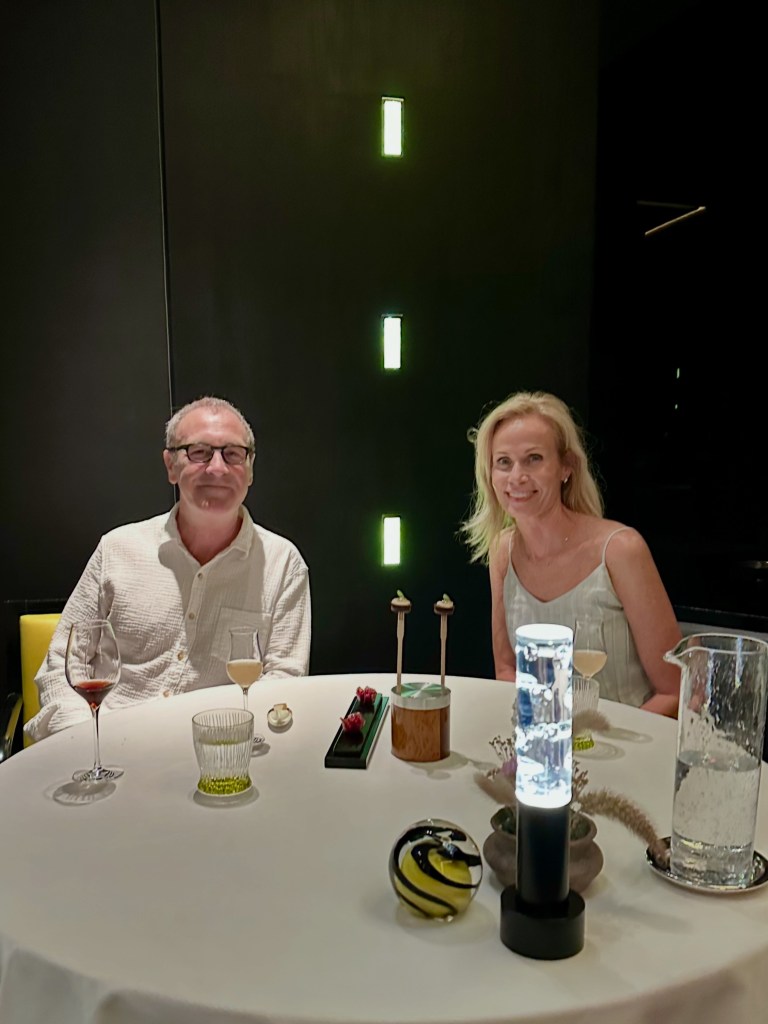
Meh. Good not great. Our anniversary dinner on Ios later in the trip was much better (as was our first, great, fish dinner on Naxos).
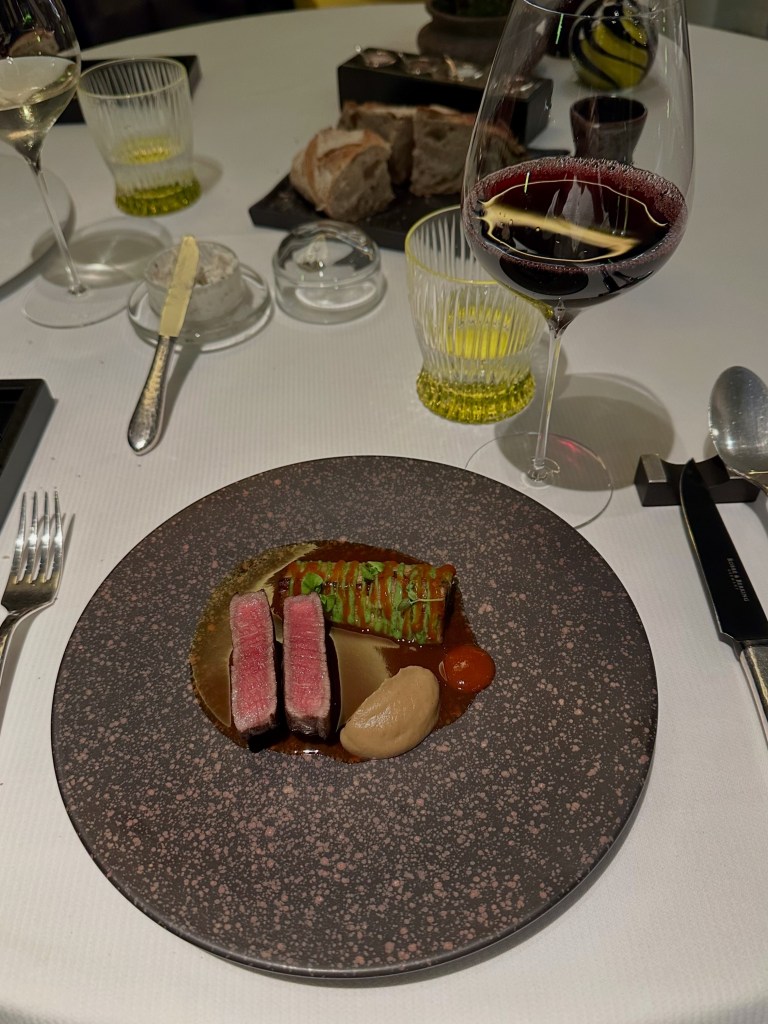
With the Vienne box checked, we roamed northwest to Annecy, which is decidedly NOT the South of France or Mediterranean in lifestyle, culture, cuisine, or architecture. It’s in the Savoy, just 20 minutes away from Geneva. But we kept seeing this place in our Instagram feeds, evaluated it thoroughly as a candidate, and thought highly enough of its potential that it bumped out Sommieres and consumed a day of Vienne time from our draft itinerary.
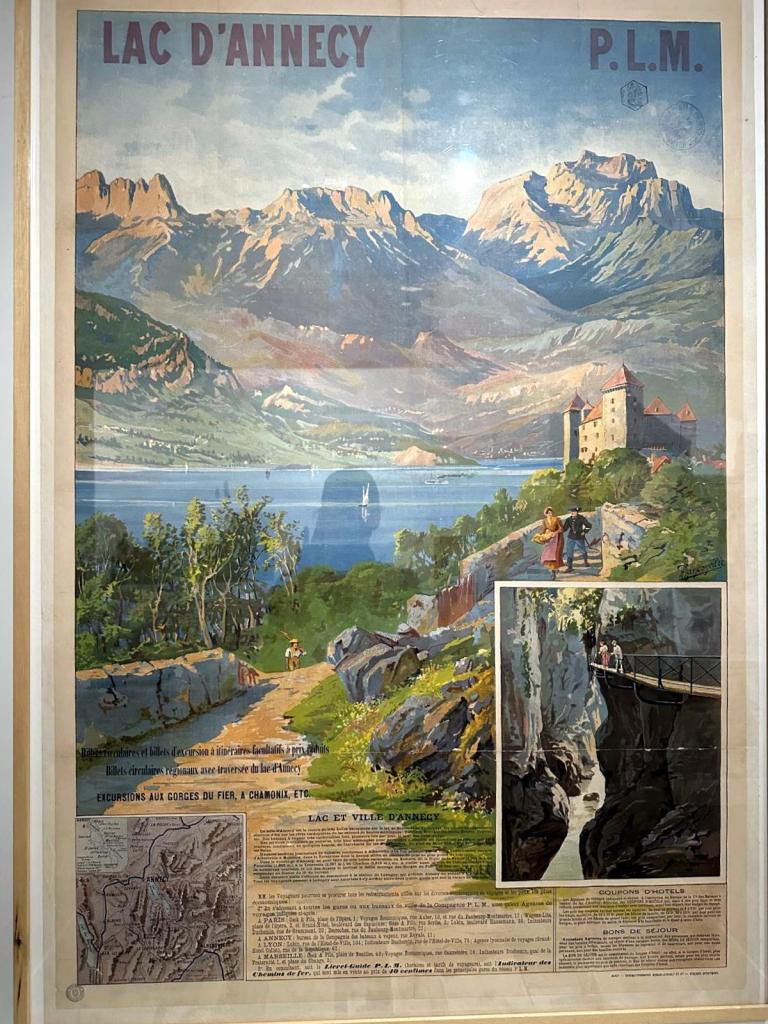
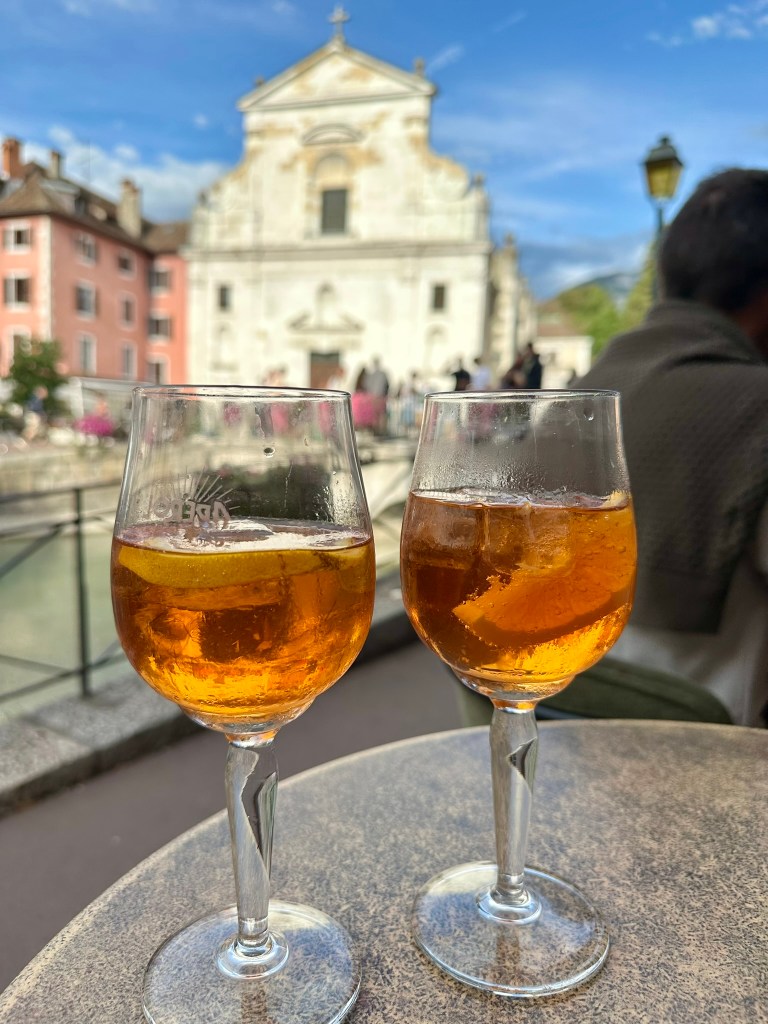
Good call. This place was awesome. Canals in the city (Annecy is the “Venice of the Alps”) and Lake Annecy just beyond.
12th-century Palais de I’lle in the middle of Annecy’s main canal leading to the river (behind us):
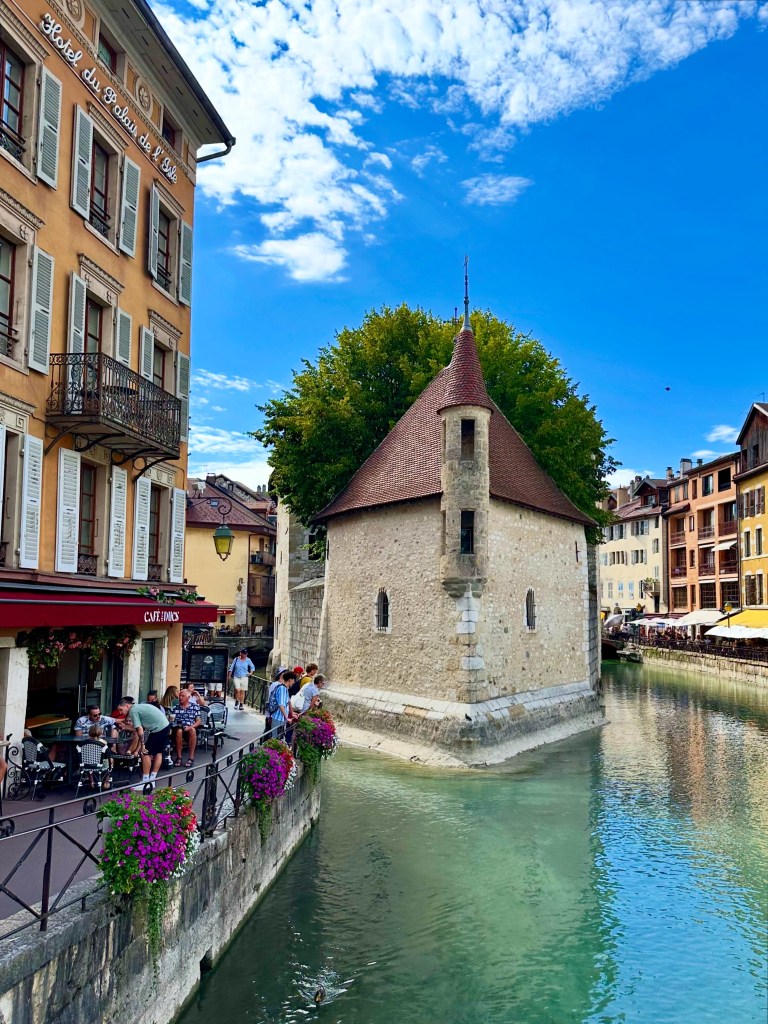
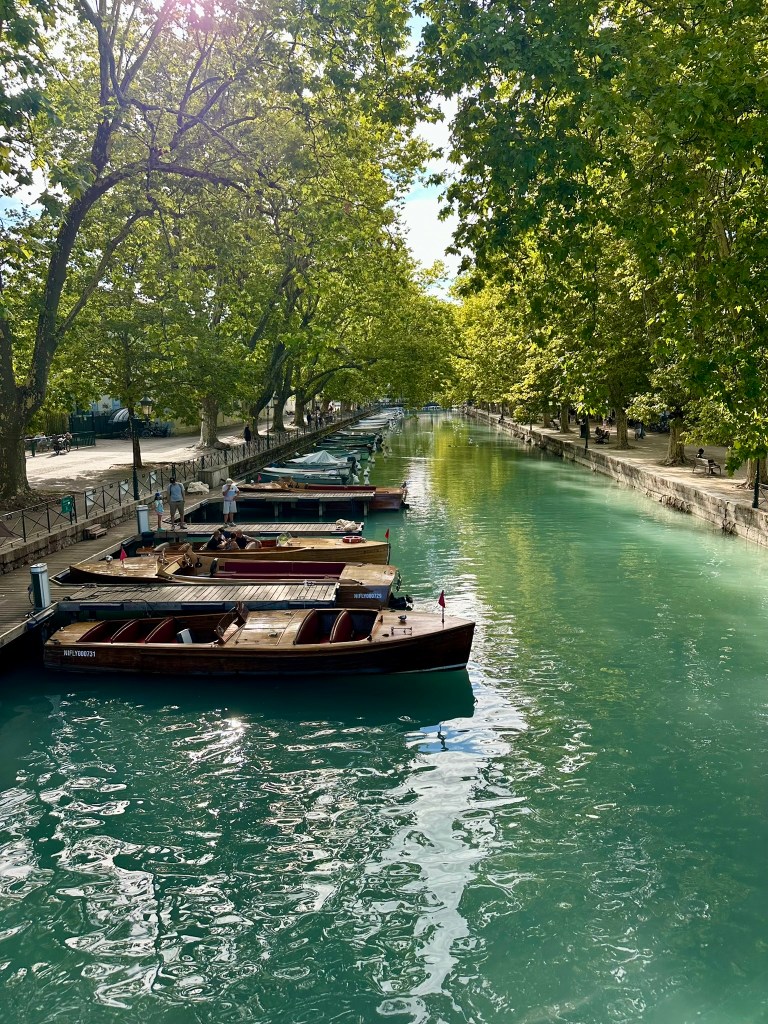
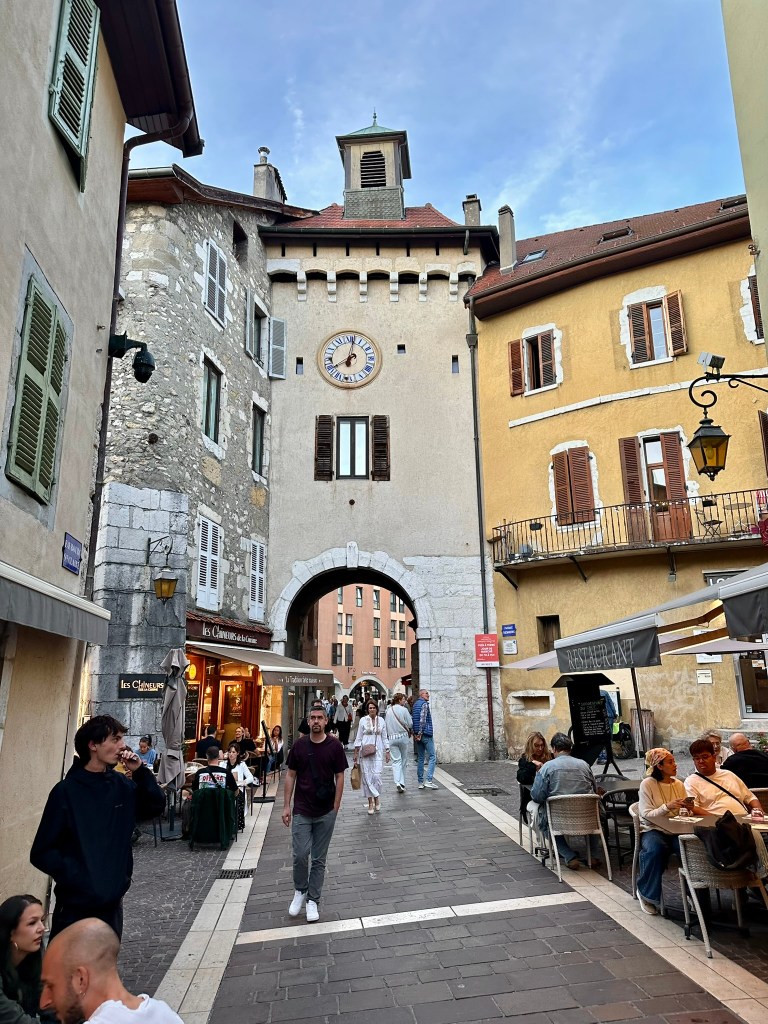
Annecy’s old town is full of 17th- and 18th-century structures and definitely punches above its weight in restaurants (and wine bars, as we’d learn):
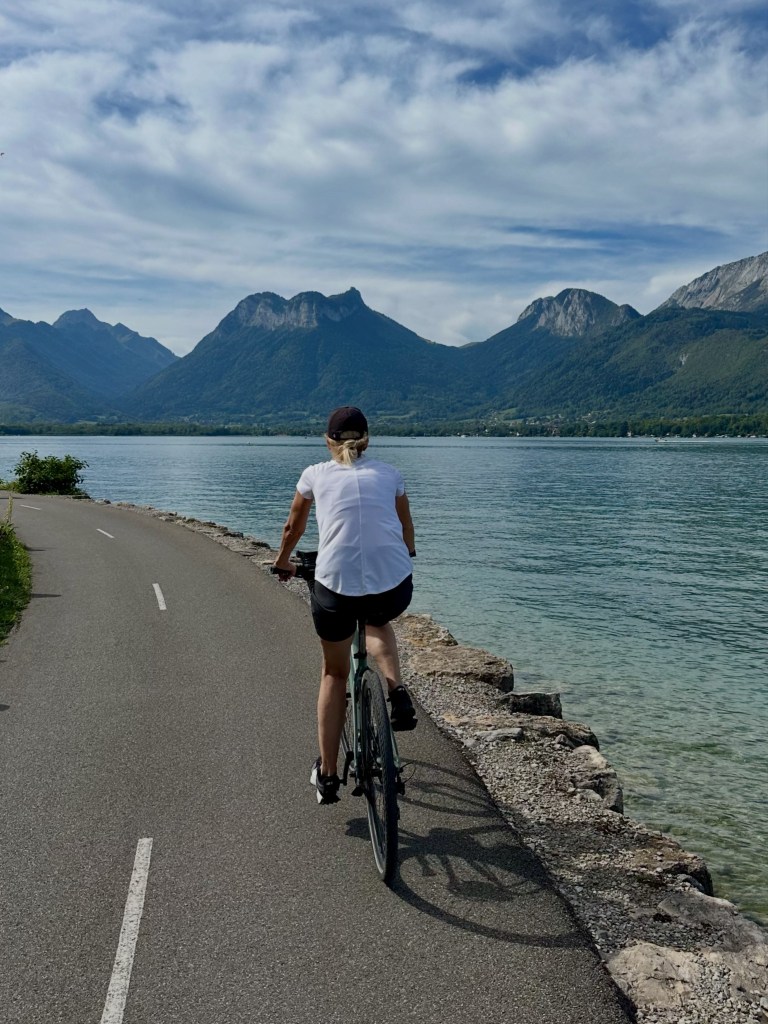
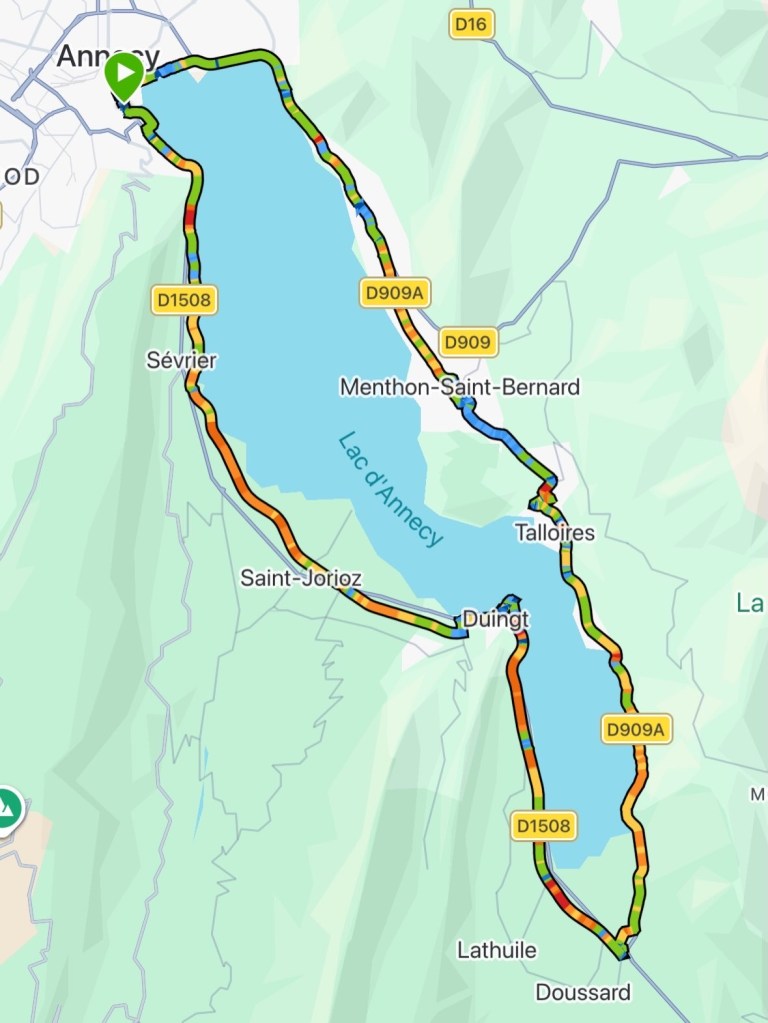
During our stay, we’d swim in the lake, drive around it to another small village, and, the pièce de résistance (literally “piece of resistance” per Dave Barry), biking the 25-mile loop around the lake.
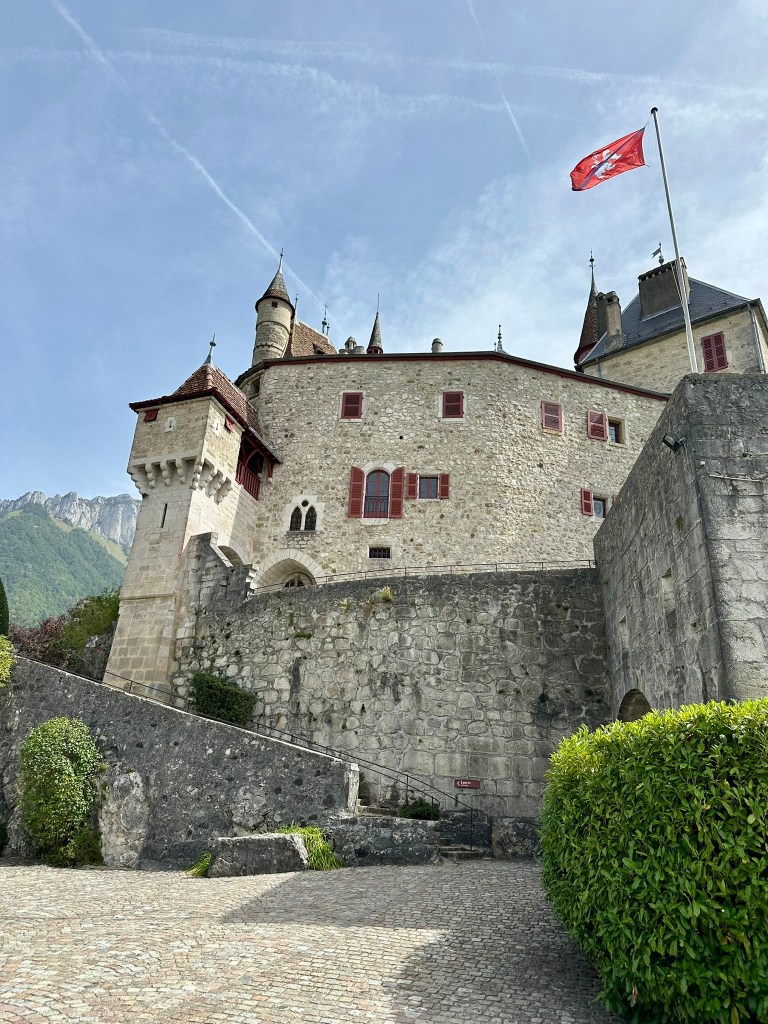
Little side trip to Chateau de Menthon-Saint-Bernard after lunch in the charming village of Talloirs.
And for lunch on the one rainy day during our trip, fondue – a Savoyard specialty.
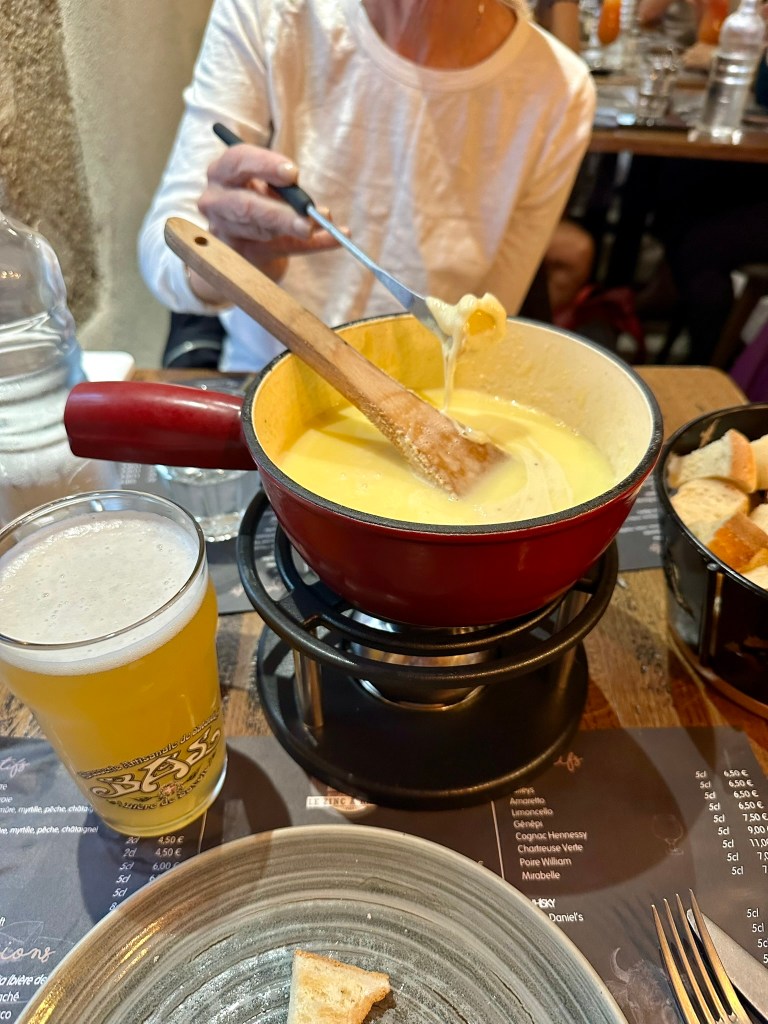
Annecy was amazing. The town hit ALMOST all of the European home base criteria we had established, based on Old Town, Alexandria. Although it fell short in proximity to a travel hub (we did get a nonstop from Lyon to Athens for our next leg, but the Lyon airport cannot be considered a real travel hub, and Geneva’s is not in the EU). It also exuded Savoyard character, not Mediterranean. But Annecy is a four-season town with hiking skiing in the French Alps (Chamonix is about 75 minutes away), complementing its lakeside charm as a summer getaway. So we’ll be back.
More Greek Cyclades Leg
The second WolfeStreetTraveler had planned to retire in August 2022, immediately after which we would travel to Turkey and four Greek Cyclades islands – Paros, Naxos, Folegandros, and Milos. Supercomputing issues related to the worst high-performance computing vendor in the world scuttled this plan, and retirement was postponed to ensure the issues were resolved. The Turkey & Greece trip of 2022 contracted to include just one Cyclades island: Paros. (Which was amazing – still our favorite island.)
To the missing islands of Naxos, Folegandros, and Milos, we added little Ios to our itinerary, simply because it was there:
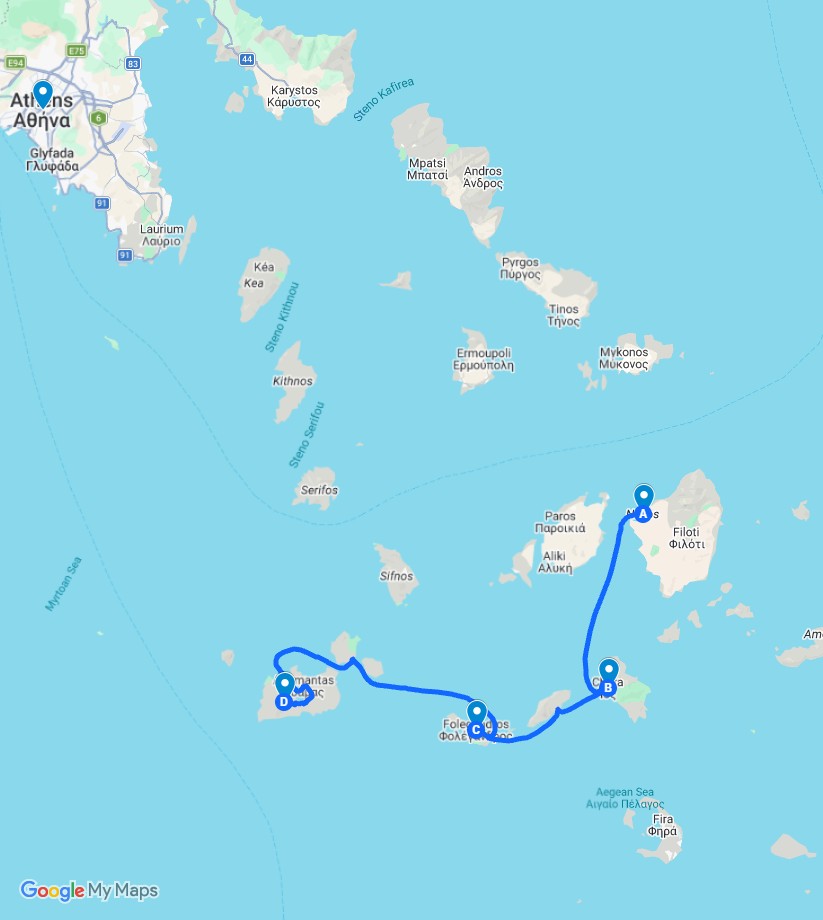
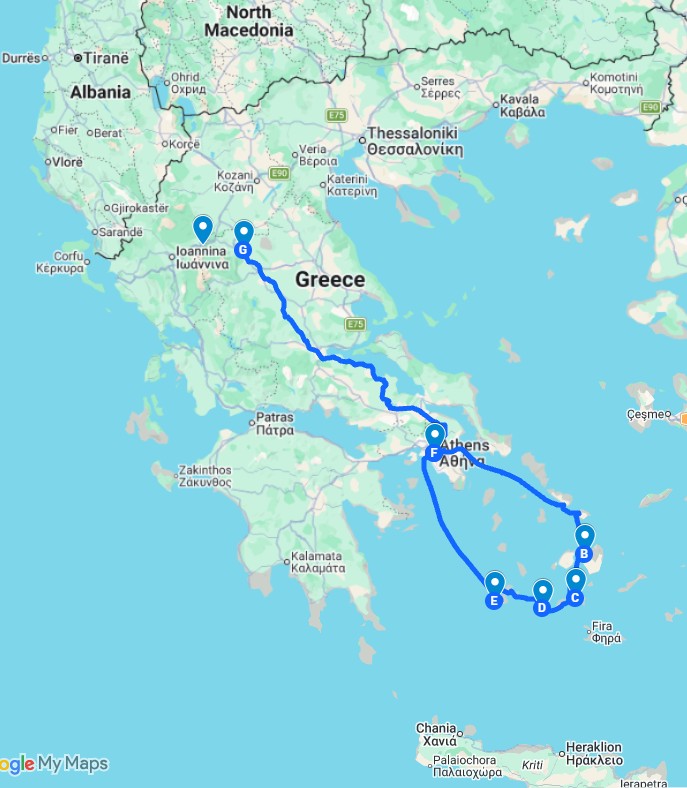
We would spend 5 days on Naxos, then 3 days on Ios, 3 days on Folegandros, and 4 days on Milos (all determined sort of based on their size). We’d connect from Lyon to Naxos through Athens, then fast ferry from Naxos to Ios to Folegandros to Milos, then fly back to Athens for a bonus leg, renting cars at each stop.
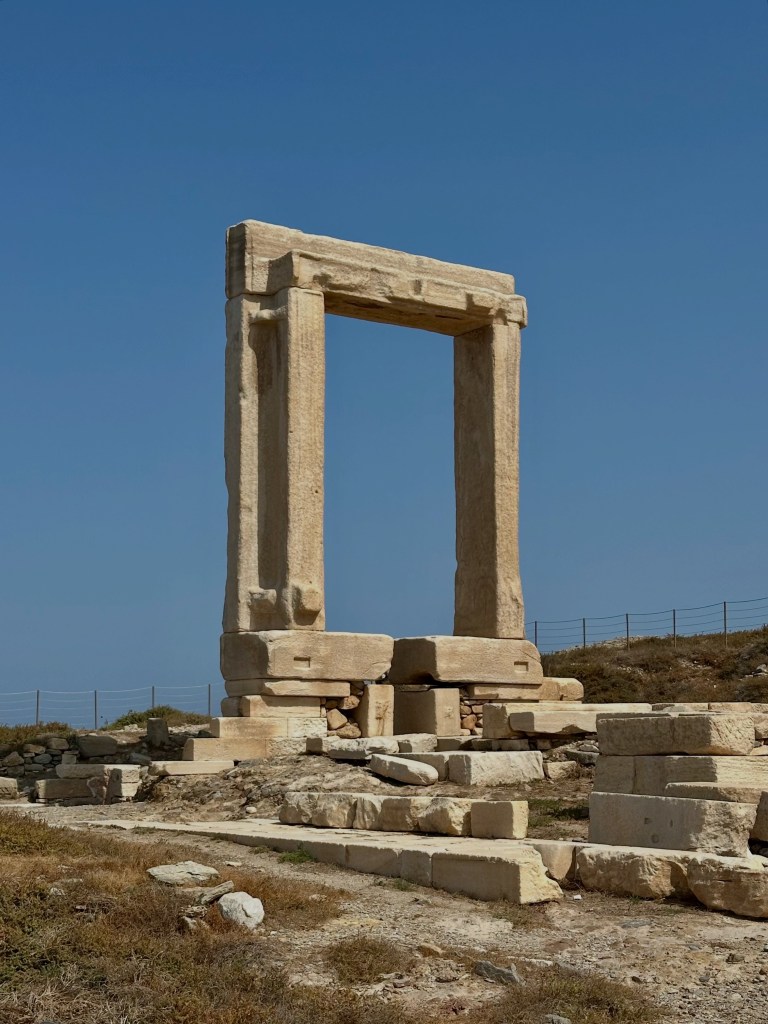
The monumental Portara of Naxos, the start of what was to be a massive temple to Apollo begun in 530 BC. They didn’t get too far, but this baby has been standing for the 2500 years since.
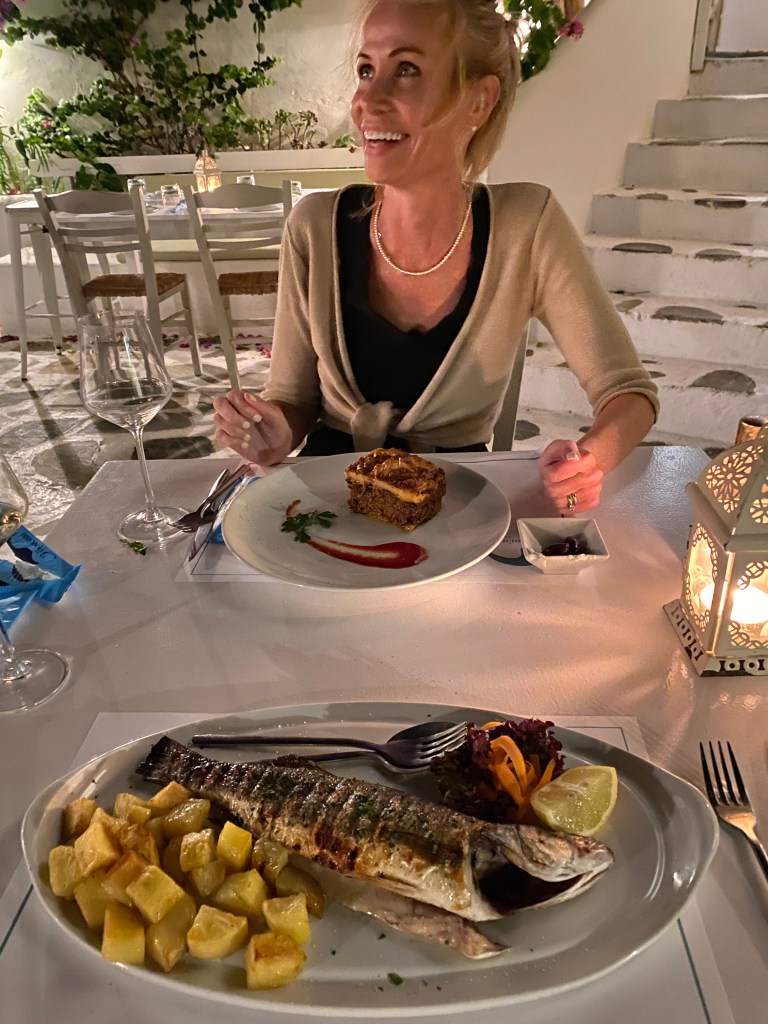
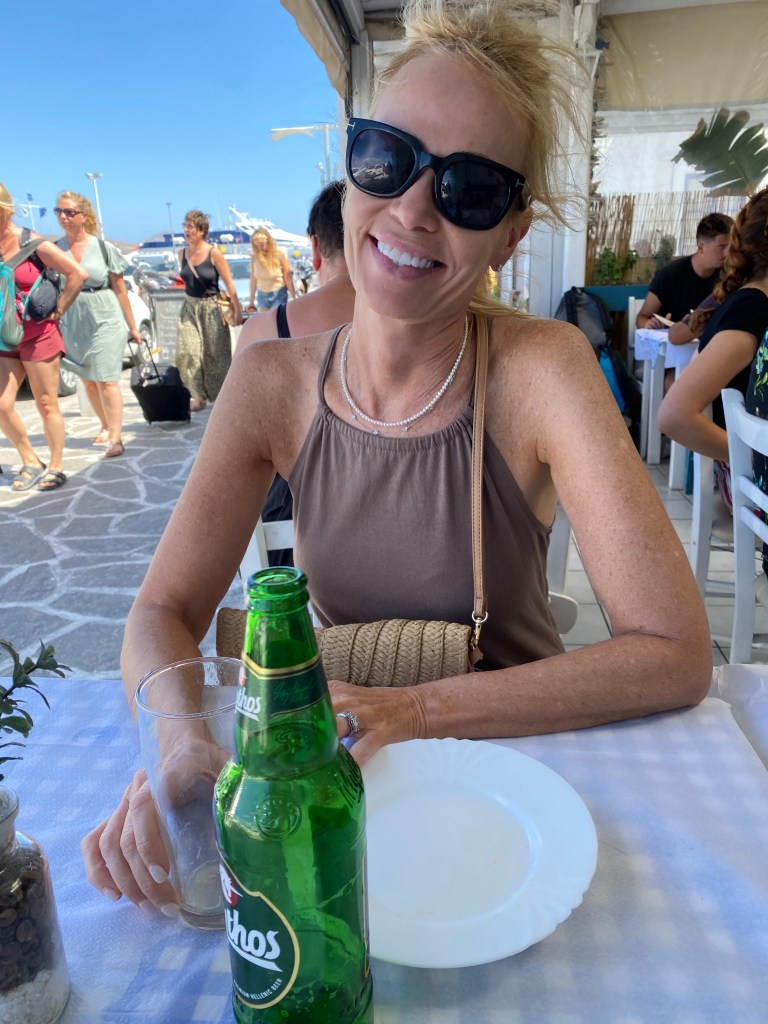
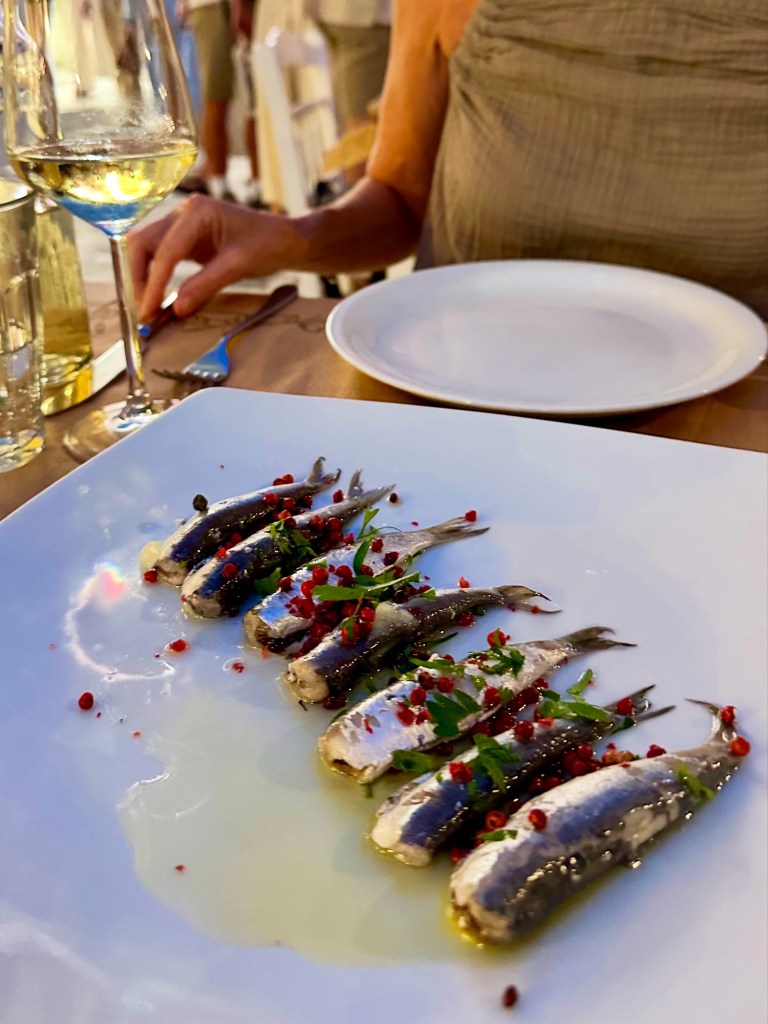
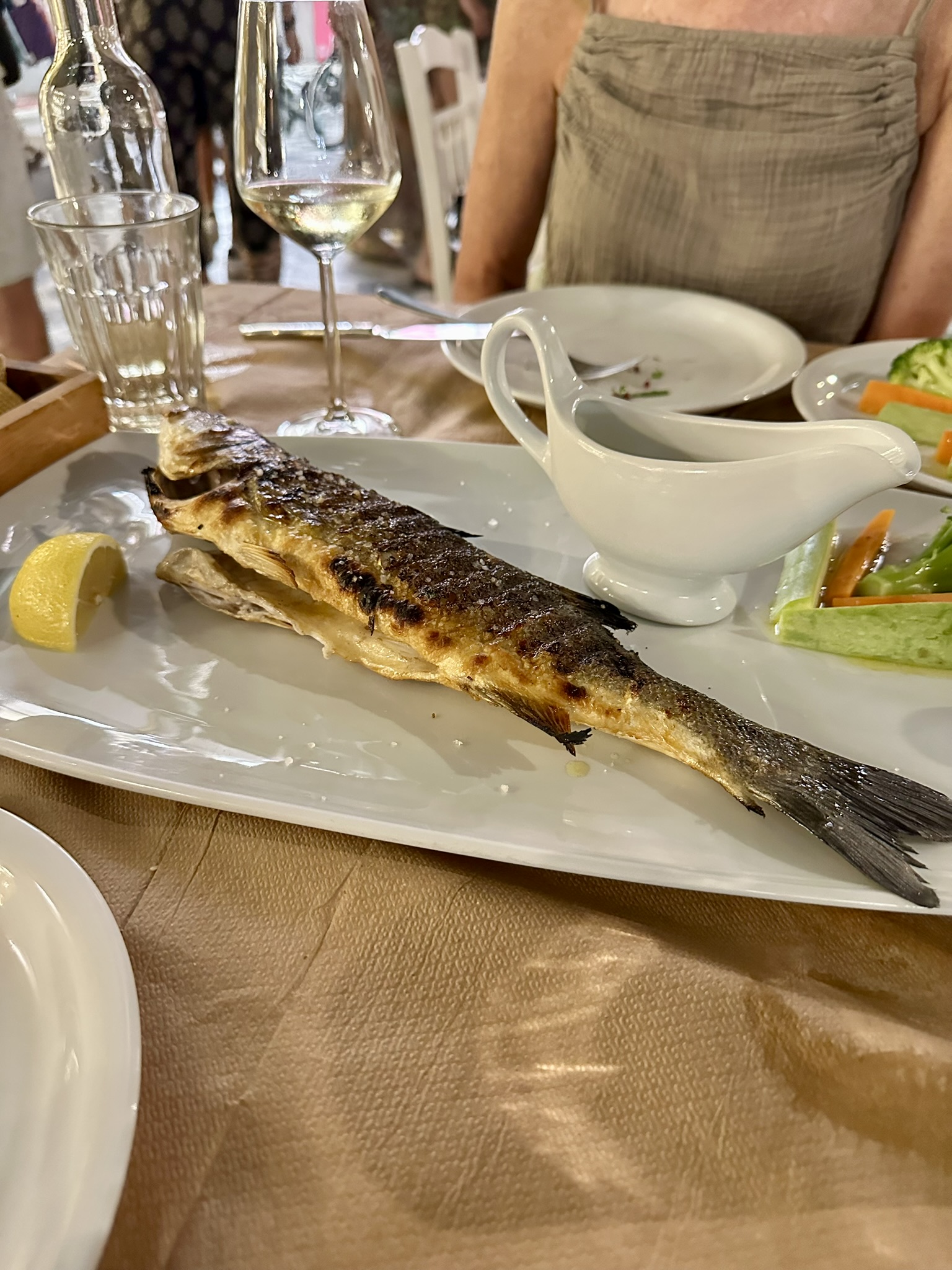
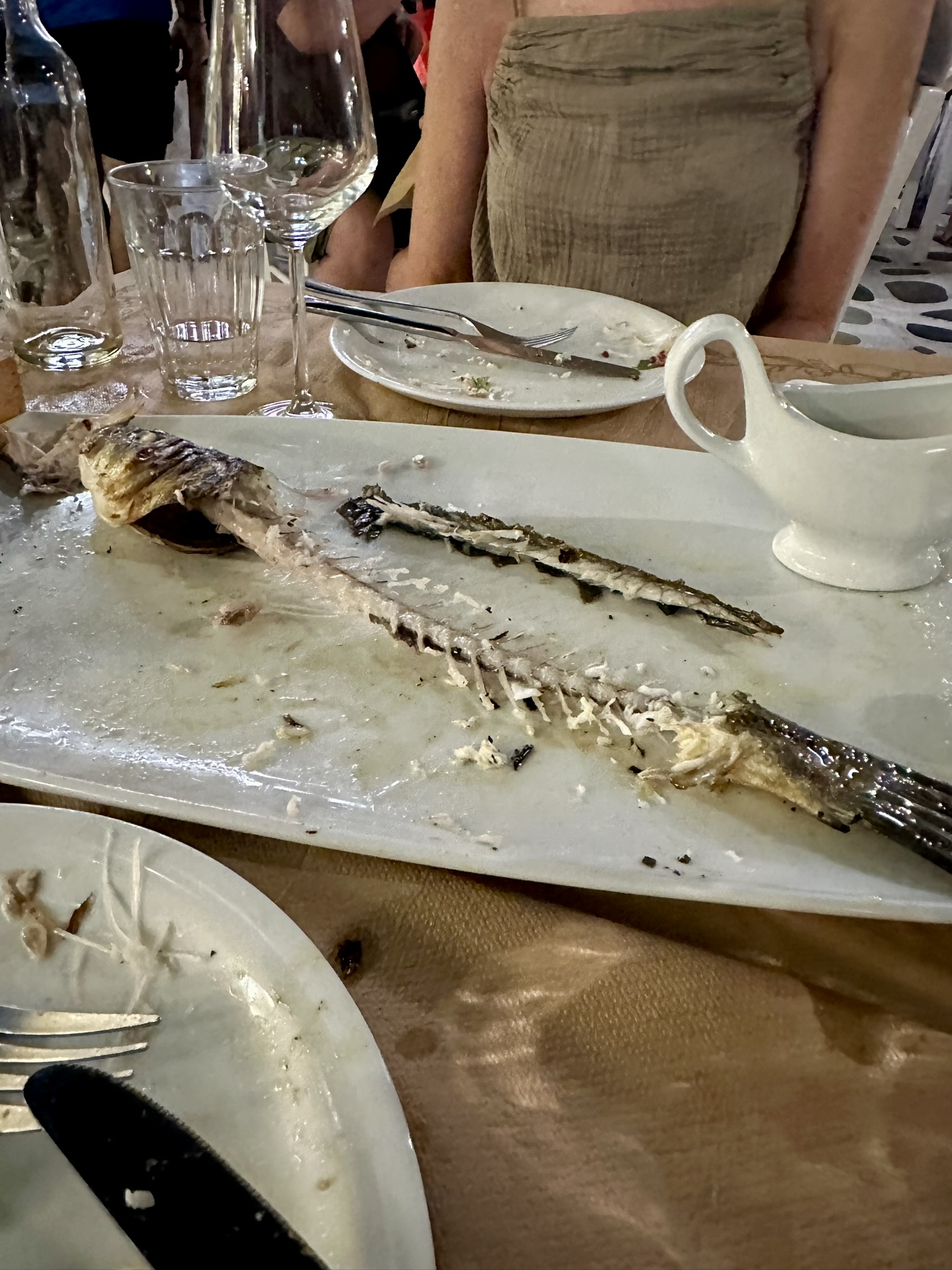
Probably the best single fish dining experience of the trip at Sarris in the middle of Naxos Town.
Sea bass, before and after.
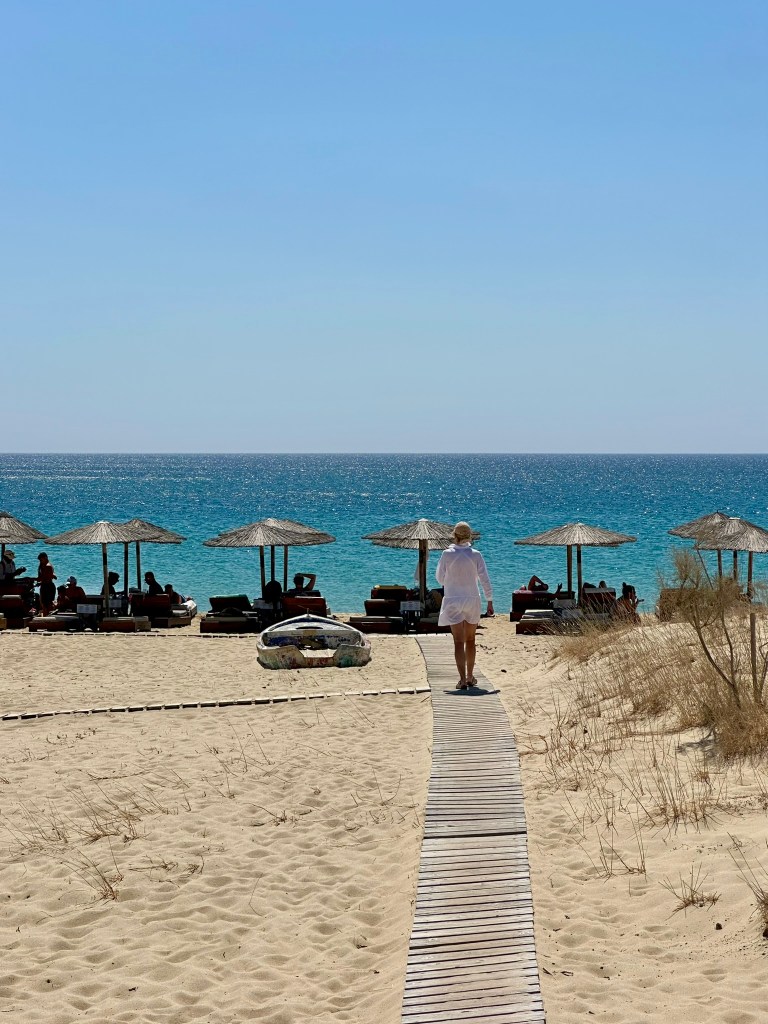
Naxos beaches in the low season were outstanding – water’s still warm, but the crows have abated.
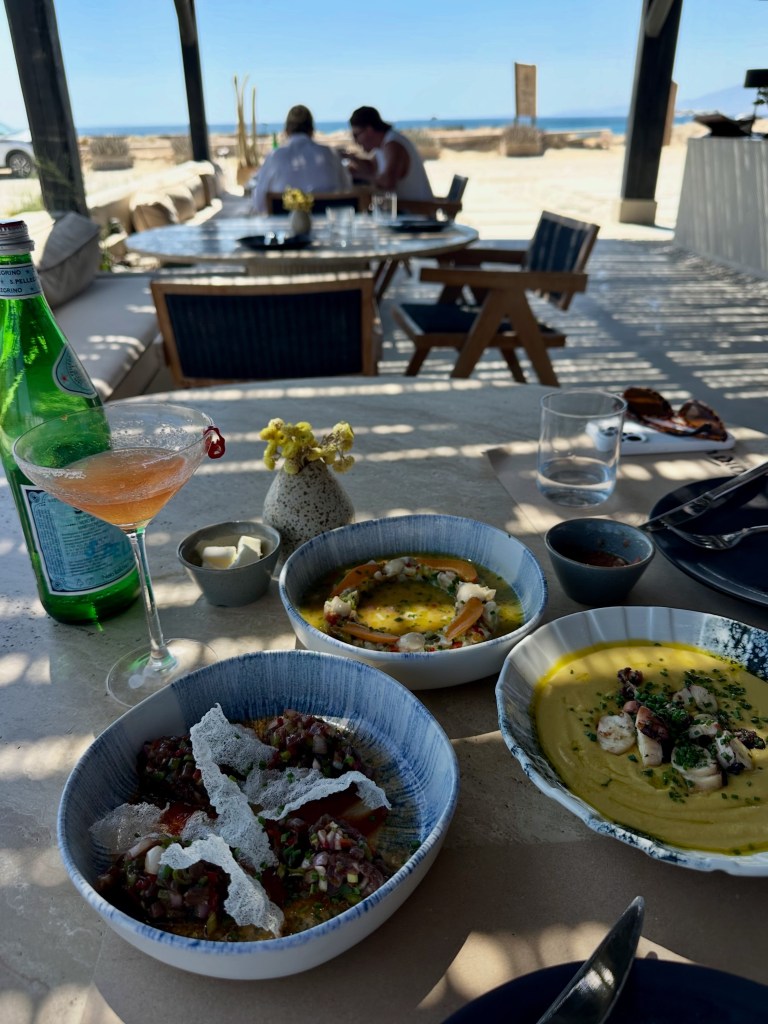
Just as on Paros, some great restaurants right behind the beach for a pretty nice break in the day.
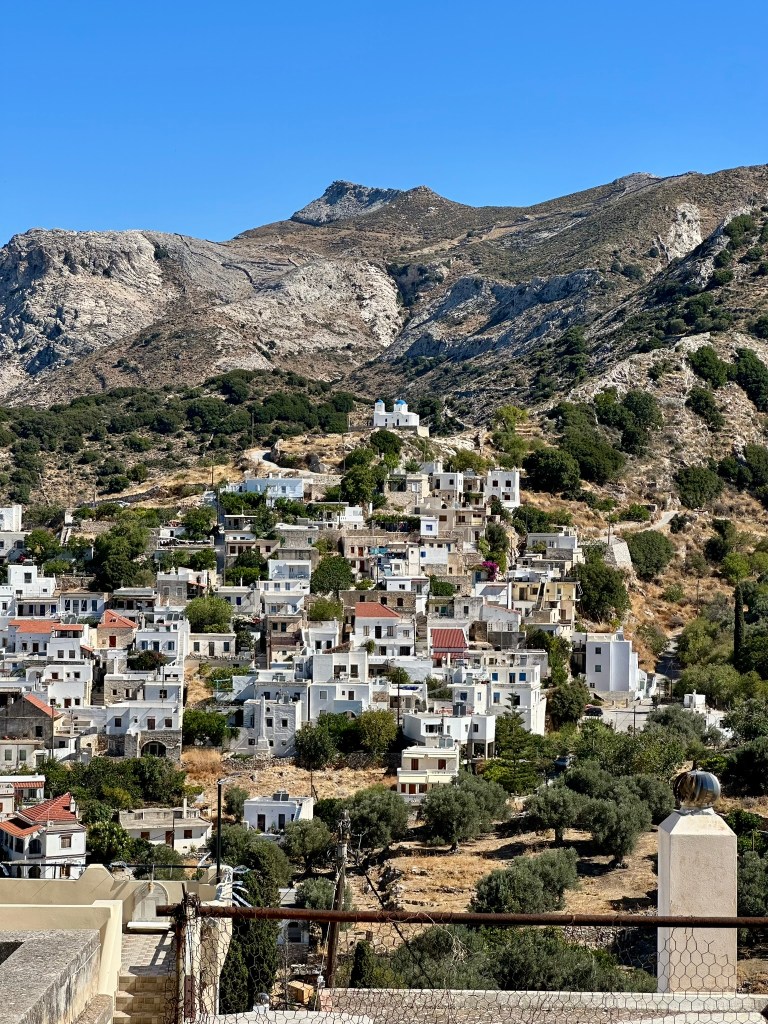
We drove into the middle of the island and up into the mountains to visit the villages of Filoti and Apeiranthos.
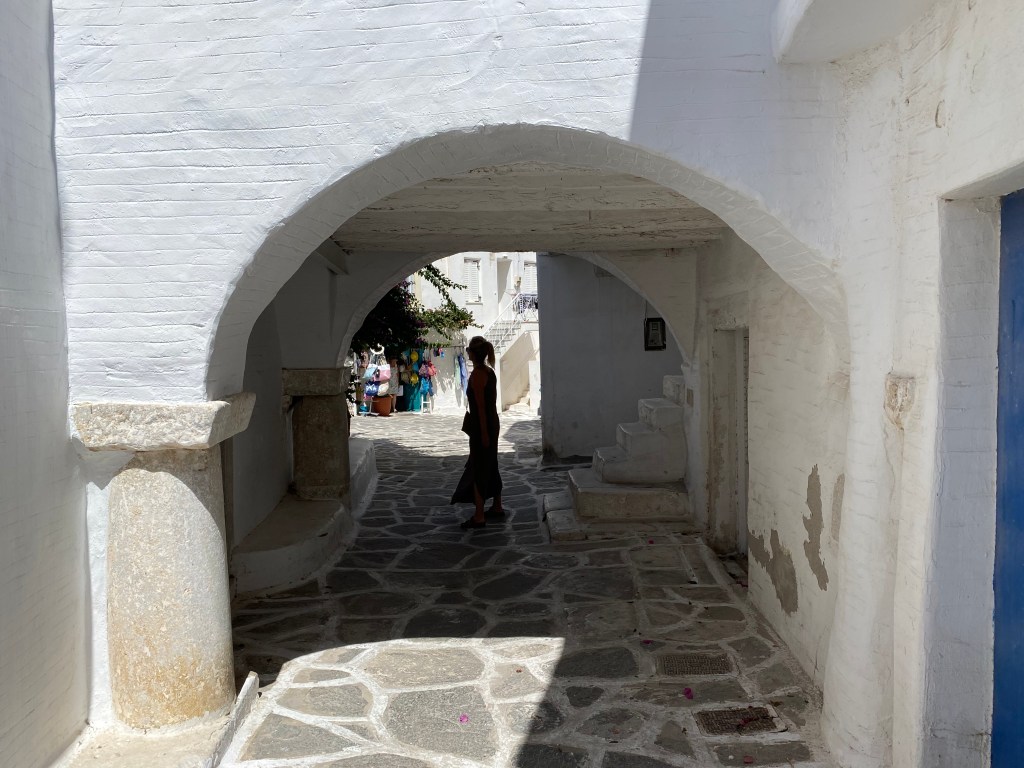
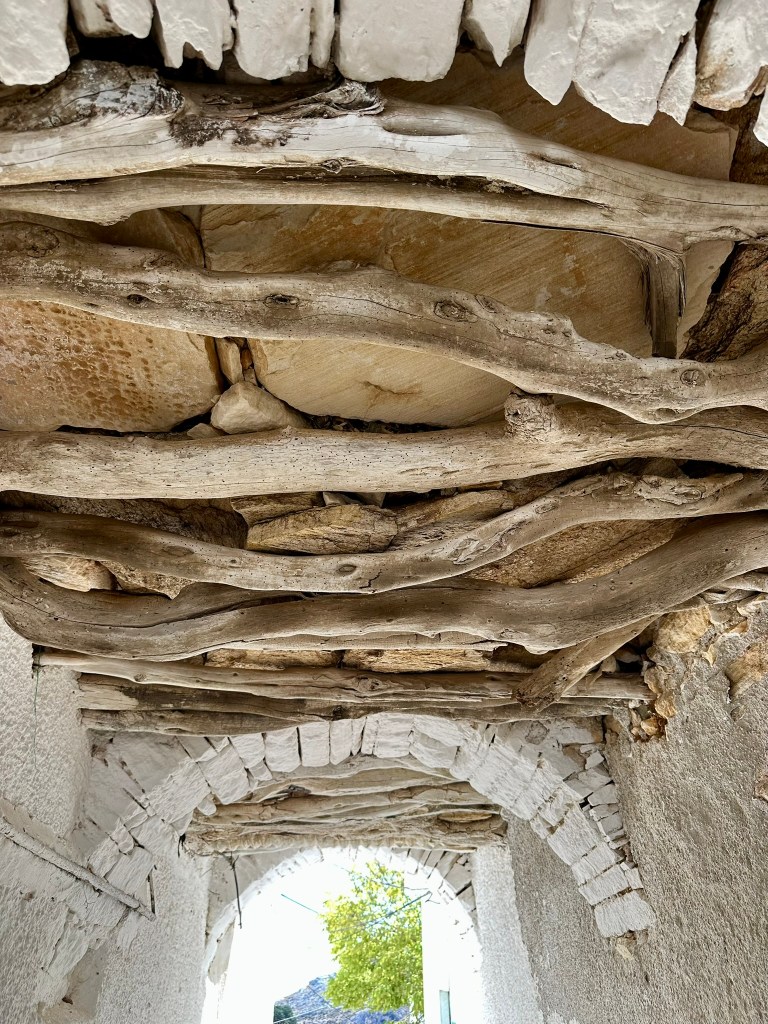
Which offered pretty atmospheric doorways.
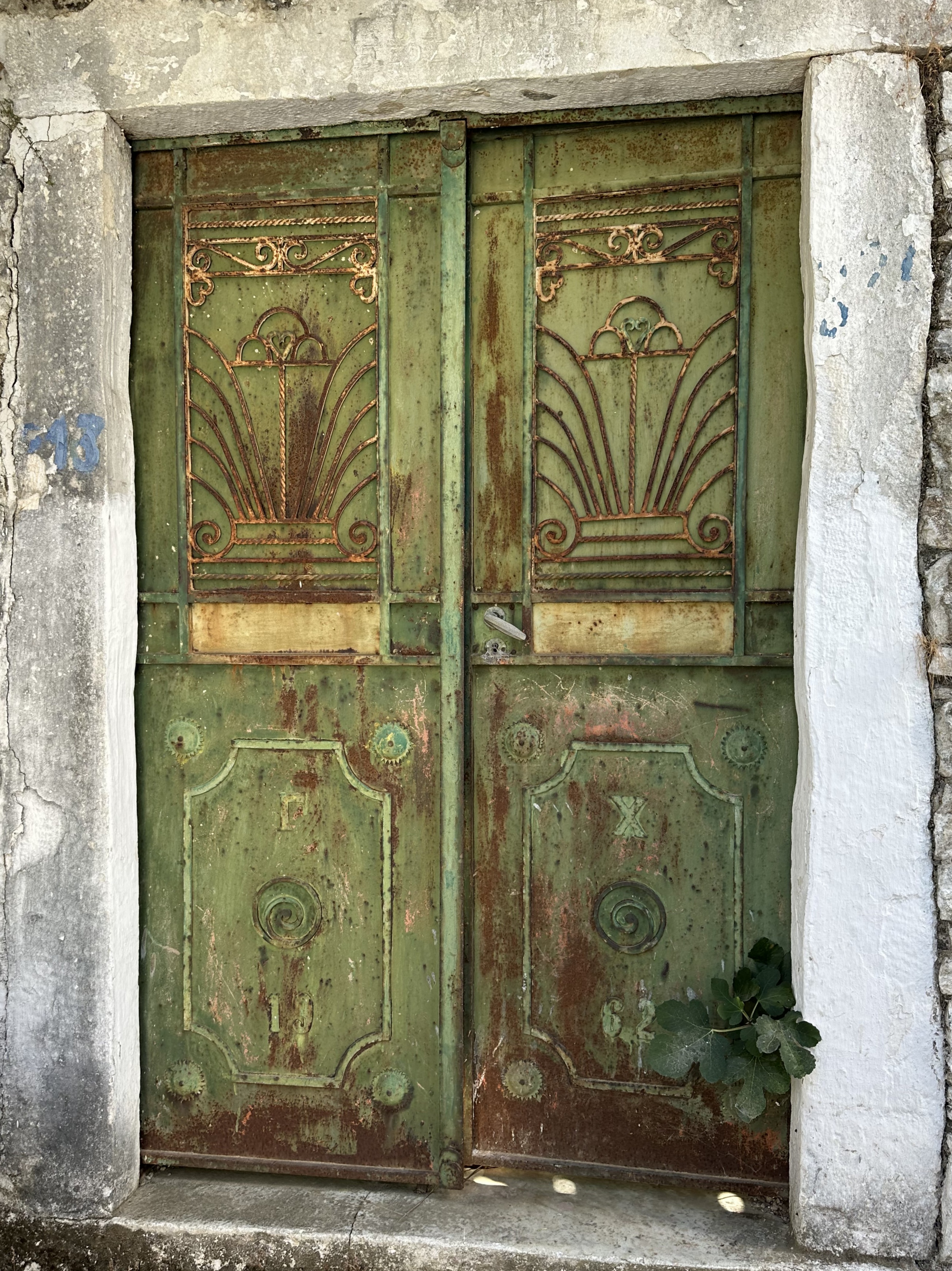
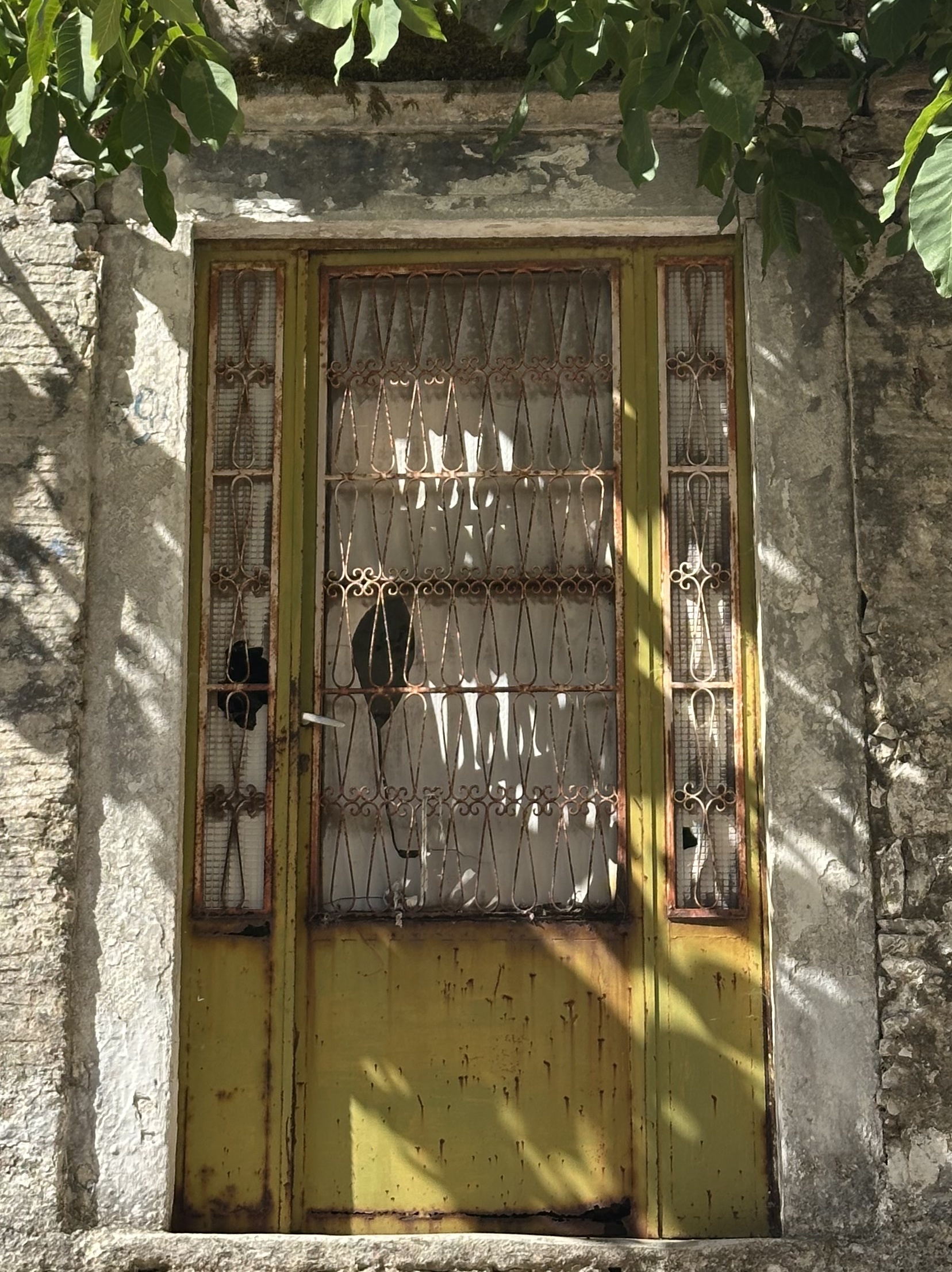
Pretty OSHA non-compliant doorways.
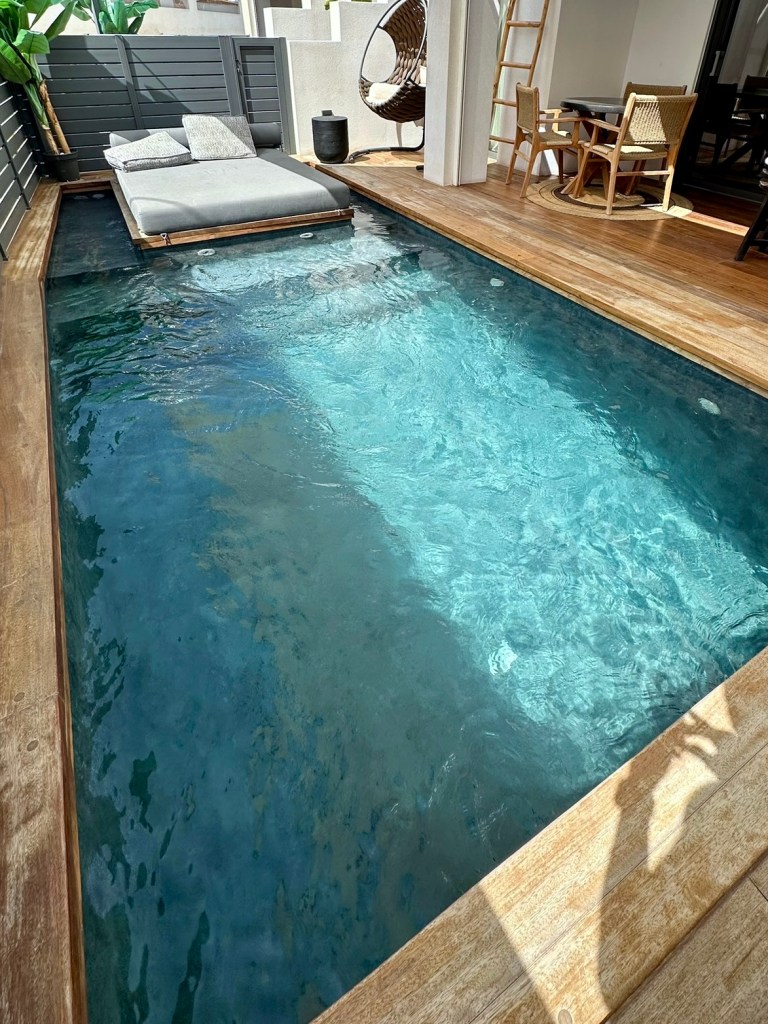
A 5-day stay meant another AirBnB. Pretty good digs.
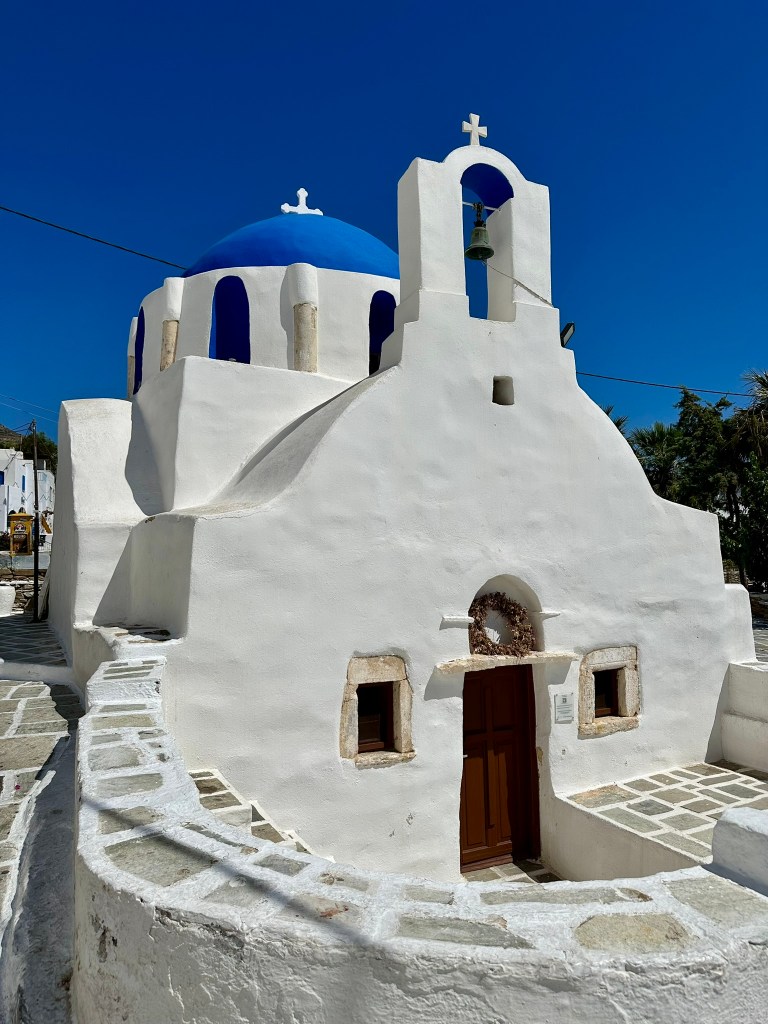
Our next stop was Ios, where we spent time immediately after our arrival to stroll around the island’s main town of Chora.
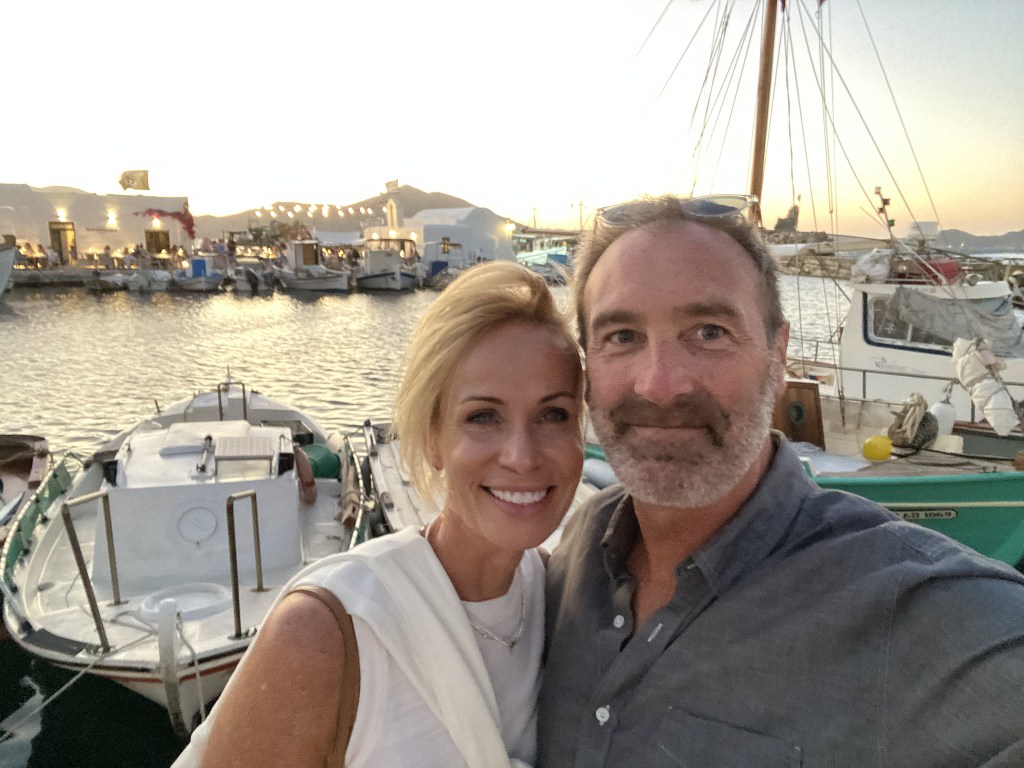
And later celebrated our 28th anniversary on Ios.
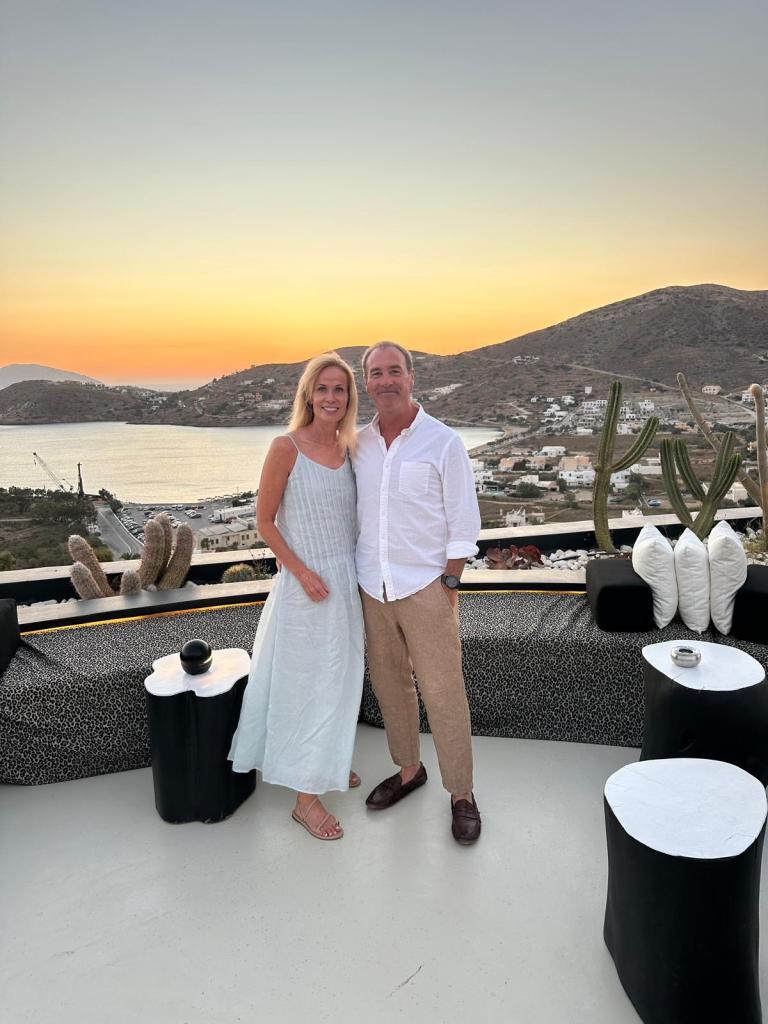
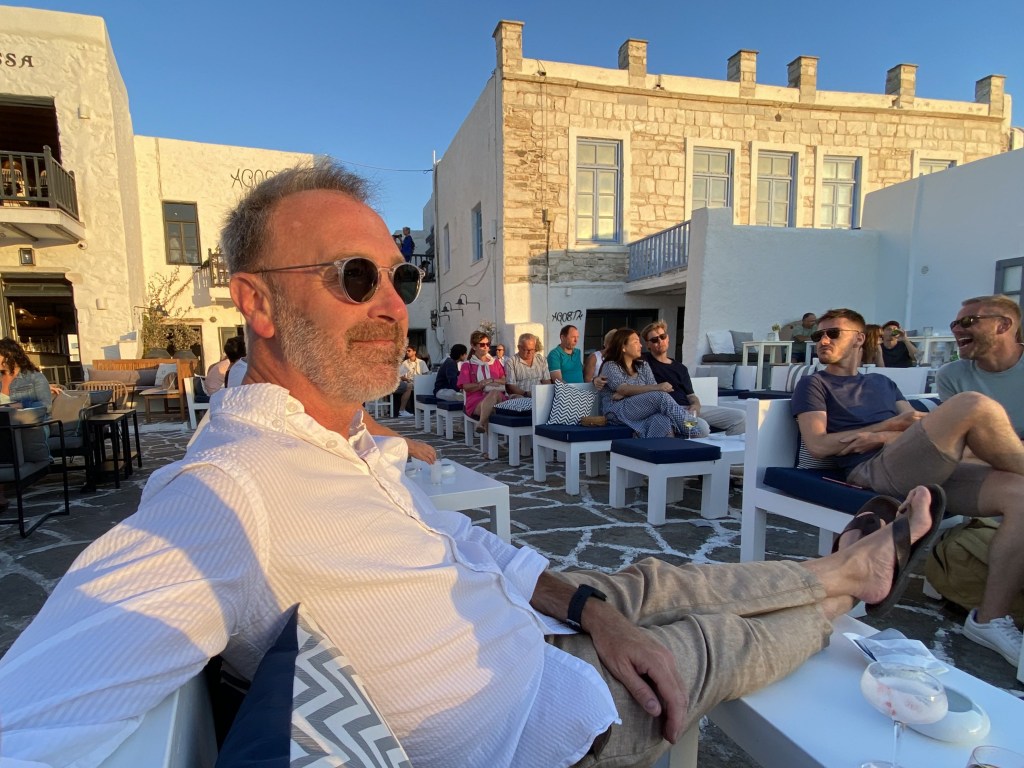
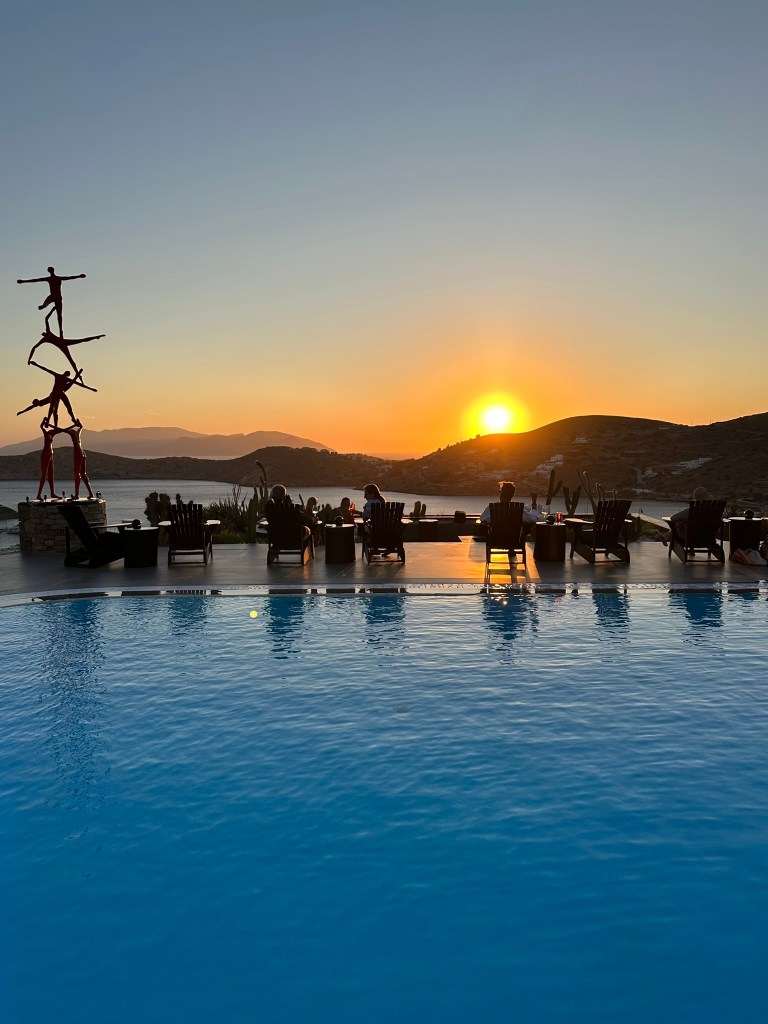
Our place had spectacular sunsets every night, elevating aperitivos hour.
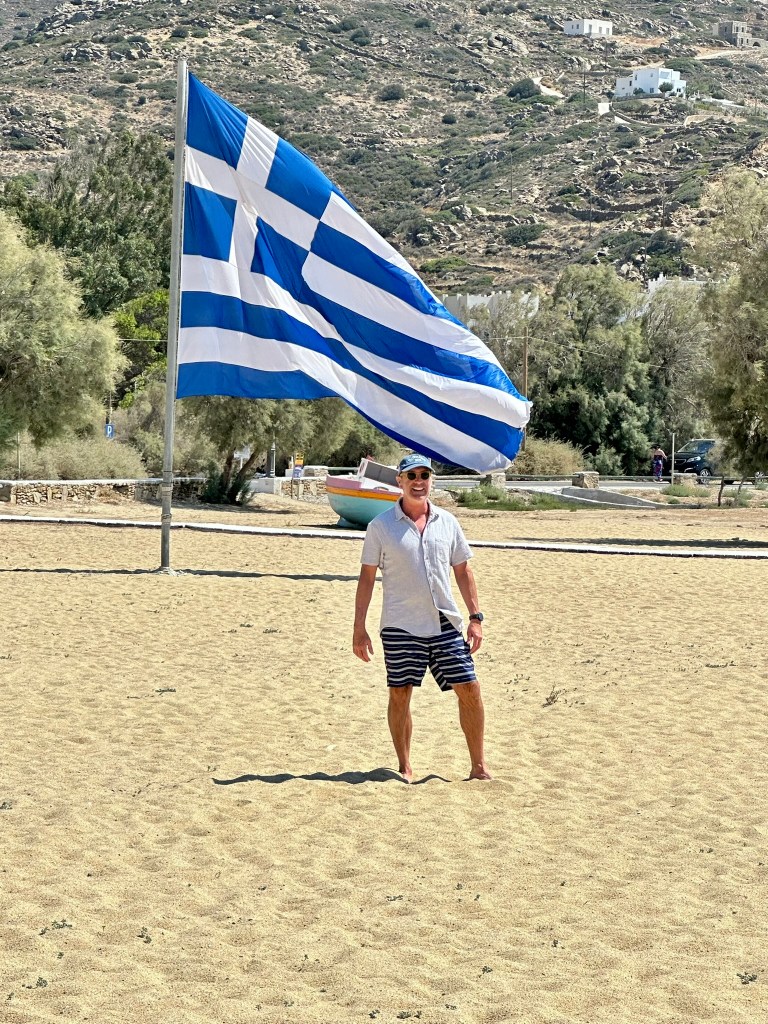
Another Greek island, another beach.
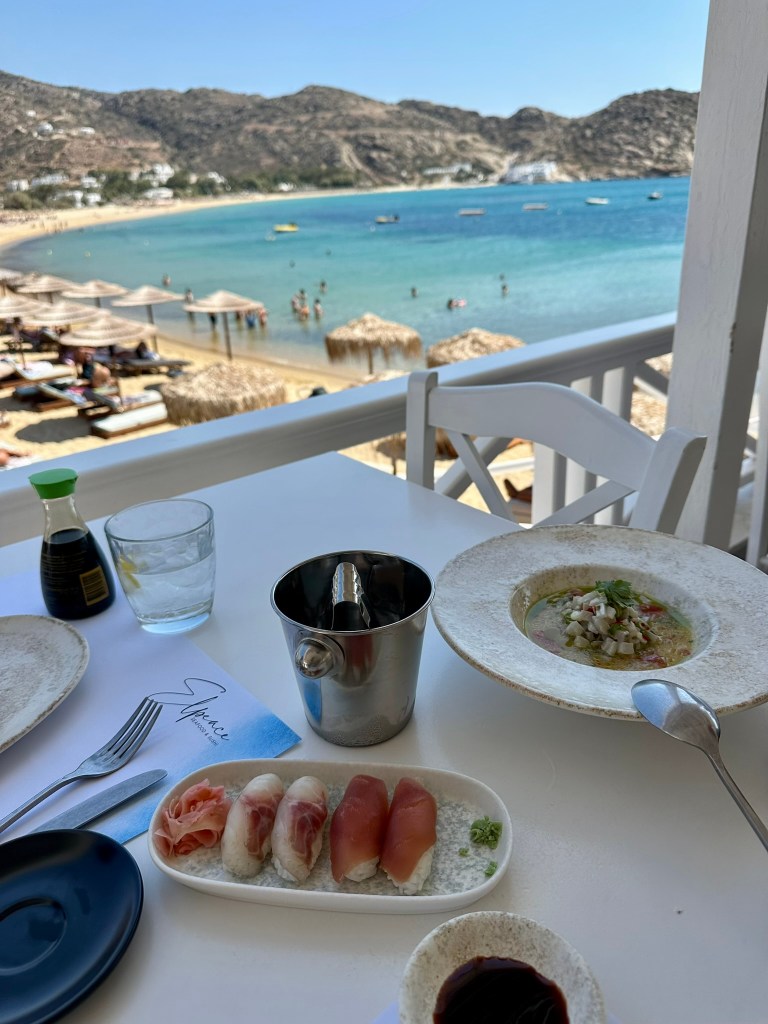
Some pretty good fish at a Greek / Japanese fusion place on said beach.
And, since we were reading The Odysseus on this leg of the trip (it was a slog), we visited the purported tomb of Homer (which does not address the dominant theory that he was, in fact, multiple poets conveying the story through oral histories, but a millenia-old island tradition is a millenia-old island tradition, after all).
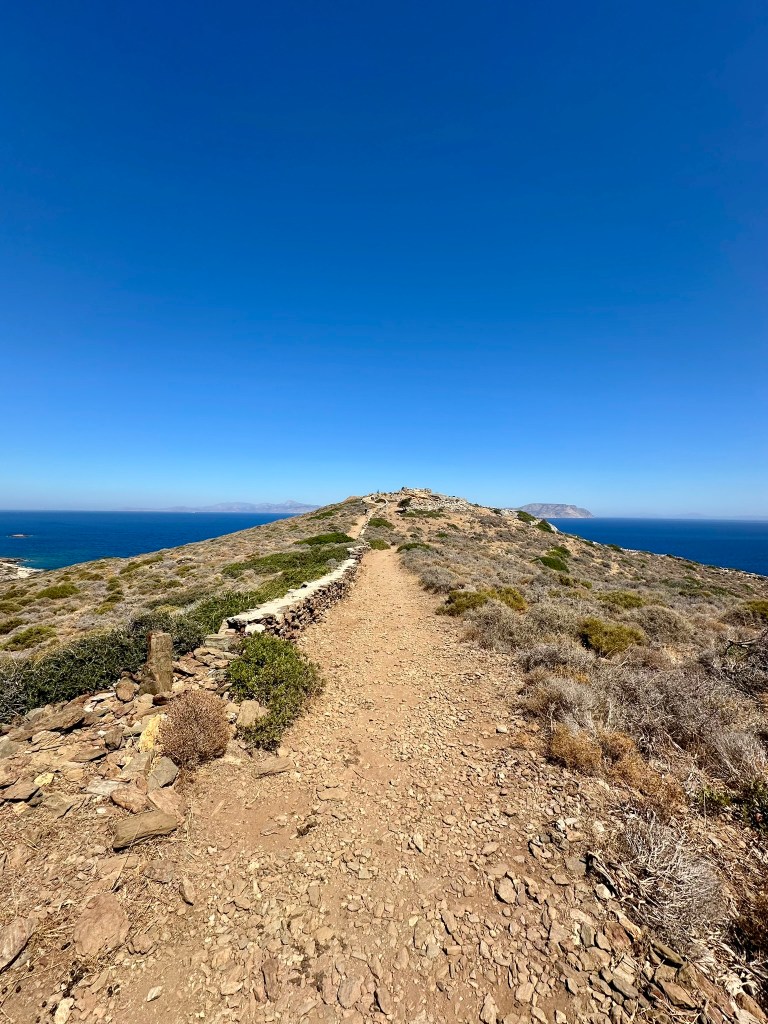
The tomb was an unmarked pile of rocks. Pretty underwhelming.
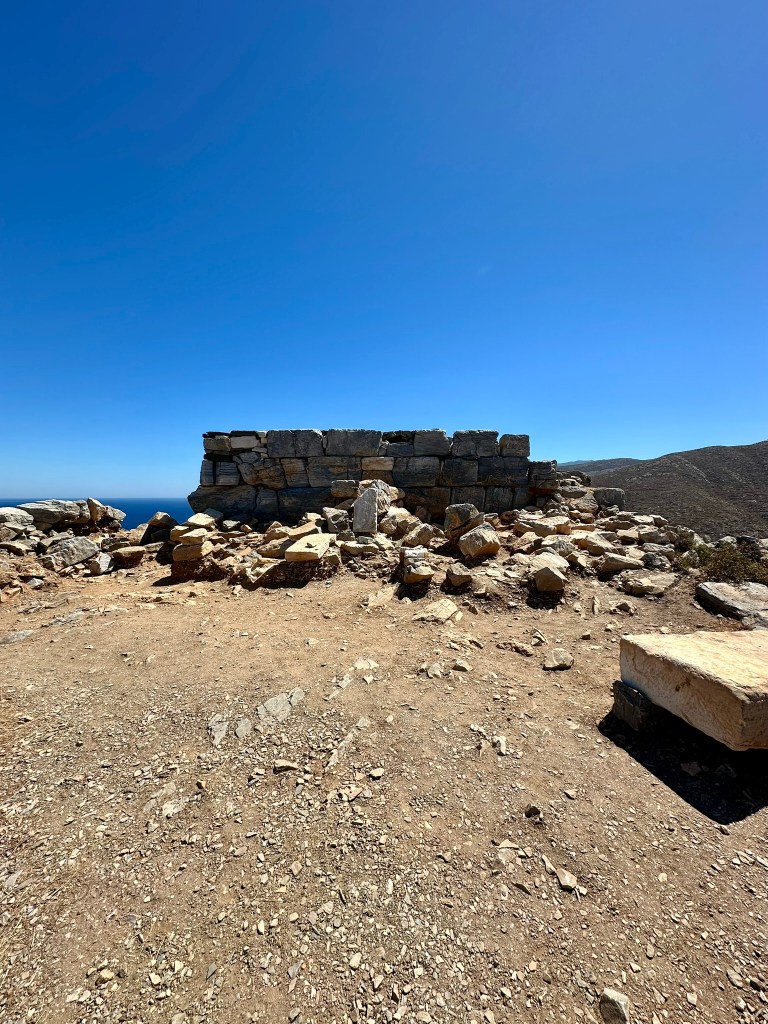
But there’s a pretty good view getting there:
Anniversary abode.
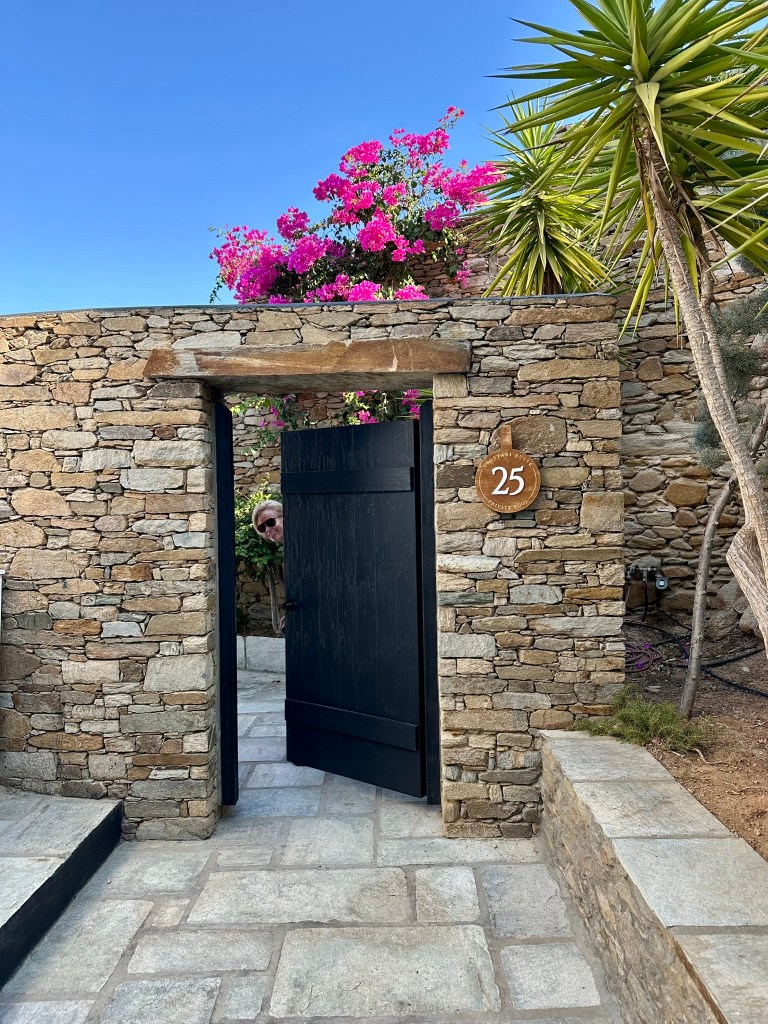
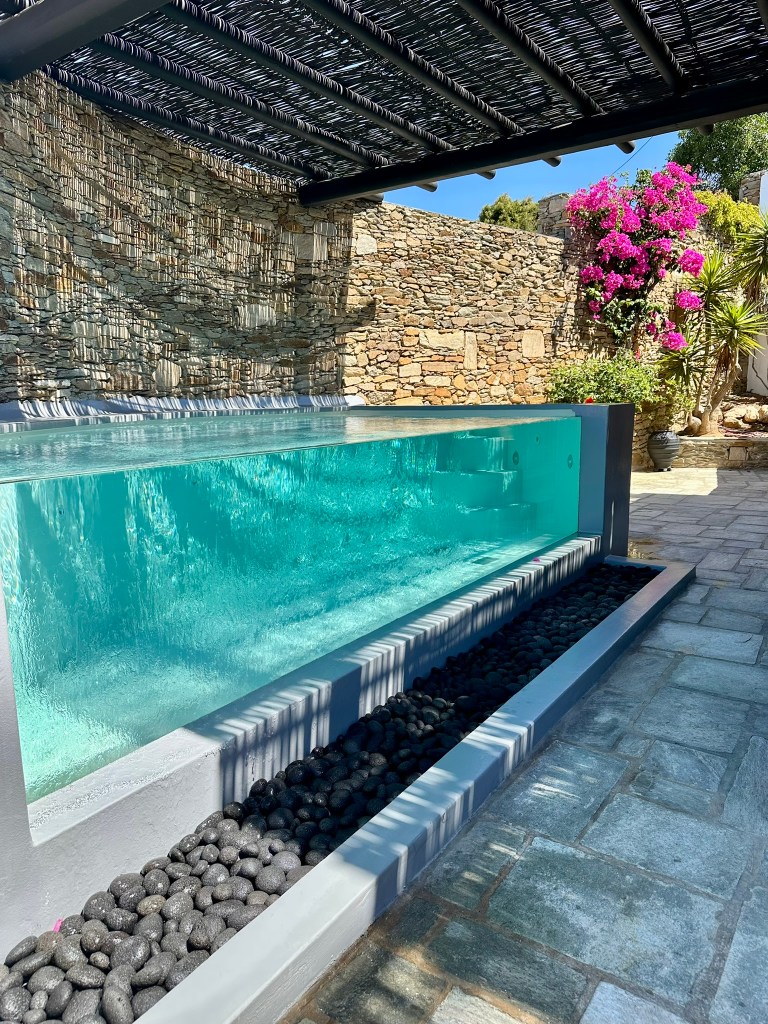
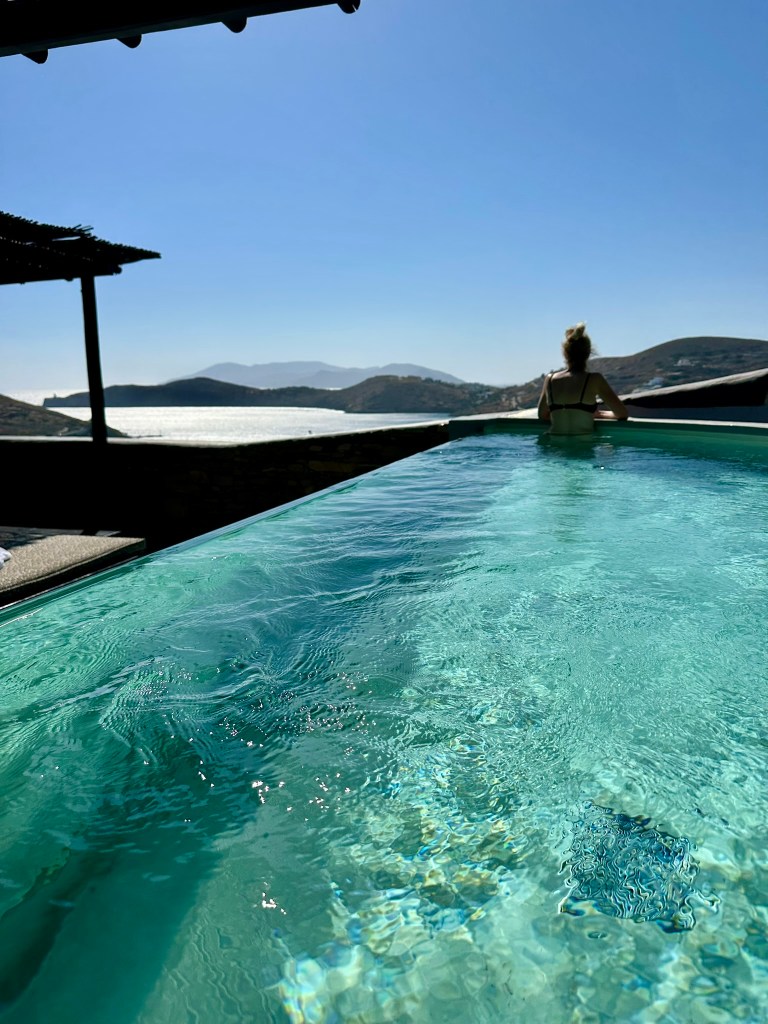
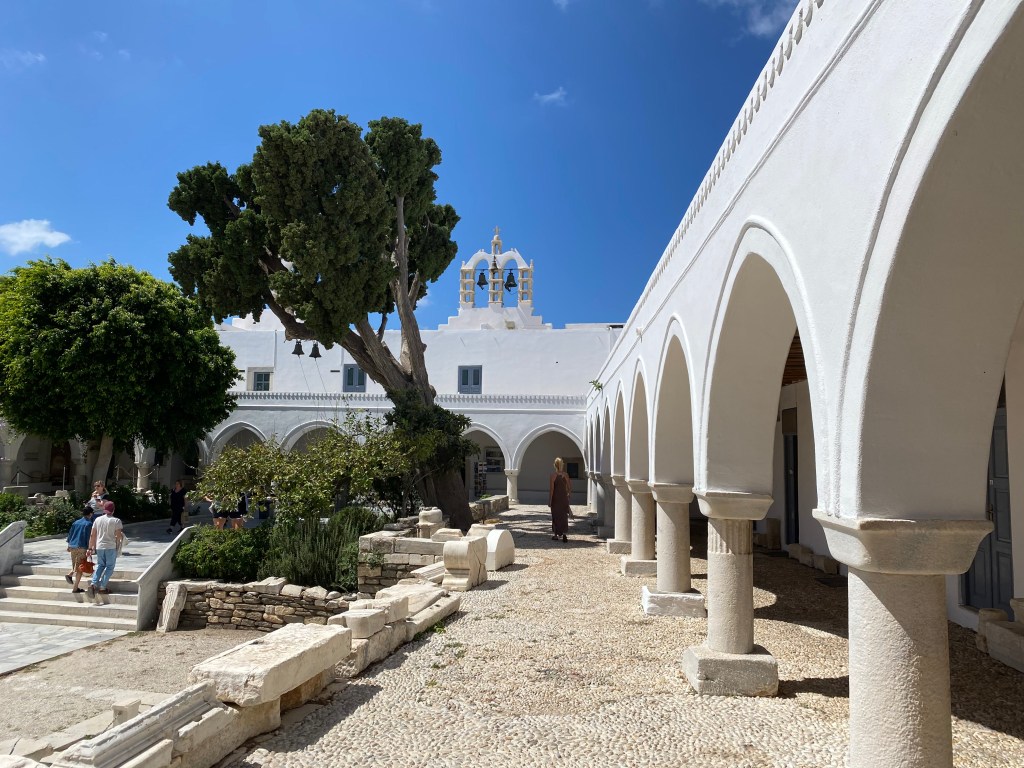
Ios was small, but Folegandros even smaller. It’s main town (also Chora – Folegandros is so small it can’t afford to buy a unique name for its main town; it had to borrow Ios’) is dominated by the Church of Panagia, accessed by a serpentine path up a mountain:
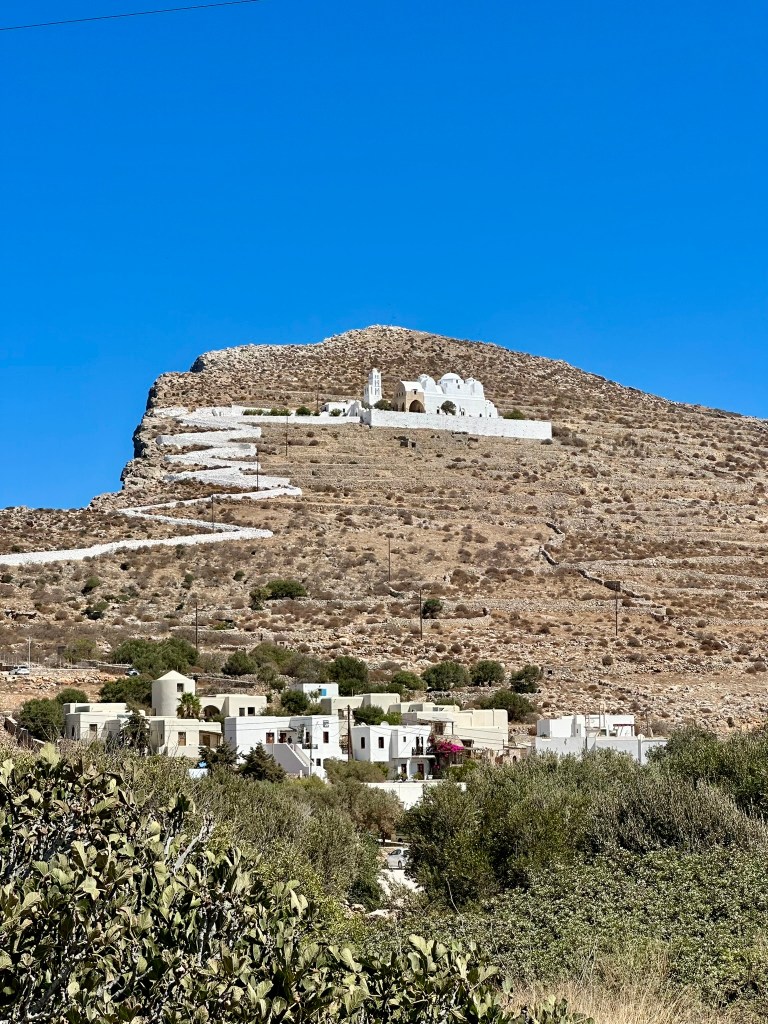
From which there is ALSO a pretty good view:
Chora’s Kastro, a remarkably preserved medieval fortified quarter built under Venetian rule to shelter Folegandros from pirates. Many of the town’s residents still live within its walls.
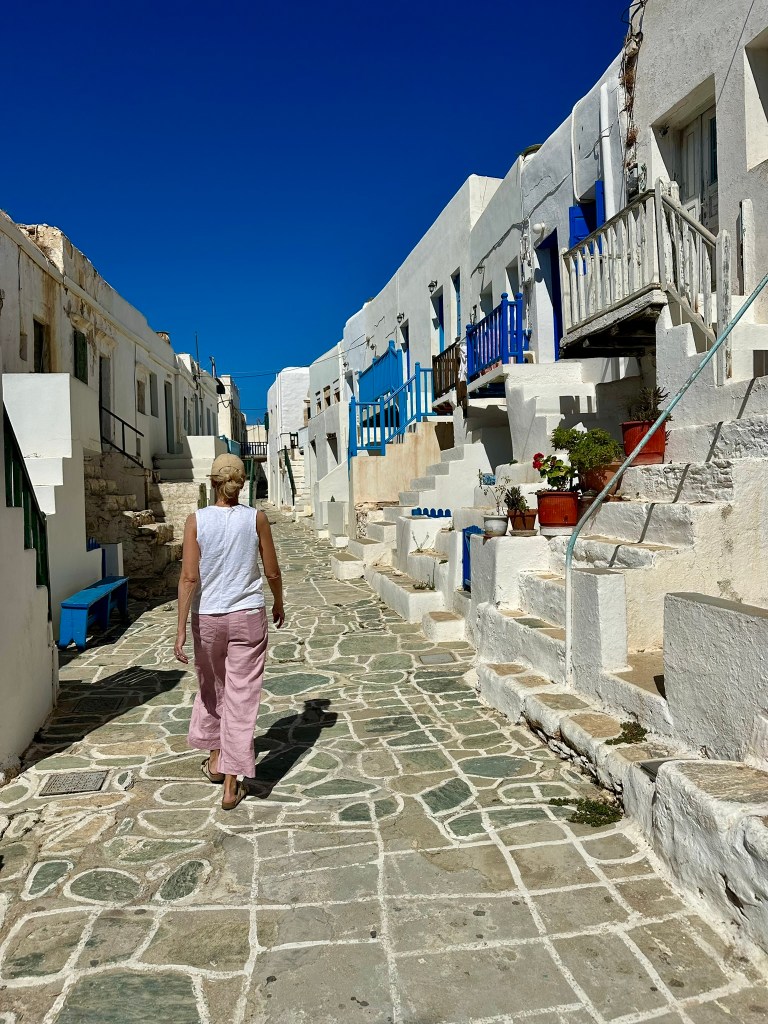
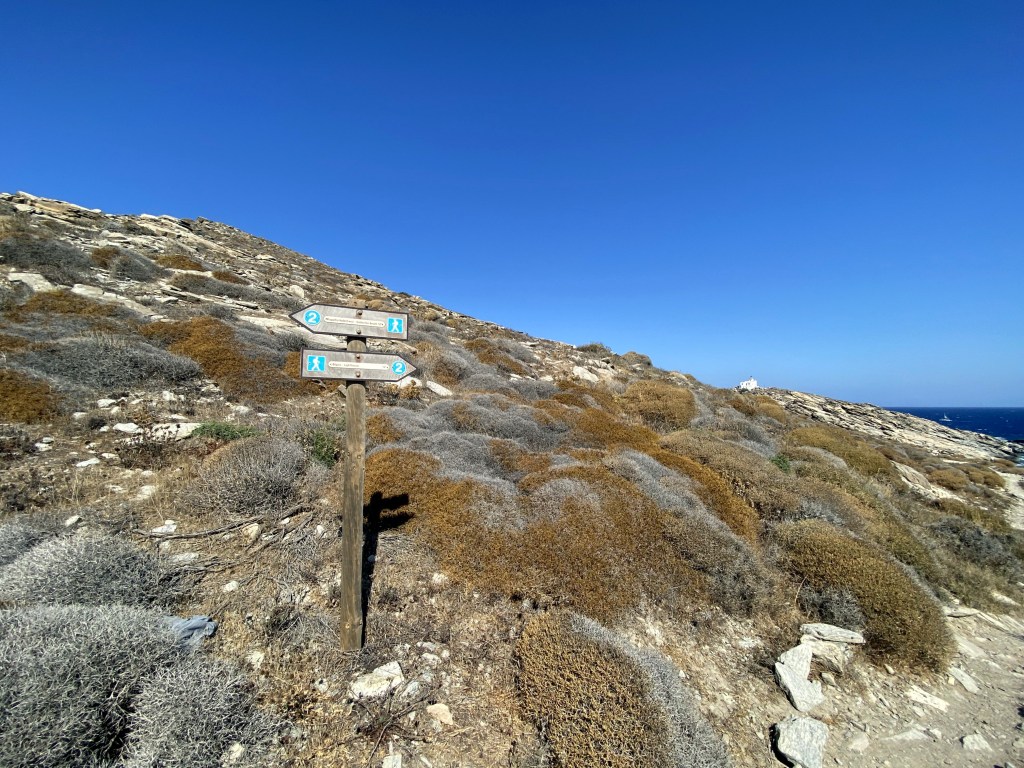
Folegandros had a sort of saddle across the middle of the island, where you could see both sides, so we hiked this one day. Pretty cool.
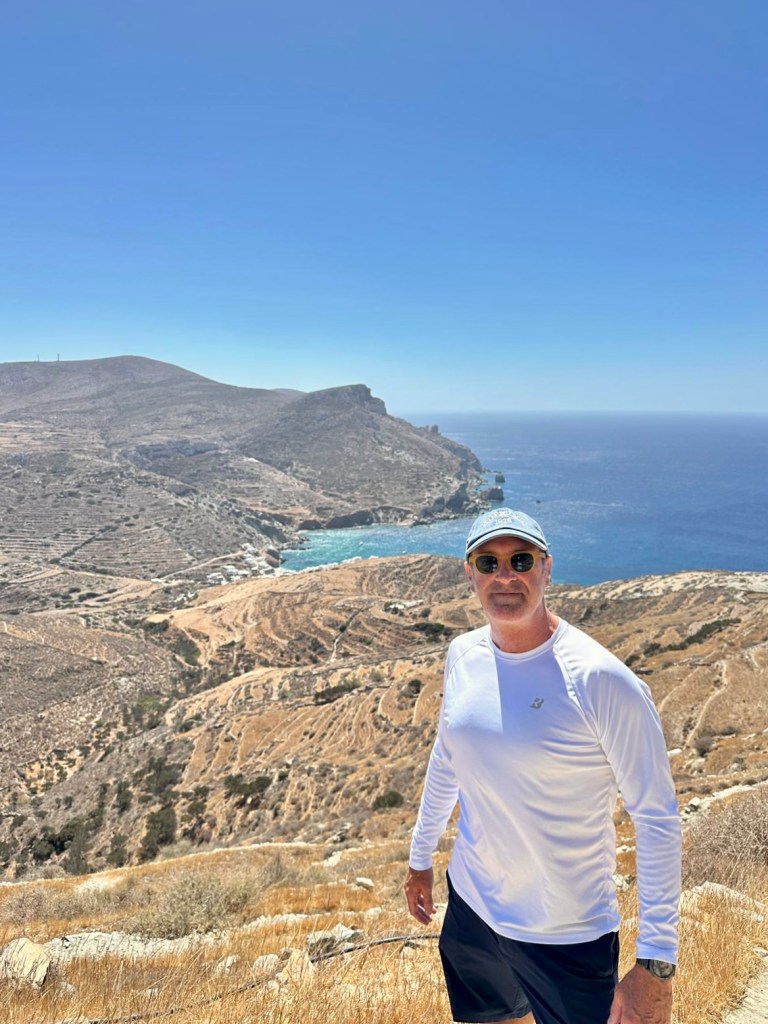
And also hiked to Agios Nikolaus beach from the larger Agkali beach one day; the island’s mayor wants to discourage tourism build up, and so prohibits organized beach businesses (read: sunbeds and drink orders), so everything’s pretty rustic.
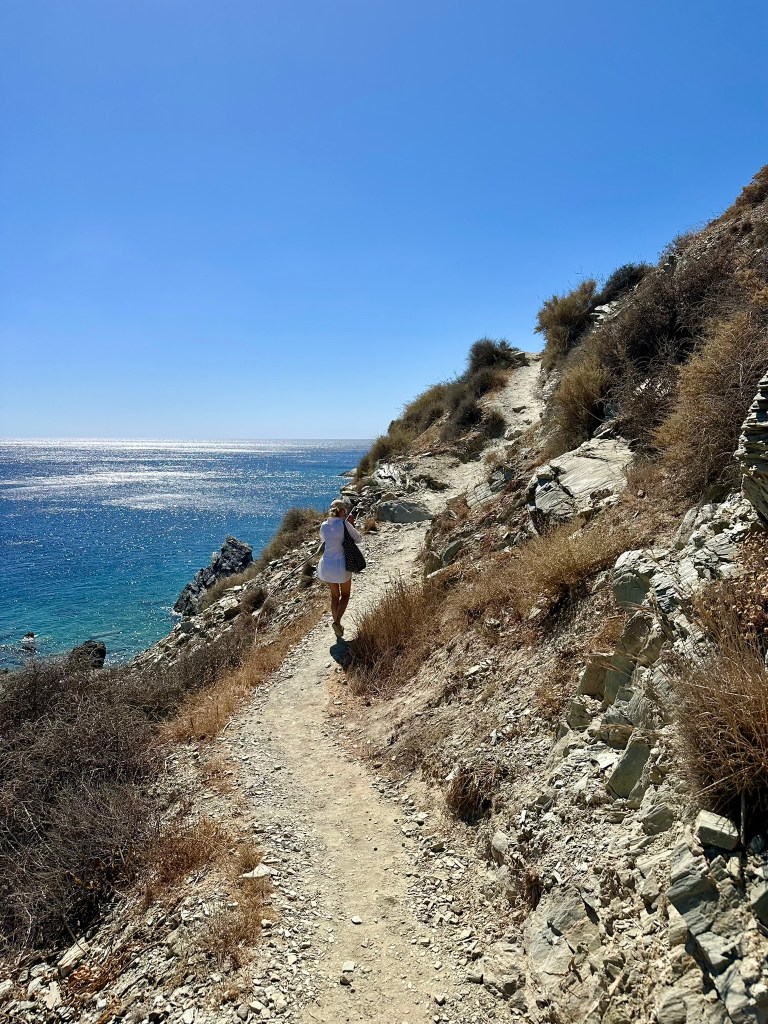
Although lunch in Akgali over that beach was pretty picture perfect.
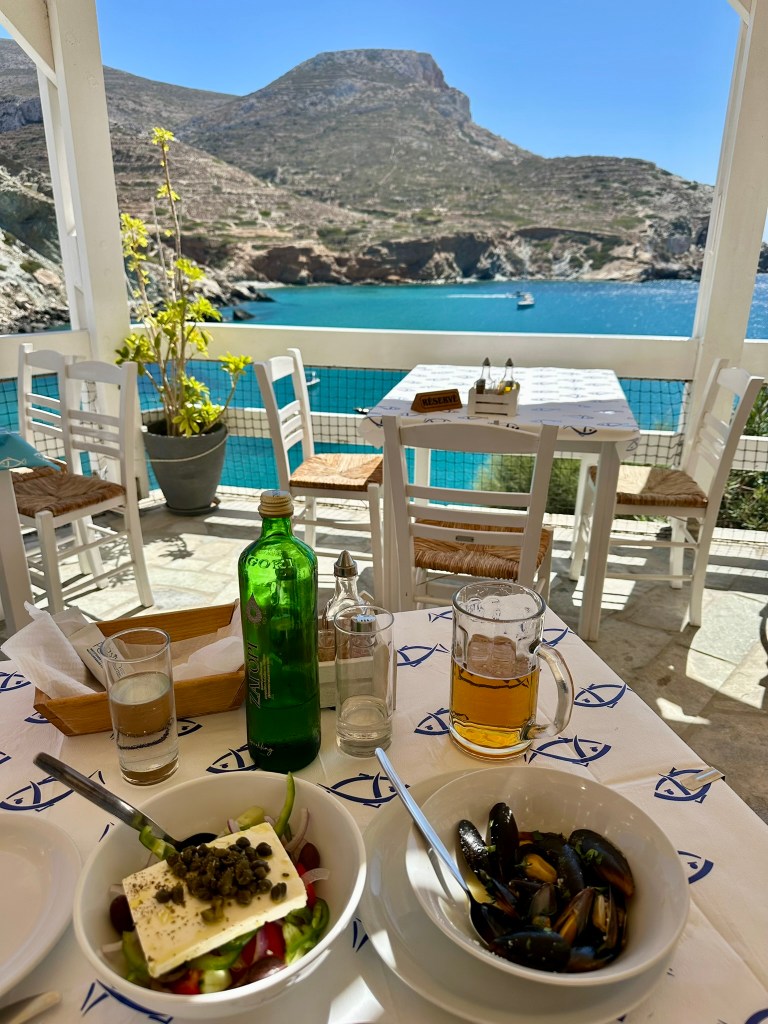
Also pretty good digs on Folegandros:
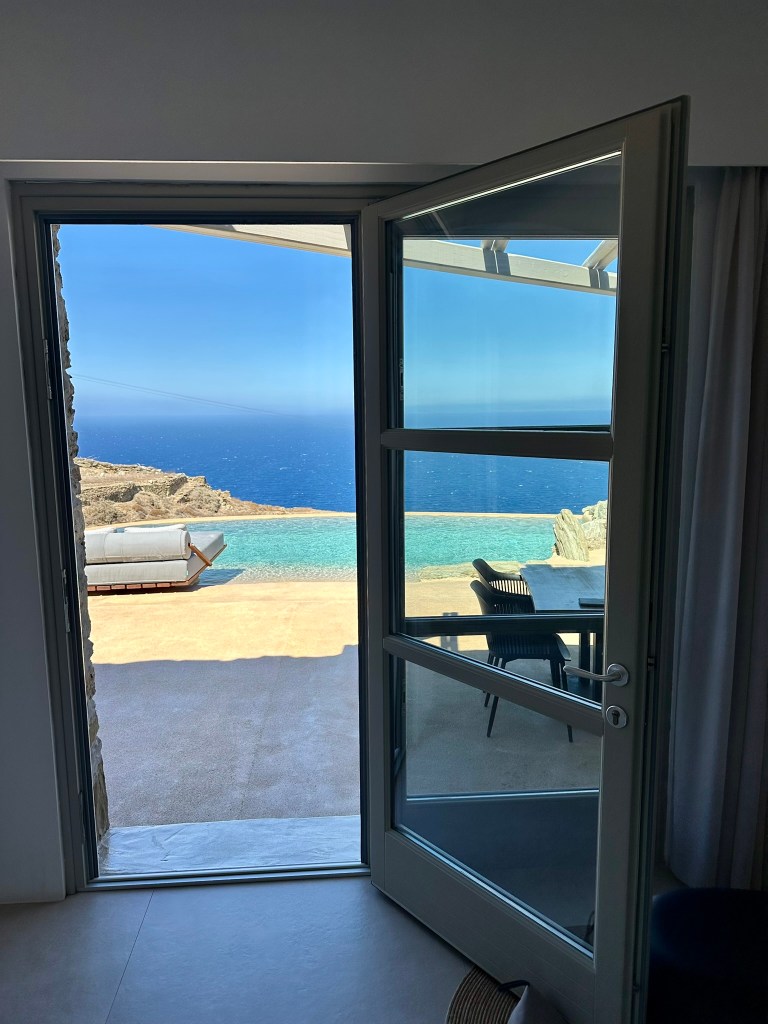
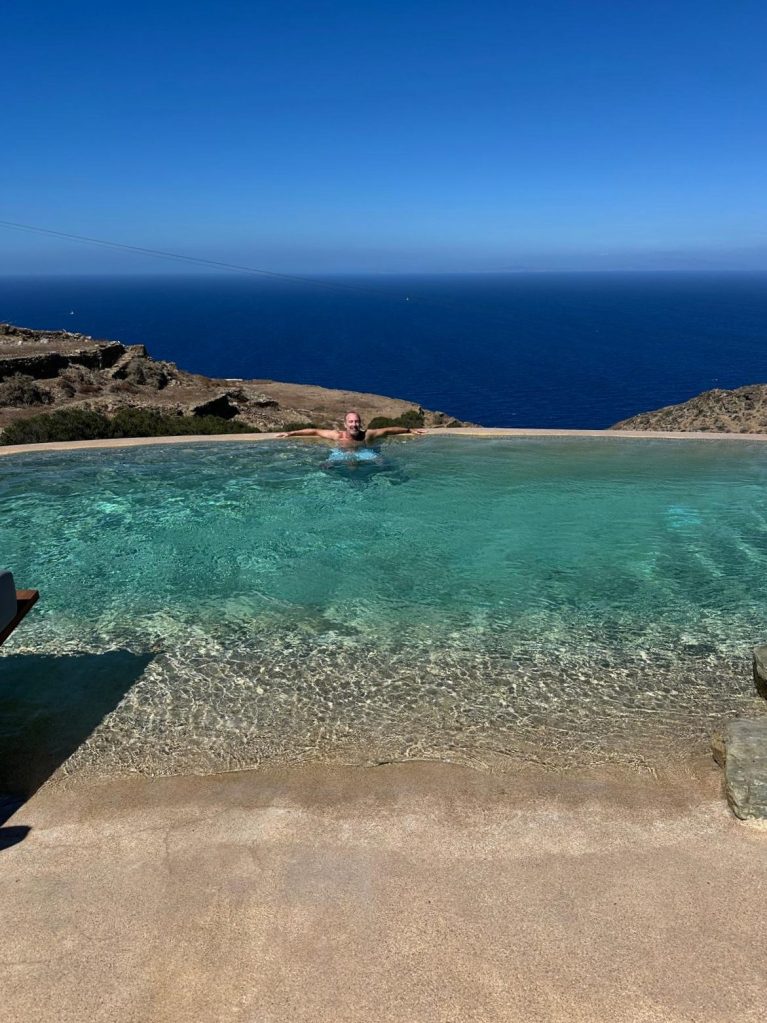
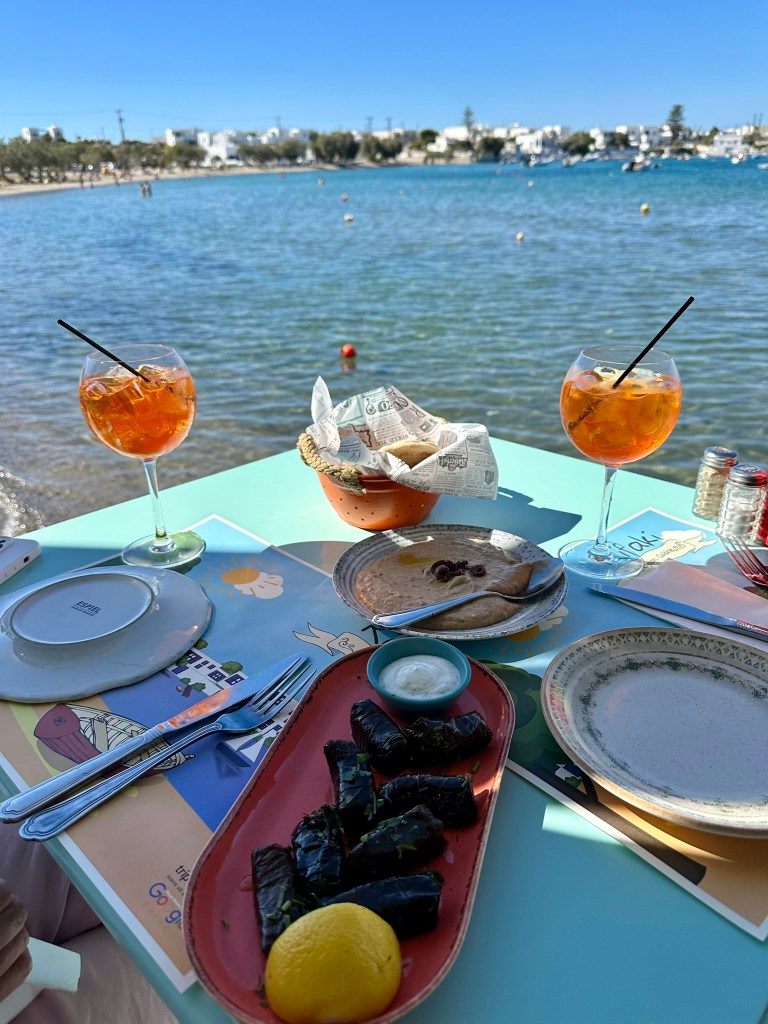
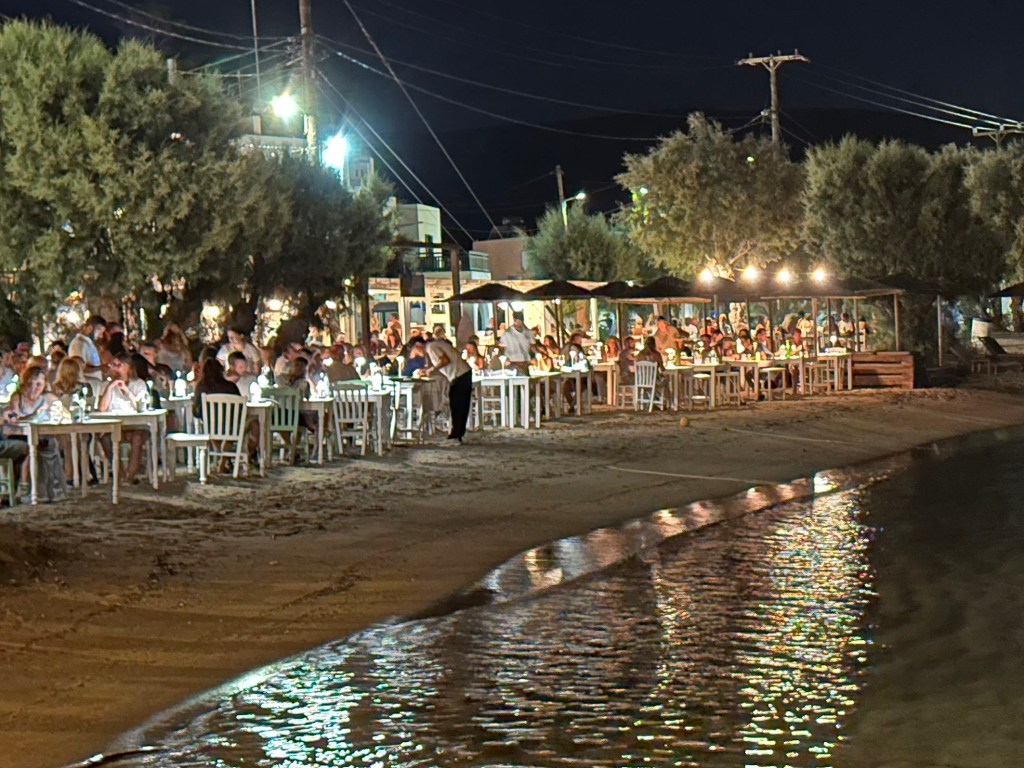
Thence to our final island of Milos, where we stayed in the harbor town of Pollonia (which was composed almost entirely of restaurants that formed an arc around most of the harbor.
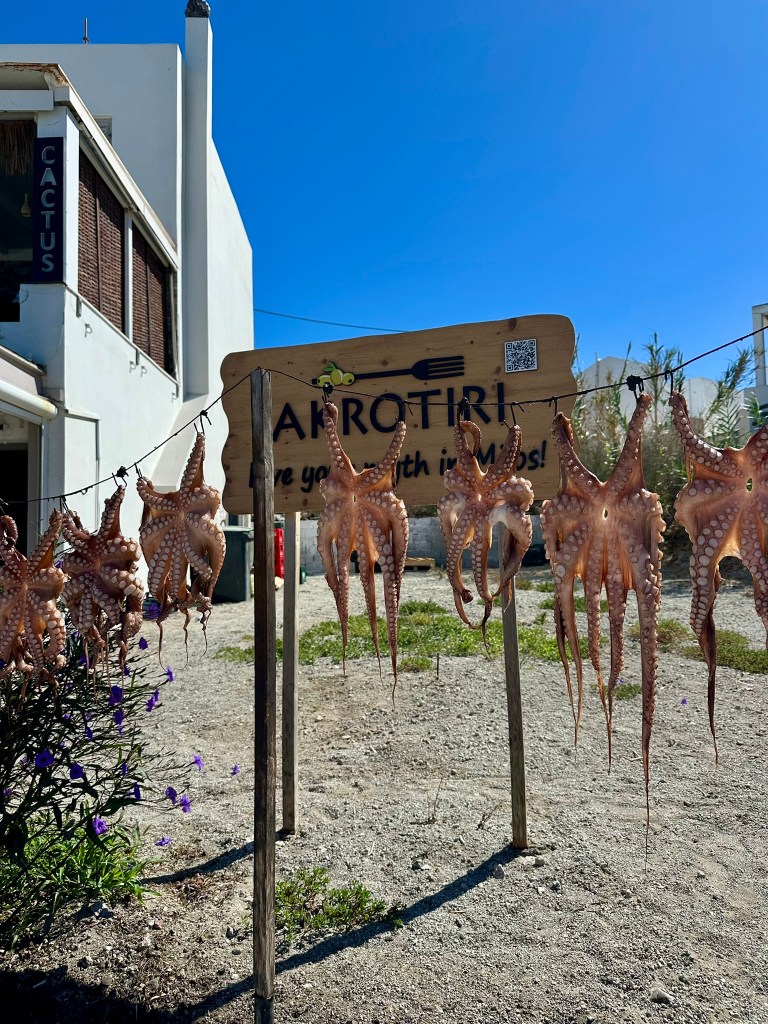
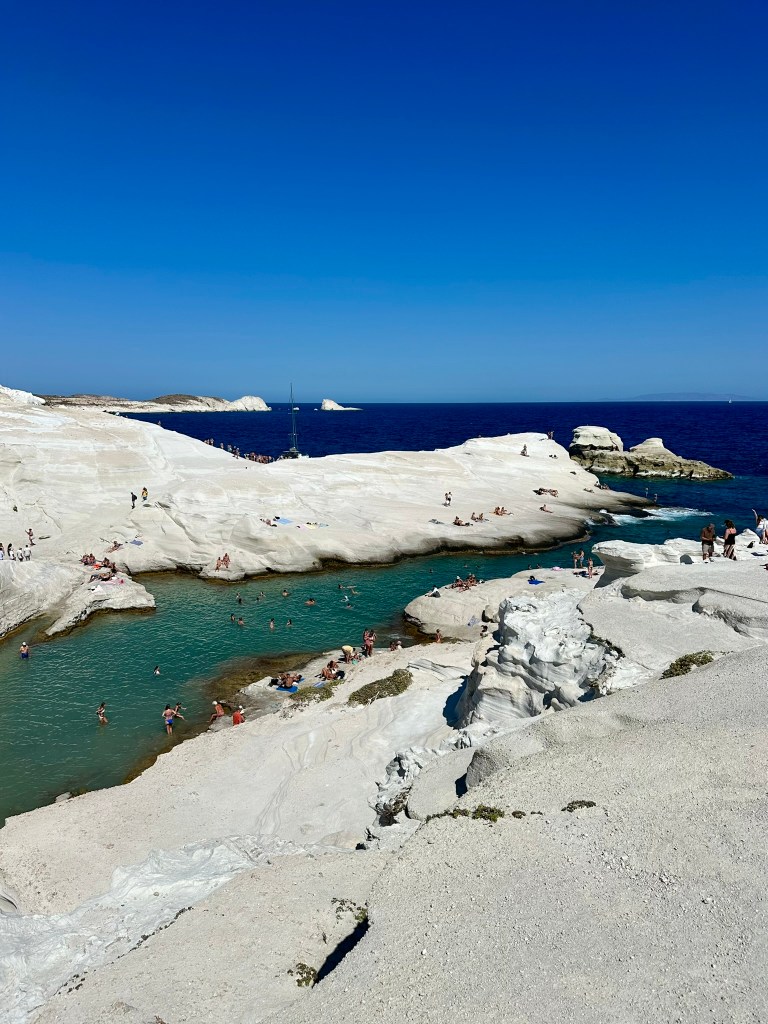
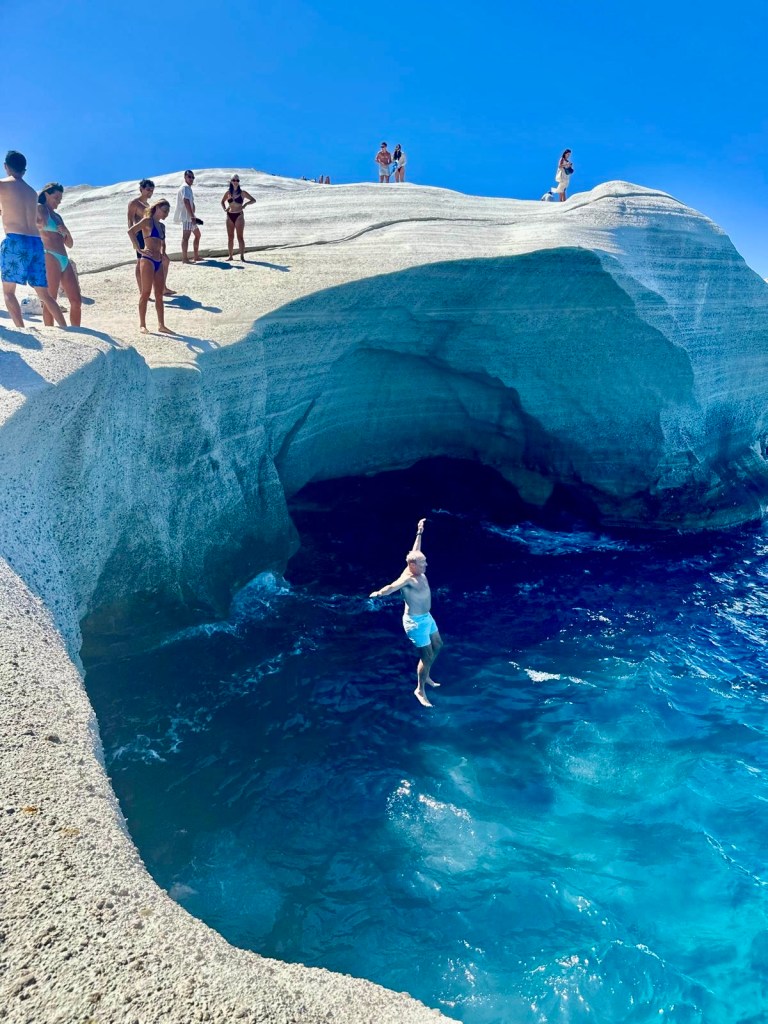
Our first full day, we hightailed it over to Sarakiniko Beach, home to the limestone cliffs and rocks that create a dramatic shoreline against the Aegean blue.
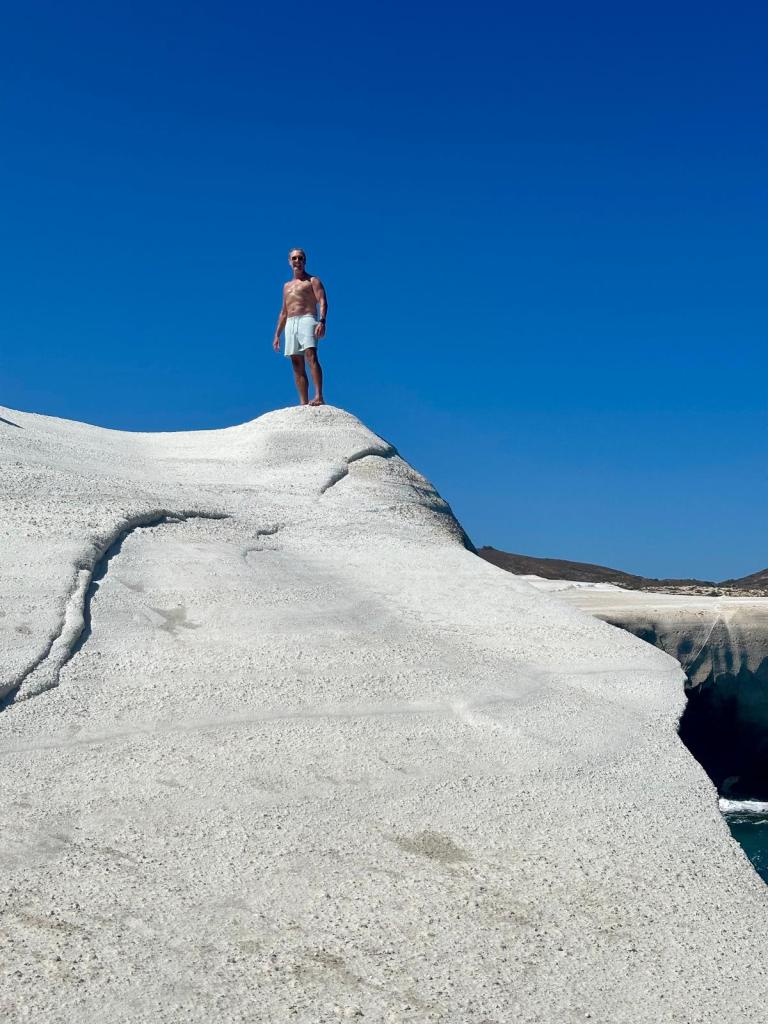
Cliff diving turned out to be pretty good there.
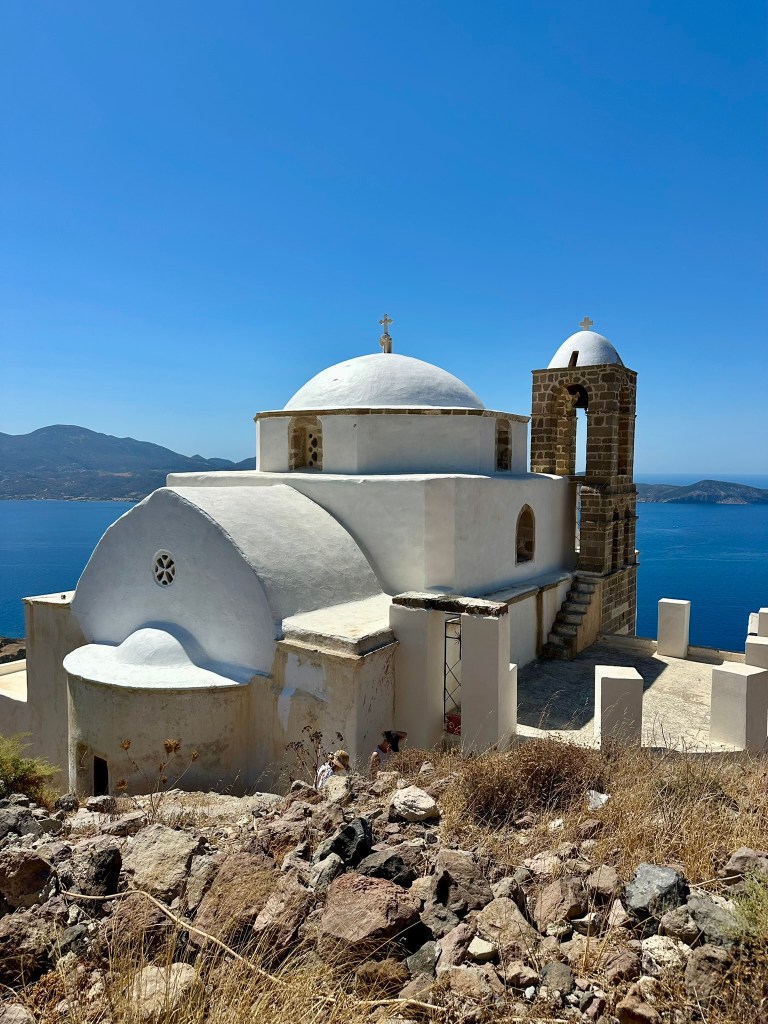
We hiked up to the castra on top of Milos’ main town of Plaka.
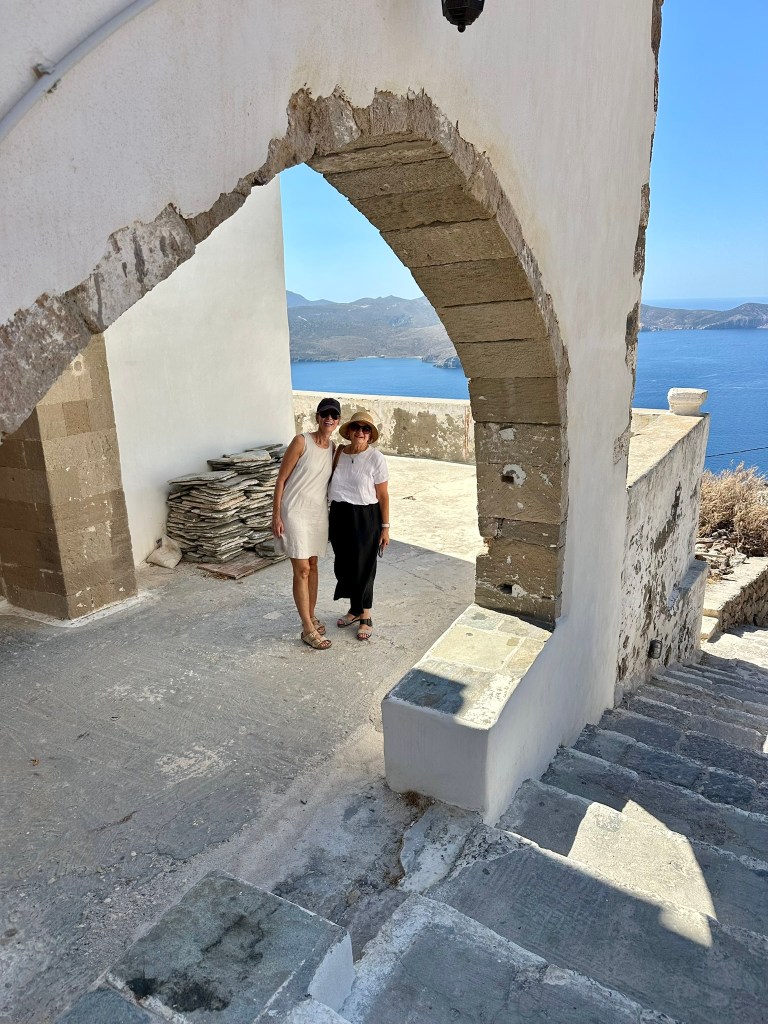
Where we met Cena, a charming solo traveler from North Macedonia (by way of Toronto), waiting at the bottom of the steps for someone to accompany her. Very nice experience!
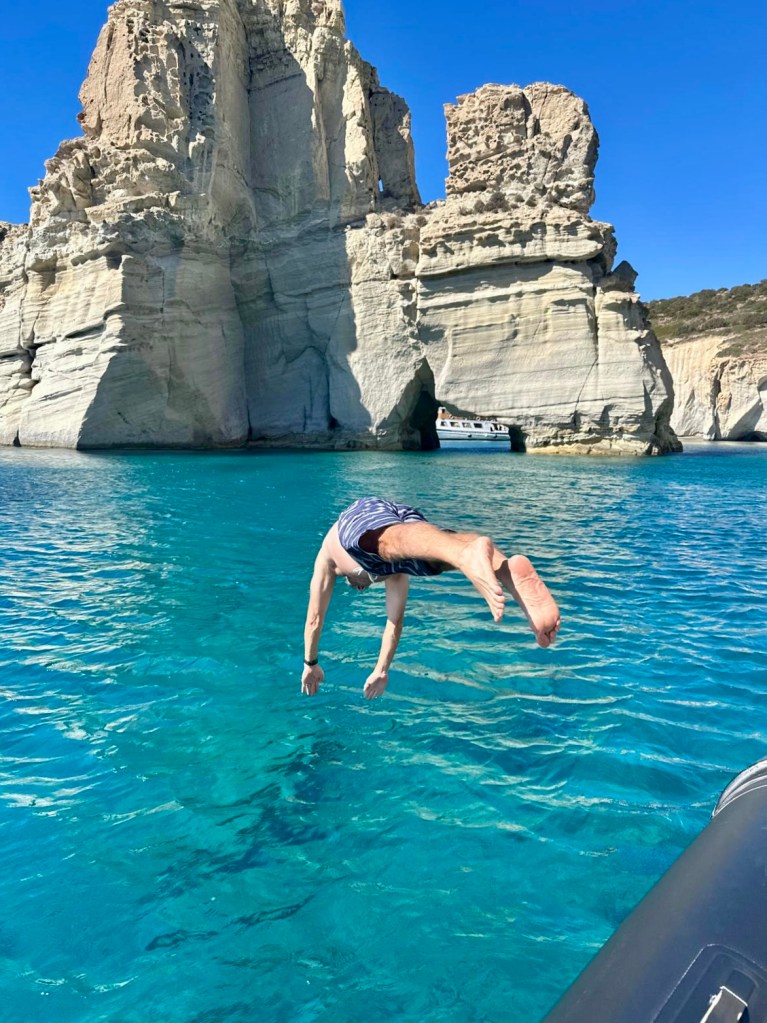
Cool ass boat trip the next day to Milos’ Kleftiko cliffs.
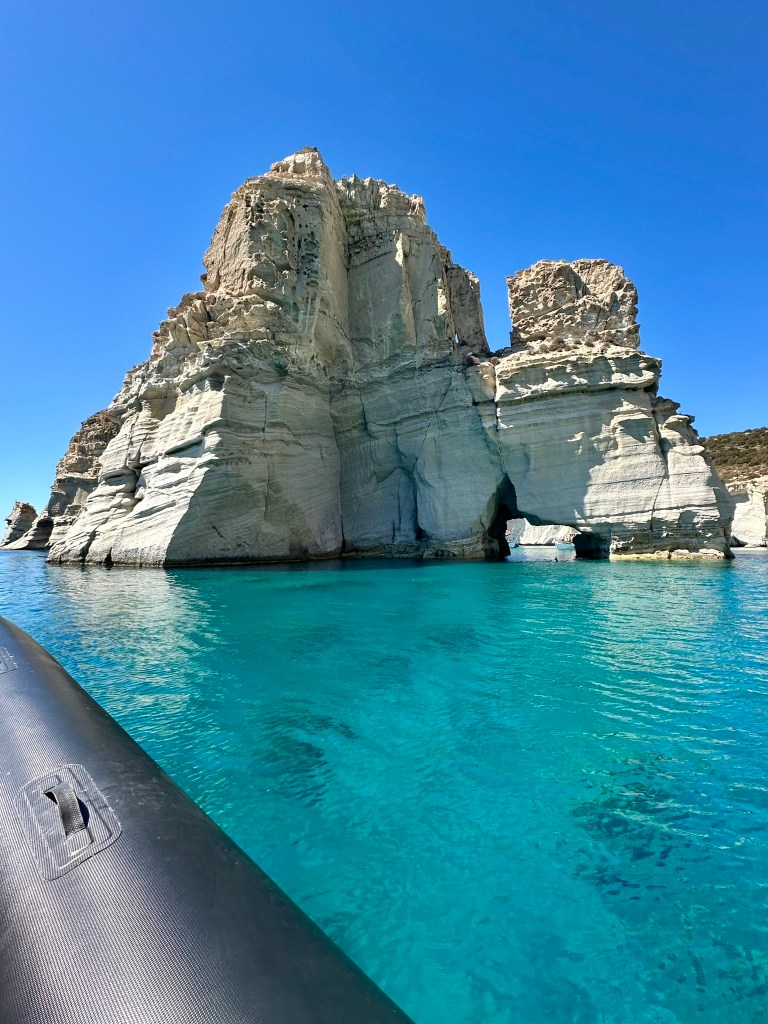
Where more diving and swimming ensued.
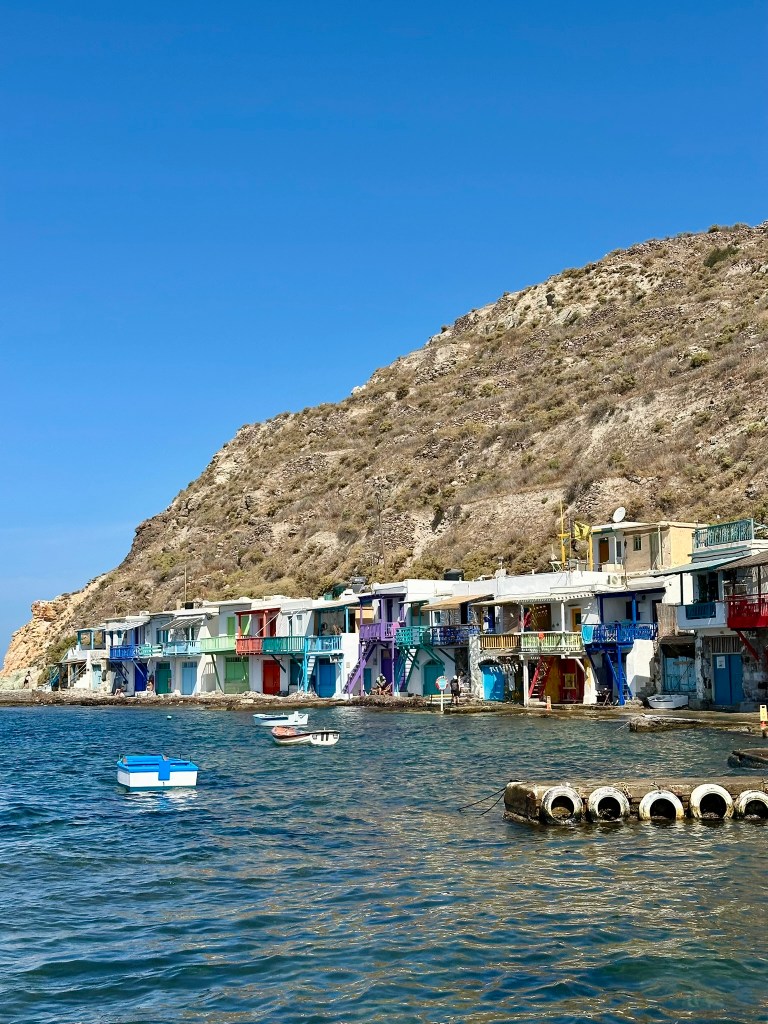
The picturesque fishing villages-cum-guest house community of Klima.
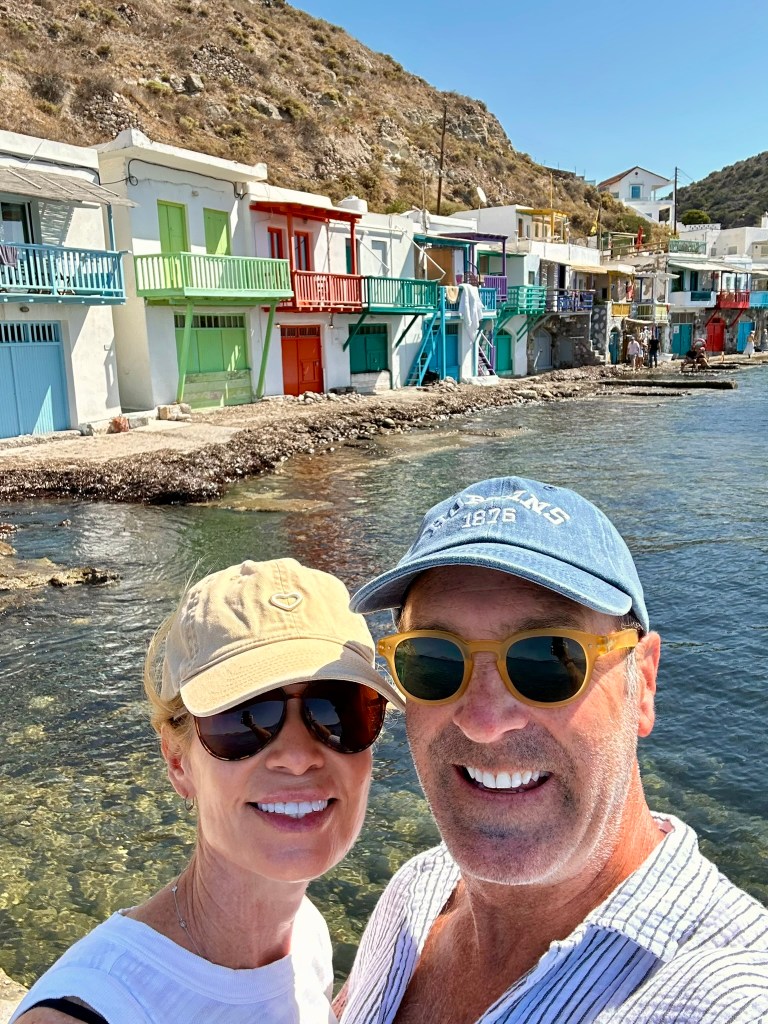
More good digs in Pollonia, where we laid low on our final day, and dove and swam off the rocks into the deep water right outside our place; pretty good setup.
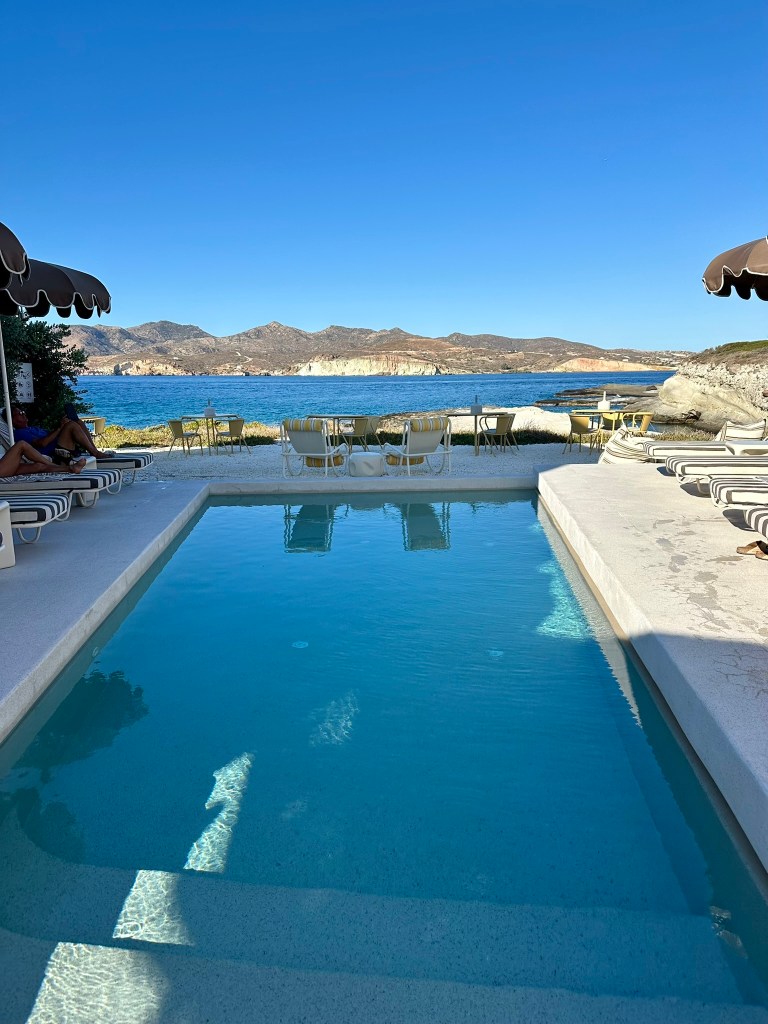
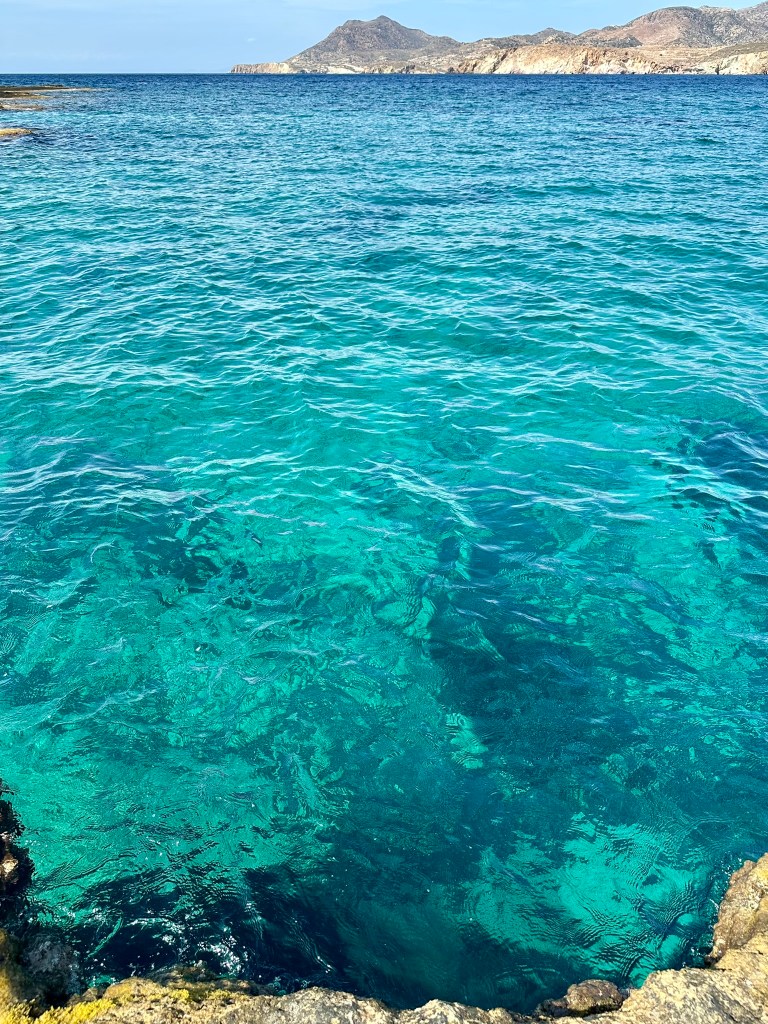
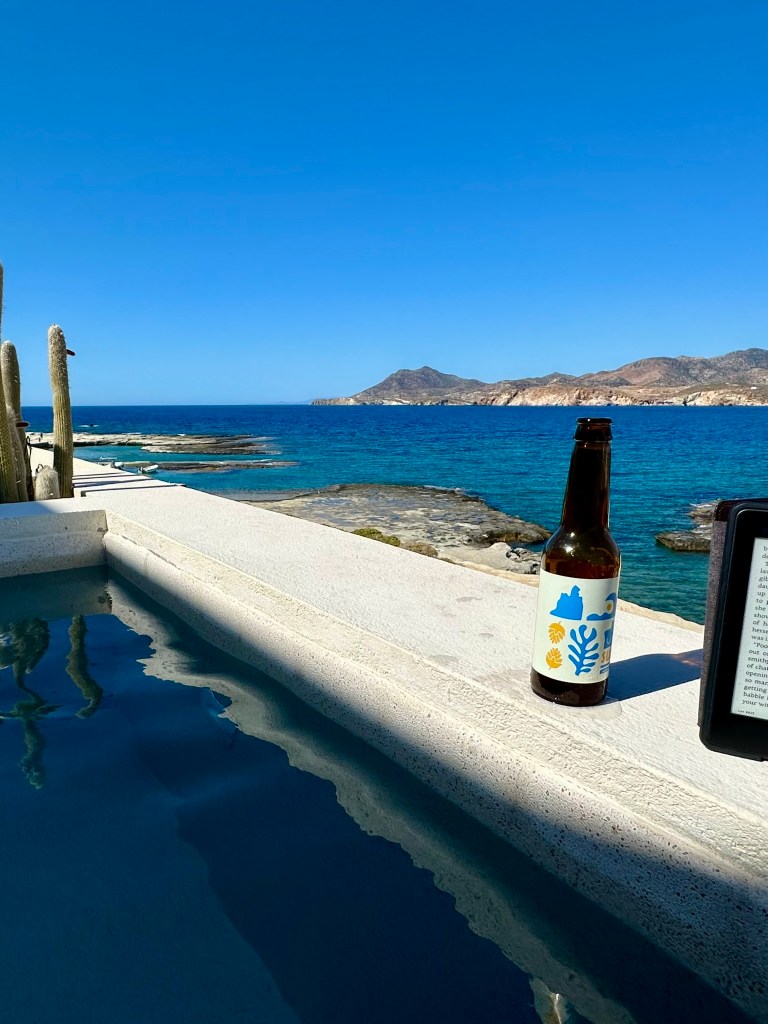
Last evening on Milos.
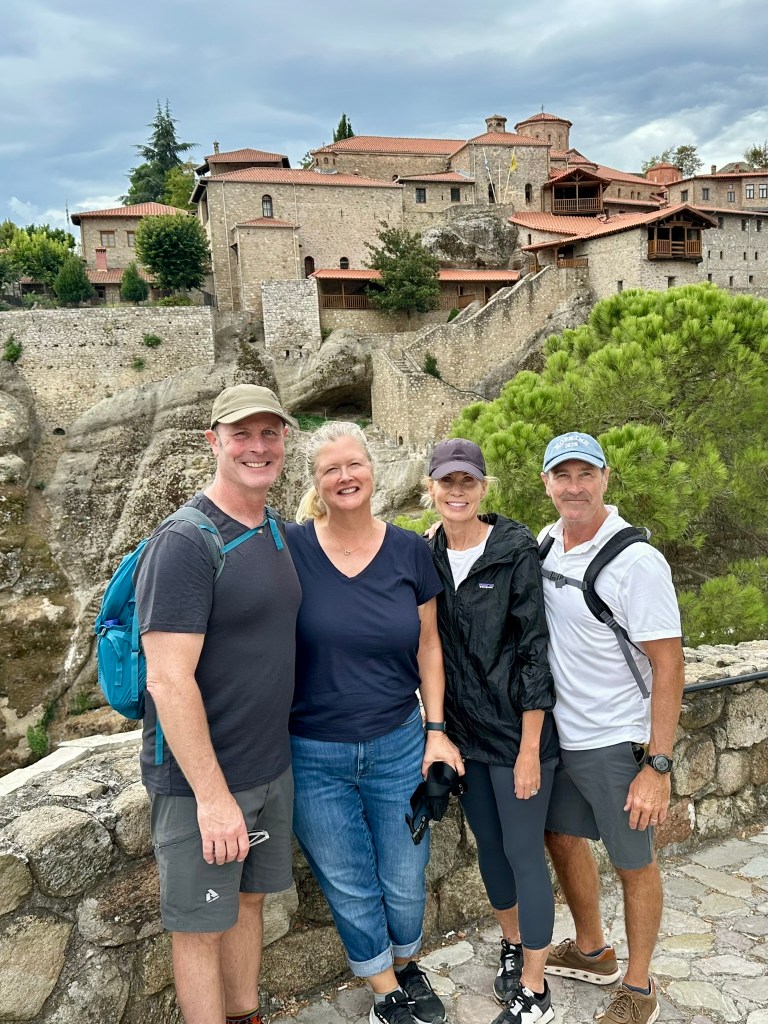
And then linking up with the Seattles, who were just starting their Greek sailing trip with a leg in northern Greece to visit the clifftop monasteries of Meteora. This was not part of our original itinerary, but we realized that we’d have an overlap, and coordinated to overlap together.
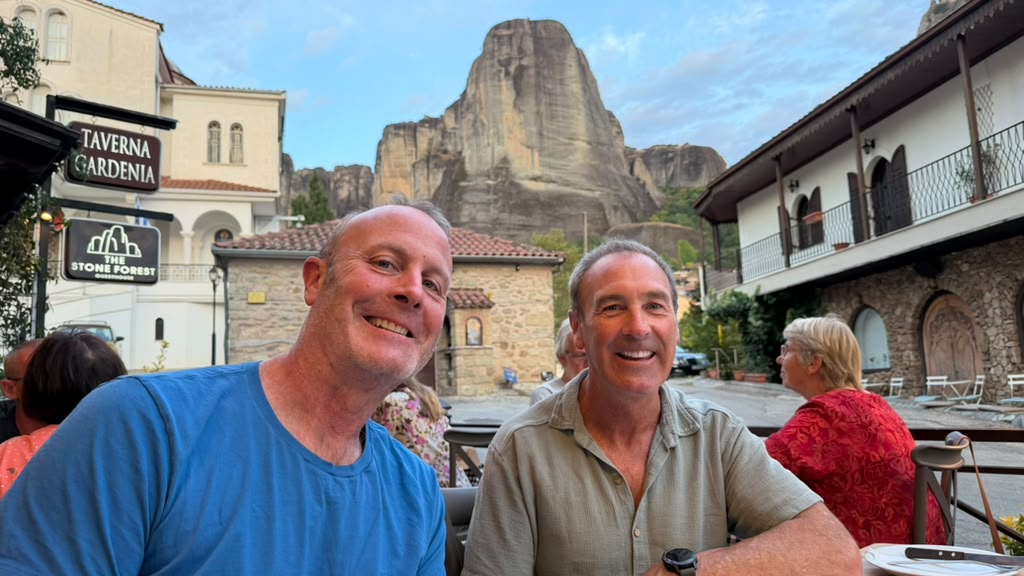
A pretty great addition to the trip. We had not even heard of Meteora before, so the Seattles were adding value all over the place.
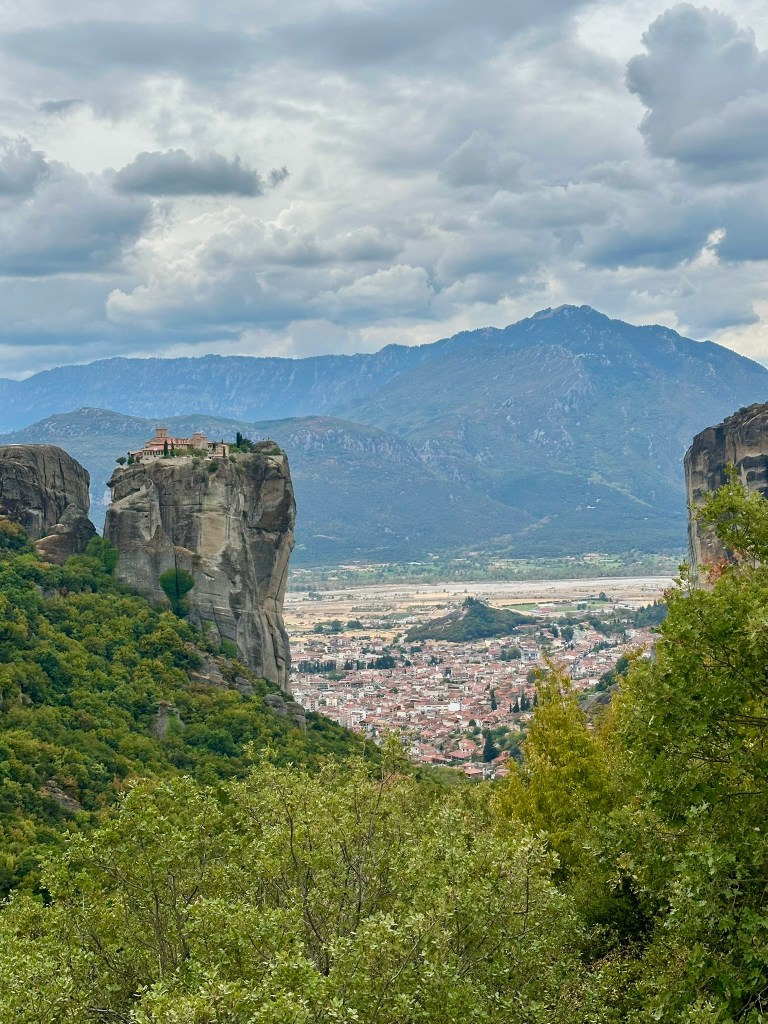
The monasteries began in the 14th century when Orthodox monks seeking solitude and protection from political turmoil established hermitages atop the region’s towering sandstone pillars.
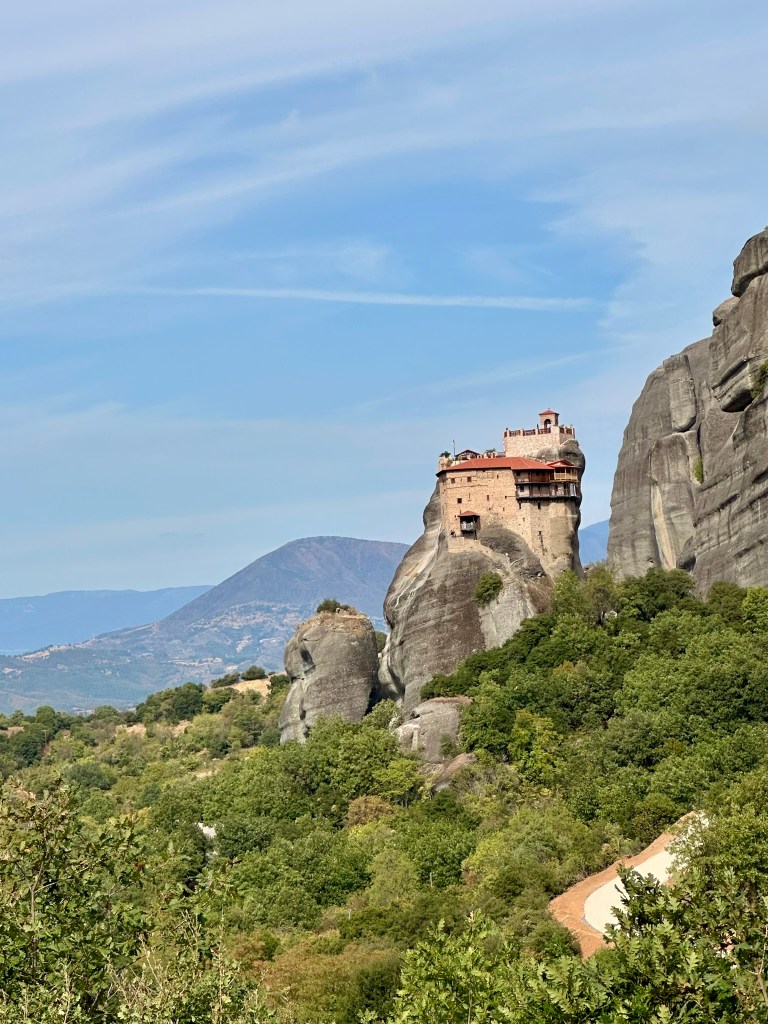
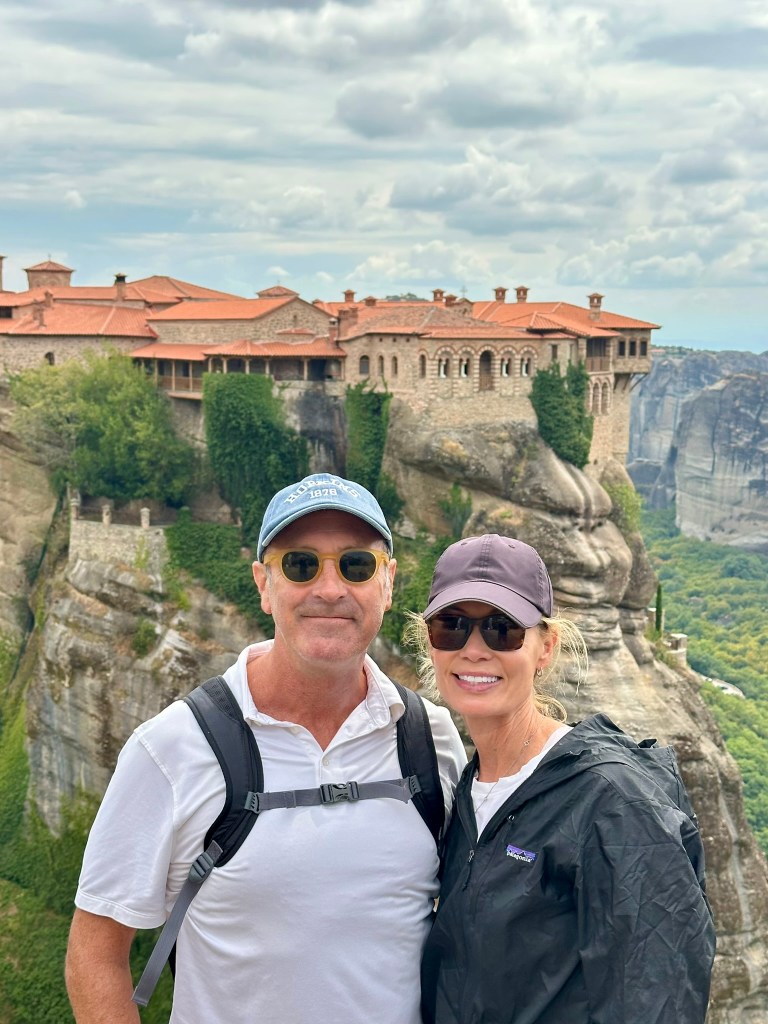
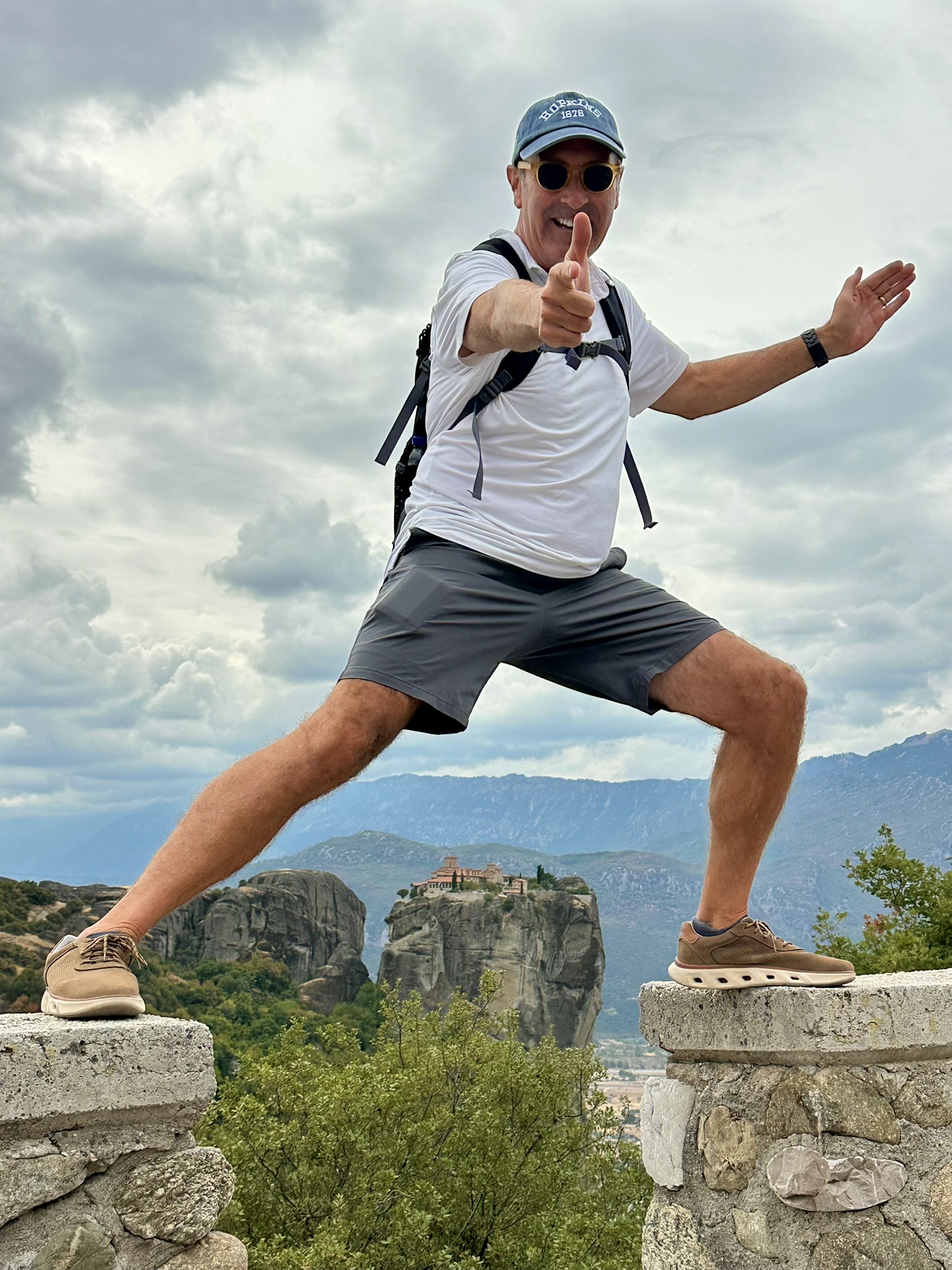
We took a bike tour that lasted the entire first full day in the area, and were able to visit four monasteries.
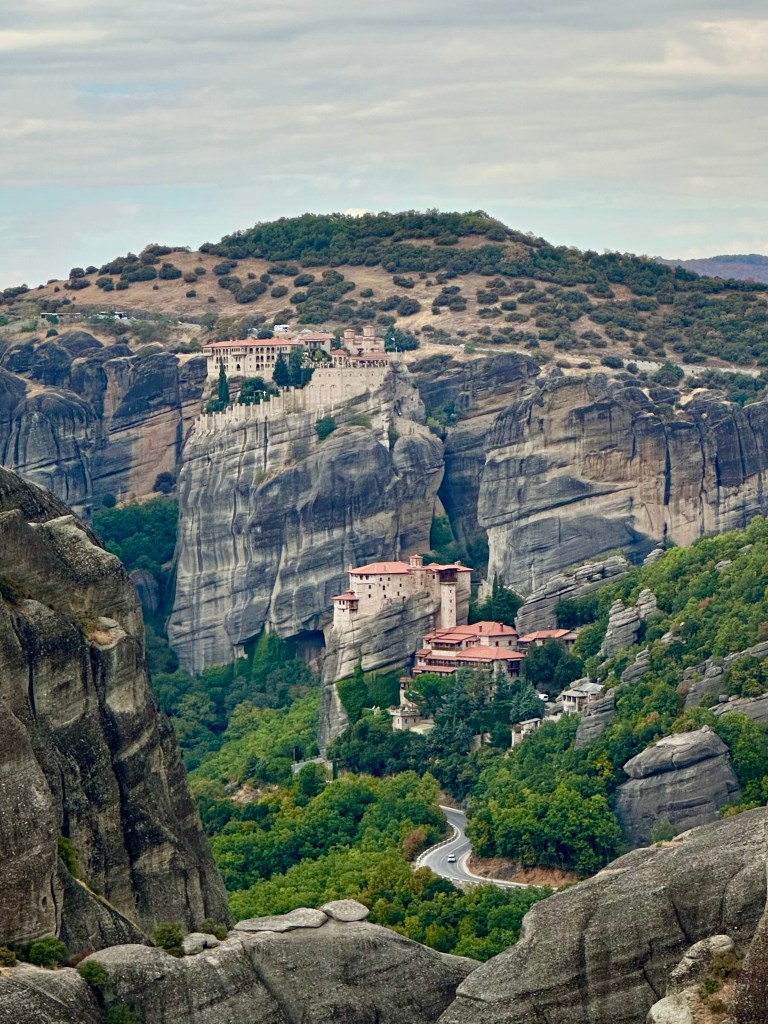
Although we had not heard of Meteora before, we were familiar with one of the monastery’s roles in James Bond’s For Your Eyes Only. . .

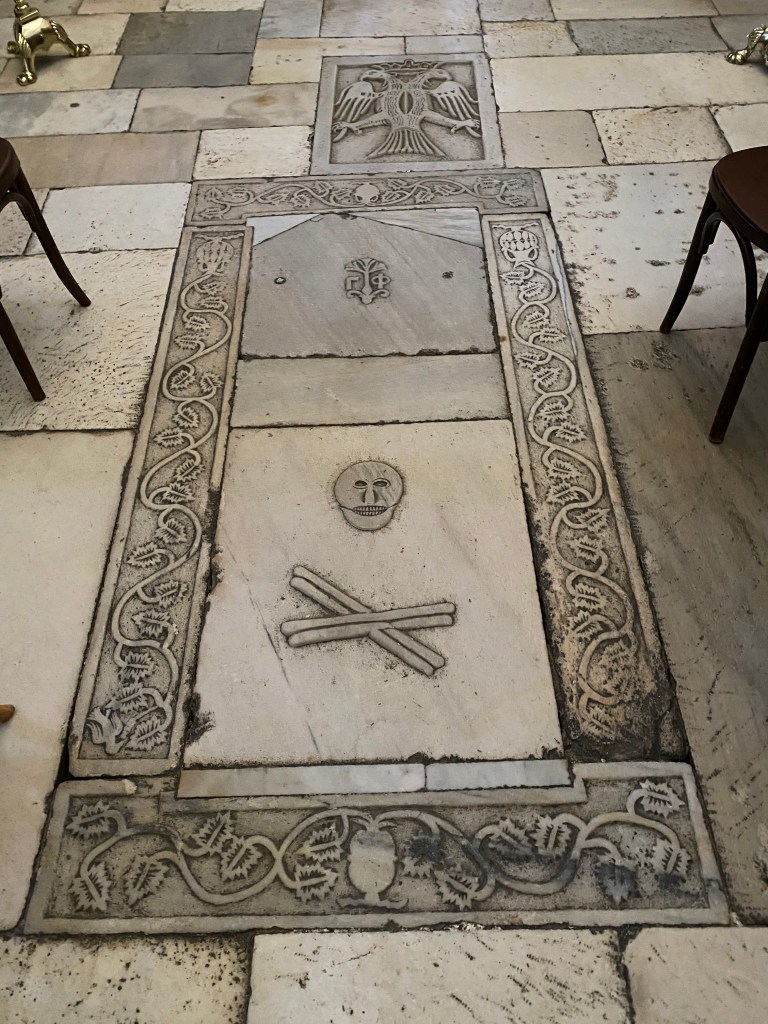
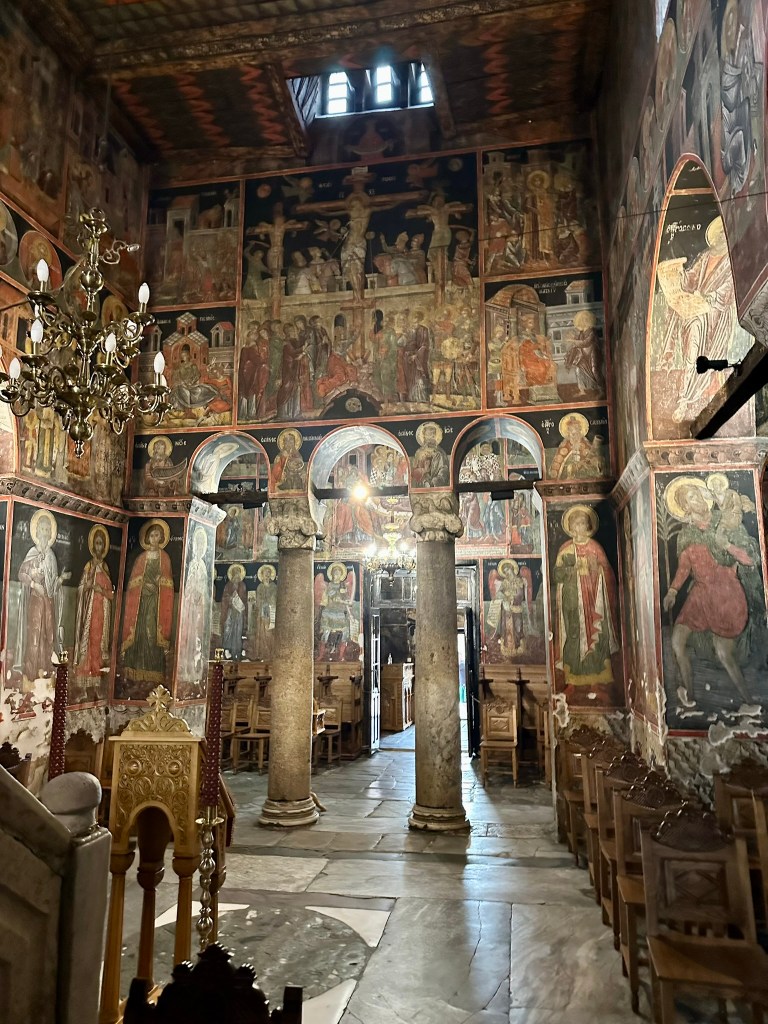
The interior of an ancient Greek Orthodox church atop the nearby town of Kalabata, which was built (as so many were) atop a Roman temple to Apollo, and incorporates (as so many did) physical elements of the temple into the Christian church.
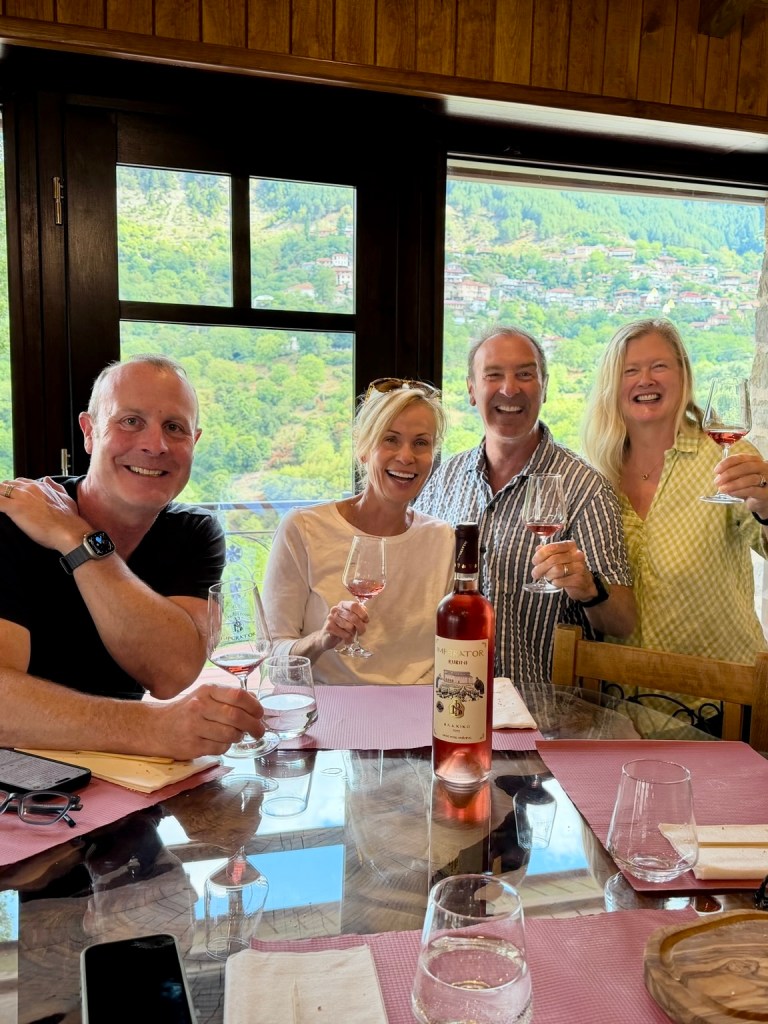
Wine tasting the next day 90 minutes north at the Monastery of Agios Nikolaos, where the monks have been making wine for centuries.
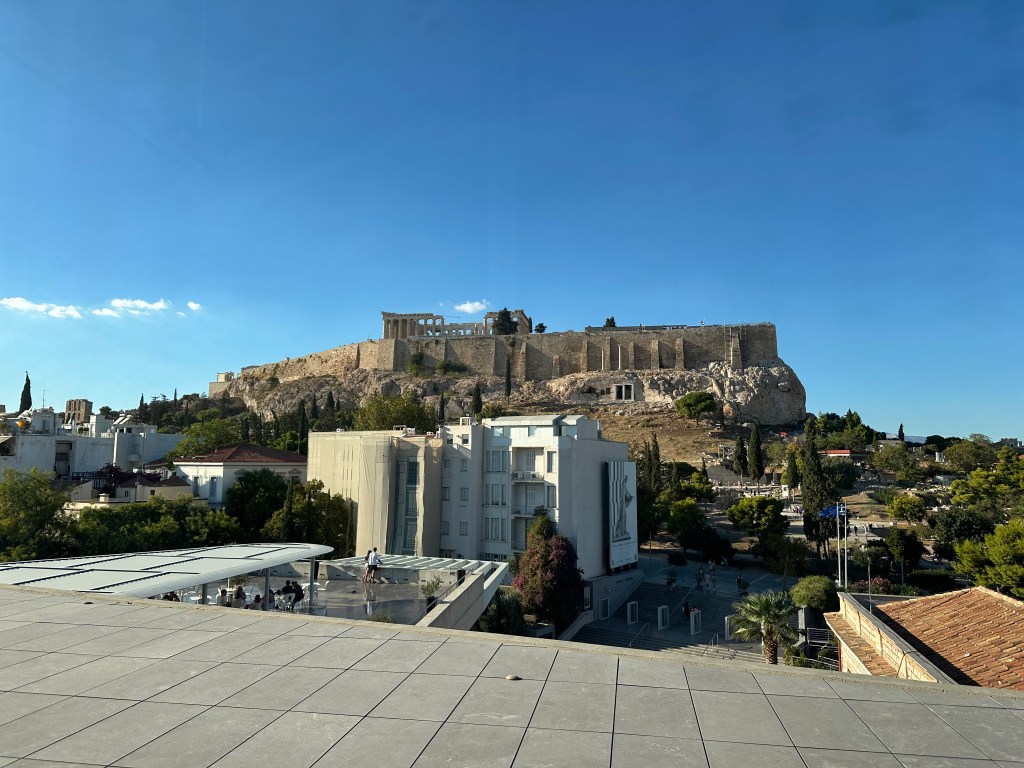
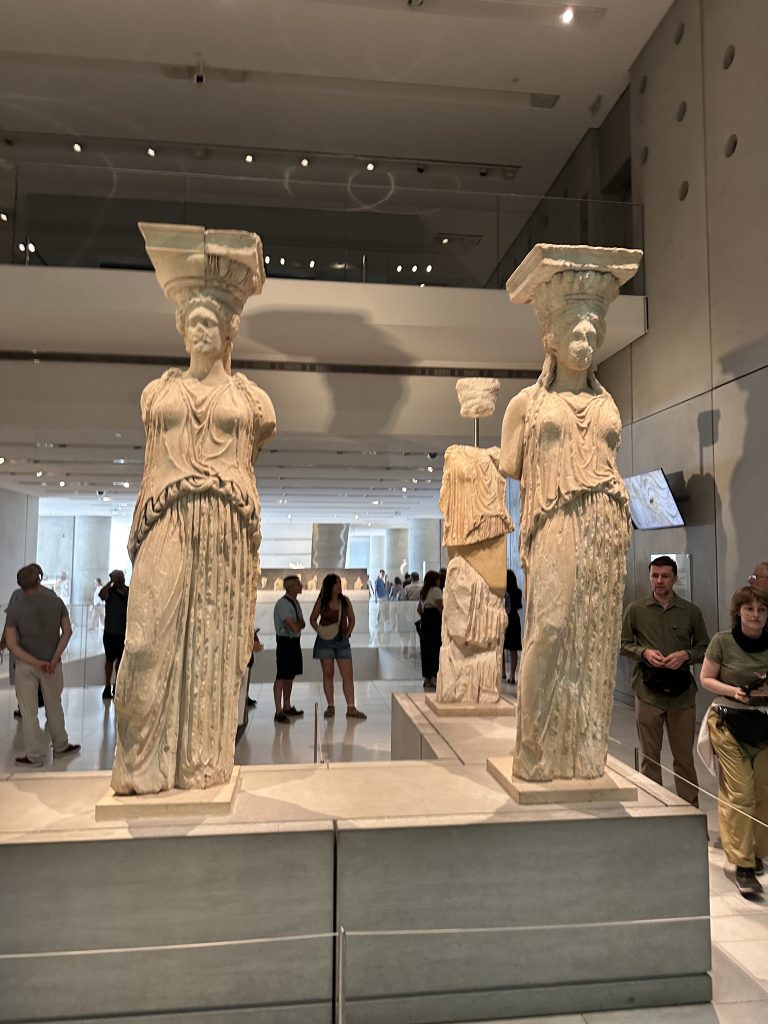
After 3 days, the Seattles continued on to Paros and the start of their sailing excursion, while the Old Towns spent an evening in Athens, and checked out the Acropolis museum there. It did not disappoint.
After 4 weeks, 3 legs, and 9 stops, we headed back home to prepare for our next outing. . . farther afield this time.