
From Tallinn, Estonia, we headed slightly south to the capital of Latvia: Riga.
Although not a walled, medieval, historically preserved town like Tallinn, Riga nonetheless offered its own flavor of charm and architectural notability. Case in point, Riga’s own House of the Blackheads. As with Tallinn’s House of the Blackheads, Riga’s building housed the Brotherhood of Blackheads, a guild for unmarried merchants, shipowners, and foreigners in Riga.
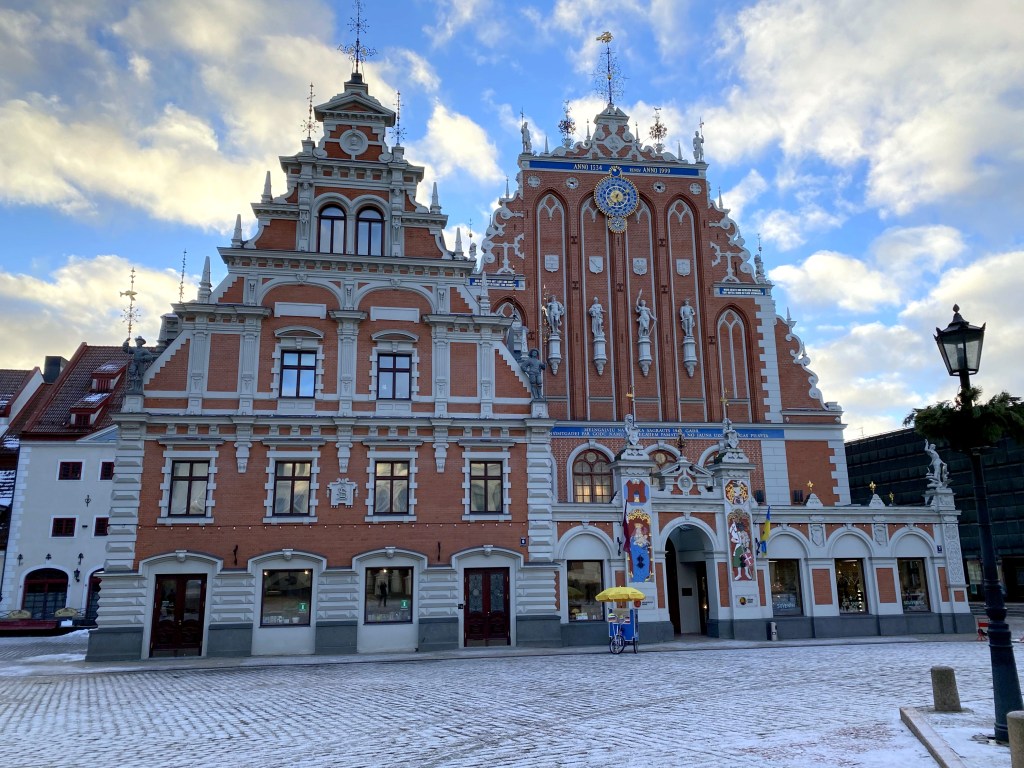
Unlike Tallinn’s modest townhouse (albeit with a very cool door and lunette), Riga’s House of the Blackheads is huge and ornate. The original building erected in 1334 was the largest public building in Riga at the time.

Unfortunately that building, updated over the centuries, was bombed out of existence in 1941 during a battle between Germany and the Soviets. The Soviet government razed what was left in 1948, but it was rebuilt in the late 1990s based on extensive archeological studies.
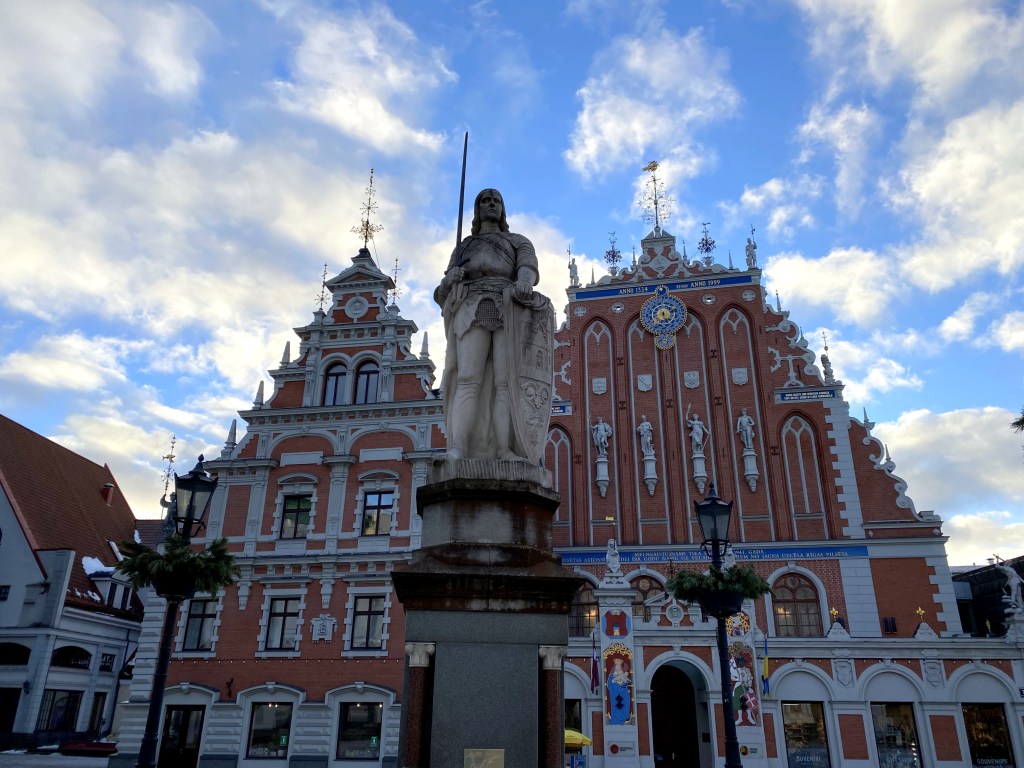
Right around the corner from the Blackheads lies Riga’s capitol building. Very unassuming, we thought.

Riga’s Christmas market in the shadow of the Dome Cathedral was pretty great.
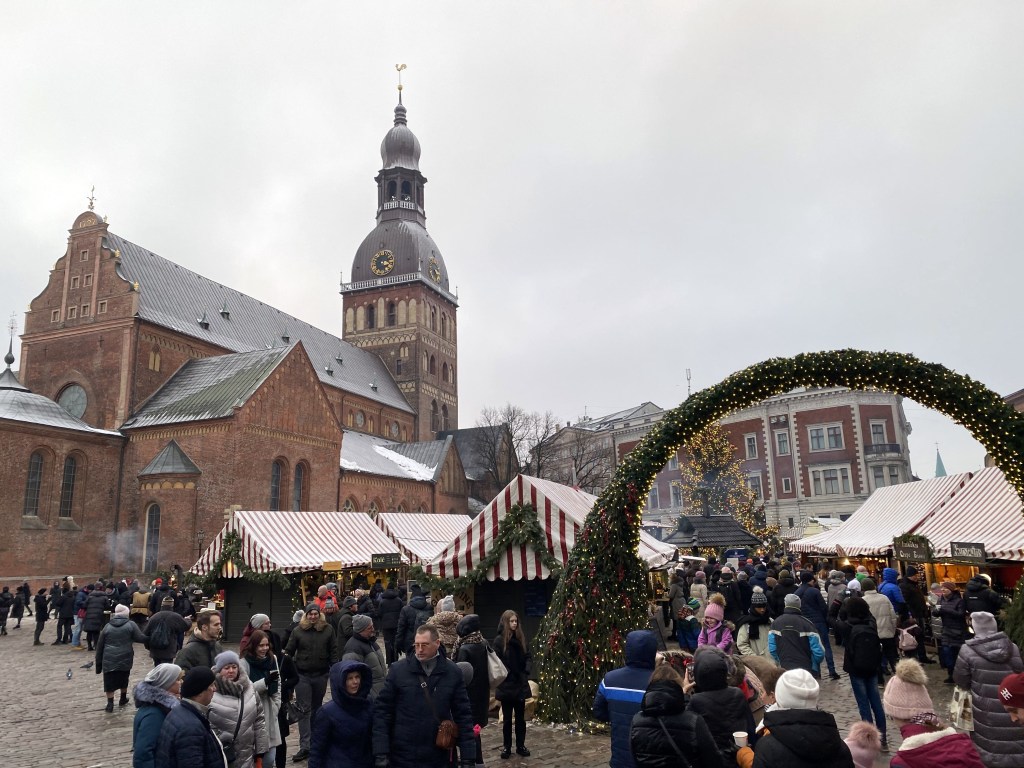


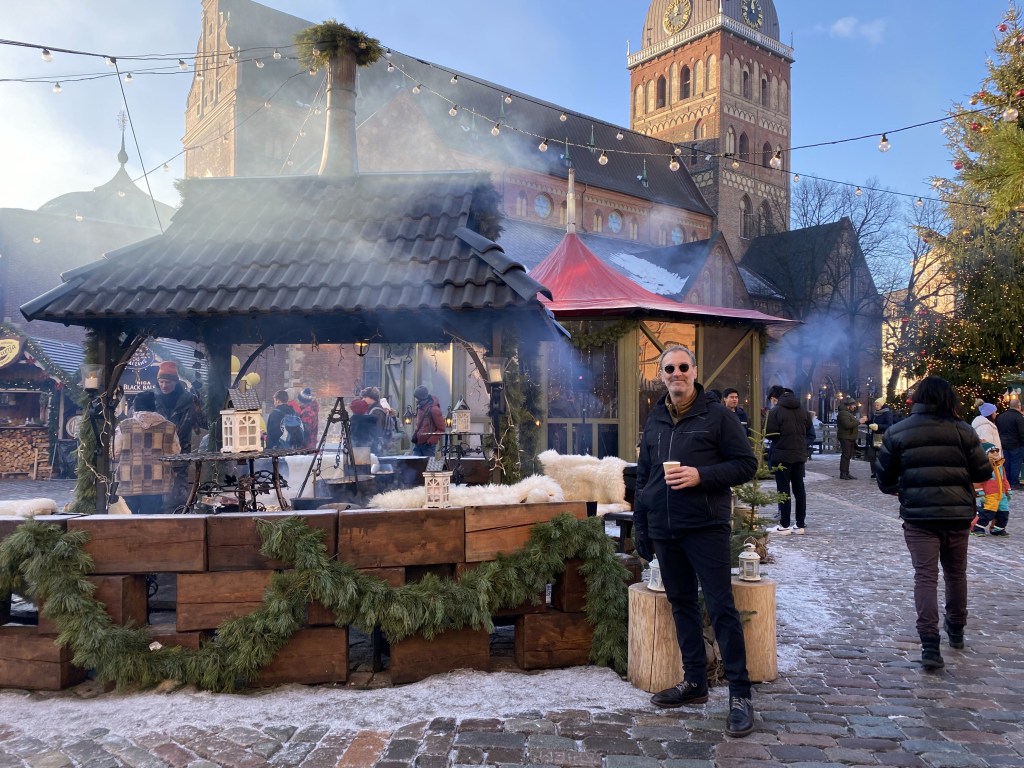
But some stalls were actually branded, which we’d never seen before, and gave areas of the Christmas market a commercial taint that we didn’t welcome:

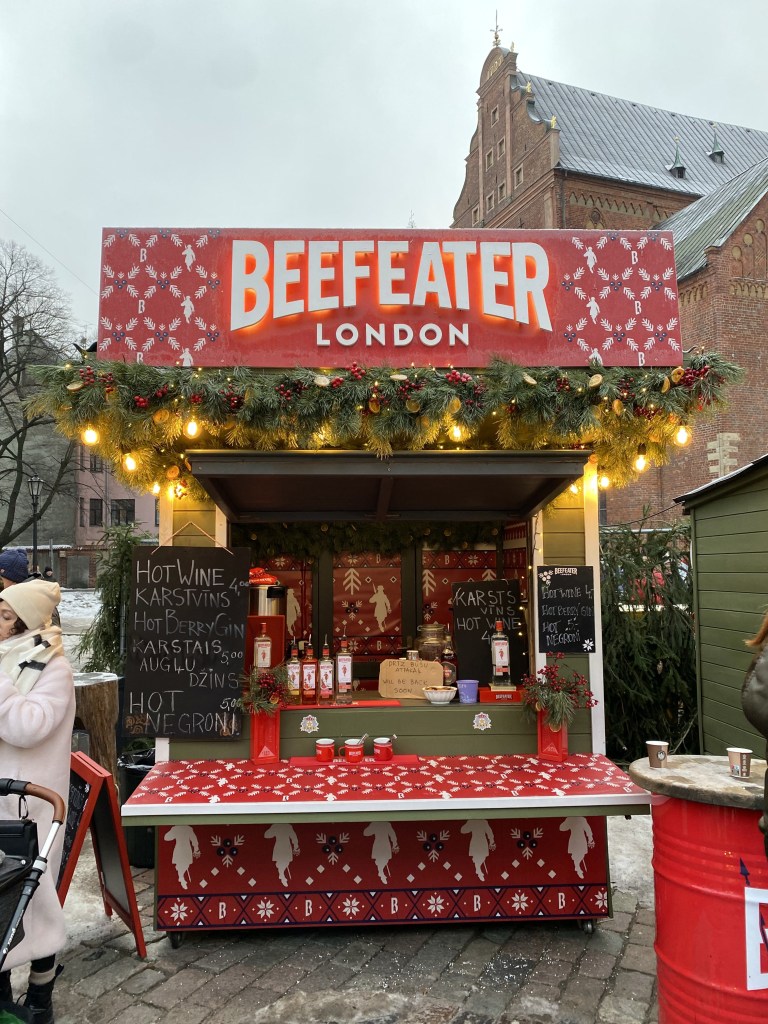
Nonetheless, the overt booziness of the place was pretty cool – not just glühwein, but all sorts of booze, including – weirdly for both time and place – gin stalls.


Lots of food. . .

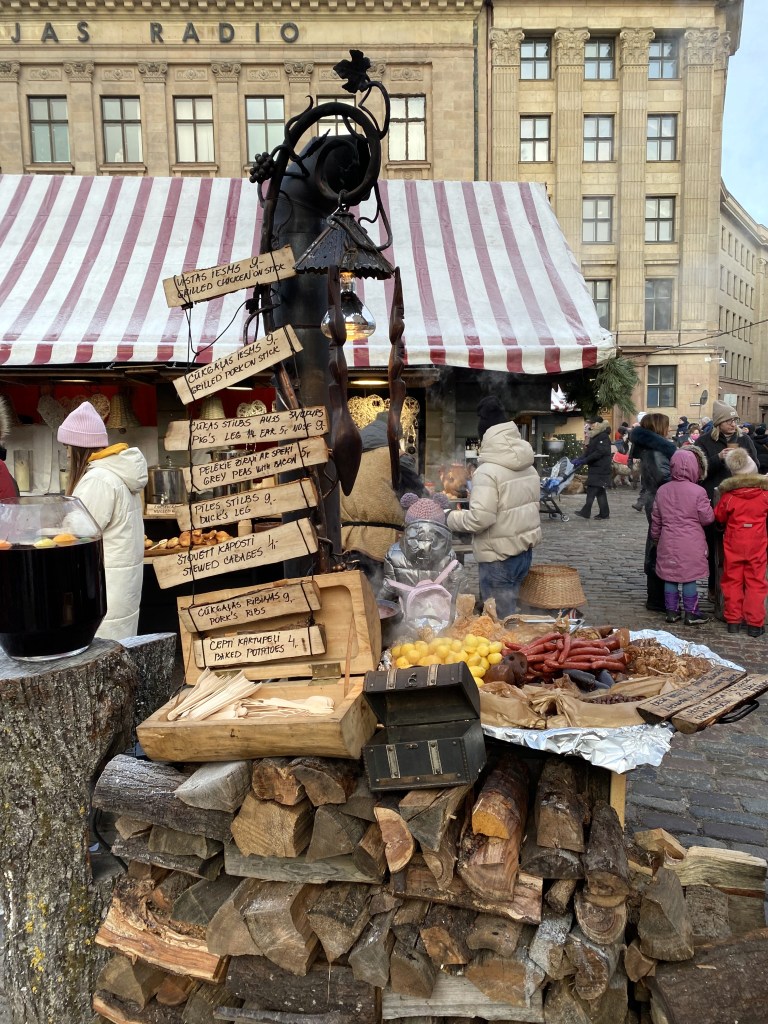
which had a distinct eastern Europe flair – check out the pig snout:
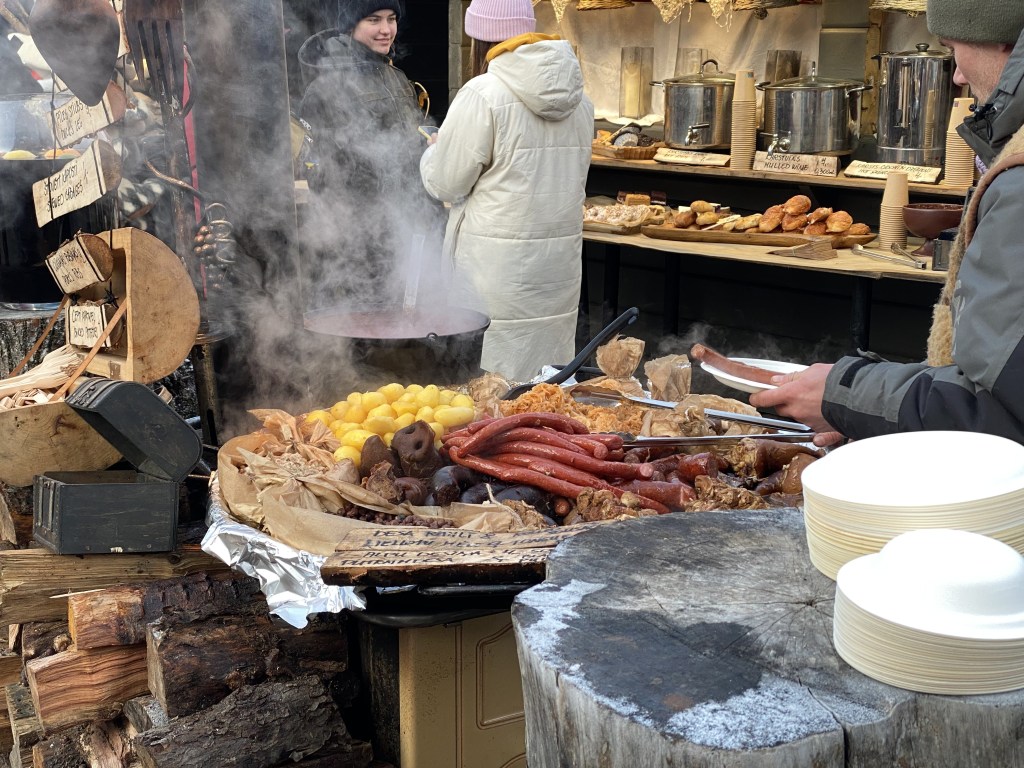
Or maybe it’s an entire pig submerged down there? Who knows.

Pigs a poppin’ in this place:

Riga’s Powder Tower, originally built in 1330 as part of the defensive wall system, that one was destroyed during an attack by the Swedes on the Polish-Lithuanian Commonwealth in 1621. (Livonia [which encompasses parts of multiple modern Baltic nations including Latvia] was a fiefdom at the time).
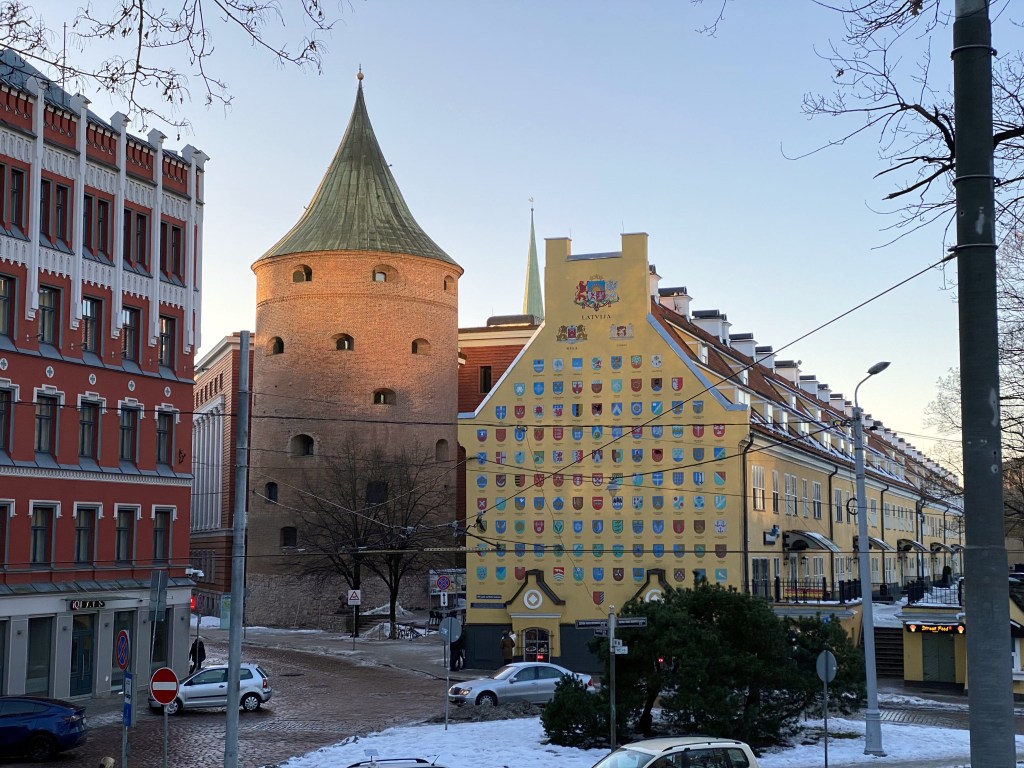
The current iteration dates from 1650.

Next door lies Jacob’s Barracks, built in the 18th century to house the garrison, the structure continued to be used until 1997 by various militaries as the area’s geopolitics evolved over time. The length of the barracks are now home to bars and restaurants, but the end, with its depiction of the coats of arms of Latvian towns and municipalities, was the most intriguing to us.
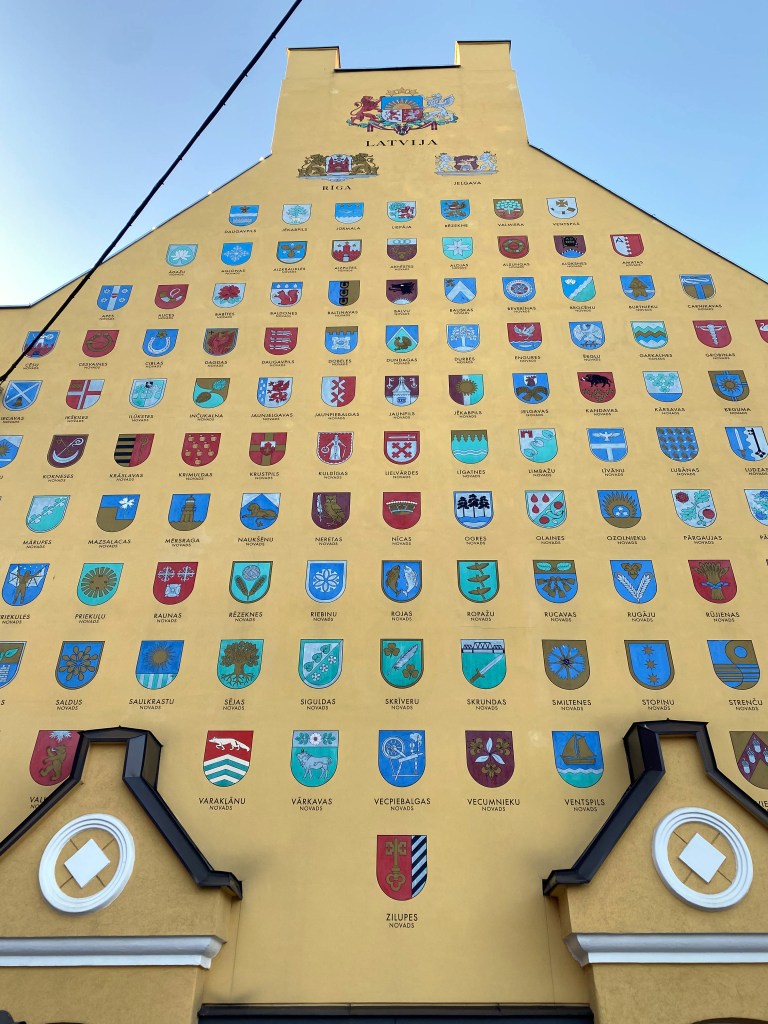
Portions of the old city wall running along the barracks:

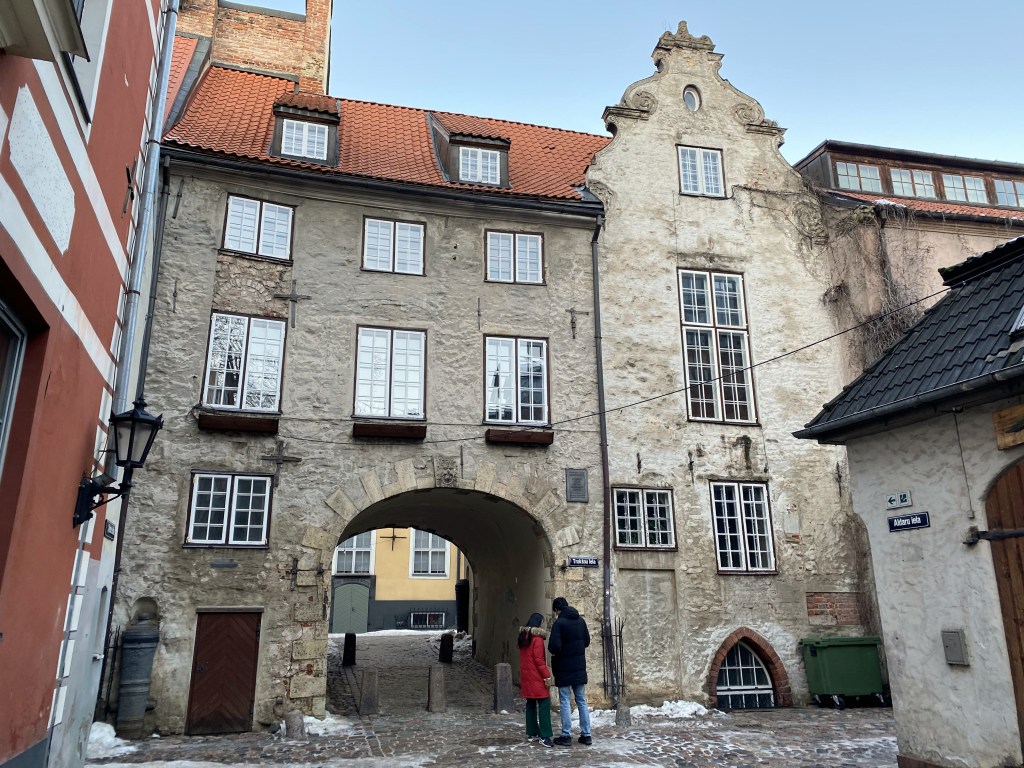
The Swedish Gate – the only portal in the medieval city walls to still exist. Beyond lies Trokšņu iela (Noisy Street) which ironically is one of the quietest and most charming street in Riga now. I’m sure we walked through here and down this apparently amazing street, but we have no visible evidence of this. ¯\_(ツ)_/¯
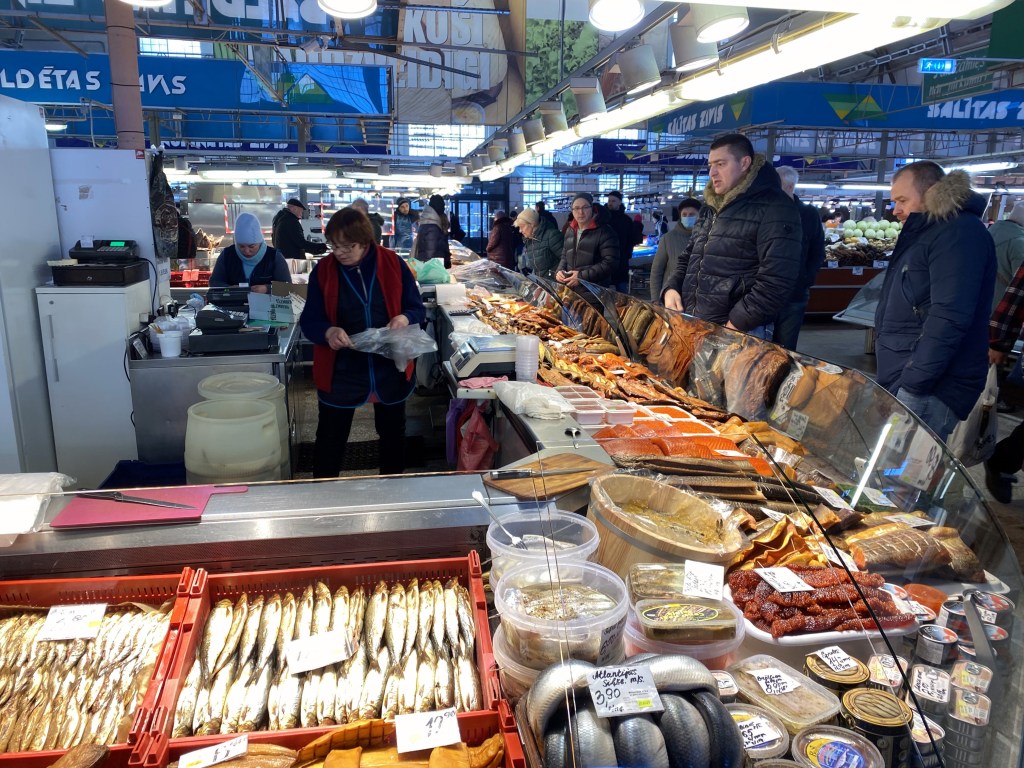
Instead, here’s some pics of Riga’s mammoth Central Market.

Absolutely any variety of food one could desire is available here.

The Riga Central Market (there’s a bird’s eye view later in the post) is composed of multiple, massive, hanger-like structures and is not only the largest shopping destinations in Latvia, but one of the largest markets in Europe.
The aforementioned bird’s eye view would come courtesy of St. Peter’s Church steeple.

Built in chunks over centuries, the first St. Peters was constructed as early as 1209; then a few decades later, in the middle of the 13th century; then the early 15th century; then at the end of the 17th century. Pretty plain brick church though, much like the Scandinavian Gothic brick churches encountered in Denmark.

As with Tallinn’s cathedral, portions of the interior are adorned with local noble family coats of arms (one of which looks dangerously close to the esteemed crest of the Connells):


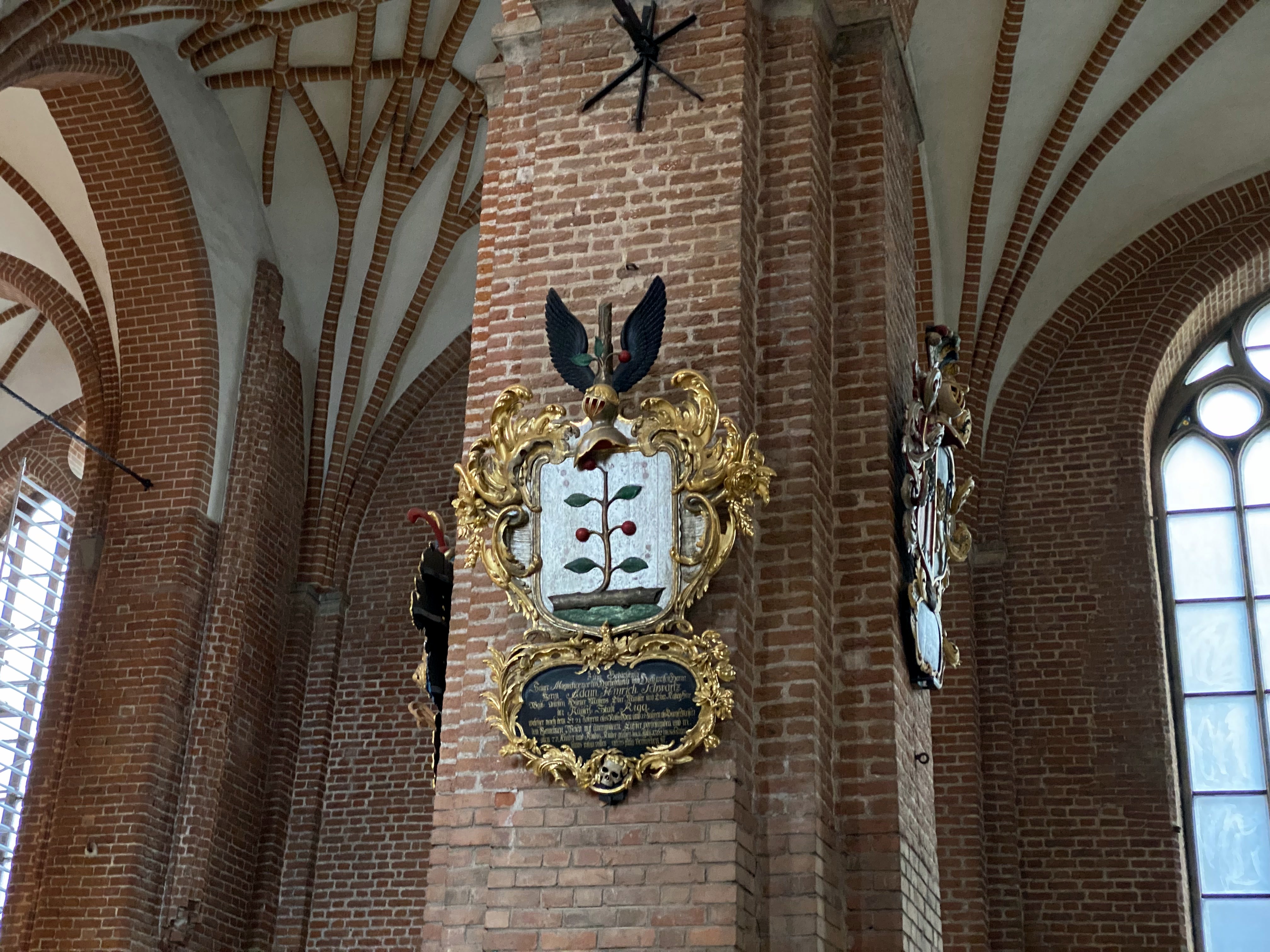

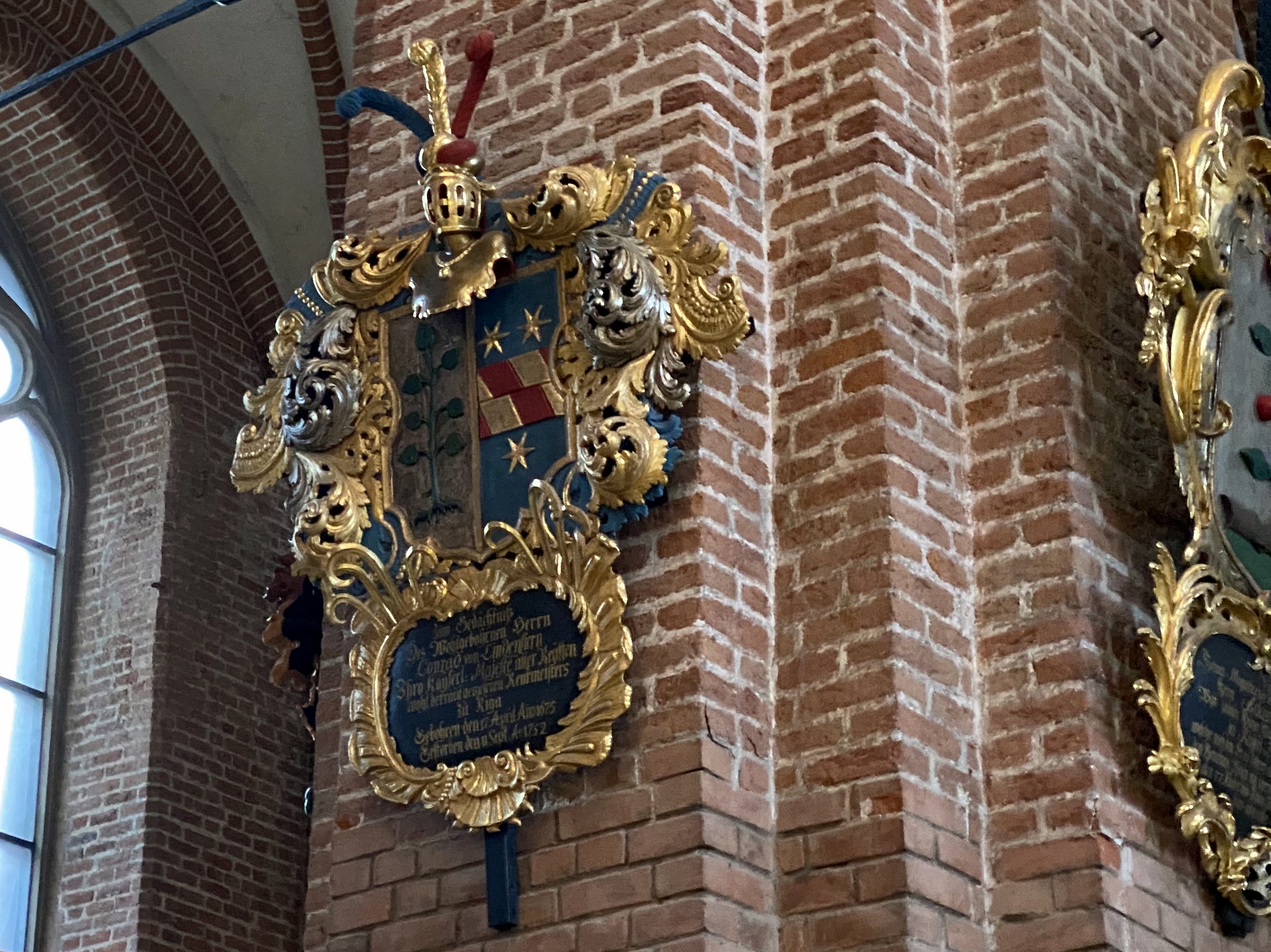
Something in the crypt we think? Dunno – pretty cool though.

Views from St. Peter’s steeple observation deck – pretty awesome perspective on the town.
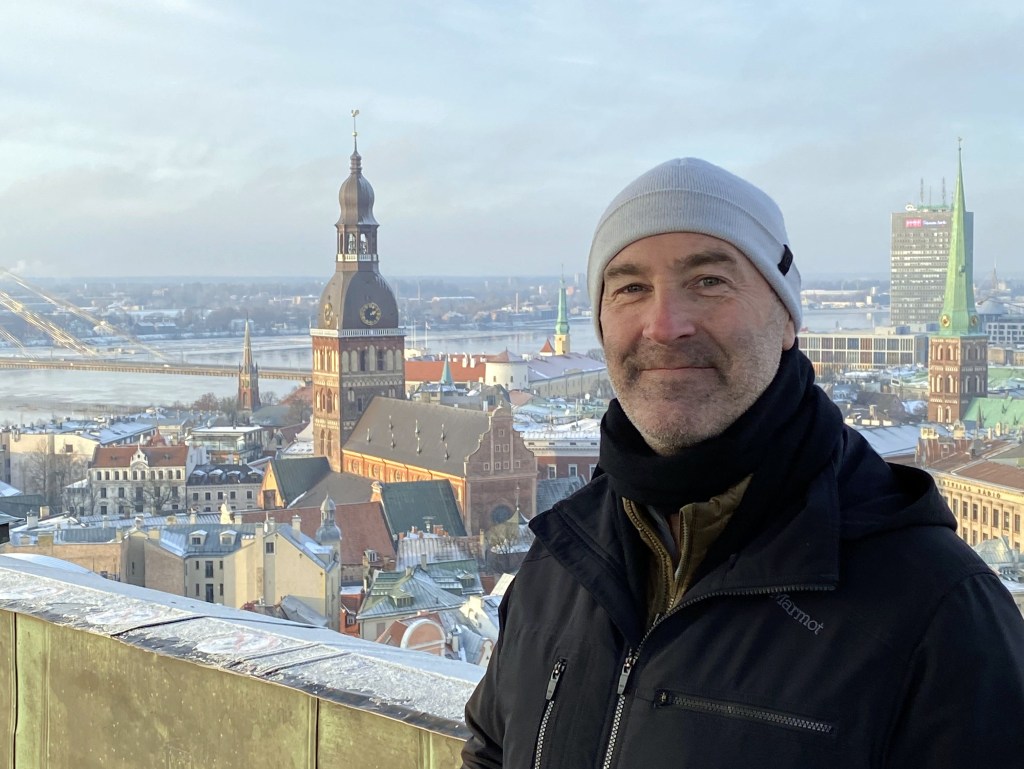
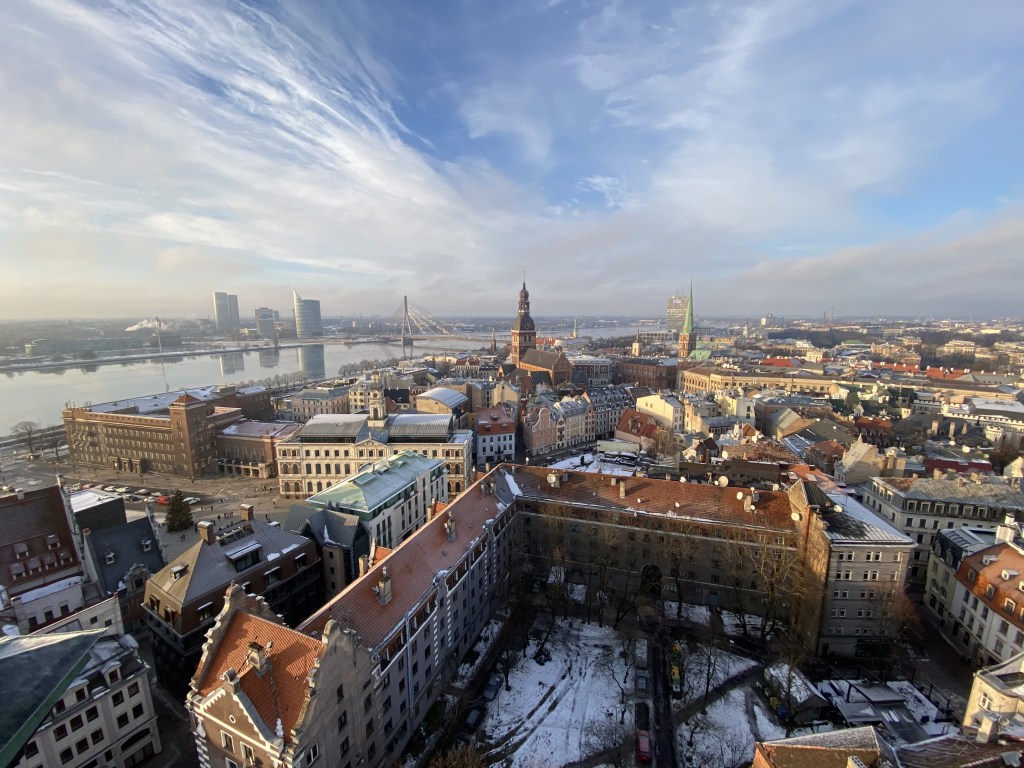
Renaissance facades in front of the Dome Cathedral:

Another, higher view of the Powder Tower:
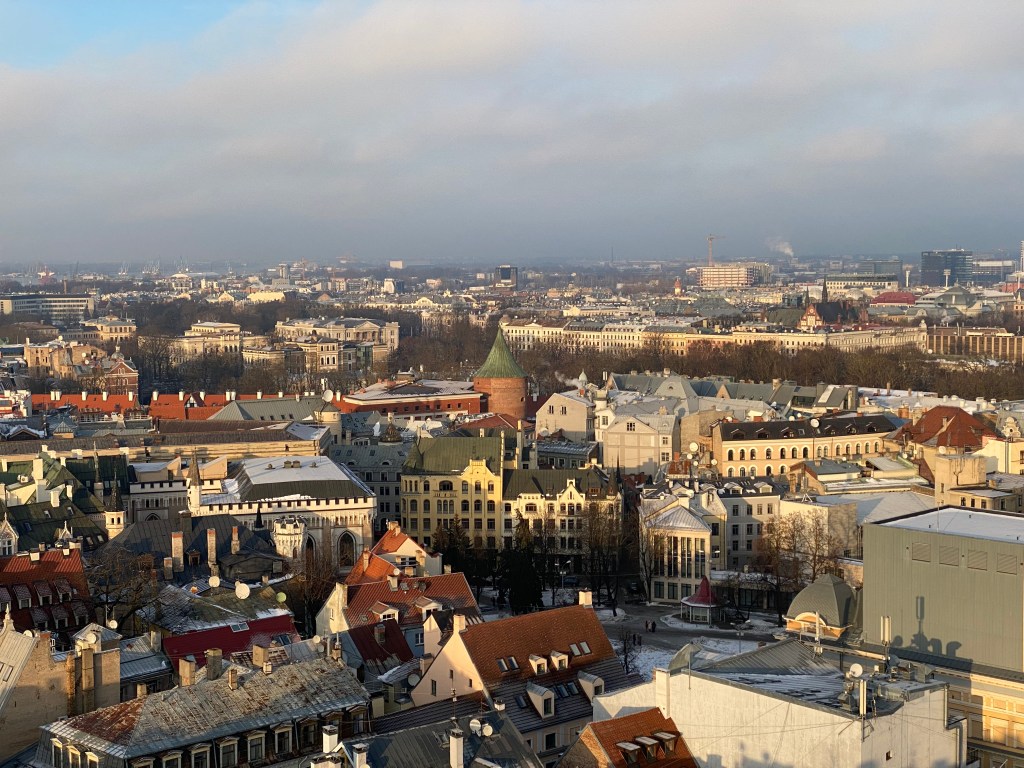
Riga’s Central Market hangers:

Down the street lies Riga’s Freedom Monument. A large statue of Peter the Great astride a horse once occupied this plaza, but it disappeared during WWI and the Latvians weren’t eager to replace it. Instead, the Freedom Monument was erected in its place in 1935.
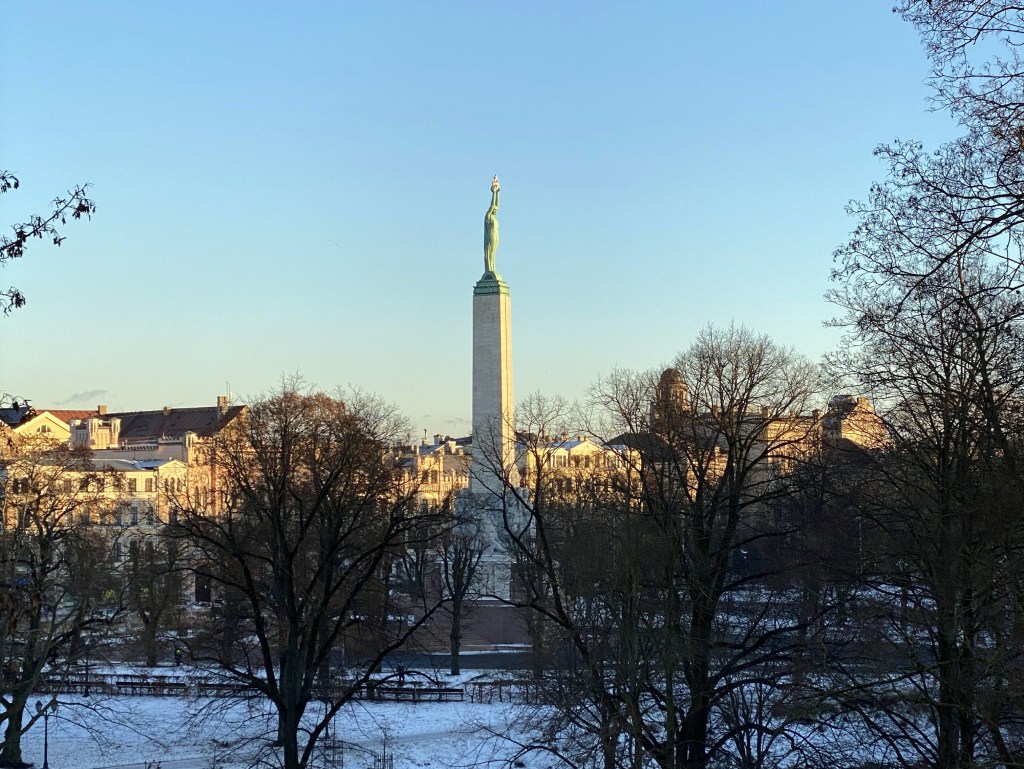
Flowers are allegedly placed at the foot of the monument each day (we didn’t see any) as an act of defiance – such a gesture was punishable by deportation to Siberia during the Soviet era.

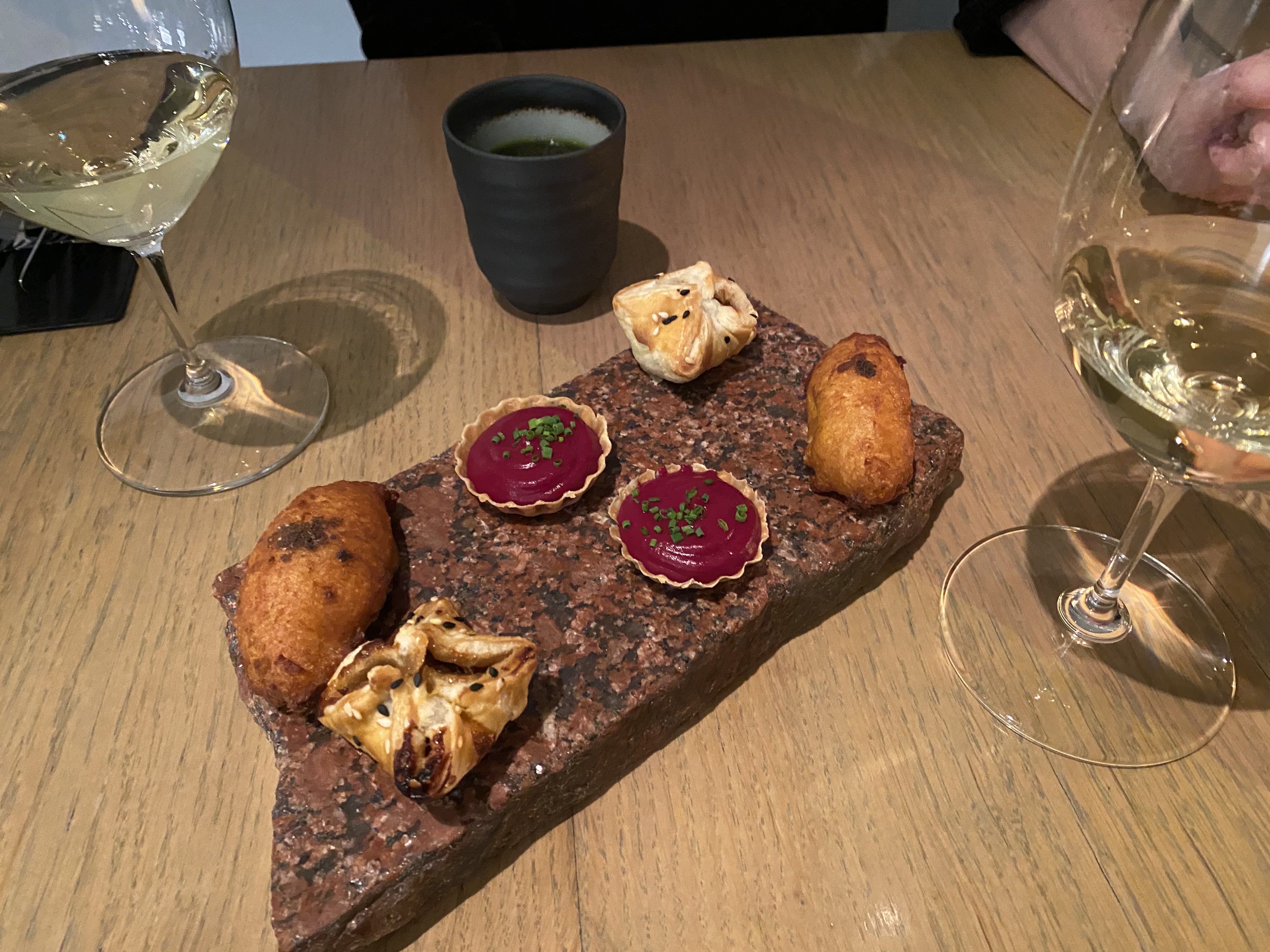
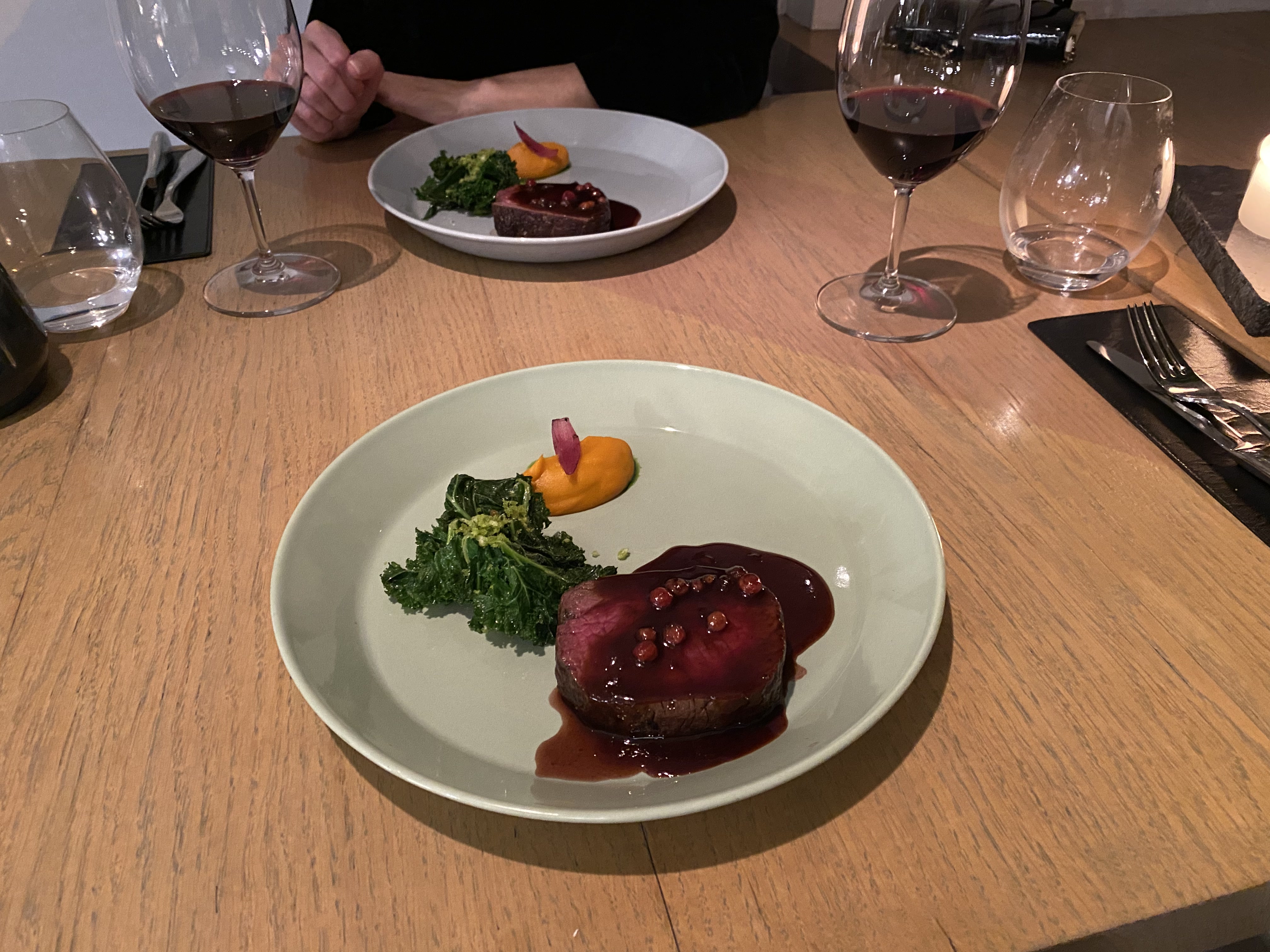
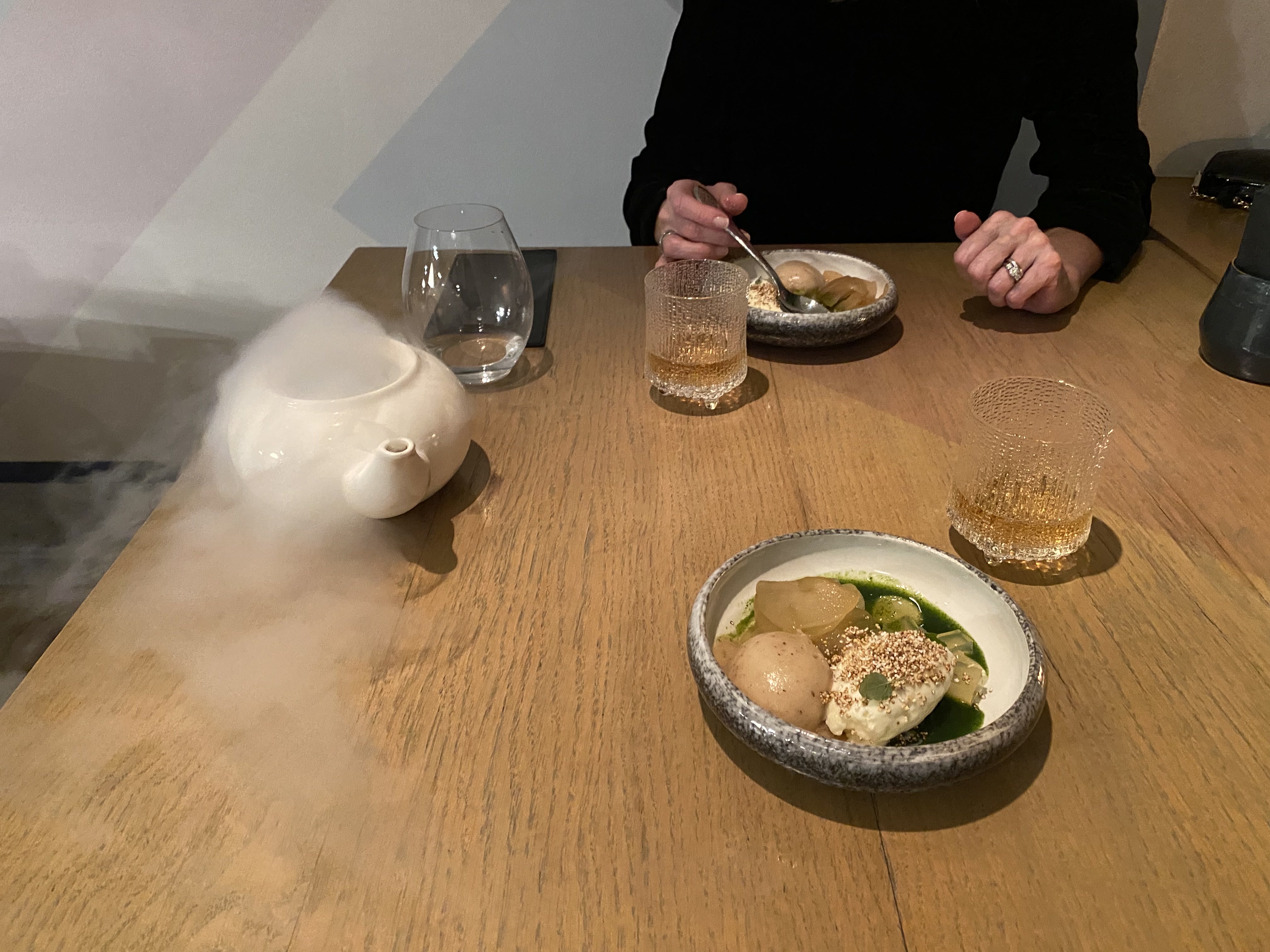
Dinner at 3 Pavāru Restorāns – definitely the dining highlight of our stay.




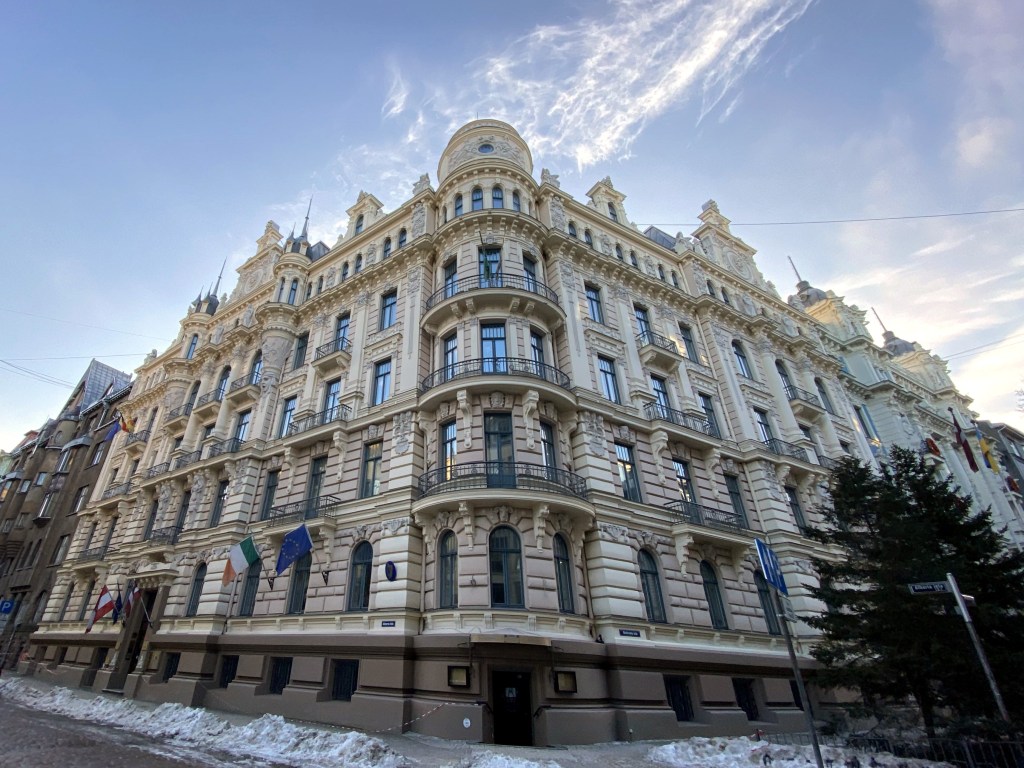
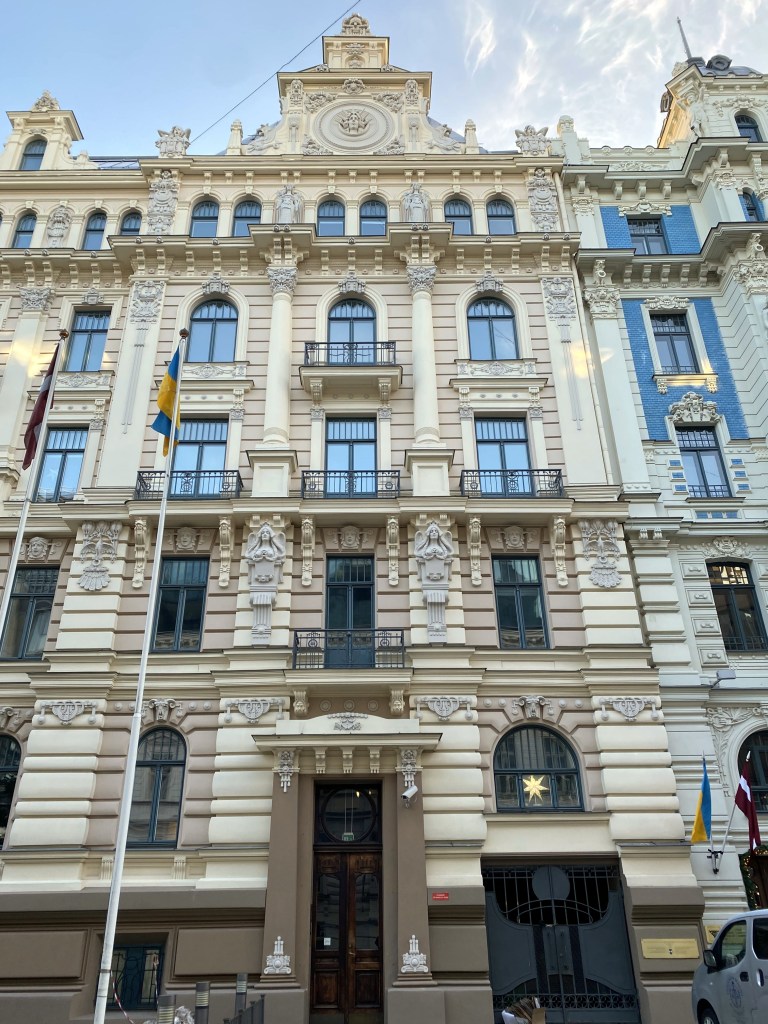
Riga’s Art Nouveau district on our Christmas Day walk. Riga’s period of peak prosperity happened to coincide with the Art Nouveau arts and architecture movement between 1890 and the outbreak of WWI. Although not at all unique to Riga, the town benefited from not being bombed into oblivion during WWII, resulting in a concentration of buildings in this style not seen anywhere else in Europe.
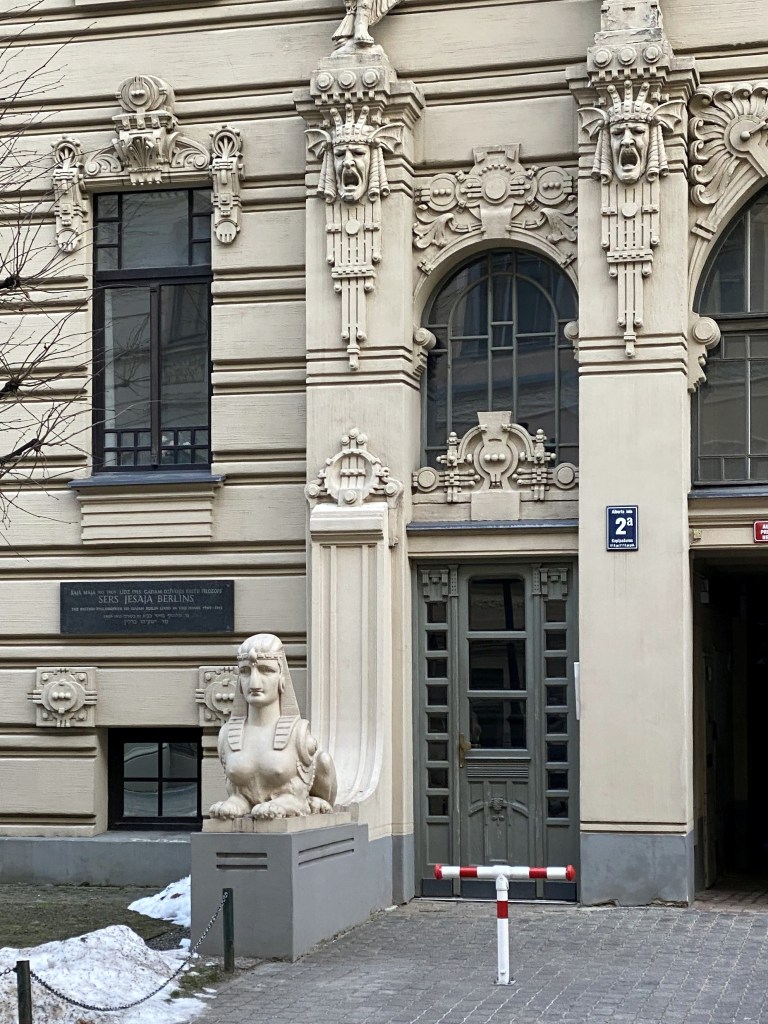
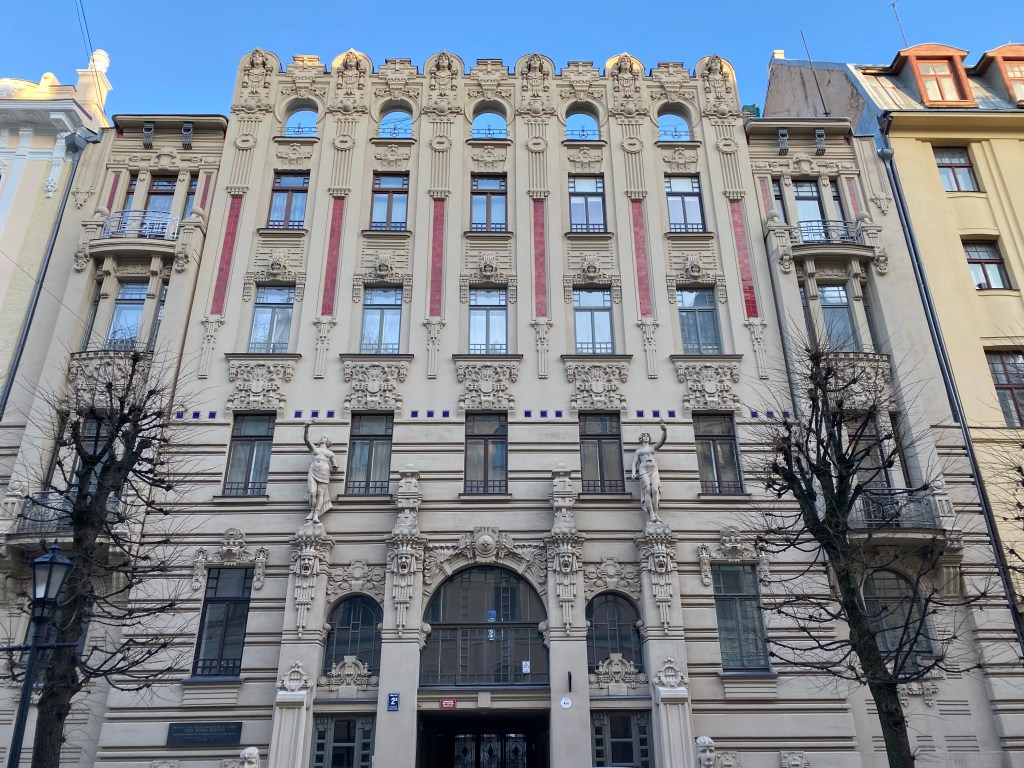
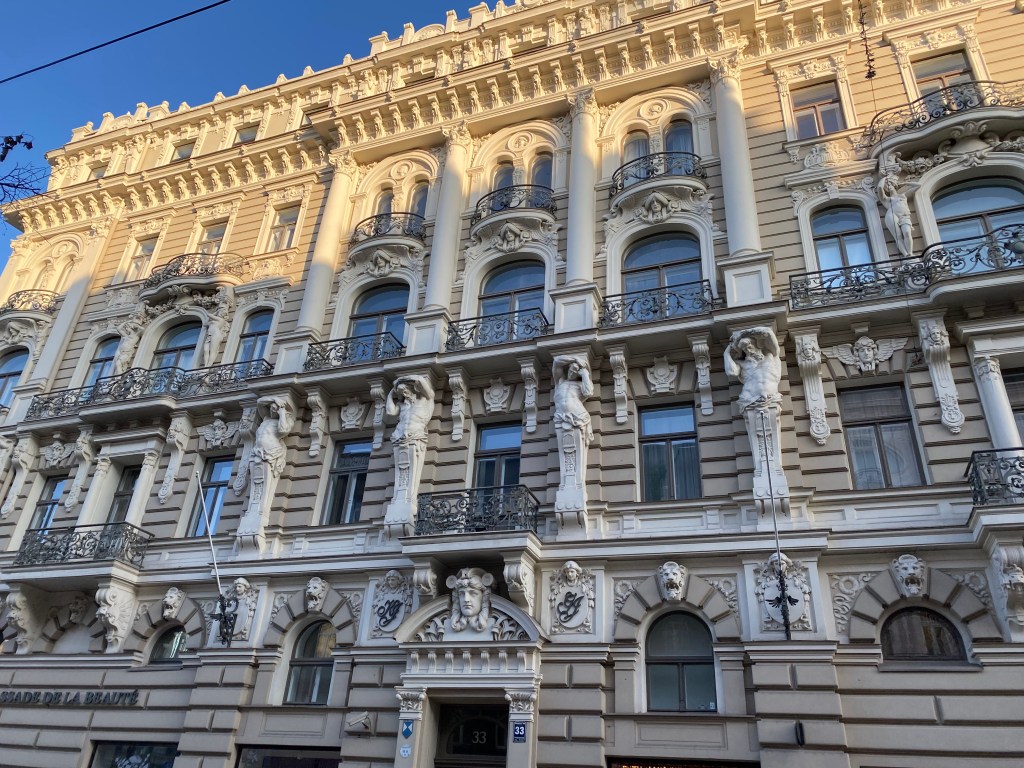

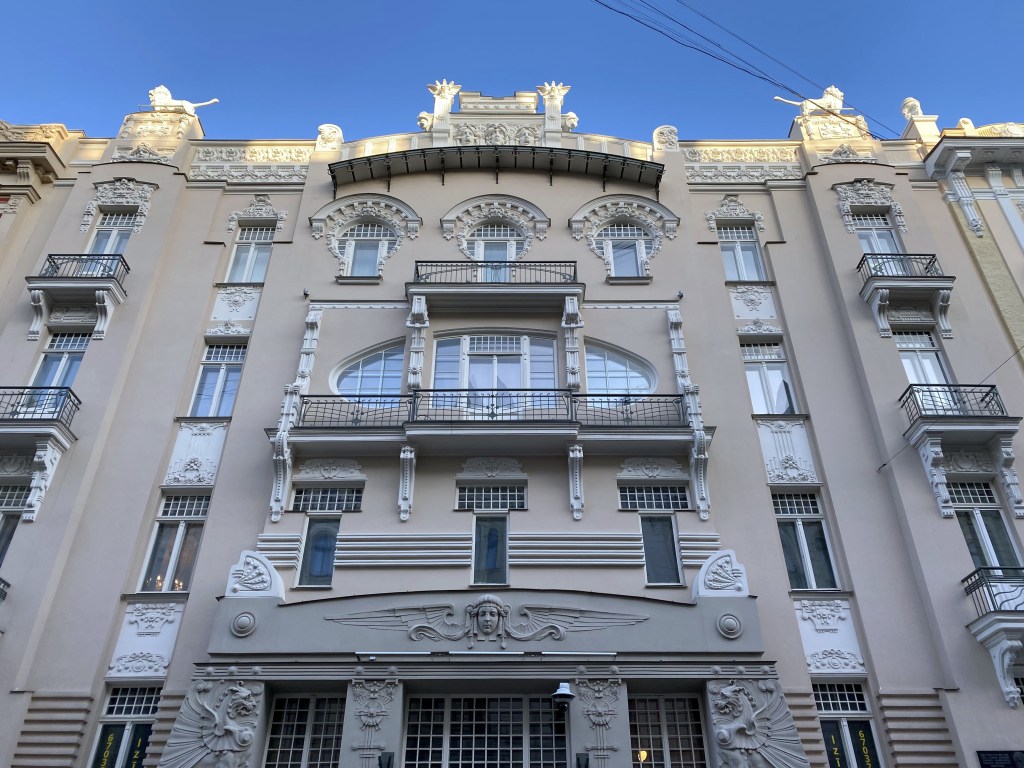




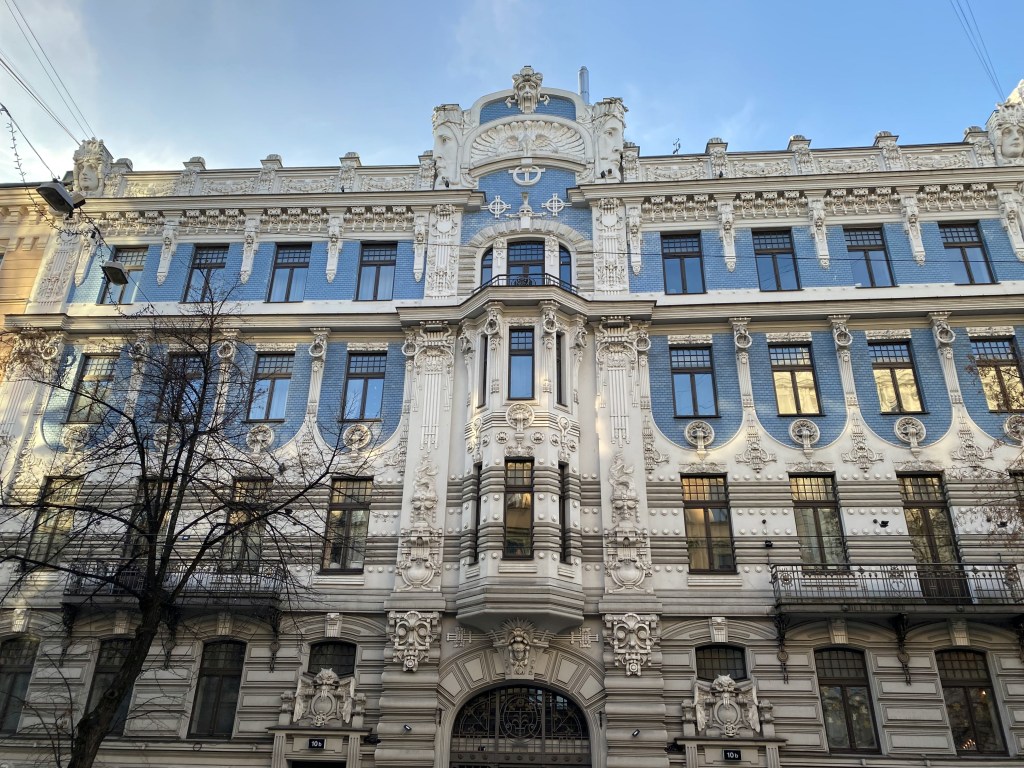
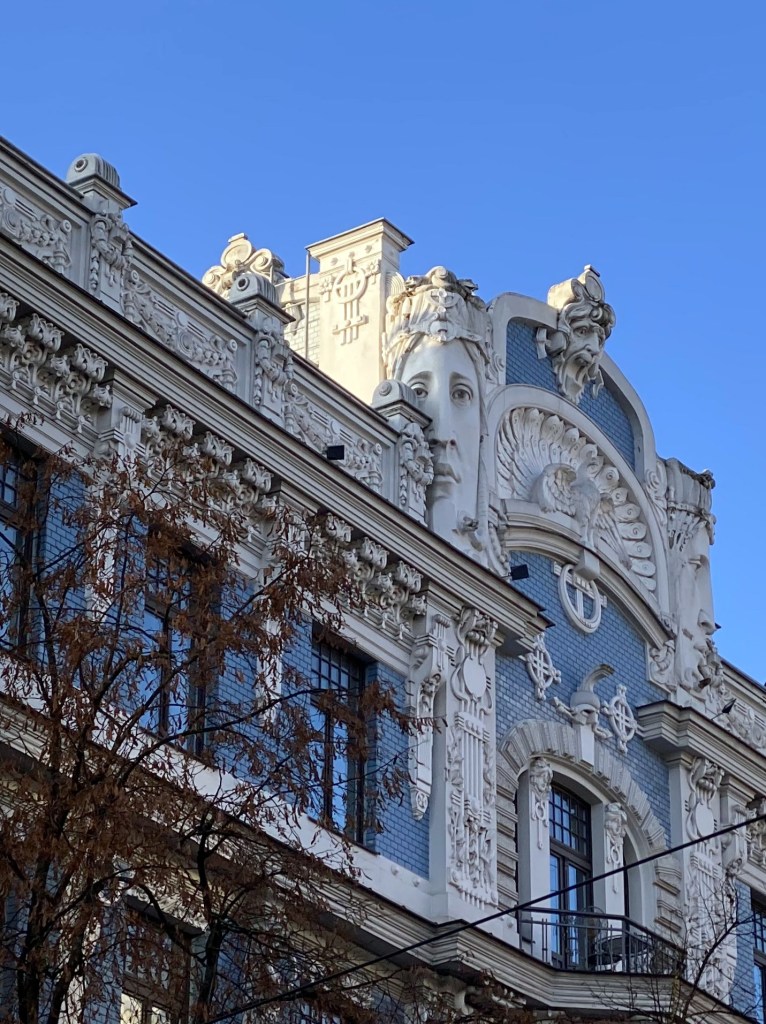
Perhaps the coolest: No. 10b, with a peacock (the symbol of art nouveau) flanked by big-ass faces.
Perfect winter weather in Riga for a Christmas visit.


On to our final stop of the trip: Amsterdam.
 WolfeStreetTravel