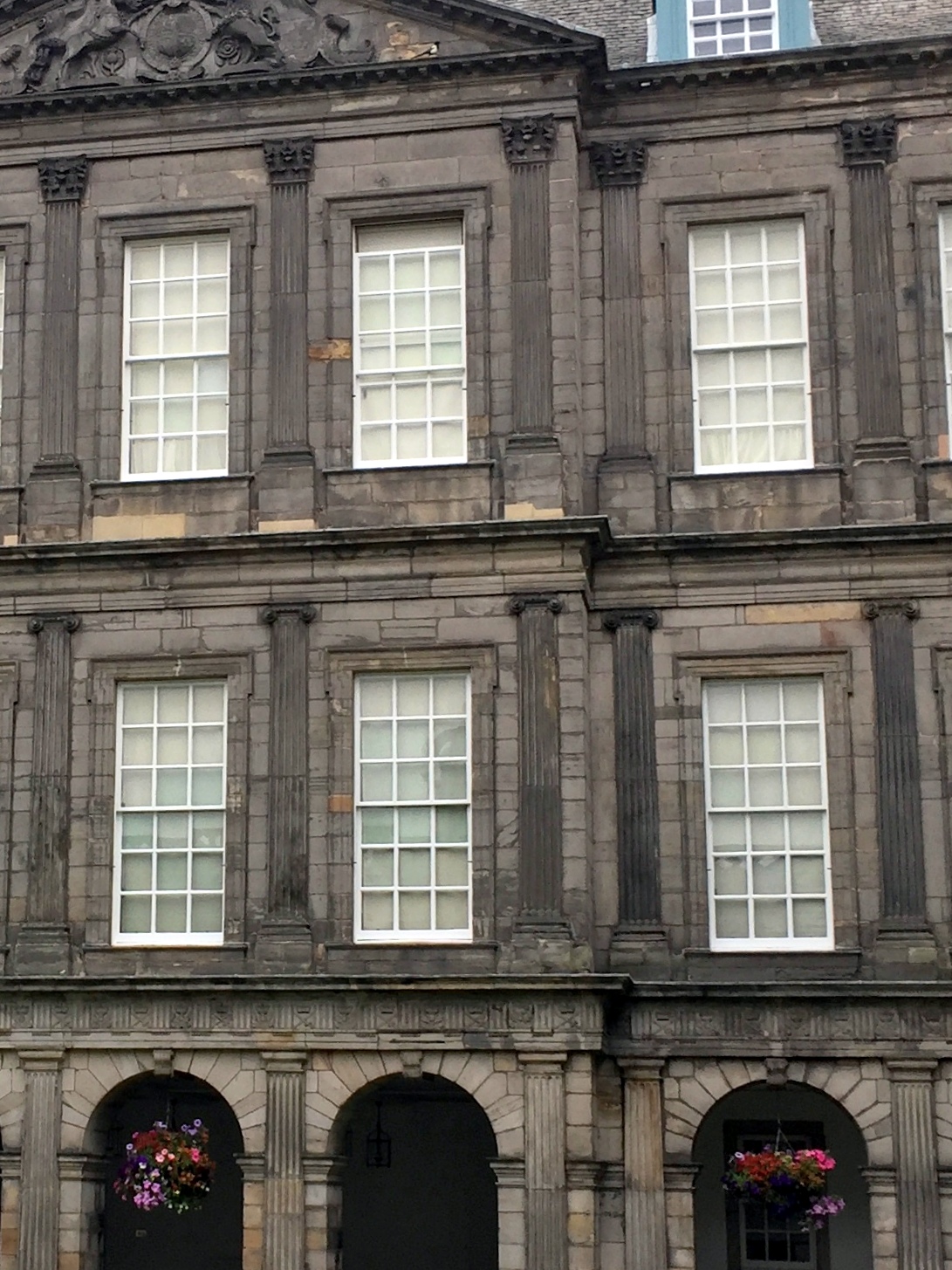
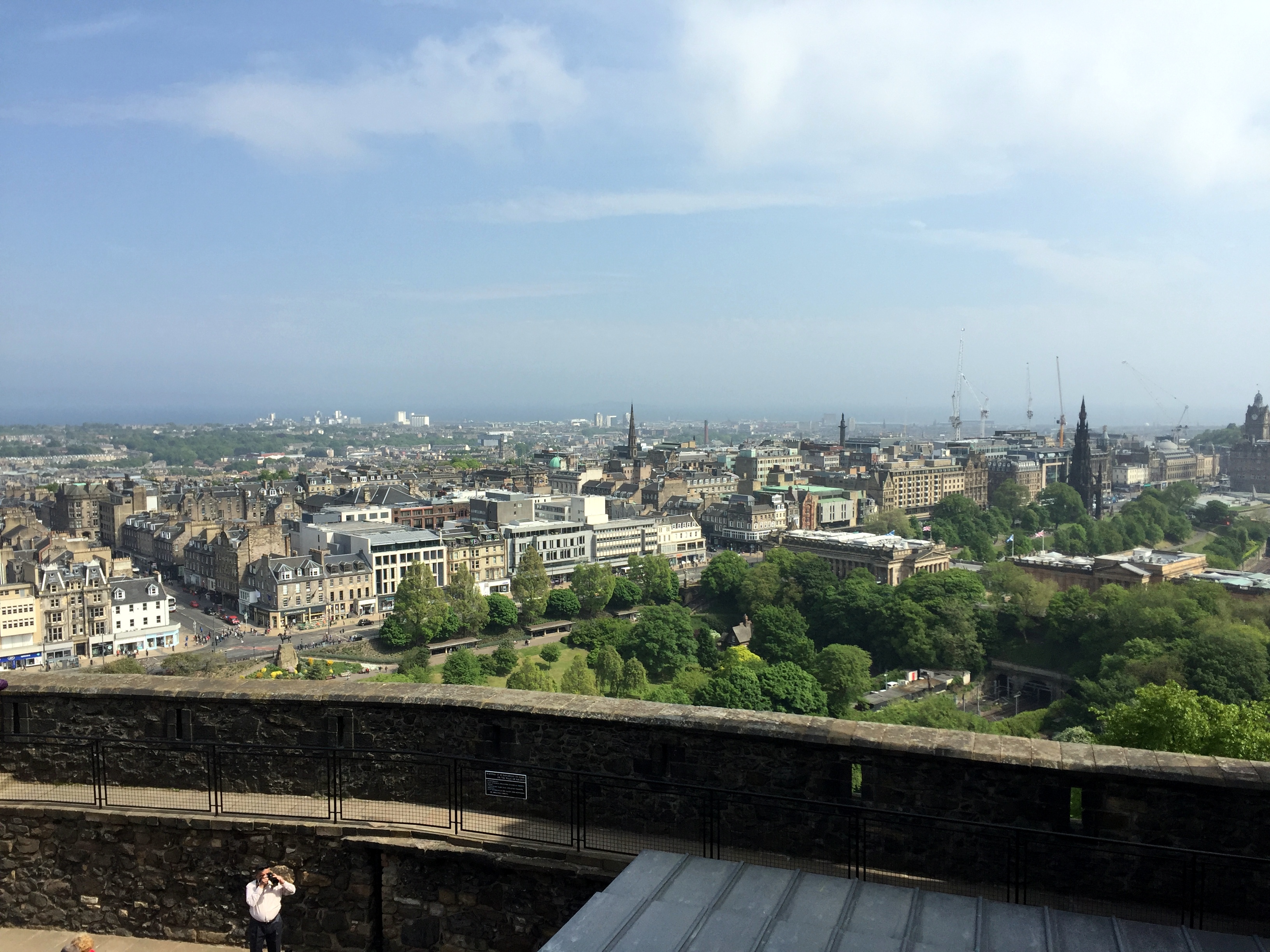
Edinburghs’ New Town lies below Edinburgh Castle, Old Town, and the Royal Mile. It’s a planned city, laid out and constructed between the mid 1700s and the mid 1800s and is crammed full of classic, symmetrical, visually tedious Georgian architecture.
Perhaps the most prominent (and definitely not Georgian) landmarks in New Town is the Sir Walter Raleigh Monument, the second-largest monument to an author in the world. This Victorian Gothic spire is crammed full of literary (Sir Walter’s stuff) and historical (Scottish) figures. There’s a total 93 people propped all of the surfaces of the monument. Plus two dogs and a pig.

The local birds just hanging out with Sir Walter after shopping at Jenners across the street.

We popped in and out of New Town each of the three days we were in Edinburgh, and the weather was as variable as our last two posts. Edinburghers (?) hanging out in the sun in the plain below Old Town our first day . . .

And this scene from the same location the next day:

The grassy depression, btw, is what’s left of Nor Loch, which was drained in the 19th century and filled in.

Nor Loch in a painting by John Slezer in 1639
Sunny New Town!

Crappy New Town!

A final, moody shot of the castle from a graveyard on the outskirts of New Town before we move on:

Wait – this too! A cool, 3-D plaque over the grave of William Bonnar on the wall above. We only took the picture because we thought the color, texture, and relief contrast looked interesting for a picture, but it turns out that Willy was not only a noted Edinburgh painter, but also is credited with completing the Sir Walter Scott memorial discussed above. How serendipitous!

Scenes around New Town, including the Melville Monument (not to Herman, but to the first freakin’ Viscount of Melville, which we don’t believe rates this level of recognition).


And now for something completely different: beautiful, tranquil, and bucolic Dean Village, a 19th-century mill town just on the outskirts of New Town Edinburgh.
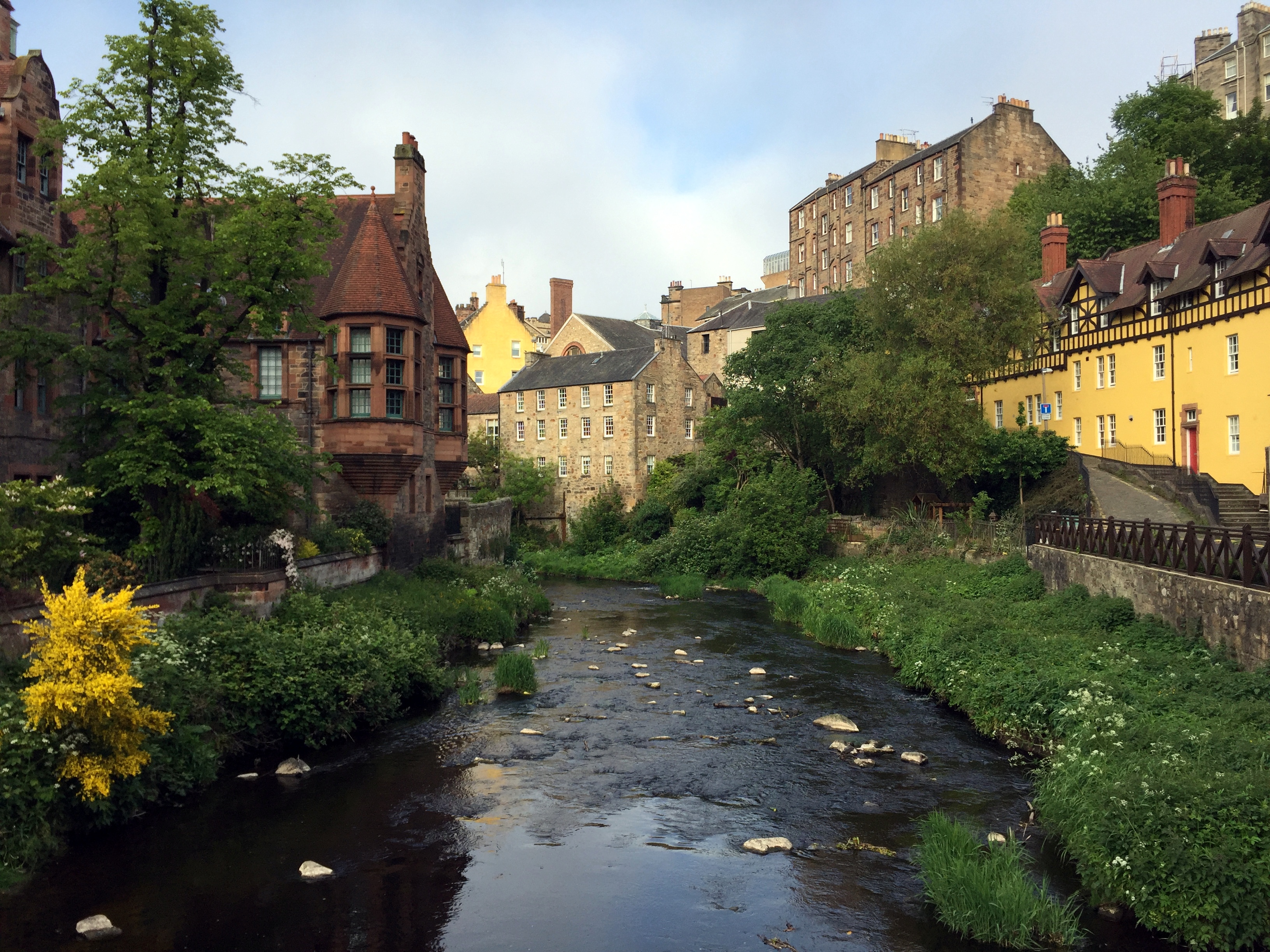
The town’s mills were overtaken by larger, industrial-scale capabilities elsewhere, and Dean Village lay in decrepitude until the 1970s, when residents recognized the benefits of renovating mill workers’ houses to live here with a walking-distance commute into Edinburgh. Now it’s rather quaint.


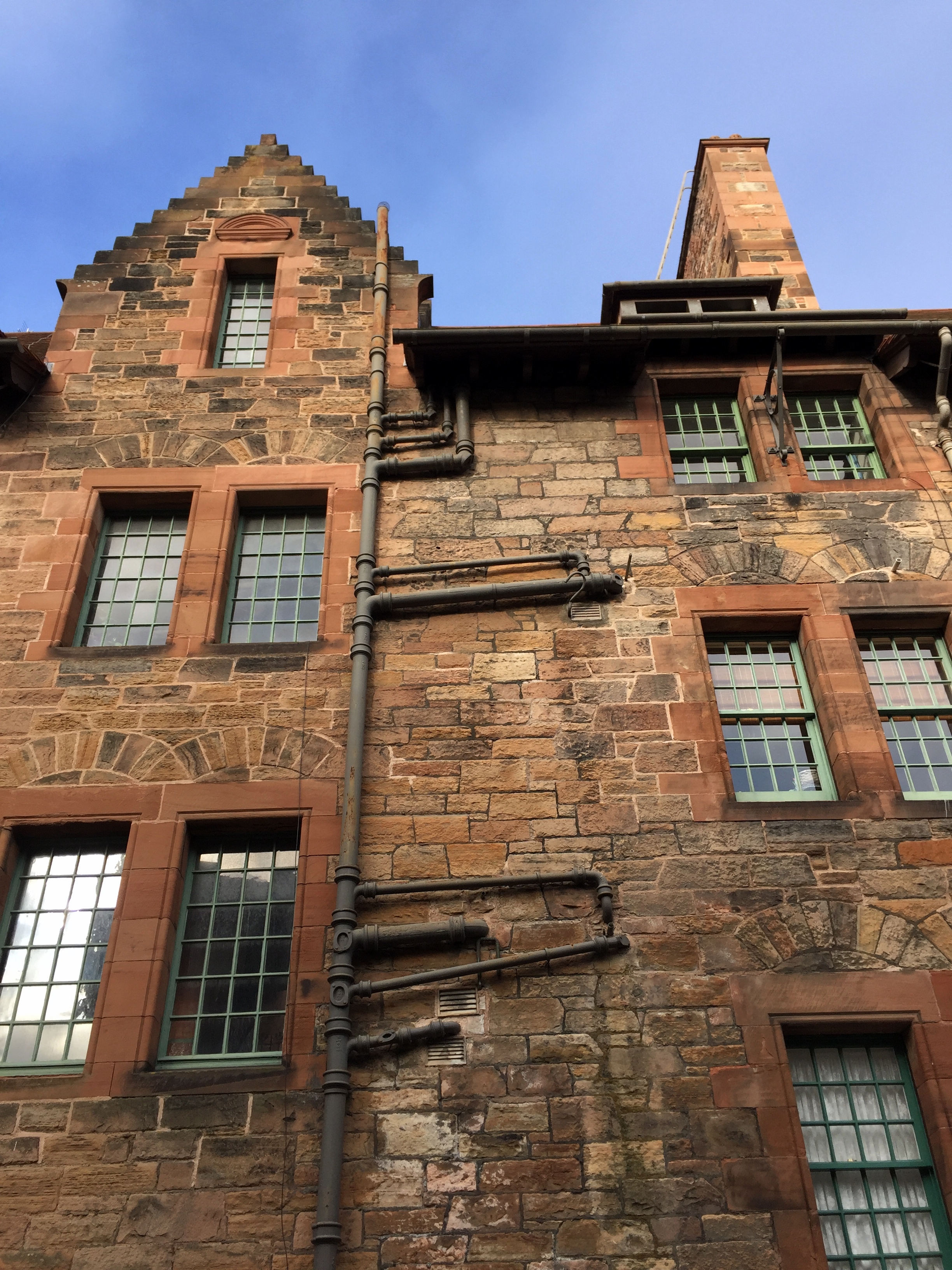
Here’s a great way to overcome pluming challenges during renovation – just stick the outgoing pipes outside the house. Problem solved!

One of us reluctantly agrees to humor the other and sit on a bench that the other thought was compelling and Escheresque. It wasn’t.

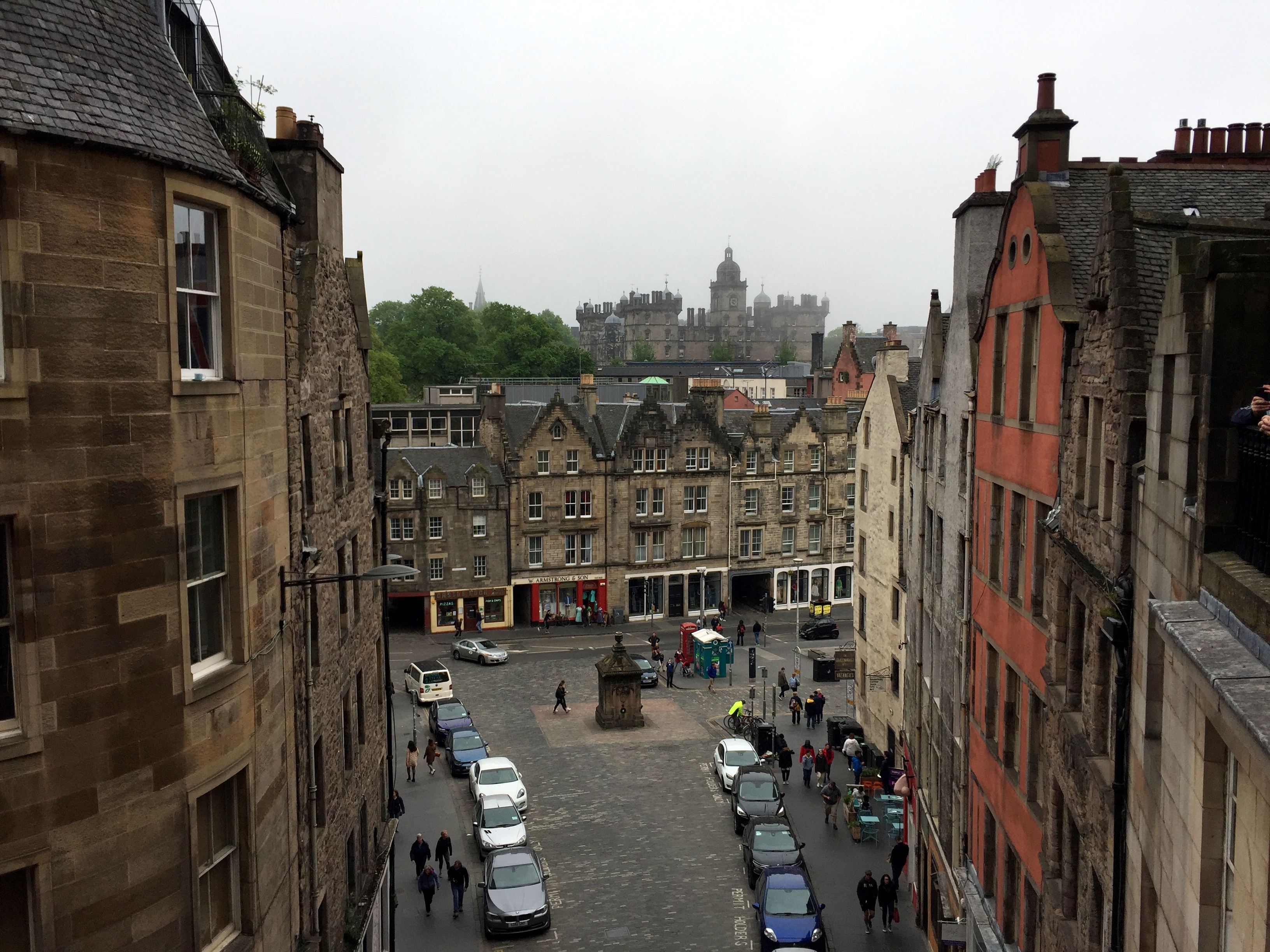
Victoria Street, leading down from the Royal Mile to Cowgate, Grassmarket, and points beyond.

We had midday beers at a bar on the terrace above . . .
and noshed on some roasted pork action along the street at this place:


Later that evening on the same street, we tucked in to yet another variation on the haggis theme – this time haggis as the filling in savory fried doughnuts:

We would say “‘sokay” – not the best we experienced, but enjoyable nonetheless.
Moving on . . .
Cowgate’s a for real place in Edinburgh – it’s the portal into the city through which the local farmers (ranchers?) would bring their bovines.
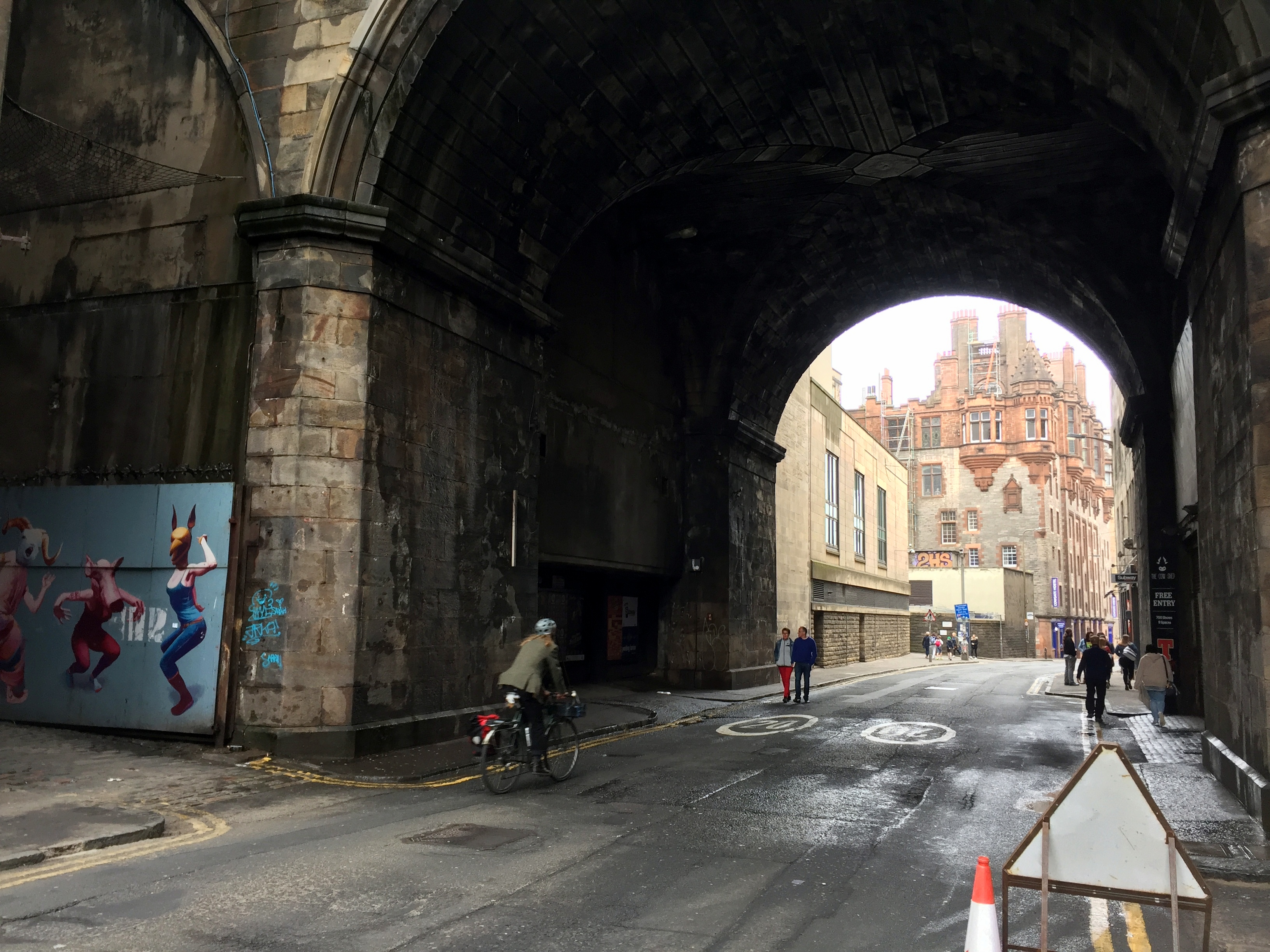
In the category of “you never know what you’ll find unless you look,” there’s a shrine in the Cowgate underpass to James Connolly, an Irish revolutionary who was born at 107 Cowgate (an area then known as Little Ireland).
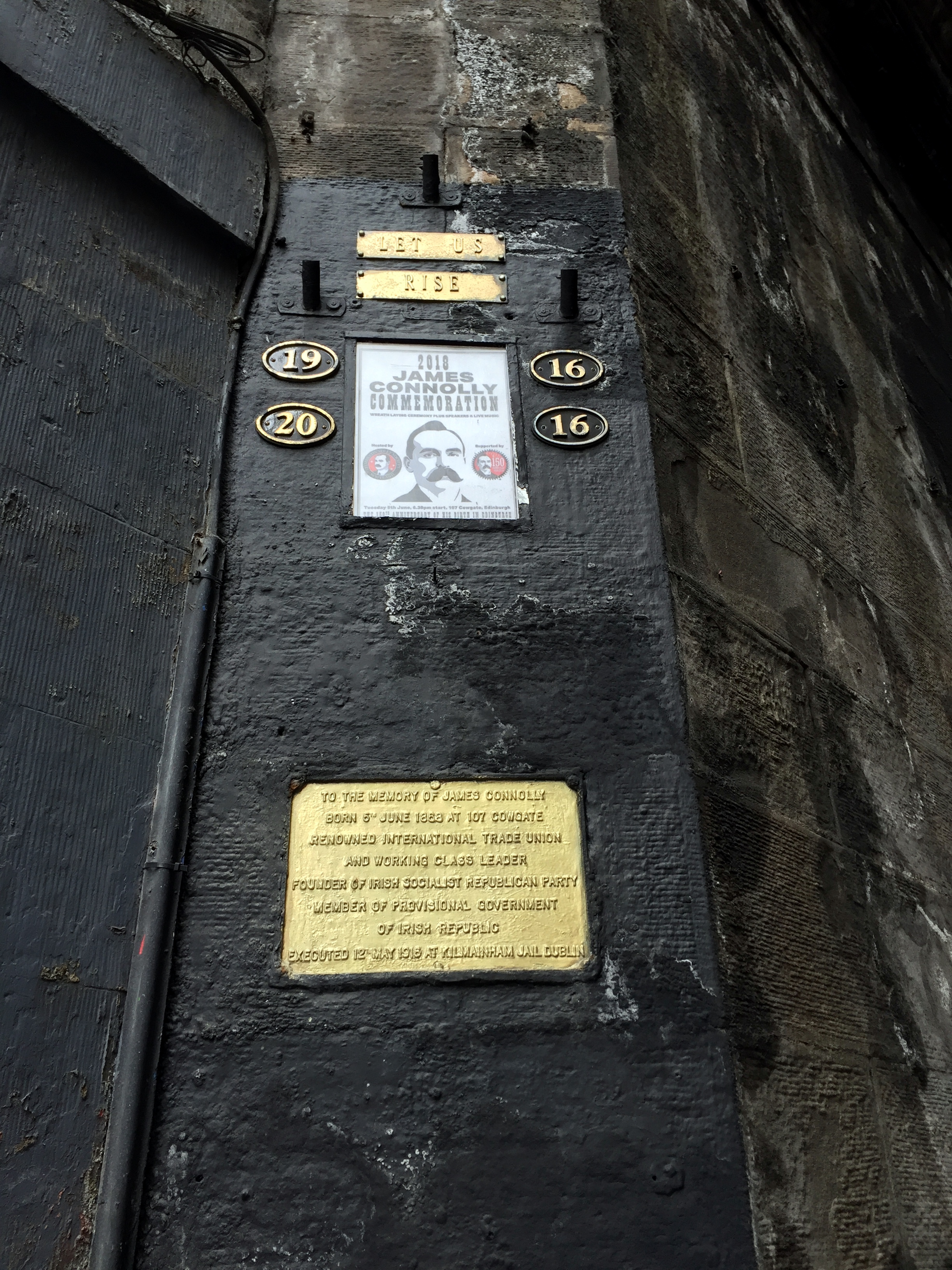
During the 1916 Easter Rising in Dublin, “Connolly was Commandant of the Dublin Brigade. As the Dublin Brigade had the most substantial role in the rising, he was de facto commander-in-chief. Connolly’s leadership in the Easter rising was considered formidable. Michael Collins [leader of the Provisional Irish Free State in the early 1920s (and cousin of one of our paternal grandmothers, btw)] said of Connolly that he ‘would have followed him through hell.'”
As a complete non sequitur to that somber note, just the next block up there’s this appropriate treatment of Cowsgate on the corner of a building:

Some serious paella offered one morning at the Grassmarket um, market:

View of the castle from Grassmarket:

Greyfriars Kirkyard, which we passed through on the way from Old Town to the Scotland National Museum. We ignored the Bobby statue out front.

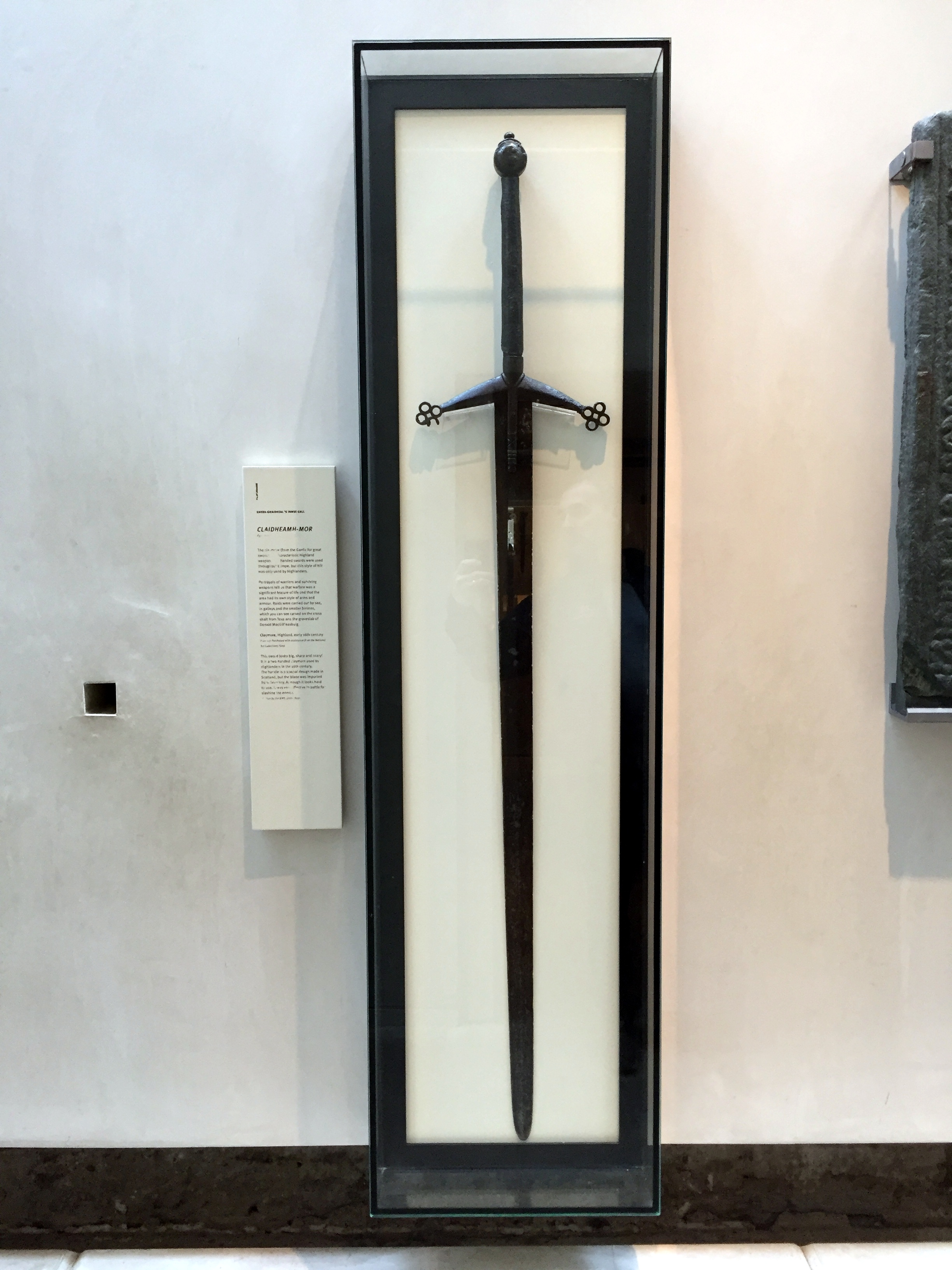
A few cool items from the museum, including a big-ass claymore (a term anglicized from the Scots-Gaelic claidheamh-mór “great sword”),
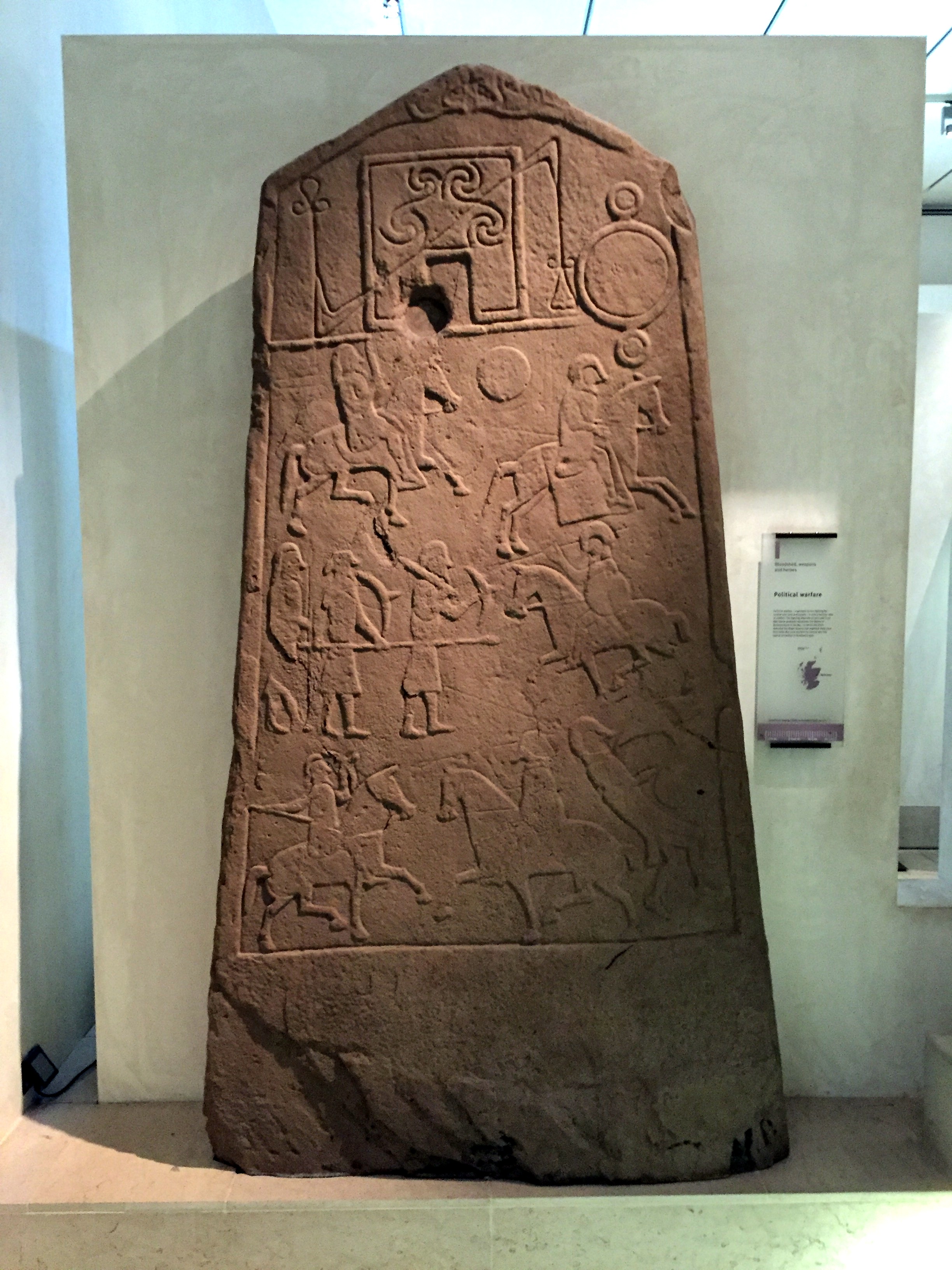
a Pictish stone generally considered to depict the Battle of Dun Nechtain between the Picts and Northumbrians in 685,
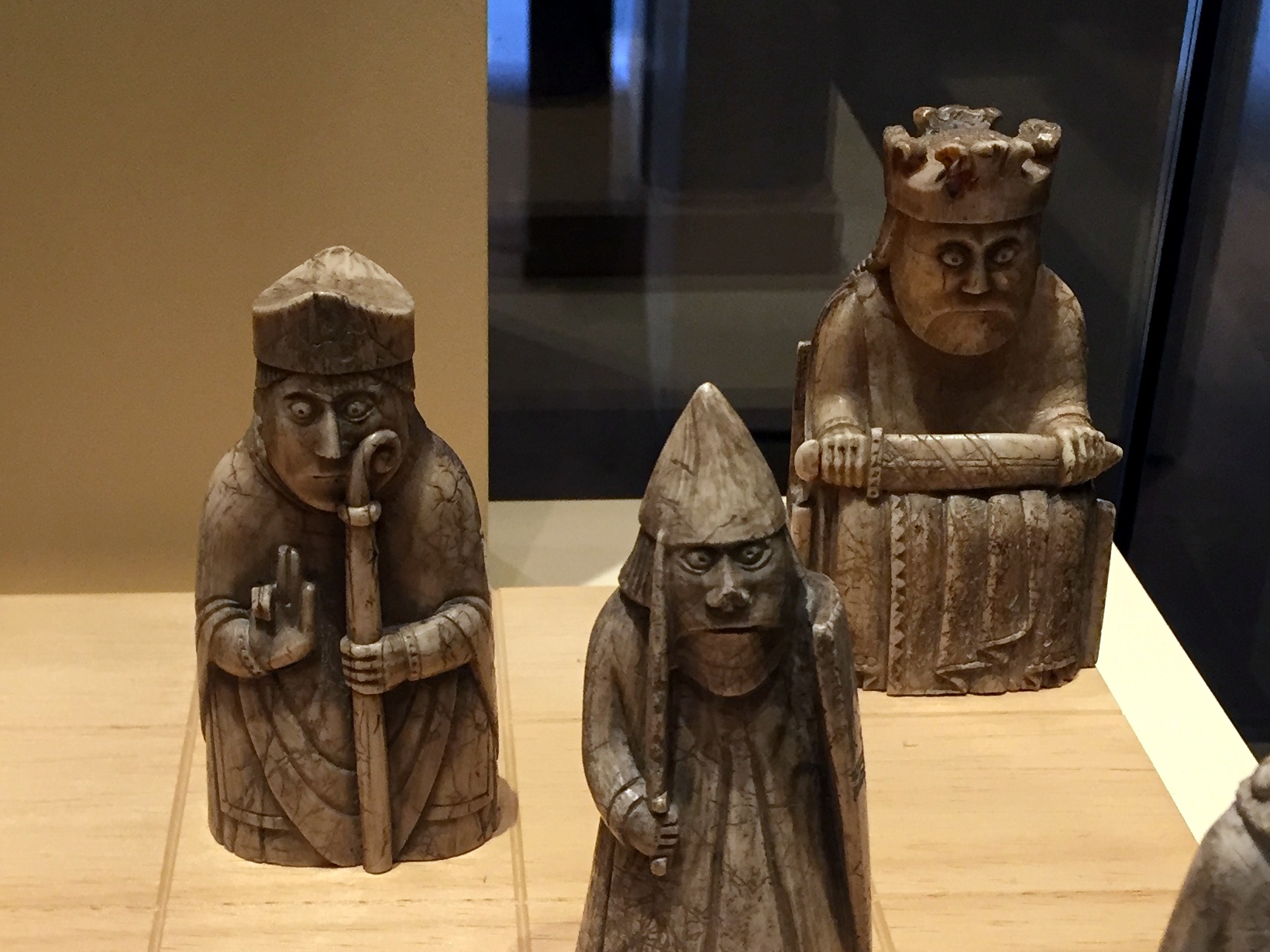
and the 12th- to 13th-century Lewis chess pieces, which originated in Trondheim Norway and were found in a hoard in Scotland.

The Norse Vikings either had some serious thyroid conditions or they’re simply surprised to see us.
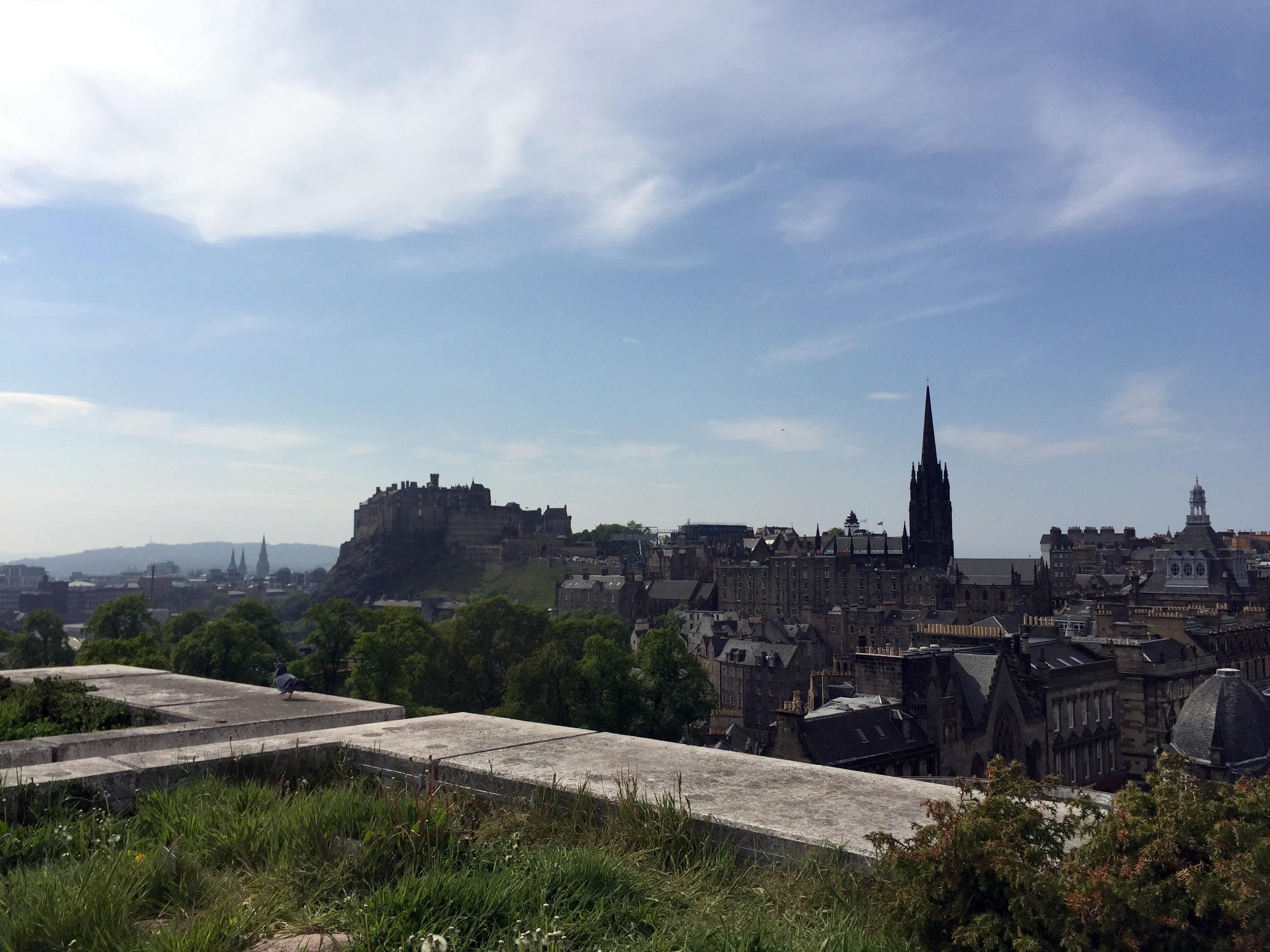
Bonus while at the museum – great views into Old Town from the rooftop:
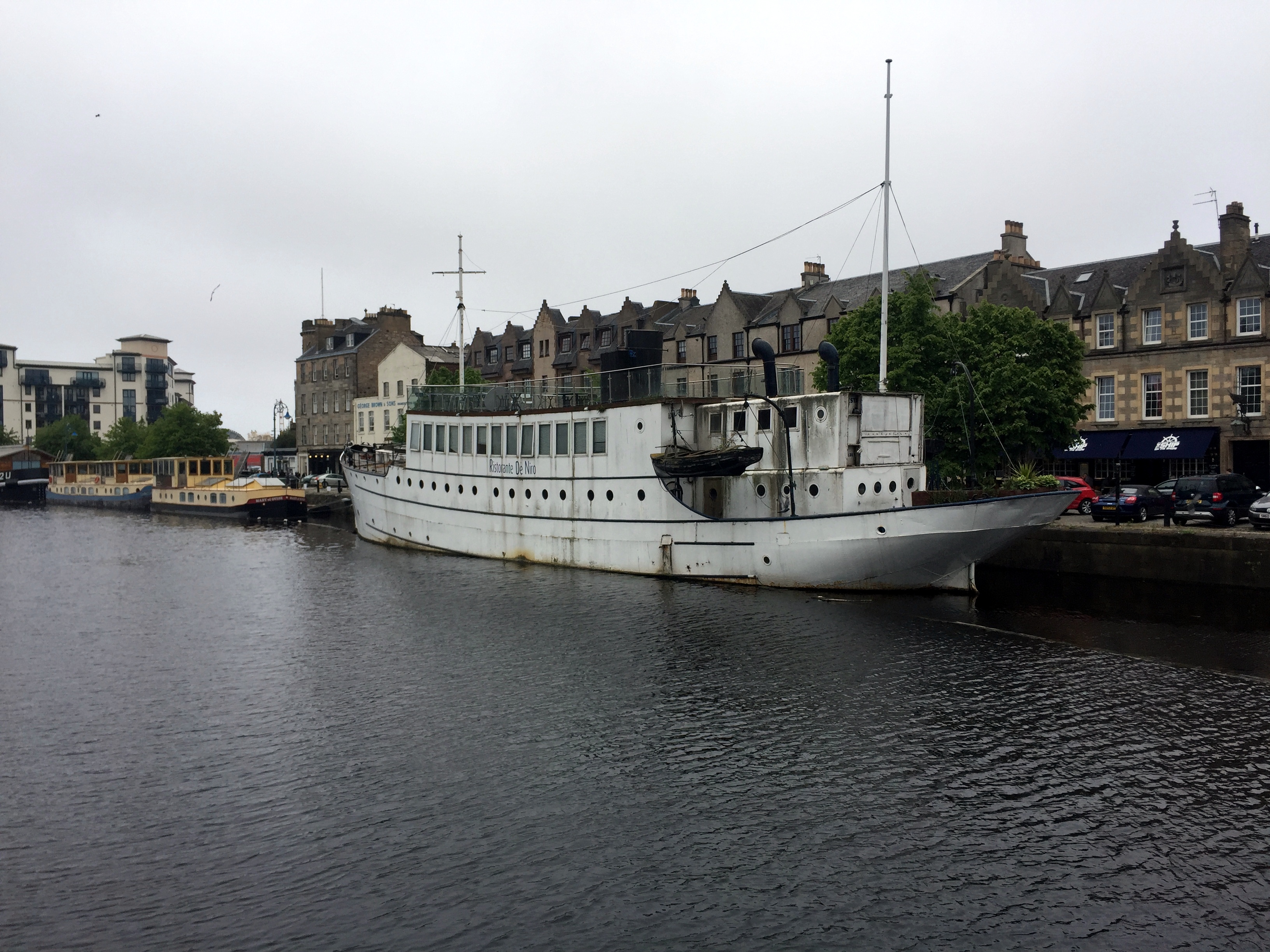
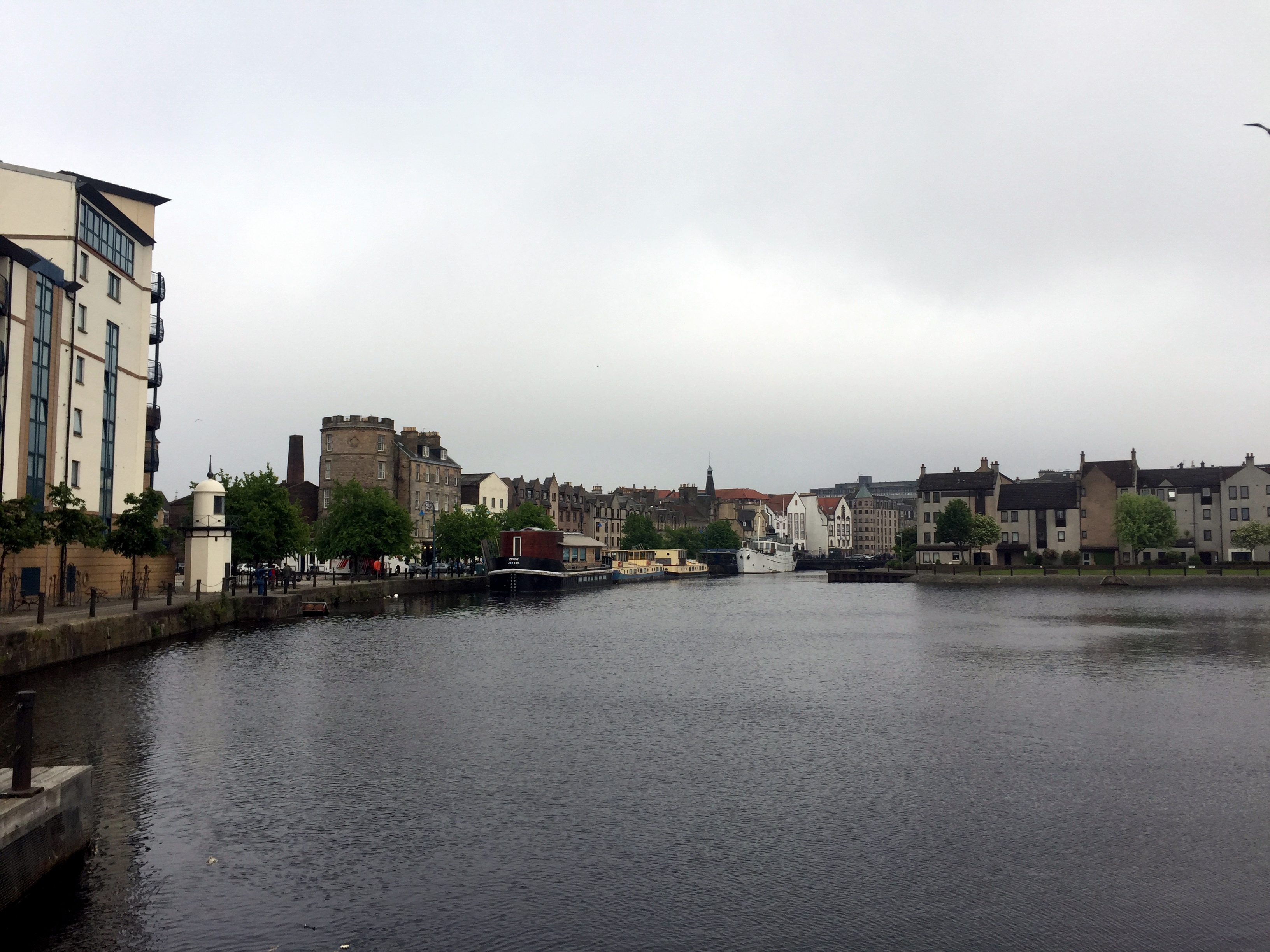
We struck out from the center of Edinburgh one evening to have dinner on the water in Leith. The couple of bars we popped in on were great, the restaurant was okay, but the setting not so much.
Scottish Merchant Navy Memorial on the waterfront in Leith:

(Our Navy – Merchant Marine Memorial on the Parkway across the river from DC is way better, for what it’s worth:)

Leith waterfront:
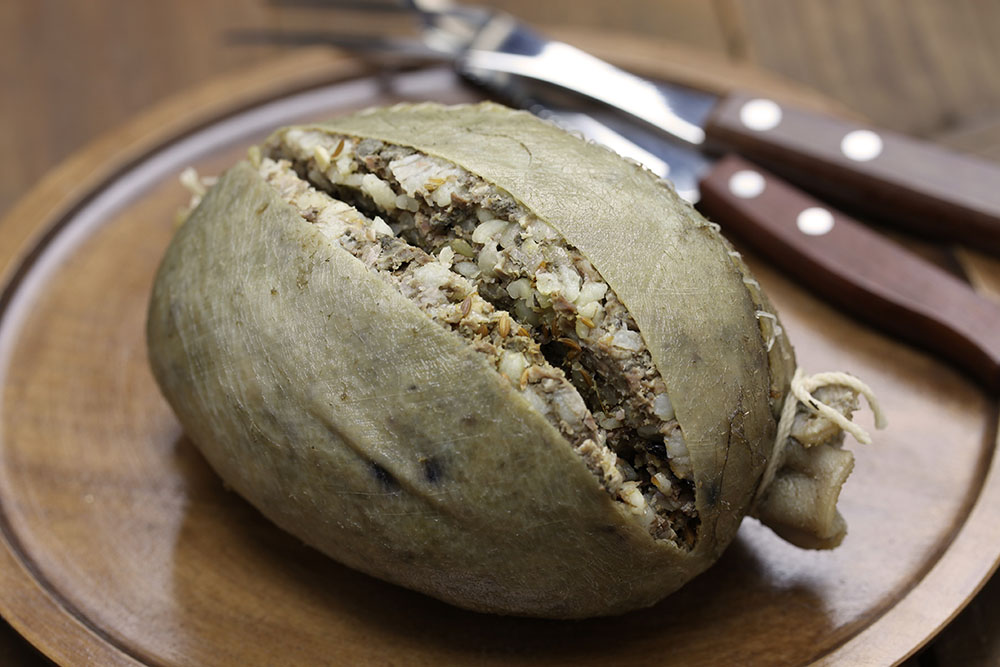
Dinner at a gastropub in Leith – great Scotch egg and our fourth haggis of the trip!


Thus concludes our posts on Edinburgh – perfect location to visit for a long weekend, and we’re now drinking whiskey out of the cool and ubiquitous glasses we experienced on our first night in the city (and continued to utilize throughout our stay . . .).