
Author Archives: WolfeStreetTravel
Protected: Cotswolds & Wales Road Trip: Caerphilly Castle
Protected: Cotswolds & Wales Road Trip: The Baths of Bath
Protected: Cotswolds & Wales Road Trip: Stonehenge
Cotswolds & Wales Road Trip: From Southrop to Bibury
We spent our last couple of days in the Cotswolds (Part 2, with Wales in between the two parts) poking around the hiking-distance villages of Southrop, Fyfields, and Eastleach, and driving one day to Bibury. As you’ll note below, “village” is a bit overblown of a descriptor for the first three settlements. Even “hamlet” is stretching it a bit. They were all tiny. But super charming. Bibury shares some of the small stature with the others, but, as you’ll see, it’s recognized nationally for its utter cuteness and so draws visitors in a way that the other three absolutely do not.
Our first hike the morning after we arrived in Southrop from Bath, via the unplanned stop in Stonehenge:

The UK trail system and access across fields continued to reward us with beautiful bucolic views and the occasional livestock encounter.


This way to Eastleach:

A picturesque row of cottages in Eastleach built in 1875:

The last one of which is topped by a clock tower – the architect apparently simply thought it would be a nice addition:

We agree.

The village’s tiny war memorial:


Back in Southrop, the 12th-century St. Peter’s church one morning on the way to a hike:

It’s got an unusually grand Norman arch over the north entrance for a tiny little church:

But the herringbone stonework clearly identifies the structure as late Saxon (of which not many remain in England) – predating the Norman adornments:

Pretty cool church graveyard, including an unusual casket-shaped stone ornamentation on one of the tombs:

Poking around Fyfields:


And a day trip to Bibury to see what the fuss is all about and also to grab some lunch. Here, you can mail a package AND pick up presents!

Bibury dates as far back as the Domesday Book (1086) and was once described by William Morris (one of the founders / originators / champions / whatever of the Arts and Crafts movement) as “the most beautiful village in England.”

And THIS is what all the fuss is about – Arlington Row:

Originally built in the 14th century as a wool store. . .

the row of structure later was converted into weavers’ cottages in the 17th century.

More Thomas Kinkade-y cottages elsewhere in town (which was, indeed, super charming – its reputation is definitely well-earned).


And lunch – and for Cod’s sake it’s finally not fish and chips!

Back in Southrop, we were ensconced at a village-within-a-village: Thyme (which scored it a Top 20 lodging location for WolfeStreetTravel):


And after 2 weeks of charming English cottages, finally one of our own to stay in at Thyme:

Pretty awesome (and huge) barn converted to a restaurant:

Our last evening to hang out before heading to London:

Our cottage came with a pretty essential feature:


One to London and then home!

Protected: Cotswolds & Wales Road Trip: London
2022 UCI Cyclocross World Championships
A convergence of the UCI Cyclocross World Championships in Fayetteville and some family in Bentonville resulted in our latest trip: to Arkansas, for the first time (for one of us, anyway). Bentonville is the home of Walmart, and two of the Walton sons are determined to make Northwest Arkansas the country’s premier mountain biking, cyclocross, and gravel riding region. They appear to be succeeding.
The Walton brothers invested in the development of this course in a bid to nab the 2022 cyclocross world championships. It worked.

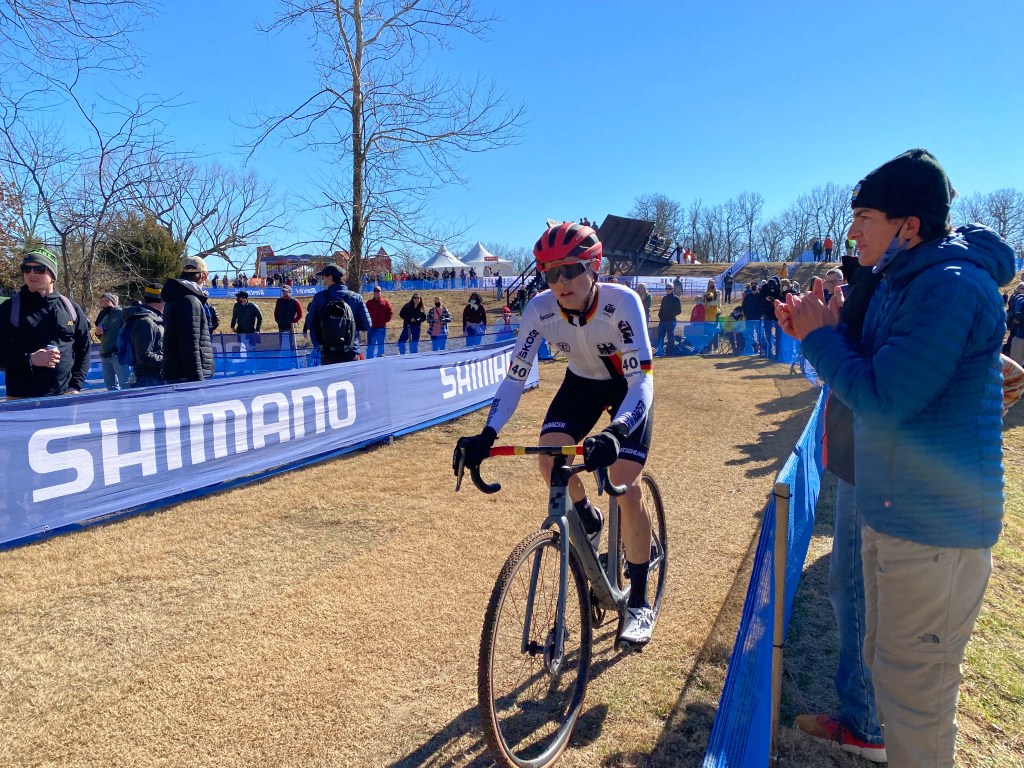
Men under 23 Division racing when we arrived on Saturday:
The main portage point of the race – 29 steps followed by the biggest drop on the course:
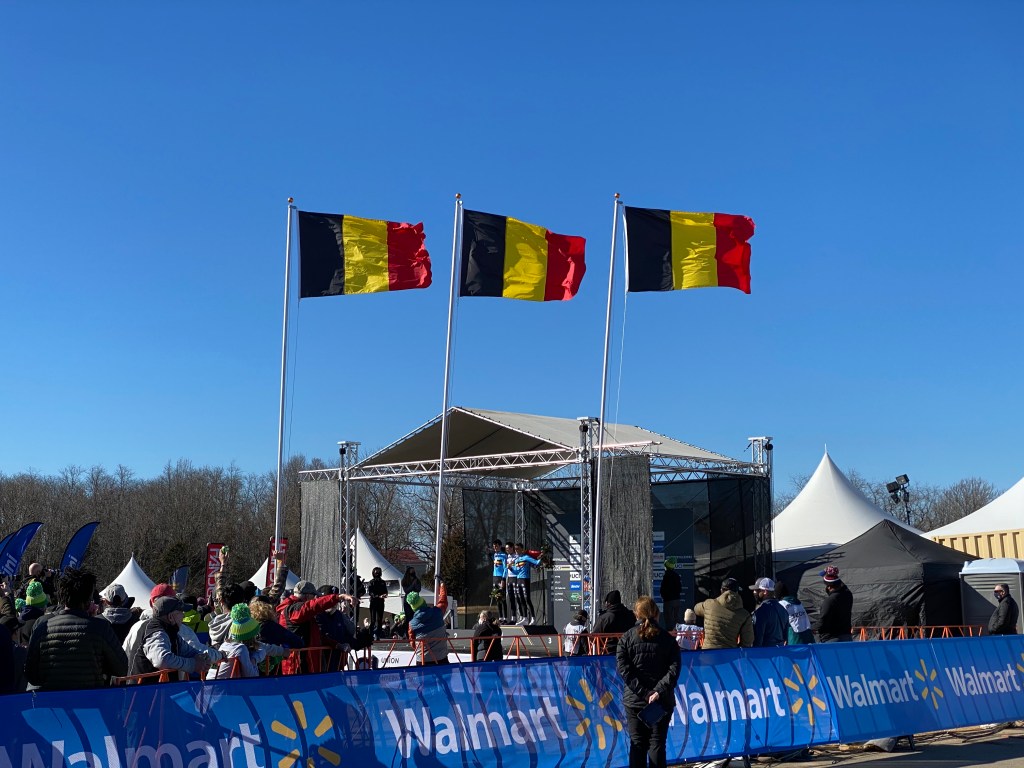
The Belgians swept the podium in the Men under 23 Division – maybe not too surprising, considering the cobbles of Paris-Roubaix?
Start of the Elite Women’s Division race in the VIP section, courtesy of Mike:
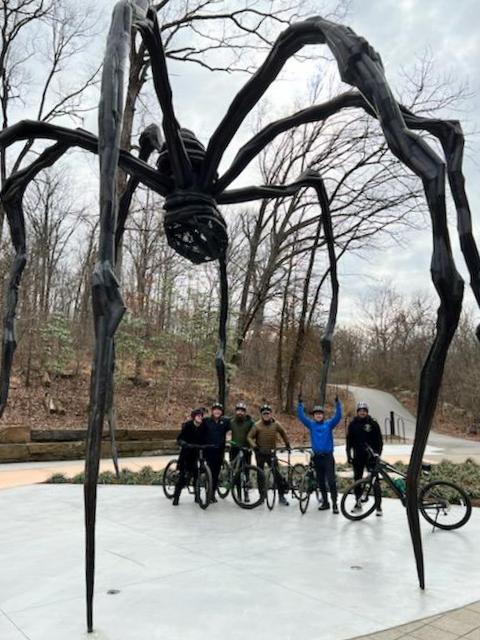
A distinctly lower caliber of bikers at Crystal Bridges:
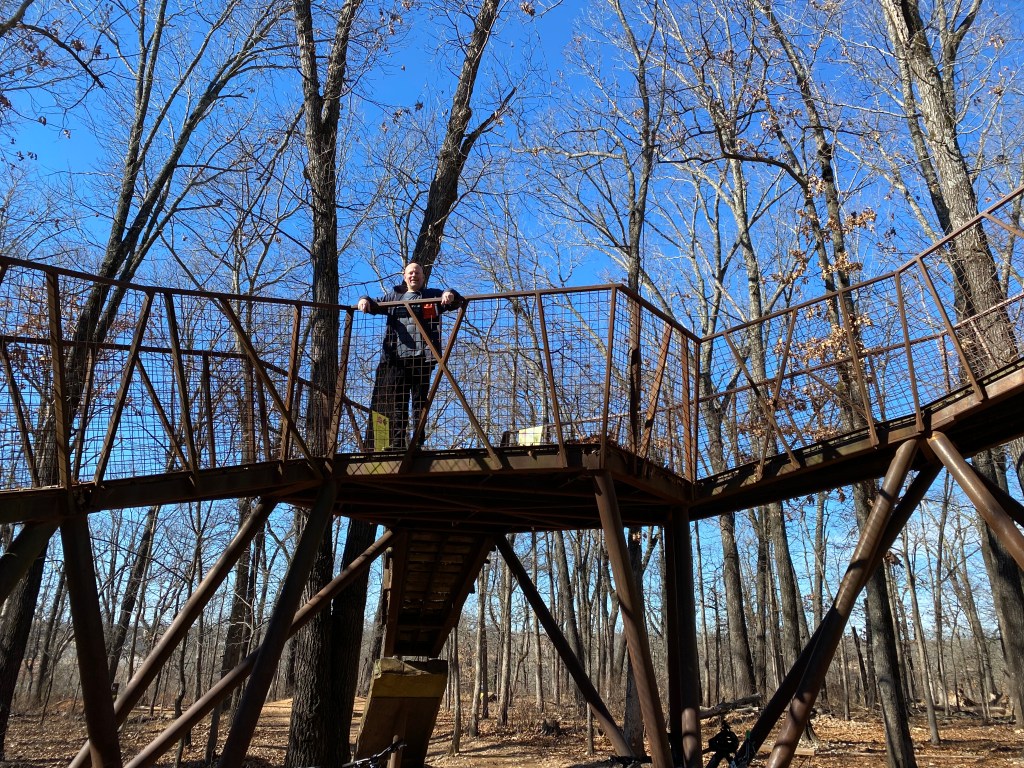
And later at The Hub at the top of the Coler Mountainbike Preserve:

A little air show entertainment on Sunday, while waiting for the Elite Men’s race to start:
Freakin’ hilarious sign on the course for the Elite Mens race:
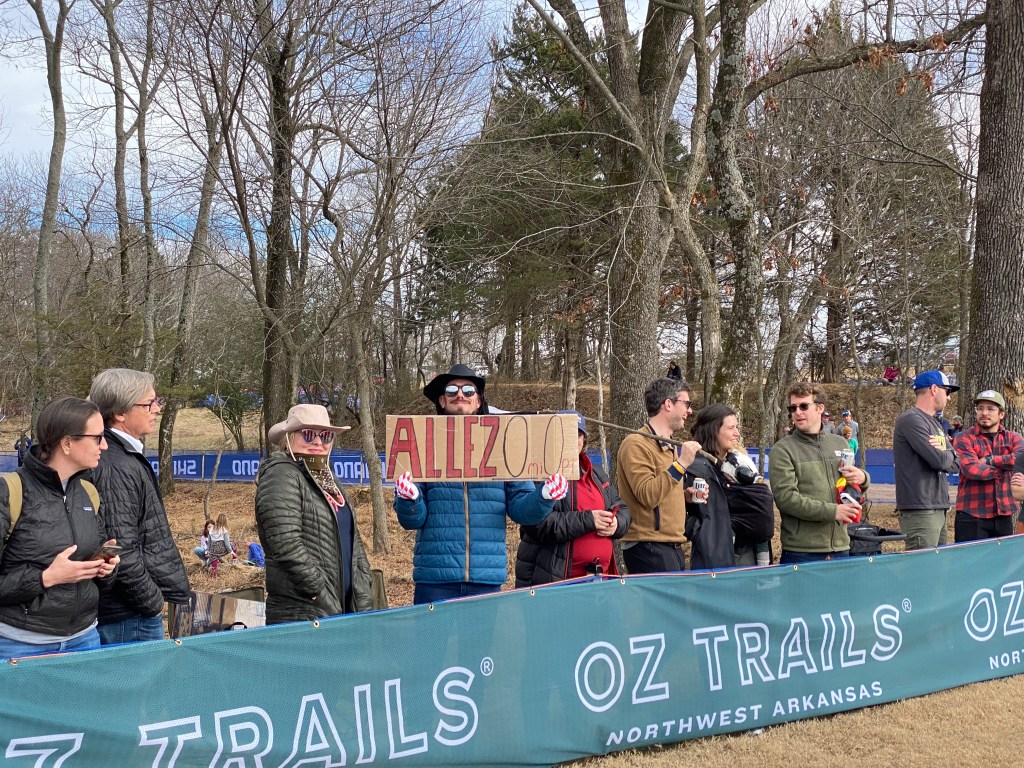
If you don’t know the reference, consult the picture below and the resulting aftermath from the jackass holding the original version of the sign on the route of the first stage of last year’s Tour de France:

Transitioning from riding to portaging up the stairs like salmon swimming up a fish ladder – freakin’ amazing athletes (British winner Tom Pidcock in the lead):
Last night in Bentonville:

Great trip and great town – we’ll be back!
Mappy Hour: A Cartographic History of Ukraine
As Russia continues their belligerent posturing along the Ukraine eastern border (and now on Ukraine’s northern border with Belorussia, where Putin has begun positioning even more troops), it’s helpful to understand the history of Ukraine’s borders in the political and cultural fluidity that characterizes central Europe. (Let’s be serious – fluidity across all of Europe, which is why the place is so freaking interesting from a historical and cartographic perspective.)
Our buddy, Jim, who also follows WolfeStreetTravel, recently recommended this really compelling Washington Post article from 2015 on the evolution of Ukraine’s territory and borders. This article was published when Putin was previously taking aggressive actions to absorb Ukraine’s Crimean Peninsula into mother Russia. Definitely recommended reading for anyone following the crisis unfolding around Ukraine.
The Washington Post’s resident cartographer, Gene Thorp, developed for the article several really helpful and really compelling maps depicting how Ukraine’s territory transformed over the centuries as empires, warring factions, and treaty agreements changed. To wit:
Catherine the Great’s encroachment into what previously was either sovereign Ukrainian territory or land ruled by the Polish-Lithuanian Commonwealth in the 17th century. (WolfeStreetTravel previously included latter in another Mappy Hour post on the evolution of Europe during the Brexit buildup.)

Or, a severed Ukraine after the post-WW I Treaty of Brest-Litovsk, where Poland wound up with most of western Ukraine, including the major city of Lviv, but lost the territory during the Russian civil war, after which Ukraine joined the USSR as the Ukrainian Soviet Socialist Republic within the union.

The body of the article includes more maps and some really great context for how and why Ukraine looked like it did at different times during the last 1000+ years, as well as how the native people of Ukraine changed due to Soviet actions. Good stuff!
F.W. de Klerk
So, as most of you probably saw in the news this morning, former South African president F.W. de Klerk has died.

Here’s why it’s appearing on WolfeStreetTravel: Because F.W. de Klerk’s grandson turned out to be our guide on safari in South Africa in 2018. From our post on that segment of the trip:
“Our guide on the right below introduced himself as F.W.

During sundowners our first night, we asked him: ‘Like, F.W. de Klerk?’ He said, ‘Yeah. Like that.’
So we poked at this, and he acknowledged that he was, indeed, former South African president F.W. de Klerk’s grandson and namesake. F.W. de Klerk (the president, not our guide) presided over the end of apartheid, which F.W. (our guide) said earned him many fans and many more detractors in the white population.”
Crazy, man.
Cinque Terre and Back to Tuscany: Volterra and Borgo Pignano
Volterra claims the spot for the final Tuscan town we’d visit on this road trip. Located in the west of Tuscany, Volterra – like its eastern counterpart of Cortona – did not make it to our Tuscan biking itinerary back in 2004, which focused primarily on central Tuscany. We’d remedy that oversight on this trip.
Volterra definitely qualifies as yet another hill town – long climb to get from parking outside the walls to the center of town.

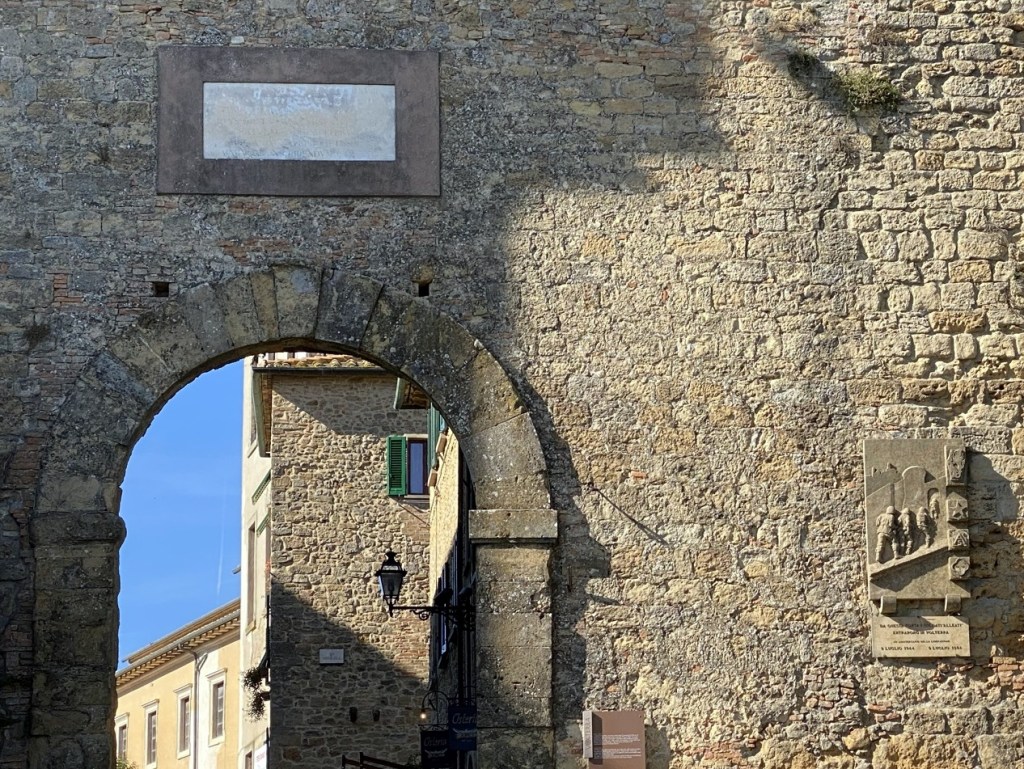
Entering the walled town through Porta a Selci. Originally an Etruscan gate into a walled settlement, the current portal dates from the 16th century.

To the right of the gate is a plaque depicts soldiers entering Volterra with text in Italian reading: “This brings the soldiers allies Entered Volterra 40th anniversary of Liberation 9 July 1944 – 9 July 1984.” The US 88th Infantry Division’s drive north up the Italian peninsula in WW II took it first to Rome, then on to Umbria and Tuscany. On May 8, 1944, the 88th “launched an attack toward Volterra on the 8th, taking the town the next day. (From here.) To our knowledge, this is the first Tuscan (or even Italian) town we’ve visited that was the site of a WW II battle.
Heading into the historic center by way of a fairly picturesque – albeit less-than-charming – main thoroughfare.

Crowded evidence that we’re getting closer to the center of Volterra:


Finally reaching Palazzo dei Priori, in the actual center of town:

Volterra’s impressive 13th-century town hall, the Palazzo dei Priori:

With its complement of governing family coats of arms, as we’ve seen in every town on this trip:

Nice little market buzzing in the piazza the morning we arrived:
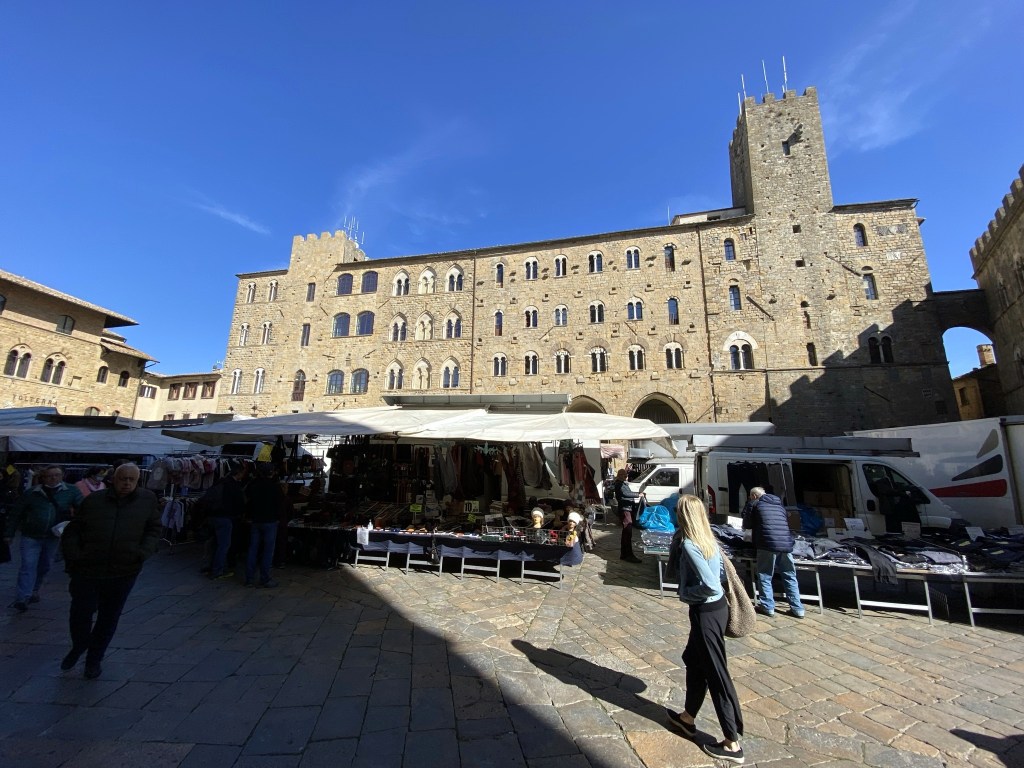
Across the piazza from the town hall lies the Palazzo Pretorio, which once served as the office of the mayor and as apartments for the Captain of the people’s guard, the Pretorio. The palazzo’s tower dates from the 13th century and is called the Torre del Porcellino – Tower of the Little Pig – because of (or resulting in? sources are unclear) a statue of a pig on a little ledge to the right of the uppermost window.

Volterra’s other tower around the corner, the cathedral’s 15th century companile, which appears way more Lombard than Tuscan to us.
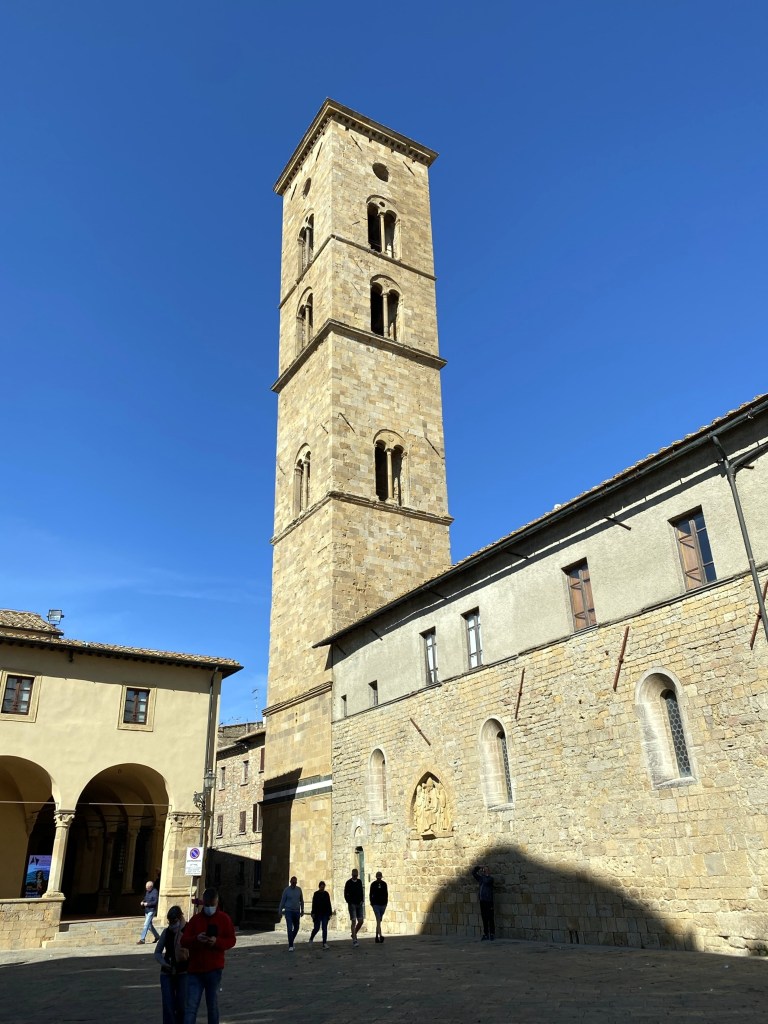
And the super-Romanesque and very modest cathedral itself, dating from the 12th century (which actually replaced a 9th-century structure that was destroyed in an earthquake in the mid-1100s):

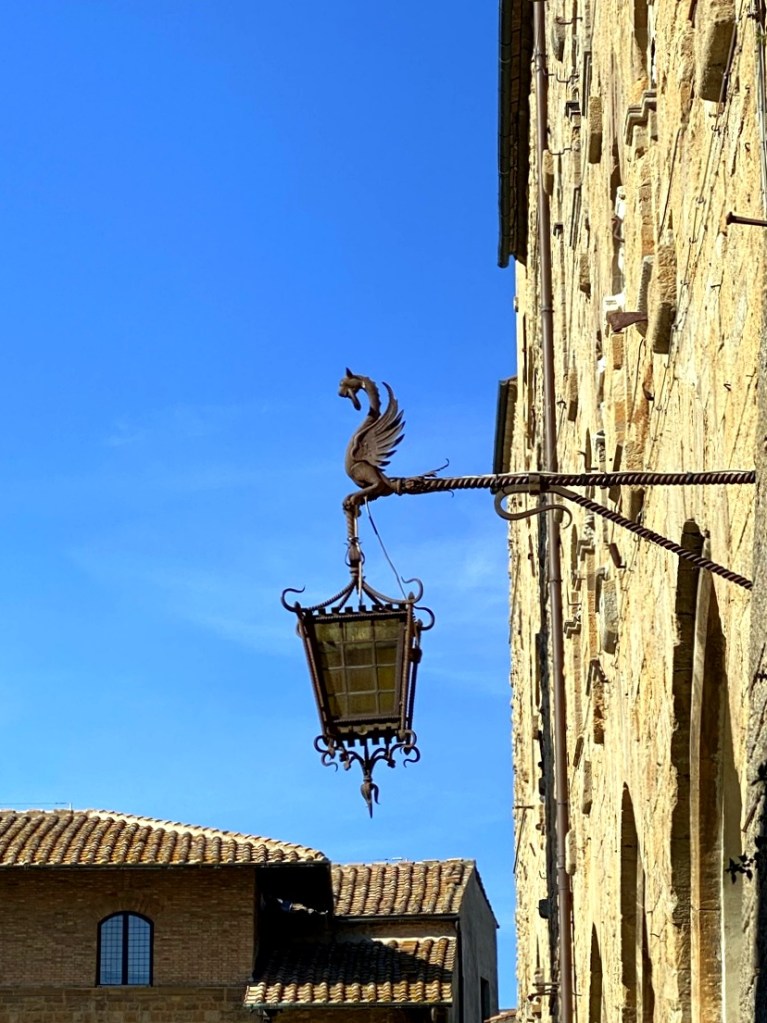
The mildly bizarre Chiesa Della Misericordia (Church of Mercy):

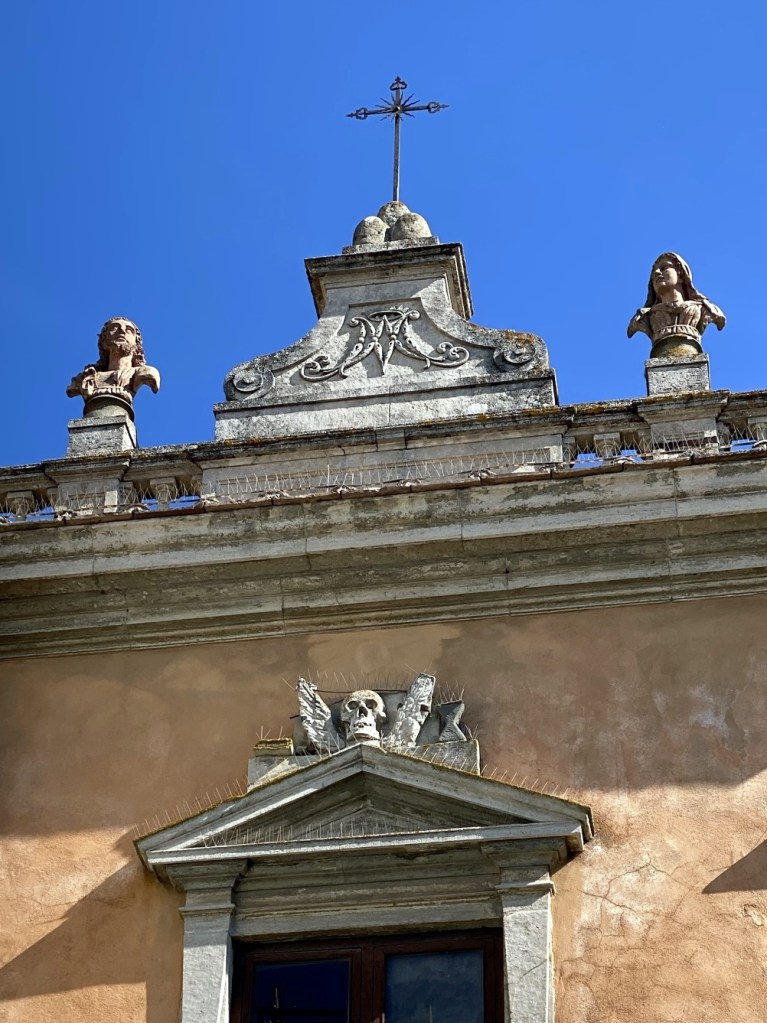
The church has been converted to a museum of vintage ambulances:

A word that we’ll take the opportunity to highlight as absolutely hilarious in German, as helpfully demonstrated in this brief video, which several Werners already have been subjected to:
Heading down one of the hilly town’s picturesque streets:


And ending up at another gate in the town’s walls – this one much older than our entrance gate:

Volterra’s Etruscan Porta all’Arco (Arched Gate) was one of the passageways through an extensive 7-km-long defensive wall built between the 4th century and 3rd century BC.


Heading to our final destination of the road trip a few miles outside of Volterra. . .

The destination itself: Borgo Pignano. After staying in towns our entire road trip, we opted for borgo in the country for our final night. An Italian borgo is a small hamlet or settlement, and many have been transformed wholesale into hotel complexes that incorporate the old village’s structures. In our case, the manor house served as the main hotel, while tradesmen’s shops and houses have been converted into villas, the spa, a restaurant, etc.


The little borgo’s old town church opposite reception:


The best repurposed structure in the borgo? A town warehouse converted into a museum of vintage Italian bikes, motorcycles, and cars from Italy’s golden age of style from the 1940s to the 1970s.

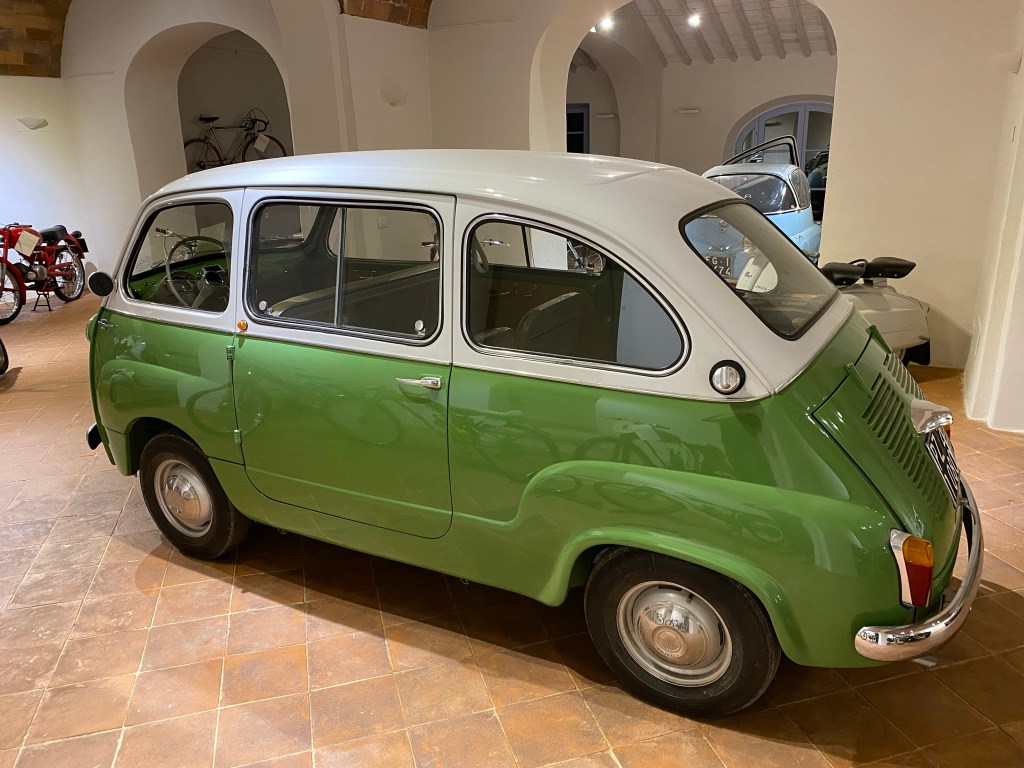
1964 Fiat 600 Seicento Multipla, nicknamed “the Sisters’ car” since it was a common conveyance for nuns; occupancy six.
1973 Legnano Roma Specialissima. Legnano was a major player in competitive cycling from the 1920s through the 1940s, and their bikes won 15 Giri d’Italias and two Tour de Frances. Bianchi rose to power from the 1950s on, and eventually bought Legnano in 1987. Suite Campy groupo.


1973 Poghliaghi Record. Poghliaghi exemplified Italian artisan frame making, and he only made between 100 and 1000 bikes, butEddy Merckx rode one to victory (we assume in the Giro? it wasn’t the Tour, according to this site cataloguing the bikes that won each year). Another suite Campy Record groupo.


1958 Piaggo / ACMA Vespa 400 microcar. “The 394cc two-cylinder two-stroke motor. . . could propel the car and 4 occupants to a top speed of 51 miles per hour, eventually.”

1947 Bianchi Aquilotta da Corsa, used in the years following WW II when Italians began competing again with motorcycles and mopeds.

1947 Alpino 63 Bicarbuatore, also built for racing in the post-war years.

1948 Fiat 500C “Little Mouse:”

1930s Gloria Garibaldina:

Sporting innovations such as wooden wheels and one of Campagnolo’s first derailleurs, which you needed to manually engage by reaching behind you. One lever loosened the axel and the other moved the chain to change gears. Freaking wild.

1954 175cc MV Augusta:

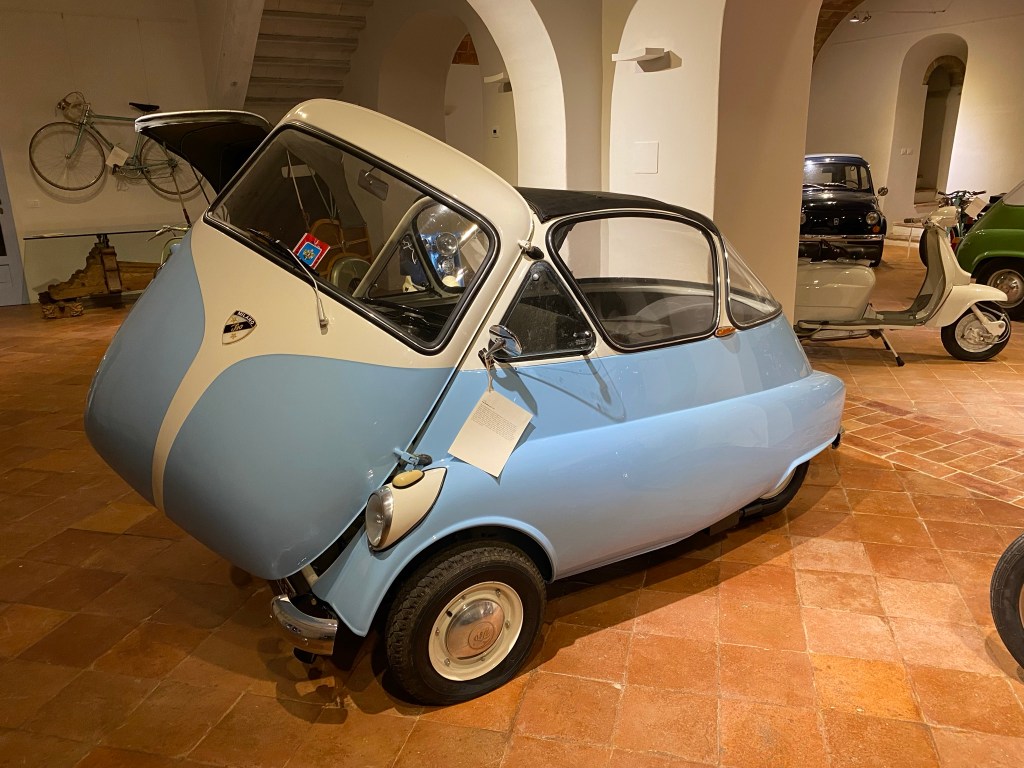
1954 Iso Rivolta Isetta 250, a three-wheeled Italian microcar or “auto-scooter.” Iso’s prior experience was manufacturing refrgerators. . .

Another 175cc ride – a 1956 Moto Morini:

Final evening in Tuscany!
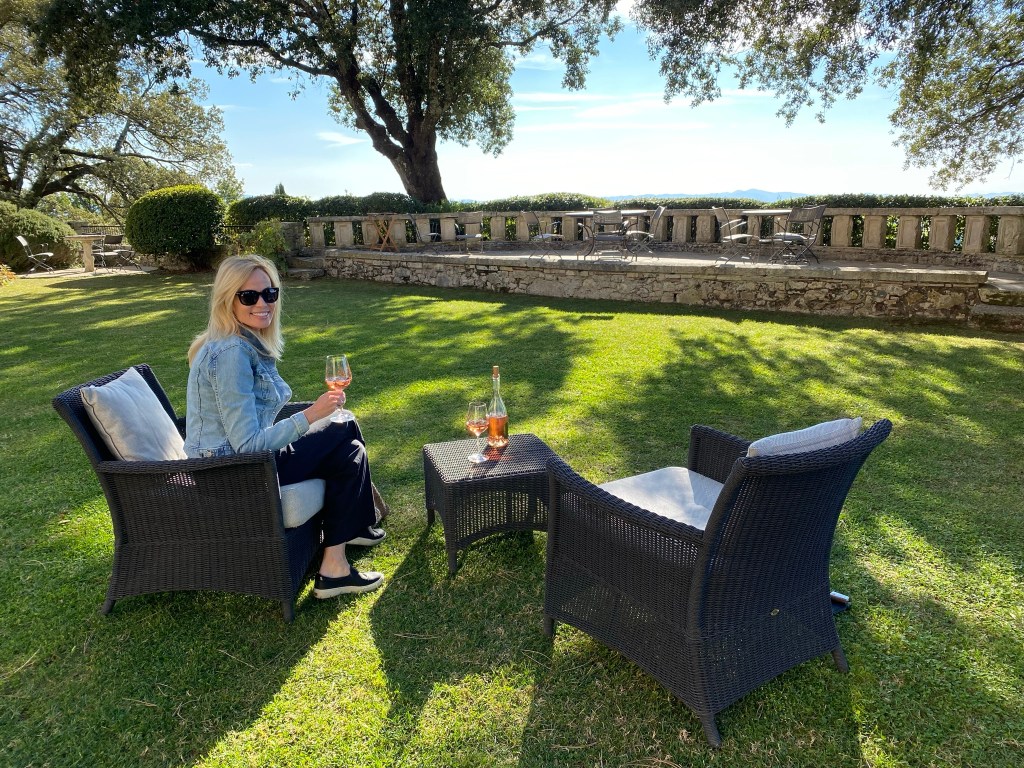

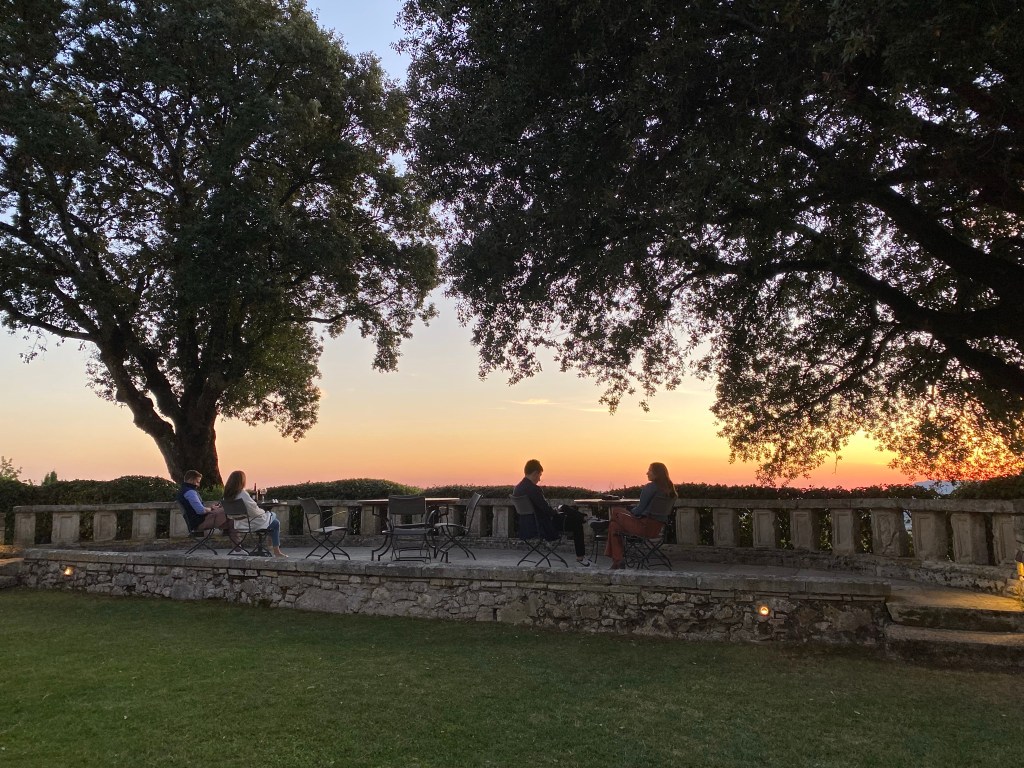
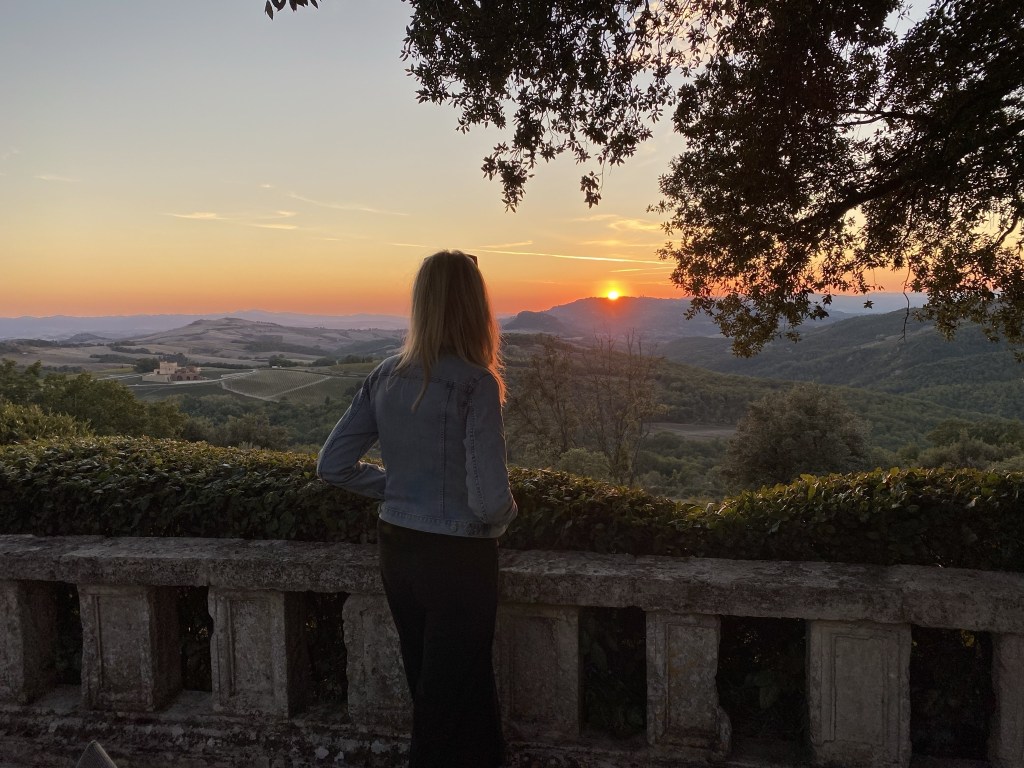
Thus endeth the trip:

 WolfeStreetTravel