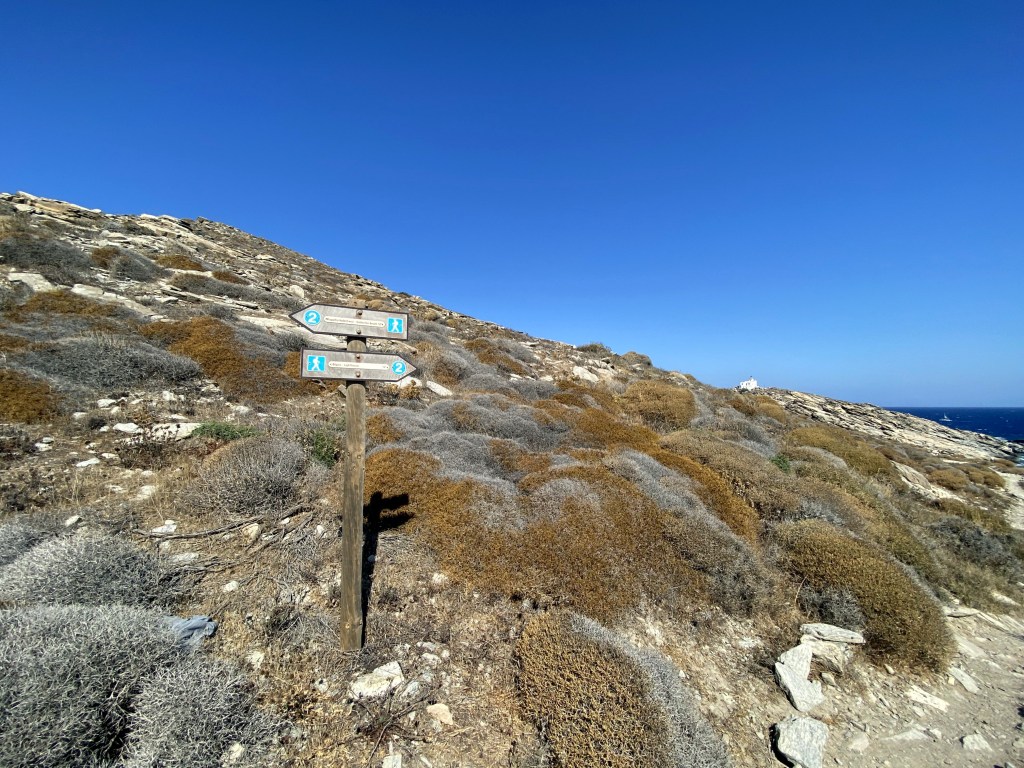
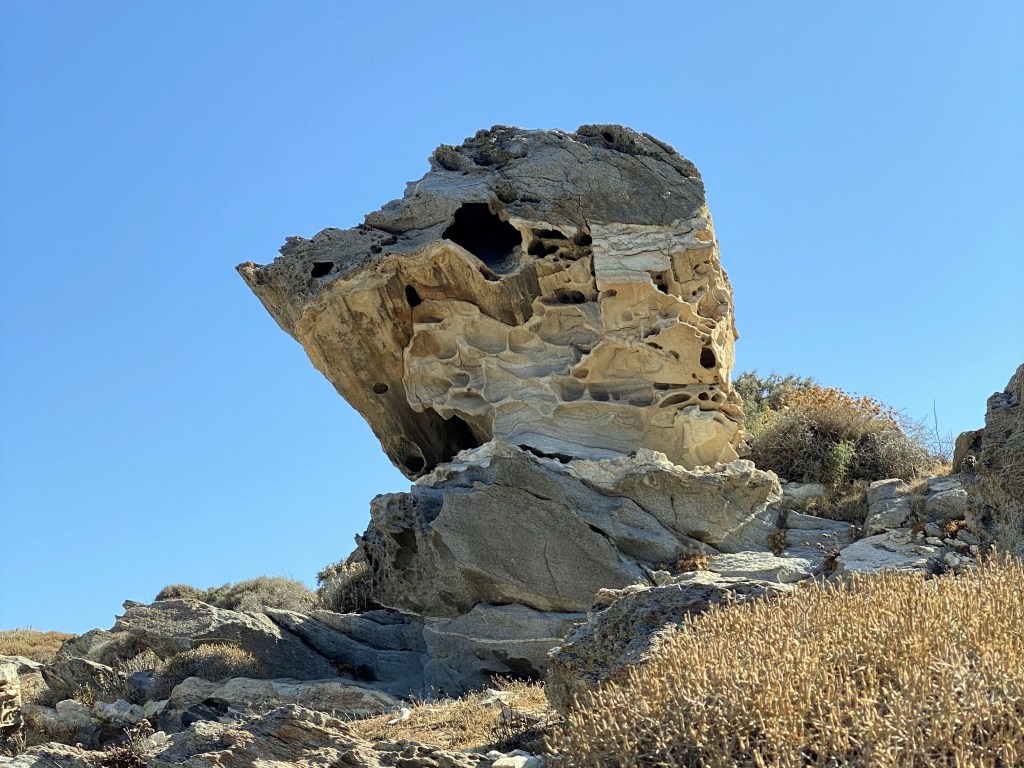
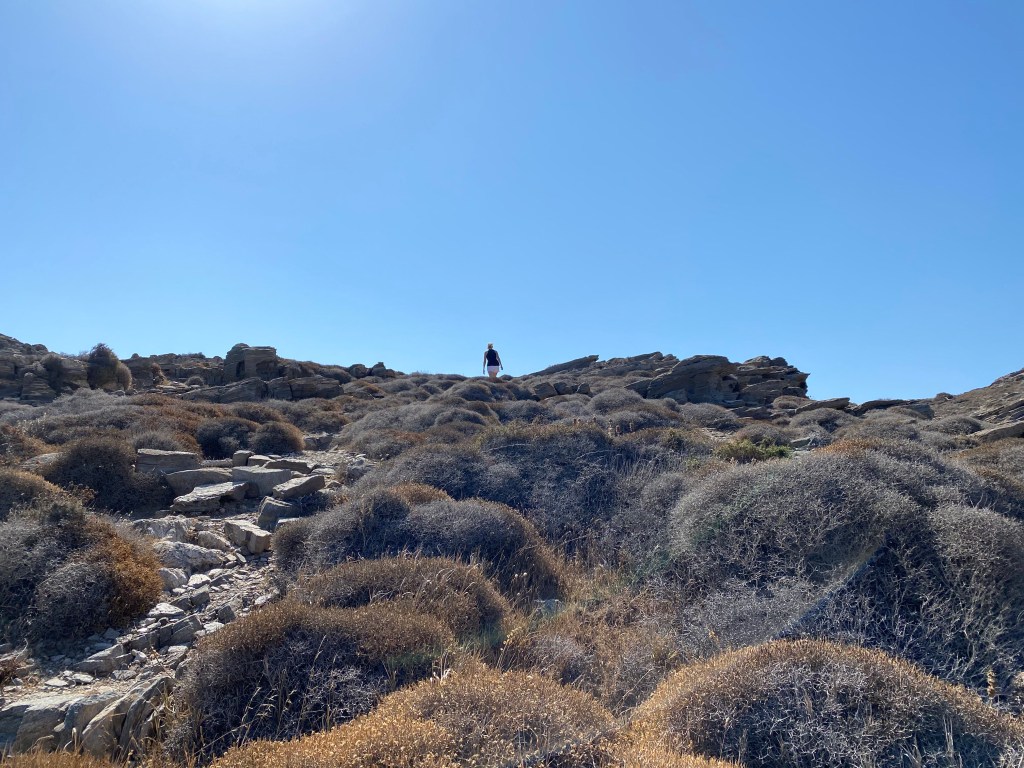
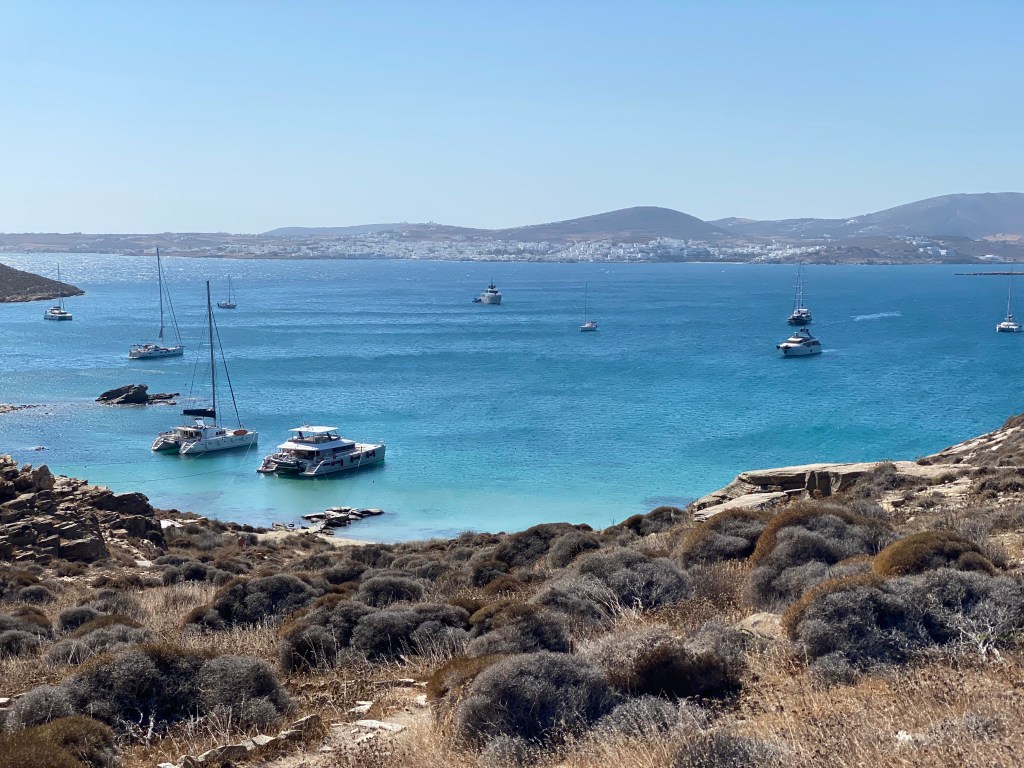
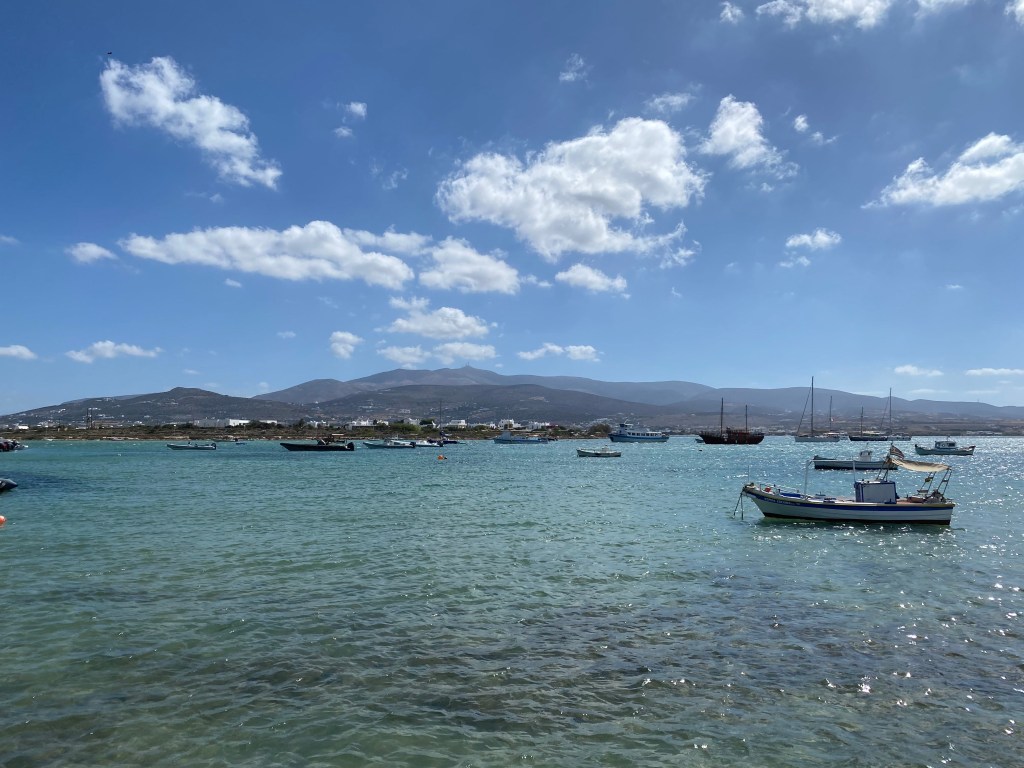
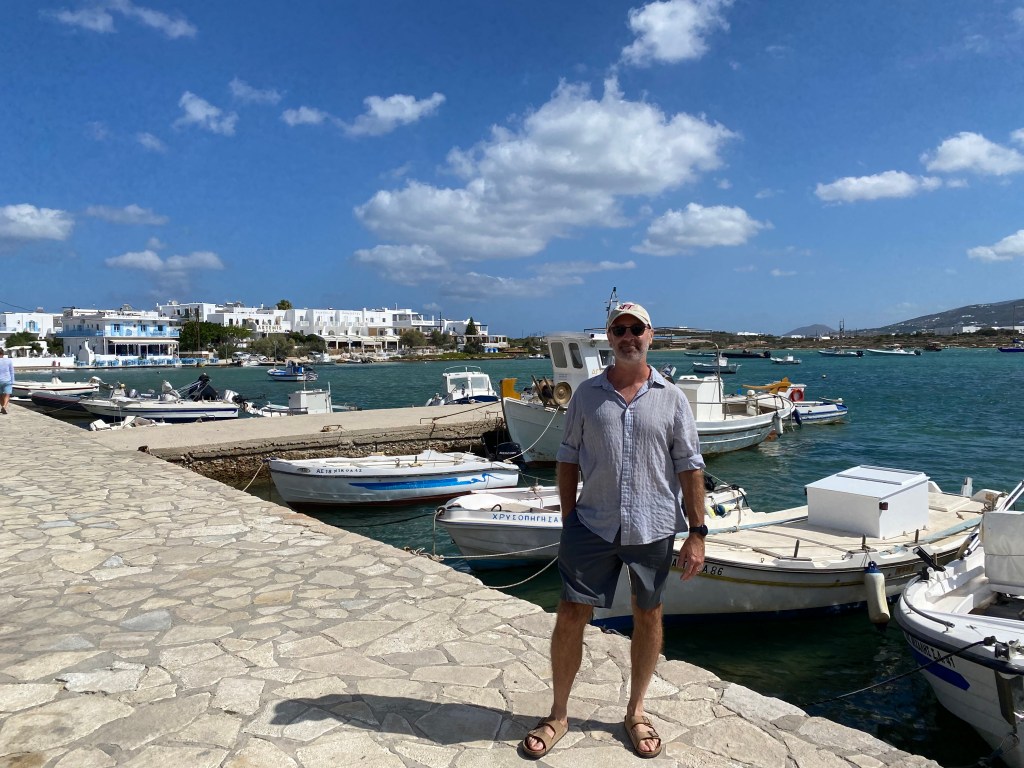
Although we’d spend each evening in or near Naousa, we’d field trip around the island each day to explore, hike, or swim.
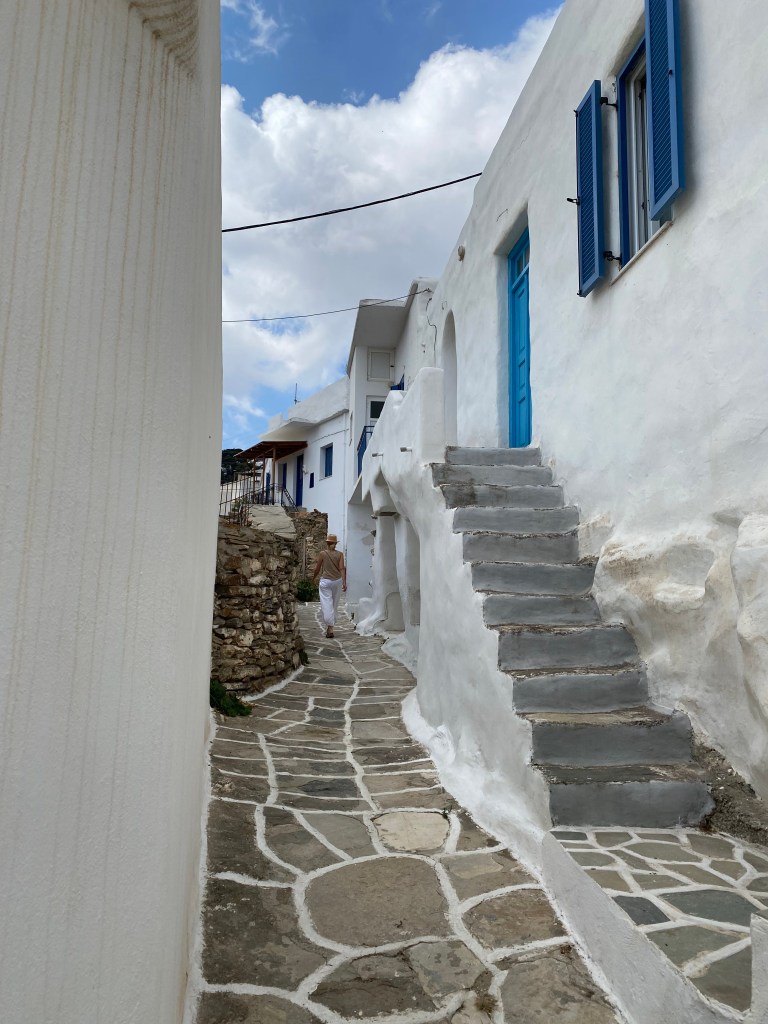
Including driving up to the traditional Cyclades mountain village of Lefkes.
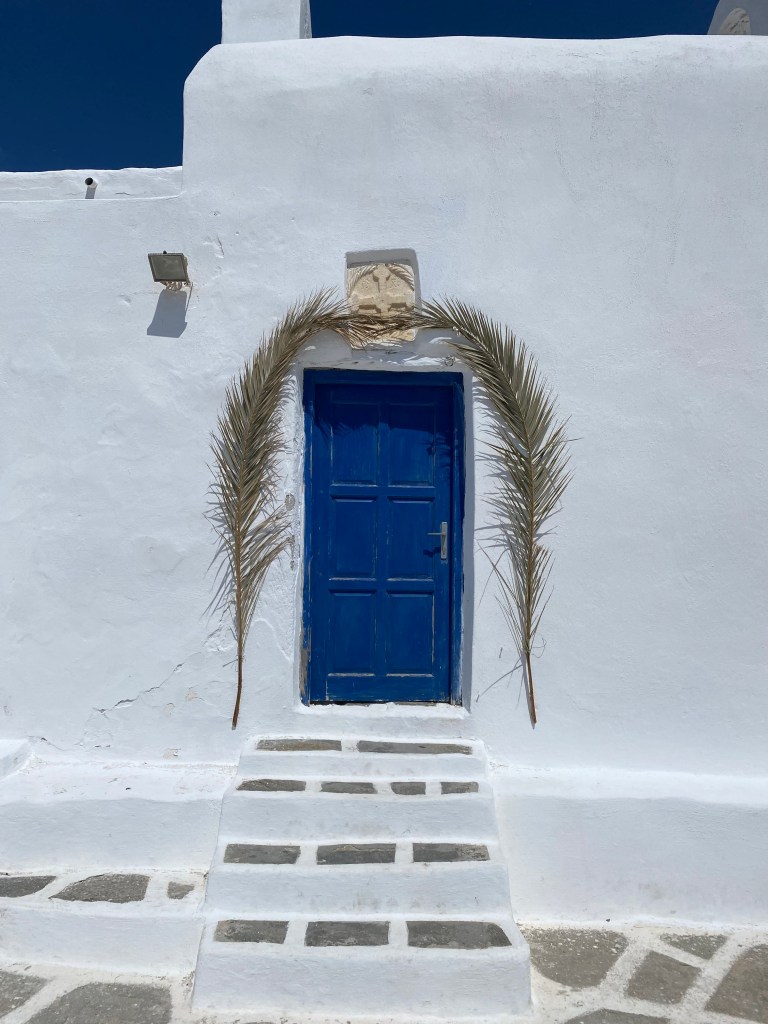
Which featured quite a few picturesque Greek churches.
Grabbing some lunch at Anemos Taverna above the eroded-rocky Kolympethres Beach:
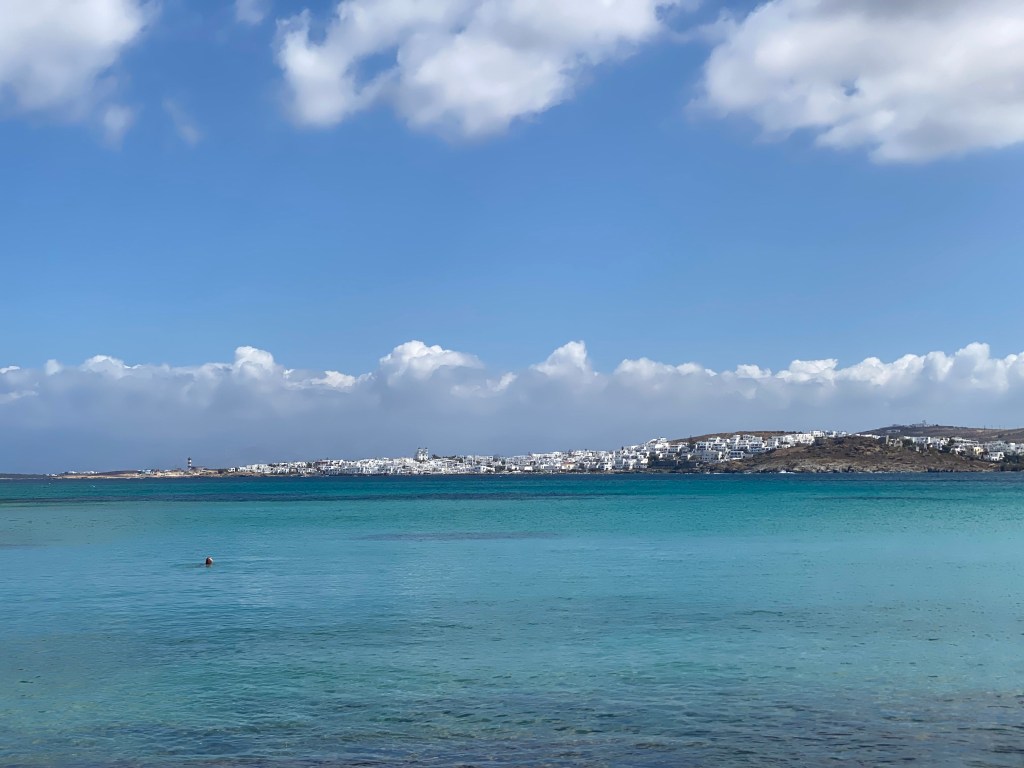
White-washed Naousa in the distance:
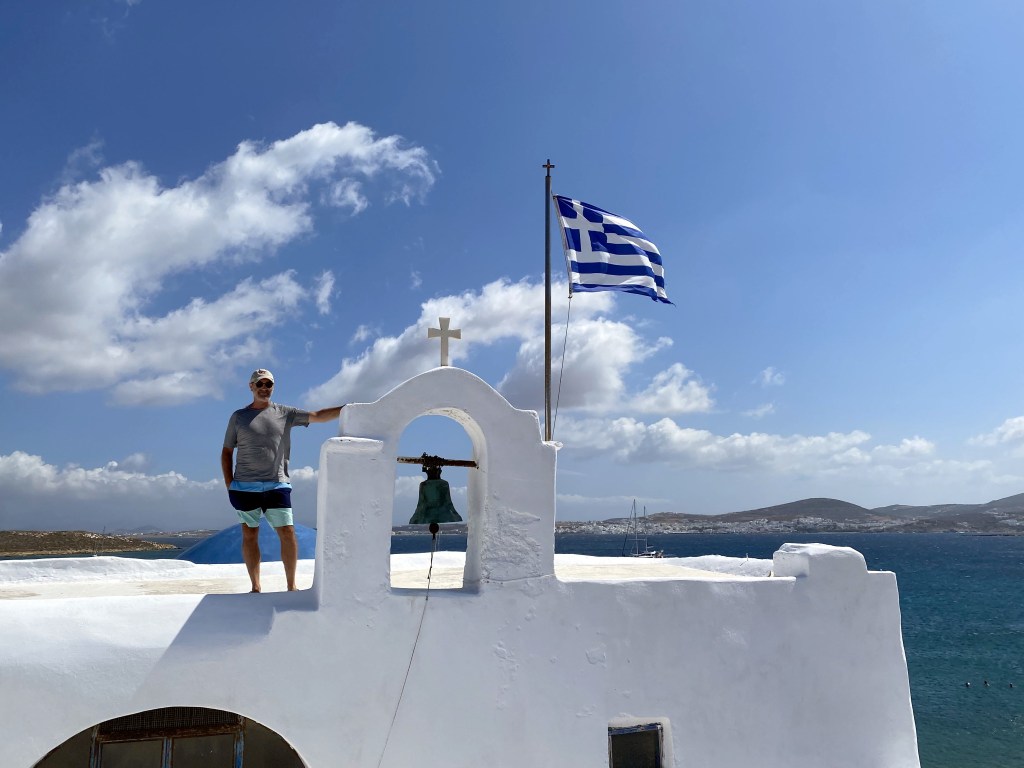
A visit to the Monastery of St. Johns of Deti:
Which offered a pretty great, quintessentially Greek view from the roof:
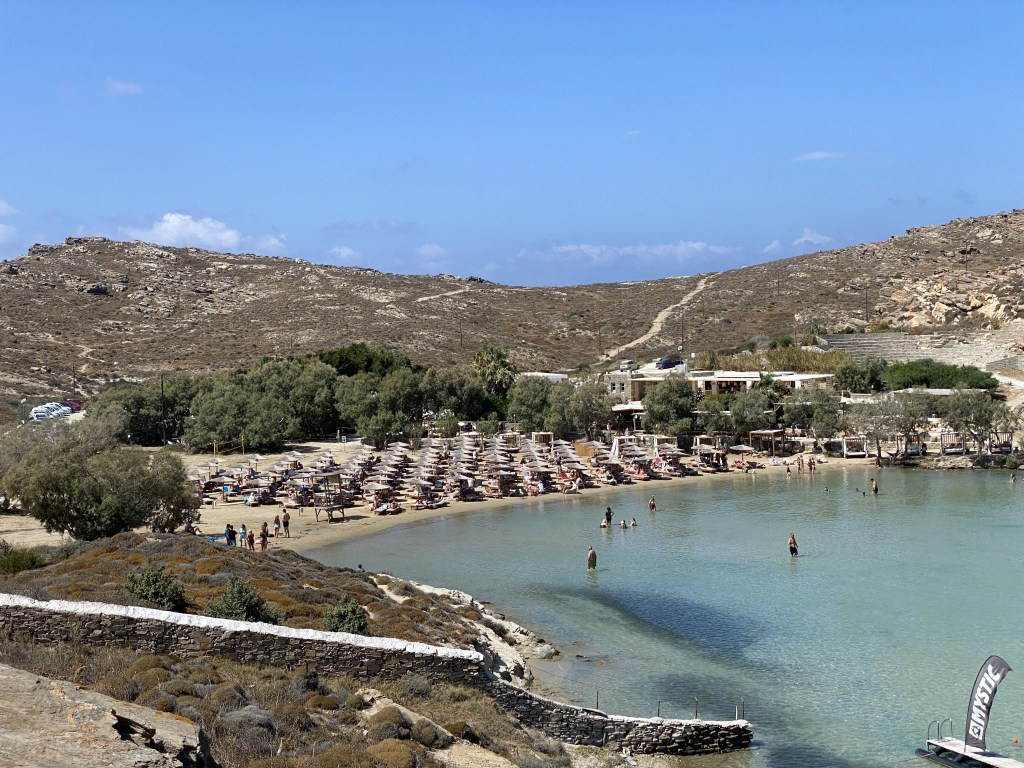
And also a view to the very commercial Monastiri Beach. Typical density of many European (and especially Italian) beaches, but a little packed in for our taste.
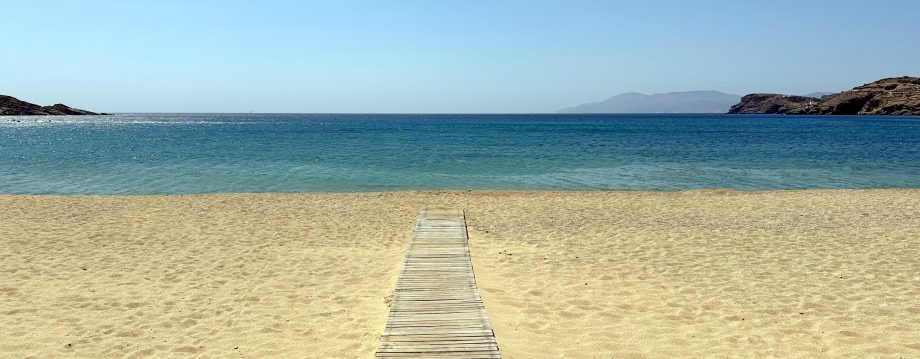
Much more appealing to us was Ampelas Beach on the other side of the island:
Great swimming and lower key. . .
and with two amazing restaurants available for lunch.
Aspro Paros, with it’s spectacular zucchini salad (and calamari and smelt, natch):
And Blue Oyster right next door:
Everything amazingly fresh.
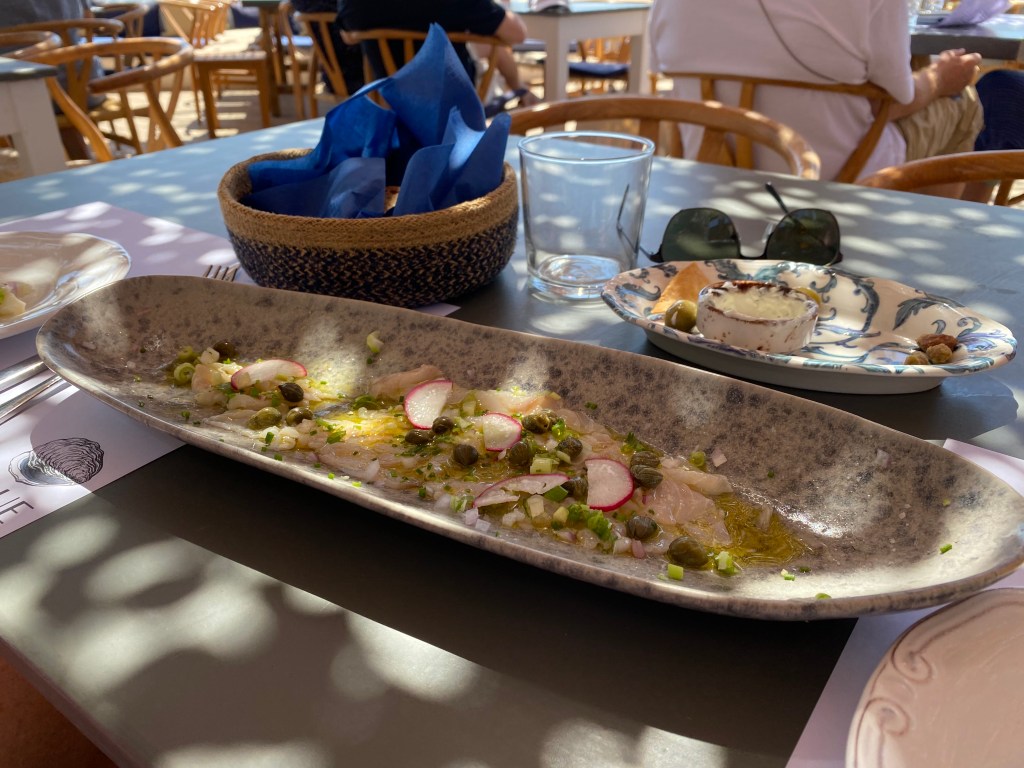
Including some zesty ceviche and Greek cheese:
We’d return to Ampelas Beach three times during our stay. Perfect experience each time.
Next up: the mercifully last post before we move beyond this trip and thence to the Baltics and a starkly different, winter climate.
The final post on the Turkey and Back to Greece trip (finally!). And just in the nick of time: we’re hitting the road (and the Adriatic Sea) tomorrow, and so won’t be posting any of the other backlogged trips for a while. These are all the long trips (versus week-long trips that we responsibly posted immediately after getting back from each), and include the following:
We’ll eventually post the detailed content on each of these trips here on WolfeStreetTravel.com; in the meantime, we’ll be posting pics in real time during two upcoming extended trips over the next 5 months @wolfestreettravel on Instagram, if you’re interested.
Back to our final post on Paros. . .
Although we chose not to stay in the largest town on the island (for reasons obvious here), we nonetheless headed to Parikia one day during our stay on Paros as a day trip.
Very cool, bustling burg. With equally cool, wooden-framed bikes to boot.
The absolute most intriguing site in town has to be the Frankish Castle.
Built by the Venetians in the 1200s on the site of the town’s ancient acropolis, the “castle” (actually the remains of a tower that was part of a castle wall) was constructed Jenga-style using the vestiges of classical temples from around the island.
Little remains of the original fortification, and nearby structures incorporate what remains into their own walls.
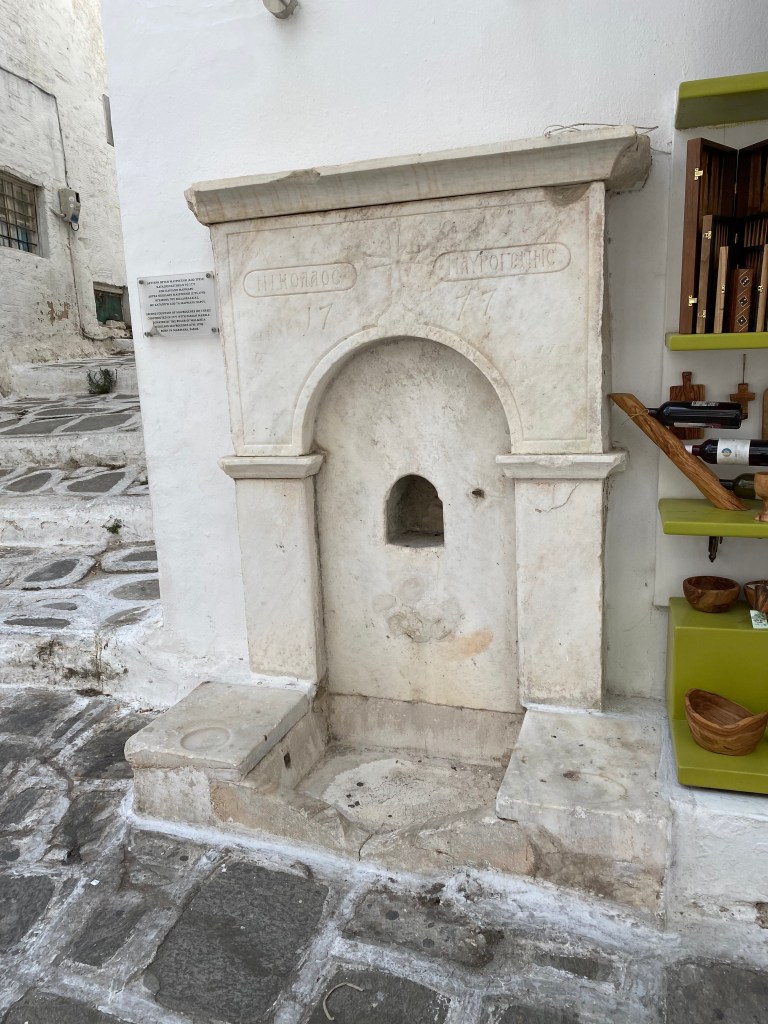
One of the three “Mavrogenus’ Fountains” found around town. ” Nicolaos Mavrogenus was one of the prodigal sons of Parikia, Paros Island main town in the Greek Cyclades. Missing his native Aegean and as Wallachia governor decided benefit his hometown providing a public drinking water supply [in 1777]: three beautiful marble fountains.” (From here.)
And another (we never came across the third):
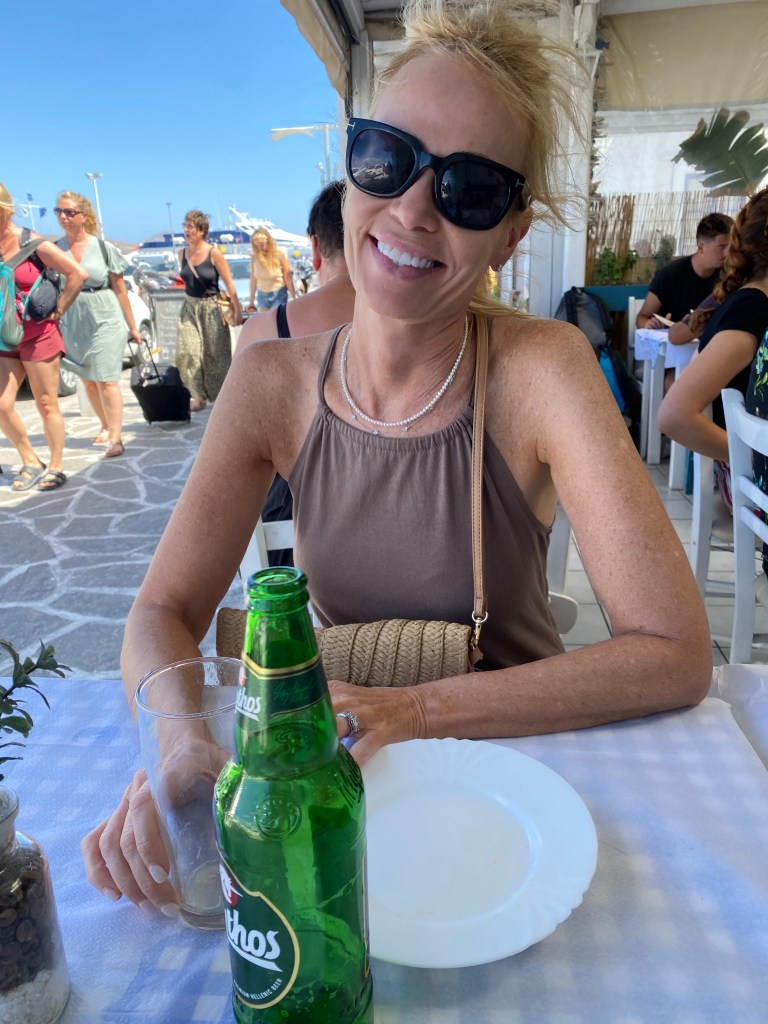
Finally getting a gyro at a local place in Parikia’s port (the empty plate would soon be filled):
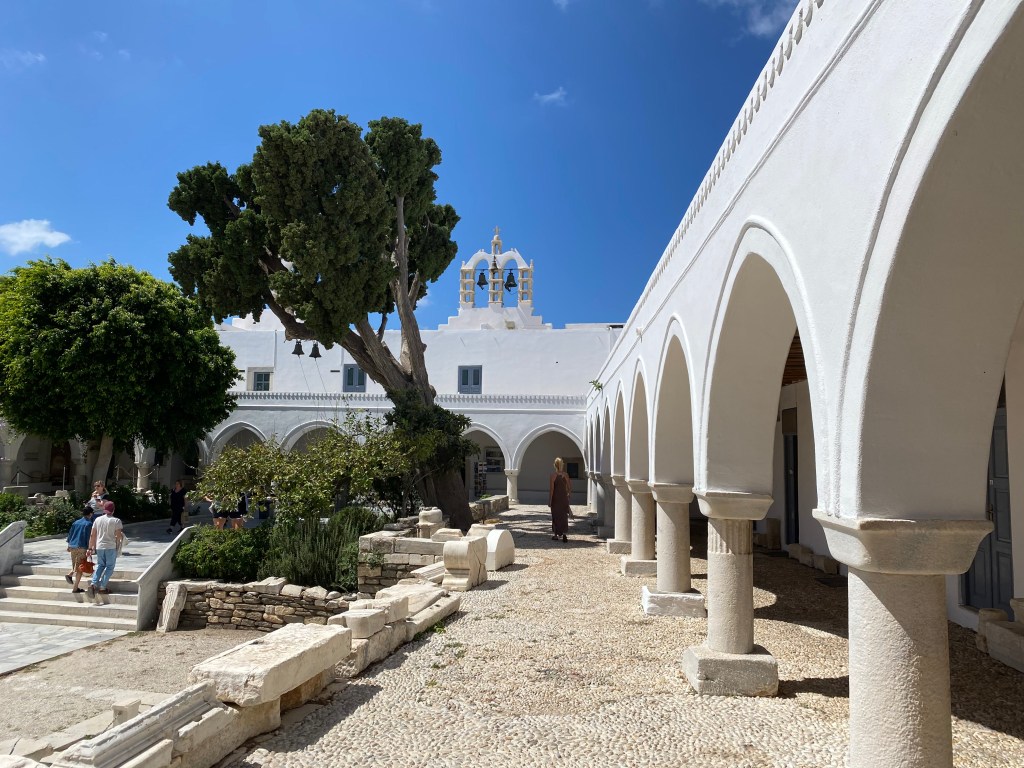
The Byzantine-era church complex of Panagia Ekatontapiliani (The Church with 100 Doors):
According to tradition, the church currently has 99 doors and a secret, 100th door will open when the church of Hagia Sofia in Constantinople become Orthodox Christian again.
The original church dates back to 326, during the reign of Roman Emperor Constantine, and purportedly was founded by his mother, Helene (whose sarcophagus we came across during the micronations road trip).
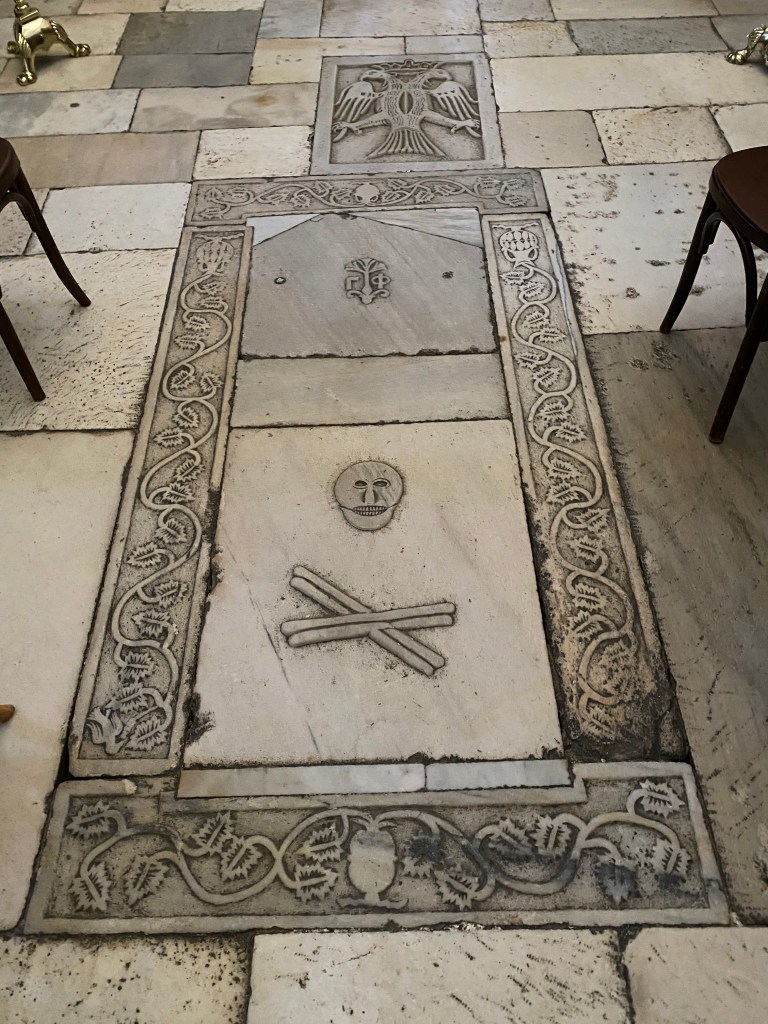
We think the church elders employed third graders to carve the church’s tombstones:
In the 6th century, Byzantine Emperor Justinian enhanced the church and added a dome.
Another view of the Frankish Castle as we head out of town.
The best hike we experienced on the island took us to the Korakas Cape Lighthouse at the northwest tip of the island.
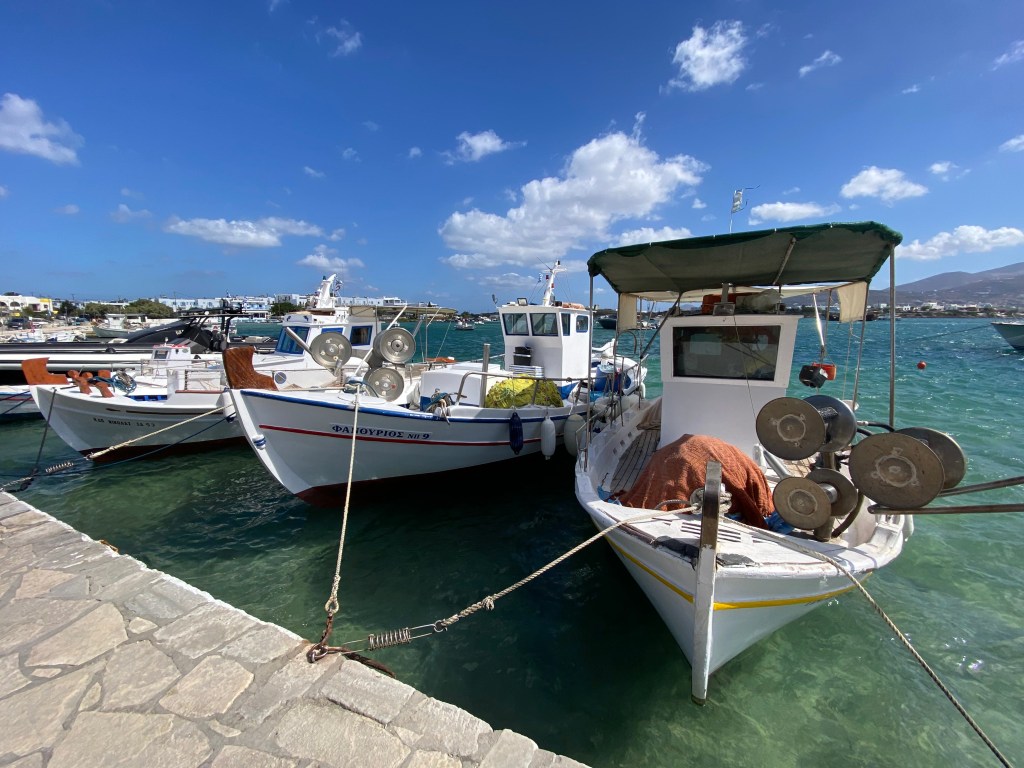
Another field trip, this time a short ferry ride to the polar opposite of the island of Paros: Antiparos (it’s just a smaller island than Paros).
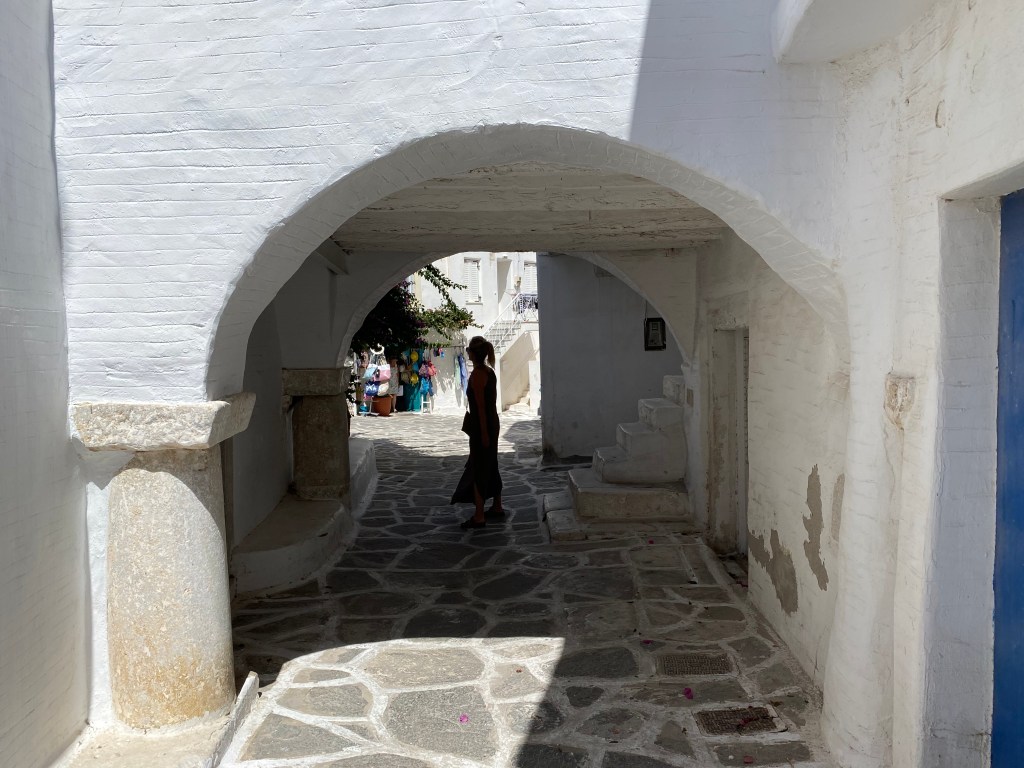
With a really picturesque main town:
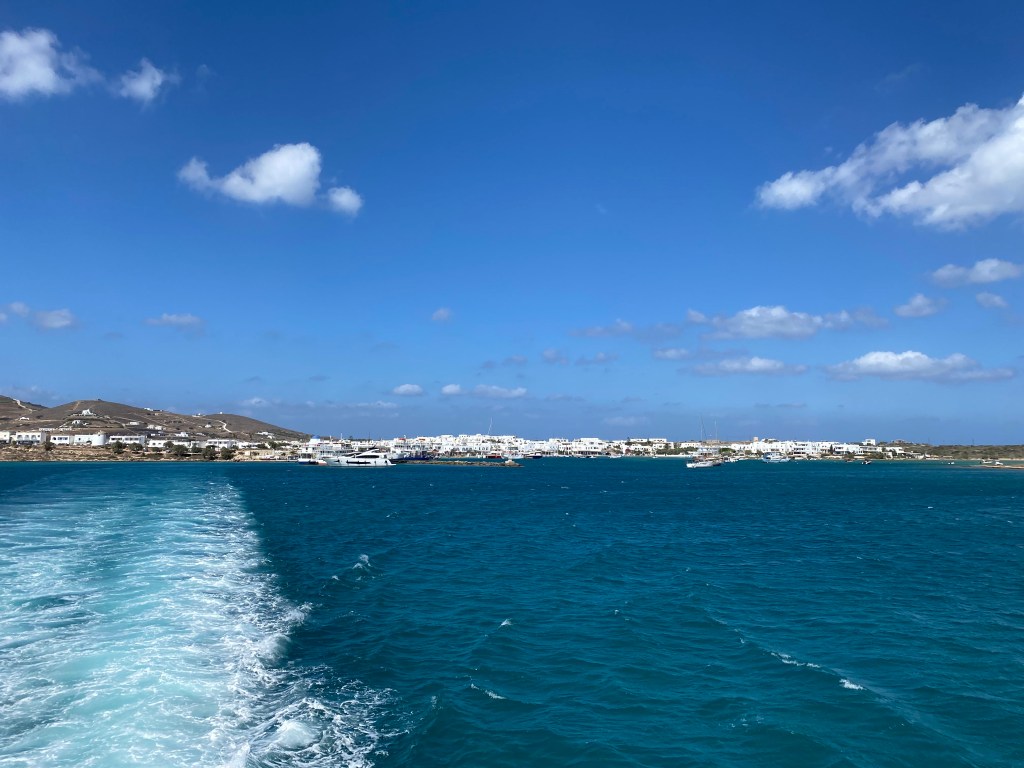
Bye, Antiparos.
And bye, Paros, and Cappadocia, and Istanbul. Trip posts complete!
Our annual migration to one of our quadfecta of July 4th getaways rotated to Keswick Hall this year, after they were off the list for several years due to an extensive renovation, which included two new wings of the previously very modest hotel.
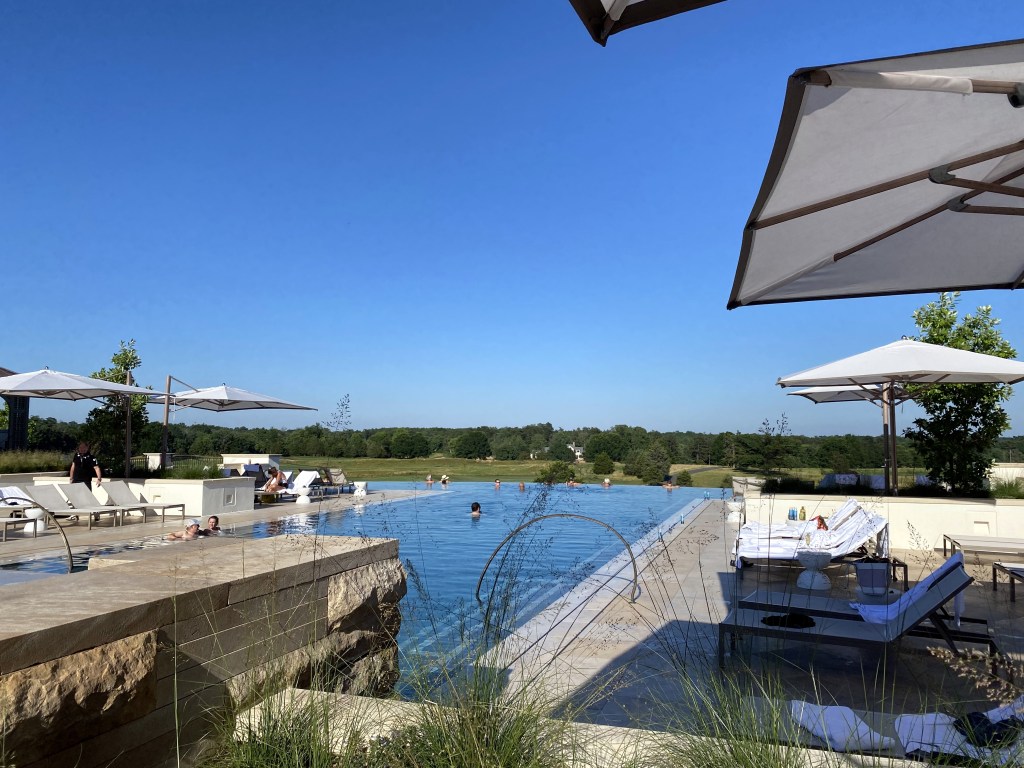
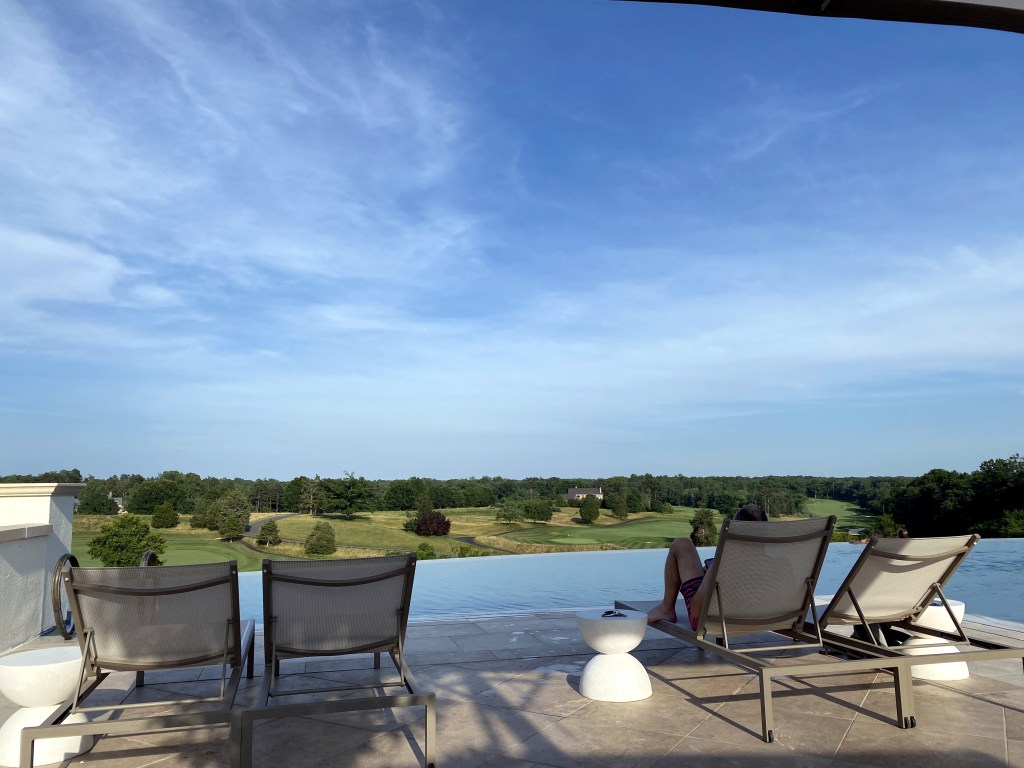
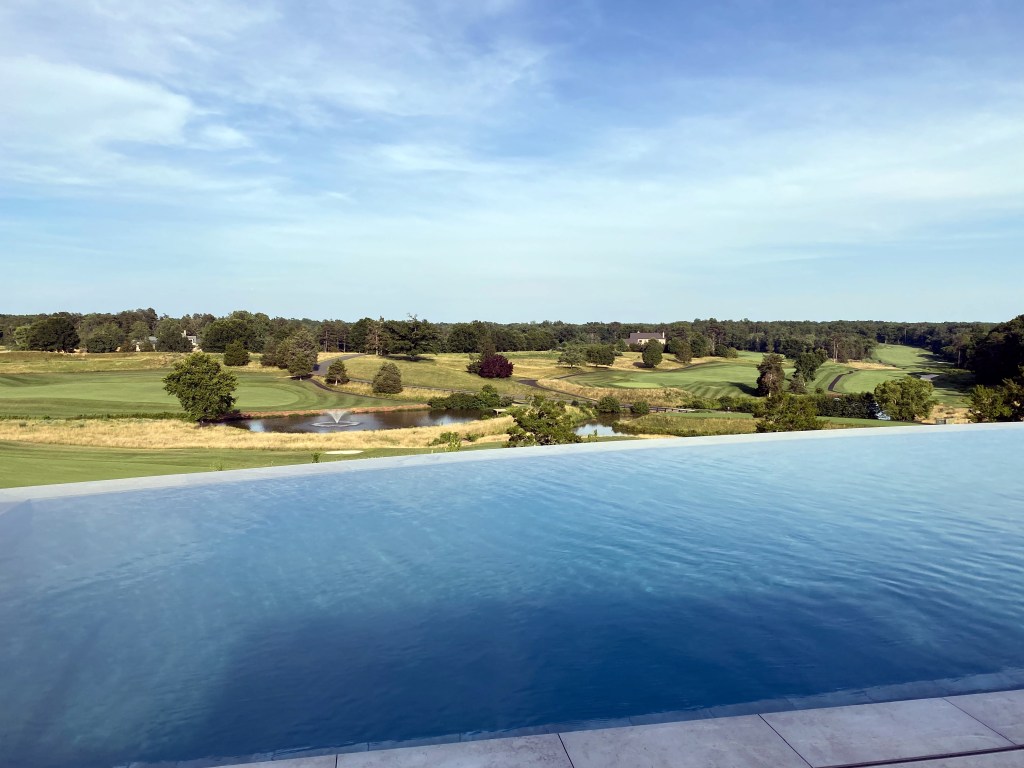
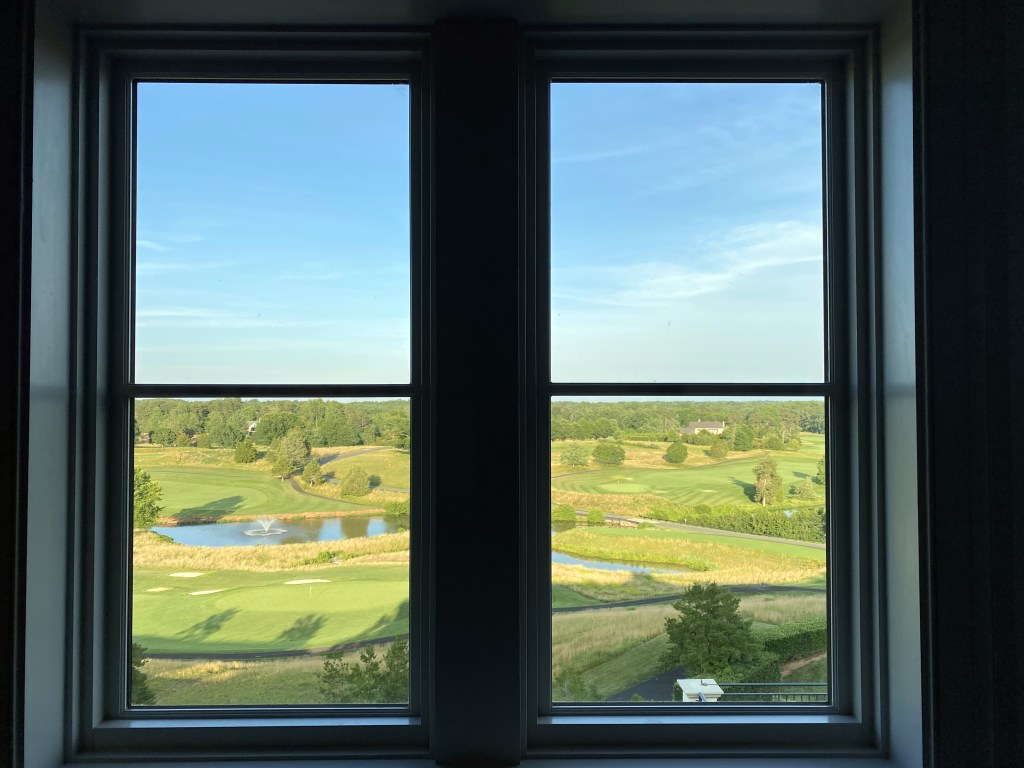
Our full review of the experience is here, but suffice it to say that there were really great aspects to our visit and some pretty annoying misses that are primarily attributable to Keswick’s behind-schedule family pool, resulting in the intrusion of too many people, as well as little kids, to the infinity pool, which was the primary reason for our visit in July.
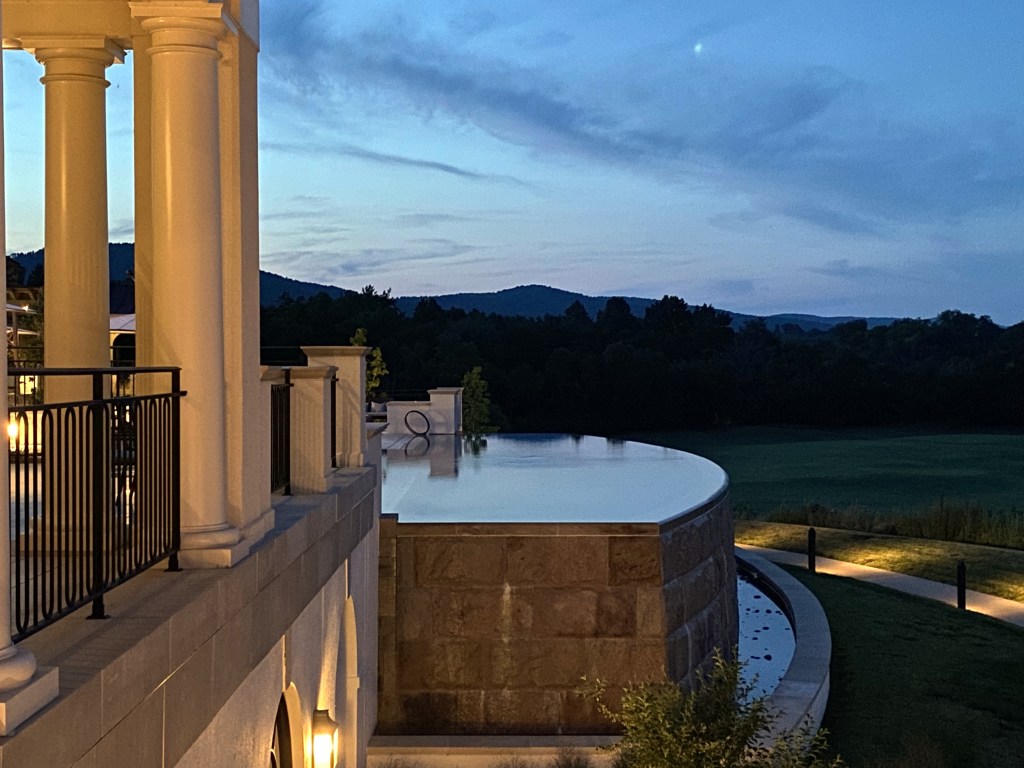
The much quieter pool at the very end of the day:
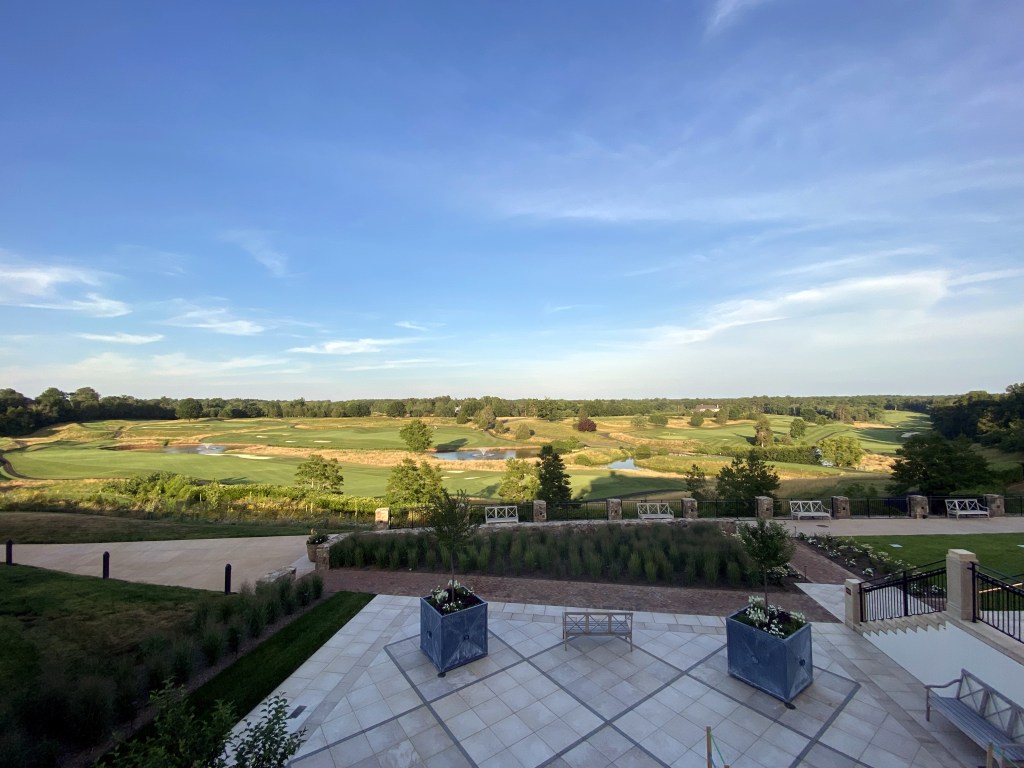
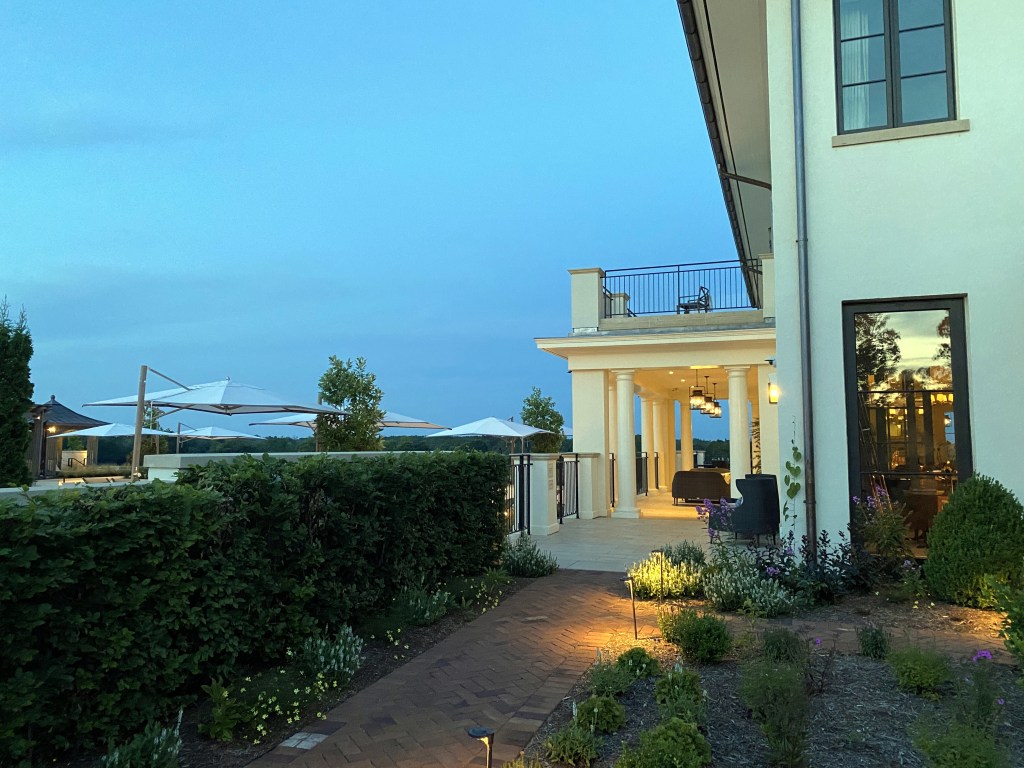
A great addition was Marigold restaurant next door, which was erected in place of the old country club pool and clubhouse:
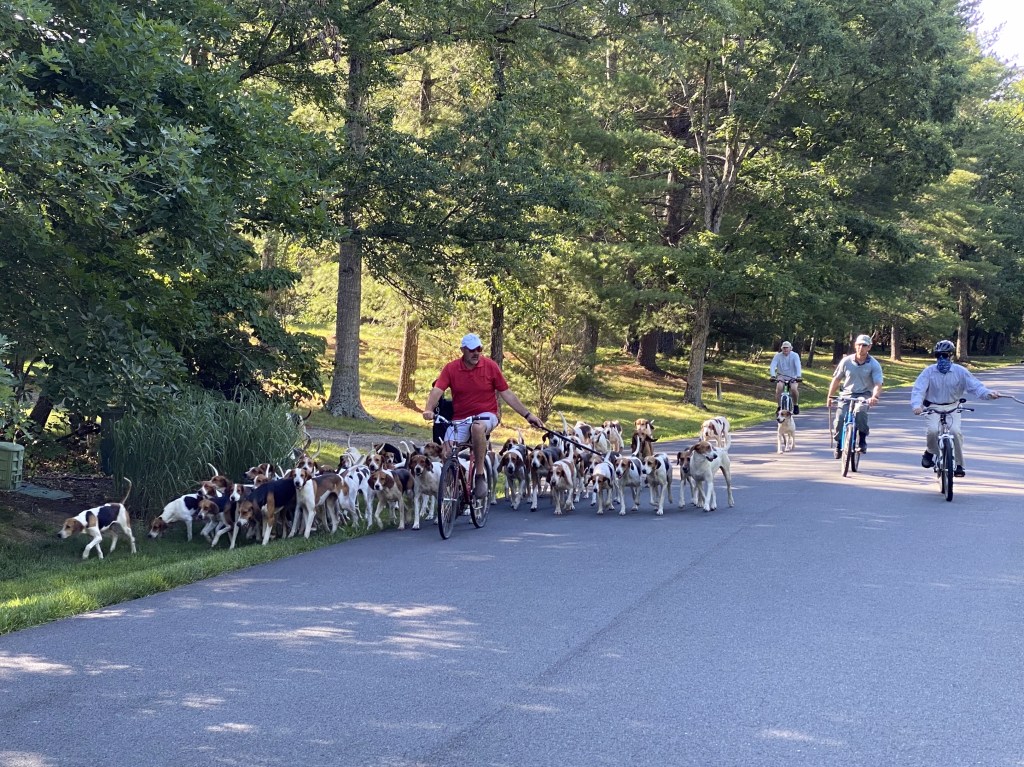
Only in Virginia hunt country: encountering horse trainers exercising the hounds while out on our morning run on the outskirts of Keswick Hall:
The original section of the manor hotel was still cool:
We’re going to omit Keswick Hall from the July 4th rotation for the next few years, in the hopes that they’ll get things under control before we come back again.
WolfeStreetTravel is on a road trip roll. The latest – over the Memorial Day period – took us back to the UK, where previously we had only visited London a couple of times. We knew there was more to experience than just the capital, so we flew over in May, grabbed a car, and headed to points west in England, and then on to Wales.
Here’s the route for the trip, starting at the ~4:30 spot and moving counterclockwise:
After landing, we headed a couple hours’ west of London to the north end of the Cotswolds (after brief stopover in Oxford on the way out from Heathrow), then further west to Wales, into Gwynedd and Conwy County in the north and to Pembrokeshire in the south. Completing the loop, we headed east back to England and the southern and middle sections of the Cotswolds. Then, ultimately, back to London, once more.
Three themes drove planning for this circular road trip:
1. Visiting the villages of the Cotswolds in England:
In the interactive map above, the amber houses icons denote the Cotswolds villages we visited.
2. Laying siege to the largest and best-preserved medieval Norman castles in the world – all located in Wales, largely thanks to Edward I:
The black castle icons on the interactive map above denote the Welsh castles we attacked.
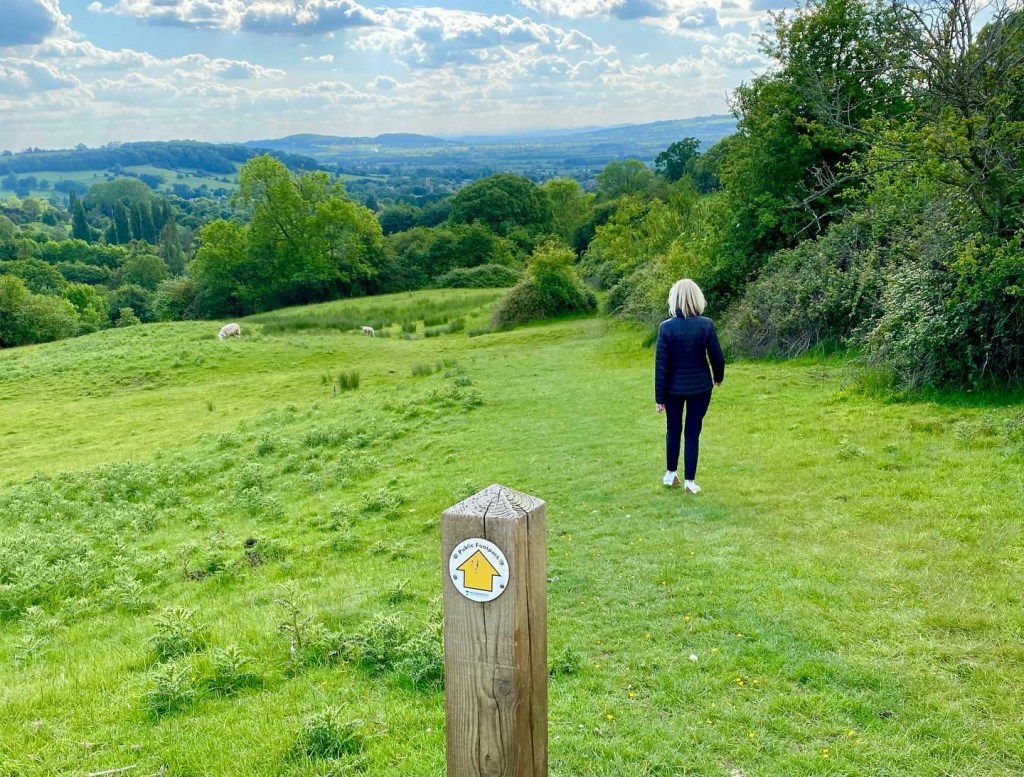
3. Finally, throughout the 16-day trip, we took advantage of the UK’s amazing National Trails system, which transit in and out of farms and fields and along the most amazing oceanside cliffs, and hiked everywhere we could:
The green hiker icons on the map above denote the hiking locations in England and Wales.
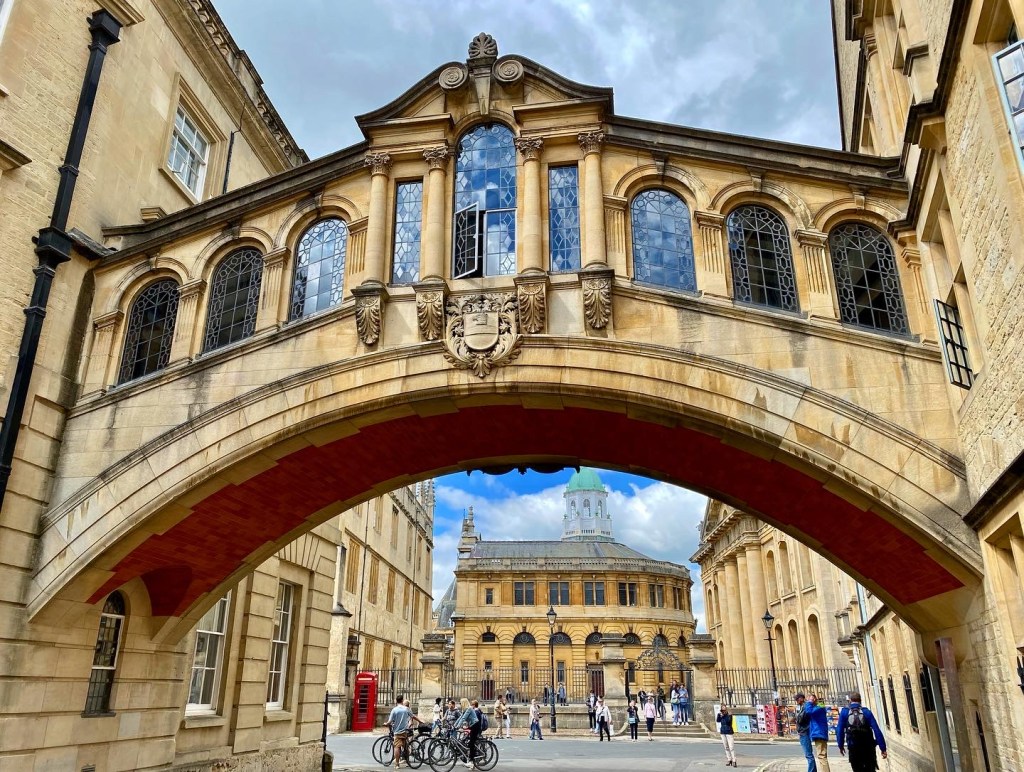
Similar to the morning of our arrival in the Netherlands for our bike trip there, we hit the ground running in London. Immediately after deplaning in Heathrow, we picked up our rental car (manual, with the steering wheel on the wrong side, of course, increasing the difficulty level of driving to 11), drove an hour to Oxford, and hopped on bikes for a 2-hour tour of the city and surrounding countryside. Excellent plan (other than the fact that it didn’t go as planned, which we’ll explain in a future post)!
Then, on to our first segment of the Cotswolds. We based ourselves out of Broadway, in the northern end of the region:
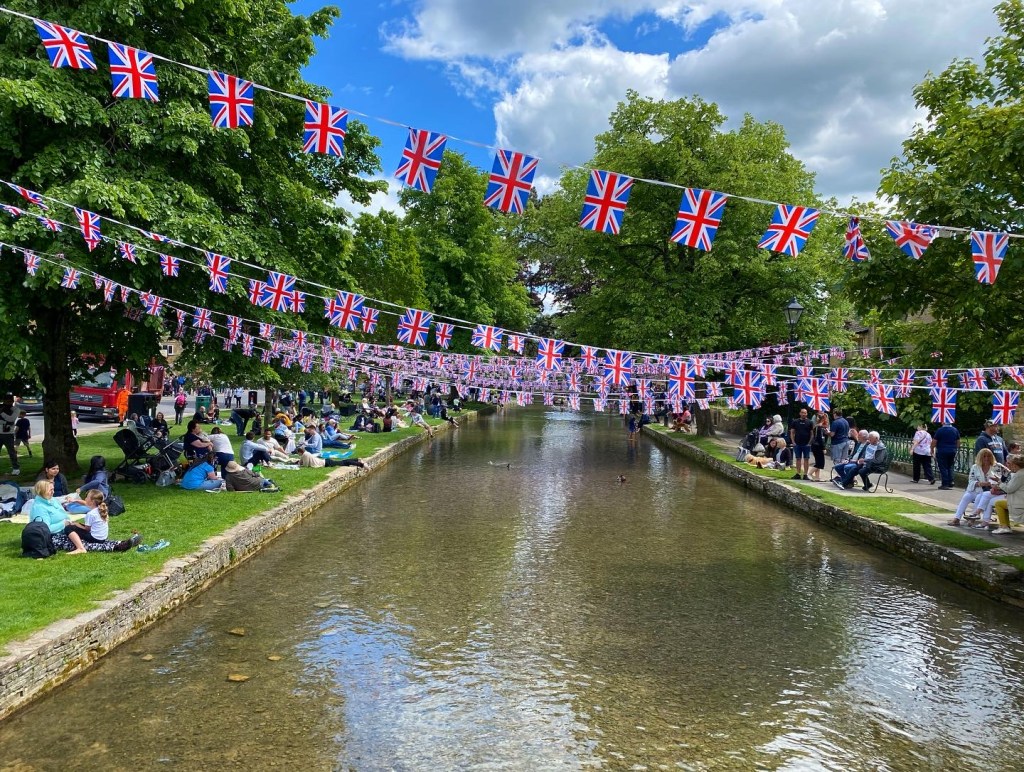
Although we didn’t know it when we planned the trip months ago, we would be there during Queen Elizabeth II’s Platinum Jubilee, so every town was totally decked out for the occasion, including Broadway:
(While we experienced the provincial celebrations out in the hinterlands of small villages, our relatives, the Band o’ Brandts, were in the thick of it in London at the same time, at the peak of the jubilee.)
More jumbles of jubilee at Bourton-on-the-Water, our second Cotswolds village:
A little hiking across the countryside around Broadway and then to the iconic Victorian folly of the area, Broadway Tower:
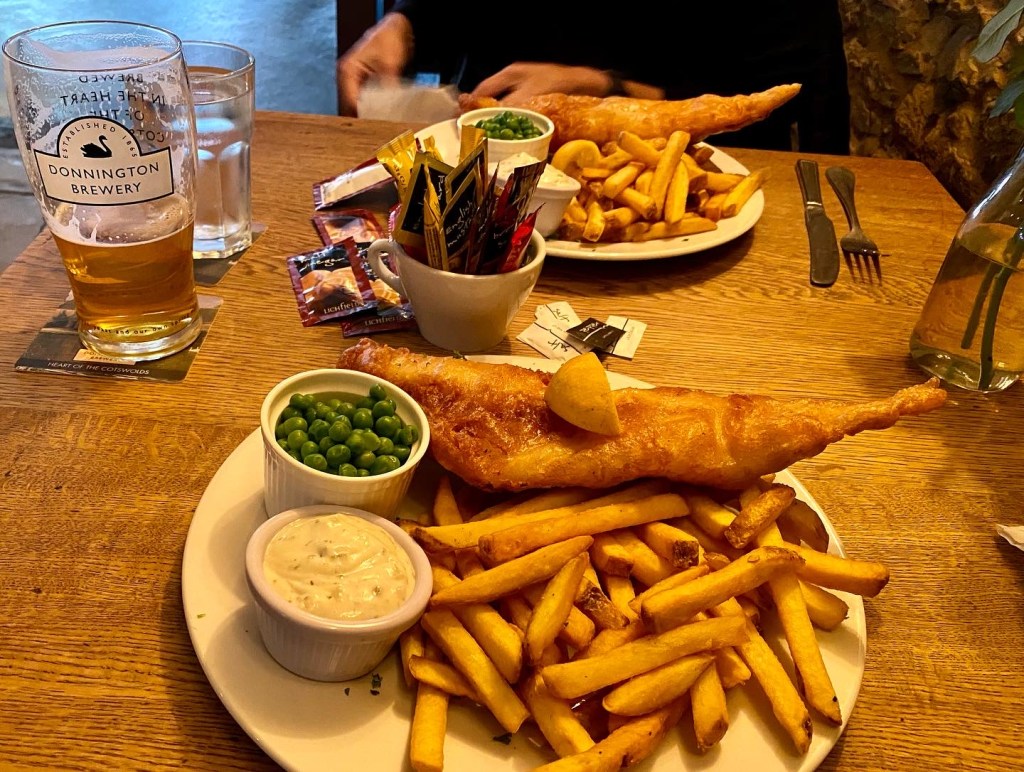
And a post-hike lunch in town of our first (of many – many!) fish and chips on the trip during the jubilee – Cod Save the Queen!
The wool market capital of the northern Cotswolds, Chipping Campden:
The winner of the most charming village of our trip, Stanton:
And nearby Snowshill, repleat with traditional British phone box and village pub:
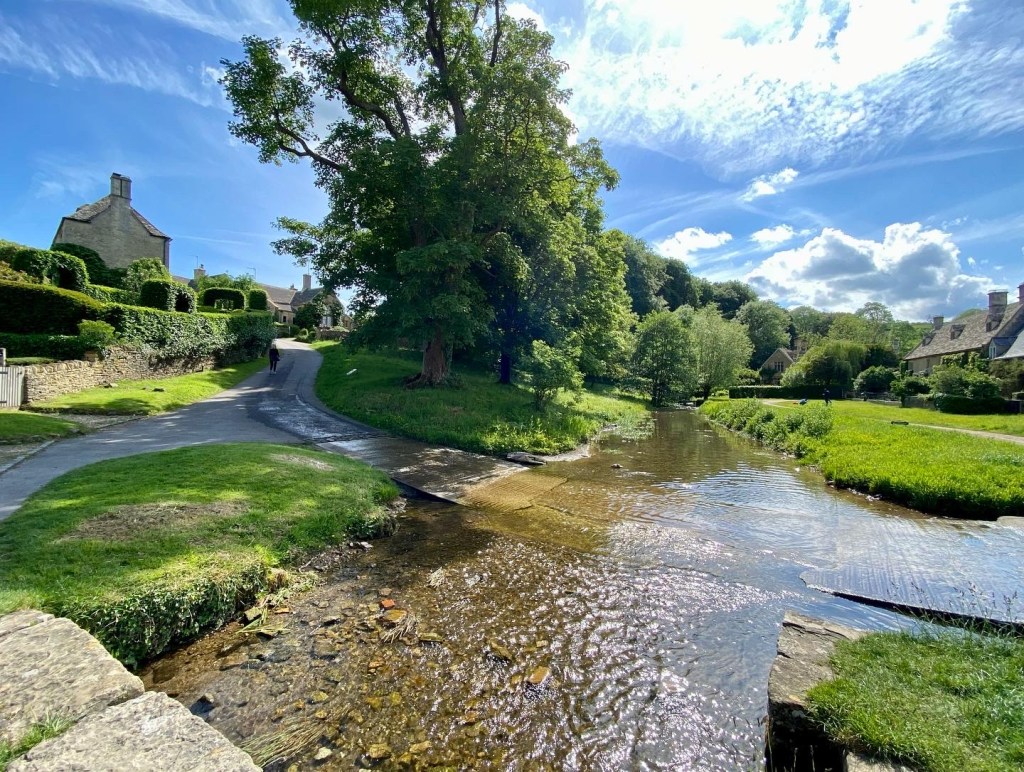
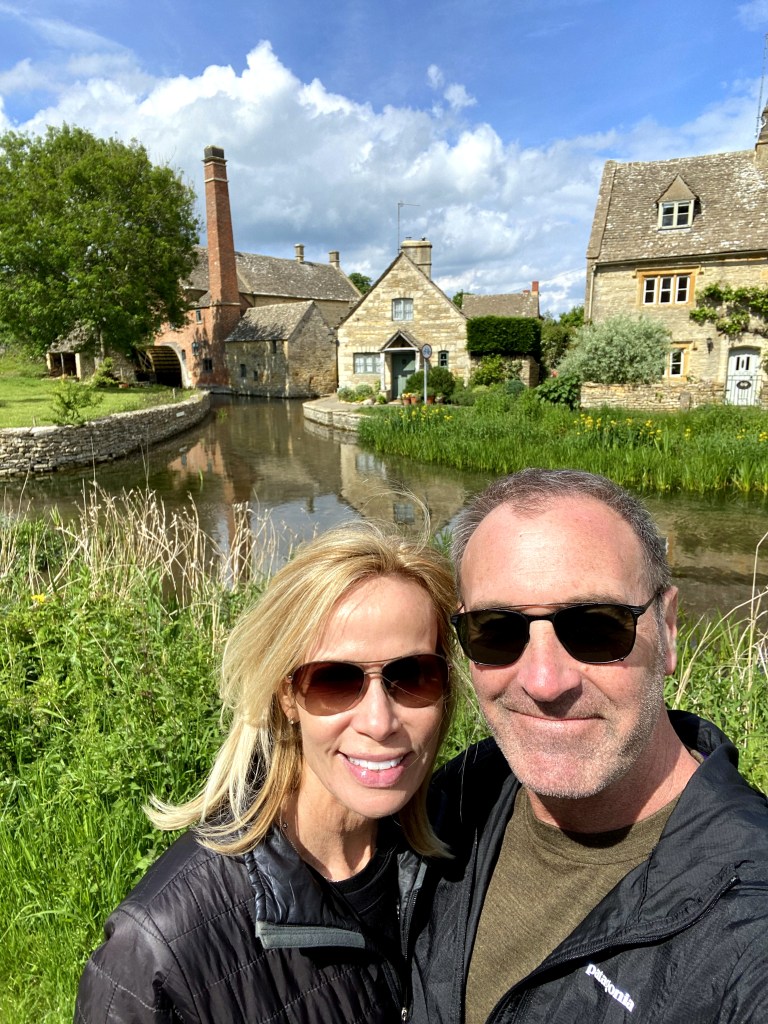
The paired villages with grisly names but tons of charm – Lower Slaughter:
And Upper Slaughter:
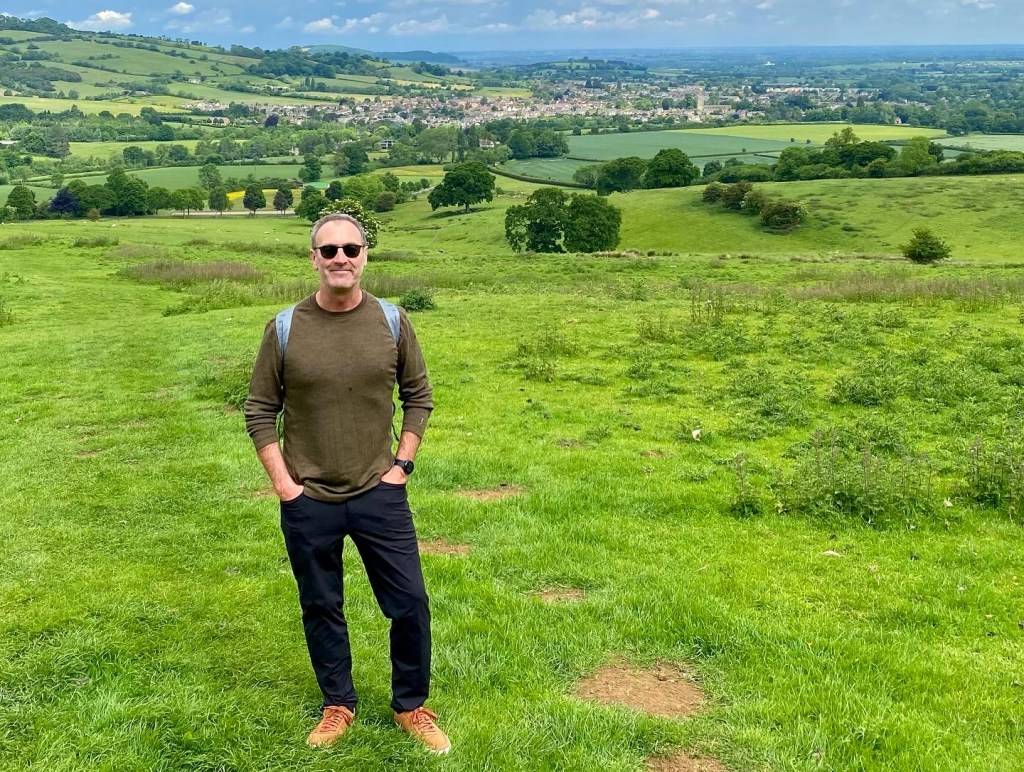
A spectacular hike from the town of Winchcombe to the Neolithic barrow at Belas Knap the day before we moved on to Wales:
And then lunch. Cod works in mysterious ways. . .
A stopover at Palé Hall for a change of venue before hitting our first Welsh castle in Gwynedd:
The first stop on WolfeStreetTravel’s 2022 Welsh Castlepalooza Tour, and the epitome of Norman military engineering: Harlech Castle, built by the English as part of Edward I’s campaign to subdue the Welsh:
Then a beeline north to Caernarfon Castle, the center of Edward I’s “ring of iron” and birthplace of Edward II, the first Prince of Wales:
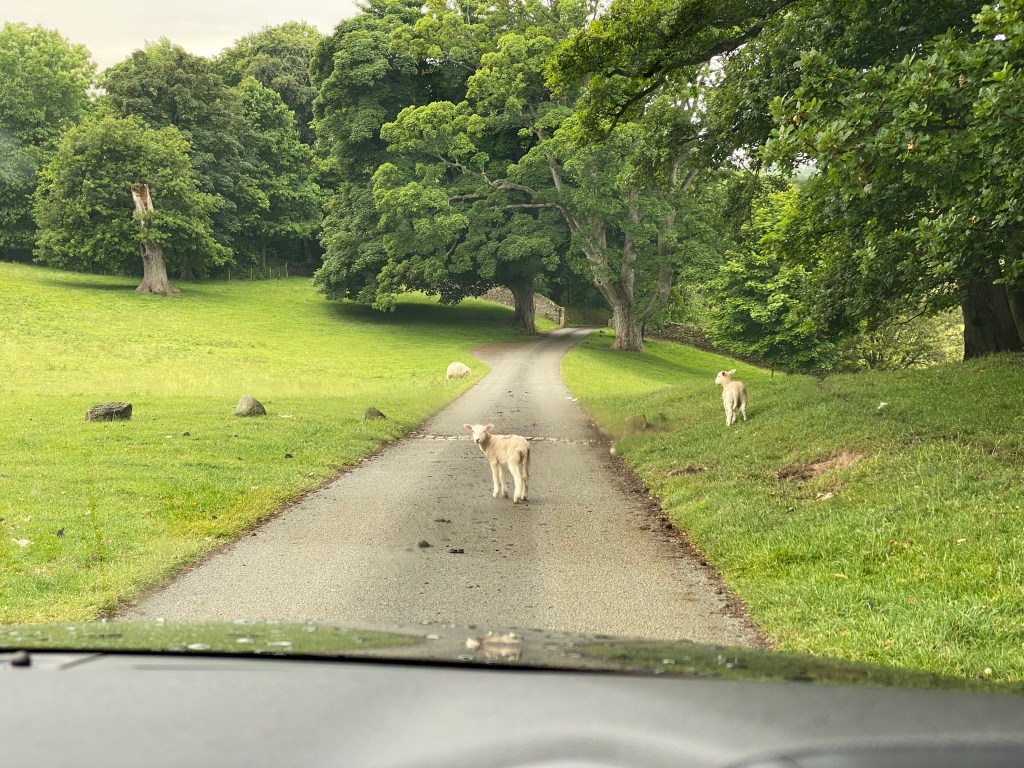
And to our third abode, where you needed to traverse a guardian garrison of lambs to enter:
Our base in Conwy and another vaguely unsettling name – Bodysgallen Hall:
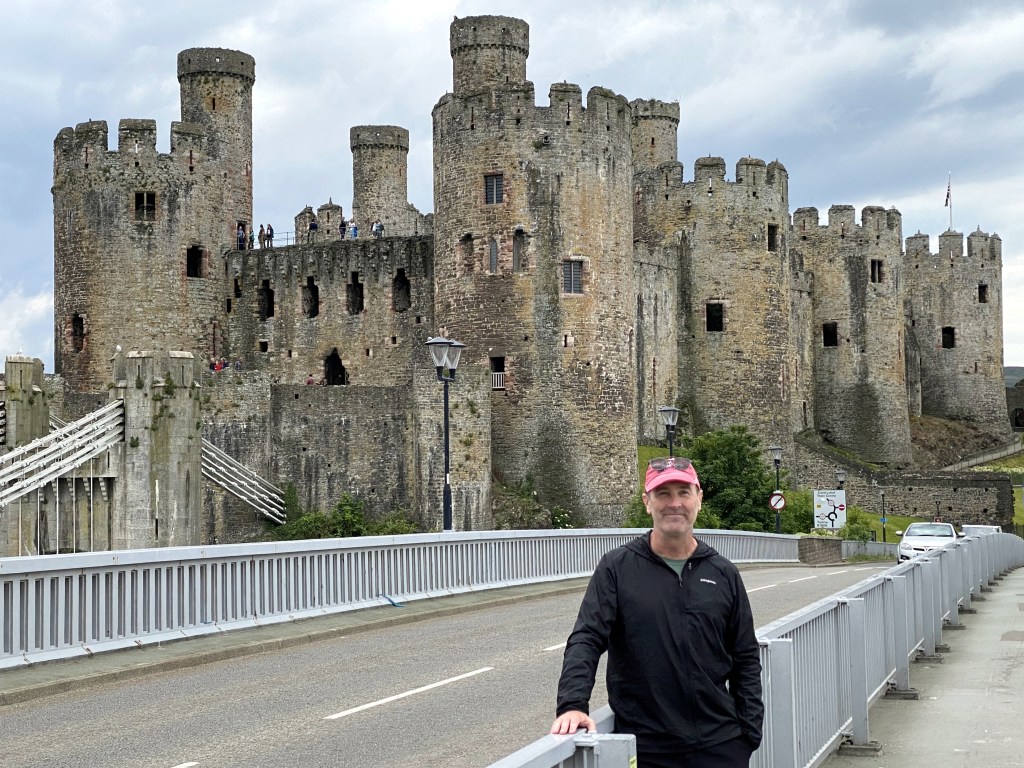
Our favorite castle on the trip: Conwy Castle, which abutted the adjacent village of Conwy, with its fully intact medieval town wall:
A hike up to and around the treeless limestone mass of Great Orme on the north coast of Wales with great 360-degree views, including the town at its base, Llandudno:
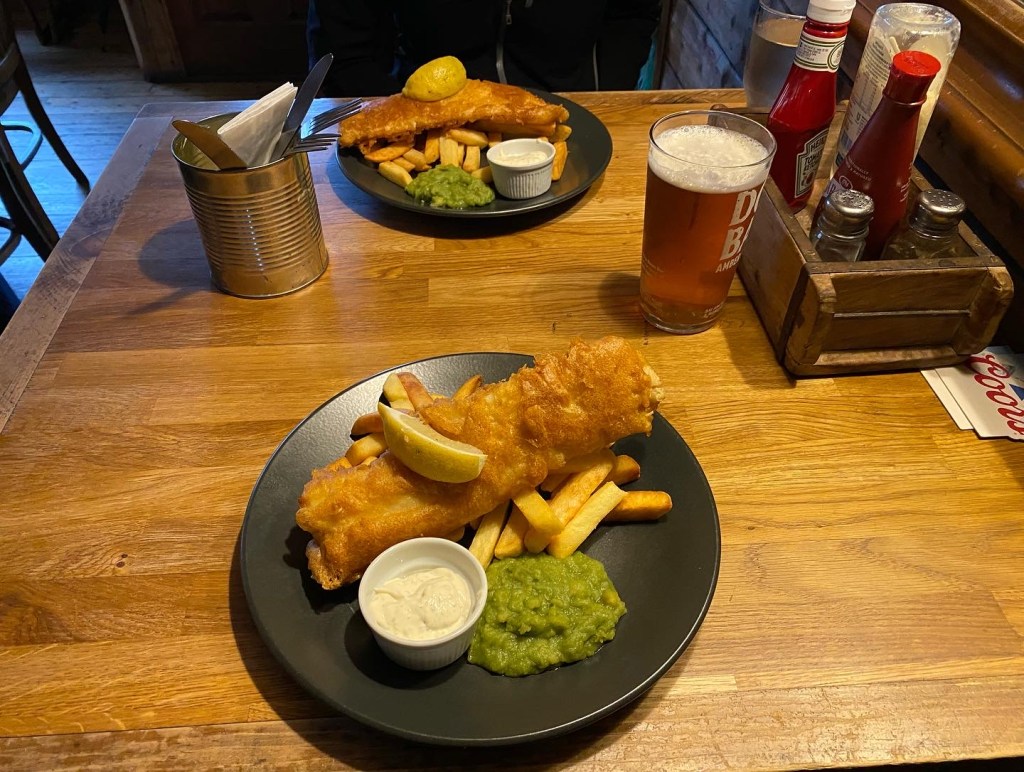
And a post-hike lunch in town: the best fish and chips of the trip and a celebration in Wales of “One Nation under Cod!”
Not satisfied with visiting castles, we had to stay in one too, when we headed south to Pembrokeshire: the 12th-century Roch Castle:
Spectacular hike along the entire periphery of St. Annes Head on the Pembrokeshire coast:
The weirdly sited St. David’s Cathedral, sunk in a depression so low, you can’t see the cathedral tower from anywhere in town:
And then to a lunch of. . . oh my Cod! Again?!
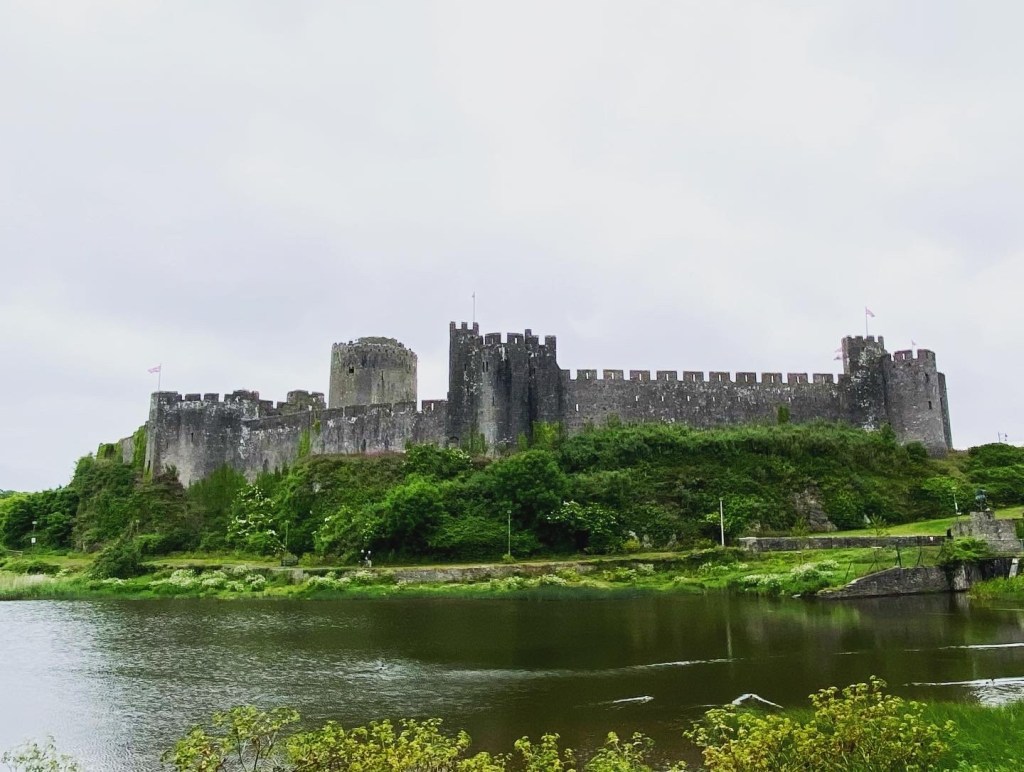
The penultimate castle on the WolfeStreetTravel 2022 Castlepalooza tour: Pembroke Castle, home in the 12th century to William Marshal, “the best knight that ever lived:”
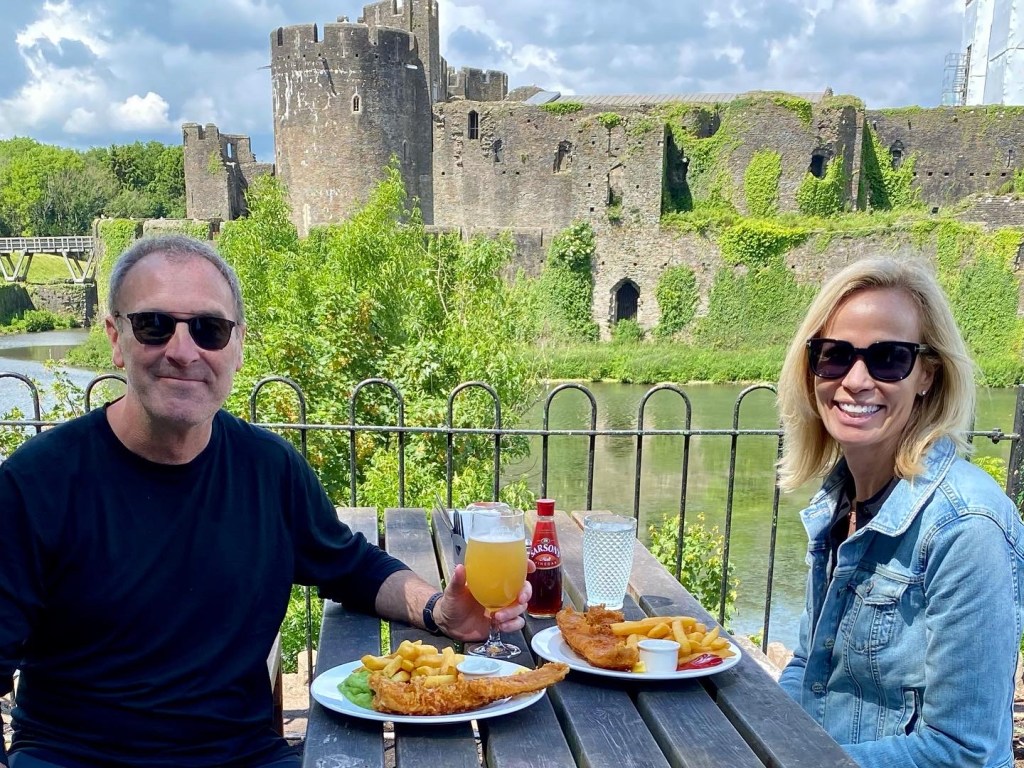
And the final fortification (thanks be to Cod!): Caerphilly Castle just north of Cardiff, on our way to Bath in the southern Cotswolds:
The Roman, then Georgian, Baths of Bath:
An unplanned but really enjoyable stop at Stonehenge on the way from Bath to our last stay in the Cotswolds:
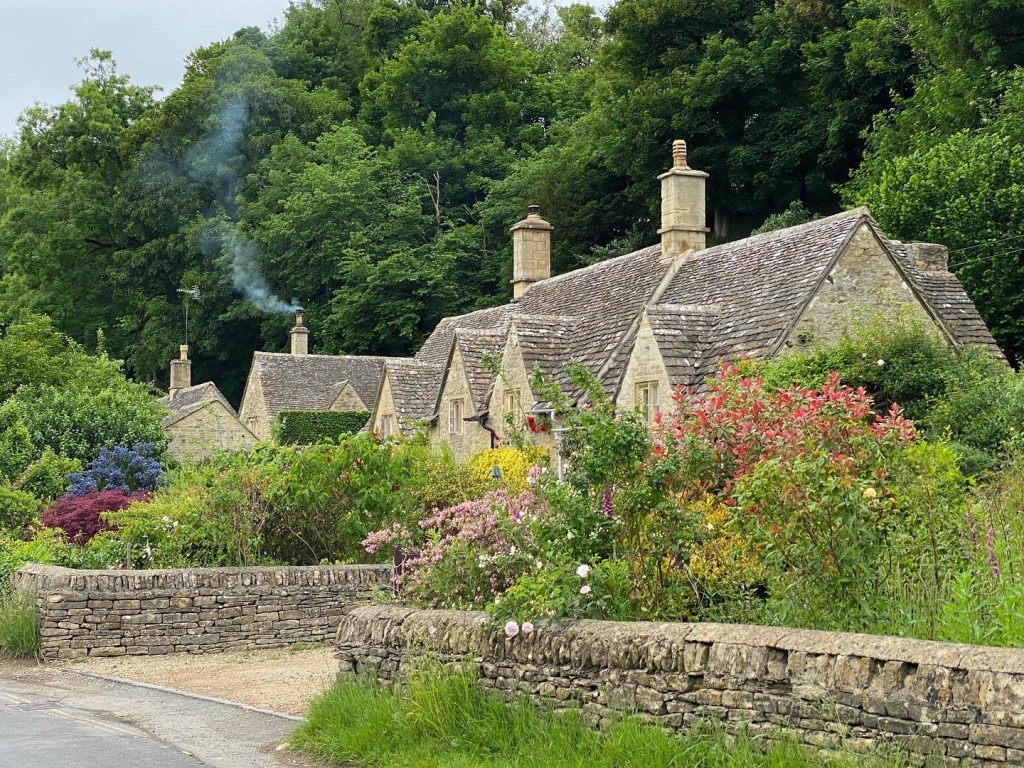
The ridiculously Thomas Kinkade-y village of Bibury:
And another sheep-intense hike between the tiny villages of Southrop and Eastleach:
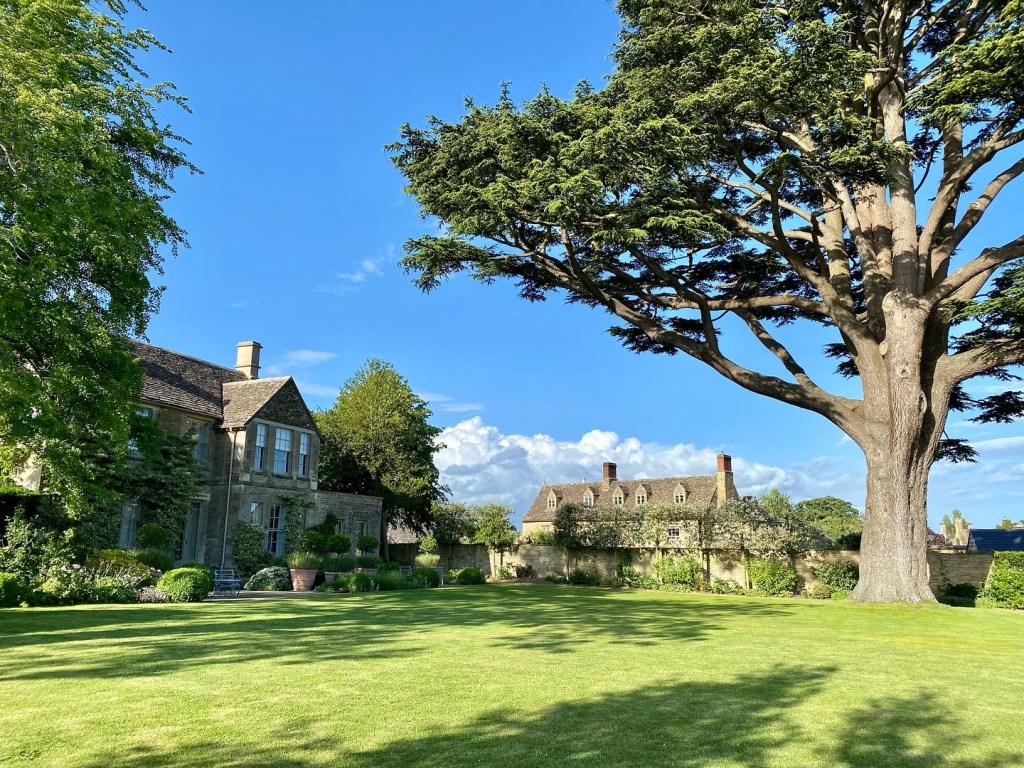
Our last base in the Cotswolds: a village within a village (and a Cotswold cottage of our own, to boot):
After 2 solid weeks on the road in our trusty Peugeot, we returned the car that served us so well during the trip before we headed into London proper. Between the manual transmission, the steering wheel on the wrong side, and having to drive for 2 weeks on the wrong side of the road, this baby was a true Danger Chariot.
In London, we probably put in around the same mileage walking around each day as we did on each of our Cotswold and Wales walks, including logging a lot of miles transiting Hyde Park and Kensington Gardens, below:
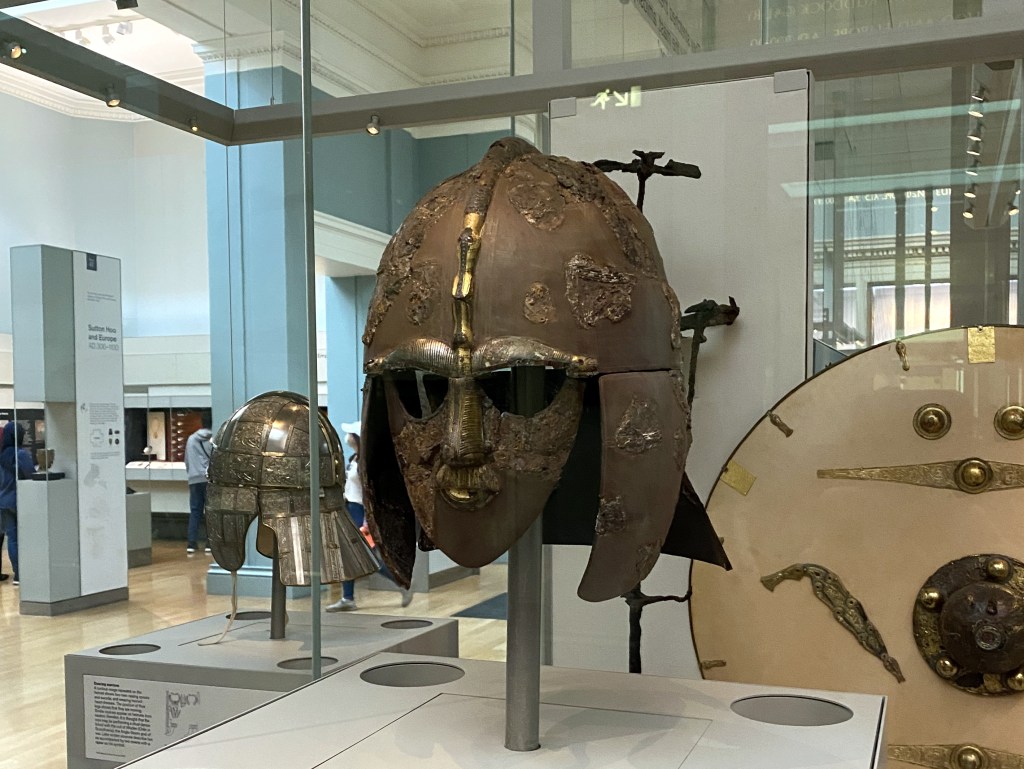
And as a counterpoint to the Welsh castles, we paid a quick visit to the British Museum solely for their Anglo Saxon collection from the Sutton Hoo, including the iconic helmet from the burial mound:
And then, only 36 hours before we were set to fly back and maybe 10 hours before we were going to get tested, the US announced the end of the COVID testing requirements to re-enter the US. Perfect timing!
We’ll be posting overdue stuff from last fall’s Cinque Terre and Return to Tuscany road trip next, and will follow up with Cotswolds and castles posts after.
The Cotswolds towns owe their picturesque and well-preserved quality to sheep. Until the introduction of cotton into markets, wool and linen were the primary textiles for clothing for most people. And in the middle ages, the best wool came from England, and the best wool in England came from the Cotswolds due to the fine quality produced by the specific variety of sheep unique to the region. “Even the name Cotswolds is thought to be derived from sheep. “Cots” means sheep enclosure and “wolds” are the gentle hills.” (From here.)
The premium price for Cotswolds wool was such that merchants in the region’s towns could afford moderate to grand houses made of the local, honey-colored limestone. And fund “wool churches” that were more substantial and ornate than churches in similar-sized towns elsewhere in the country.
But then, starting in the 1600s, cotton from colonies established by the British, Dutch, and French East India Companies became more practical and more fashionable than wool, and the wealth of the Cotswolds towns declined precipitously. As a result, the towns lost their wealth and became backwaters and this backwater status preserved the honey limestone houses, manors, town halls, and churches that may otherwise have been changed or built over to fit new architectural styles or building methods over the subsequent several centuries.
As tourism became a thing in the 19th century, the bucolic Cotswolds countryside and its preserved and picturesque towns became popular destinations, and the region gradually developed an economy based on tourism and experienced a rebirth (culminating, of course, in the visit by WolfeStreetTravel). The wealth is back, but it’s just not from wool anymore.
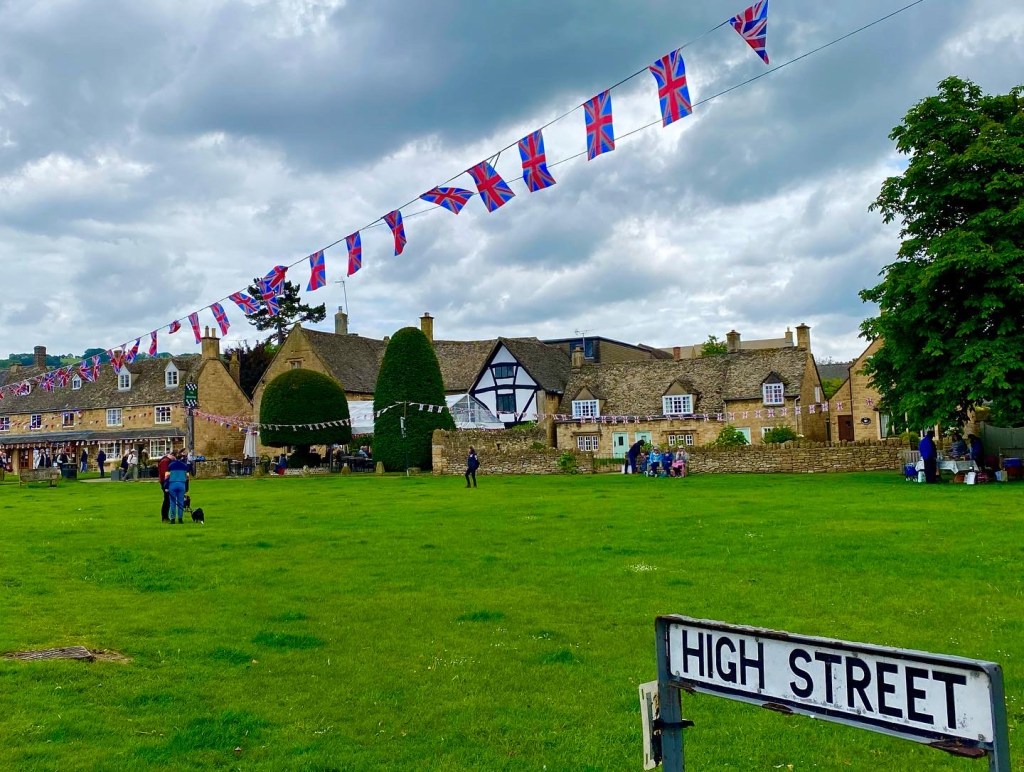
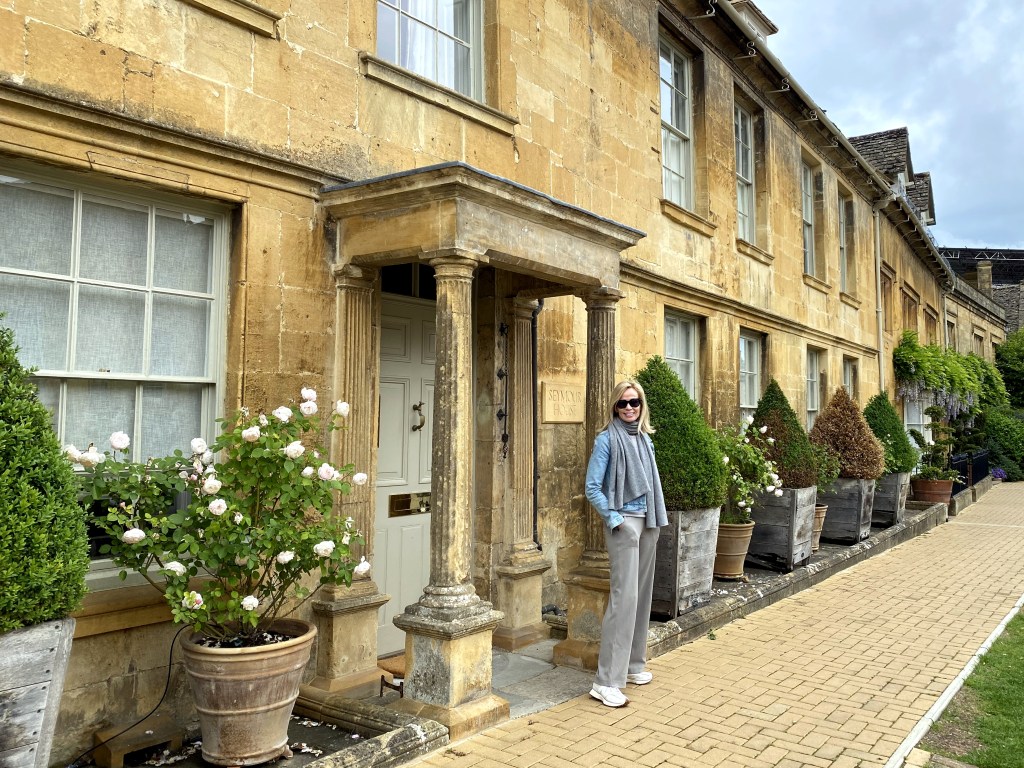
On our first full day in the Cotswolds, we drove about 10 min from Broadway to Chipping Campden, where characteristic Cotswolds charm was exemplified in fine fashion. Considered the “jewel in the crown of the Cotswolds” (no doubt only by the Chipping Campden Chamber of Commerce), the town has served as a wool market since the 15th century, and is famous for its High Street.
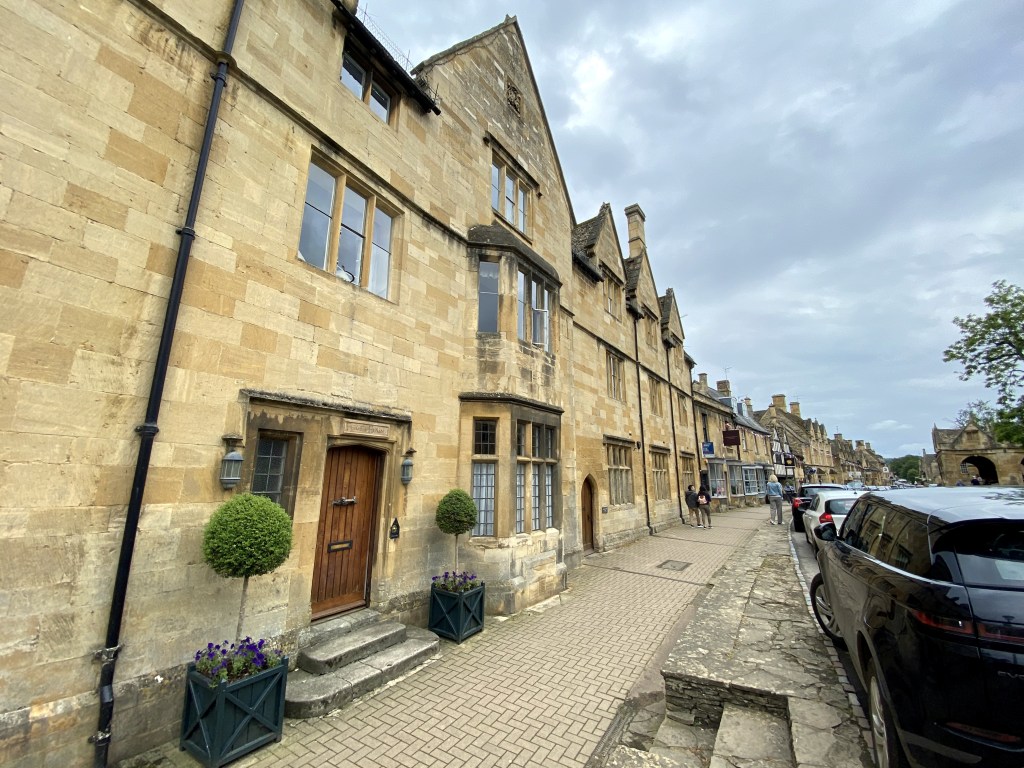
Center of town on High Street:
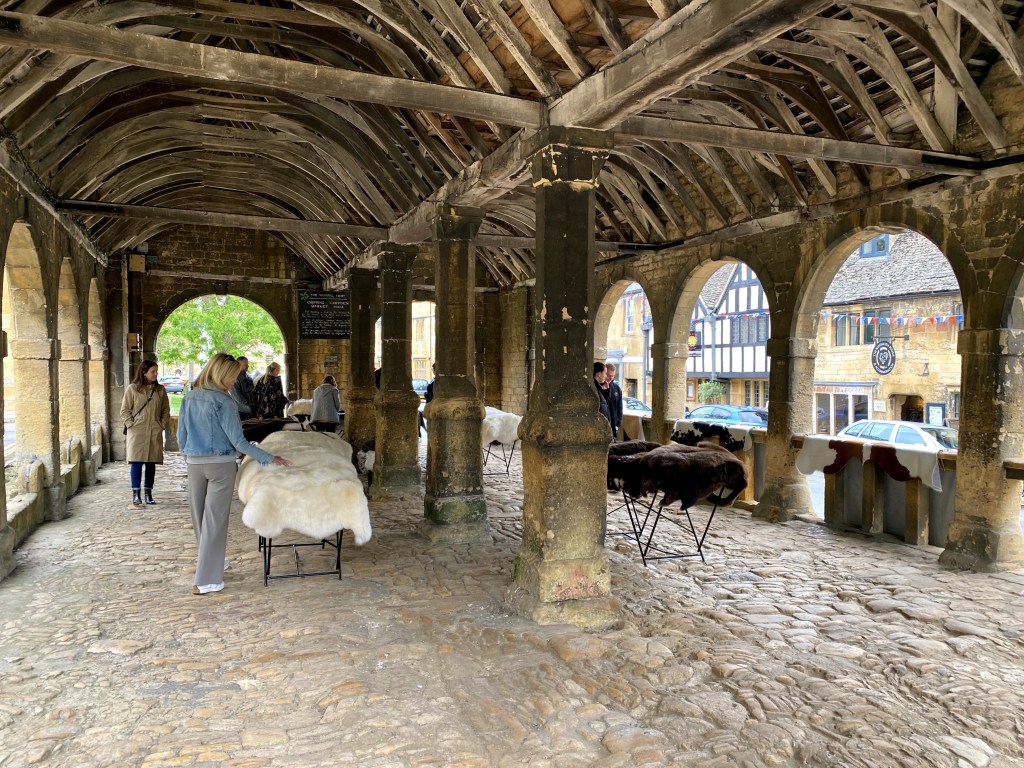
The town’s still-operating, 1627 Market Hall commissioned by Sir Baptist Hicks, who will continue to pop up as we poked about town.
In the Market Hall, you can buy your sheep and sheep accessories from the Cotswolds version of Hank Hill.
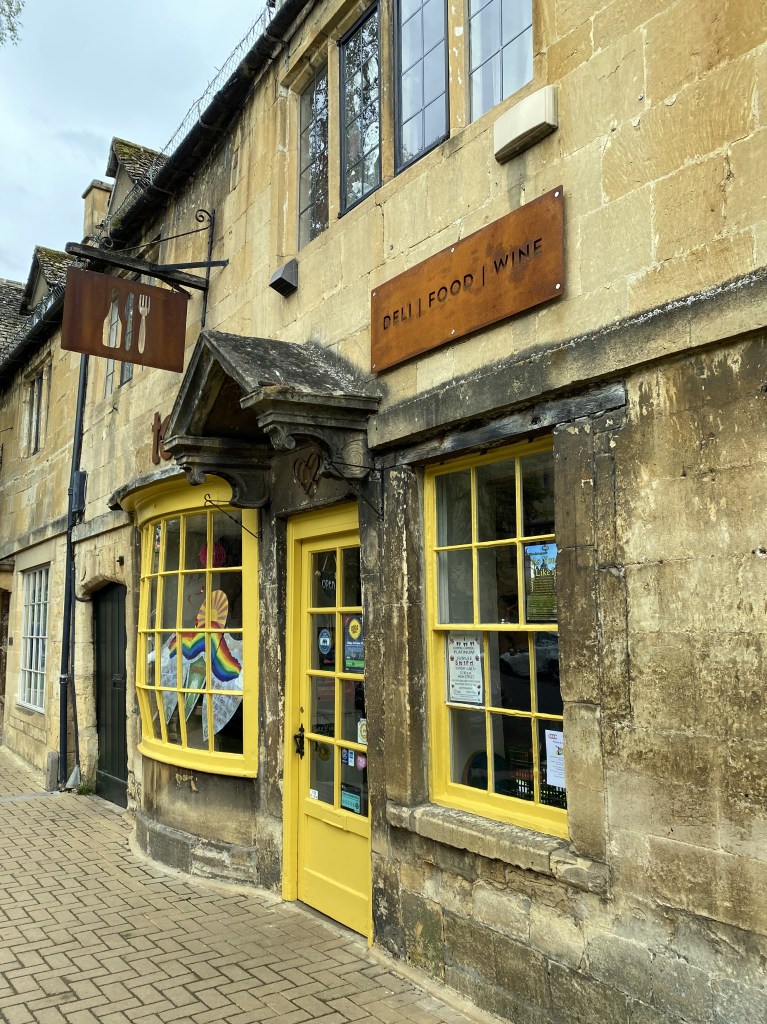
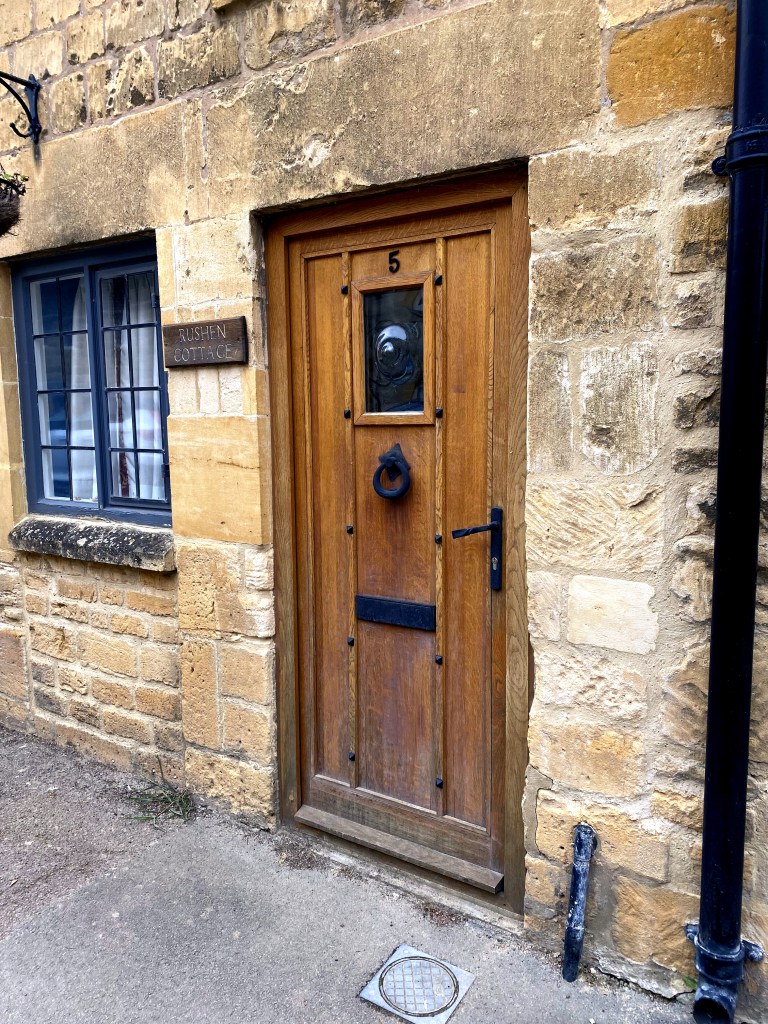
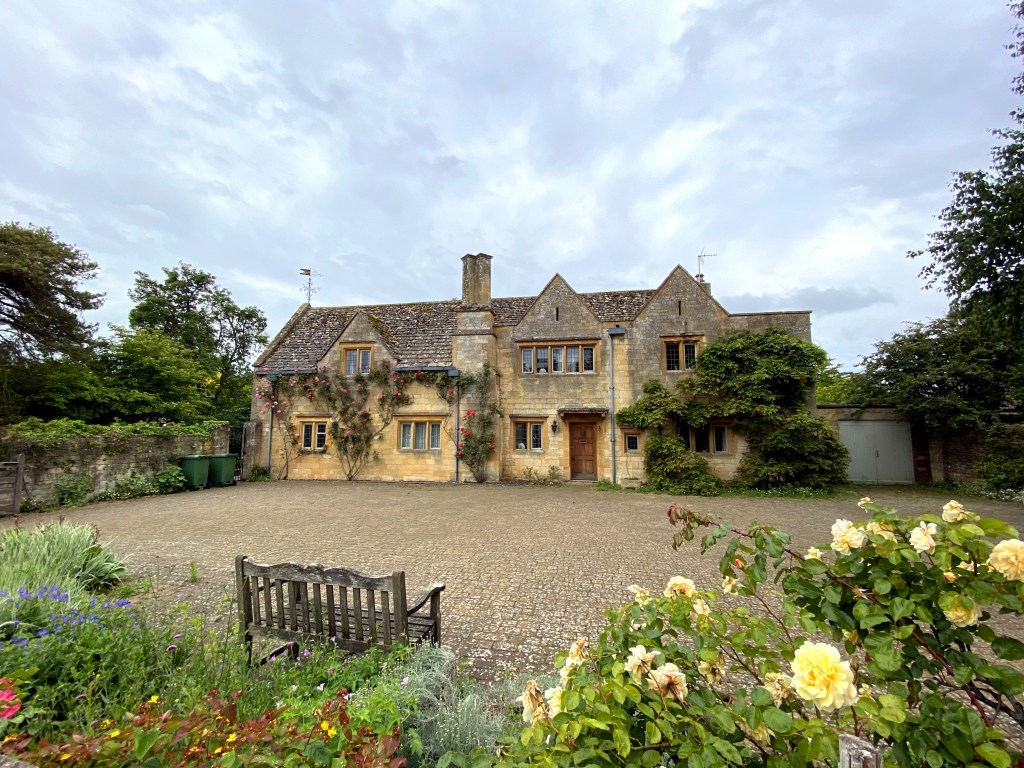
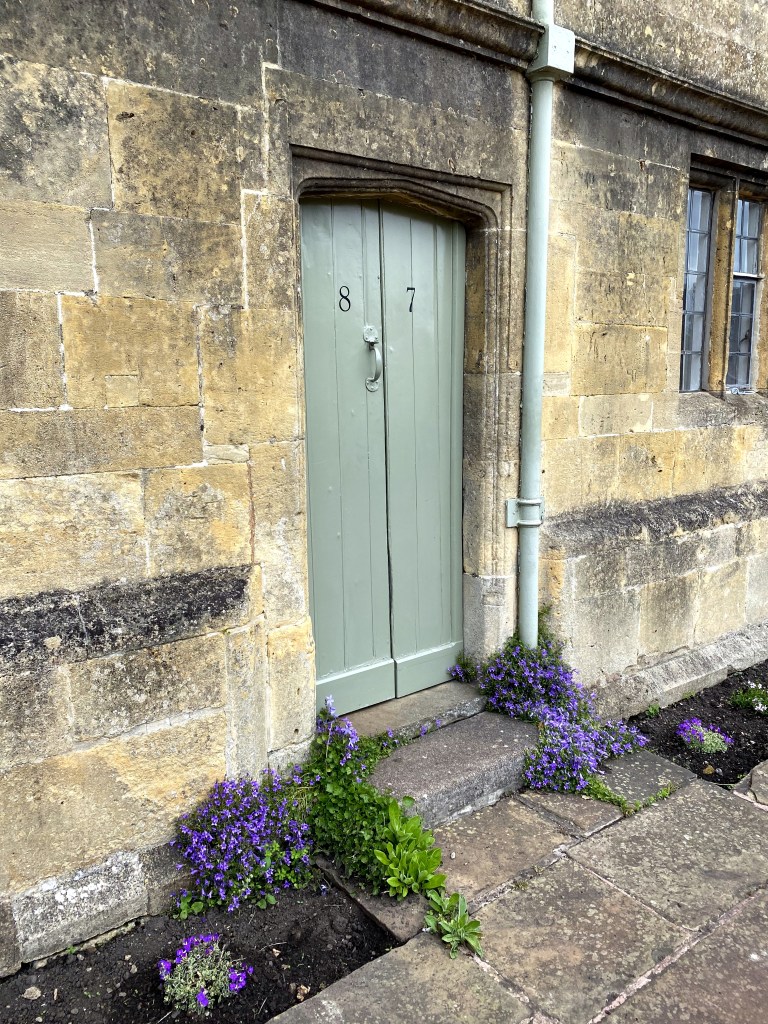
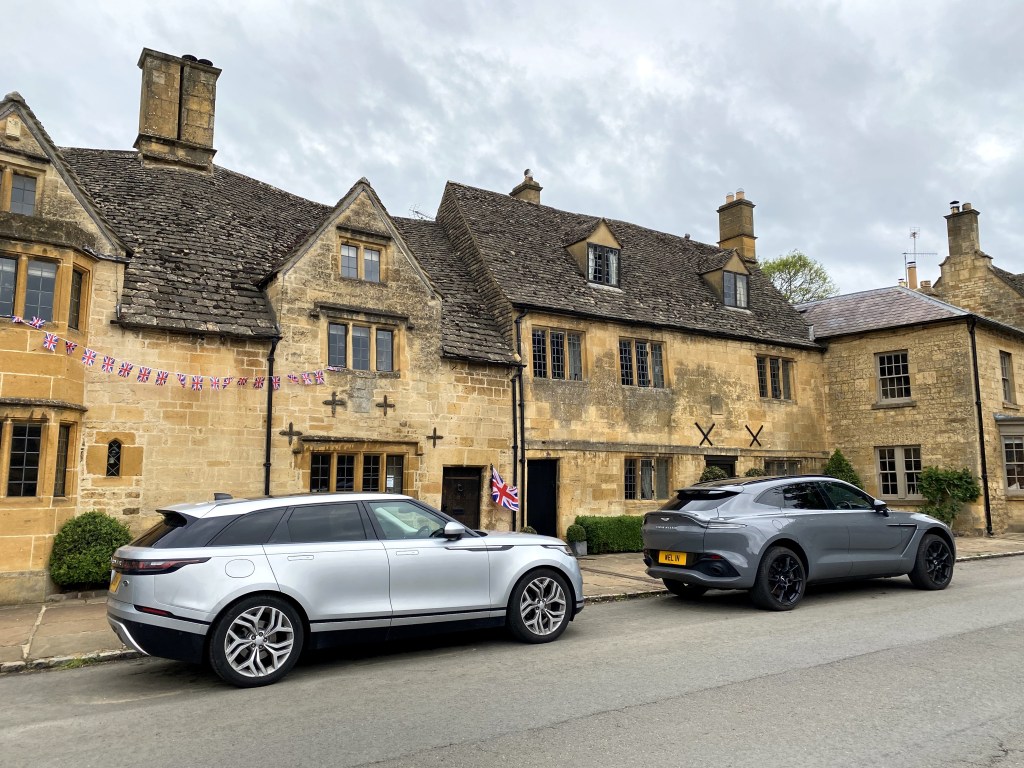
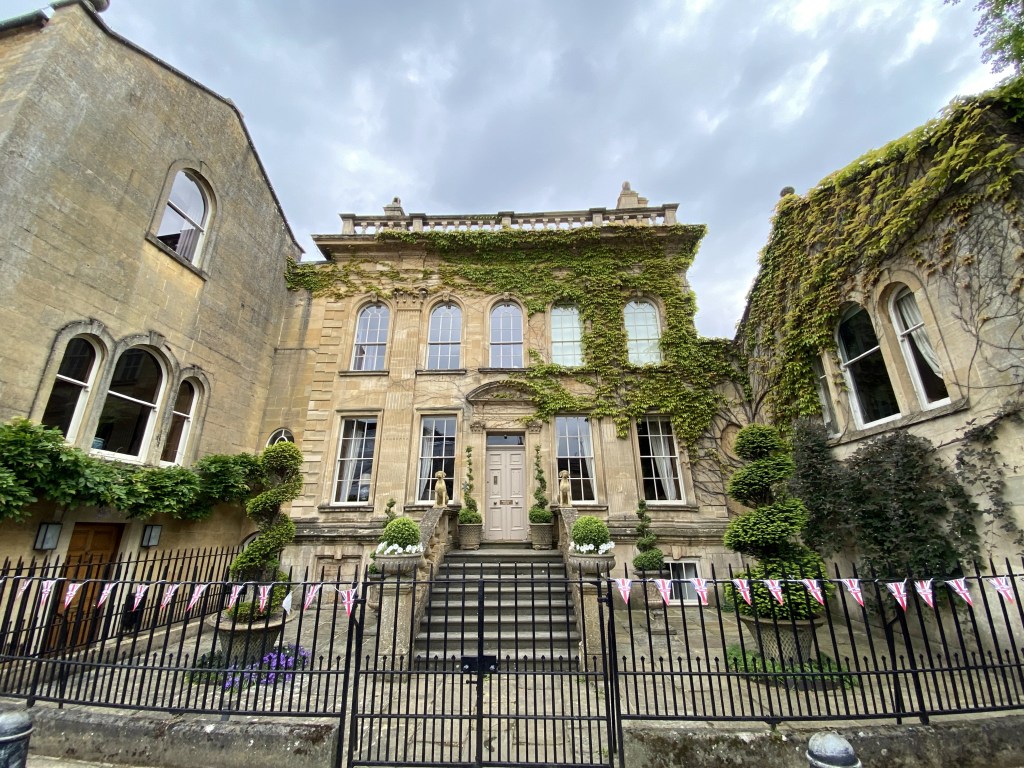
Scenes around town:
What’s behind the hedge:
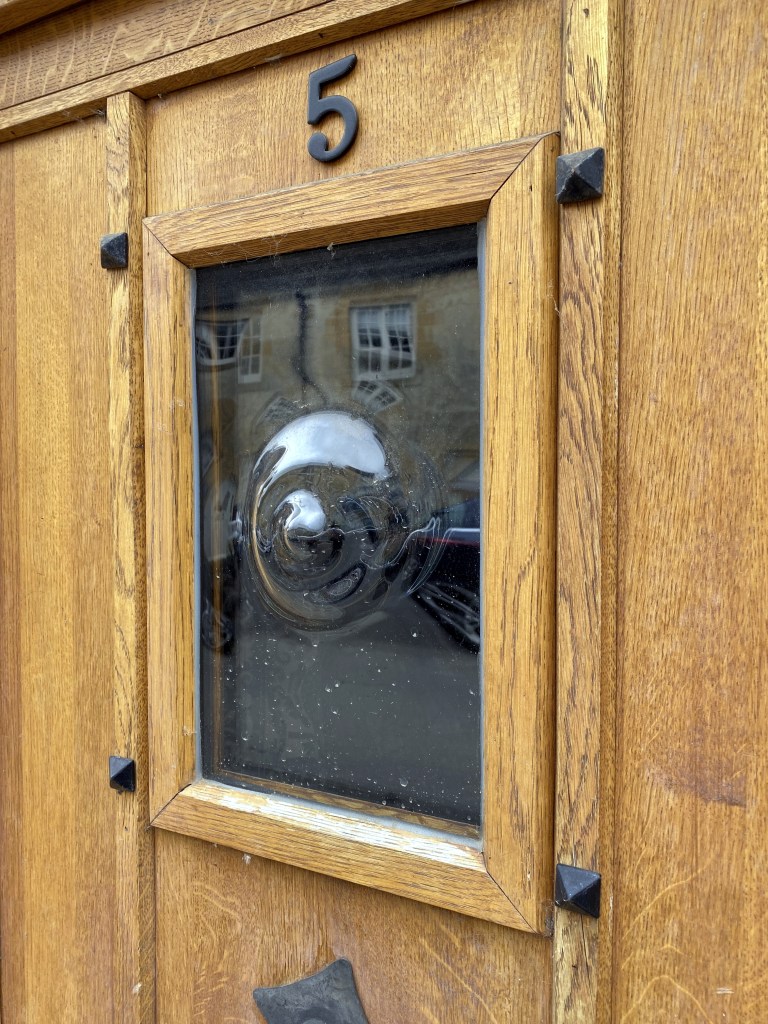
Bulls eye window on one of the houses.
“In mediaeval times the way window glass was made was similar to blowing. A blob of molten glass was picked up on a pontil, and spun rapidly to form a disk. The flatter, outer, bits of glass were used for fine windows, the bit in the middle would be remelted for the next try. Sometimes the bit in the middle was not remelted, but sold off cheap for low status buildings. These often went into front doors, to admit light, but not give a clear view into the house.” (From here.)
The town’s wool church, the Church of St. James:
Built in the 16th century, but incorporating the elements of a Norman church that dates from 1180:
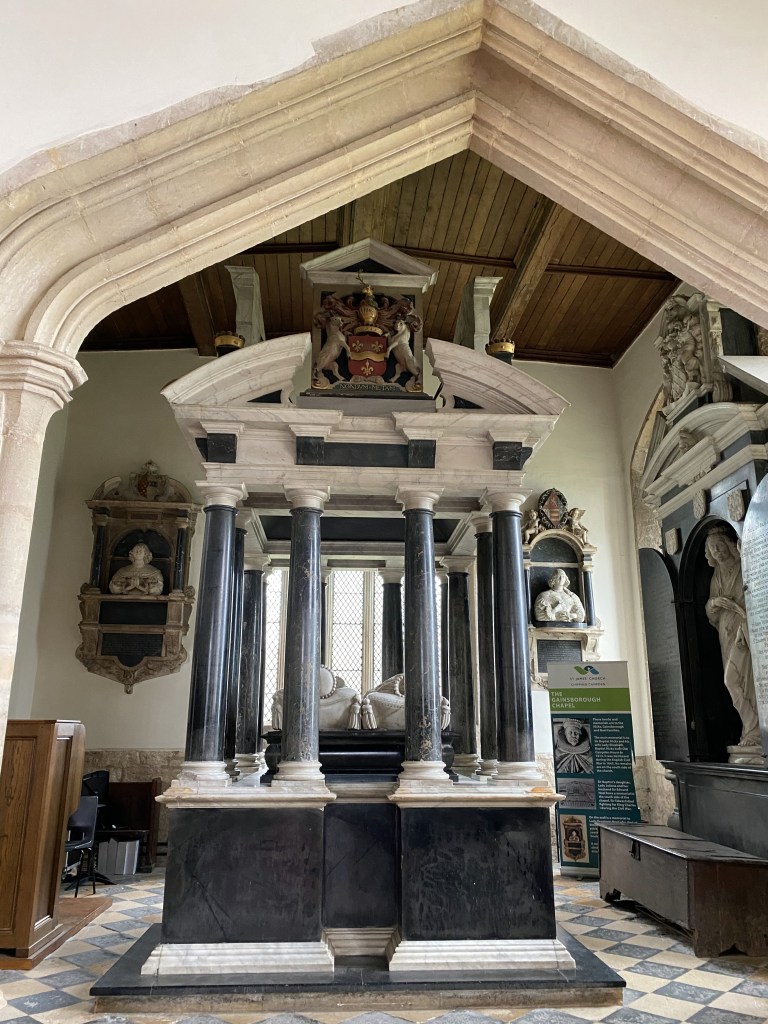
The elaborate tomb of Sir Baptist Hicks – his second appearance – and his wife.
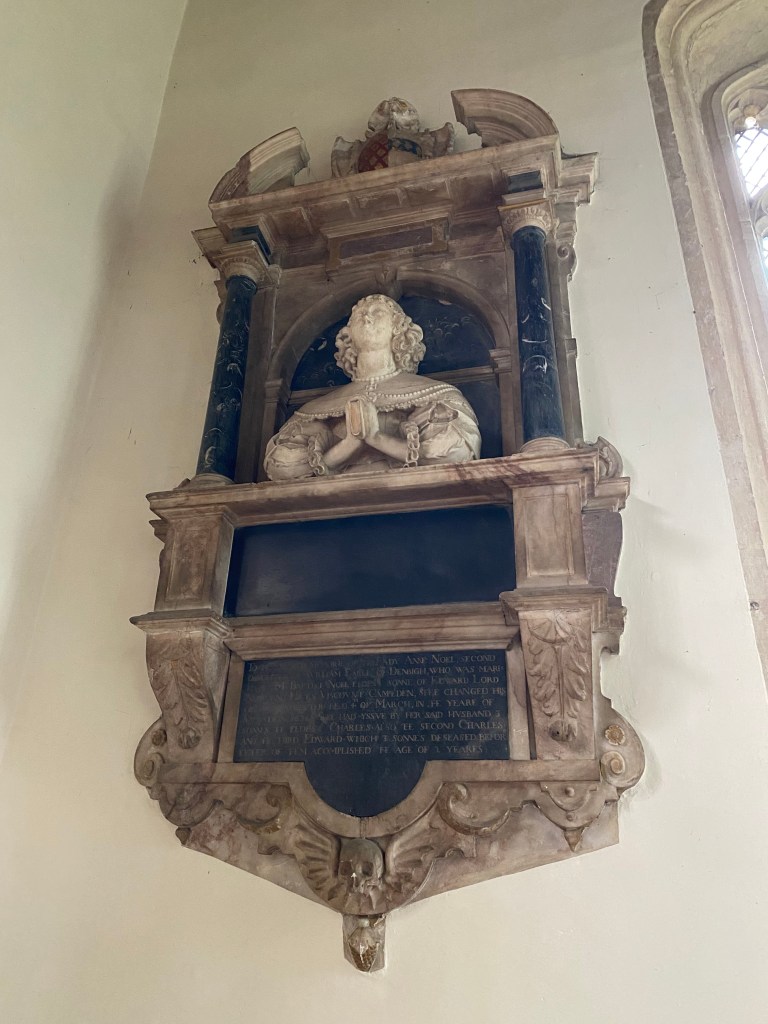
And “a memorial to Lady Penelope Noel who died of blood poisoning as a result of pricking her finger whilst sewing.” For reals.
The town’s almshouses just down the street from the church, built in 1612 by Sir Baptist Hicks (of course).
The town’s cool Eight Bells pub.
Back on High Street to head to the car and on to our next town: