In an unusual move for us, we have now spent two consecutive Christmases in the same country. Shocking! Last year, we visited San Miguel de Allende, Mexico. This year, we returned to Mexico (albeit to a different region).
Mandarina is a new, Pacific-coast development an hour northwest of Puerto Vallarta, very similar in concept to Mayakoba on the Riviera Maya an hour(ish) south of Cancun.
Coincidentally, we also stayed at the same hotel collection in Mandarina as we did in Mayakoba (and San Miguel). Definitely did not disappoint.
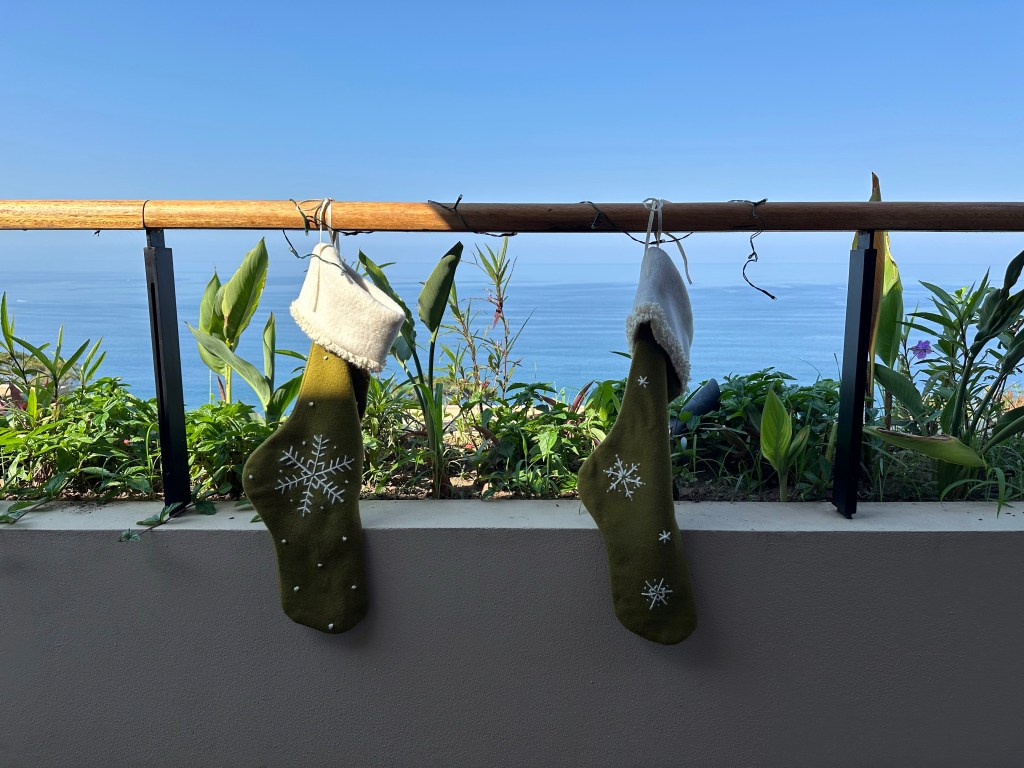
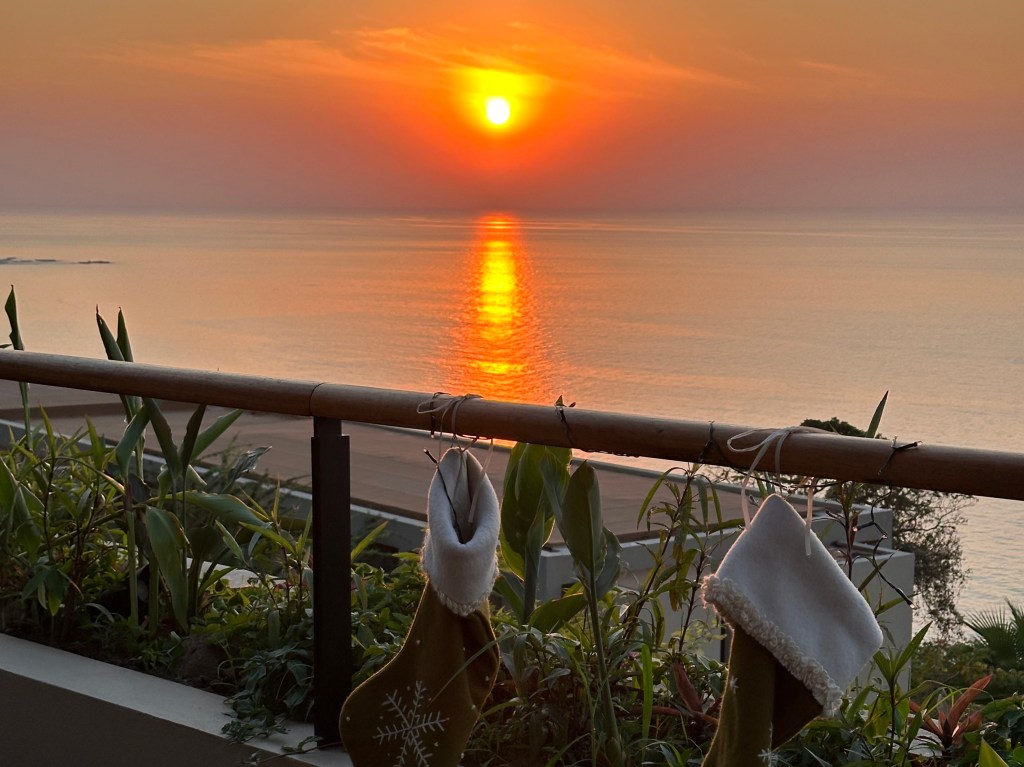
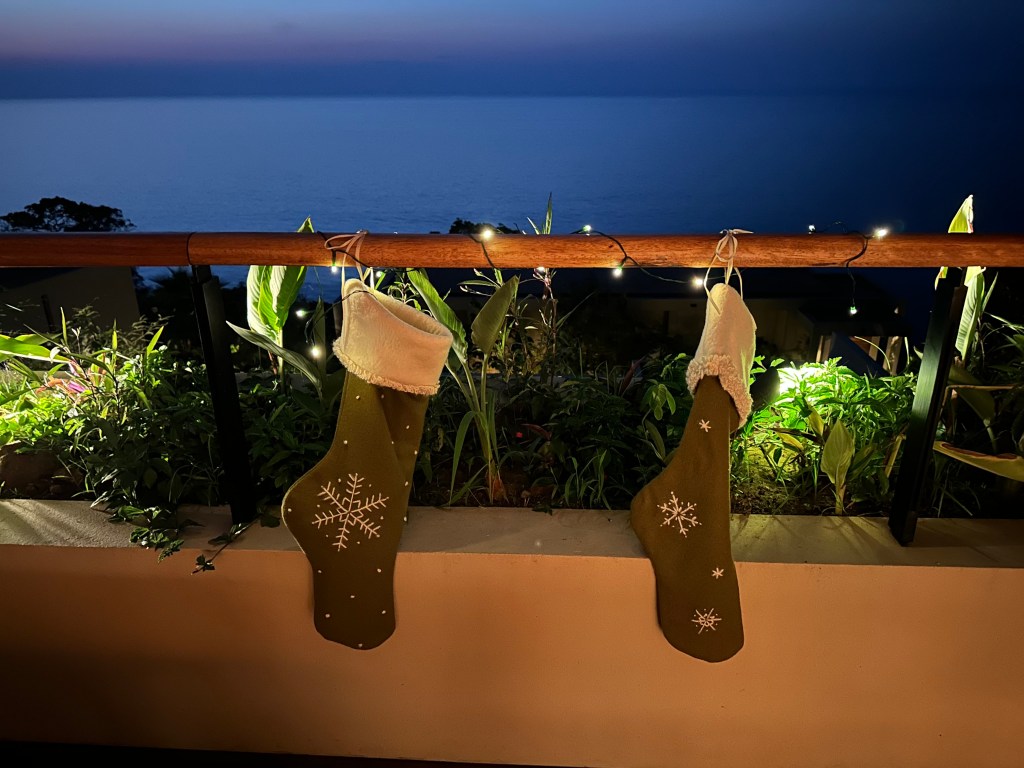
And with us, as always, were the traveling Christmas stockings, which have accompanied us on almost every Christmas trip for the past 25 years, from London, to Latvia, to Laos (they were left behind for our Christmas on safari due to the duffel bag limitation). Lisa made the stockings for our first Christmas on Wolfe Street when we moved there in 2000 and, because we have traveled abroad each Christmas since that time, they’ve become world travelers in their own right. (One year I’ll remember to take pictures of the stockings when they’re full. . .)
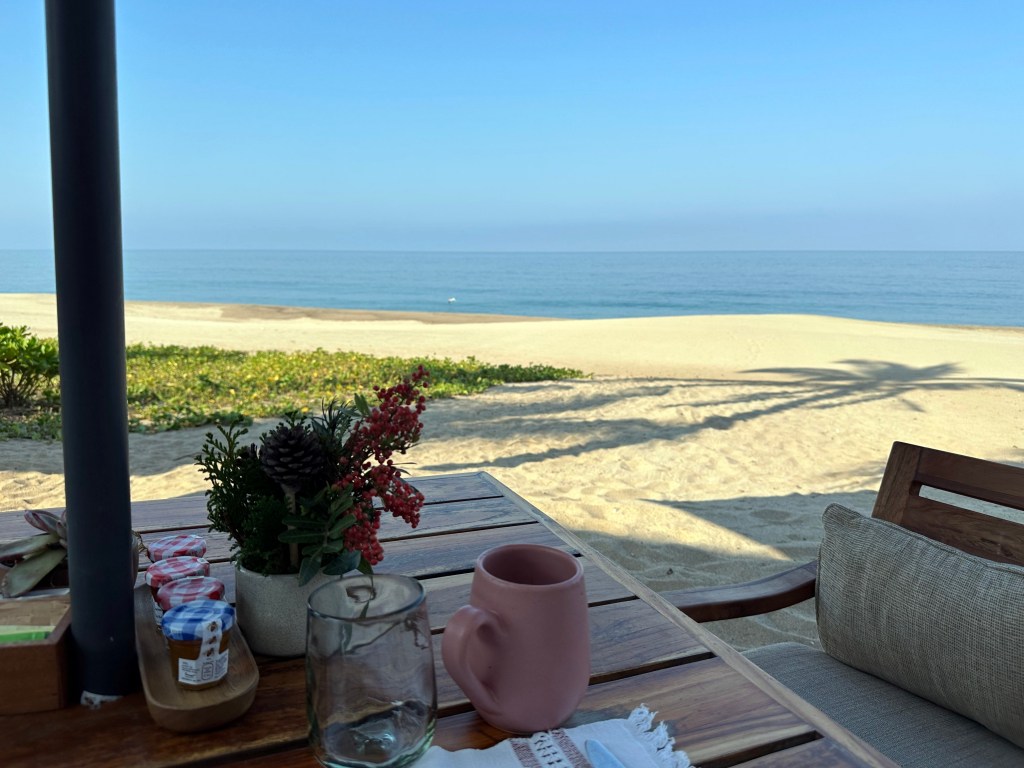
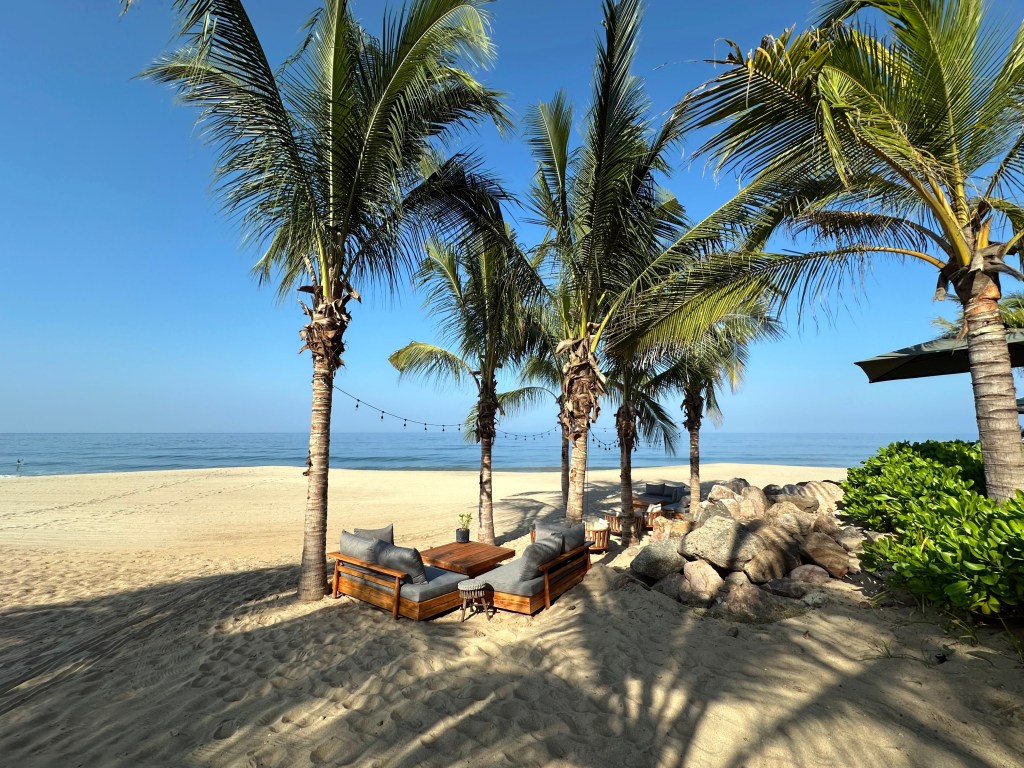
During breakfast our first morning, we spotted a pod of gray whales cruising by right off the beach.
W spotted another pod from our terrace later in the same day. Pretty cool, especially considering that we took a whale watching tour out of Bar Harbor last year, and saw none. Now, unexpectedly, they were everywhere.
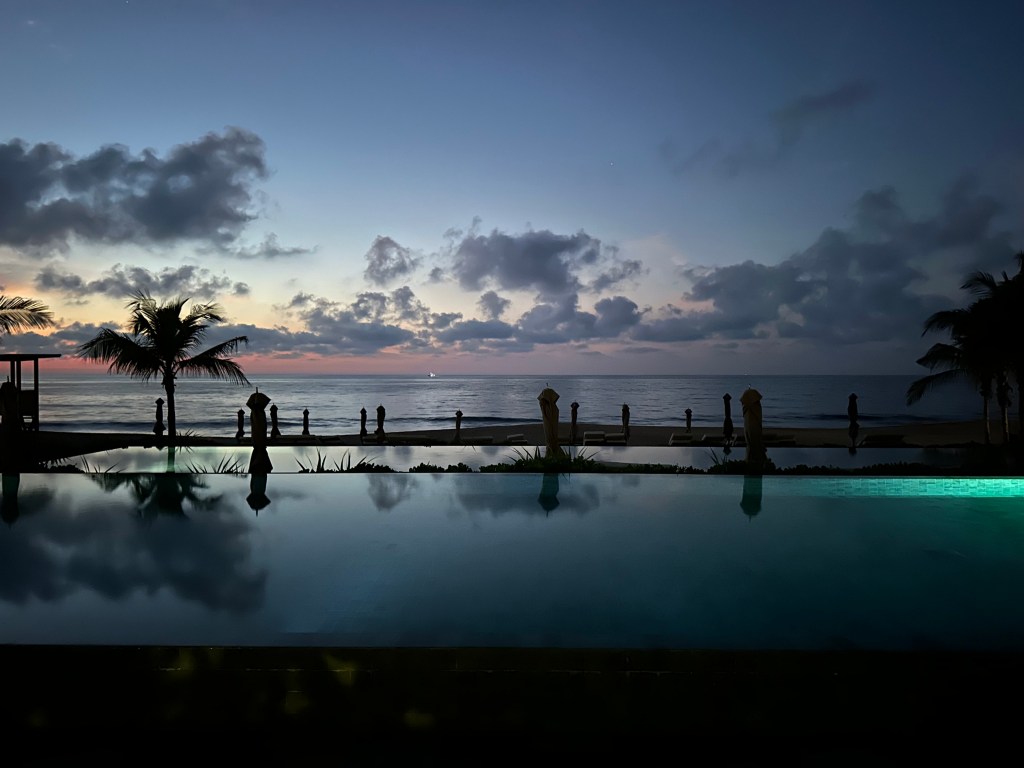
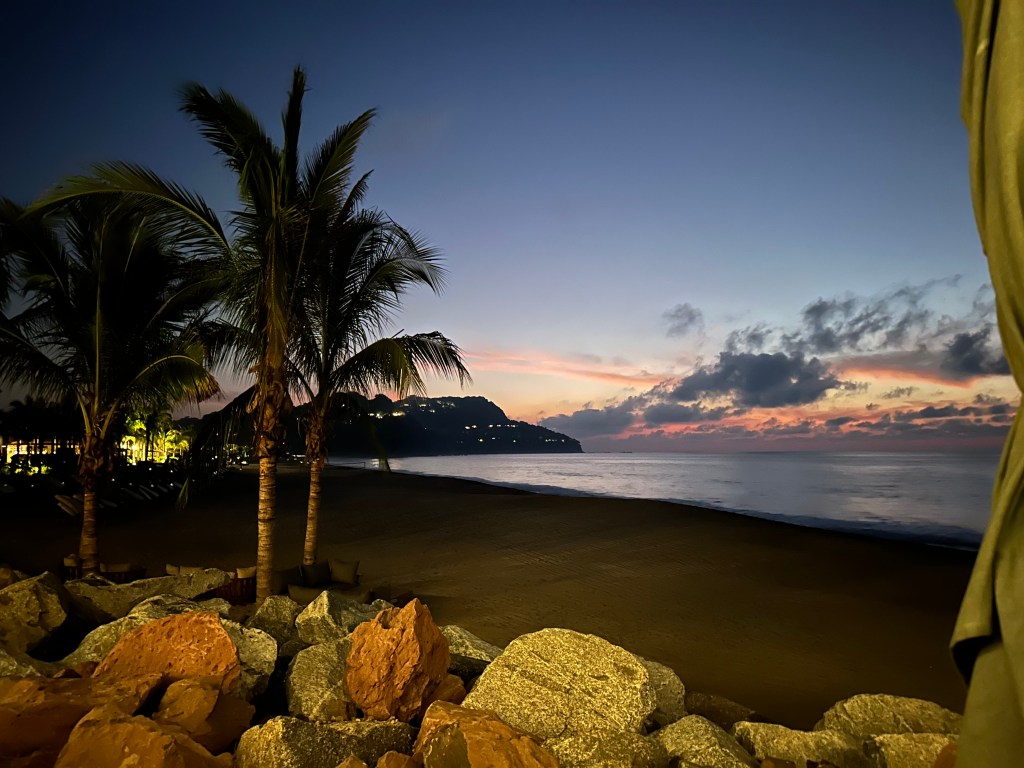
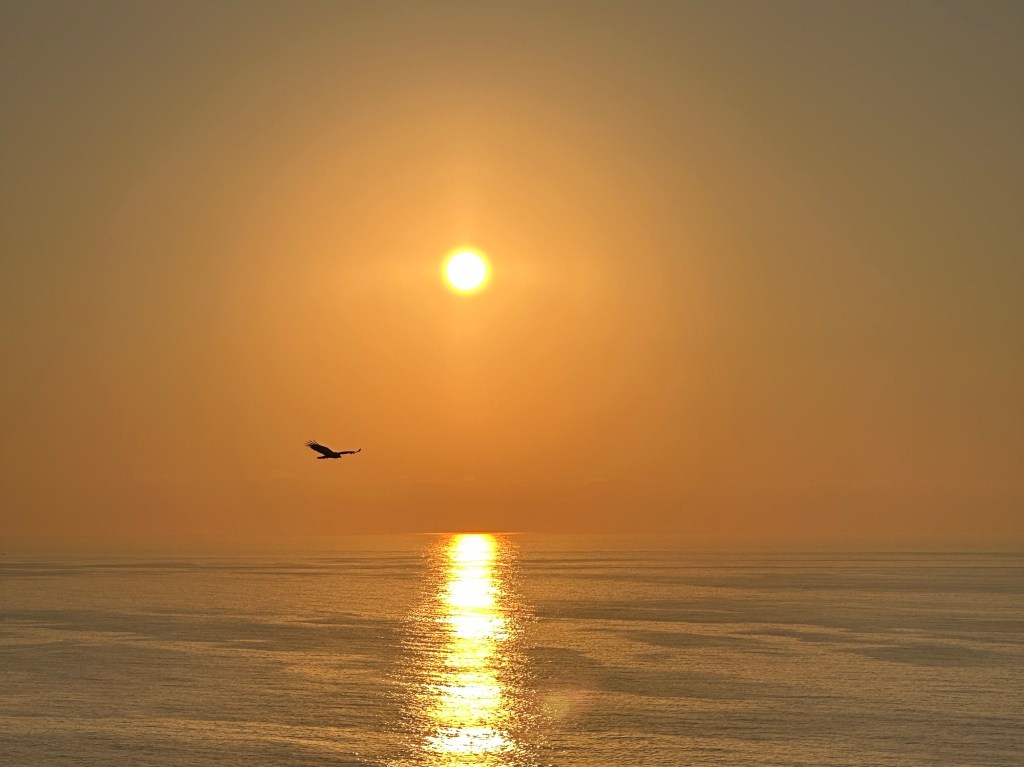
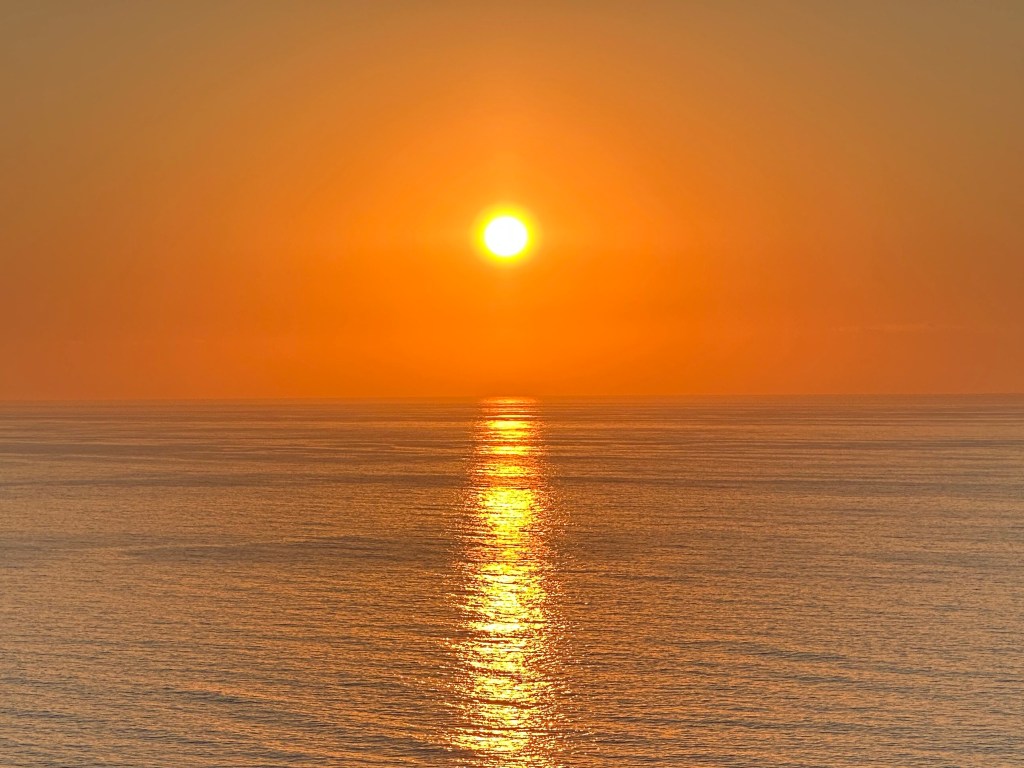
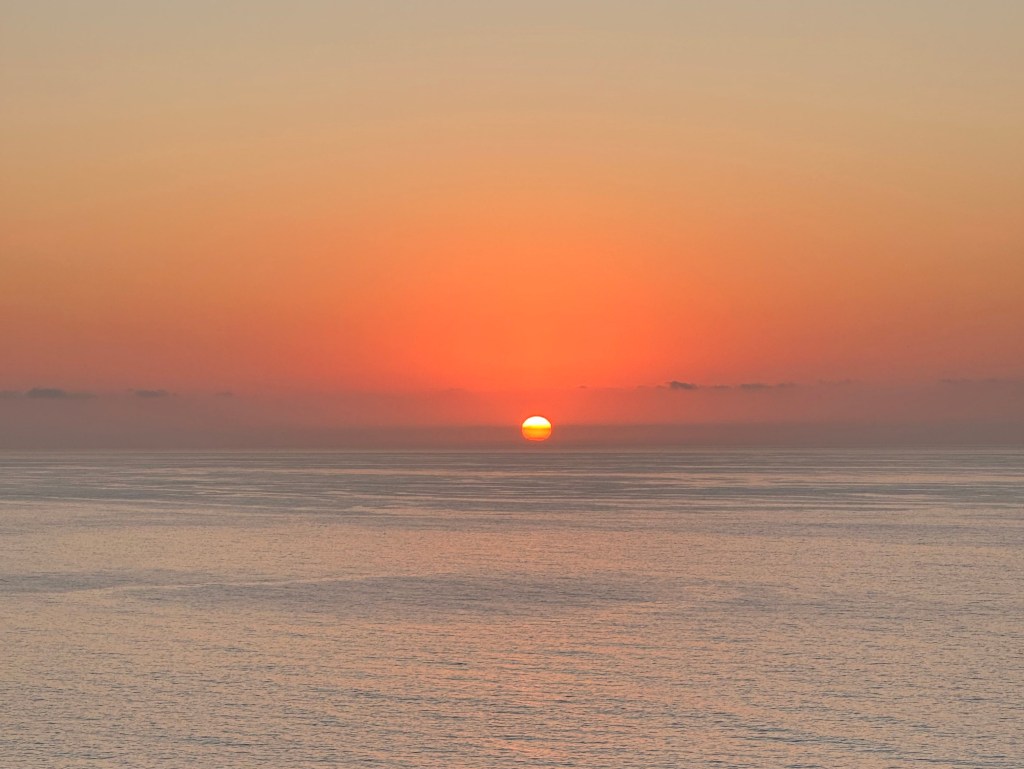
Sunset stockings.
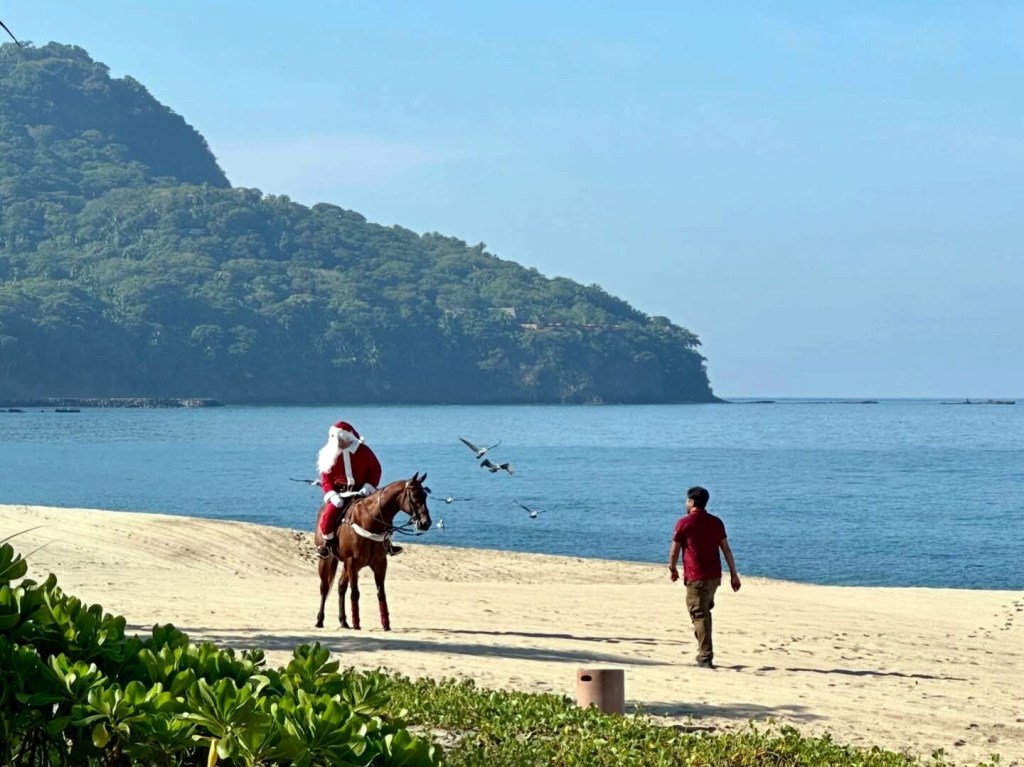
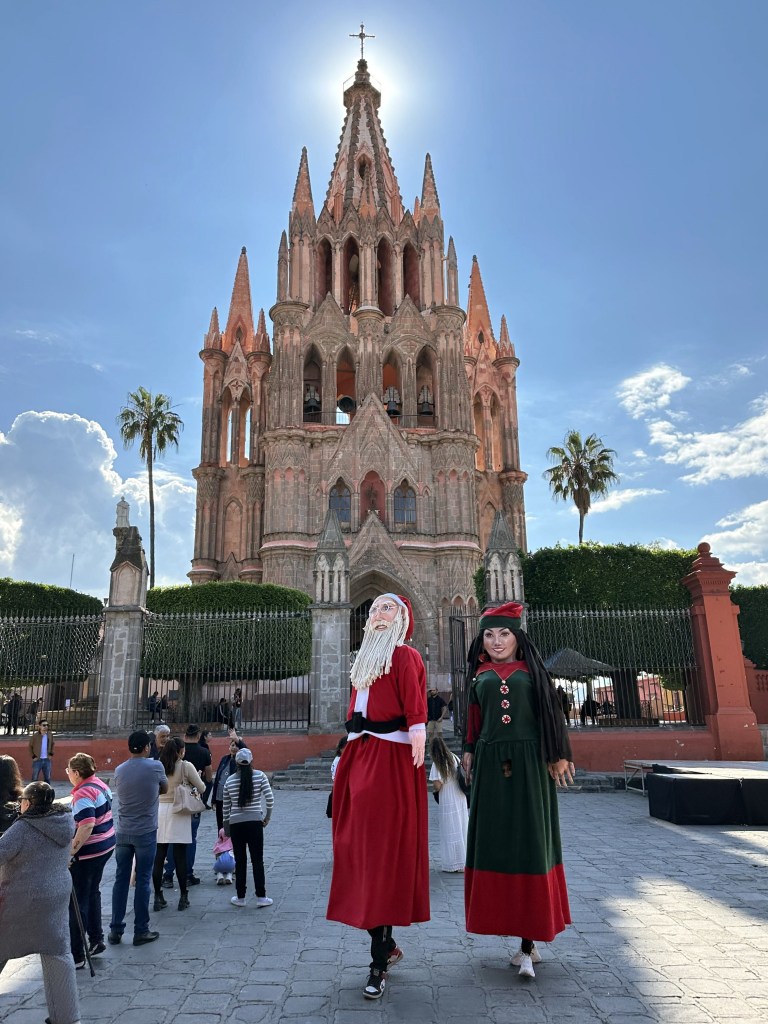
Santa!
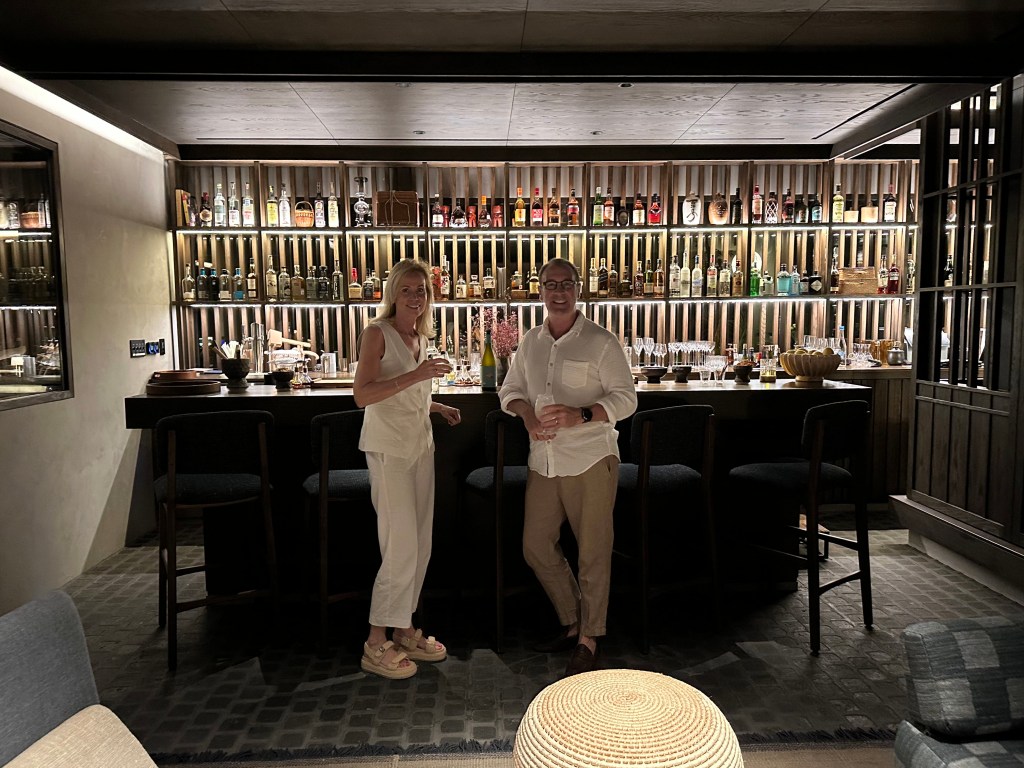
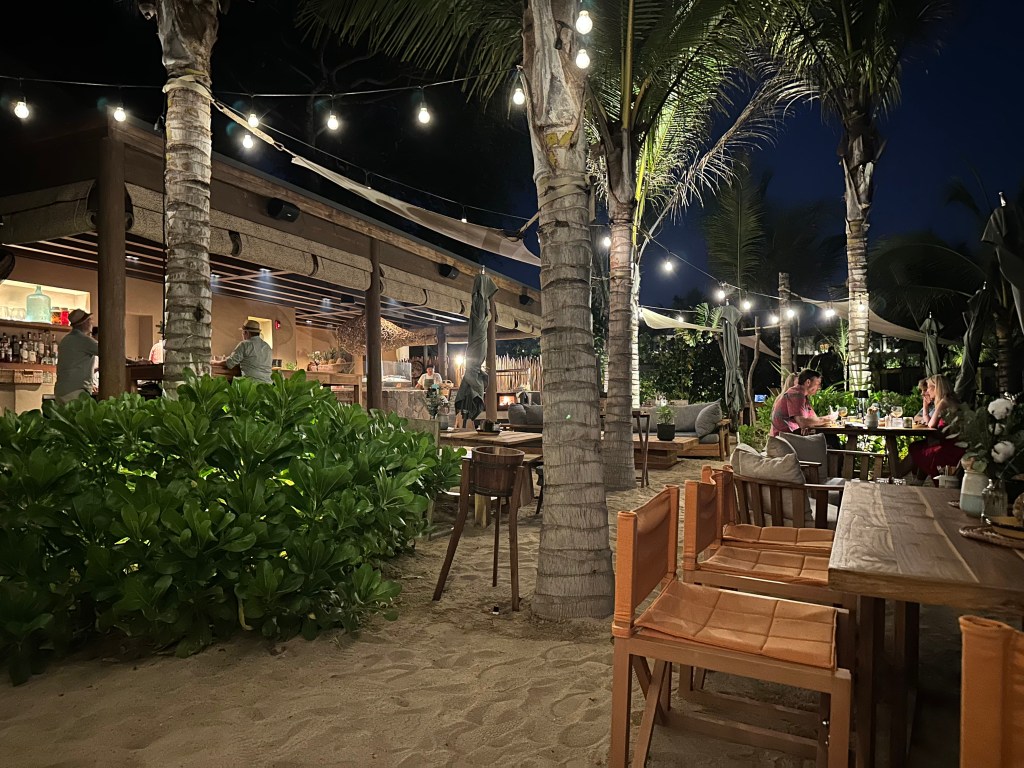
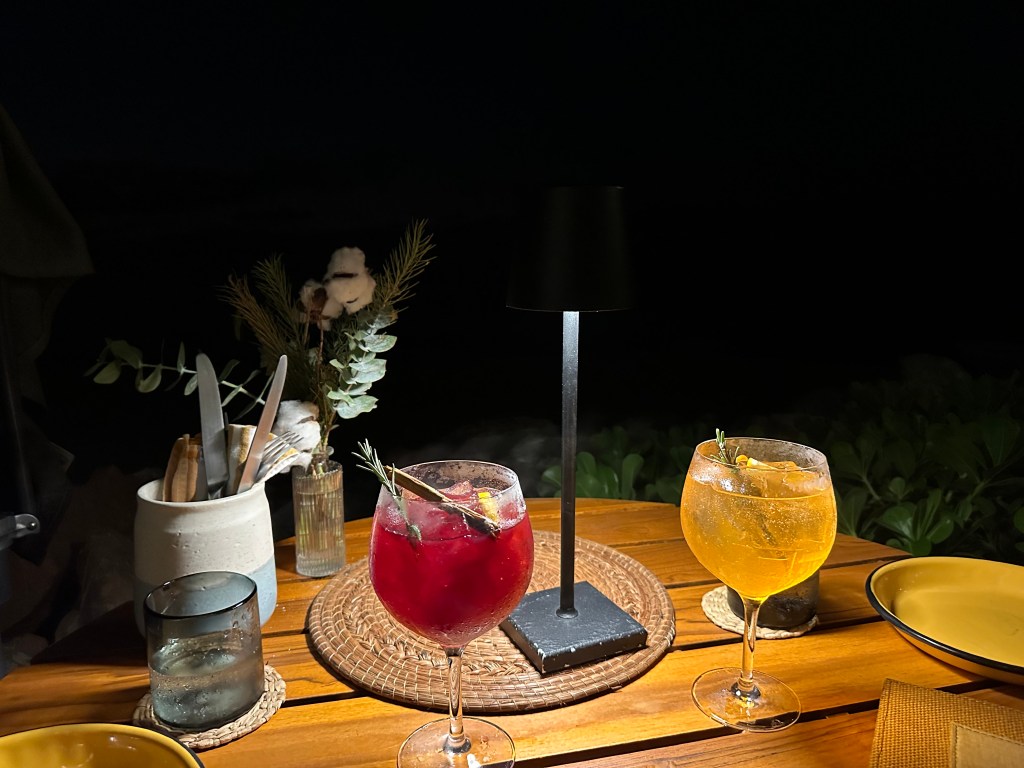
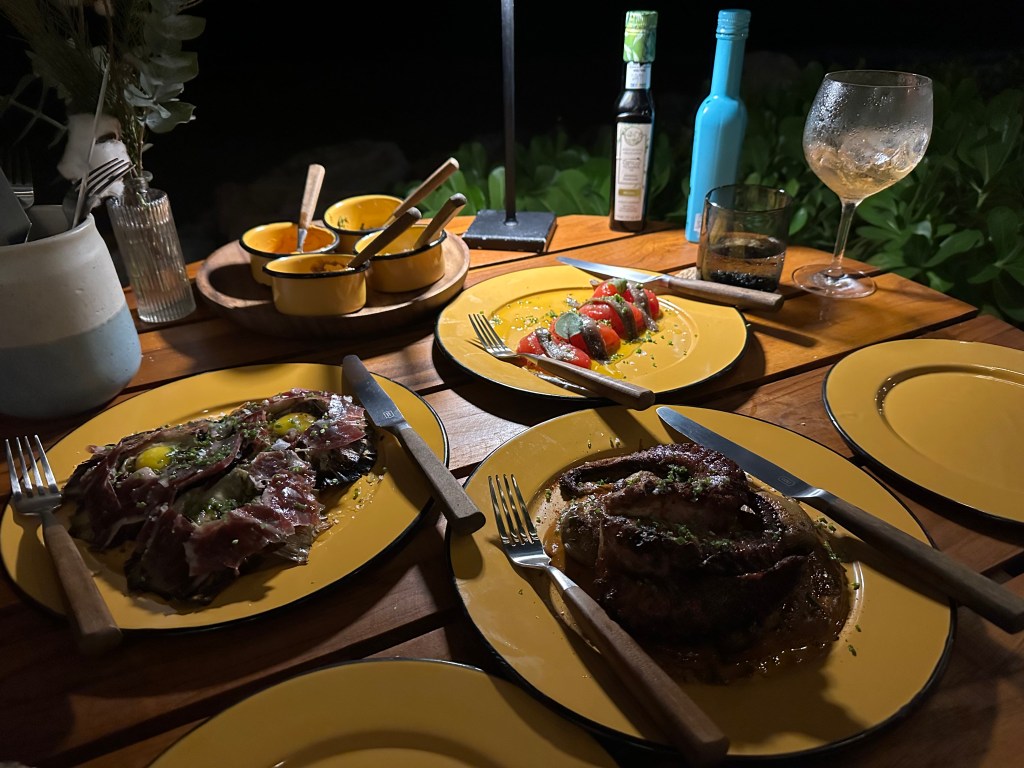
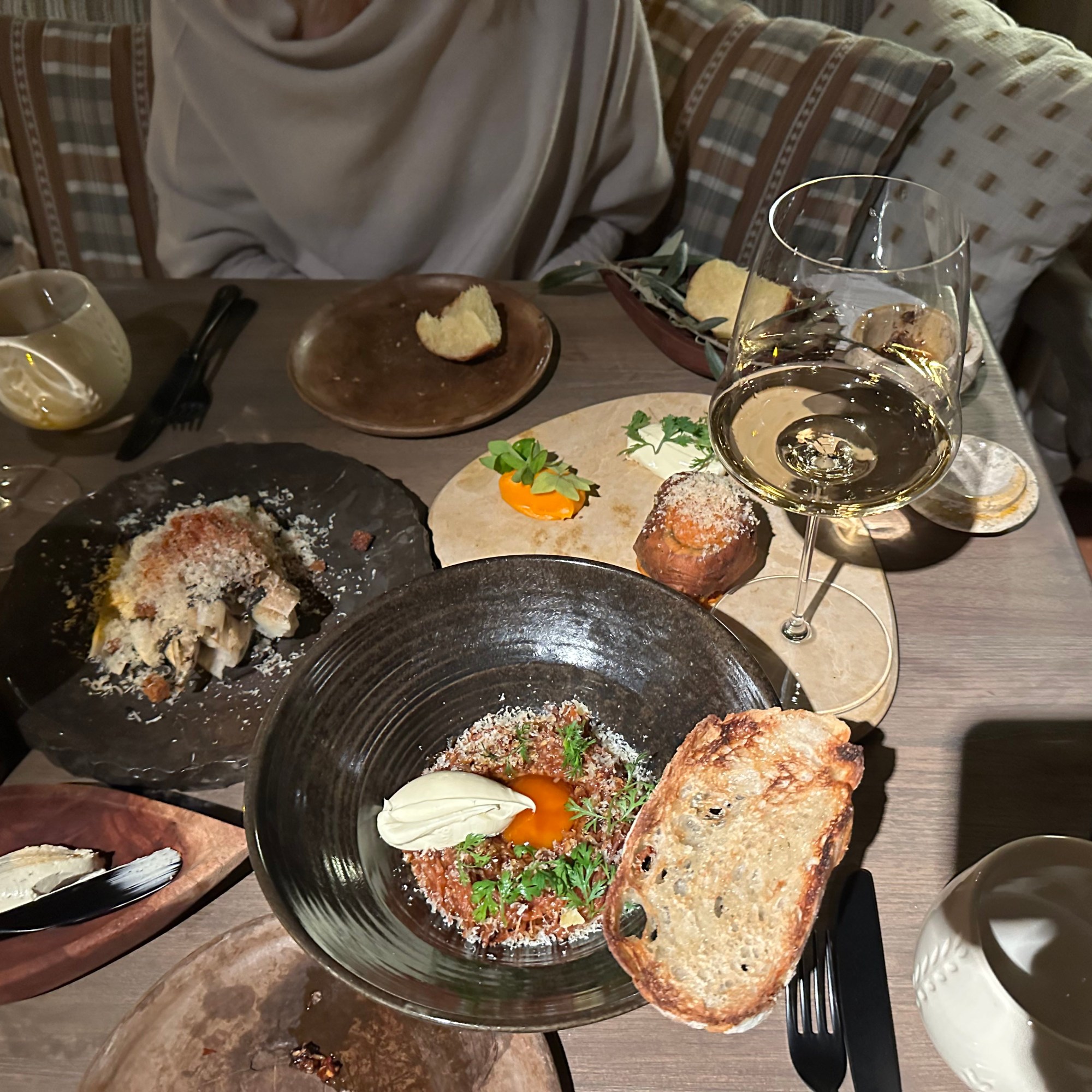
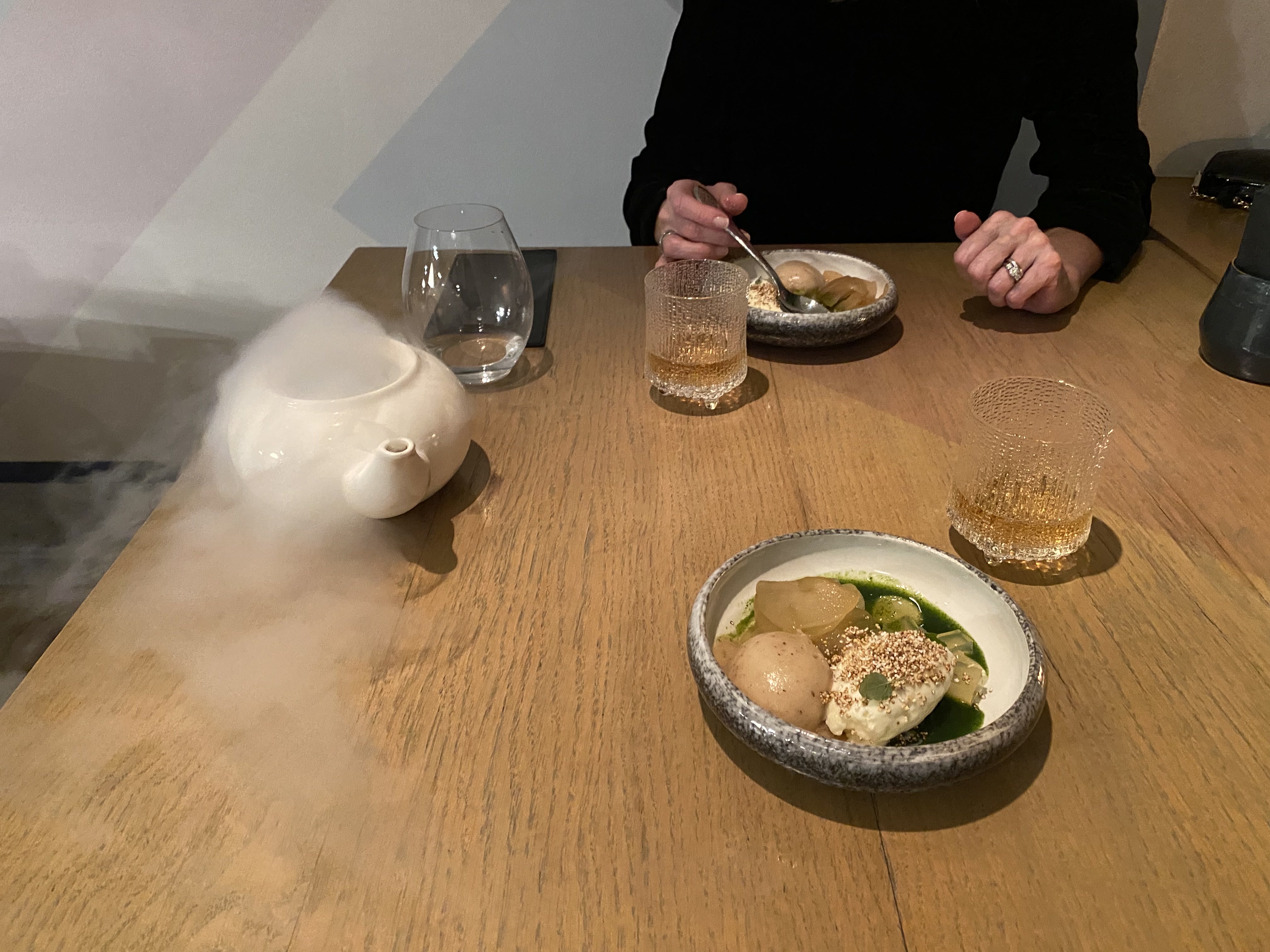
Pretty cool Peruvian / Japanese / Mexican fusion at one of the restaurants, and a rather decent bar, to boot.
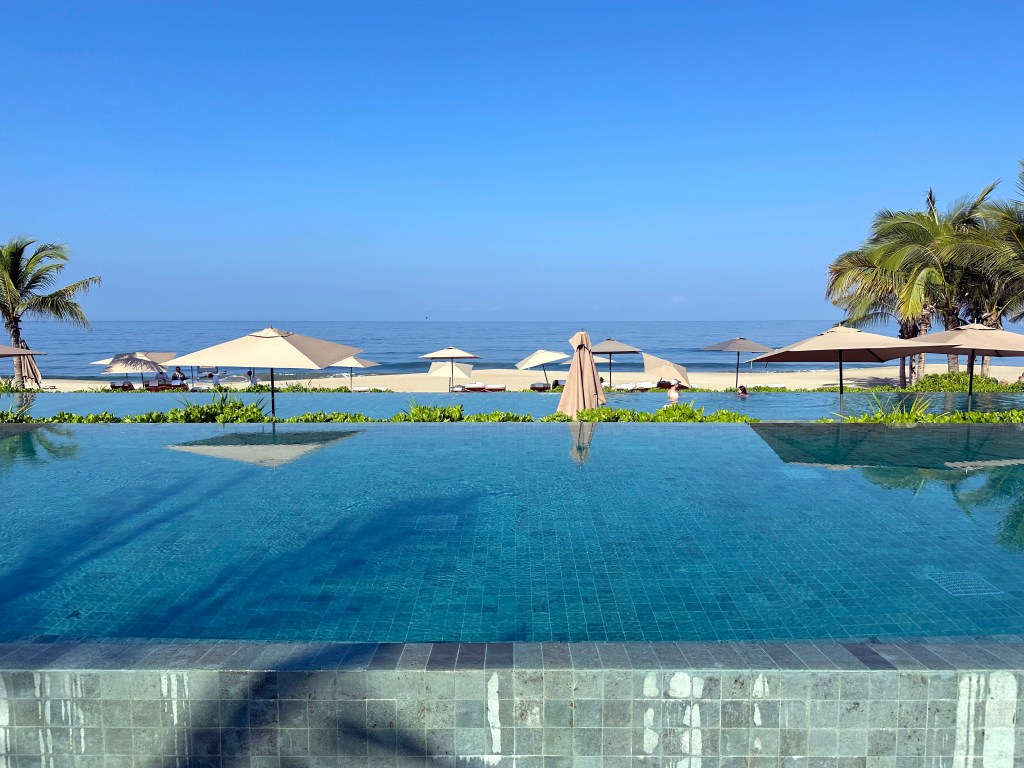
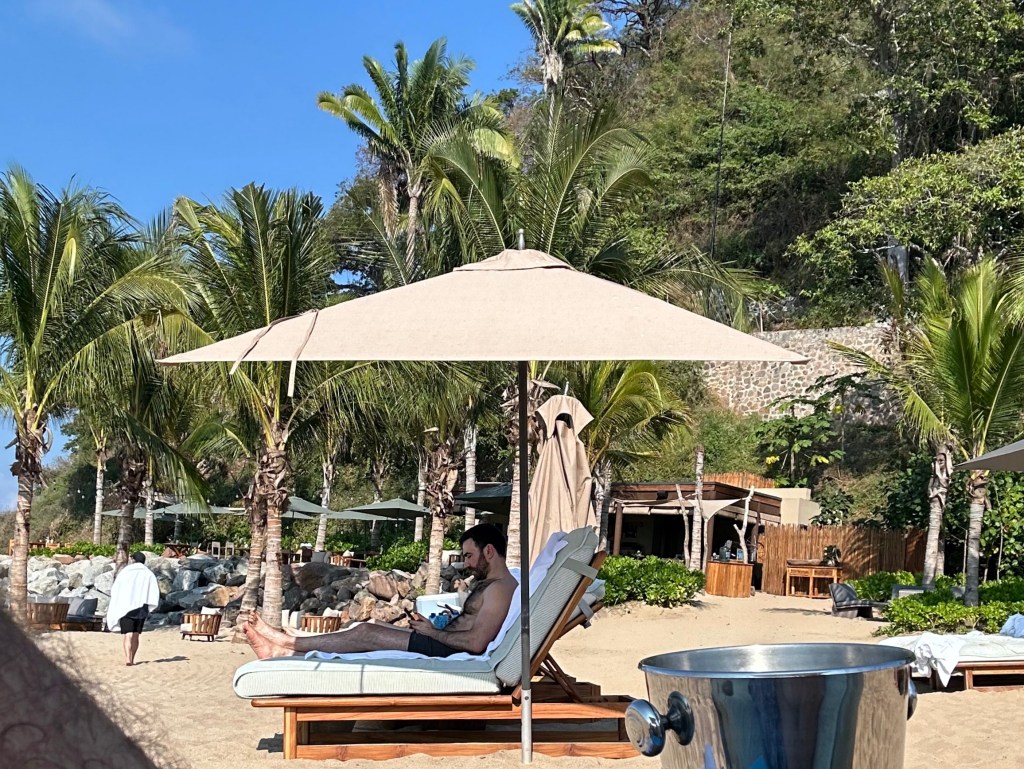
Perfect freakin’ weather the entire time, which was welcome.
Oh, and Roy Kent! “He’s here, he’s there, he’s everyfucking where! Roy Kent!”
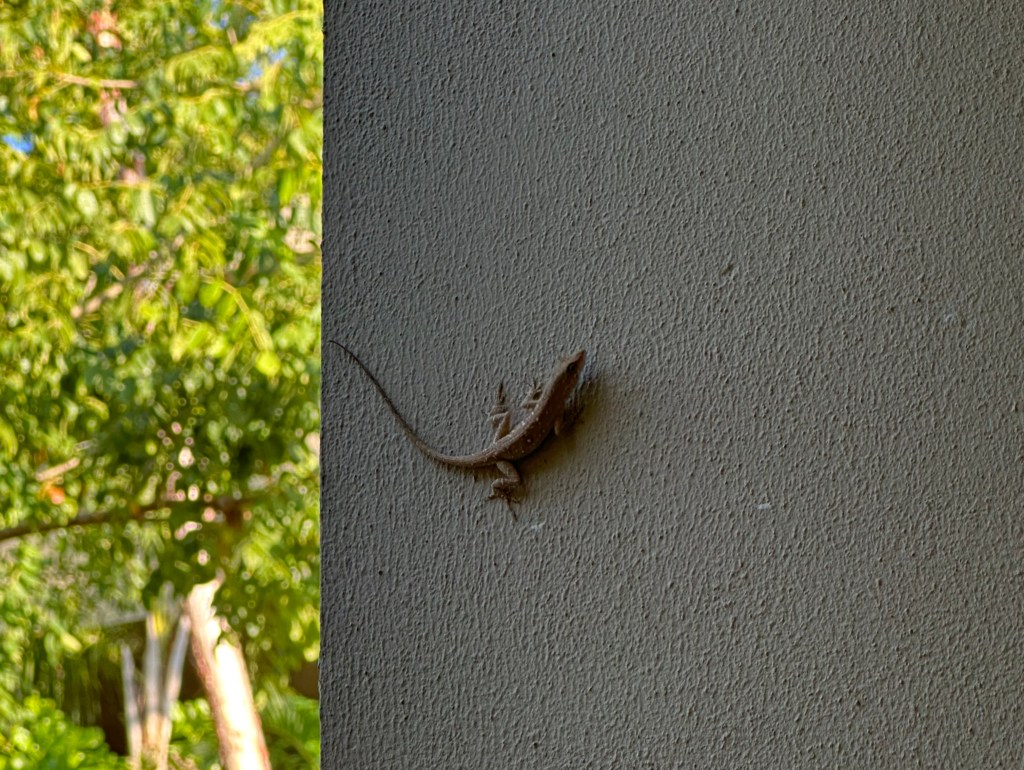
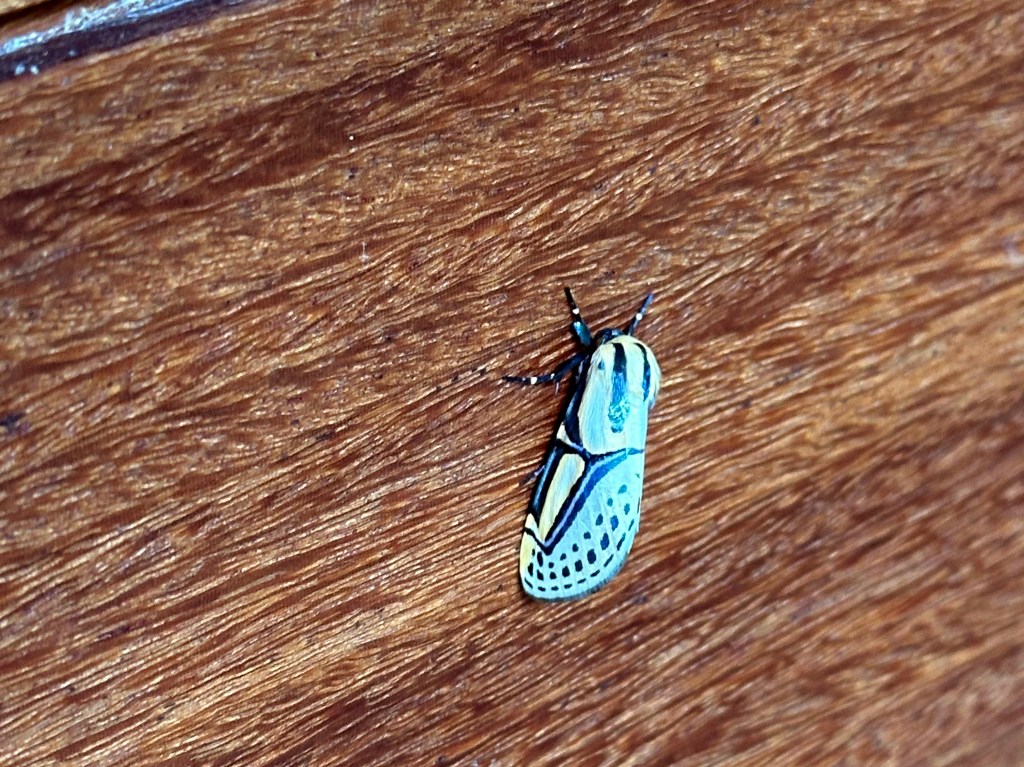
And, as always, a little wildlife to delight one of the travelers (but only one of us, to be sure).
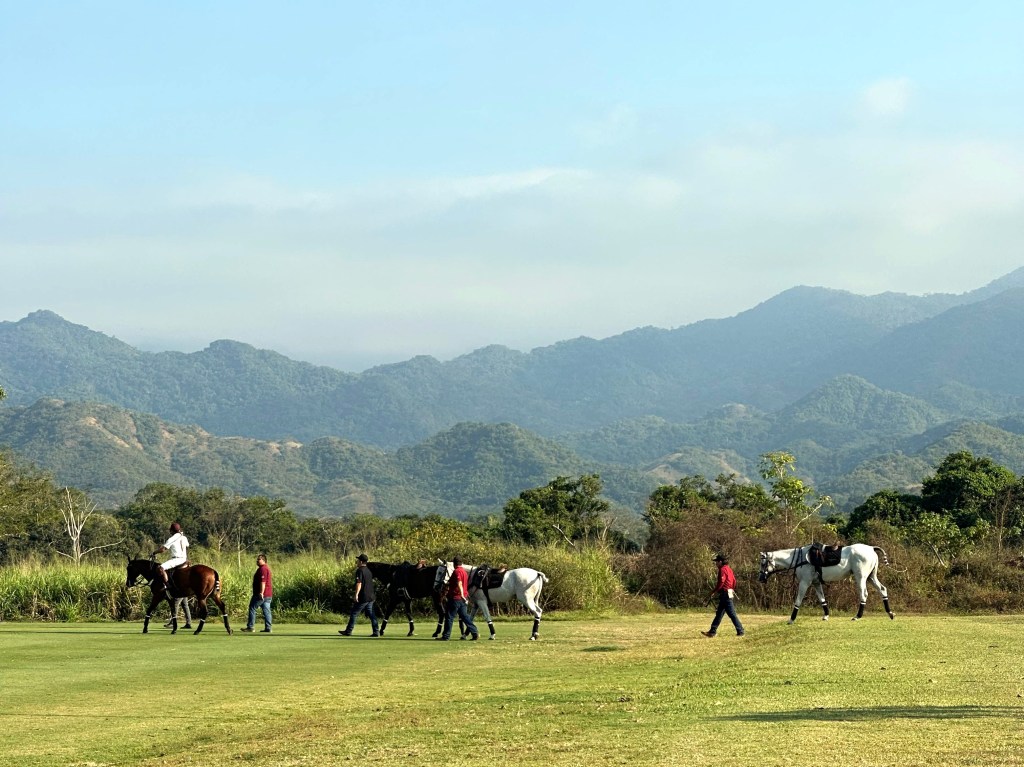
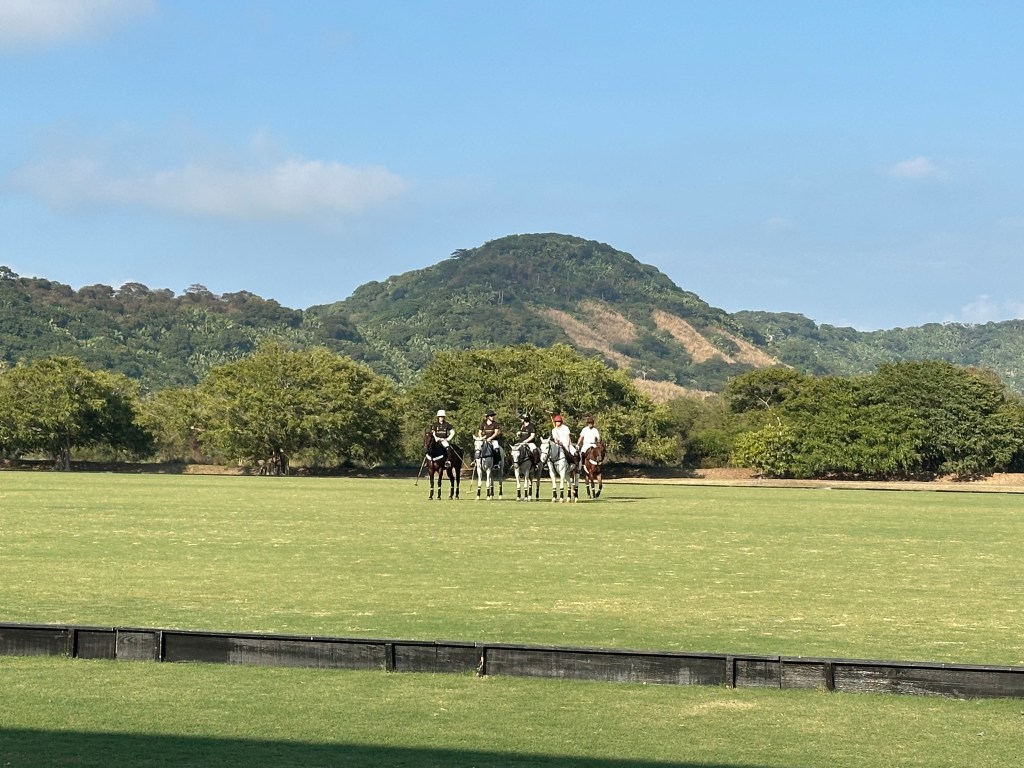
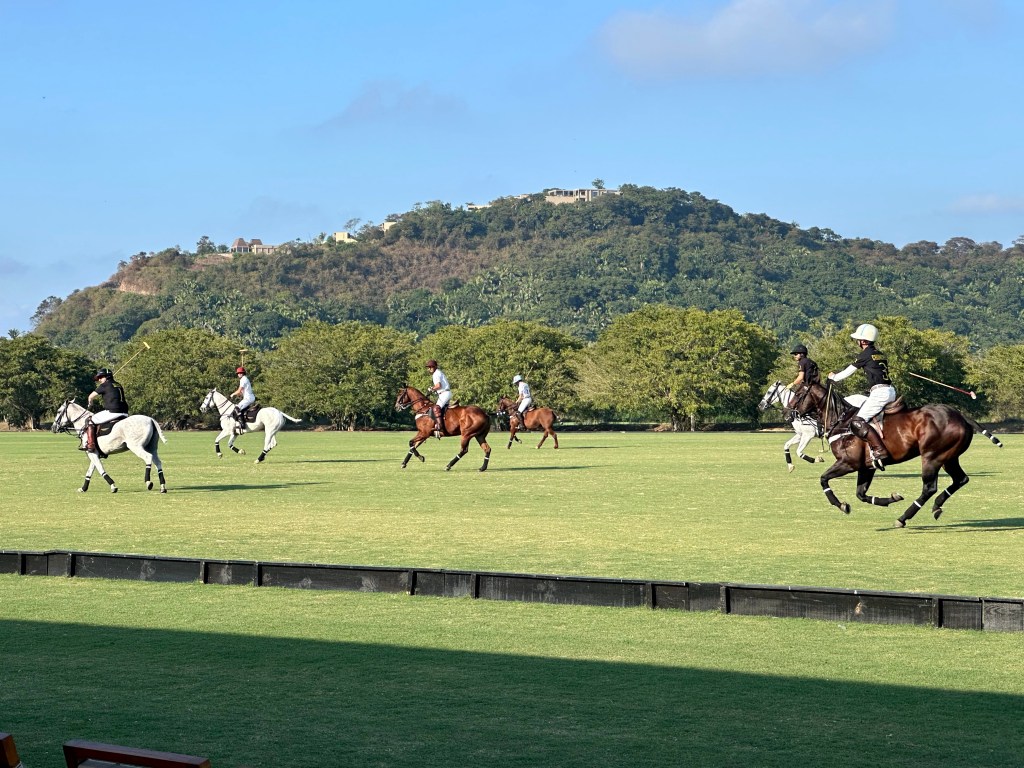
We spent one afternoon at the nearby polo field for our first polo game.
Just an exhibition match, but it didn’t disappoint. They were pretty good.
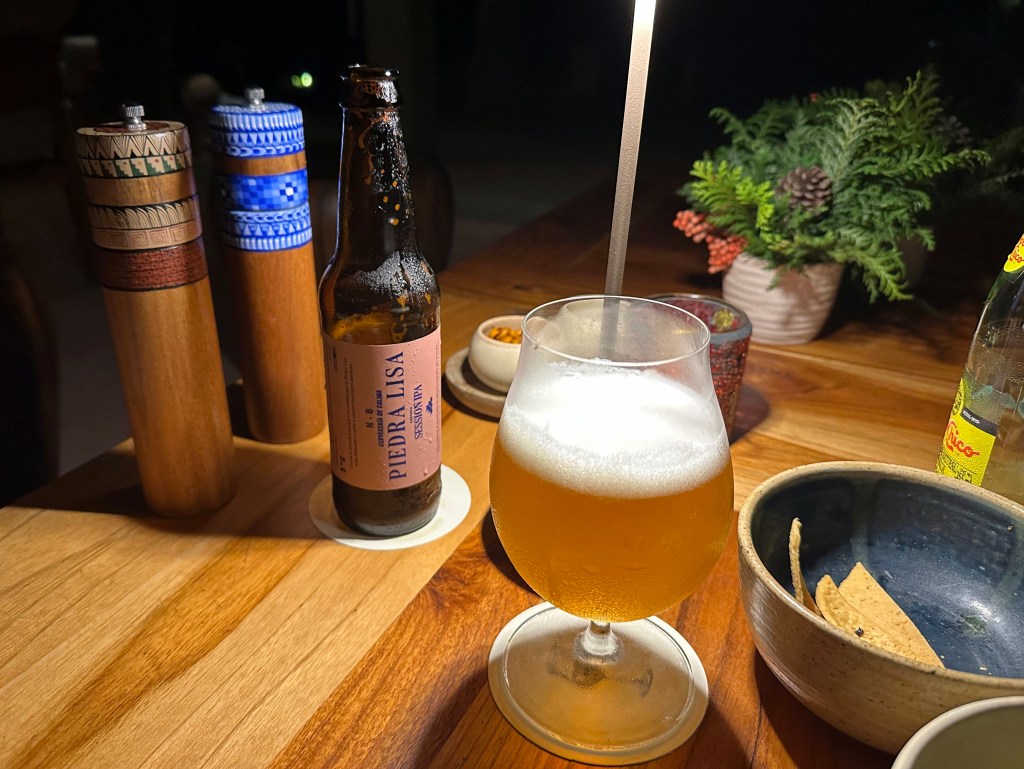
Fortuitous cervesa choice.
Pretty short stay of just 5 days, but definitely worth it.
After mulling over an extended trip to Japan over Christmas during our New England and Canada road trip this past summer, we quickly concluded that the time and focus needed to plan the logistics of that trip would be misspent while actively engaged in another. And so we defaulted to an easier-to-plan, one-stop trip to a location closer by that’s been on our list for a few years: San Miguel de Allende in the center of Mexico.
The town had been on our radar for a few reasons:
Most notably, the town hosted the finale of Top Chef one season, and the gastronomic reputation of San Miguel appeals to us
The Boston Connells spent more than a month in San Miguel back in the day as part of the boys’ Spanish immersion education (which certainly paid off, considering that one of them ended up taking two semesters of college engineering courses in Spain – in Spanish – and the other spent a month in Ecuador last year)
There’s a Rosewood there
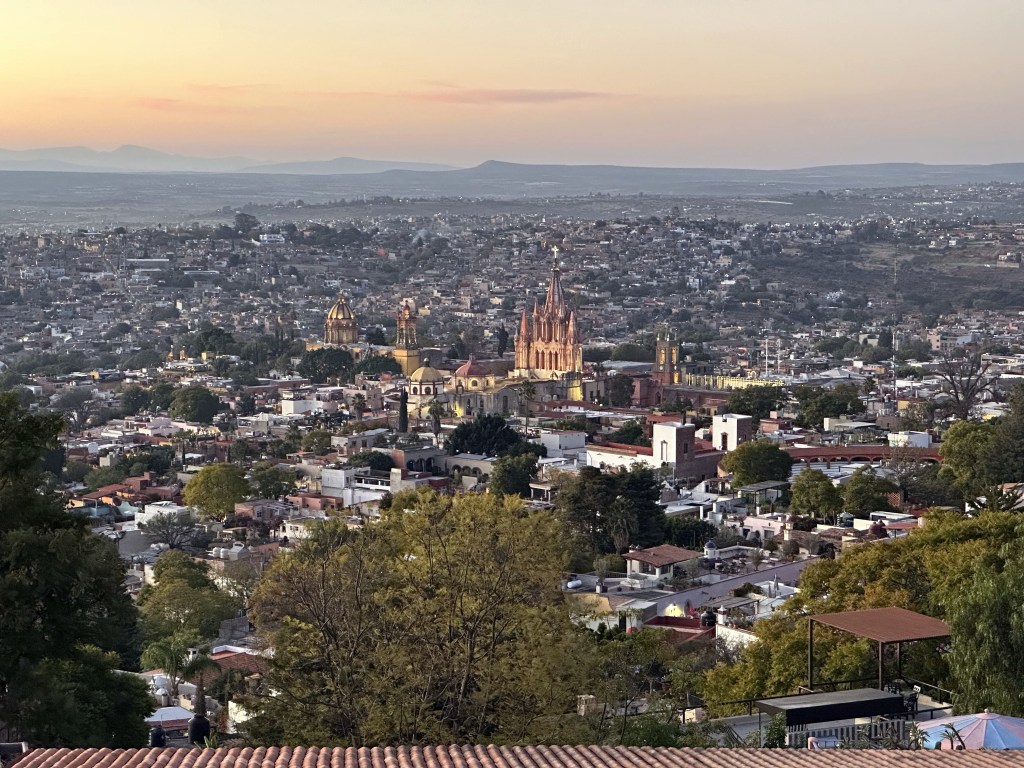
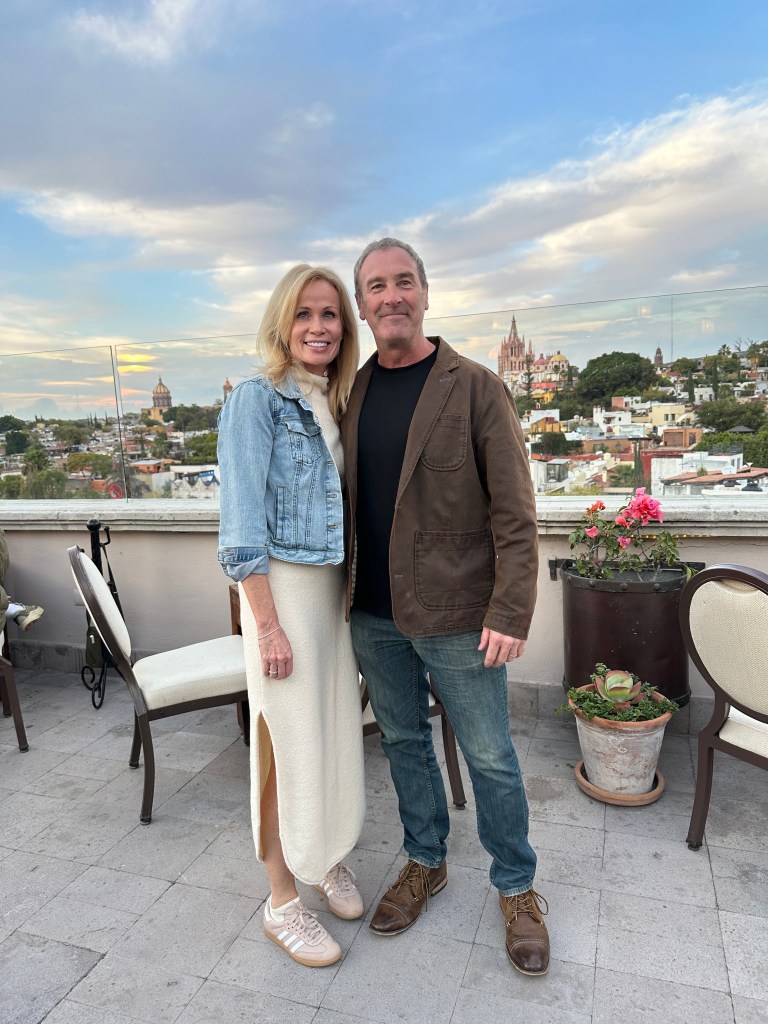
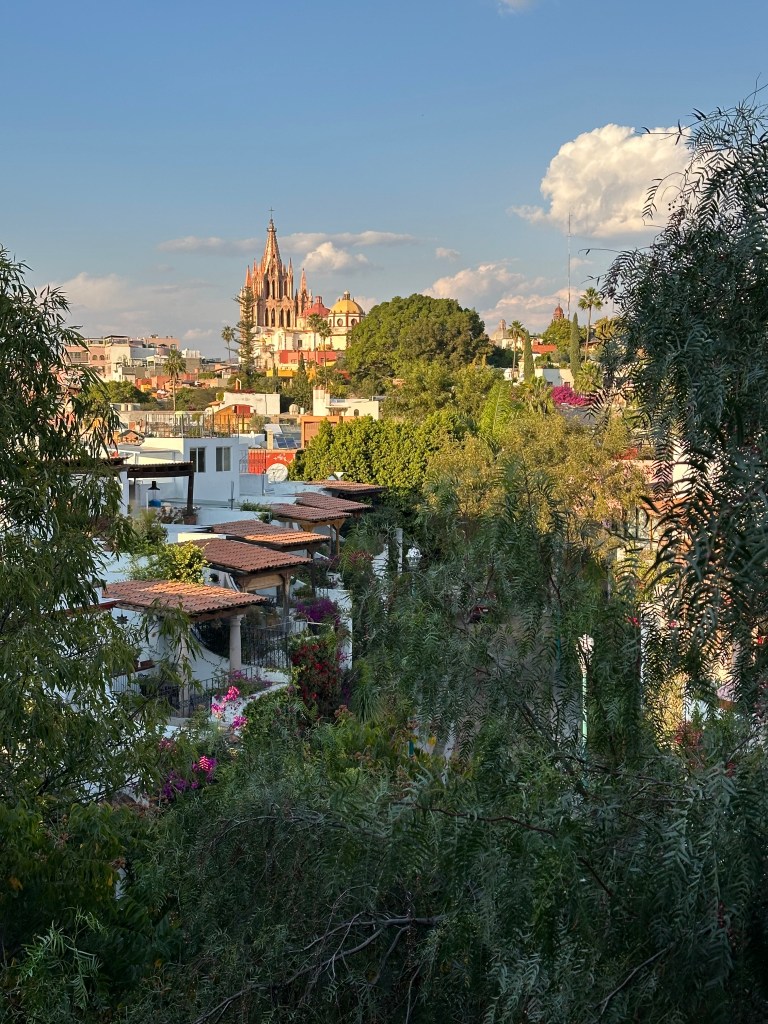
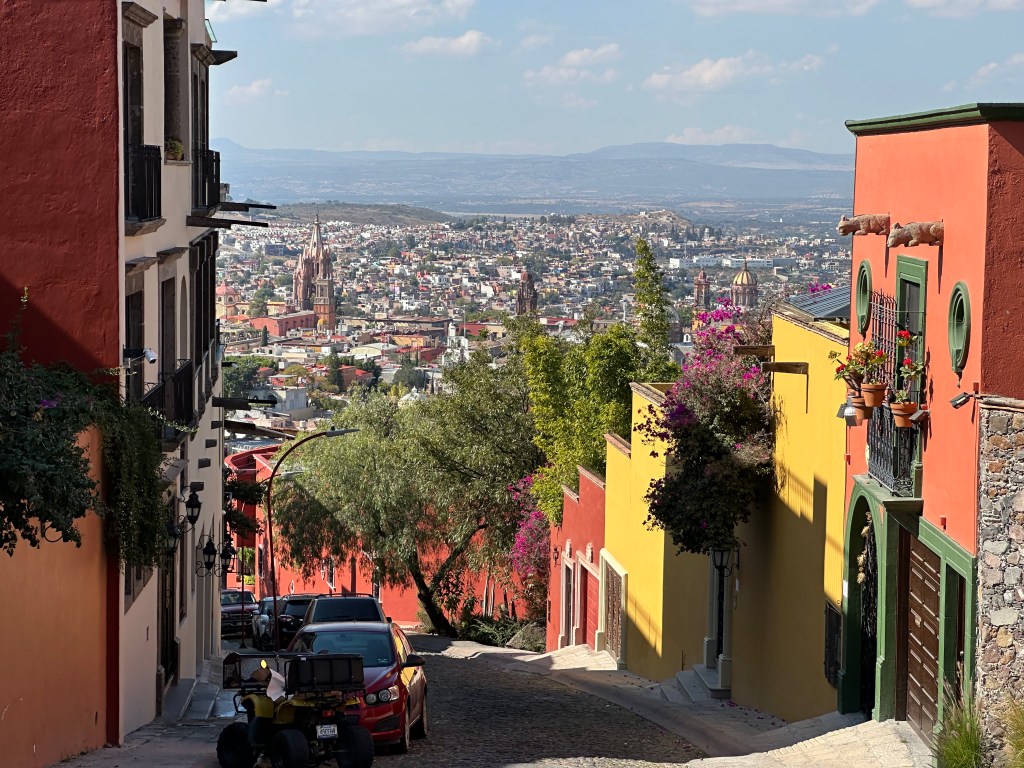
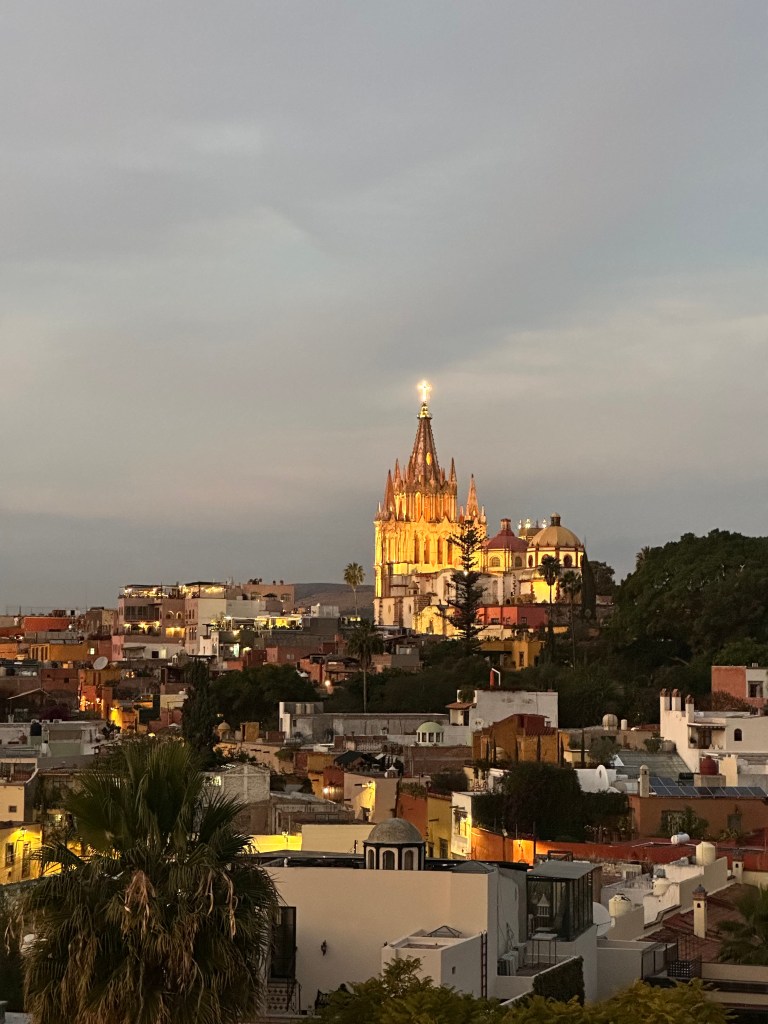
The choice turned out to be a wise one – really beautiful place, both from a distance during cocktail hour:
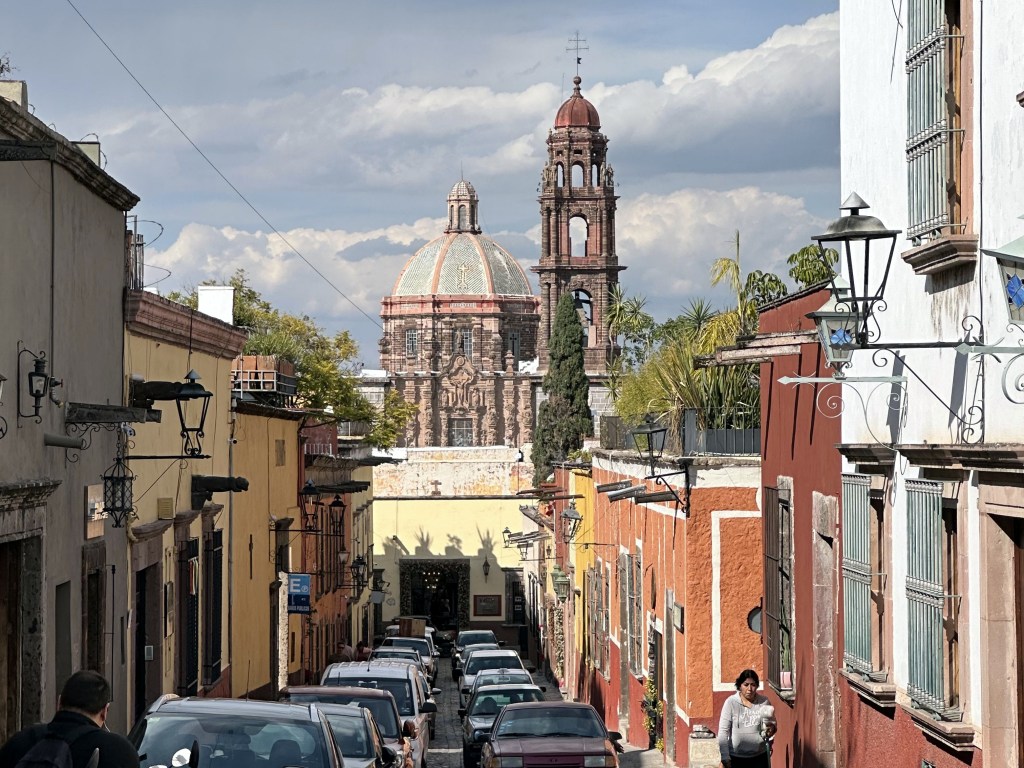
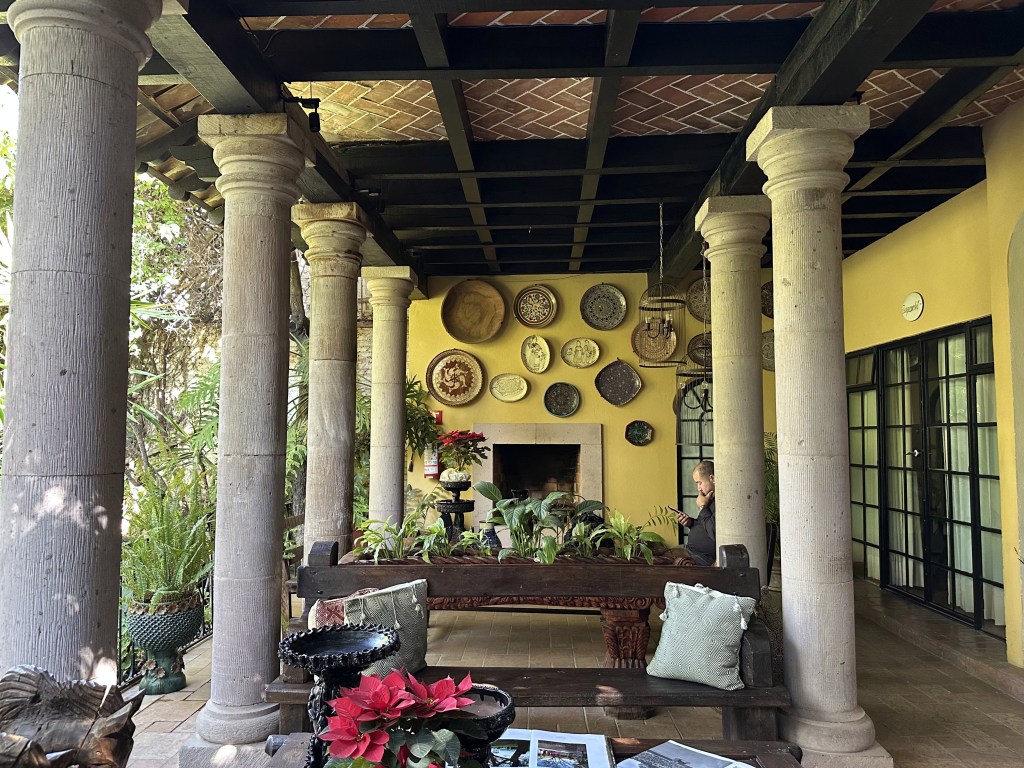
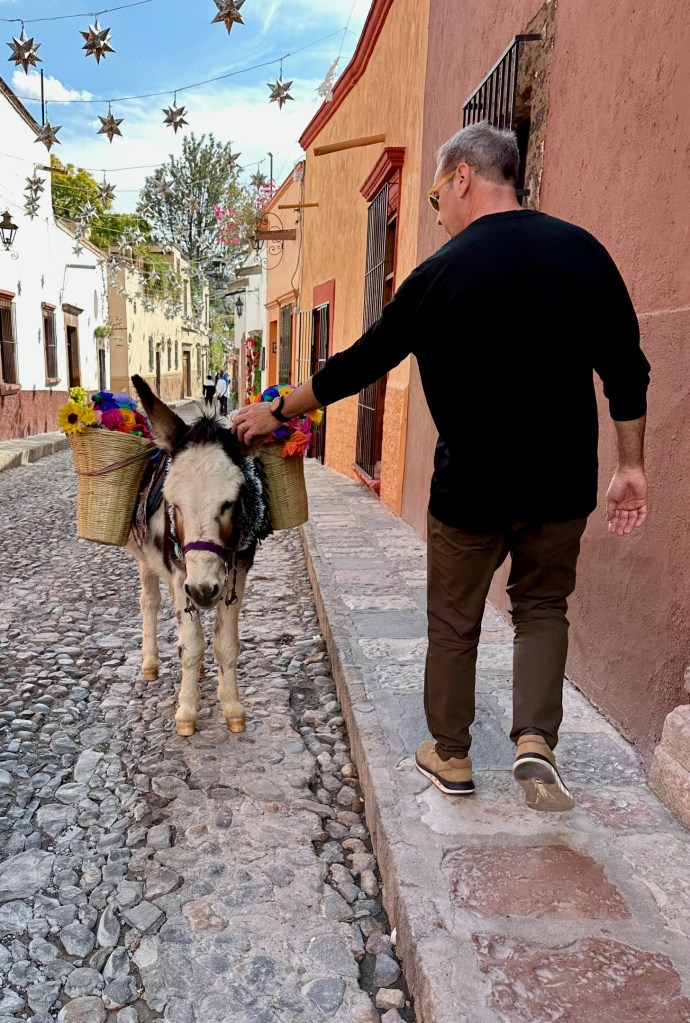
And up close and personal in town:
We took a walking tour our first morning there, and our guide stated that San Miguel now consists of 14% gringos, and that, although Americans began visiting the town in meaningful numbers after WW II due to a Spanish language school that was covered by the GI Bill, the big surge came much later. Due, according to our guide, to a proclamation a dozen years ago by Conde Nast Travel that San Miguel was the most beautiful town in the world.
Moneyed Americans (and Canadians) soon followed – first as visitors, then as residents.
UNESCO also designated the center of town as a World Heritage Site, which is a pretty meaningful statement about the place. As a result of these moneyed new residents and the UNESCO designation, San Miguel has been beautifully preserved. Or gentrified. It’s a fine line.
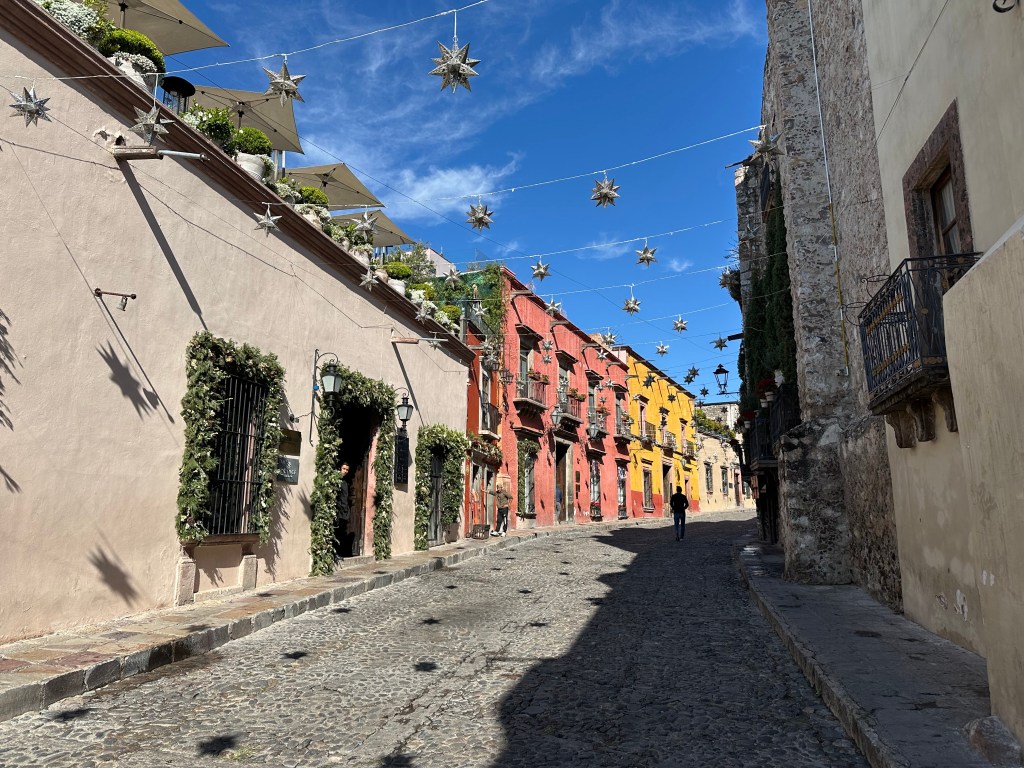
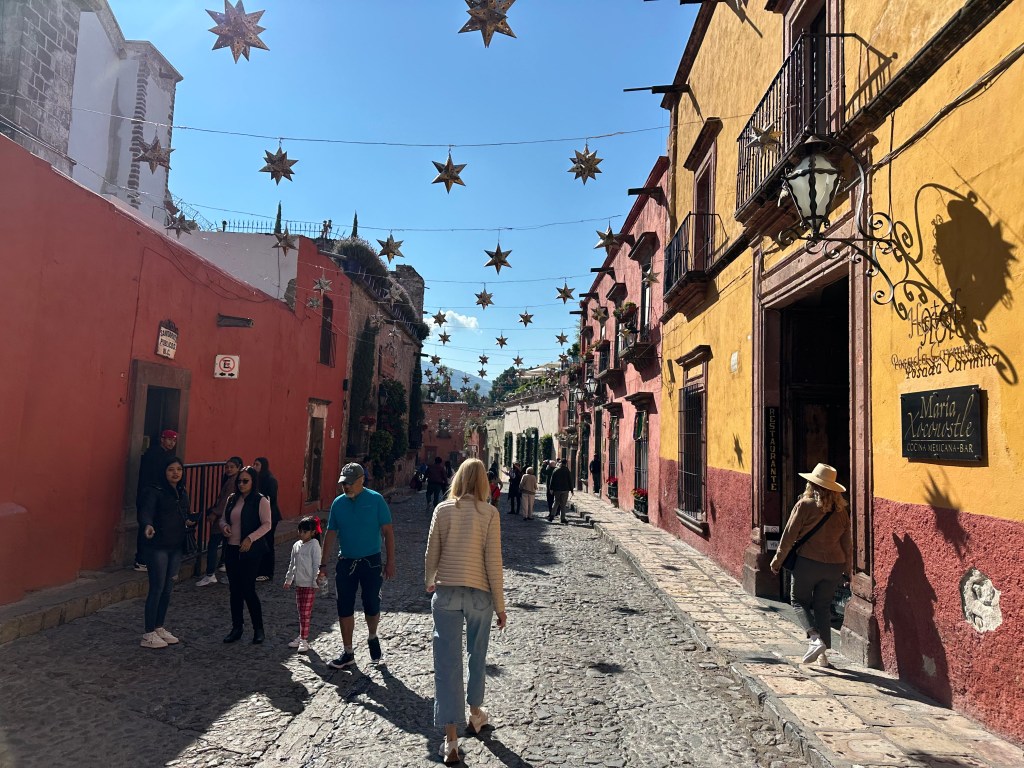
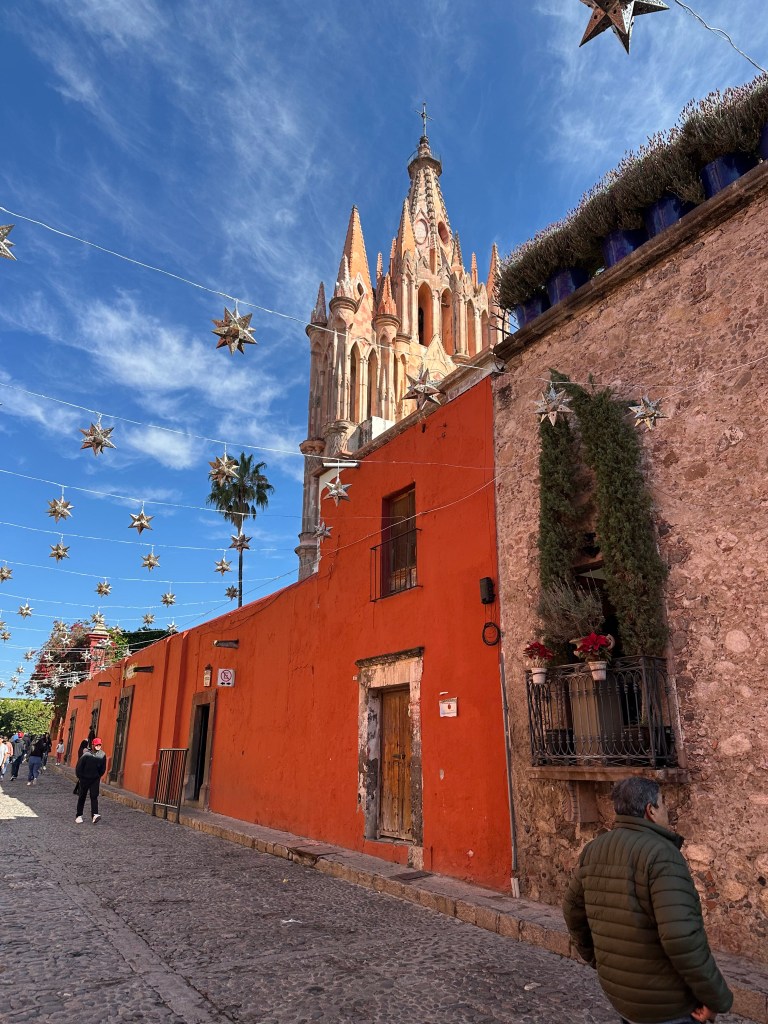
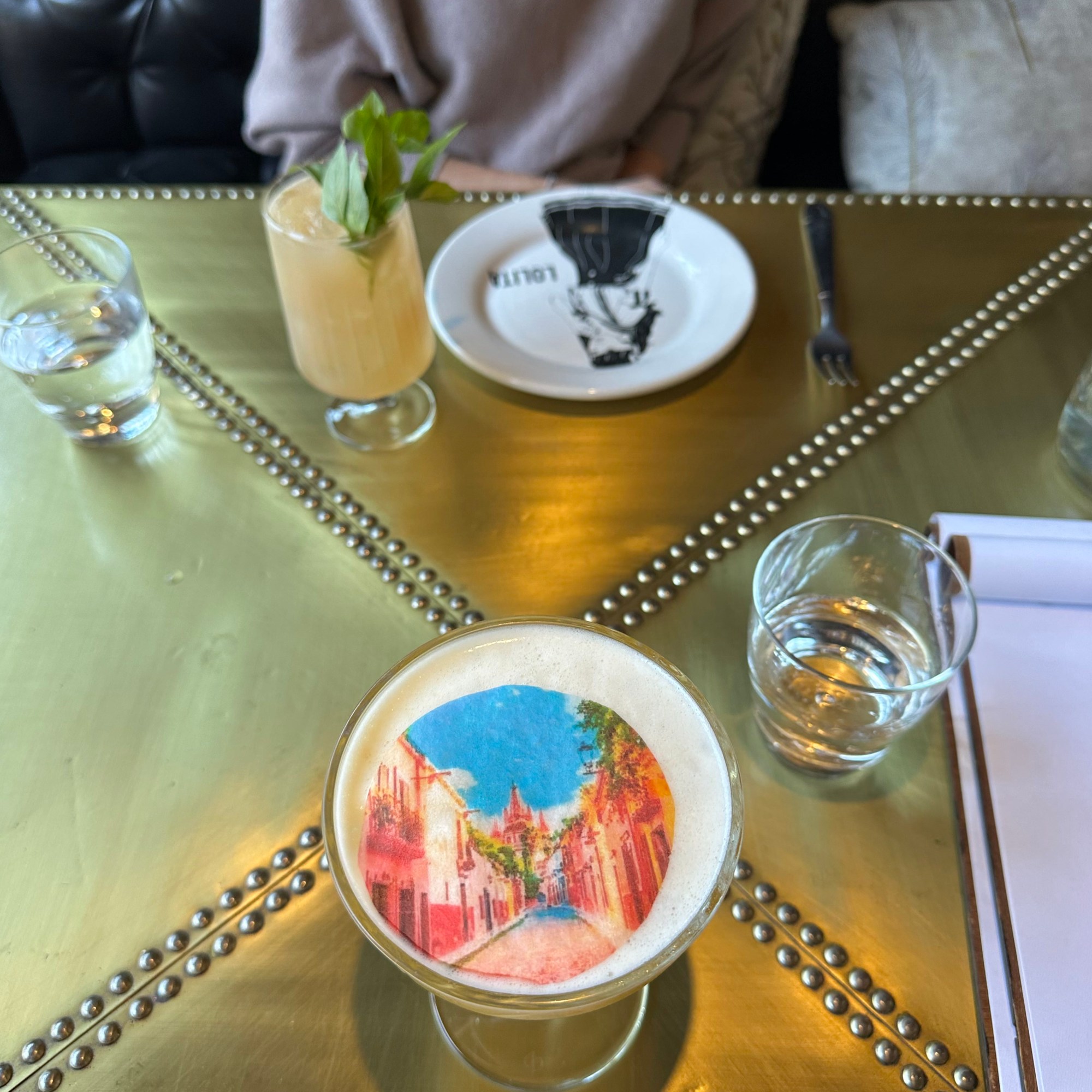
And in all of the town declared by Conde Nast to be the most beautiful in the world, the magazine declared this street to be the most beautiful in town (and in the world). While the specific rank is questionable to us, considering some of the places that we’ve visited, it was undeniably beautiful, and made more so by the Christmas decorations here and all around the center of town:
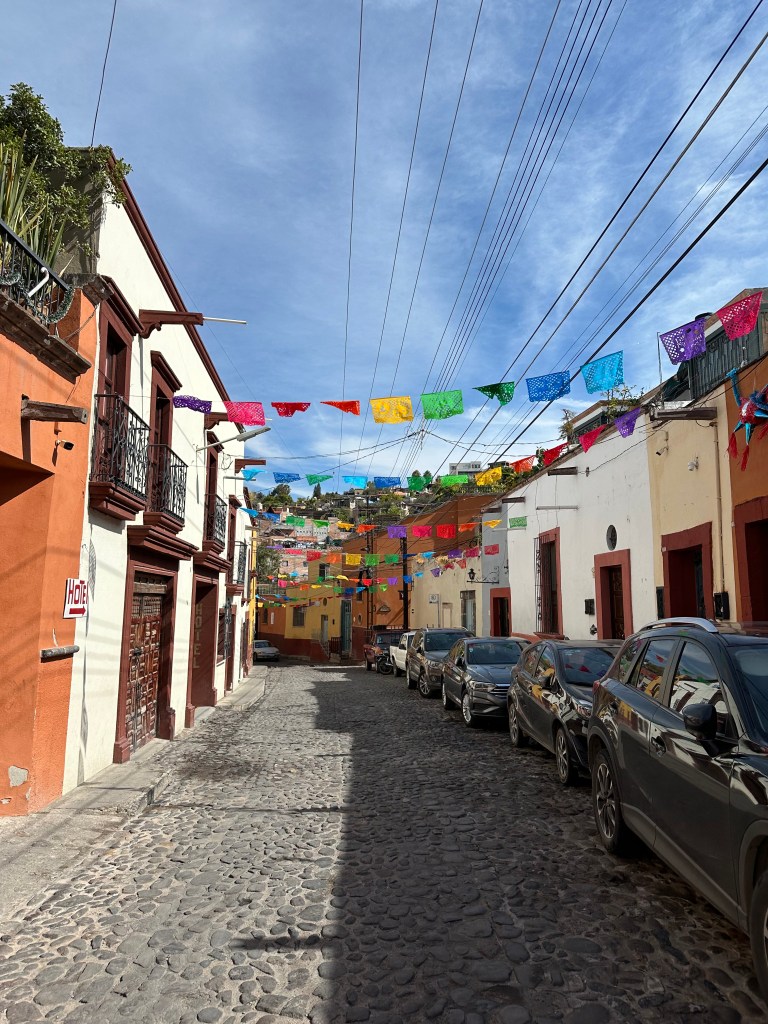
And cool street views weren’t limited to just that most famous lane:
Cool dia de los muertos mural by a local artist in a San Miguel bar:
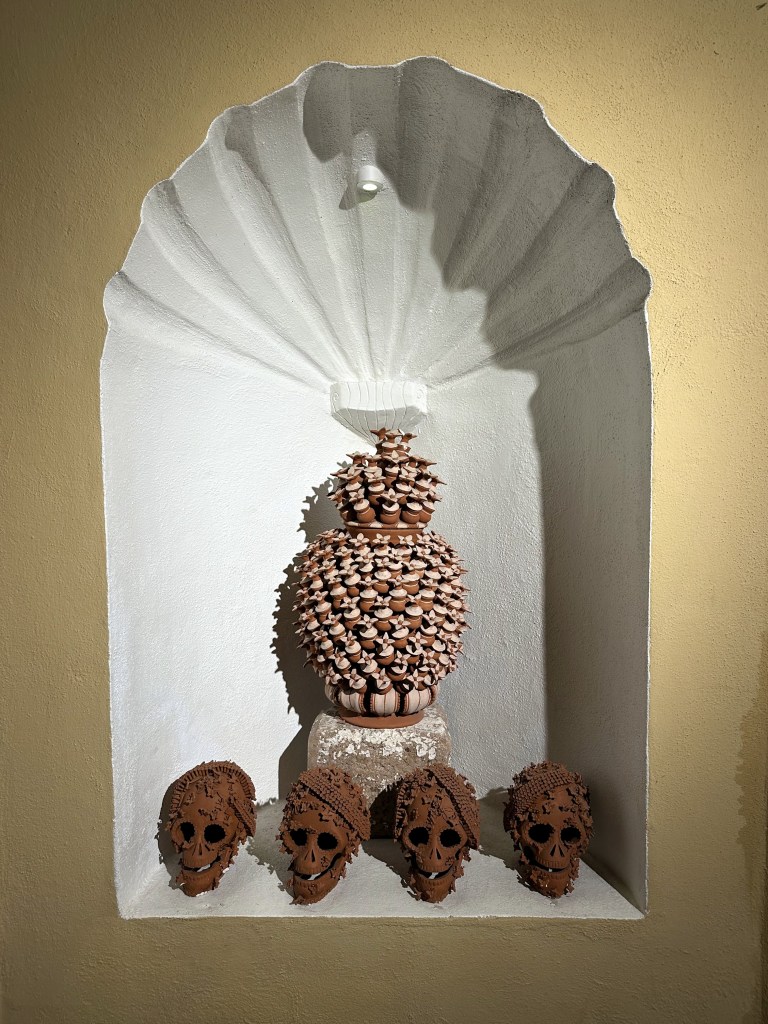
And the dia de los muertos accessories didn’t stop there.
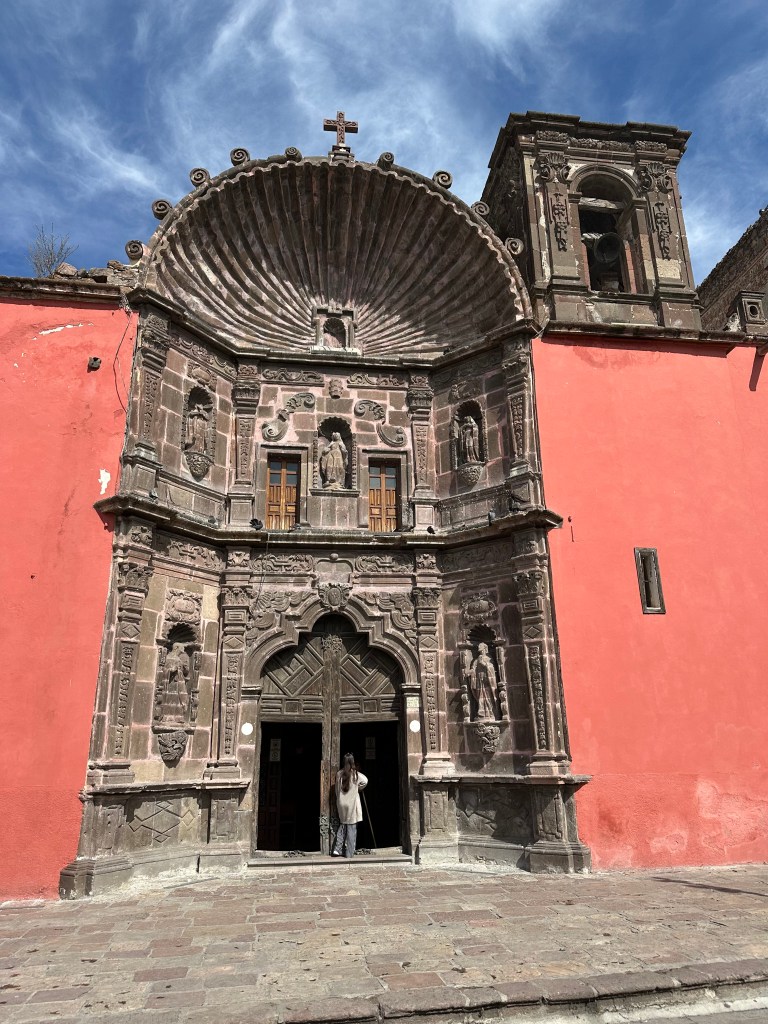
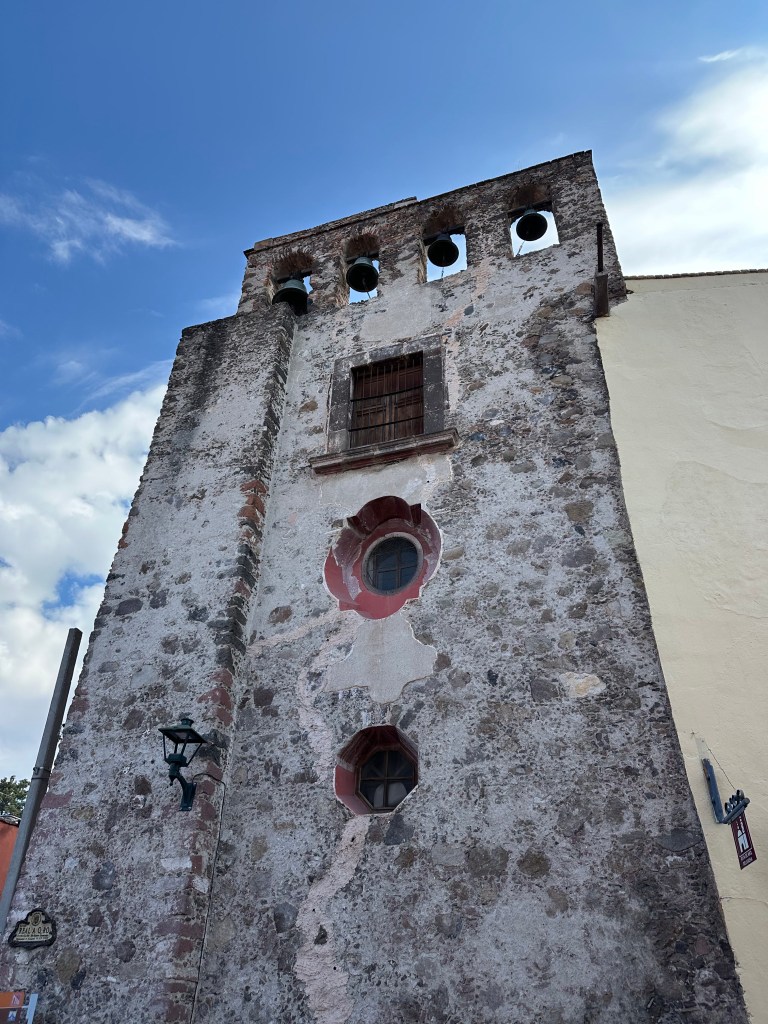
The rather picturesque Templo de Nuestra Señora de la Salud/Temple of Our Lady of Health:
First lunch in town at a fish taco place – pretty good!
San Miguel’s bull ring, which still hosts bull fighting events (none of which were held during our visit, though):
Great view from the rooftop bar at our place, with San Miguel’s landmark Parroquia de San Miguel Arcángel (Parish Church of St. Michael, Archangel) as a centerpiece of the vista:
Although the town is actually named after a 16th-century friar, Juan de San Miguel (and Ignacio Allende, who we’ll get to), the San Miguel reference we most commonly encountered during our visit was the town’s patron saint and parish church personality – St. Michael the Archangel.
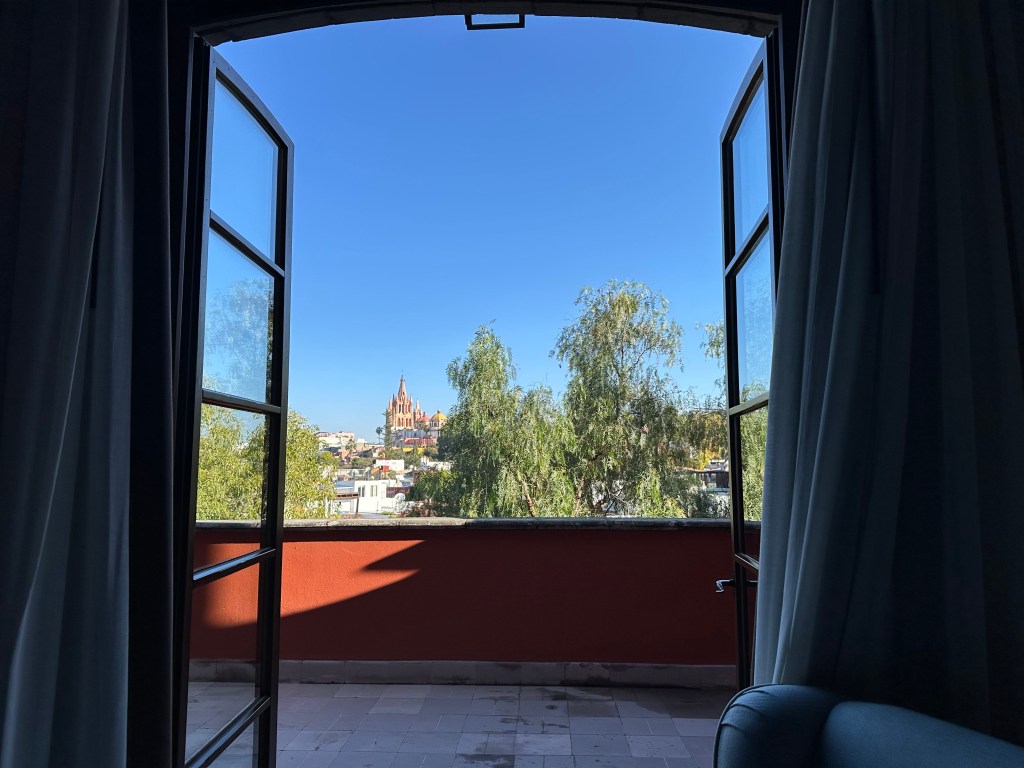
Pretty good view of the parish church from our room’s terrace, too!
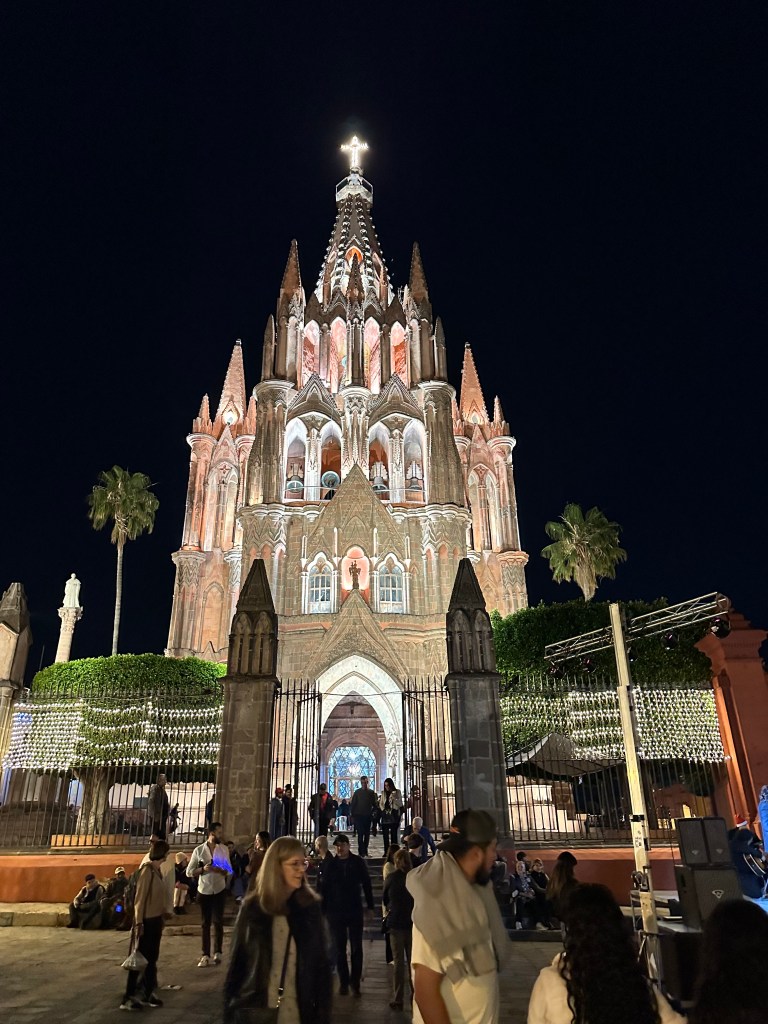
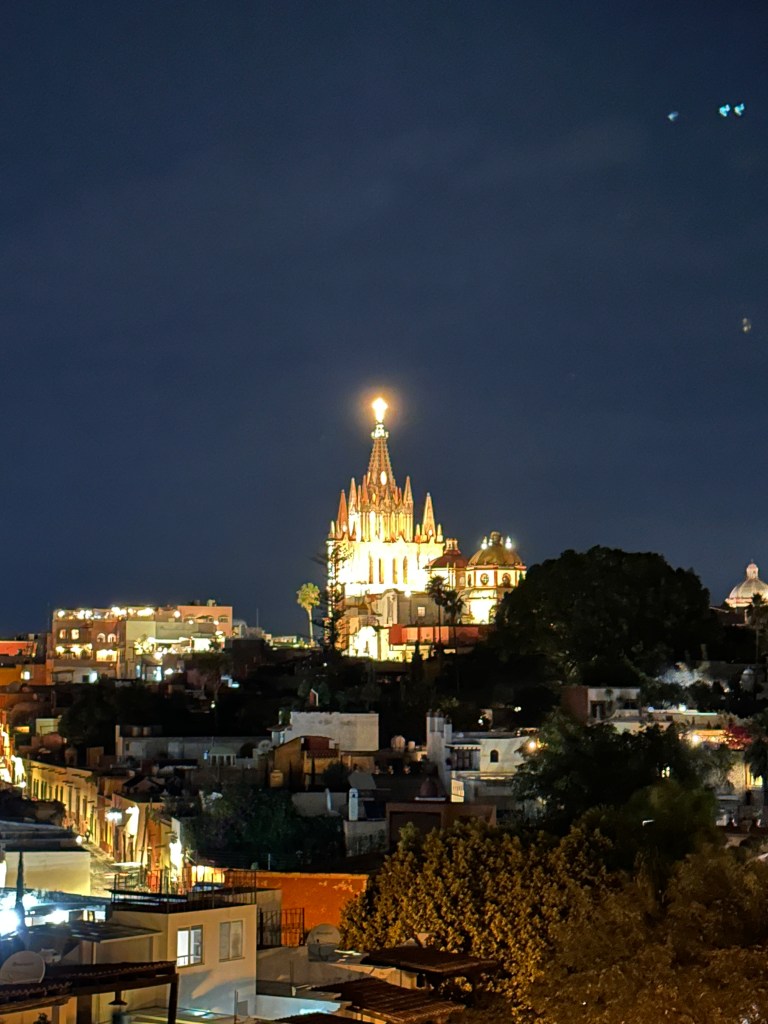
Parroquia de San Miguel Arcángel was, in fact, omnipresent during our visit. One simply could not escape its intrusion. Which was a good thing, from a town aesthetics point of view. . .
Both up close:
And from afar:
And during the day:
And at night:
(Not sure this functions in email version of post.)
Christmas Eve:
Christmas Eve dinner at Aperi:
And the tradition of the traveling Christmas stockings continues!
Christmas day in the Rosewood’s courtyard (not sure this functions in email version of post):
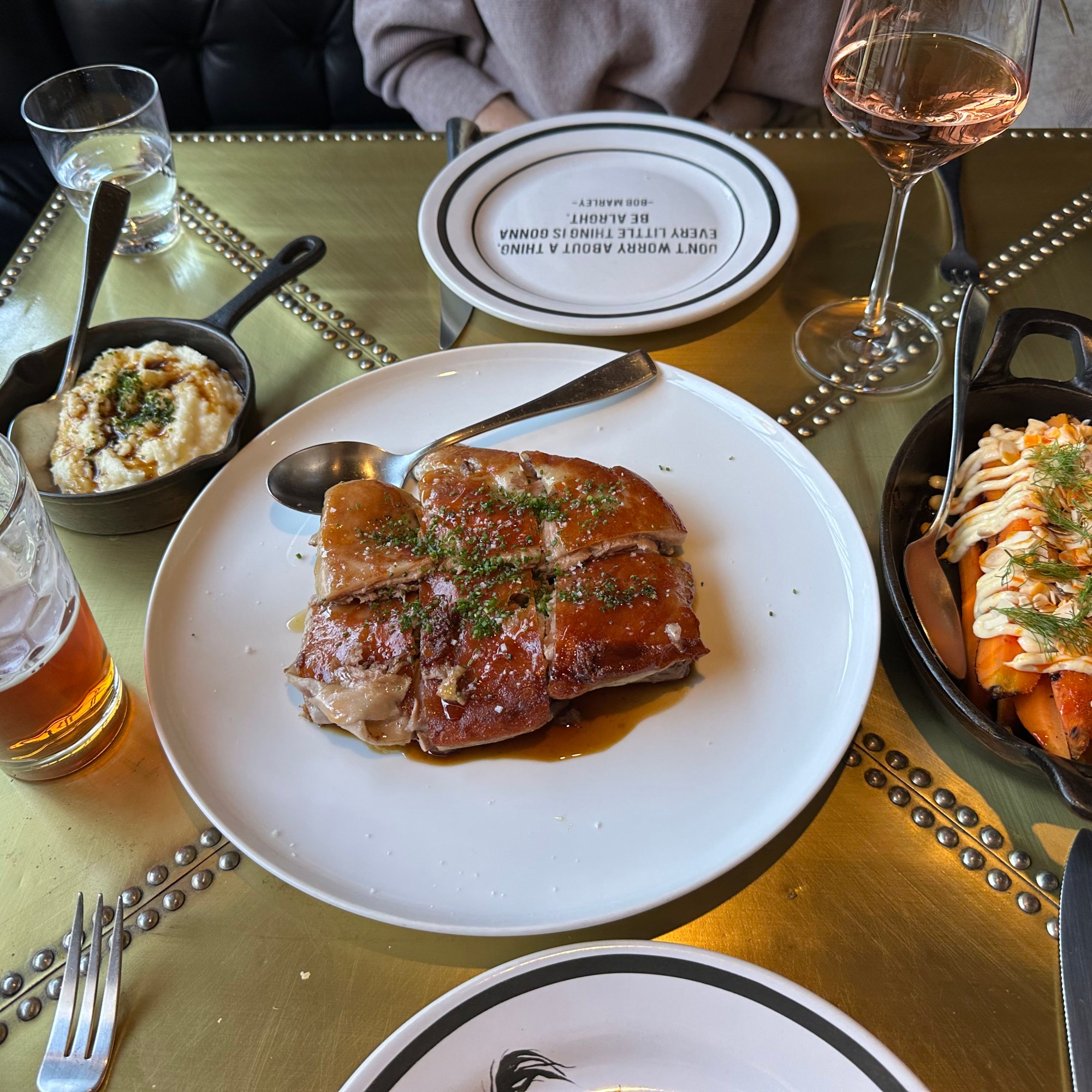
Christmas Day lunch at Bovine, featuring outstanding suckling pork.
Christmas dinner at Rosewood’s gastronomic restaurant 1826 absolutely sucked balls, and so does not merit any photographic documentation.
Instead, let’s turn to a field trip we took to the birthplace of the Mexican revolution: Guanajuato, about a 1.5-hour drive from San Miguel.
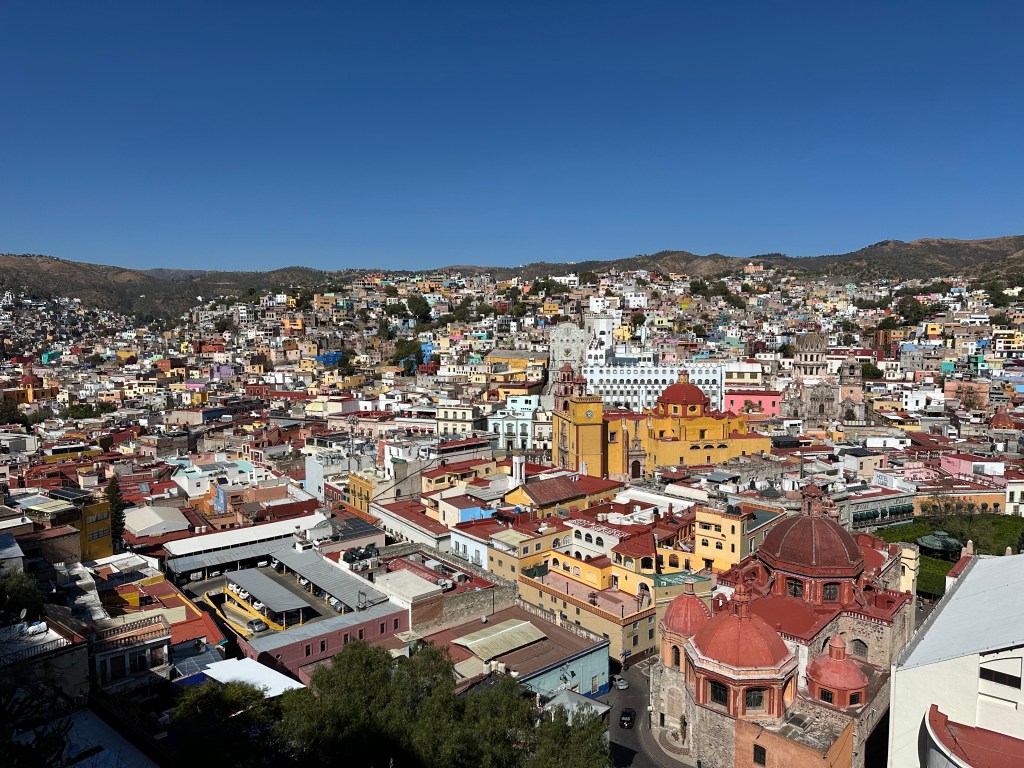
Unlike San Miguel, which permits residents to paint house in whatever color they wish – as long as it’s some shade of ocher or red – Guanajuato really does allow any color paint. As evidenced in the kaleidoscope of house colors seen from the belle view over town:
So, here’s Guanajuato’s role in the overthrow of Mexico of Spanish rule. During the Spanish colonial period, the region around and including Guanajuato was home to incredibly productive silver mines, yielding great wealth. But only to some – namely, the Spanish-born aristocracy. A stark wealth gap developed between these aristocrats and the indigenous and mestizo inhabitants working the mines and haciendas, and the areas slaves. Moreover, the native-born Spanish also were denied wealth and agency, and so, in the late 18th century, multiple rebellions broke out. All of them brutally suppressed and unsuccessful.
In 1809, however, a group led by Ignacio Allende, Miguel Hidalgo y Costilla, Juan Aldama, Miguel Domínguez planned an armed revolt against the colonial government. (The last part of San Miguel de Allende takes its moniker from the first guy, bringing closure to our San Miguel discussion earlier in the post).
In September 1810, the rebel forces arrived in Guanajuato and besieged Spanish loyalist forces holed up in the city’s heavily fortified grain exchange, below:
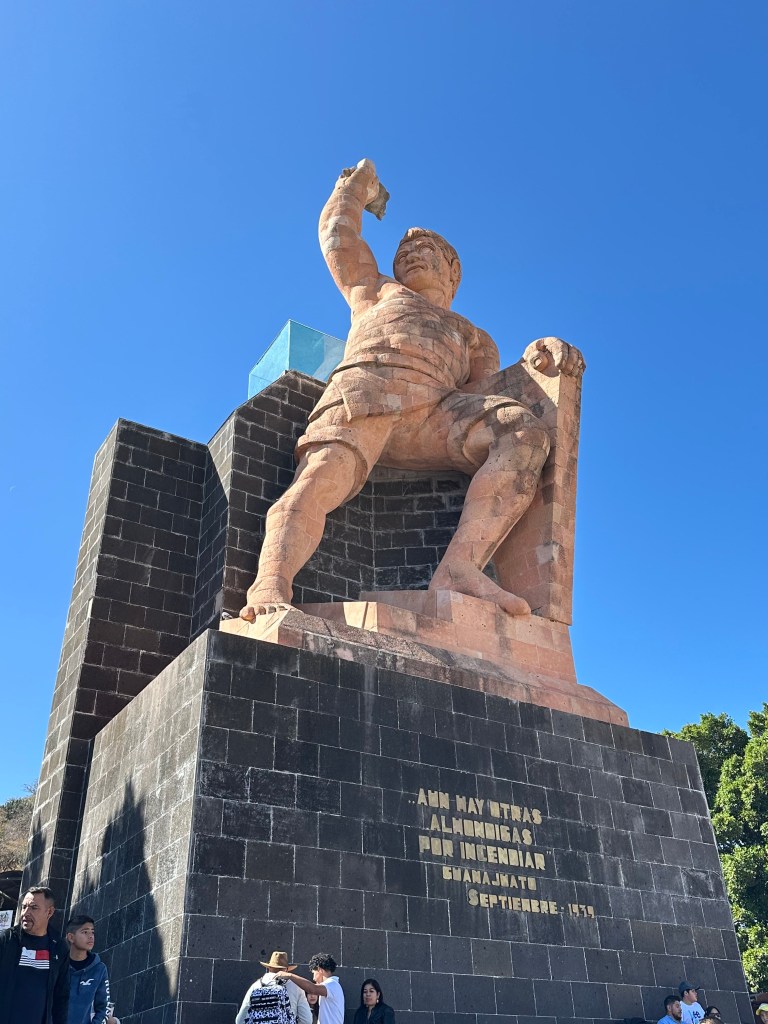
The rebels besieged the grain exchange, but there were only four doors and rifles on the roof. So this dude, Juan José Martínez – a silver miner – strapped a slap of stone on his back and charged one of the doors, setting it alight and gaining entry. All of the loyalists were killed.
But the Spanish forces caught up with the leaders. “The four main participants – Hidalgo, Ignacio Allende, Juan Aldama, and José Mariano Jiménez – were shot by Spanish firing squads, and their bodies decapitated. The four heads were hung from the corners of the Grain Exchange, to discourage other independence movements. The heads remained hanging for ten years, until Mexico achieved its independence. They were then taken to Mexico City and eventually put to rest under el Ángel de la Independencia in 1910.” (From here.)
On to more contemporary activities; namely, our second funicular of the year!
Pretty cool town.
Guanajuato Basilica, now that we’re down in the city:
The town’s opera house, Teatro Juárez:
And the Jesuit University of Guanajuato, which looks way more like a church, frankly.
Albeit with visually appealing green limestone facade elements – this limestone is unique to Guanajuato.
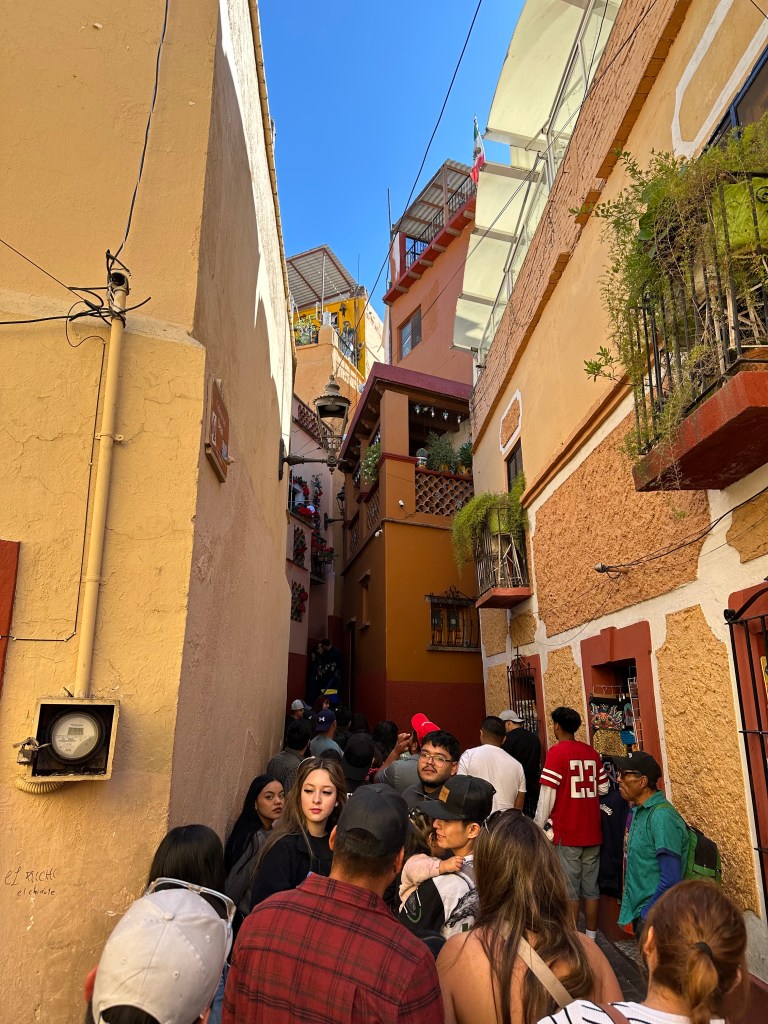
The tourist-trap Alley of the Kiss; with two balconies close enough to do so, the location spawned a local Romeo and Juliette-style legend.
Pretty cool main cultural area, with topiary-style park trees, a la San Miguel.
Juan José Martínez from down below:
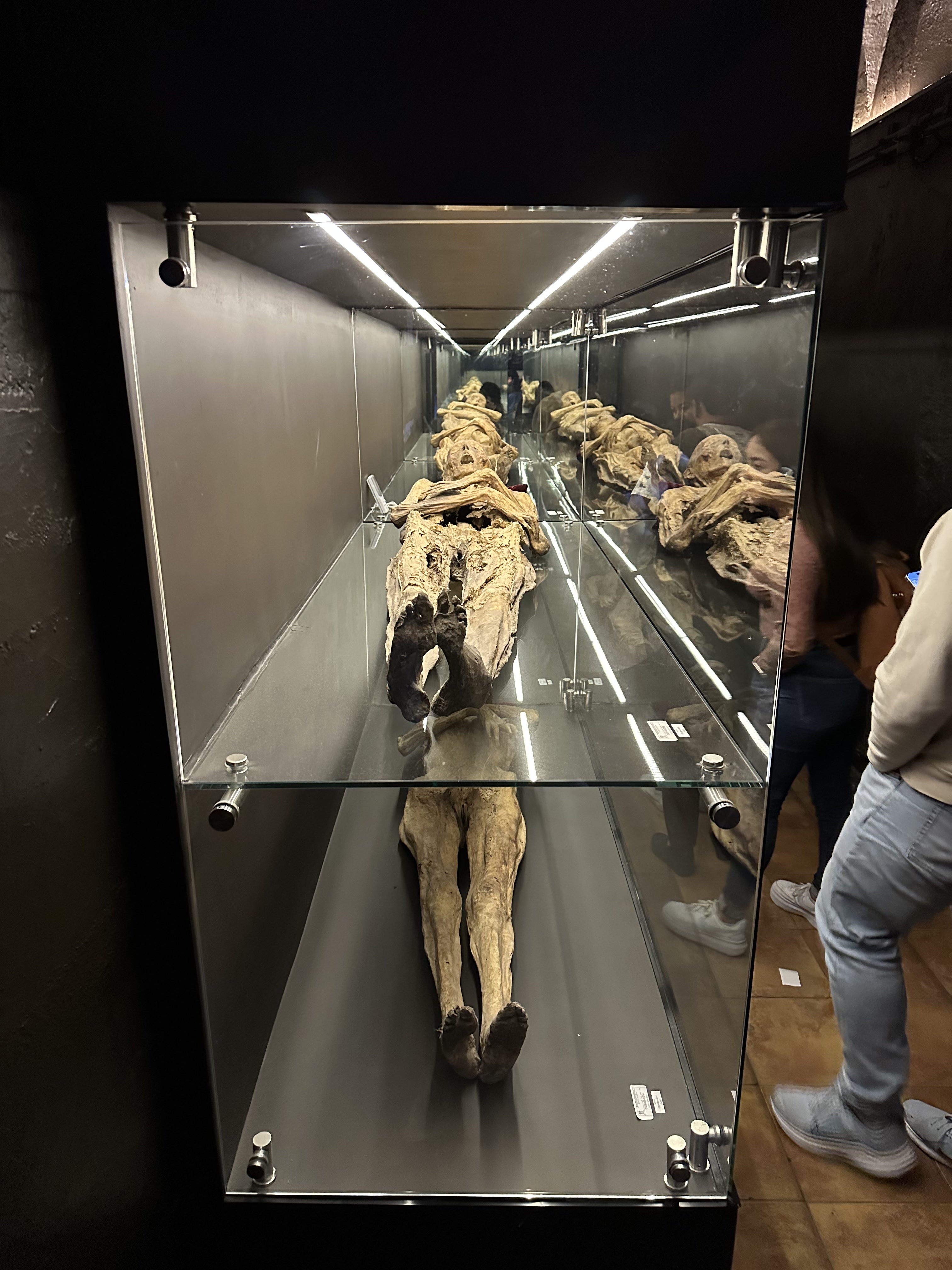
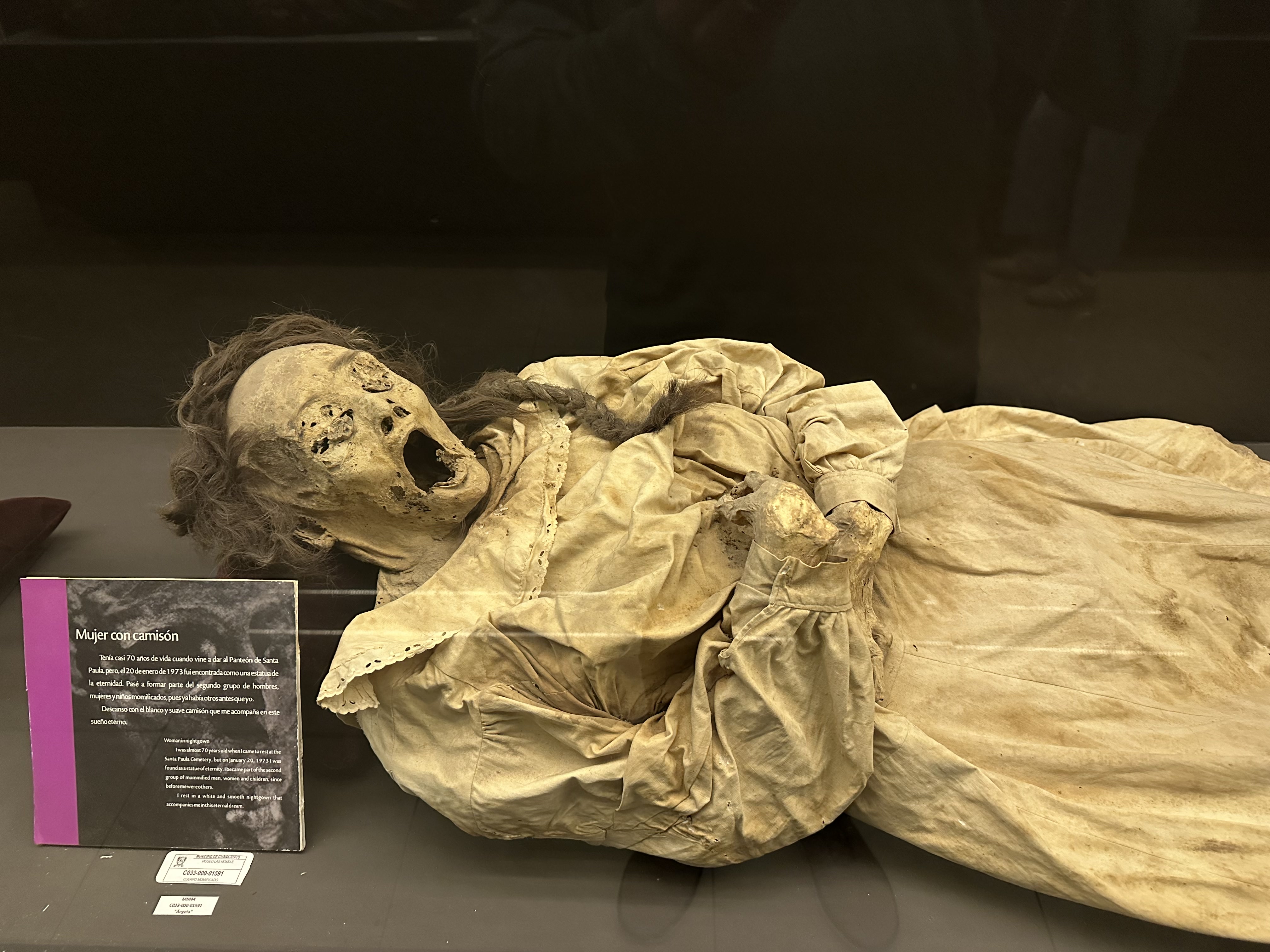
And one more stop before our return – a bunch of mummies. There’s a story regarding the high cost of burial, a poor population, abandoned corpses, and naturally dry climate that accounts for all of this, but that’s for a later post. For now, just be a little grossed out. (As much, or perhaps more so, than by their counterparts in Sicily last year.)
Another great night in San Miguel (which we did prefer greatly over Guanajuato, for what it’s worth).
A normal creche in the city’s main park during the day:
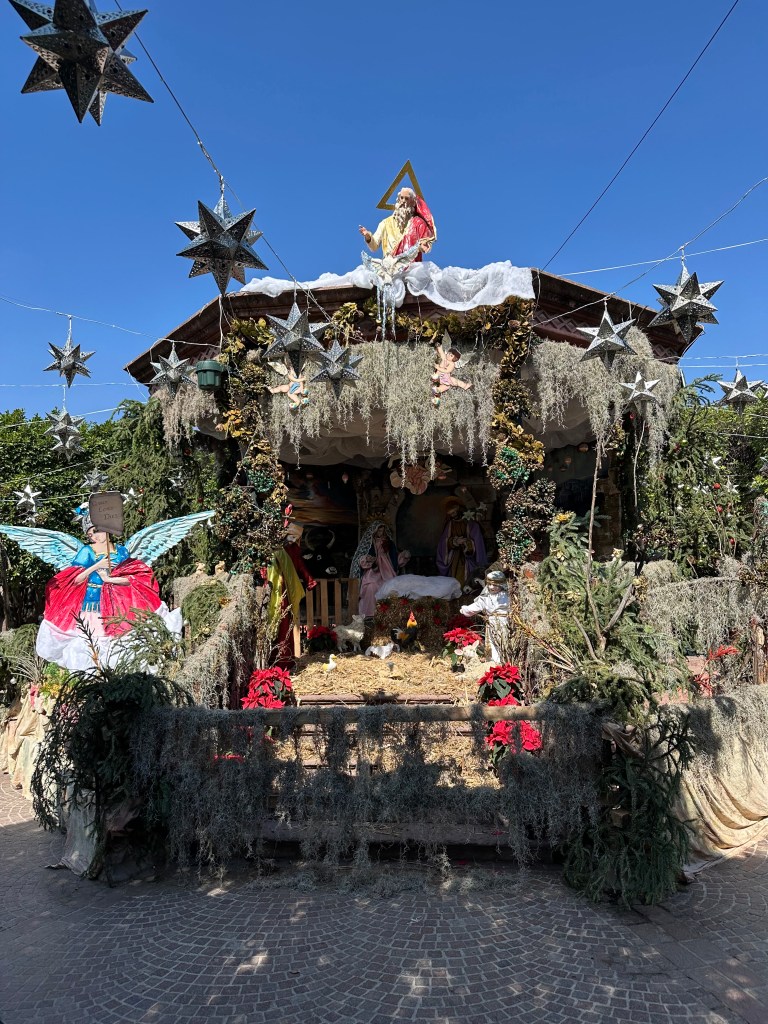
And a rather more contemporary version encountered in town that night:
Pretty happening square!
The most prominent Spanish aristocratic families in San Miguel, btw, supported the rebellion against the Spanish crown in 1810. As a result, they retained their haciendas and their palaces in town. To this day, some of the most valuable properties in town are still owned by less than a dozen noble Spanish families. This includes several, huge private churches around town that are open to the public only on specific feast days. And even then only for, like, a 7:30 AM mass, then they’re back outta there and doors are closed.
Dinner with a view that night at Quince:
And some unexpected entertainment (not sure this functions in email version of post):
And then a ringside table to the main event, of which we were completely unaware prior to sitting down here:
(Not sure this functions in email version of post.)
(Not sure this functions in email version of post.)
A walk one morning straight up hill to the Mirador neighborhood occupying the heights over San Miguel.
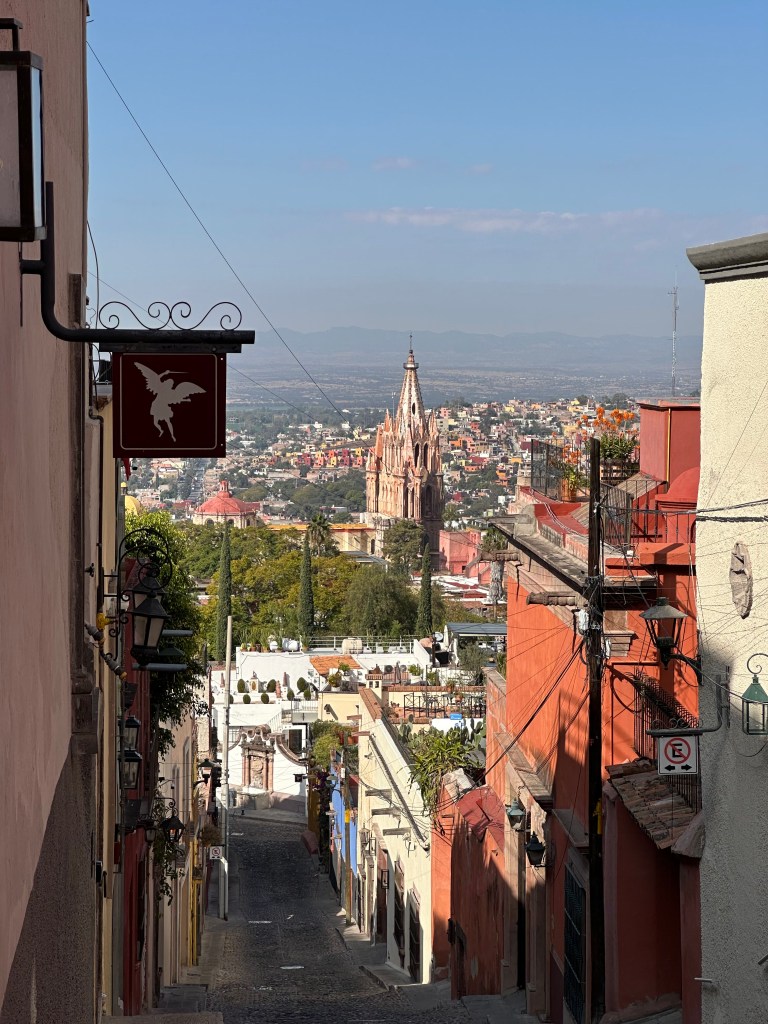
Great views all along the way of downtown San Miguel:
Pretty good combo: a sign with the archangel and the dude’s church right below:
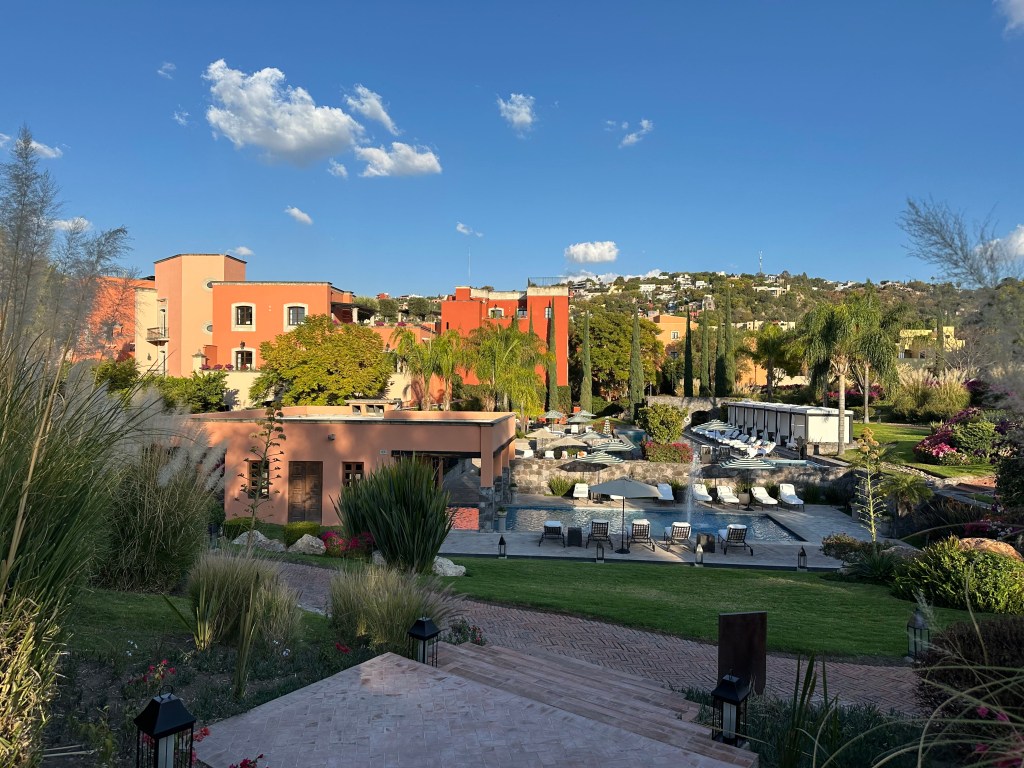
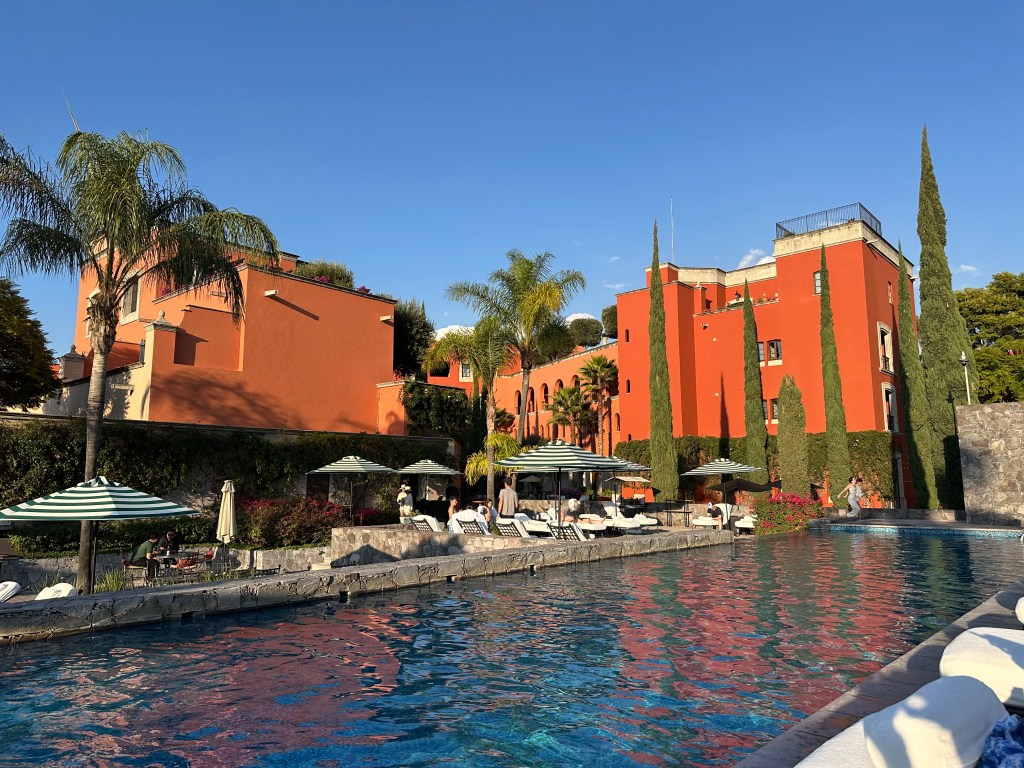
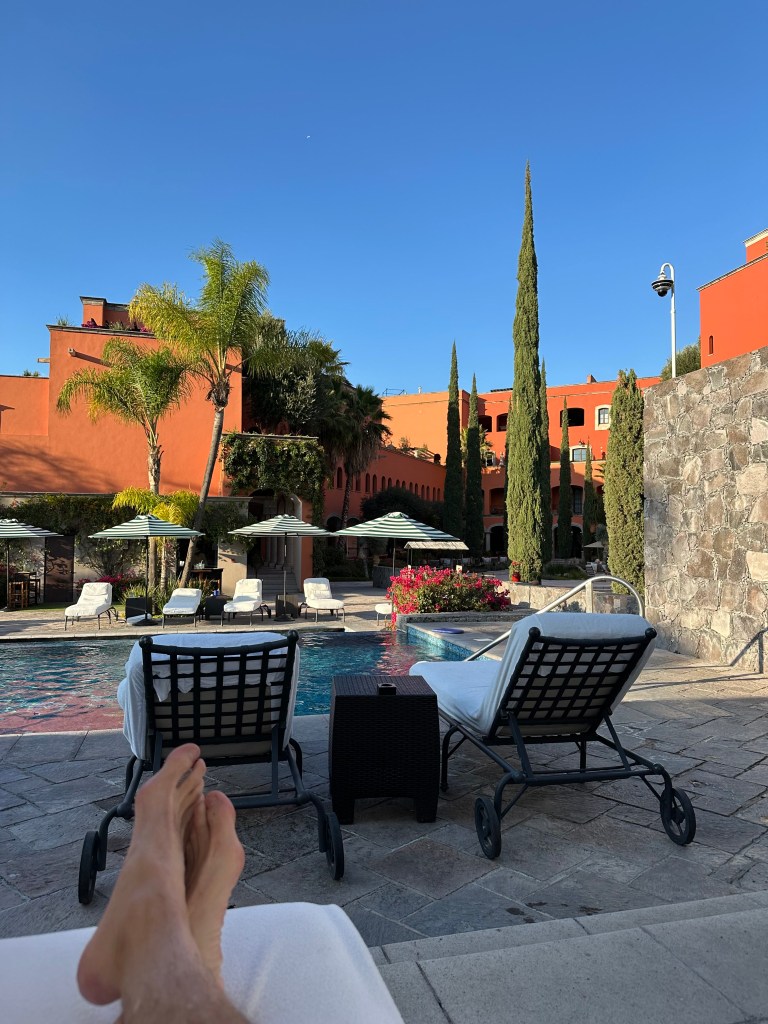
Some downtime at Rosewood:
Final dinner of the trip:
Adios, San Miguel.
And adios to our 2024 travels!
Pretty good year:
February: Colombia
April: Uruguay, Argentina, Chile, Brazil, Peru
May: Texas
June: Georgia
July – September: Pennsylvania, Connecticut, Massachusetts, New Hampshire, Maine, Vermont, New York, Quebec, New Brunswick, Prince Edward Island, Nova Scotia, Rhode Island
After intentionally foregoing Europe at Christmas for the last 4 years, a few factors drove us back this year: nostalgia for winter weather in the season, a truly authentic Christmas experience, and the paucity of other options with availability and reasonable travel costs. One day we’ll get to Namibia or Peru for Christmas, but not this year.
We initially targeted all three of the Baltic states for this year’s trip: Estonia, Latvia, and Lithuania:
Northern Europe to meet the winter climate criteria
Great Christmas tradition (Tallinn holds the distinction of hosting the Europe’s first public Christmas tree in 1441)
Have not visited any of them before (they would put WolfeStreetTravel’s country count over 70)
However, WolfeStreetTravel flight criteria and the need to keep the trip limited in length due to work resulted in the following refinements:
Lop Lithuania off the itinerary (maybe we’ll get back there when we can also visit adjoining Belarus; we certainly can’t go there now, with Putin stooge and corrupt autocrat Lukashenko in charge)
Bookend our stay in the Baltic states with some time in another country with direct flight in and out of Europe
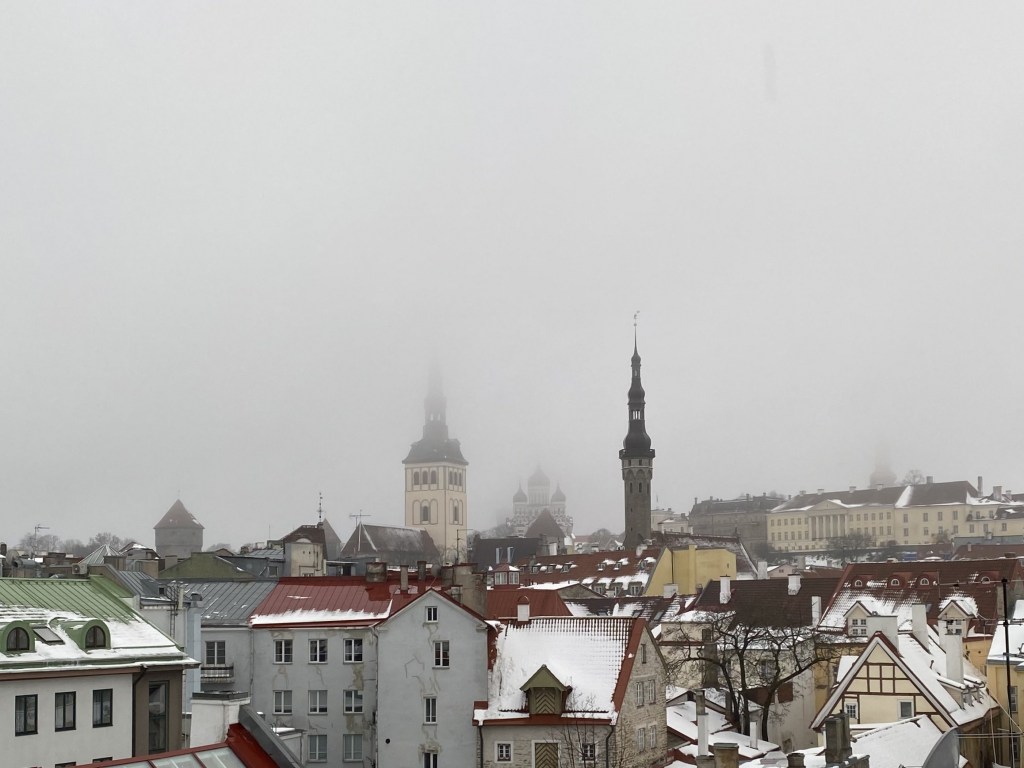
The UNESCO World Heritage site of Old Town Tallinn, Estonia, from atop the castle hill of Toompea:
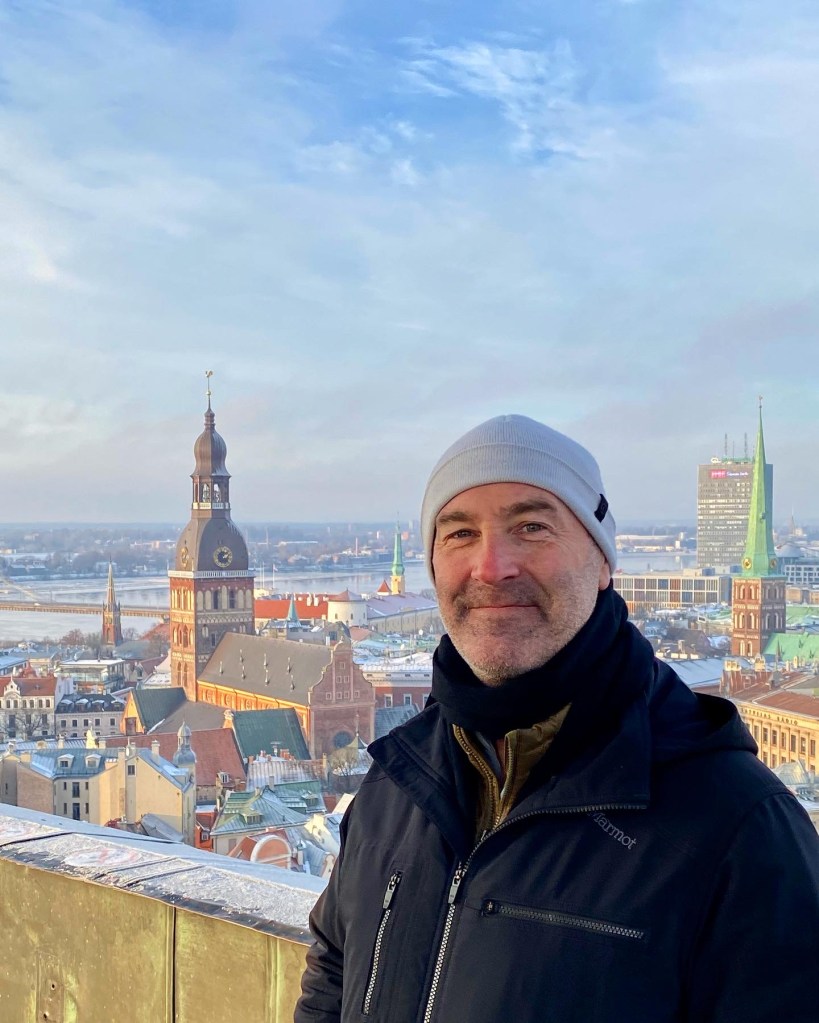
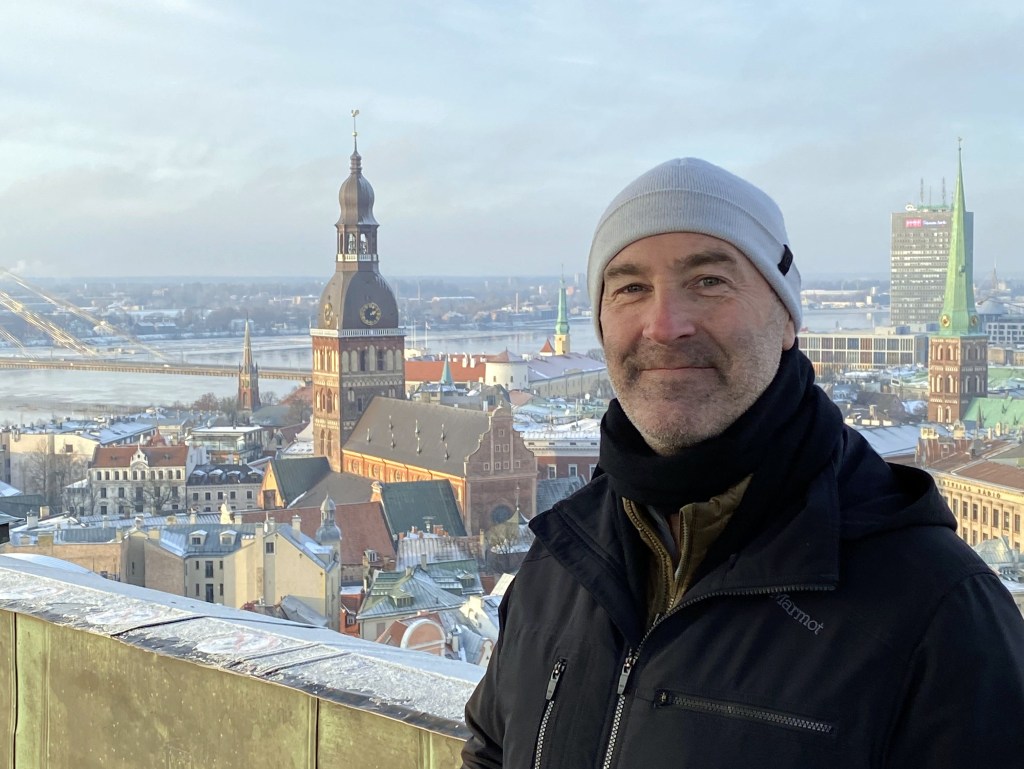
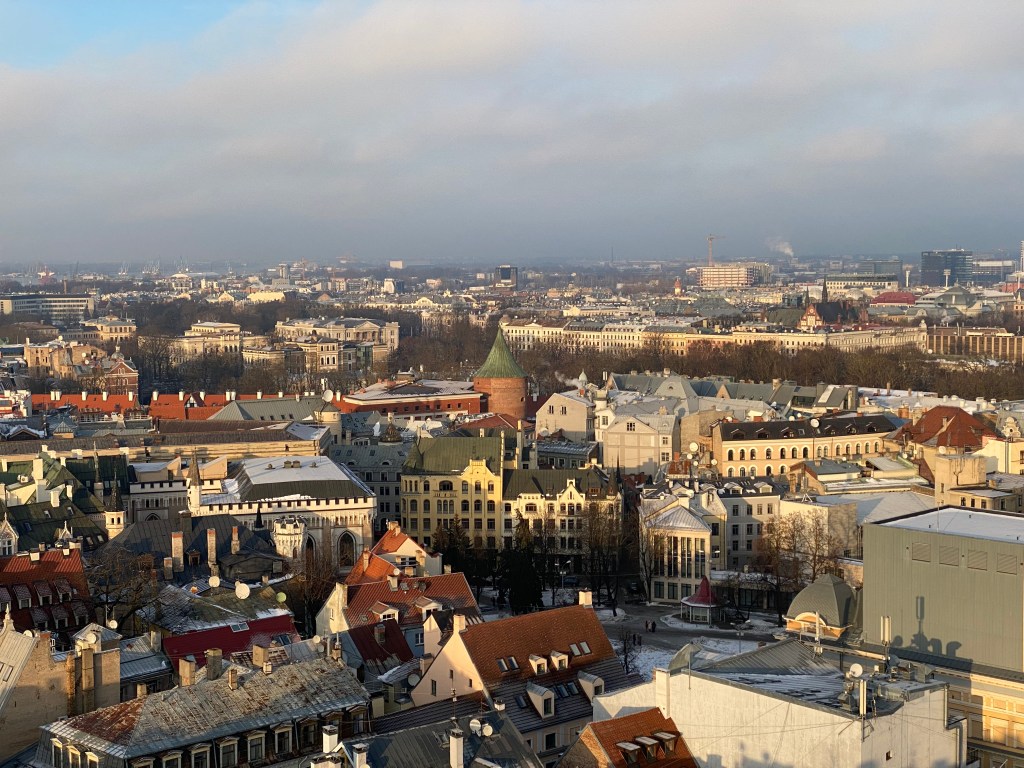
Riga, Latvia, from the spire of St. Peter’s Lutheran Cathedral in the center of town:
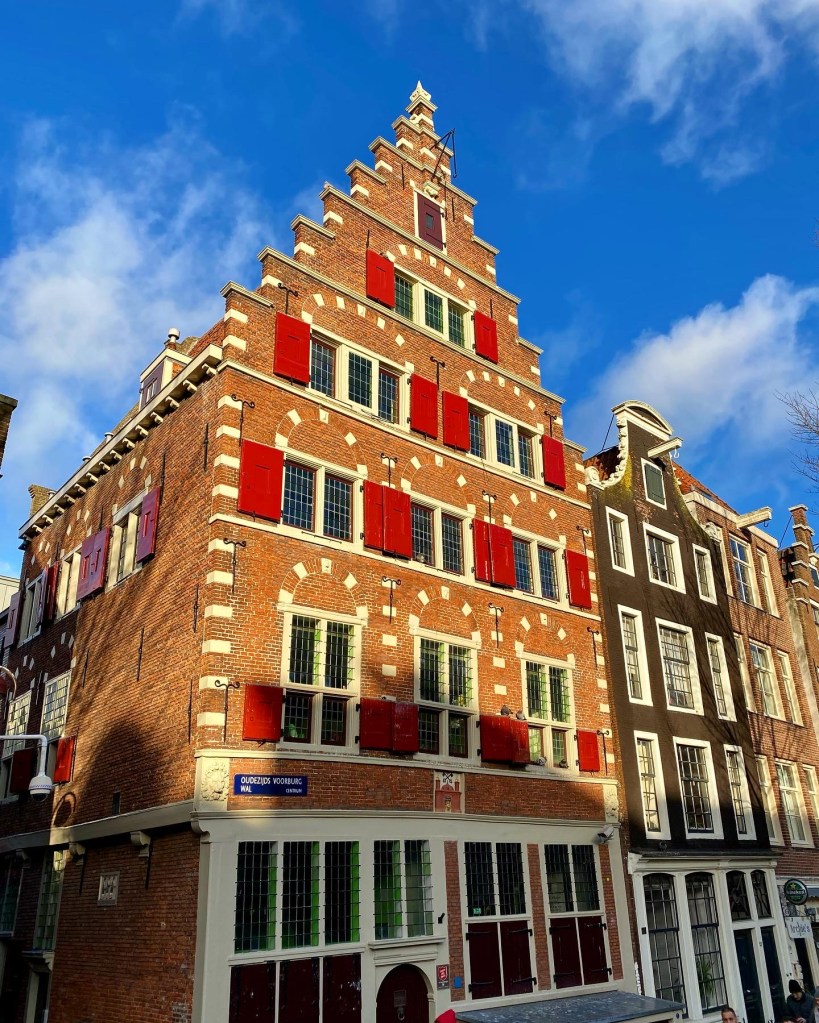
Regarding the direct flight bookend, we found a perfect candidate in Amsterdam’s Schiphol airport. United offered direct flights there from IAD, and BalticAir offered direct flights to Estonia and Latvia from Schiphol. Plus, we’d add a few days in Haarlem on the front end and a few days in Amsterdam on the back end to break up the flying time.
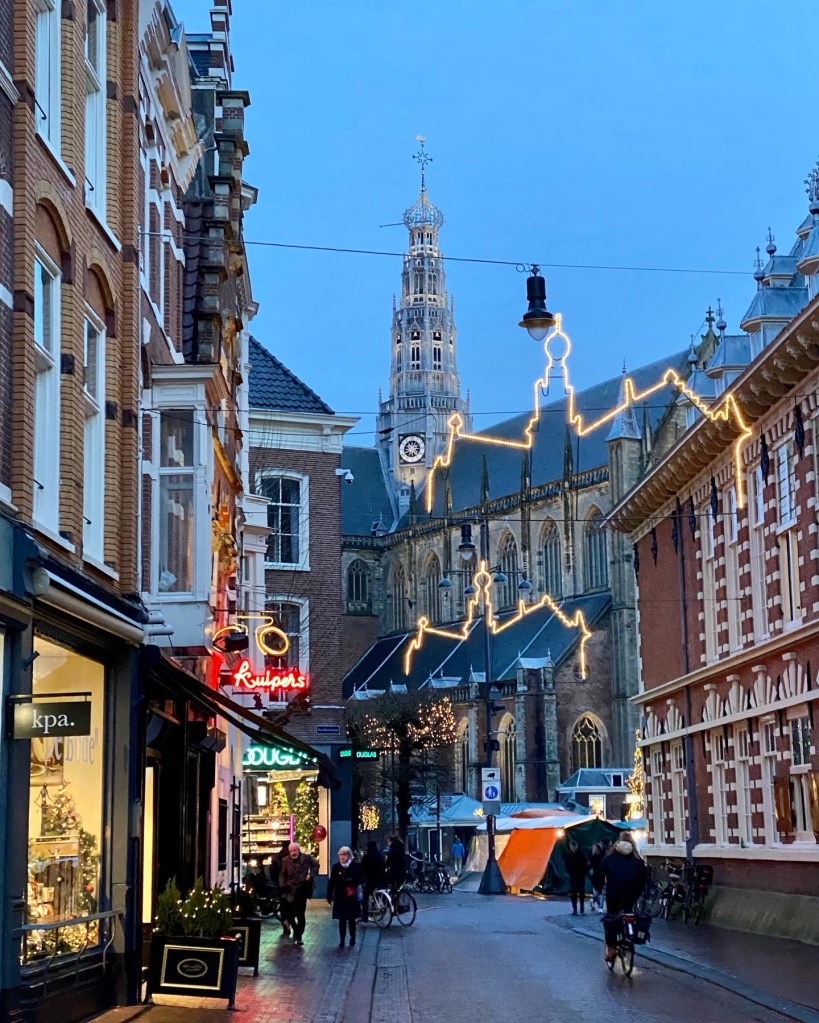
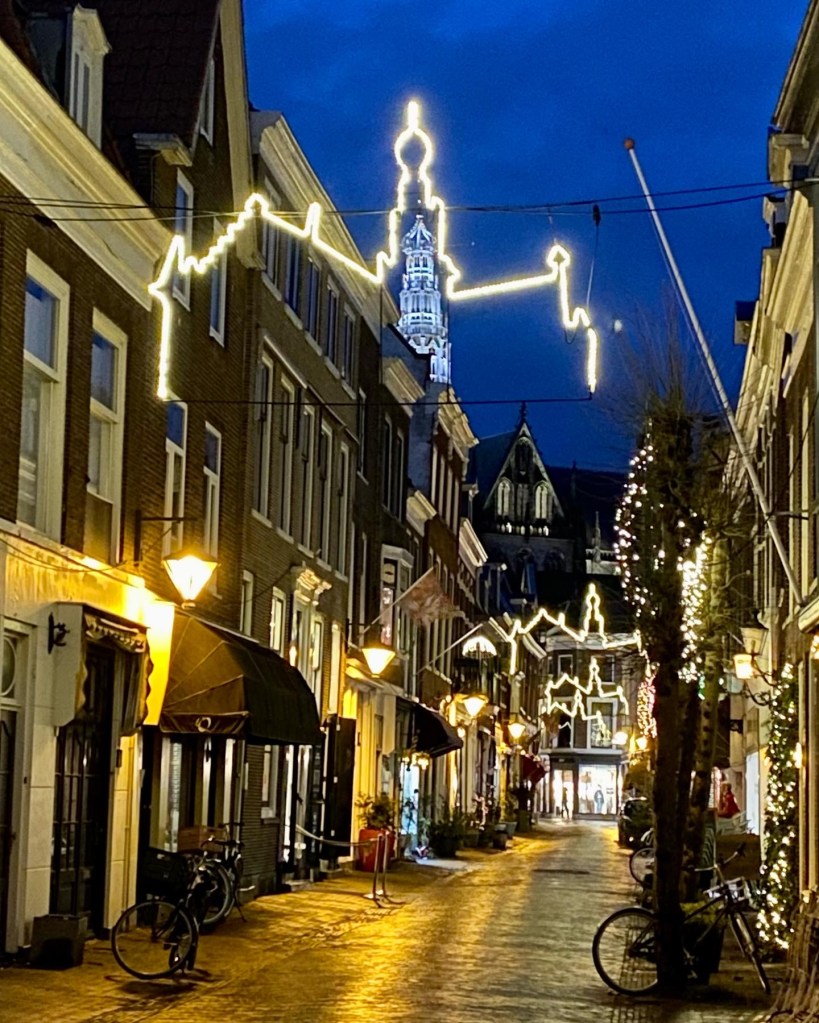
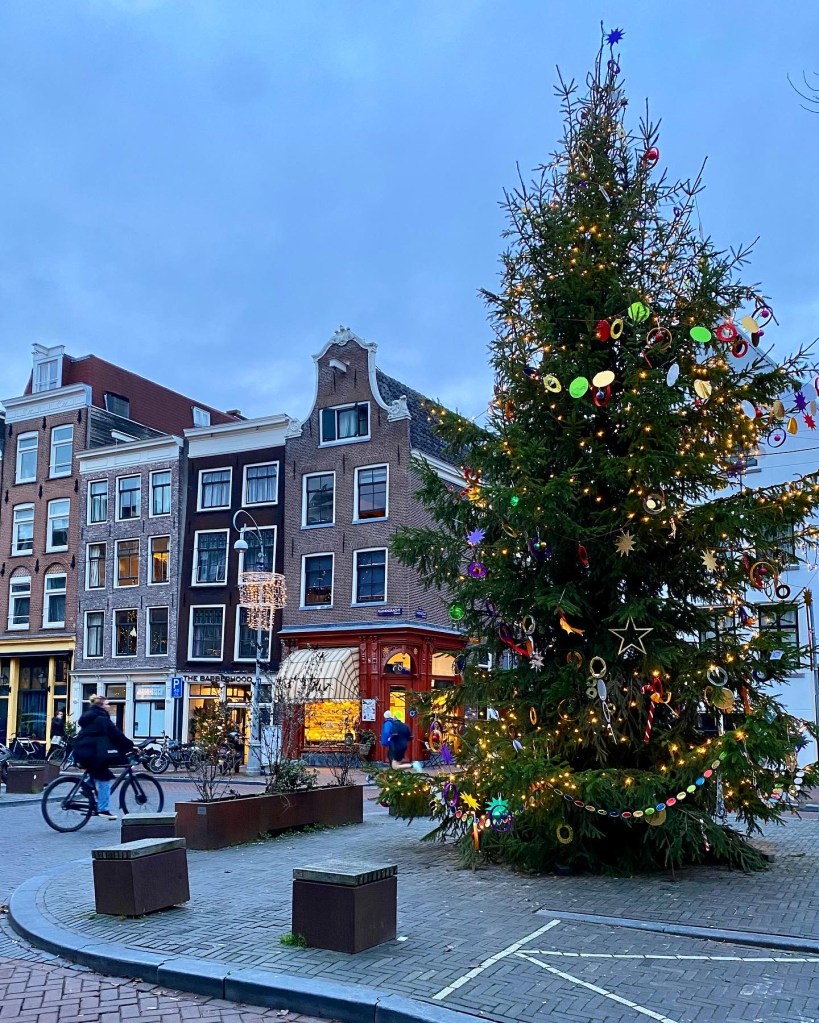
Haarlem decked out for Christmas:
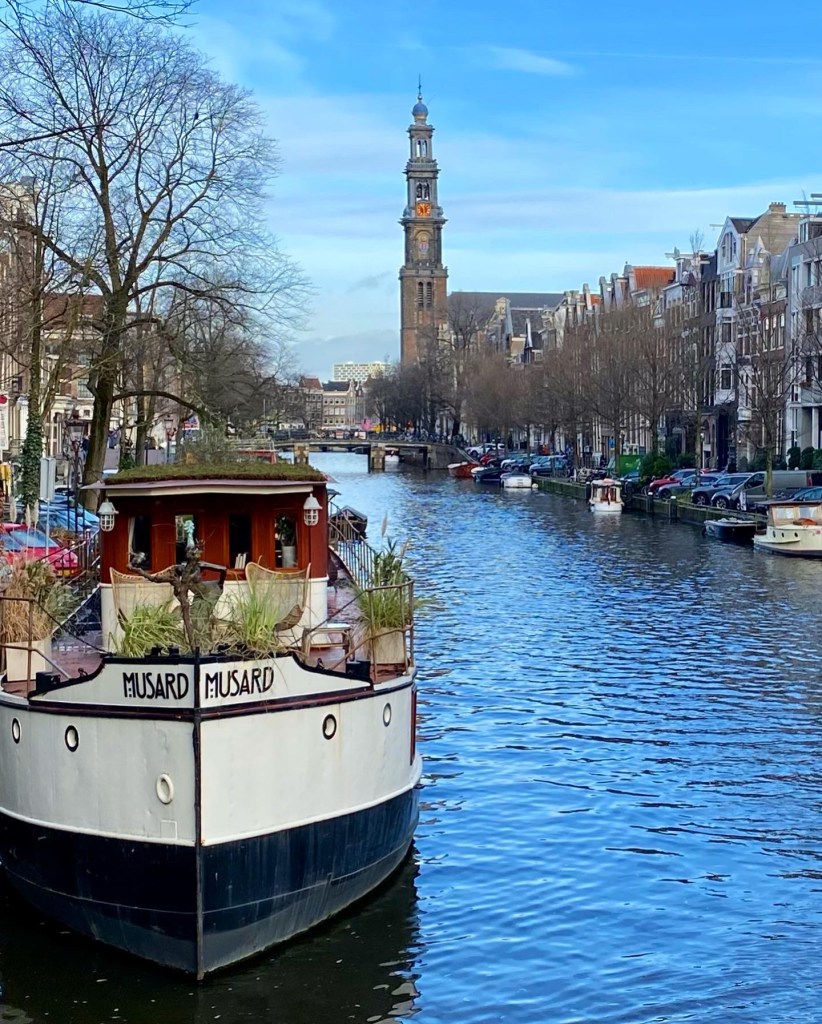
The canals of Amsterdam during our stay:
In the middle, we’d fly direct:
From Amsterdam to Tallinn, Estonia, then
From Tallin to Riga, Latvia, then
From Riga back to Amsterdam
Between the direct flights to and from Europe and the direct flights to, within, and from the Baltics, we planned this perfectly to minimize the impacts of inevitable flight delays. Nothing could go wrong now, with no connecting flights that could be impacted by delays on the initial leg – the bane of any traveler’s existence.
Then, more than a month after we bought our tickets, United saw fit to eliminate the direct flight from IAD to Amsterdam, screwing things up and requiring some rework and now unavoidable two-leg flights in and out of Europe. Not a disaster by any means, but it just meant more risks.
Which, of course, did materialize into actual problems, although none too bad, in the great scheme of things: our connecting flight on the way in got cancelled when we were in the air, and the connecting flight on the way back resulted in total travel time almost twice as long as the time the original direct flight would have taken. But, we weren’t impacted by domestic air travel calamity wrought by the massive Christmas snowstorm, and got back on time on December 28, so we consider ourselves relatively lucky.
After arriving (late) at Schiphol, we beelined it to Haarlem, where we stayed for the next 3 days (including watching the World Cup Final, where we were cheering on Argentina and the Dutch were rooting for France simply because Argentina beat them in the Semis, which was fun).
Haarlem’s Christmas lights throughout the city were the profile of the town’s landmark cathedral:
The functioning Molen de Adriaan windmill right in the heart of town, which we toured while there. Super cool.
From Haarlem, we flew northwest to Tallinn, Estonia, which was still initially blanketed by snow, which is exactly what we were hoping for.
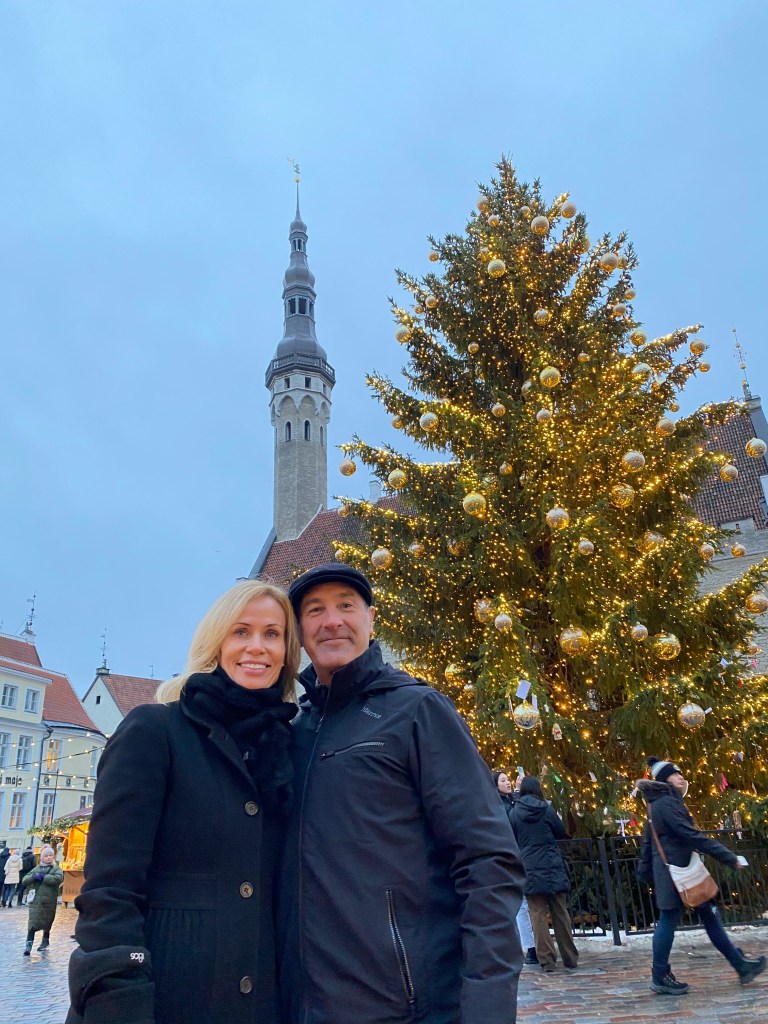
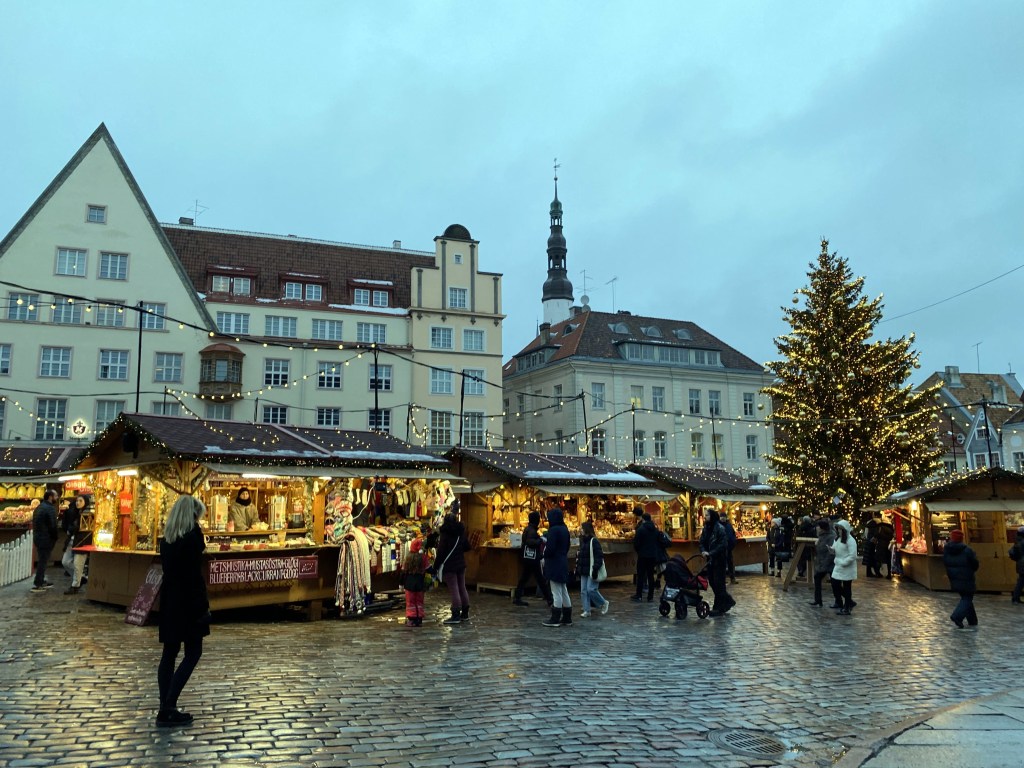
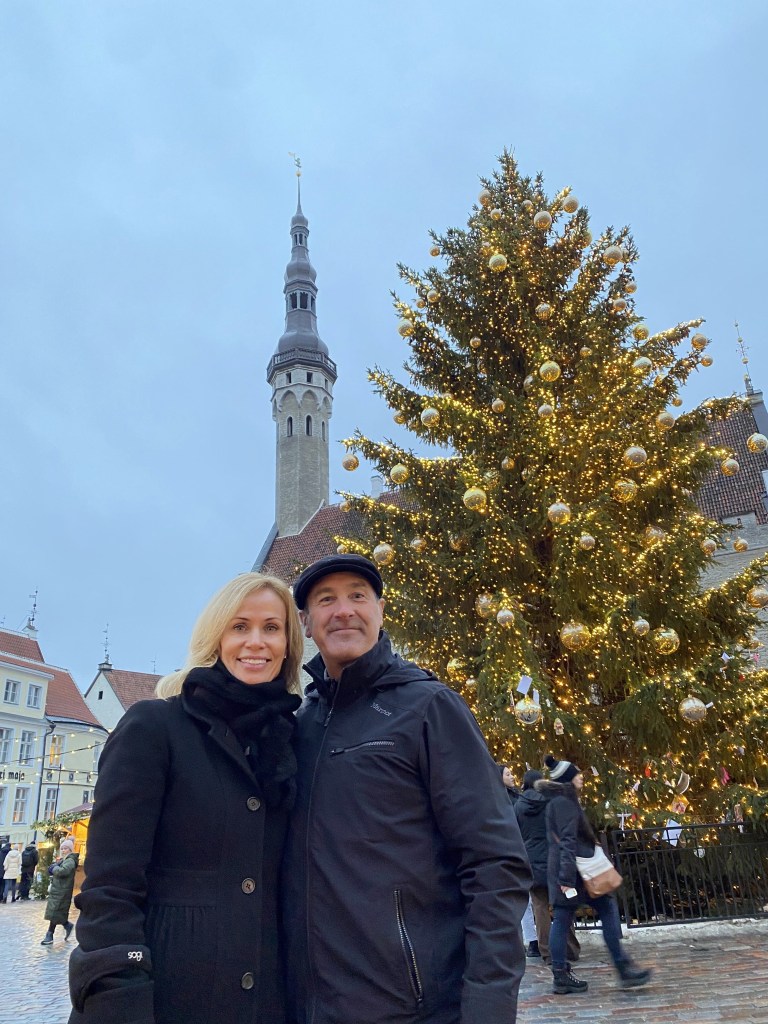
Heading into the town square, dominated by Tallinn’s 15th-century town hall and host to the town’s Christmas Market.
St. Alexander Nevsky Cathedral on Toompea in Tallinn, a vestige of the Russian Empire’s role in Estonia’s history (and also, we got some good snow!):
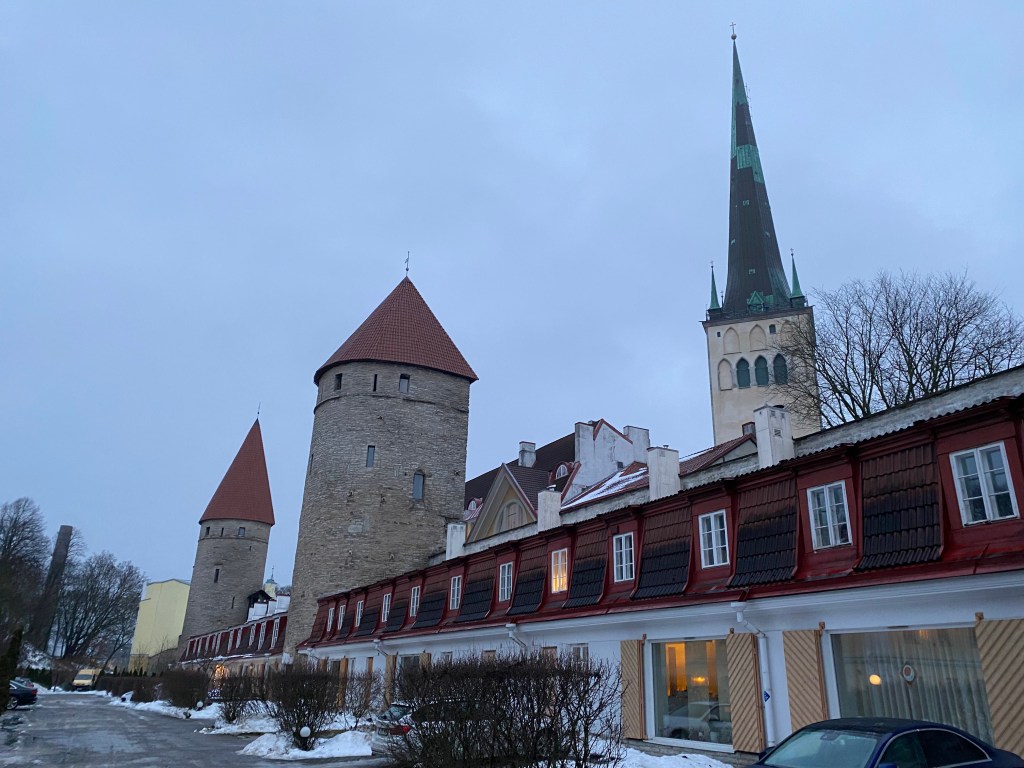
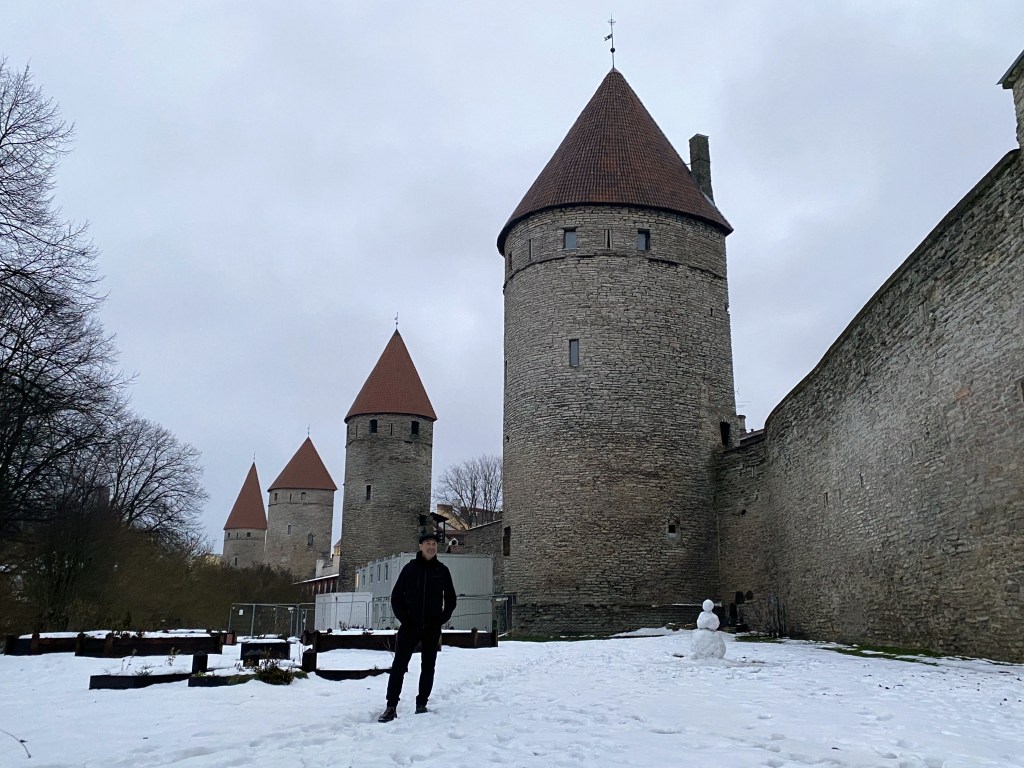
Tallinn was mostly undamaged during WW II, and its medieval walls and defensive towers are still intact:
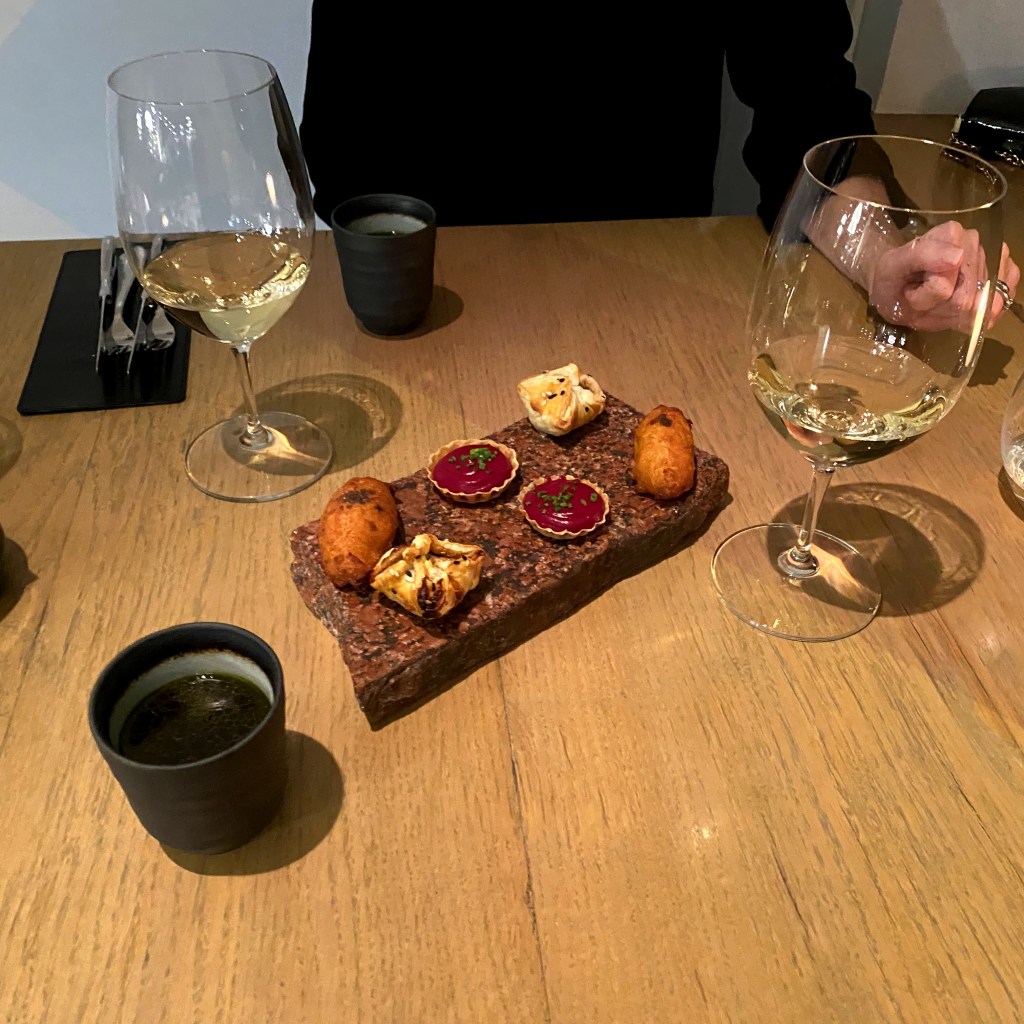
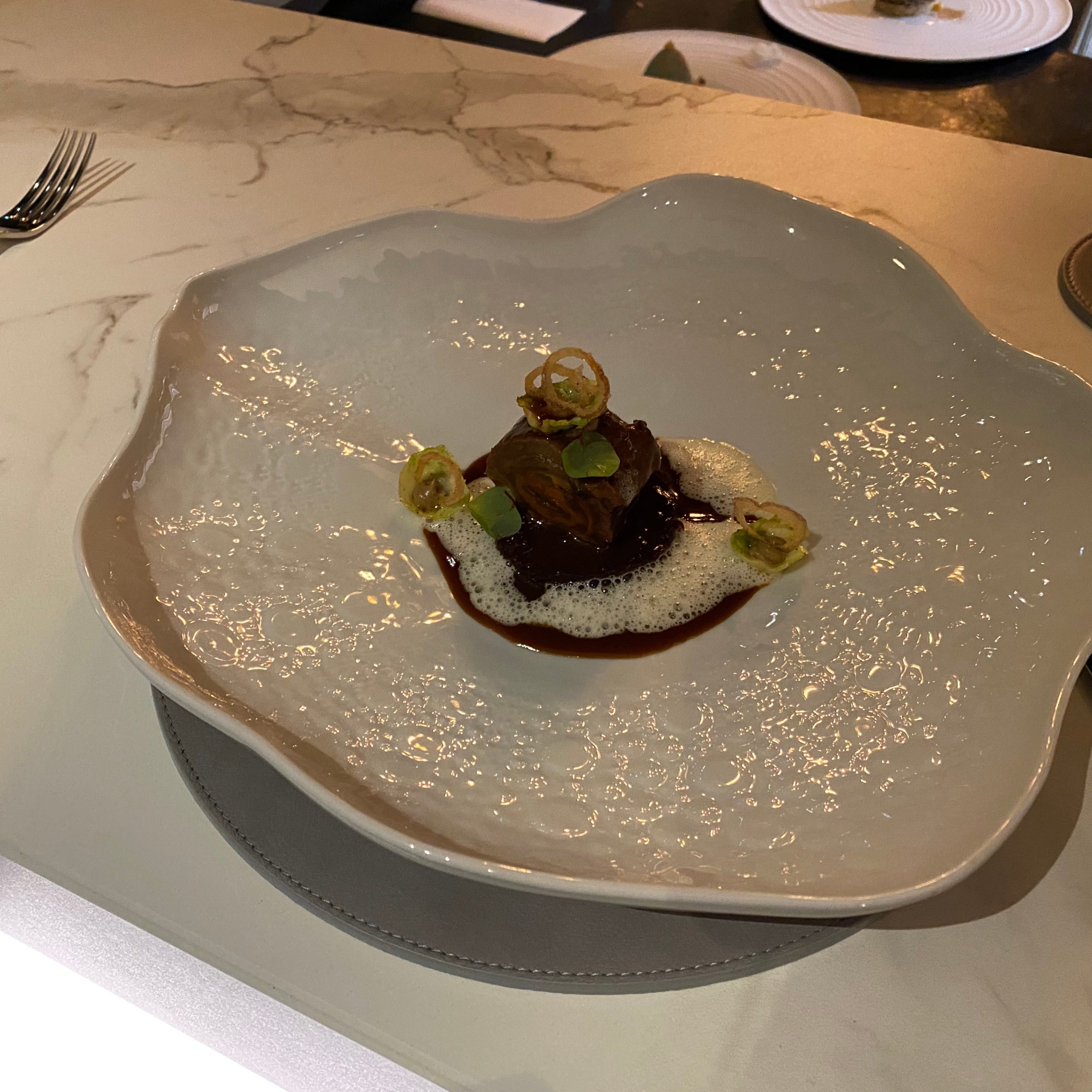
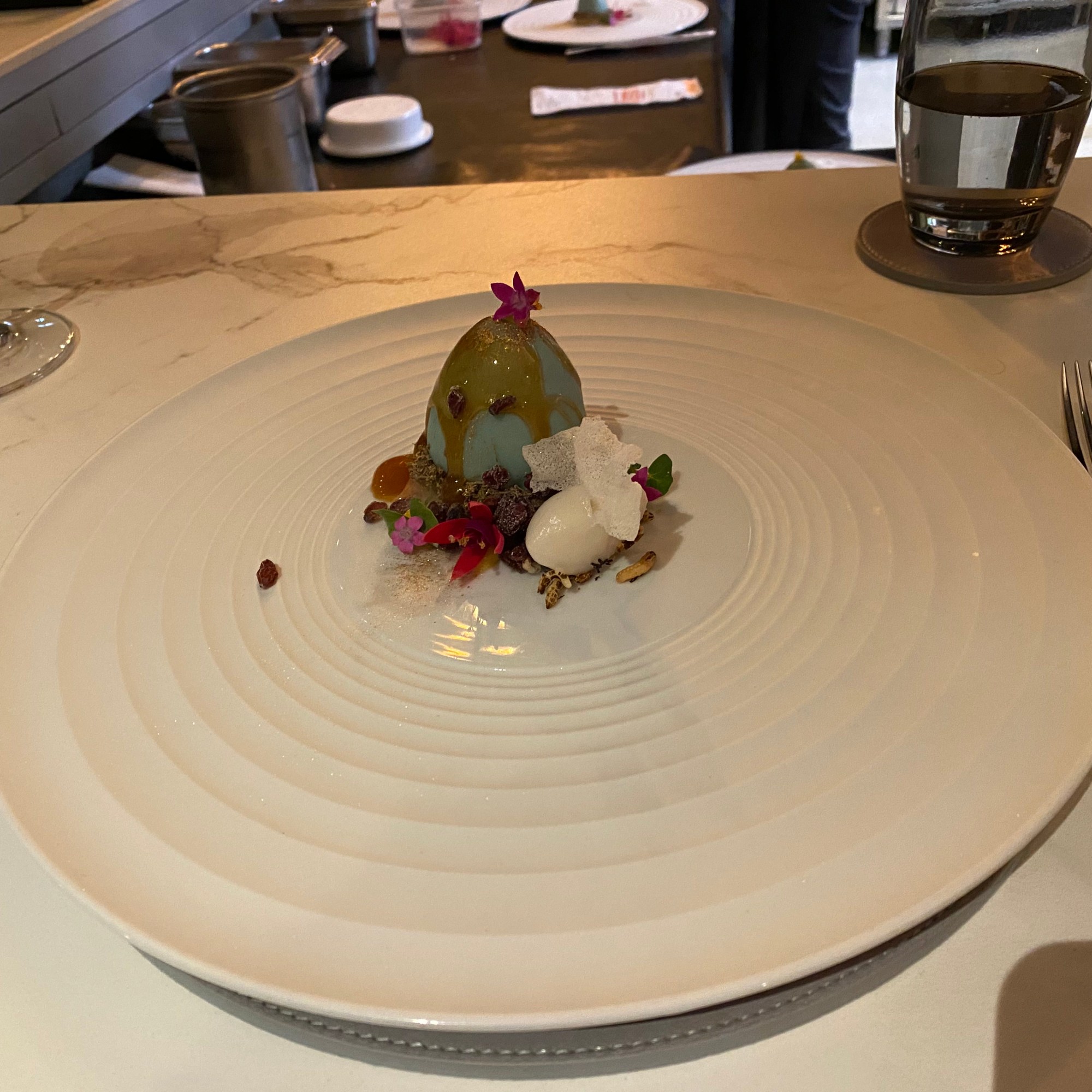
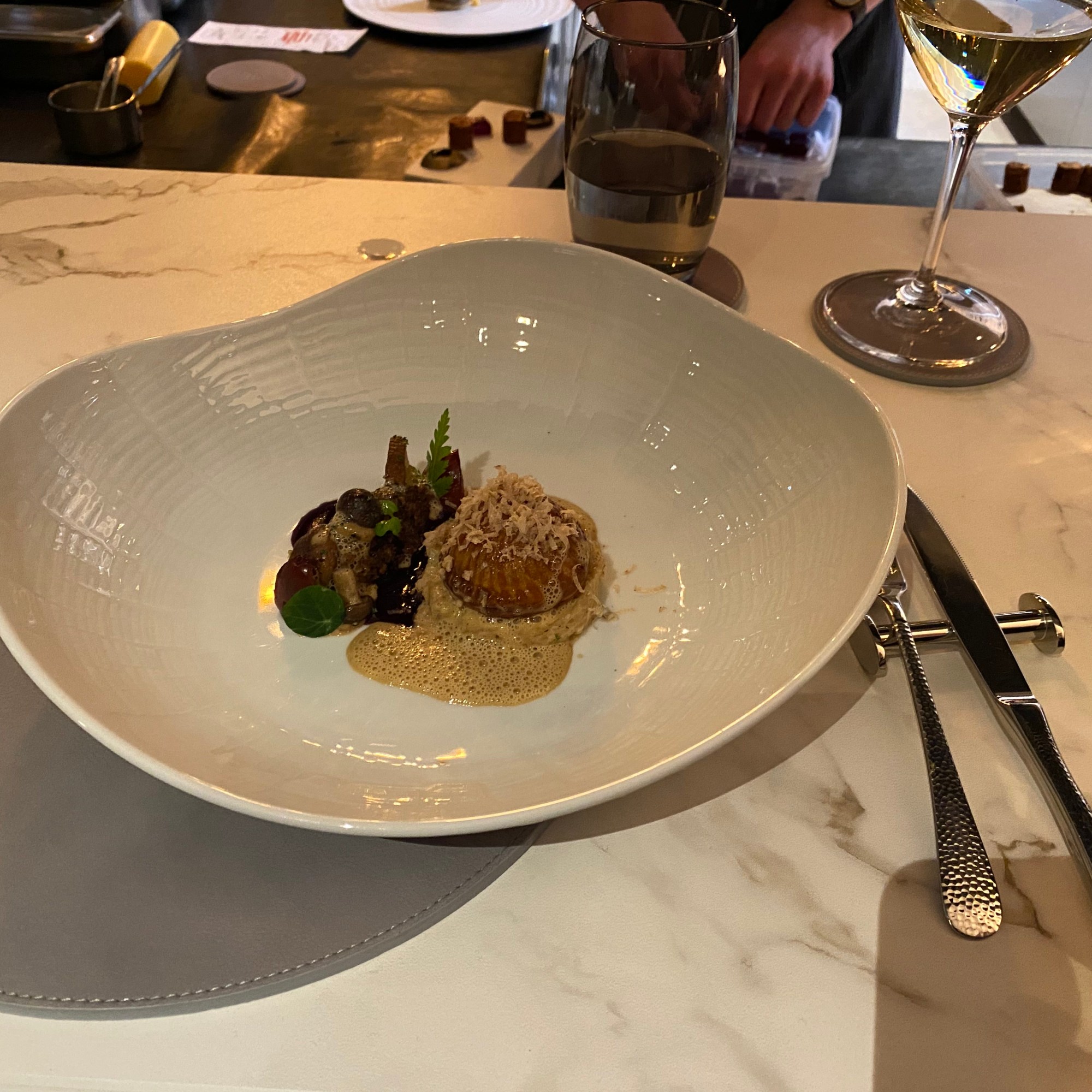
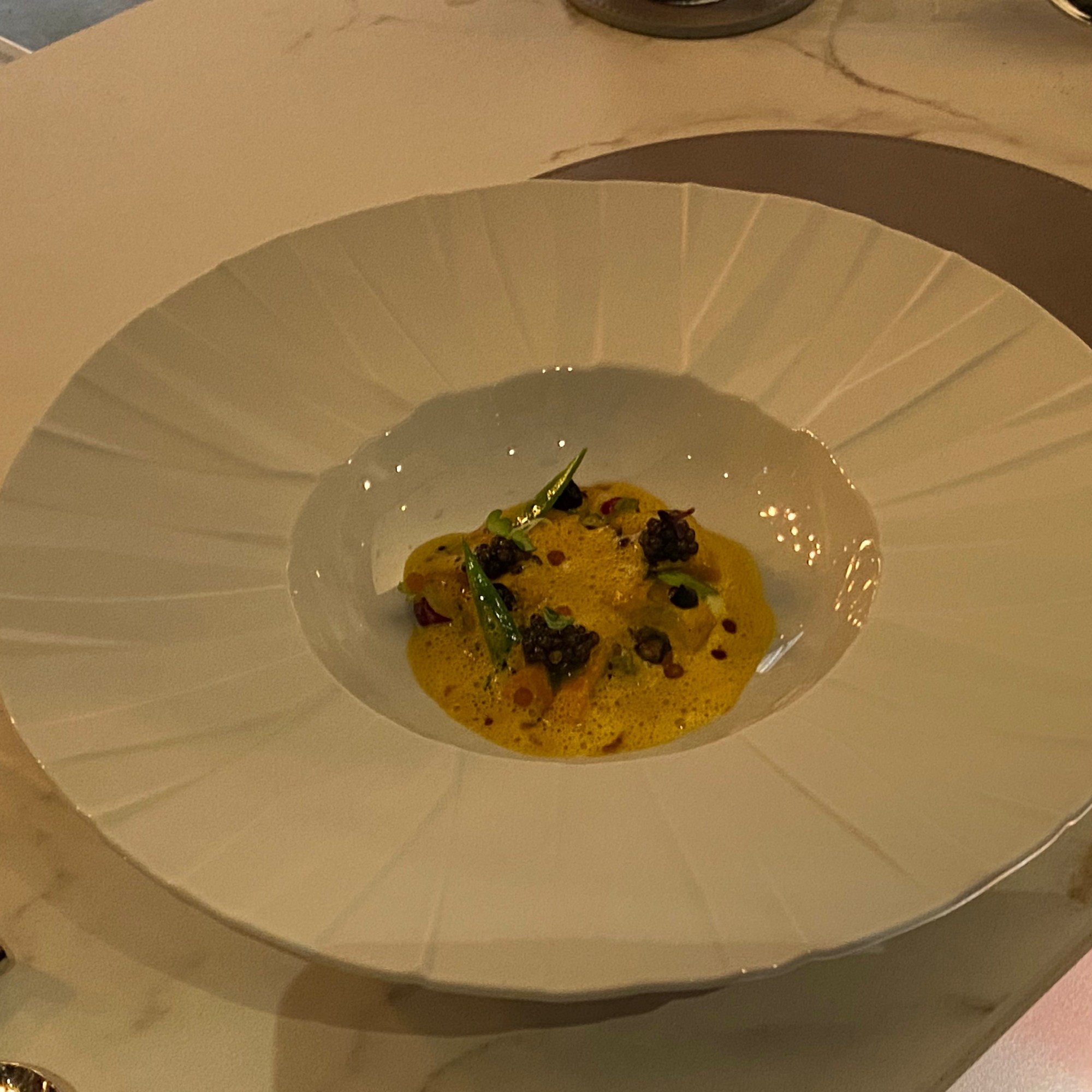
Dining highlight during our stay at the Chef’s Table of 180 Degrees Restaurant, which lasted 4.5 hours. This was about an hour and a half longer than it needed to be.
Due to Tallinn’s latitude, the sun set at 3:20 during our stay, resulting in lots of surreal, perpetual twilight afternoons in town:
After 3 days in Tallinn, we headed a little south, to Riga, Latvia – country # 70 for WolfeStreetTravel:
23 degree weather on Christmas Eve!
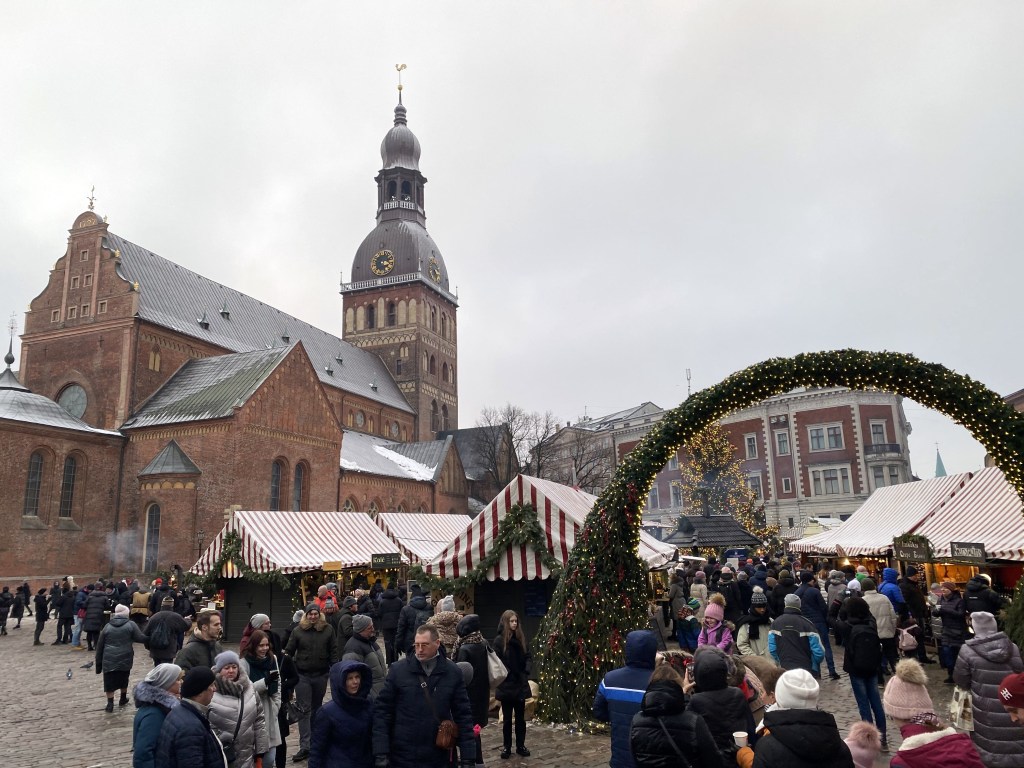
Riga’s Christmas Market was actually better than Tallinn’s.
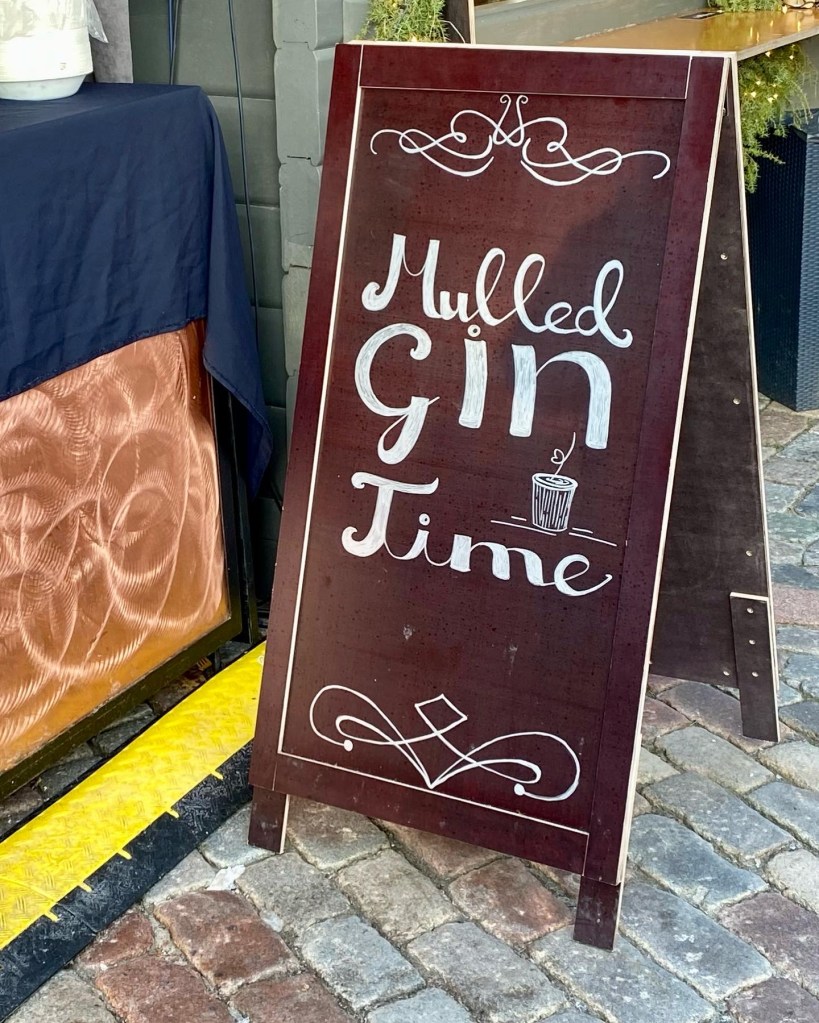
And boasted multiple stalls across the market hawking mulled gin, which was a new one to us. It was fine, but we prefer traditional gluhwein (they had that too).
Riga still maintained some of their town’s fortifications, as well.
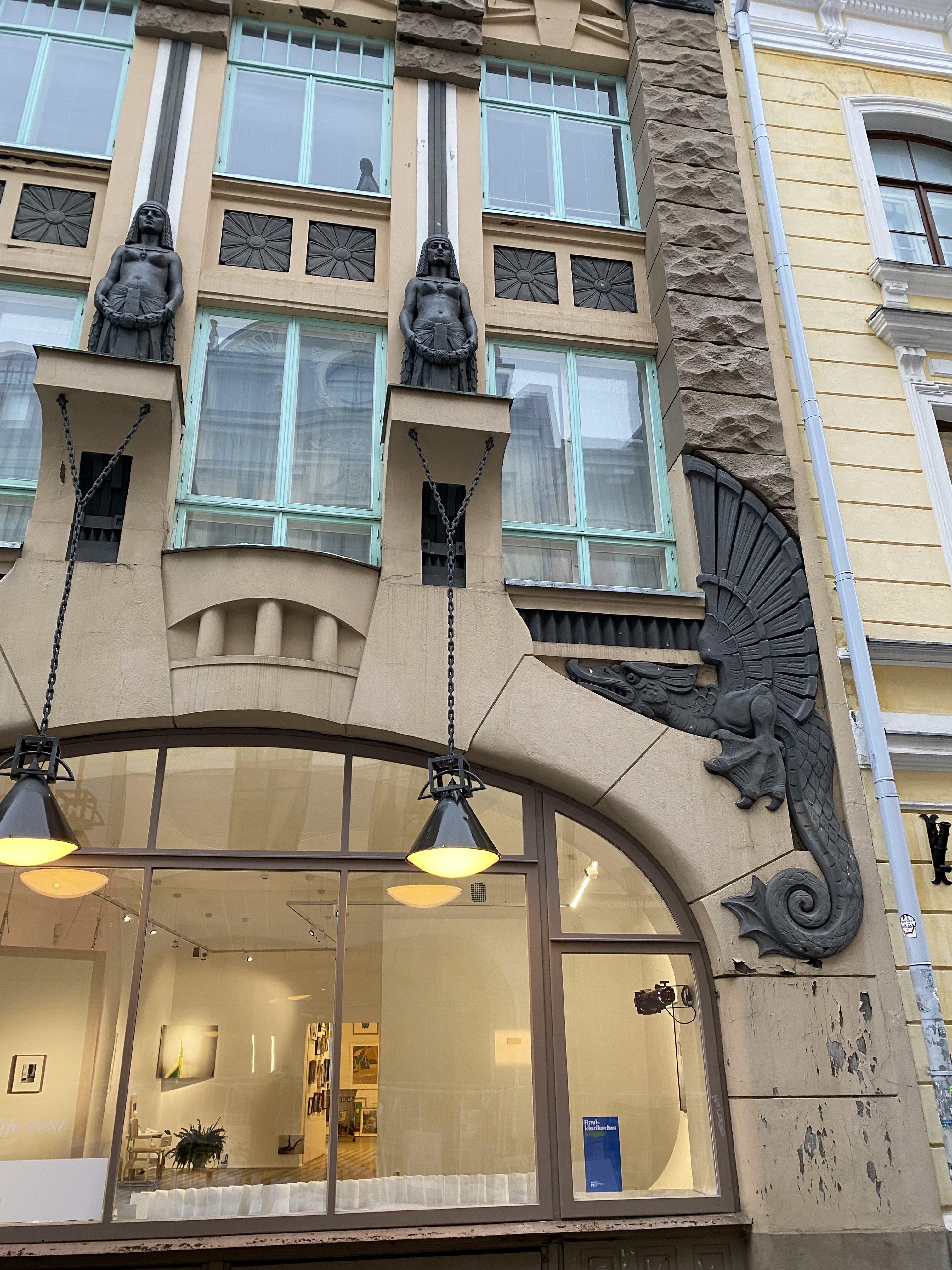
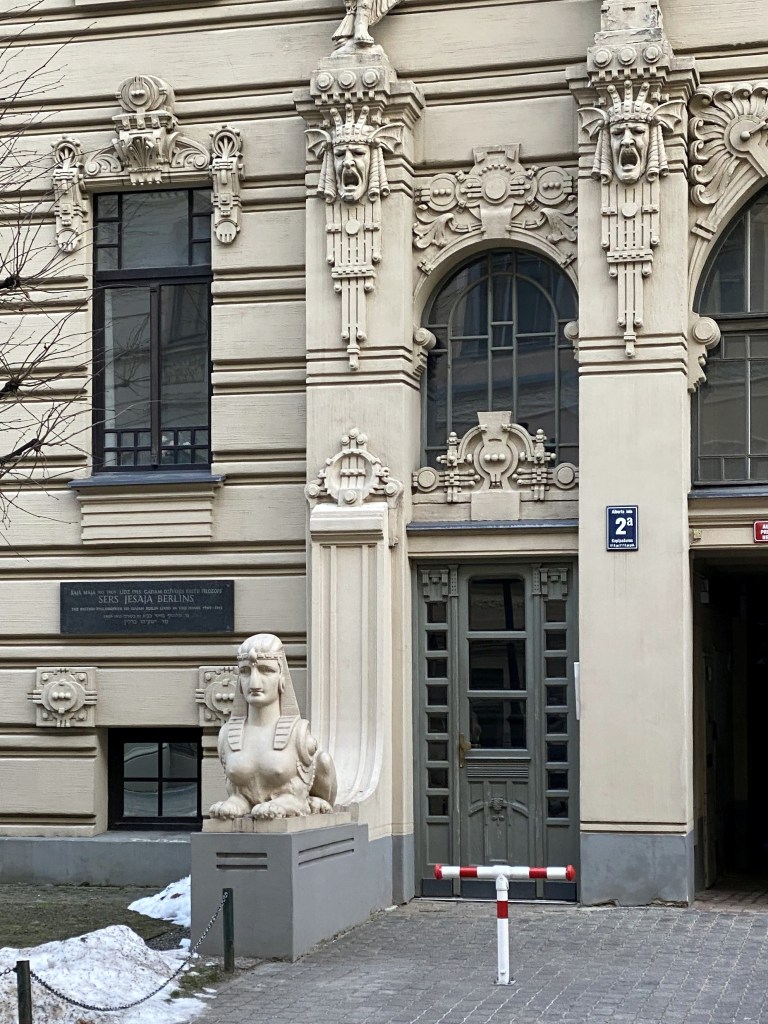
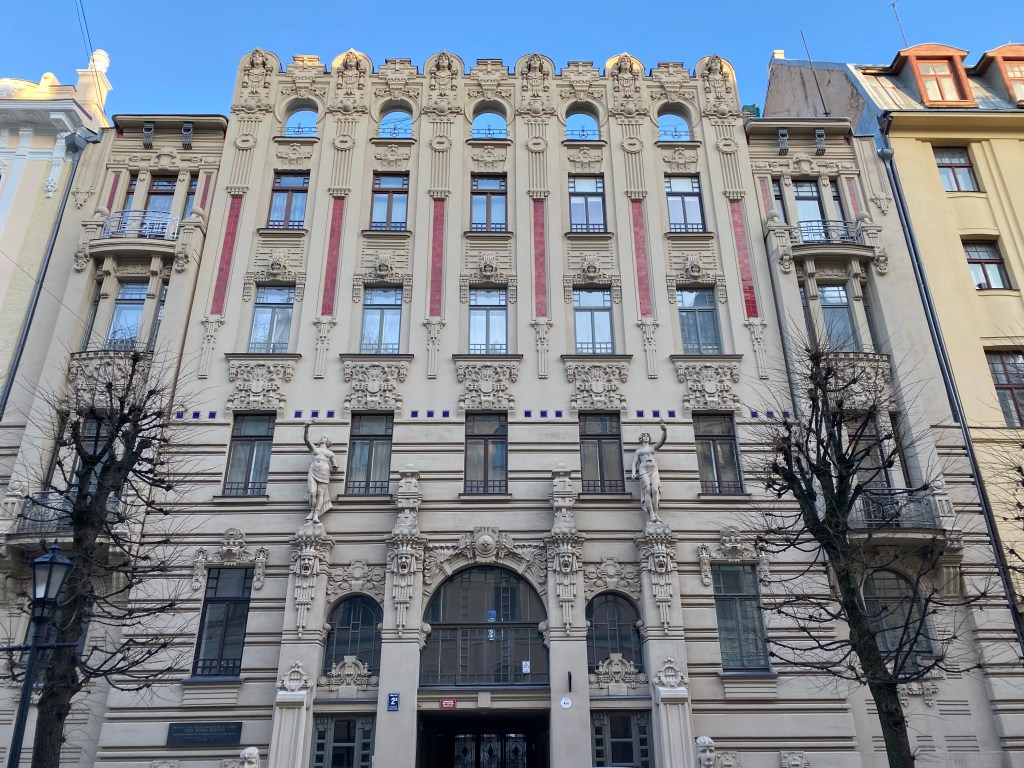
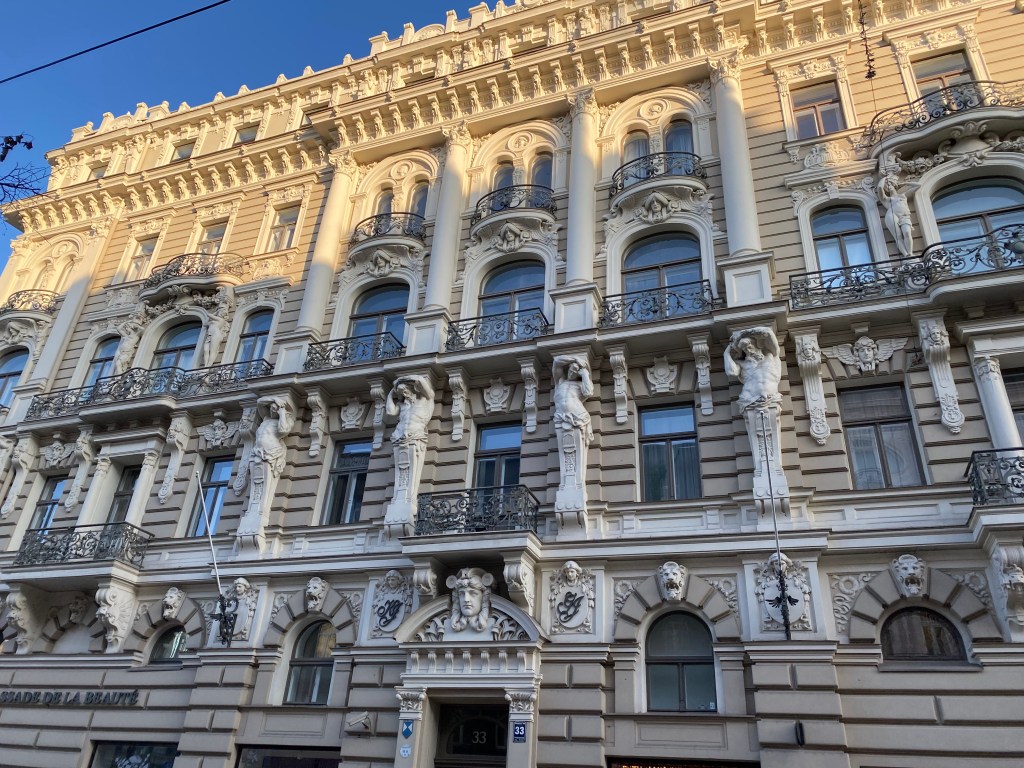
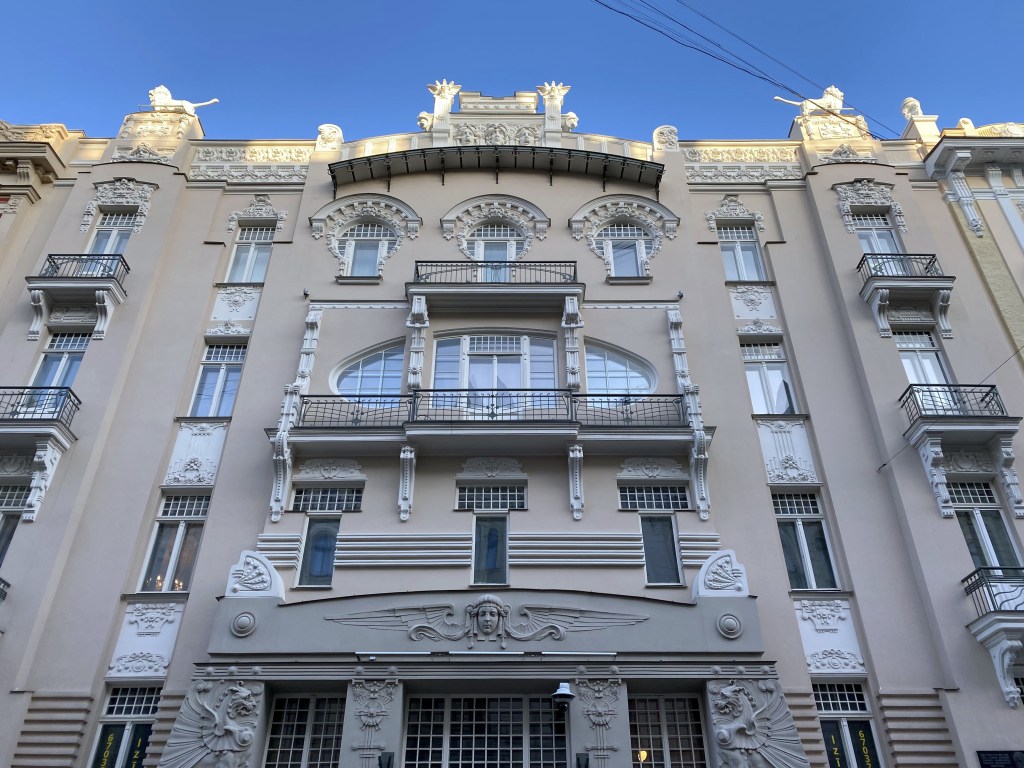
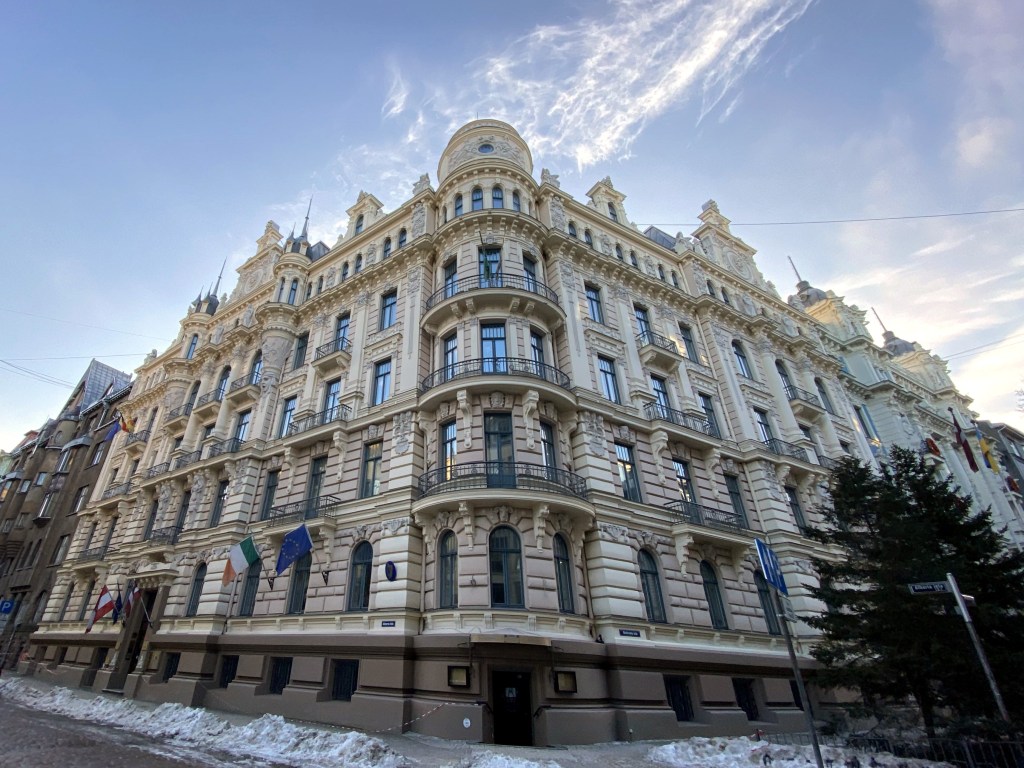
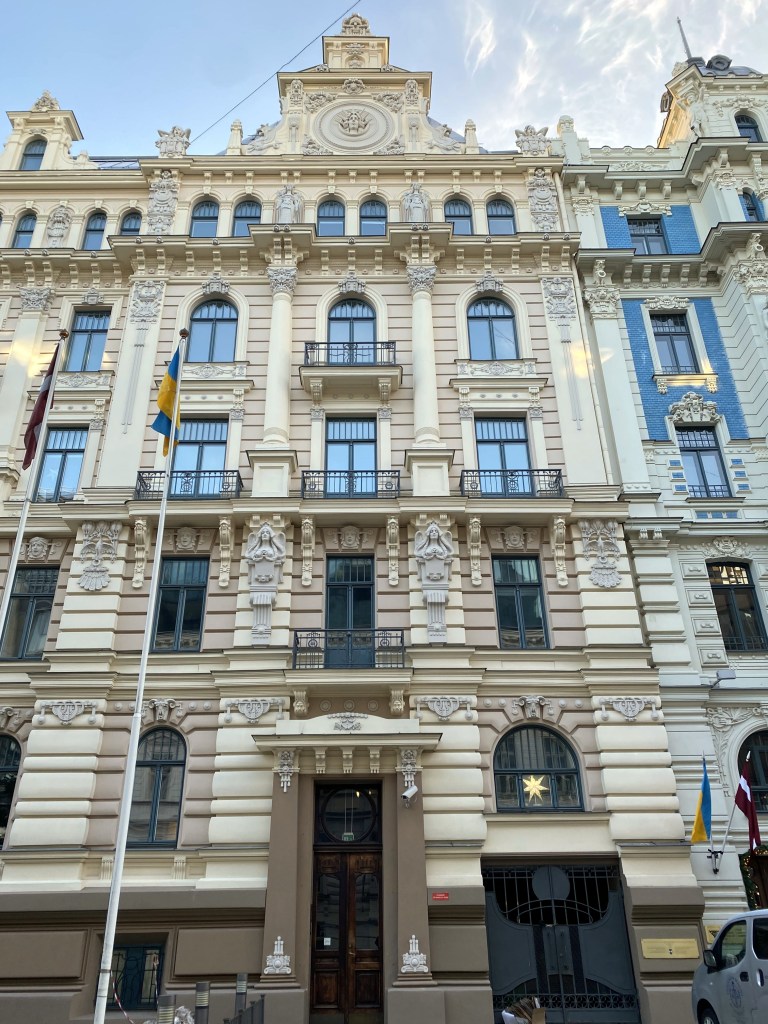
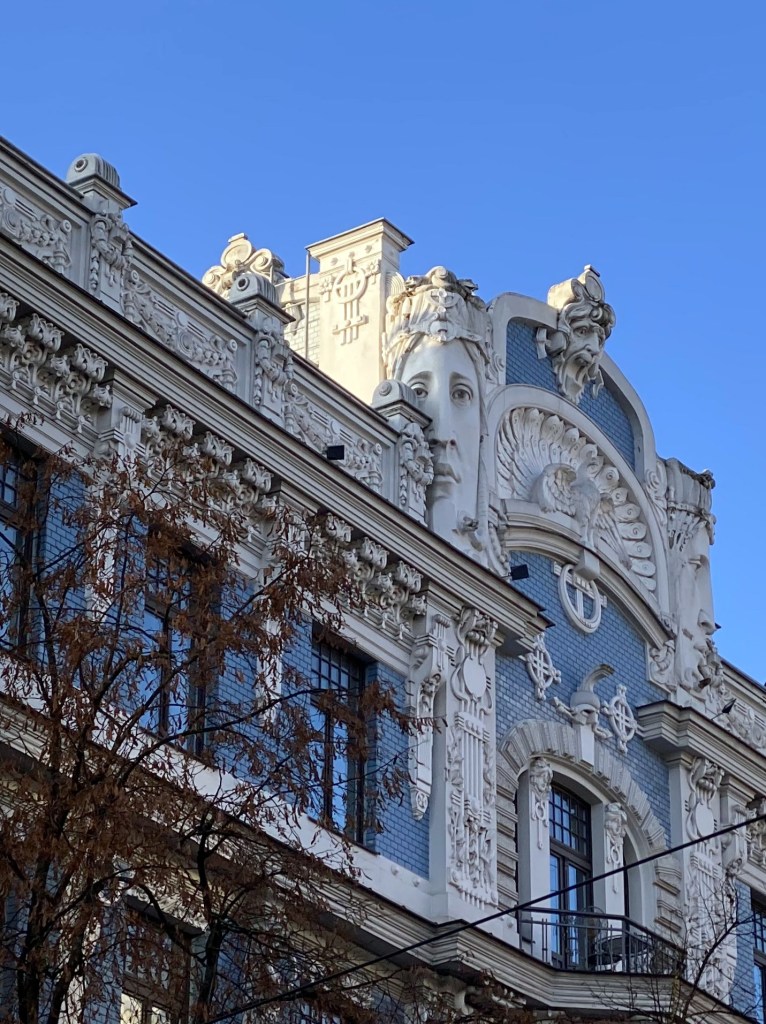
And was also home to Europe’s greatest concentration of Art Nouveau architecture, since Riga’s prosperity peaked at the same time as this arts and architecture movement at the turn of the century, and Riga wasn’t bombed into oblivion during WW II, preserving the buildings in this district.
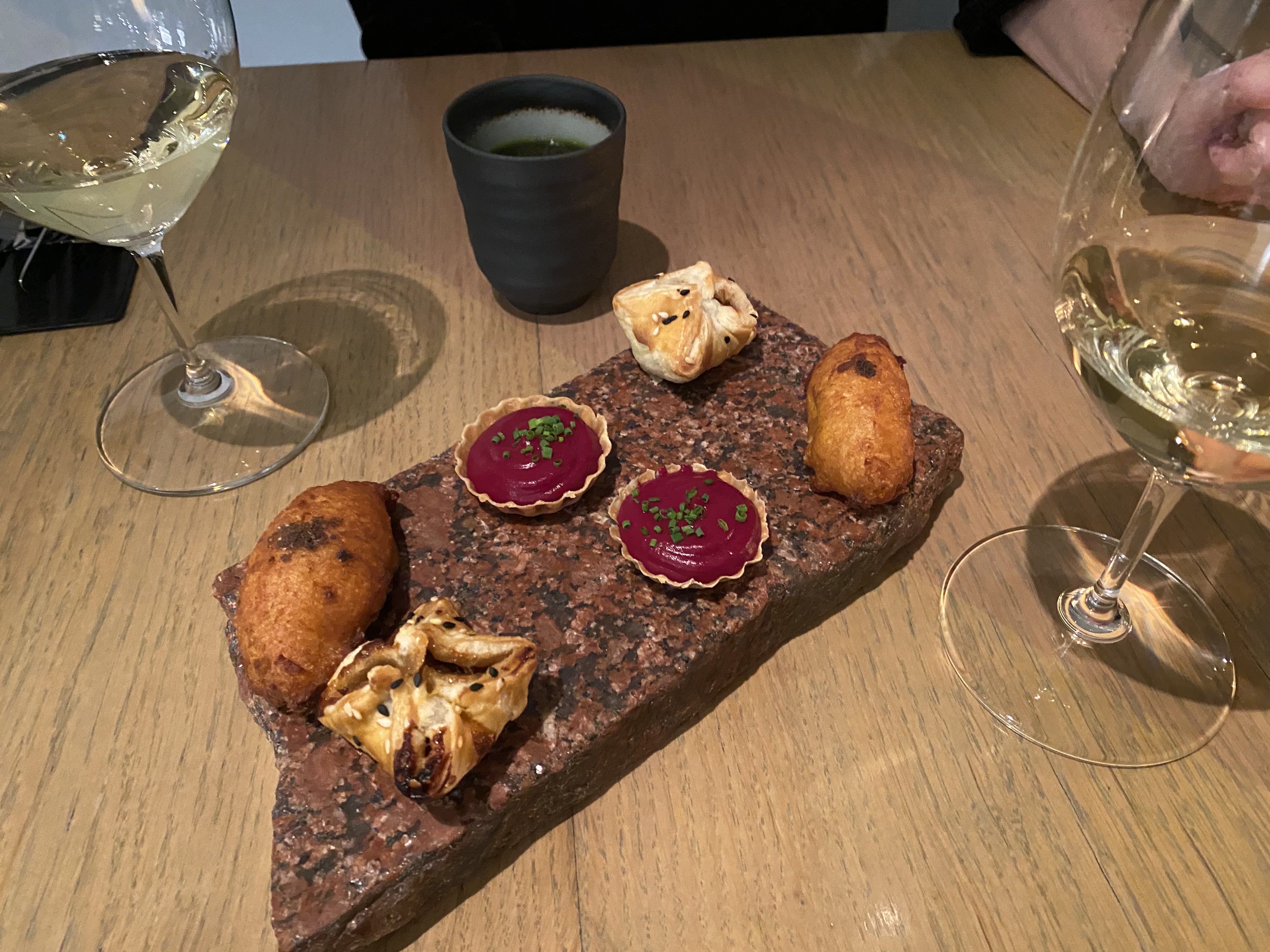
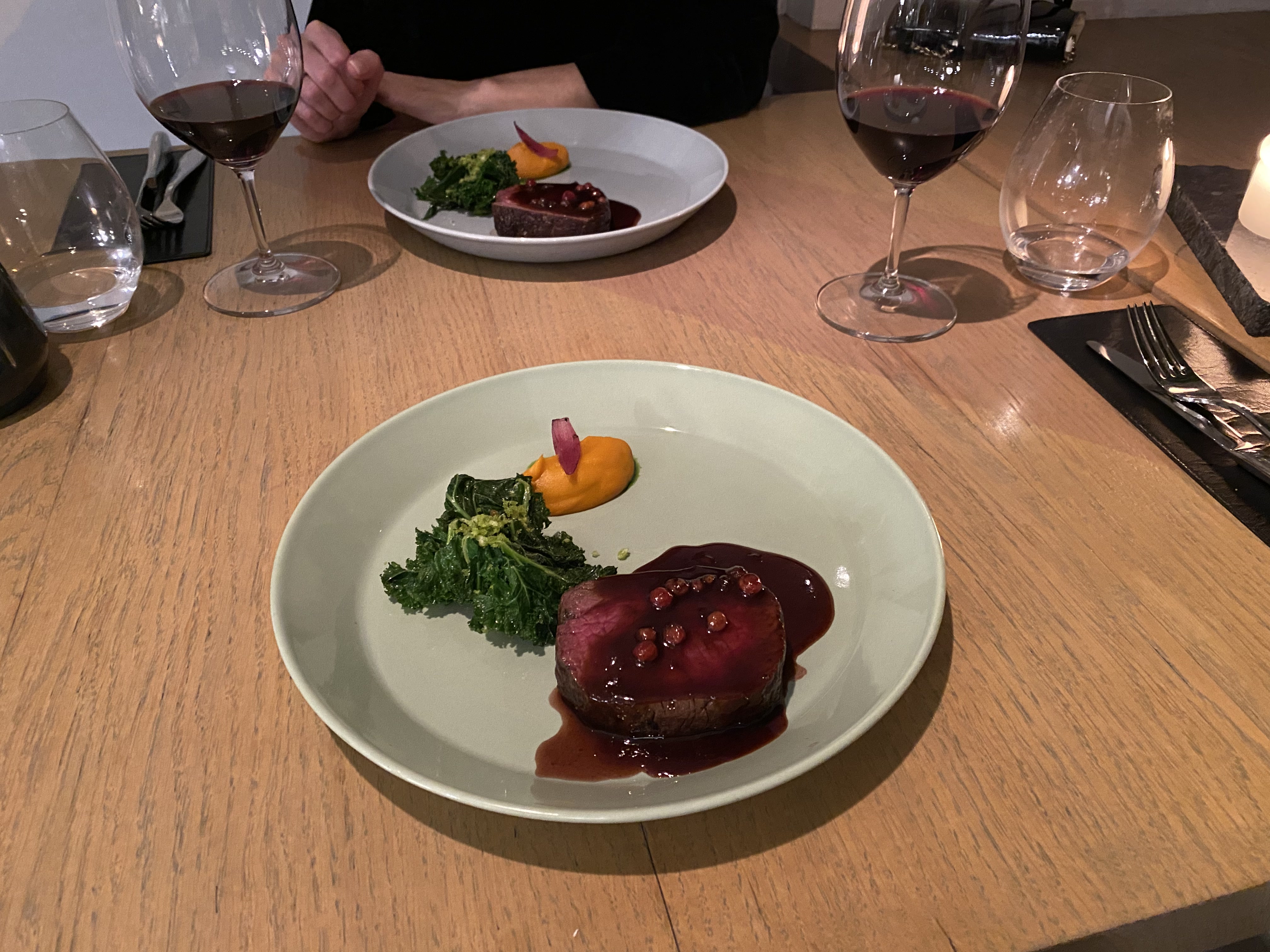
Christmas night dinner at 3 pavāru restorāns in Riga, which bested the much fancier 180 Degrees a few days earlier in Tallinn.
After a couple of days in Haarlem, we headed to the first of our actual Baltic destinations: Estonia and its capital city of Tallinn. We were hoping for snow, and we got some! (Initially, anyway.)
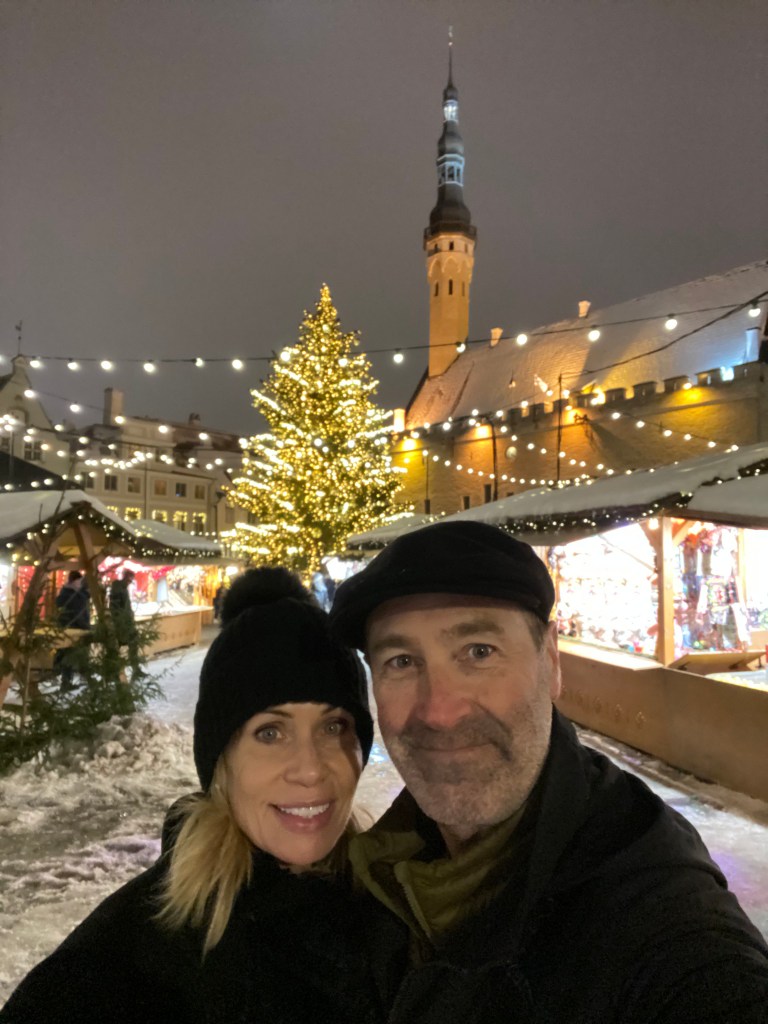
Tallinn’s main square and Christmas Market on our first evening – perfect!
But the next day (and throughout our stay), the snow on many of the streets and squares turned a little slushy.
Definitely more of a winter, Christmas atmosphere than Alexandria, but still. . .
Tallin’s settlement dates back thousands of years but the first fortress appeared around 1050 AD, demonstrating the importance of the town to the north Estonia region.
As a trading town on the Baltic coast, the town (then known as Reval) became a member of the Hanseatic League in 1285. We previously visited the Hanseatic towns of Lübeck and Hamburg in Germany and Bergen, Norway. (Riga, Latvia, another Hanseatic town, would be our next stop on this trip. Apparently, Berlin, Cologne, and Krakow also were Hanseatic towns due to the river system, but we have decided to ignore this because they’re not on the Baltic coast.)
Snow still covered some streets – very cool medieval town.
Tallinn Old Town is one of the best-preserved medieval cities in Europe and is listed as a UNESCO World Heritage Site.
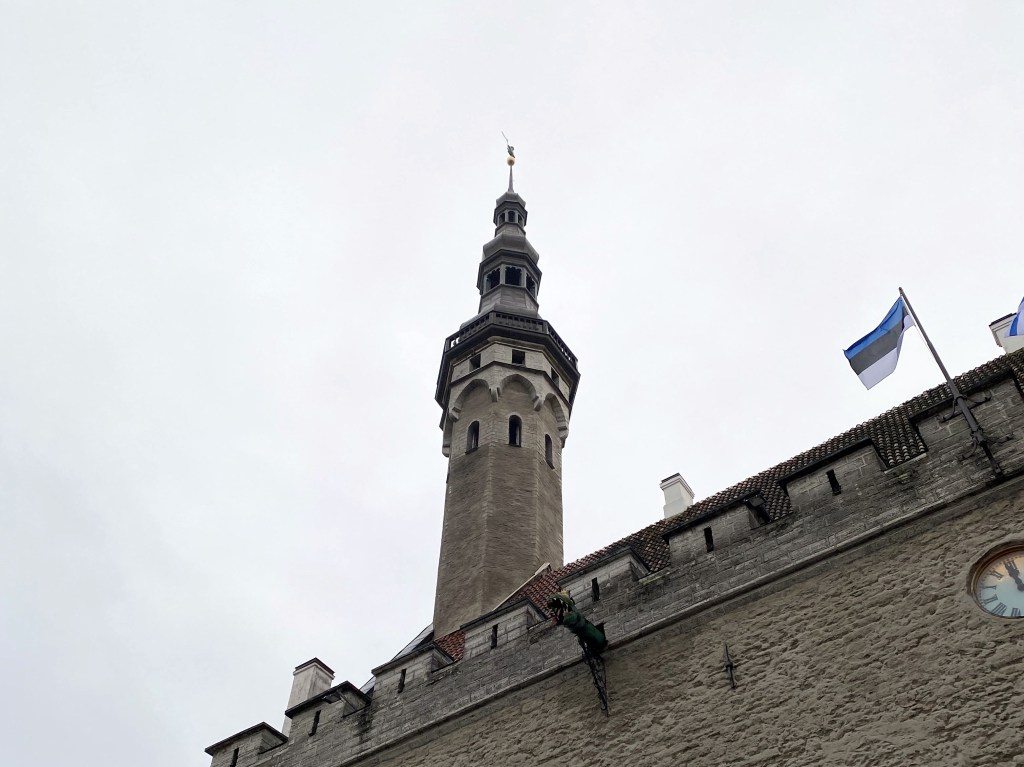
The spire of Tallinn’s Town Hall:
The town hall was first mentioned in 1322,
but the structure actually dates back to the 1200s.
It’s the oldest surviving town hall in Europe.
At the top of the spire stands Old Thomas, first placed there in 1530.
The figure memorializes a peasant who became famous for winning a crossbow competition held by the Baltic German Elite.
The tower – and Old Thomas – was damaged in 1944 during a bomb attack during the war. A new Old Thomas went up with the repaired tower in 1952, but it was weathering too much, and the Estonians put another one up there in 1996. The 1952 Old Thomas hangs out in the Tallinn City Museum. Nice codpiece.
Viru Gate – one of the original eight gates in Tallinn’s city walls.
The first wall around Tallinn was ordered to be constructed by Queen Margaret of Denmark in 1265 (Denmark controlled northern Estonia from the early 13th century until 1346, when the Danish king sold it to the Teutonic Knights).
Fully taking shape during the next three centuries, Tallinn’s city wall was one of the strongest defense systems in Northern Europe at the time.
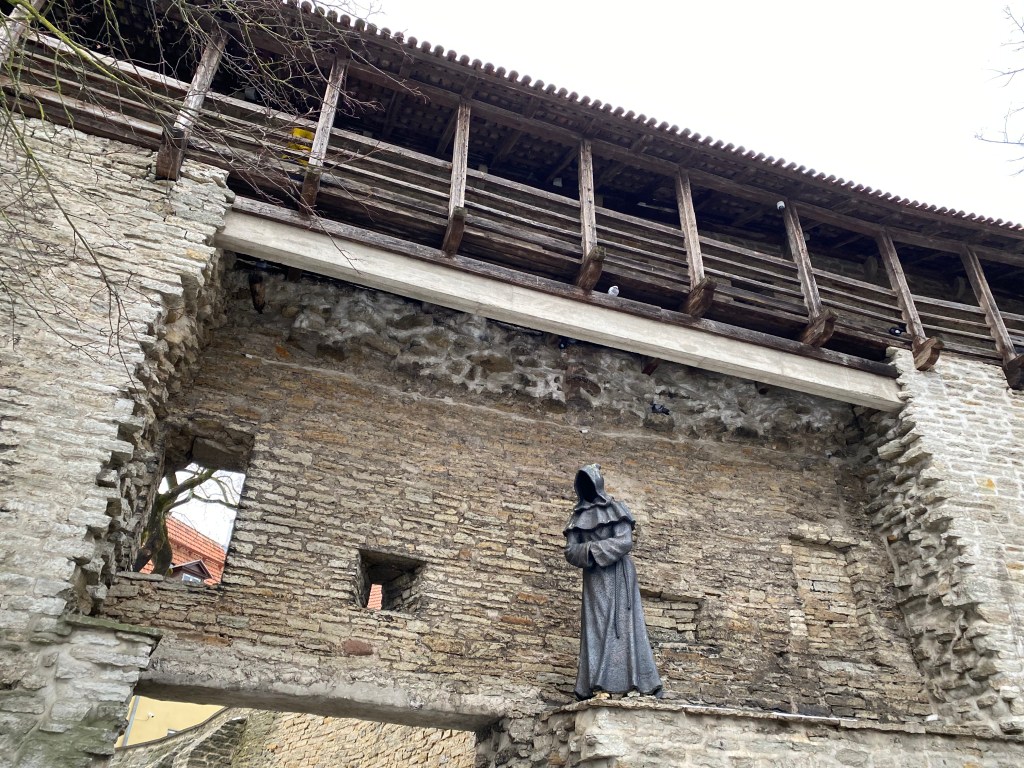
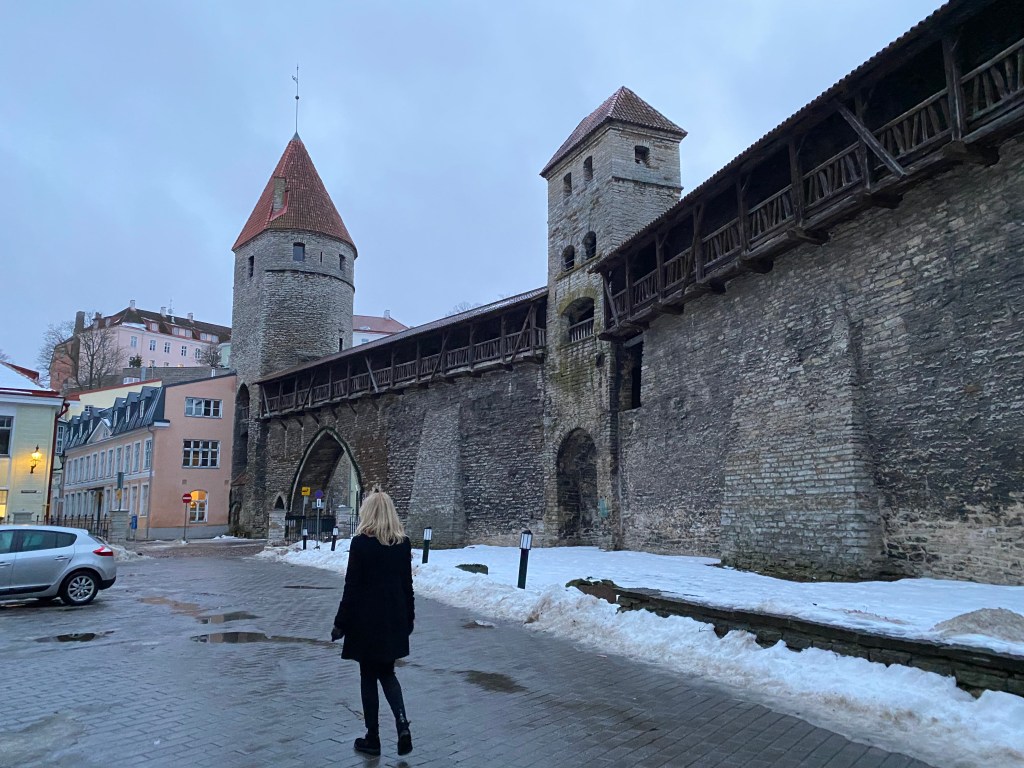
Plus, there are chunks that are still intact and walkable (that’s Tower behind Monks in the background)
Not a lot of snow, but Tallinn proved to be pretty atmospherically wintery, nonetheless:
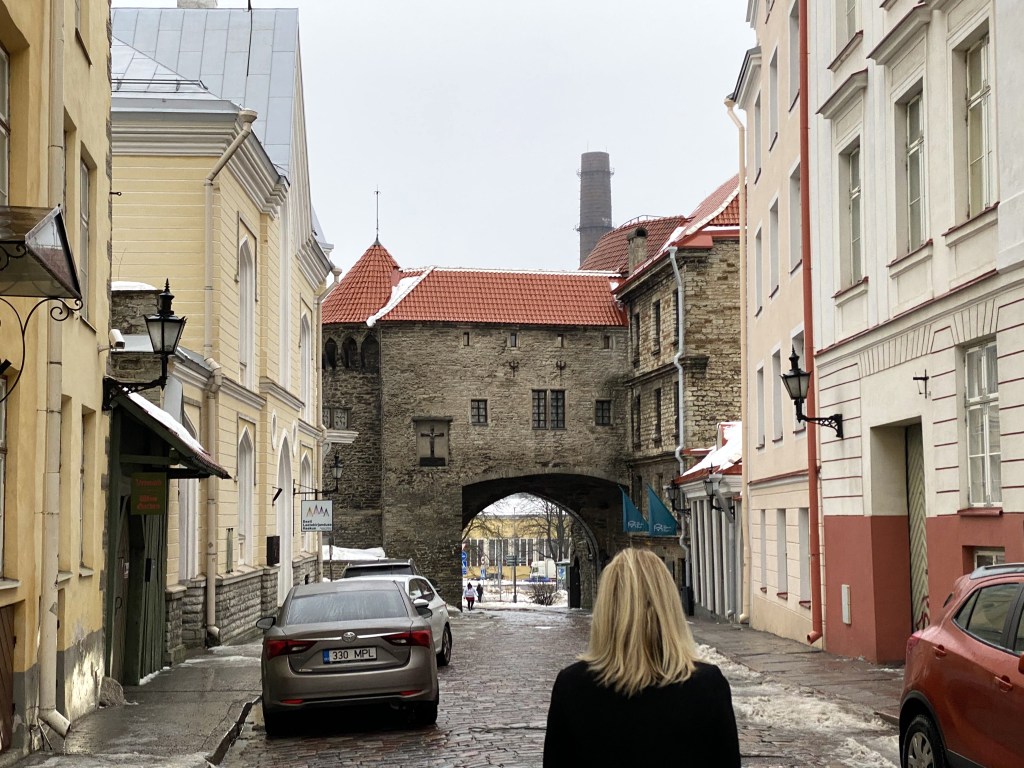
Located across town, we found Tallinn’s Great Coastal Gate, first mentioned in 1359:
The Great Coastal Gate was the most important gate when Tallinn was a Hanseatic town because it protected the main route for traffic between the port and the market square.
Above the gate stands an impressive dolomite carving bearing Tallinn’s coat of arms (from 1529):
Protecting the Great Coastal Gate? FAT MARGARET! Dating from the early 16th century, Fat Margaret not only served as a fortification against invaders of the town’s port but also a military monstrosity to impress visitors arriving by sea.
Michelin 2* dining experience at 180 Degrees:
Pretty good perch at the Chef’s Table
where we could watch all the cooking and prep work for multiple courses.
Heading up the next morning to Toompea, Tallinn’s central hill district, which is home to. . .
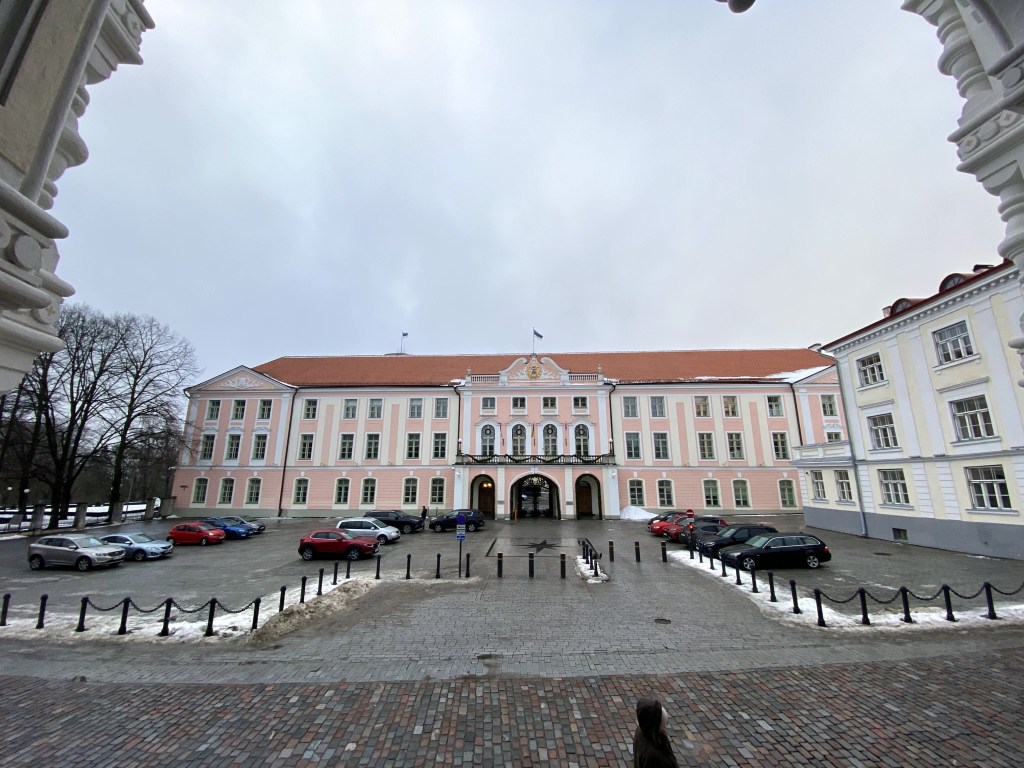
Estonia’s Parliament, the Riigikogu:
And also the Orthodox Alexander Nevsky Cathedral, built in the late 19th century:
Crests for local noble families along one wall:
Because the church was built when Estonia was part of the former Russian Empire, and because it represents Russian Orthodoxy, and because the Estonians are outraged by Russia’s aggression against Ukraine, there’s a movement in Tallinn to raze it and replace it with a park.
Back through the walls:
To yet another stretch of Tallinn’s extant city wall. Here, we have Kiek in de Kok (“Peek into the Kitchen”) on the left, an artillery tower so named because the garrison could see into the kitchens of the nearby houses; and Maiden’s Tower on the right.
And a creepy, faceless monk statue perched on one segment of the wall. This is one of three faceless monks in this area; this one is “Observing Monk.”
More city wall-and-towers action:
Loewenschede Tower:
Enough with the tower names; here’s a buttload of towers. Definitely a cool, preserved medieval town.
Heading to dinner one night; one cannot escape the walls, man.
Rataskaevu Street, where the novels featuring Melchior, the 15th-century Tallinn apothecary / amateur sleuth are set (or at least where his apothecary is located). The first book – pretty good! The second – should have been tossed down that well.
Featured in the Apothecary Melchior novels are Tallinn’s medieval guilds. The Great Guild hall, dating from the very early 15th century is right off the main square. It was used as the headquarters of various merchant and artisan guilds until as recent as 1920.
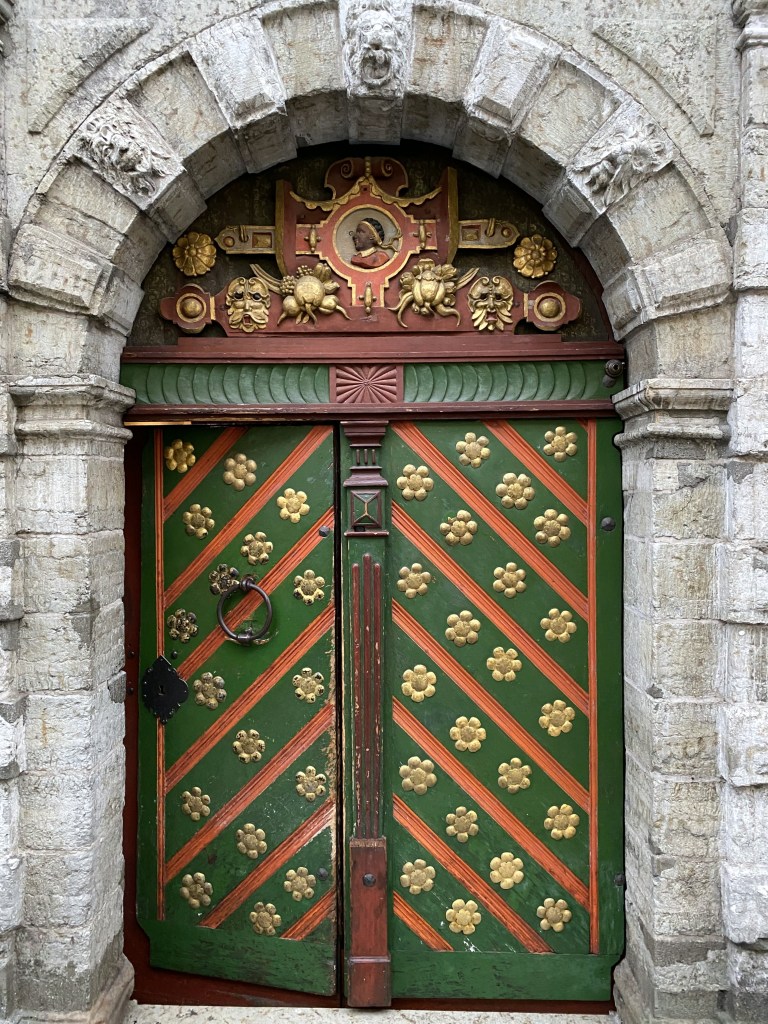
Aaand, the House of the Brotherhood of Black Heads. Also featured in the Melchior novels.
Described as a social club for single merchants and other tradesmen in the Melchior books, it “was a professional association of ship owners, merchants, and foreigners dating from the 14th century.“
“The House of the Blackheads was visited by several Russian Emperors including Peter I, Paul I and Alexander I who also became honorable members the Brotherhood.“
Just some Art Nouveau architecture down the street, which was pretty cool. (But NOTHING like we’d see later in Riga.)
Toompea at night.
Tallinn’s Victory Column on Freedom Square, commemorating the Estonian War of Independence at the end of WW I.
More winter scenes from Toompea’s stretch of wall.
From Tallinn, Estonia, we headed slightly south to the capital of Latvia: Riga.
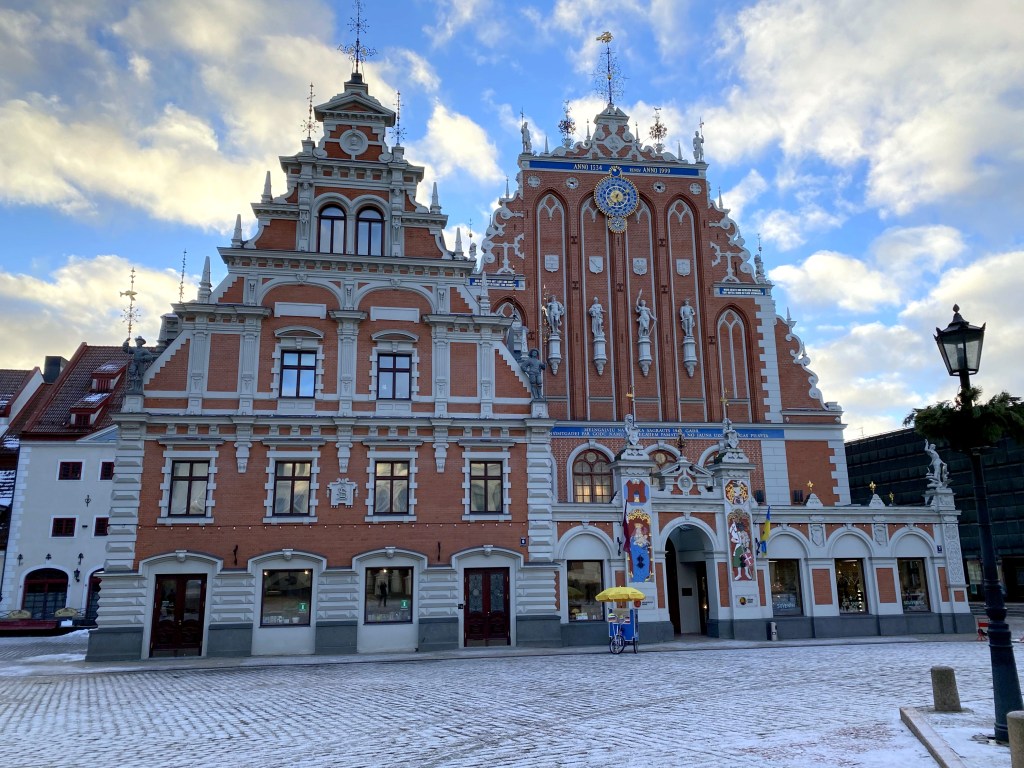
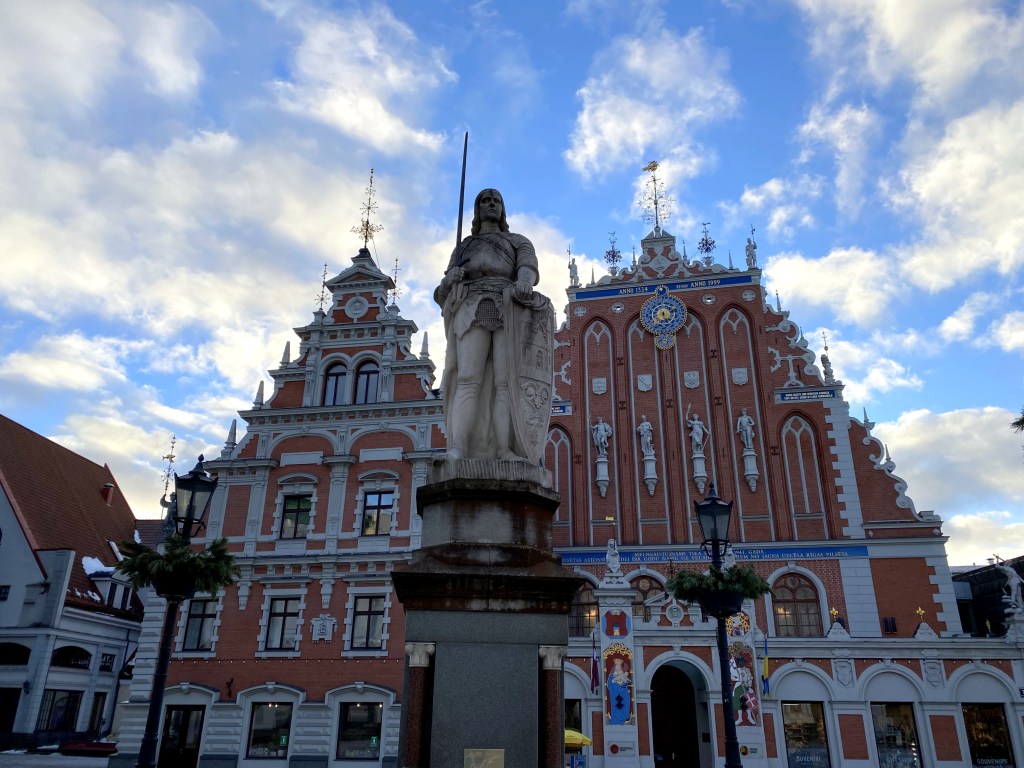
Although not a walled, medieval, historically preserved town like Tallinn, Riga nonetheless offered its own flavor of charm and architectural notability. Case in point, Riga’s own House of the Blackheads. As with Tallinn’s House of the Blackheads, Riga’s building housed the Brotherhood of Blackheads, a guild for unmarried merchants, shipowners, and foreigners in Riga.
Unlike Tallinn’s modest townhouse (albeit with a very cool door and lunette), Riga’s House of the Blackheads is huge and ornate. The original building erected in 1334 was the largest public building in Riga at the time.
Unfortunately that building, updated over the centuries, was bombed out of existence in 1941 during a battle between Germany and the Soviets. The Soviet government razed what was left in 1948, but it was rebuilt in the late 1990s based on extensive archeological studies.
Right around the corner from the Blackheads lies Riga’s capitol building. Very unassuming, we thought.
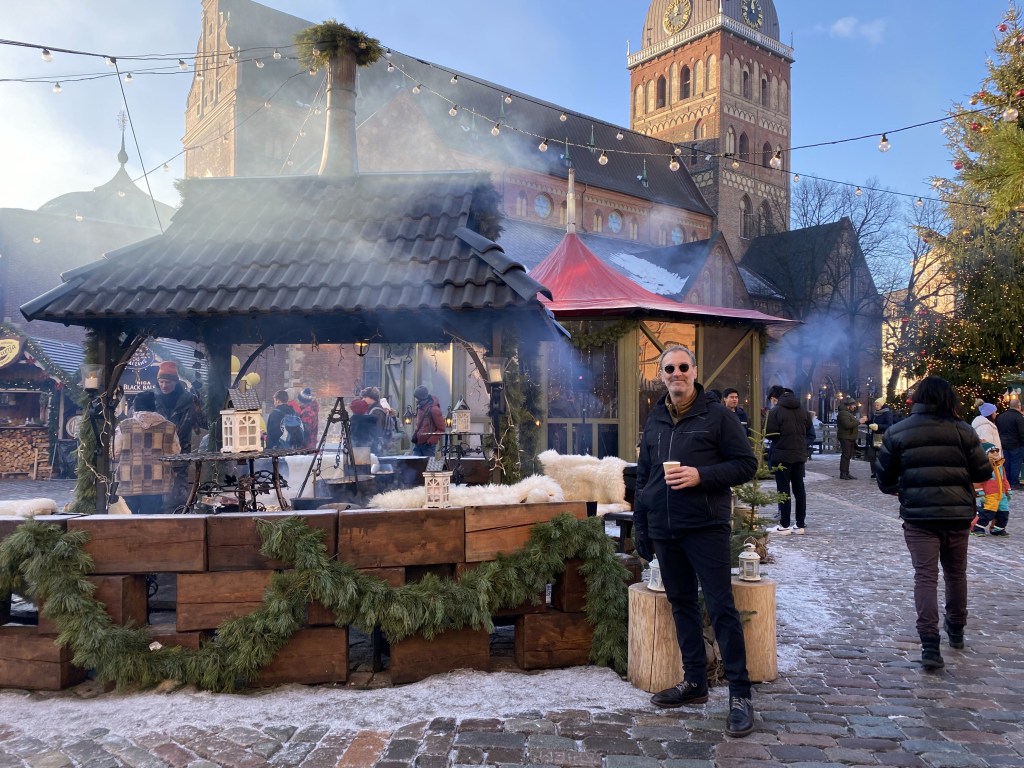
Riga’s Christmas market in the shadow of the Dome Cathedral was pretty great.
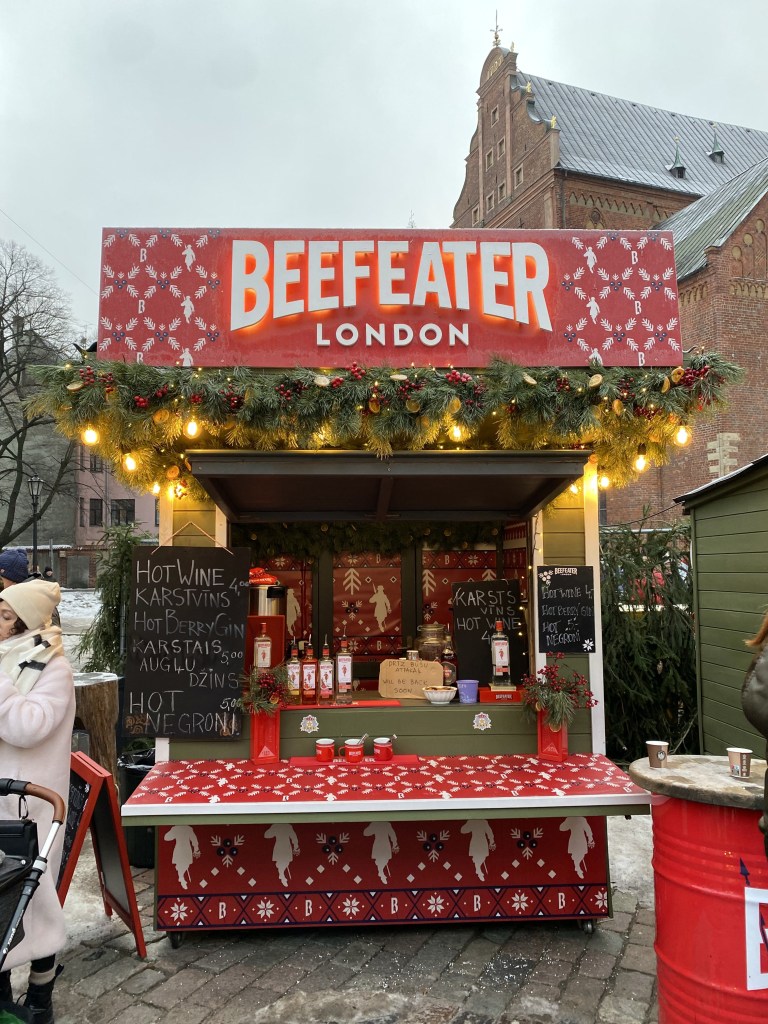
But some stalls were actually branded, which we’d never seen before, and gave areas of the Christmas market a commercial taint that we didn’t welcome:
Nonetheless, the overt booziness of the place was pretty cool – not just glühwein, but all sorts of booze, including – weirdly for both time and place – gin stalls.
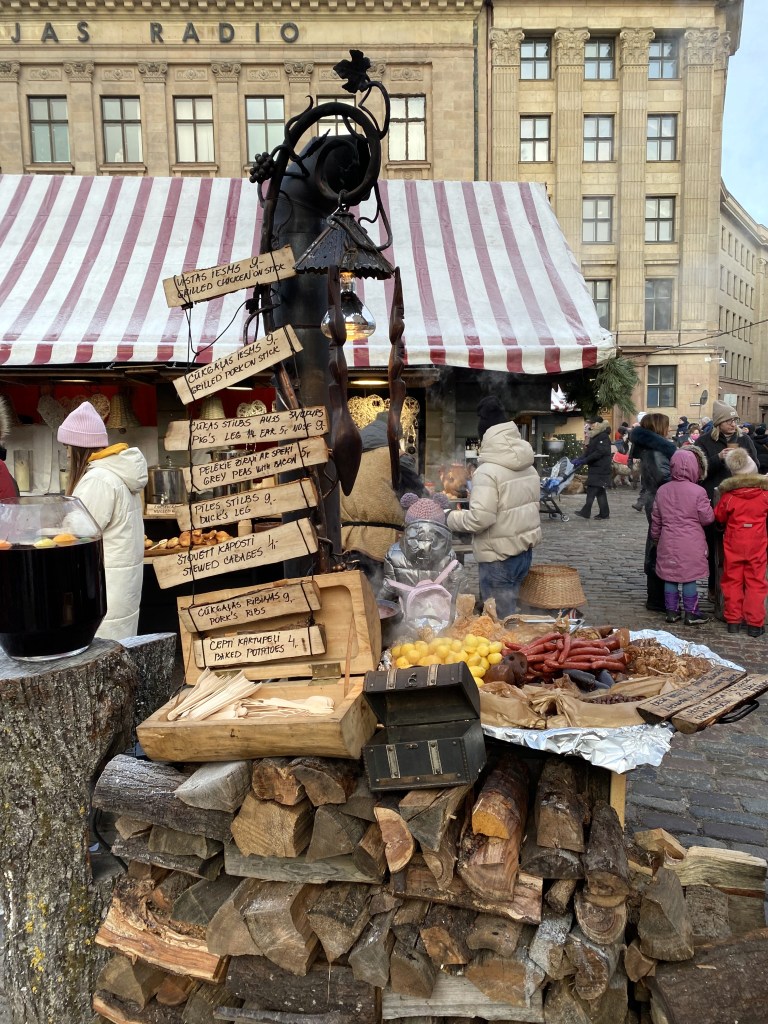
Lots of food. . .
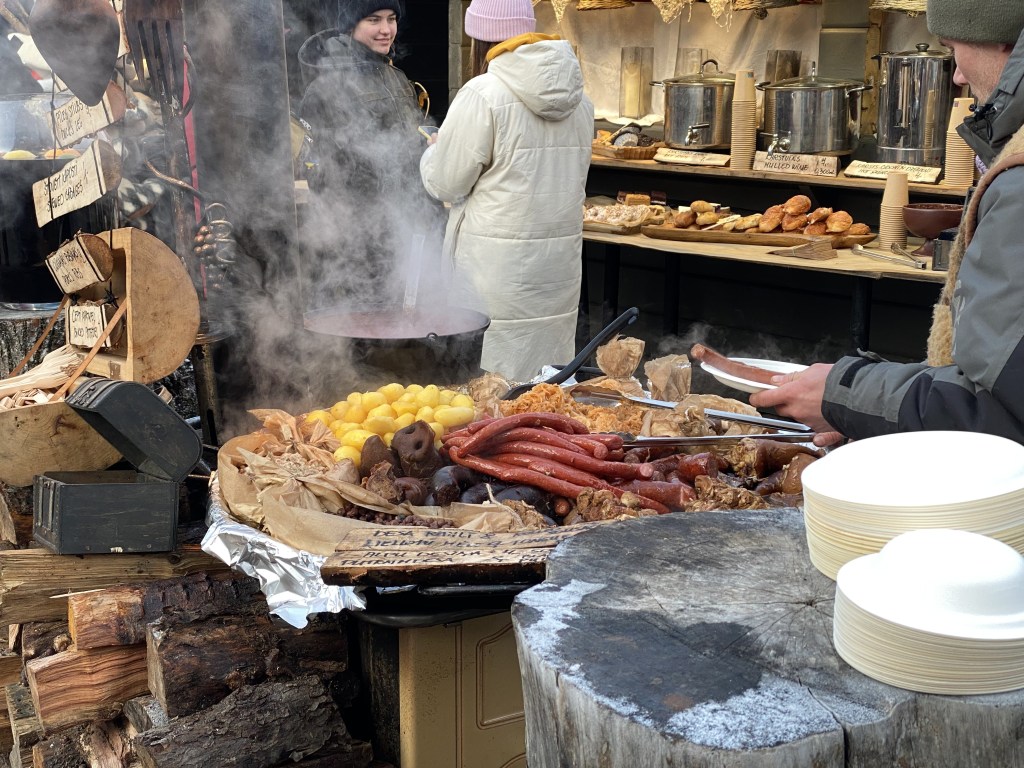
which had a distinct eastern Europe flair – check out the pig snout:
Or maybe it’s an entire pig submerged down there? Who knows.
Pigs a poppin’ in this place:
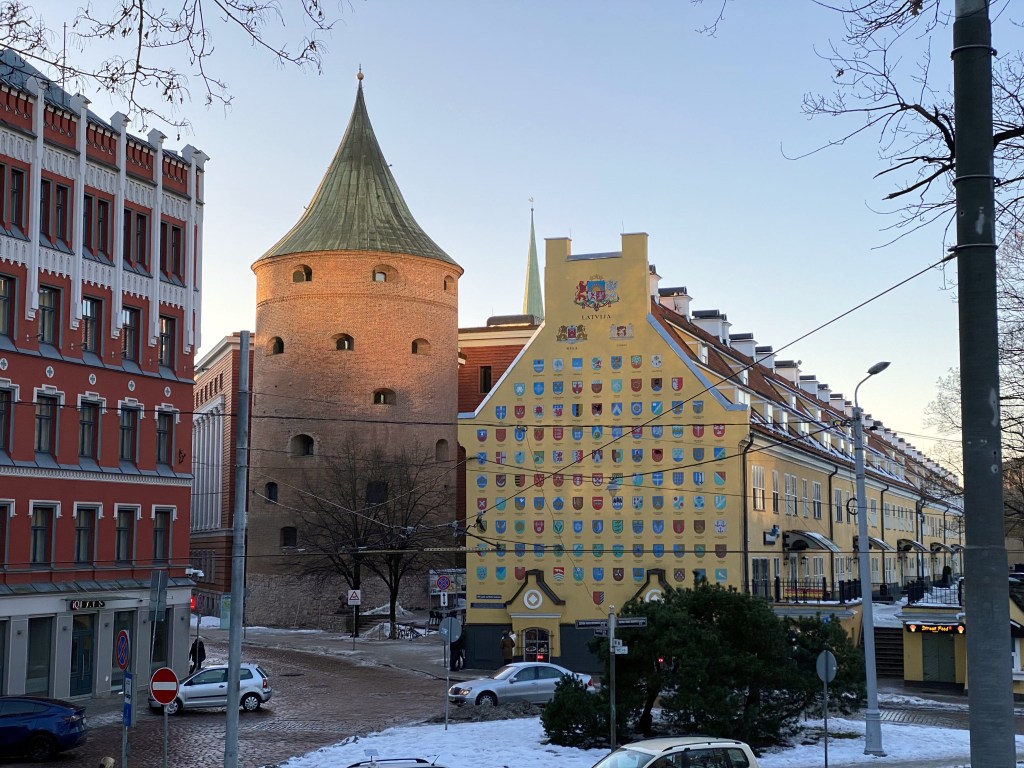
Riga’s Powder Tower, originally built in 1330 as part of the defensive wall system, that one was destroyed during an attack by the Swedes on the Polish-Lithuanian Commonwealth in 1621. (Livonia [which encompasses parts of multiple modern Baltic nations including Latvia] was a fiefdom at the time).
The current iteration dates from 1650.
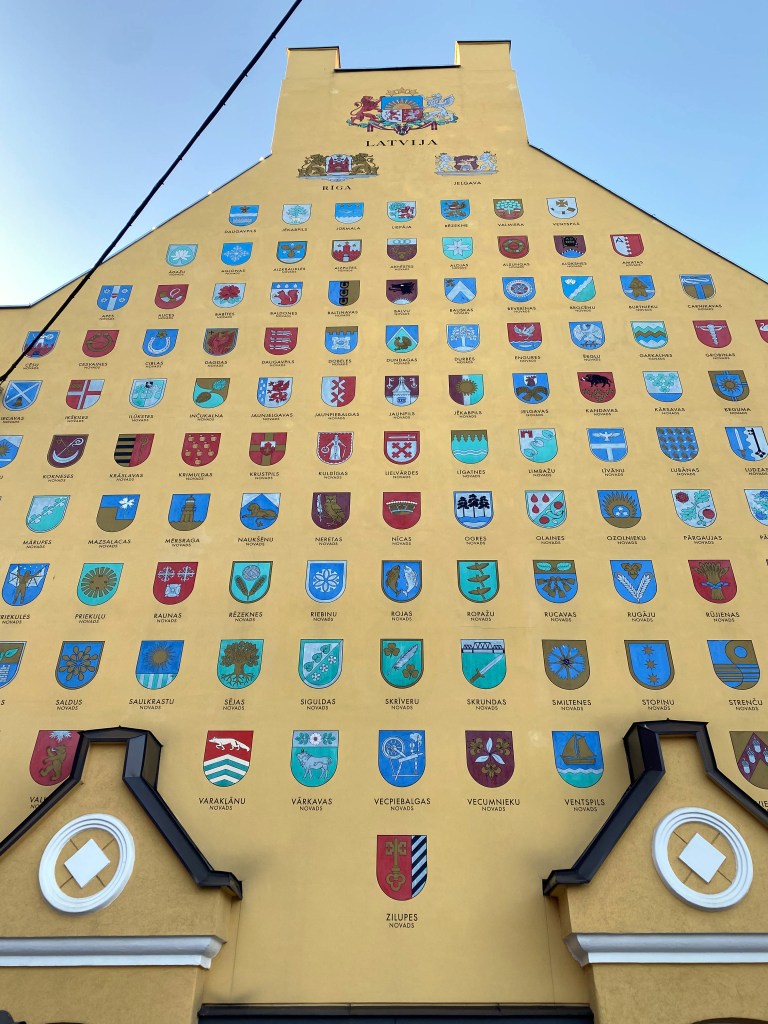
Next door lies Jacob’s Barracks, built in the 18th century to house the garrison, the structure continued to be used until 1997 by various militaries as the area’s geopolitics evolved over time. The length of the barracks are now home to bars and restaurants, but the end, with its depiction of the coats of arms of Latvian towns and municipalities, was the most intriguing to us.
Portions of the old city wall running along the barracks:
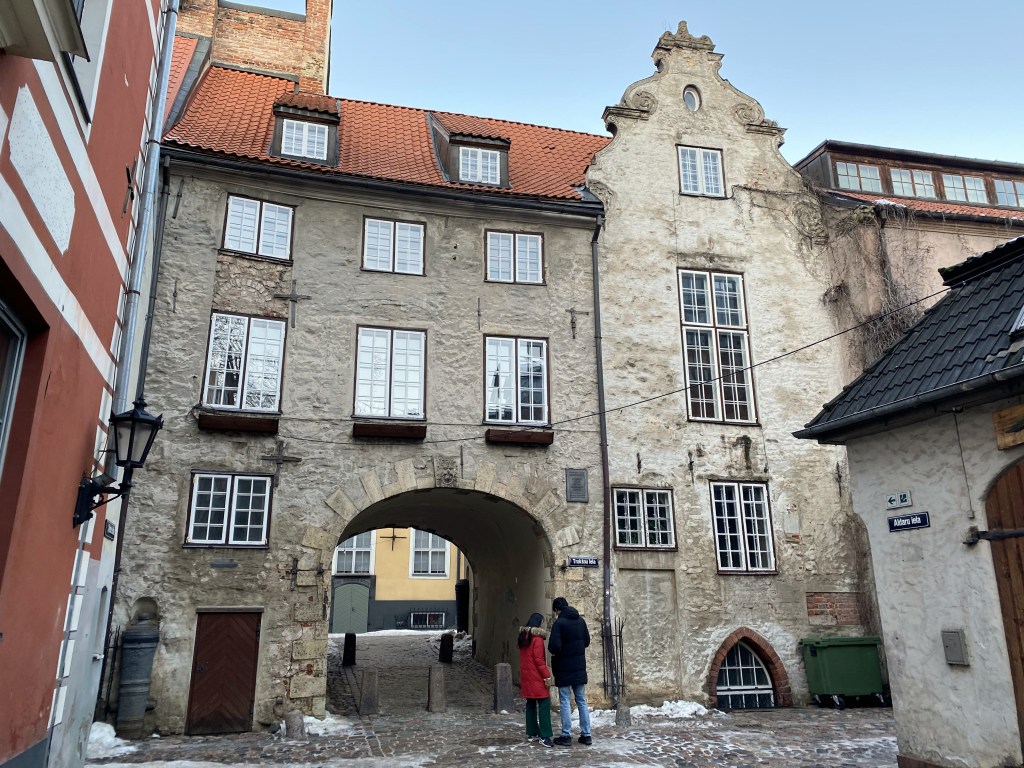
The Swedish Gate – the only portal in the medieval city walls to still exist. Beyond lies Trokšņu iela (Noisy Street) which ironically is one of the quietest and most charming street in Riga now. I’m sure we walked through here and down this apparently amazing street, but we have no visible evidence of this. ¯\_(ツ)_/¯
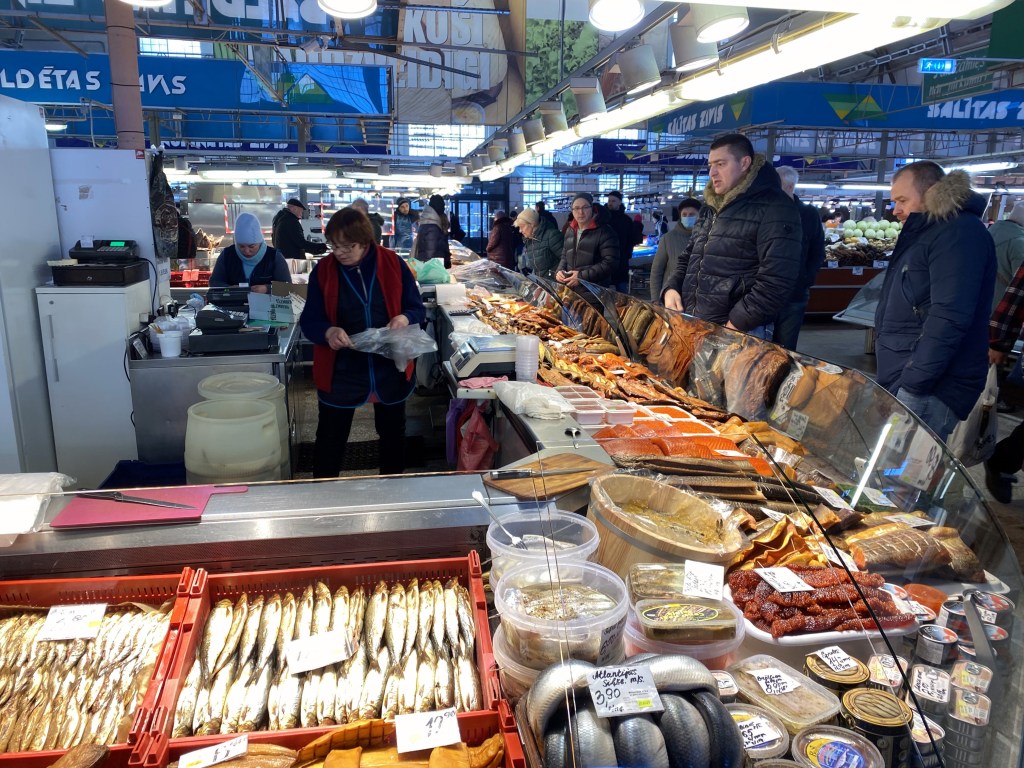
Instead, here’s some pics of Riga’s mammoth Central Market.
Absolutely any variety of food one could desire is available here.
The Riga Central Market (there’s a bird’s eye view later in the post) is composed of multiple, massive, hanger-like structures and is not only the largest shopping destinations in Latvia, but one of the largest markets in Europe.
The aforementioned bird’s eye view would come courtesy of St. Peter’s Church steeple.
Built in chunks over centuries, the first St. Peters was constructed as early as 1209; then a few decades later, in the middle of the 13th century; then the early 15th century; then at the end of the 17th century. Pretty plain brick church though, much like the Scandinavian Gothic brick churches encountered in Denmark.
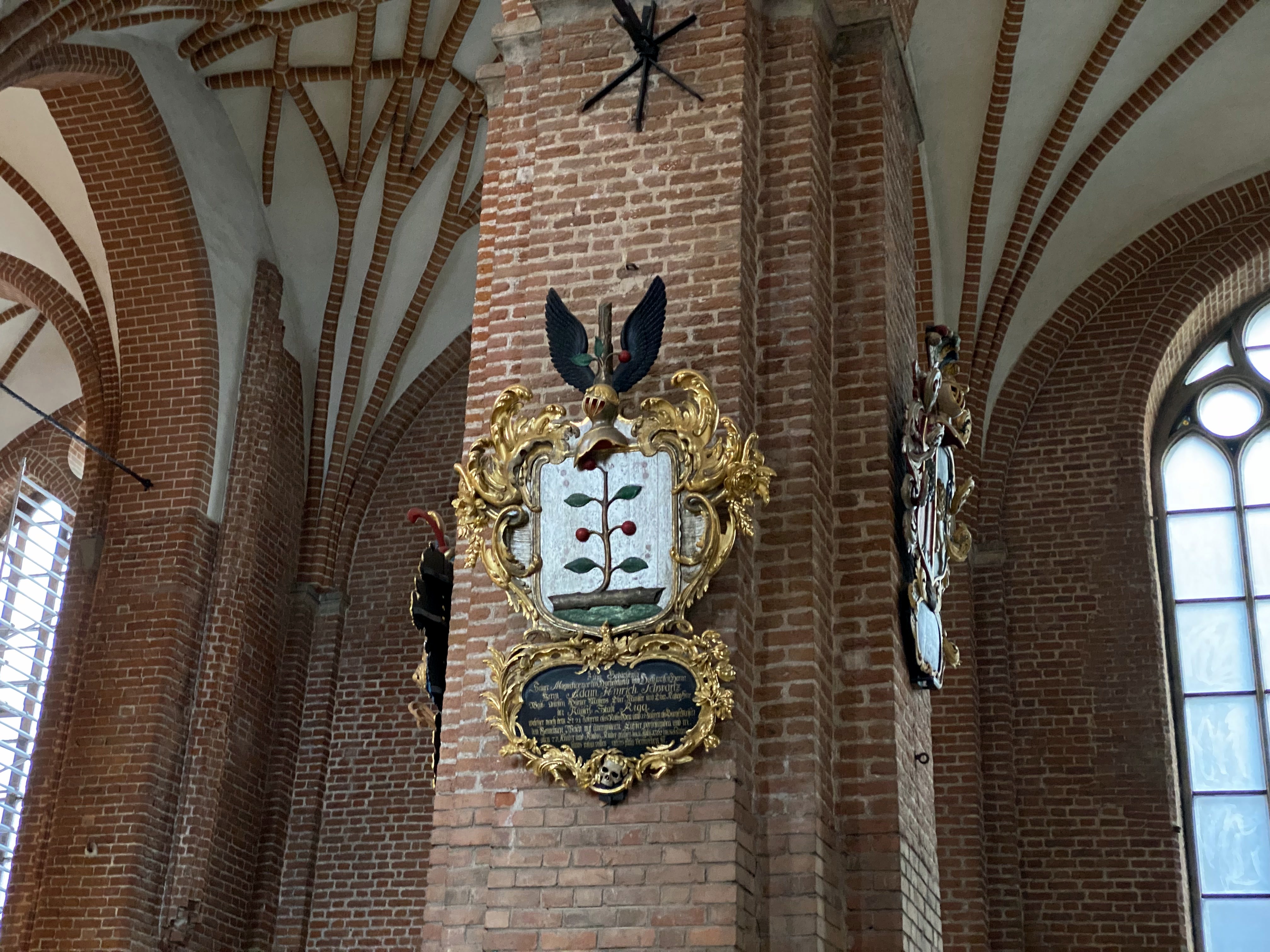
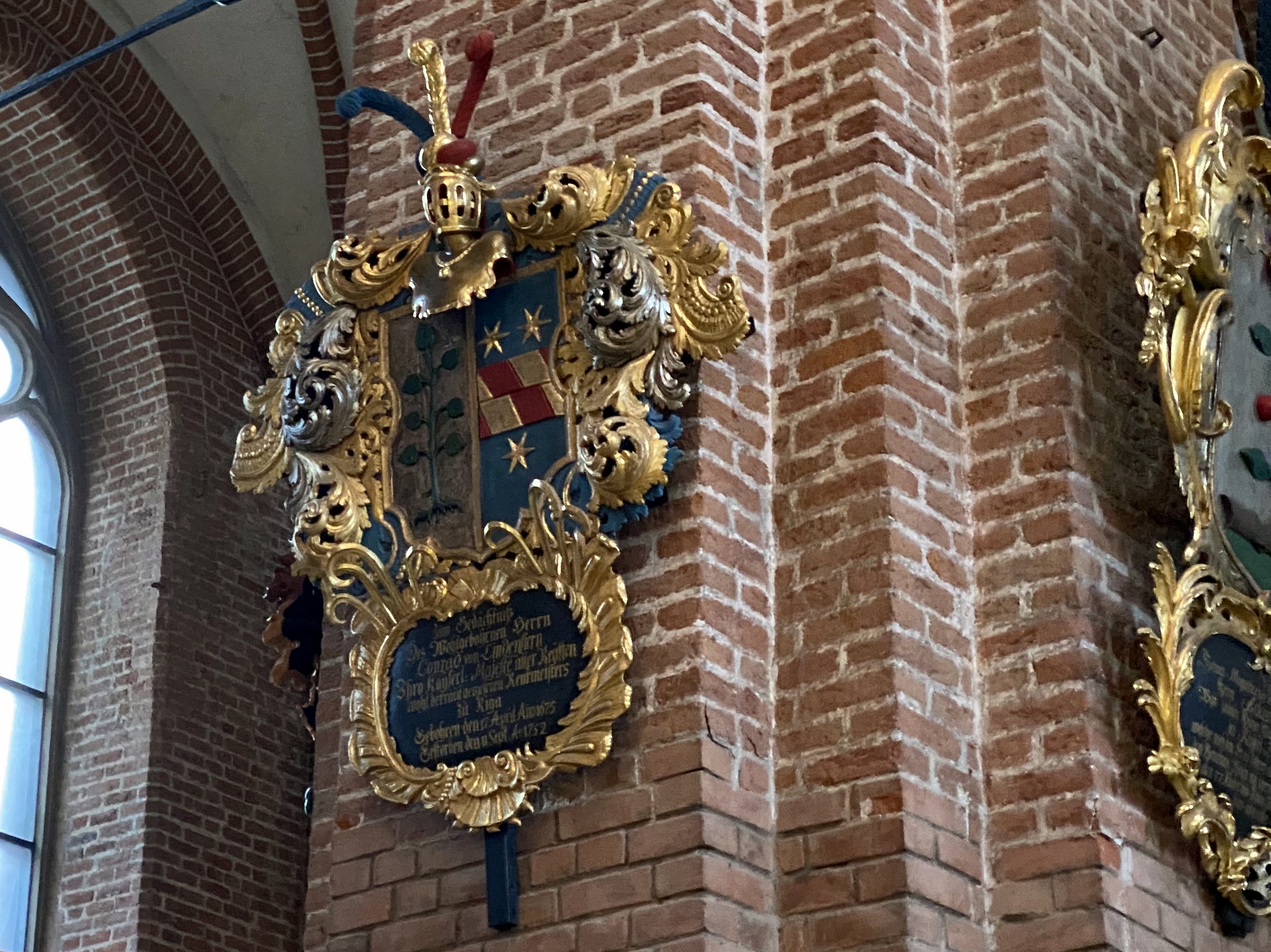
As with Tallinn’s cathedral, portions of the interior are adorned with local noble family coats of arms (one of which looks dangerously close to the esteemed crest of the Connells):
Something in the crypt we think? Dunno – pretty cool though.
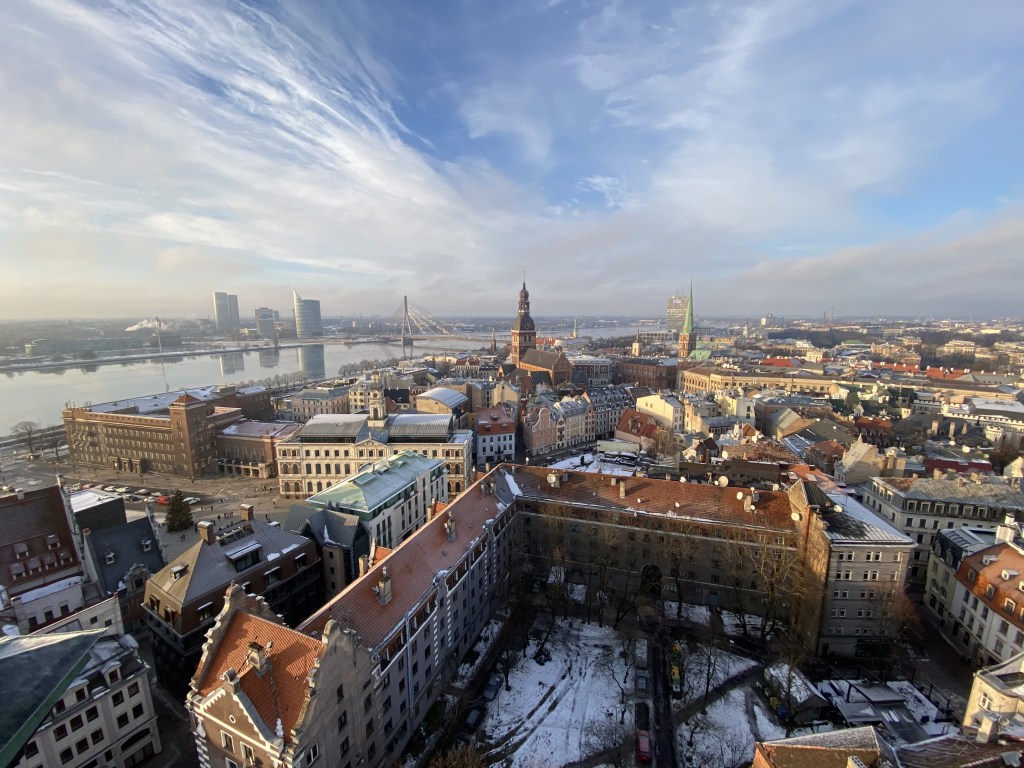
Views from St. Peter’s steeple observation deck – pretty awesome perspective on the town.
Renaissance facades in front of the Dome Cathedral:
Another, higher view of the Powder Tower:
Riga’s Central Market hangers:
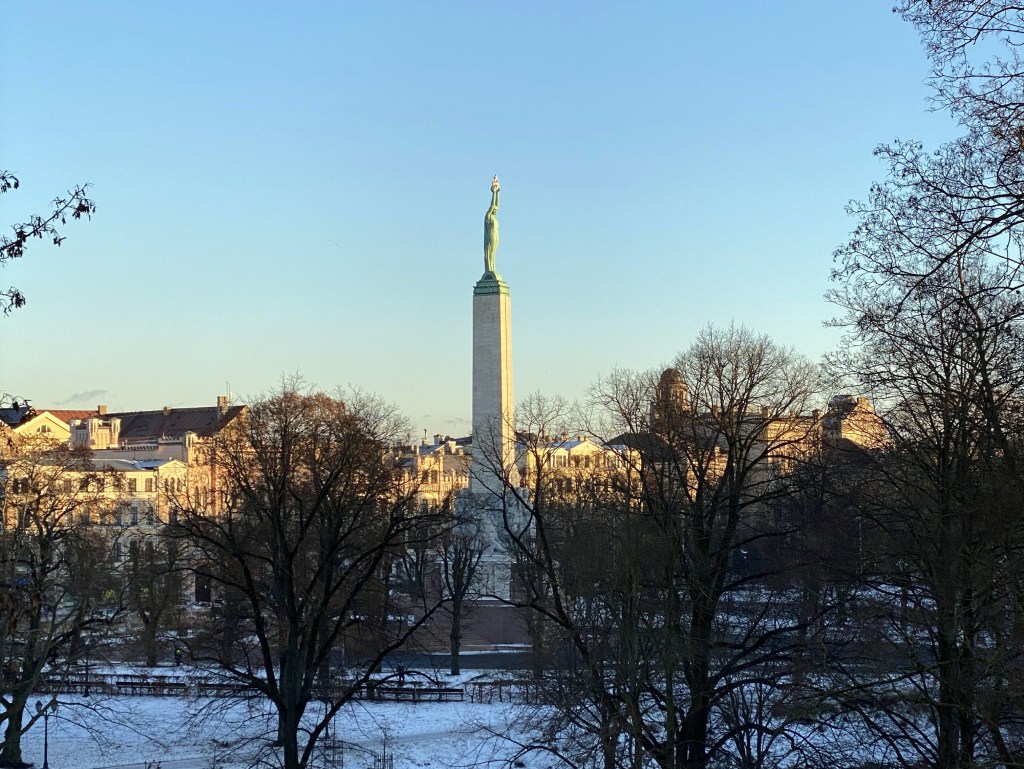
Down the street lies Riga’s Freedom Monument. A large statue of Peter the Great astride a horse once occupied this plaza, but it disappeared during WWI and the Latvians weren’t eager to replace it. Instead, the Freedom Monument was erected in its place in 1935.
Flowers are allegedly placed at the foot of the monument each day (we didn’t see any) as an act of defiance – such a gesture was punishable by deportation to Siberia during the Soviet era.
Dinner at 3 Pavāru Restorāns – definitely the dining highlight of our stay.
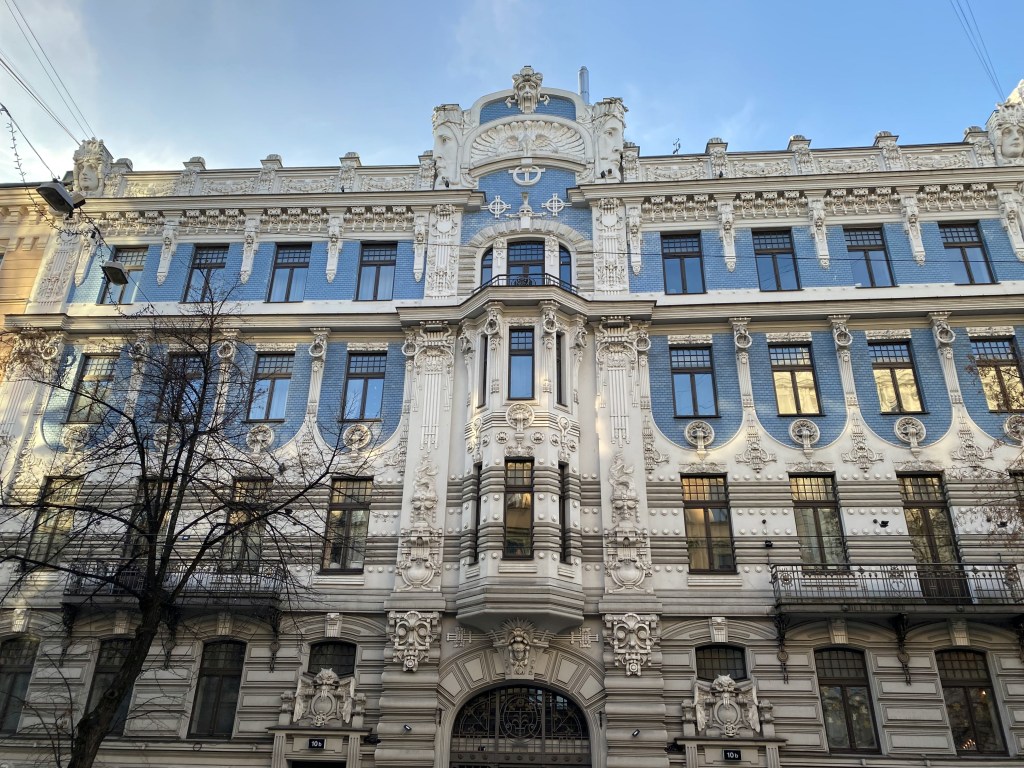
Riga’s Art Nouveau district on our Christmas Day walk. Riga’s period of peak prosperity happened to coincide with the Art Nouveau arts and architecture movement between 1890 and the outbreak of WWI. Although not at all unique to Riga, the town benefited from not being bombed into oblivion during WWII, resulting in a concentration of buildings in this style not seen anywhere else in Europe.
Perhaps the coolest: No. 10b, with a peacock (the symbol of art nouveau) flanked by big-ass faces.
Perfect winter weather in Riga for a Christmas visit.
After canceling four international trips this year (Cartagena, Columbia, over Memorial Day; Normandy, France, over July 4; the South of France over Labor Day; and Mayakoba, Mexico, over Veterans Day [the last being the only one of these trips fruitlessly planned after the pandemic began]), we finally escaped over Christmas. After evaluating multiple options (which already were limited by the dozens of countries that refused to accept dirty Americans), we targeted the Turks and Caicos. This selection was made based on three factors:
Direct flight from Dulles, which limited our exposure
Turks and Caicos’ requirement that all visitors submit negative test results for the ‘VID, taken within 5 days of arrival, in order to even board a plane there
As a Caribbean island, our time spent there would be almost entirely outside, further limiting our risk
With this plan in mind, we booked cancelable flights to Turks and Caicos in mid-November, immediately after cancelling our Veterans Day trip, but waited until the last minute to actually book a hotel. We were still concerned that additional shutdowns could occur at the end of December, exposure risks could increase unacceptably, or that we’d test positive.
Although the December surge as a result of Thanksgiving gatherings was a significant concern, we did receive our negative COVID PCR tests on Friday, December 18. After some final, thoughtful consideration of risks versus reward, we pulled the trigger Friday evening on lodging, and flew out Sunday morning, December 20.
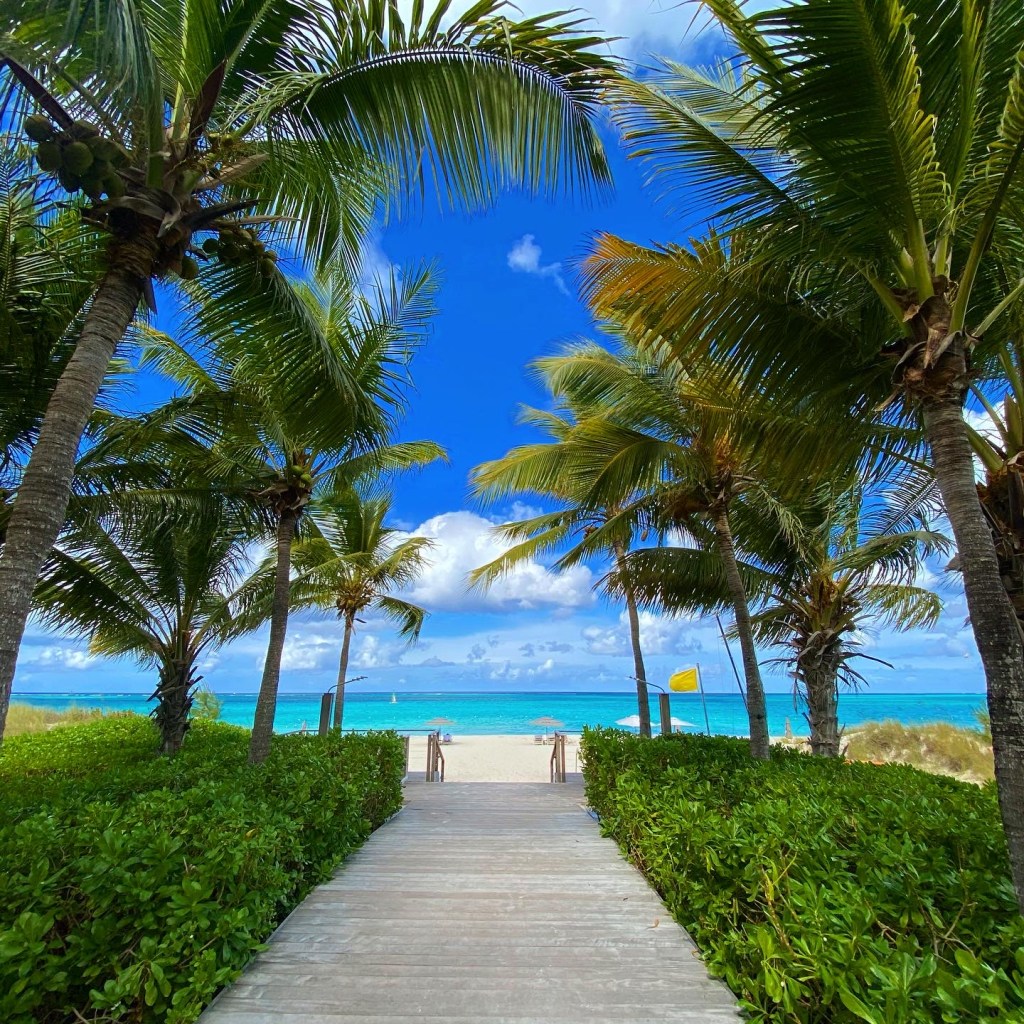
The reward definitely merited the risk:
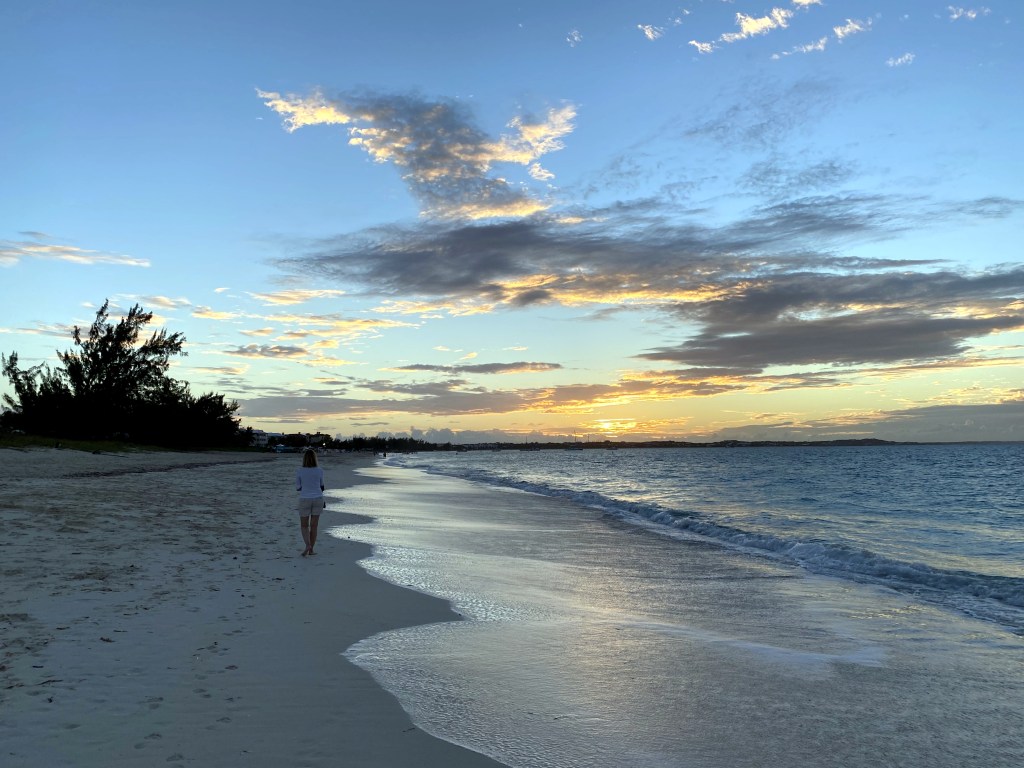
Sunset on Grace Bay our first evening on Providenciales, Turks and Caicos:
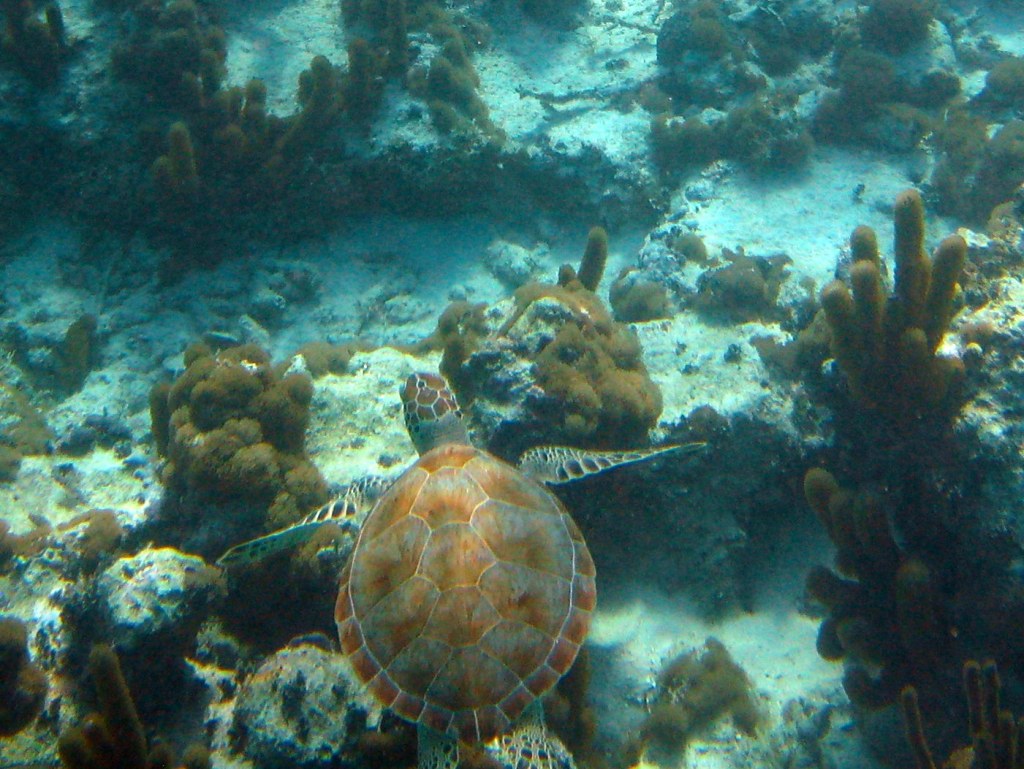
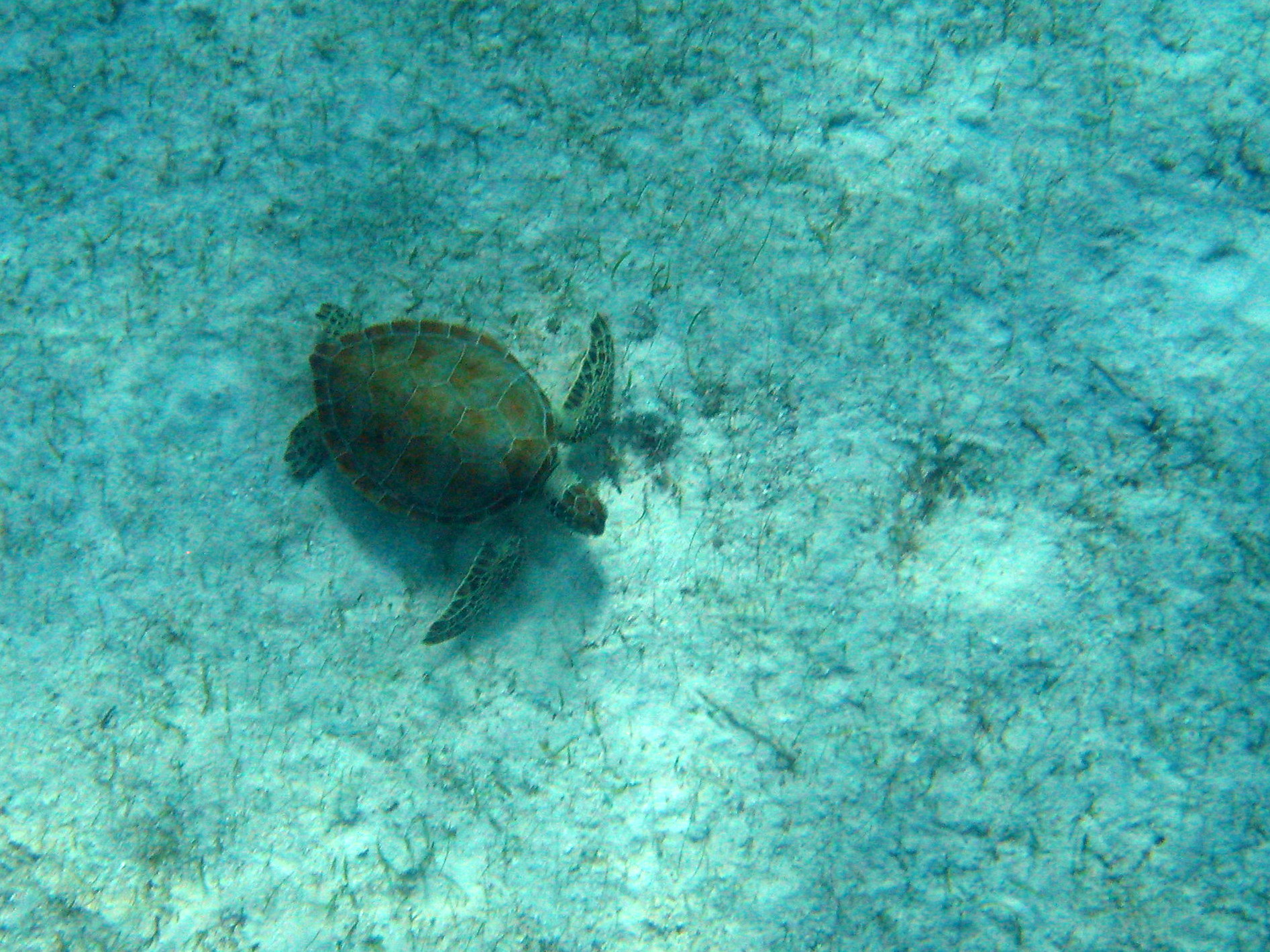
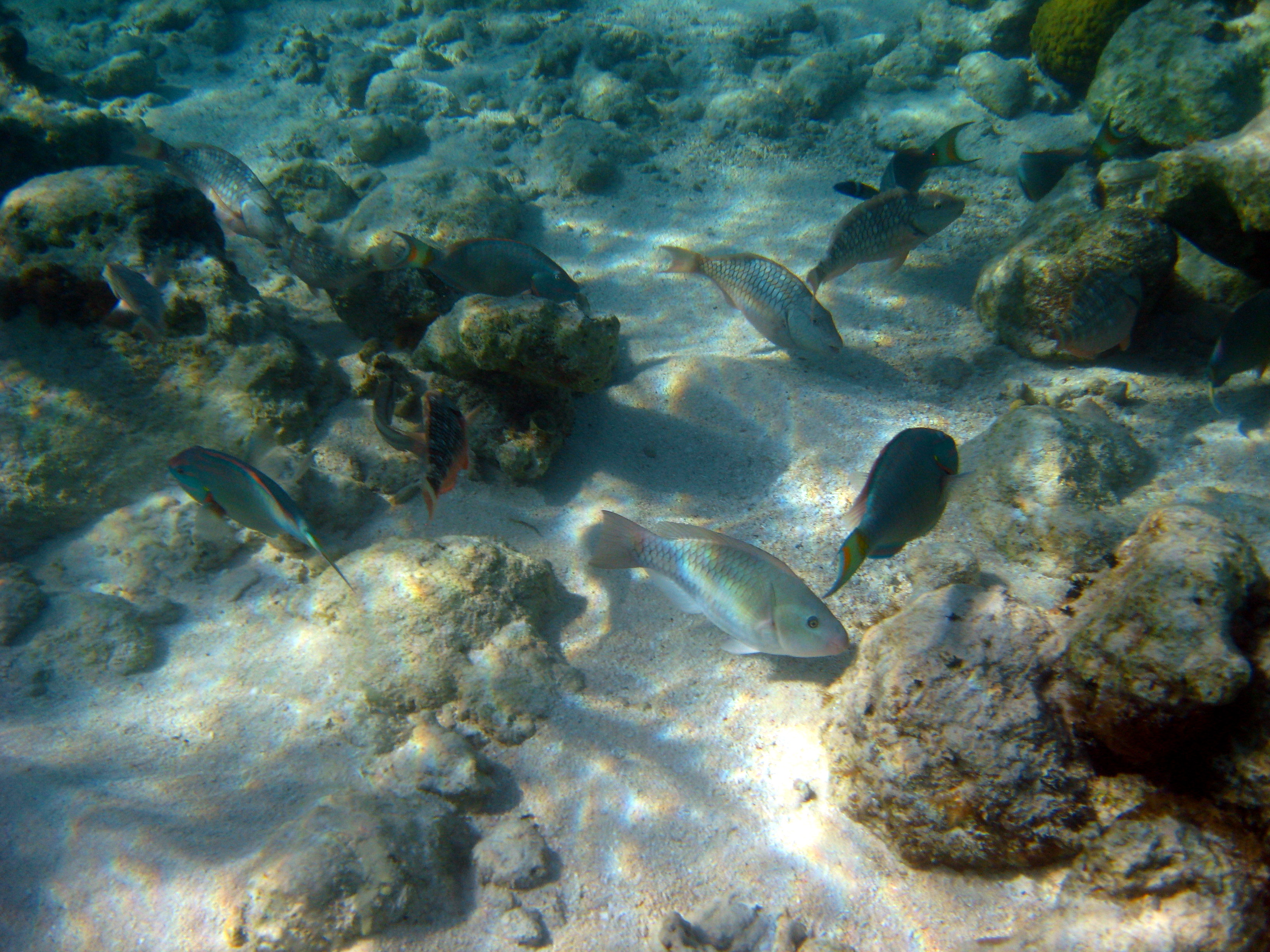
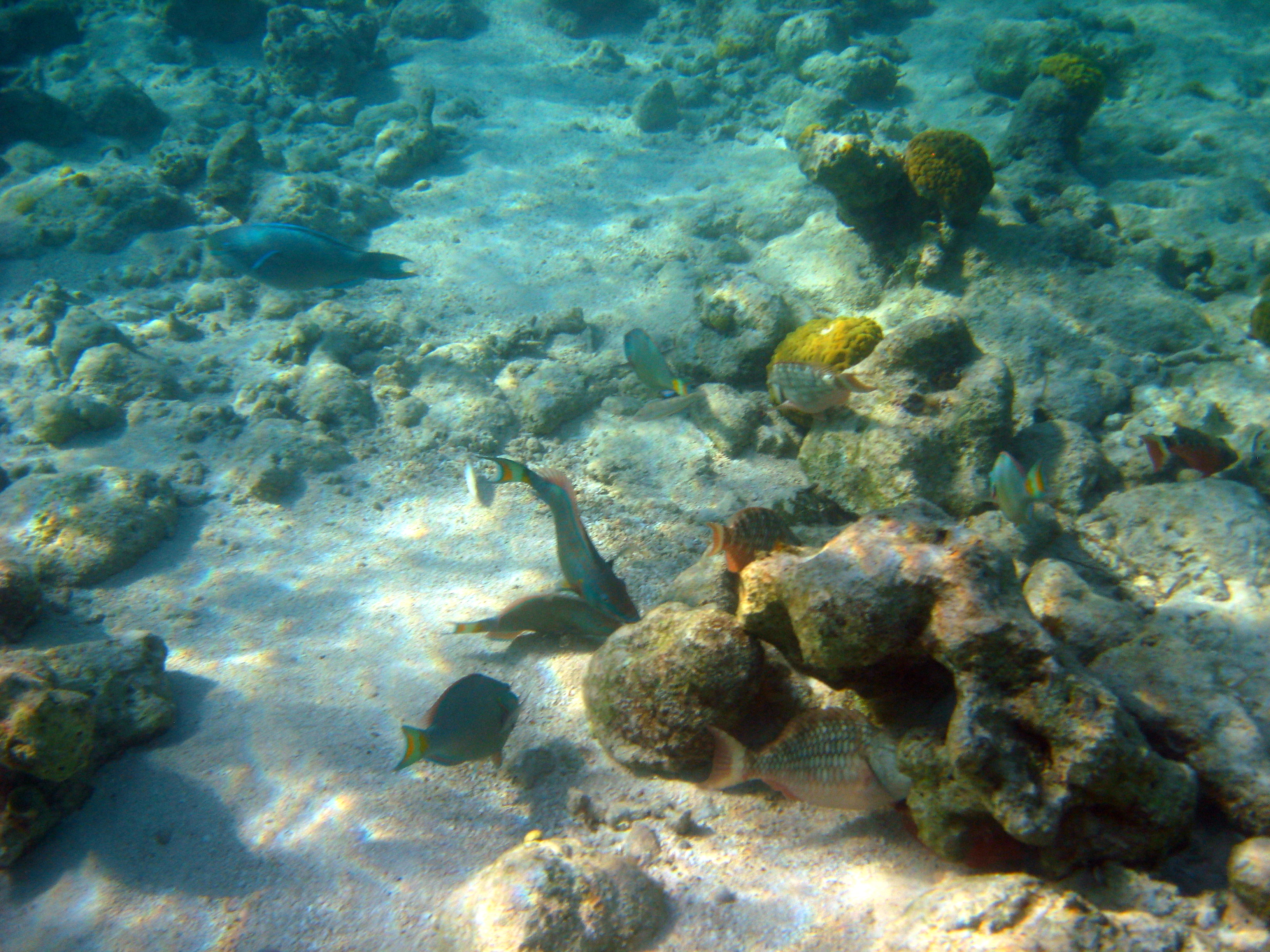
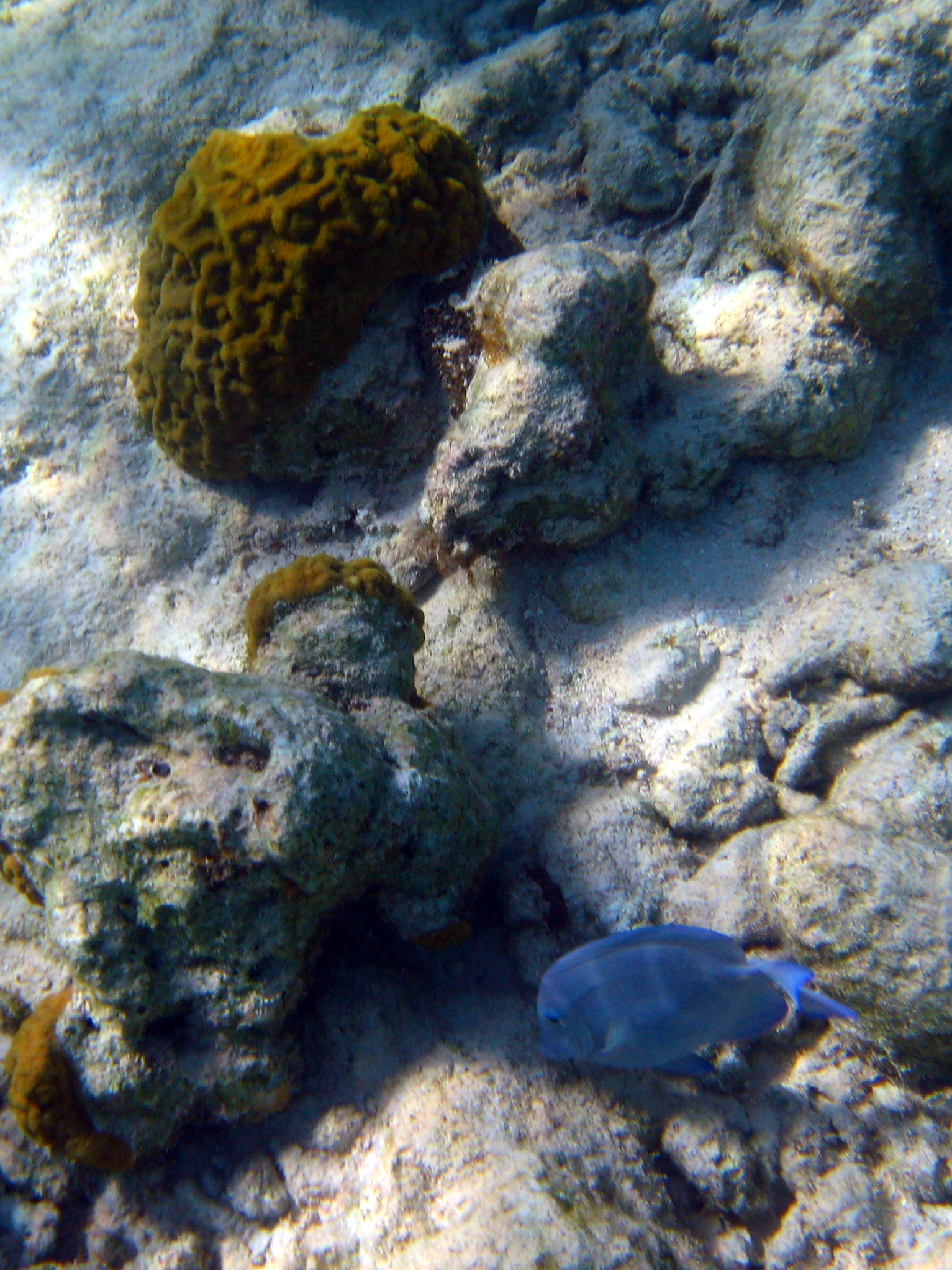
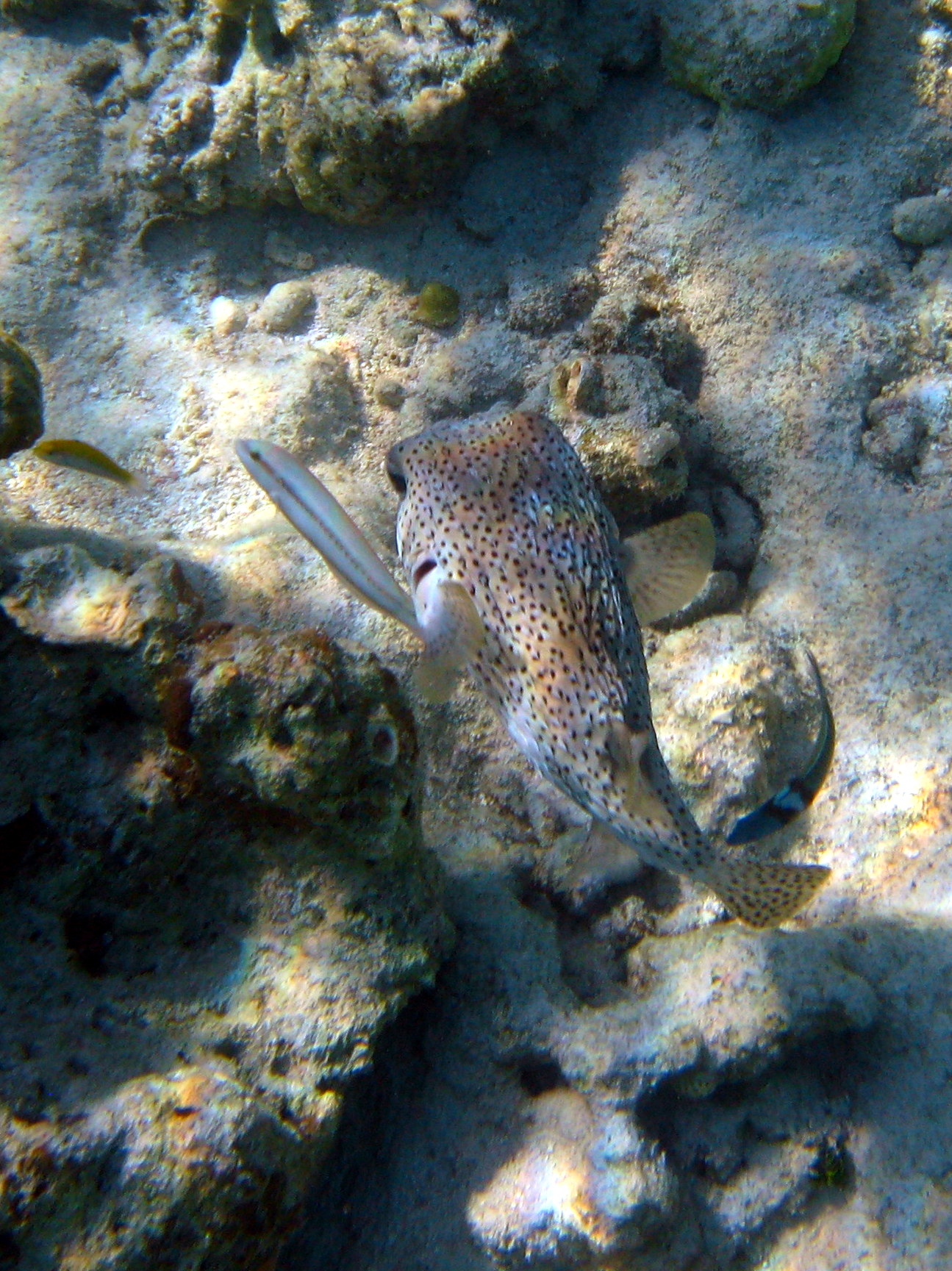
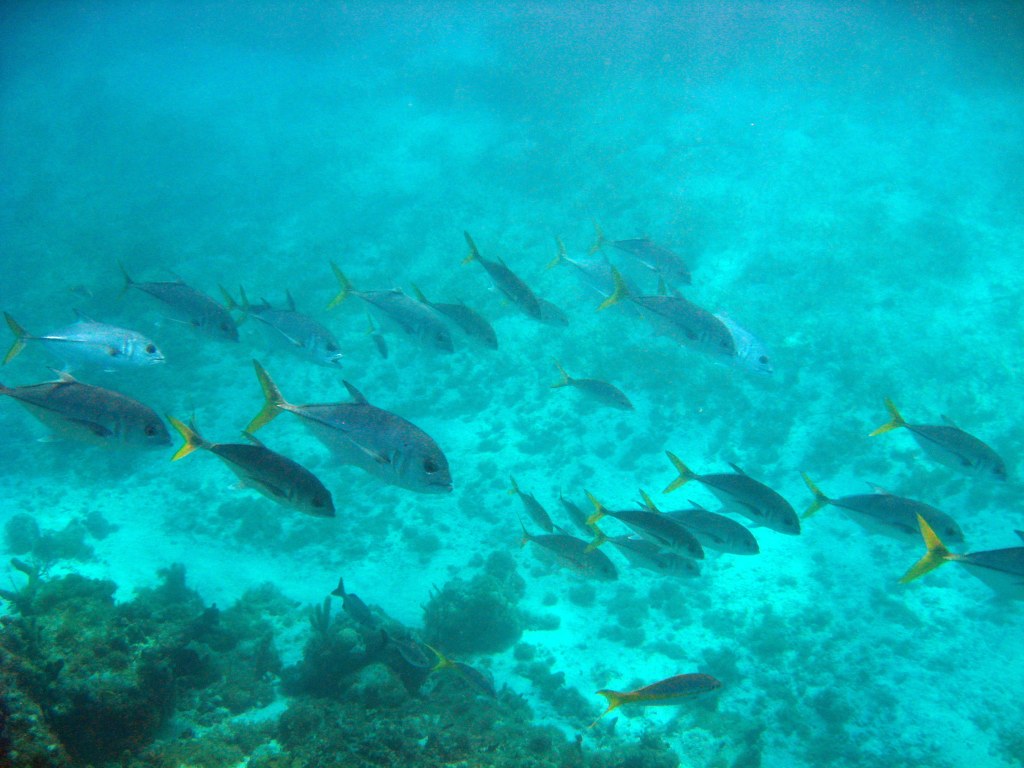
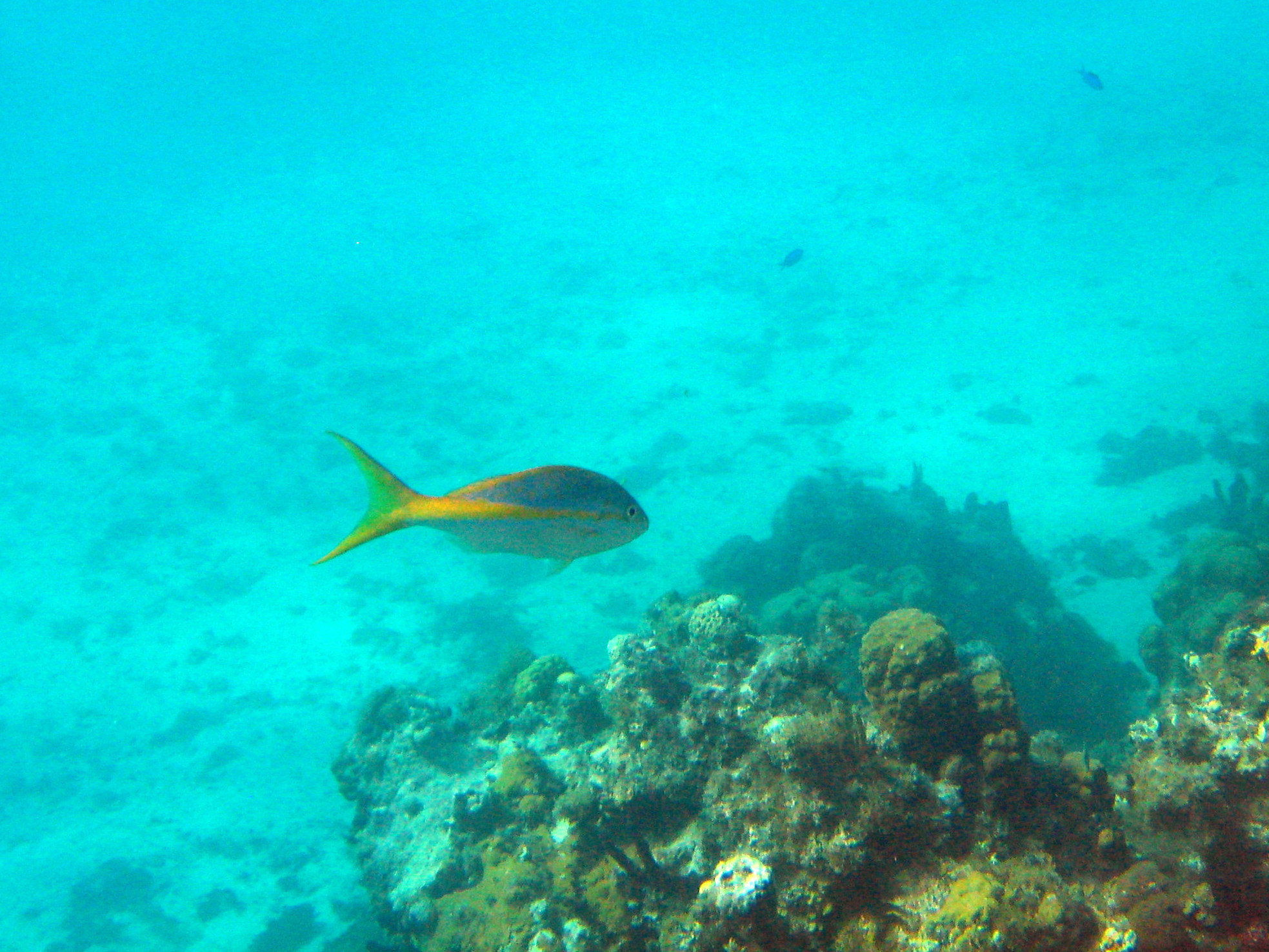
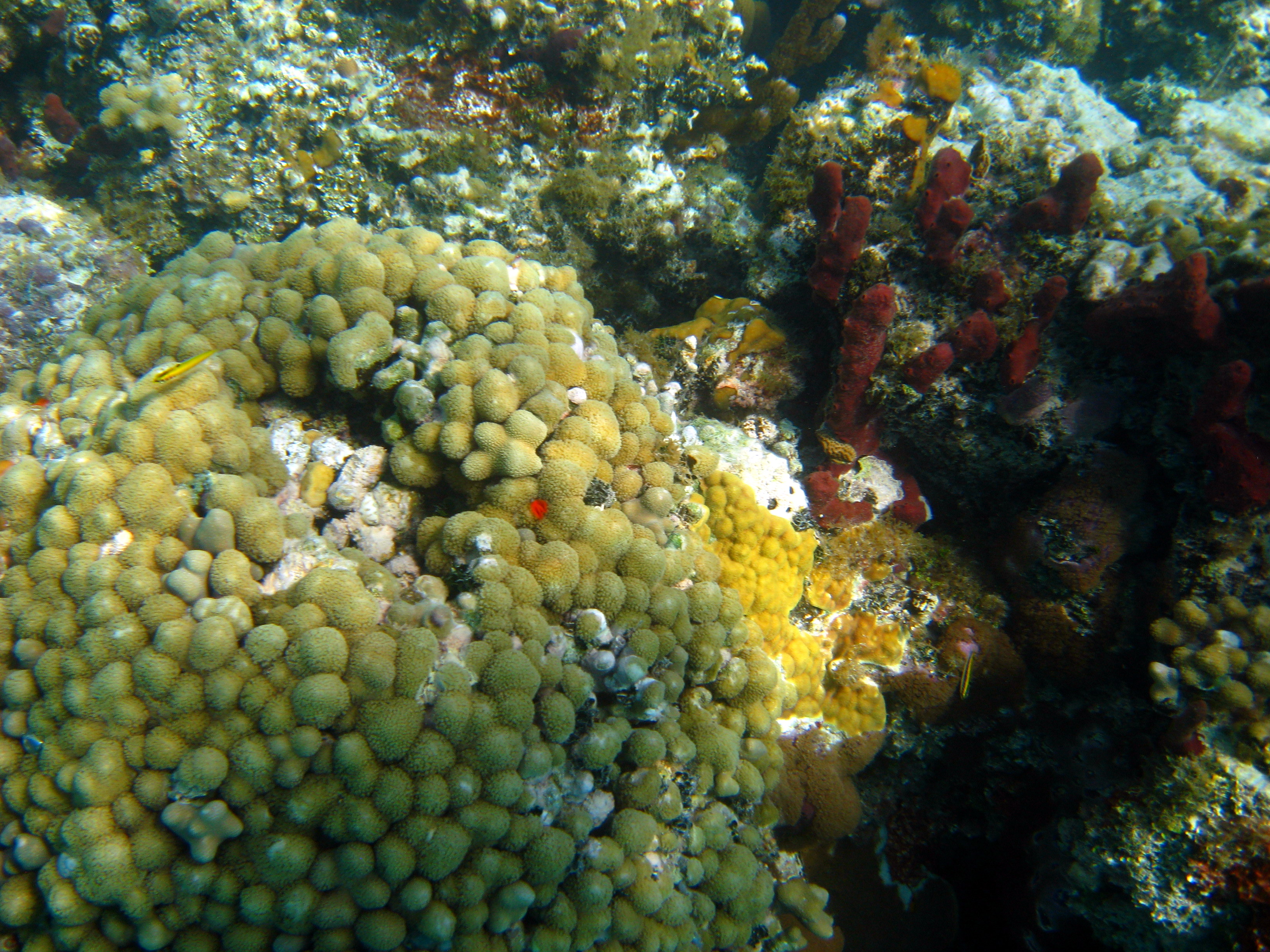
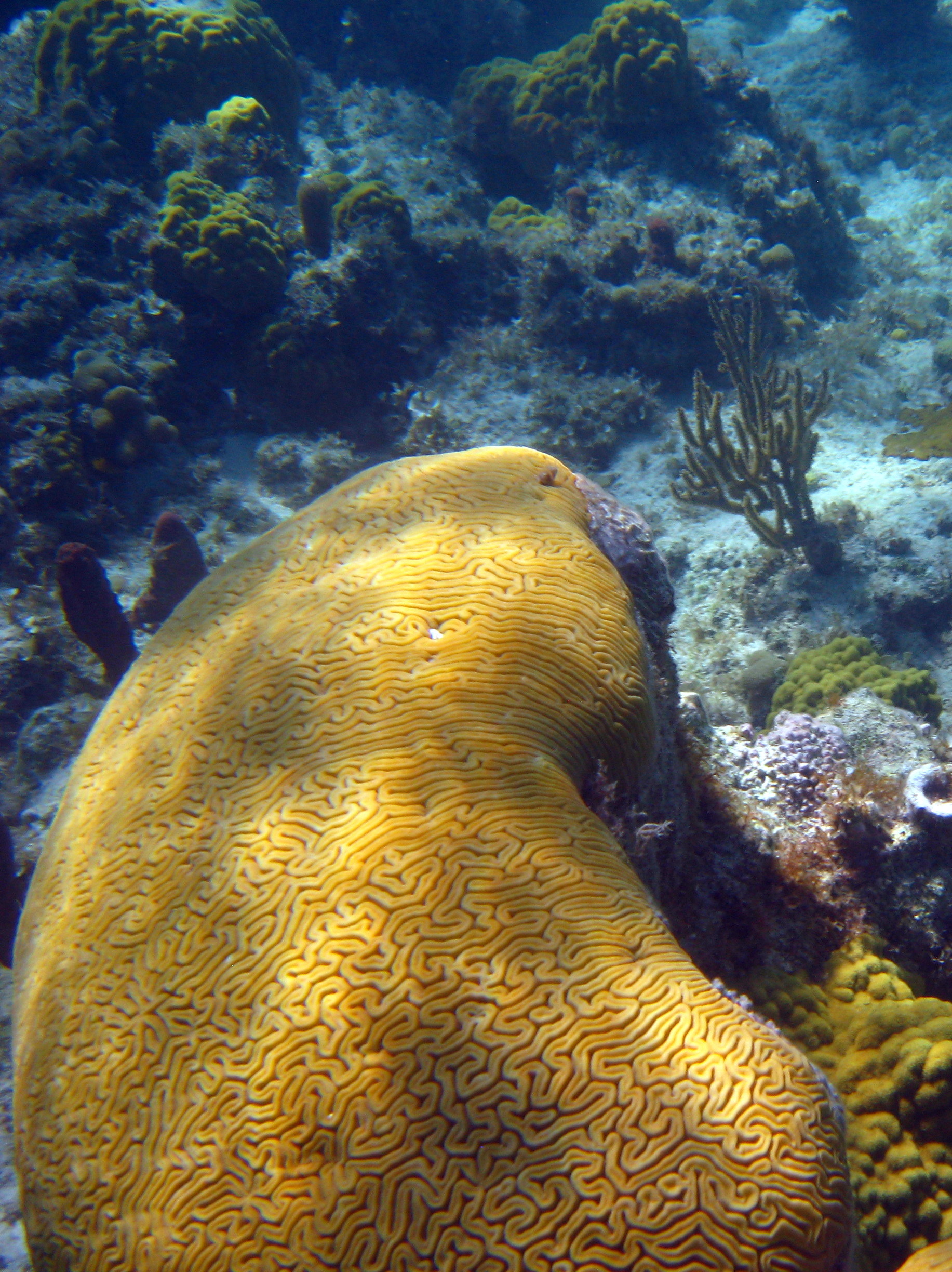
No Caribbean trip is complete without a little bit of snorkeling. On Wednesday, we hit Coral Garden, featuring a cool green sea turtle and puffer fish:
Providenciales is a sandy scrub island, versus the mountainous peaks of St. Lucia, for example. But we found a high point one evening at the Magnolia Wine Bar, with an entirely different sunset backdrop to the beach views we had been enjoying.
The extreme eastern tip of the 5-mile long Grace Bay beach:
Heading back west, toward home:
Christmas Eve:
These treats were scarfed up later in the evening with absolutely no regard to Santa’s interests:
The tradition of the traveling Christmas stockings continues! These babies have been everywhere, including Christmas in Laos last year.
Christmas morning;
And more snorkeling on Christmas day – this time farther west, at Smith’s Reef.
Christmas night at Infiniti – definitely the best meal we experienced the entire week.
A little beach buddy patiently waiting by our table for a treat that never came 😦
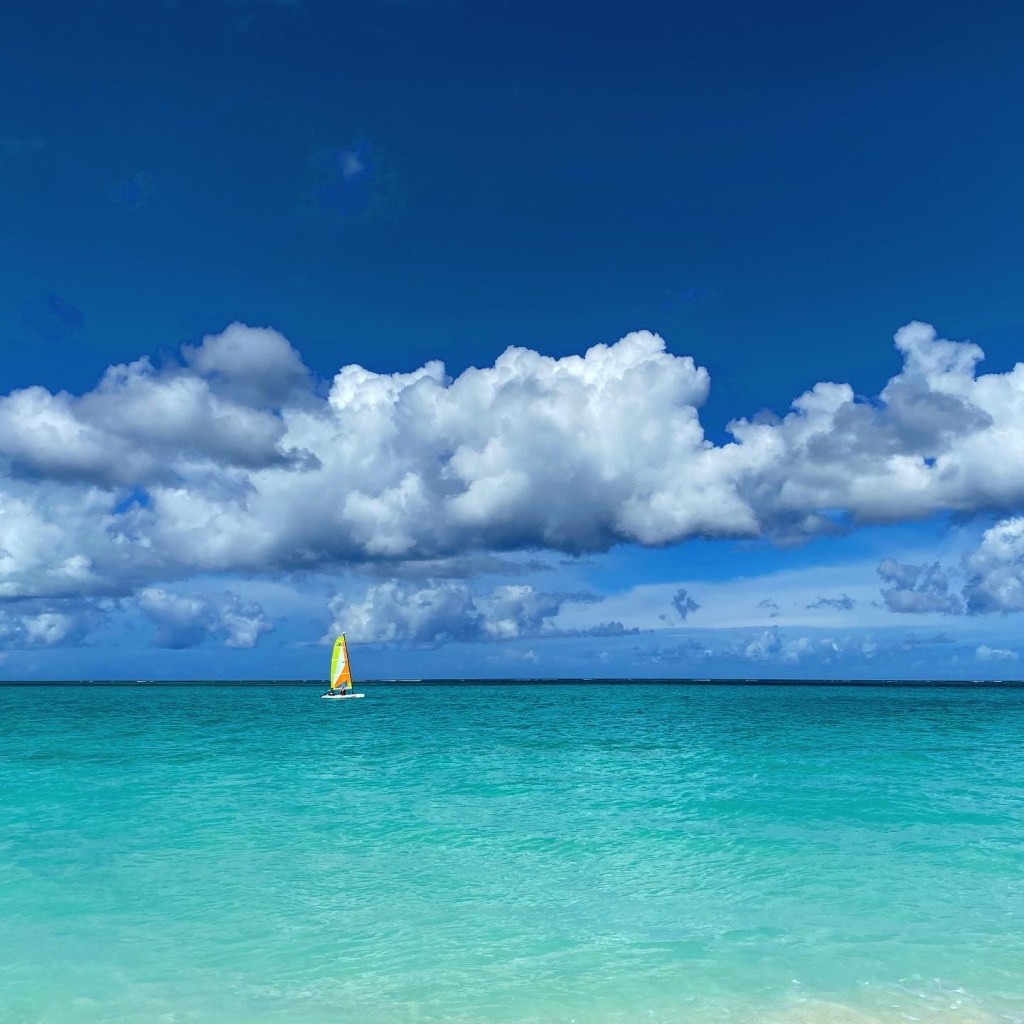
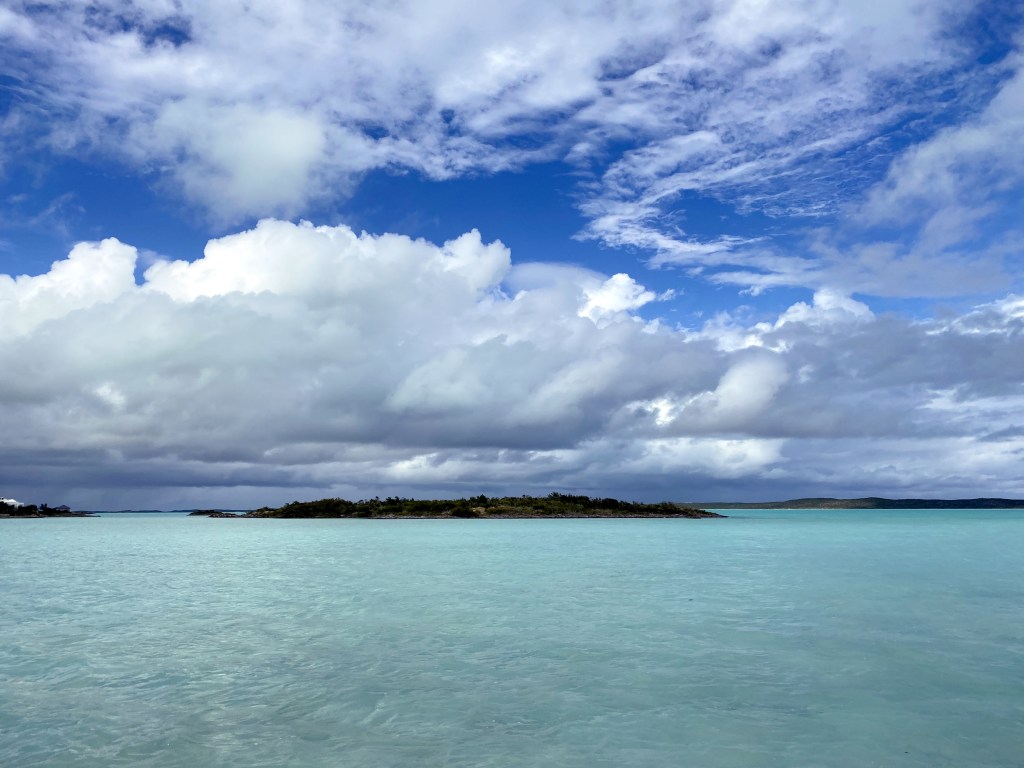
The unbelievably turquoise waters of Chalk Sound on the south side of the island.
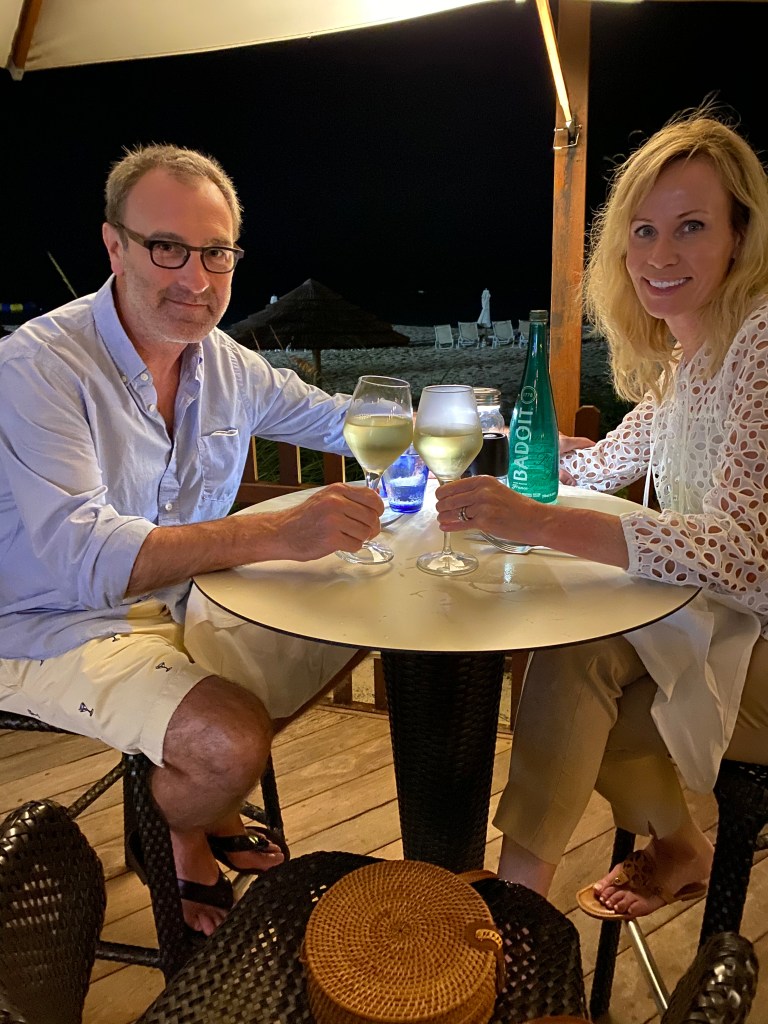
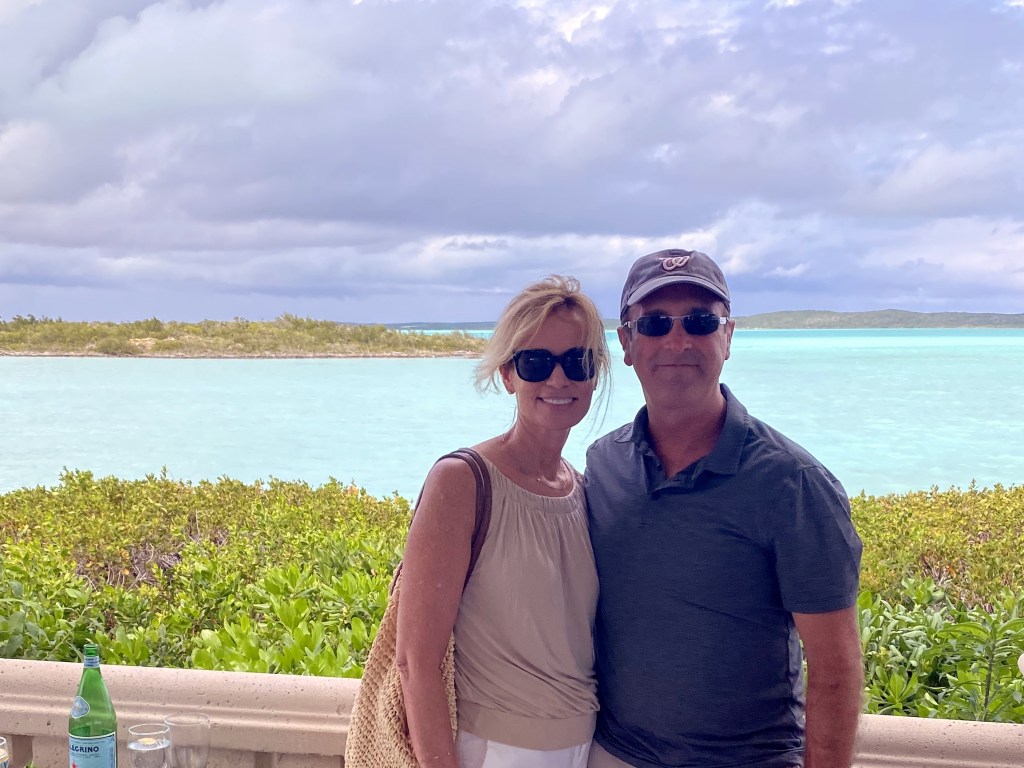
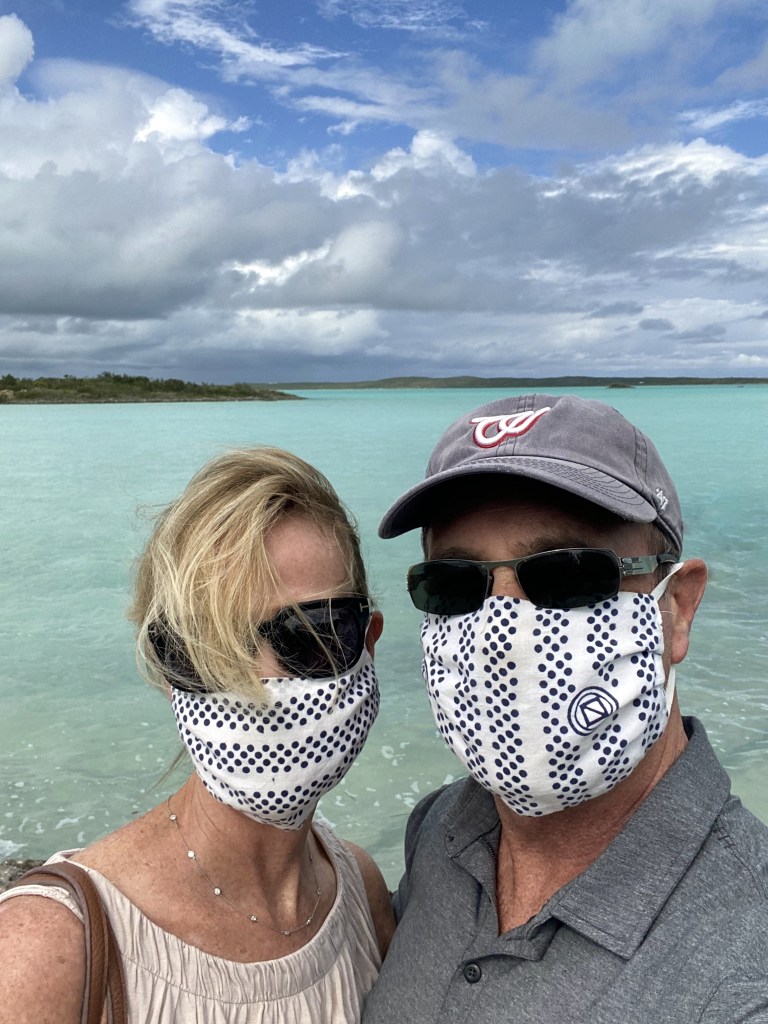
Aaaand, the 2020 version of the same selfie (featuring Sandy’s masks):
Night falls on the beach bar and pool at our place:
We were fortunate to finally get away, and look forward to resuming travels this spring with the advent of the vaccines!

































































































































 WolfeStreetTravel