
We’re finally getting around to posting pics from a trip in September 2022 to Turkey and back to Greece. We posted an overview of the trip shortly after our return, but never found time to post the details of each destination. The next series of posts will address this omission.
The trip, as originally planned, entailed the following itinerary:
- 3 days in Istanbul, Turkey
- 3 days in Cappadocia, Turkey
- 1 night in Athens en route to Greece islands
- 7 days on the Greek island of Paros
- 4 days on the Greek island of Milos
- 2 days on the Greek island of Folegandros
- 7 days on the Greek island of Naxos
This plan assumed that the second WolfeStreetTraveler would be retiring in August 2022, and that this month-long trip would be our first extended foray abroad post retirement of both members of the consortium. This was not to be.
Work priorities related to supercomputing support to NOAA’s National Weather Service and some critical contract win priorites at EPA postponed the retirement plans for another 9 months. So, we lopped all the Greek islands other than Paros off the itinerary to reduce the travel time to just 2 weeks (during which work still needed to be addressed seven time zones away, which was typical of our travels), and cancelled our hotels, ferries, and AirB&Bs for the second half of the trip.
Despite the truncated itinerary, the trip was incredible, especially in Cappadocia and Paros (but for entirely different reasons).
But first, we hit Istanbul, the subject of They Might Be Giants’ most notable song.
Upon our arrival in the Sultanahmet District of Istanbul, the historic core of the city, we made a beeline to Hagia Sophia, the city’s famous church-cum-mosque.

Constructed at the direction of Byzantine emperor Justinian in the first half of the 6th century, Hagia Sophia began as a grand church, replacing a previous model constructed in the 4th century. It was the largest Christian cathedral in the world for a thousand years (until construction of Seville’s cathedral), but not always as an Eastern Orthodox one. The western Christian crusaders converted Hagia Sophia to a Catholic cathedral in 1204 during the Fourth Crusade; the Byzantines converted it back to an Eastern Orthodox cathedral more than a half century later, in 1261.

However, the most significant change to Hagia Sophia role occurred in 1543, when the Ottomans finally overran Constantinople, which by that time was the last remaining (and heavily fortified) kernel of the once-vast Byzantine Empire.

As part of Atatürk’s secularization of the new Republic of Turkey, Hagia Sophia was converted to a museum in the 1930s. This became Turkey’s number one tourist destination all the way through 2019.
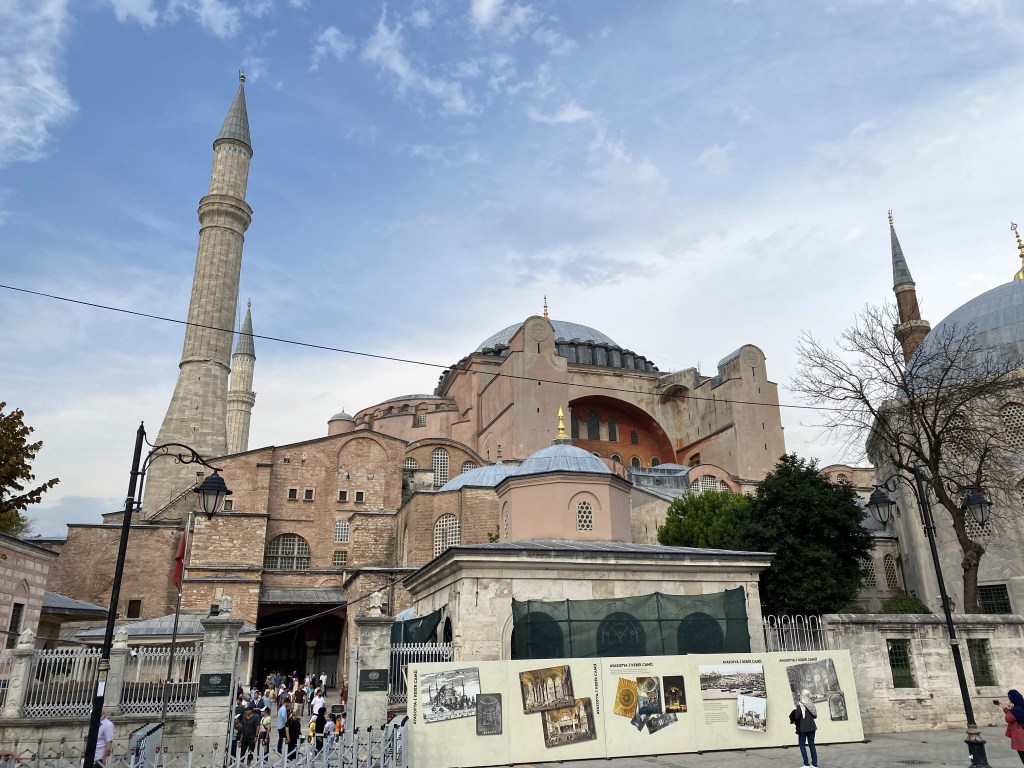
Then, in pandering to Turkey’s religious right Recep Tayyip Erdoğan turned Hagia Sophia BACK into a mosque in 2020. We could still visit it when in Istanbul, but would not have access to the entire structure like we would have just a few years before.
A fountain for ritual ablutions on the way to the entrance.
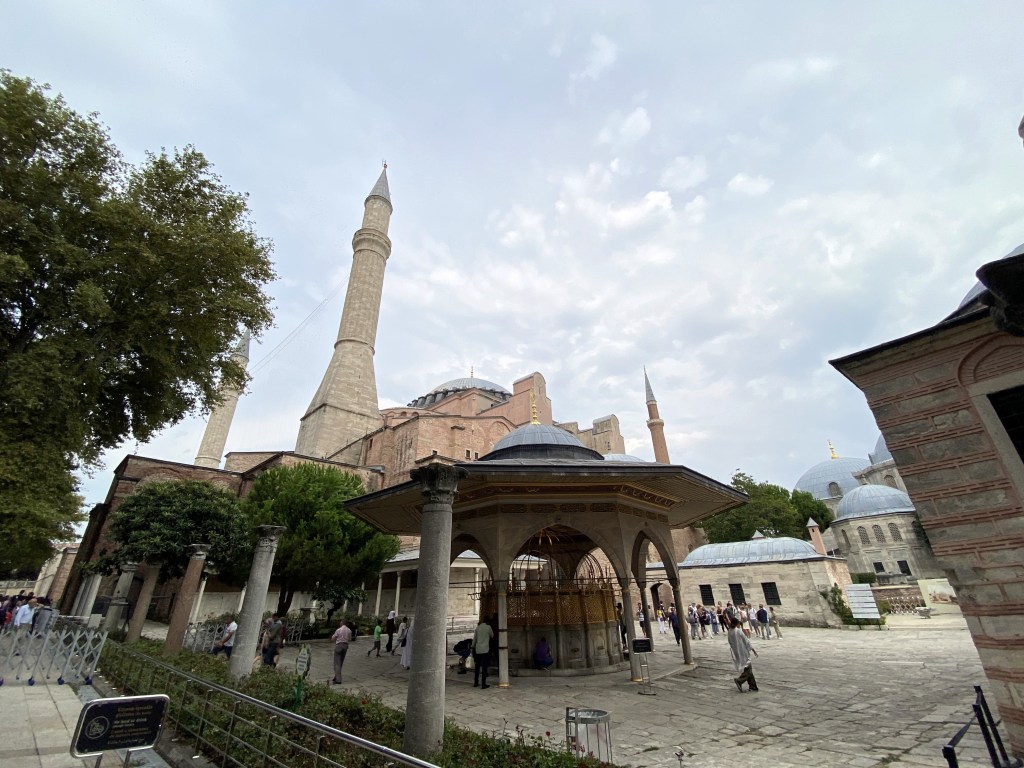
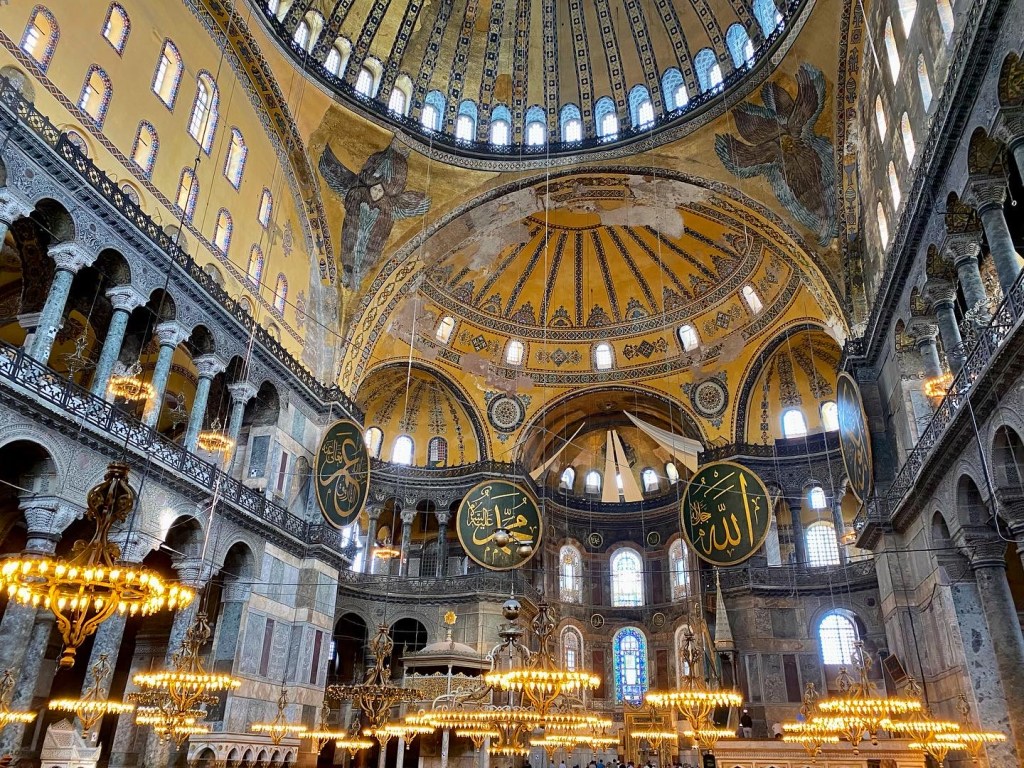
The place is freaking HUGE both inside and out, and the bolt-ons by different sultans over the centuries,

including massive buttresses to prevent a repeat of collapses during earthquakes.

We were able to go inside,

but, since it was now a mosque, we weren’t able to go to the second level to see the Viking runes graffiti left by members of the Varangian Guard sometime between the 10th and 11th centuries. Serious bummer, man.

One of the changes made to the Christian cathedral during its conversion to a mosque in the 16th century was the removal or whitewashing of Christian biblical mosaics on the walls. Another, much later change, was the installation of eight huge medallions between 1847 and 1849 under Sultan Abdülmecid I and display the names of Allah and Muhammad, the first four caliphs Abu Bakr, Umar, Uthman and Ali, and Muhammad’s grandchildren Hassan and Hussein.
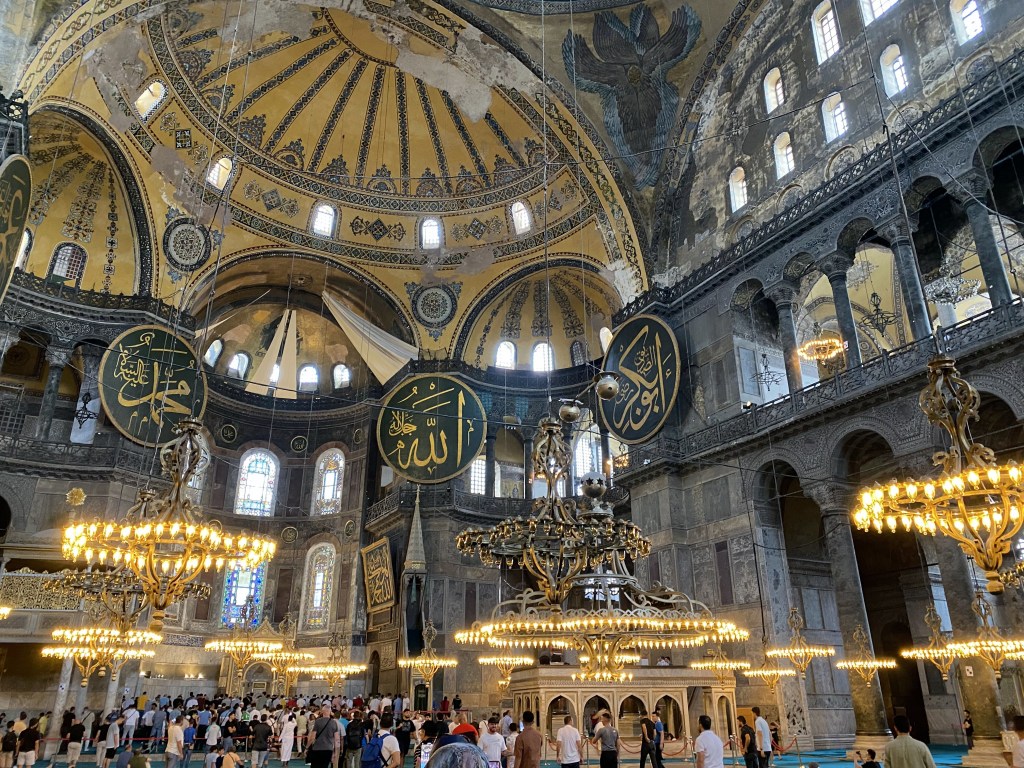

A few pre-mosque mosaics were unintentionally preserved by the whitewashing, which was then removed centuries later. One of these was “Emperor Leo VI Paying Homage to Christ as Pantocrator” over the entrance door.

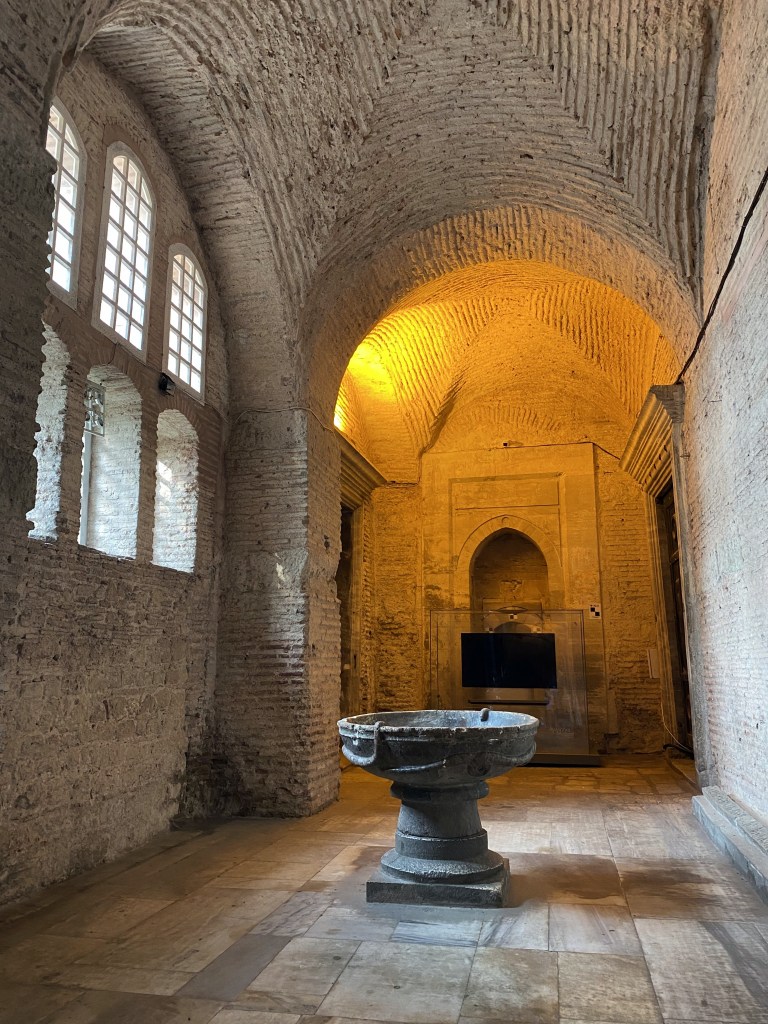
Just some alcove off to the side – cool vaulting though.
The grounds of Hagia Sophia play host to tombs of five Ottoman sultans and their families. Each looks pretty modest from the outside.
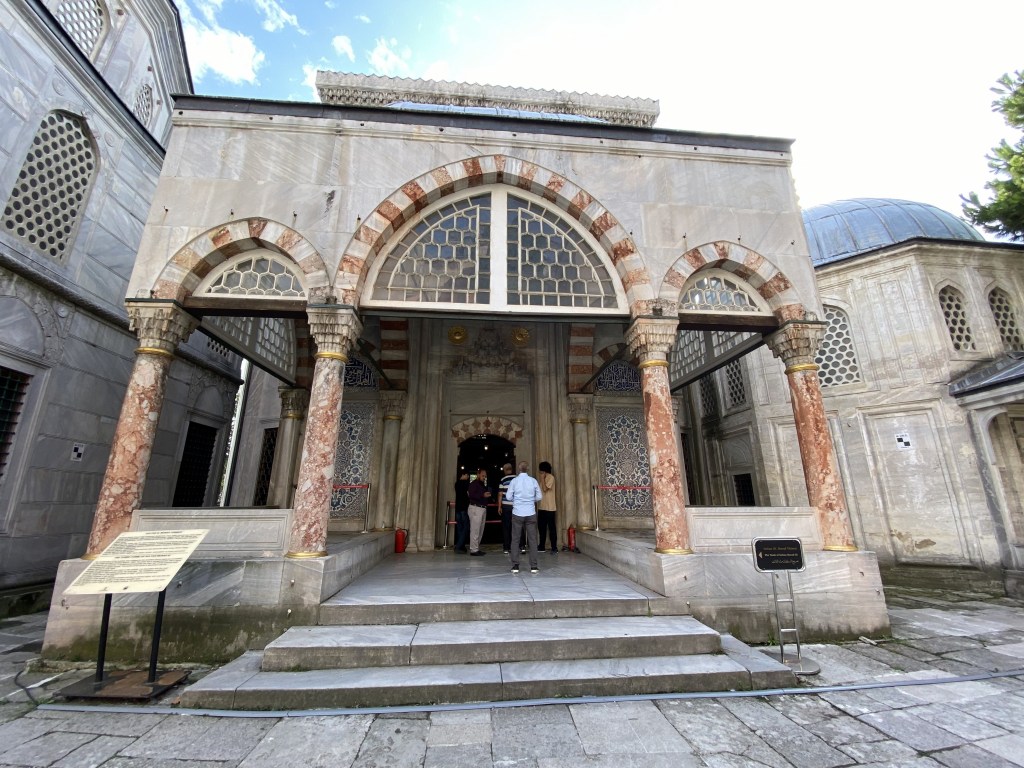
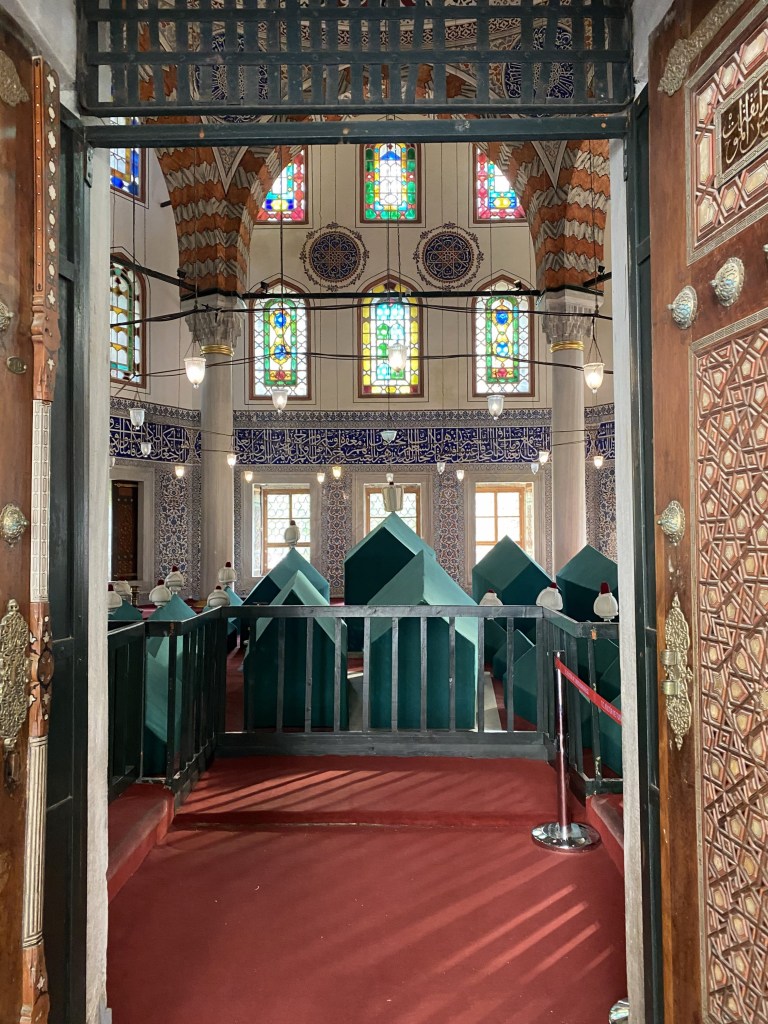
But some – this is the tomb of Sultan Murat III built in 1595 – are pretty grand inside. And hold lots of sarcophagi – 54 in this one.
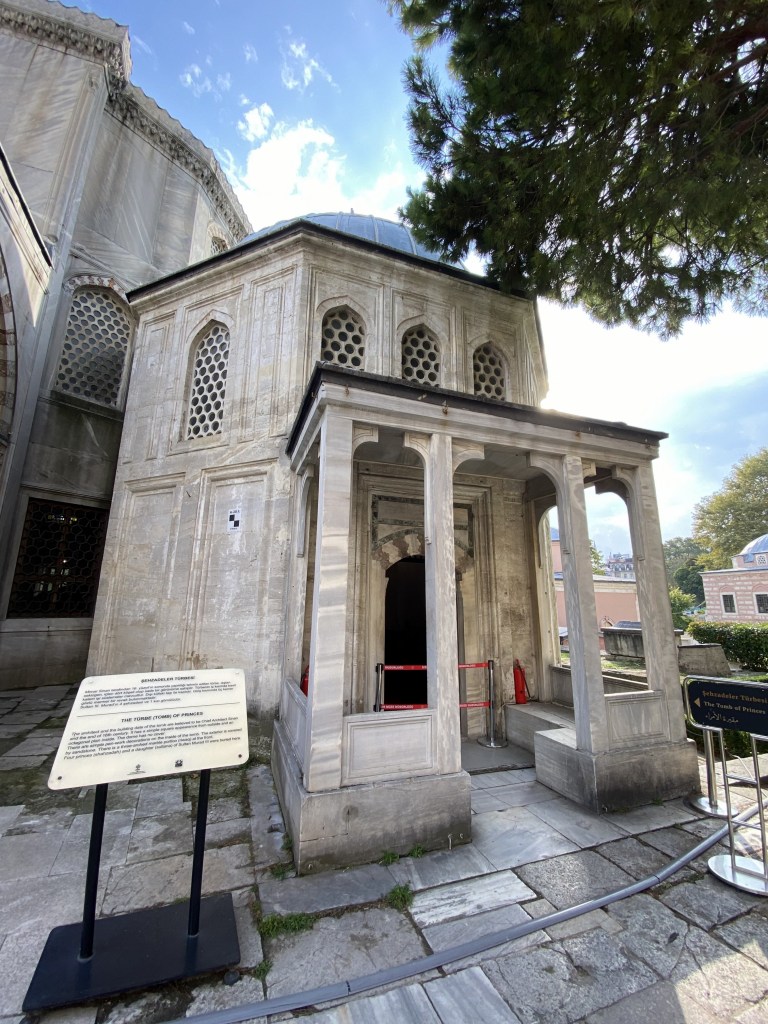
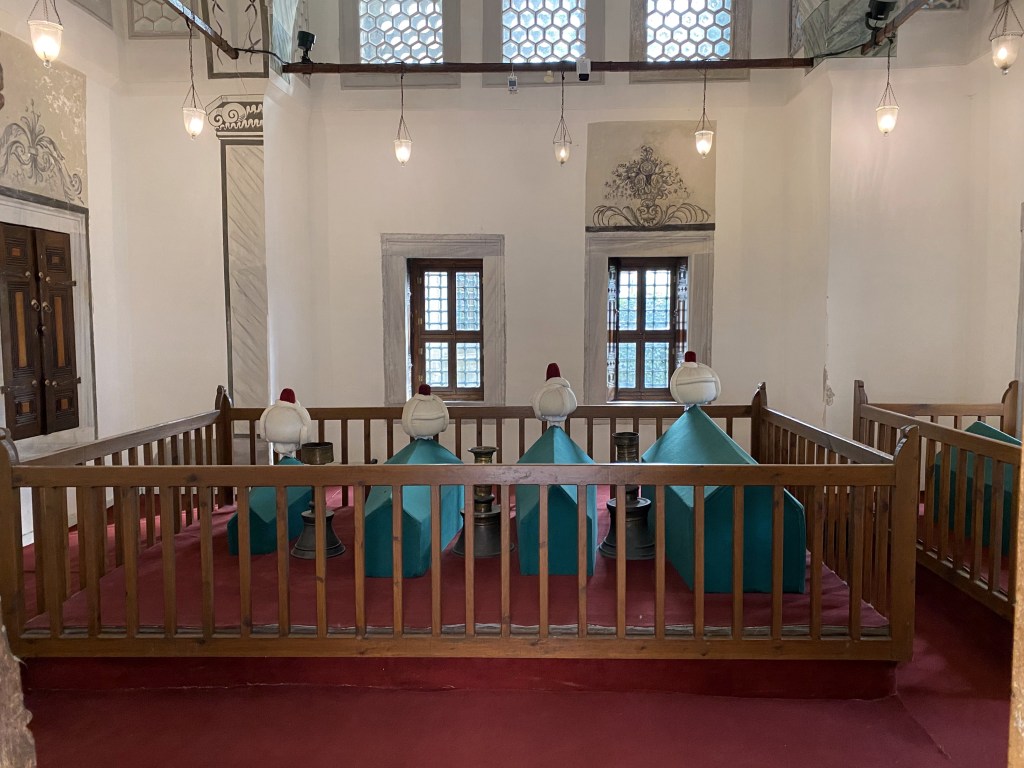
There’s also the tomb of Princes – four princes and the daughter of Sultan Murat III.
This one was much more low key inside.
Hagia Sophia lit up at night:
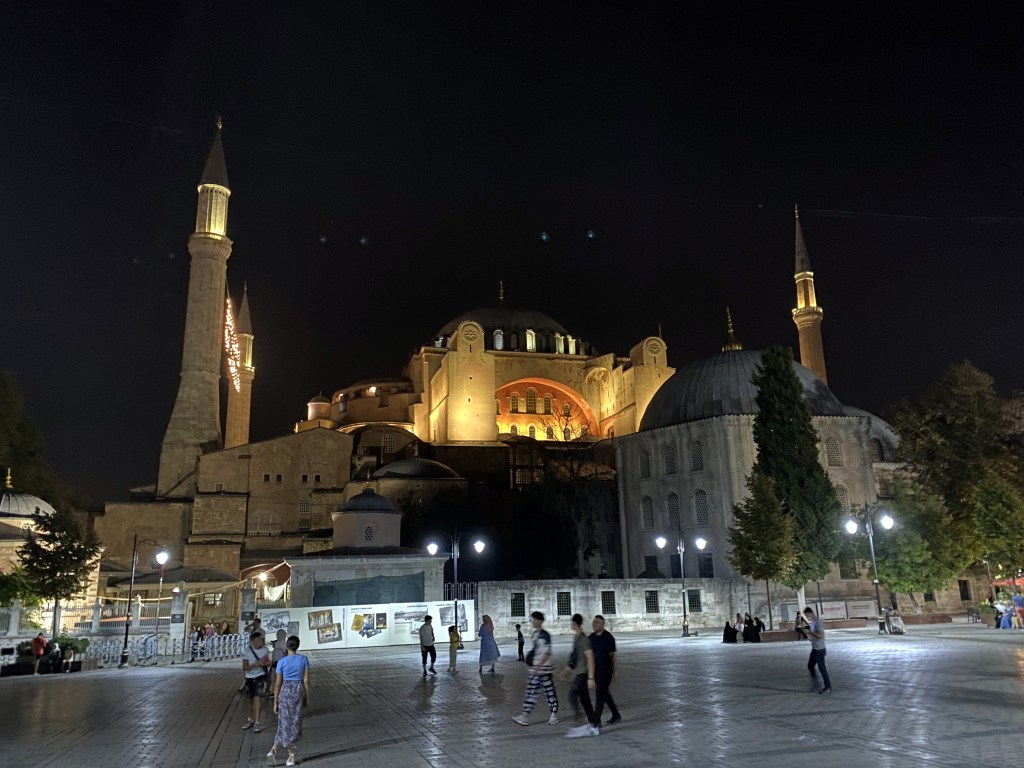
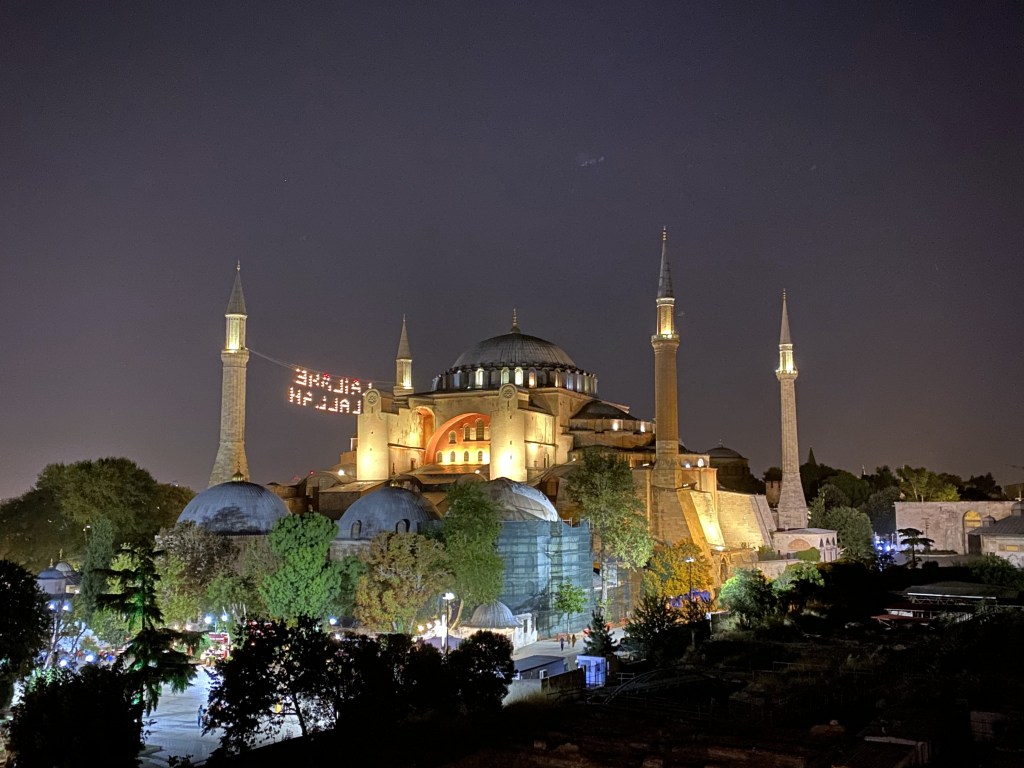
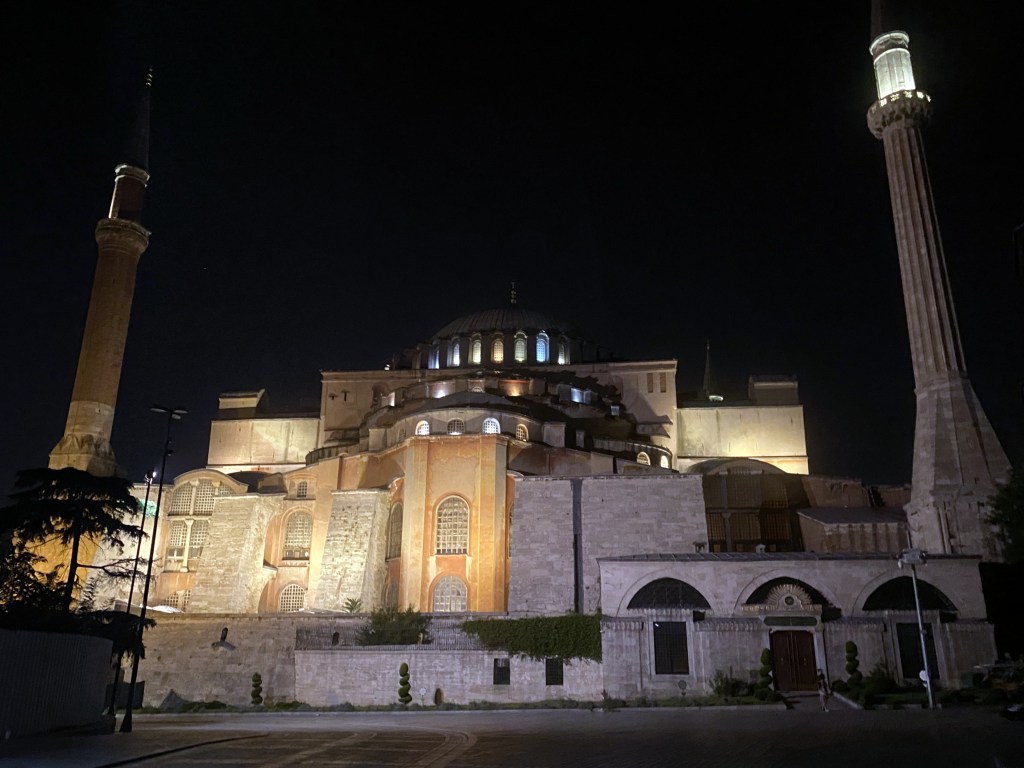
Particularly good view from a rooftop bar we patronized:

Also at night – the vendors come out!

Hagia Sophia lies at one end of Byzantium’s / Contantinople’s / Istanbul’s famed hippodrome. We were very familiar with the hippodrome and the role it played during the Byzantine empire due to the History of Byzantium podcast. So, our expectations for seeing the actual, ancient racetrack and stadium were high.
These expectations were not met.
The hippodrome no longer exists. The structure already had fallen into ruin by the Fourth Crusade in the early 13th century, and the Venetians finished the job by looting most of the remaining decorative elements. Then, after the Ottomans conquered the city in 1453, the remaining structure became a convenient pre-cut stone quarry for the sultan.
Luckily, though, the footprint of the hippodrome was never built over, so you can at least appreciate the size of the race track when visiting Istanbul. Plus, there are a few ancient – and one modern – monuments.
The first is the Obelisk of Thutmose III.

Roman / Byzantine (it’s kind of a transition time period) Emperor Theodosius the Great brought the obelisk from Egypt – where it had been part of the Temple of Karnak in Luxor – to Constantinople in 390. The original obelisk was considerably taller, inasmuch as what’s left is just the top third.
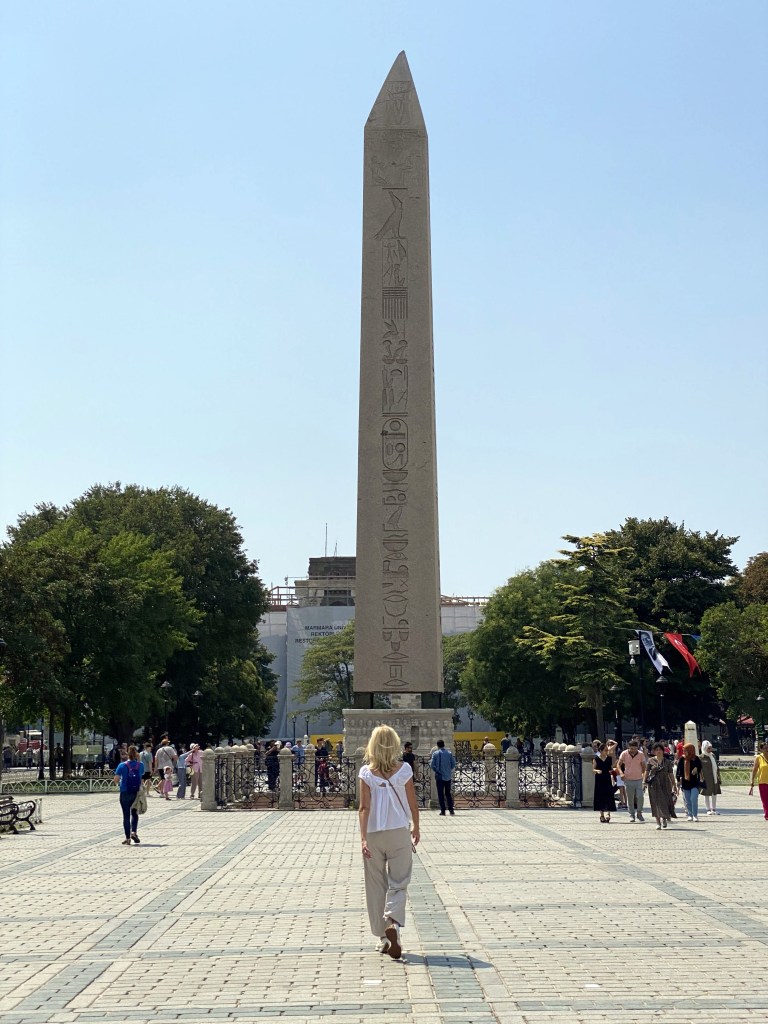
But what’s left is pretty cool. The monument was created in 1490 BC, so the granite obelisk is 3500 years old. The marble pedestal is a different story.
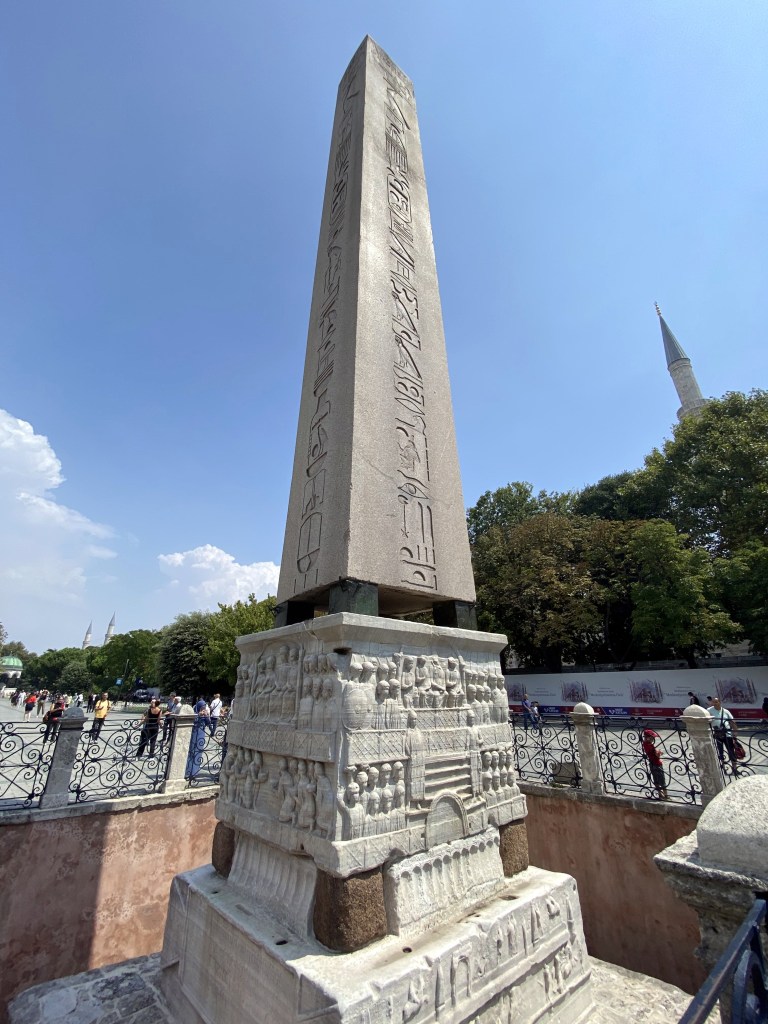
The bas-reliefs only date to the monument’s re-erection in Constantinople’s hippodrome by Theodosius, and show the emperor in various scenes, including the emperor and his court, here on the north face. Below is a relief showing the transport of the obelisk.

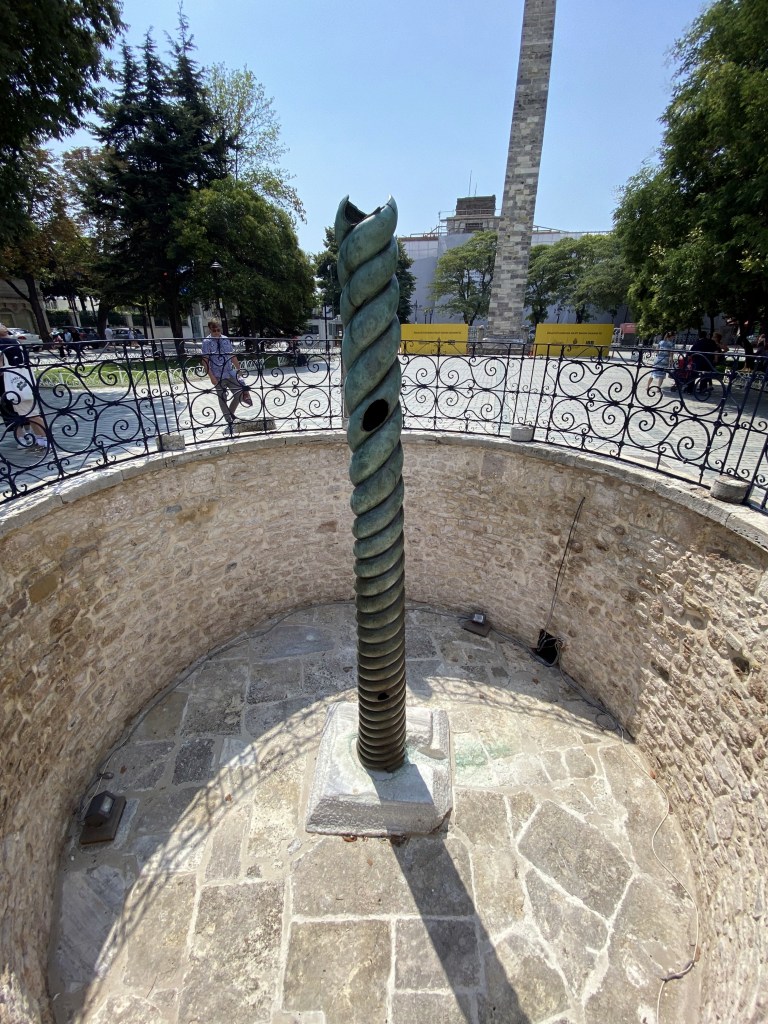
The bronze Serpent Column is next as we stroll the length of the hippodrome footprint, from one massive mosque to the next. The column is actually the base of a trio of snakes that formed a tripod on top to hold a golden bowl. Like the Obelisk of Theodosius, this was another goody from afar dragged to Constantinople – it originally was cast by Greeks to celebrate their victory over the Persians during the Persian Wars of the 5th century BC.
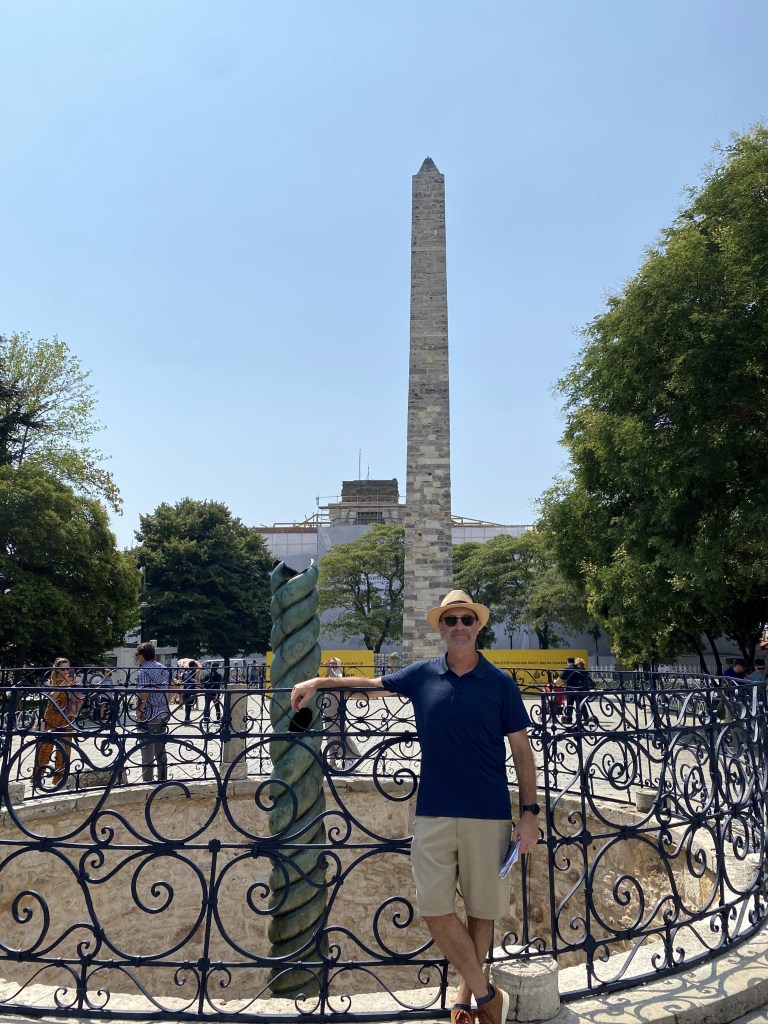
Beyond the Serpent Column, at the opposite end of the hippodrome from Obelisk of Thutmose III lies another obelisk, this one more modern (kind of). Erected in the 10th century by (now thoroughly) Byzantine Emperor Constantine Porphyrogenitus, the obelisk originally was clad in gilded bronze, but the freaking Venetians stole all of that, too, when they looted Constantinople during the Fourth Crusade. Now, only the stone core remains.
The most modern monument serves as our last encounter on the hippodrome before hitting the other mosque: The German Fountain.

The German government constructed the fountain in 1900 in neo Byzantine style to celebrate Kaiser Wilhelm II’s visit to Istanbul in 1898.

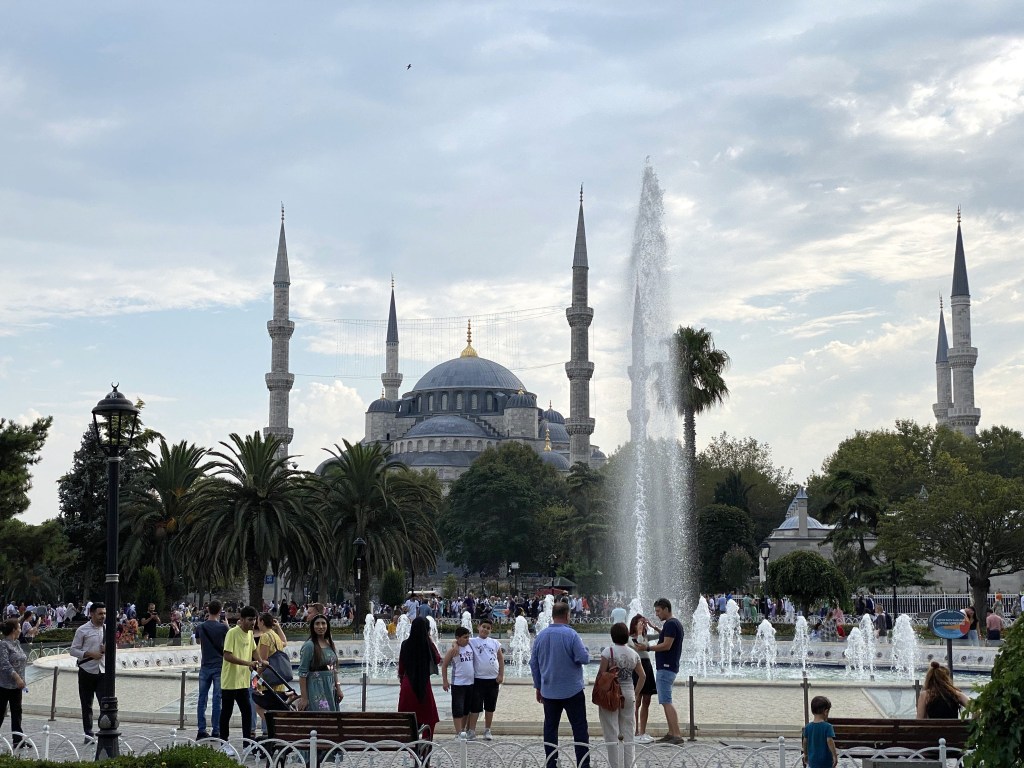
And now, the Blue Mosque.

Situated at the opposite end of the hippodrome from Hagia Sophia, the Blue Mosque was constructed during the first half of the 17th century.

It’s official name is the Sultan Ahmed Mosque. The blue moniker comes from the Iznik tiles lining the inside that allegedly are predominantly blue.
We say allegedly, because this was the interior during our visit – another major sight on our travels frustratingly clad in scaffolding.
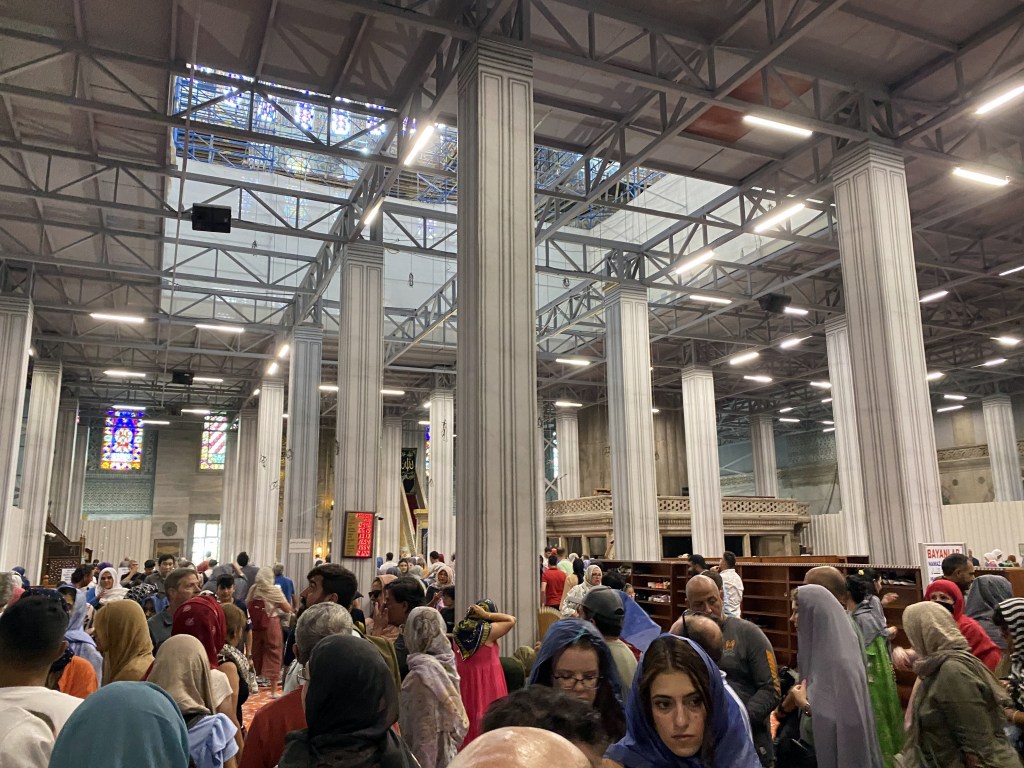
You could peer through the renovation obstructions to view some of the interior, but not much.


Maybe these are the blue tiles? Who knows?

Pretty cool lit up at night, though.

Another rooftop bar – this time for lunch – and another good view of a giant mosque.

Next up: water storage?














































 WolfeStreetTravel