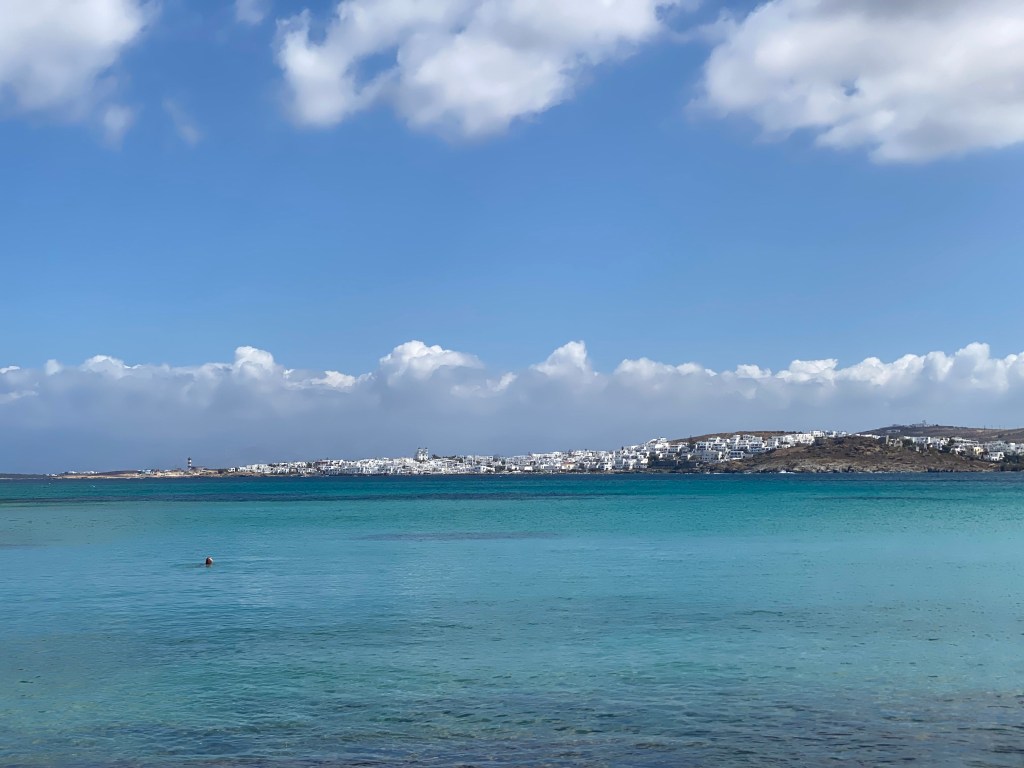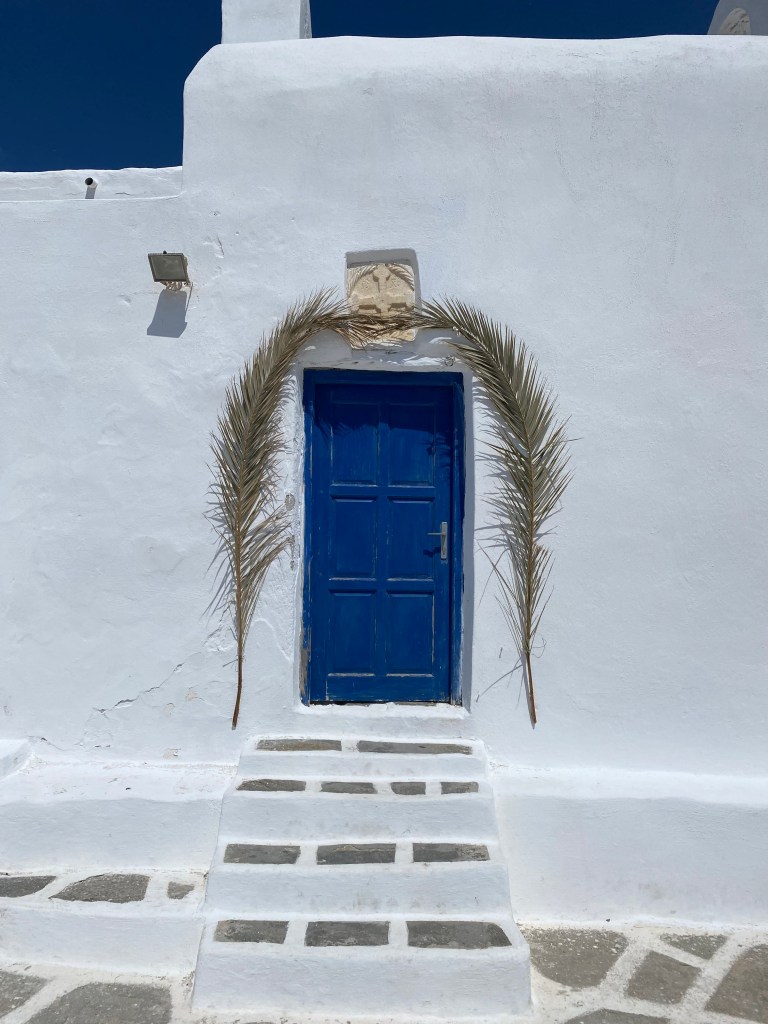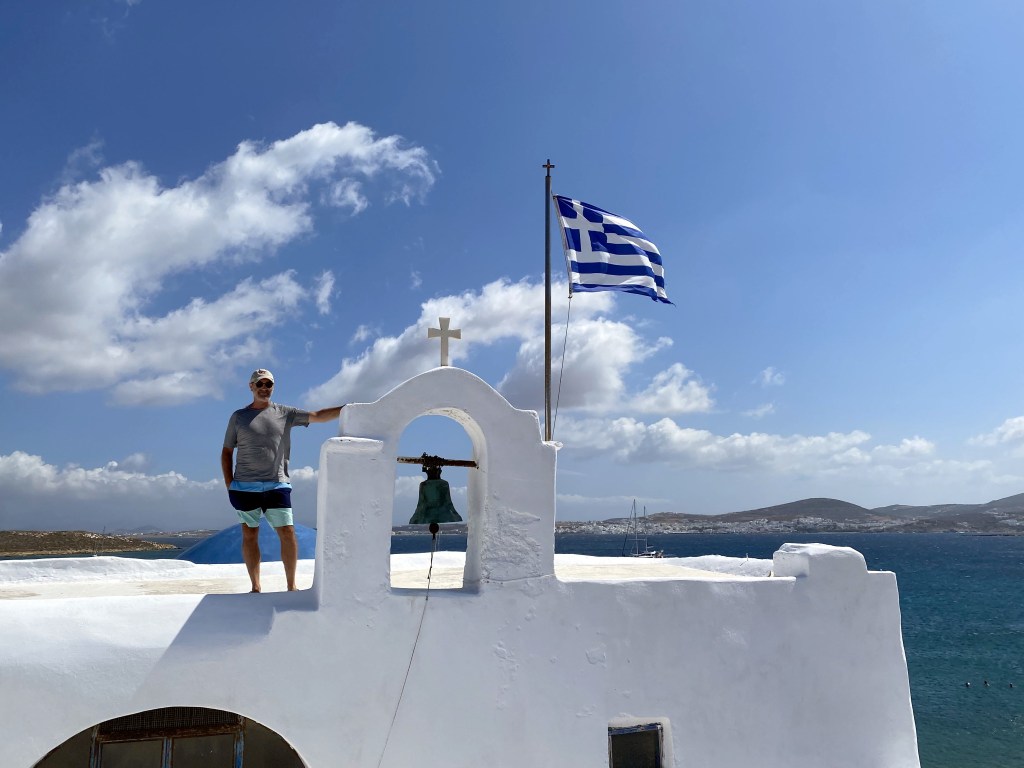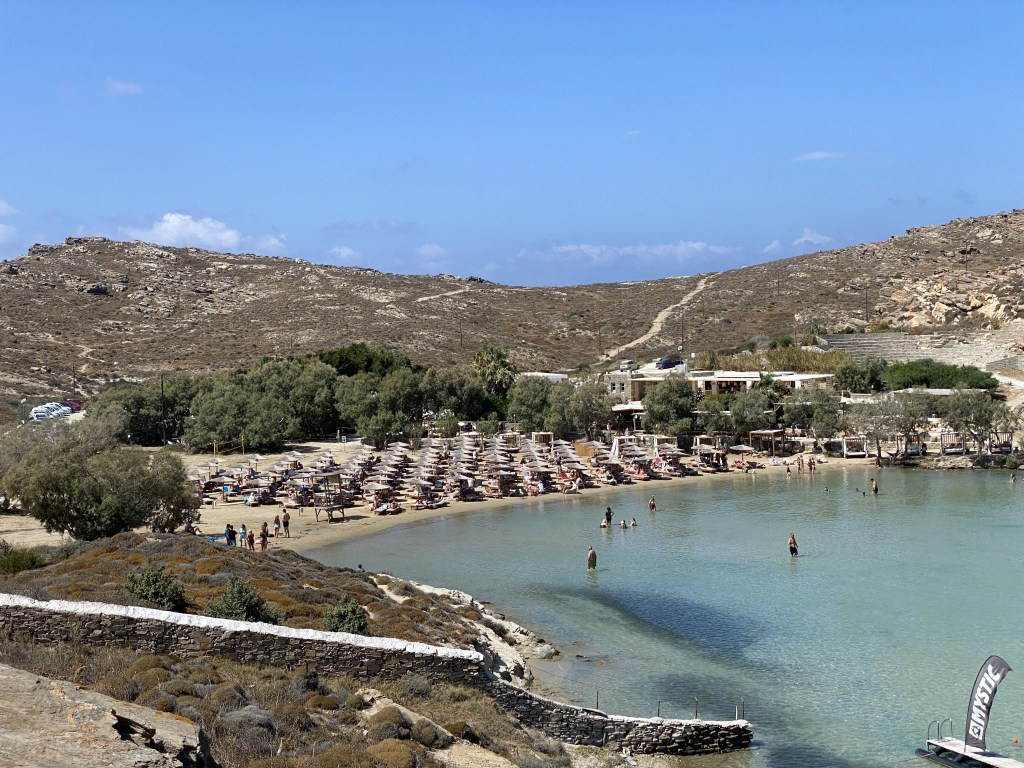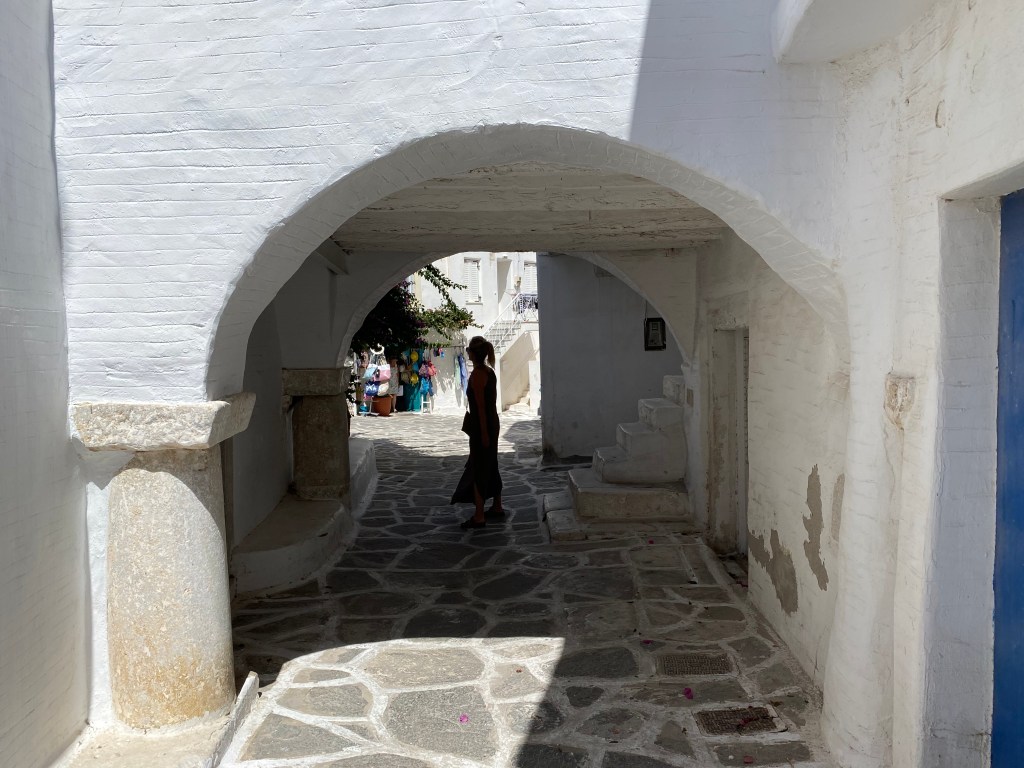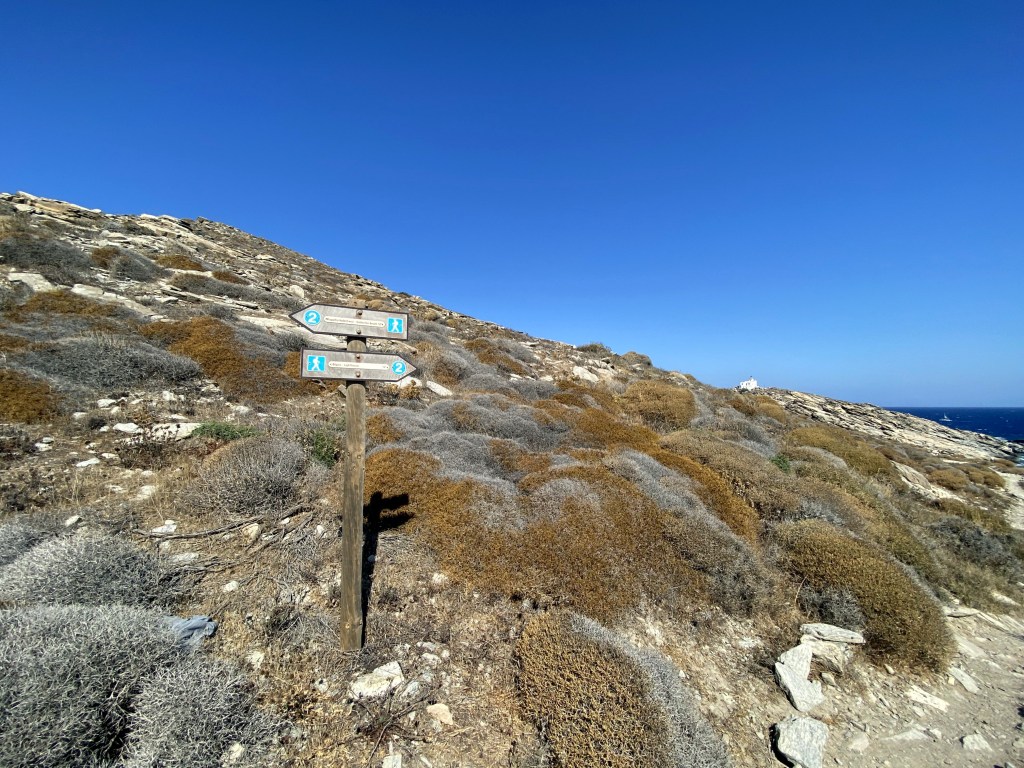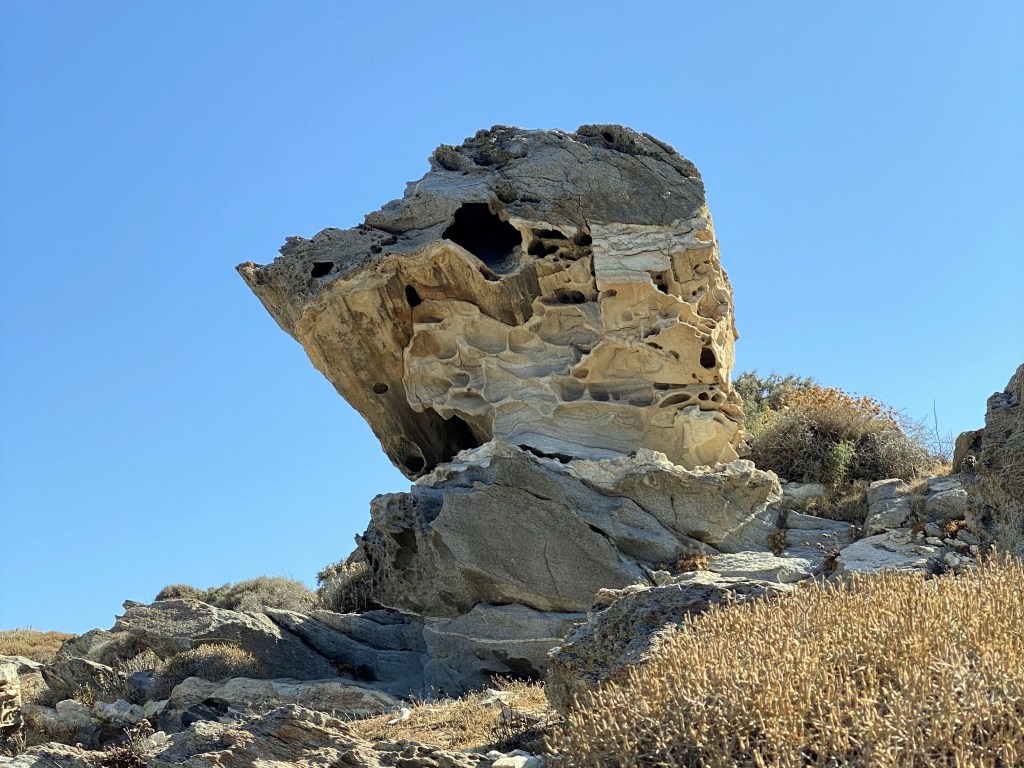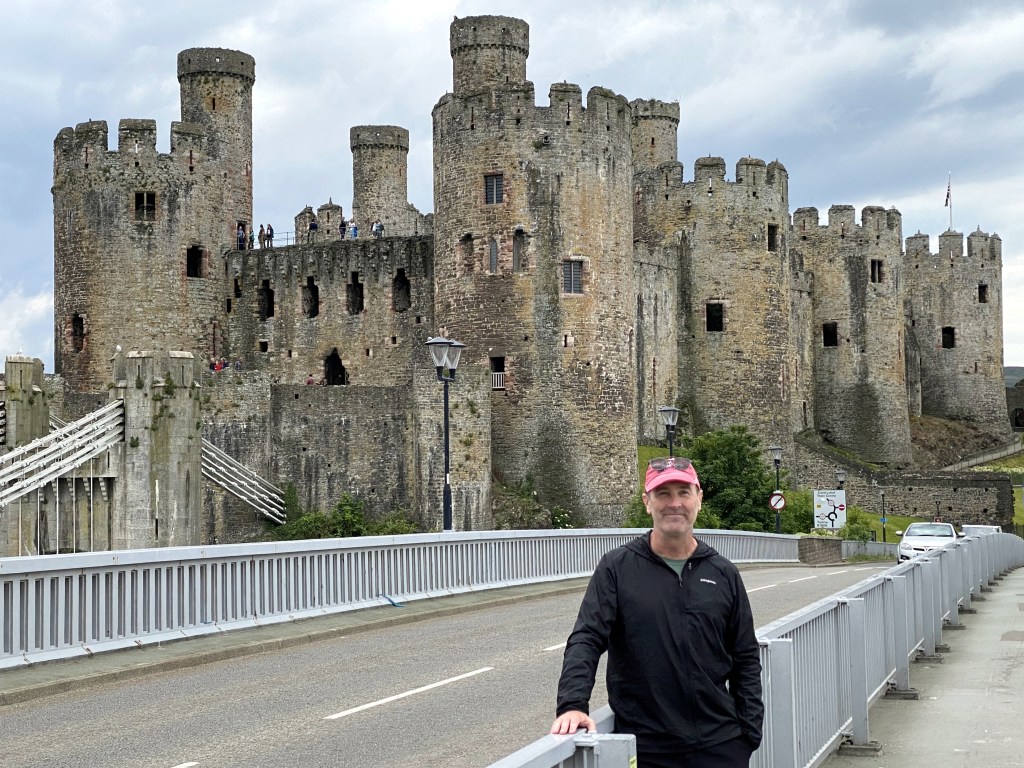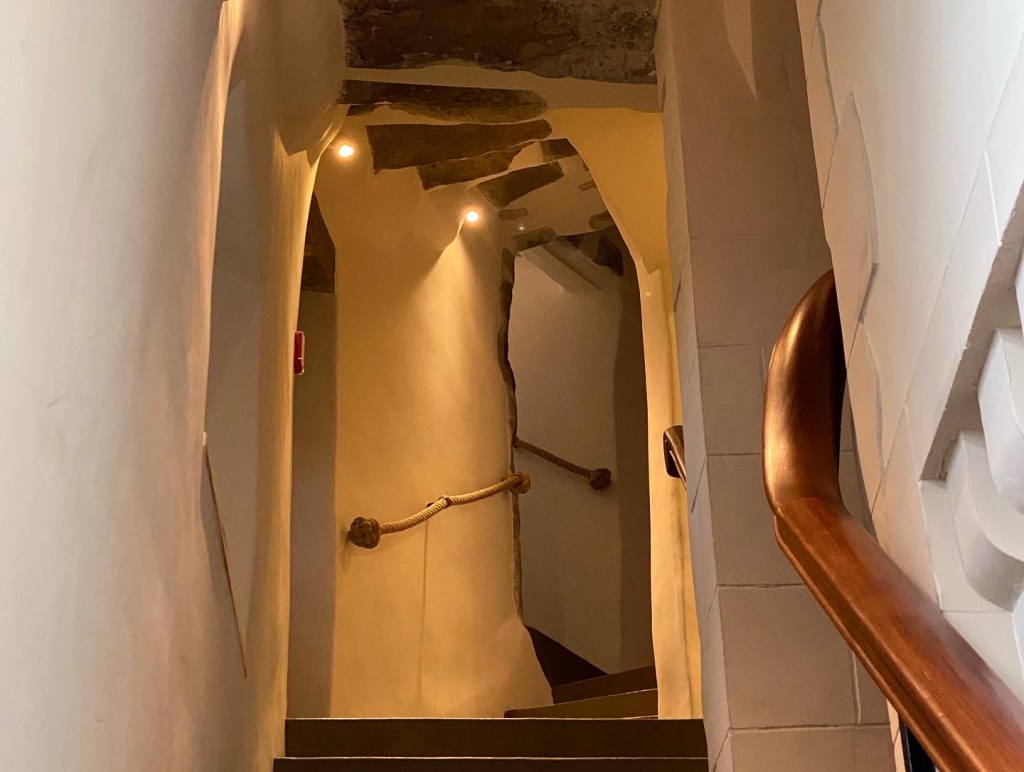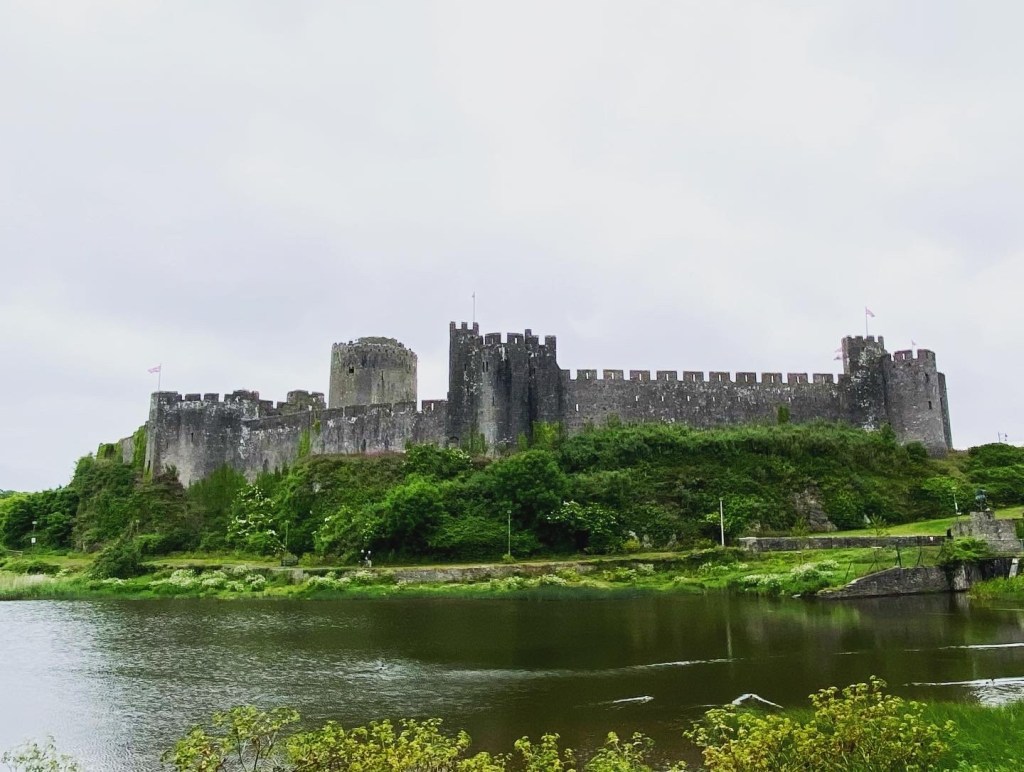
Protected: Cotswolds & Wales Road Trip: St Annes Head Hike

This content is password-protected. To view it, please enter the password below.

Categories: The Cotswolds and Wales, Wales | Enter your password to view comments.

Cotswolds & Wales Road Trip: St Davids and Roch Castle

St Davids served as our base of operations for the next several days in the heard of Pembrokeshire, in southern Wales. The town is named after the 6th-century Saint David, the patron saint of Wales, and also serves as his resting place. As a cathedral city (the weirdest one we’ve ever encountered, as you’ll see), St Davids qualifies as a “city” in the UK beginning in the 13th century.

A small town square at the heart of St Davids with its cathedral looming over the town:

Don’t see it?

How about now? Just massive and looming over everything, right?

What the hell? St Davids cathedral sits in a depression at one edge of town, well below the rest of the structures in the municipality.

You have to look down from town into a grassy pit to actually catch a glimpse of the cathedral.

The cathedral, with the tomb of its celebrity saint namesake, became a reasonably prominent pilgrimage site in the middle ages. “At its height, the city was visited by many pilgrims, including noblemen and kings such as William the Conqueror in 1077, Henry II in 1171, and Edward I and Queen Eleanor in 1284. Pope Calixtus II decreed that two pilgrimages to St Davids were equivalent to one to Rome (“Roma semel quantum dat bis Menevia tantum“). This allowed a vast income to be raised from visiting pilgrims in the Middle Ages.” (From here.)

You gotta walk uphill from the cathedral to get back into town. St Davids is to the town / cathedral relationship is what Snowshoe is to ski resorts.

“The monastic community was founded by Saint David, Abbot of Menevia, who died in 589. Between 645 and 1097, the community was attacked many times by raiders, including the Vikings; however it was of such note as both a religious and an intellectual centre that King Alfred summoned help from the monastic community at St Davids in rebuilding the intellectual life of the Kingdom of Wessex. Many of the bishops were murdered by raiders and marauders, including Bishop Moregenau in 999 and Bishop Abraham in 1080.” (From here.)

Construction of the current cathedral began in the 12th century in typical Norman martial style, and has been renovated, rebuilt, expanded, and remediated multiple times over the centuries. Notably, the floor of the cathedral slopes, resulting in a height difference of almost 4 meters from one side to the other. Four freakin’ meters of slope.

The community’s 14th-century Bishops Palace, now a ruin that was hosting a RenFest-type affair during our visit (we declined both jousting and presumed turkey leg offerings).

For anyone who’s read Bernard Cornwell’s Saxon Tales, King Alfred’s sanctimonious asshole scribe, Asser, actually grew up in St Davids and was a monk in the monastery here until Alfred recruited him.

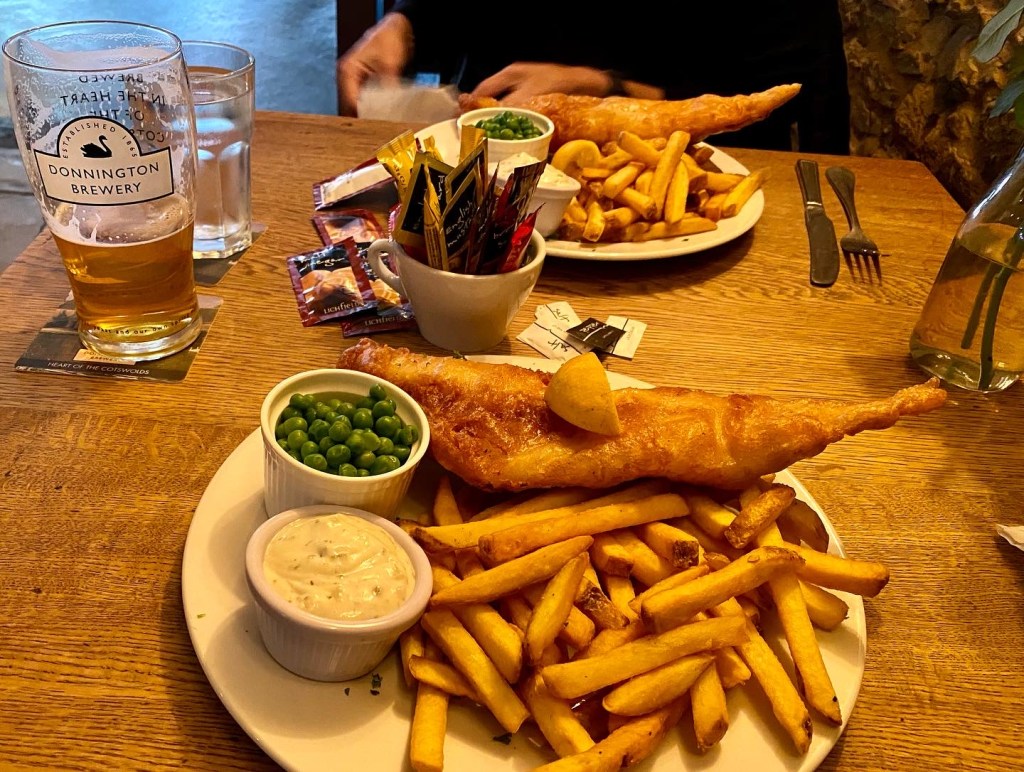
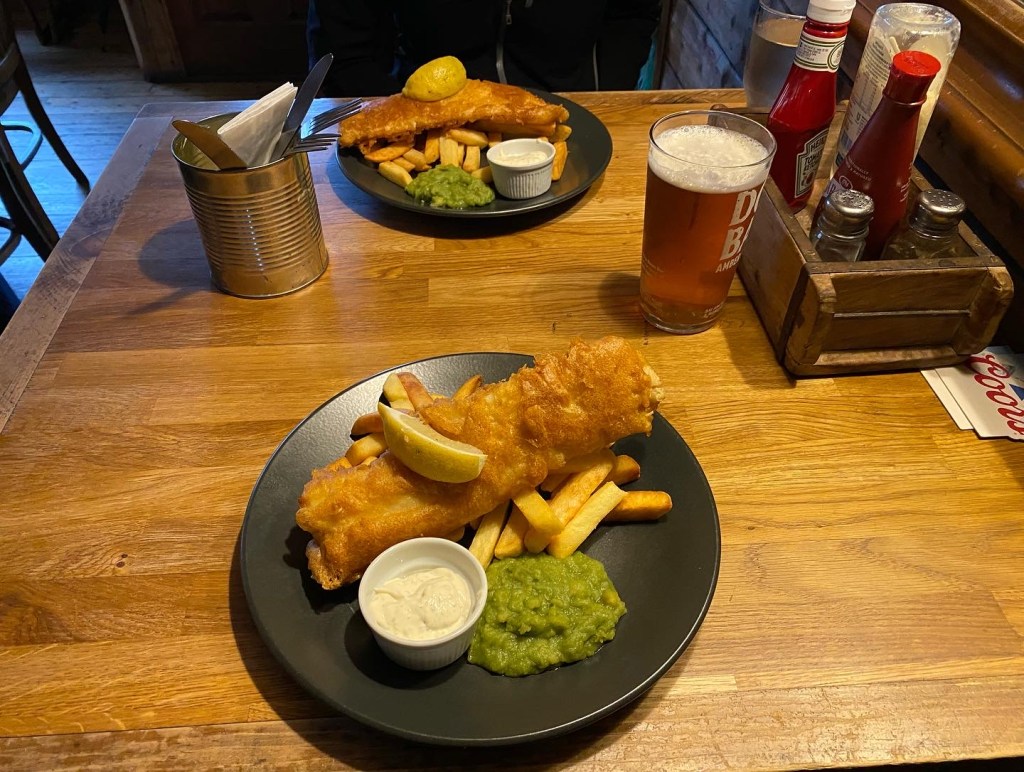
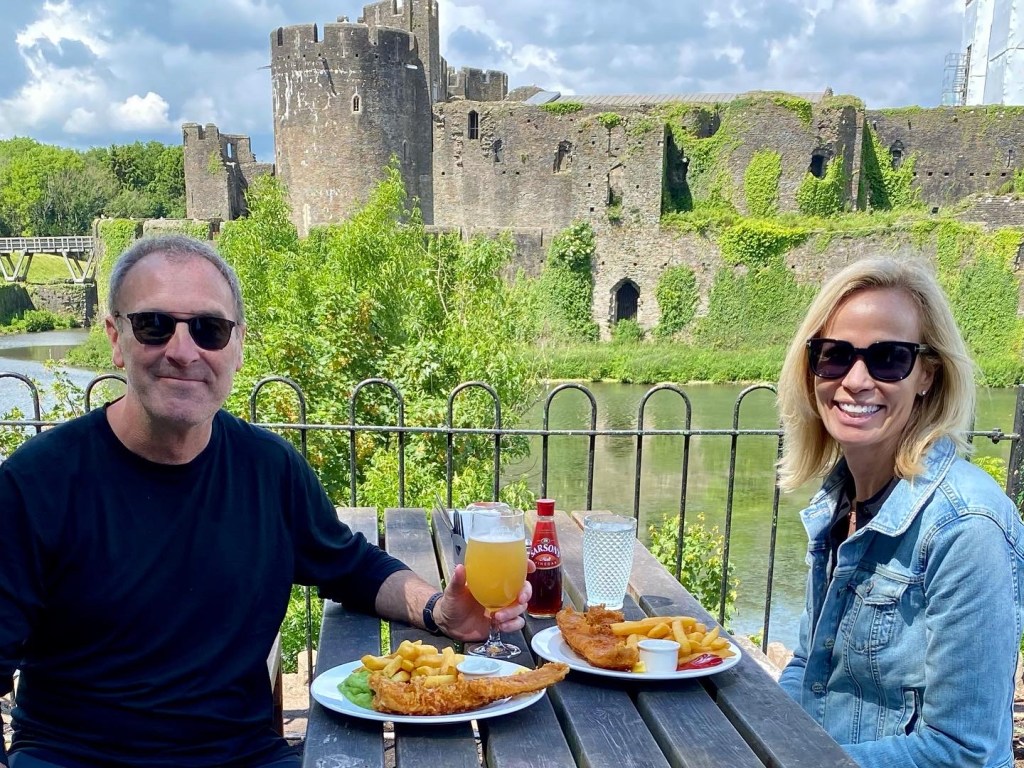
Back in town – surprise! – fish and chips and mushy peas! Pretty good exemplars of the dish. The day before, after our hike, we arrived at the same pub (The Bishops, which made it into the first pic above) at around 2:55 and wandered around until we found a free table. Sat down, then tried to order at around 3:02. Nope – kitchen closes at 3:00. No exceptions, apparently. We headed out and down the street to an entirely different place to get some lunch. Today, we got our priorities in order, since we arrived close to 3:00 again, and ordered first at the bar, THEN found a table.

So. Our Wales Castlepalooza would not really be complete unless we STAYED in a castle. So we did, here in St Davids. Our first view of the castle from the road coming in from the north, the day we arrived from Conwy and Snowdonia:

Roch Castle:

Roch Castle was built in the late 12th century as part of the march – the borderlands between England and Wales. “

At the time of its construction, Roch Castle served as one of a group of border strongholds that fortified Anglicised Wales from the independent Welsh to the North, guarding the Flemish settlers who inhabited the surrounding “hundred of Rhoos”, and it also served as a lookout for the bay of St Brides to ward off invasions from the sea.

The first known inhabitant of the castle was a Norman knight by the name of Adam de Rupe. His name probably derived from the rock on which the castle was built, “de Rupe” being “charter” latin for “of the rock”. This name however was soon changed to the Norman (or French) “de la Roche”. Adam de Rupe’s ancestors were of the first rank of Norman families and had the province of the “hundred of Rhoos” committed to their care (probably) by Henry II. Their authority extended from Newgale to Milford Haven. Benton Castle marked the other extremity of their domain. However, the Castle of Roche was the family seat, and a member of the family was visited with the hereditary title of “Comes Littoris”, or “Count of the Shore”.
A legend recounts that Adam de Rupe erected his abode on a rock as a result of a prophecy that he would die from the bite of a viper. His precaution was in vain, as he met his fate when a viper, carried into the castle in a bundle of firewood, bit and killed him.” (From here.)

The coat of arms at the gate incorporates the elements of the legend. “The one raven above holding a snake in its beak and a basket of twigs in its claws represents the story of Adam de Rupe, the Norman knight who built Roch Castle. He was cursed to die of a vipers bite, so he placed his bedroom at the top of the tower away from snakes, but a snake hiding in a basket of firewood bit him and he died. A further two Ravens with outstretched wings on the shield makes a total of three Ravens. These honour Llewellyn ap Gruffudd, the last prince of Wales’ shield, which was of three Ravens. Around the shield are blue and white bands representing the blue of the sea and white of the surf of St Davids. The motto, “bid ben bid bont” from the Mabinogion and spoken by Bran the giant as he laid himself over the River Liffey for his armies to cross, “be a head (leader) be a bridge (facilitator)”.” (From here.)

The de la Roche family held the castle for more than 200 years. “When Thomas de la Roche of Roche died in 1420, he left no sons. Thus, the direct male line of the de la Roches ended in this year. He did however, leave two daughters who inherited the castle. Daughter Ellen married Edmund de Ferrars, fifth lord of Chartley, and daughter Elizabeth married Sir George Longueville. By the reign of Henry VIII, a contemporary Lord Ferrars and a Sir John Longueville were the owners of the property.

During the reign of Queen Elizabeth, it is recorded that the Earl of Essex and the Earl of Longueville were the possessors of Roche. It then passed to their descendants who maintained possession until 1601. About this time, the castle and “manor” of Roche passed to the Walter family of Rosemarket (apparently by sale). The Walter family was an important family of Pembrokeshire. About 1630, William and Elizabeth Walter gave birth to a daughter, Lucy, who became a mistress of King Charles II bearing his child, the Duke of Monmouth.” (From here.)

“Parliament became extremely restive under King Charles I, and soon openly rebelled under Cromwell’s leadership. In 1644, King Charles garrisoned many of the castles in South Wales and supplied a garrison for Roche Castle under the command of Captain Francis Edwards of Summerhill (he being from a neighbouring estate). On February 17th, 1644, the castle was attacked by Cromwell’s troops under the command of Colonel Roland Laugharne. After a fierce siege, the castle was surrendered on February 25th, having been badly damaged by cannon and also by fire.” (Also from here.)

The rock base under the castle, exposed in a sitting room on the first floor.

Main level of the castle, hosting the common areas.

Modern castle common area and viewing platform. They definitely modernized the castle.

Pretty good view, at that.

Heading up to our room, at the top of the castle.

The de Rupe room, but, of course.

View through the room’s tower walls to the countryside and coast below:

Wales played Ukraine during our stay during the World Cup qualifying round; Wales won and earned a slot on Group B for the World Cup. We assumed we could watch this at the pub down the road with a bunch of rowdy Welsh, which we were looking forward to. But it was Sunday, and the pub served their weekly Sunday dinner, then closed before the game, which we absolutely could not believe. So, we watched it in the castle, instead.

Pretty cool digs!

Categories: The Cotswolds and Wales, Wales | Leave a comment

Protected: Cotswolds & Wales Road Trip: Pembroke Castle

This content is password-protected. To view it, please enter the password below.

Categories: The Cotswolds and Wales, Wales | Enter your password to view comments.

Protected: Cotswolds & Wales Road Trip: Caerphilly Castle

This content is password-protected. To view it, please enter the password below.

Categories: The Cotswolds and Wales, Wales | Enter your password to view comments.

Protected: Cotswolds & Wales Road Trip: The Baths of Bath

This content is password-protected. To view it, please enter the password below.

Categories: England, The Cotswolds and Wales | Enter your password to view comments.

Protected: Cotswolds & Wales Road Trip: Stonehenge

This content is password-protected. To view it, please enter the password below.

Categories: England, The Cotswolds and Wales | Enter your password to view comments.

Cotswolds & Wales Road Trip: From Southrop to Bibury

We spent our last couple of days in the Cotswolds (Part 2, with Wales in between the two parts) poking around the hiking-distance villages of Southrop, Fyfields, and Eastleach, and driving one day to Bibury. As you’ll note below, “village” is a bit overblown of a descriptor for the first three settlements. Even “hamlet” is stretching it a bit. They were all tiny. But super charming. Bibury shares some of the small stature with the others, but, as you’ll see, it’s recognized nationally for its utter cuteness and so draws visitors in a way that the other three absolutely do not.

Our first hike the morning after we arrived in Southrop from Bath, via the unplanned stop in Stonehenge:

The UK trail system and access across fields continued to reward us with beautiful bucolic views and the occasional livestock encounter.

This way to Eastleach:

A picturesque row of cottages in Eastleach built in 1875:

The last one of which is topped by a clock tower – the architect apparently simply thought it would be a nice addition:

We agree.

The village’s tiny war memorial:

Back in Southrop, the 12th-century St. Peter’s church one morning on the way to a hike:

It’s got an unusually grand Norman arch over the north entrance for a tiny little church:

But the herringbone stonework clearly identifies the structure as late Saxon (of which not many remain in England) – predating the Norman adornments:

Pretty cool church graveyard, including an unusual casket-shaped stone ornamentation on one of the tombs:

Poking around Fyfields:

And a day trip to Bibury to see what the fuss is all about and also to grab some lunch. Here, you can mail a package AND pick up presents!

Bibury dates as far back as the Domesday Book (1086) and was once described by William Morris (one of the founders / originators / champions / whatever of the Arts and Crafts movement) as “the most beautiful village in England.”

And THIS is what all the fuss is about – Arlington Row:

Originally built in the 14th century as a wool store. . .

the row of structure later was converted into weavers’ cottages in the 17th century.

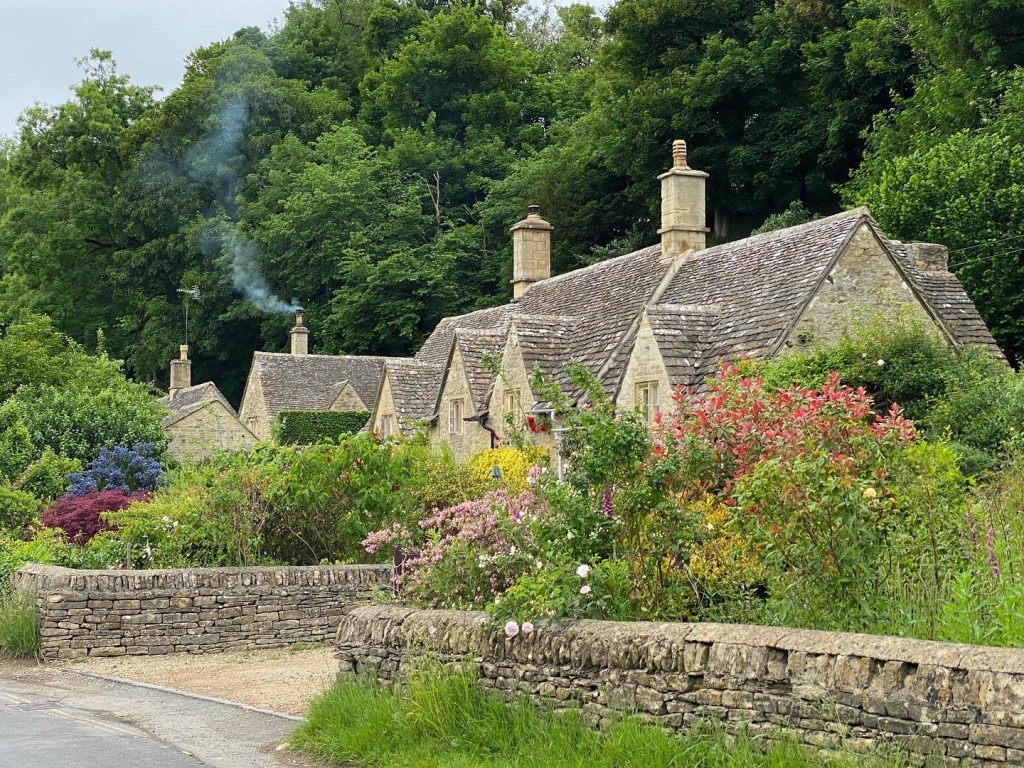
More Thomas Kinkade-y cottages elsewhere in town (which was, indeed, super charming – its reputation is definitely well-earned).

And lunch – and for Cod’s sake it’s finally not fish and chips!

Back in Southrop, we were ensconced at a village-within-a-village: Thyme (which scored it a Top 20 lodging location for WolfeStreetTravel):

And after 2 weeks of charming English cottages, finally one of our own to stay in at Thyme:

Pretty awesome (and huge) barn converted to a restaurant:

Our last evening to hang out before heading to London:

Our cottage came with a pretty essential feature:

One to London and then home!

Categories: England, The Cotswolds and Wales | Tags: , , , , , , , , , , | Leave a comment

Protected: Cotswolds & Wales Road Trip: London

This content is password-protected. To view it, please enter the password below.

Categories: England, The Cotswolds and Wales | Enter your password to view comments.

2022 UCI Cyclocross World Championships

A convergence of the UCI Cyclocross World Championships in Fayetteville and some family in Bentonville resulted in our latest trip: to Arkansas, for the first time (for one of us, anyway). Bentonville is the home of Walmart, and two of the Walton sons are determined to make Northwest Arkansas the country’s premier mountain biking, cyclocross, and gravel riding region. They appear to be succeeding.

The Walton brothers invested in the development of this course in a bid to nab the 2022 cyclocross world championships. It worked.

Men under 23 Division racing when we arrived on Saturday:

The main portage point of the race – 29 steps followed by the biggest drop on the course:

The Belgians swept the podium in the Men under 23 Division – maybe not too surprising, considering the cobbles of Paris-Roubaix?

Start of the Elite Women’s Division race in the VIP section, courtesy of Mike:

A distinctly lower caliber of bikers at Crystal Bridges:

And later at The Hub at the top of the Coler Mountainbike Preserve:

A little air show entertainment on Sunday, while waiting for the Elite Men’s race to start:

Freakin’ hilarious sign on the course for the Elite Mens race:

If you don’t know the reference, consult the picture below and the resulting aftermath from the jackass holding the original version of the sign on the route of the first stage of last year’s Tour de France:

Transitioning from riding to portaging up the stairs like salmon swimming up a fish ladder – freakin’ amazing athletes (British winner Tom Pidcock in the lead):

Last night in Bentonville:

Great trip and great town – we’ll be back!

Categories: Biking, Domestic | 2 Comments

Mappy Hour: A Cartographic History of Ukraine

As Russia continues their belligerent posturing along the Ukraine eastern border (and now on Ukraine’s northern border with Belorussia, where Putin has begun positioning even more troops), it’s helpful to understand the history of Ukraine’s borders in the political and cultural fluidity that characterizes central Europe. (Let’s be serious – fluidity across all of Europe, which is why the place is so freaking interesting from a historical and cartographic perspective.)

Our buddy, Jim, who also follows WolfeStreetTravel, recently recommended this really compelling Washington Post article from 2015 on the evolution of Ukraine’s territory and borders. This article was published when Putin was previously taking aggressive actions to absorb Ukraine’s Crimean Peninsula into mother Russia. Definitely recommended reading for anyone following the crisis unfolding around Ukraine.
The Washington Post’s resident cartographer, Gene Thorp, developed for the article several really helpful and really compelling maps depicting how Ukraine’s territory transformed over the centuries as empires, warring factions, and treaty agreements changed. To wit:

Catherine the Great’s encroachment into what previously was either sovereign Ukrainian territory or land ruled by the Polish-Lithuanian Commonwealth in the 17th century. (WolfeStreetTravel previously included latter in another Mappy Hour post on the evolution of Europe during the Brexit buildup.)

Or, a severed Ukraine after the post-WW I Treaty of Brest-Litovsk, where Poland wound up with most of western Ukraine, including the major city of Lviv, but lost the territory during the Russian civil war, after which Ukraine joined the USSR as the Ukrainian Soviet Socialist Republic within the union.

The body of the article includes more maps and some really great context for how and why Ukraine looked like it did at different times during the last 1000+ years, as well as how the native people of Ukraine changed due to Soviet actions. Good stuff!

Categories: Mappy Hour, Maps and Miscellany | 1 Comment

Blog at WordPress.com.