Really interesting article in today’s New York Times about North Macedonia’s claim that Alexander is their native son, much to the infuriation of Greece. Historians agree that Alexander (and his father Philip) both originate from the Macedonia region of Greece, south of the country of North Macedonia. But historical realities don’t discourage the nationalistic fervor of the North Macedonians in creating a national identity for themselves.
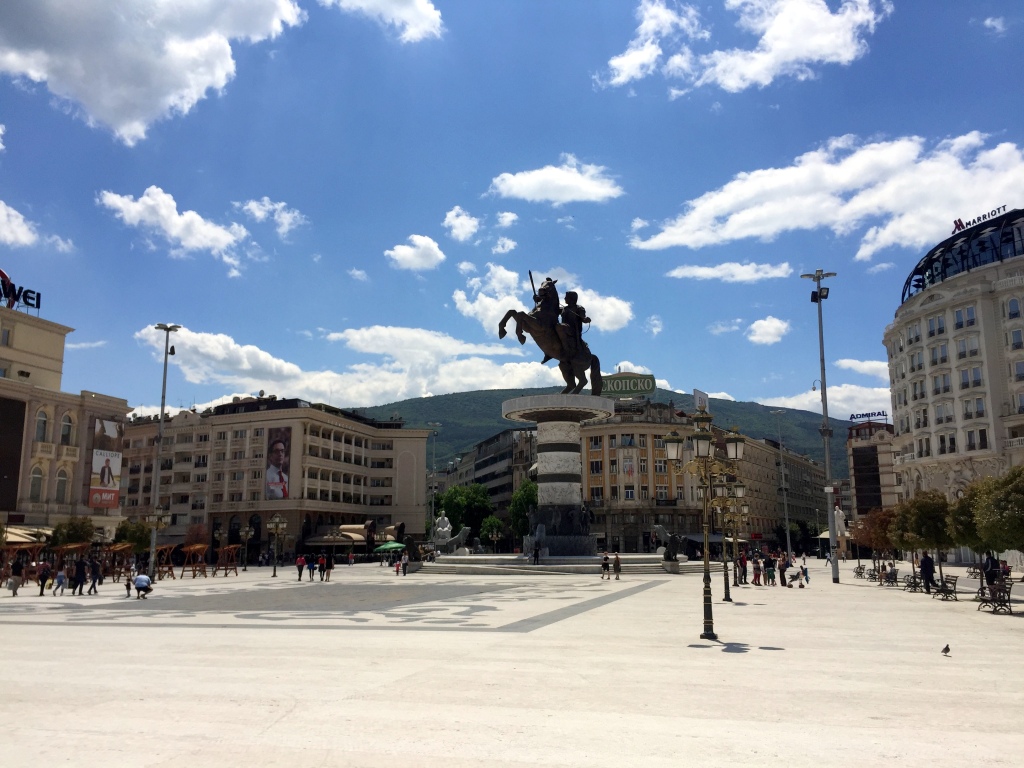
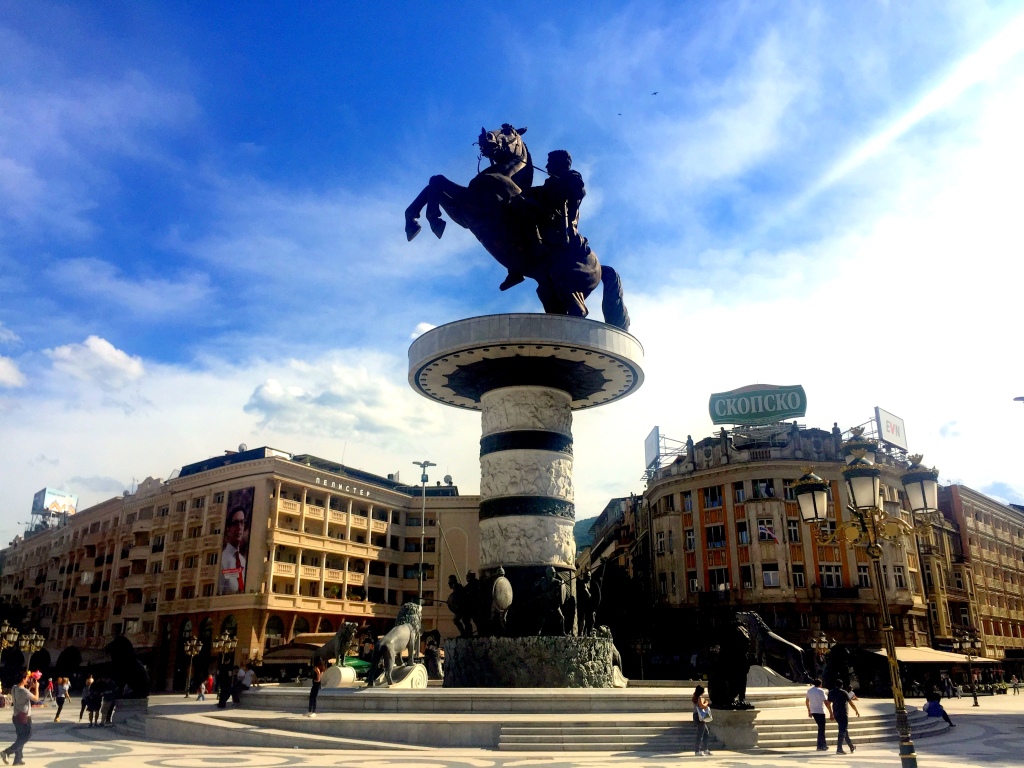
We encountered all of this during our bike trip through Macedonia and Albania a few years ago, including the presence of oversize statues of Alexander, his father Philip, and a 10th-century Bulgarian king (who also isn’t native to Macedonia).
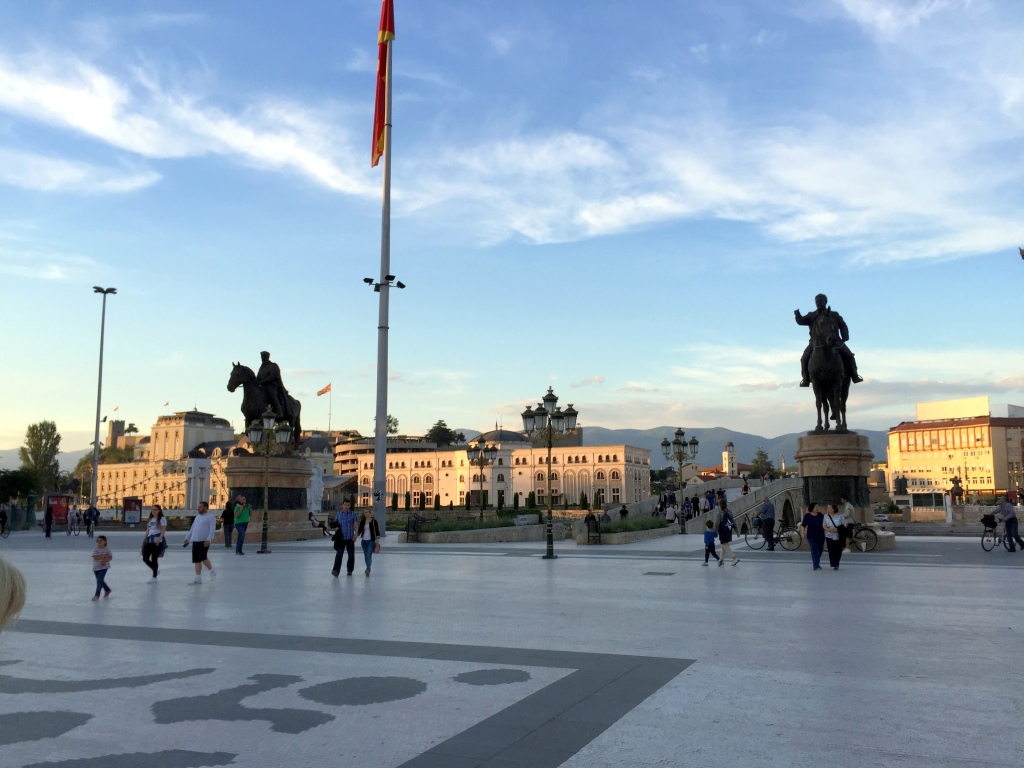
Greece’s Alexander the Great, prominently displayed during our trip in Skopje, North Macedonia’s capital:
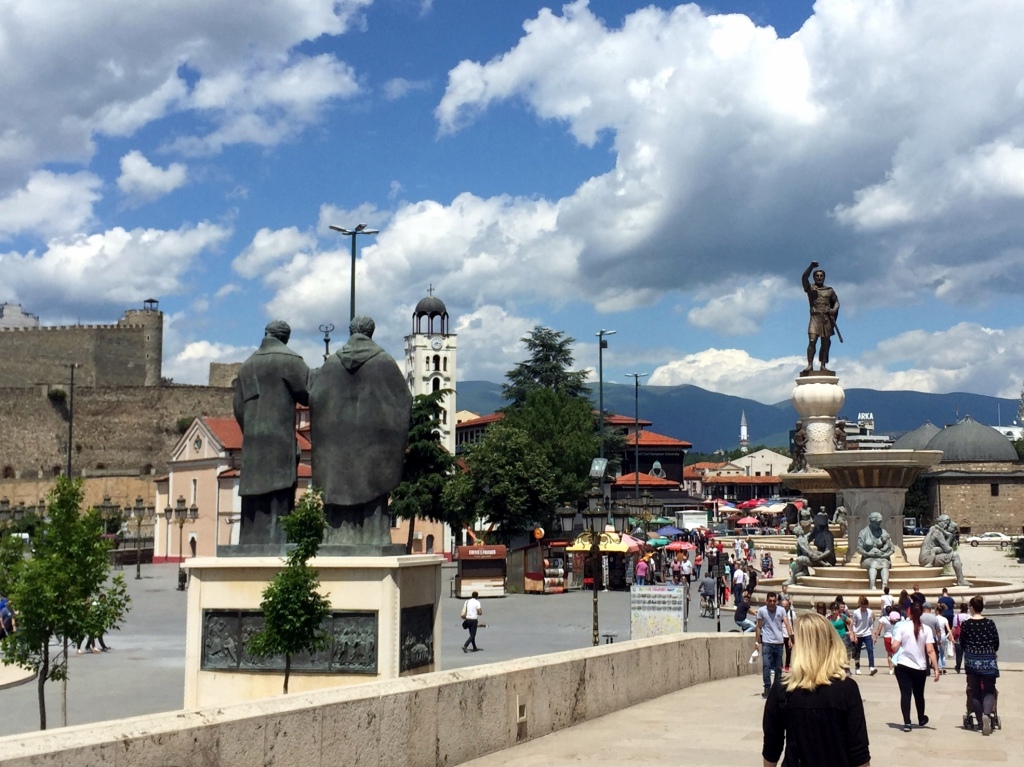
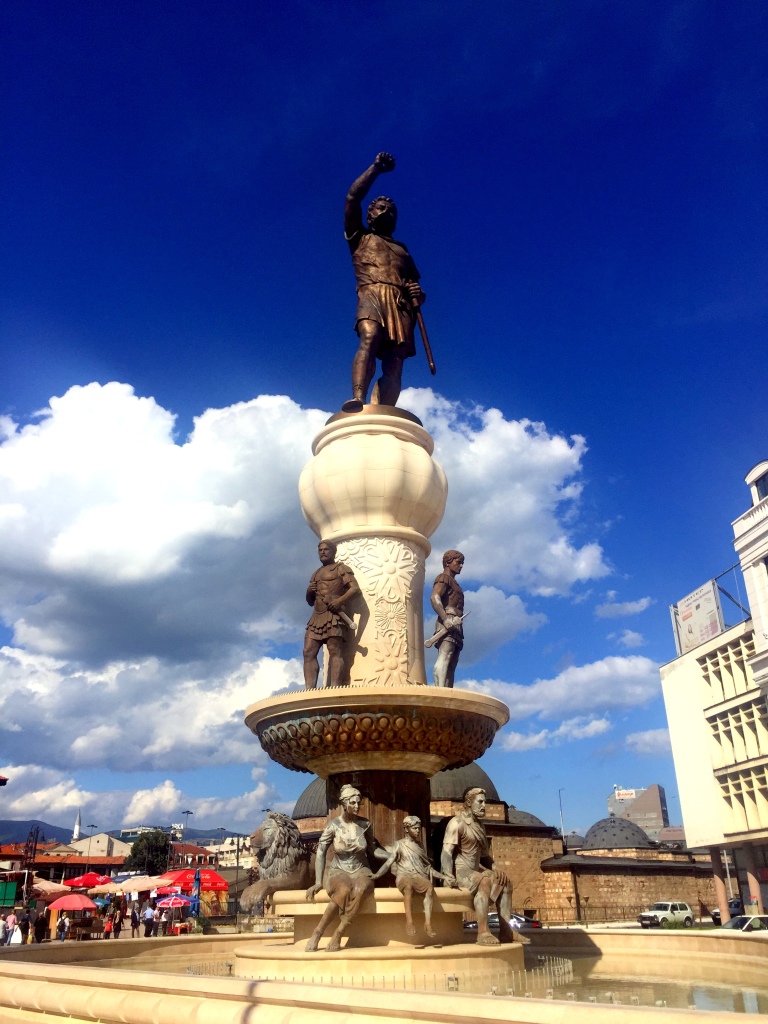
And across the bridge, his father, Philip of Macedon (also not North Macedonian):
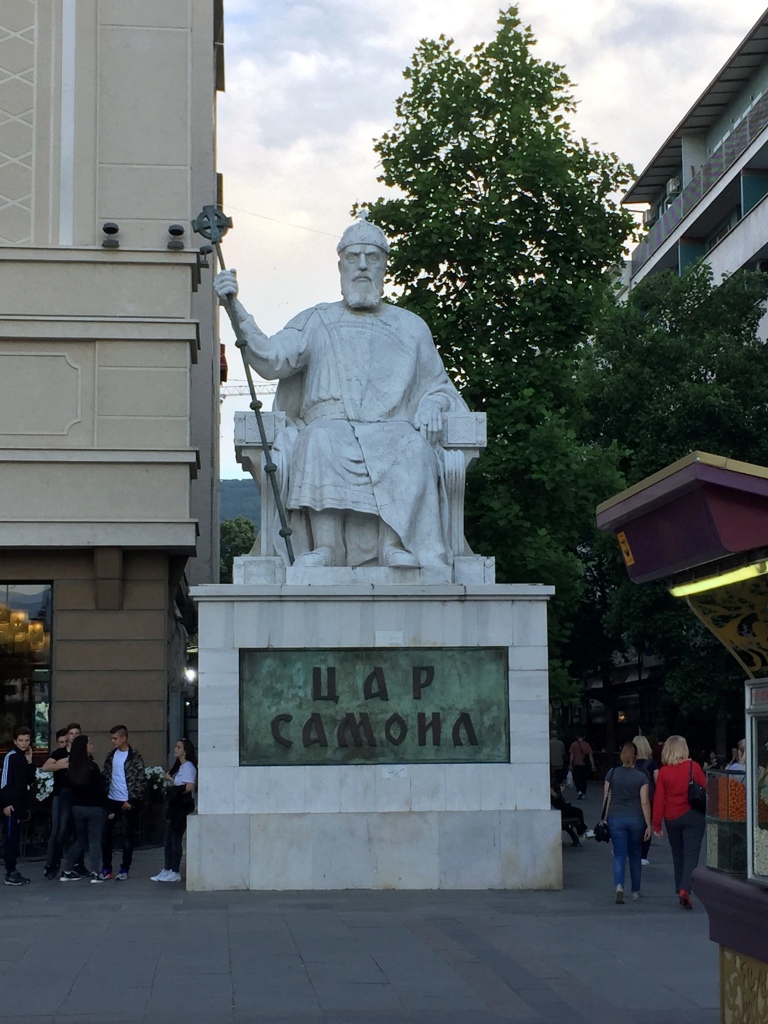
One one side of Skopje’s main square squats Samuil, the Tsar of the First Bulgarian Empire from 997 to 1014 (also not North Macedonian, enraging the Bulgarians, as noted in today’s NYT article):
And on the other side, a couple of more recent heros of the Balkan region – maybe Macedonian, maybe Bulgarian. All of this is a little disputed.
The final post on the Turkey and Back to Greece trip (finally!). And just in the nick of time: we’re hitting the road (and the Adriatic Sea) tomorrow, and so won’t be posting any of the other backlogged trips for a while. These are all the long trips (versus week-long trips that we responsibly posted immediately after getting back from each), and include the following:
We’ll eventually post the detailed content on each of these trips here on WolfeStreetTravel.com; in the meantime, we’ll be posting pics in real time during two upcoming extended trips over the next 5 months @wolfestreettravel on Instagram, if you’re interested.
Back to our final post on Paros. . .
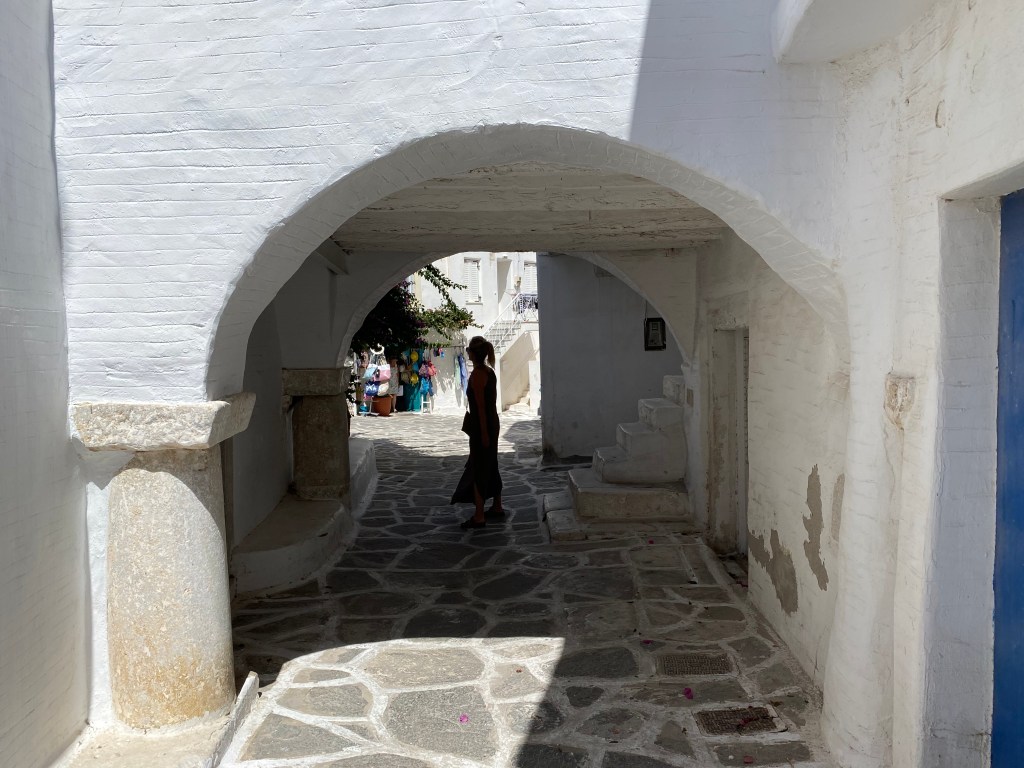
Although we chose not to stay in the largest town on the island (for reasons obvious here), we nonetheless headed to Parikia one day during our stay on Paros as a day trip.
Very cool, bustling burg. With equally cool, wooden-framed bikes to boot.
The absolute most intriguing site in town has to be the Frankish Castle.
Built by the Venetians in the 1200s on the site of the town’s ancient acropolis, the “castle” (actually the remains of a tower that was part of a castle wall) was constructed Jenga-style using the vestiges of classical temples from around the island.
Little remains of the original fortification, and nearby structures incorporate what remains into their own walls.
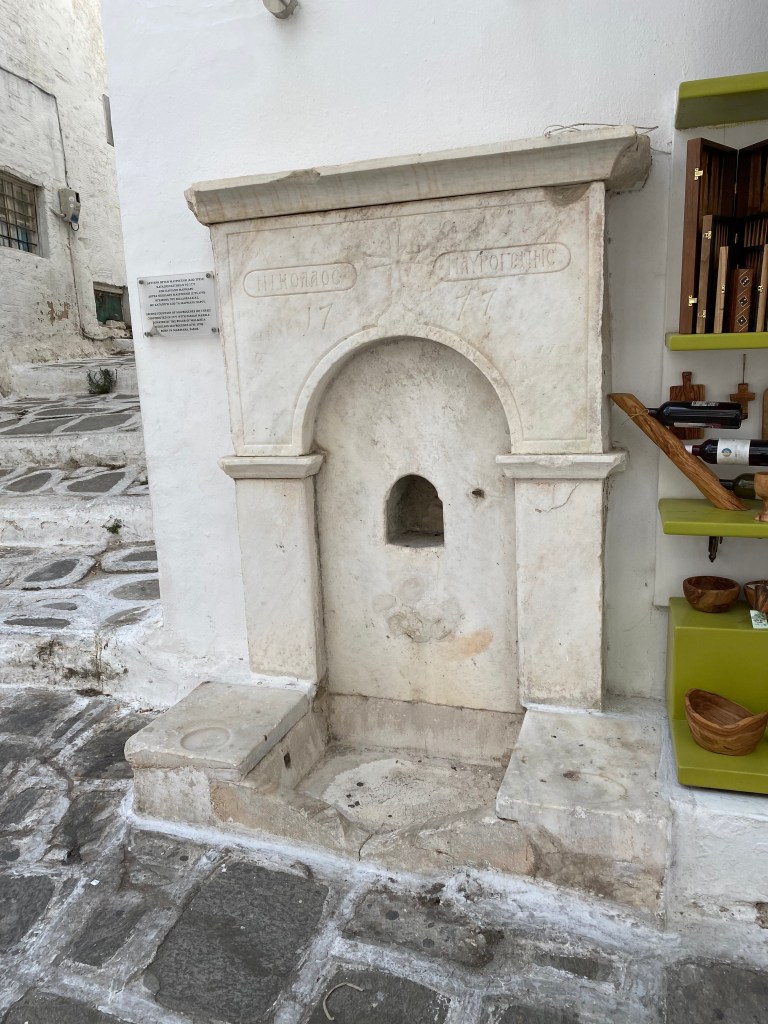
One of the three “Mavrogenus’ Fountains” found around town. ” Nicolaos Mavrogenus was one of the prodigal sons of Parikia, Paros Island main town in the Greek Cyclades. Missing his native Aegean and as Wallachia governor decided benefit his hometown providing a public drinking water supply [in 1777]: three beautiful marble fountains.” (From here.)
And another (we never came across the third):
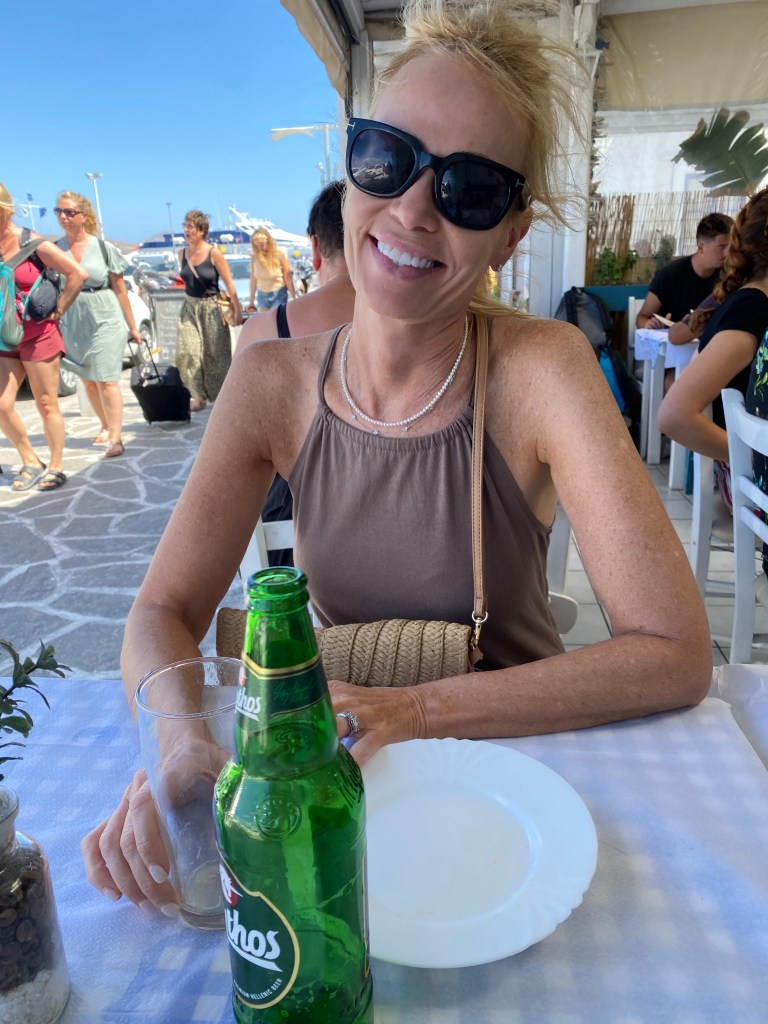
Finally getting a gyro at a local place in Parikia’s port (the empty plate would soon be filled):
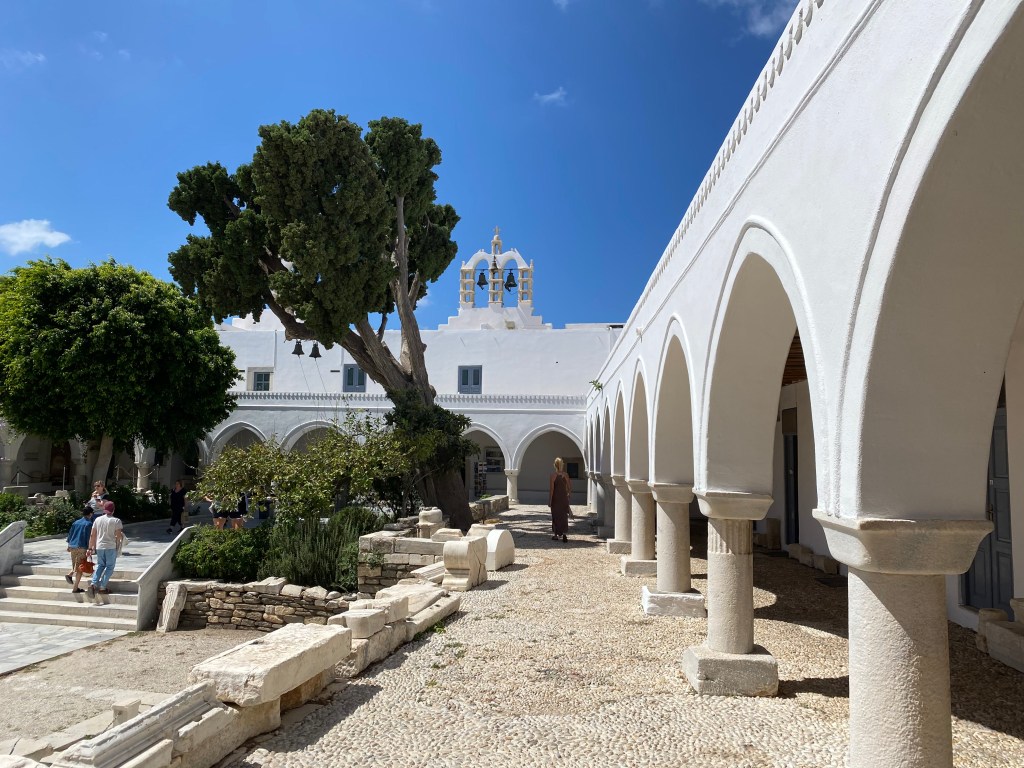
The Byzantine-era church complex of Panagia Ekatontapiliani (The Church with 100 Doors):
According to tradition, the church currently has 99 doors and a secret, 100th door will open when the church of Hagia Sofia in Constantinople become Orthodox Christian again.
The original church dates back to 326, during the reign of Roman Emperor Constantine, and purportedly was founded by his mother, Helene (whose sarcophagus we came across during the micronations road trip).
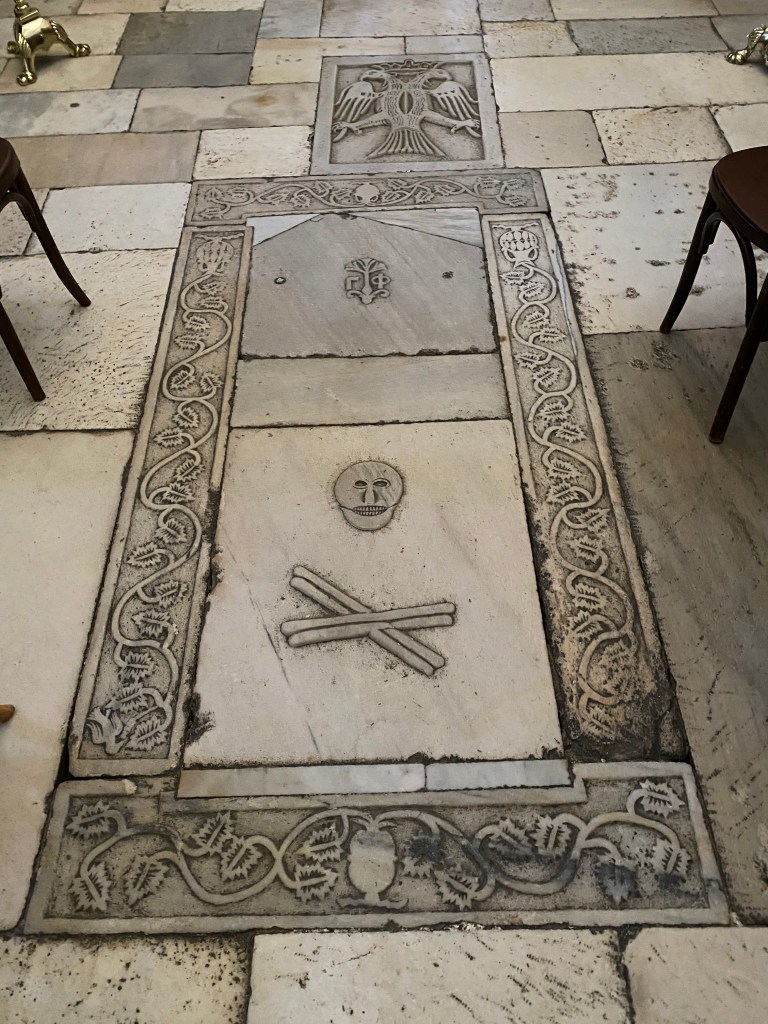
We think the church elders employed third graders to carve the church’s tombstones:
In the 6th century, Byzantine Emperor Justinian enhanced the church and added a dome.
Another view of the Frankish Castle as we head out of town.
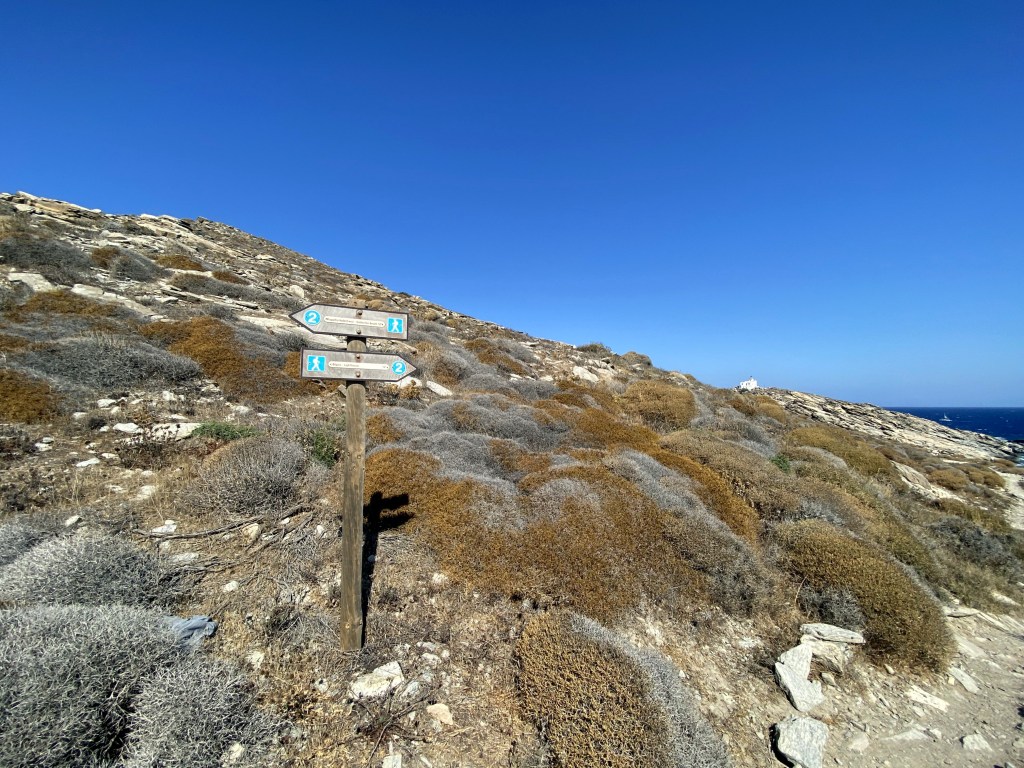
The best hike we experienced on the island took us to the Korakas Cape Lighthouse at the northwest tip of the island.
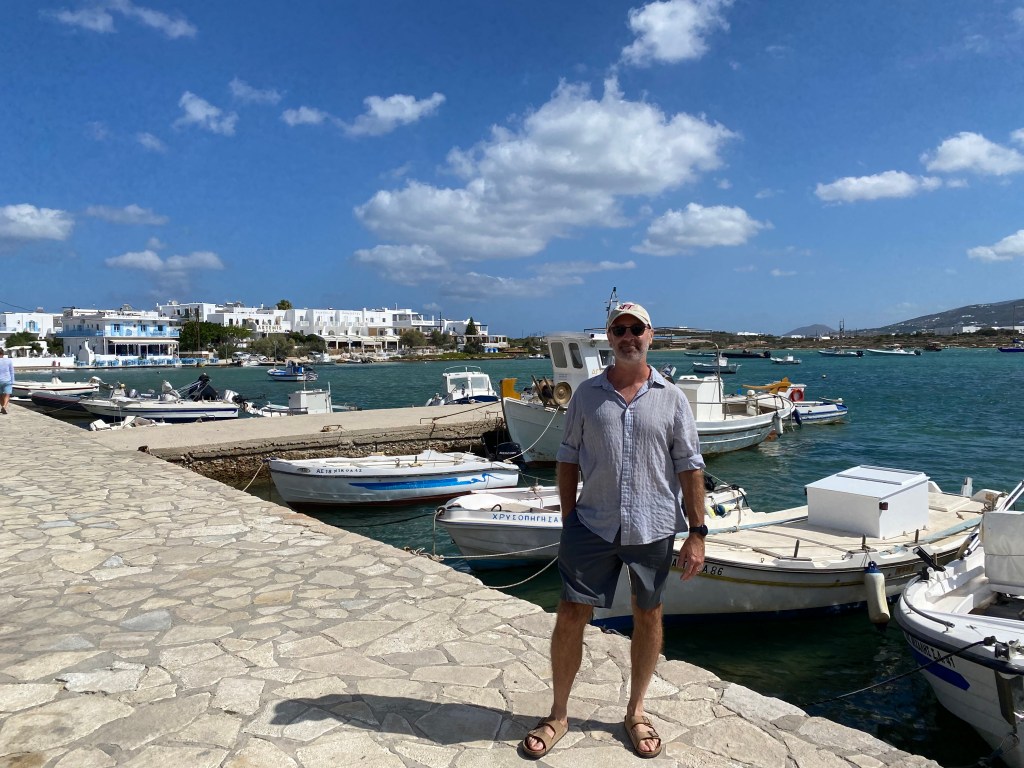
Another field trip, this time a short ferry ride to the polar opposite of the island of Paros: Antiparos (it’s just a smaller island than Paros).
With a really picturesque main town:
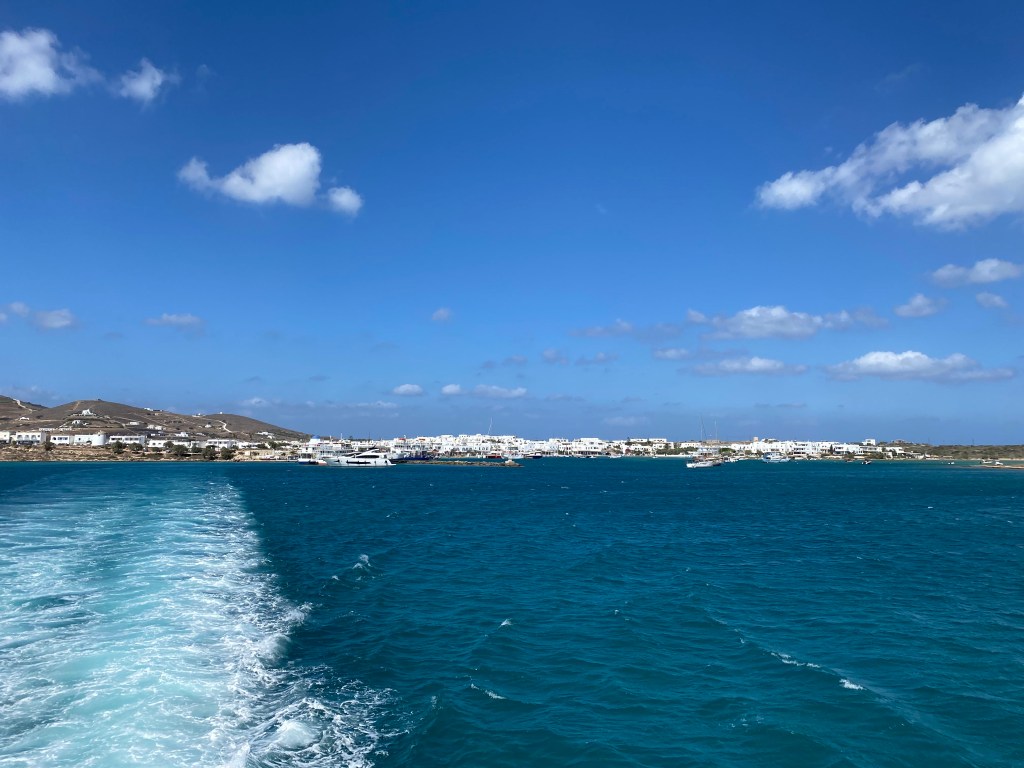
Bye, Antiparos.
And bye, Paros, and Cappadocia, and Istanbul. Trip posts complete!
This, at long last, represents the final tranche of posts for our September 2022 Turkey and Greece trip: a week on the Greek island of Paros in the Cyclades archipelago.
The Turkey and Back to Greece trip, as originally planned, was to be our first post-retirement travel excursion. The second WolfeStreetTraveler would retire in mid-August 2022 (the first had retired the previous year), and then we’d immediately spend a full month on the road – leaving in late August and returning in late September. After a week in Turkey, we’d spend 3 weeks island hopping in the Cyclades:
Paros for 1 week
Milos for 4 days
Folegandros for 3 days
Naxos for 1 week
But a perpetually problematic NOAA weather forecasting supercomputing support contract in the otherwise optimally operating Science & Engineering business run by on of the WolfeStreetTravelers had other plans. The recalcitrant actions of the most uncooperative data center and the most incompetent supercomputing vendor to ever play a role in weather forecasting would require, it turns out, another 6 months to address. So that WolfeStreetTraveler postponed retirement, canceled the Milos / Folegandros / Naxos legs of the trip (for which both the ferry fares and the hotel / AirBnB reservations were refundable, which was a relief), enjoyed the remaining first legs of the trip, then returned to work to dig in for another half year to pound on pernicious program problems.
But that’s okay – a week in Paros was unbelievably great. And we’d get to the other Cyclades islands later (in fact, they were supposed to comprise the second half of a 6-week trip planned later this year, but earthquakes in the area scared us off, so we’re hitting Mallorca and Andalusia instead, which should be pretty great, too). We’ll get back to the remaining Cyclades soon enough.
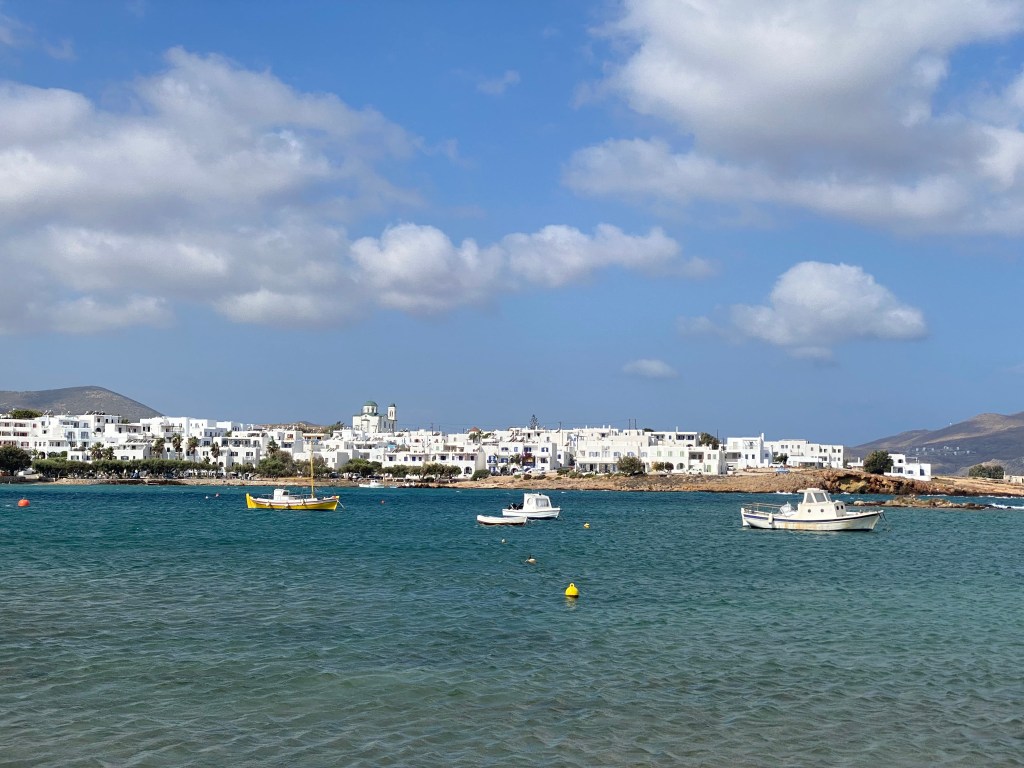
In Paros, we based ourselves in the town of Naousa at the north end of the island. Although the main city and ferry port on the island, Parika, held some appeal, our research suggested that Naousa offered more of what we were looking for; and we could always day trip to Parika (which we did).
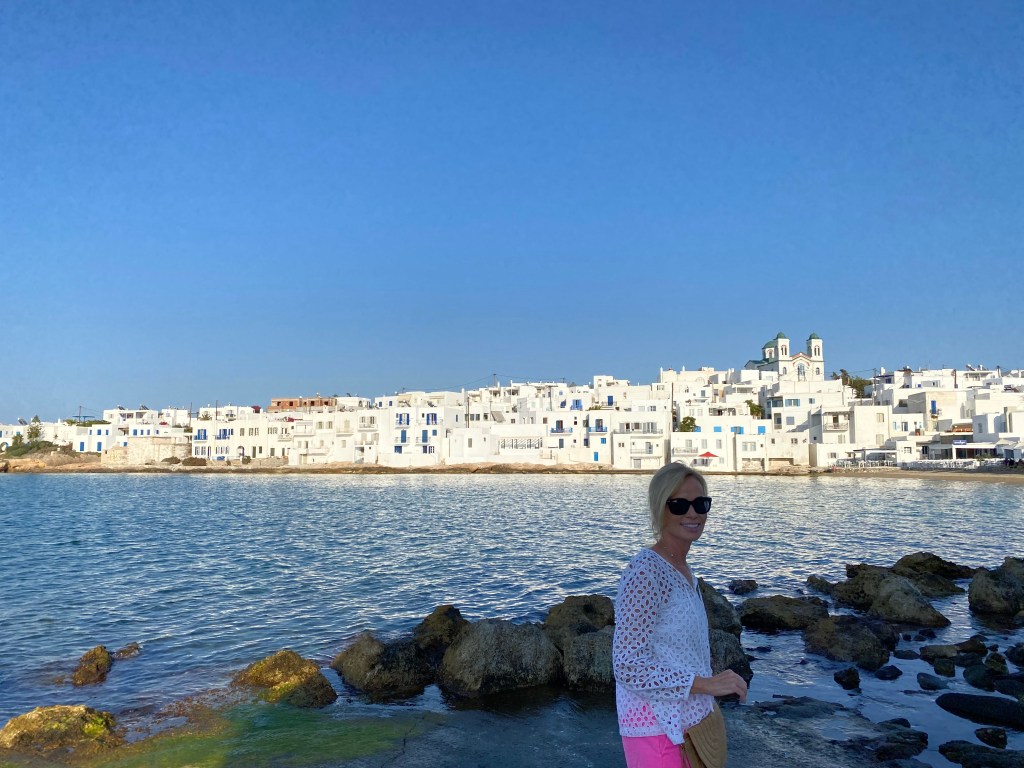
And Naousa was absolutely perfect for us:
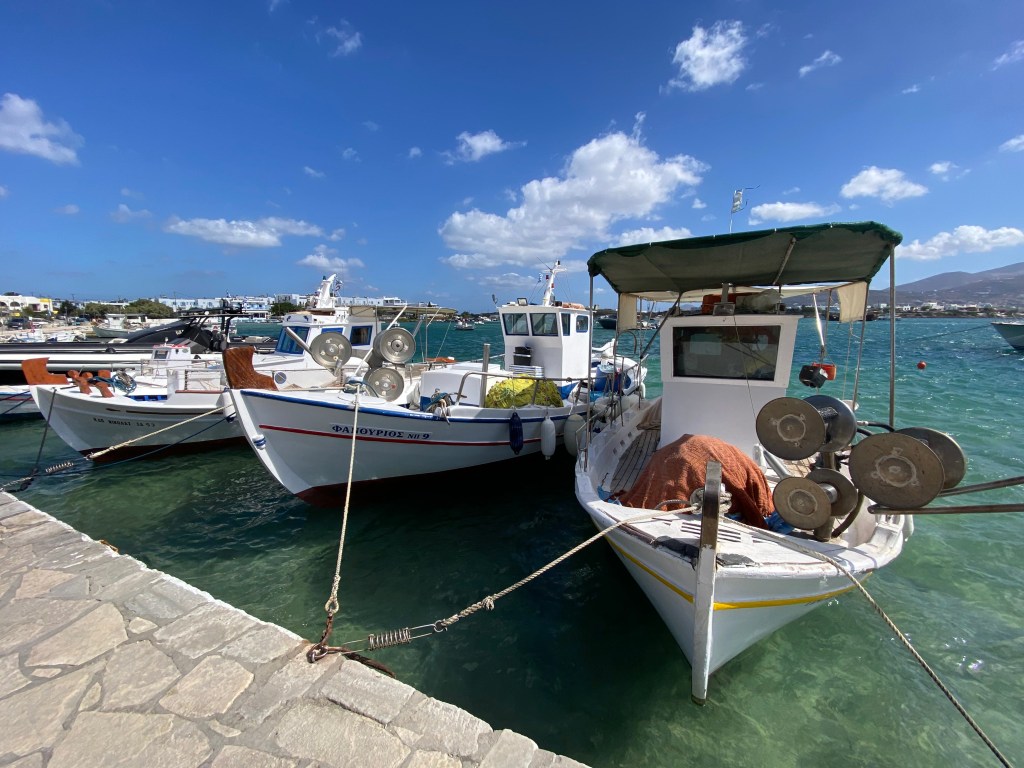
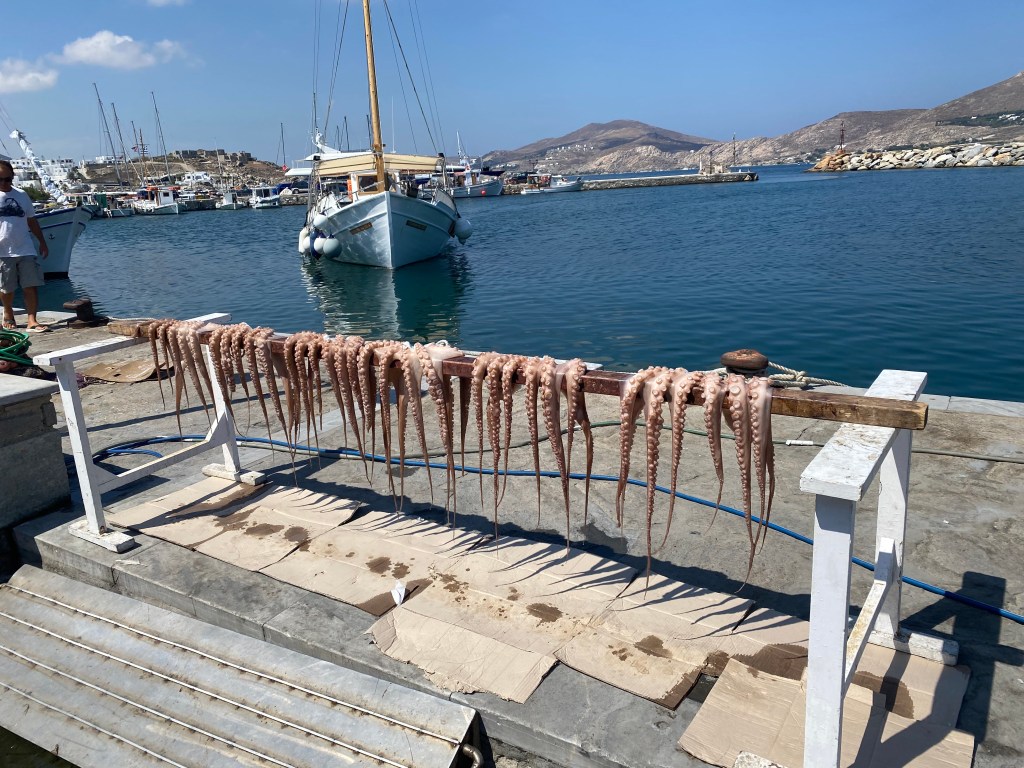
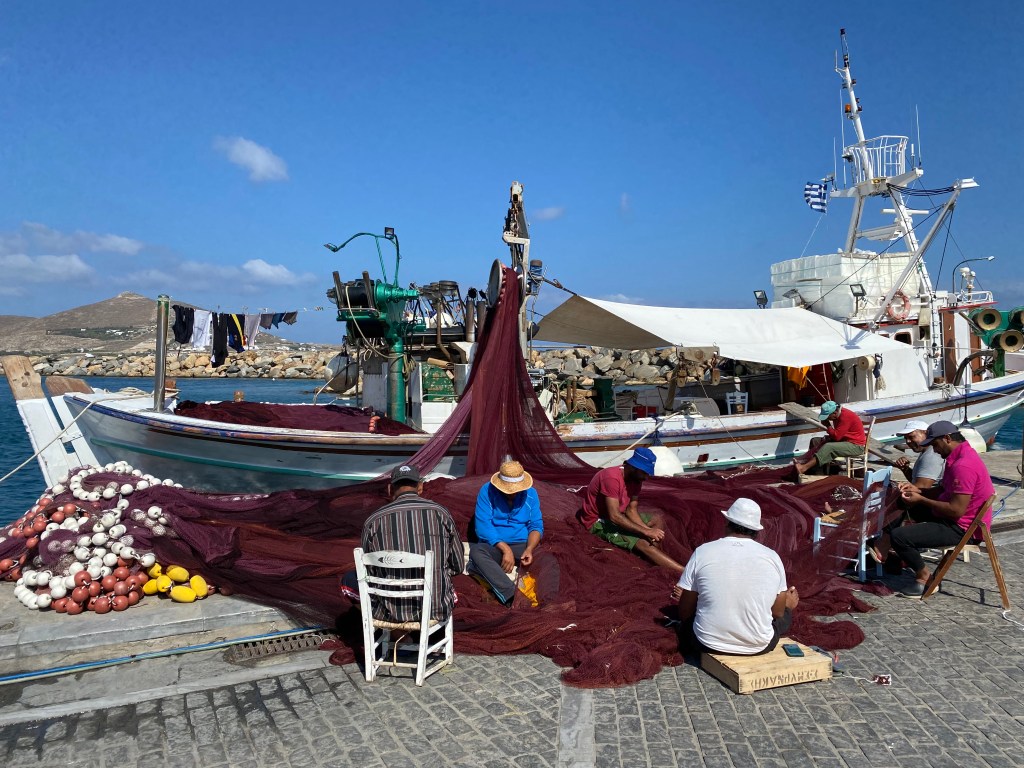
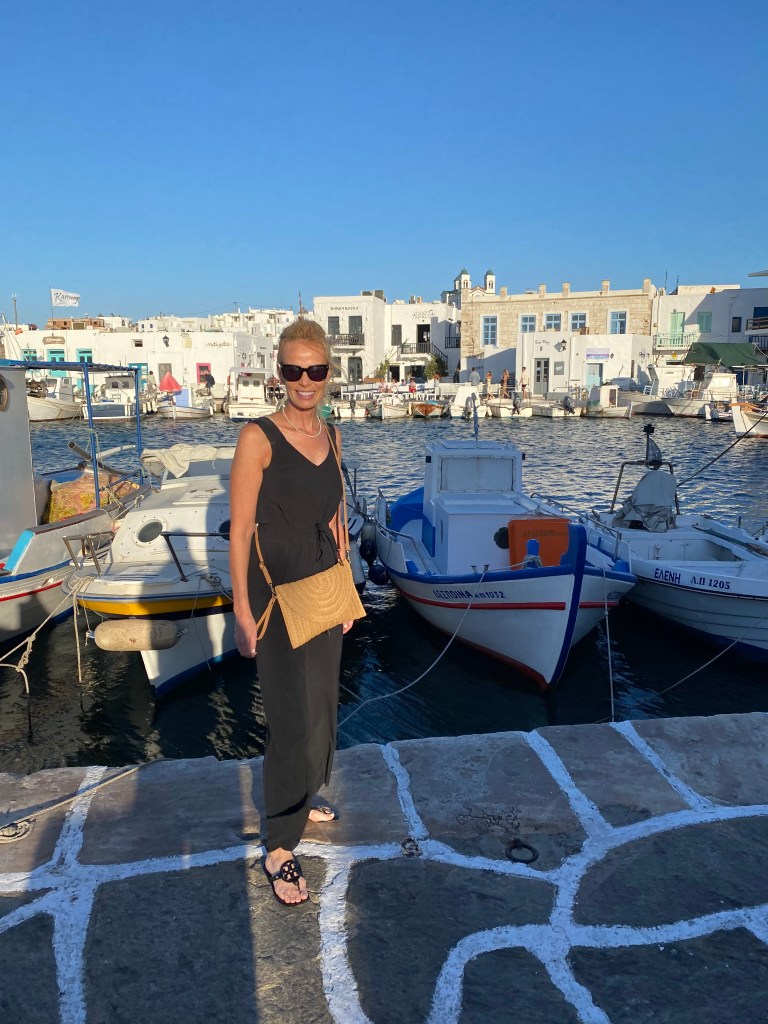
Although definitely a tourist town, Naousa still operated as a working fishing port
where the catch of the day would appear on your table for lunch and dinner.
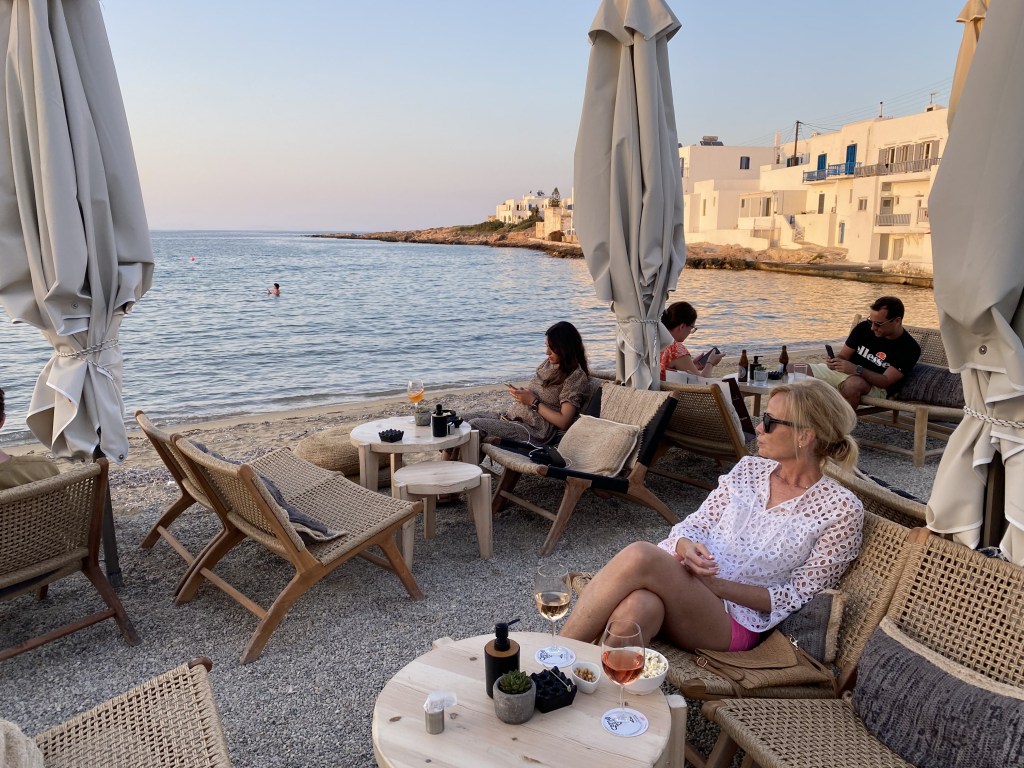
For the entire week, we’d begin each evening with sunset cocktails on the water, then wander into town to find dinner. The best of these, which we’d patronize three evenings during our stay, was called – fittingly enough – Come Back. So we did. Again and again.
And for obvious reasons.
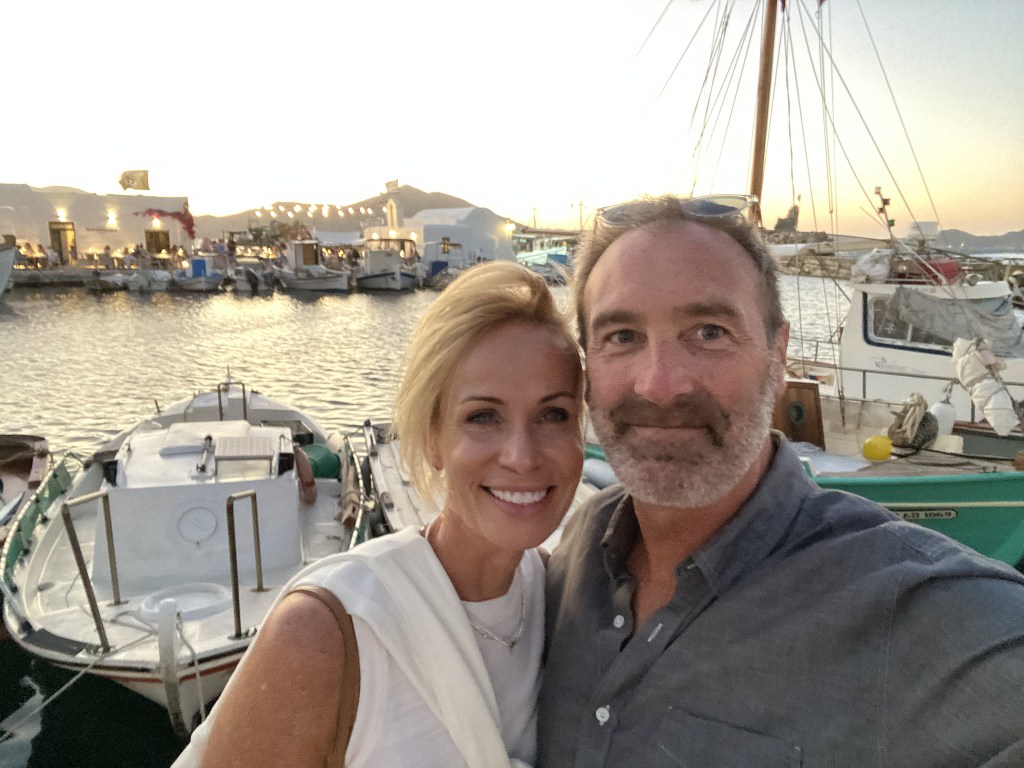
Sunset in Naousa from the Come Back beach:
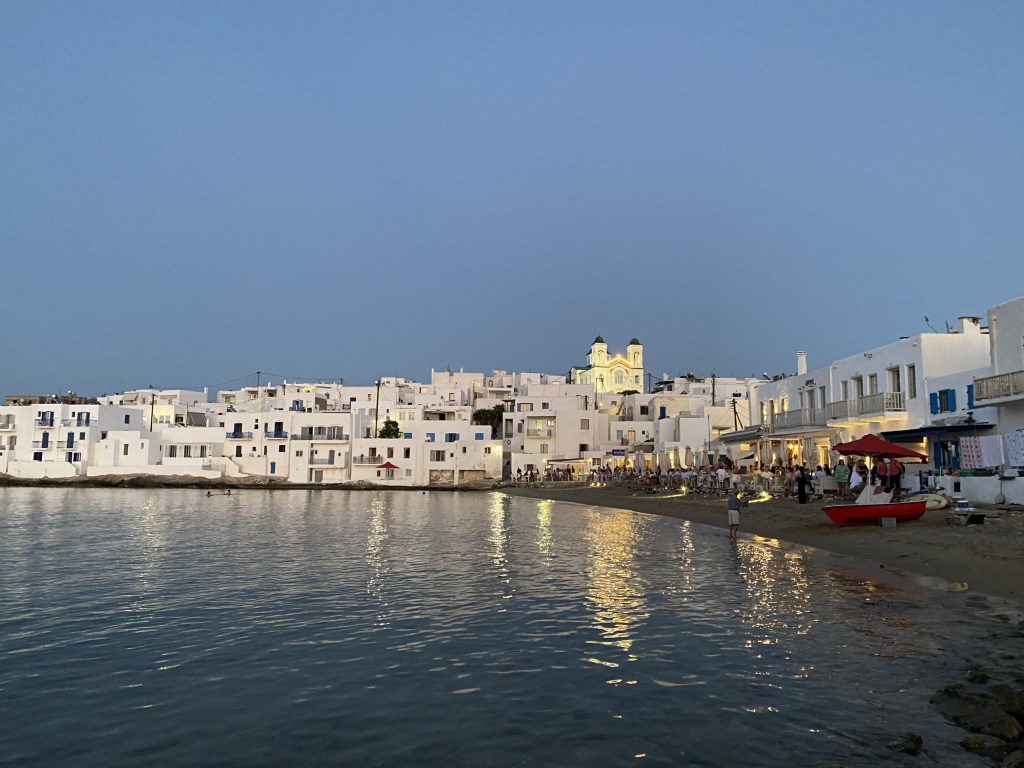
And thence, into Naousa for some seafood.
Pretty great weather – mostly – during out stay. We did have a day and a half of super windy weather that was part of the normal weather cycle in the Cyclades, but that also was strong enough that it curtailed some activities.
Fishing wasn’t one of them.
Our time on Paros also encompassed our anniversary, which was great.
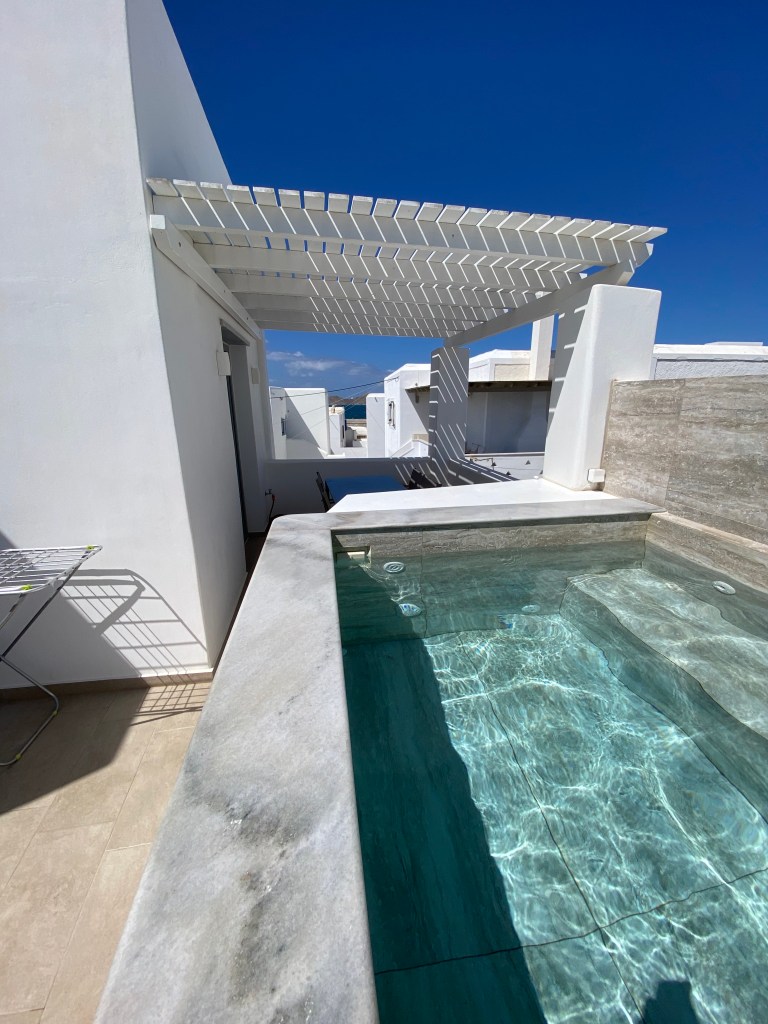
Pretty good AirBnB digs.
Another evening, another round (or three) of cocktails at Come Back.
And another sunset. Pretty good routine.
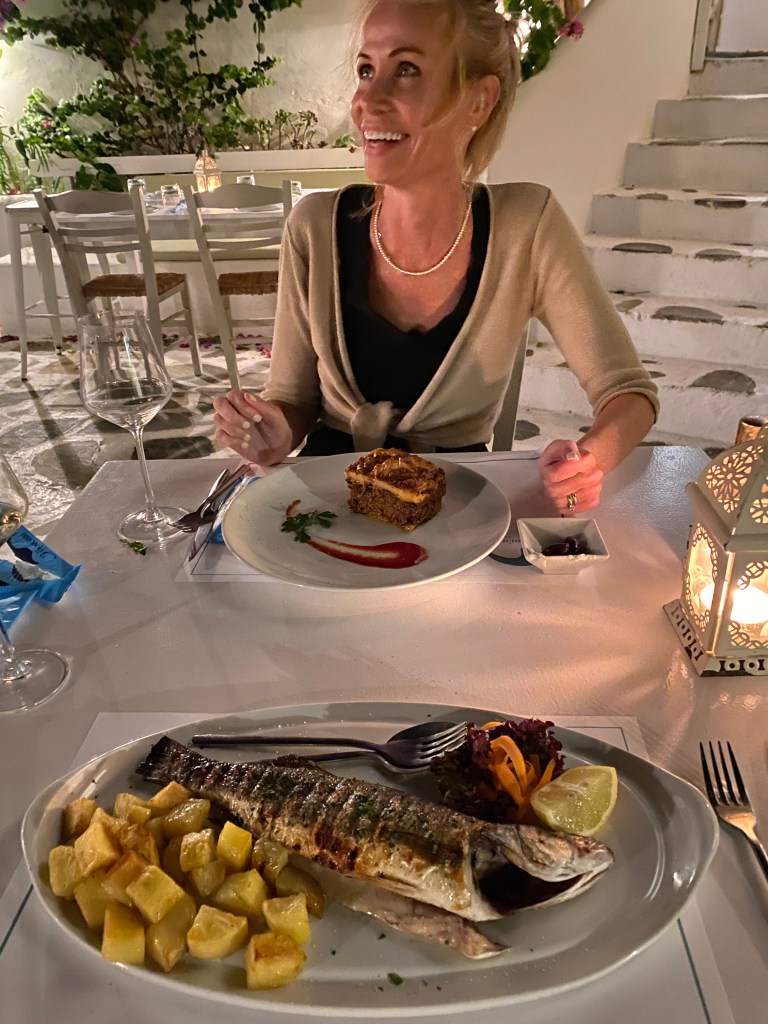
A break from fish with some moussaka.
One of the most photographed spots in Naousa, based on our Instagram feed before the trip. Colorful, yes, but empty.
And then night falls:
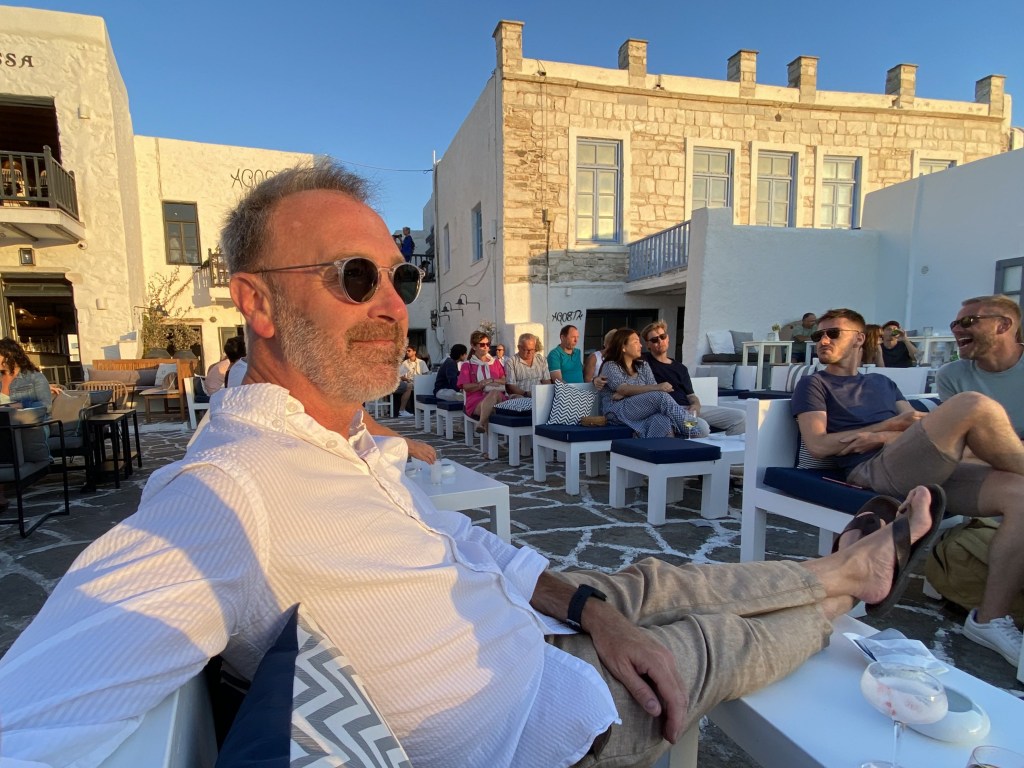
Another sunset, and our second favorite cocktail spot.
Maybe they should name this place “Also Come Back Here.”

































 WolfeStreetTravel