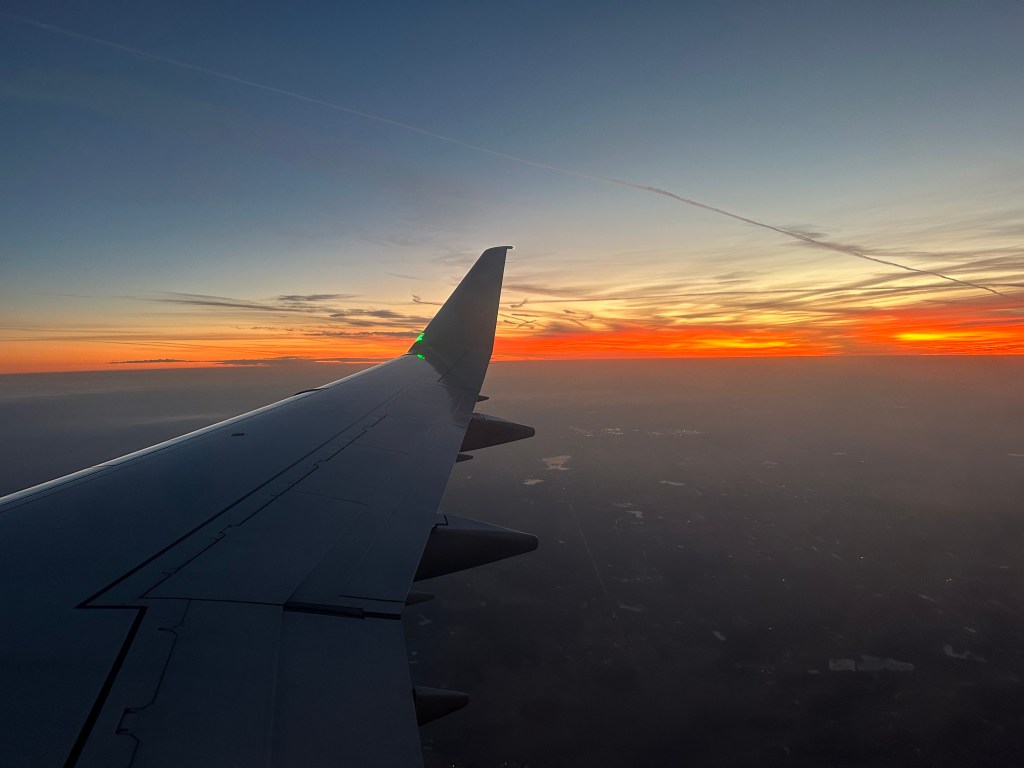
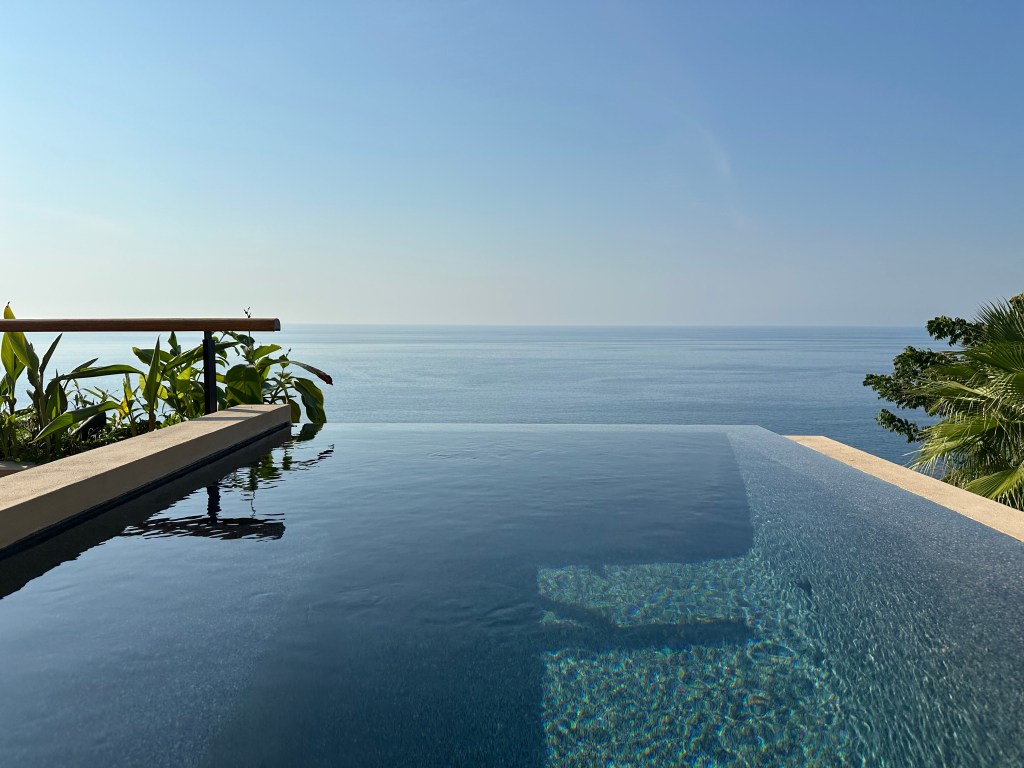
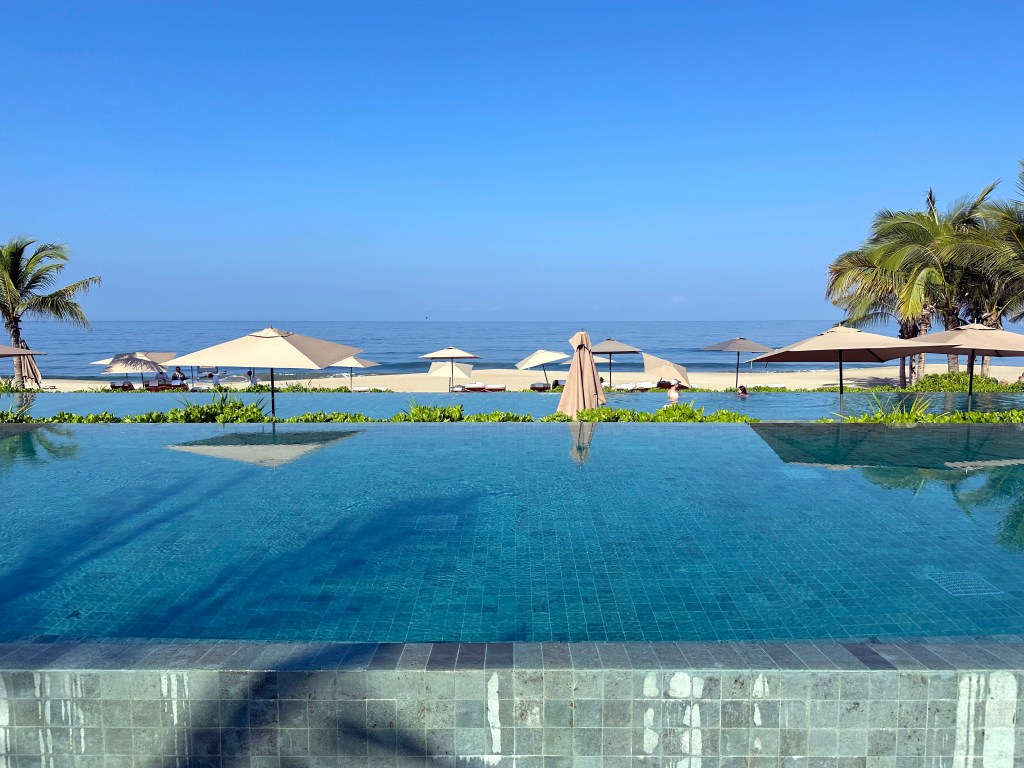
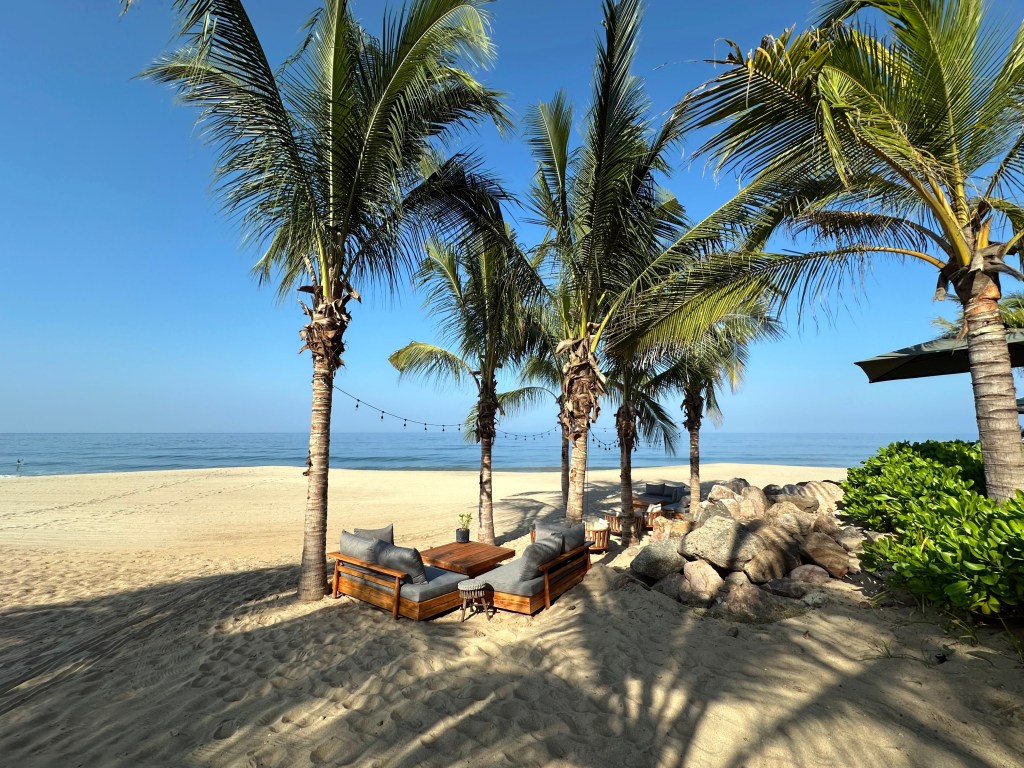
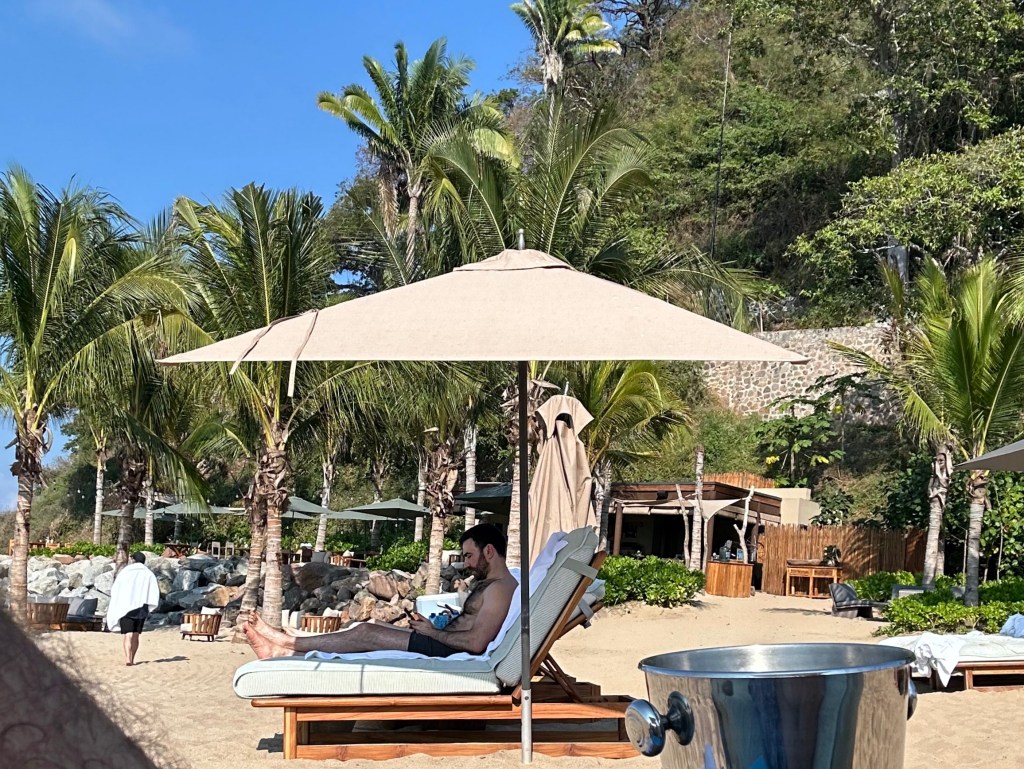
In an unusual move for us, we have now spent two consecutive Christmases in the same country. Shocking! Last year, we visited San Miguel de Allende, Mexico. This year, we returned to Mexico (albeit to a different region).
Mandarina is a new, Pacific-coast development an hour northwest of Puerto Vallarta, very similar in concept to Mayakoba on the Riviera Maya an hour(ish) south of Cancun.
Coincidentally, we also stayed at the same hotel collection in Mandarina as we did in Mayakoba (and San Miguel). Definitely did not disappoint.
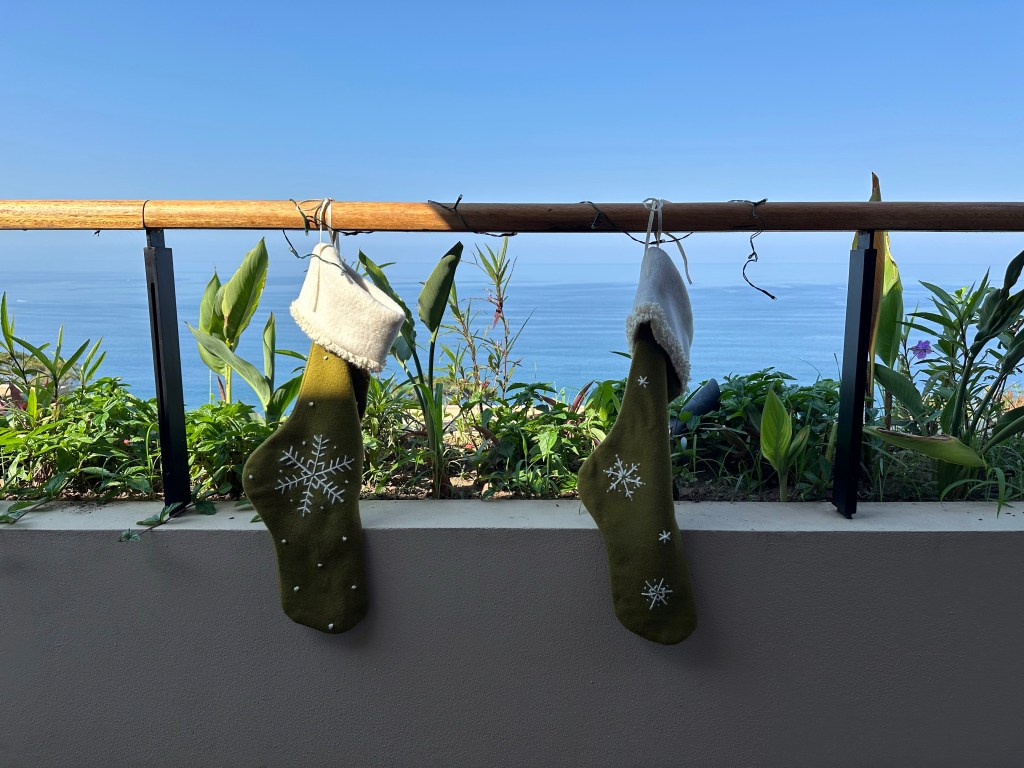
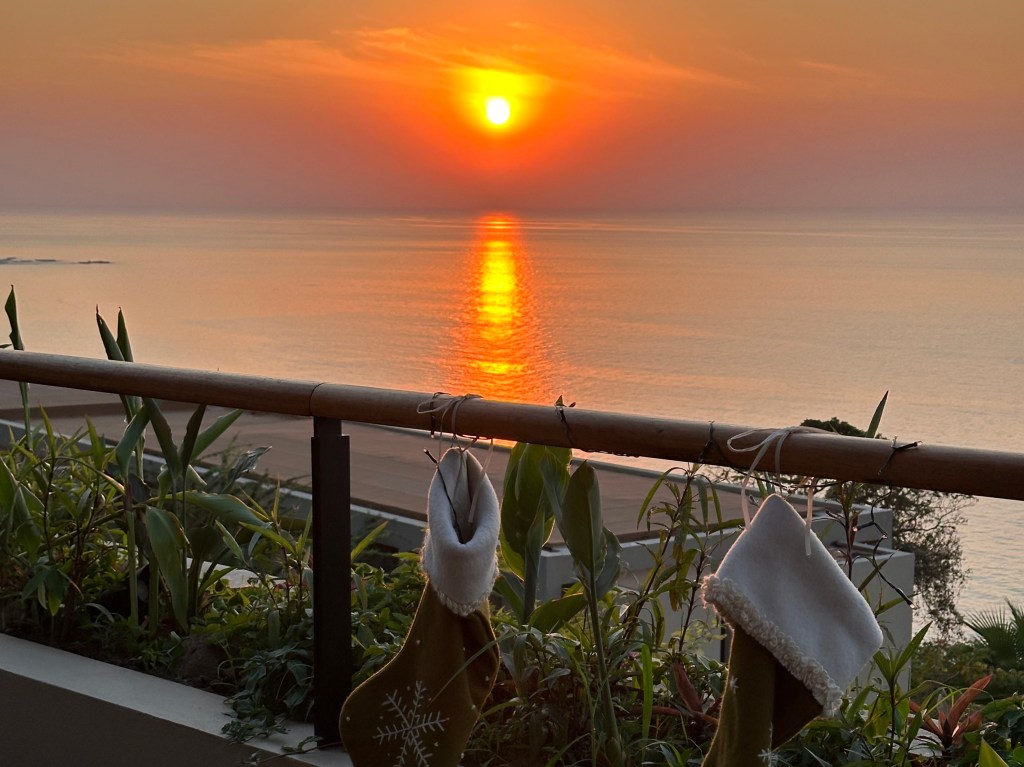
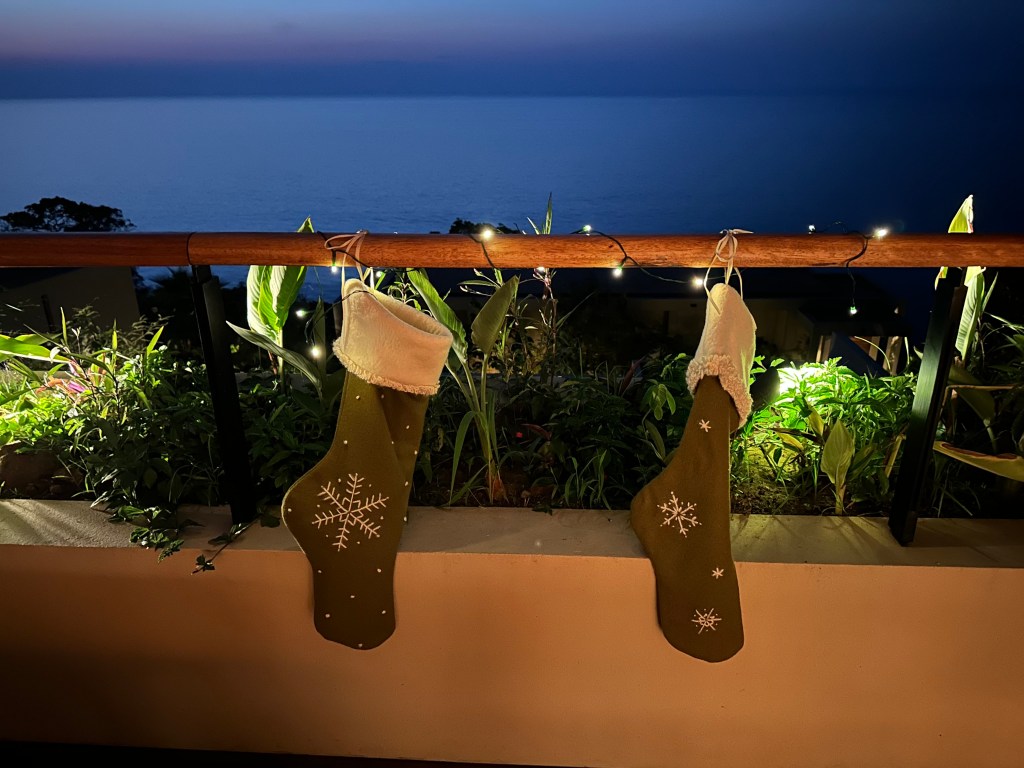
And with us, as always, were the traveling Christmas stockings, which have accompanied us on almost every Christmas trip for the past 25 years, from London, to Latvia, to Laos (they were left behind for our Christmas on safari due to the duffel bag limitation). Lisa made the stockings for our first Christmas on Wolfe Street when we moved there in 2000 and, because we have traveled abroad each Christmas since that time, they’ve become world travelers in their own right. (One year I’ll remember to take pictures of the stockings when they’re full. . .)
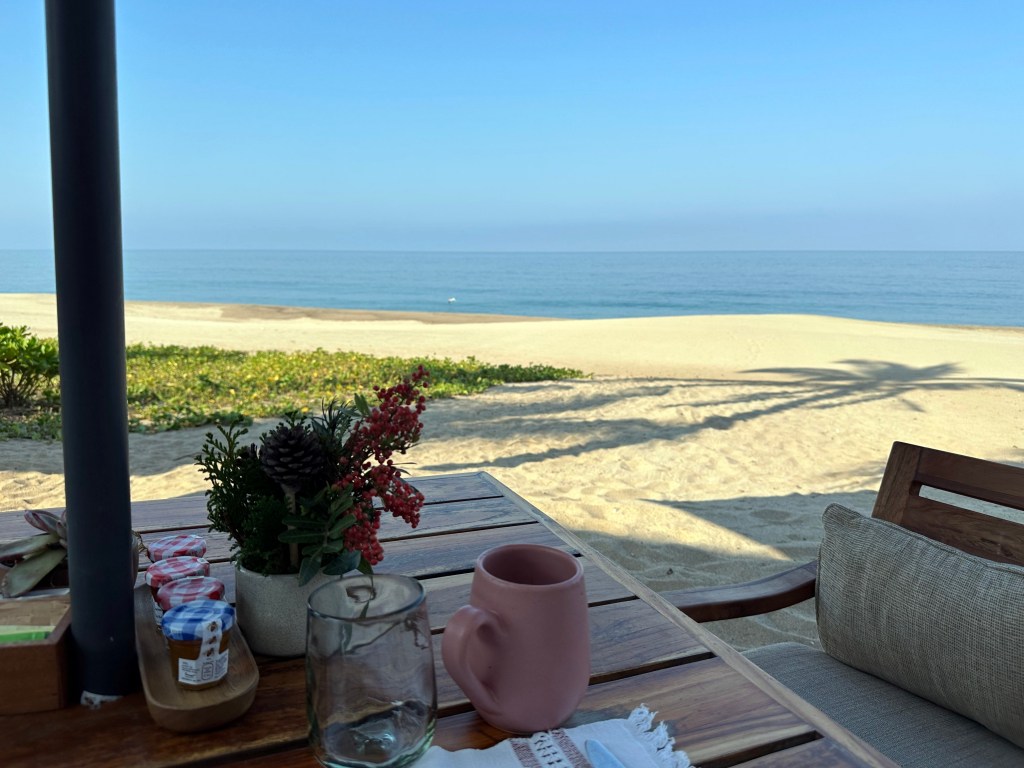
During breakfast our first morning, we spotted a pod of gray whales cruising by right off the beach.
W spotted another pod from our terrace later in the same day. Pretty cool, especially considering that we took a whale watching tour out of Bar Harbor last year, and saw none. Now, unexpectedly, they were everywhere.
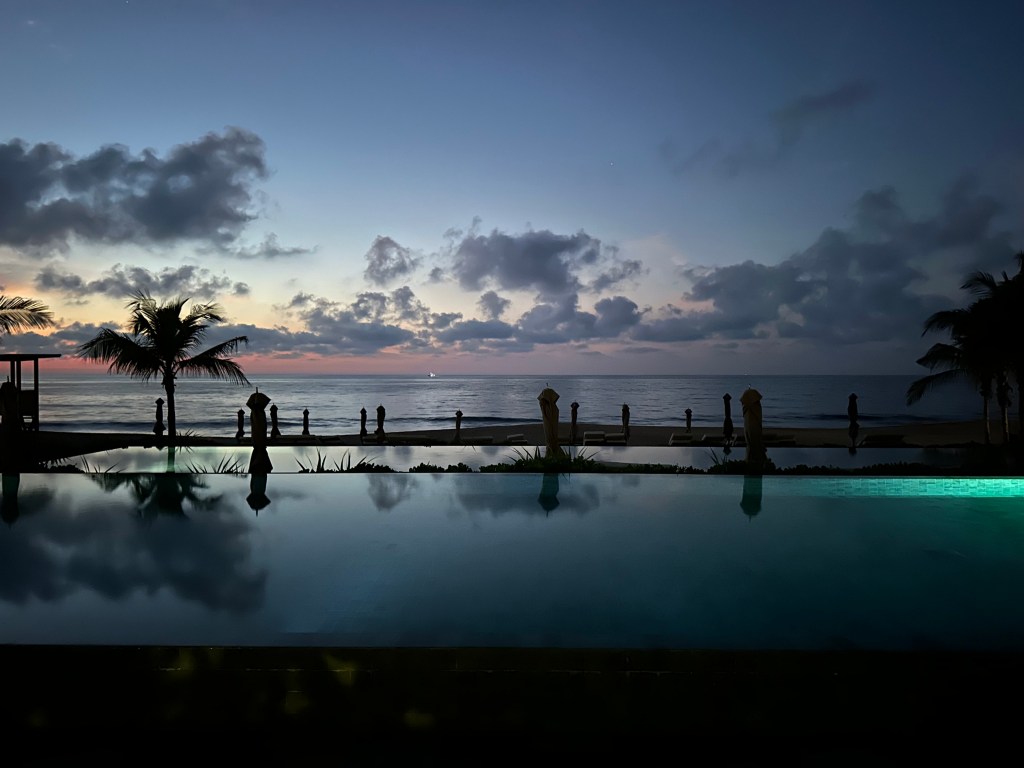
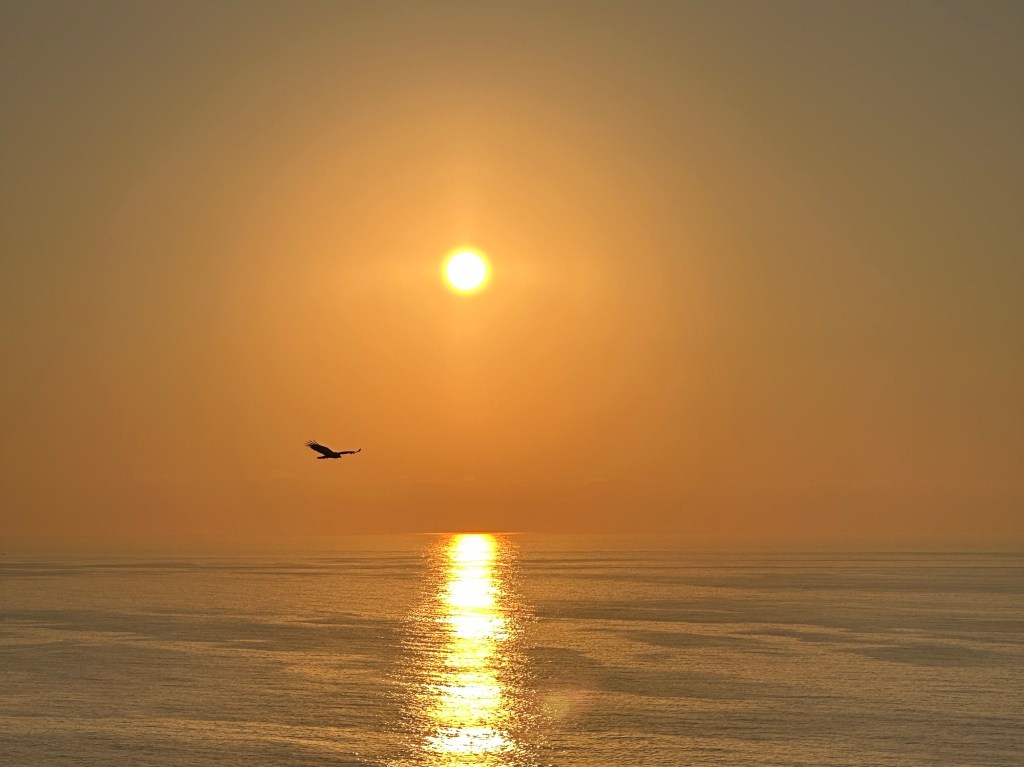
Sunset stockings.
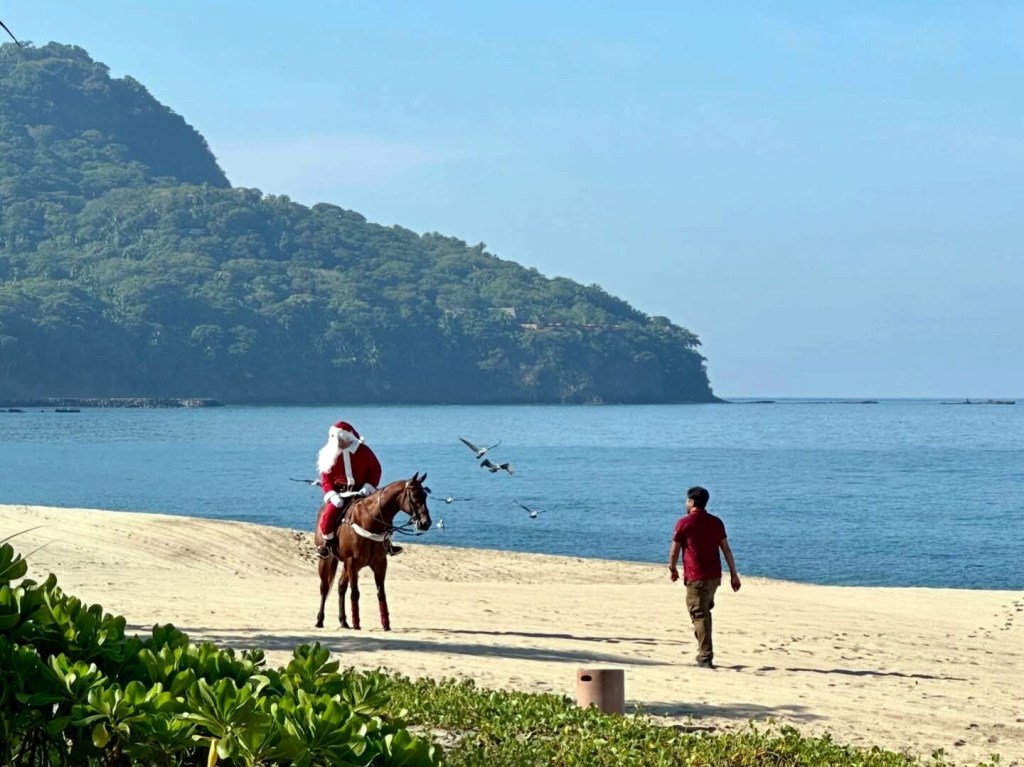
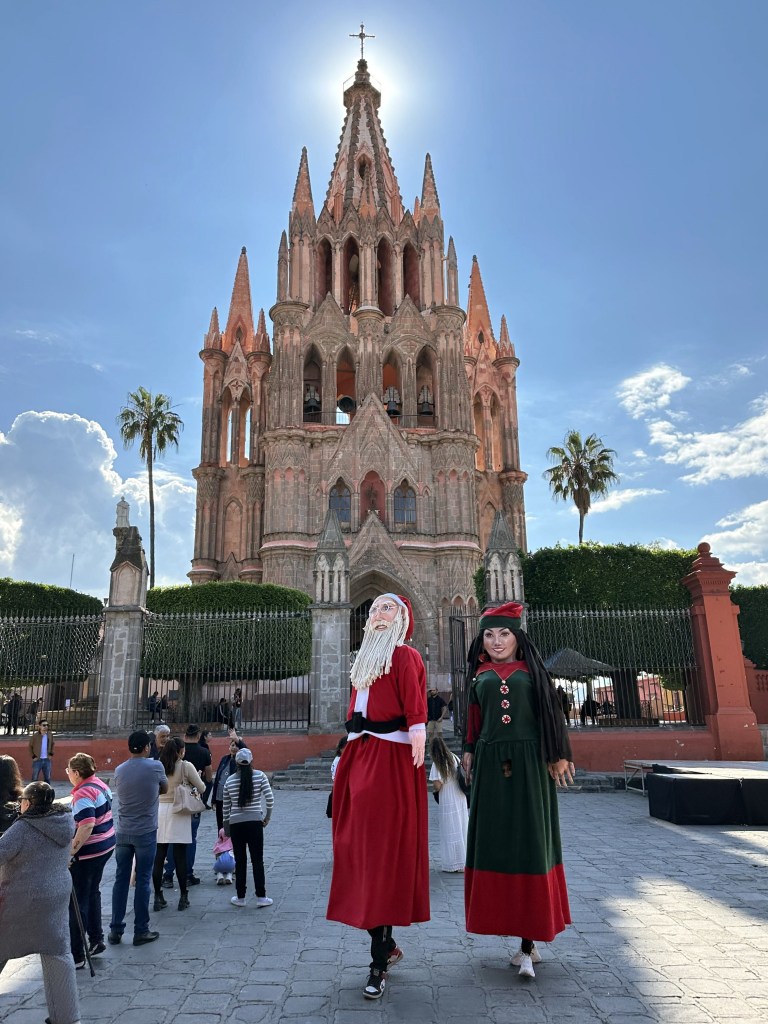
Santa!
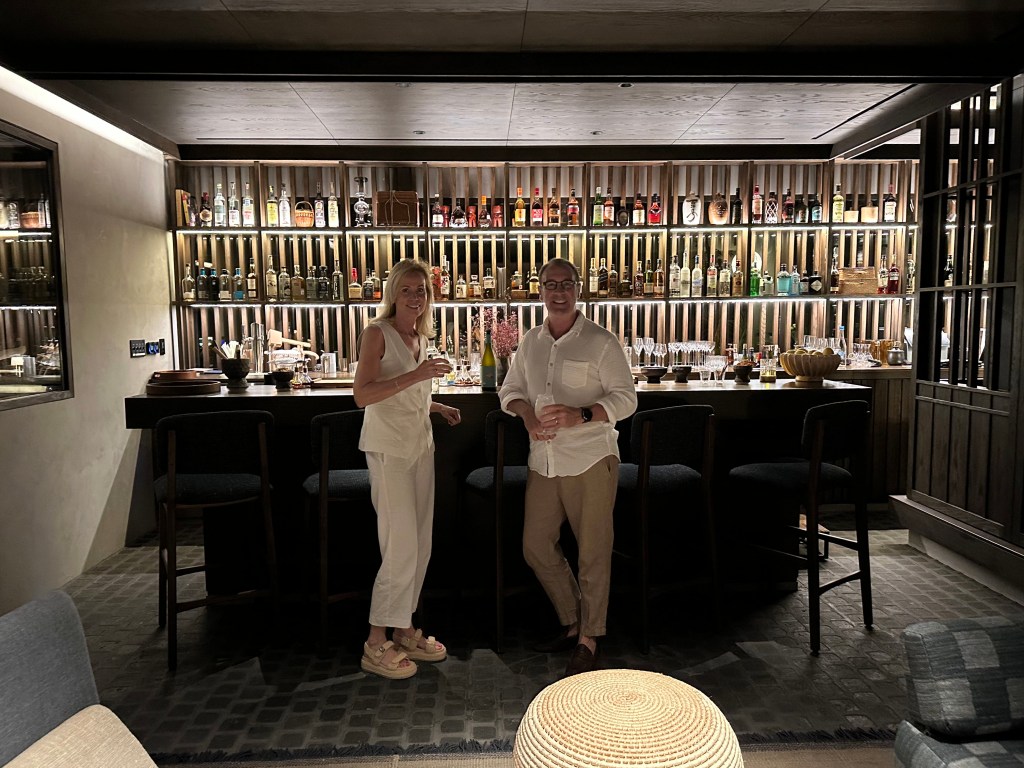
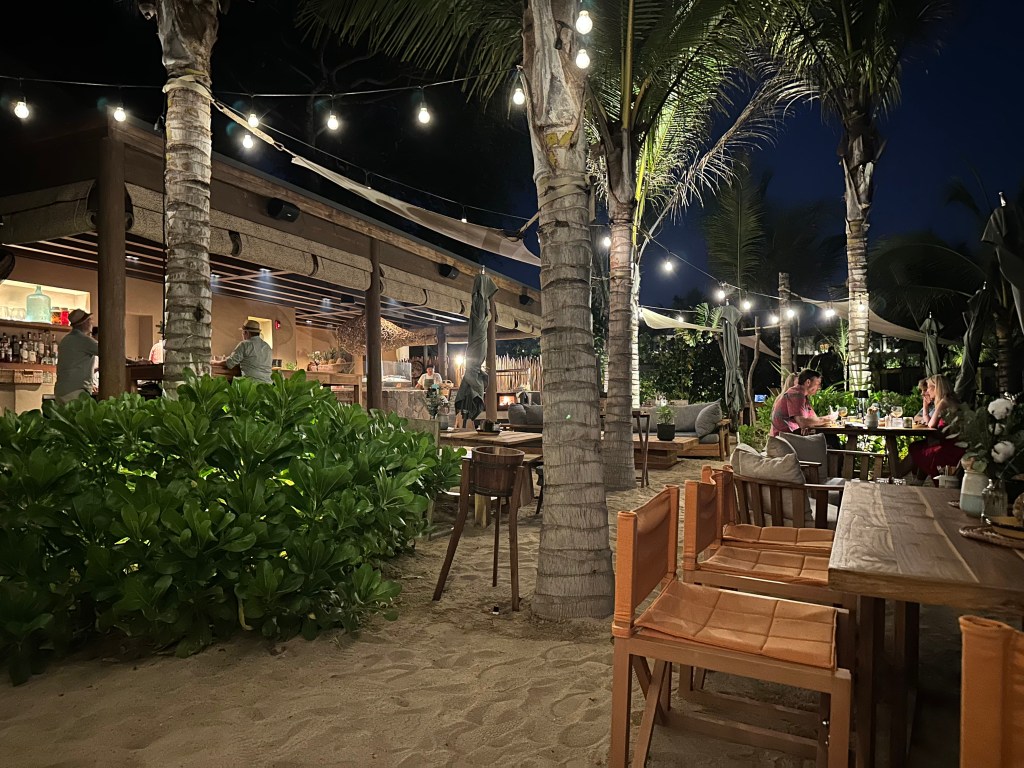
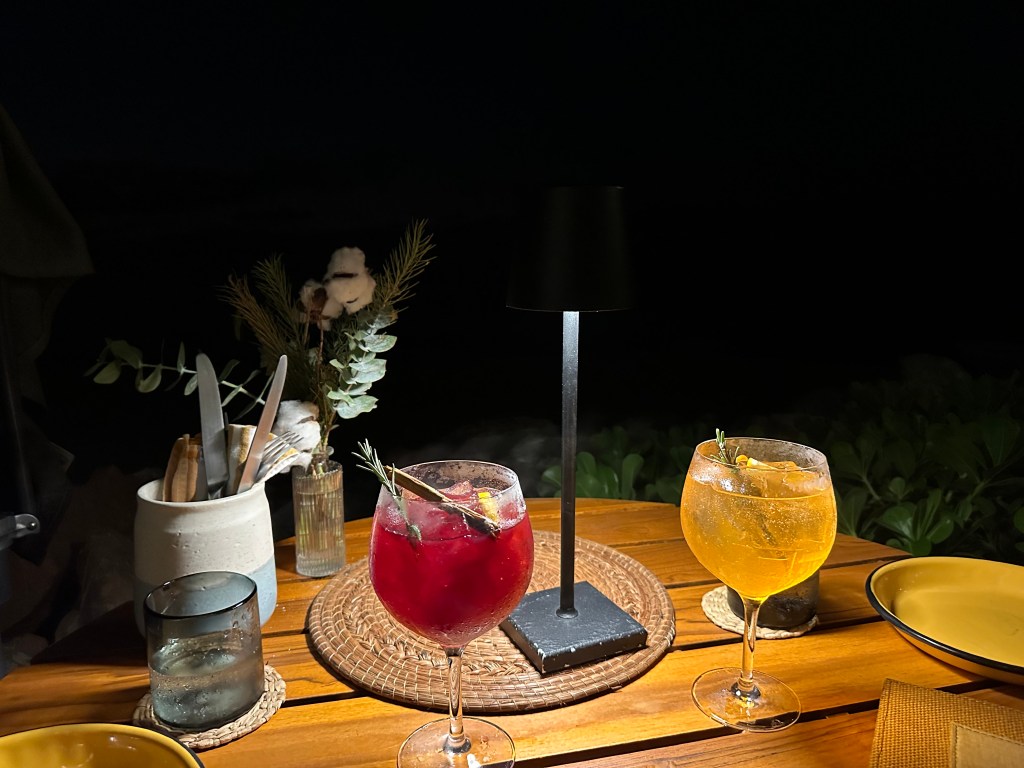
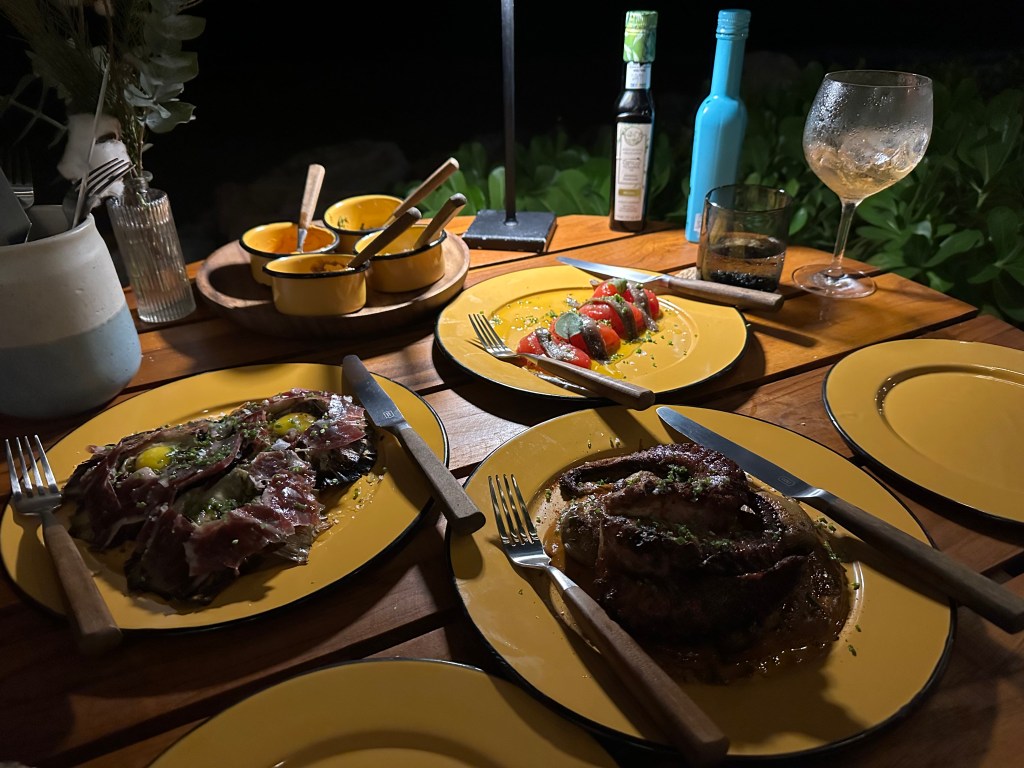
Pretty cool Peruvian / Japanese / Mexican fusion at one of the restaurants, and a rather decent bar, to boot.
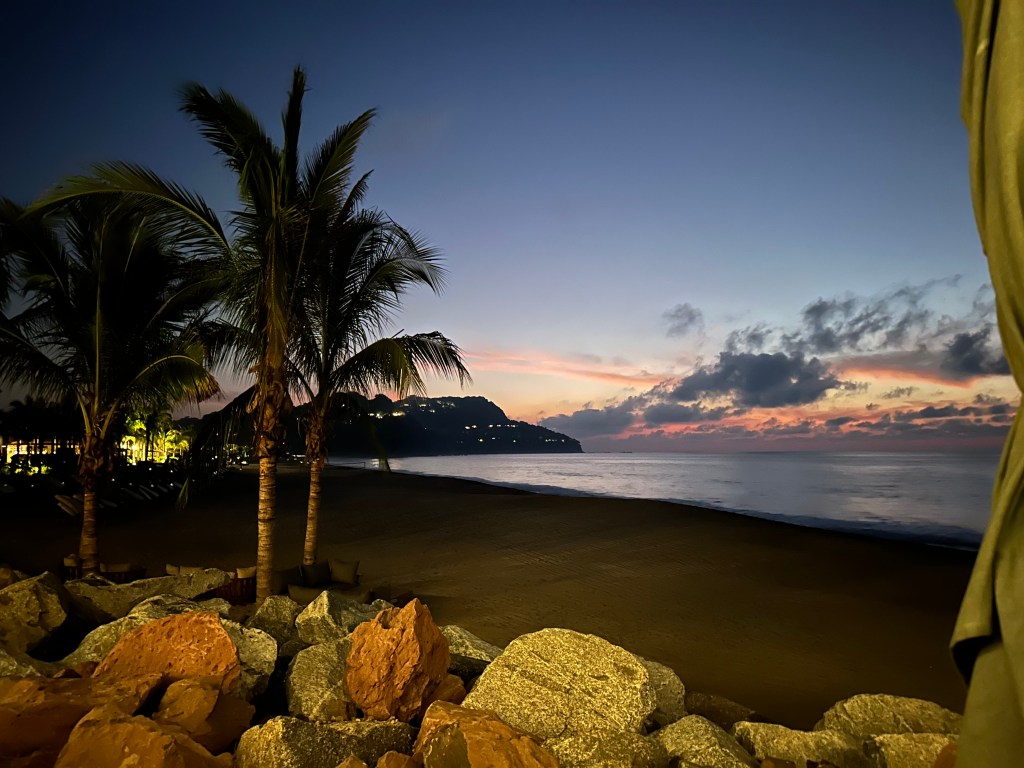
Perfect freakin’ weather the entire time, which was welcome.
Oh, and Roy Kent! “He’s here, he’s there, he’s everyfucking where! Roy Kent!”
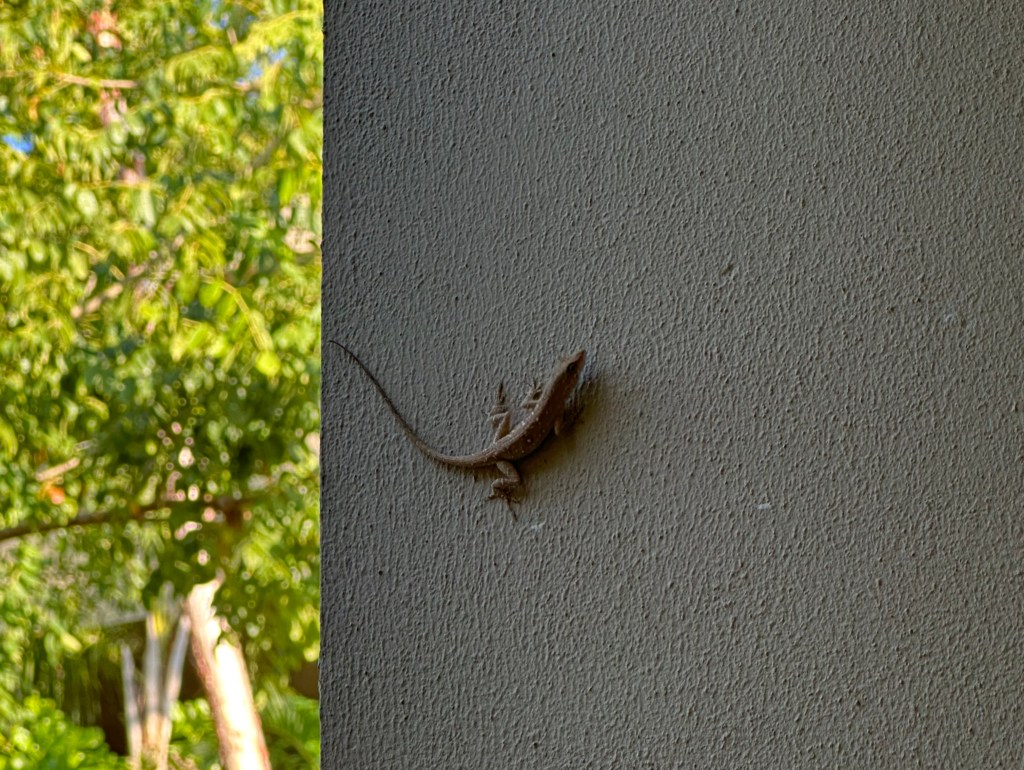
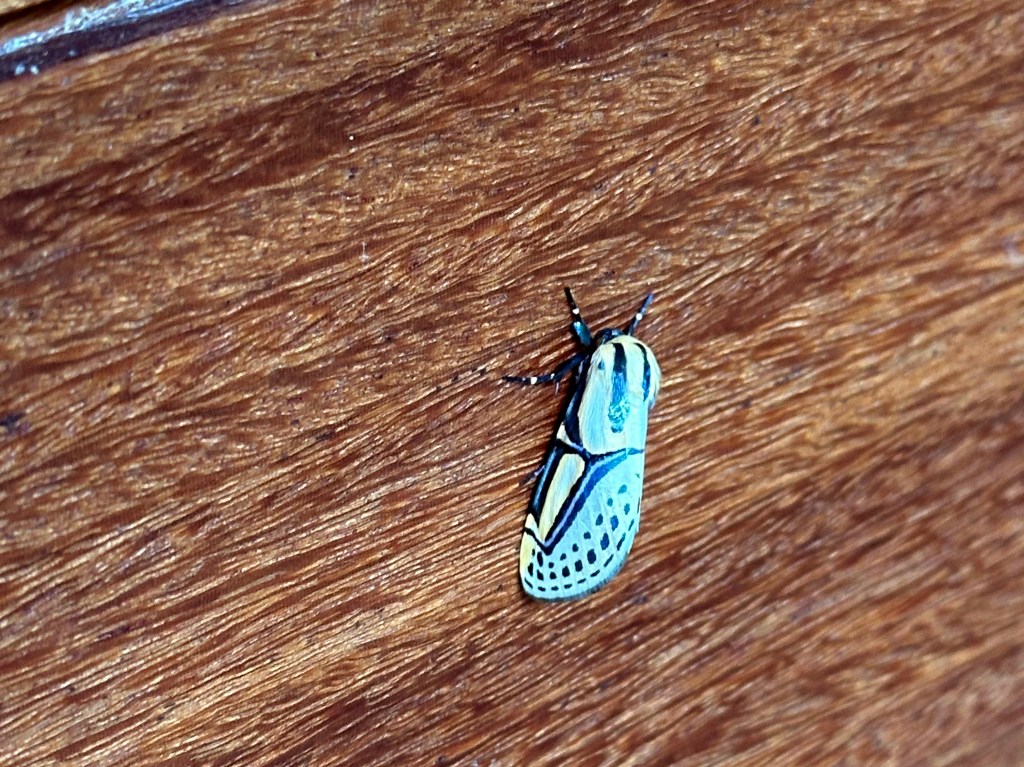
And, as always, a little wildlife to delight one of the travelers (but only one of us, to be sure).
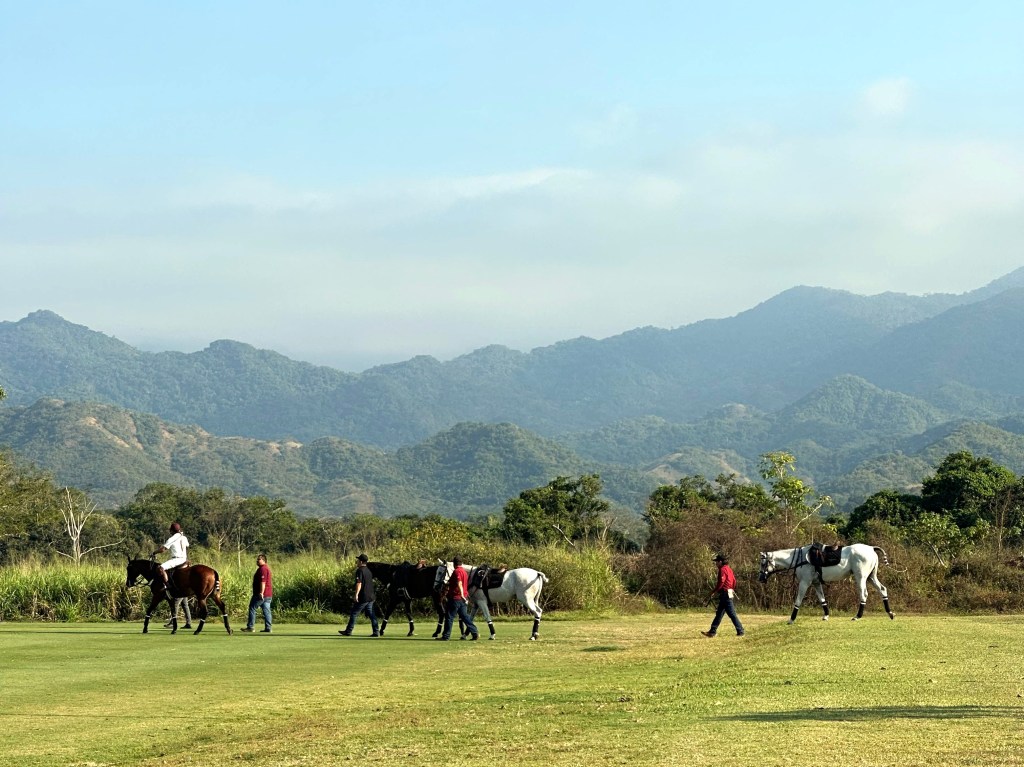
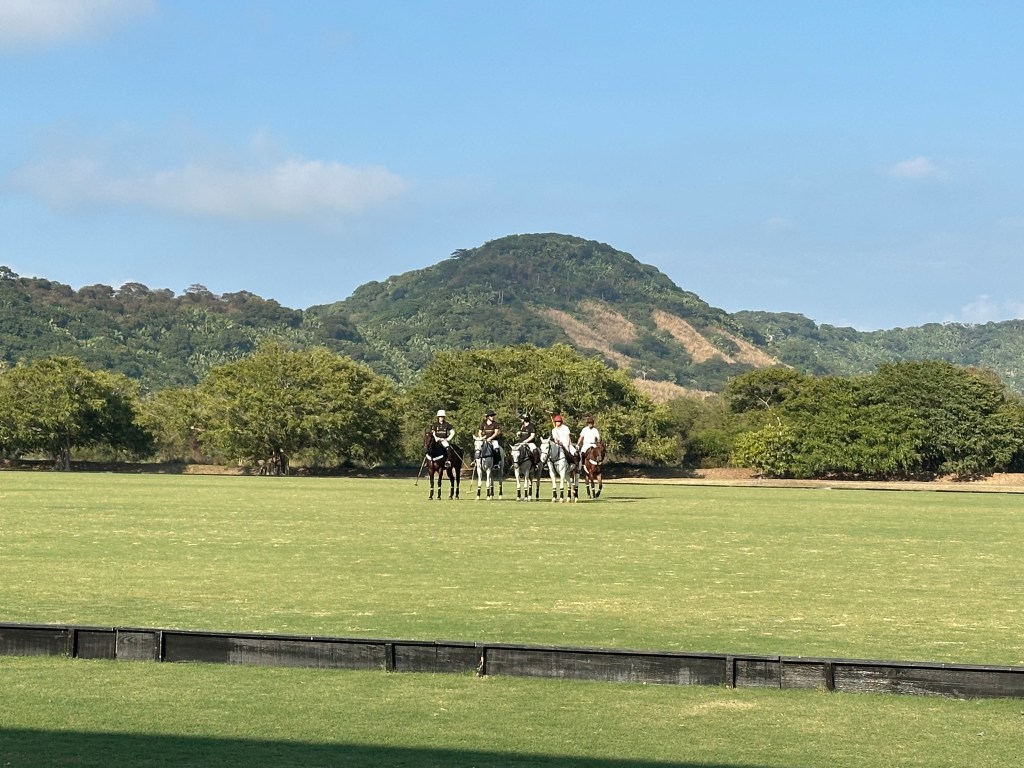
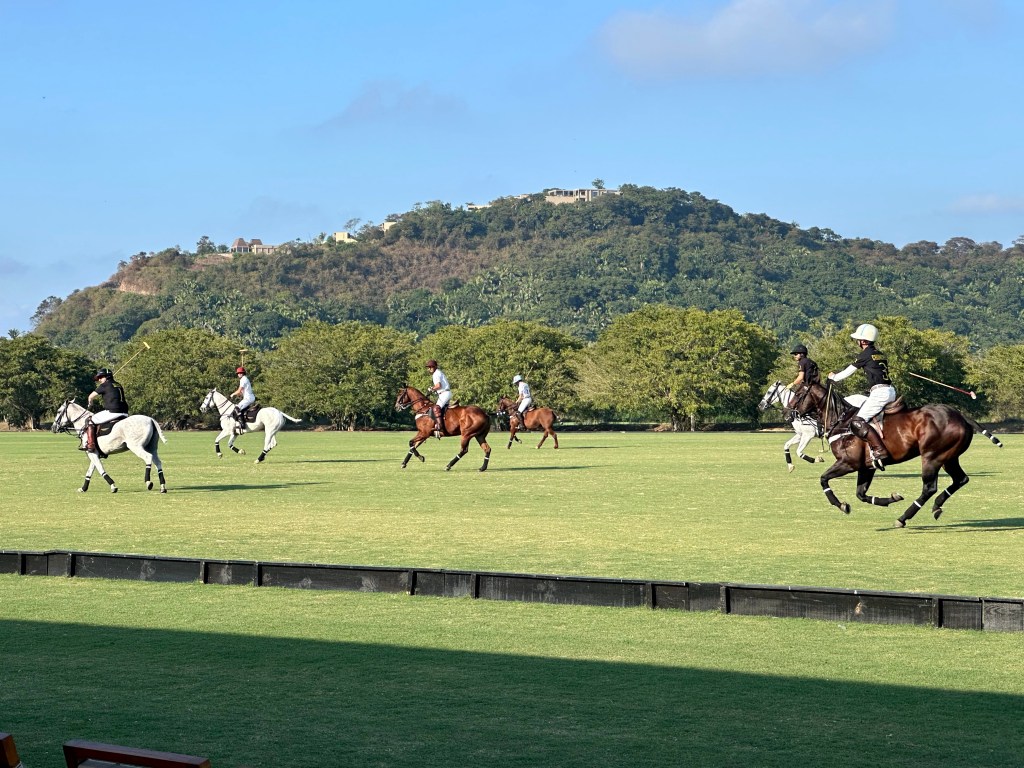
We spent one afternoon at the nearby polo field for our first polo game.
Just an exhibition match, but it didn’t disappoint. They were pretty good.
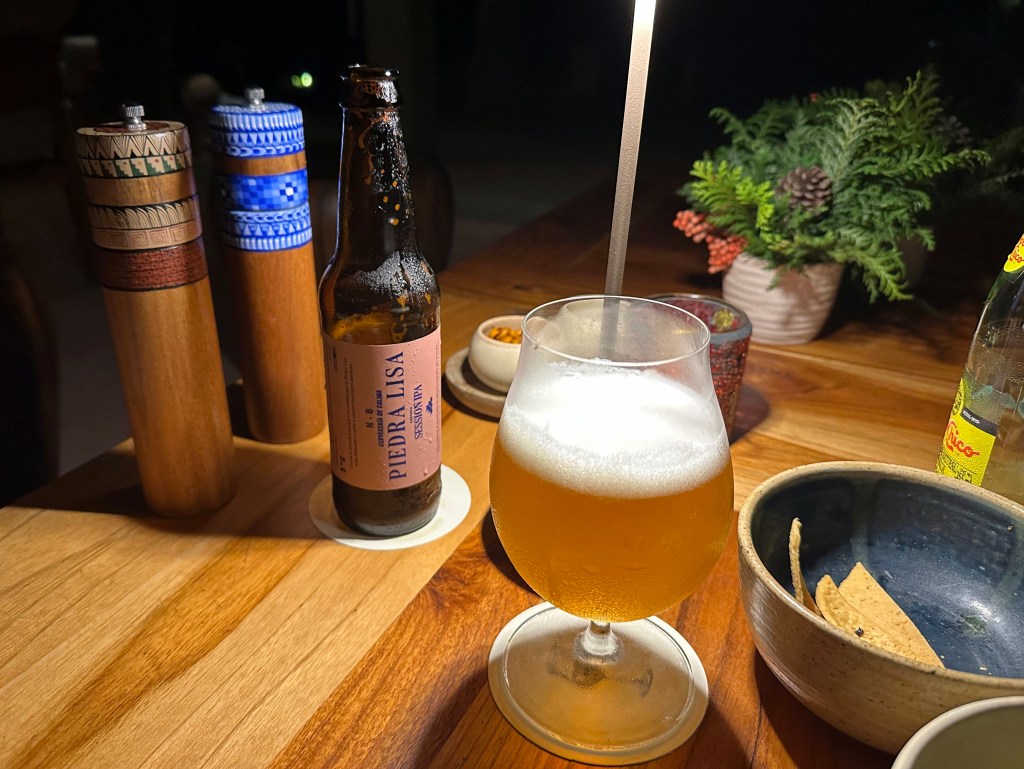
Fortuitous cervesa choice.
Pretty short stay of just 5 days, but definitely worth it.
Following the strategy articulated in the overview for our 6-week trip up the Adriatic coast (and into the Dolomites and Bavaria) earlier this summer, we bookended the summer with another 6-week, shoulder-season trip. Last time, we left on June 1 and returned on July 15. After a 6-week respite at home, we left for this trip the last week of August and returned the first week of October, which still provided us with great weather in Mallorca and Cornwall, but without the crowds that would be there in July and August.
And, unlike the “pick-up-a-car-in-Sarajevo-and-drop-it-off-6-weeks-later-in-Munich” approach from the last trip, where we luxuriated in a car that we could hang on to during the entire, 6-week road trip, we popped in and out of five rental cars in as many trip legs for this journey.
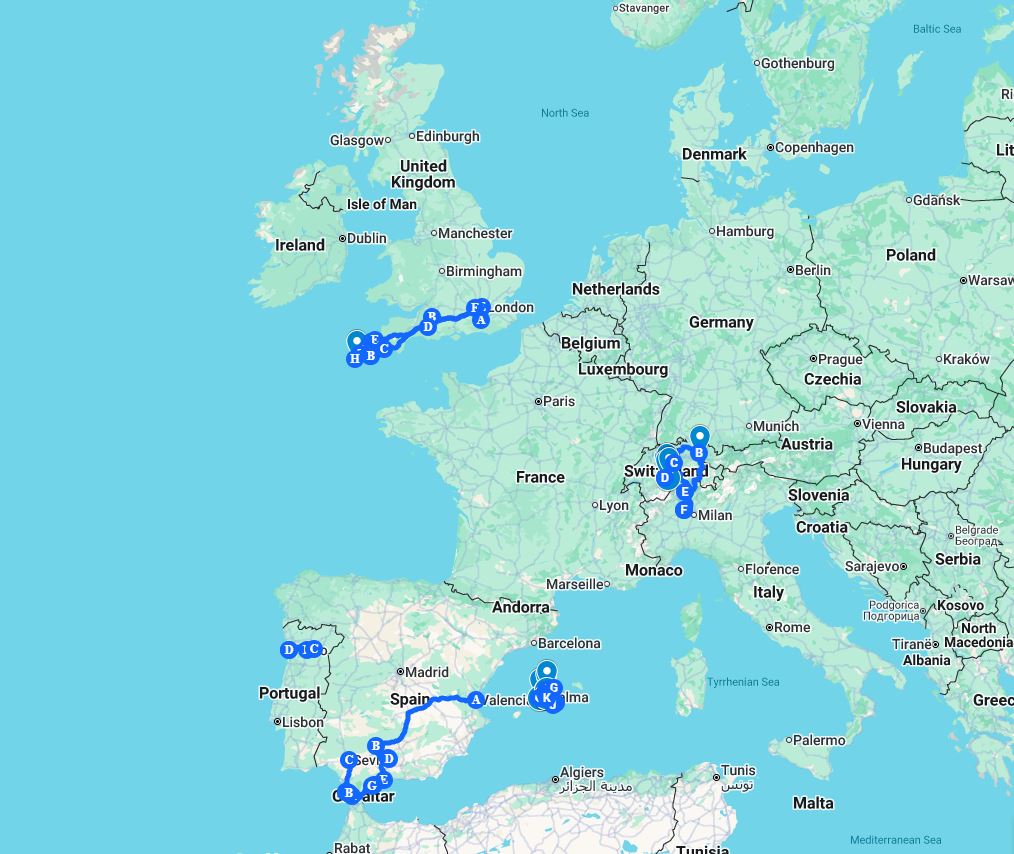
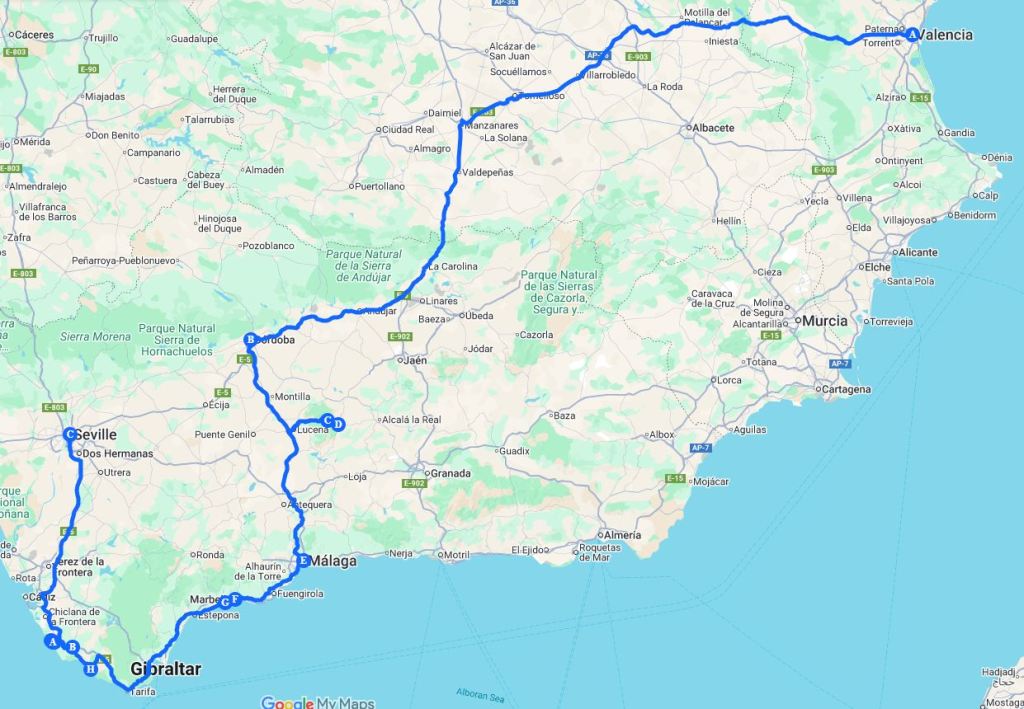
A cartographic overview of the trip’s five legs is pasted below:
Treating the map above as a clock, our route rolled out like this:
We began our trip at the 3:00 spot, with an 8-day loop around Switzerland
Then flew counterclockwise south to the 5:00 location, with an 8-day loop around Mallorca
Then flew to Valencia at the 6:00 spot, after a couple of days there, we began an 9-day drive west to multiple locations in Andalusia in Spain
Then flew up to Portugal at the 9:00 location for 3 days in the Douro Valley and then back to Porto for day
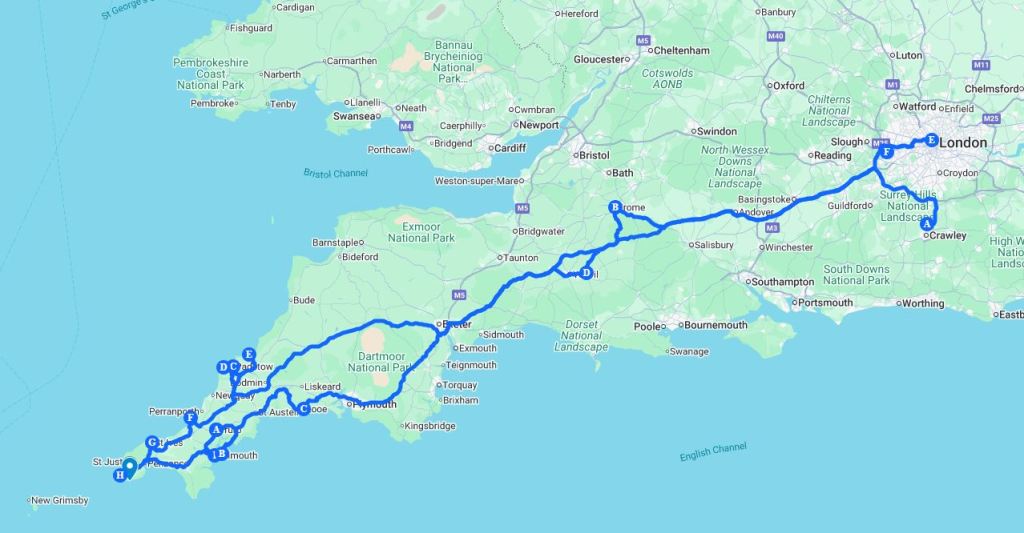
And finally ended the trip at the 12:00 spot with a 10-day loop around Cornwall and back to London in the UK
An interactive, zoomable map of the legs is provided below:
The route around the Switzerland leg of the trip also proceeded in counterclockwise fashion (and provided a second opportunity to visit (or at least drive through) Liechtenstein!):
Although we’d spend all of our time on this leg in the land of cantons, we nonetheless began at the Milan airport in Italy, since this location provided a more logical start and end point for a loop route that would cover several mountainous regions as well as Switzerland’s lake-happy Ticino canton in the south.
Our first stop in Switzerland – straight from the airport – was a gondola ride and hike to the Aescher Gashaus near Appenzel for a little lunch – pretty great perch to kick off our time in Switzerland (other than the first of the two parking tickets we’d get on this trip):
Just a normal day of traffic in Appenzel:
Our time in Appenzel, hiking and otherwise, was pretty damp the entire stay:
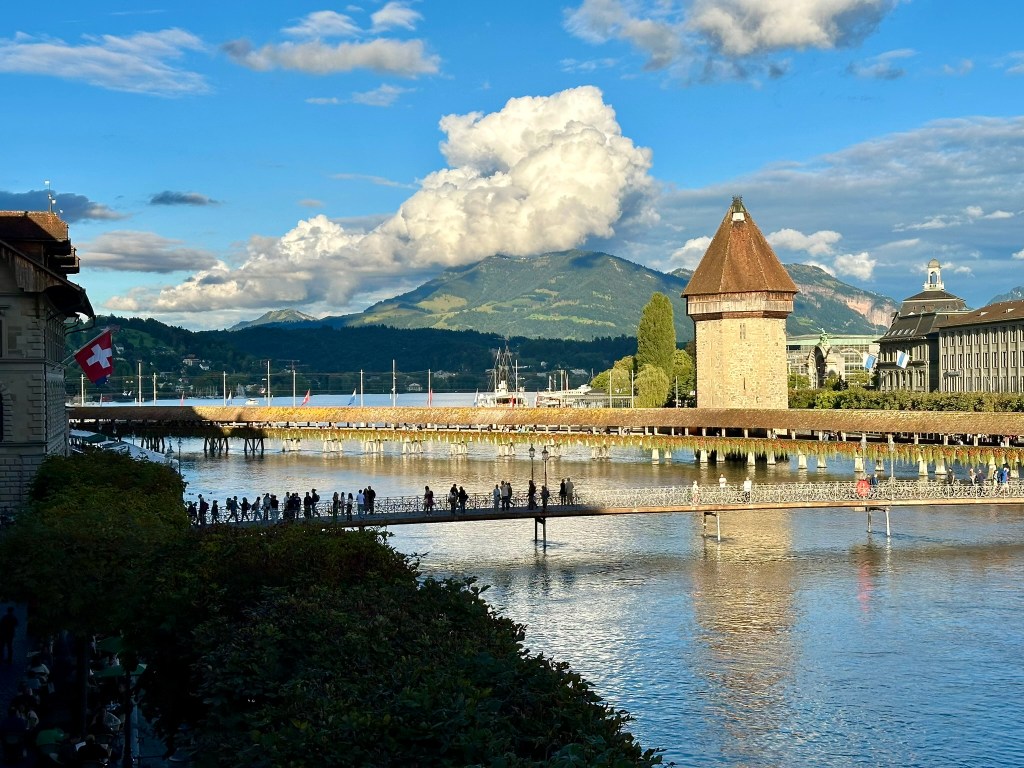
So onward we headed – first to Lucerne:
Really atmospheric and enjoyable – plus a great, historic footbridge!
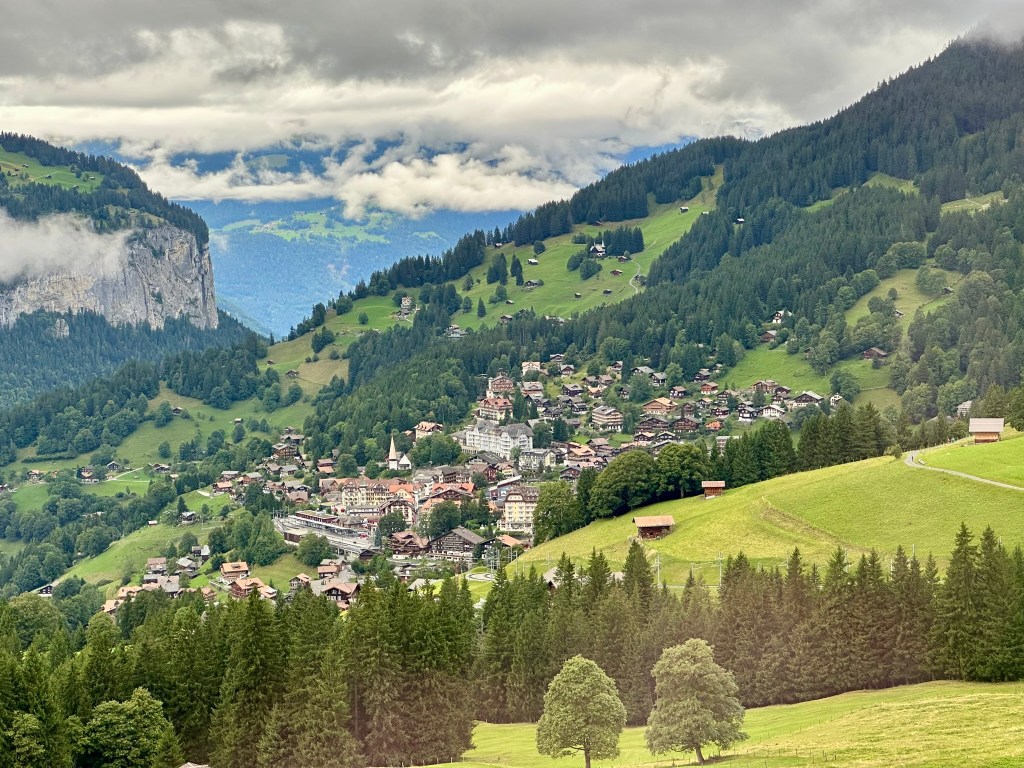
Then to the car-free mountain town of Wengen in the Lauterbrunnen region:
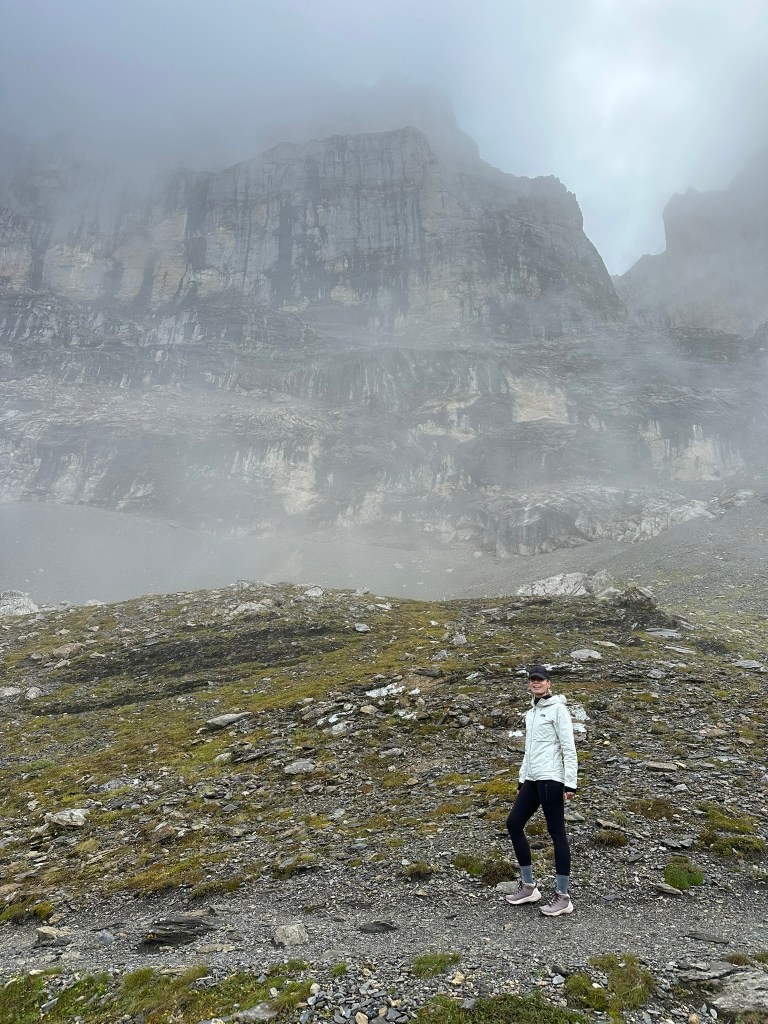
From whence we experienced one of the most spectacular hikes ever, in the Swiss Alps:
View from the nearby, smaller hamlet of Murren to the Junfrau and Eiger:
Our final hike – the Eiger Trail – and more mist and rain, unfortunately:
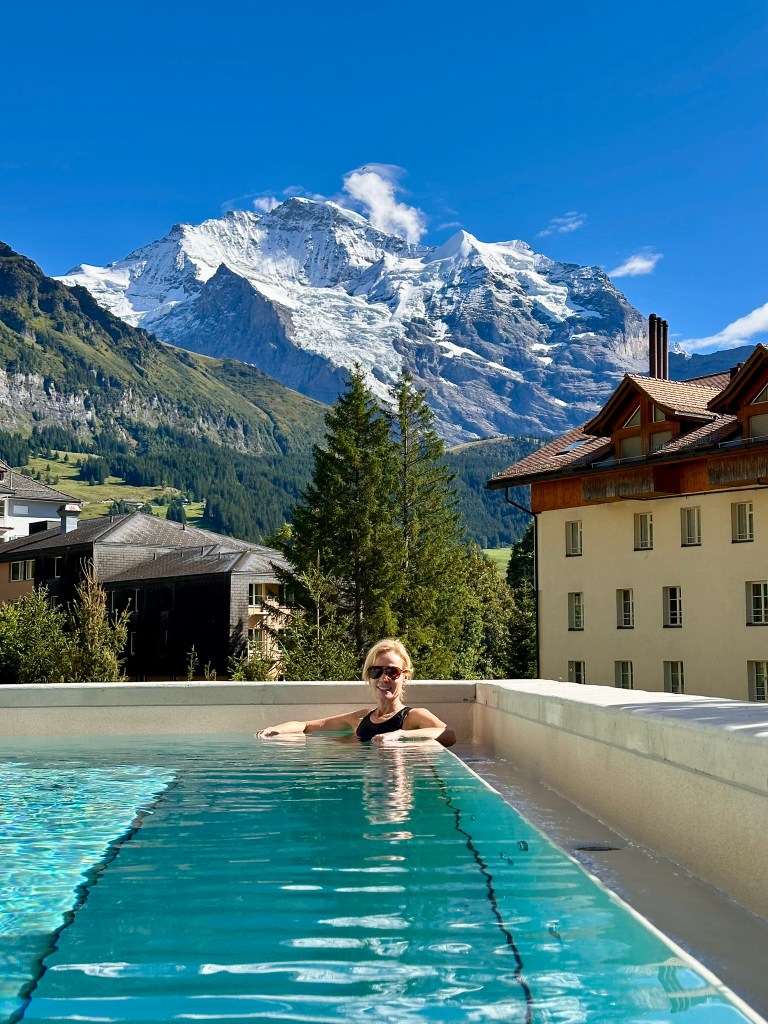
But our digs in Wengen helped assuage this a bit:
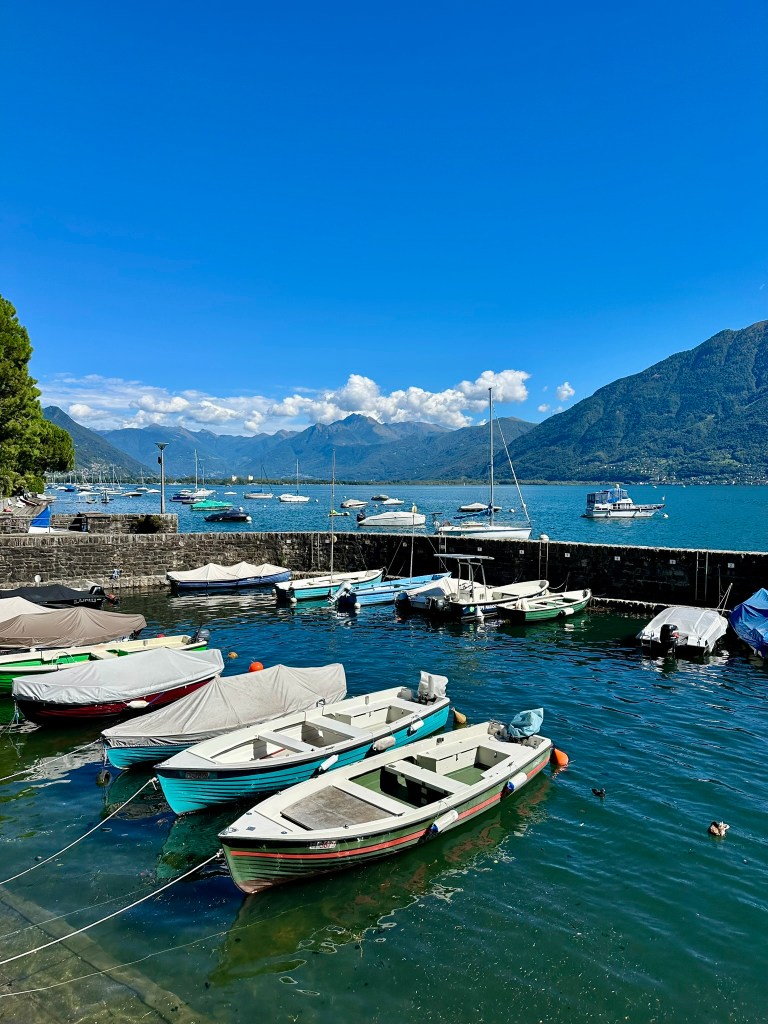
After a week, we ended our loop with an 8th day in the Swiss town of Locarno on Lake Maggiore (strategically booked at an AirBnB with a washer / dryer – a key element to our long-duration trips):
Then spent the next morning in Locarno’s even more charming sister town of Ascona before heading to the Milan airport for a flight to our next leg in. . .
the Spanish Balearic island of Mallorca, where we’d spend the next 8 days:
Mallorca’s capital of Palma, the biggest town (and only city) on the island:
Cool pool in the shadow of one of Palma’s massive churches (very reminiscent of our pool sitch in Carcassonne in 2017 and Uzes in 2021):
Strolling Palma on the way to our 27th anniversary dinner:
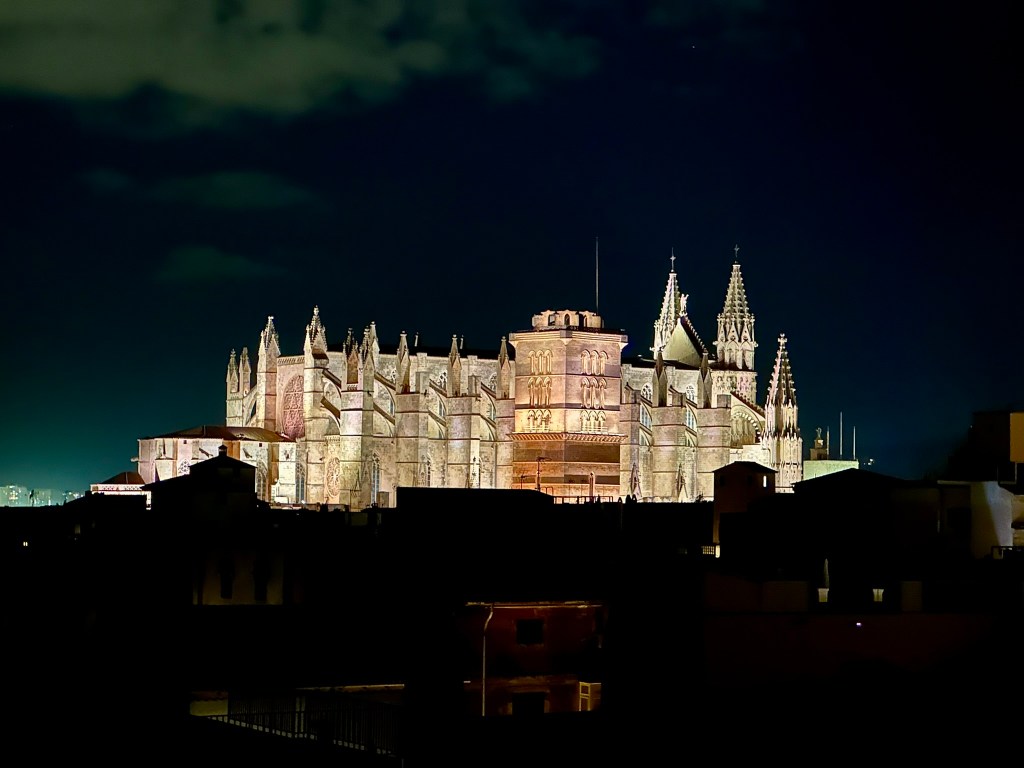
Palma’s cathedral lit up at night from our terrace:
And strolling amidst its flying buttresses the next day:
On to a couple of days in Port de Soller on the island’s west coast:
Cool perch over the port and ocean on our last night:
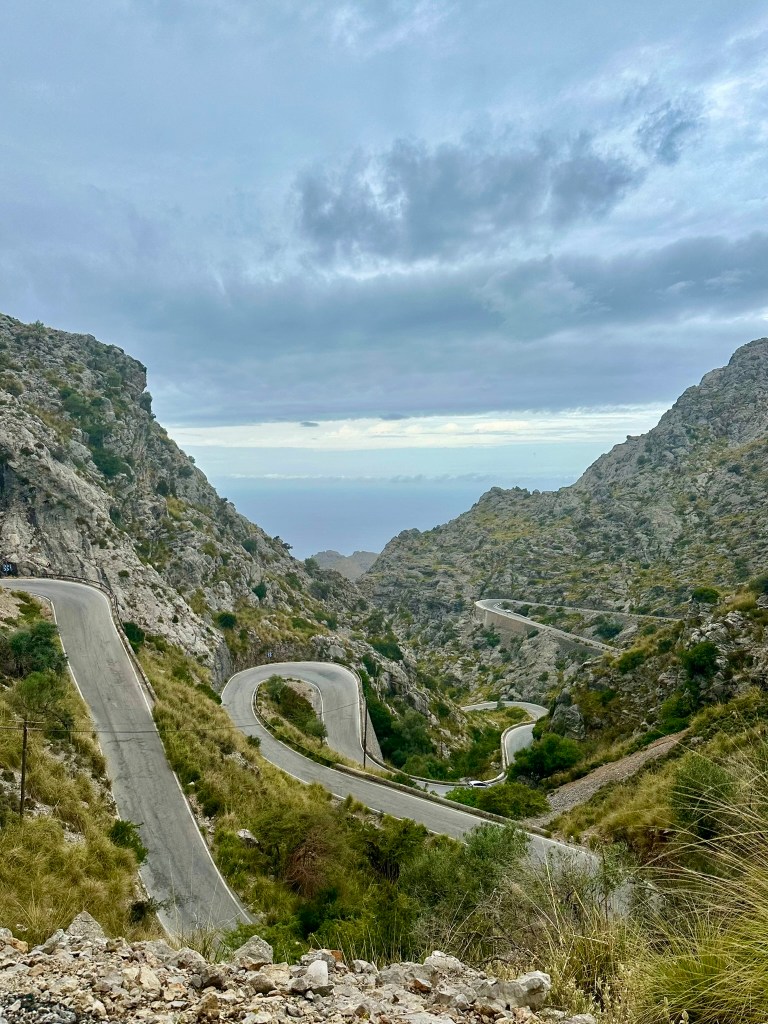
On to Pollença on the north end of the island, which necessarily entailed driving the absolute most insane road we’ve ever experienced:
Super charming town of Pollença, with it’s 365 steps to reach the town’s Oratori del Calvari chapel:
After swimming in the ocean and trying the nearby beach for all of 20 minutes, we decided that this arrangement would better suit our interests for the day. We were right.
Our last town of Colónia di Sant Jordi (and another AirBnB laundry stop), in the southeast corner of Mallorca
On to the Spanish mainland!
Although we’d spend the rest of our time in Spain exploring more of Andalusia (after seeing and loving much of it during our bike trip in the region in 2017), we’d first bop around Valencia on the east coast for a few days:
Spectacular city – super vibrant and fun and very Beaux Arts-y. The unbelievably perfect weather undoubtedly had a lot to do with this impression.
Cool little bike tour one day around the city and out to the beach:
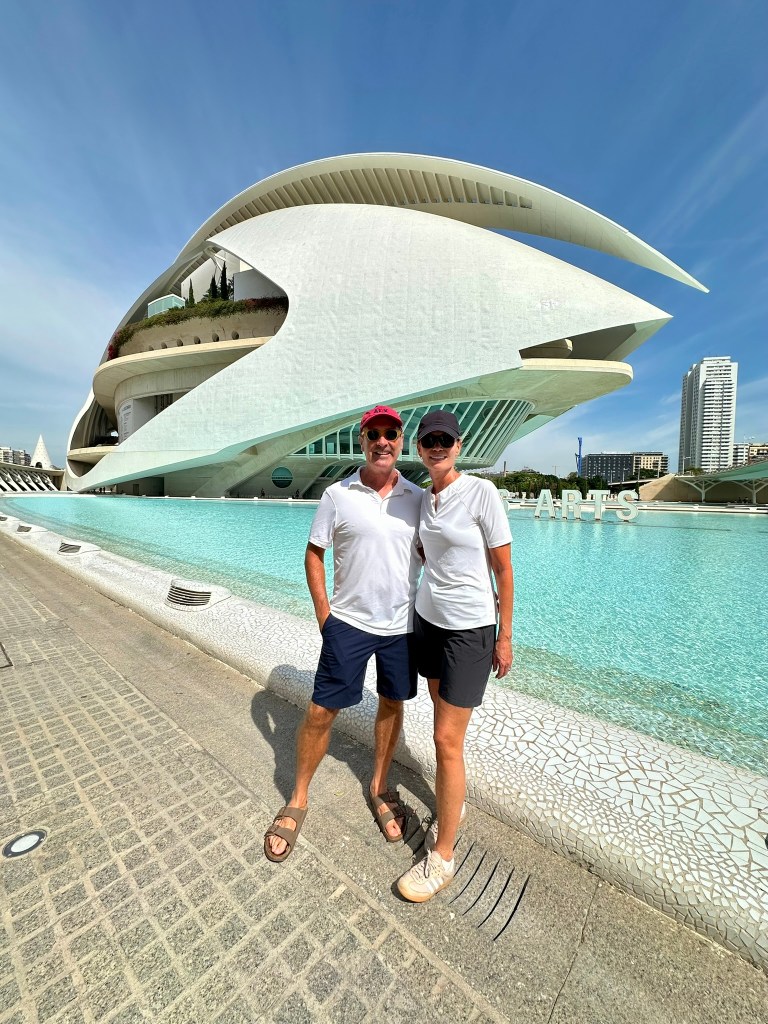
Including riding through Valencia’s sci-fi City of Arts and Sciences:
Then, a long drive west to our first Andalusian town that we missed on our bike trip: Cordoba.
Star of the show? The absolutely unique Mosque–Cathedral of Córdoba. Originally built as a grand mosque in the 8th century under the Umayyad dynasty, it was converted into a Catholic cathedral after the Christian Reconquista in 1236. Unlike every other instance of these conversions, however, the existing mosque structure and architecture was not razed, but retained.
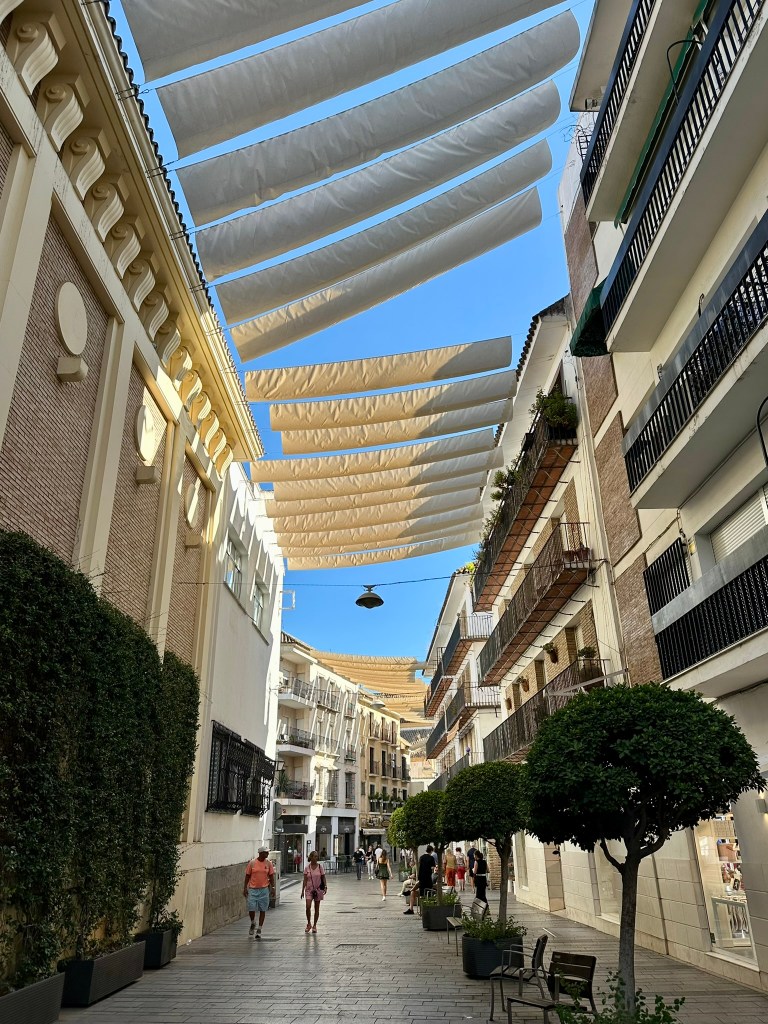
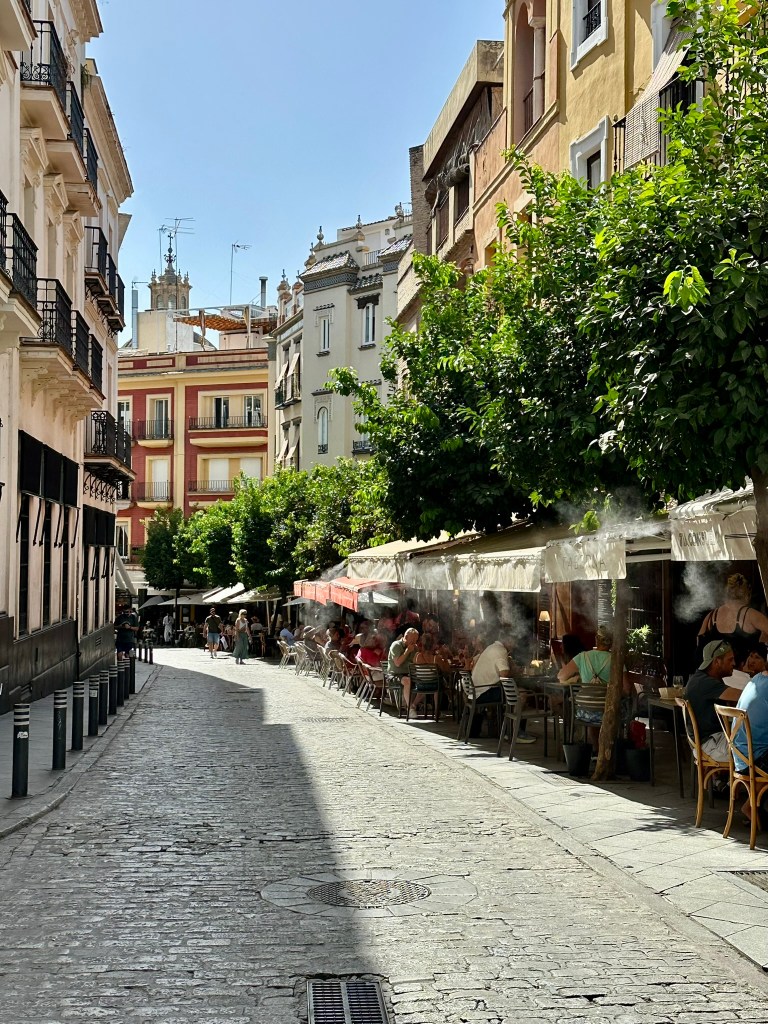
First of several times we’d see this street-cooling technique used in Andalusia:
At one end of Cordoba’s Roman Bridge lies the Moorish Tower (Torre de la Calahorra), a fortified gate built by the Moors in the 12th century to defend the southern end of the bridge.
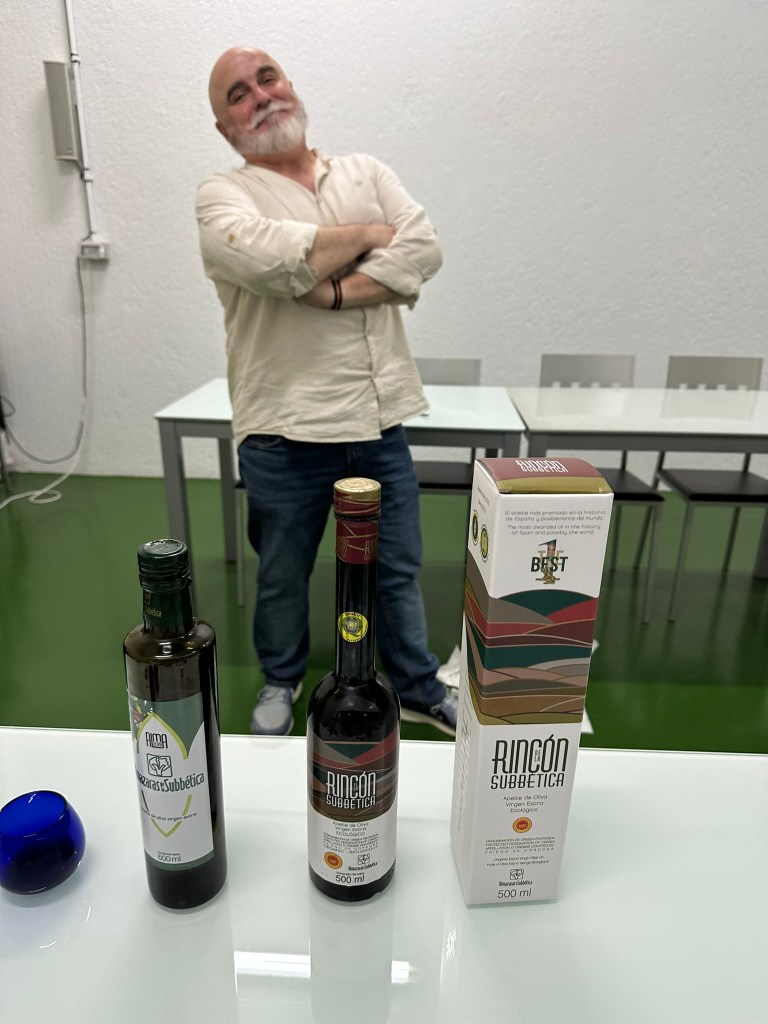
On the drive from Cordoba to Malaga, a stop at an olive oil processing facility for a tour and tasting at the Almazaras de la Subbética cooperative south of Córdoba – winner of the World’s Best Olive Oil competition in 2024/2025. And the 10 previous years. Super cool.
That’s a LOT of olive oil!
Priego de Cordoba, another white-washed Andalusian town visited on the drive to Malaga:
Malaga, the second (and final) iconic Andalusian town we missed on our previous bike trip:
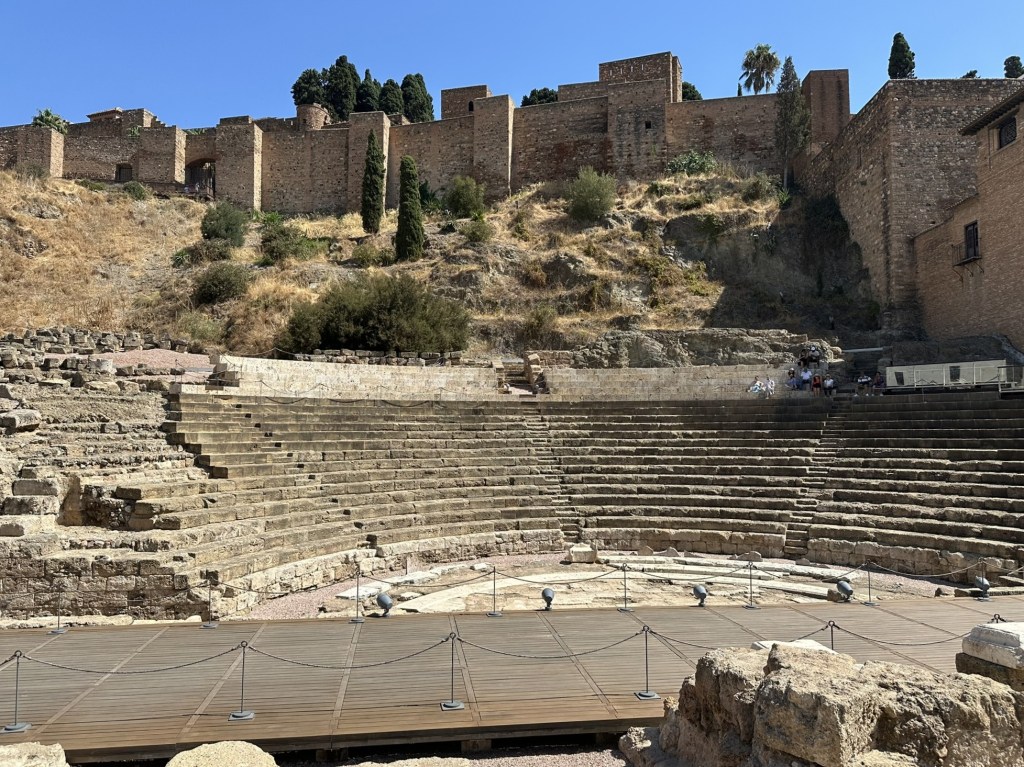
Right in the heart of town lies a Moorish calabaza atop a Roman amphitheater. The history half of WolfeStreetTravel was delighted.
Cool little tapas tour our first night; it turns out that maybe we DIDN’T need to pack 45 cigars for the trip (which we certainly did).
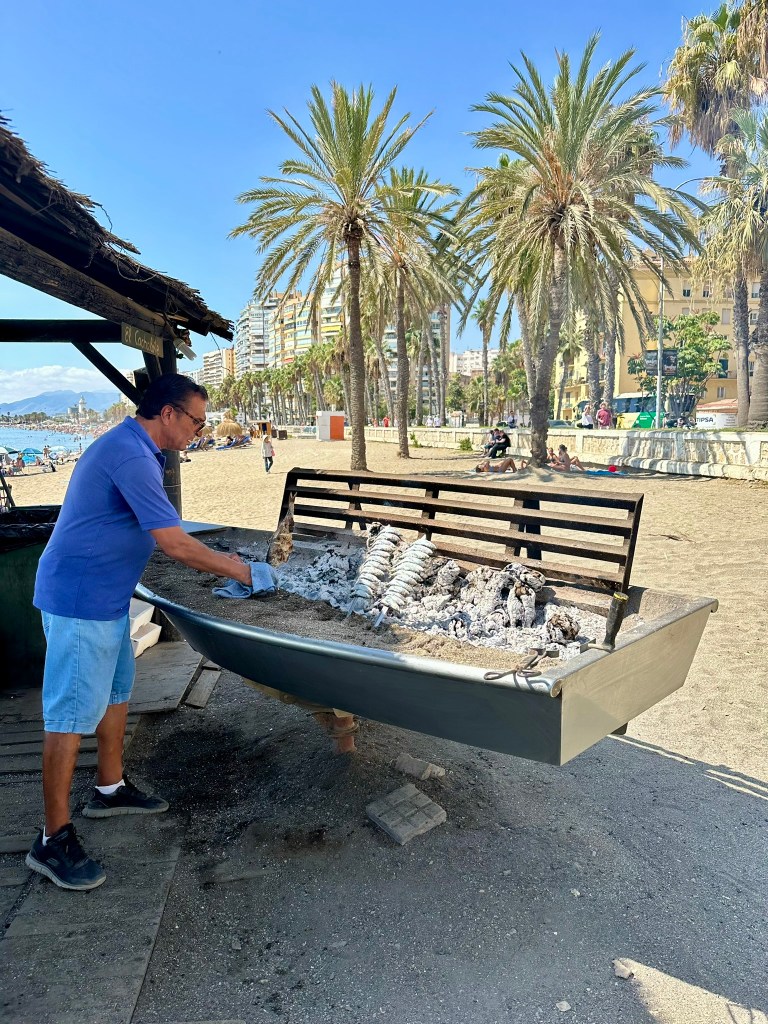
One of our goals? Chow down on espetos at a chiringuito – a beach fish-grilling restaurant (which we learned about on The Amazing Race, for what it’s worth).
Definitely lived up to the hype (especially accompanied by a few tinto de veranos).
A stopover in Marbella en route from Malaga to our next town. Despite high expectations for a super awesome area – meh.
After months of the Mediterranean (first in Croatia on the initial bookend and then in Mallorca, Valencia, and Malaga on this trip), we transitioned to the Atlantic after driving past Gibraltar to get to Playa Zahara de los Atunes.
Where we stumbled, during our only night there, into a cool little concert at a beach bar down the street:
Continuing our little U-shaped arc around Andalusia, we headed next to Conil de la Frontera (our third de la Frontera, designating a frontier town between Christian and Moorish territories in the 900s):
Fried fish frenzy.
And a little day trip to Vejer de la Frontera:
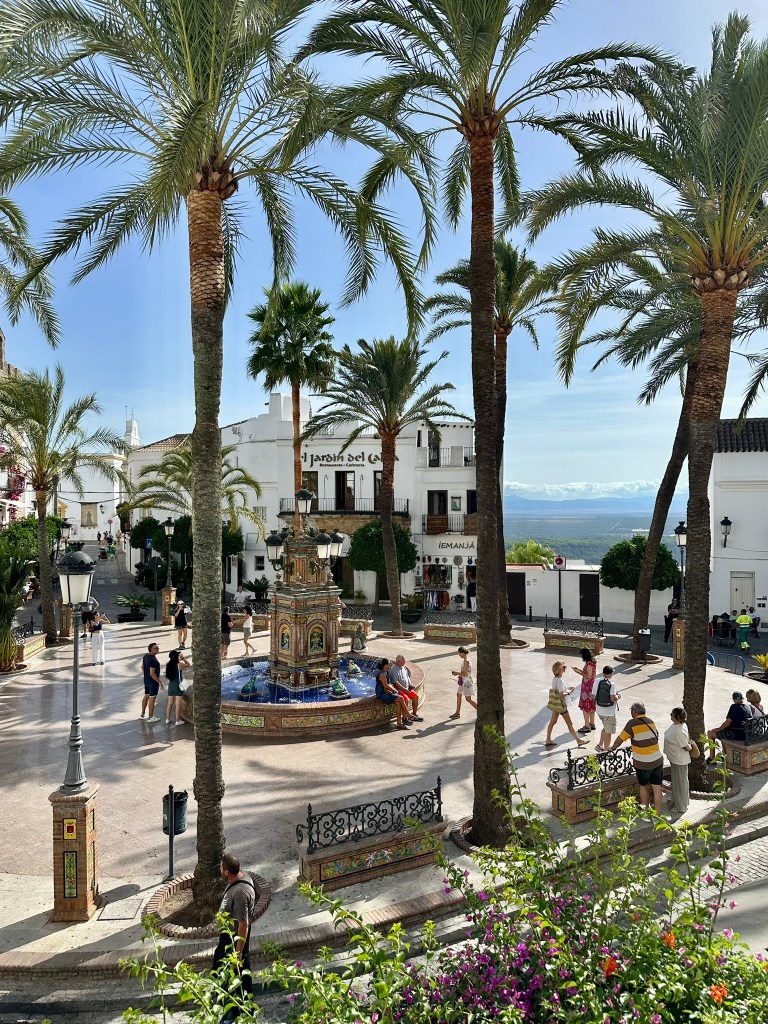
Even more atmospheric Andalusian town (and our forth de la Frontera):
More beach fish at Playa de la Fontanilla:
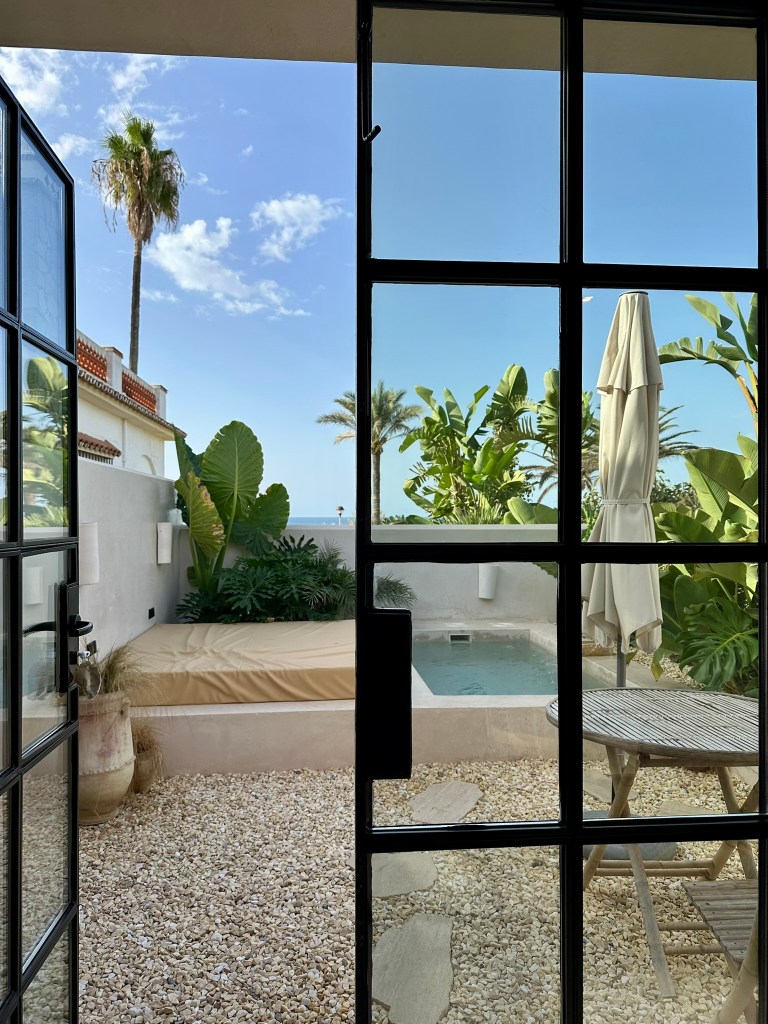
And our casita for 2 days right down the beach. One of the best AirBnBs we’ve experienced (plus a laundry stop):
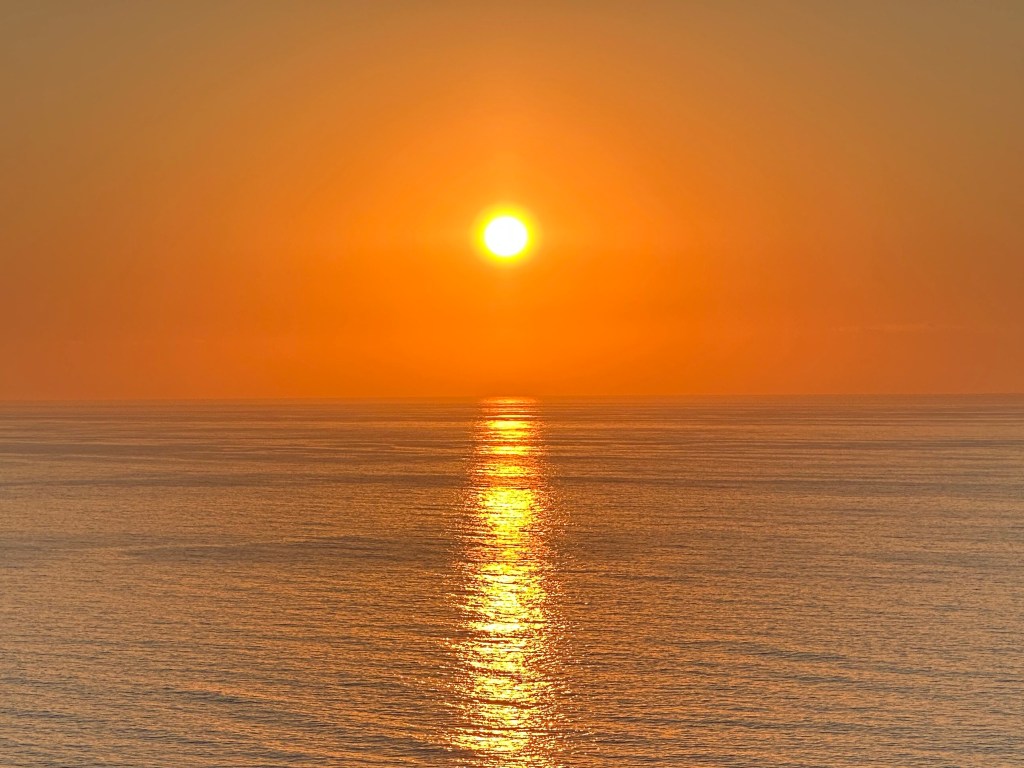
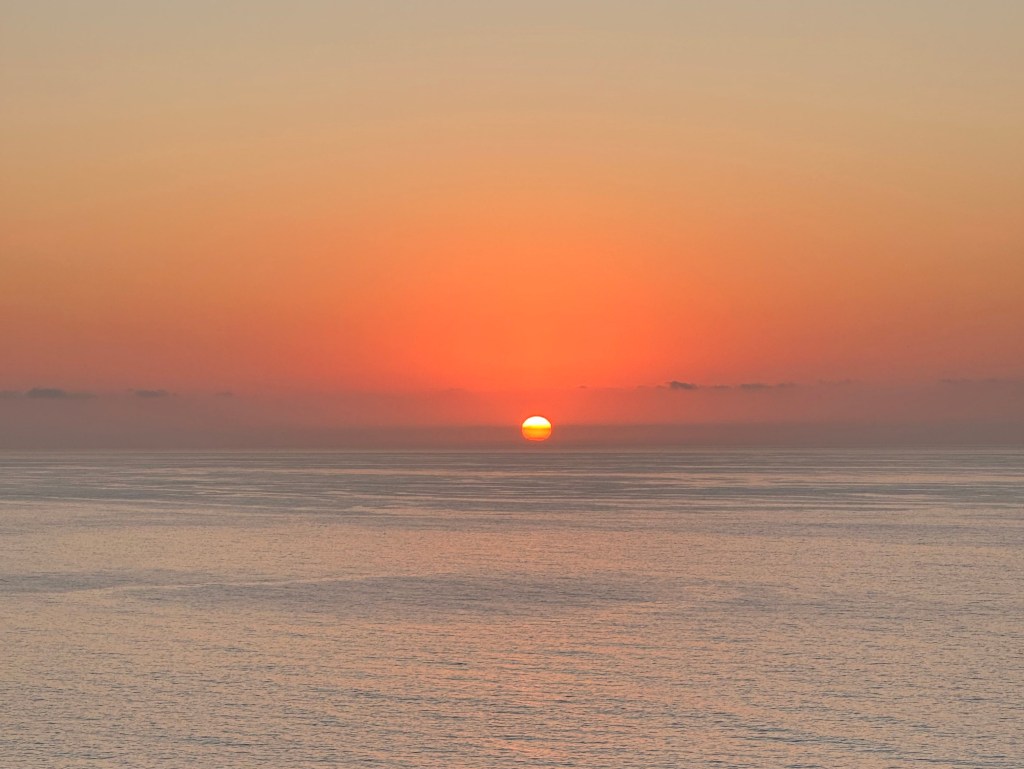
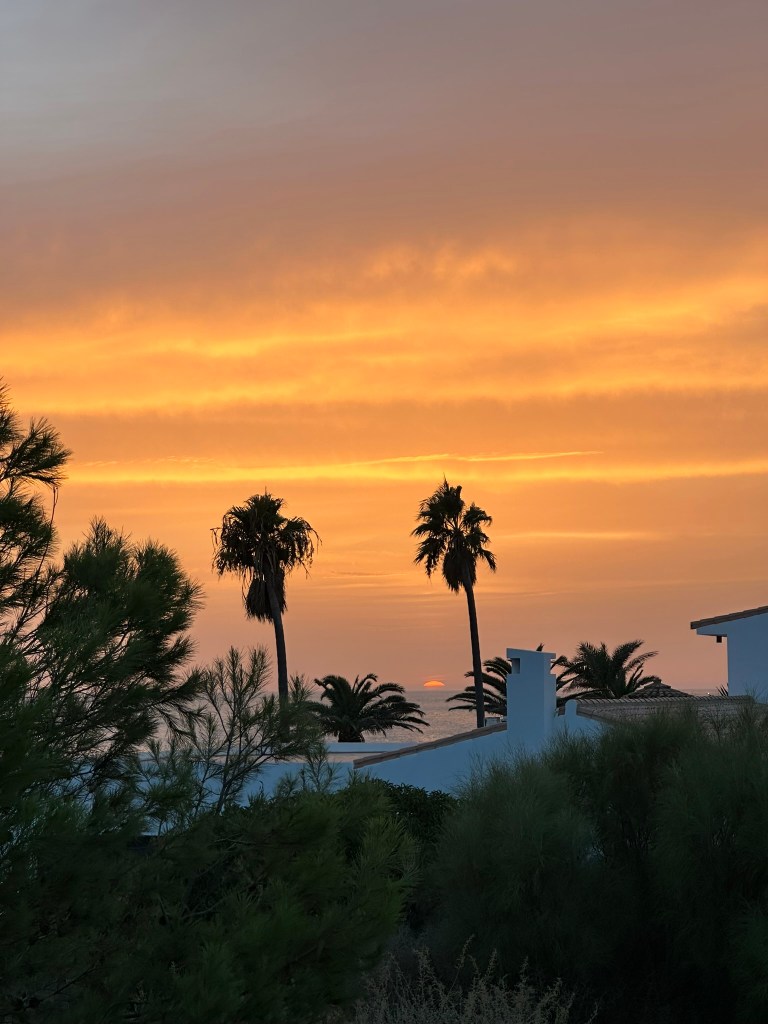
Amazing sunsets from the casita’s roof deck:
Then, back to Seville, which we really enjoyed when we first visited in 2017.
Never got to see the “mushroom” during that visit; this has been corrected:
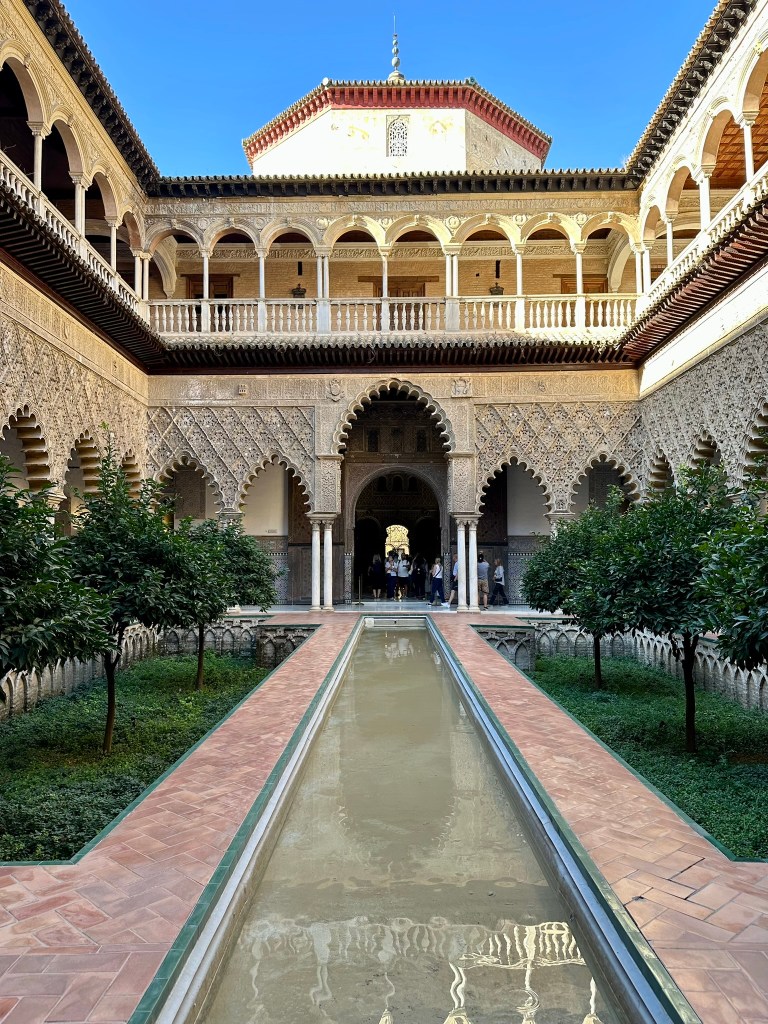
And we spent our limited time in 2017 visiting Seville’s storied cathedral and did not have an opportunity to visit its alcazar. This also was corrected:
And, reminiscent of our days feasting on pinxos in San Sebastian in 2021, a dinner in Seville that included baby eels. Delicious.
Seville served as our last stop in Andalusia; from there, we flew to Porto, Portugal, picked up another car, and headed immediately east to the Douro Valley – Portugal’s wine country.
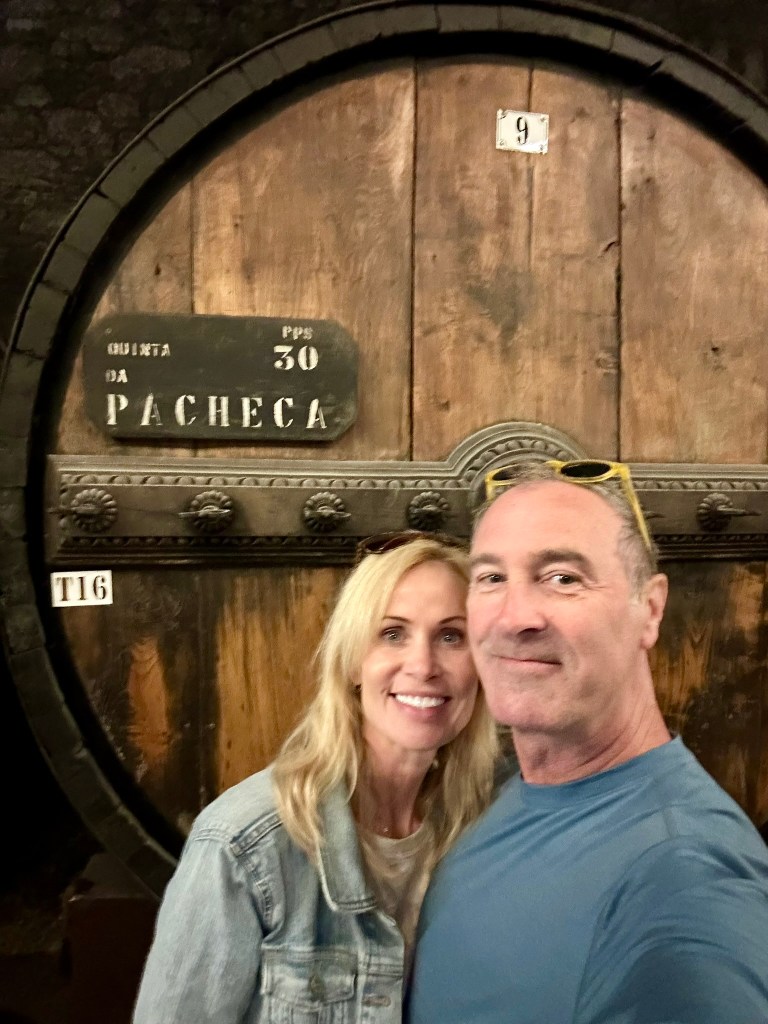
Our first stop – literally straight from the airport – was a tour and tasting at Quinta da Pacheca. Good wine. Great port.
And the Douro Valley wineries really DO still stomp grapes, a la I Love Lucy. Pretty wild.
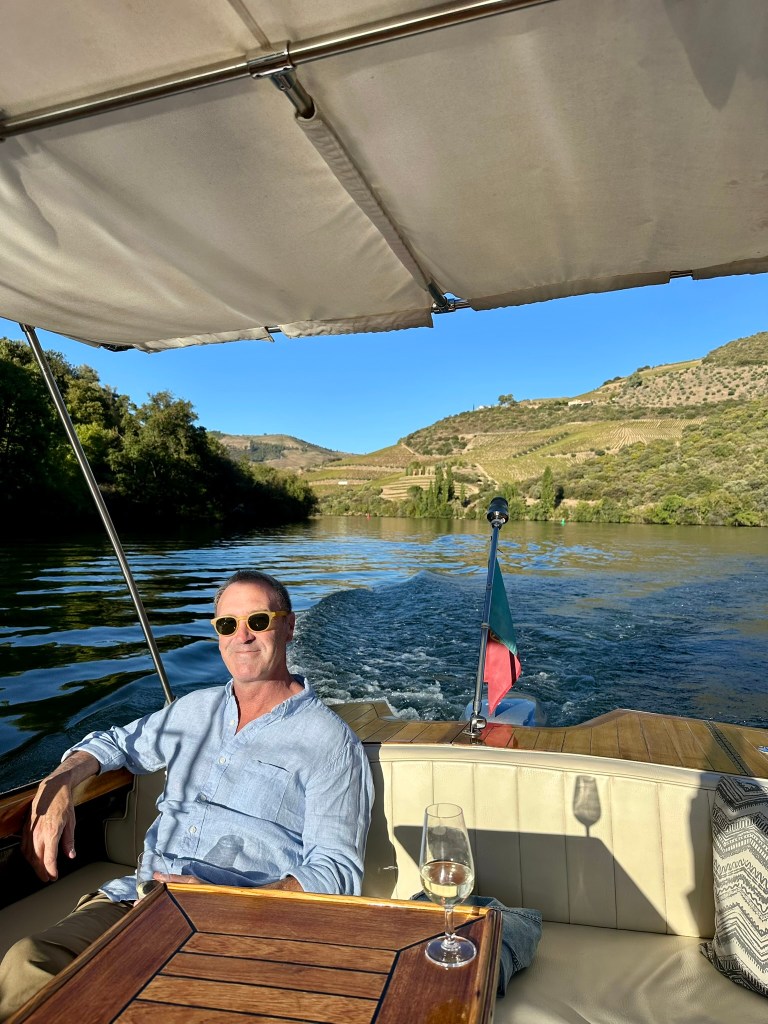
Cool little sunset boat trip on the Douro River:
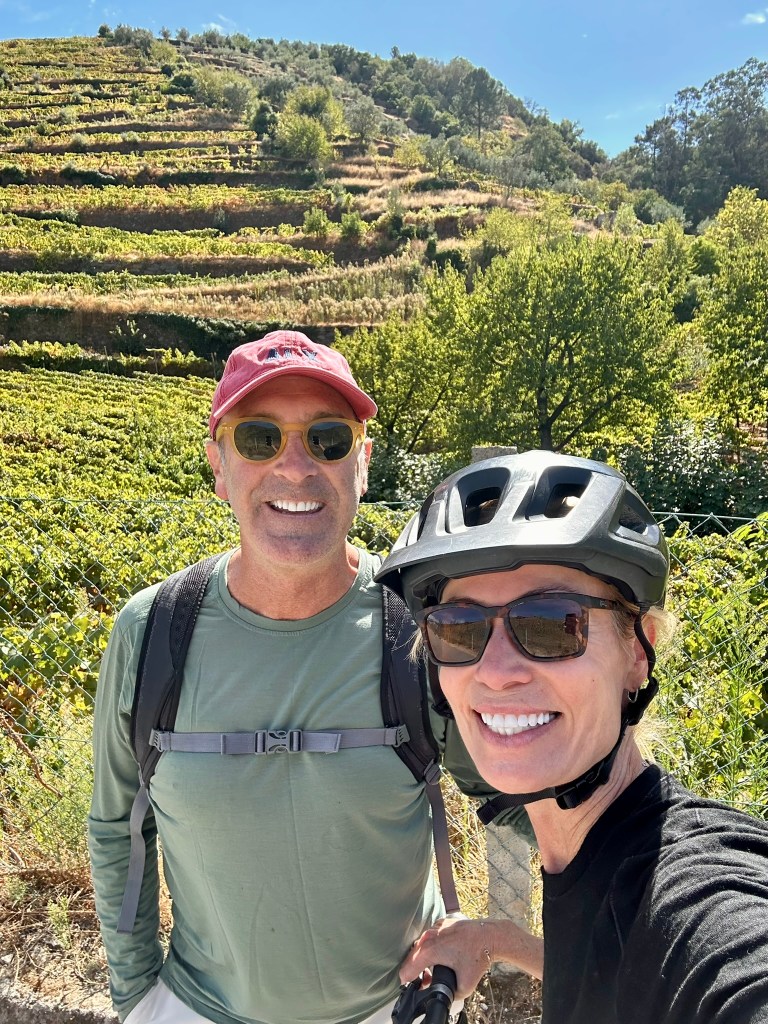
And a full day of biking through vineyards (none of which accommodated walk-in tastings – you had to have reservations, which we thought was insane:
Douro needs to learn lessons from the Virginia (and sure, California) wine region.
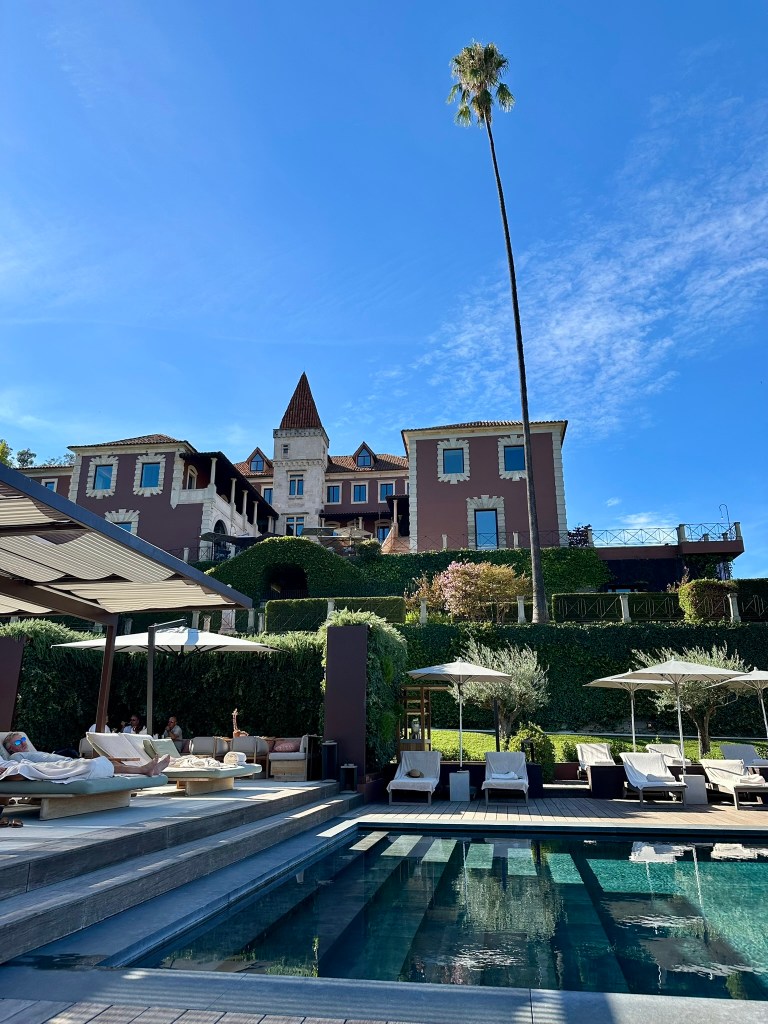
Pretty good digs for our 3-day stay:
The day after biking, we did end up calling and then visiting Quinta de Fojo, which offered an outstanding and authentic tasting experience at a generations-old family winery:
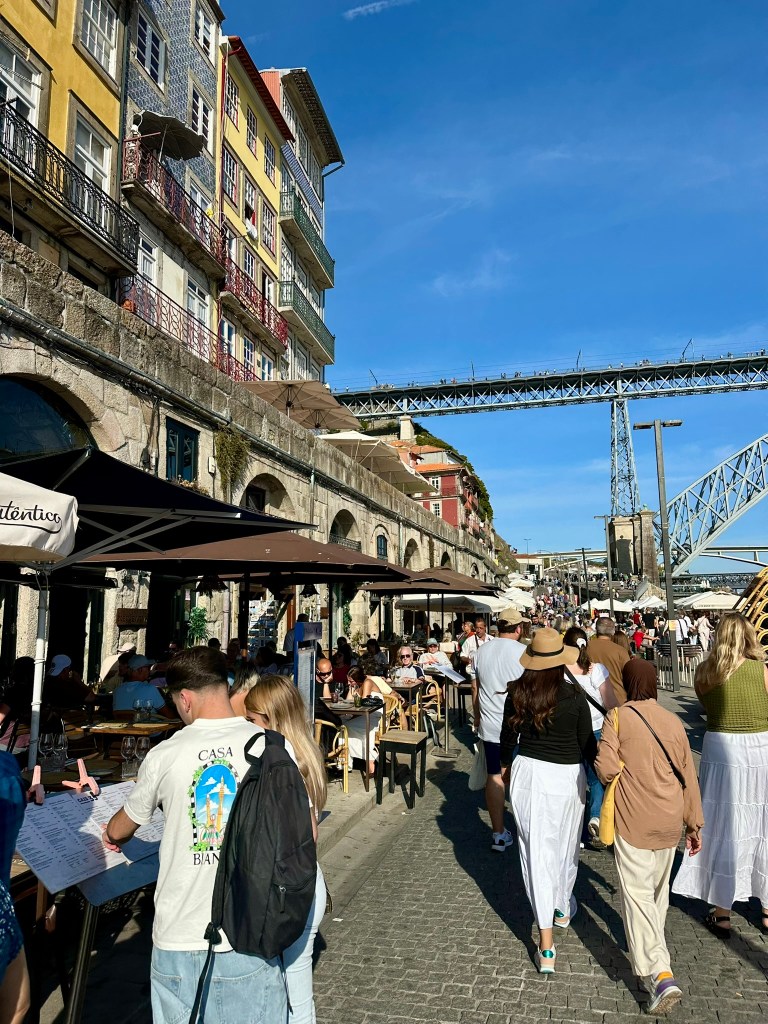
Then, back to Porto for a day; we first visited at the tail end of our inaugural post-retirement long trip in 2023 and definitely wanted to return, even if only for a short time:
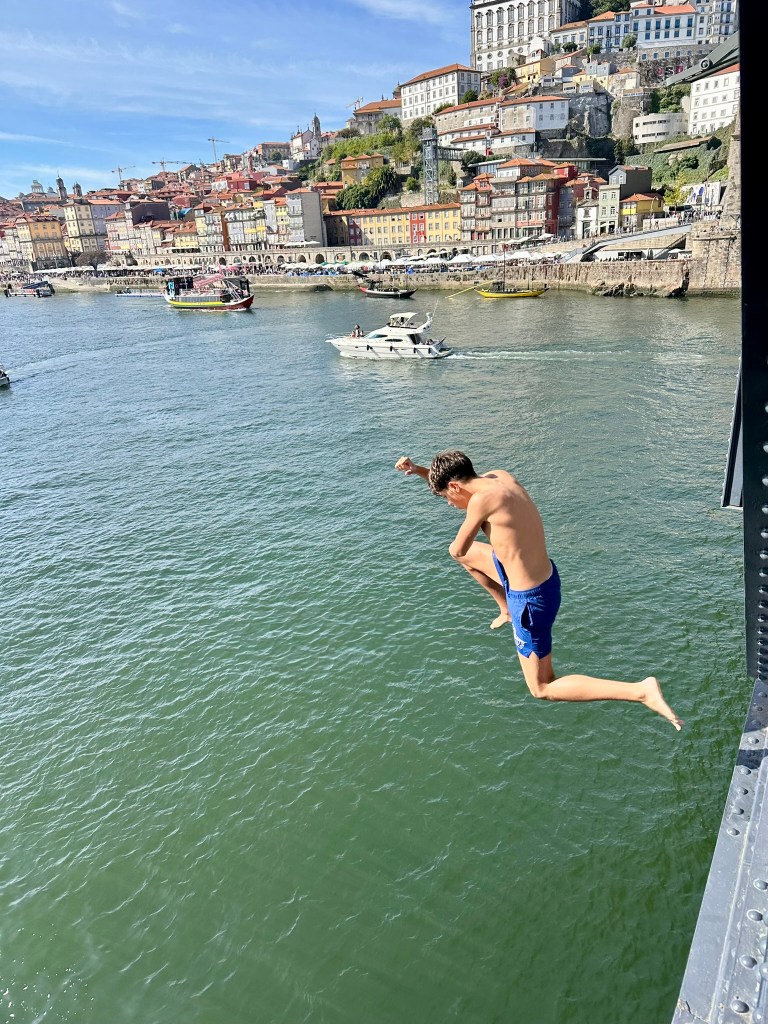
Like our second visit to Rovinj, Croatia, a few months earlier, we stayed across the river from Porto’s core instead of inside – definitely a different point of view!
From Porto, we flew to our final leg: Cornwall in the southernmost tip of England:
Due to the length of the drive from London to our first Cornwall location (we try to keep drives between locations under 4 hours, and ideally no more than 3), we stopped halfway in the town of Frome, in Somerset:
Turned out to be pretty cool, and with a remarkably high ratio of pubs to people, which was a plus for us:
Then, to our first stop in Cornwall – Padstow:
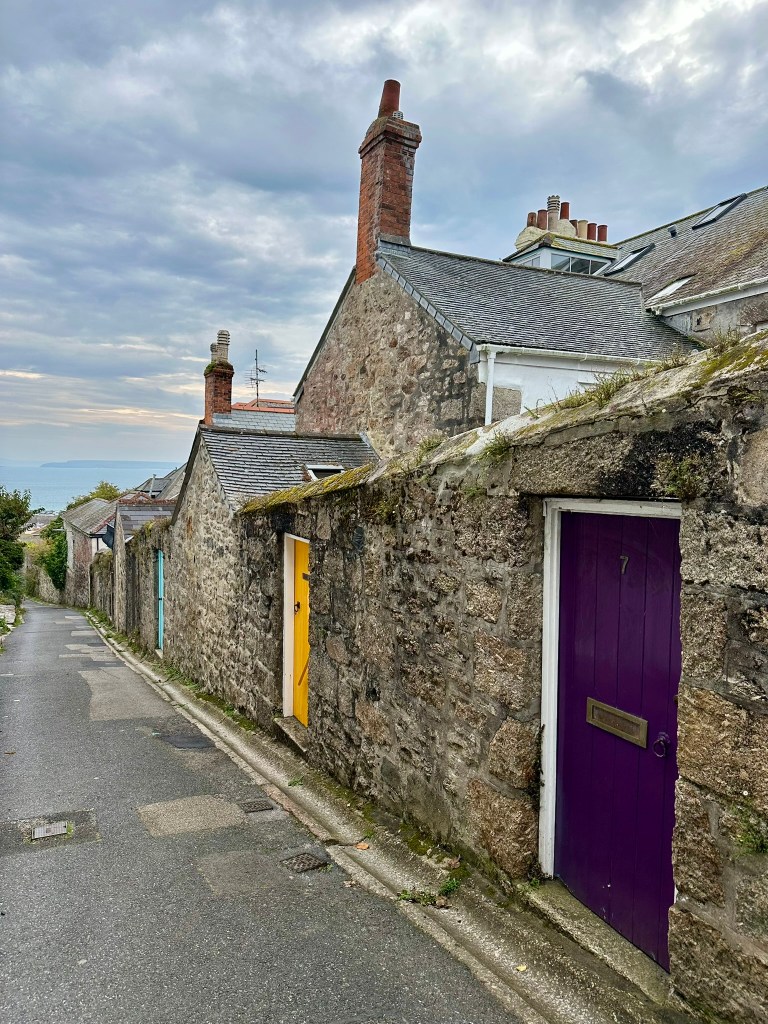
Rather than stay in town, which was a little bereft of cool lodging options, we stayed about 10 minutes away, at. . . The Pig. Which was a cool lodging option, it turned out:
But we did get into town our second night to dine at The Seafood Restaurant, the flagship eatery of Rick Stein, who we had never before heard of, but who turns out to be a beloved English restauranteur and a seafood magnate in Padstow (the restaurant was one of at least three Rick Stein joints in town):
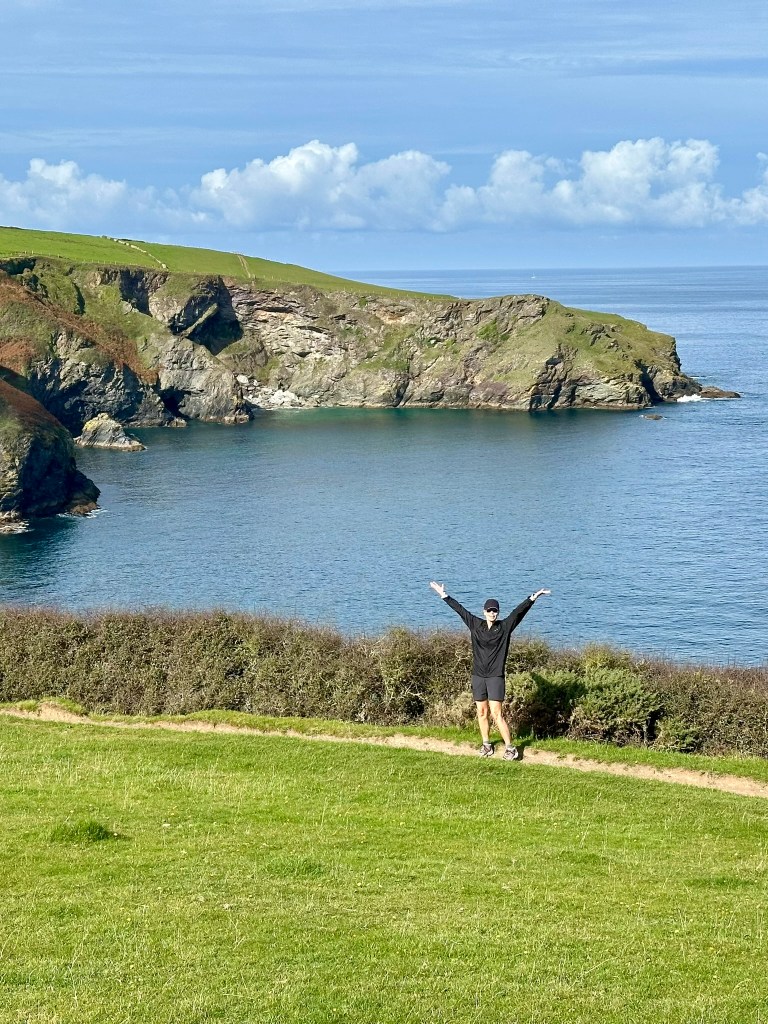
And on our first full day, our real purpose for visiting the region: spectacular hiking. In this instance, a quasi-loop hike between the achingly charming village of Port Isaac to the even smaller hamlet of Port Quin:
The hike exceeded all expectations:
Our excitement manifested itself in different ways, to be sure:
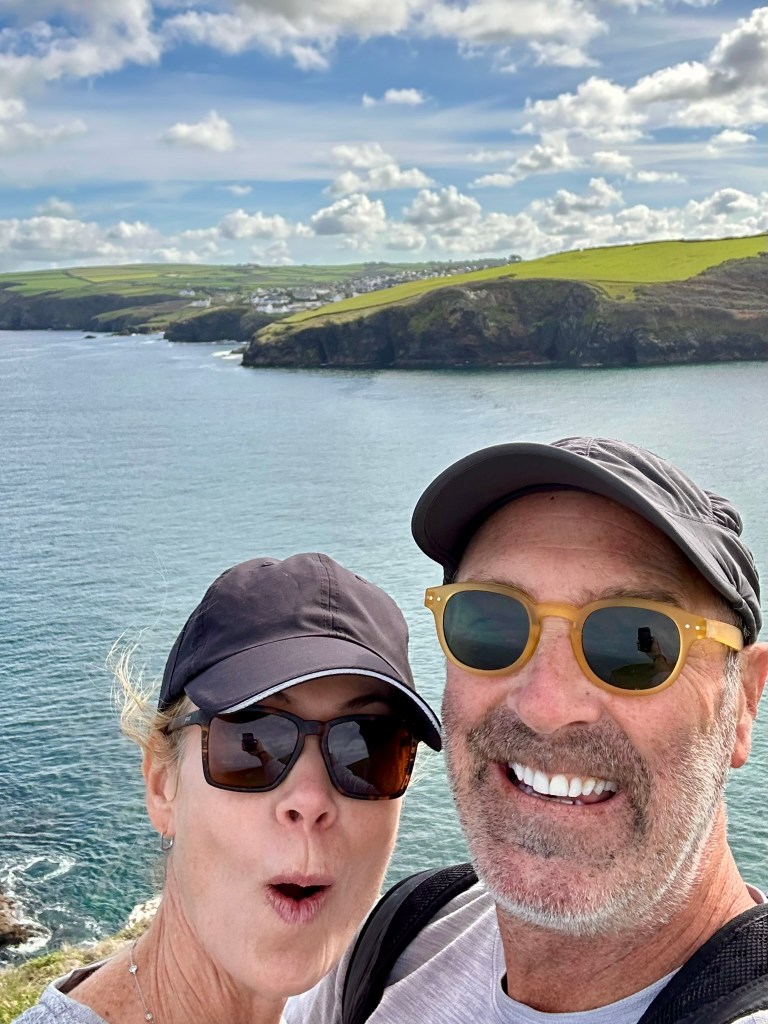
Port Isaac in the distance:
The local cows seemed excited to see hikers come by, since all of them crowded the fence when they saw us coming:
Our reward once back in Port Isaac? The first of several fish and chips (less than half a dozen during this trip, much less than the daily dosage we sought in our 2-week Cotswolds and Wales trip in 2022 that packed on so many pounds that we had to wear muumuus when we got home):
Our next hike en route from Padstow to St. Ives represented the most iconic views from the British TV series Poldark, which essentially inspired this entire leg. At the start of the hike lay the very tin mine that Poldark worked in the show, Wheal Coates:
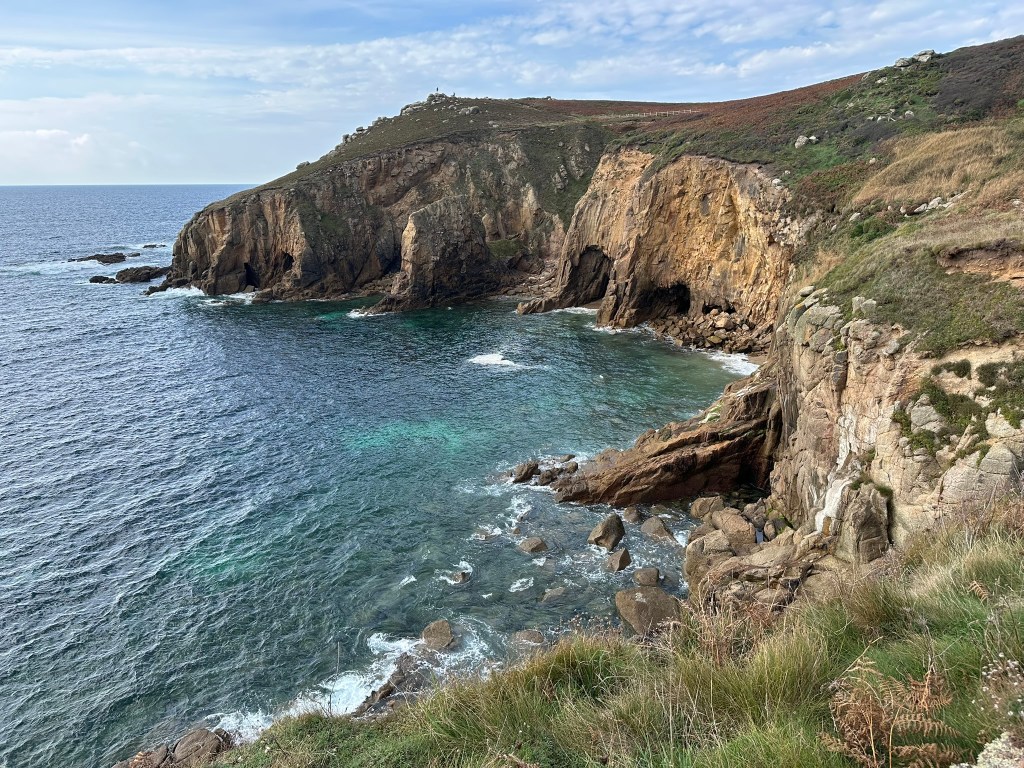
Cliffside hiking at its best:
Our next base, St. Ives:
(Which always seemed to be at low tide during our stay, oddly enough):
But had a legit, picturesque English port town charm to it, even if most days were overcast (which seemed to amplify the Englishness of it all):
En route to our next hike, we stopped at the Minack Theatre, which was reputed to be an amazing venue for performances on a cliff facing the water. All of the facts were correct, but it was, in fact, meh:
The next hike? Around Lands End! The actual, for real most southwestern most point in England (and the UK):
More unbelievable Cornish cliffside walks:
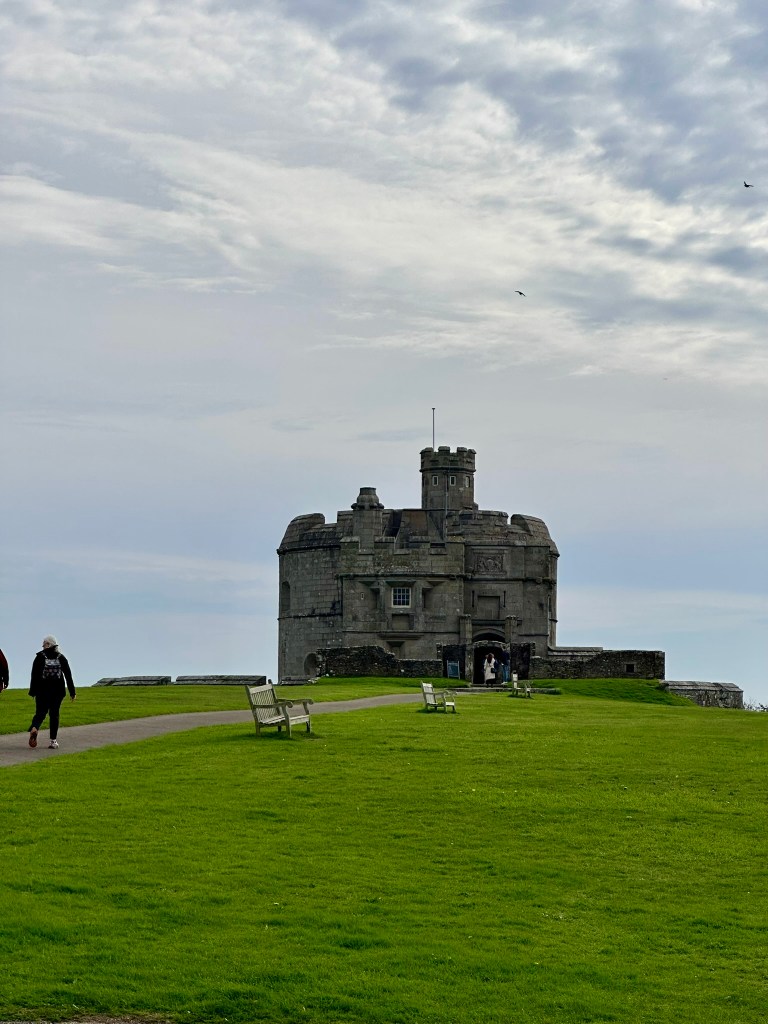
Then, around the horn of Lands End and on to the first of our last two Cornish stops: Falmouth.
Meh.
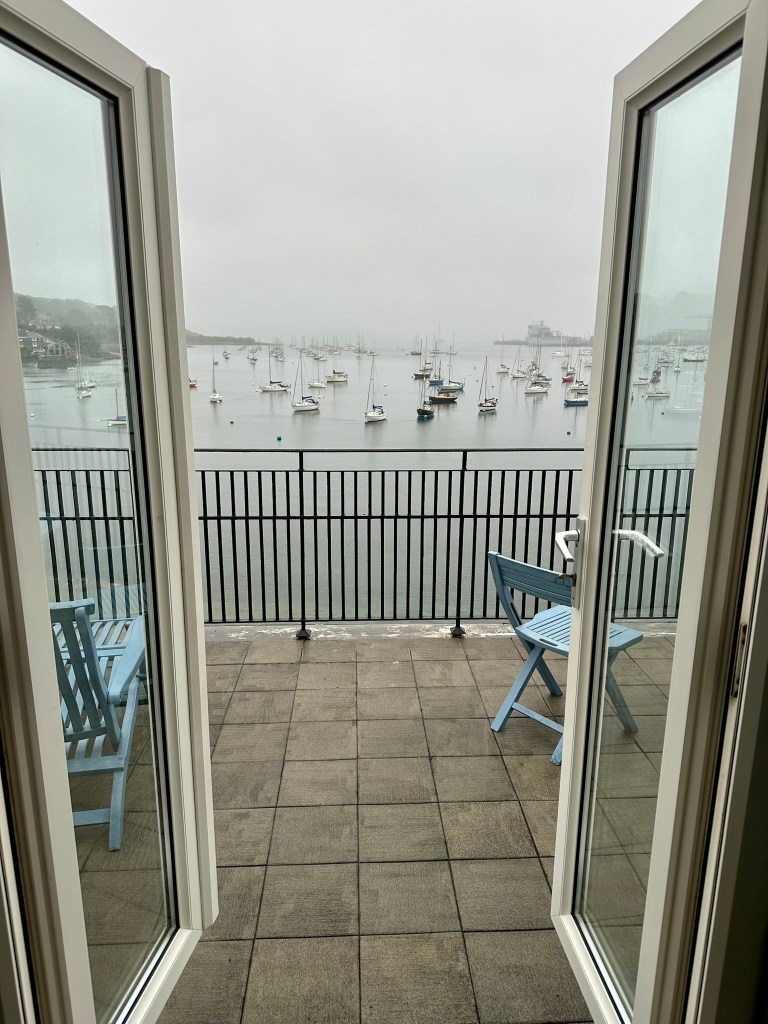
The weather during our stay may have, however, influenced this assessment:
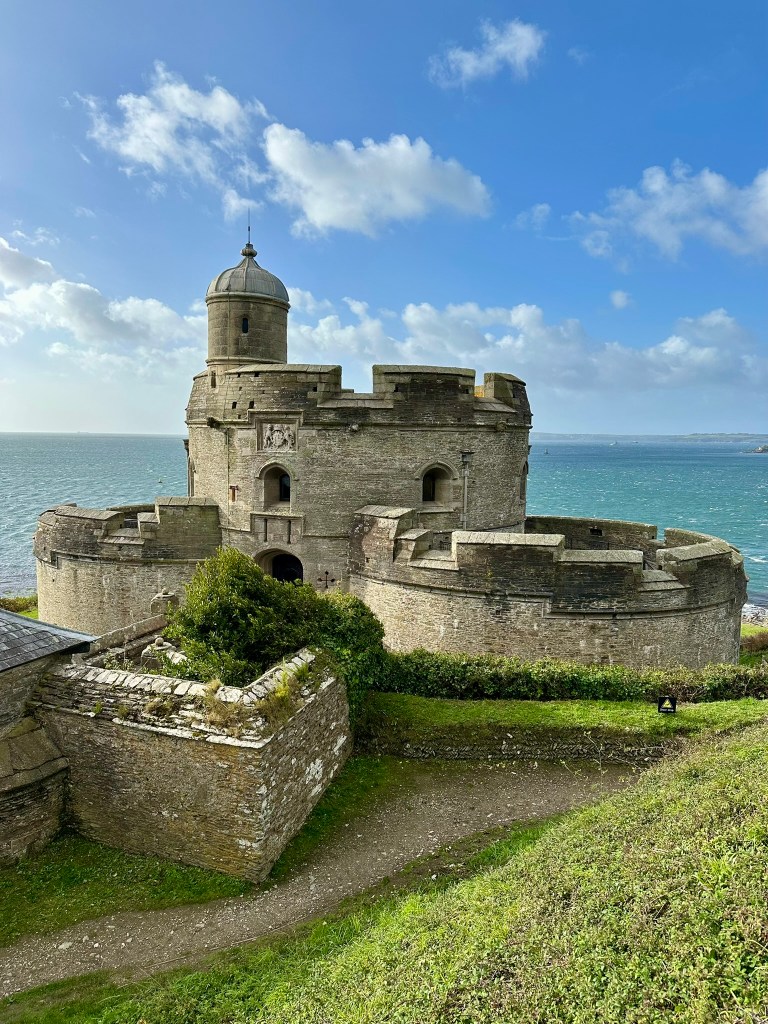
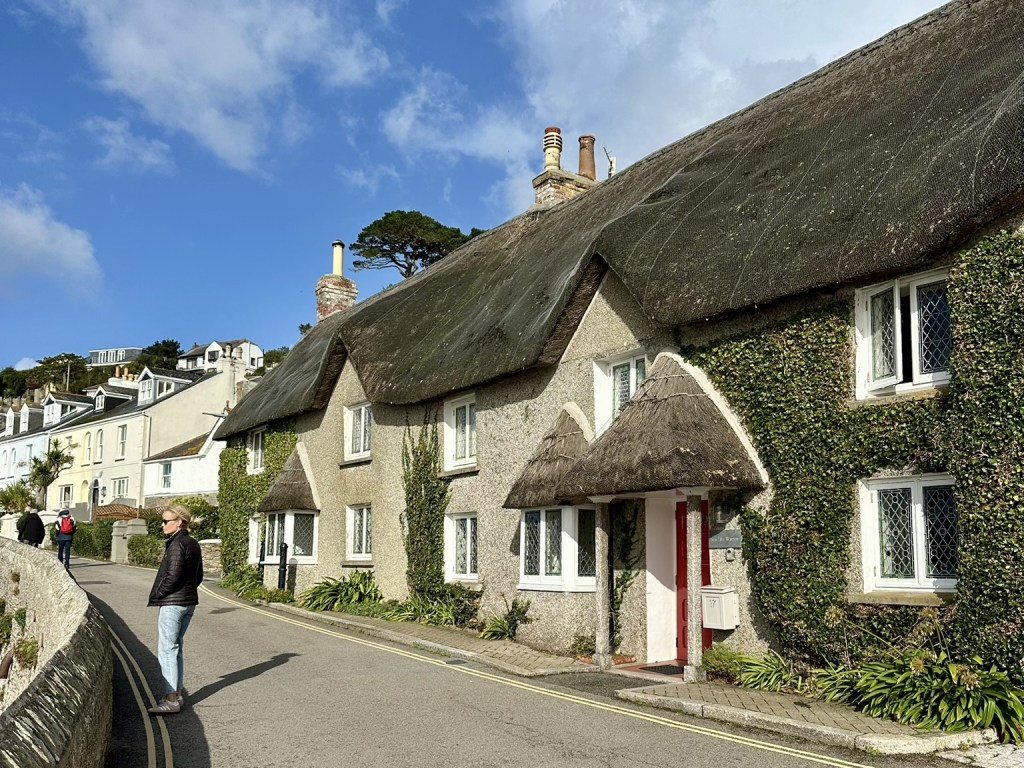
And the final Cornish stop, St. Mawes. More shitty weather, but a super picturesque Cornish seaside village:
And, of course, the weather improves the day we depart:
On the way back to London (by way of Sherborne), we literally drive right by Stonehenge. It turns out that we never actually needed to buy the entrance fee in 2022!
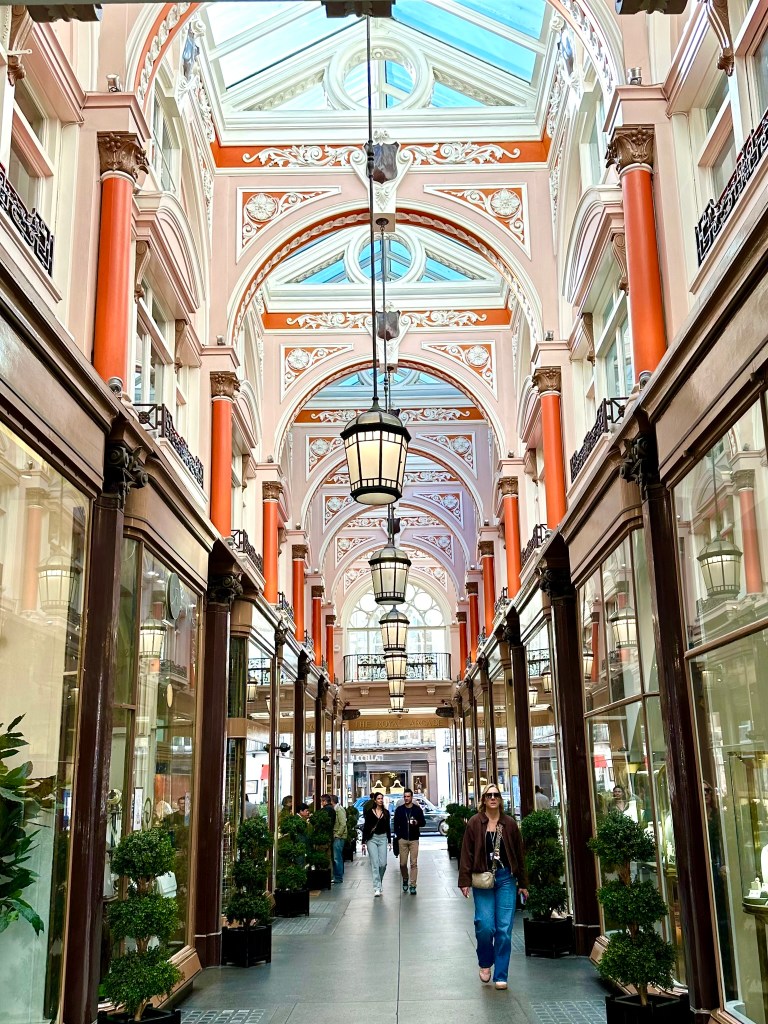
One of the many block-bisecting arcades of London, our final stop.
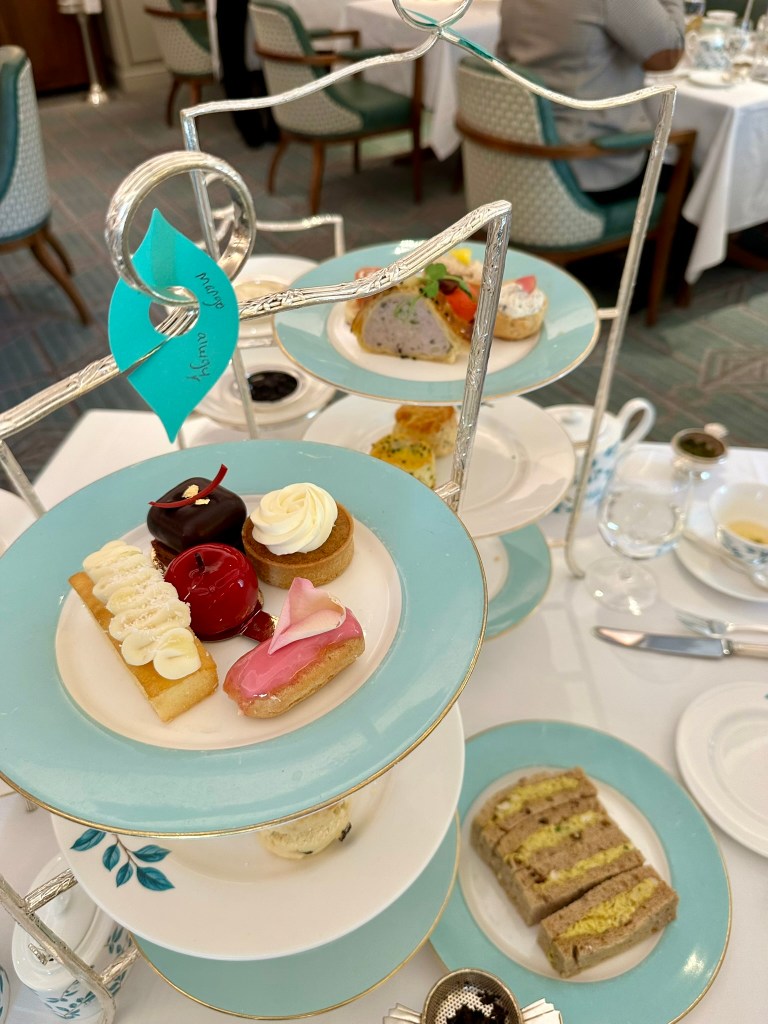
This was our fourth stay there, and we base ourselves in a different neighborhood each time – this time was Marylebone. Also, since we forewent the whole high tea experience on each of our previous three stays, we concluded that the fourth time was the charm:
The next day, a visit to London’s 3rd century Mithraeum, discovered beneath the modern city in 1954. This was a Roman temple dedicated to the god Mithras, a mystery cult popular among soldiers in the 2nd and 3rd centuries and could have continued to be more popular than early Christianity as an alternative to the traditional Roman pantheon had it not been for the pivotal backing of the latter by a couple of Roman emperors.
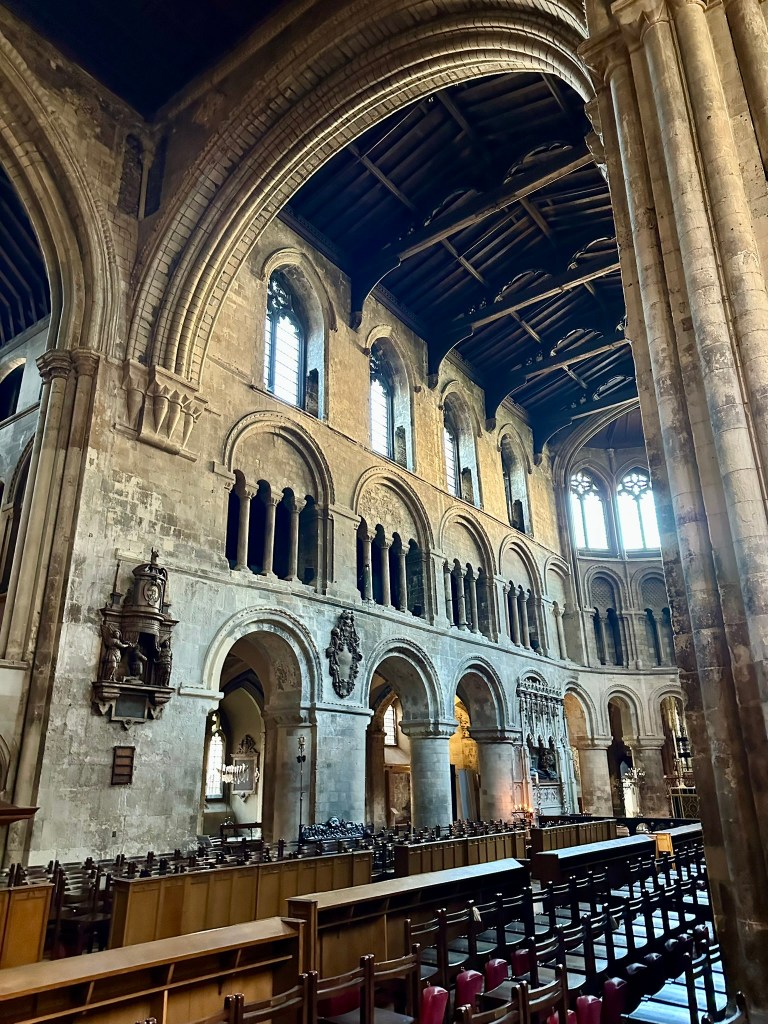
And a visit to St. Bartholomew the Great church, founded in 1123 – London’s oldest surviving parish church and a rare masterpiece of Norman architecture. Its Romanesque nave and medieval chancel evoke nearly nine centuries of continuous use, surviving the Great Fire, the Reformation, and the Blitz.
Definitely a historic end to an epic 6-week journey of 5 legs!
We’re definitely done traveling for the next few months – we need a break and some recovery time to revel in the most appealing town of all: Old Town Alexandria. So, this is where we’ll hang and try (really try!) to post some of the growing backlog of trip photos that are piling up (and have, in fact, now contributed to maxing out the storage capacity to the home PC, prompting a replacement).
WolfeStreetTravel finds interest in all things cartographic, vexillologic, and heraldric. Particularly the compelling cartographic oddities we encounter on our travels. But yesterday, multiple news outlets (and several travel Instagram accounts we follow) reported a development directly relevant to the last item in the list.
As reported in the UK’s Guardian, “The Danish king has shocked some historians by changing the royal coat of arms to more prominently feature Greenland and the Faroe Islands – in what has also been seen as a rebuke to Donald Trump.”
The previous Danish coat of arms was formalized in 1972, but elements of the current heraldric symbols can be traced back to the rule of King Canute VI around1194. The old coat of arms did acknowledge Greenland, but subordinated its polar bear to a position in quarters within quarters upon the field (shield shape). The Greenland polar bear shared a quartered space in the lower left quadrant of the field with the Faroe Islands ram, below three crowns, “symbolizing “the symbol of the Kalmar Union between Denmark, Norway, and Sweden, which was led by Denmark between 1397 and 1523.”
Denmark’s new coat of arms more prominently devotes an entire quarter of the field – the same lower left quadrant – to the polar bear symbol of Greenland. Although not as relevant to the story, the Faroe Islands’ ram gets its own quarter a the top right quadrant of the field, and the crowns are now gone. (They made cosmetic updates to the dudes with the clubs, too, but no one is commenting on the rationale for this change.)
All of this, of course, in response to Trump’s declaration that owning Greenland is in America’s strategic interest. Trump wrote yesterday on Truth Social, ““Greenland is an incredible place, and the people will benefit tremendously if, and when, it becomes part of our Nation. We will protect it, and cherish it, from a very vicious outside World.”
The Washington Post reported that “For the Danish government, this situation is “a huge headache,” according to Mikkel Runge Olesen, senior researcher at the Danish Institute for International Studies. “It cannot be seen to be pressuring Greenland or jeopardize relations with Washington, which it depends on for security guarantees through NATO.”
Headache or not, WolfeStreetTravel finds it fascinating that the Danes are asserting their sovereignty over Greenland through updates to their ancient heraldric symbols while this whole thing plays out in the lead up to the new presidential administration.
After mulling over an extended trip to Japan over Christmas during our New England and Canada road trip this past summer, we quickly concluded that the time and focus needed to plan the logistics of that trip would be misspent while actively engaged in another. And so we defaulted to an easier-to-plan, one-stop trip to a location closer by that’s been on our list for a few years: San Miguel de Allende in the center of Mexico.
The town had been on our radar for a few reasons:
Most notably, the town hosted the finale of Top Chef one season, and the gastronomic reputation of San Miguel appeals to us
The Boston Connells spent more than a month in San Miguel back in the day as part of the boys’ Spanish immersion education (which certainly paid off, considering that one of them ended up taking two semesters of college engineering courses in Spain – in Spanish – and the other spent a month in Ecuador last year)
There’s a Rosewood there
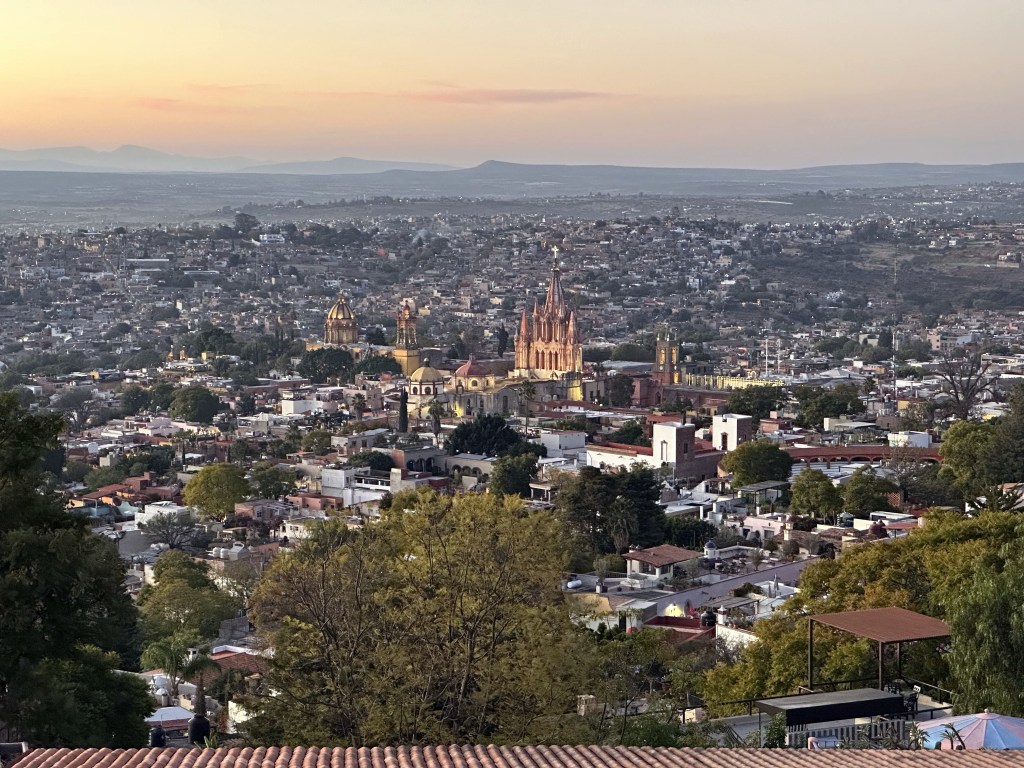
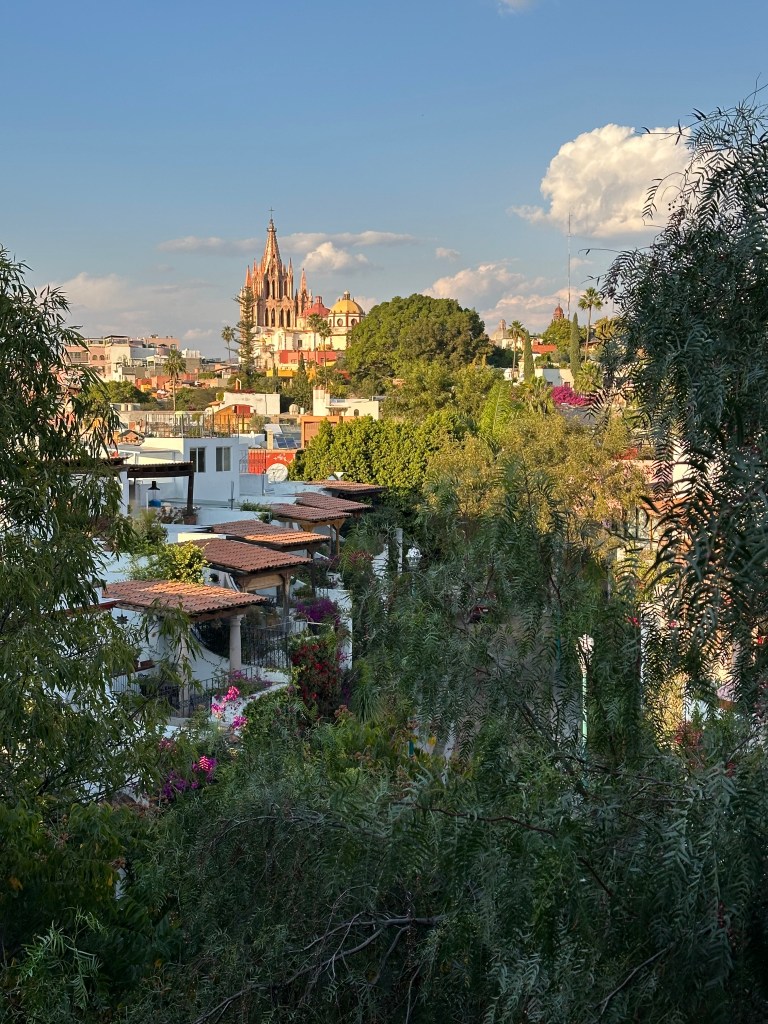
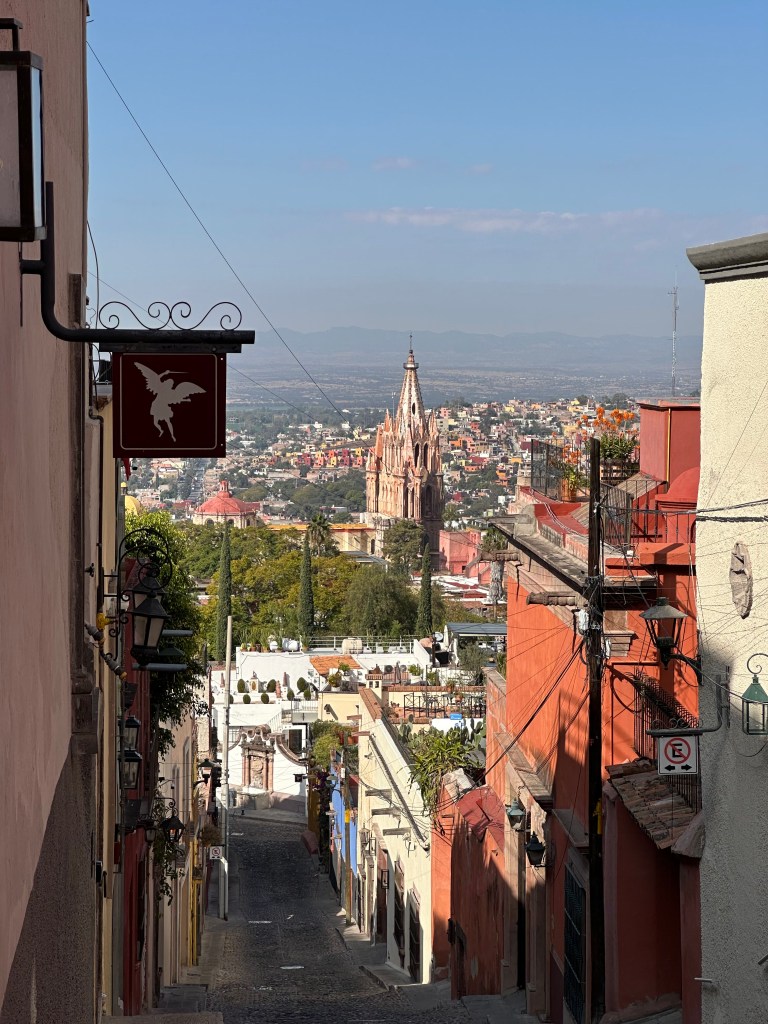
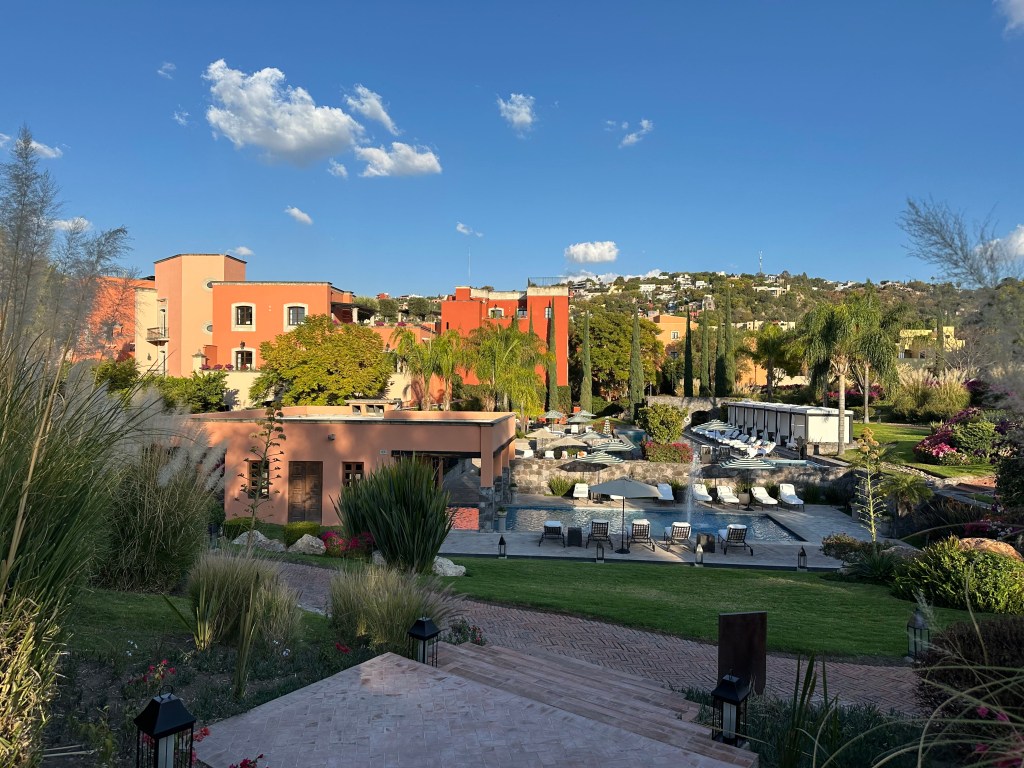
The choice turned out to be a wise one – really beautiful place, both from a distance during cocktail hour:
And up close and personal in town:
We took a walking tour our first morning there, and our guide stated that San Miguel now consists of 14% gringos, and that, although Americans began visiting the town in meaningful numbers after WW II due to a Spanish language school that was covered by the GI Bill, the big surge came much later. Due, according to our guide, to a proclamation a dozen years ago by Conde Nast Travel that San Miguel was the most beautiful town in the world.
Moneyed Americans (and Canadians) soon followed – first as visitors, then as residents.
UNESCO also designated the center of town as a World Heritage Site, which is a pretty meaningful statement about the place. As a result of these moneyed new residents and the UNESCO designation, San Miguel has been beautifully preserved. Or gentrified. It’s a fine line.
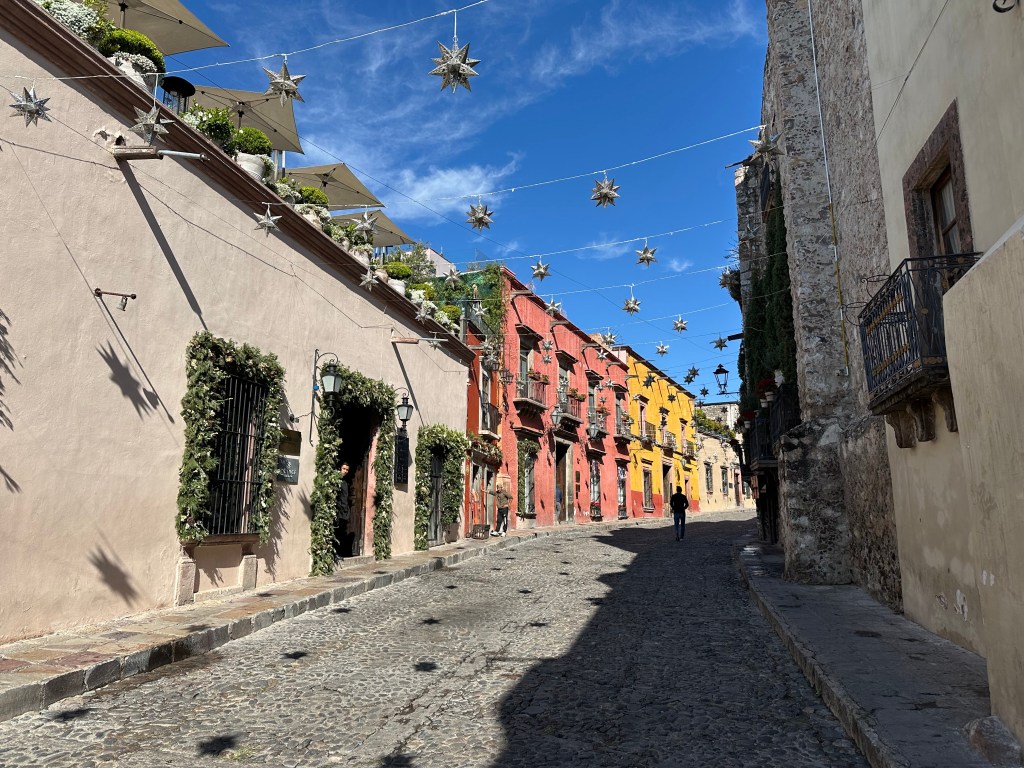
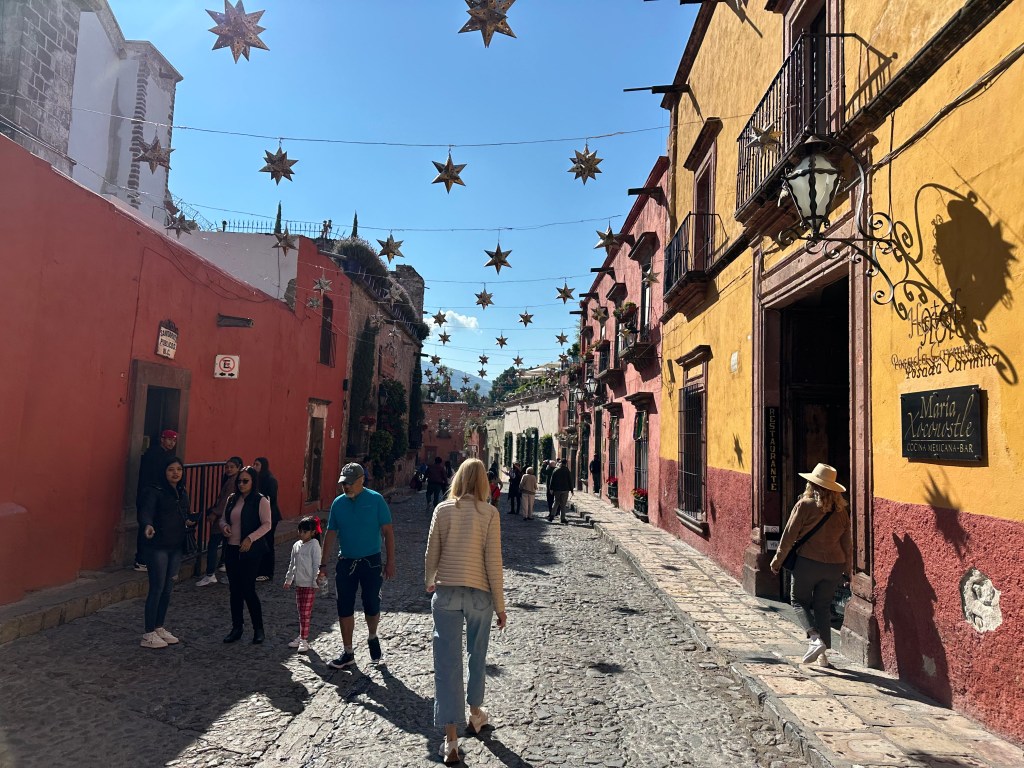
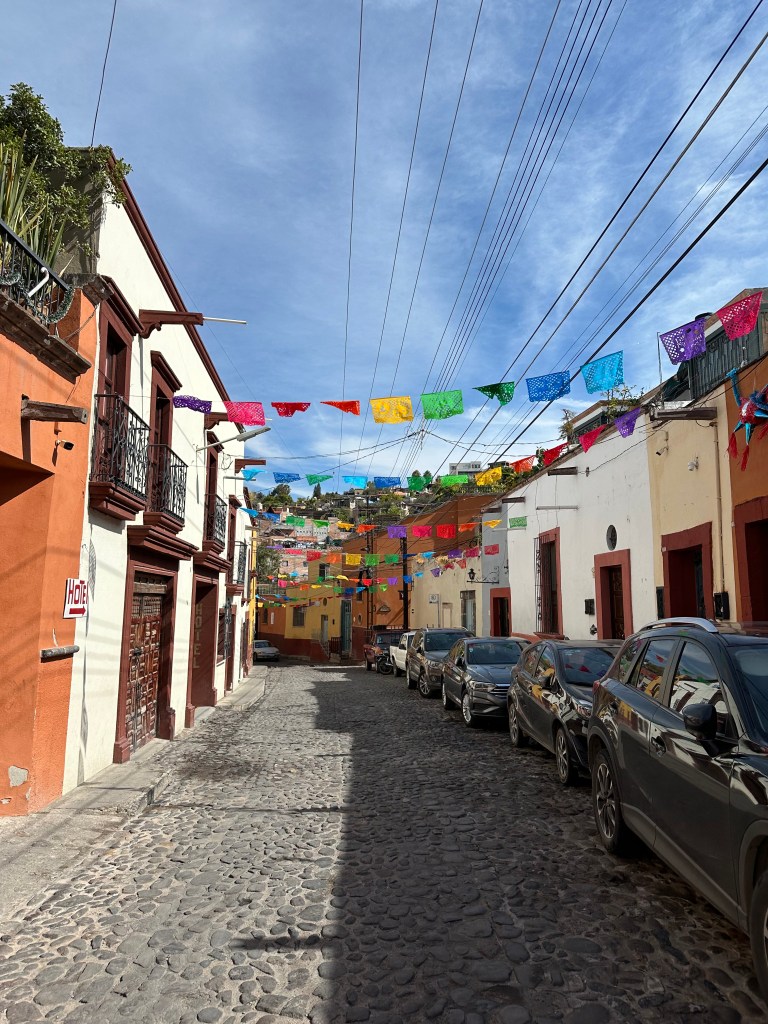
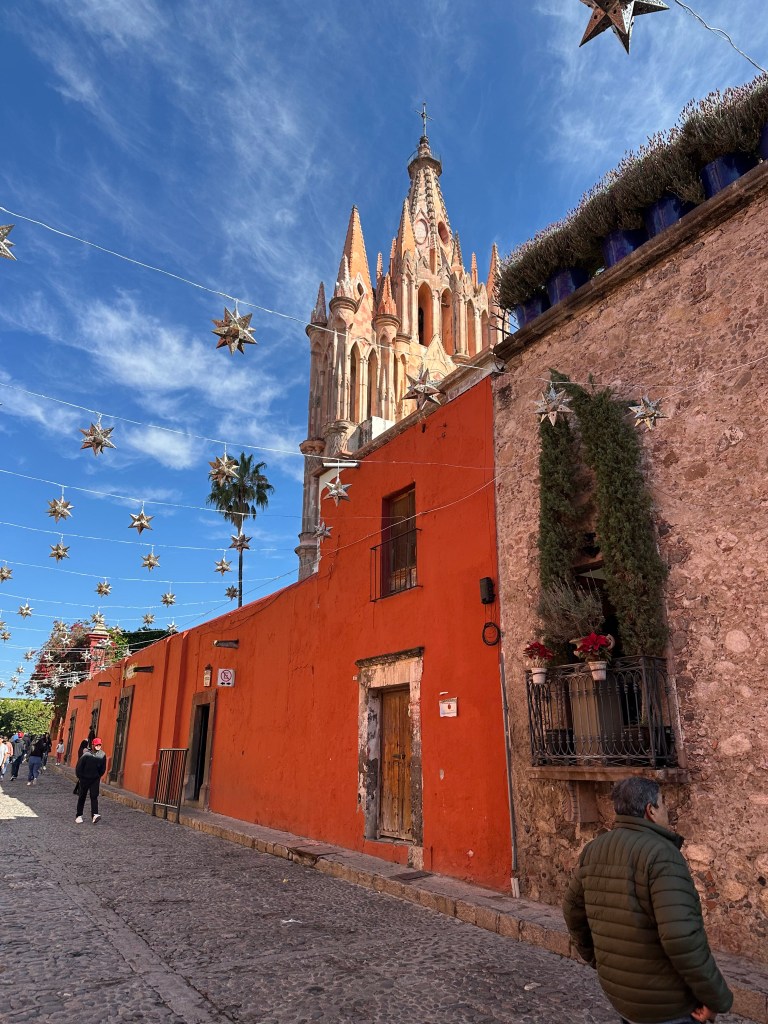
And in all of the town declared by Conde Nast to be the most beautiful in the world, the magazine declared this street to be the most beautiful in town (and in the world). While the specific rank is questionable to us, considering some of the places that we’ve visited, it was undeniably beautiful, and made more so by the Christmas decorations here and all around the center of town:
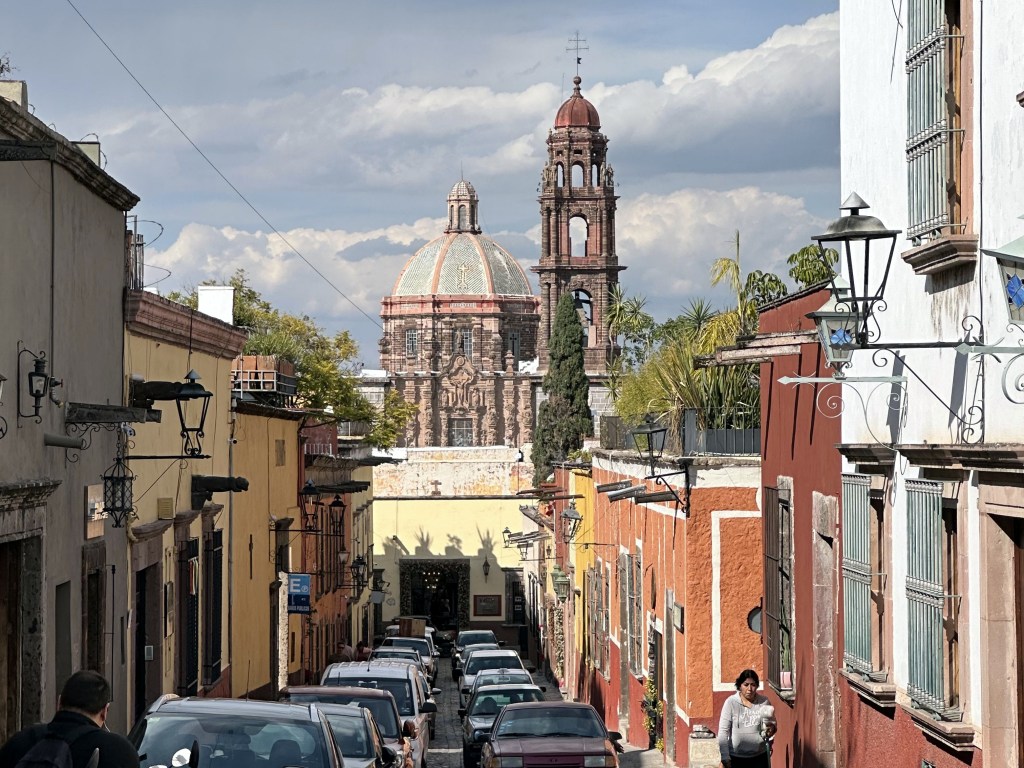
And cool street views weren’t limited to just that most famous lane:
Cool dia de los muertos mural by a local artist in a San Miguel bar:
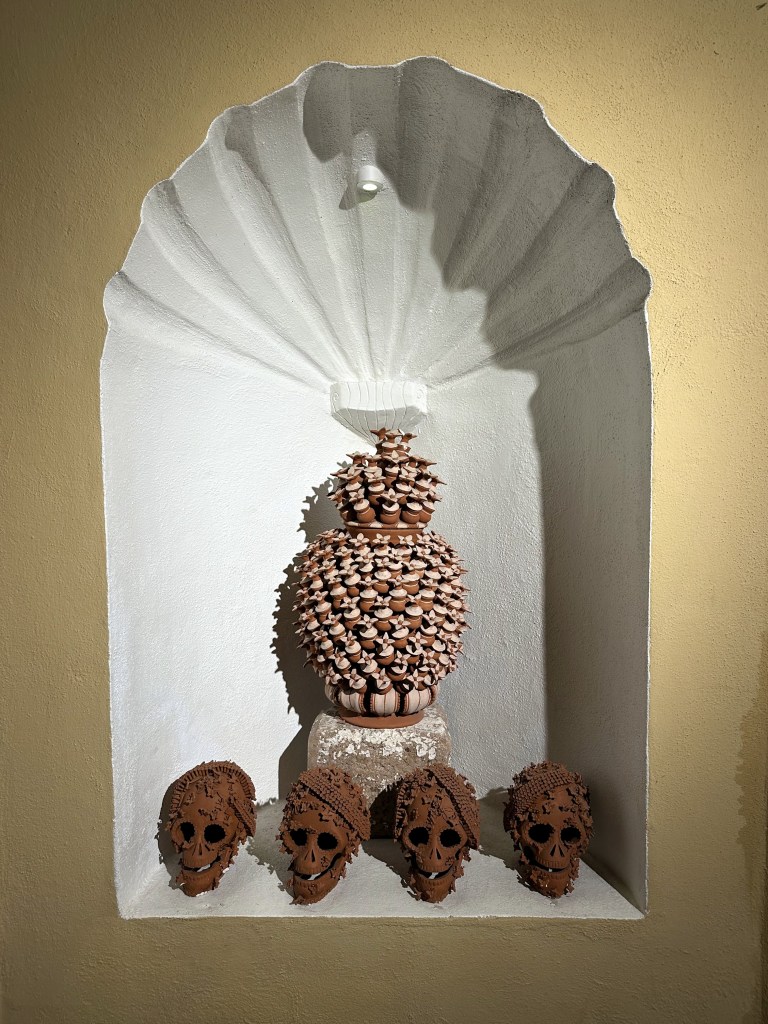
And the dia de los muertos accessories didn’t stop there.
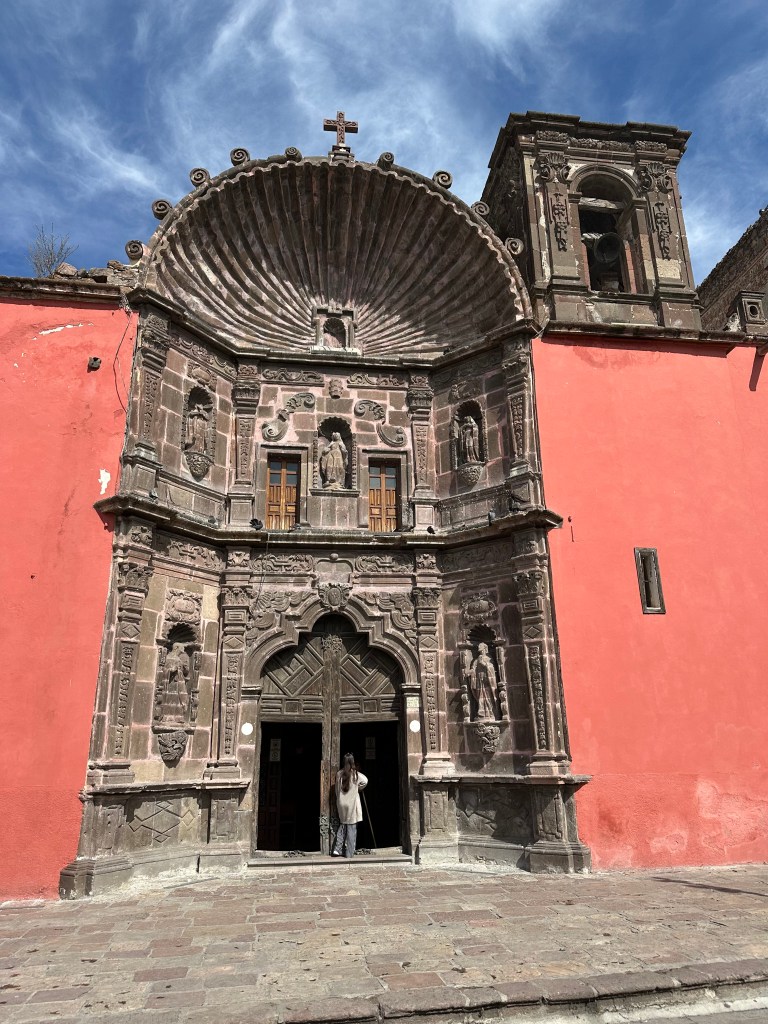
The rather picturesque Templo de Nuestra Señora de la Salud/Temple of Our Lady of Health:
First lunch in town at a fish taco place – pretty good!
San Miguel’s bull ring, which still hosts bull fighting events (none of which were held during our visit, though):
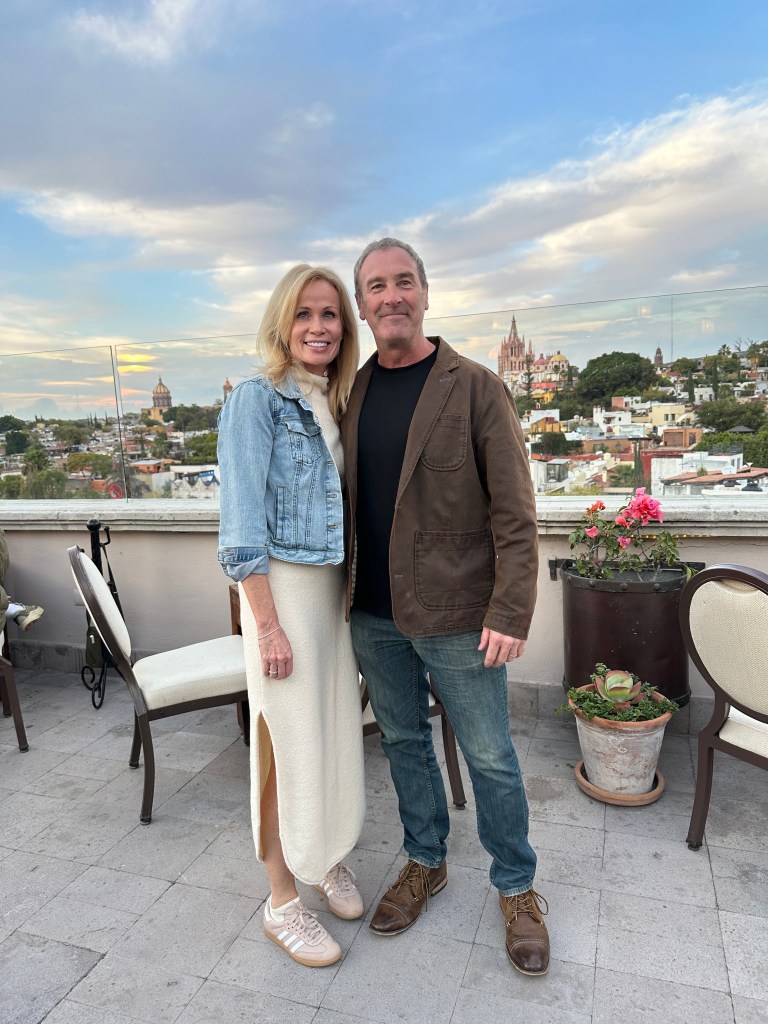
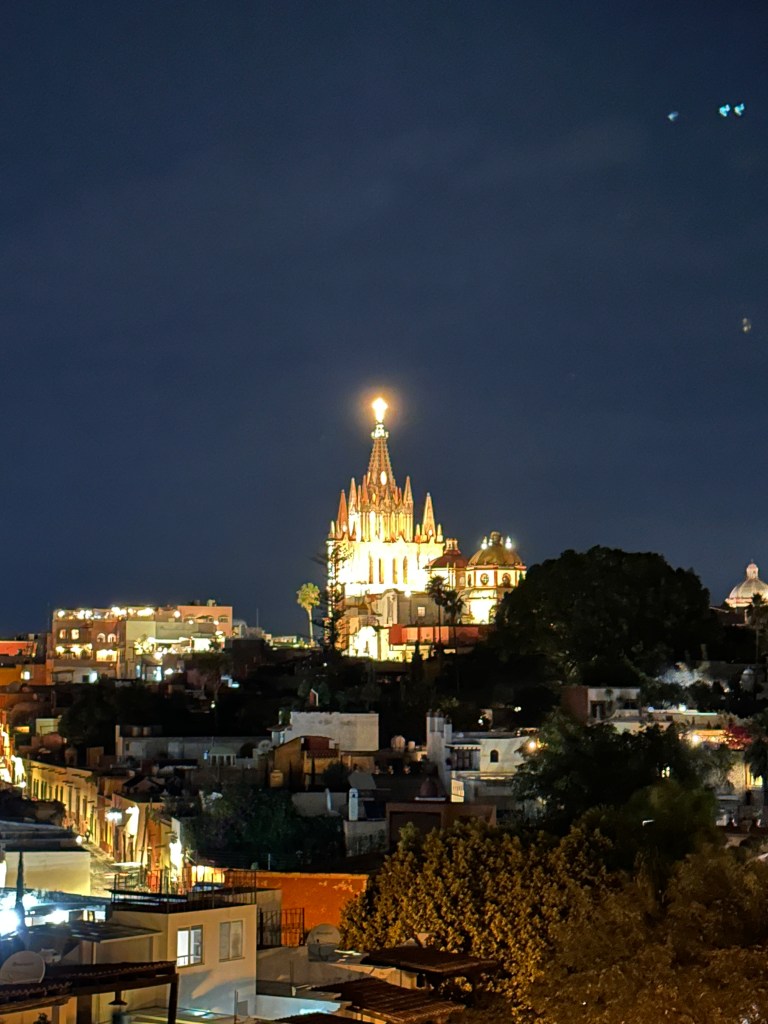
Great view from the rooftop bar at our place, with San Miguel’s landmark Parroquia de San Miguel Arcángel (Parish Church of St. Michael, Archangel) as a centerpiece of the vista:
Although the town is actually named after a 16th-century friar, Juan de San Miguel (and Ignacio Allende, who we’ll get to), the San Miguel reference we most commonly encountered during our visit was the town’s patron saint and parish church personality – St. Michael the Archangel.
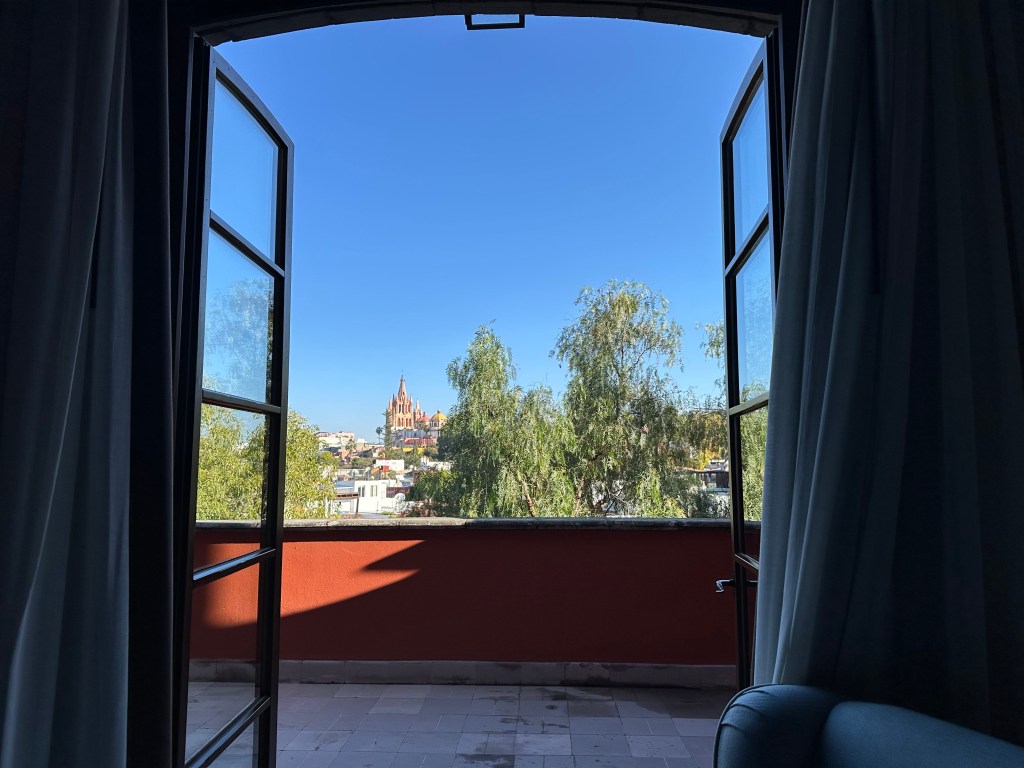
Pretty good view of the parish church from our room’s terrace, too!
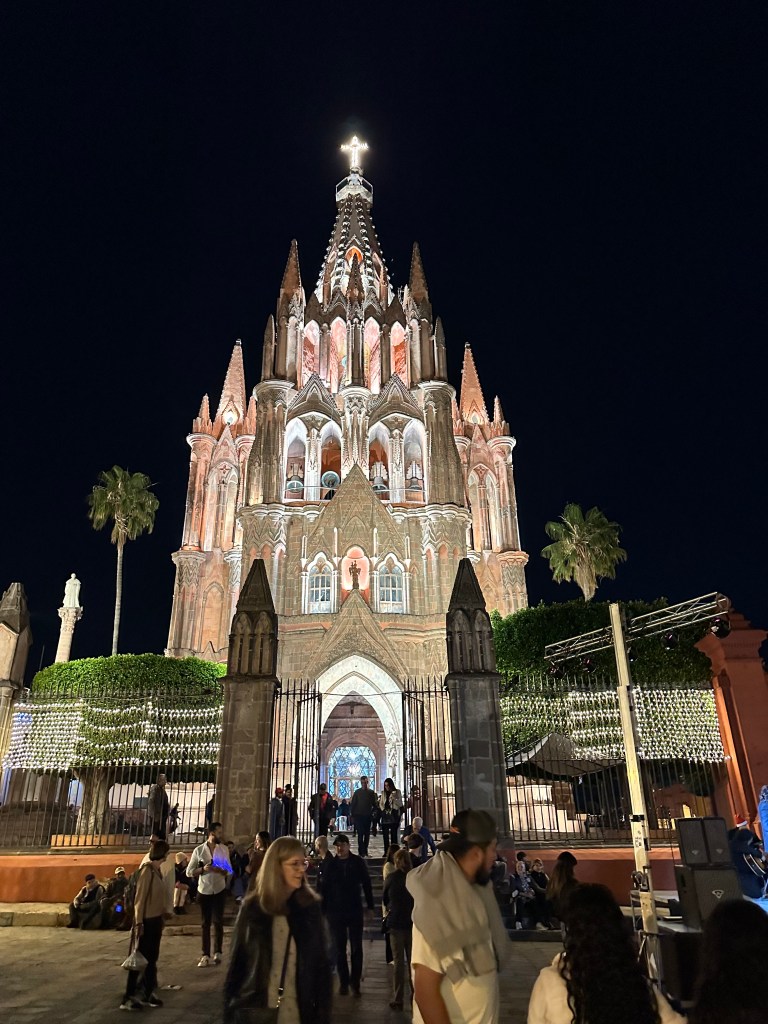
Parroquia de San Miguel Arcángel was, in fact, omnipresent during our visit. One simply could not escape its intrusion. Which was a good thing, from a town aesthetics point of view. . .
Both up close:
And from afar:
And during the day:
And at night:
(Not sure this functions in email version of post.)
Christmas Eve:
Christmas Eve dinner at Aperi:
And the tradition of the traveling Christmas stockings continues!
Christmas day in the Rosewood’s courtyard (not sure this functions in email version of post):
Christmas Day lunch at Bovine, featuring outstanding suckling pork.
Christmas dinner at Rosewood’s gastronomic restaurant 1826 absolutely sucked balls, and so does not merit any photographic documentation.
Instead, let’s turn to a field trip we took to the birthplace of the Mexican revolution: Guanajuato, about a 1.5-hour drive from San Miguel.
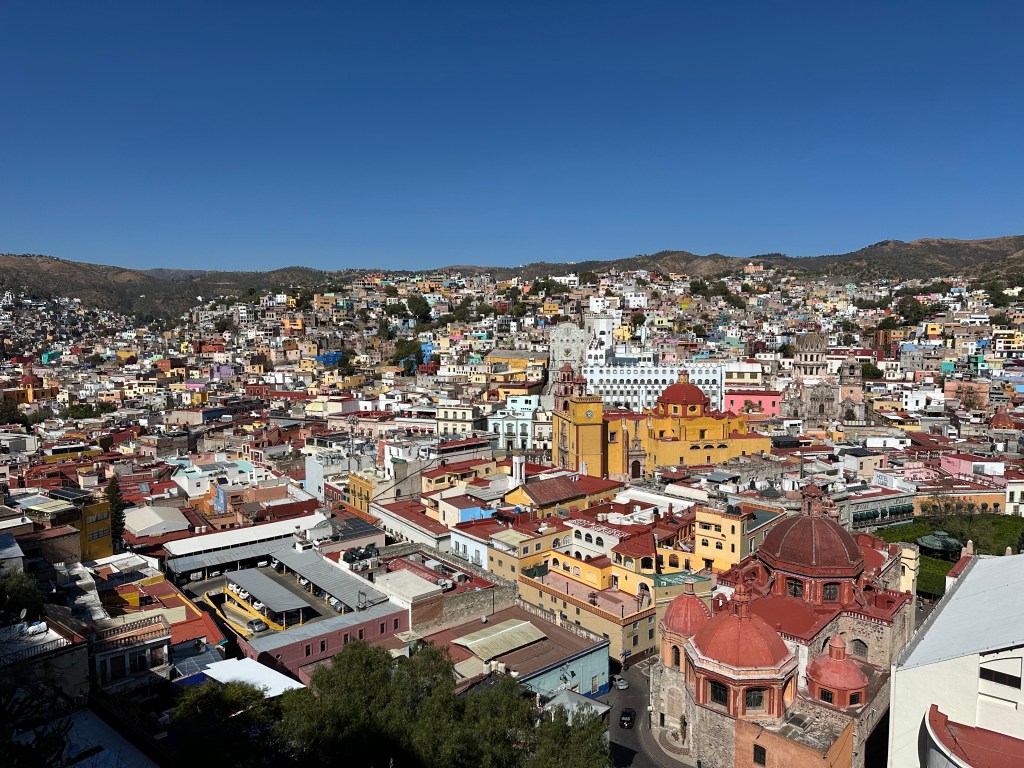
Unlike San Miguel, which permits residents to paint house in whatever color they wish – as long as it’s some shade of ocher or red – Guanajuato really does allow any color paint. As evidenced in the kaleidoscope of house colors seen from the belle view over town:
So, here’s Guanajuato’s role in the overthrow of Mexico of Spanish rule. During the Spanish colonial period, the region around and including Guanajuato was home to incredibly productive silver mines, yielding great wealth. But only to some – namely, the Spanish-born aristocracy. A stark wealth gap developed between these aristocrats and the indigenous and mestizo inhabitants working the mines and haciendas, and the areas slaves. Moreover, the native-born Spanish also were denied wealth and agency, and so, in the late 18th century, multiple rebellions broke out. All of them brutally suppressed and unsuccessful.
In 1809, however, a group led by Ignacio Allende, Miguel Hidalgo y Costilla, Juan Aldama, Miguel Domínguez planned an armed revolt against the colonial government. (The last part of San Miguel de Allende takes its moniker from the first guy, bringing closure to our San Miguel discussion earlier in the post).
In September 1810, the rebel forces arrived in Guanajuato and besieged Spanish loyalist forces holed up in the city’s heavily fortified grain exchange, below:
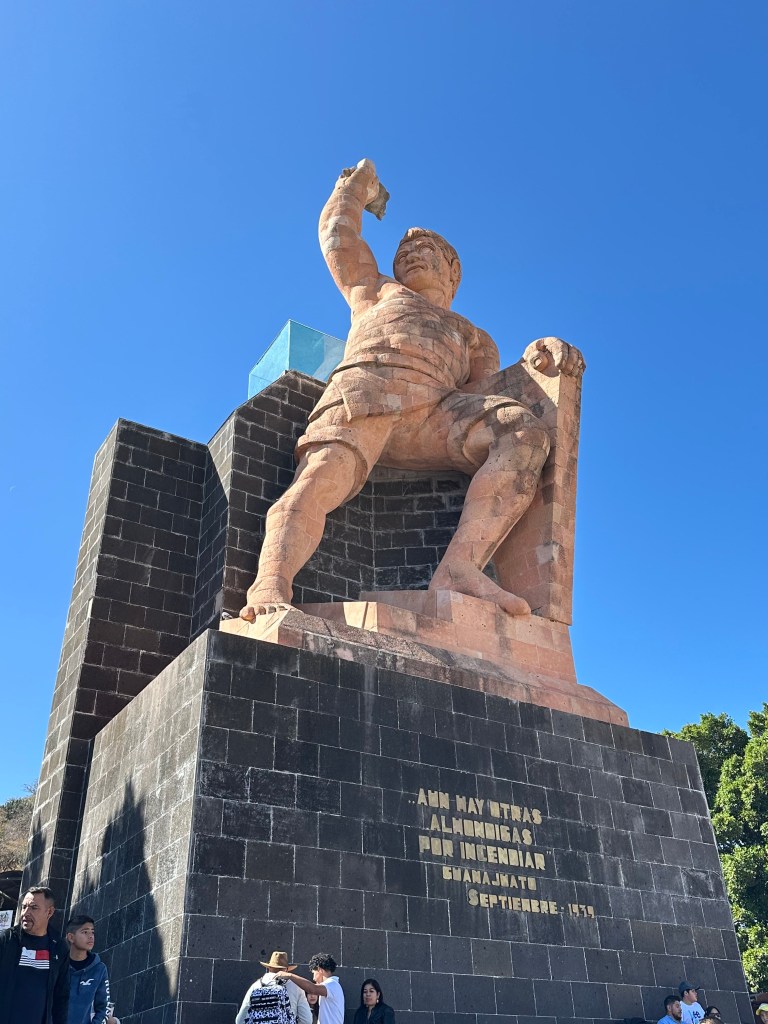
The rebels besieged the grain exchange, but there were only four doors and rifles on the roof. So this dude, Juan José Martínez – a silver miner – strapped a slap of stone on his back and charged one of the doors, setting it alight and gaining entry. All of the loyalists were killed.
But the Spanish forces caught up with the leaders. “The four main participants – Hidalgo, Ignacio Allende, Juan Aldama, and José Mariano Jiménez – were shot by Spanish firing squads, and their bodies decapitated. The four heads were hung from the corners of the Grain Exchange, to discourage other independence movements. The heads remained hanging for ten years, until Mexico achieved its independence. They were then taken to Mexico City and eventually put to rest under el Ángel de la Independencia in 1910.” (From here.)
On to more contemporary activities; namely, our second funicular of the year!
Pretty cool town.
Guanajuato Basilica, now that we’re down in the city:
The town’s opera house, Teatro Juárez:
And the Jesuit University of Guanajuato, which looks way more like a church, frankly.
Albeit with visually appealing green limestone facade elements – this limestone is unique to Guanajuato.
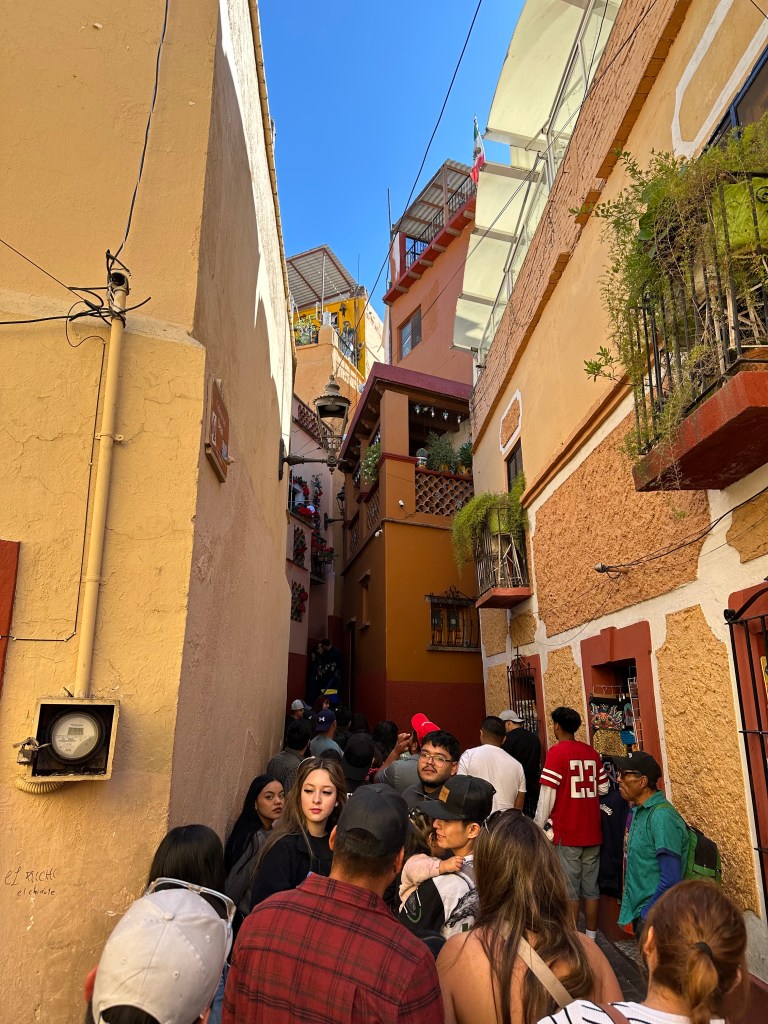
The tourist-trap Alley of the Kiss; with two balconies close enough to do so, the location spawned a local Romeo and Juliette-style legend.
Pretty cool main cultural area, with topiary-style park trees, a la San Miguel.
Juan José Martínez from down below:
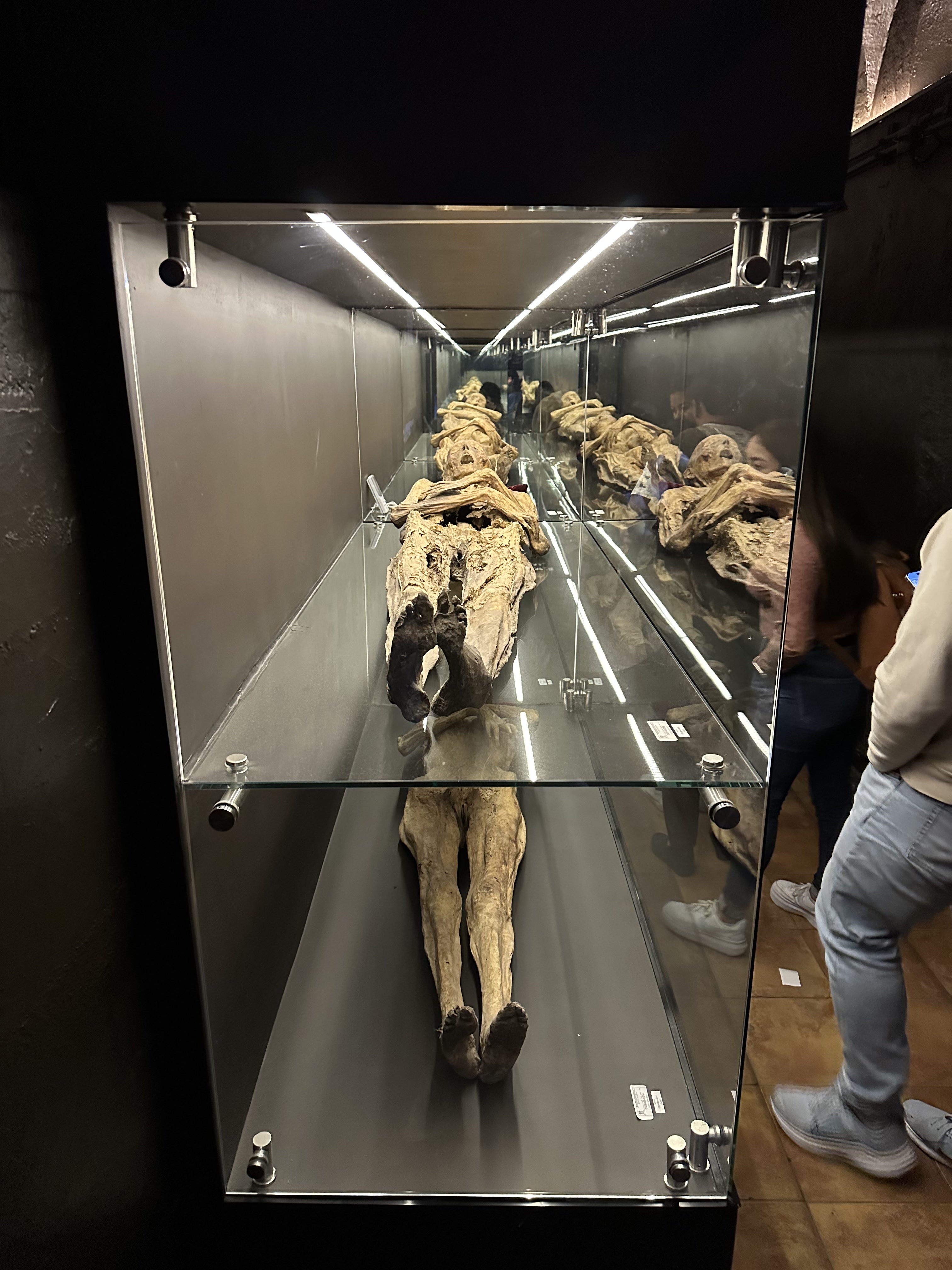
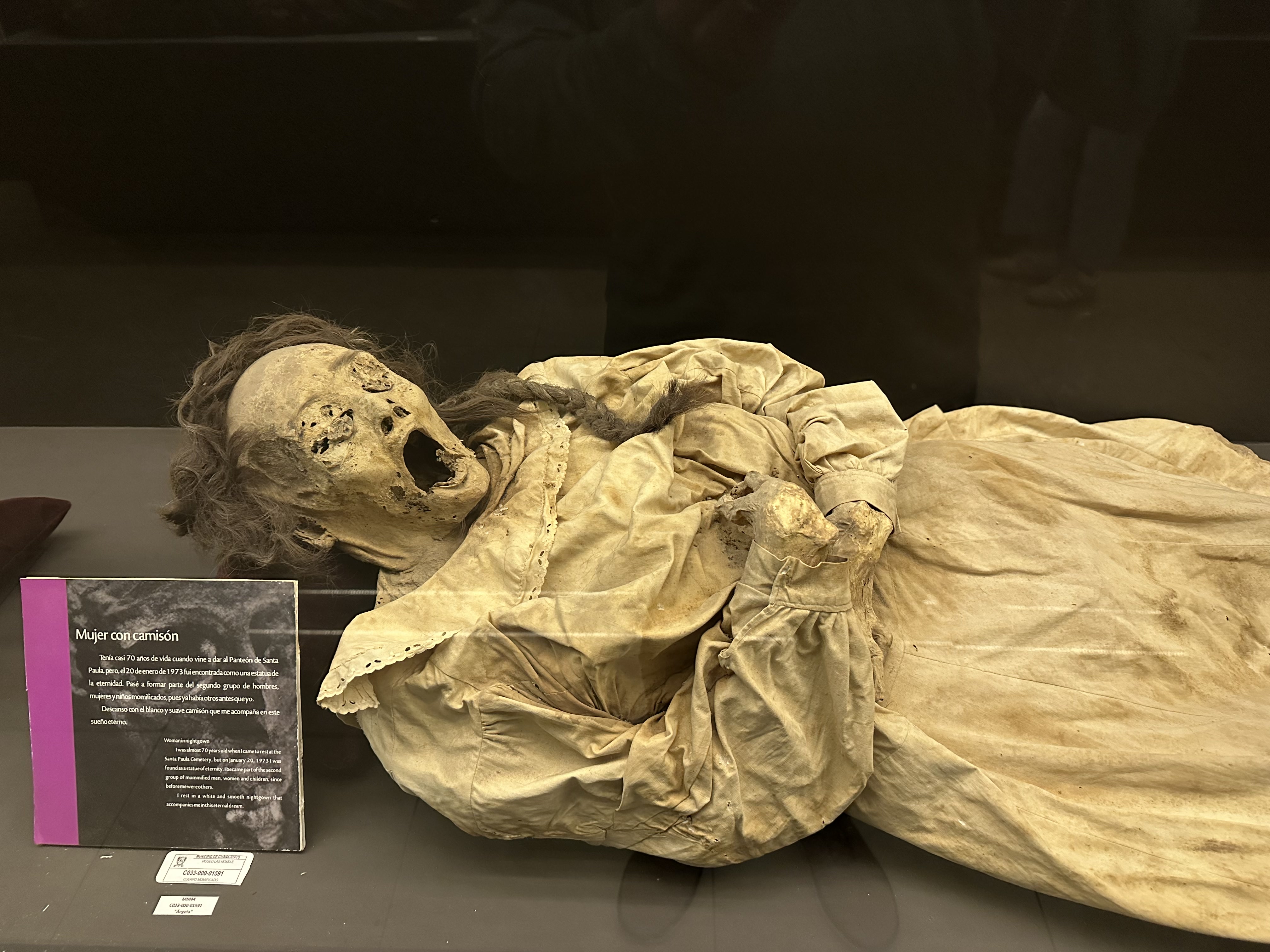
And one more stop before our return – a bunch of mummies. There’s a story regarding the high cost of burial, a poor population, abandoned corpses, and naturally dry climate that accounts for all of this, but that’s for a later post. For now, just be a little grossed out. (As much, or perhaps more so, than by their counterparts in Sicily last year.)
Another great night in San Miguel (which we did prefer greatly over Guanajuato, for what it’s worth).
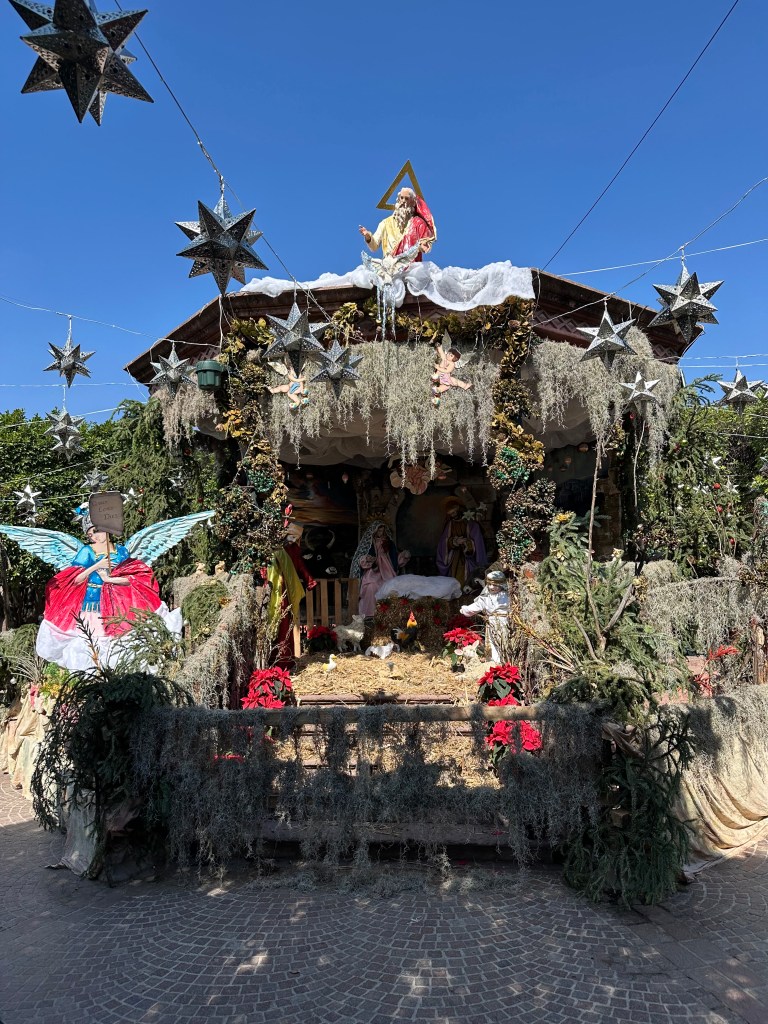
A normal creche in the city’s main park during the day:
And a rather more contemporary version encountered in town that night:
Pretty happening square!
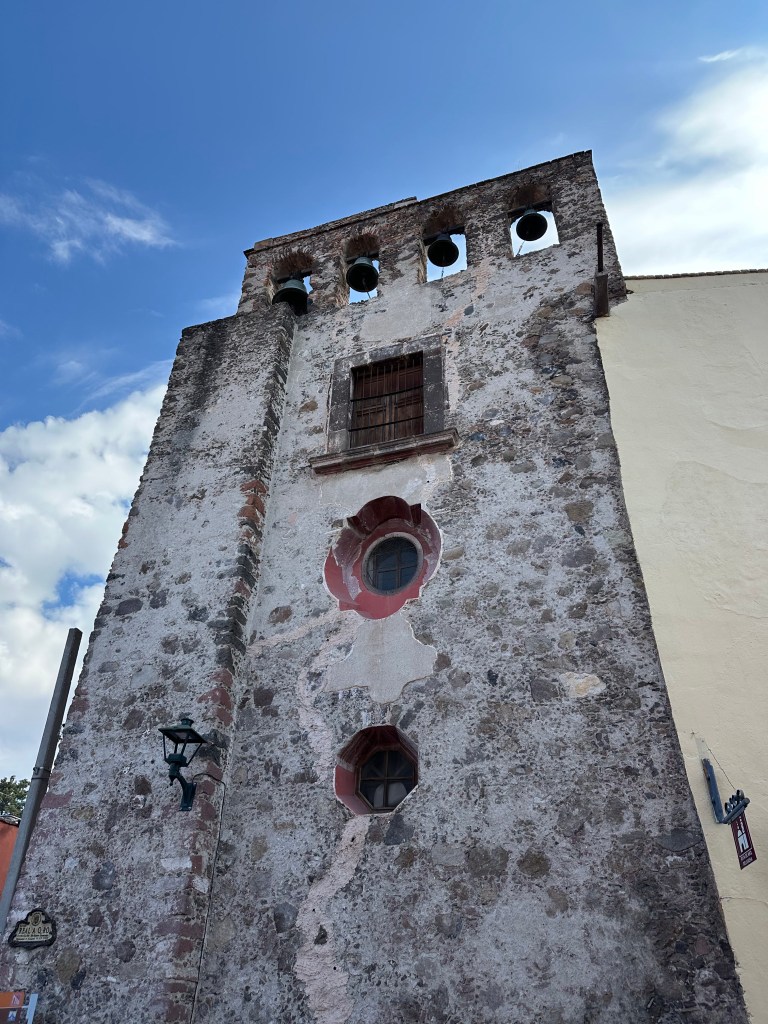
The most prominent Spanish aristocratic families in San Miguel, btw, supported the rebellion against the Spanish crown in 1810. As a result, they retained their haciendas and their palaces in town. To this day, some of the most valuable properties in town are still owned by less than a dozen noble Spanish families. This includes several, huge private churches around town that are open to the public only on specific feast days. And even then only for, like, a 7:30 AM mass, then they’re back outta there and doors are closed.
Dinner with a view that night at Quince:
And some unexpected entertainment (not sure this functions in email version of post):
And then a ringside table to the main event, of which we were completely unaware prior to sitting down here:
(Not sure this functions in email version of post.)
(Not sure this functions in email version of post.)
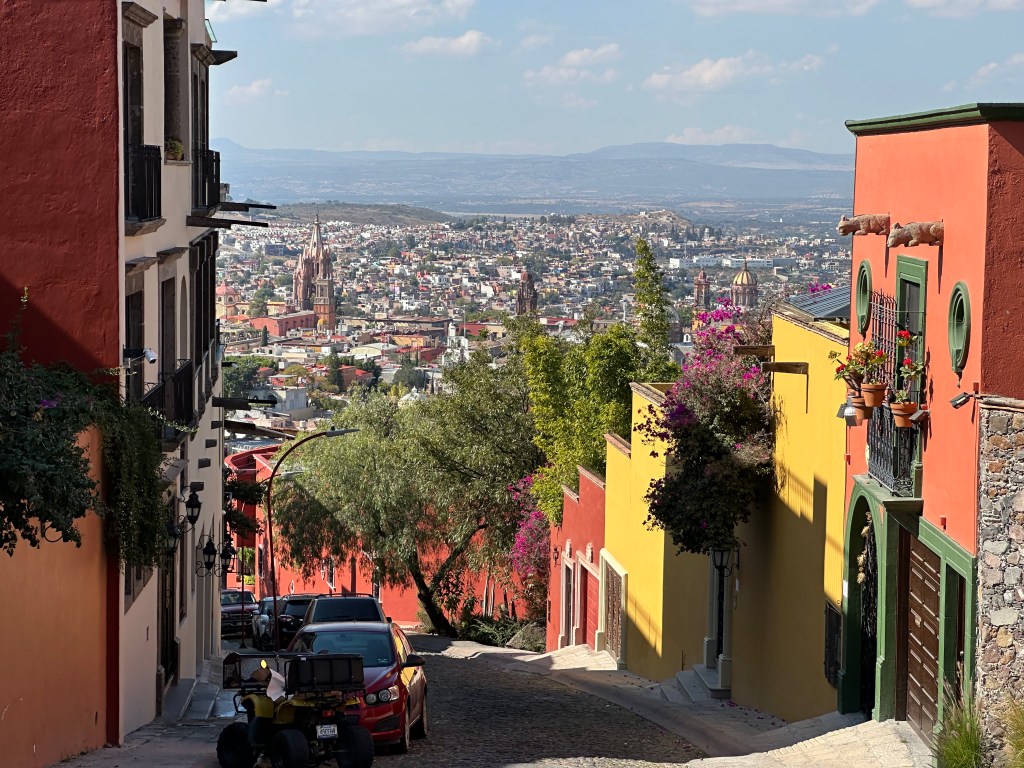
A walk one morning straight up hill to the Mirador neighborhood occupying the heights over San Miguel.
Great views all along the way of downtown San Miguel:
Pretty good combo: a sign with the archangel and the dude’s church right below:
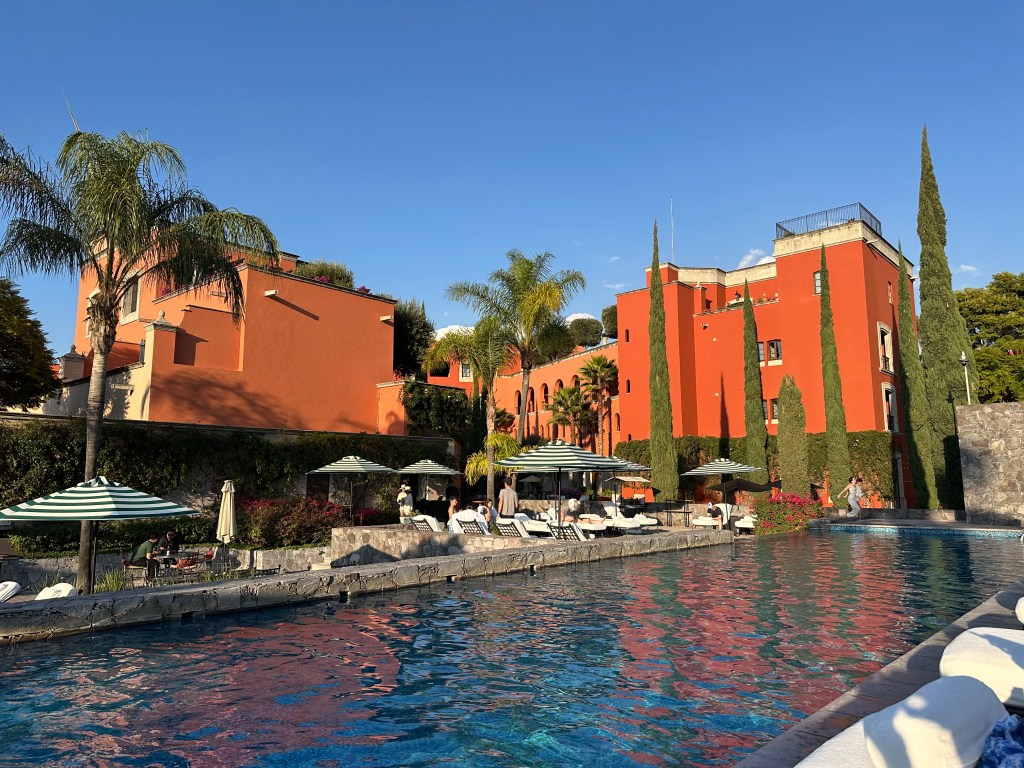
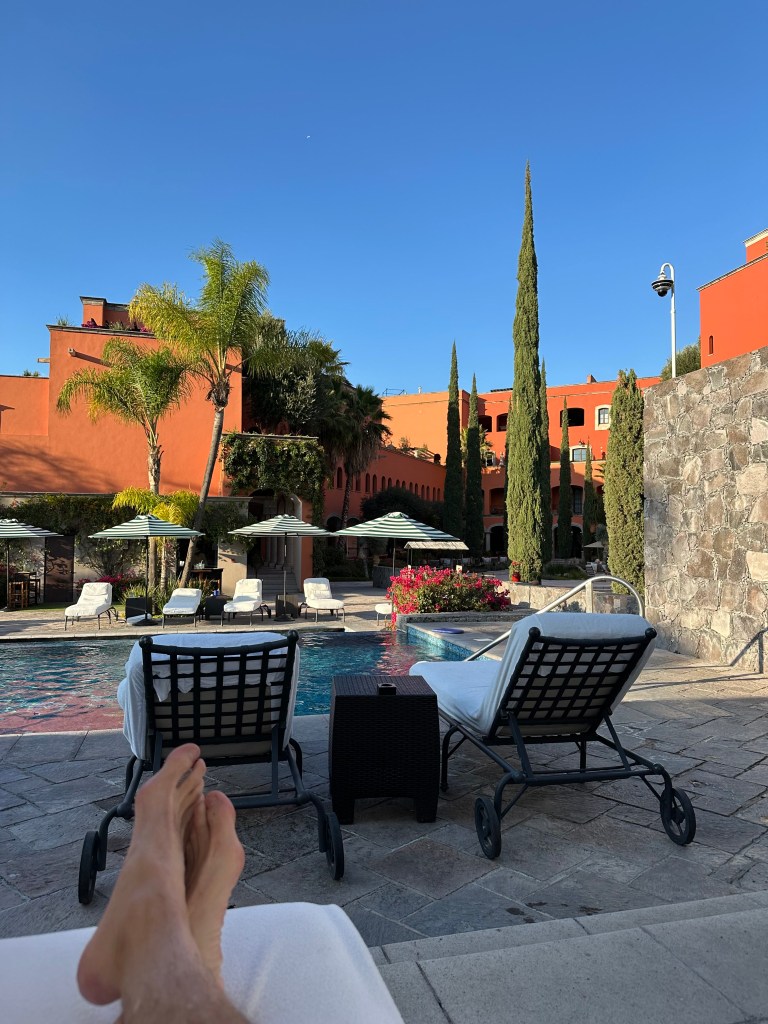
Some downtime at Rosewood:
Final dinner of the trip:
Adios, San Miguel.
And adios to our 2024 travels!
Pretty good year:
February: Colombia
April: Uruguay, Argentina, Chile, Brazil, Peru
May: Texas
June: Georgia
July – September: Pennsylvania, Connecticut, Massachusetts, New Hampshire, Maine, Vermont, New York, Quebec, New Brunswick, Prince Edward Island, Nova Scotia, Rhode Island
Really interesting article in today’s New York Times about North Macedonia’s claim that Alexander is their native son, much to the infuriation of Greece. Historians agree that Alexander (and his father Philip) both originate from the Macedonia region of Greece, south of the country of North Macedonia. But historical realities don’t discourage the nationalistic fervor of the North Macedonians in creating a national identity for themselves.
We encountered all of this during our bike trip through Macedonia and Albania a few years ago, including the presence of oversize statues of Alexander, his father Philip, and a 10th-century Bulgarian king (who also isn’t native to Macedonia).
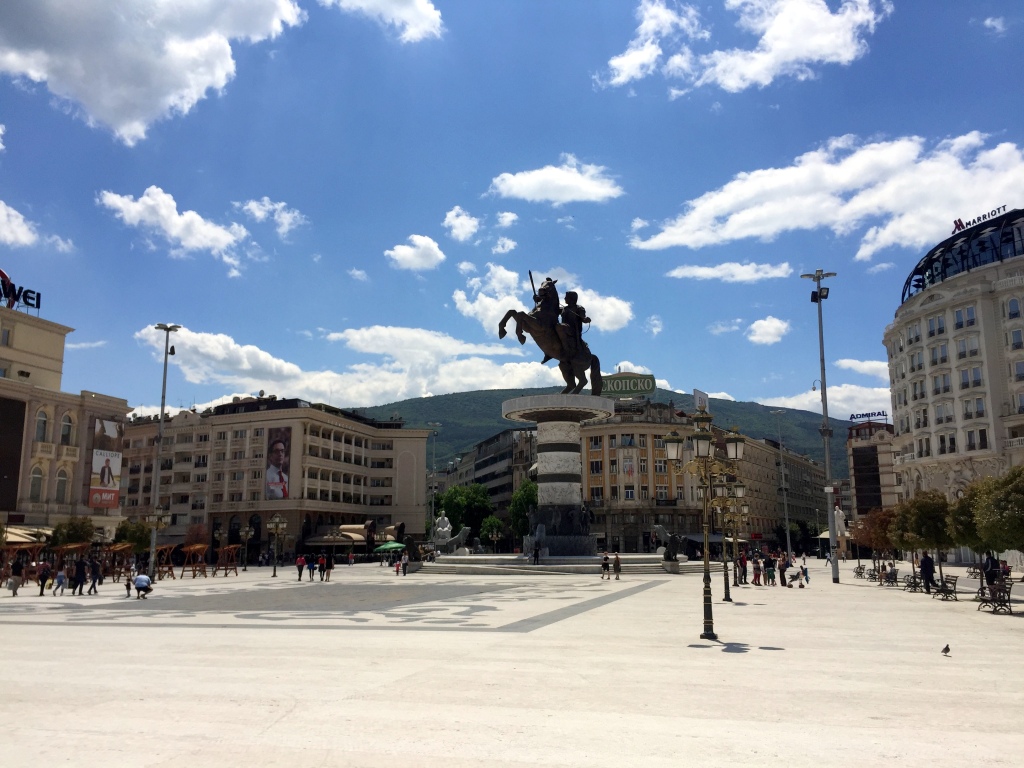
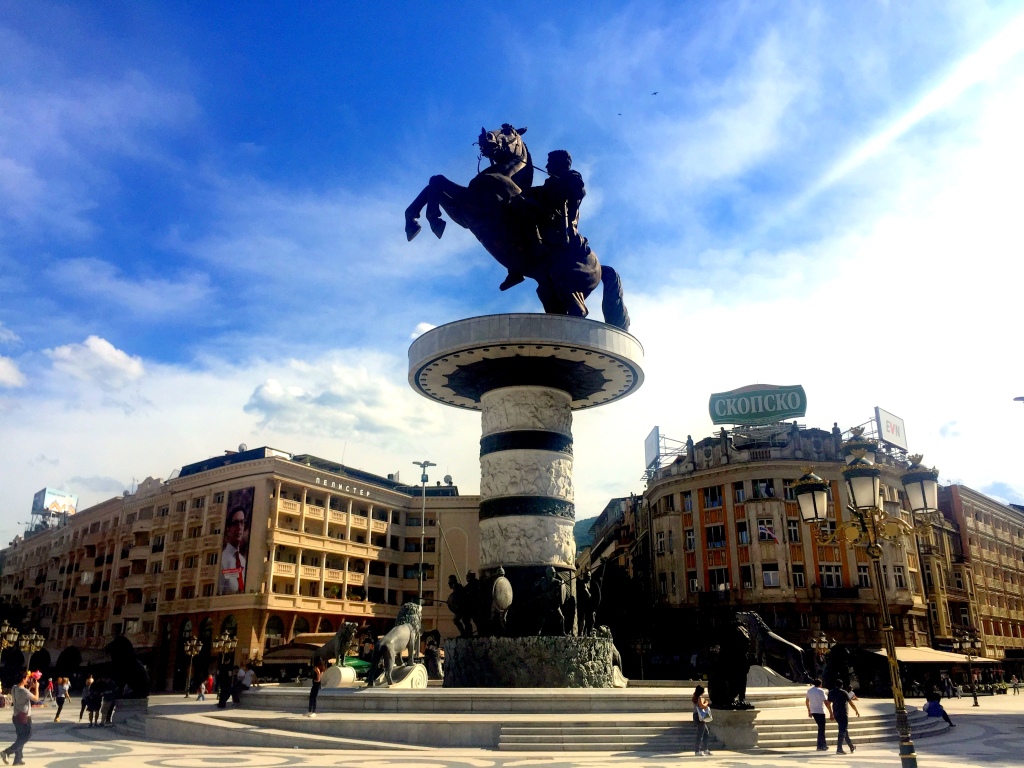
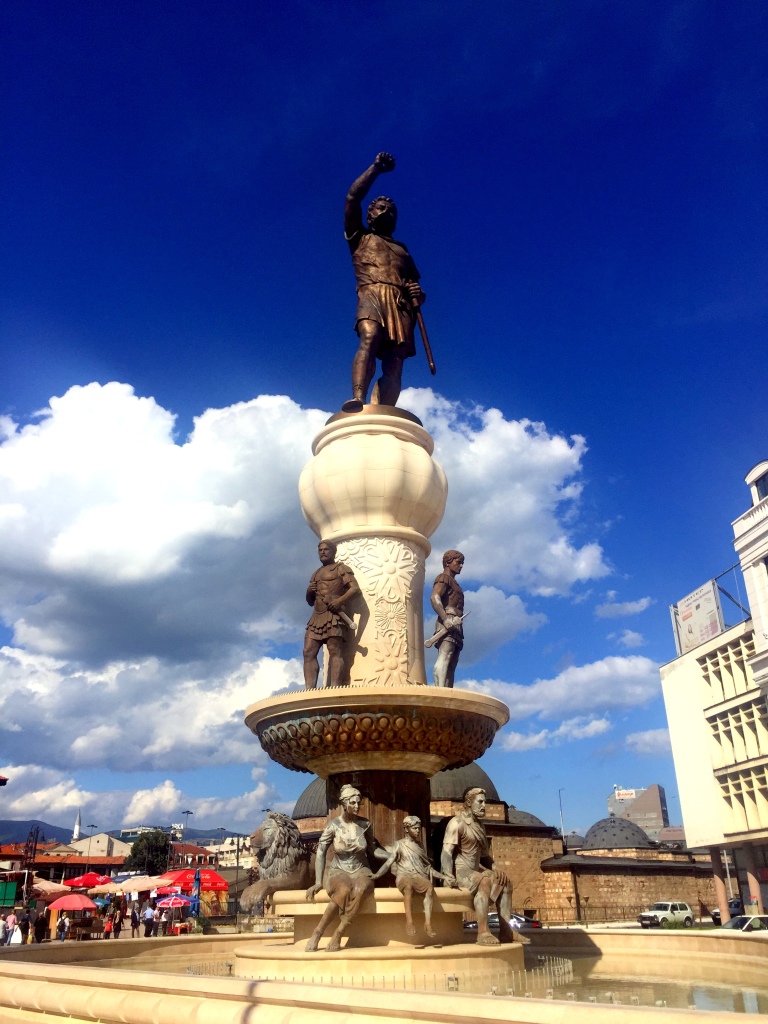
Greece’s Alexander the Great, prominently displayed during our trip in Skopje, North Macedonia’s capital:
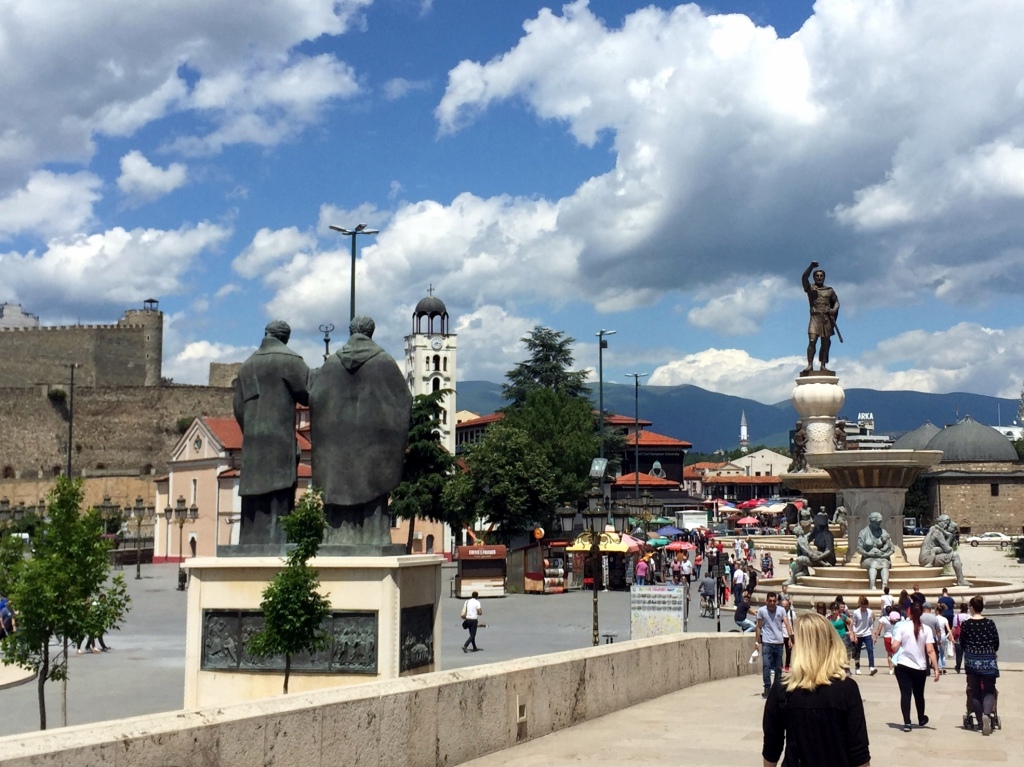
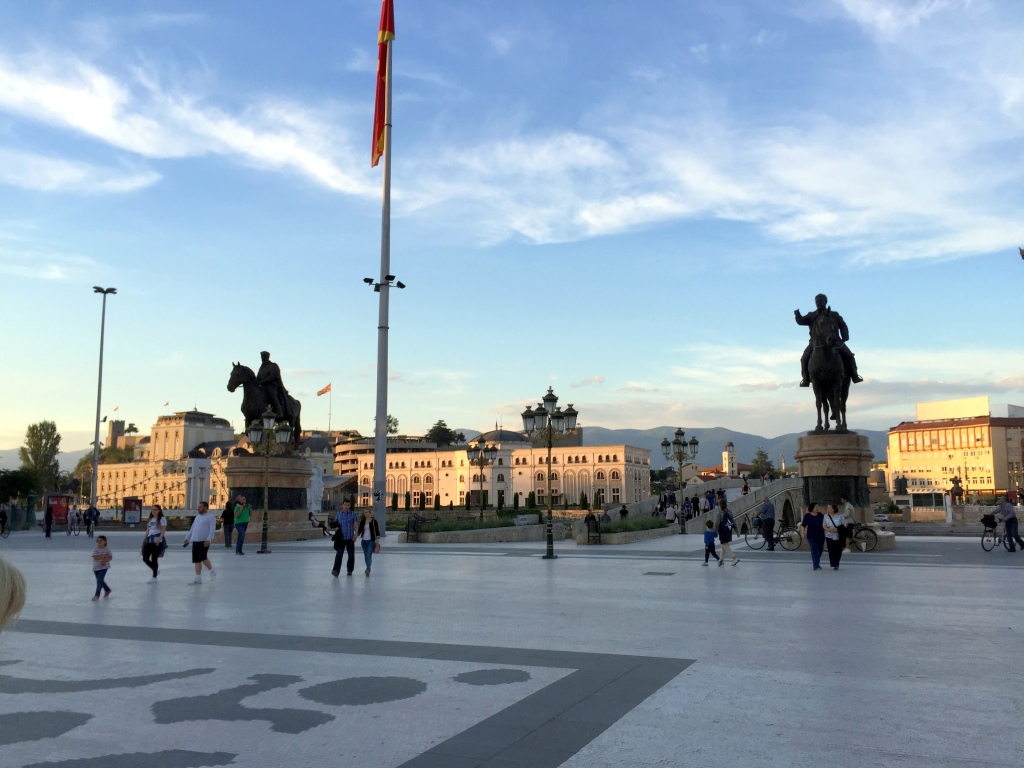
And across the bridge, his father, Philip of Macedon (also not North Macedonian):
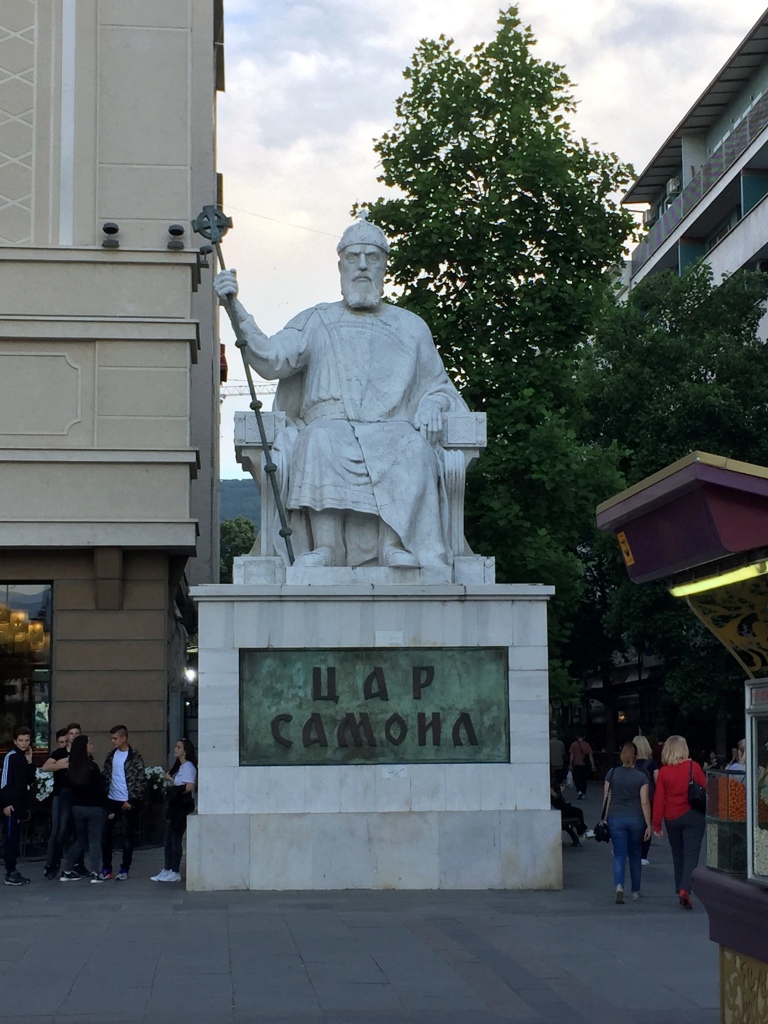
One one side of Skopje’s main square squats Samuil, the Tsar of the First Bulgarian Empire from 997 to 1014 (also not North Macedonian, enraging the Bulgarians, as noted in today’s NYT article):
And on the other side, a couple of more recent heros of the Balkan region – maybe Macedonian, maybe Bulgarian. All of this is a little disputed.
We’re finally posting on the locations from our first, epic, post-retirement trip, which entailed, as noted above, a prolonged foray to Europe that ultimately spanned more than 2 months. As noted in the trip overview, this trip entailed multiple segments – in the Italian peninsula, Sardinia, Sicily, Malta, Normandy, and Portugal. Pretty great experience that commenced shortly after the second WolfeStreetTraveler retired, where we bought one-way tickets and could explore locations without having to solve crises at work or worrying about getting home in time for an important meeting. Very liberating change of pace.
Sunrise over Italy’s west coast as we head into Rome.
Tuscany served as our kickoff location for the trip. This would be our third time in the region, which really is quite awesome. The first took place in 2004, when we biked through the area. We then returned in 2021 for a road trip through Cinque Terre and Tuscany. And now, just 2 years later, we found ourselves here again. Although we knew we wanted to start our inaugural, post-retirement trip in Italy, we could have launched our journey anywhere on the peninsula.
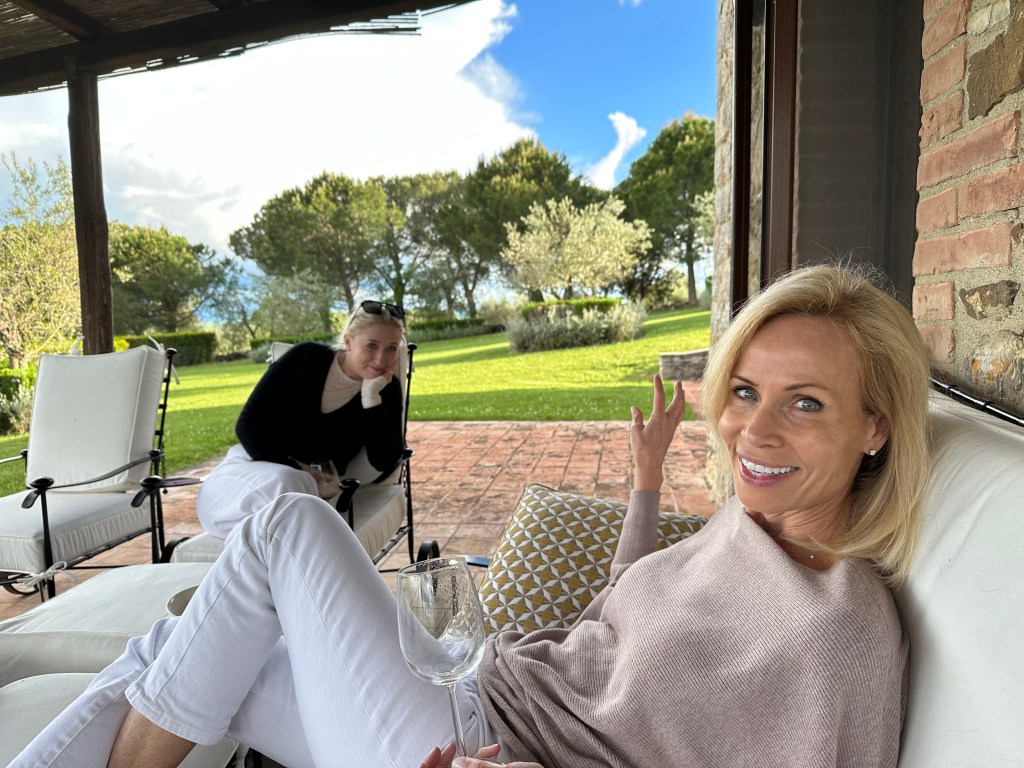
But the Brandts (and KJQ) coincidentally were heading to Tuscany at the same time we were heading to Italy, so the timing was perfect to hang with them as the start of our trip. We would spend the first 5 days here, before heading north (and then immediately south, but that’s the story of the next post).
Another sunrise the first day in Italy from the terrace at our guest house on the estate of Castello Brandt.
First stop: Pienza. “It is first mentioned in documents from the 9th century. Around 1300 parts of the village became property of the Piccolomini family after Enghelberto d’Ugo Piccolomini had received the fief of Montertari in Val d’Orcia from the emperor Frederick II in 1220.“
We were delighted to visit, inasmuch this was a well-regarded Tuscan hill town that we had yet to experience during or previous two Tuscan tours.
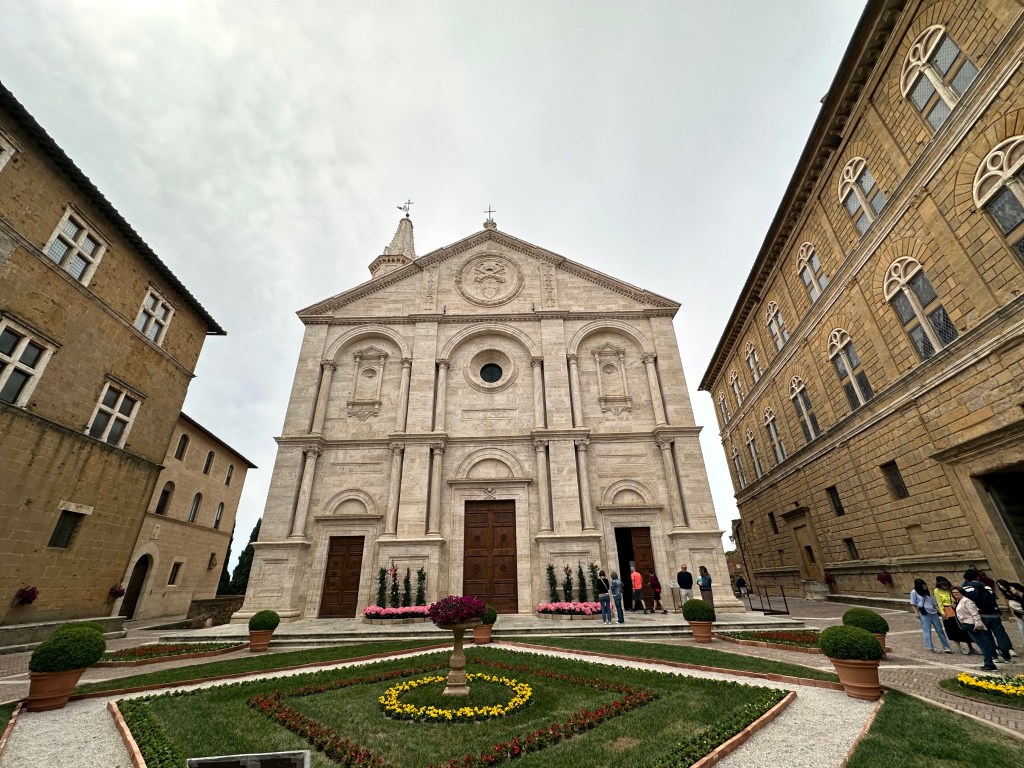
The remarkably monochromatic and stately Duomo di Santa Maria Assunta (Pienza’s cathedral):
The cathedral was commissioned by Pope Pius II (a member of the Piccolomini family who was born in Pienza) and consecrated in 1642; the piazzetta in front is named for the pope.
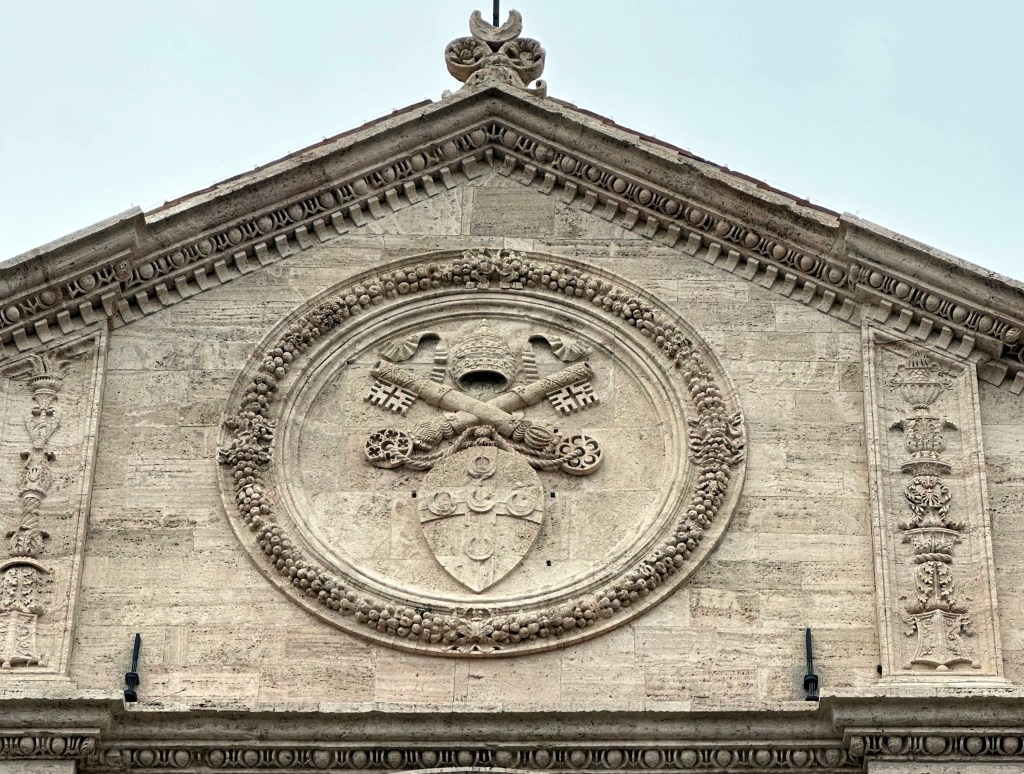
“Pienza Cathedral prominently features the Piccolomini coat of arms (a crescent moon with stars, representing Pope Pius II’s family) on its facade and a gothic window behind the altar, often combined with the Vatican keys and tiara, symbolizing papal authority and the Pope’s power over heaven and earth, linking the church to the Holy See. These symbols, especially the crossed keys (gold for heaven, silver for earth), are central to the cathedral’s design, reflecting Pius II’s vision for his ideal Renaissance city.
Key Elements:
Piccolomini Arms: The distinctive crescent moon and stars are the family emblem of Pope Pius II (Enea Silvio Piccolomini), who commissioned the cathedral.
Keys of St. Peter: Two crossed keys, one gold (heaven) and one silver (earth), signify the Pope’s spiritual authority, as seen on the well in Palazzo Piccolomini and potentially in the cathedral’s decoration.
Papal Tiara: The three-tiered crown (tiara) often accompanies the keys, representing the Pope’s threefold power (teacher, judge, ruler).”
Pienza certainly ranks up there in charm, but it’s super tiny. Based on the strong recommendation we received from our safari travel friends that this was their favorite Tuscan town, we thought it would be just as charming as it turned out to be, but more substantial.
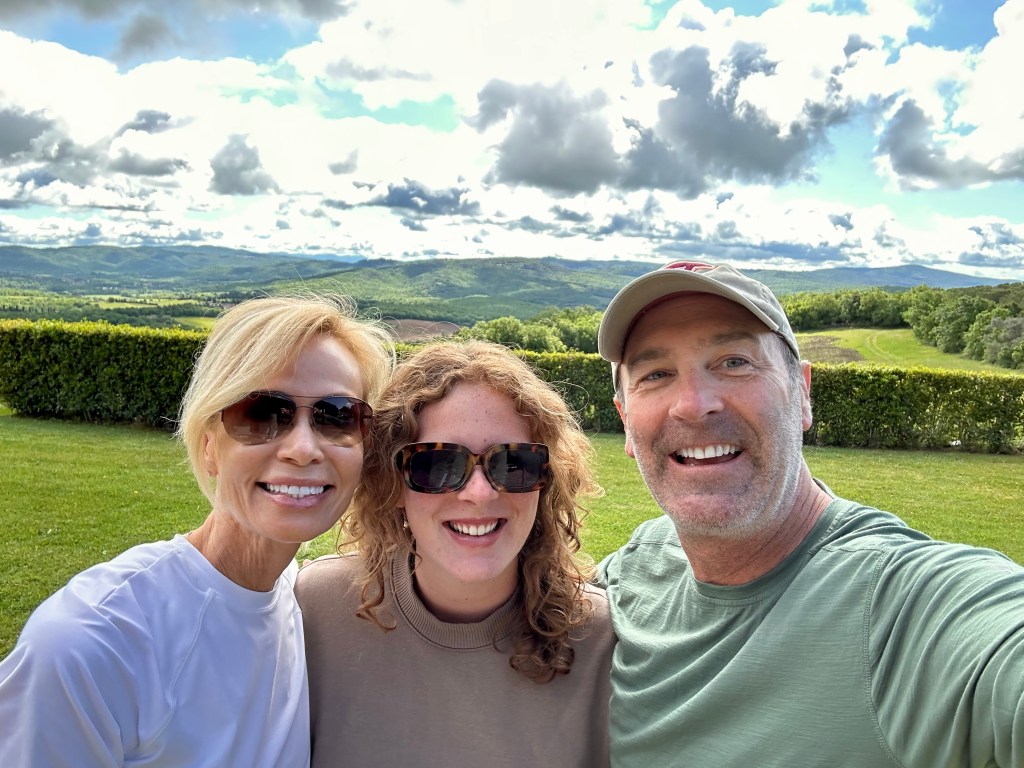
KJQ selfie hijinks:
Pienza’s bell tower, which was silenced the year we visited due to complaints by tourists in nearby hotels. Which pissed off the locals who consider the bells to be part of the town’s character (kind of like us when Appomattox was removed from the intersection of Washington and Prince in 2020. . .). Smithsonian magazine featured an article on the row titled, “This Italian Town Silenced a Historic Bell That Kept Tourists Awake. Now, Locals Can’t Sleep.” Indeed.
Dunno – some cloister somewhere? This was 2.5 years ago, so we don’t remember everything. But it was picturesque and atmospheric nonetheless.
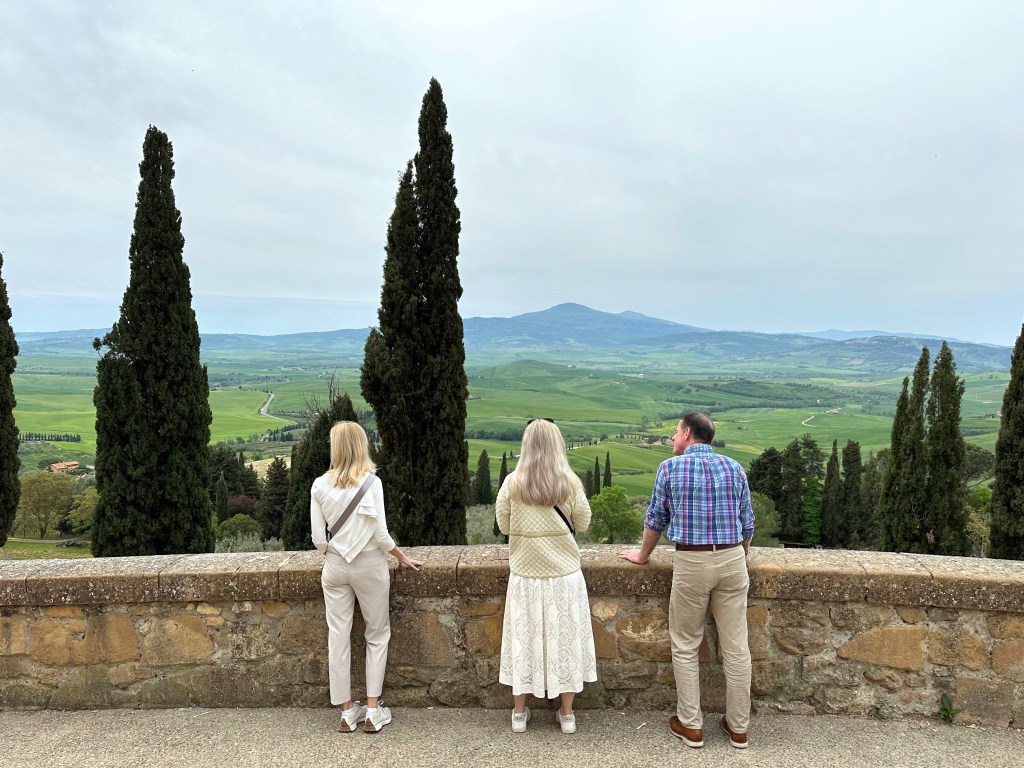
Pretty cool portal from Pienza to the Val d’Orcia below:
Another pathway to the Val d’Orcia:
And there it is:
Pretty quintessentially Tuscan, as it happens:
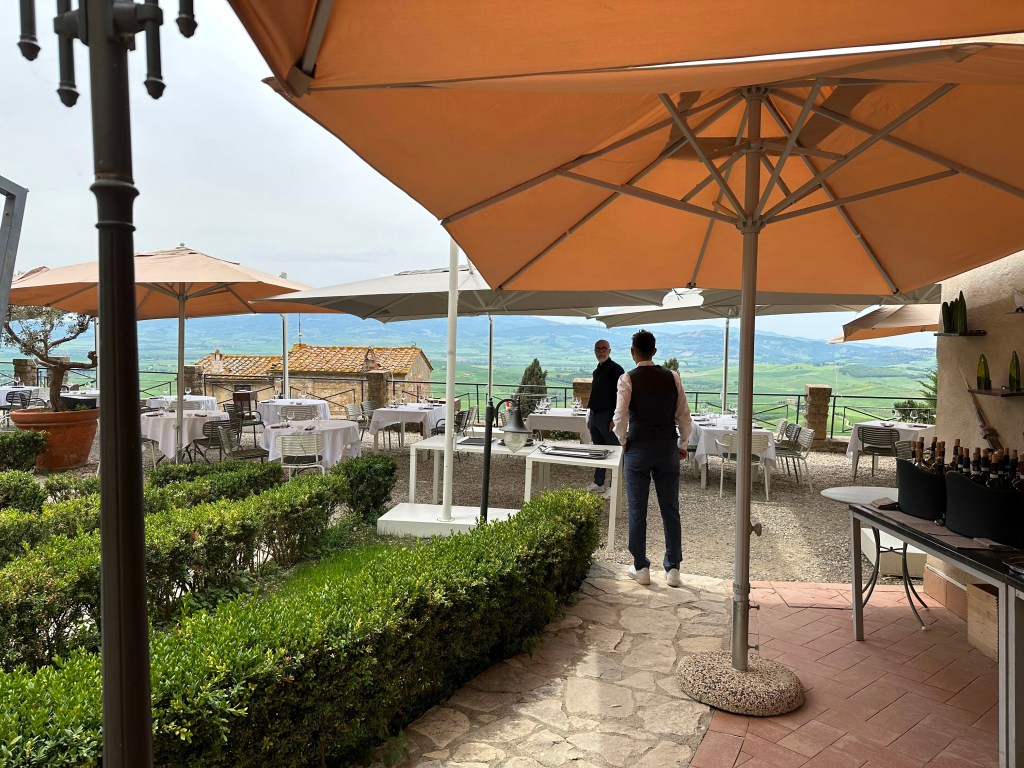
Pretty awesome lunch at Ristorante la Terrazza della Val d’Orcia:
Heading out of Pienza, through its city walls:
Next field trip: Tenuta Valdipiatta for some fine brunellos (albeit in the rain – but this gets way worse):
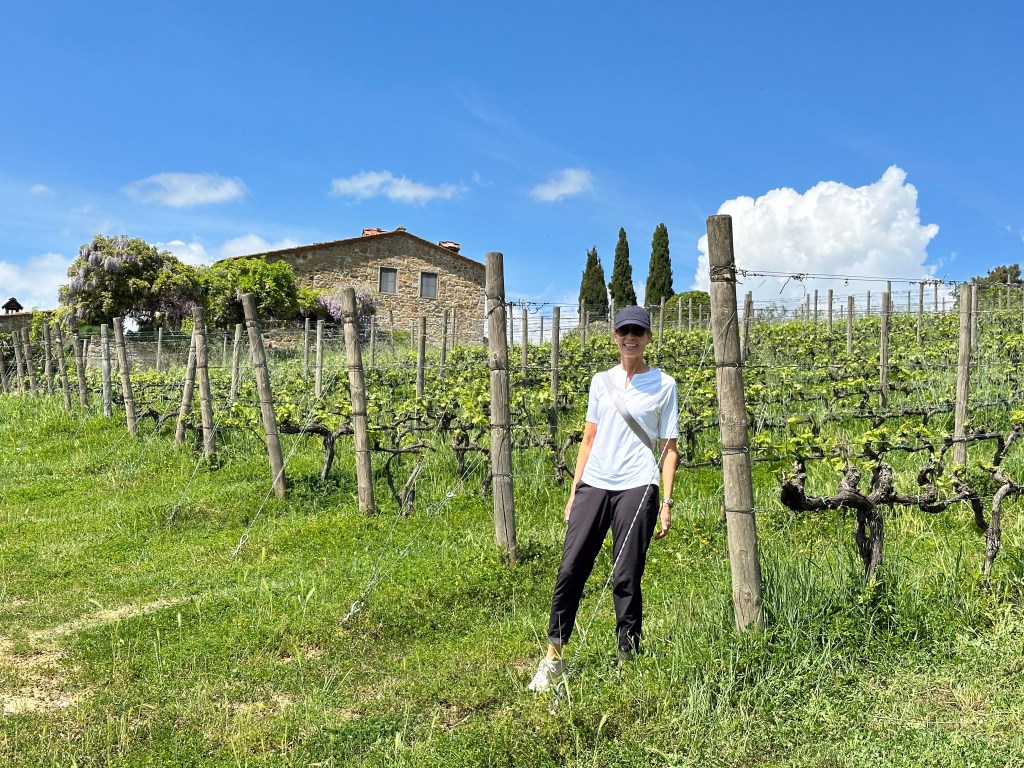
A brief respite on a belvedere over the vineyards:
The wine tasting clearly elicited different emotions from the tasters:
Next day: a decent hike near Gaiole in Chianti.
Starting with a stroll around the 1000-year-old Badia Coltibuono Abbey:
Including the gardens that we were not supposed to be in, and from which we were brusquely ushered out (still worth it!):
The hike continues through countryside. . .
And the village of Montegrossi, founded in 500 – 600:
Small but mighty (and mighty old):
And a cool winery that we stalked through, seeking KJQ’s gate to salvation to cut a leg off the hike and get to town to grab a well-deserved lunch:
The gate!
Key component of a post-hike lunch:
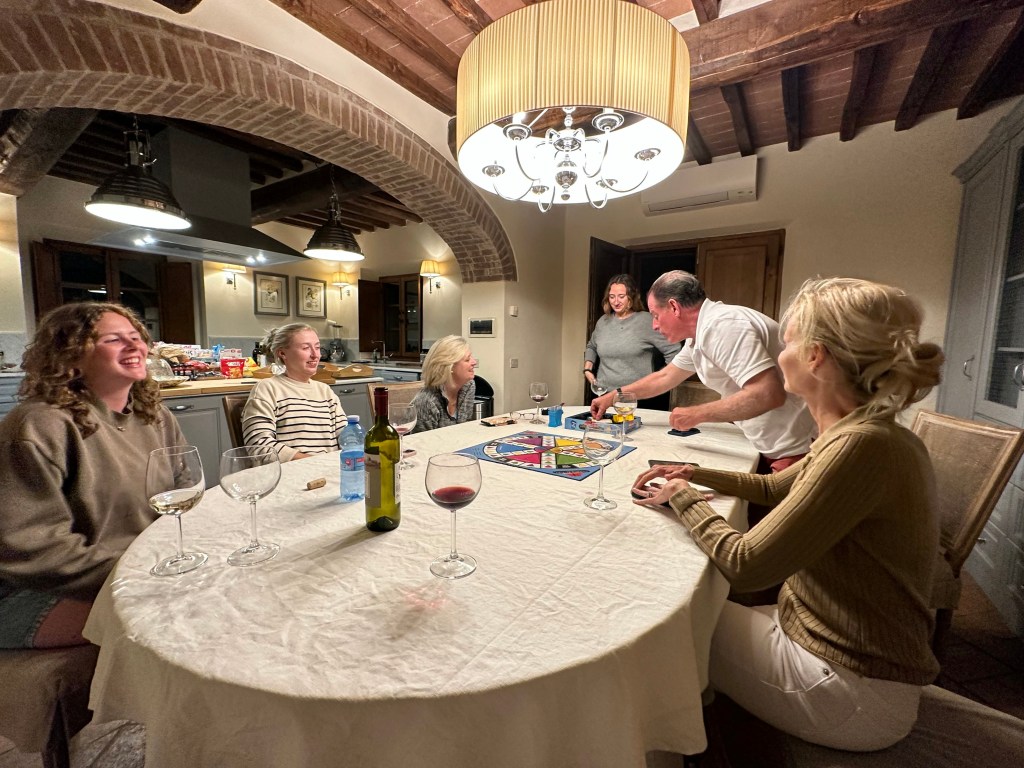
And the first of two nights of epic Trivial Pursuit competitions at Castello Brandt:
The winners of the first night:
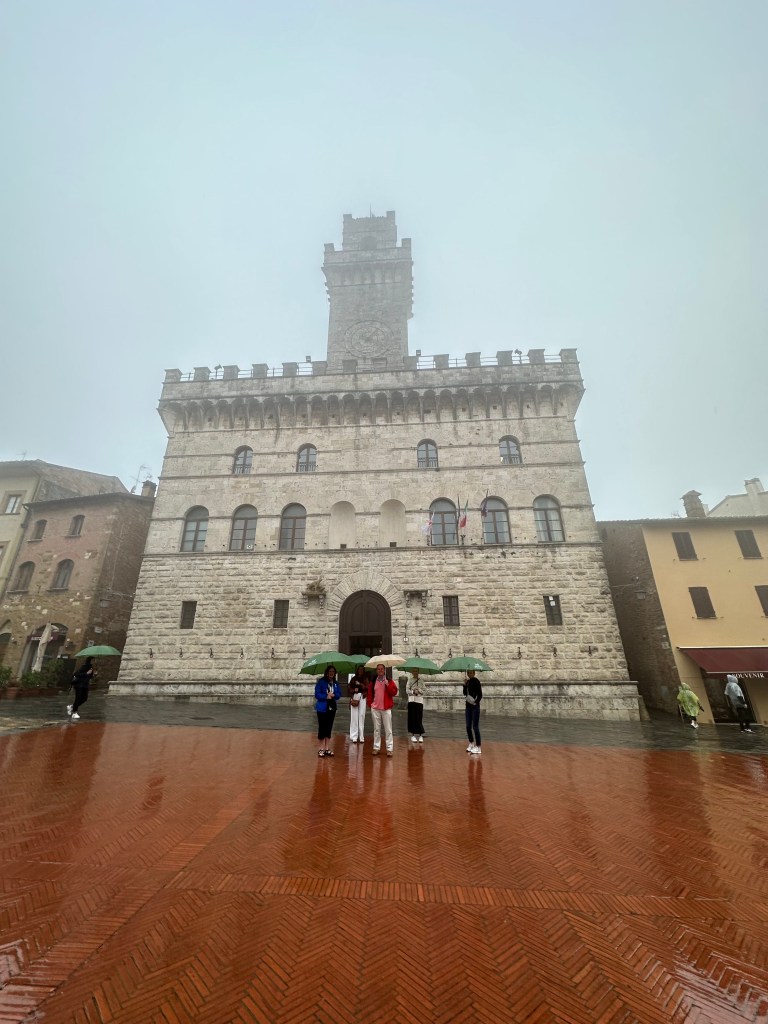
Here’s the much worse rain – torrents during our visit to Montepulciano, which we had visited back in 2005 during our bike trip in Tuscany:
Wet but happy(ish):
On the way back, a quick stop (for a few of us) at the monastery Badia a Monastero, founded in 867 (beating the longevity of the monastery visited during our hike):
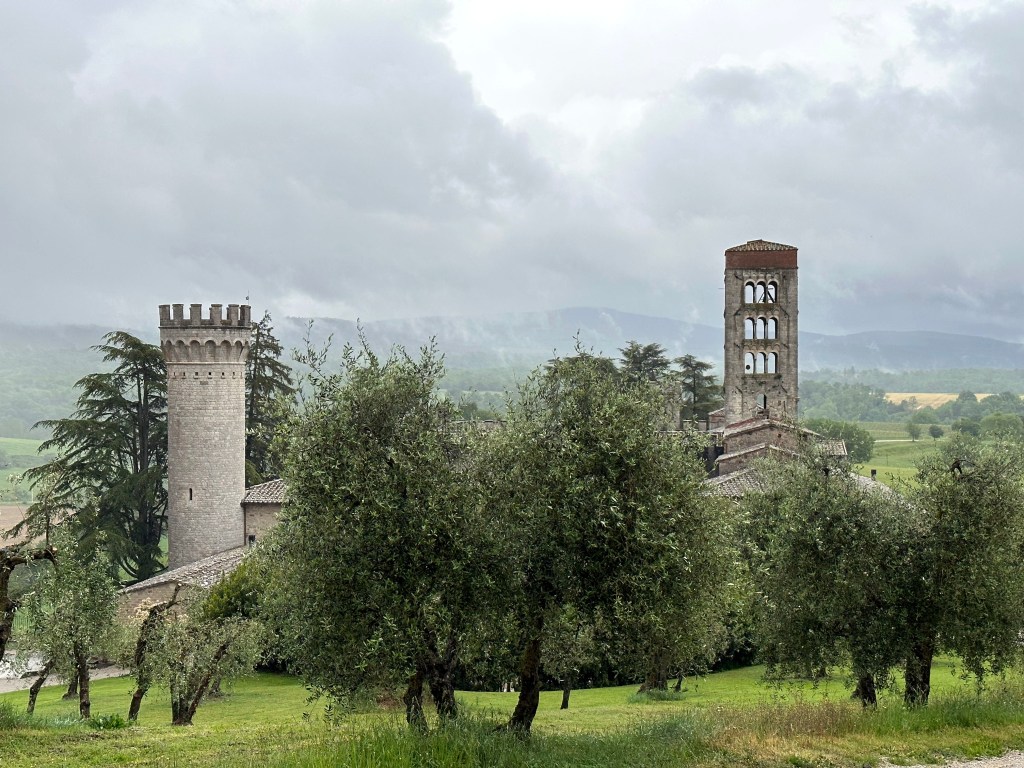
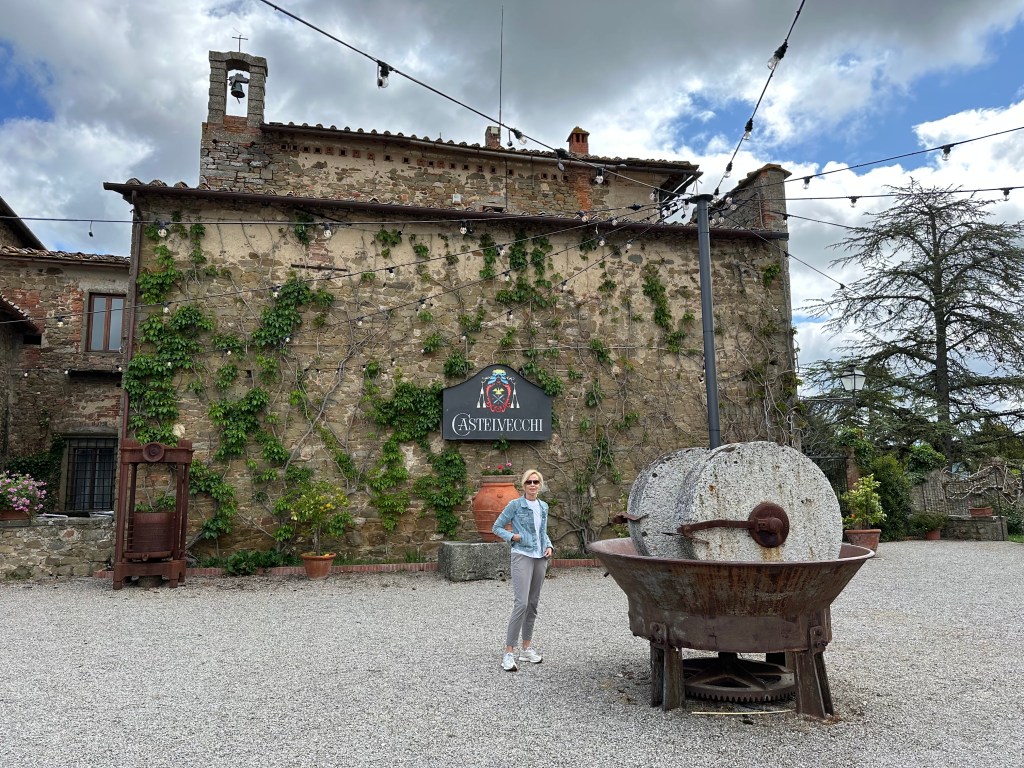
A final hike starting at Borgo Castelvecci (similar in structure to the borgo we stayed at during our last visit to Tuscany in 2021 – an ancient village converted into a hotel campus):
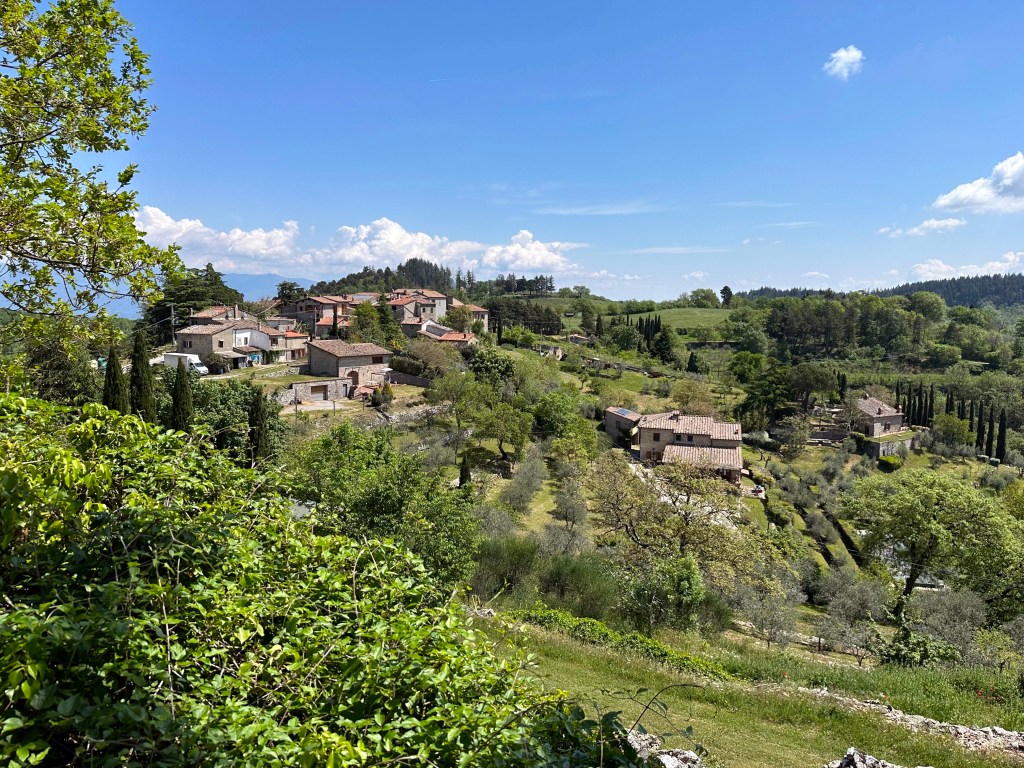
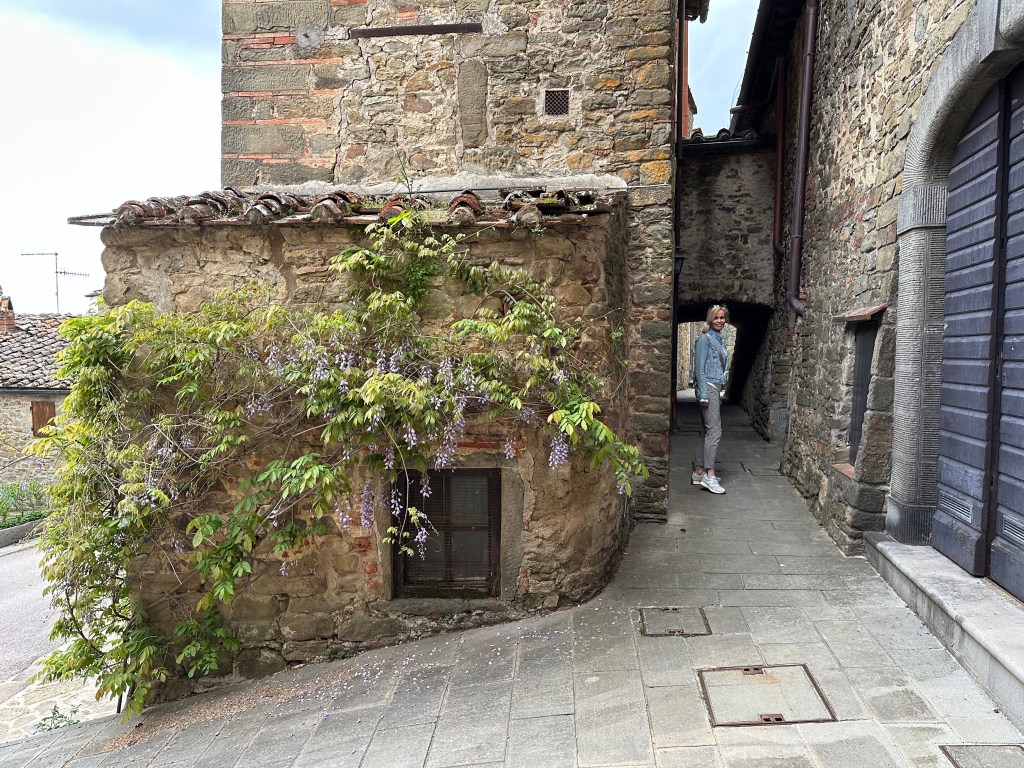
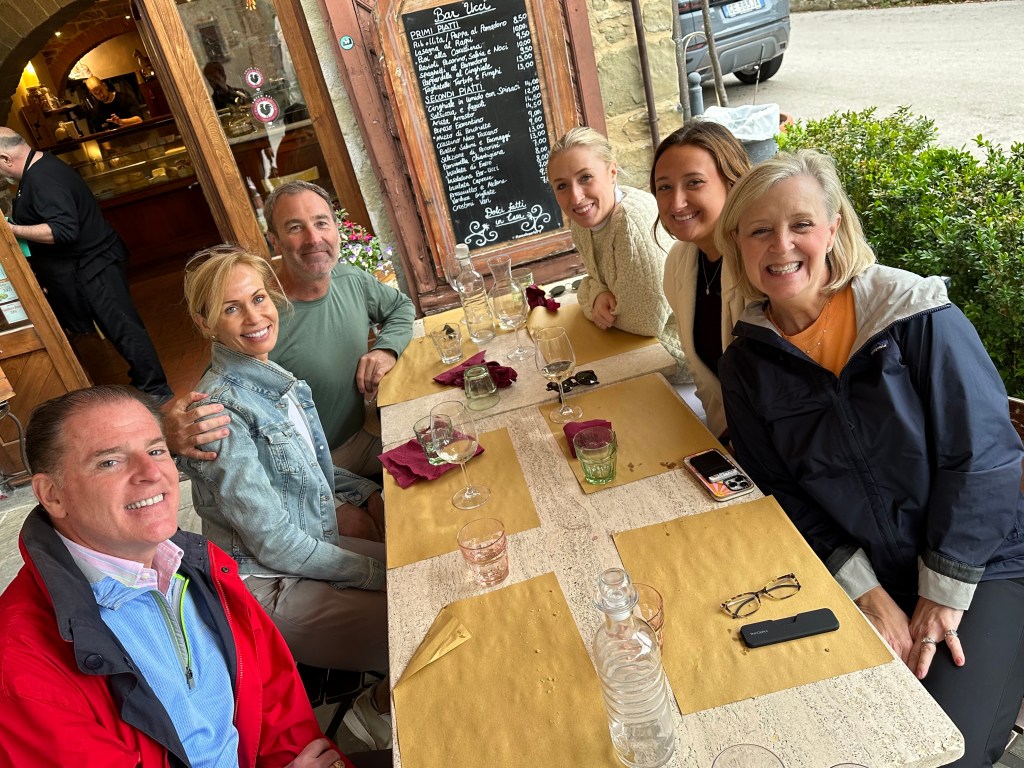
And then a stroll around the nearby hamlet of Valpaia, followed by a final Tuscan lunch before heading out the next morning.
The Brandt villa:
Pretty good digs:
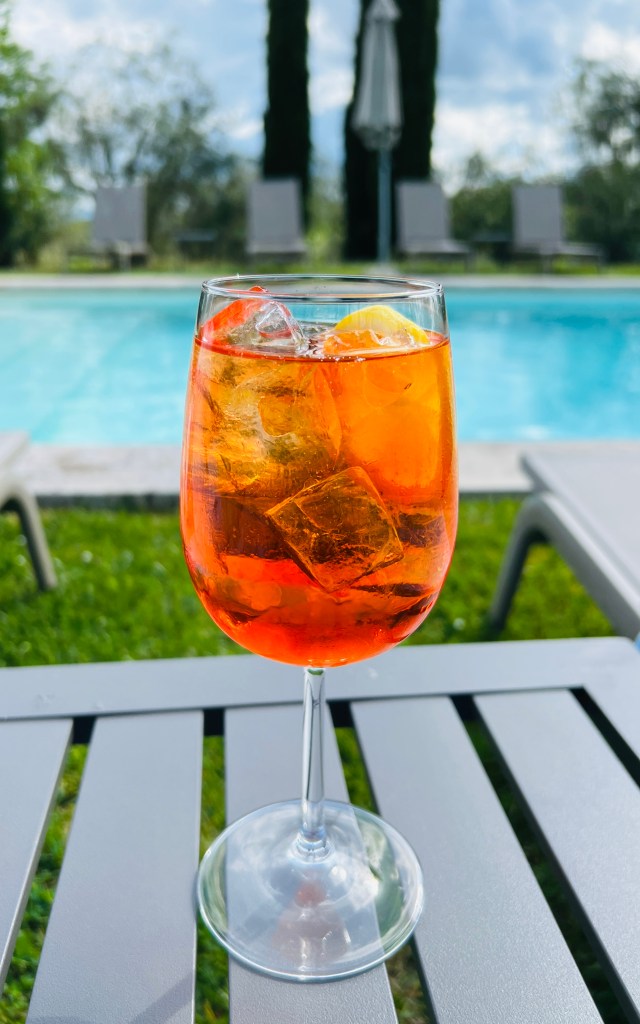
And the cocktail that would dominate all of our European travels henceforth, but that one of the WolfeStreetTravelers would not imbibe, initially decreeing it too girly, and sticking to red wine. That point of view would change rather dramatically as the trip progressed. . .
Final evening in Tuscany:
And a final game of Trivial pursuit, where Team MadiGrace won once again:
Morning of departure at the guest house:
You can take the herpetologist out of the country but not the herp out of the herpetologist.
Gracie would be moving on, too – first to Venice, then to Valencia to stay with her cousin Quinn, who was in his second Spanish semester of mechanical engineering.
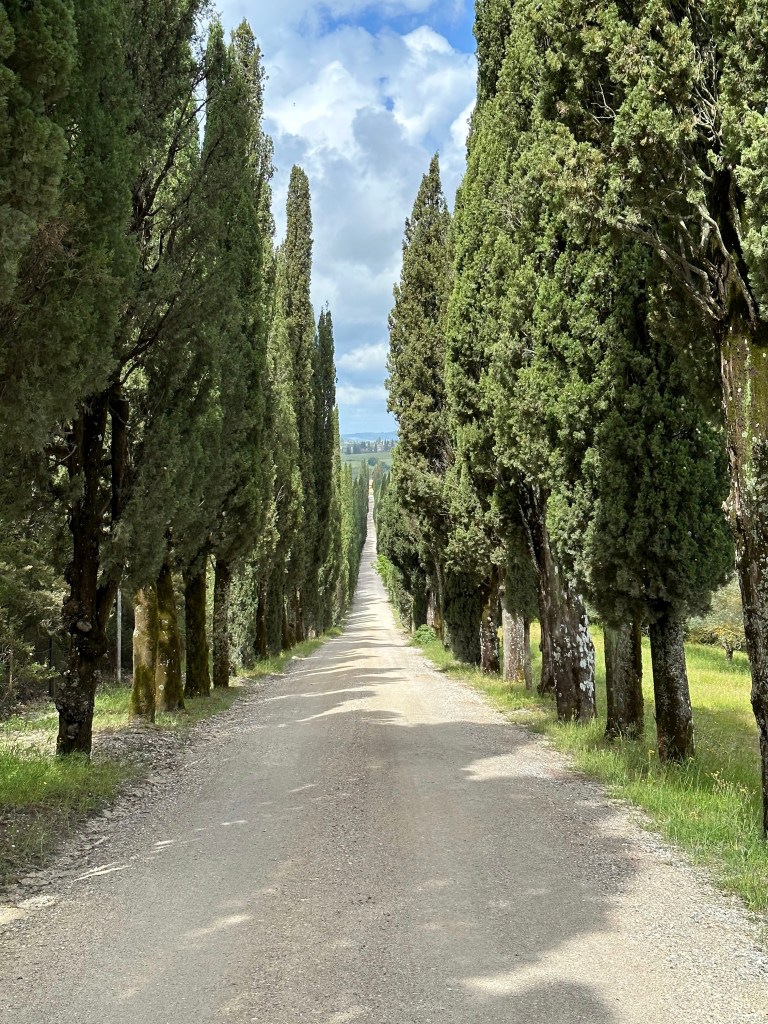
The Cyprus-tree lined lane departing the villa’s area on our departure:
After our time in Tuscany with the Brandts and KJQ, we headed north, to the Liguria region and Portofino. Driving north originally had not been part of the plan, which was to head continually south from Tuscany. But one of the WolfeStreetTraveler was determined to see Portofino, so off we went – north for one freakin’ town, THEN south for the rest of the peninsular portion of the trip. 🙄
But it turned out that this detour was totally worth it.
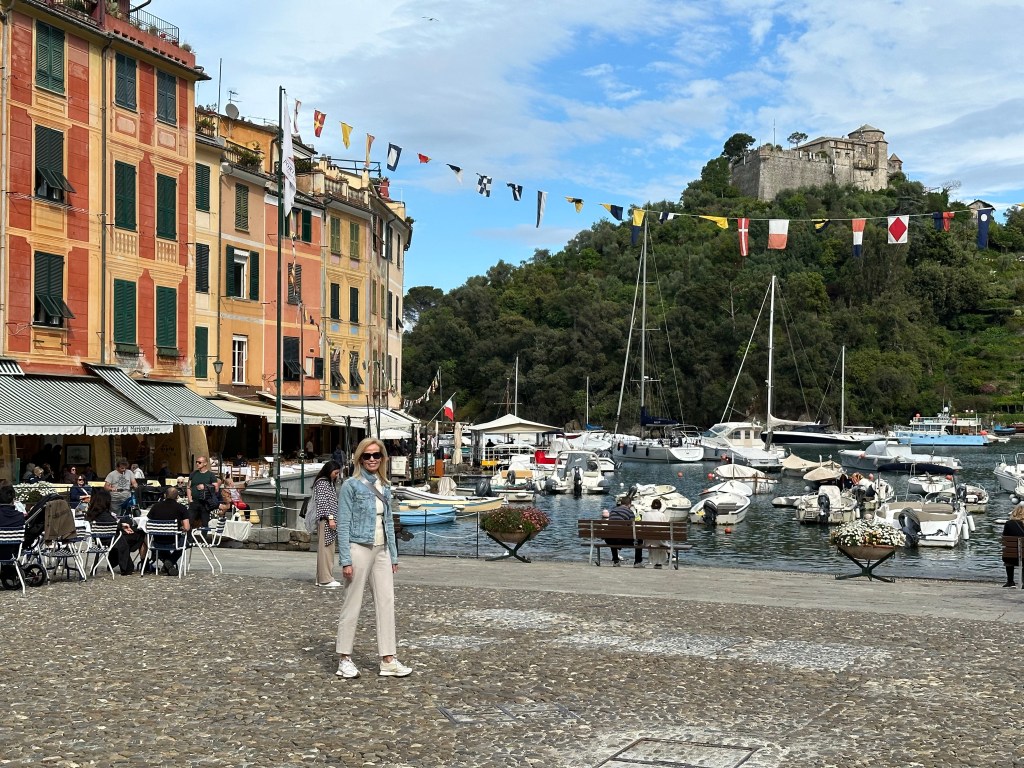
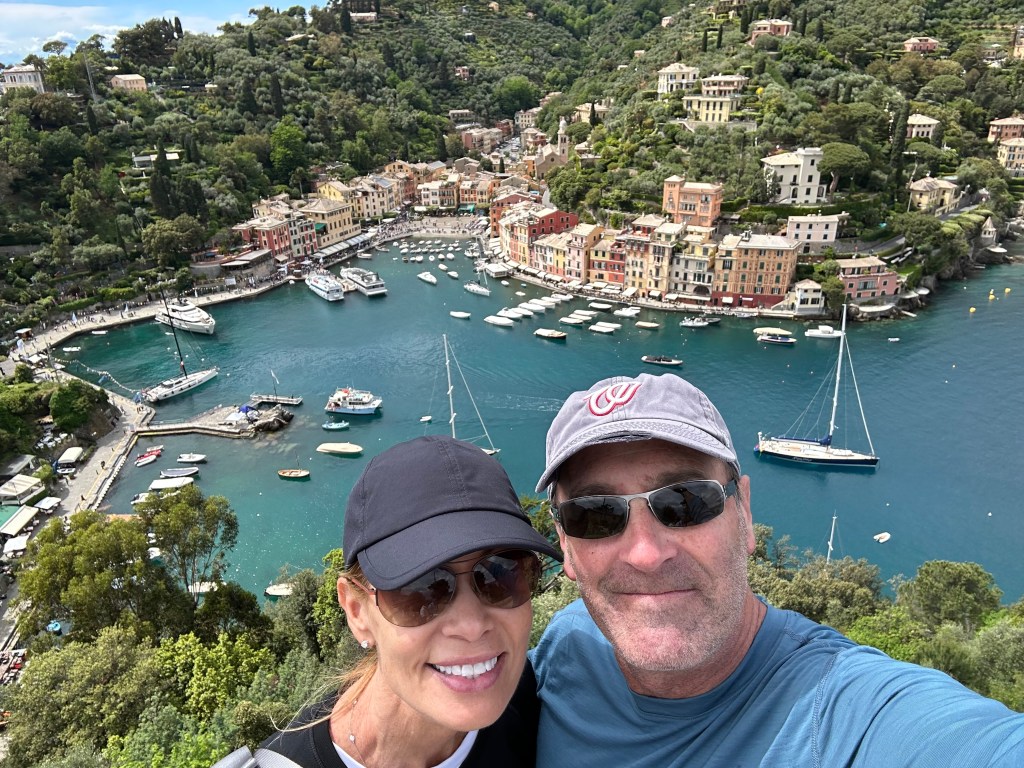
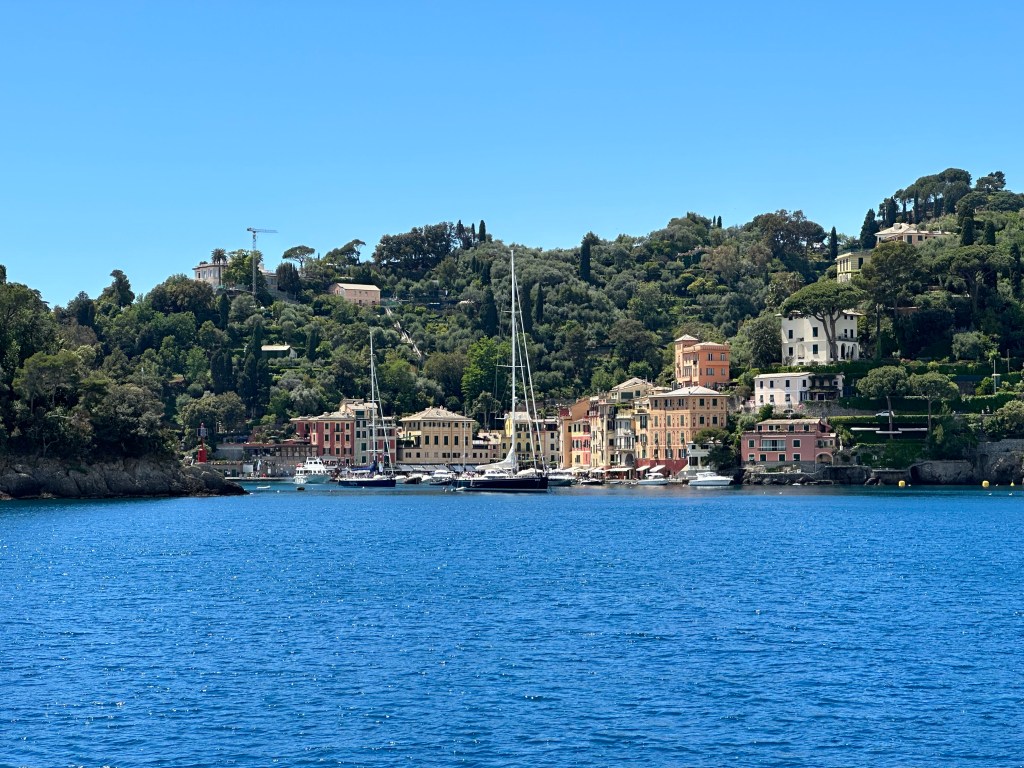
Portofino turned out to be a pocket-sized, perfect postcard of a town.
Cool little harbor under the gaze of the 16th-century Castello Brown.
Although mentioned during the middle ages, where it was a village associated with the nearby Abbey of San Fruttuoso di Capodimonte (to which we’d hike during our stay), Portofino for most of its documented history was part of the Republic of Genoa (except a brief period when Portofino was sold to the Republic of Florence, but reverted back after the Doge of Genoa was ousted).
The entirety of Portofino’s harbor from its mouth:
When the Republic of Genoa fell to Napoleon in 1797, the region became Napoleon’s Ligurian Republic (including Cinque Terre), and Portofino came under (unsuccessful) attack by the British. After Waterloo and the Congress of Vienna, the town became part of the Kingdom of Sardinia and then incorporated into the newly unified Kingdom of Italy.
View from the roof deck of our place in town:
Restaurants lined the harbor, and we availed ourselves of aperitivos at every single one over our 3-day stay. (The second WolfeStreetTraveler at this stage still has not succumbed to the allure of the Apperol spritz, and is clinging here to a limoncello cocktail in what turned out to be a futile measure of resistance.)
Resistance has collapsed.
The high ground above Portofino’s harbor has been used for defensive purposes since Roman times, and fortifications from the 4th century have been identified in the foundations of the current castle.
The church of San Girogio encountered on the climb to the castle. Dedicated in 1154, it was renovated in the 17th and 18th centuries, accounting for its less-than-medieval appearance.
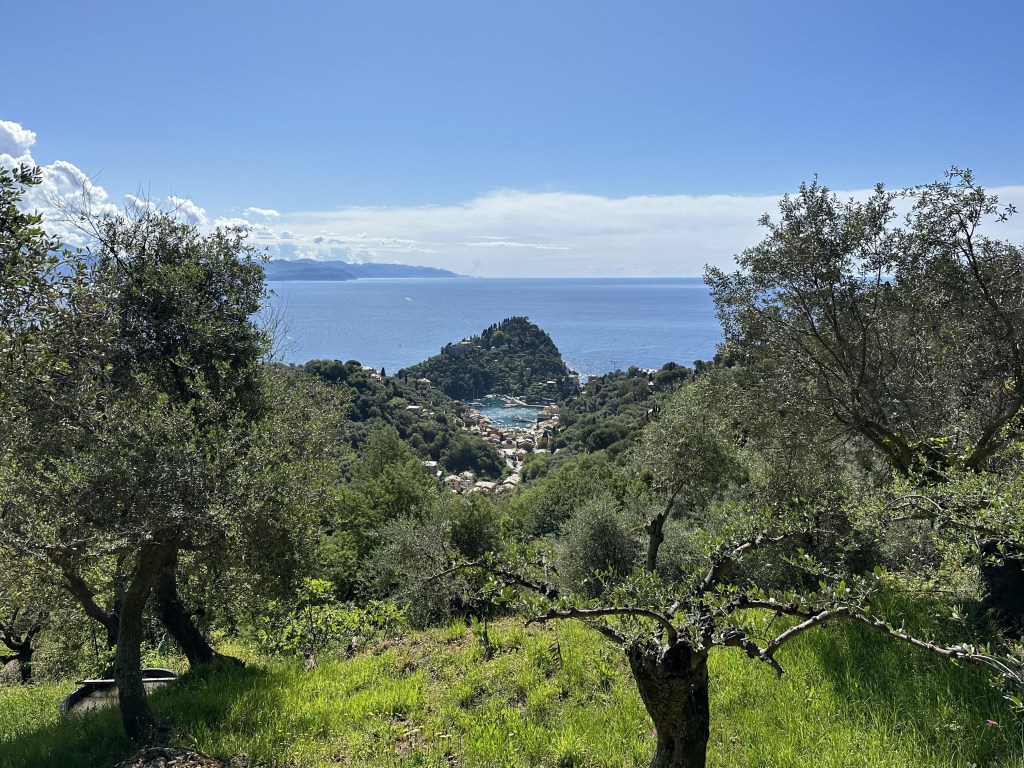
Pretty good views from the top:
And an adorable little Portofino miniature inside:
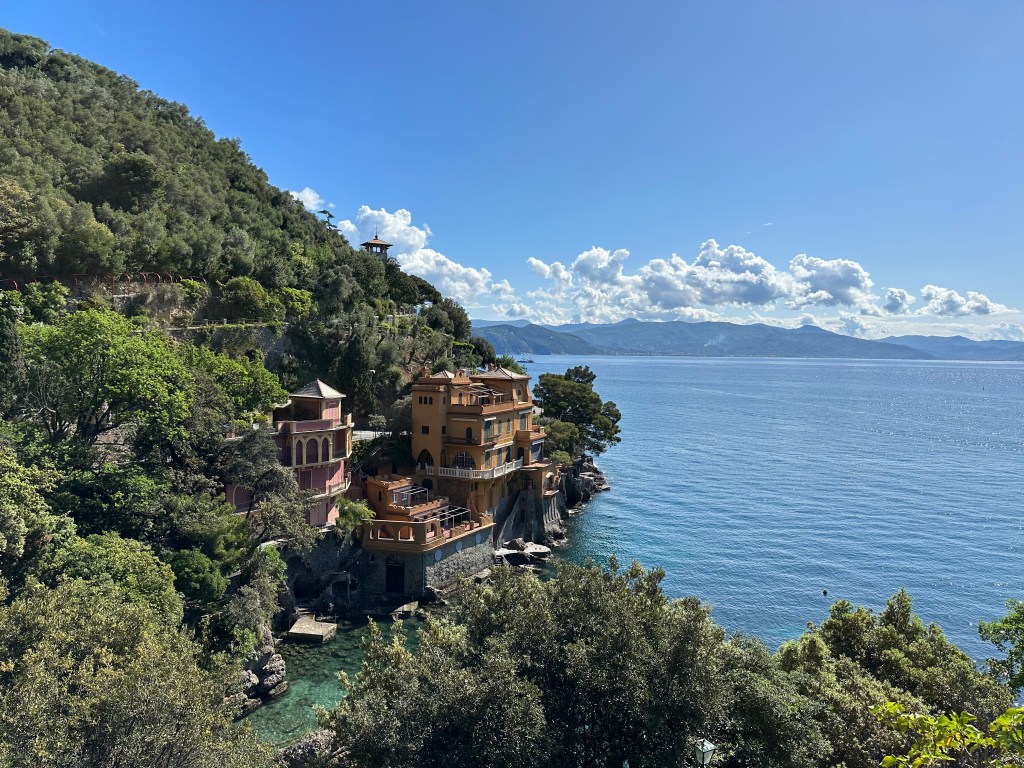
The Ligurian coast at its finest:
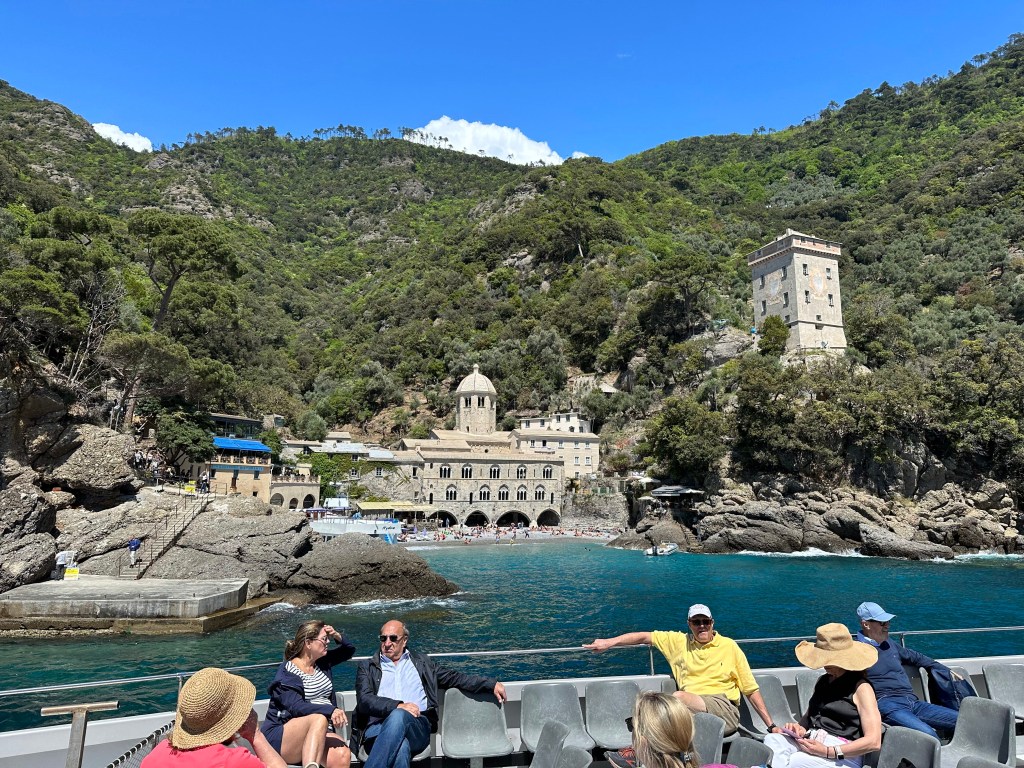
On our first full day, we followed the advice of a couple we met on safari years ago and who are possessed by a similar drive to travel – especially to Italy for them – and hiked from Portofino to the aforementioned Abbey of San Fruttuoso di Capodimonte.
Spectacular hike.
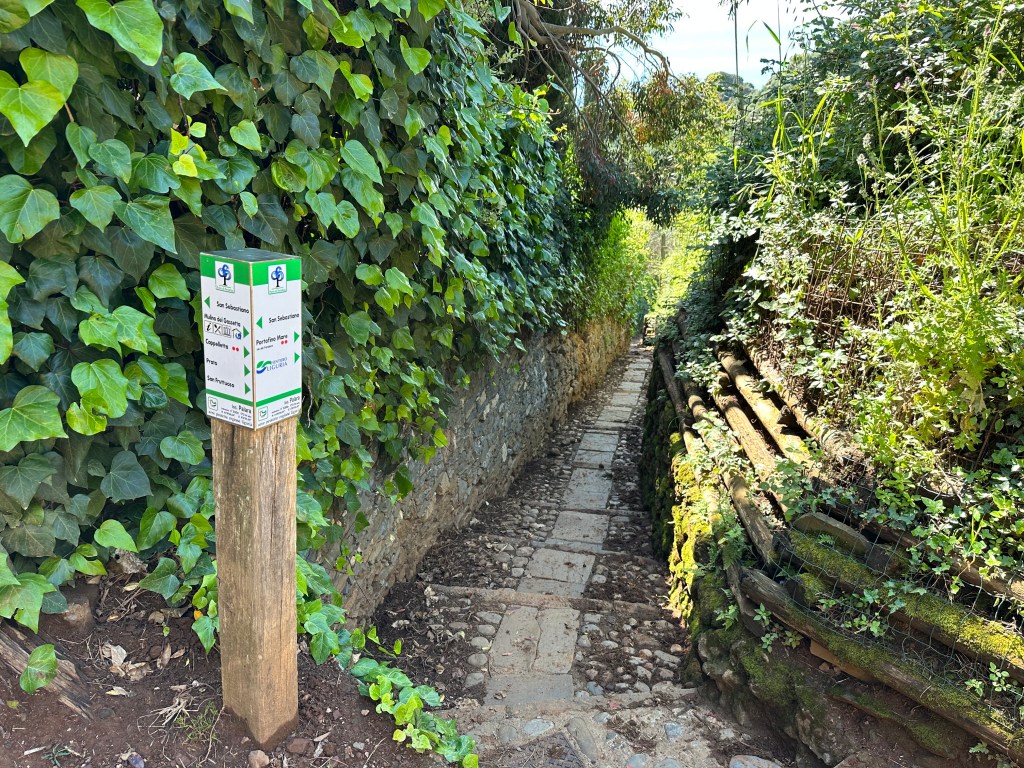
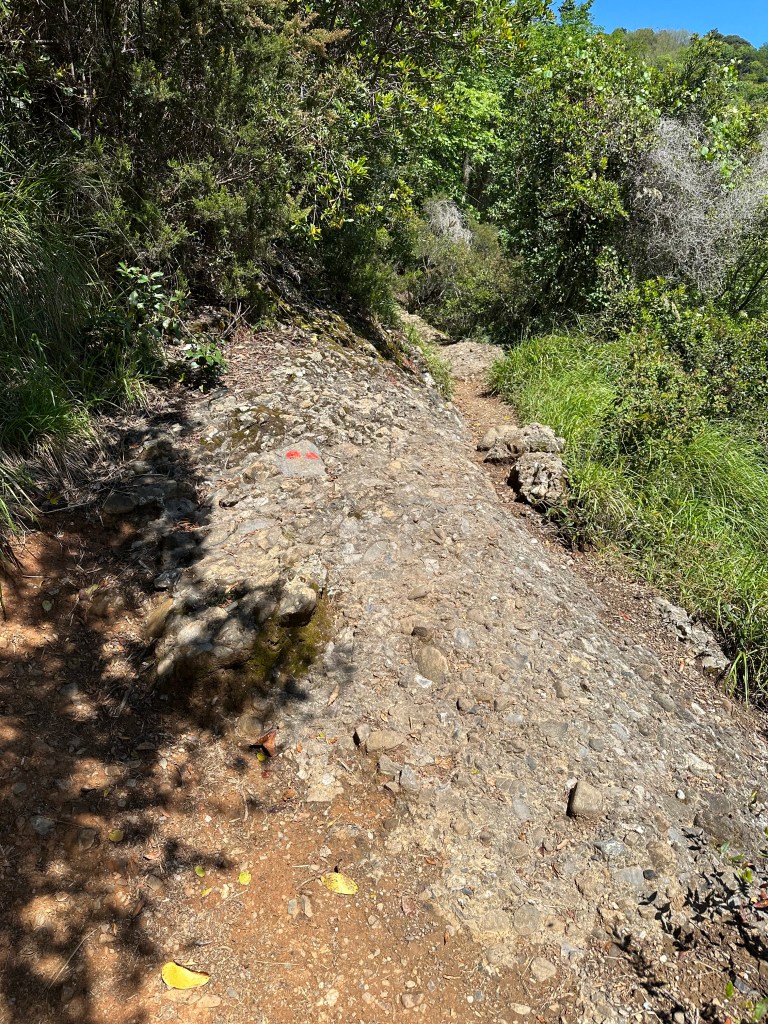
Very helpful trail markers in parts of the route:
Which is particularly beneficial inasmuch as no roads lead to the abbey – it’s accessible only by sea or by these mountainous trails (marked here by two red dots):
Getting closer.
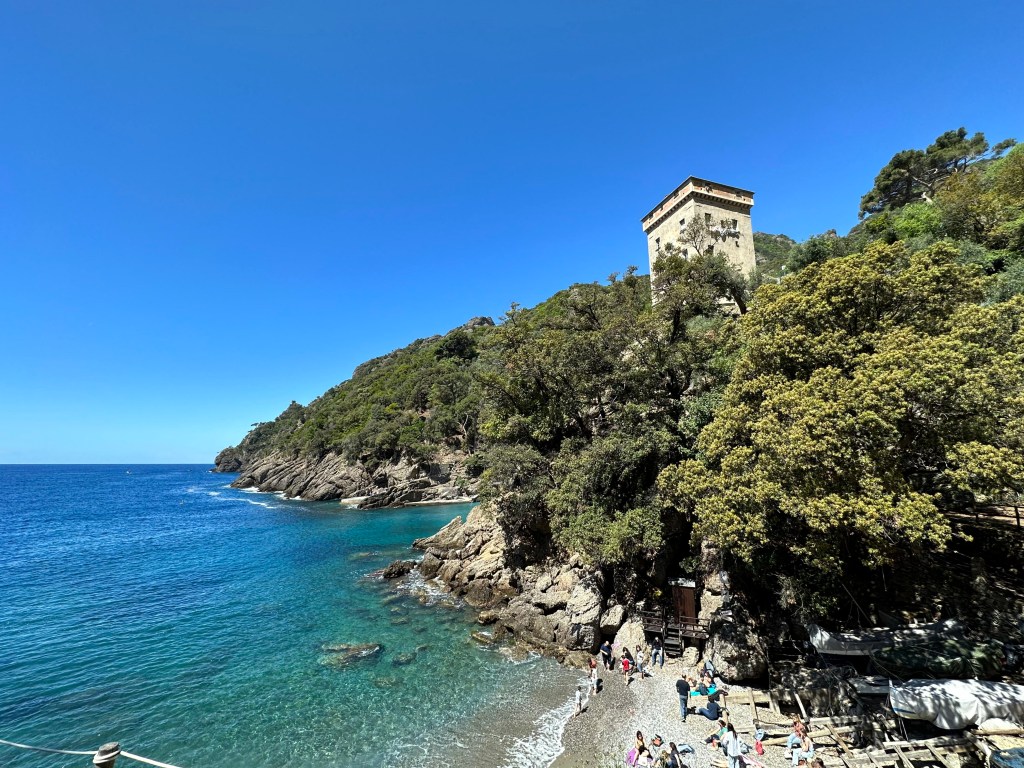
The first sign of the abbey cove – a beach around the corner from the structure:
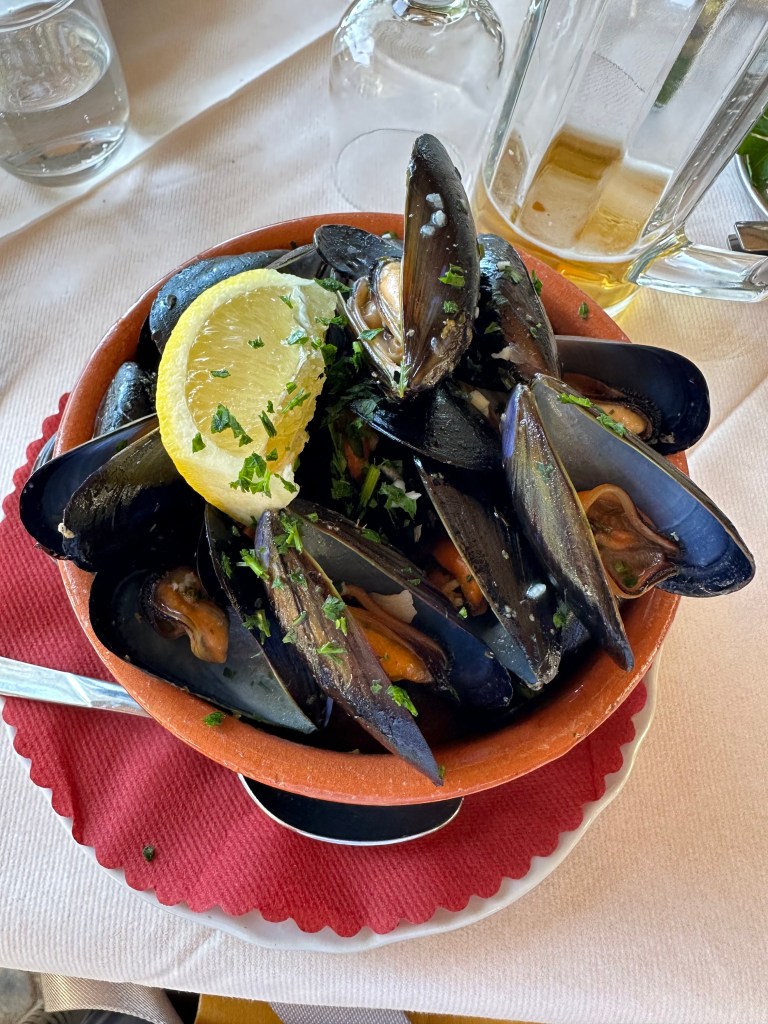
At which we grabbed the first waterfront table we encountered for a well-deserved lunch.
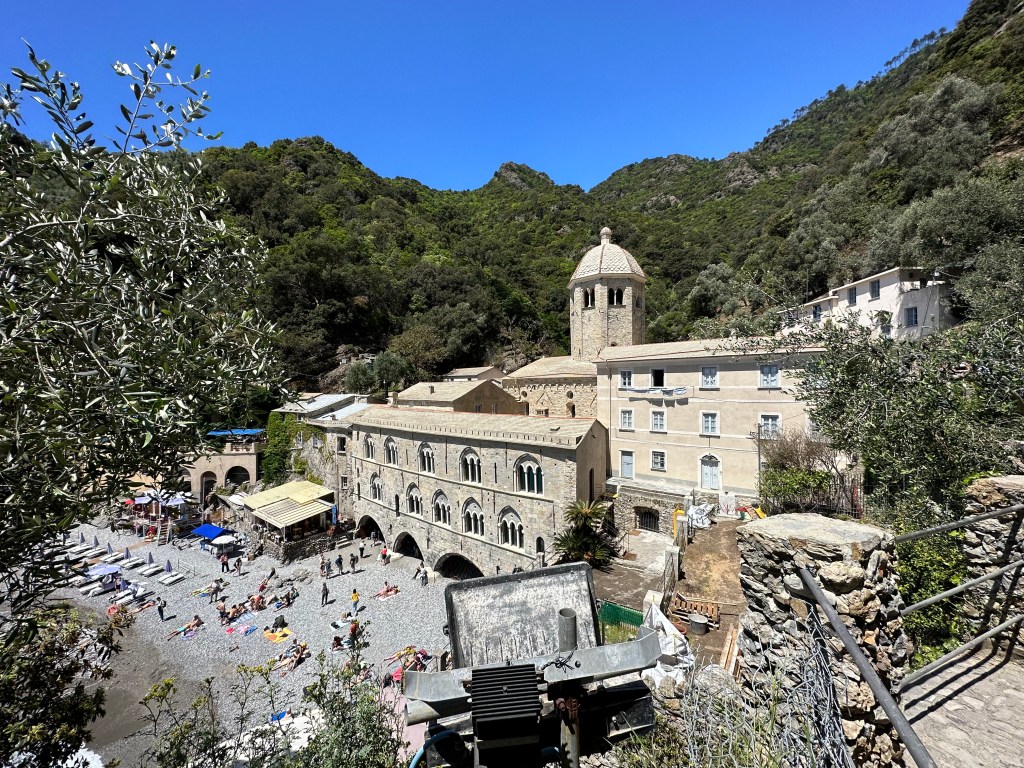
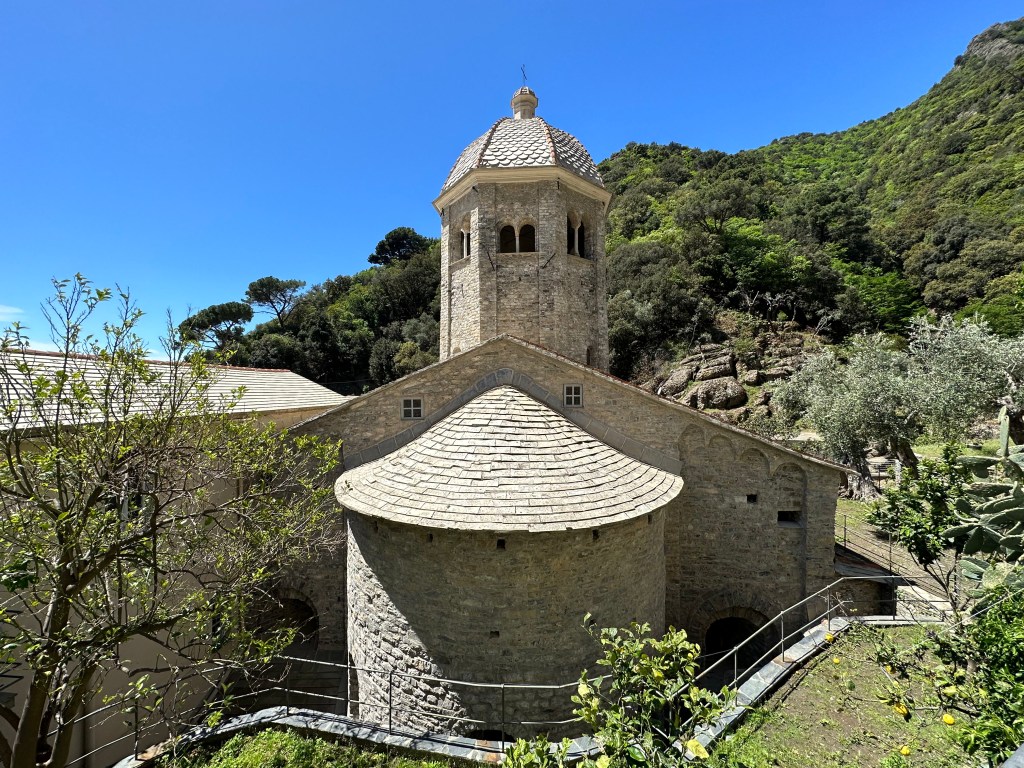
The Romanesque abbey founded by the Benedictines and built between the 10th and 11th centuries.
The abbey is dedicated to Saint Fructuosus, a 3rd-century bishop of what is now Tarragona in Catalonia, who was burned at the stake and martyred during Emperor Valerian’s anti-Christian persecutions. His remains were brought to the abbey by Greek monks and his relics are still entombed at the abbey.
As are those of the aristocratic Genoese Doria family members from the 13th and 14th centuries, under whose patronage the abbey fell.
The abbey’s watchtower, built in the 16th century by the Dorias to guard against attacks by Barbary pirates:
Rather than hike back, we grabbed a return ferry to Portofino, again at the very sage advice of our traveler friends well versed in all things Italy.
Returning to Portofino’s compact harbor:
We thought this flag flying on the ferry was for Portofino or Liguria. It’s not. It’s actually the Genoa Cricket and Football Club flag. ¯\_(ツ)_/¯
The following day, we hiked the other direction from Portofino to the larger port town of Santa Margherita Ligure, encountering, oddly enough, some divers on the path there:
Statue in town of Victor Emmanuel II, the first king of the united Italy (having previously been the King of Sardinia (and Piedmont / Liguria, where we were currently hanging out):
Much larger port than petit Portofino:
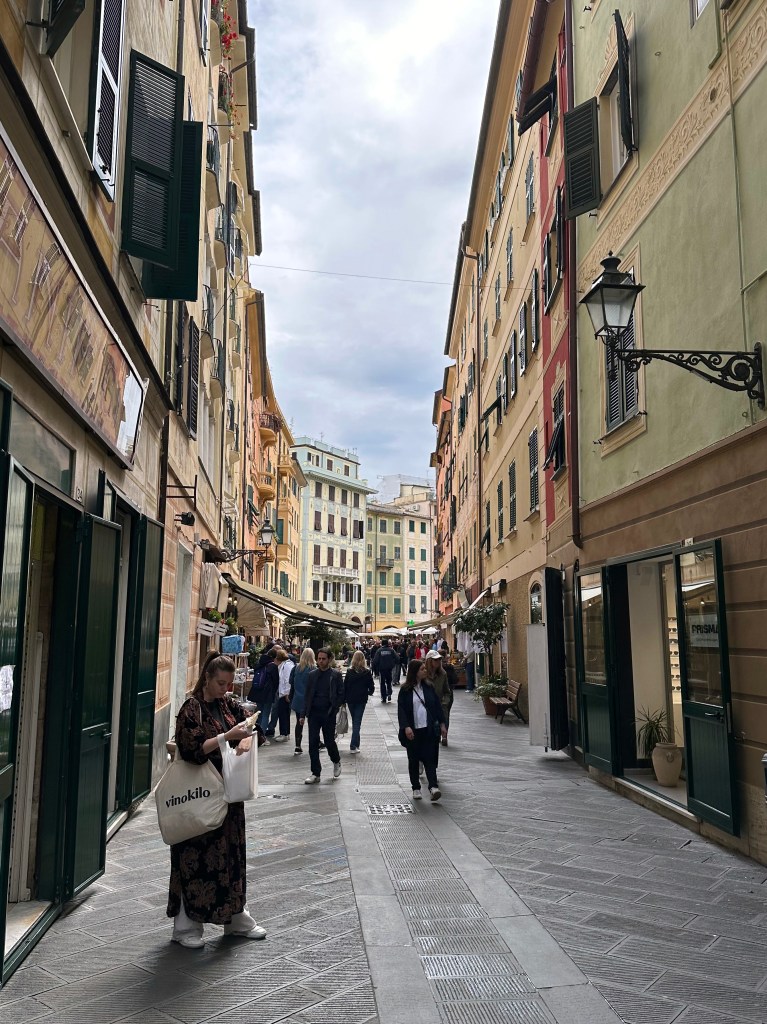
We hiked pretty much along the entire coastal area of Santa Margherita before heading back into the core of the town to check it out and grab some lunch.
Little nonas making lace in the middle of town:
Decent al fresco lunch, including some squid ink gnocci:
Heading toward the only fortification left in town:
Just as with the abbey tower built to guard against Barbary pirates encountered the previous day, the Castello di Santa Margherita Ligure was built in the 16th century by order of the Senate of the Republic of Genoa for protection against the frequent Saracen pirate raids of the era.
Pretty densely packed town.
Villas encountered on the hike back to Portofino – pretty sweet.
A final evening in Portofino, with an outstanding dinner at Ristorante Strainer.
With our stay in Portofino complete, NOW we get to head south. Our next stop? Umbria for the first time.
We are seriously going to try to post the entirety of our trip backlog this year. Starting with the remaining two dozen posts on this, our first, post-retirement, long-duration trip. Posts on WolfeStreetTravel.com unfortunately take a back seat, priority-wise, to trip planning and actual trips, relegating this activity to “when we have some time.” But the first half of this year offers a rare opportunity of no planned travel, so we should be able knock a bunch of backlogged posts out over the next 6 months. The reason for no planned travel is that the ACTUAL Wolfe Street (an actual place where we really do reside), is getting torn up for a sewer upsizing project that one of the WolfeStreetTravelers pressured the city into undertaking for reasons we don’t need to go into here. (The city’s project page is here.)
The reason we want to be in residence during this process and not in Japan or Slovenia or Ecuador or something is that we have 100-year-old clay lateral lines that connect our house to the sewer pipe in our street. Read that again. 100-year-old CLAY pipes. Seriously. Because these fragile artifacts are prone to damage during this construction, we don’t want to have to deal with problems remotely or, worse, cut short a trip to come home and deal with them. So, we’re sticking around until we can confirm that our fragile porcelain China plumbing fixtures are undamaged and the project has progressed beyond the point where they are endangered.
With that, back to travel.
After completing our detour north to picture-perfect Portofino, we finally headed south within the Italian peninsula to our next destination: the Roman ruins of Herculaneum. But the drive was unacceptably long (we try to keep our road trip daily drives to no more than 4 hours), so we stopped at a halfway point: Orvieto in Umbria. (This was not our first choice, however. We originally planned to stop in Montemerano, in southern Tuscany, based on its small, hill-town charm and a Michelin-starred restaurant there. But the restaurant abruptly cancelled our reservation during our planning phase, citing a private event, so we pivoted to another appealing stop that still would be approximately halfway between Portofino and Herculaneum.)
So, why Orvieto? Popes and history (and a cool perch on a defensive bluff). But before the popery and such, a little earlier history. As with Volterra, far to its north, Orvieto originated as an Etruscan metropolis, and celebrated, historic Etruscan tombs punctuate the area (none of which we had time to visit, but they sounded very cool, to be sure). Then, Rome overran the area in the 3rd century BC, then Western Roman Empire collapsed, then Goths controlled the area, then the Lombards, and – finally – the city became a self-governing commune in the 10th century. But one with close ties with the papacy that would grow closer still with each successive century.
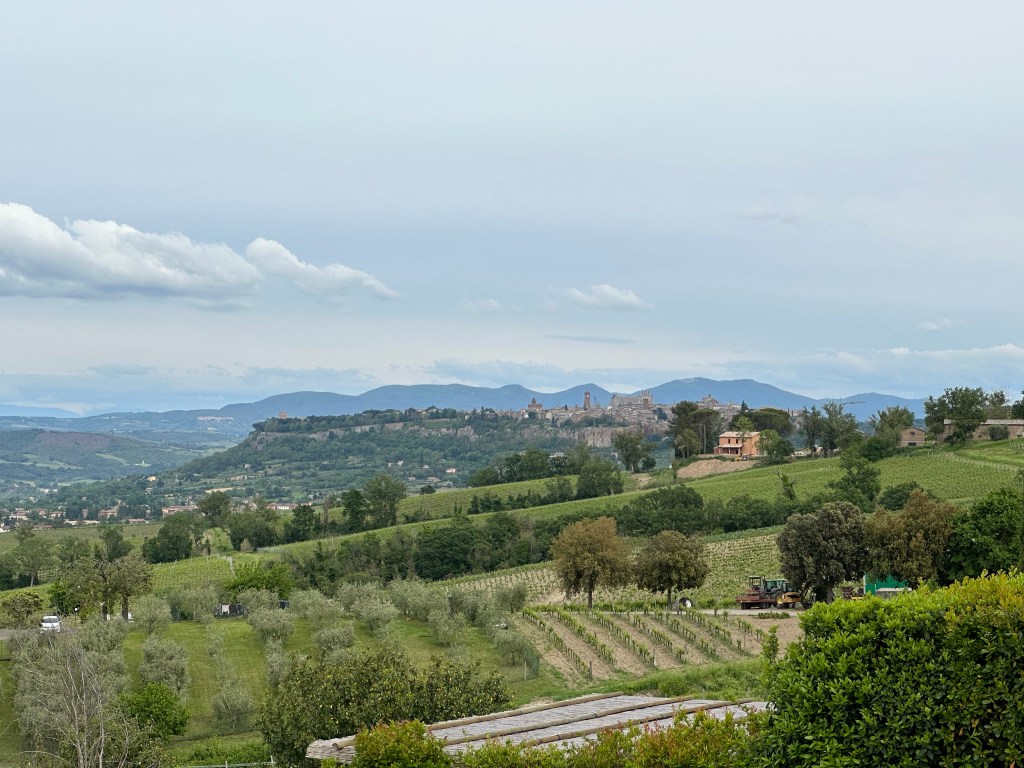
Orvieto in the distance, seen from our lodging that evening.
Pope Benedict VII was fond of the city, and his nephew became consul of the commune in 1016; Orvieto became Benedict’s retreat from Rome. A pattern emerged, and Orvieto sported three papal palaces from their extended stays there by the 13th century. The role of papal retreat reached its apogee with Pope Urban IV, who resided in Orvieto instead of Rome from 1262 to 1264. (As an aside, we cannot recommend highly enough reading Absolute Monarchs: A History of the Papacy, in which Orvieto appears on every third page or something during the reign of the medieval popes. Regardless, a wildly entertaining, mildly entertaining history tome.)
Considering all of this, Orvieto fell under de facto papal control starting in 1200 and ultimately became an official part of the Papal States in 1354. This rule lasted until 1860, during Italian unification.
With that historical context addressed, let’s check out the town.
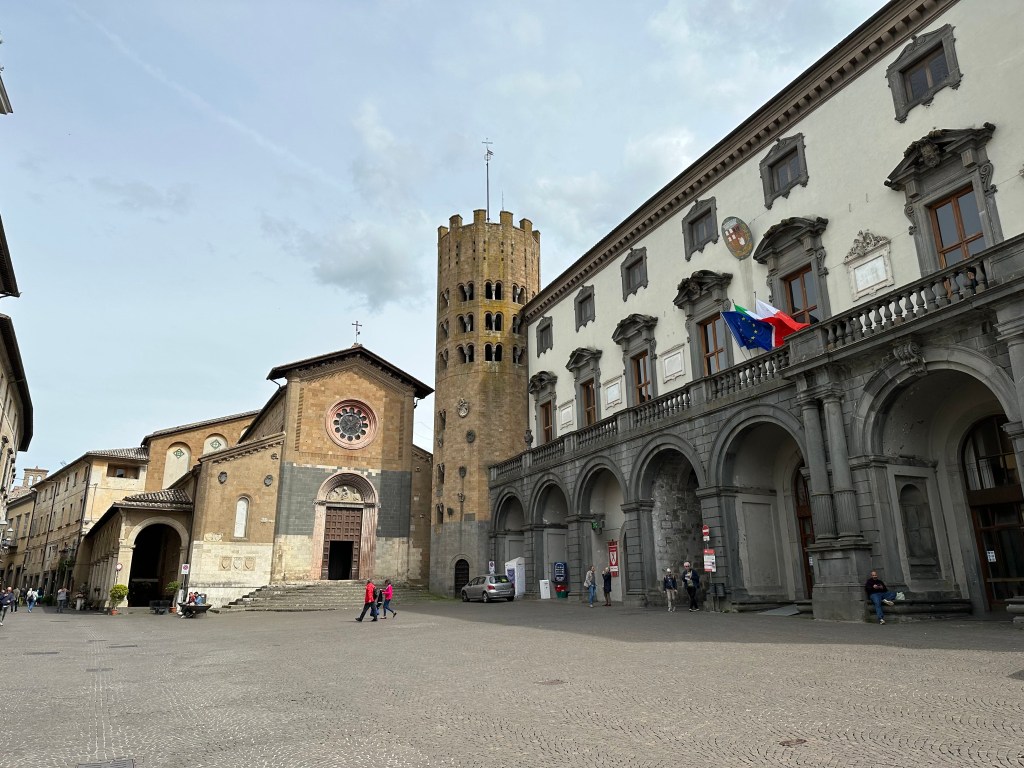
The Romanesque, 12th-century Sant’Andrea church and its distinctive, 13th-century decagonal bell tower.
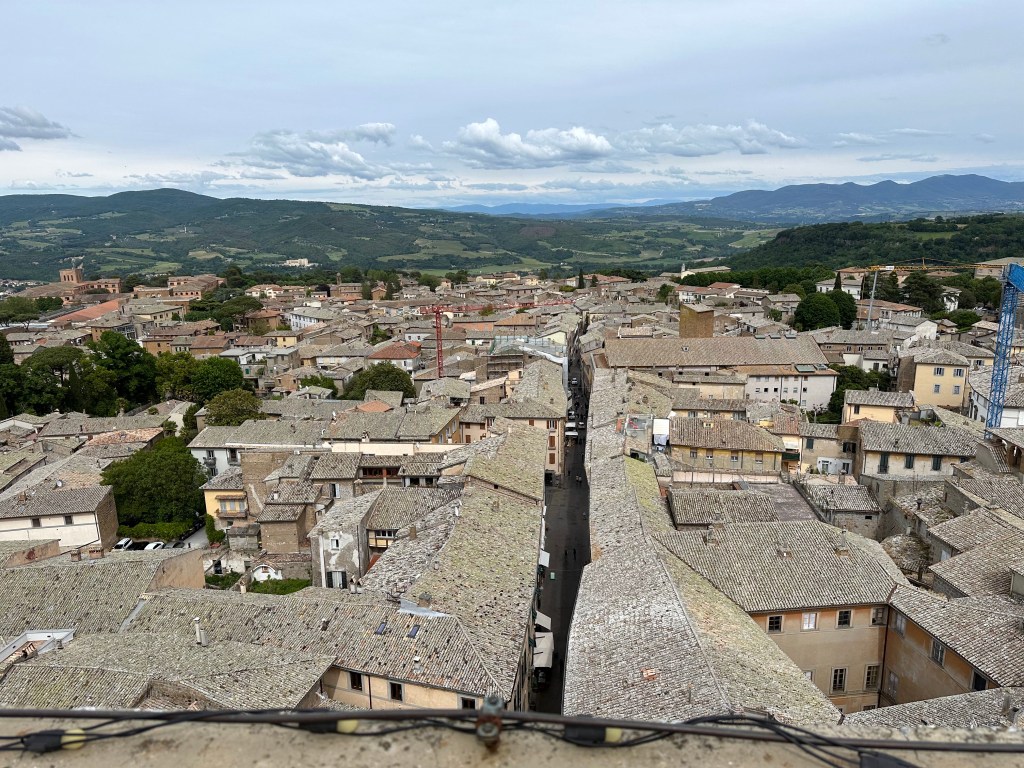
The whole town is build on an escarpment, but the elevation doesn’t stop after you enter the walled town:
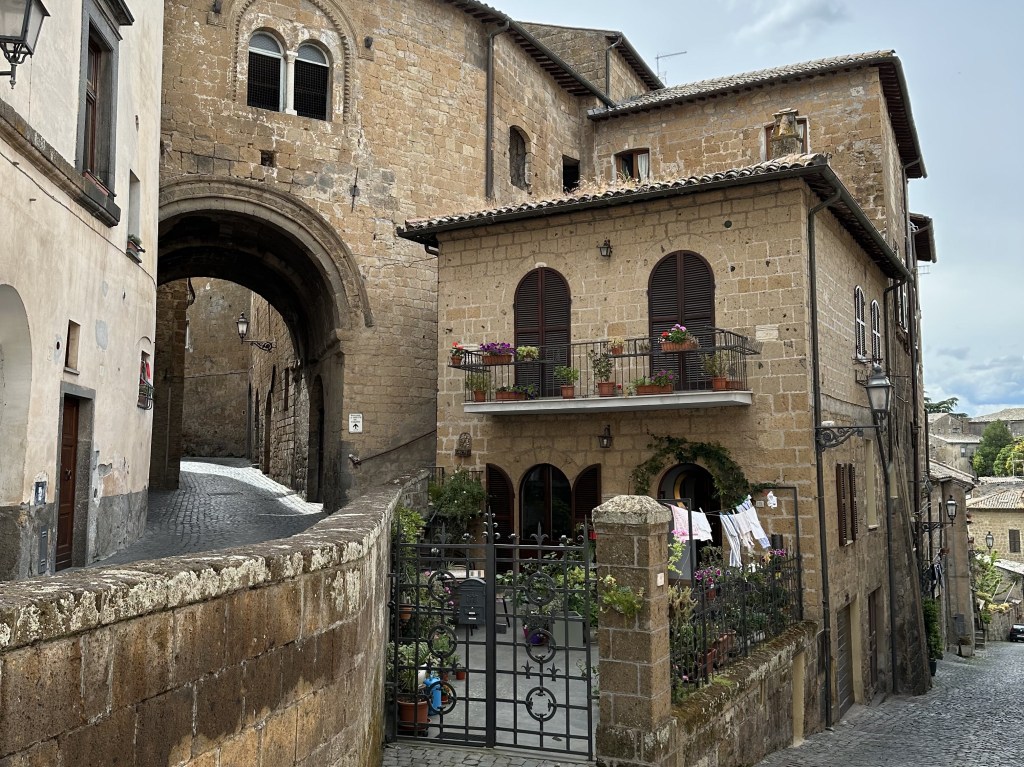
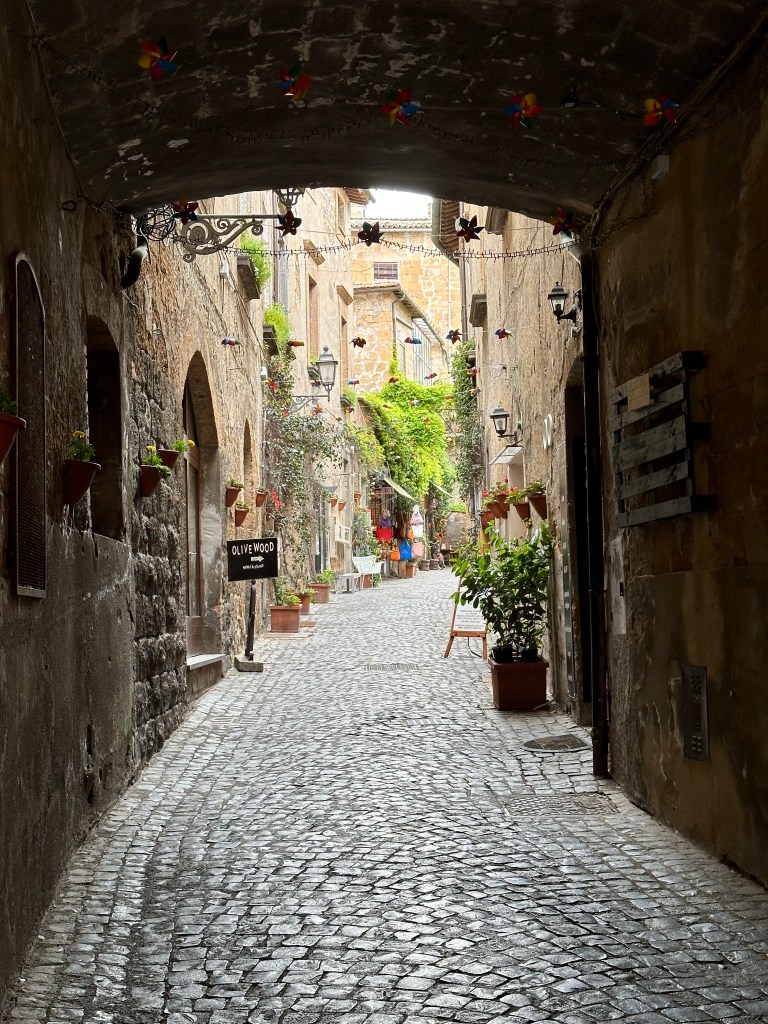
There are pretty cool, medieval warren of streets in some areas:
while others are more spaced out, like the street heading to the cathedral:
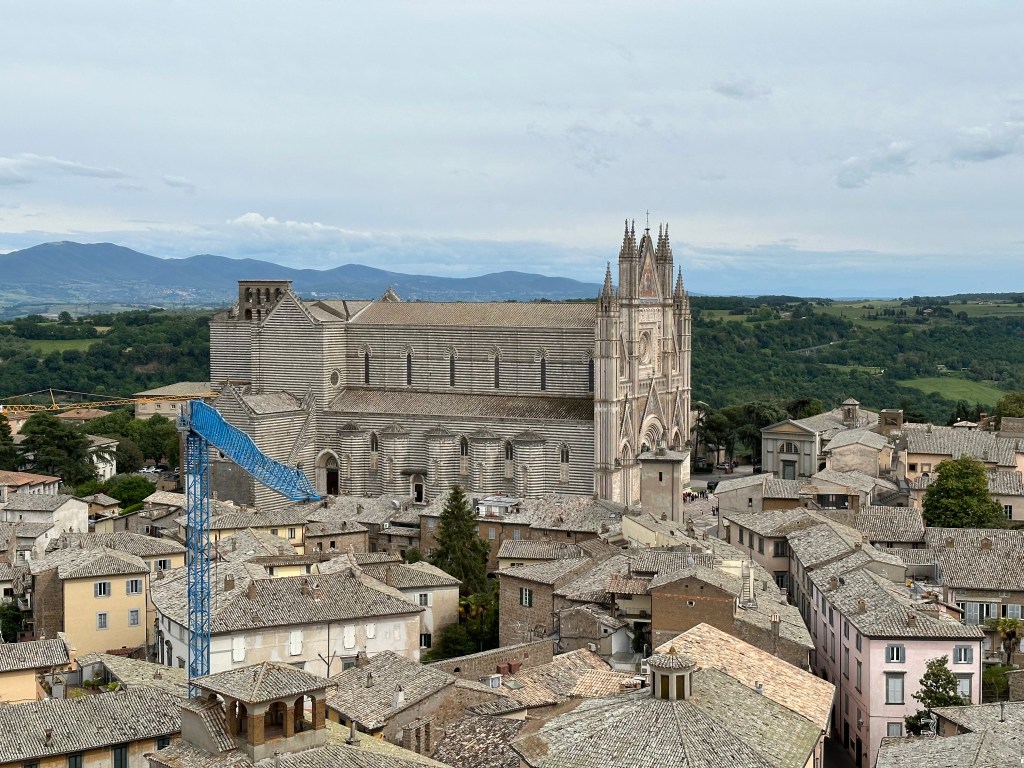
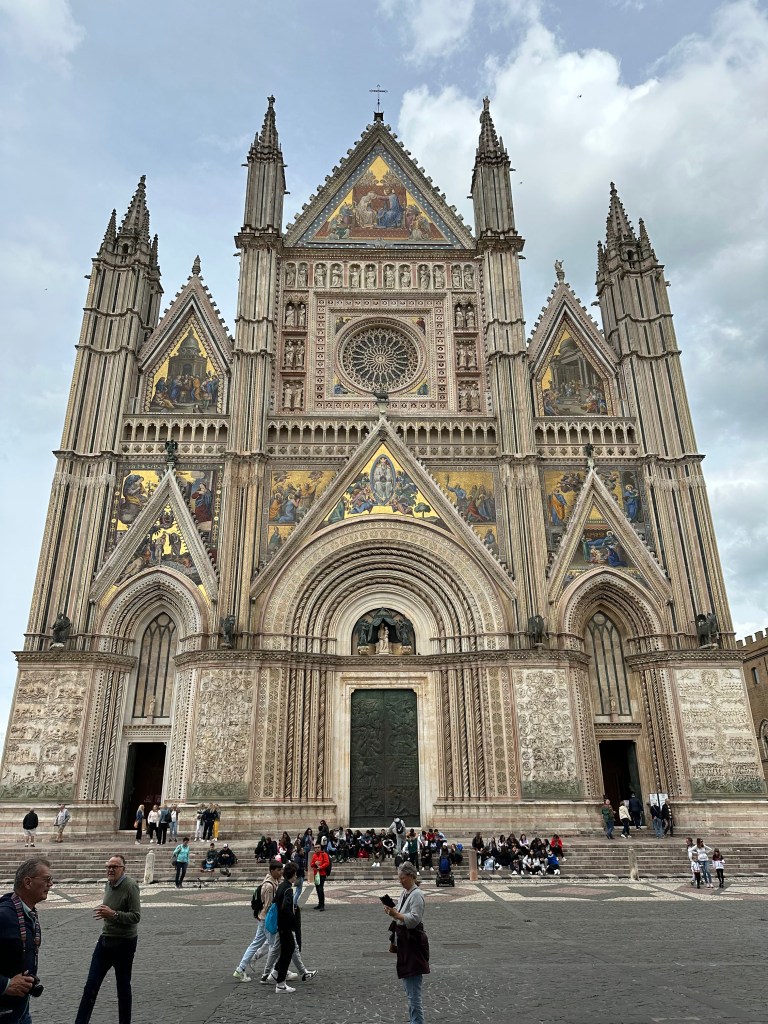
Orvieto’s primary attraction (other than the town-on-the-cliff itself): the 14th-century Duomo di Orvieto (also, the Cattredale di Santa Maria Assunta), seen here from la torre del Moro, which we’ll address below.
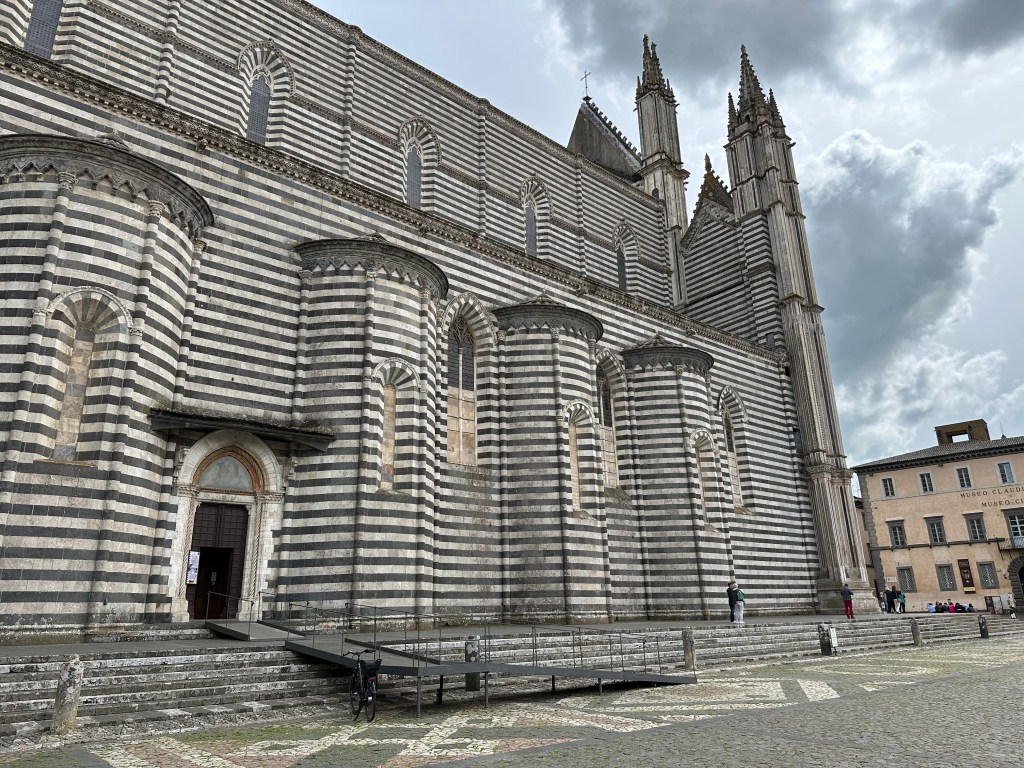
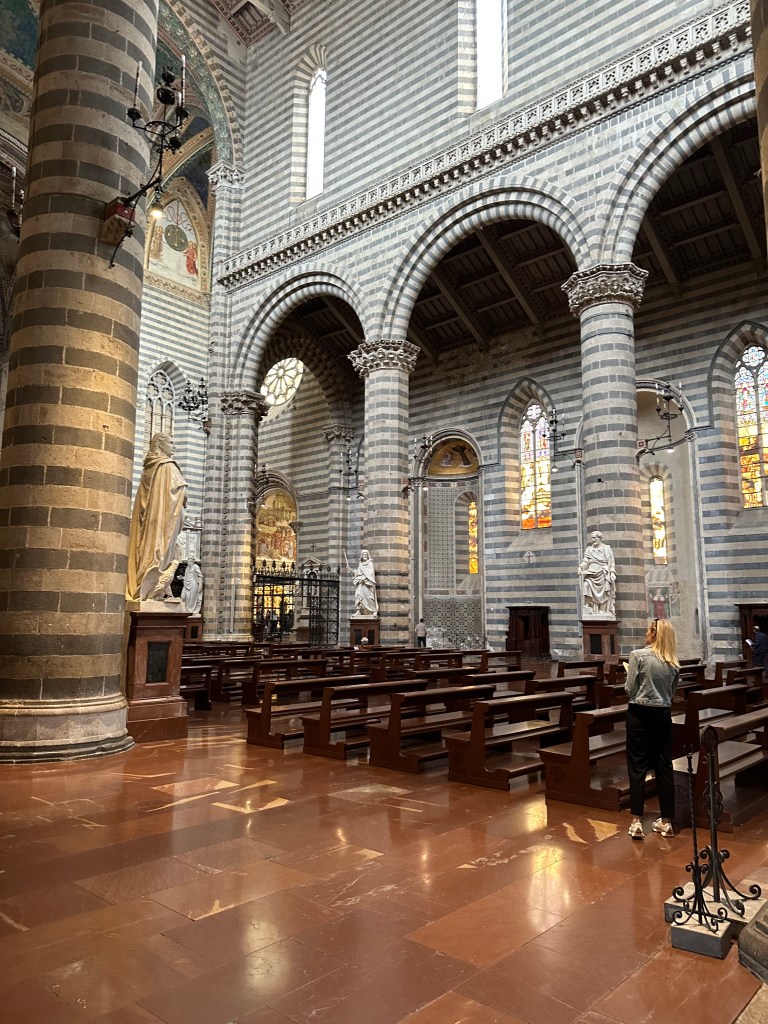
Those familiar with our posts from Cinque Terre will recognize the Ligurian Romanesque (or Pisan Romanesque) black-and-white stacked architectural style of the cathedral:
“The building was constructed under the orders of Pope Urban IV to commemorate and provide a suitable home for the Corporal of Bolsena, the relic of miracle which is said to have occurred in 1263 in the nearby town of Bolsena, when a traveling priest who had doubts about the truth of transubstantiation found that his Host was bleeding so much that it stained the altar cloth. The cloth is now stored in the Chapel of the Corporal inside the cathedral.” (From here.)
Pretty awesome, polychrome facade of the cathedral – a Late Middle Ages architectural masterpiece (but oddly still not as cool to us as the other polychrome facade we came across one evening in Lucca).
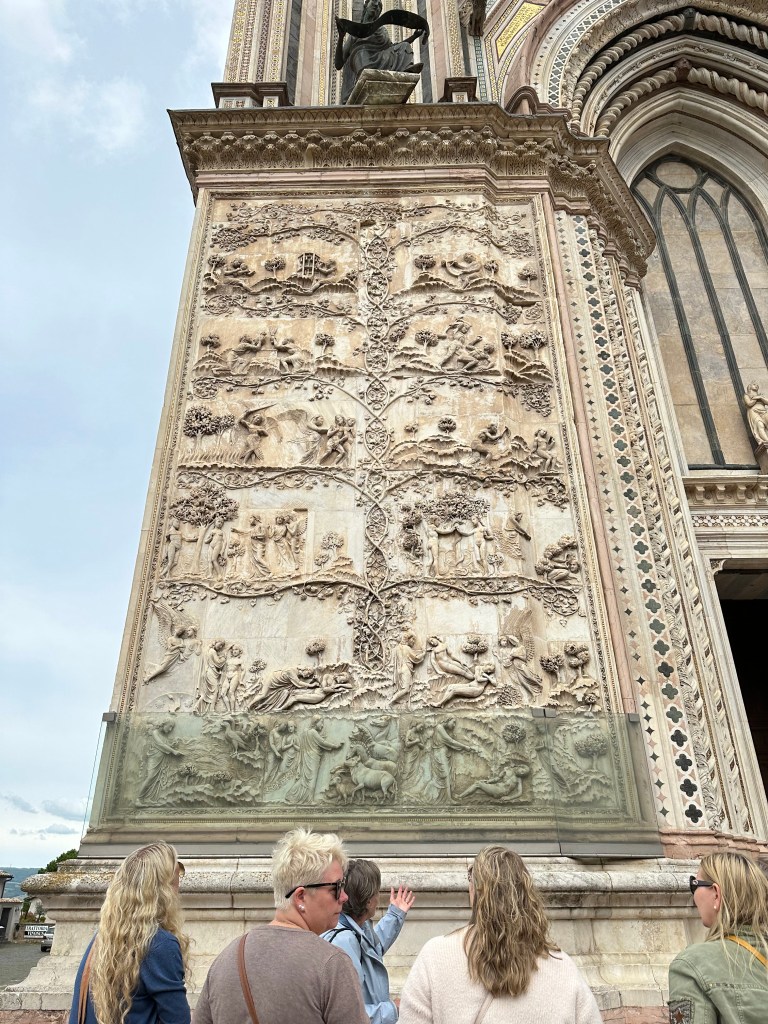
Bas relief of Genesis on the extreme left of the cathedral’s exterior:
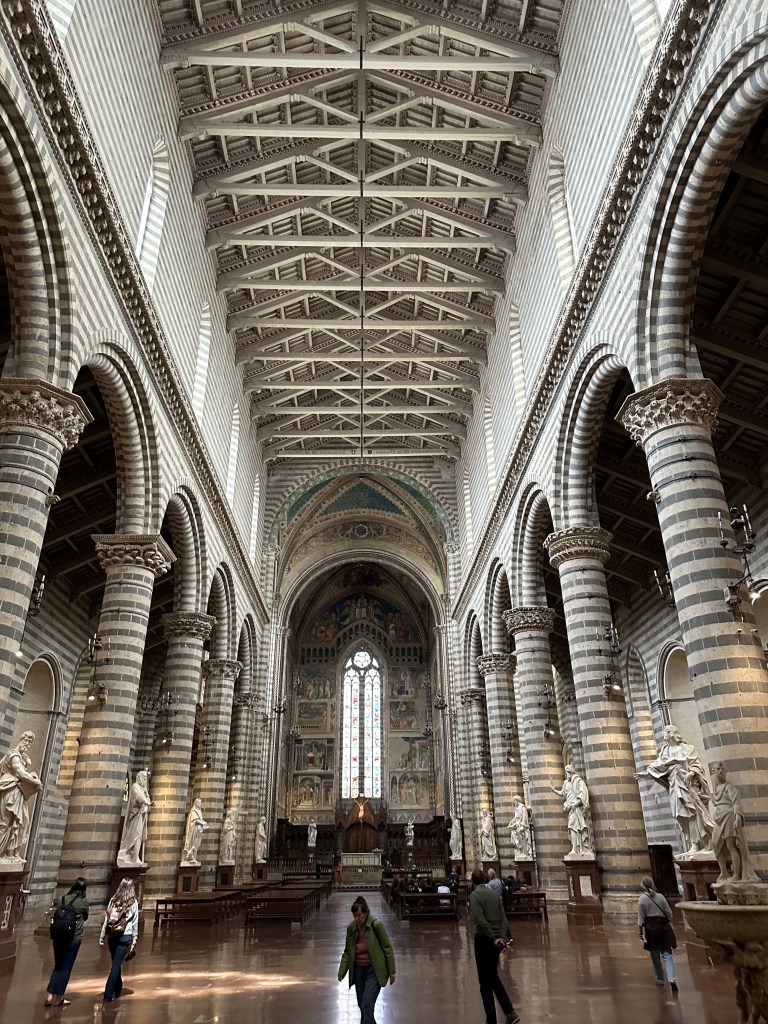
The cathedral’s soaring exterior and trussed timber roof:
But its size is surprisingly intimate:
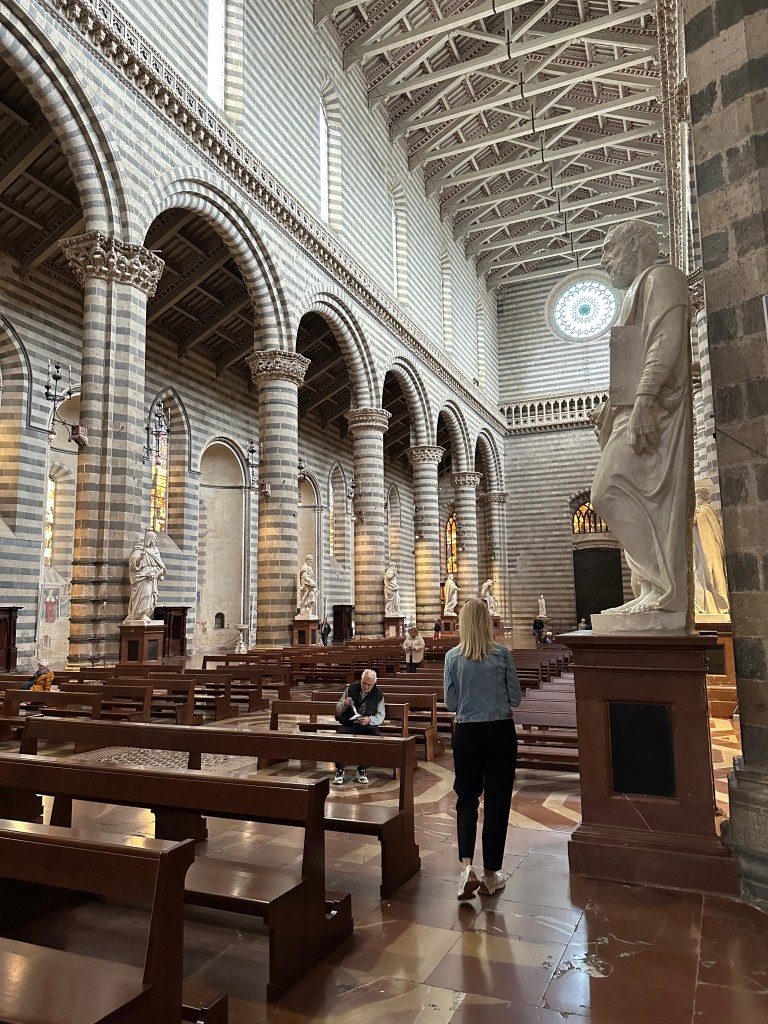
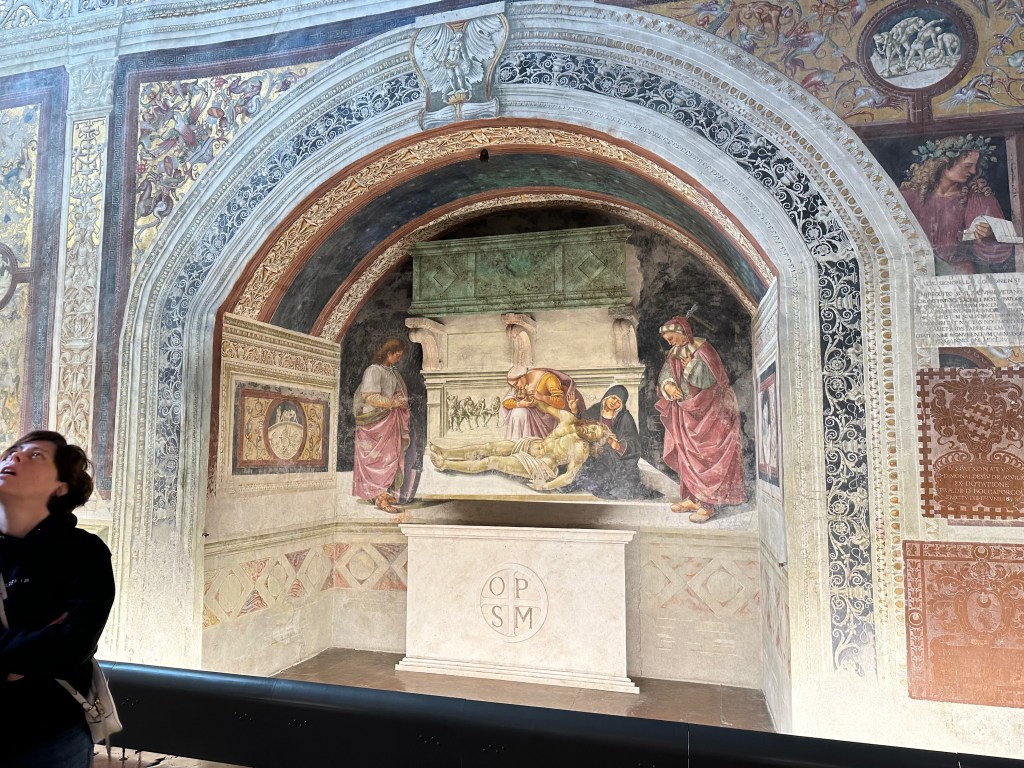
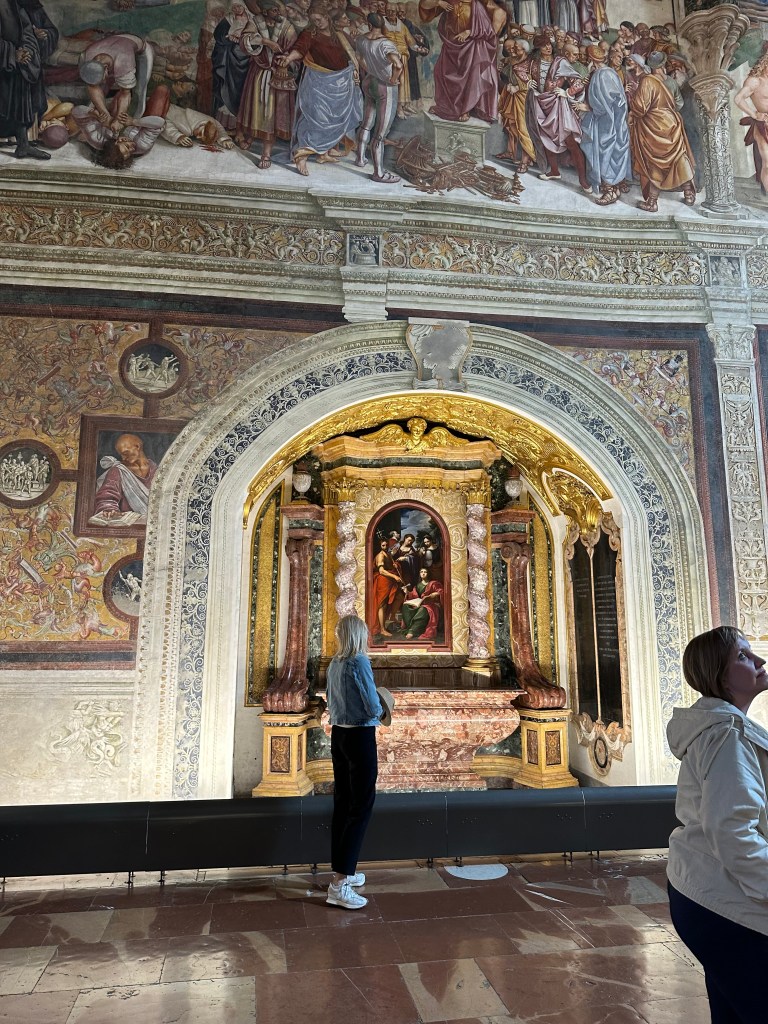
Frescos abound:
As do small chapels:
The later, 15th-century Chapel of the Corporal, with some pretty cool vaulting, all completely covered in frescoes (Christ in Judgement, apparently).
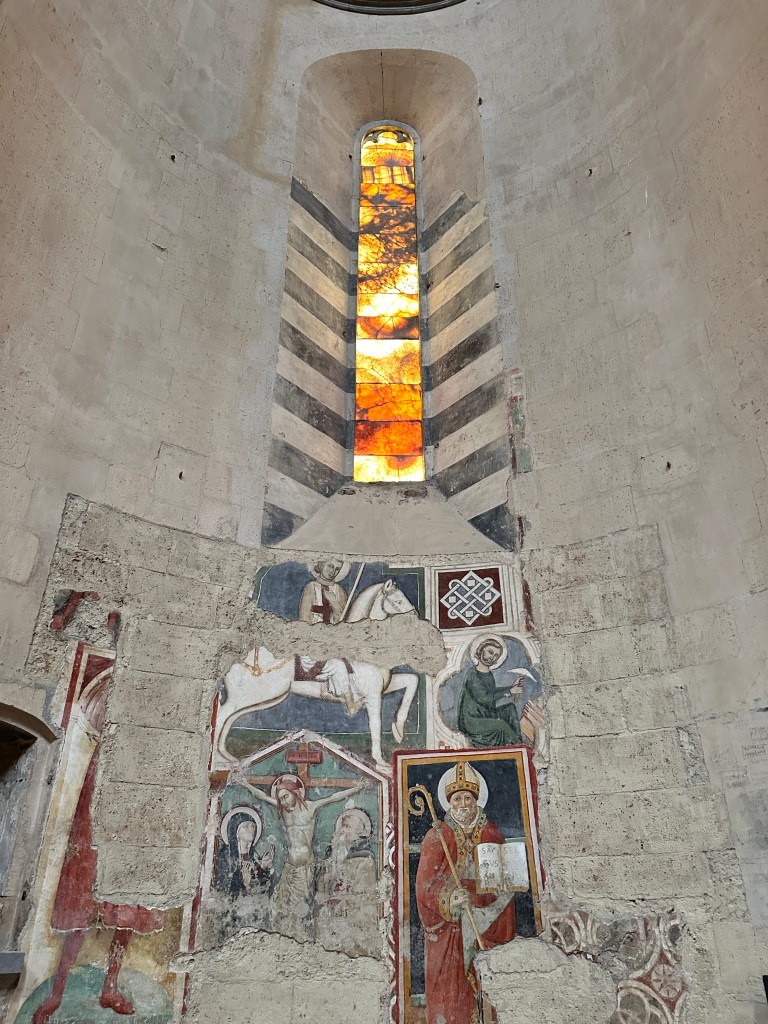
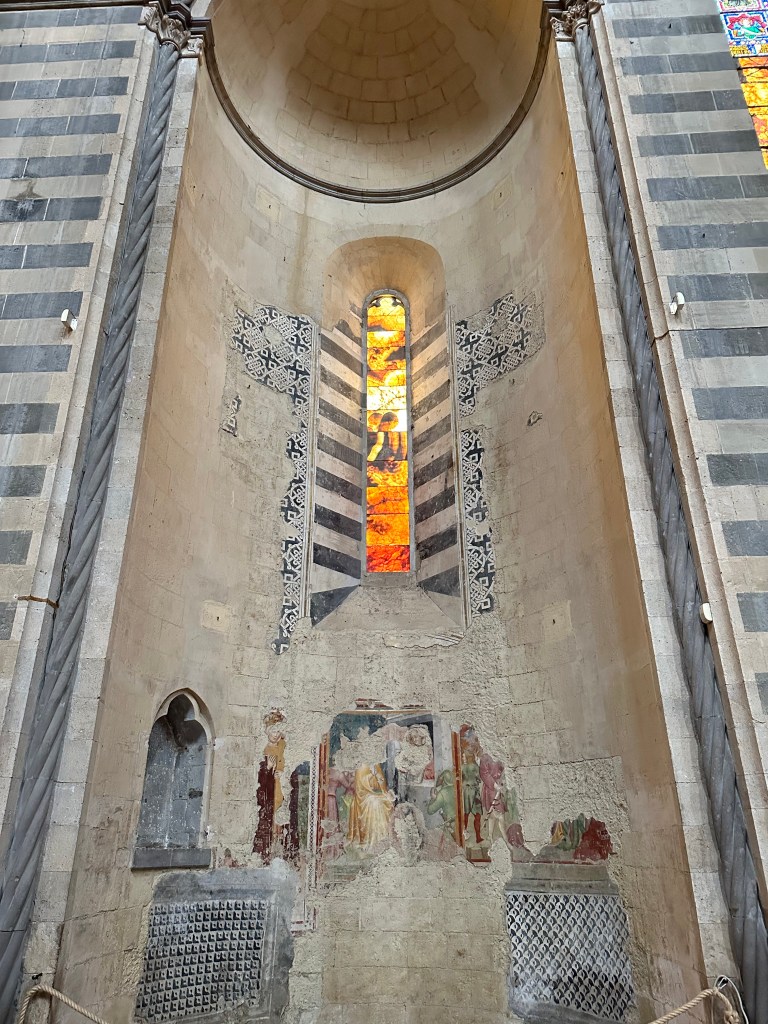
The remains of earlier decorations still visible in the cathedral (as well as alabaster windows, which are always of interest):
The visit to the cathedral complete, we headed to Torre del Moro (Tower of the Moor) built in 1200 for a view over Orvieto:
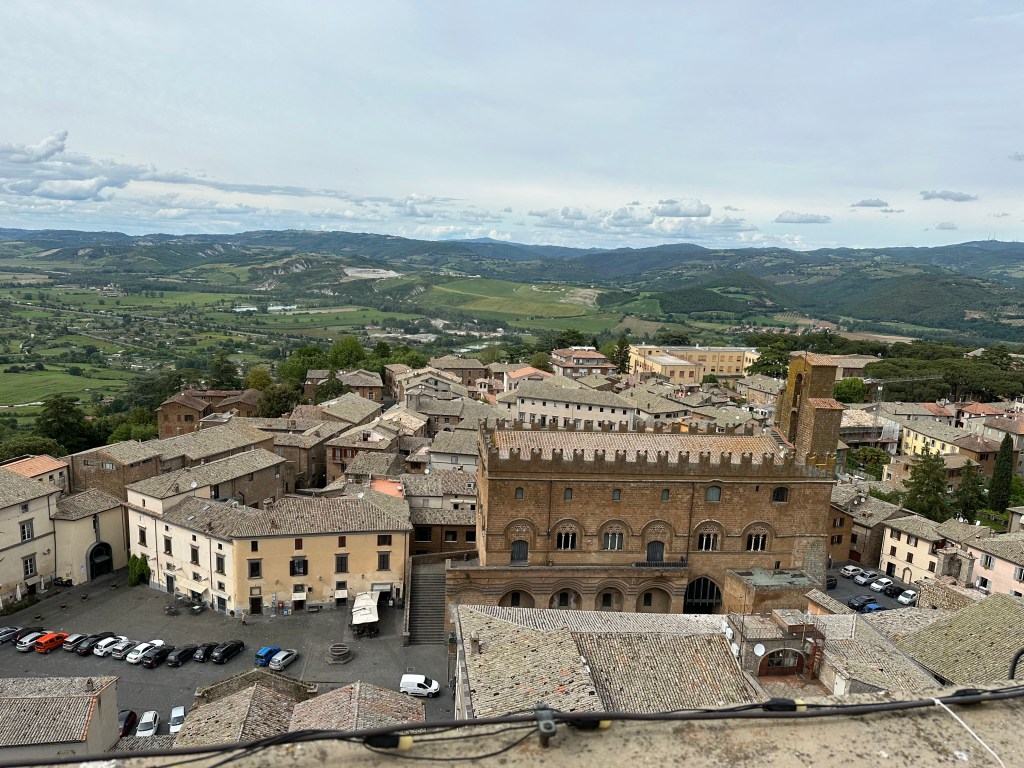
A view of the Capitano del Popolo, the Captain of the People (basically the representative head of the city):
A different perspective on the Sant’Andrea church and its decagonal bell tower encountered earlier when we entered Orvieto:
And then on to our lodging for the evening, a location we selected because of its similarly storied history.
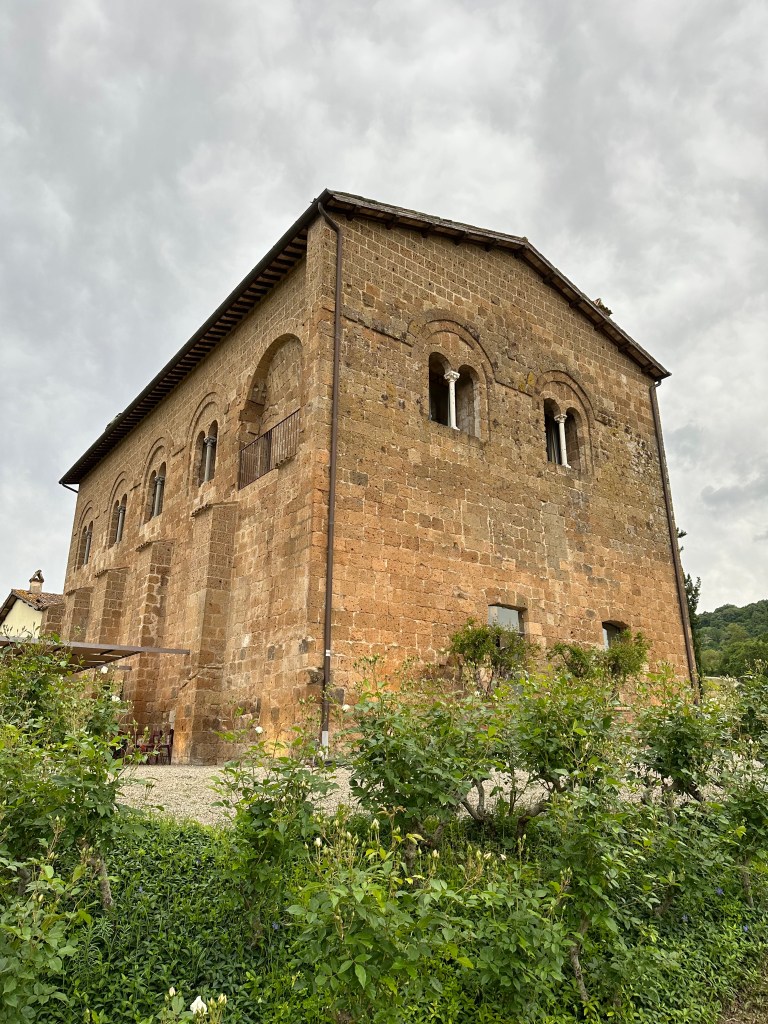
“Locanda Palazzone is a historic residence from the medieval period. . . Taking into account its residential typology and its location of relative isolation in the countryside in the vicinity of Orvieto, it can be thought that the building may have been built as a “hospitalis,” in the sense of a hostel for prelates and wayfarers or a post station for pilgrims heading to Rome, since it was precisely in 1300 that Boniface VIII formalized the first Jubilee.”
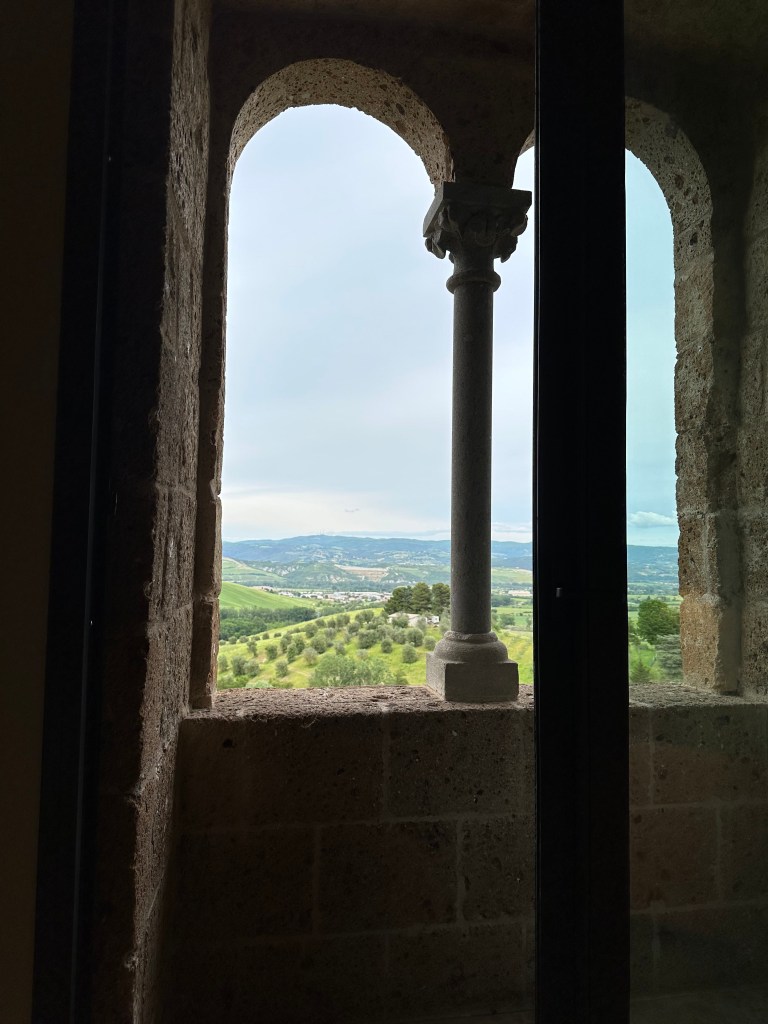
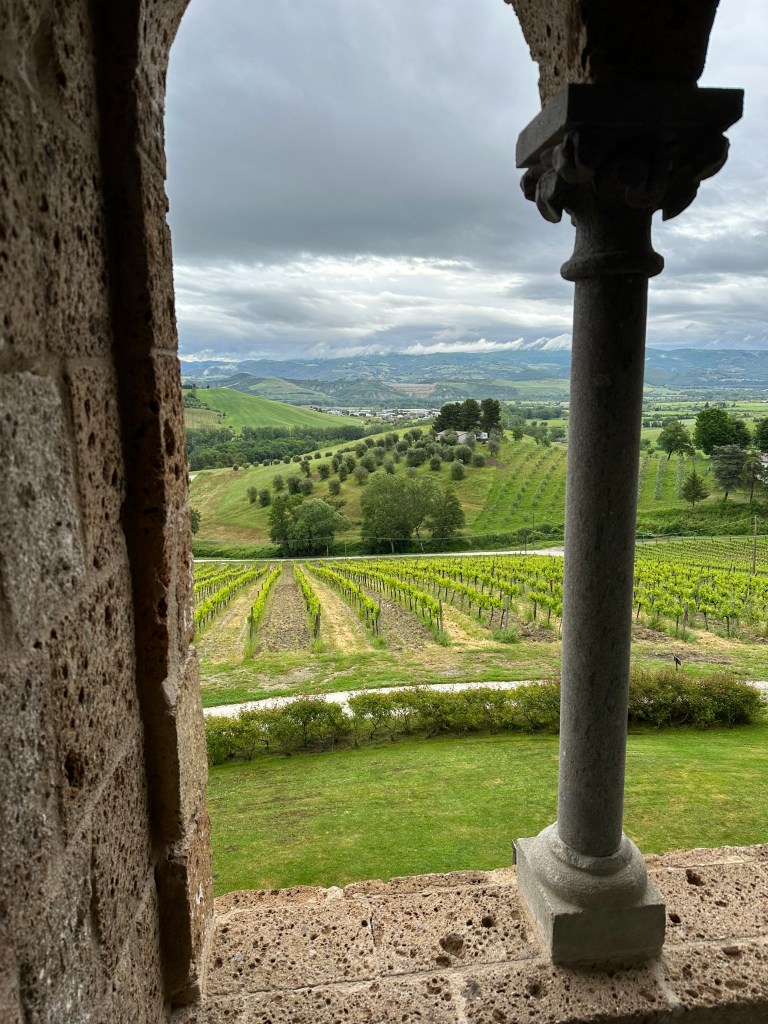
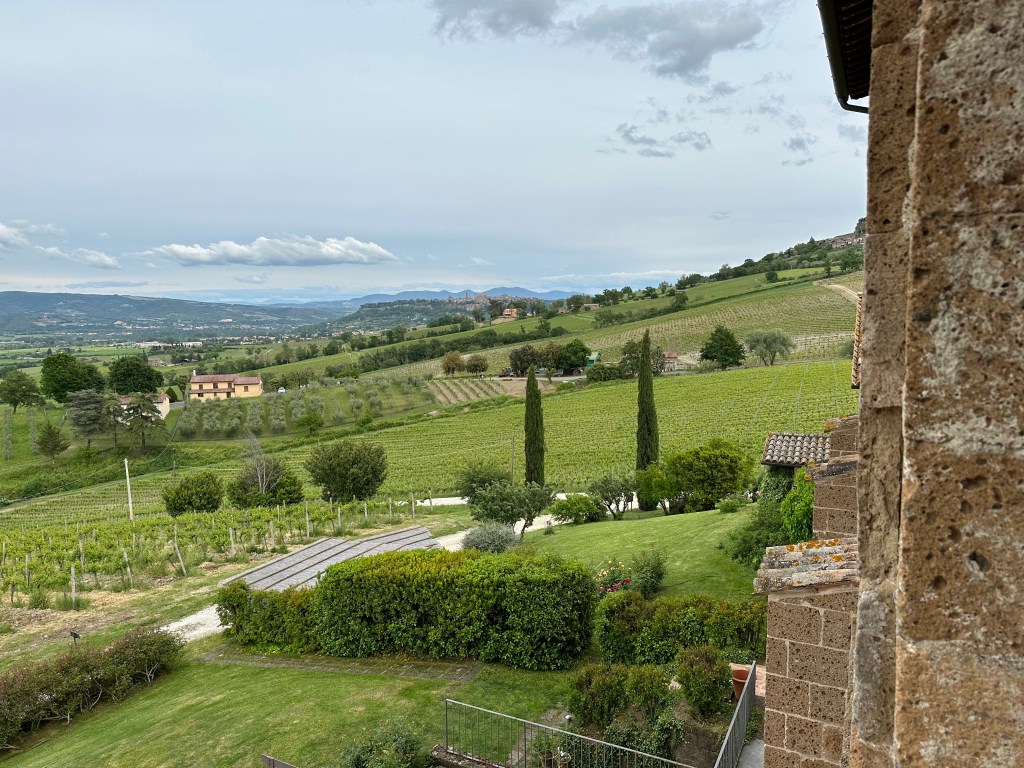
View out the ornate window of our room. . .
which, if you crane your neck out an around. . .
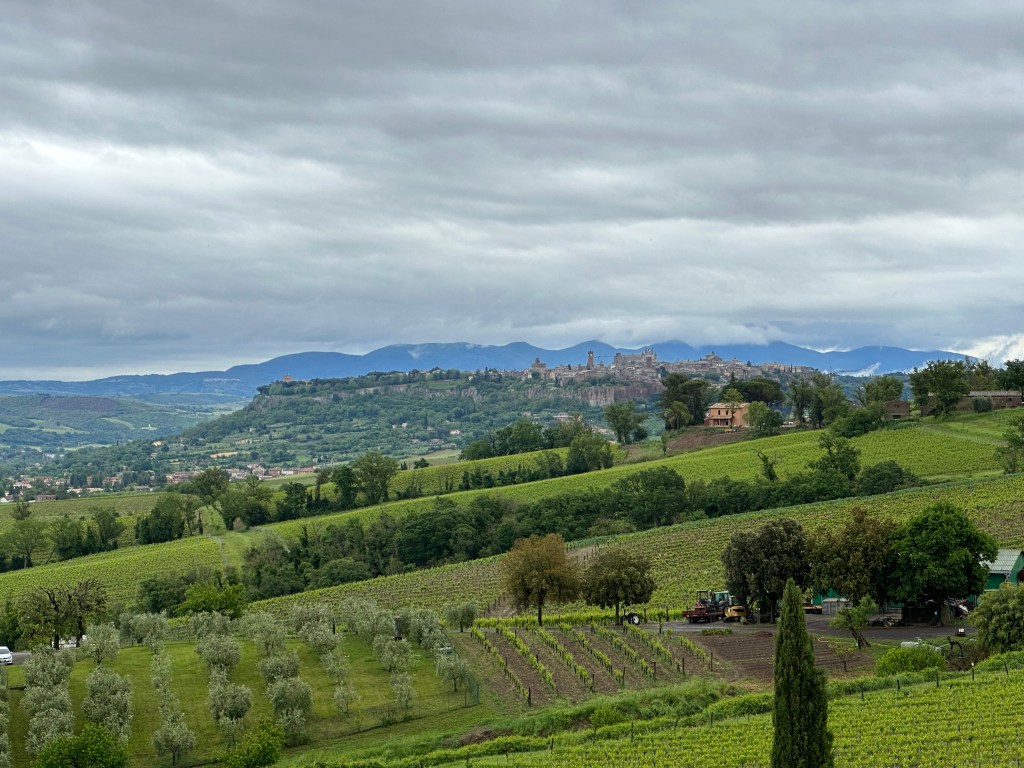
allows for a view across the valley. . .
to Orvieto itself.
Pretty cool place with lots of history.
On to Herculaneum and an amazing time capsule of Roman culture!
From Orvieto (purely a stopover town – albeit a very nice one – to keep our drive time under control), we headed further south to our next real destination: Pompeii’s red-haired step brother, Herculaneum.
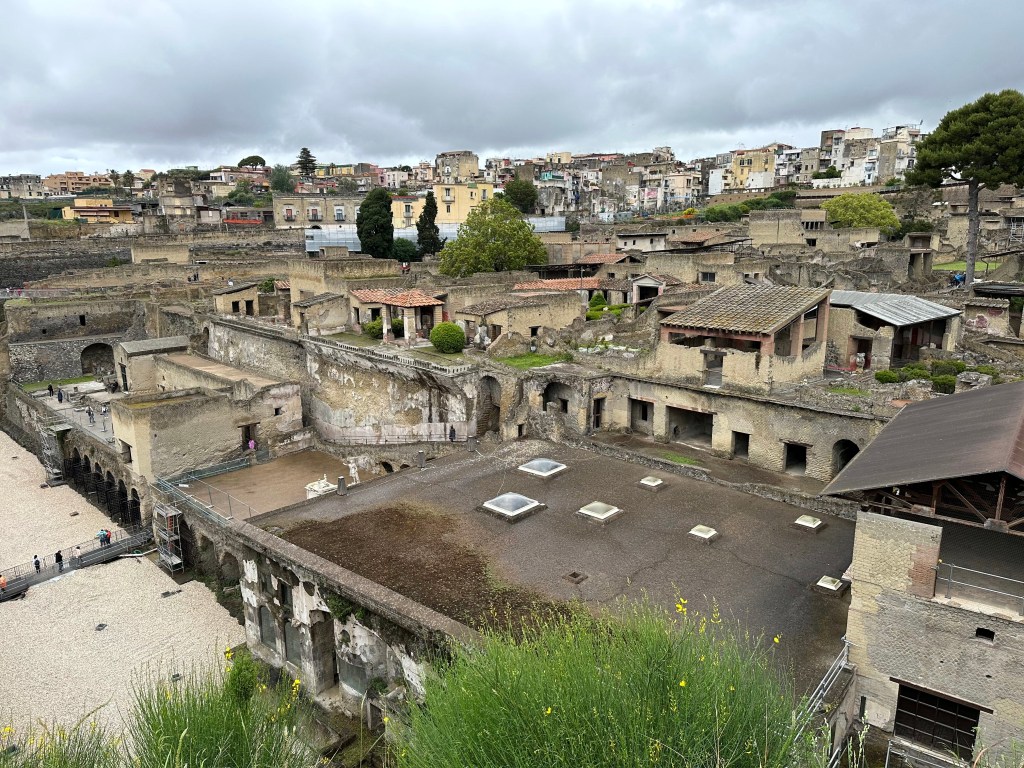
The eruption of nearby Mount Vesuvius destroyed Pompeii slowly with pumice and ash, collapsing roofs but preserving buildings and voids. The same eruption destroyed Herculaneum (an affluent seaside resort town much smaller than Pompeii) but with high-velocity pyroclastic surges, which immediately carbonized all of the organic matter, in addition to instantaneously encasing (and preserving) buildings. As a result, entire structures, mosaics, murals, ceramics, and even wood framing materials and furniture were better preserved than in Pompeii. Plus, fewer tourists; always a bonus.
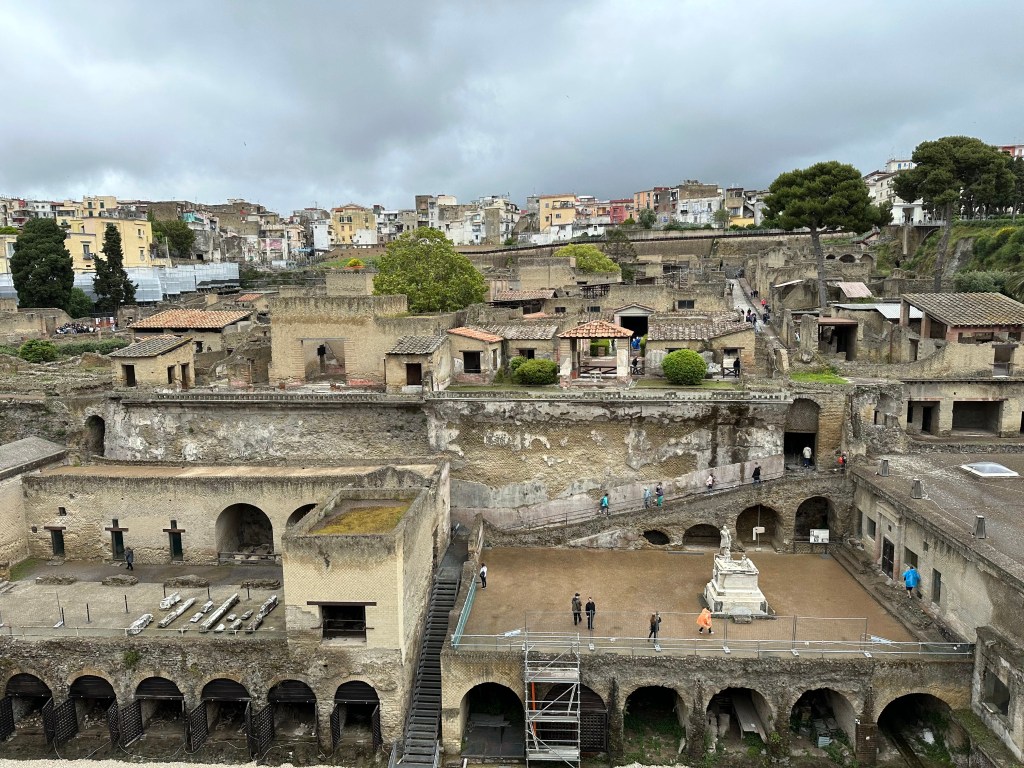
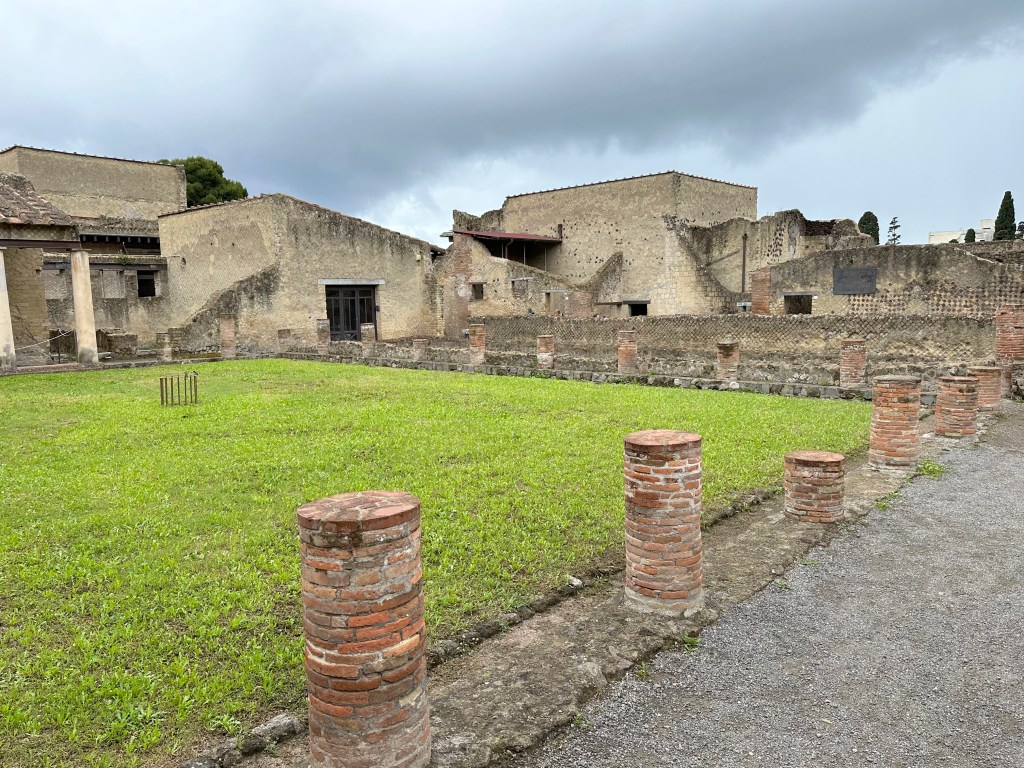
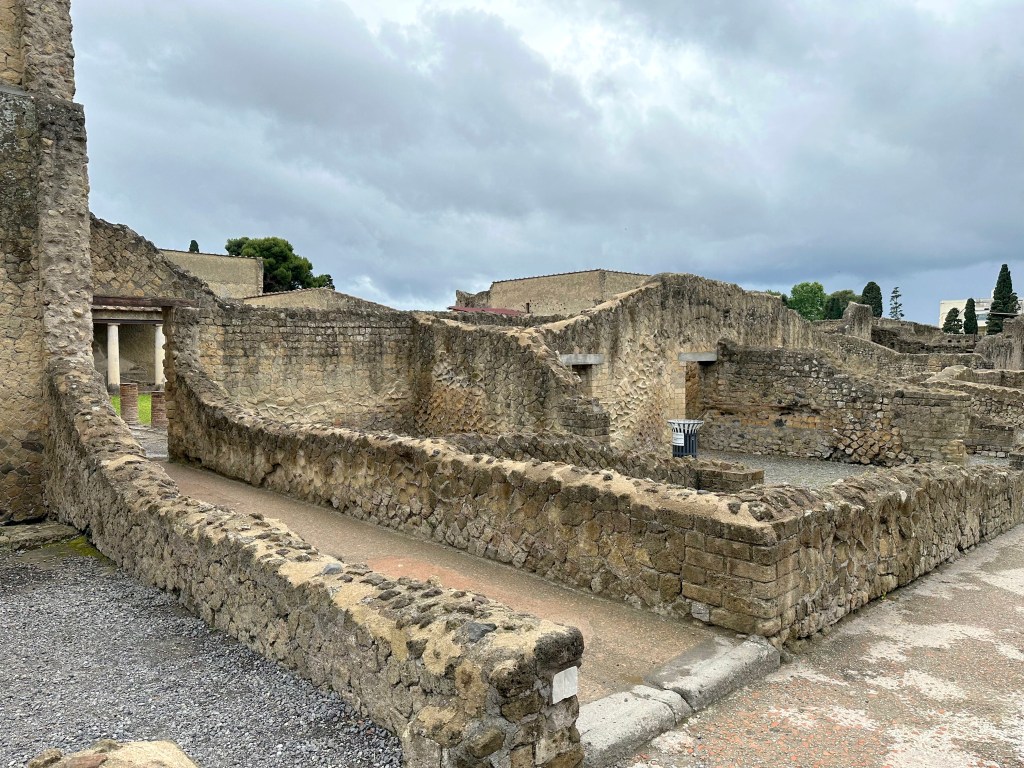
A partial view over Herculaneum; the arches in the bottom left corner were part of the port, when the Town abutted the coast.
Despite the multiple blocks of the town that are now exposed, 75% of Herculaneum still is unexcavated.
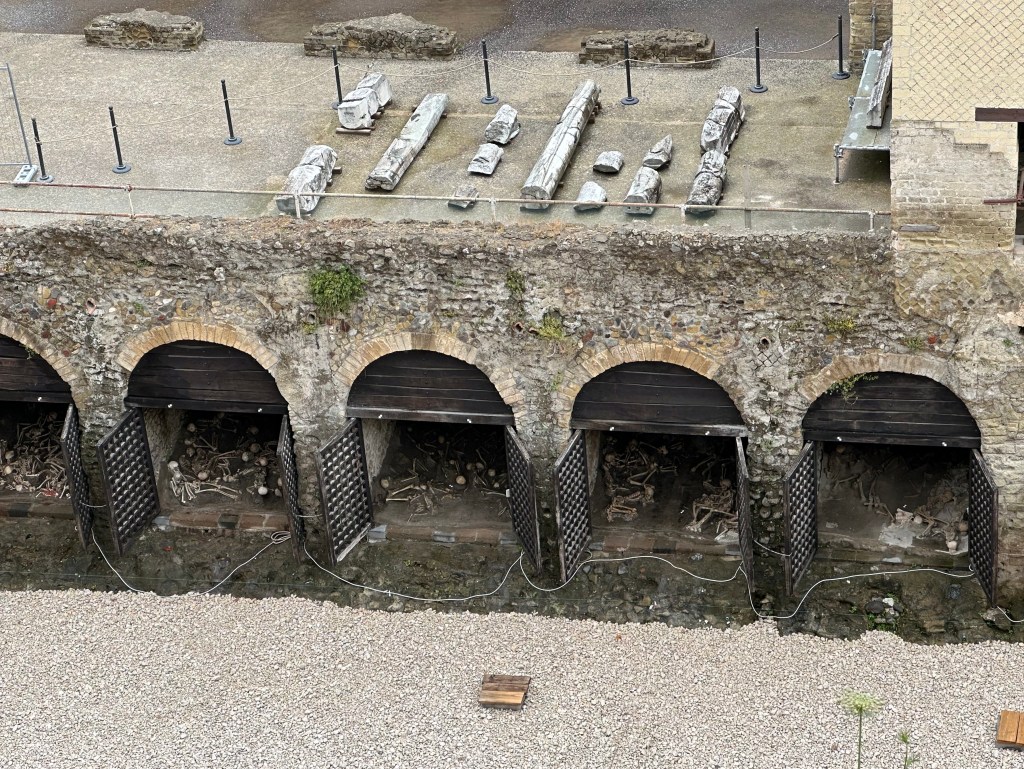
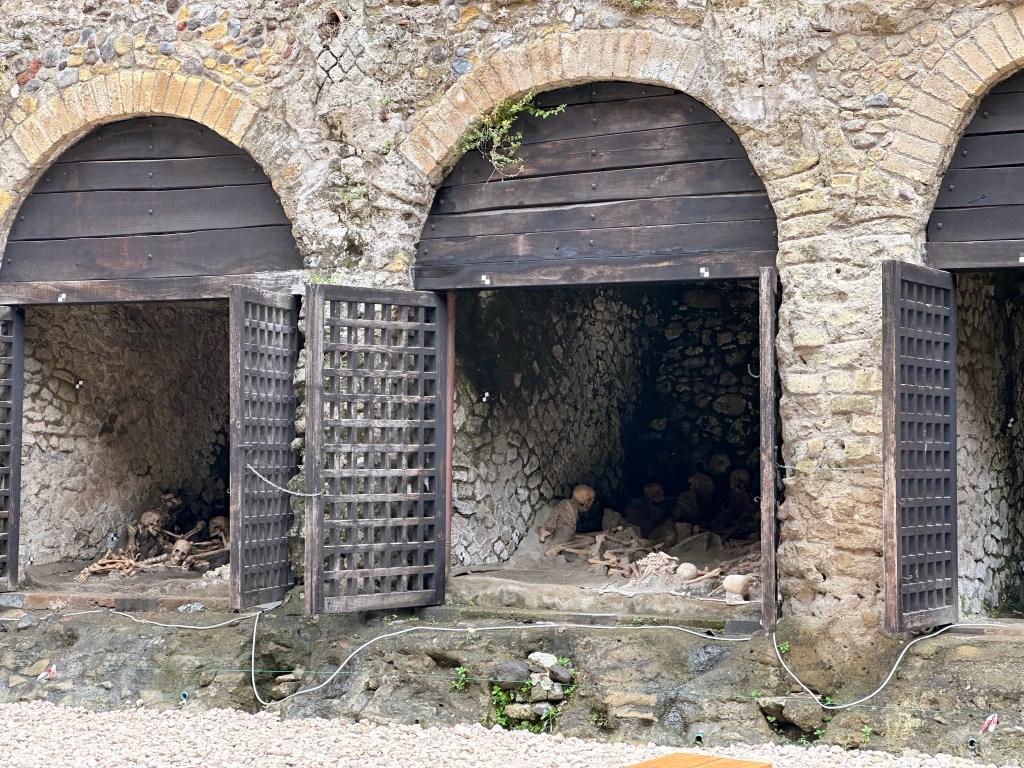
In addition to the preserved building components that we’d see, one of the first preserved elements we encountered were casts of skeletons of the residents who unsuccessfully sought refuge in the port’s boat sheds:
More than 300 skeletons are in the sheds.
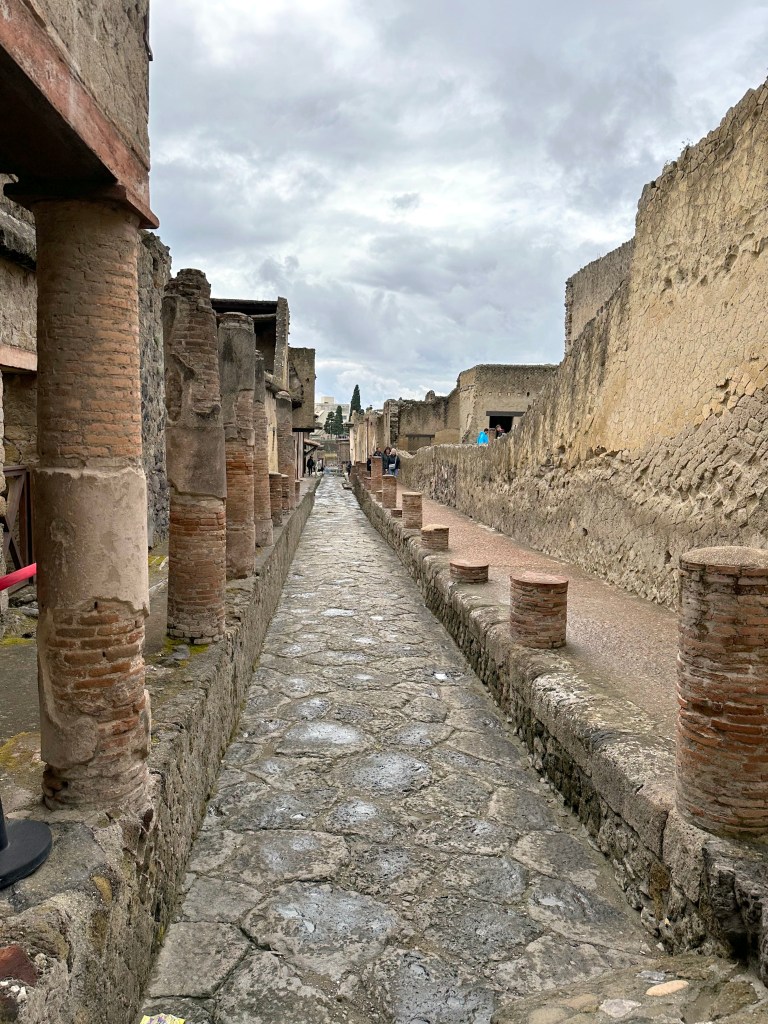
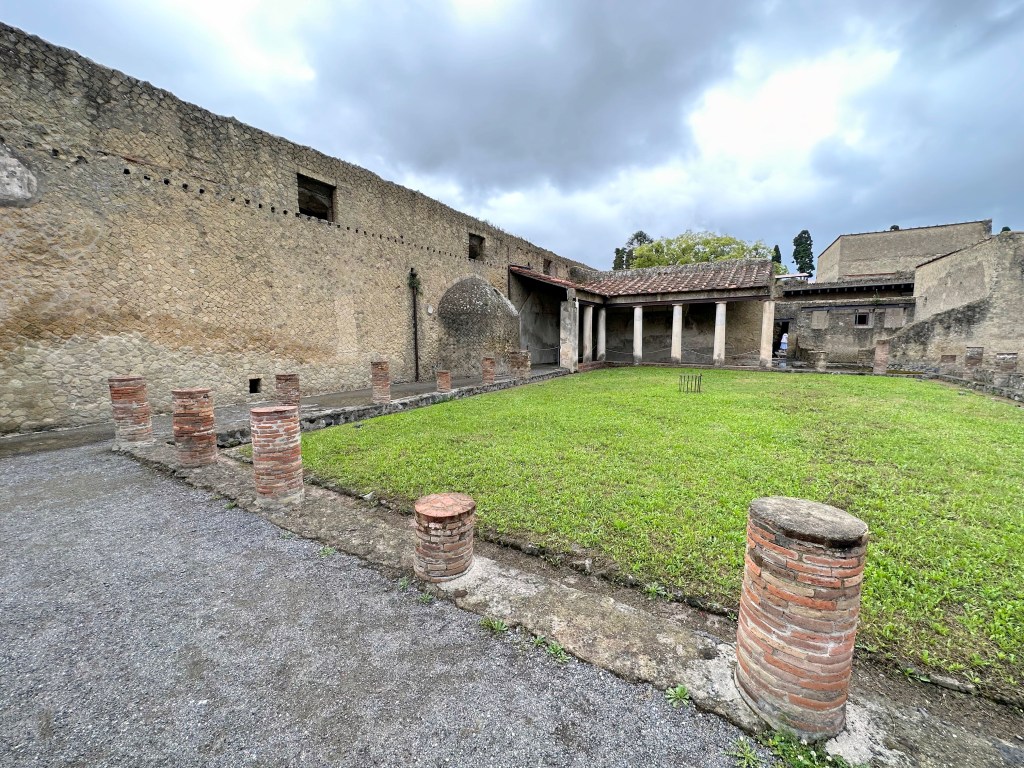
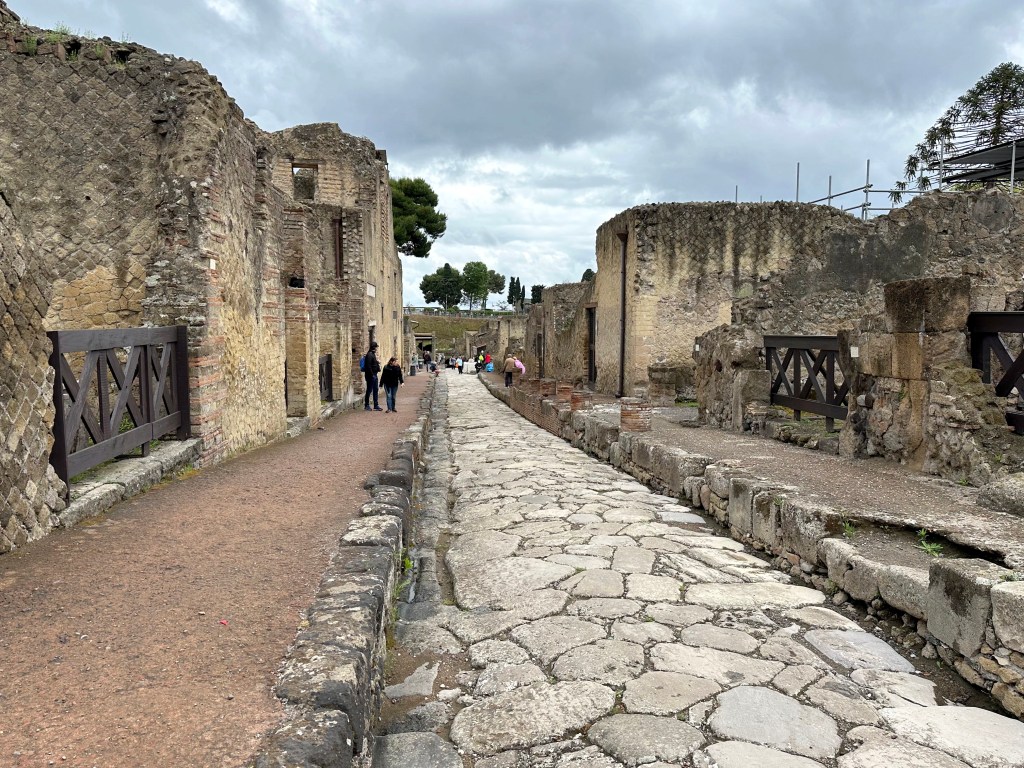
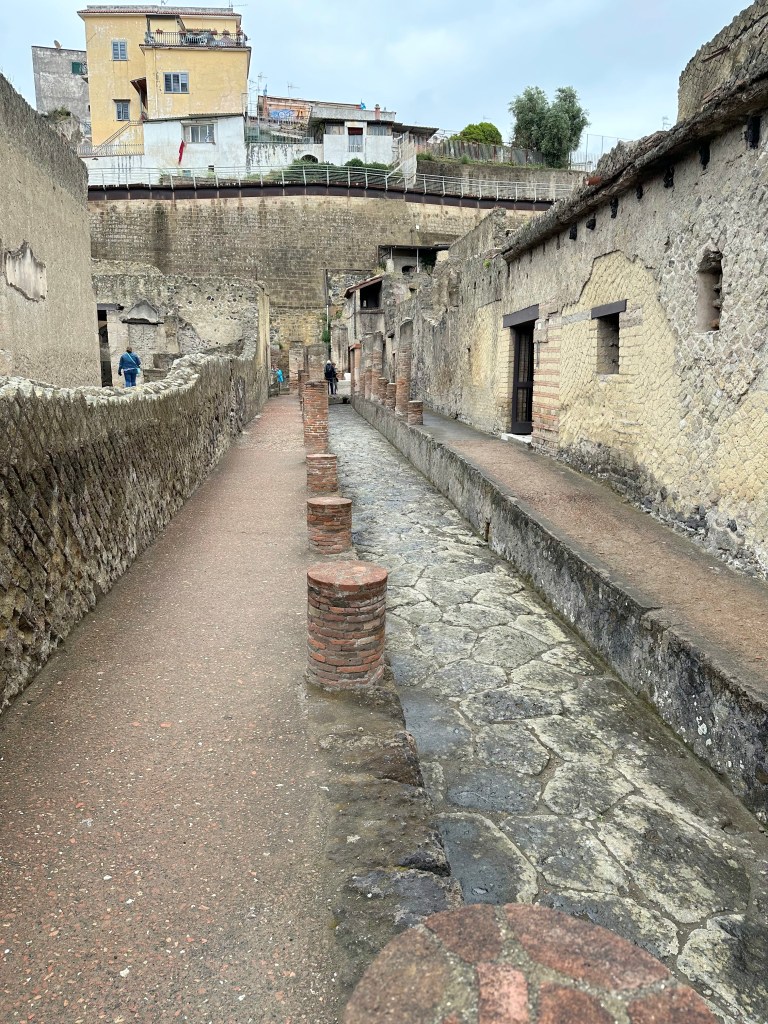
A perfectly preserved Roman street in Herculaneum:
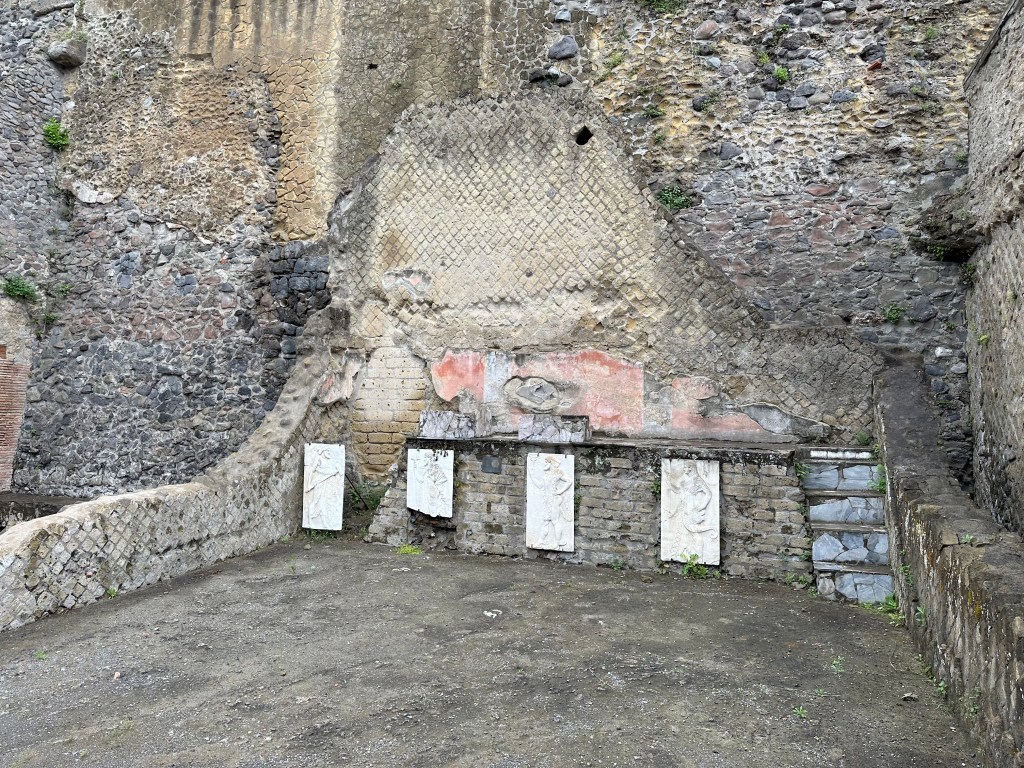
The preserved interiors of houses along the street. . .
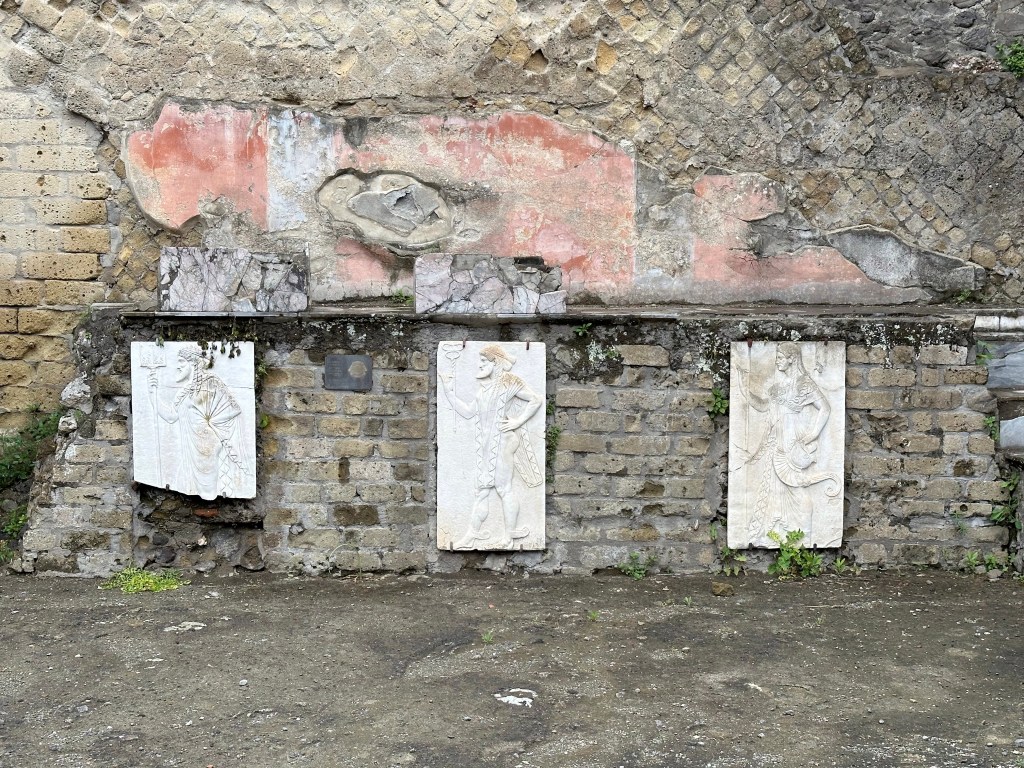
including bas relief sculptures found there.
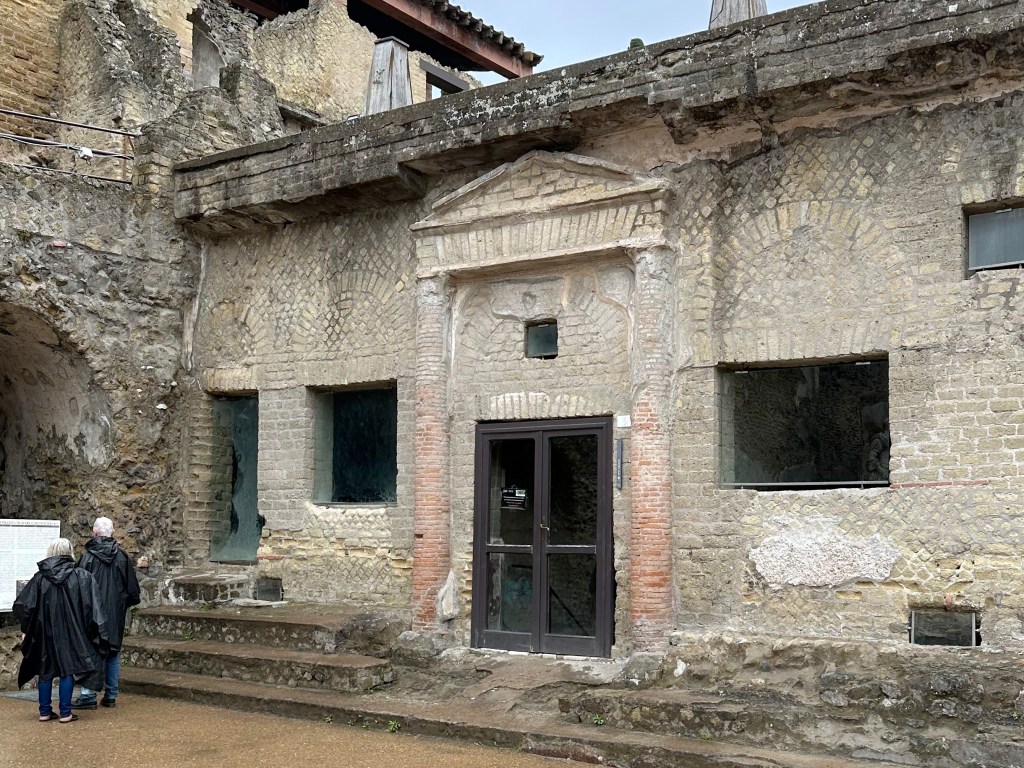
More house facades. . .
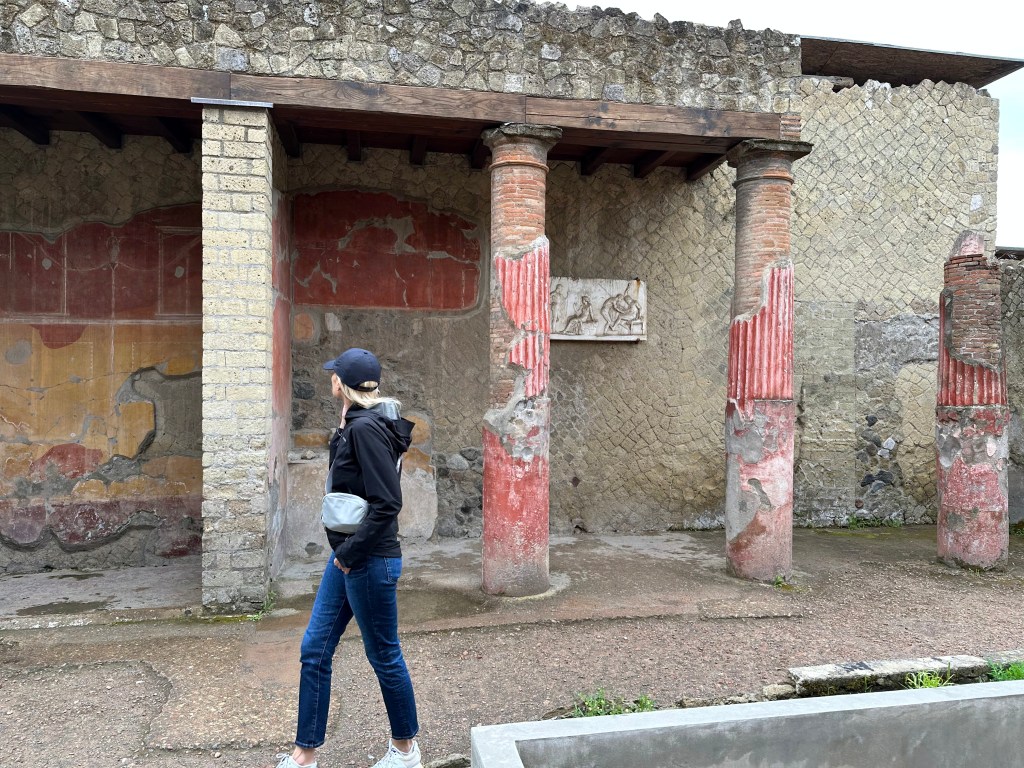
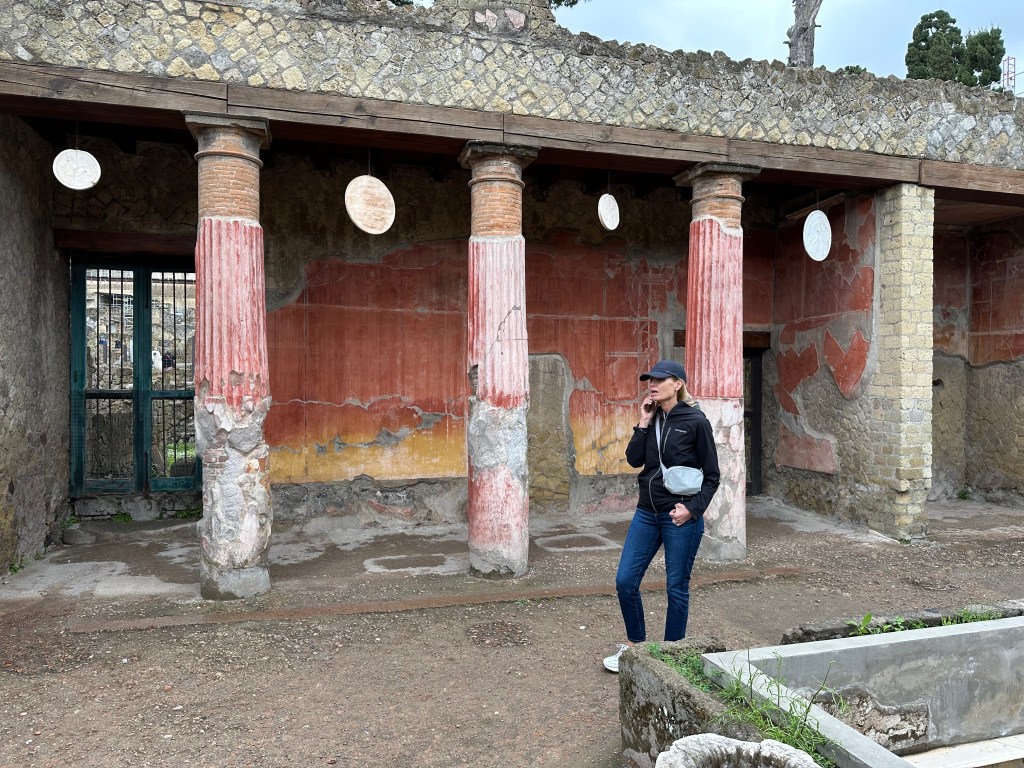
Including those with preserved polychrome-painted pillars.
“Built between 27 BC and 14 AD on the panoramic ridge overlooking the marina, this three-story home was decorated with a number of sculptures from the Neo-Attic school, including one with a relief of Telephus (Rilievo di Telefo), son of legendary found of the city, Hercules. The atrium is lined with columns supporting the upper floor, and the spaces between them were decorated with oscilla, or marble discs with reliefs of Dionysus used to guard against evil spirits.” (From here [or maybe from the audio guide Lisa’s listening to. Who knows?])
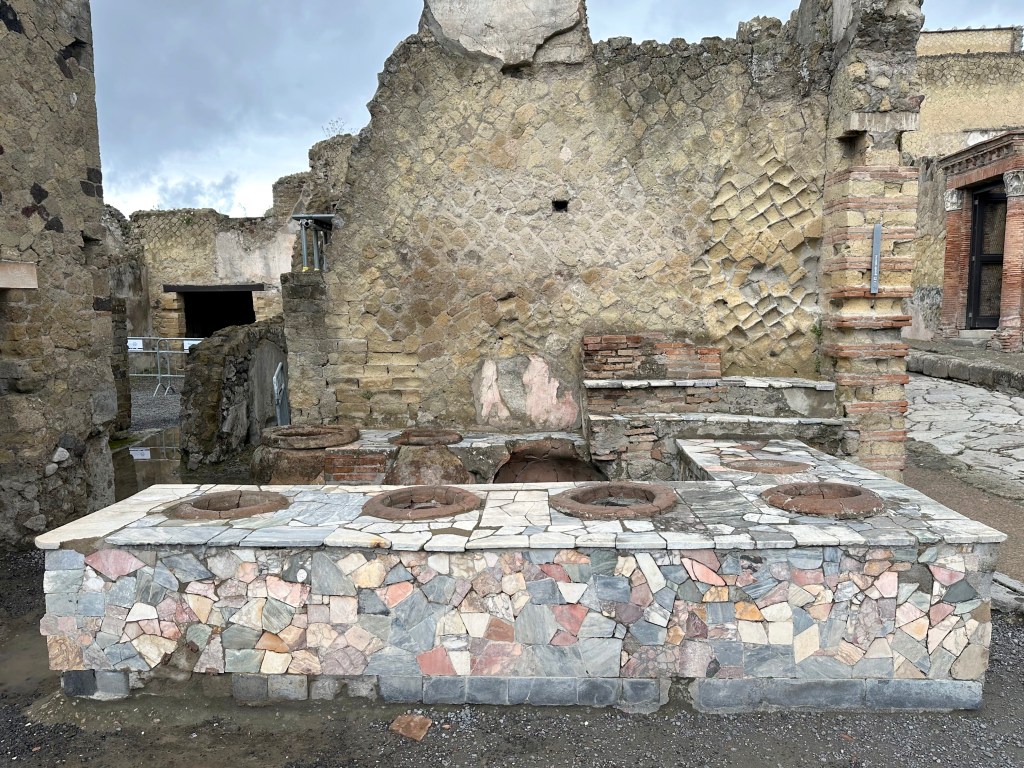
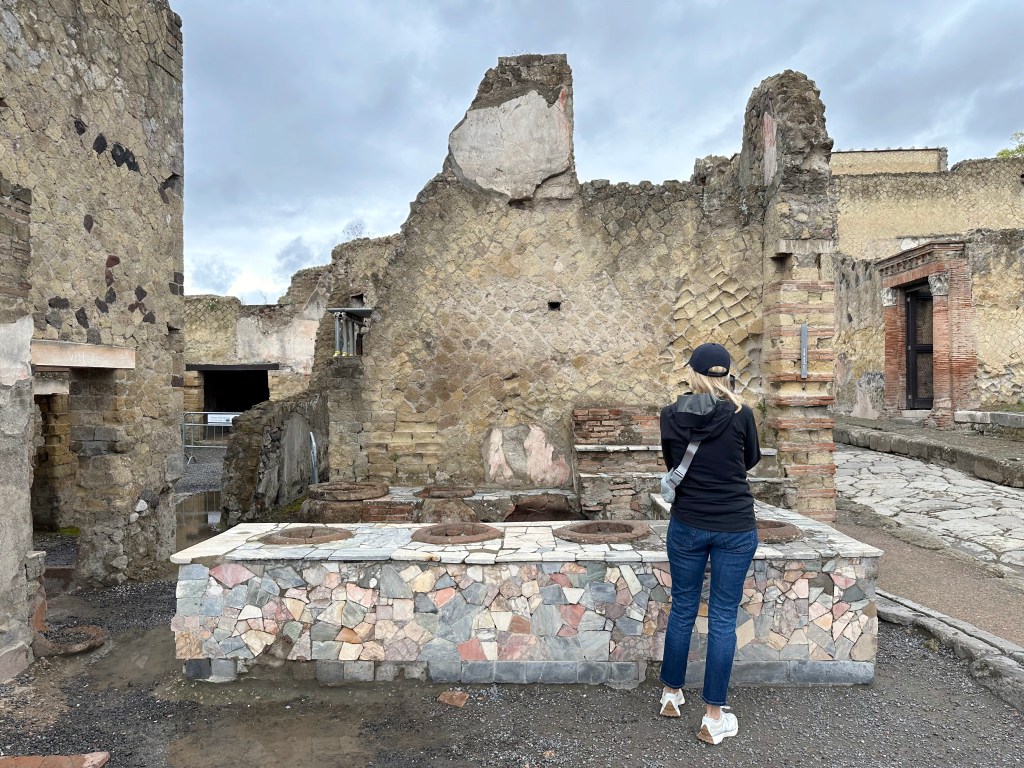
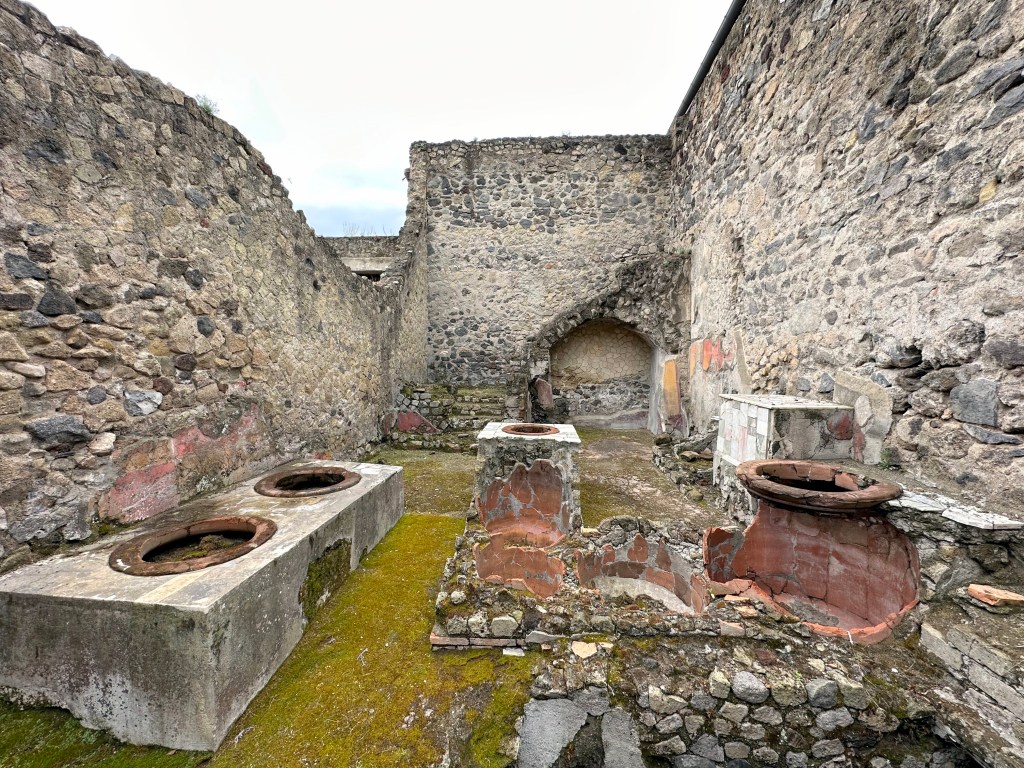
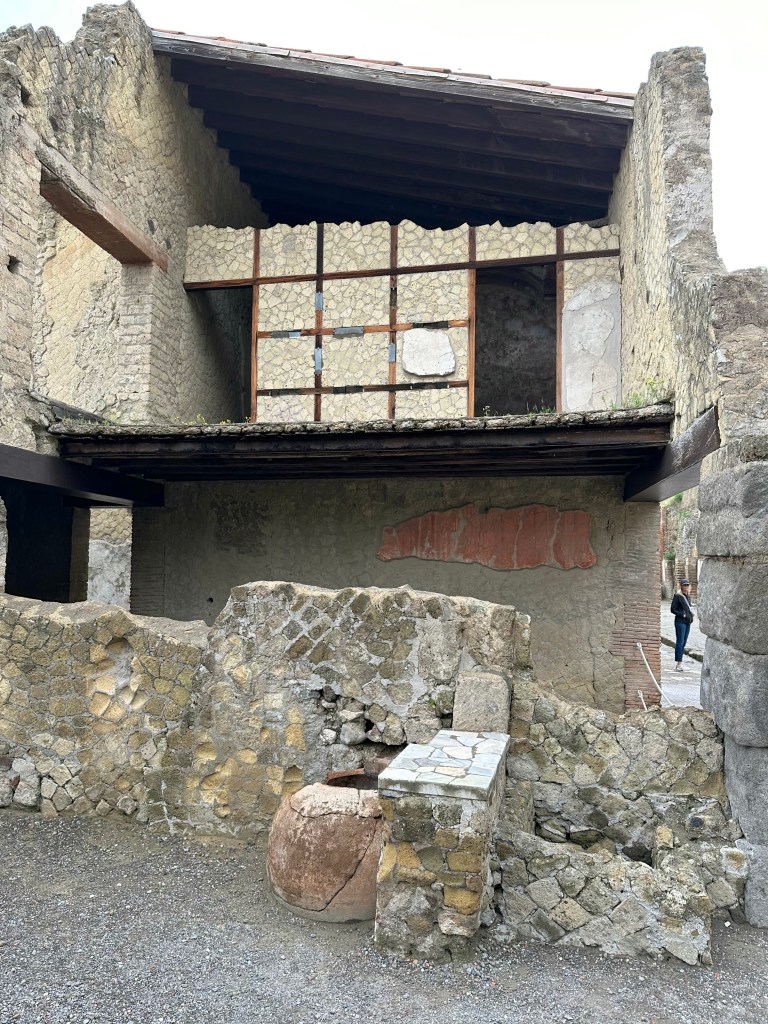
Aaaaand a snack bar! They appear every block or so; the Romans loved their fast food, served right out of heated, sunken amphora. Pretty amazing, frozen-in-time, cultural nugget.
One of us may have been getting hungry.
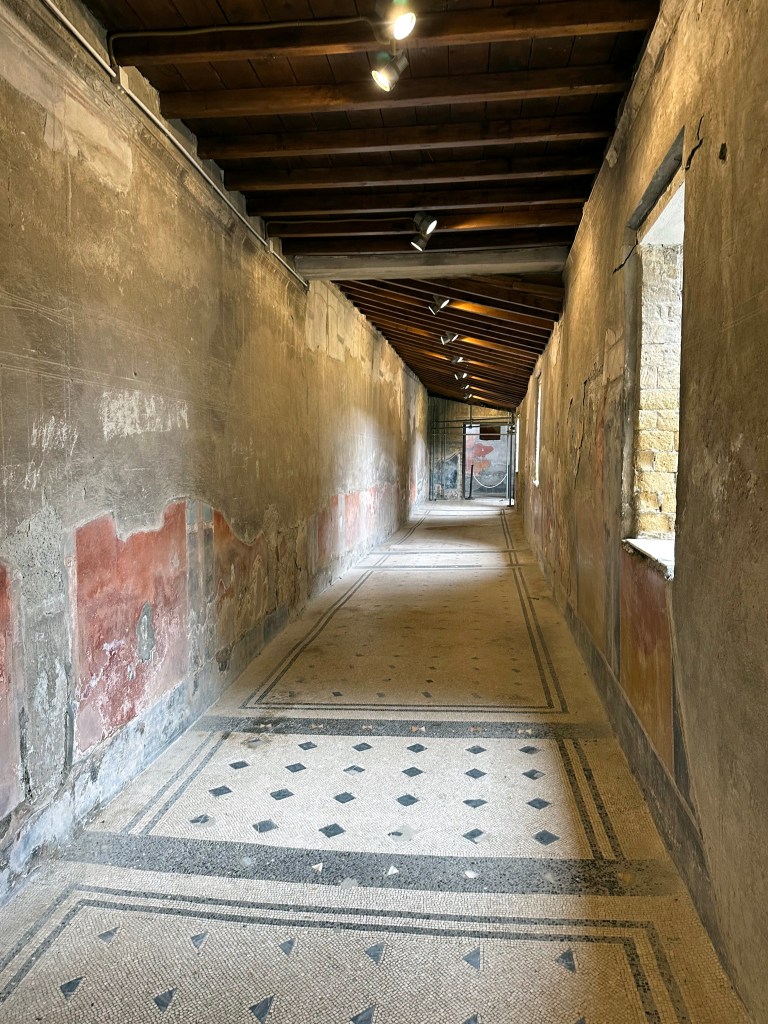
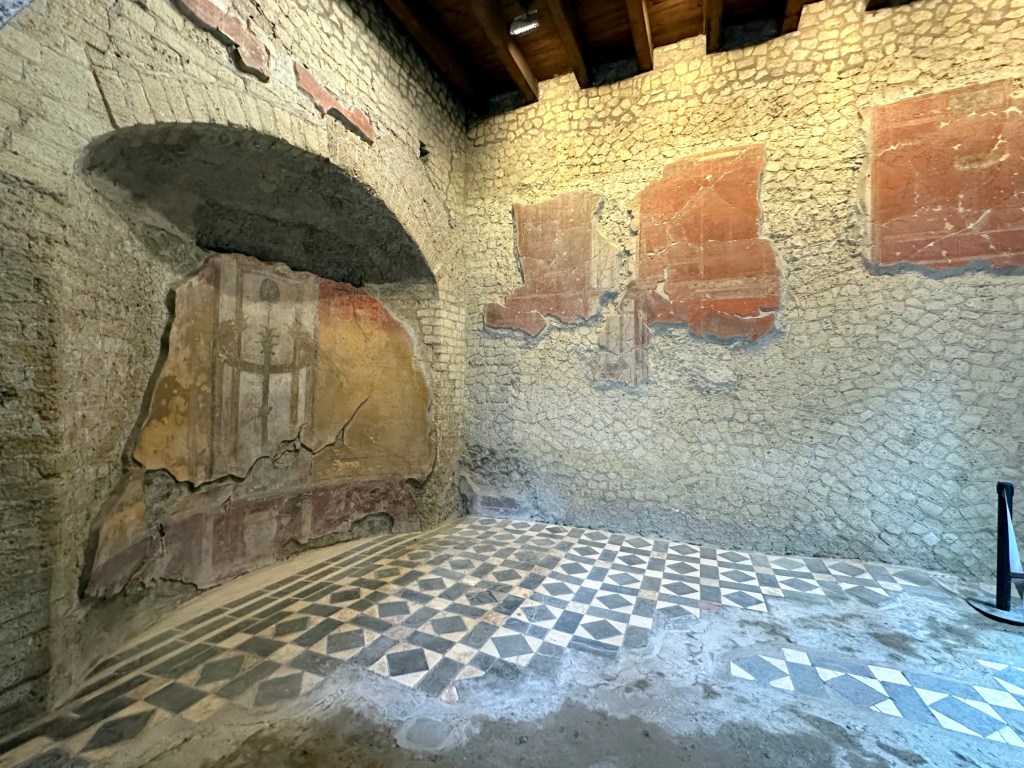
Preserved hallway and mosaic floors in the House of the Beautiful Courtyard / House of the Black Salon:
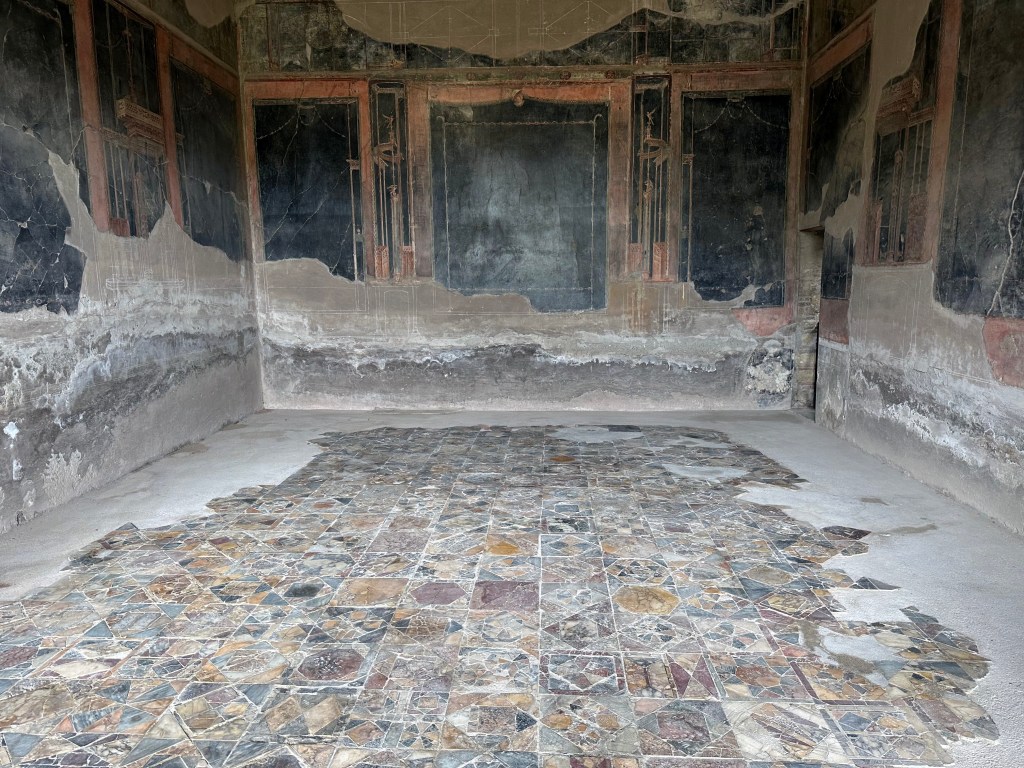
To wit, the Black Salon (albeit with colorful, inlaid marble floors):
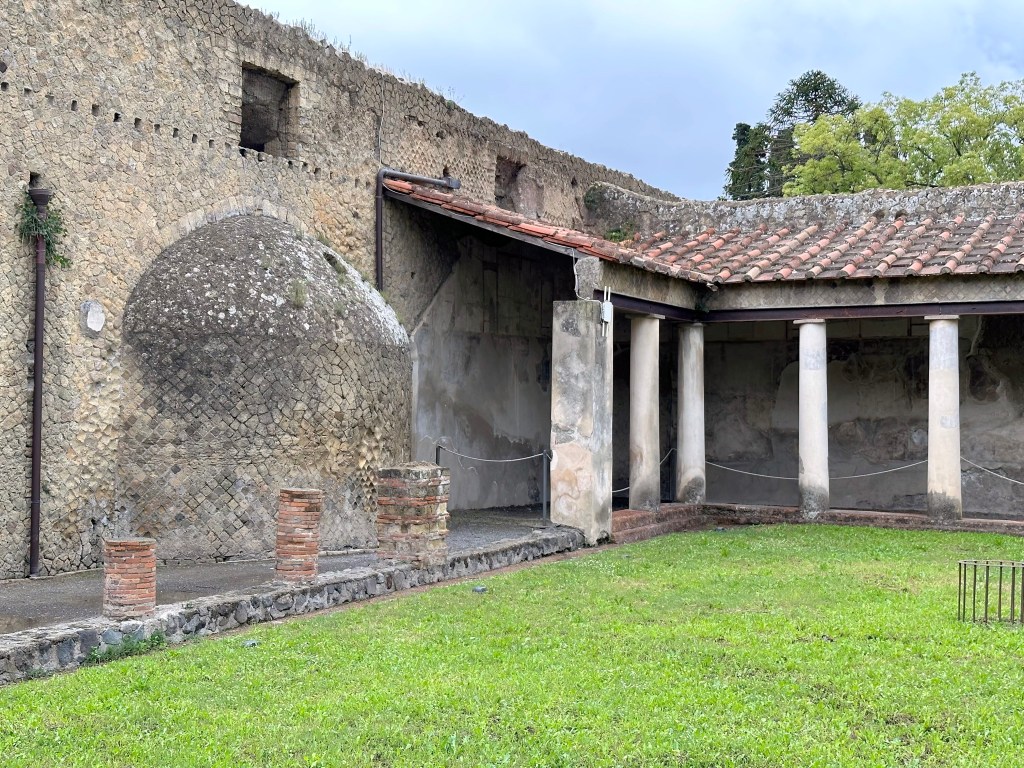
Exterior of Herculaneum’s all important Terme Centrali (Central Baths):
The baths date from the second half of the 1st century BC.
Interior, with niche on the other side of the exterior bulge on the above pic.
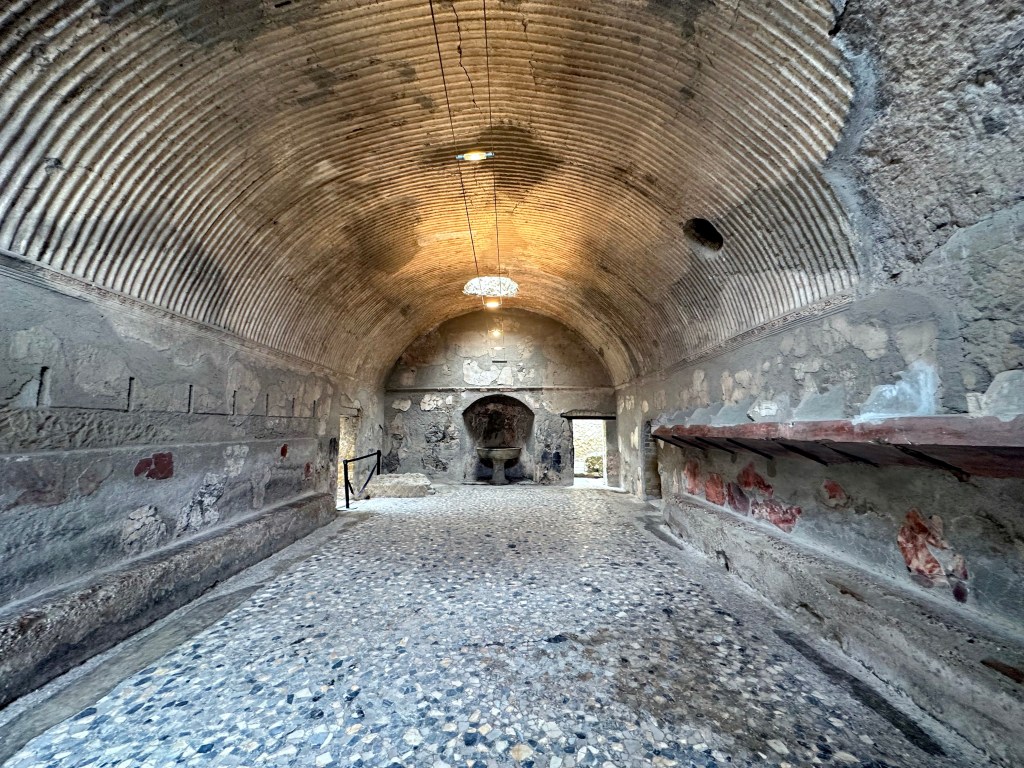
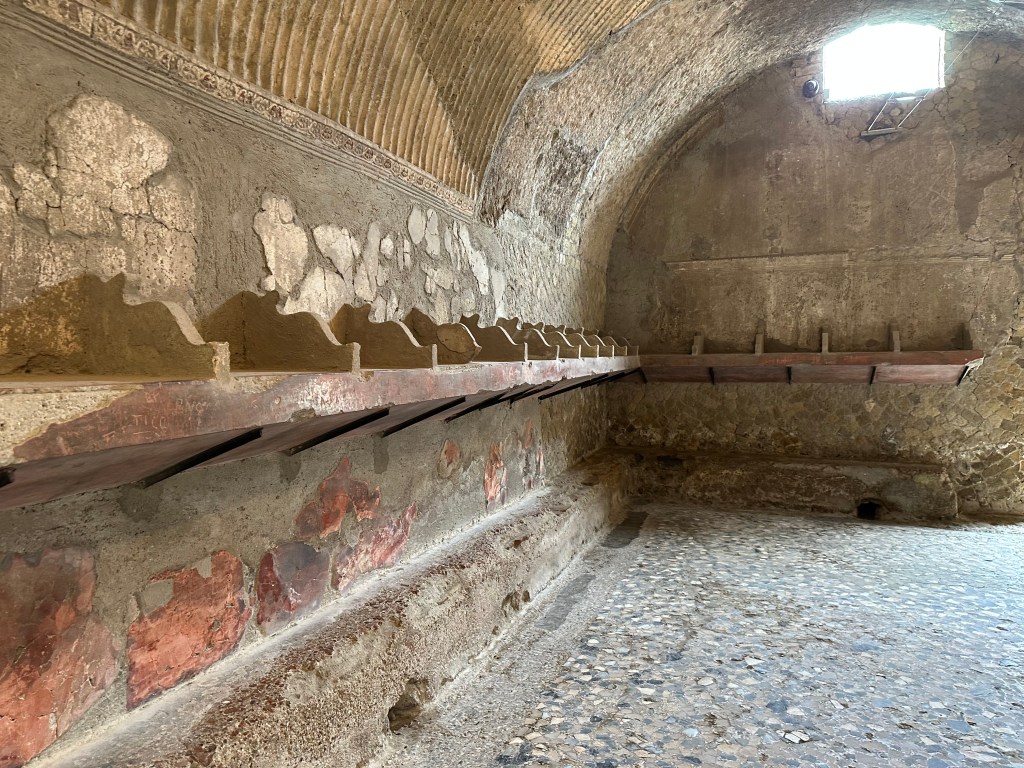
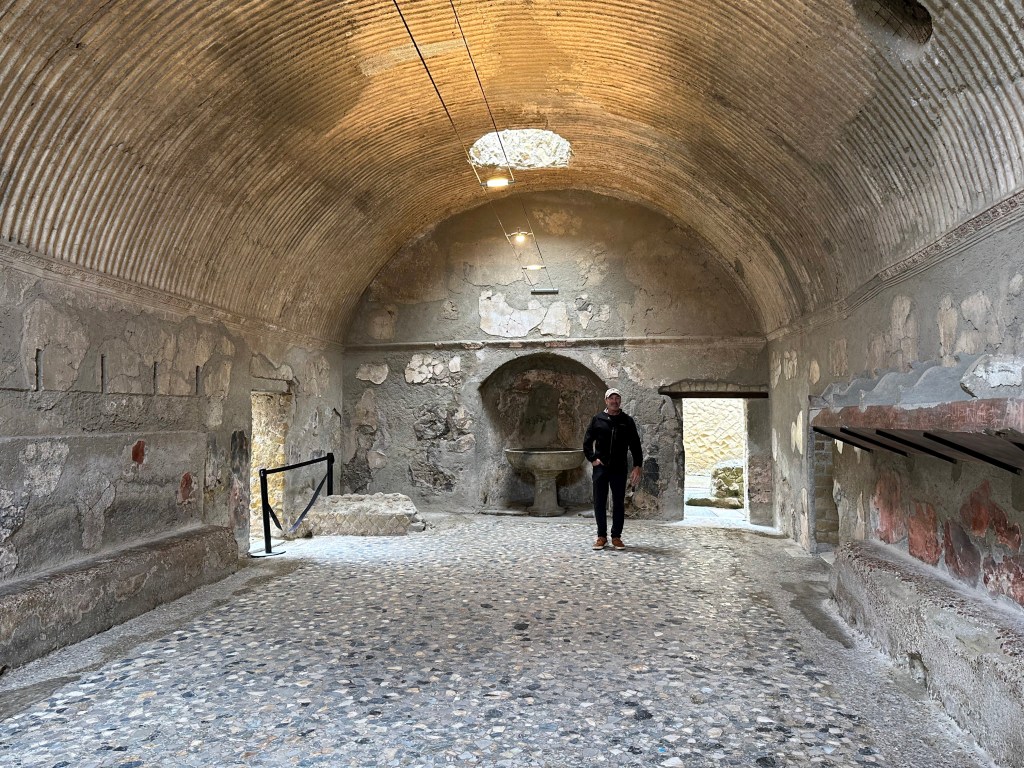
Inside the cavernous Termi Machili – men’s side:
With niches to store your duds:
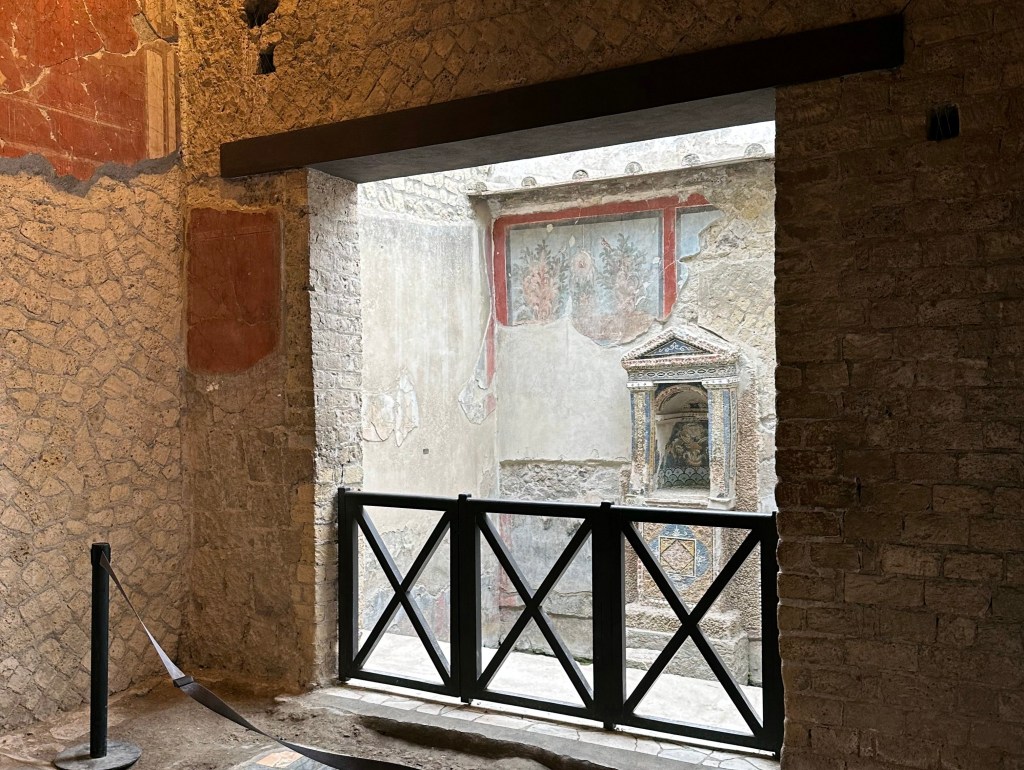
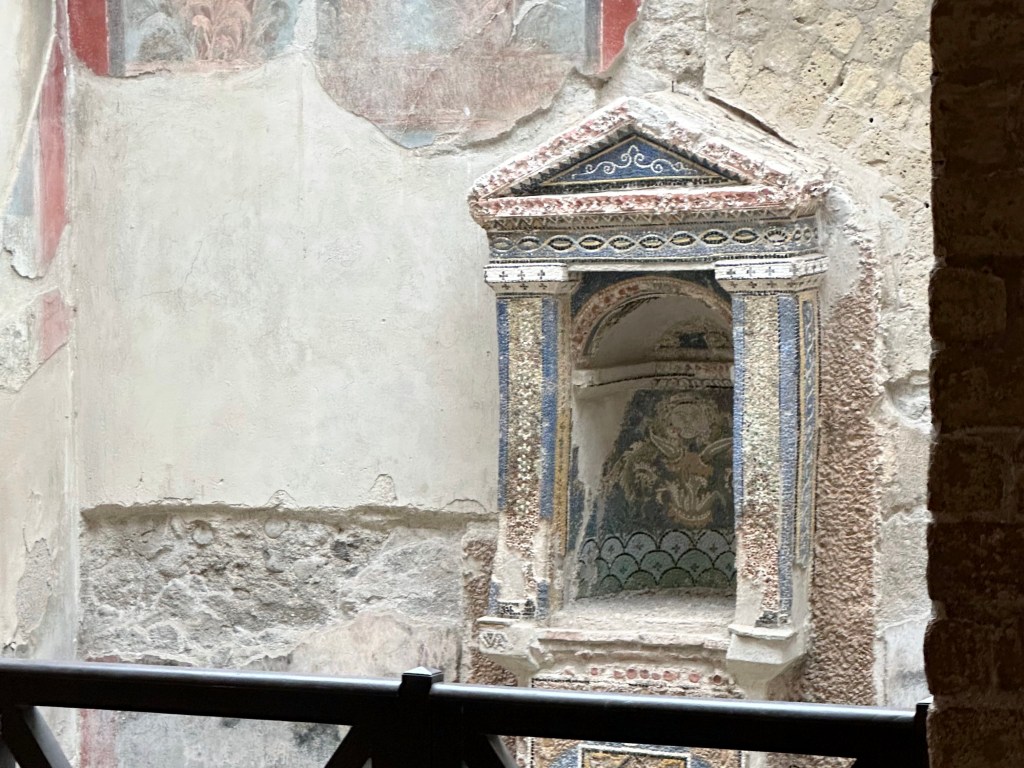
Another house, this time with a mosaic tile ancestors altar:
More street views:
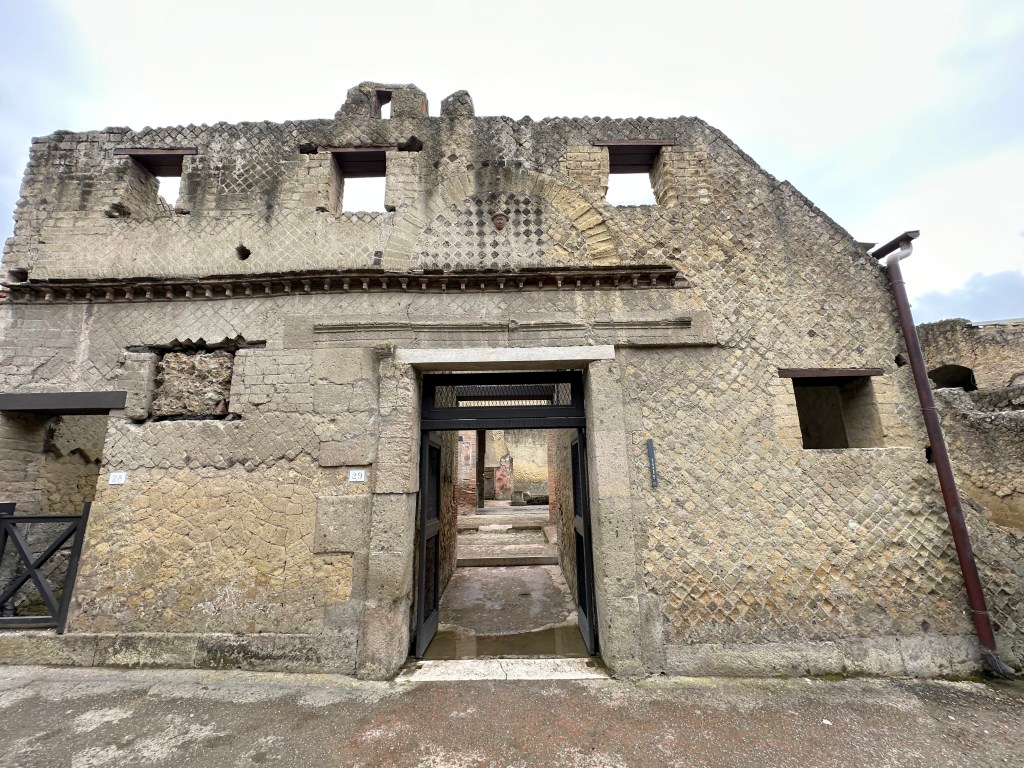
Awesome house facade:
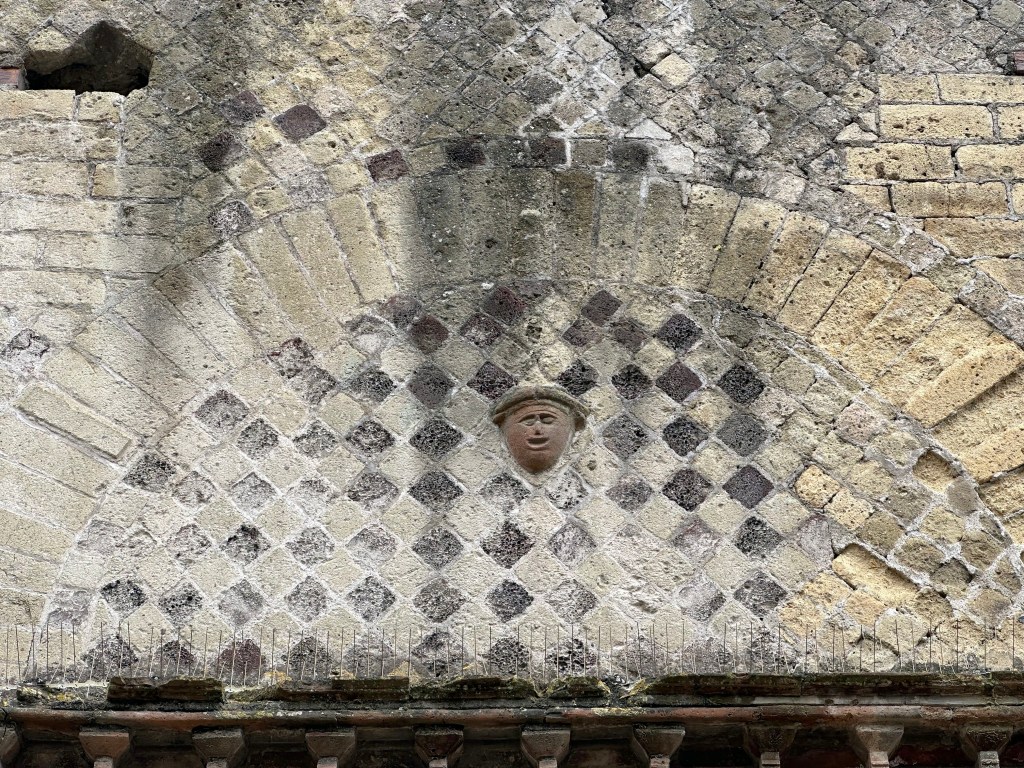
With a happy little guy in the middle of the lunette over the door:
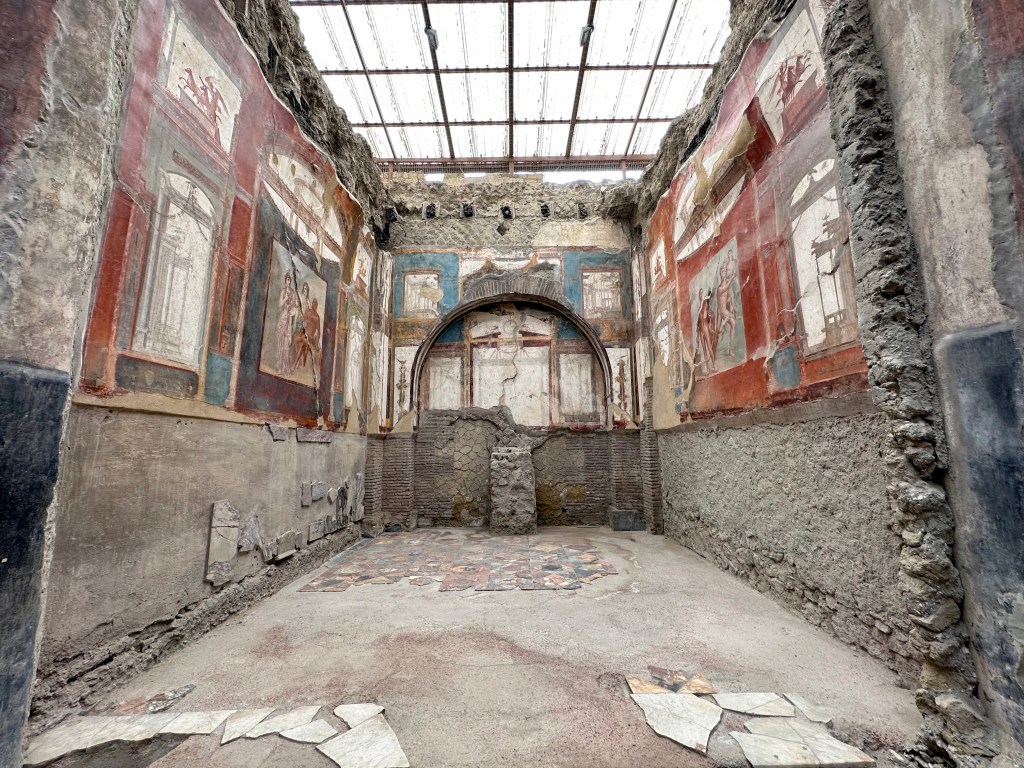
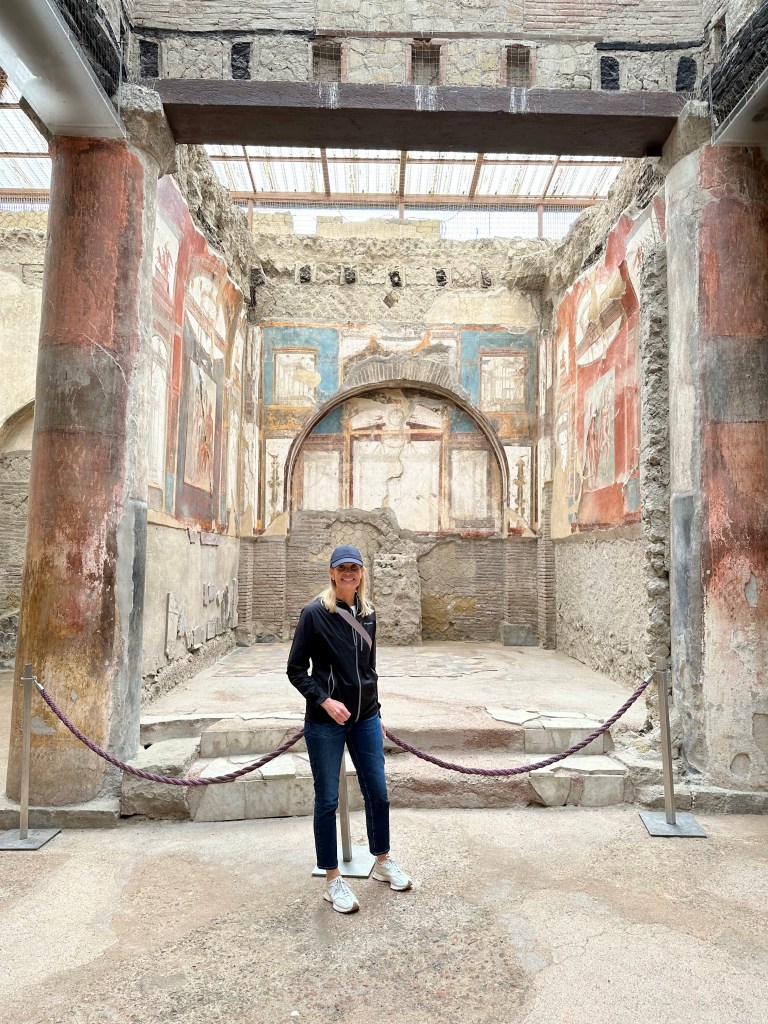
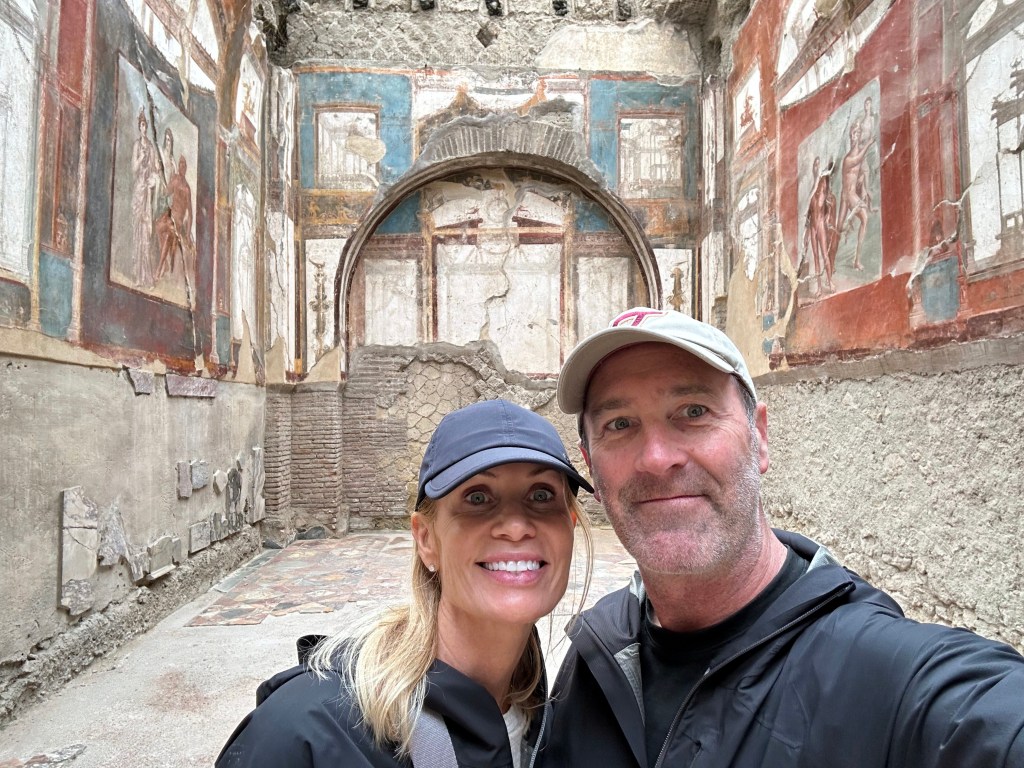
The incredibly preserved reception or audience room of the College of the Augustales, the gathering place for the cult of the emperor. Freakin’ unbelievable.
“This magnificent square structure was seat to the College of the Augustales, free men who were devotees of the cult of the Emperor Augustus. Columns, arches, cocciopesto floors, and two splendid frescoes: on the left wall, there is a depiction of Hercules entering Mount Olympus accompanied by Jupiter, Juno, and Minerva; the fresco on the right wall depicts Hercules wrestling Achelous. The skeleton of the building’s custodian was found in his quarters, laid out on the bed.” (From here.)
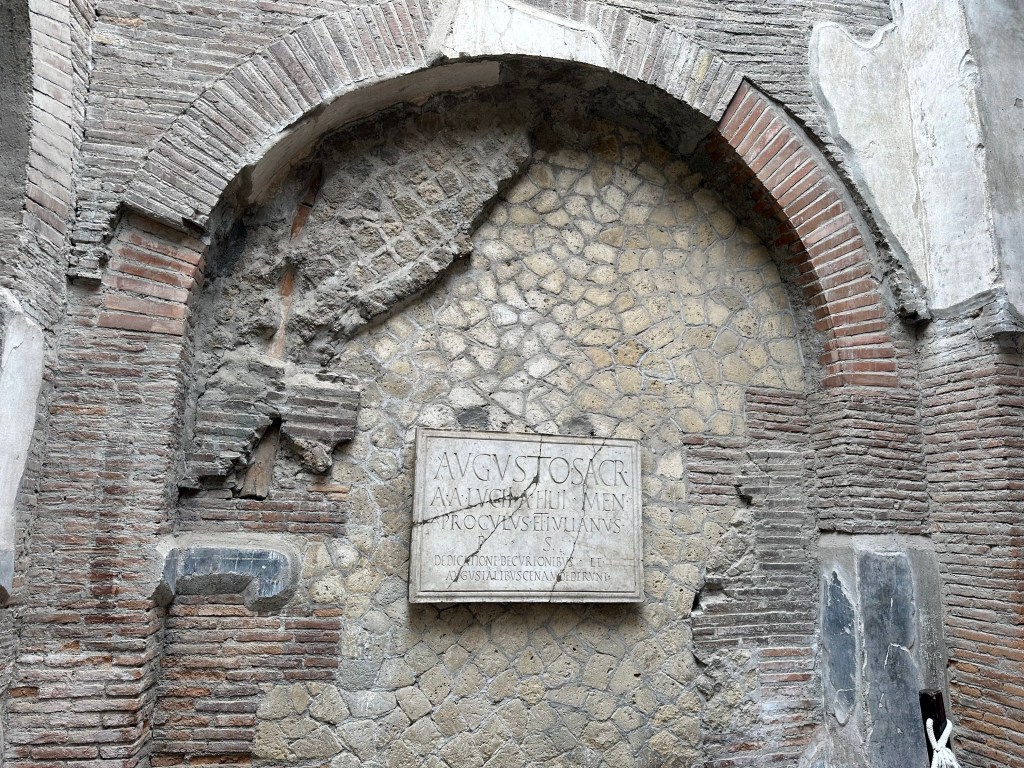
Carved stone plaque honoring Emperor Augustus by a pair of notable citizens who funded a civic feature in town. The plaque reads: “Sacred to Augustus. Proculus and Julianus, sons of Aulus (of the Menenian tribe), dedicated this.”
Around the corner? Another snack bar!
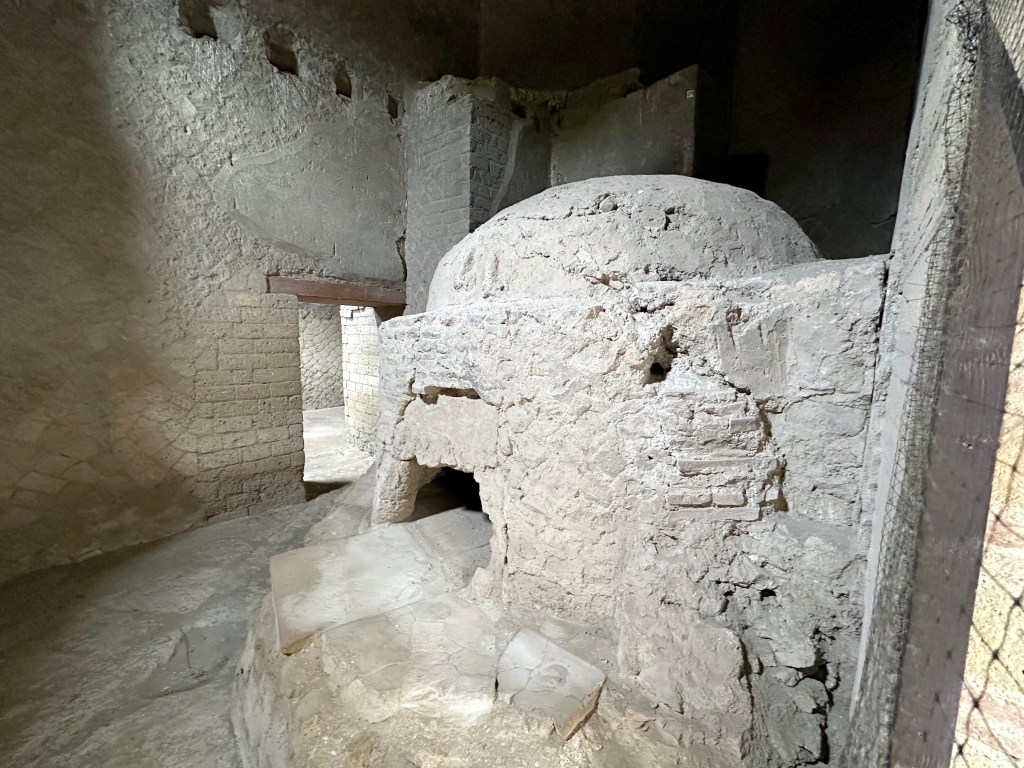
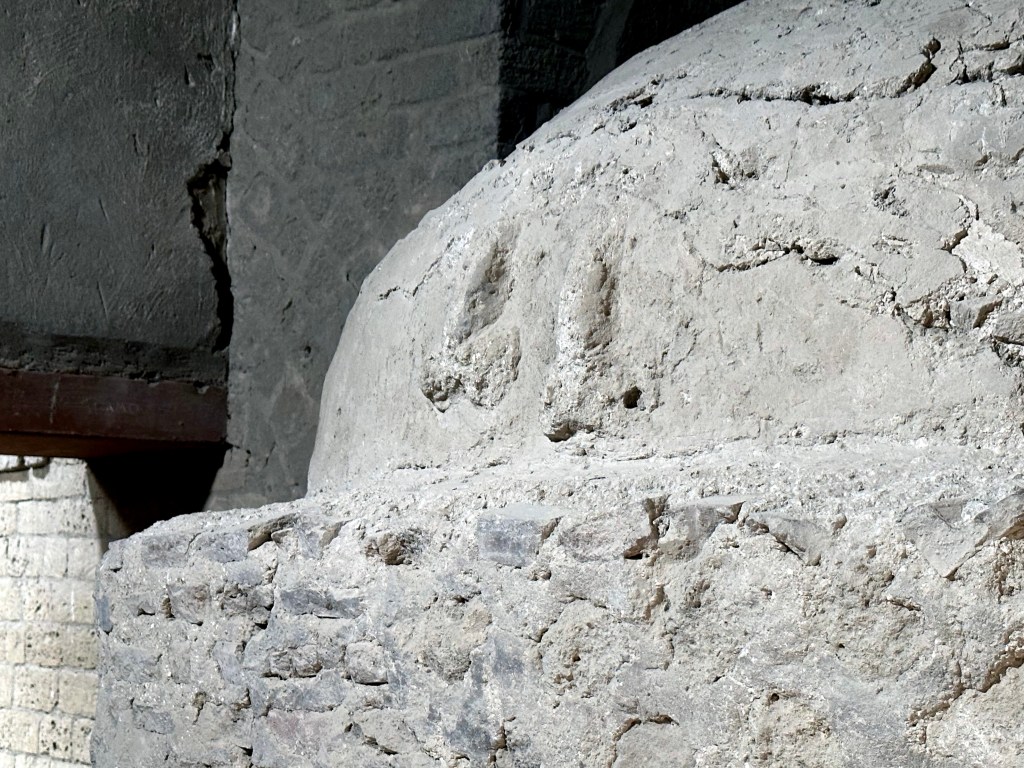
A bakery in Herculaneum, with its large bread oven:
And, just was we saw next to the gate in the stone wall in the Roman ruins of Empuries in Catalonia, two prominent phalluses right above the door to this oven. (Maybe they specialized in baguettes hahahaha!)
Another preserved, Roman-engineered street, complete with textbook cambering.
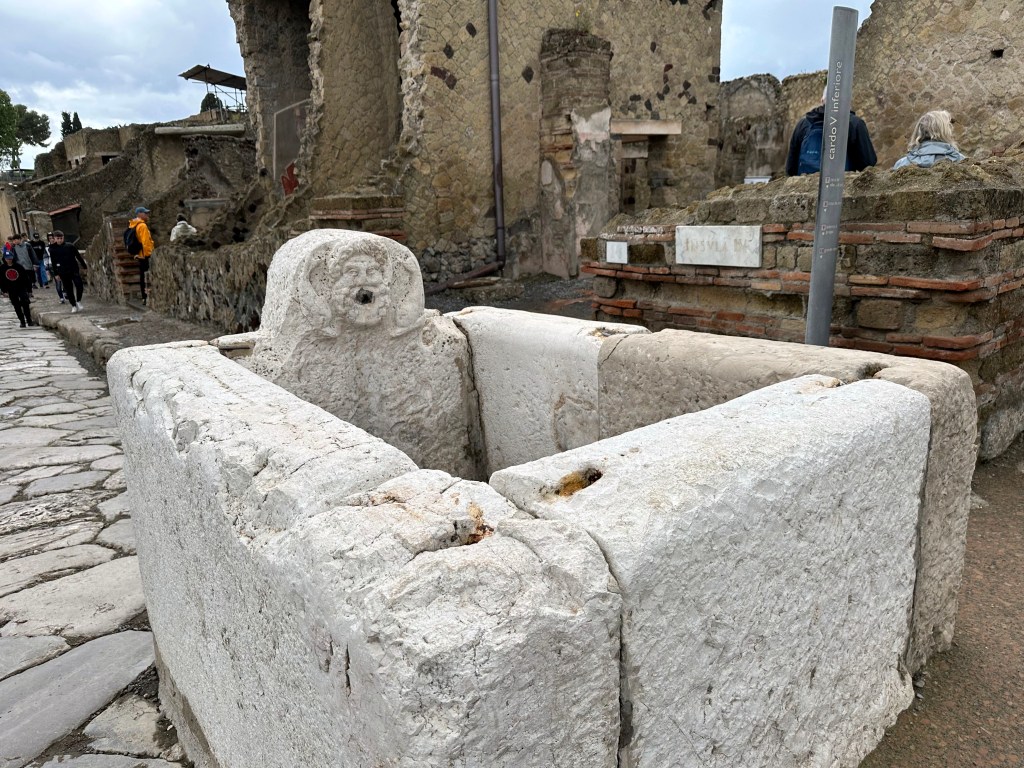
One of many preserved fountains / wash basins scattered throughout town:
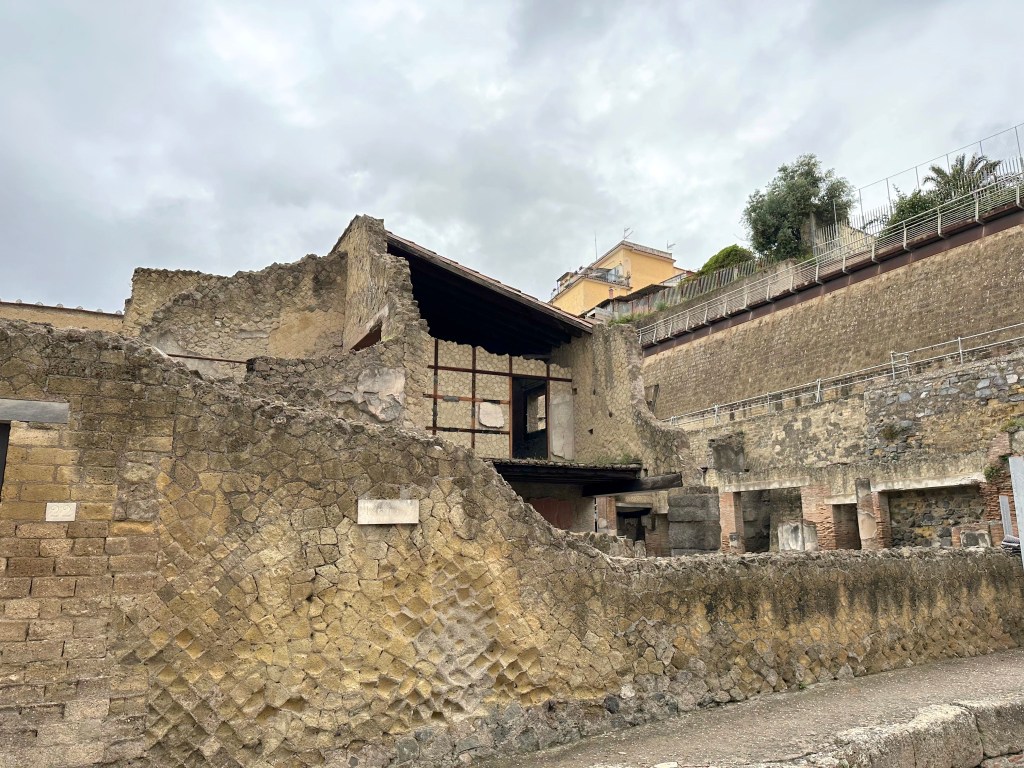
Preserved second floor residence over a shop:
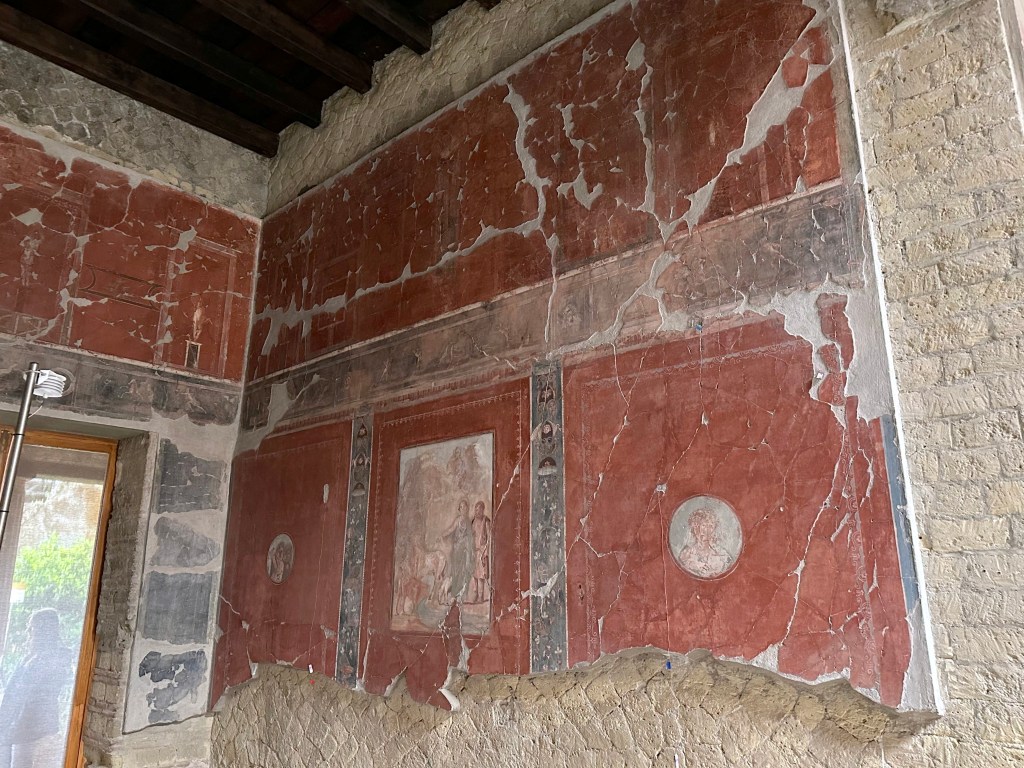
Still-vibrant, ornate, painted walls preserved by Vesuvius’ pyroclastic surges, which sealed the buildings and their interiors:
Yet another colonnaded street; due to materials from the eruption and over time, Herculaneum lies tens of meters beneath the modern town above:
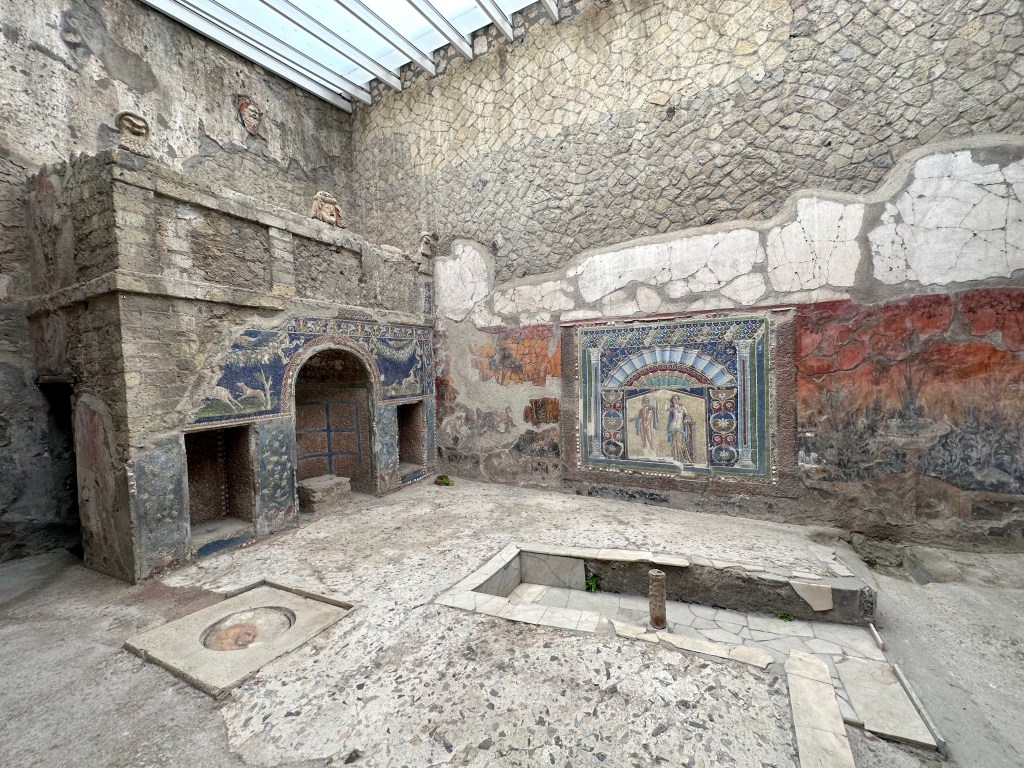
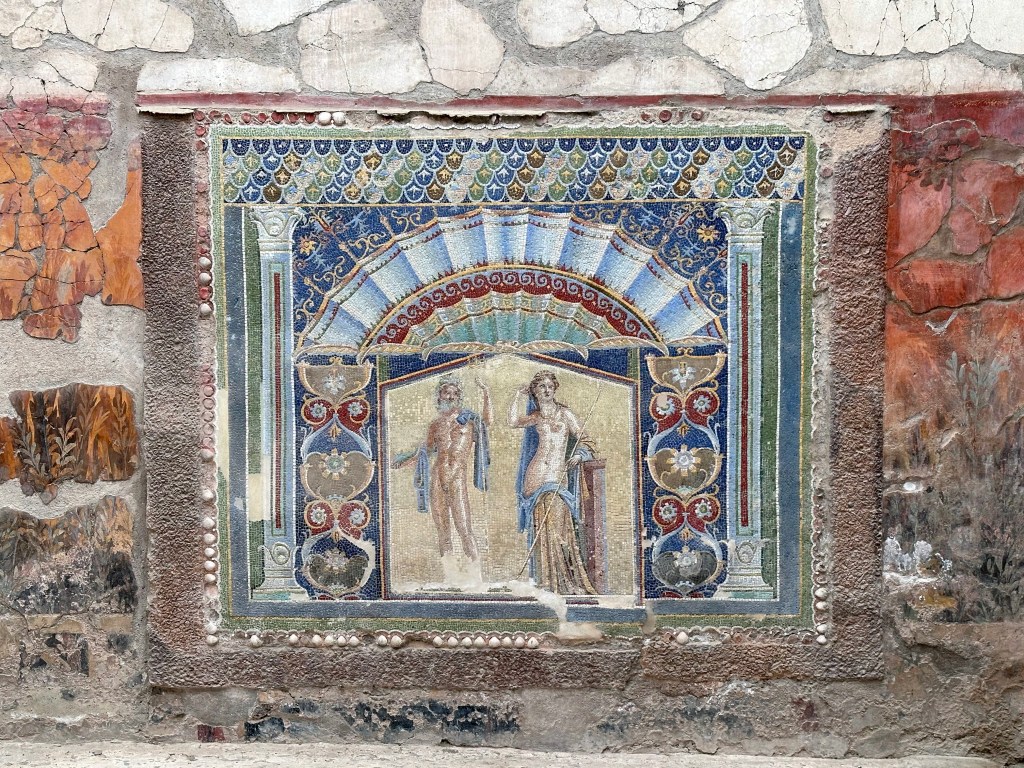
The “House of Neptune and Amphitrite,” so called because of its exceptional polychrome mosaics. The best are in the triclinium – a dining area defined by a three-sided dining couch, below in the middle.
The house’s namesake mosaic of Neptune and Amphrite on the eastern wall of the triclinium, visible from the street:
“Neptune, the god of the sea, is recognizable by his trident, his wild beard, flowing locks, and blue mantle, while Amphitrite (in Latin as Salacia), semi-nude, appears as the queen of the sea, adorned with a diadem, necklace, arm band, and earrings. Neptune fell in love with Amphitrite, but she initially fled him. With the help of Delphinus, the dolphin, Neptune found her. Delphinus was rewarded by being turned into a constellation, and Amphitrite became the goddess of the sea. Even though the artist was working with small stones, he still artfully conveyed Neptune’s musculature and Amphitrite’s shapely curves. In both cases, the drapery responds to the shape of their bodies. He stands in a contrapposto pose, suggesting a sculpture of a god or athlete might have been the source for his pose, while she leans against a pillar, indicating that the inspiration for this mosaic was a statue—perhaps, one of Venus. [5]
The gods stand beneath a fan-like light blue sail, under which are scrolls decorated with a red wave pattern, and elaborate vegetal scrolls—composed of red, green, Egyptian blue, and white tesserae, which appear to support the lintel and conch. The mosaic is framed by a border of shells and pumice, reinforcing the mosaic’s maritime theme. The mosaic was inserted into a background of garden paintings, which date to an earlier decorative phase.” (From here.)
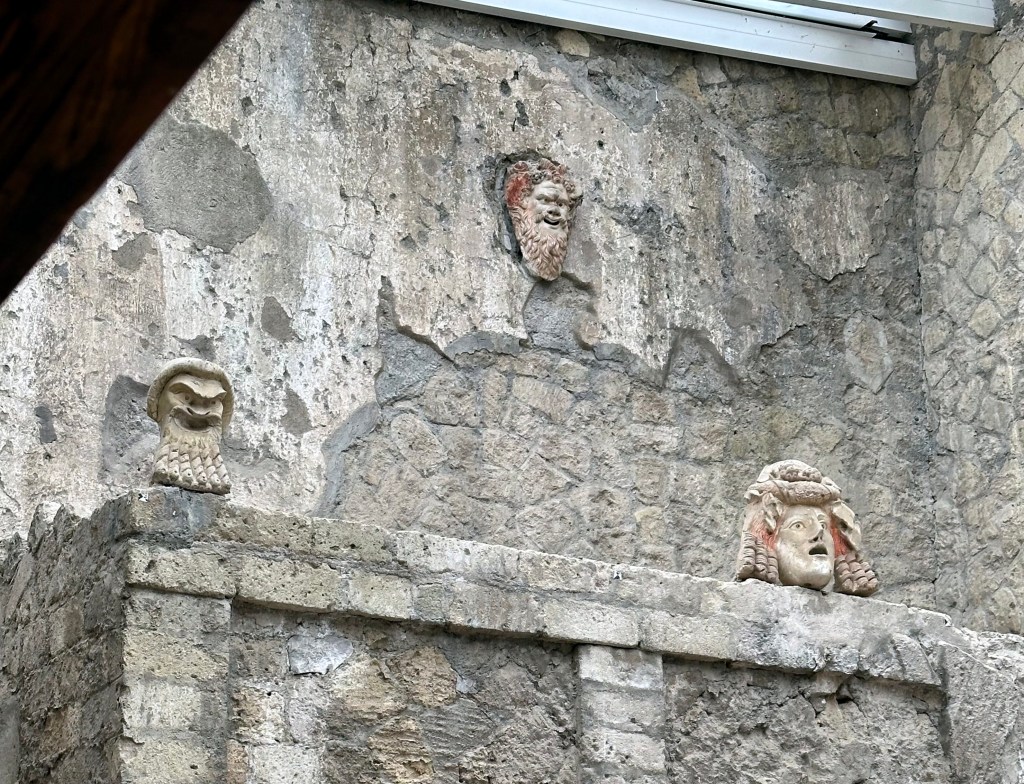
And, above the nymphaeum on the north wall lie three theatre masks: comic on either side and tragic in the center:
Visit complete!
From Herculaneum, we drove about 20 minutes to our location for the night: Naples.
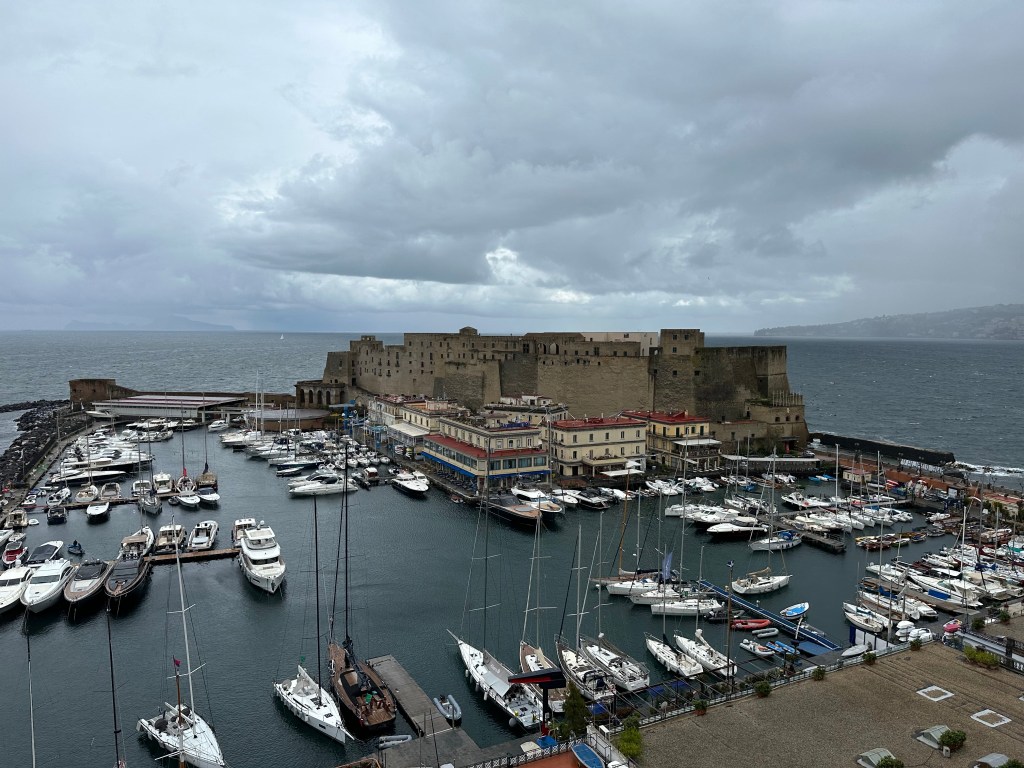
We had NO interest in Naples as a town (city) to visit, but logistically it made sense to stay there.
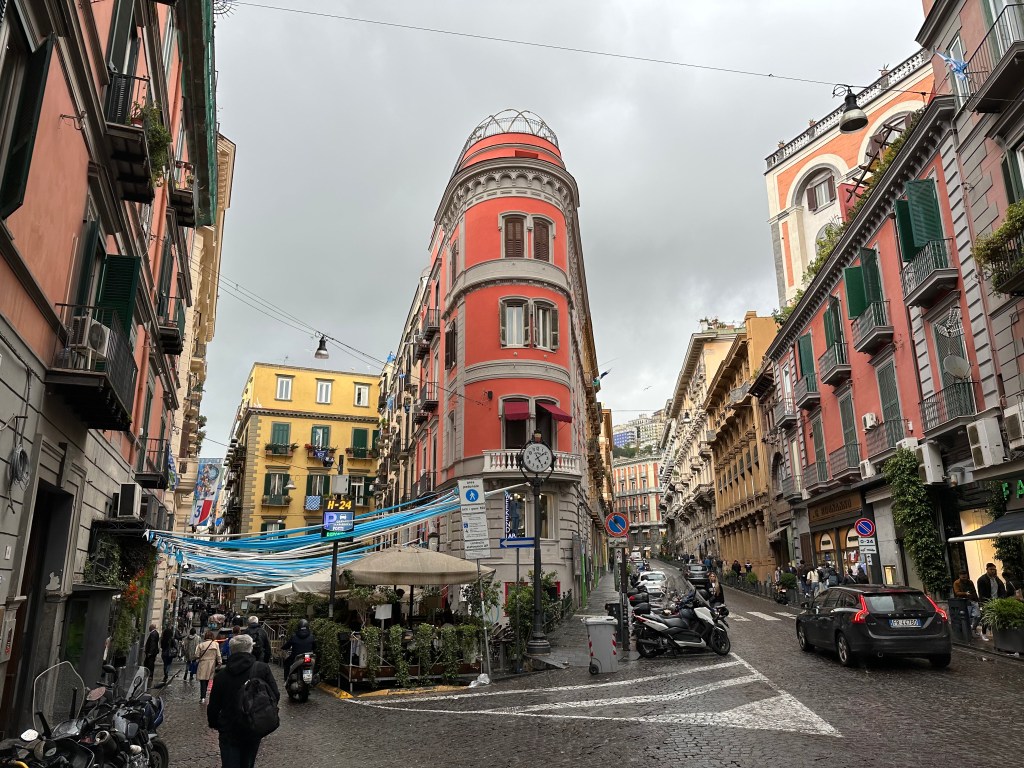
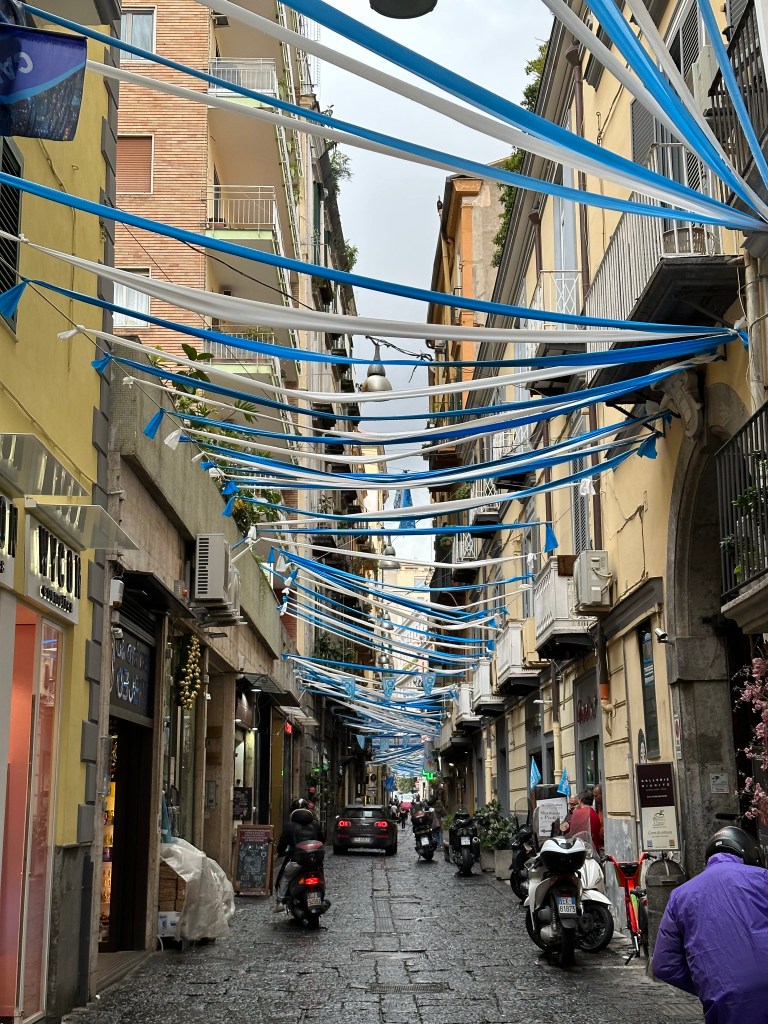
But because we’d heard horror stories about the traffic in town (the pic above is a mild example; we were most concerned not with an obstacle-course of a narrow street to navigate – which we do in Europe all the time – but in the no-rules battle royale among drivers that takes place on Naples busy thoroughfares), we chose a place on the very edge of the city next to the coast so we didn’t need to venture too far in from the highway.
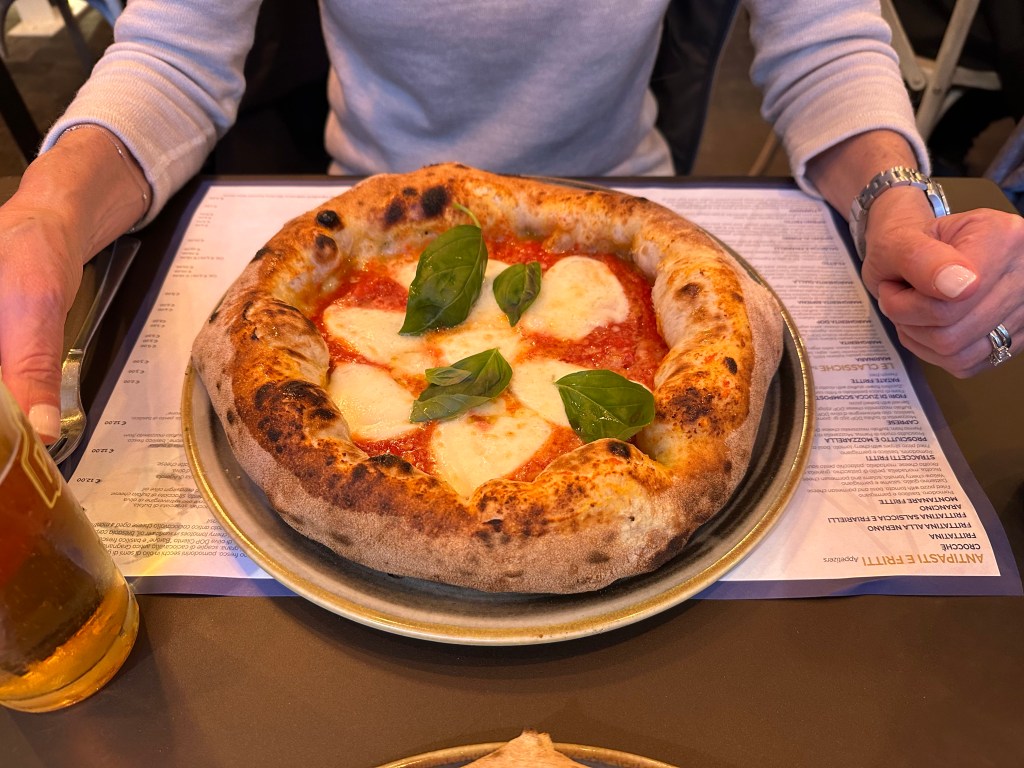
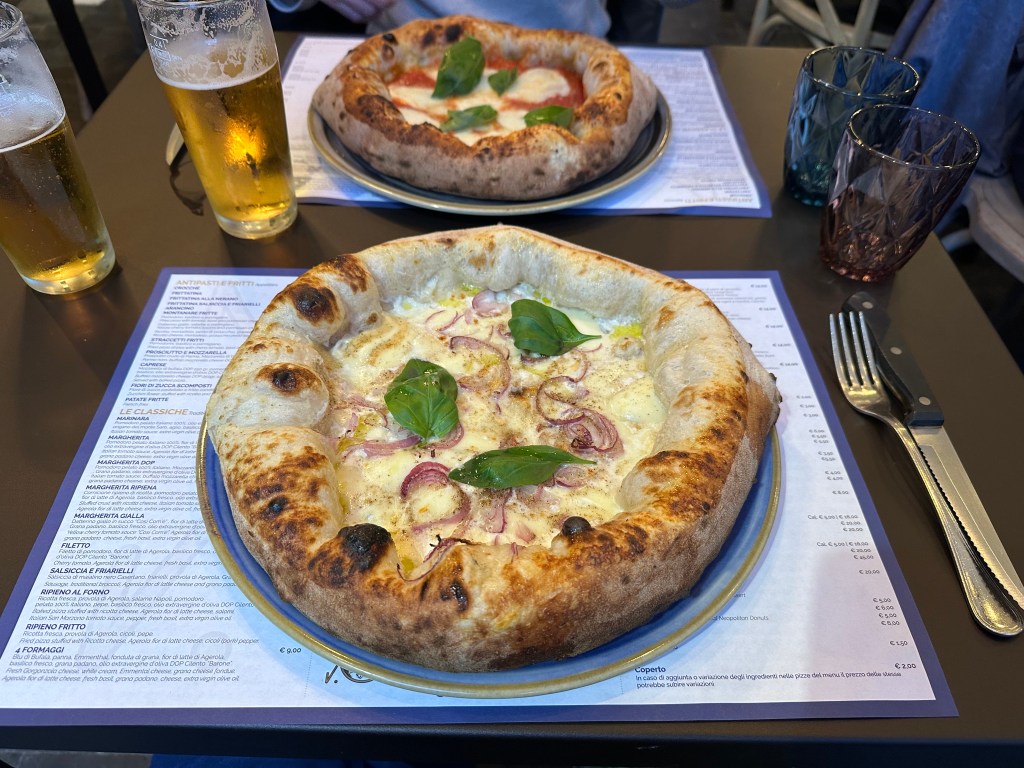
The only objective that Lisa had for Naples was to snag some Neapolitan pizza, so after wandering around in the rain to check out the neighborhood for a while, we focused solely on that.
From Herculaneum (and Naples), we originally had planned to head next to Sorento on the Amalfi Coast, and then to Positano. A couple we met in Botswana on safari in 2018, who’s travel style is almost identical to ours, and who we keep in touch with, advised against this. They travel in Italy at least twice a year, and had a lot of insight into the Amalfi Coast, in particular. As far as Sorento went, they found this to be devoid of charm and recommended instead that we spend a few days just opposite that town, on the island of Capri. So we cancelled our Sorento reservations (this discussion occurred during our planning phase) and found a cool place on Capri instead, which is where we headed next. (We’ll cover the Positano issue in the next post.)
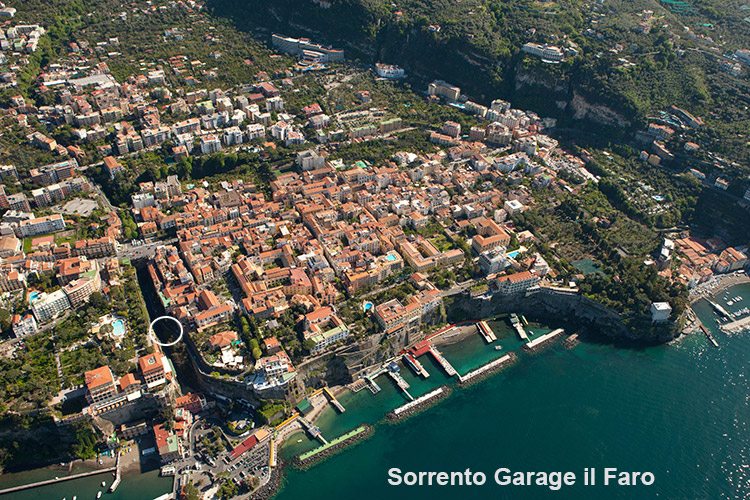
Our only experience with Sorento came from our parking and the ferry dock to Capri, since both took place there. Parking was a trip for one of us and deeply traumatic for the other. After careening down a series of urban switchbacks from the center of Sorento down towards the dock and passing a couple of parking lots on the way (that we sped on past because we had no idea how much further ahead the ferry dock actually was, and we had luggage), we passed a portal leading to a cave in the face of the high cliff that abutted the road we were on. In the cave resided a few piggyback car lifts – a garage! Of sorts. But from the cave portal, we could actually see the ferry dock down a hill. Perfect! Thought one of us. WTF?!? Responded the other when the first suggested we just park there. But park we did – kind of.
The WolfeStreetDriver left the car in neutral (it was a stick), got out, and ran over to talk to the cave people. But he didn’t turn the car off or apply the parking break. As a result, the rental car – with the WolfeStreetPassenger still in it, began to drift down the steep decline straight to the ferry dock and, uh, the ocean. This almost led to a coronary by the passenger at the time and definitely created some residual PTSD that remains to this day. The driver remedied the situation before the car drifted too far, and we successfully dropped the car off at the car cave and arranged to pick it up a few days later, when we thought we’d be back. Then strolled like 50 yards down to the ferry dock and caught the next ferry, which, conveniently, departed in just 20 minutes.
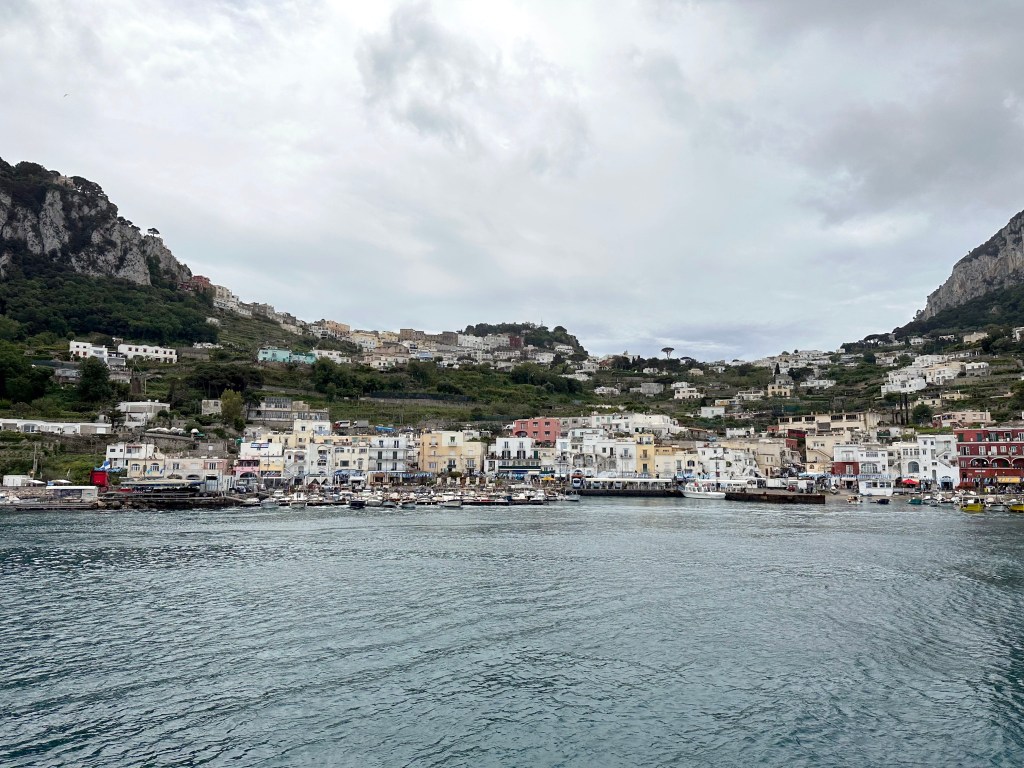
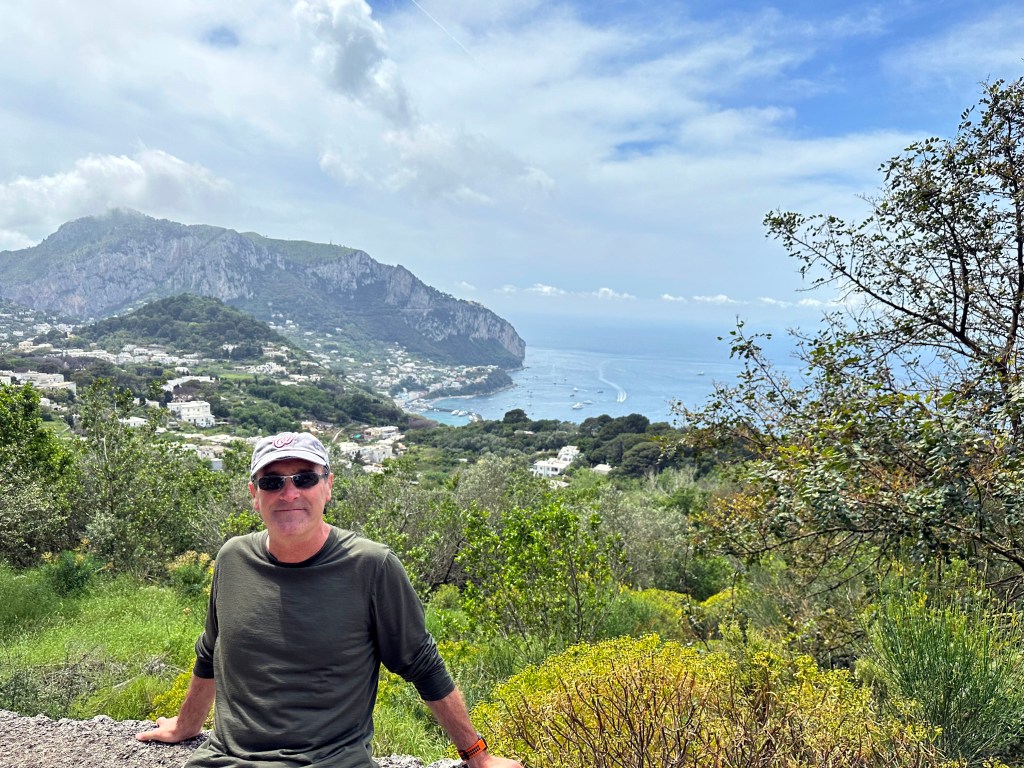
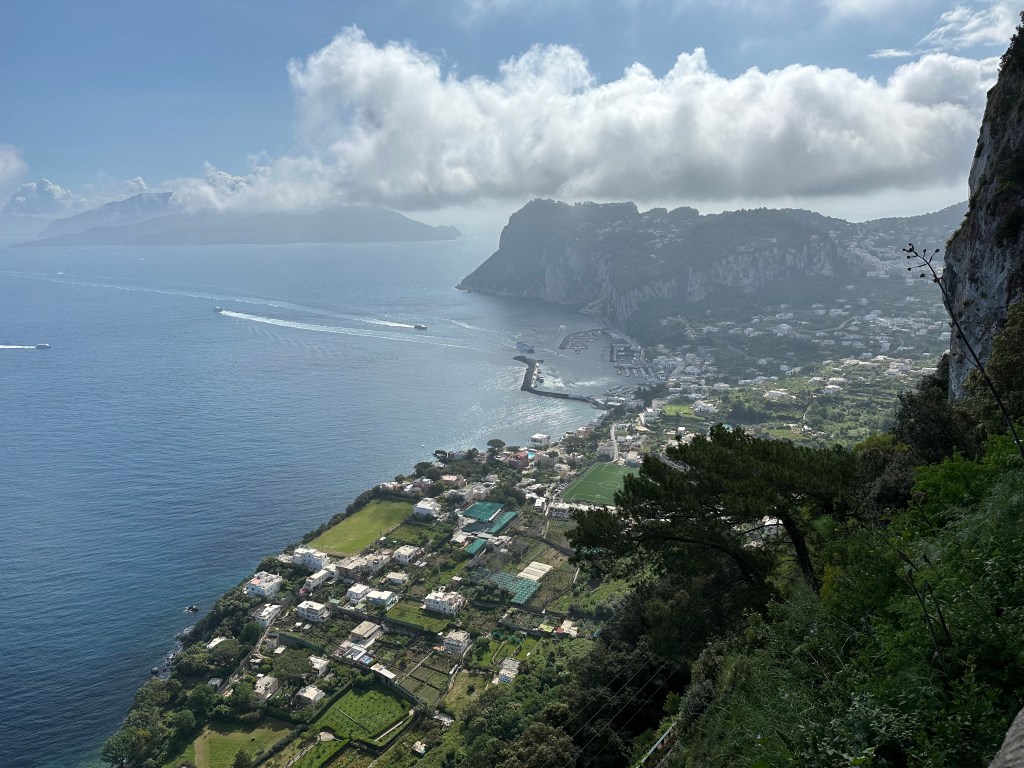
A view of the dock area on Capri. A little misleading, considering how mountainous the rest of Capri is.
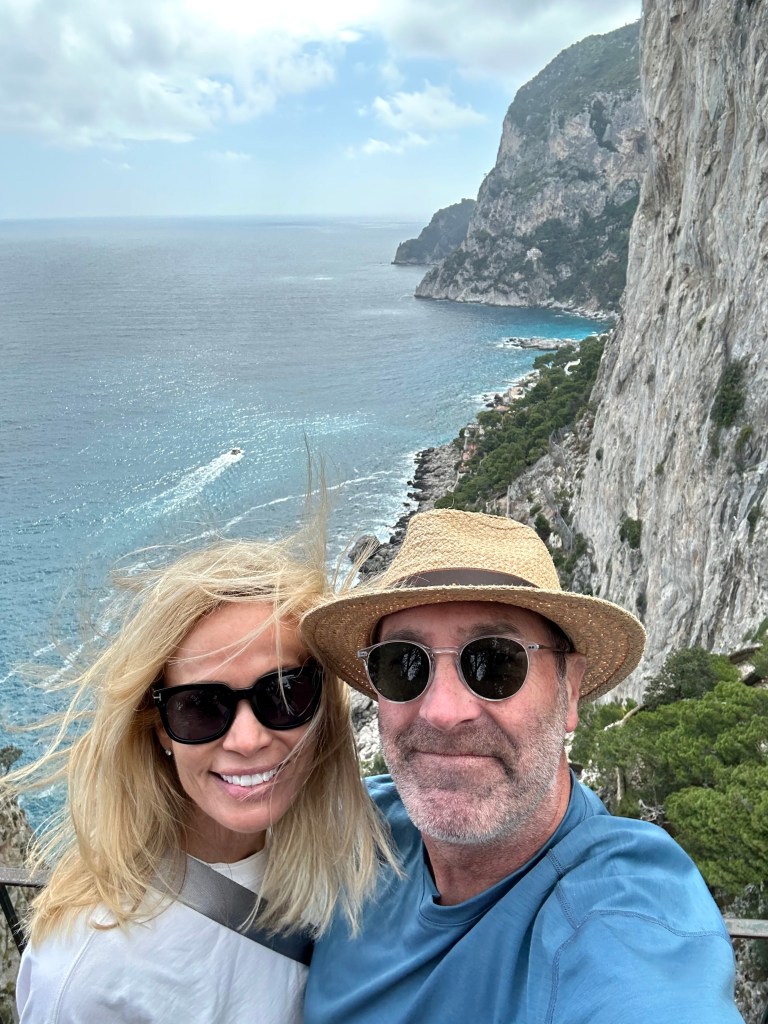
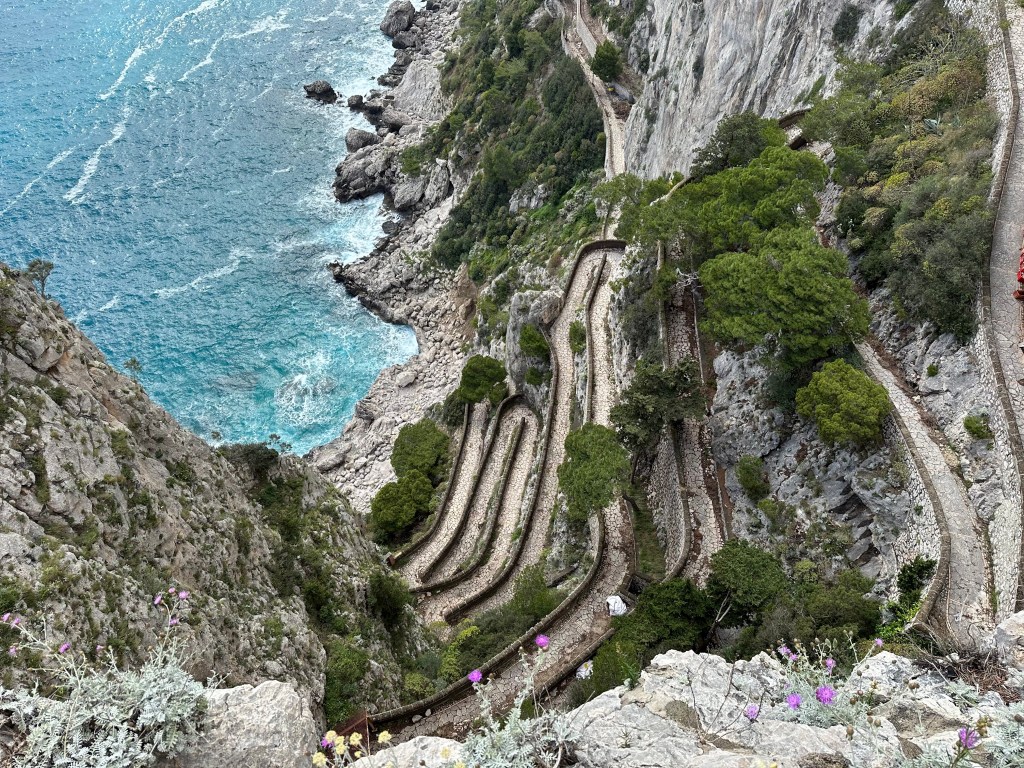
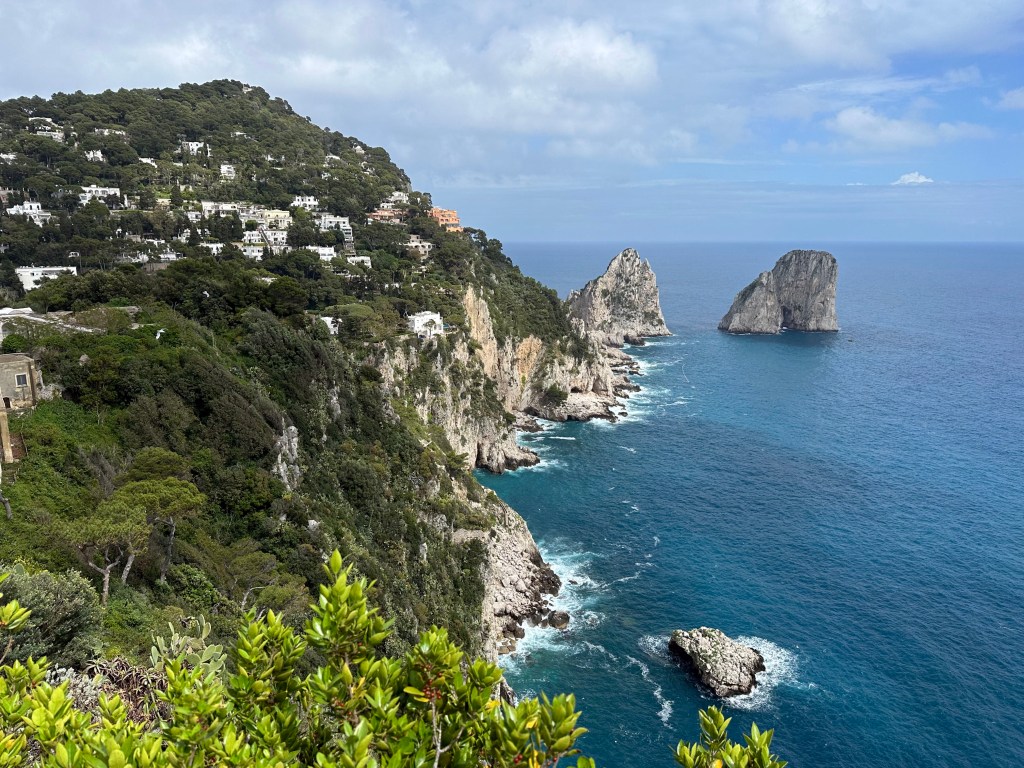
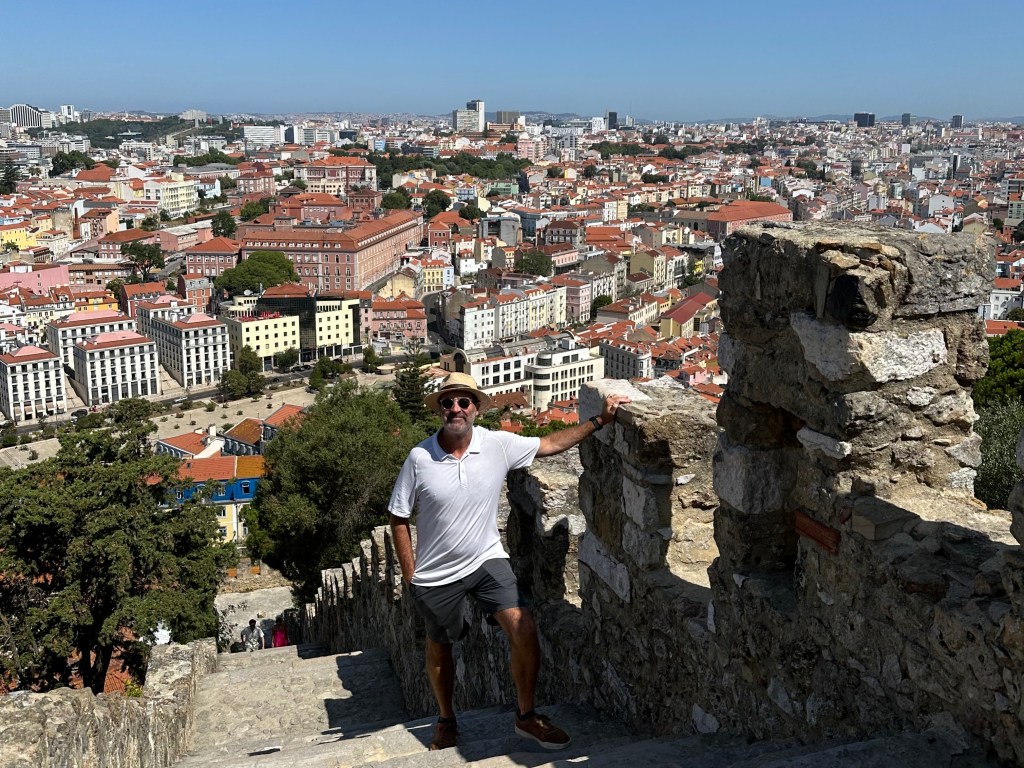
To wit, a view from the Gardens of Augustus on the edge of Capri Town:
A nice hike from town to a historical location that we wanted to make sure we checked out: Villa Jovis.
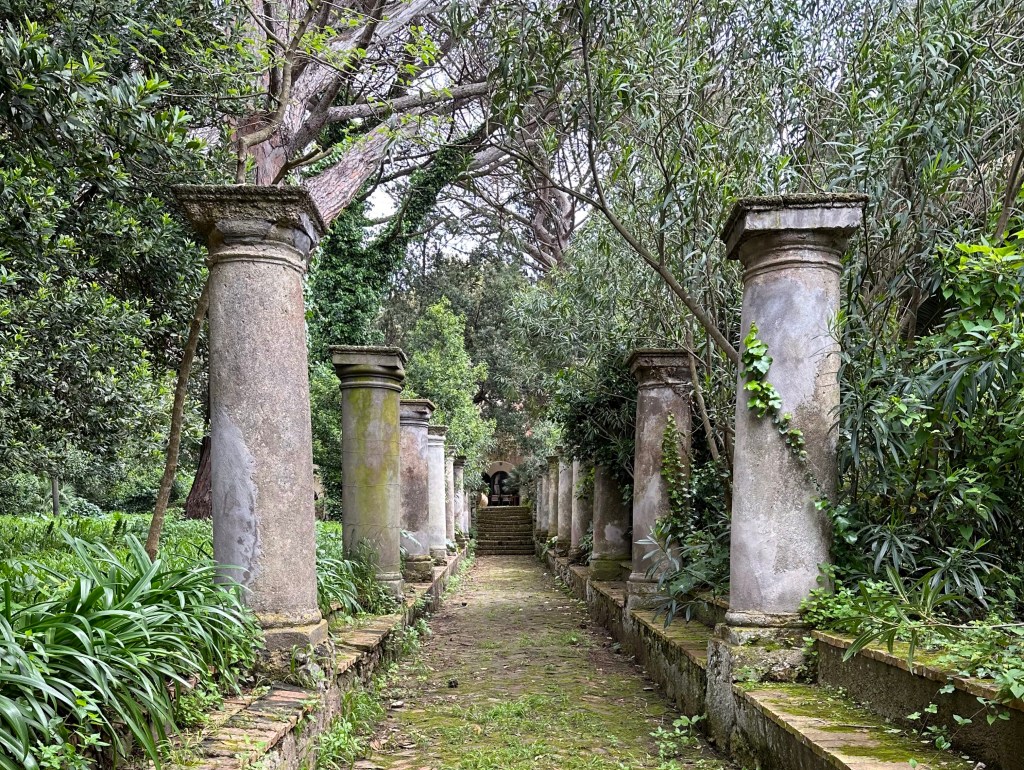
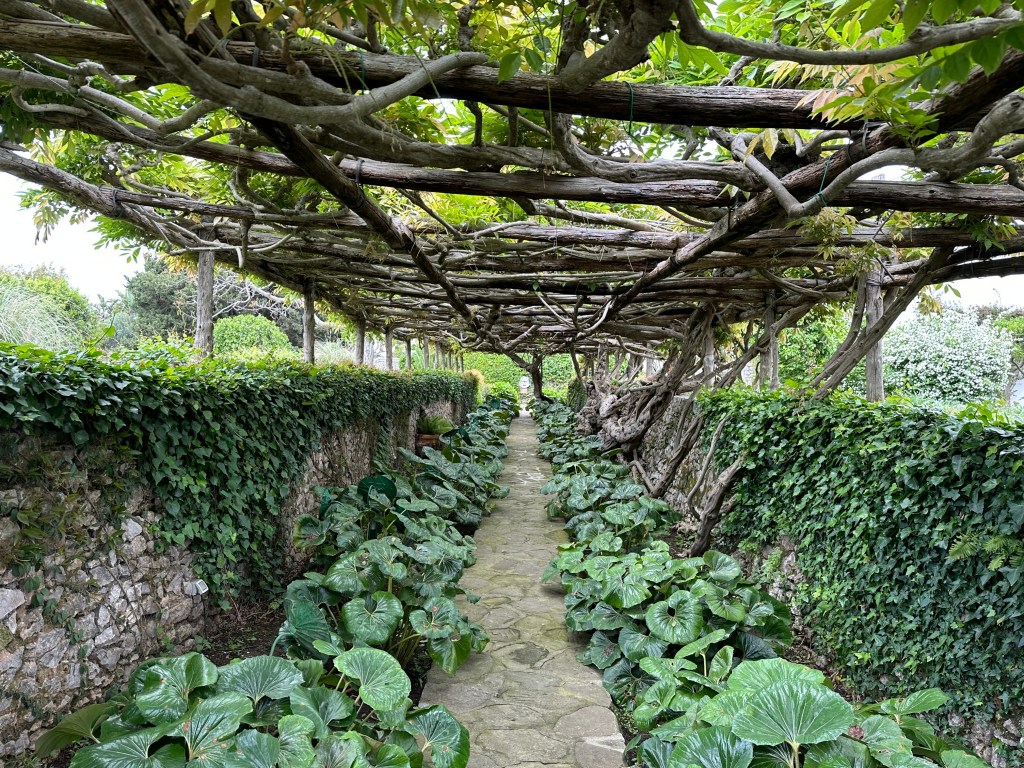
Super cool entrance to a villa on the hike there:
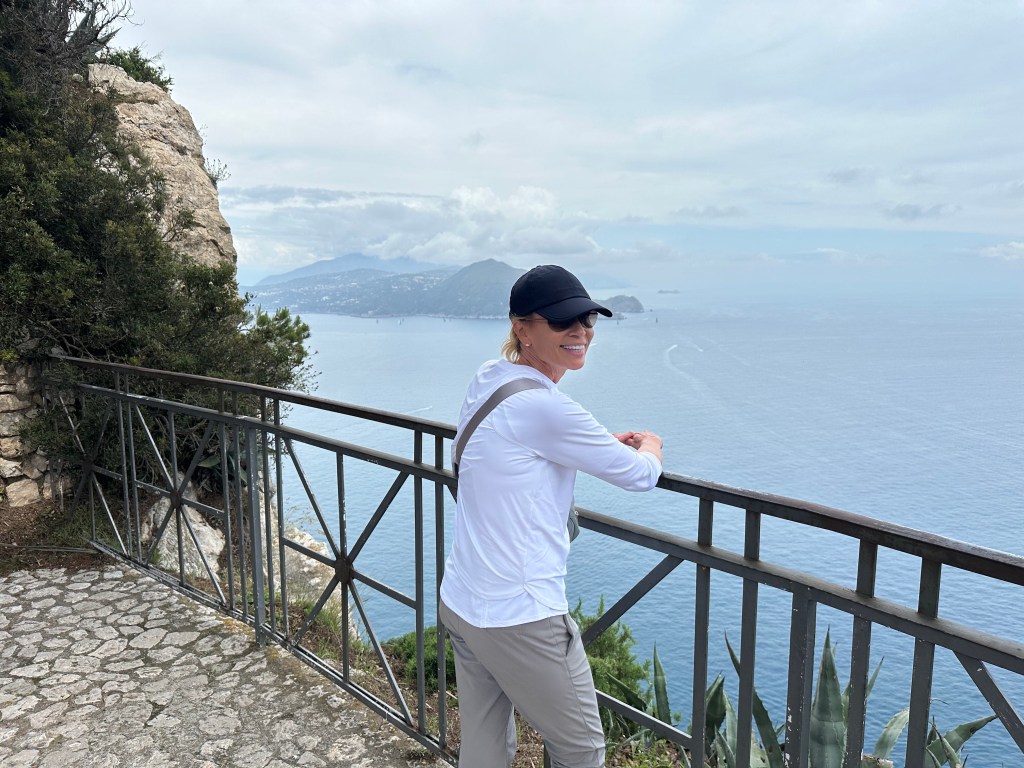
Pretty great views along the way:
Another villa’s atmospheric entrance:
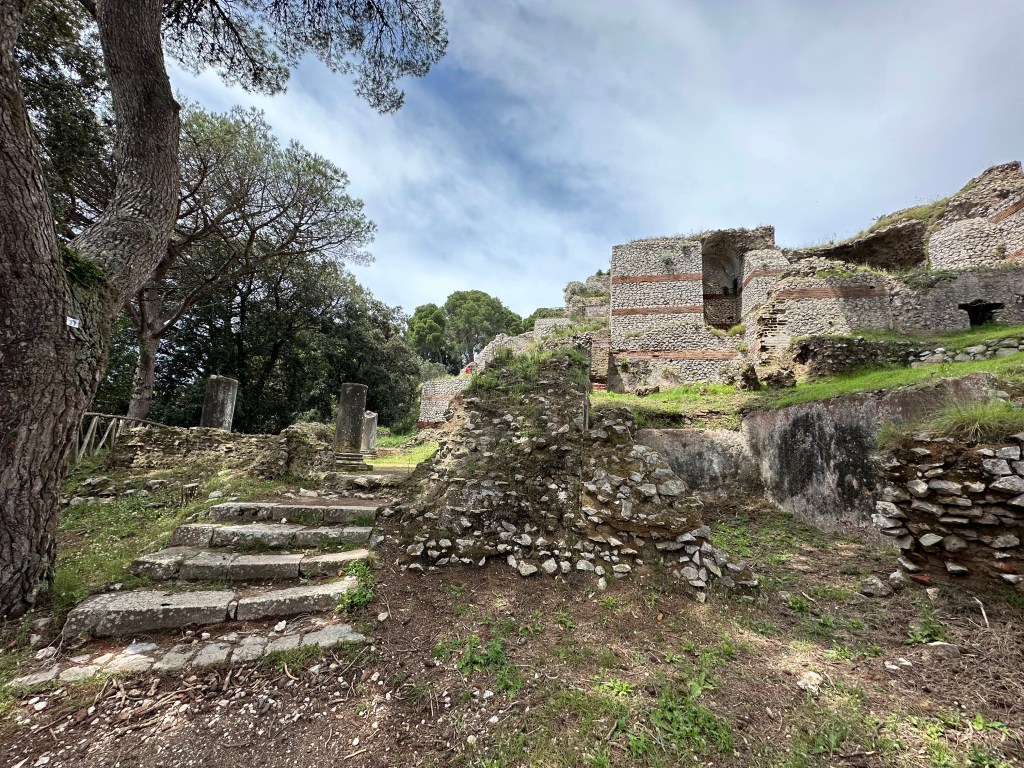
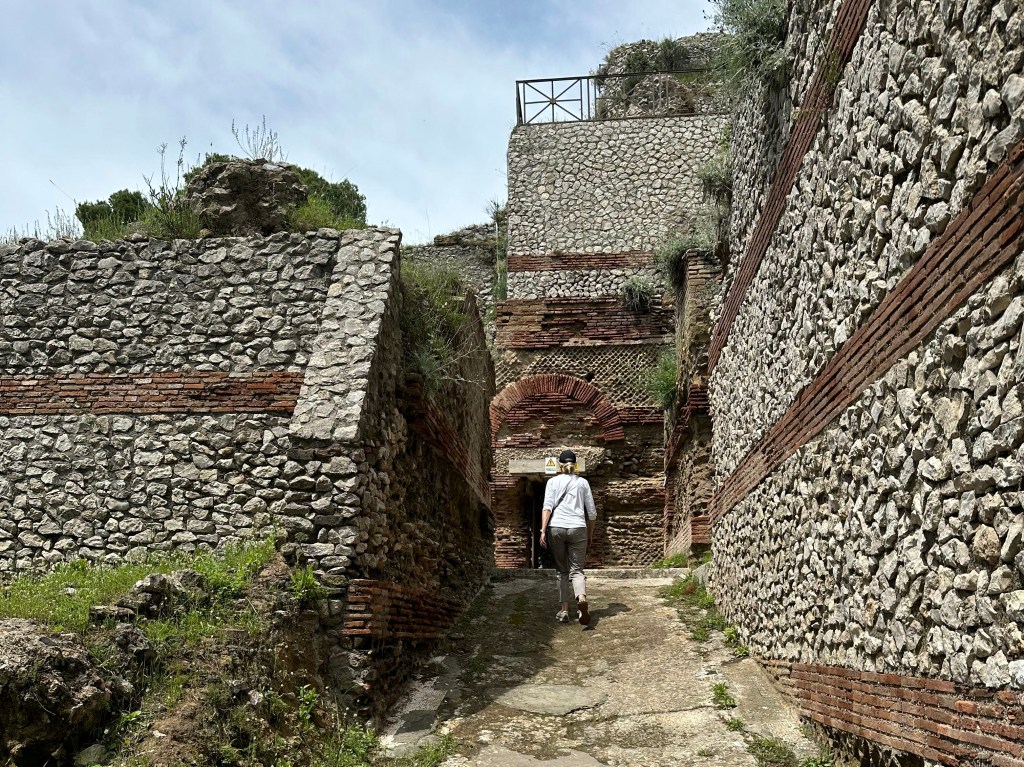
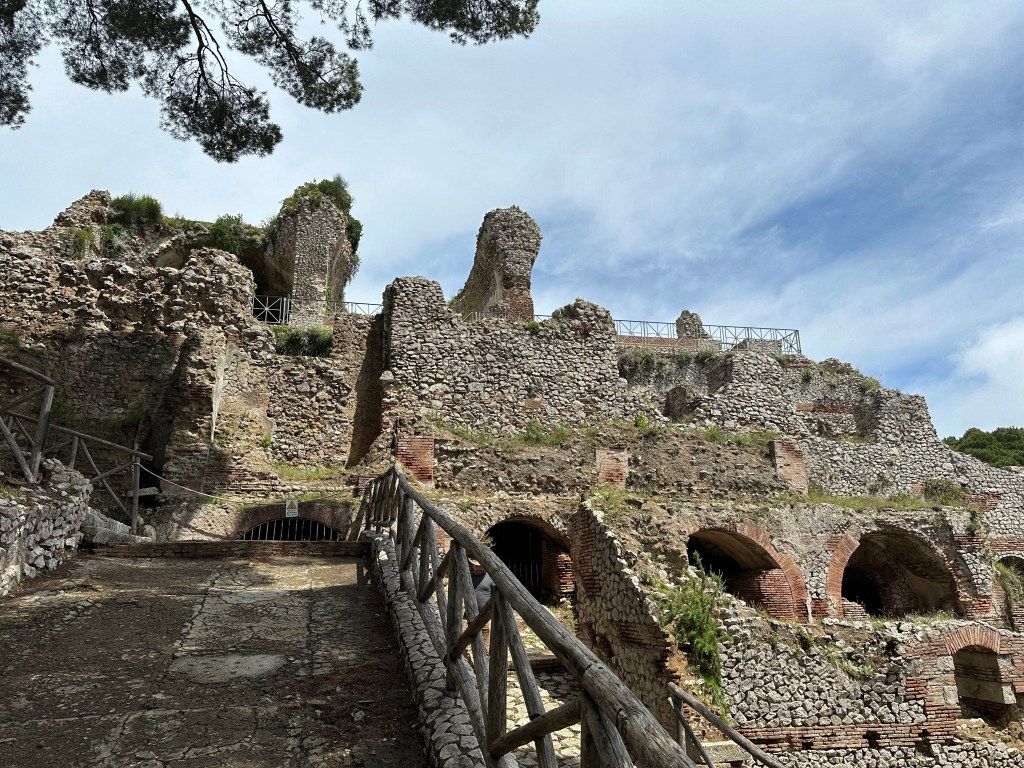
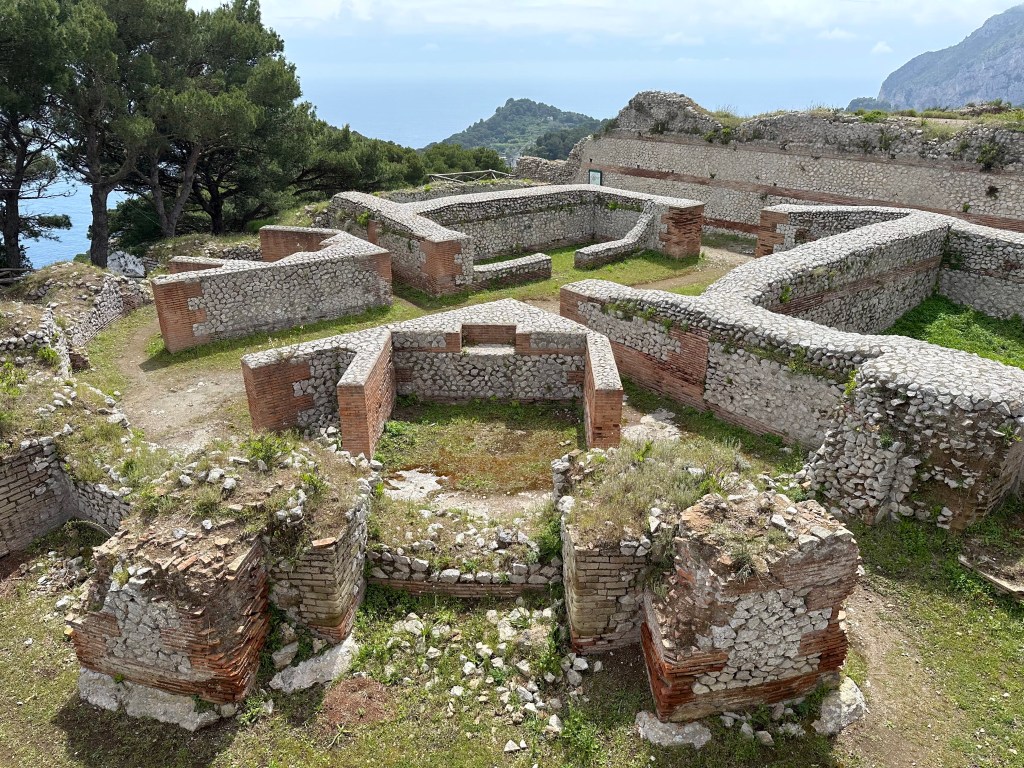
And THE villa! Villa Jovis, accessible only by foot:
Villa Jovis (what remains) holds the distinction as the largest of the 12 villas Roman Emperor Tiberius built on Capri.
Completed in 27 AD, Tiberius spent the last 10 years of his reign ruling from here, away from the bustle – and potential danger – of Rome.
“Apparently, the main motivations for Tiberius’s move from Rome to Capri were his wariness of the political maneuvering in Rome and a lingering fear of assassination. The villa is situated at a very secluded spot on the island and Tiberius’s quarters in the north and east of the palatial villa were particularly difficult to reach and heavily guarded.” (From here.)
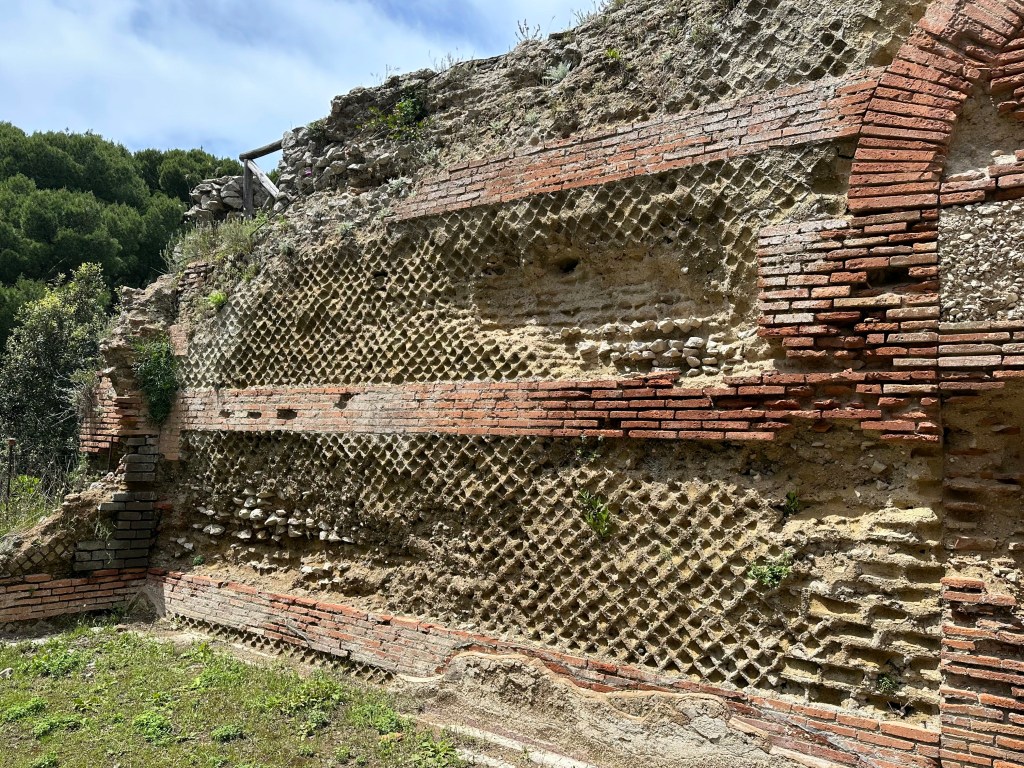
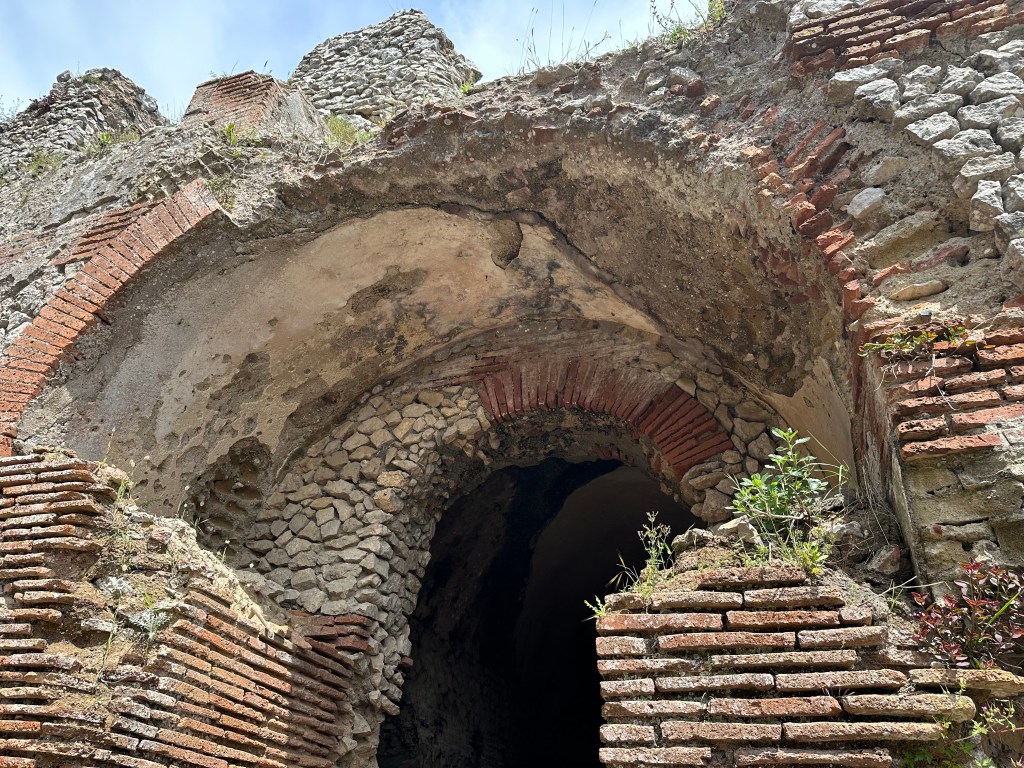
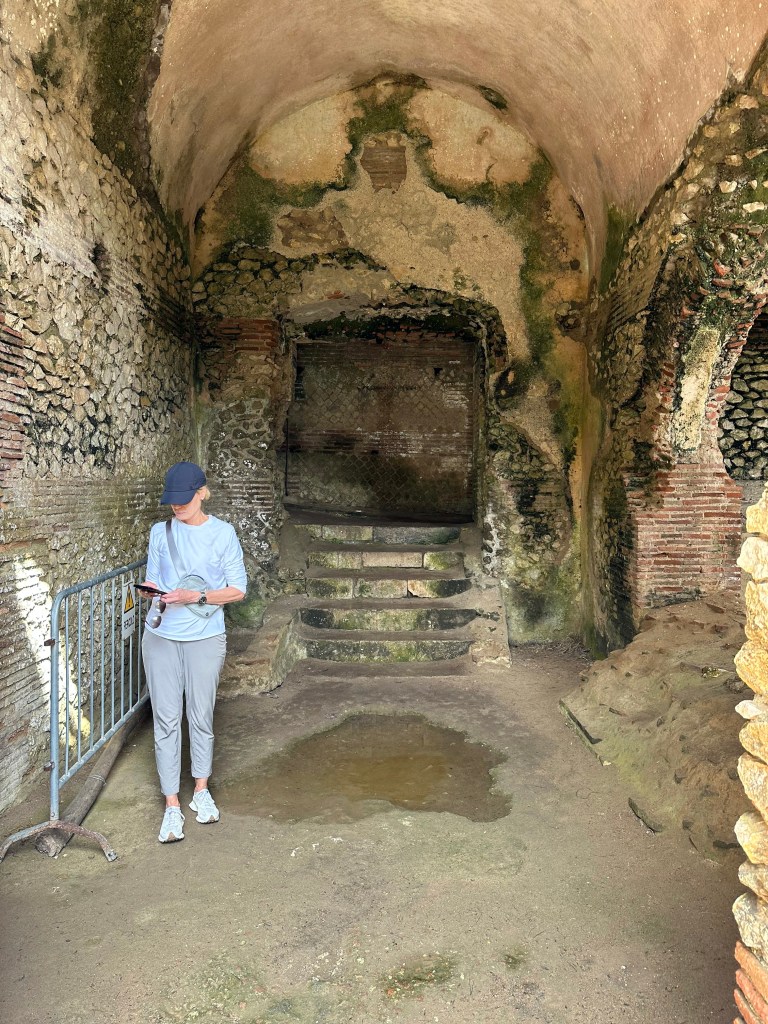
Roman engineering still holding up:
The original structure of the villa, which dates to Caesar Augustus, Tiberius’ predecessor, was restructured to meet the requirements of Tiberius when he chose the island as his headquarters from 27 AD to his death in 37 AD.
Villa Jovis continued to serve as the Imperial residence until the 2nd century AD. Subsequent modifications made in the middle ages. The villa was explored during Bourbon rule in the 19th century and excavated systematically by an Italian archeologist between 1932 and 1935.
The villa is located atop Mount Tiberio, the second-highest peak of Capri after Monte Solaro (which we’ll get to, to be sure):
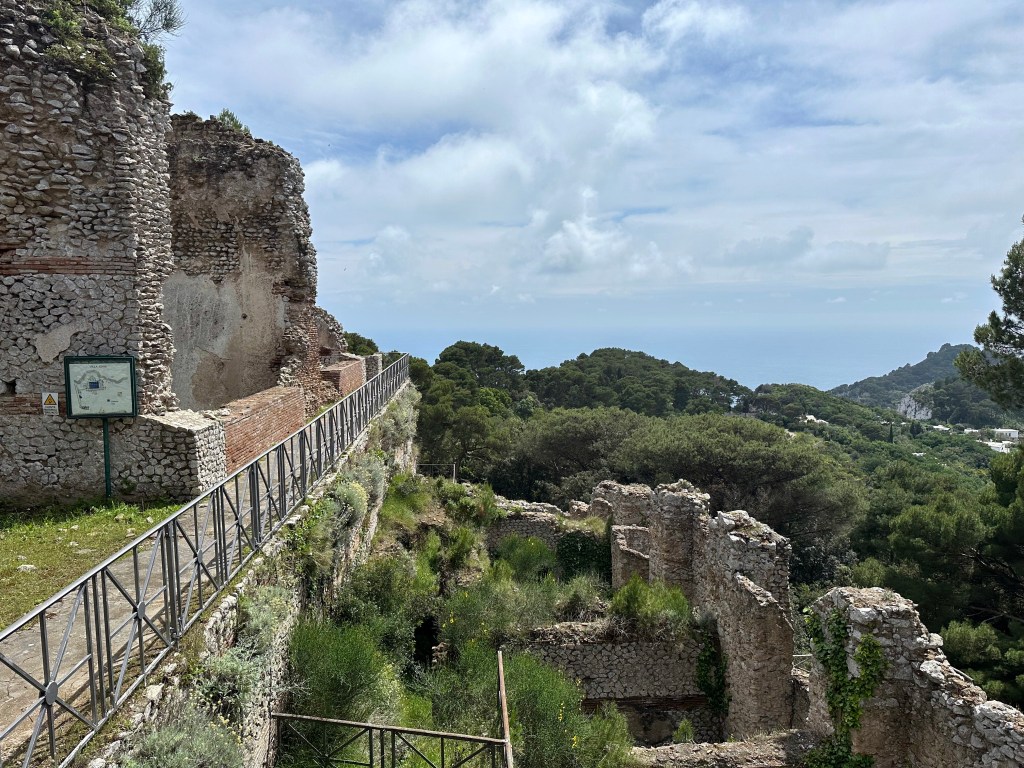
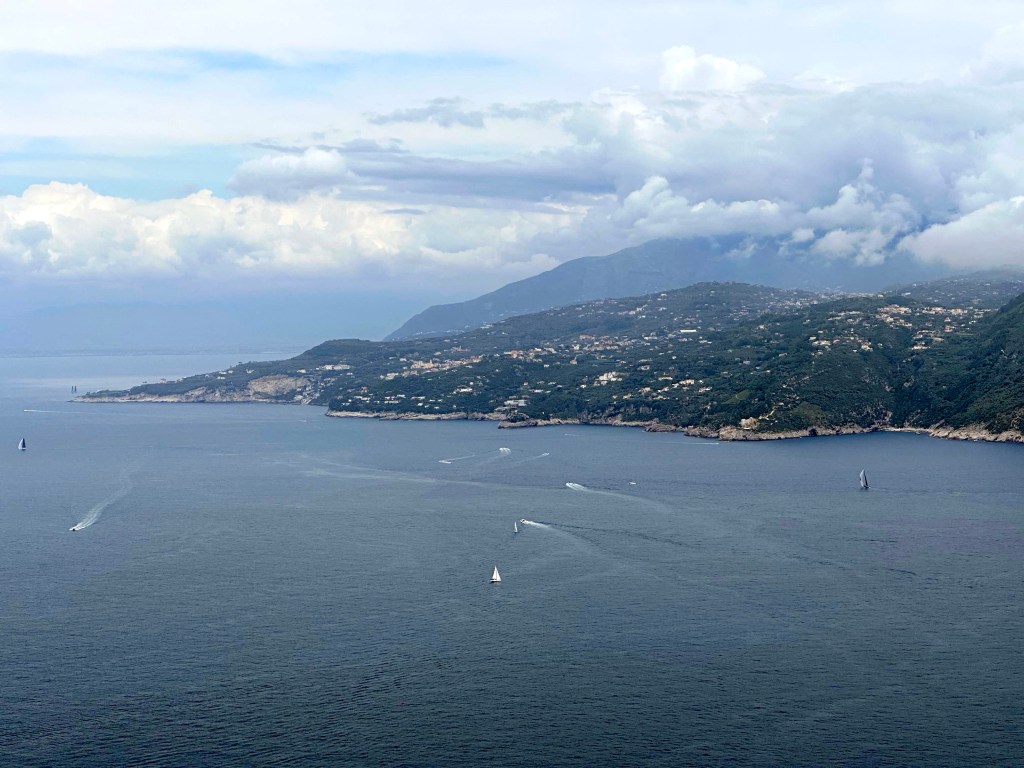
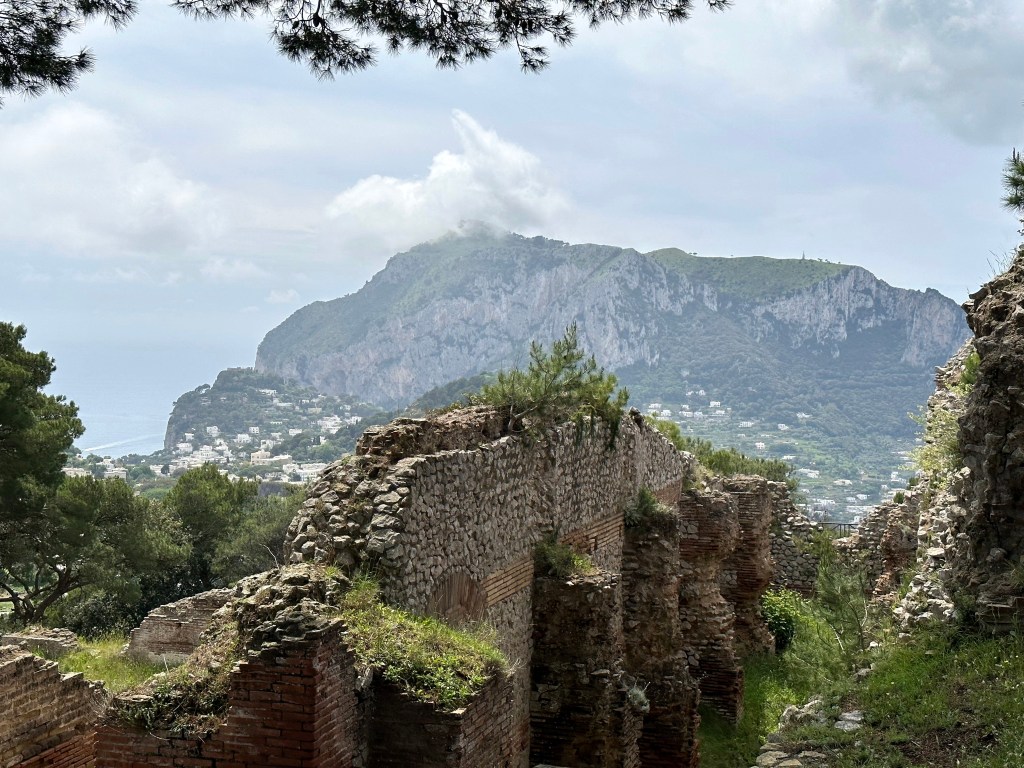
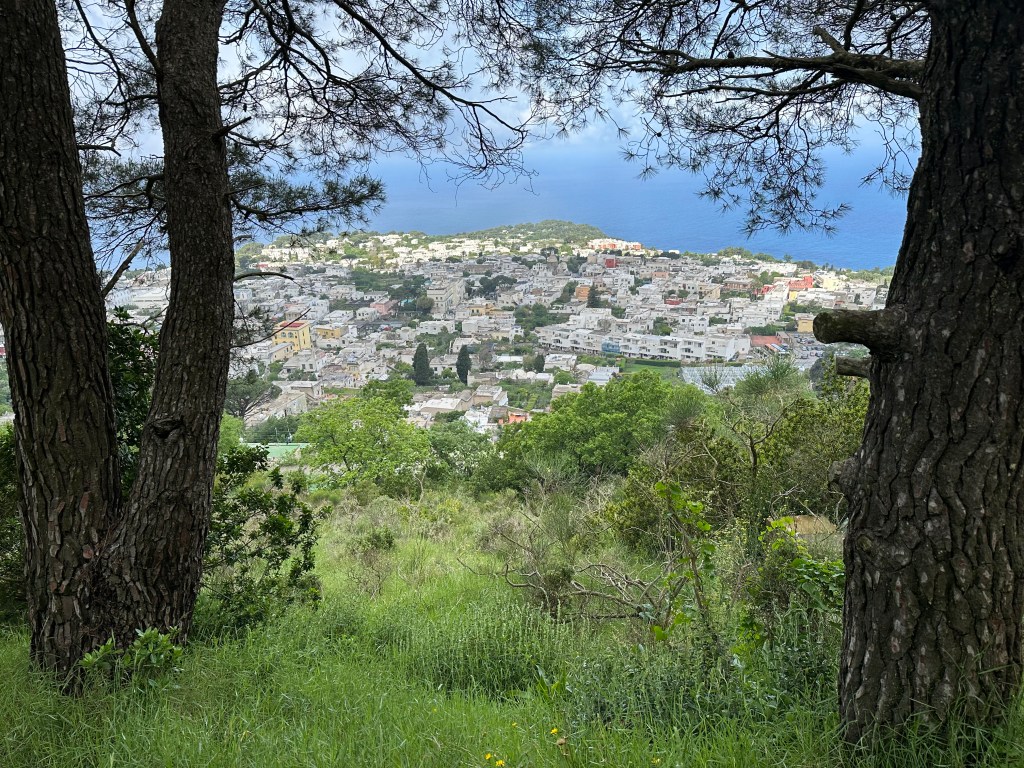
Pretty great views back to other areas of Capri:
The remains of Villa Jovis’ watchtower (specula) from which messages would be exchanged with the mainland by fire or smoke:
Views still pretty good on the hike back:
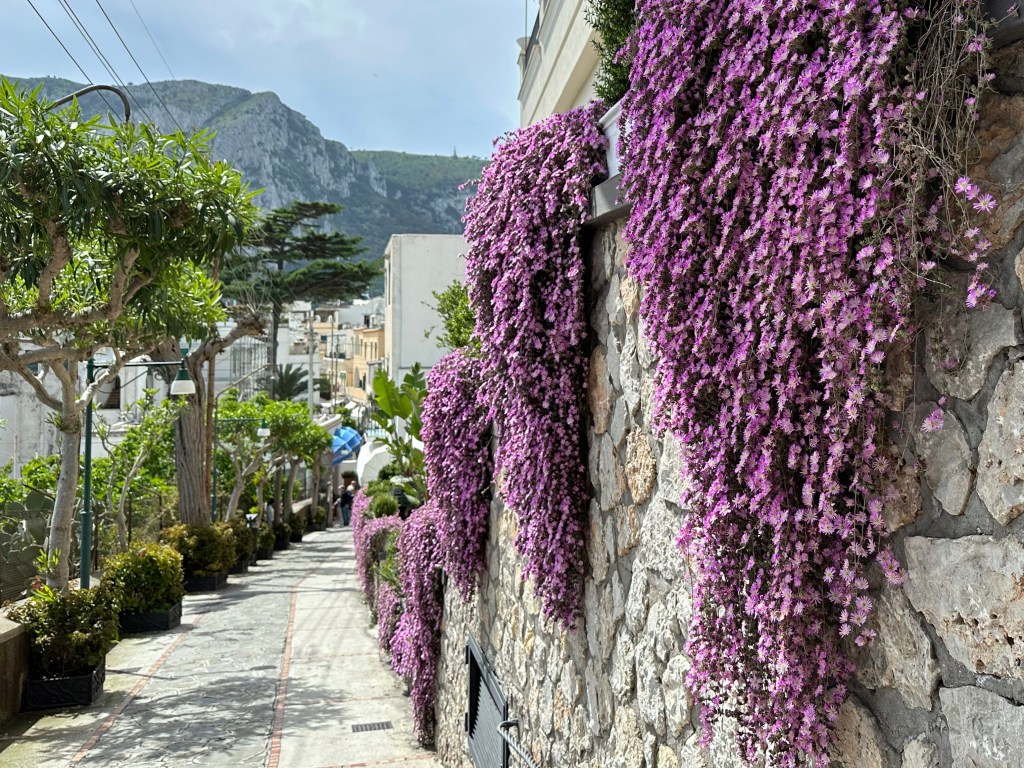
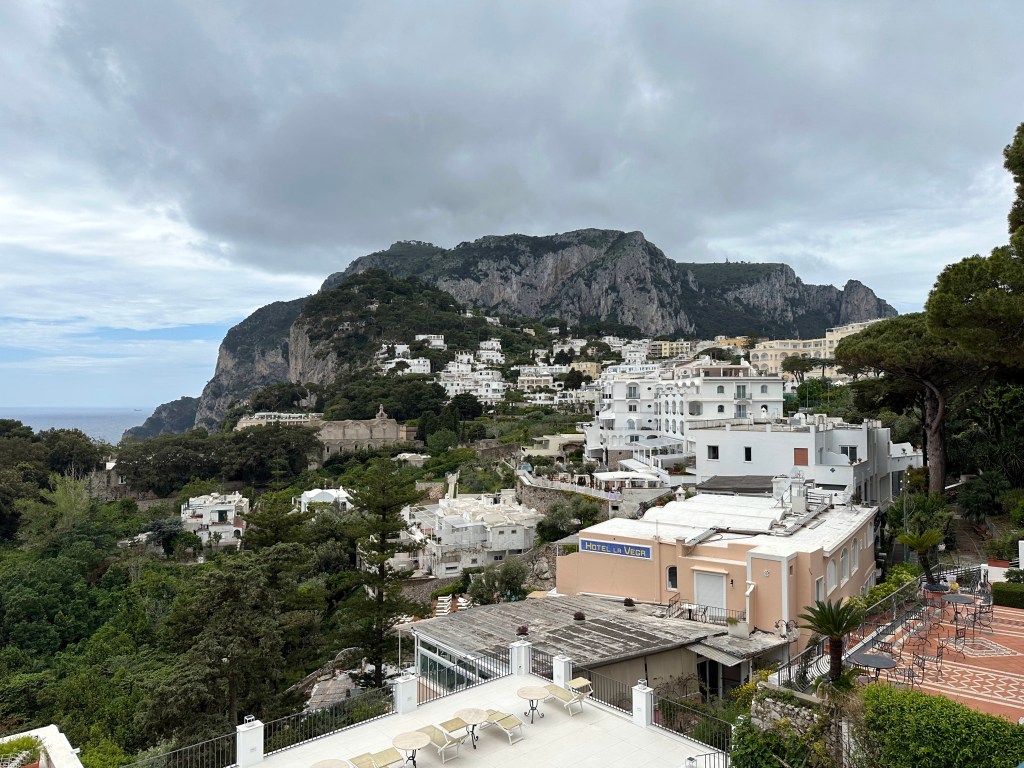
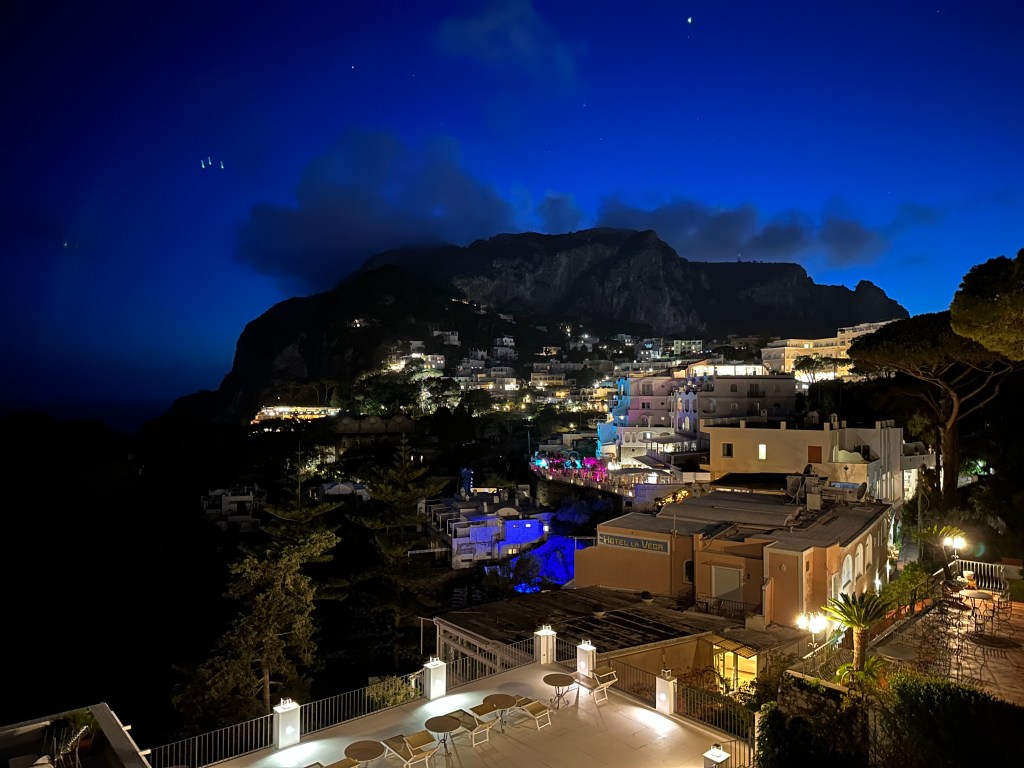
Pretty nice walk into town. One regret is not taking pictures while enjoying aperitivos from Capri Town’s piazetta, where we’d hang out each late afternoon people watching. Pretty great, frankly.
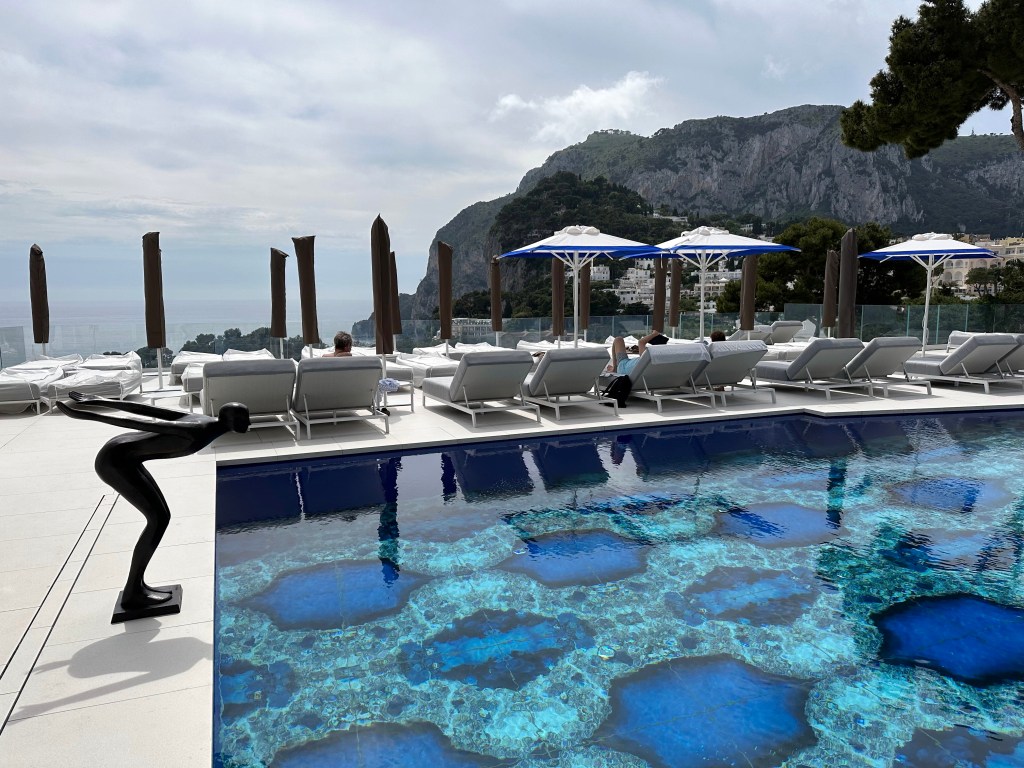
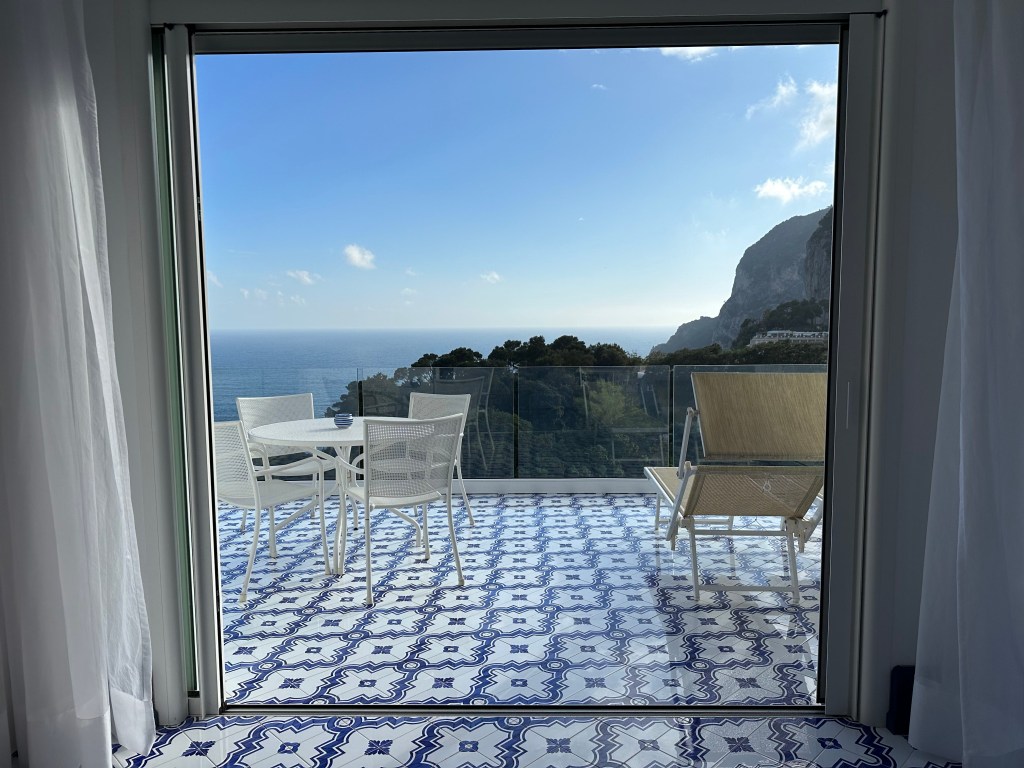
Also, classic Amalfi coast pool setting at our place:
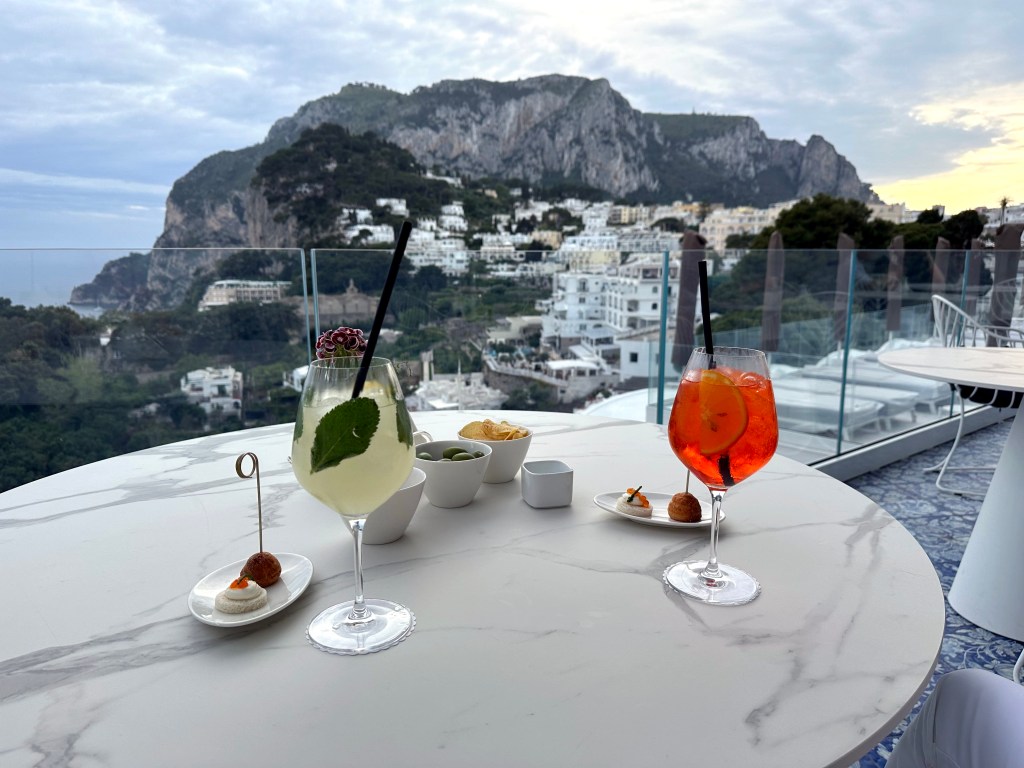
Pre-aperitivo aperitivos at our place before heading to Capri Town’s piazzetta for the main event.
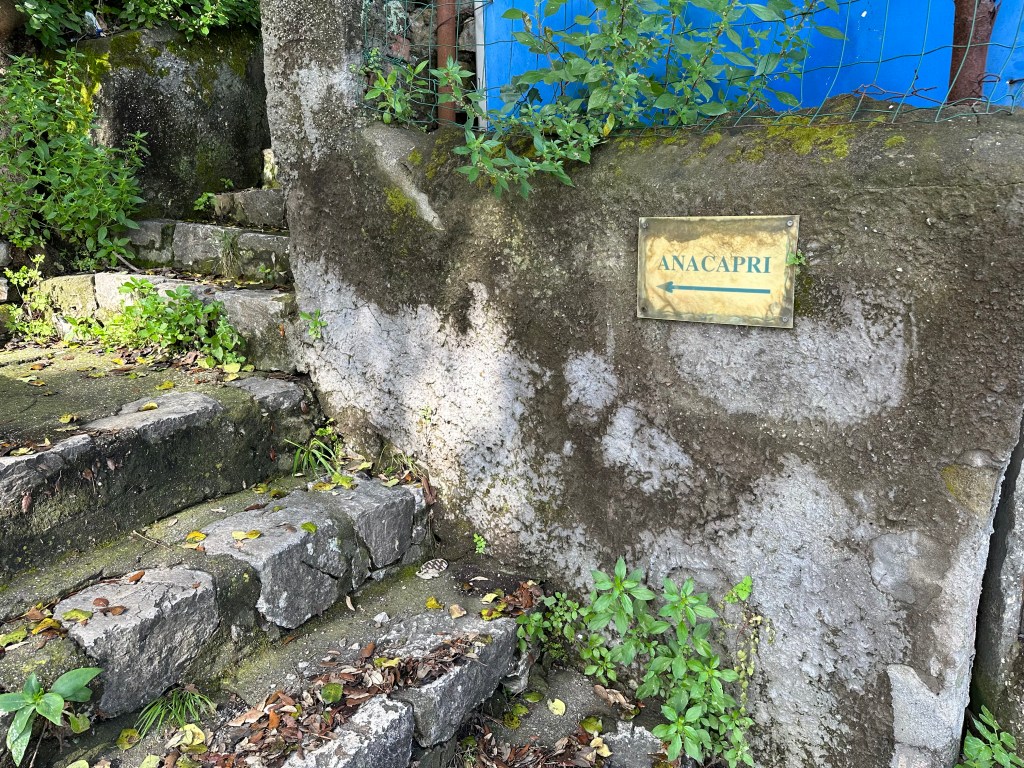
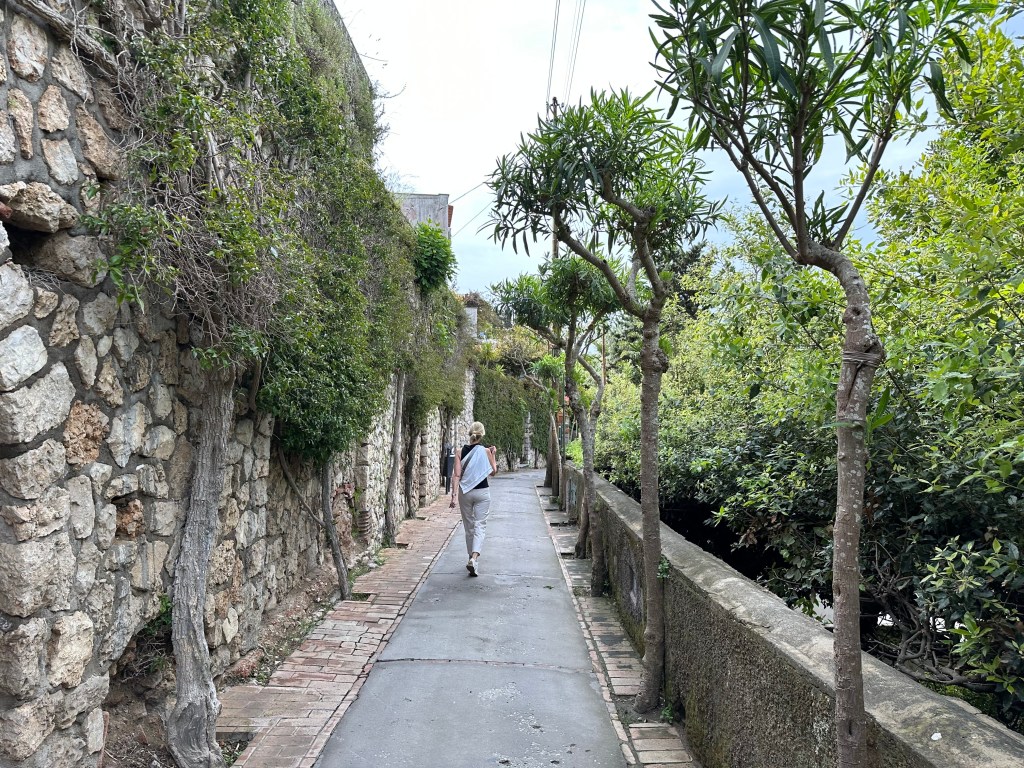
The next day, a hike to the other side of the island and Anacapri.
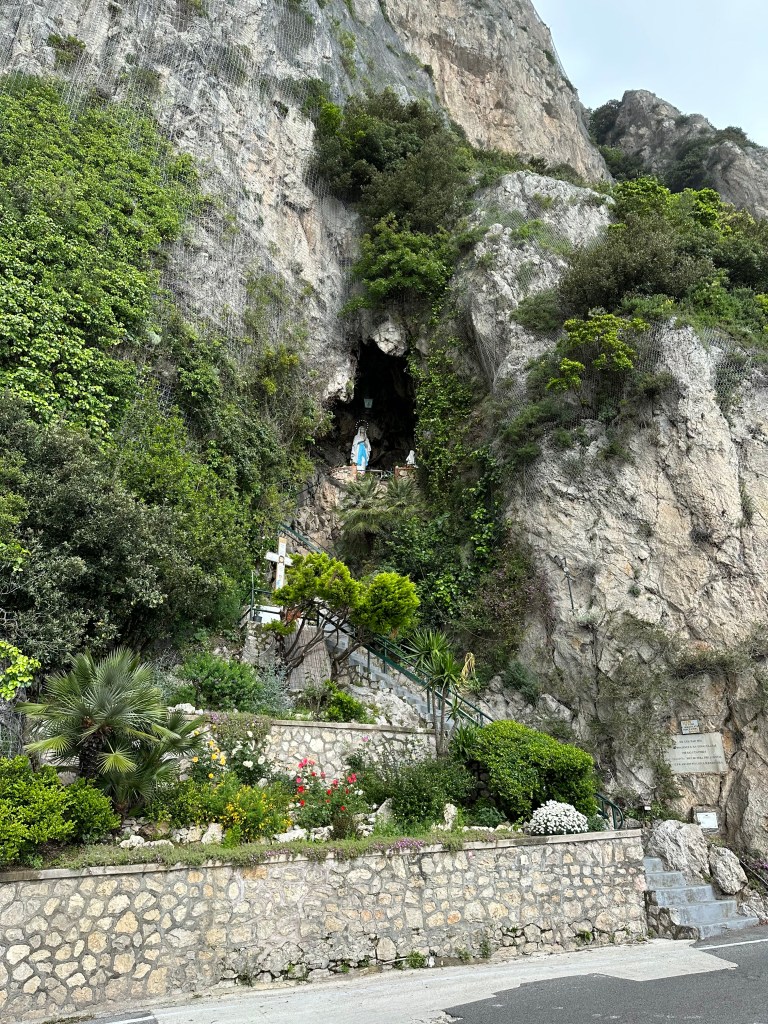
Little shrine on the way:
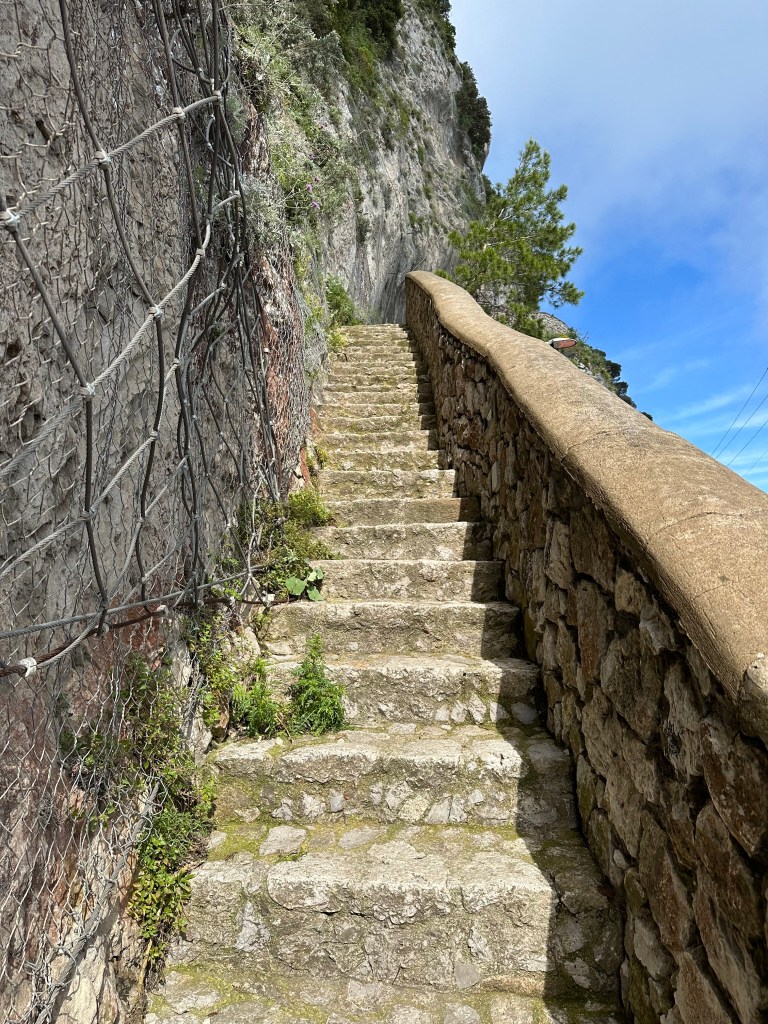
It was a hike, man.
But worth it.
Views on the way back to the ferry port:
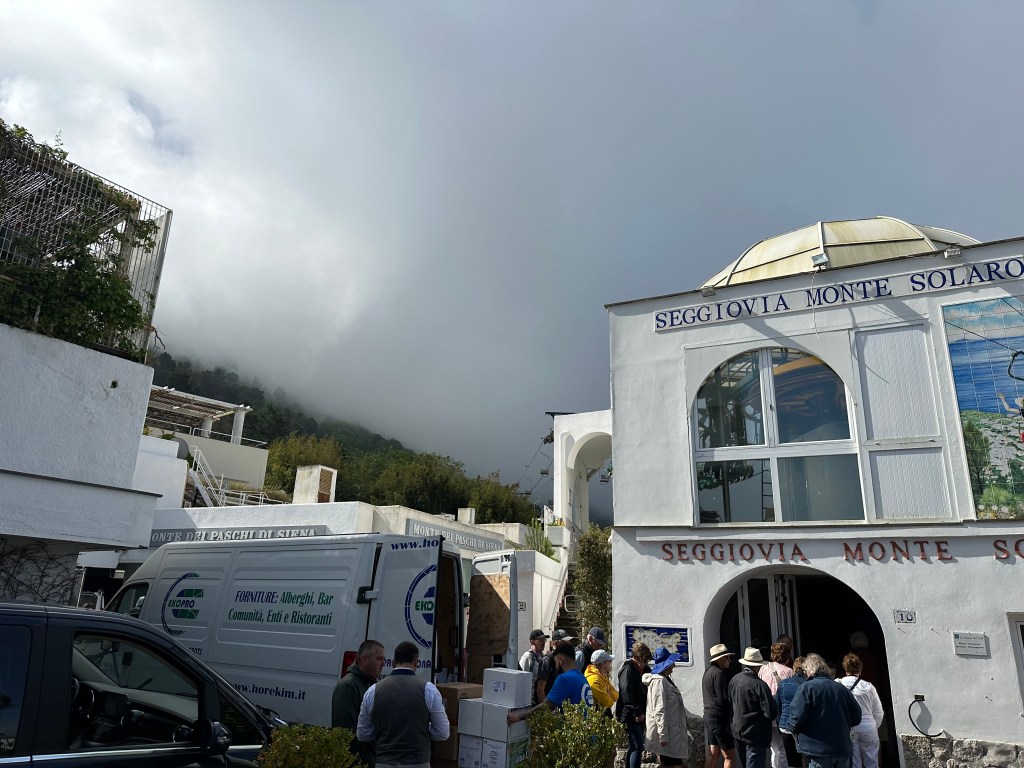
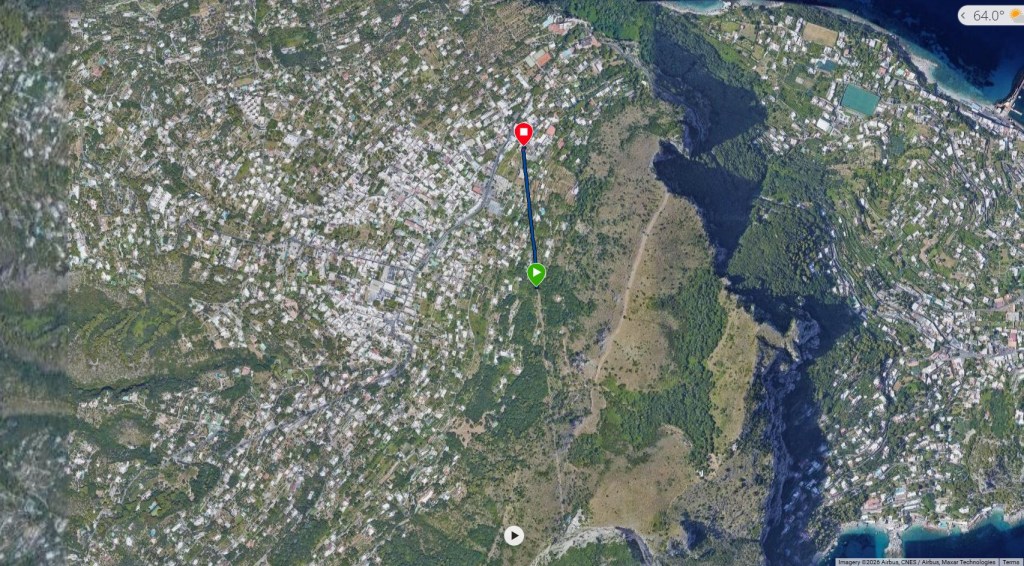
This was our objective: the chair lift to the top of Monte Solaro.
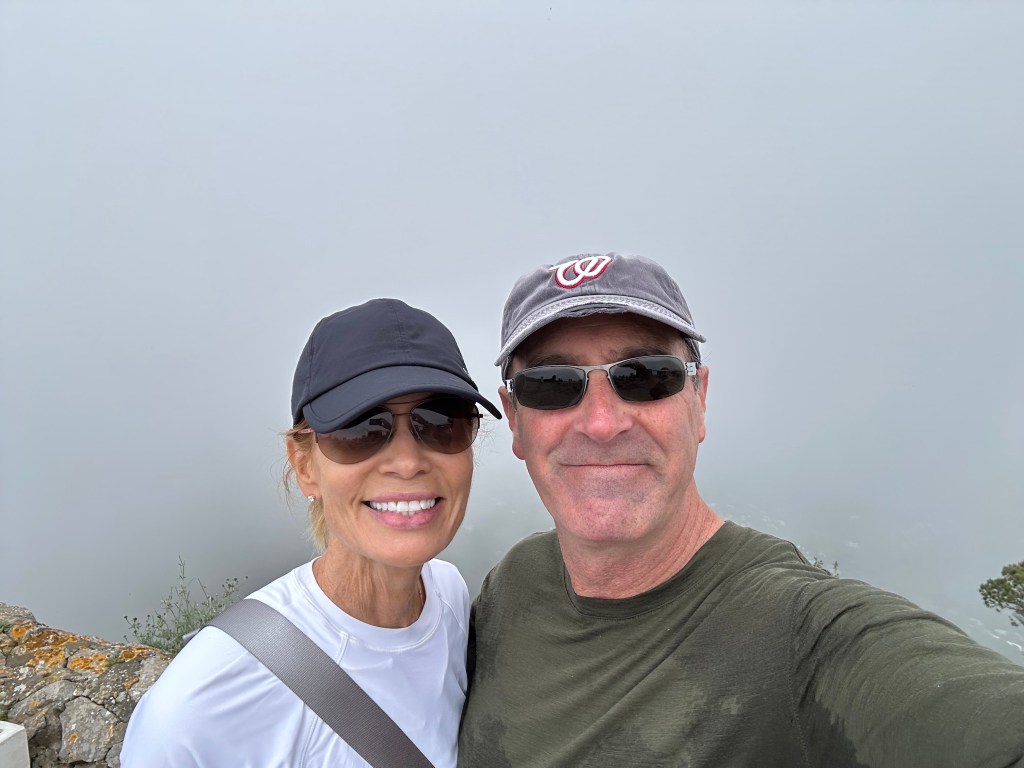
But the whole mountain was fogged in, so there’s not much to see on the trip up.
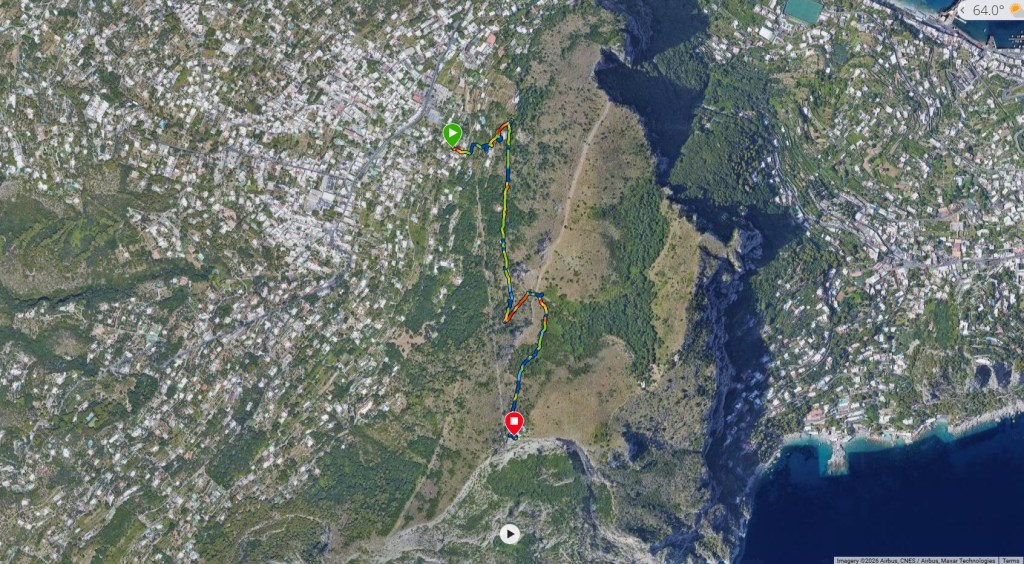
So we kept hiking all the way to the top, instead.
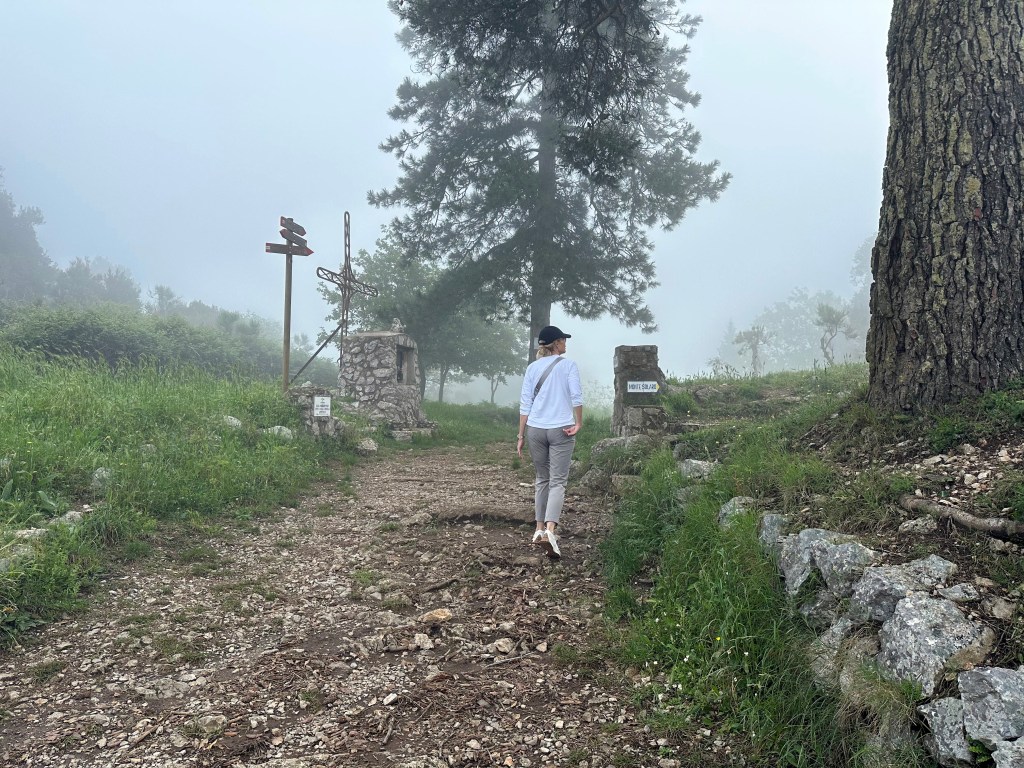
Still socked in:
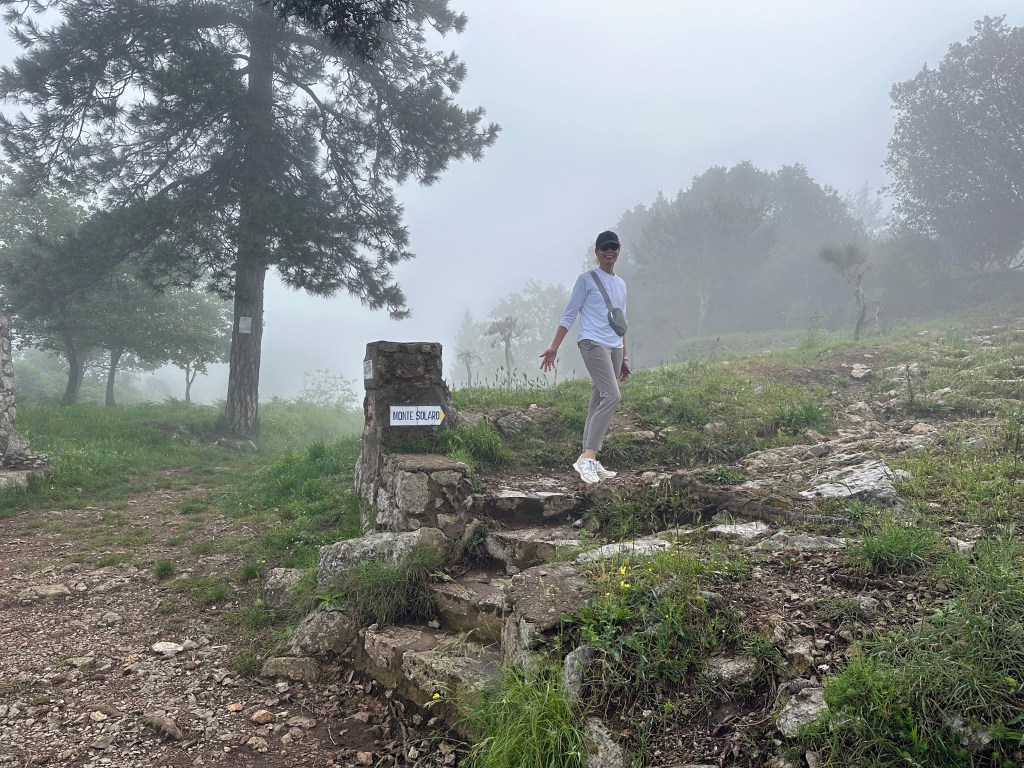
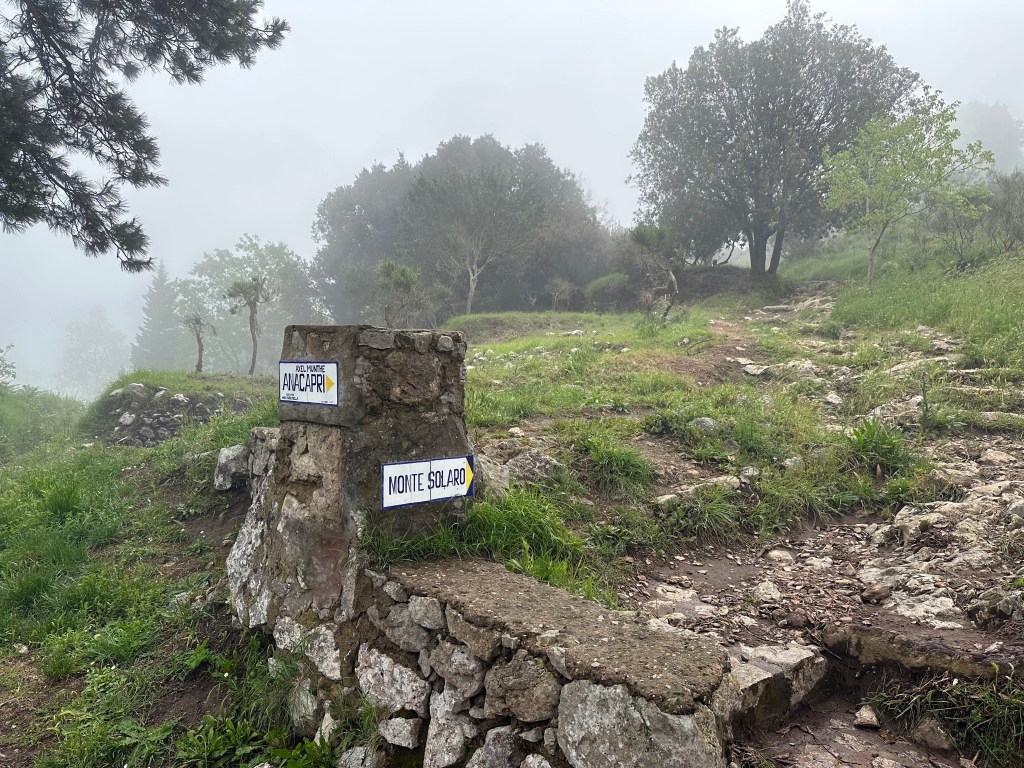
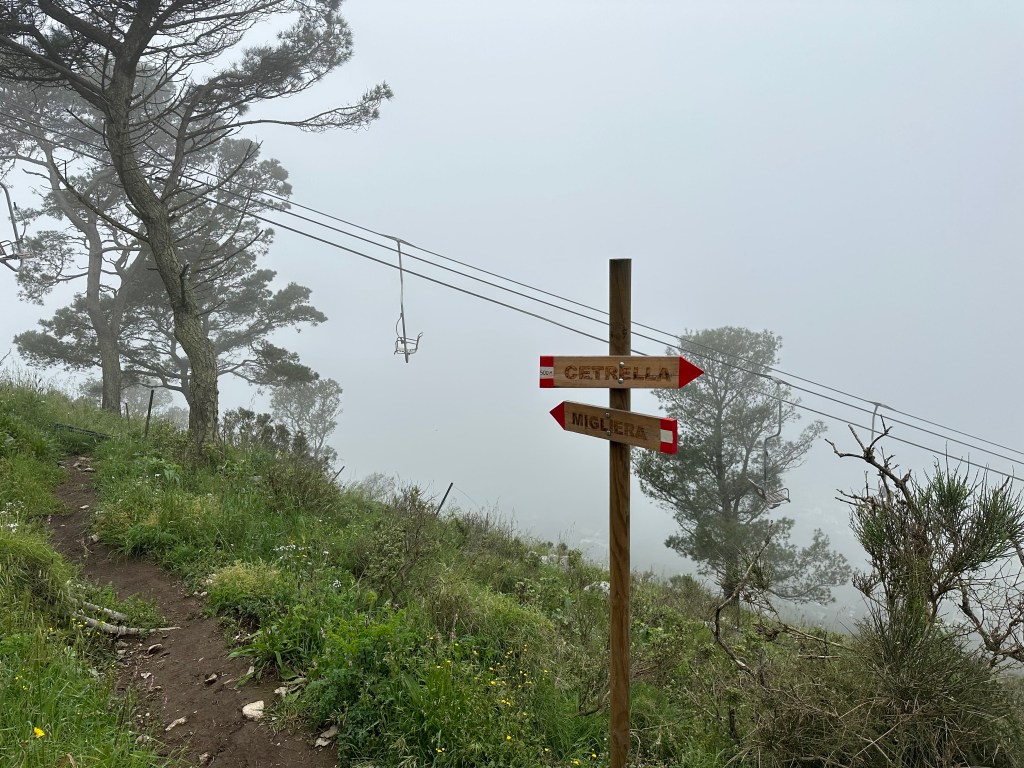
But at least the trail was marked.
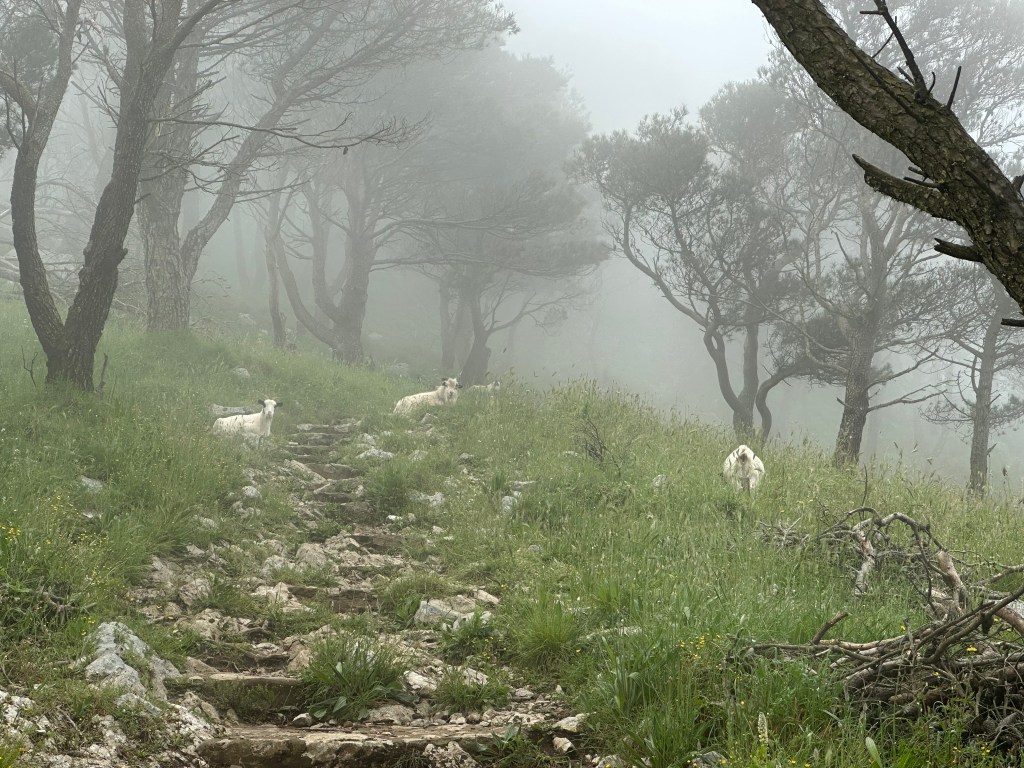
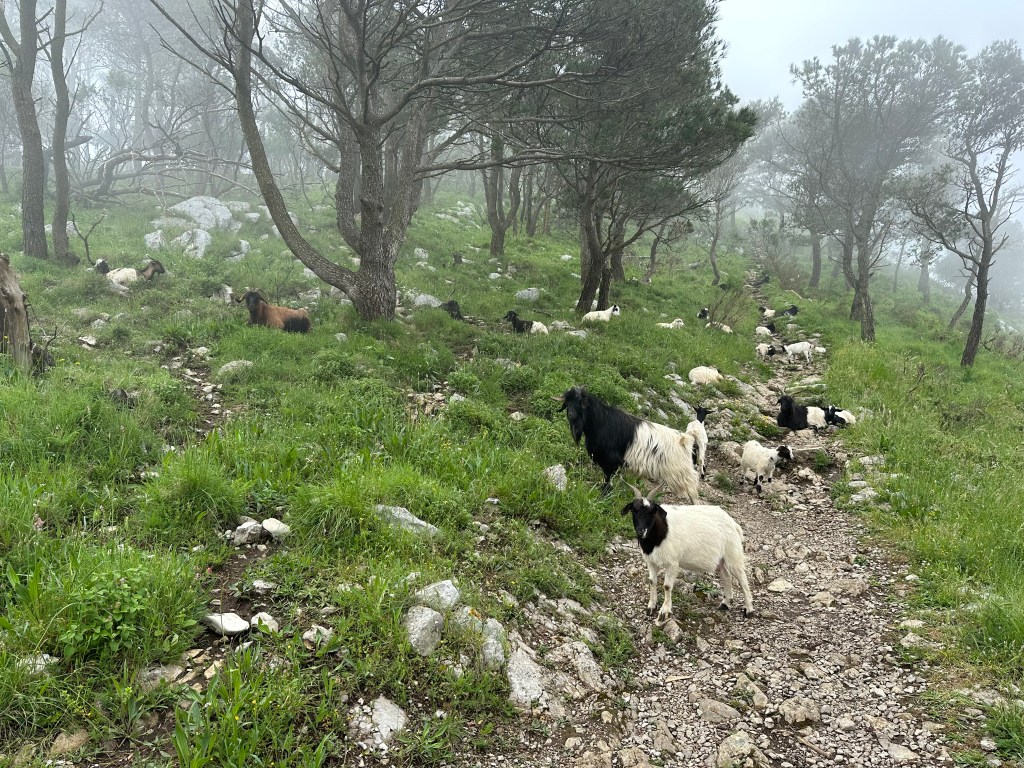
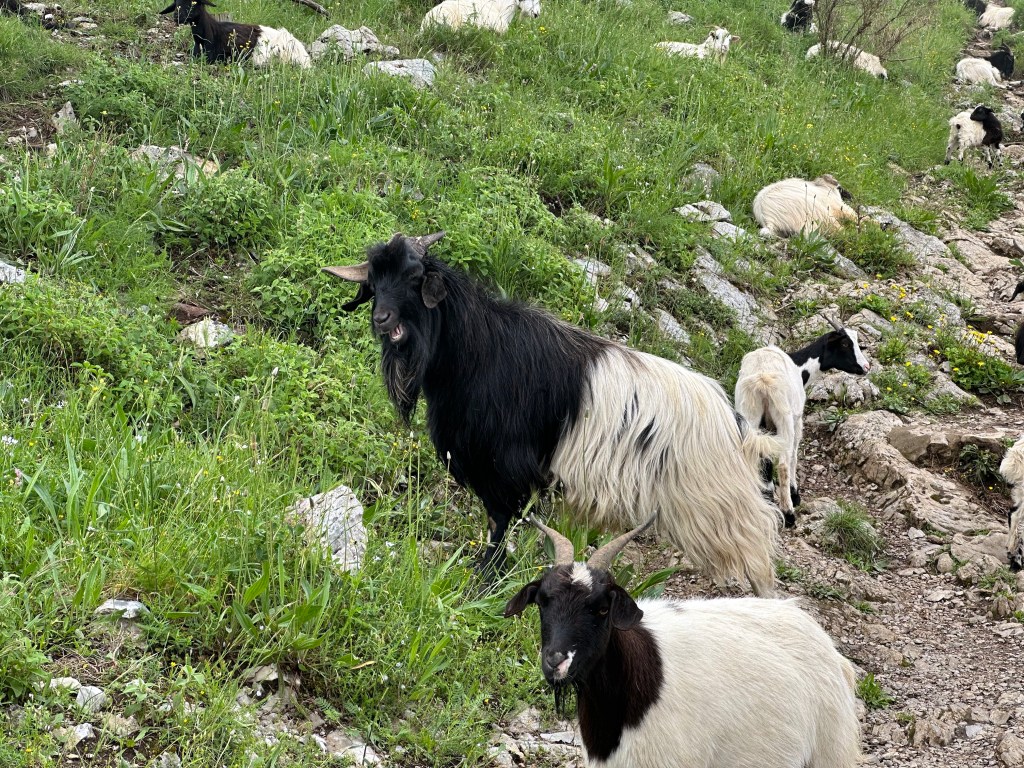
And out of the mist? Goats!
Definitely added some character to the hike.
A sign that we were nearing the peak:
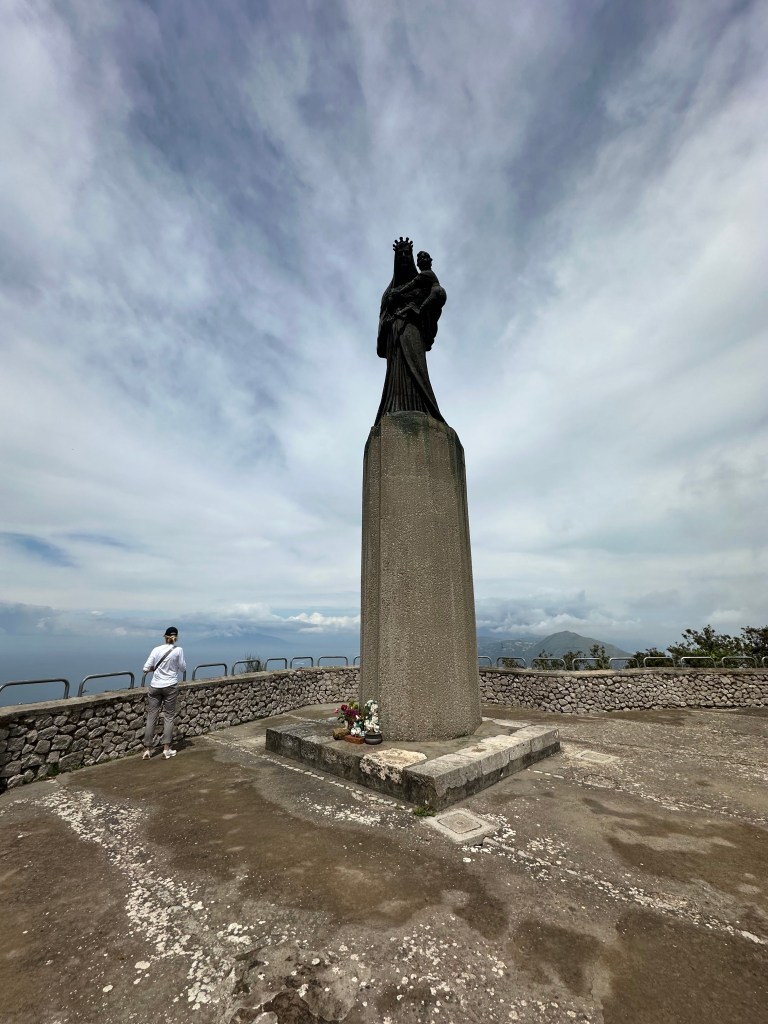
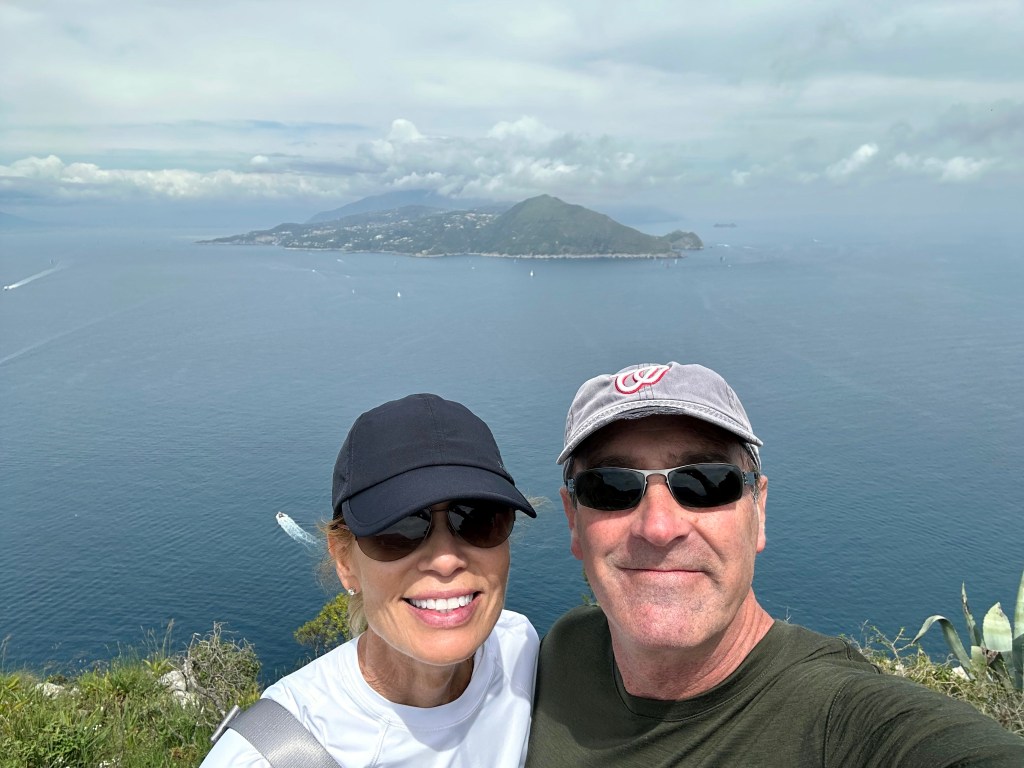
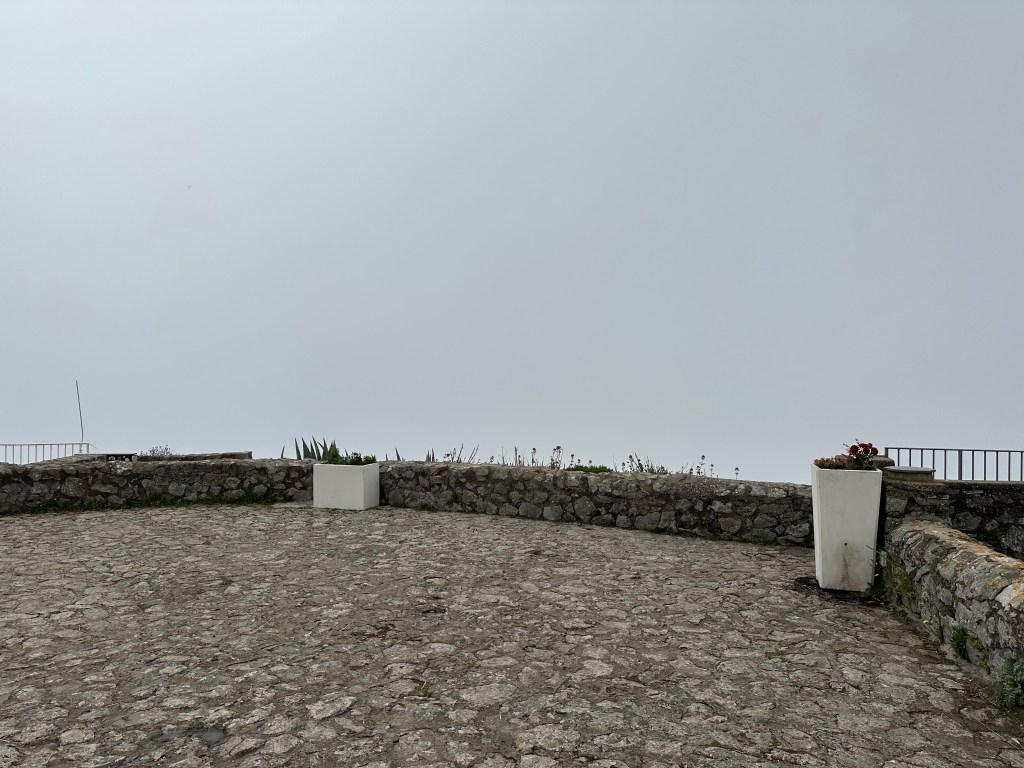
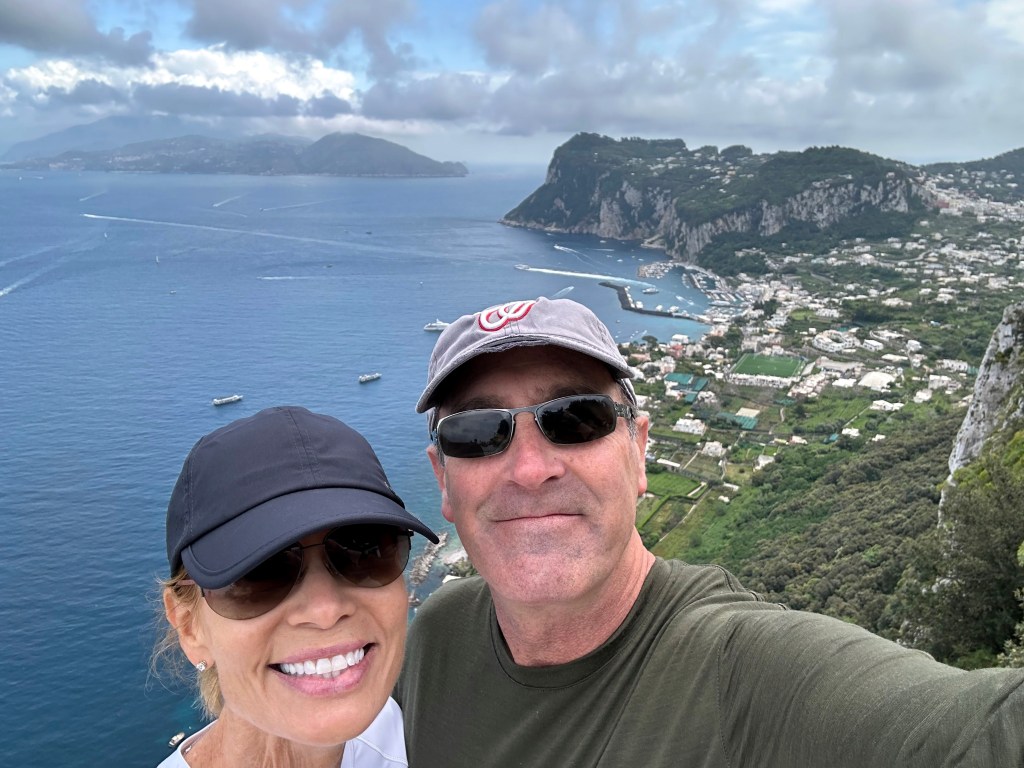
Finally, a great view from the top of the tallest mountain on Capri!
Or, as it unsurprisingly turned out, a replay of our hike’s apex on Arthur’s Seat in Edinburgh: zero visibility.
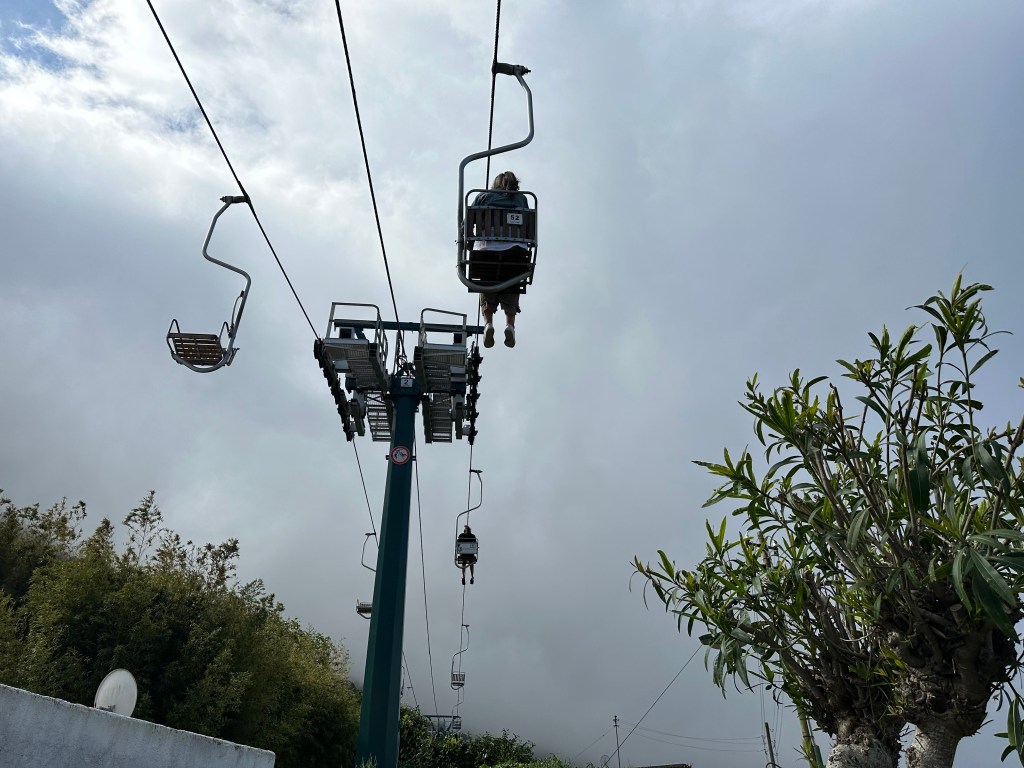
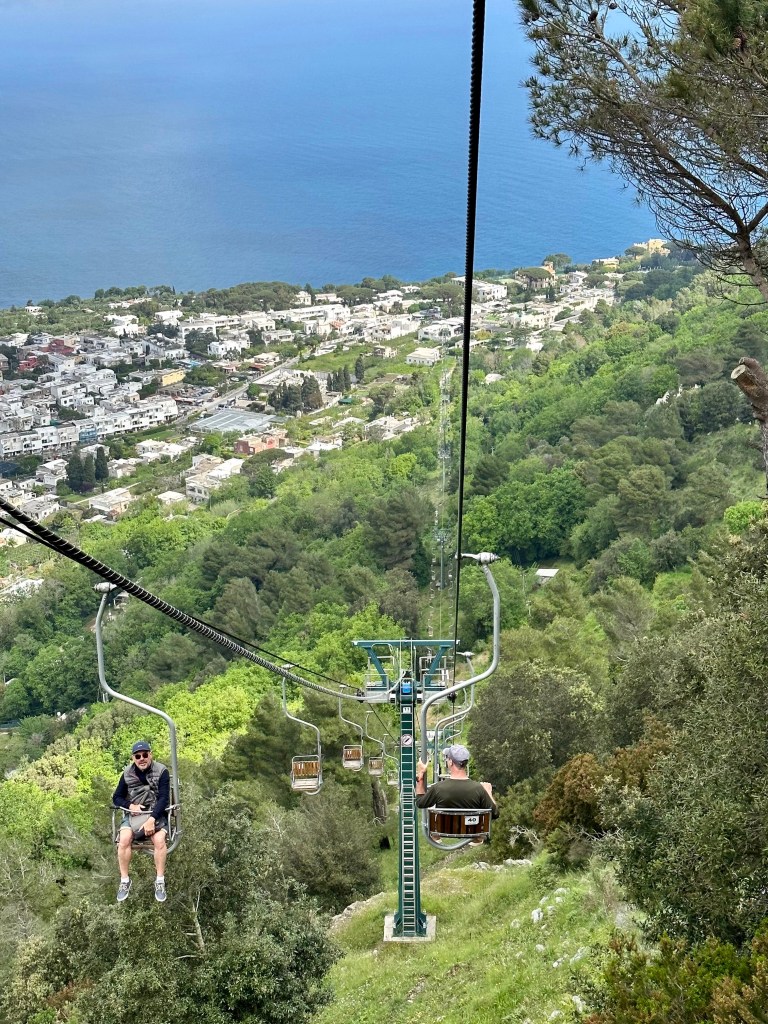
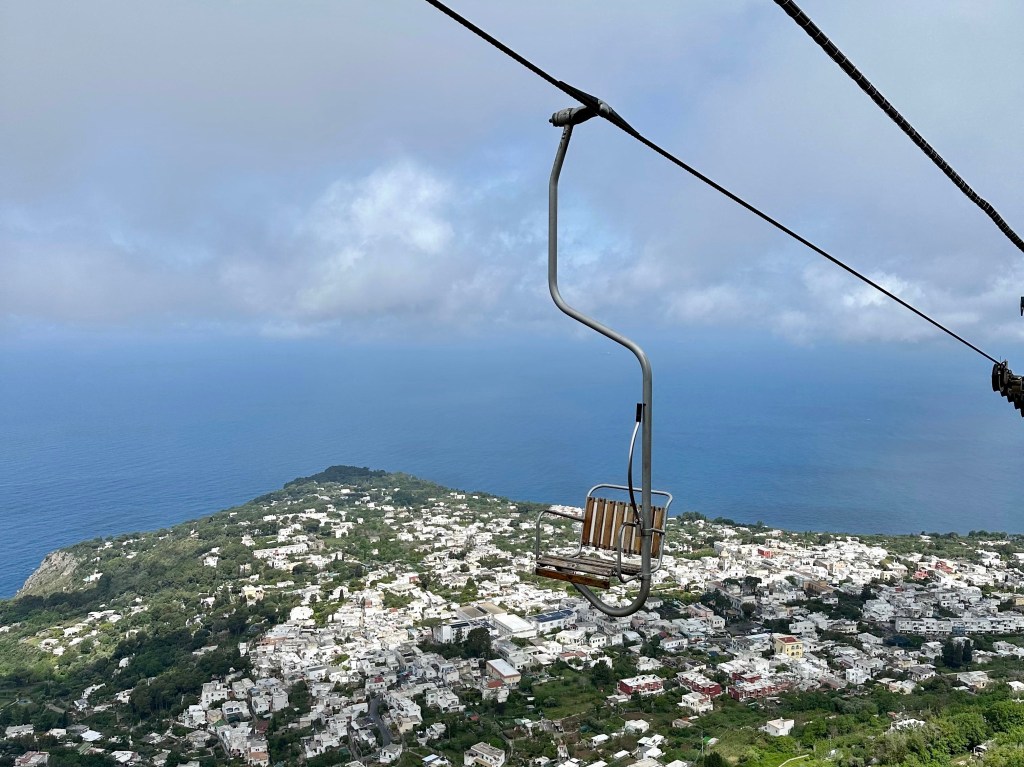
But after we quaffed a couple of macchiatos, the fog had burned off, so we grabbed the chairlift for a much more relaxing (and shorter) trip back down:
To wit:
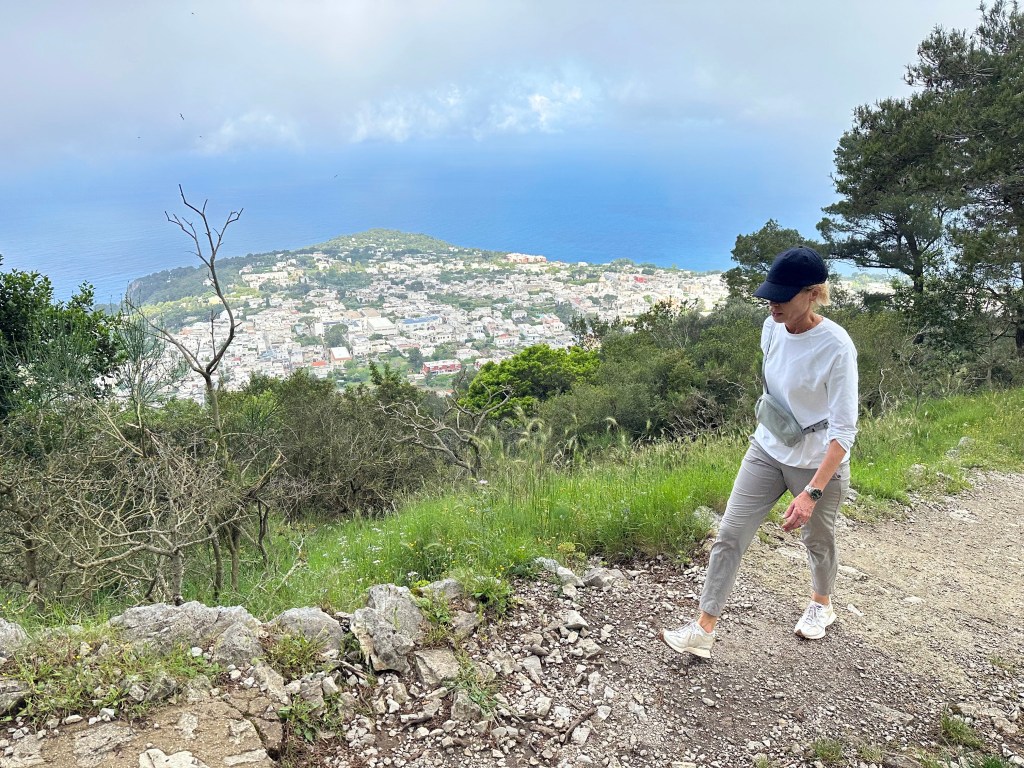
Hike up:
Chair down:
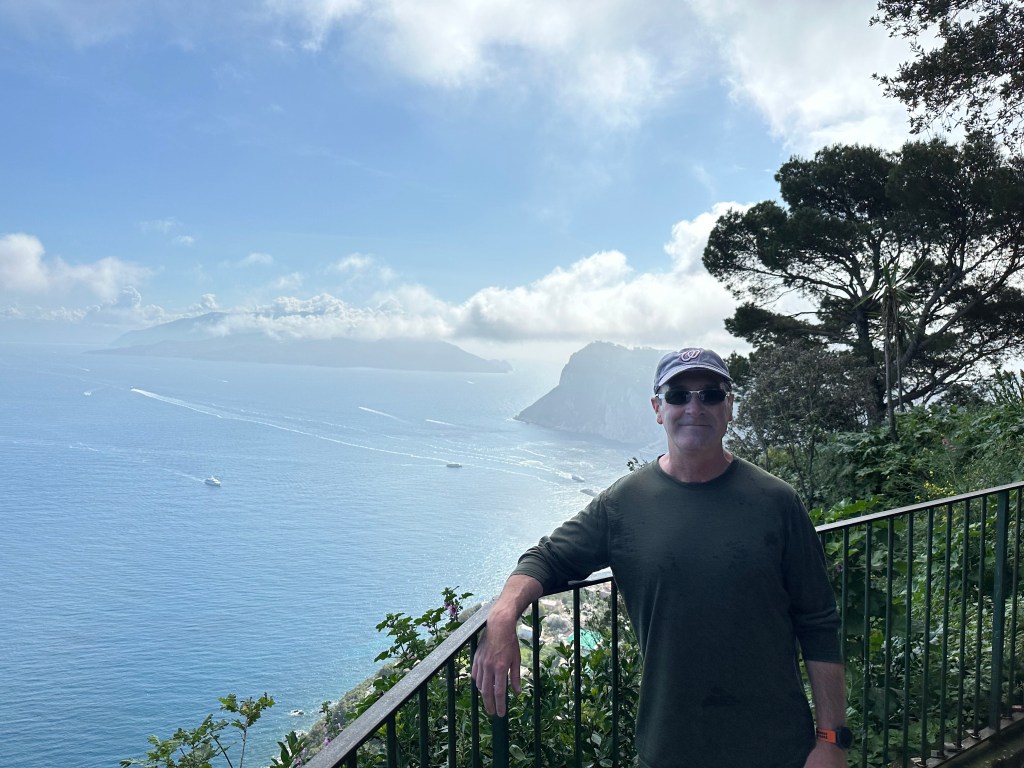
Pretty great views without the fog:
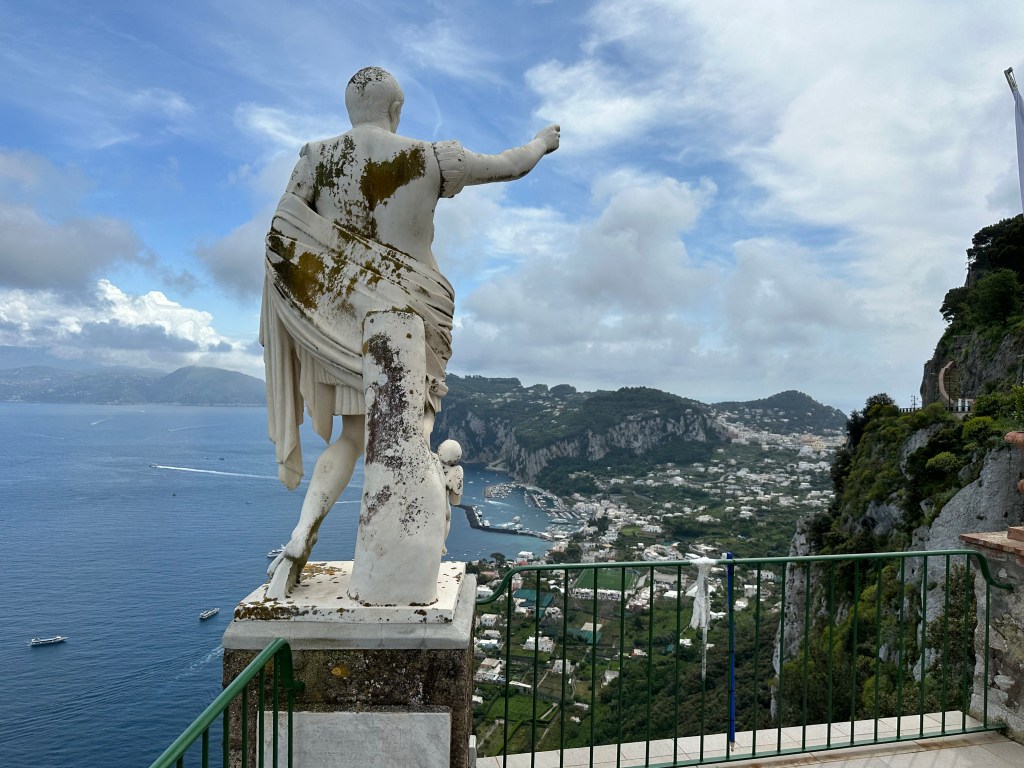
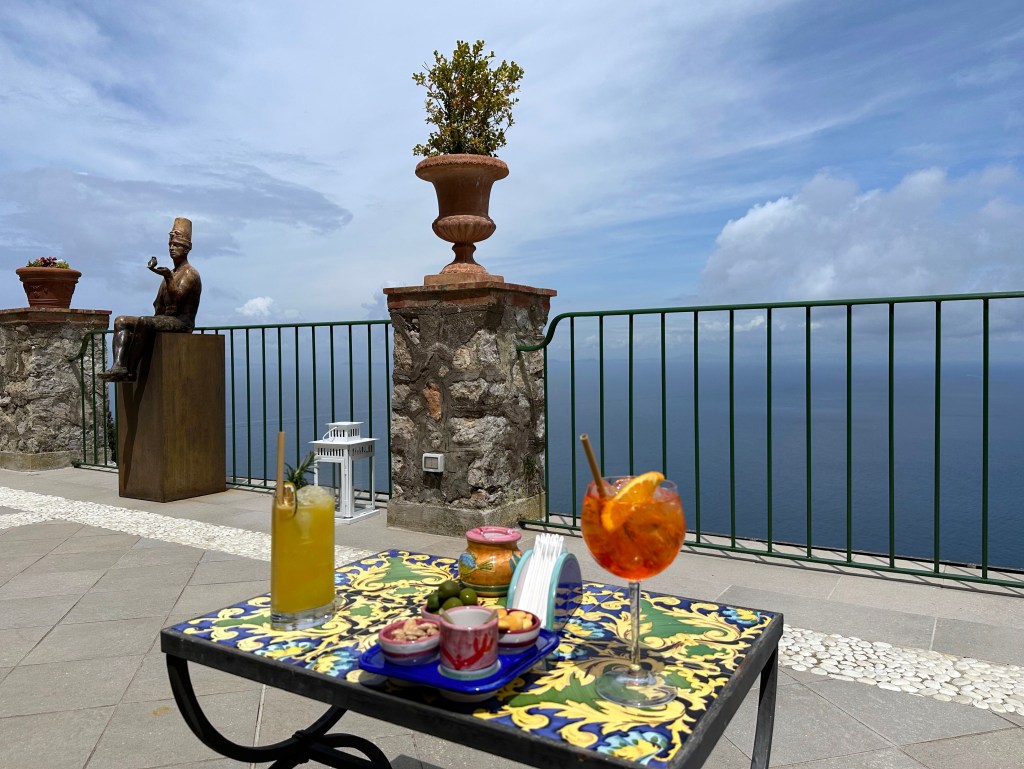
And then pre-pre-aperitivos at Caesar Augustus on the cliff in Anacapri:
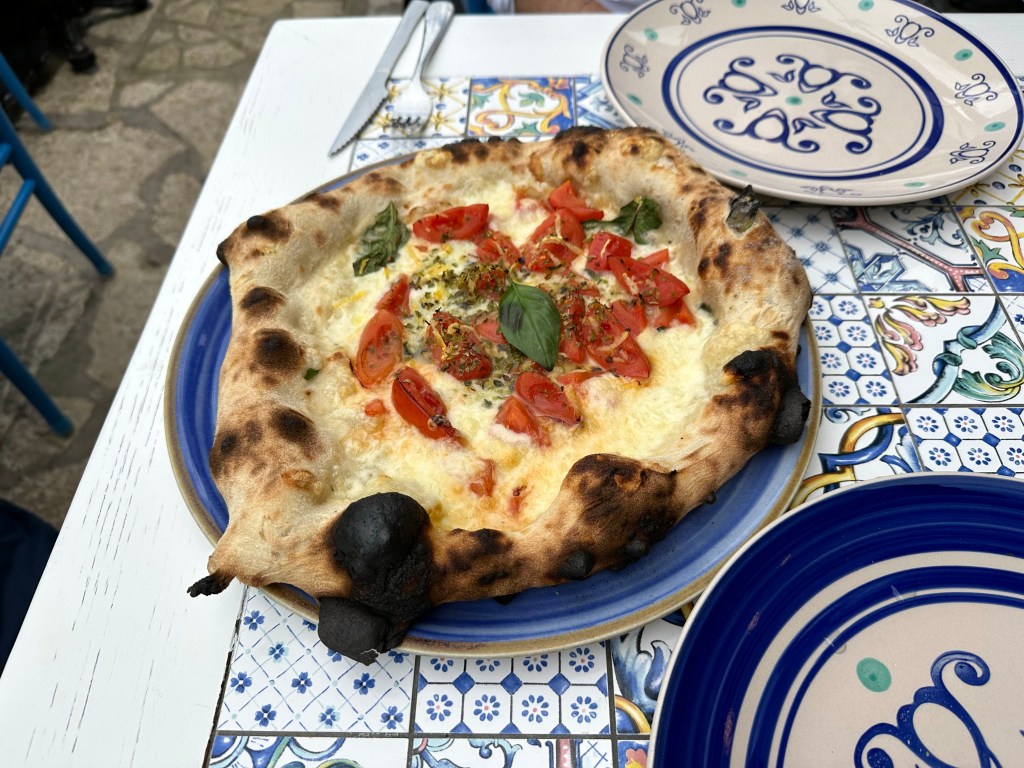
Followed by some decent, Neapolitan-style pizza at a place in Anacapri town:
























































































































































 WolfeStreetTravel