
Following the strategy articulated in the overview for our 6-week trip up the Adriatic coast (and into the Dolomites and Bavaria) earlier this summer, we bookended the summer with another 6-week, shoulder-season trip. Last time, we left on June 1 and returned on July 15. After a 6-week respite at home, we left for this trip the last week of August and returned the first week of October, which still provided us with great weather in Mallorca and Cornwall, but without the crowds that would be there in July and August.
And, unlike the “pick-up-a-car-in-Sarajevo-and-drop-it-off-6-weeks-later-in-Munich” approach from the last trip, where we luxuriated in a car that we could hang on to during the entire, 6-week road trip, we popped in and out of five rental cars in as many trip legs for this journey.
A cartographic overview of the trip’s five legs is pasted below:
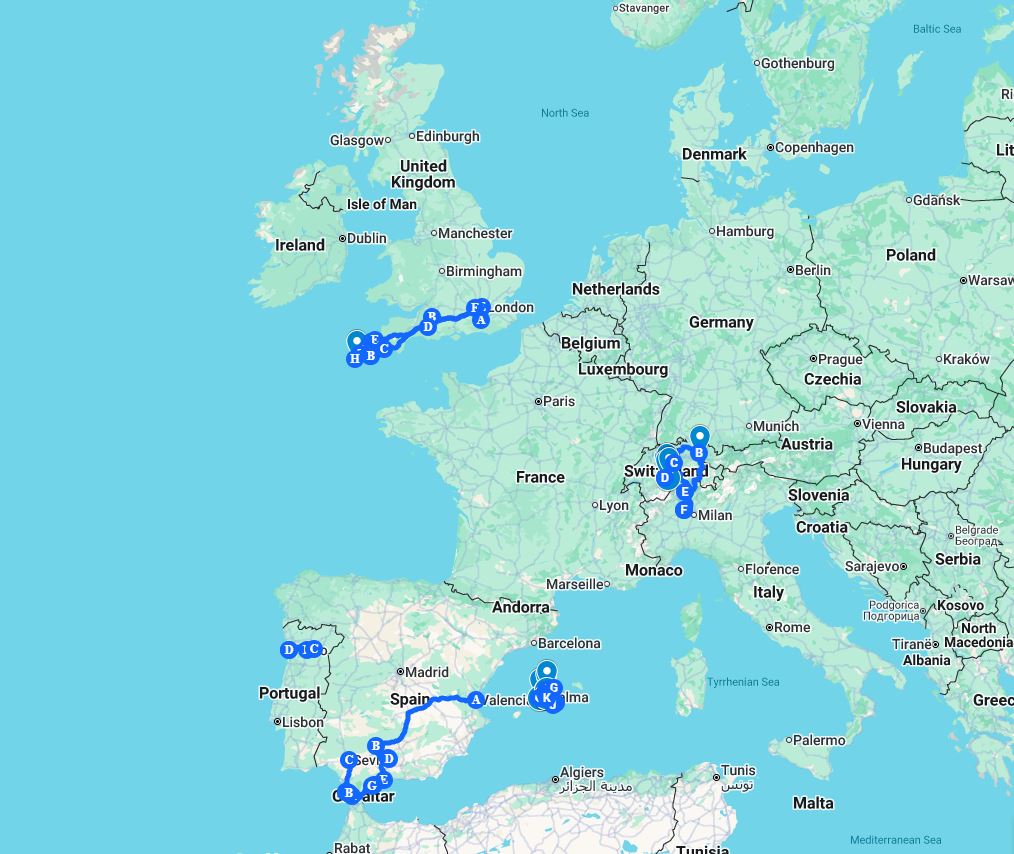
Treating the map above as a clock, our route rolled out like this:
- We began our trip at the 3:00 spot, with an 8-day loop around Switzerland
- Then flew counterclockwise south to the 5:00 location, with an 8-day loop around Mallorca
- Then flew to Valencia at the 6:00 spot, after a couple of days there, we began an 9-day drive west to multiple locations in Andalusia in Spain
- Then flew up to Portugal at the 9:00 location for 3 days in the Douro Valley and then back to Porto for day
- And finally ended the trip at the 12:00 spot with a 10-day loop around Cornwall and back to London in the UK
An interactive, zoomable map of the legs is provided below:
The route around the Switzerland leg of the trip also proceeded in counterclockwise fashion (and provided a second opportunity to visit (or at least drive through) Liechtenstein!):

Although we’d spend all of our time on this leg in the land of cantons, we nonetheless began at the Milan airport in Italy, since this location provided a more logical start and end point for a loop route that would cover several mountainous regions as well as Switzerland’s lake-happy Ticino canton in the south.
Our first stop in Switzerland – straight from the airport – was a gondola ride and hike to the Aescher Gashaus near Appenzel for a little lunch – pretty great perch to kick off our time in Switzerland (other than the first of the two parking tickets we’d get on this trip):

Just a normal day of traffic in Appenzel:
Our time in Appenzel, hiking and otherwise, was pretty damp the entire stay:

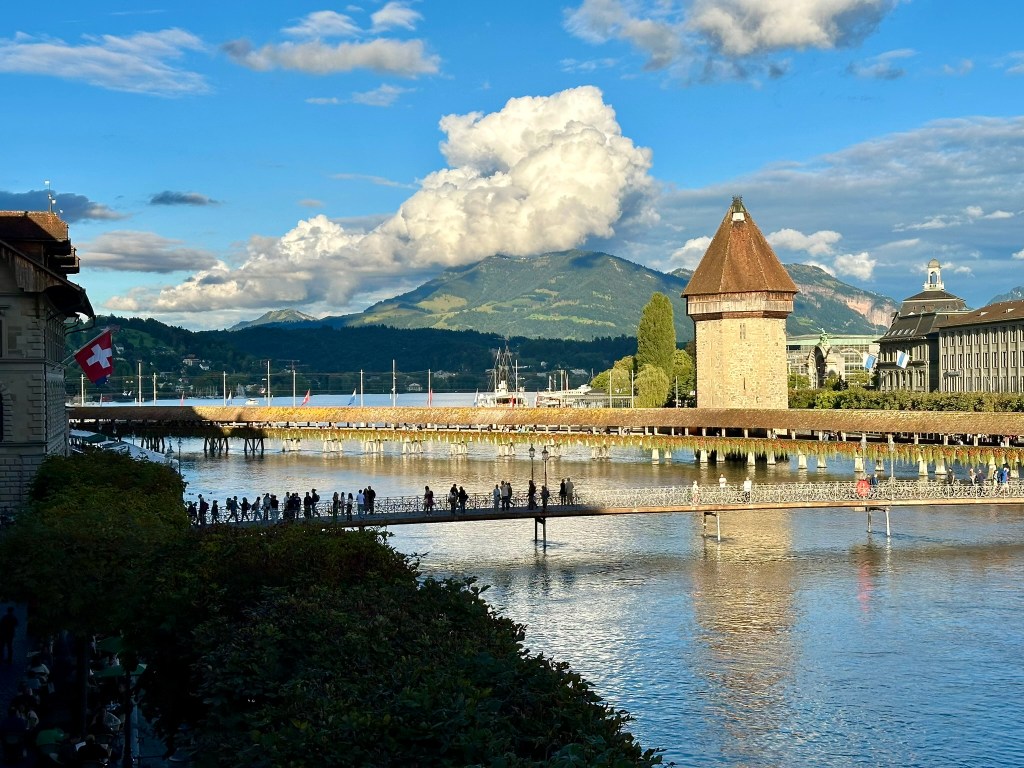
So onward we headed – first to Lucerne:

Really atmospheric and enjoyable – plus a great, historic footbridge!
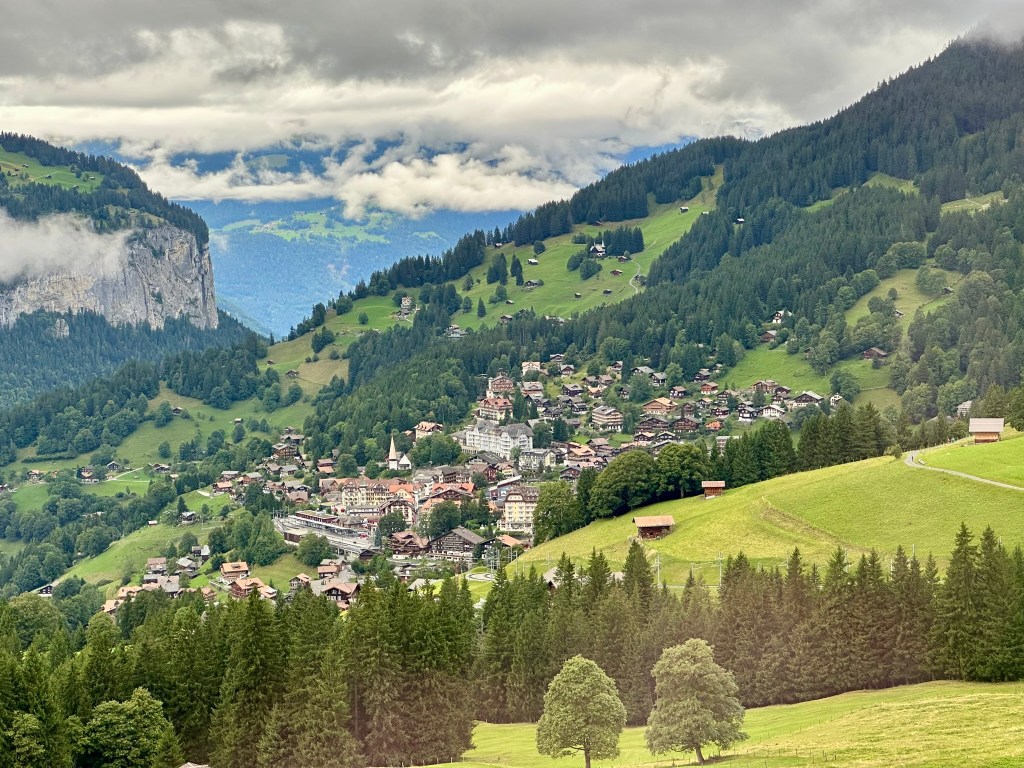
Then to the car-free mountain town of Wengen in the Lauterbrunnen region:
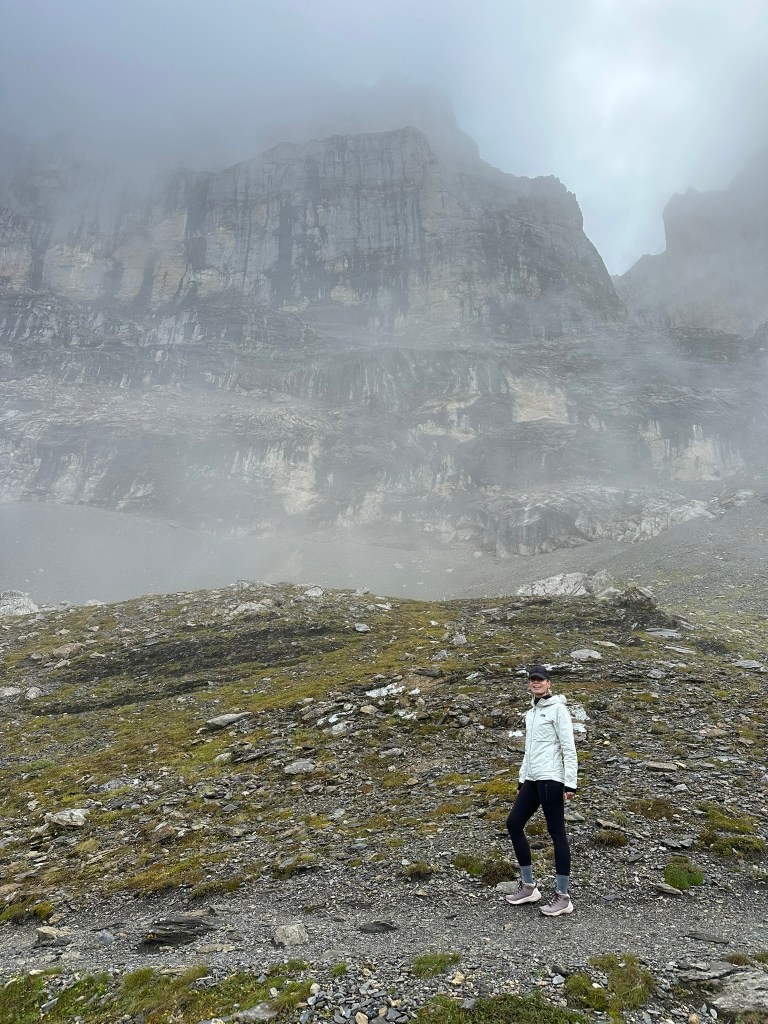
From whence we experienced one of the most spectacular hikes ever, in the Swiss Alps:

View from the nearby, smaller hamlet of Murren to the Junfrau and Eiger:

Our final hike – the Eiger Trail – and more mist and rain, unfortunately:
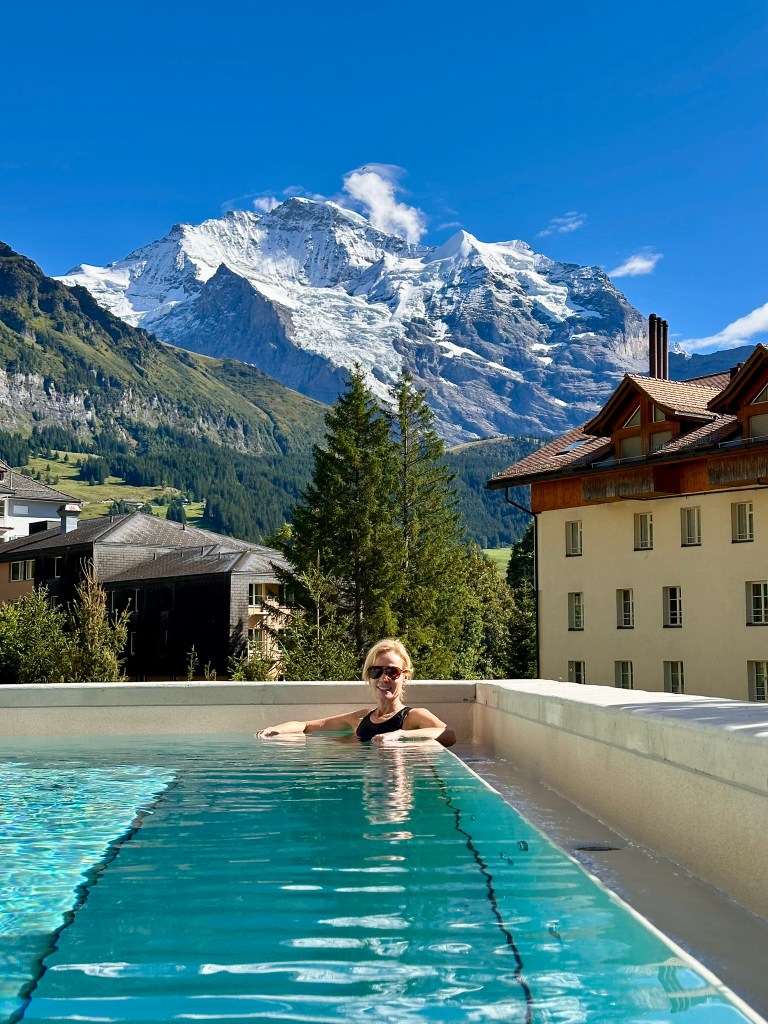
But our digs in Wengen helped assuage this a bit:
After a week, we ended our loop with an 8th day in the Swiss town of Locarno on Lake Maggiore (strategically booked at an AirBnB with a washer / dryer – a key element to our long-duration trips):
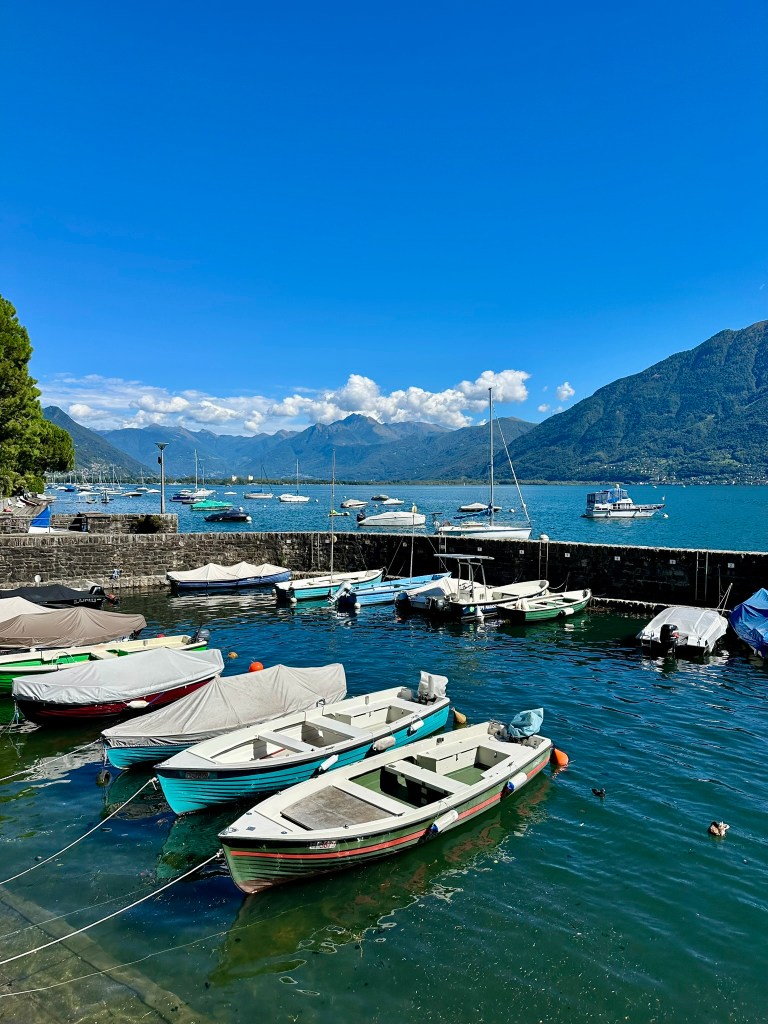
Then spent the next morning in Locarno’s even more charming sister town of Ascona before heading to the Milan airport for a flight to our next leg in. . .
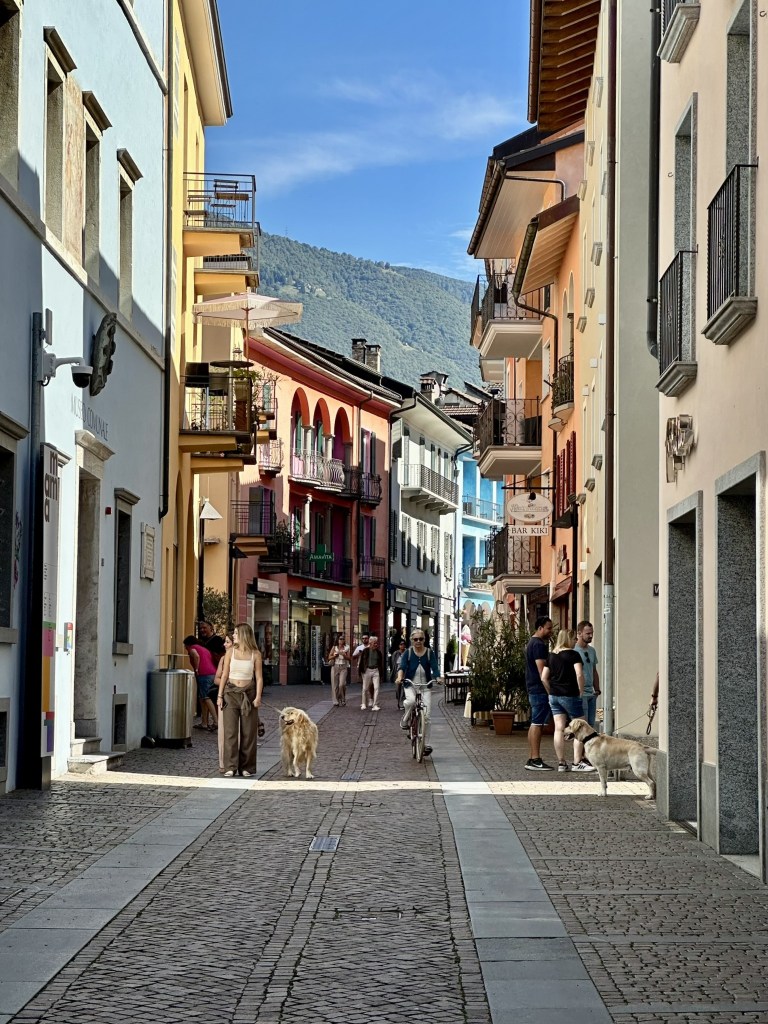
the Spanish Balearic island of Mallorca, where we’d spend the next 8 days:

Mallorca’s capital of Palma, the biggest town (and only city) on the island:
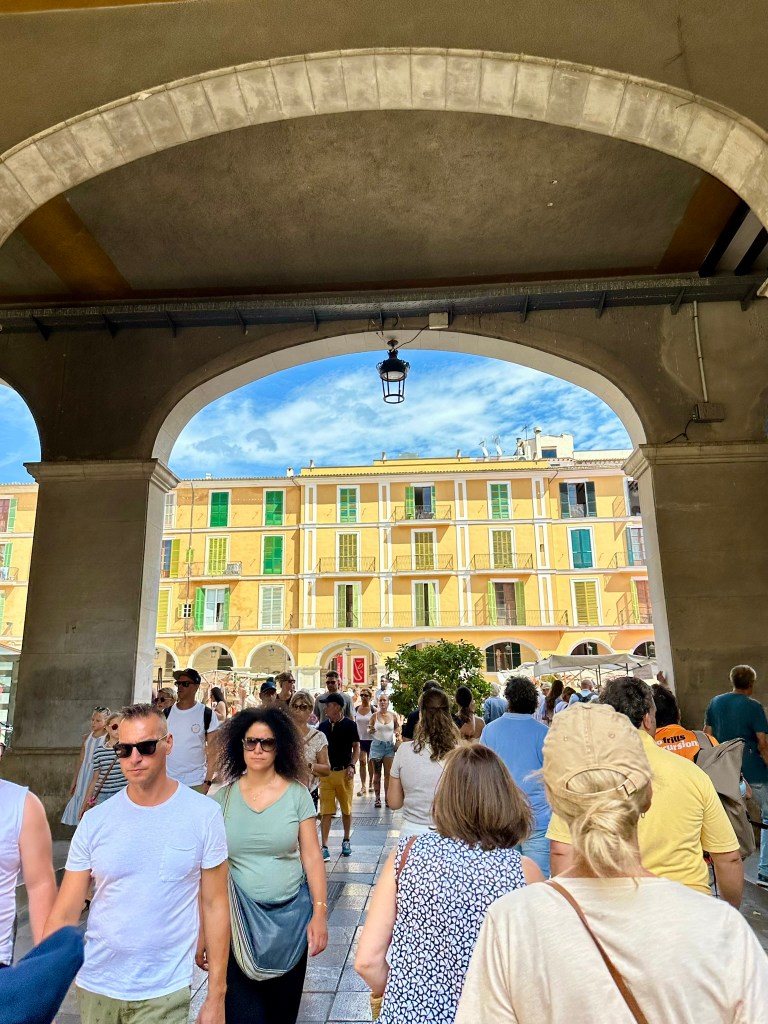
Cool pool in the shadow of one of Palma’s massive churches (very reminiscent of our pool sitch in Carcassonne in 2017 and Uzes in 2021):

Strolling Palma on the way to our 27th anniversary dinner:

Palma’s cathedral lit up at night from our terrace:
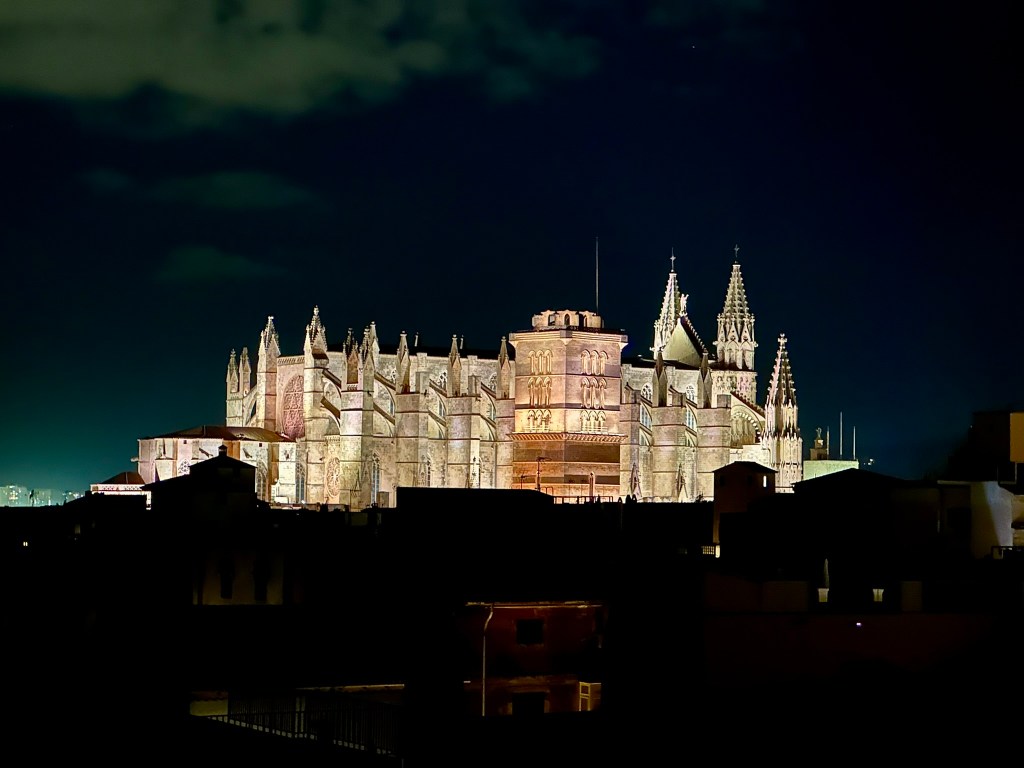
And strolling amidst its flying buttresses the next day:

On to a couple of days in Port de Soller on the island’s west coast:

Cool perch over the port and ocean on our last night:

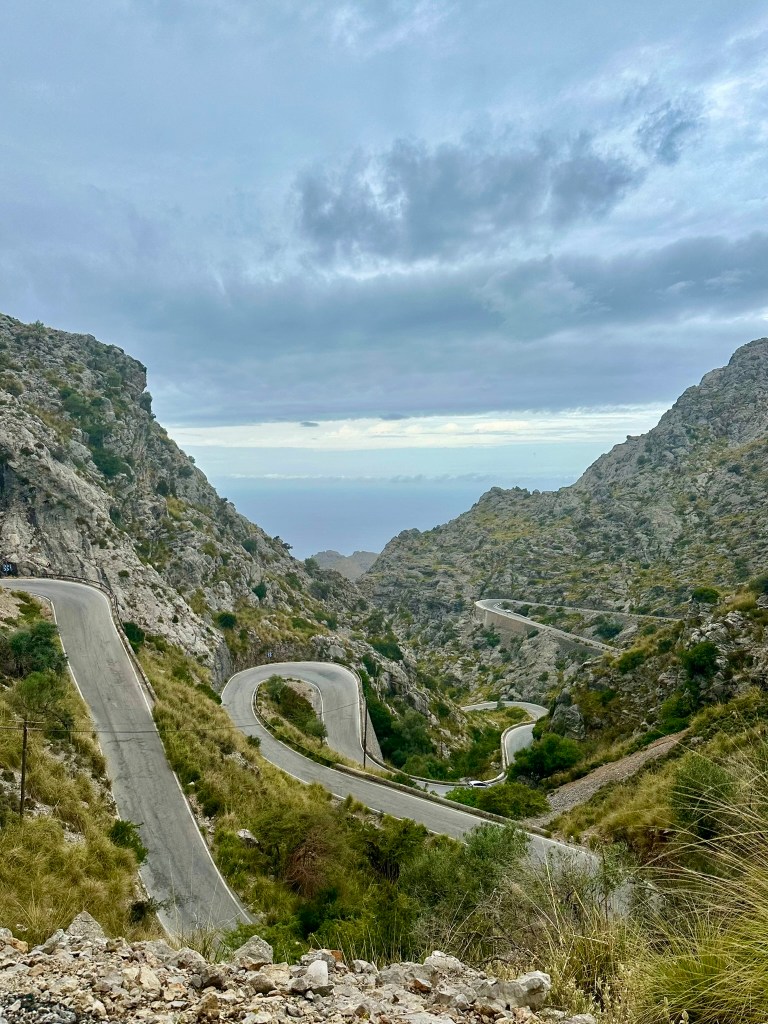
On to Pollença on the north end of the island, which necessarily entailed driving the absolute most insane road we’ve ever experienced:
Super charming town of Pollença, with it’s 365 steps to reach the town’s Oratori del Calvari chapel:

After swimming in the ocean and trying the nearby beach for all of 20 minutes, we decided that this arrangement would better suit our interests for the day. We were right.

Our last town of Colónia di Sant Jordi (and another AirBnB laundry stop), in the southeast corner of Mallorca

On to the Spanish mainland!
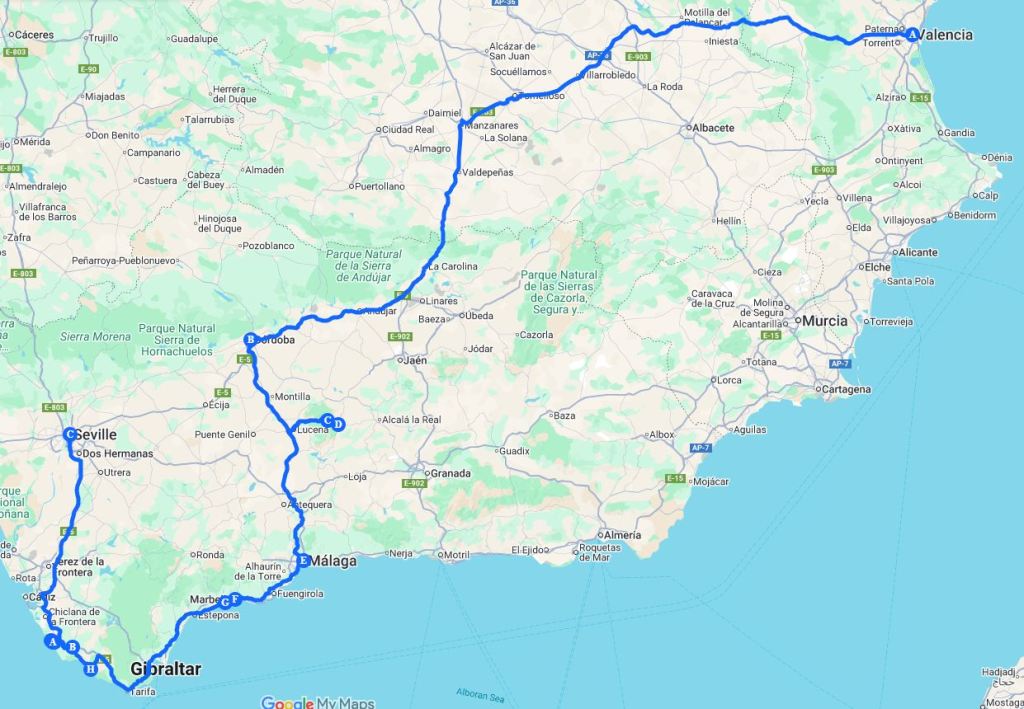
Although we’d spend the rest of our time in Spain exploring more of Andalusia (after seeing and loving much of it during our bike trip in the region in 2017), we’d first bop around Valencia on the east coast for a few days:

Spectacular city – super vibrant and fun and very Beaux Arts-y. The unbelievably perfect weather undoubtedly had a lot to do with this impression.

Cool little bike tour one day around the city and out to the beach:

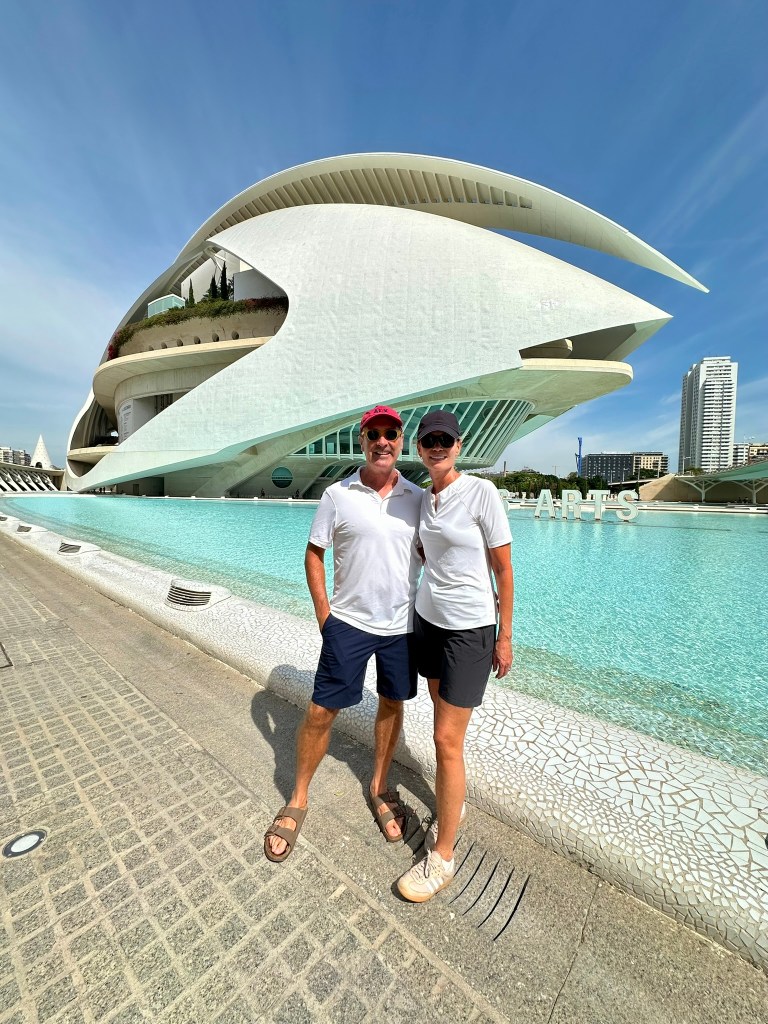
Including riding through Valencia’s sci-fi City of Arts and Sciences:
Then, a long drive west to our first Andalusian town that we missed on our bike trip: Cordoba.
Star of the show? The absolutely unique Mosque–Cathedral of Córdoba. Originally built as a grand mosque in the 8th century under the Umayyad dynasty, it was converted into a Catholic cathedral after the Christian Reconquista in 1236. Unlike every other instance of these conversions, however, the existing mosque structure and architecture was not razed, but retained.

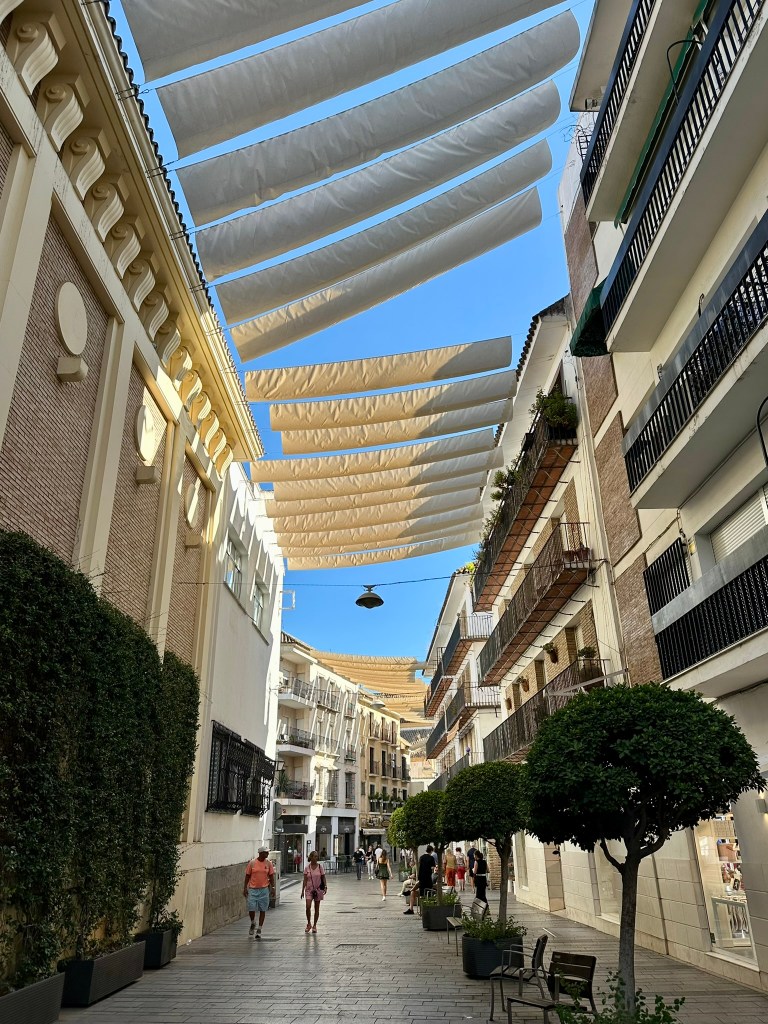
First of several times we’d see this street-cooling technique used in Andalusia:
At one end of Cordoba’s Roman Bridge lies the Moorish Tower (Torre de la Calahorra), a fortified gate built by the Moors in the 12th century to defend the southern end of the bridge.

On the drive from Cordoba to Malaga, a stop at an olive oil processing facility for a tour and tasting at the Almazaras de la Subbética cooperative south of Córdoba – winner of the World’s Best Olive Oil competition in 2024/2025. And the 10 previous years. Super cool.
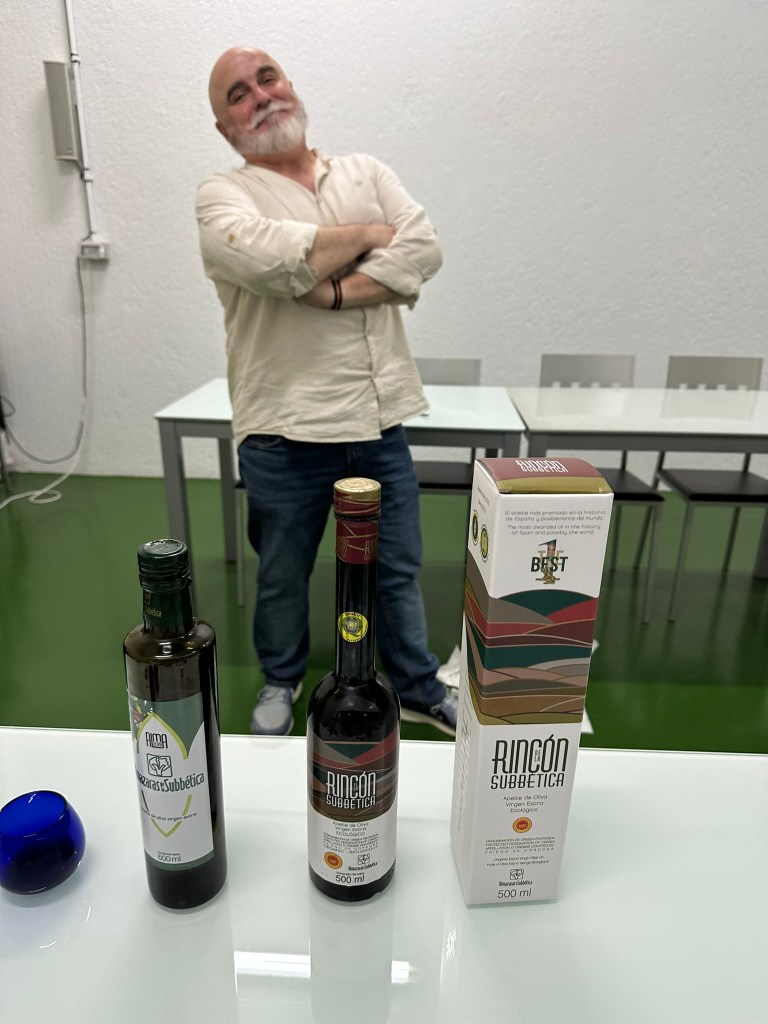
That’s a LOT of olive oil!

Priego de Cordoba, another white-washed Andalusian town visited on the drive to Malaga:

Malaga, the second (and final) iconic Andalusian town we missed on our previous bike trip:
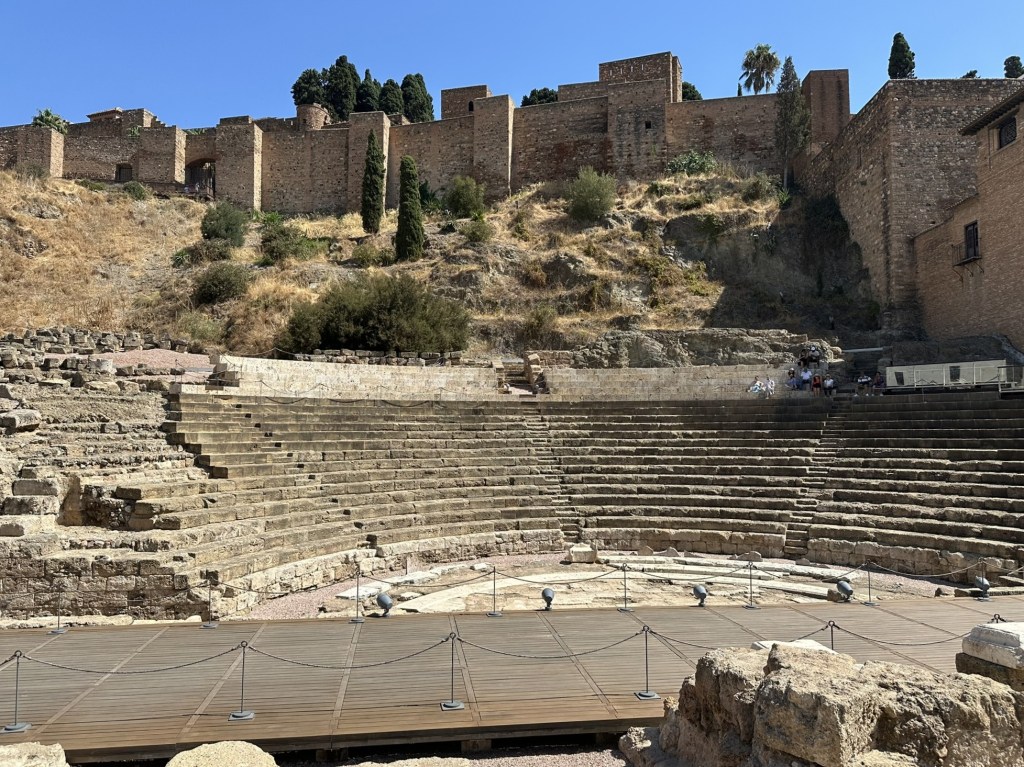
Right in the heart of town lies a Moorish calabaza atop a Roman amphitheater. The history half of WolfeStreetTravel was delighted.

Cool little tapas tour our first night; it turns out that maybe we DIDN’T need to pack 45 cigars for the trip (which we certainly did).

One of our goals? Chow down on espetos at a chiringuito – a beach fish-grilling restaurant (which we learned about on The Amazing Race, for what it’s worth).
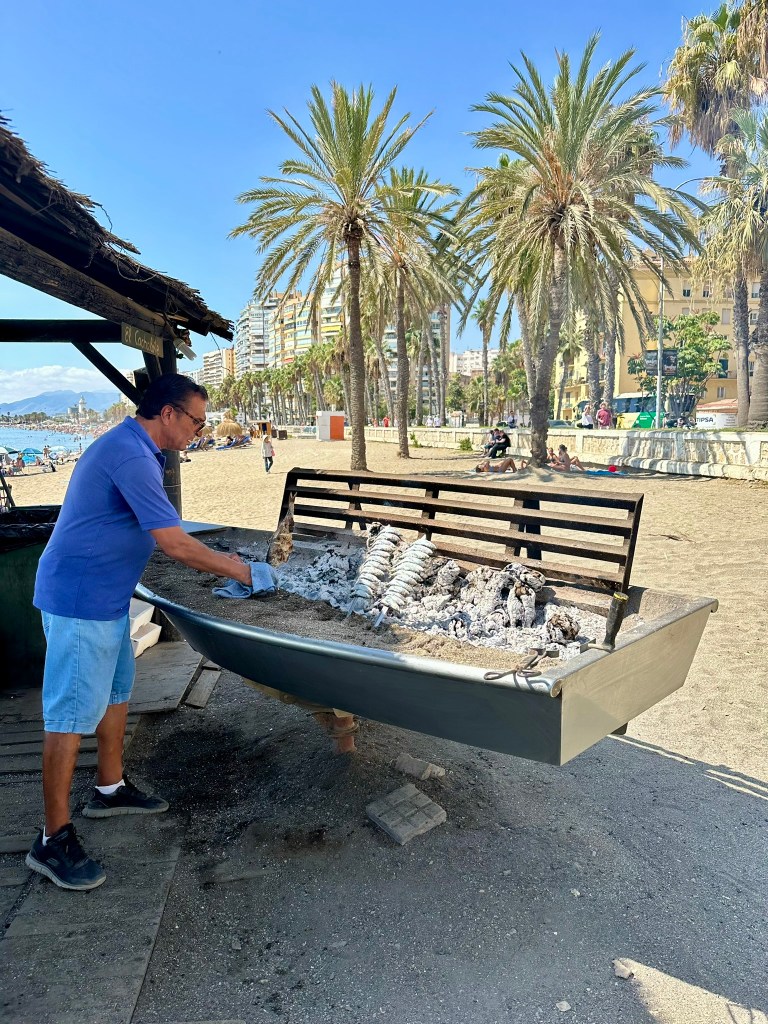
Definitely lived up to the hype (especially accompanied by a few tinto de veranos).

A stopover in Marbella en route from Malaga to our next town. Despite high expectations for a super awesome area – meh.

After months of the Mediterranean (first in Croatia on the initial bookend and then in Mallorca, Valencia, and Malaga on this trip), we transitioned to the Atlantic after driving past Gibraltar to get to Playa Zahara de los Atunes.

Where we stumbled, during our only night there, into a cool little concert at a beach bar down the street:
Continuing our little U-shaped arc around Andalusia, we headed next to Conil de la Frontera (our third de la Frontera, designating a frontier town between Christian and Moorish territories in the 900s):

Fried fish frenzy.

And a little day trip to Vejer de la Frontera:
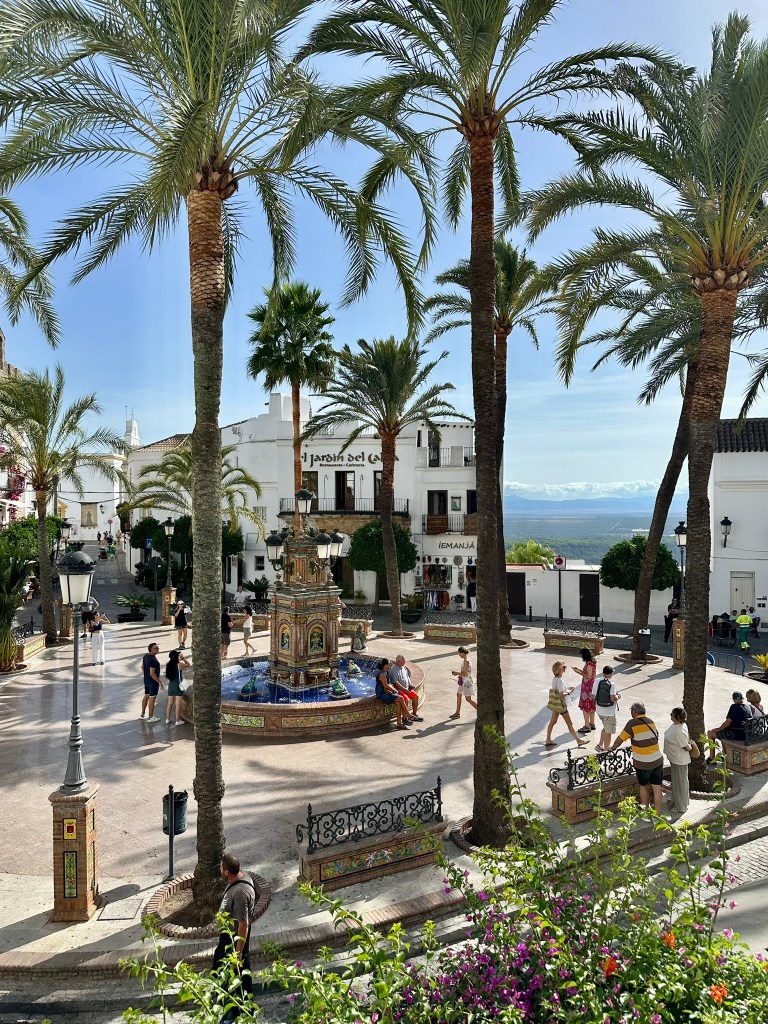
Even more atmospheric Andalusian town (and our forth de la Frontera):


More beach fish at Playa de la Fontanilla:

And our casita for 2 days right down the beach. One of the best AirBnBs we’ve experienced (plus a laundry stop):
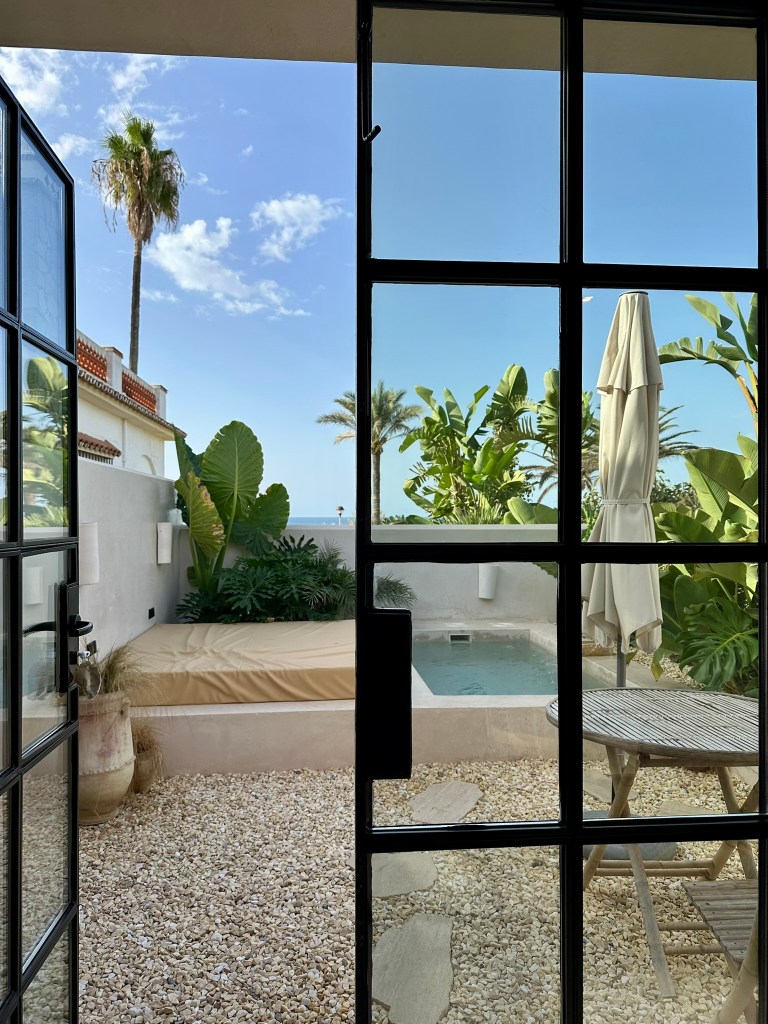
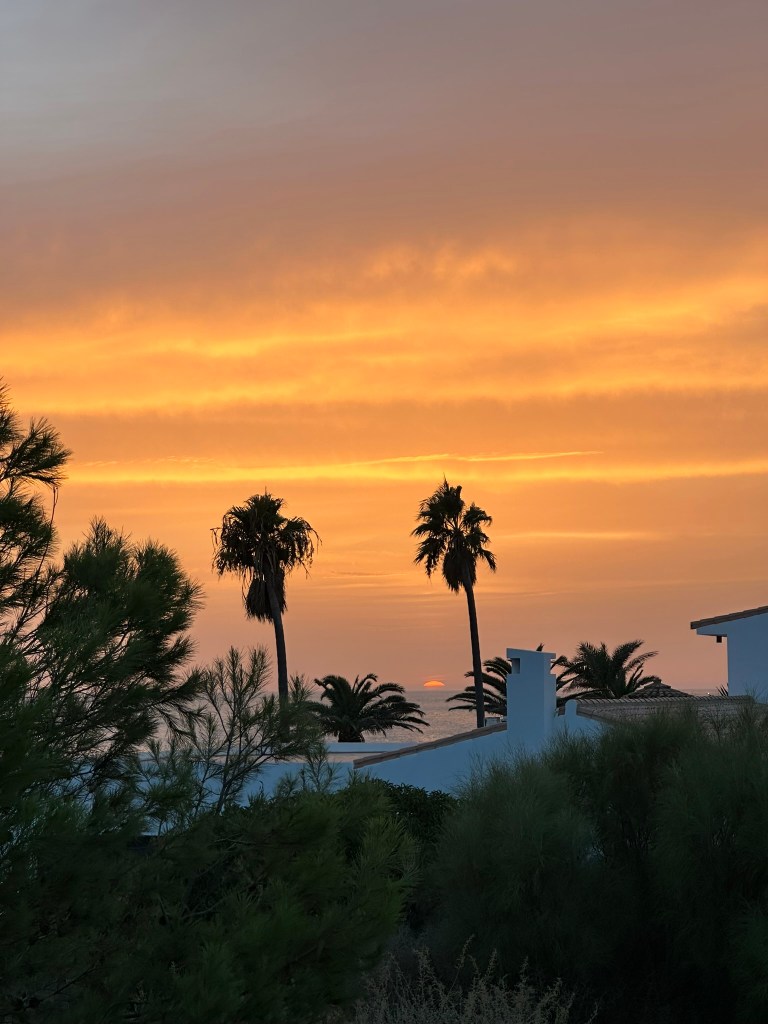
Amazing sunsets from the casita’s roof deck:
Then, back to Seville, which we really enjoyed when we first visited in 2017.
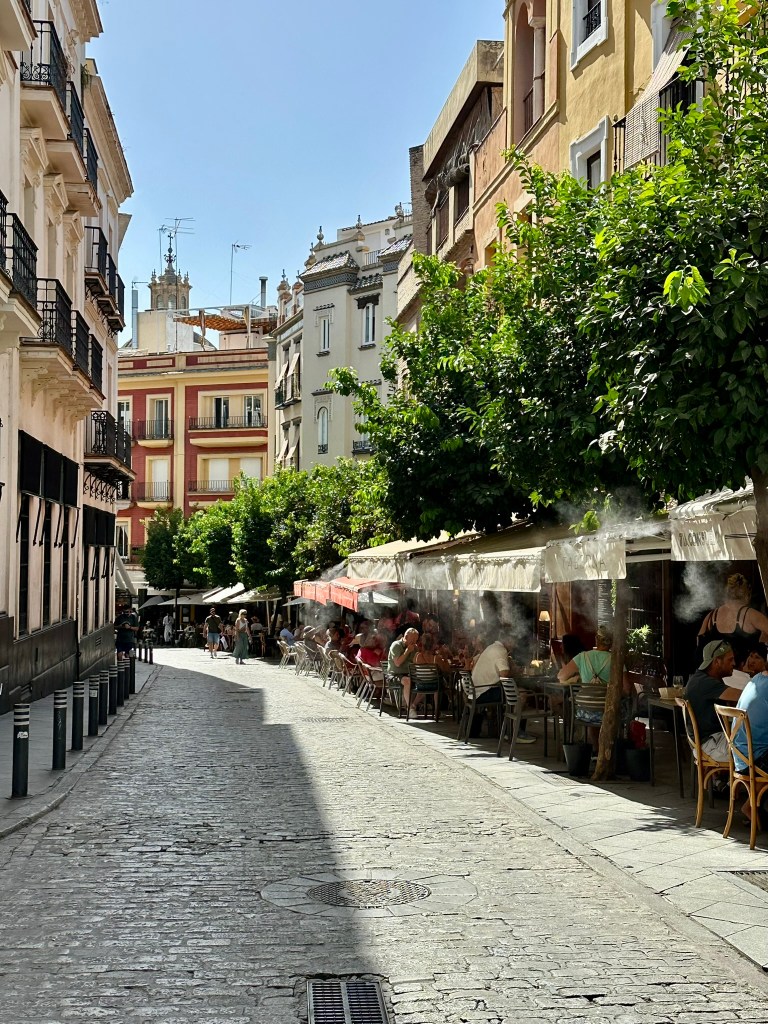
Never got to see the “mushroom” during that visit; this has been corrected:

And we spent our limited time in 2017 visiting Seville’s storied cathedral and did not have an opportunity to visit its alcazar. This also was corrected:
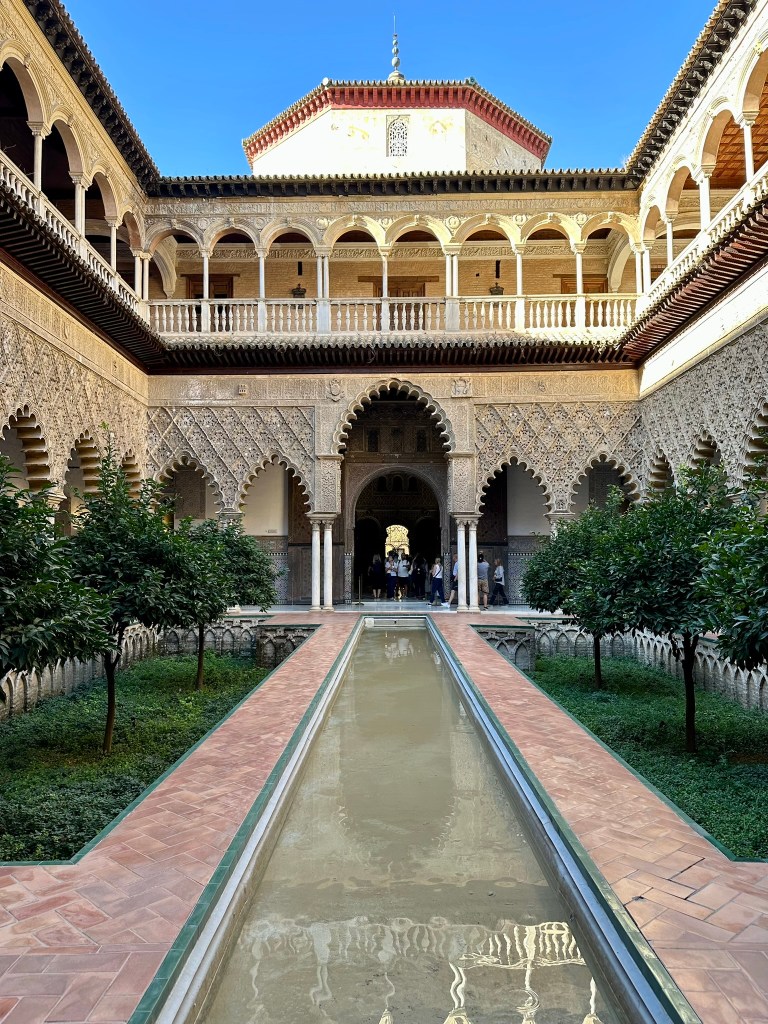
And, reminiscent of our days feasting on pinxos in San Sebastian in 2021, a dinner in Seville that included baby eels. Delicious.

Seville served as our last stop in Andalusia; from there, we flew to Porto, Portugal, picked up another car, and headed immediately east to the Douro Valley – Portugal’s wine country.

Our first stop – literally straight from the airport – was a tour and tasting at Quinta da Pacheca. Good wine. Great port.
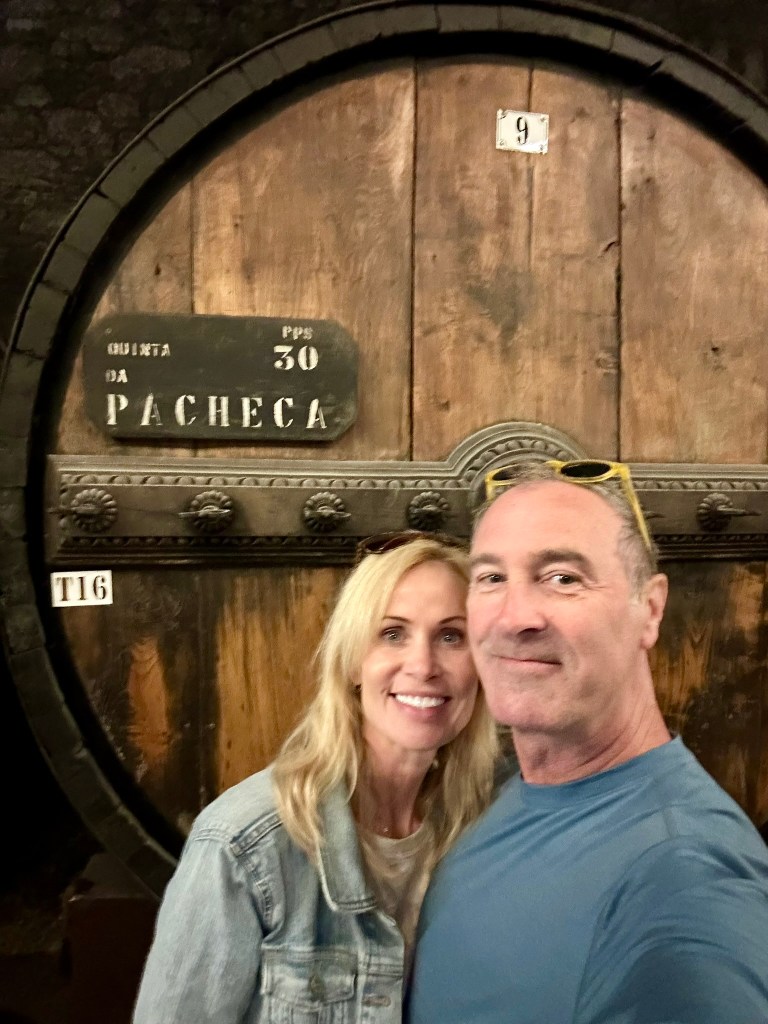

And the Douro Valley wineries really DO still stomp grapes, a la I Love Lucy. Pretty wild.

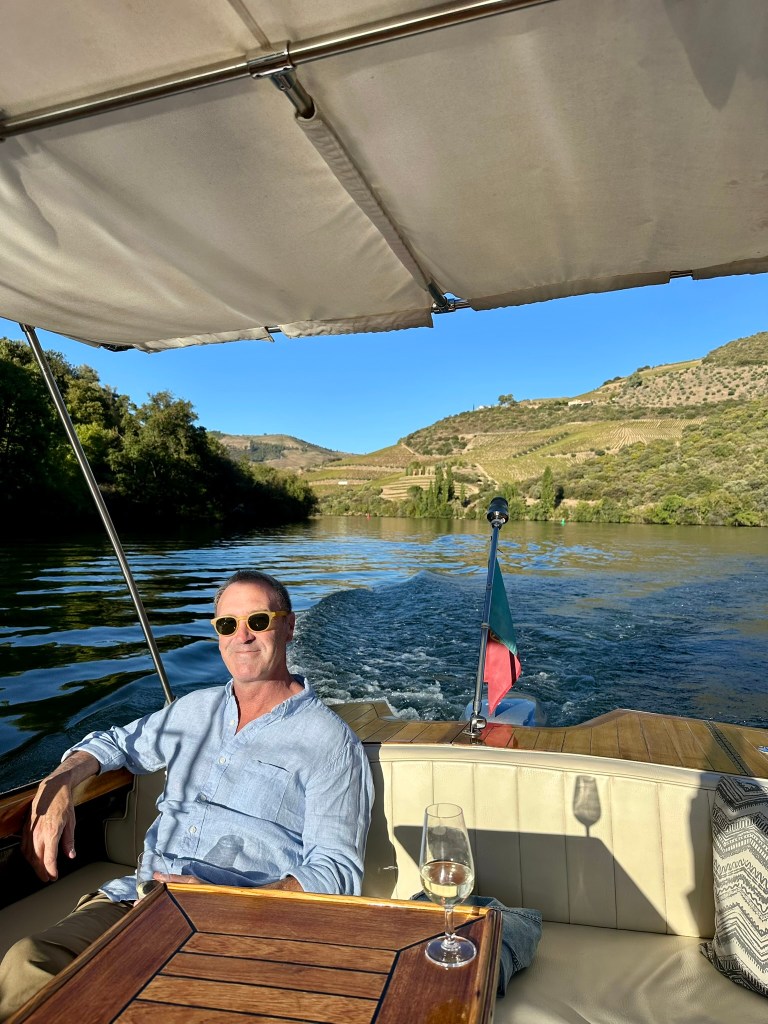
Cool little sunset boat trip on the Douro River:
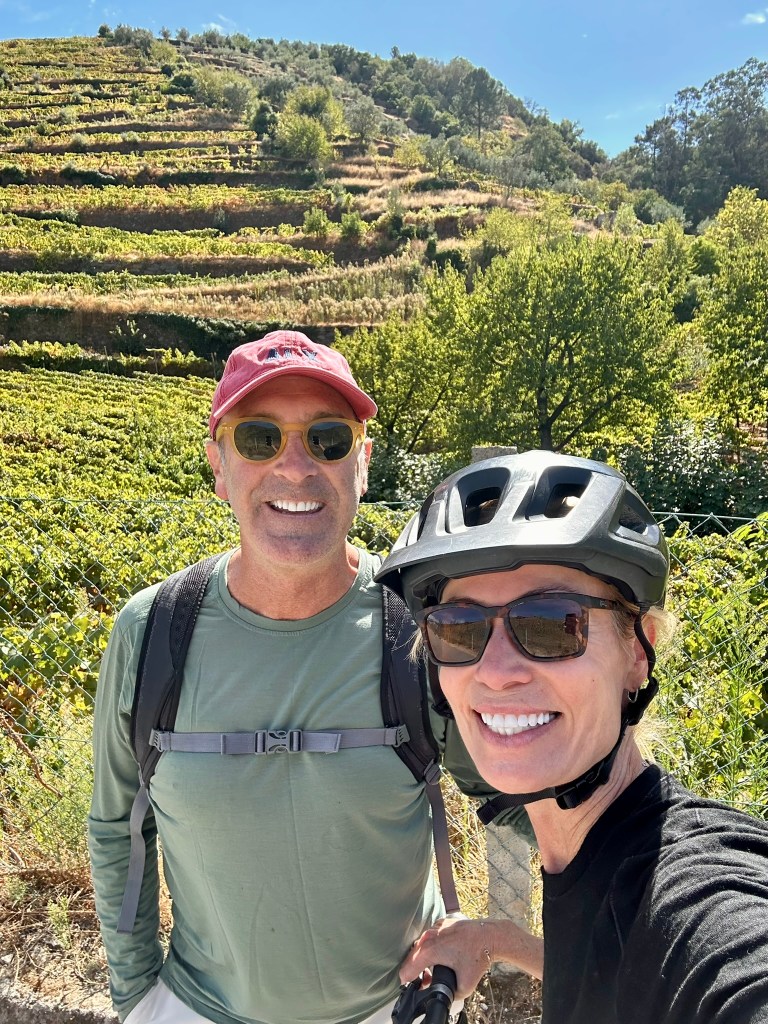
And a full day of biking through vineyards (none of which accommodated walk-in tastings – you had to have reservations, which we thought was insane:

Douro needs to learn lessons from the Virginia (and sure, California) wine region.
Pretty good digs for our 3-day stay:
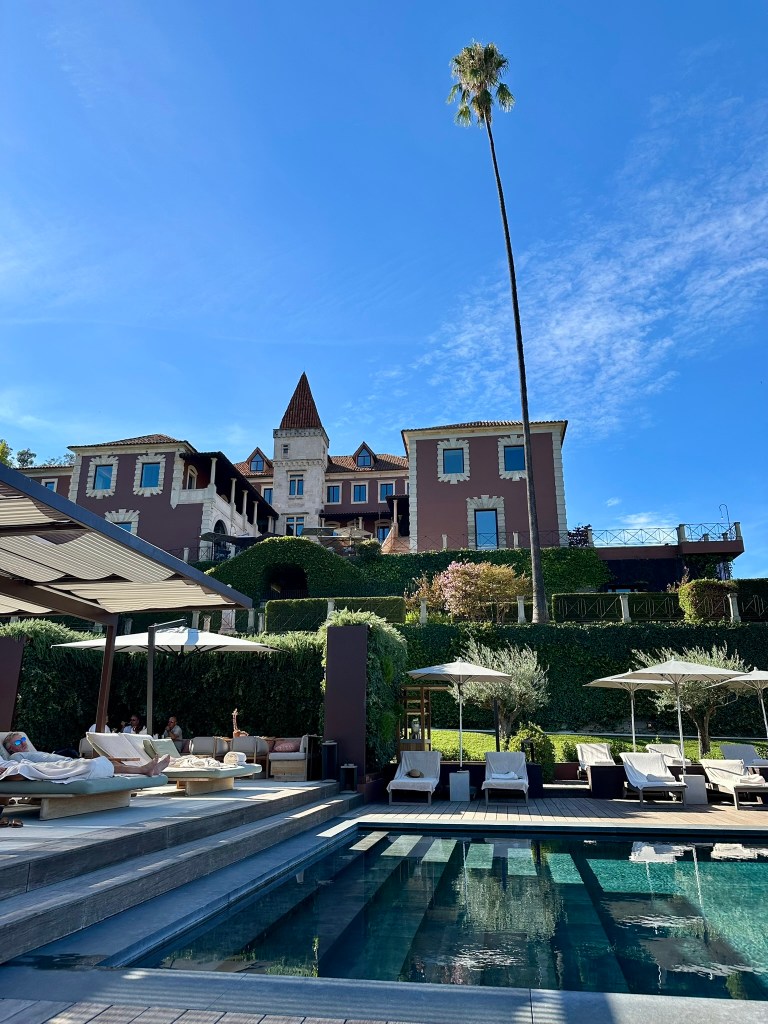
The day after biking, we did end up calling and then visiting Quinta de Fojo, which offered an outstanding and authentic tasting experience at a generations-old family winery:

Then, back to Porto for a day; we first visited at the tail end of our inaugural post-retirement long trip in 2023 and definitely wanted to return, even if only for a short time:
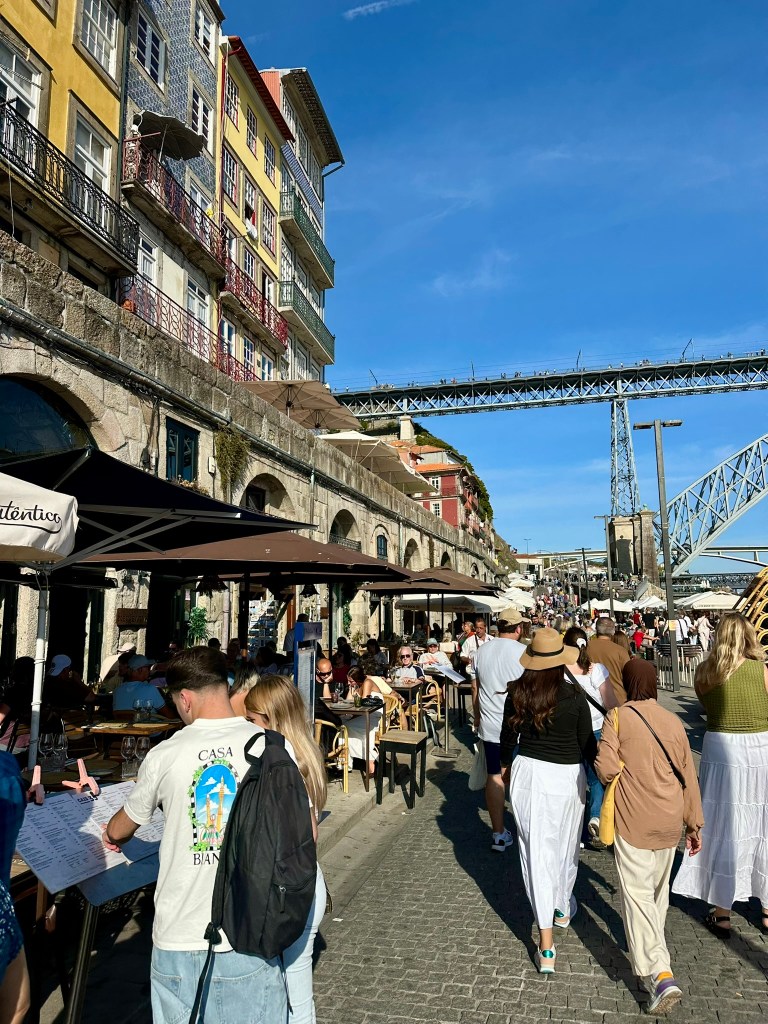
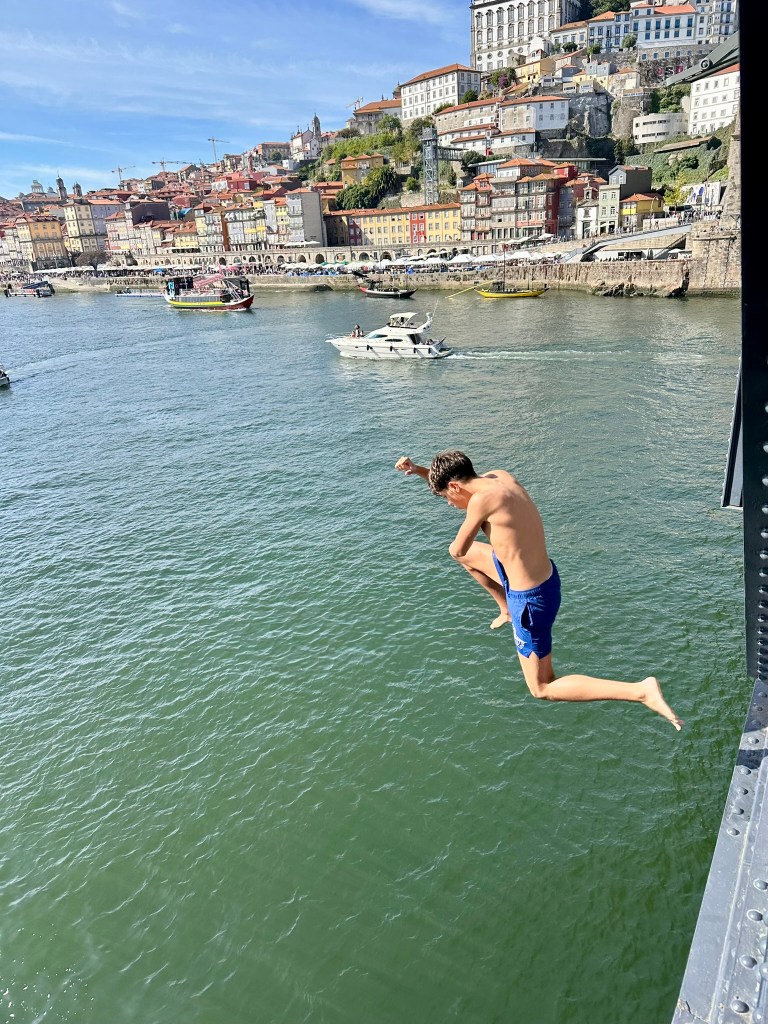
Like our second visit to Rovinj, Croatia, a few months earlier, we stayed across the river from Porto’s core instead of inside – definitely a different point of view!

From Porto, we flew to our final leg: Cornwall in the southernmost tip of England:
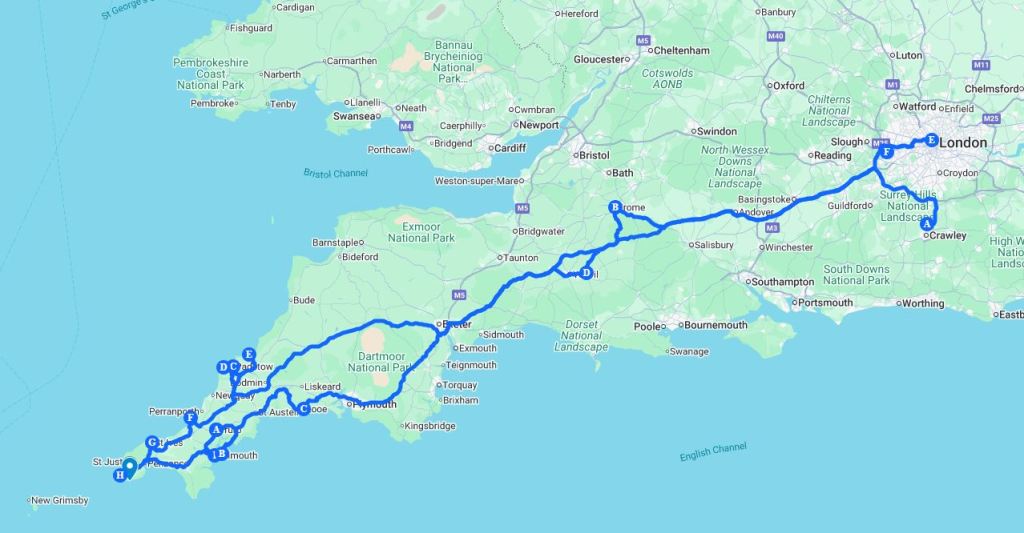
Due to the length of the drive from London to our first Cornwall location (we try to keep drives between locations under 4 hours, and ideally no more than 3), we stopped halfway in the town of Frome, in Somerset:

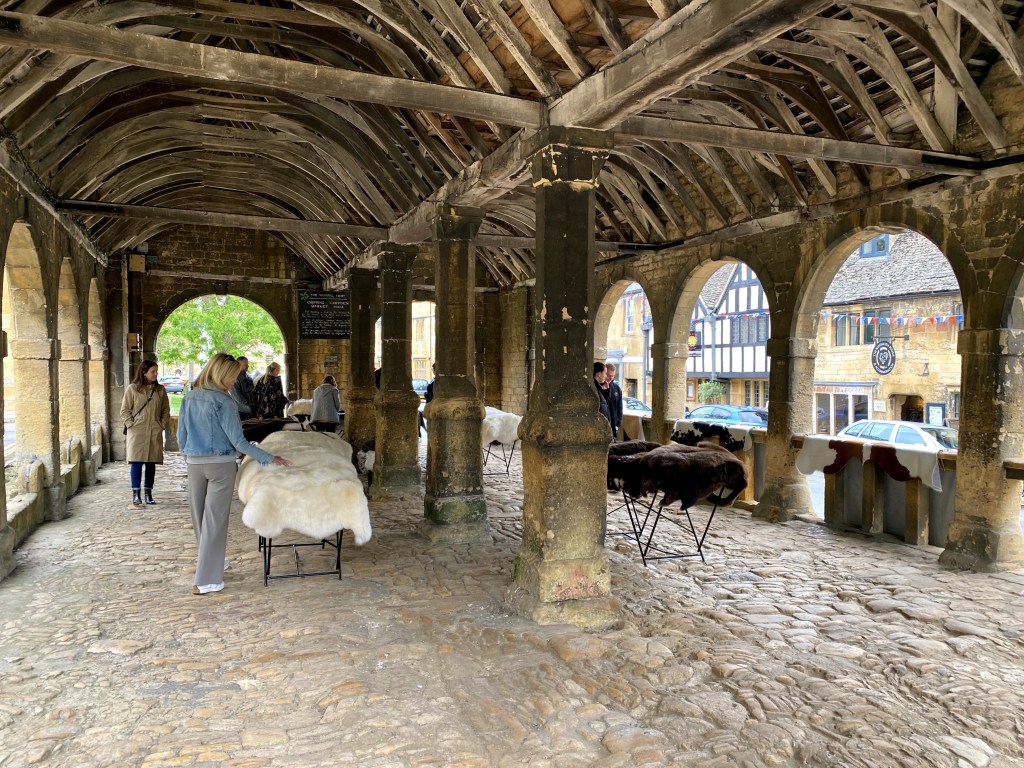
Turned out to be pretty cool, and with a remarkably high ratio of pubs to people, which was a plus for us:

Then, to our first stop in Cornwall – Padstow:
Rather than stay in town, which was a little bereft of cool lodging options, we stayed about 10 minutes away, at. . . The Pig. Which was a cool lodging option, it turned out:

But we did get into town our second night to dine at The Seafood Restaurant, the flagship eatery of Rick Stein, who we had never before heard of, but who turns out to be a beloved English restauranteur and a seafood magnate in Padstow (the restaurant was one of at least three Rick Stein joints in town):

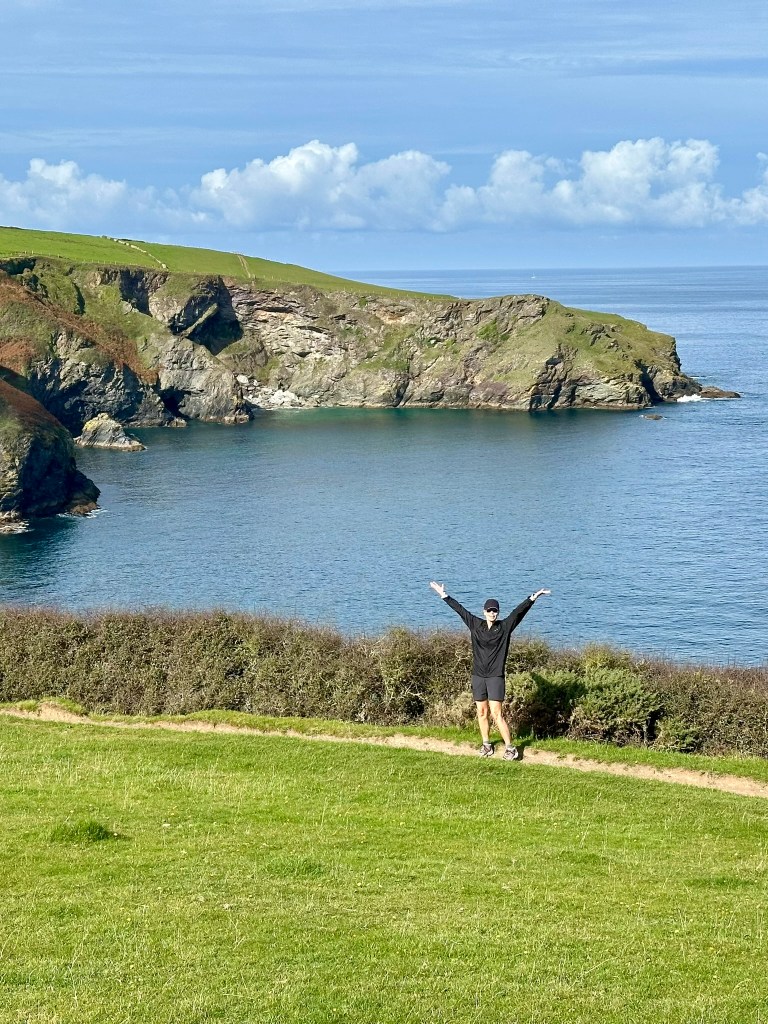
And on our first full day, our real purpose for visiting the region: spectacular hiking. In this instance, a quasi-loop hike between the achingly charming village of Port Isaac to the even smaller hamlet of Port Quin:

The hike exceeded all expectations:

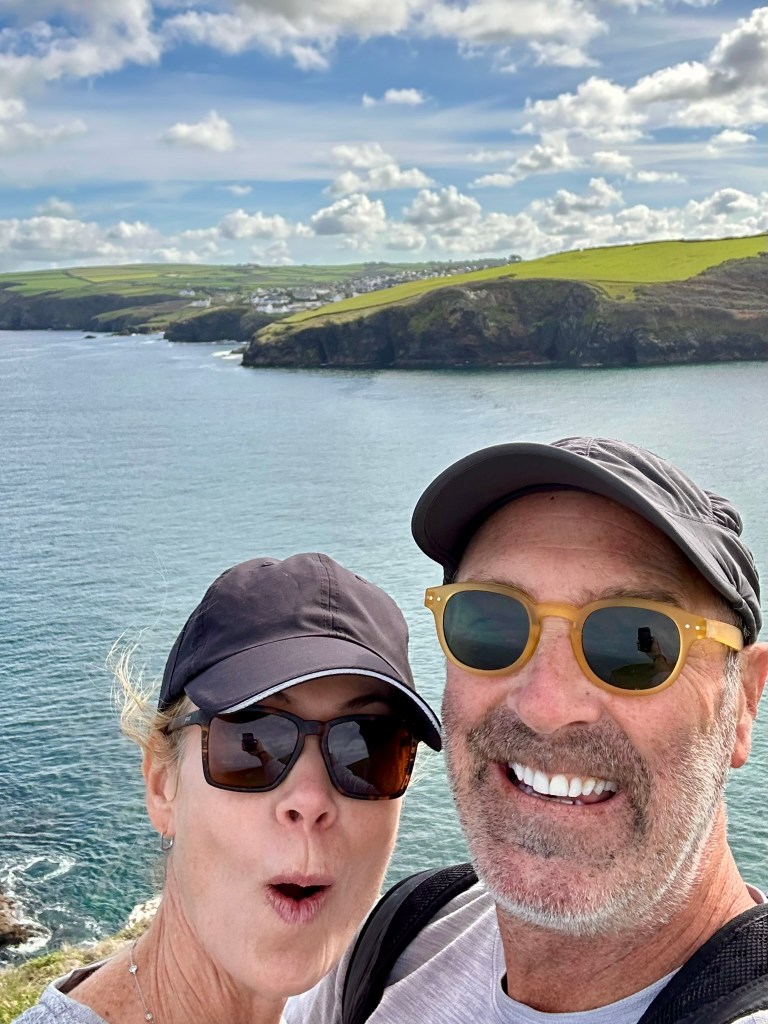
Our excitement manifested itself in different ways, to be sure:
Port Isaac in the distance:

The local cows seemed excited to see hikers come by, since all of them crowded the fence when they saw us coming:

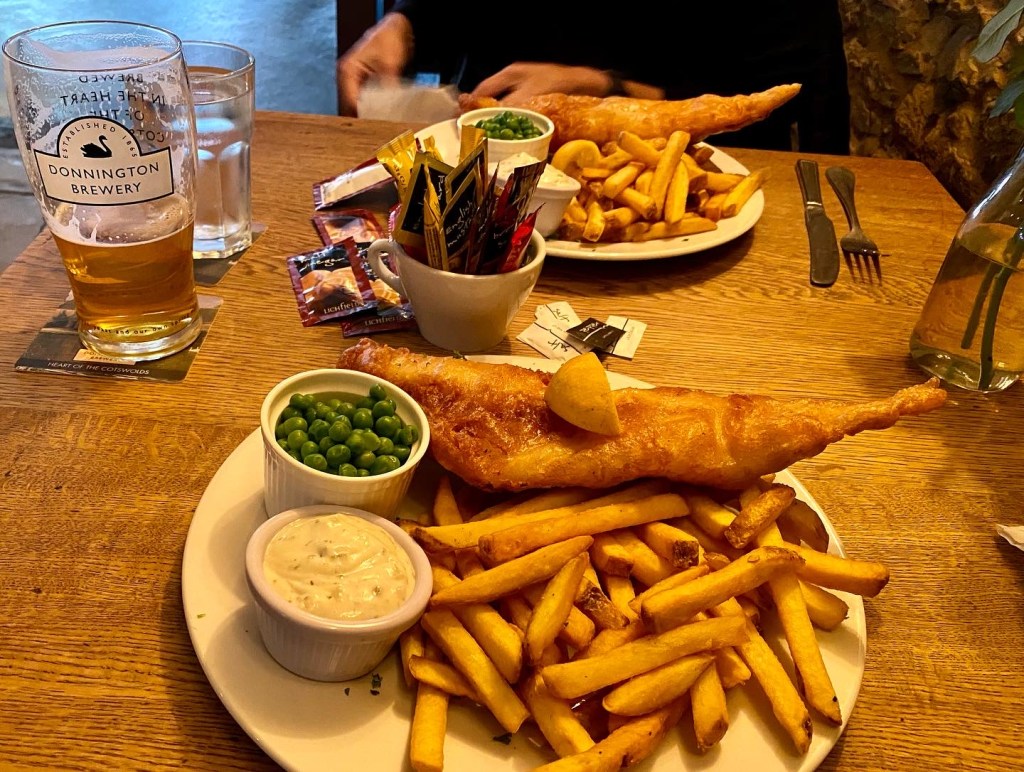
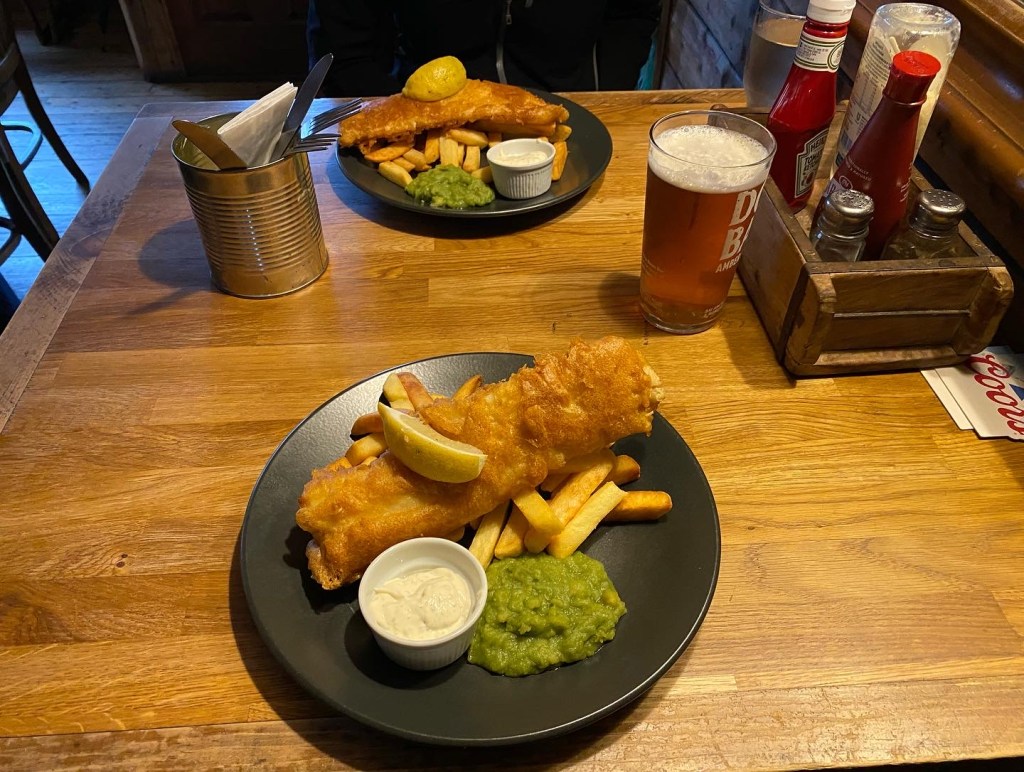
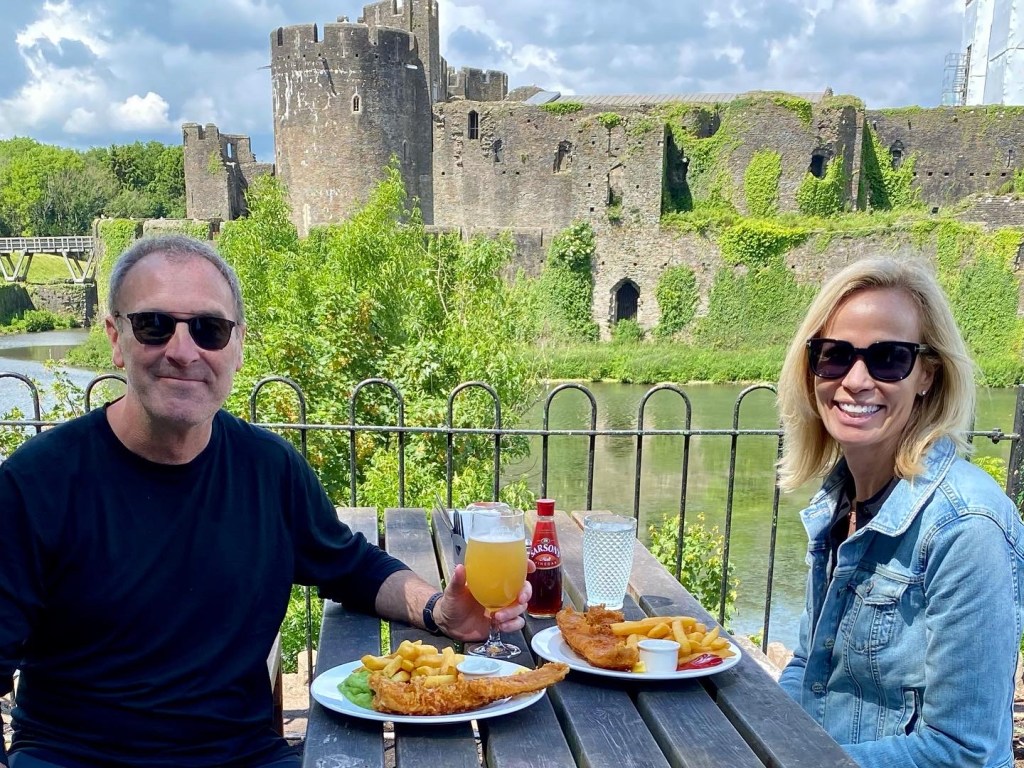
Our reward once back in Port Isaac? The first of several fish and chips (less than half a dozen during this trip, much less than the daily dosage we sought in our 2-week Cotswolds and Wales trip in 2022 that packed on so many pounds that we had to wear muumuus when we got home):

Our next hike en route from Padstow to St. Ives represented the most iconic views from the British TV series Poldark, which essentially inspired this entire leg. At the start of the hike lay the very tin mine that Poldark worked in the show, Wheal Coates:


Cliffside hiking at its best:

Our next base, St. Ives:

(Which always seemed to be at low tide during our stay, oddly enough):

But had a legit, picturesque English port town charm to it, even if most days were overcast (which seemed to amplify the Englishness of it all):
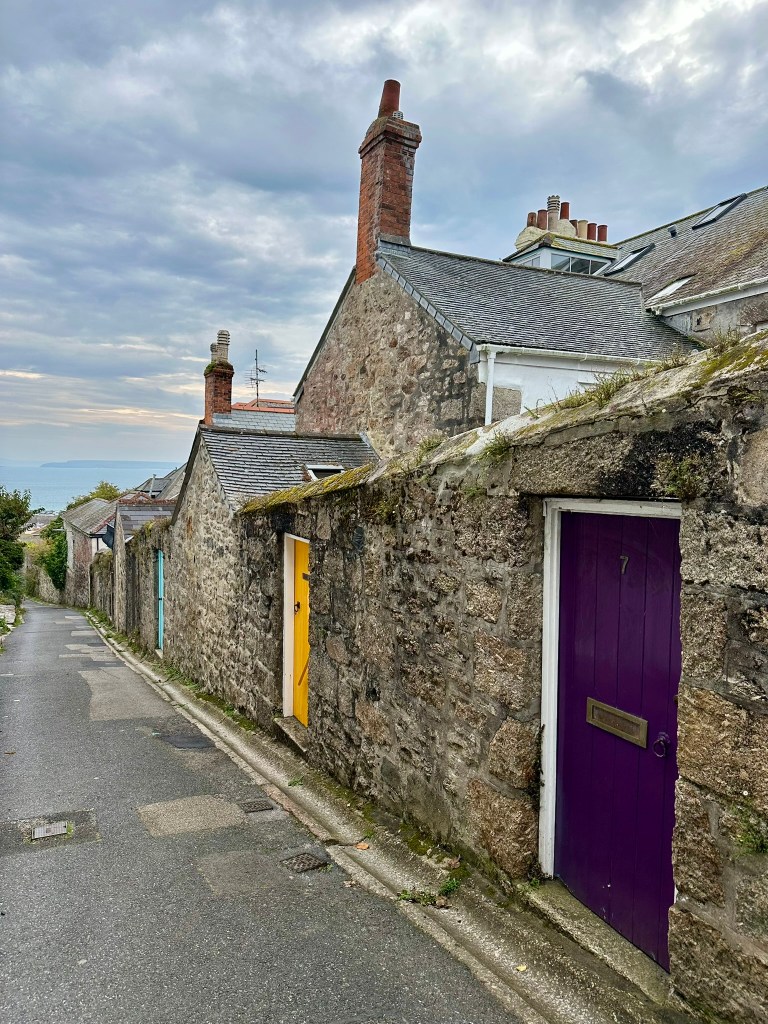
En route to our next hike, we stopped at the Minack Theatre, which was reputed to be an amazing venue for performances on a cliff facing the water. All of the facts were correct, but it was, in fact, meh:

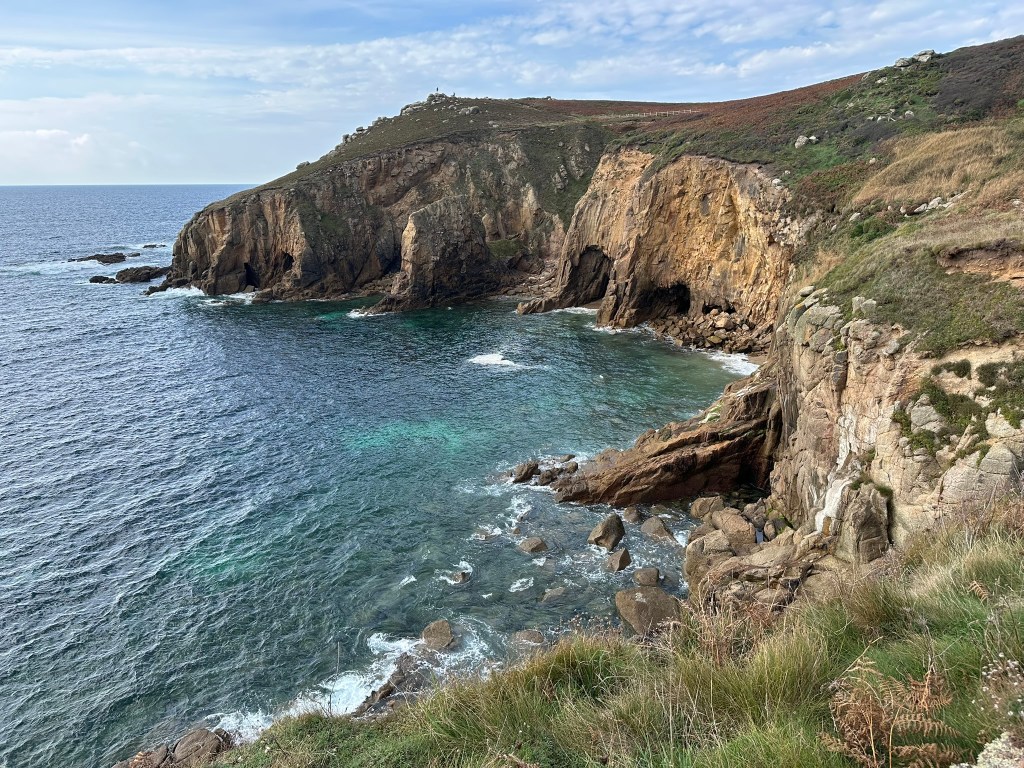
The next hike? Around Lands End! The actual, for real most southwestern most point in England (and the UK):

More unbelievable Cornish cliffside walks:

Then, around the horn of Lands End and on to the first of our last two Cornish stops: Falmouth.
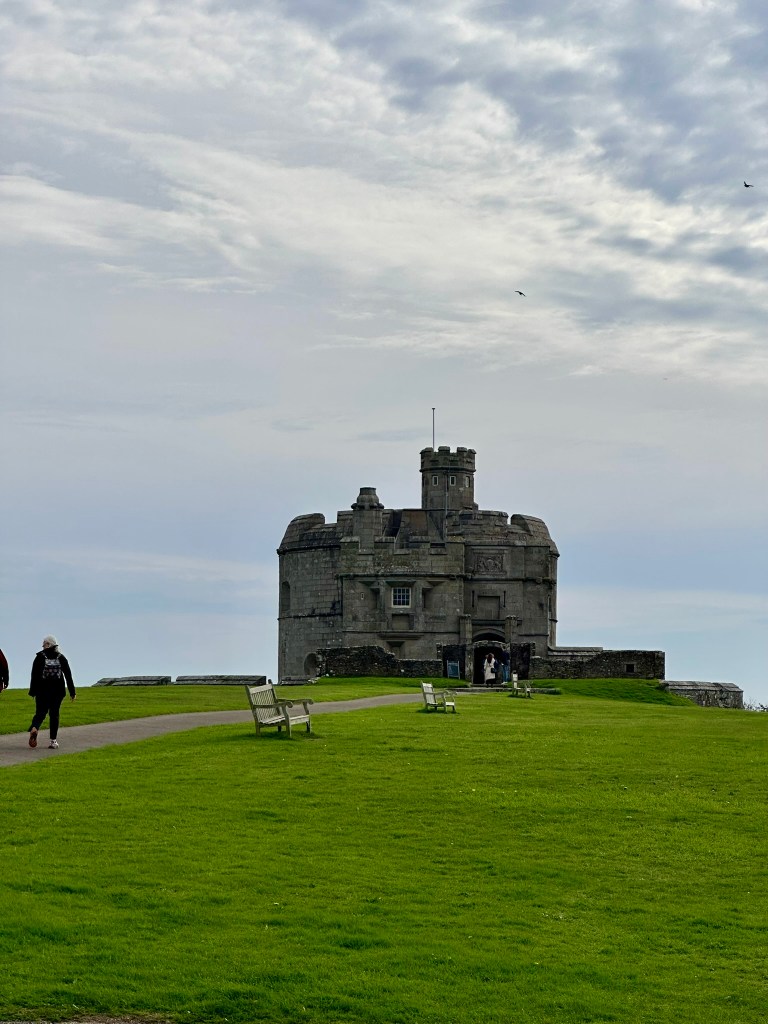
Meh.

The weather during our stay may have, however, influenced this assessment:
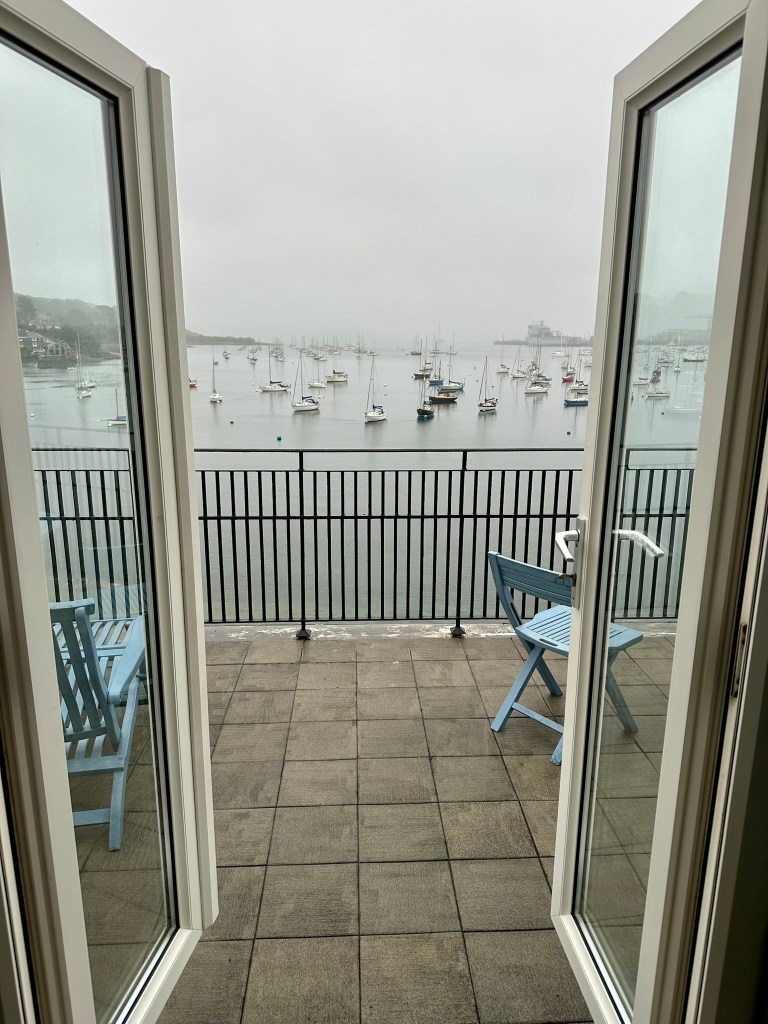
And the final Cornish stop, St. Mawes. More shitty weather, but a super picturesque Cornish seaside village:

And, of course, the weather improves the day we depart:
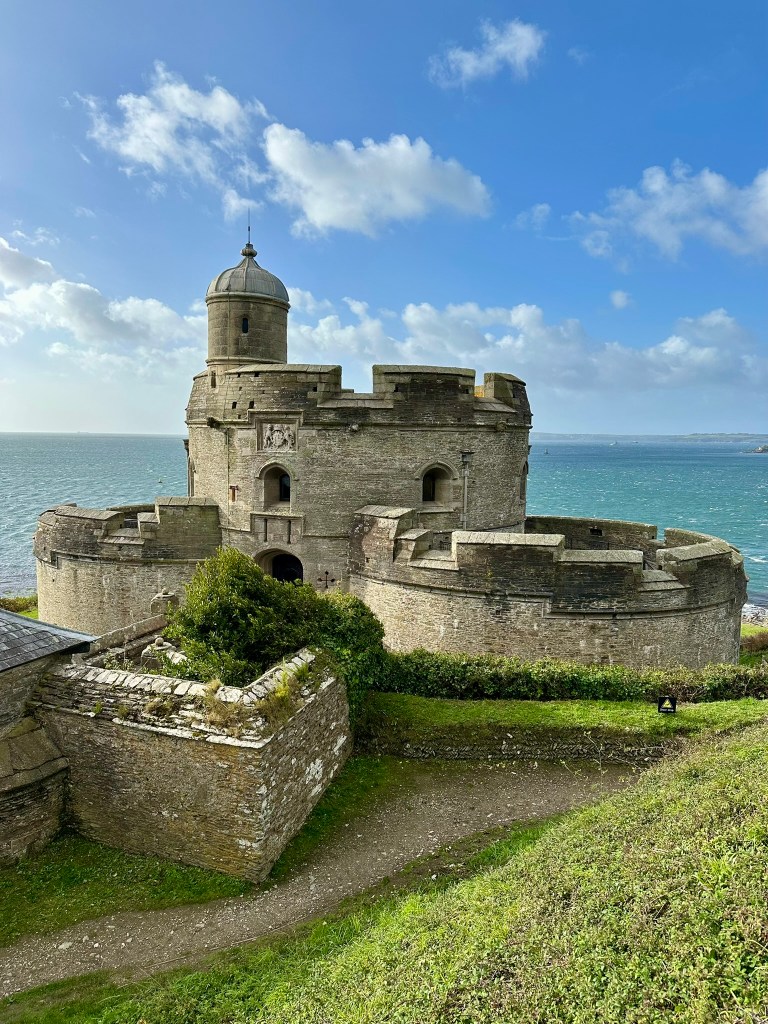
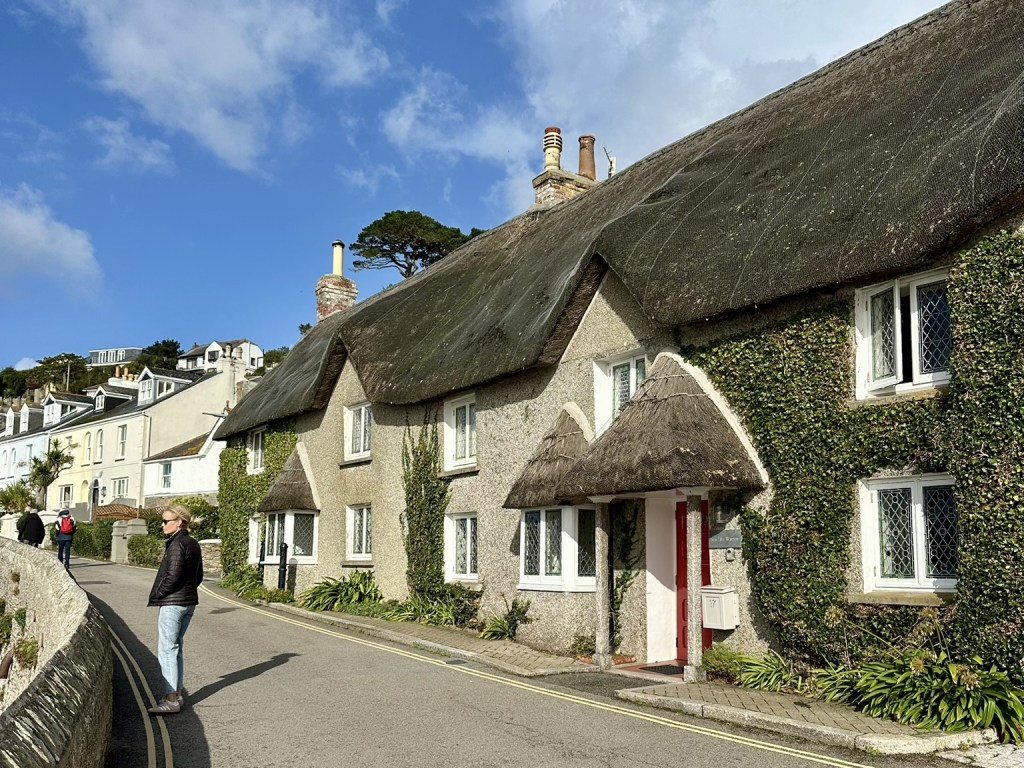
On the way back to London (by way of Sherborne), we literally drive right by Stonehenge. It turns out that we never actually needed to buy the entrance fee in 2022!

One of the many block-bisecting arcades of London, our final stop.
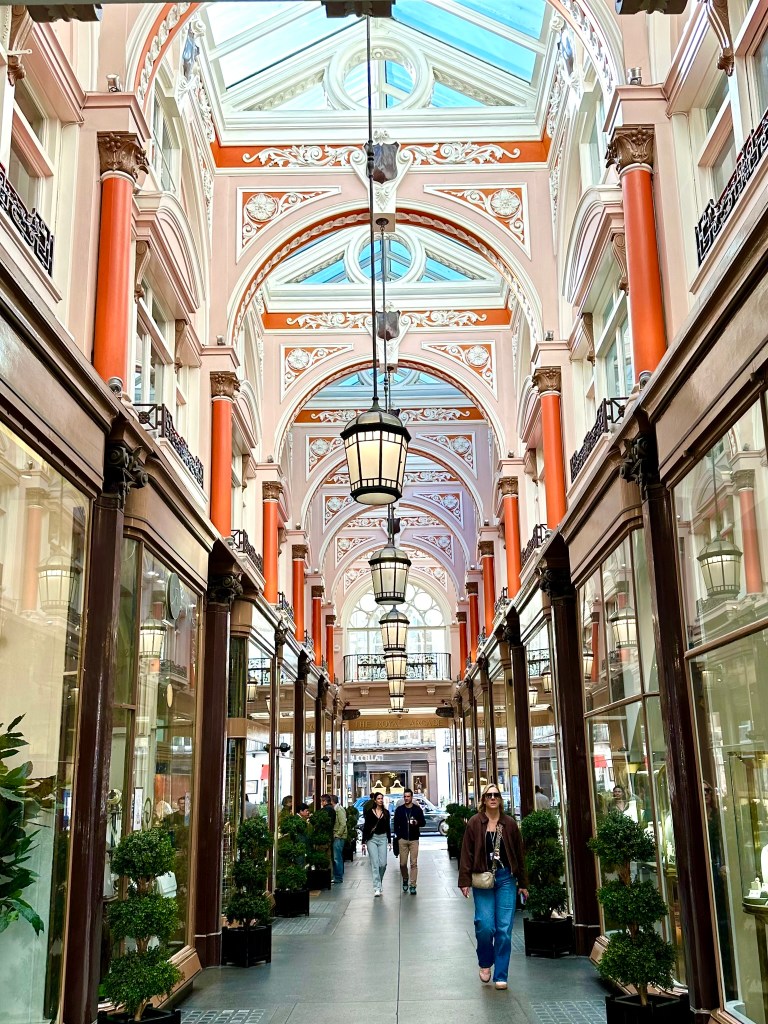
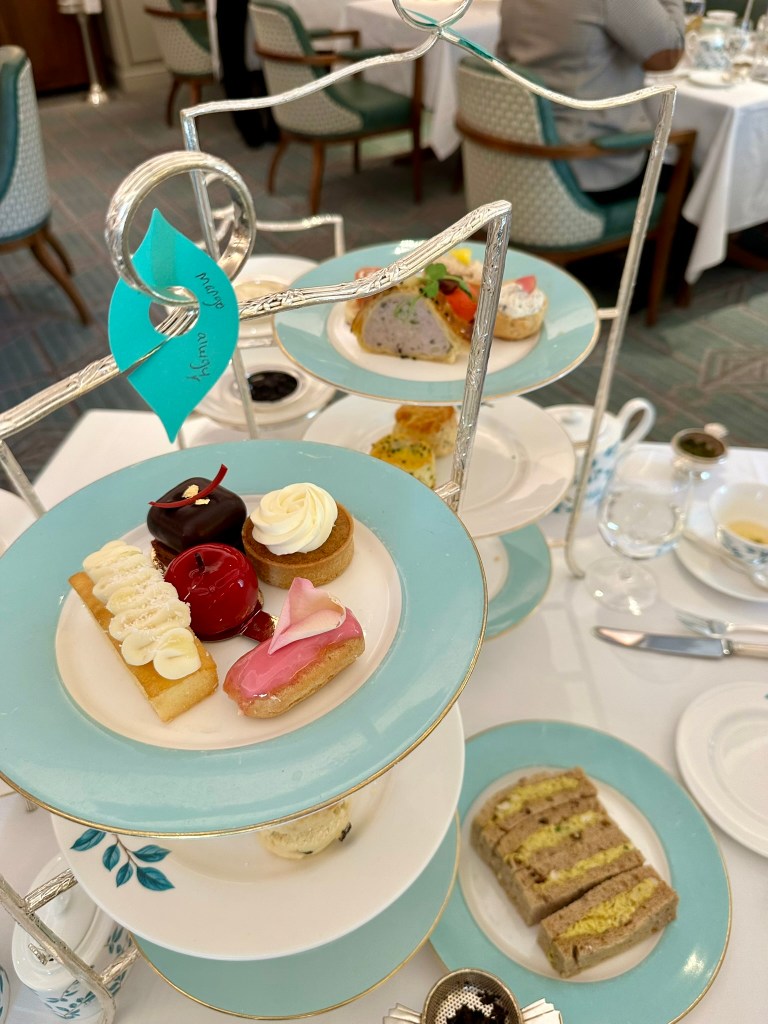
This was our fourth stay there, and we base ourselves in a different neighborhood each time – this time was Marylebone. Also, since we forewent the whole high tea experience on each of our previous three stays, we concluded that the fourth time was the charm:
The next day, a visit to London’s 3rd century Mithraeum, discovered beneath the modern city in 1954. This was a Roman temple dedicated to the god Mithras, a mystery cult popular among soldiers in the 2nd and 3rd centuries and could have continued to be more popular than early Christianity as an alternative to the traditional Roman pantheon had it not been for the pivotal backing of the latter by a couple of Roman emperors.

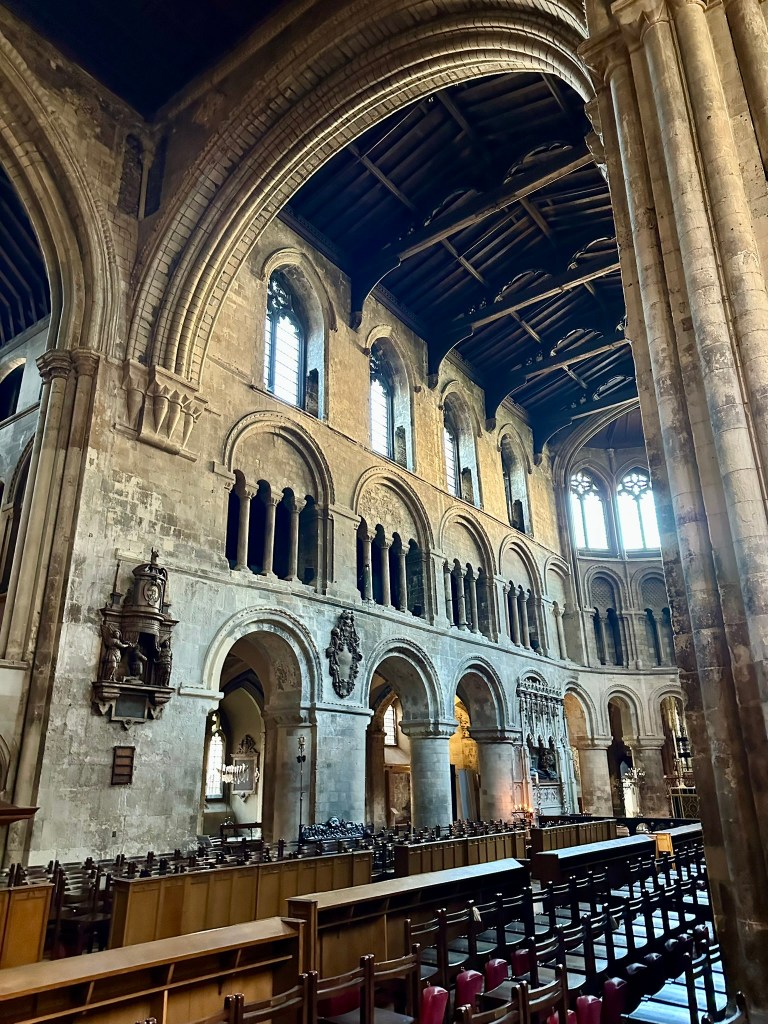
And a visit to St. Bartholomew the Great church, founded in 1123 – London’s oldest surviving parish church and a rare masterpiece of Norman architecture. Its Romanesque nave and medieval chancel evoke nearly nine centuries of continuous use, surviving the Great Fire, the Reformation, and the Blitz.
Definitely a historic end to an epic 6-week journey of 5 legs!
We’re definitely done traveling for the next few months – we need a break and some recovery time to revel in the most appealing town of all: Old Town Alexandria. So, this is where we’ll hang and try (really try!) to post some of the growing backlog of trip photos that are piling up (and have, in fact, now contributed to maxing out the storage capacity to the home PC, prompting a replacement).
More to come!






























 WolfeStreetTravel