After a couple of days in Matera, we drove east in the morning across the remainder of the Italian peninsula to drop off the car at the Bari airport and catch a flight to the Costa Rei at the southeastern tip of Sardinia. Our time in Matera brought a close to the Italian peninsula segment of the trip and beginning the next (albeit very brief) leg. (An overview of the trip sequencing is posted in the, uh, overview post.)
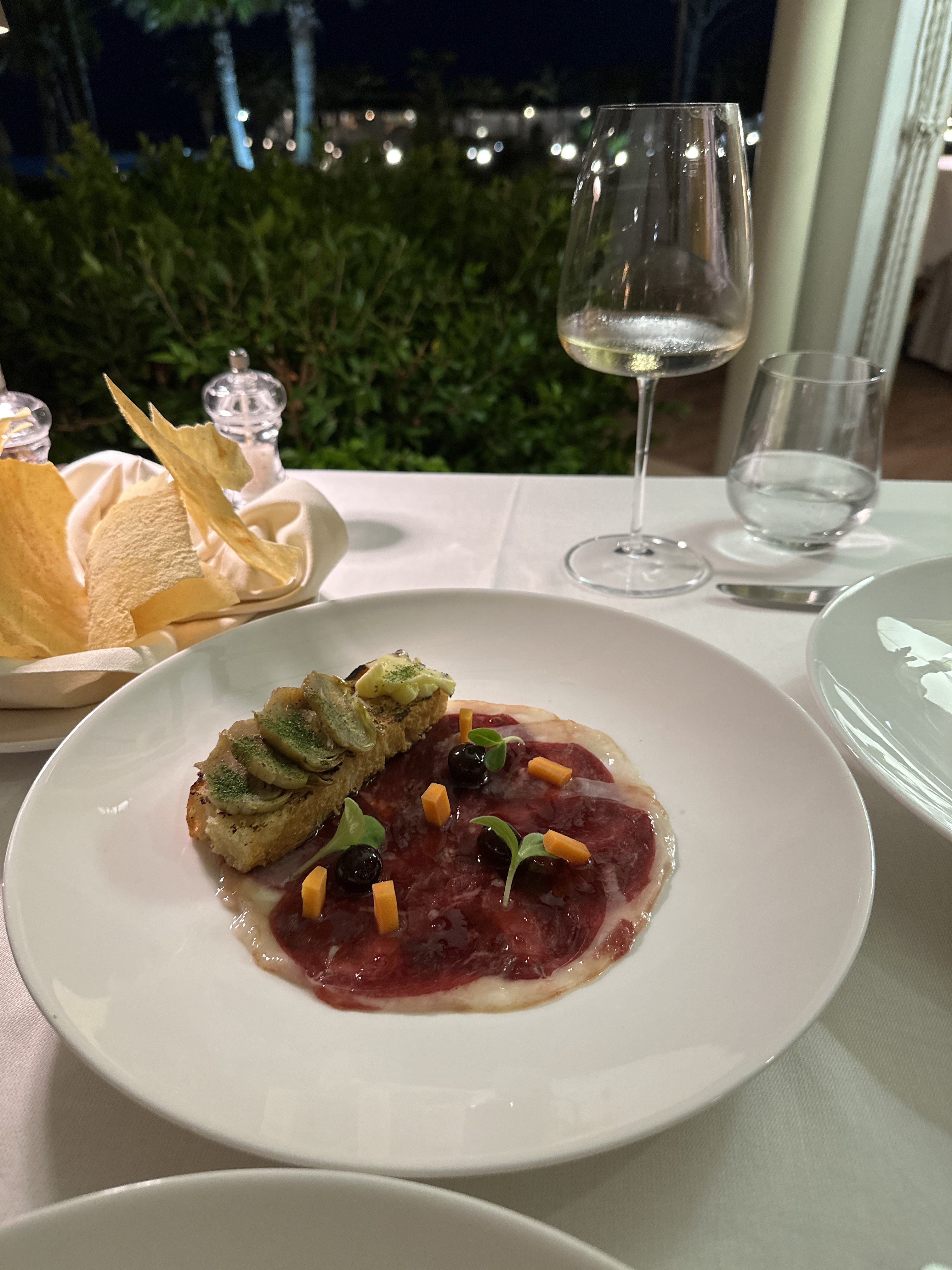
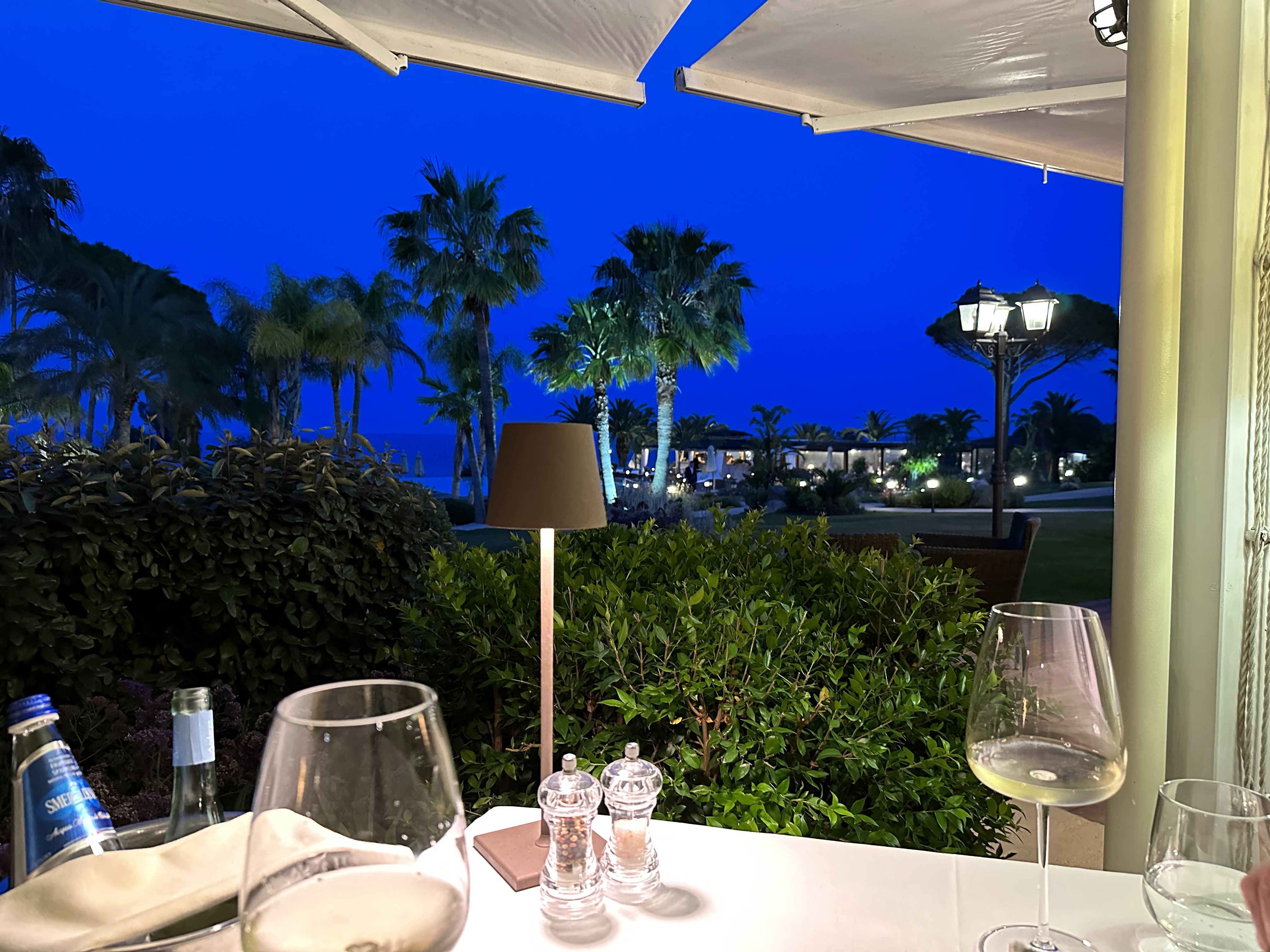
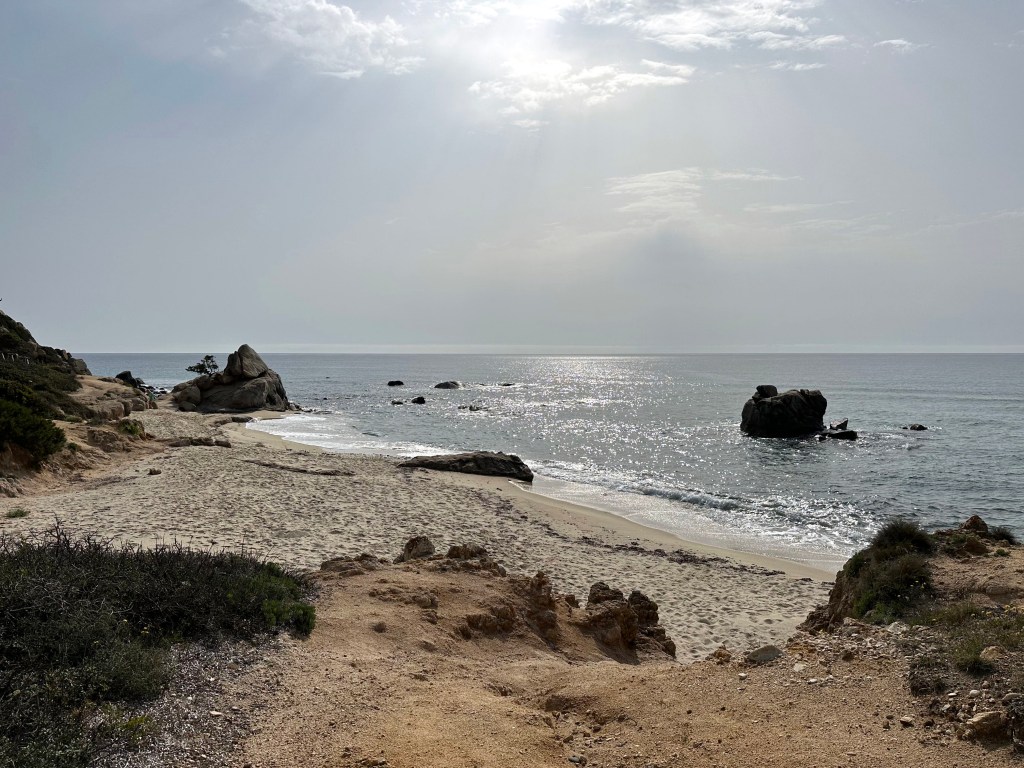
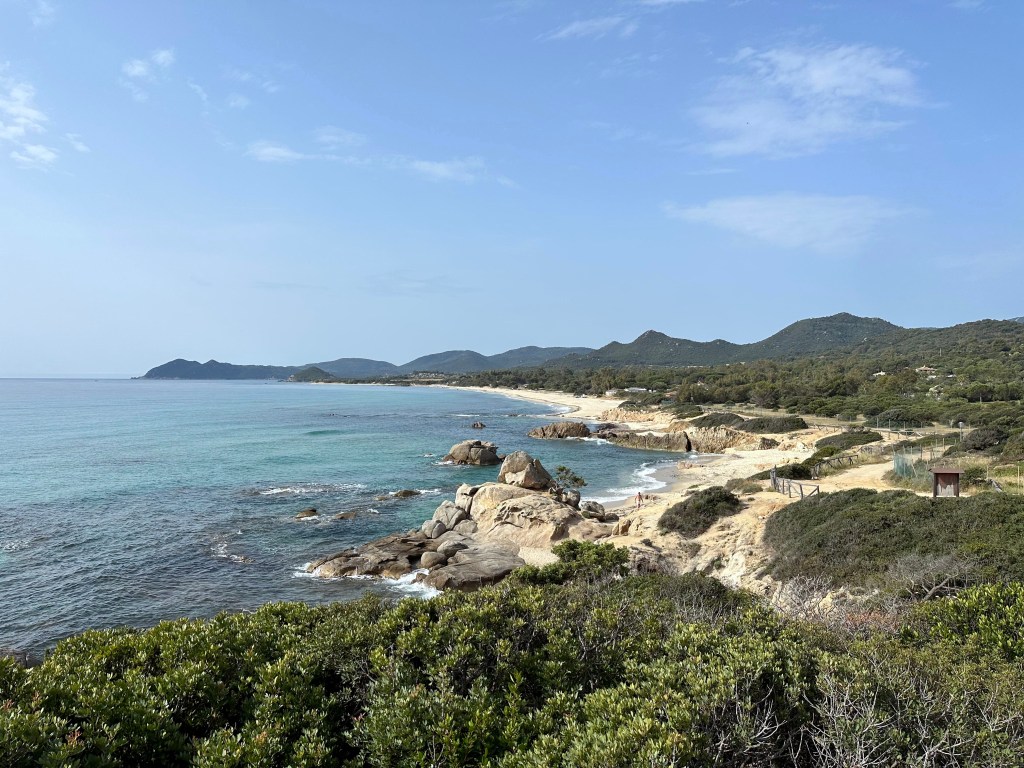
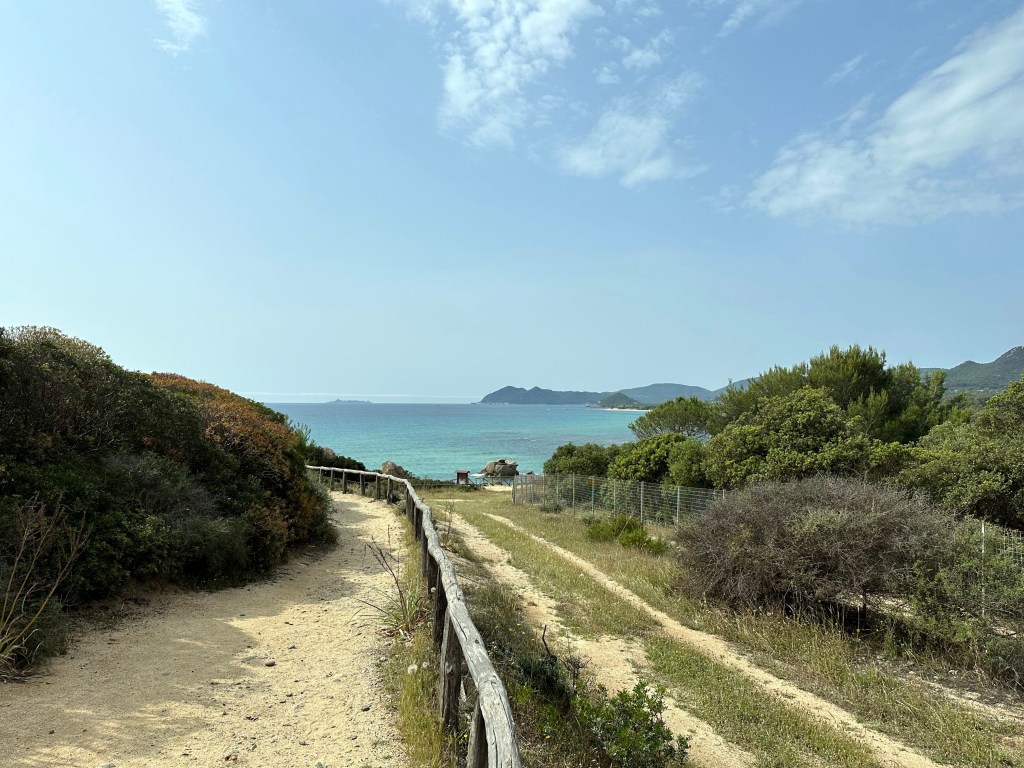
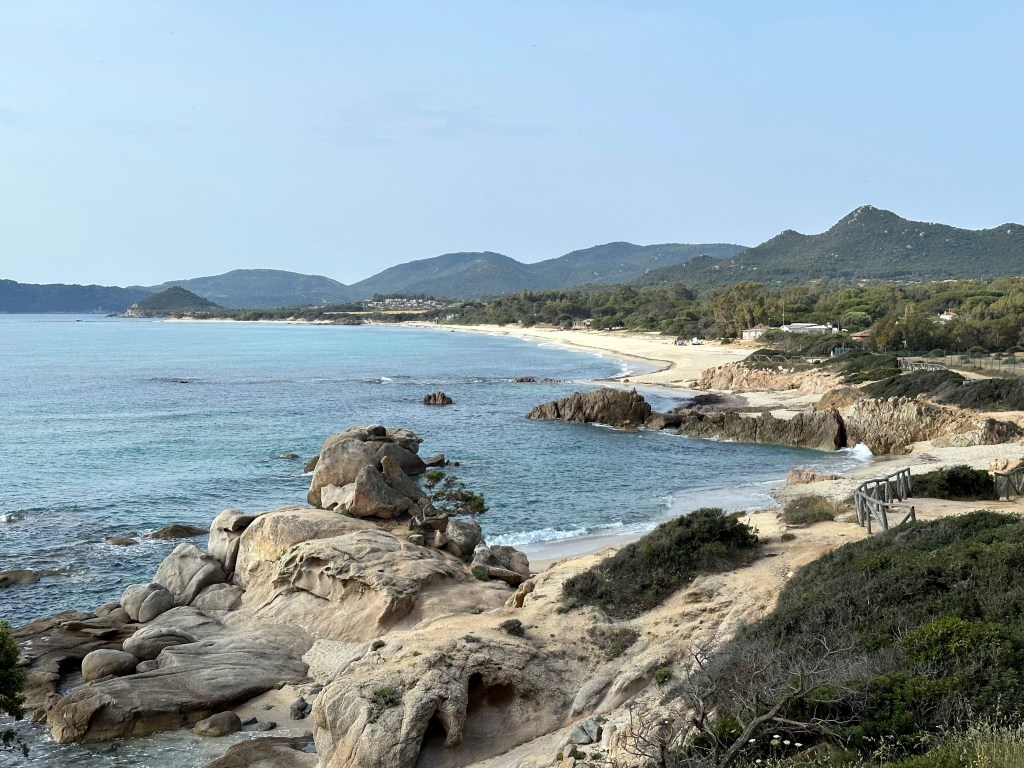
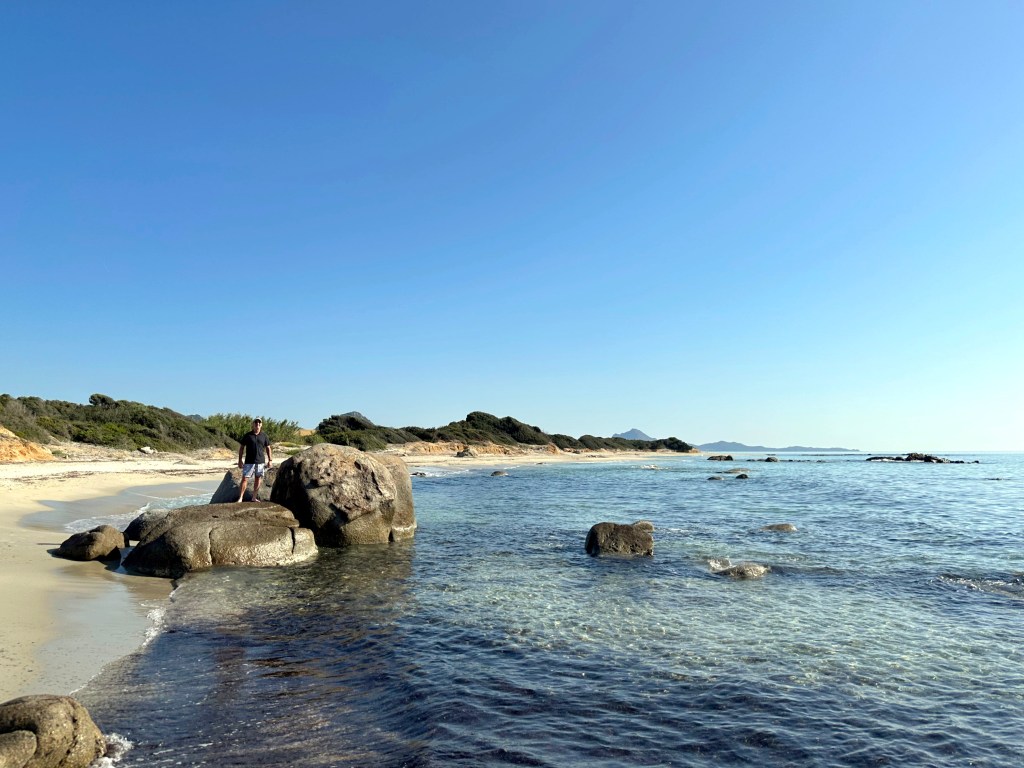
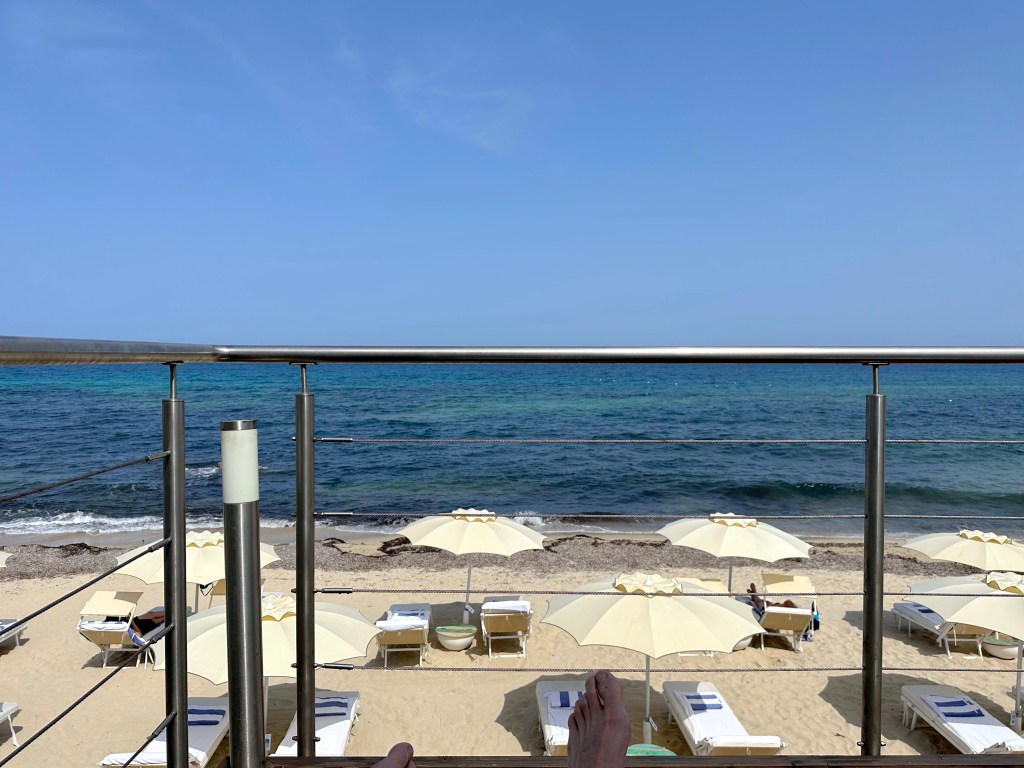
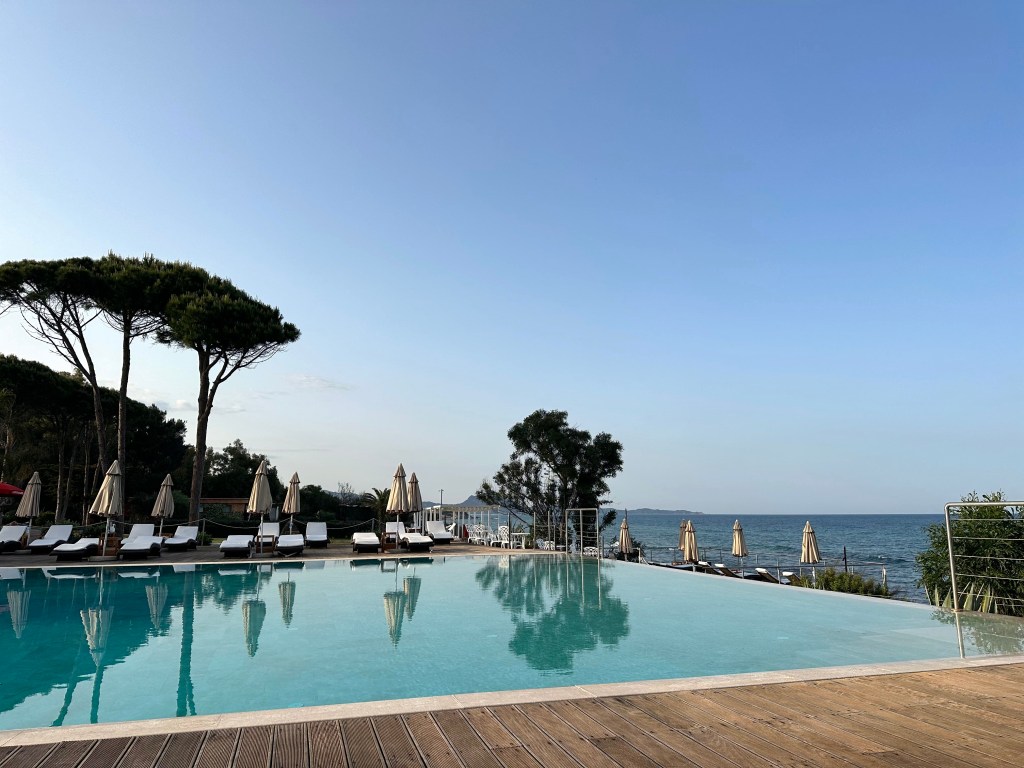
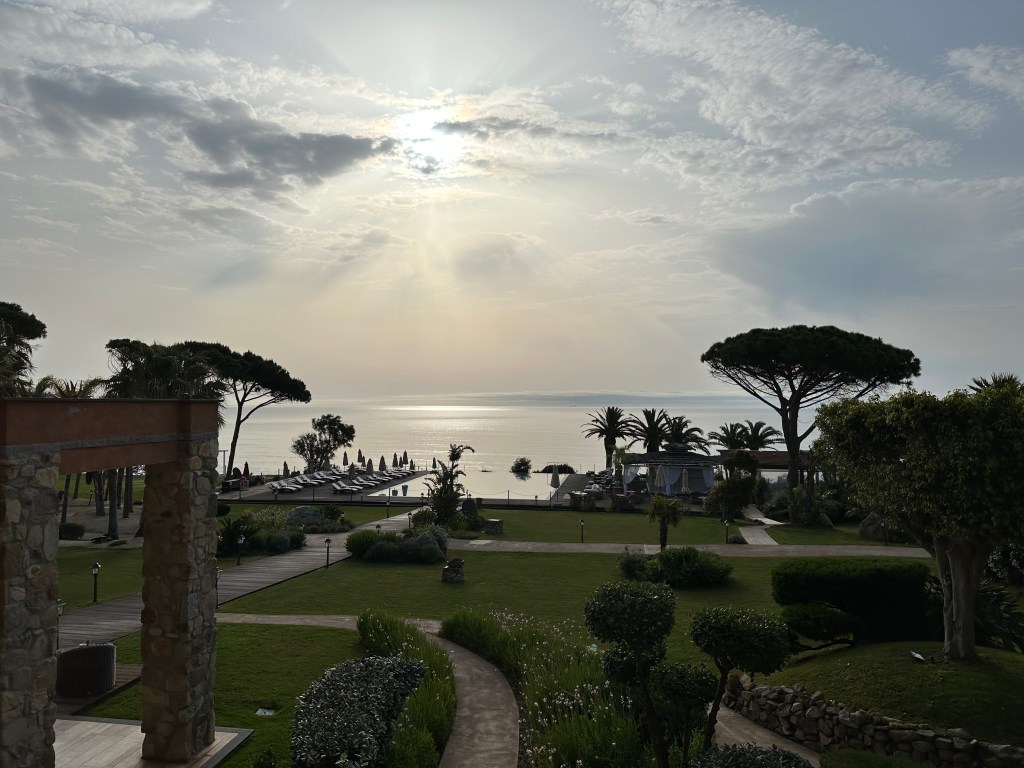
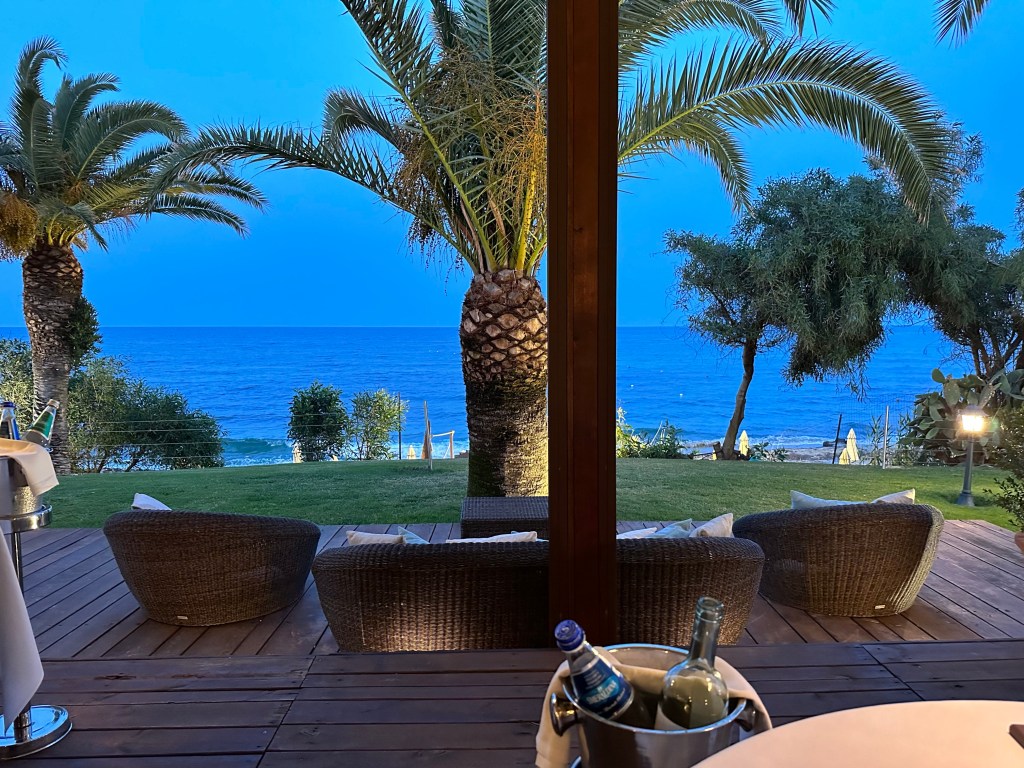
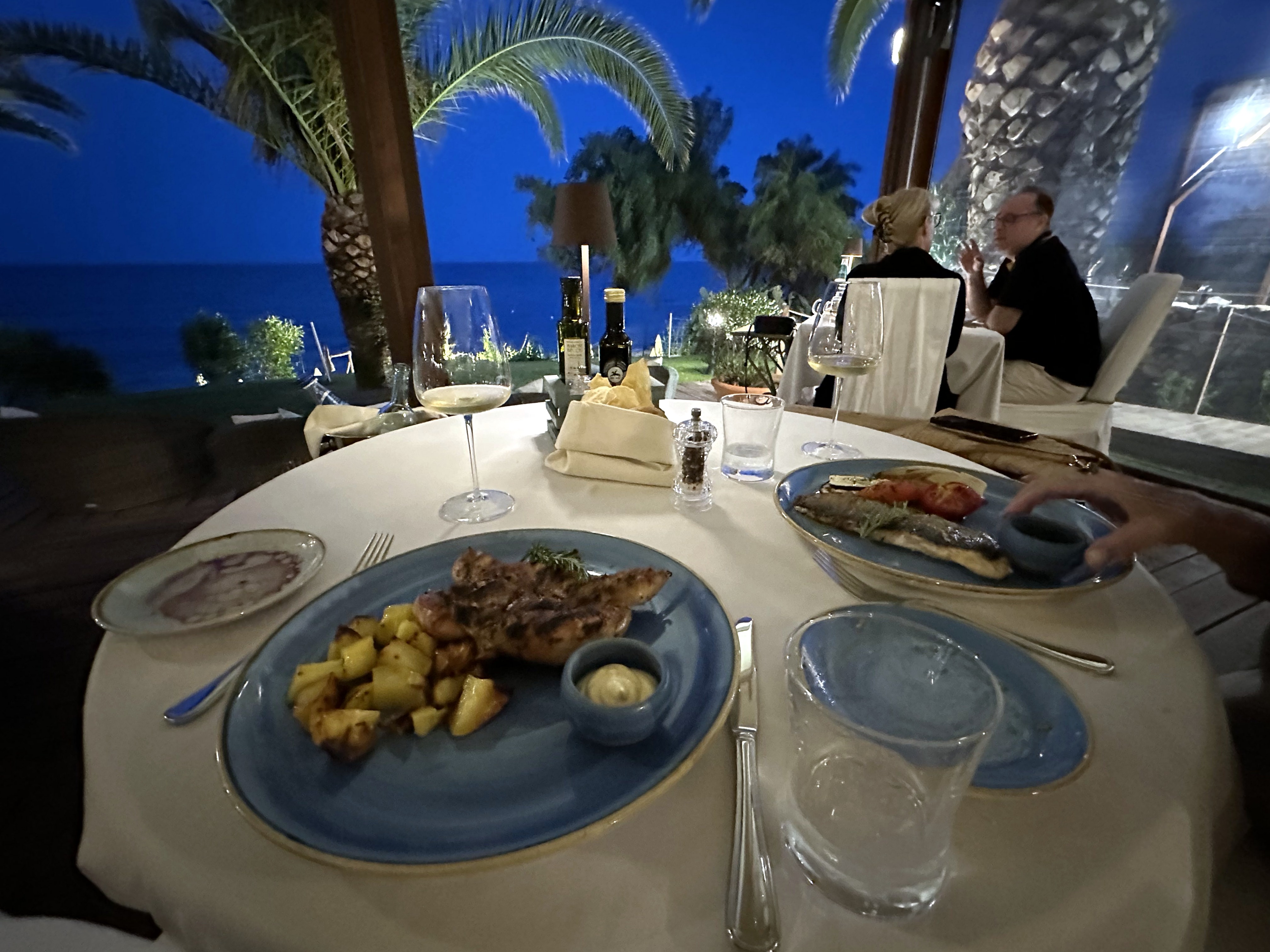
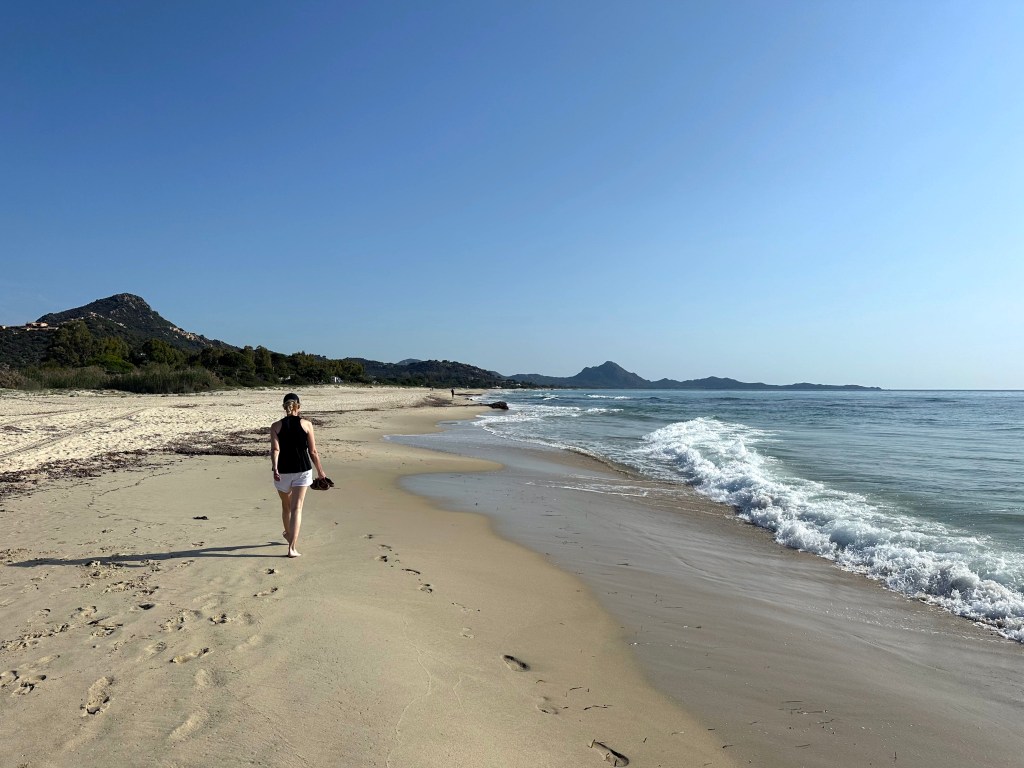
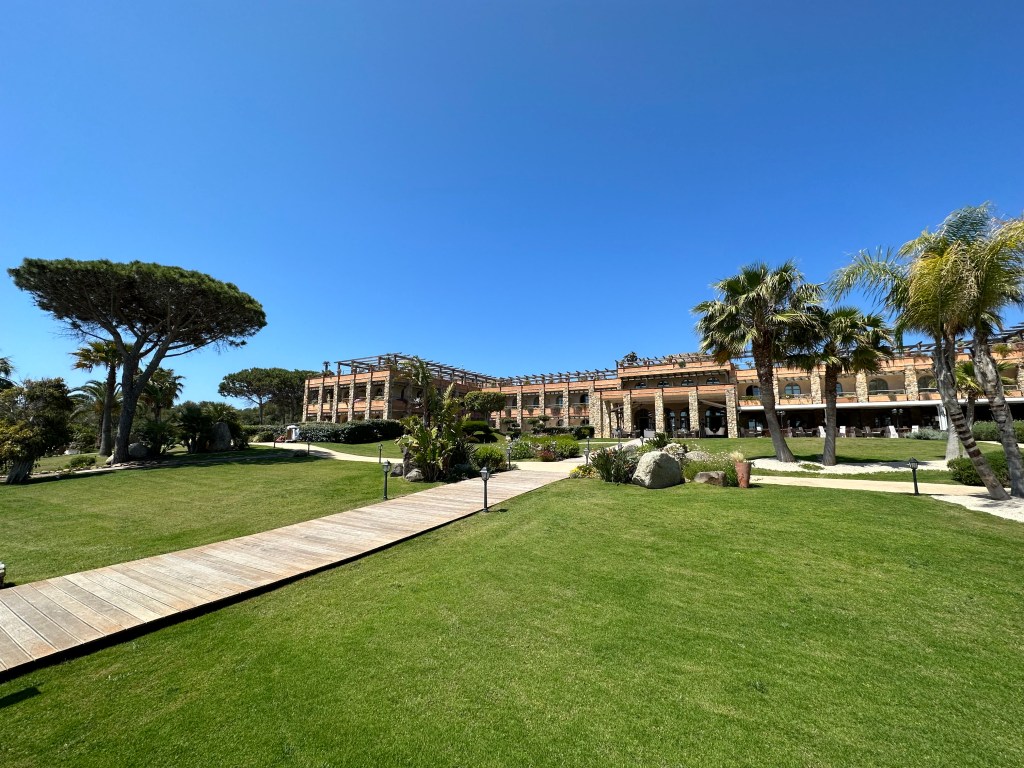
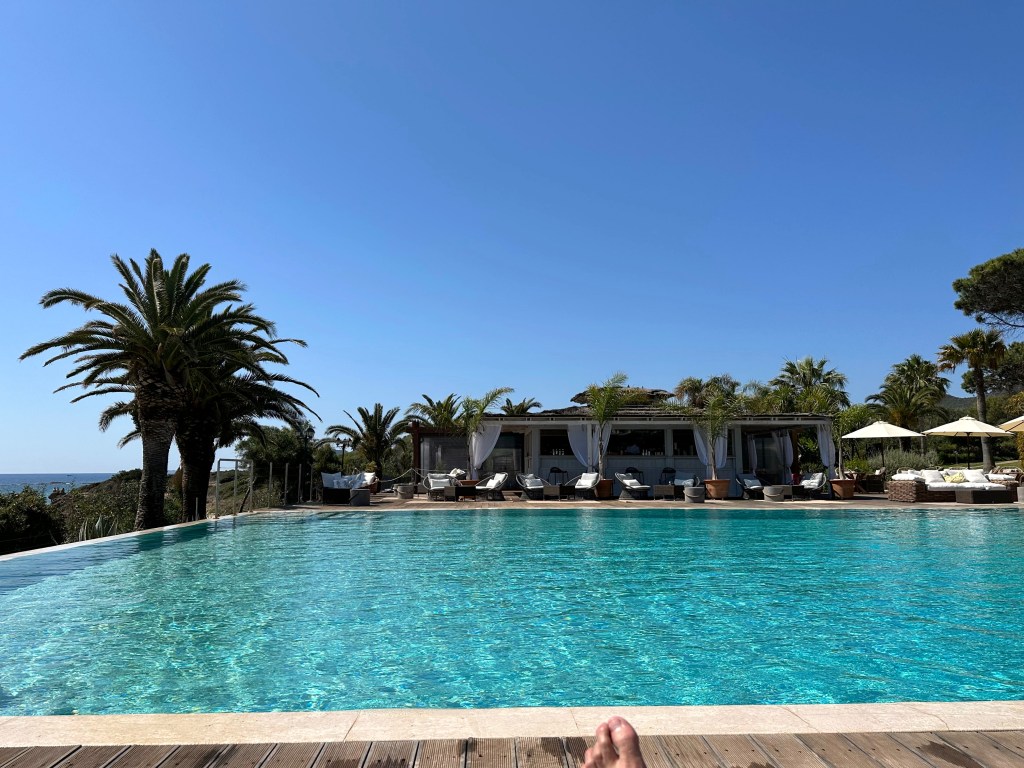
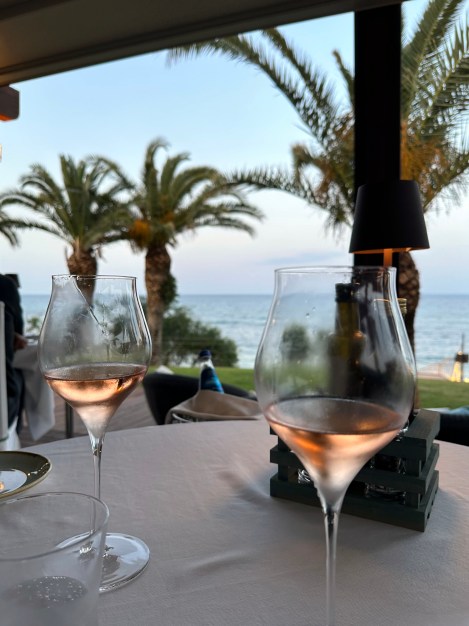
Unlike the other stops on our trip thus far, this would be focused only on chilling – no history, no exploration (other than beach walks each day). So, very little commentary – just some pics.
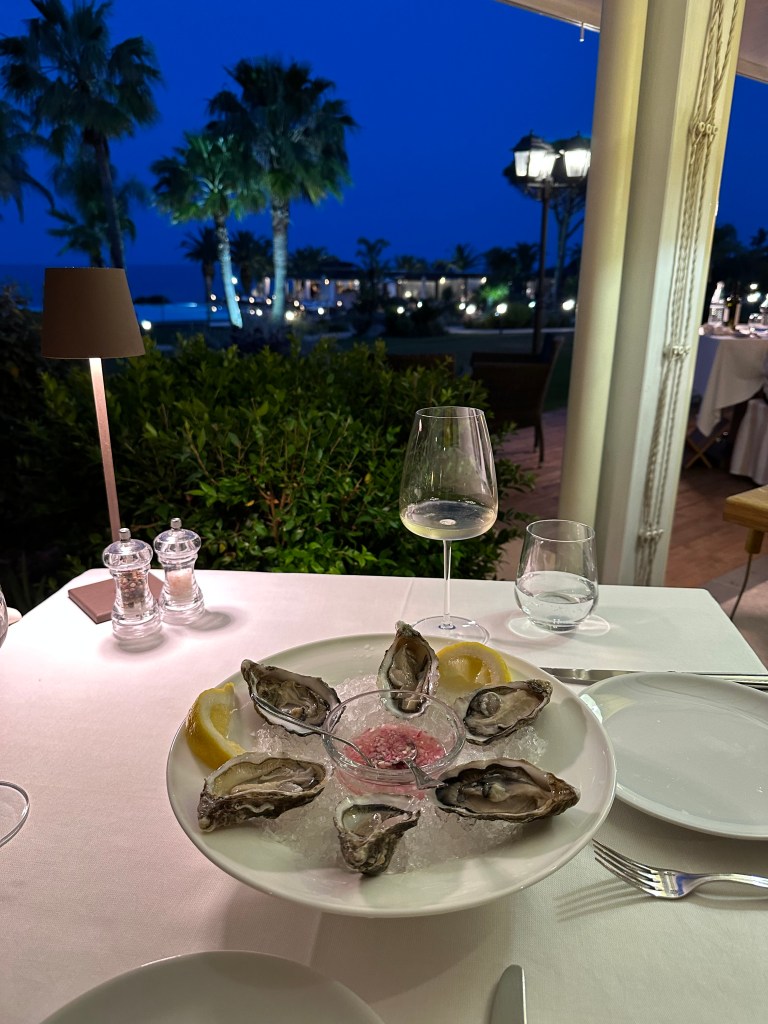
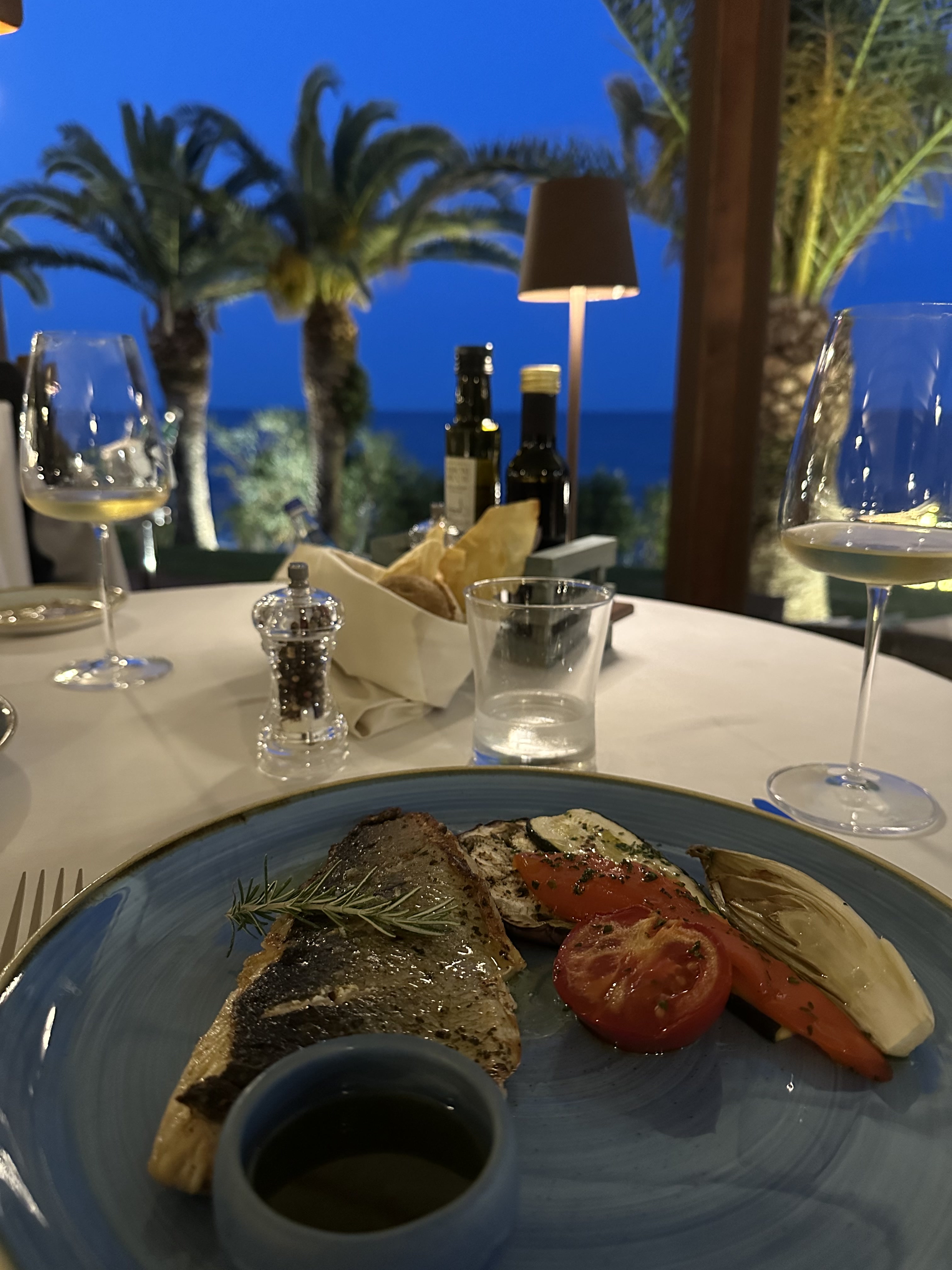
Okay – here’s some commentary: Sardinian oysters are outstanding. (They’ll be bested by the Normandy oysters we’d have a month and a half later, and also by the Wellfleet oysters we’d have on our New England road trip the following year, but still – really good!)
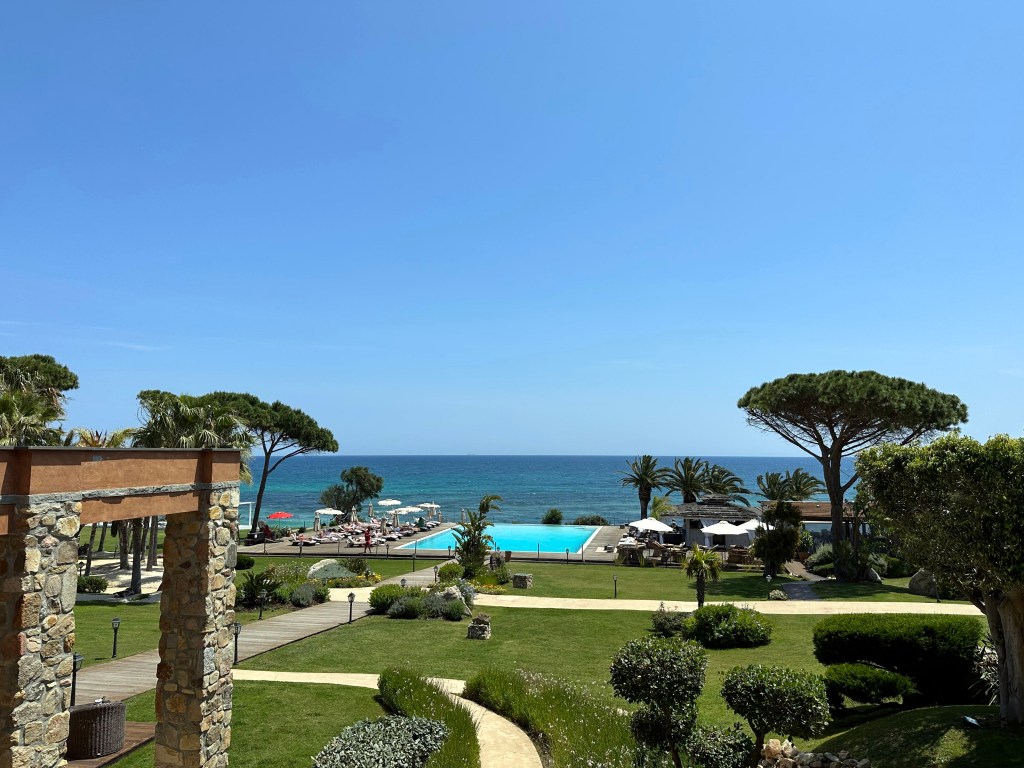
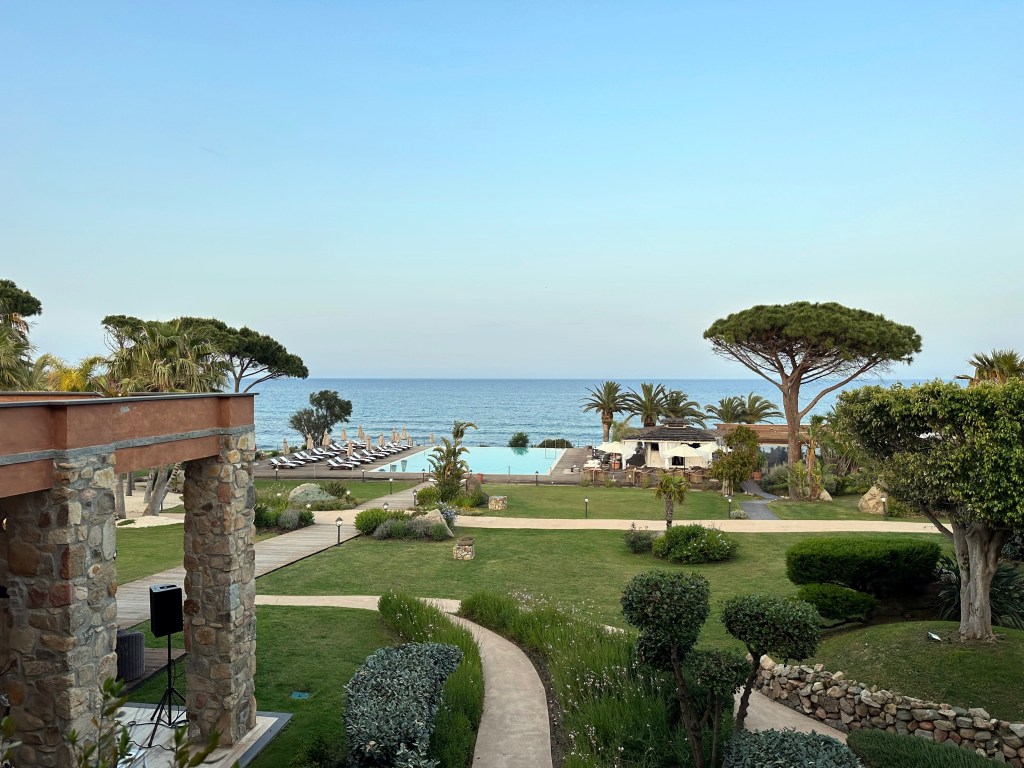
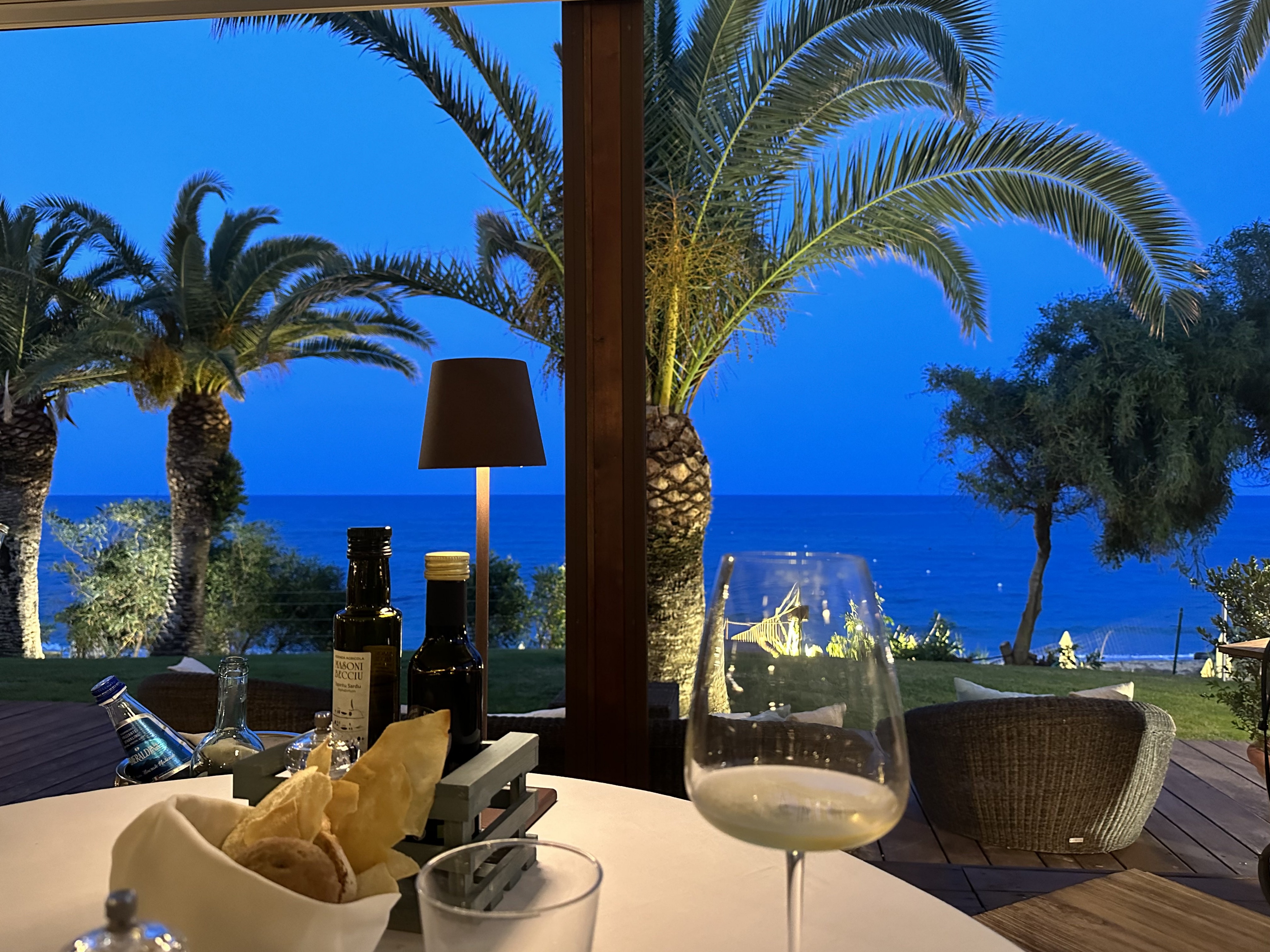
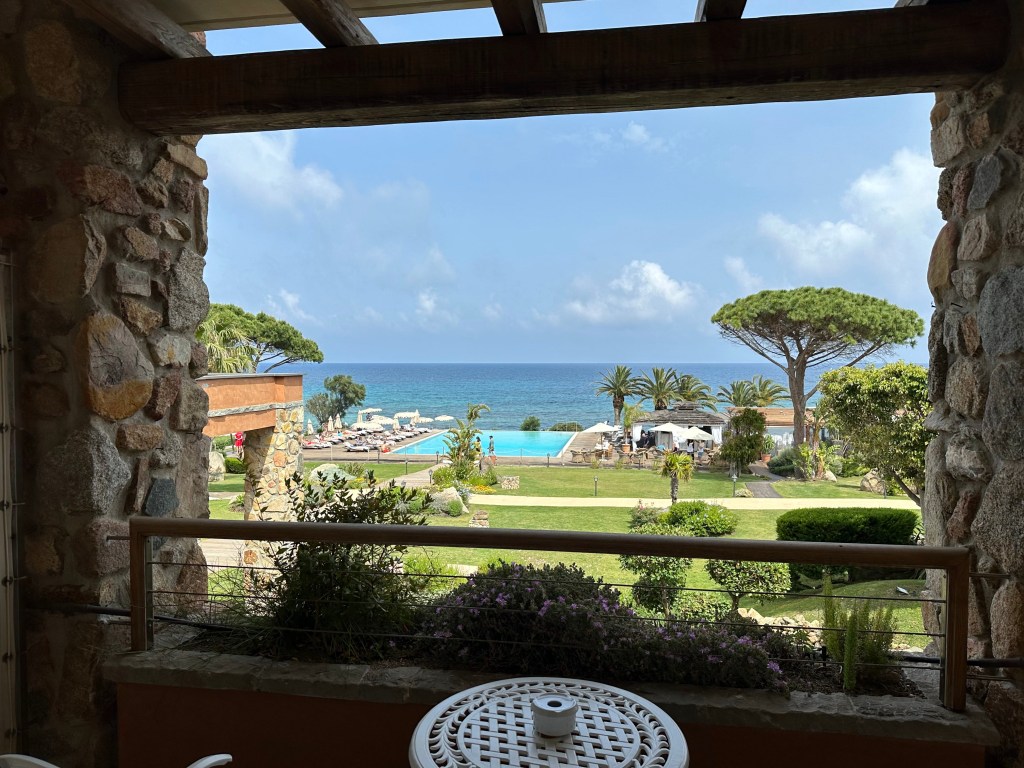
Decent digs with a pretty good view:
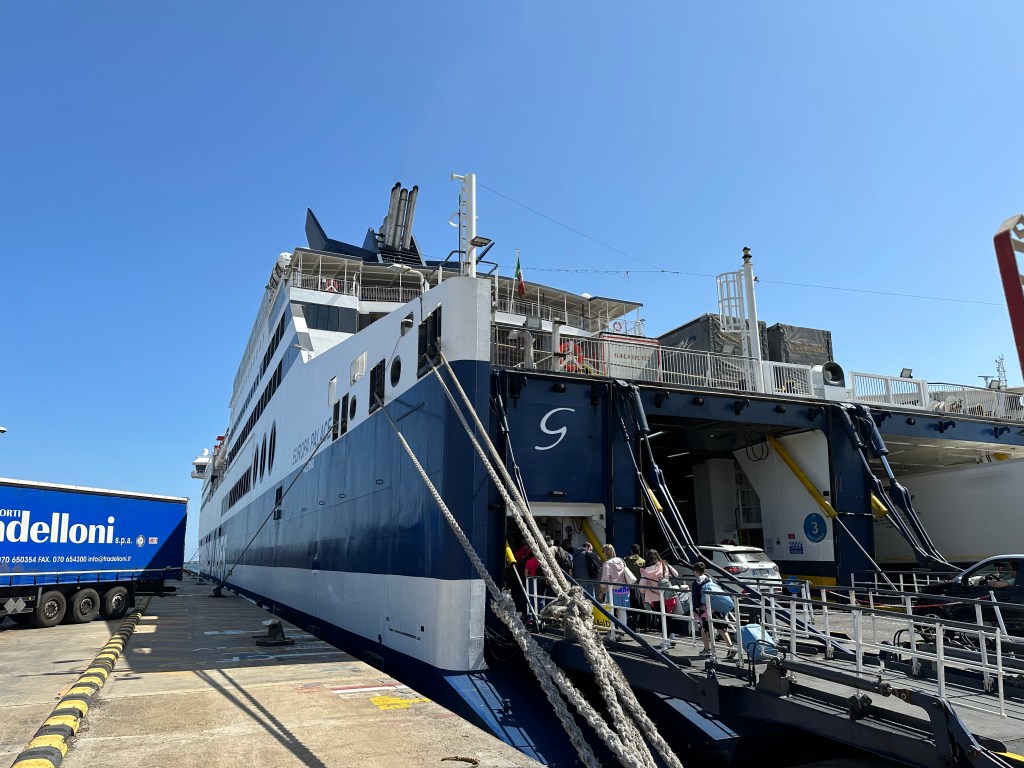
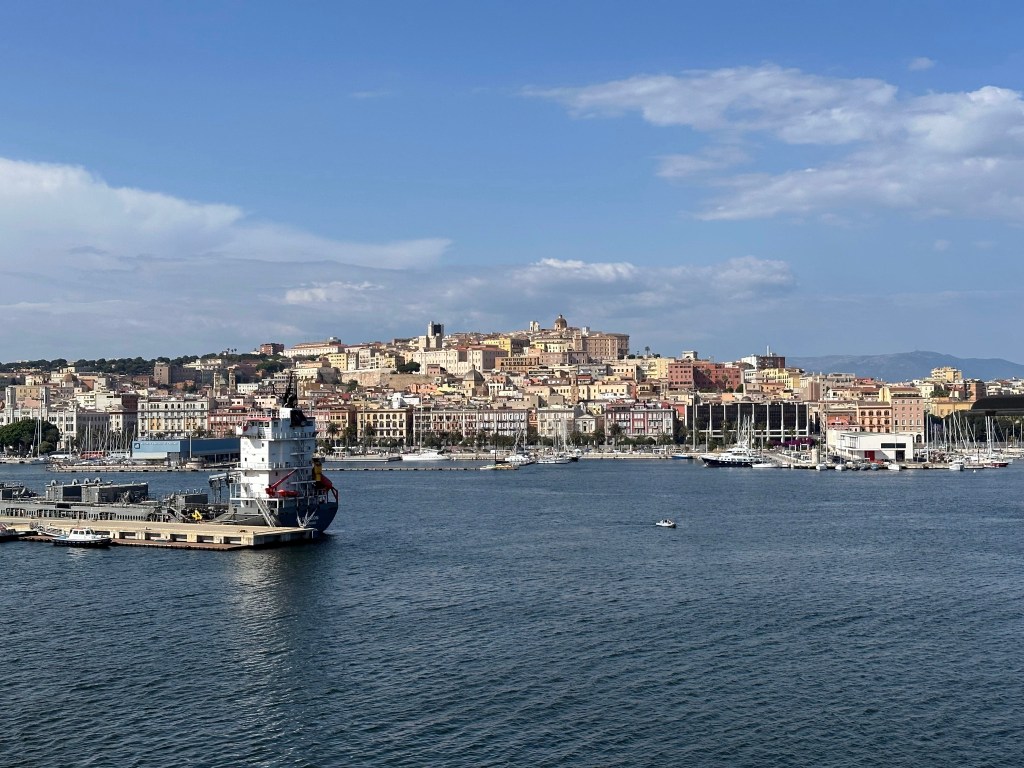
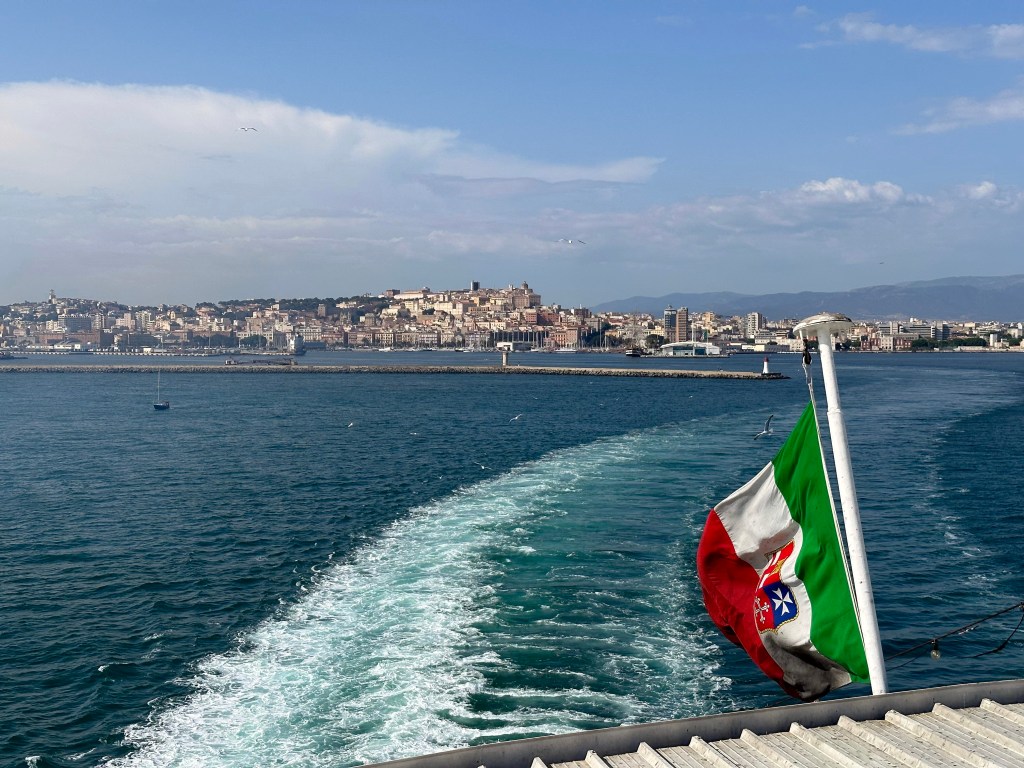
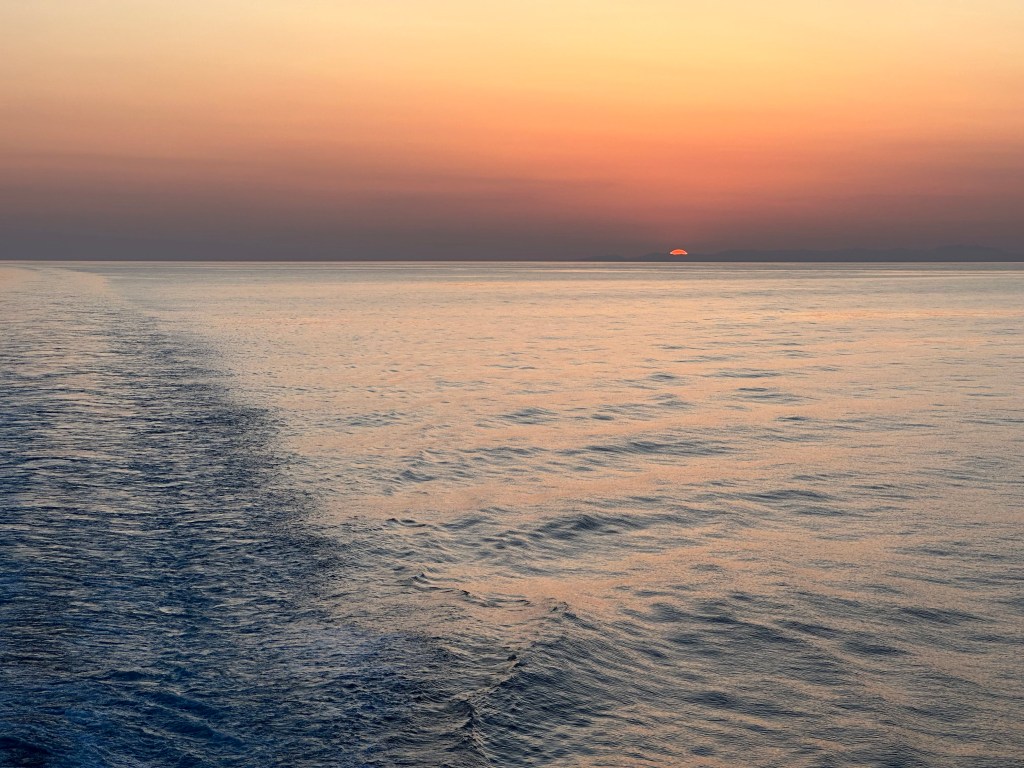
After a few days lounging around Costa Rei, we headed to the port and grabbed an overnight ferry to our next destination: Palermo and Sicily.
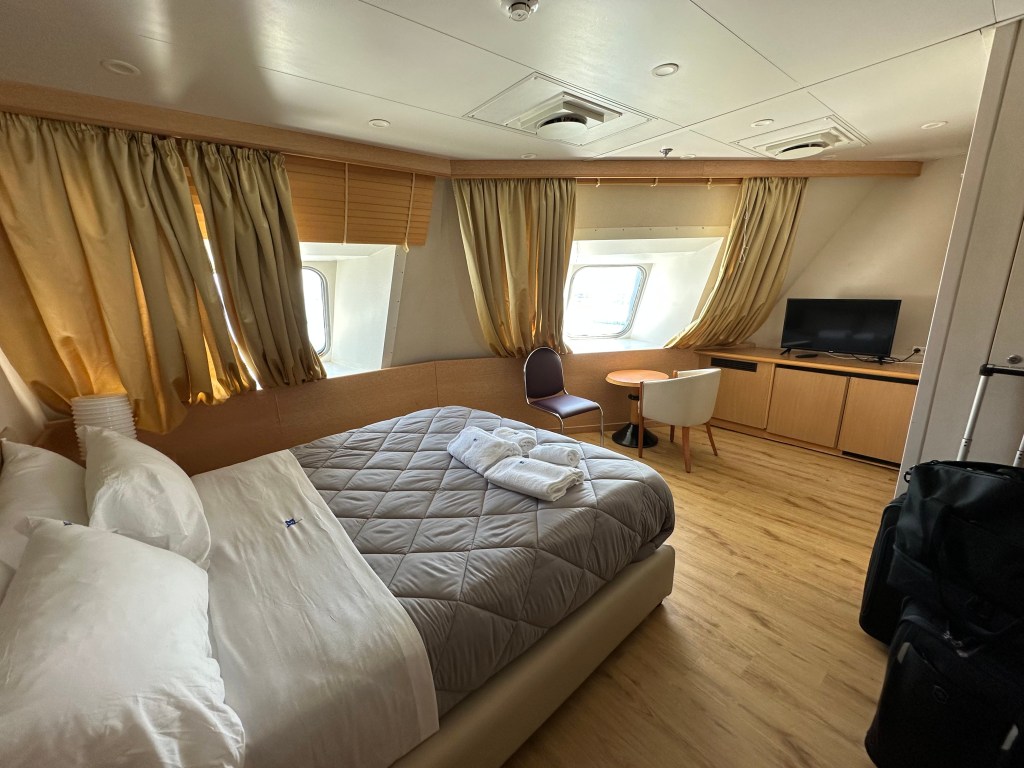
No bad digs here either – also a pretty efficient use of time to sleep en route to Sicily (just like our overnight train from Lisbon to Madrid on our very first European trip in 2002).
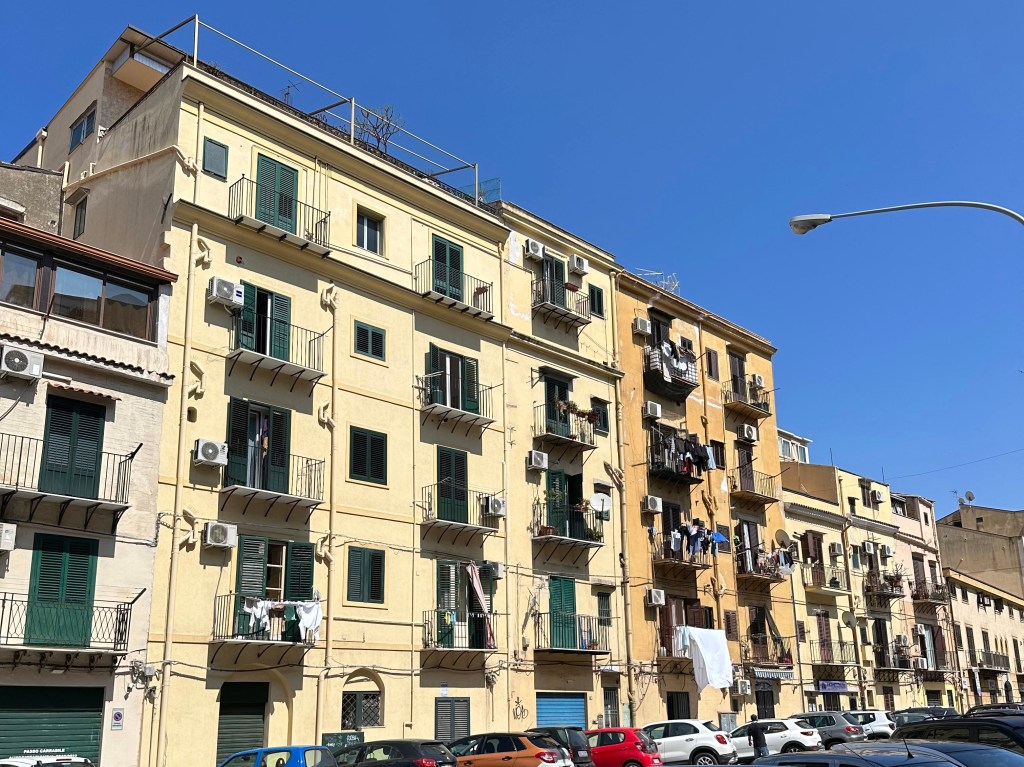
After an overnight ferry ride from Sardinia, we arrived in Palermo, Sicily, early the next morning. This would be our first time ever setting foot on the island. An island with a remarkably layered history of conquerors and competition – perhaps more so than with any other region to which we’ve traveled.
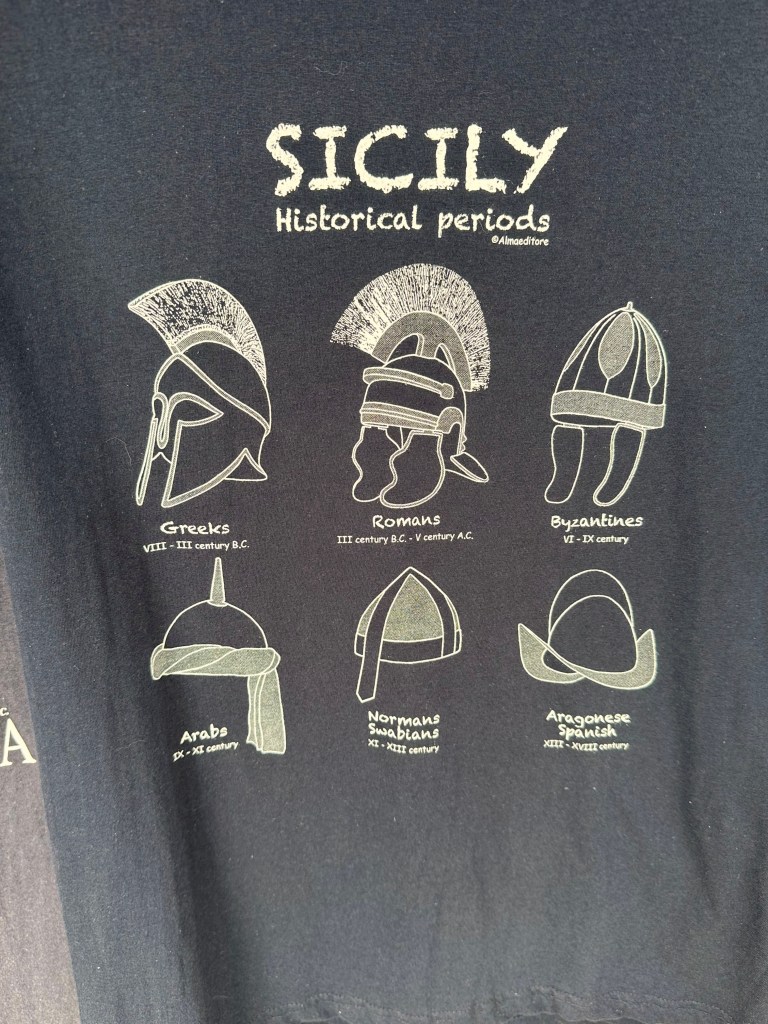
During our time on the island, we read Sicily: Three Thousand Years of Human History, by Sandra Benjamin, which provided great context to the historical backgrounds of the locations we visited and the architecture we witnessed. Although super conversational and easy to digest (would 100% recommend), the history book nonetheless was, indeed, a history book. What we could have done instead was just roll up to a souvenir shop (this one located in the beach town of Taormina on the other side of the island) and get the Cliff Notes version of Sicilian history on this spectacularly informative T shirt:
Below, a brief overview of each of those helmets provides a reasonable starting point to Sicily’s millennia of history (plus the addition of two critical cultures by WolfeStreetTravel that are not included on the T shirt and represent egregious omissions – you’d think all tourist T shirts would have been subjected to a rigorous peer review process and thorough QC before being printed!):
Ancient Greeks (c. 750–241 BCE) – Greek colonists founded powerful city-states such as Syracuse and Agrigento, making Sicily part of Magna Graecia and a major center of philosophy, theater, and trade. Their legacy includes Doric temples (notably in the Valley of the Temples), urban planning, coinage, and a lasting imprint on Sicilian dialect, cuisine, and coastal settlement patterns.
Carthaginians (c. 550–241 BCE, western Sicily) – Carthage controlled western Sicily in a long struggle with the Greeks, using ports such as Mozia as strategic trade and naval hubs. They reinforced Sicily’s role as a Mediterranean crossroads and left Phoenician-Punic archaeological remains, maritime trade traditions, and early fortification systems.
Ancient Romans (241 BCE–476 CE) – After defeating Carthage in the First Punic War, Rome made Sicily its first province and a vital grain supplier to the Republic and later Empire. Roman rule brought roads, villas with elaborate mosaics, Latin language foundations, administrative systems, and early Christian communities.
Byzantines (535–827 CE) – Reclaimed under Justinian, Sicily became a key Byzantine outpost bridging Constantinople and the western Mediterranean. They strengthened Orthodox Christianity, introduced Greek liturgical traditions, fortified cities, and preserved classical learning during the early medieval period.
Arabs (827–1091 CE) – Muslim rulers transformed Sicily into a prosperous emirate centered on Palermo, then one of Europe’s largest cities. Their legacy is profound: irrigation systems, citrus and sugar cultivation, advances in science and mathematics, Arabic influences in Sicilian vocabulary, and architectural elements such as gardens, domes, and decorative geometric motifs.
Normans (1091–1194 CE) – The Norman conquest created the multicultural Kingdom of Sicily, blending Latin, Greek, and Arab traditions under rulers like Roger II of Sicily. Their architectural masterpieces (e.g., the Palatine Chapel in Palermo and the cathedrals of Monreale and Cefalù) fused Romanesque, Byzantine mosaics, and Islamic artistry into a uniquely Sicilian style.
Swabians (1194 – 1266) – After the Norman line ended with William II of Sicily in 1189, the crown passed through marriage to Henry VI of the Hohenstaufen dynasty, who became King of Sicily in 1194. His son, Frederick II, then ruled Sicily and turned it into one of the most sophisticated and culturally advanced courts in medieval Europe.
Angevins (1266 – 1282) – The Angevins, led by Charles I of Anjou, seized control of Sicily from the last Hohenstaufen ruler, Manfred of Sicily, in 1266 and ruled with heavy taxation and strong French influence, which bred deep local resentment. This culminated in the Sicilian Vespers, a popular revolt that overthrew Angevin rule on the island and shifted power to the Crown of Aragon.
Aragonese (1282–1479 CE; broader Spanish rule until 1713) – After the Sicilian Vespers, the Crown of Aragon ruled Sicily, integrating it into the Spanish Mediterranean world. They shaped Sicily’s feudal aristocracy, fortified coastal defenses, introduced Catalan-Gothic influences, and embedded Spanish elements in language, governance, cuisine, and Baroque artistic development.
Sicily feels palpably layered because each time one culture overcame the previous, that former layer just accreted – it was never supplanted. Unlike much of Europe, where one dominant power replaced another, Sicily’s conquerors often built on top of existing systems rather than wiping them out. The result is not a linear history, but a vertical one: Doric temples from the Ancient Greeks stand within sight of Roman villas, Byzantine domes, Arab garden layouts, Norman mosaics, and Spanish Baroque facades — sometimes within the same city block.
The island’s geography made this possible. Sitting at the center of Mediterranean trade routes between Europe, North Africa, and the Near East, Sicily was too valuable to abandon and too prosperous to dismantle; each incoming power adapted existing administrative systems, agricultural innovations, and urban frameworks rather than starting from scratch.
Our favorite example? When the Normans conquered the Muslim emirate, they retained Arab administrators and artisans, which is why you get Islamic muqarnas ceilings inside Christian chapels in Palermo. Case in point: the Arabo-Norman Church of San Cataldo in Palermo, dating from 1140:
This layering also explains Sicily’s cultural contradictions: citrus groves introduced under Arab rule grow beneath Norman cathedrals; Spanish street grids frame Greek archaeological parks; Sicilian dialect carries Arabic, Greek, Catalan, and Latin roots simultaneously. The island feels neither fully Italian nor fully Mediterranean in a single-direction sense — it feels like a distilled Mediterranean civilization.
Although Sicily’s long history is better witnessed in cities like Syracuse on the southeast coast, where the Greeks first settled and which dominated trade and politics, we began our stay on Sicily in its current capital of Palermo, in the northwest. After the Arab conquest in the 9th century, the focus shifted westward to Palermo, which became the administrative and commercial capital under Muslim and later Norman rule. Its superior harbor and position on Mediterranean trade routes cemented Palermo’s long-term dominance.
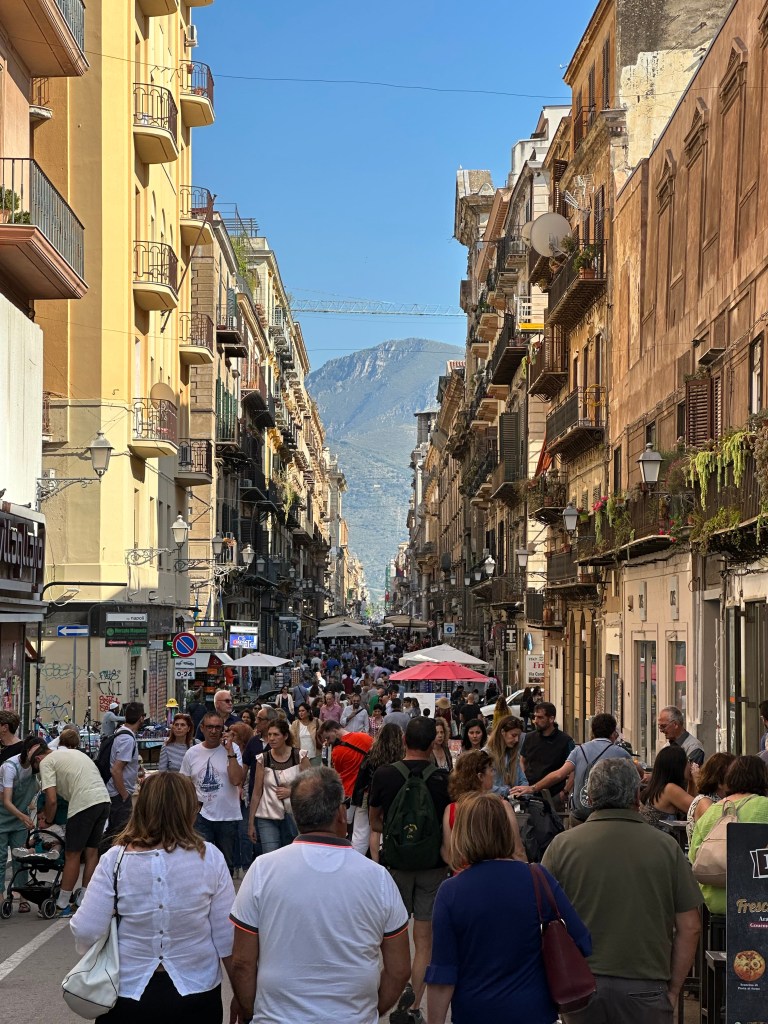
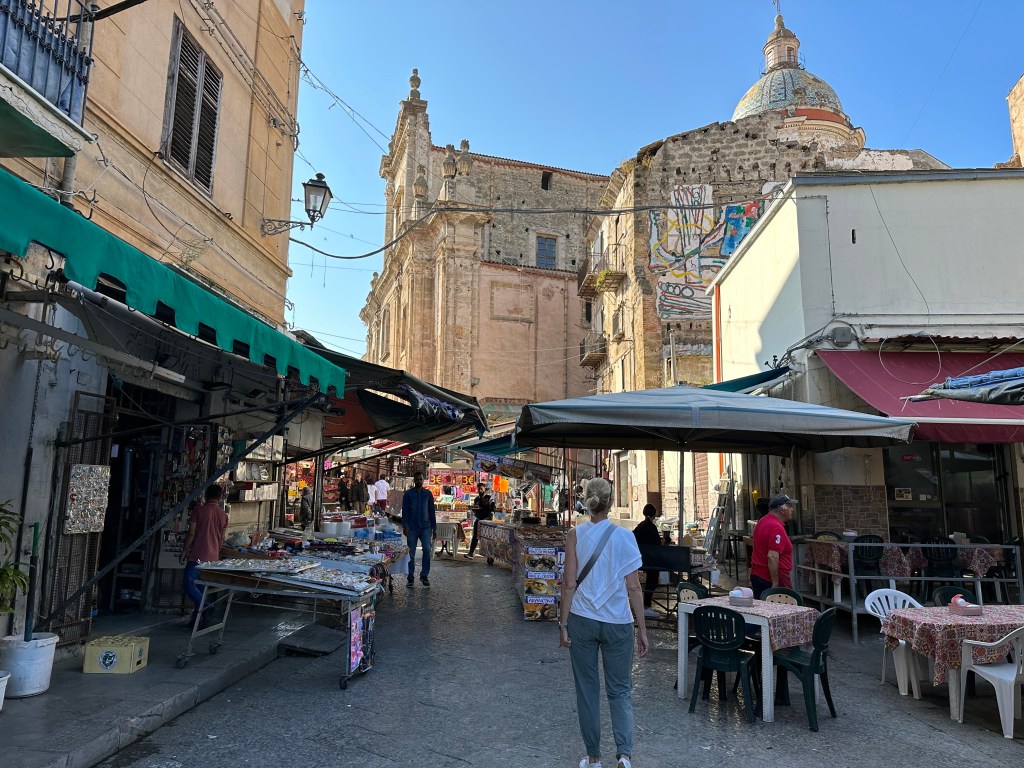
Palermo’s main drag of Via Maqueda, where we’d find ourselves each day at some point:
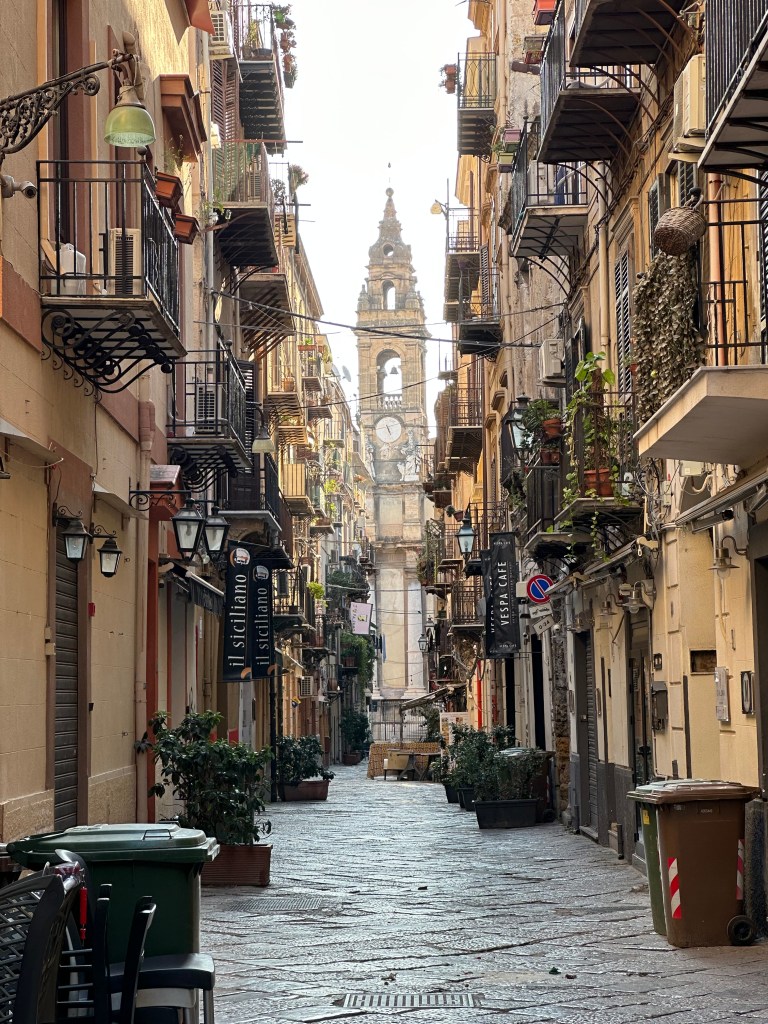
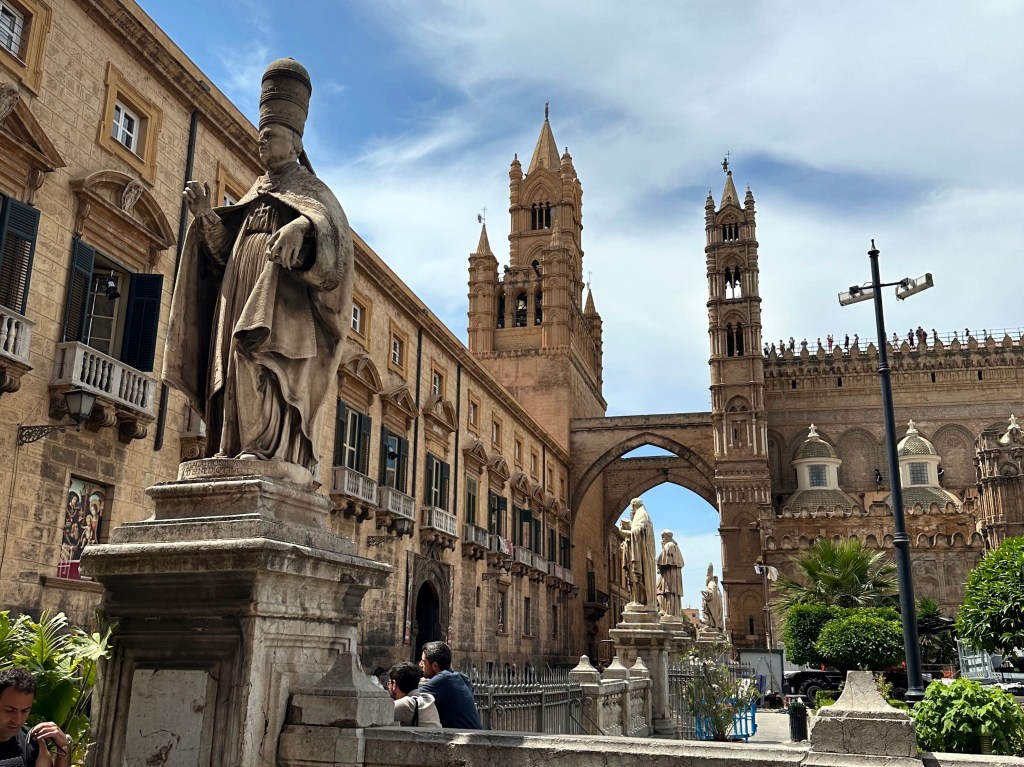
Cool little side street our first morning highlighting the cathedral bell tower:
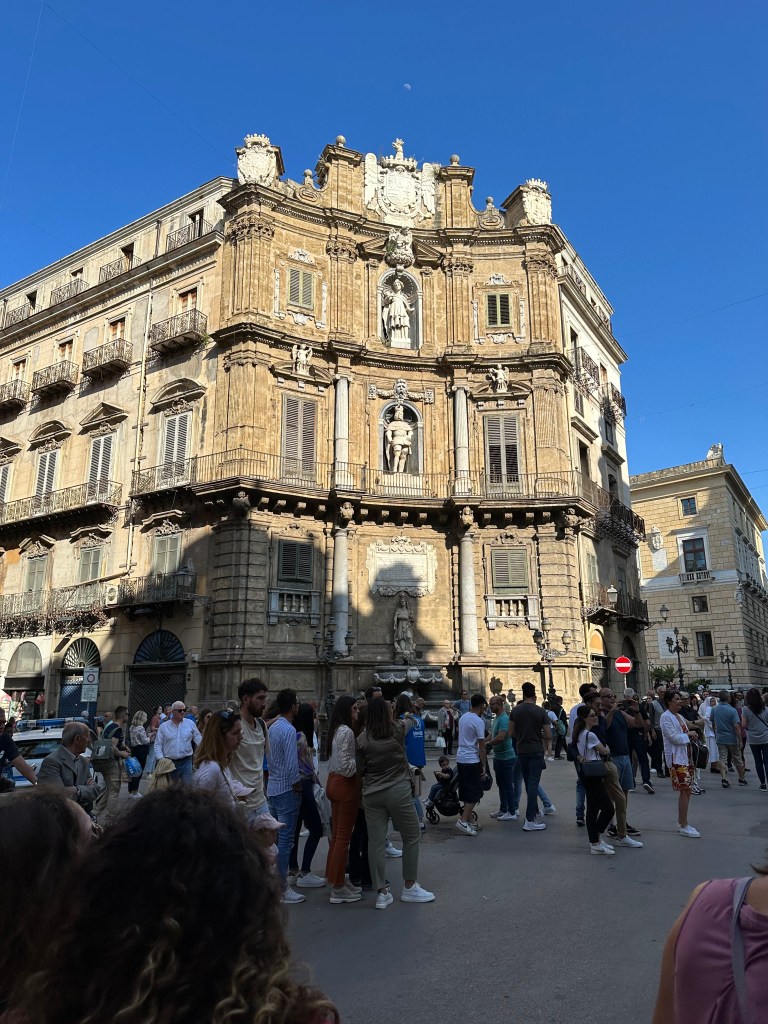
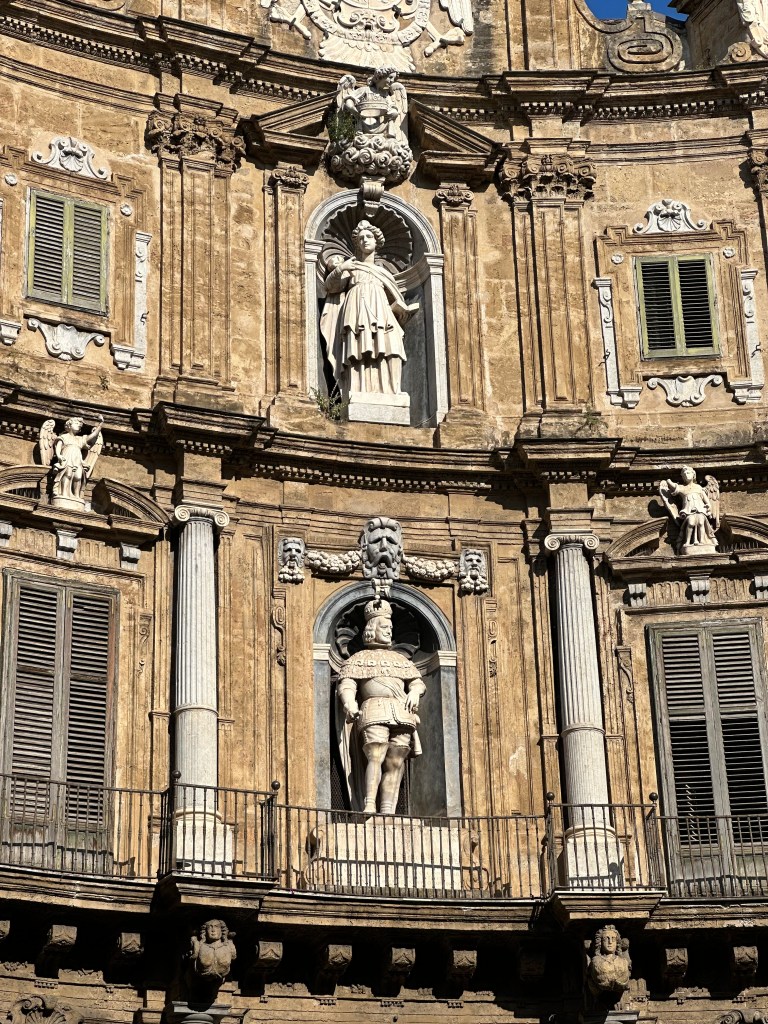
Palermo’s Baroque Quatro Canti square at the intersection of the Via Maqueda and the Corso Vittorio Emanuele:
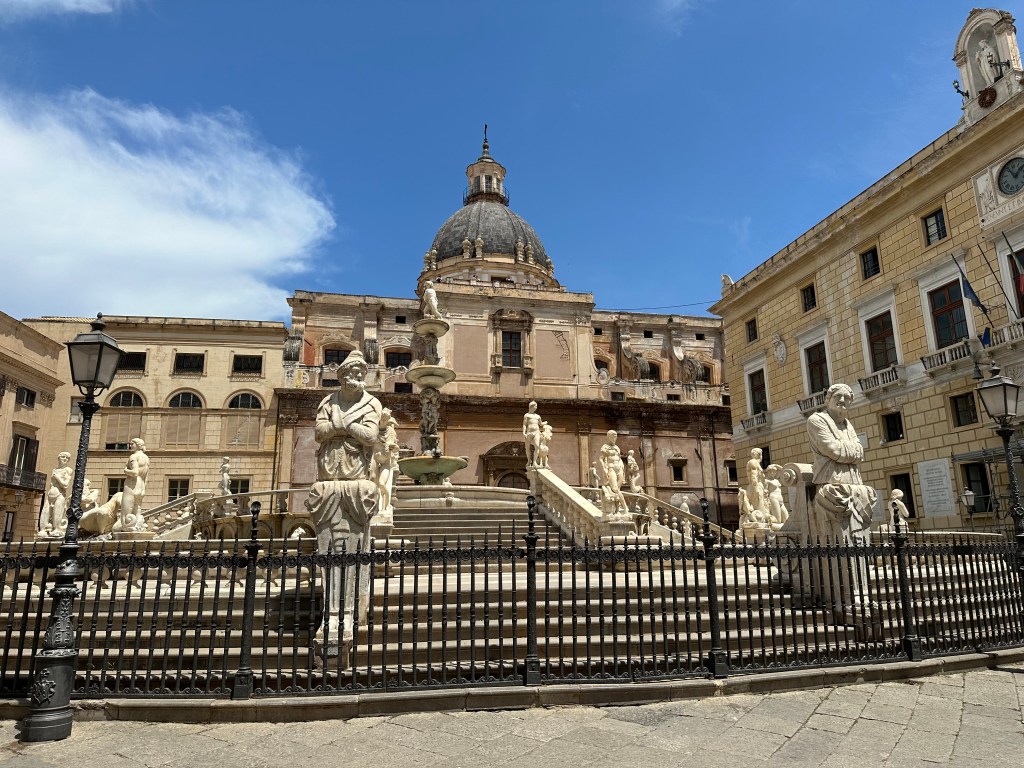
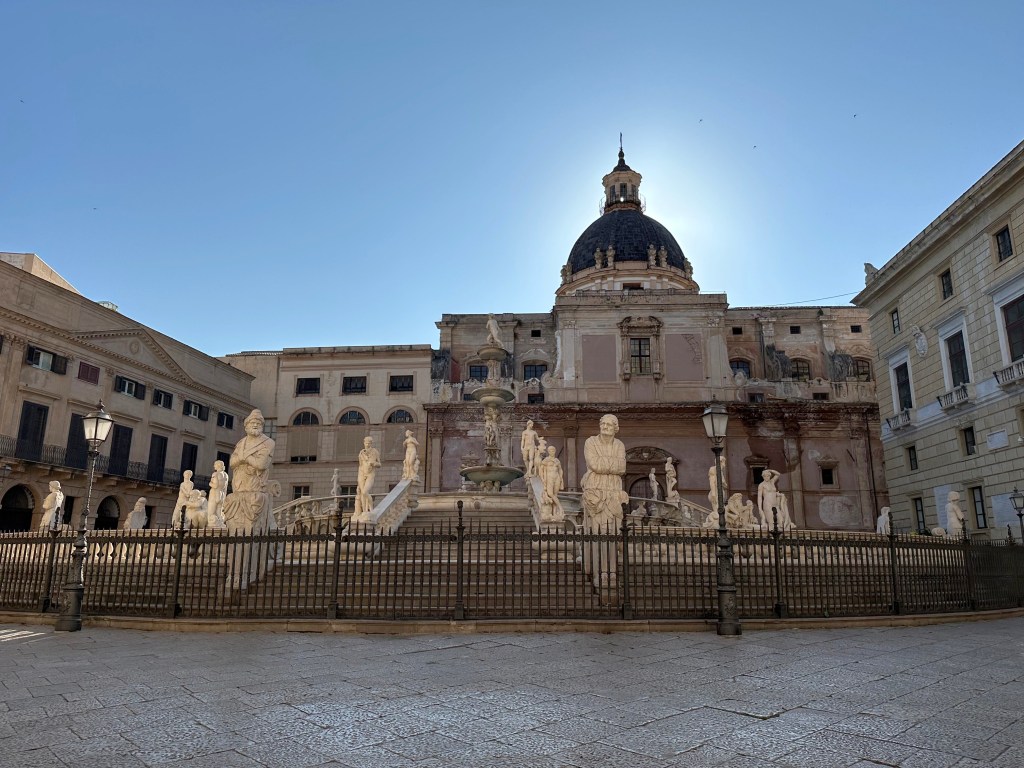
The ornate, 16th-century Praetorian Fountain on Via Maqueda, sporting 16 nude statues of nymphs, humans, mermaids, and satyrs (offending some delicate souls, who declared it Fontana della Vergogna [Fountain of Shame]):
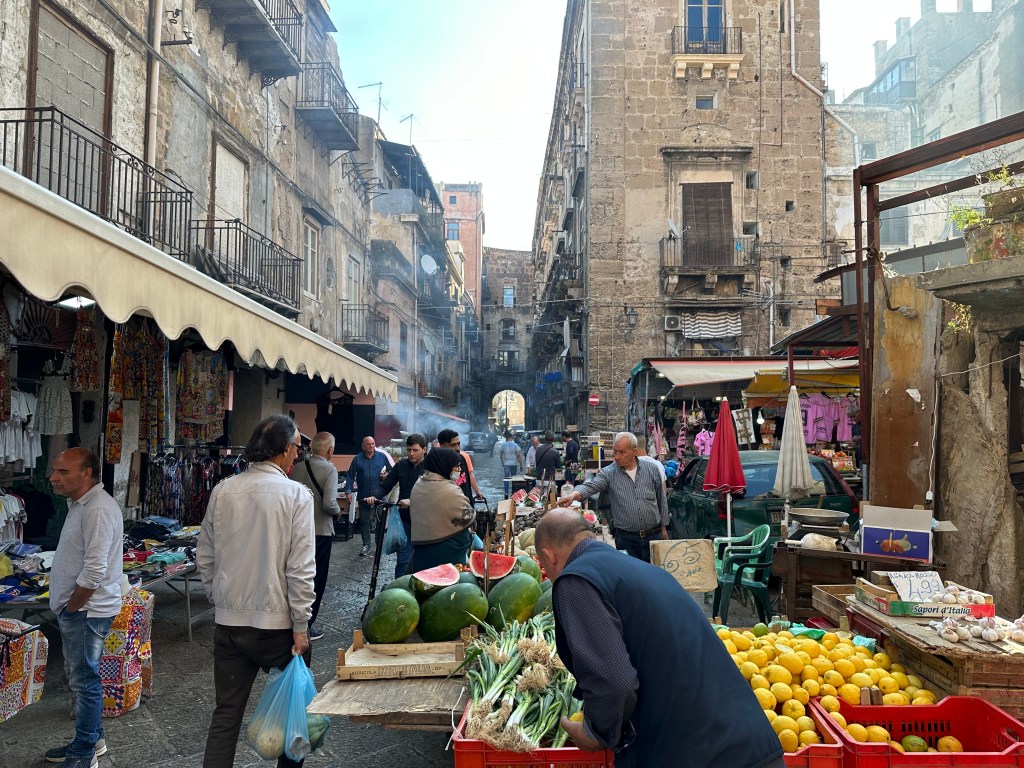
Pretty awesome town in which to just wander around.
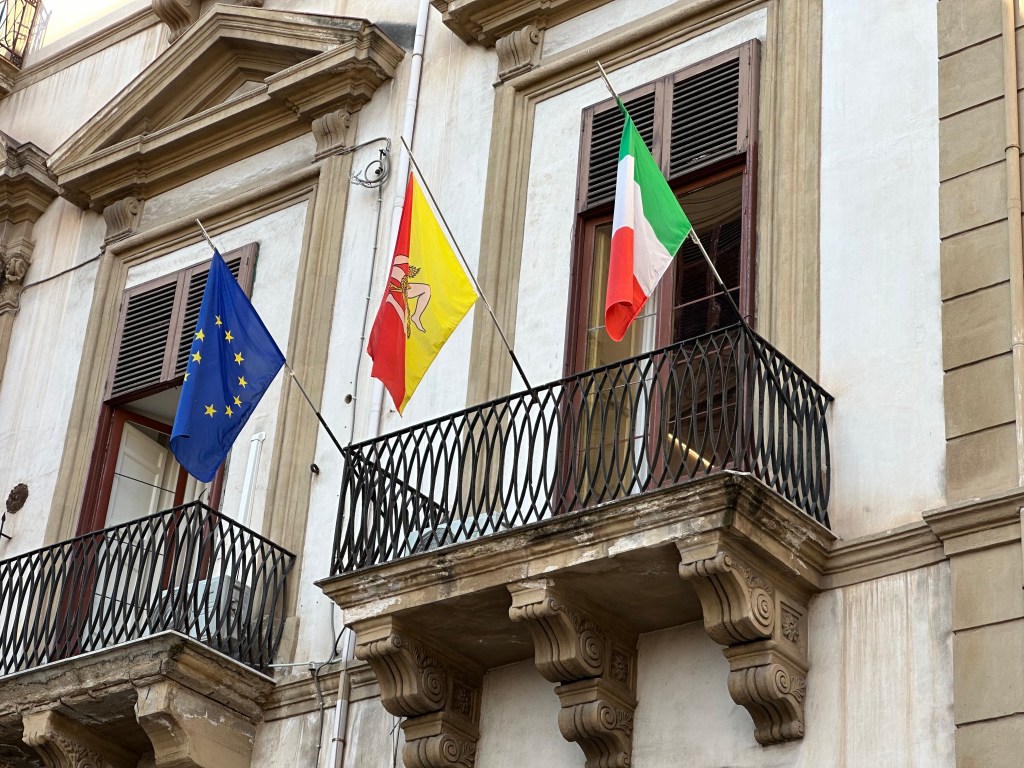
Sicily’s super-intriguing Trinacria flag, flanked by the EU and Italian flags on balcony in town. We’ll get into that little vexillological nugget in a future post, featuring beer. Cold, delicious beer. Mmmm; beer.
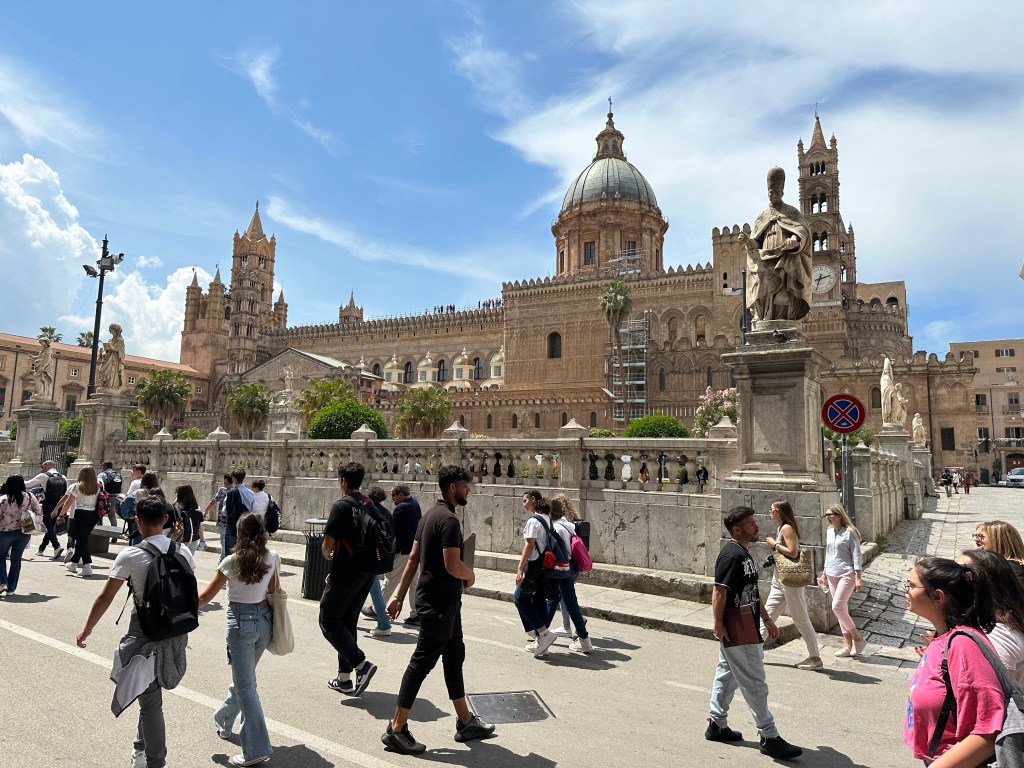
Palermo Cathedral:
We didn’t go in, but instead walked through, making a beeline to the much more interesting Palazzo dei Normanni (Palace of the Normans):
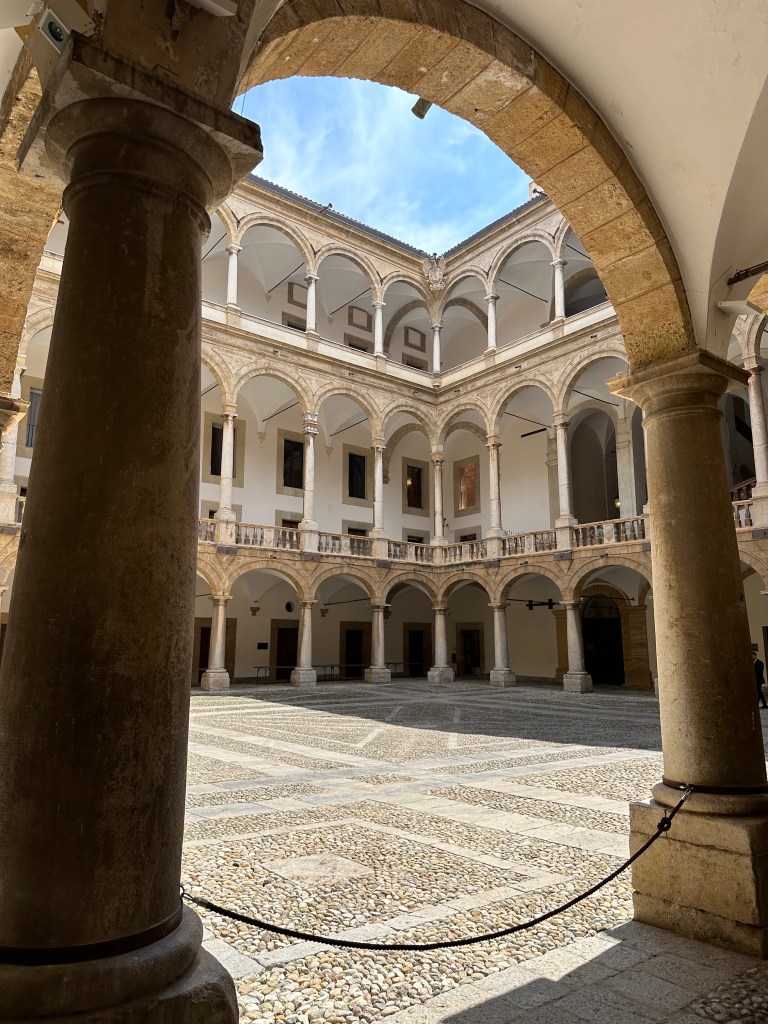
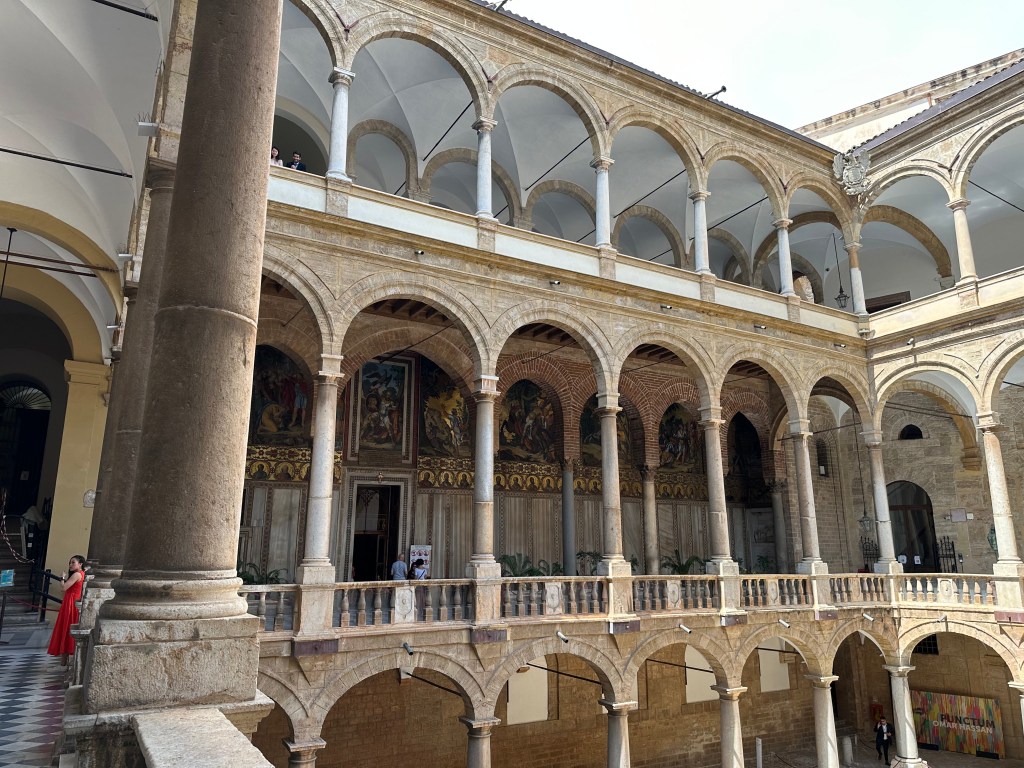
Inside the palace’s main courtyard:
The Norman Palace “was built on the highest point of the city, above a Punic [see?! Carthaginians!] structure discovered in 1984 beneath the Duke of Montalto Halls. During Arab rule, the earliest nucleus of the building arose between the rivers Kemonia and Papireto, designed with defensive features typical of fortresses. This building was also used during the Roman Byzantine era.
Following the Norman conquest in 1072, the Normans built a new building consisting of a castle, with the function of royal residence and administrative hub. In 1130, after the coronation of Roger II of Altavilla—the first Norman king of Sicily—the Palatine Chapel was constructed, becoming a symbol of Norman cultural and Christian religious.
The palace’s core was marked by four towers and included facilities such as workshops and textile laboratories (nobiles officinae or tiraz). It served as the seat of successive Norman courts, including those of Roger II, William I (known as “the Mean”), and William II (“the Good”), who oversaw a remarkable confluence of diverse cultures. Frederick II, grandson of Roger II and son of Henry VI of Hohenstaufen and Constance of Altavilla, continued this legacy. He played a pivotal role in its administration and in fostering cultural life, notably supporting the Sicilian School of poetry.” (All from here.) [BTW, we also would highly recommend the podcast “Norman Centuries” by Lars Brownworth; outstanding!]
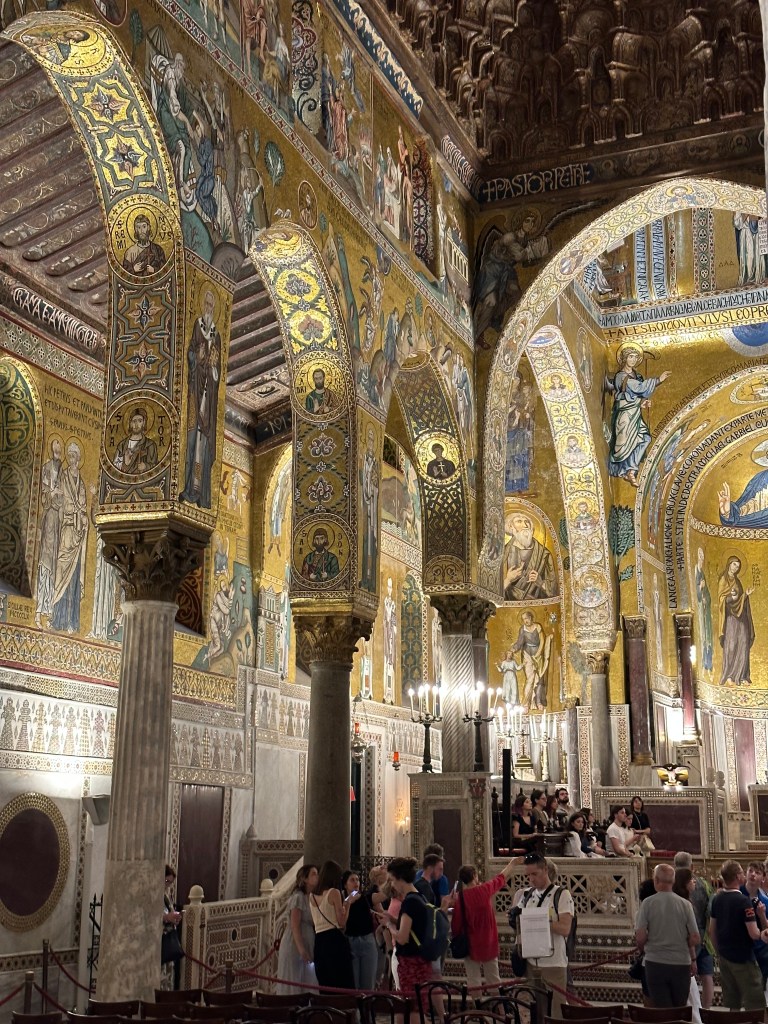
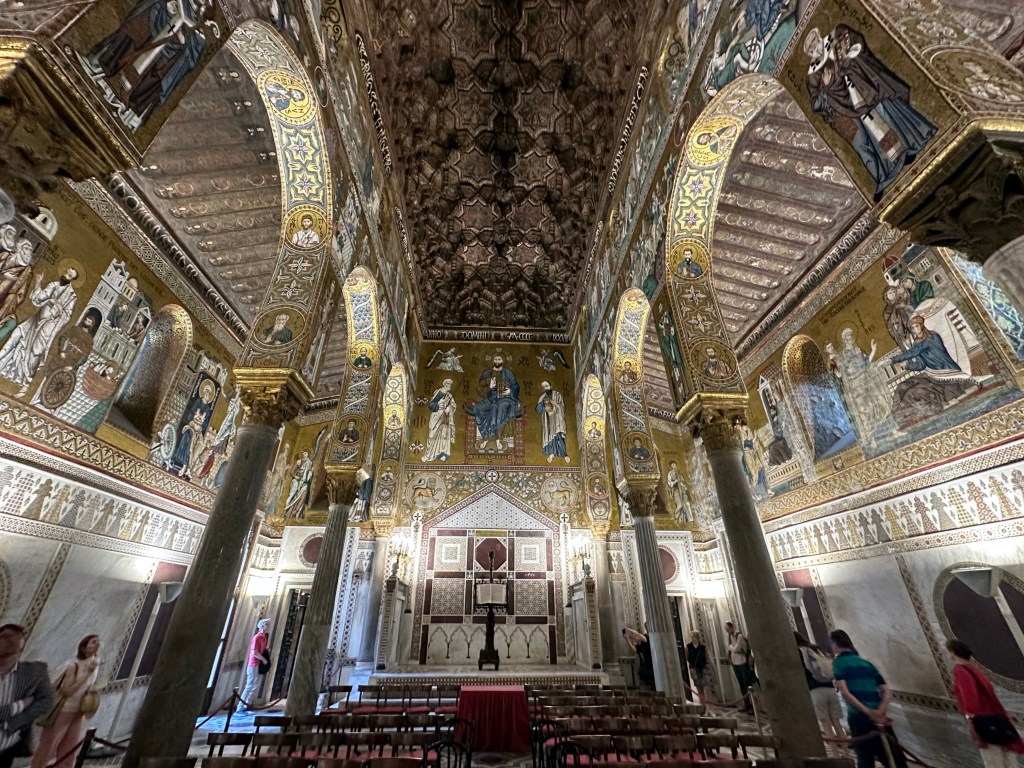
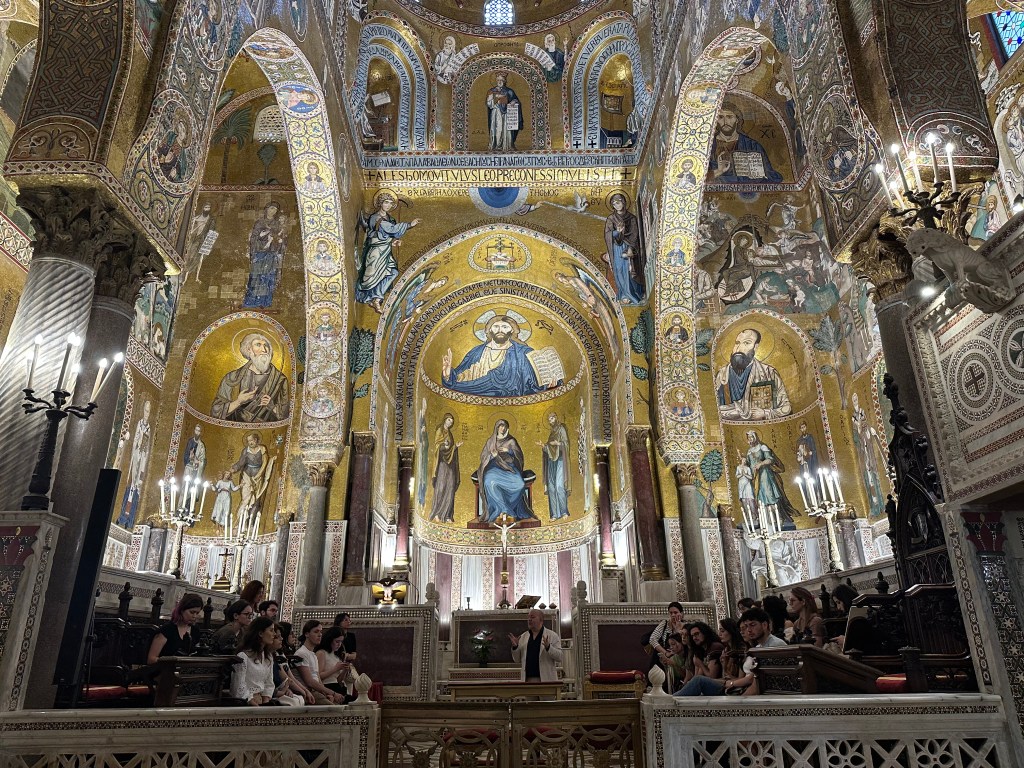
The palace’s extraordinary (and super Byzantine) Palatine Chapel:
Commissioned by Roger II of Sicily in 1132, the architecture represents a blend of Byzantine, Norman, and Fatimid styles that is unique to Sicily (we’d see another, even grander example right after we left Palermo).
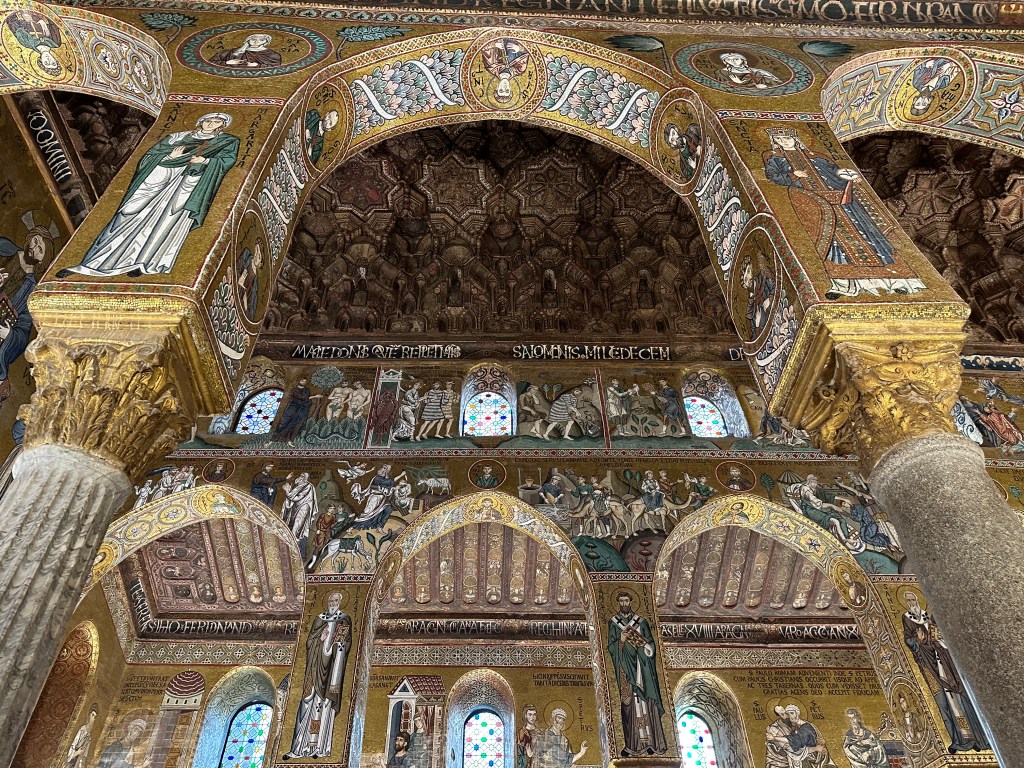
To wit: a Norman church structure adorned with Byzantine-style mosaics and topped with a Fatimid-style muqarnas ceiling (identical in style to those we experienced at the Moorish Alhambra in Granada):
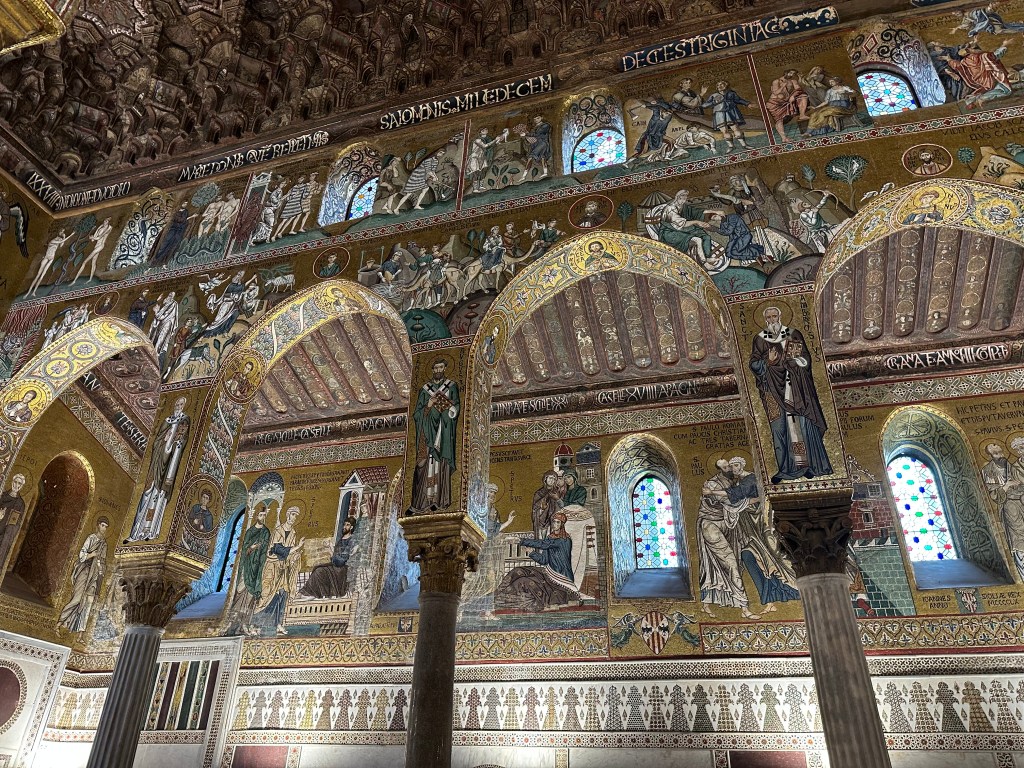
Byzantine-style mosaics dominate the walls of the ambulatory:
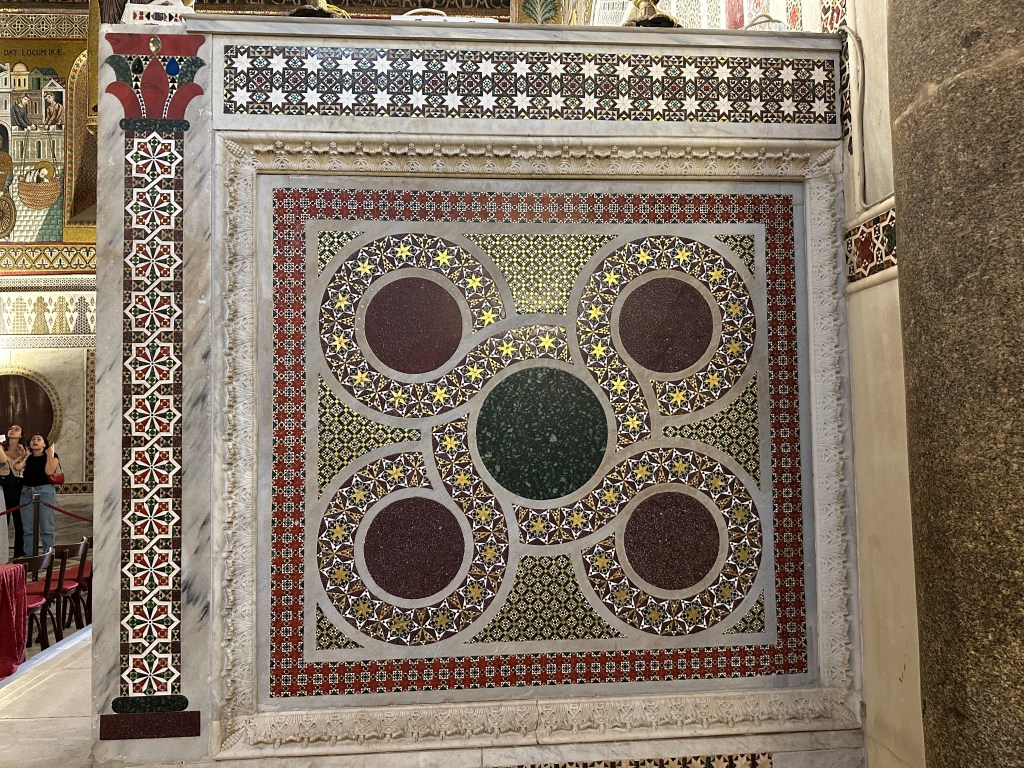
And geometric Fatimid Arab designs are evident along knee walls and other structures:
Although the mosaics covering the ceiling and dome date from the 1140s and were, indeed, created by Byzantine artists, others above the aisles were created in the 1160s and 1170s by local craftsman and are more Latin in style (including Latin inscriptions):
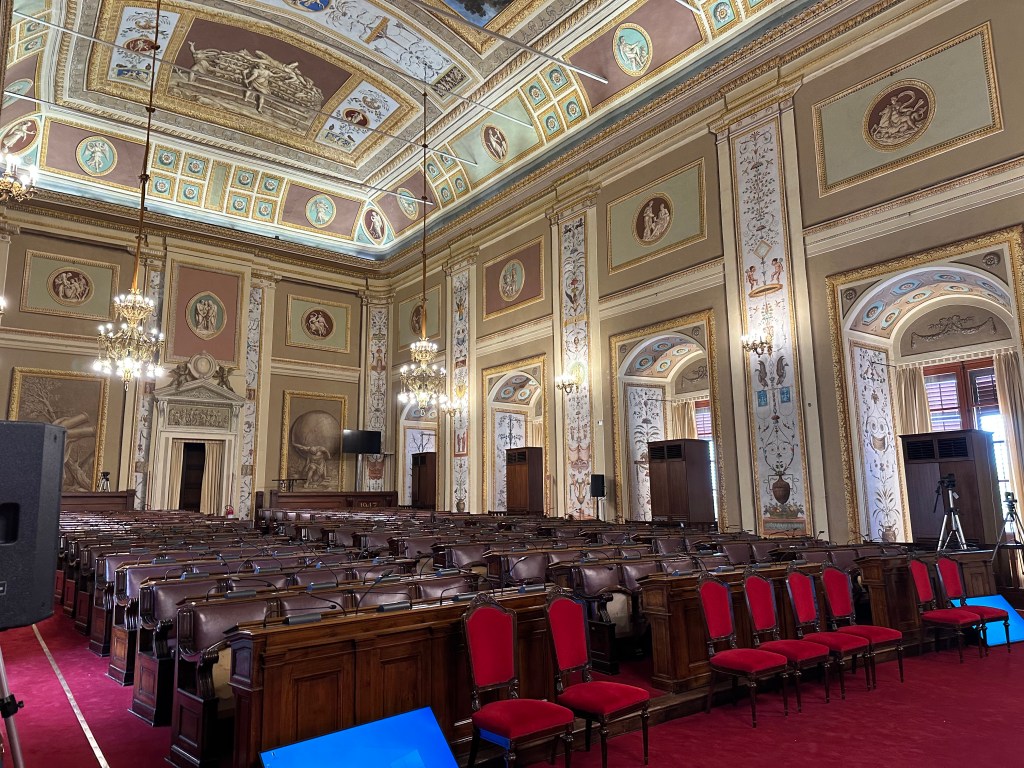
An abrupt transition to the 18th- and 19th-century Pompeian hall:
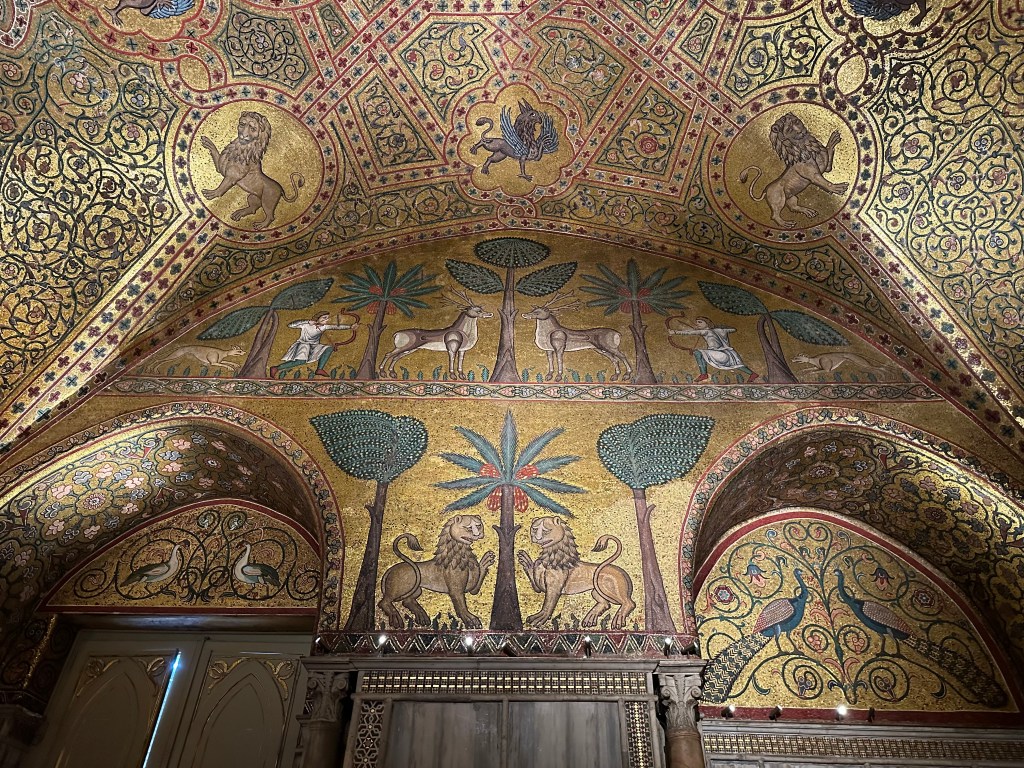
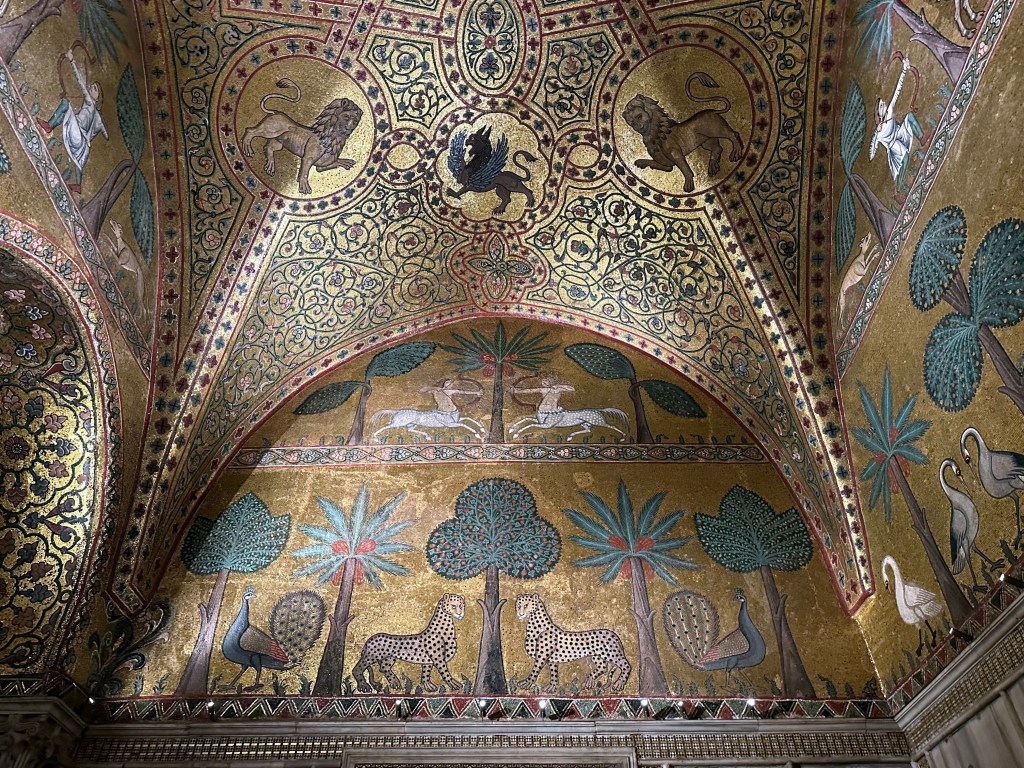
King Ruggaro (Roger II) Hall within The King’s Apartments, with its characteristic hunting scene mosaics:
Including its signature leopards, which now are not only the symbol of the palace, but, we found at a stay later, adorn a line of high-end Sicilian toiletries at hotels (the brand name itself is the urban island in Syracuse, which we’d visit later in the trip – this whole experience keeps folding in on itself).
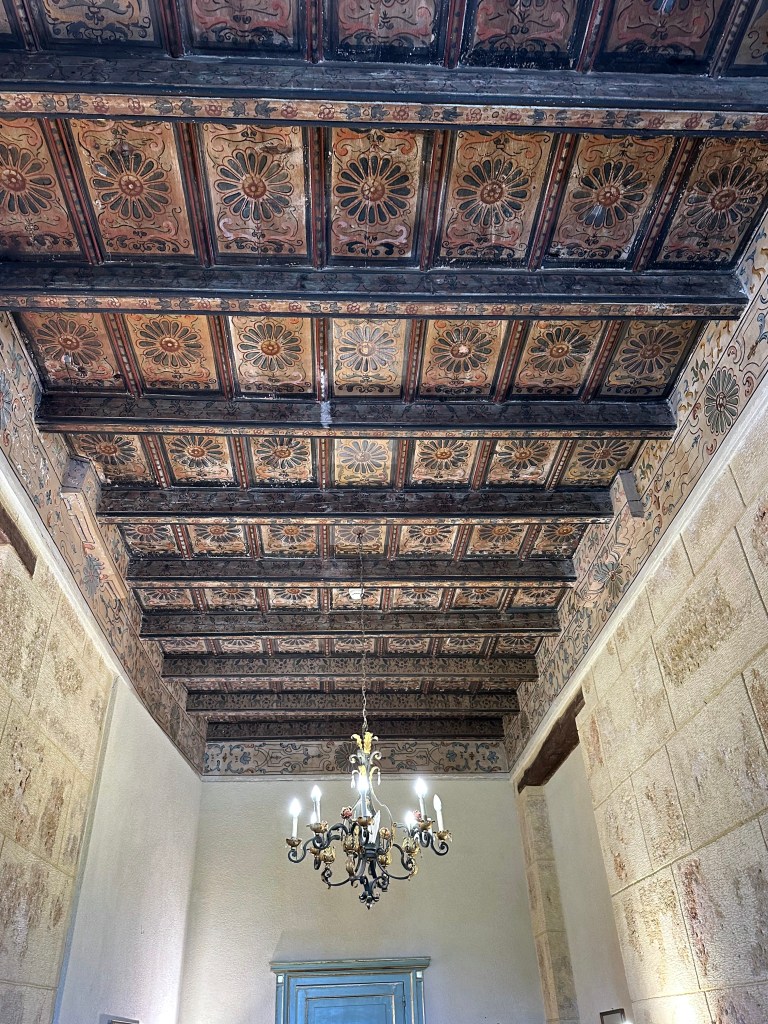
Medieval painted wooden ceilings in King Ruggero’s Hall:
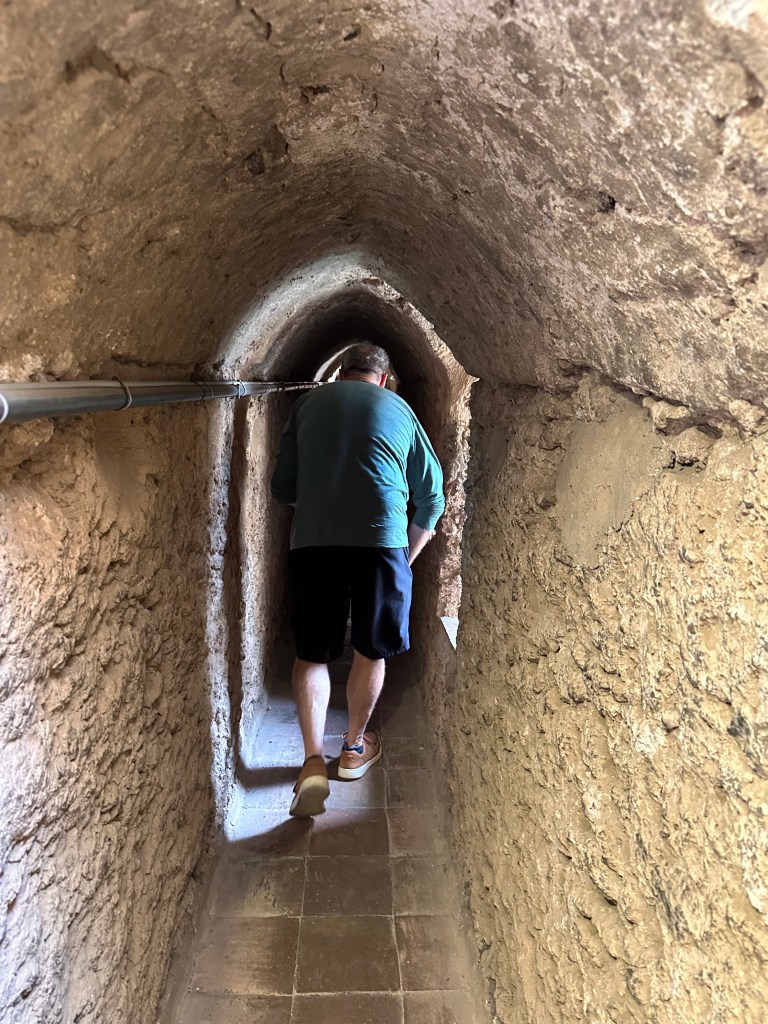
Climbing through one of the passageways in the fortified tower:
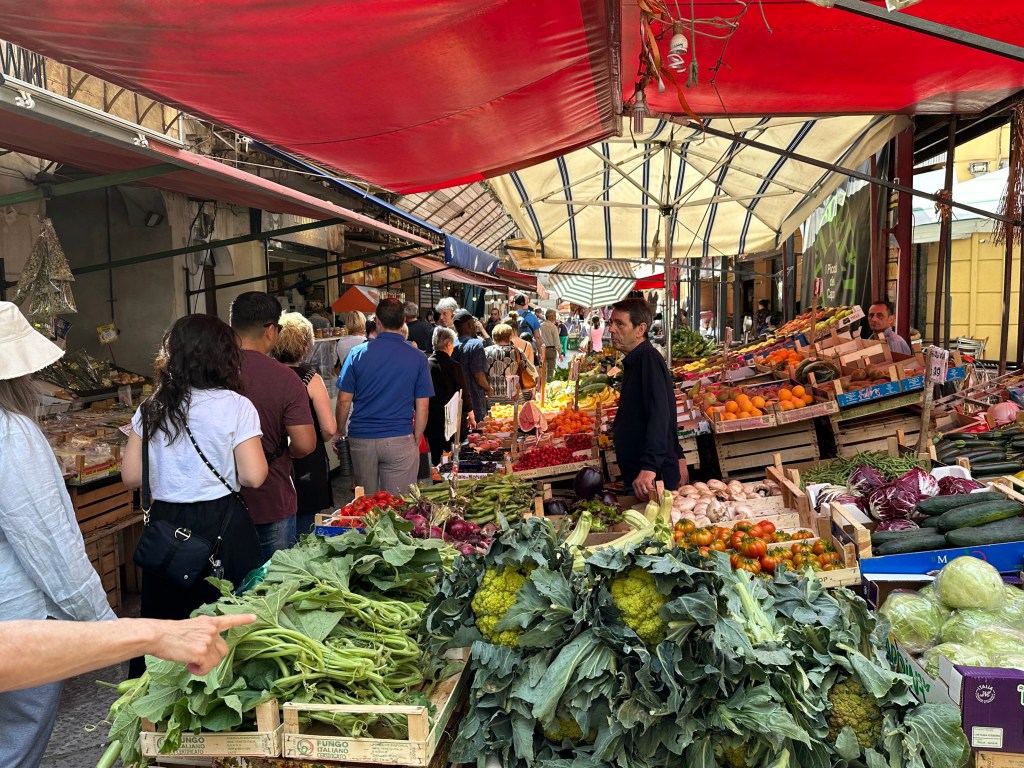
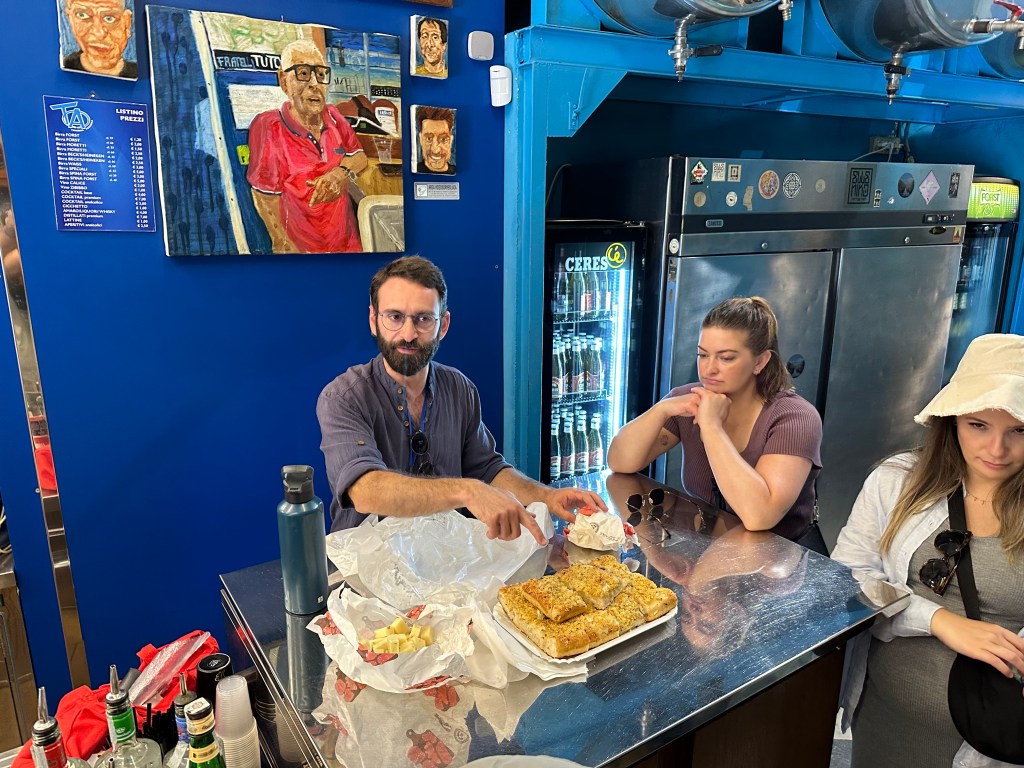
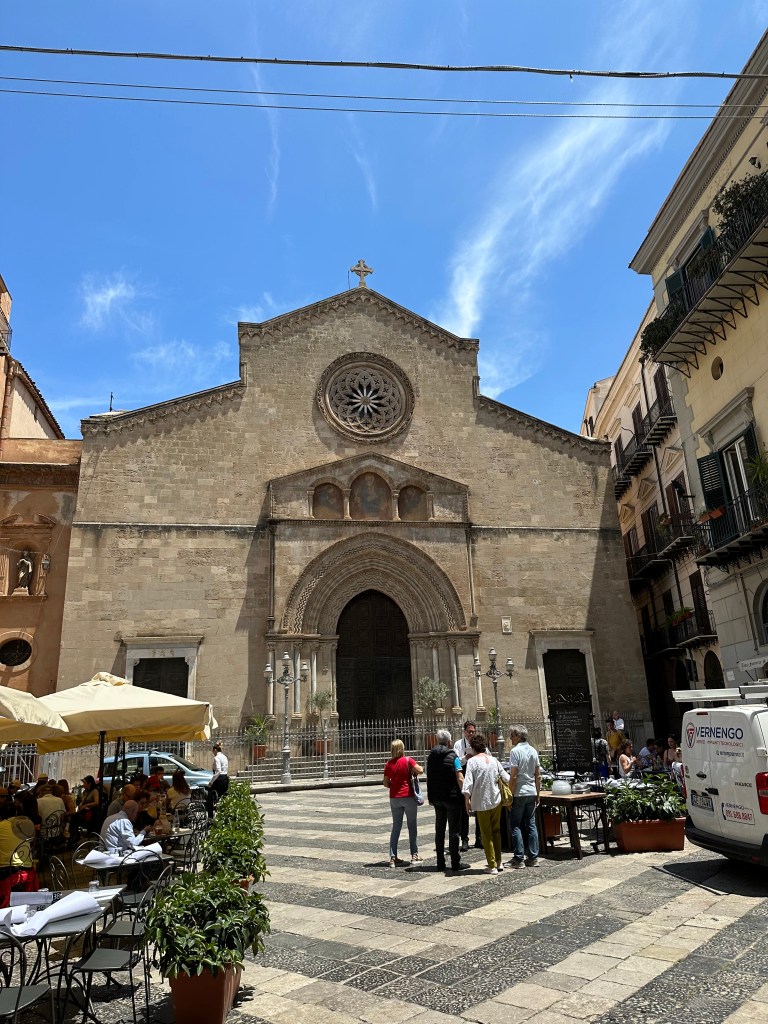
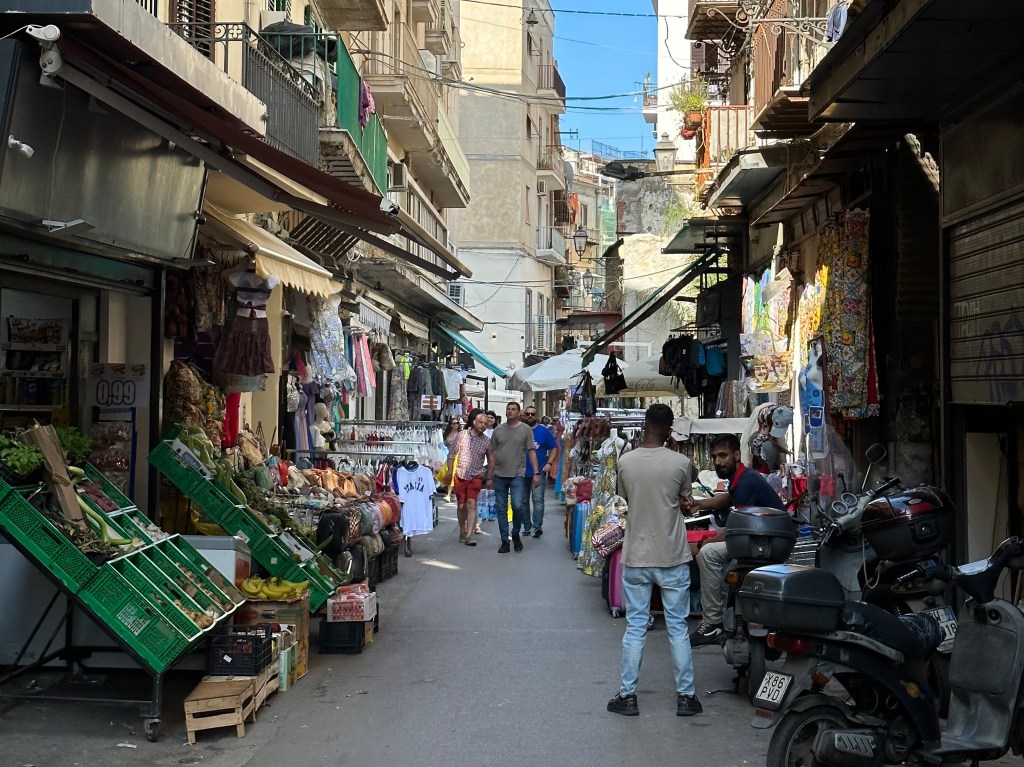
Back out on the street and in a street food tour!
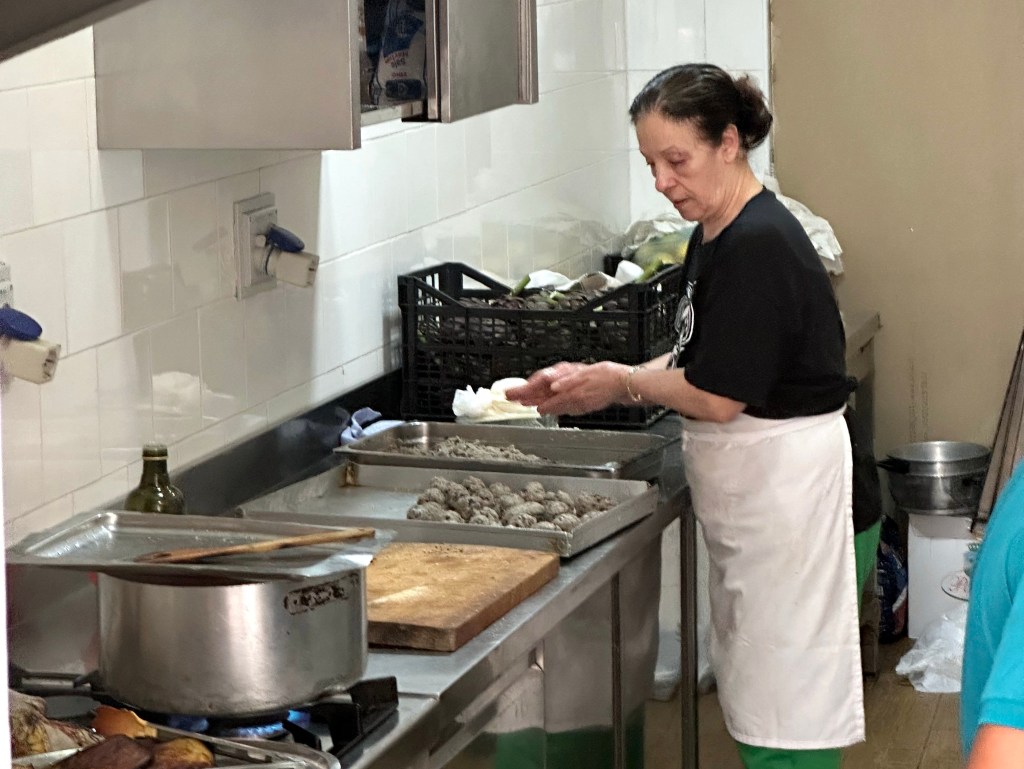
A little nona at work:
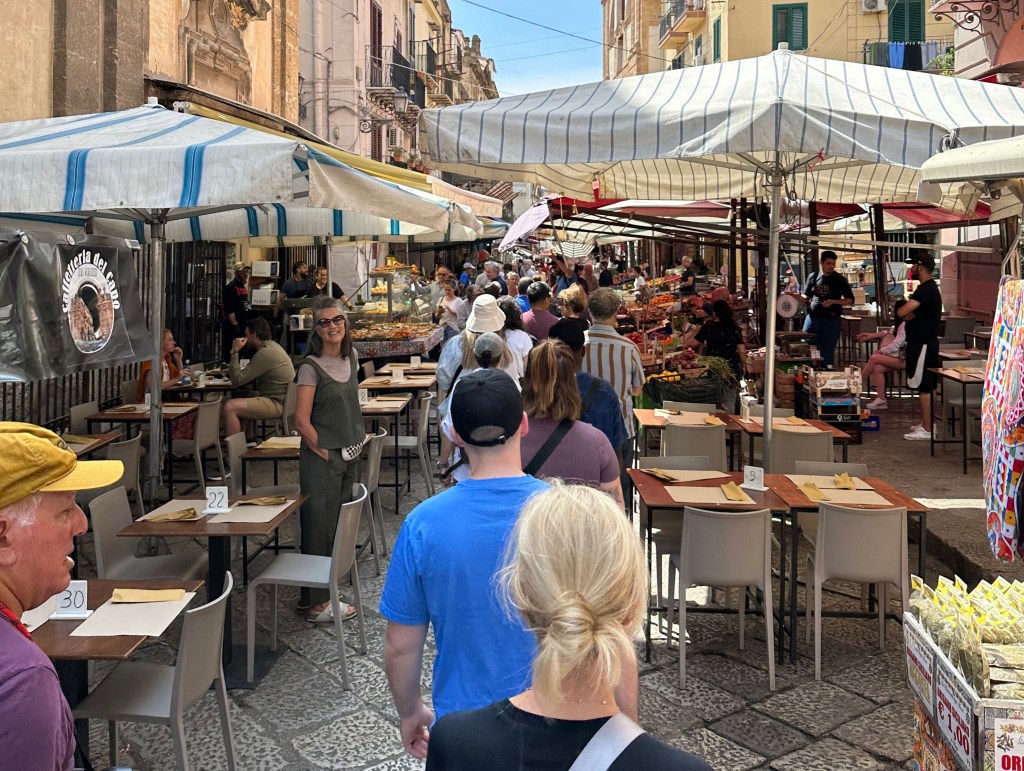
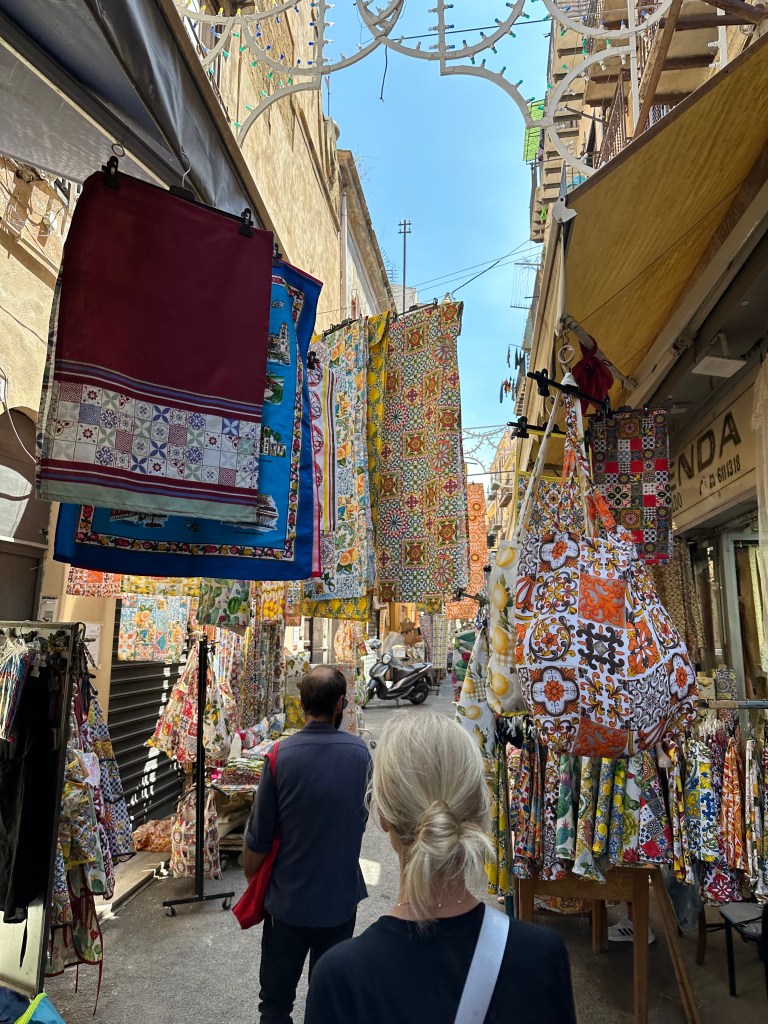
Parading through the fabric district:
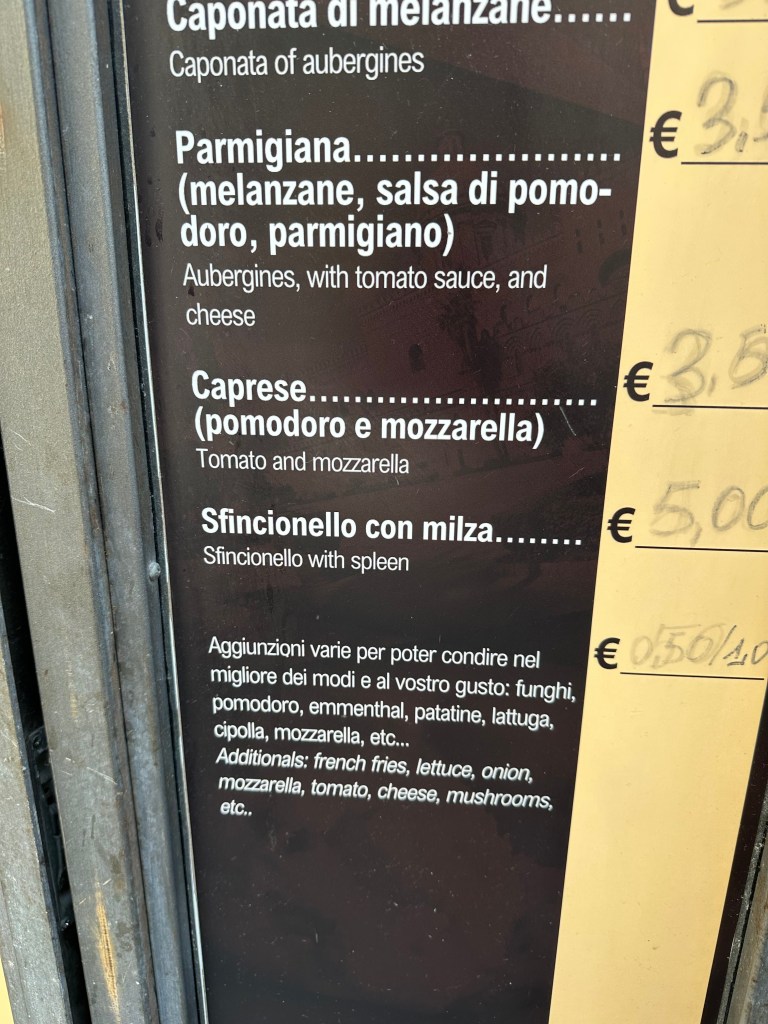
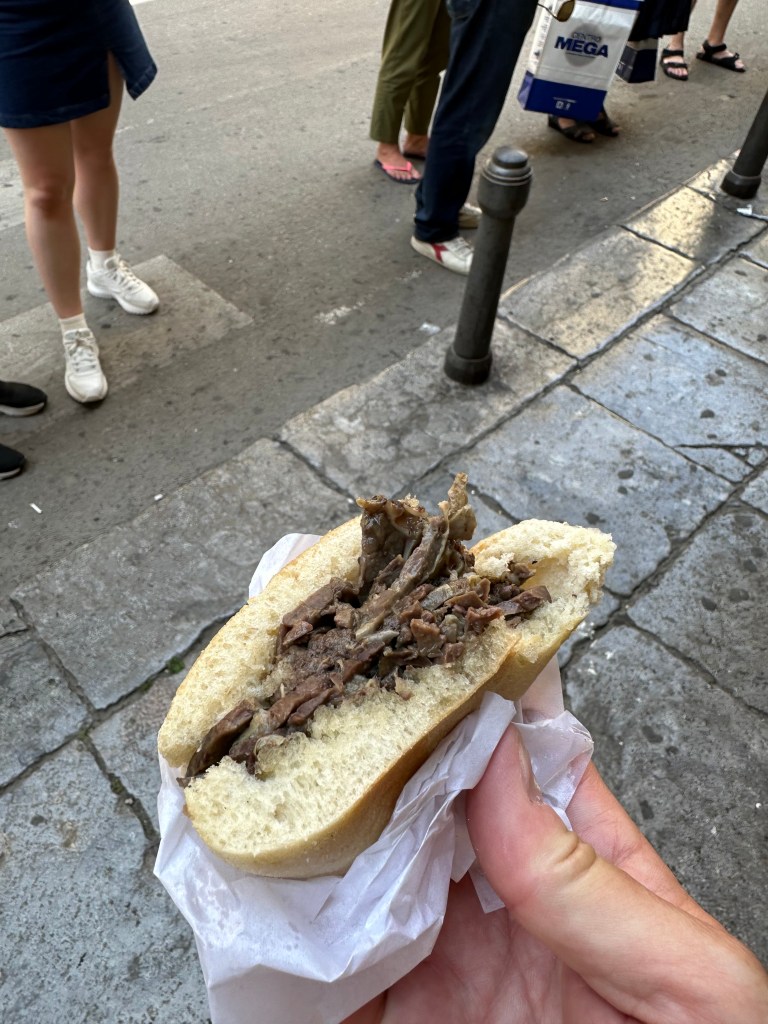
The highlight (lowlight?) of the tour? Spleen sandwich!
Would love (love!) to report that it’s splendid (hahahaha!), but 4/10 – would not recommend. And for context, we’ve had foal in Slovenia, brain in Hungary, and puffin in Iceland. (But our niece, Tara, who visited Sicily during her time in Italy, apparently digs it!):
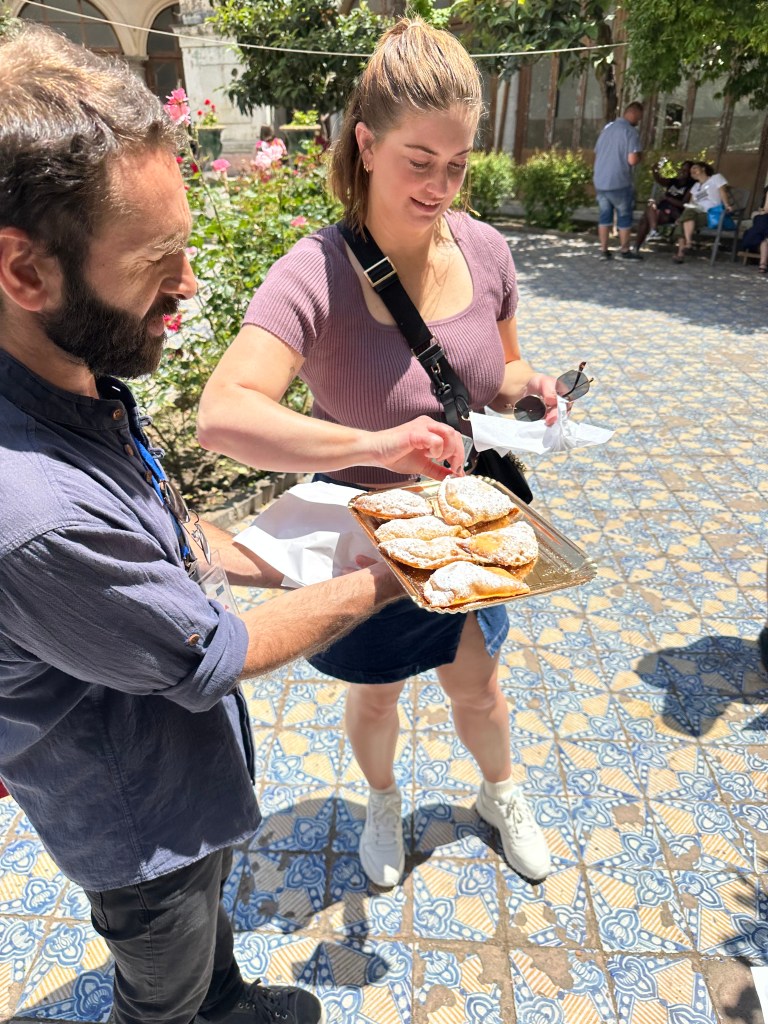
In a sharp contrast, we stopped last at a local convent, where the nuns earn a little walkin’ around money by baking treats for sale:
The treats in question:
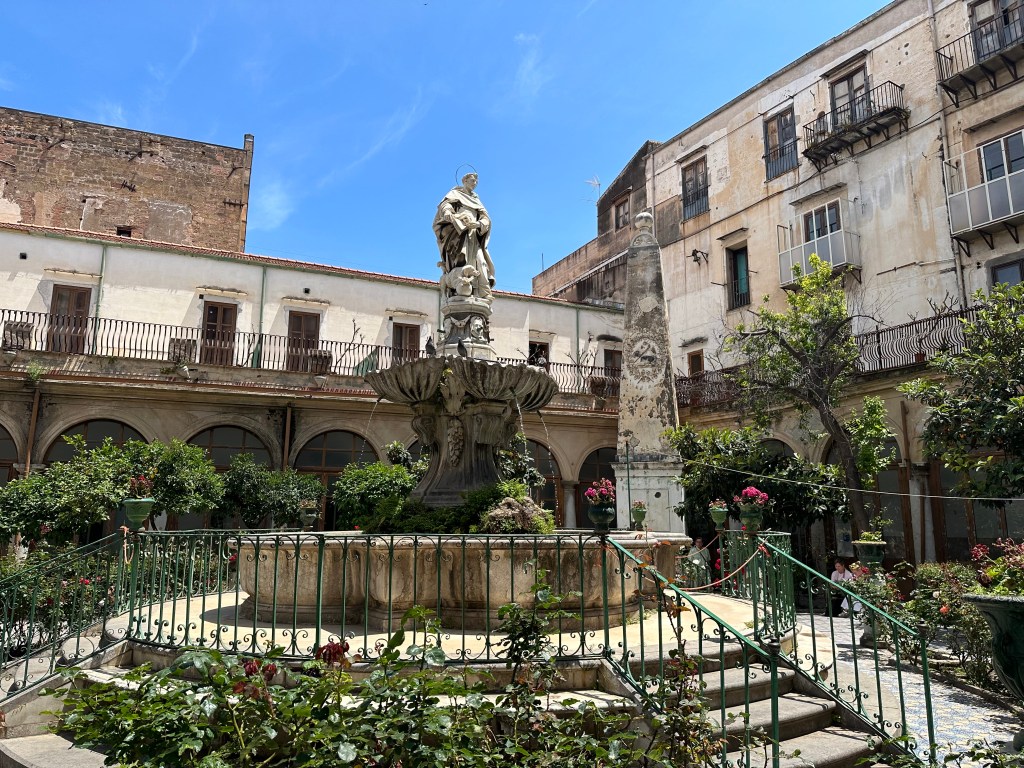
Nice setting in the convent’s cloister for our dessert round:
One evening on the way from aperitivos on Via Maqueda to dinner, we stumbled into this performance in one of the (many) churches on the street:
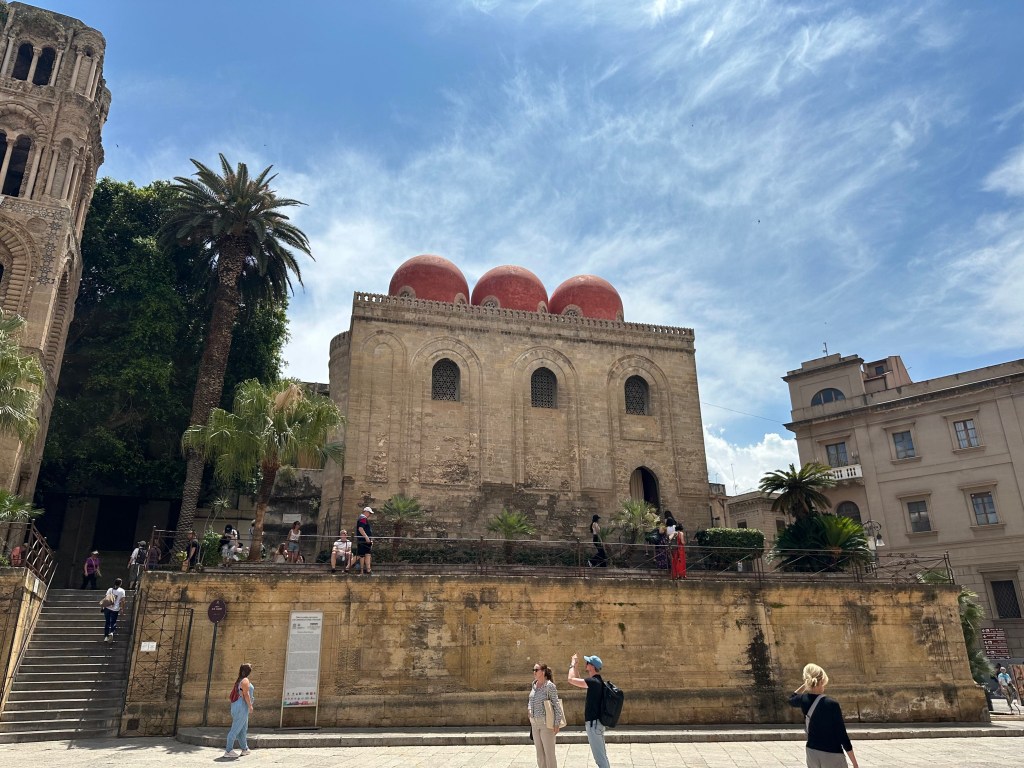
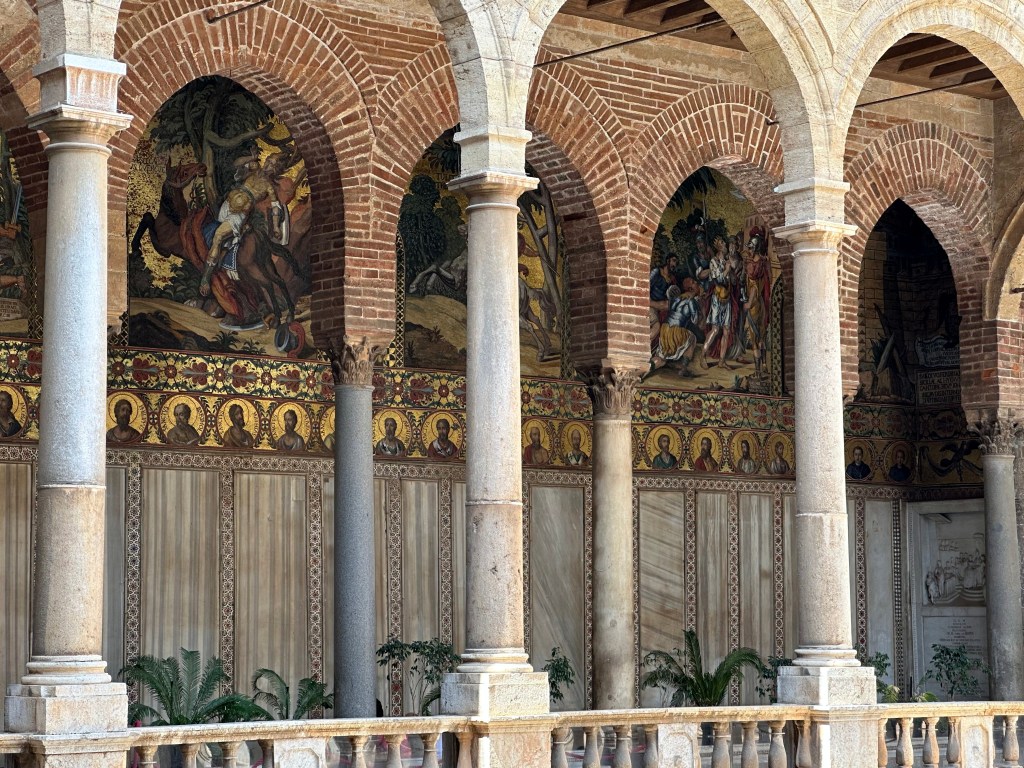
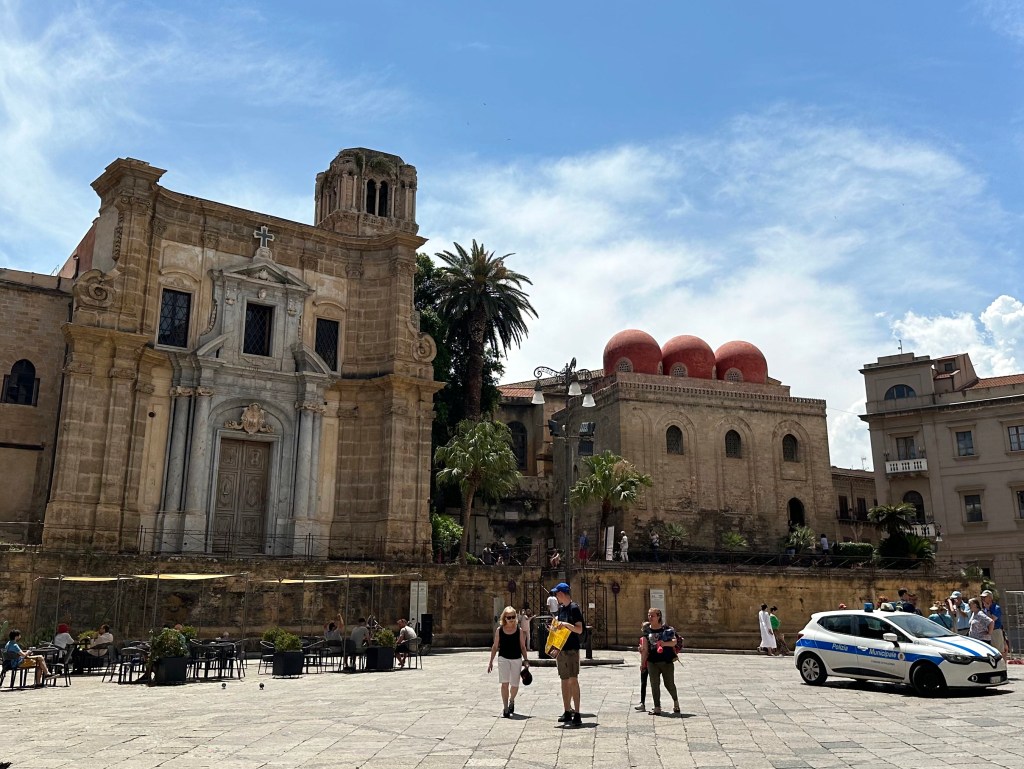
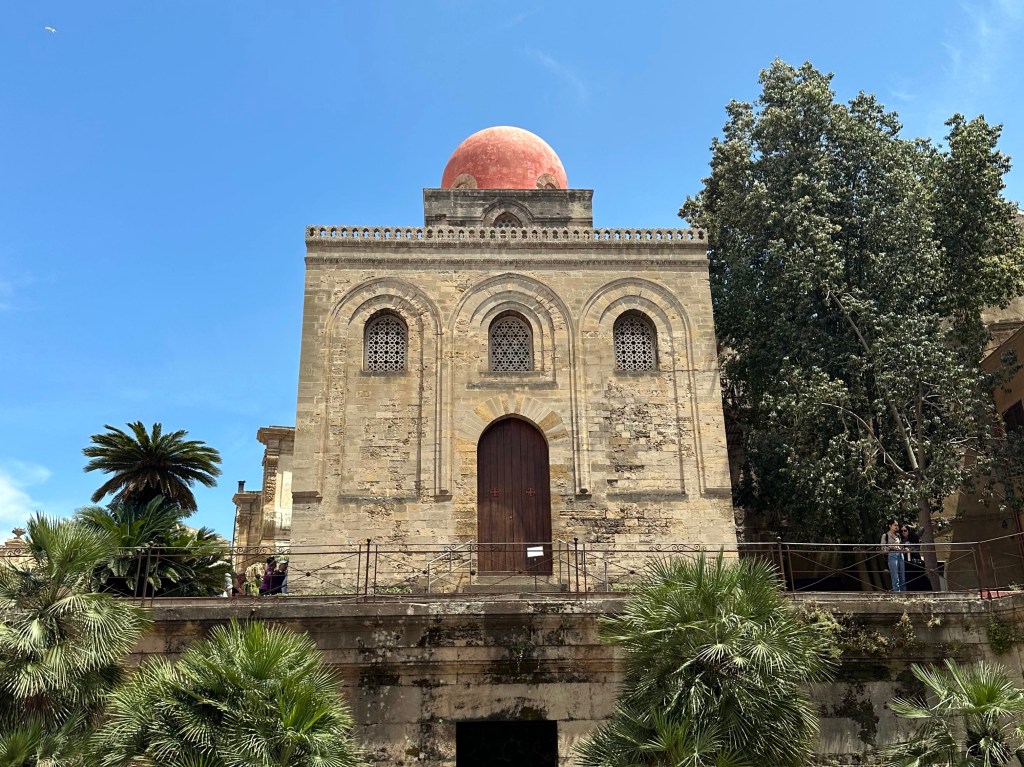
The next day, the star of Arabo-Norman architecture, San Cataldo:
Built in 1154 during Norman rule, the church not only embodies the melding of Arabic and Norman French architecture, it also serves as an example of the severe, militaristic, almost-fortified forms that even religious structures of the Normans exhibited.
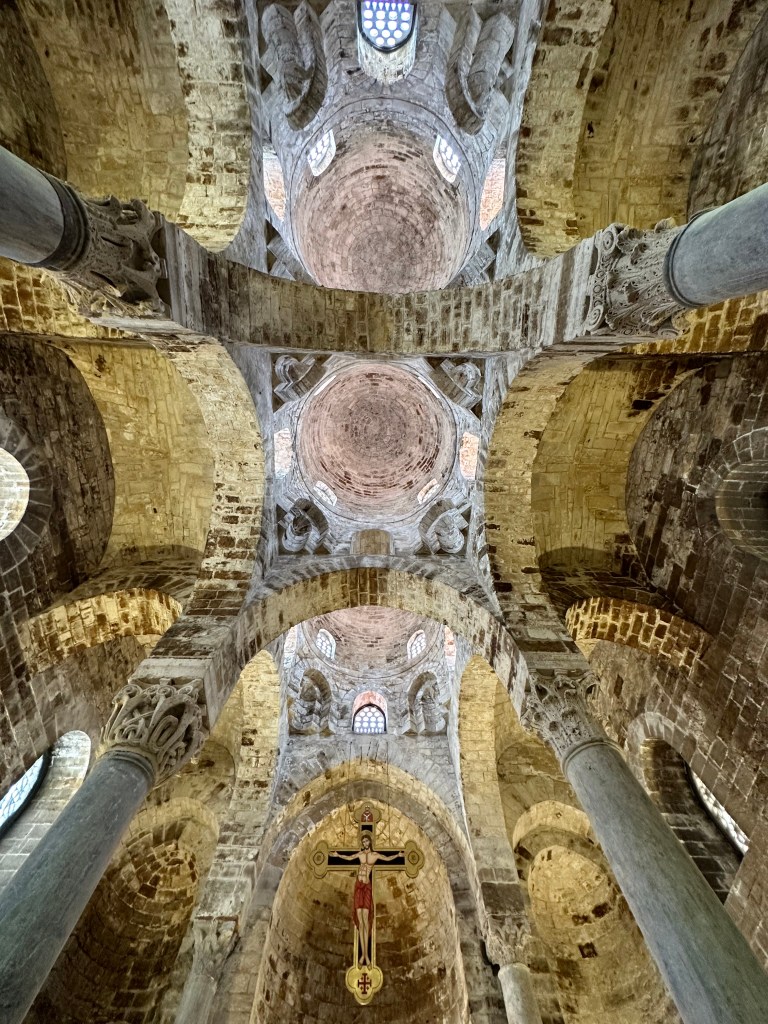
An inside view of the three domes (balls, bulbs, inflamed cysts, whatever):
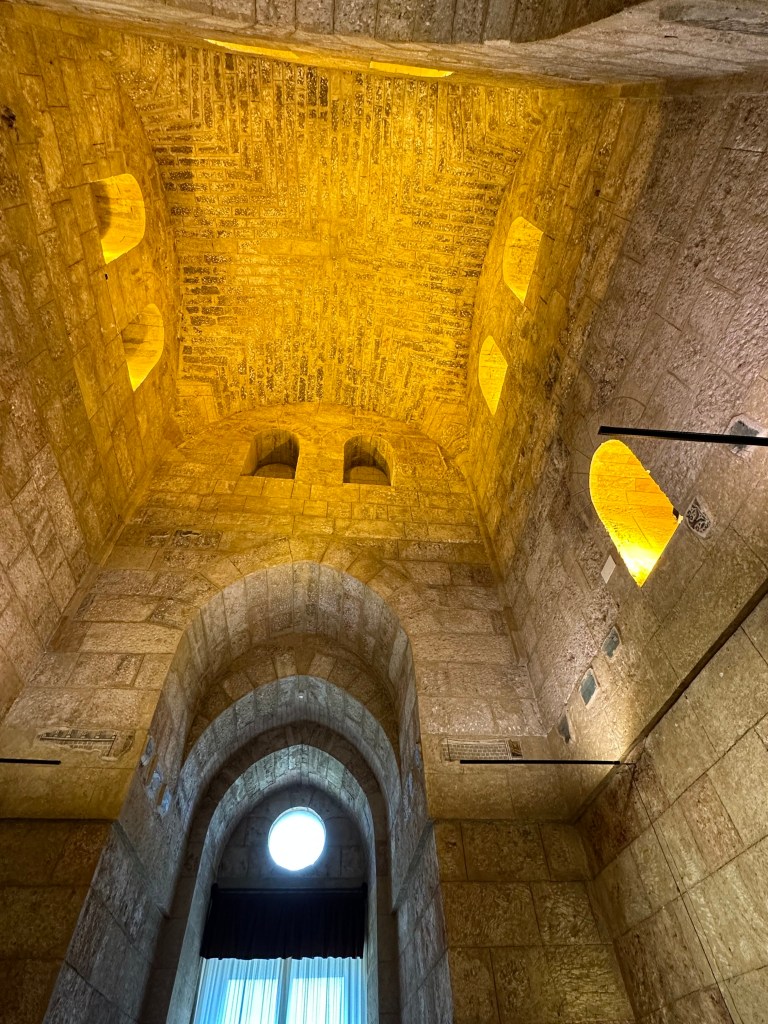
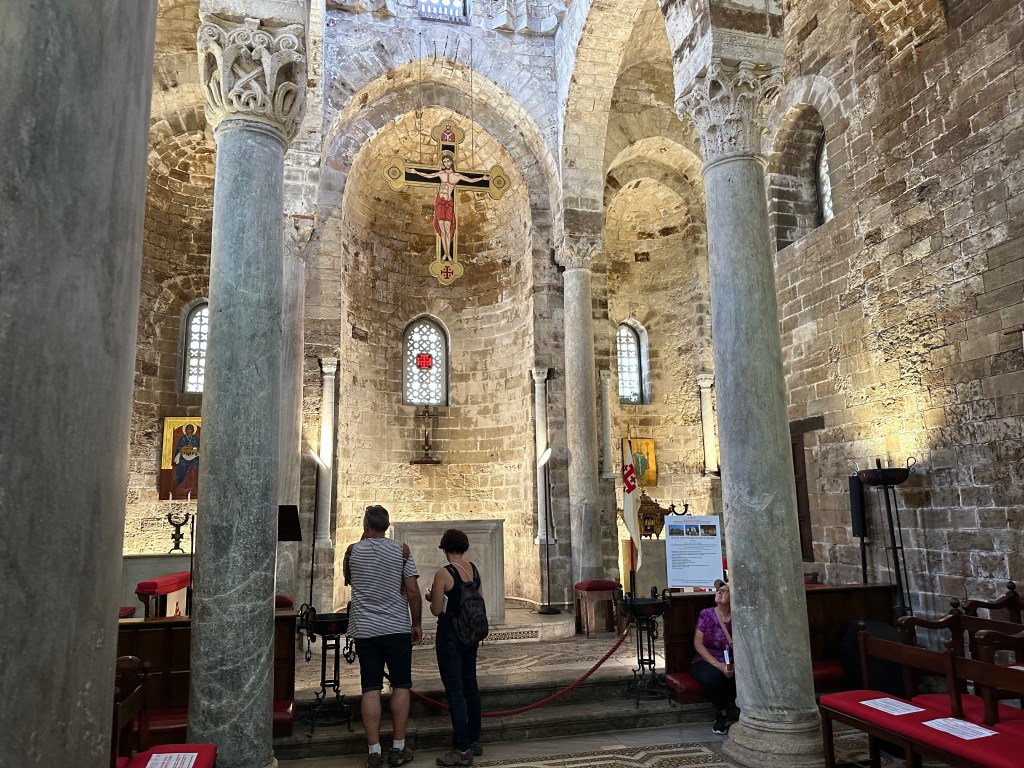
The church interior felt very compact and vertical to us – not a lot of breadth here:
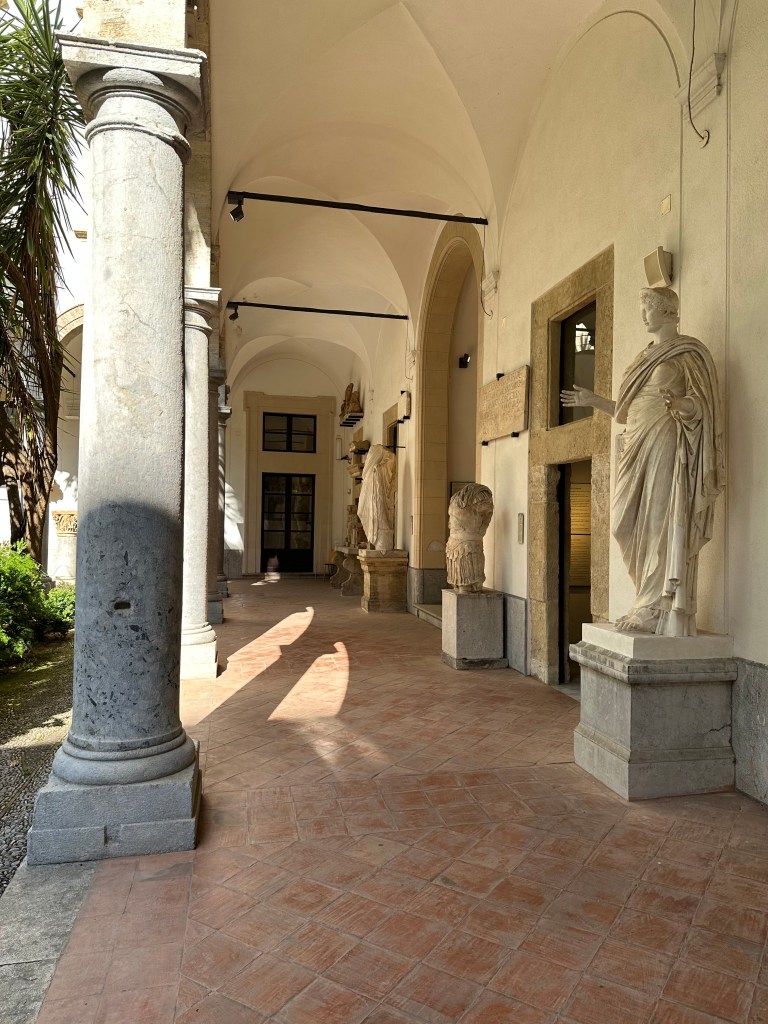
Down the street, Antonino Salinas Regional Archeological Museum:
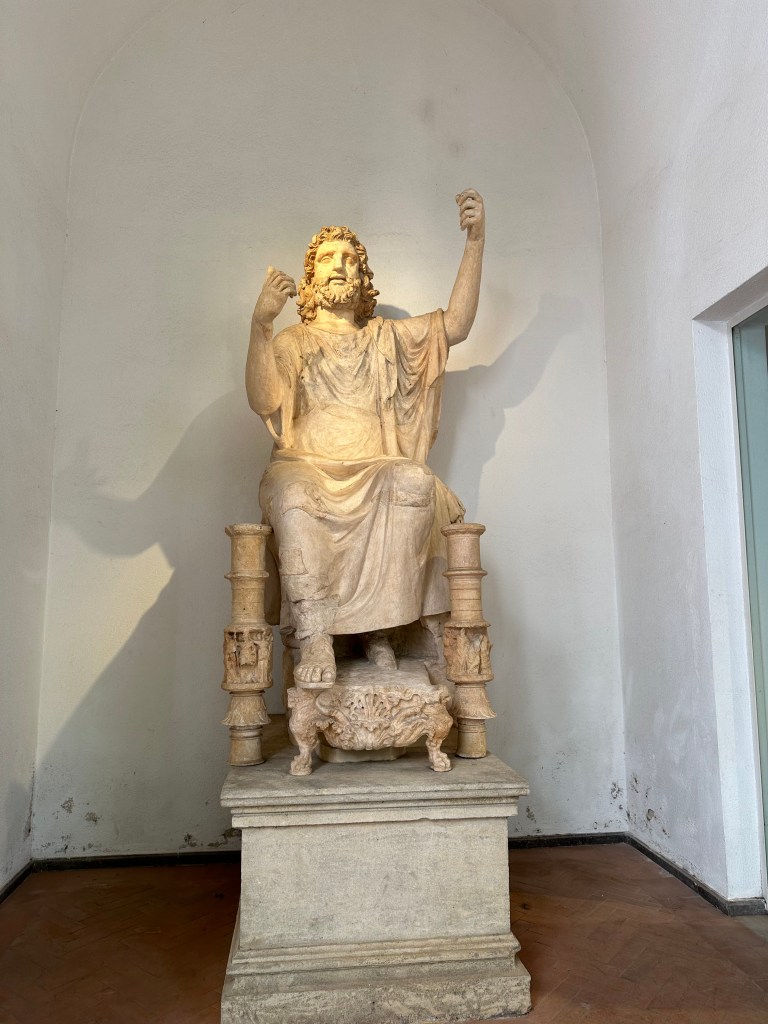
The museum is home to one of the richest collections of Punic and Ancient Greek art in Italy, including this 2nd- to 1st-century BC statue of Zeus:
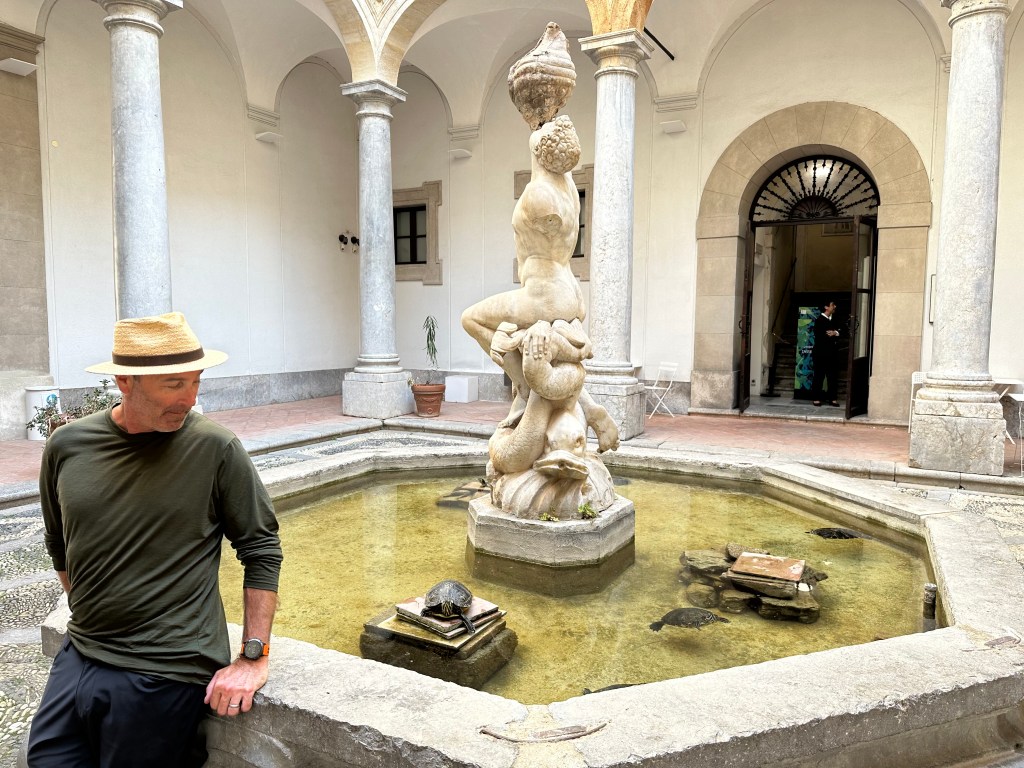
Oh, and turtles!
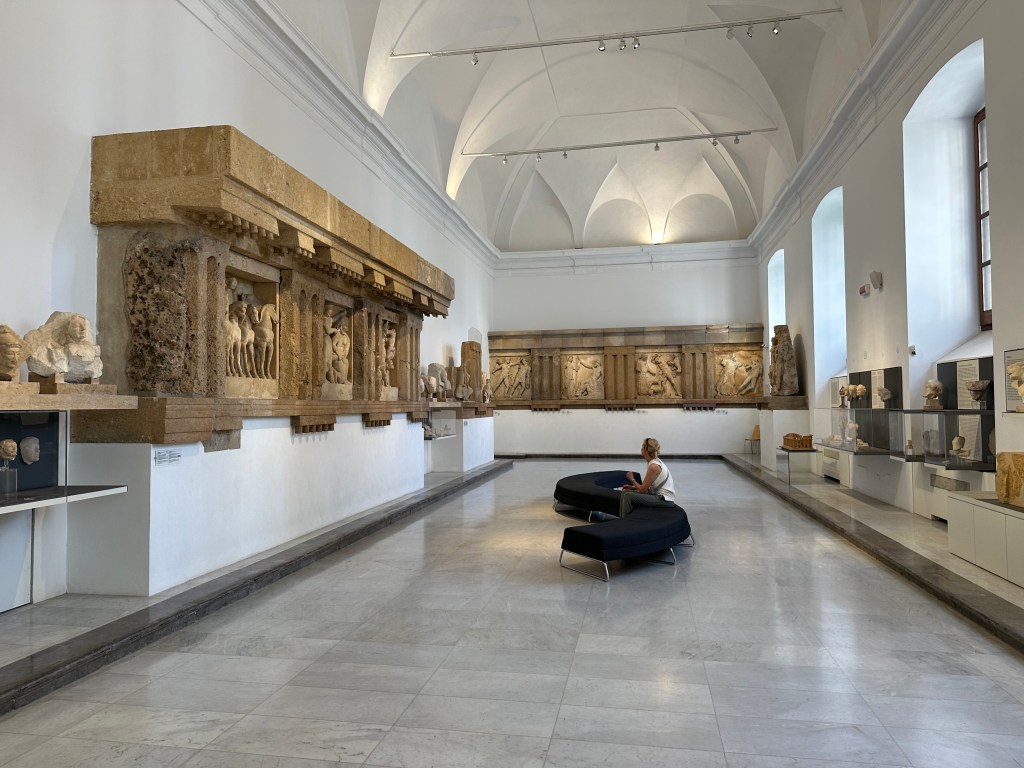
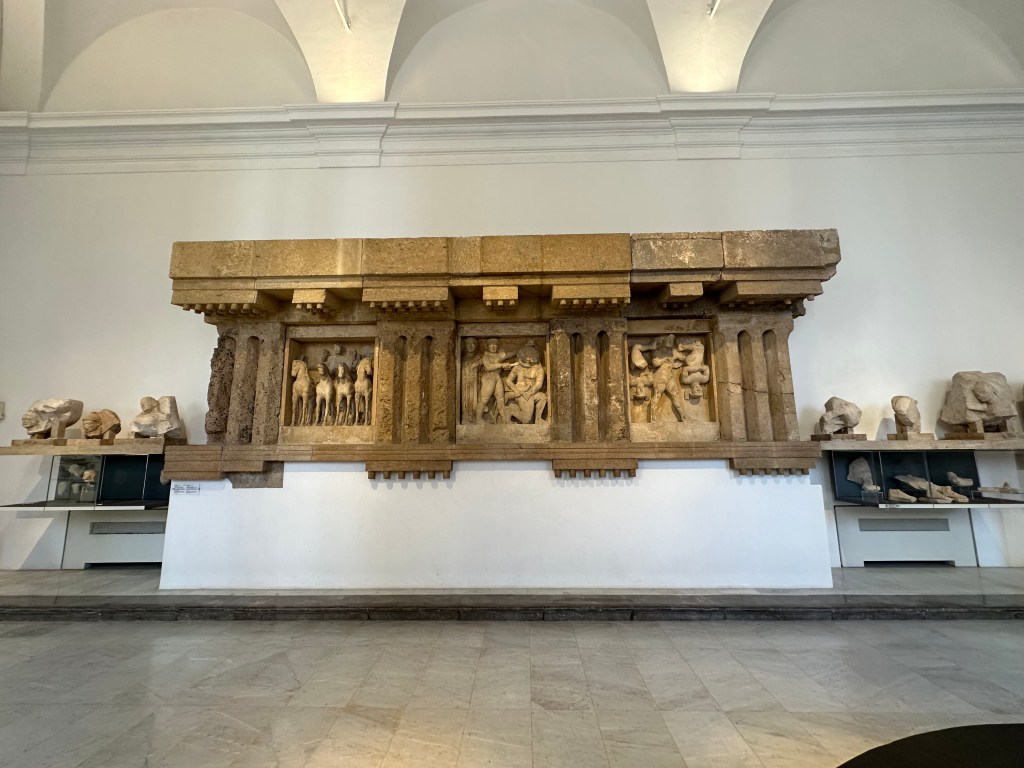
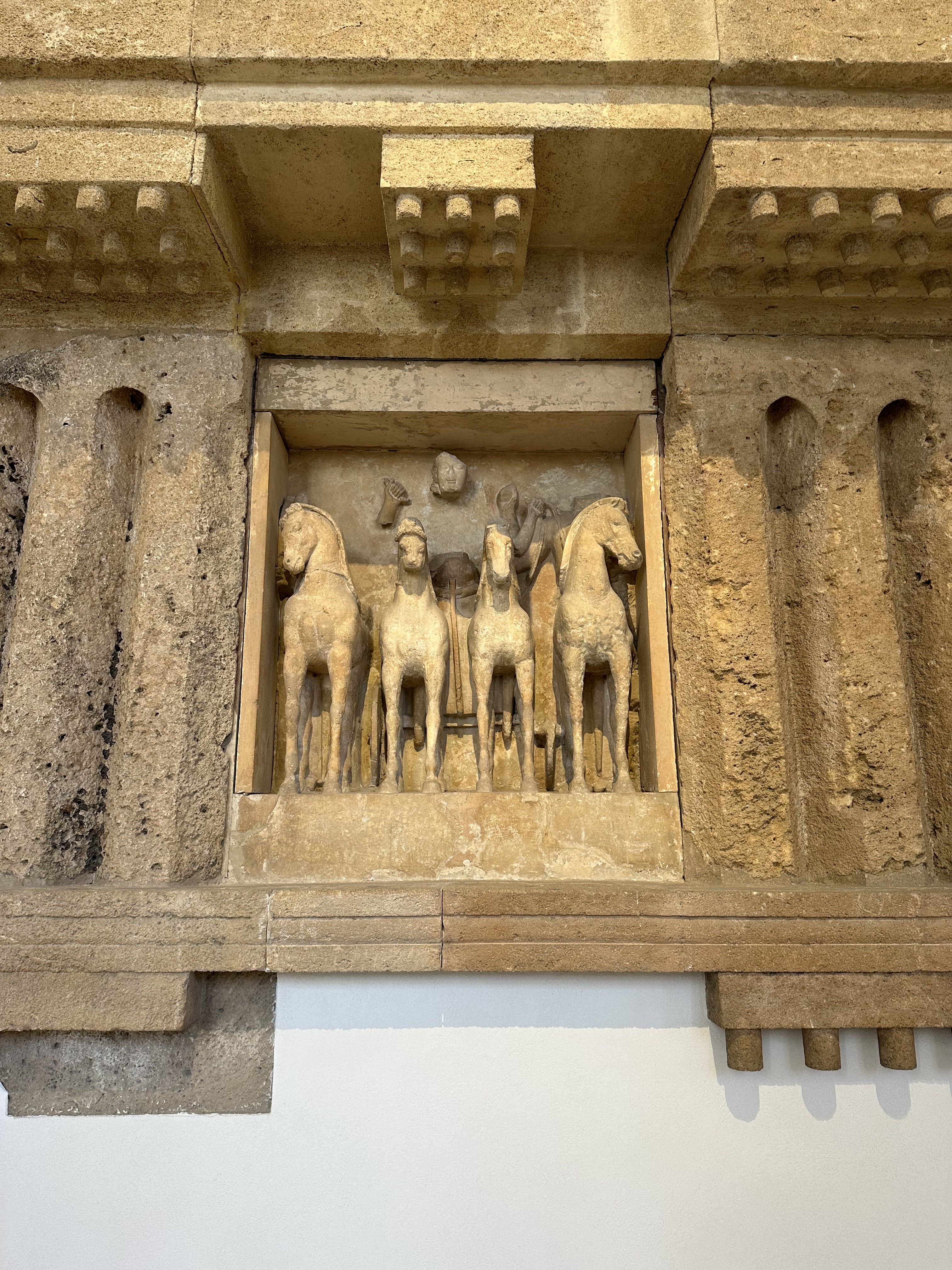
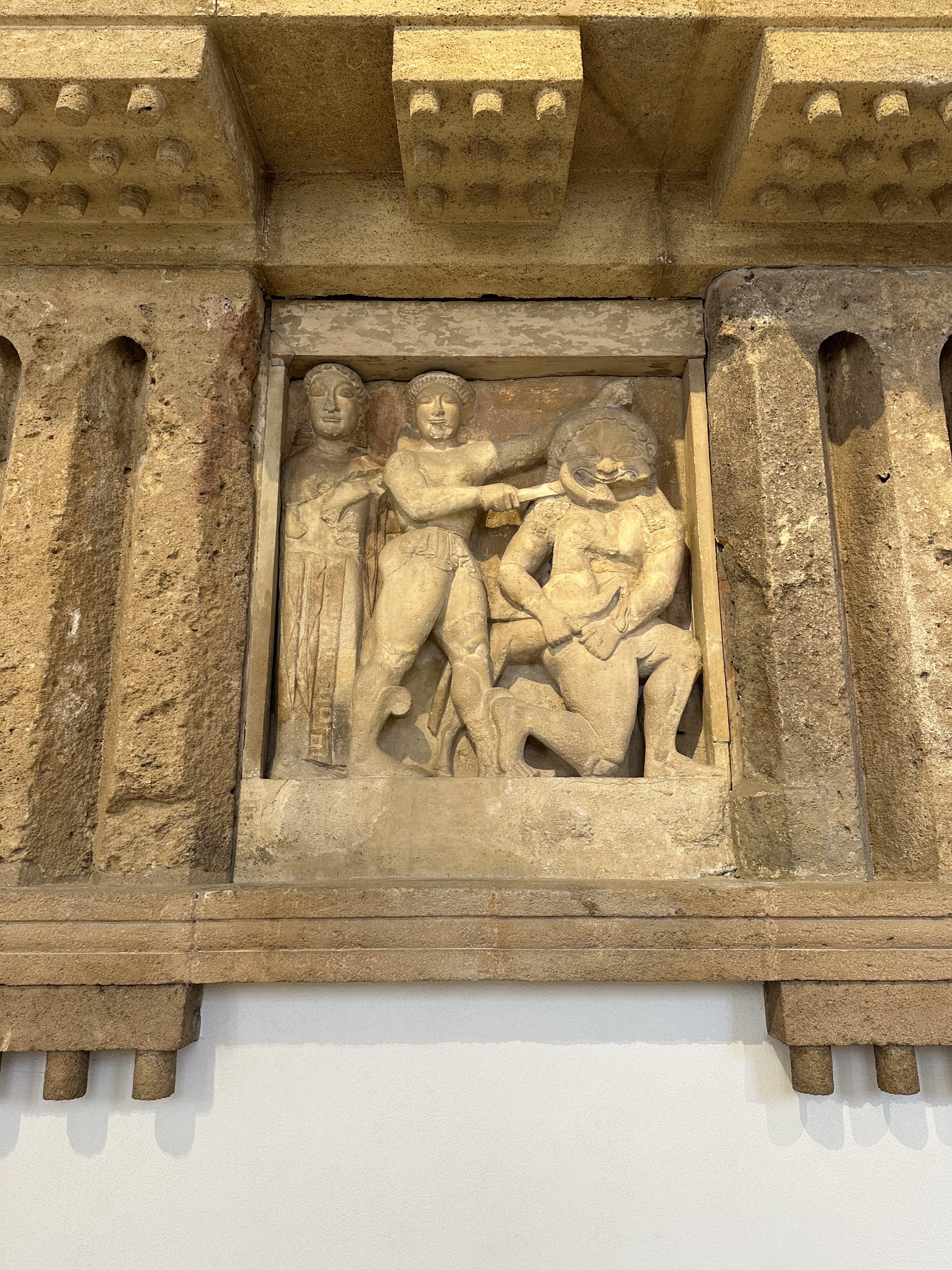
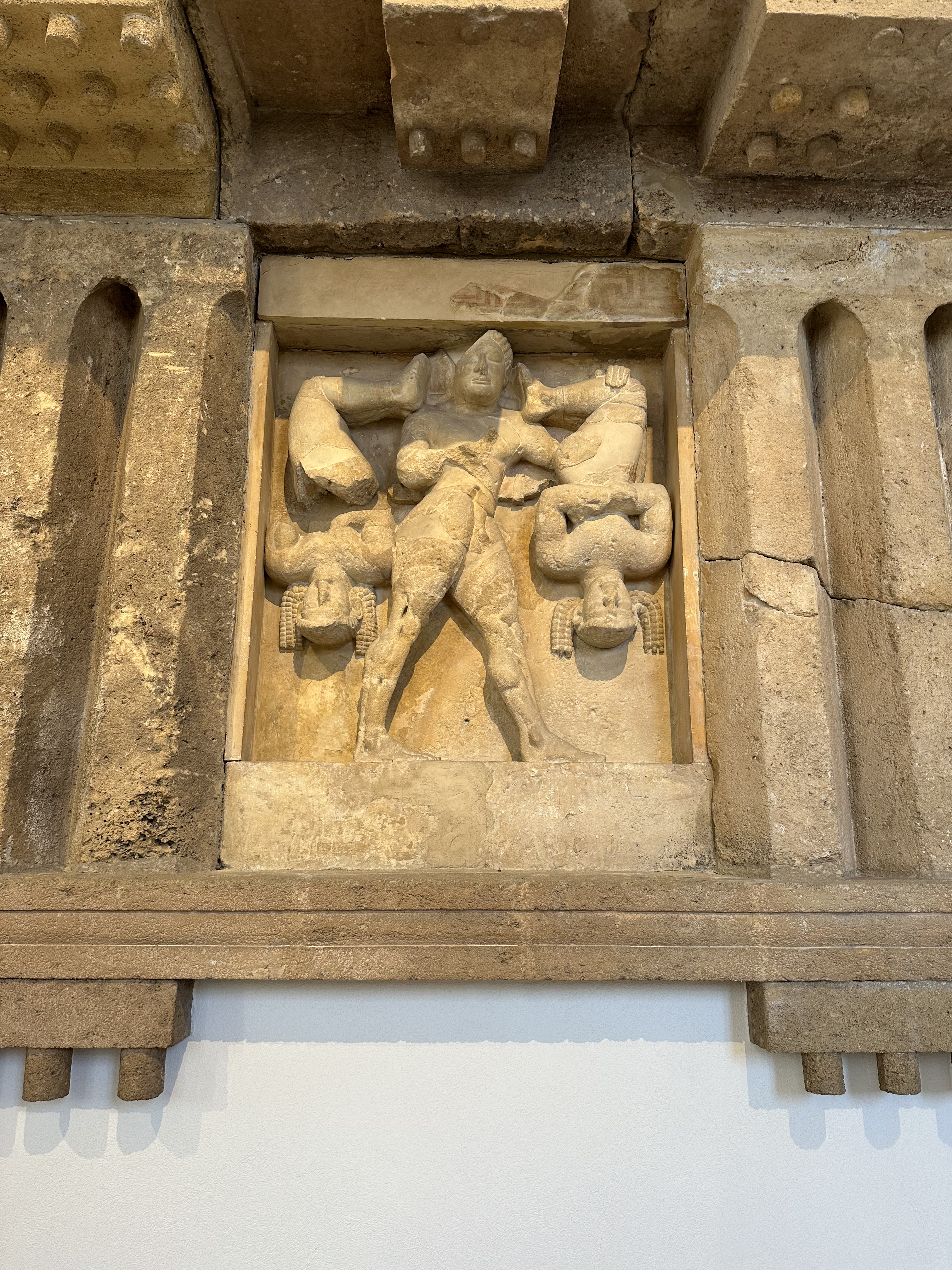
Taking in the frieze from a mid-6th-century BC temple from the ancient city of Selinunte:
Pretty awesome detail and workmanship from 7 millenia ago.
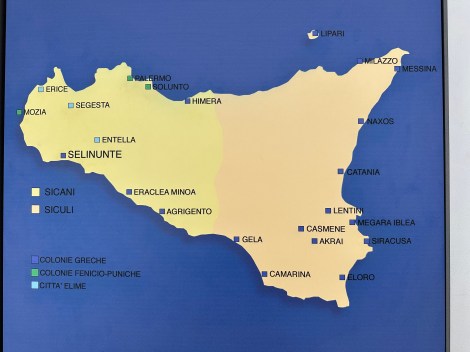
A helpful map of Punic (Carthaginian) and Ancient Greek cities from the period (Selinunte is in the west on the bottom of the island and was Greek, even though the Phoenicians and later Carthaginians occupied the same zone in the north):
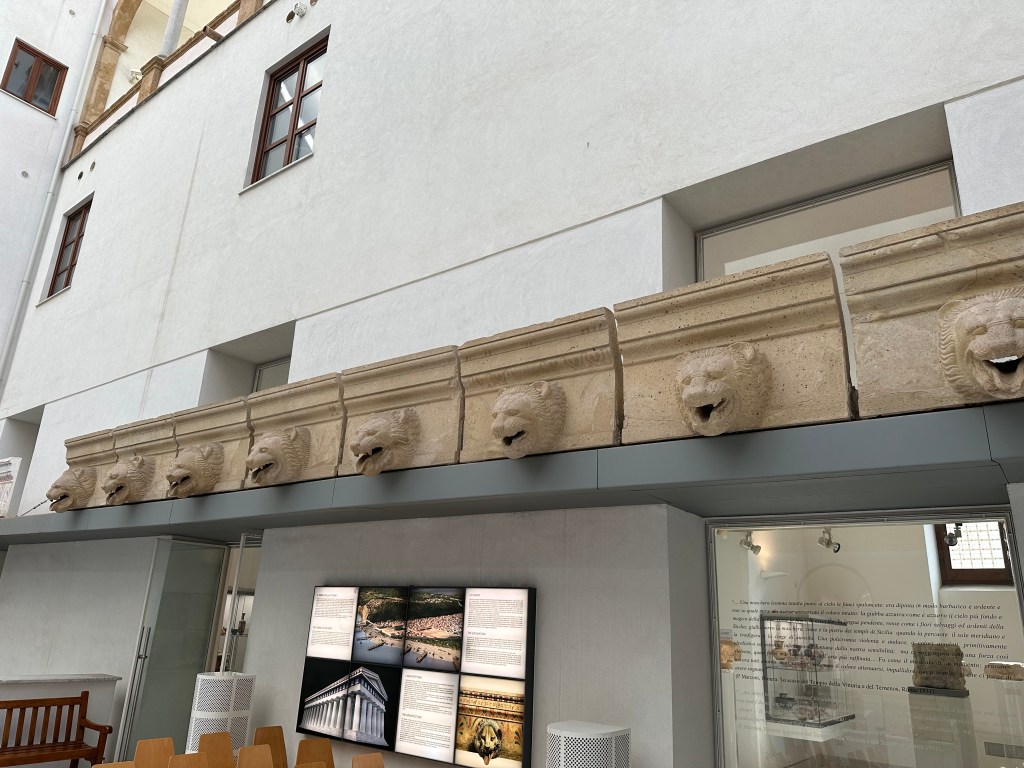
Roof-edge drip stones from moldings on classical temples – in this case, from Agrigento, which would be our next stop on the island:
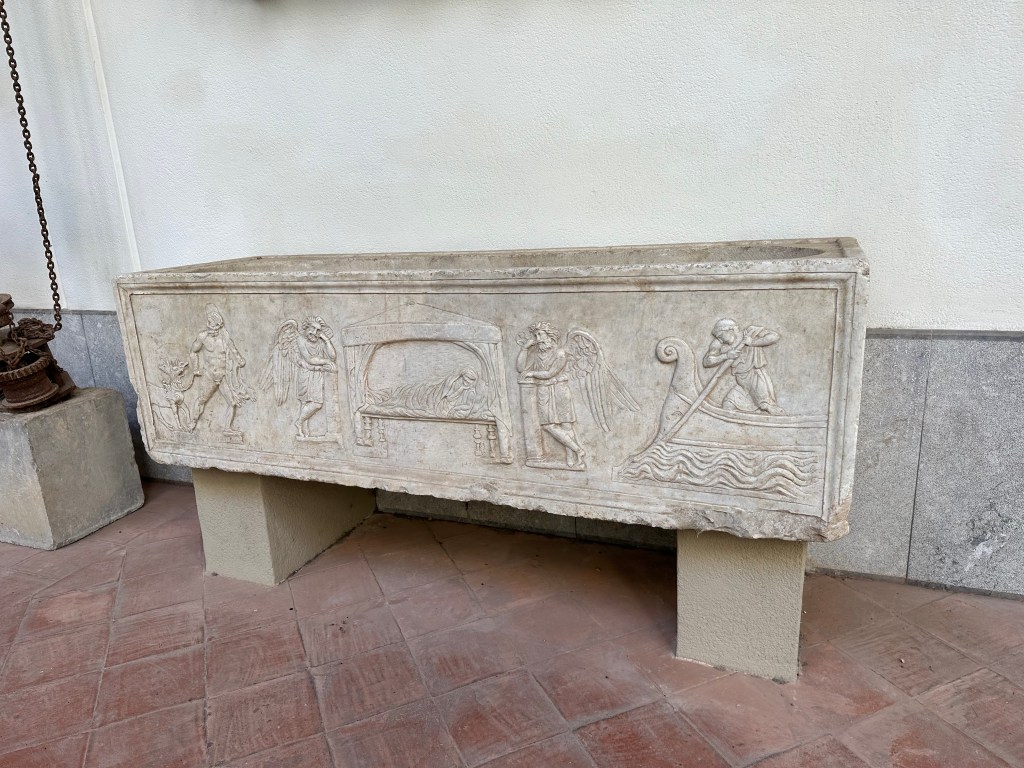
Very cool, later, Roman sarcophagus featuring Charon on the right and Hercules on the left:
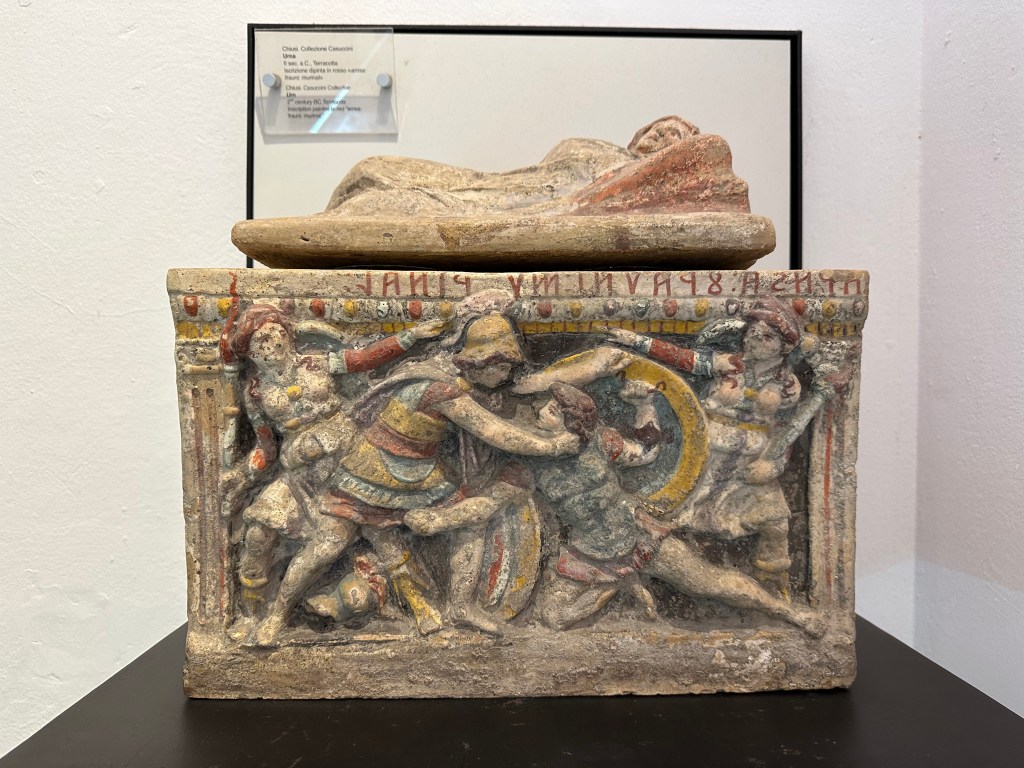
And a 2nd-century BC gladiator-themed, painted terra cotta, urn:
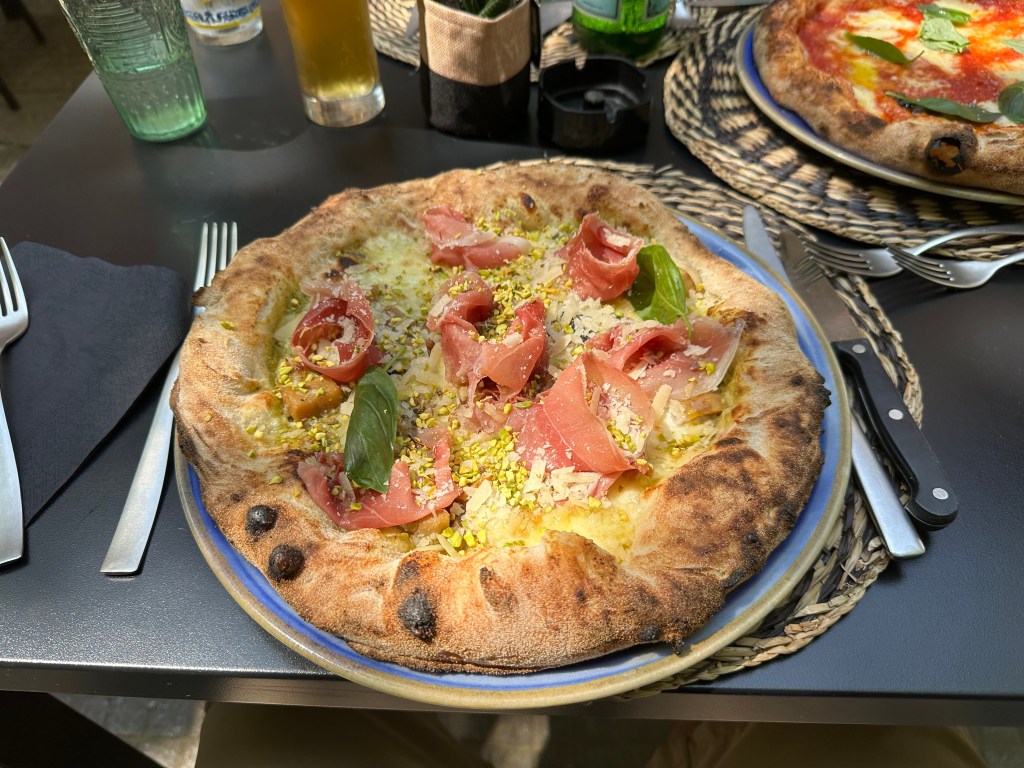
All of which made us hungry. Hungry for pizza with, um, pistachios? This would be a staple on the island – the Sicilians LOVE their pistacios:
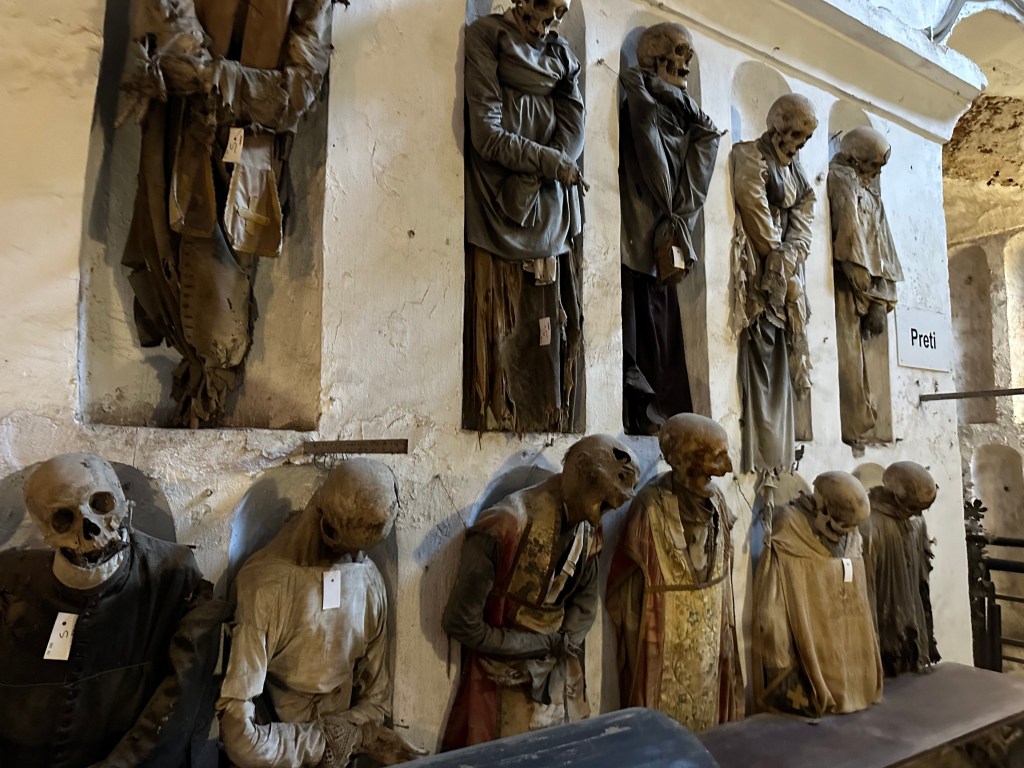
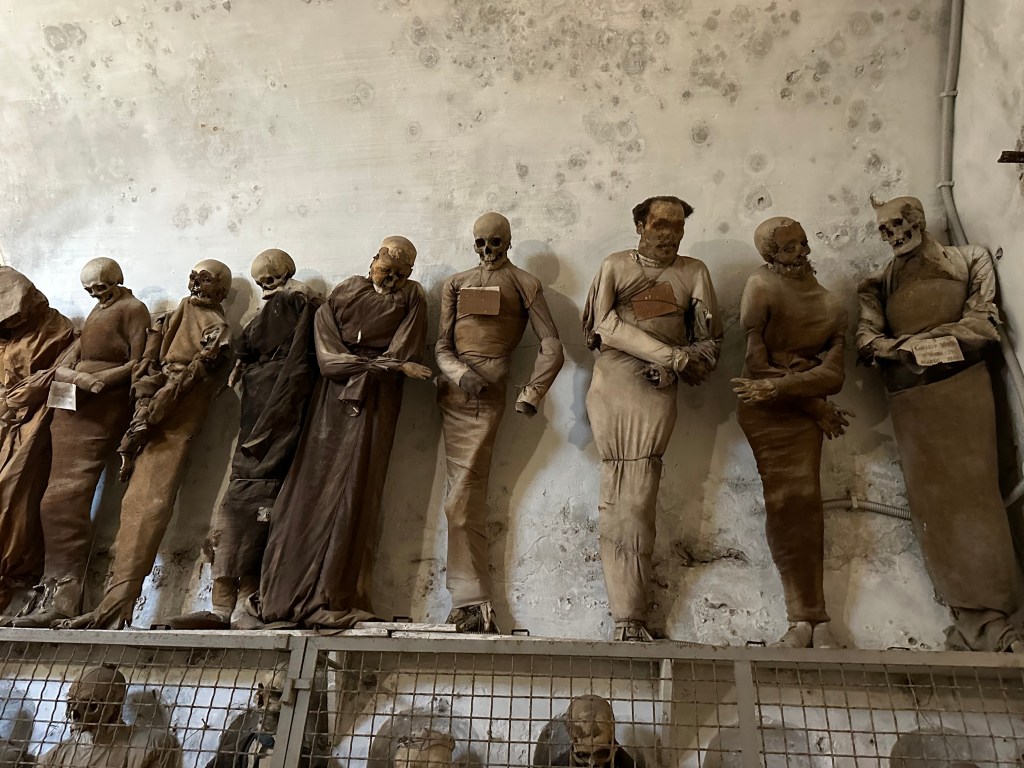
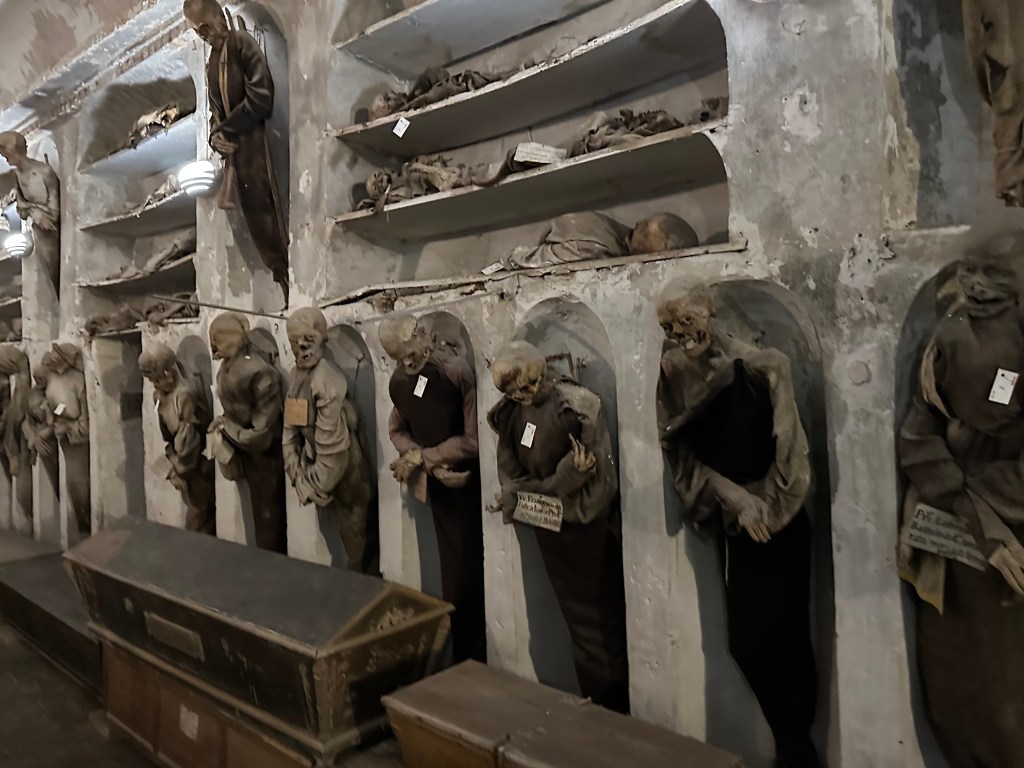
And with full bellies, and not a fear in the world of our lunch being returned to the outside world, we headed through town to the Capuchin Catacombs of Palermo, which contain around 8000 corpses and 1252 mummies; the last body was interred in 1939.
Aaaaah! There is a fear of the above occurring.
“Palermo’s Capuchin monastery outgrew its original cemetery in the 16th century and monks began to excavate crypts below it. In 1599 they mummified one of their number, the recently deceased brother Silvestro of Gubbio, and placed him in the catacombs.[citation needed]
Bodies were dehydrated on racks of ceramic pipes in the catacombs and sometimes later washed with vinegar. Some bodies were embalmed and others were enclosed in sealed glass cabinets. Friars were preserved with their everyday clothing and sometimes with ropes they had worn in penance.[citation needed]
Initially the catacombs were intended only for deceased friars. However, in later centuries it became a status symbol to be entombed in the Capuchin catacombs. In their wills, local luminaries would ask to be preserved in certain clothes, or even have their clothes changed at regular intervals. Priests wore their clerical vestments, while others were clothed according to contemporary fashion. Relatives would visit to pray for the deceased and to maintain the body in presentable condition.”
“The catacombs were maintained through donations from the relatives of the deceased. Each new body was placed in a temporary niche and later placed into a more permanent location. So long as contributions continued, the body remained in its proper place but if relatives stopped sending money, the body was put aside on a shelf until they resumed payments.” (All from here.)
The nudie fountain on our last evening in town:
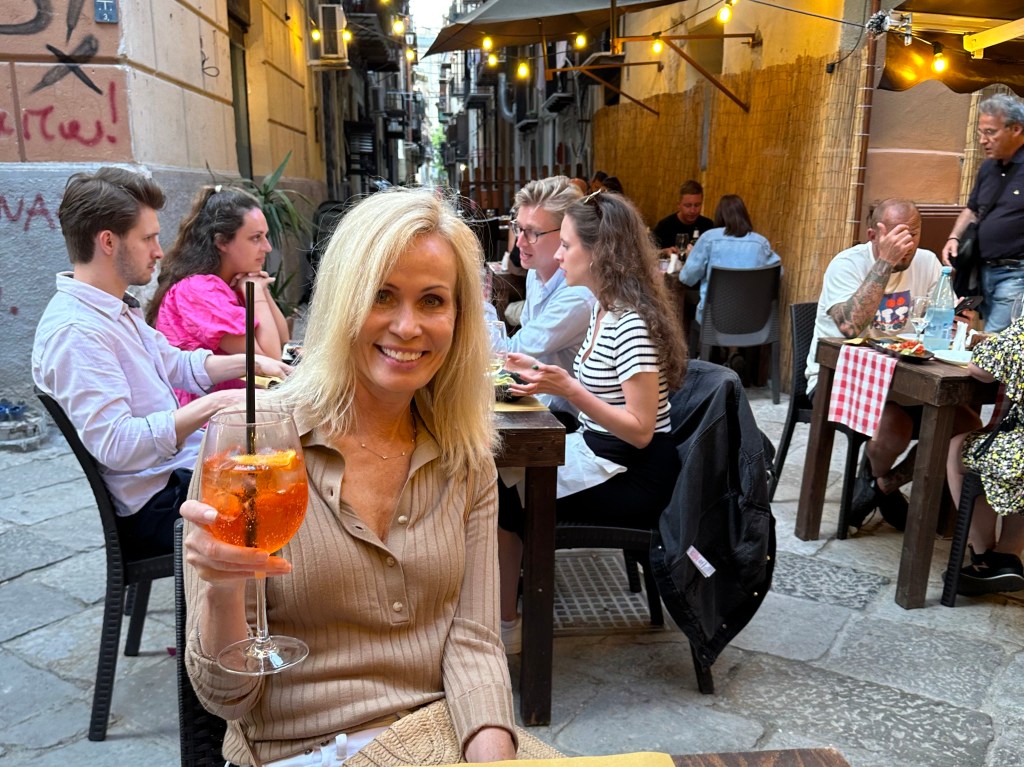
And a final Aperol spritz (in Palermo, not on the trip!):
WolfeStreetTravel is on a road trip roll. The latest – over the Memorial Day period – took us back to the UK, where previously we had only visited London a couple of times. We knew there was more to experience than just the capital, so we flew over in May, grabbed a car, and headed to points west in England, and then on to Wales.
Here’s the route for the trip, starting at the ~4:30 spot and moving counterclockwise:
After landing, we headed a couple hours’ west of London to the north end of the Cotswolds (after brief stopover in Oxford on the way out from Heathrow), then further west to Wales, into Gwynedd and Conwy County in the north and to Pembrokeshire in the south. Completing the loop, we headed east back to England and the southern and middle sections of the Cotswolds. Then, ultimately, back to London, once more.
Three themes drove planning for this circular road trip:
1. Visiting the villages of the Cotswolds in England:
In the interactive map above, the amber houses icons denote the Cotswolds villages we visited.
2. Laying siege to the largest and best-preserved medieval Norman castles in the world – all located in Wales, largely thanks to Edward I:
The black castle icons on the interactive map above denote the Welsh castles we attacked.
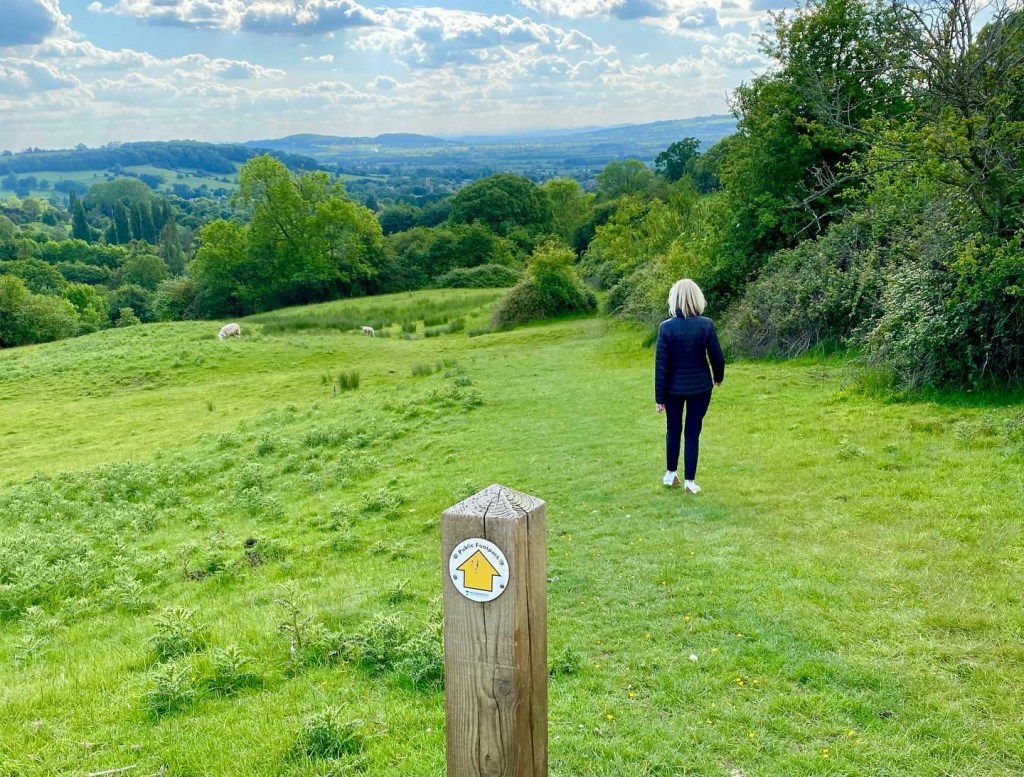
3. Finally, throughout the 16-day trip, we took advantage of the UK’s amazing National Trails system, which transit in and out of farms and fields and along the most amazing oceanside cliffs, and hiked everywhere we could:
The green hiker icons on the map above denote the hiking locations in England and Wales.
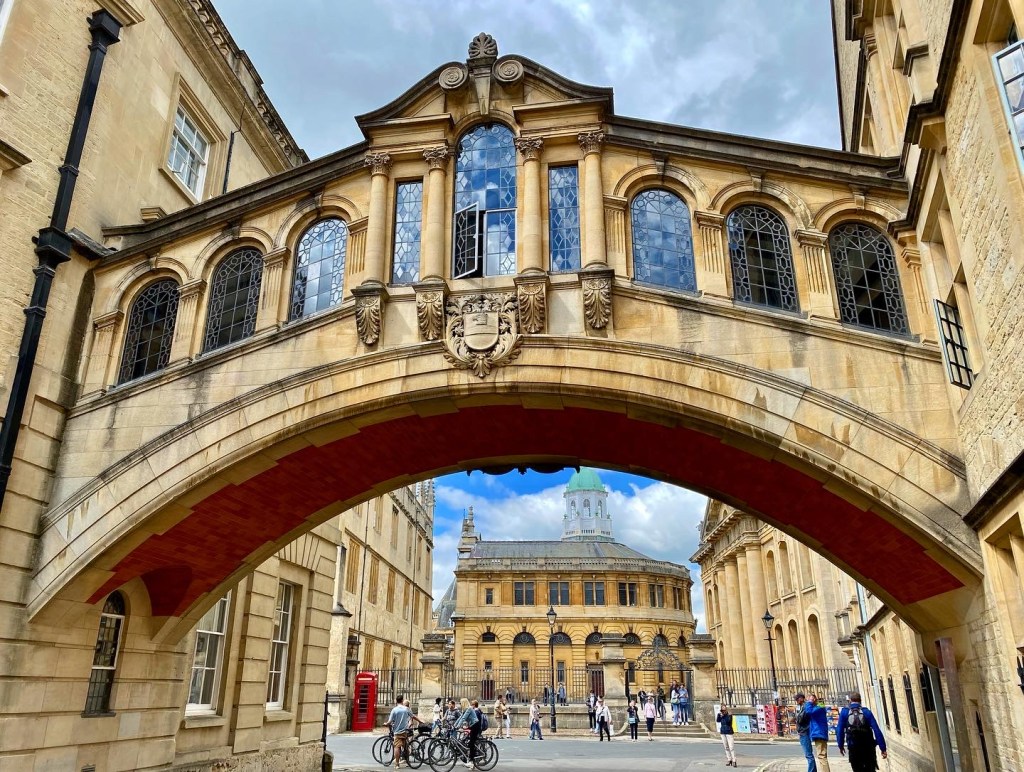
Similar to the morning of our arrival in the Netherlands for our bike trip there, we hit the ground running in London. Immediately after deplaning in Heathrow, we picked up our rental car (manual, with the steering wheel on the wrong side, of course, increasing the difficulty level of driving to 11), drove an hour to Oxford, and hopped on bikes for a 2-hour tour of the city and surrounding countryside. Excellent plan (other than the fact that it didn’t go as planned, which we’ll explain in a future post)!
Then, on to our first segment of the Cotswolds. We based ourselves out of Broadway, in the northern end of the region:
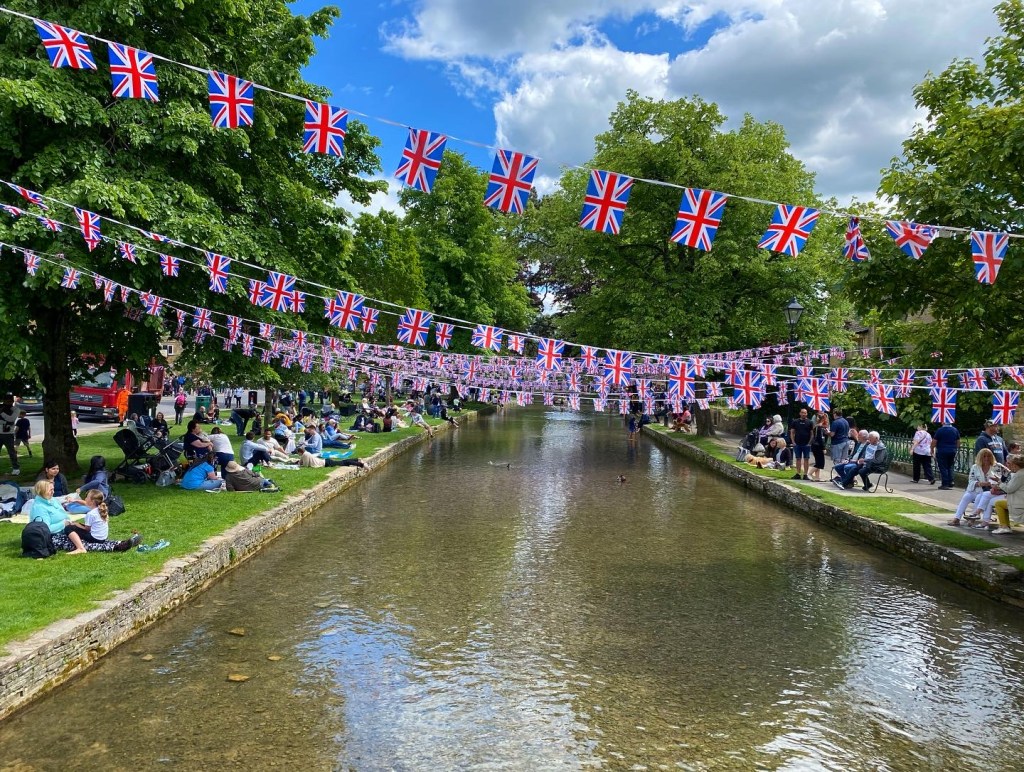
Although we didn’t know it when we planned the trip months ago, we would be there during Queen Elizabeth II’s Platinum Jubilee, so every town was totally decked out for the occasion, including Broadway:
(While we experienced the provincial celebrations out in the hinterlands of small villages, our relatives, the Band o’ Brandts, were in the thick of it in London at the same time, at the peak of the jubilee.)
More jumbles of jubilee at Bourton-on-the-Water, our second Cotswolds village:
A little hiking across the countryside around Broadway and then to the iconic Victorian folly of the area, Broadway Tower:
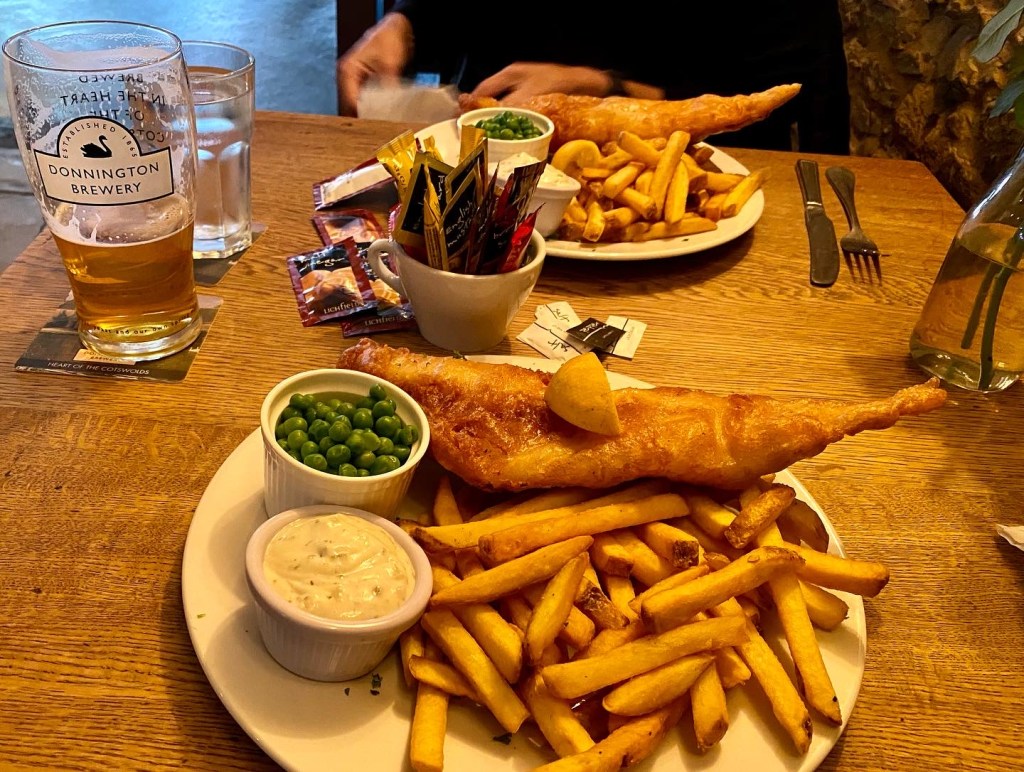
And a post-hike lunch in town of our first (of many – many!) fish and chips on the trip during the jubilee – Cod Save the Queen!
The wool market capital of the northern Cotswolds, Chipping Campden:
The winner of the most charming village of our trip, Stanton:
And nearby Snowshill, repleat with traditional British phone box and village pub:
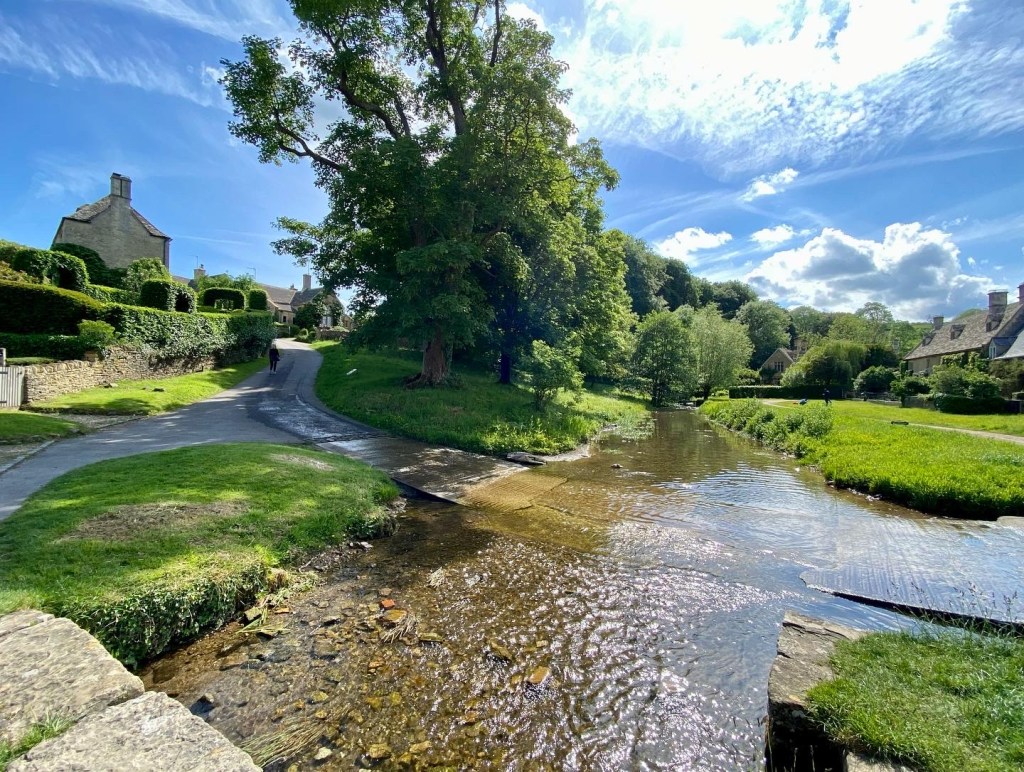
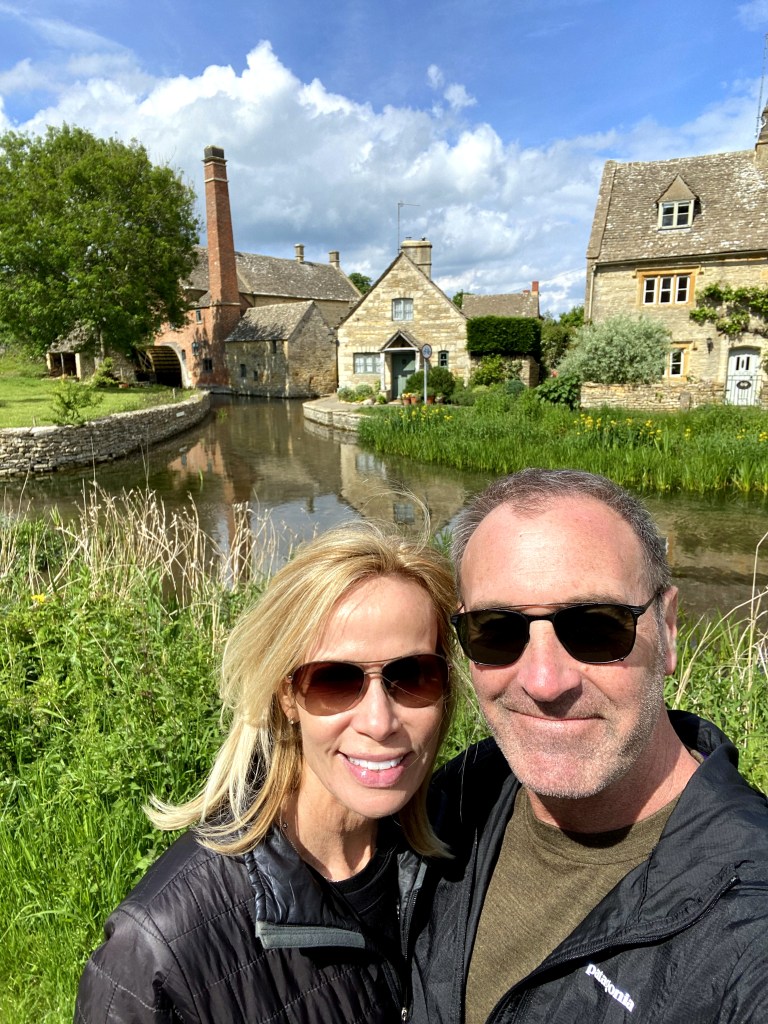
The paired villages with grisly names but tons of charm – Lower Slaughter:
And Upper Slaughter:
A spectacular hike from the town of Winchcombe to the Neolithic barrow at Belas Knap the day before we moved on to Wales:
And then lunch. Cod works in mysterious ways. . .
A stopover at Palé Hall for a change of venue before hitting our first Welsh castle in Gwynedd:
The first stop on WolfeStreetTravel’s 2022 Welsh Castlepalooza Tour, and the epitome of Norman military engineering: Harlech Castle, built by the English as part of Edward I’s campaign to subdue the Welsh:
Then a beeline north to Caernarfon Castle, the center of Edward I’s “ring of iron” and birthplace of Edward II, the first Prince of Wales:
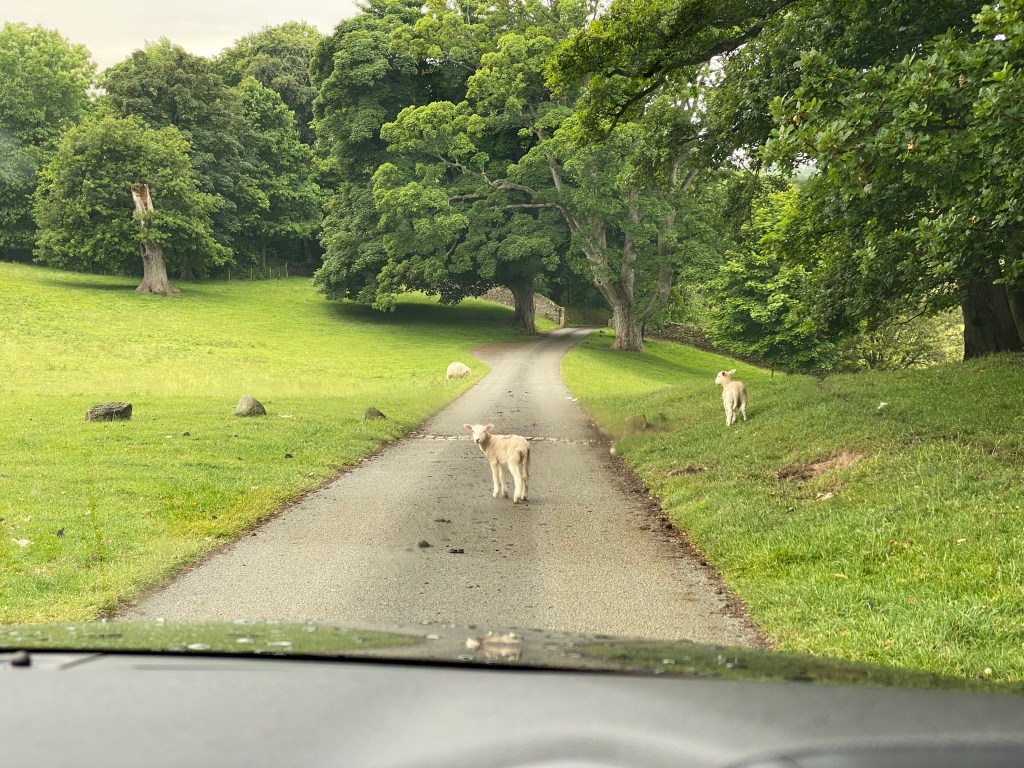
And to our third abode, where you needed to traverse a guardian garrison of lambs to enter:
Our base in Conwy and another vaguely unsettling name – Bodysgallen Hall:
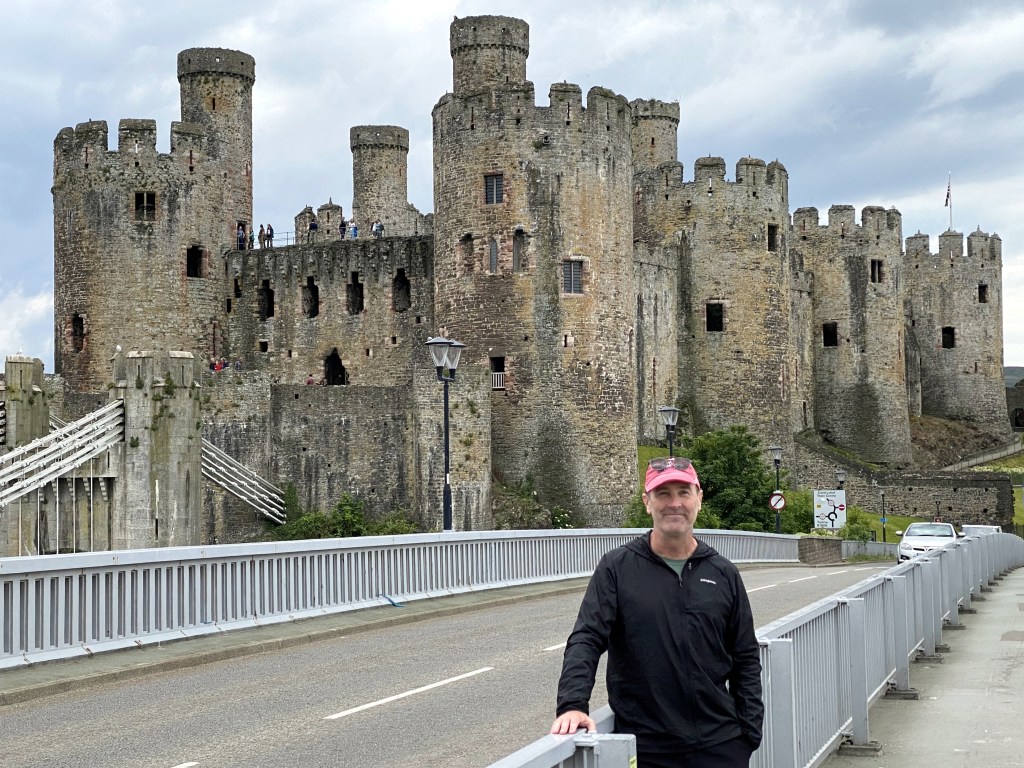
Our favorite castle on the trip: Conwy Castle, which abutted the adjacent village of Conwy, with its fully intact medieval town wall:
A hike up to and around the treeless limestone mass of Great Orme on the north coast of Wales with great 360-degree views, including the town at its base, Llandudno:
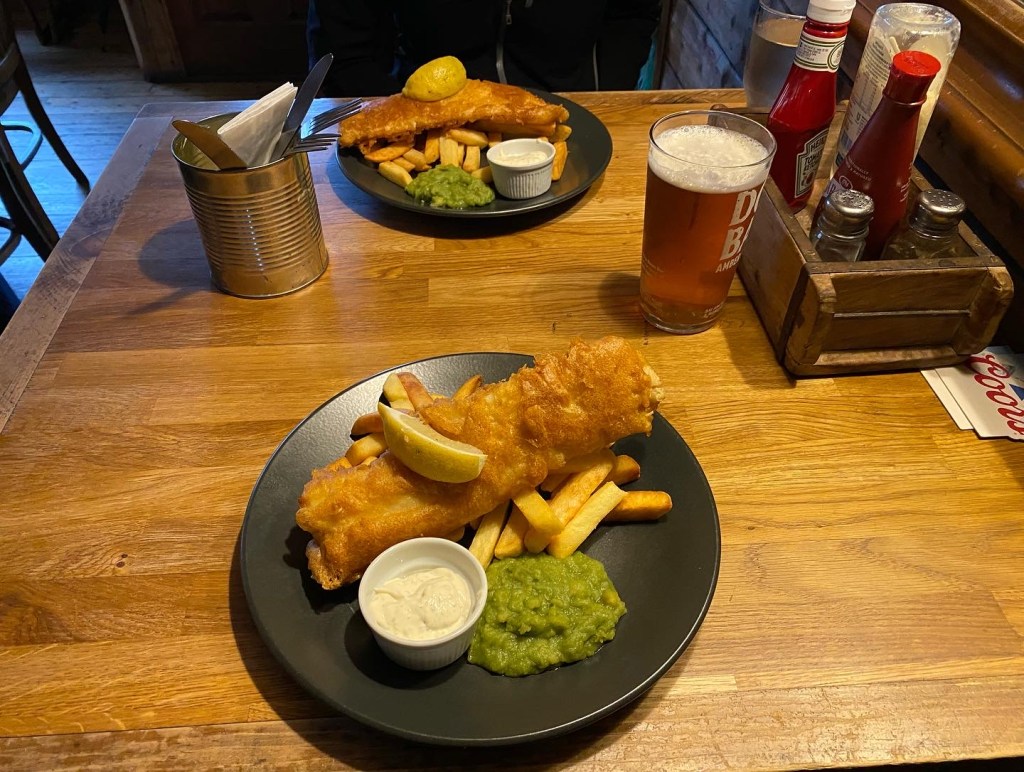
And a post-hike lunch in town: the best fish and chips of the trip and a celebration in Wales of “One Nation under Cod!”
Not satisfied with visiting castles, we had to stay in one too, when we headed south to Pembrokeshire: the 12th-century Roch Castle:
Spectacular hike along the entire periphery of St. Annes Head on the Pembrokeshire coast:
The weirdly sited St. David’s Cathedral, sunk in a depression so low, you can’t see the cathedral tower from anywhere in town:
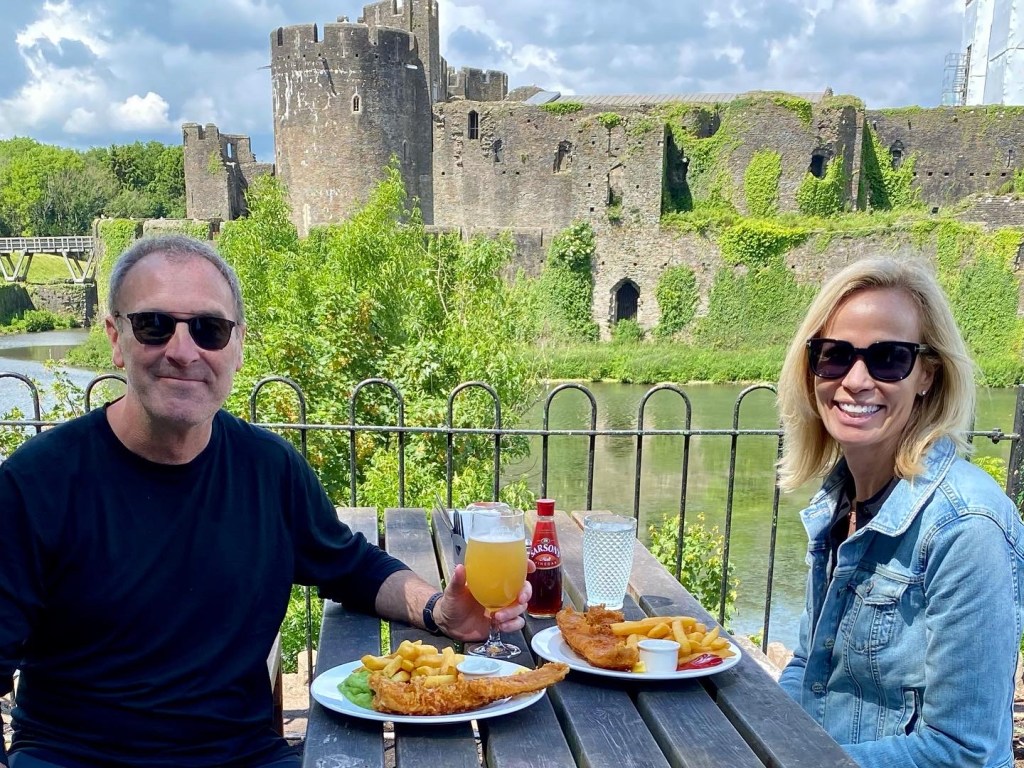
And then to a lunch of. . . oh my Cod! Again?!
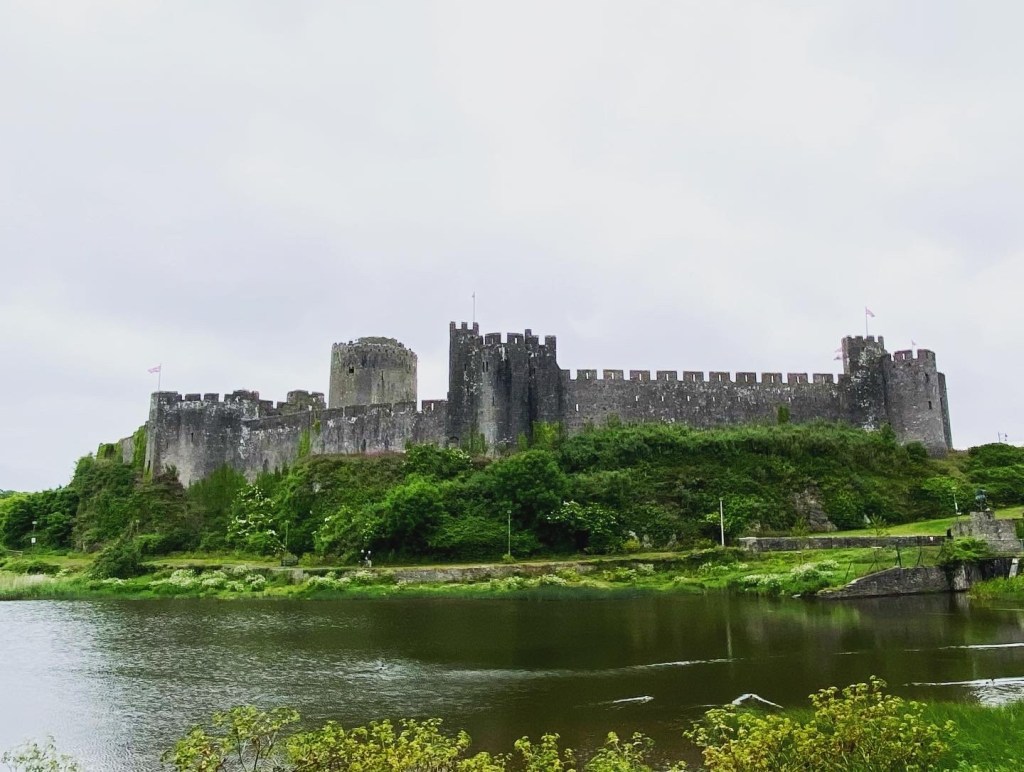
The penultimate castle on the WolfeStreetTravel 2022 Castlepalooza tour: Pembroke Castle, home in the 12th century to William Marshal, “the best knight that ever lived:”
And the final fortification (thanks be to Cod!): Caerphilly Castle just north of Cardiff, on our way to Bath in the southern Cotswolds:
The Roman, then Georgian, Baths of Bath:
An unplanned but really enjoyable stop at Stonehenge on the way from Bath to our last stay in the Cotswolds:
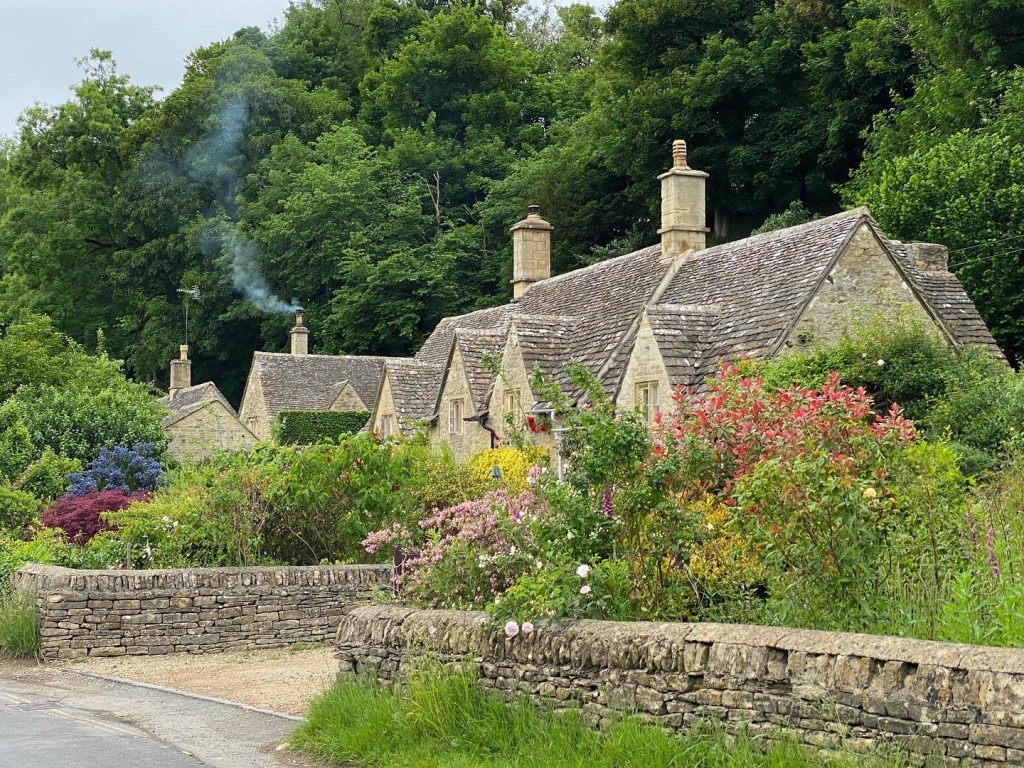
The ridiculously Thomas Kinkade-y village of Bibury:
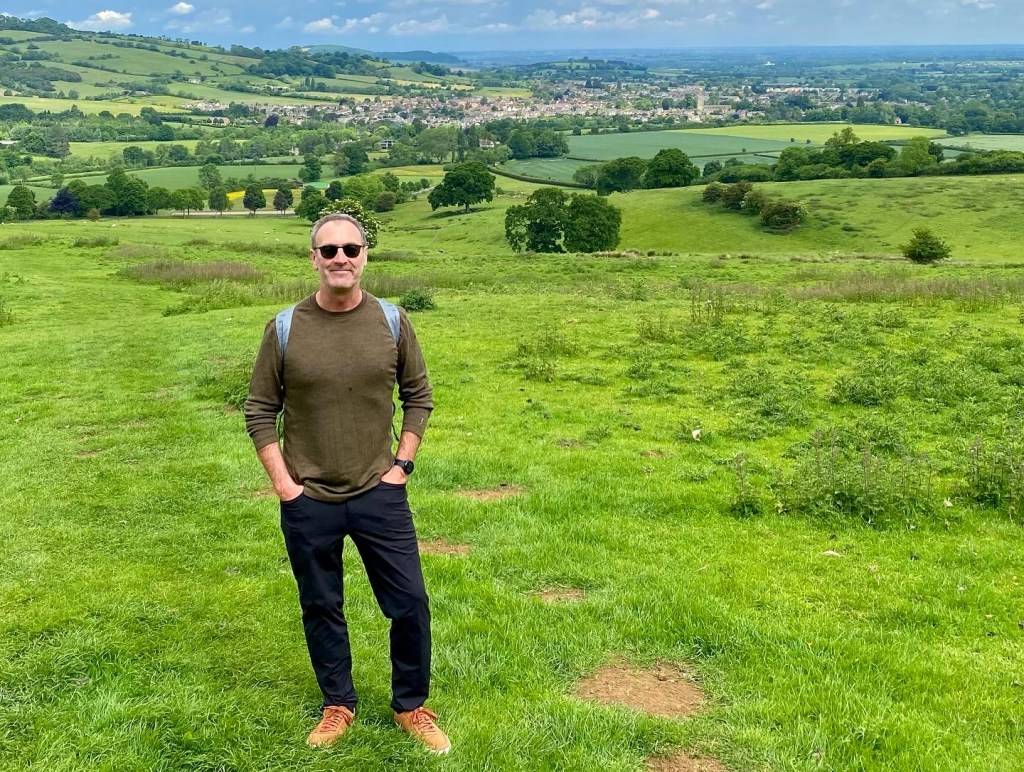
And another sheep-intense hike between the tiny villages of Southrop and Eastleach:
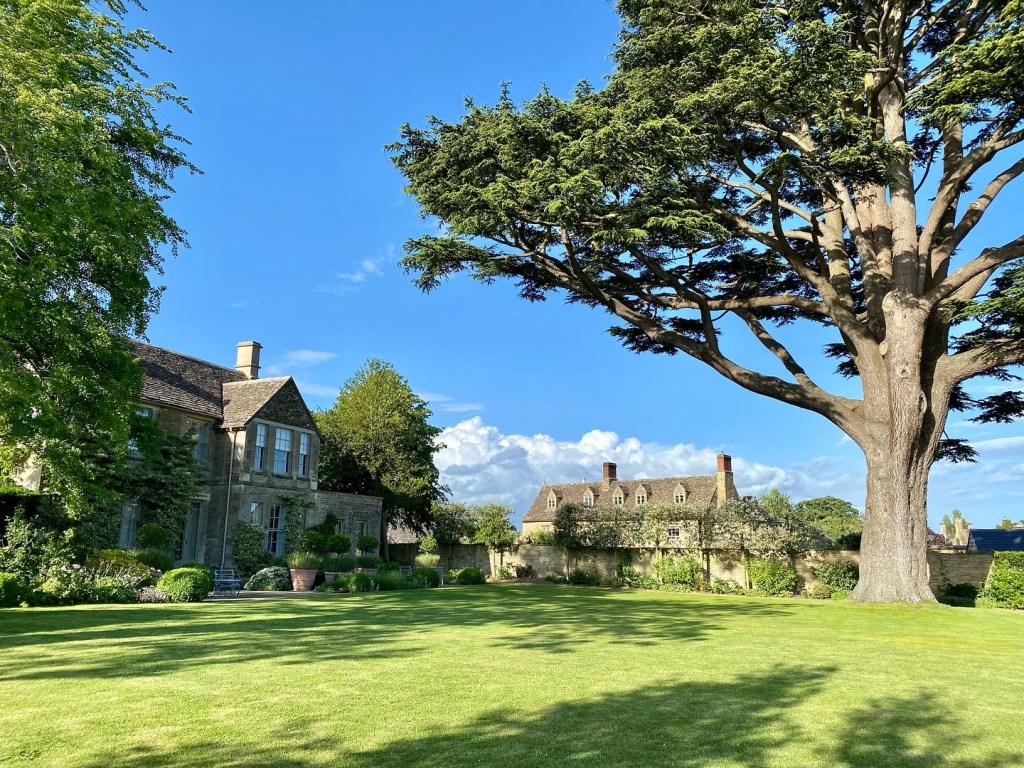
Our last base in the Cotswolds: a village within a village (and a Cotswold cottage of our own, to boot):
After 2 solid weeks on the road in our trusty Peugeot, we returned the car that served us so well during the trip before we headed into London proper. Between the manual transmission, the steering wheel on the wrong side, and having to drive for 2 weeks on the wrong side of the road, this baby was a true Danger Chariot.
In London, we probably put in around the same mileage walking around each day as we did on each of our Cotswold and Wales walks, including logging a lot of miles transiting Hyde Park and Kensington Gardens, below:
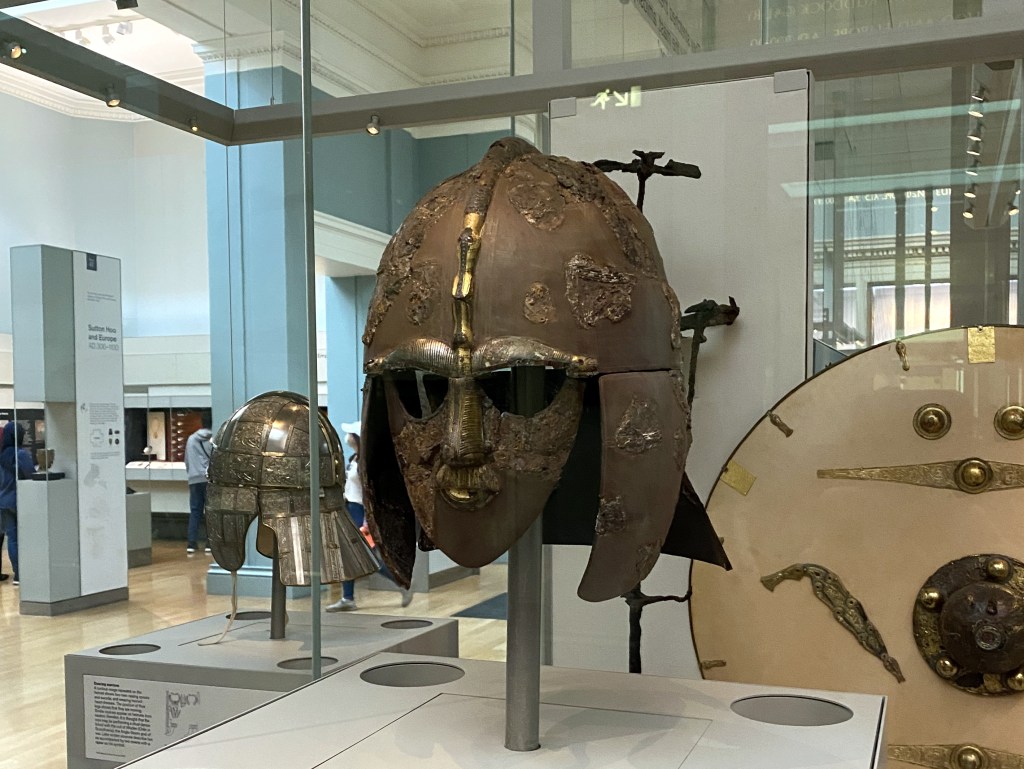
And as a counterpoint to the Welsh castles, we paid a quick visit to the British Museum solely for their Anglo Saxon collection from the Sutton Hoo, including the iconic helmet from the burial mound:
And then, only 36 hours before we were set to fly back and maybe 10 hours before we were going to get tested, the US announced the end of the COVID testing requirements to re-enter the US. Perfect timing!
We’ll be posting overdue stuff from last fall’s Cinque Terre and Return to Tuscany road trip next, and will follow up with Cotswolds and castles posts after.
The Cotswolds towns owe their picturesque and well-preserved quality to sheep. Until the introduction of cotton into markets, wool and linen were the primary textiles for clothing for most people. And in the middle ages, the best wool came from England, and the best wool in England came from the Cotswolds due to the fine quality produced by the specific variety of sheep unique to the region. “Even the name Cotswolds is thought to be derived from sheep. “Cots” means sheep enclosure and “wolds” are the gentle hills.” (From here.)
The premium price for Cotswolds wool was such that merchants in the region’s towns could afford moderate to grand houses made of the local, honey-colored limestone. And fund “wool churches” that were more substantial and ornate than churches in similar-sized towns elsewhere in the country.
But then, starting in the 1600s, cotton from colonies established by the British, Dutch, and French East India Companies became more practical and more fashionable than wool, and the wealth of the Cotswolds towns declined precipitously. As a result, the towns lost their wealth and became backwaters and this backwater status preserved the honey limestone houses, manors, town halls, and churches that may otherwise have been changed or built over to fit new architectural styles or building methods over the subsequent several centuries.
As tourism became a thing in the 19th century, the bucolic Cotswolds countryside and its preserved and picturesque towns became popular destinations, and the region gradually developed an economy based on tourism and experienced a rebirth (culminating, of course, in the visit by WolfeStreetTravel). The wealth is back, but it’s just not from wool anymore.
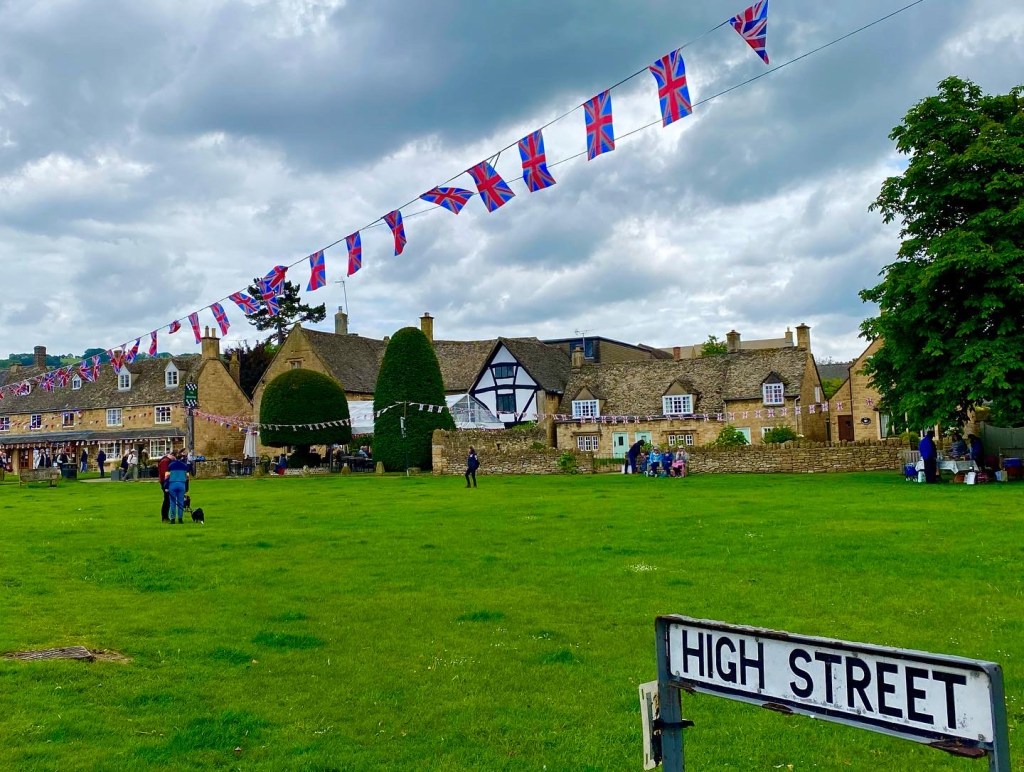
On our first full day in the Cotswolds, we drove about 10 min from Broadway to Chipping Campden, where characteristic Cotswolds charm was exemplified in fine fashion. Considered the “jewel in the crown of the Cotswolds” (no doubt only by the Chipping Campden Chamber of Commerce), the town has served as a wool market since the 15th century, and is famous for its High Street.
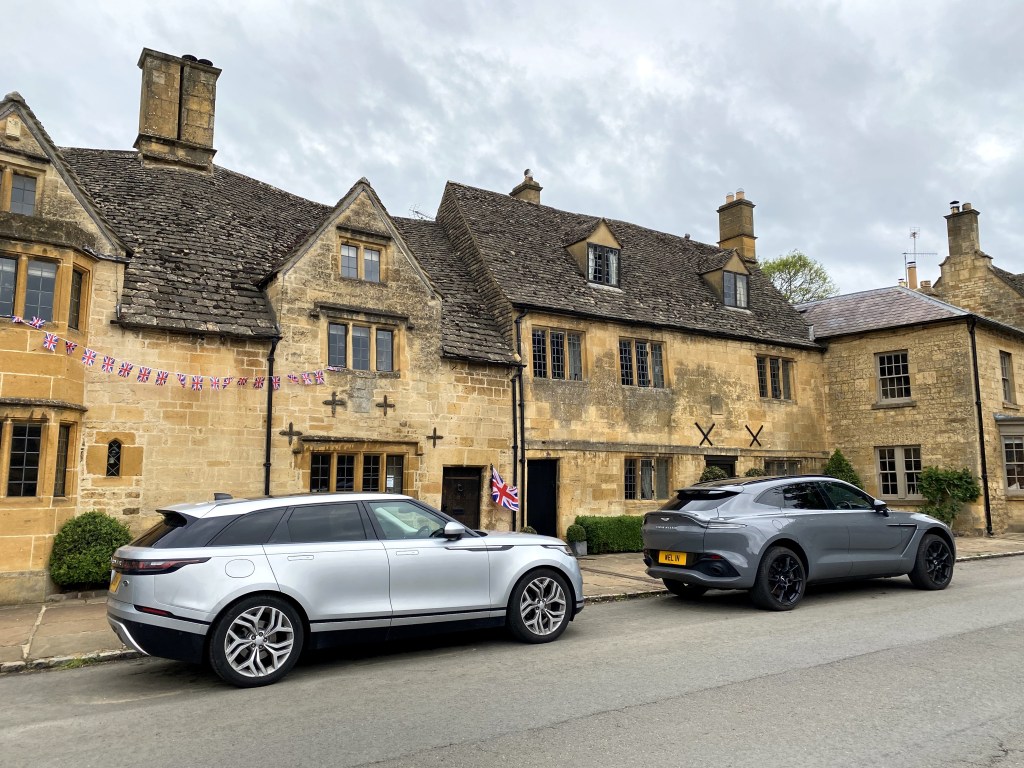
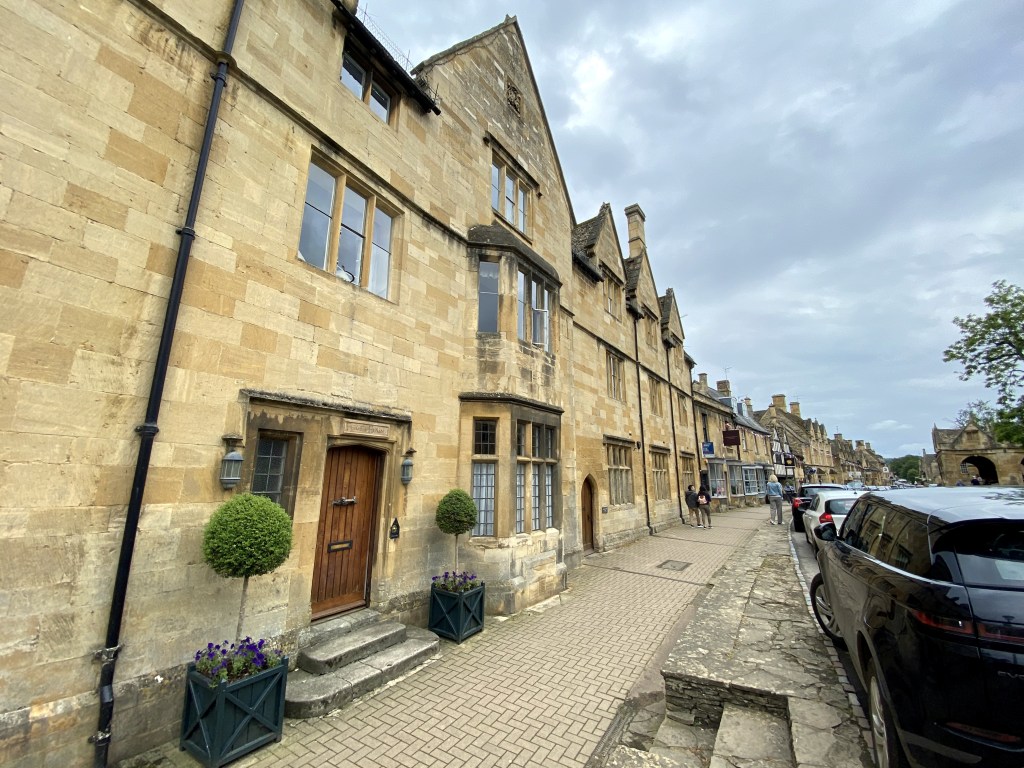
Center of town on High Street:
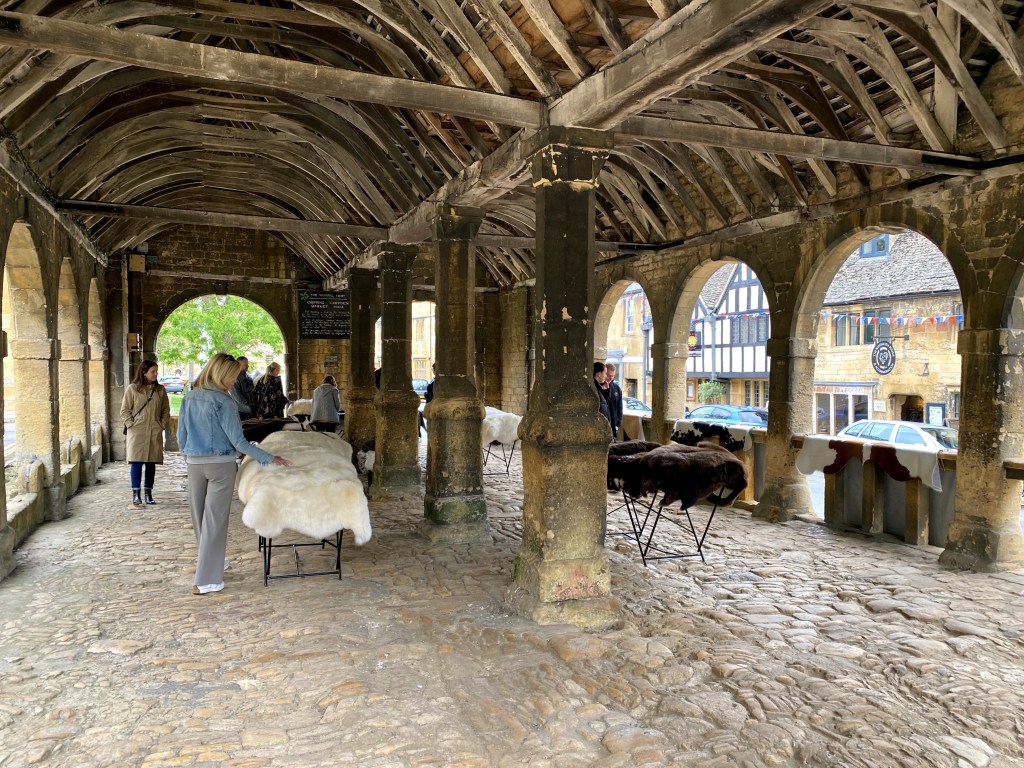
The town’s still-operating, 1627 Market Hall commissioned by Sir Baptist Hicks, who will continue to pop up as we poked about town.
In the Market Hall, you can buy your sheep and sheep accessories from the Cotswolds version of Hank Hill.
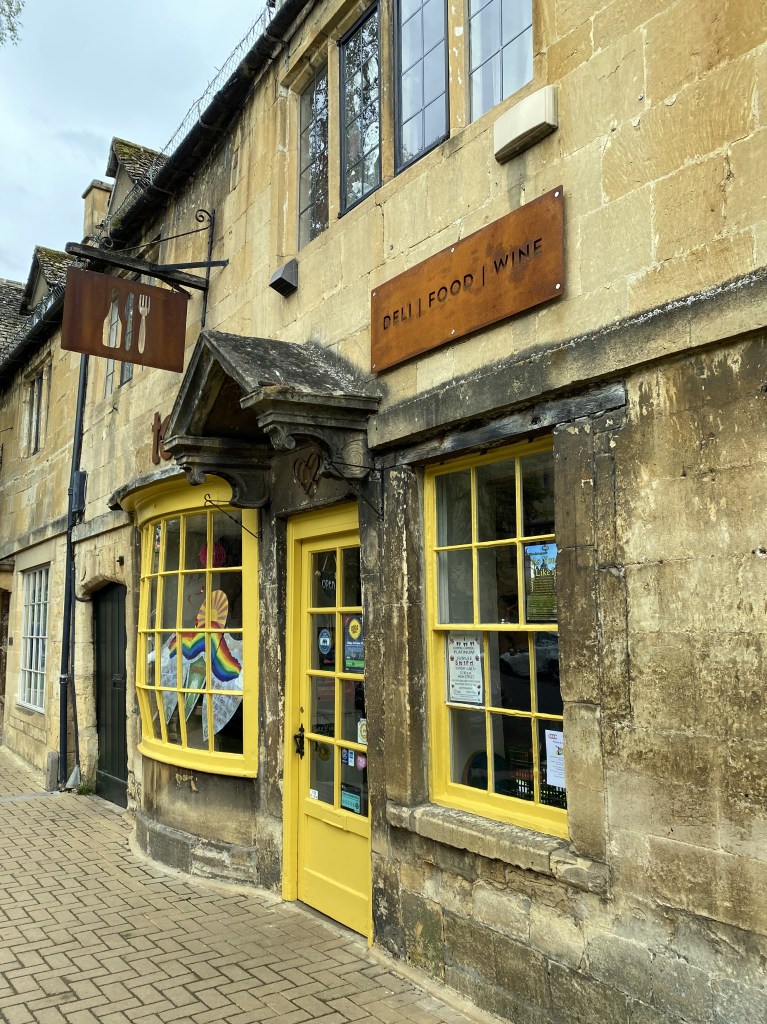
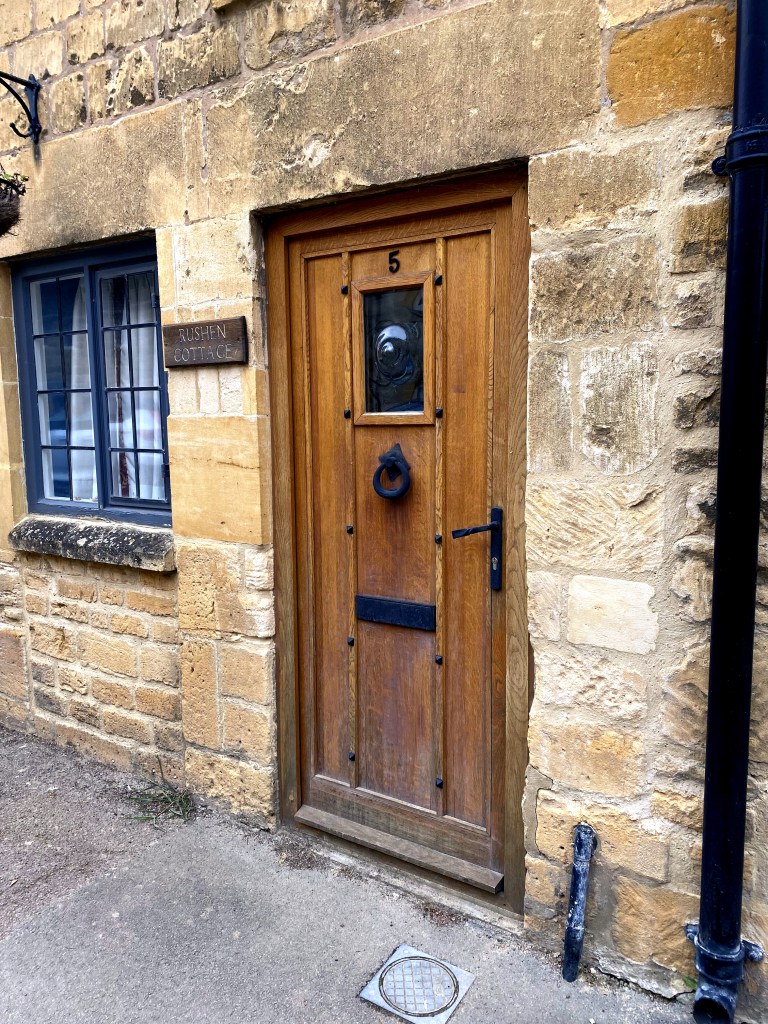
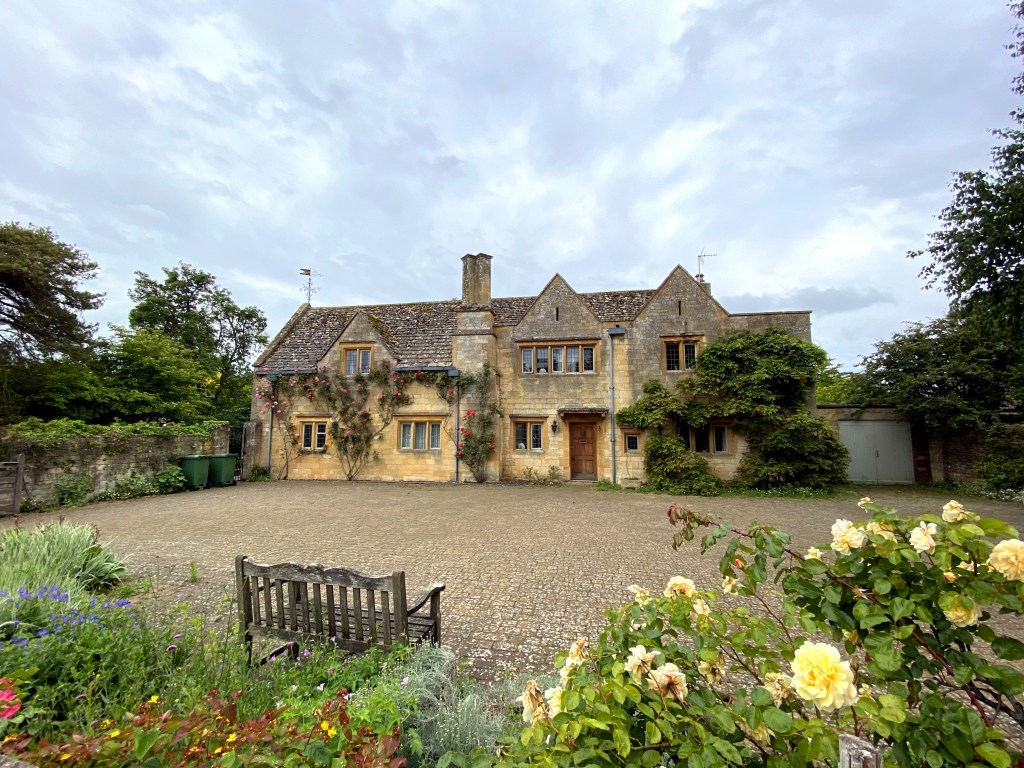
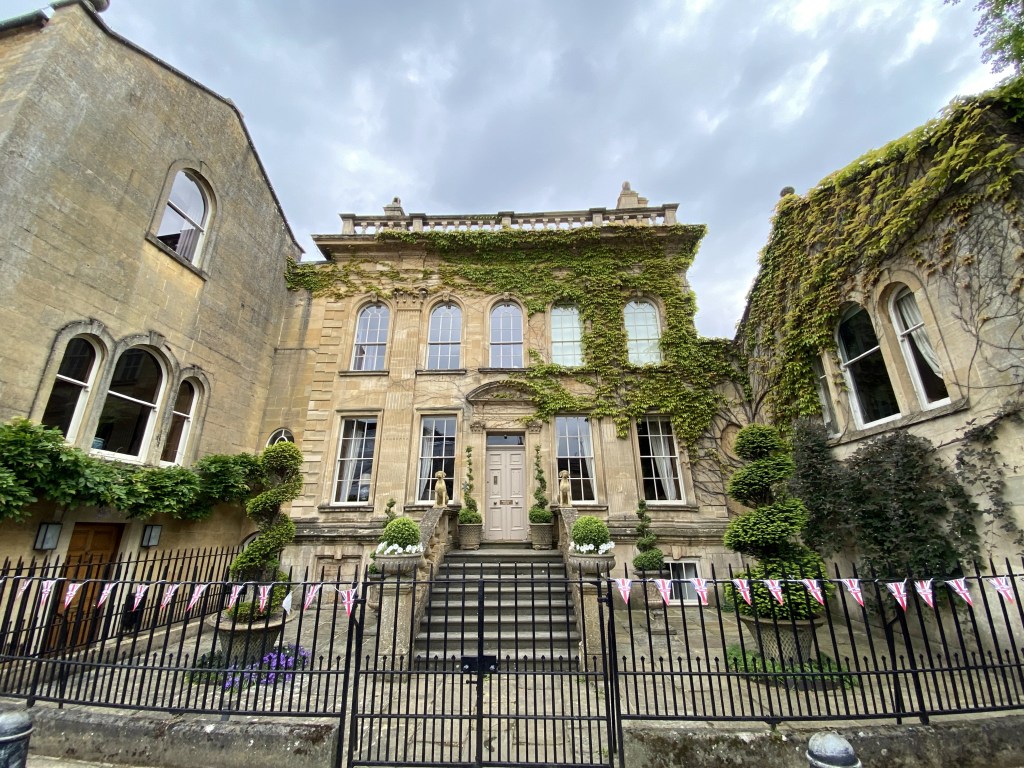
Scenes around town:
What’s behind the hedge:
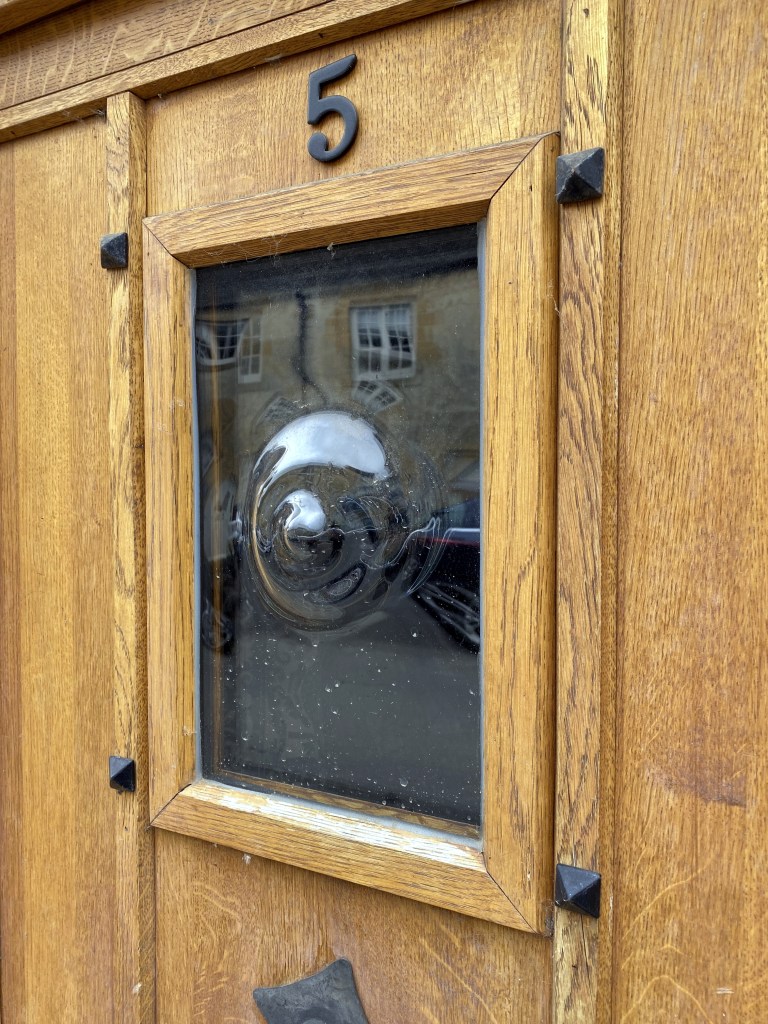
Bulls eye window on one of the houses.
“In mediaeval times the way window glass was made was similar to blowing. A blob of molten glass was picked up on a pontil, and spun rapidly to form a disk. The flatter, outer, bits of glass were used for fine windows, the bit in the middle would be remelted for the next try. Sometimes the bit in the middle was not remelted, but sold off cheap for low status buildings. These often went into front doors, to admit light, but not give a clear view into the house.” (From here.)
The town’s wool church, the Church of St. James:
Built in the 16th century, but incorporating the elements of a Norman church that dates from 1180:
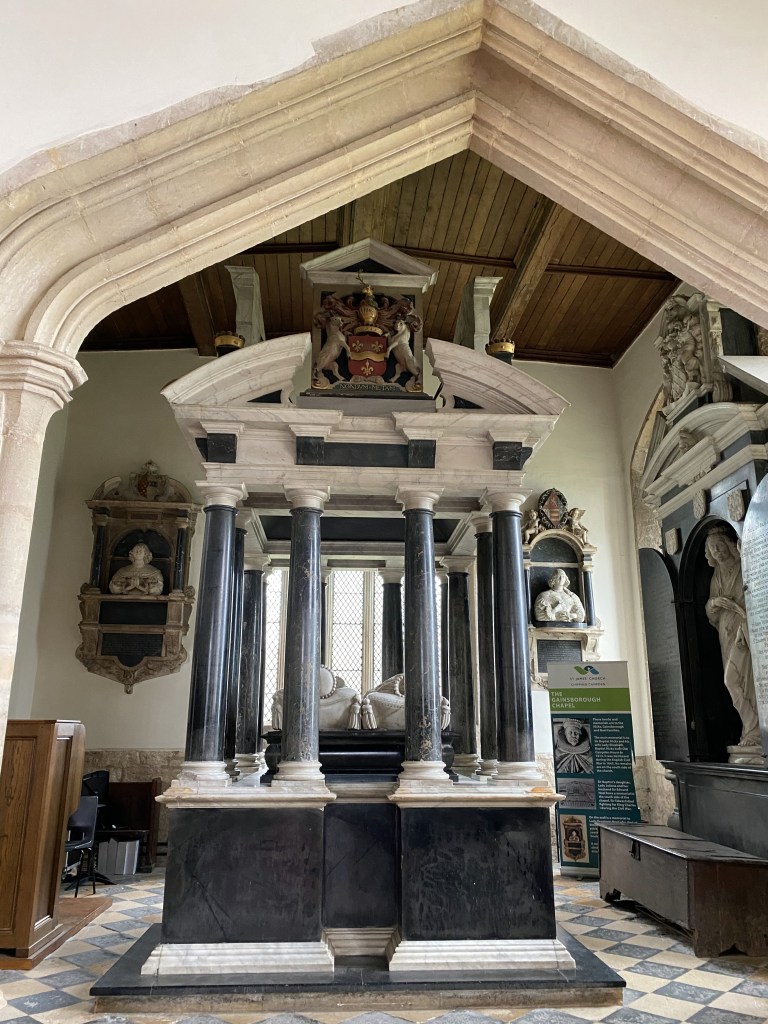
The elaborate tomb of Sir Baptist Hicks – his second appearance – and his wife.
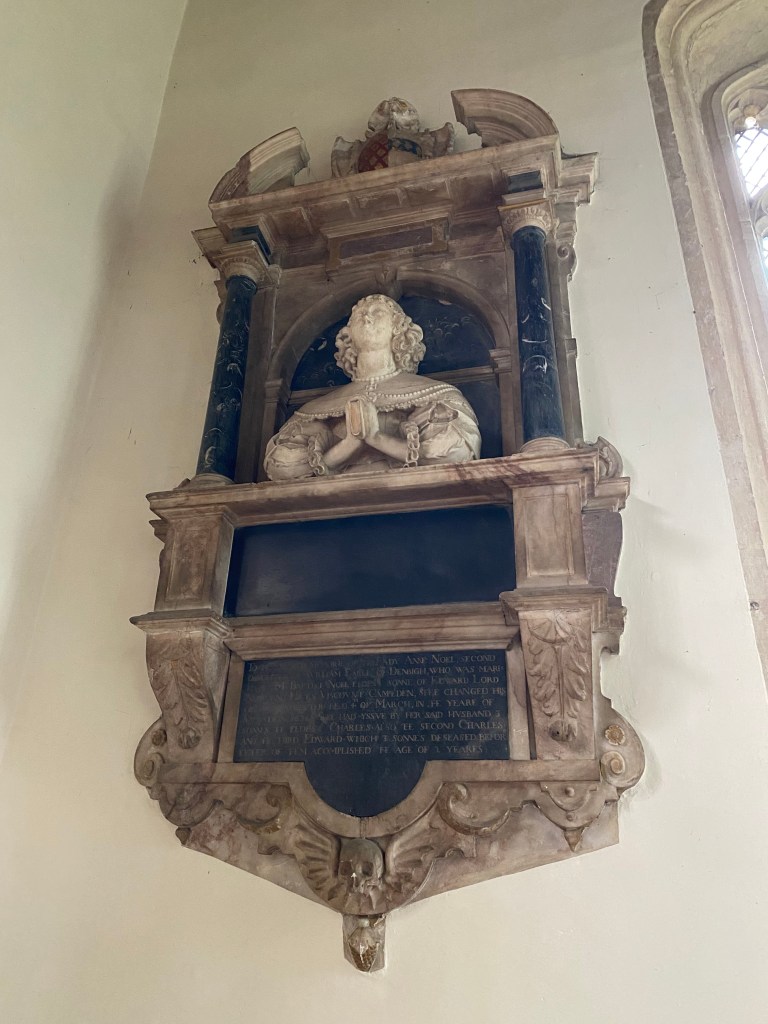
And “a memorial to Lady Penelope Noel who died of blood poisoning as a result of pricking her finger whilst sewing.” For reals.
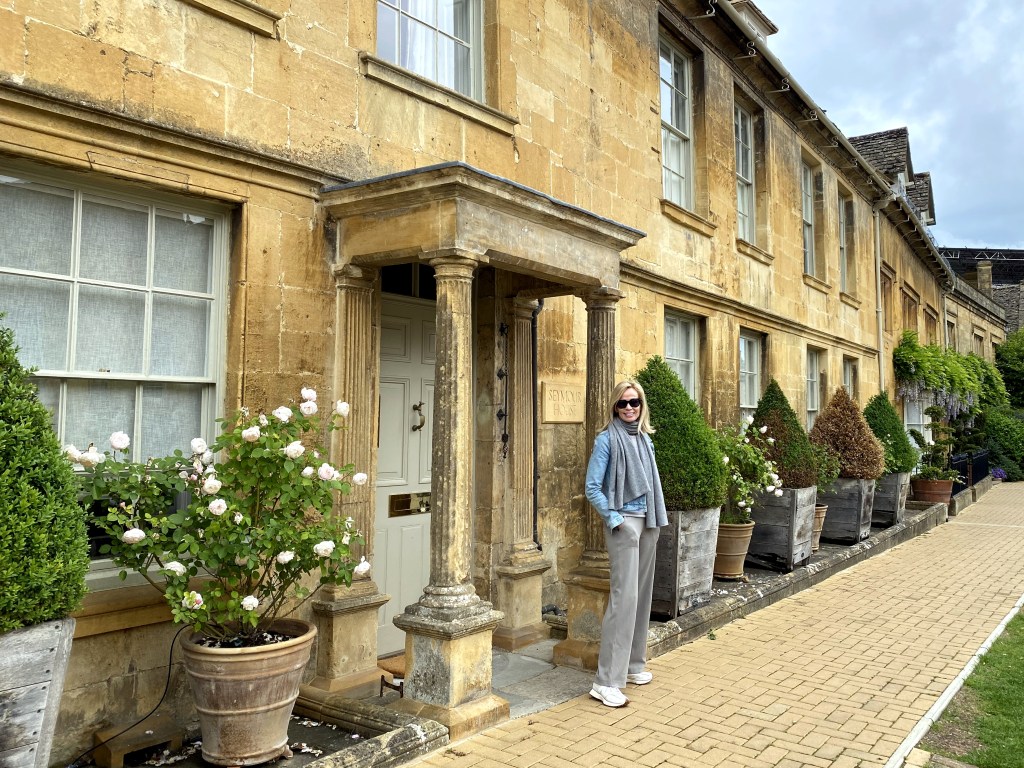
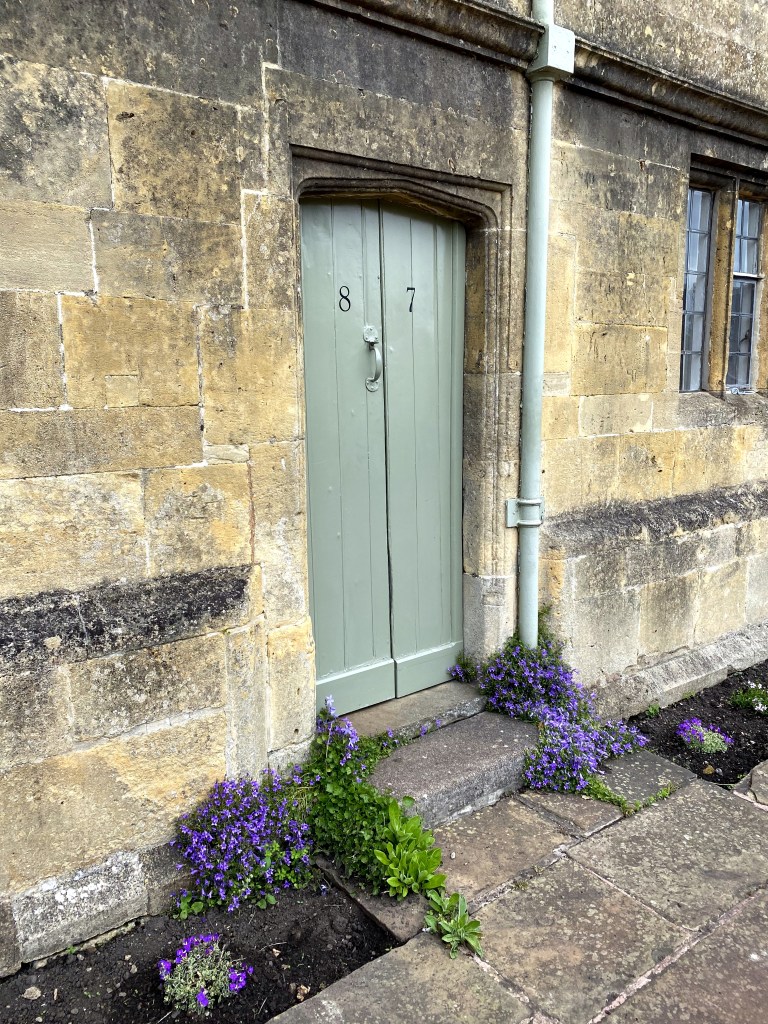
The town’s almshouses just down the street from the church, built in 1612 by Sir Baptist Hicks (of course).
The town’s cool Eight Bells pub.
Back on High Street to head to the car and on to our next town:































 WolfeStreetTravel