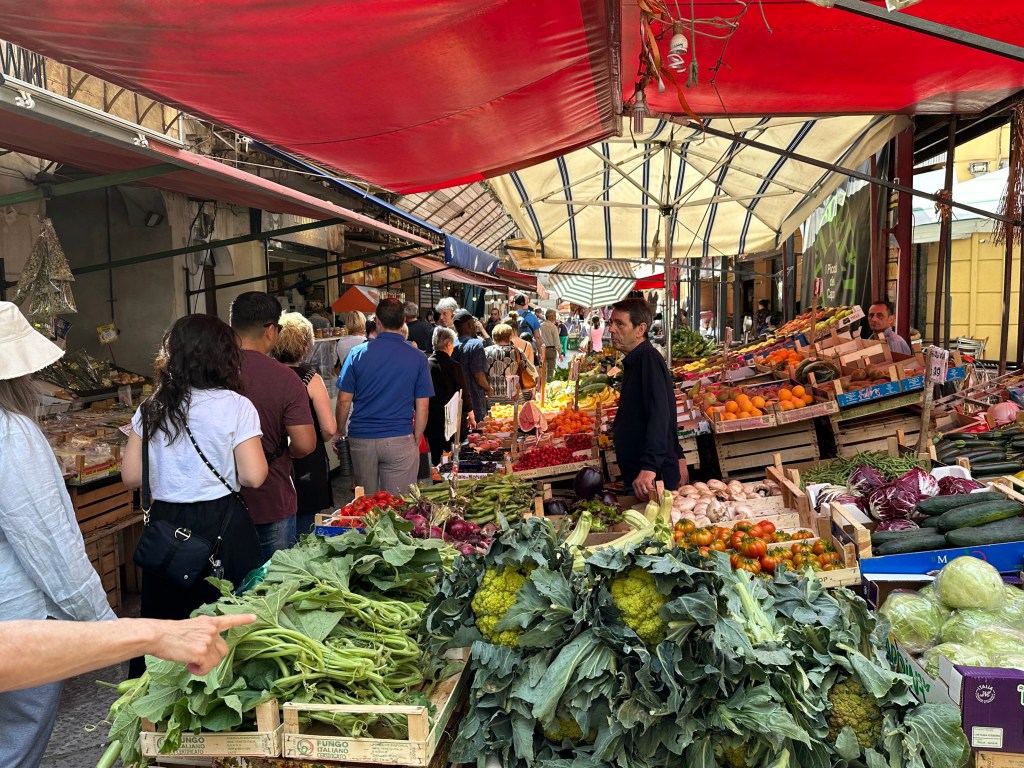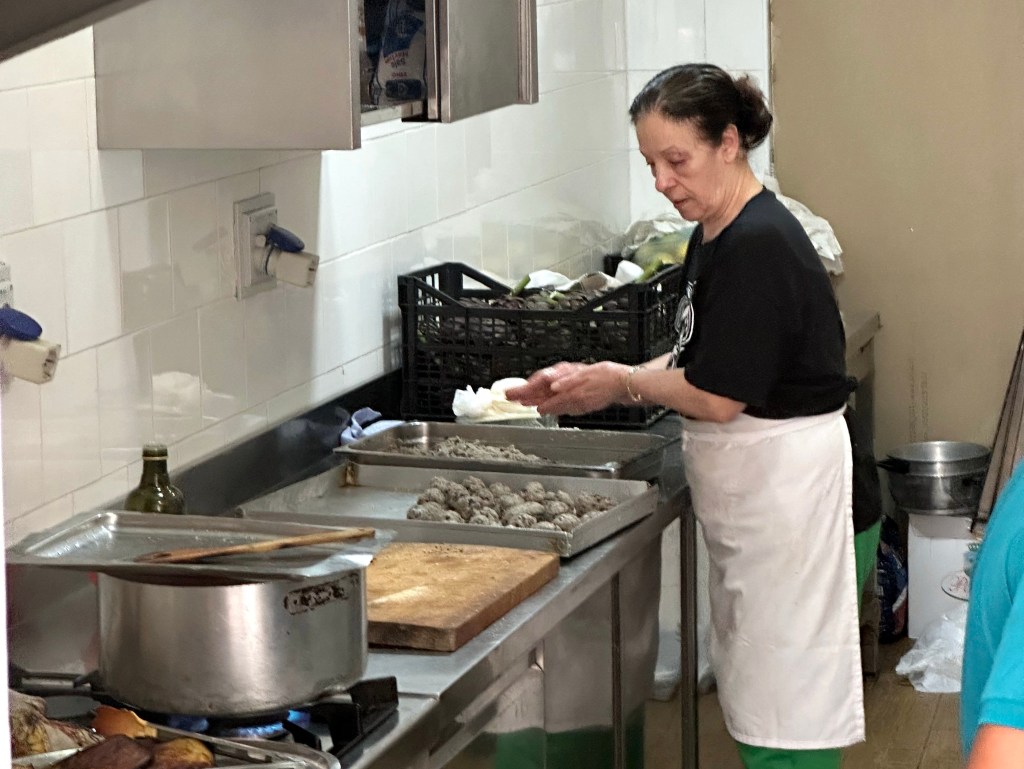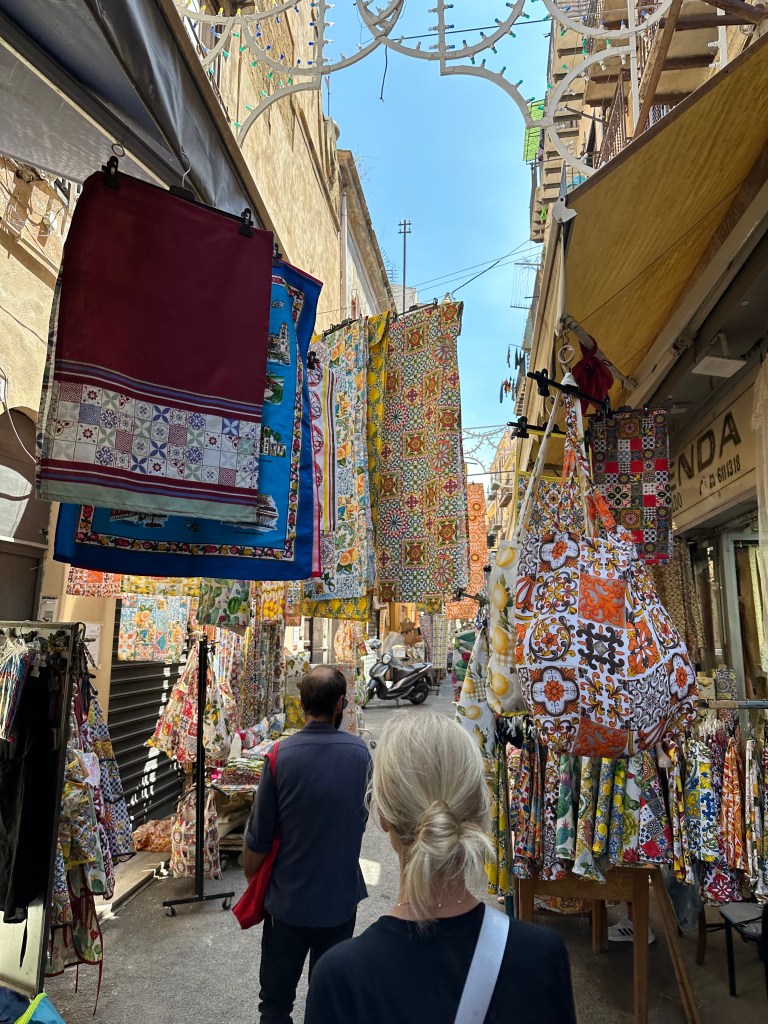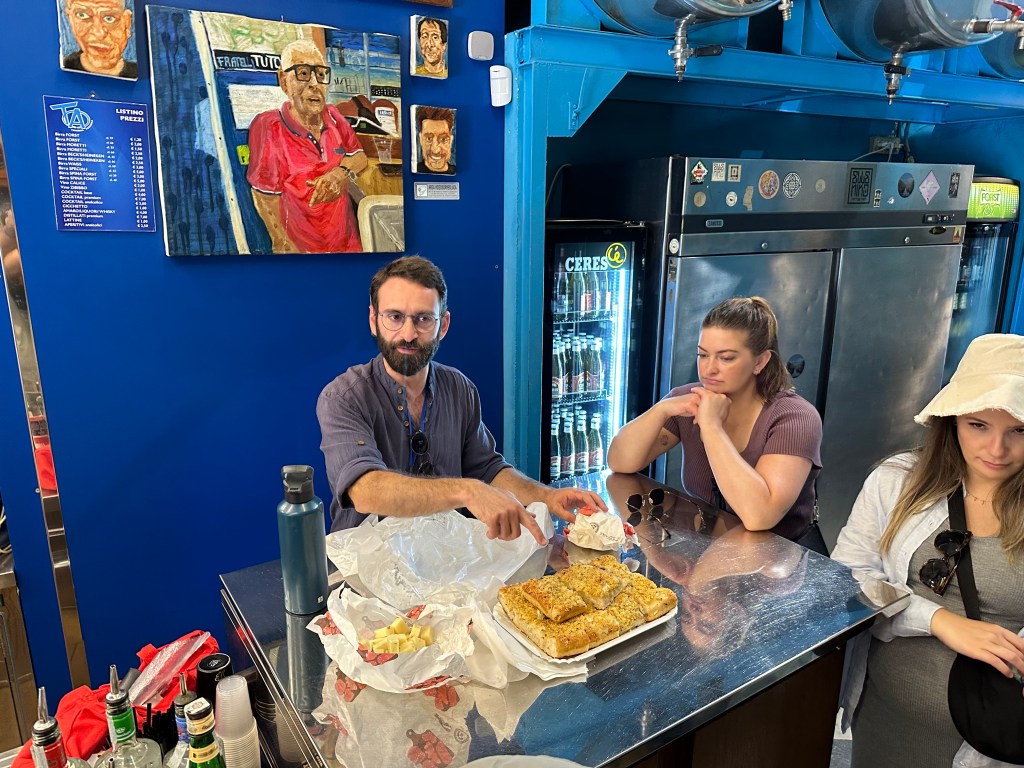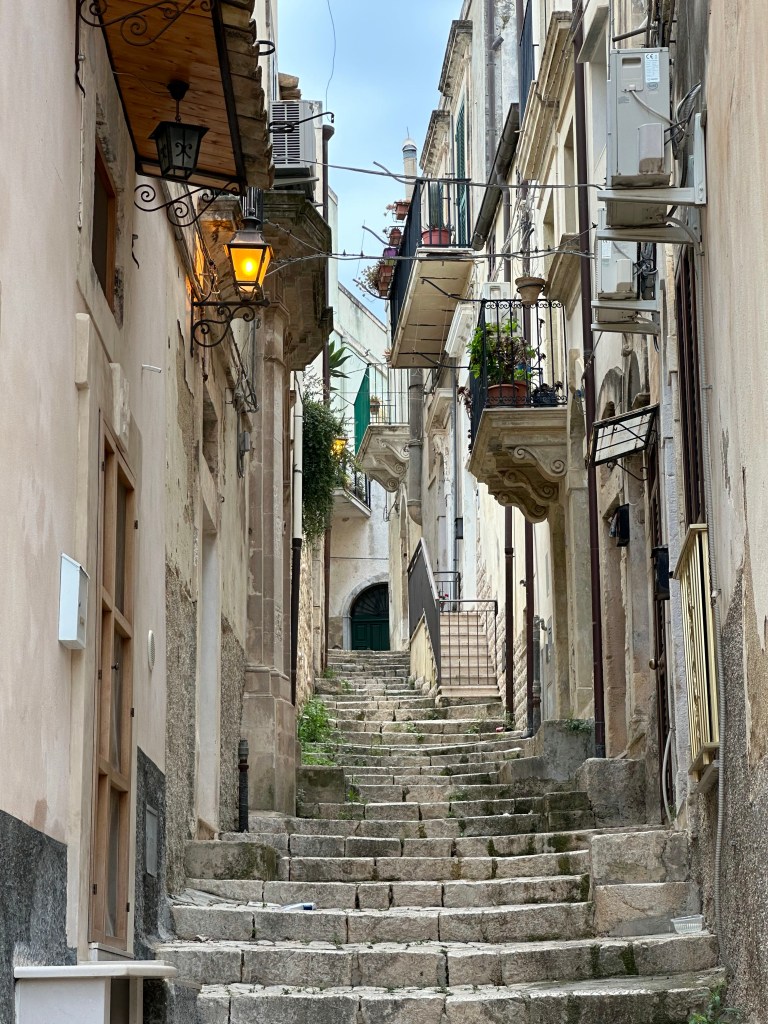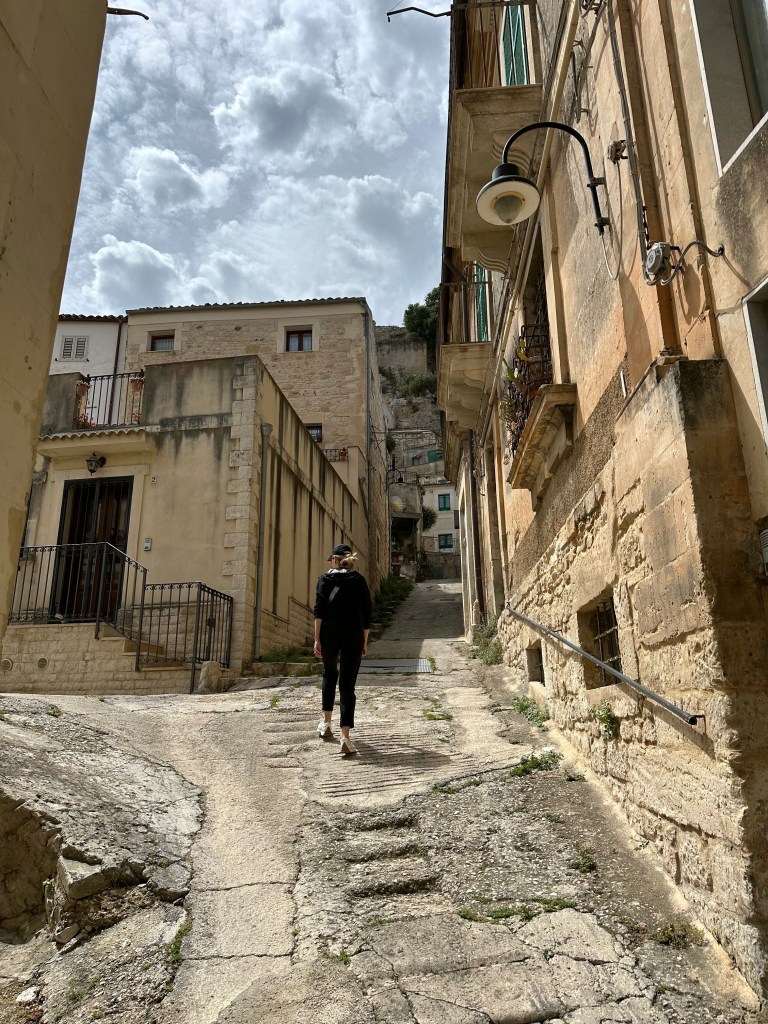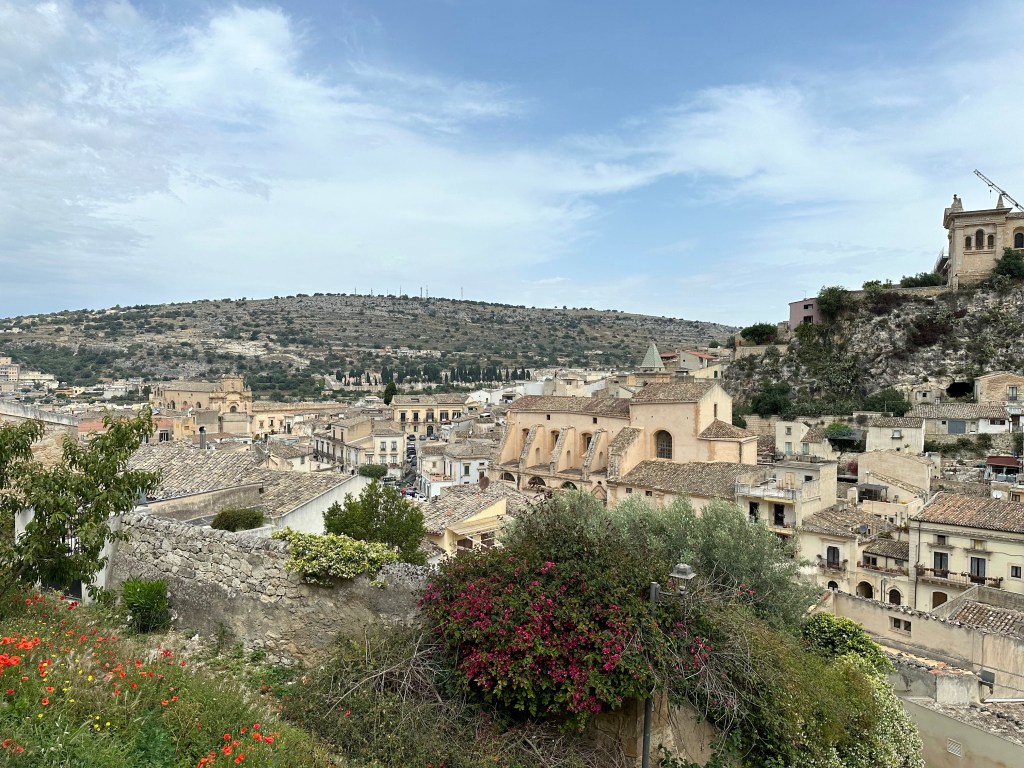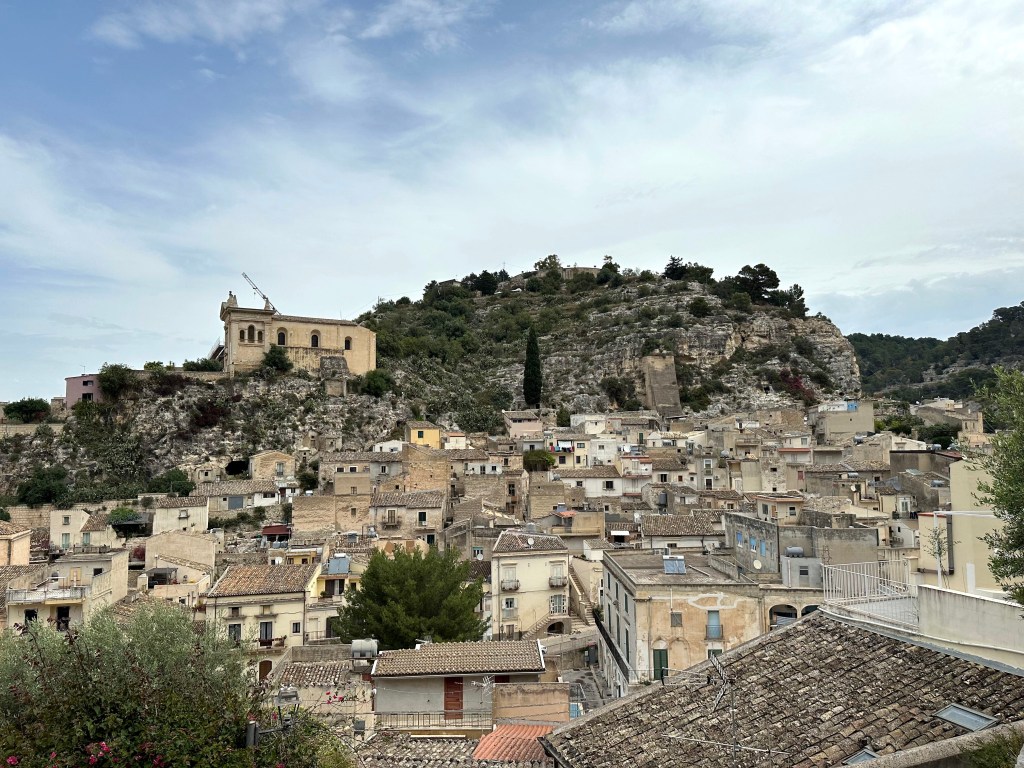
Posts Tagged With: Sicily

A Prolonged Foray to Europe: Trip Overview

After limiting our travel each year for the past several decades to 1- and 2-week trips abroad due to work responsibilities, retirement by the second of the two travelers in 2023 eliminated this constraint. So, we kicked off WolfeStreetTravel’s 2023 journeys with one-way tickets to Italy with no plans to return.

The original vision for this prolonged foray to Europe assumed that we’d have an itinerary and lodging planned for the first week or two, then we’d wing it from there. However, this approach proved to be completely unbearable for the travel-planning arm of the consortium. As a result, our entire itinerary, including all destinations, transportation, and accommodations (and about a half a dozen dinners) were planned for the first 7 weeks of the trip.

We still had no return plans, maintaining fidelity to the spirit of the trip, but we definitely weren’t winging it, either.

The trip, which began on May 5, can be logically sequenced into the following legs:

  • Italian peninsula road trip (17 days)
  • Sardinian break (4 days, including overnight ferry to Palermo)
  • Sicily road trip (18 days)
  • Malta break (4 days)
  • Normandy bike trip (8 days, including a day before and after biking)
  • Portugal (8 days)

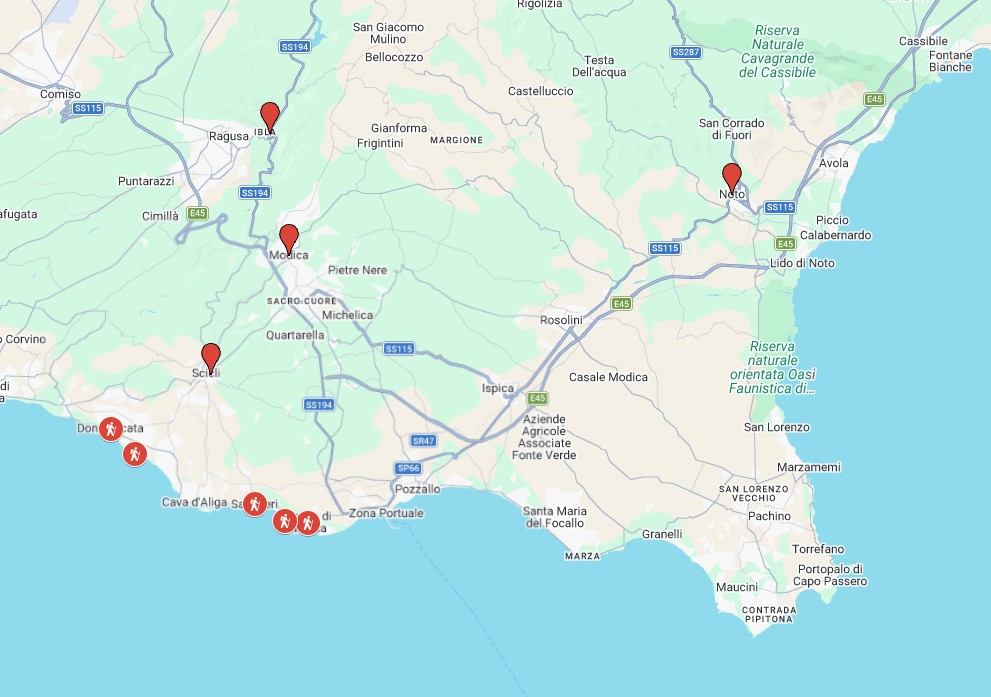
The color coding of each leg above aligns to the destinations depicted in the interactive map below:

In addition to the color coding, the map breaks down our travels using the following icons:

  • Bed = hotel stay
  • House = villa / Airbnb stay
  • Pin = day trip
  • Hiker = uh, a hike
  • Biker = a stage in our Normandy bike trip

We’ll file detailed posts on the trip later, but each of the legs is summarized in this post. We really have tried to keep this overview to a bare minimum, but it’ll still be the longest update we’ve ever posted – sorry!

Italian Peninsula Road Trip

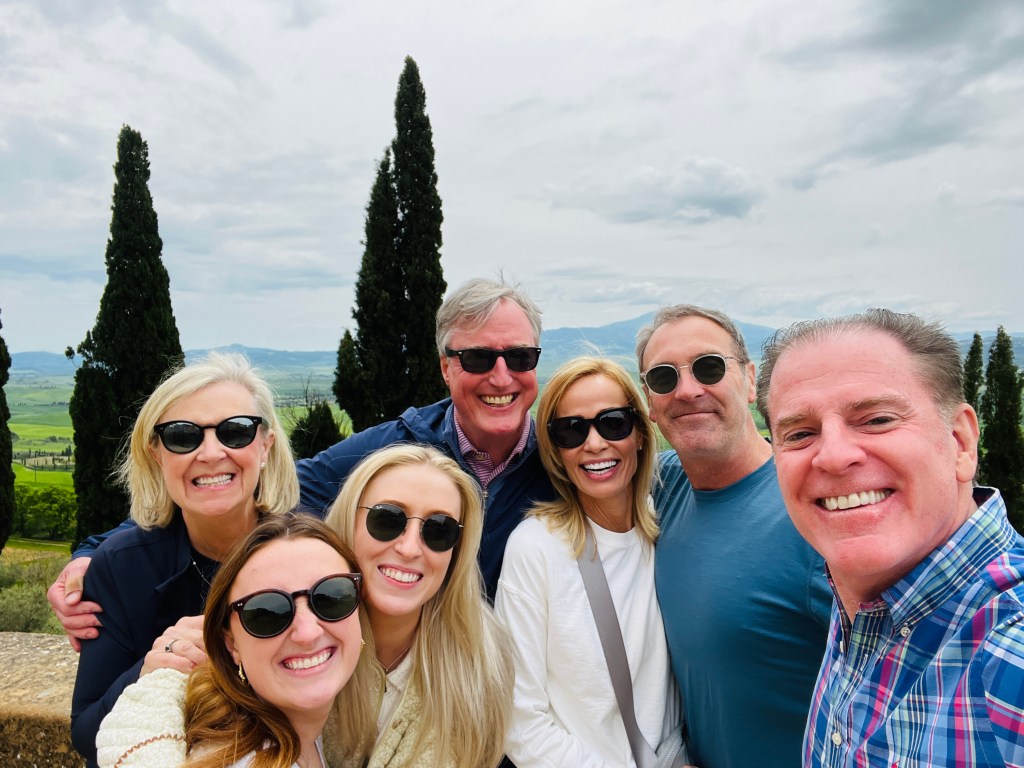
The trip began in Tuscany, where we’d spend 5 days with the Brandts and KJQ in a beautiful area just northeast of Siena.

Overlooking the Val d’Orcia:
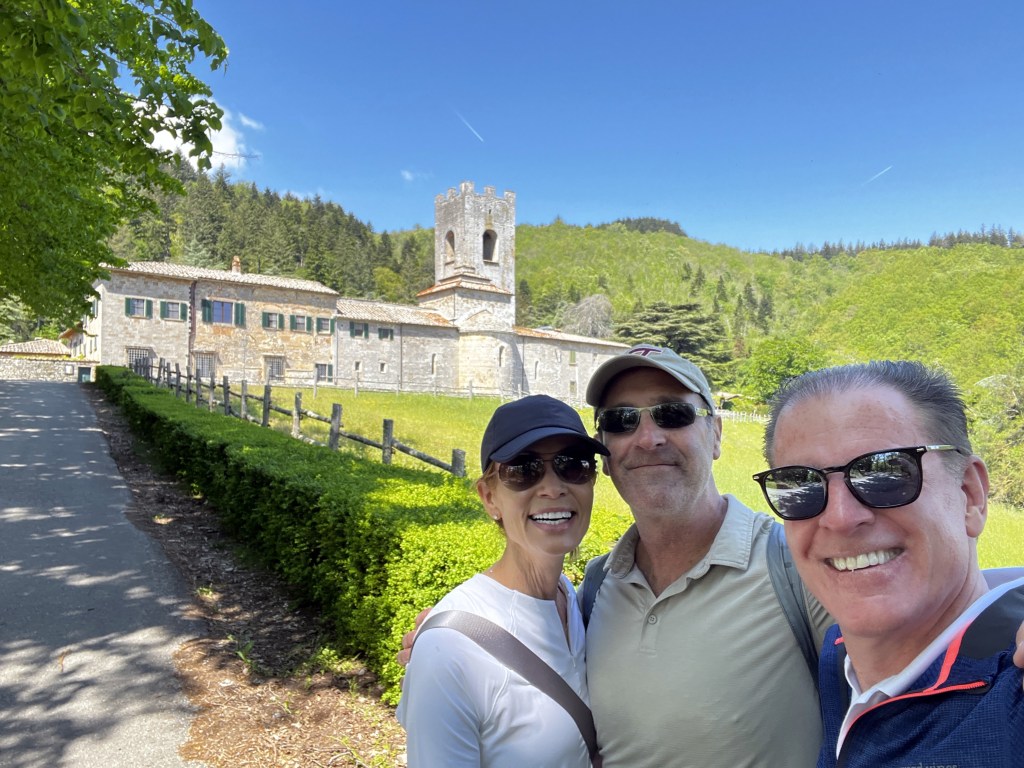
We hiked w KJQ one day to the Abbey of San Lorenzo a Coltibuono (and, about 5 miles later, to a harrowing shortcut escaped only through an opening KJQ dubbed The Gate to Salvation):
Tuscany wasn’t all sunshine and Brunello, though – it freaking poured in Montepulciano:
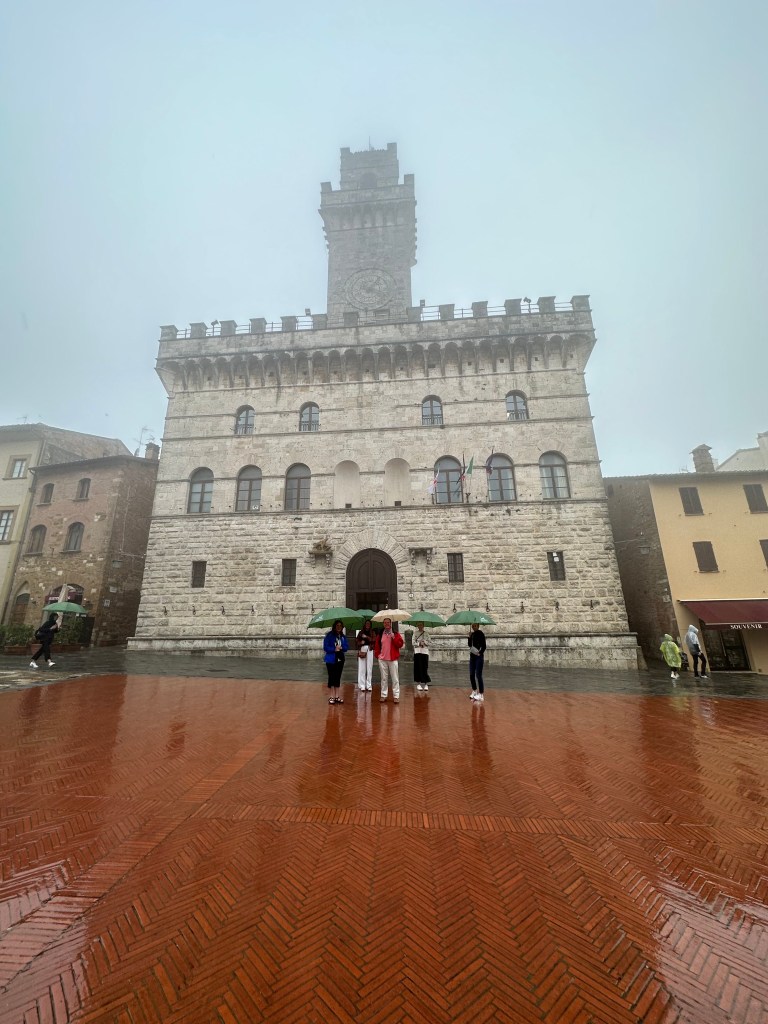
Gracie joined us for a portion of the stay, as well (and a team comprised of her and Madison cleaned up on two successive nights of Trivial Pursuit)

From Tuscany, we drove north, to Portofino on the Ligurian coast – a town that had been on Lisa’s wish list for several years. It did not disappoint.
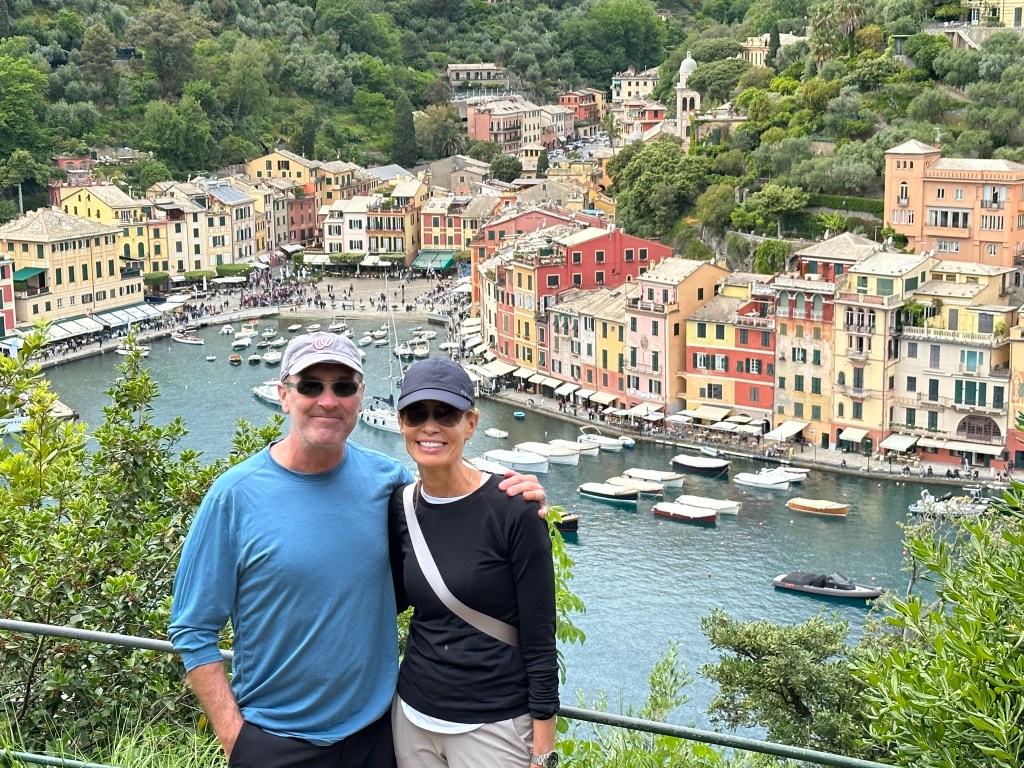
We continued our hiking habit in Portofino, hiking one day to the Abbey of San Fruttuoso:

And the next along the coastline to Santa Margherita Ligure:
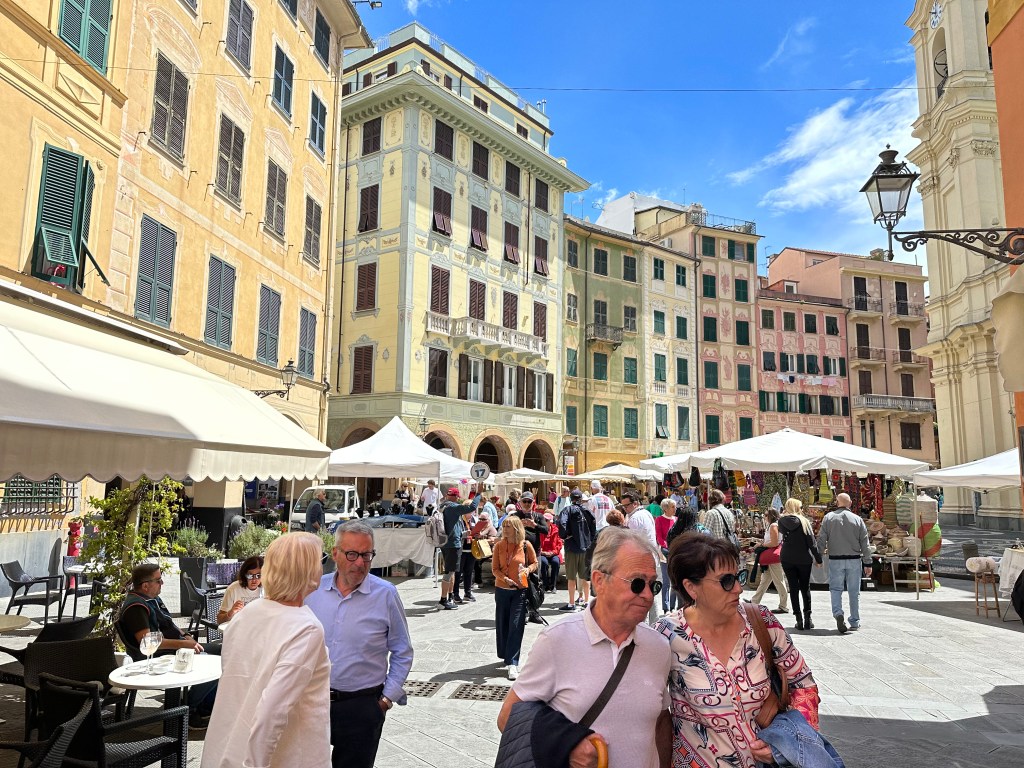
Portofino also was the jumping off point to scores and scores of Aperol spritzes consumed as aperitivos throughout the trip.

From the Ligurian coast, we drove south, back through Tuscany, and over the border to Umbria, and the medieval town of Orvietto for a stopover on our way to the Amalfi coast:

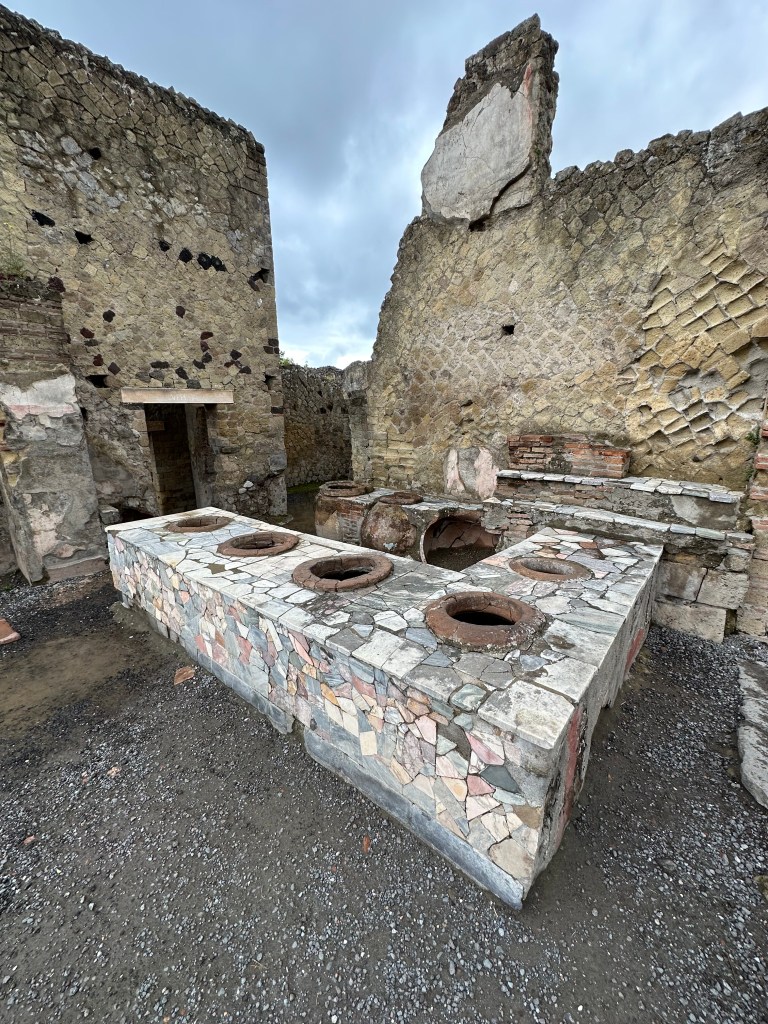
We continued south the next day, to Herculaneum. A smaller town than Pompeii, Herculaneum also was nonetheless lost due to the eruption of Mount Vesuvius in 79 AD, but it was covered in ash and pumice, rather than being flattened by rocky debris, preserving it much better, including numerous, intact, Roman snack bars:
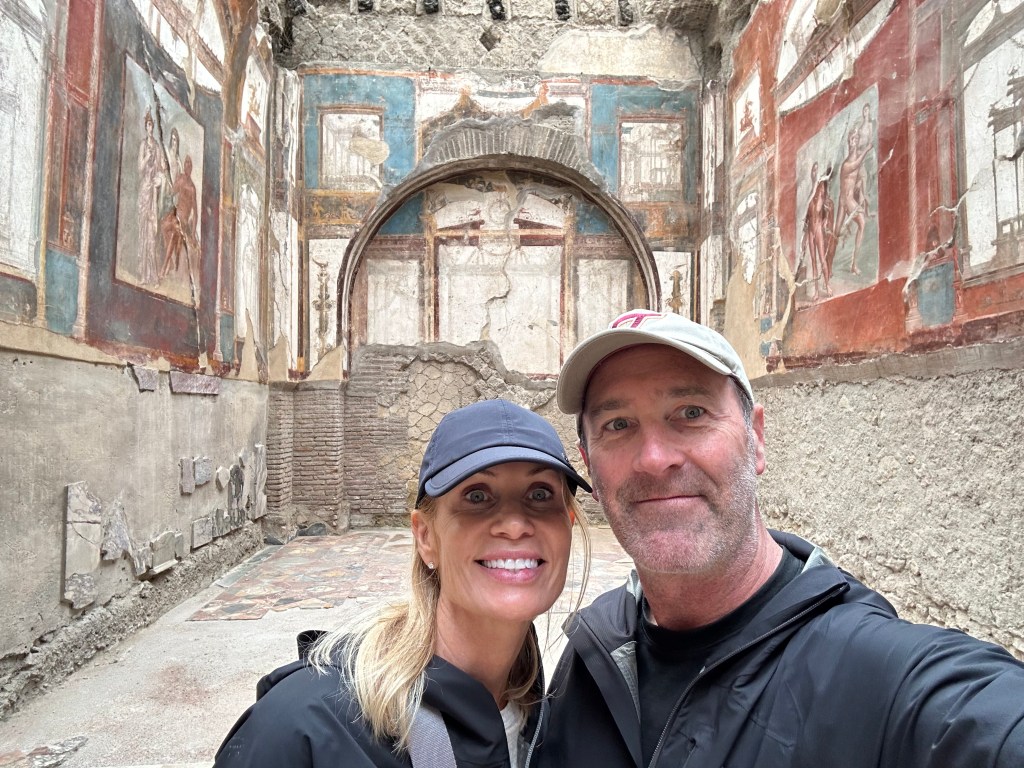
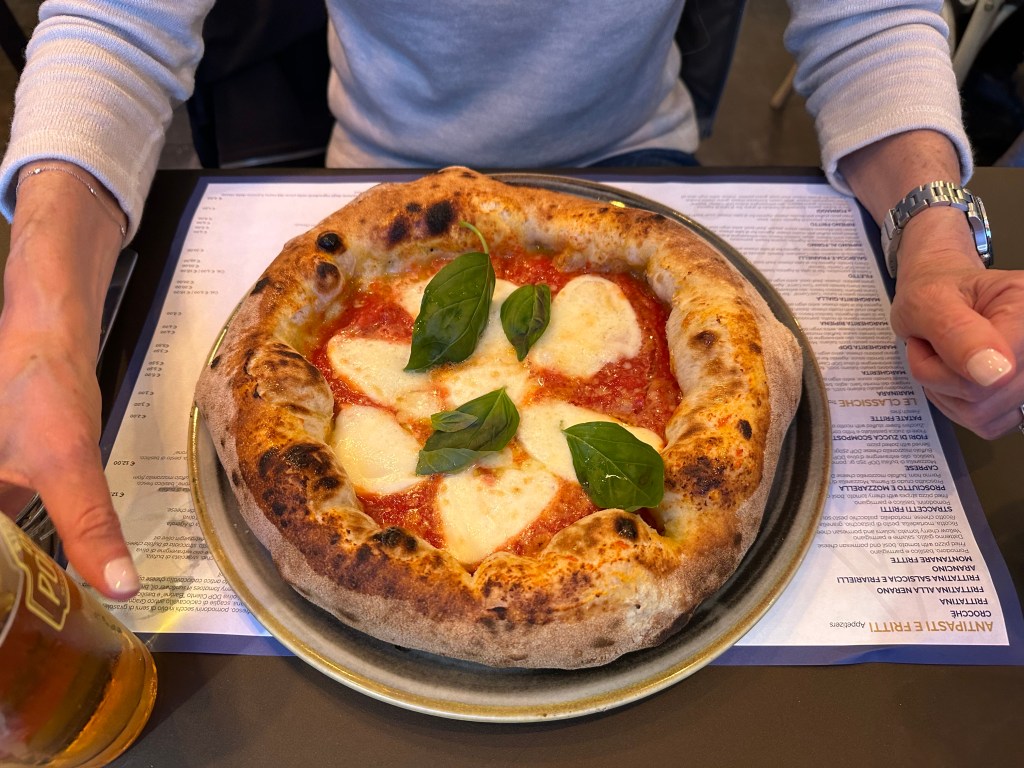
After a quick overnight in Naples (in which our only goal was to score some iconic Neapolitan pizza), we headed to Capri for a couple of days, leaving the car in Sorrento:
Our stay on Capri was one of the highlights of the trip – we will definitely be back. View over Capri Town from our place:

Hikes each day, including to the ruins of Emperor Tiberius’ villa:

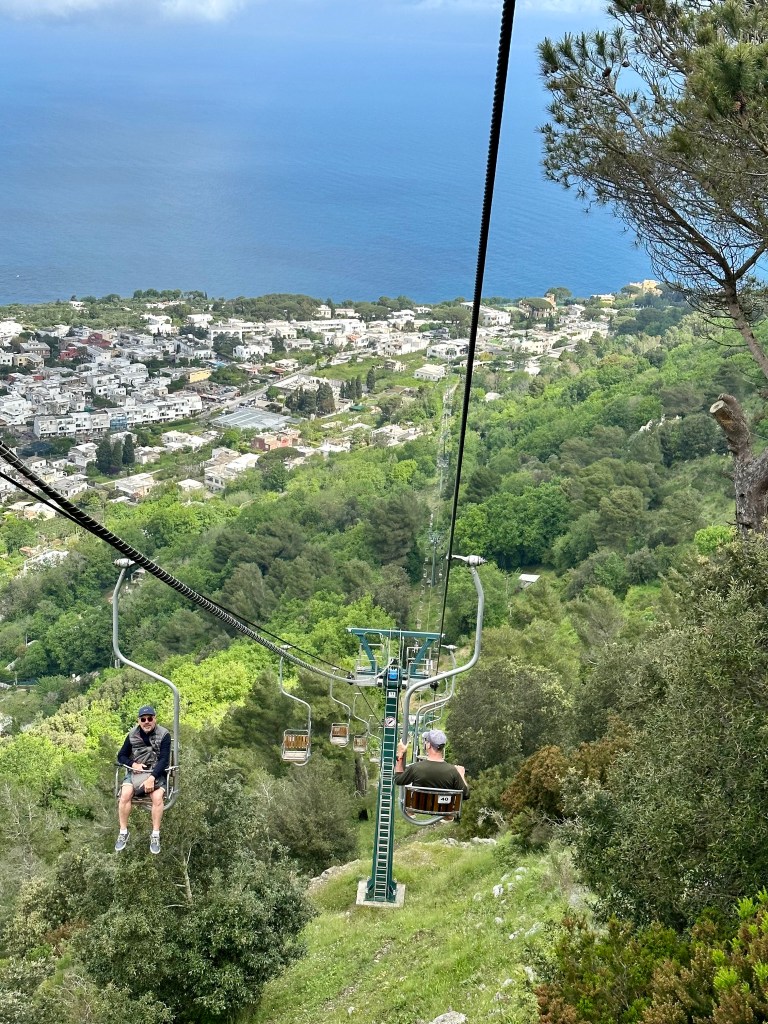
And a hike from Capri to Anacapri, followed by a hike up Monte Solaro because fog reduced visibility to zero for a ride up the cool little cable chairs:

But the weather cleared for a chair ride back down:
We ferried from Capri back to Sorrento, retrieved our car, and began the most harrowing aspect of our peninsular road trip: driving on the Amalfi coast. Seriously – really treacherous.

Luckily, relief was at hand in Praiano, our home for the next 3 days:

We headed a few miles down the road to Positano the next morning, only to retreat back to Praiano after a half a day there. A lot of travelers characterize Positano as the “Jewel in the Crown of the Amalfi Coast.” It’s not. Its a cruise ship packed full of tourists and shitty shops that happens be be tumbling down a cliff in a picturesque way.

We enjoyed Positano much more from a distance, content at our place in Praiano:

The next morning we hiked the Path of the Gods from Praiano to Positano:

Once the path paralleled the coastline, the going was a little technical, but not a big problem. The challenge to the 5-mile-long Path of the Gods hike was the >2000 feet of incline and decline, almost all of which is straight up from Praiano and then straight down 1700 steps into Positano.

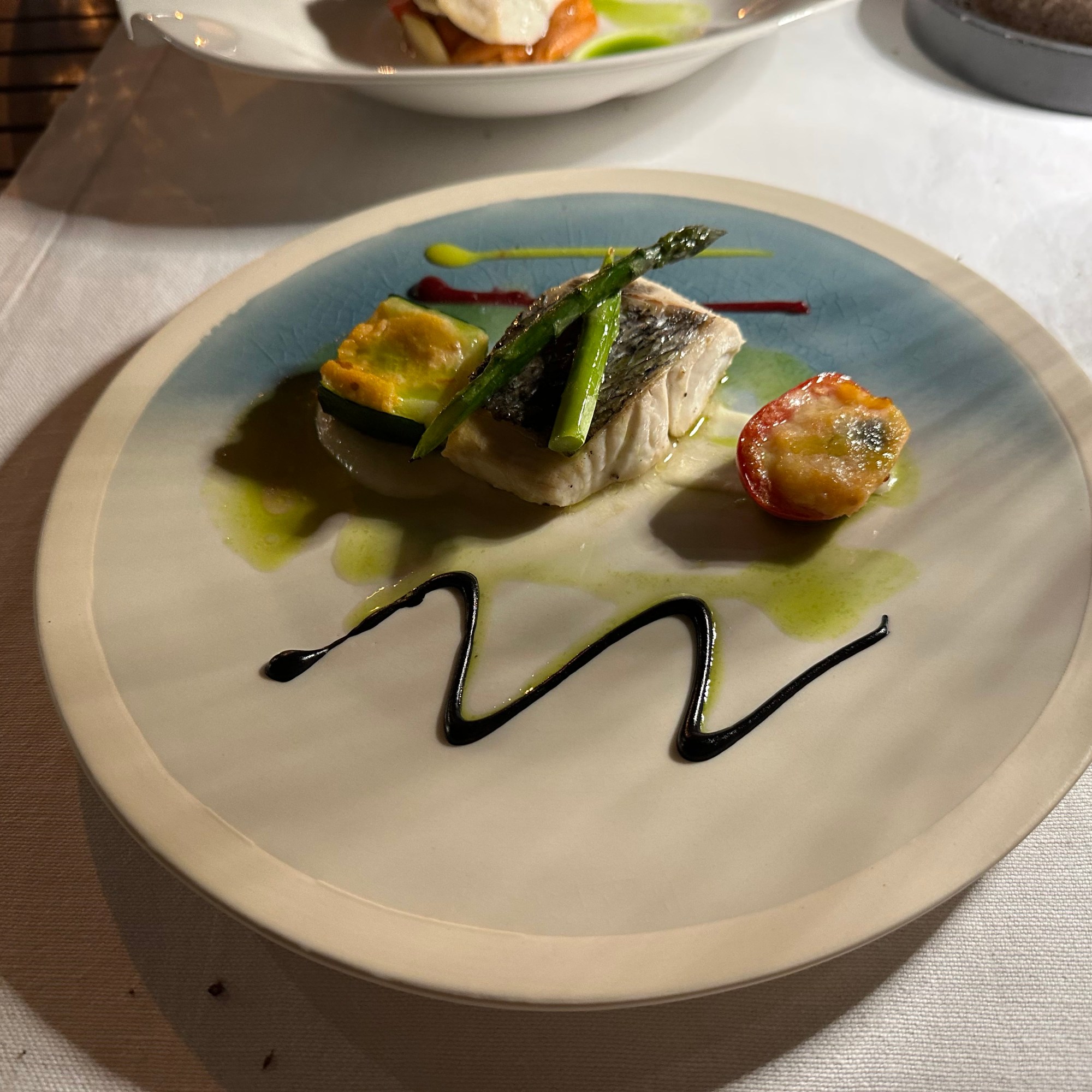
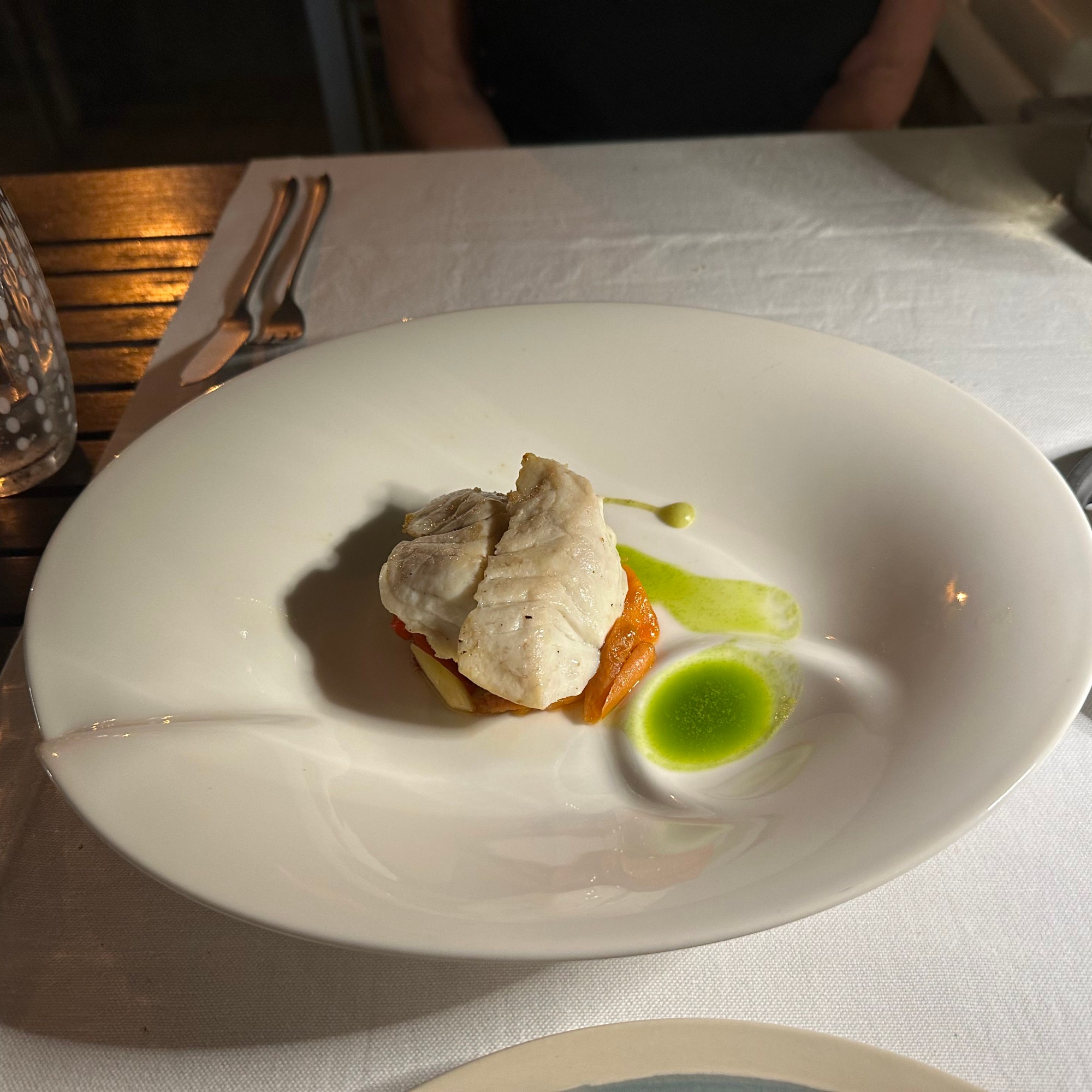
Praiano also hosted the first of three Michelin-starred gastronomic dinners of the trip. Plus, a ridiculous perch over the Tyrrhenian Sea on the Amalfi Coast:

From the Amalfi Coast, we drove southeast for a couple of days in Matera, Italy’s oldest city:
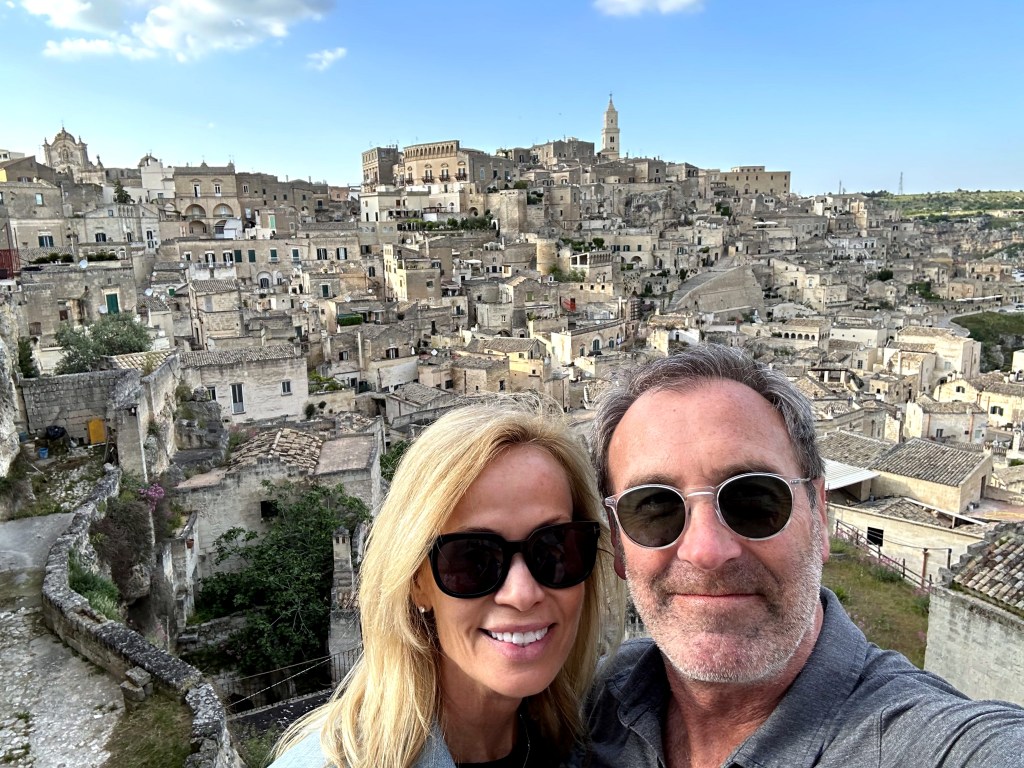
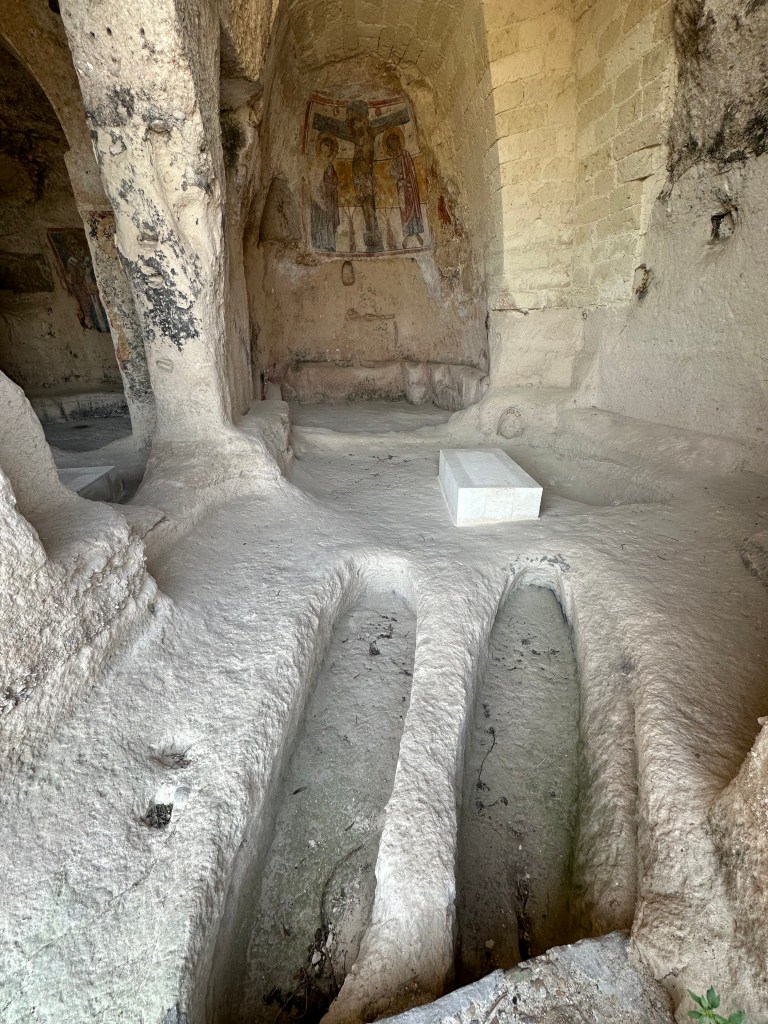
Similar to our experience in Capadocica in Turkey, Matera sported tons of centuries-old troglodite homes, churches, and tombs:
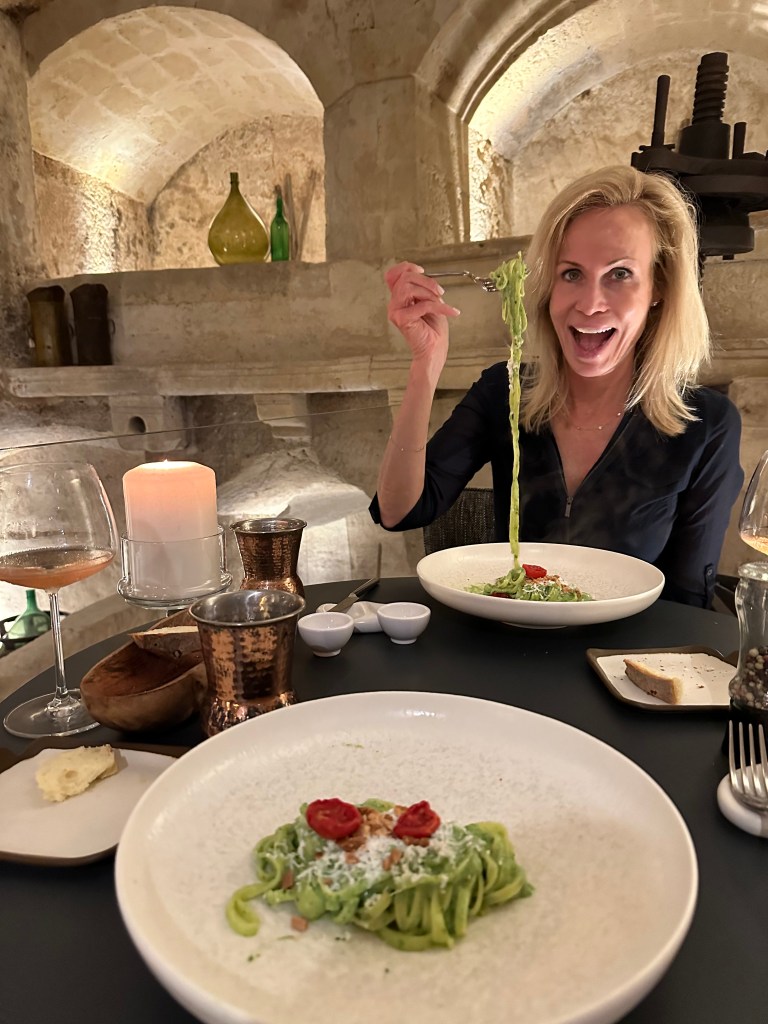
And cave restaurants, too:
Our last night on the Italian peninsula:

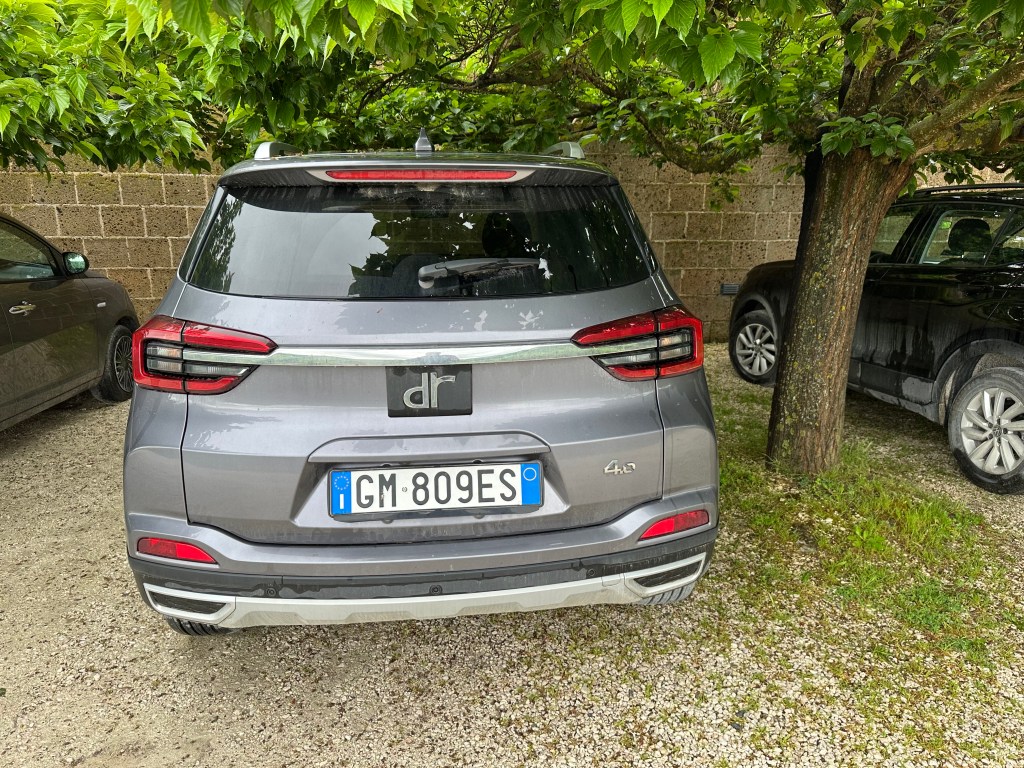
The next morning, we surrendered our ride for the past 3 weeks (a dr, a brand none of us – not even KJQ – had heard of before), and flew to the island of Sardinia:
Sardinian Break

Between the end of one 3-week road trip, and the start of the next, we built into the itinerary a little down time on the the Costa Rei on the southeastern coast of Sardinia.
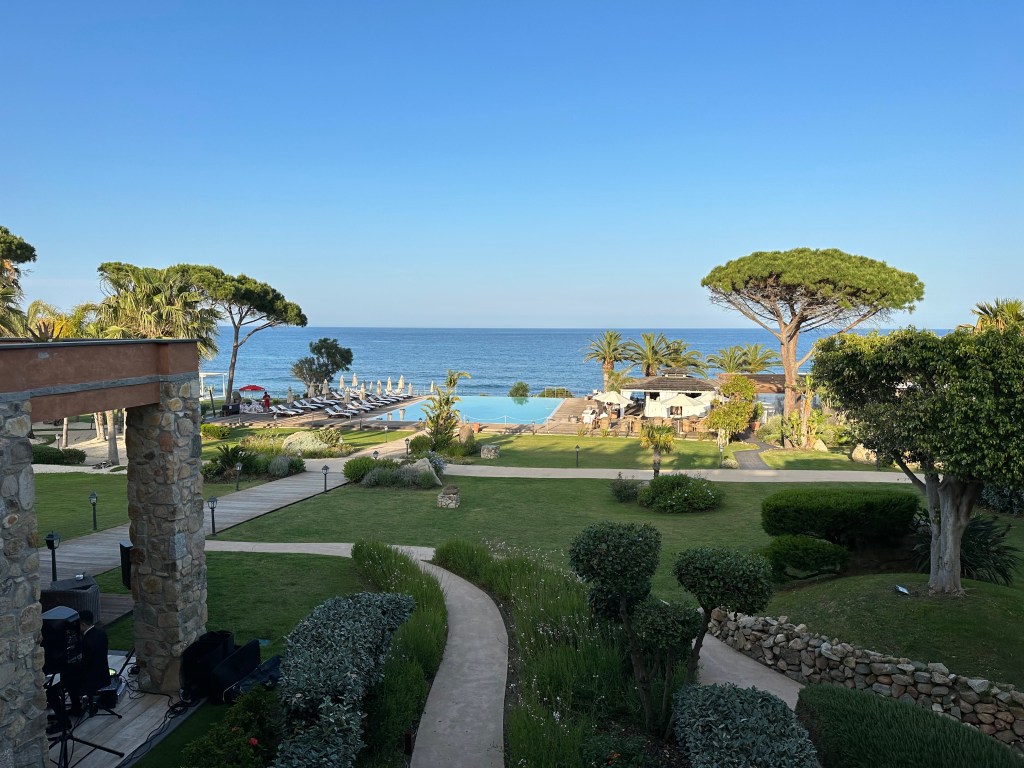
Not a lot to report – a few miles of walking each morning along the beach:

And some killer seafood, including and in particular, Sardinian oysters. (We thought these were the best we had every tasted until we later encountered even better ones in Normandy.)

Then an overnight ferry to Palermo, when we’d start another road trip leg across Sicily.

Sicily Road Trip

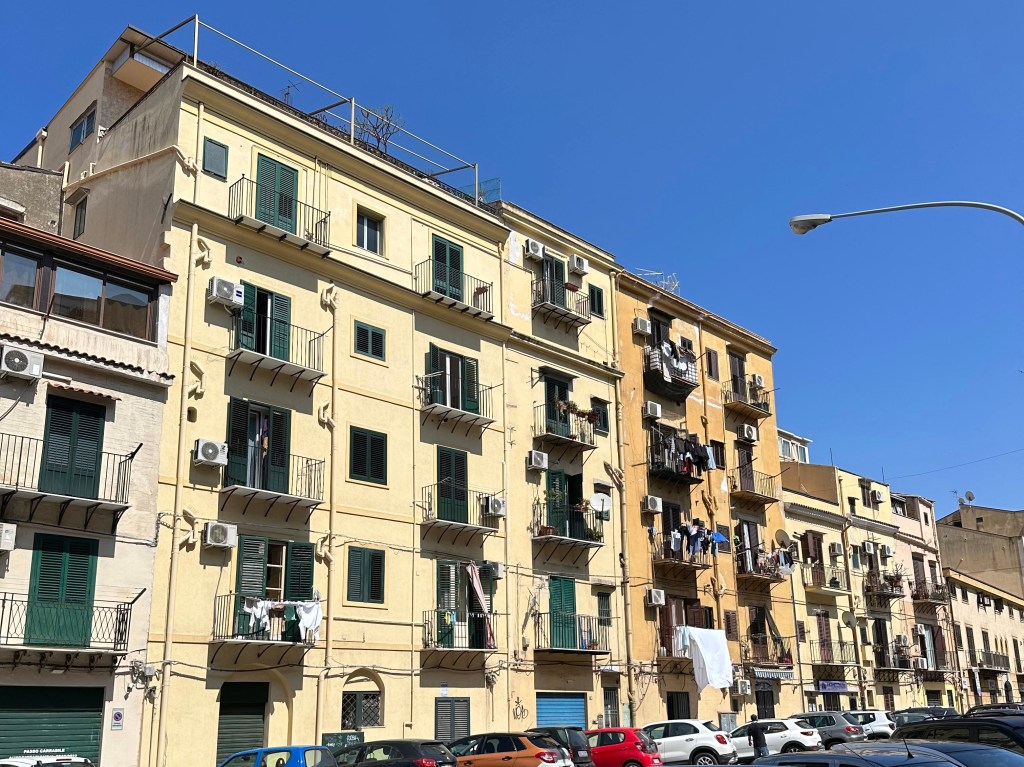
The surprisingly vibrant and enjoyable city of Palermo – very different from the gritty and sketchy image that we had prior to our time there:

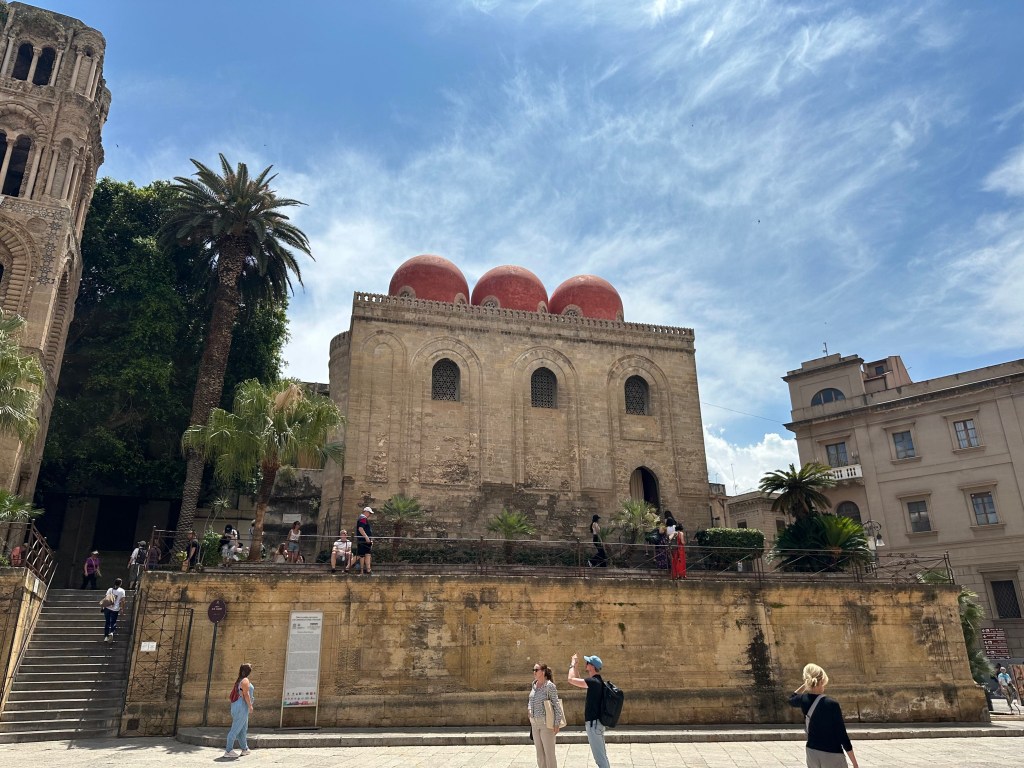
And the first of many cool encounters with Arabo-Norman architecture in Sicily at the city’s 12-century Church of San Cataldo:

And our introduction to the ubiquity of pistachios on everything in Sicily:

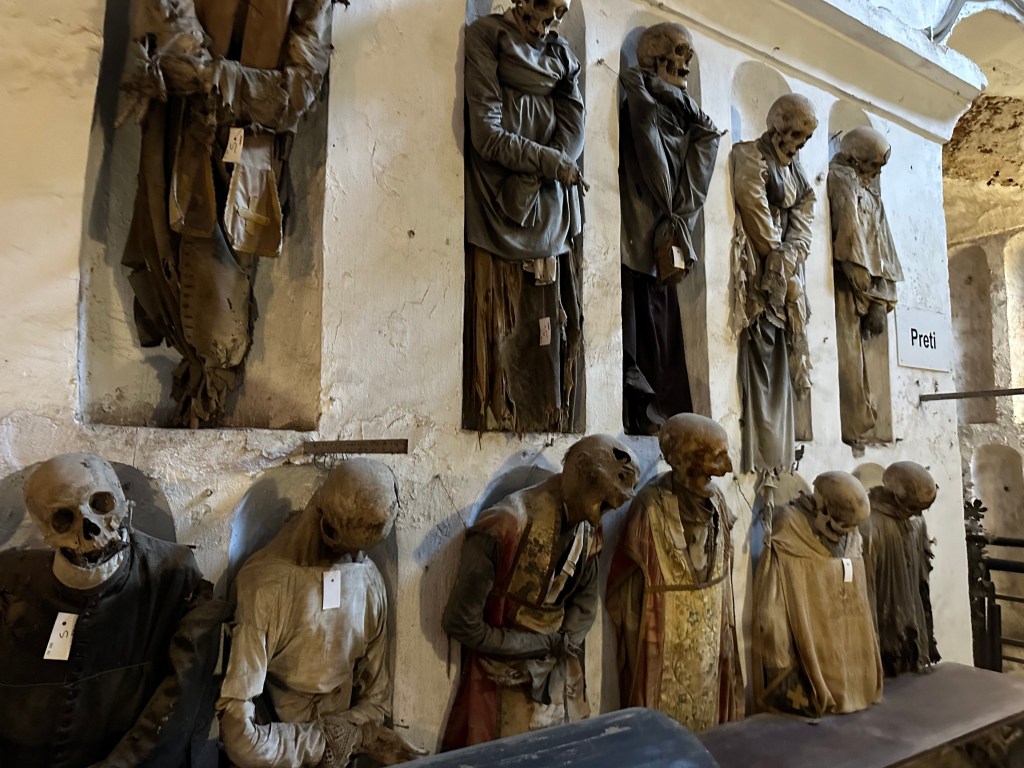
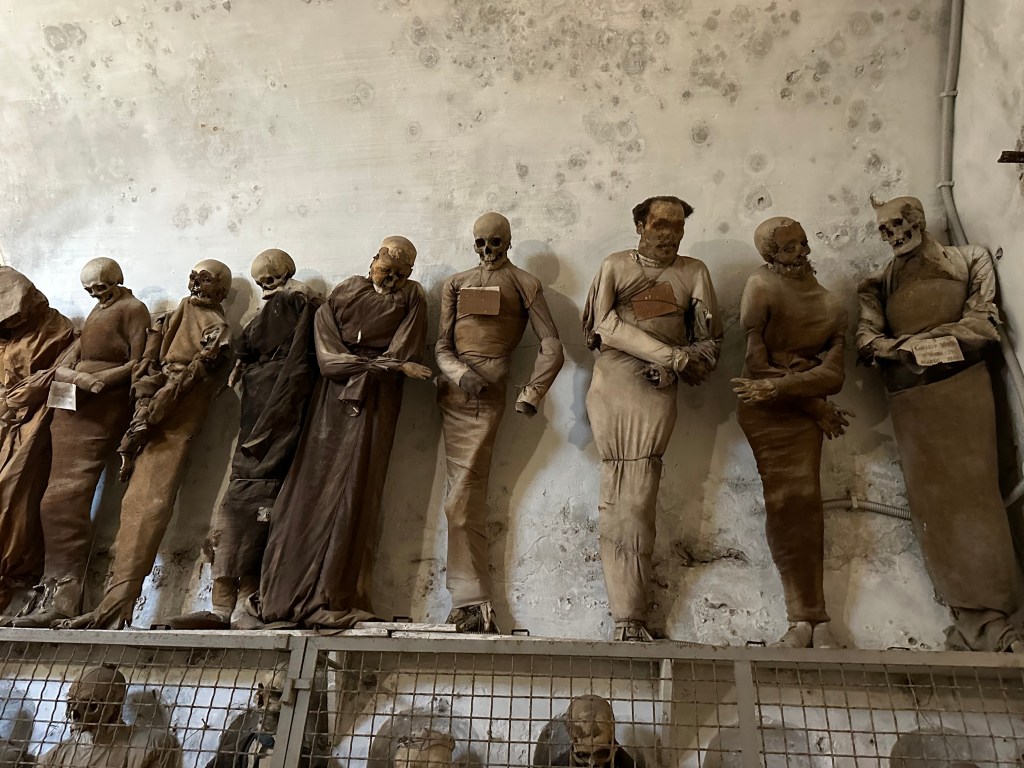
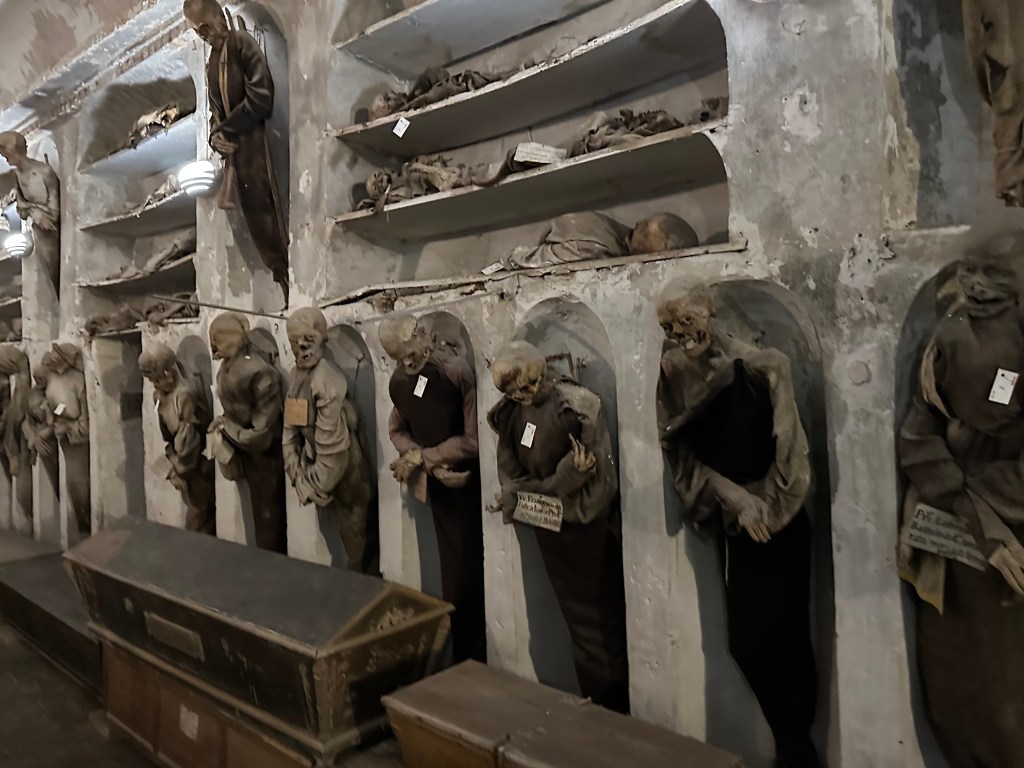
And the most horrific of the catacombs of our entire journey below Palermo’s Capuchin Monastery:

And a cool, 3-hour street food tour, featuring a spleen sandwich (4/10: would not try again):

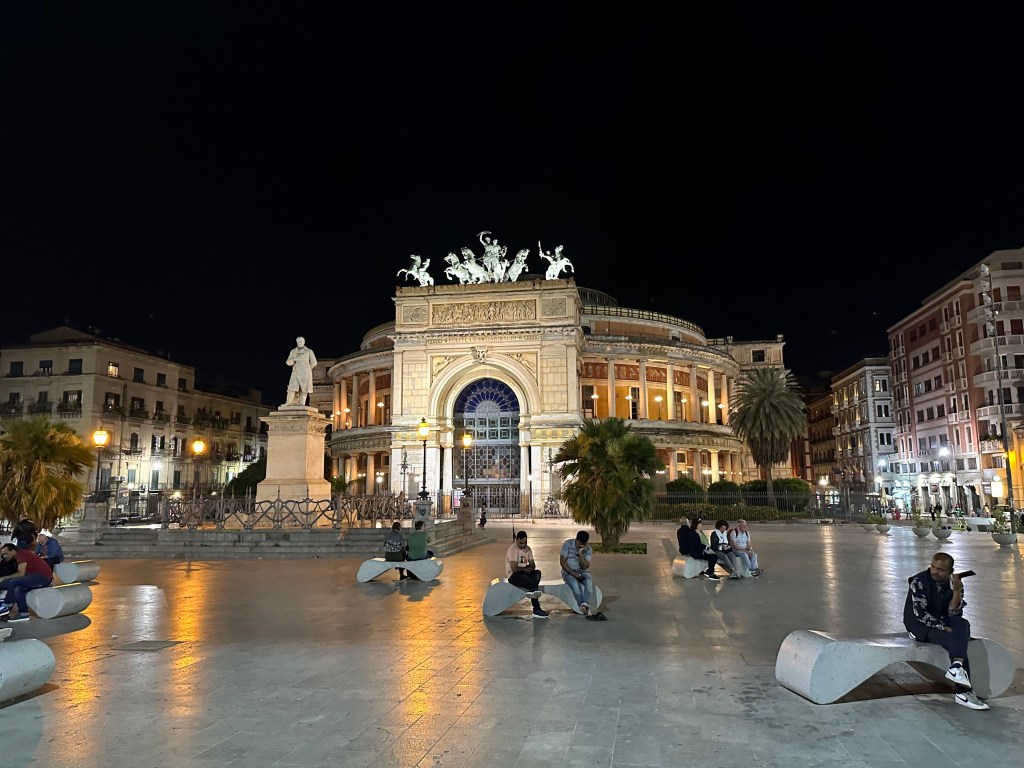
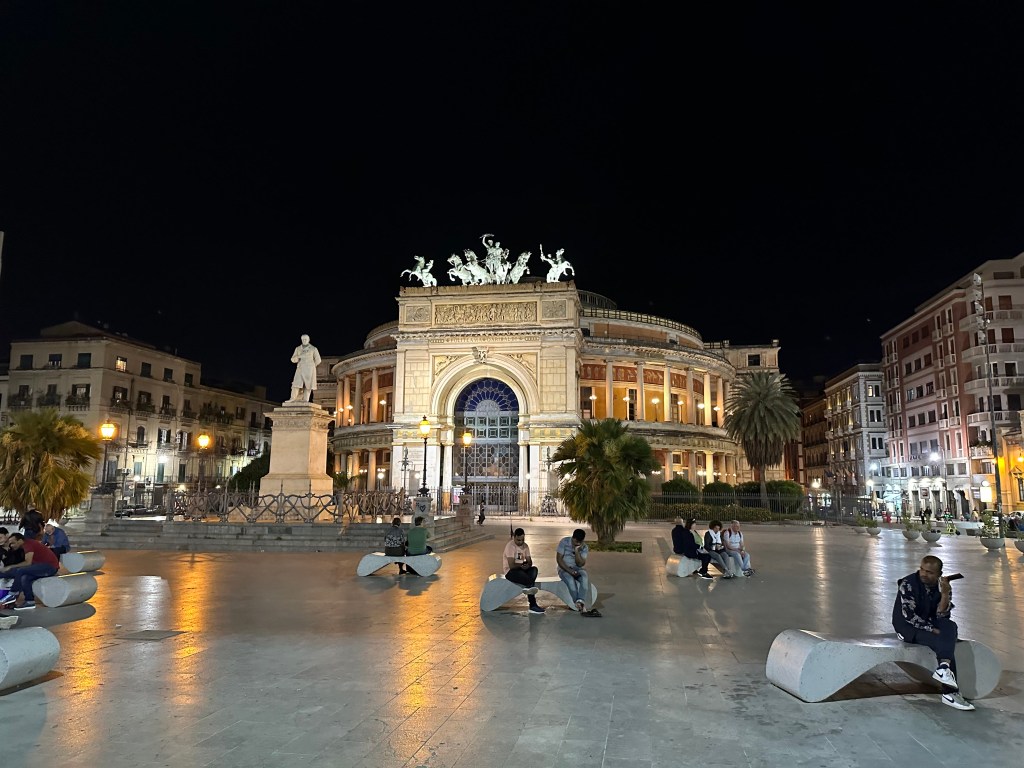
Our last evening in Palermo:
We drove from Palermo to the south-center of the island, to Agrigento, home to the most intact Doric Greek temples in the world, dating to 400 BC:

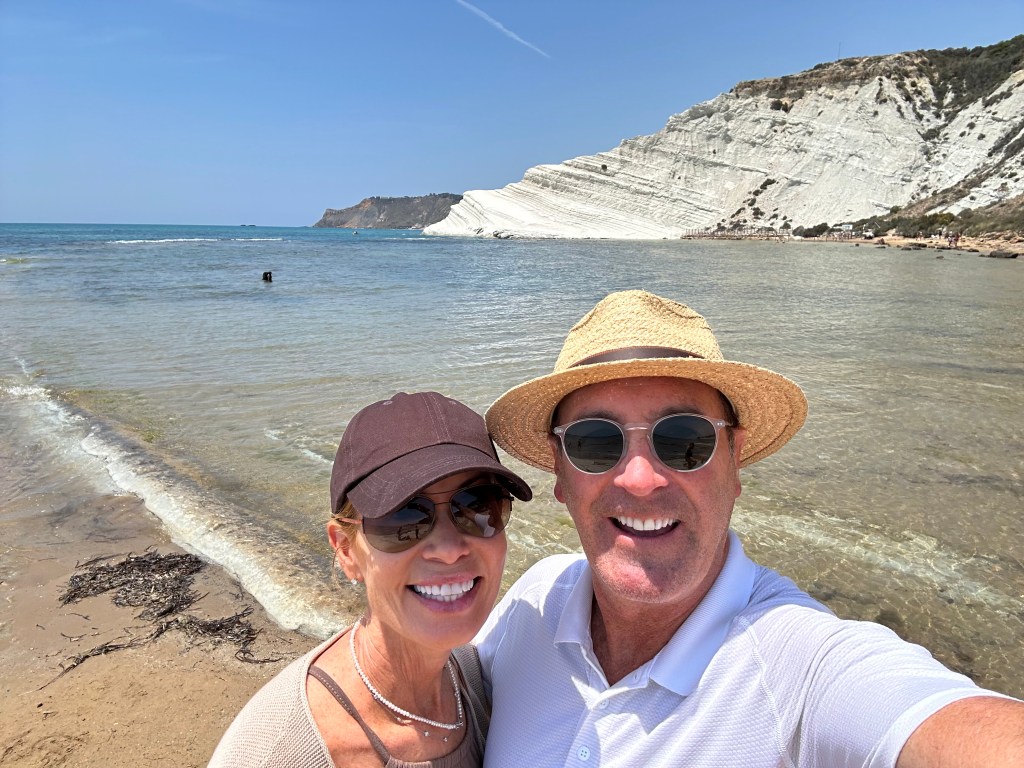
And spent a little time on the coast while we were there:
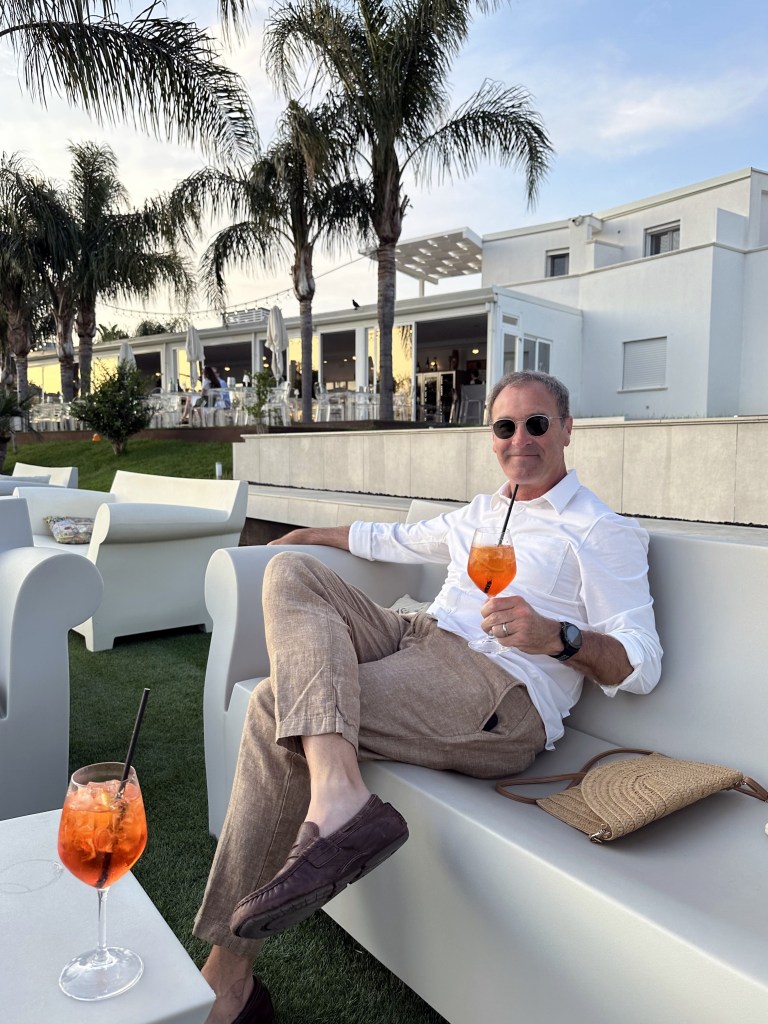
And continued the recommended daily doses of Aperol:
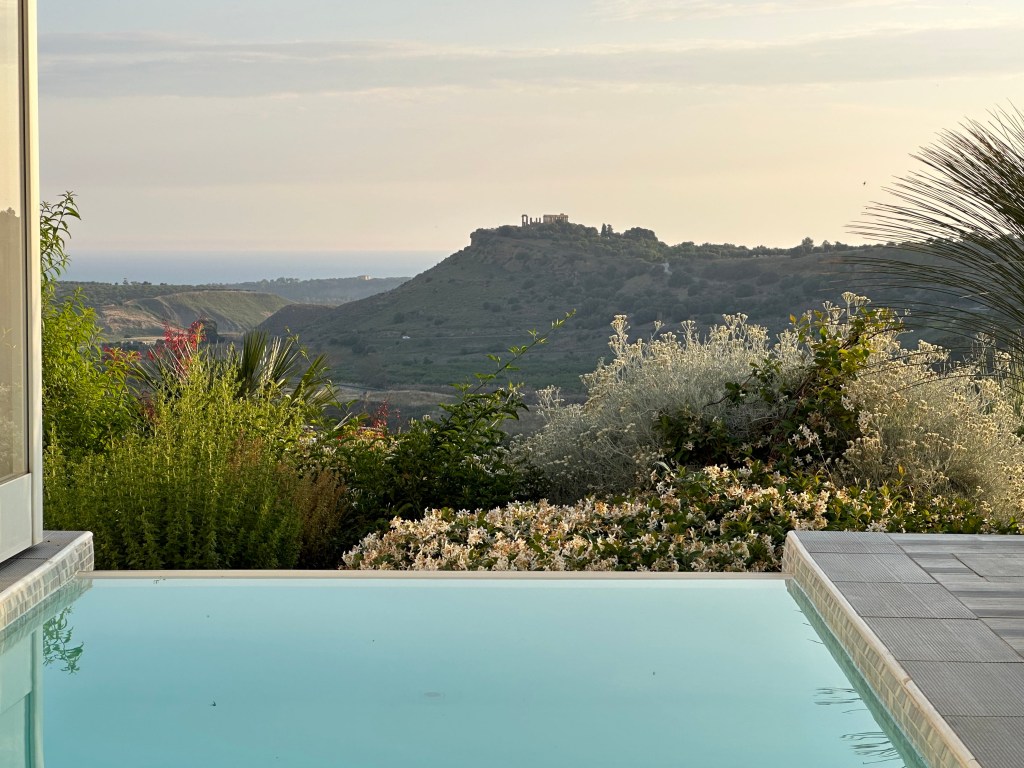
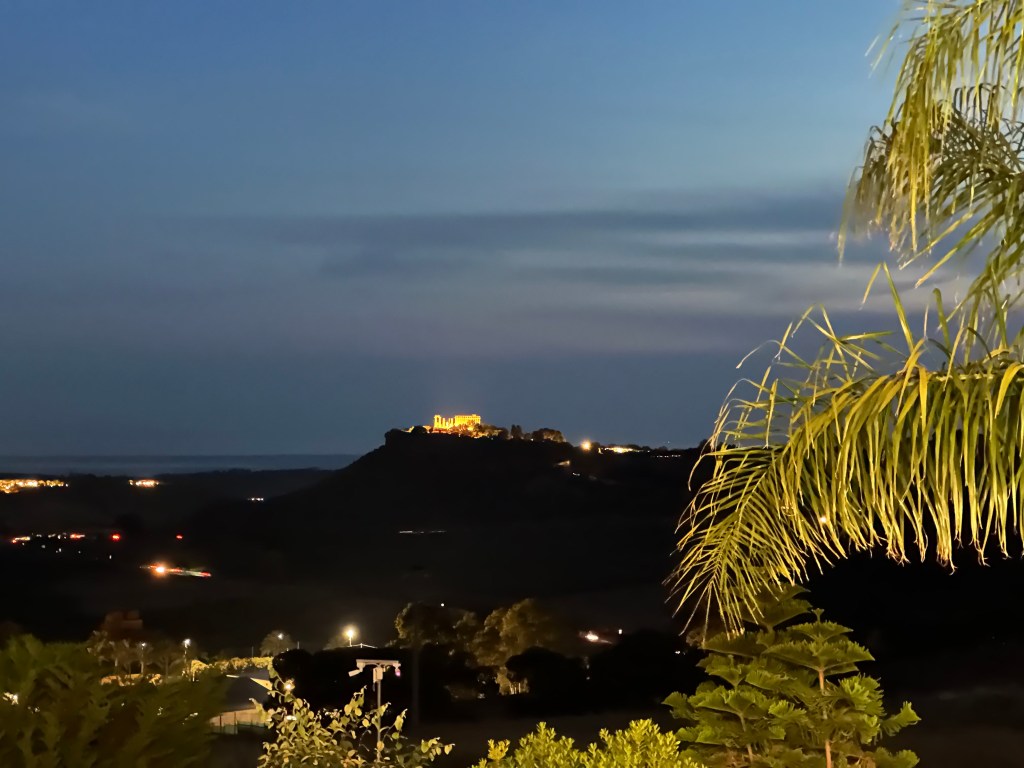
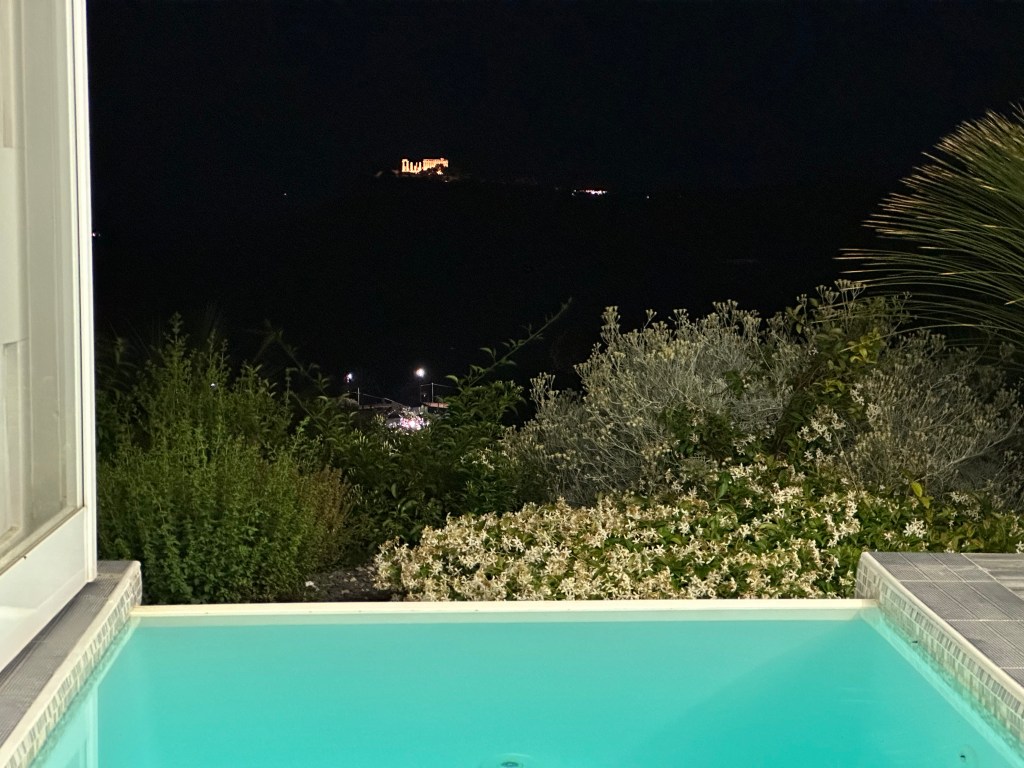
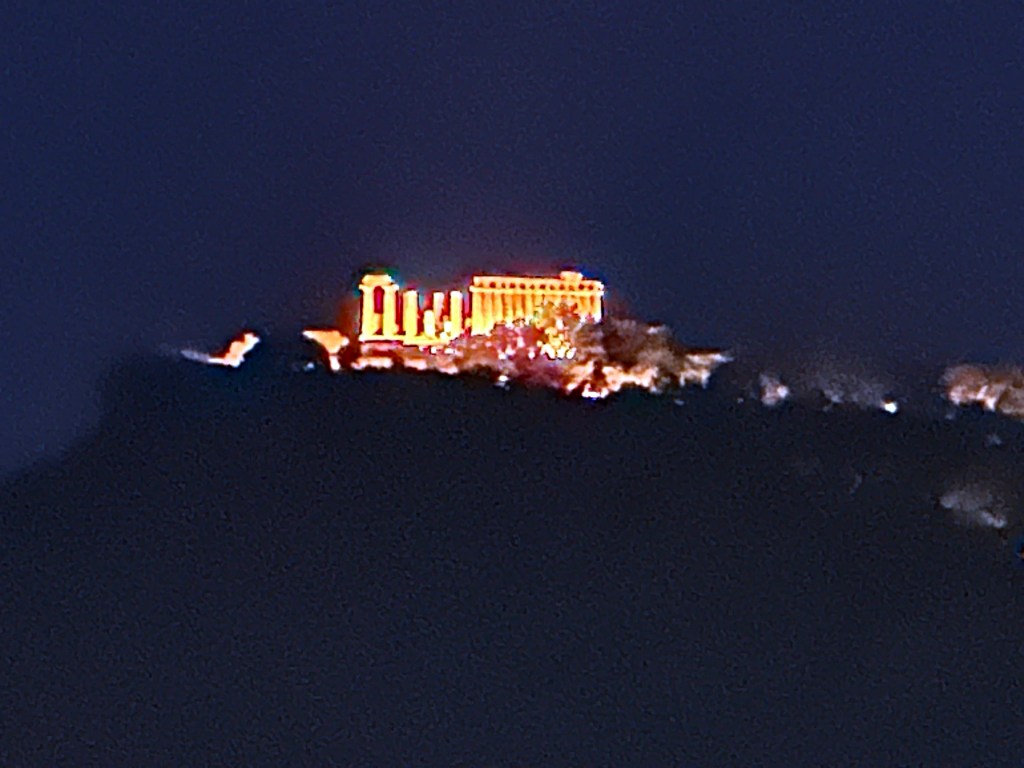
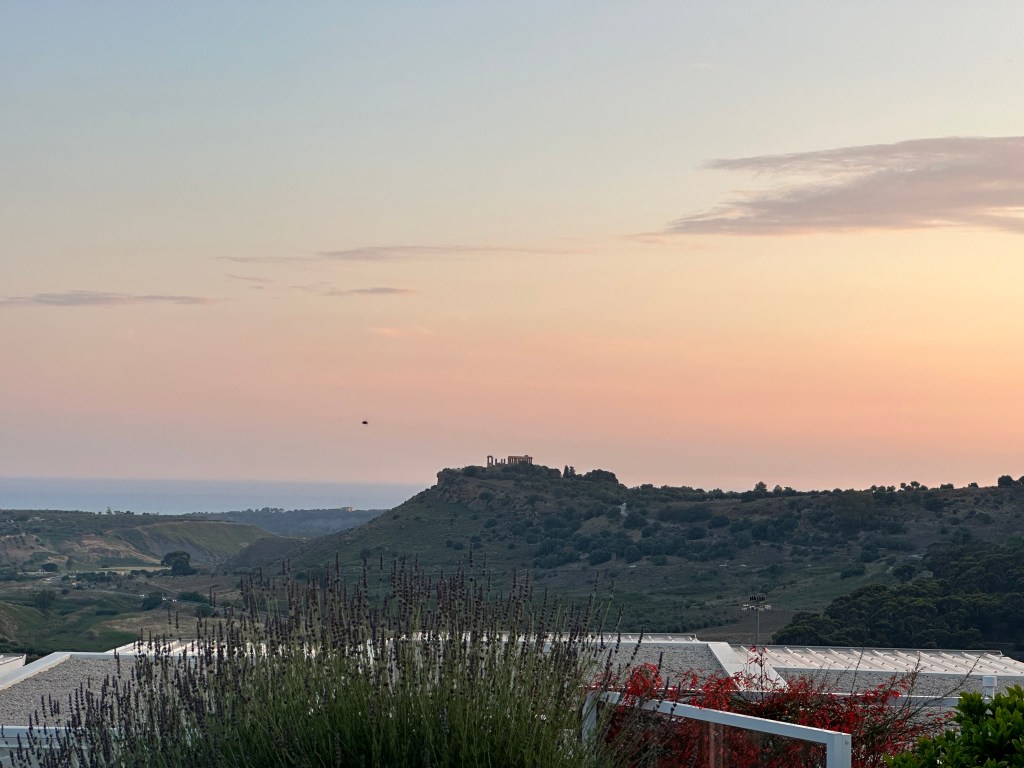
Final evening in Agrigento, with a view to the Temple of Juno and the sea:

From Agrigento, we headed due east to a cluster of Baroque towns, so called because they were all destroyed by an earthquake in 1796 and were all rebuilt in the Baroque style du jour. We based ourselves in the town of Modica for 6 days:

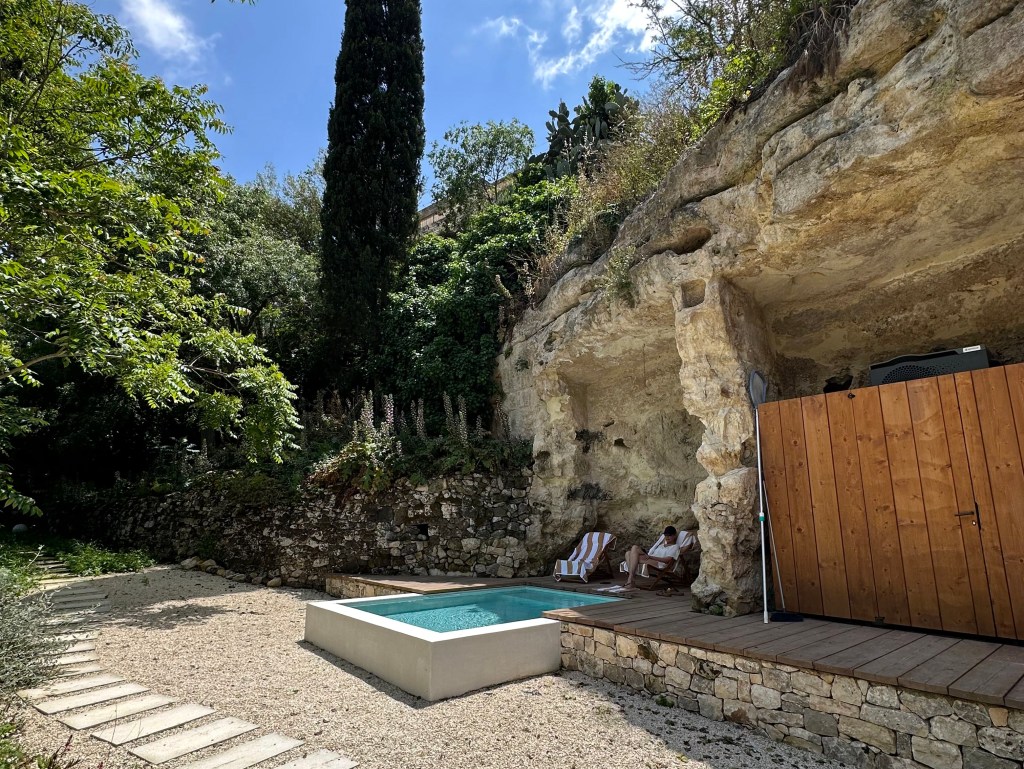
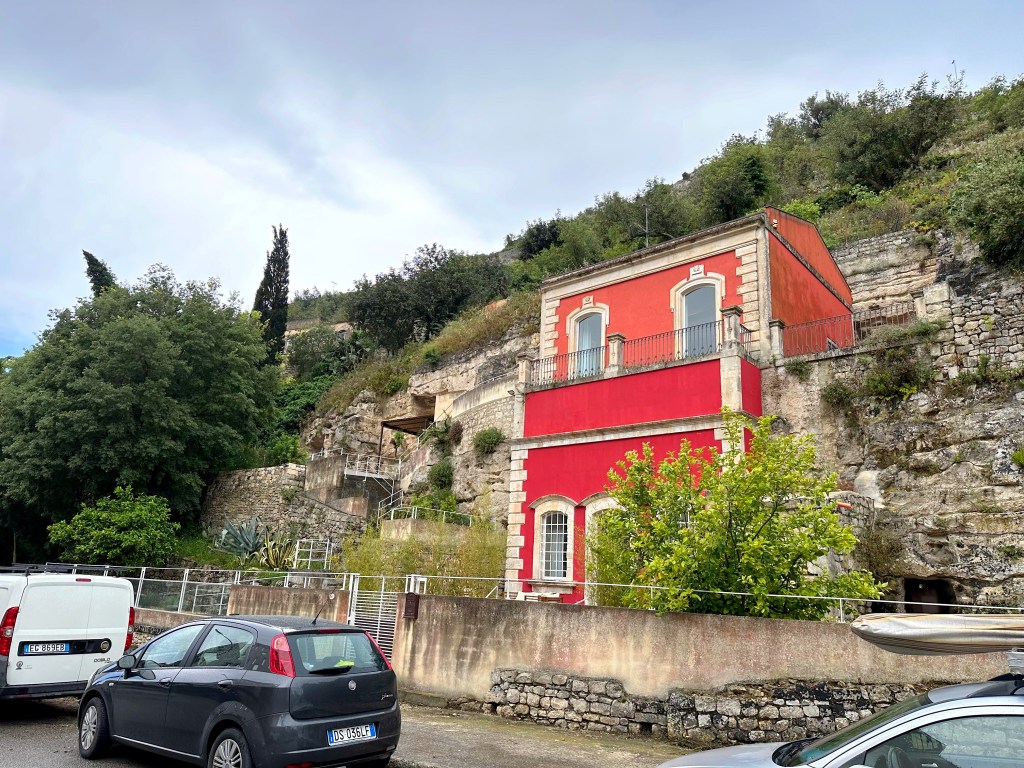
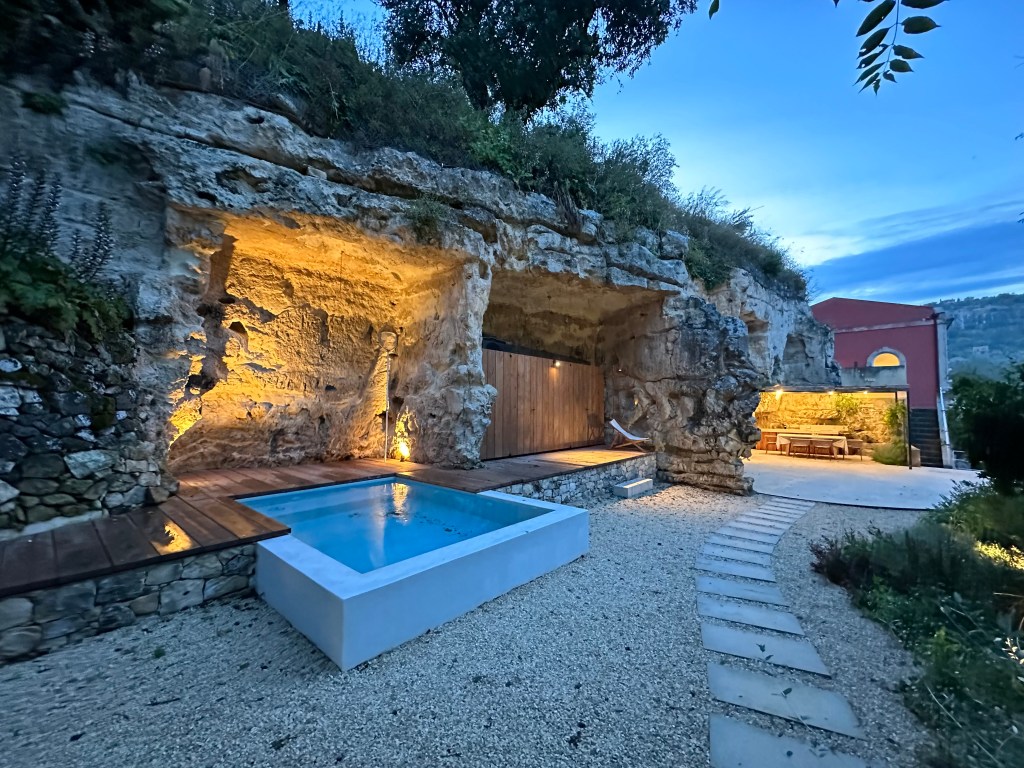
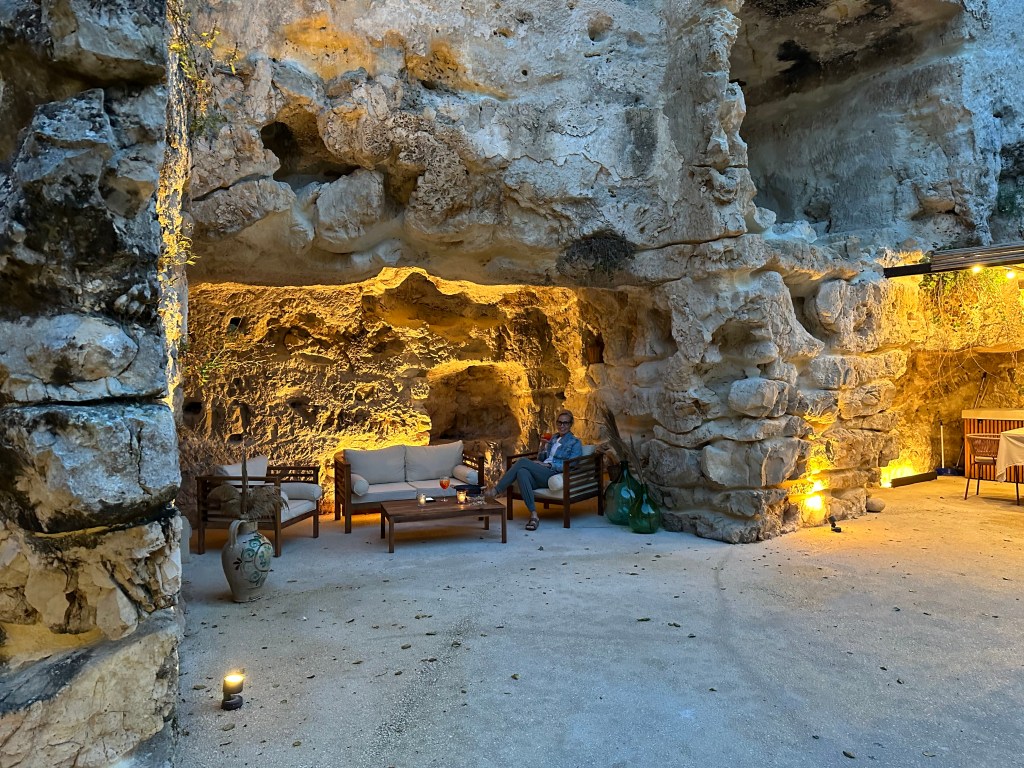
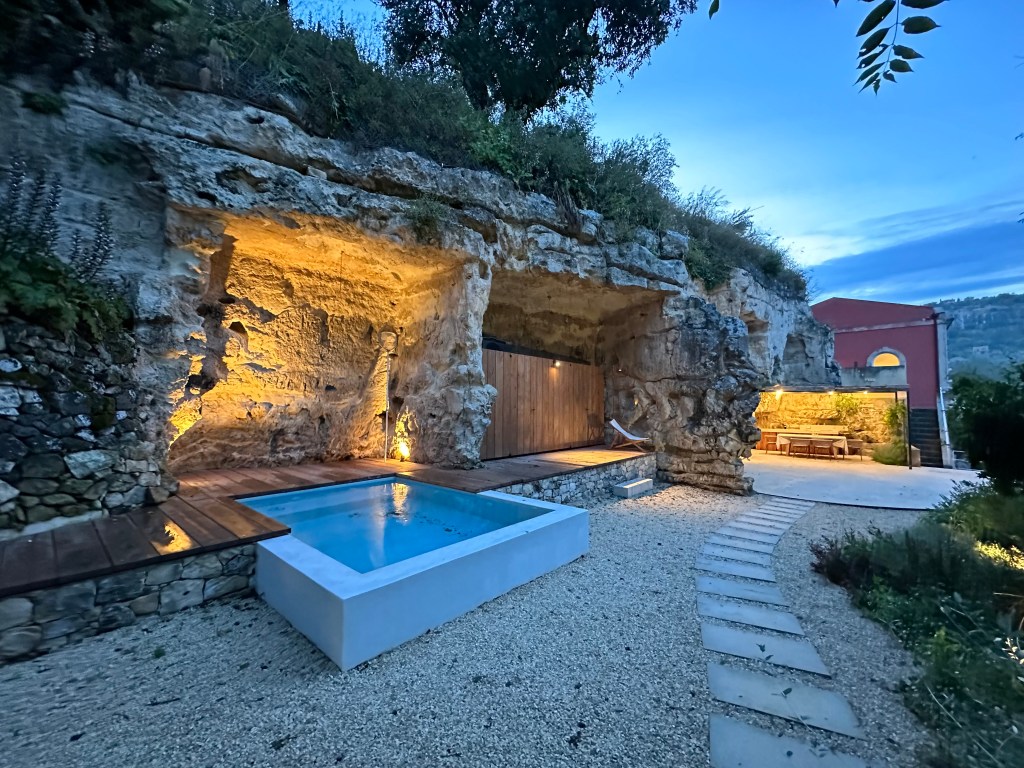
Which sported a pretty cool AirB&B that was built into a cliff:
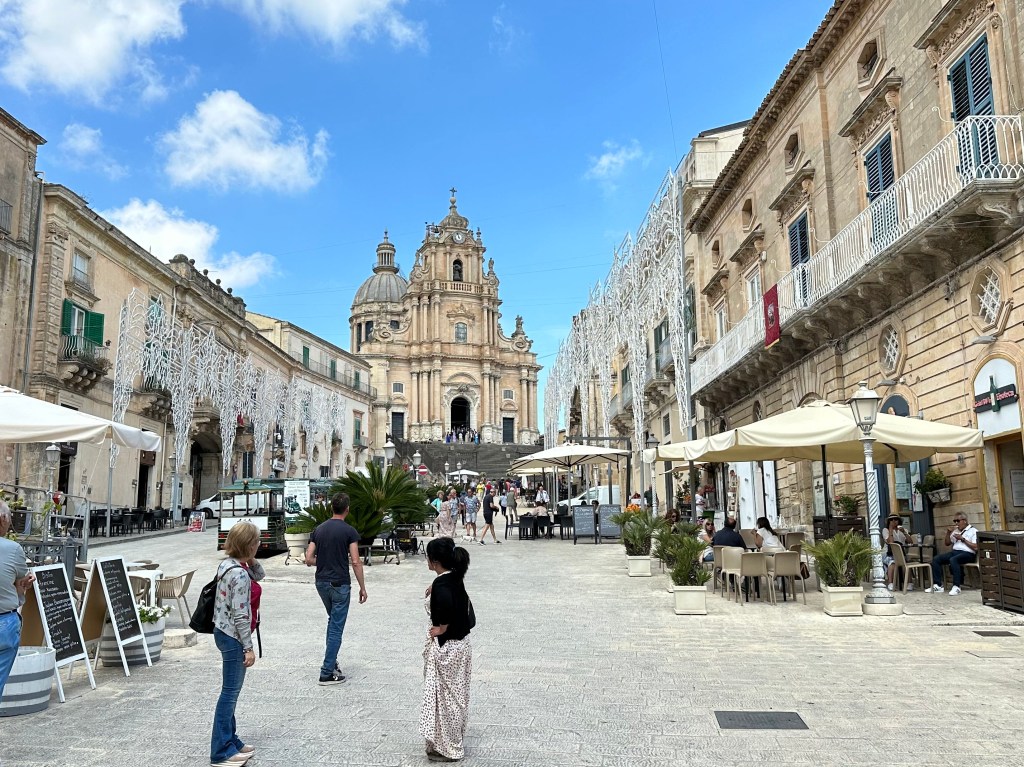
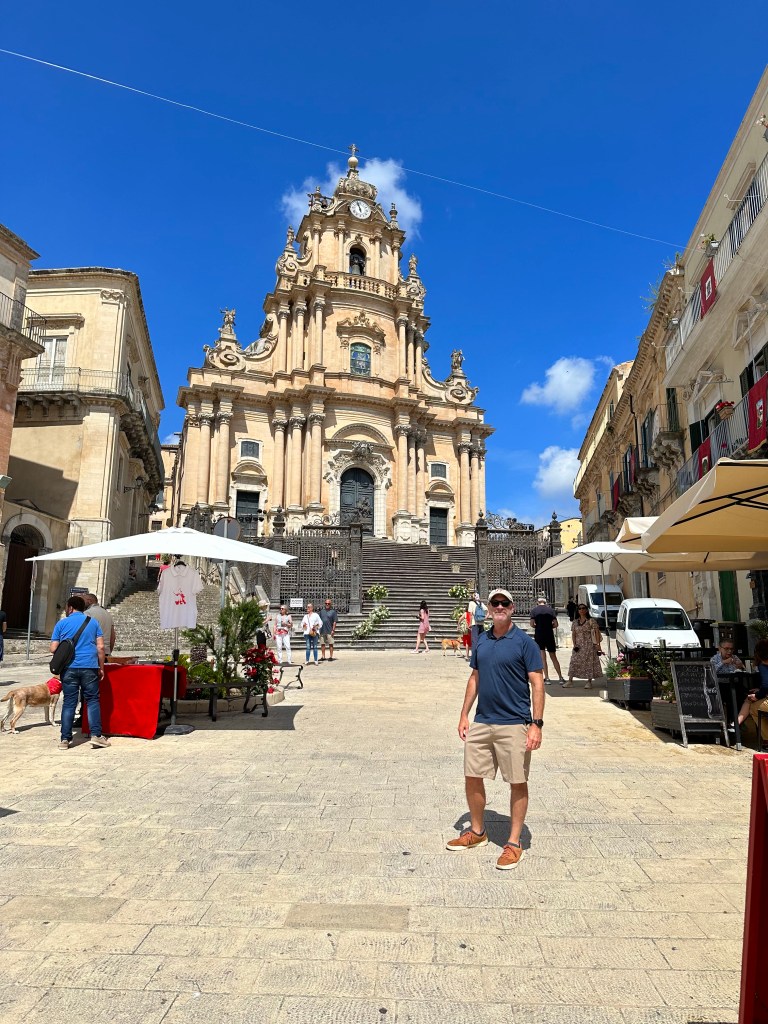
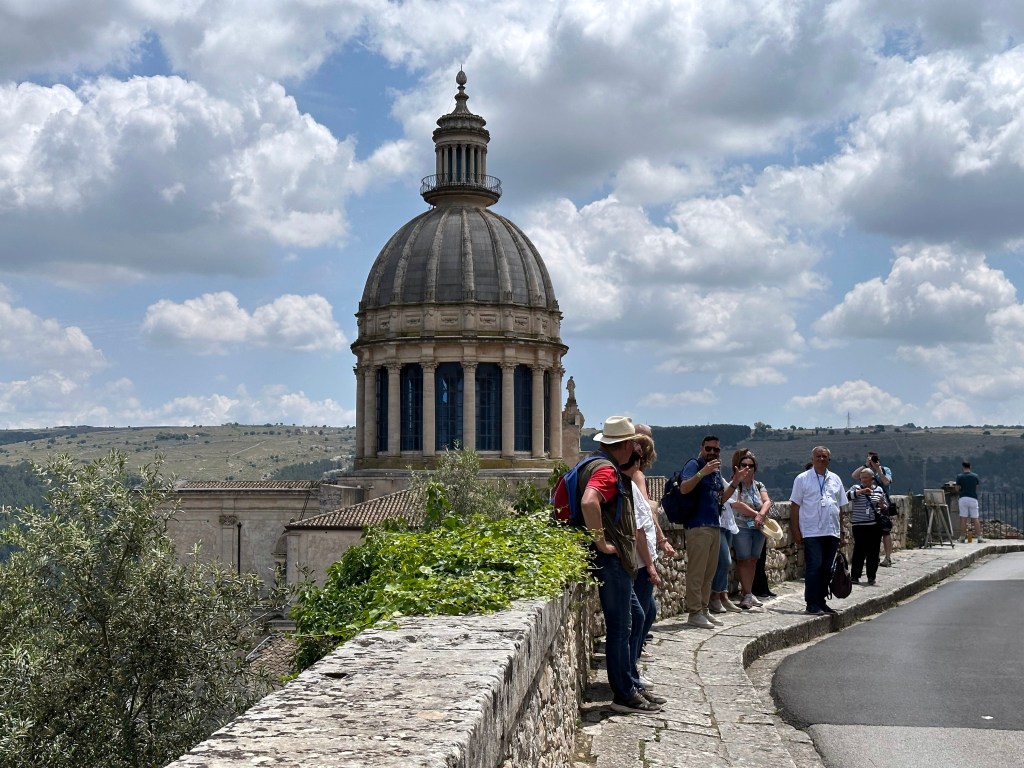
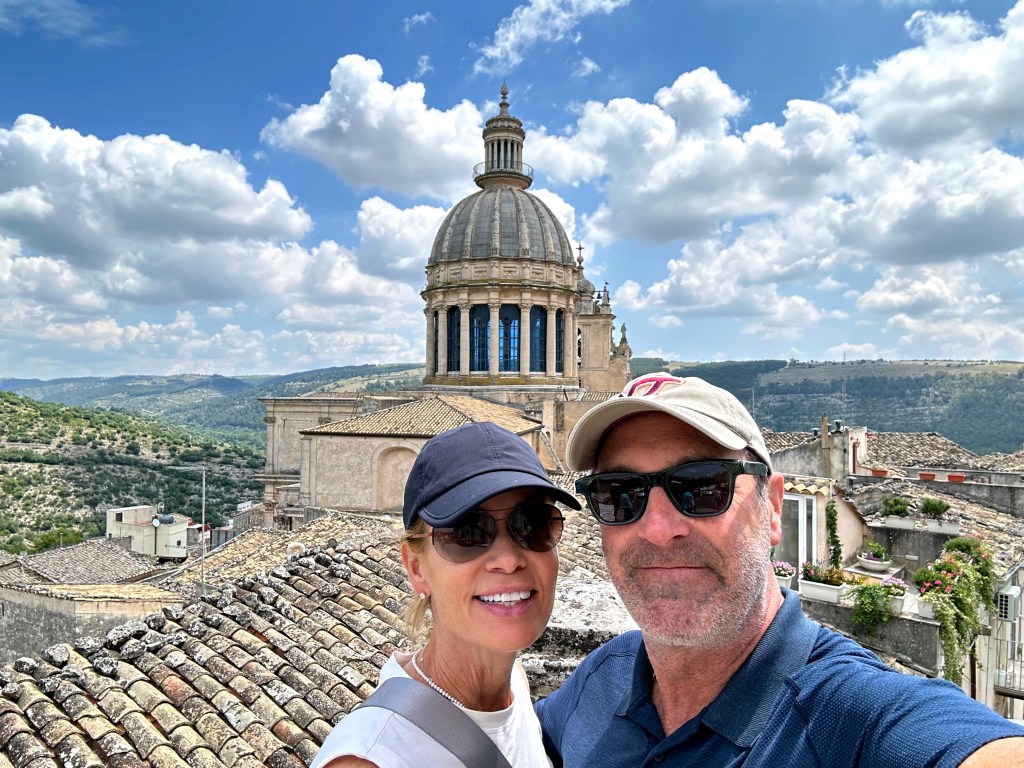
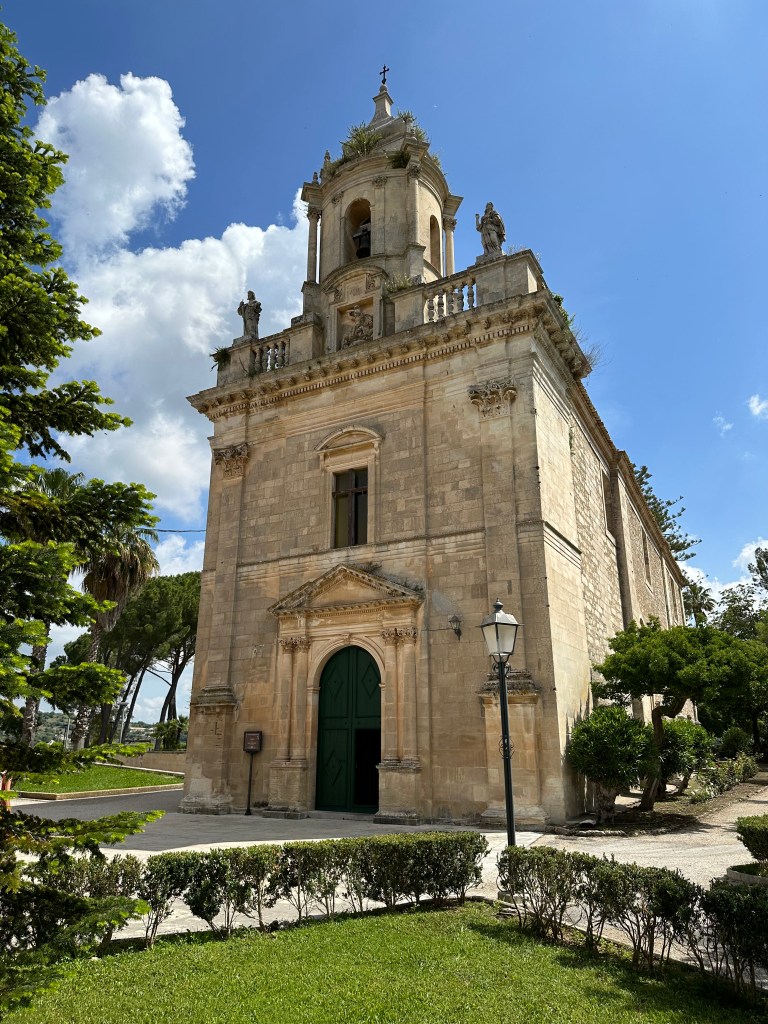
The Baroque Church of San Giorgo in the nearby town of Ragusa Ibla:

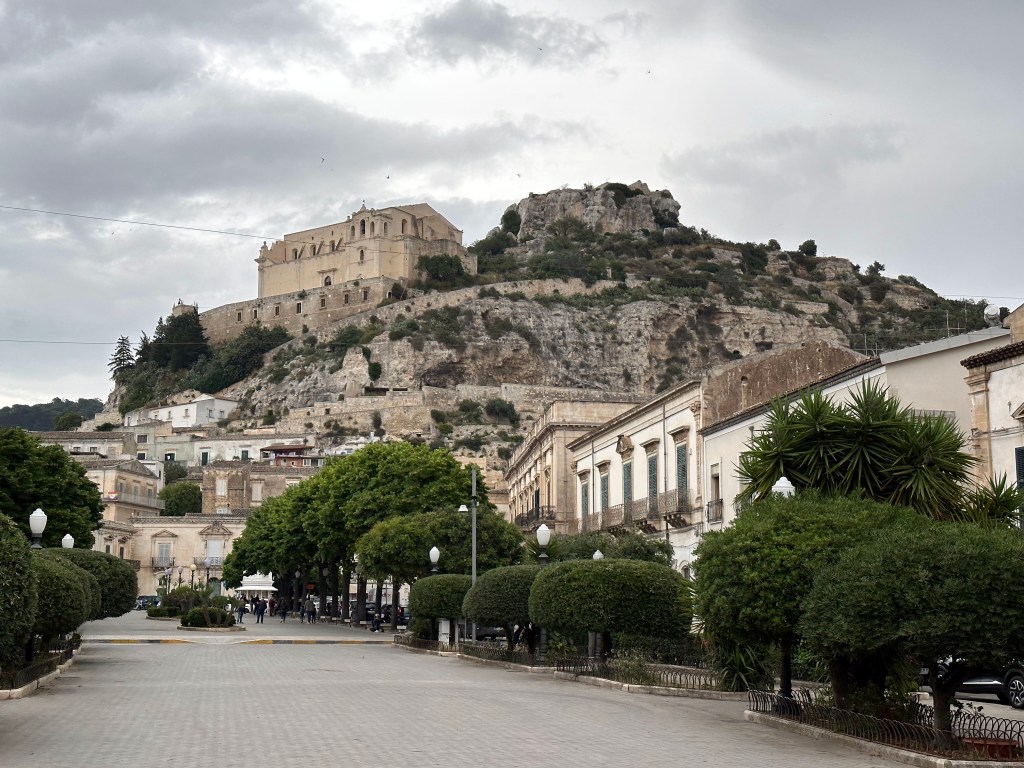
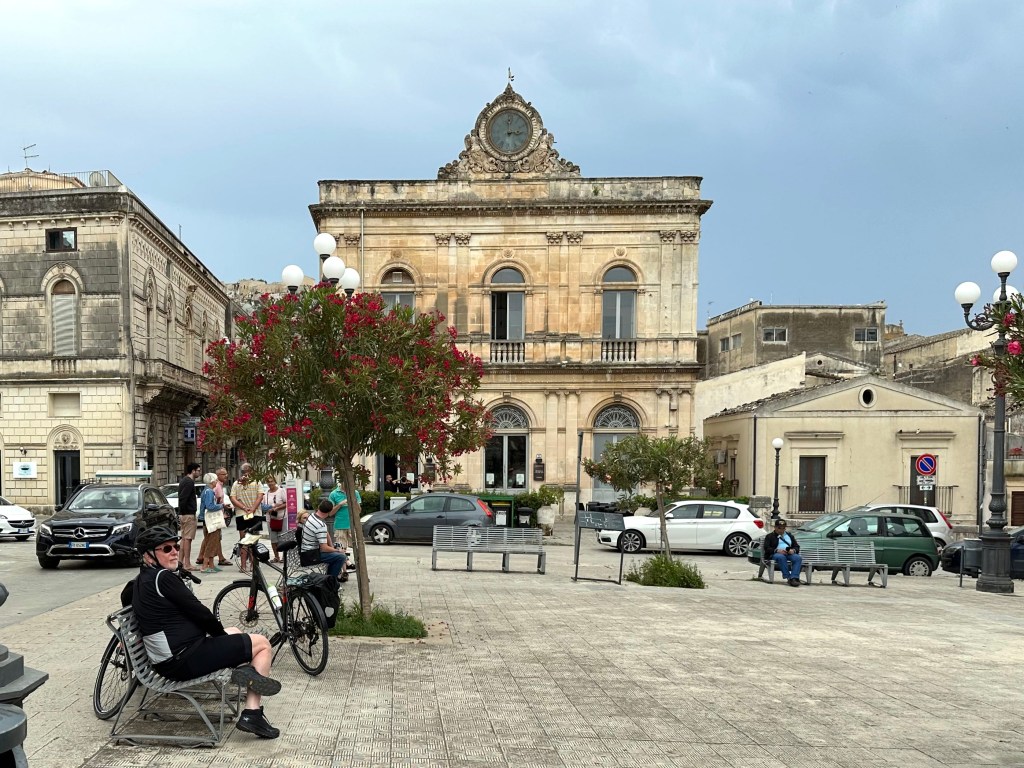
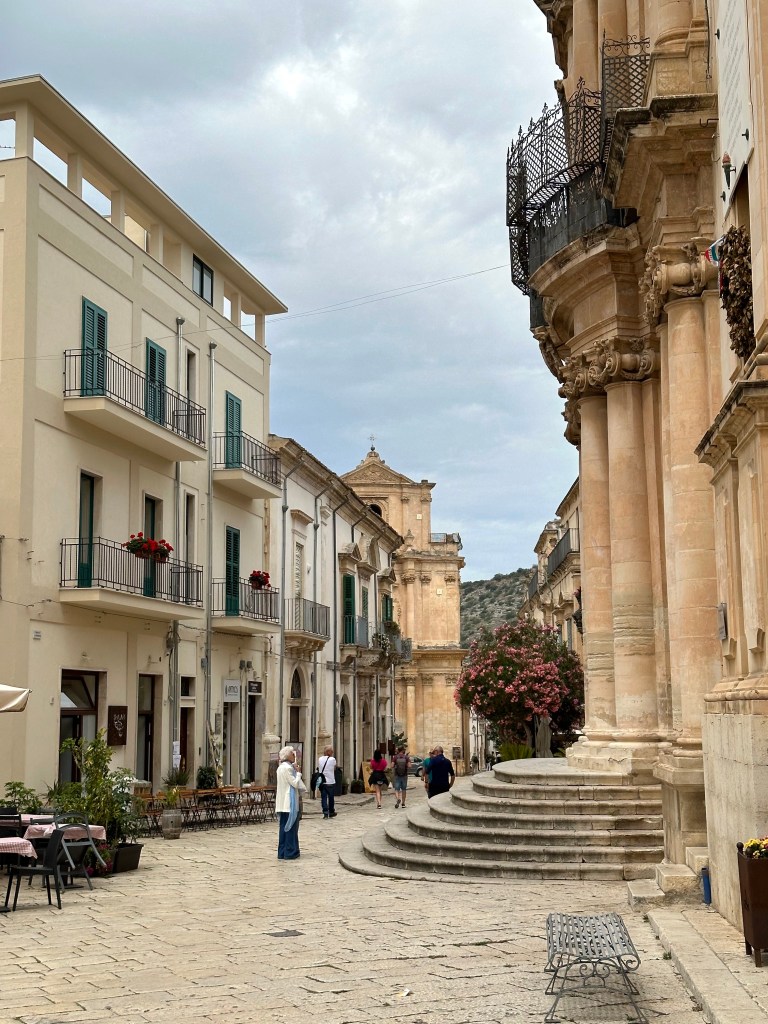
The main piazza (such as it is) of the Baroque town of Scicli:

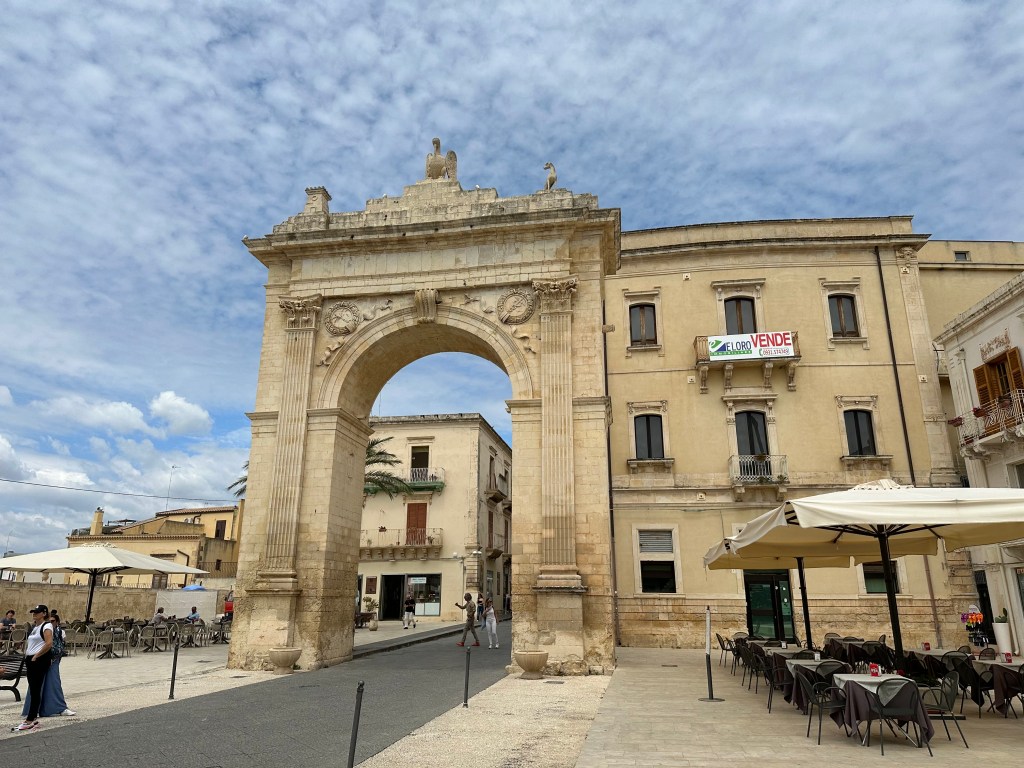
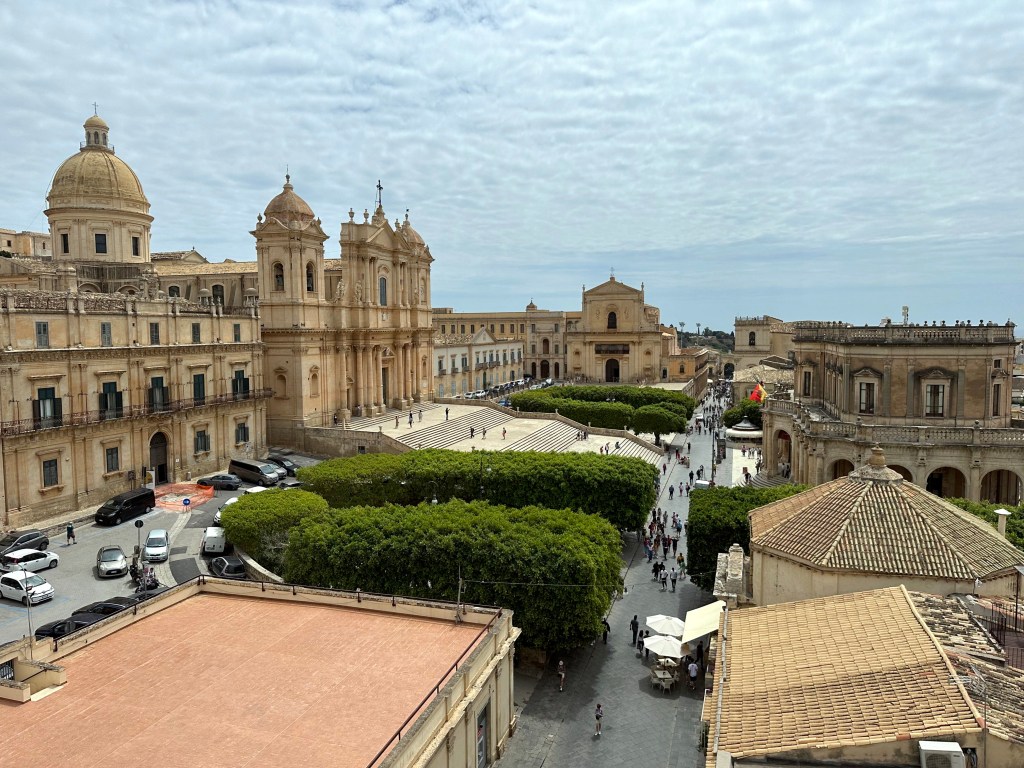
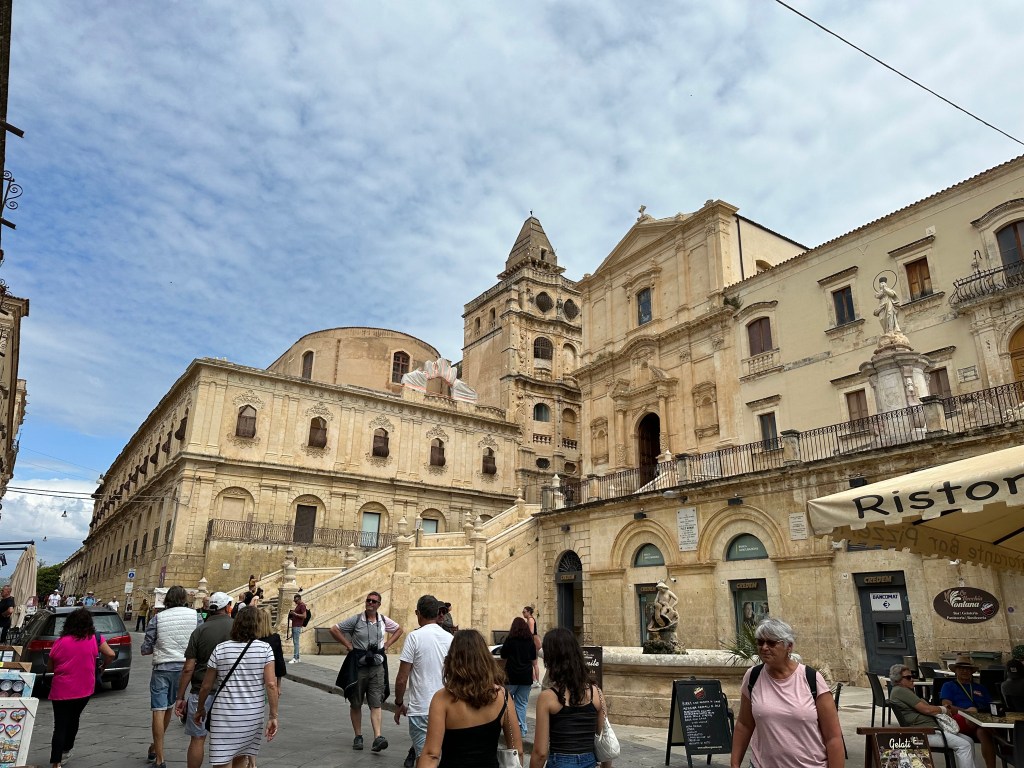
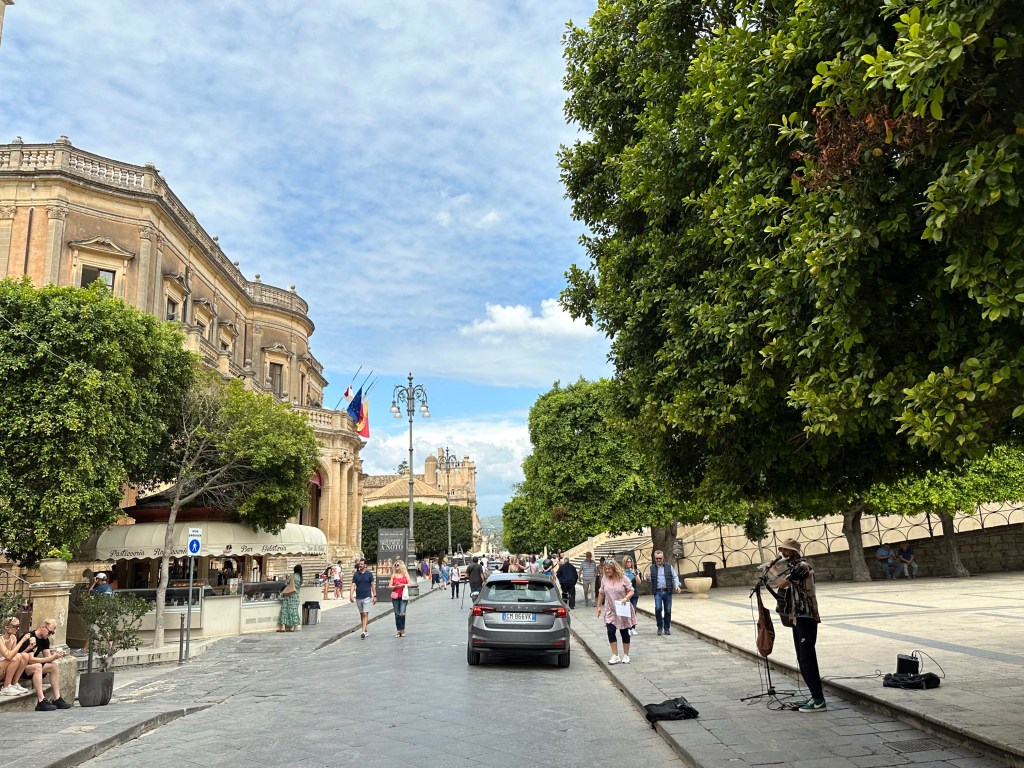
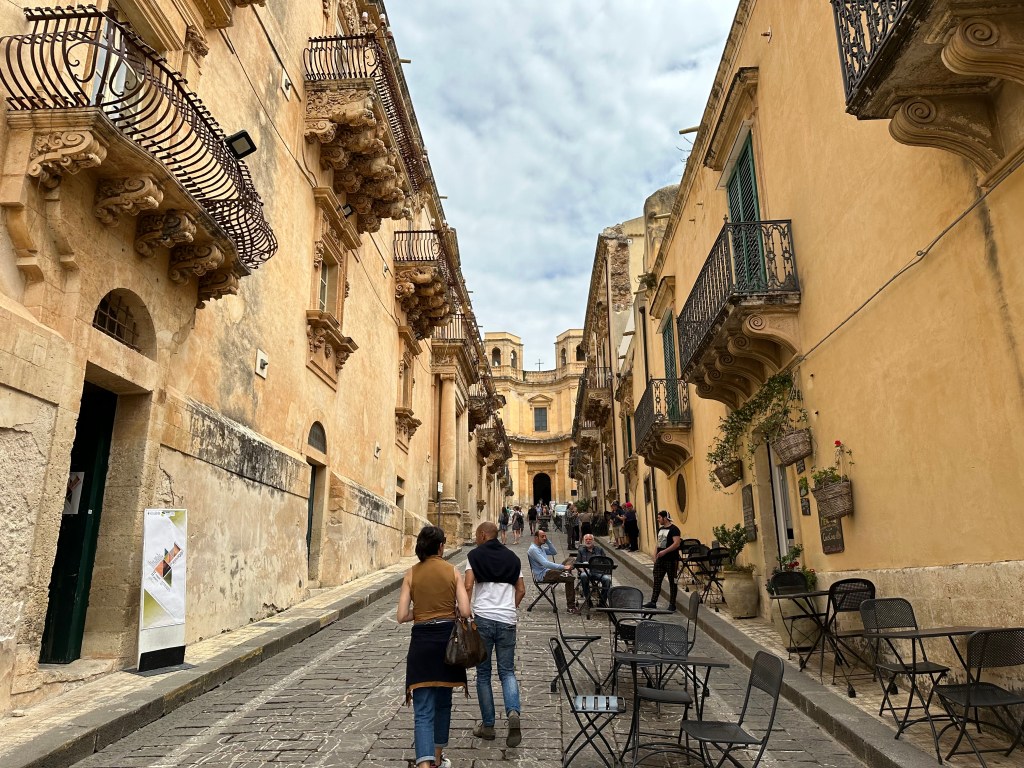
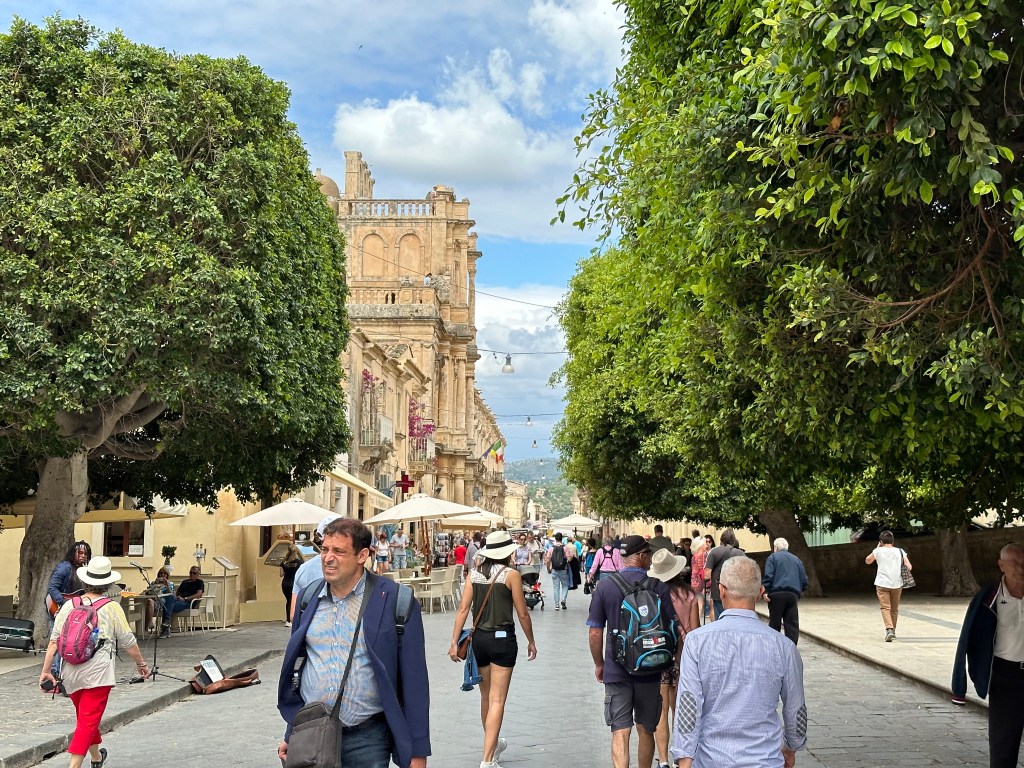
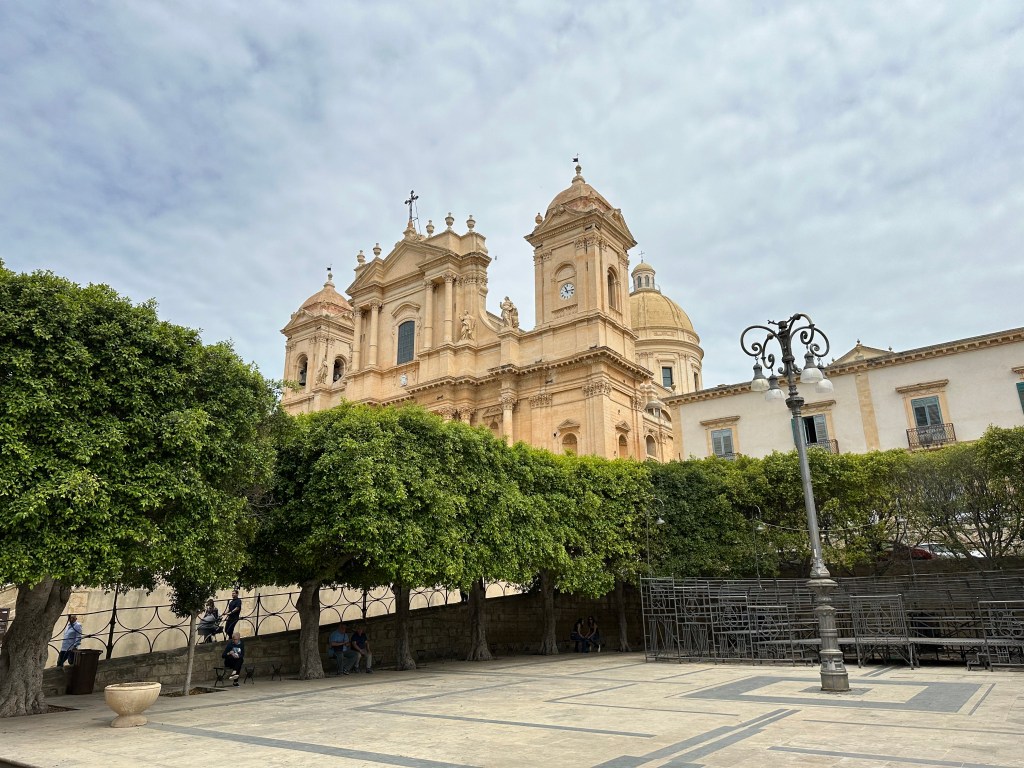
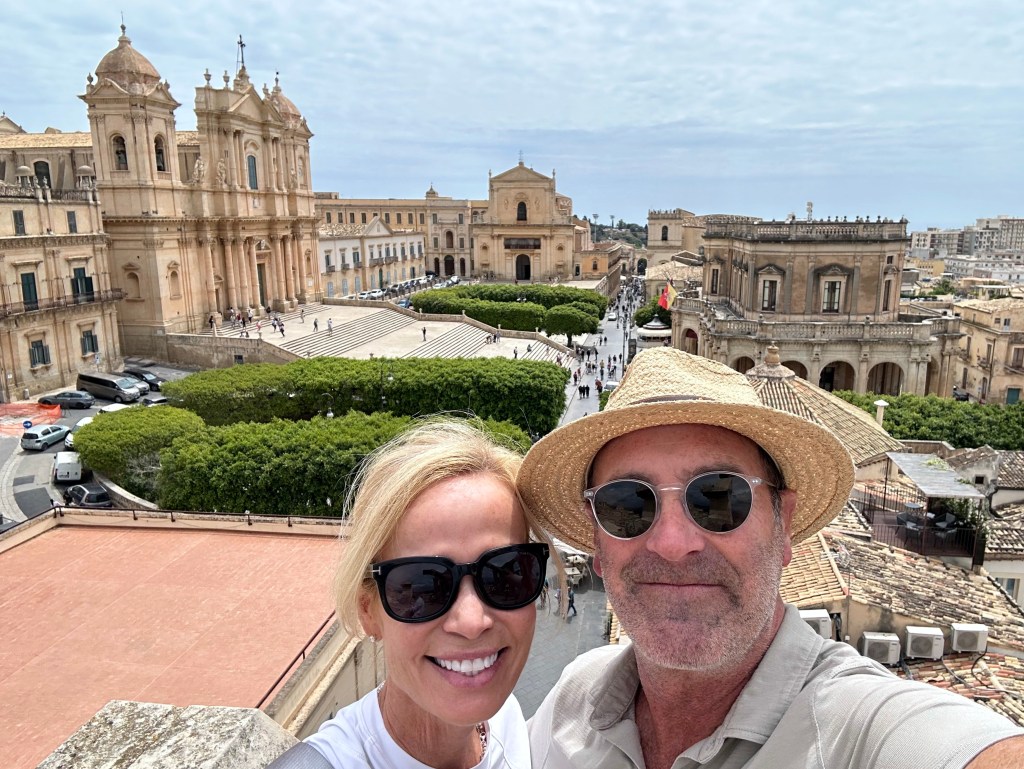
And the spectacularly picturesque Baroque town of Noto:

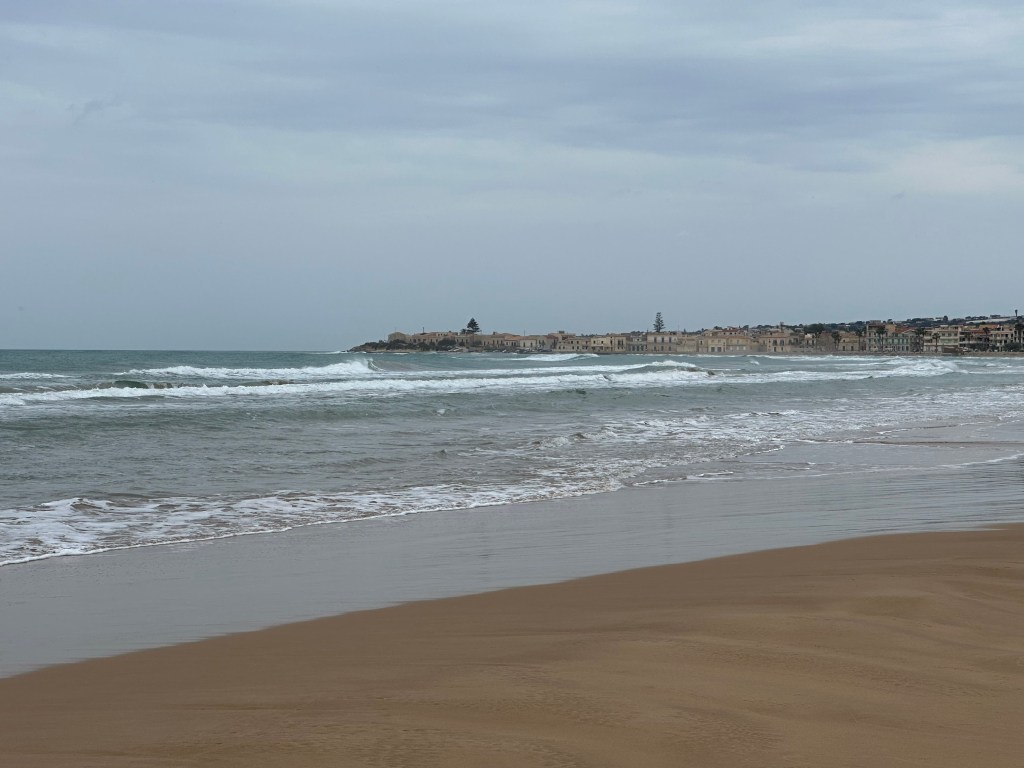
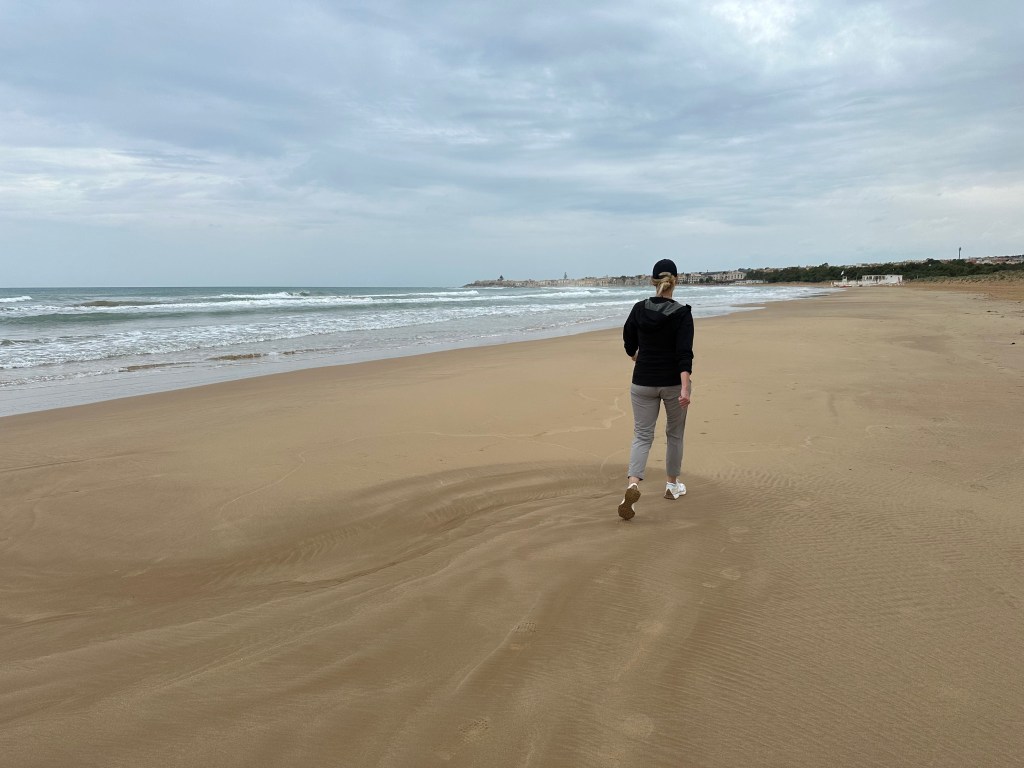
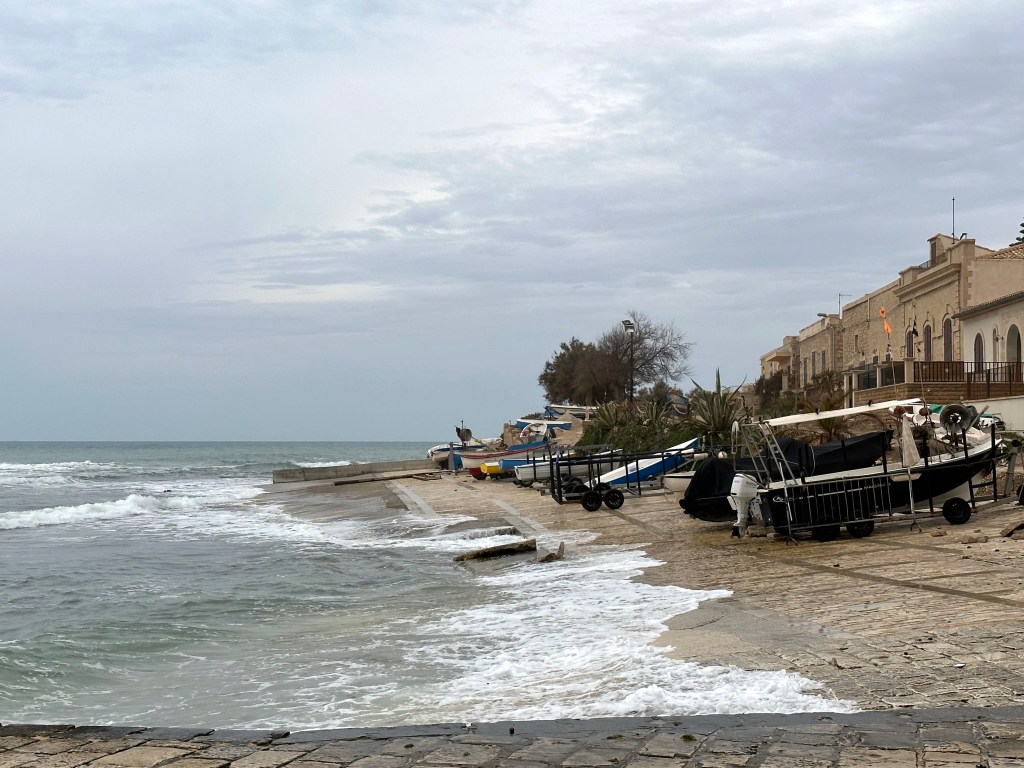
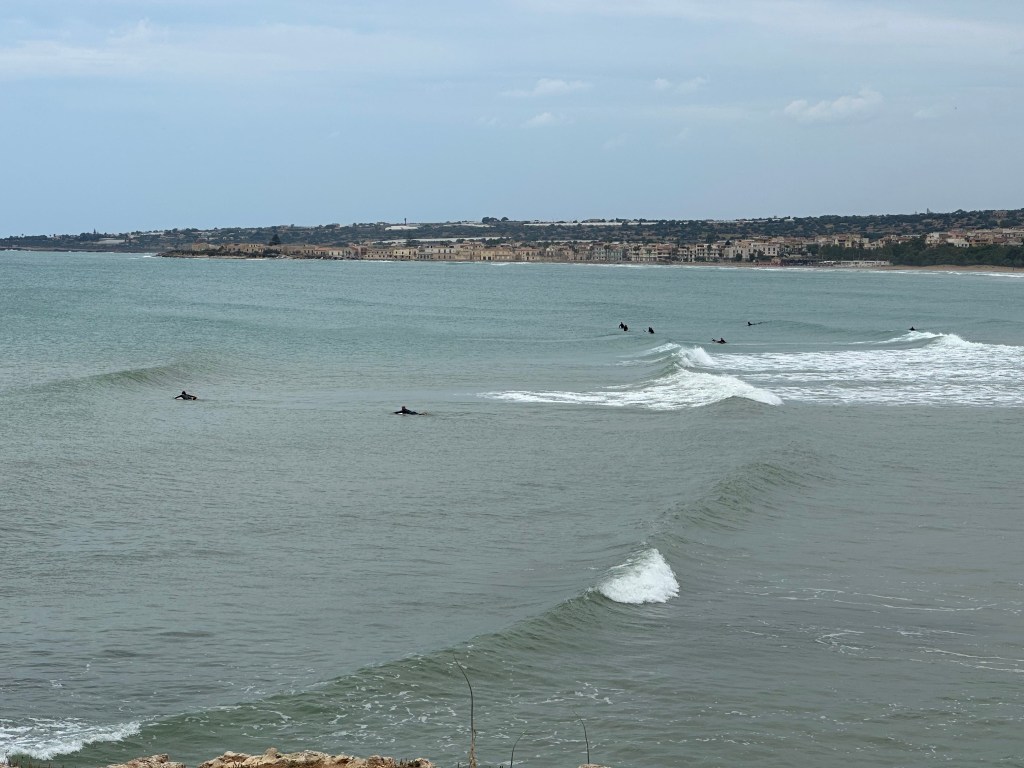
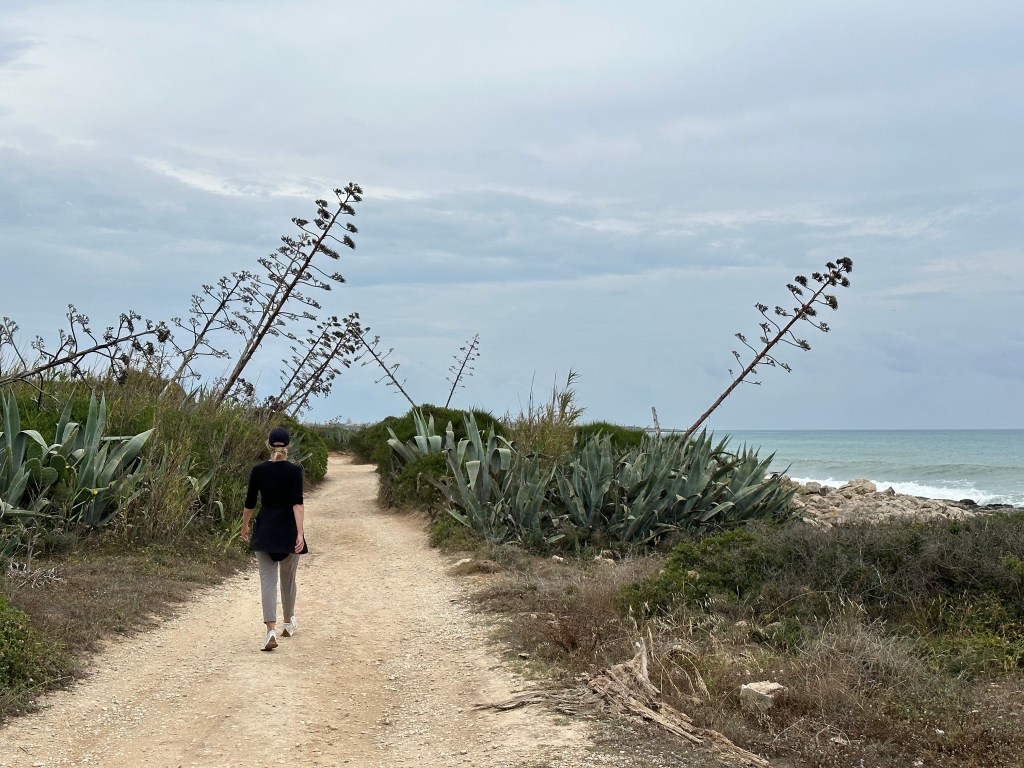
Modica also was just 20 minutes from the beach, so we started two of our mornings during our stay with some pretty great beach hikes along the Sicilian coast:

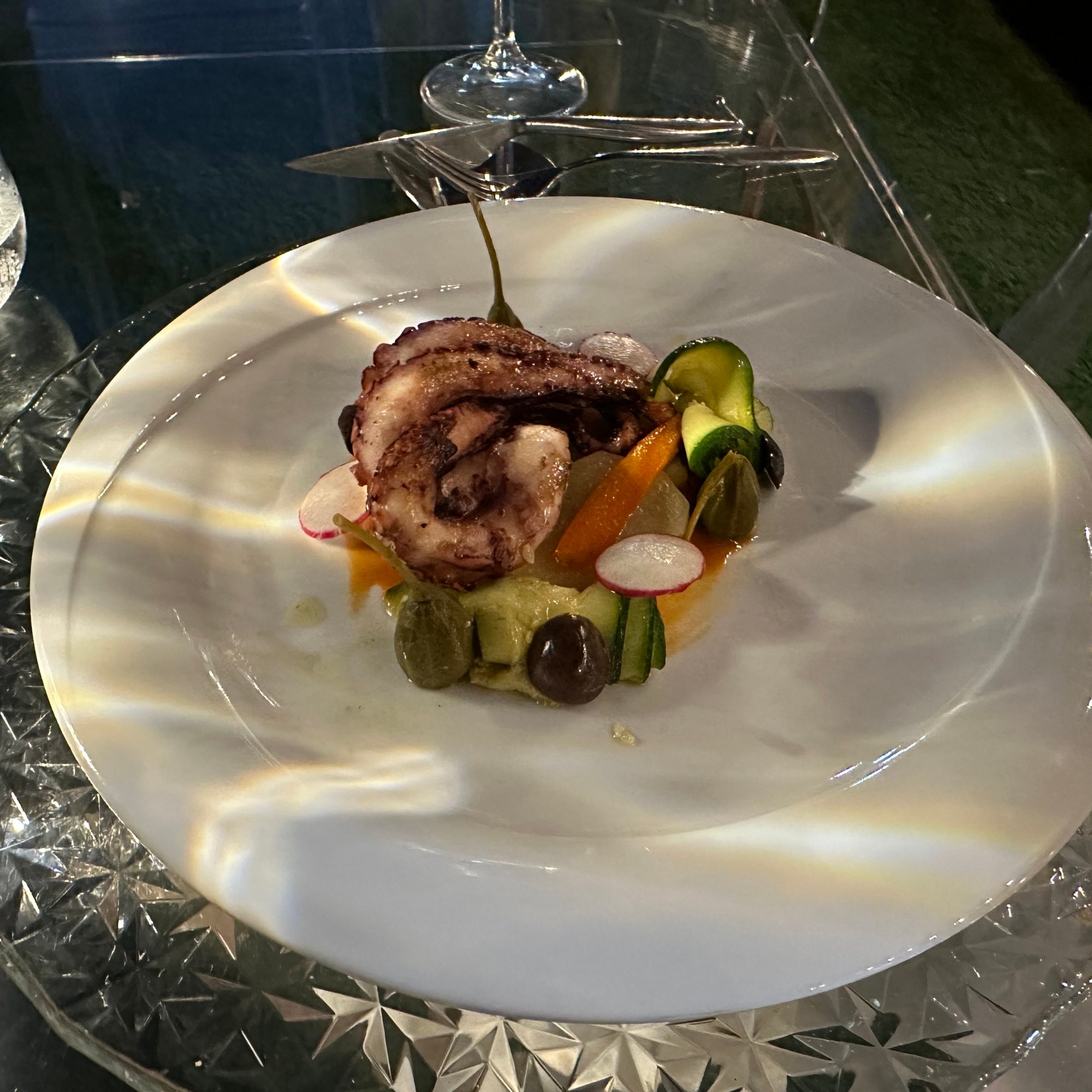
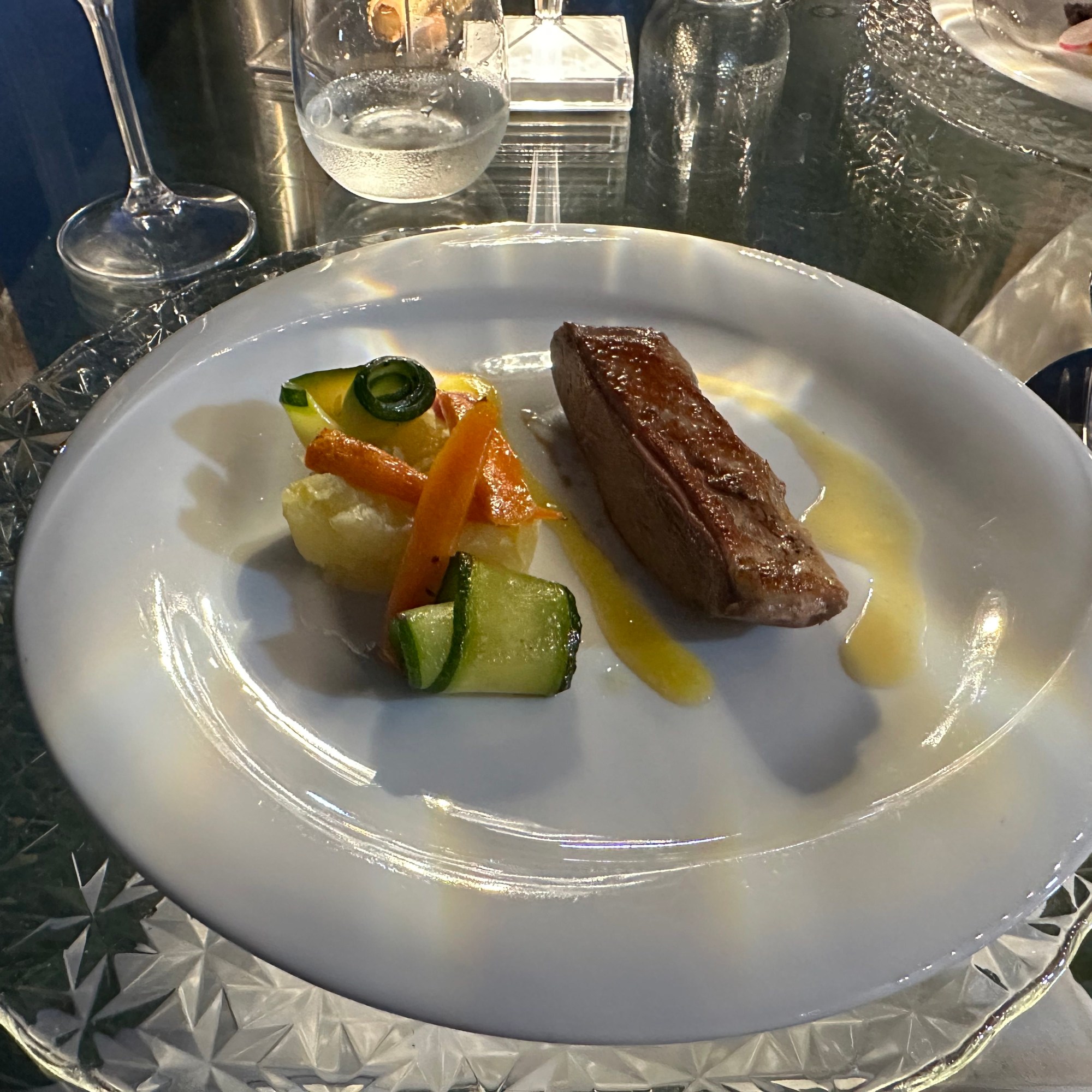
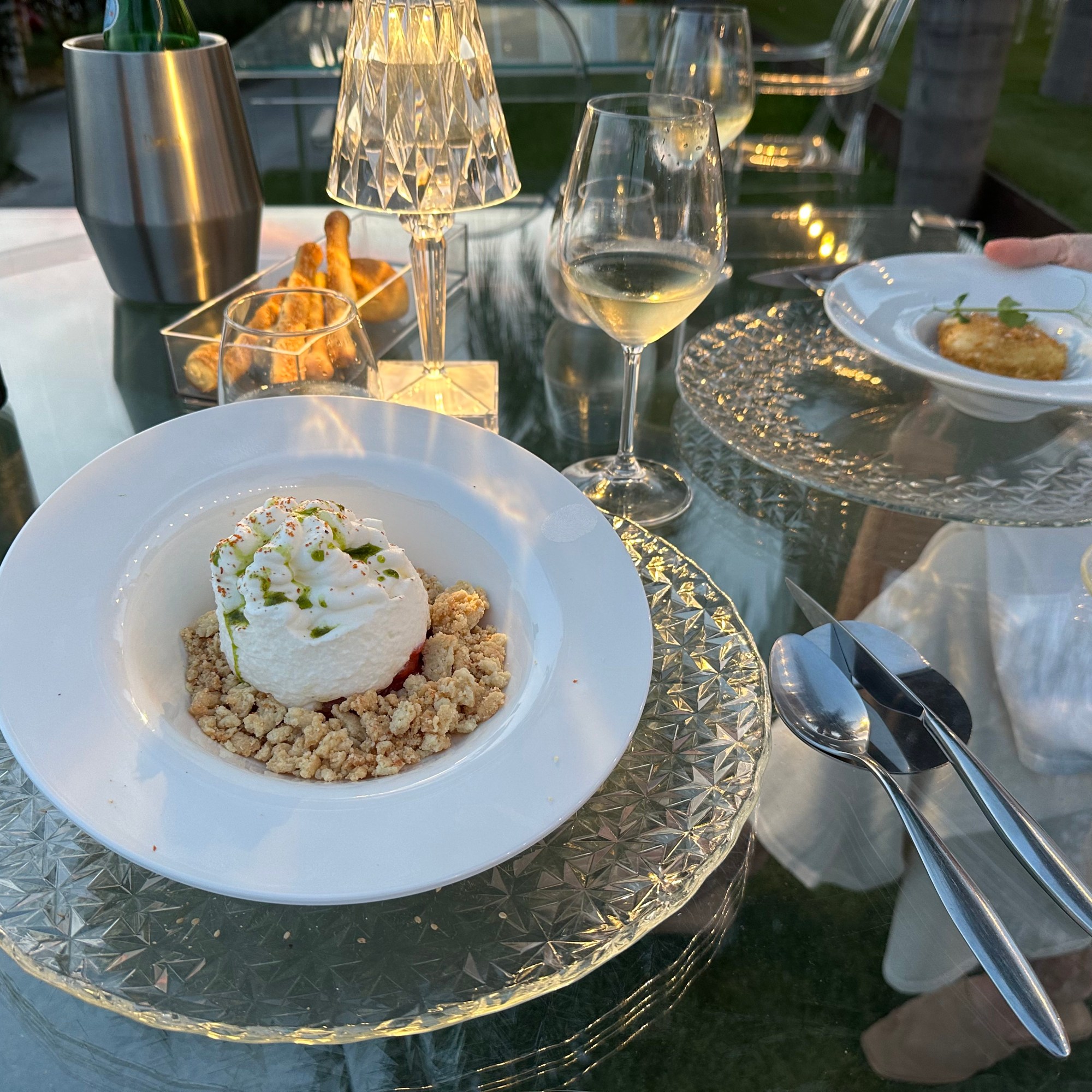
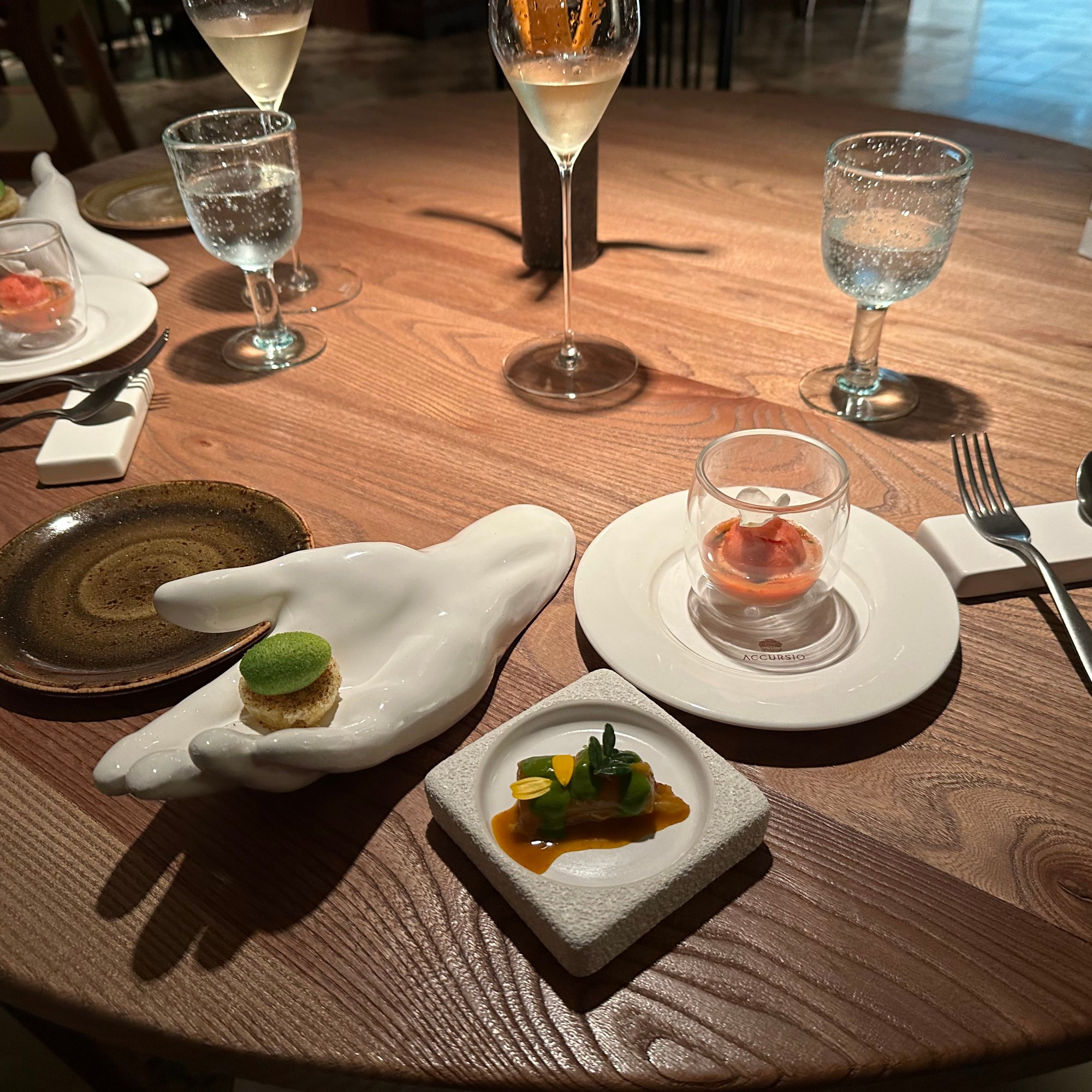
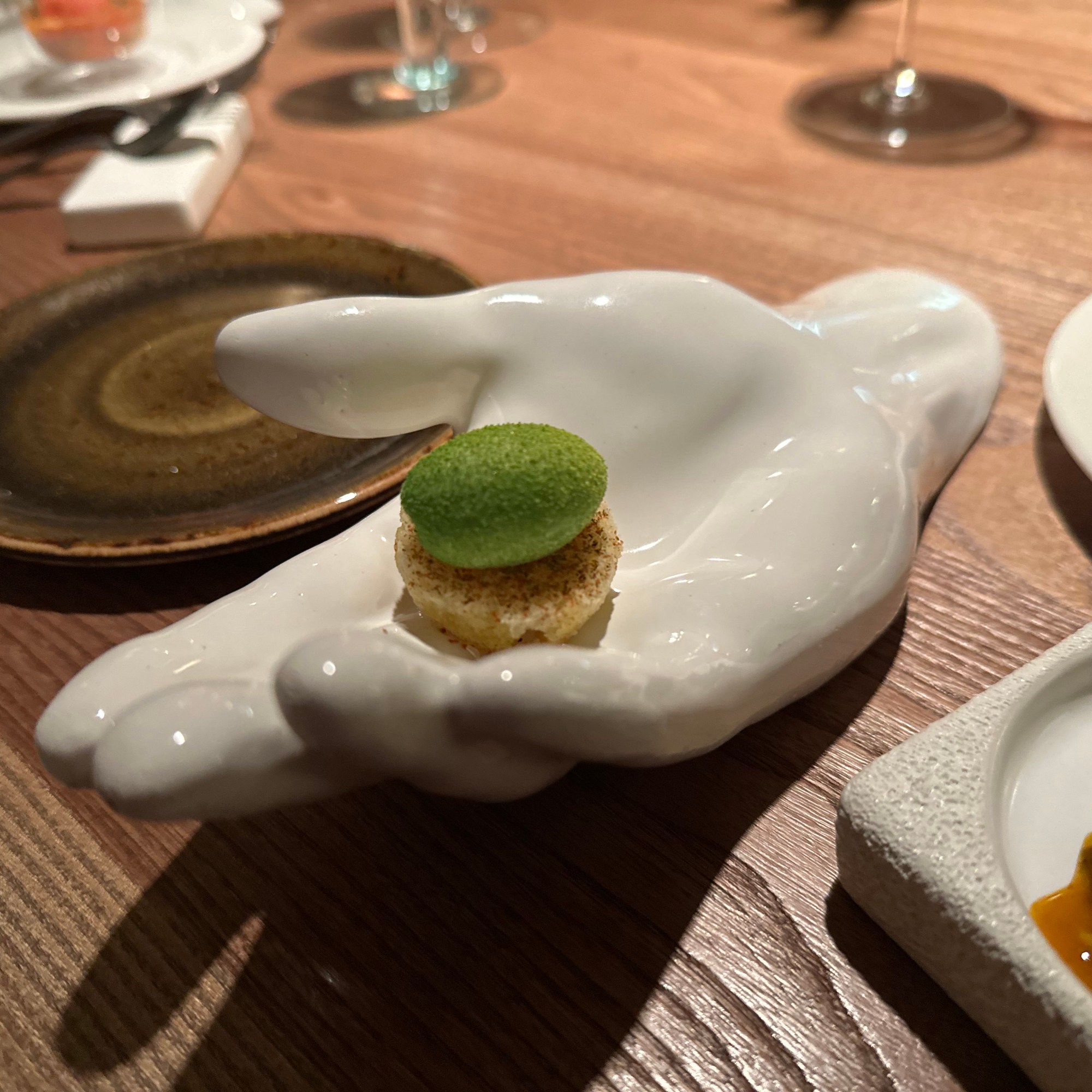
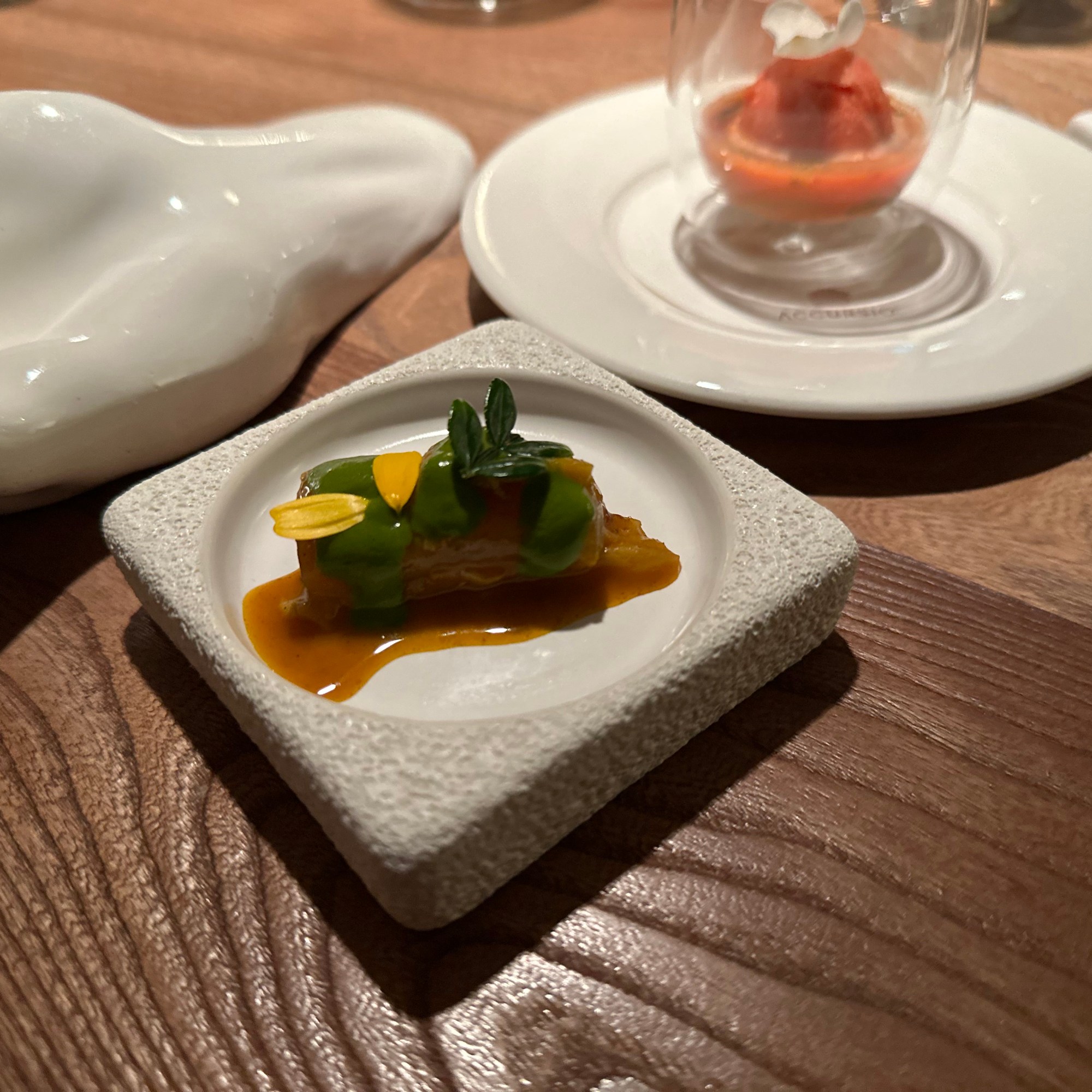
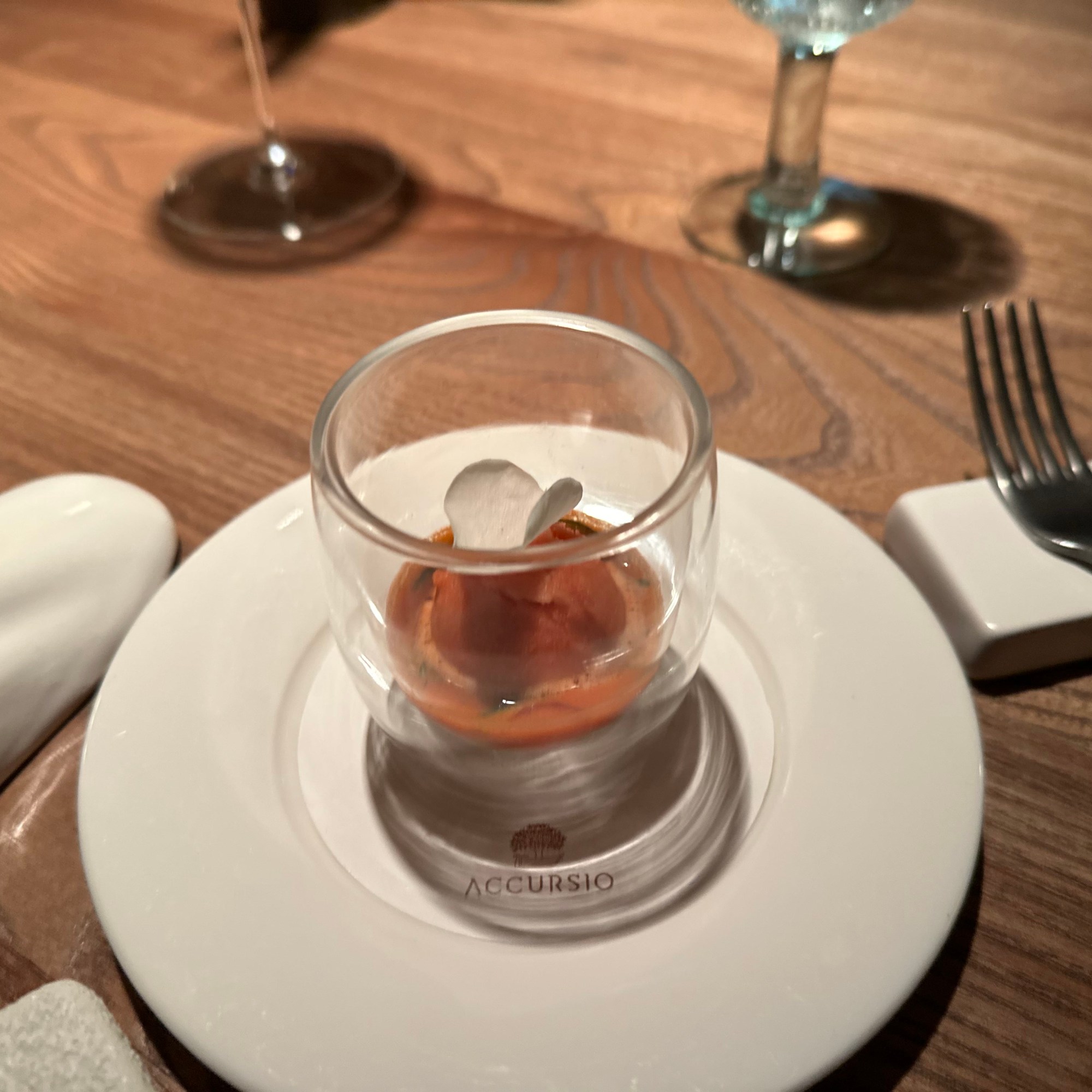
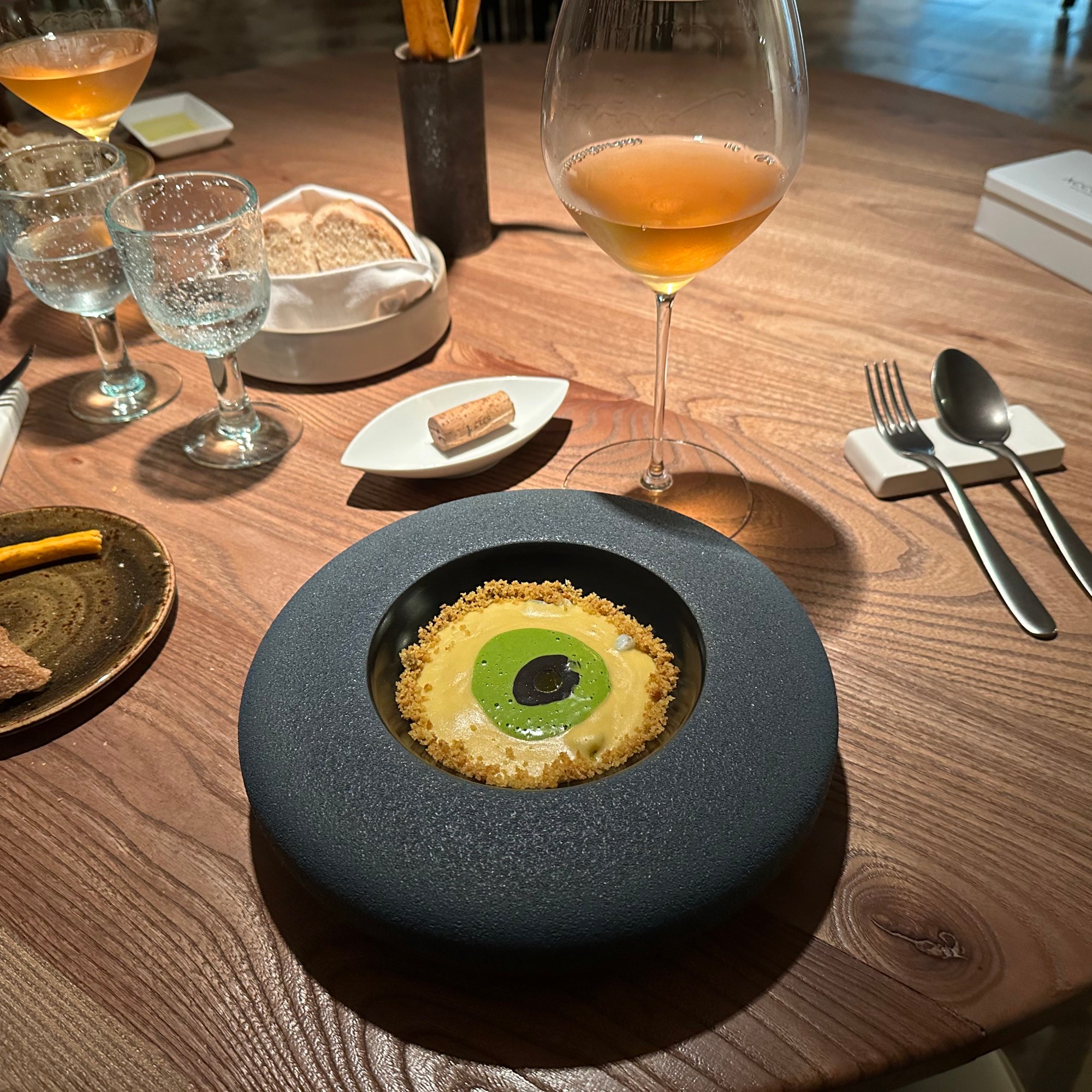
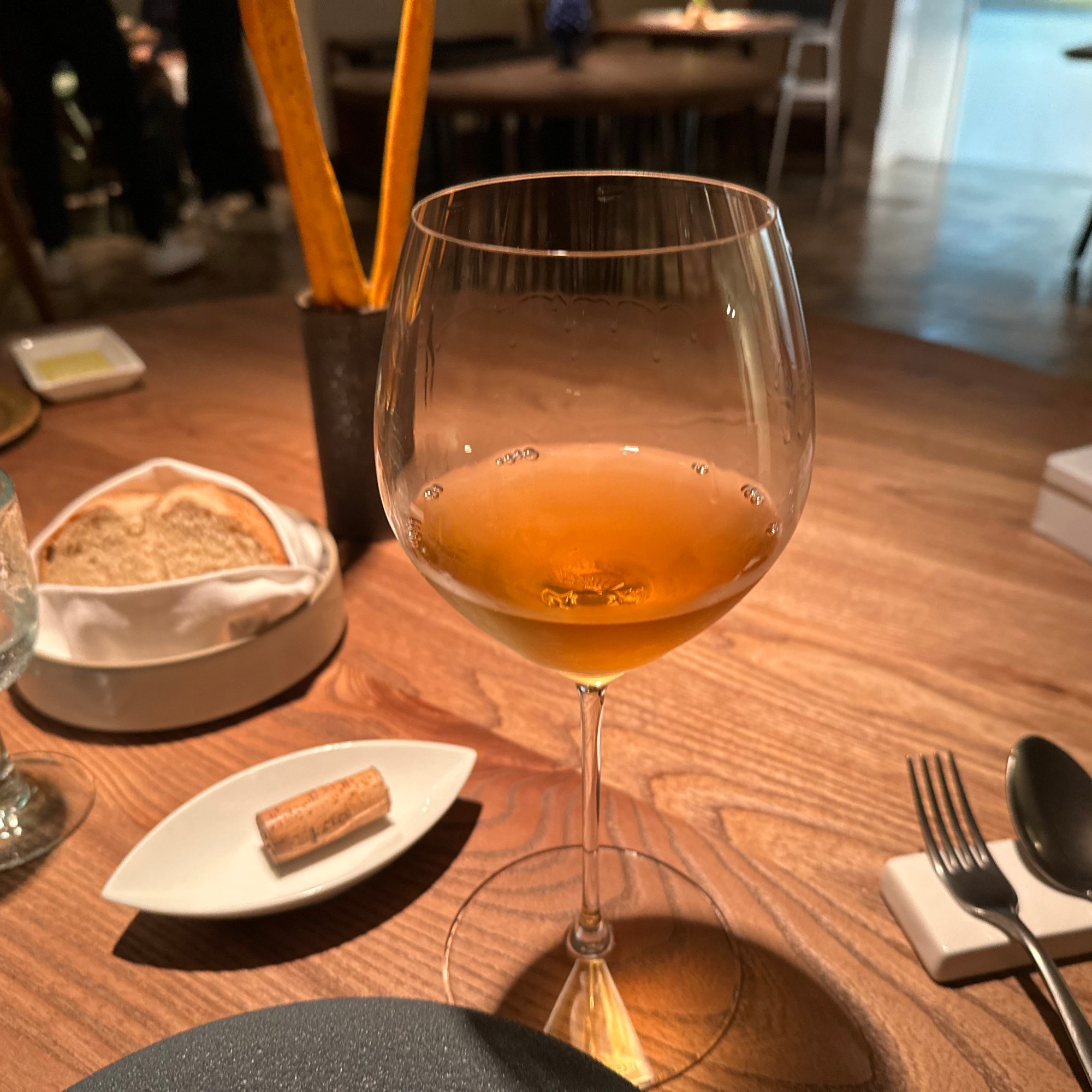
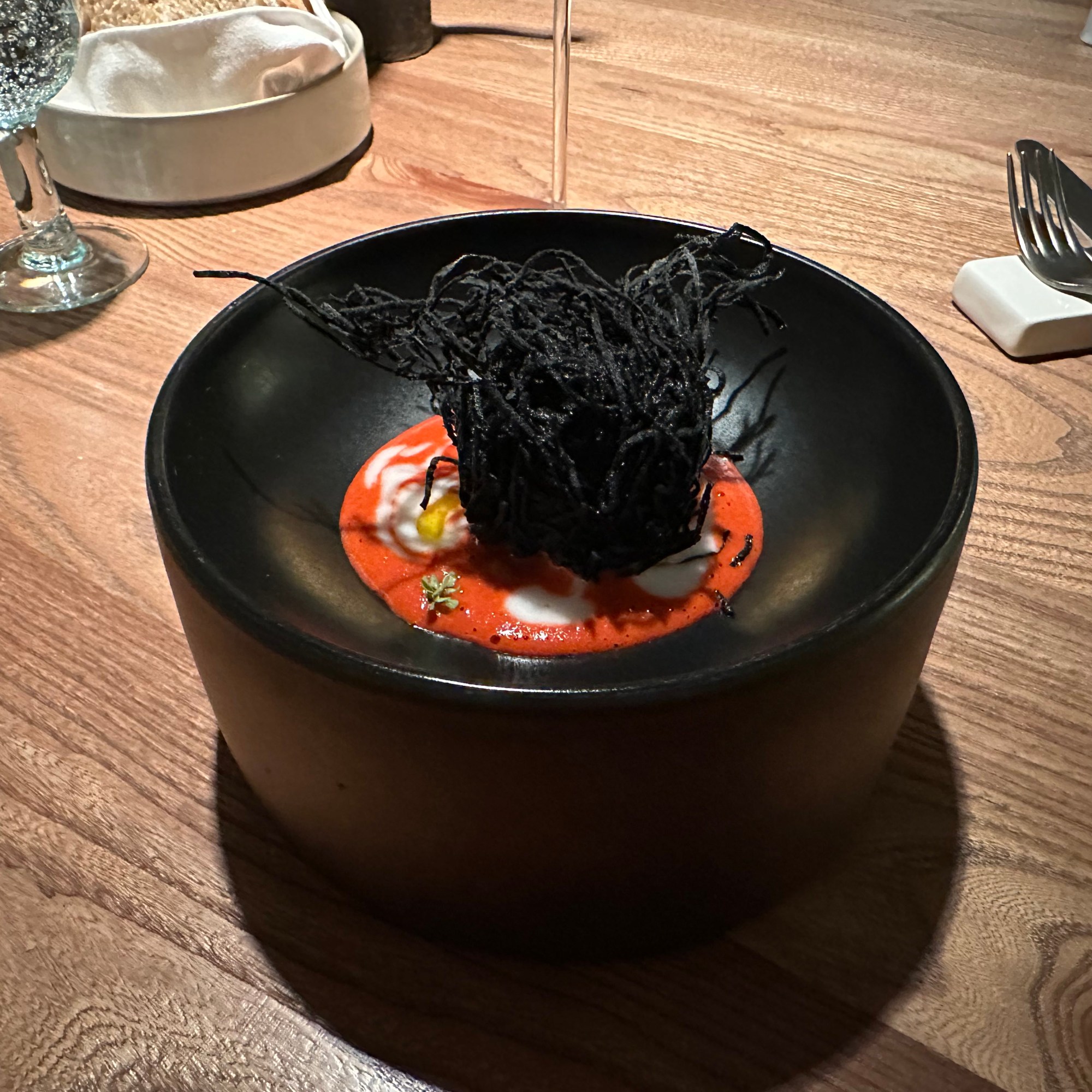
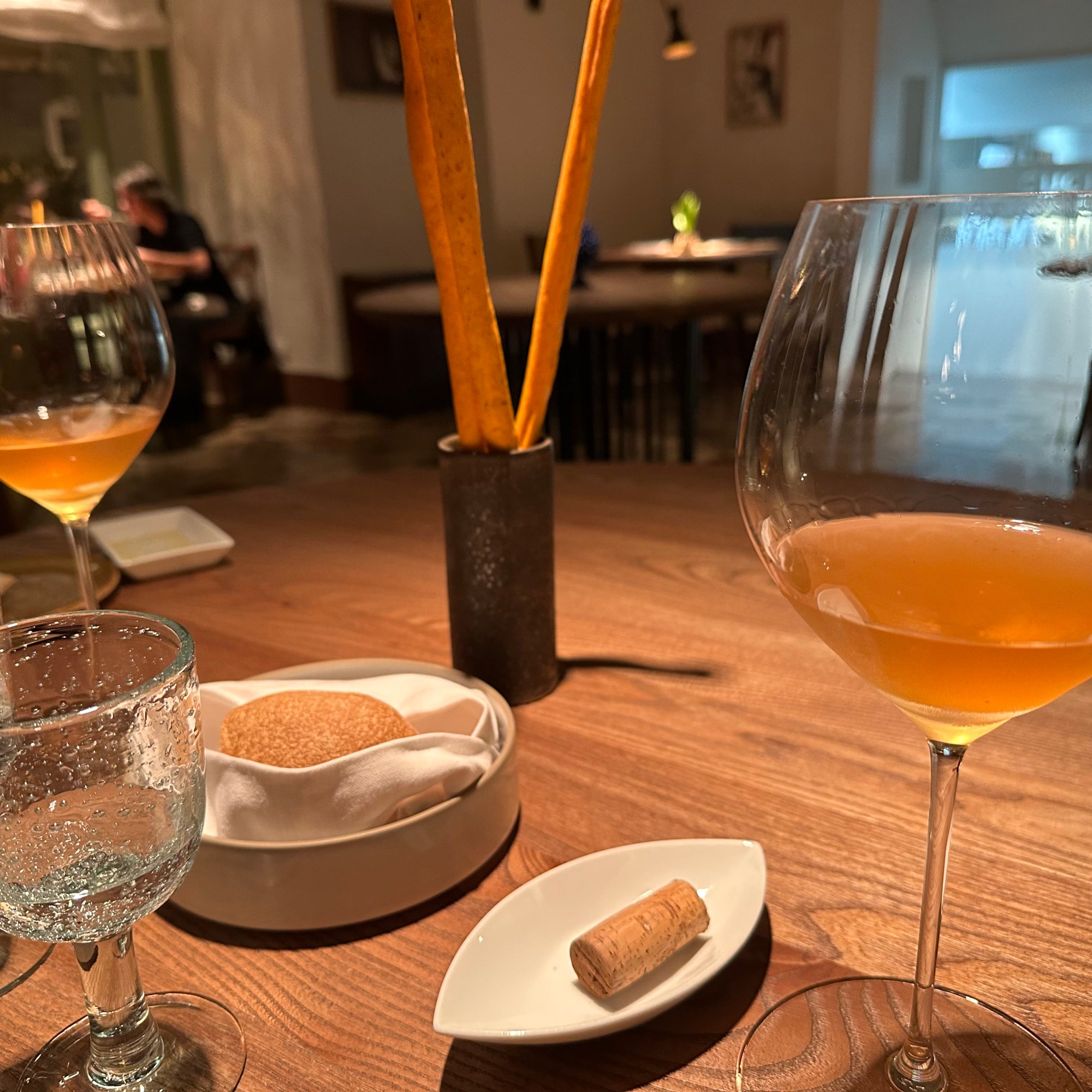
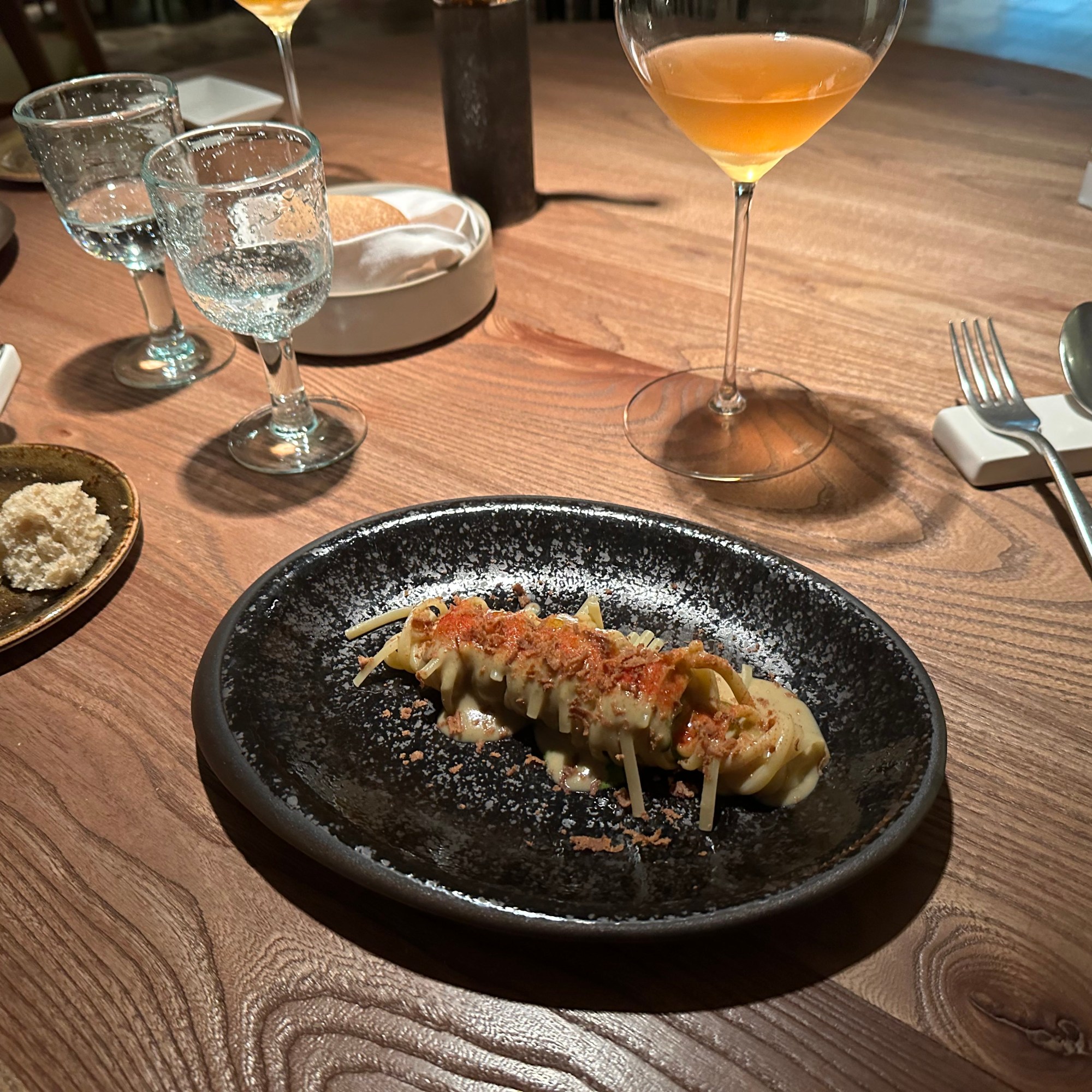
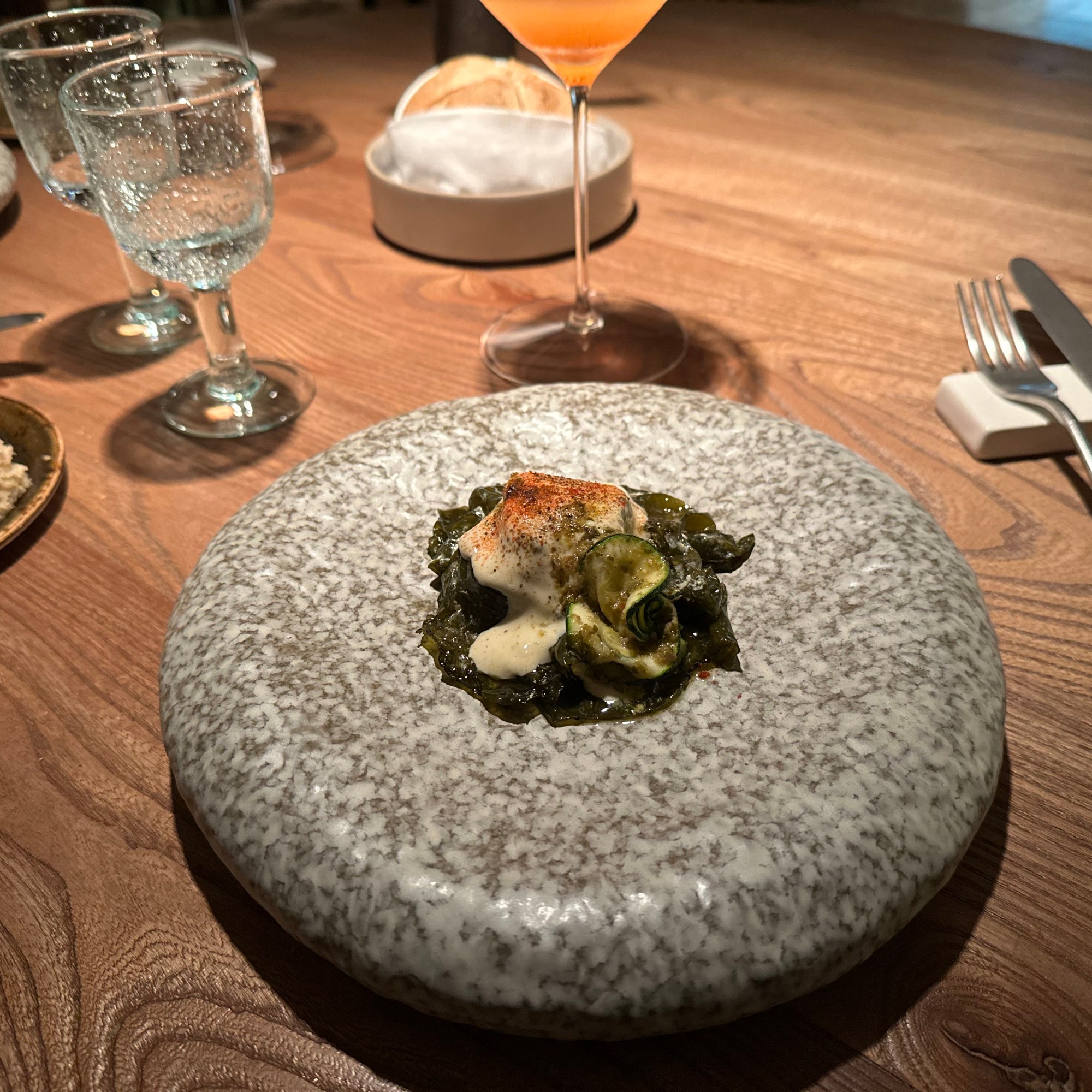
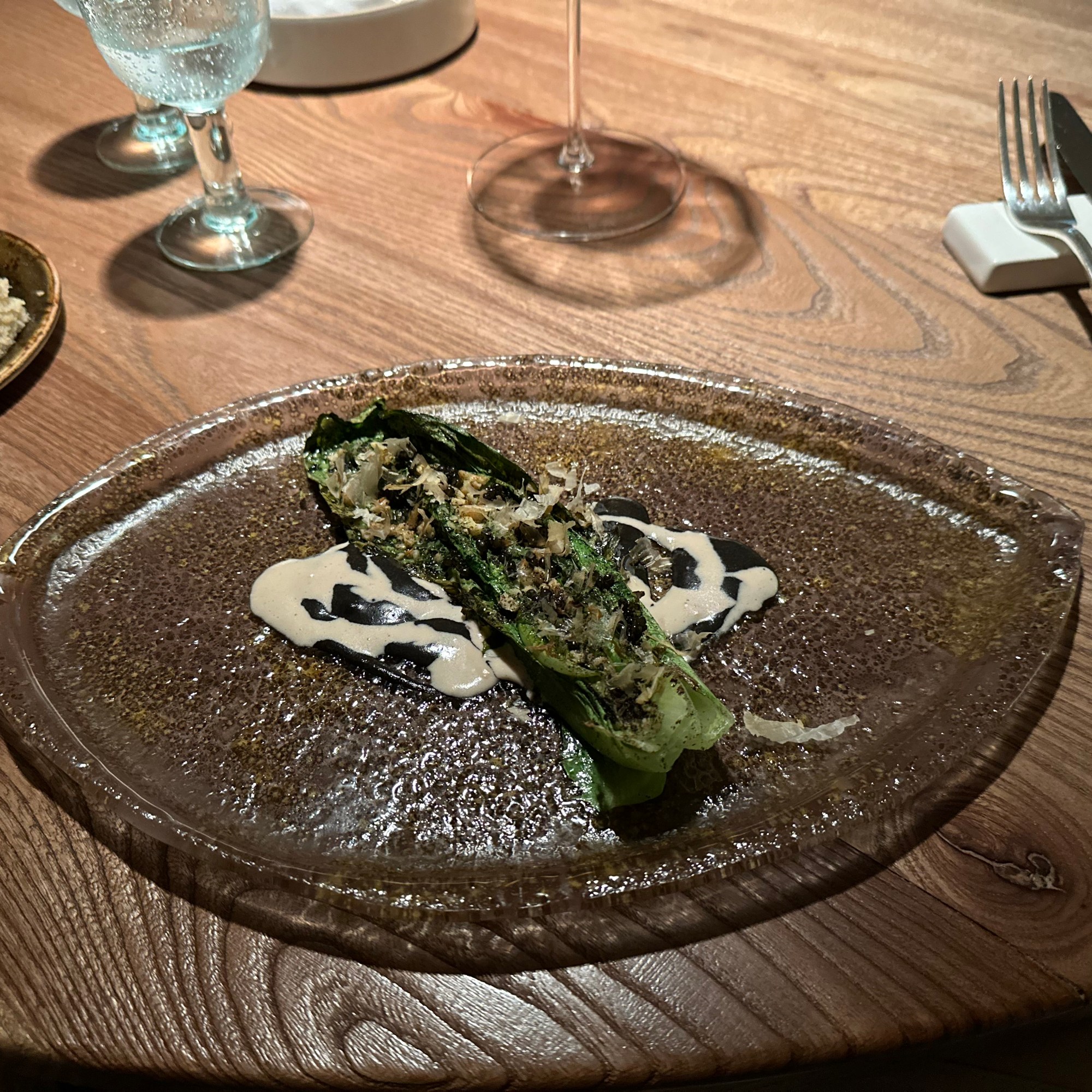
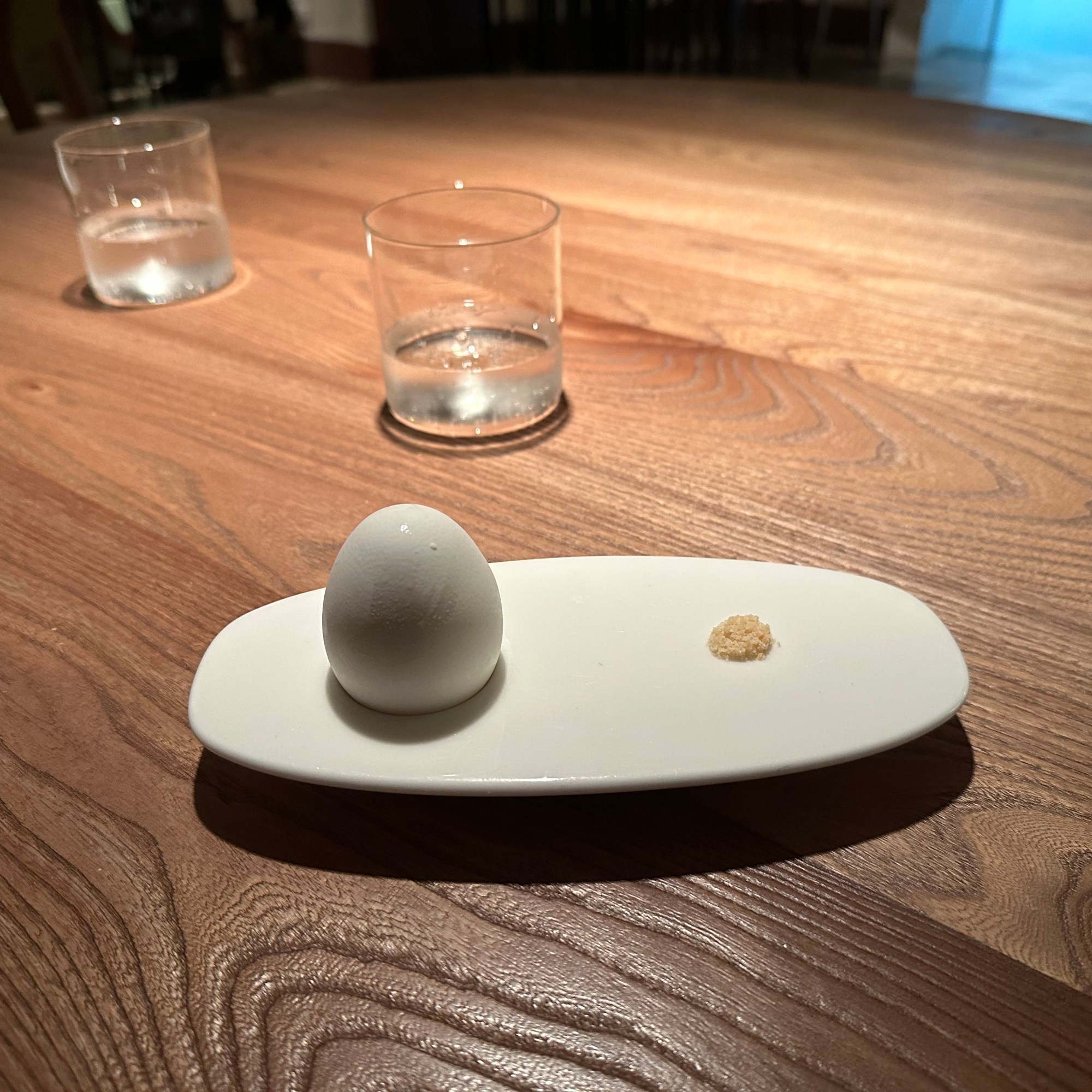
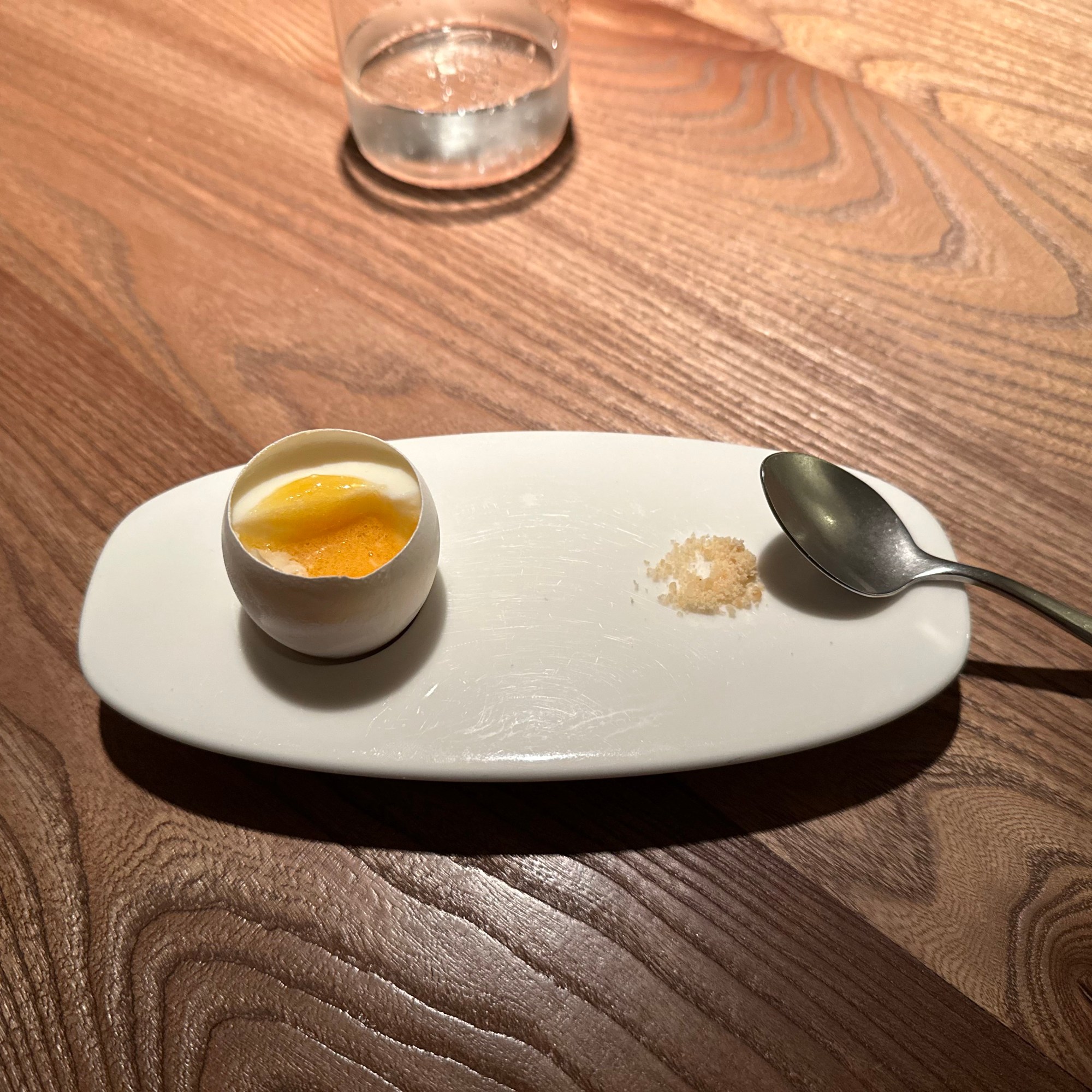
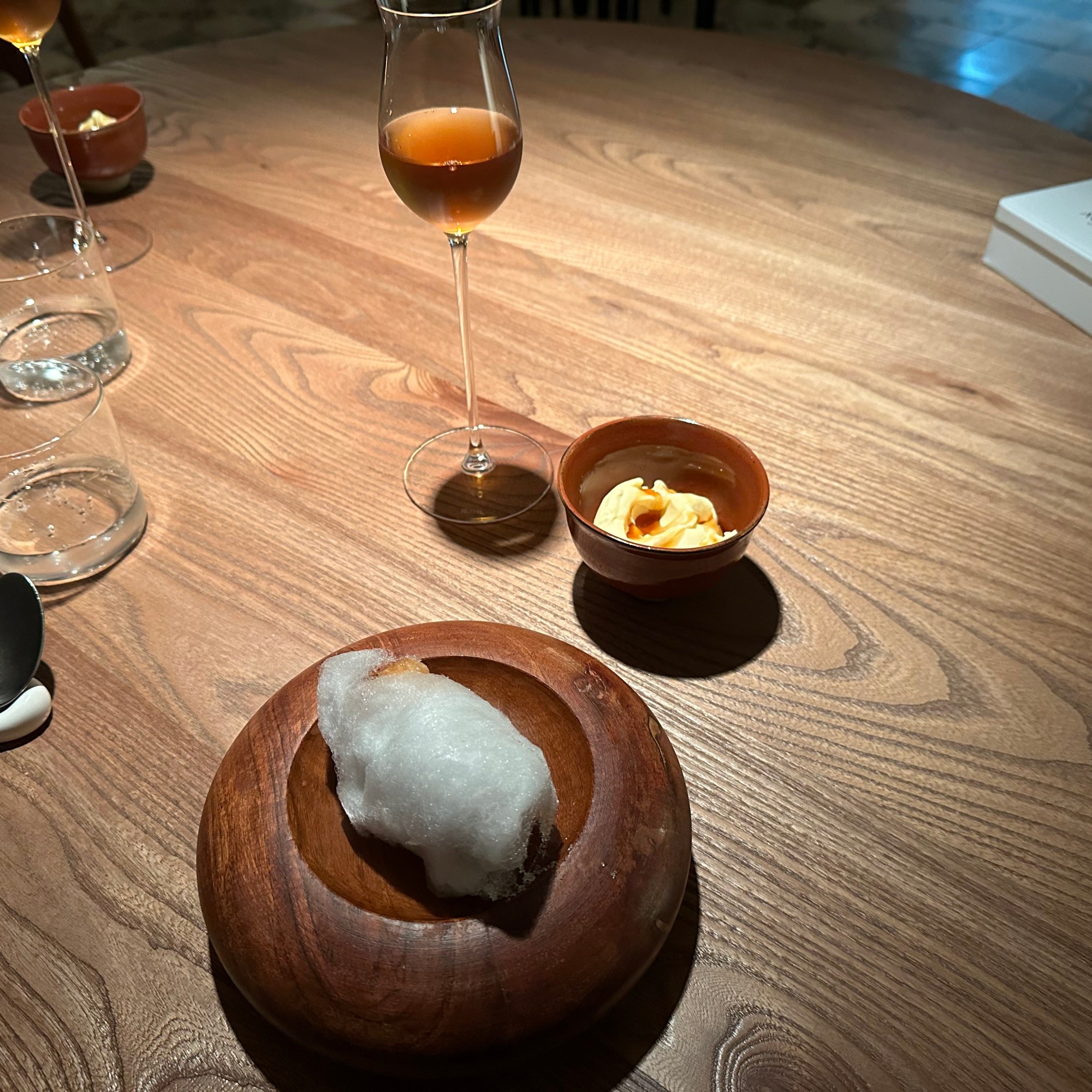
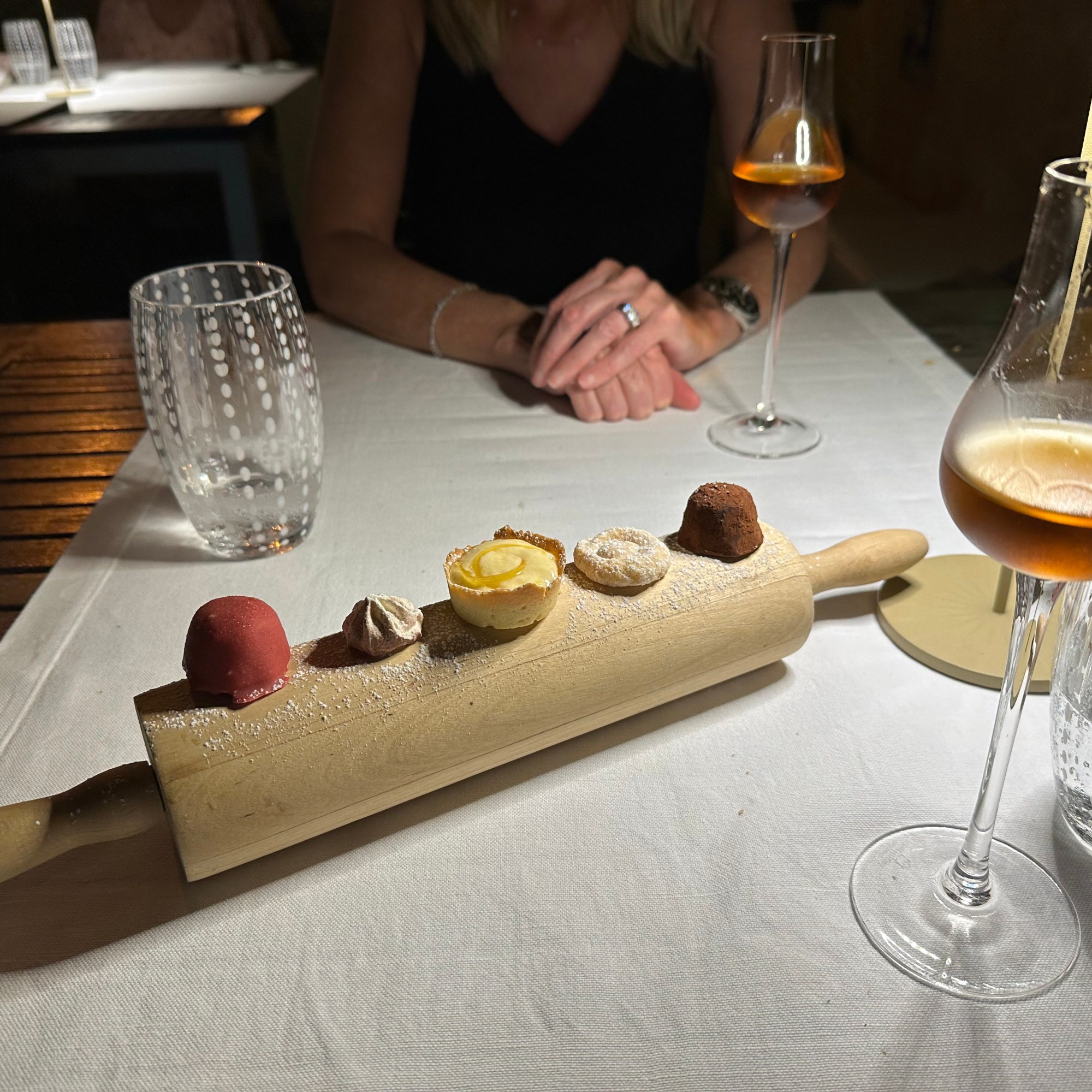
Second gastronomic experience on the trip at the tiny Michelin-starred hole in the wall of Accursio, featuring, among other things, Sicily’s orange wine (the color, not the fruit):

Modica’s Baroque Church of San Giorgio (same name as in Ragusa, same style, just different town) on our last night:
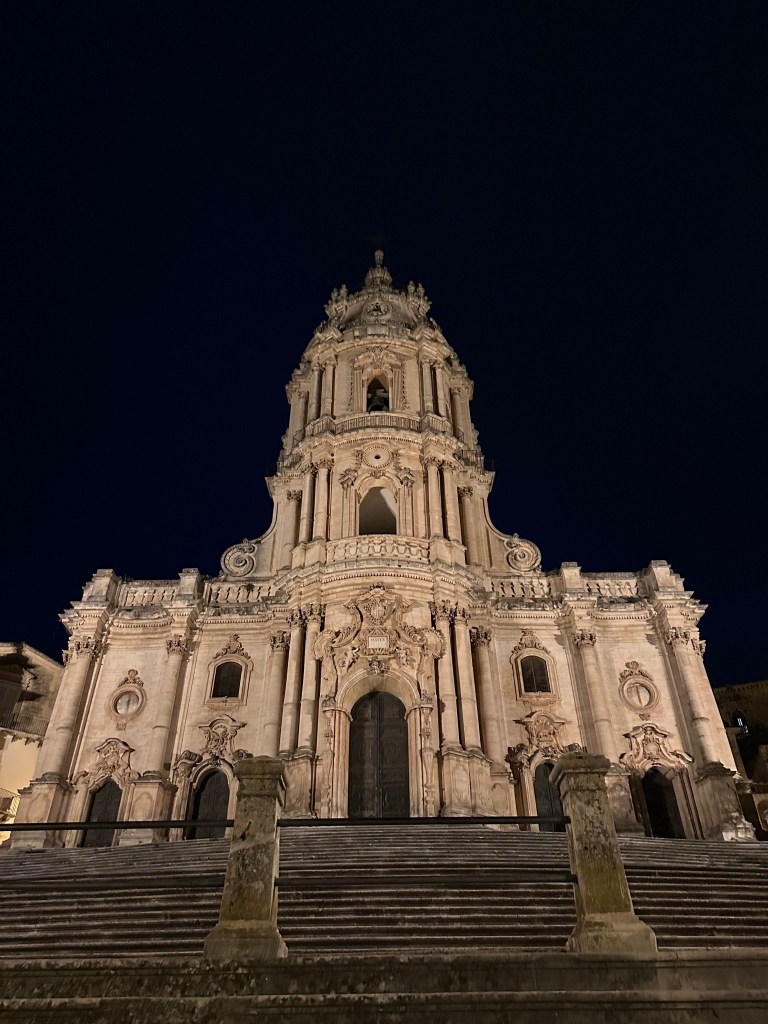
The ancient town / island of Syracuse served as our final stop in the south of Sicily – also another city we liked so much that we may return:
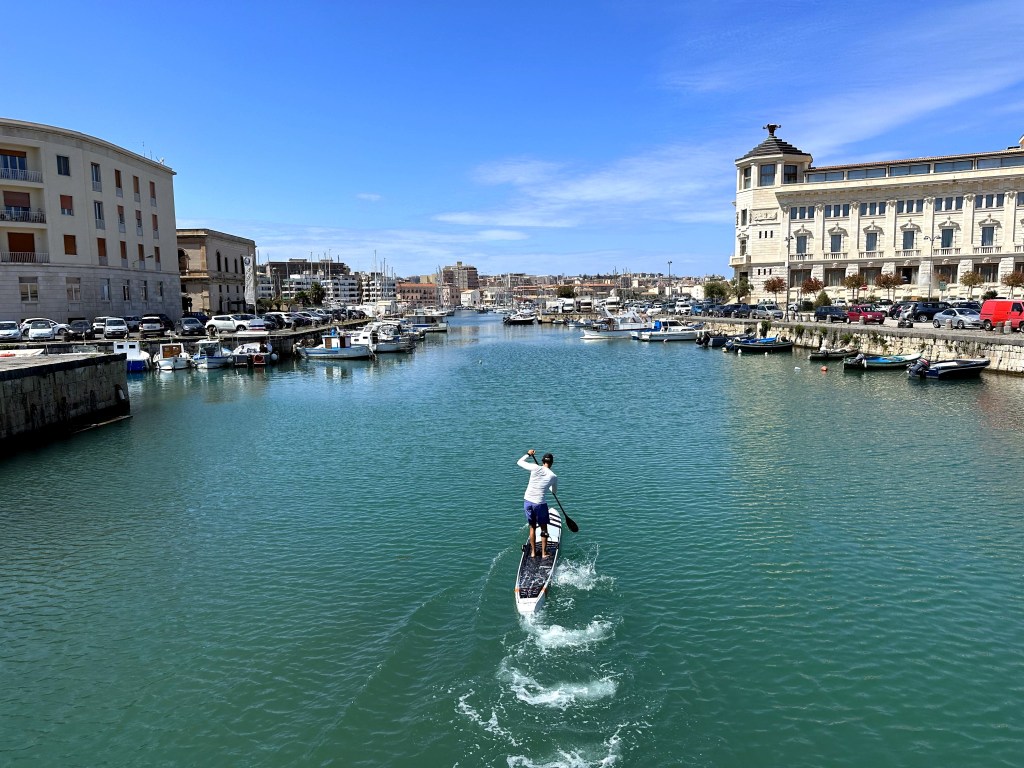
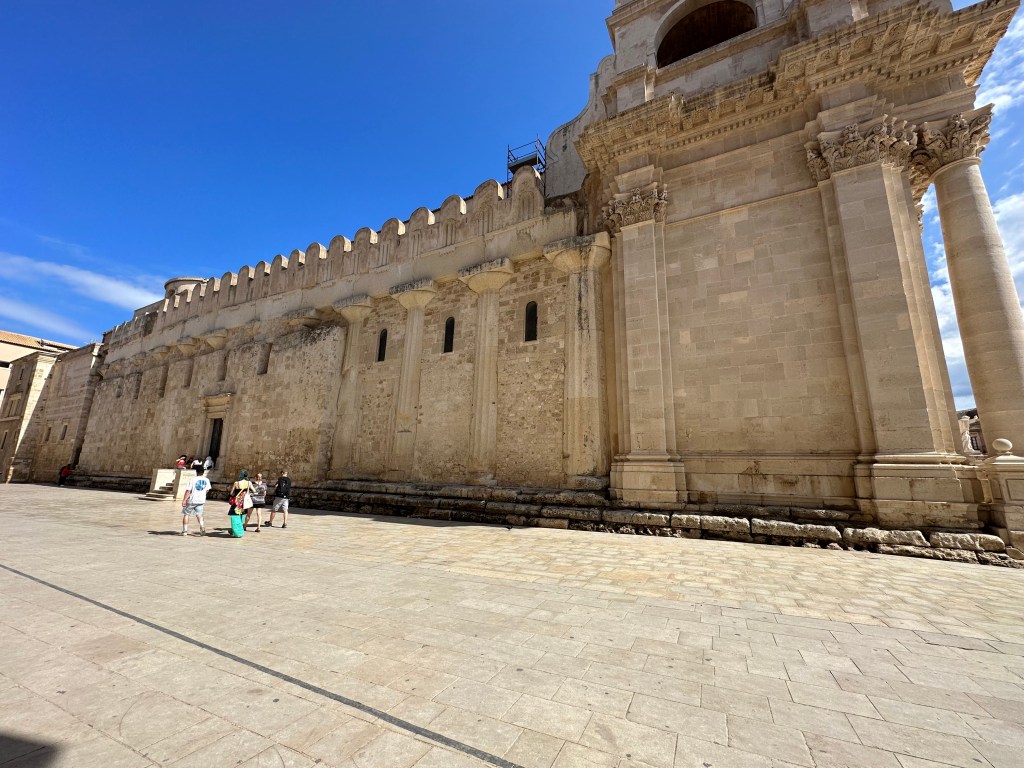
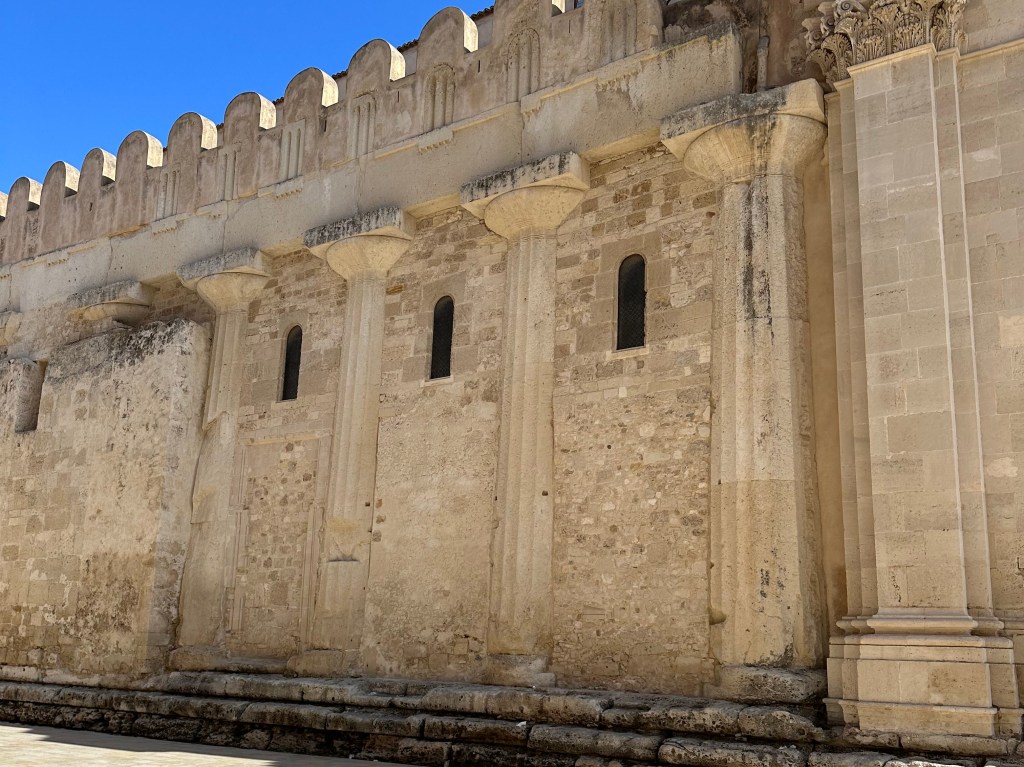
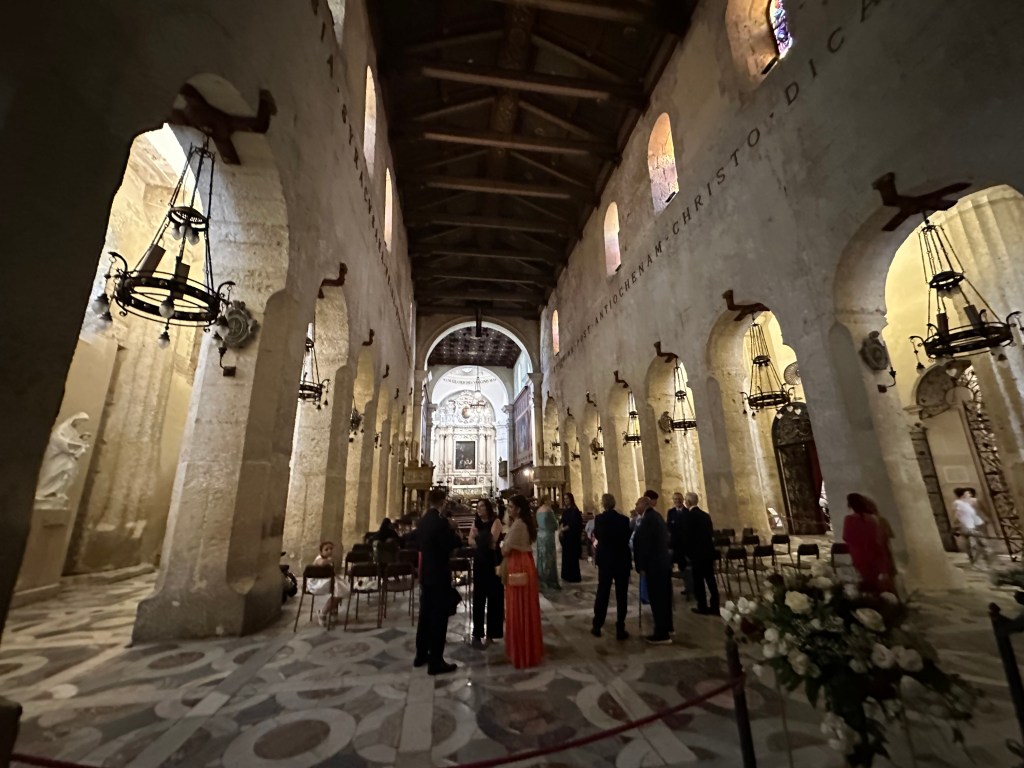
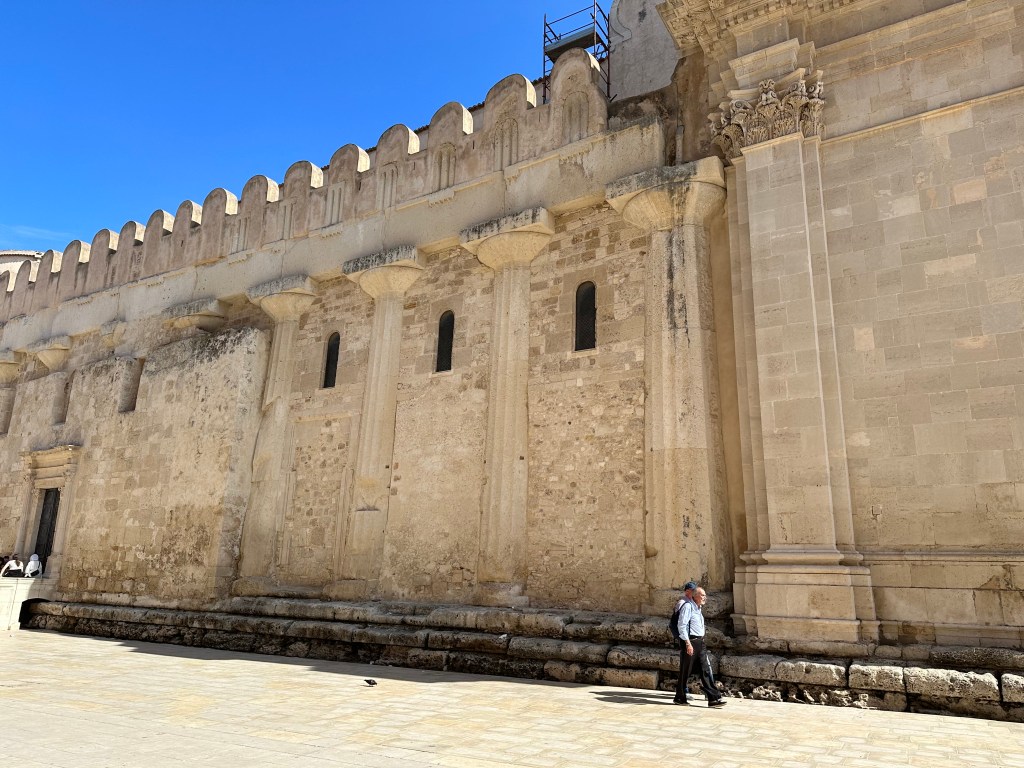
Sicily’s most captivating characteristic, at least to WolfeStreetTravel, must be the convergence and layers upon layers of different cultures that have dominated the island. We witnessed this with the mélange of Arab and Norman architectural styles in churches in Palermo and Monreal, for example. But nowhere was it more evident than Siracusa’s cathedral, which began as a Greek temple to Athena in 480 BC. In our travels, we’ve seen tons of churches build on top of pagan temples, replacing them. That was how they operated. Good site, but obliterate the offending structure. Not so in Siracusa. In the 6th century AD, the Byzantines just filled in the spaces between the Doric columns and incorporated the temple into their new church. Then the Normans added to it in the 11th century w crenellations reflective of their military-style churches. AND IT’S ALL STILL STANDING. You can see the ~2500-year-old Doric columns and capitals inside and outside the church (which was hosting a wedding while we were there, reinforcing how Sicilians simply live through their amazing history). 
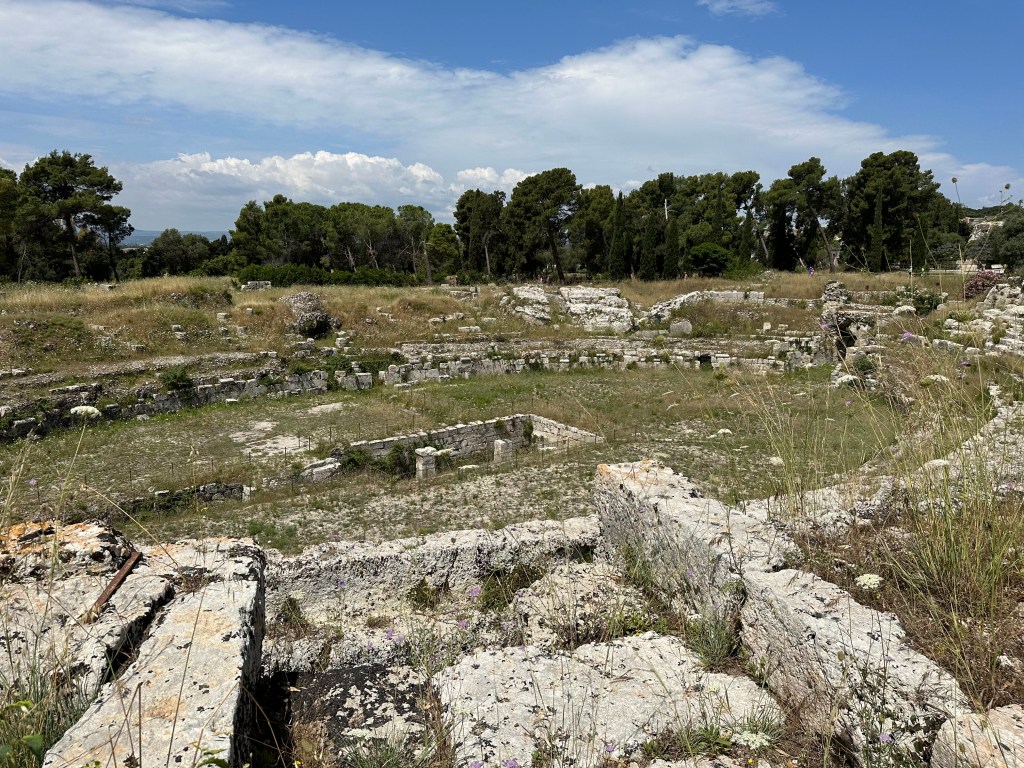
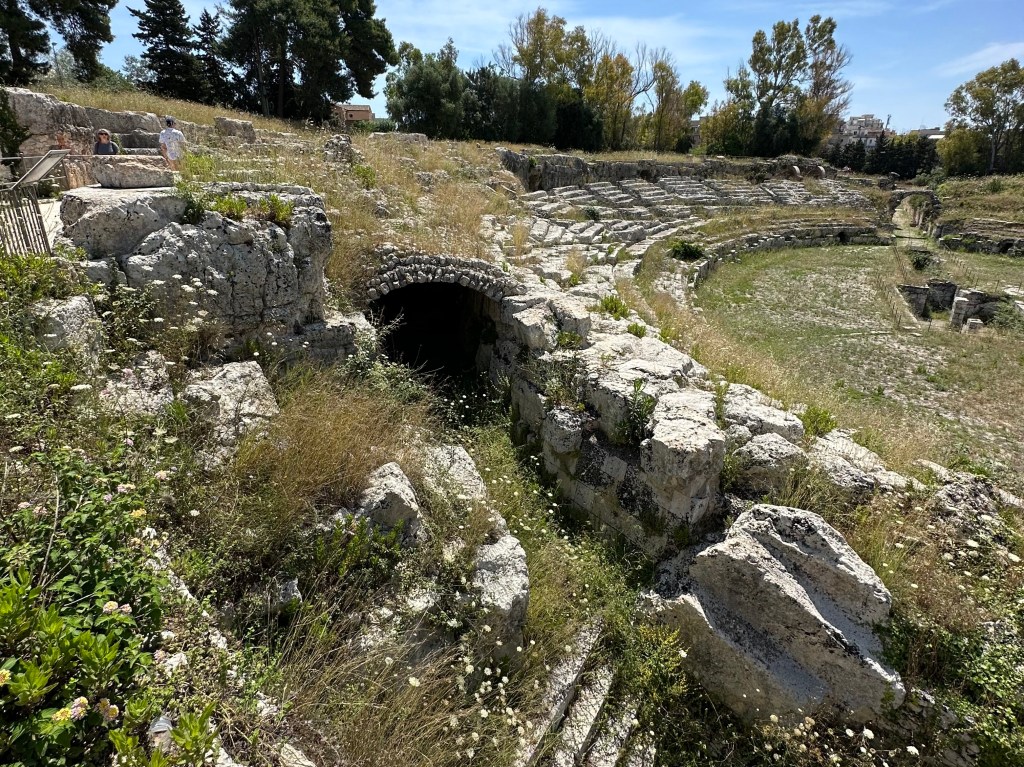
Another case in point, the Syracuse’s abandoned, 1st-century Roman amphitheater. . .
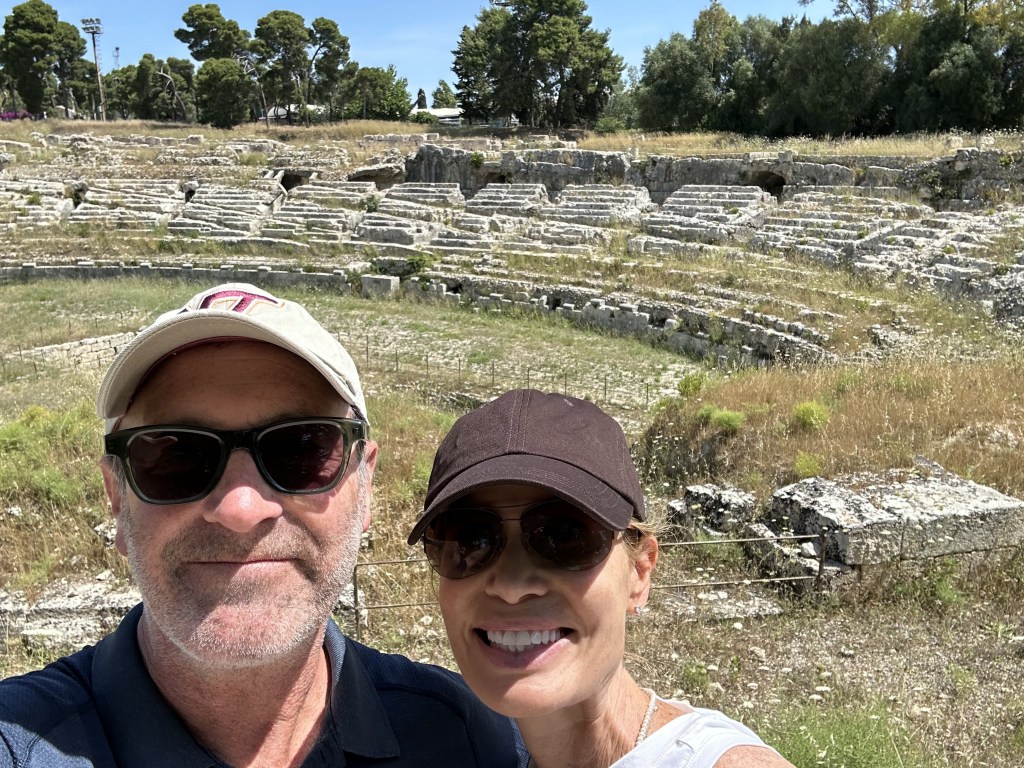
But just up a path lies the city’s even older, 5th-century BC Greek amphitheater, which is still in use today:

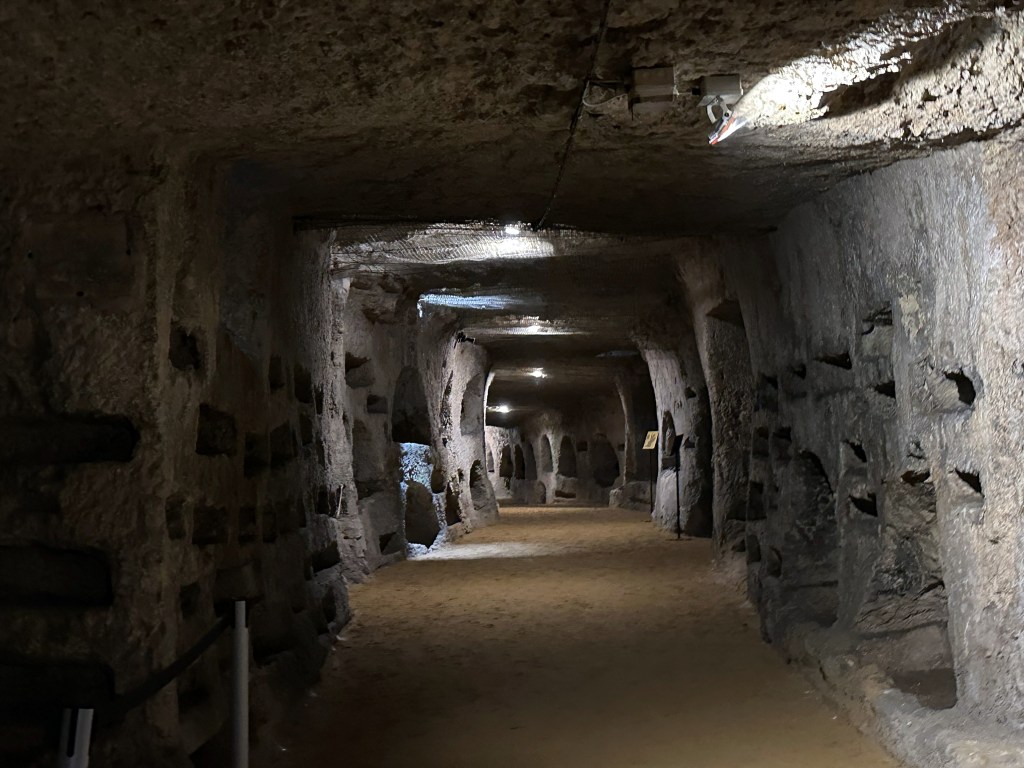
And, of course, we checked out the local catacombs:
Imbibing our daily recommeneded allowance of Aperol spritzes at one of the cooler little roadside cafes on Syracuse’s ancient Ortigia island old town:

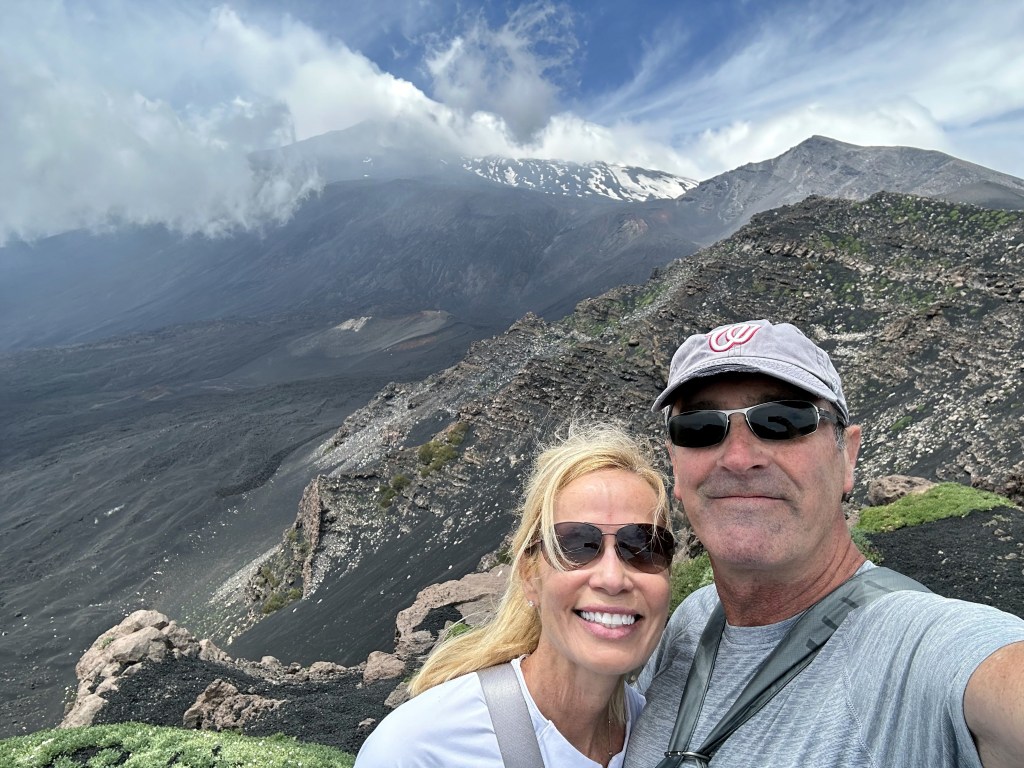
And then north! To hike Sicily’s still-active Mount Etna. Twice.

The first day’s hike, from the caldera’s southern approach was okay, but not particularly thrilling. The next day, we hiked up from the eastern approach. Holy shit – absolutely stunning. First, a legit old lava tube:

And then, at the top, along the rim of the old caldera, a view of the still active peak, plus smoky evidence in the old caldera of still active volcanic evolution:
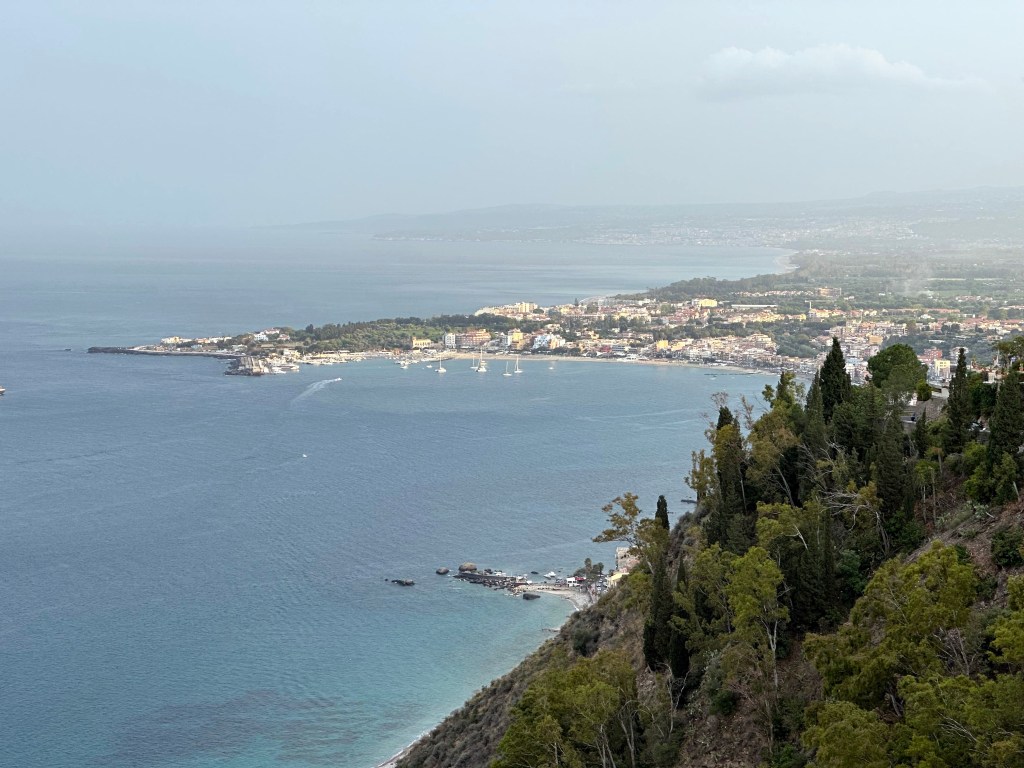
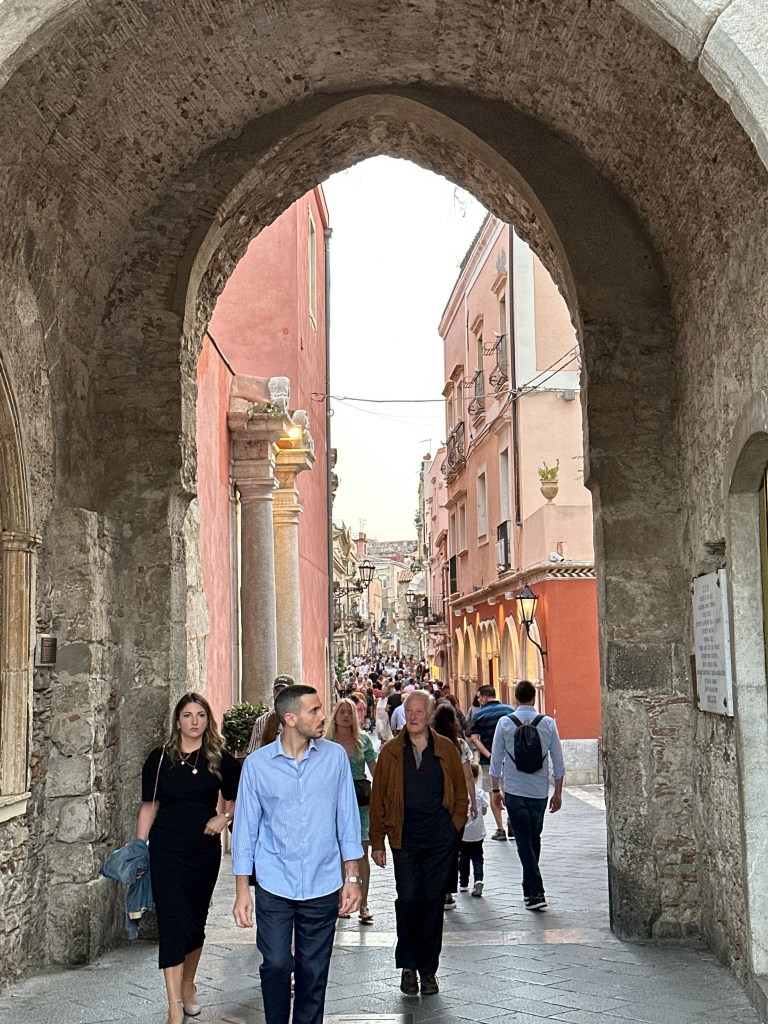
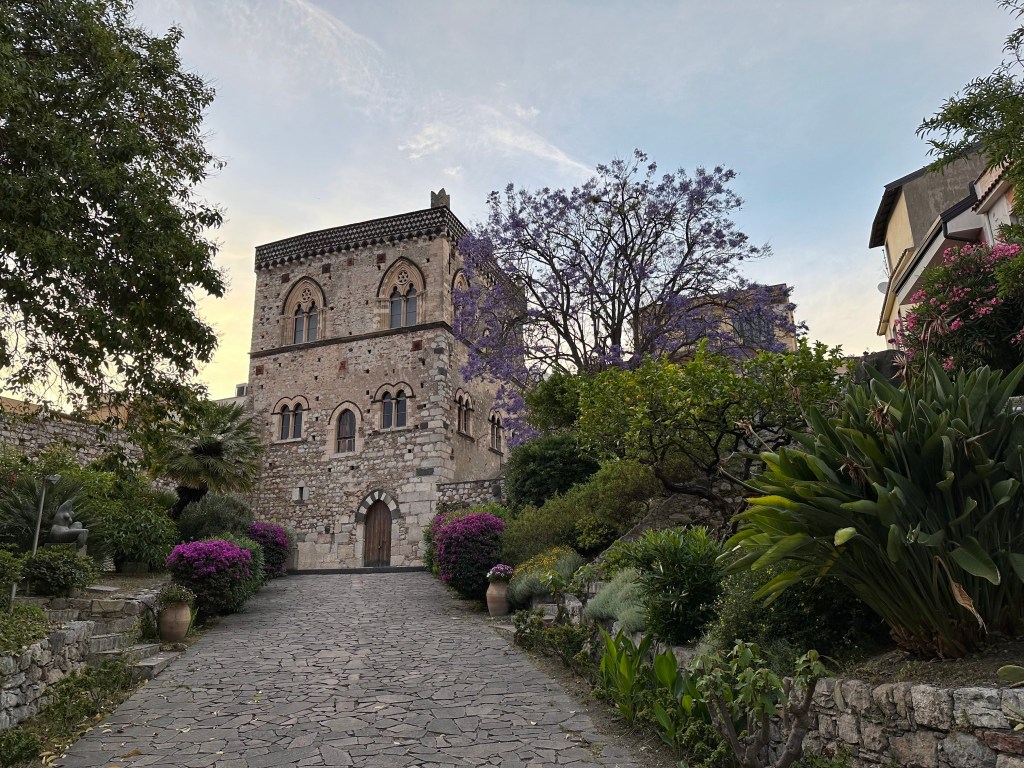
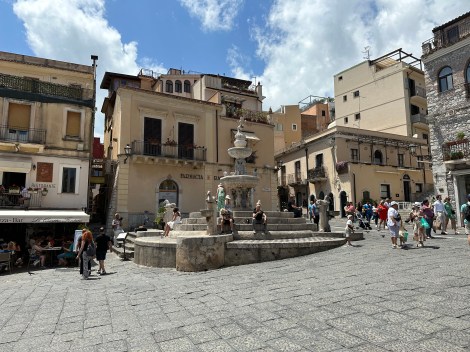
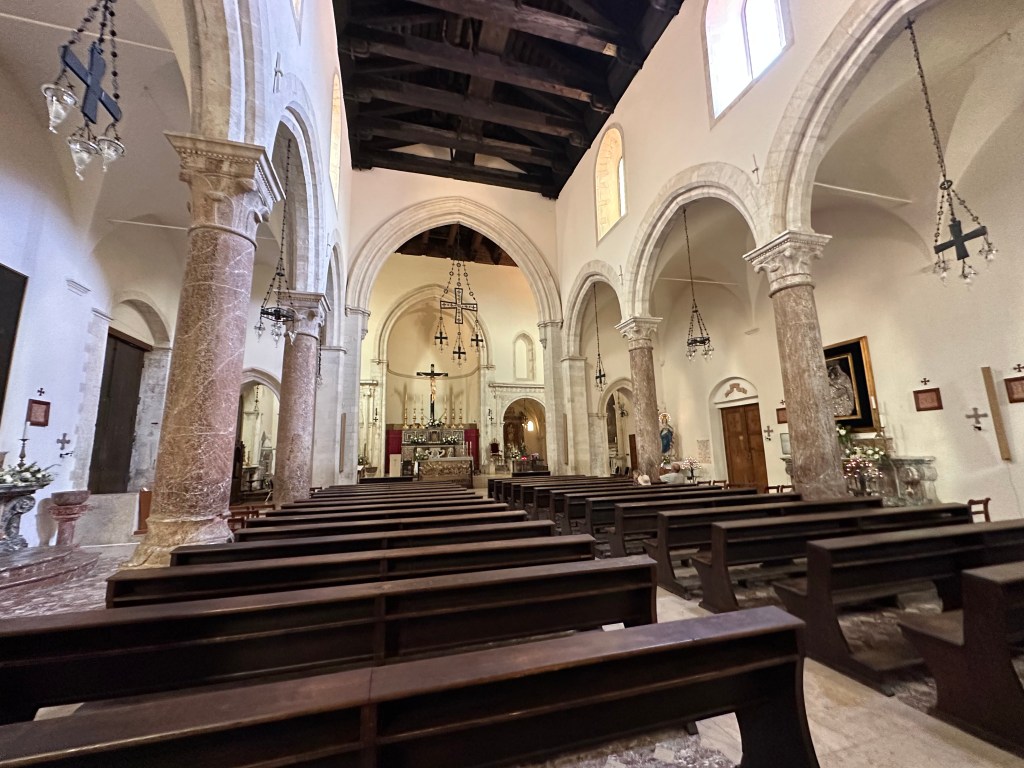
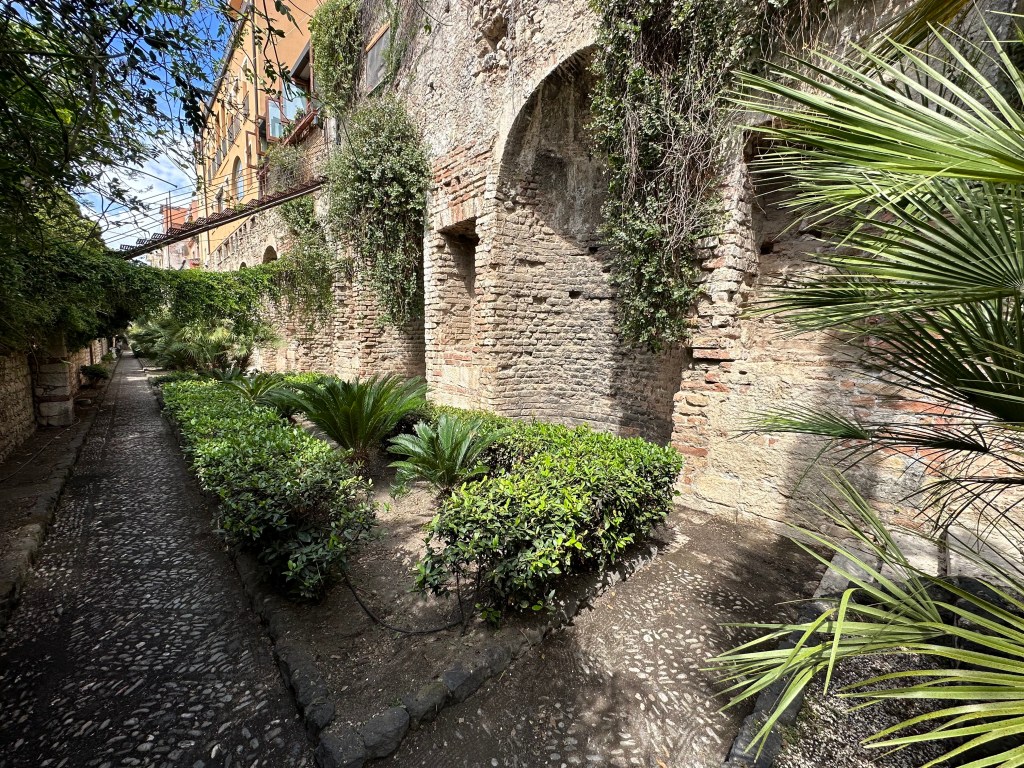
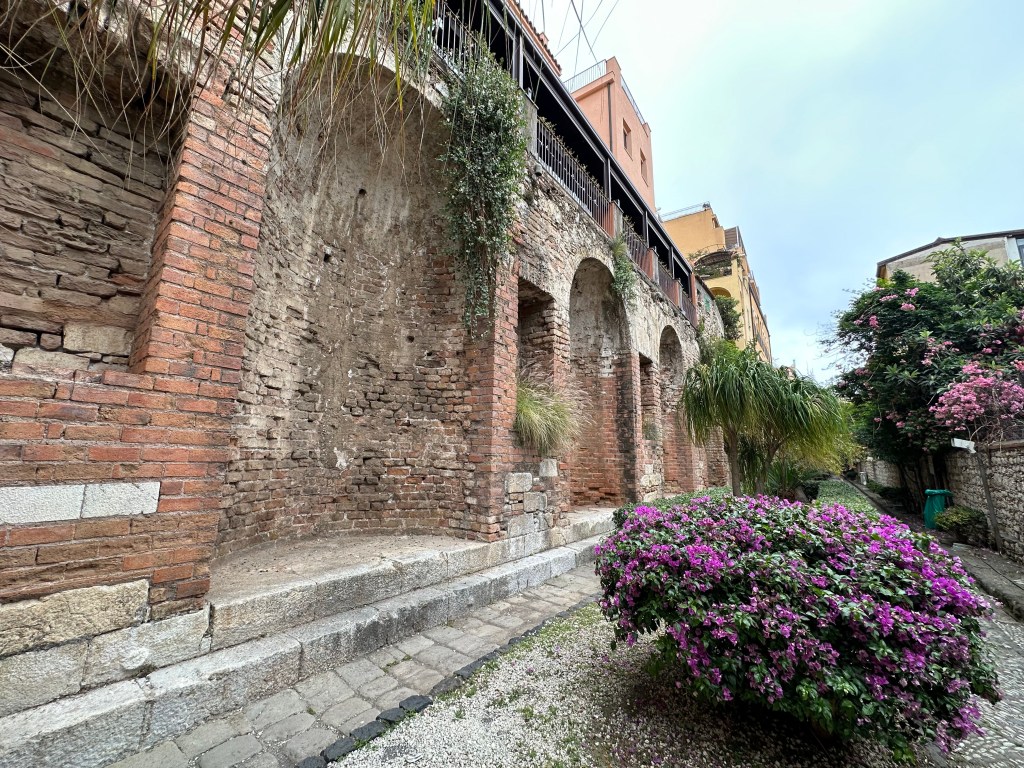
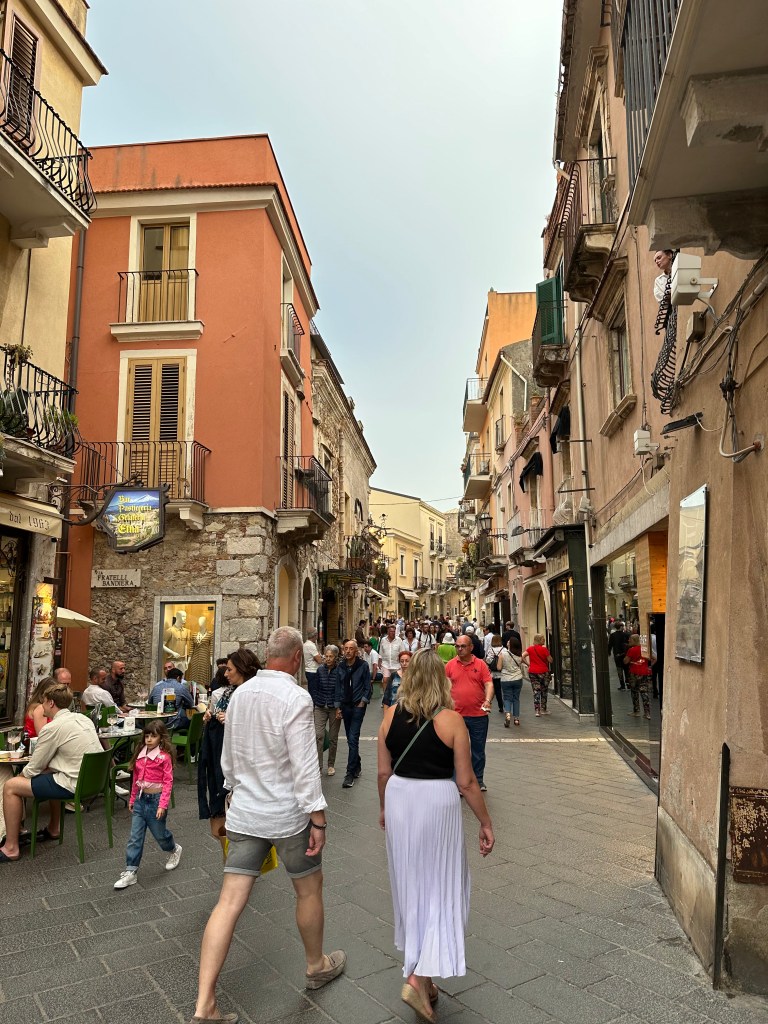
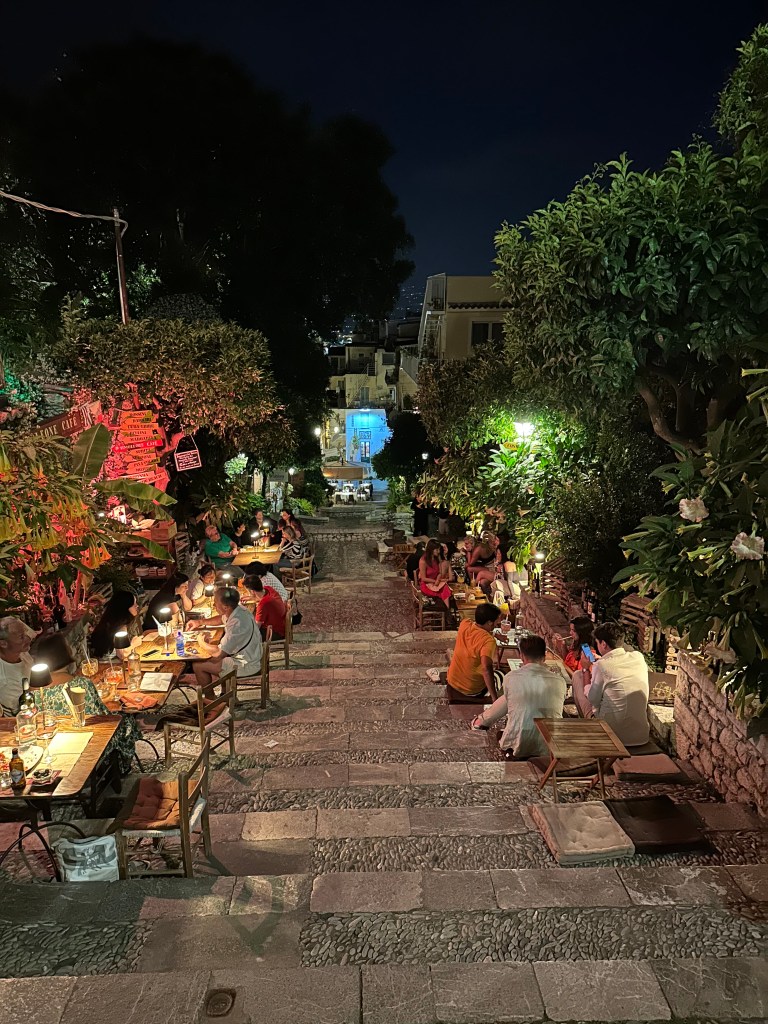
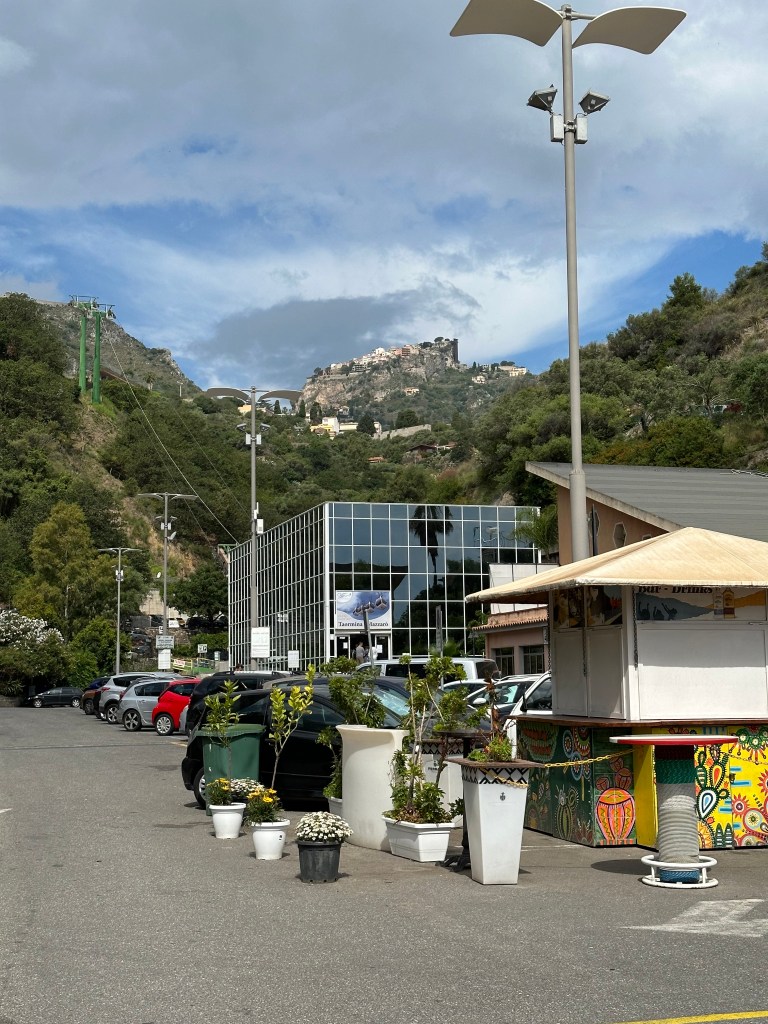
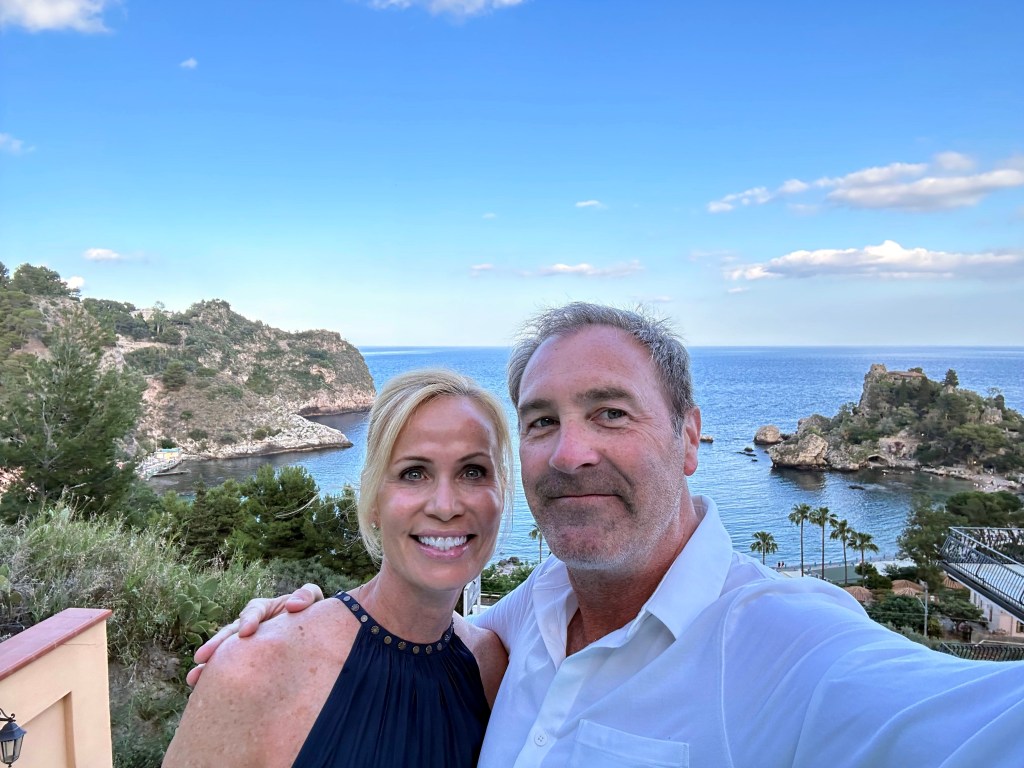
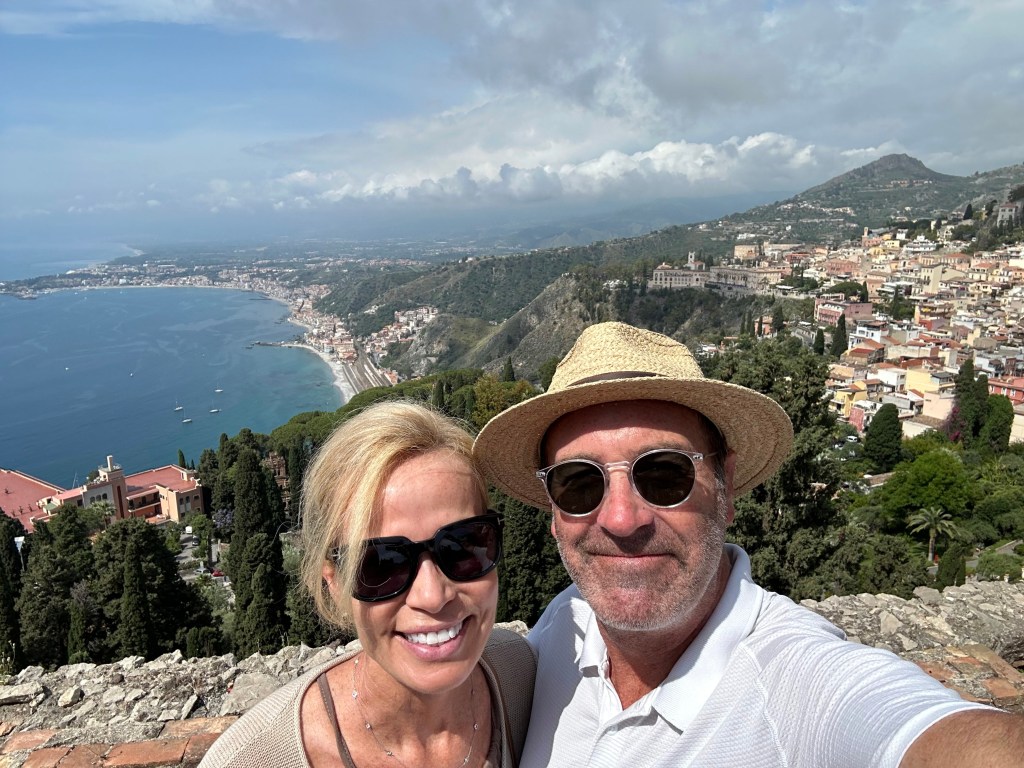
And finally, to the northeast(ish) of Sicily, and the now hyperpopular town of Taormina, setting for White Lotus Season 2 (although we didn’t know this when we planned the trip).
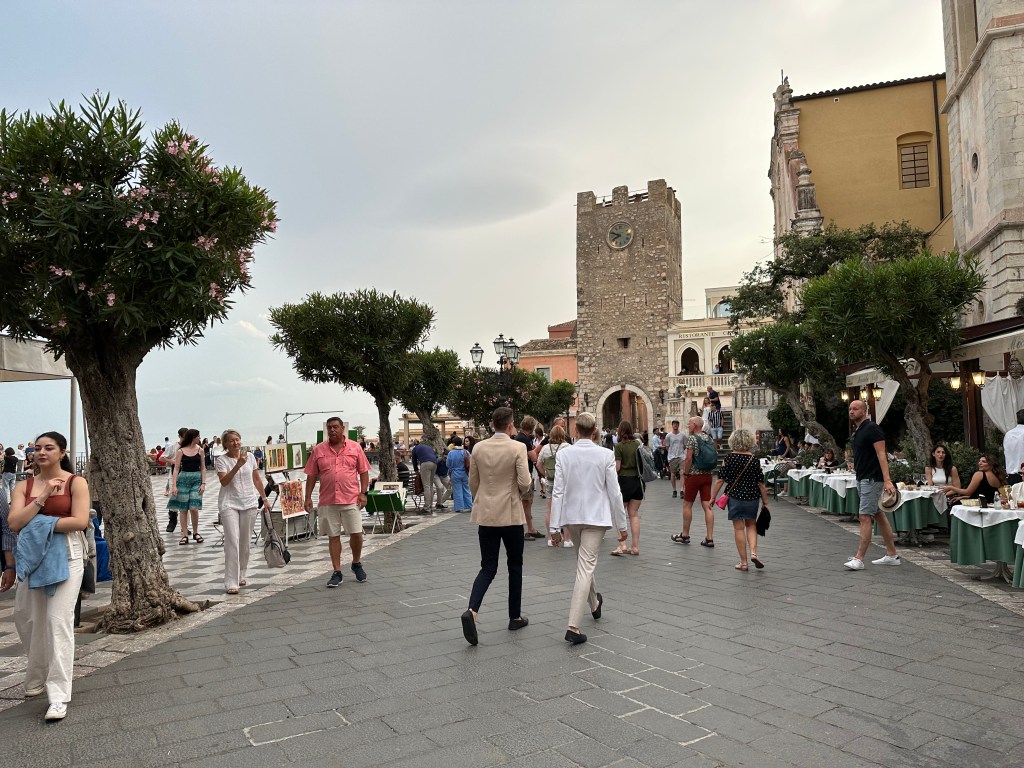
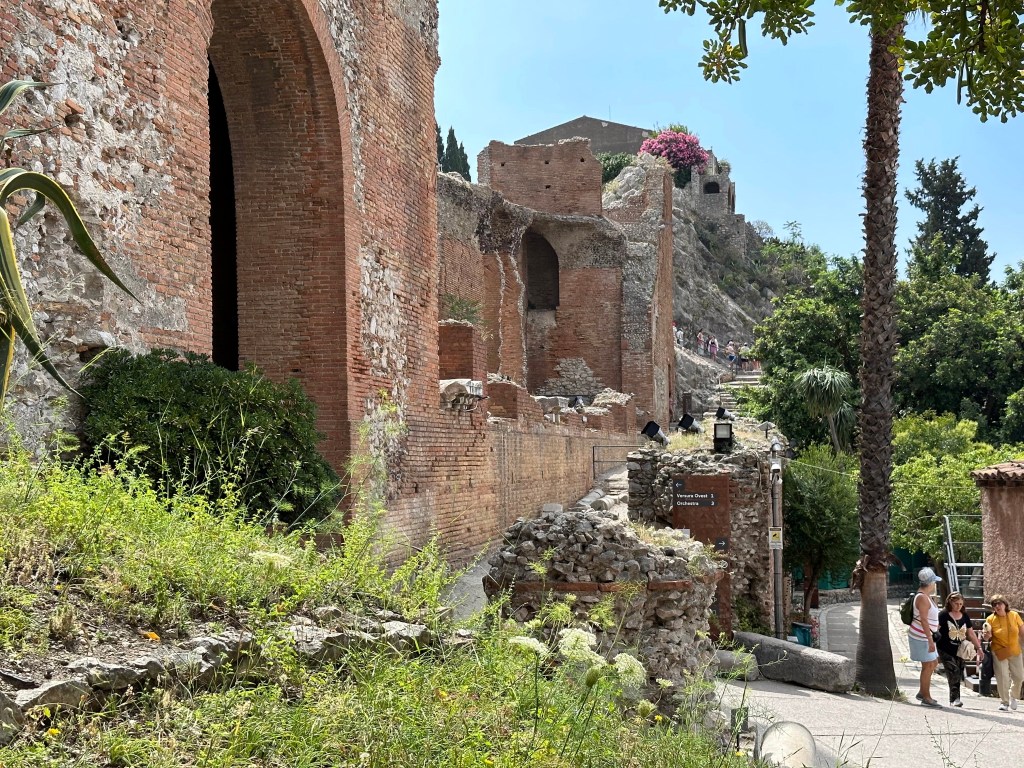
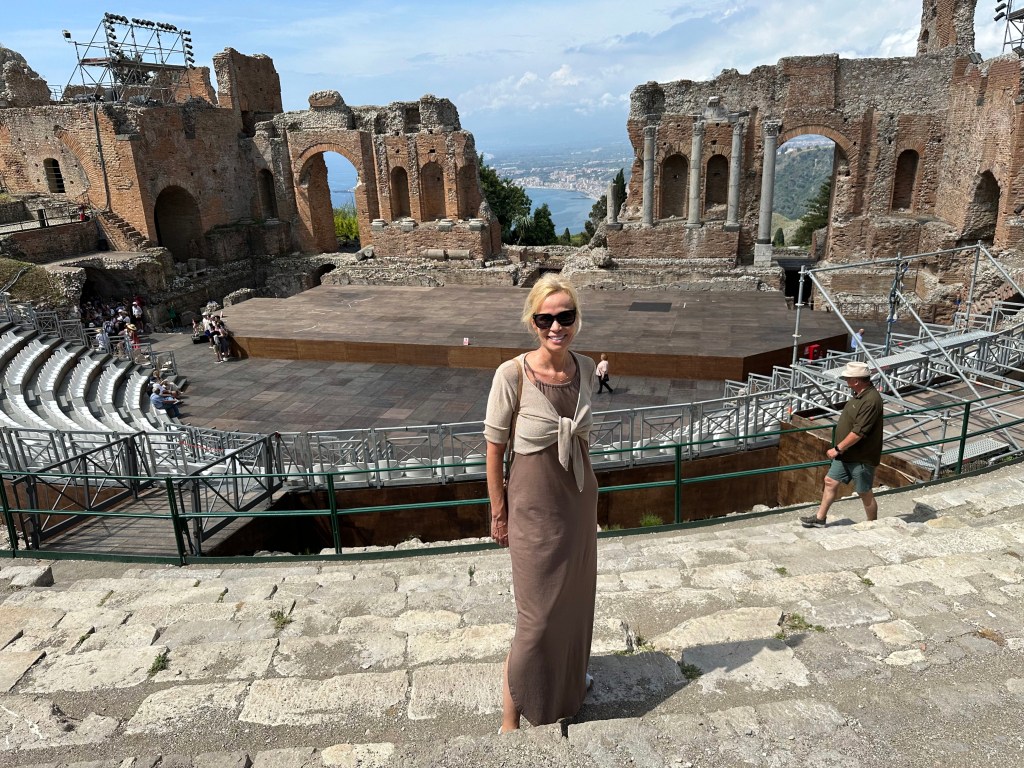
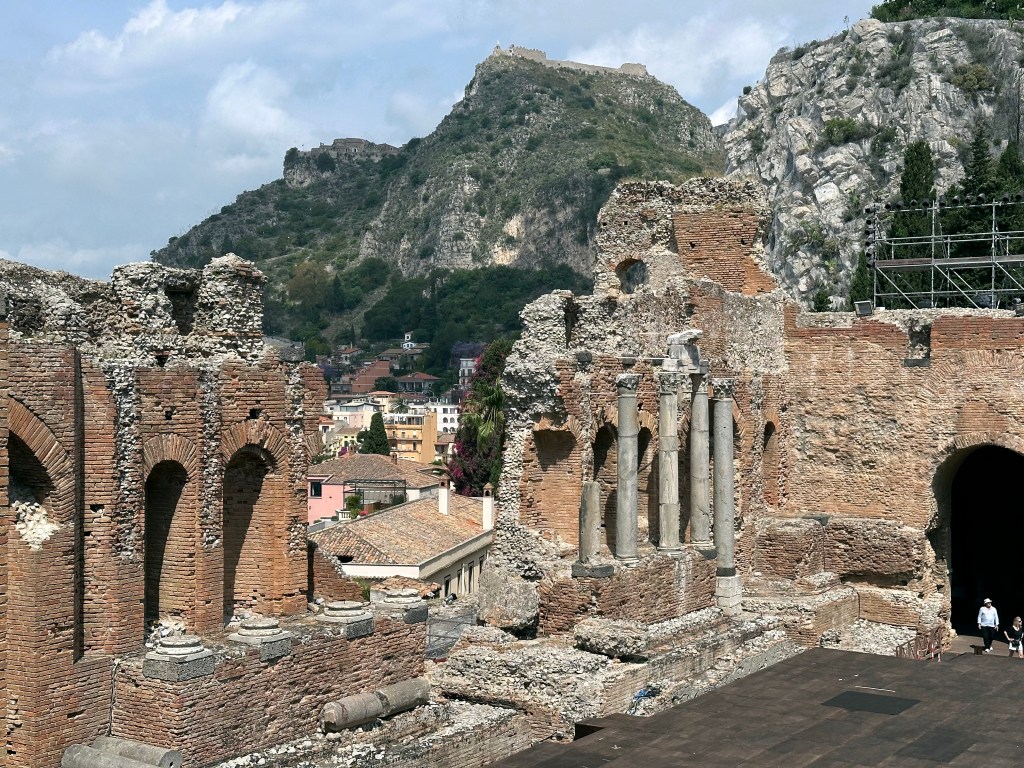
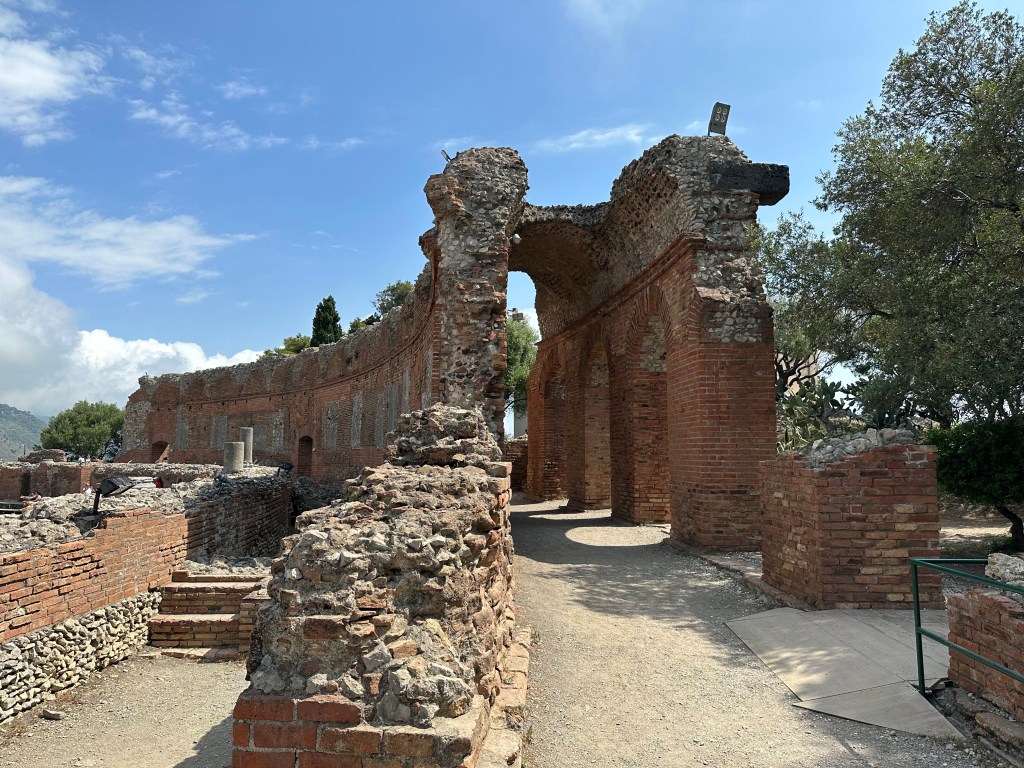
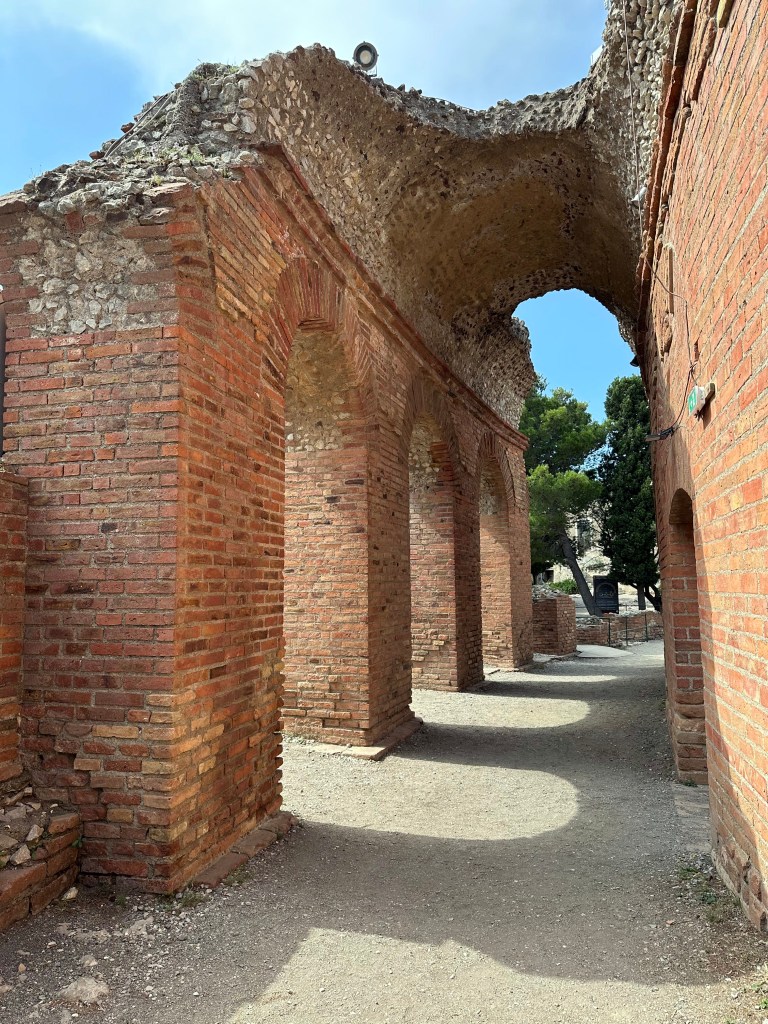
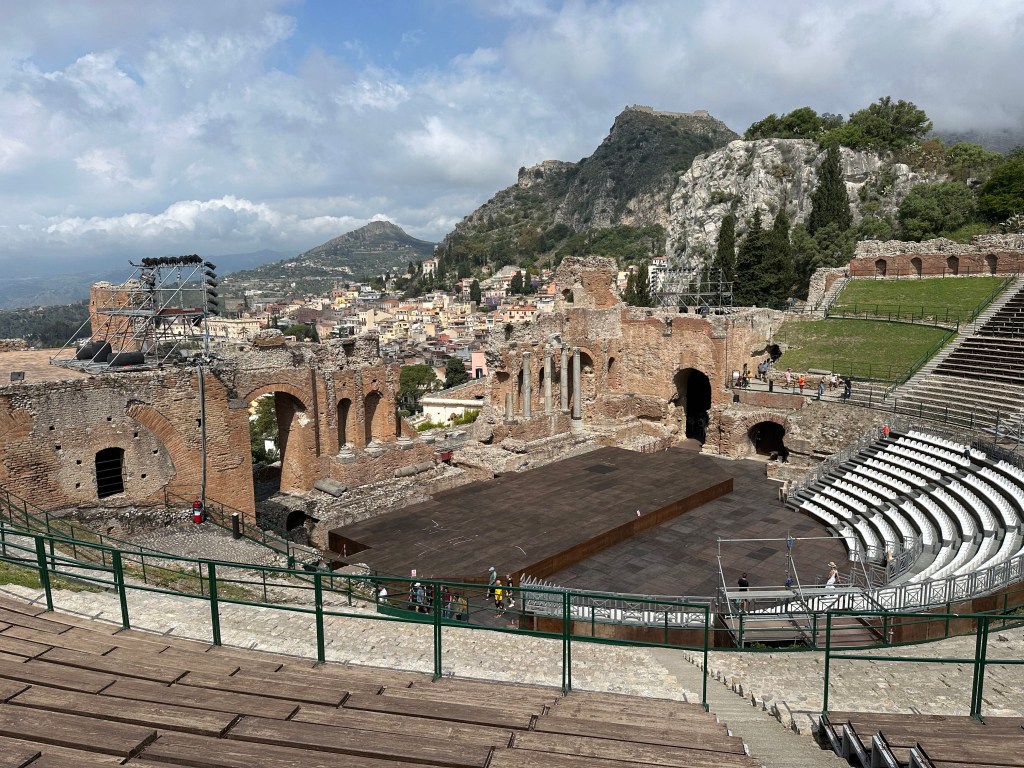
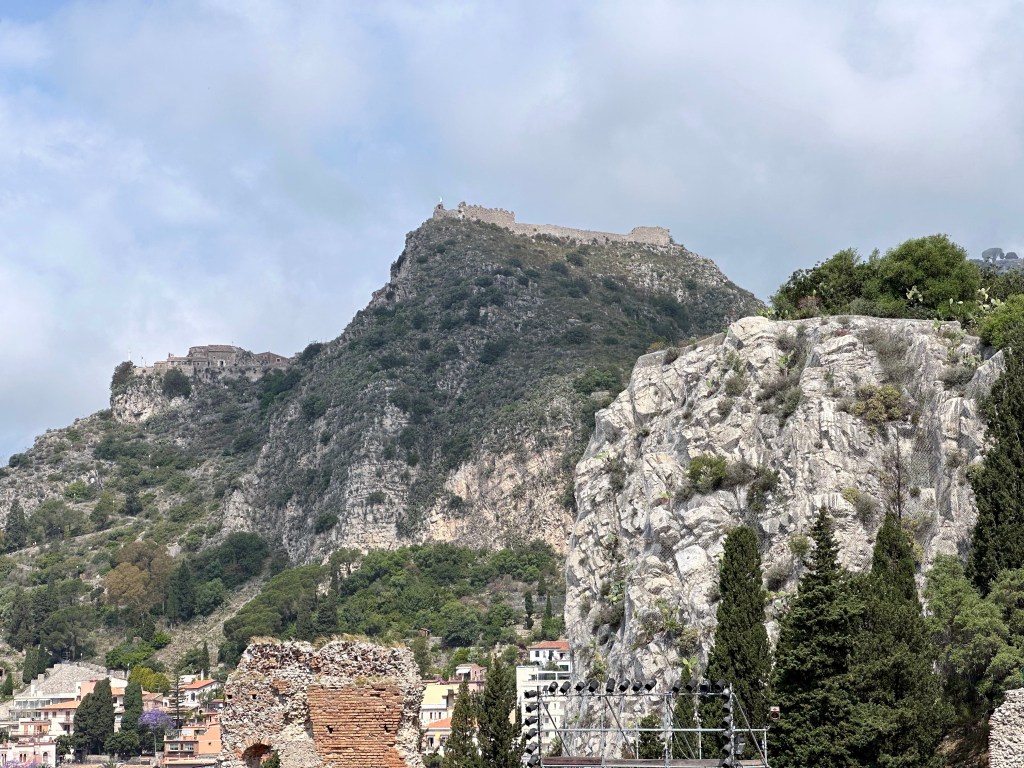
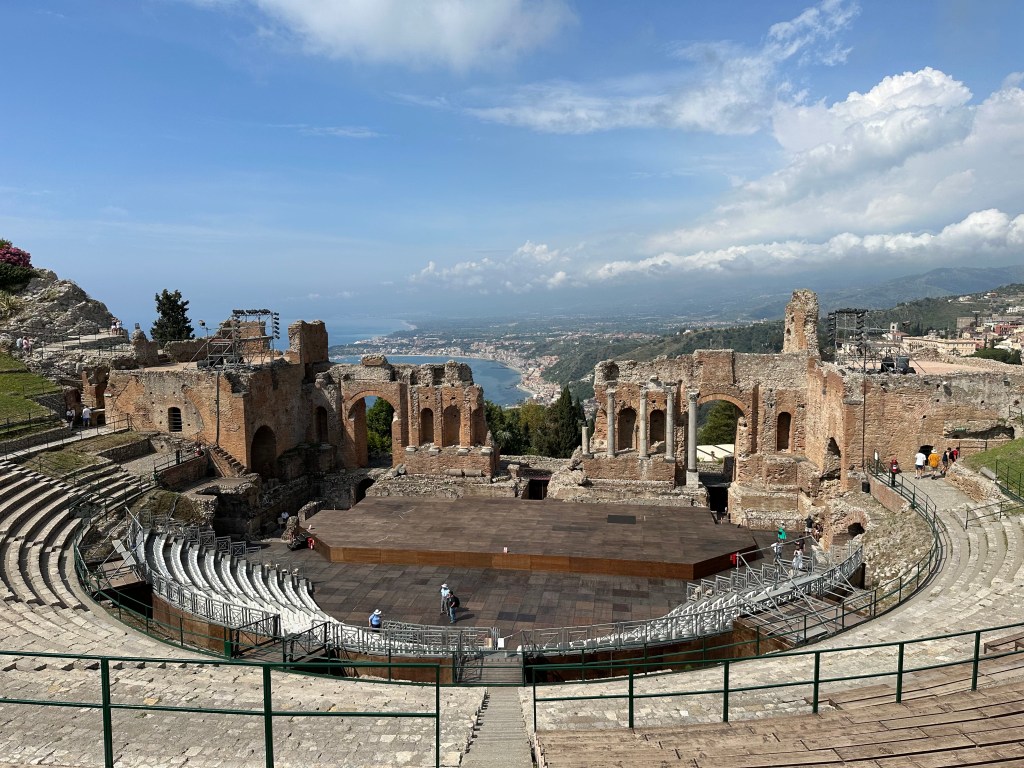
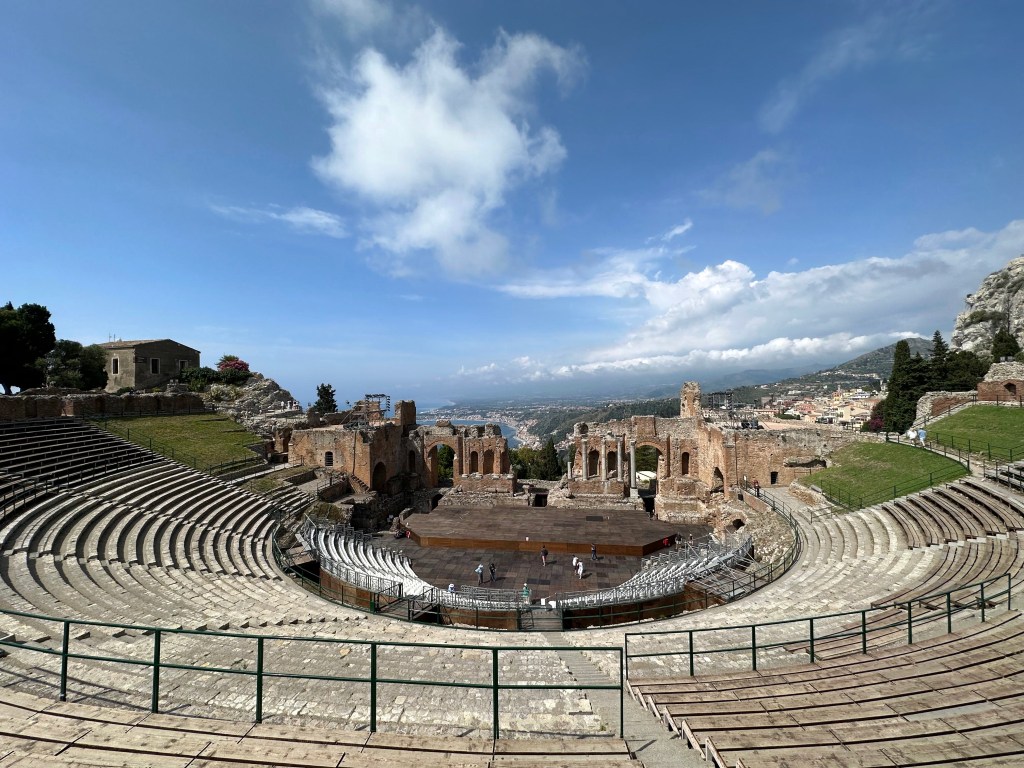
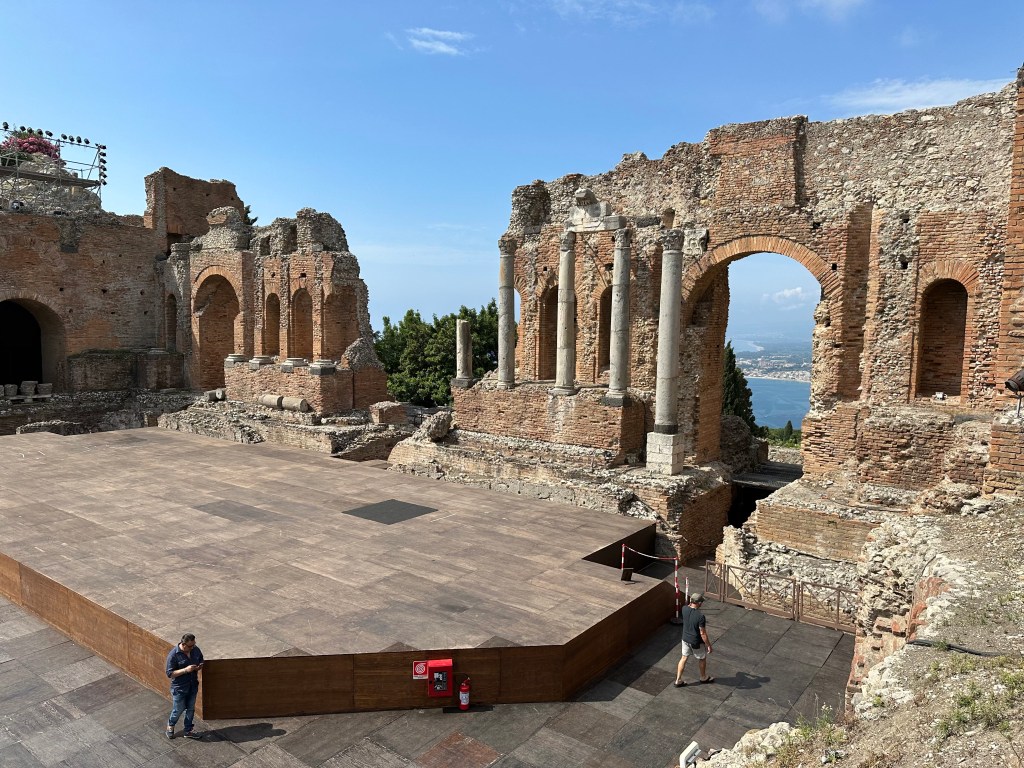
We challenge anyone to locate a more stunning, atmospheric setting for a classical theater than the one in Taormina. It began as a 3rd-century-BC Greek theater, then 1st-century-BC Roman theater, then 2nd-century-AD Roman theater, then 18th- 19th- and 20th-century restorations. Pretty freaking cool. And, like Syracuse’s Greek theater, still in use today.

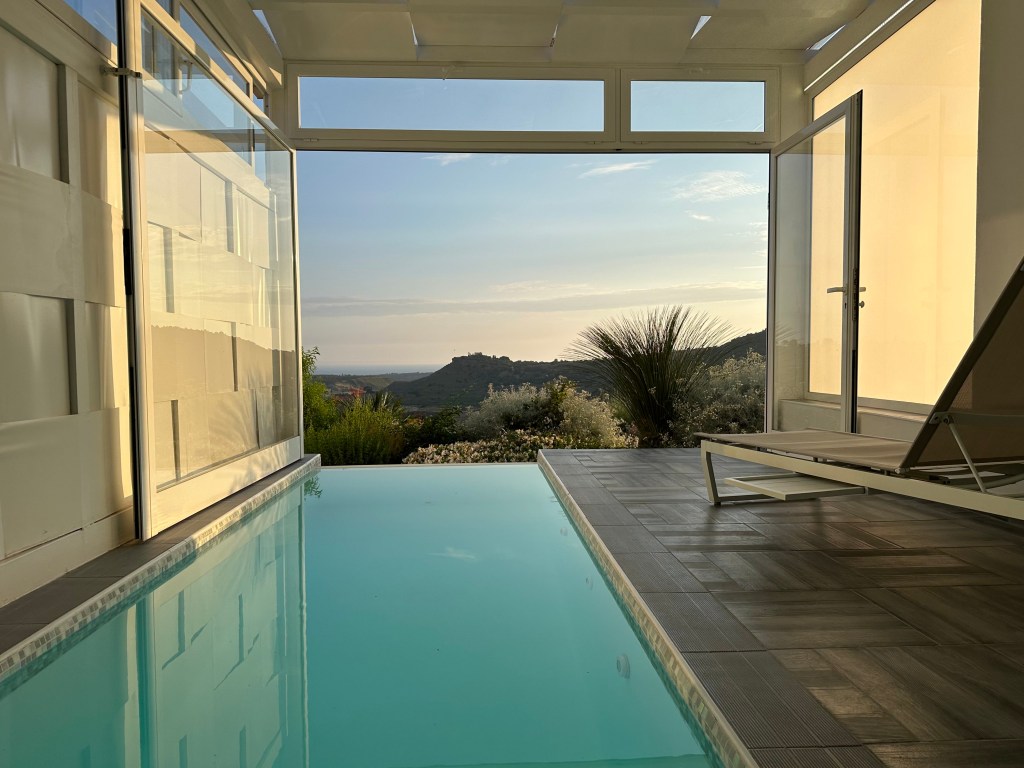
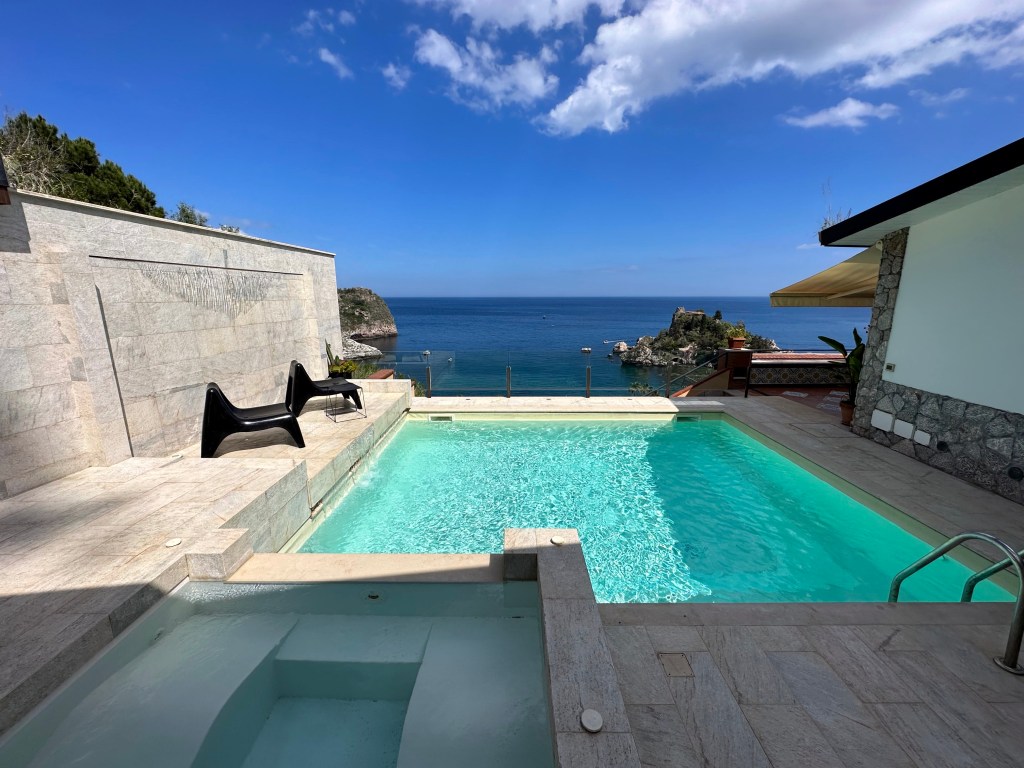
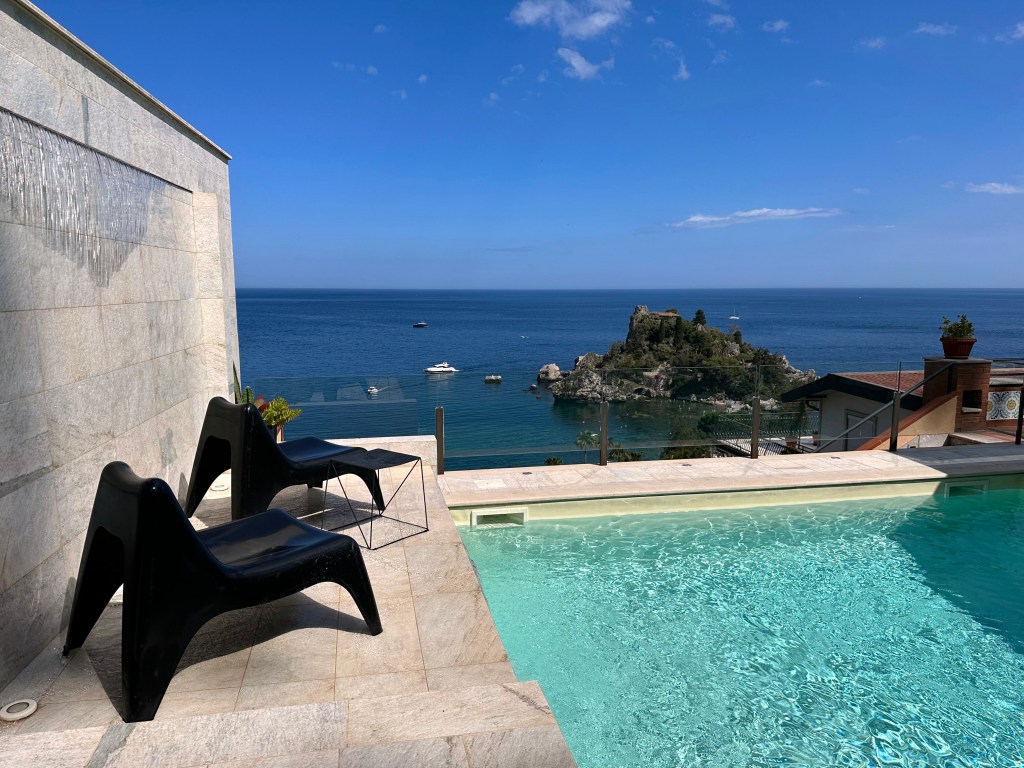
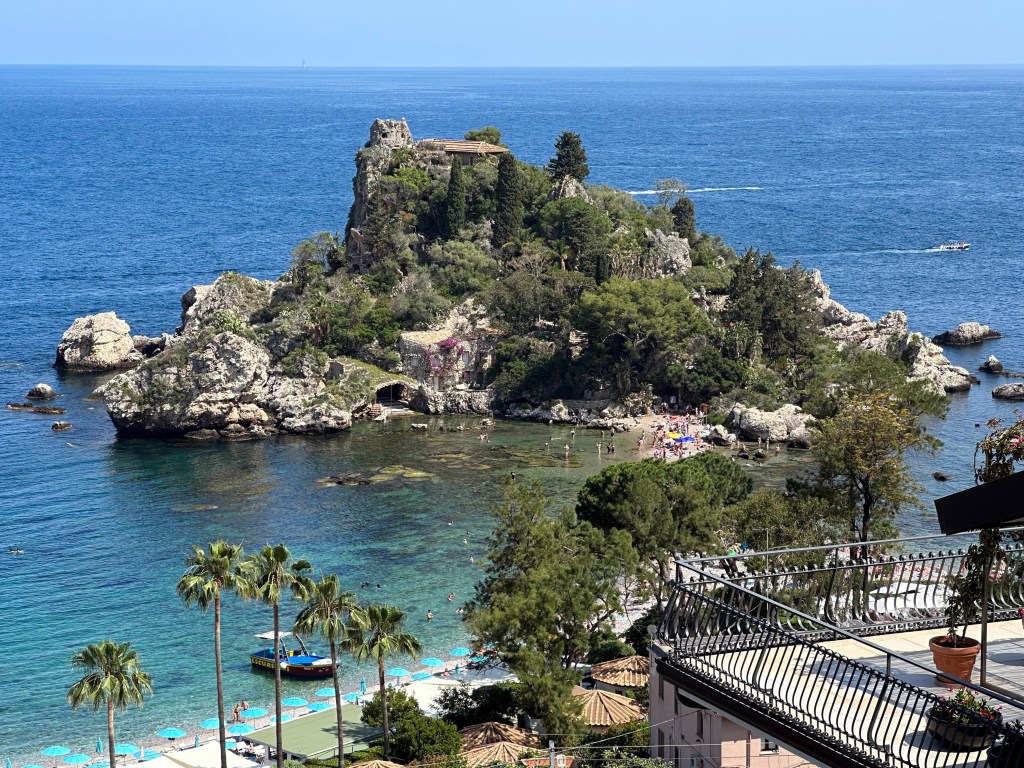
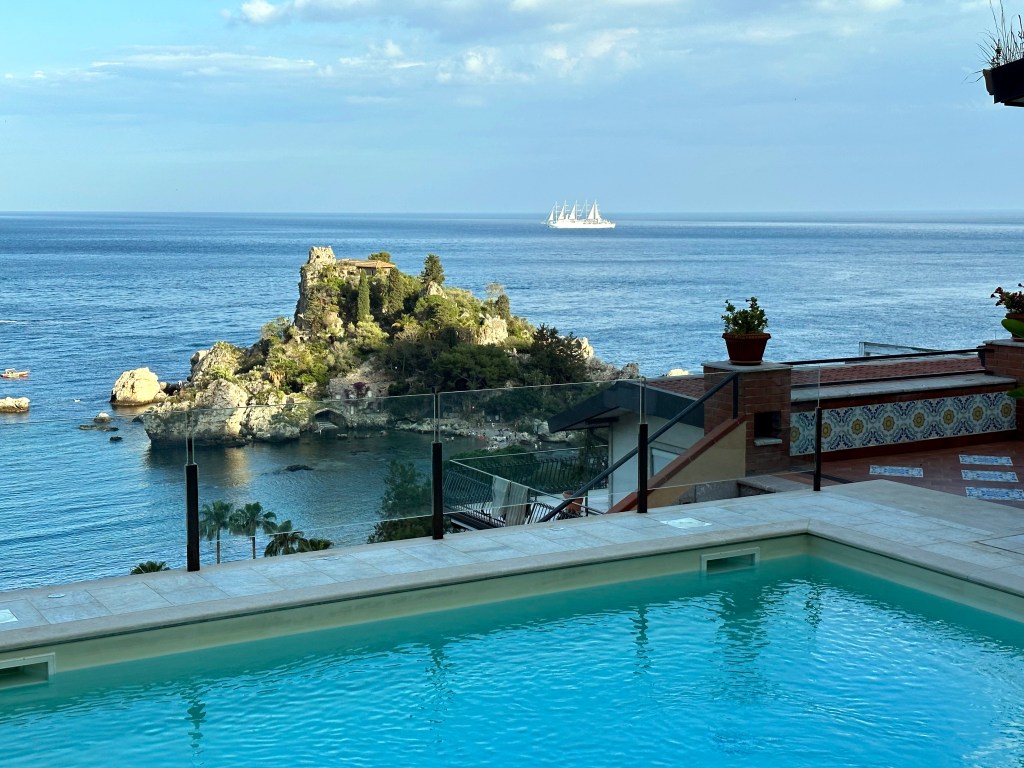
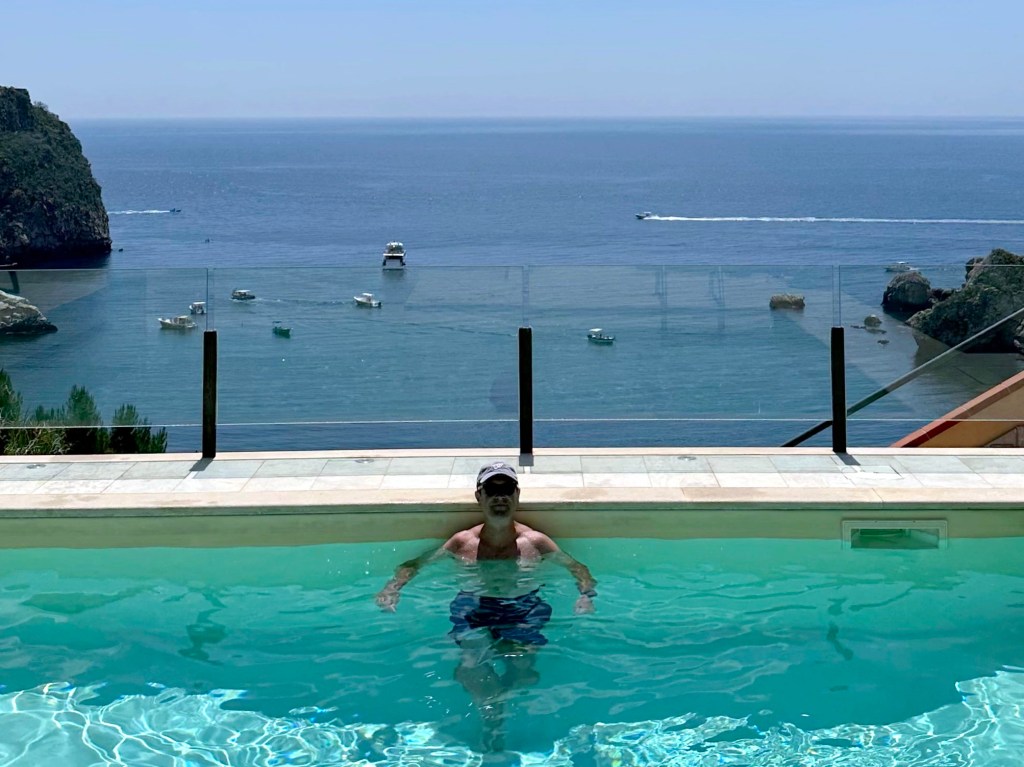
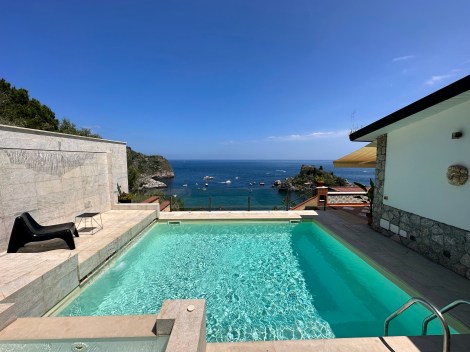
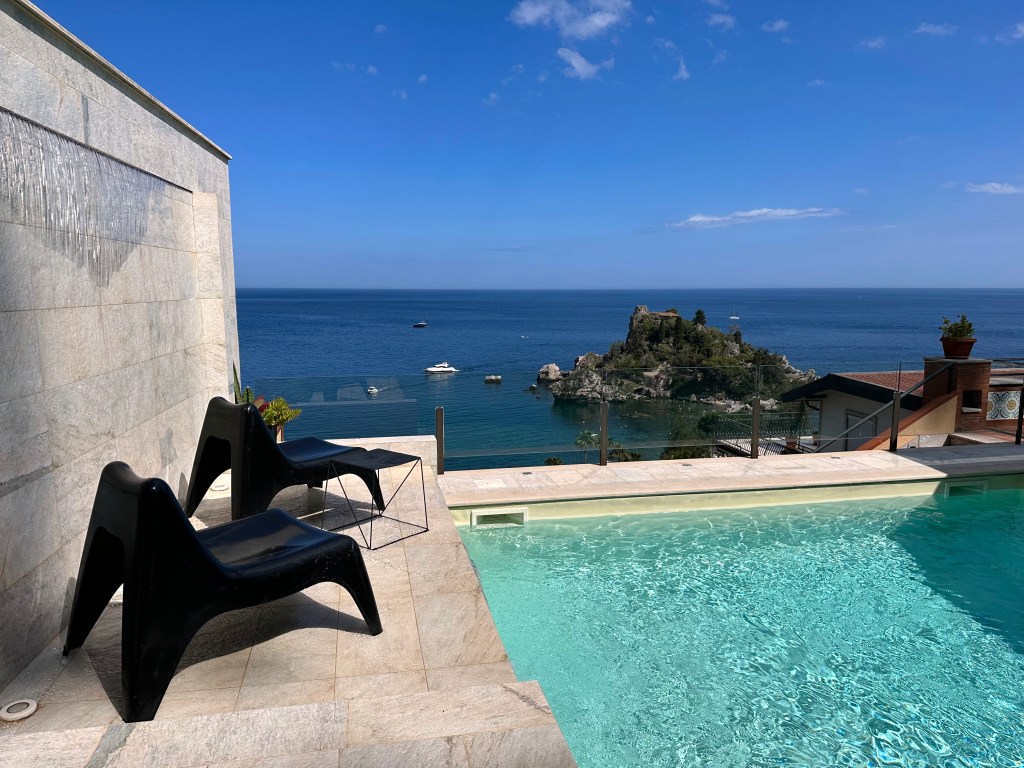
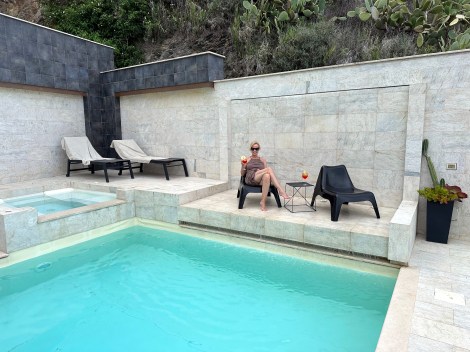
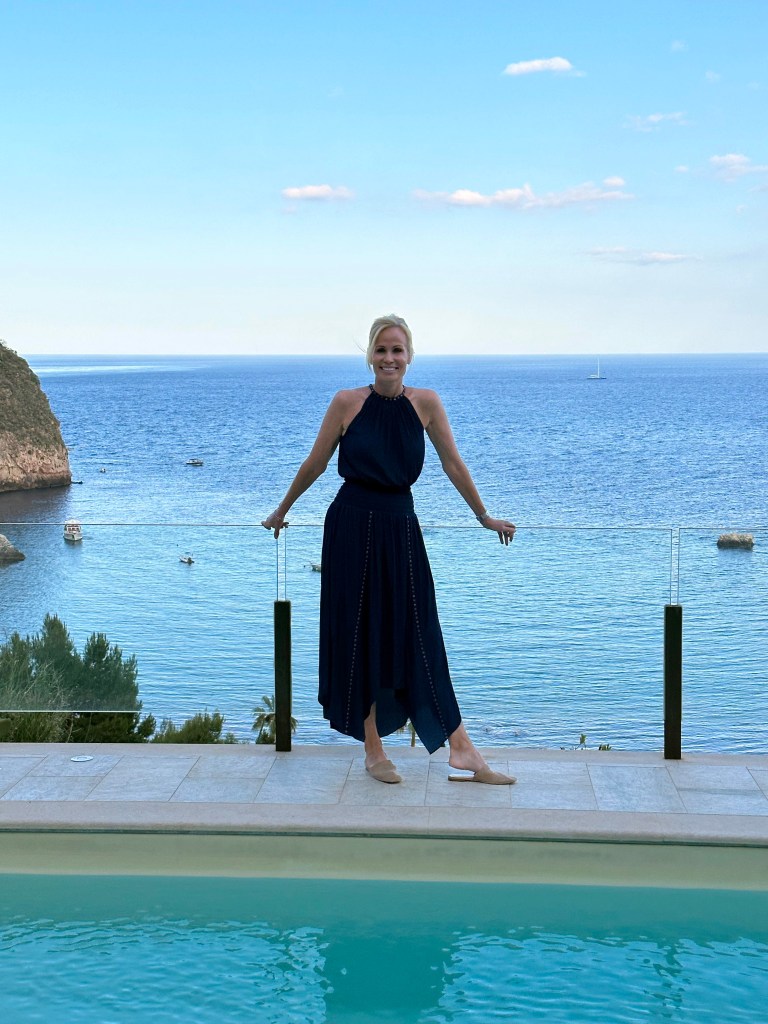
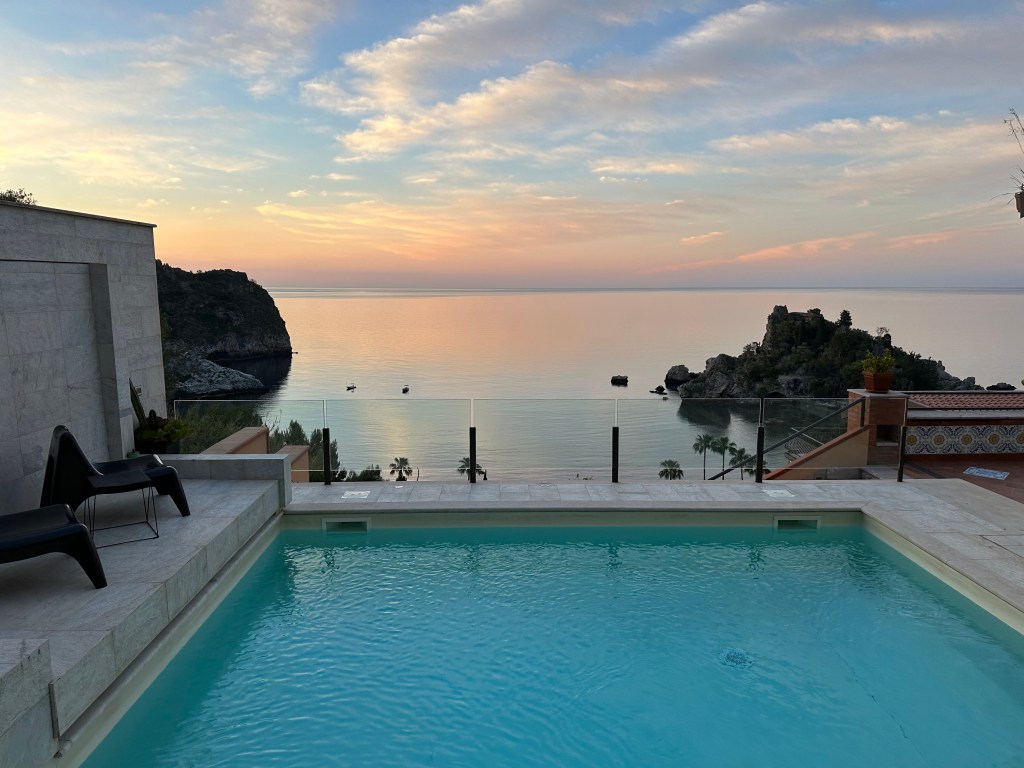
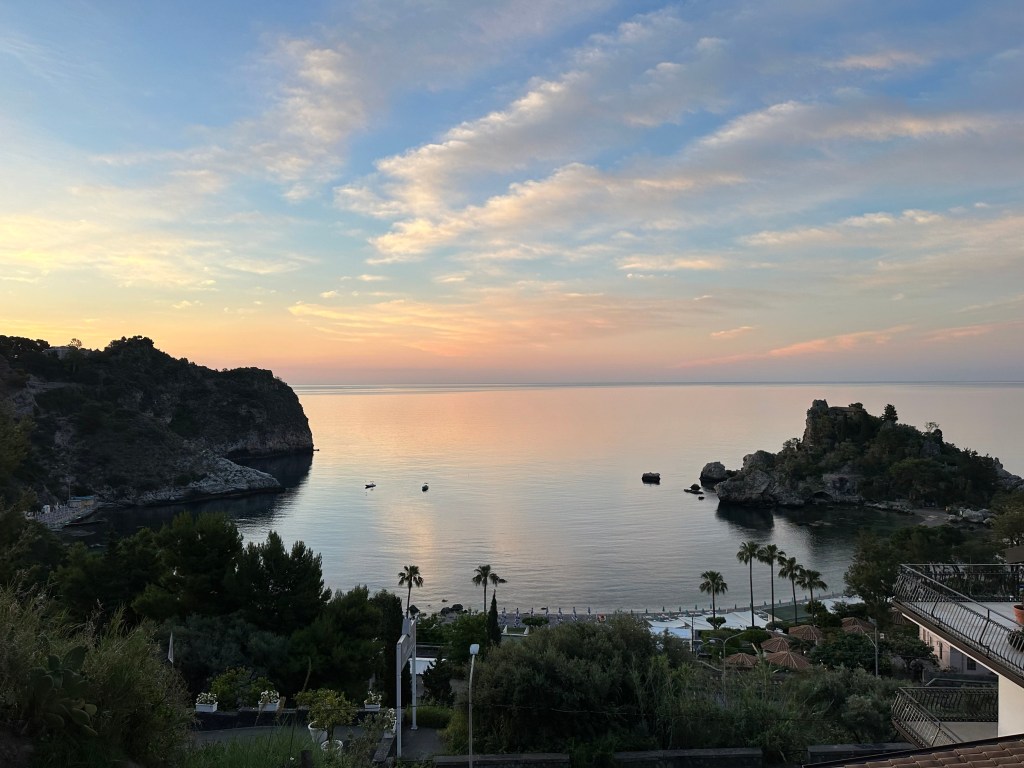
Our digs for 5 days, perched above IsolaBella. Wins the prize for best AirB&B pool on the trip.
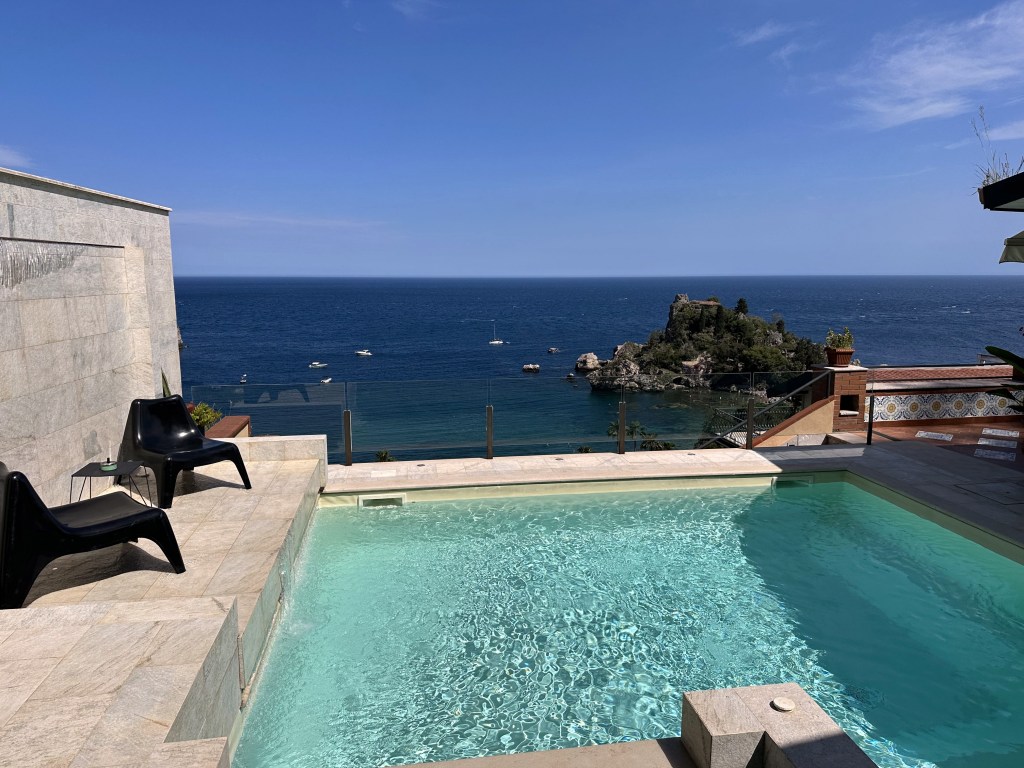
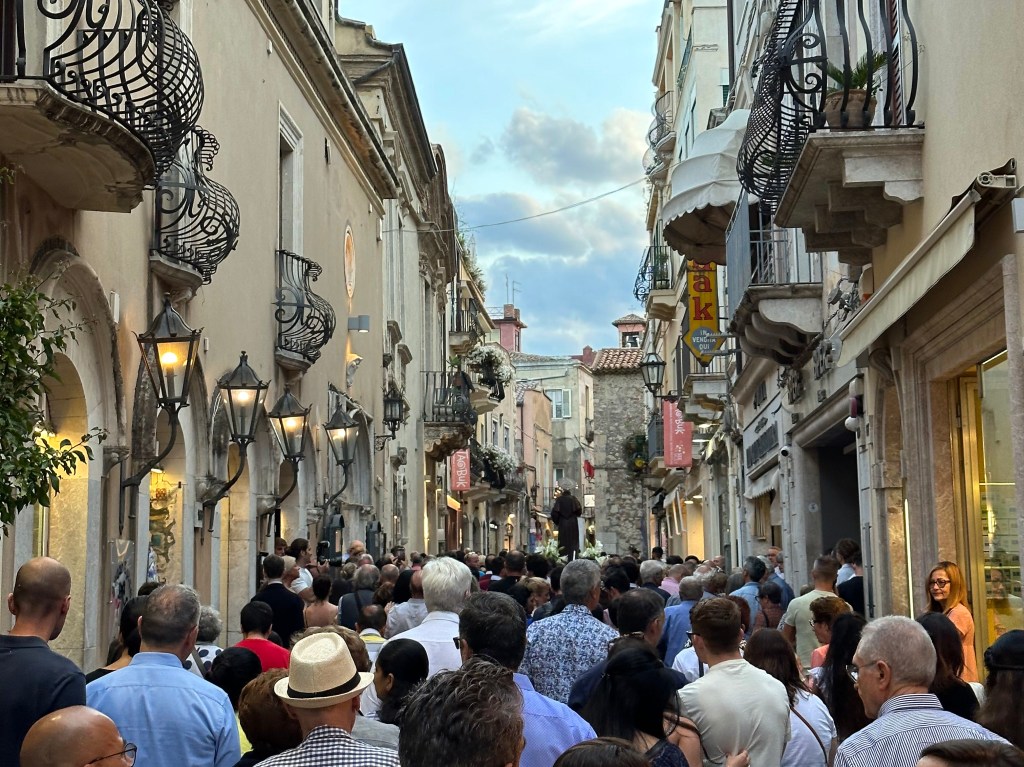
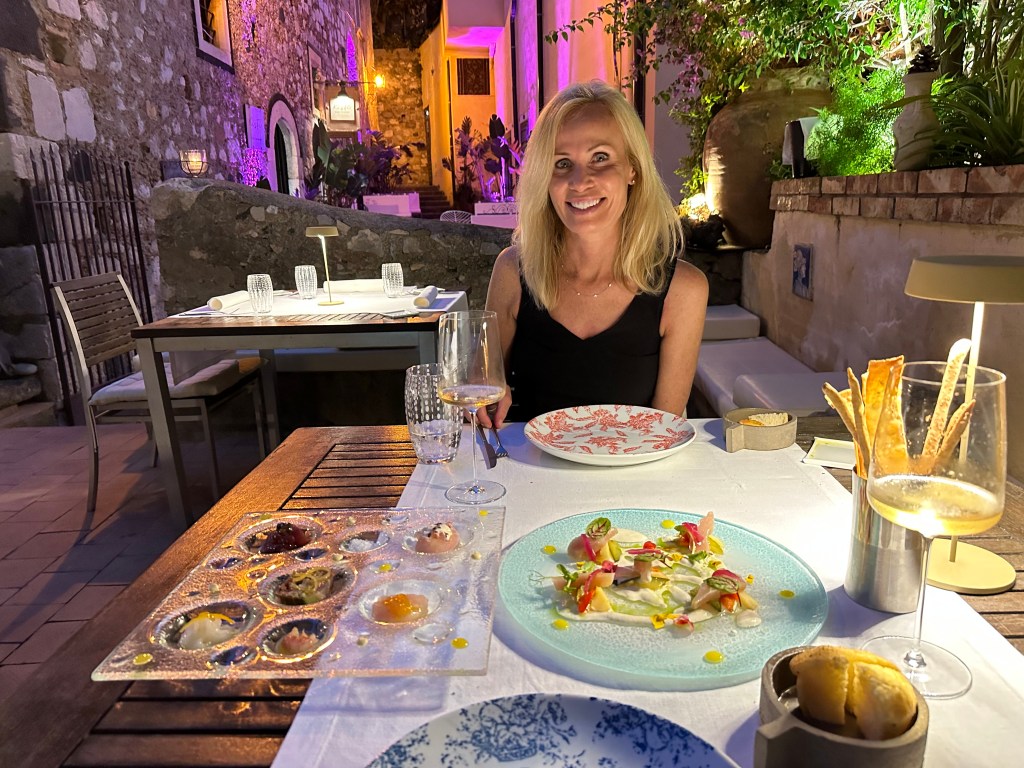
Last night in Taormina:

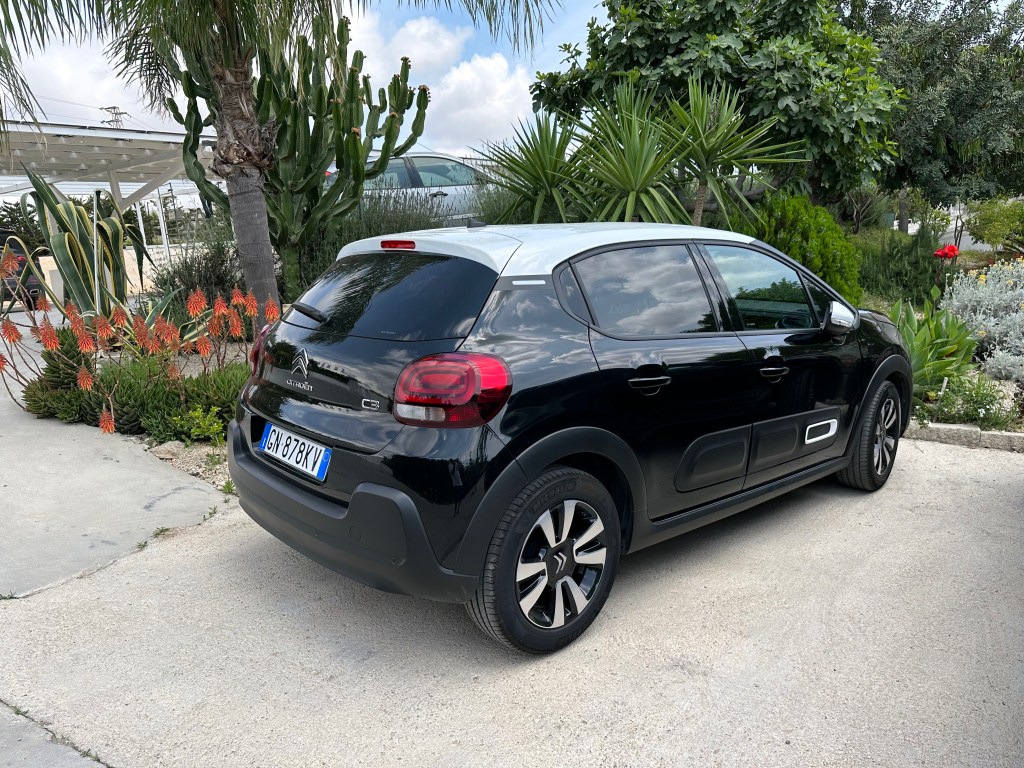
The next day, we flew from Sicily to Malta, dropping off our trusty Citroen C3 – the second time we’ve had one of these for a European road trip. It looks like a sneaker with the unnecessary side effects, but this car grows on you!

Malta Break

And then, Malta! Country no. 71 for WolfeStreetTravel.

Downtown Valletta, the tiny country’s capital, with its unique wooden balcony boxes (gallarija):

And on the heels of the best AirB&B pool in Taormina, the best hotel pool at our digs in Sanglea built into an old fortress and overlooking Malta’s Grand Harbour:

A side trip to Mdina, Malta’s golden limestone old capital:
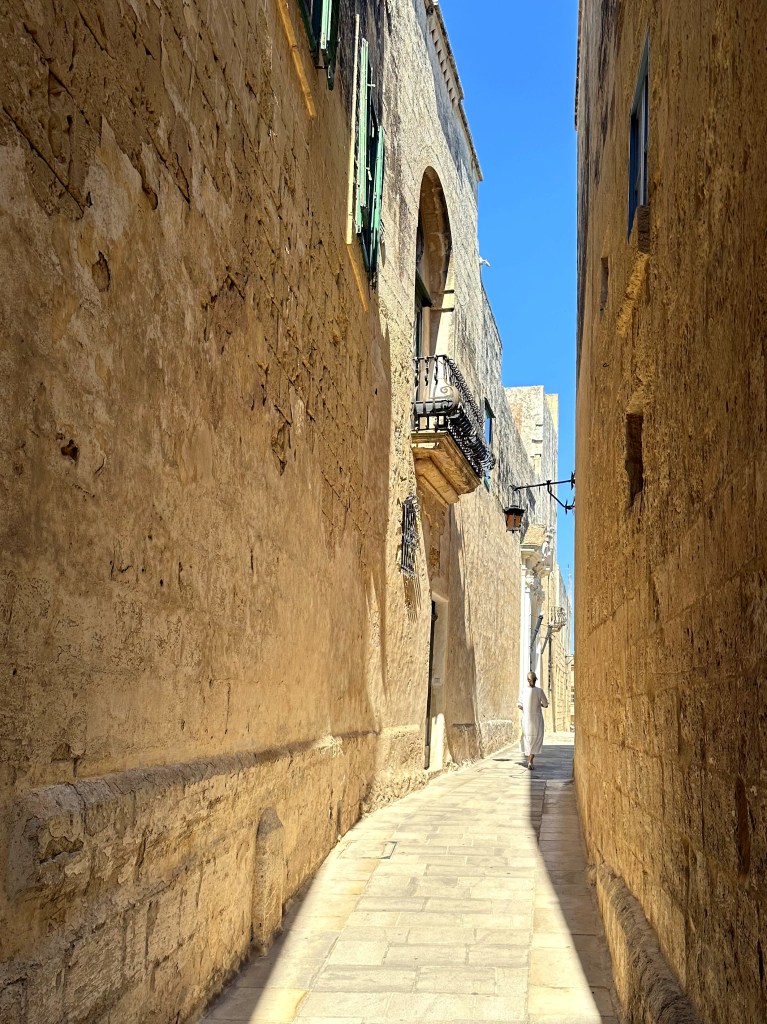
Last night in Malta along the harbor:

To avoid potential flight issues to reach our next destination in Normandy, where we had a hard start, we flew to France a day early, and stopped over in Chantilly, home to Chateau de Chantilly. No delay, but good call – cool place.
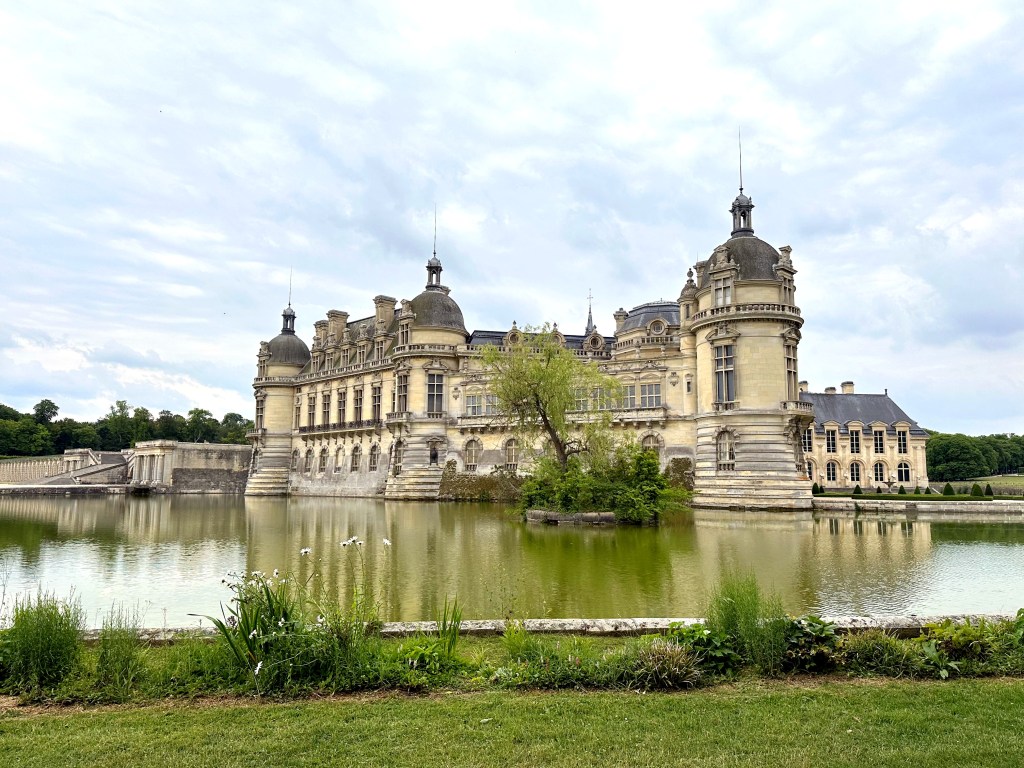
Normandy Biking

The next leg of the our extended foray to Europe entailed our latest biking trip – this time with Thomas and Lisa, in celebration of their wedding (albeit delayed for 2 years).

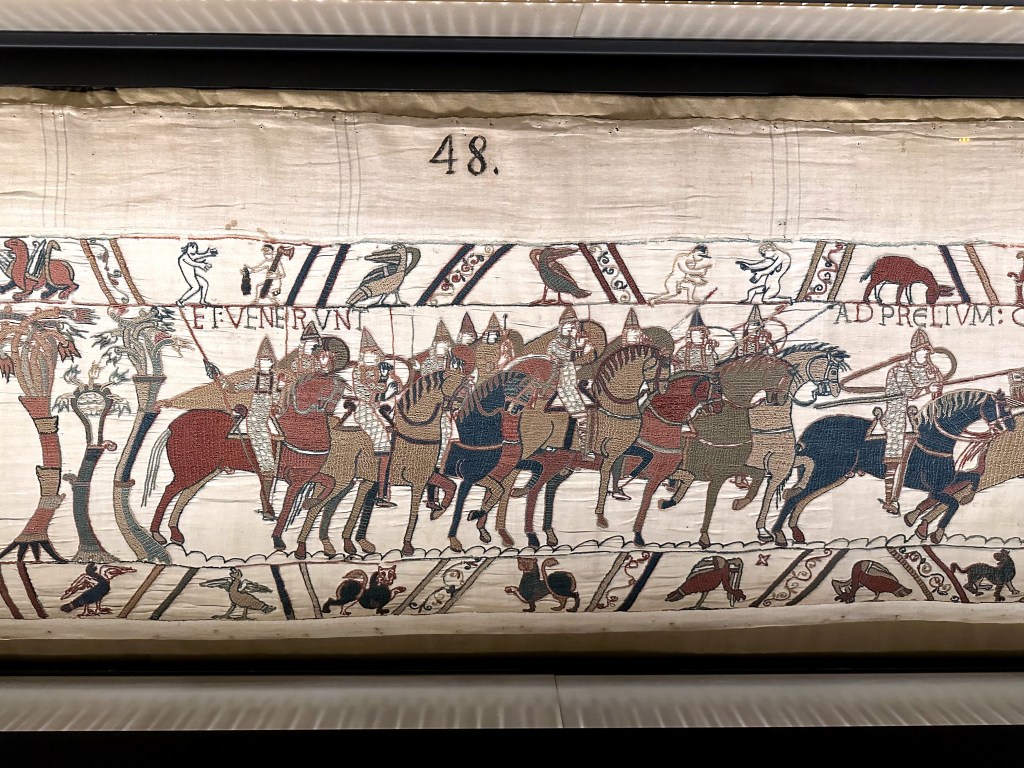
The five stages of the bike trip spanned two invasions. The first in 1066, by William the Conqueror conquering England from Normandy, as depicted in the 11th-century Bayeux Tapestry, as seen in Bayeux, our starting town:
The next almost a thousand years later, this time and invasion of Normandy in 1944. On our first day we visited three bunkers in a German battery on Gold Beach:

And on the same ride, the first of our dozens and dozens of dozen oysters ordered in Normandy:

Invasion overview at the American Cemetary at Omaha Beach:
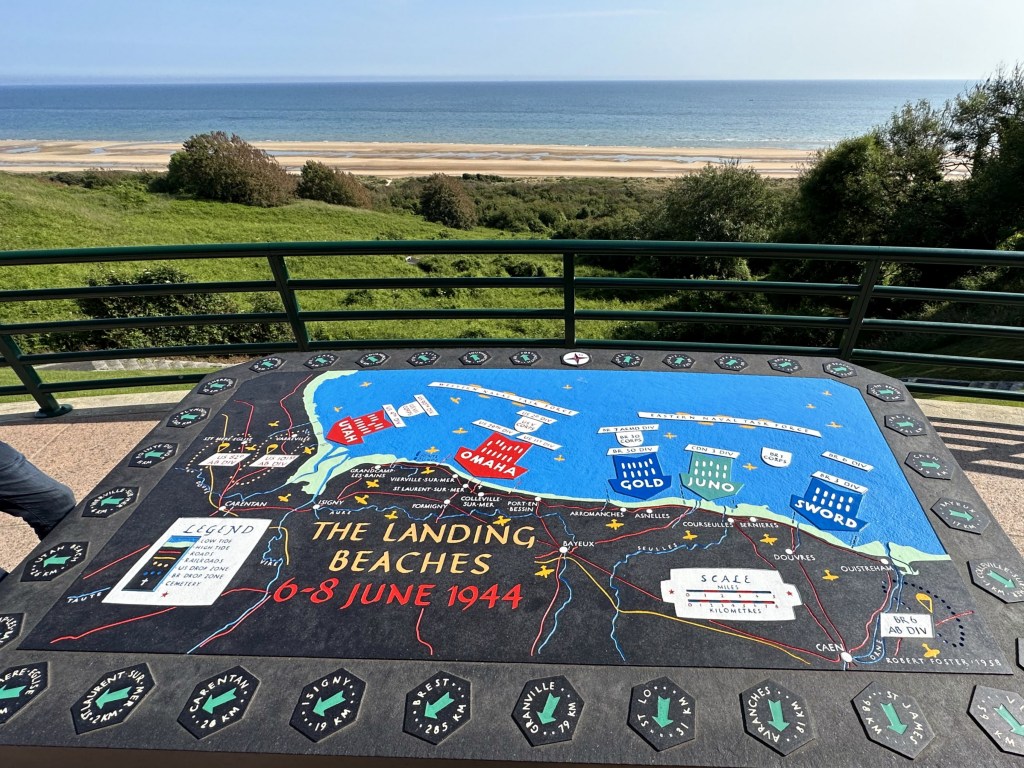
And a night in a 13th- and 14th-century chateau, which may have been the most surreal night of our entire travelling lives. There’s an entire story about this insane evening, but we’ll deal with that in a separate post.
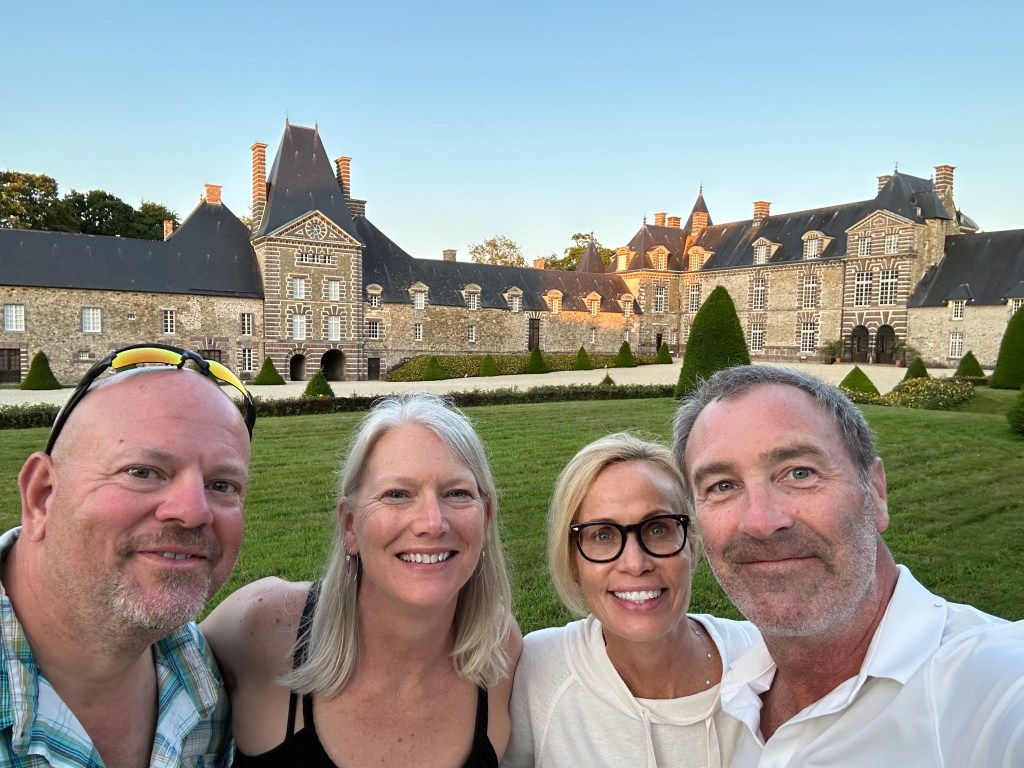
The conclusion of our biking journey at Mont Saint Michel. Originating in 708, the site has attracted pilgrims who still trek across the sandy estuary at low tide for more than 1300 years, staved off an entire English army during the 100 Years War with a garrison of just 100 Norman knights, and is claimed to this day by both Normandy and Brittany. 

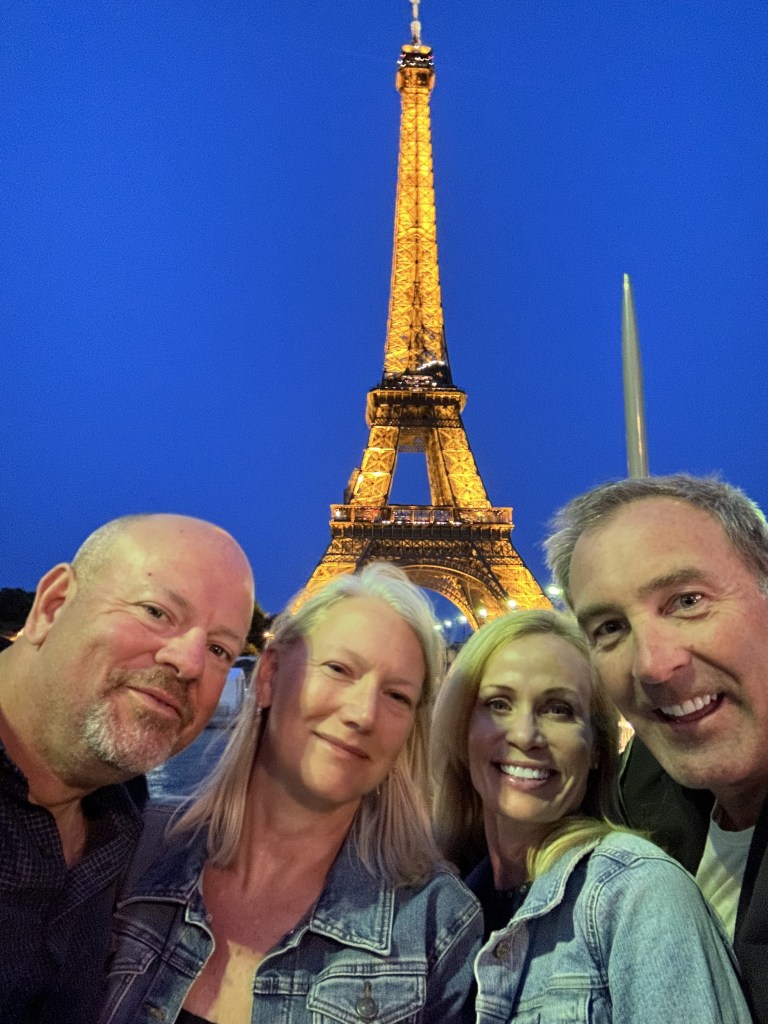
Then, a day in Paris:
Of all of the legs of the trip, only Portugal was unplanned. We knew while in Malta that we didn’t want to go home after biking, and considered either grabbing a car after Thomas and Lisa departed Paris and then driving south to the Dordogne region for a week or two or flying to Portugal at the same time as their return flight. We’re going to save Dordogne for another bike trip, and so we decided to head to Portugal. Still without having a set itinerary there or a return flight home, though!

Portugal

We decided to first spend 4 days in Porto, in northern Portugal. This turned out to be the absolute best location of the entire trip. We’ll be back to spend a month or two here in the future.

Porto’s medieval Ribeira District and south Porto astride the Duoro River:

Everything in Porto is clad in tile:

And, after 7 weeks of Aperol spritzes:

Local port and tonics suddenly dominated the scene:

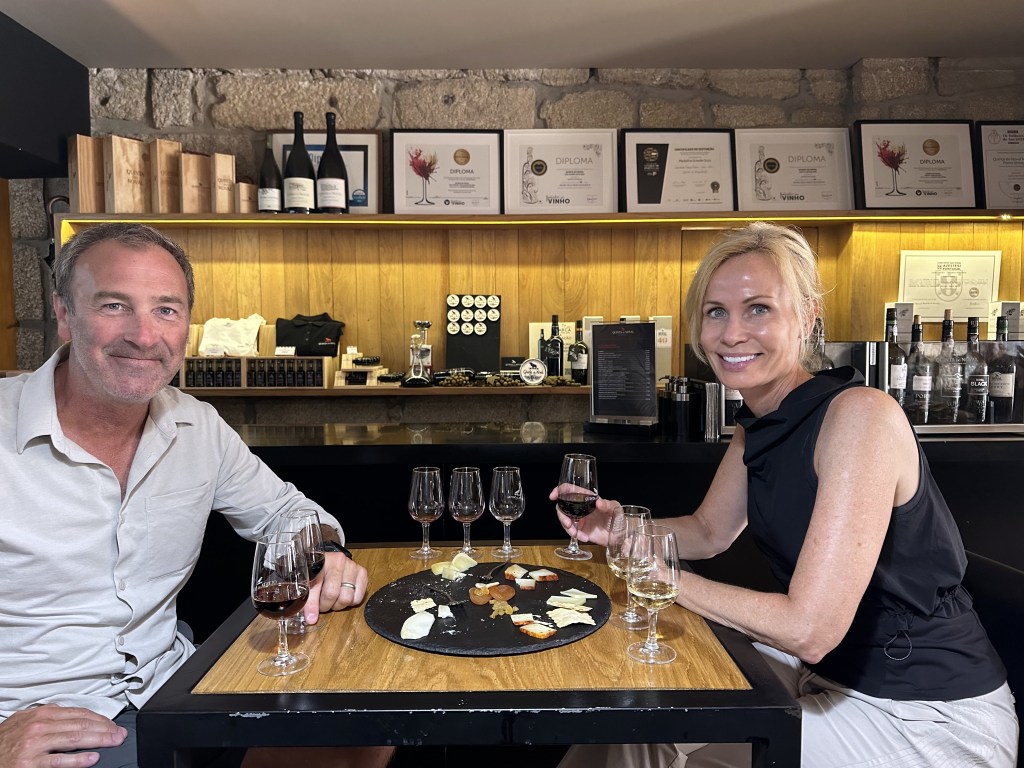
And an afternoon of port tastings:
Then, a train south, to Lisbon, the first European destination we had ever visited, back in 2002:

With some monumental areas:

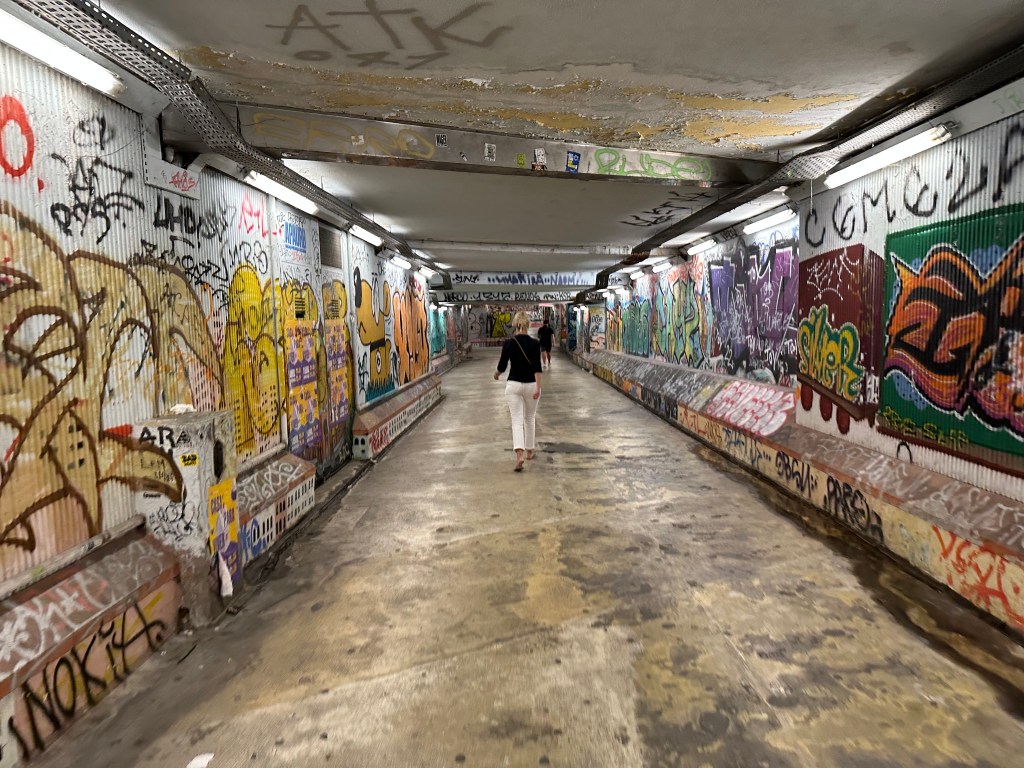
And some more sketchy areas:
And a day trip to Sintra, home to the Pena Palace:

And a final gastronomic meal:

Final night in Lisbon before finally flying home, accompanied by July’s Blood Moon:
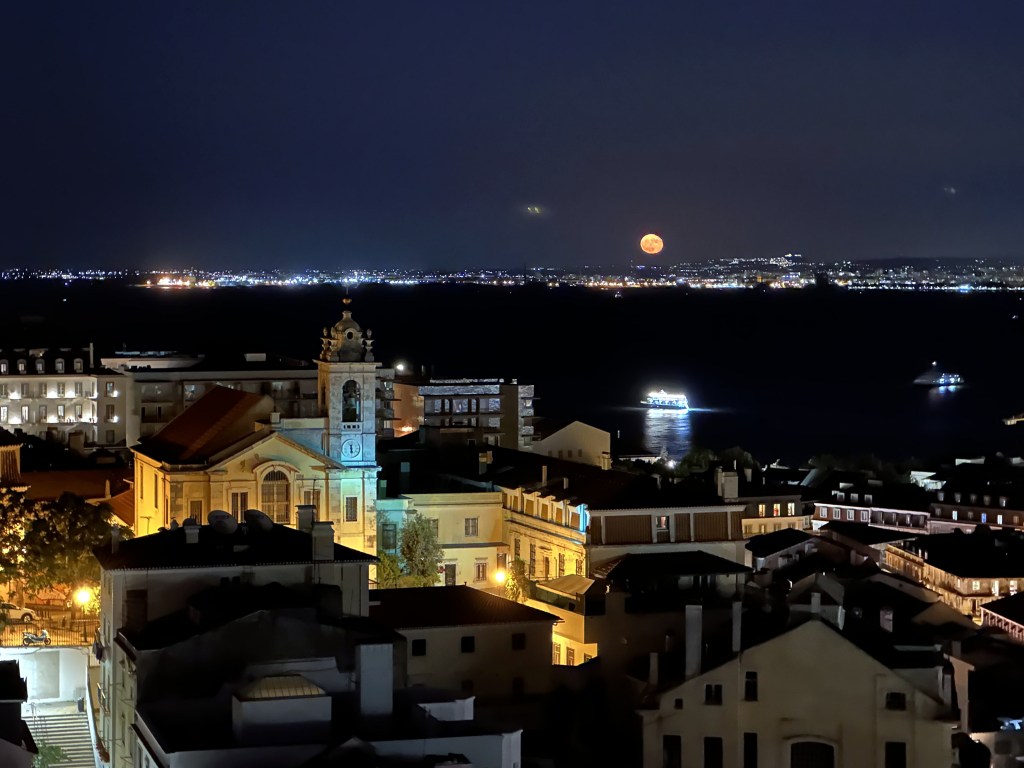
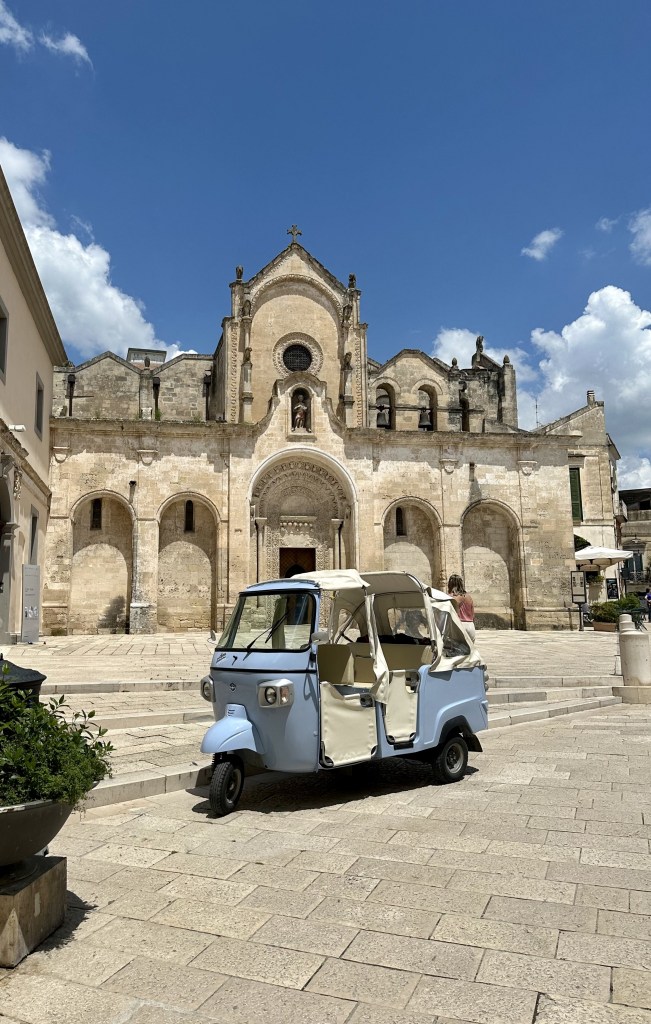
All told, we traveled for 2 months, experienced 4 countries, 41 towns, stayed in 19 hotels, 5 AirB&Bs/villas, and traveled by trains, planes, and automobiles (and ferries, trams, tuk tuks, and bikes). Amazing trip!
Categories: A Prolonged Foray to Europe, Amalfi Coast, Italian Peninsula, Malta, Normandy, Normandy, France, Sardinia, Sicily, Sicily, Tuscany / Umbria | Tags: , , , , , , , , , , , , , , , , , , , , , , , , , , , , , , , , , , , , , | 2 Comments

A Prolonged Foray to Europe: Palermo

After an overnight ferry ride from Sardinia, we arrived in Palermo, Sicily, early the next morning. This would be our first time ever setting foot on the island. An island with a remarkably layered history of conquerors and competition – perhaps more so than with any other region to which we’ve traveled.

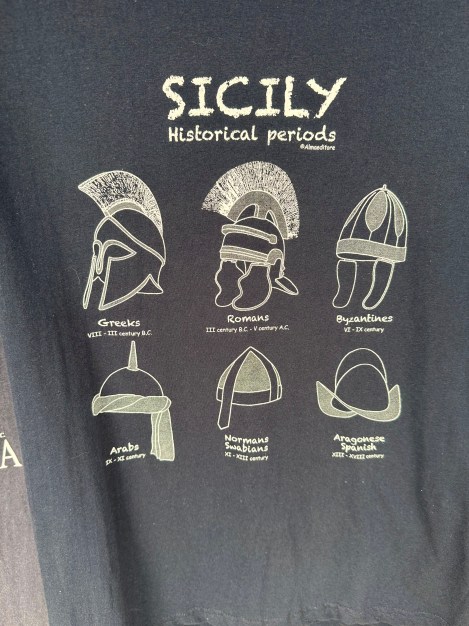
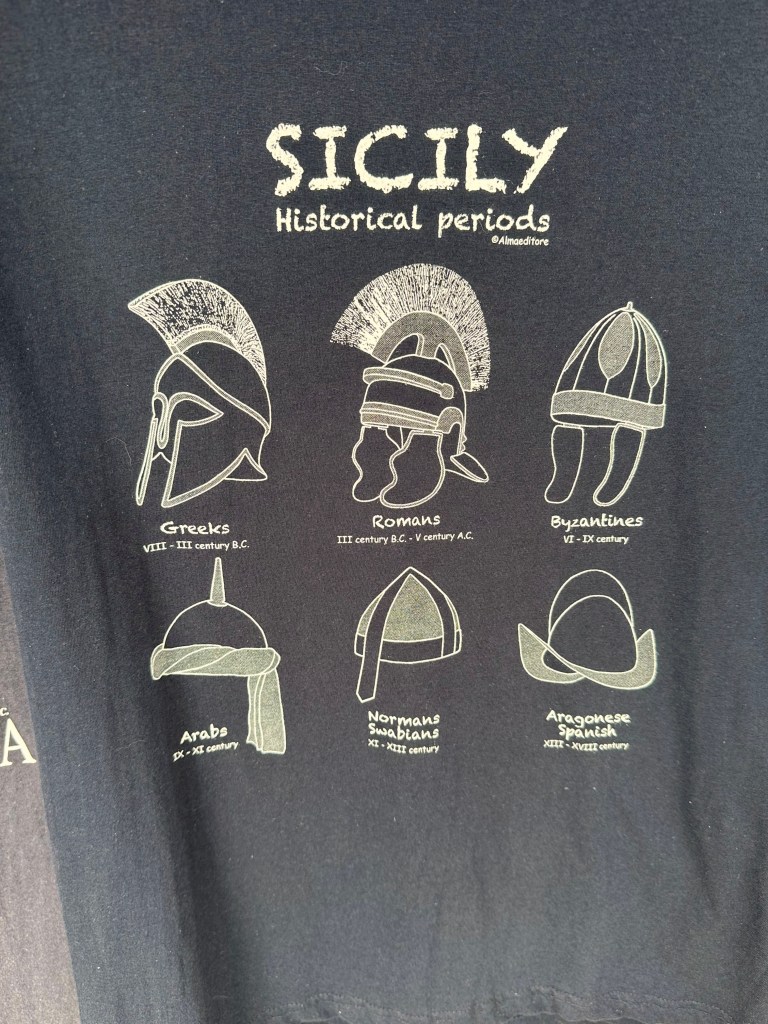
During our time on the island, we read Sicily: Three Thousand Years of Human History, by Sandra Benjamin, which provided great context to the historical backgrounds of the locations we visited and the architecture we witnessed. Although super conversational and easy to digest (would 100% recommend), the history book nonetheless was, indeed, a history book. What we could have done instead was just roll up to a souvenir shop (this one located in the beach town of Taormina on the other side of the island) and get the Cliff Notes version of Sicilian history on this spectacularly informative T shirt:

Below, a brief overview of each of those helmets provides a reasonable starting point to Sicily’s millennia of history (plus the addition of two critical cultures by WolfeStreetTravel that are not included on the T shirt and represent egregious omissions – you’d think all tourist T shirts would have been subjected to a rigorous peer review process and thorough QC before being printed!):

  • Ancient Greeks (c. 750–241 BCE) – Greek colonists founded powerful city-states such as Syracuse and Agrigento, making Sicily part of Magna Graecia and a major center of philosophy, theater, and trade. Their legacy includes Doric temples (notably in the Valley of the Temples), urban planning, coinage, and a lasting imprint on Sicilian dialect, cuisine, and coastal settlement patterns.
  • Carthaginians (c. 550–241 BCE, western Sicily) – Carthage controlled western Sicily in a long struggle with the Greeks, using ports such as Mozia as strategic trade and naval hubs. They reinforced Sicily’s role as a Mediterranean crossroads and left Phoenician-Punic archaeological remains, maritime trade traditions, and early fortification systems.
  • Ancient Romans (241 BCE–476 CE) – After defeating Carthage in the First Punic War, Rome made Sicily its first province and a vital grain supplier to the Republic and later Empire. Roman rule brought roads, villas with elaborate mosaics, Latin language foundations, administrative systems, and early Christian communities.
  • Byzantines (535–827 CE) – Reclaimed under Justinian, Sicily became a key Byzantine outpost bridging Constantinople and the western Mediterranean. They strengthened Orthodox Christianity, introduced Greek liturgical traditions, fortified cities, and preserved classical learning during the early medieval period.
  • Arabs (827–1091 CE) – Muslim rulers transformed Sicily into a prosperous emirate centered on Palermo, then one of Europe’s largest cities. Their legacy is profound: irrigation systems, citrus and sugar cultivation, advances in science and mathematics, Arabic influences in Sicilian vocabulary, and architectural elements such as gardens, domes, and decorative geometric motifs.
  • Normans (1091–1194 CE) – The Norman conquest created the multicultural Kingdom of Sicily, blending Latin, Greek, and Arab traditions under rulers like Roger II of Sicily. Their architectural masterpieces (e.g., the Palatine Chapel in Palermo and the cathedrals of Monreale and Cefalù) fused Romanesque, Byzantine mosaics, and Islamic artistry into a uniquely Sicilian style.
  • Swabians (1194 – 1266) – After the Norman line ended with William II of Sicily in 1189, the crown passed through marriage to Henry VI of the Hohenstaufen dynasty, who became King of Sicily in 1194. His son, Frederick II, then ruled Sicily and turned it into one of the most sophisticated and culturally advanced courts in medieval Europe.
  • Angevins (1266 – 1282) – The Angevins, led by Charles I of Anjou, seized control of Sicily from the last Hohenstaufen ruler, Manfred of Sicily, in 1266 and ruled with heavy taxation and strong French influence, which bred deep local resentment. This culminated in the Sicilian Vespers, a popular revolt that overthrew Angevin rule on the island and shifted power to the Crown of Aragon.
  • Aragonese (1282–1479 CE; broader Spanish rule until 1713) – After the Sicilian Vespers, the Crown of Aragon ruled Sicily, integrating it into the Spanish Mediterranean world. They shaped Sicily’s feudal aristocracy, fortified coastal defenses, introduced Catalan-Gothic influences, and embedded Spanish elements in language, governance, cuisine, and Baroque artistic development.

Sicily feels palpably layered because each time one culture overcame the previous, that former layer just accreted – it was never supplanted. Unlike much of Europe, where one dominant power replaced another, Sicily’s conquerors often built on top of existing systems rather than wiping them out. The result is not a linear history, but a vertical one: Doric temples from the Ancient Greeks stand within sight of Roman villas, Byzantine domes, Arab garden layouts, Norman mosaics, and Spanish Baroque facades — sometimes within the same city block.

The island’s geography made this possible. Sitting at the center of Mediterranean trade routes between Europe, North Africa, and the Near East, Sicily was too valuable to abandon and too prosperous to dismantle; each incoming power adapted existing administrative systems, agricultural innovations, and urban frameworks rather than starting from scratch.

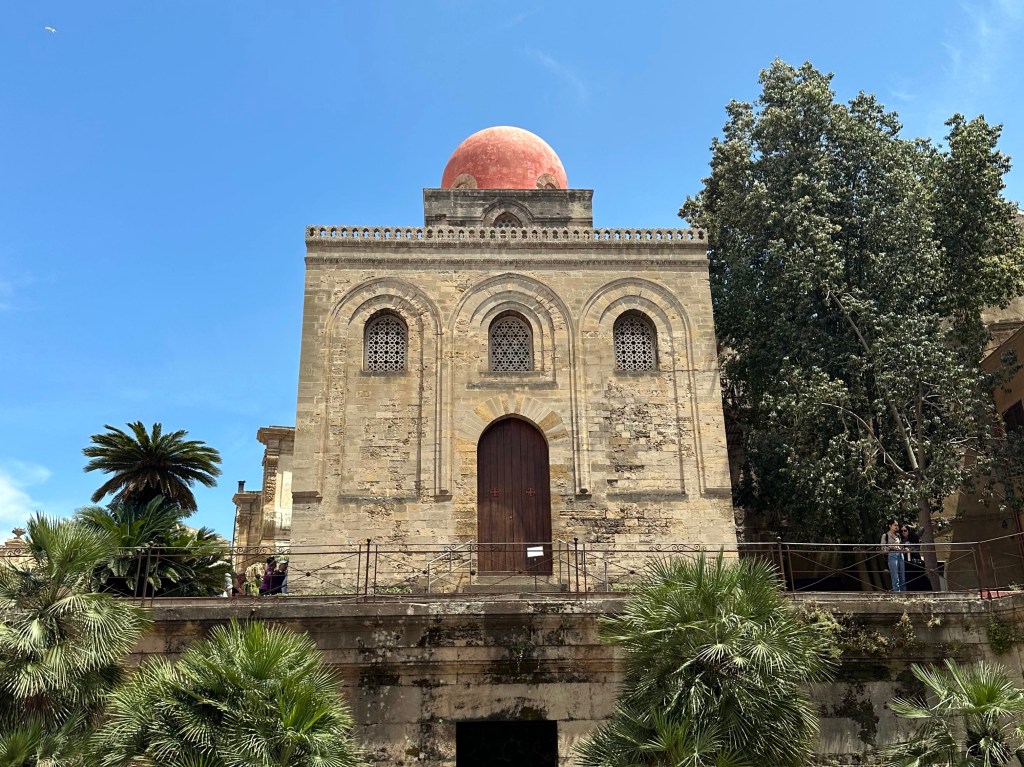
Our favorite example? When the Normans conquered the Muslim emirate, they retained Arab administrators and artisans, which is why you get Islamic muqarnas ceilings inside Christian chapels in Palermo. Case in point: the Arabo-Norman Church of San Cataldo in Palermo, dating from 1140:

This layering also explains Sicily’s cultural contradictions: citrus groves introduced under Arab rule grow beneath Norman cathedrals; Spanish street grids frame Greek archaeological parks; Sicilian dialect carries Arabic, Greek, Catalan, and Latin roots simultaneously. The island feels neither fully Italian nor fully Mediterranean in a single-direction sense — it feels like a distilled Mediterranean civilization.

Although Sicily’s long history is better witnessed in cities like Syracuse on the southeast coast, where the Greeks first settled and which dominated trade and politics, we began our stay on Sicily in its current capital of Palermo, in the northwest. After the Arab conquest in the 9th century, the focus shifted westward to Palermo, which became the administrative and commercial capital under Muslim and later Norman rule. Its superior harbor and position on Mediterranean trade routes cemented Palermo’s long-term dominance.

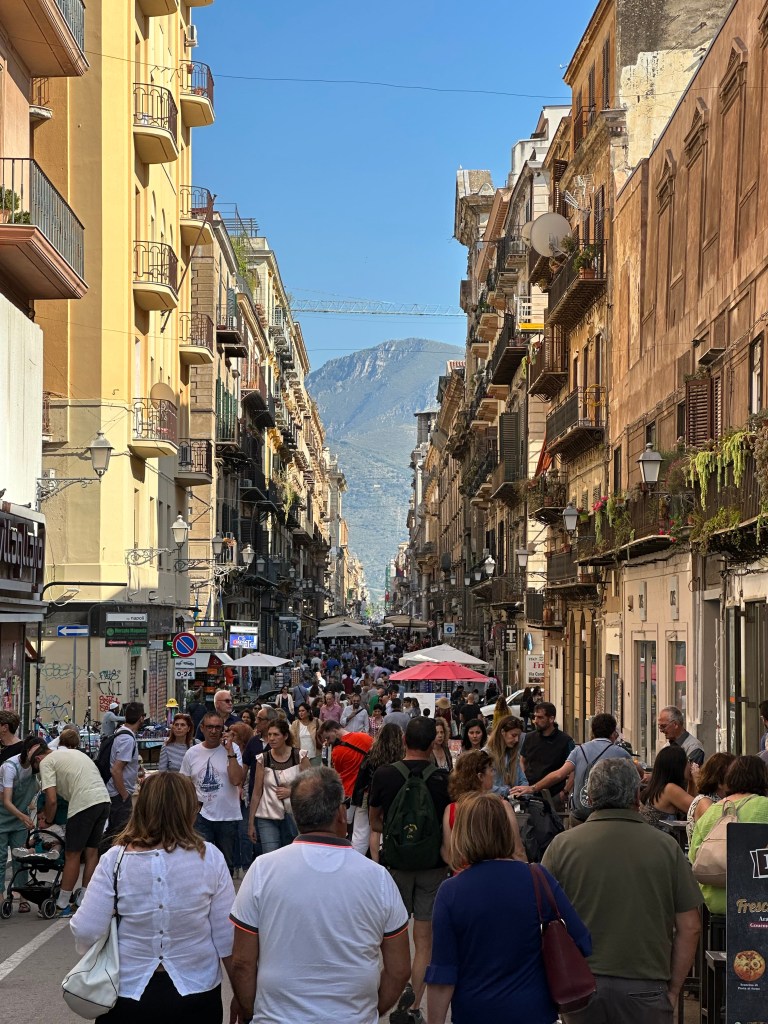
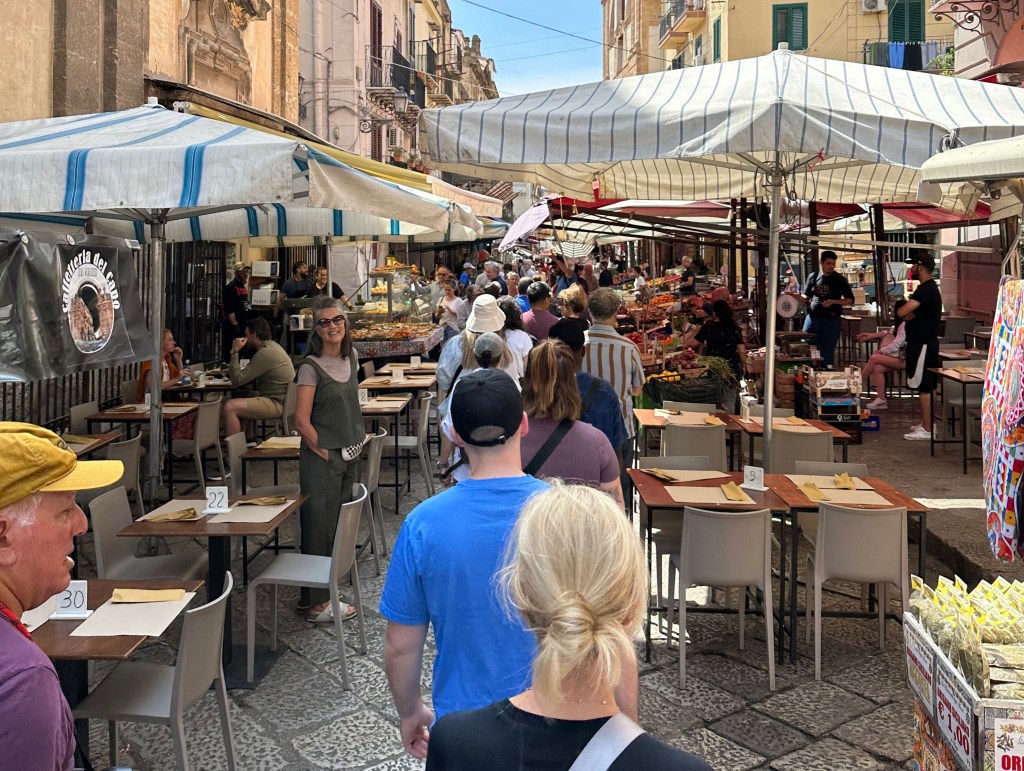
Palermo’s main drag of Via Maqueda, where we’d find ourselves each day at some point:

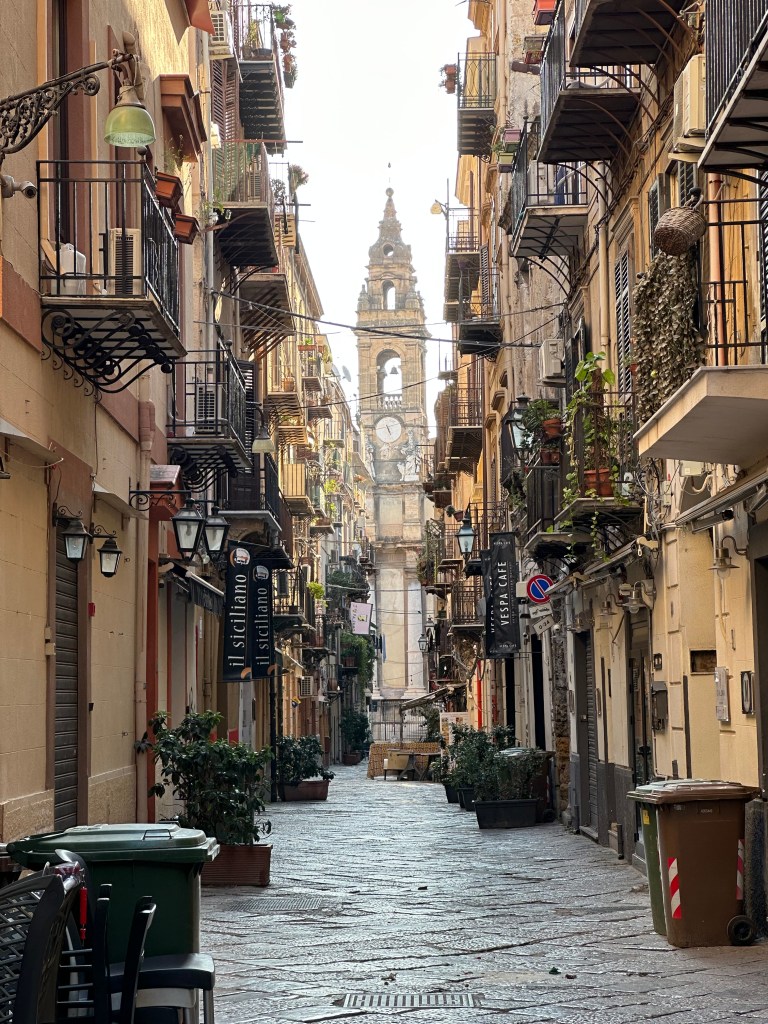
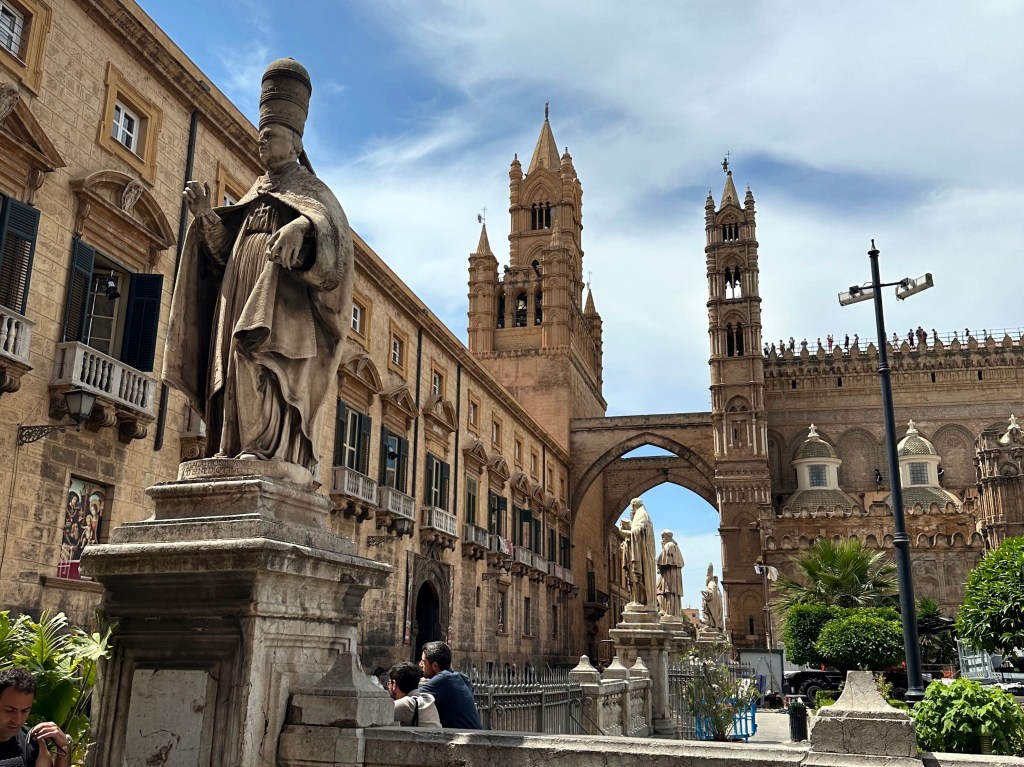
Cool little side street our first morning highlighting the cathedral bell tower:

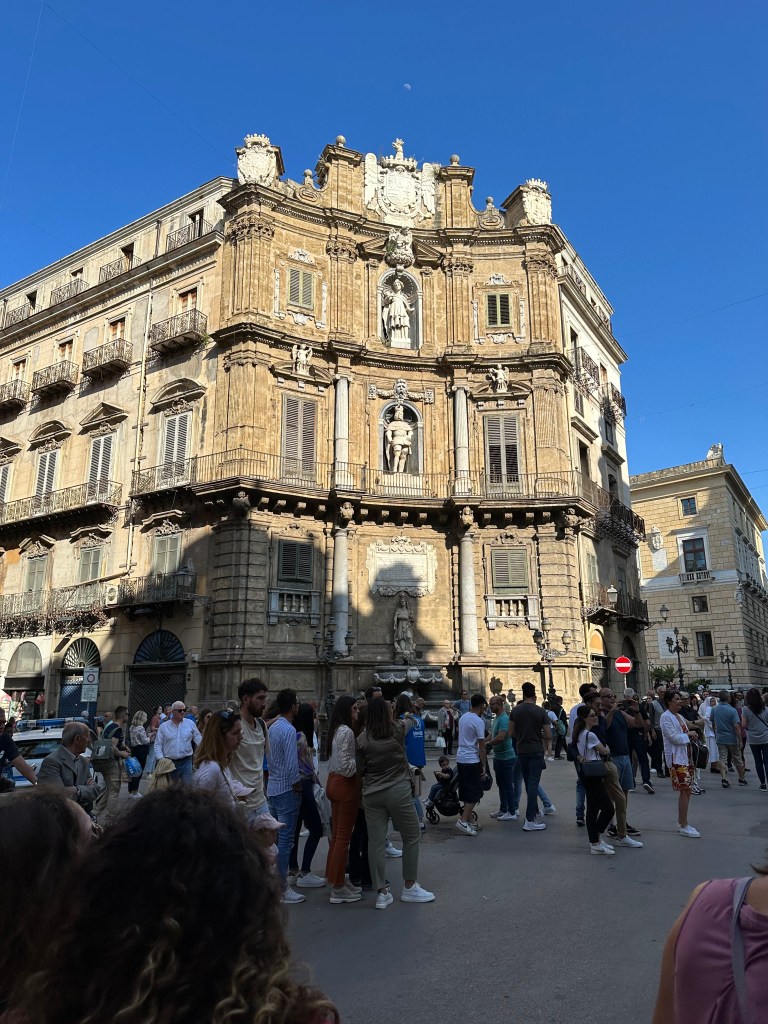
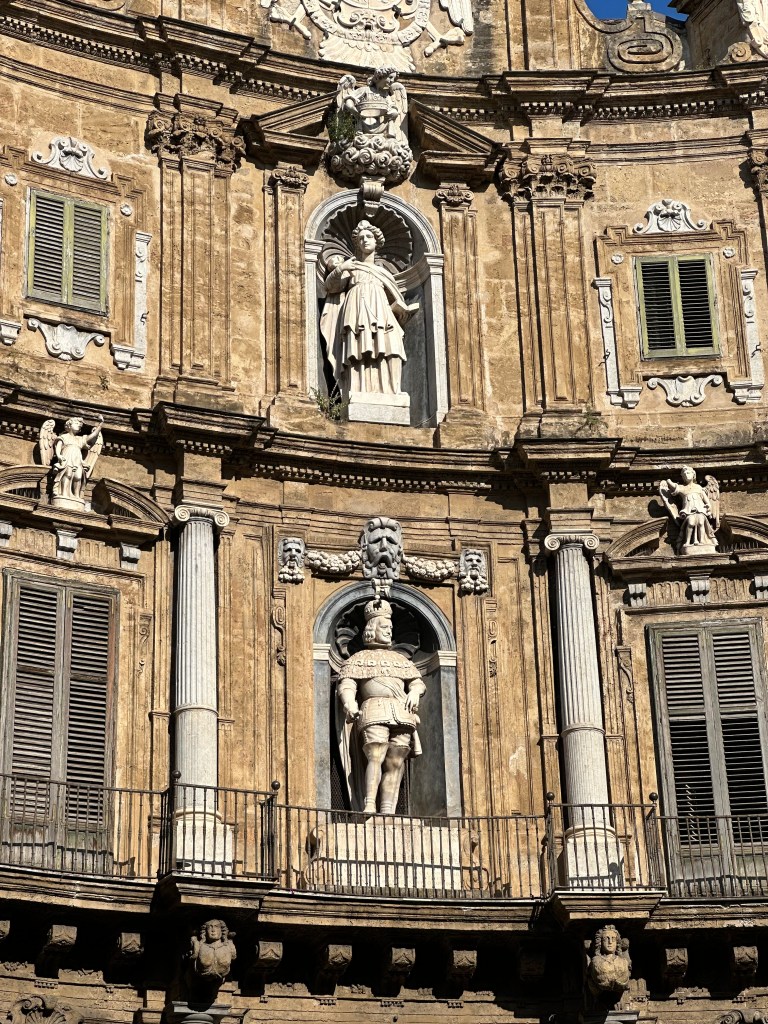
Palermo’s Baroque Quatro Canti square at the intersection of the Via Maqueda and the Corso Vittorio Emanuele:

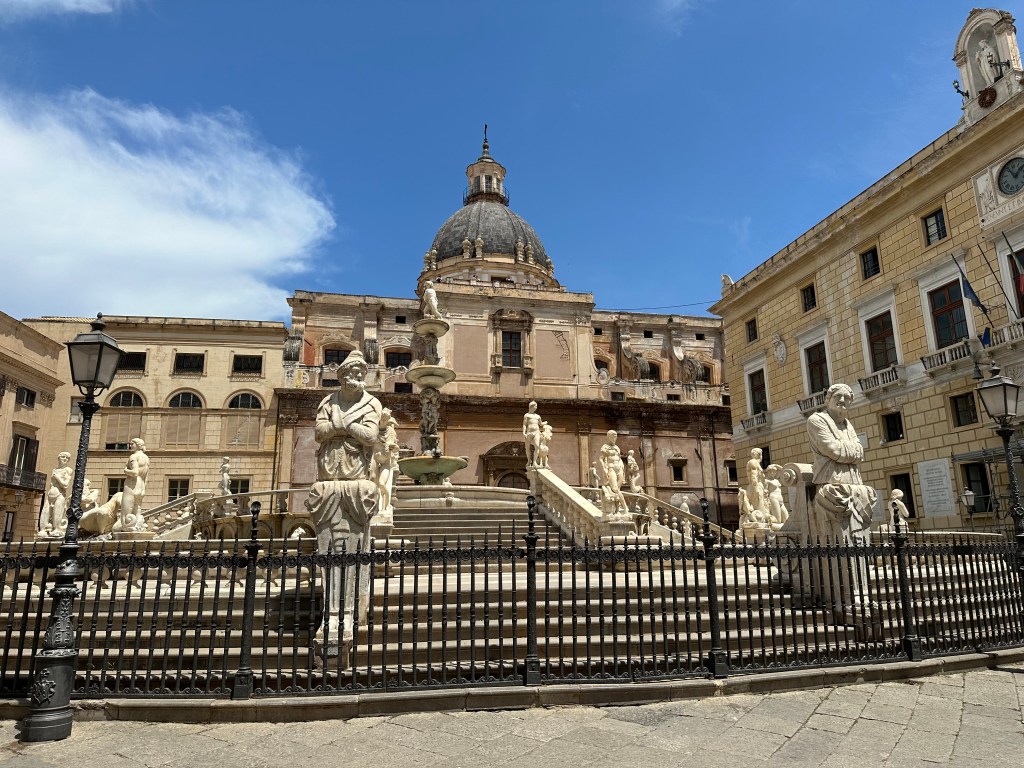
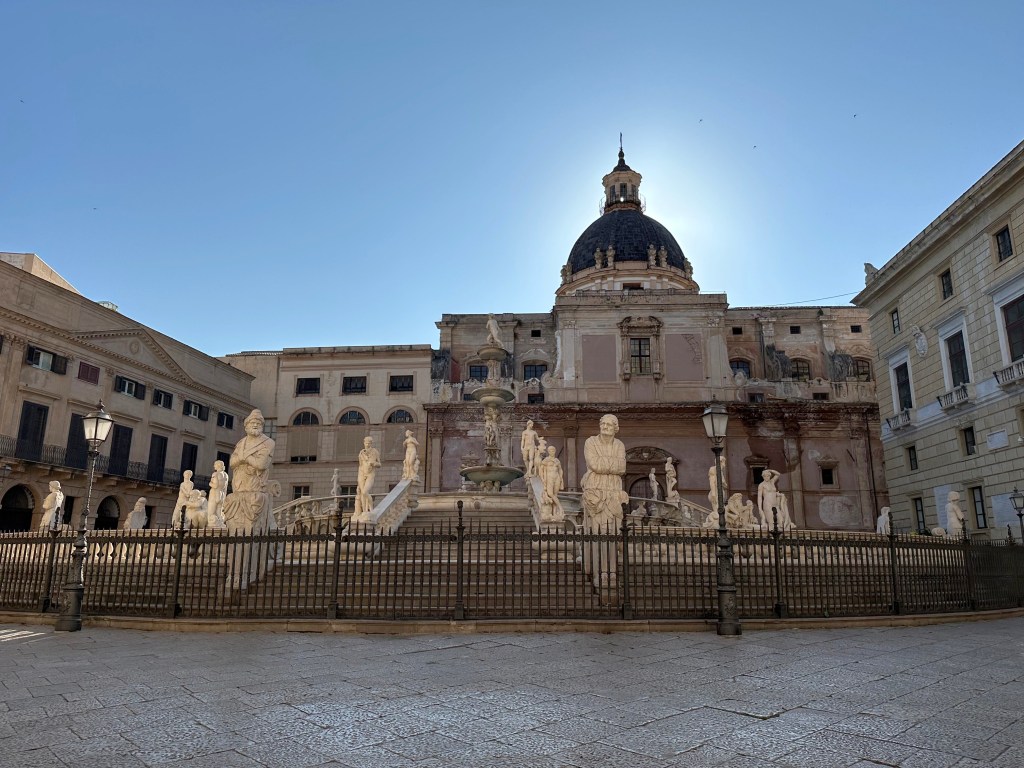
The ornate, 16th-century Praetorian Fountain on Via Maqueda, sporting 16 nude statues of nymphs, humans, mermaids, and satyrs (offending some delicate souls, who declared it Fontana della Vergogna [Fountain of Shame]):

Pretty awesome town in which to just wander around.

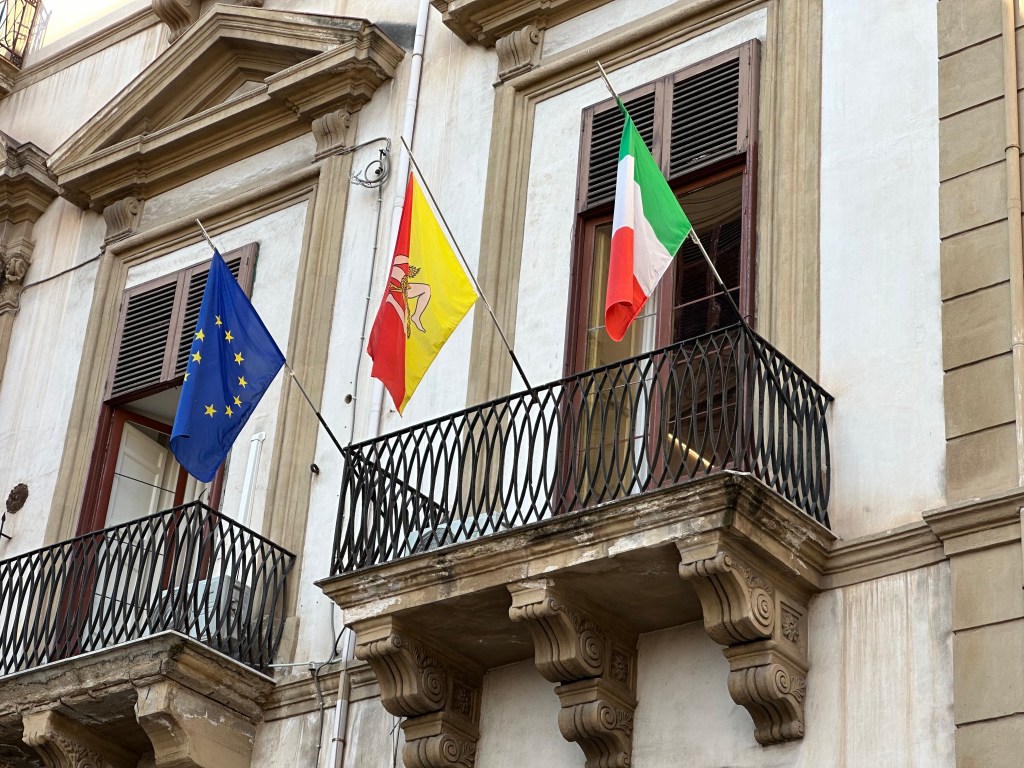
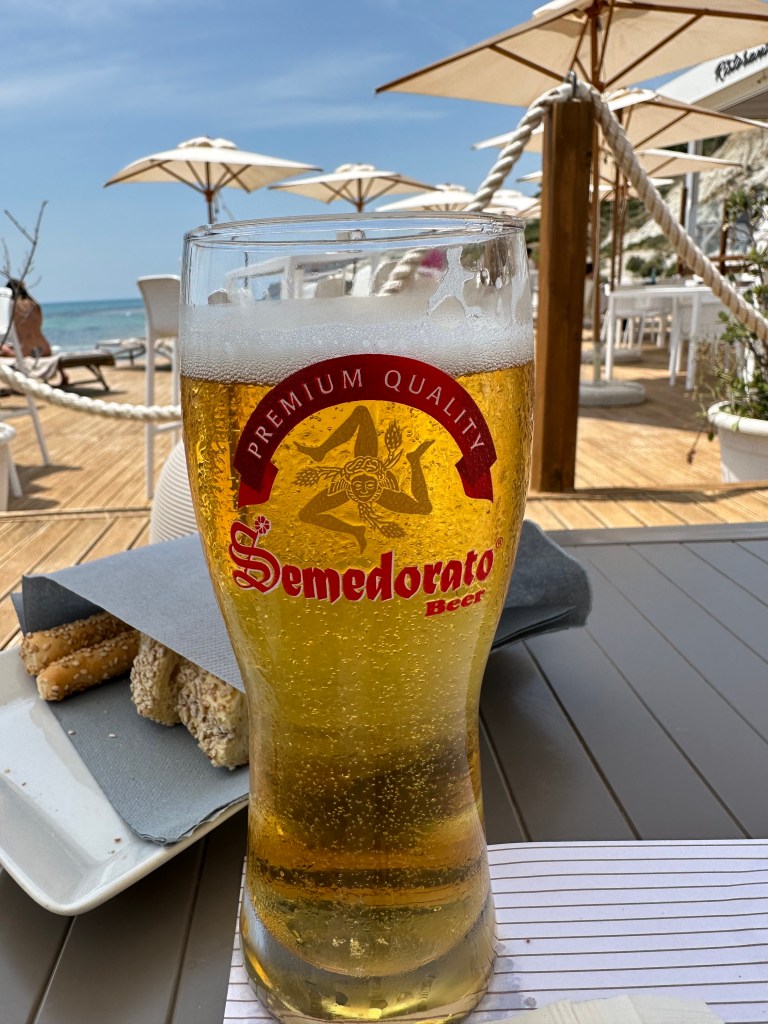
Sicily’s super-intriguing Trinacria flag, flanked by the EU and Italian flags on balcony in town. We’ll get into that little vexillological nugget in a future post, featuring beer. Cold, delicious beer. Mmmm; beer.

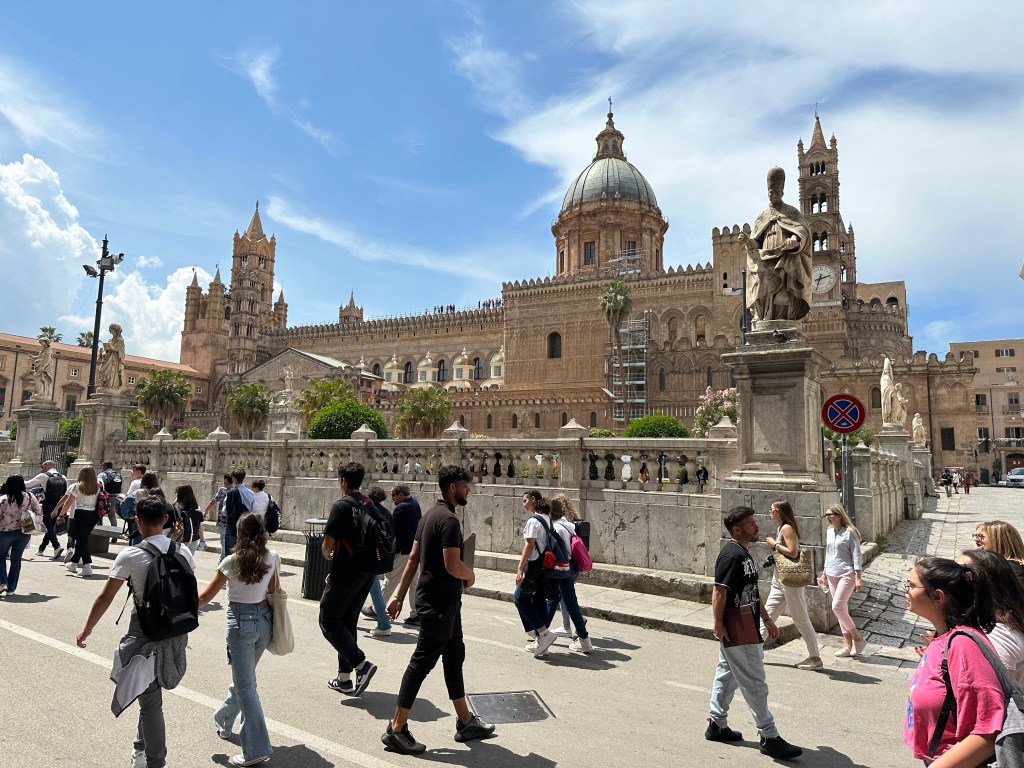
Palermo Cathedral:

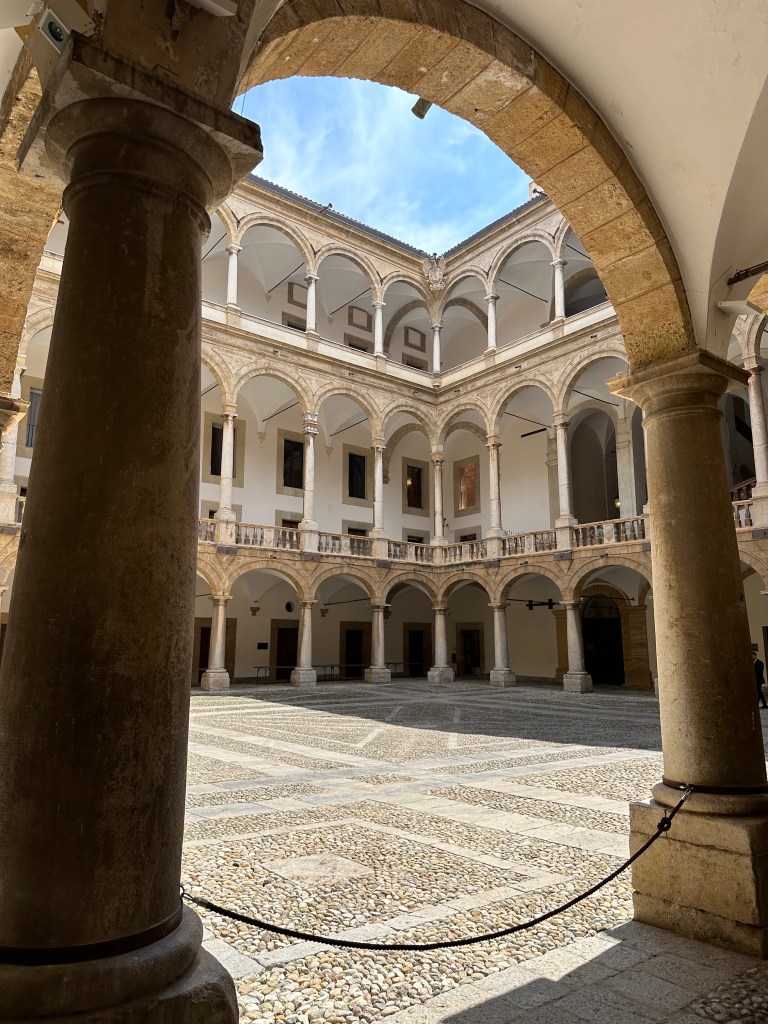
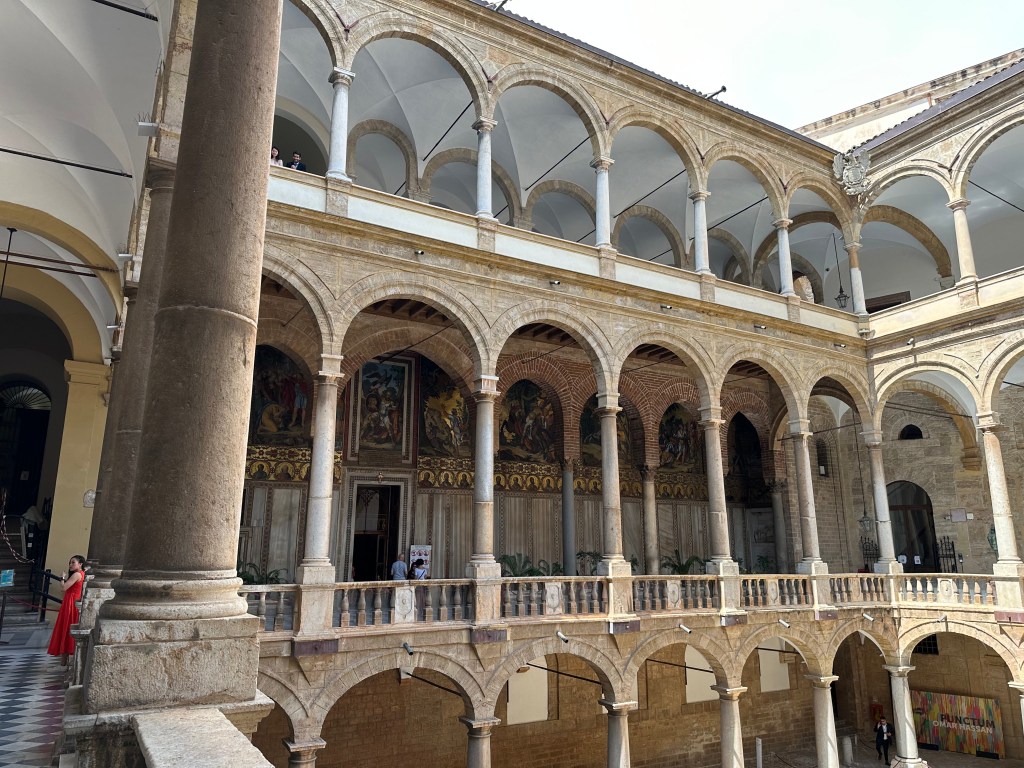
We didn’t go in, but instead walked through, making a beeline to the much more interesting Palazzo dei Normanni (Palace of the Normans):

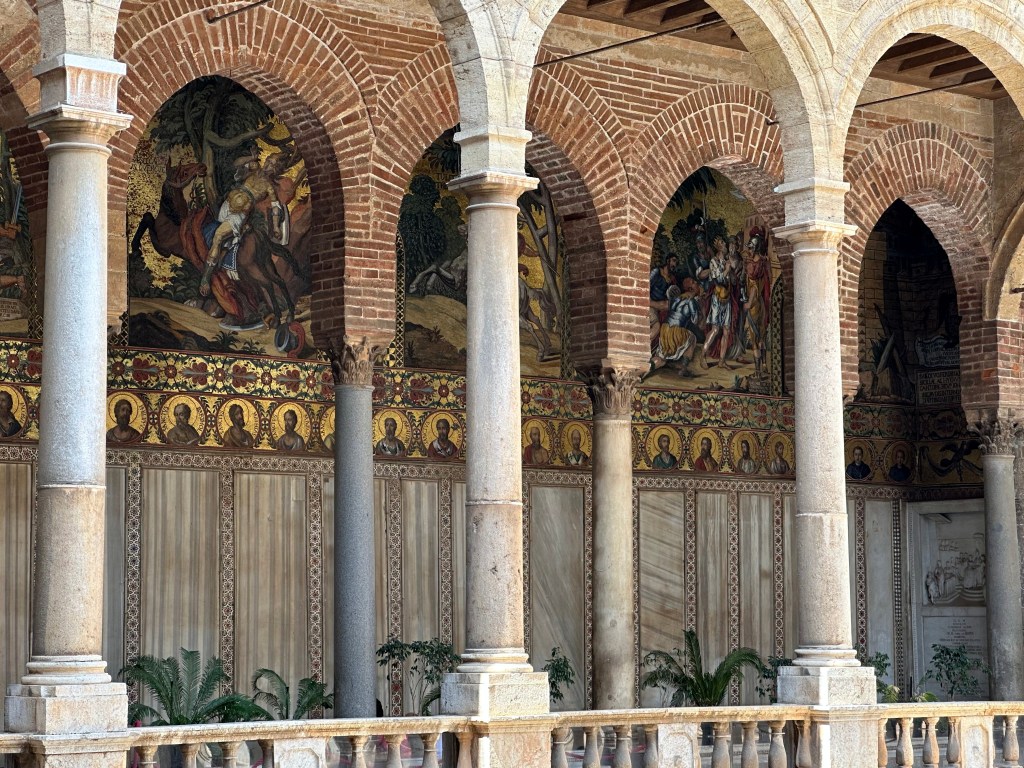
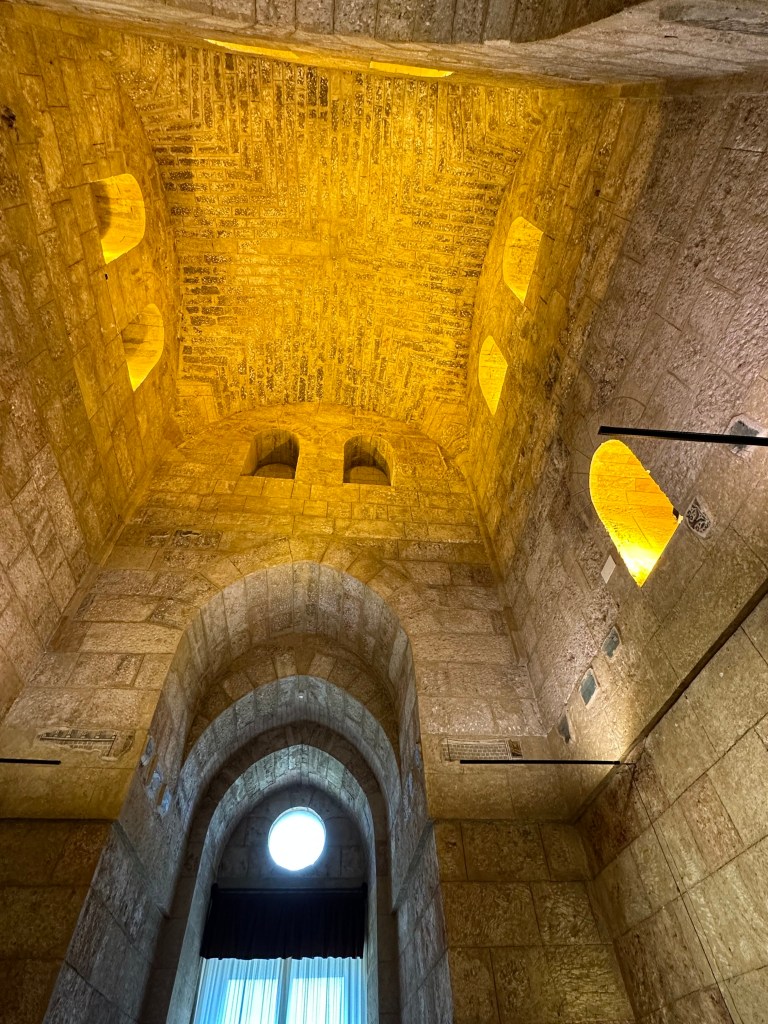
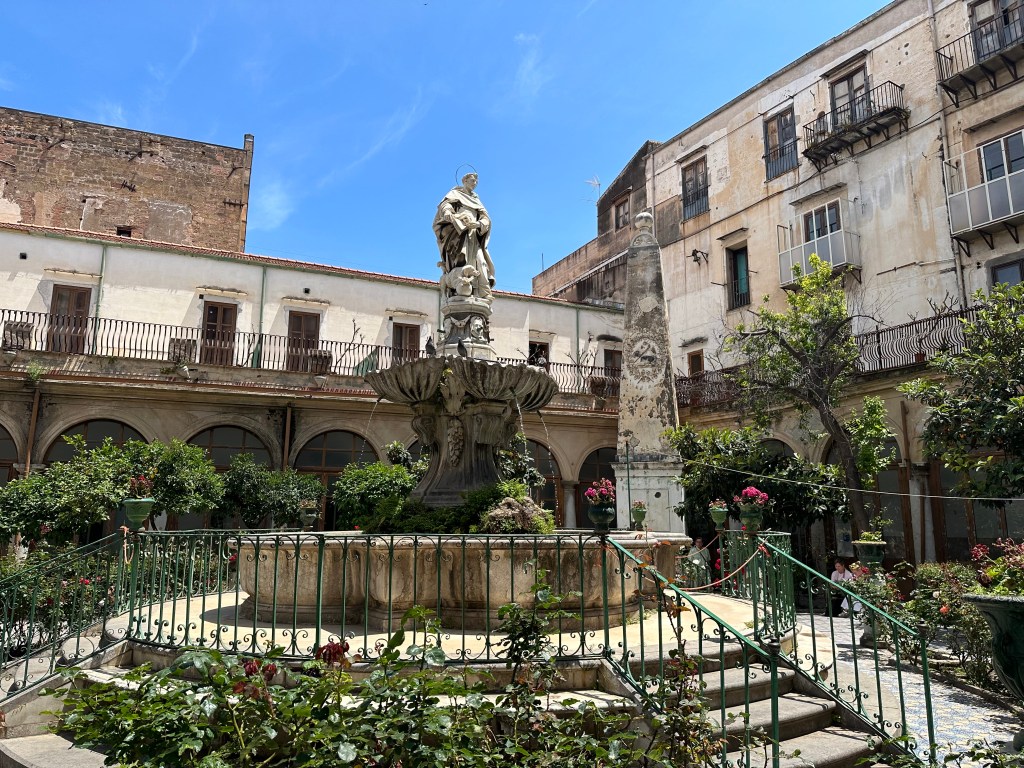
Inside the palace’s main courtyard:

The Norman Palace “was built on the highest point of the city, above a Punic [see?! Carthaginians!] structure discovered in 1984 beneath the Duke of Montalto Halls. During Arab rule, the earliest nucleus of the building arose between the rivers Kemonia and Papireto, designed with defensive features typical of fortresses. This building was also used during the Roman Byzantine era.
Following the Norman conquest in 1072, the Normans built a new building consisting of a castle, with the function of royal residence and administrative hub. In 1130, after the coronation of Roger II of Altavilla—the first Norman king of Sicily—the Palatine Chapel was constructed, becoming a symbol of Norman cultural and Christian religious.

The palace’s core was marked by four towers and included facilities such as workshops and textile laboratories (nobiles officinae or tiraz). It served as the seat of successive Norman courts, including those of Roger II, William I (known as “the Mean”), and William II (“the Good”), who oversaw a remarkable confluence of diverse cultures. Frederick II, grandson of Roger II and son of Henry VI of Hohenstaufen and Constance of Altavilla, continued this legacy. He played a pivotal role in its administration and in fostering cultural life, notably supporting the Sicilian School of poetry.” (All from here.) [BTW, we also would highly recommend the podcast “Norman Centuries” by Lars Brownworth; outstanding!]

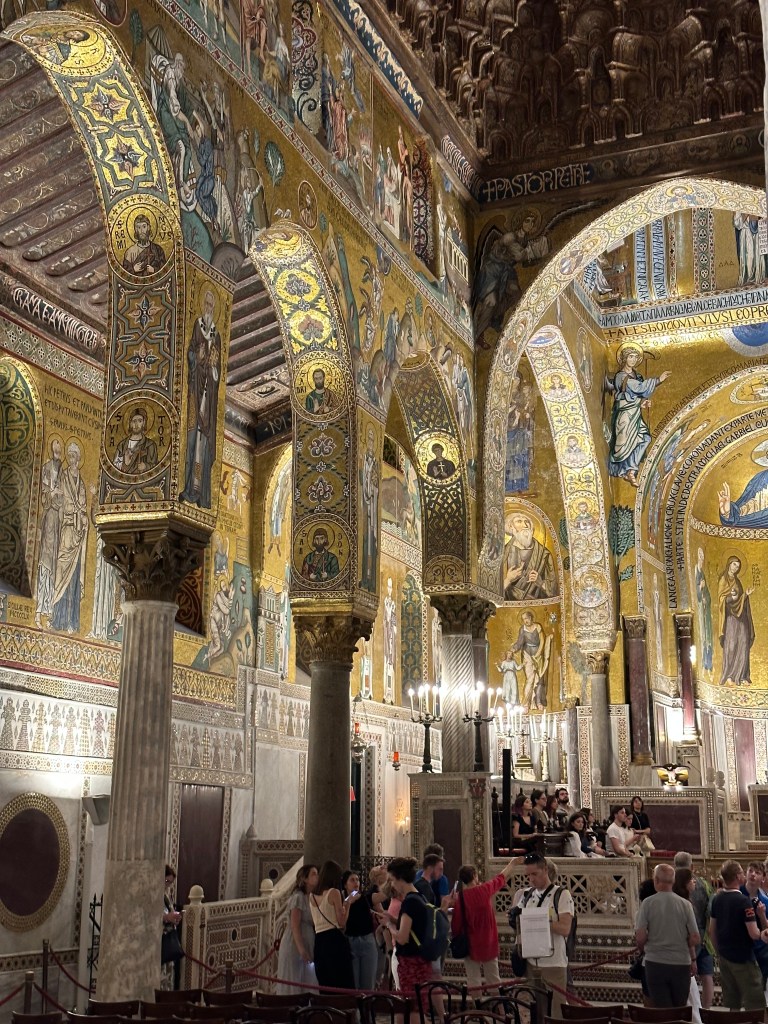
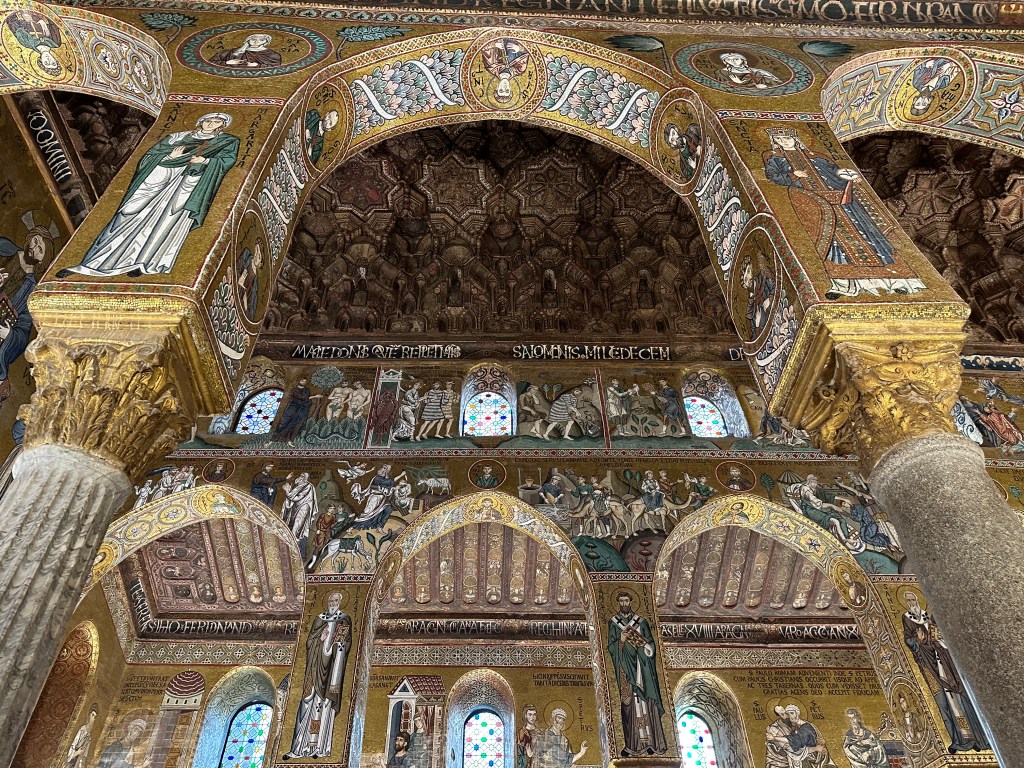
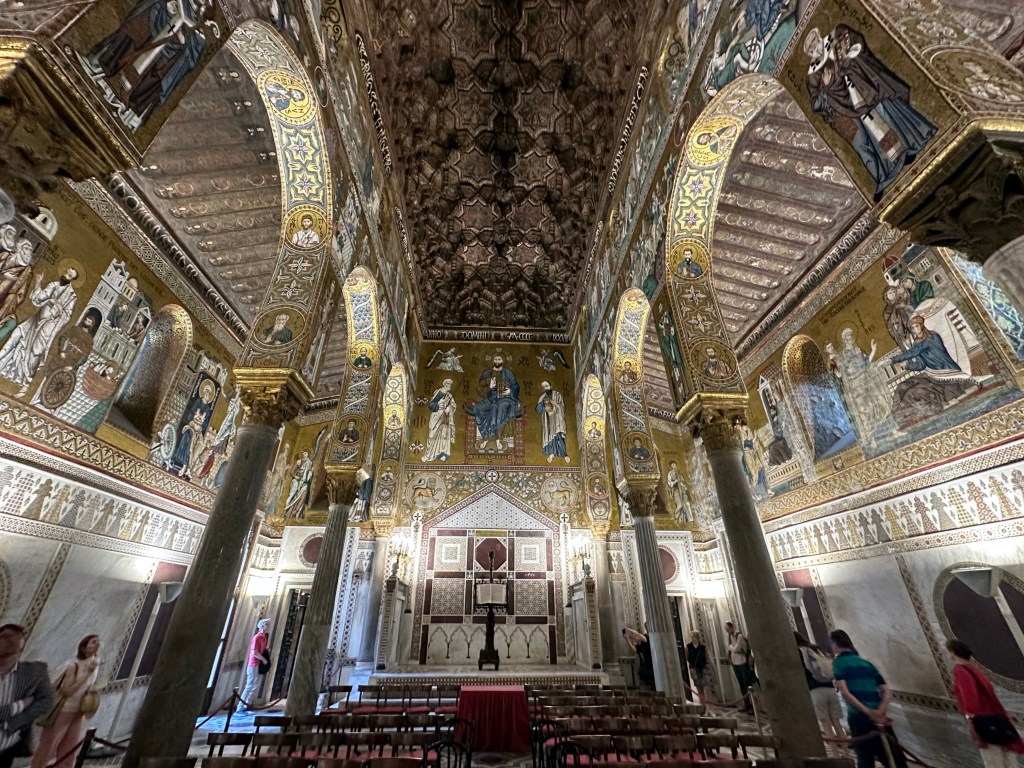
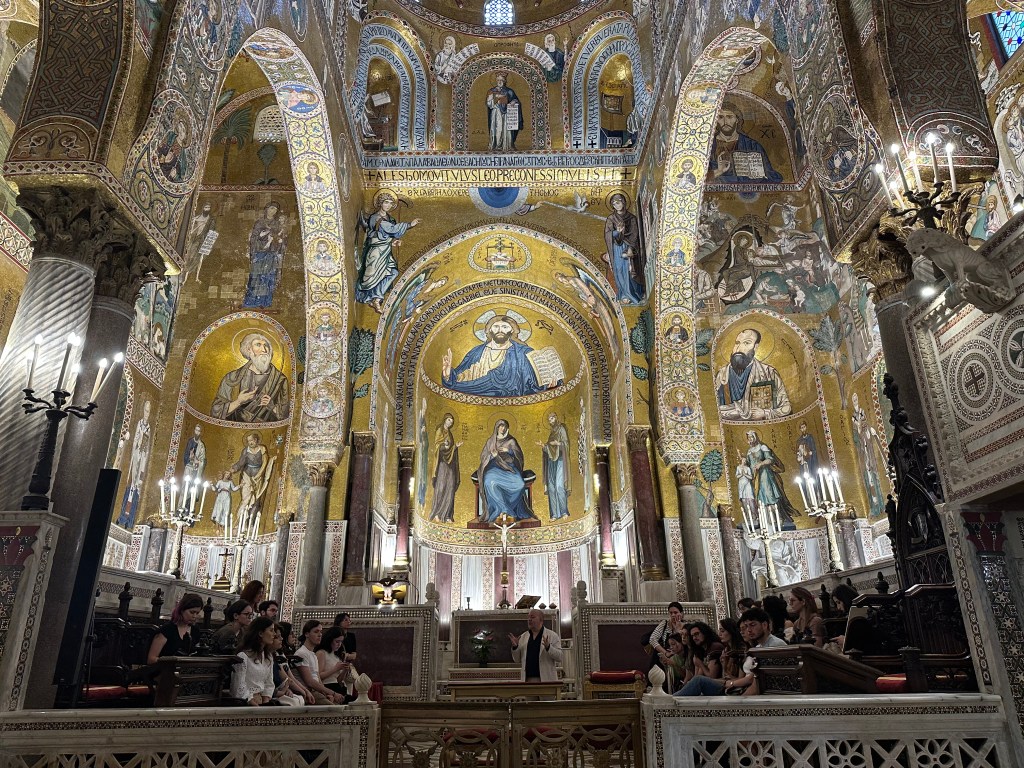
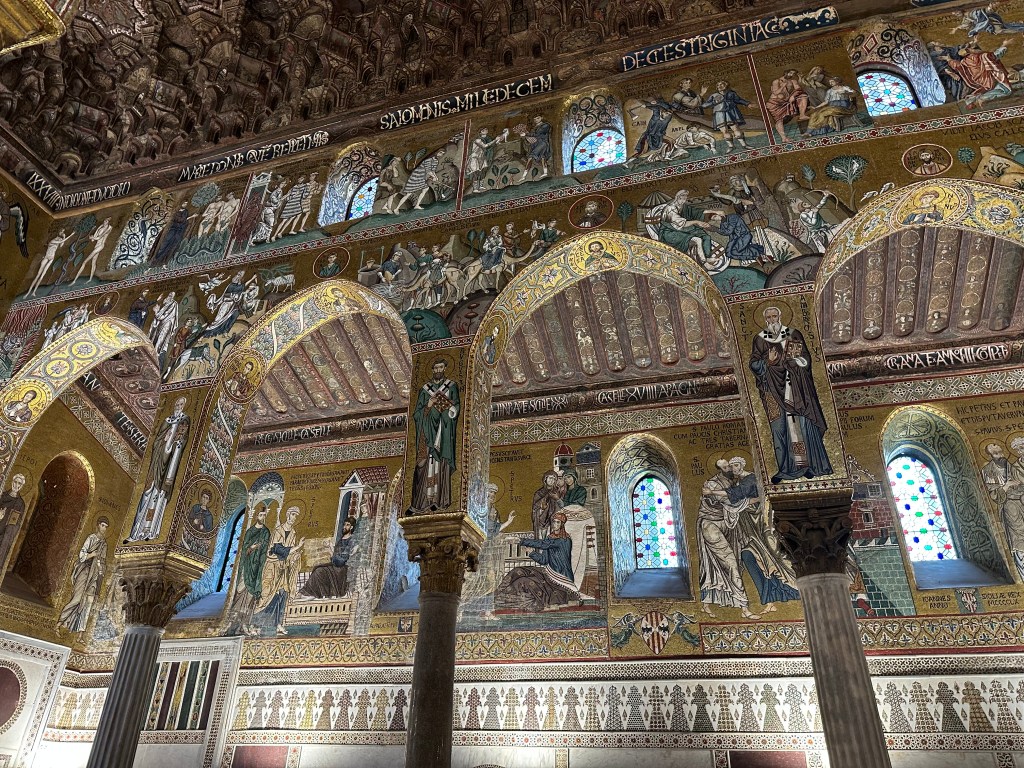
The palace’s extraordinary (and super Byzantine) Palatine Chapel:

Commissioned by Roger II of Sicily in 1132, the architecture represents a blend of Byzantine, Norman, and Fatimid styles that is unique to Sicily (we’d see another, even grander example right after we left Palermo).

To wit: a Norman church structure adorned with Byzantine-style mosaics and topped with a Fatimid-style muqarnas ceiling (identical in style to those we experienced at the Moorish Alhambra in Granada):

Byzantine-style mosaics dominate the walls of the ambulatory:

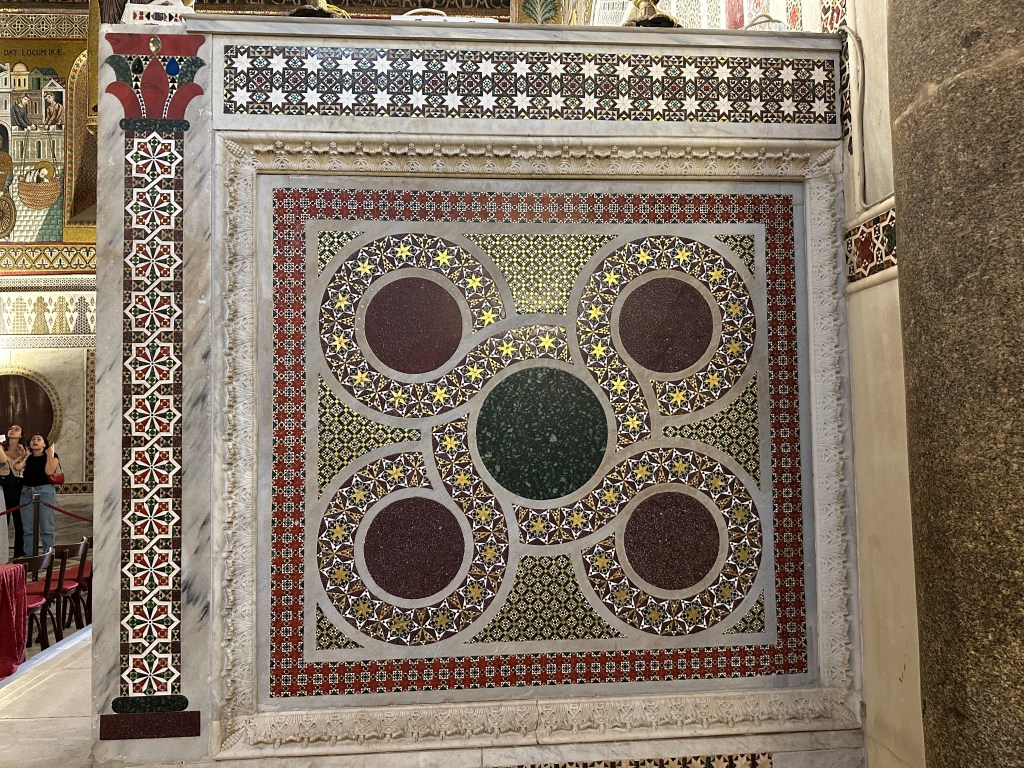
And geometric Fatimid Arab designs are evident along knee walls and other structures:

Although the mosaics covering the ceiling and dome date from the 1140s and were, indeed, created by Byzantine artists, others above the aisles were created in the 1160s and 1170s by local craftsman and are more Latin in style (including Latin inscriptions):

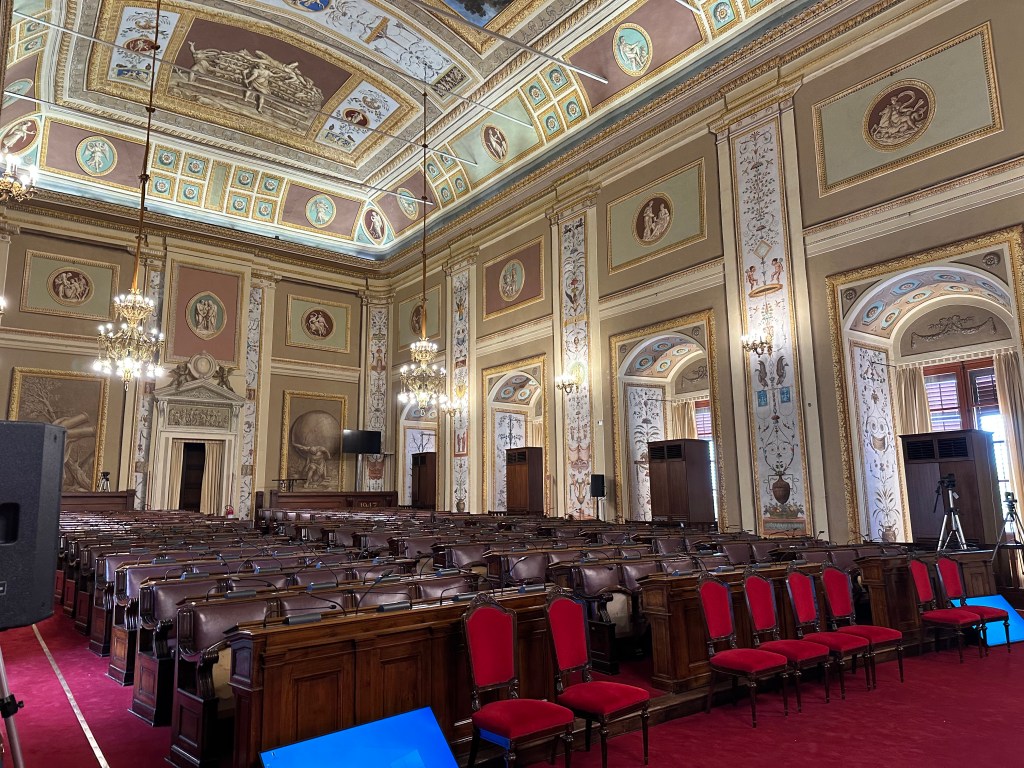
An abrupt transition to the 18th- and 19th-century Pompeian hall:

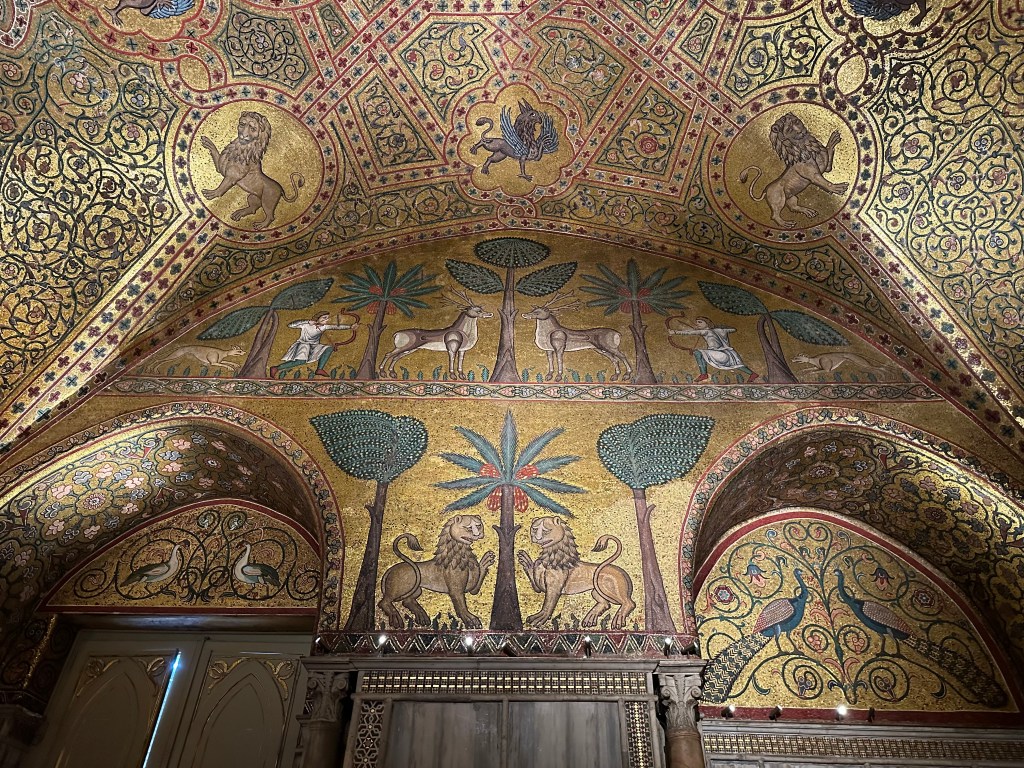
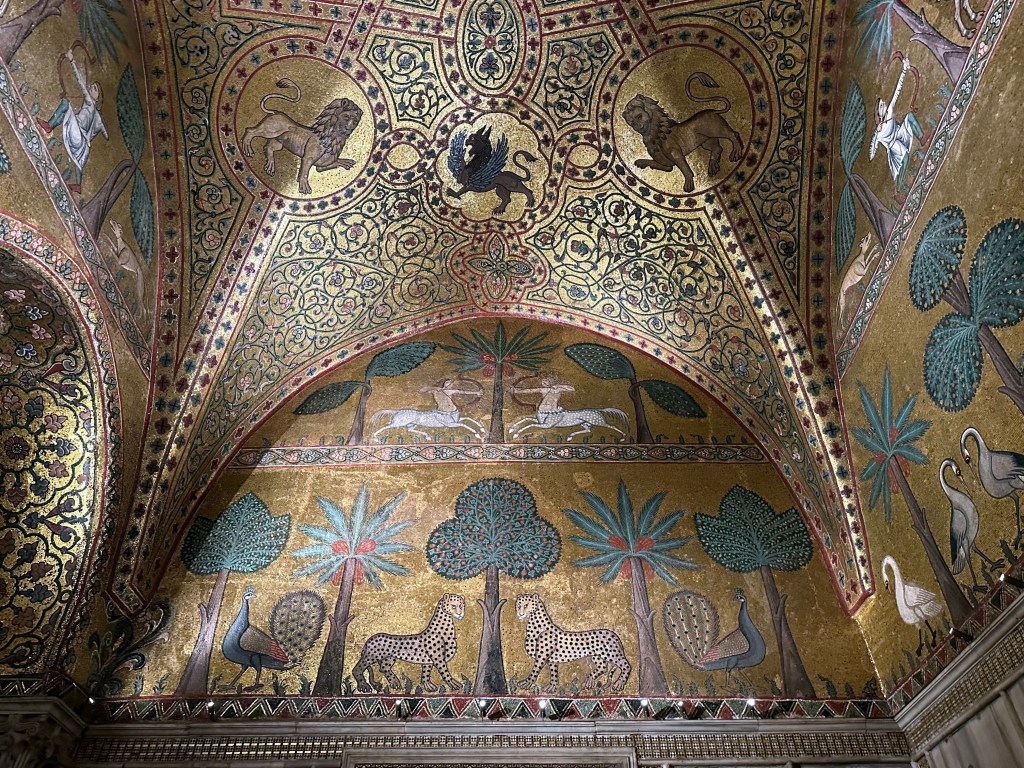
King Ruggaro (Roger II) Hall within The King’s Apartments, with its characteristic hunting scene mosaics:

Including its signature leopards, which now are not only the symbol of the palace, but, we found at a stay later, adorn a line of high-end Sicilian toiletries at hotels (the brand name itself is the urban island in Syracuse, which we’d visit later in the trip – this whole experience keeps folding in on itself).

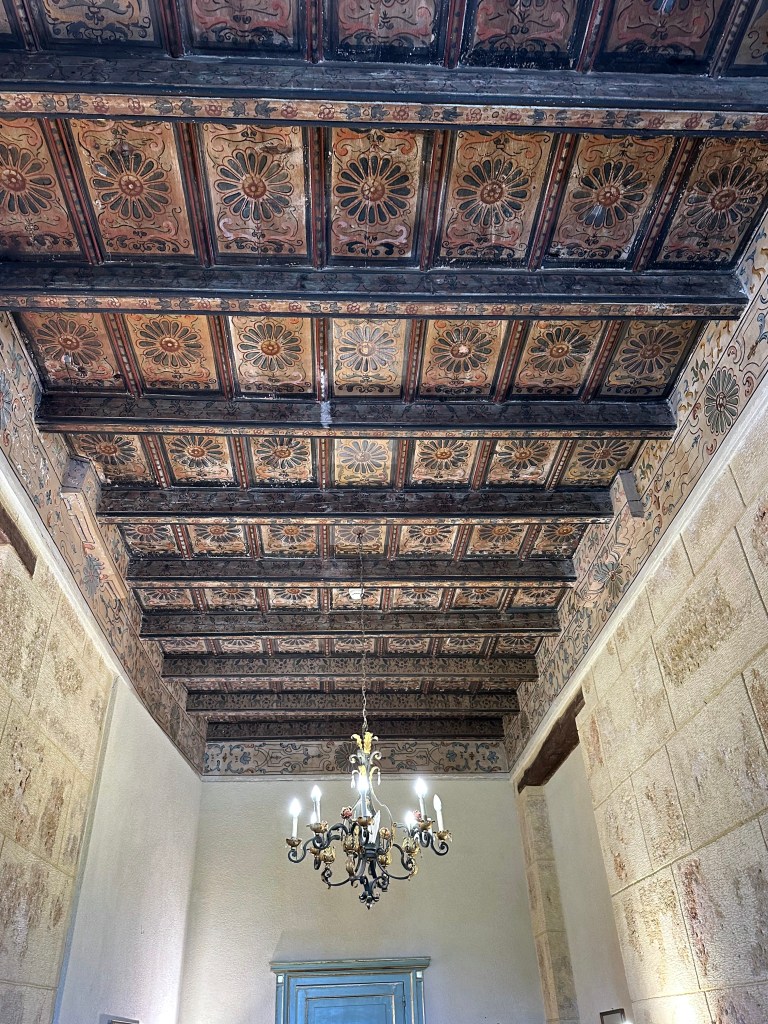
Medieval painted wooden ceilings in King Ruggero’s Hall:

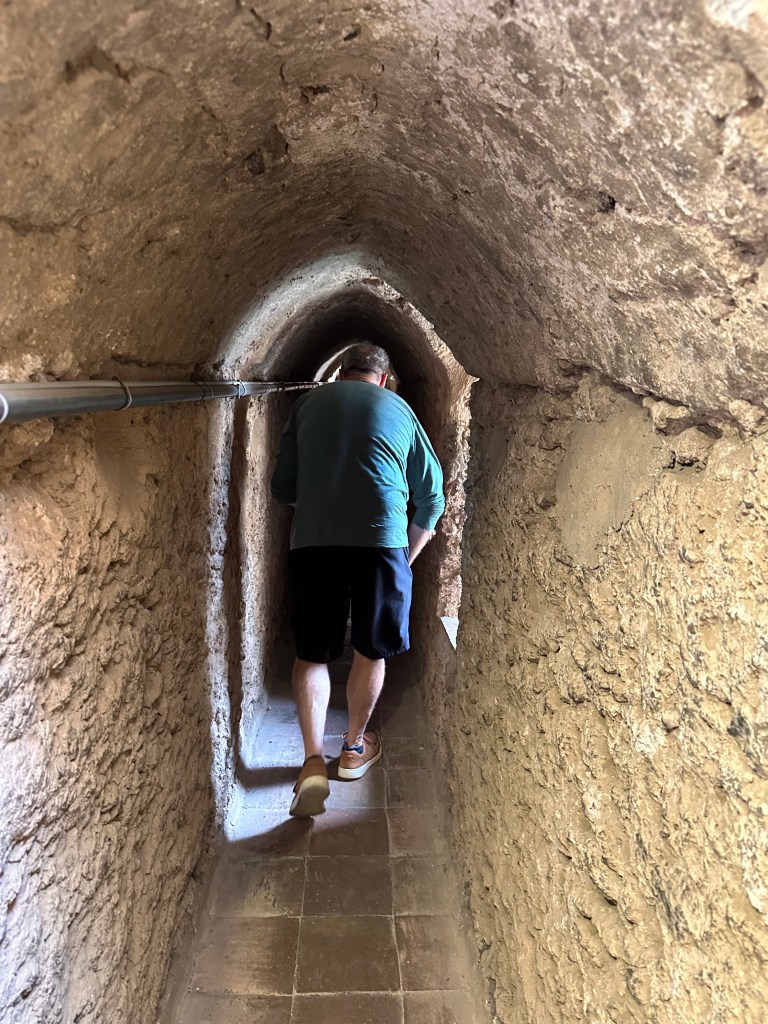
Climbing through one of the passageways in the fortified tower:

Back out on the street and in a street food tour!
A little nona at work:

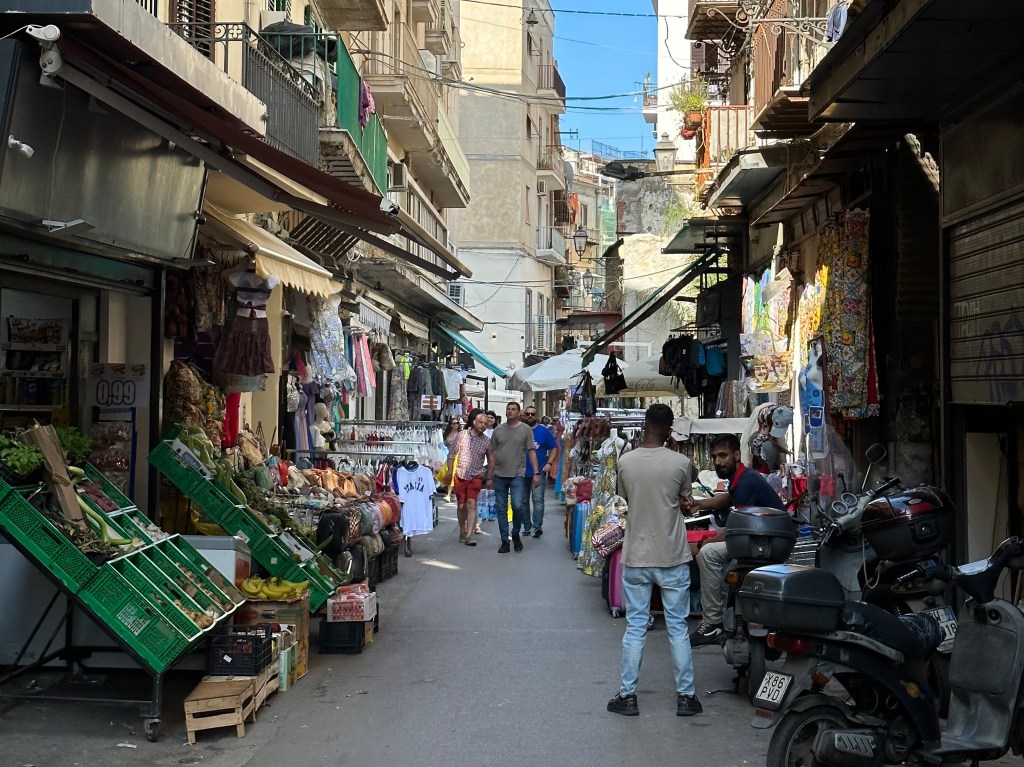
Parading through the fabric district:

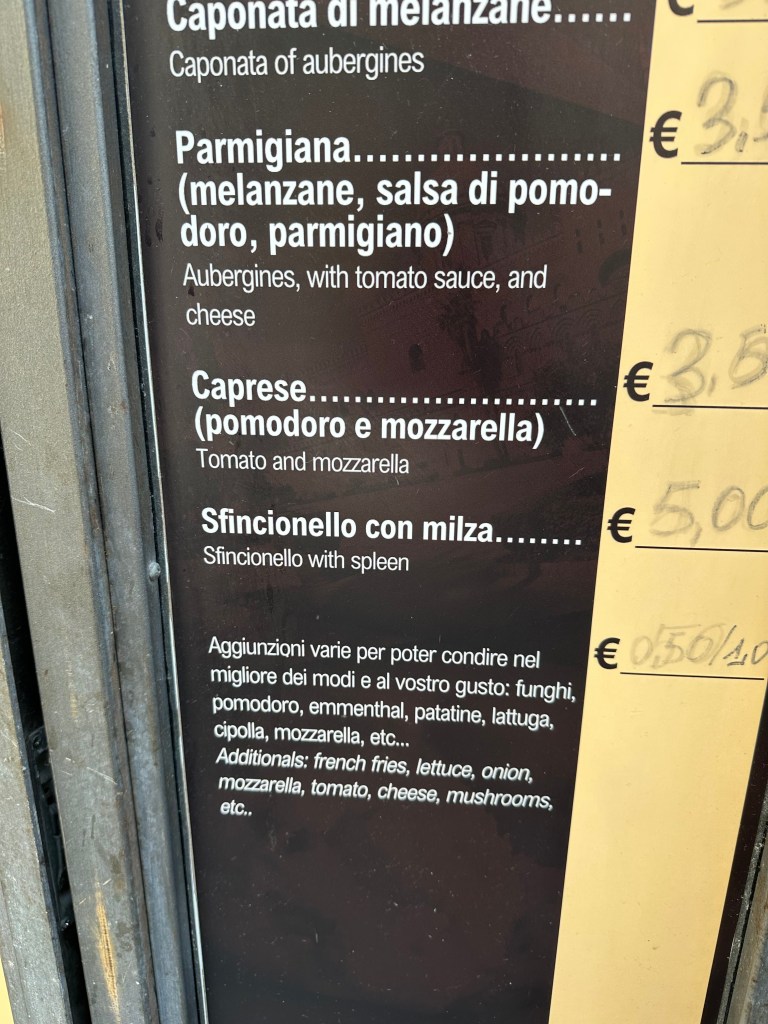
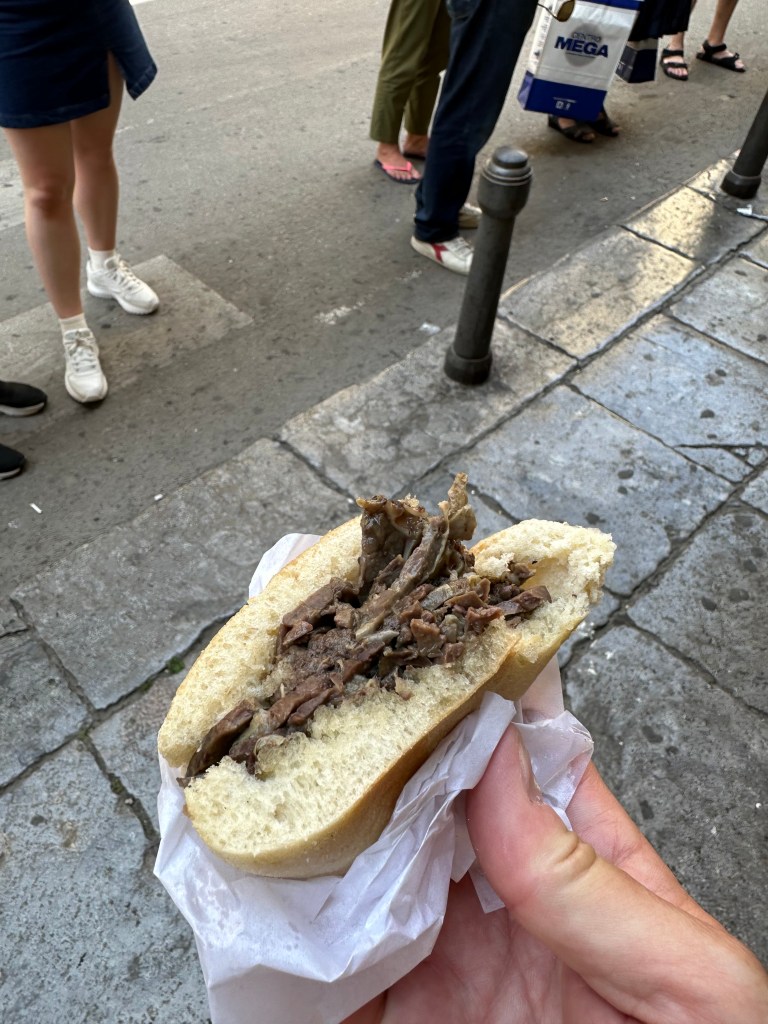
The highlight (lowlight?) of the tour? Spleen sandwich!

Would love (love!) to report that it’s splendid (hahahaha!), but 4/10 – would not recommend. And for context, we’ve had foal in Slovenia, brain in Hungary, and puffin in Iceland.  (But our niece, Tara, who visited Sicily during her time in Italy, apparently digs it!):

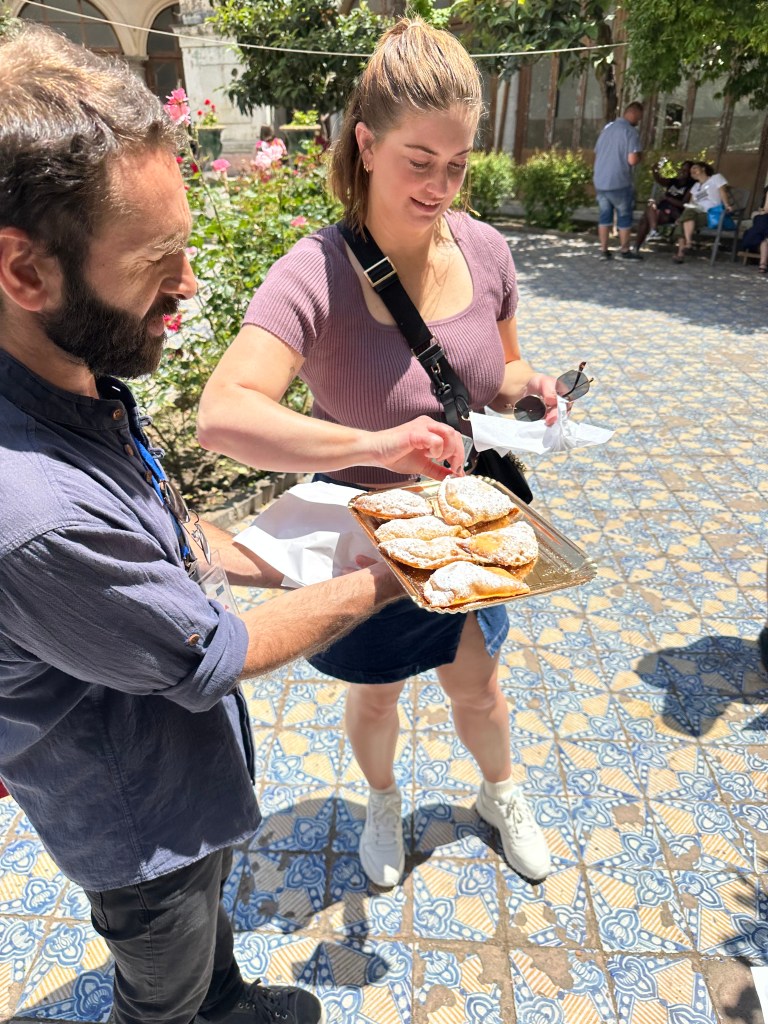
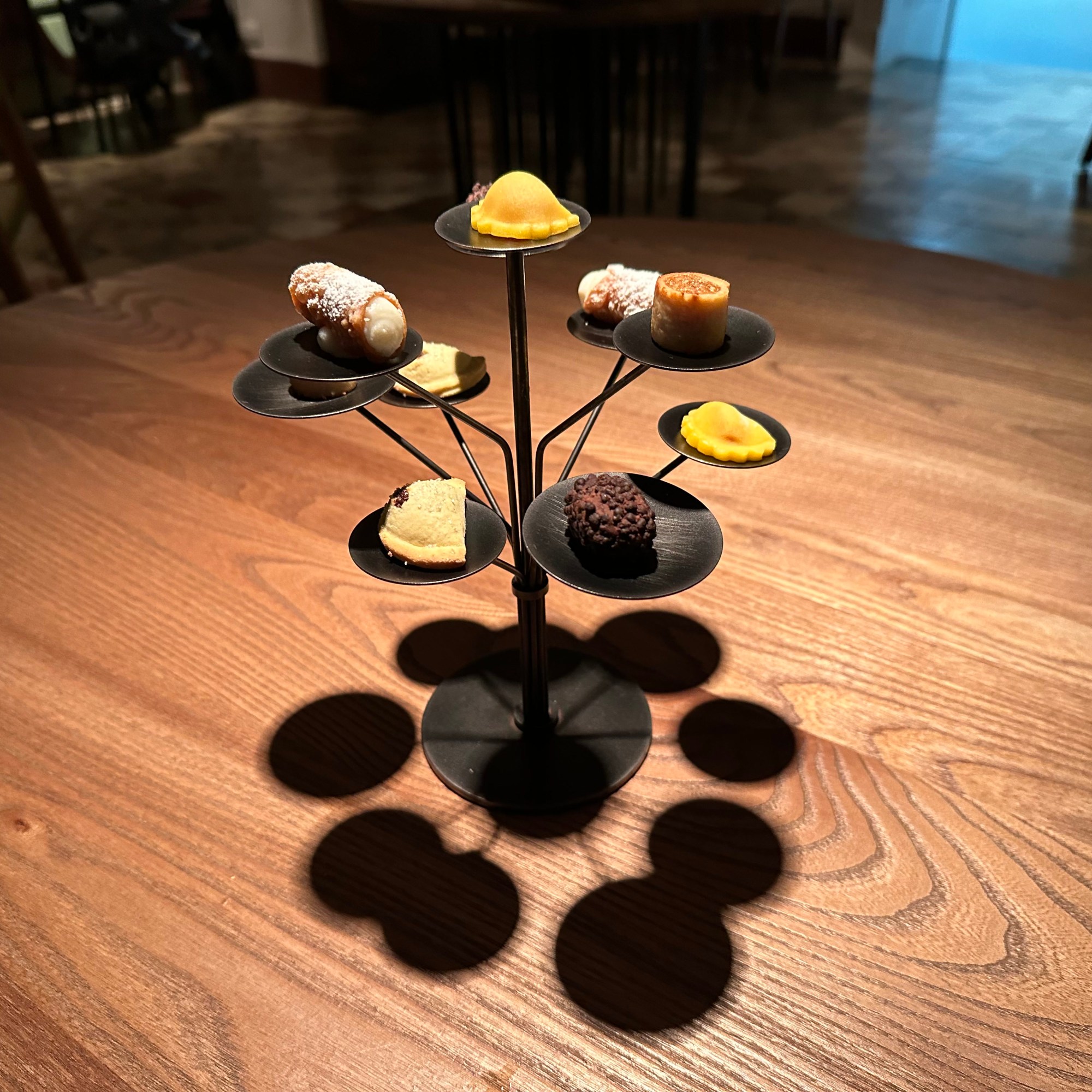
In a sharp contrast, we stopped last at a local convent, where the nuns earn a little walkin’ around money by baking treats for sale:

The treats in question:

Nice setting in the convent’s cloister for our dessert round:

One evening on the way from aperitivos on Via Maqueda to dinner, we stumbled into this performance in one of the (many) churches on the street:

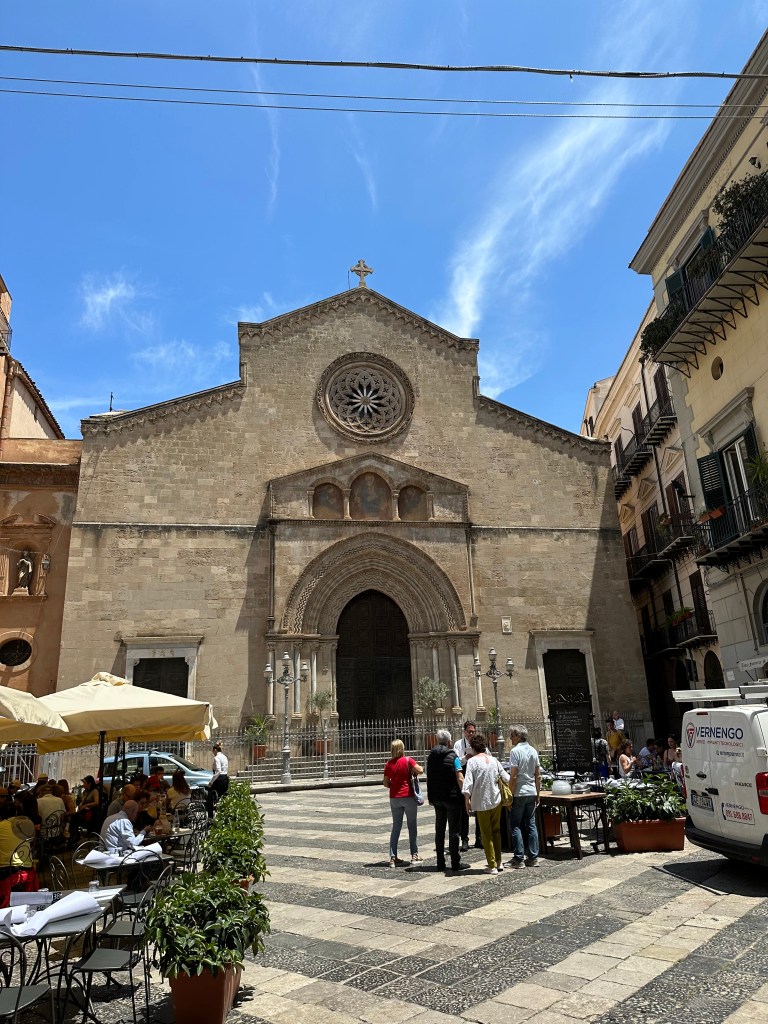
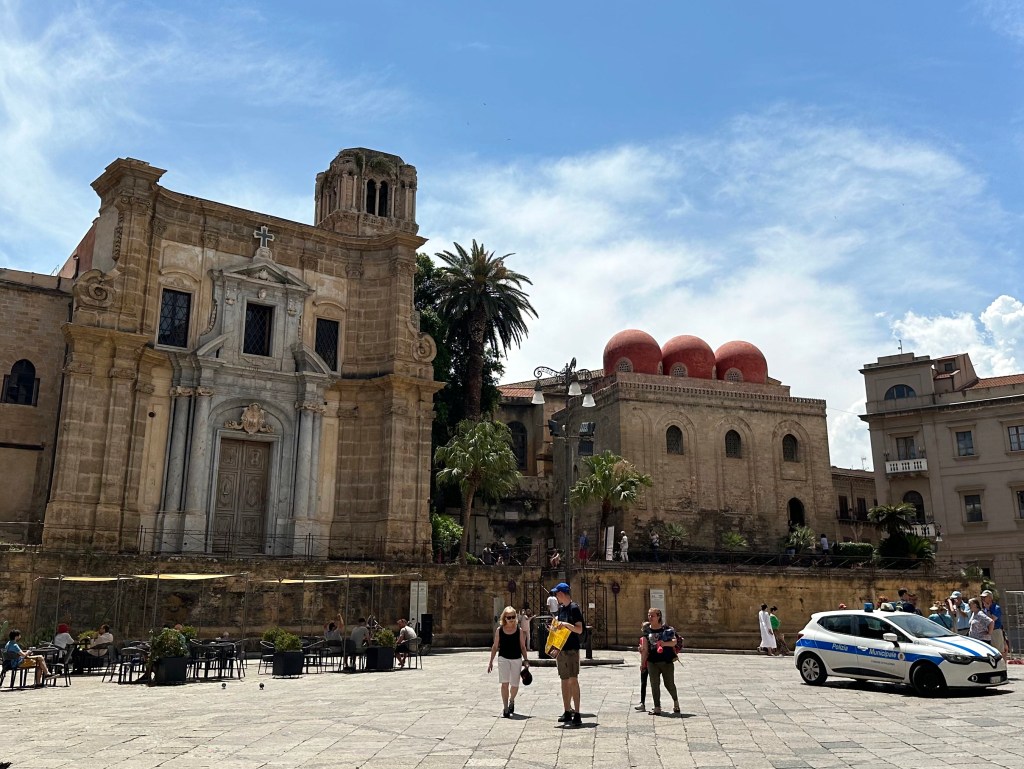
The next day, the star of Arabo-Norman architecture, San Cataldo:

Built in 1154 during Norman rule, the church not only embodies the melding of Arabic and Norman French architecture, it also serves as an example of the severe, militaristic, almost-fortified forms that even religious structures of the Normans exhibited.

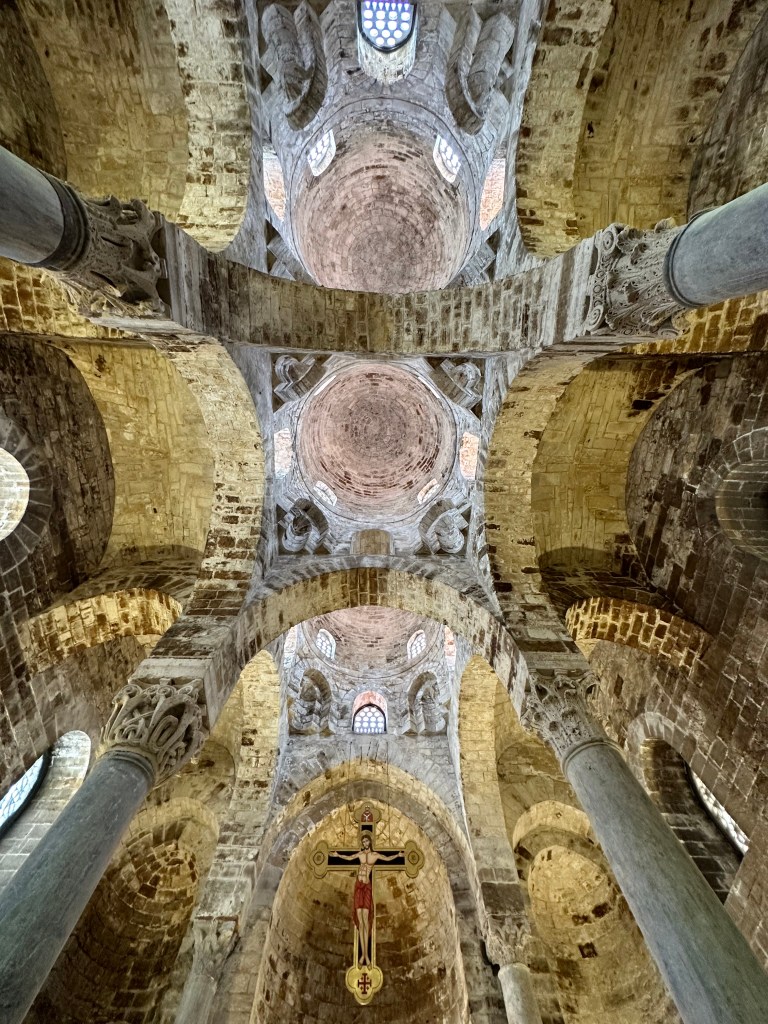
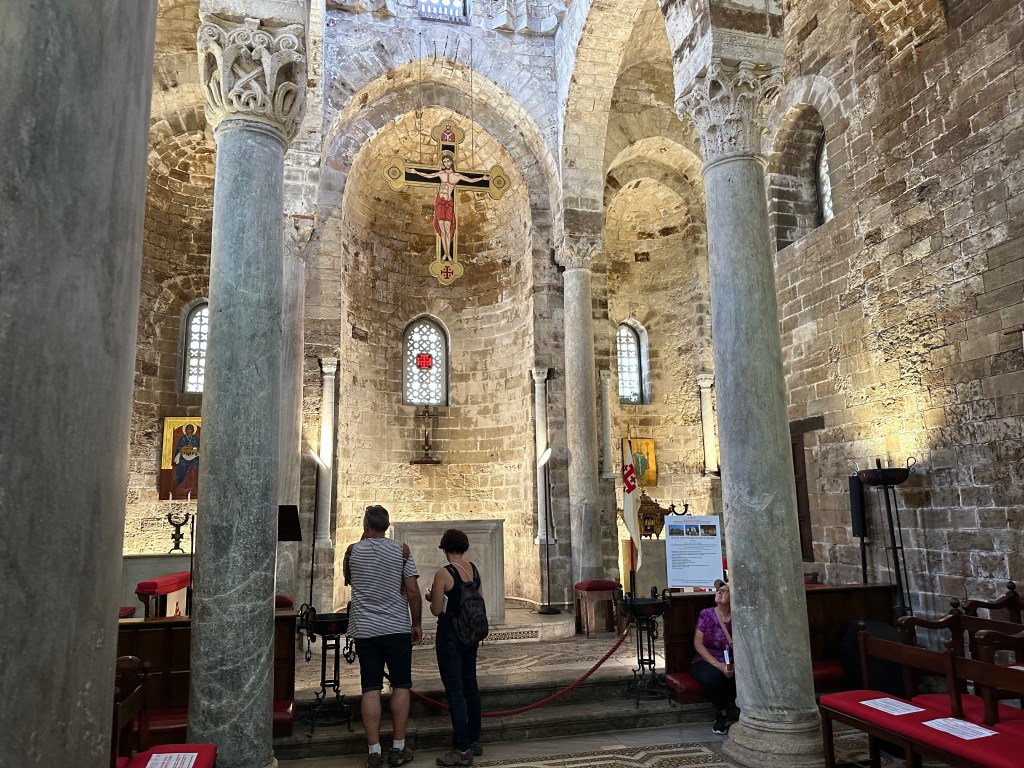
An inside view of the three domes (balls, bulbs, inflamed cysts, whatever):

The church interior felt very compact and vertical to us – not a lot of breadth here:

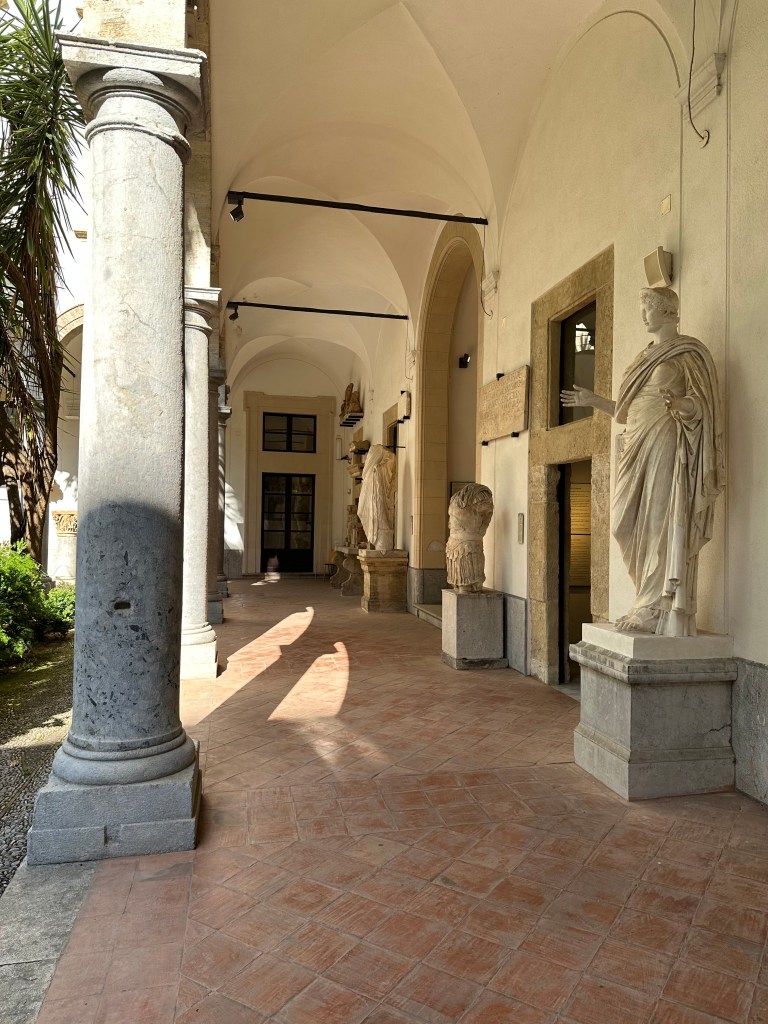
Down the street, Antonino Salinas Regional Archeological Museum:

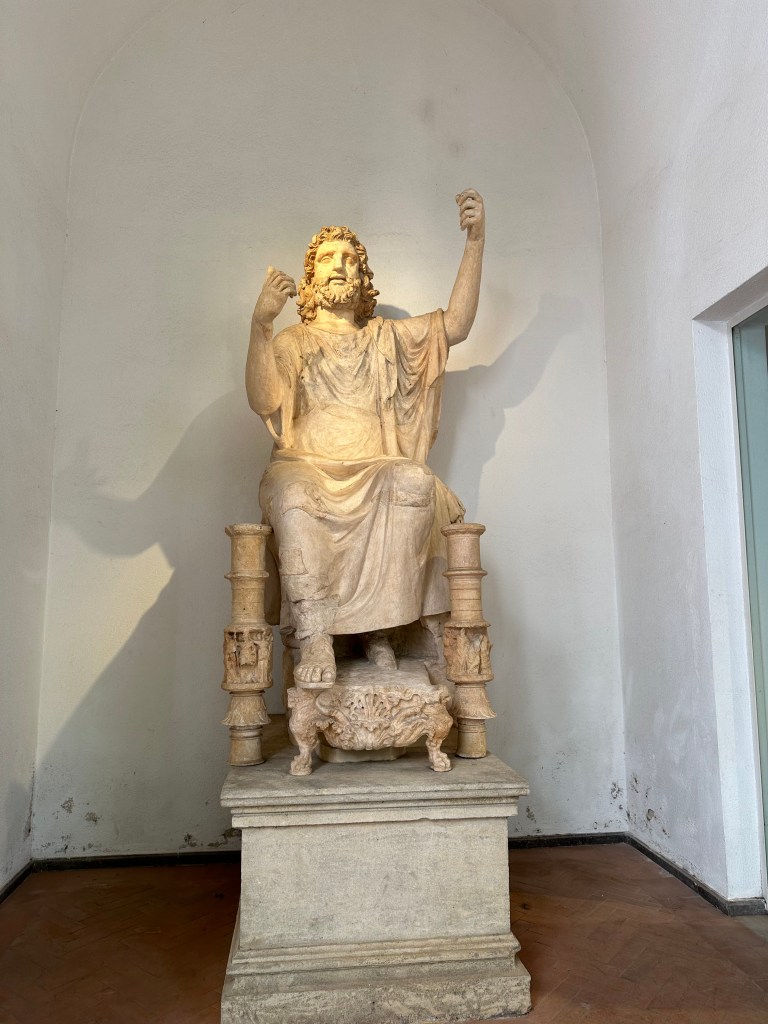
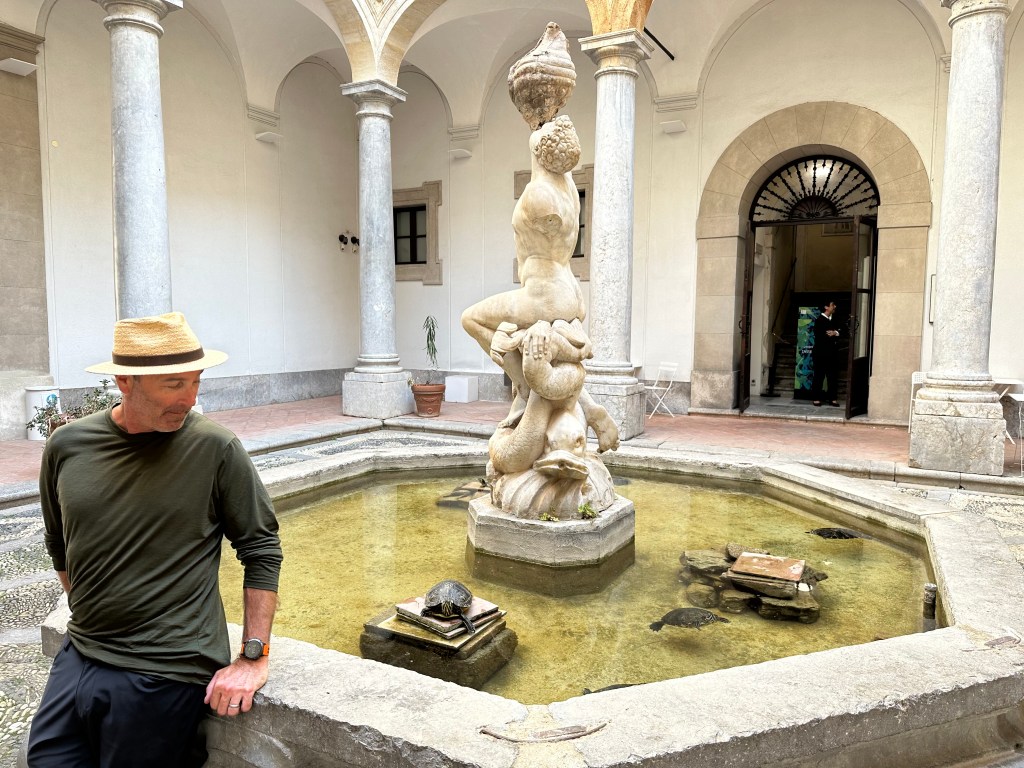
The museum is home to one of the richest collections of Punic and Ancient Greek art in Italy, including this 2nd- to 1st-century BC statue of Zeus:

Oh, and turtles!

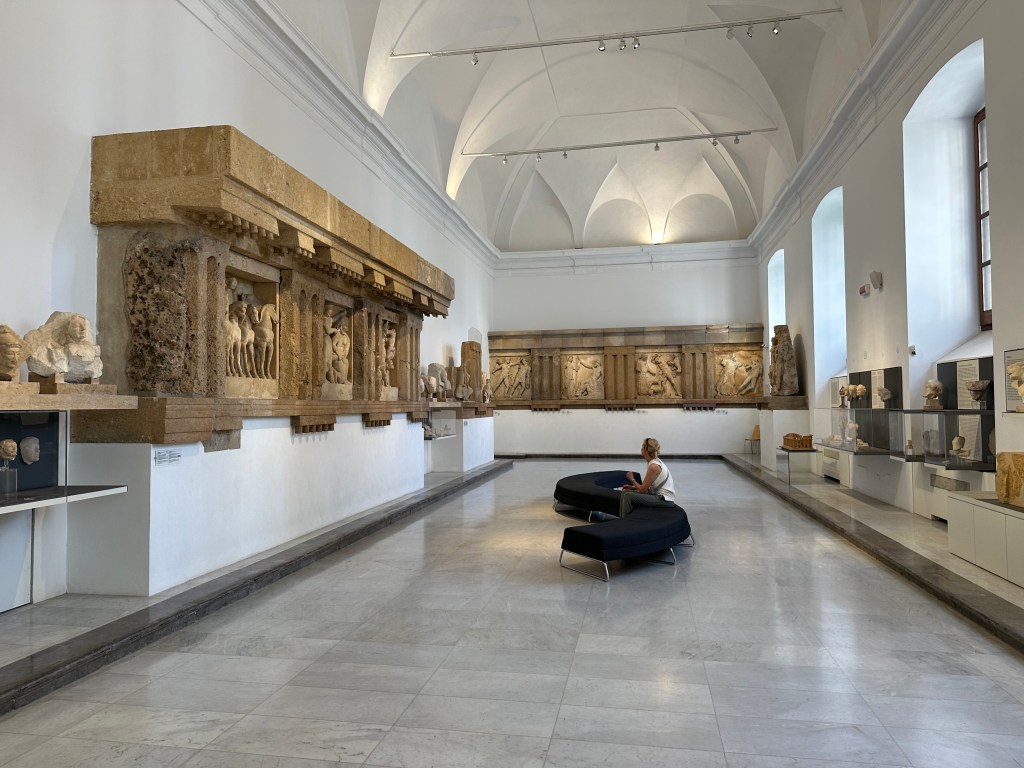
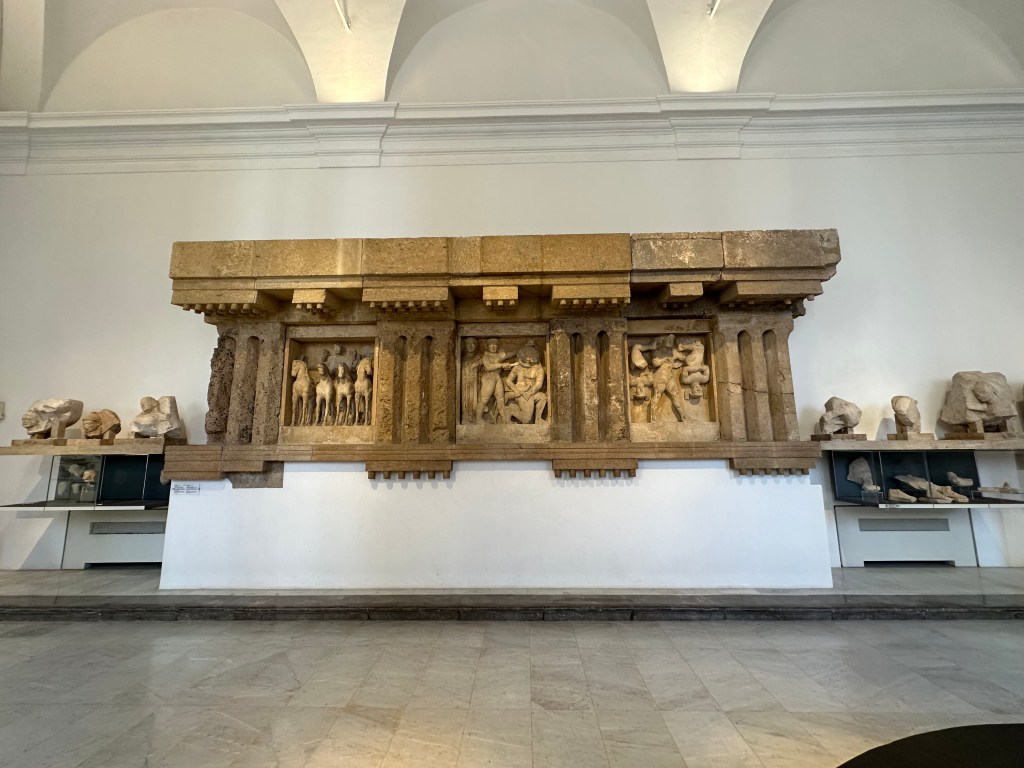
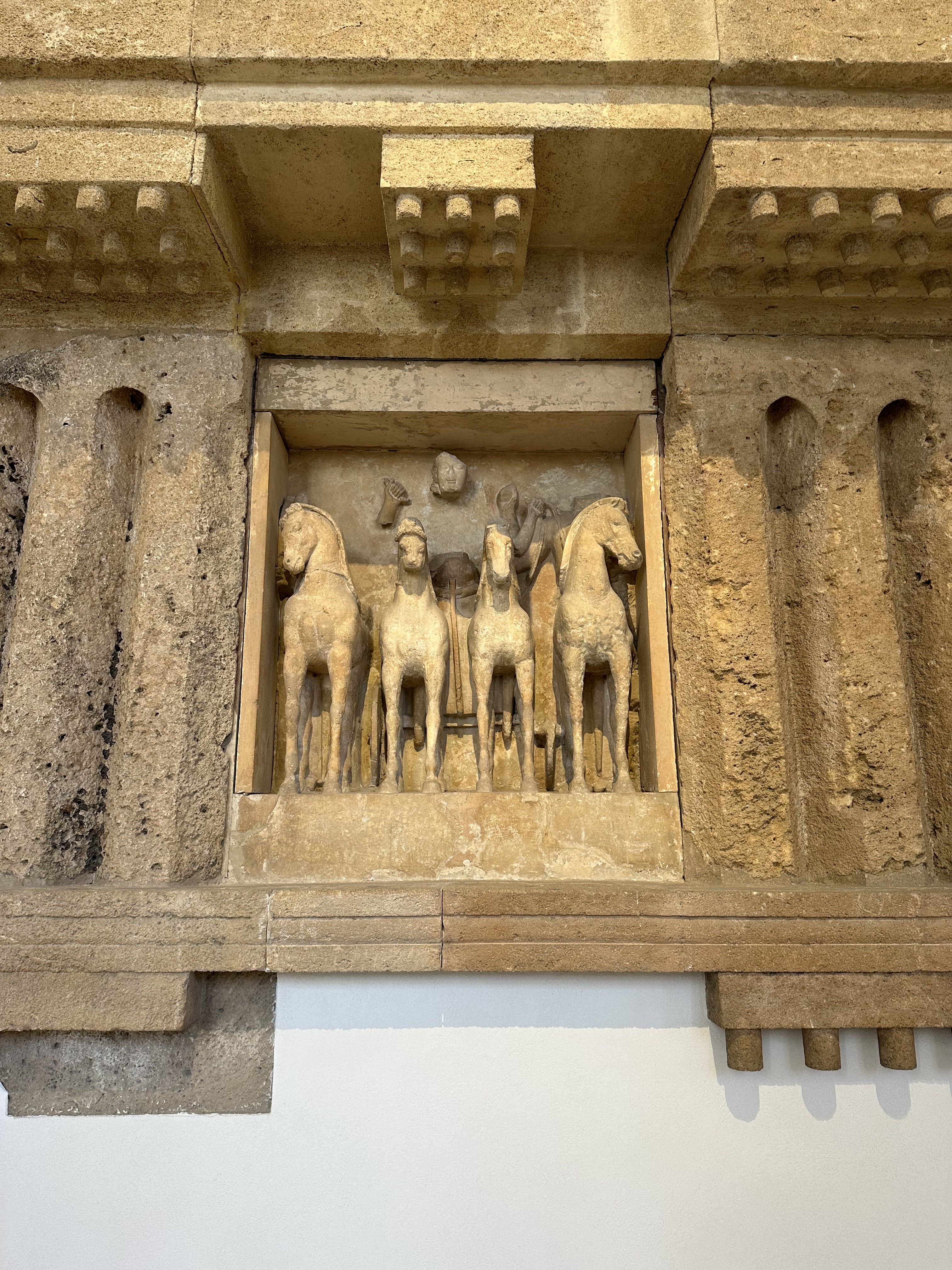
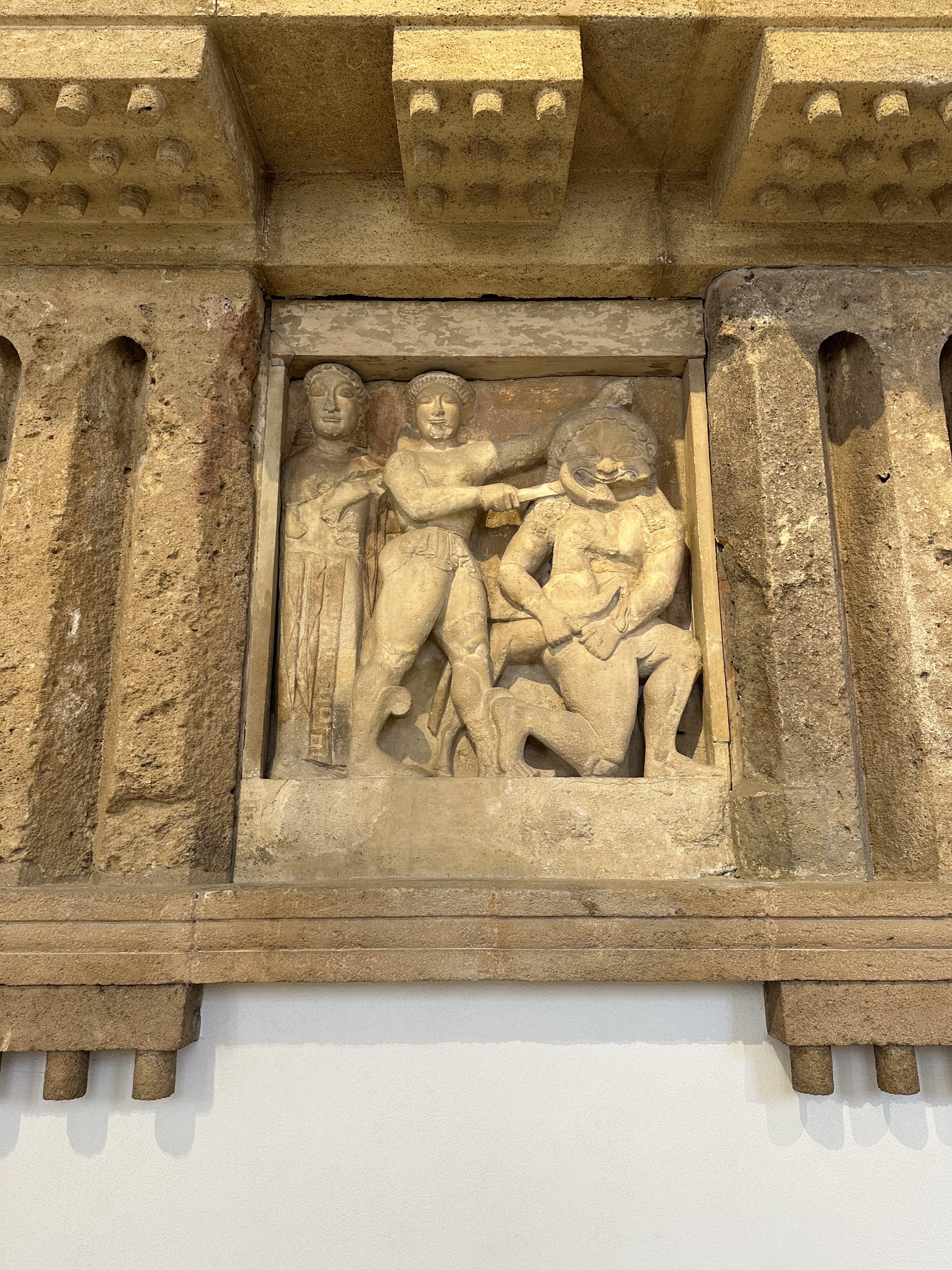
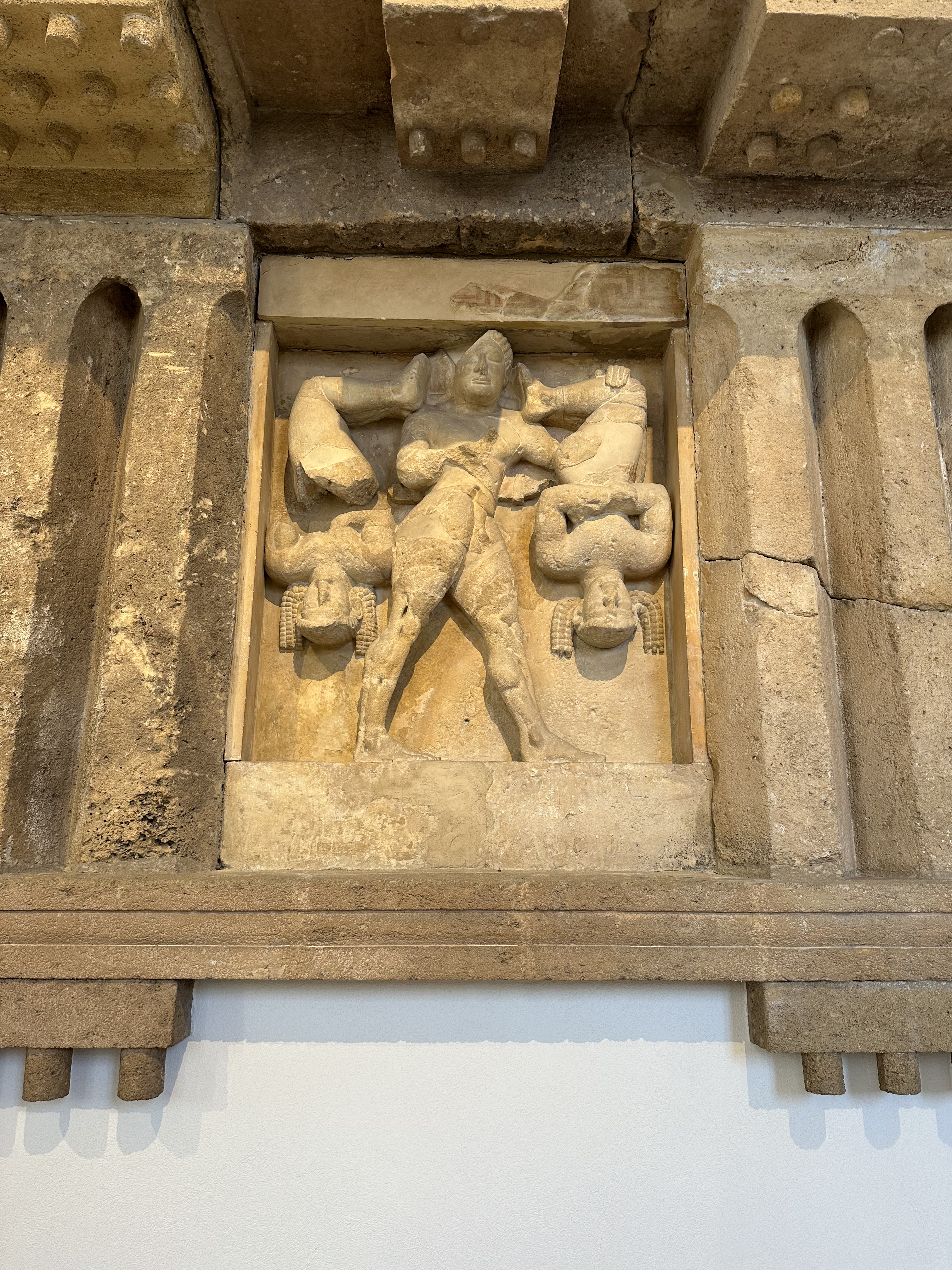
Taking in the frieze from a mid-6th-century BC temple from the ancient city of Selinunte:

Pretty awesome detail and workmanship from 7 millenia ago.

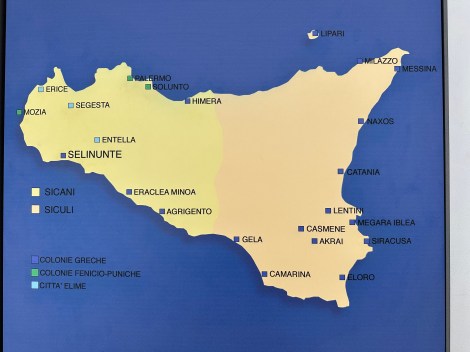
A helpful map of Punic (Carthaginian) and Ancient Greek cities from the period (Selinunte is in the west on the bottom of the island and was Greek, even though the Phoenicians and later Carthaginians occupied the same zone in the north):

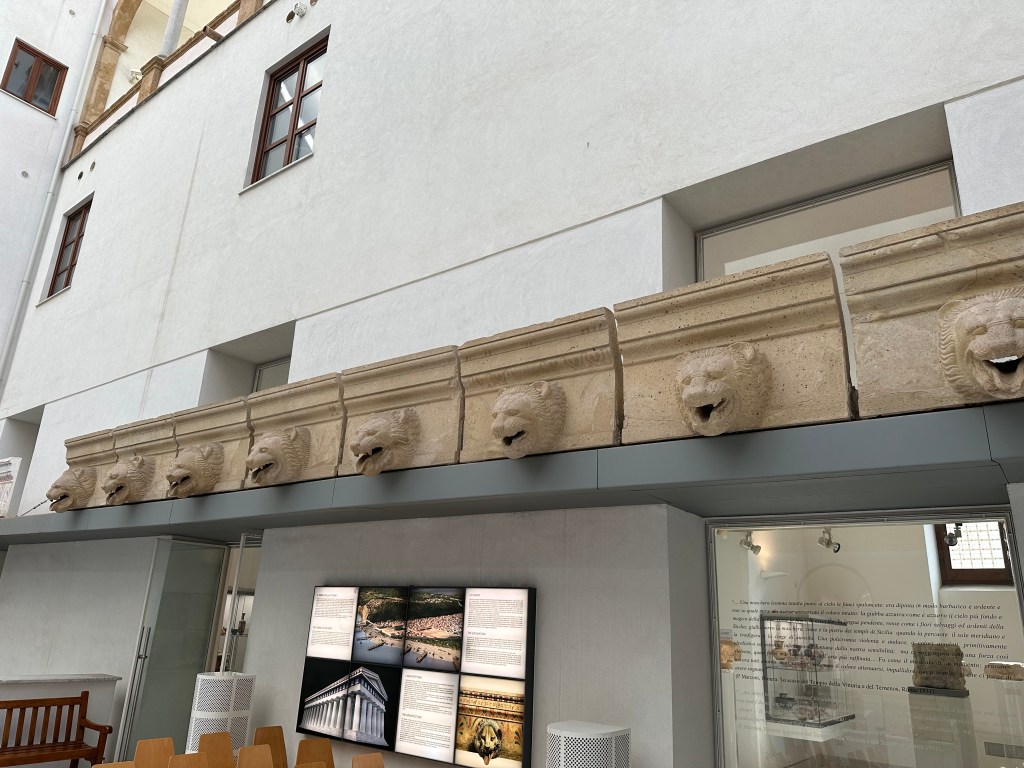
Roof-edge drip stones from moldings on classical temples – in this case, from Agrigento, which would be our next stop on the island:

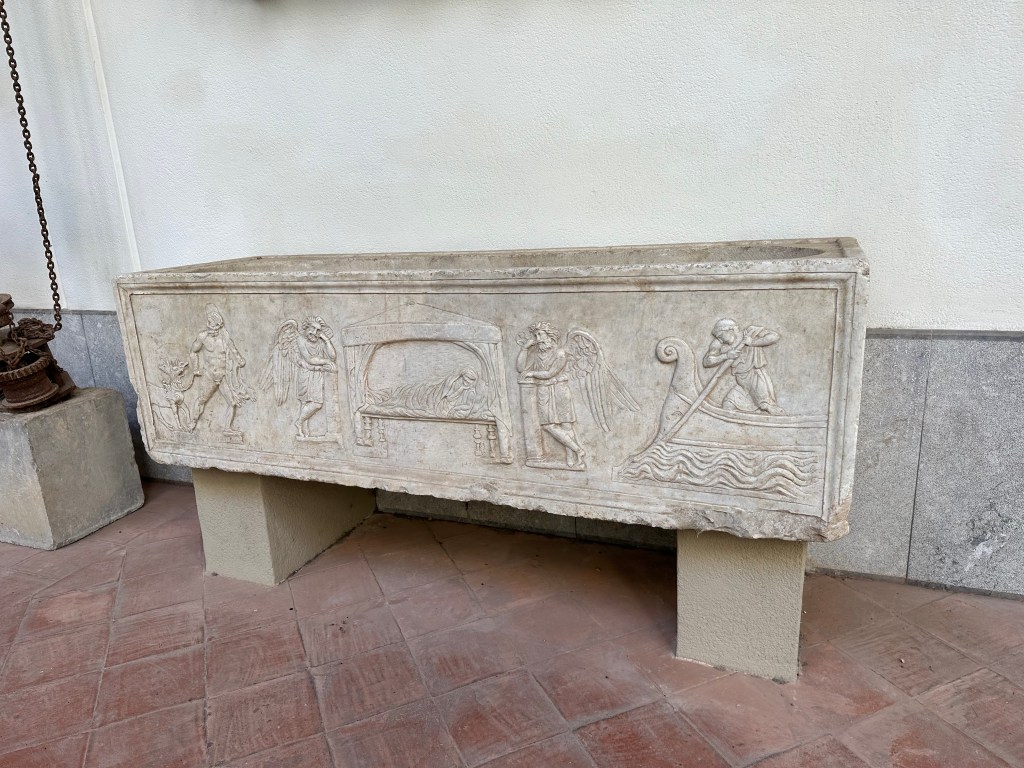
Very cool, later, Roman sarcophagus featuring Charon on the right and Hercules on the left:

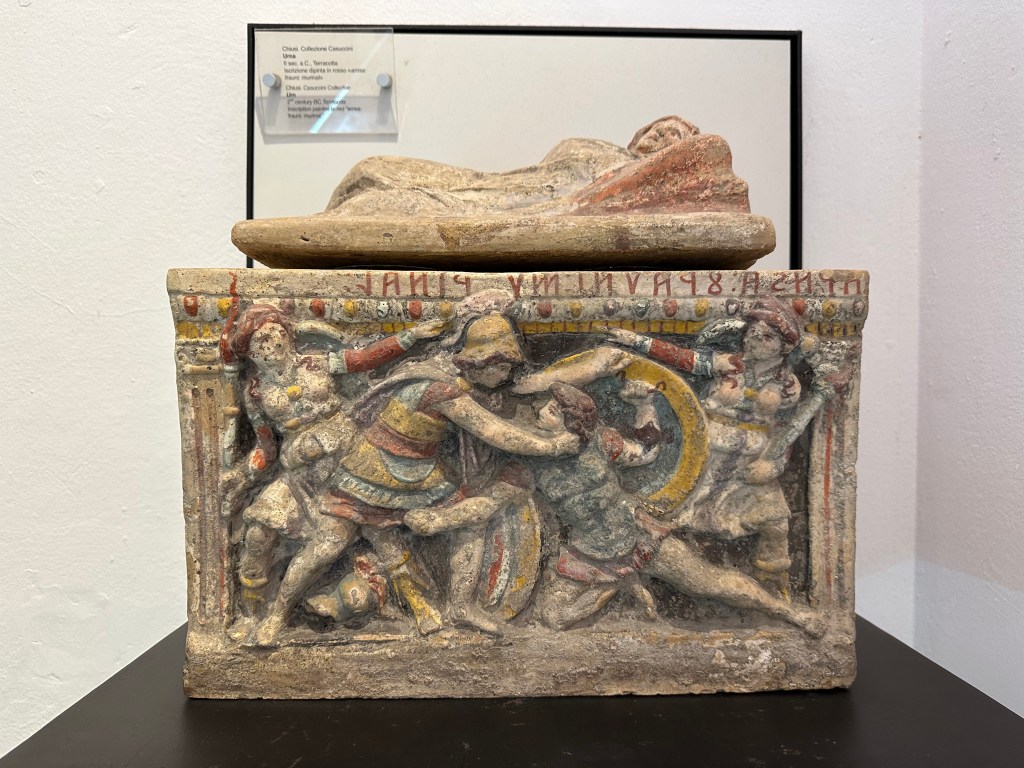
And a 2nd-century BC gladiator-themed, painted terra cotta, urn:

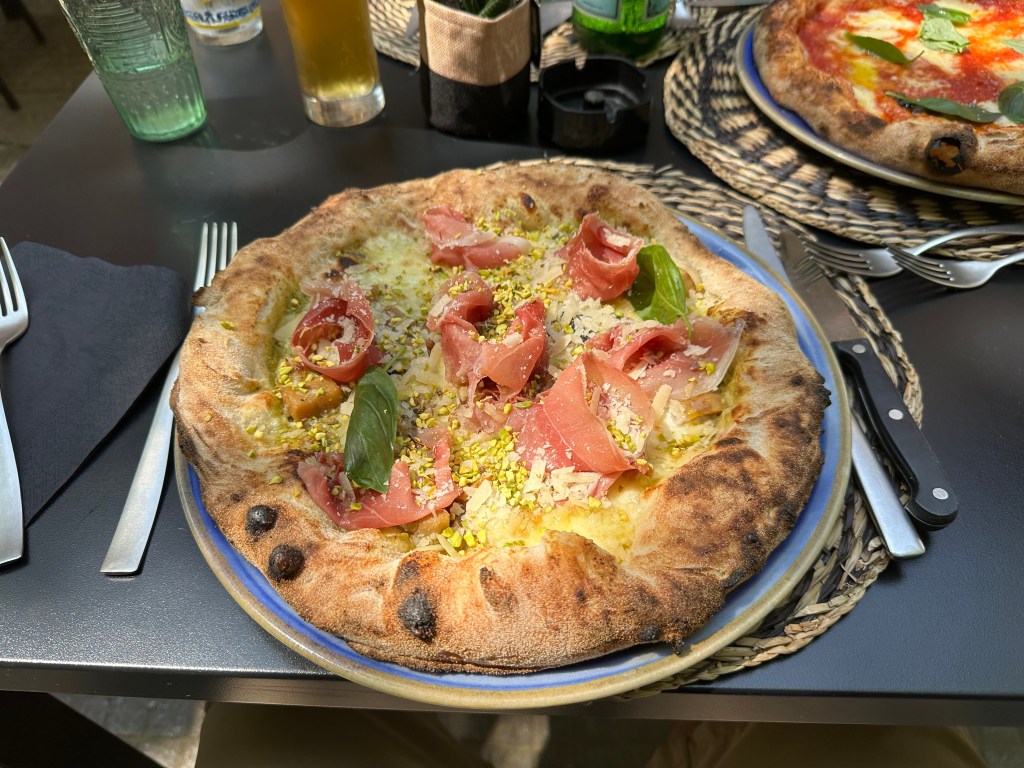
All of which made us hungry. Hungry for pizza with, um, pistachios? This would be a staple on the island – the Sicilians LOVE their pistacios:

And with full bellies, and not a fear in the world of our lunch being returned to the outside world, we headed through town to the Capuchin Catacombs of Palermo, which contain around 8000 corpses and 1252 mummies; the last body was interred in 1939.

Aaaaah! There is a fear of the above occurring.

“Palermo’s Capuchin monastery outgrew its original cemetery in the 16th century and monks began to excavate crypts below it. In 1599 they mummified one of their number, the recently deceased brother Silvestro of Gubbio, and placed him in the catacombs.[citation needed]

Bodies were dehydrated on racks of ceramic pipes in the catacombs and sometimes later washed with vinegar. Some bodies were embalmed and others were enclosed in sealed glass cabinets. Friars were preserved with their everyday clothing and sometimes with ropes they had worn in penance.[citation needed]

Initially the catacombs were intended only for deceased friars. However, in later centuries it became a status symbol to be entombed in the Capuchin catacombs. In their wills, local luminaries would ask to be preserved in certain clothes, or even have their clothes changed at regular intervals. Priests wore their clerical vestments, while others were clothed according to contemporary fashion. Relatives would visit to pray for the deceased and to maintain the body in presentable condition.”

“The catacombs were maintained through donations from the relatives of the deceased. Each new body was placed in a temporary niche and later placed into a more permanent location. So long as contributions continued, the body remained in its proper place but if relatives stopped sending money, the body was put aside on a shelf until they resumed payments.” (All from here.)

The nudie fountain on our last evening in town:

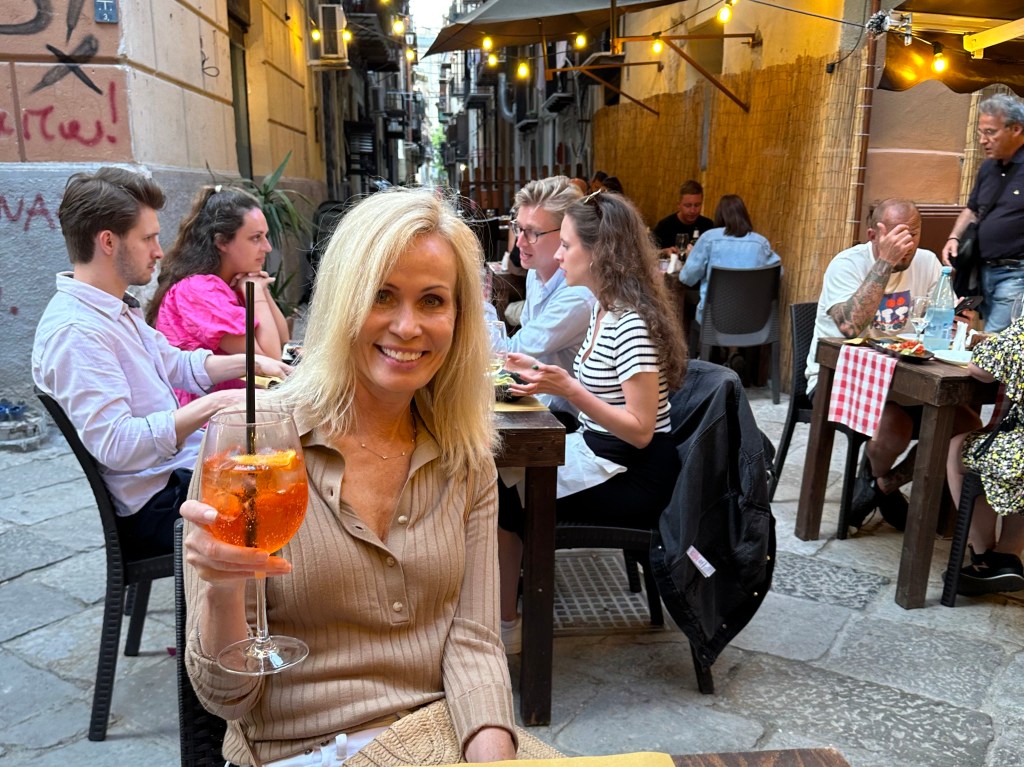
And a final Aperol spritz (in Palermo, not on the trip!):

Ciao, Palermo – on to Agrigento (via Monreal):

Categories: A Prolonged Foray to Europe, Sicily | Tags: , , , , , , | Leave a comment

A Prolonged Foray to Europe: Monreal and Scala dei Turchi

After exploring Palermo for a few days, we grabbed a cab to the train station and picked up our rental car for the next couple of weeks – another Citroen C3, with the weird rubber door inserts. Even though it looks like a sneaker, we truly dig these. We drove one throughout our 2-week slow roll around Languedoc and Provence and over to San Sebastian and really liked it. Although pretty compact, which you want when driving around medieval European villages, the C3 trunk (like those of our frequently rented rental class counterparts the Renault Clio and the VW Polo) accommodates our luggage exactly (another advantage of 24″ luggage, in addition to the ability to carry them on to our flights instead of checking them). Because we’ll stop places to hike or check out a town when driving from one destination to another, the ability to stow your luggage away from prying eyes looking to rob from dumb tourists provides significant piece of mind.

Case in point? Our destination for our first day of driving was Agrigento, in the middle of the southern coast of Sicily, but we wanted to stop in Monreale on the way to check out its celebrated Normano Arabic cathedral. Luggage hidden safely away in the C3’s trunk, we blithely parked illegally and hightailed it to the cathedral. (We couldn’t find legal parking and one of the WolfeStreetTravelers [the driver, natch] has zero patience for driving around to look for parking.)

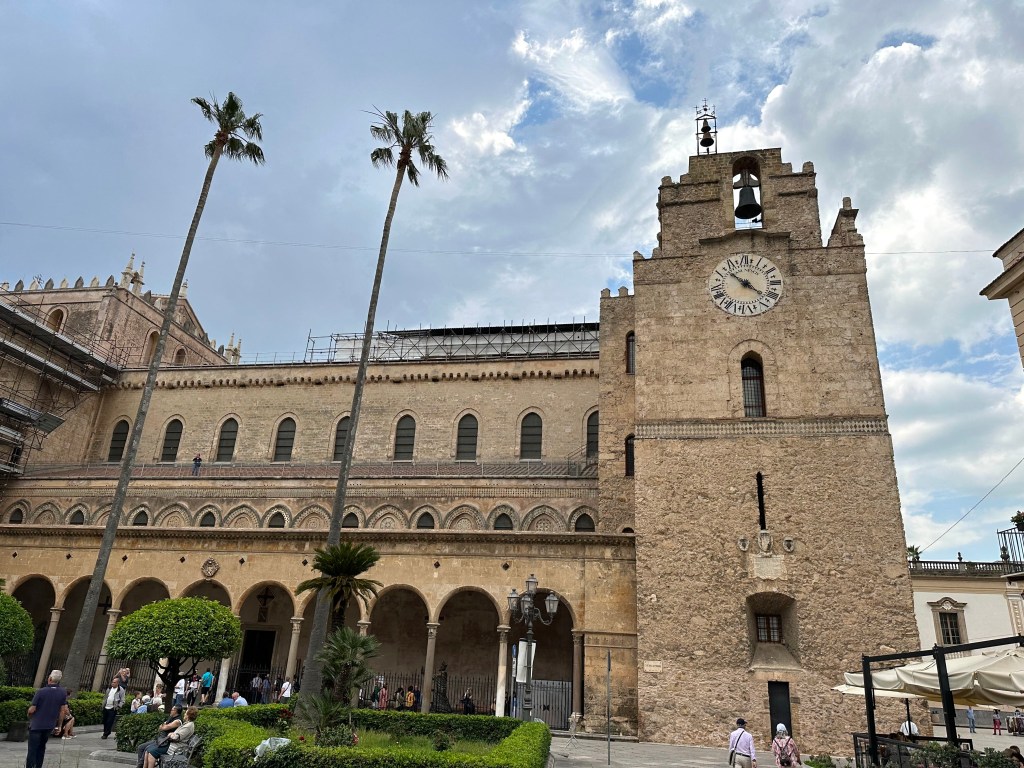
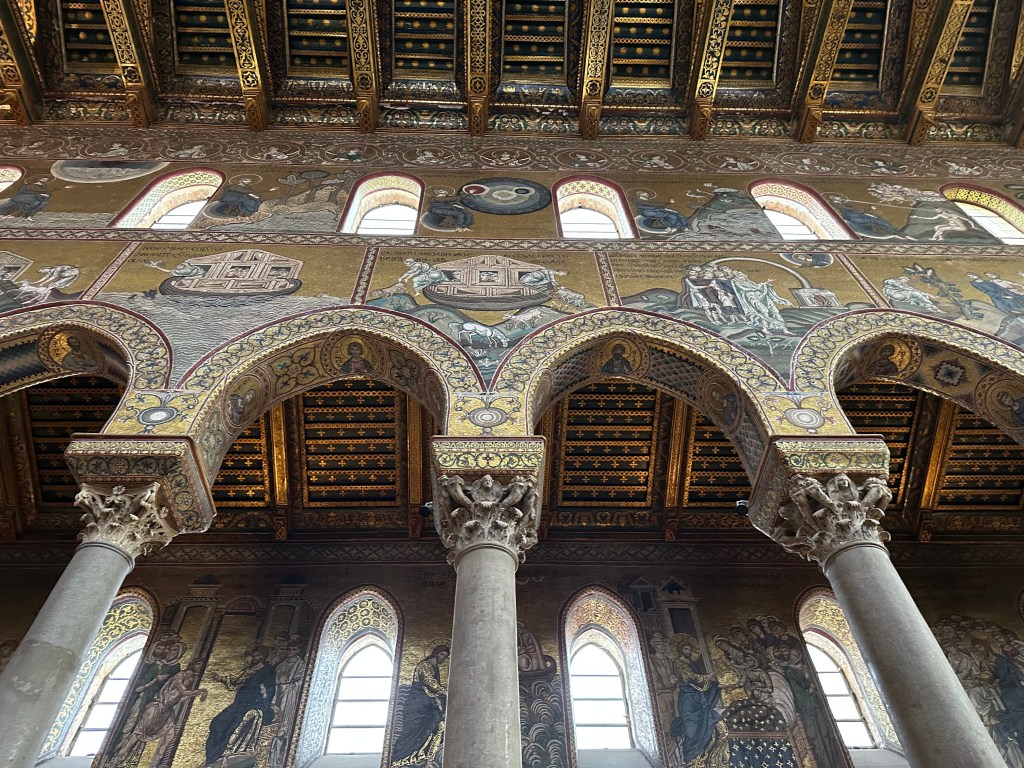
Exterior of the Cathedral of Santa Maria Nuova in Monreale:

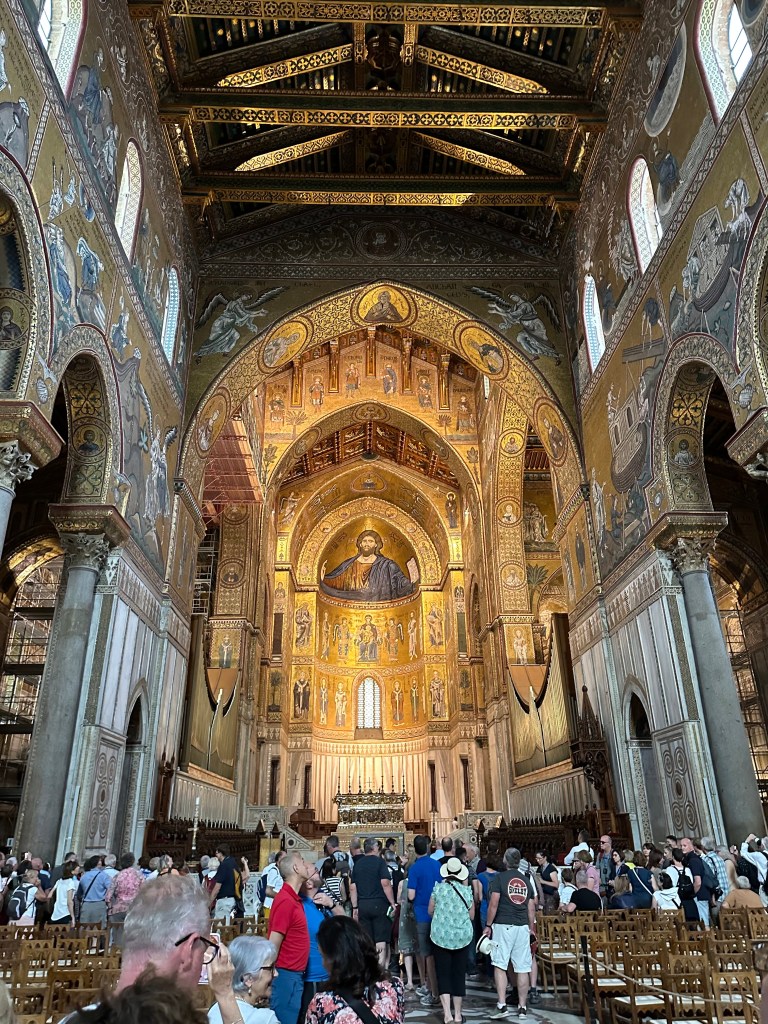
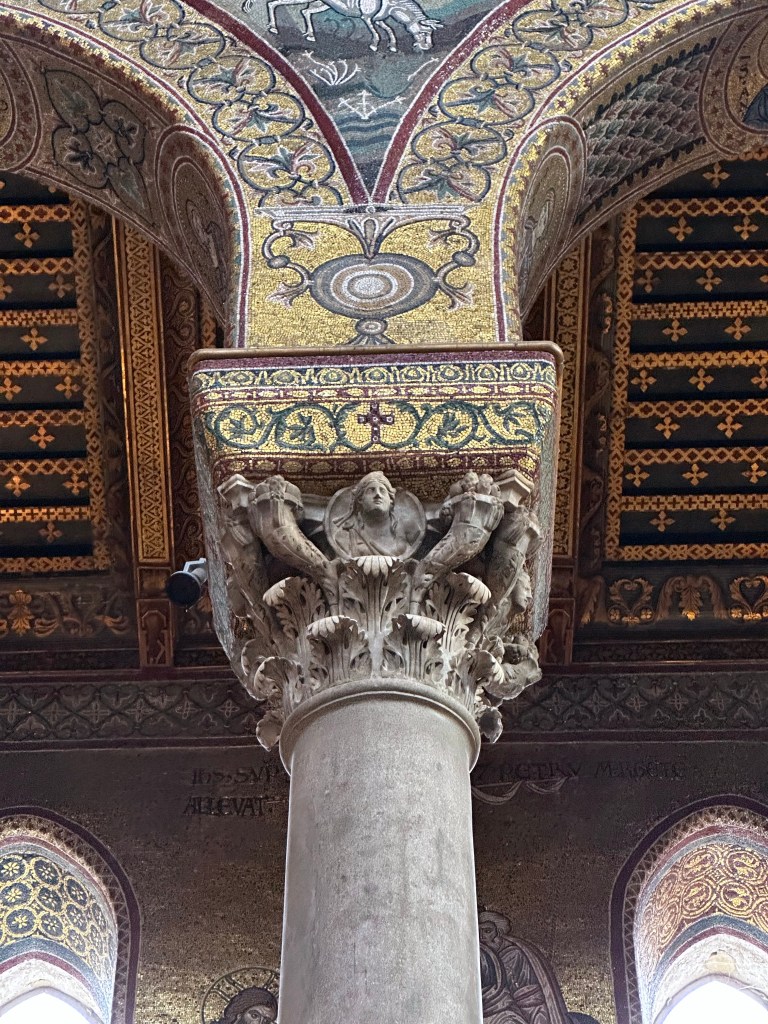
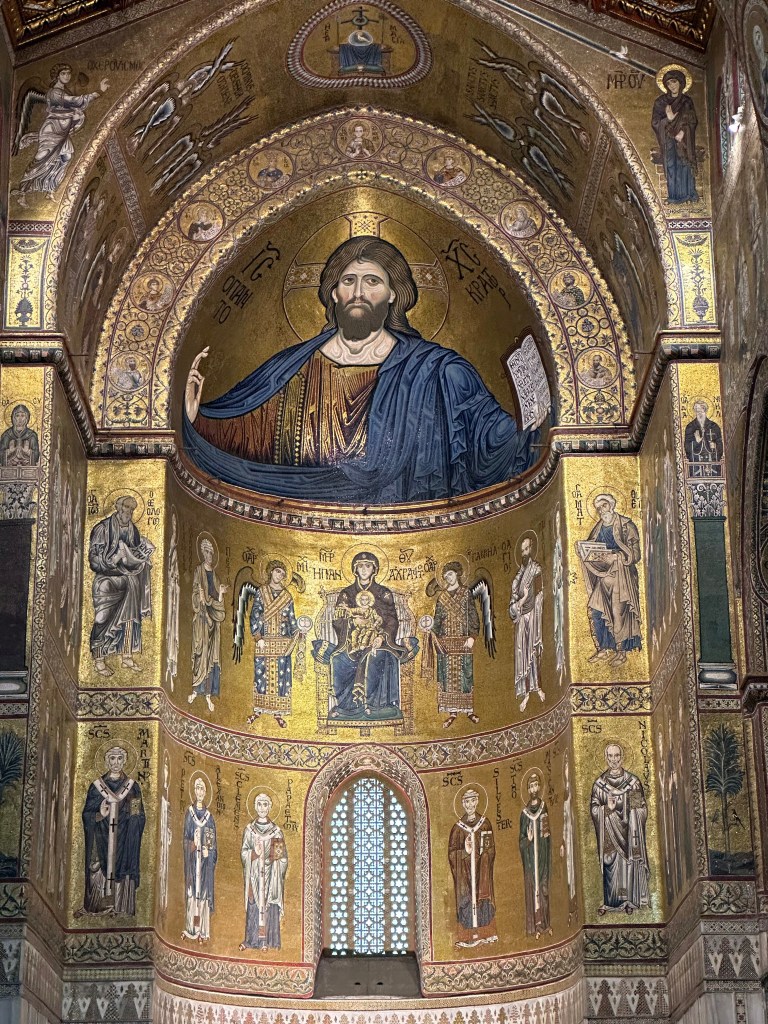
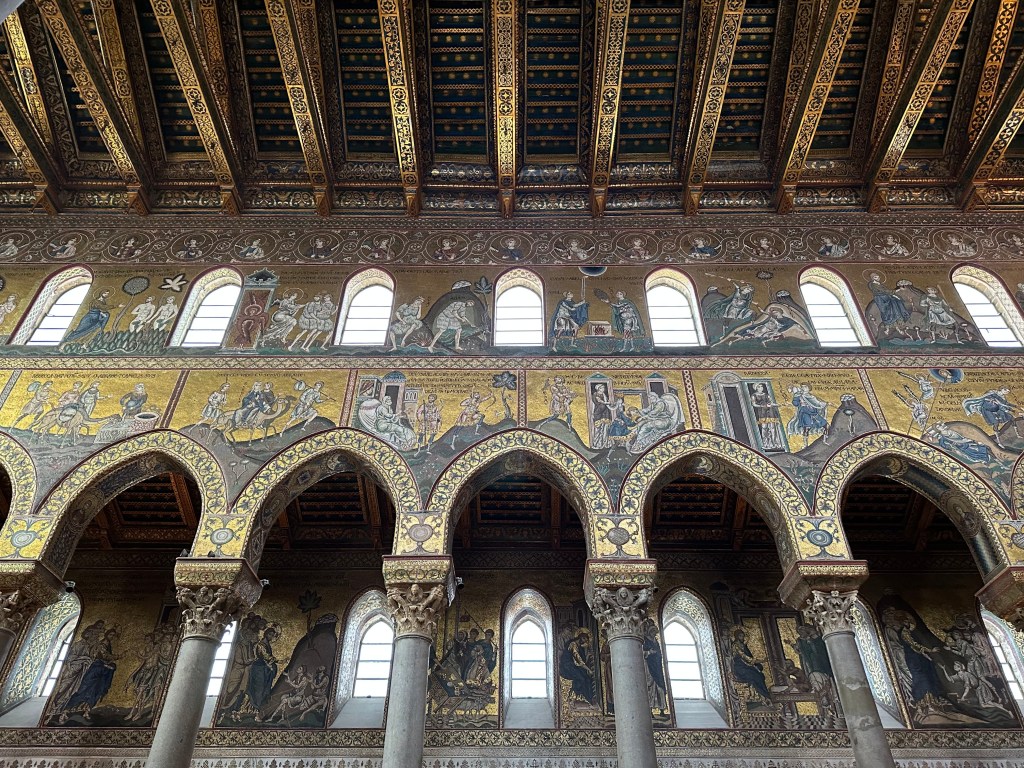
Begun in 1174 and completed in 1267, this place seems crazy Byzantine to us due to the gold mosaics, no matter how much historians characterize it as Normano Arabic. Freakin’ amazing to be in a space like this constructed and decorated by artisans in the 12th and 13th centuries.

Constructed by King William II of Sicily ( “William the Good”), the project was perhaps less about demonstrating his piety and more a political move: with the cathedral complex (which also included a royal palace and Benedictine monastery) William deliberately created a rival ecclesiastical power base outside the jurisdiction of the powerful Archbishop of Palermo, and by 1183 had successfully secured from Pope Lucius III the elevation of Monreale to an independent archbishopric, thereby cementing royal authority over the Church in Sicily. The cathedral became the seat of the metropolitan archbishop and a commanding symbol of Norman supremacy.

“The basilican nave is wide, with narrow aisles. On each side, monolithic columns of grey oriental granite (except one, which is of cipolin marble) support eight pointed arches much stilted. The capitals of these (mainly Corinthian) are also of the classical period.” (From here.)

“The execution of the mosaics was entrusted to Byzantine workers and the iconography is actually Greek. However, the relaxed attitudes of the characters, their softly draped robes and the rhythm of their movements reveal a clear evolution of the style compared to that of the Cappella Palatina and the Martorana, one which is typically Italian. In fact, at the end of the twelfth century, Italian artists were considered the best at iconographic art. The mosaic cycle develops the concept of the triumph of Christianity in three different moments, depicting: events prior to the Incarnation (Old Testament); episodes from the life of Jesus (Gospel); events subsequent to the death of Christ and the life of the Apostles (Gospel and Acts of the Apostles). The whole set is dominated by a gigantic Cristo Pantocratore (the right hand alone is two metres long) in the main apse, which represents the summary and purpose of the whole complex figuration.” (From here.)

The nave walls contain extensive Old Testament narratives starting with the Book of Genesis at the western end and progressing chronologically toward the apse.

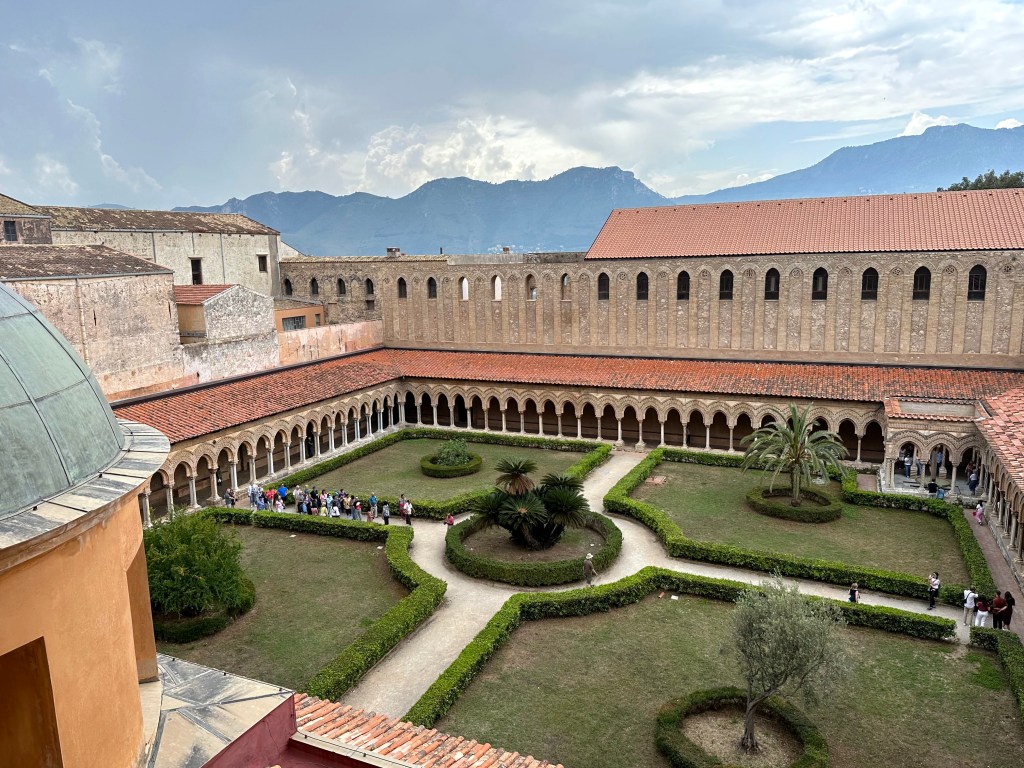
After climbing up through one of the towers to emerge outside, a view of the Benedictine cloister, with a fountain in the top right (south corner).

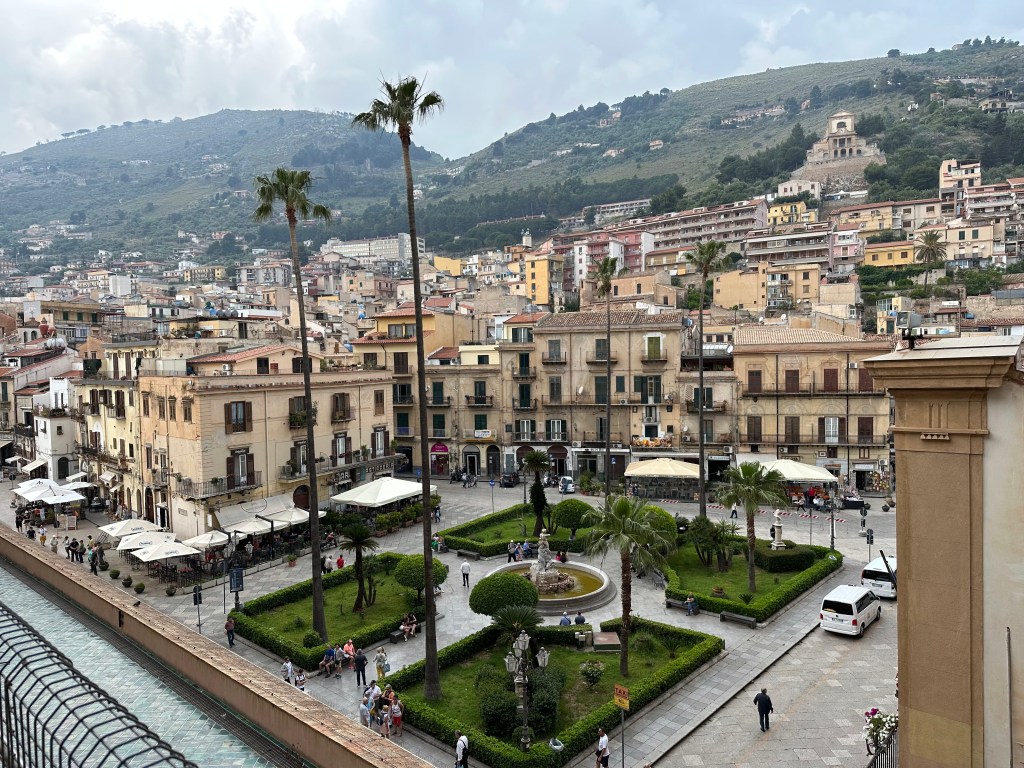
View of the town of Monreale from the cathedral:

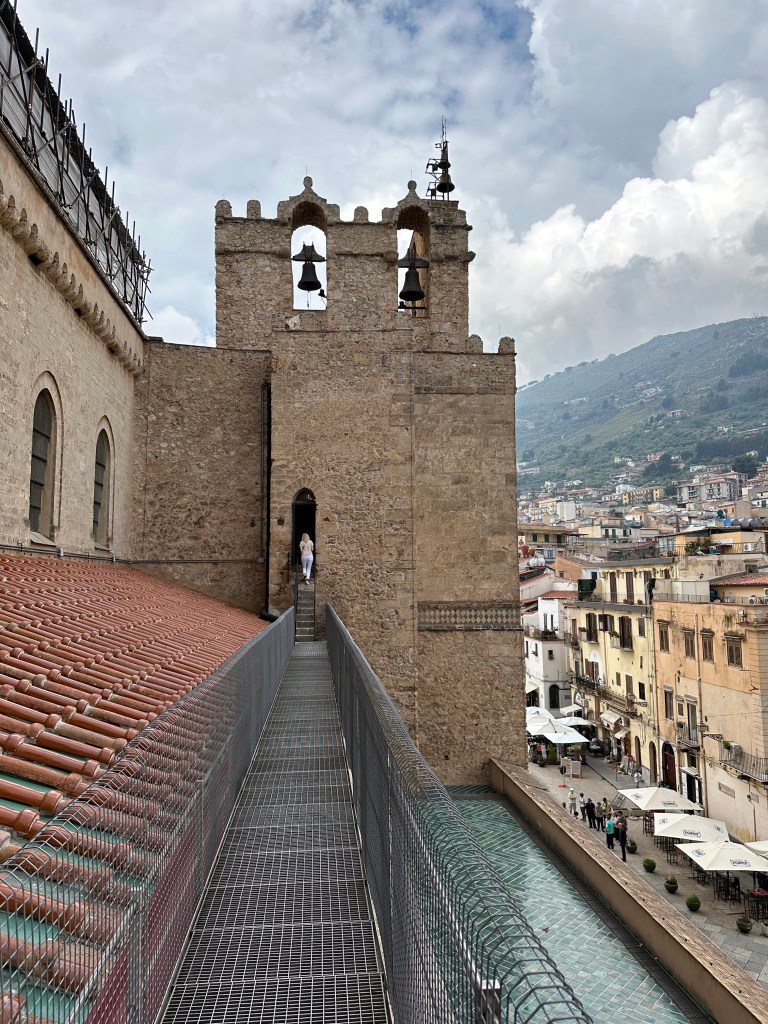
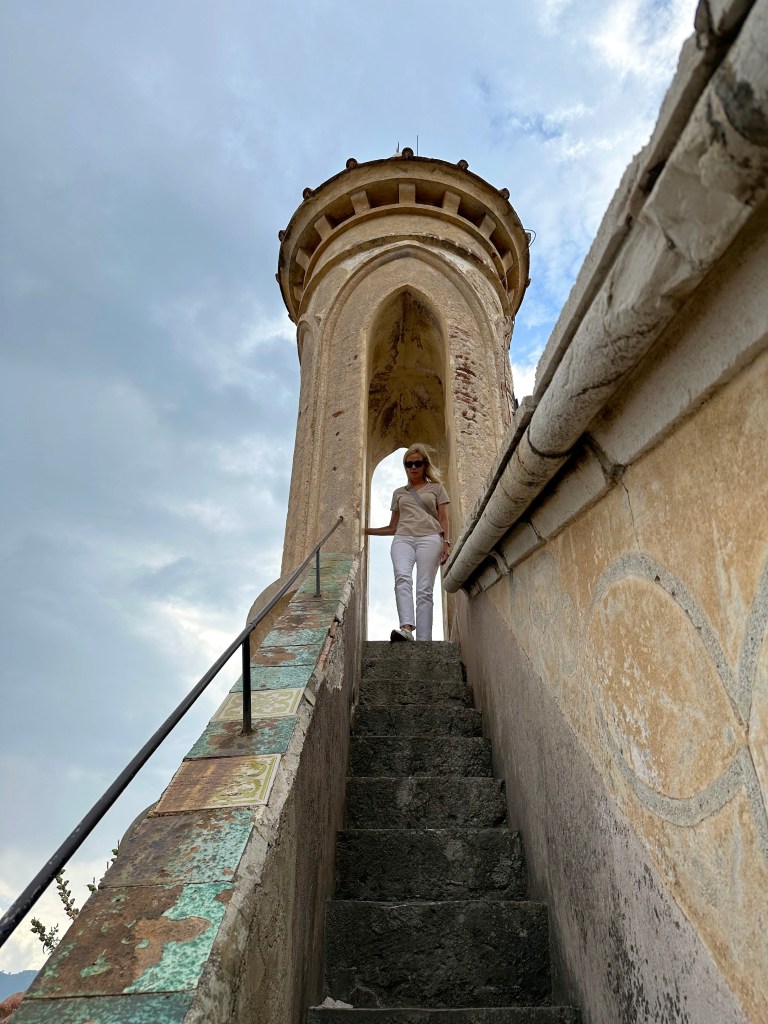
Making our way through the highs . . .

and lows of cathedral passages as we explore its upper extremities.

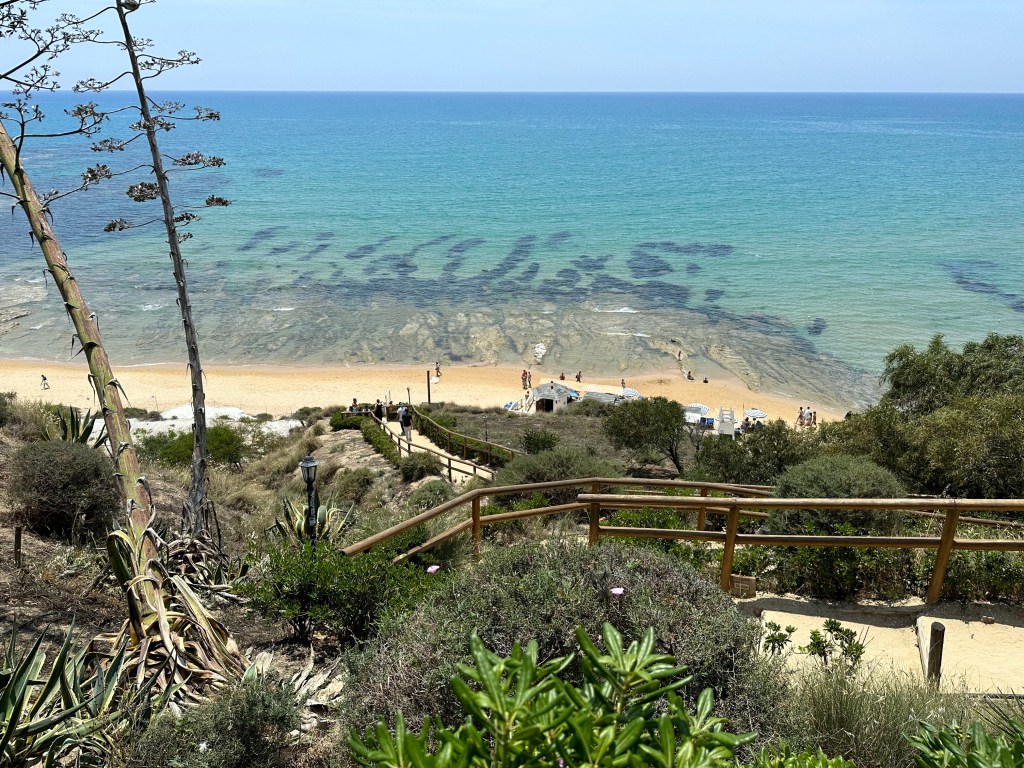
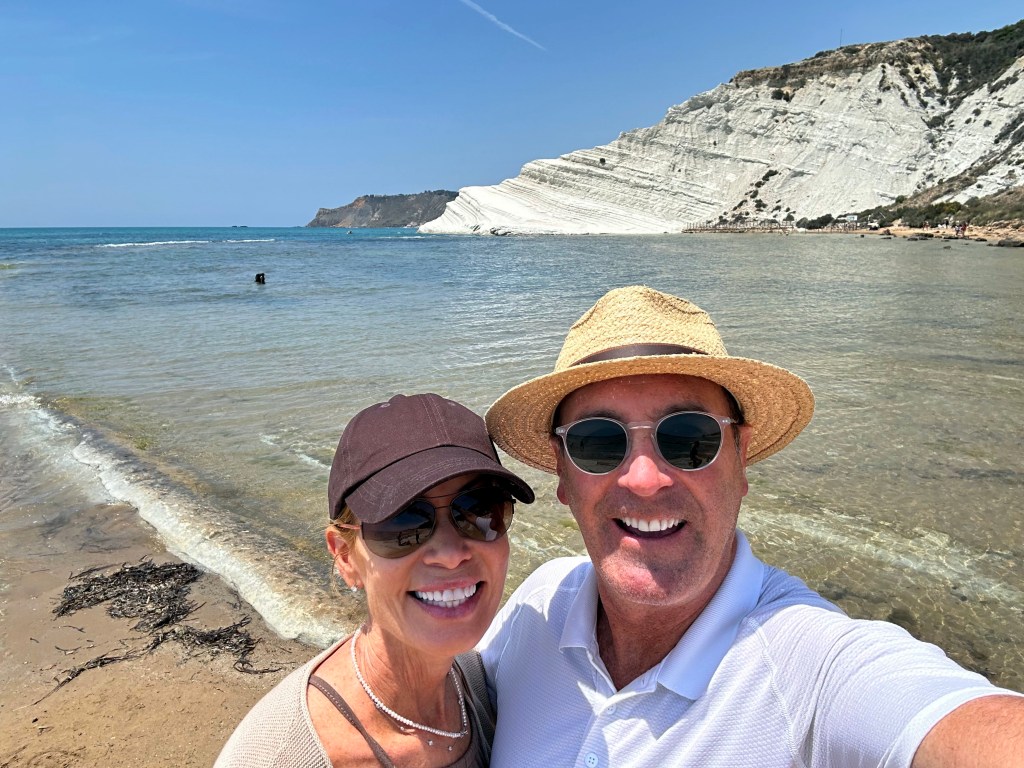
After our short adventure in Monreale, we headed to Agrigento, home to an incredible complex of Doric temples from Greece’s colonial days in Sicily. But since we’ve got a little space in this here post, we’ll add a little side trip from Agrigento after our foray to the temples: Scala dei Turchi.

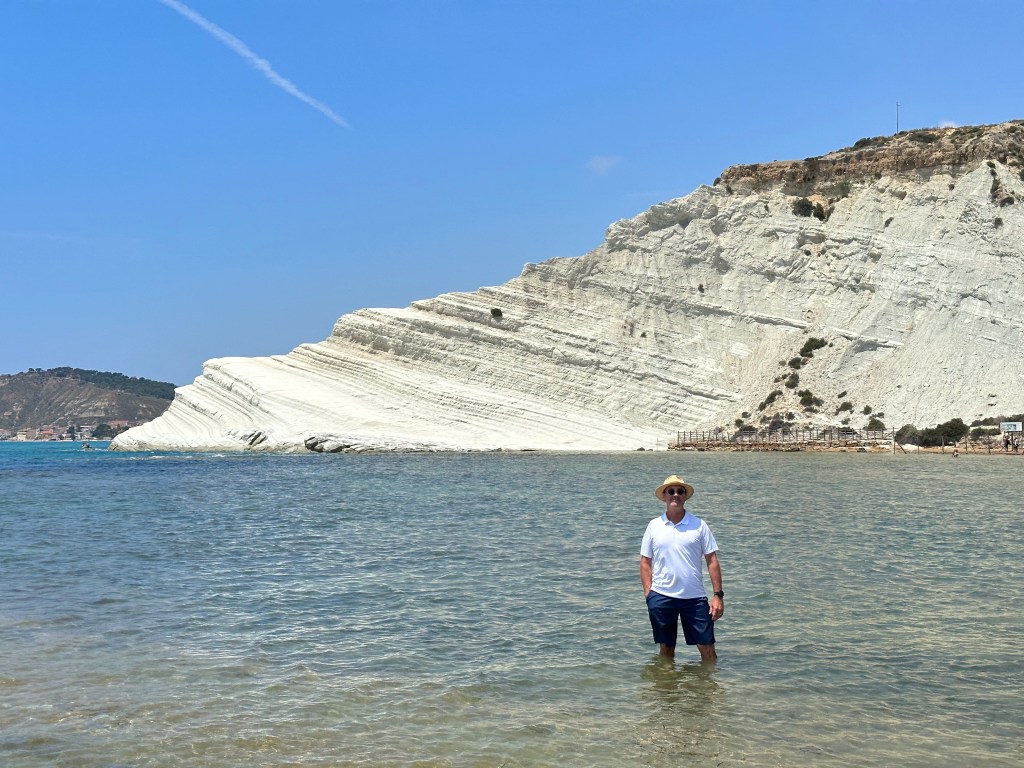
Scala dei Turchi is Stair of the Turks in Italian – stair for obvious reasons and Turks because of the frequent Saracen raids in the area in the Middle Ages.

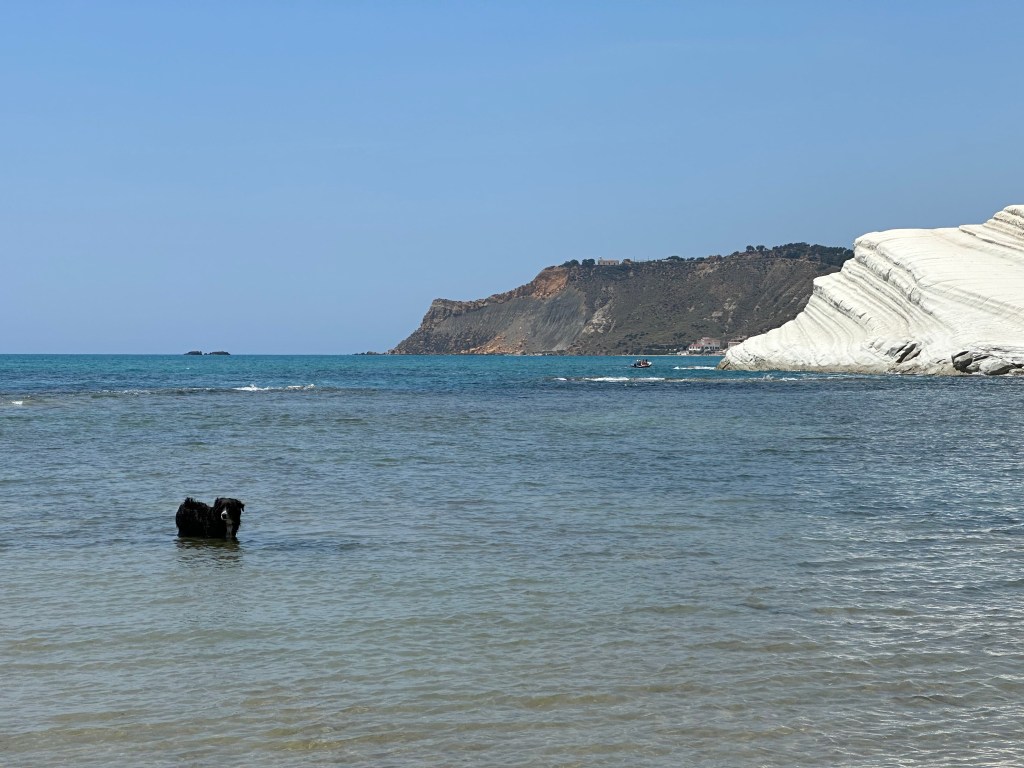
It was also hair of the dog during our visit, to our delight.

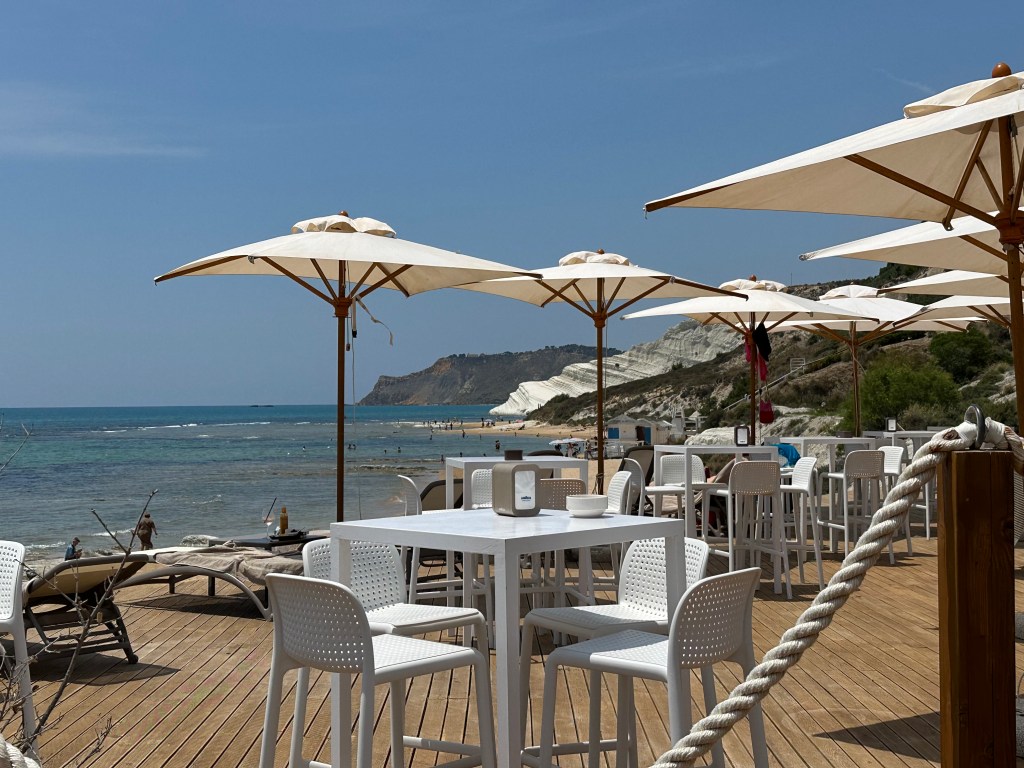
Lunch at a beach club . . .

where we were confronted once again with the Sicilian triskelion, this time in a rather welcome context.

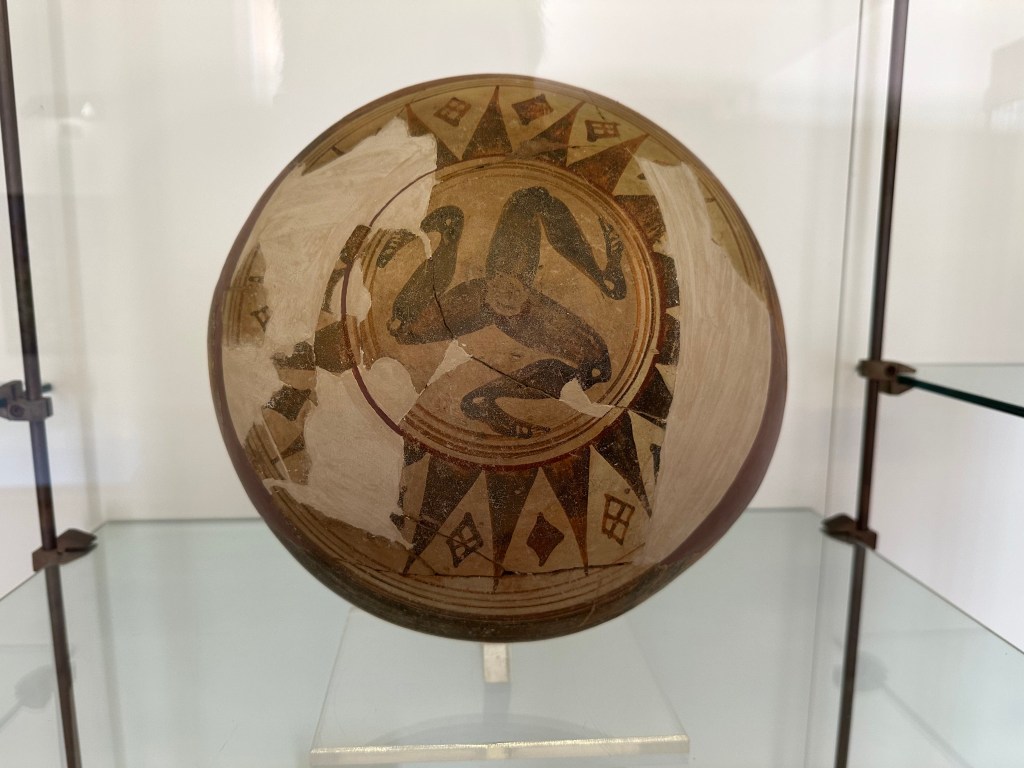
The triskelion symbol allegedly represents the three capes of the roughly triangle-shaped island. Although the emblem is found in antiquity, including on coins minted in Syracuse (where we’d be headed) in the 4th century BC, the symbol was revived and used in protest by Sicilians against the Aragonese in 1282 following the Vespers massacre. The bowl below we’d see the next day in the museum at the temple site.

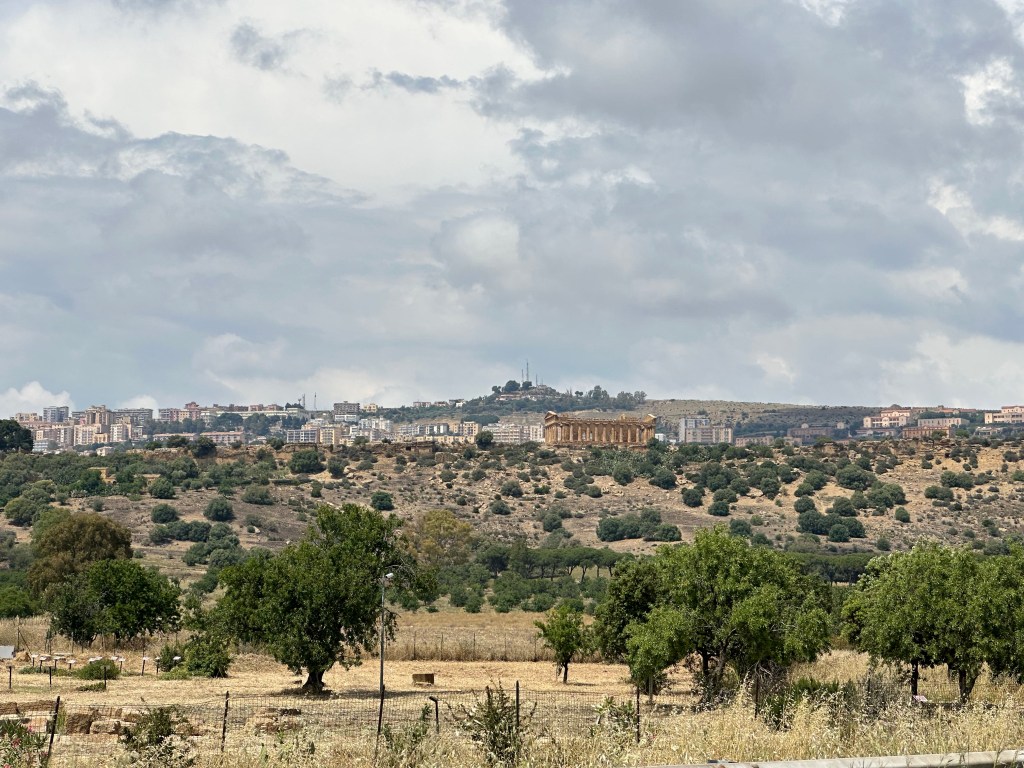
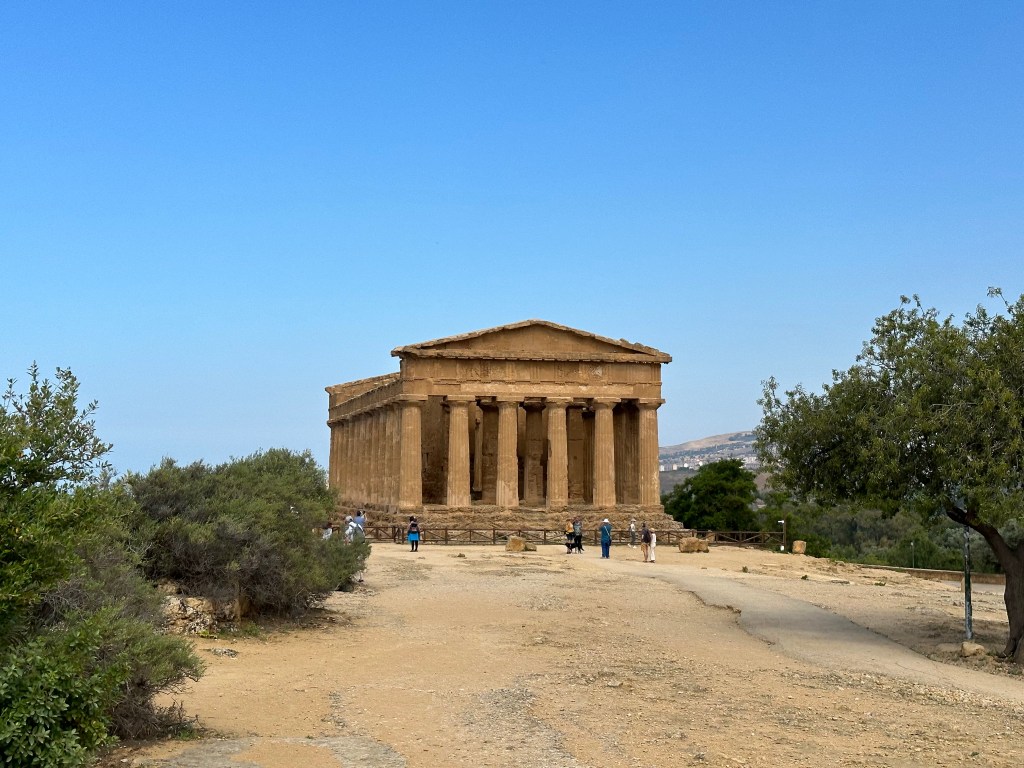
Speaking of which, a little view of the Temple of Concordia as we drive back from Scala dei Turchi to our hotel:

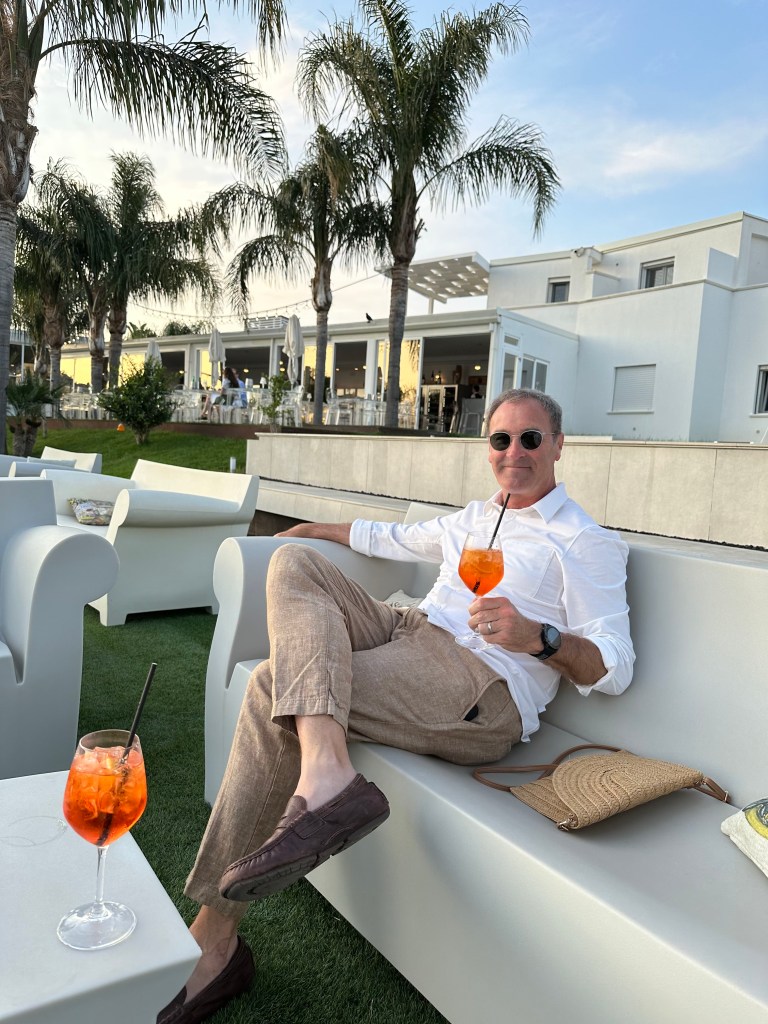
The evening Aperol aperitivo ritual has taken firm hold.

A prelude to our day at the temple complex with a view of the Temple of Concordia, this time from a more relaxing setting:

Coming up: Doric dorks.

Categories: A Prolonged Foray to Europe, Sicily, Sicily | Tags: , , , , , | Leave a comment

A Prolonged Foray to Europe: Agrigento, Sicily

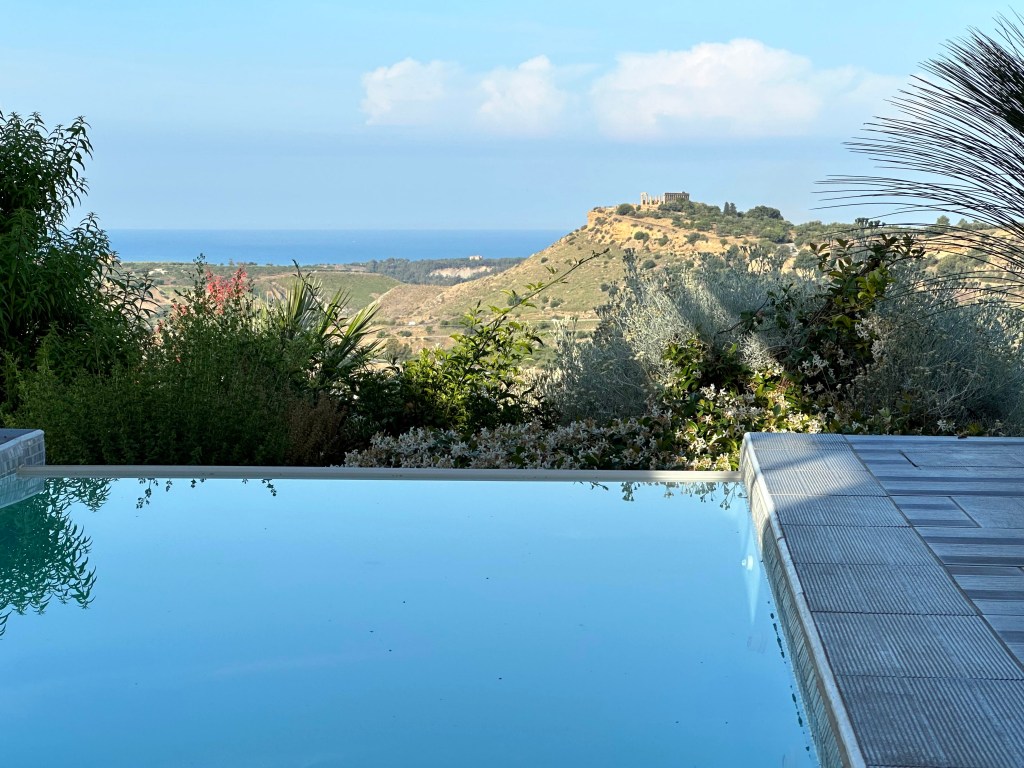
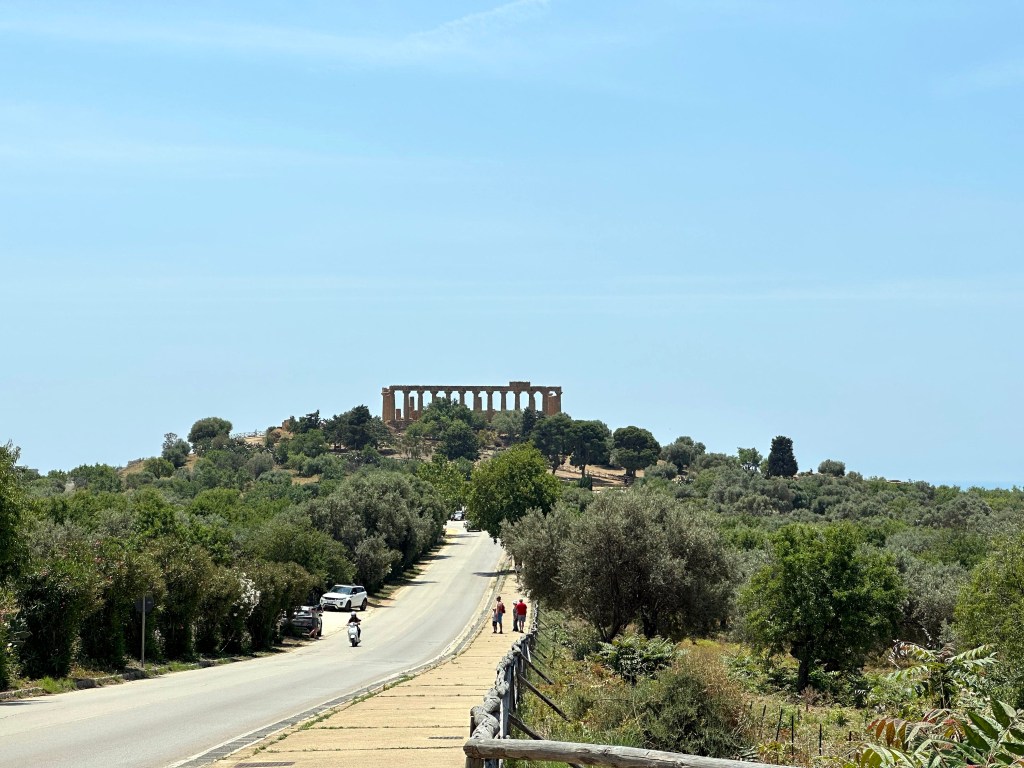
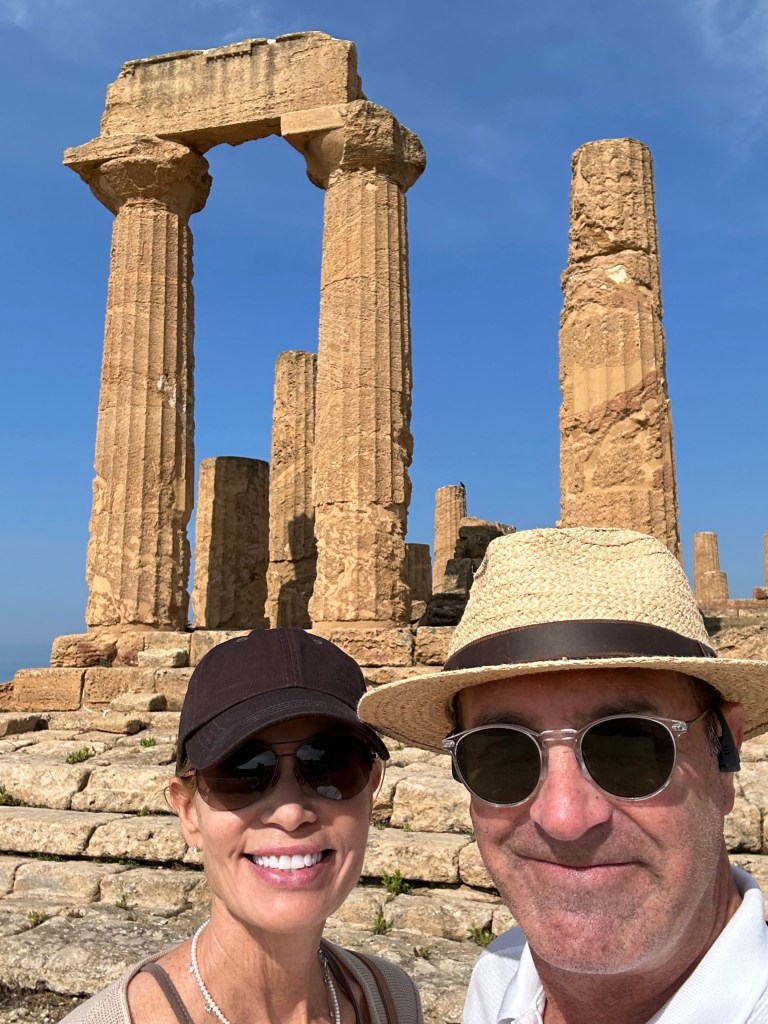
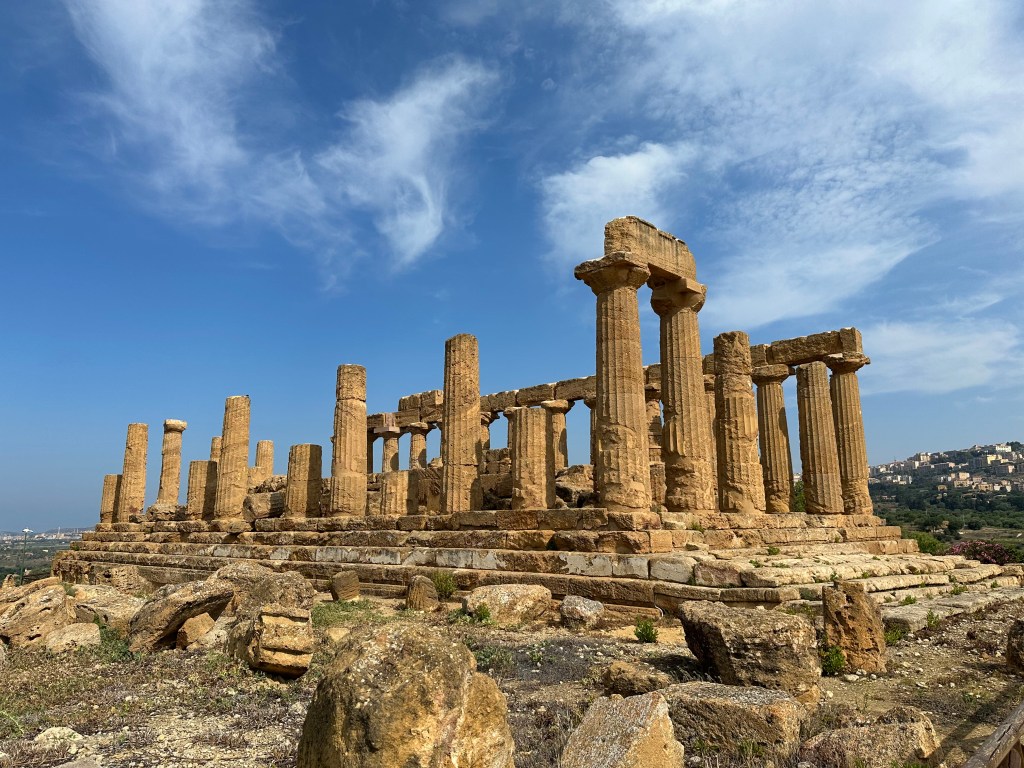
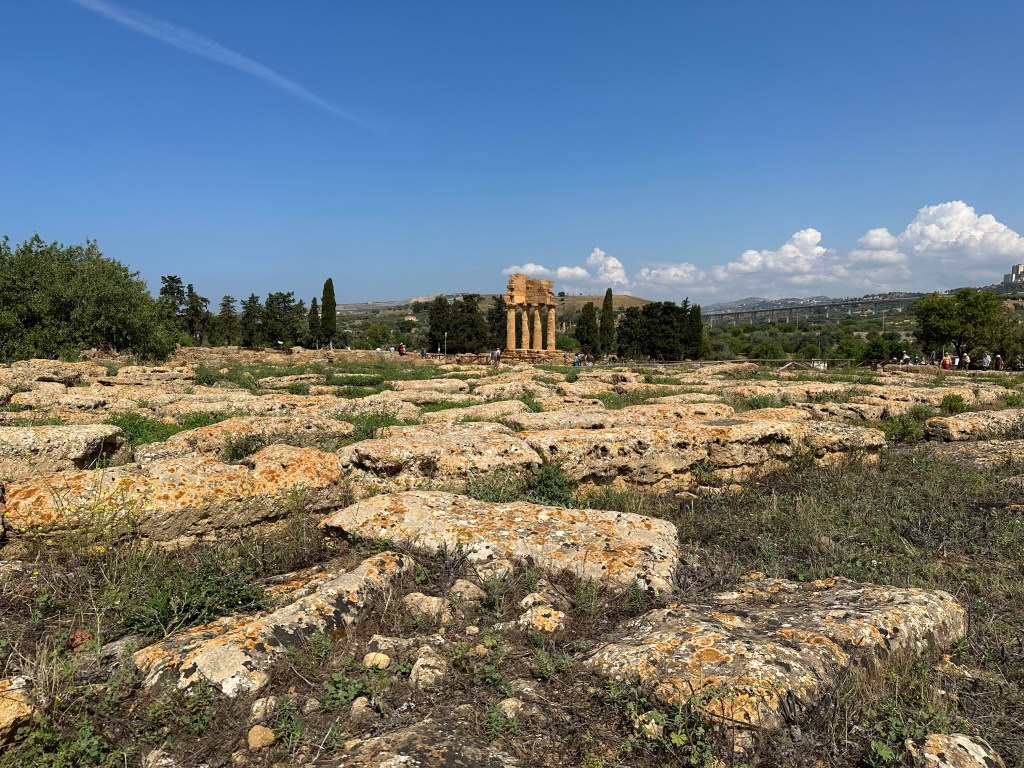
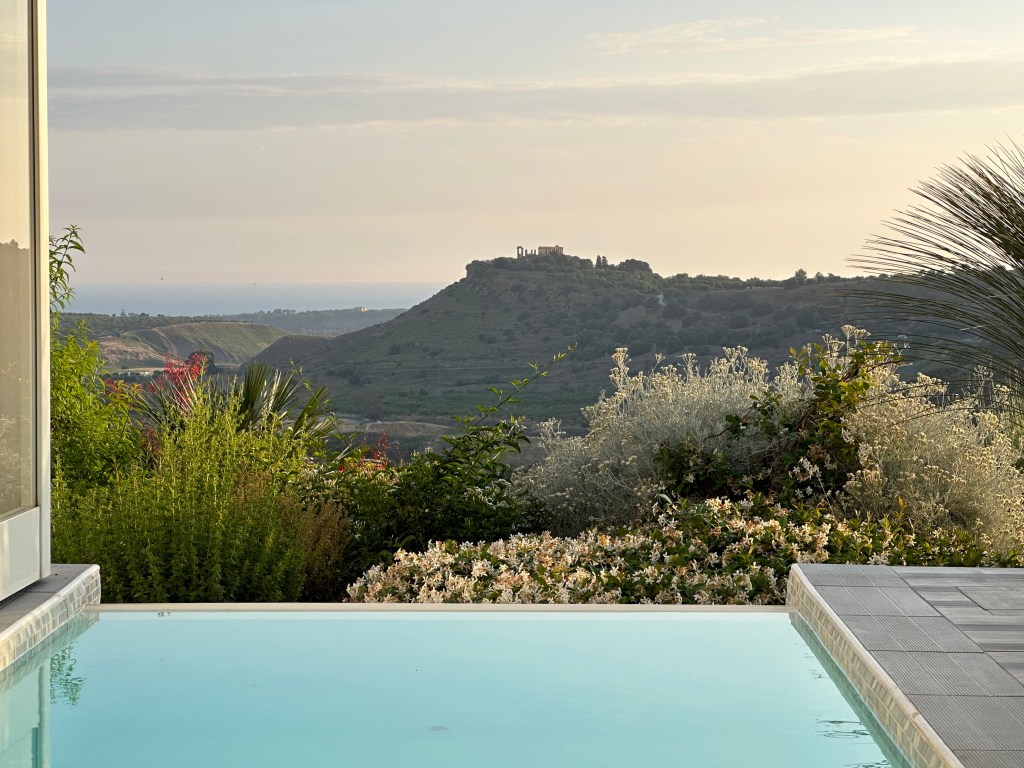
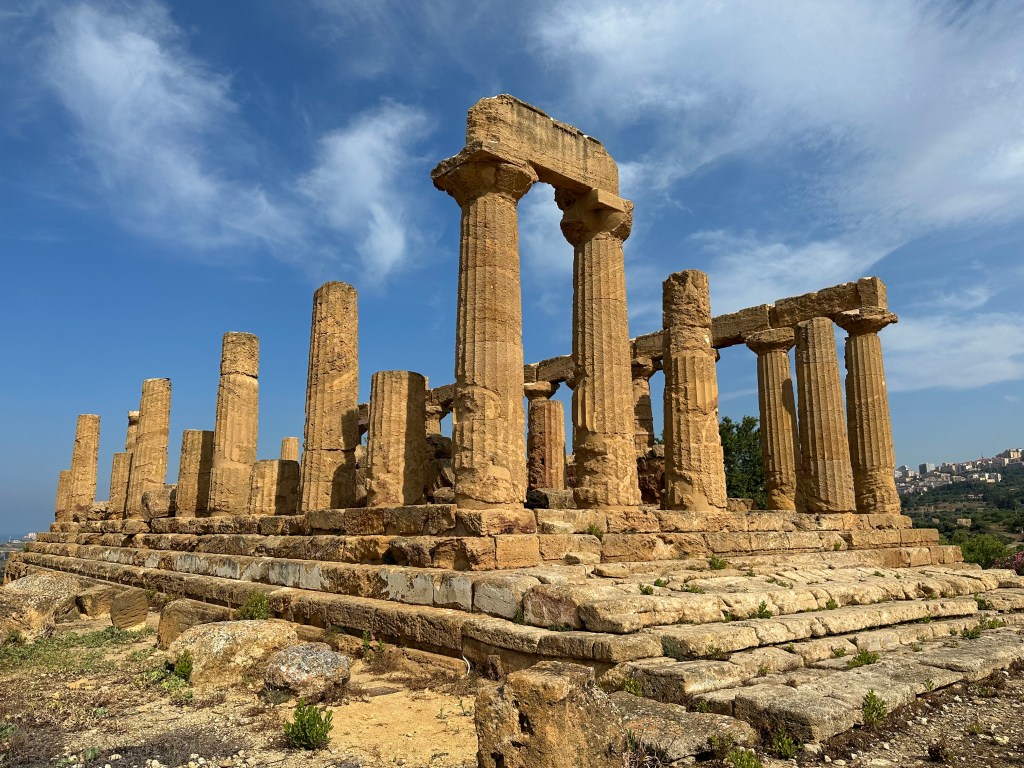
While our visit to Scala dei Turchi offered a little coastal sideshow during our stay in Agrigento, the Valley of the Temples (Valle dei Templi) provided the main event. We awoke to a pretty good view of our starting monument destination for the day: the Temple of Hera in the near distance.

Valle dei Templi is the site of ancient Akragas (now modern day Agrigento), a Greek colony founded around 582 BC by settlers from Gela and Rhodes that grew to become one of the most prosperous and powerful cities in the ancient Mediterranean world, with a population at its peak that ancient sources suggest may have rivaled Athens itself. The complex preserves seven Doric temples built primarily during the fifth century BC. Designated a UNESCO World Heritage Site in 1997, the Valley of the Temples stands as one of the supreme monuments of Greek civilization outside of Greece itself, embodying the extraordinary cultural and artistic ambition of Magna Graecia — the network of Greek colonies across southern Italy and Sicily — and representing an irreplaceable testament to a moment when this corner of the ancient world was at the very center of Mediterranean civilization.

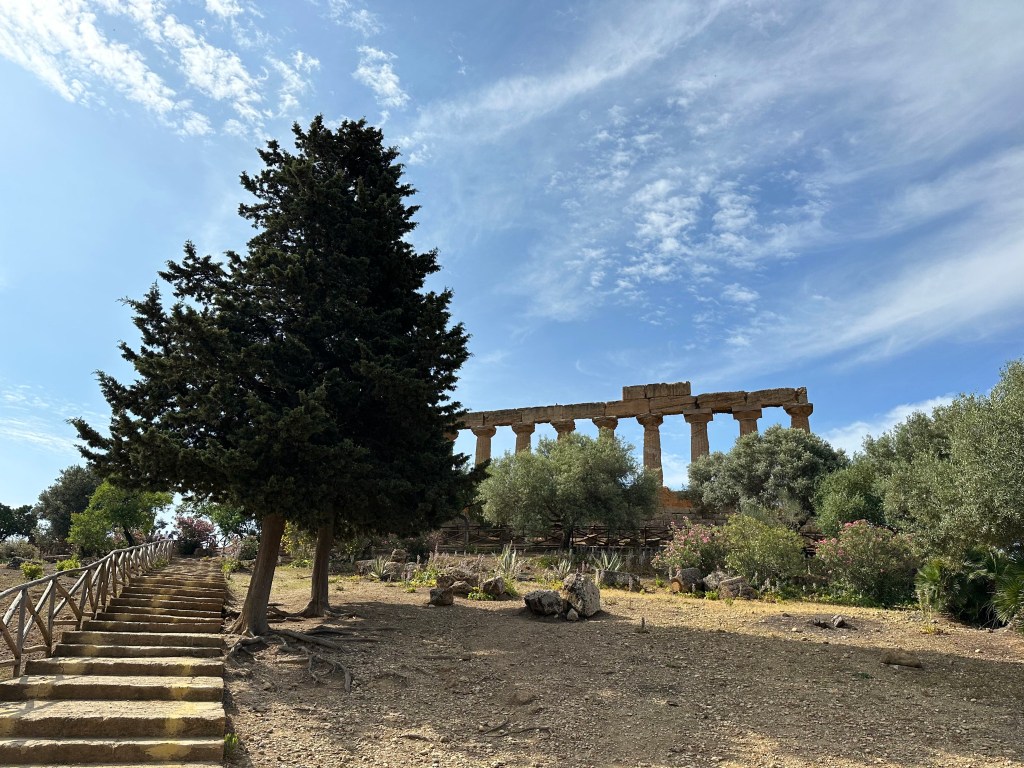
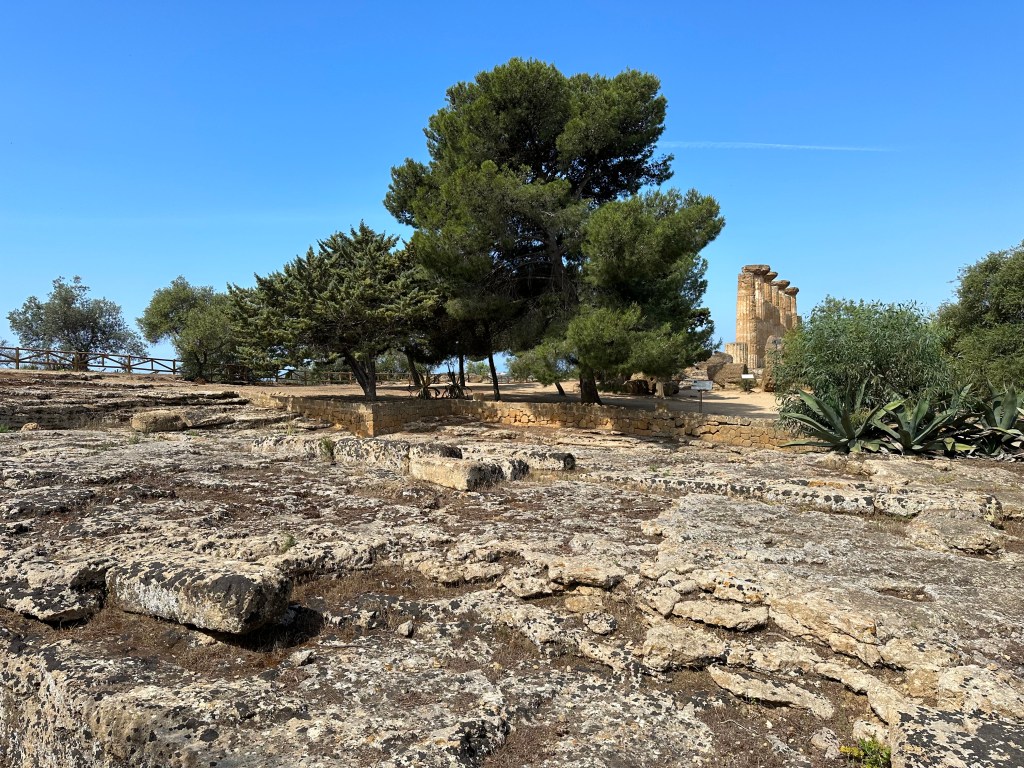
Getting closer. . .

Closer. . .

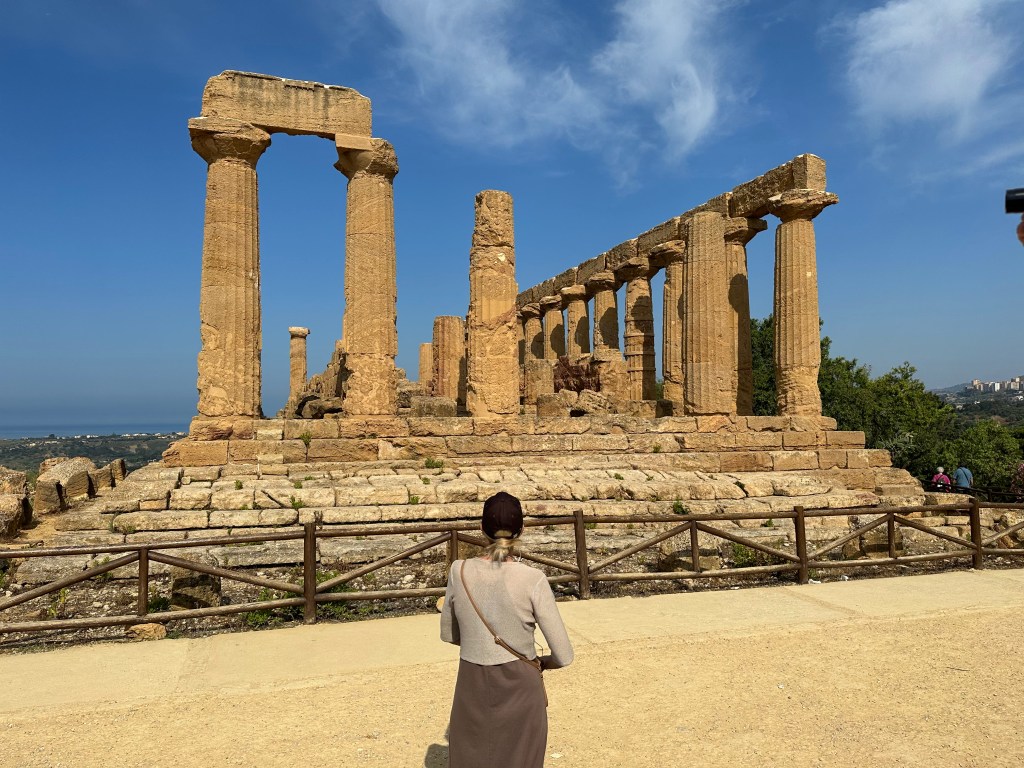
This is what we had been gazing at from afar.

The Temple of Hera (or Juno, if you prefer your gods Roman), is not actually a temple to Hera (or Juno). This attribution resulted from a misunderstanding of the location in a Greek text by Pliny the Elder during the much later Roman period.

No correction on the temple’s correct name was evident anywhere, though.

Regardless, the Greek colonists erected the temple in 450 BC, and was sacked and burned in 406 BC during a Carthaginian attack on the Greeks.

The Valley of the Temples is absolutely a misnomer: we’re actually on a ridge.

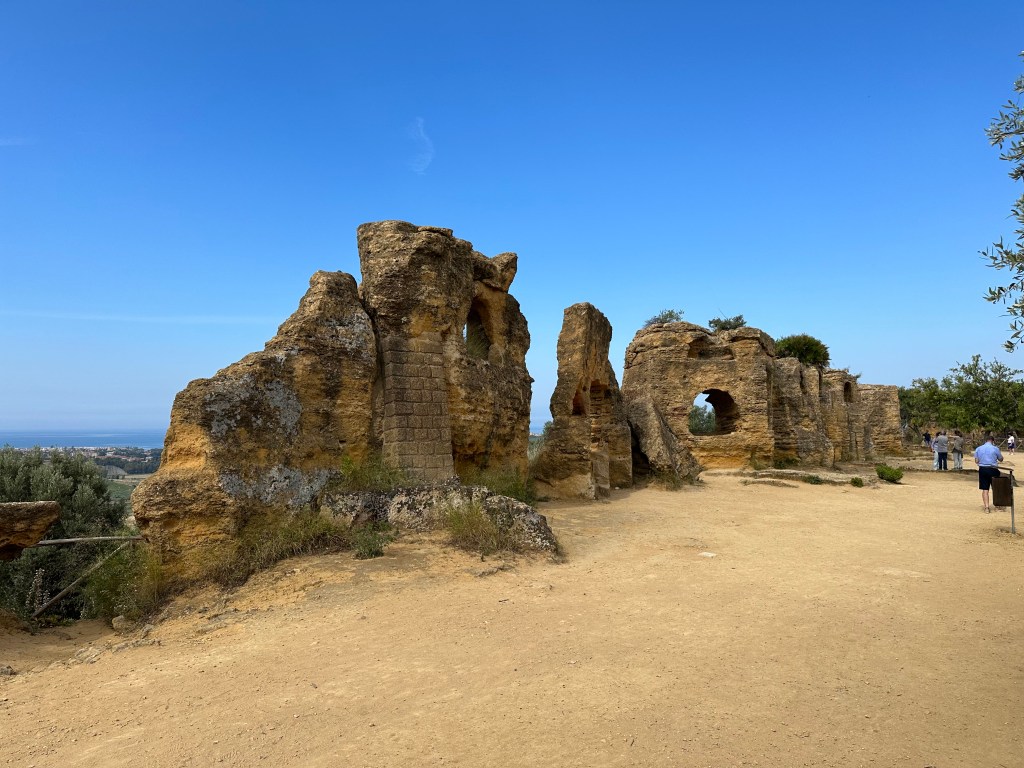
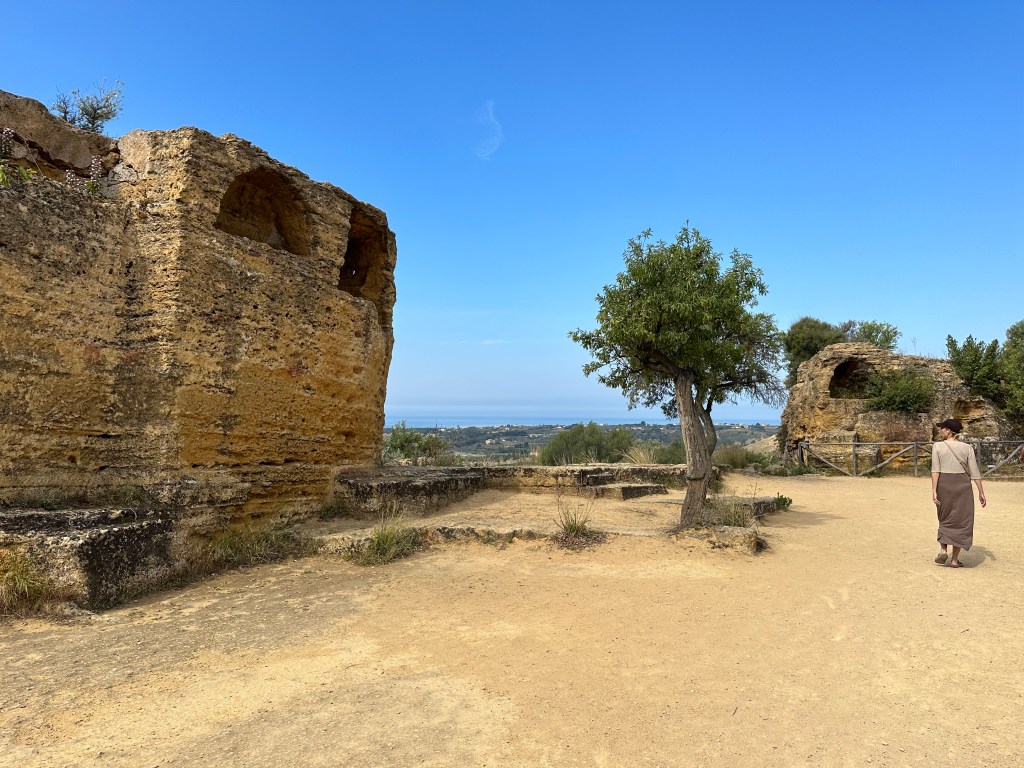
Partial remains of the city’s 6th-century-BC walls:

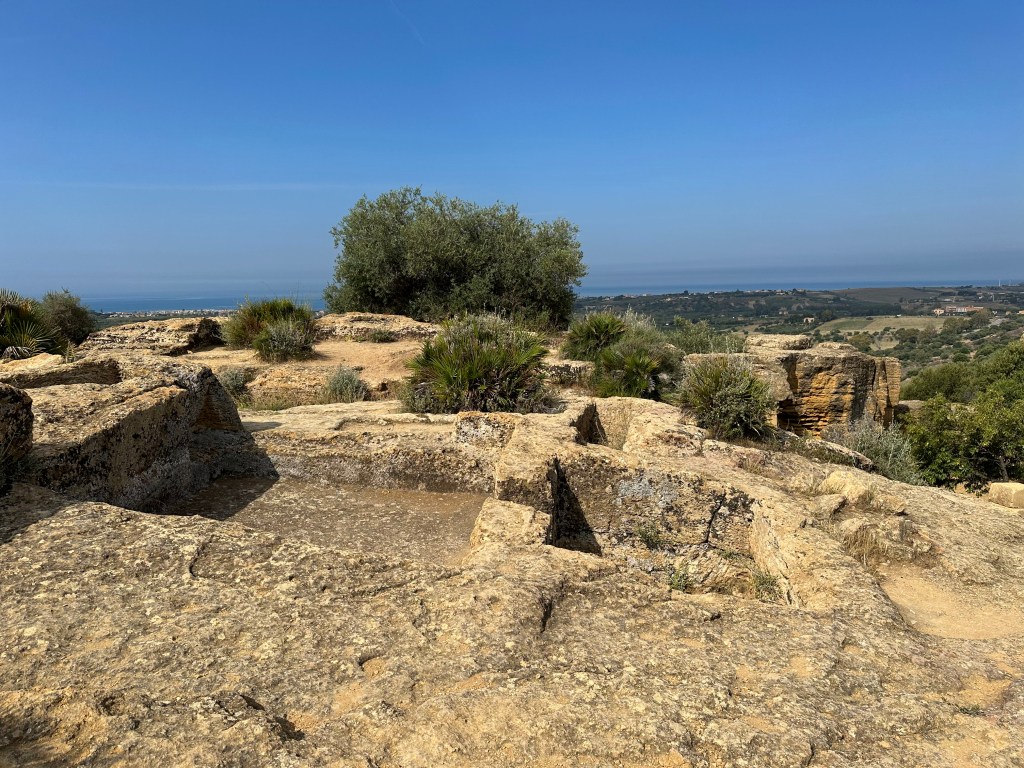
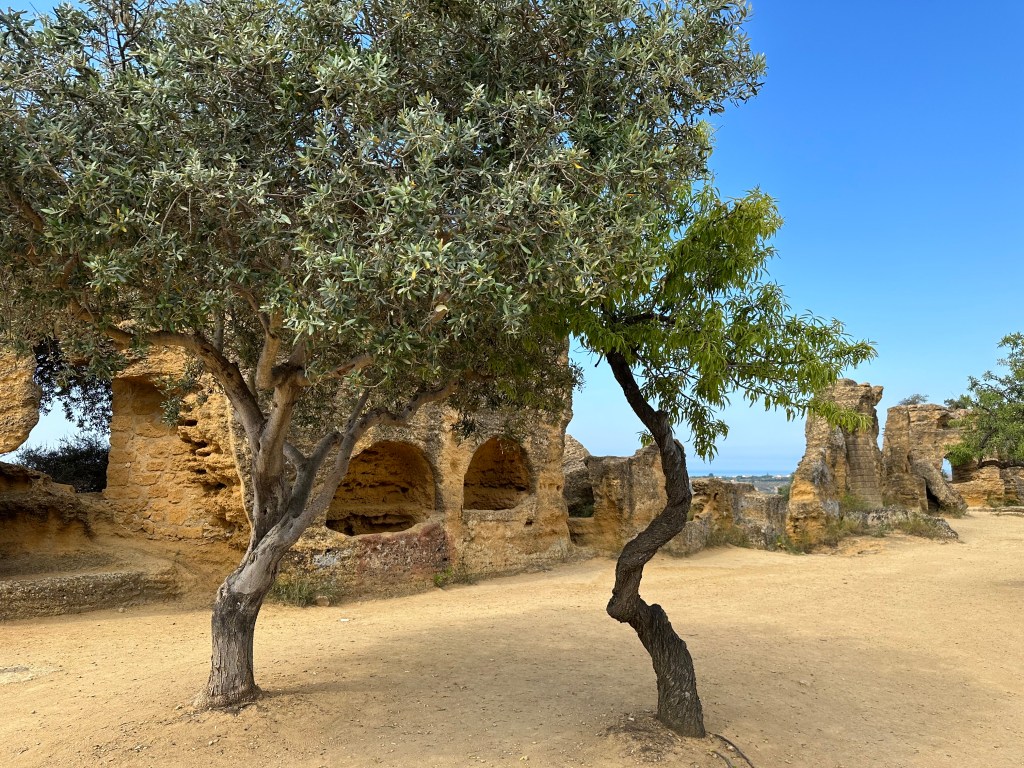
Which include early Christian, 2nd-century-AD arcosolium (arched, recessed) tombs carved directly into the walls themselves.

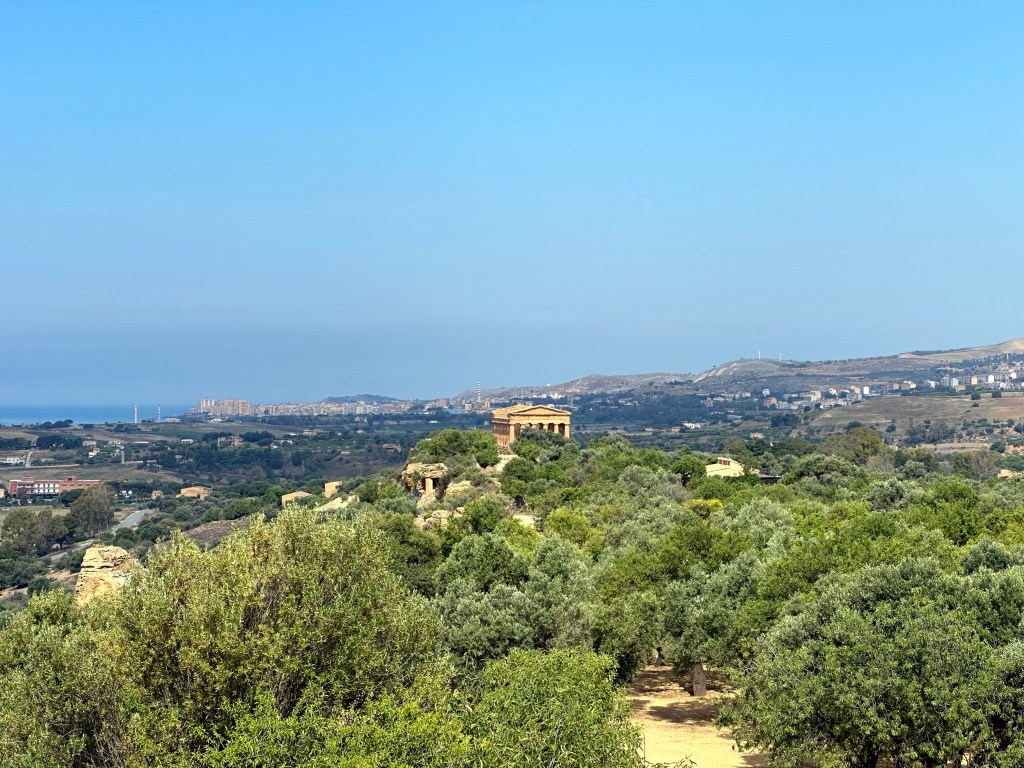
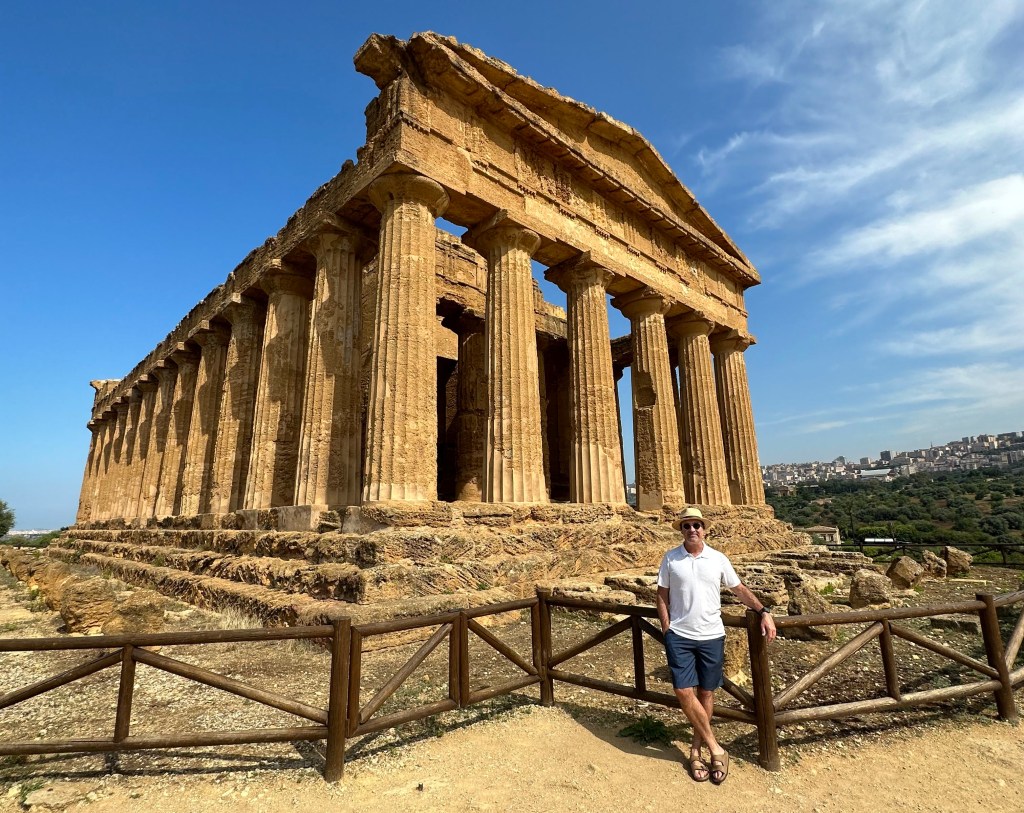
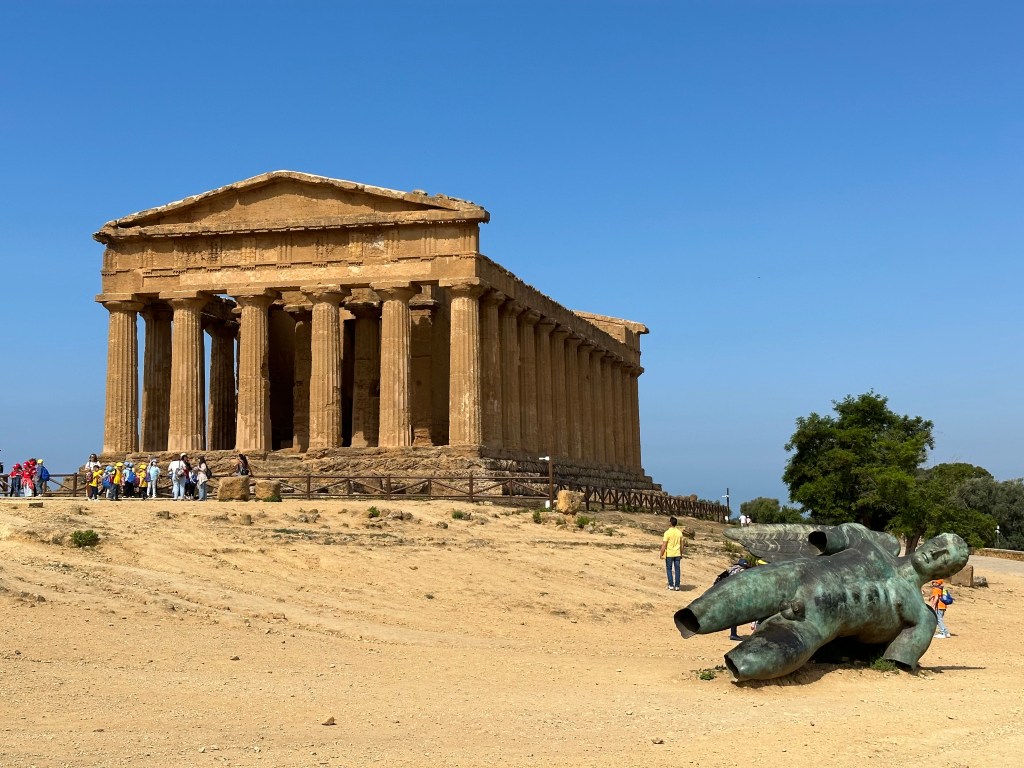
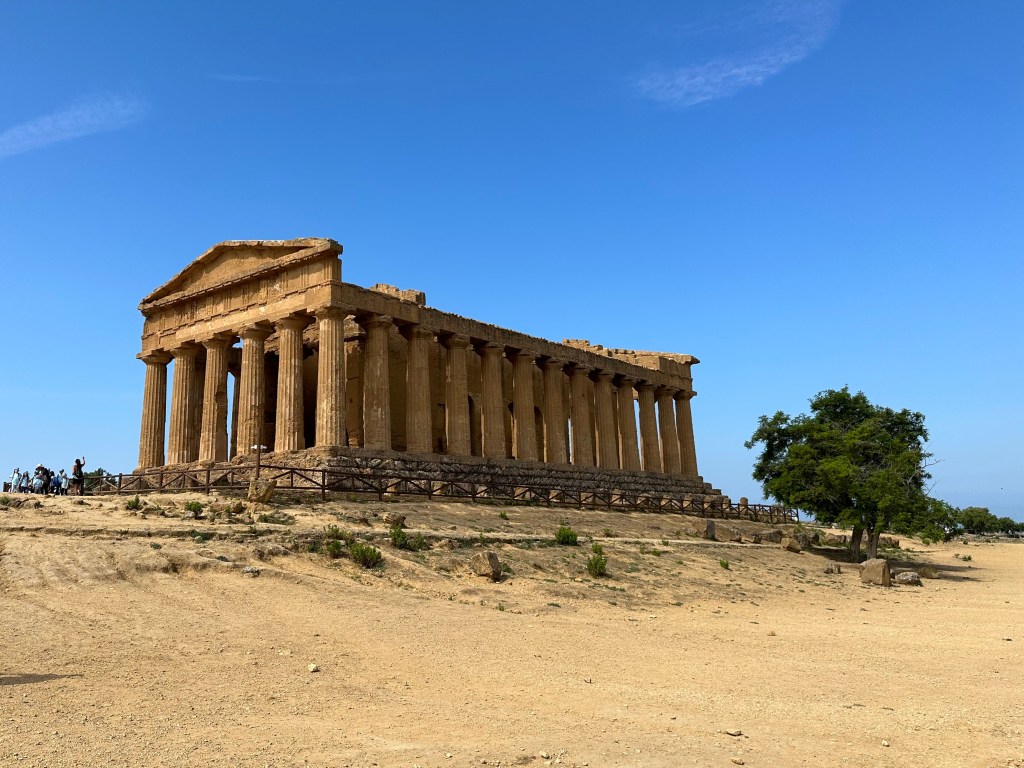
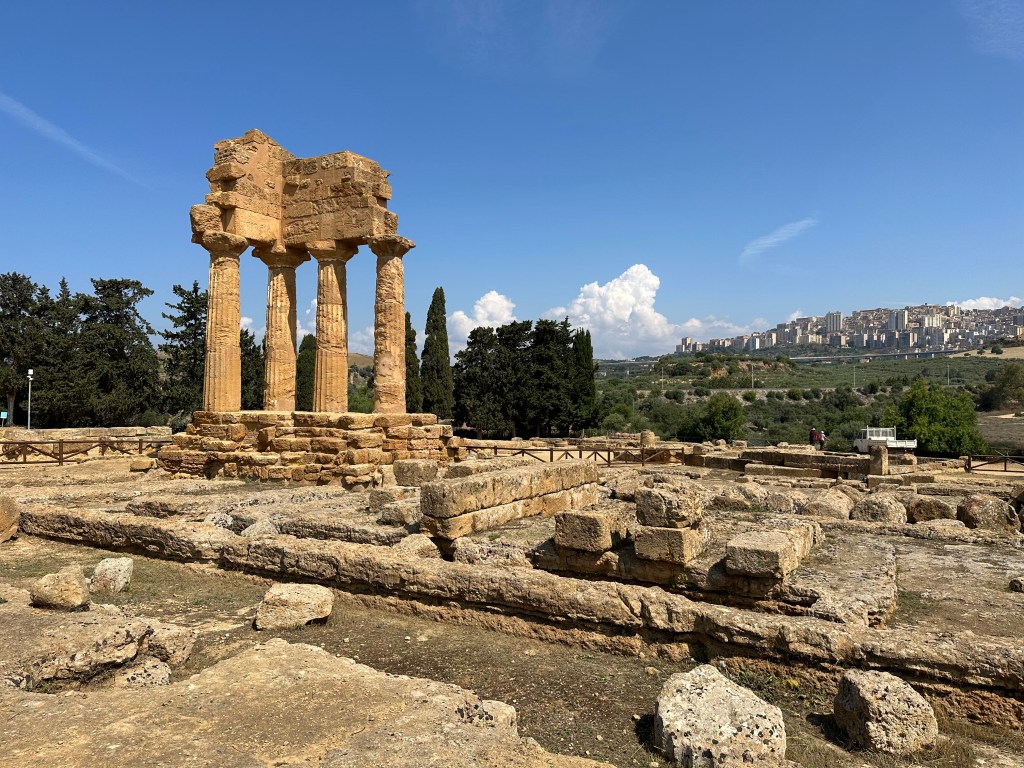
The star of the temple complex in the distance:

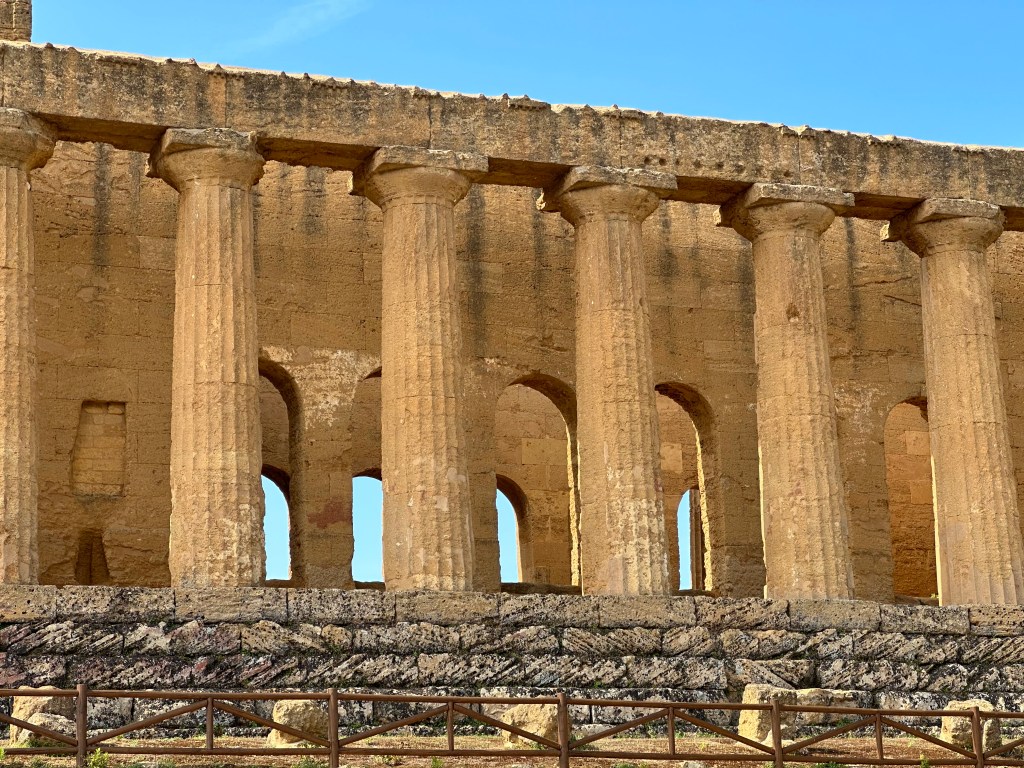
The Temple of Concordia is among the best-preserved Greek temples anywhere on earth — its remarkable survival owed largely to its conversion into a Christian church in the sixth century AD. “The temple was. . . dedicated to the apostles Peter and Paul by San Gregorio delle Rape, bishop of Agrigento and thus survived the destruction of pagan places of worship. The spaces between the columns were filled with walling, altering its Classical Greek form [we’d see the same thing in dramatic form when we hit Syracusa two stops later]. . . The Christian refurbishments were removed during the restoration of 1785.” (From here.)

But it was built 1100 years before that, between 440 and 430 BC.

Similar to the misnamed Temple of Juno, the temple was associated with Concordia, the Roman goddess of harmony, simply because a Roman-era Latin inscription that included Concordia was found nearby. It was unrelated to the temple, but this trend of blatantly misnaming the monuments here IS related to our growing sense of annoyance.

The Temple of Concordia is considered to be the best preserved Doric temple in the world, after the Parthenon.

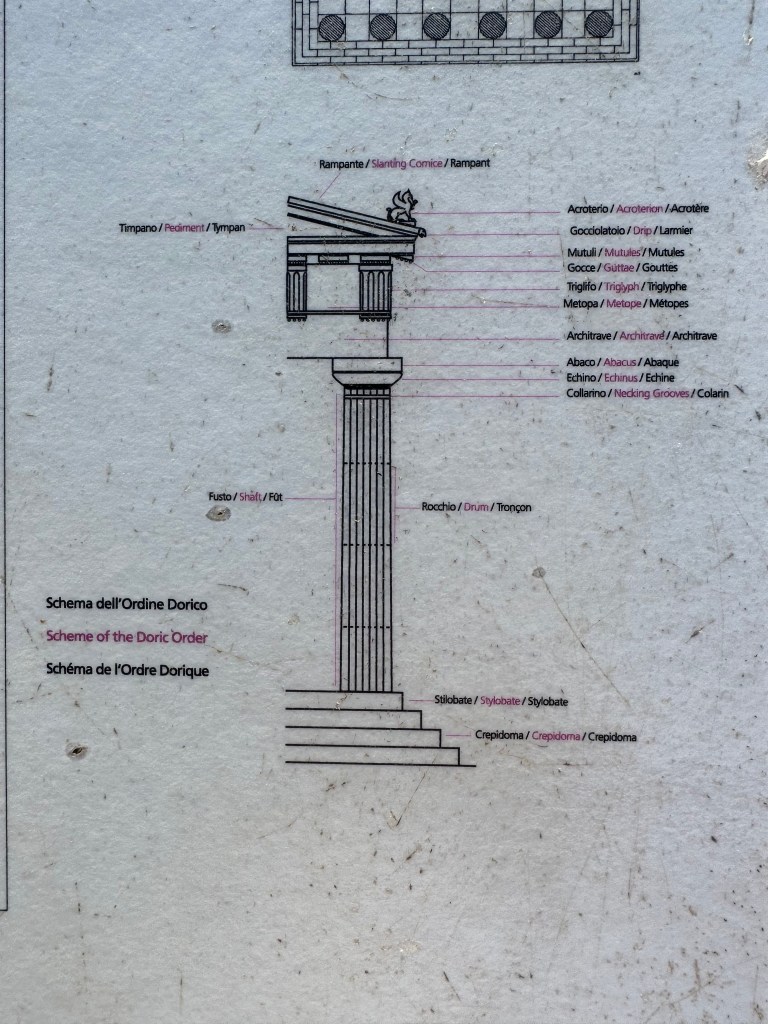
WHAT characterizes a Doric temple, you ask? Question answered by a historical marker at the temple:

Yup, no Ionic or Corinthian columns here. Just a delightful density of Dorics.

But the Doric department hasn’t yet departed. Just down the path lies yet another temple.

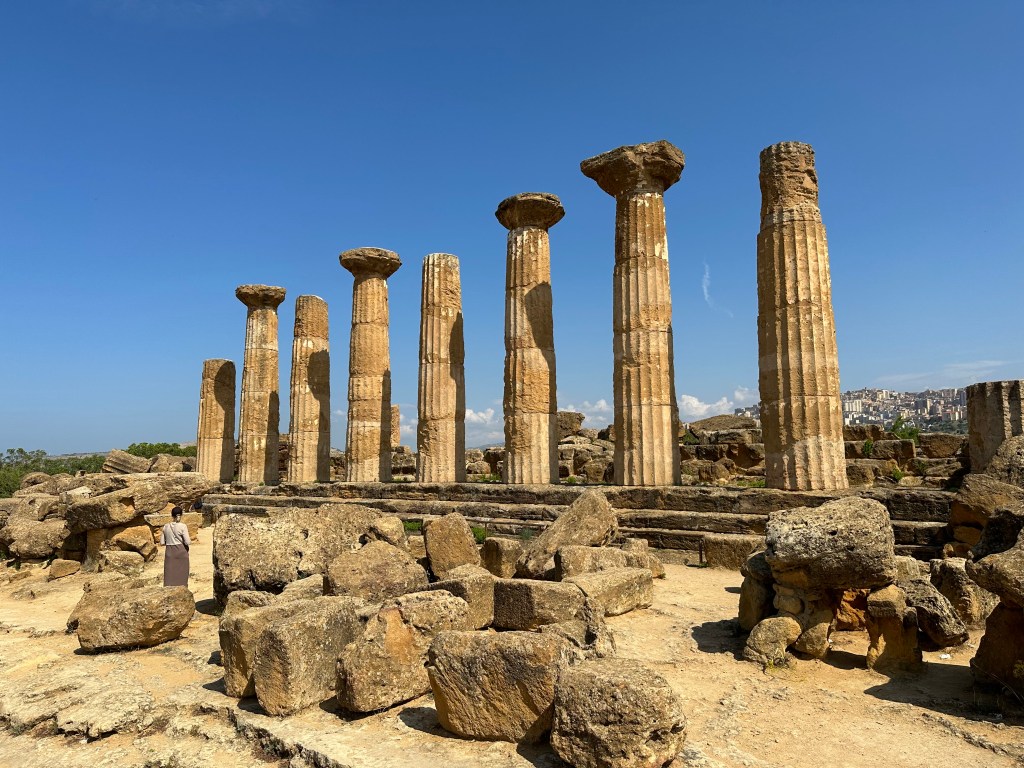
Behold, the remains of the Temple of Heracles (or Hercules, you Roman). And yet another BS misidentification. This one from another Cicero screed, mentioning a temple dedicated to Hercules not far from the Agrigento forum. But no one is sure that this is the one he was referencing. No worrries! In the apparent expediency of historo-archeology, researchers stuck the moniker on this half stack of columns and called it a day.

Not to content themselves with just misNAMING temples, they (we’re not sure who they is at this point), thought it would be a great idea to reconstruct a temple using pieces from various OTHER temples.

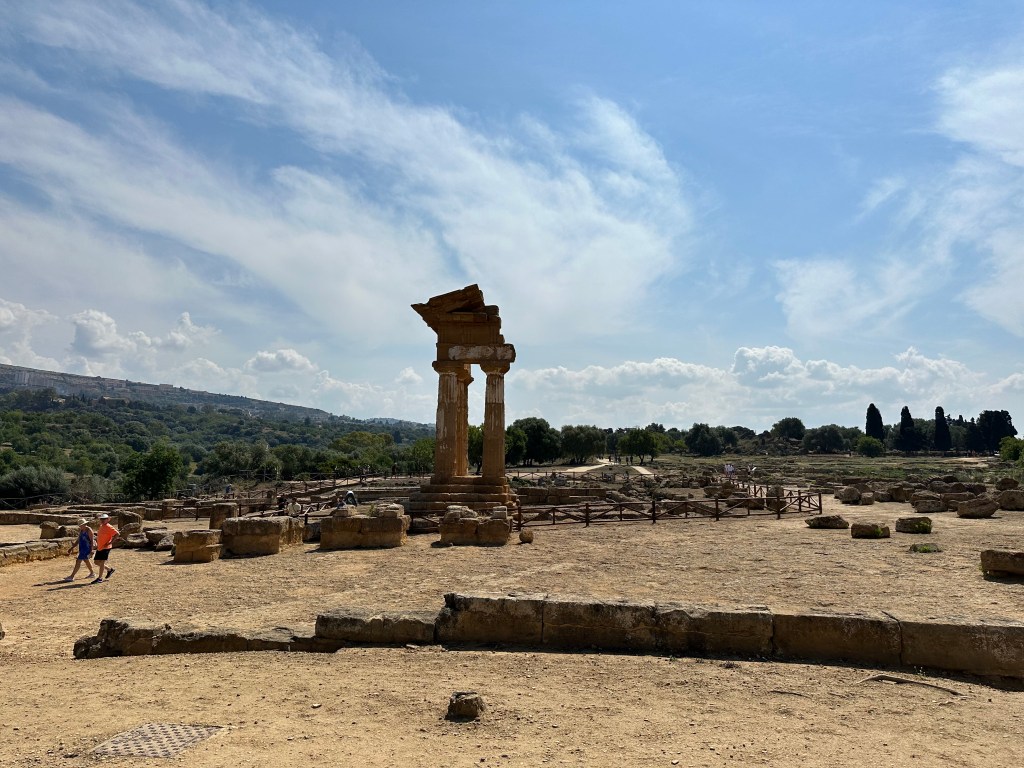
Behold, the Frankenstein Temple of the Dioscuri (Greek for “Sons of Zeus” – the twin deities Castor and Pollux). Luckily, they just contended themselves with building a corner out of mismatched, supersized Legos found on site.

Lots of other pieces lying around, though.

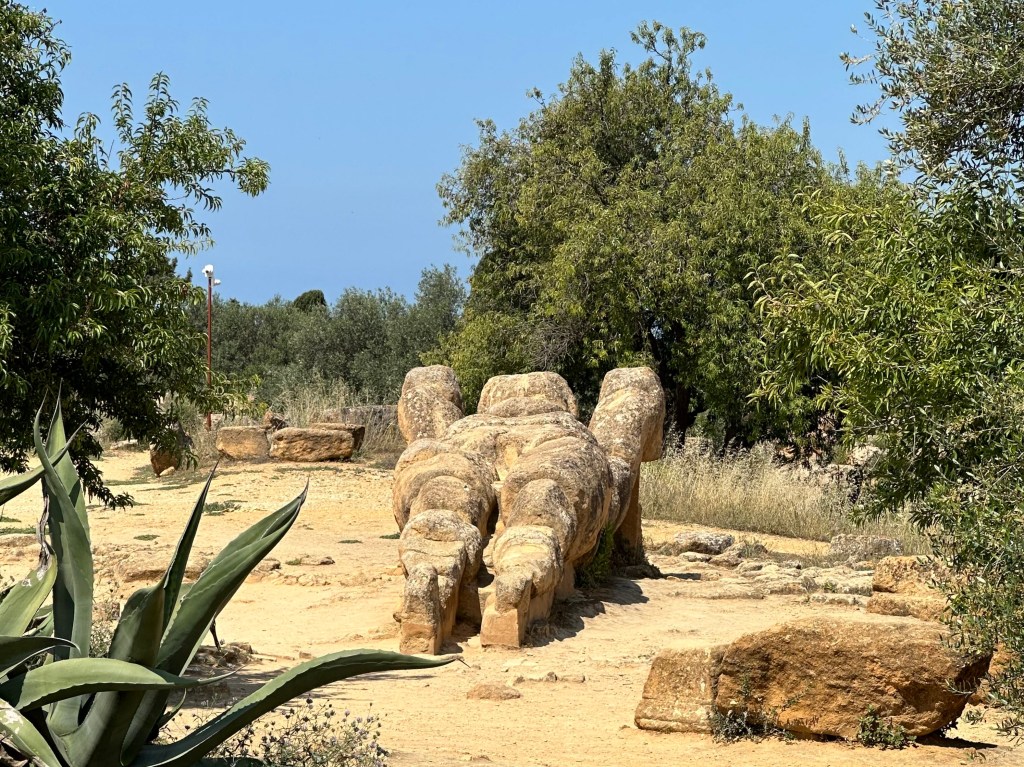
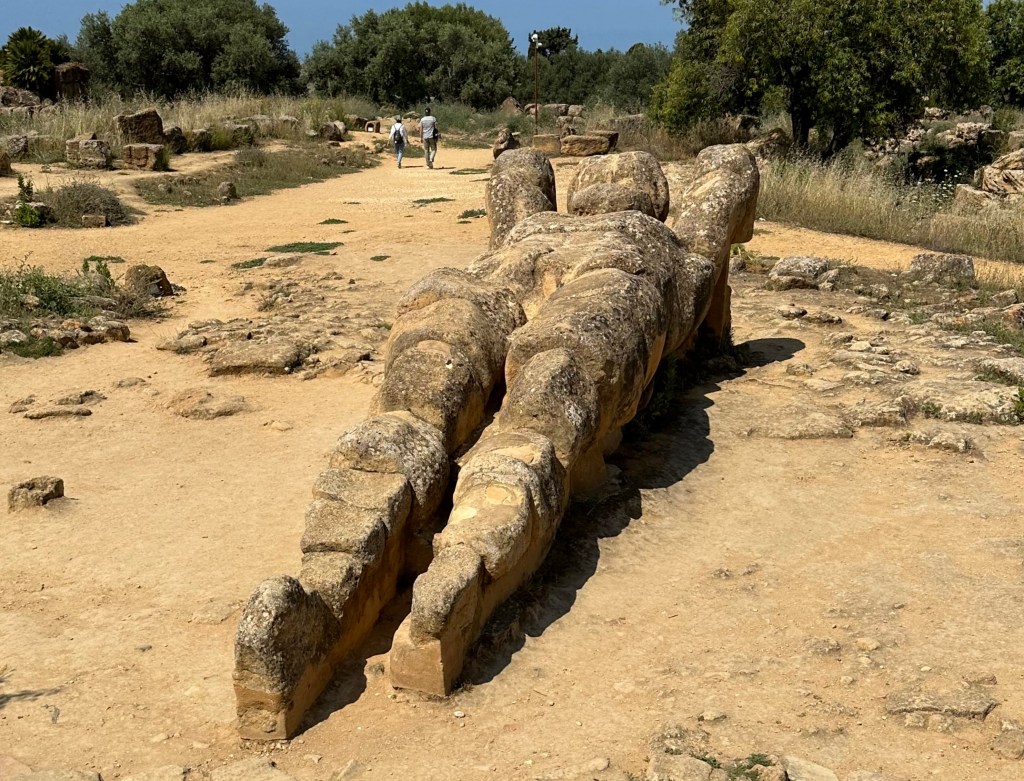
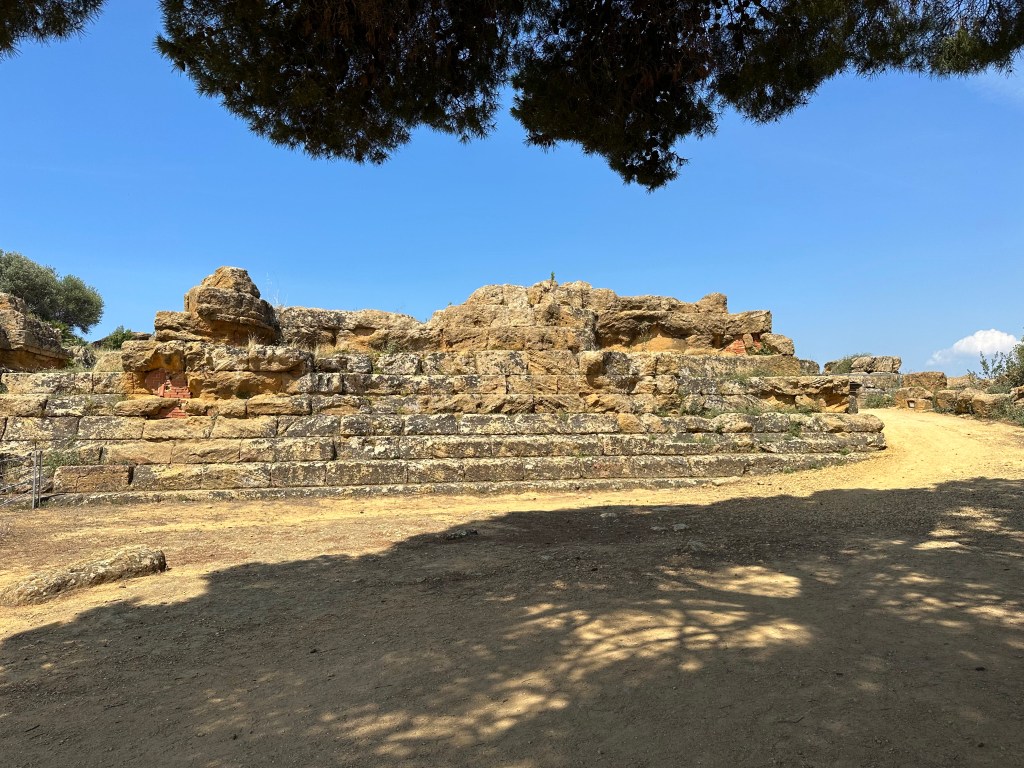
And finally, Atlas Shrugged (and then sat for a bit, and then just lay down for good). This is one of a few massive Atlas statues extant on site from an aborted attempt to build a massive (really massive) Temple of the Olympian Zeus.

In its reclining position, you can’t tell, but this thing is more than 25 feet tall (long in its current orientation).

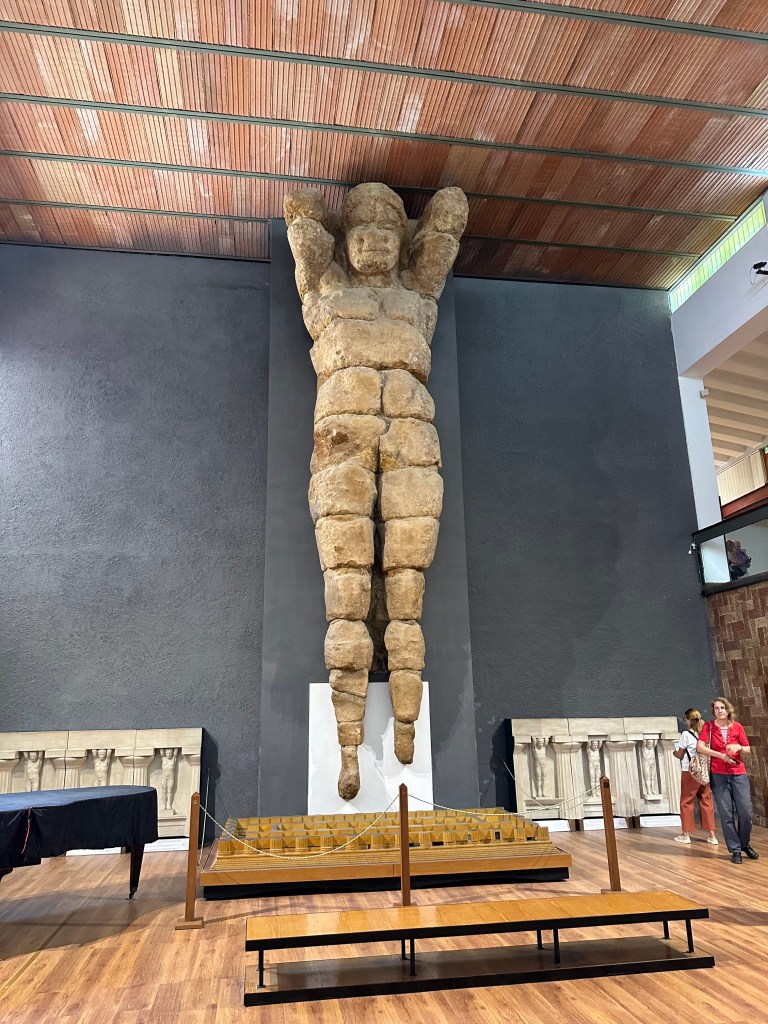
Here’s another, upright in the Agrigento museum, with a passer by for scale:

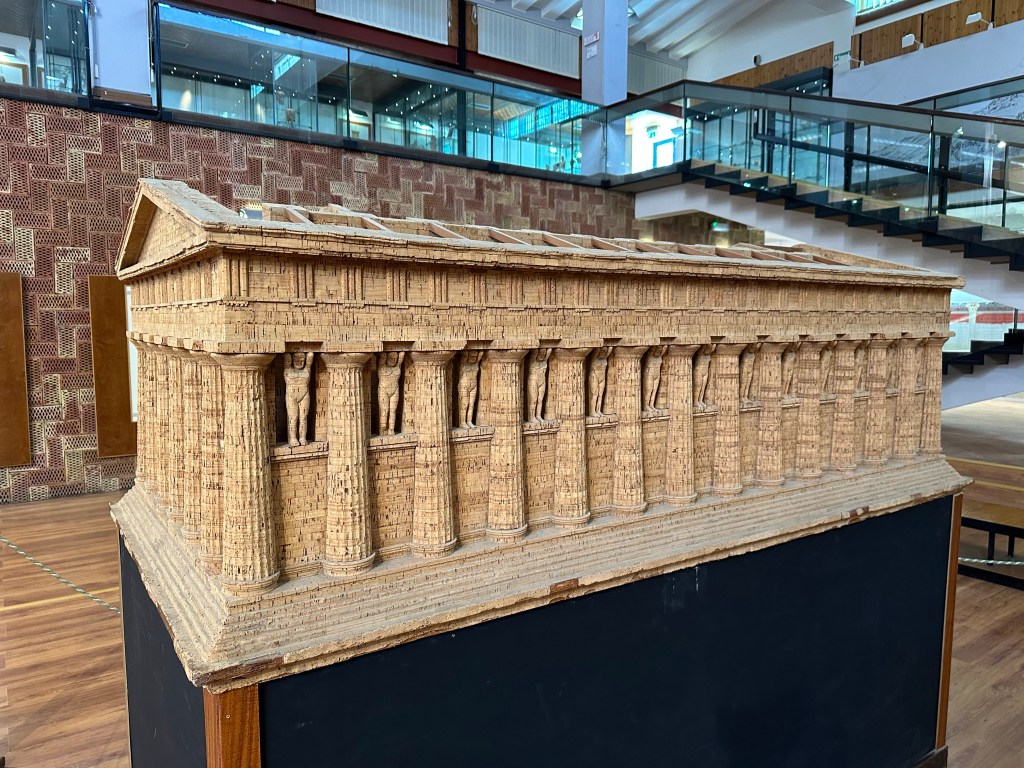
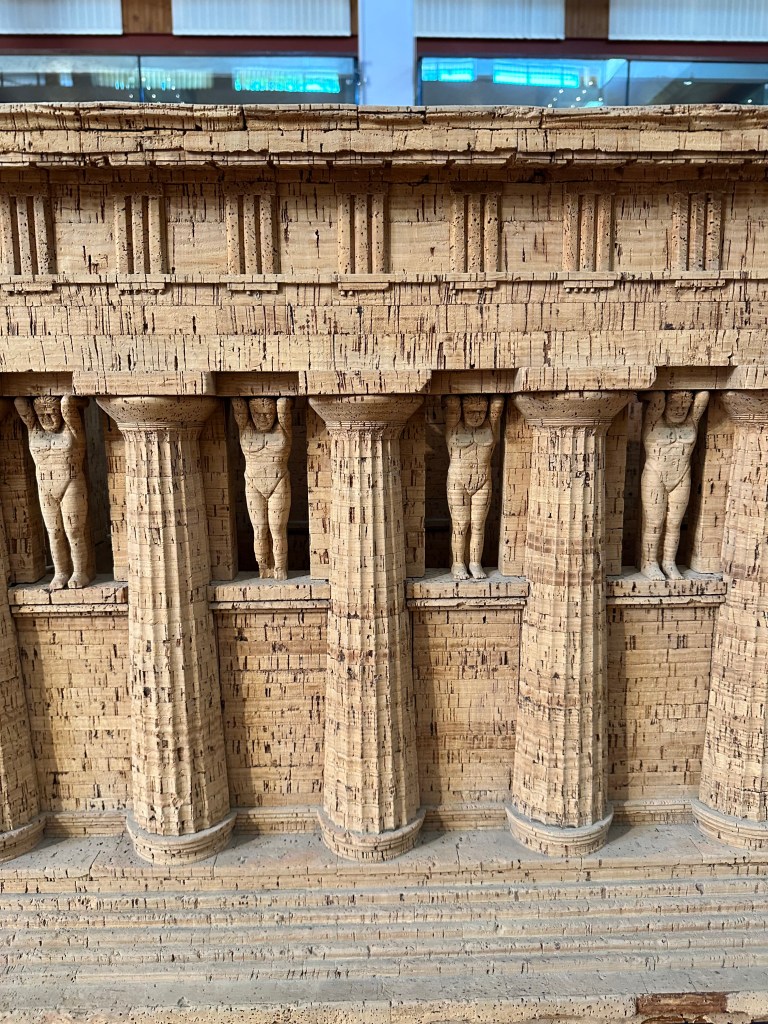
Had the Temple of Olympian Zeus been completed, it would have been the largest Greek temple ever constructed, featuring the Atlas’ serving as telamones supporting its entablature:

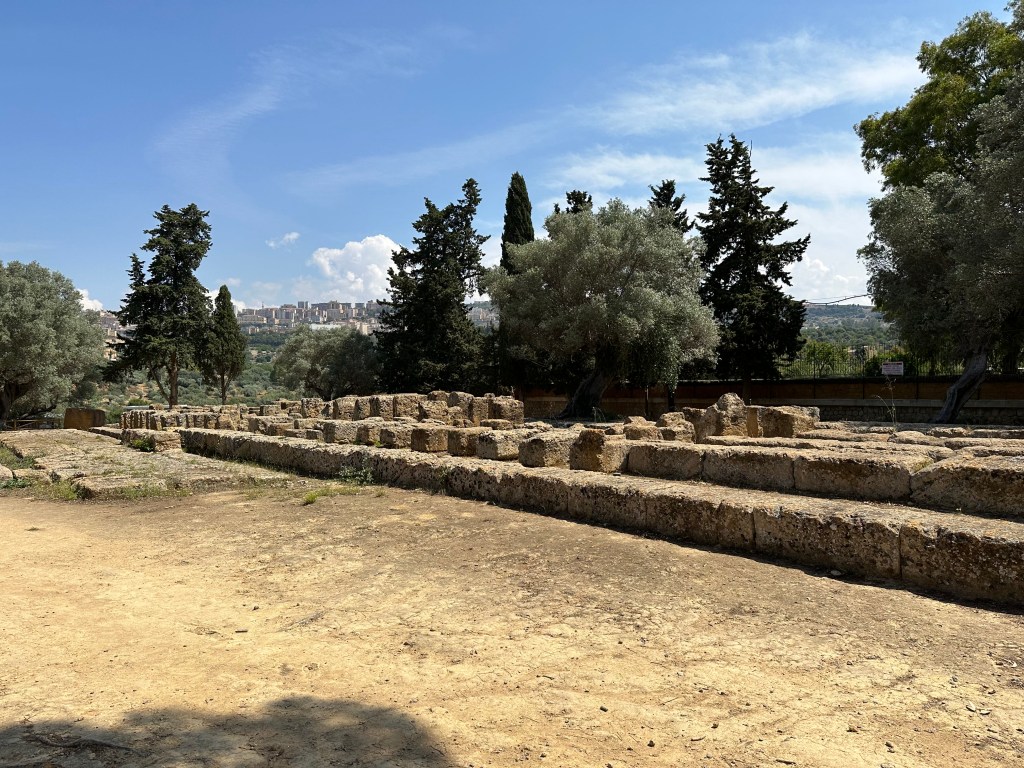
But, alas, the temple never really got off the ground. Construction commenced around 480 BCE (part of the base is below) after a major victory by Akragas Greeks over the Carthaginians at the Battle of Himera. At the time, Akragas was one of the richest Greek cities in the Mediterranean and the temple would be a statement of Akragas’s wealth and power.

But the Carthaginian invasion of Sicily in 406 BCE put an end to this. Akragas was besieged, many inhabitants fled, the economy collapsed, and monumental construction projects ceased. Leaving just this:

All of this is better viewed from a distance of both time and space from the comfort of our plunge pool at the end of a long day among ruins in the sun:

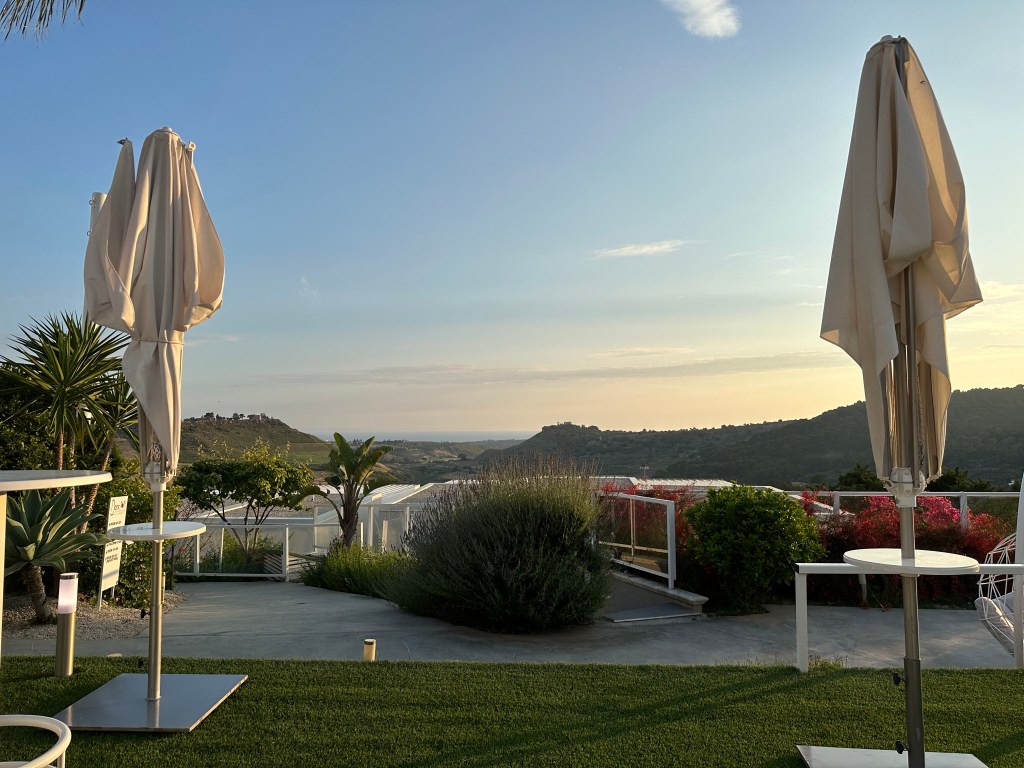
Our place was too inviting to venture out on either of the nights of our stay. Pretty good decision.

Next up: fast forwarding 2100 years and 90 miles from Agrigento to Modica and the first of our visits to the “Baroque Towns” of Sicily.

Categories: A Prolonged Foray to Europe, Sicily | Tags: , , , , , , , , , , , , , | Leave a comment

A Prolonged Foray to Europe: Sicily’s Baroque Towns

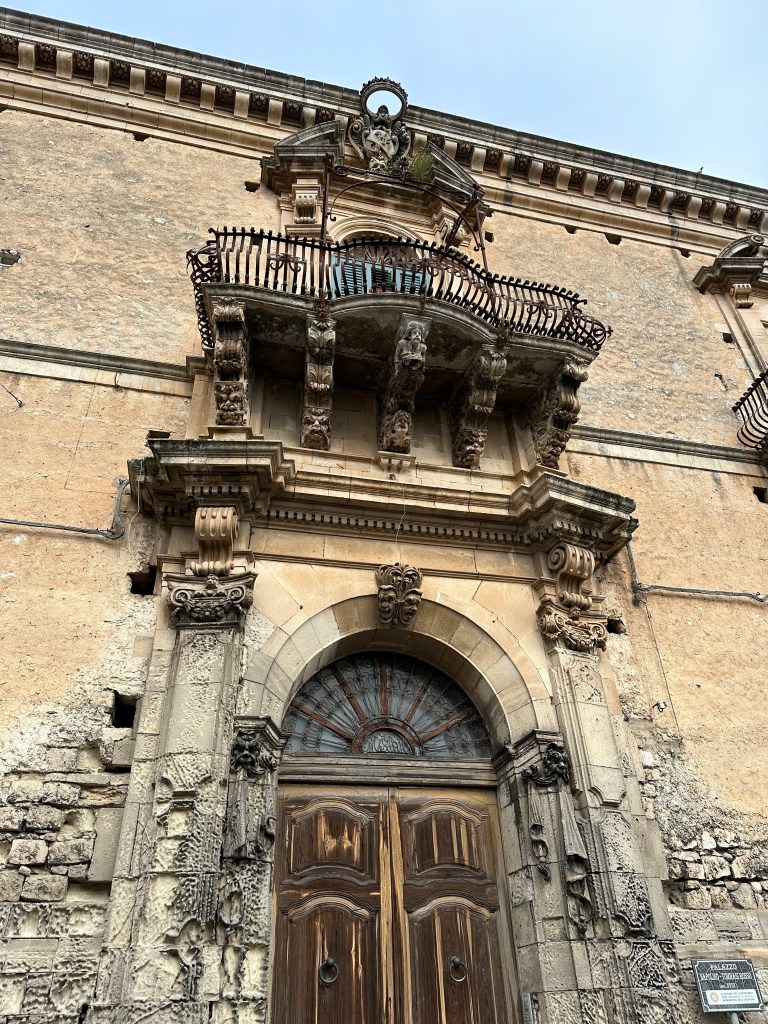
From Agrigento, we headed to Siracusa, in Sicily’s southeast corner. But first, we’d spend a few days in the island’s “Baroque towns.” These towns, including Modica, Ragusa, Scicli, and Noto, were all leveled during the region’s catastrophic earthquake in 1693. All of the towns were rebuilt in the same, exuberant, late-Baroque architecture – which was the style at the time – creating some of the most visually cohesive historic towns in Europe.

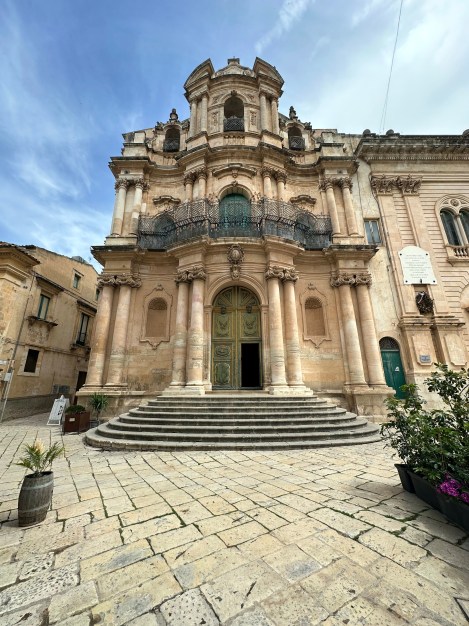
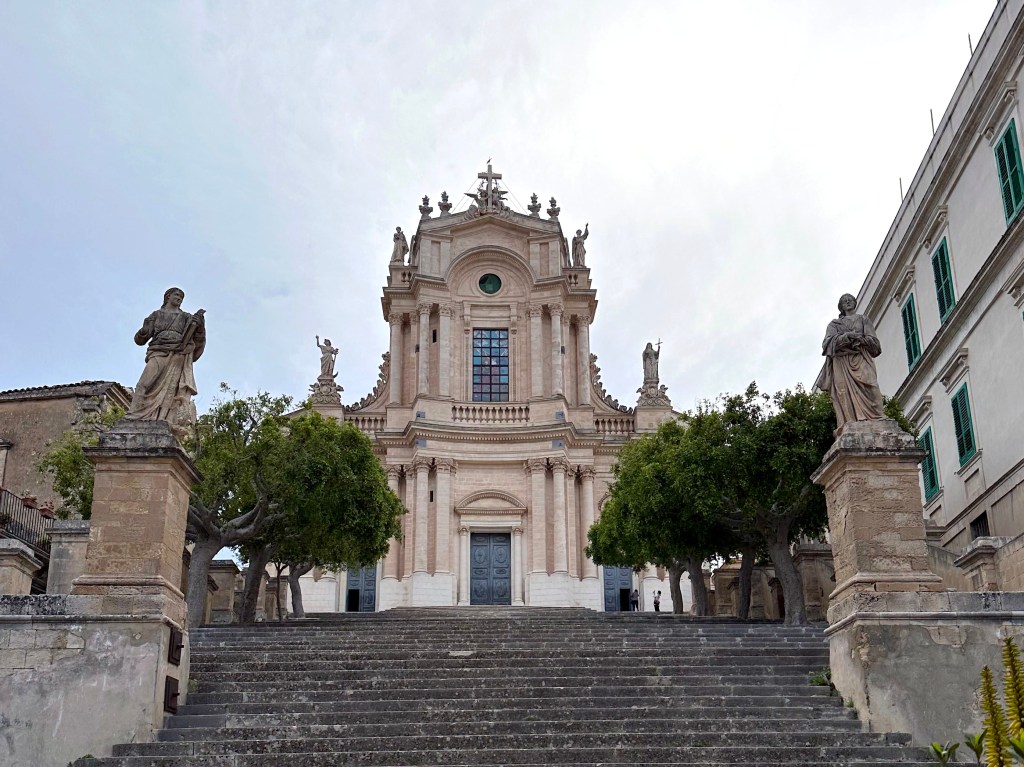
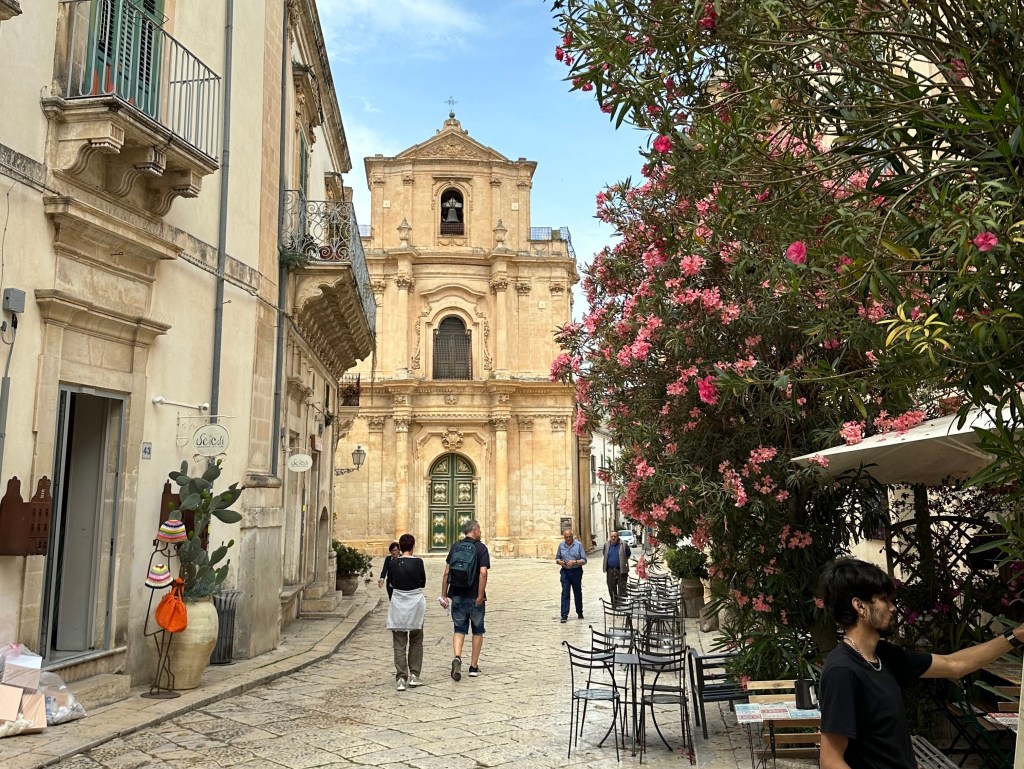
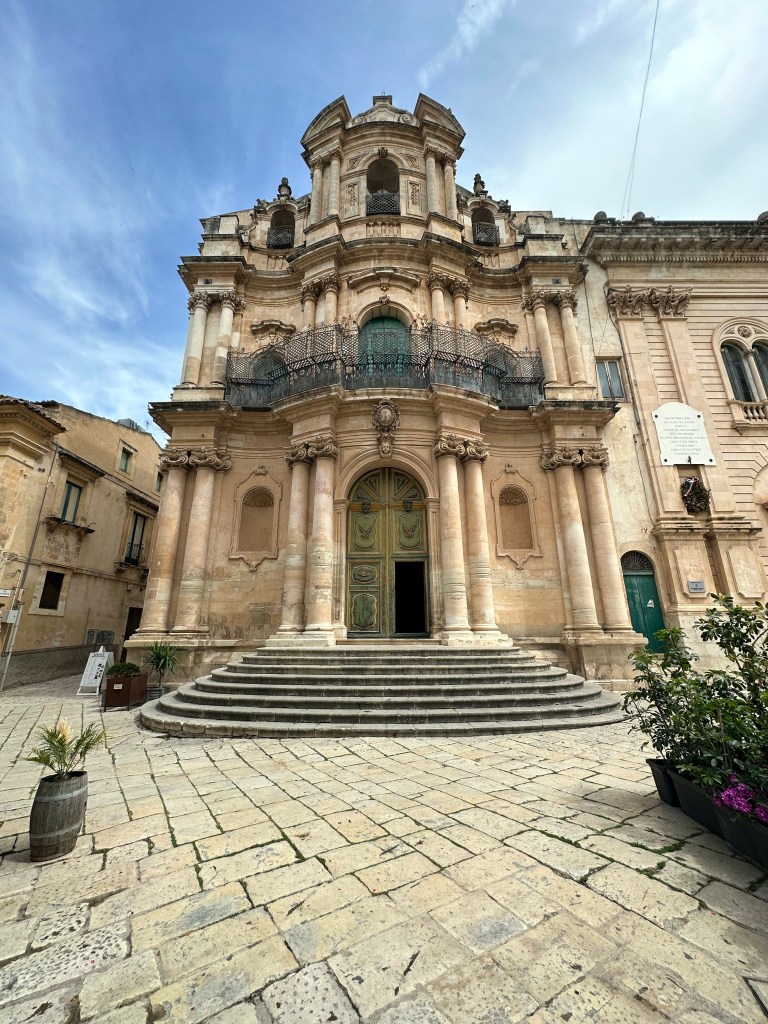
Each of the towns have the same characteristic Baroque, honey-colored stone architecture, dramatic staircases, and sun-drenched piazzas. But really, it’s the ornate churches that capture the essence of the Baroque towns – a prime example can be found in Chiesa di San Giovanni Evangelista in Scicli, but its siblings across the region all possess identical architectural DNA:

Of all of the towns to choose from, we decided to base ourselves in Modica for three reasons:

  1. It was centrally located among the Baroque towns
  2. There was an AirBnB in town WITH A POOL, which is uncommon in town, and we were obsessed during planning with having access to a pool while traveling through Sicily’s (and Italy’s, and Malta’s, and Portugal’s) hot climate
  3. Although the town looked small, it still hosted a Michelin-starred restaurant, seemingly an assurance that it would be a charming locale in which to base ourselves

We were wrong.

It was, indeed, centrally located:

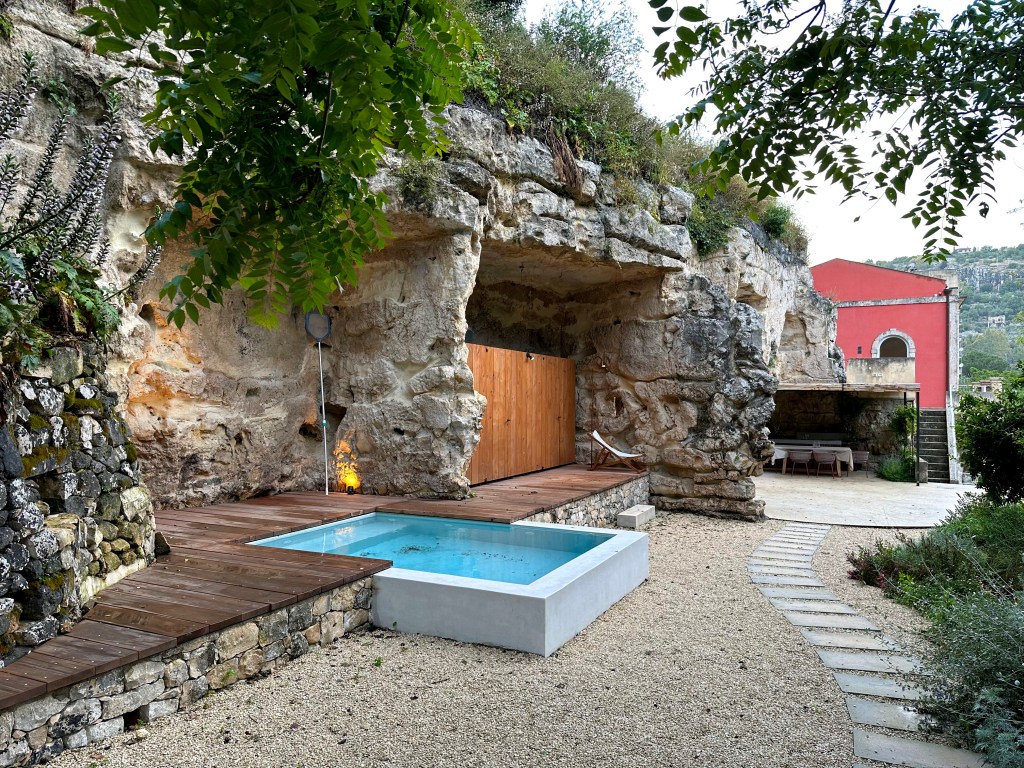
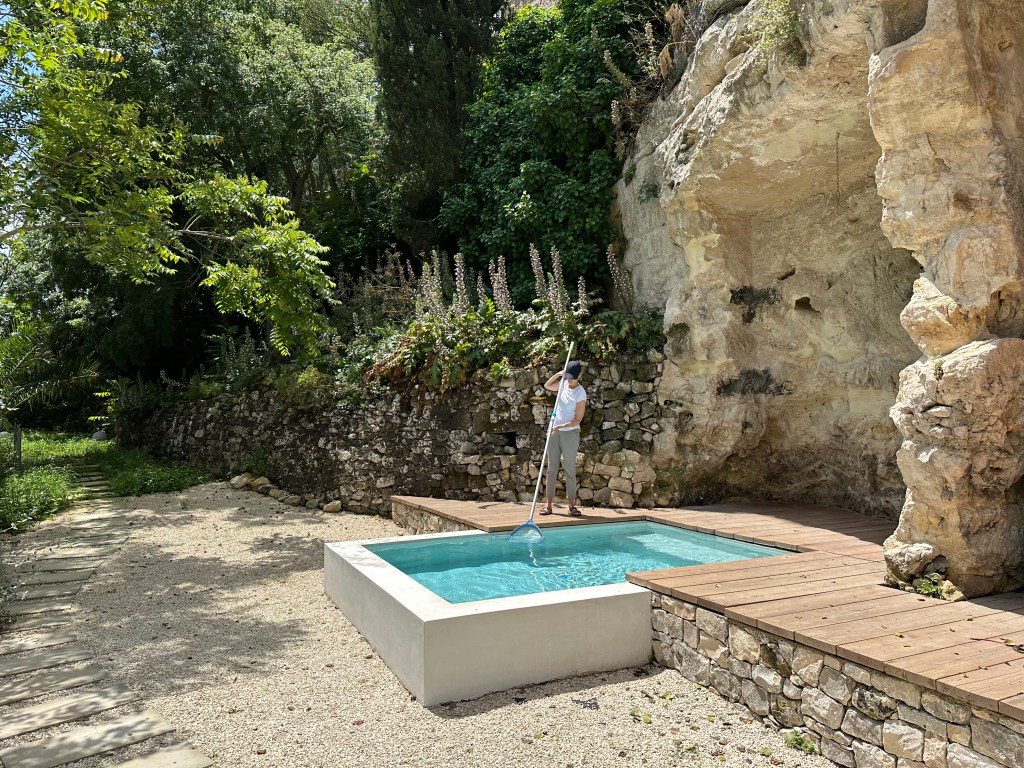
It did, indeed, have a cool AirBnB with a pool:

But, although the restaurant was on point,

the town lacked a pedestrian core and was not the most charming locale in which to base ourselves. After visiting Ragusa, we wished we had stayed there and had relegated Modica to day-trip status, a sentiment we passed on to our safari friends who had advised us on Capri and Praiano when they asked our advice when planning their trip to southern Sicily after our return.

Modica

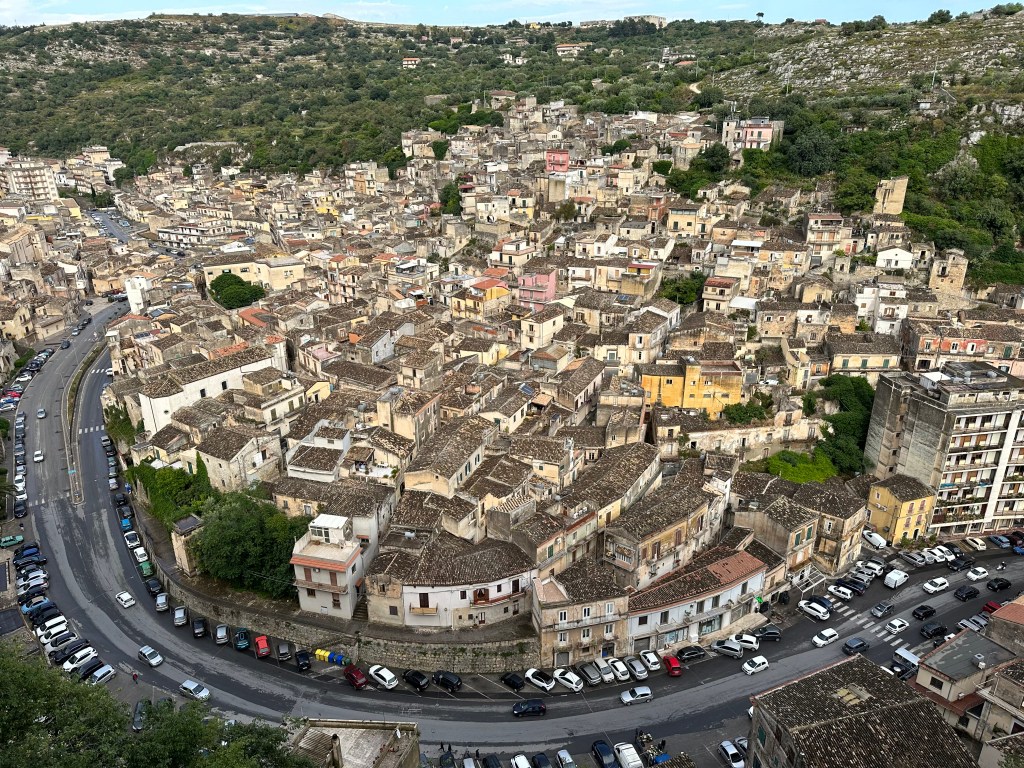
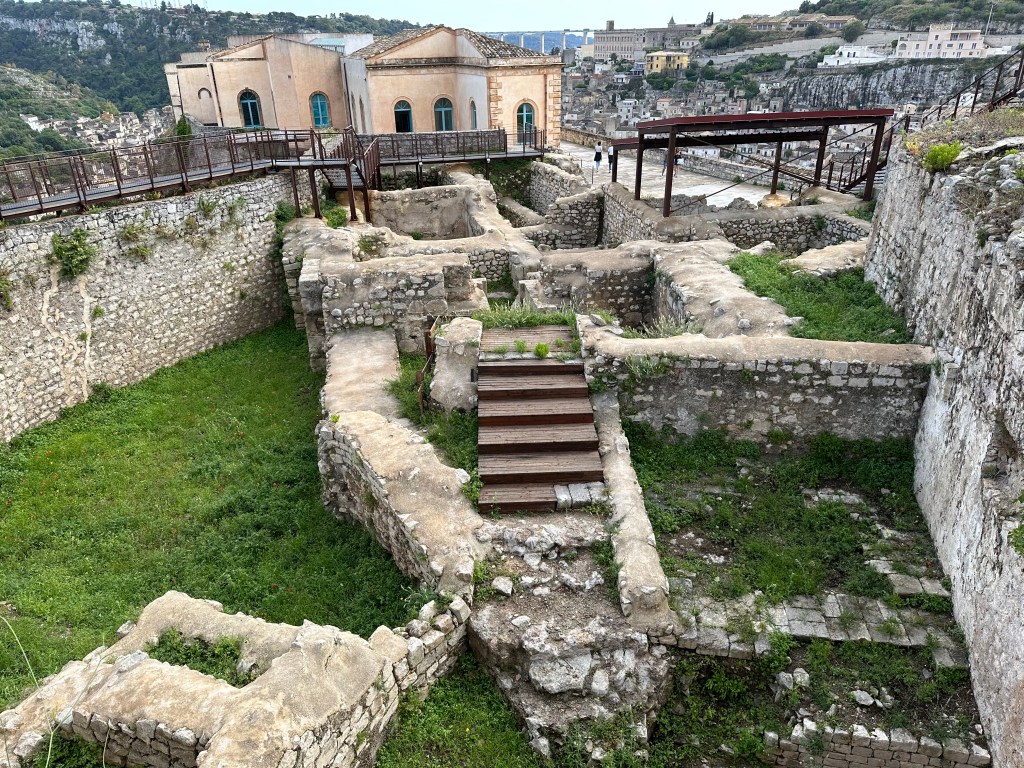
Modica is one of Sicily’s oldest continuously inhabited settlements, with roots stretching back to the Sicels and later the Greeks, Arabs, and Normans — each leaving layers of cultural imprint before the 1693 earthquake prompted its dramatic Baroque rebuilding across two hillsides joined by a central corso. One hillside is densely settled and comprises Modica alta, the high town:

At the bottom lies Modica basso, the low town:

All of this viewed from Modica’s indominatable Castello dei Conti, a medieval fortress dating to 1272, perched on a rocky spur high above the town and reached via a long climb up steep steps.

A rather nice view of the castello from below, in Modica basso:

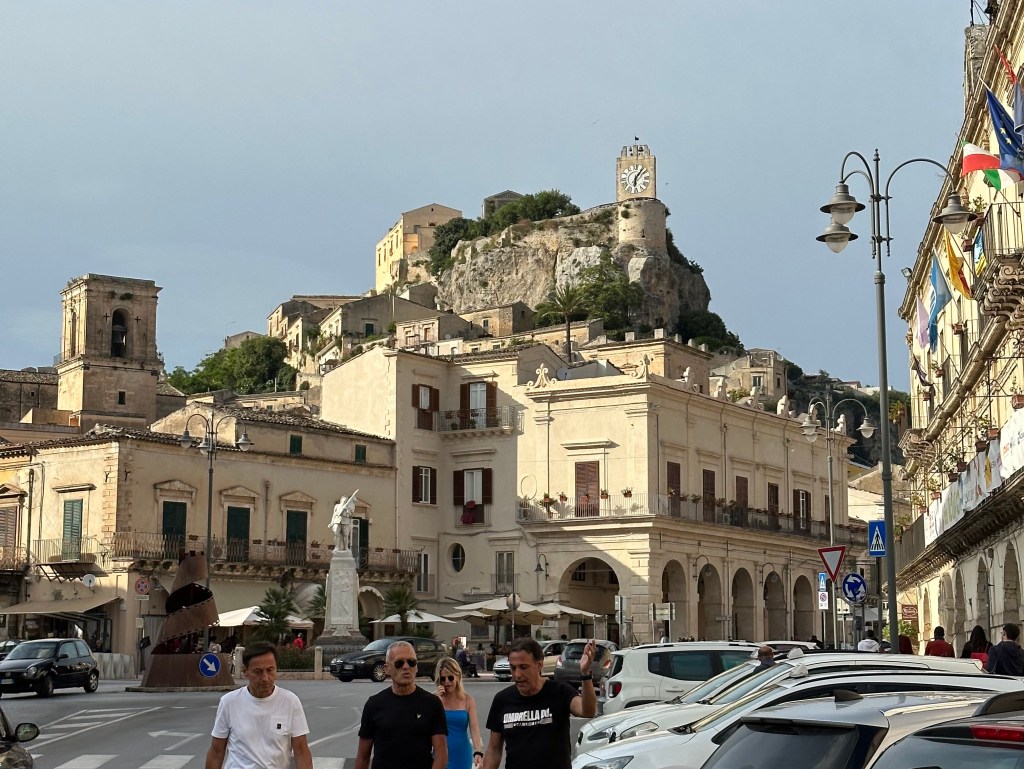
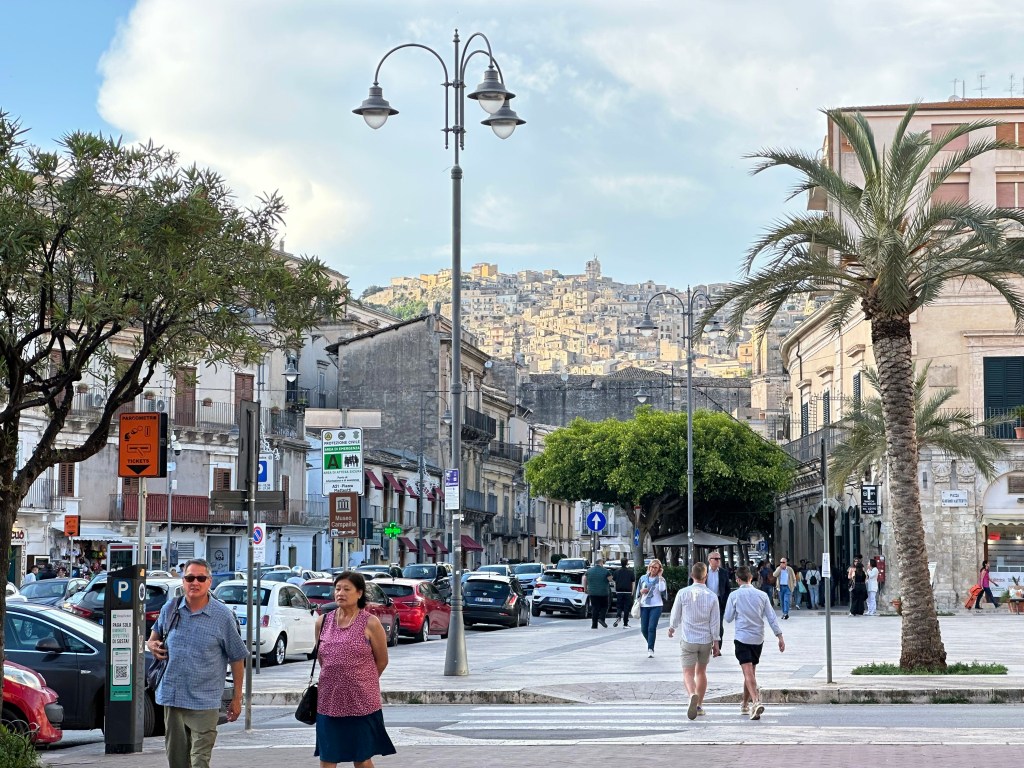
The town’s main drag:

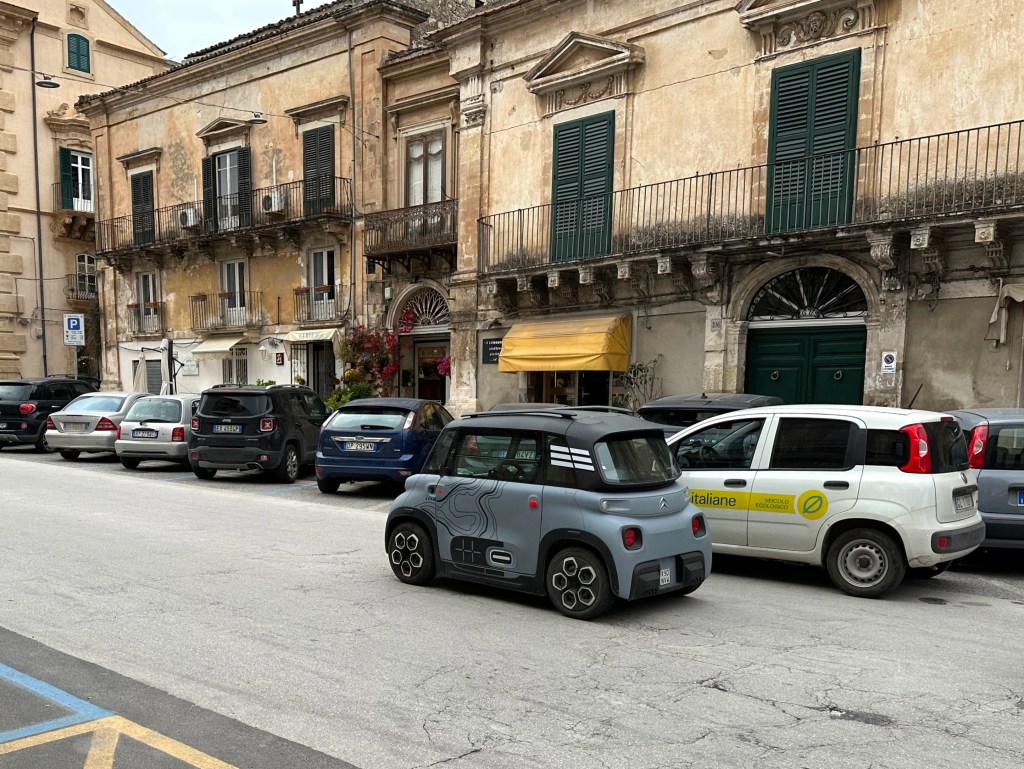
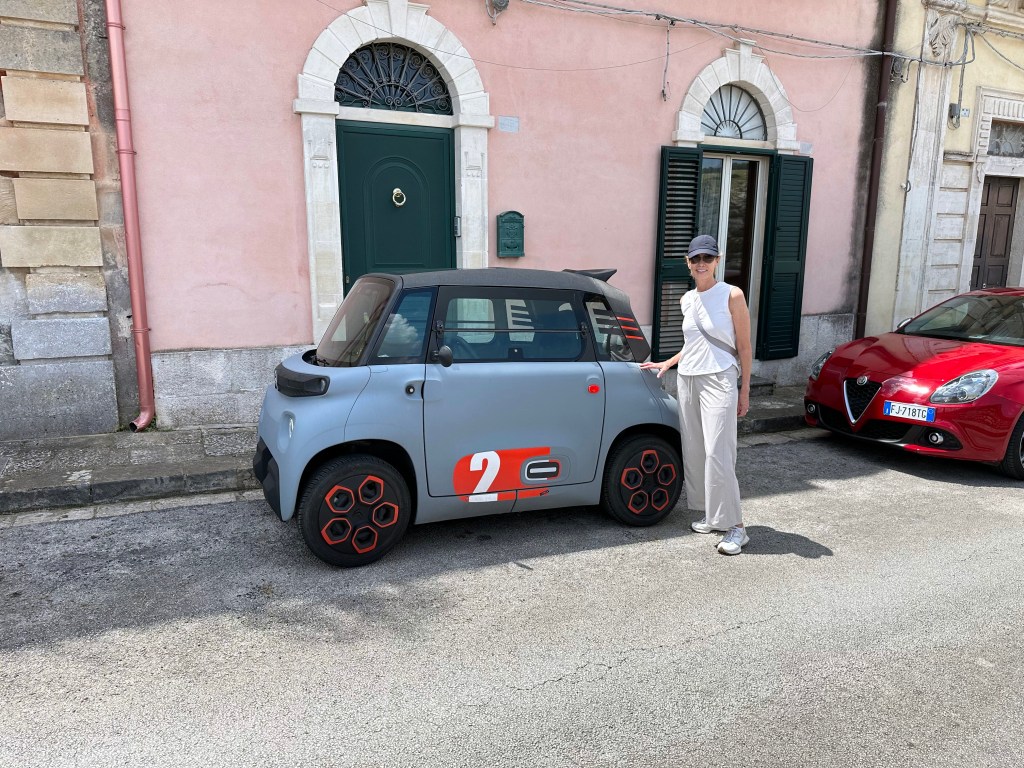
And the tiniest car we’ve ever seen. This little Citroen model would pop up in several of the Baroque towns. Hilarious.

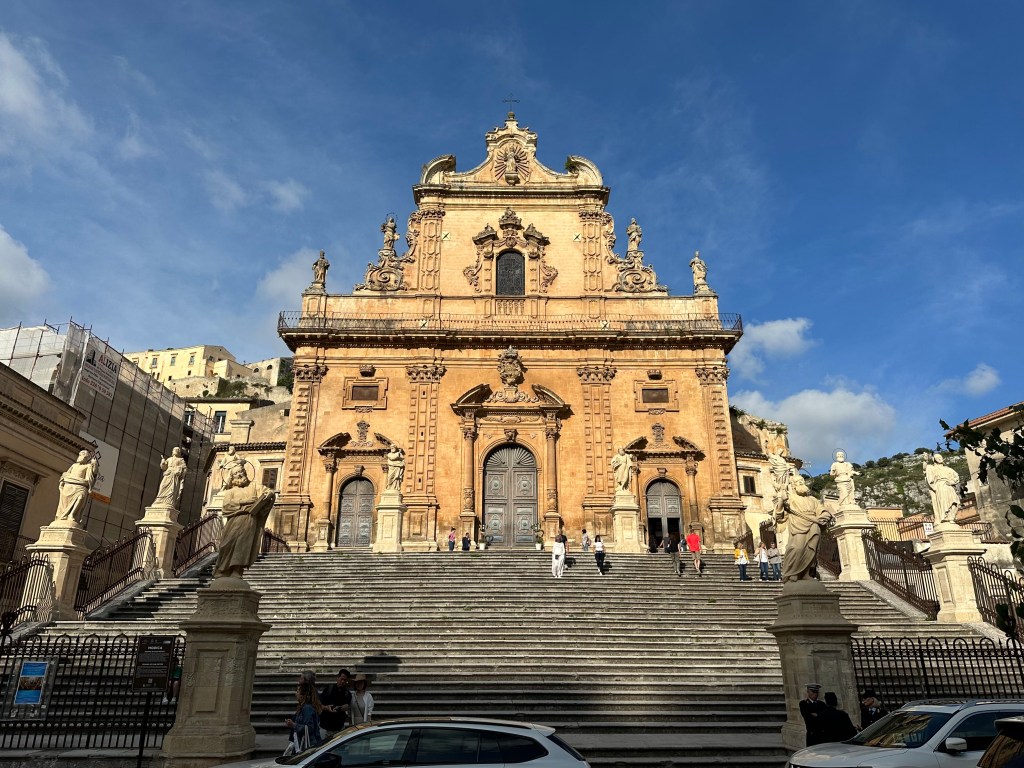
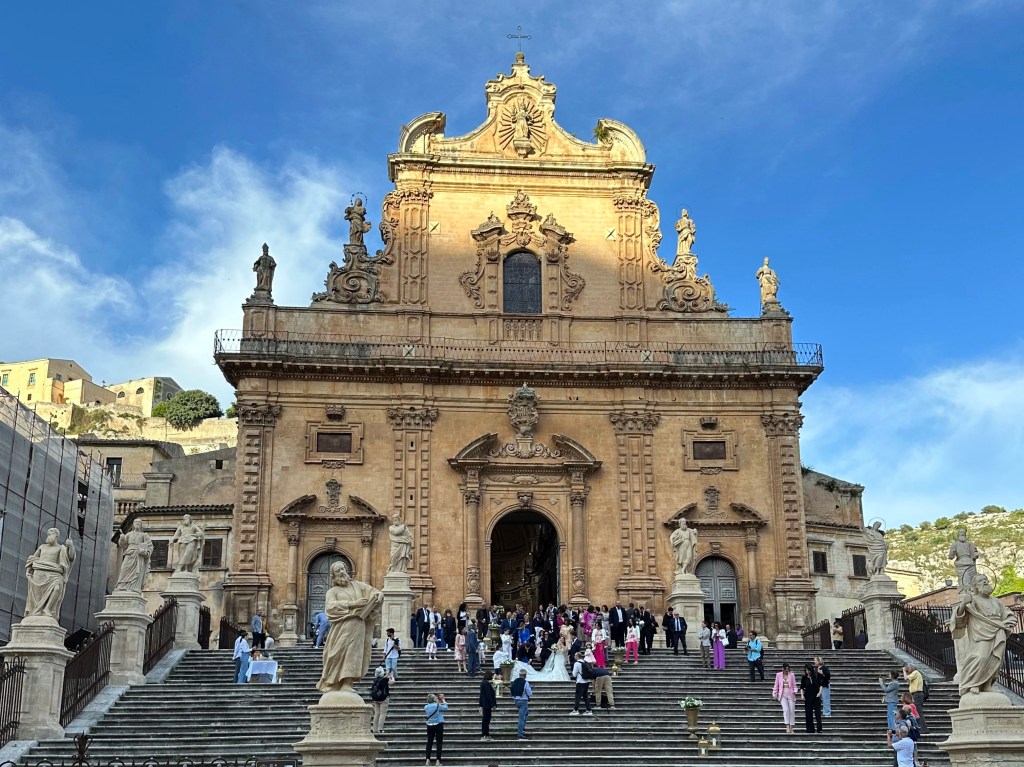
Our first (of way too many) Baroque churches. This one, a cathedral, the Duomo di San Pietro:

Put to good use hosting a wedding several days later:

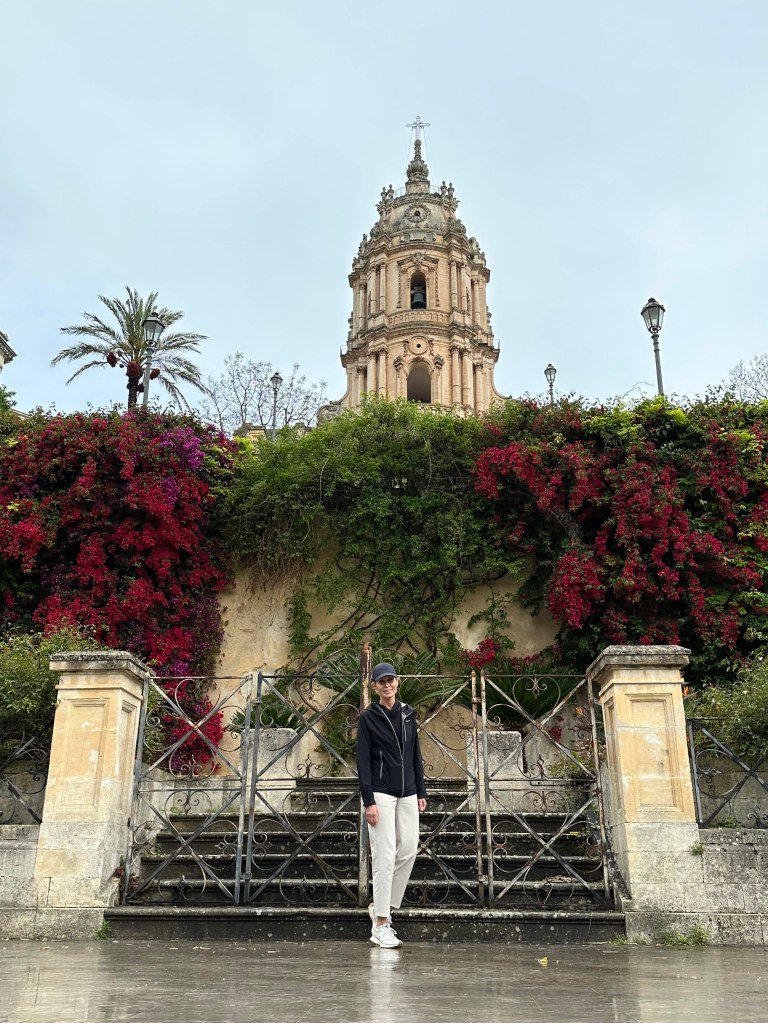
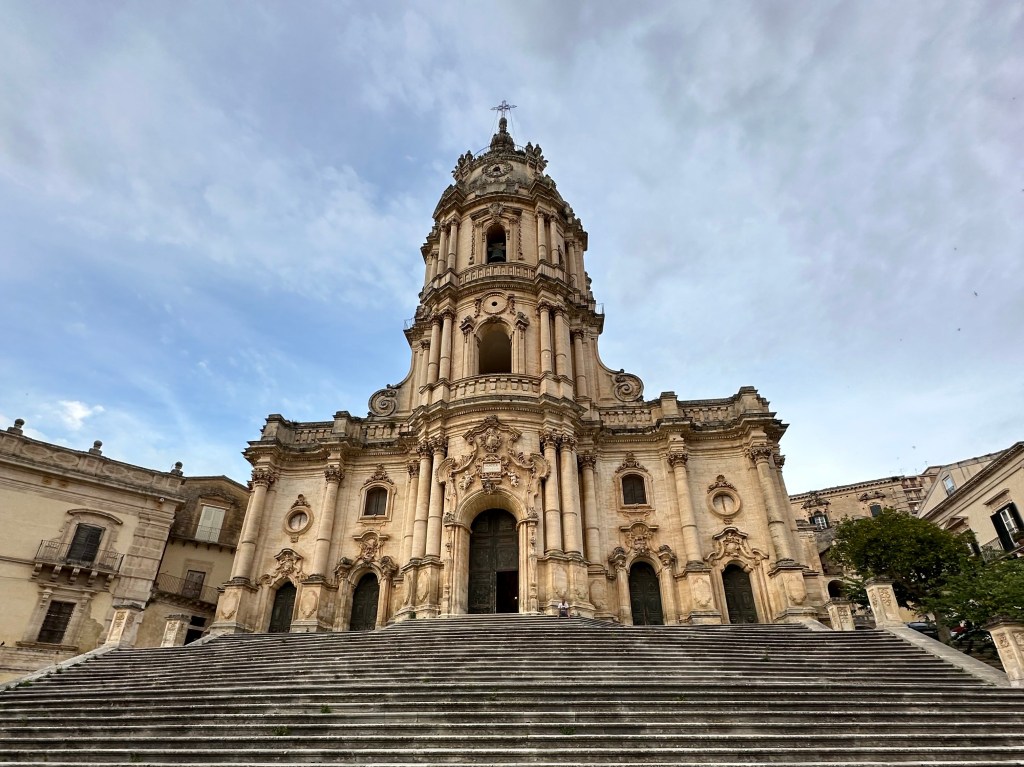
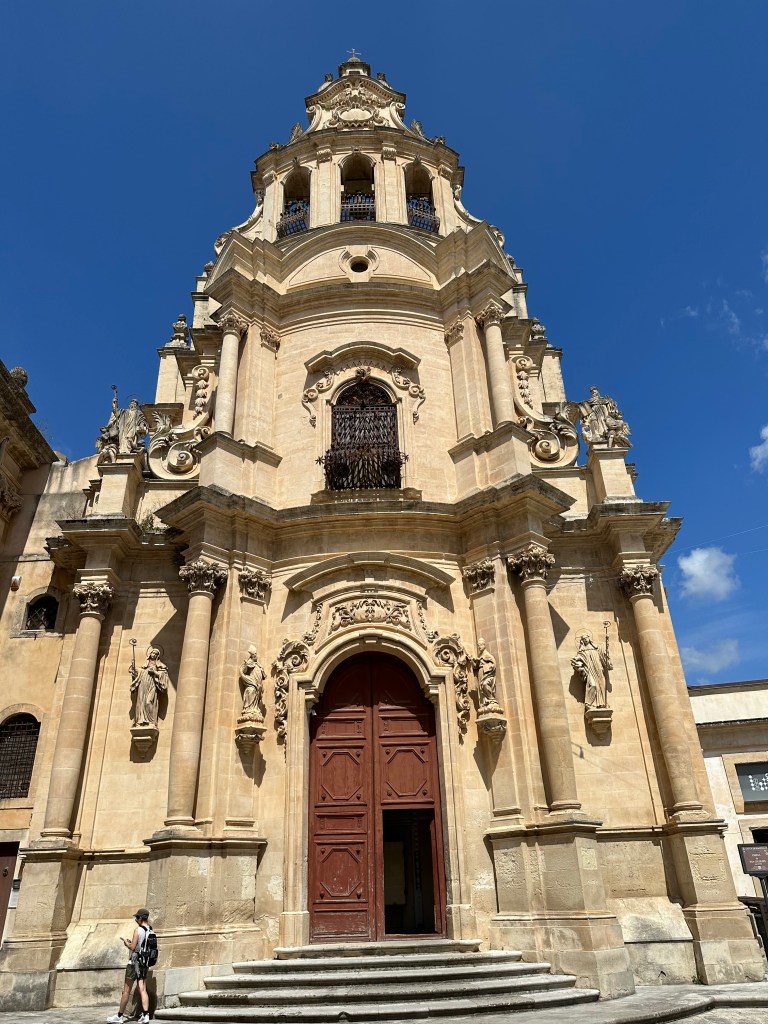
And yet another, ALSO a cathedral (which we totally do not get), the Duomo of San Giorgio:

Of all of the towns and all of the churches we’d visit, we thought this one singularly captured the Baroque style – highly ornamented and be-columned, all built with the honey-tan marble:

Oh, okay – another one, this time the Church of St. John the Evangelist:

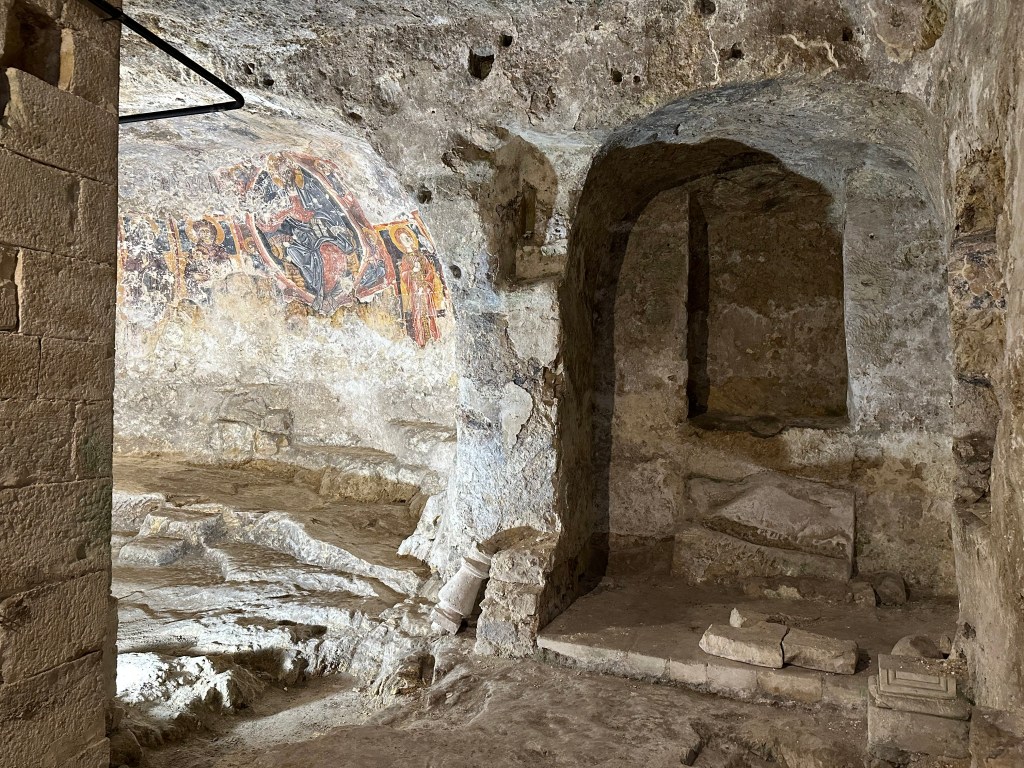
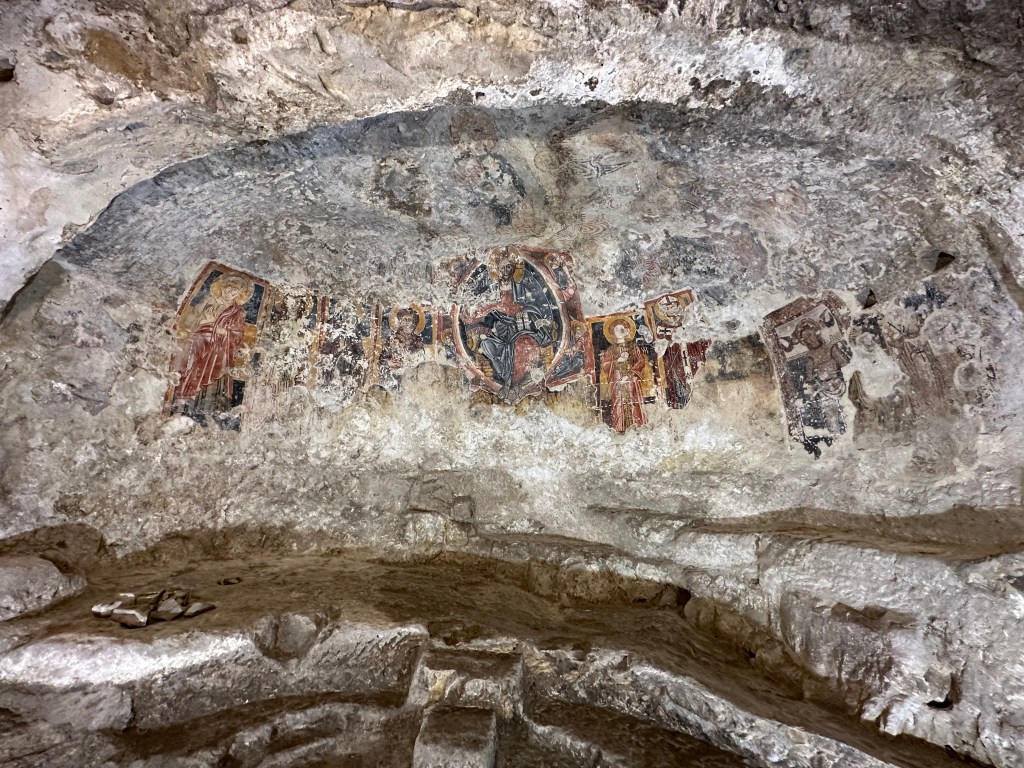
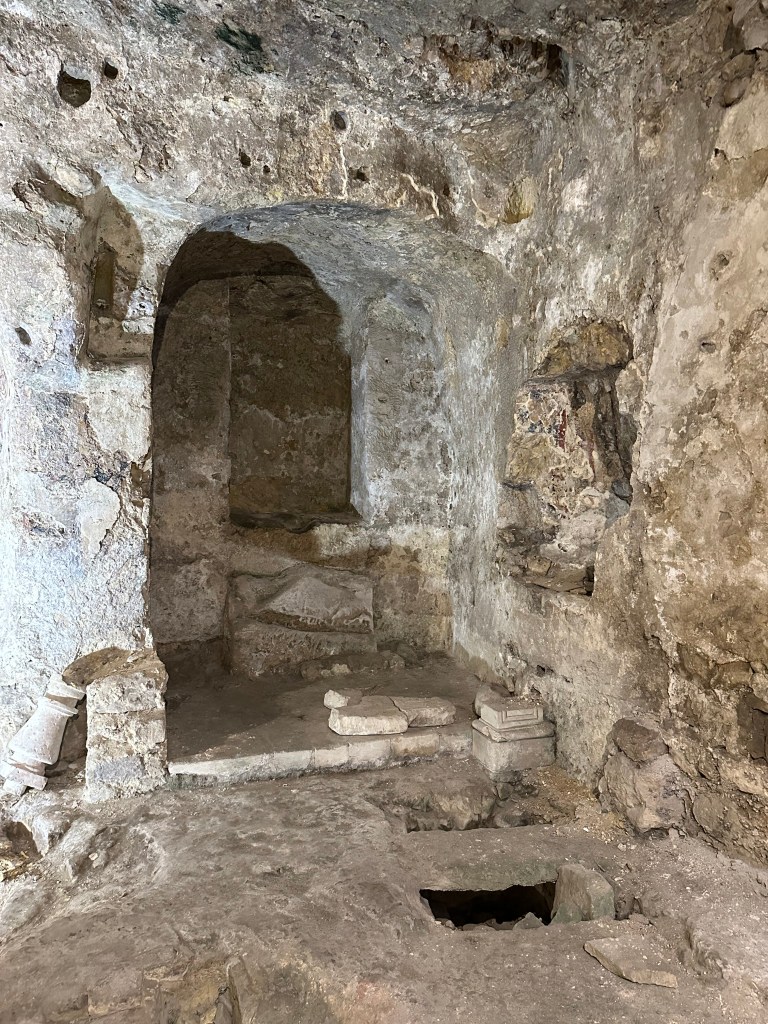
But they ain’t ALL baroque. To wit: the Rock Churrch of San Nicolo Inferiore. Discovered in 1987, the cave church dates to the 11th and 12th centuries and was abandoned following the Latinization of the island, when the Eastern (Byzantine/Greek) rite of Christianity was gradually replaced by the Western Roman (Latin) rite that followed the Norman conquest of Sicily in the 11th century .

This place was covered by the collapse of surrounding buildings during the 1693 earthquake. But check out what was preserved.

Cool carved apse:

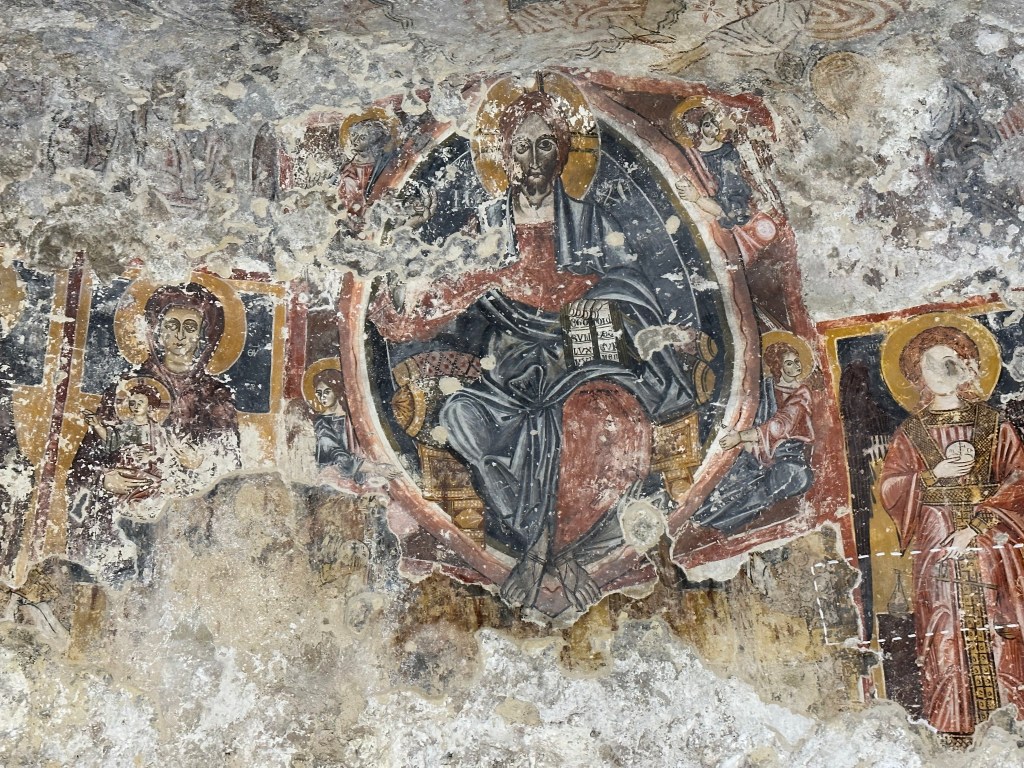
Featuring yet another freakin’ Christ Pantocrator – clearly a fave of the Sicilians:

But we genuinely are engaged, entranced, and enthralled by troglodyte churches, with their openly exposed art applied a millennium ago and now just inches from you. Pretty incredible.

Five tombs are embedded in the center of the nave and likely date to the last phase of the building.

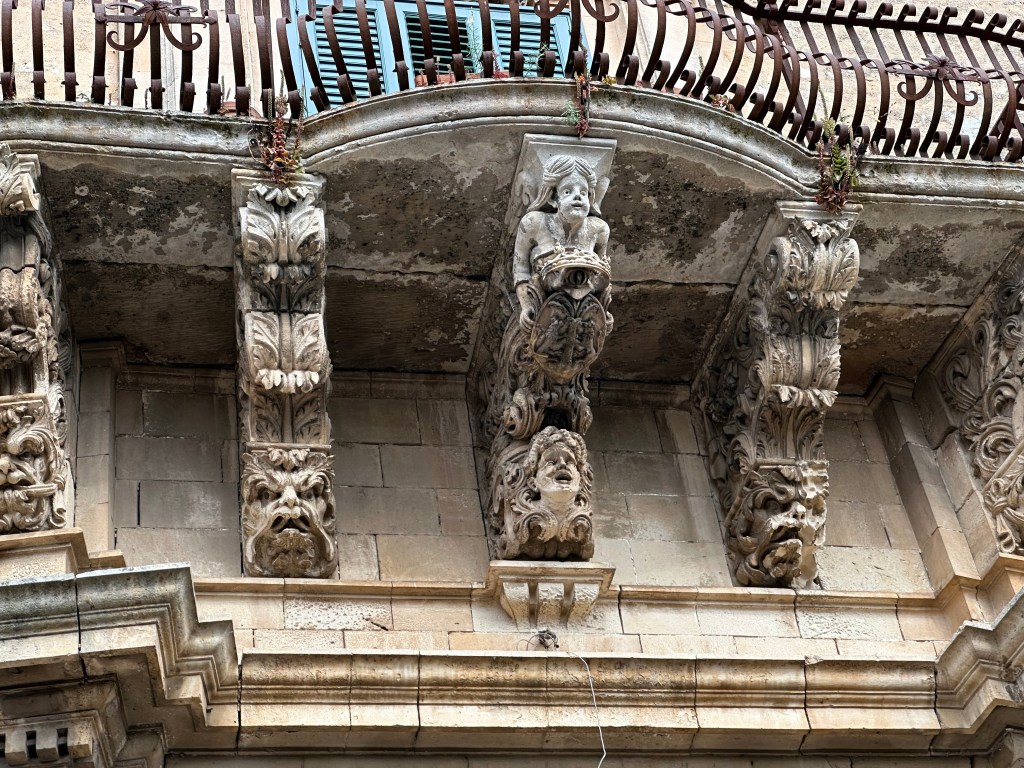
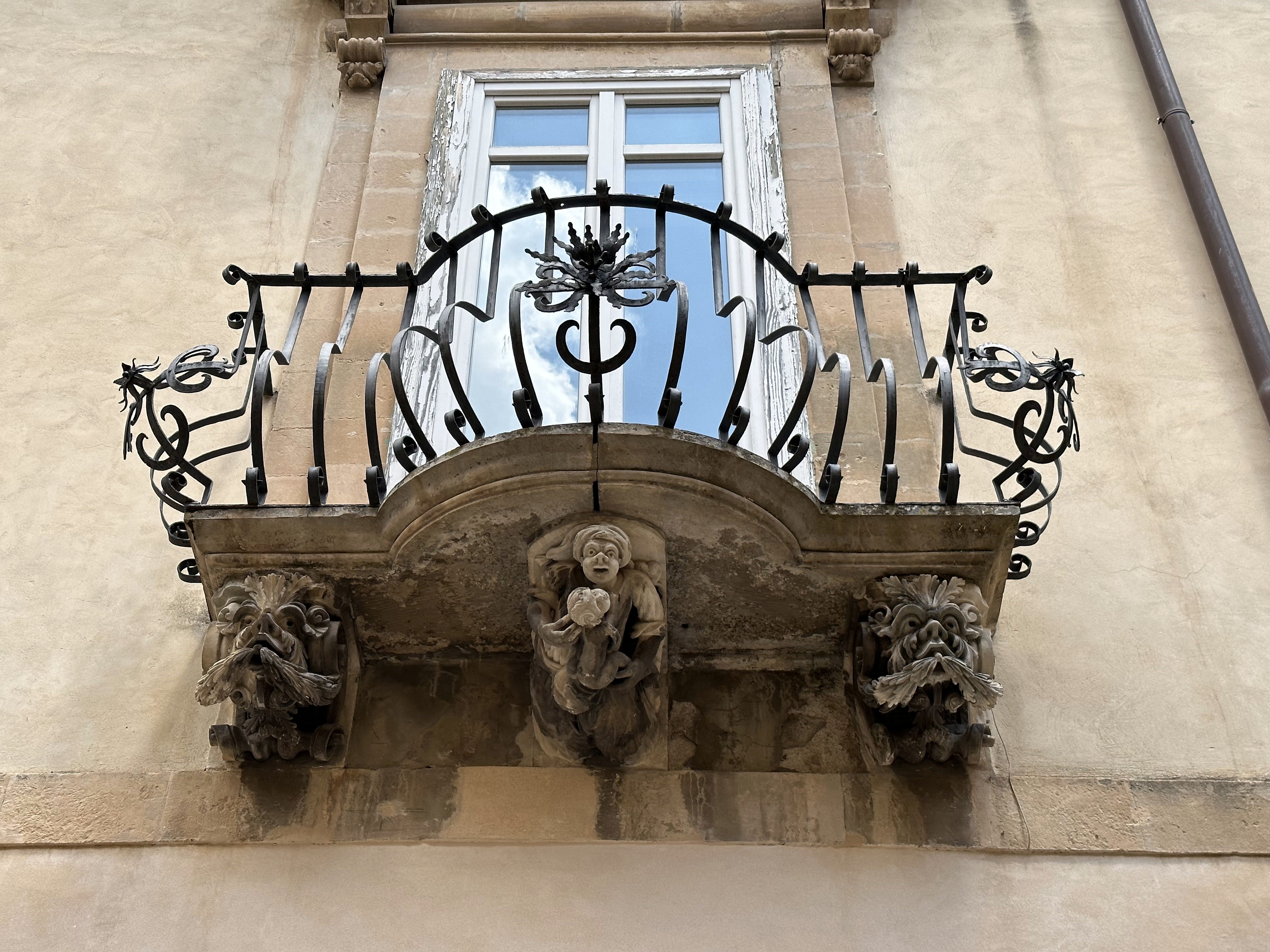
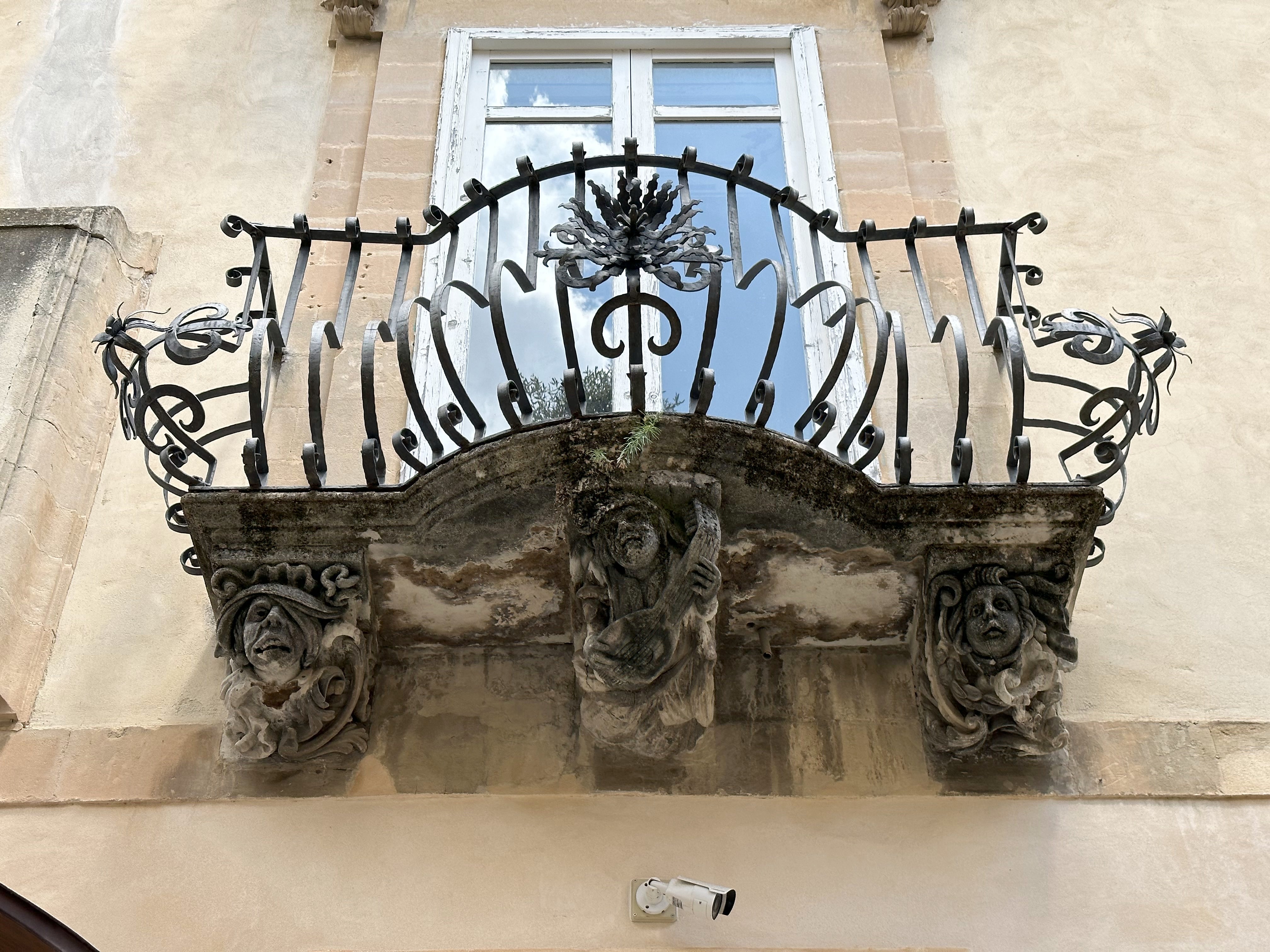
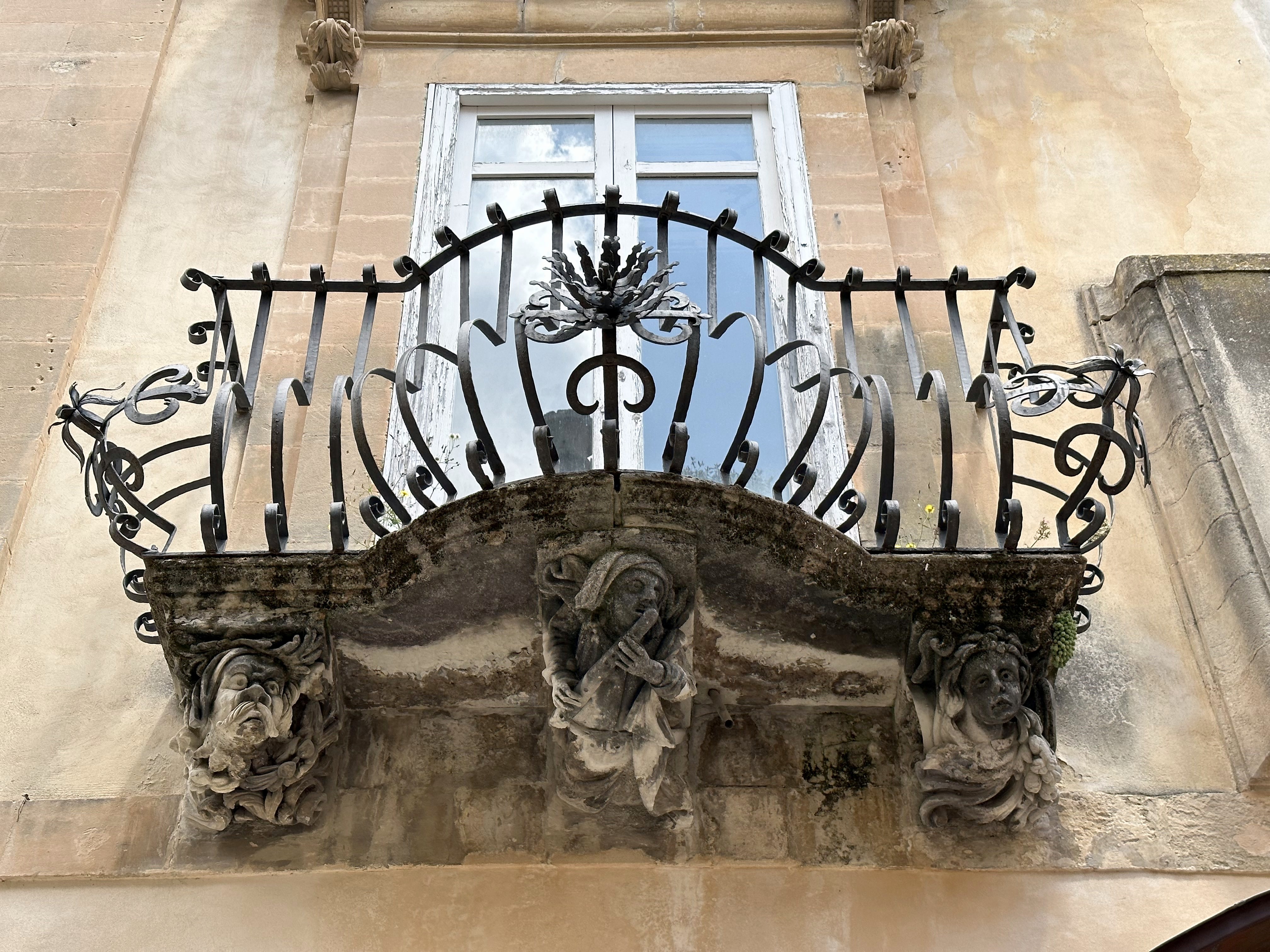
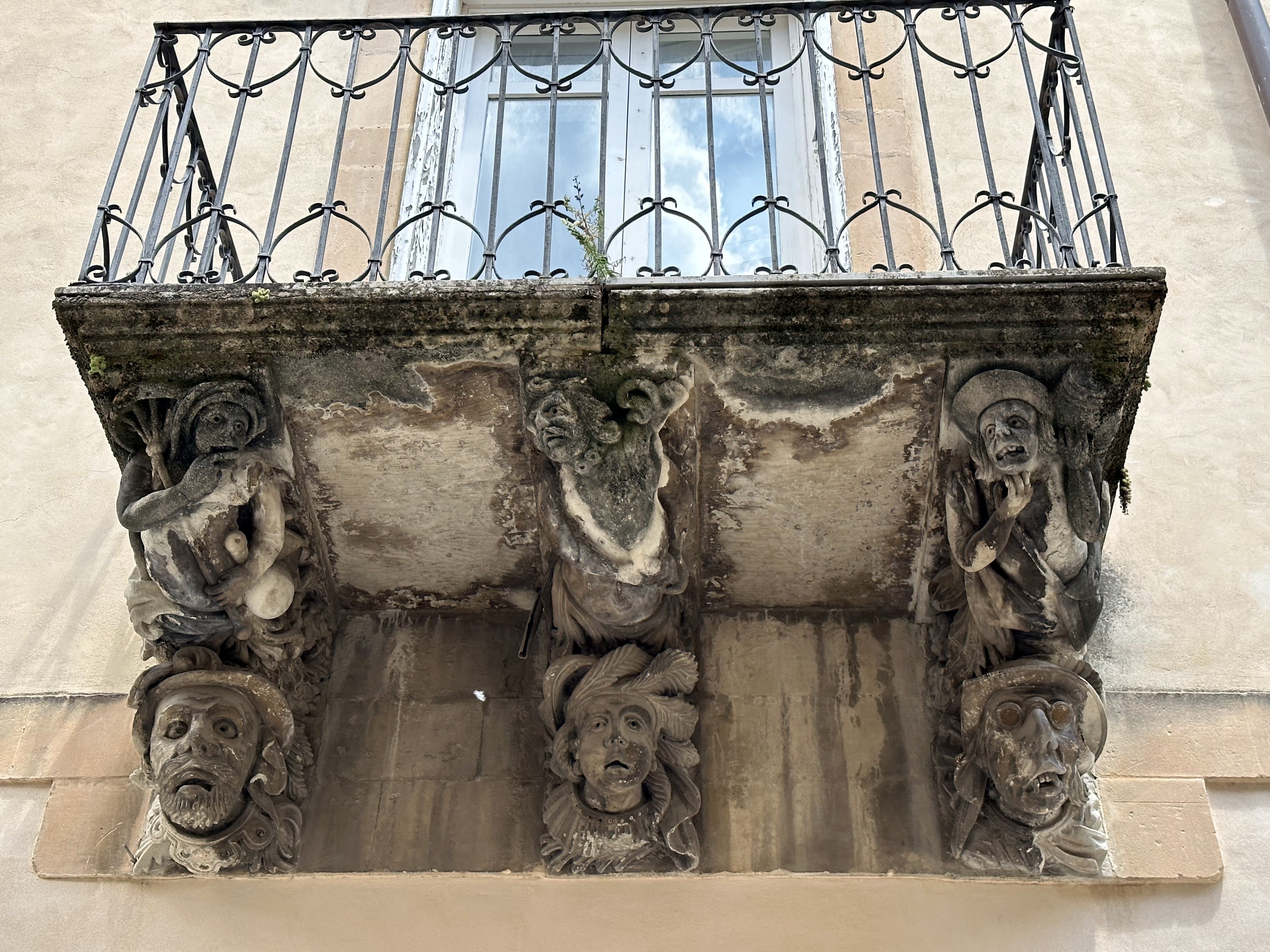
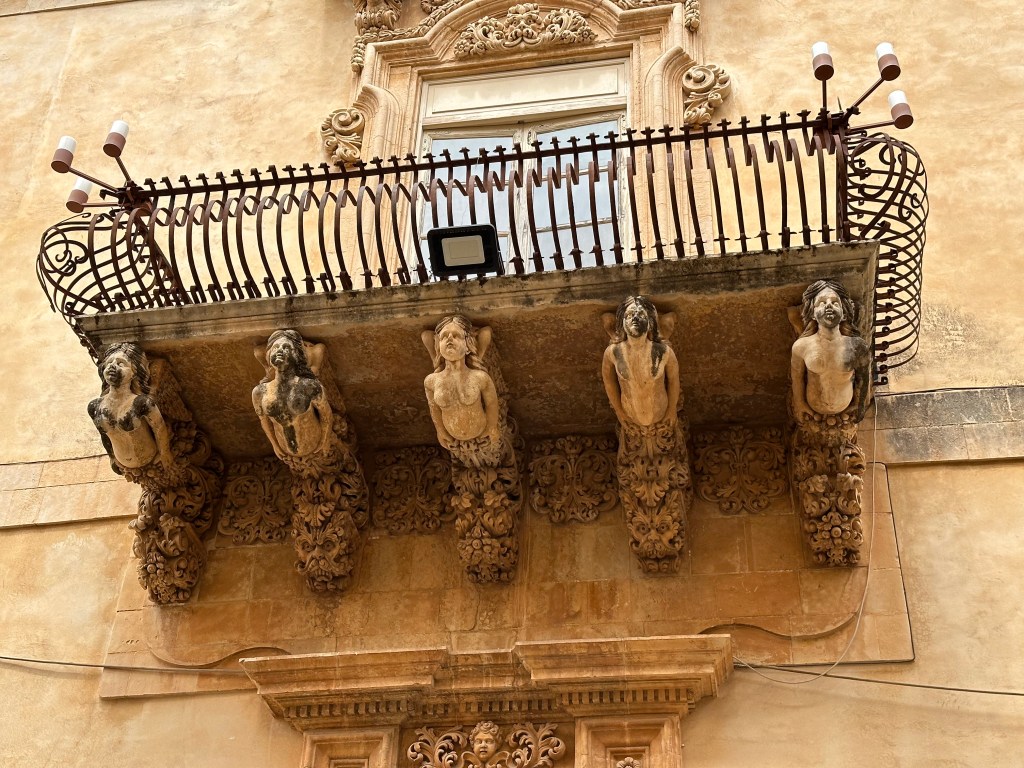
Outside on the streets of Modica, though, more Baroque elements – ornately carved balcony supports with lots of little characters (all of which we’d see in the other towns, too):

The town is perhaps most famous globally for its ancient chocolate-making tradition, inherited from the Aztecs via the Spanish and produced cold without cocoa butter, resulting in a grainy, intensely flavored bar that bears almost no resemblance to modern chocolate and is taken very seriously by locals. Modica’s chocolate is reputedly the closest thing one can get to the style of chocolate the Aztecs drank and ate. We tried some. Definitely an acquired taste. But we very much dug the provenance of chocolate and unique link to the Aragonese occupation of both central America and Sicily at the same time.

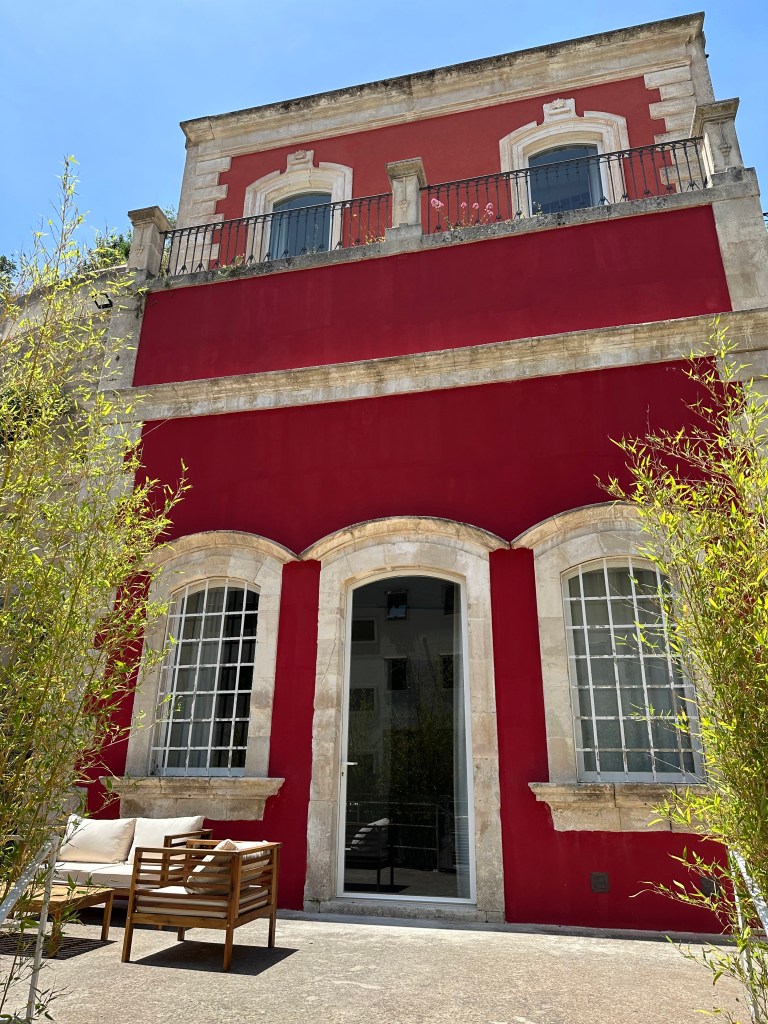
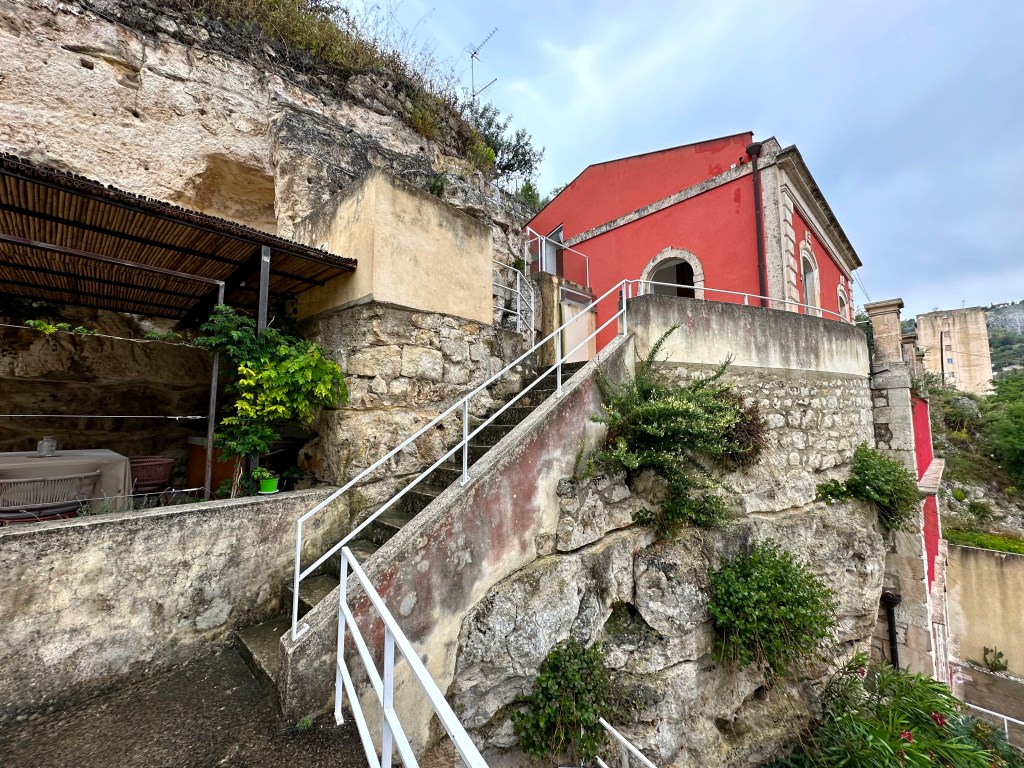
Our headquarters for Baroque barnstorming lay embedded in a cliff at the edge of town:

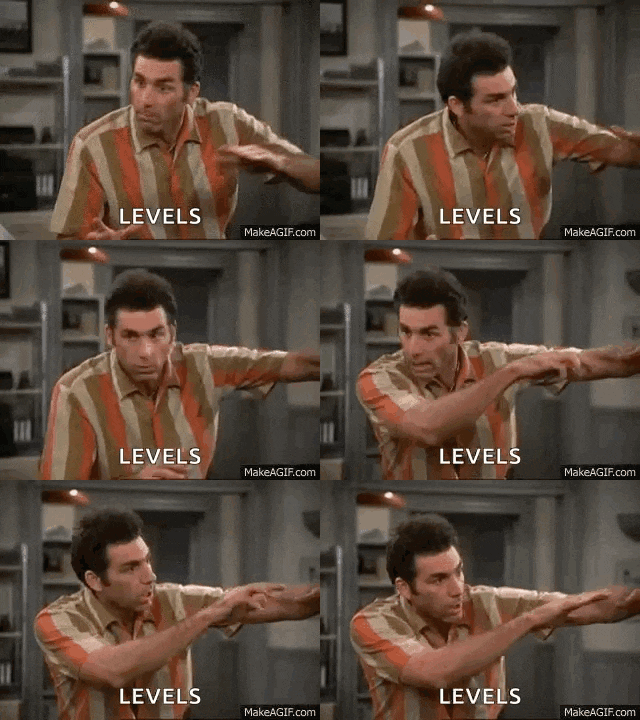
The place, both inside and out, offered LOTs of, well,

The place came with a pretty cute pool girl, which was nice:

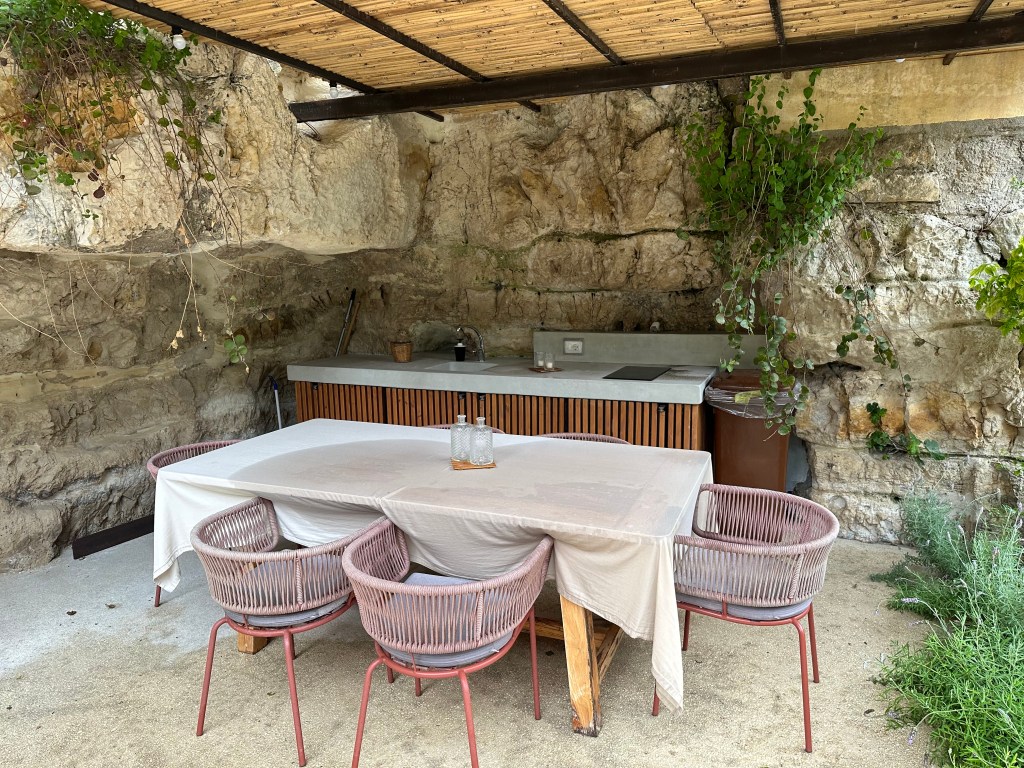
Our post-beach lunch area:

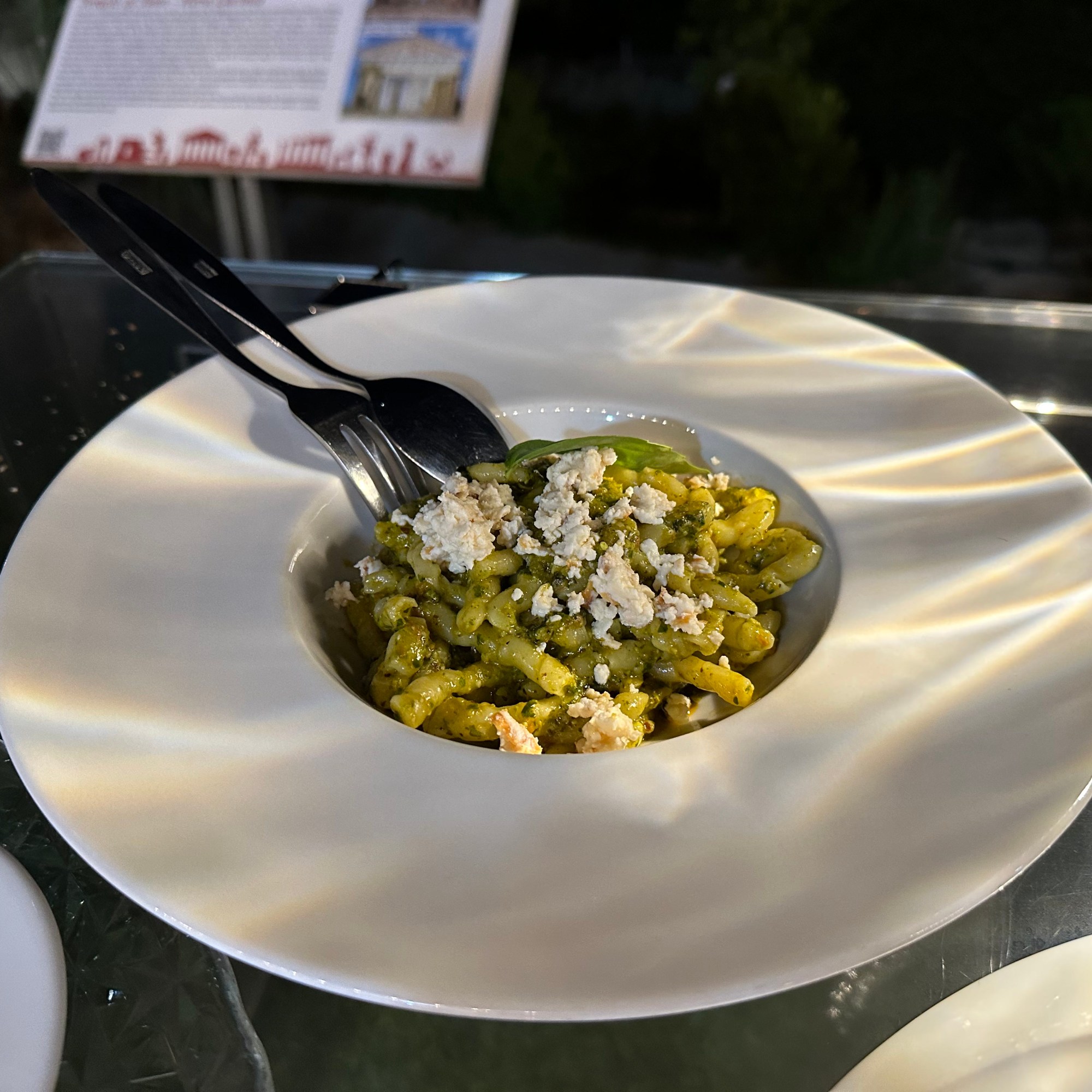
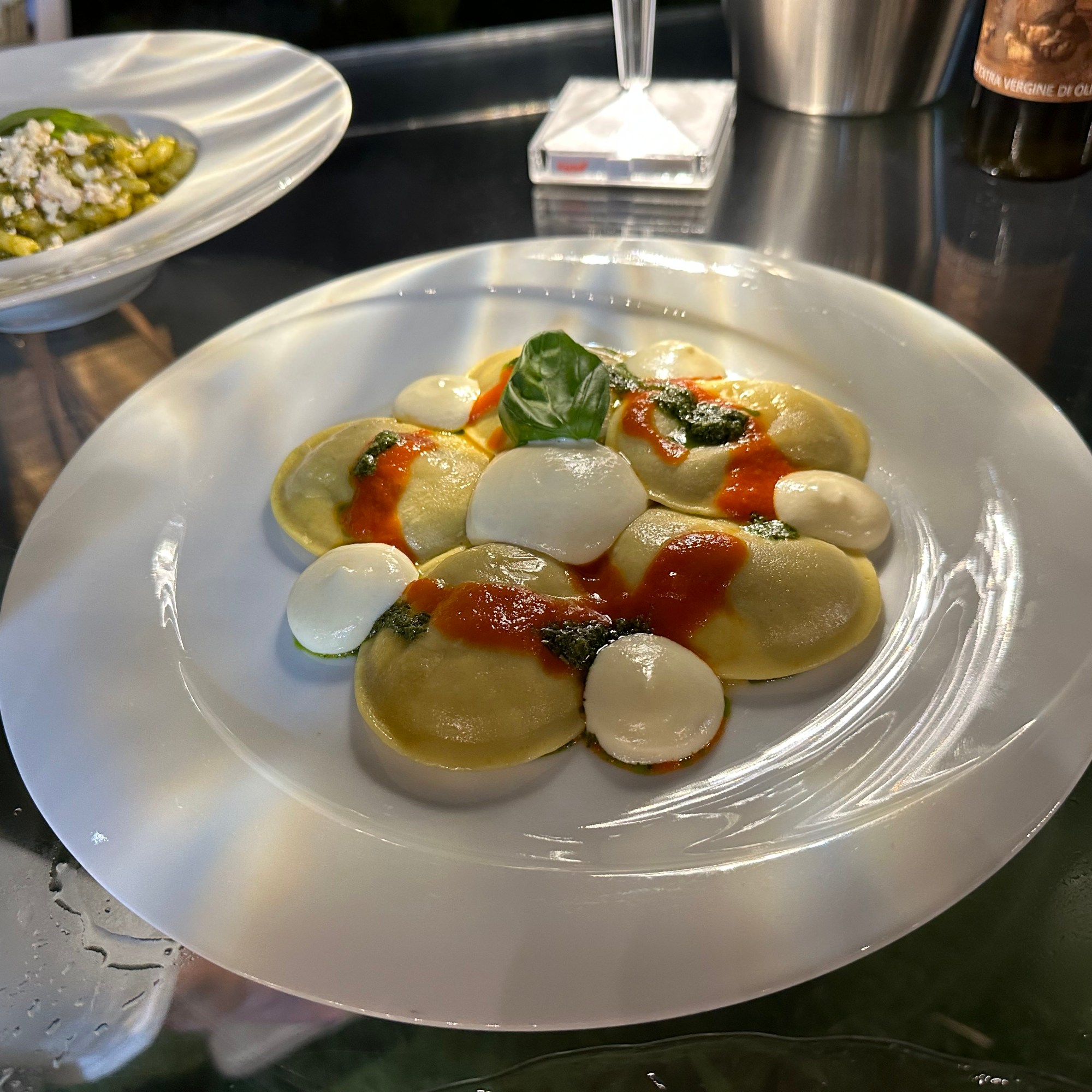
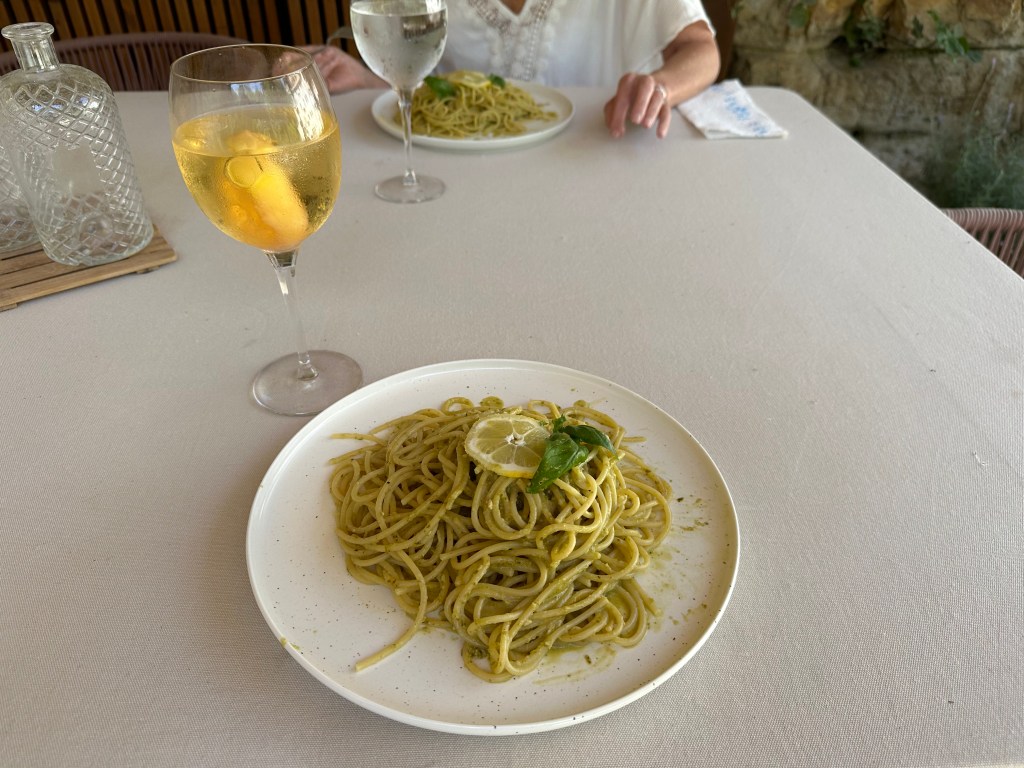
With pasta feasts prepared by the pool girl, who proved to possess multiple talents:

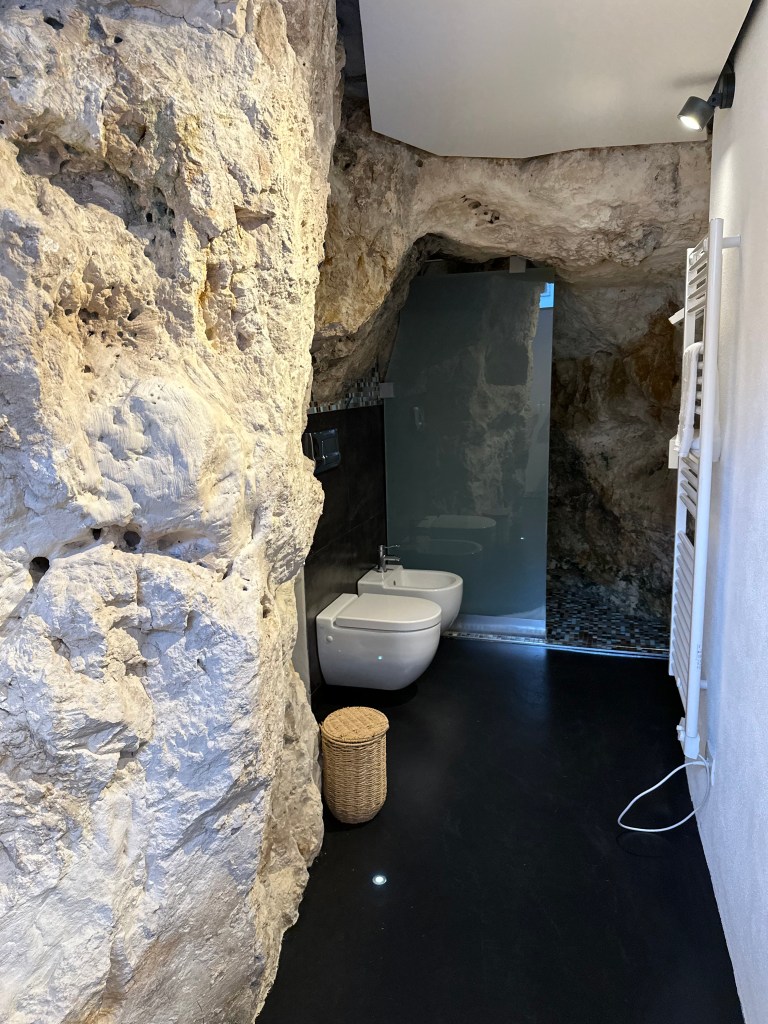
The cave action outside extended inside with a cave bathroom, perhaps to complement the cave church down the street:

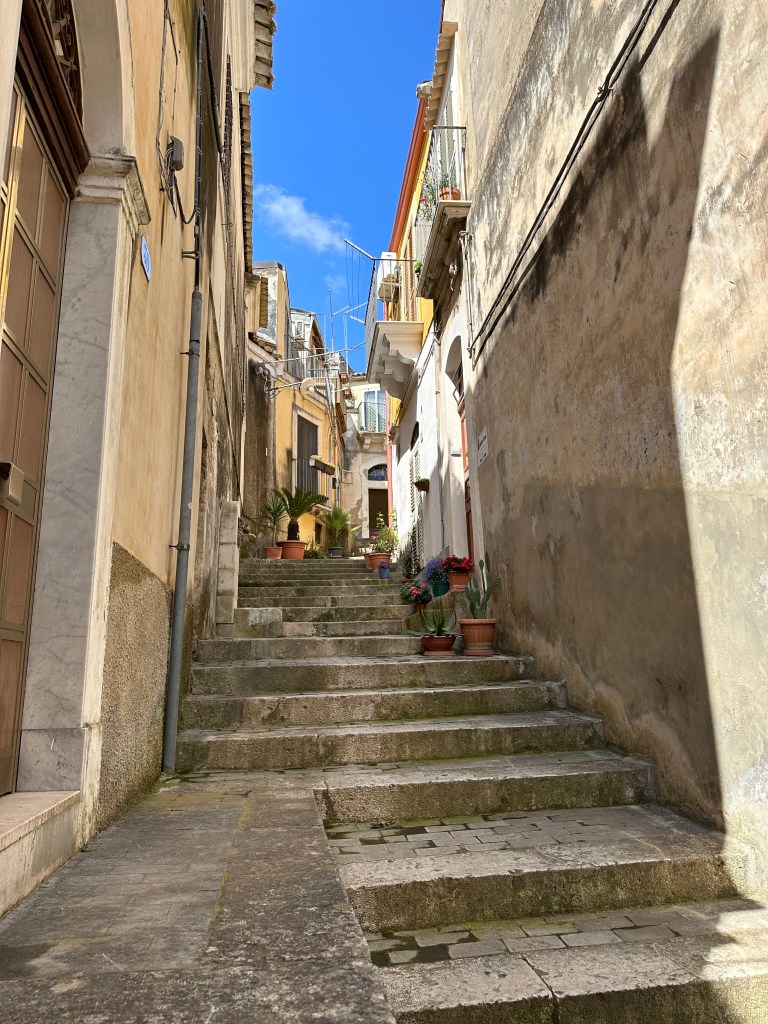
Although Modica was cursed with the absence of a true pedestrian core, it nonetheless sported plenty of car-free lanes in both Modica alta and Modica basso:

Ragusa

Our second Baroque town happened to be the one we SHOULD have stayed in: Ragusa. Much more charming and aligned with the WolfeStreetTravel style.

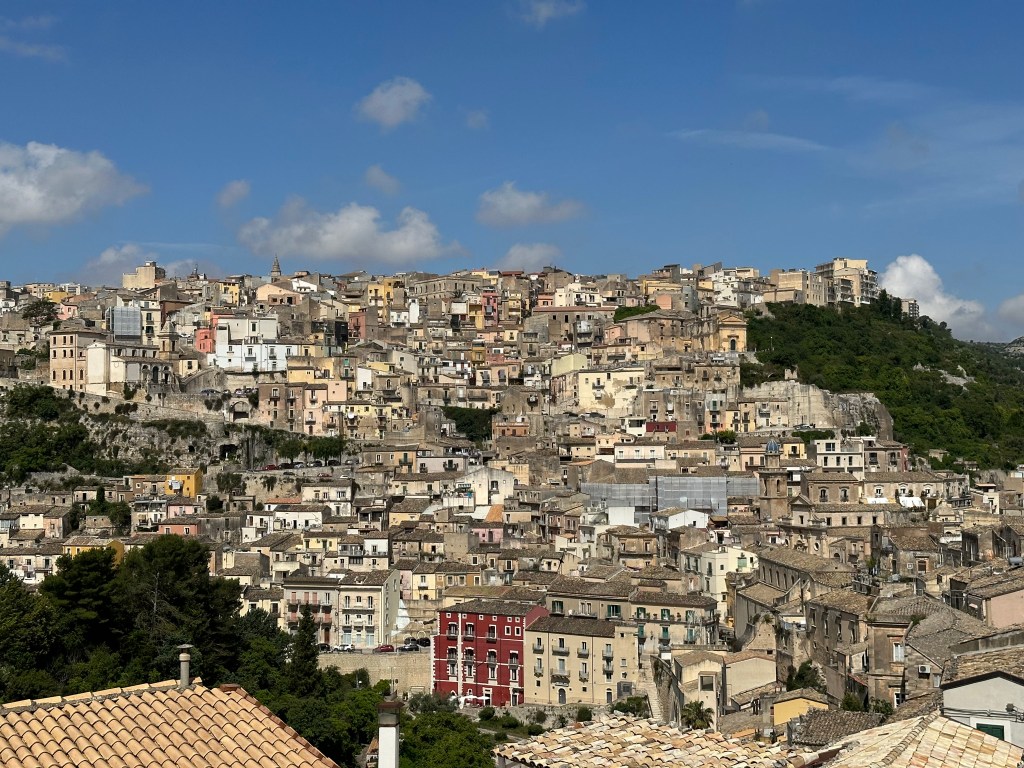
This is actually a view of Ragusa’s new town up on the hill; we did not visit.

Instead, we headed up to Ragusa Ibla – the burg’s Baroque old town.

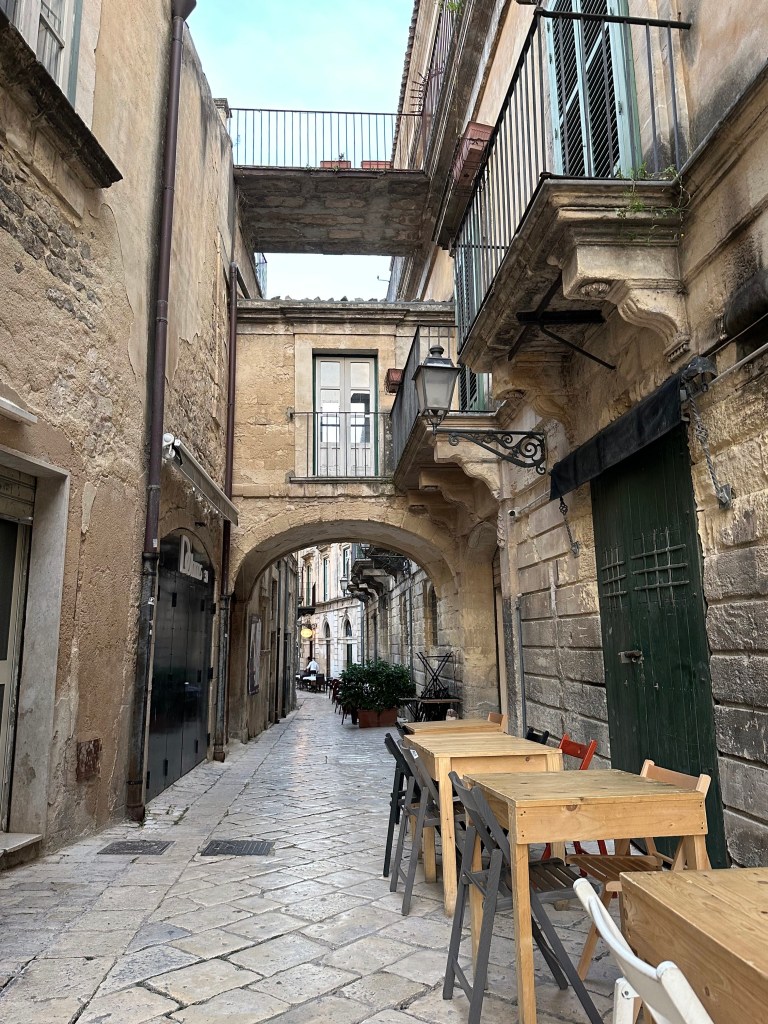
And the passageways that typified this area of town:

Getting closer.

The heart of town:

Ragusa Ibla is the ancient, labyrinthine lower town of Ragusa, a UNESCO World Heritage Site rebuilt in glorious Baroque style after the 1693 earthquake, its honey-colored stone churches and palazzos tumbling dramatically down a rocky promontory surrounded by deep ravines.

The undisputed highlight is the Cathedral of San Giorgio, one of the masterpieces of Sicilian Baroque attributed to Rosario Gagliardi, its magnificent facade rising above a sweeping staircase and presiding over a graceful piazza that ranks among the most beautiful in all of Italy.

Another Citroen breadbox!

Above and behind the Cathedral of San Giorgio:

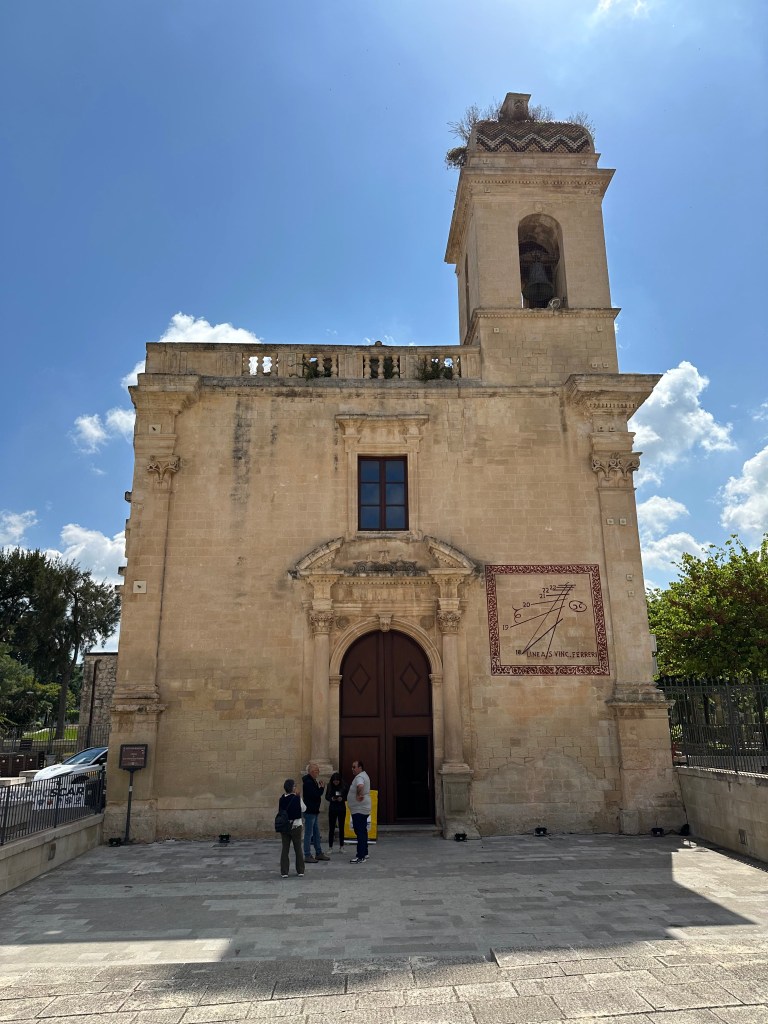
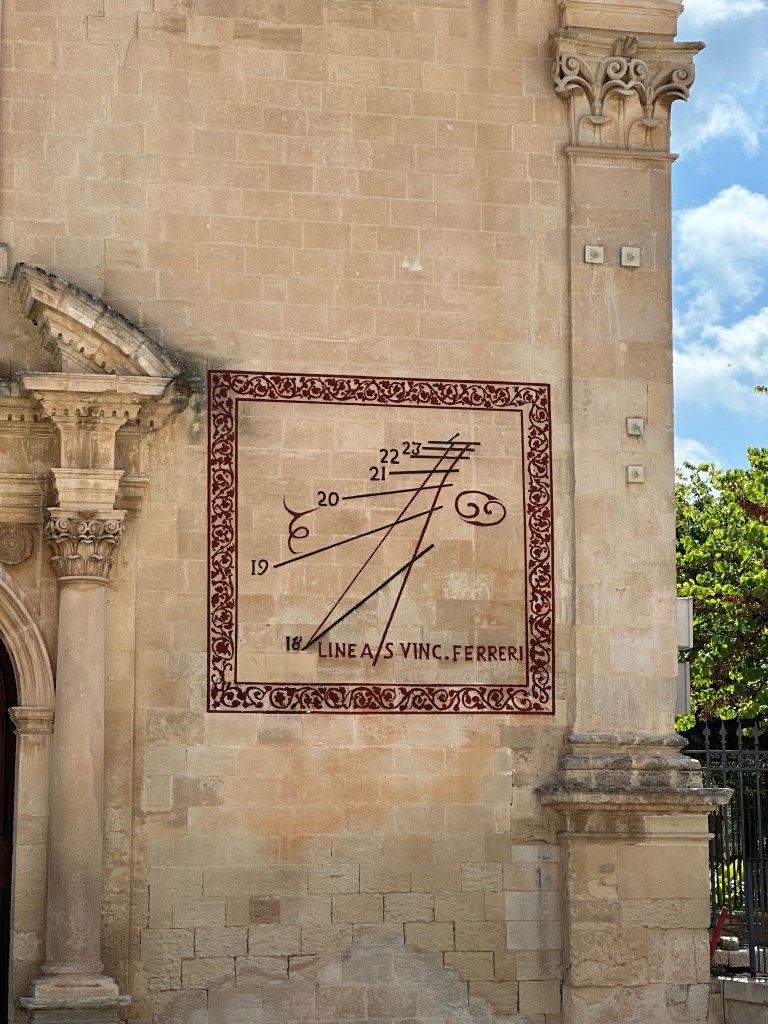
At last, a non-Baroque church. The Church of San Giacomo Apostolo is one of Ragusa Ibla’s oldest sacred sites, dating to the 13th or 14th century and built under the Chiaramonte family, though rebuilt into a single-nave Baroque structure after the 1693 earthquake absorbed the ruins of the adjacent church of San Teodoro. Tucked inside the beautiful Giardino Ibleo public gardens at the eastern tip of Ibla.

Dig the sundial:

And more Baroque balcony ballustrades:

And a mishap spotted on the hilly, serpentine alleys of Ragusa:

Not happy:

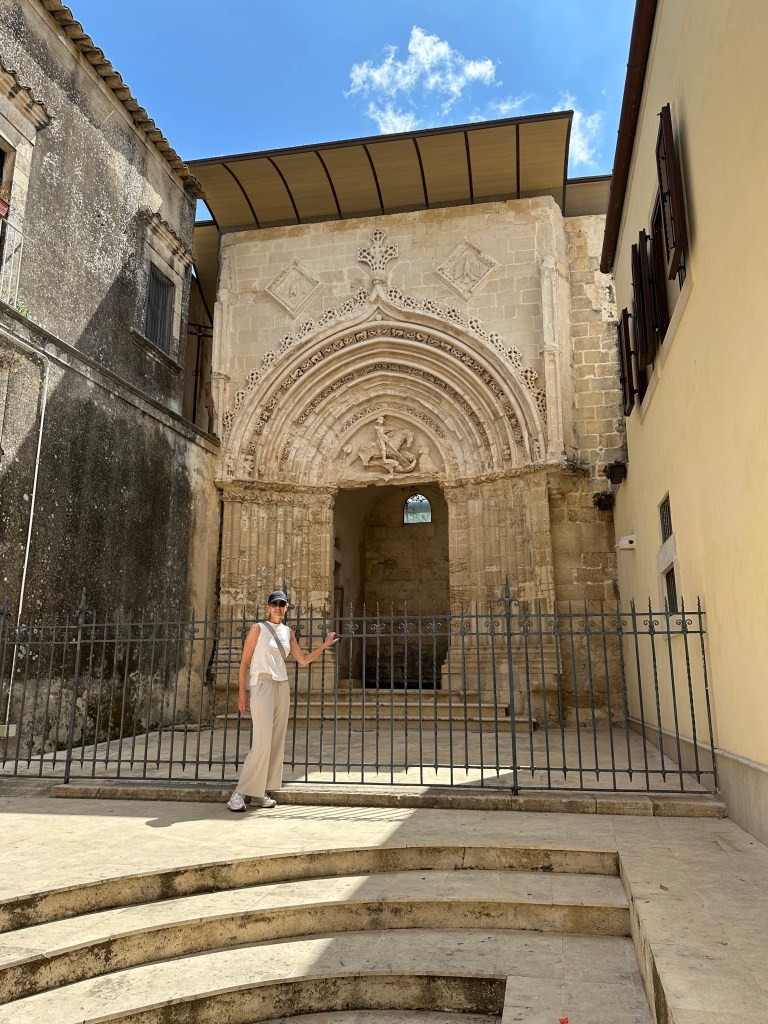
Portale di San Giorgio — the Gothic portal of the ancient Church of San Giorgio, which was completely destroyed in the 1693 earthquake. The original church dedicated to St. George existed as far back as 1120. The 13th-century doorway depicts St. George slaying the dragon and is now a UNESCO-protected symbol of Ragusa’s resilience — a solitary medieval portal standing alone as the sole survivor of an entire church.

Chiesa di San Giacomo Apostolo – definitely not Baroque. The church dates to the 13th century, hence its more Romanesque appearance.

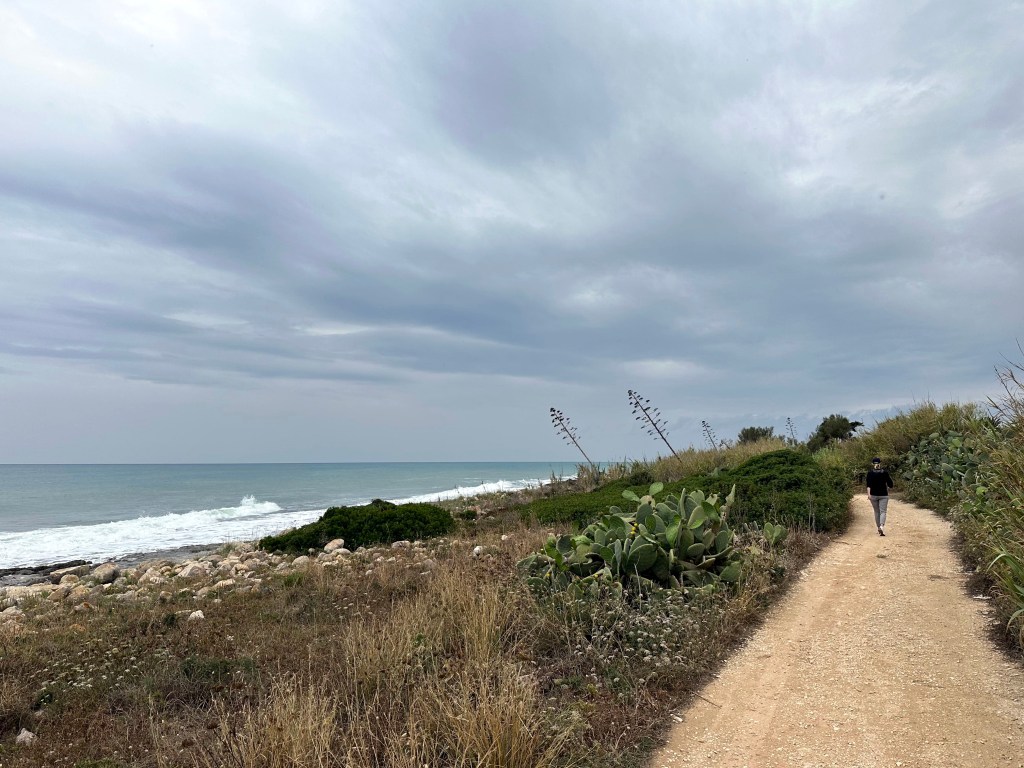
Unlike our 3-month New England and eastern Canada sojourn the next year, we couldn’t run every day here, but we could walk on the coast. So we headed a few mornings to beach towns just south of Modica. Which, frankly, provided some really nice hikes.

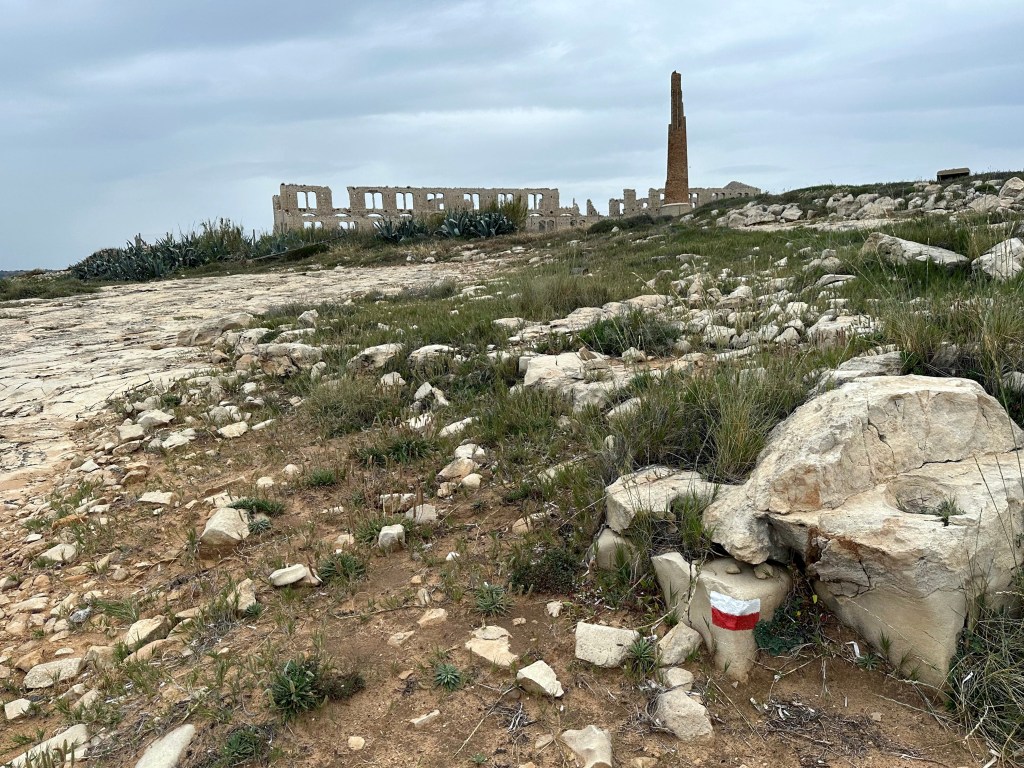
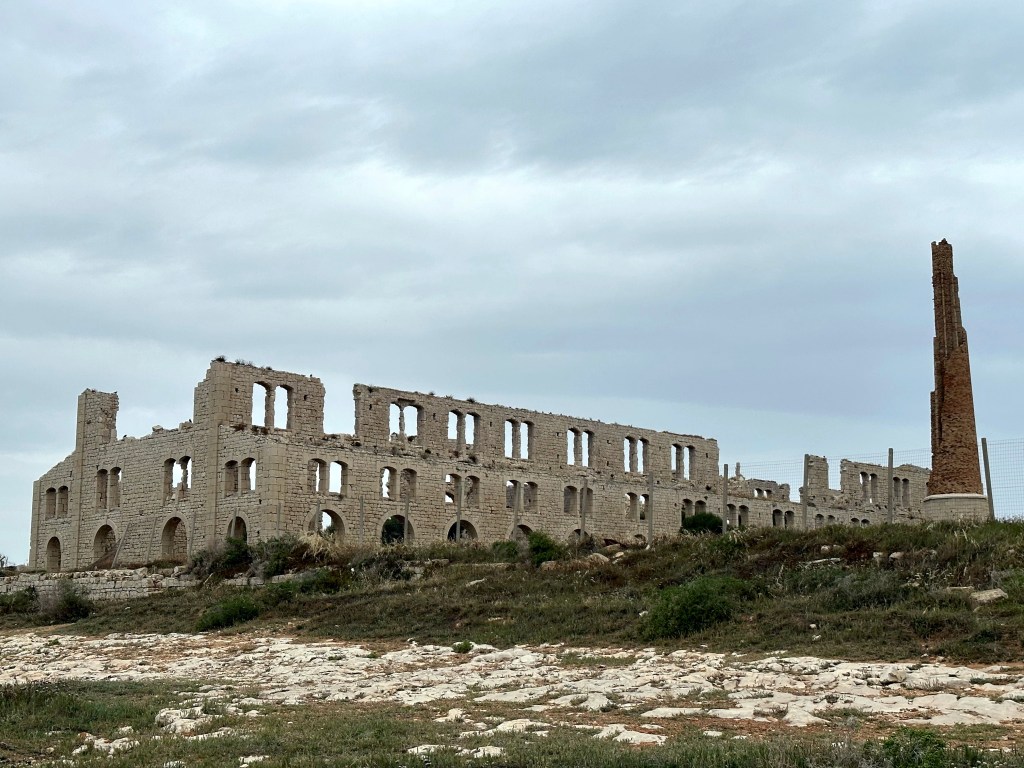
Our first hike took us past Fornace Penna, a hauntingly beautiful industrial ruin perched on a promontory just meters from the sea near the beach town of Sampieri. The kiln was built between 1909 and 1912 to produce bricks and construction materials.

After only 14 years of operation it was destroyed by arson in 1926, and the owner chose never to rebuild it — leaving behind one of Italy’s most photogenic industrial ruins.

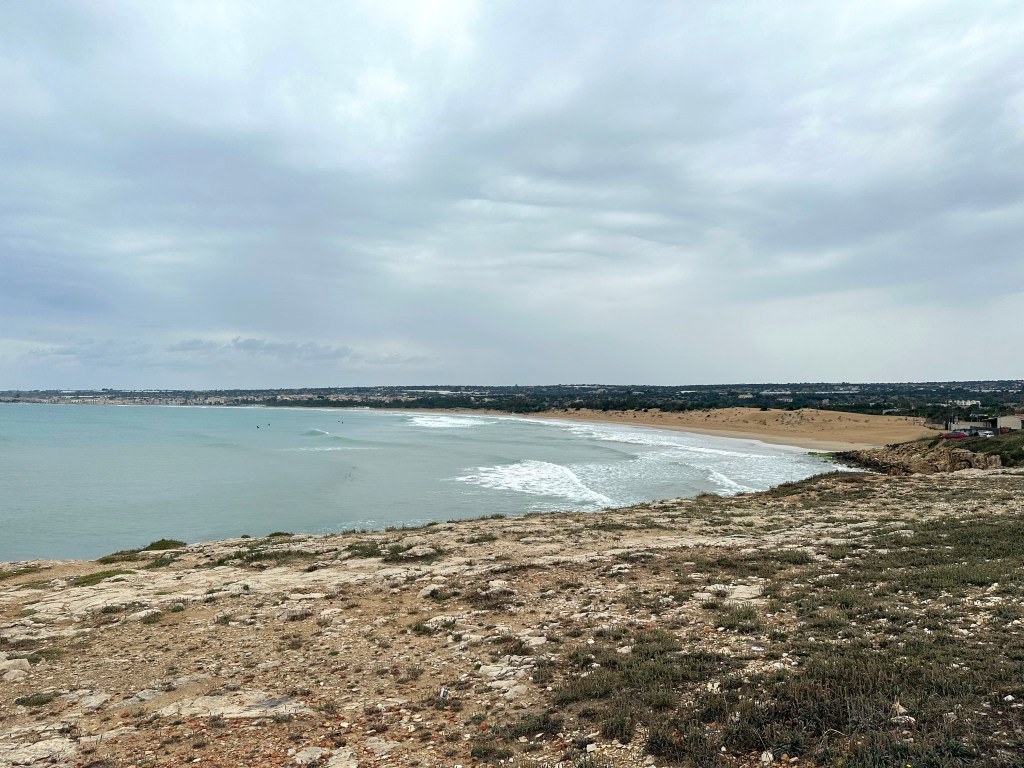
Little coastal view hiking into the beach town of Sampieri:

Not great.

Bodi’s out there performing for Point Break, we think.

Scicli

Our penultimate Baroque town to visit lay between Modica and the beach: Scicli.

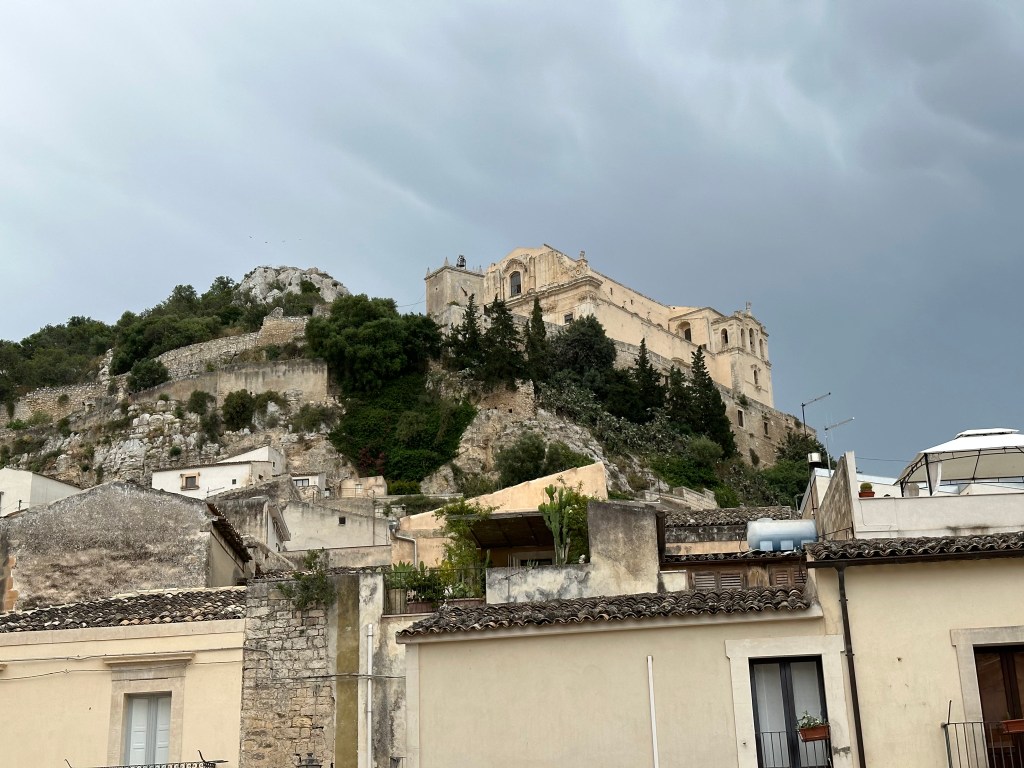
Scicli is a UNESCO-listed Baroque town tucked dramatically into the junction of three valleys in southeastern Sicily, rebuilt in golden stone after the catastrophic 1693 earthquake and flanked by a rocky hill crowned by the abandoned Church of San Matteo.

Smaller and less visited than its neighbors Ragusa, Modica, and Noto, Scicli still offered charm and – unlike Modica – a pedestrian core.

But just like Modica alta, Scicli had plenty of steps.

Leading to a pretty decent view.

Chiesa del Rosario perched on the cliff above town.

Chiesa di San Giovanni Evangelista from the top of the post, exemplifying the Baroque style:

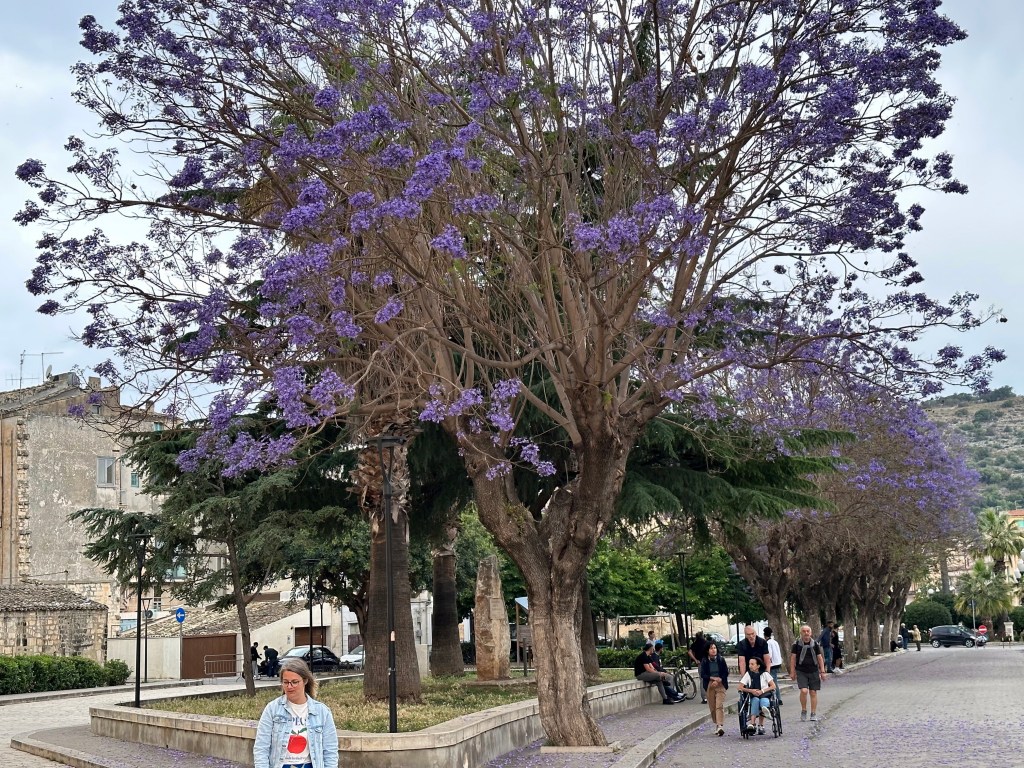
Jacaranda trees in Scicli, similar to those seen in another hilly town, Olvera, on our Catalonian bike trip.

Noto

And finally, a stopover in Noto, on the drive from Modica to Siracusa.

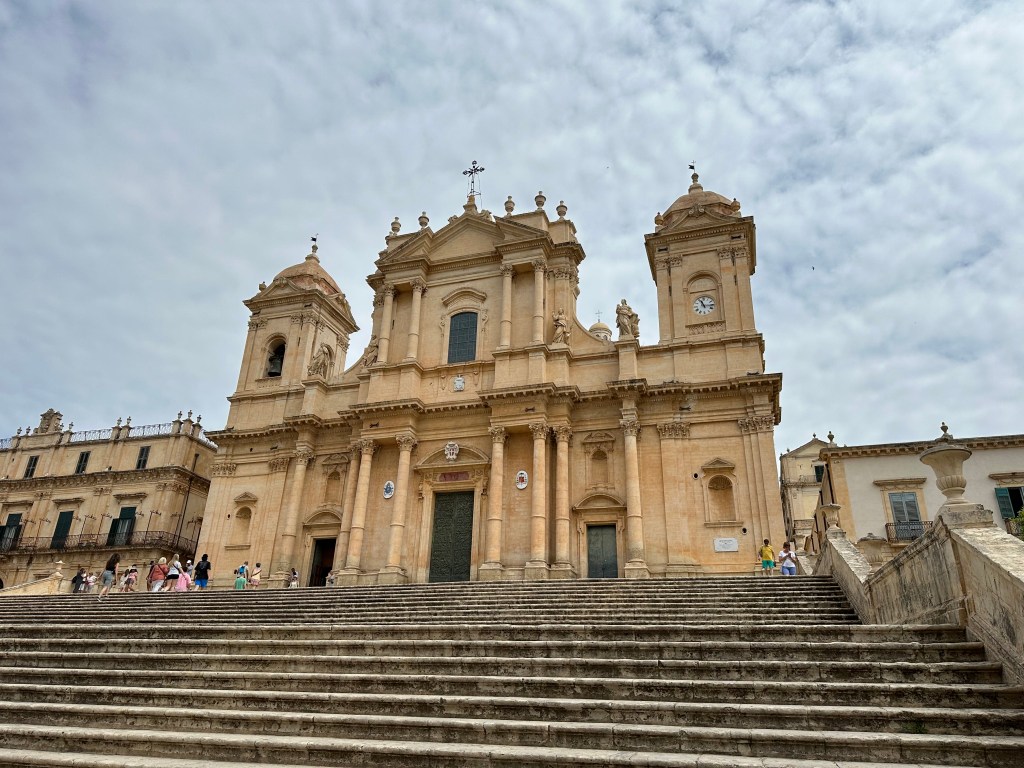
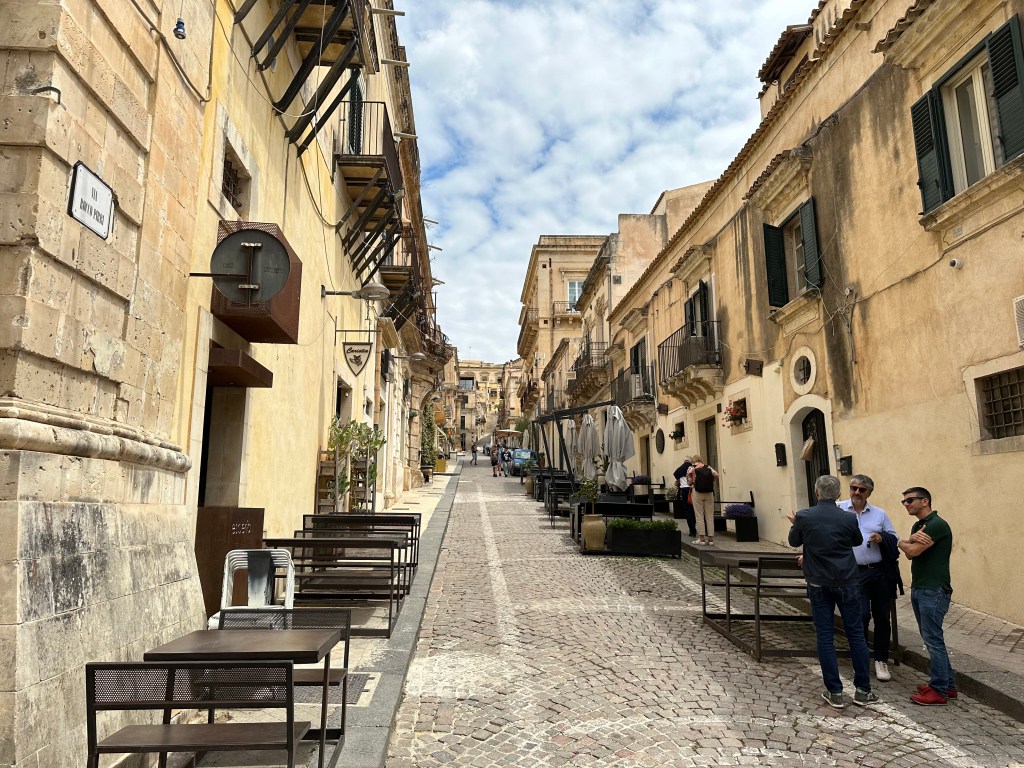
Noto is known as “the Capital of Baroque,” so our visits to its brethren apparently were just the warm up to the real deal. The main street, Corso Vittorio Emanuele, is, indeed lined with ornate churches and palaces that make the whole town feel like an open-air museum.

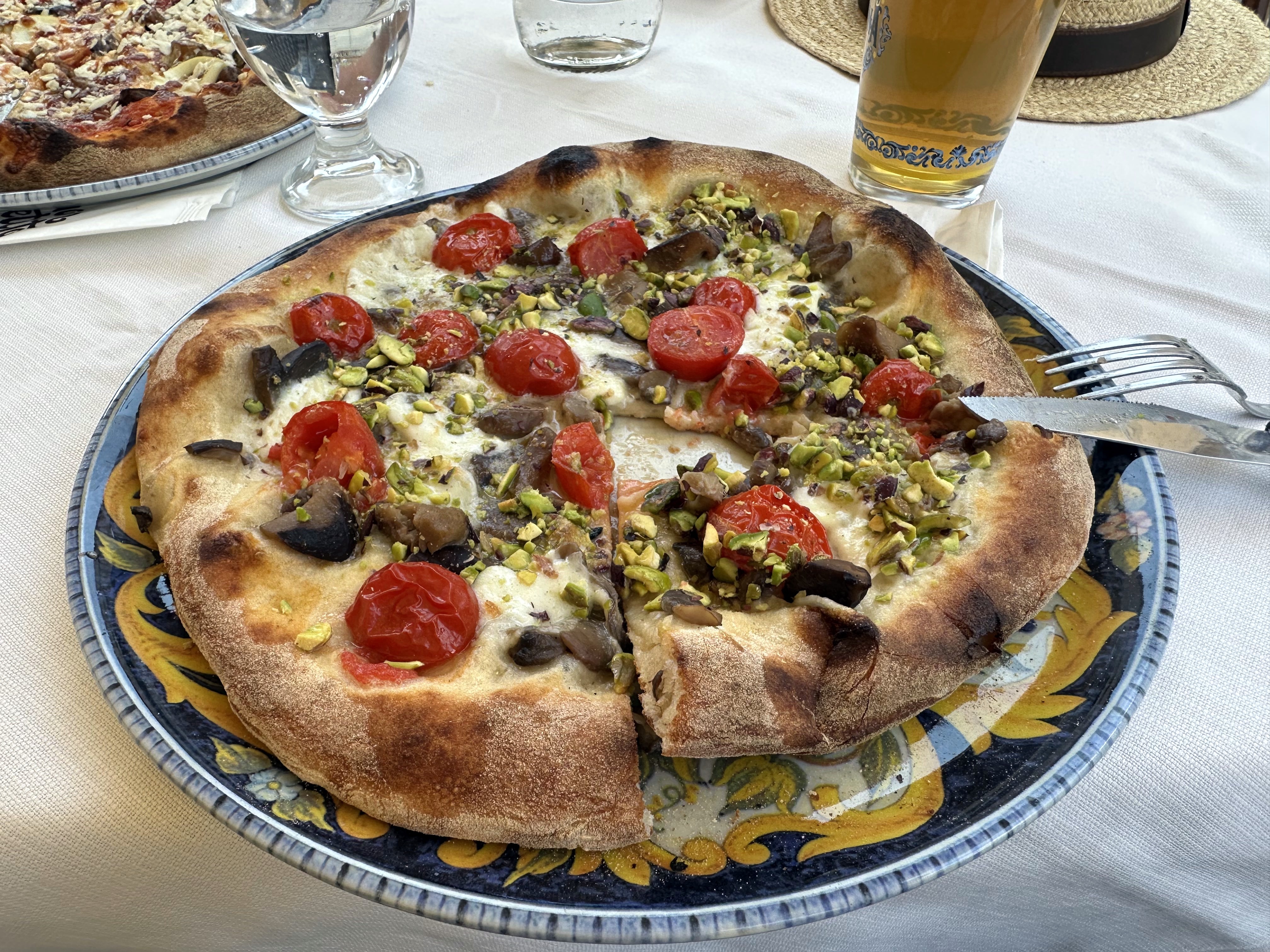
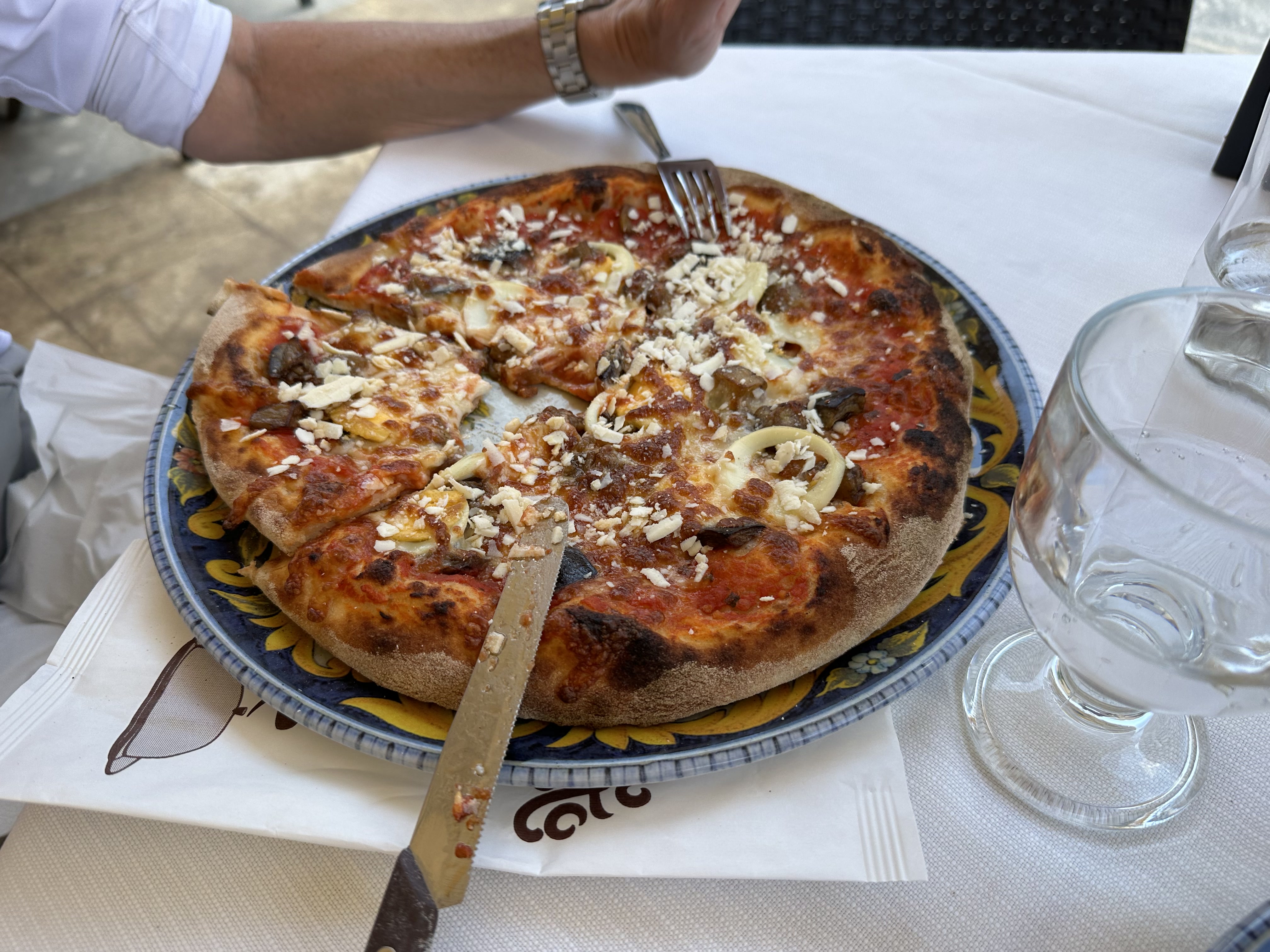
Little lunch in Noto, featuring both Neapolitan crusts and Sicilian pistachios.

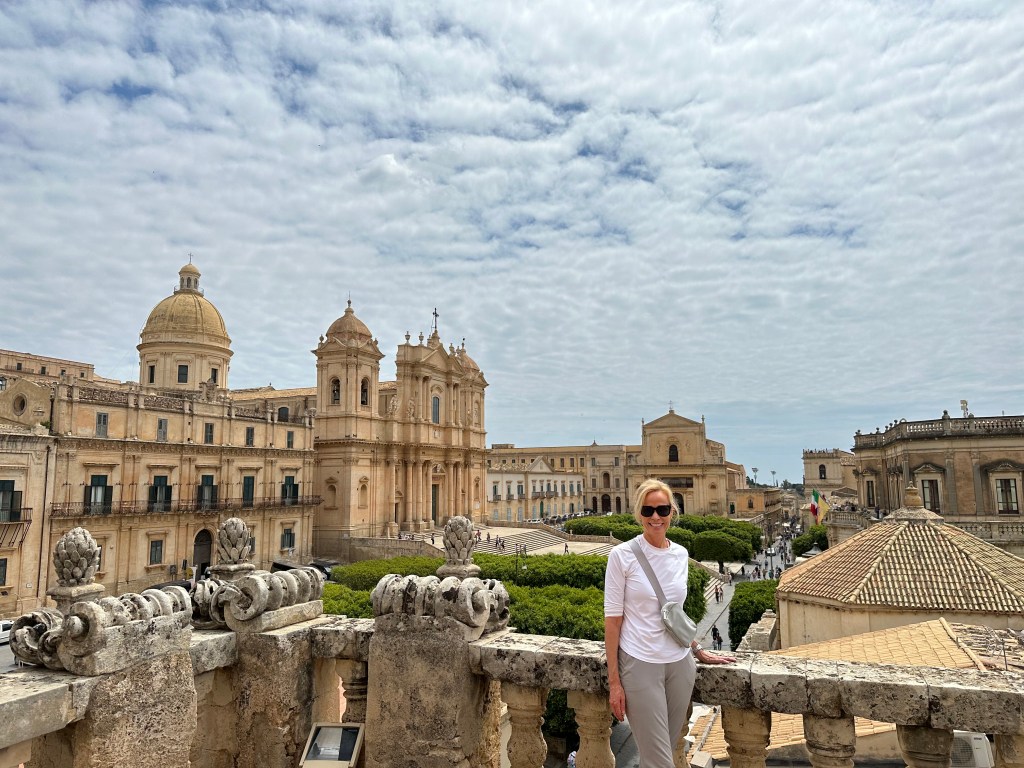
Noto’s cathedral:

And more Baroque balcony buddies:

Pretty great view over town from the roof of the Church of St. Charles Borromeo:

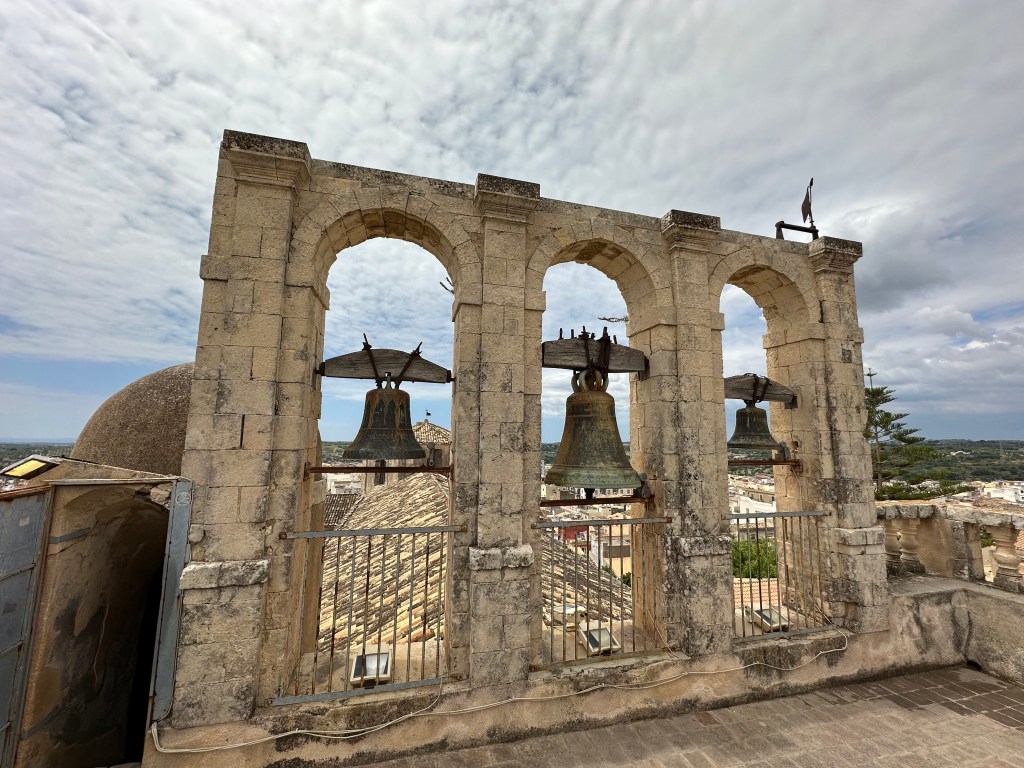
St. Mary’s bells in Old Town are better. . .

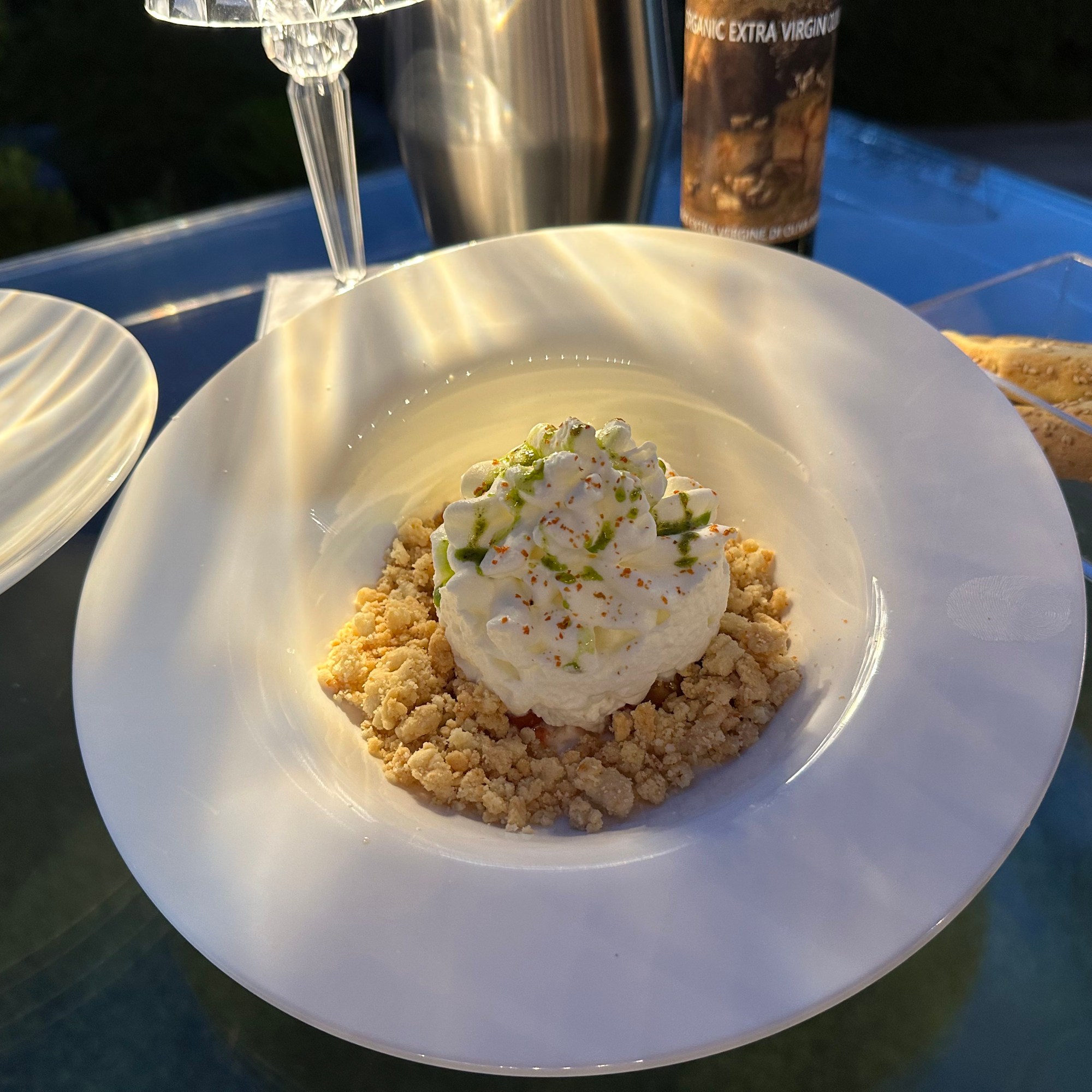
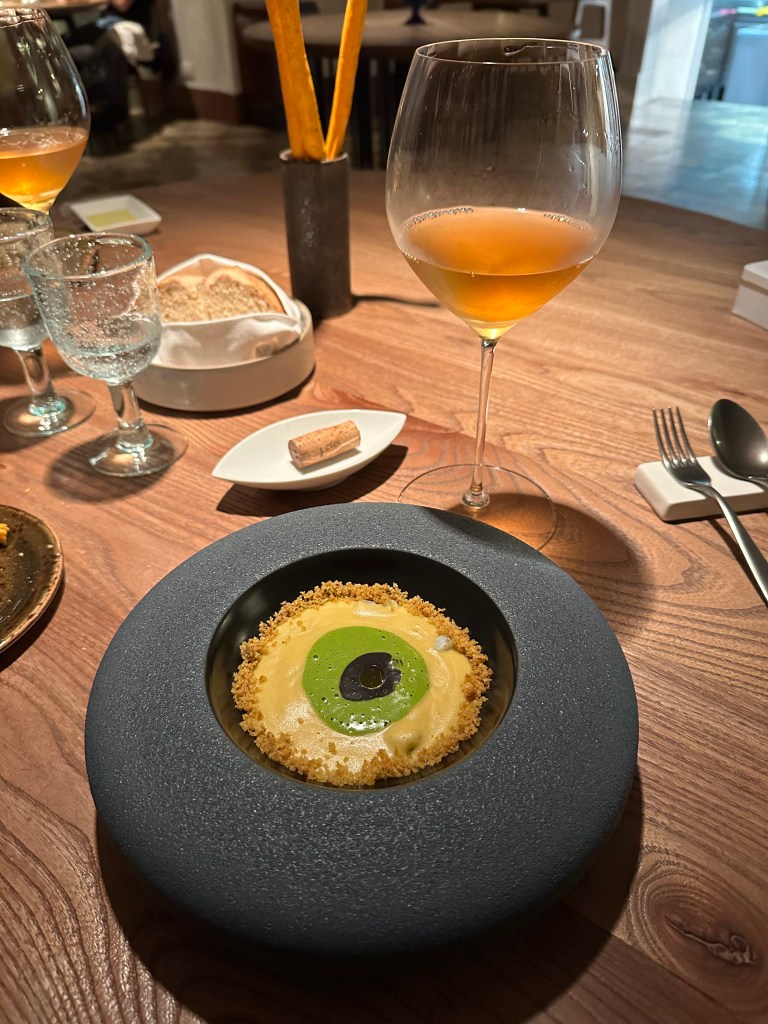
On our final night in the Baroque towns, we finally checked the Michelin-starred box for dinner in Modica at Accursio – one of the four best dining experiences of the trip, and our introduction to Sicily’s orange wine:

Wrapping up for the night before hitting the road the next morning:

Next up: Syracuse / Siracusa.

Categories: A Prolonged Foray to Europe, Sicily | Tags: , , , , , , , , , , | Leave a comment

A Prolonged Foray to Europe: Syracuse / Siracusa

After a little less than a week barnstorming Baroque burgs, we headed further east, to the palpably historic quasi-island of Syracuse.

Founded by Corinthian Greeks (not the Doric Greeks) in 734 BC, Siracusa (Syracuse) rose to become one of the most powerful city-states in the Mediterranean. At its peak under the tyrant Dionysius I in the 4th century BC, it rivaled Athens itself in wealth, population, and military might. It was here that Archimedes was born and conducted his legendary experiments, here that the Athenian fleet suffered one of history’s most catastrophic military defeats in 413 BC, and here that Cicero served as quaestor, later calling it the most beautiful city in the Greek world. All concentrated on the small island of Ortigia (and the surrounding mainland).

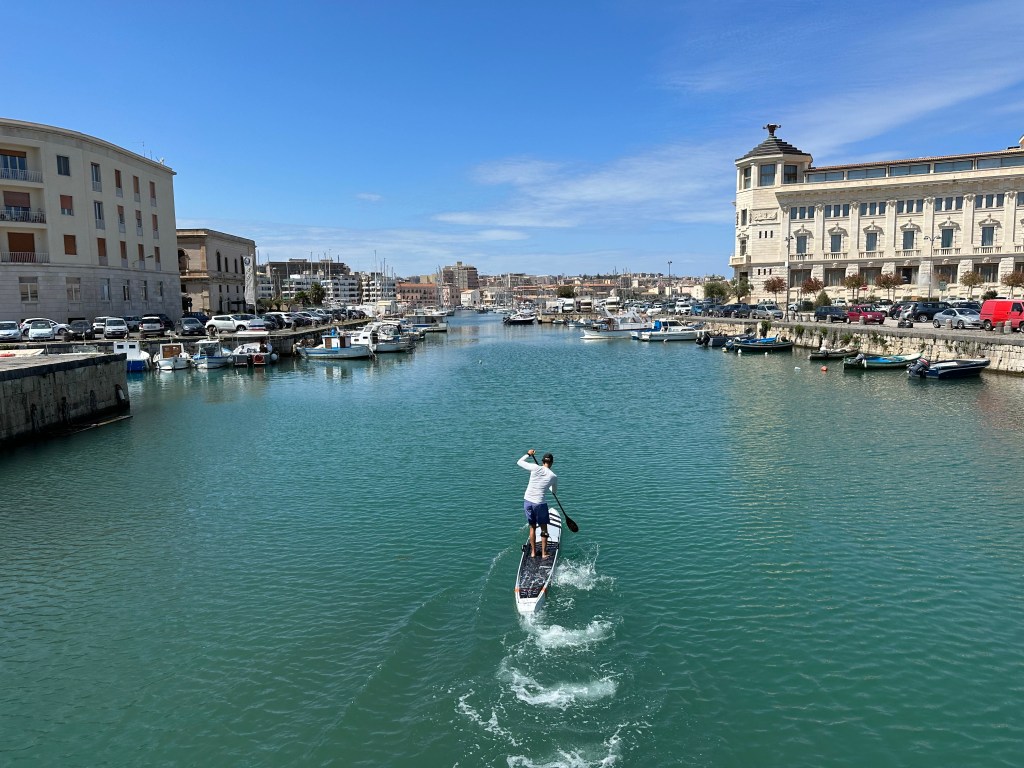
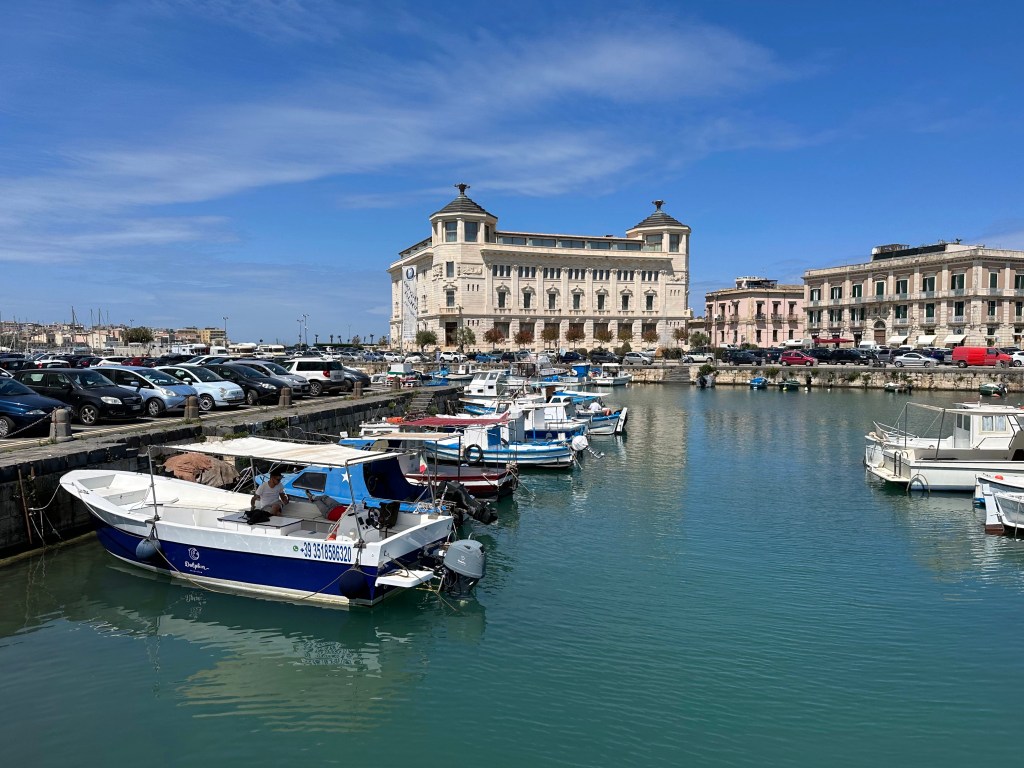
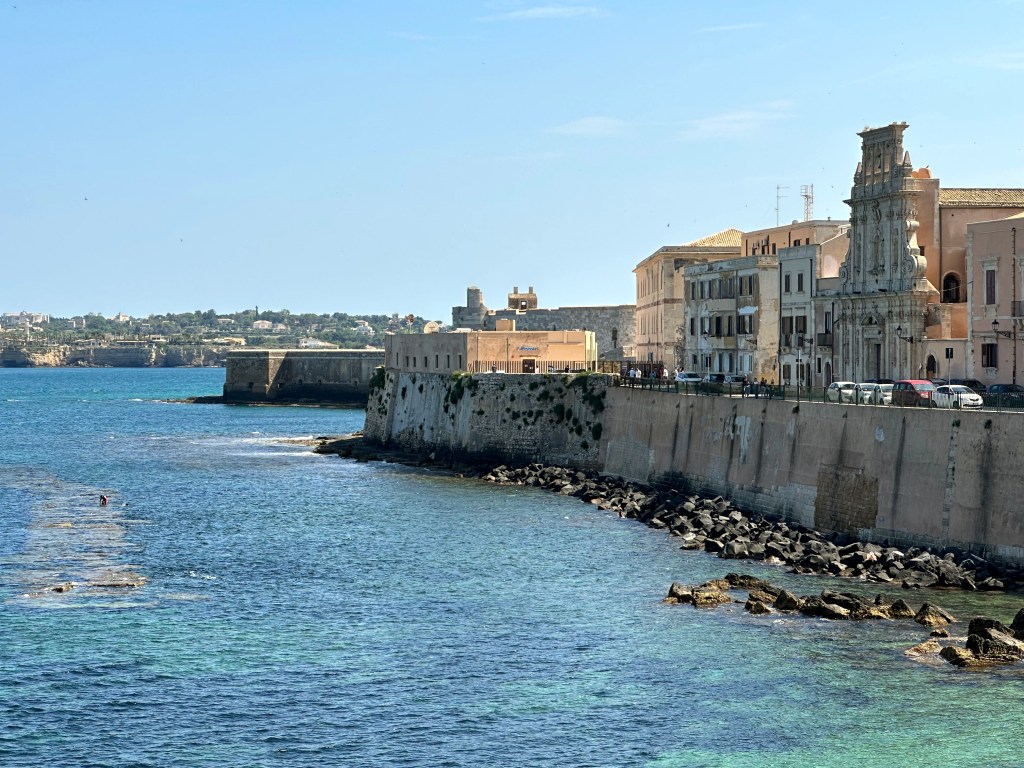
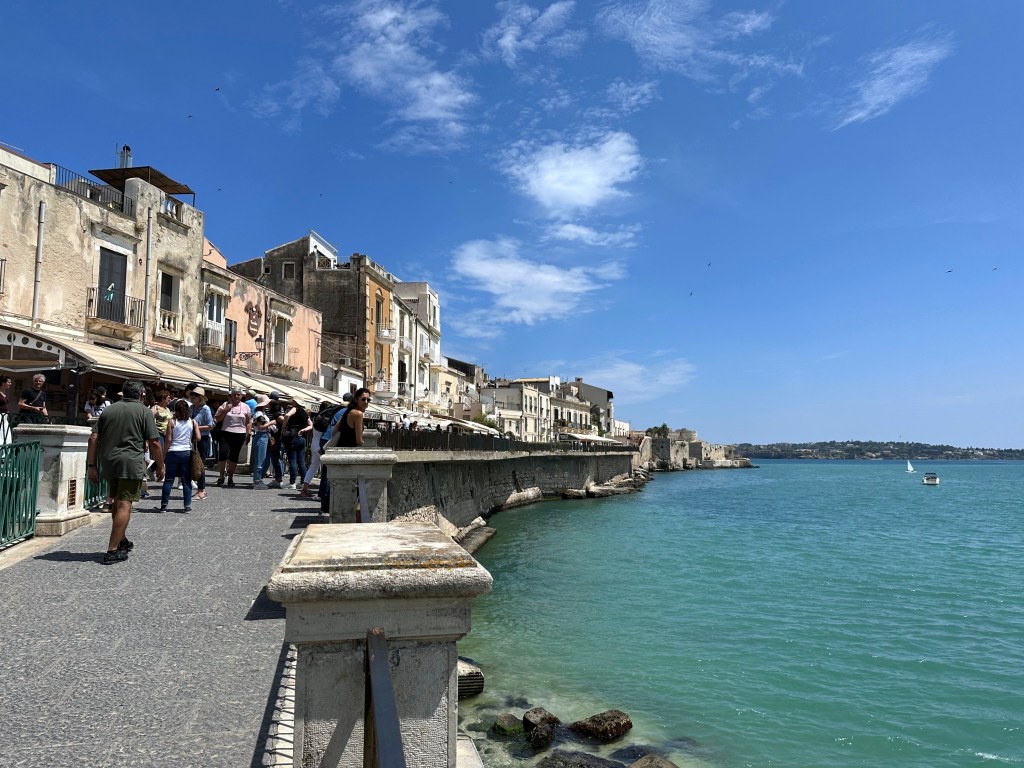
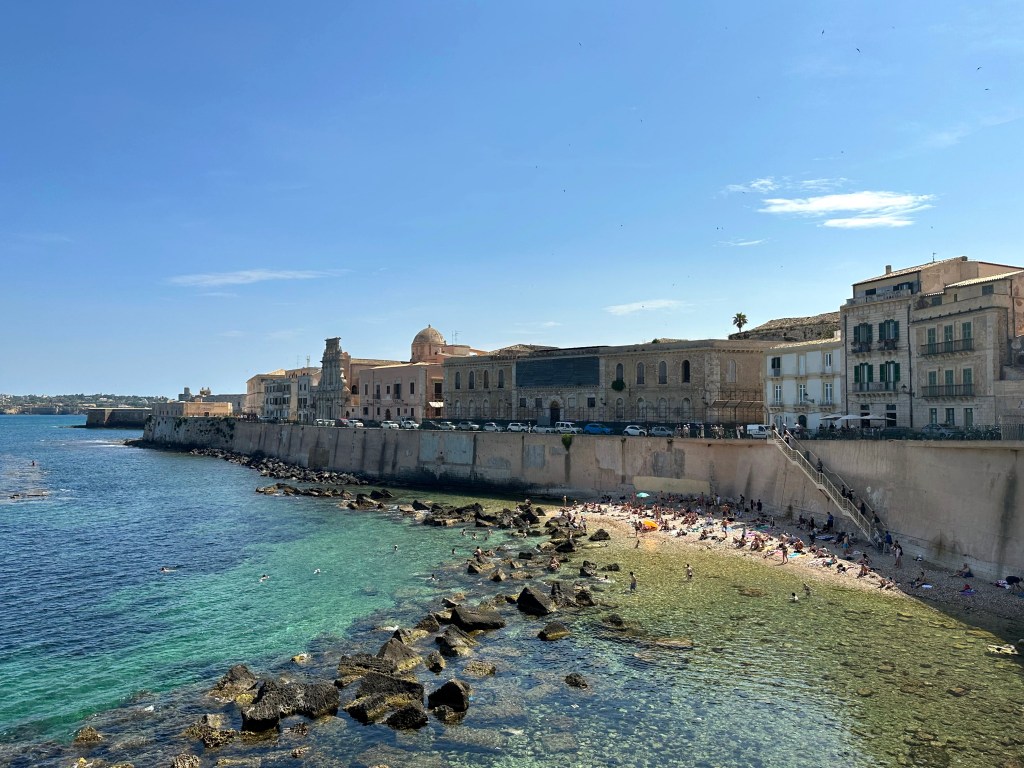
View from the bridge between the mainland and Ortigia (although you’re never really aware that you’re on an island, inasmuch as this is the extent of the separation):

Siracusa’s extraordinary layering of Greek, Roman, Byzantine, Arab, Norman, and Aragonese civilizations (and Baroque architecture) earned it UNESCO World Heritage status in 2005.

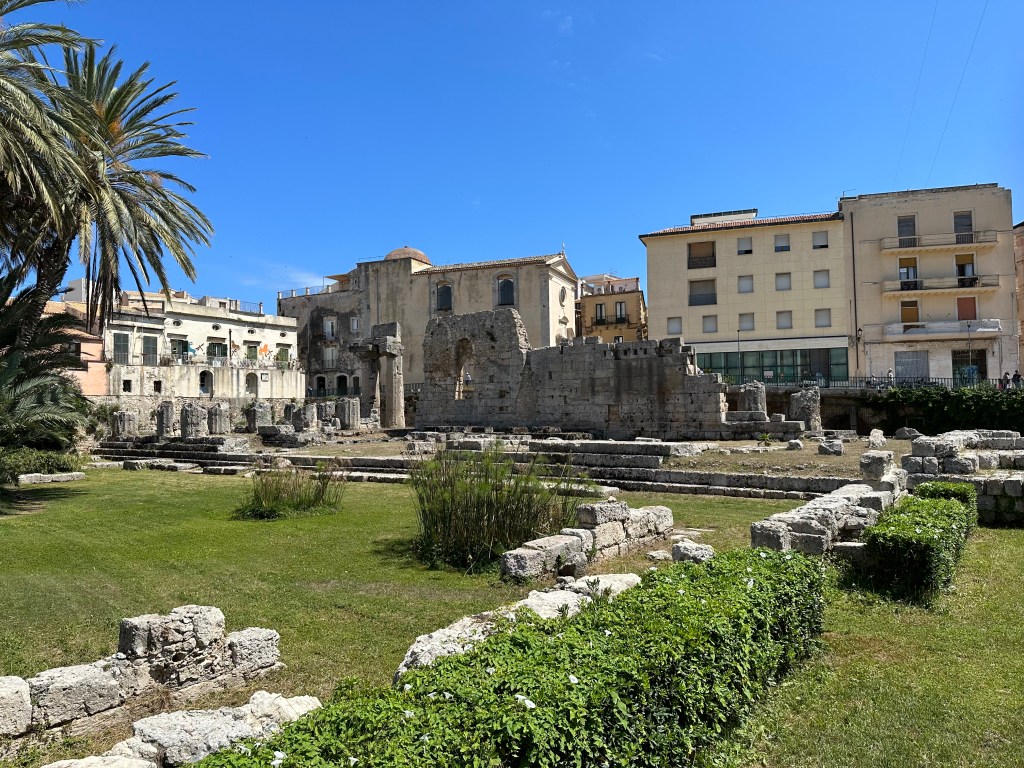
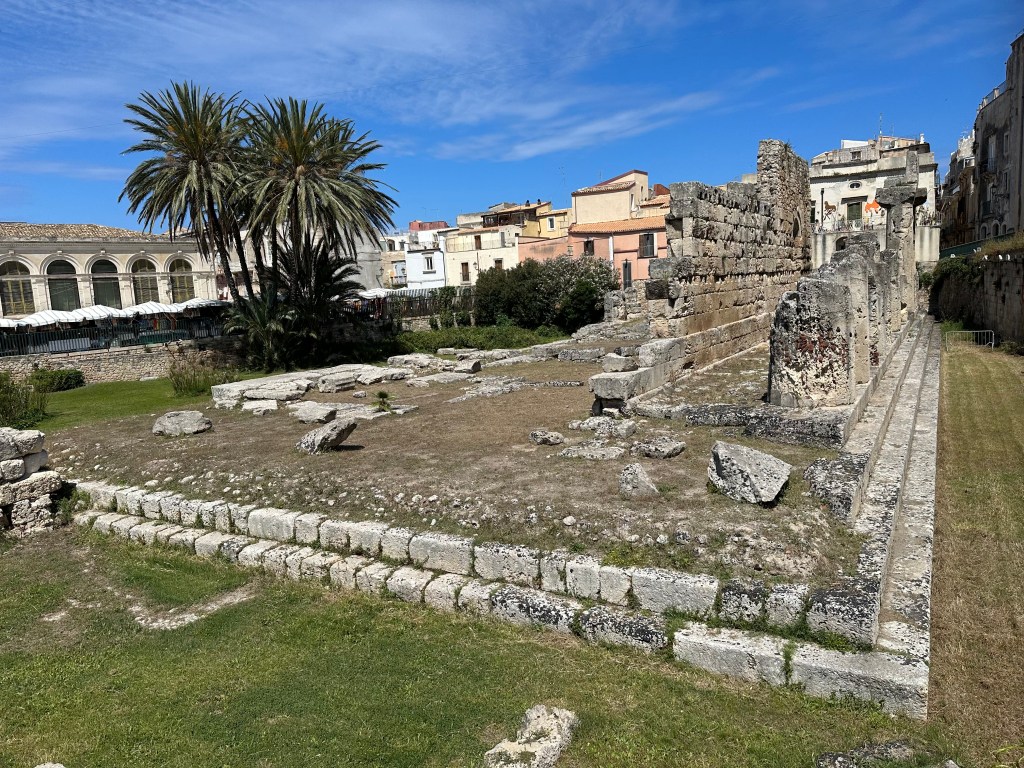
Exiting our hotel, we immediately run into ruins: ironically a Doric temple to Apollo from the 6th century BC:

The Greek temple, unintentionally functioning as a snapshot of Sicily’s many cultural and religious layers of history, served later as a Byzantine church, an Arab mosque, a Norman basilica, and the Aragonese Church of Sanata Maria della Grazie as part of a Spanish barracks. It was finally demolished in 1864 – all of those layers of history reduced now to a mere archeological vestige of its prior history.

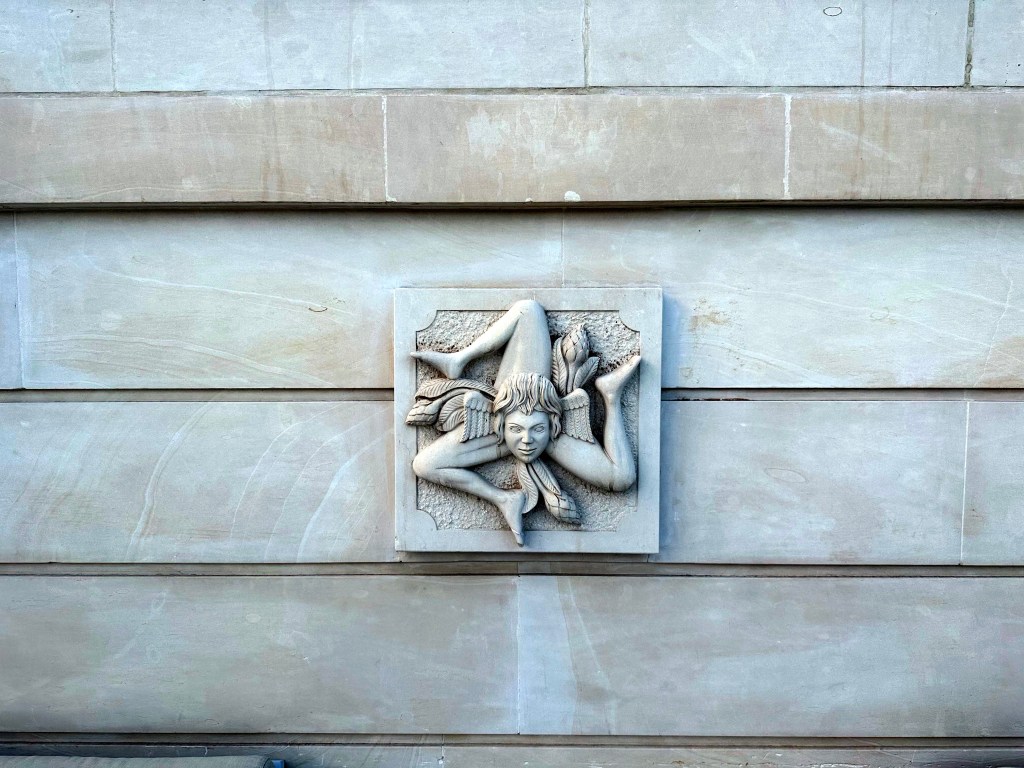
Our little Sicilian trinacria buddy embossed on a nearby building:

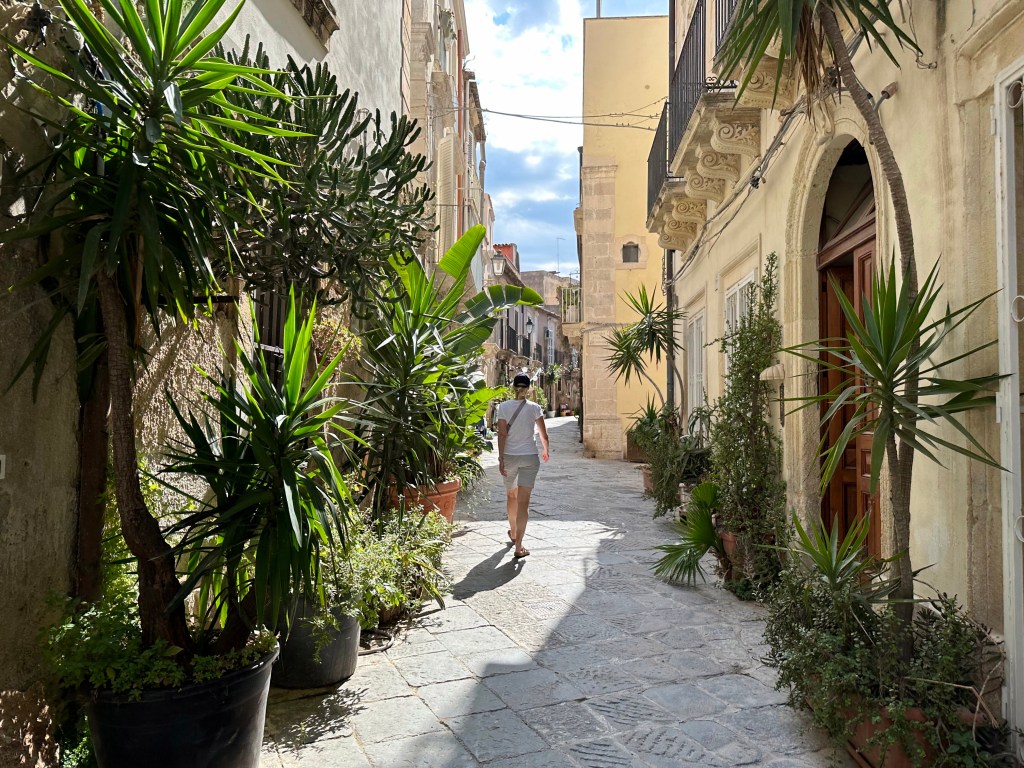
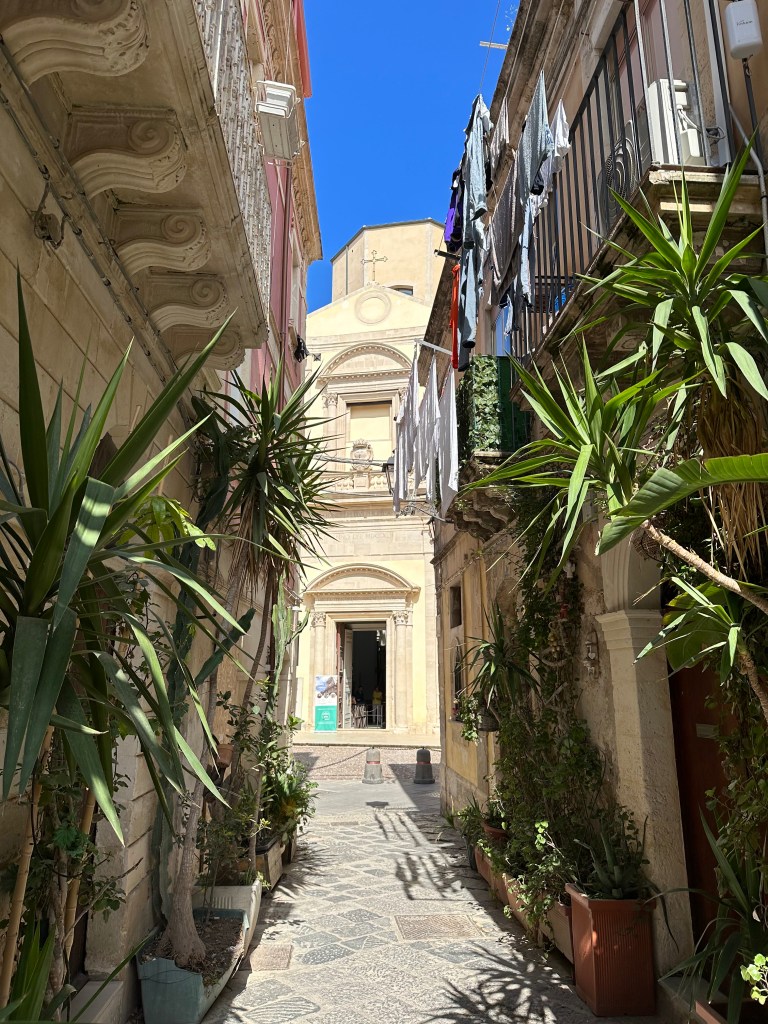
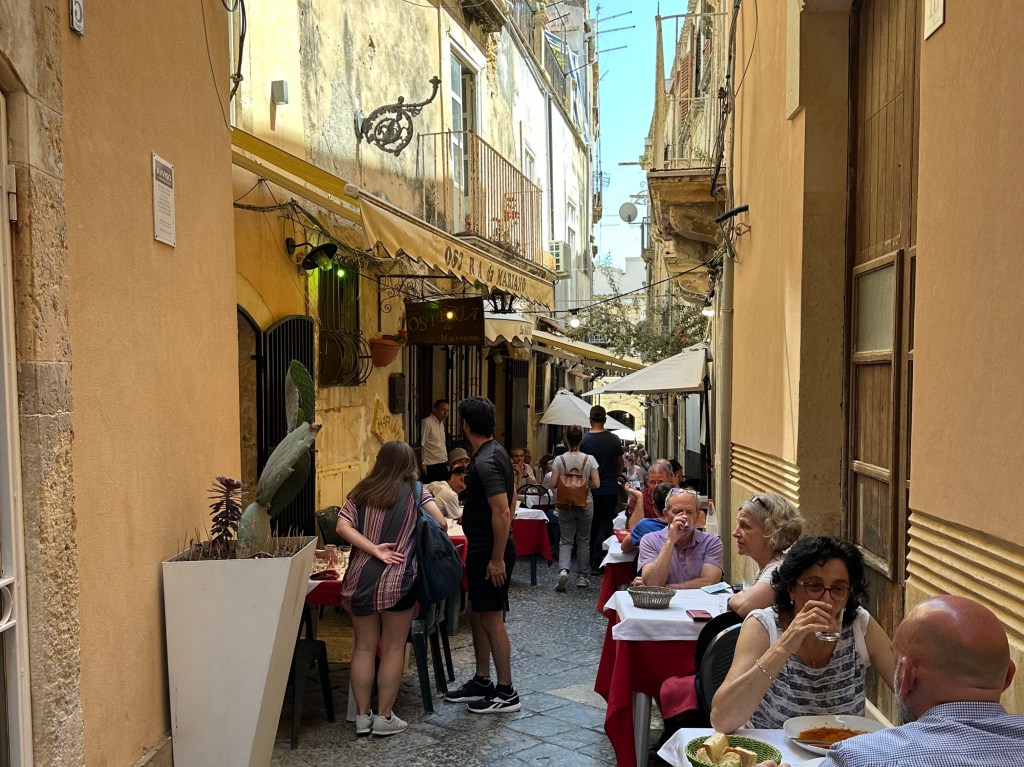
The winding alleyways of Ortigia in Syracuse:

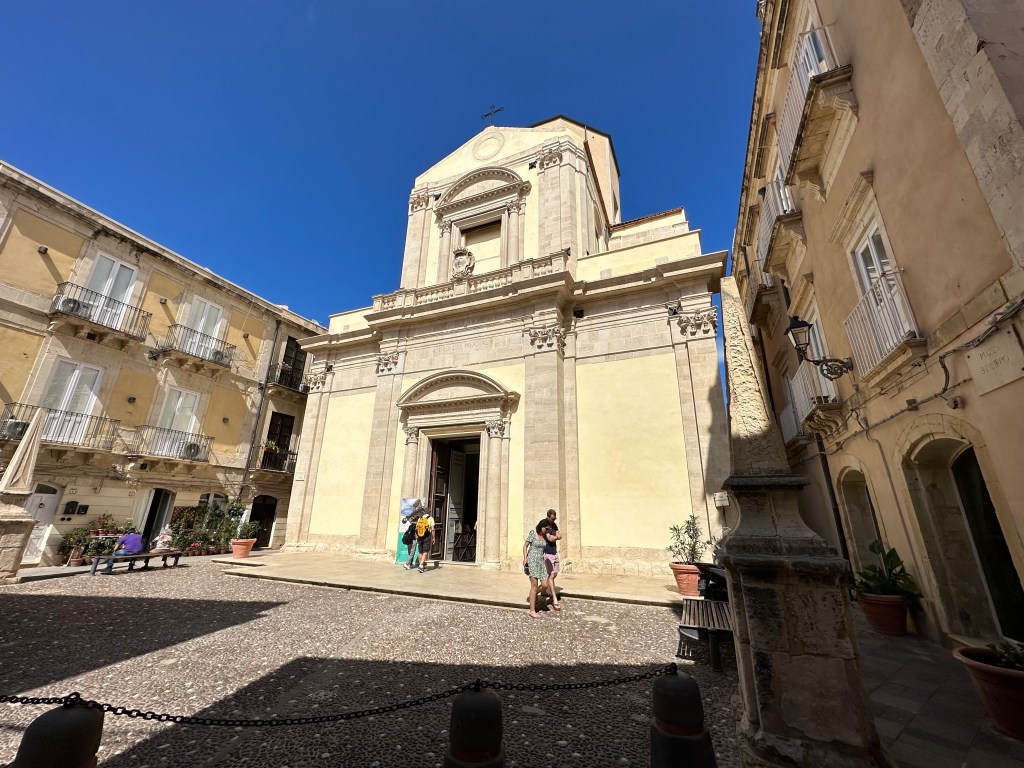
One of which brought us here, to Chiesa di San Filippo Apostolo:

But our interest here lay not in the plain-Jane church (not even Baroque ornamental!). . .

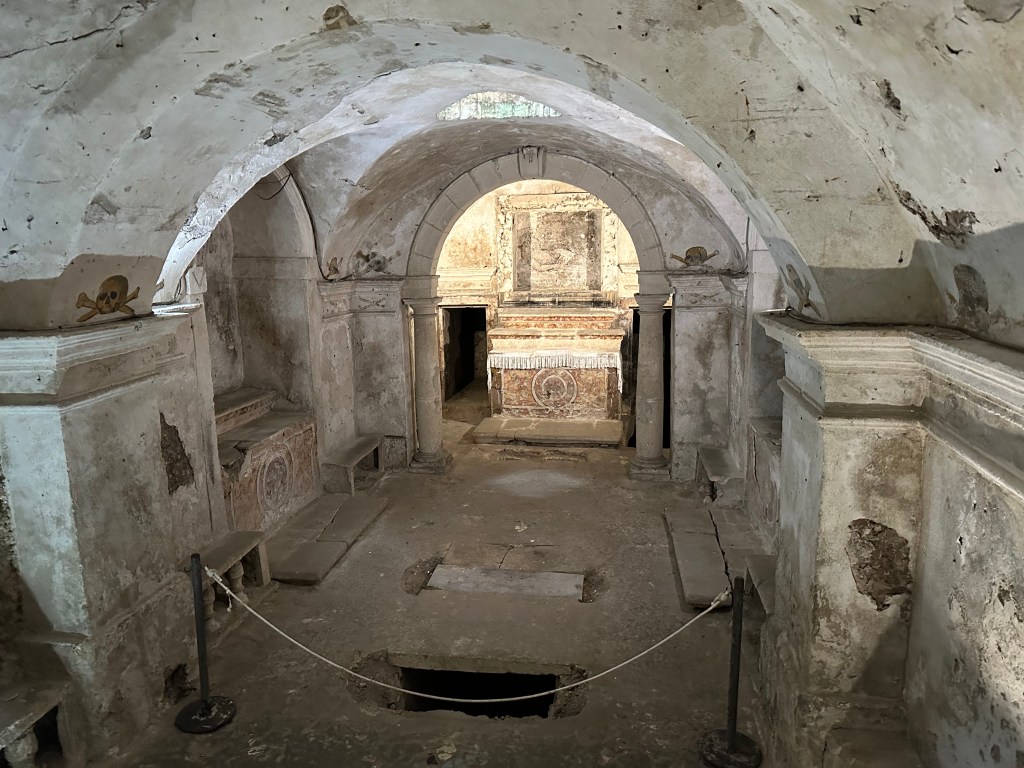
but what lies beneath:

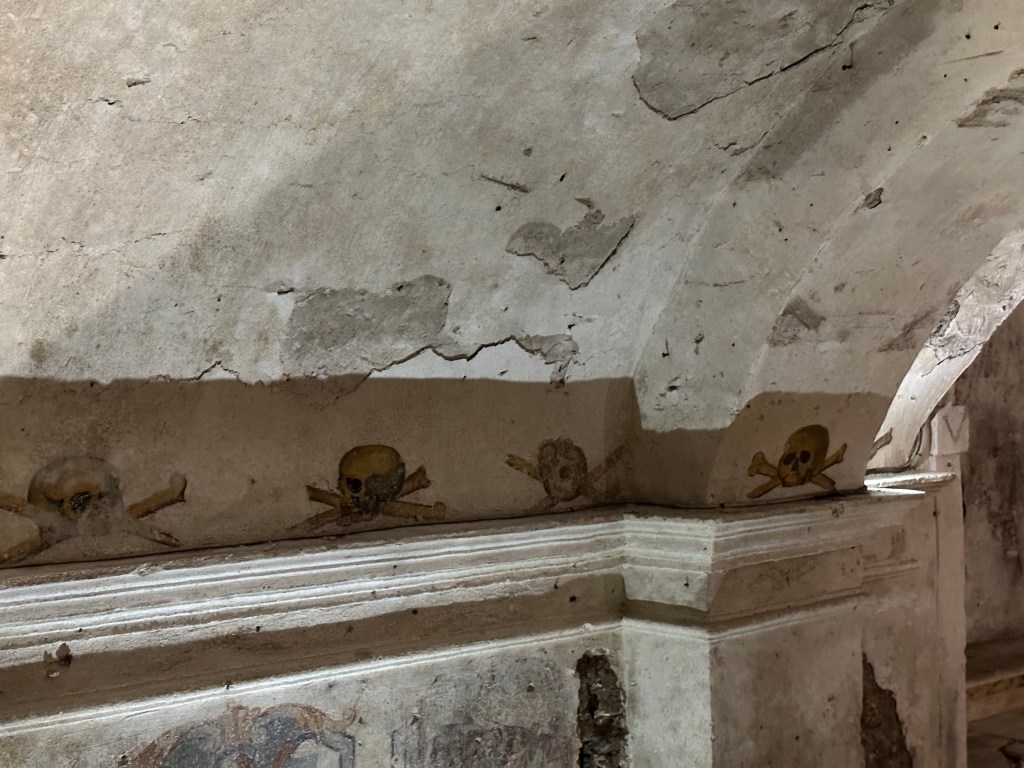
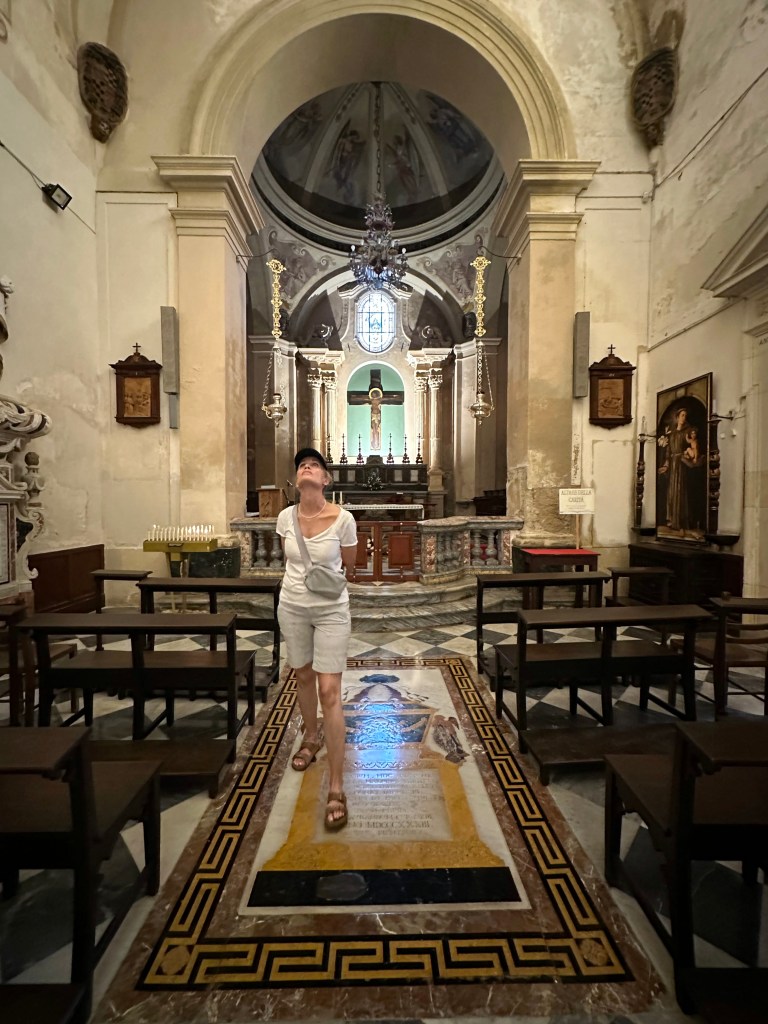
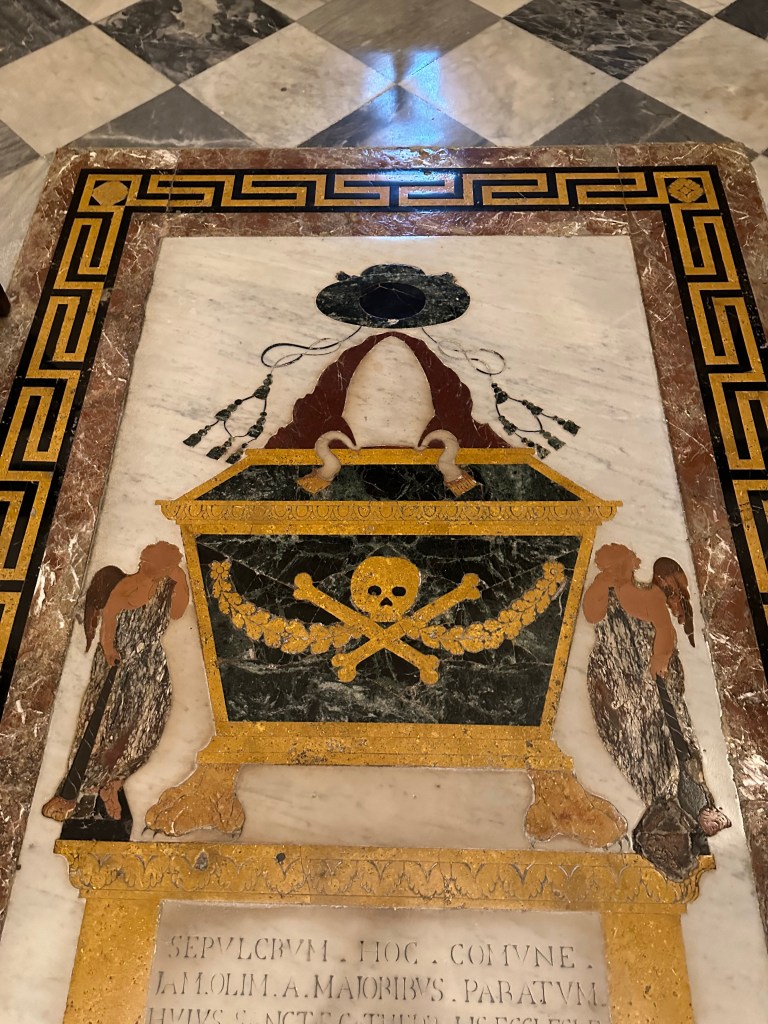
Immediately under the church floor lies an initial, pretty standard subterranean crypt level with 18th-century frescoes, burial chambers, and funerary chapels. This space was occupied by a confraternity, a Catholic religious brotherhood attached to a church — essentially a lay religious society rather than monks or priests — that frequently used underground burial and meeting space beneath the church.

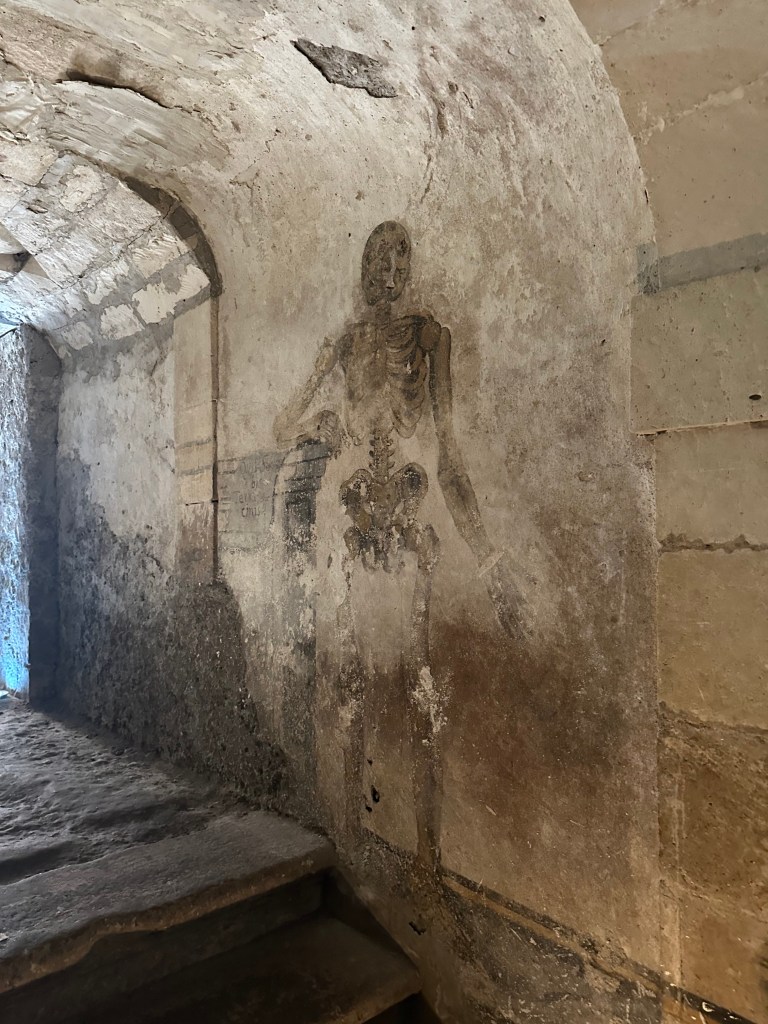
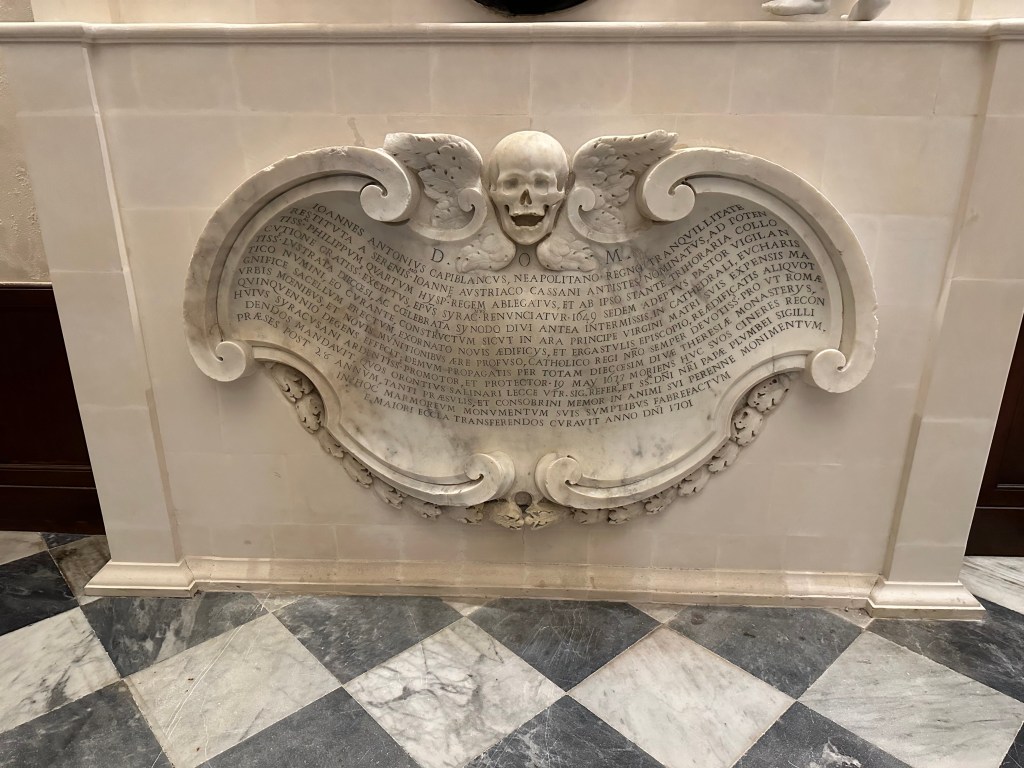
Some pretty wild mortality imagery throughout the crypt.

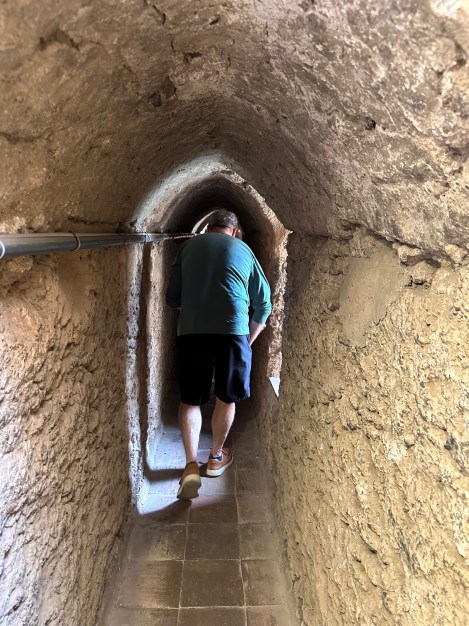
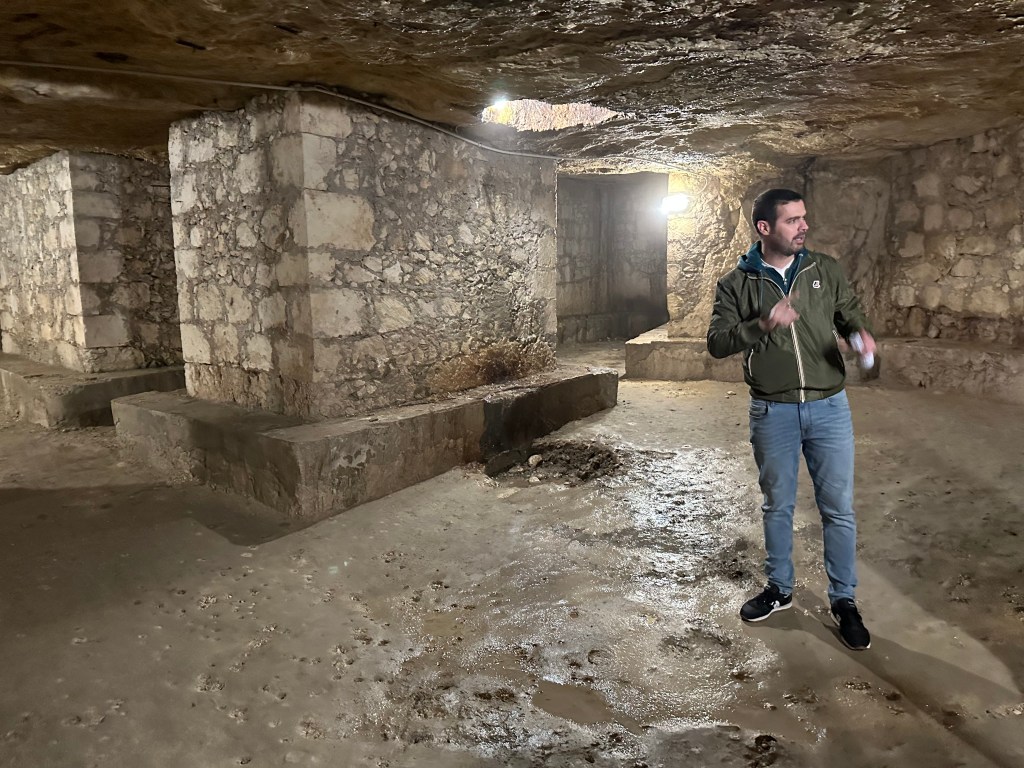
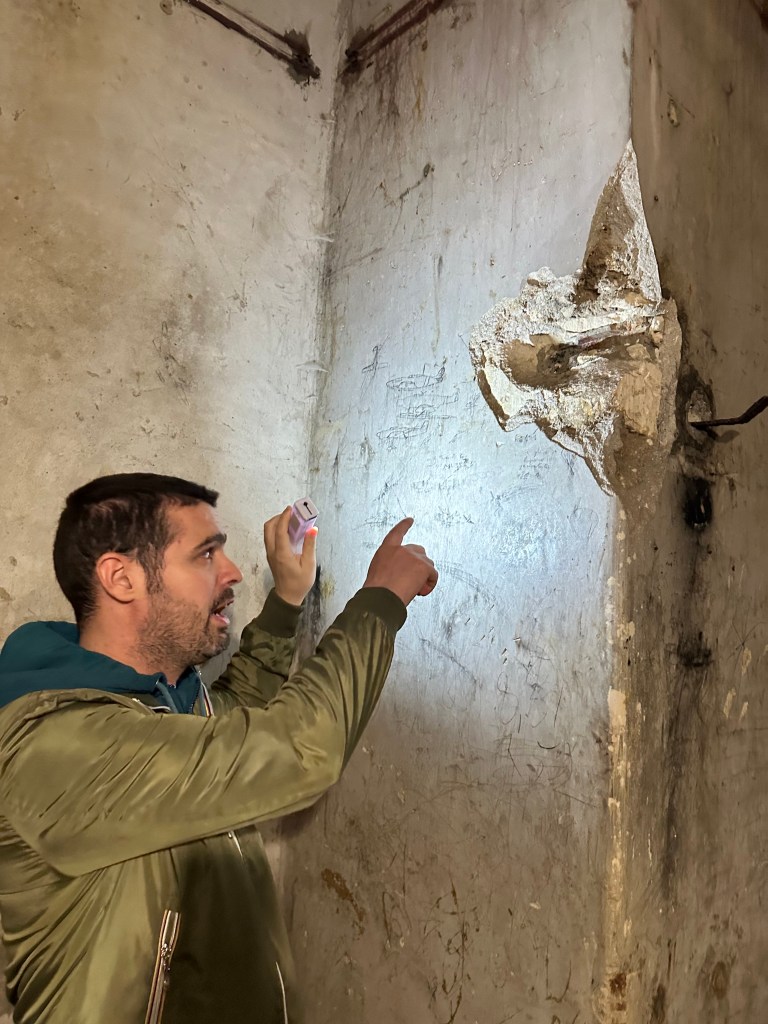
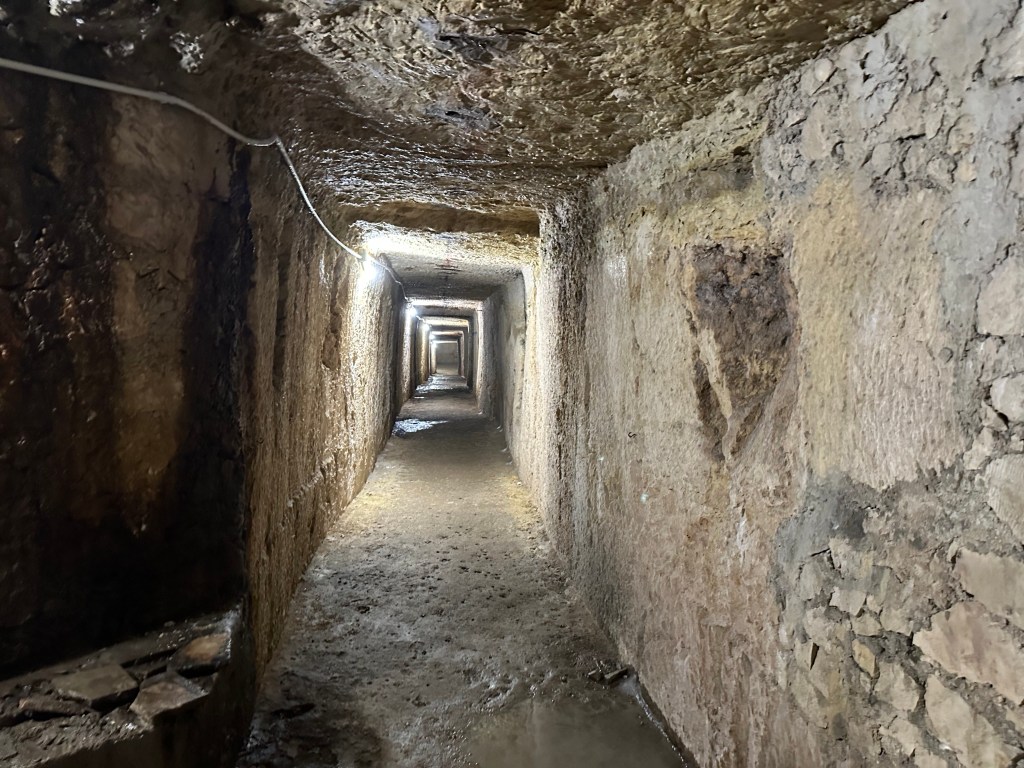
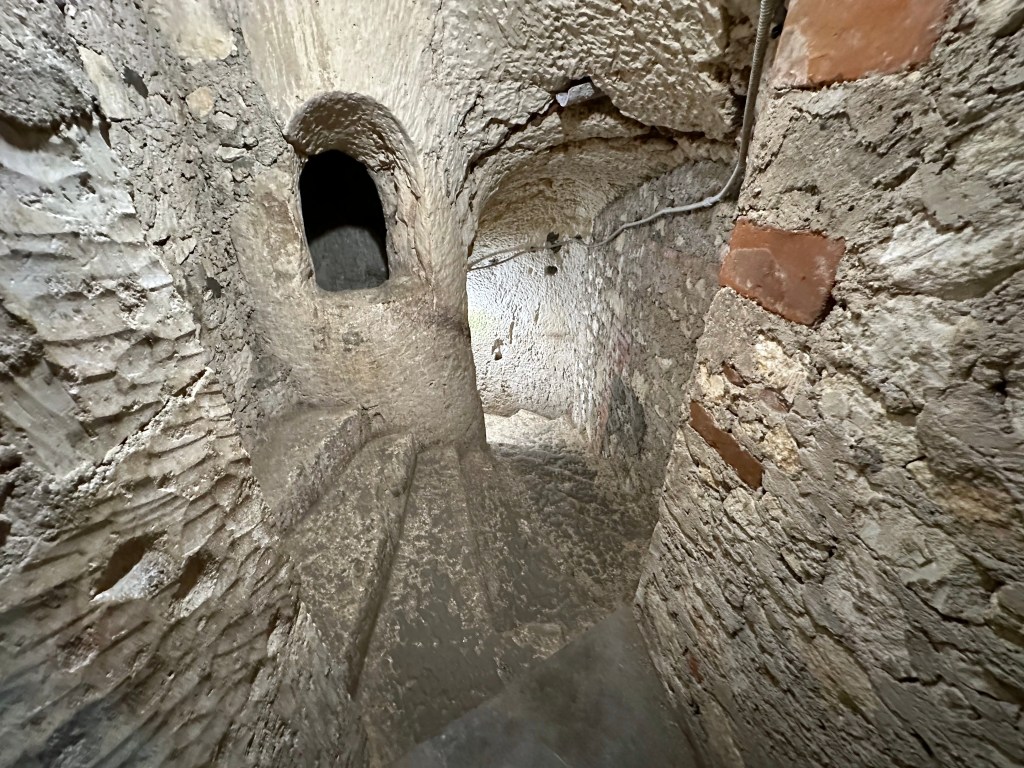
Then, descending below this initial subterranean level, we come to a more unusual underground labyrinth: WWII bomb-shelters beneath Chiesa di San Filippo Apostolo. These tunnels originally were part of an ancient Greek and Greco-Roman underground water and hypogeum network that stretches beneath Ortigia toward the sea.

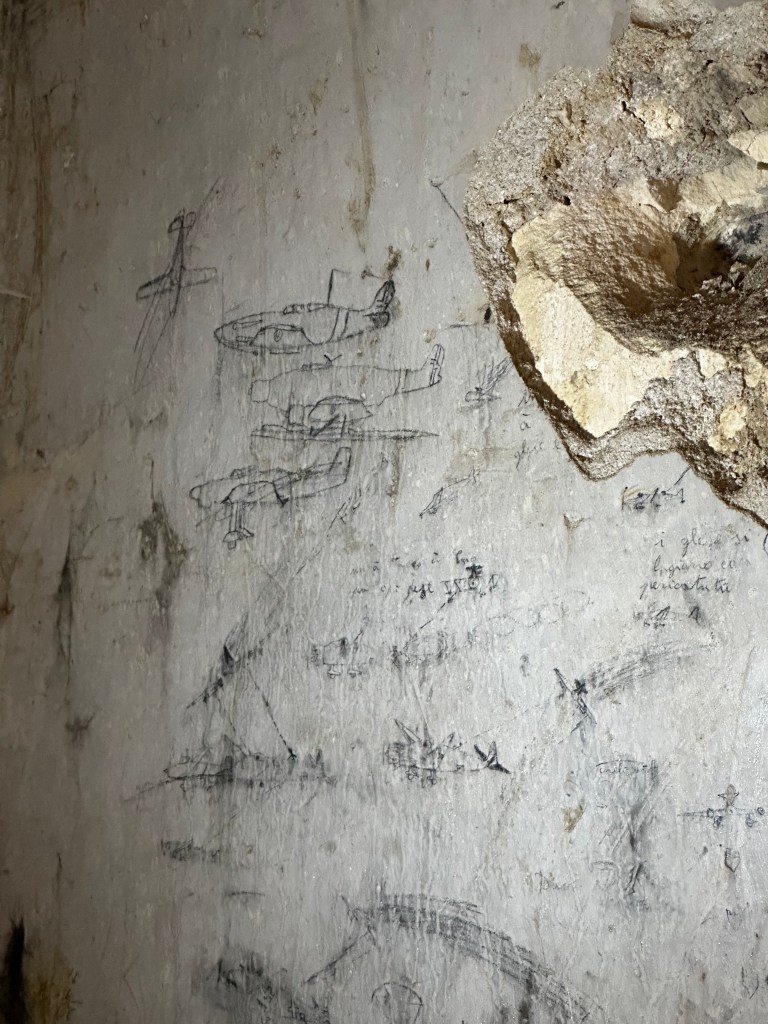
During the Allied bombing campaigns of 1943, the tunnels sheltered more than 10,000 civilians, and the walls still preserve wartime graffiti including drawings of British aircraft and parachutes sketched by people hiding underground during the raids.

Pretty accurate.

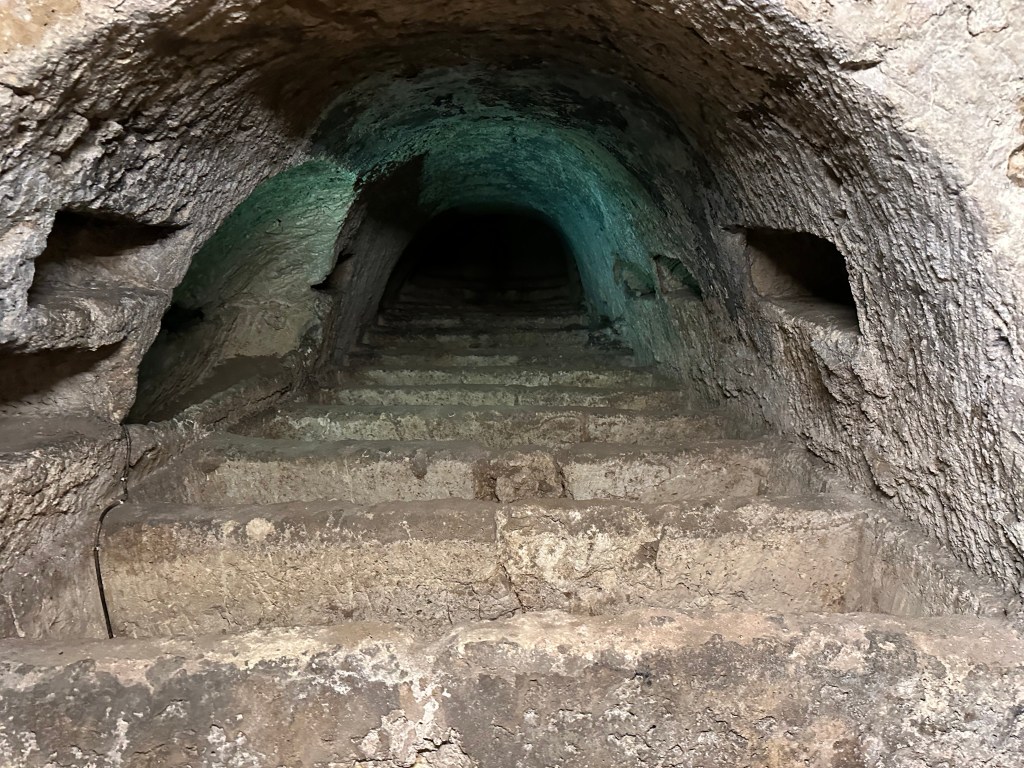
Heading further in and down.

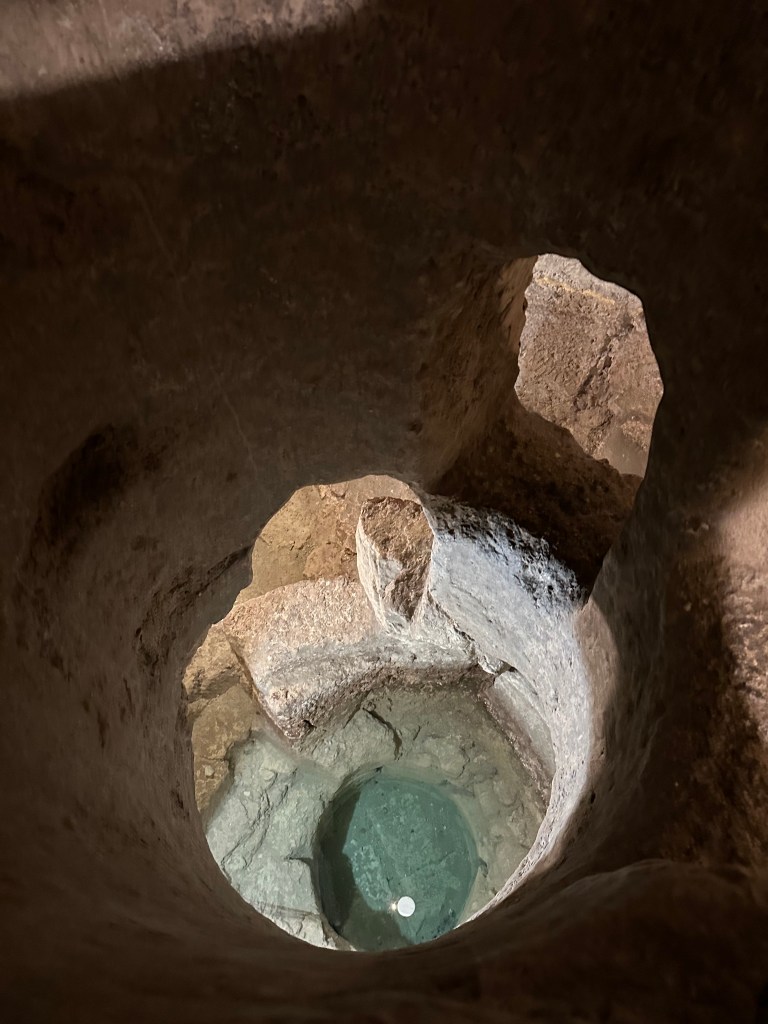
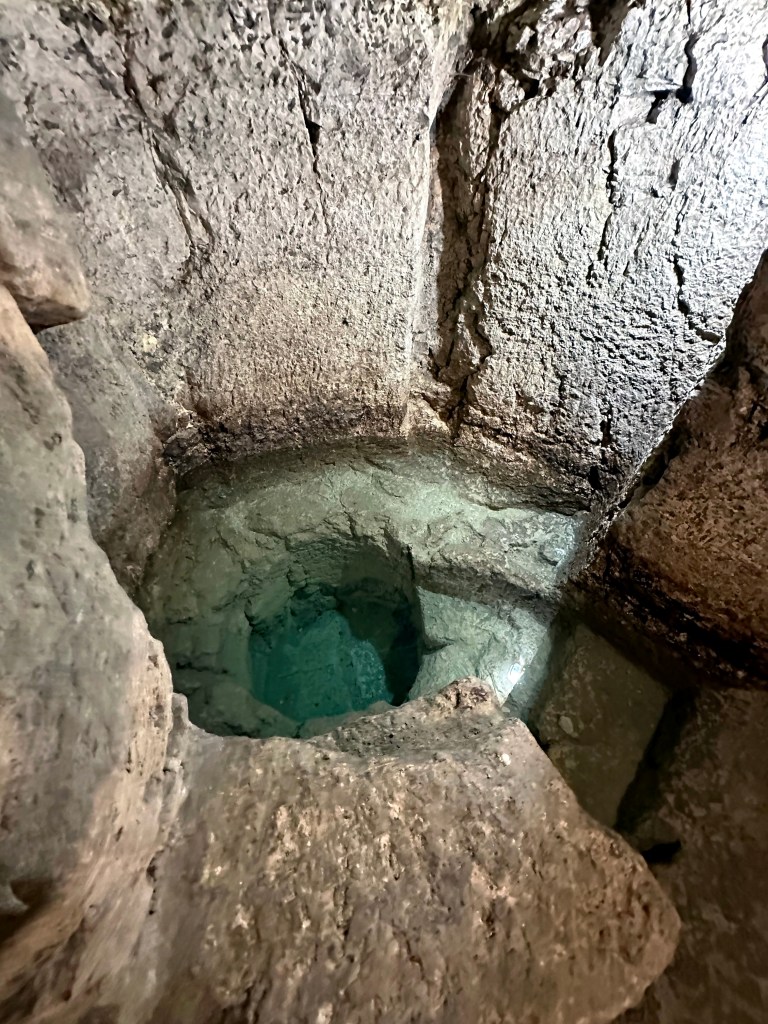
There’s a well carved into the rock that dates to around 734 BC, when Corinthian settlers first founded Syracuse. But in the 15th century, Jews living on Ortigia built a spiral staircase leading down to the well 18 meters below their synagogue on the street level above.

And converted the ancient Hellenistic freshwater spring well to their mikveh, a bath for ritual immersion to achieve purity. It is considered among the oldest surviving mikvehs in Europe.

The community abandoned the mikveh after the 1492 expulsion of Sicily’s Jews under Spanish rule, and it was gradually forgotten for centuries until it was rediscovered and formally identified in 1977 beneath the church built atop the former synagogue site.

More layers of Sicilian cultural history that we definitely dug during our time on the island.

But wait, there’s even more!

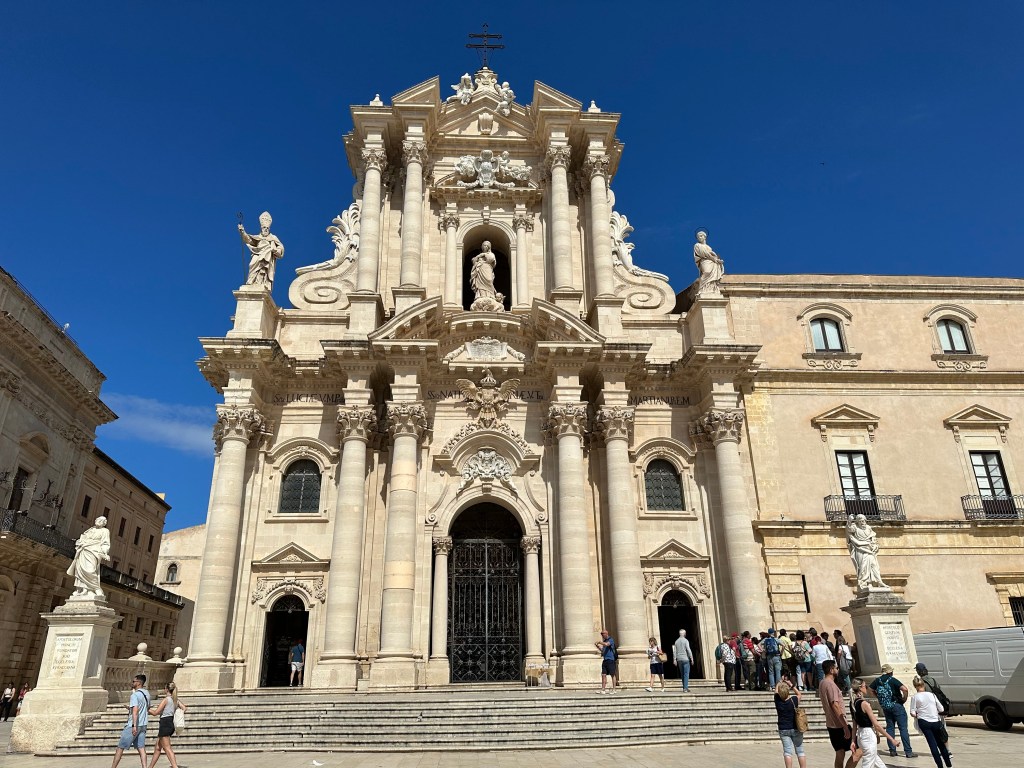
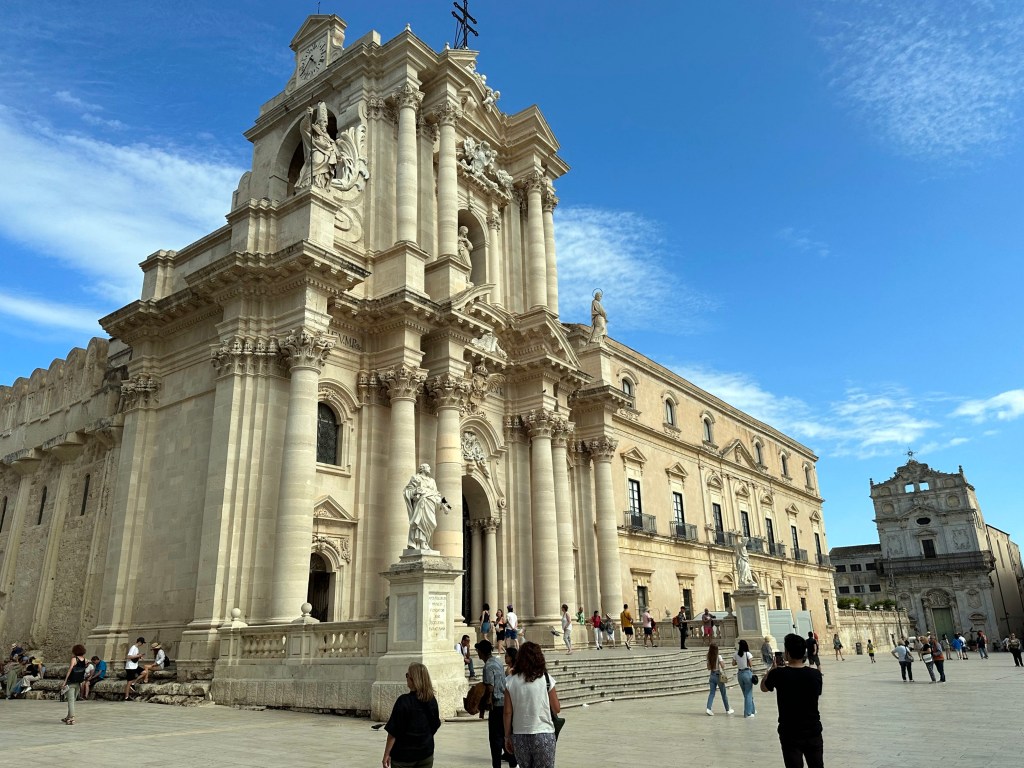
Check out the Cathedral of Syracuse (Duomo di Siracusa). Just another ornamental Baroque church in Sicily, no?

Maybe from the front facade, but when you peek around the corner. . .

Look at this shit! It’s actually a 5th-century BC Doric temple originally dedicated to Athena by the tyrant Gelon after his victory at the Battle of Himera. A quick note on “tyrant” because we’ve used it twice in one post now and it probably gives the wrong impression. As articulated effectively in Sicily: Three Thousand Years of Human History (read while here, as noted in our Sicily leg intro post), a tyrant in the Greek colonies was simply someone who had seized or inherited sole rule rather than governing through the established aristocratic or democratic institutions of the city-state. In the Sicilian colonies, tyranny was often a pragmatic response to the intense pressures these communities faced: constant military threats from Carthage, competition between rival Greek cities, and the need for swift, unified military leadership that deliberative bodies could not always provide. So, not a tyrannical ruler; just one who took sole rule for himself.

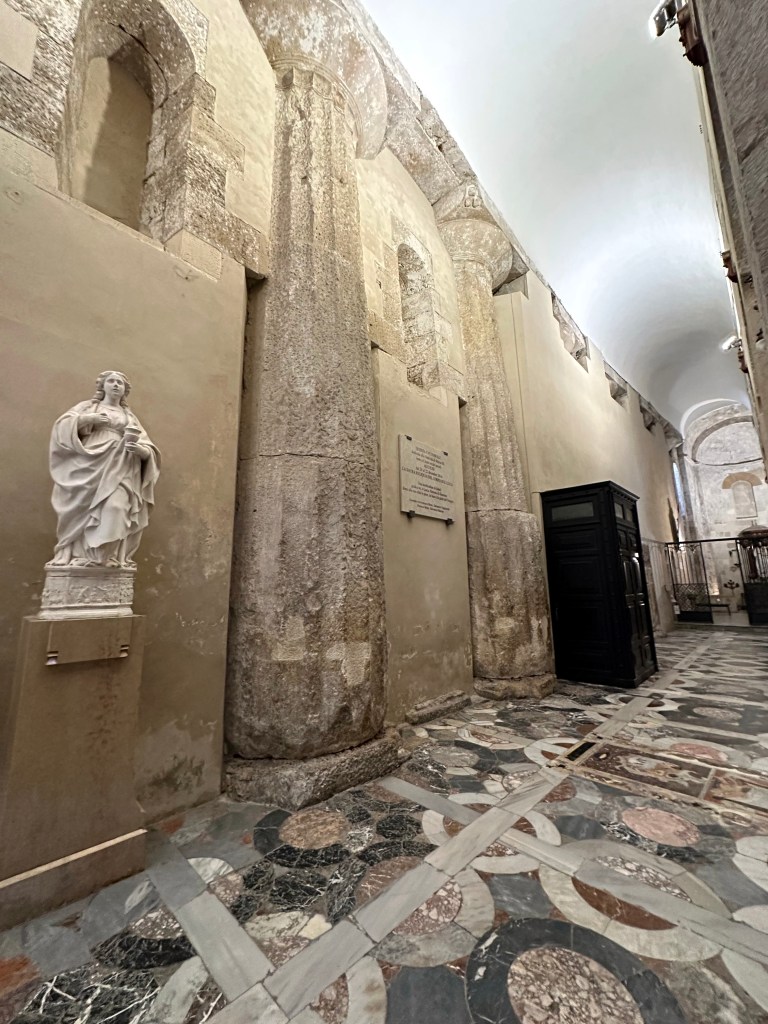
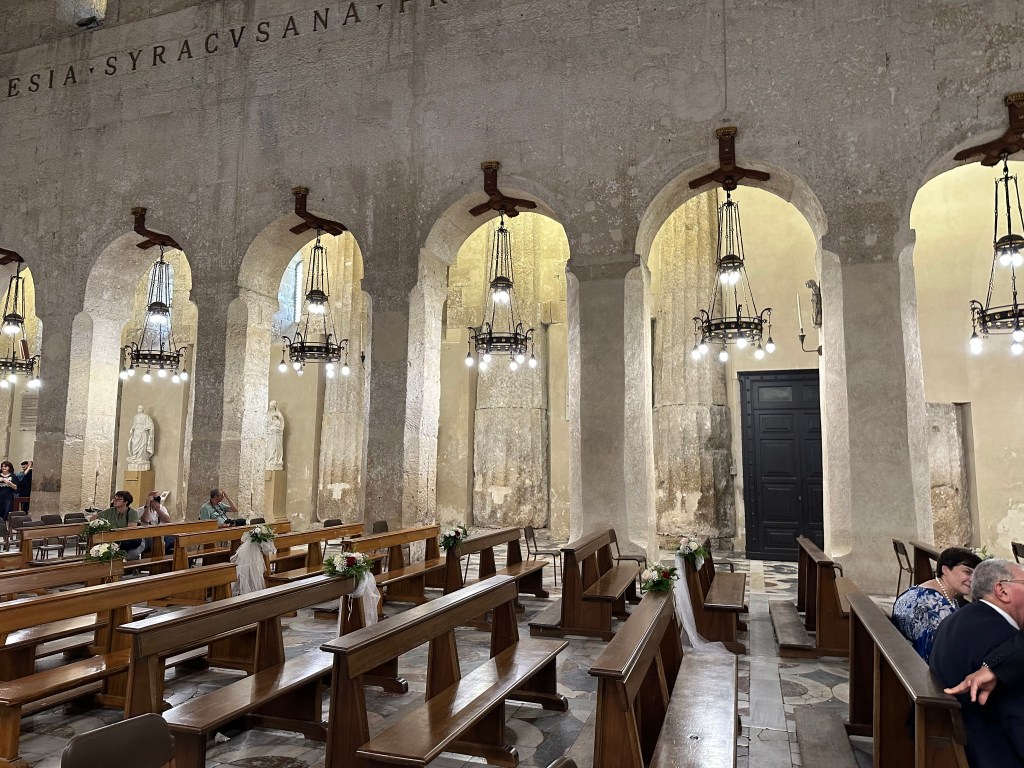
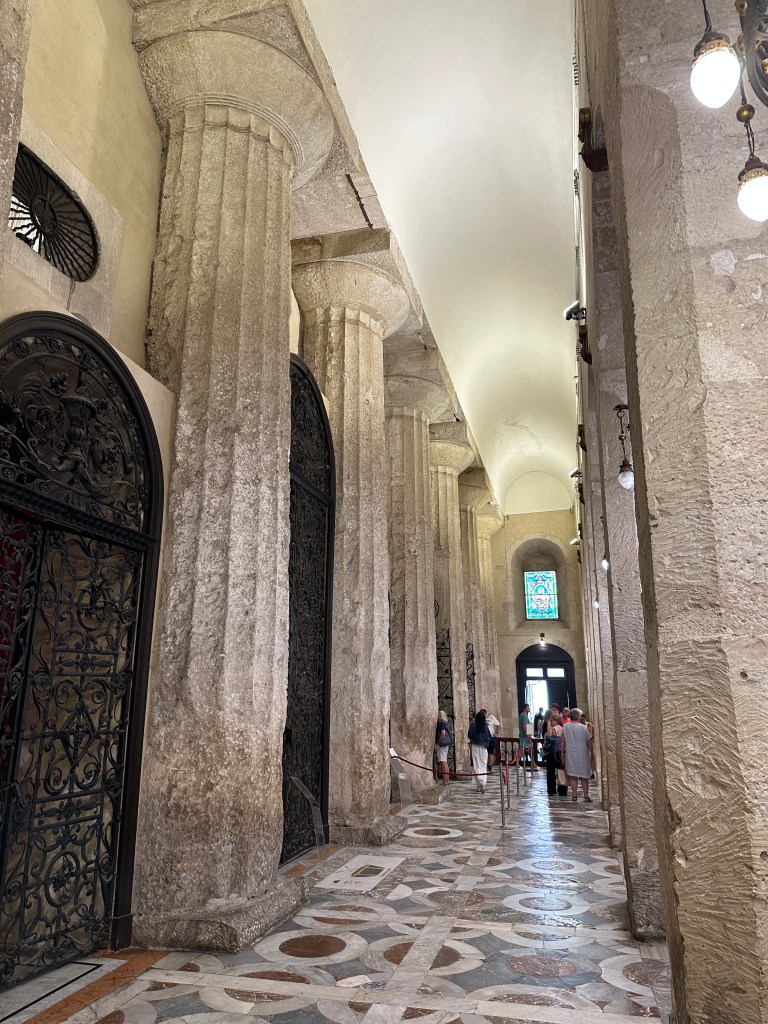
The best part about the temple-cum-duomo is the side wall, where the Normans simply filled in between the Doric columns of the Greek temple to create a Christian church, leaving them in place, rather than razing the place and rebuilding as was the norm. Oh, and in between, of course, the Arabs repurposed the temple as a mosque, of course.

Inside the duomo, which was palpably medieval and beefy.

But still with the visually evident Doric columns of the original Greek temple.

And more cool mortality motifs.

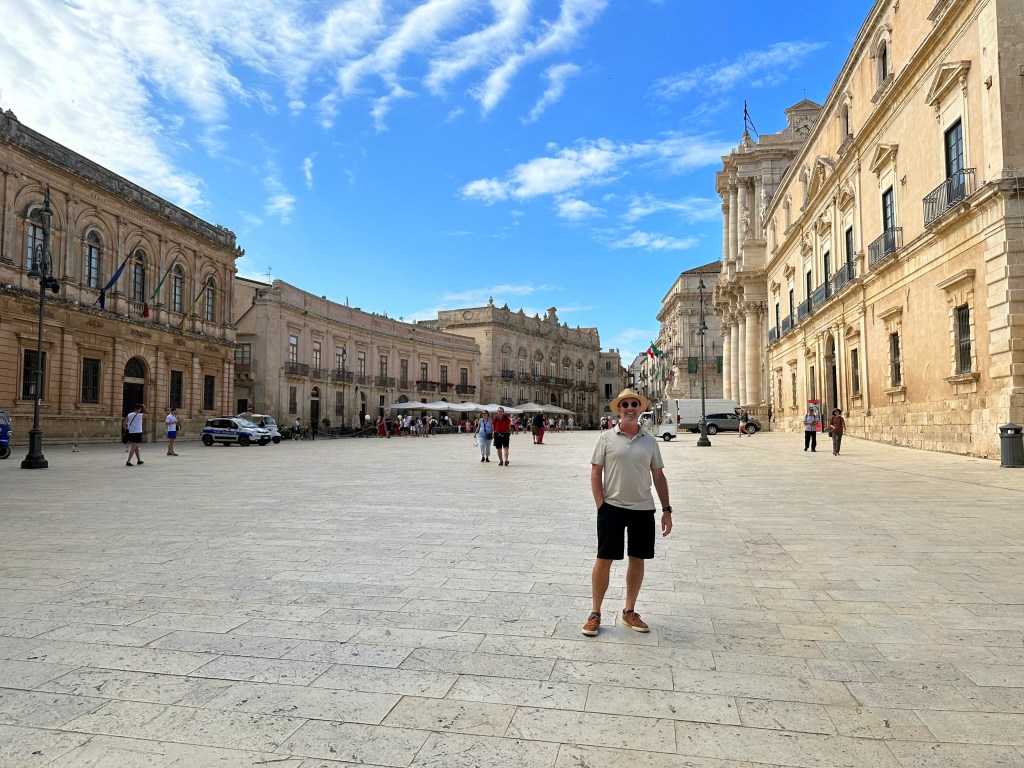
Out in the piazza of the duomo – pretty great day.

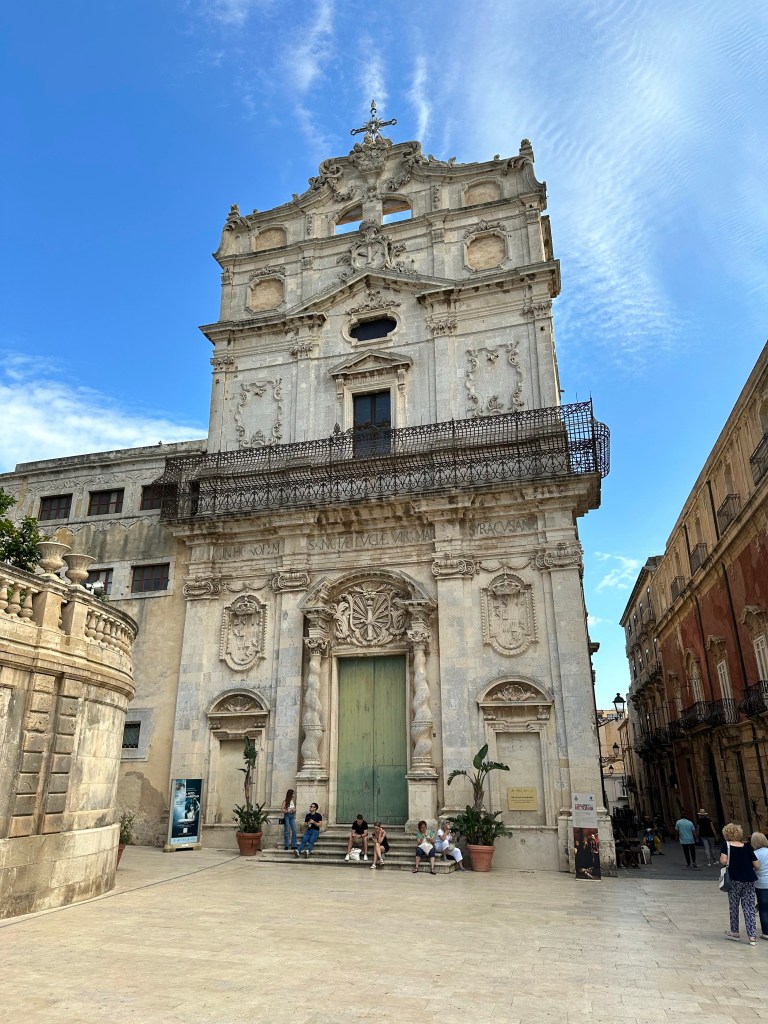
Dunno – some other picturesque church. With twisted columns like we saw in Lecce while biking through Puglia in 2013.

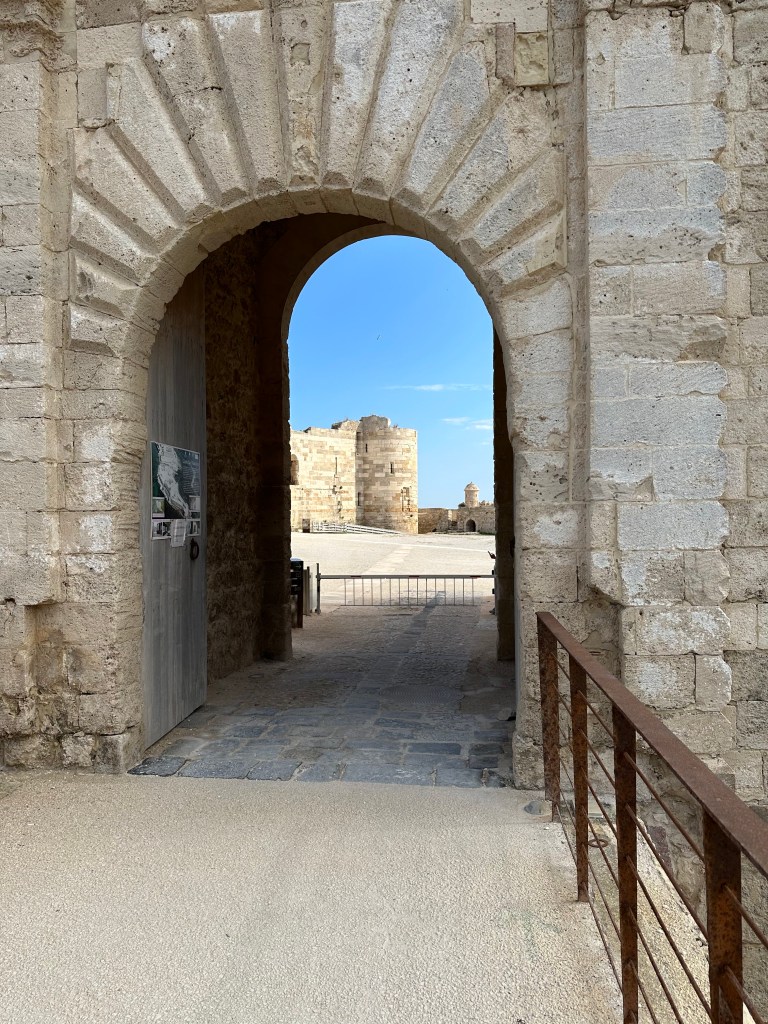
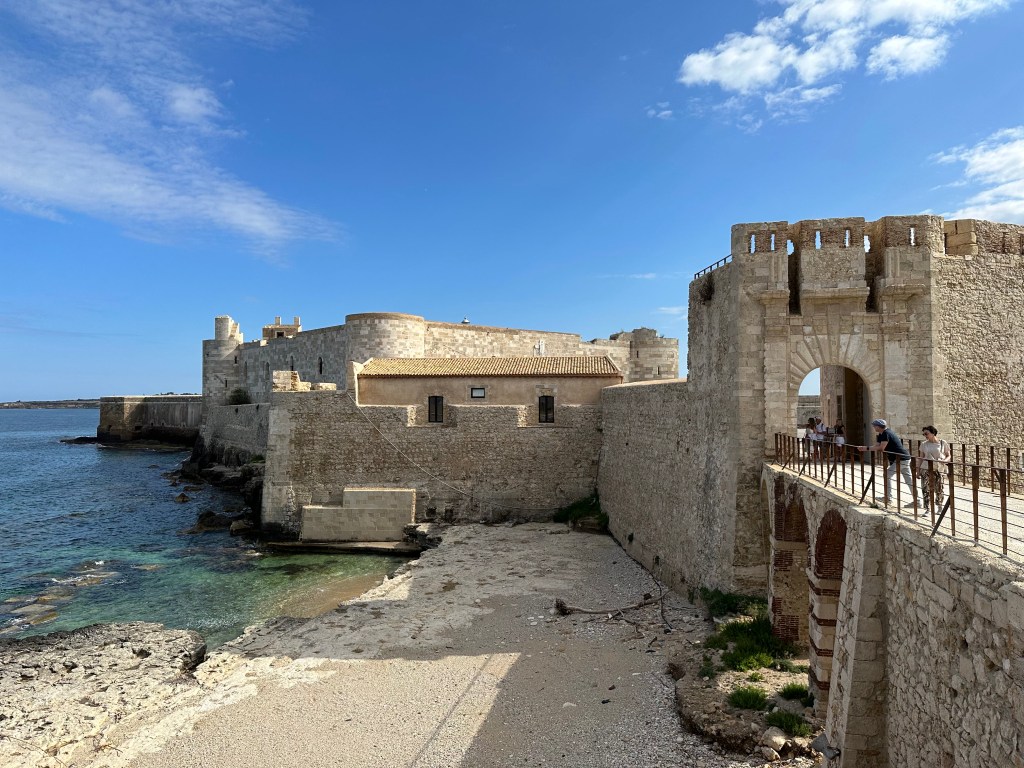
At the extreme southern tip of Ortigia lies Castello Maniace, a citadel named after the Byzantine general George Maniakes who seized Syracuse from the Arabs in 1038, although the present structure was built between 1232 and 1240 under Holy Roman Emperor Frederick II.

With four cylindrical corner towers, the massive castle later served as the site where Frederick of Aragon signed a truce with the Angevins in 1302.

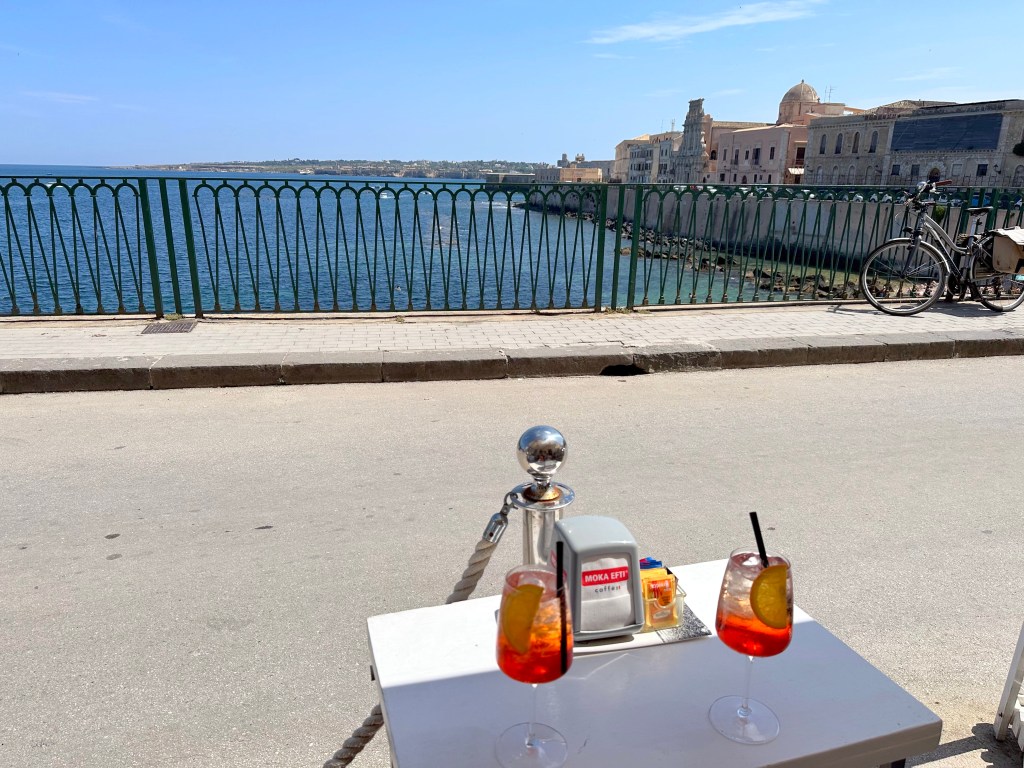
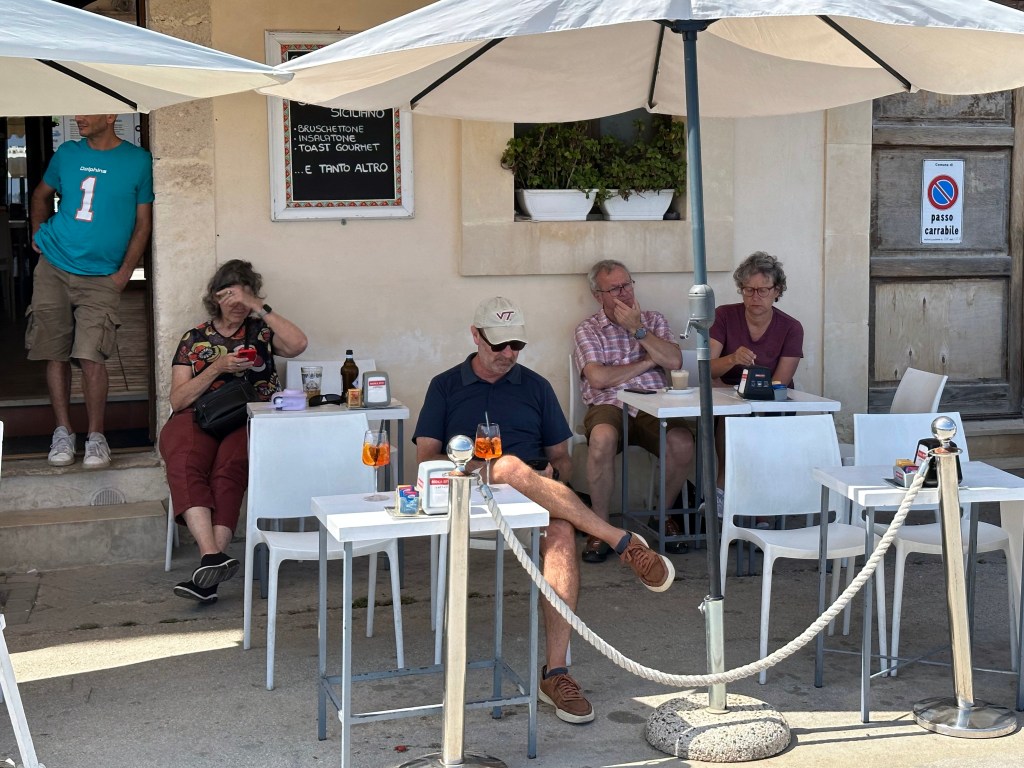
And just up the promenade? A casual joint for early aperitivos.

With a nice view of the aquatic activities available in the castle’s shadow.

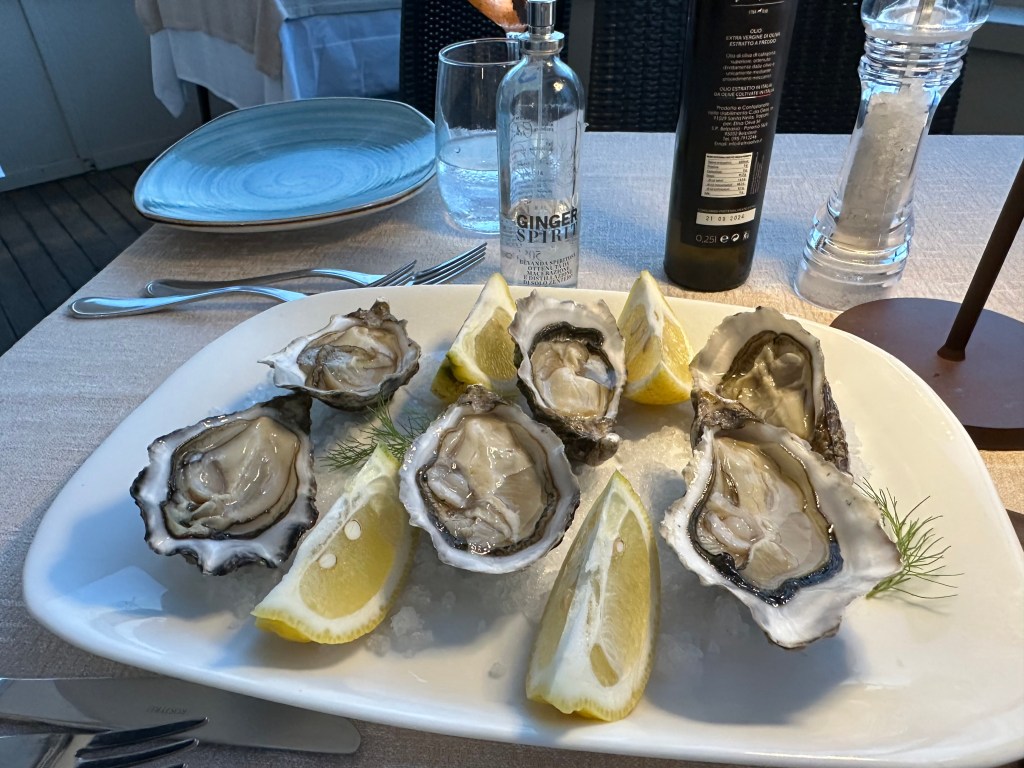
Some decent oysters, to be expected, with a first-time-encountered ginger spray, which was not expected.

And now for something completely different: Greek and Roman ruins in Syracuse adjacent to Ortigia.

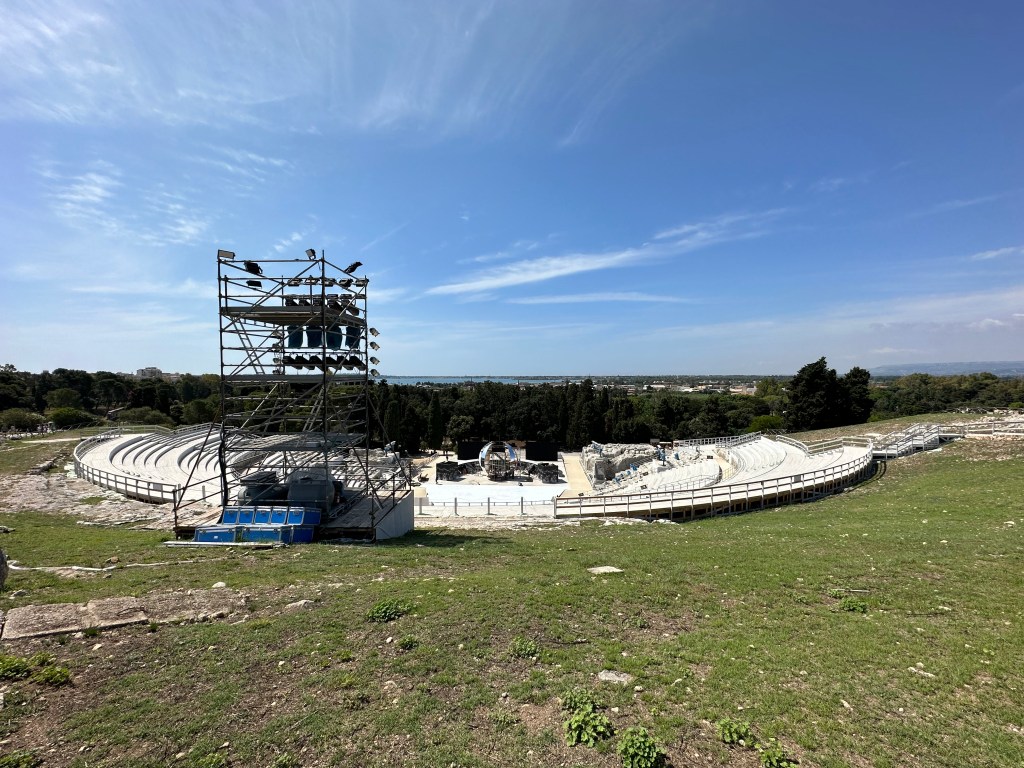
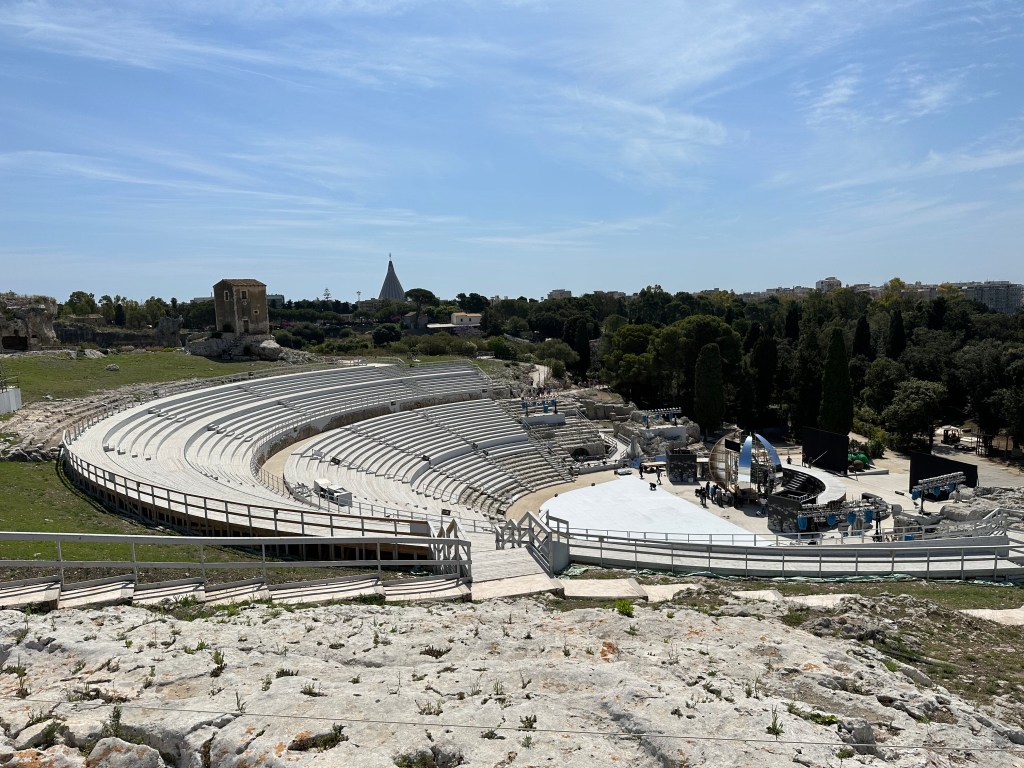
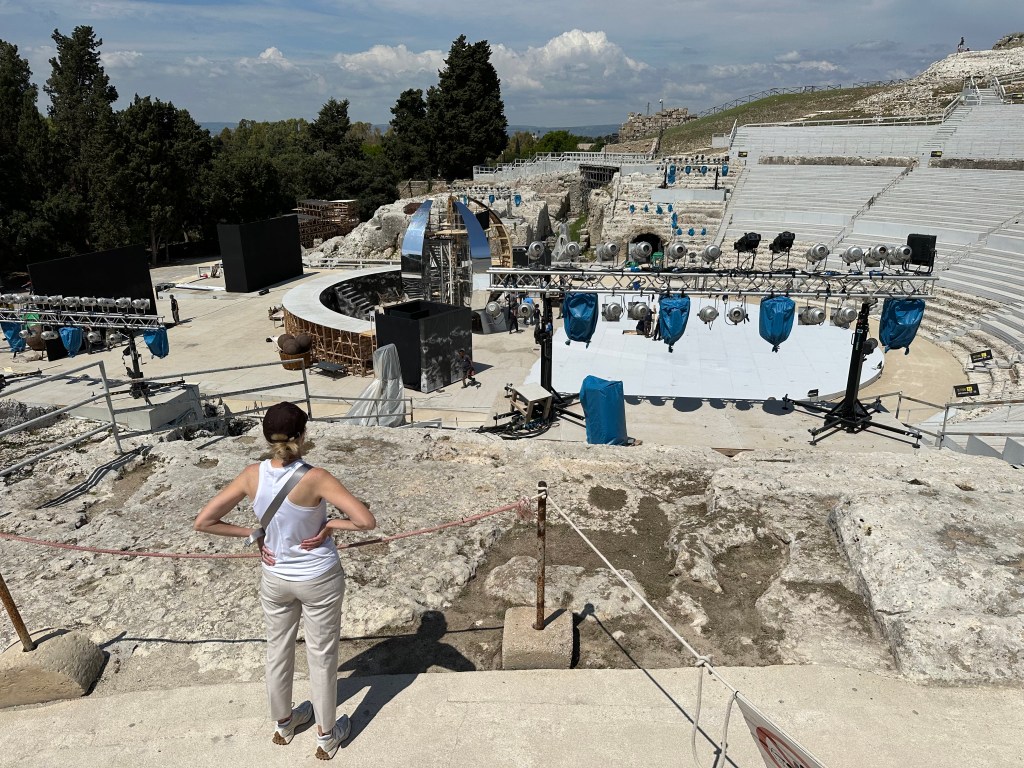
The Greeks built a theater at Syracuse around 470 BC, with a capacity of around 15,000 spectators and a diameter of nearly 140 meters.

It was among the largest theaters in the ancient world, and served as the premiere venue for works by Aeschylus — including the world premieres of The Persians and The Women of Etna — as well as tragedies by Sophocles and Euripides.

Carved directly into the rock of the Temenite hill, the theater was rebuilt in the 3rd century BC and renovated again in the Roman period, when traces of adaptations for gladiatorial battles and beast spectacles were added, and it continues to host a celebrated summer festival of classical drama to this day.

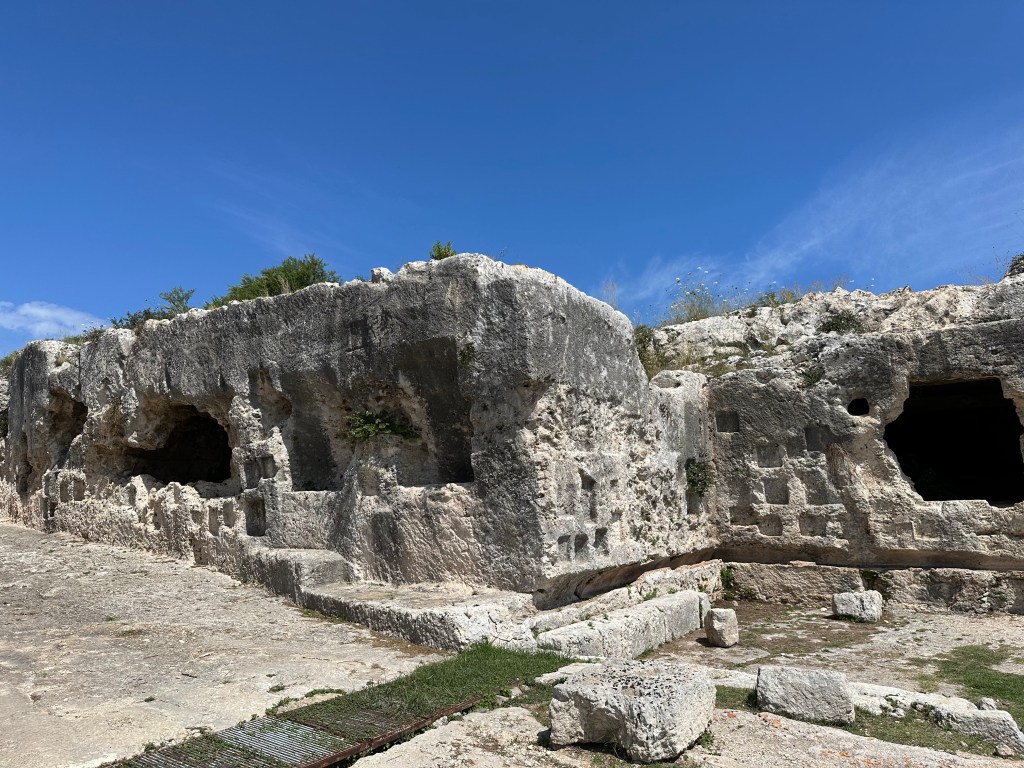
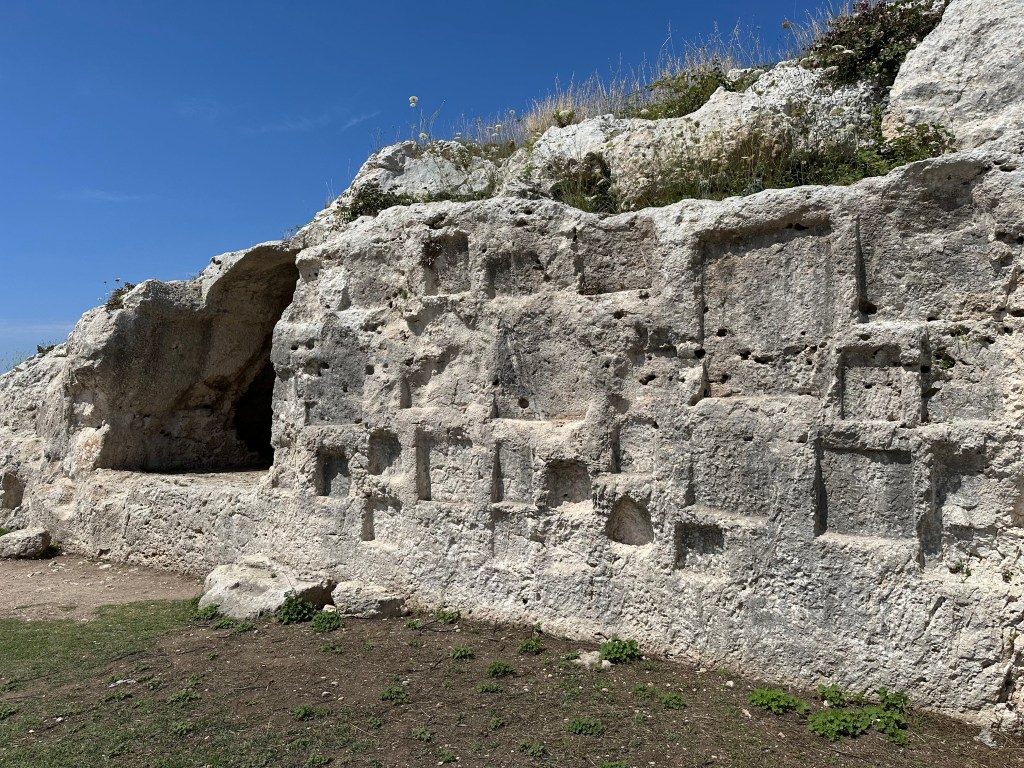
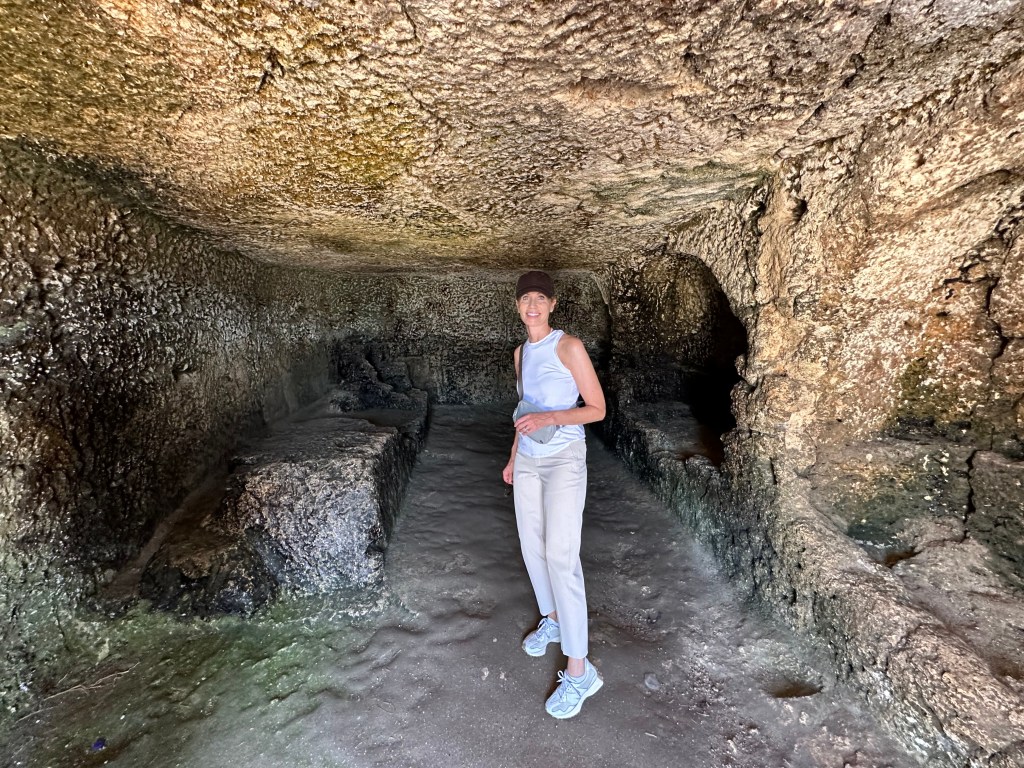
A necropolis above the Greek theater:

Containing the Via dei Sepolcrri – the Street of Tombs.

One of the tombs.

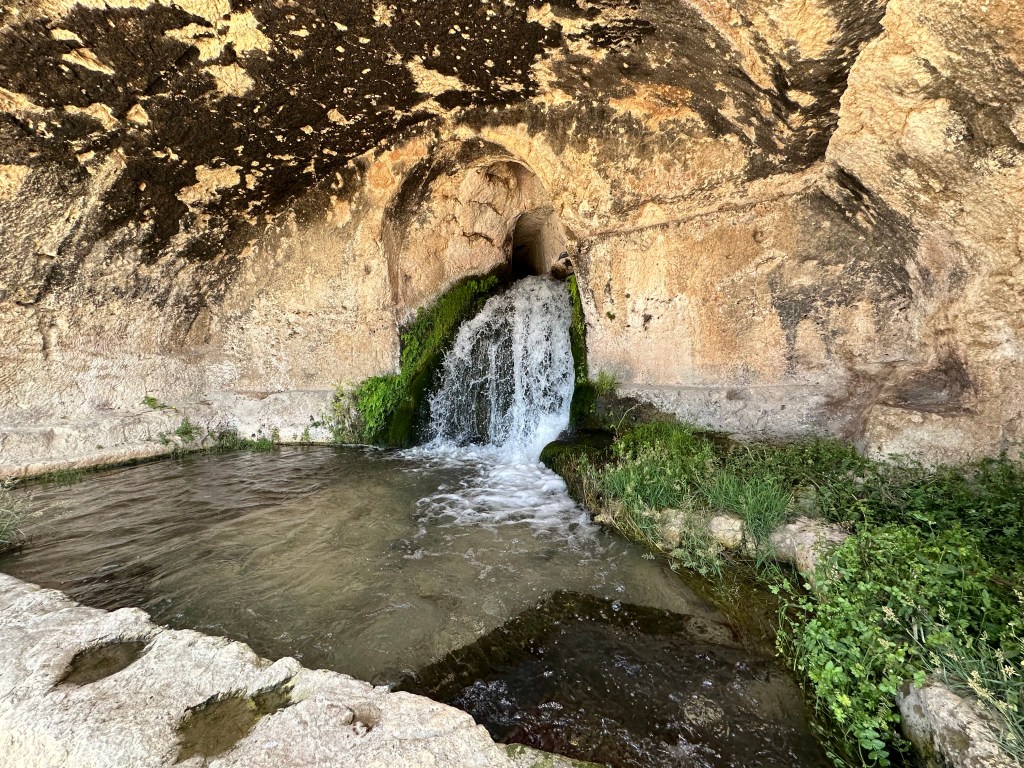
And the Grrotta del Nifeo, where the waters of the Anapo flow and where actors once prepared before performing in the theater.

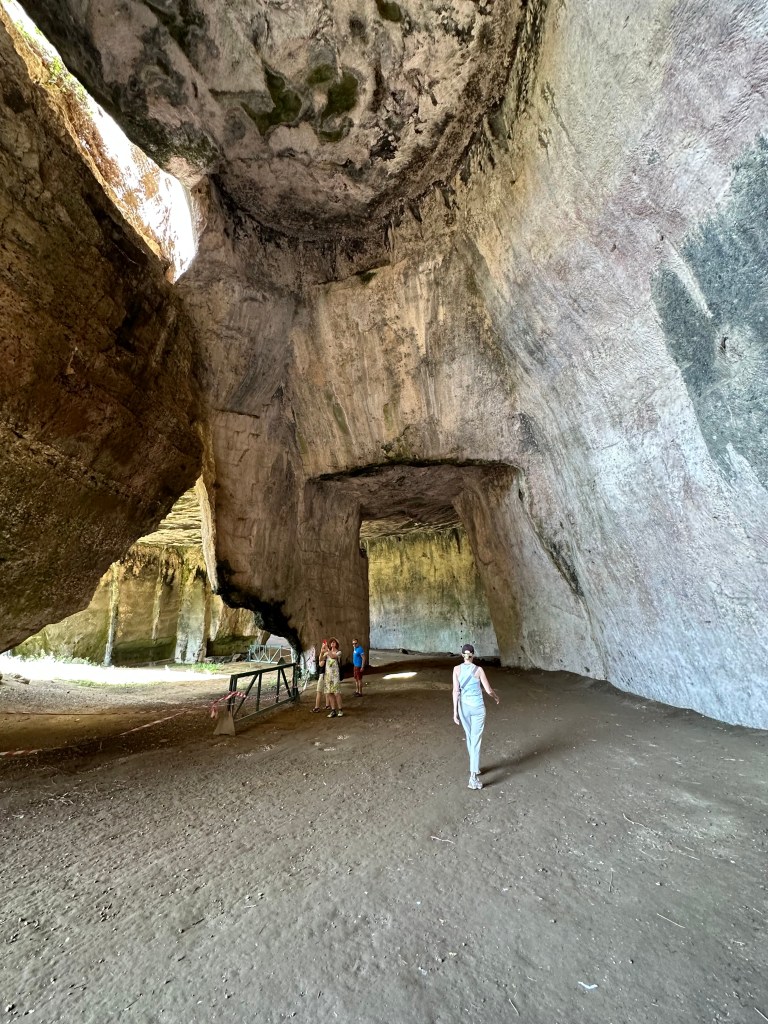
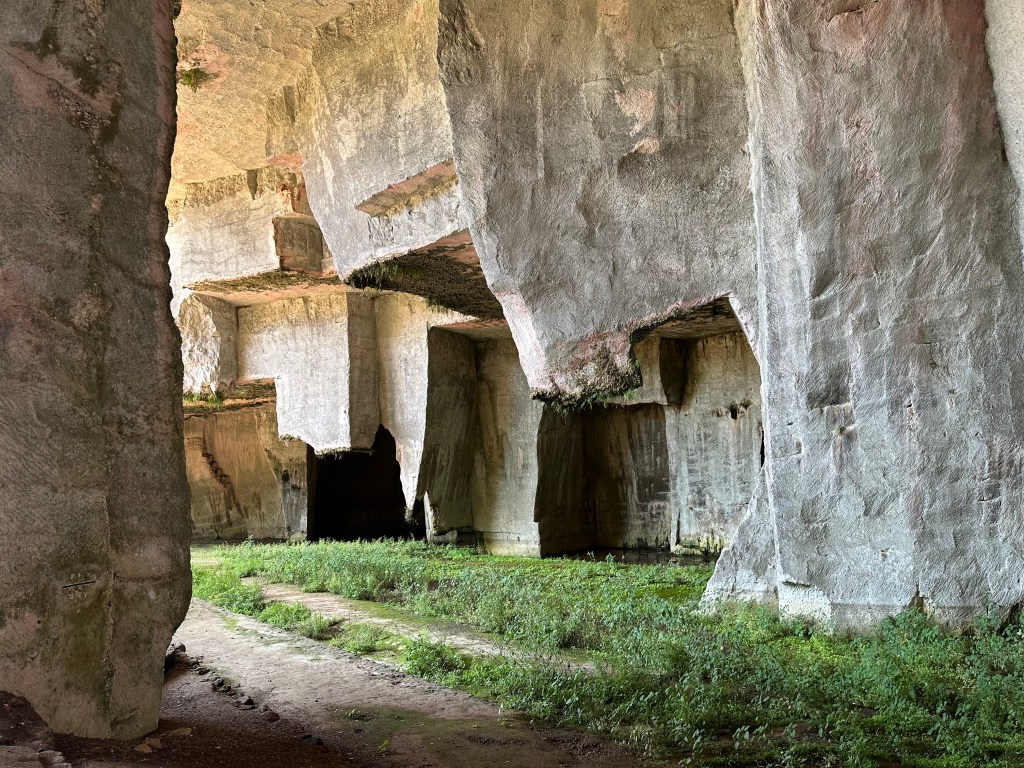
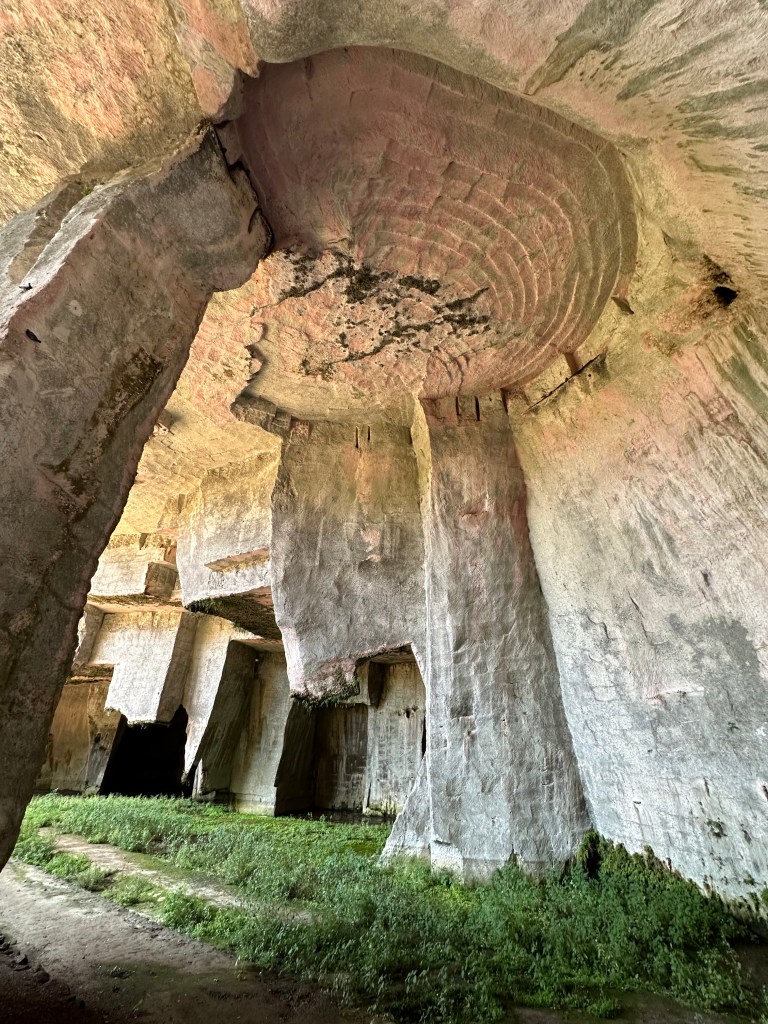
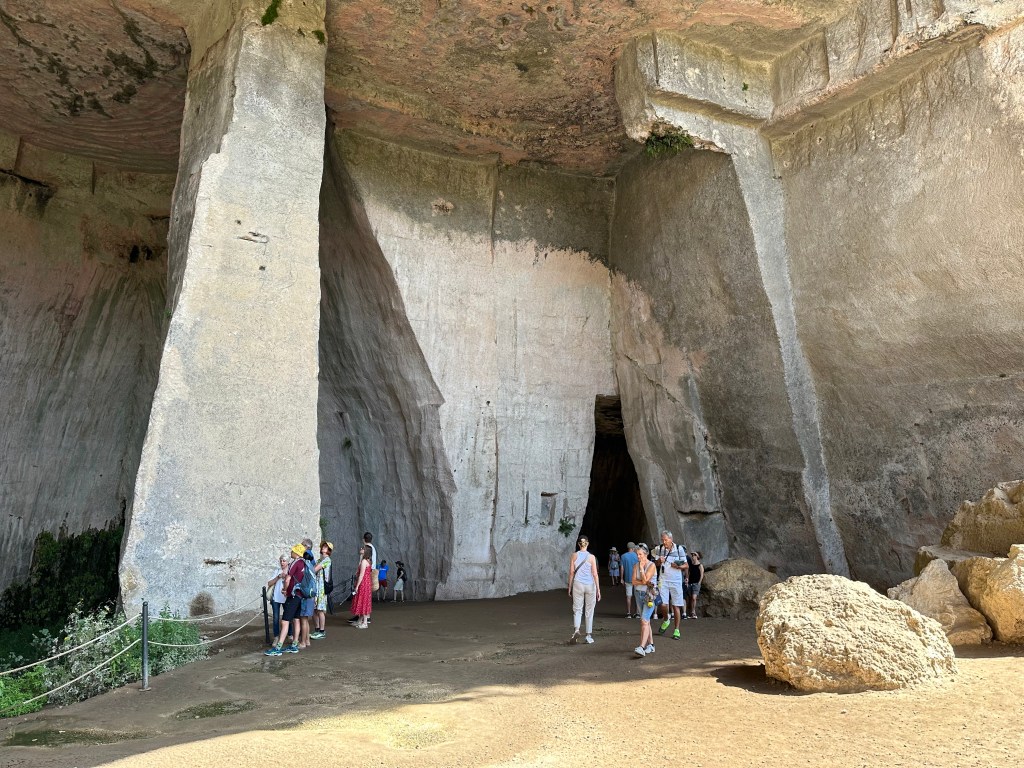
The Latomie del Paradiso — ancient stone quarries to the east of the Greek theater.

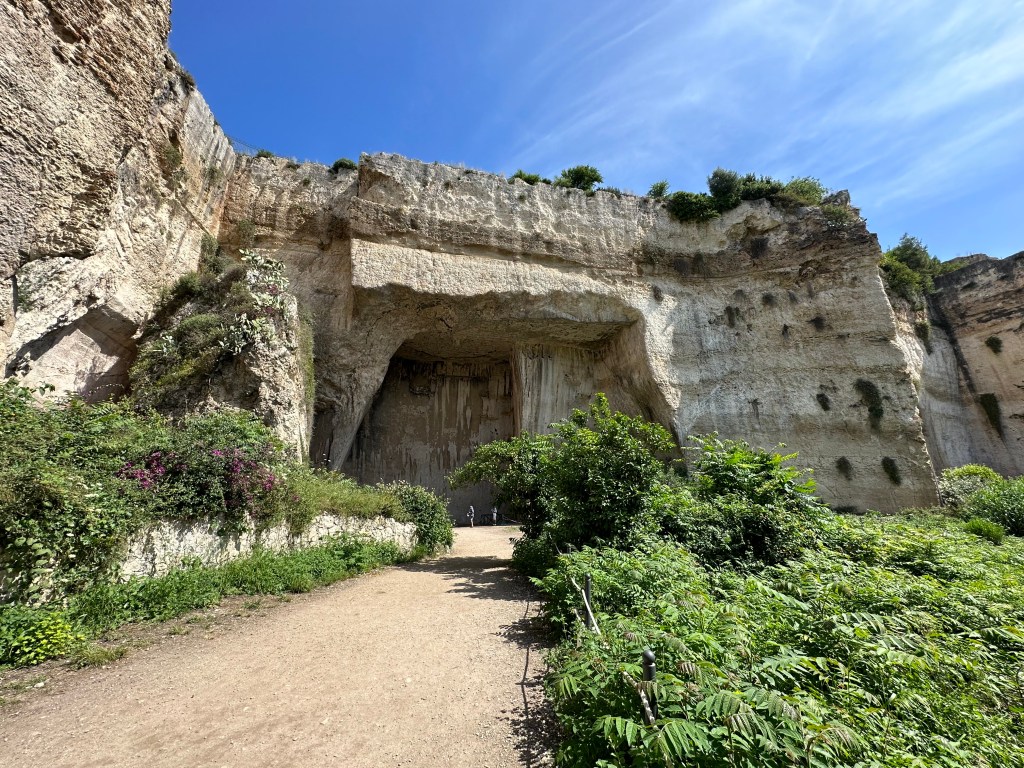
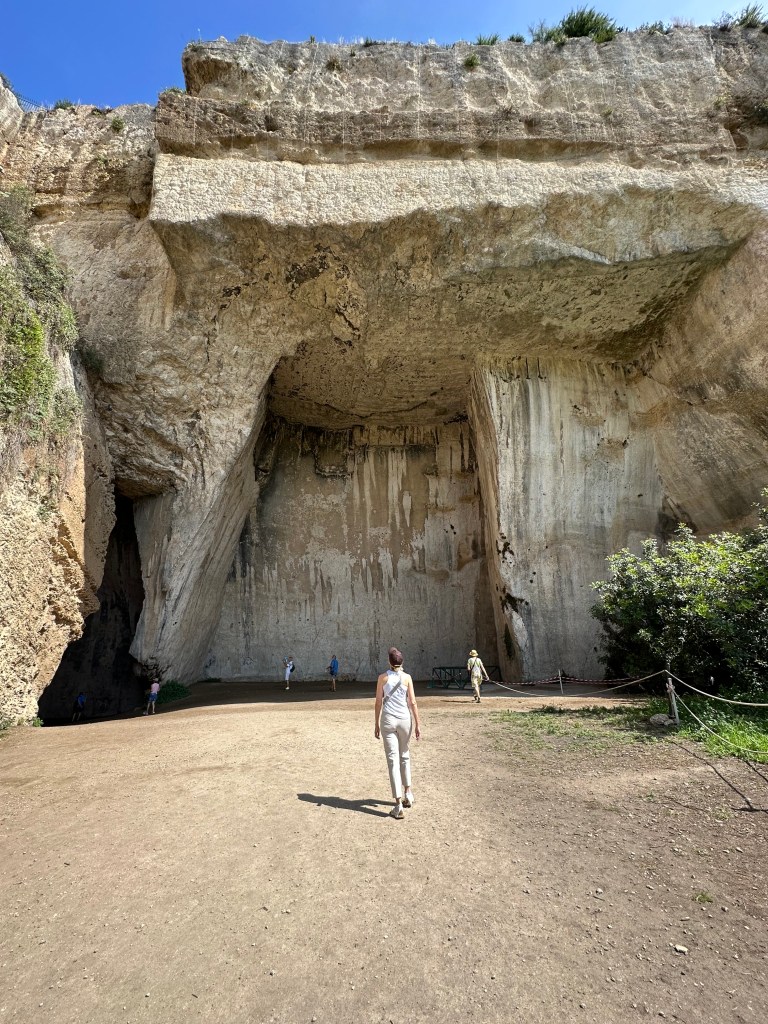
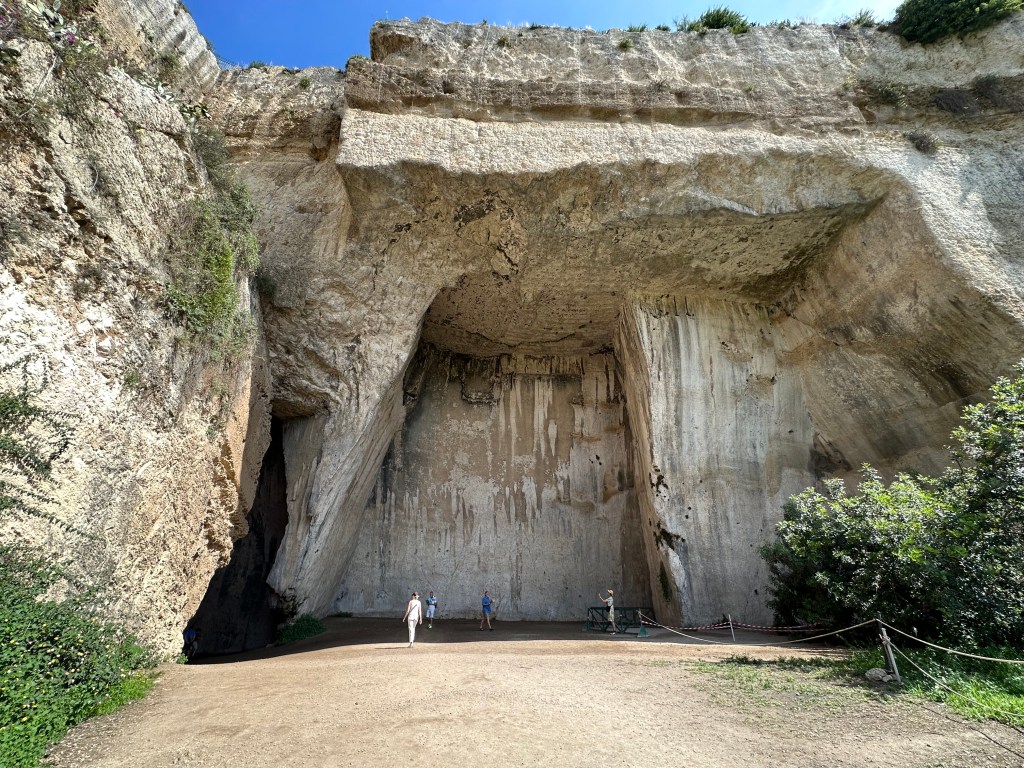
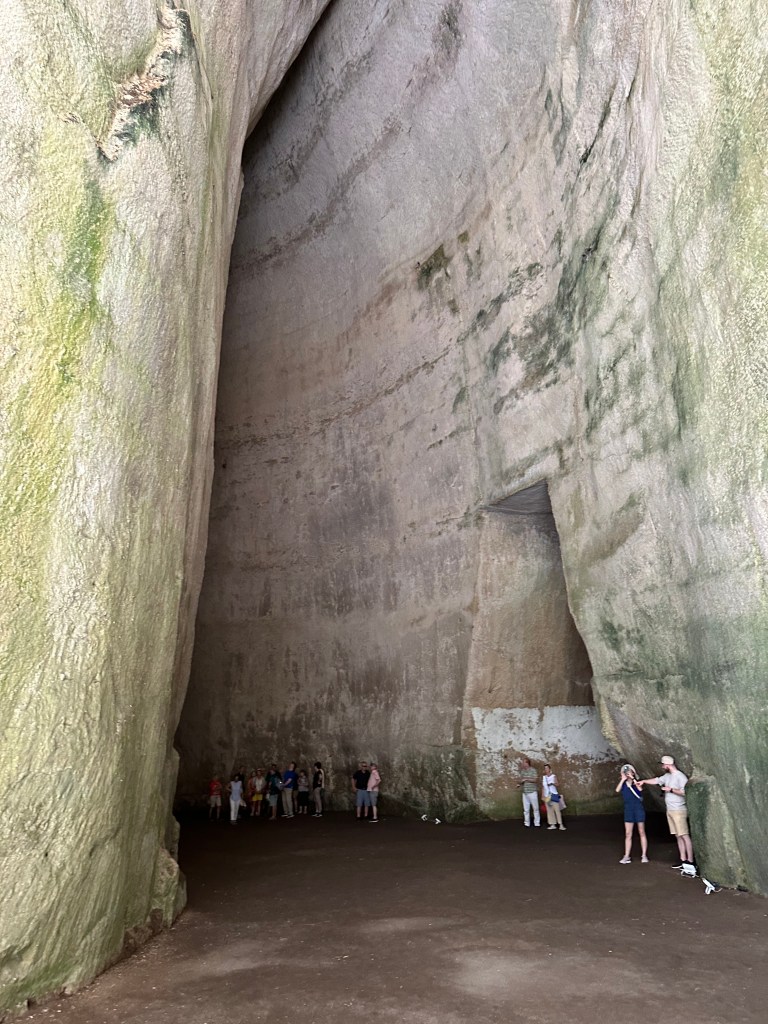
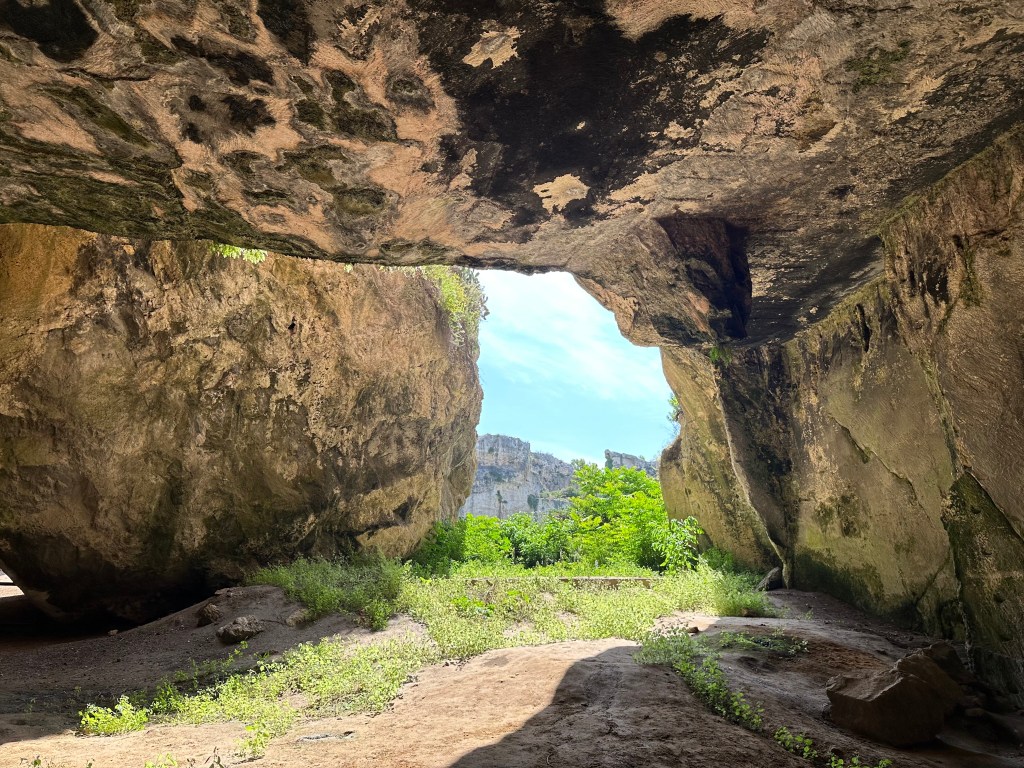
The Ear of Dionysius, a multistory-tall cave carved into the limestone:

The cave’s extraordinary shape amplifies sound to remarkable effect.

They were once used to imprison captured enemies of the tyrant Dionysius I, and are now lush with lemon groves and fragrant vegetation.

Evidence of quarrying:

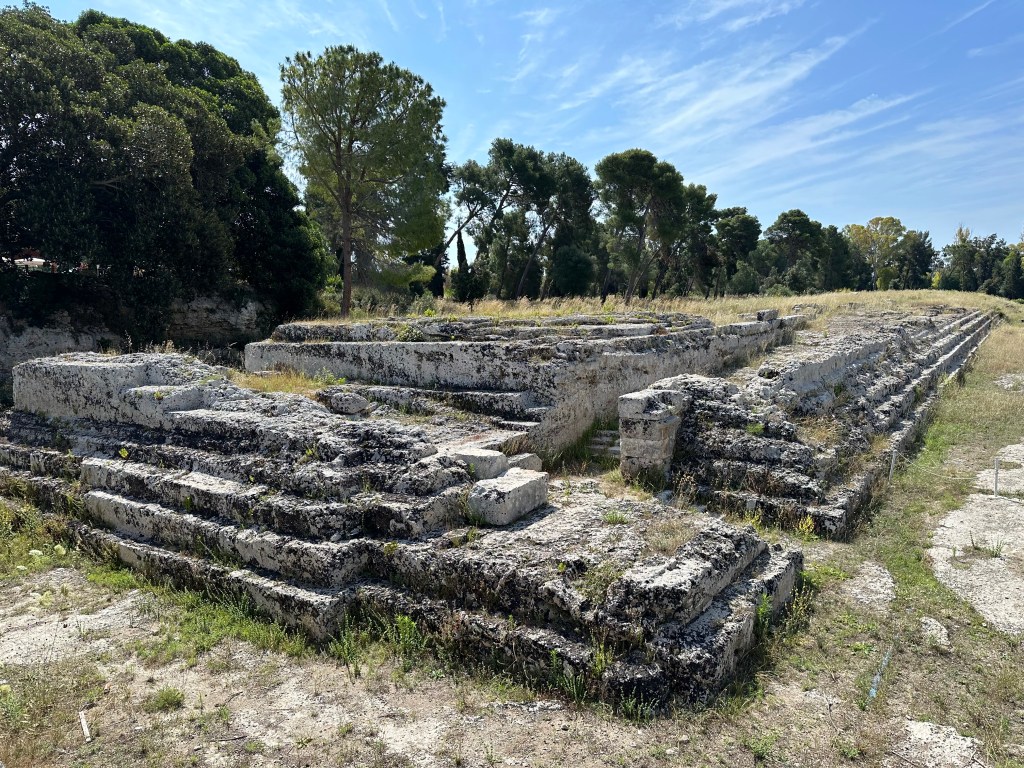
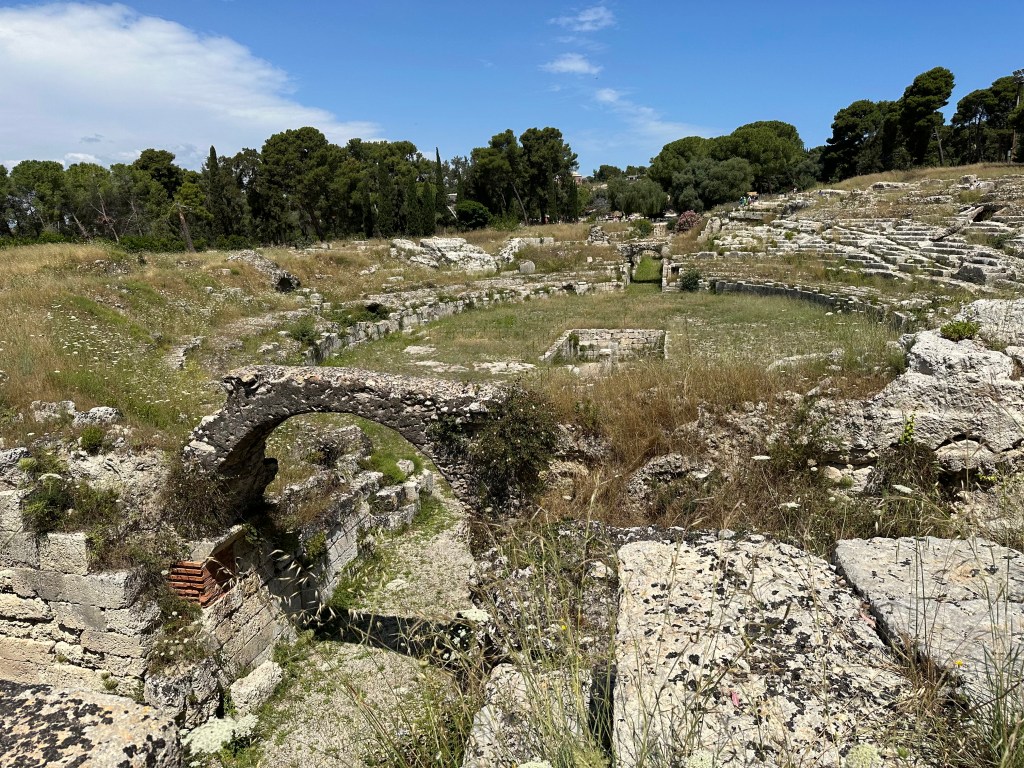
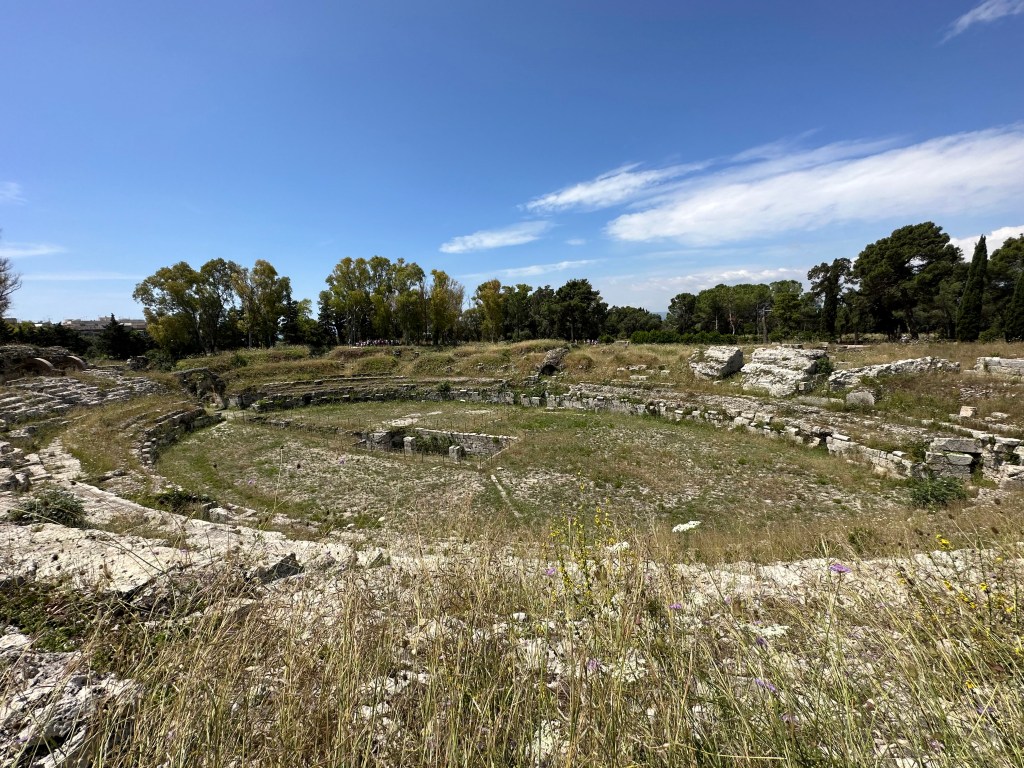
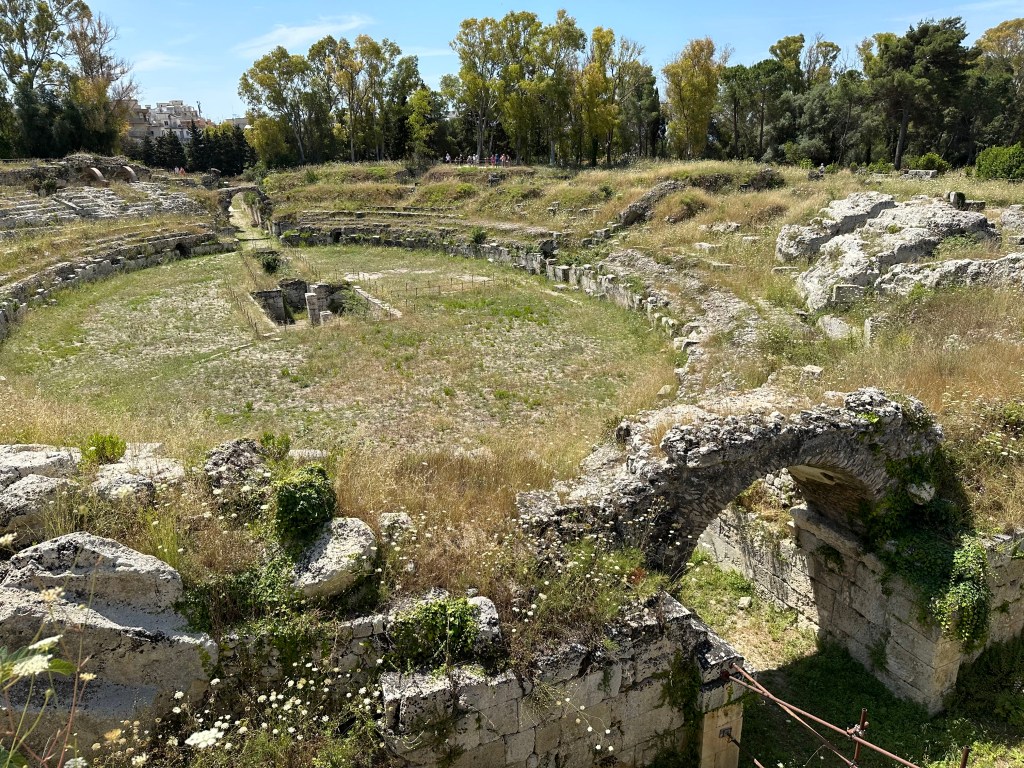
And across the archeological park, the remains of the Roman amphitheater:

The Roman Amphitheater is largely excavated into the rock, utilizing the slope of a rocky crag, with a central arena featuring a large rectangular space originally covered and connected by underground passages to house the machinery and animals used during spectacles.

In the 16th century the Spanish, indifferent to its archaeological value, quarried much of the amphitheater’s large stone blocks to build the defensive city walls of Ortigia, leaving it in the partial, overgrown ruin visible today.

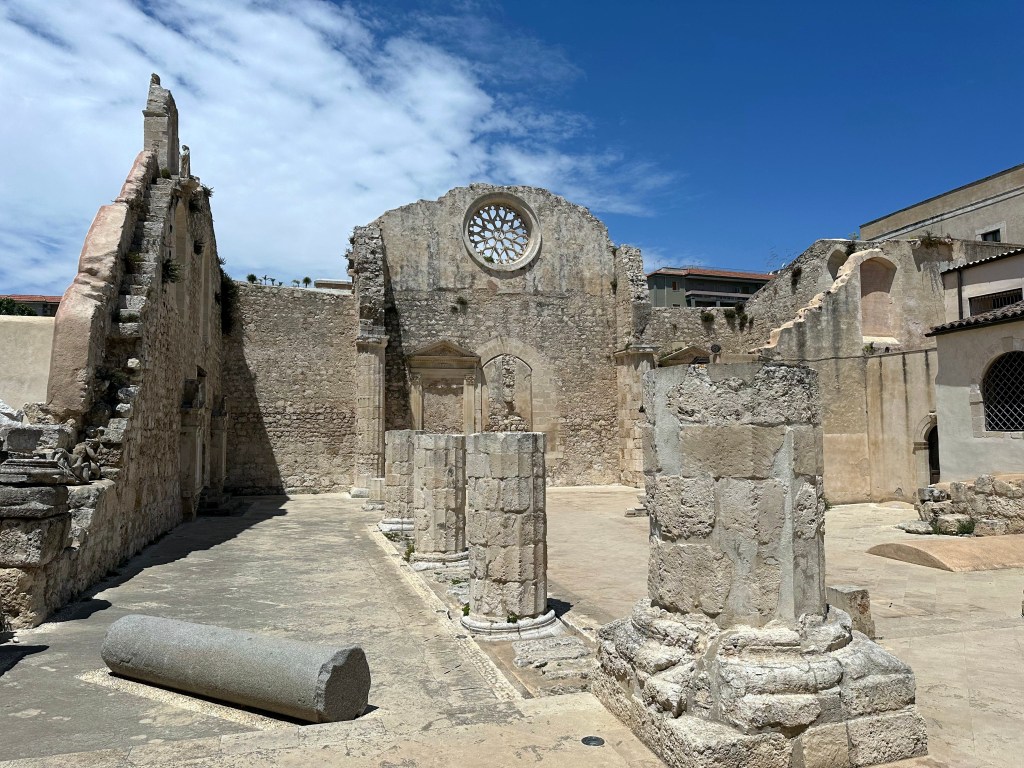
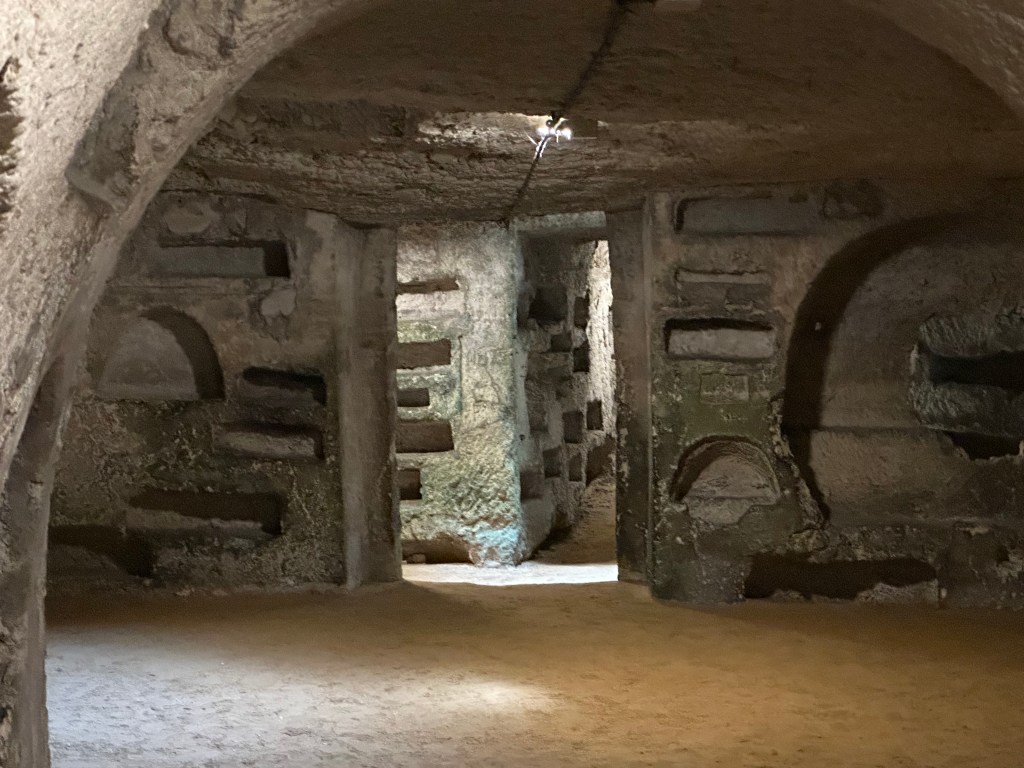
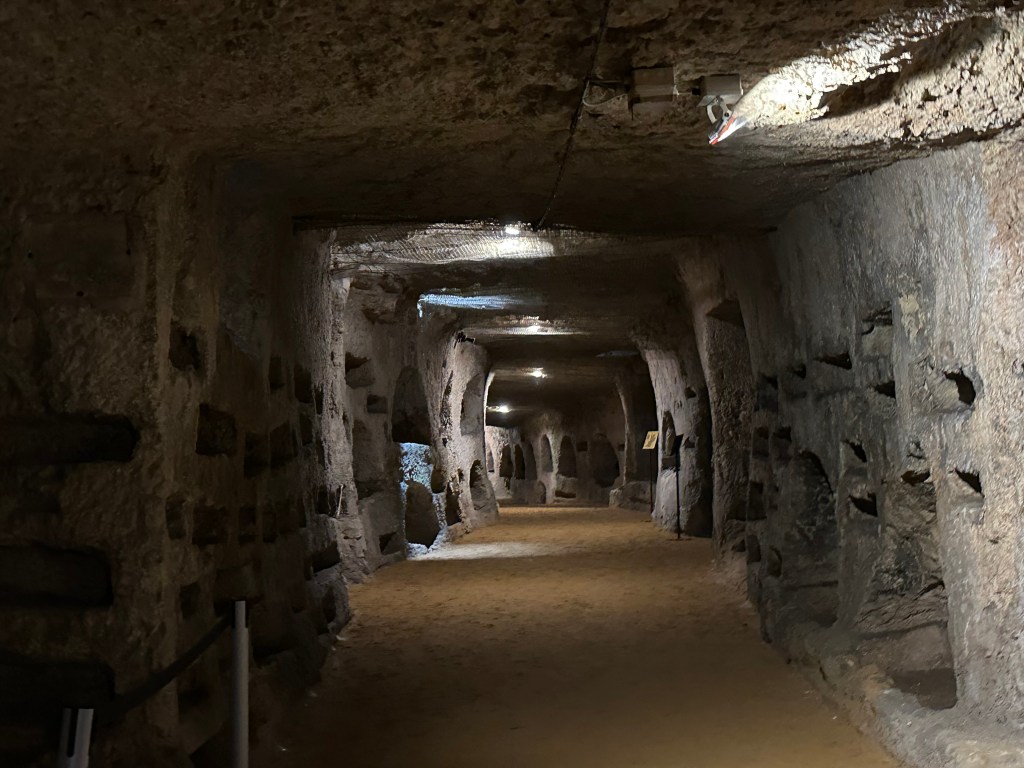
And on the way back from town? A little stop at the Catacomba di San Giovanni. The site sits beneath the ruined Basilica of San Giovanni — itself a place of extraordinary sacred history, where St. Paul is said to have preached and St. Marcian founded the first Christian community in Syracuse — and the catacombs were later used as an air-raid shelter during World War II, which is why no bones remain there today.

The Catacombs of San Giovanni were excavated for the most part between 315 and 360 AD, following the Edict of Constantine that established freedom of Christian worship, and remained in use as an early Christian cemetery until the end of the 5th century — making them, for size, the second largest catacombs in Italy after those of Rome.

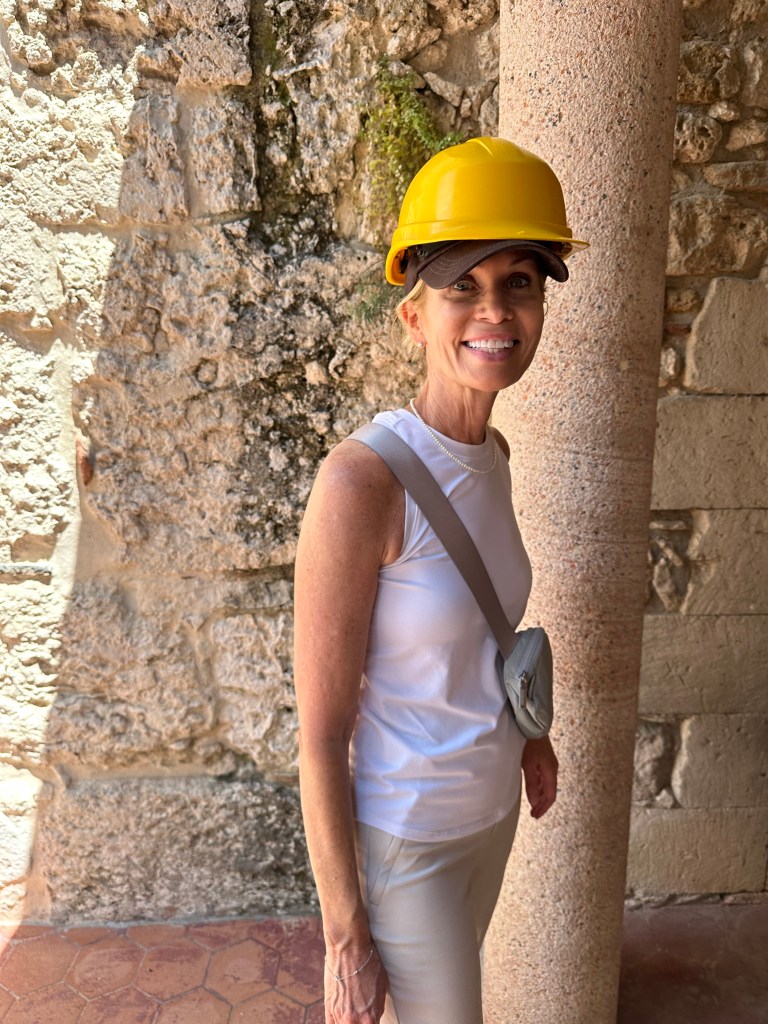
Unlike the subterranean adventure under Chiesa di San Filippo Apostolo, the catacombs here required us to don a little liability-reducing protective gear. (Also, we weren’t supposed to take pictures, just like at the monastery of creepy corpses in Palermo, but some urges cannot be resisted.)

To save labor, the tunnels were initially opened along the route of a disused Greek aqueduct, traces of which are still visible on the ceiling of the main gallery, while existing cisterns along the route were converted into funeral chapels for distinguished families — a characteristically Syracusan layering of Greek infrastructure repurposed for Christian use.

The layout of the catacombs mirrors the Roman military camp, with a central gallery (the decumanus maximus) from which ten secondary corridors branch off, leading to four large circular rooms — the Rotonda di Antiochia, the Rotonda Marina, the Rotonda di Adelphia, and the Rotonda dei Sarcofagi — that were once the ancient cisterns of the Greek aqueduct.

A nested set of at least 12 tombs in a niche along one wall of the catacombs; the whole labyrinth was pocked like this.

Back in town for some lunch – pretty atmospheric place.

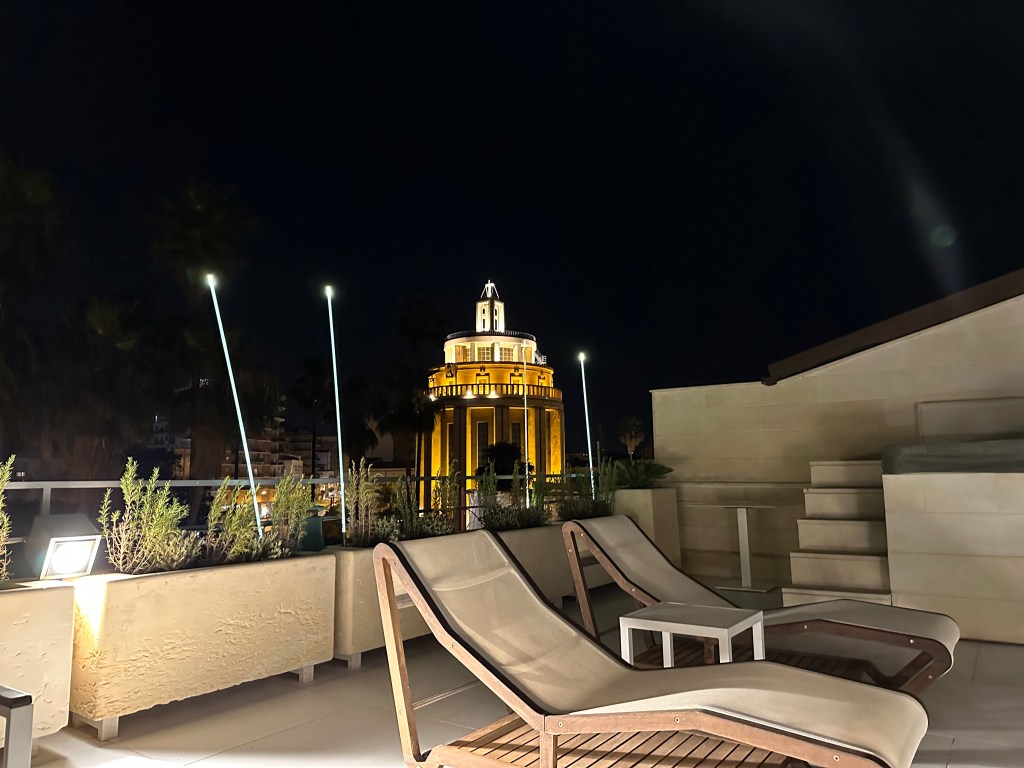
The last of our two nights here, with a few nightcaps on the hotel rooftop.

Onward to Mount Etna!

Categories: A Prolonged Foray to Europe, Sicily | Tags: , , , , , , , , , , | Leave a comment

Blog at WordPress.com.