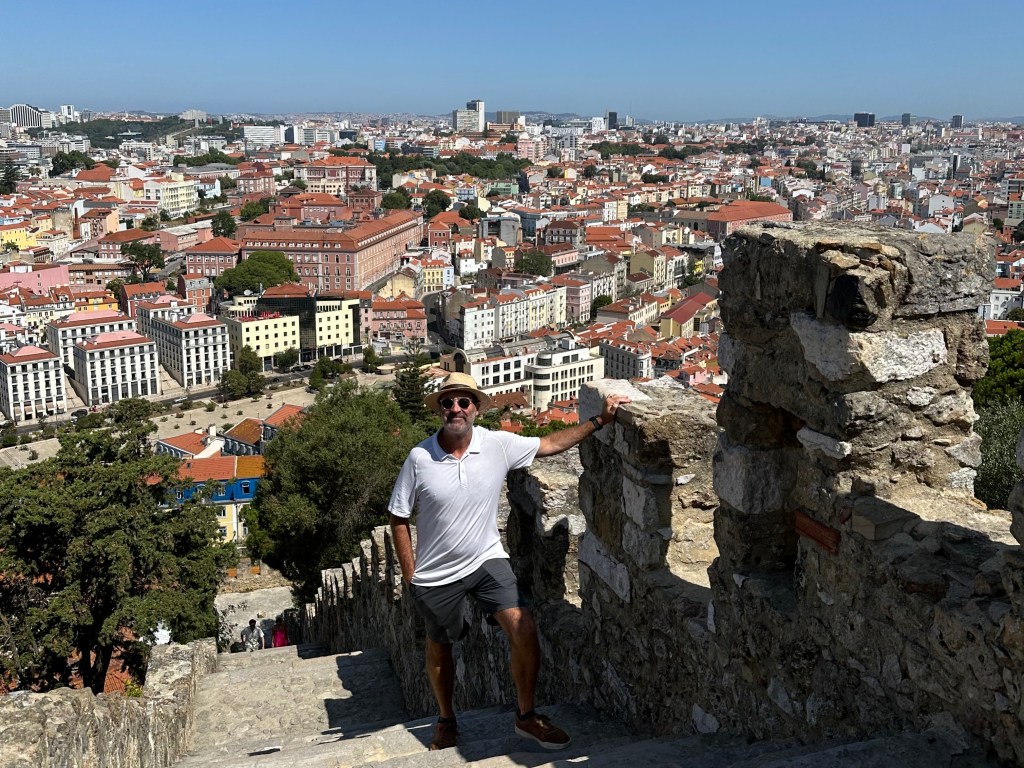
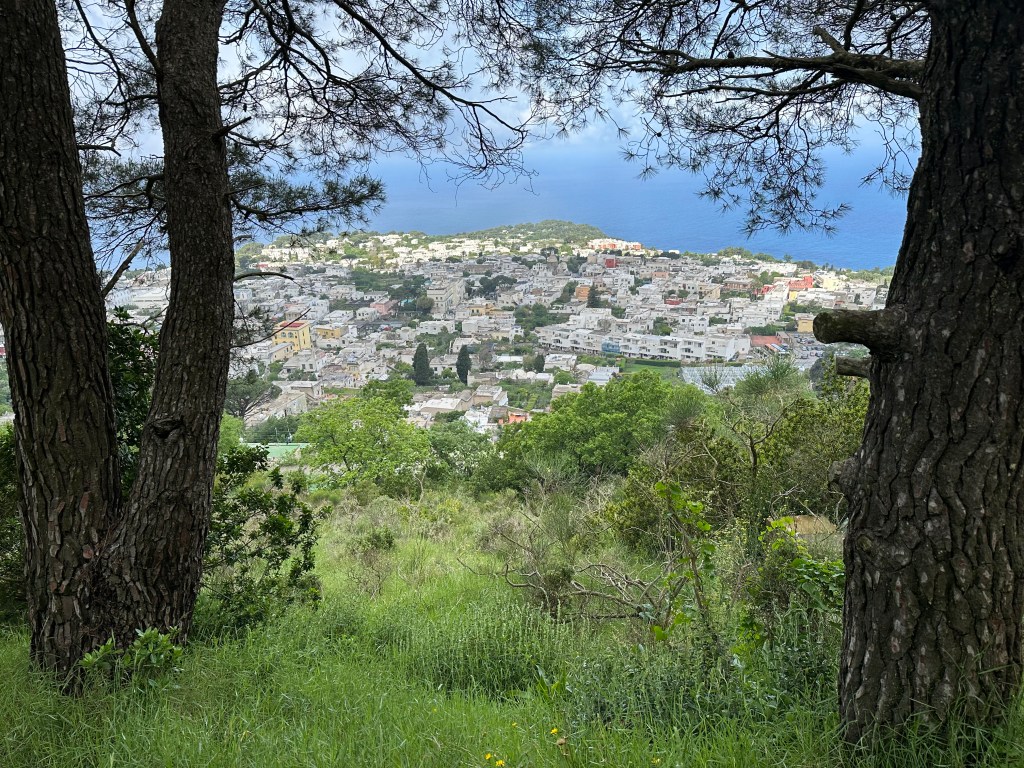
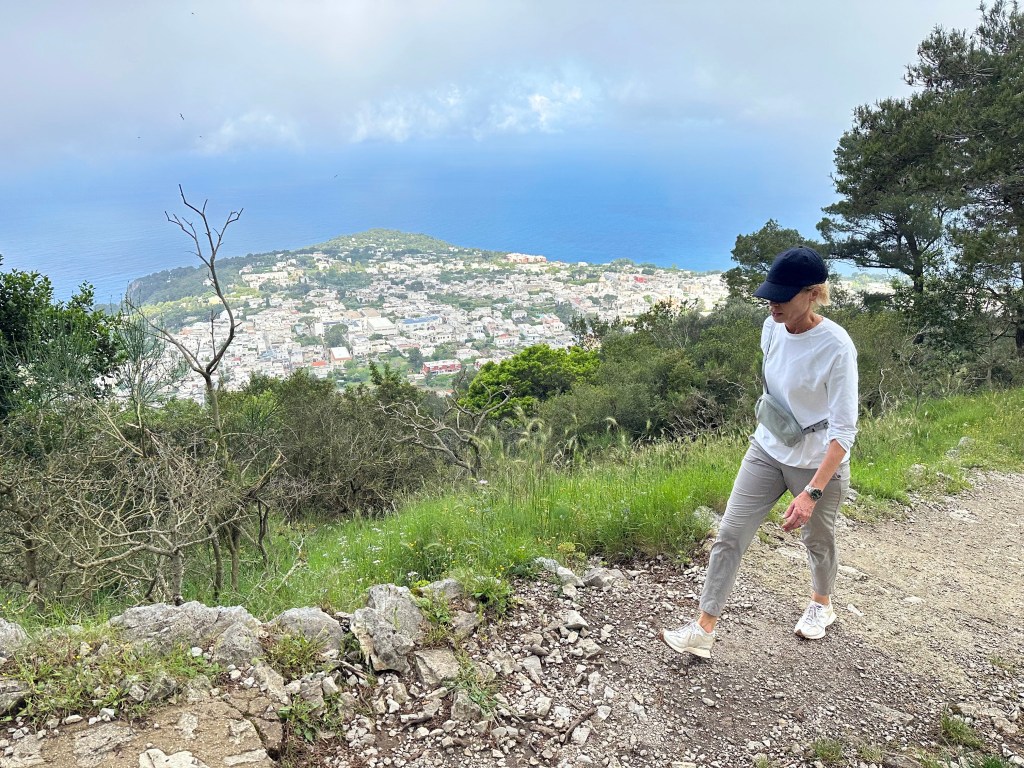
A Prolonged Foray to Europe: Capri

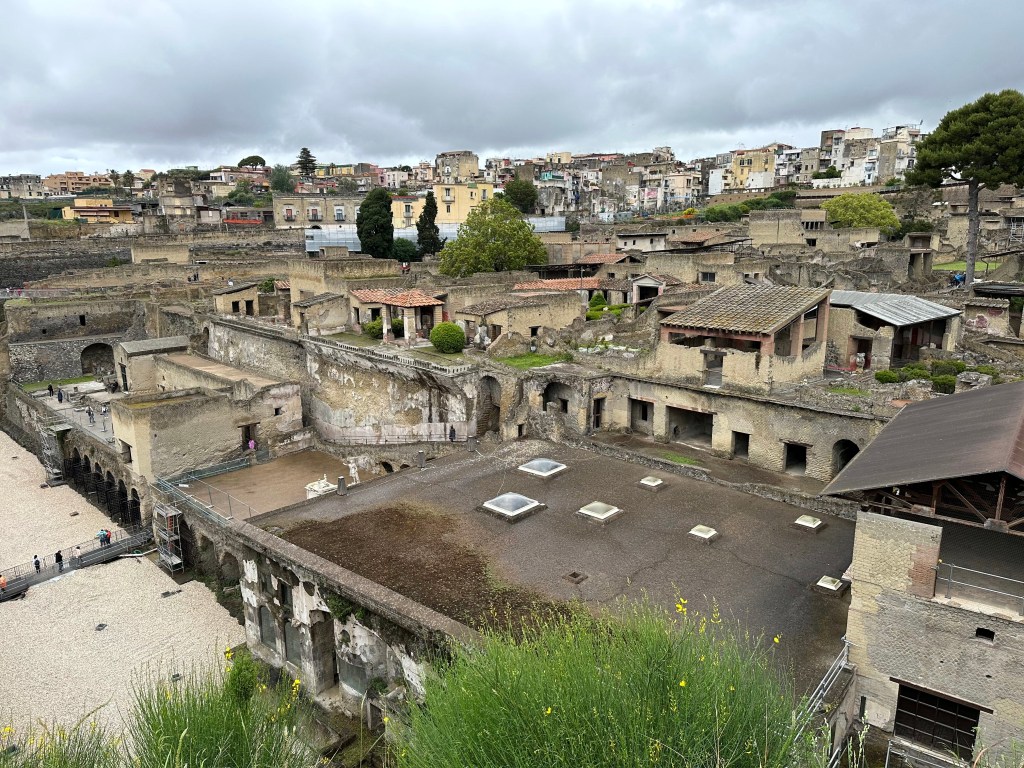
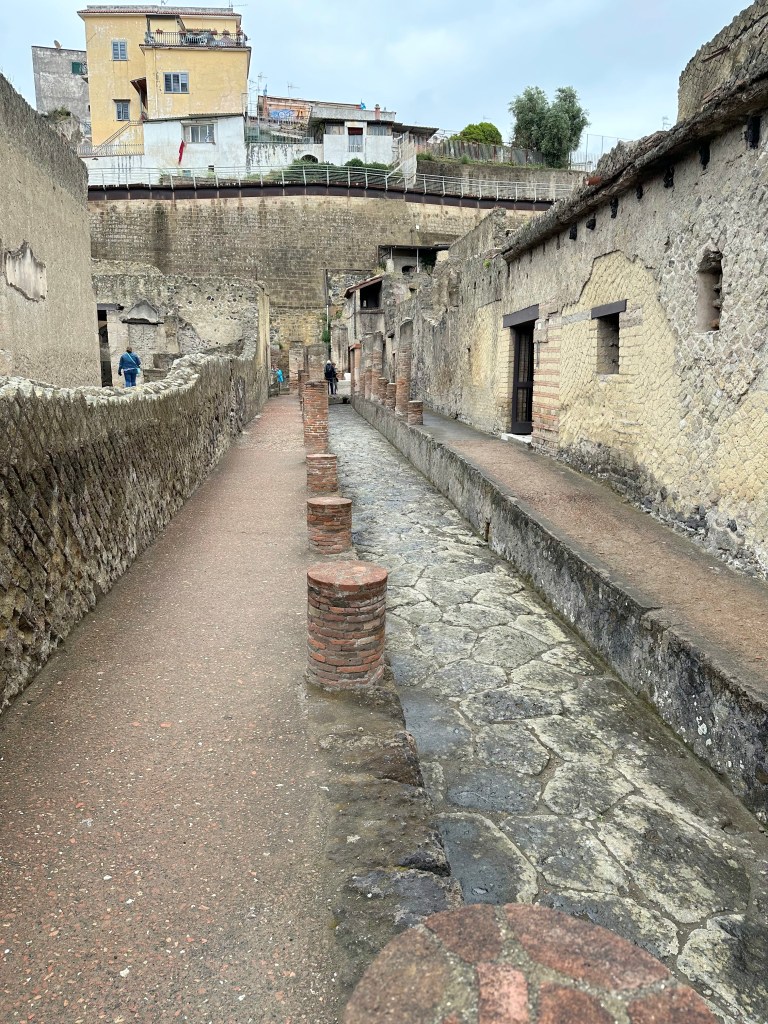
From Herculaneum (and Naples), we originally had planned to head next to Sorento on the Amalfi Coast, and then to Positano. A couple we met in Botswana on safari in 2018, who’s travel style is almost identical to ours, and who we keep in touch with, advised against this. They travel in Italy at least twice a year, and had a lot of insight into the Amalfi Coast, in particular. As far as Sorento went, they found this to be devoid of charm and recommended instead that we spend a few days just opposite that town, on the island of Capri. So we cancelled our Sorento reservations (this discussion occurred during our planning phase) and found a cool place on Capri instead, which is where we headed next. (We’ll cover the Positano issue in the next post.)

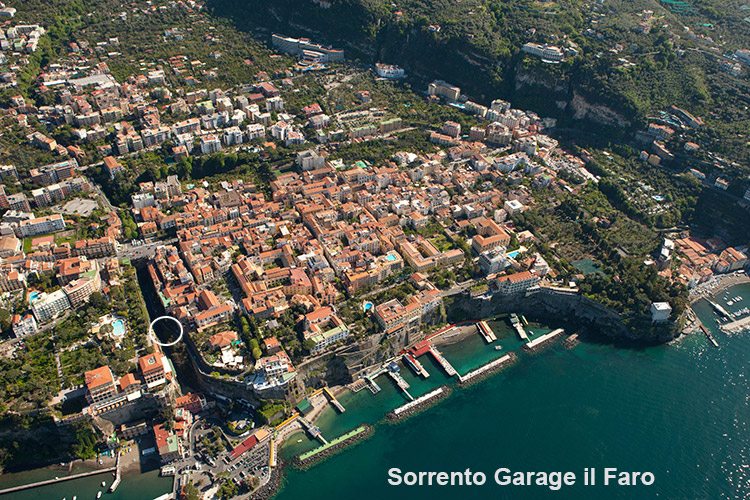
Our only experience with Sorento came from our parking and the ferry dock to Capri, since both took place there. Parking was a trip for one of us and deeply traumatic for the other. After careening down a series of urban switchbacks from the center of Sorento down towards the dock and passing a couple of parking lots on the way (that we sped on past because we had no idea how much further ahead the ferry dock actually was, and we had luggage), we passed a portal leading to a cave in the face of the high cliff that abutted the road we were on. In the cave resided a few piggyback car lifts – a garage! Of sorts. But from the cave portal, we could actually see the ferry dock down a hill. Perfect! Thought one of us. WTF?!? Responded the other when the first suggested we just park there. But park we did – kind of.
The WolfeStreetDriver left the car in neutral (it was a stick), got out, and ran over to talk to the cave people. But he didn’t turn the car off or apply the parking break. As a result, the rental car – with the WolfeStreetPassenger still in it, began to drift down the steep decline straight to the ferry dock and, uh, the ocean. This almost led to a coronary by the passenger at the time and definitely created some residual PTSD that remains to this day. The driver remedied the situation before the car drifted too far, and we successfully dropped the car off at the car cave and arranged to pick it up a few days later, when we thought we’d be back. Then strolled like 50 yards down to the ferry dock and caught the next ferry, which, conveniently, departed in just 20 minutes.

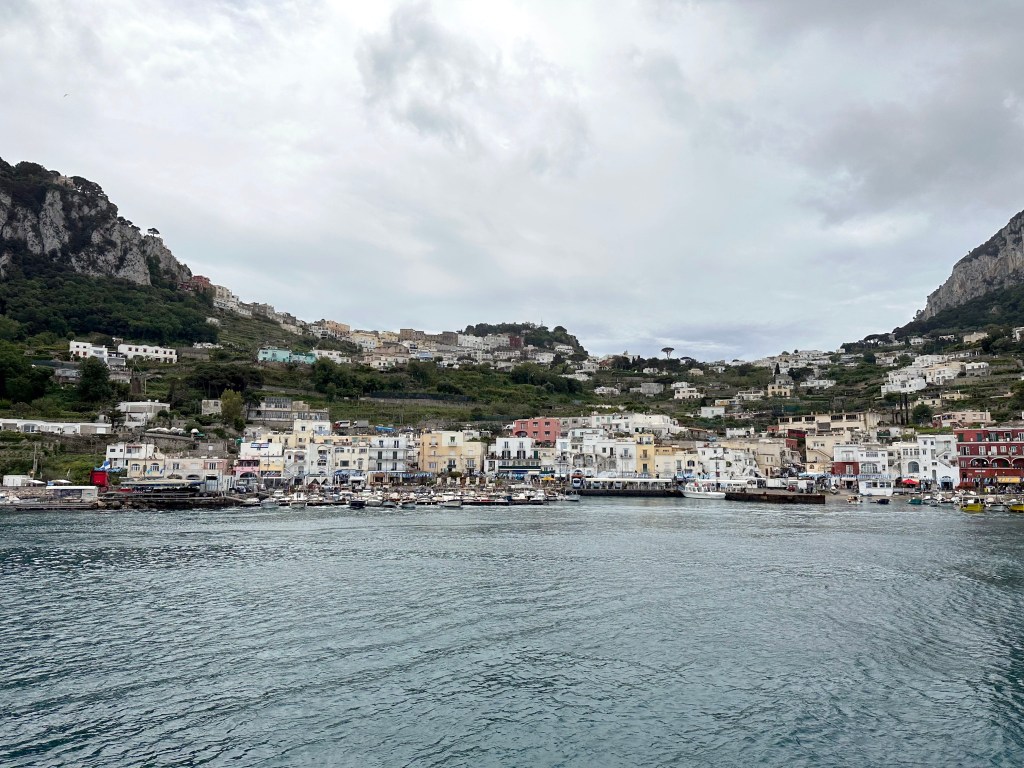
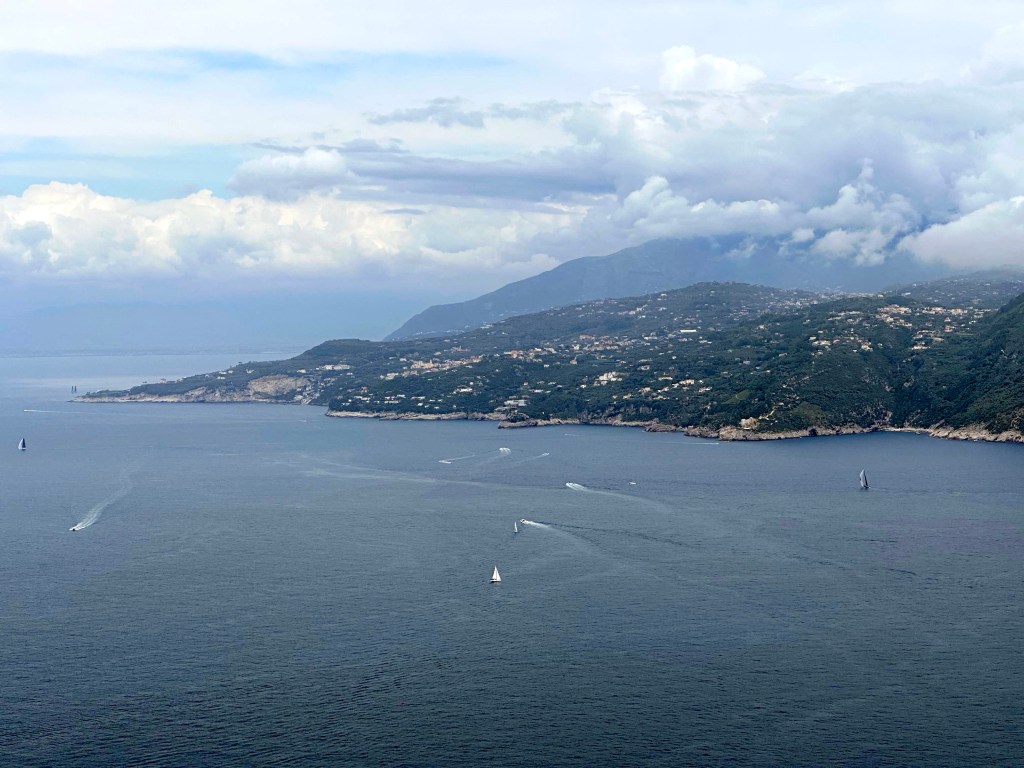
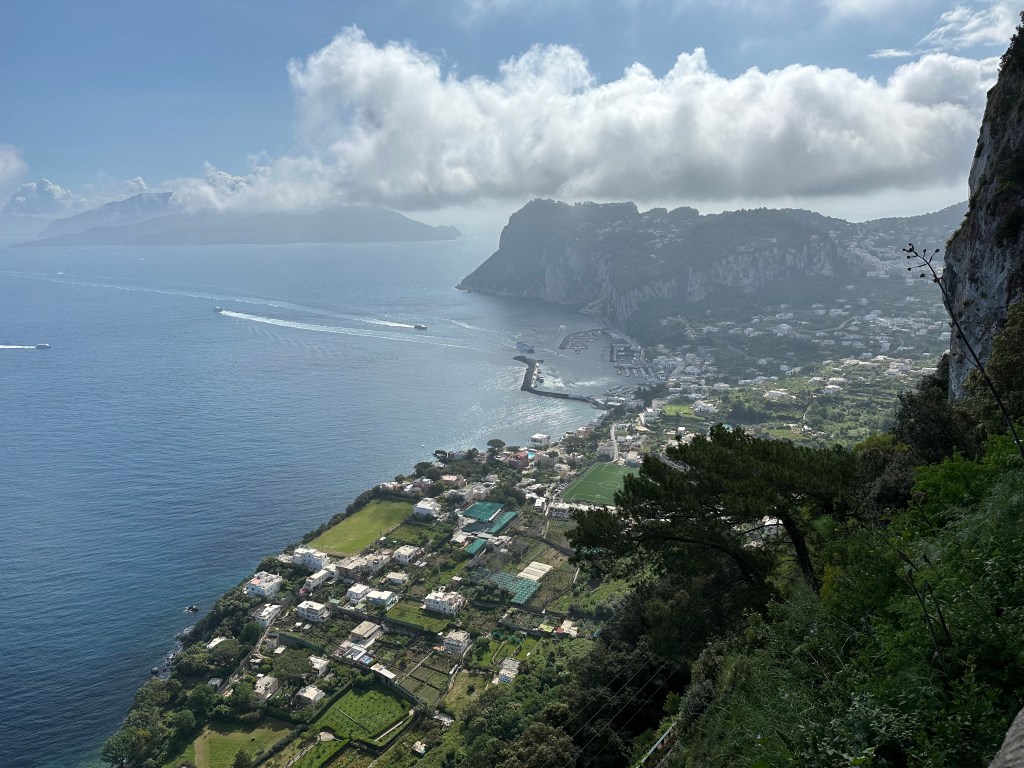
A view of the dock area on Capri. A little misleading, considering how mountainous the rest of Capri is.

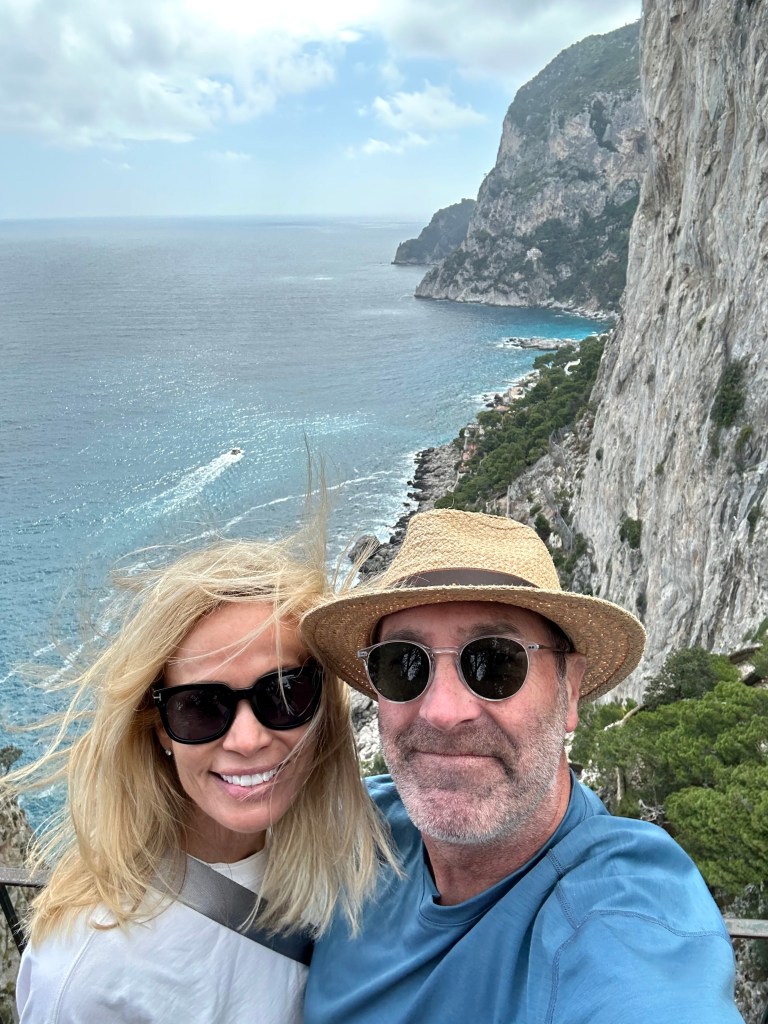
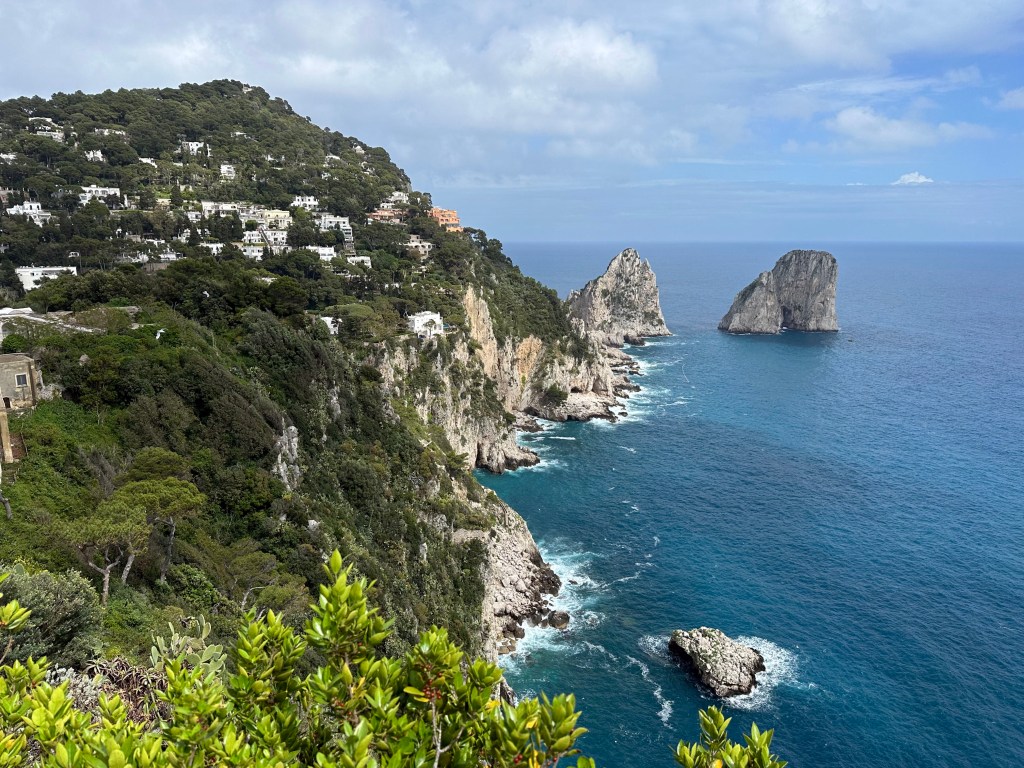
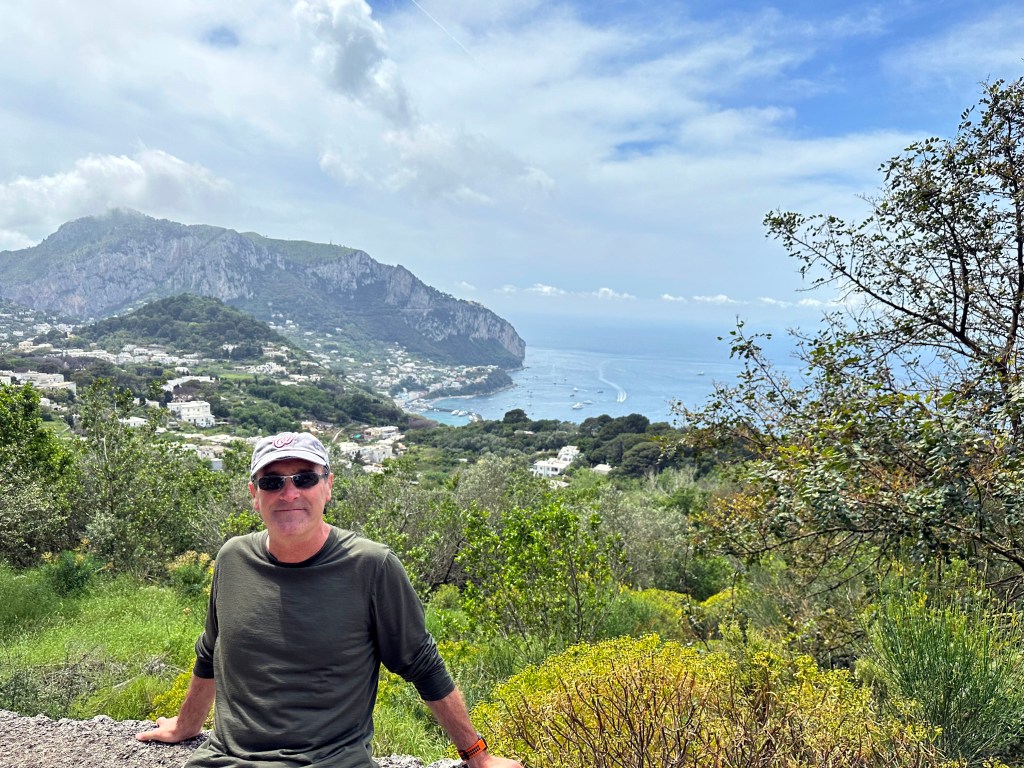
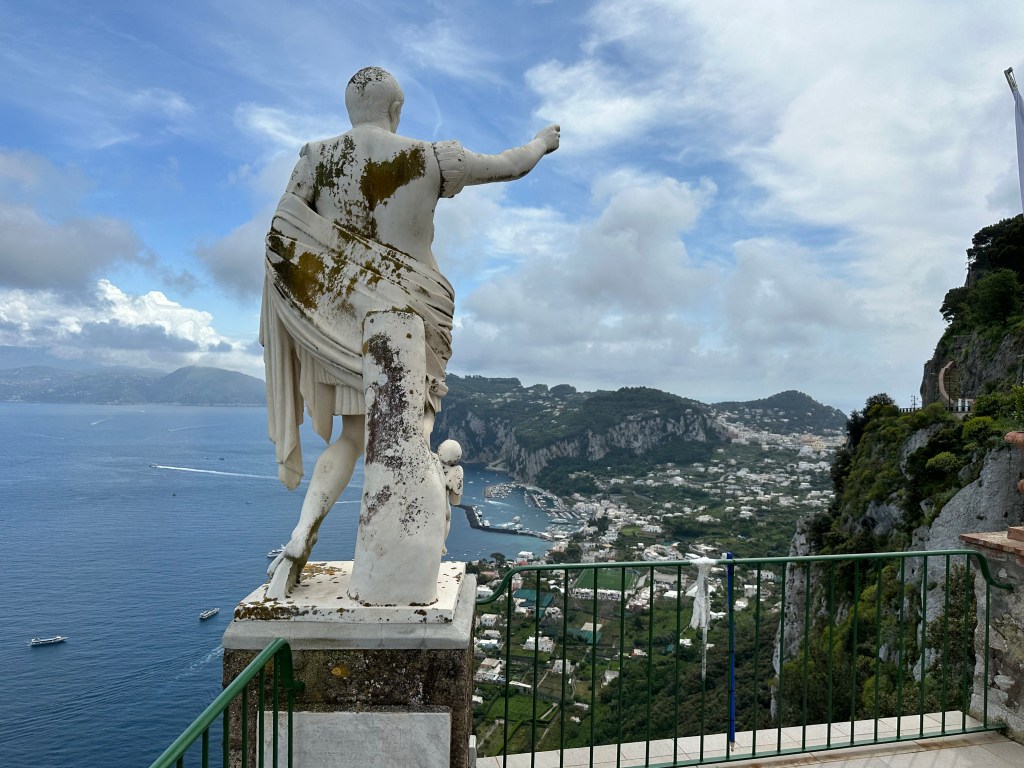
To wit, a view from the Gardens of Augustus on the edge of Capri Town:

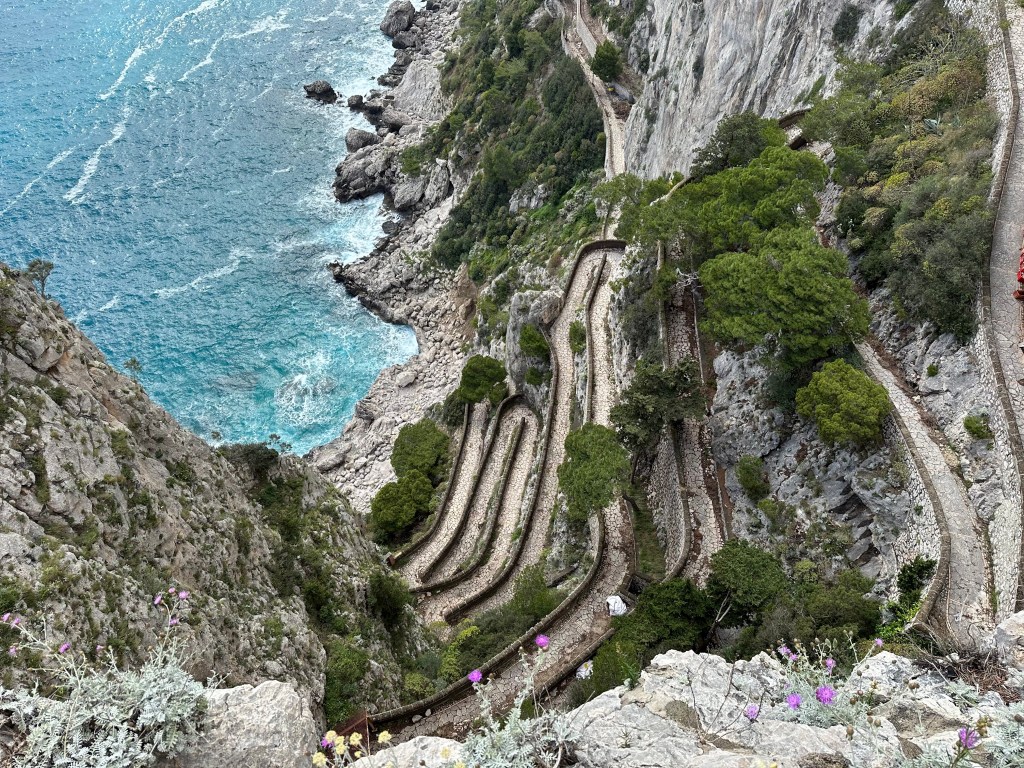
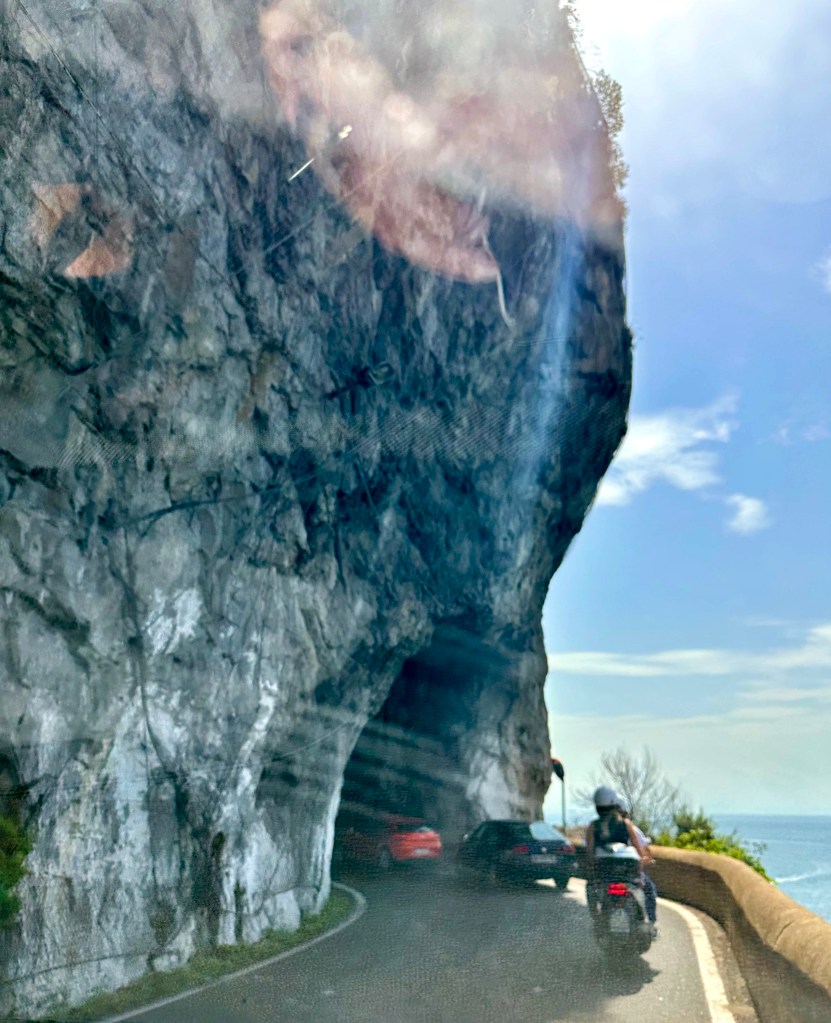
Now THAT’s a switchback:

A fine competitor to our recent driving experience in Mallorca, which one day we’ll post about, expanding on that trip overview.

Iconic views from the gardens:

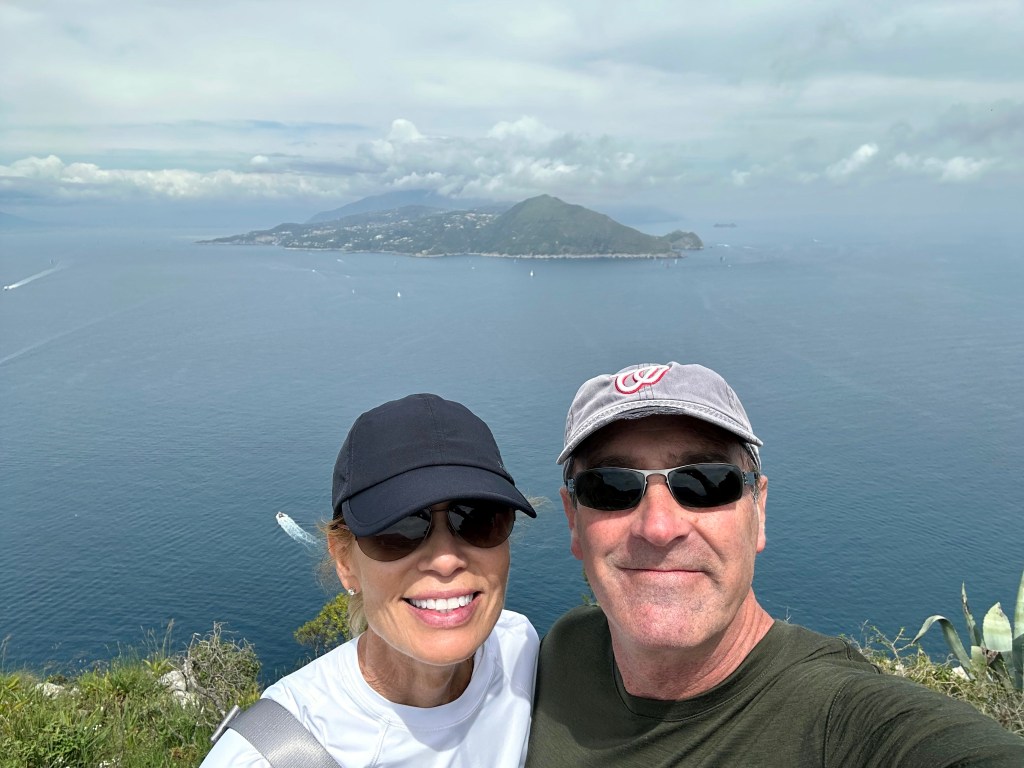
Pretty good start to our stay!

A nice hike from town to a historical location that we wanted to make sure we checked out: Villa Jovis.

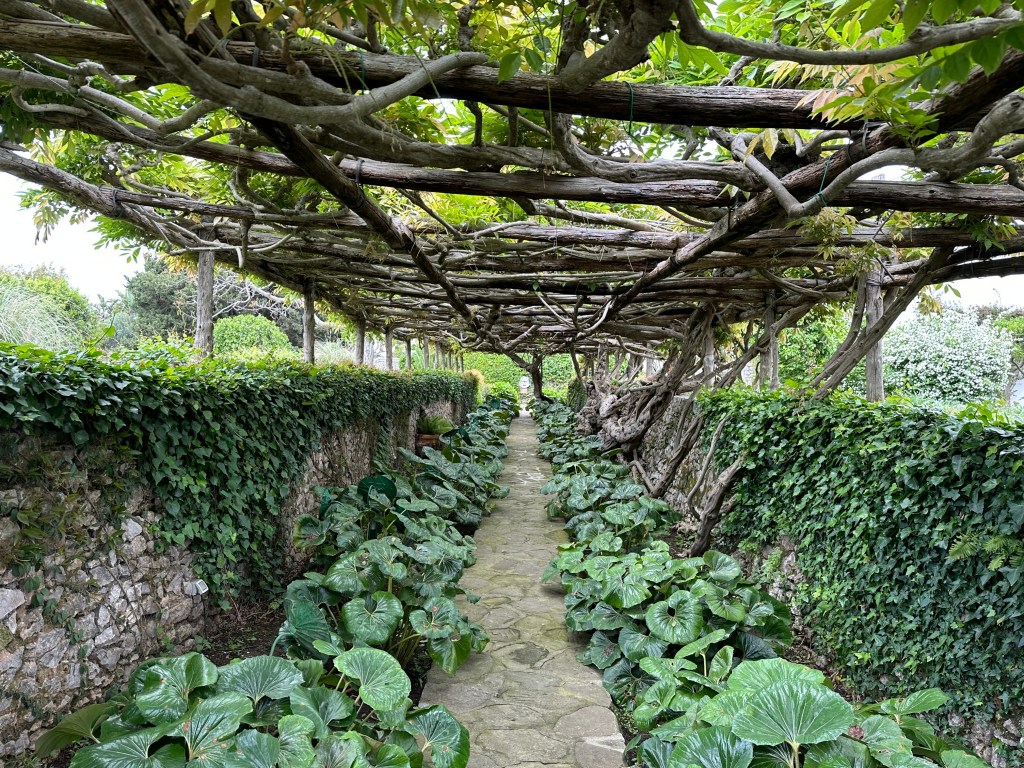
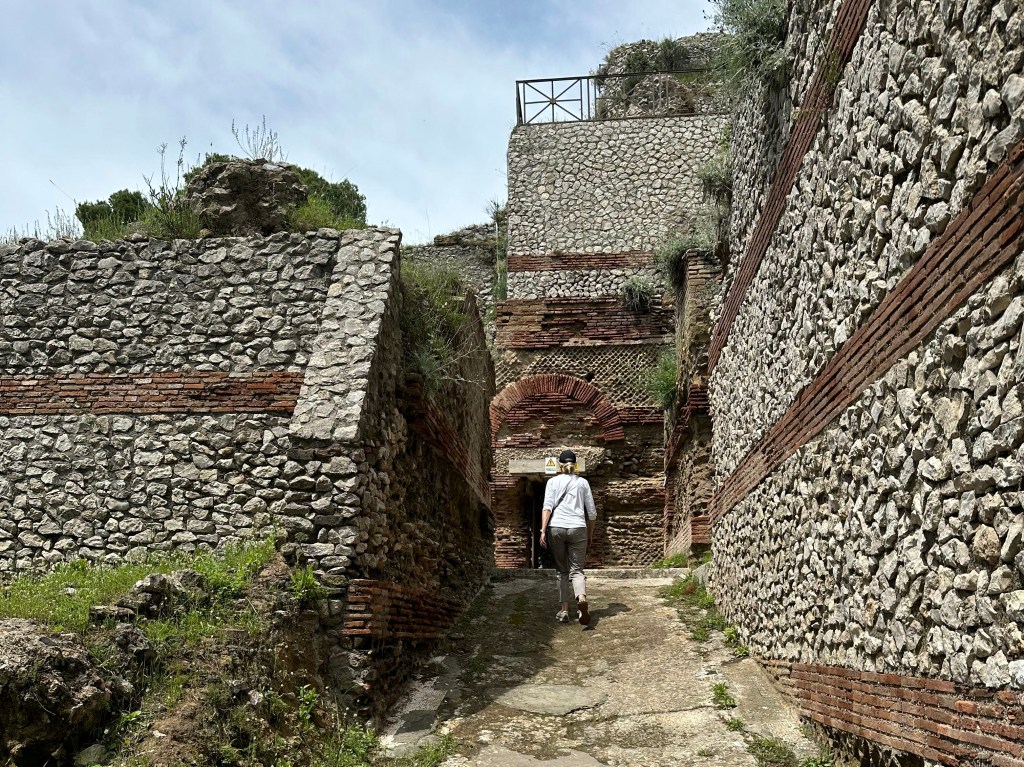
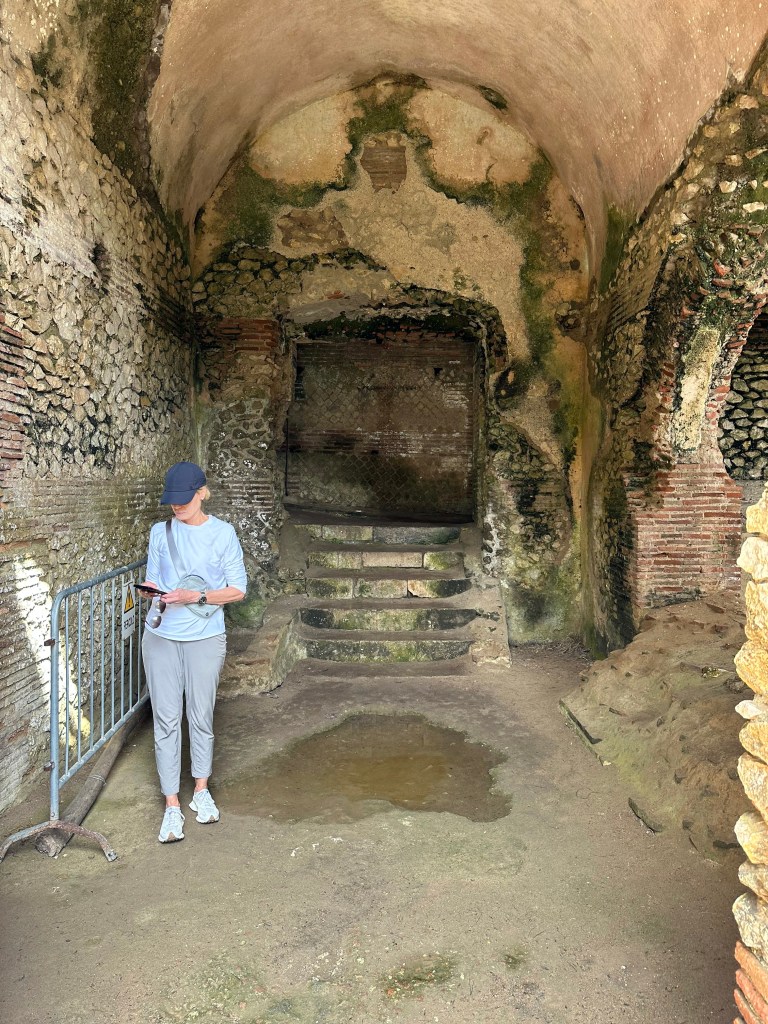
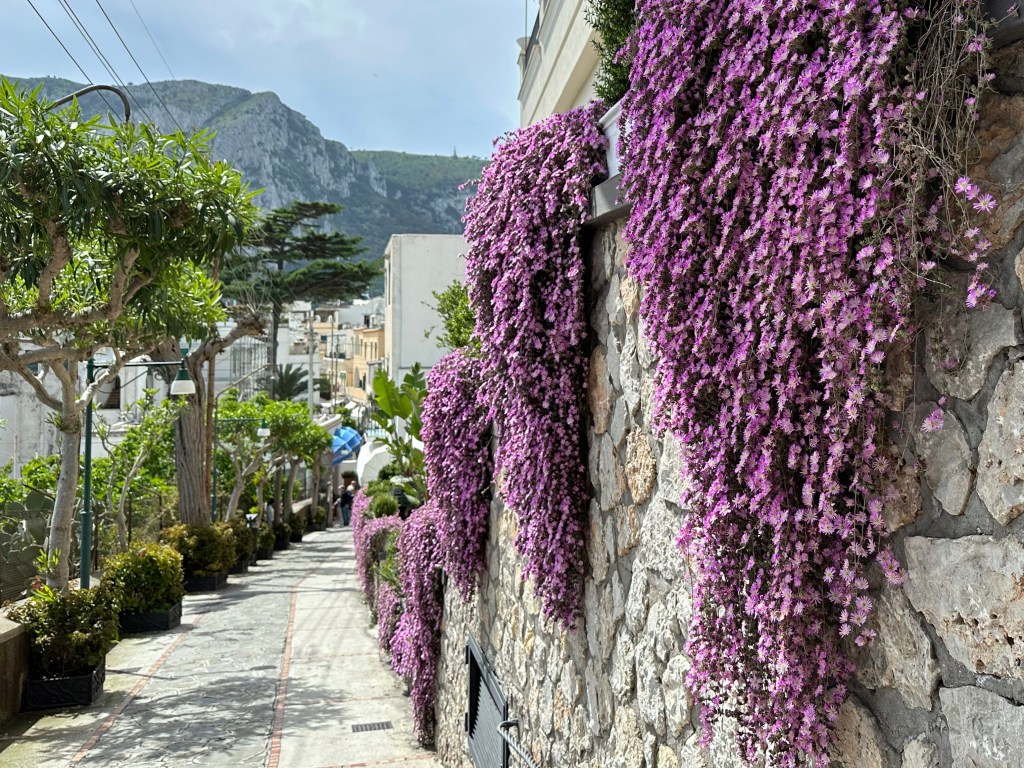
Super cool entrance to a villa on the hike there:

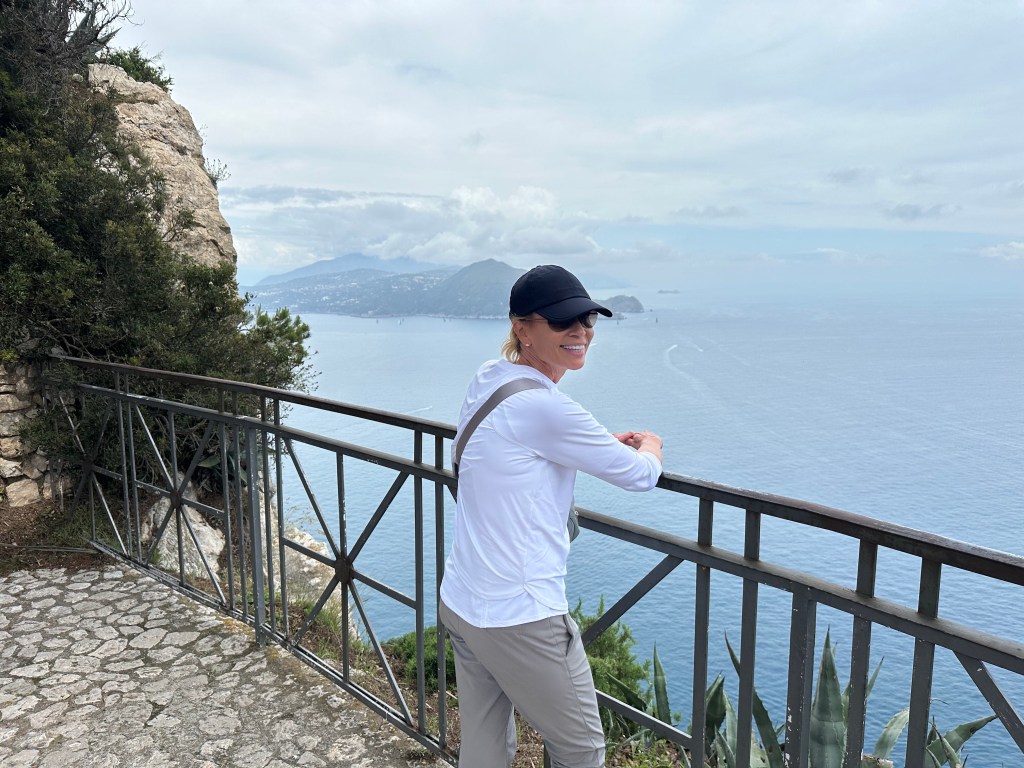
Pretty great views along the way:

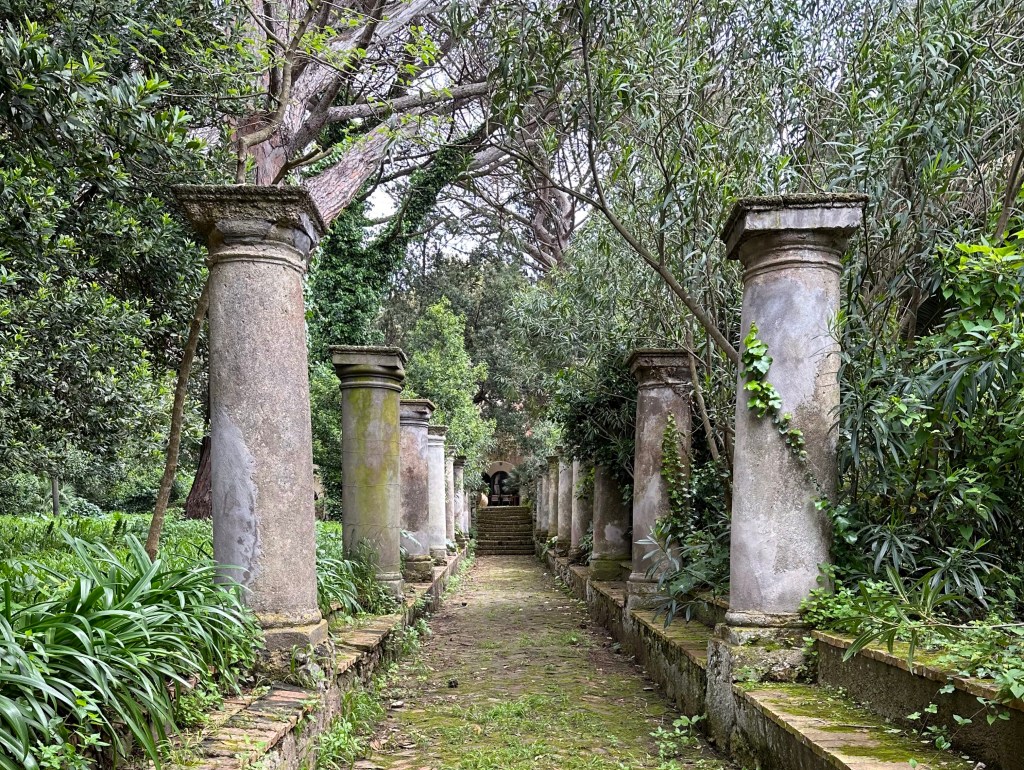
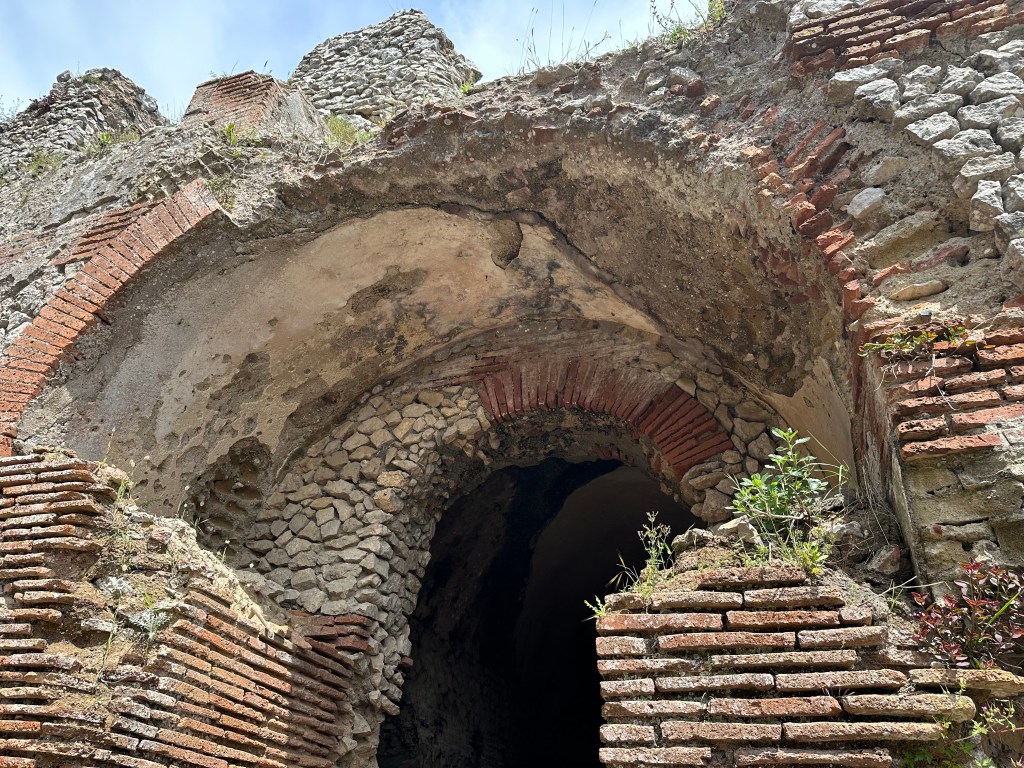
Another villa’s atmospheric entrance:

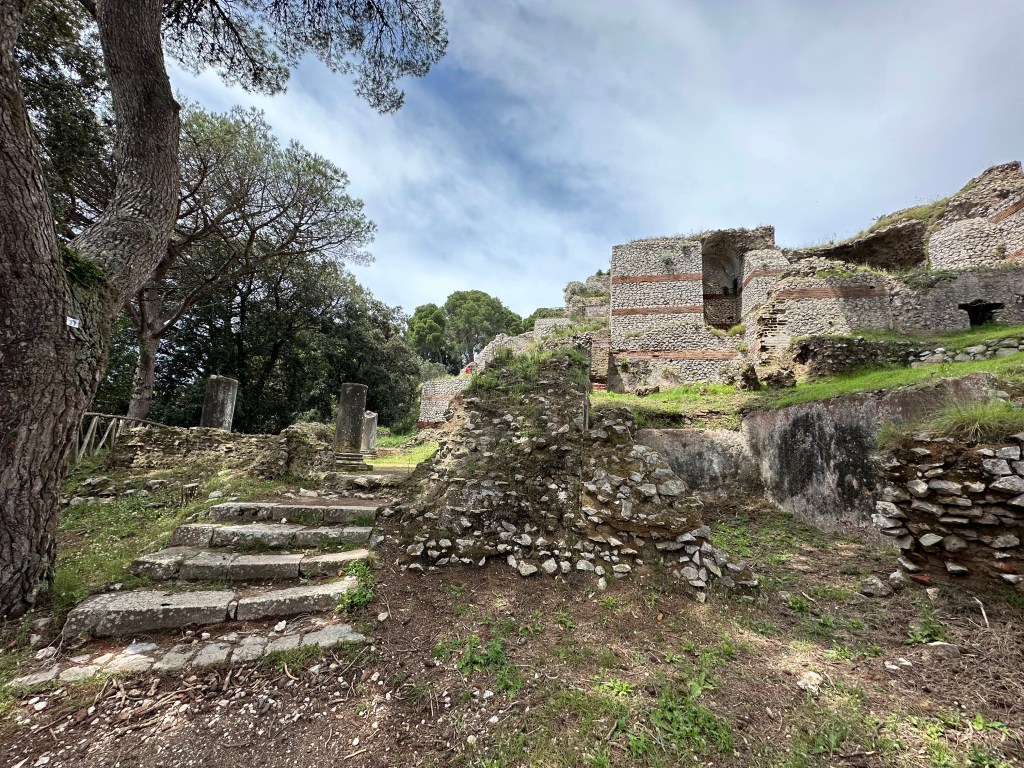
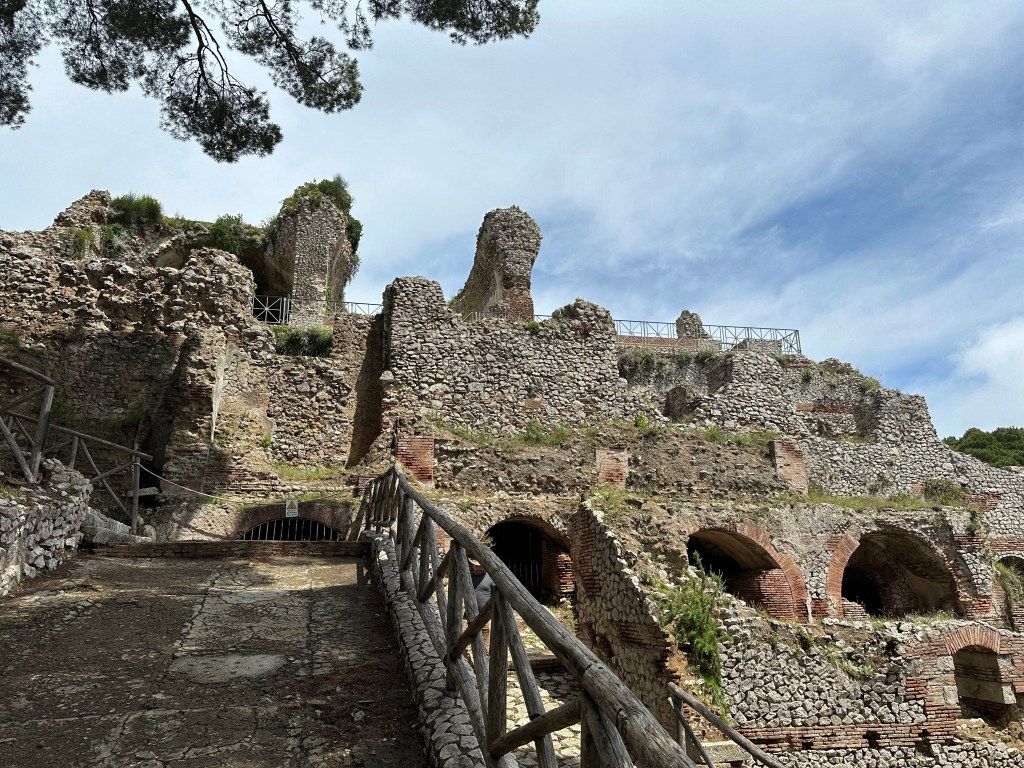
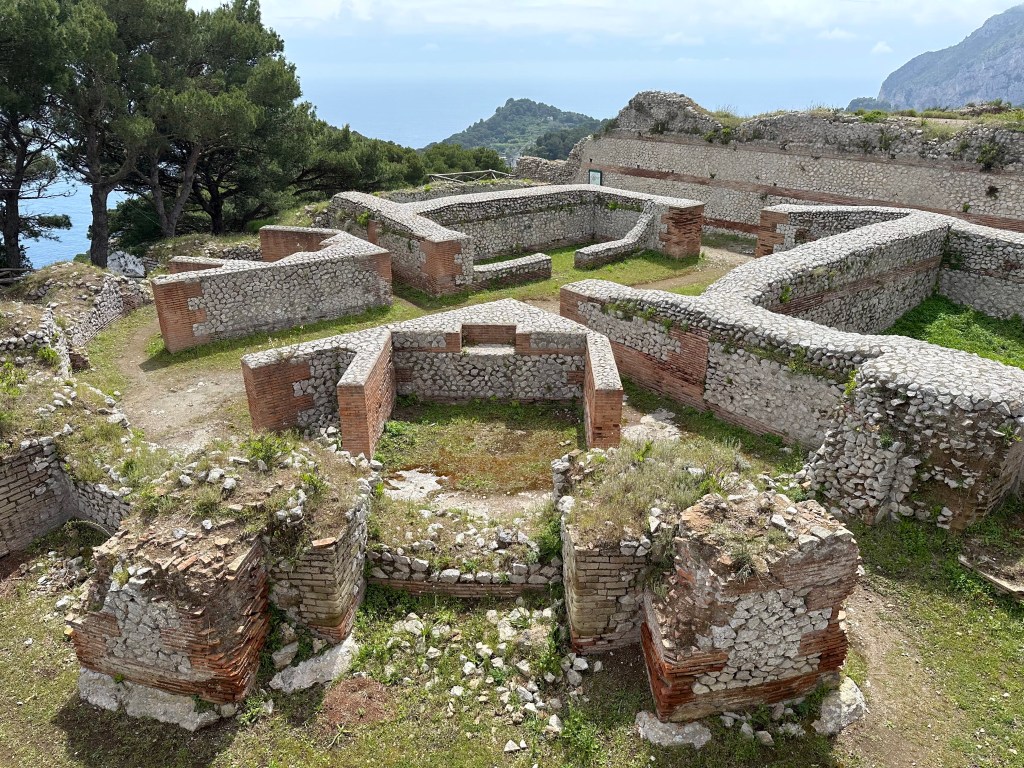
And THE villa! Villa Jovis, accessible only by foot:

Villa Jovis (what remains) holds the distinction as the largest of the 12 villas Roman Emperor Tiberius built on Capri.

Completed in 27 AD, Tiberius spent the last 10 years of his reign ruling from here, away from the bustle – and potential danger – of Rome.

“Apparently, the main motivations for Tiberius’s move from Rome to Capri were his wariness of the political maneuvering in Rome and a lingering fear of assassination. The villa is situated at a very secluded spot on the island and Tiberius’s quarters in the north and east of the palatial villa were particularly difficult to reach and heavily guarded.” (From here.)

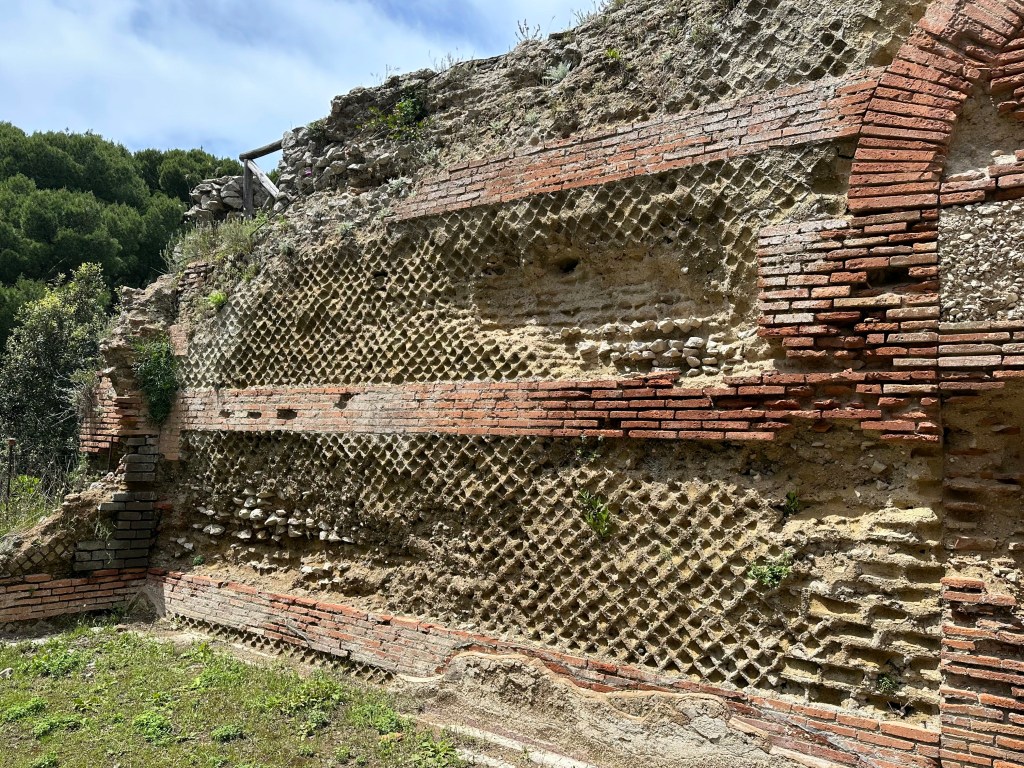
Roman engineering still holding up:

The original structure of the villa, which dates to Caesar Augustus, Tiberius’ predecessor, was restructured to meet the requirements of Tiberius when he chose the island as his headquarters from 27 AD to his death in 37 AD.

Villa Jovis continued to serve as the Imperial residence until the 2nd century AD. Subsequent modifications made in the middle ages. The villa was explored during Bourbon rule in the 19th century and excavated systematically by an Italian archeologist between 1932 and 1935.

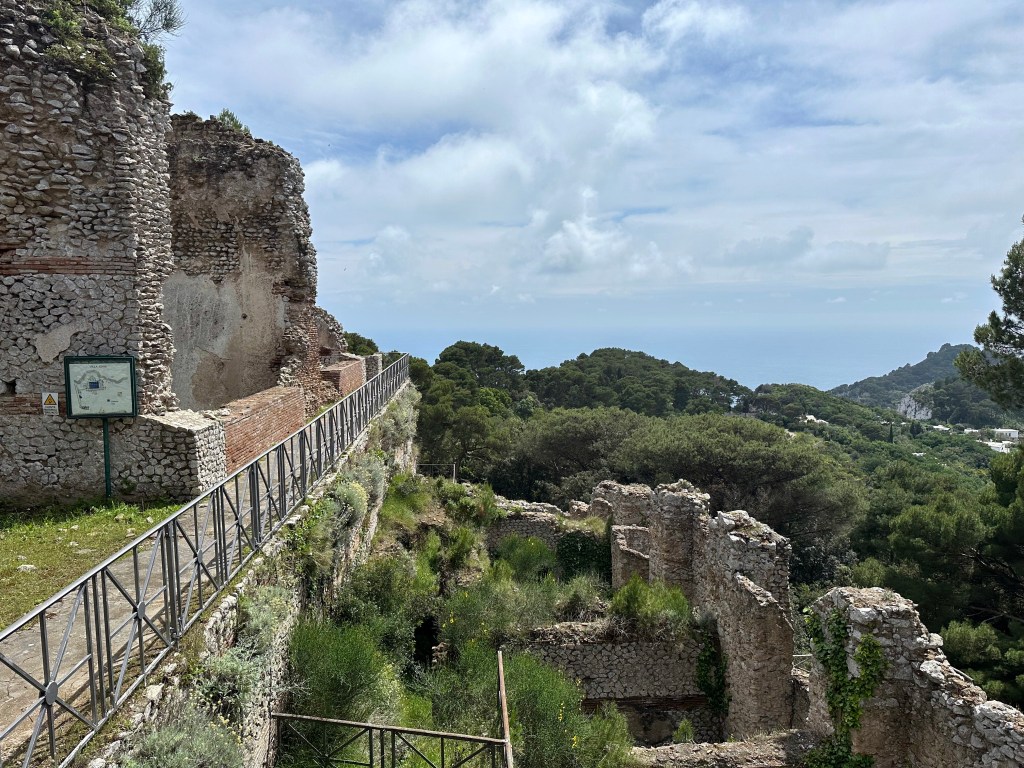
The villa is located atop Mount Tiberio, the second-highest peak of Capri after Monte Solaro (which we’ll get to, to be sure):

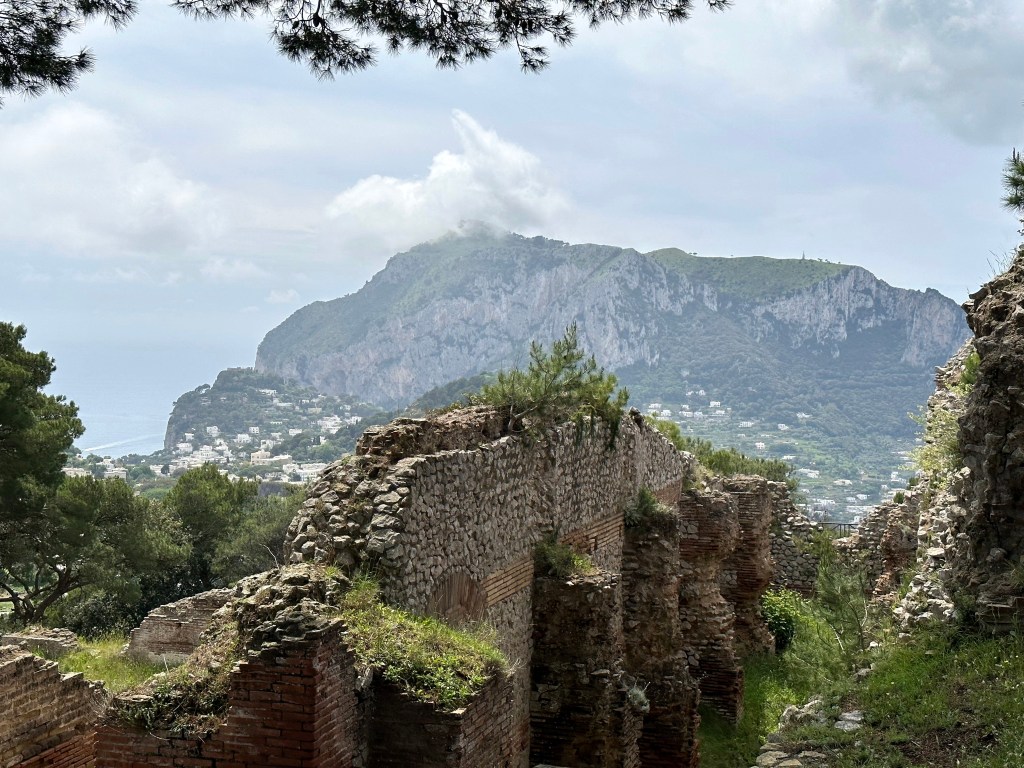
Pretty great views back to other areas of Capri:

The remains of Villa Jovis’ watchtower (specula) from which messages would be exchanged with the mainland by fire or smoke:

Views still pretty good on the hike back:

Pretty nice walk into town. One regret is not taking pictures while enjoying aperitivos from Capri Town’s piazetta, where we’d hang out each late afternoon people watching. Pretty great, frankly.

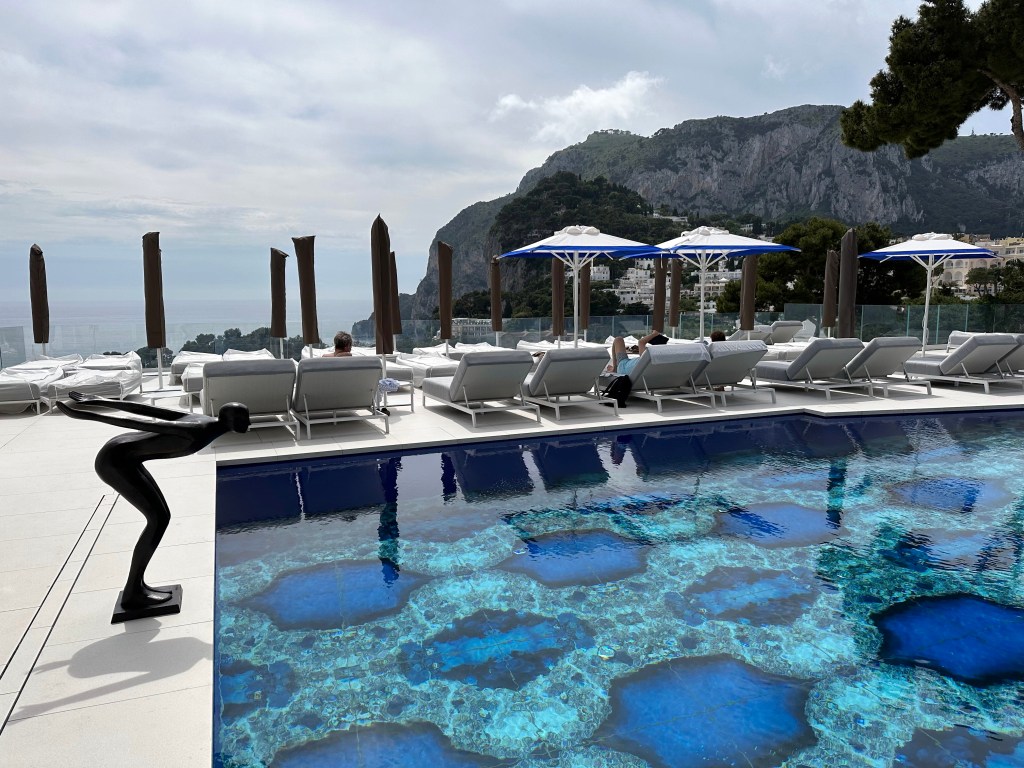
Also, classic Amalfi coast pool setting at our place:

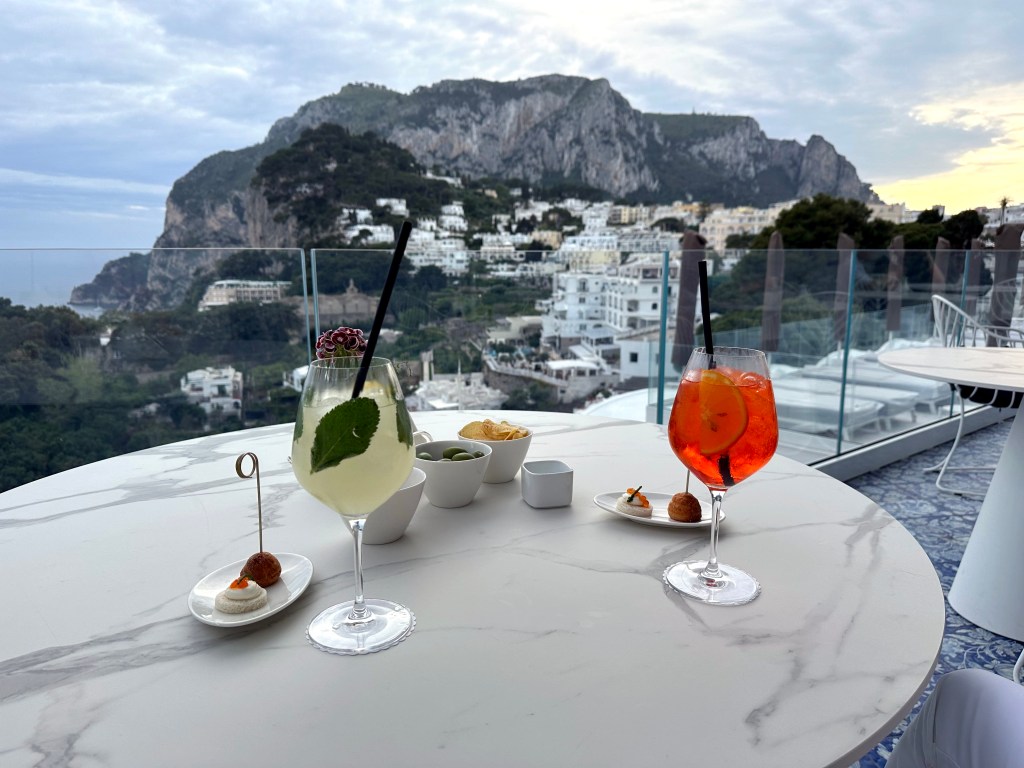
Pre-aperitivo aperitivos at our place before heading to Capri Town’s piazzetta for the main event.

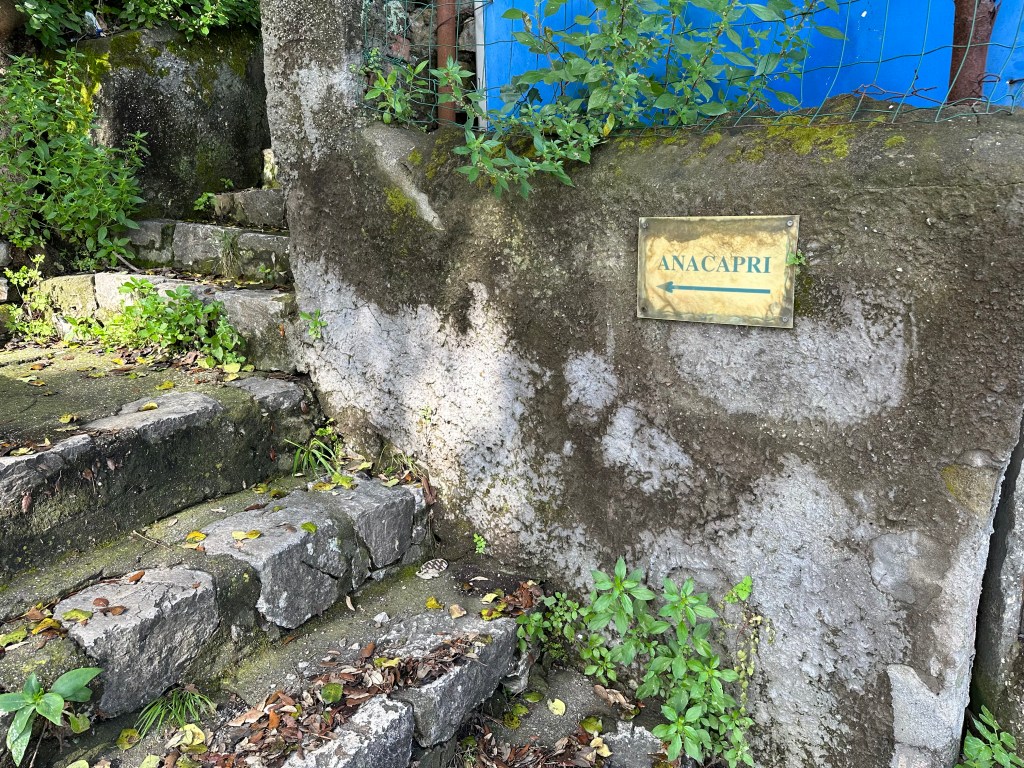
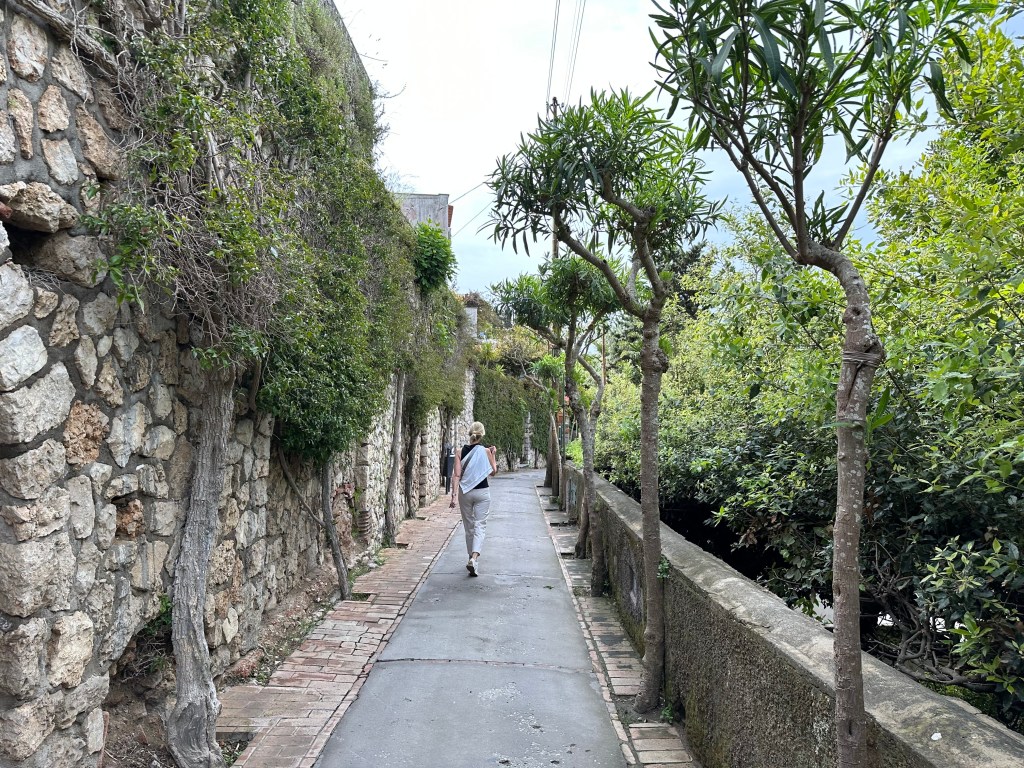
The next day, a hike to the other side of the island and Anacapri.

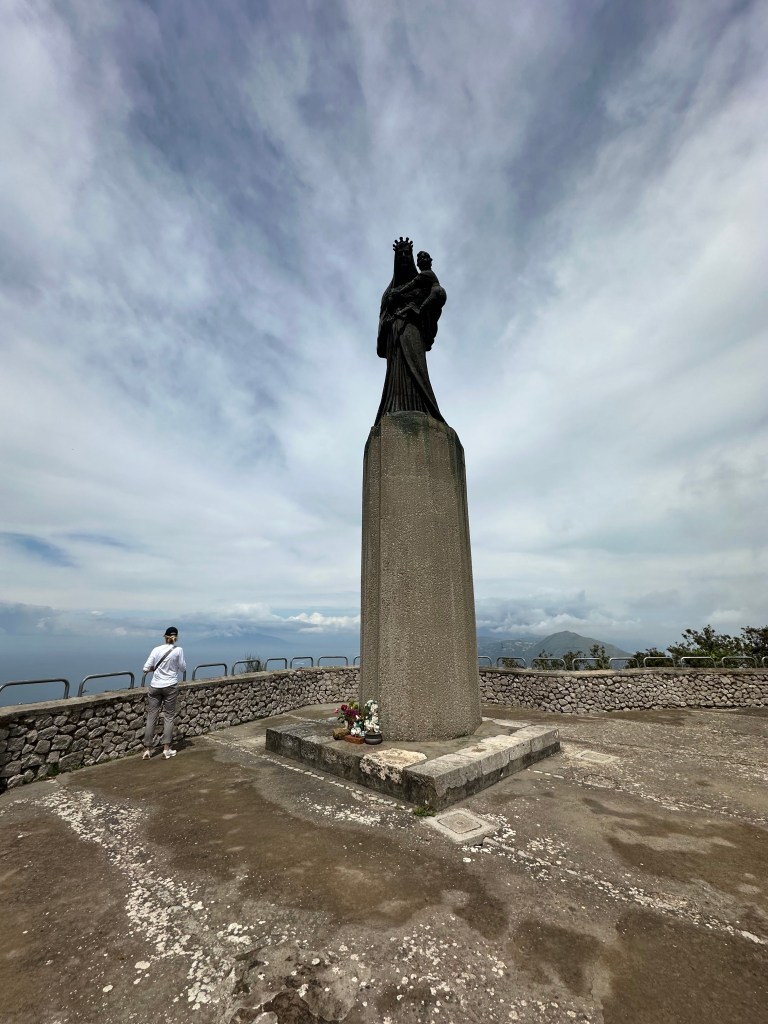
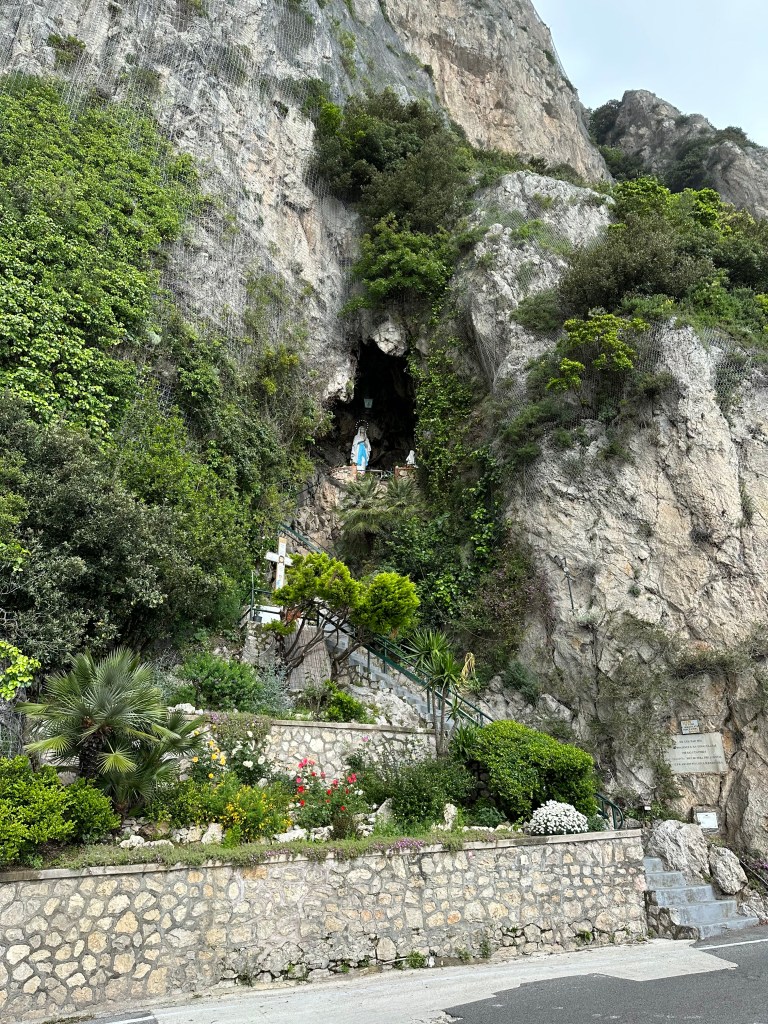
Little shrine on the way:

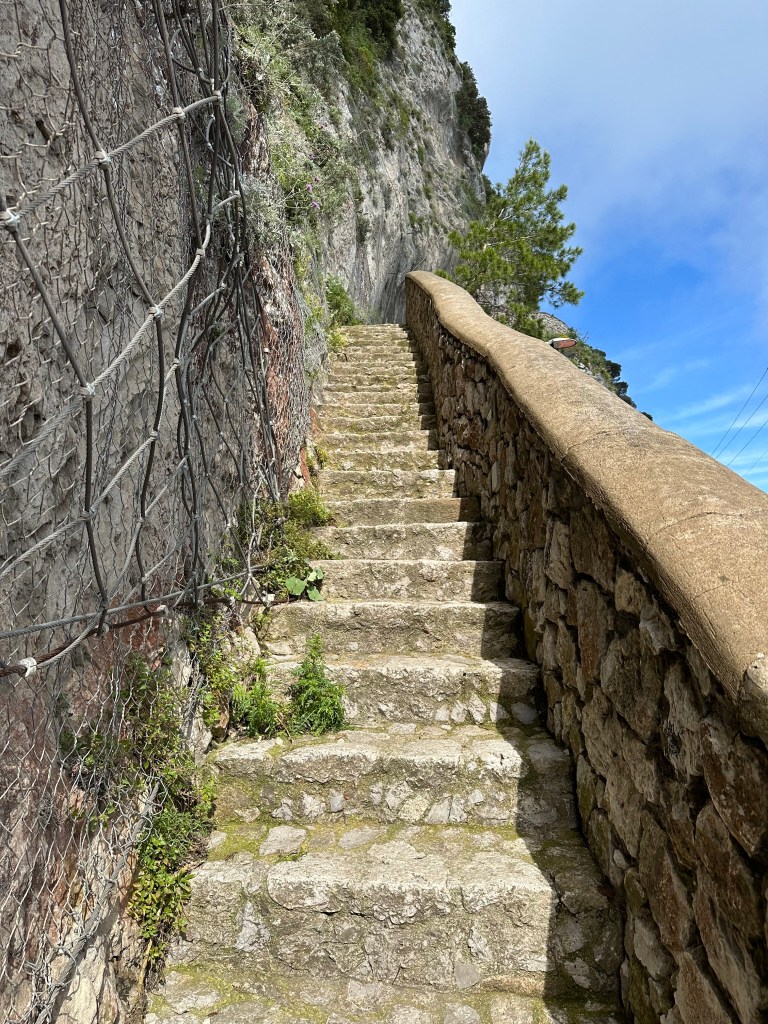
It was a hike, man.

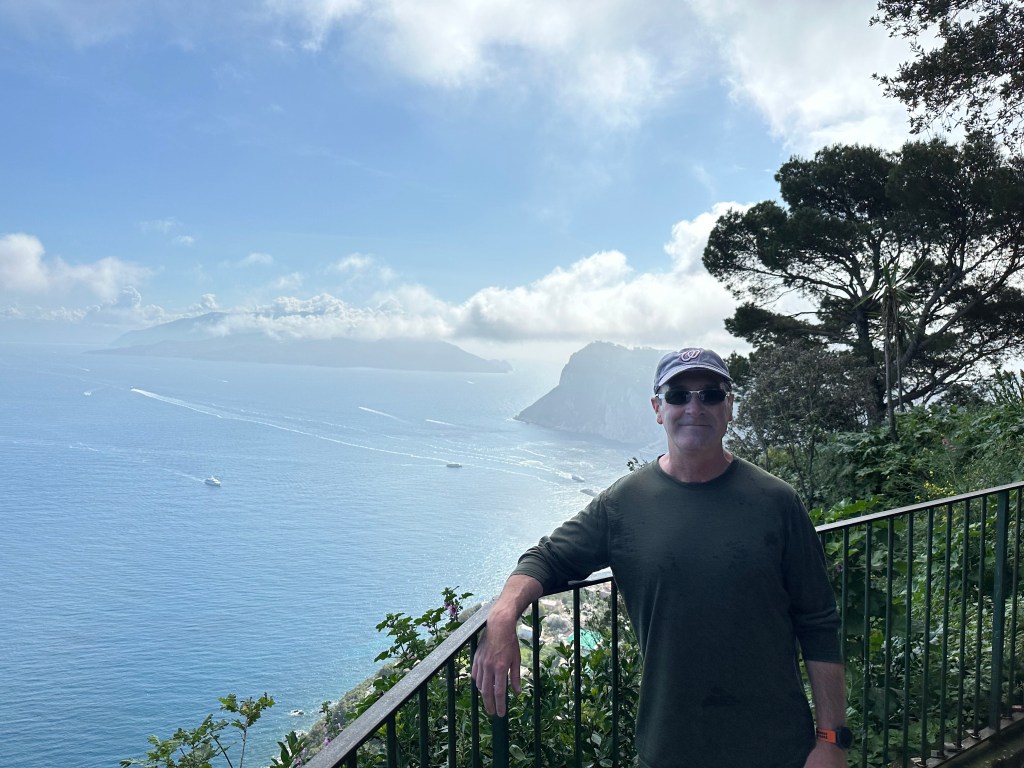
But worth it.

Views on the way back to the ferry port:

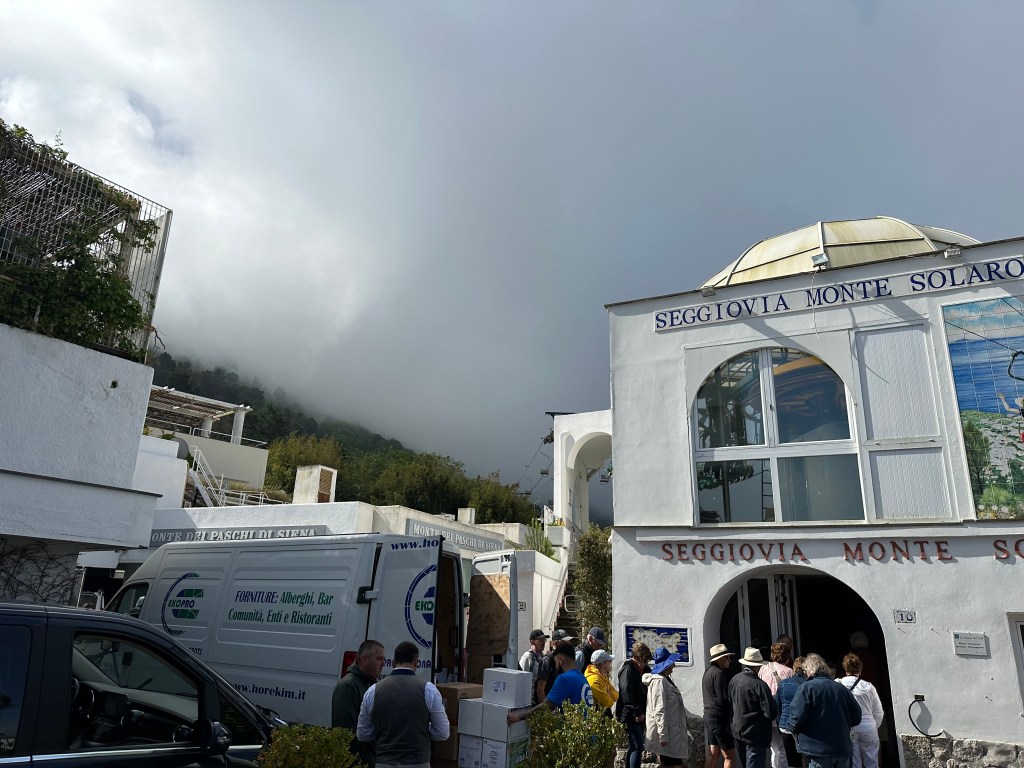
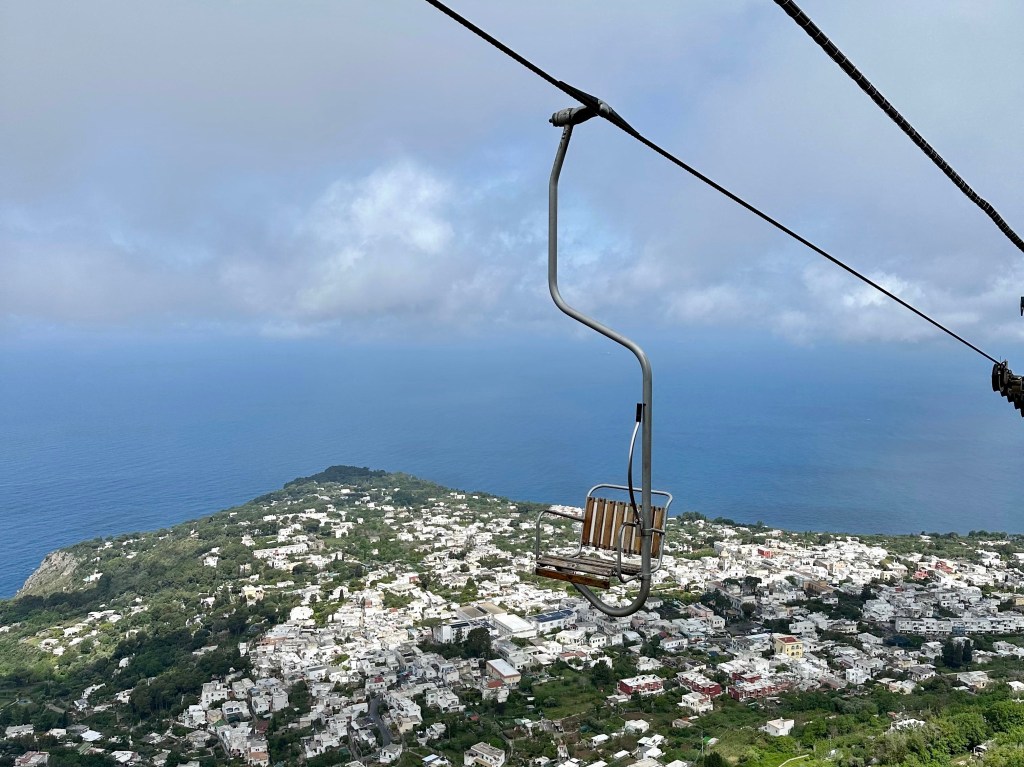
This was our objective: the chair lift to the top of Monte Solaro.

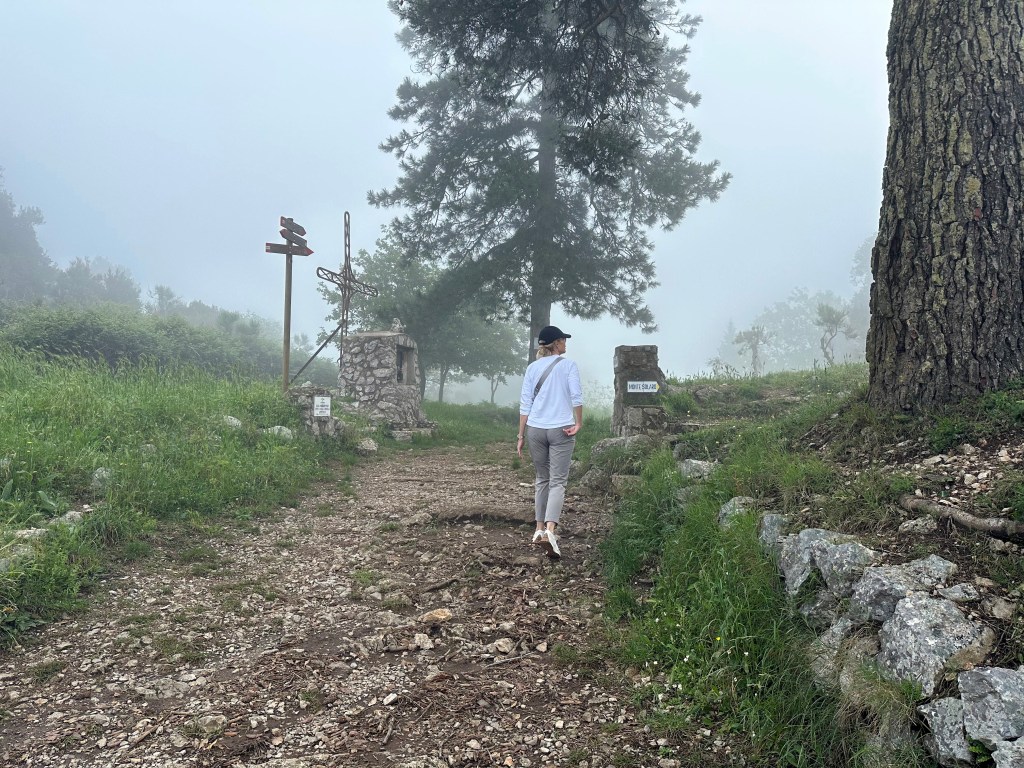
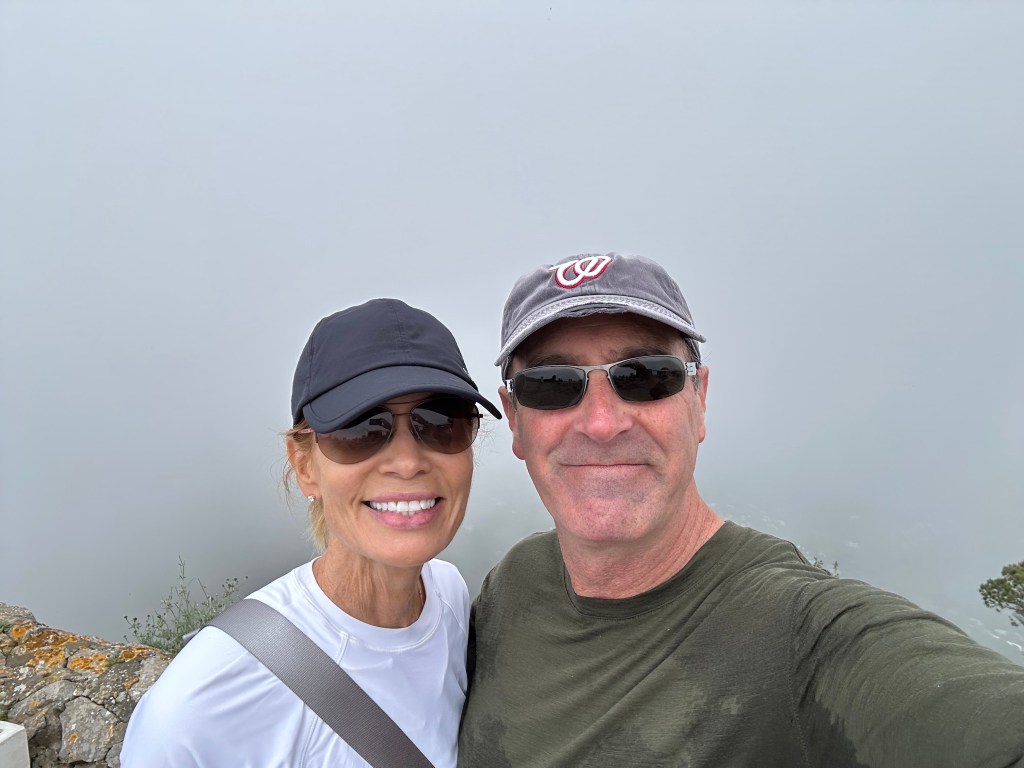
But the whole mountain was fogged in, so there’s not much to see on the trip up.

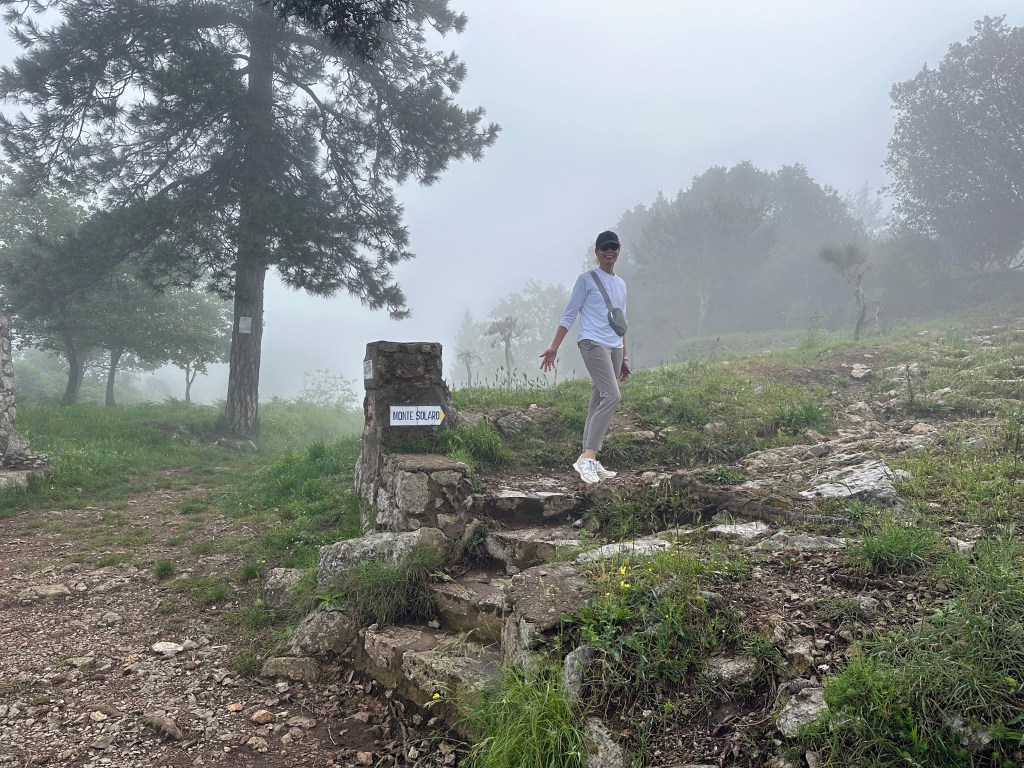
So we kept hiking all the way to the top, instead.

Still socked in:

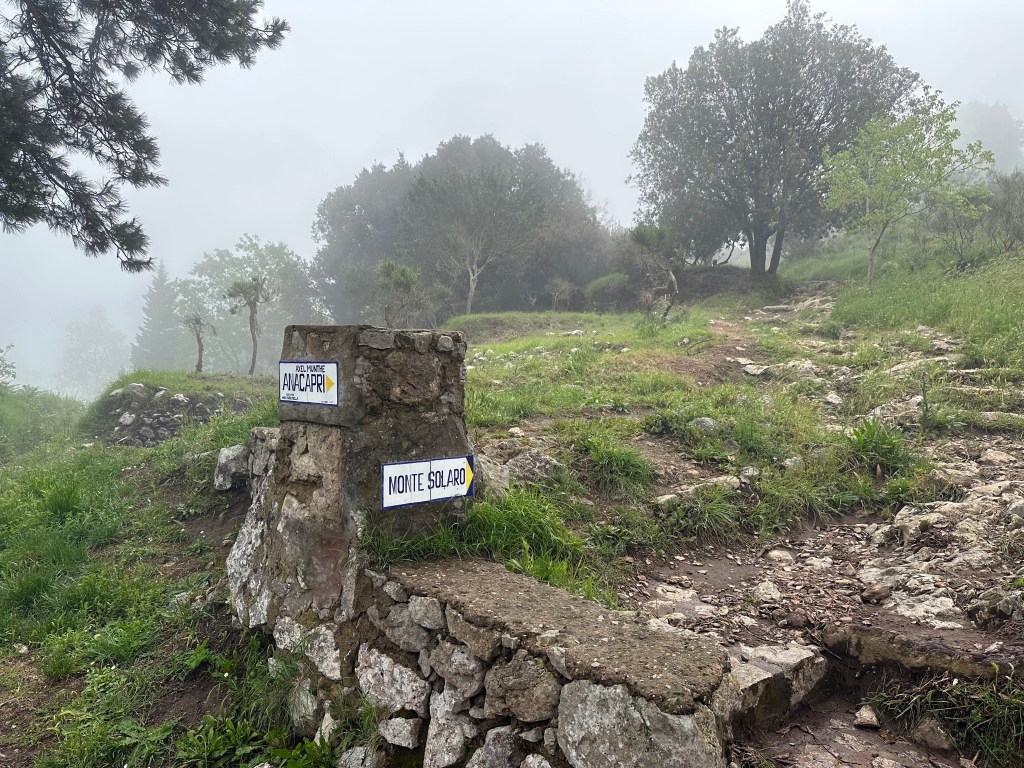
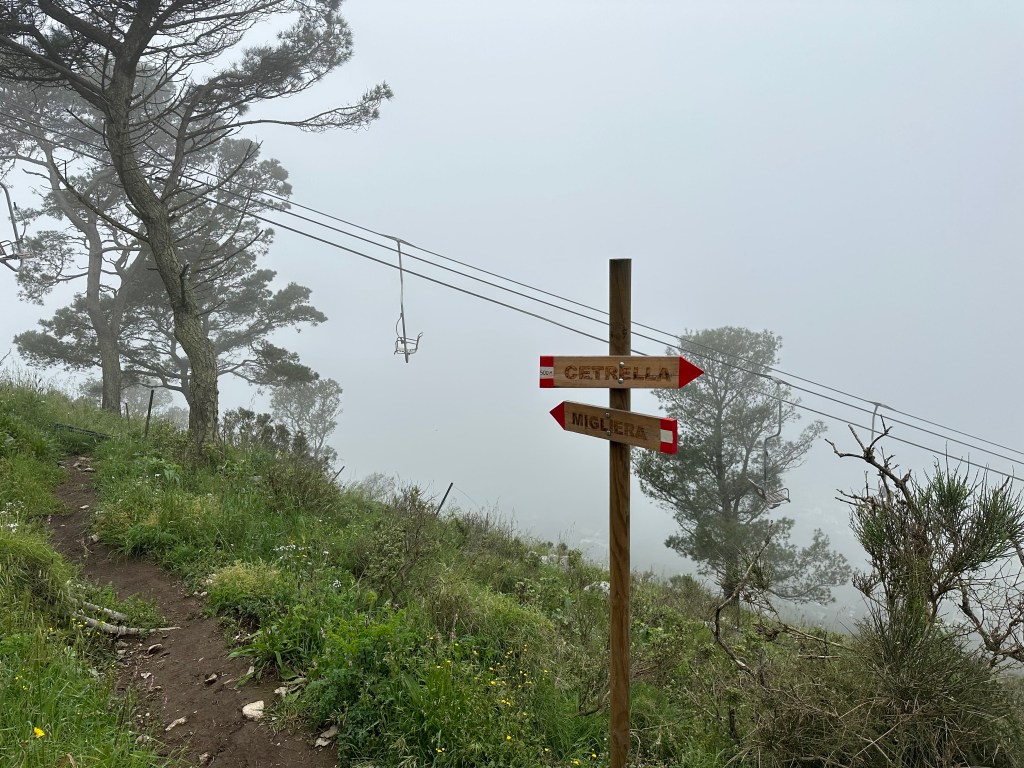
But at least the trail was marked.

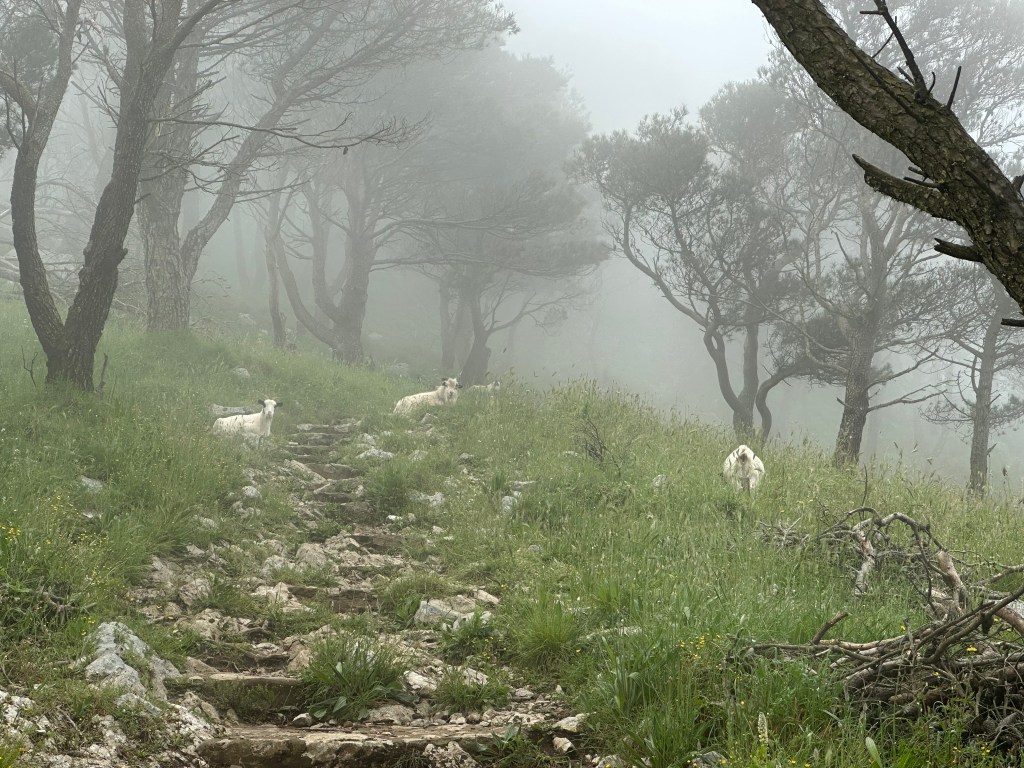
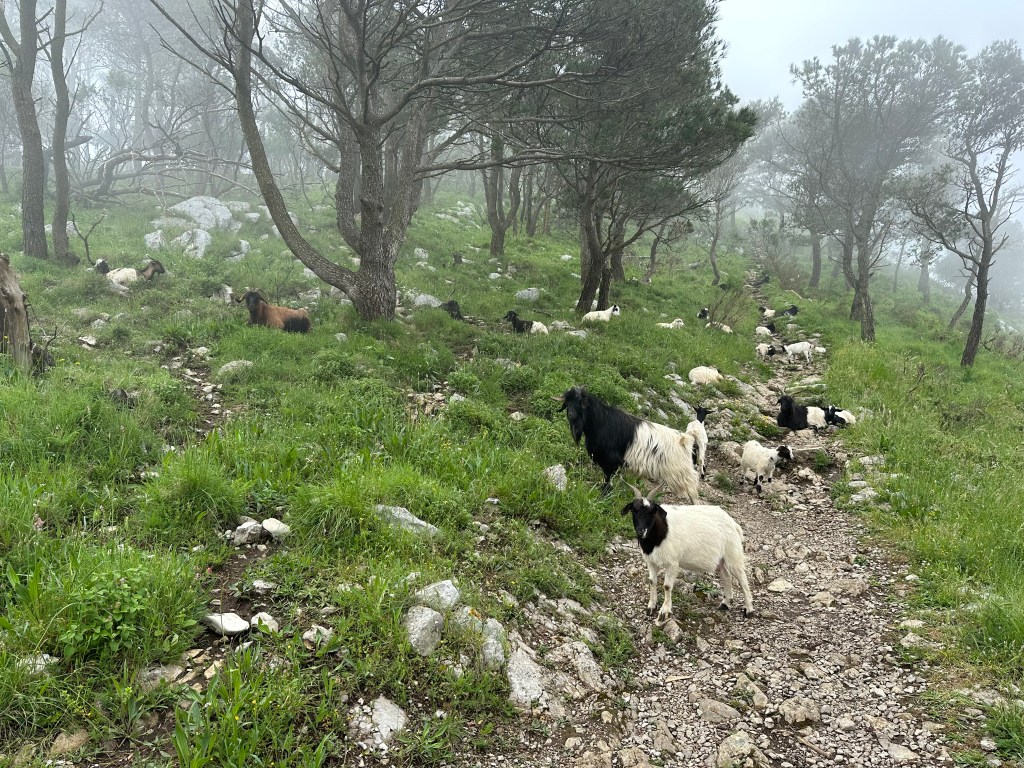
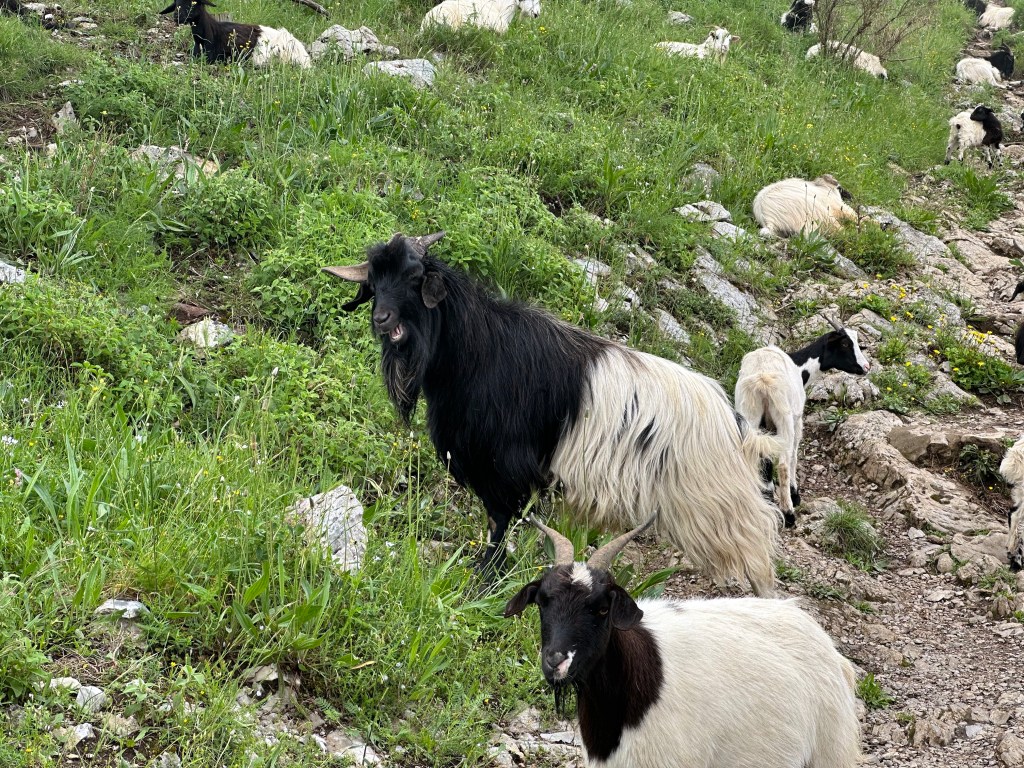
And out of the mist? Goats!

Definitely added some character to the hike.

A sign that we were nearing the peak:

Finally, a great view from the top of the tallest mountain on Capri!

Or, as it unsurprisingly turned out, a replay of our hike’s apex on Arthur’s Seat in Edinburgh: zero visibility.

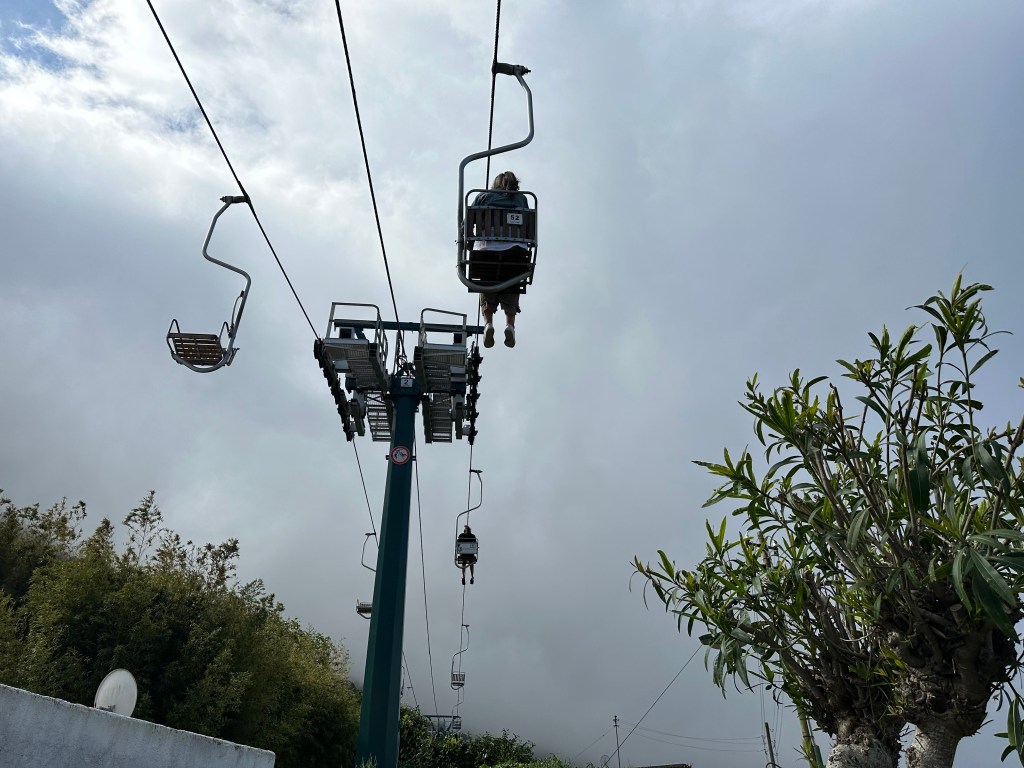
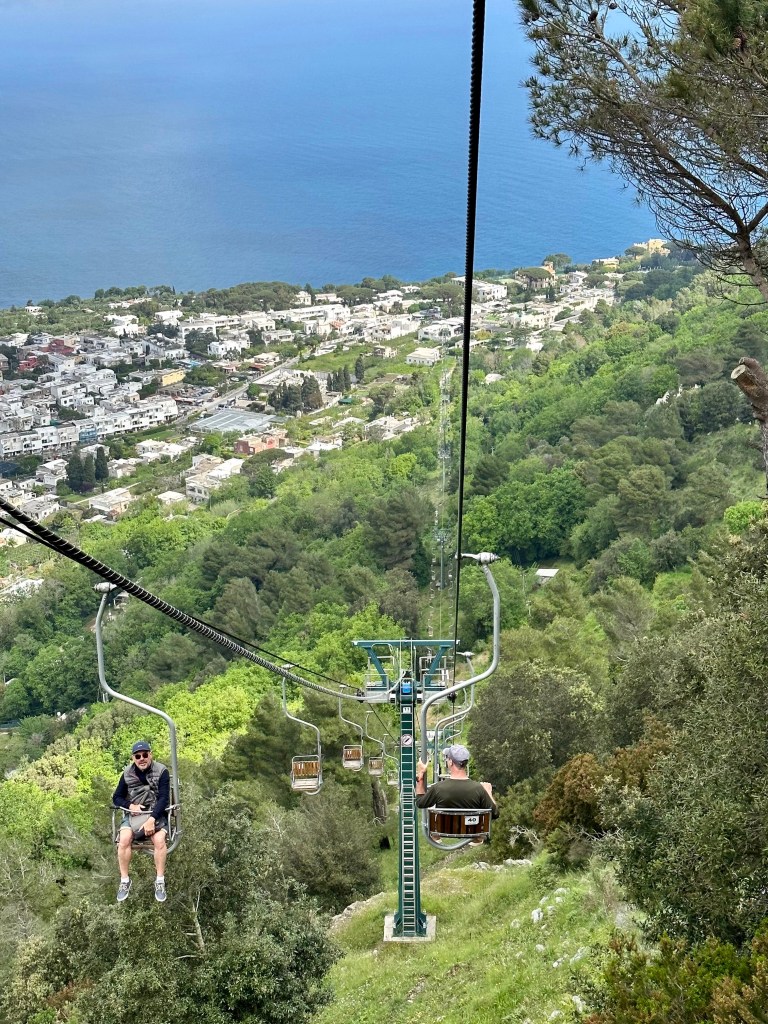
But after we quaffed a couple of macchiatos, the fog had burned off, so we grabbed the chairlift for a much more relaxing (and shorter) trip back down:

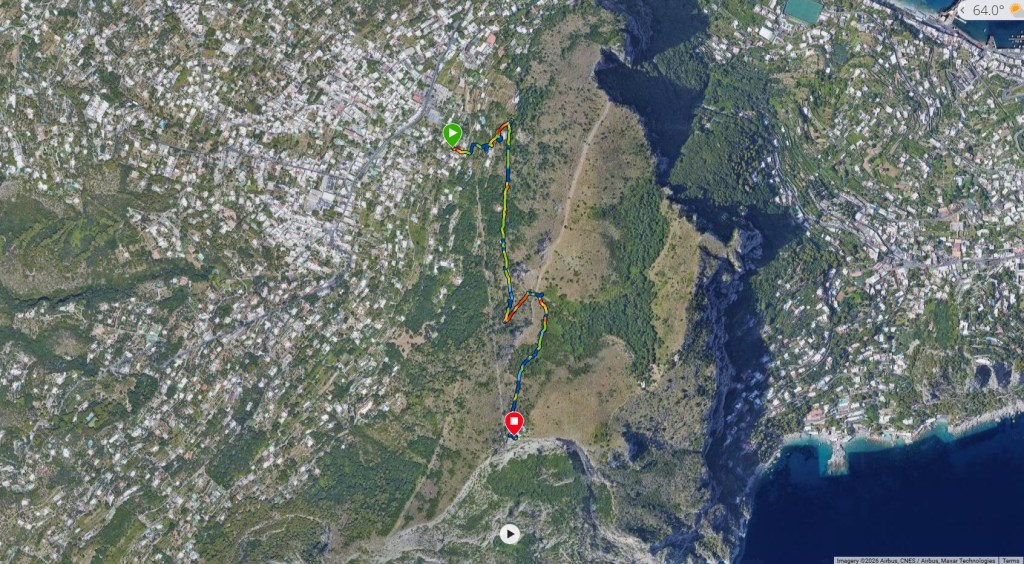
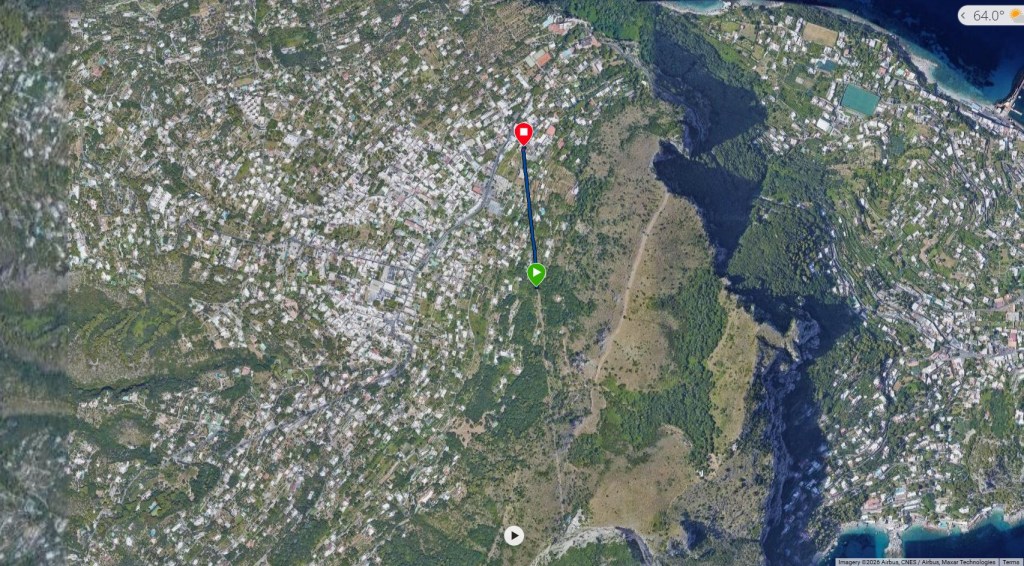
To wit:

Hike up:

Chair down:

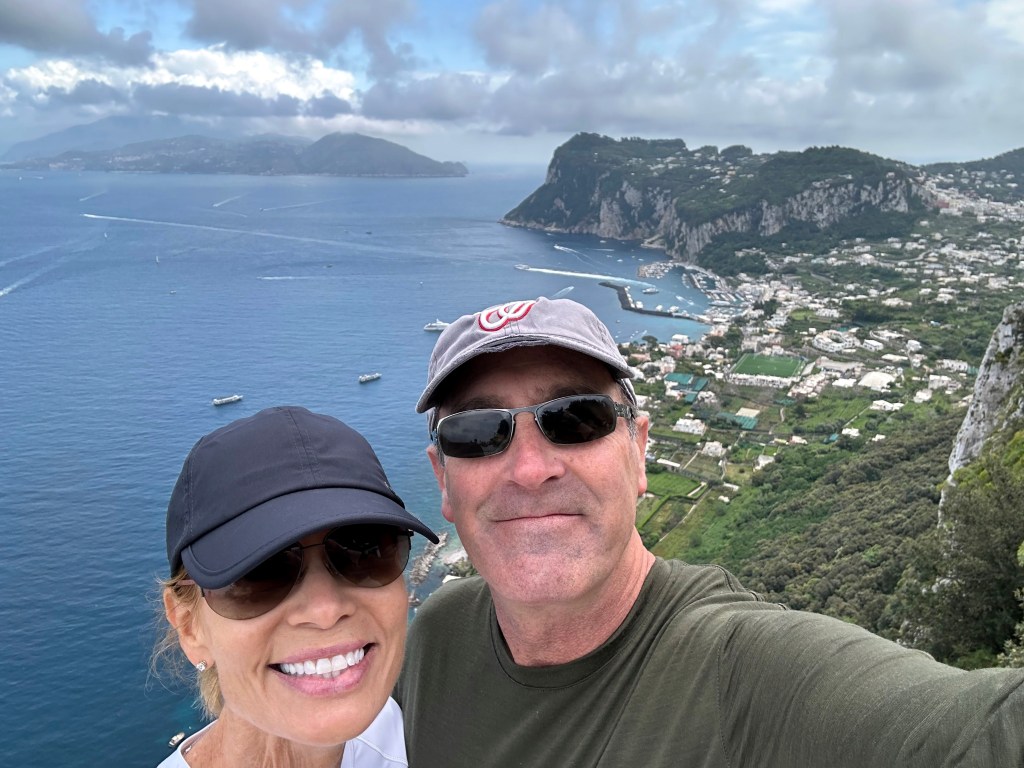
Pretty great views without the fog:

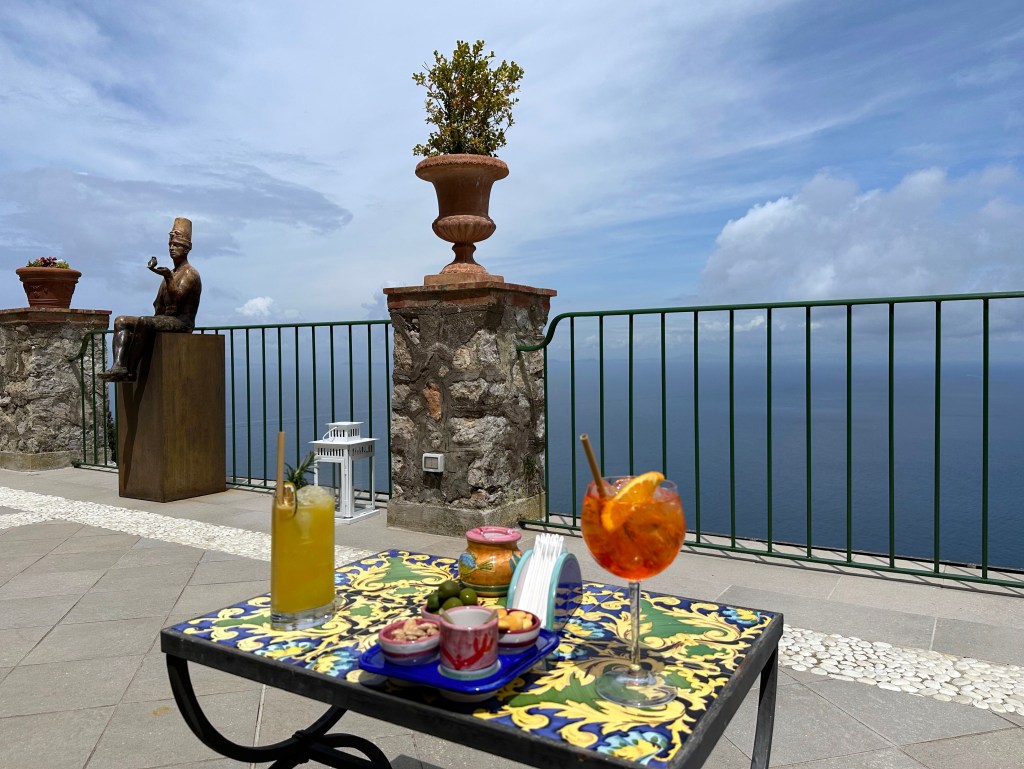
And then pre-pre-aperitivos at Caesar Augustus on the cliff in Anacapri:

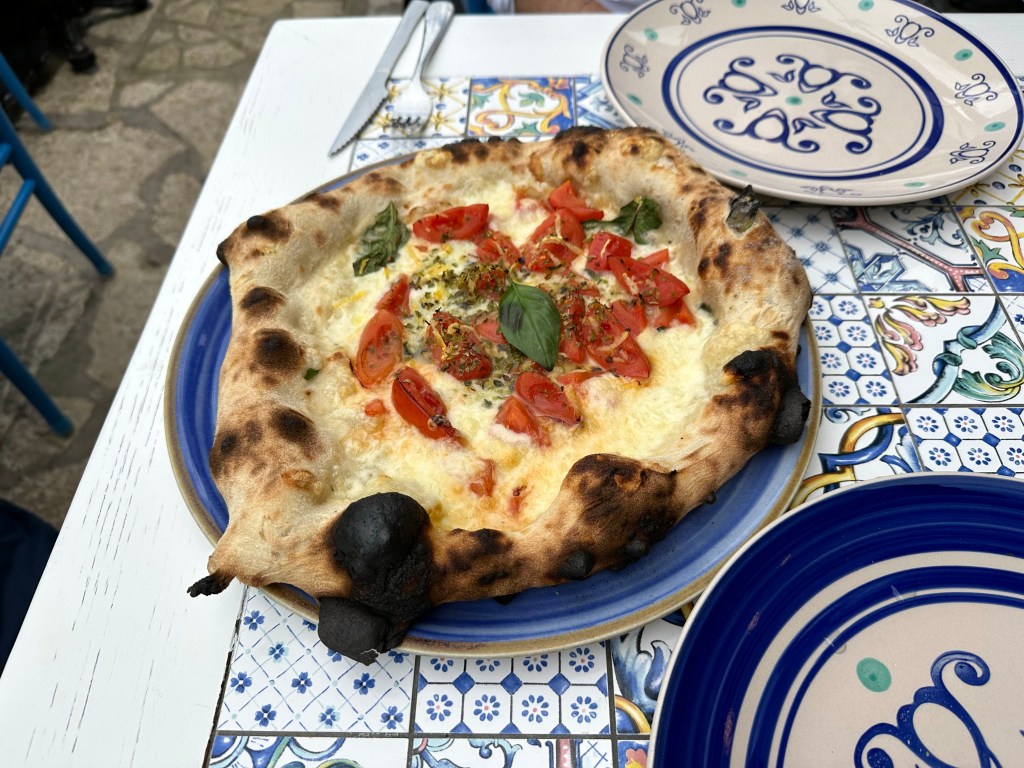
Followed by some decent, Neapolitan-style pizza at a place in Anacapri town:

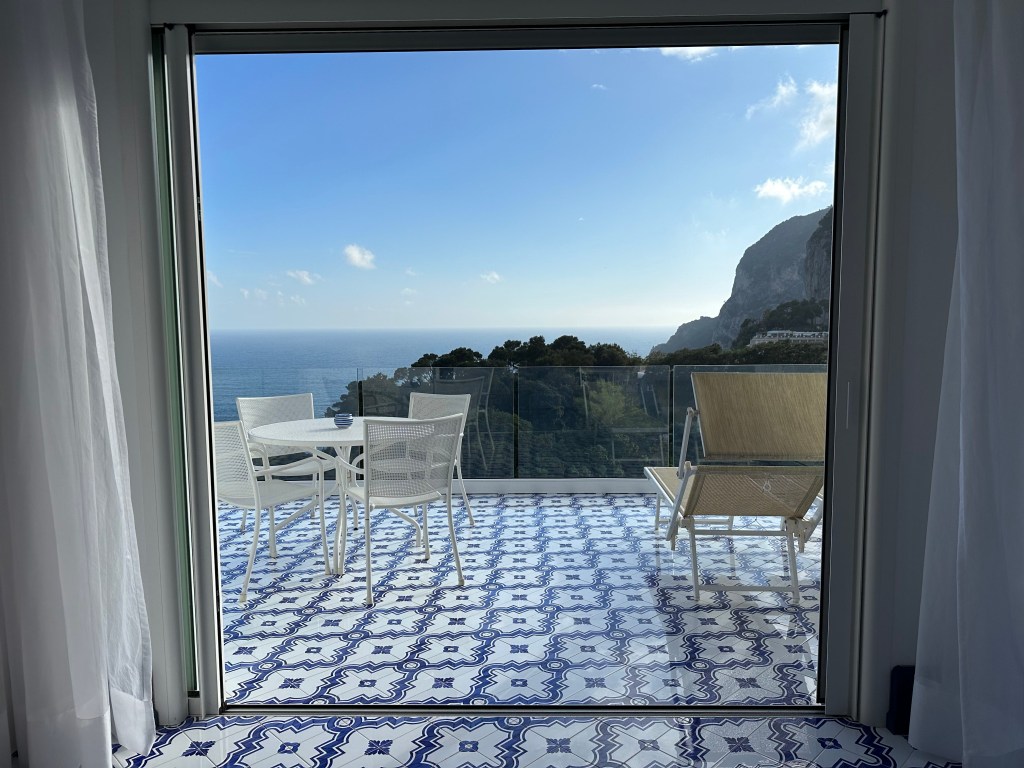
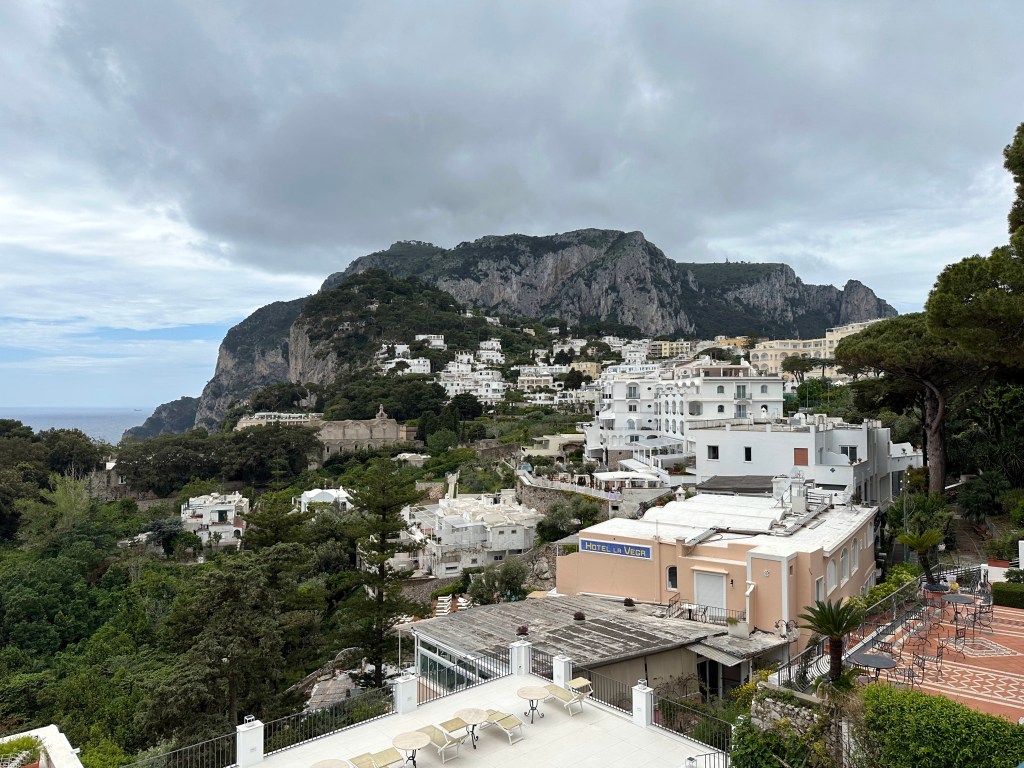
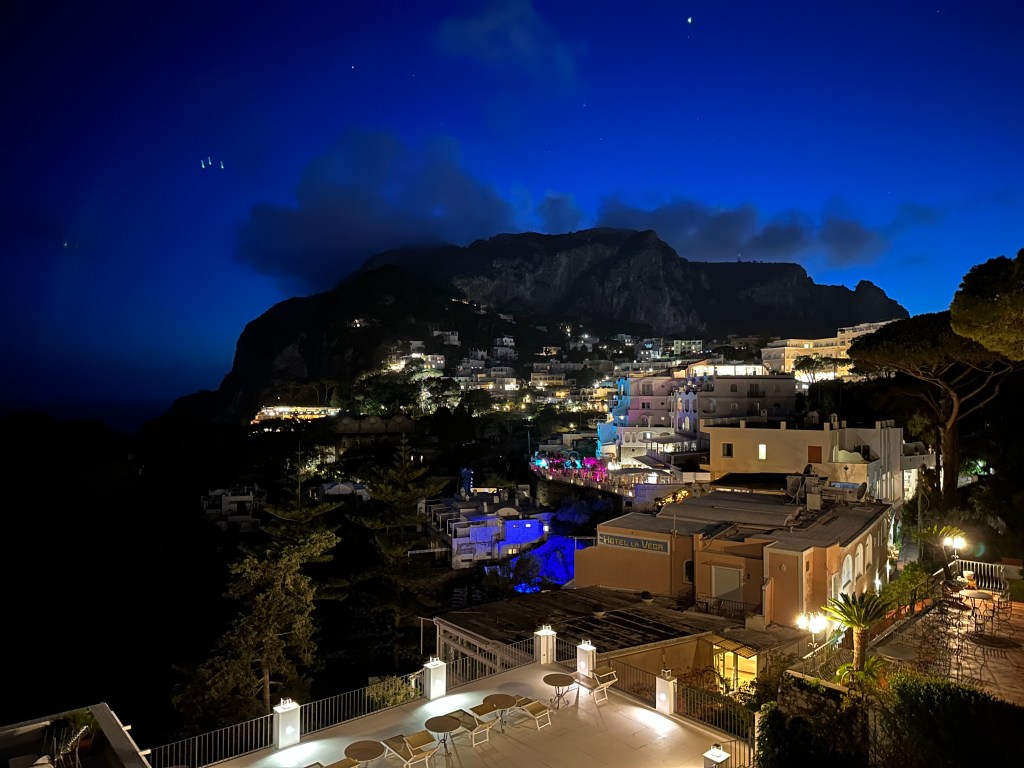
Pretty good digs back in Capri Town.

With pretty great daytime and nighttime views:

Next up: the ACTUAL Amalfi Coast.

Categories: A Prolonged Foray to Europe, Amalfi Coast | Tags: , , , , , , , , | Leave a comment

A Prolonged Foray to Europe: Positano, Praiano, and the Path of the Gods

After a few days on Capri, we ferried back to Sorento and picked up our rental from the car cave. Surprisingly, we did make it on the ferry that disembarked at the timetable slot we ~arbitrarily picked when we dropped the car off, so the guy had it waiting for us, half in / half out of the car cave. Good stuff.

We hightailed it out of Sorento and headed ever further south to Positano and beyond. We originally planned to stay in Positano as our base for exploring the Amalfi Coast, but our safari travel friends advised us instead to just visit Positano and stay instead at one of the smaller towns nearby, but a little further down the coast. They didn’t have great things to say about Positano; and they were right. A little more on that later.

So, we ended up staying in one of the hotels and towns they recommended: Casa Angelina in Praiano, just 10 minutes away from Positano (and in sight of it). But first, we had to get there.

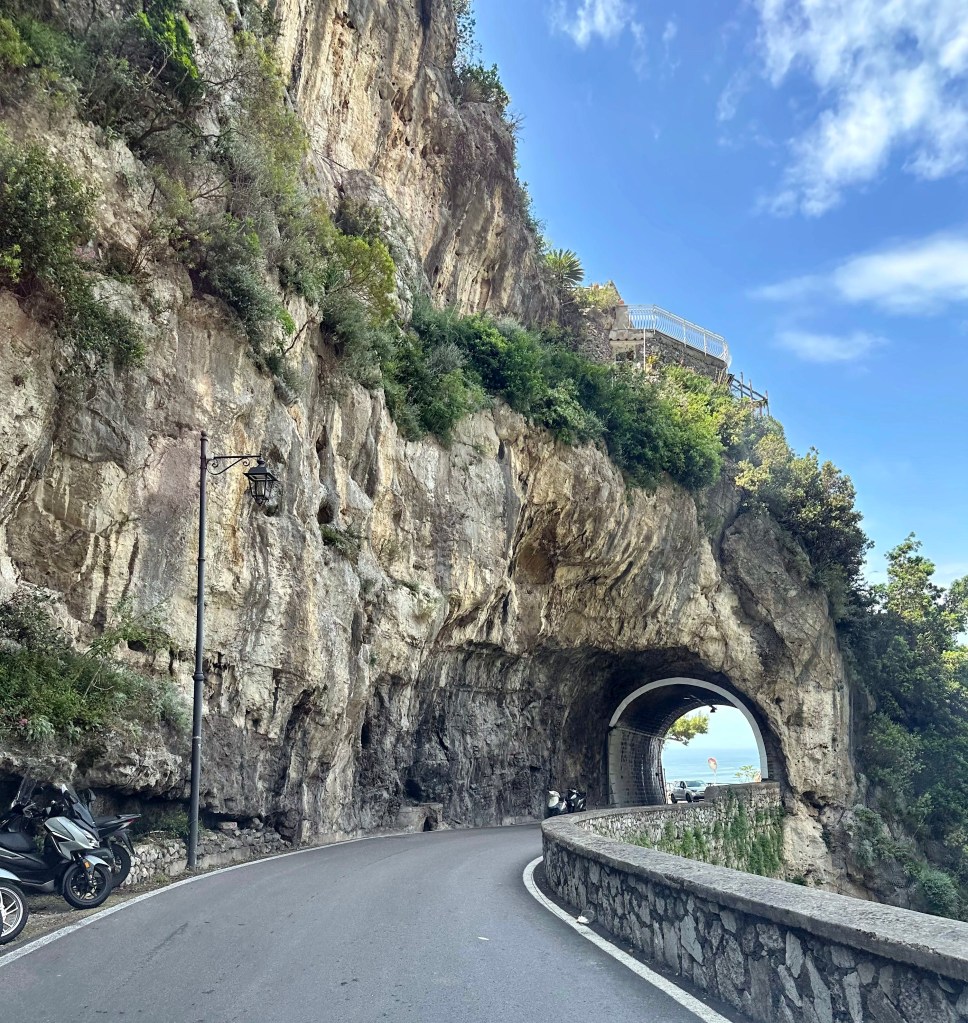
Driving the Amalfi Coast is one of the most nail-biting exercises in automobile navigation that one can undertake.

For the driver. For the passenger. It’s pretty insane.

And we’ve had insane driving experiences – along a chasm almost the width of the tiny rental car in St. Kitts; over miles of washed out, shack-lined country roads in Jamaica; and driving on 1.75-lane, 12-foot-tall-hedge-lined roads masquerading as 2-lane roads in Cornwall (all while driving on the wrong side of the road on the wrong side of the car and with the wrong hand on the stick everywhere in the UK). But the Amalfi Coast road is a beast in a category all its own.

There’s one coast road, and it – like Cornwall, but without the hedges – has about 1.75 lanes for two-way traffic. Oh, and in Amalfi, you’re constantly one bump away from being sent hurtling down a 1000-foot cliff.

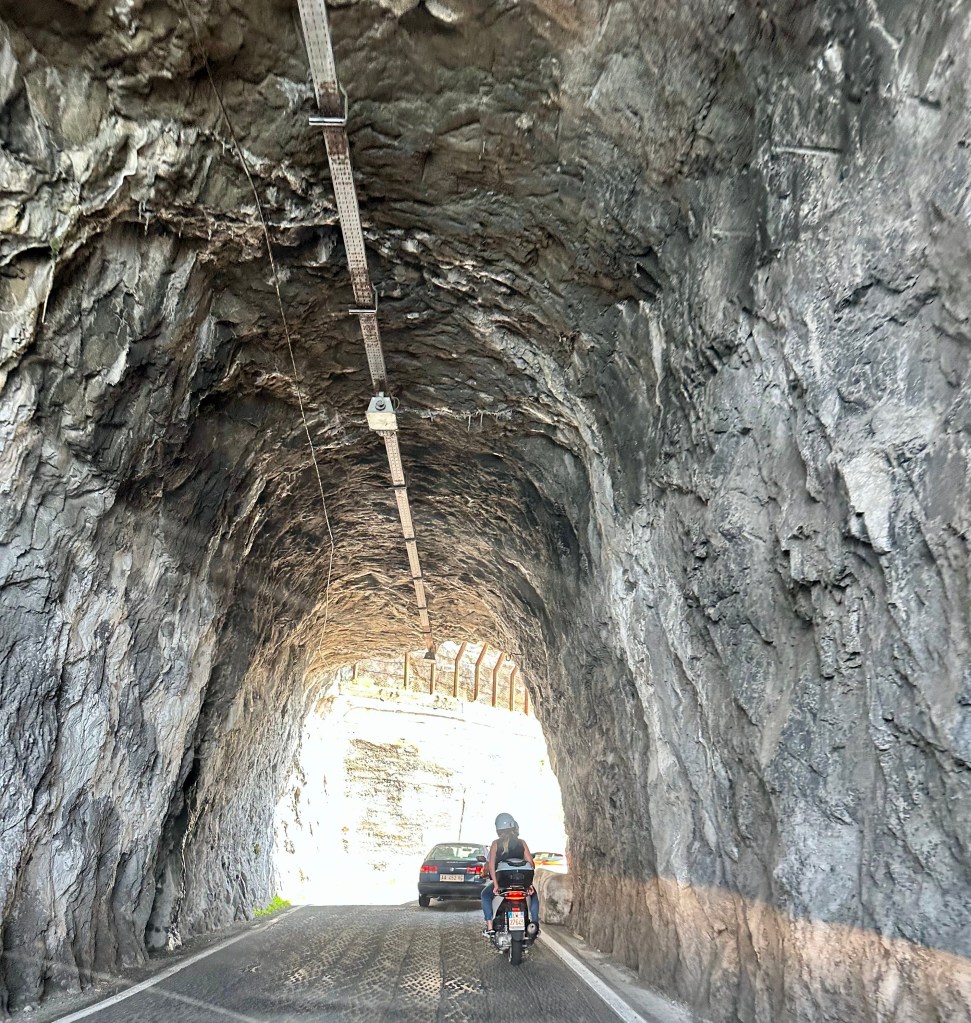
Because rock faces tumble straight into the Mediterranean in many places, the road transits a honeycomb of tunnels (also barely wide enough for two cars, let alone a bus coming the other way [one of which really did almost take us out on a turn]).

Plus, on our drive from Sorento to Praiano, where our hotel was located, we took a wrong turn and drove down the mountain and THROUGH Positano instead of skirting above it on the coast road. It was a white-knuckle affair, particularly for the WolfeStreetPassenger, who is absolutely not happy with roads like this to begin with. But at least we weren’t driving down steep, hairpin roads that are the very worst, right? And soon we’d be safely tucked away at our hotel, right?

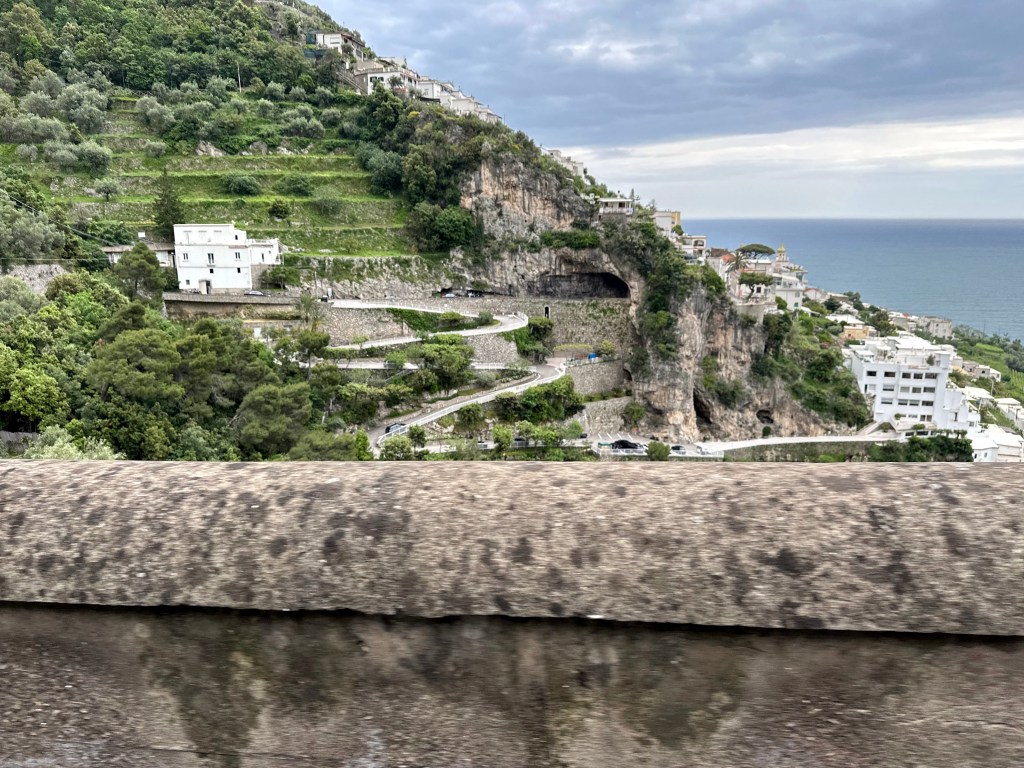
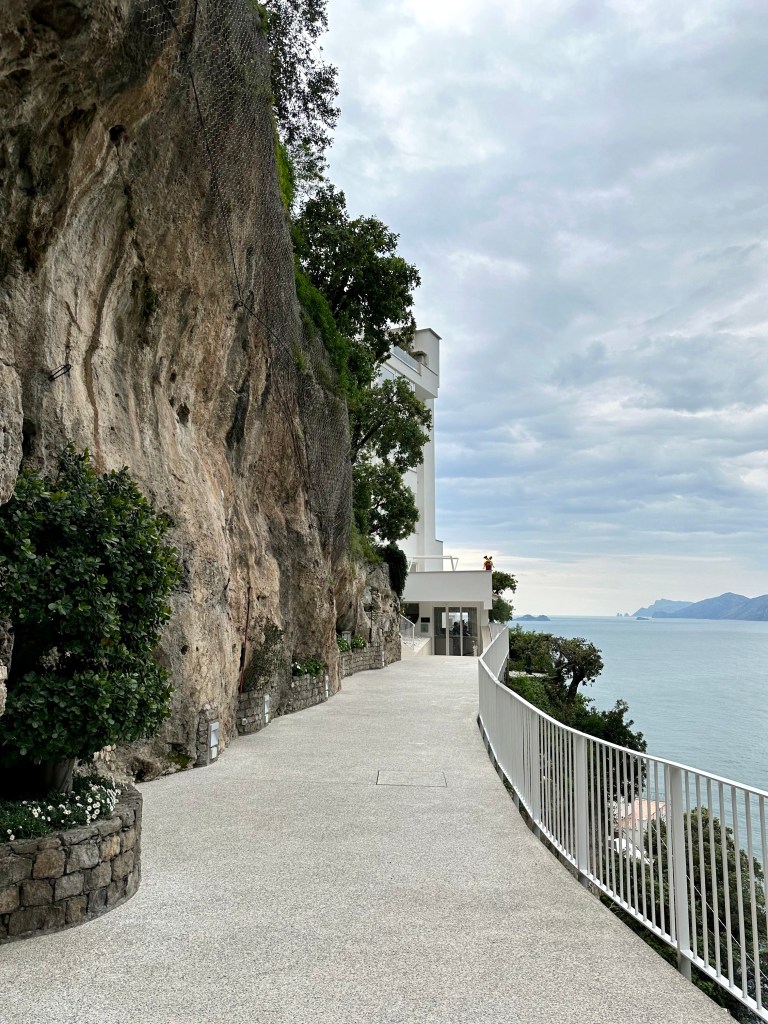
The hotel’s driveway off the Amalfi Coast road:

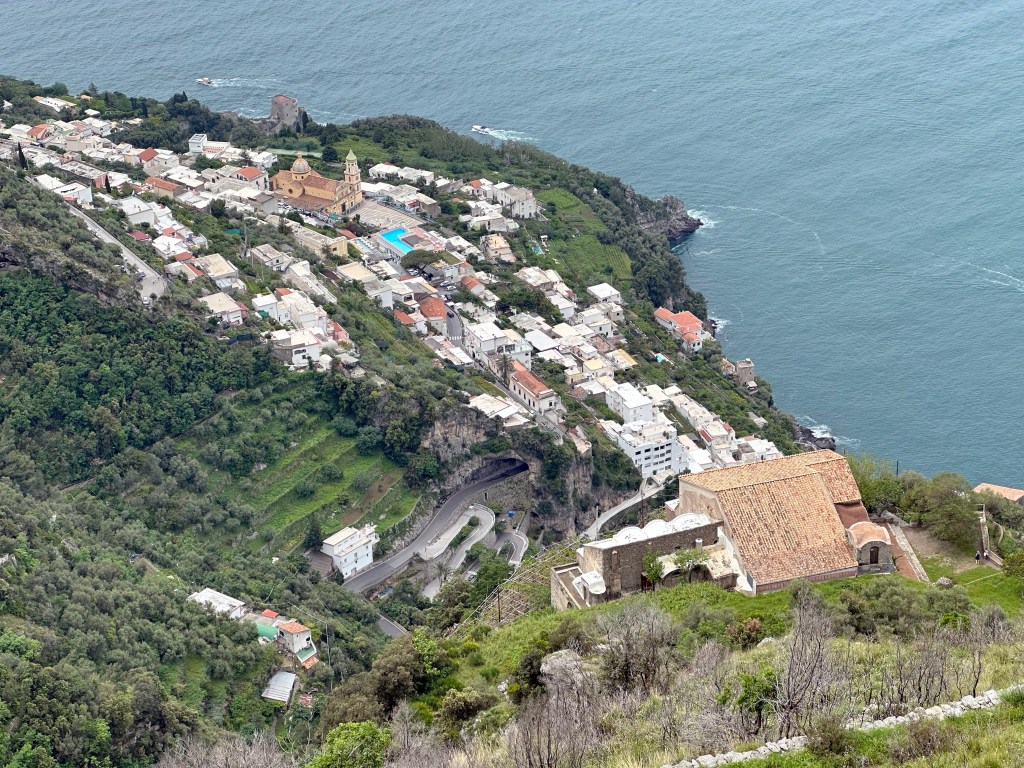
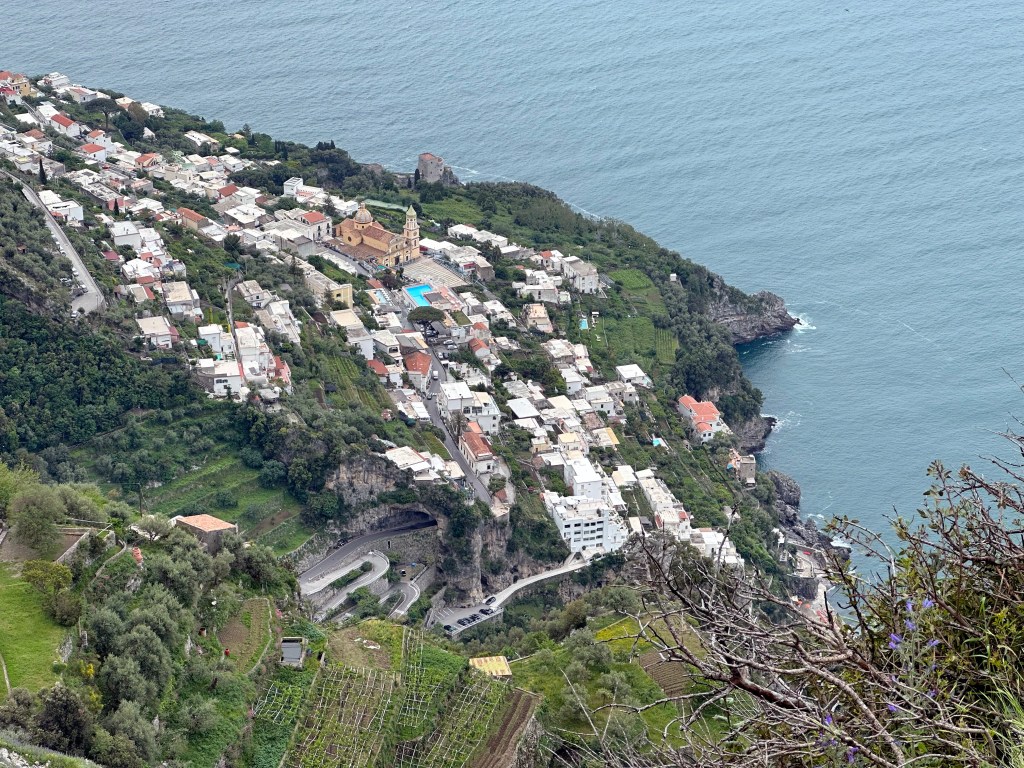
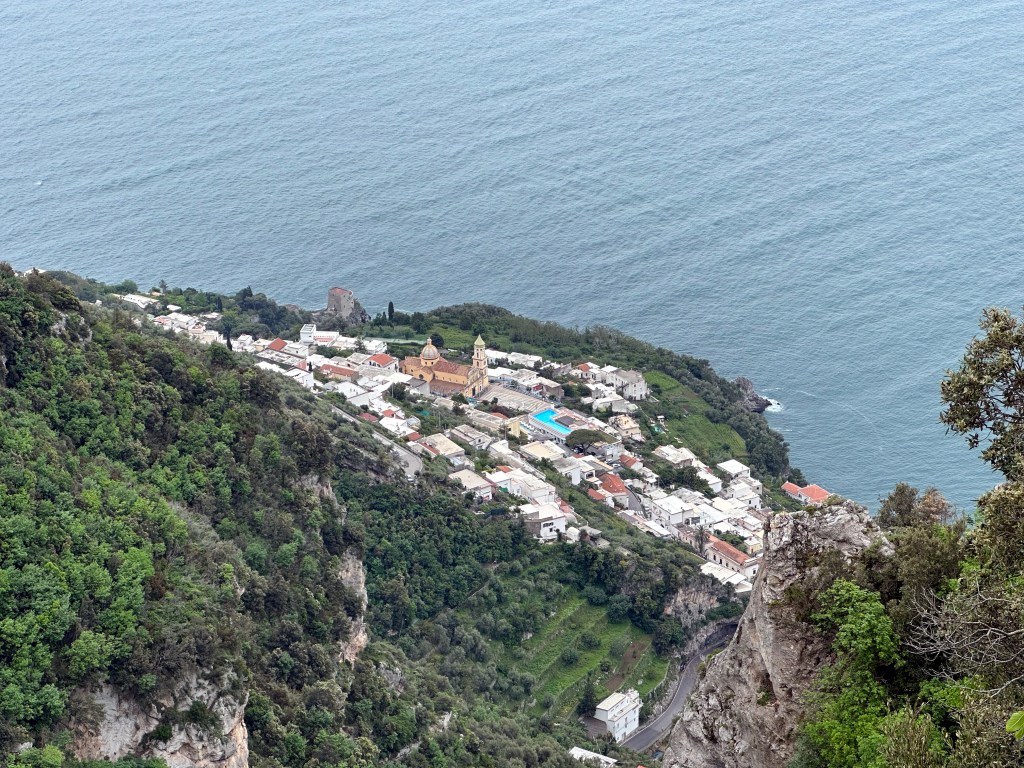
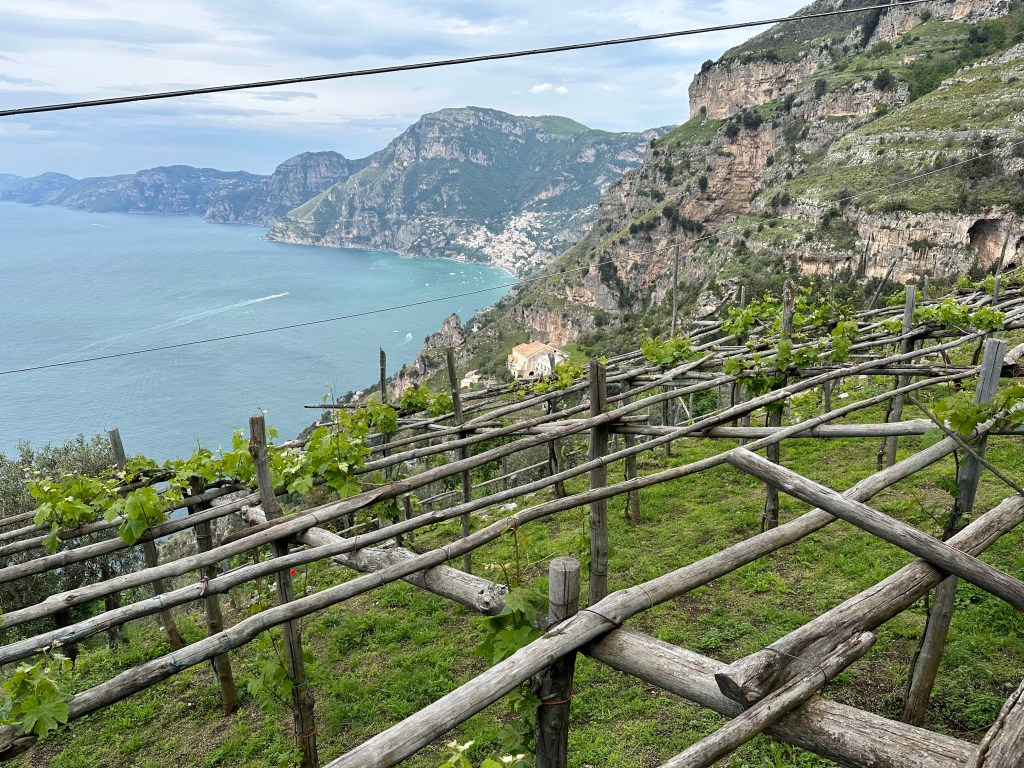
Another view from a hike later in our stay to provide an even more dramatic perspective:

The hotel (white structure with windows at the edge of town) and its entrance at the terminus of the hairpin-turn-ridden ride:

The bellmen hauled our luggage and the now-catatonic WolfeStreetPassenger into the haven that we finally reached after a harrowing day of driving.

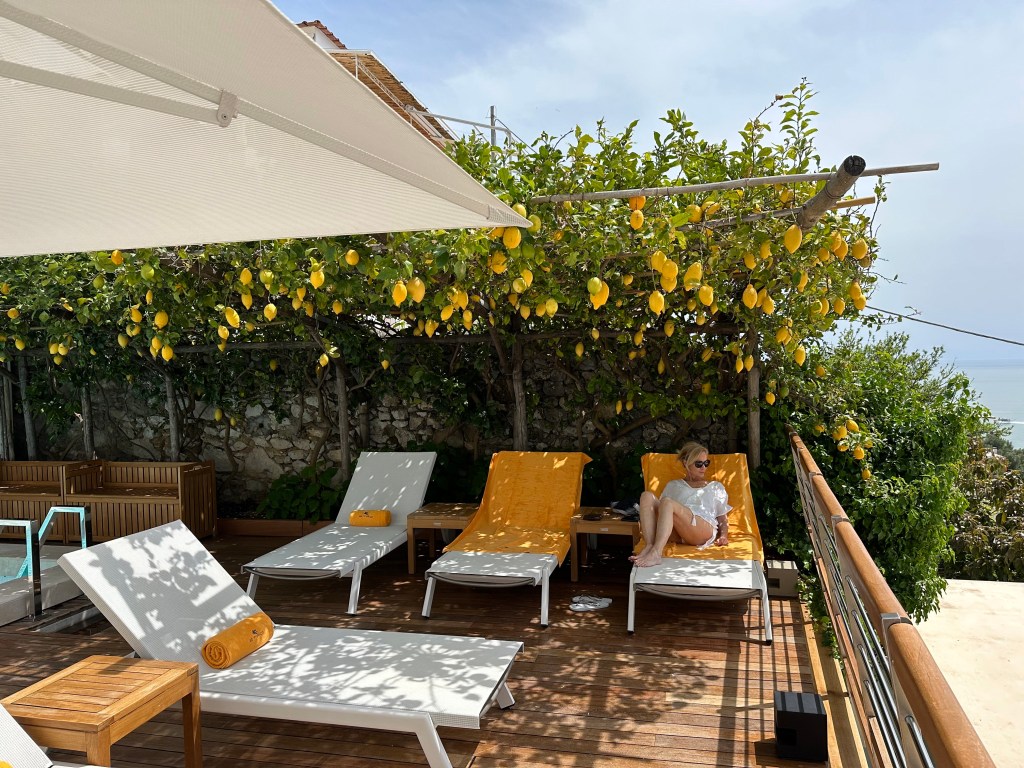
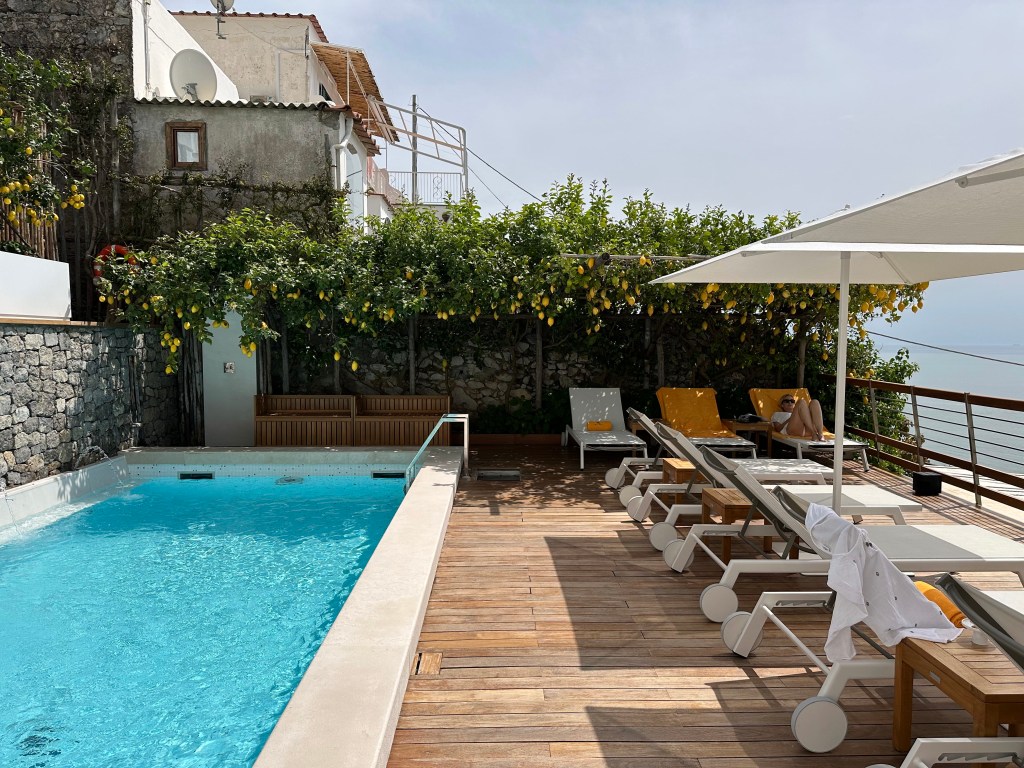
And holy shit what a haven. Amalfi is know for their lemons, and the pool had an entire, in-season, lemon tree arbor over one end:

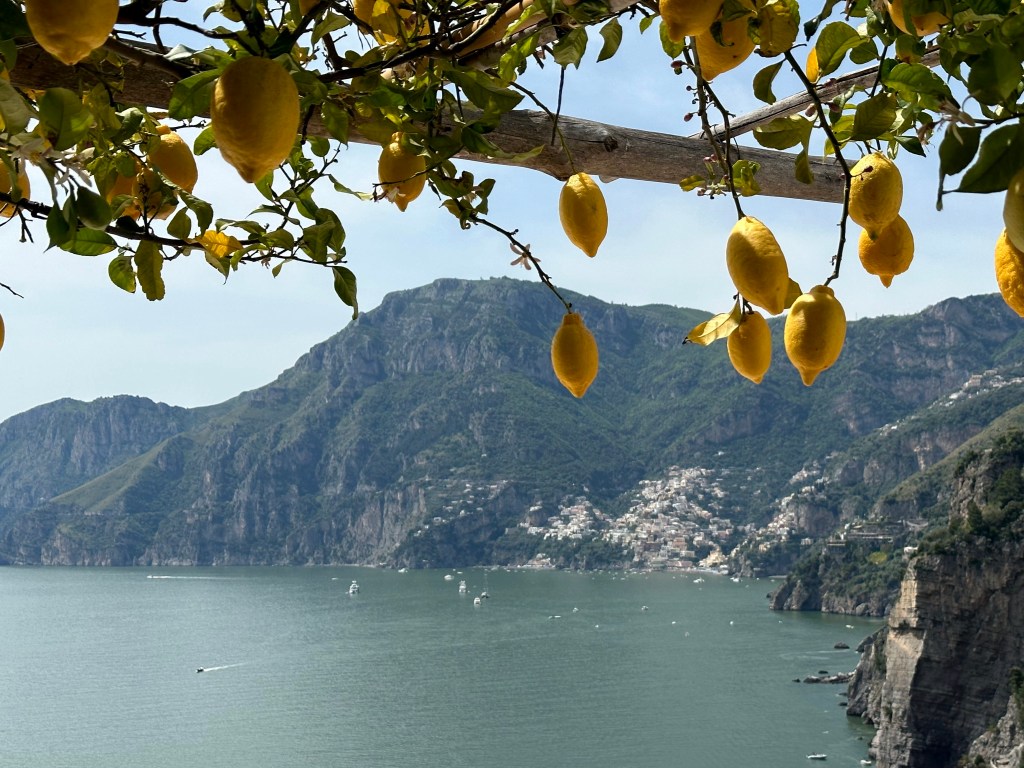
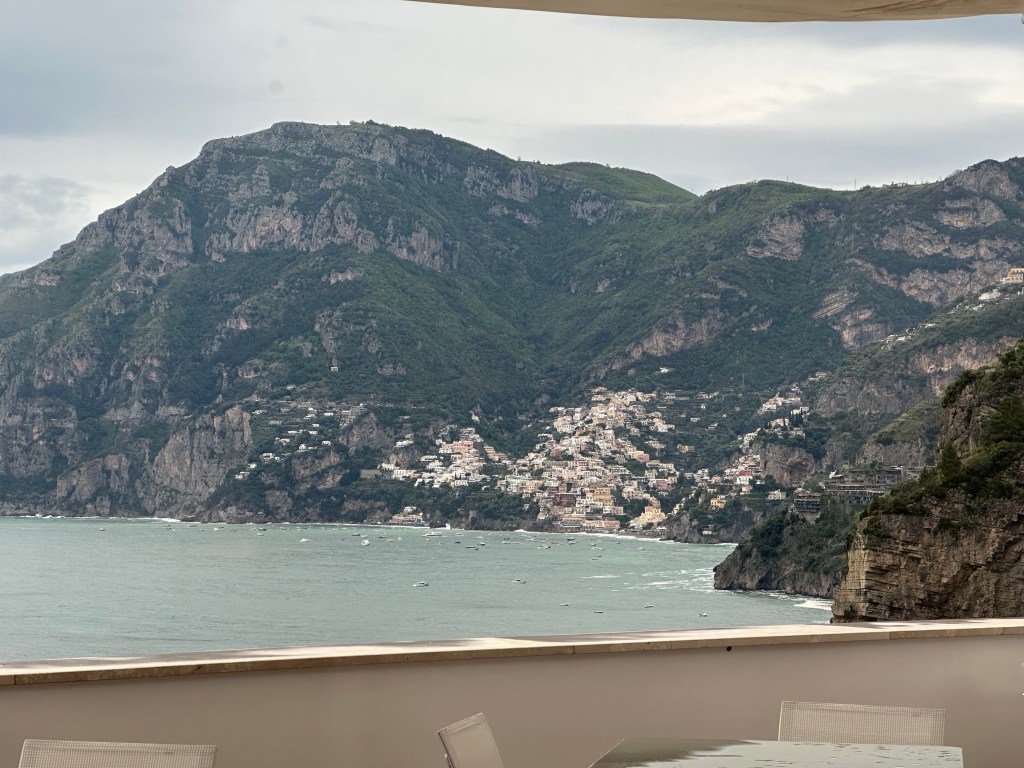
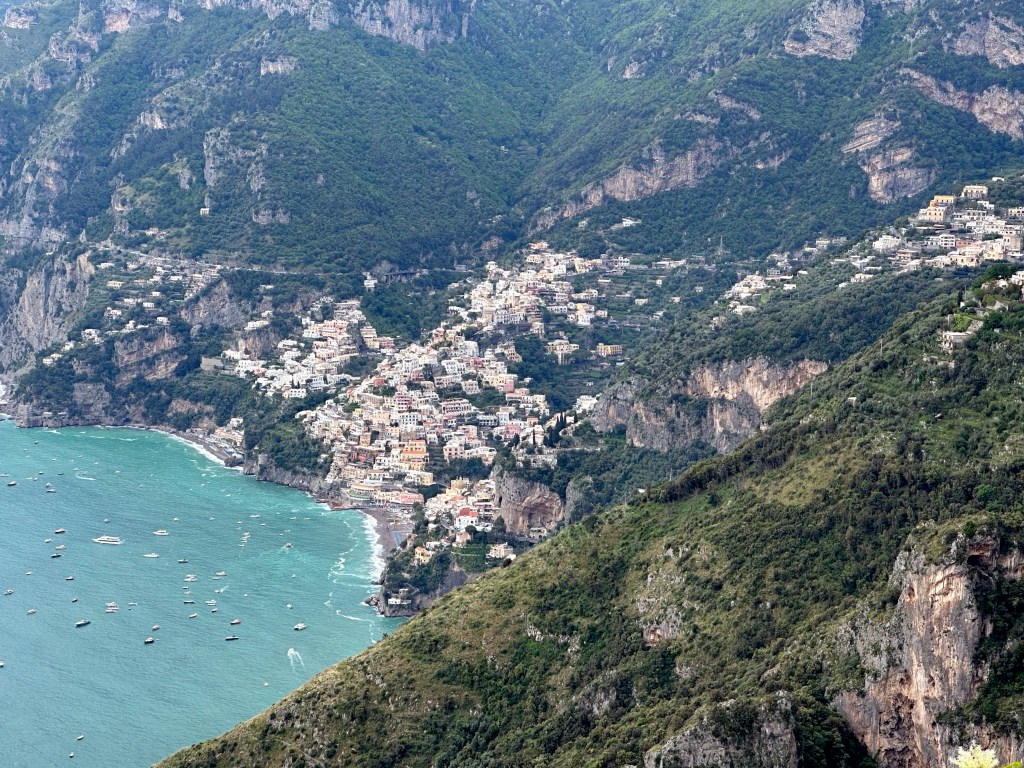
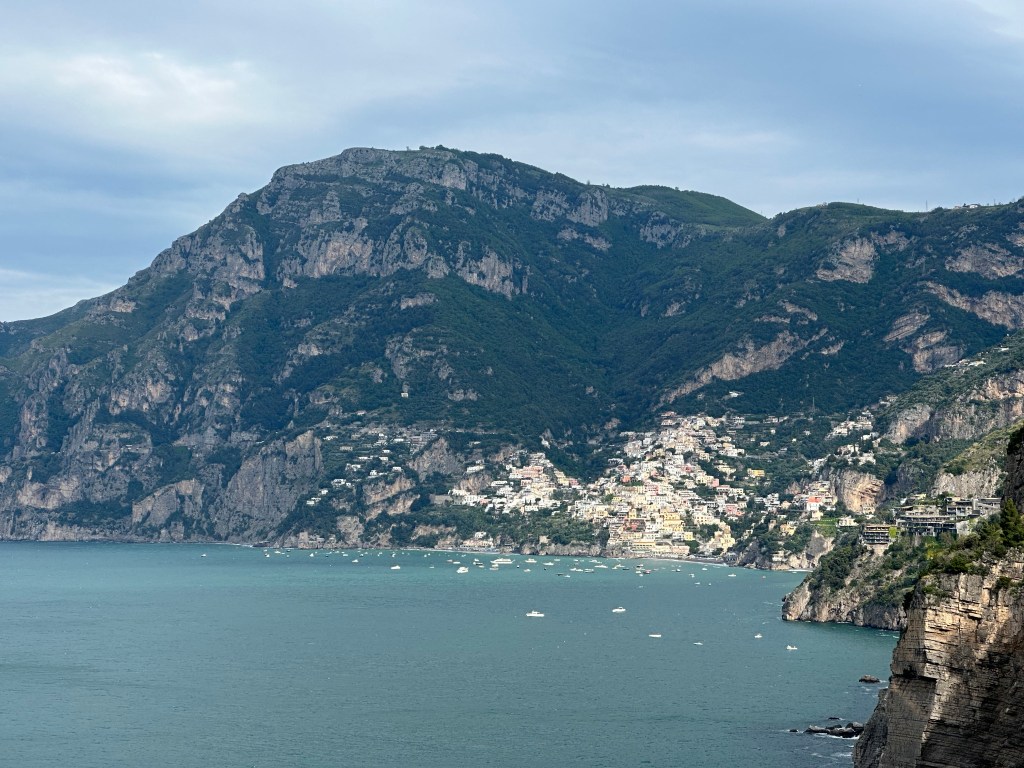
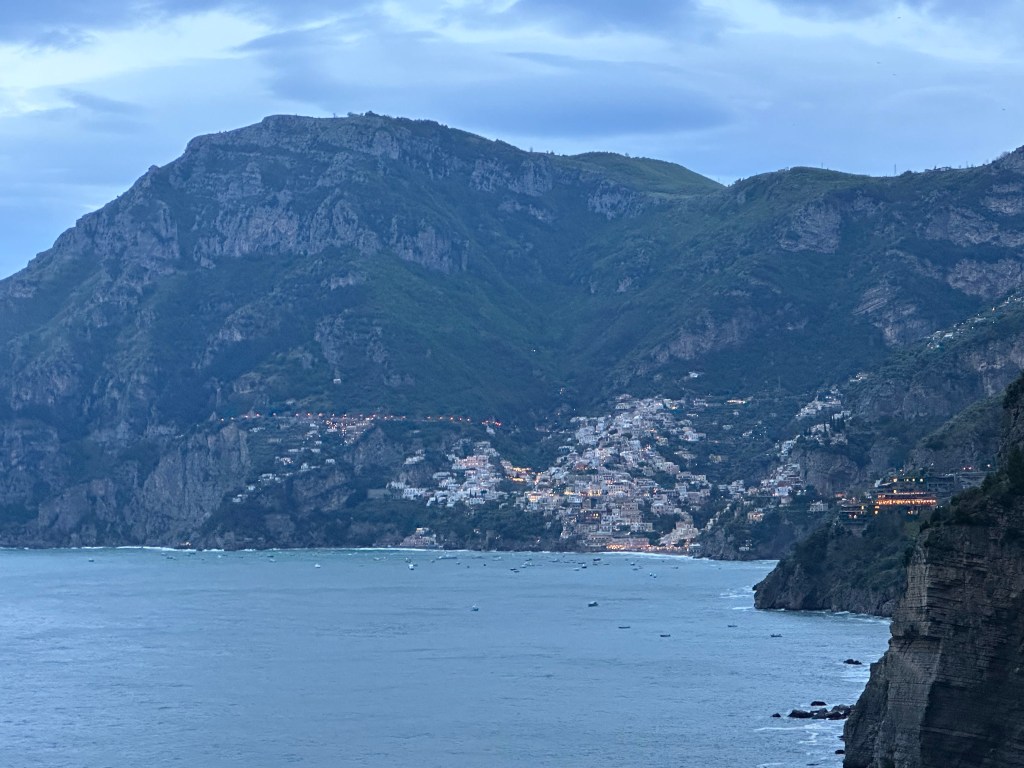
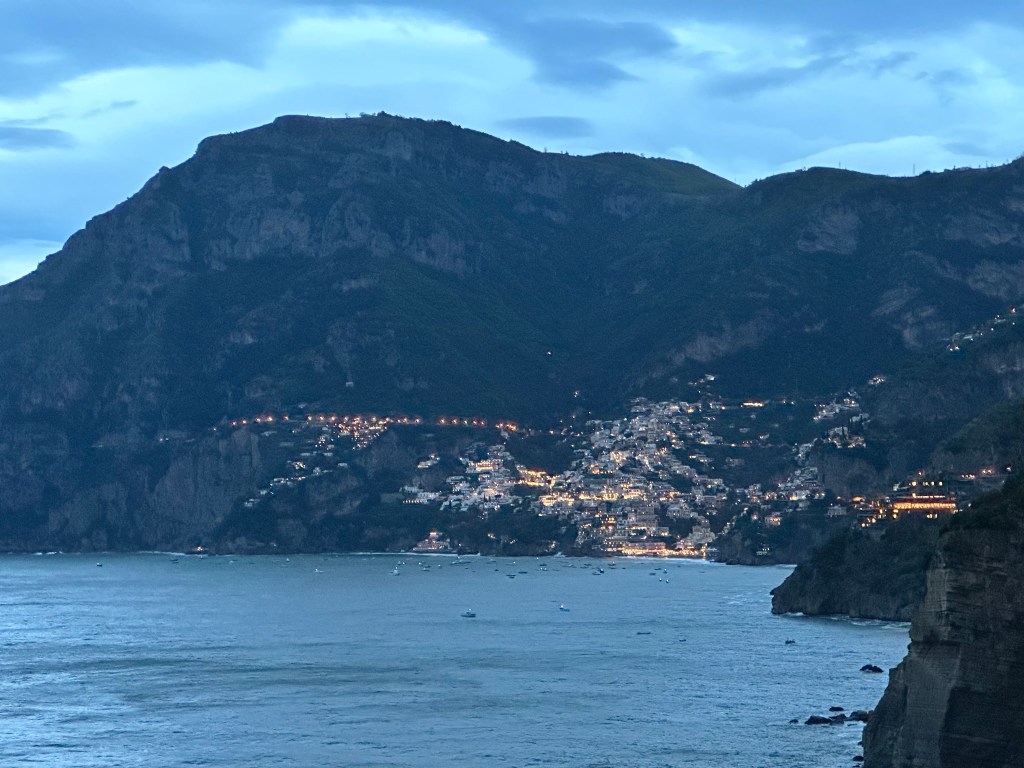
And a cliffside view to Positano, which was pretty cool.

And the next day, we’d check out Positano up close, courtesy of our hotel’s “shuttle” (which turned out to be a little Mercedes coupe, which was nice). So, why not stay in Positano? If you perused Instagram in 2022 and 2023, you would see that THIS was the Instagrammer place of the moment, and a destination for vapid, 20-something trust fund princesses who had more resources than sense. Although the popular appeal intrigued us about Positano, the presence of these self-absorbed, superficial narcissists certainly put us off.

Most importantly, though, was the recommendation from our safari travel friends. They strongly recommended against staying in Positano because it was too touristy, and instead suggested that we stay in Praiano, Amalfi, or Ravello – towns near Positano from which you could visit, but protected you from actually having to stay there. We had already booked a hotel and two dinners in Positano by the time we had this conversation, but we trusted this couple, and changed our plans. Thankfully. It’s a shitshow.

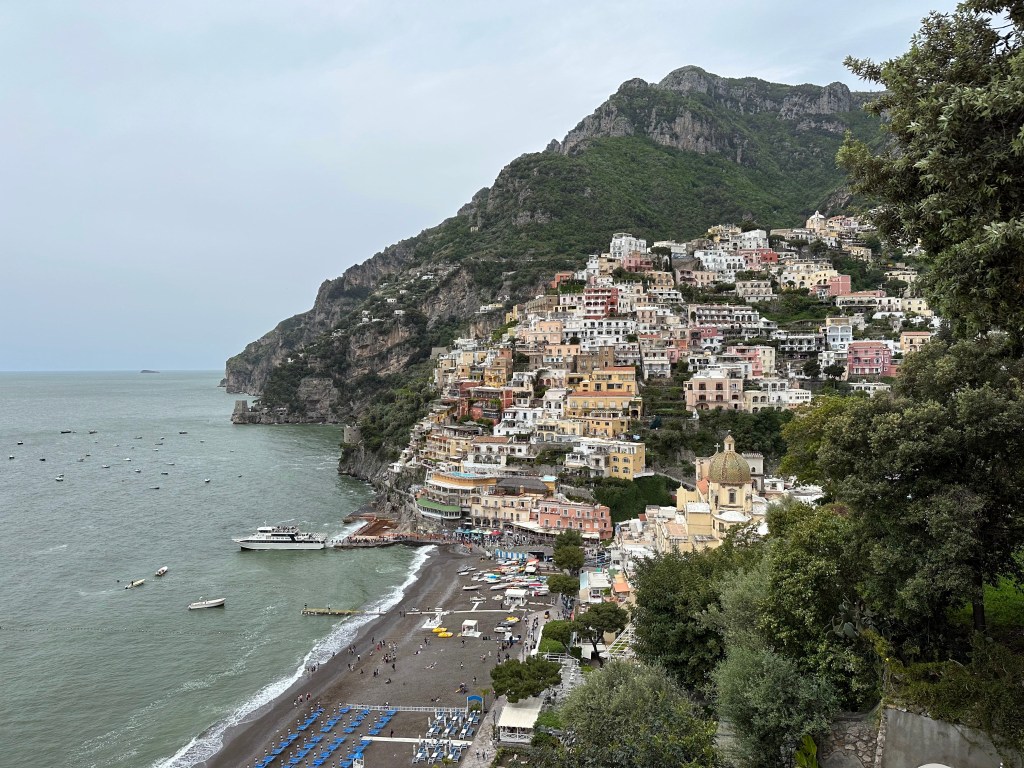
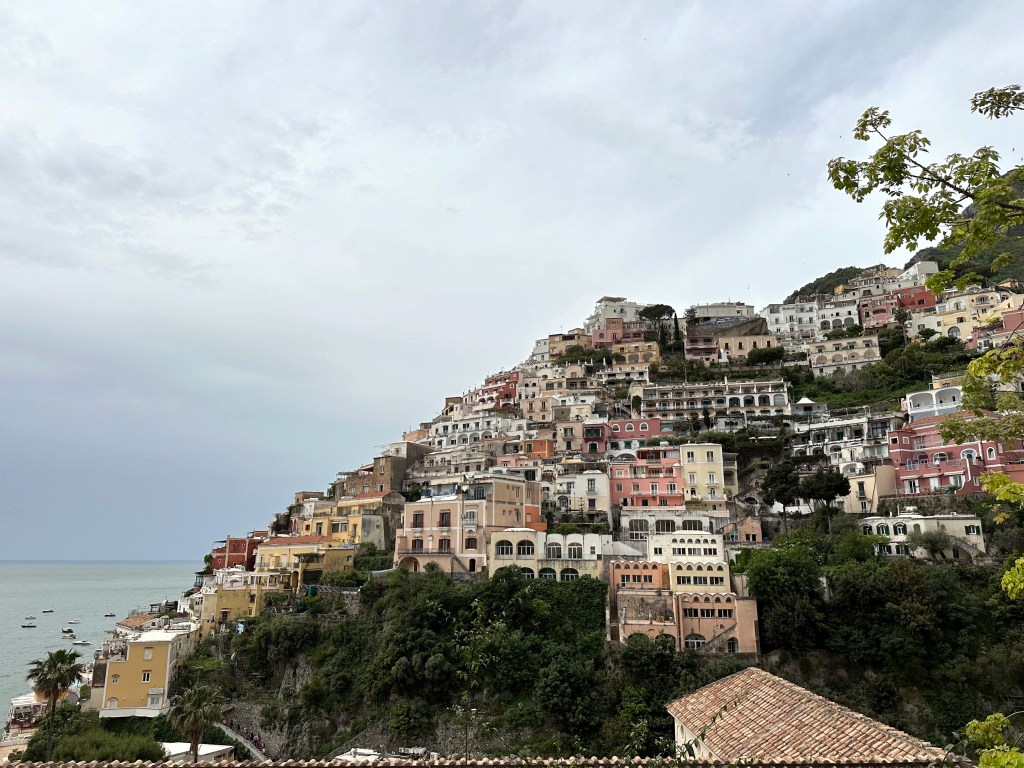
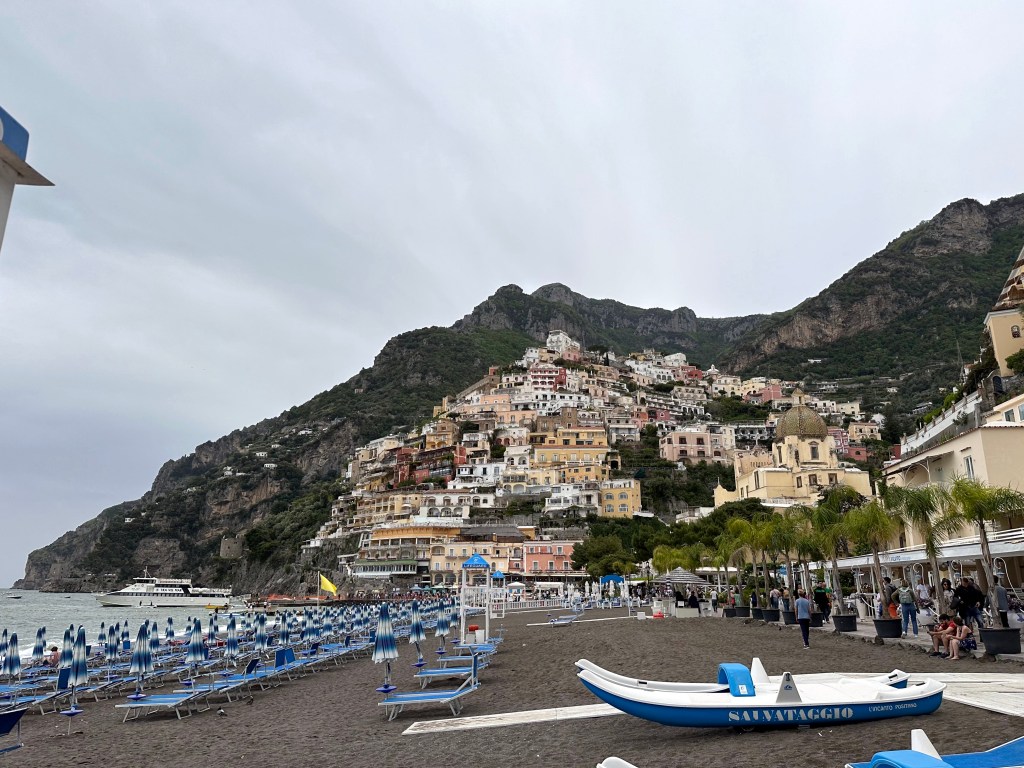
As we noted in an Instagram post after our visit to Positano and experiencing the shoulder-to-shoulder crowds of tourists (and we were there in May) and the labyrinthine collection of alleys full of shops selling tourist crap, Positano is not the charming town visitors claim it is through their Instagram posts. It is, in fact, a land-locked cruise ship of clueless (mostly American) tourists that happens to be tumbling – in a very picturesque way! – down a hillside on the Amalfi coast. It is best viewed from afar.

Positano’s unappealing gray-sand beach:

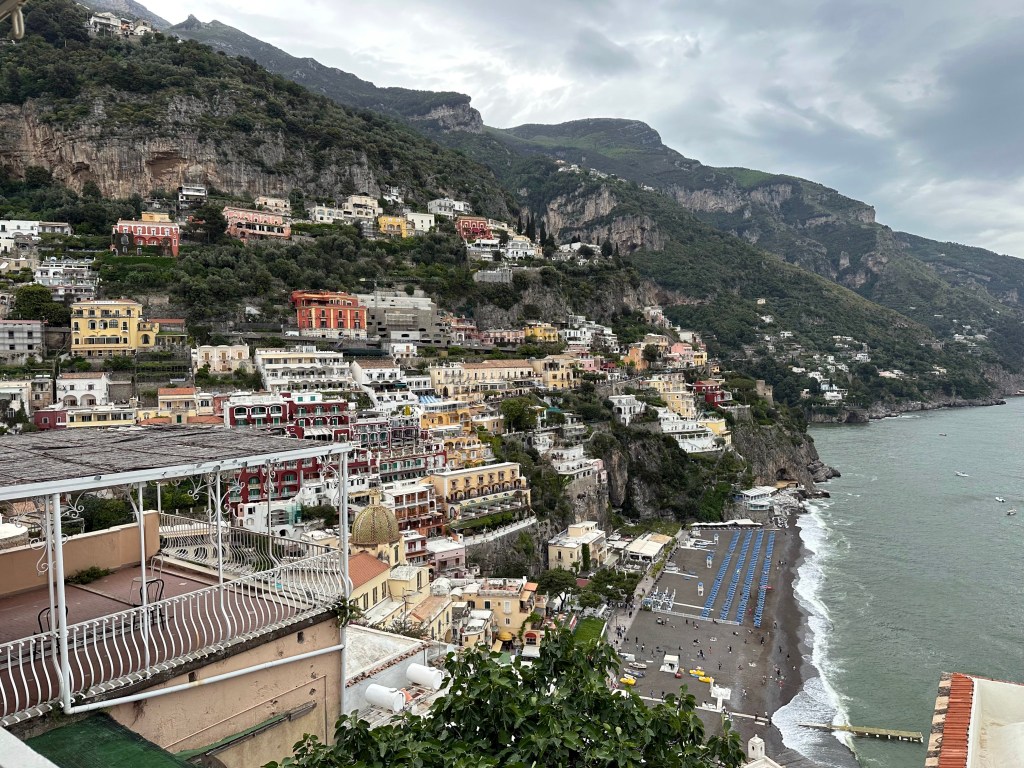
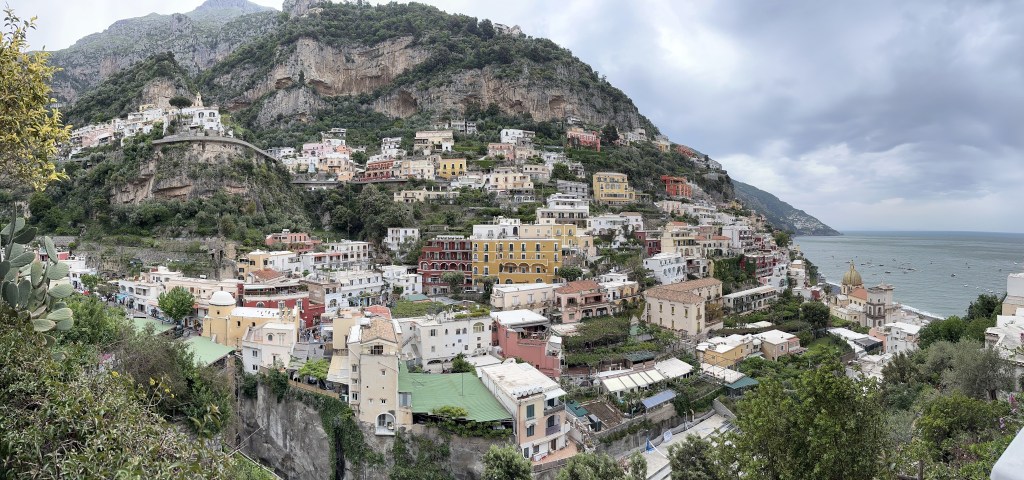
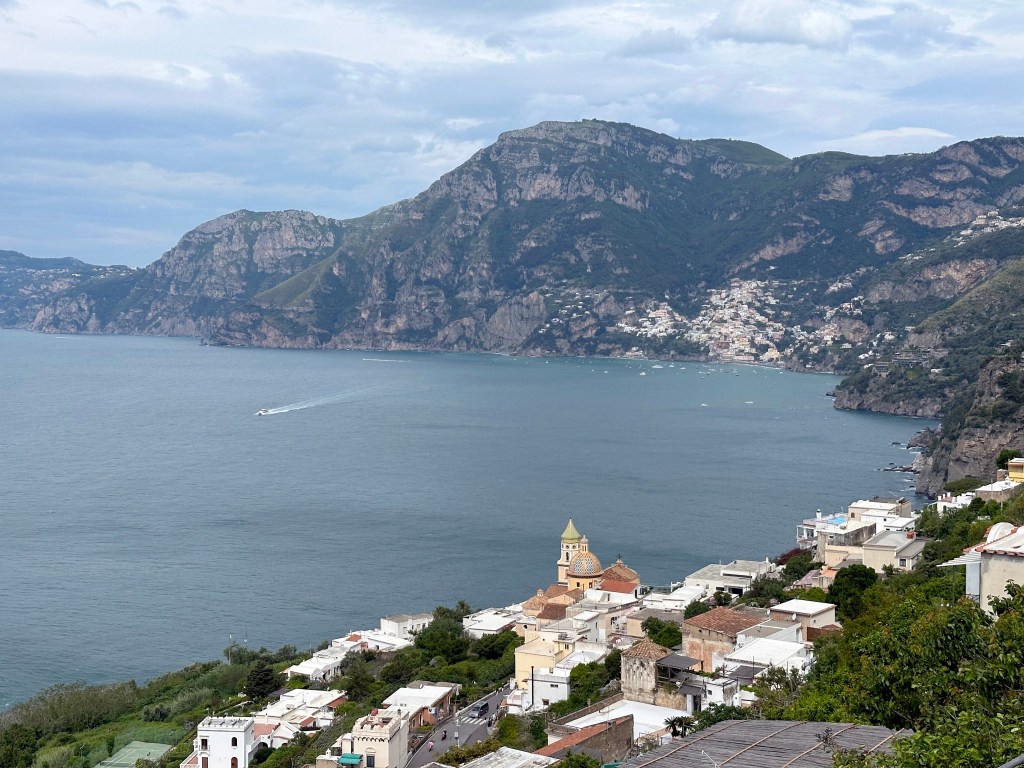
Still – a certain appeal (from a distance):

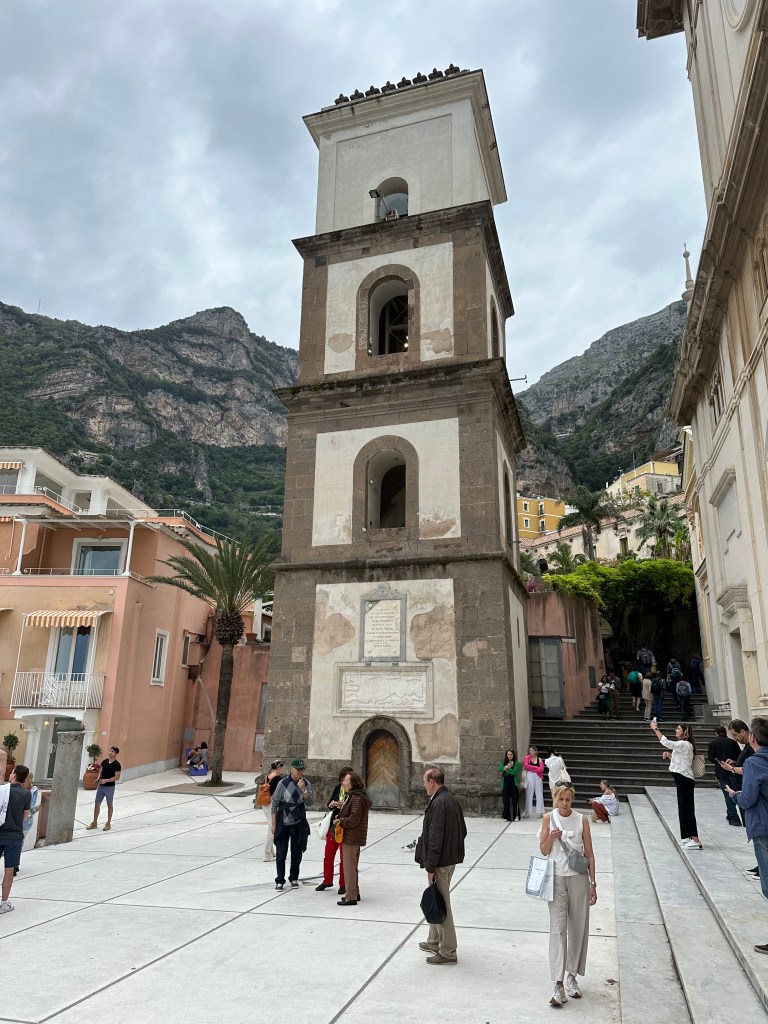
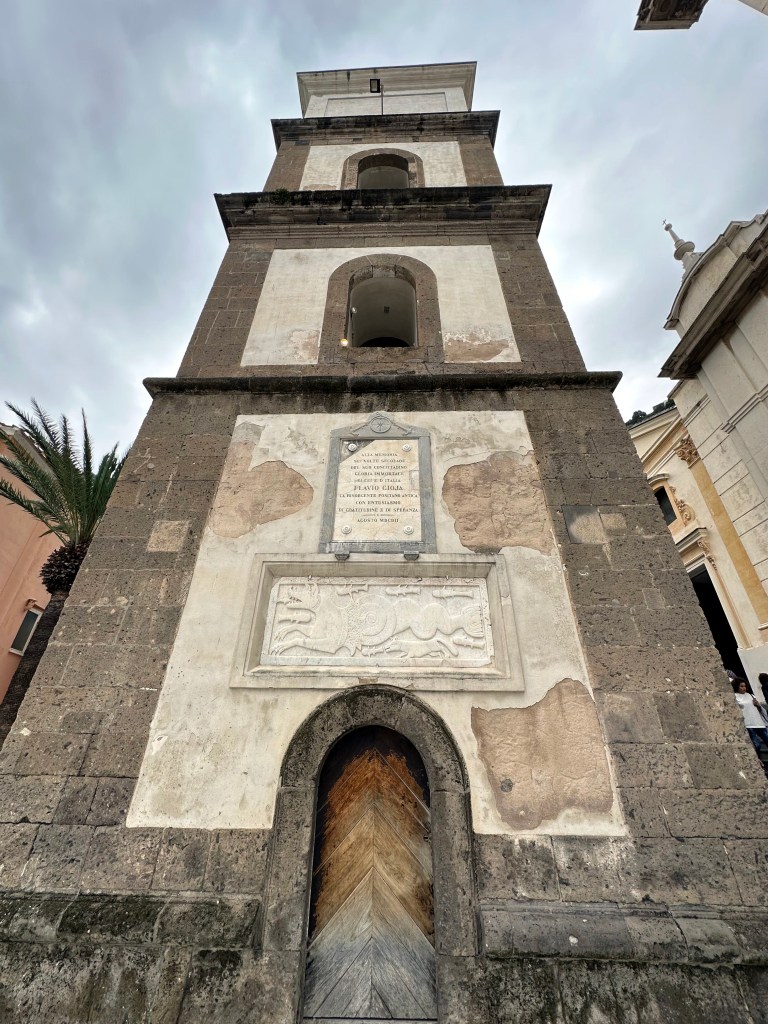
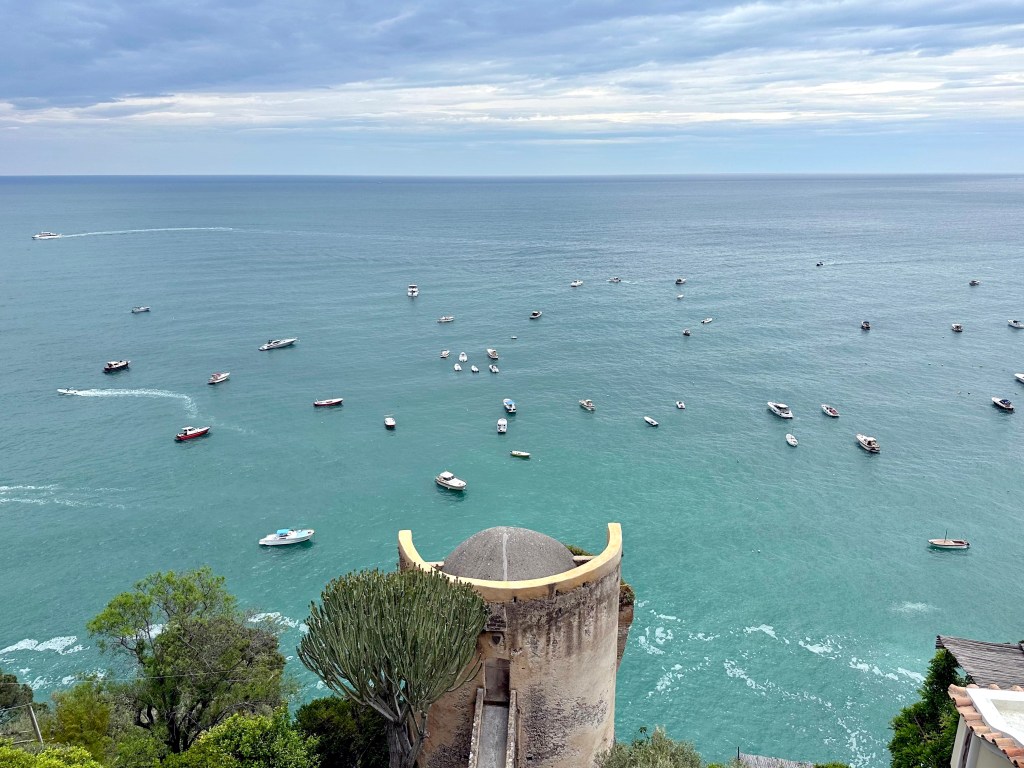
Bell tower of the Assumption Parish of Our Lady Positano, based on the location of an abbey founded in the 10th century.

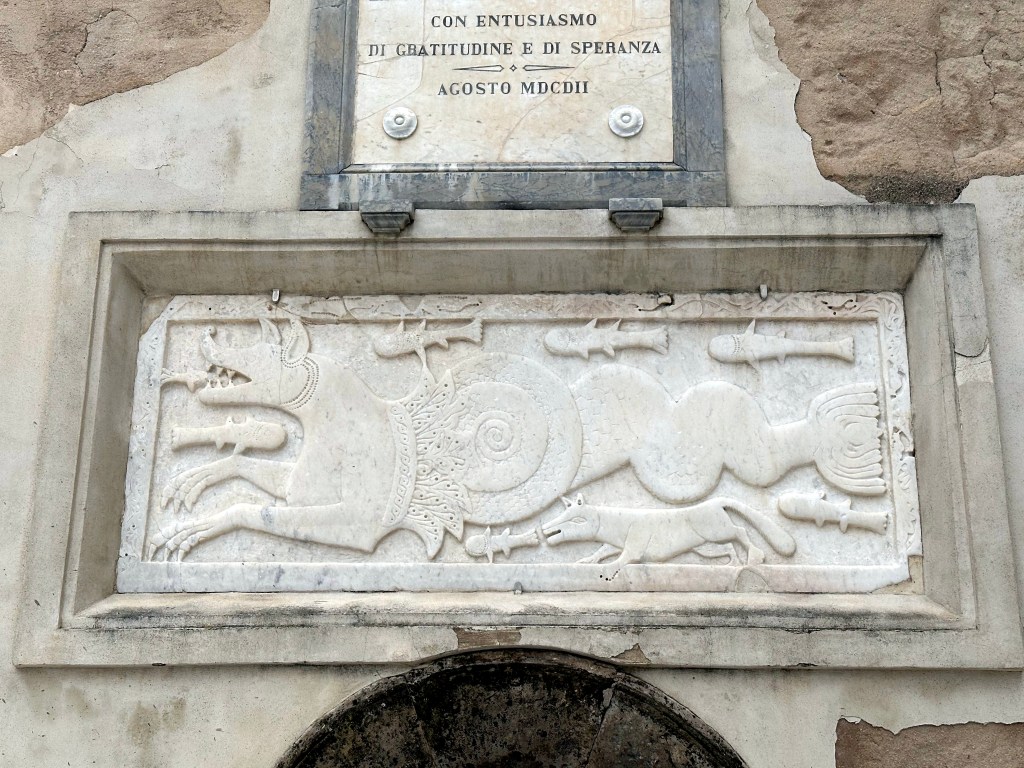
The tower’s pastrice (sea monster) bas relief on its base:

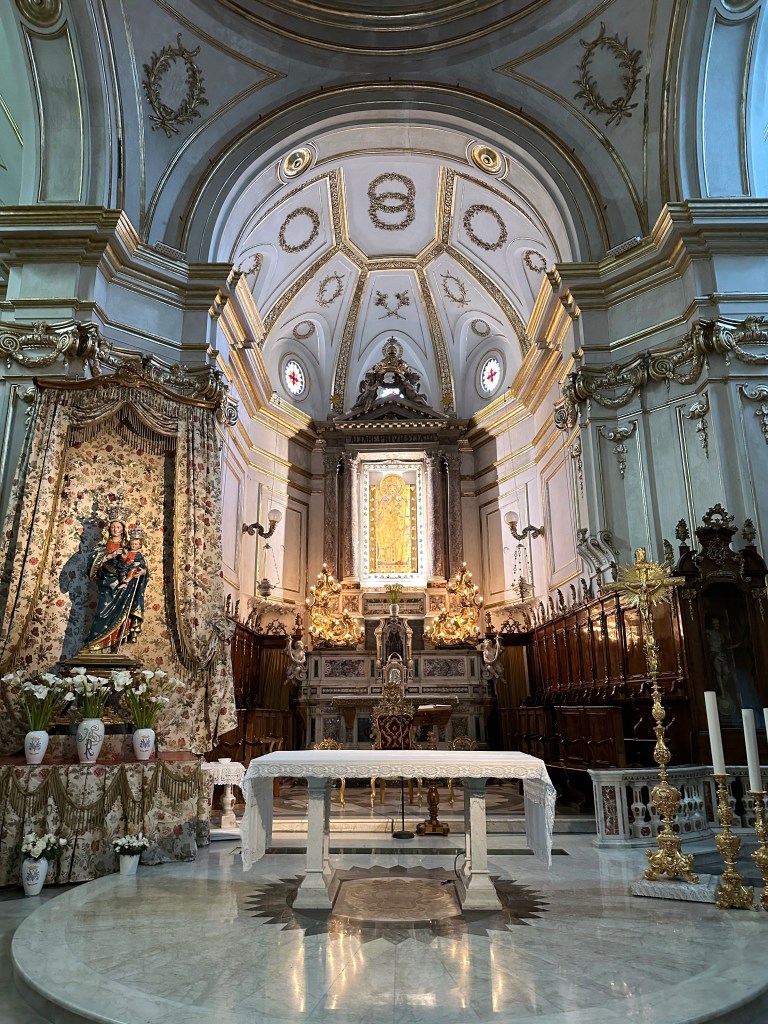
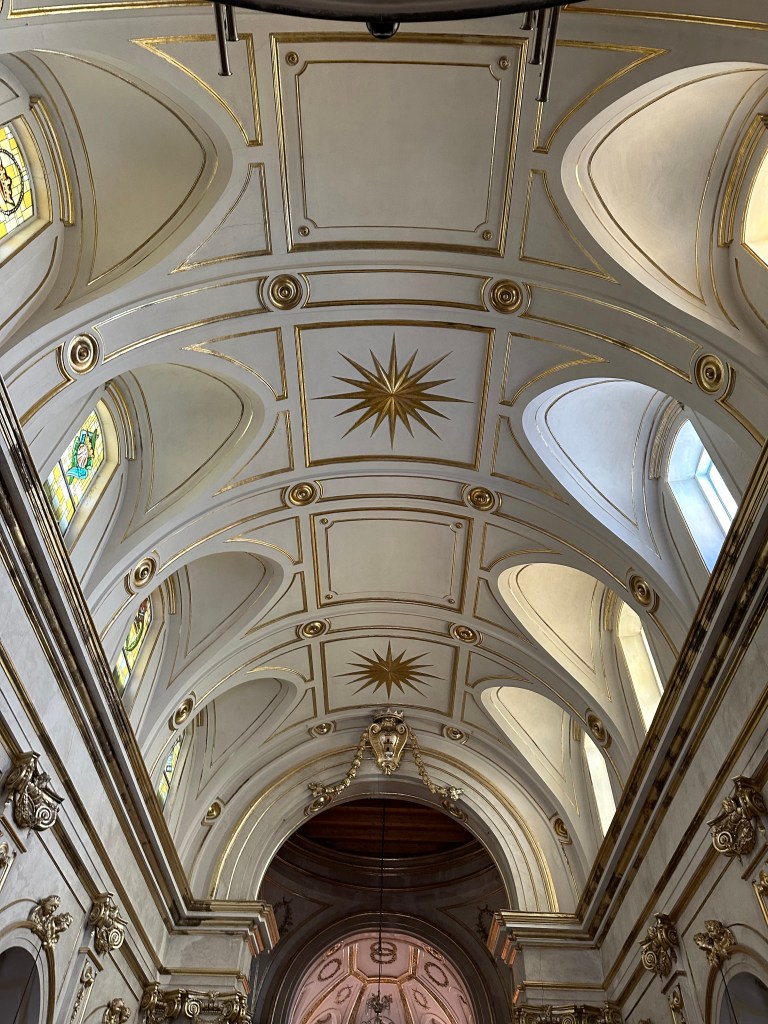
Pretty meh Renaissance interior (we prefer Medieval and, ideally, Romanesque):

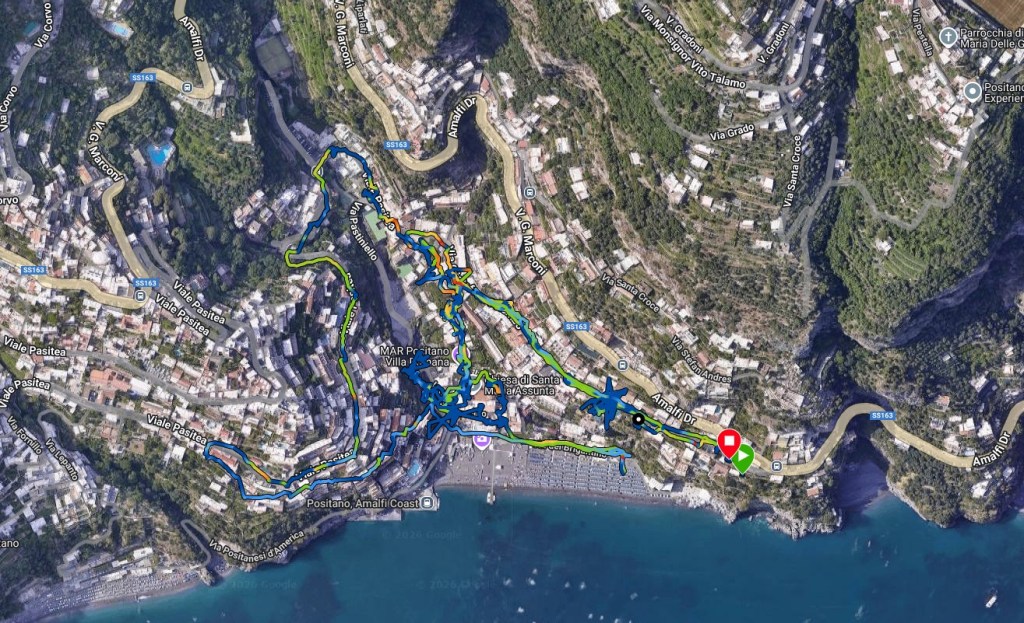
After navigating around and through town, we had enough.

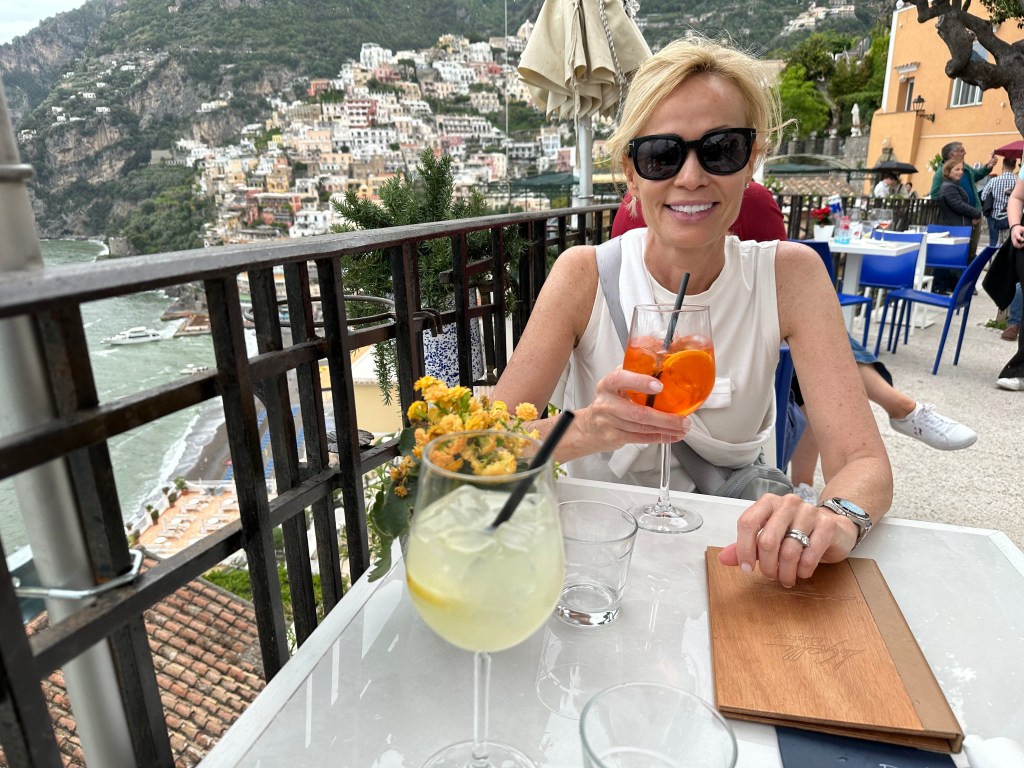
A reward for a job well done.

Safely back in Praiano and away from Positano.

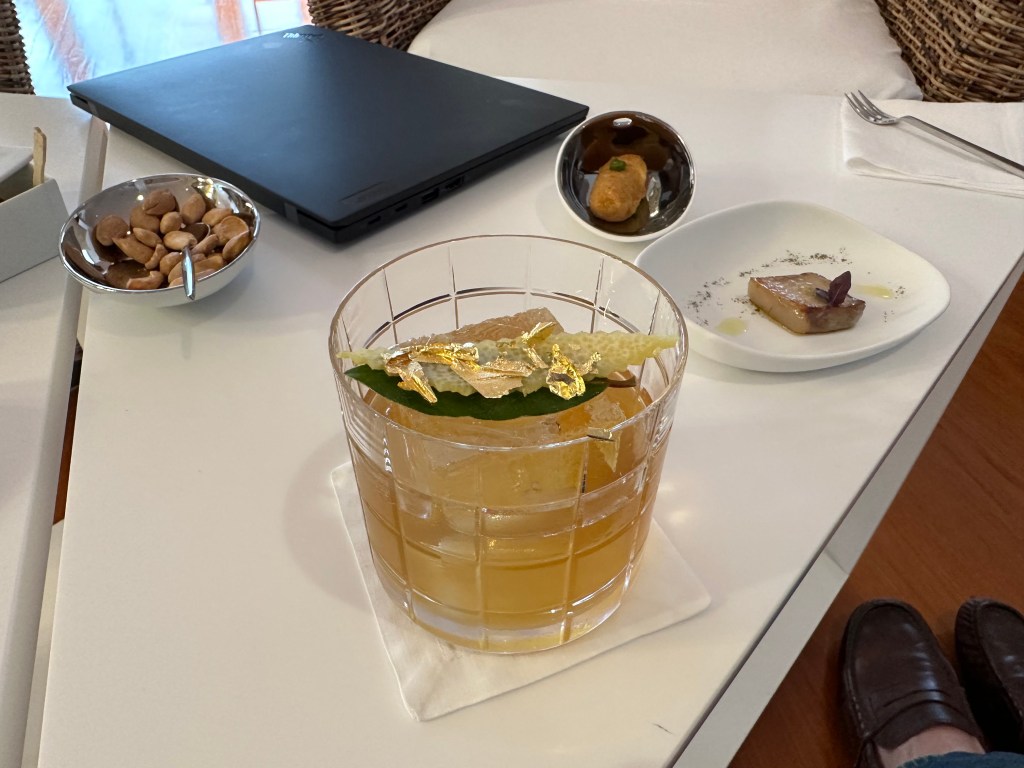
With more rewards to celebrate our return.

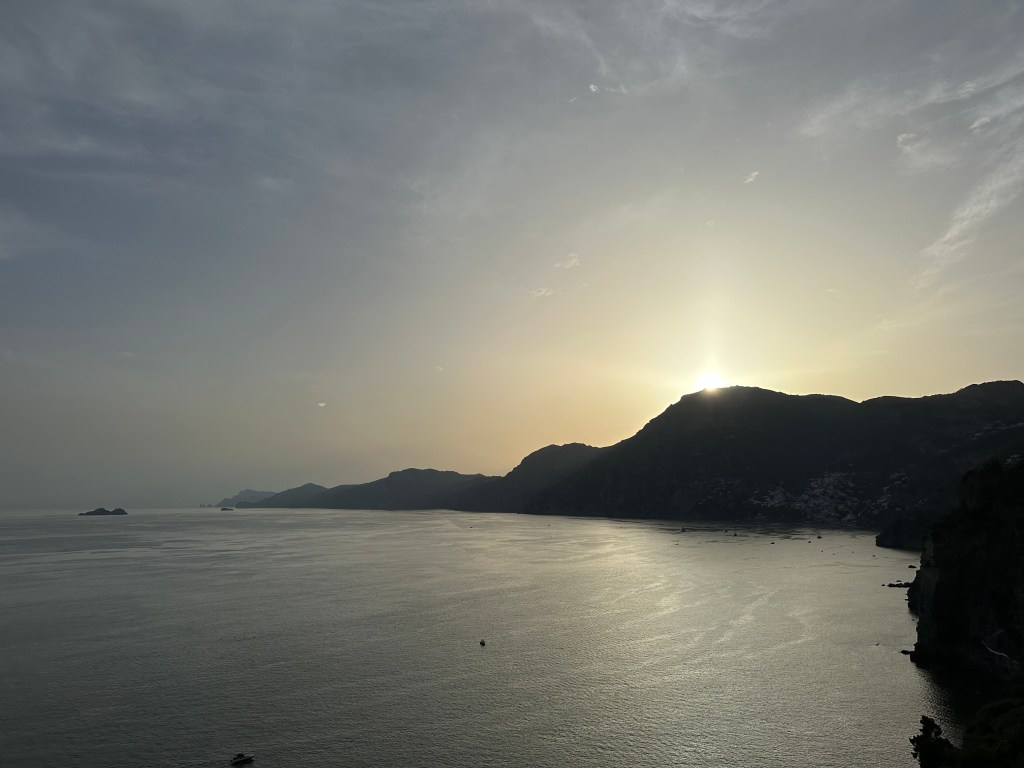
Pretty cool sunset views, as well.

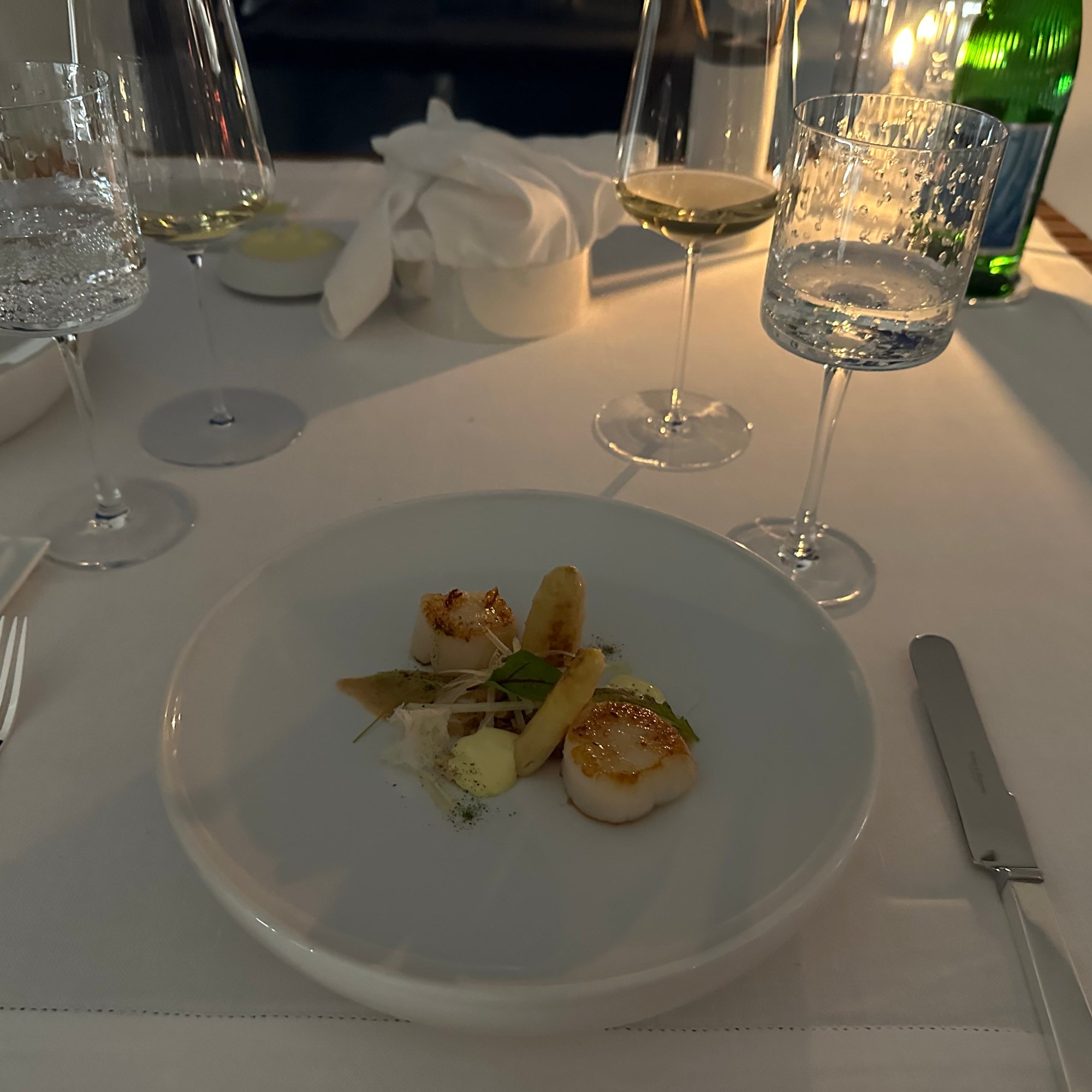
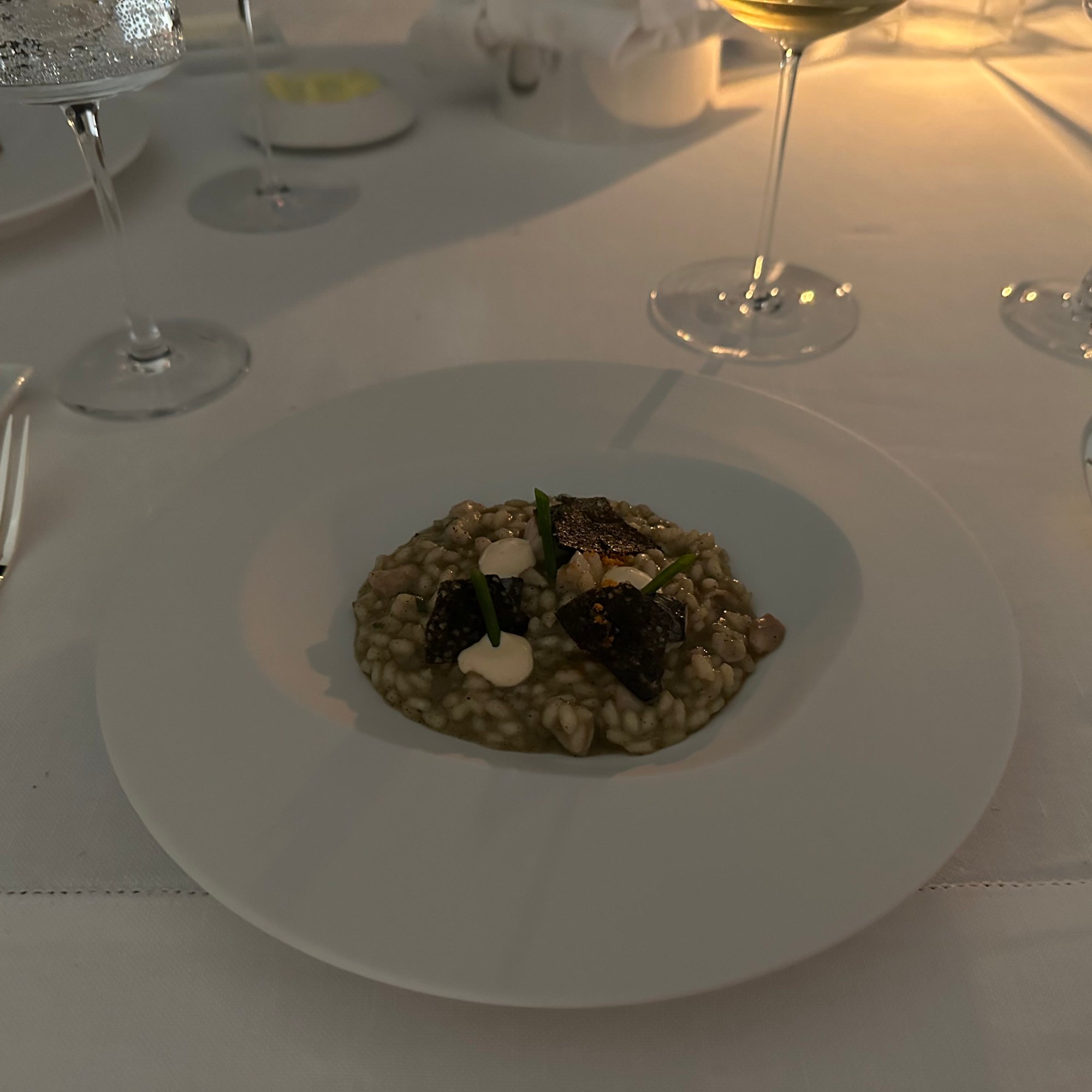
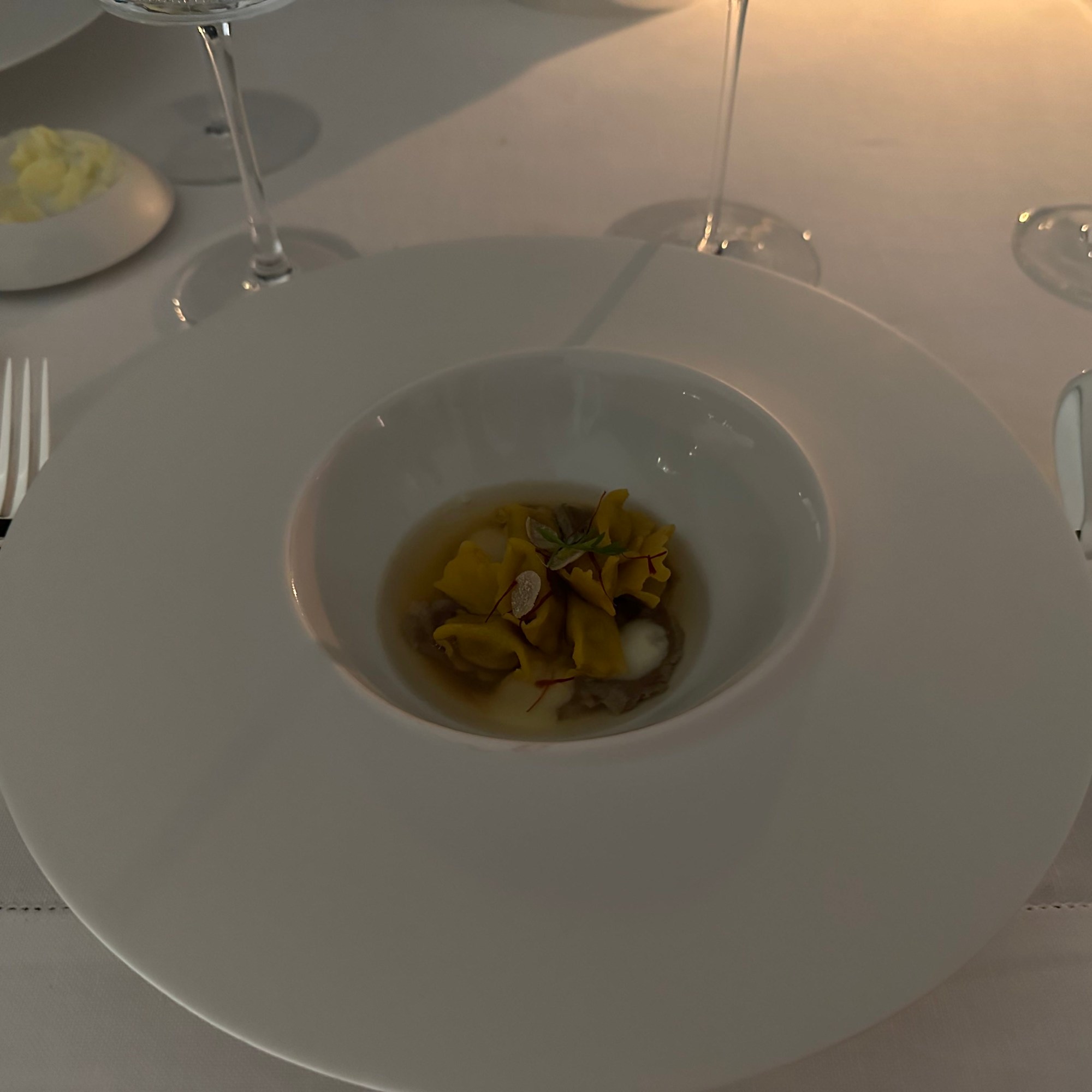
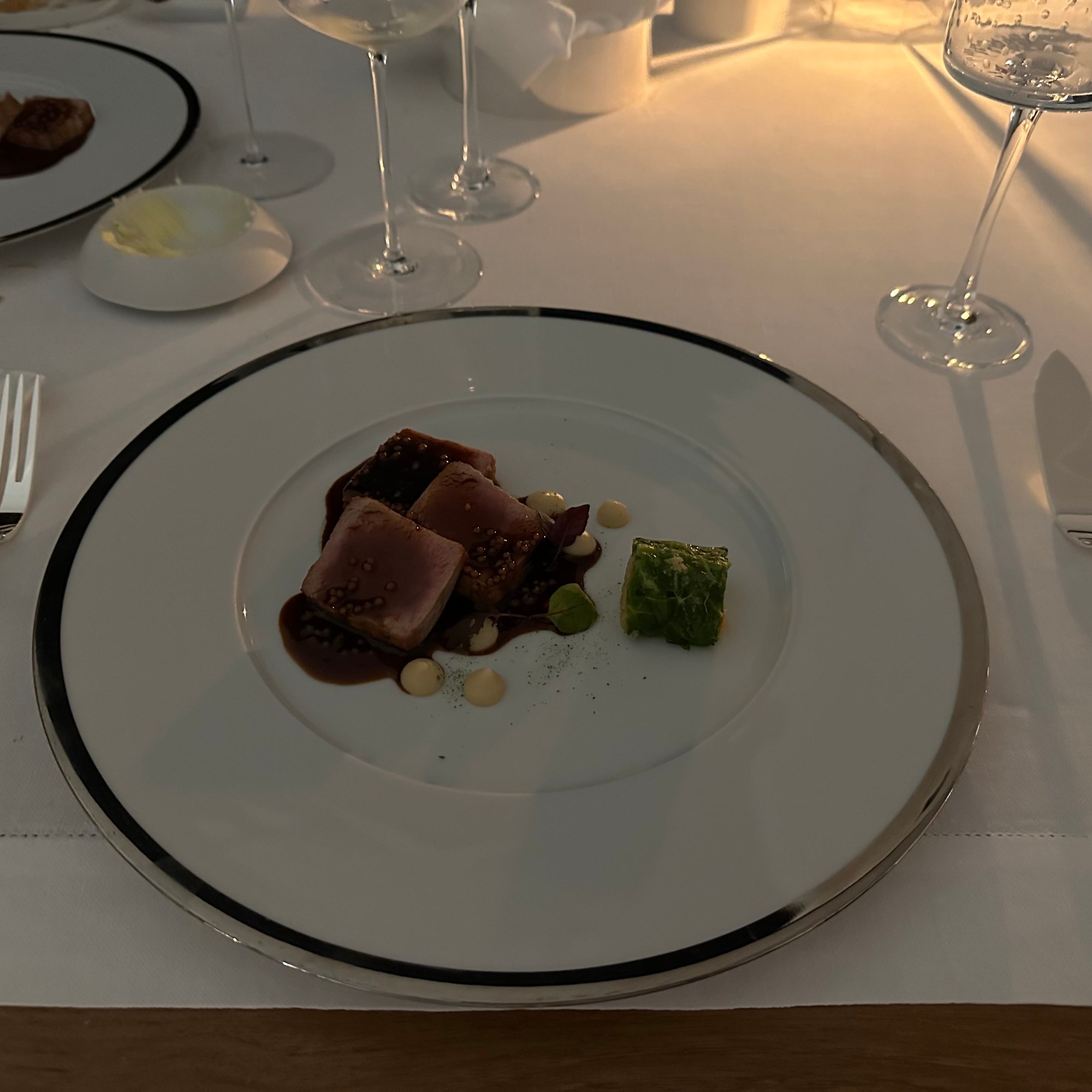
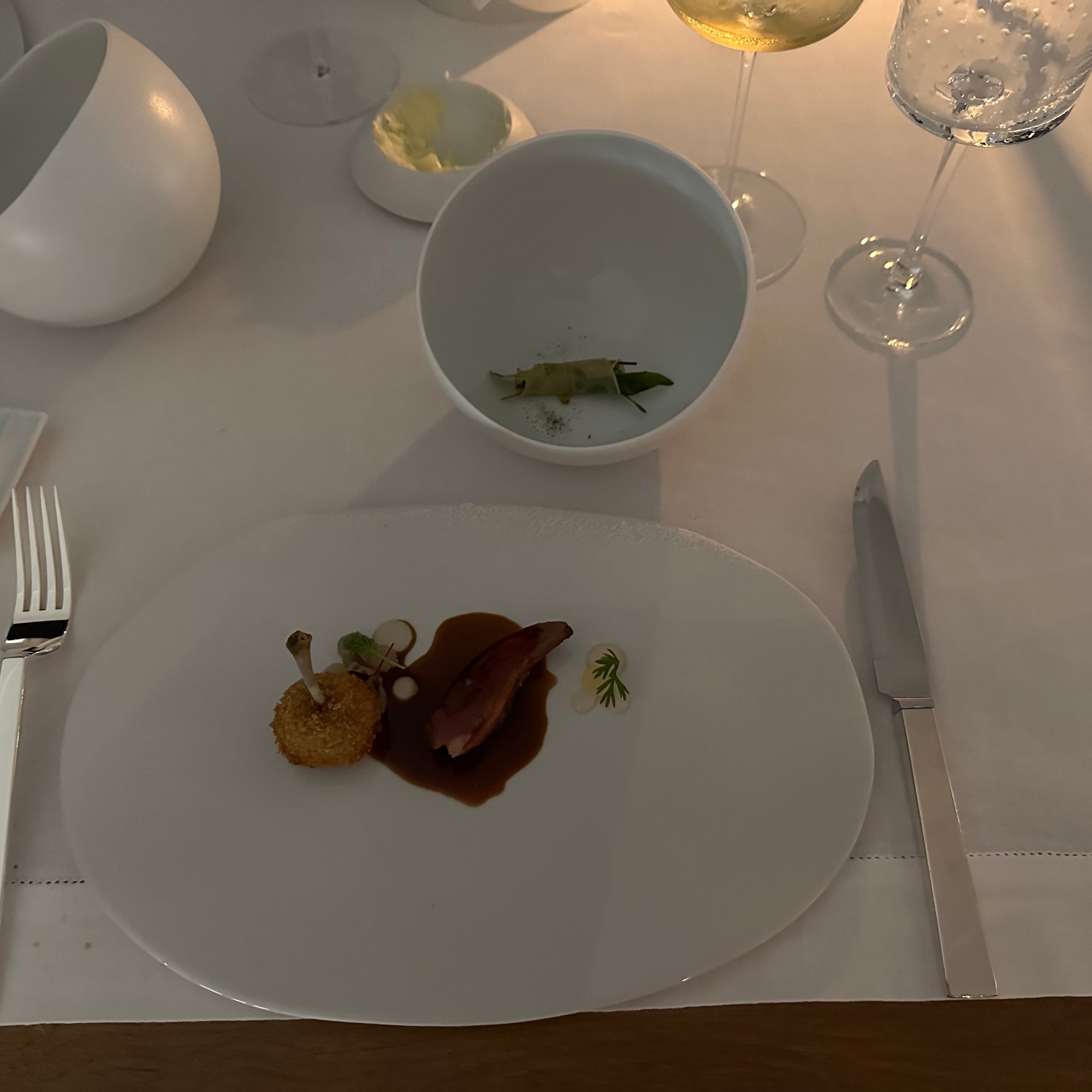
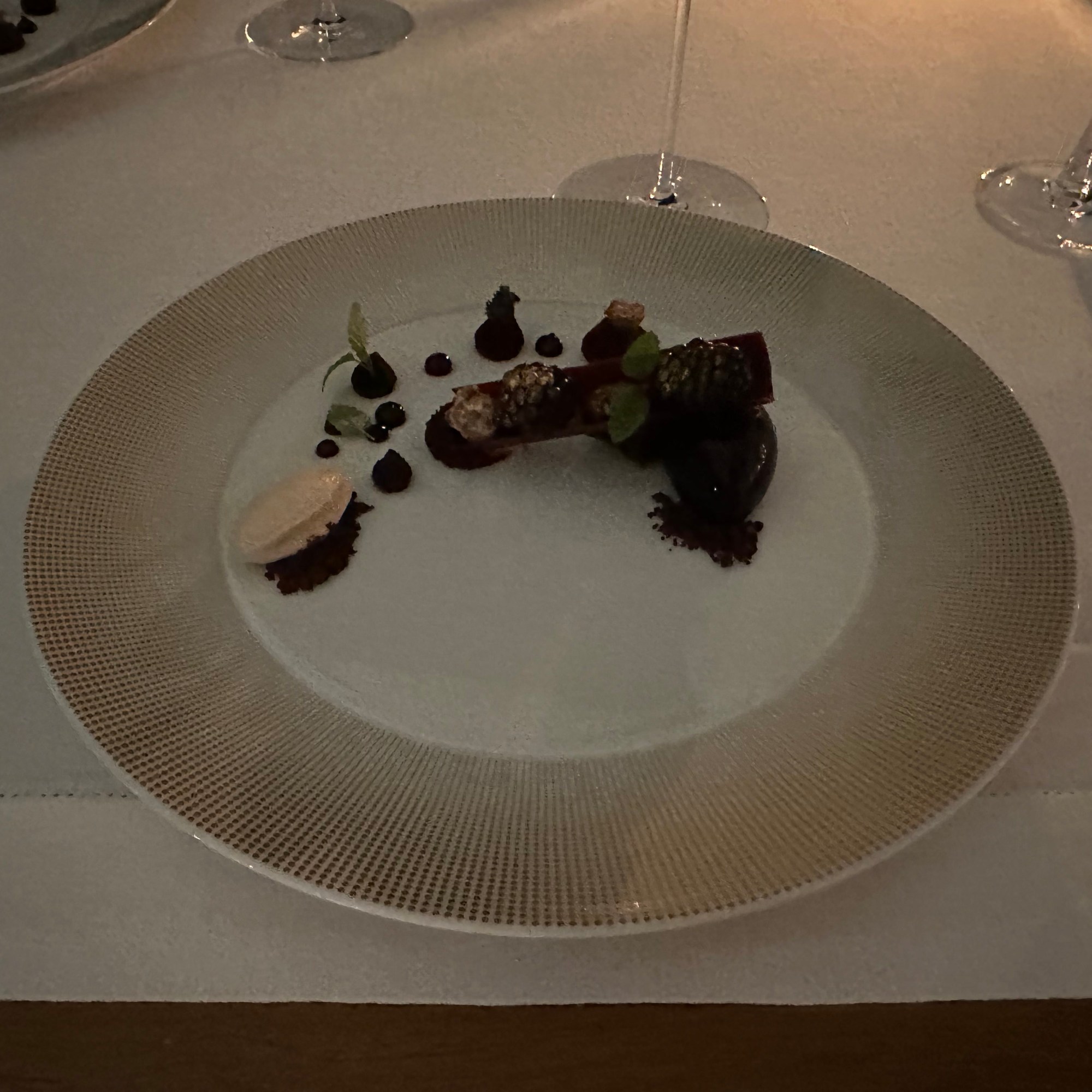
And our first Michelin-starred dinner of the trip:

The next day, and epic hike we had been anticipating with some relish:

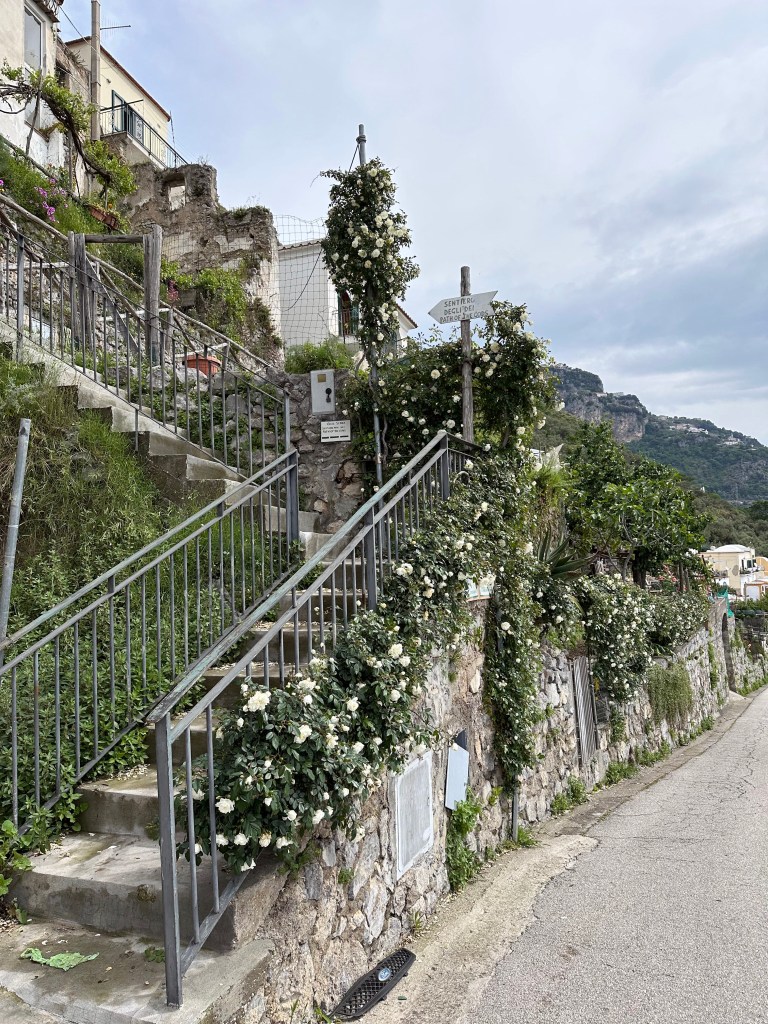
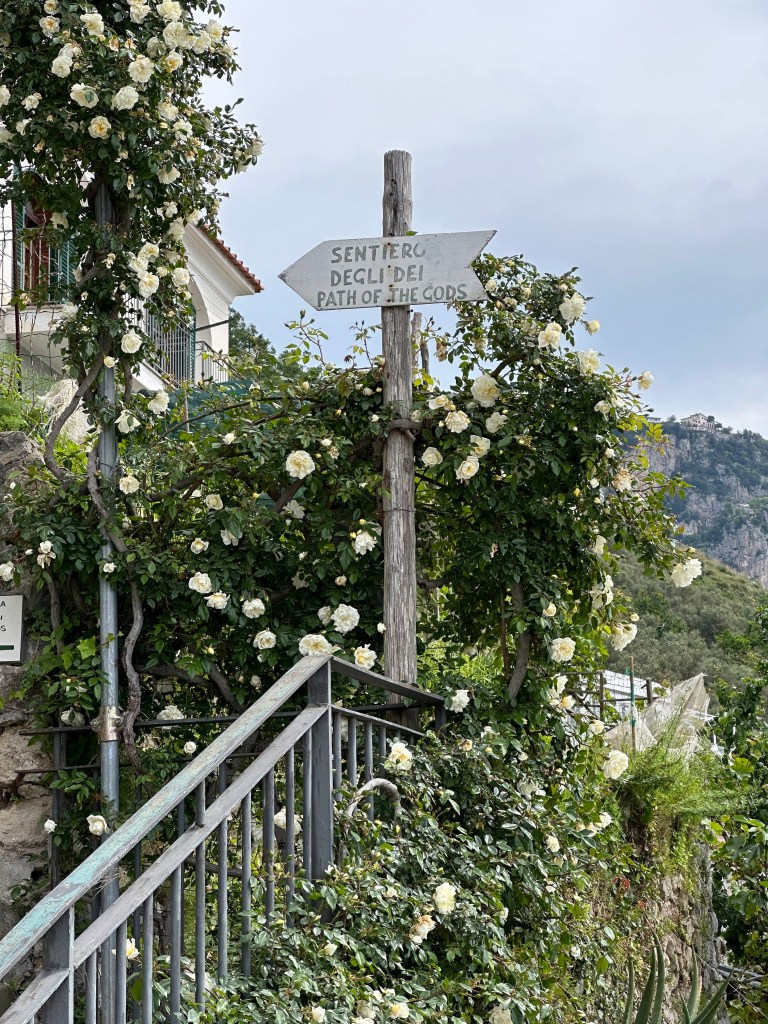
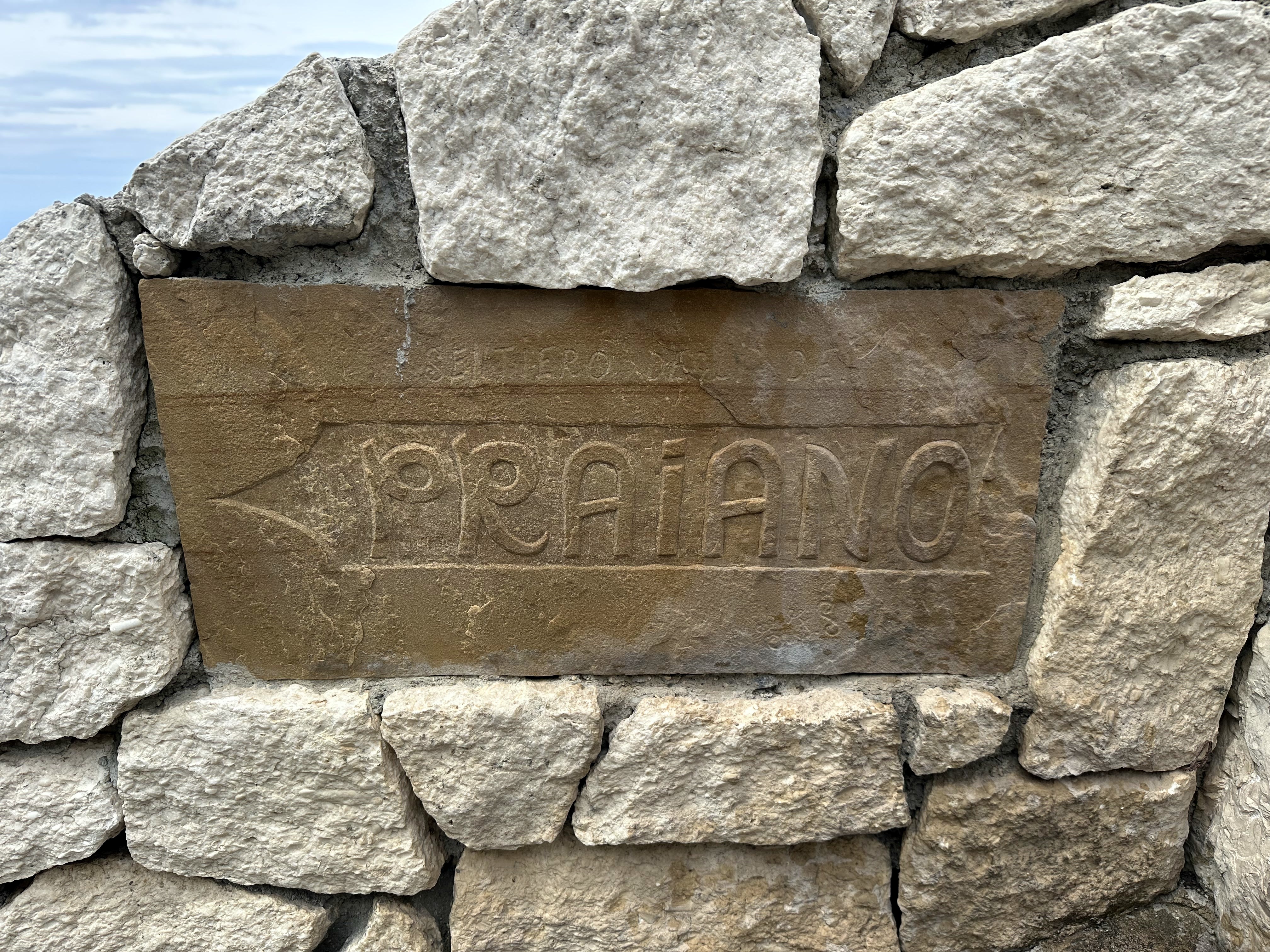
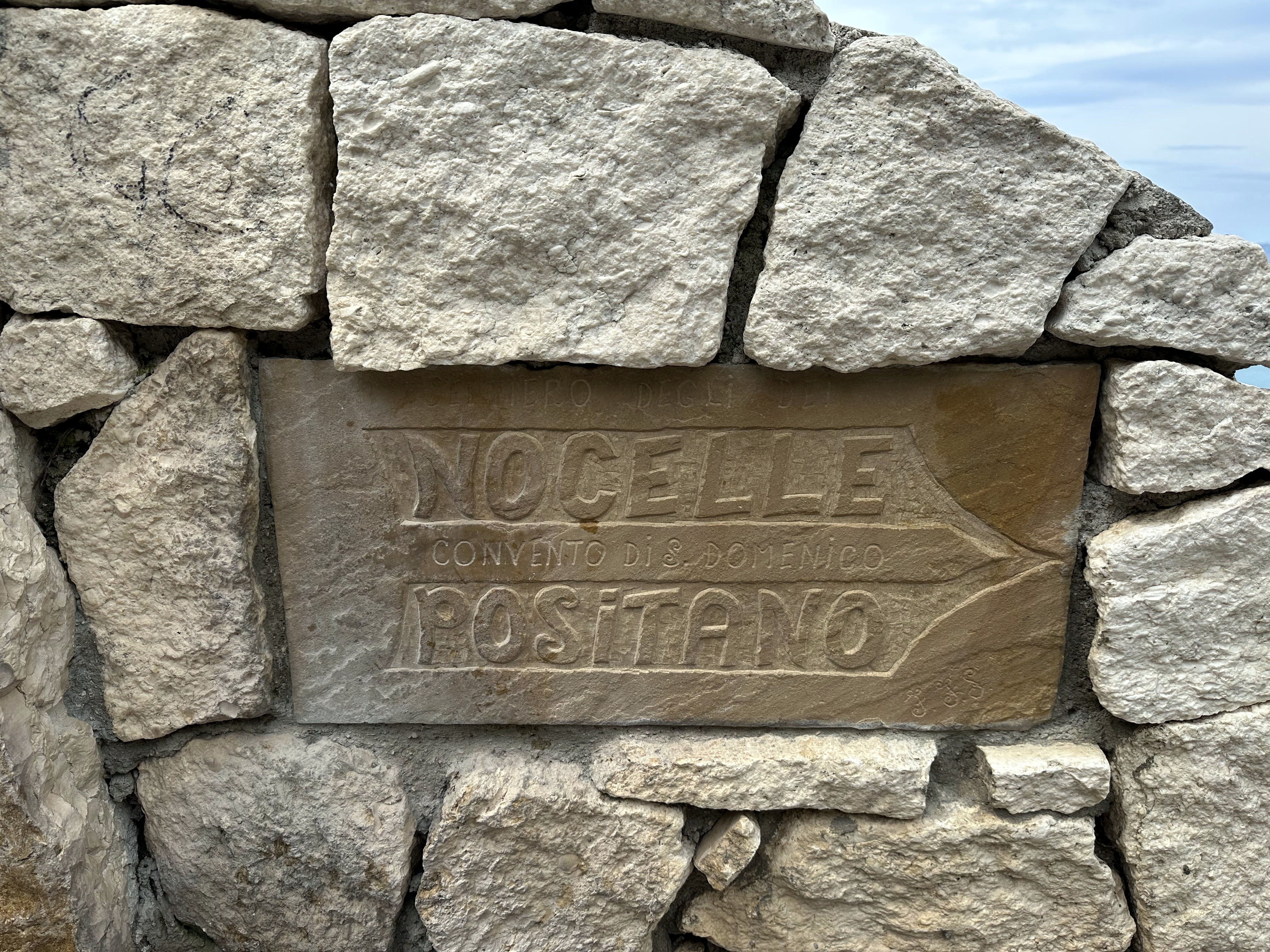
The Path of the Gods!

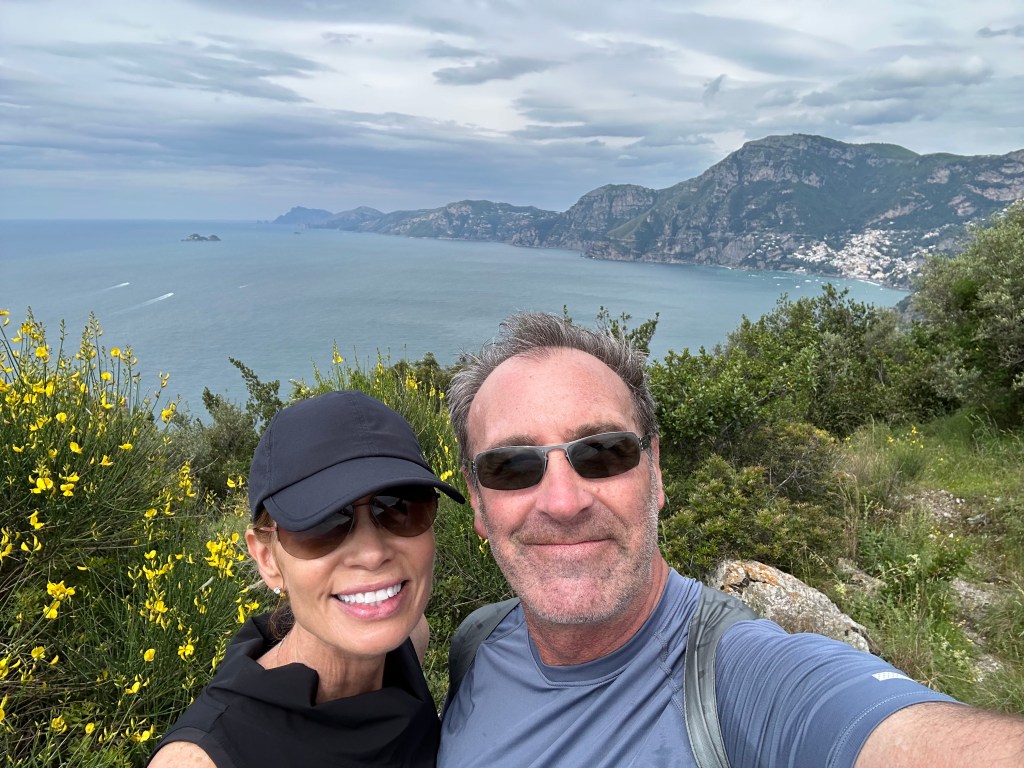
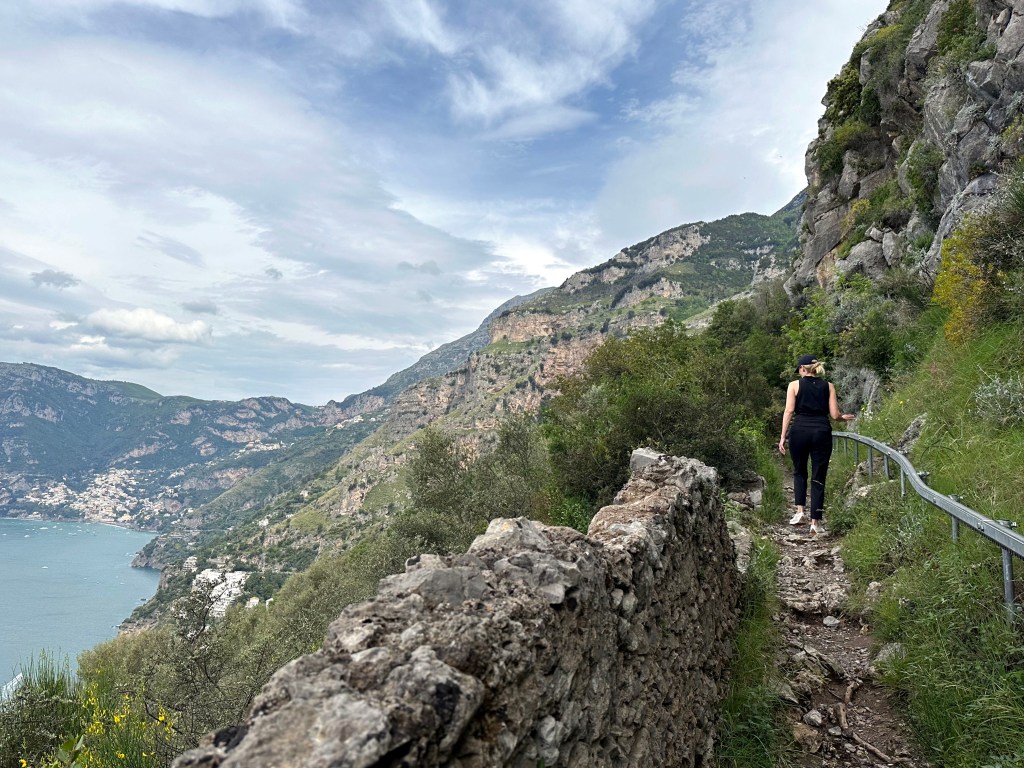
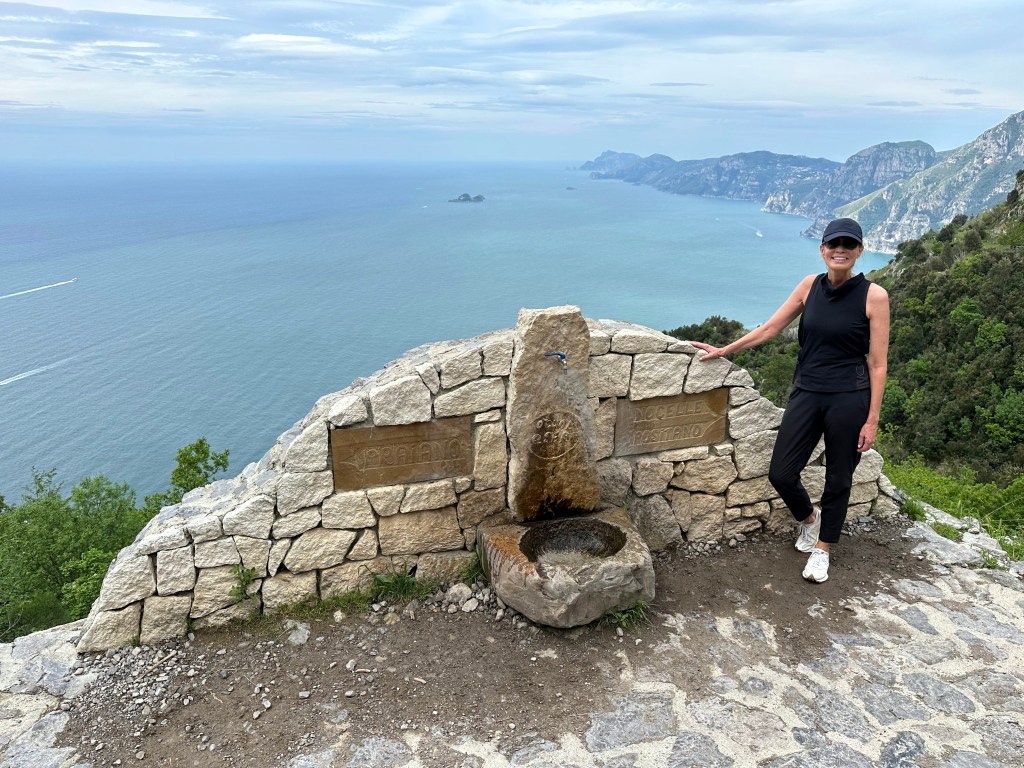
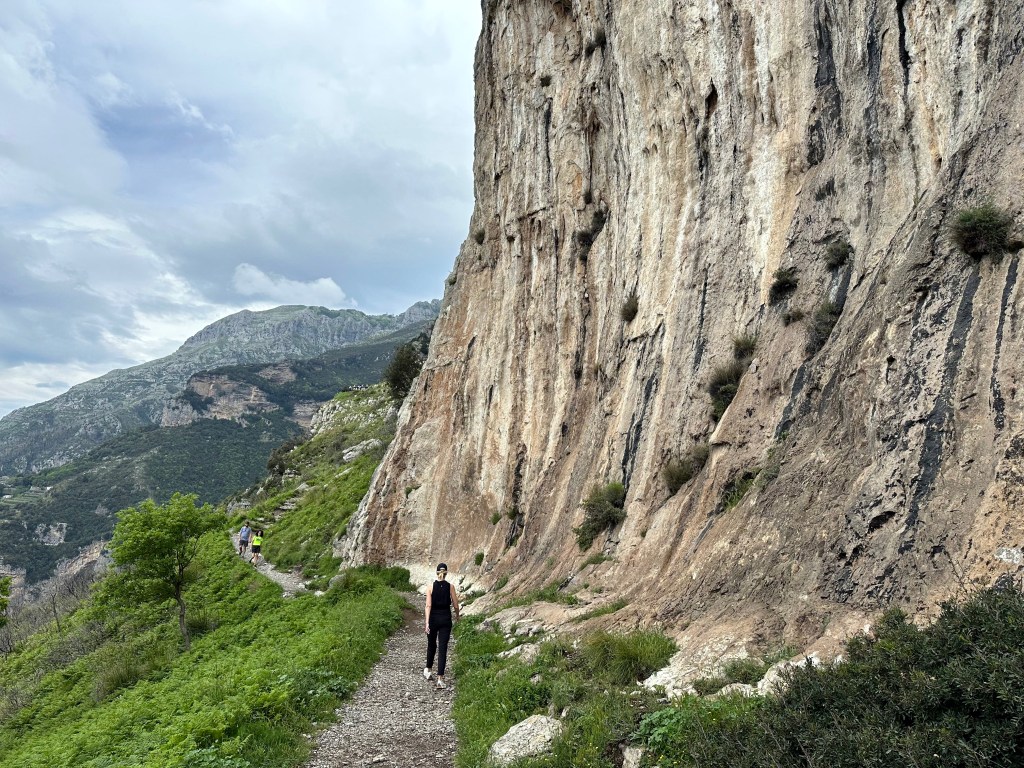
The Path of the Gods, as we hiked it, offers a 5.3-mile trek from our hotel at the edge of Praiano up 2000 feet, then across the ridgeline to a point 1500 steps ABOVE Positano, then a knee-buckling climb down said steps.

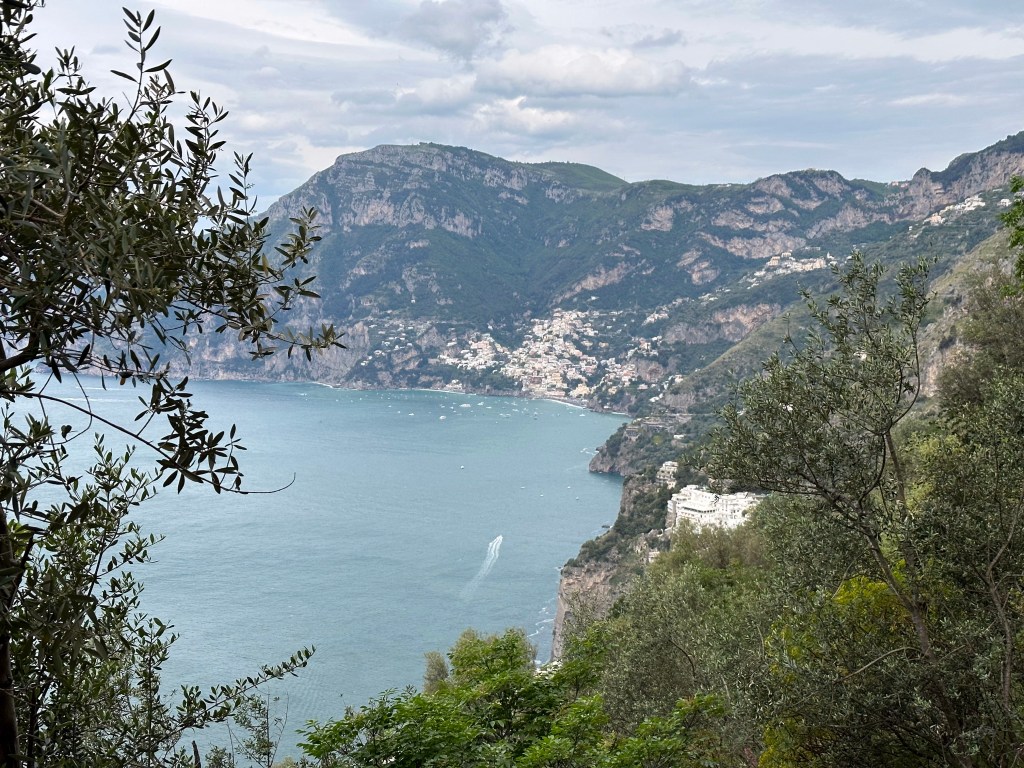
Views to Positano above Praiano:

Praiano from above:

Once you reached the ridge, the hiking wasn’t too challenging; it was just getting to there (and then down the damn steps):

At the halfway point:

Getting closer to Positano:

View into Positano’s bay on the way down the freakin’ steps:

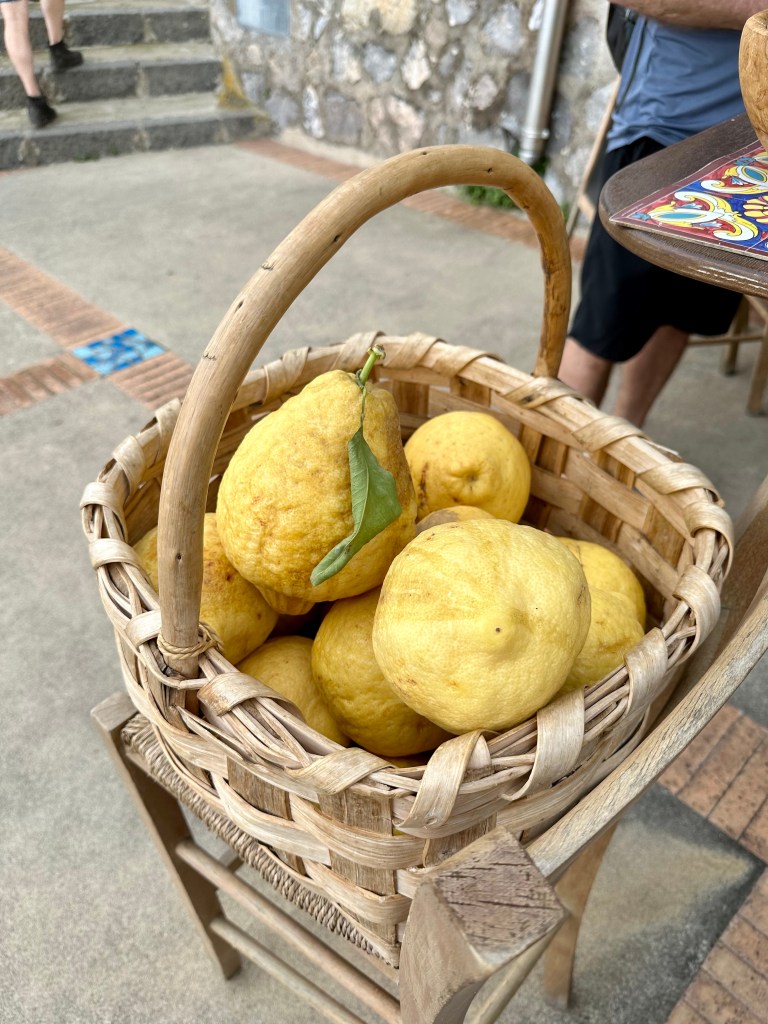
A reward part of the way down: Italian ice made with Amalfi’s ubiquitous (and iconic) big-ass lemons:

After a “shuttle” ride back to Praiano, a last night on the Amalfi Coast:

Next up: the oldest city in Italy!

Categories: A Prolonged Foray to Europe, Amalfi Coast | Leave a comment

Christmas 2022 – Baltics and Back to the Netherlands: Trip Overview

After intentionally foregoing Europe at Christmas for the last 4 years, a few factors drove us back this year: nostalgia for winter weather in the season, a truly authentic Christmas experience, and the paucity of other options with availability and reasonable travel costs. One day we’ll get to Namibia or Peru for Christmas, but not this year.

We initially targeted all three of the Baltic states for this year’s trip: Estonia, Latvia, and Lithuania:

  • Northern Europe to meet the winter climate criteria
  • Great Christmas tradition (Tallinn holds the distinction of hosting the Europe’s first public Christmas tree in 1441)
  • Have not visited any of them before (they would put WolfeStreetTravel’s country count over 70)

However, WolfeStreetTravel flight criteria and the need to keep the trip limited in length due to work resulted in the following refinements:

  • Lop Lithuania off the itinerary (maybe we’ll get back there when we can also visit adjoining Belarus; we certainly can’t go there now, with Putin stooge and corrupt autocrat Lukashenko in charge)
  • Bookend our stay in the Baltic states with some time in another country with direct flight in and out of Europe

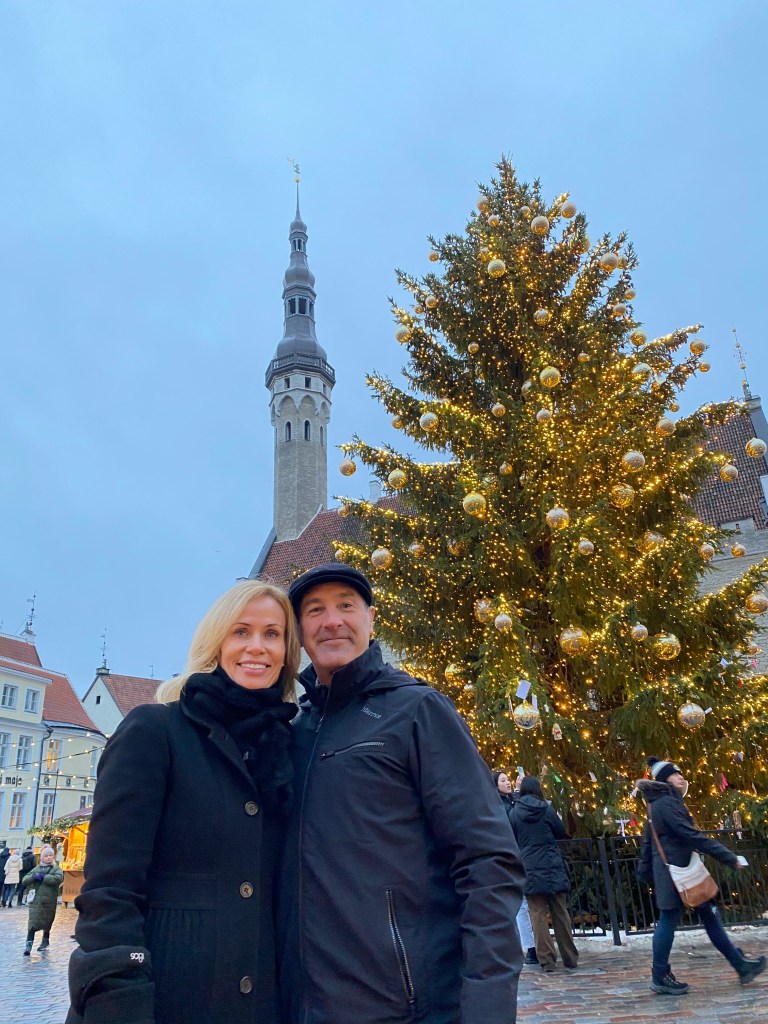
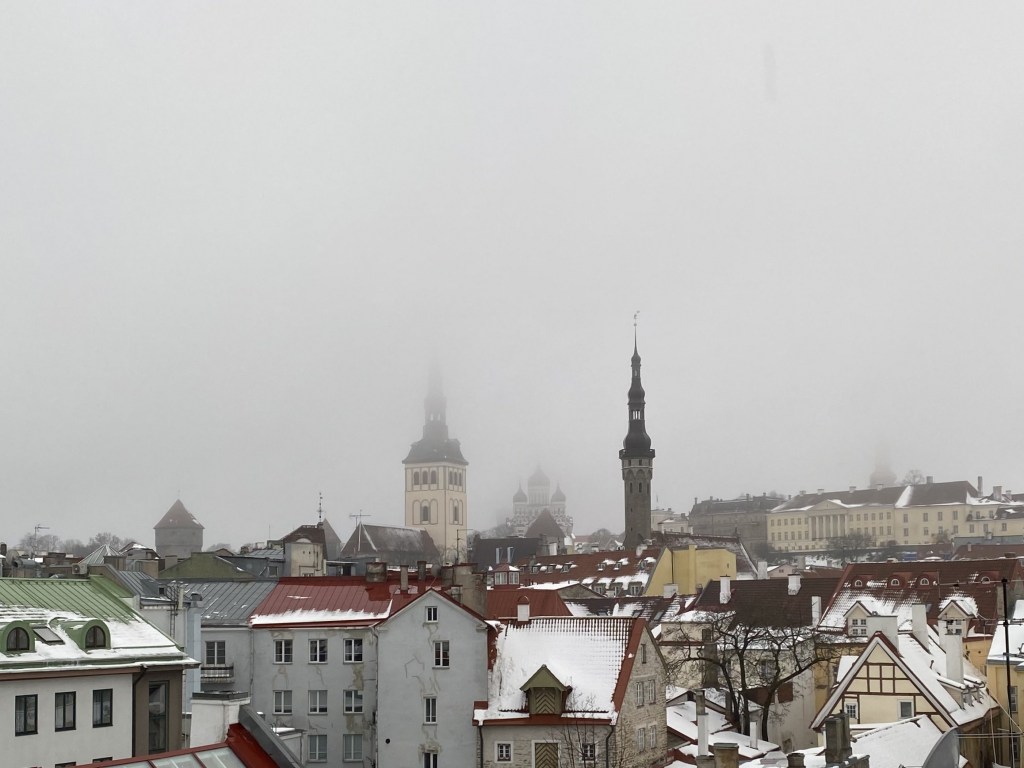
The UNESCO World Heritage site of Old Town Tallinn, Estonia, from atop the castle hill of Toompea:

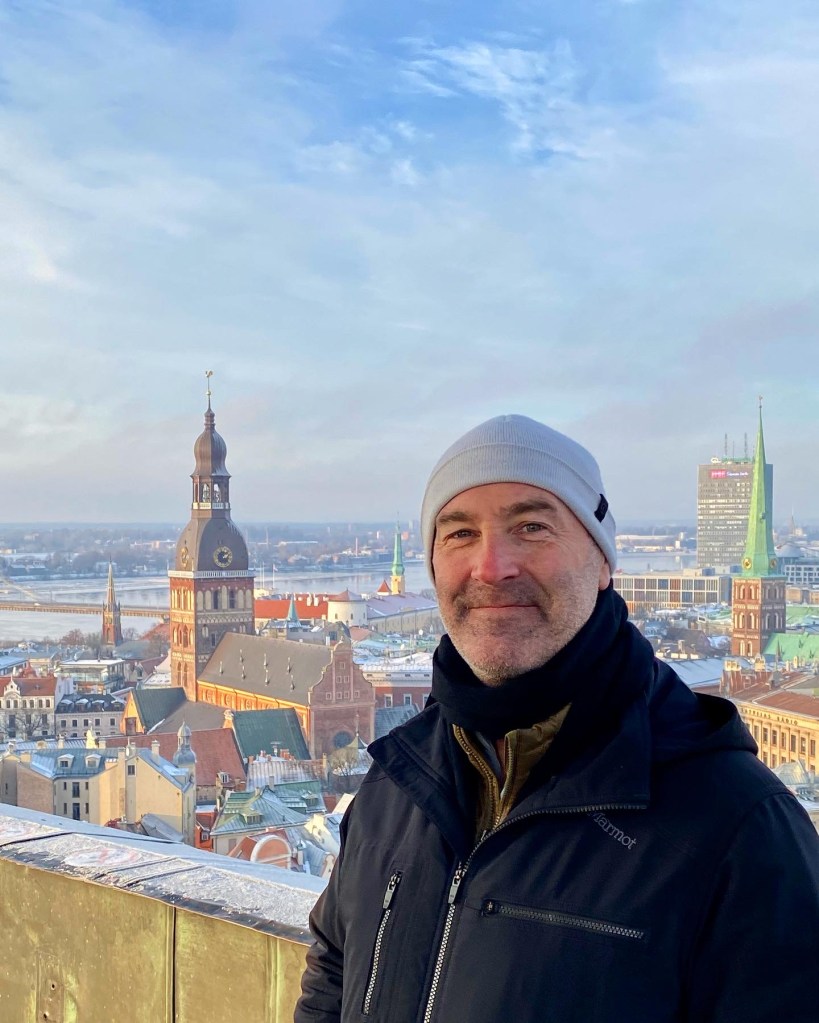
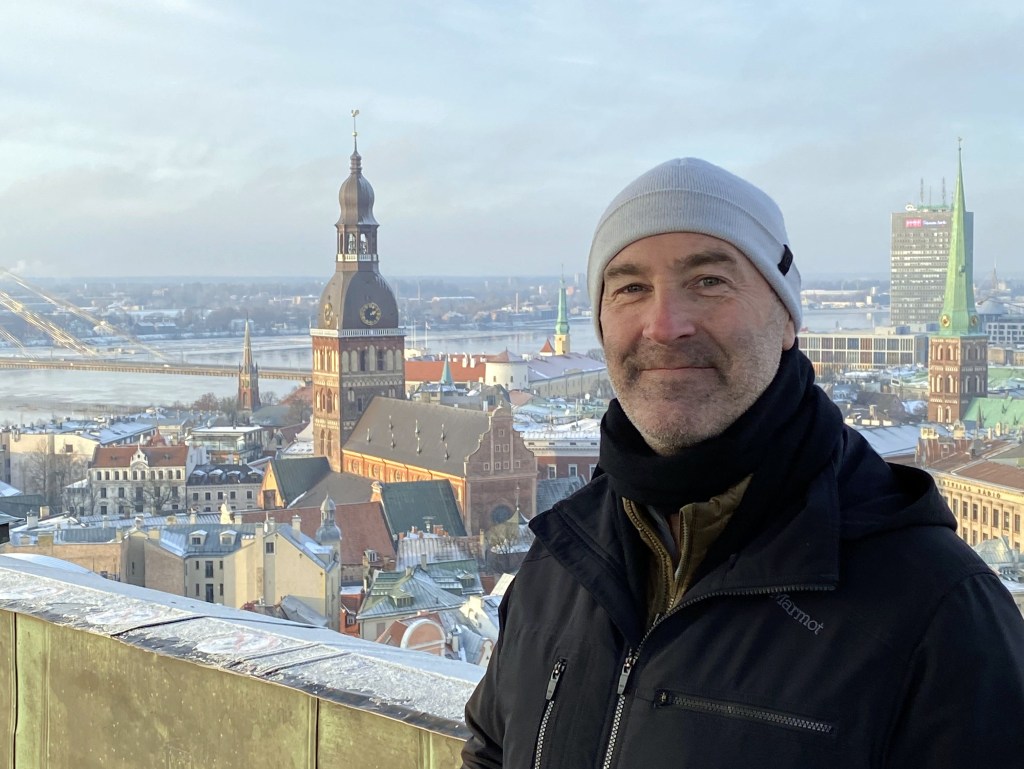
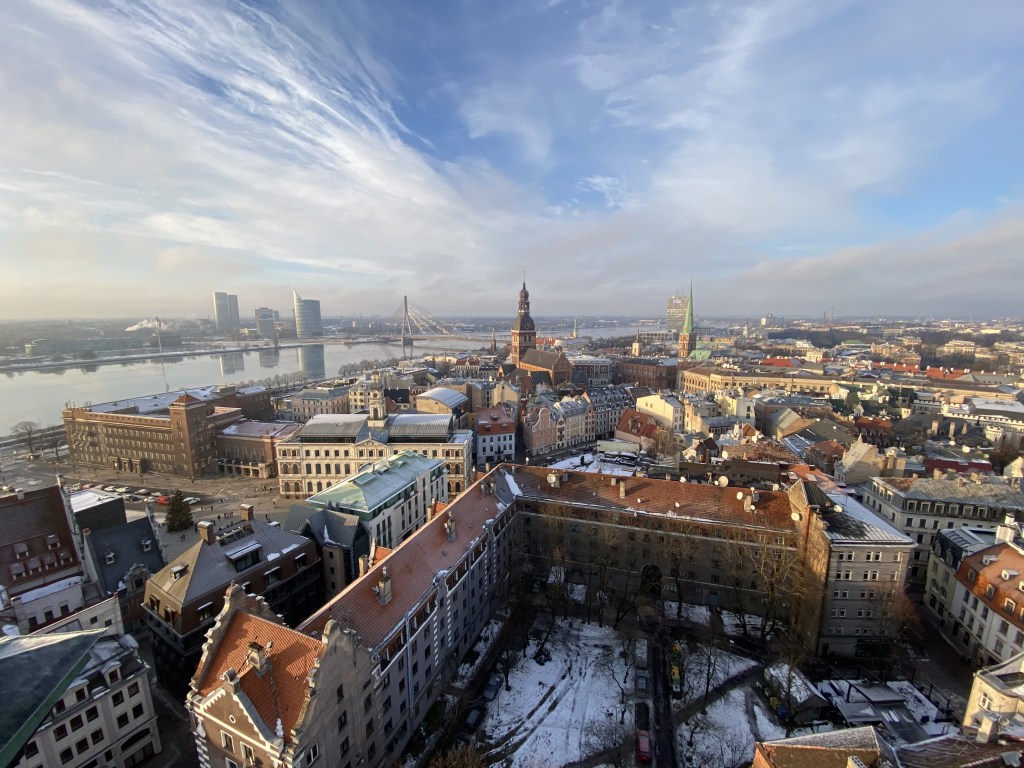
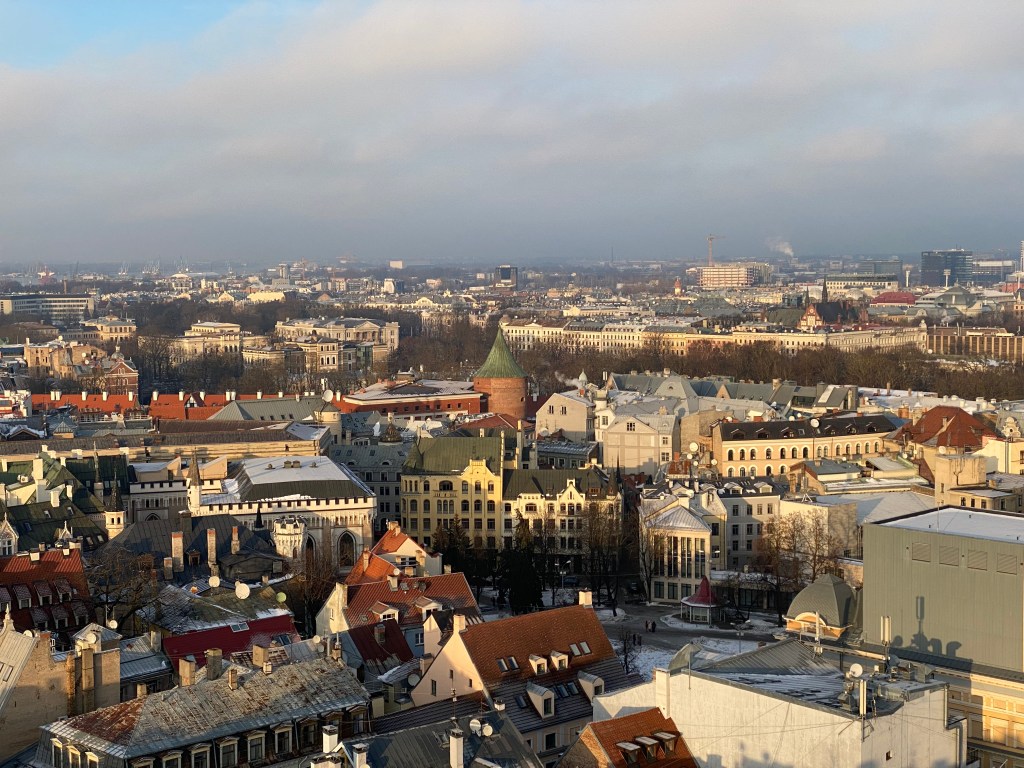
Riga, Latvia, from the spire of St. Peter’s Lutheran Cathedral in the center of town:

Regarding the direct flight bookend, we found a perfect candidate in Amsterdam’s Schiphol airport. United offered direct flights there from IAD, and BalticAir offered direct flights to Estonia and Latvia from Schiphol. Plus, we’d add a few days in Haarlem on the front end and a few days in Amsterdam on the back end to break up the flying time.

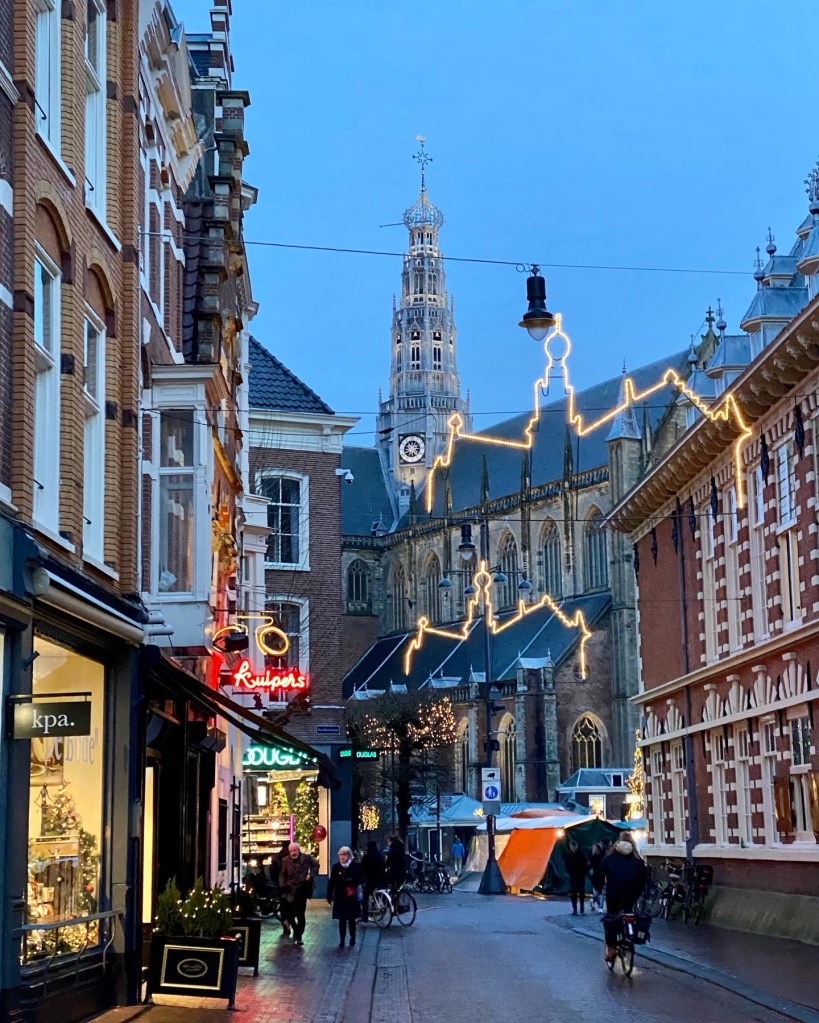
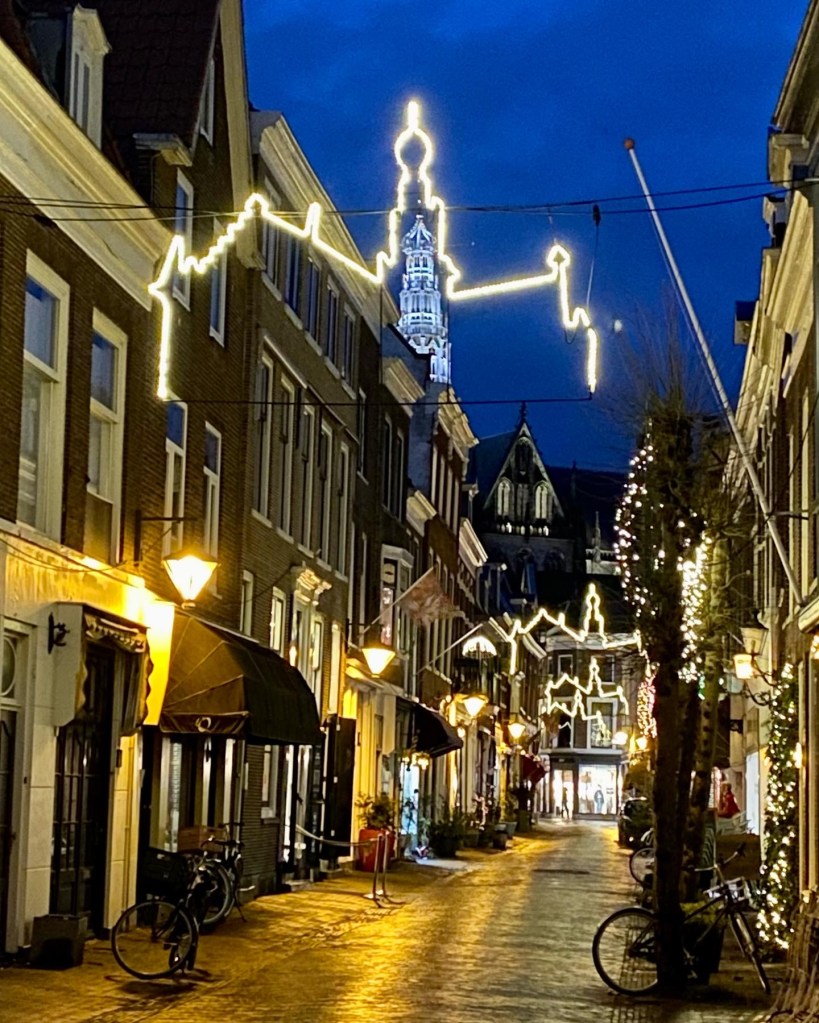
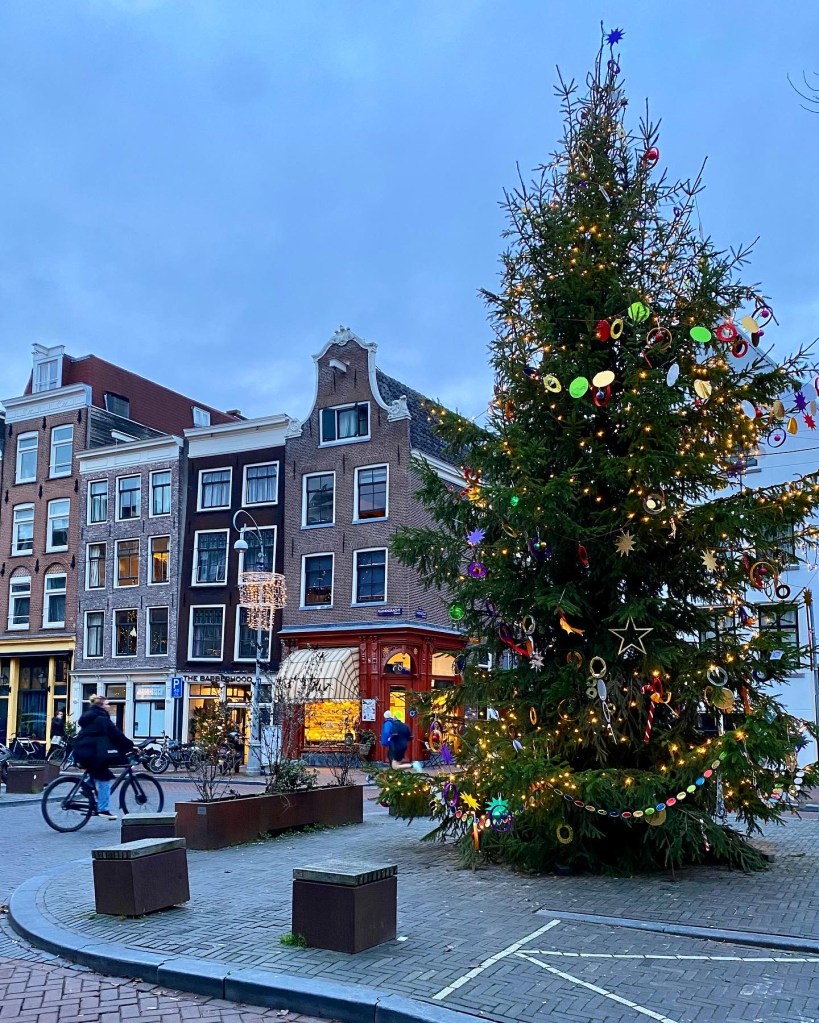
Haarlem decked out for Christmas:

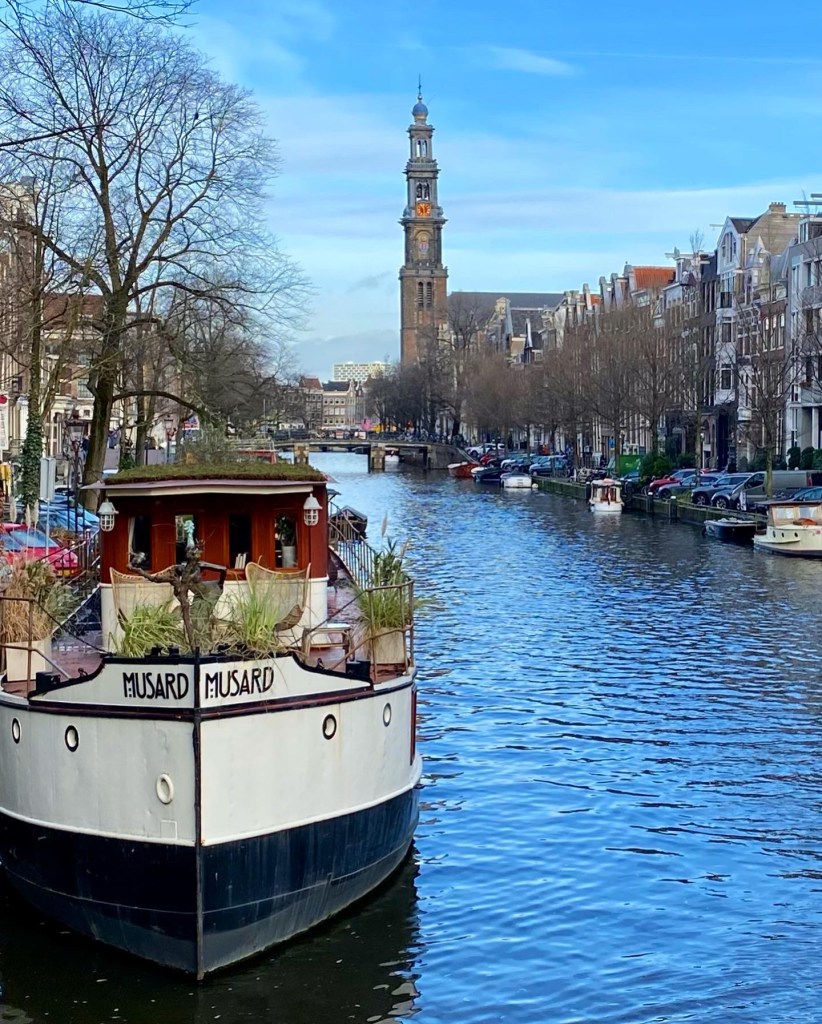
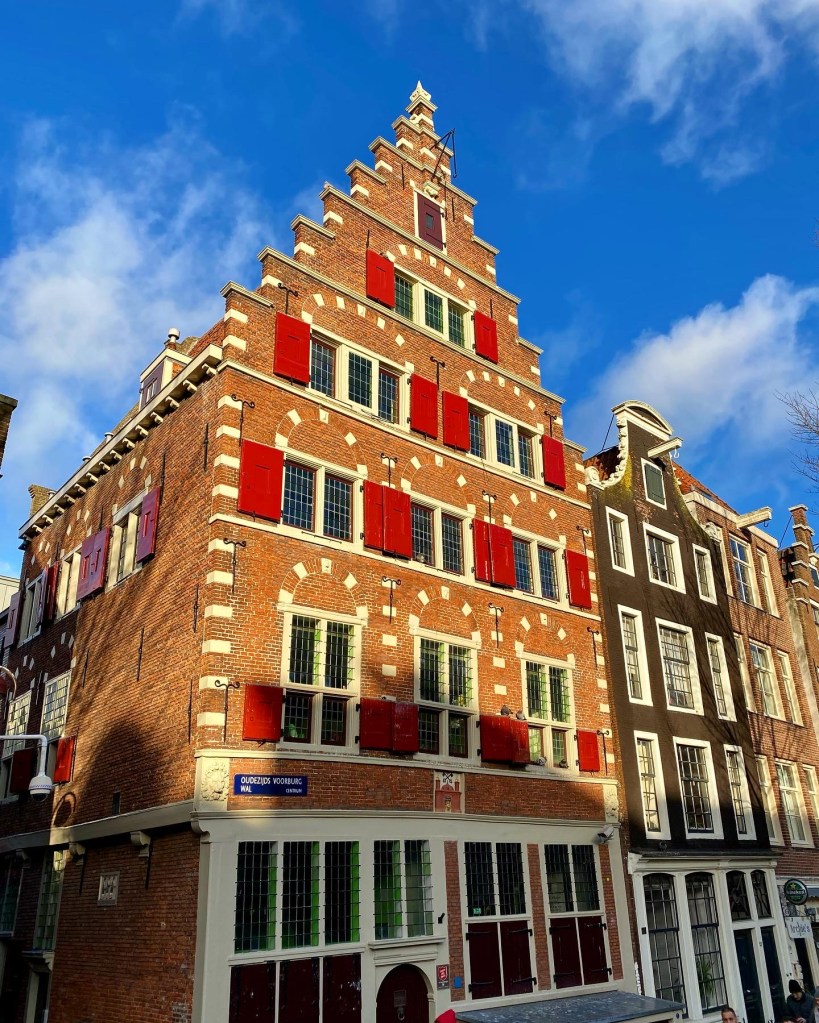
The canals of Amsterdam during our stay:

In the middle, we’d fly direct:

  • From Amsterdam to Tallinn, Estonia, then
  • From Tallin to Riga, Latvia, then
  • From Riga back to Amsterdam

Between the direct flights to and from Europe and the direct flights to, within, and from the Baltics, we planned this perfectly to minimize the impacts of inevitable flight delays. Nothing could go wrong now, with no connecting flights that could be impacted by delays on the initial leg – the bane of any traveler’s existence.

Then, more than a month after we bought our tickets, United saw fit to eliminate the direct flight from IAD to Amsterdam, screwing things up and requiring some rework and now unavoidable two-leg flights in and out of Europe. Not a disaster by any means, but it just meant more risks.

Which, of course, did materialize into actual problems, although none too bad, in the great scheme of things: our connecting flight on the way in got cancelled when we were in the air, and the connecting flight on the way back resulted in total travel time almost twice as long as the time the original direct flight would have taken. But, we weren’t impacted by domestic air travel calamity wrought by the massive Christmas snowstorm, and got back on time on December 28, so we consider ourselves relatively lucky.

After arriving (late) at Schiphol, we beelined it to Haarlem, where we stayed for the next 3 days (including watching the World Cup Final, where we were cheering on Argentina and the Dutch were rooting for France simply because Argentina beat them in the Semis, which was fun).

Haarlem’s Christmas lights throughout the city were the profile of the town’s landmark cathedral:

The functioning Molen de Adriaan windmill right in the heart of town, which we toured while there. Super cool.

From Haarlem, we flew northwest to Tallinn, Estonia, which was still initially blanketed by snow, which is exactly what we were hoping for.

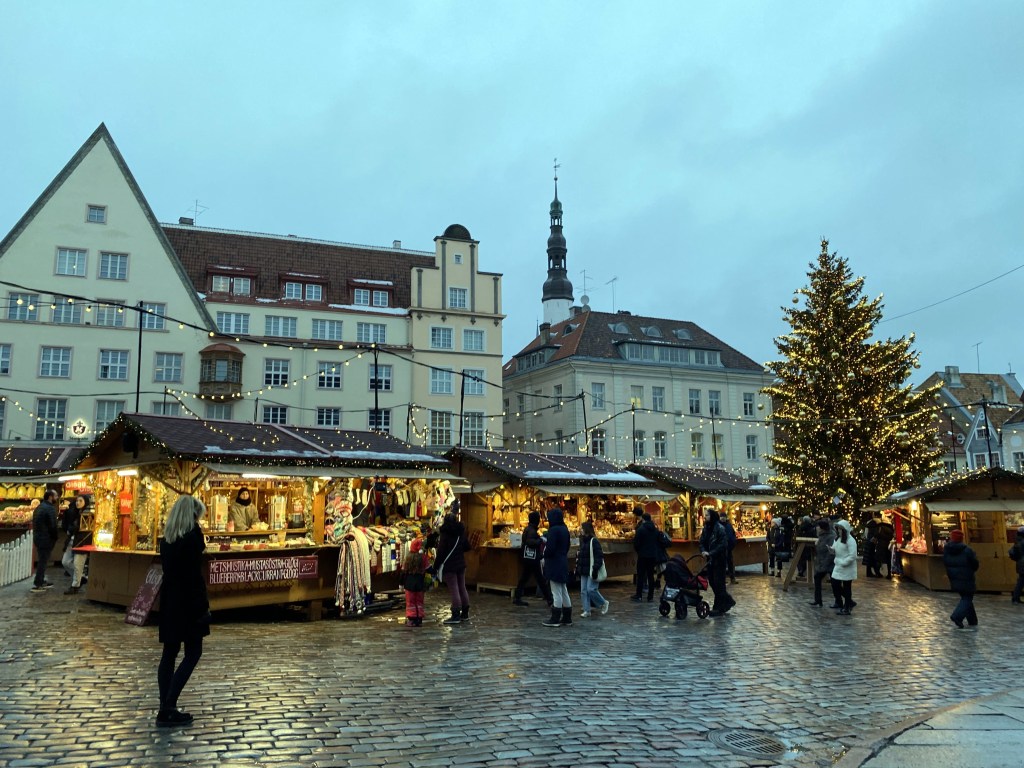
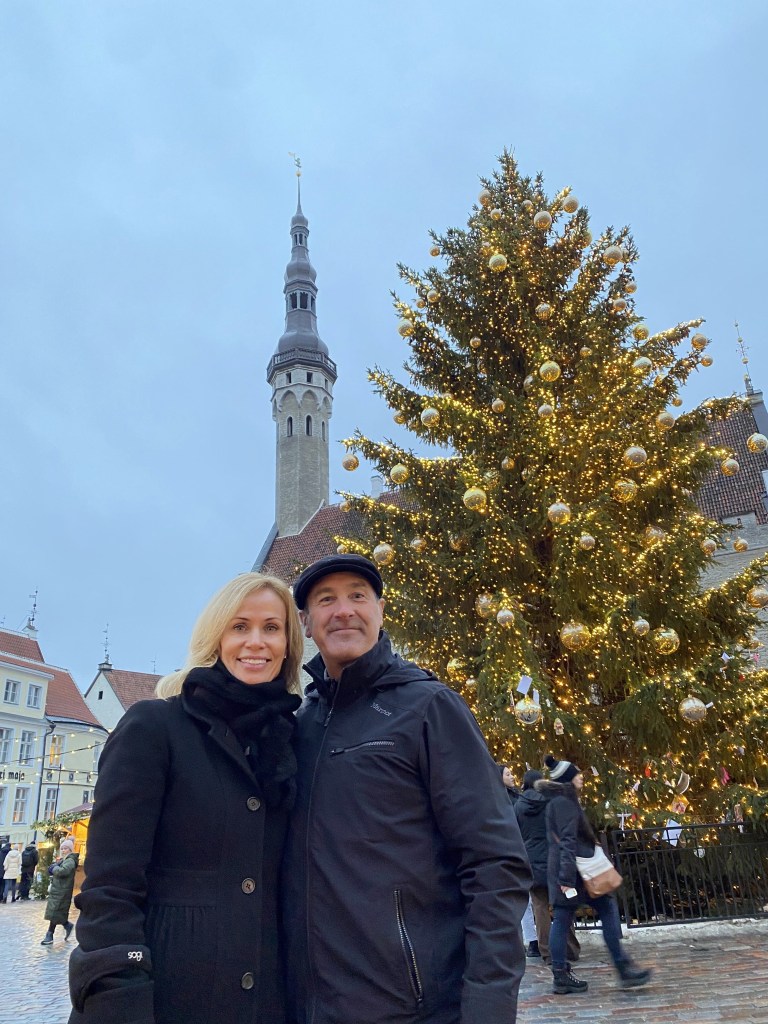
Heading into the town square, dominated by Tallinn’s 15th-century town hall and host to the town’s Christmas Market.

St. Alexander Nevsky Cathedral on Toompea in Tallinn, a vestige of the Russian Empire’s role in Estonia’s history (and also, we got some good snow!):

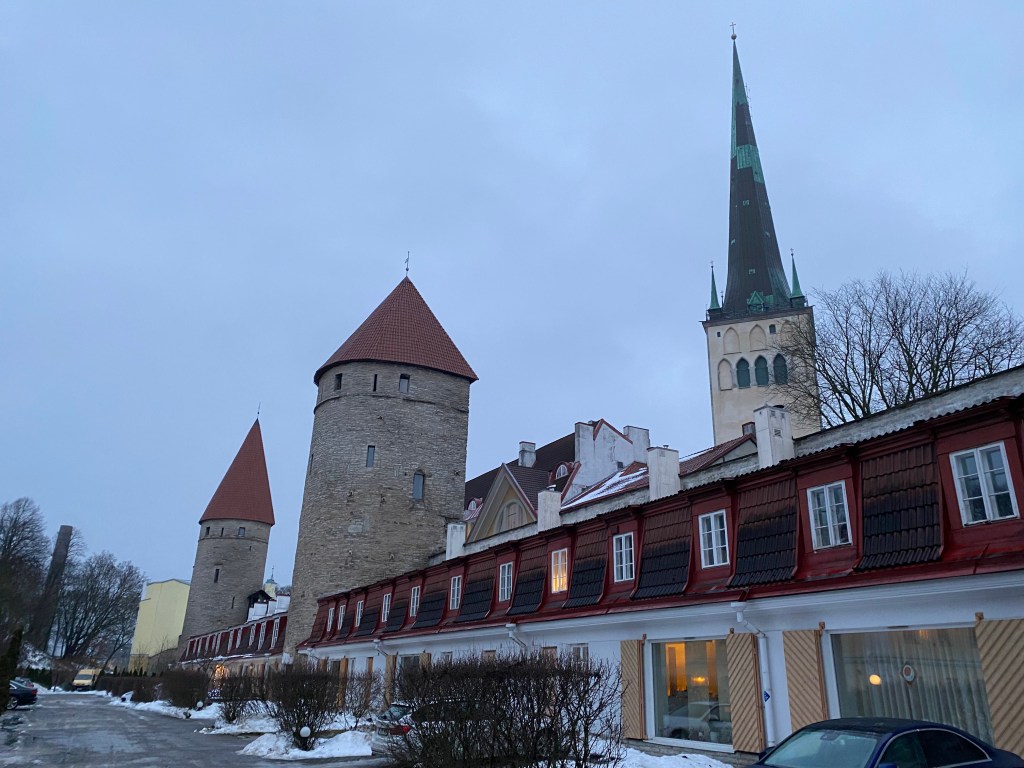
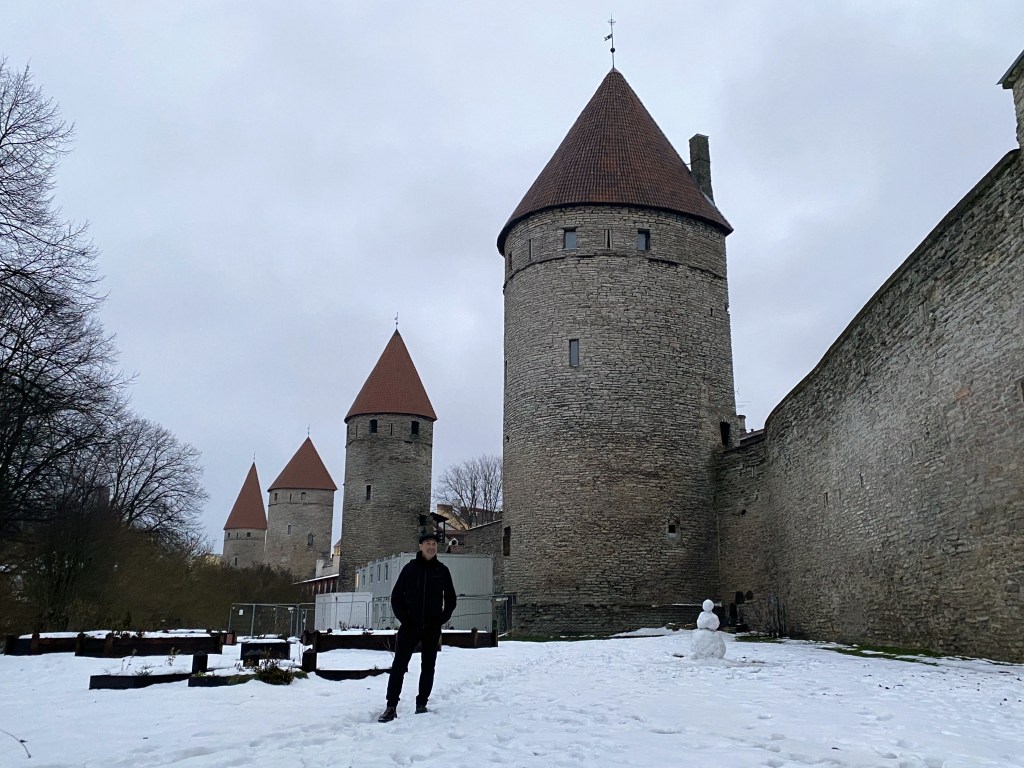
Tallinn was mostly undamaged during WW II, and its medieval walls and defensive towers are still intact:

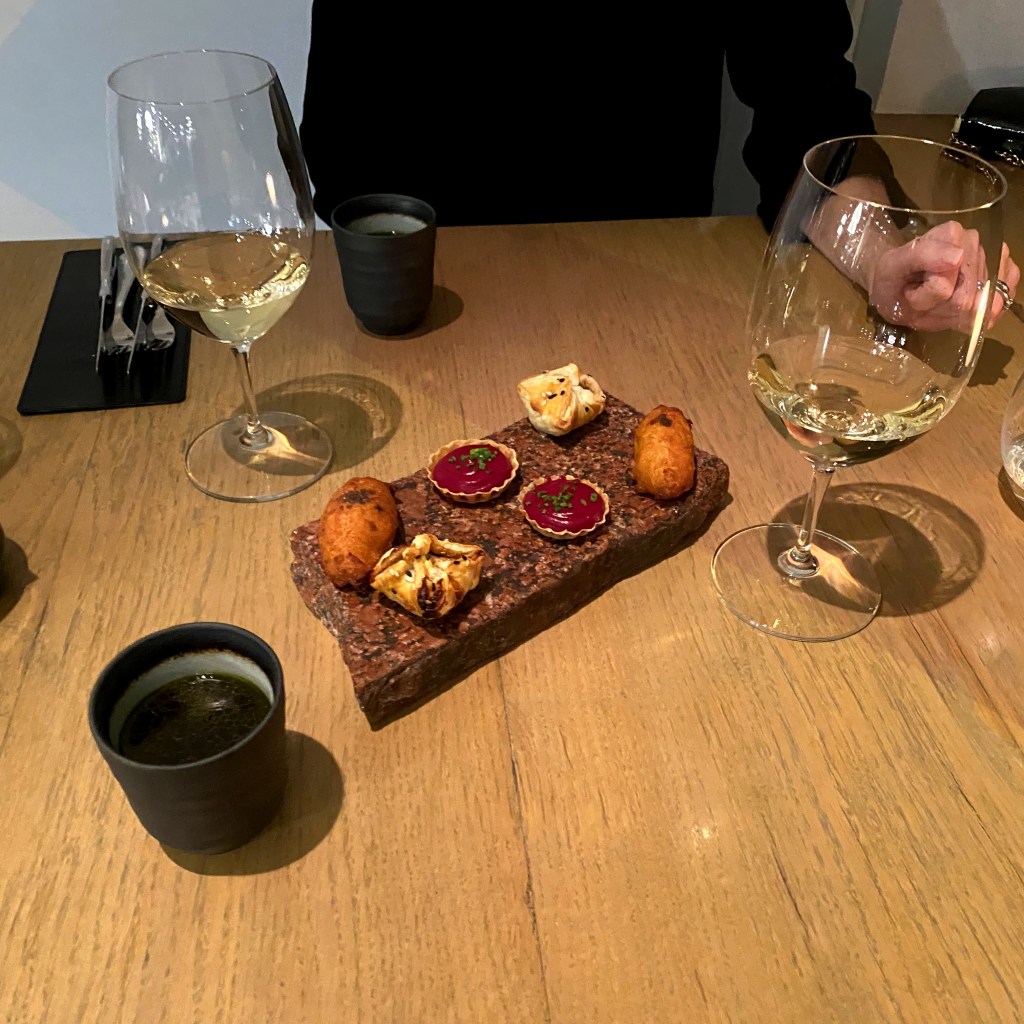
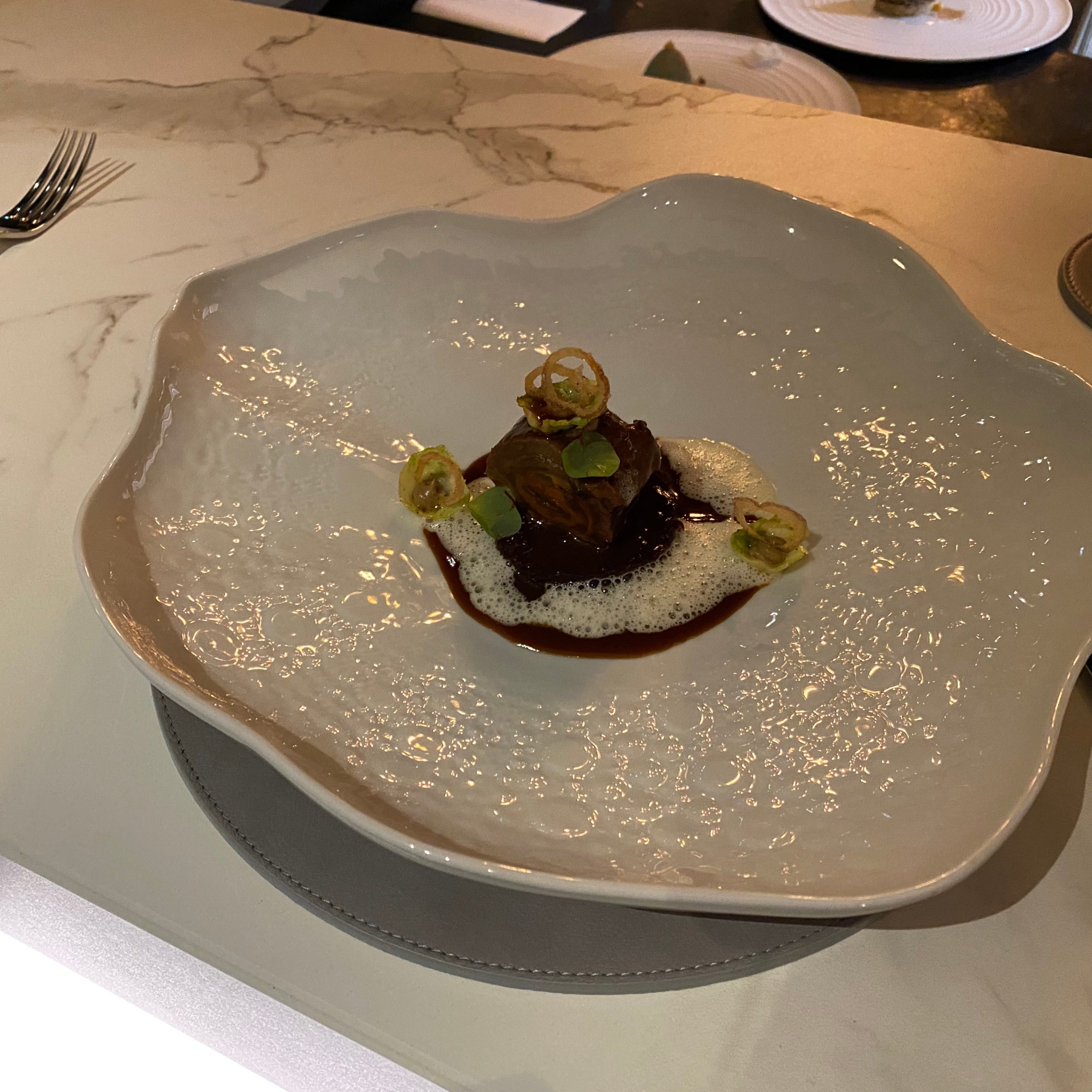
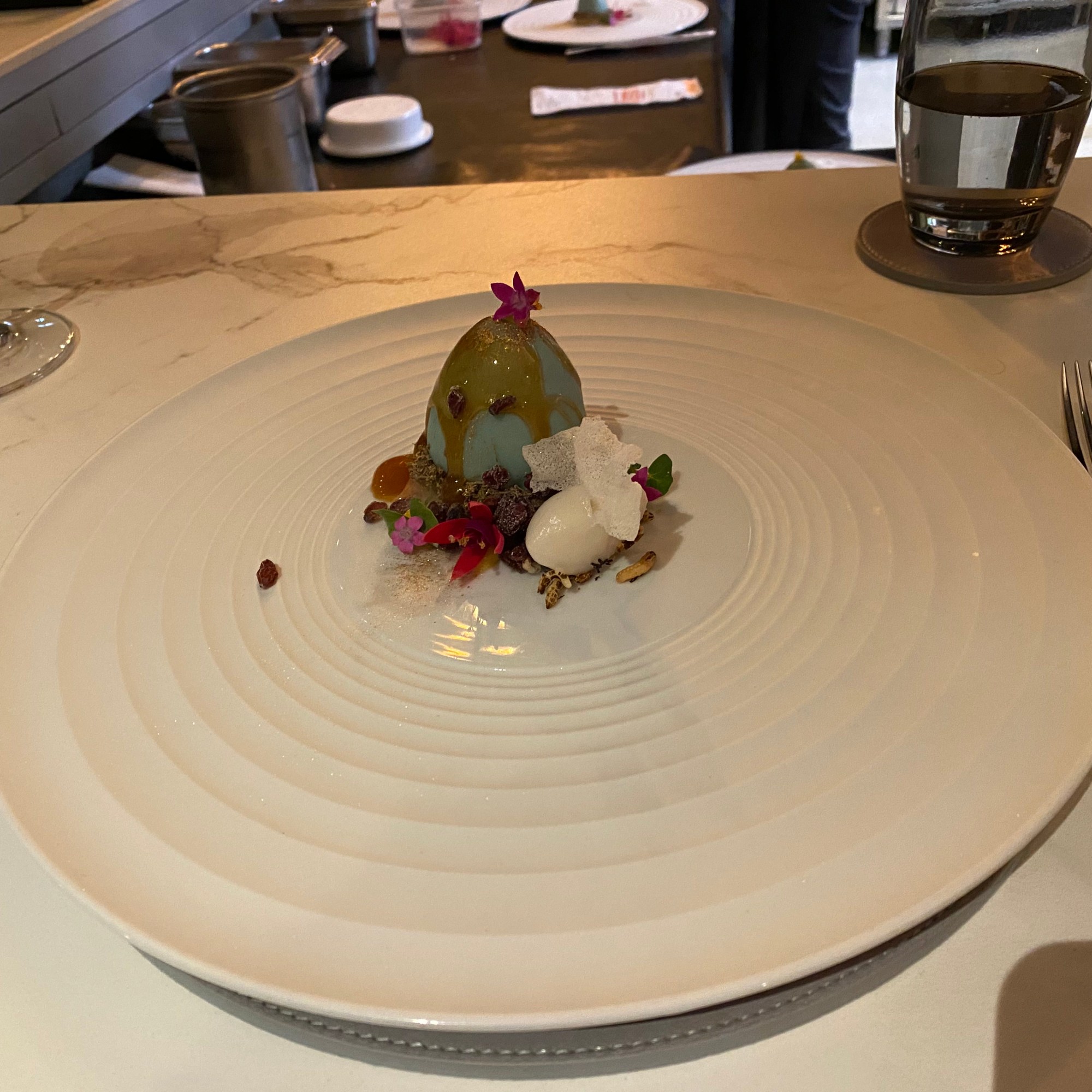
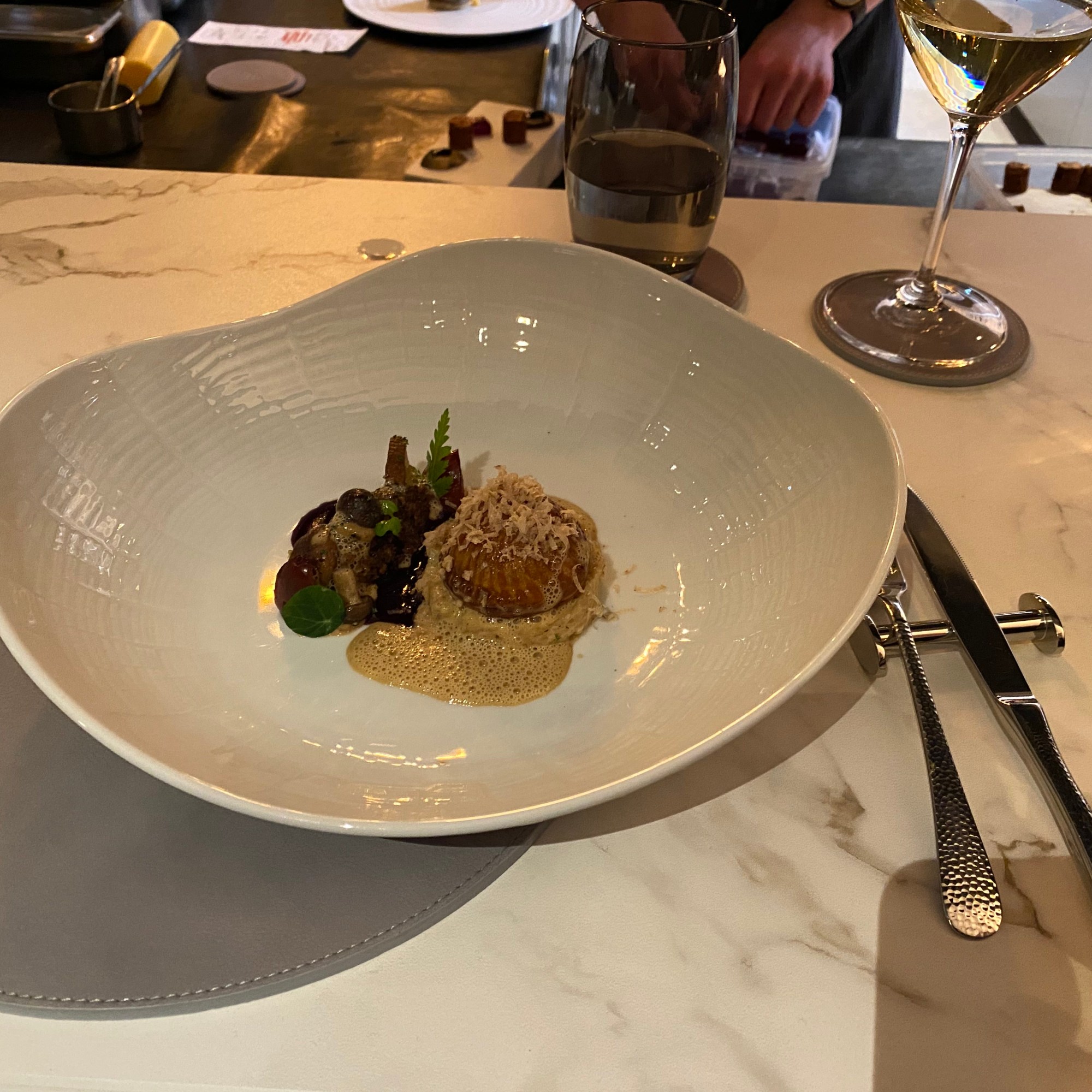
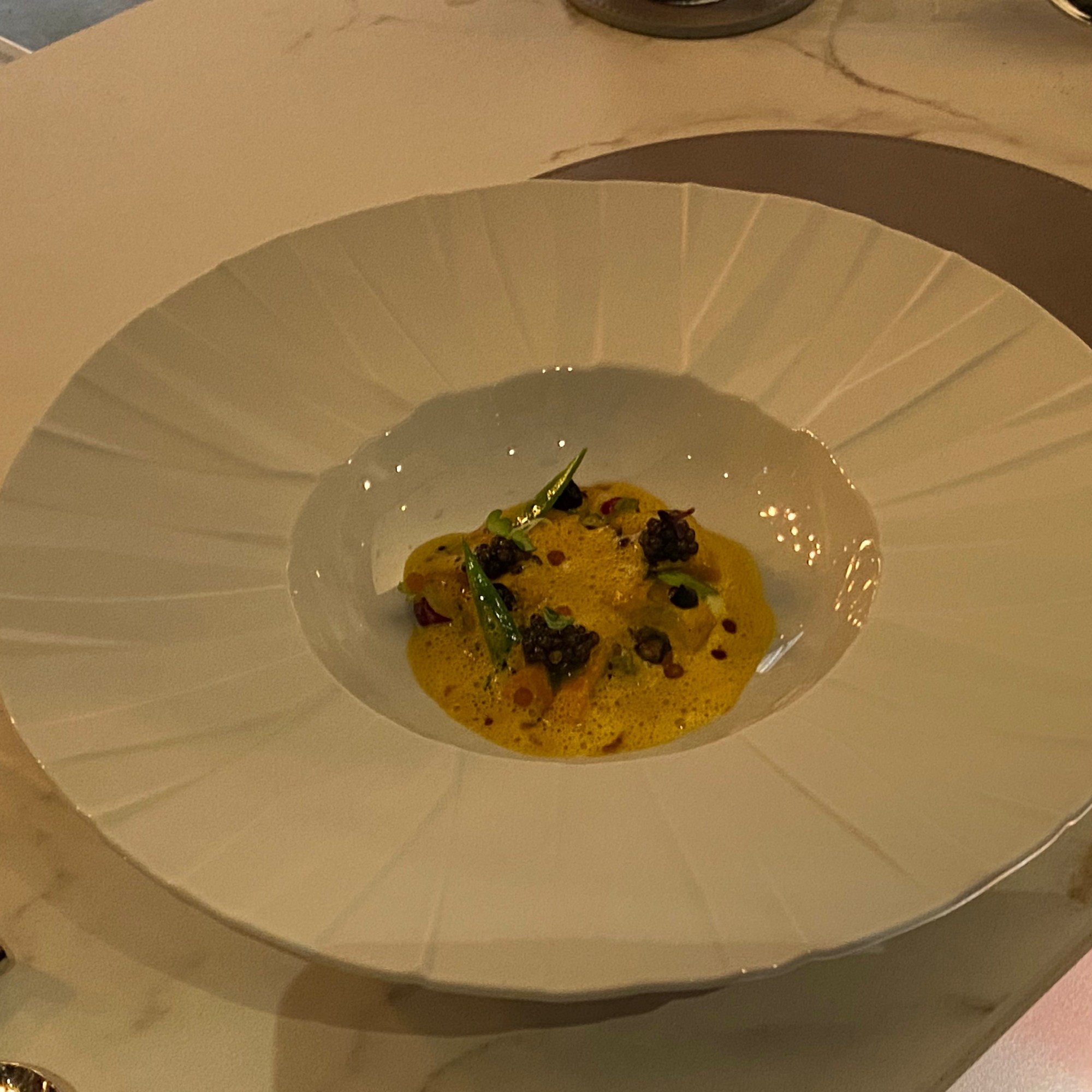
Dining highlight during our stay at the Chef’s Table of 180 Degrees Restaurant, which lasted 4.5 hours. This was about an hour and a half longer than it needed to be.

Due to Tallinn’s latitude, the sun set at 3:20 during our stay, resulting in lots of surreal, perpetual twilight afternoons in town:

After 3 days in Tallinn, we headed a little south, to Riga, Latvia – country # 70 for WolfeStreetTravel:

23 degree weather on Christmas Eve!
Riga’s Christmas Market was actually better than Tallinn’s.

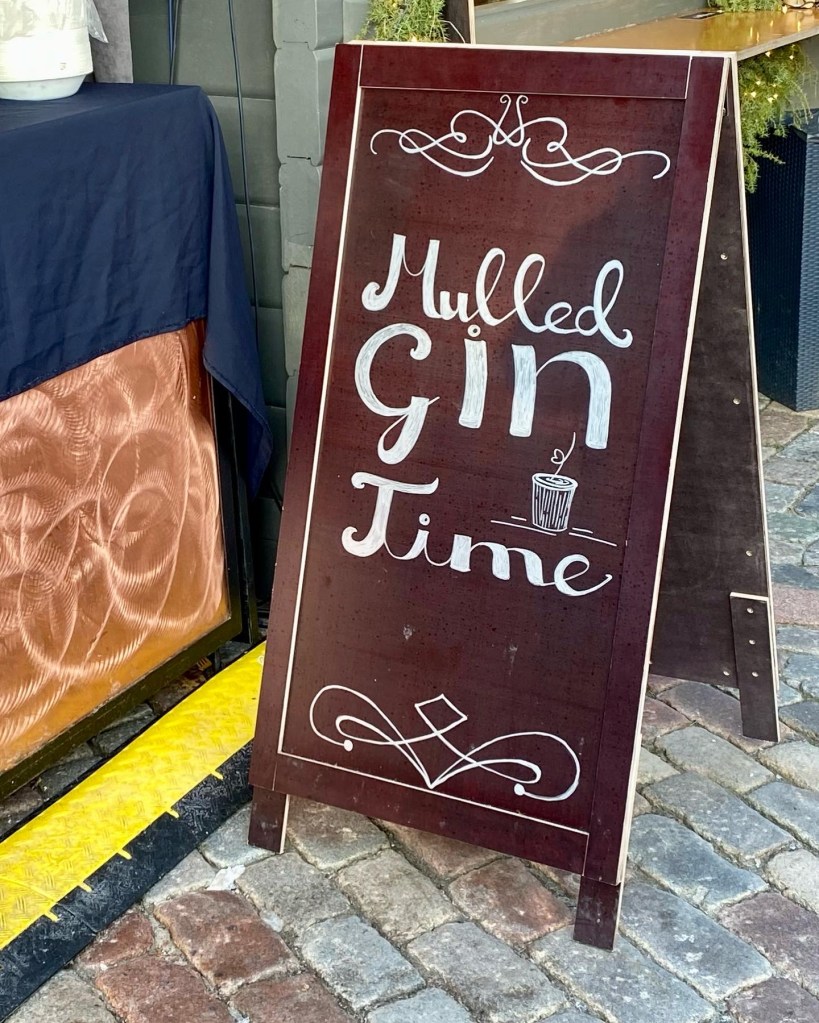
And boasted multiple stalls across the market hawking mulled gin, which was a new one to us. It was fine, but we prefer traditional gluhwein (they had that too).

Riga still maintained some of their town’s fortifications, as well.

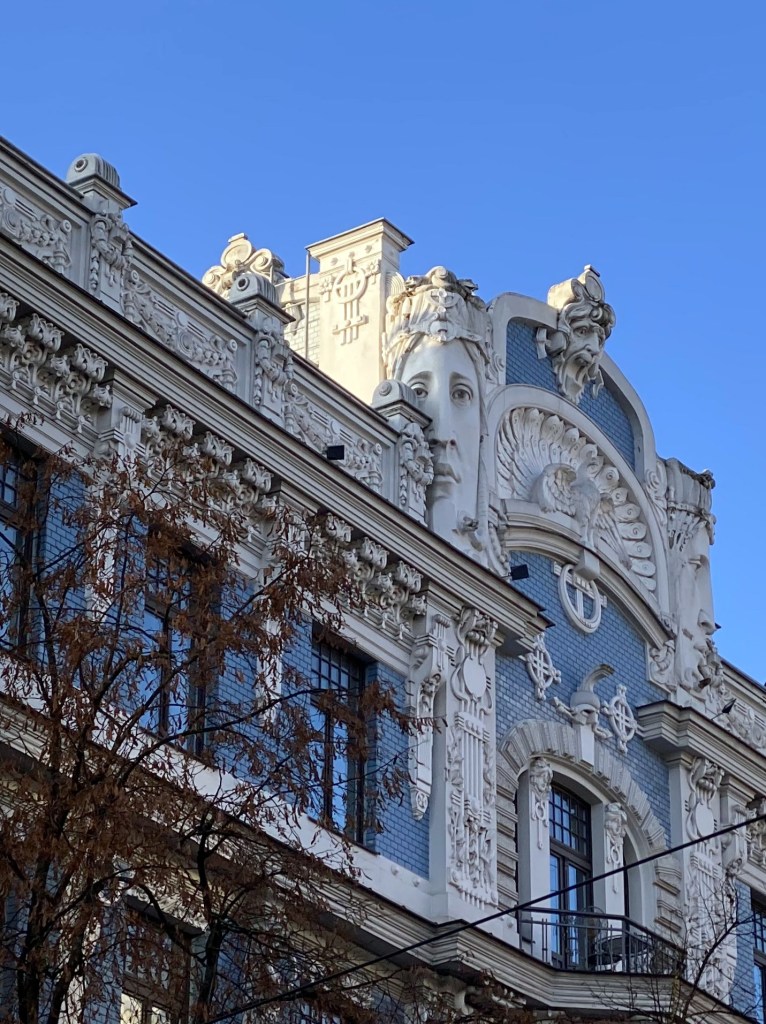
And was also home to Europe’s greatest concentration of Art Nouveau architecture, since Riga’s prosperity peaked at the same time as this arts and architecture movement at the turn of the century, and Riga wasn’t bombed into oblivion during WW II, preserving the buildings in this district.

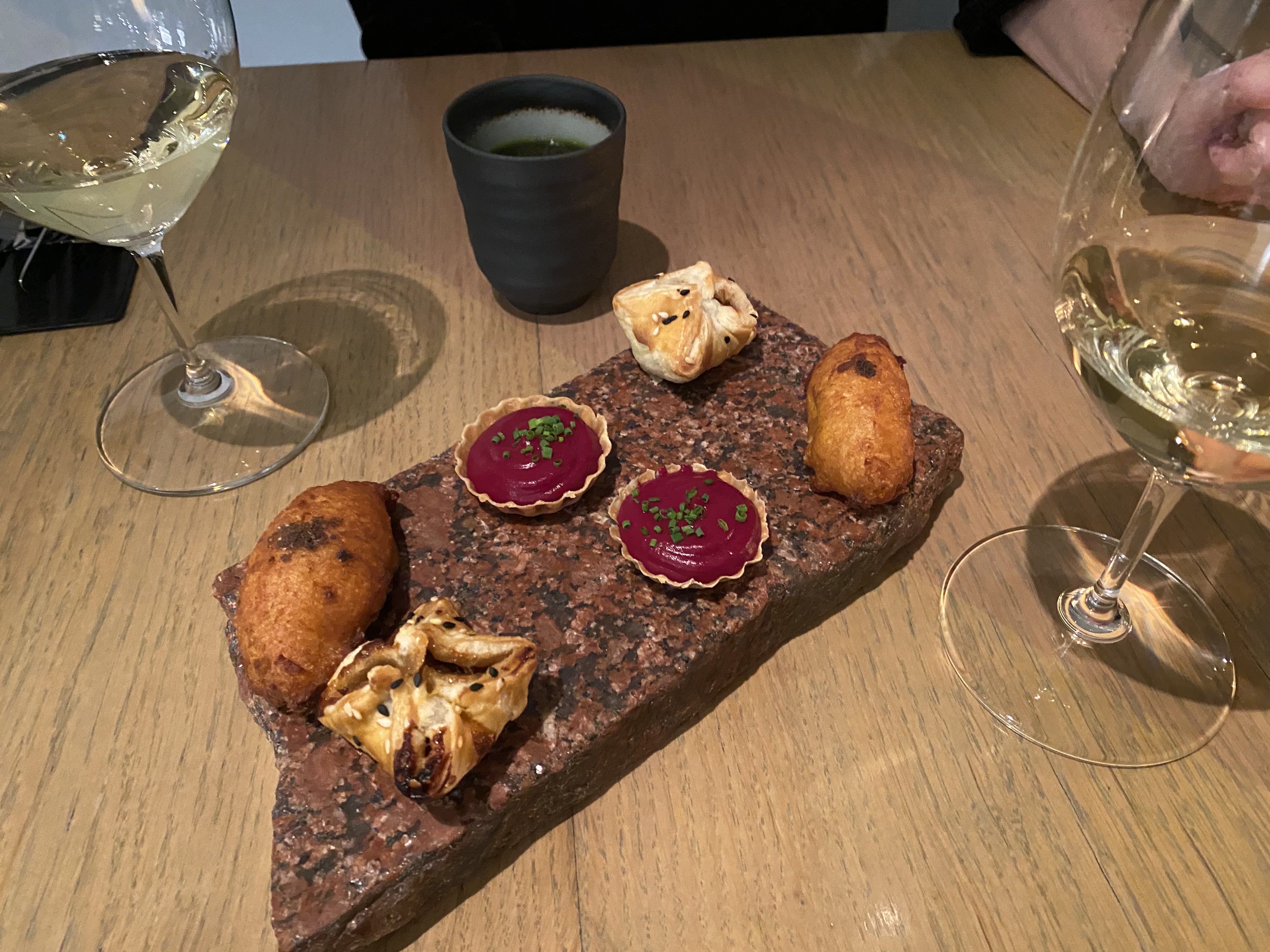
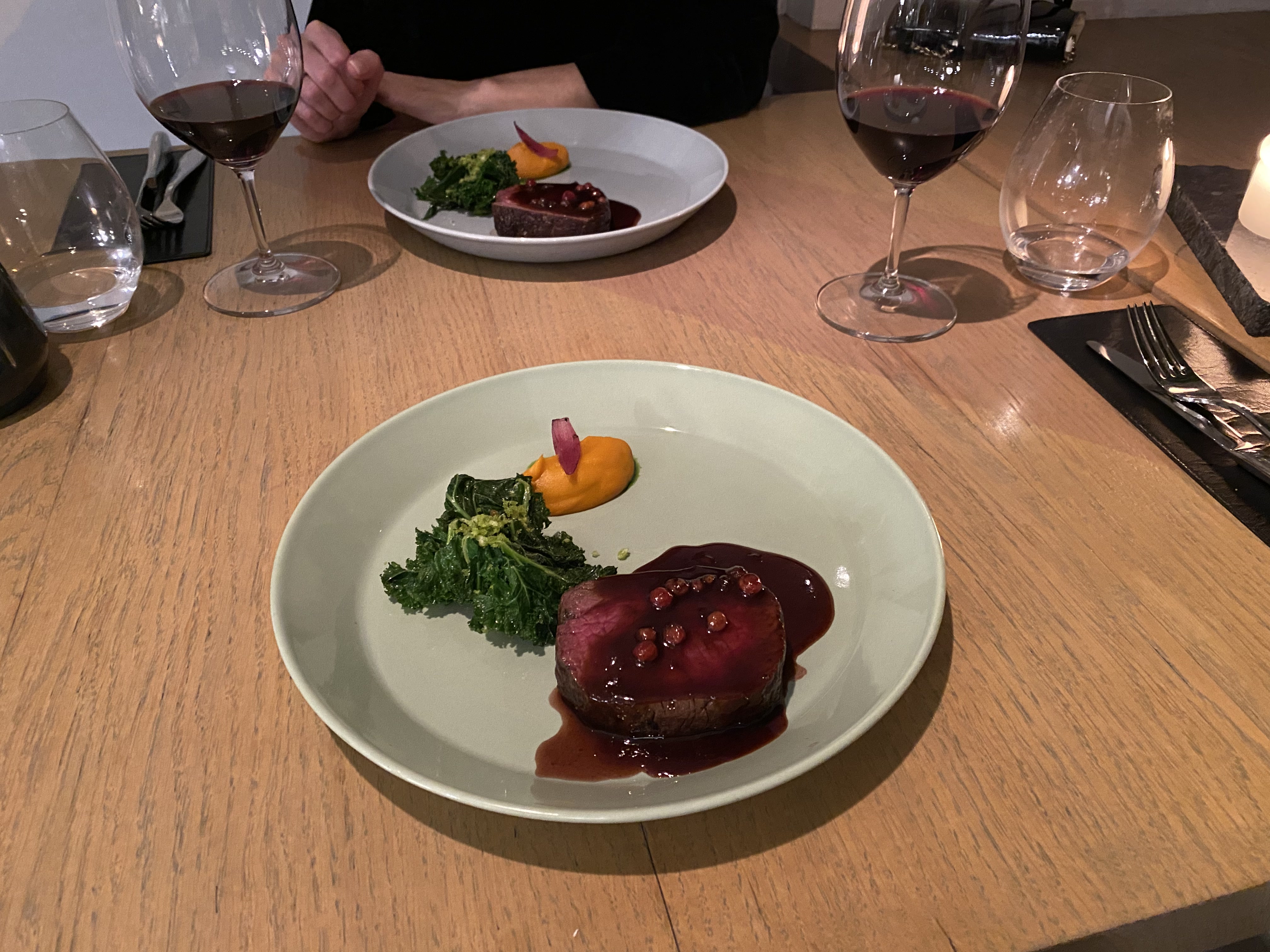
Christmas night dinner at 3 pavāru restorāns in Riga, which bested the much fancier 180 Degrees a few days earlier in Tallinn.

After Christmas in Riga, we headed back to the Netherlands, this time to Amsterdam, which we had visited in 2015 at the end of our bike trip through Holland.

Very nice Christmas trip, overall. We’ll post more on each of these locations after we get through a lot of backlog from three previous trips.

Categories: Estonia, Europe, Latvia, Netherlands | Tags: , , , , , , , , , , , , , | 2 Comments

Protected: Christmas 2022 – Baltics and Back to the Netherlands: Haarlem

This content is password-protected. To view it, please enter the password below.

Categories: Europe, Netherlands | Tags: , , , , | Enter your password to view comments.

Christmas 2022 – Baltics and Back to the Netherlands: Tallinn

After a couple of days in Haarlem, we headed to the first of our actual Baltic destinations: Estonia and its capital city of Tallinn. We were hoping for snow, and we got some! (Initially, anyway.)
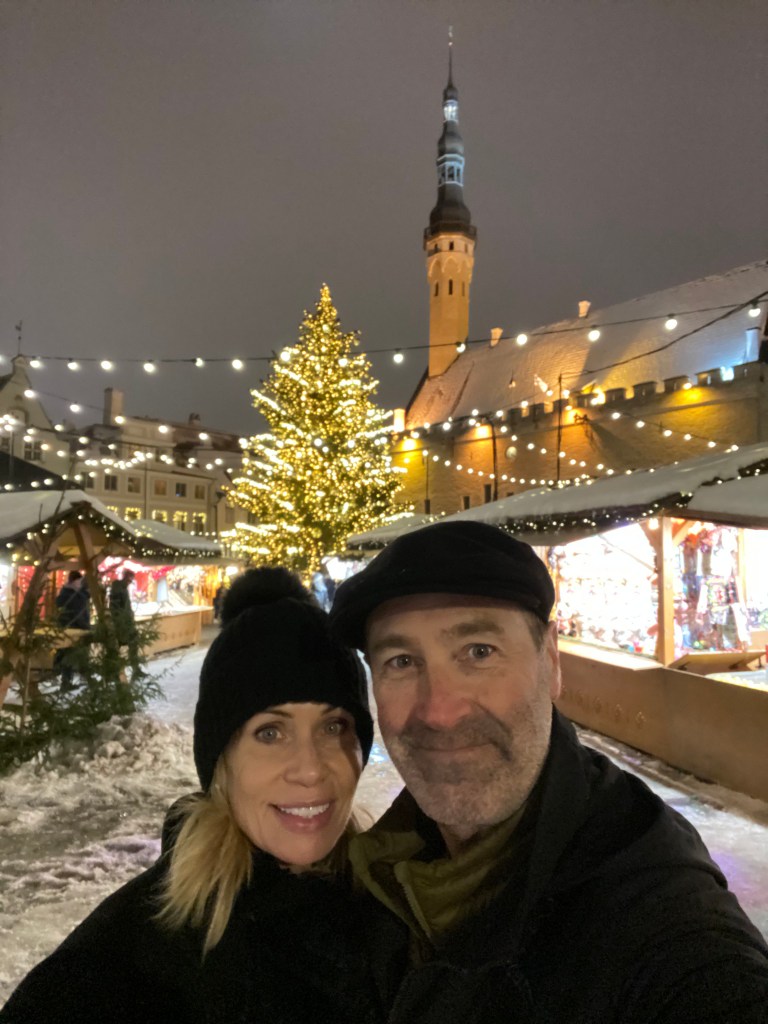
Tallinn’s main square and Christmas Market on our first evening – perfect!

But the next day (and throughout our stay), the snow on many of the streets and squares turned a little slushy.

Definitely more of a winter, Christmas atmosphere than Alexandria, but still. . .

Tallin’s settlement dates back thousands of years but the first fortress appeared around 1050 AD, demonstrating the importance of the town to the north Estonia region.

As a trading town on the Baltic coast, the town (then known as Reval) became a member of the Hanseatic League in 1285. We previously visited the Hanseatic towns of Lübeck and Hamburg in Germany and Bergen, Norway. (Riga, Latvia, another Hanseatic town, would be our next stop on this trip. Apparently, Berlin, Cologne, and Krakow also were Hanseatic towns due to the river system, but we have decided to ignore this because they’re not on the Baltic coast.)

Snow still covered some streets – very cool medieval town.

Tallinn Old Town is one of the best-preserved medieval cities in Europe and is listed as a UNESCO World Heritage Site.

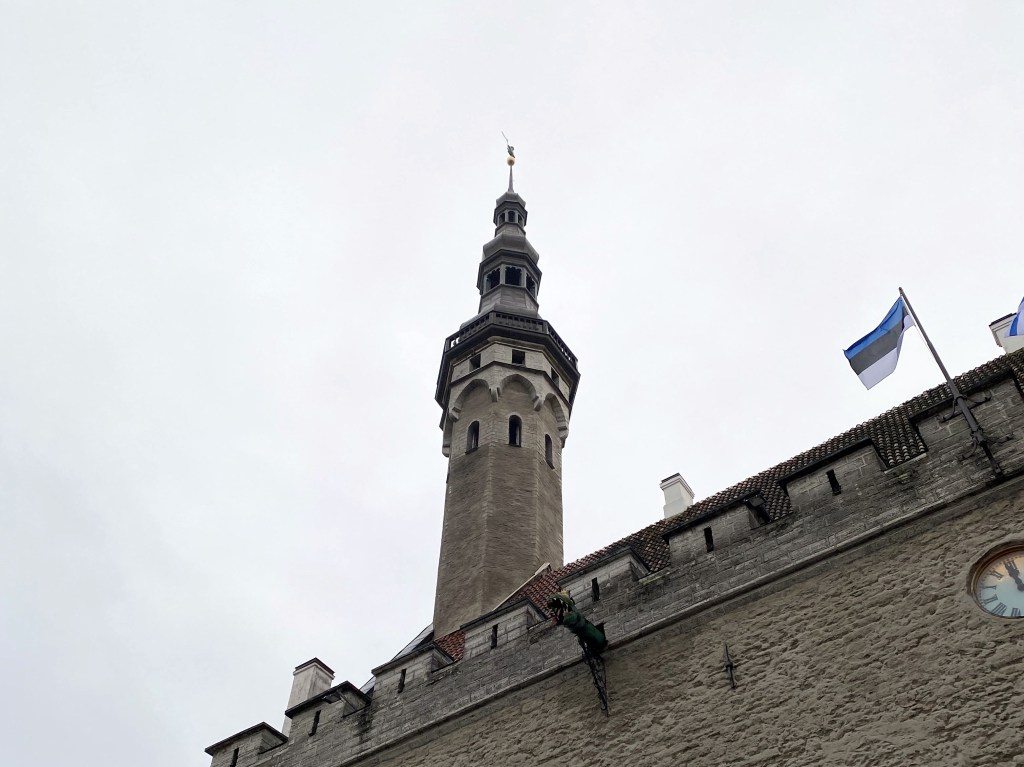
The spire of Tallinn’s Town Hall:

The town hall was first mentioned in 1322,

but the structure actually dates back to the 1200s.

It’s the oldest surviving town hall in Europe.

At the top of the spire stands Old Thomas, first placed there in 1530.

The figure memorializes a peasant who became famous for winning a crossbow competition held by the Baltic German Elite.

The tower – and Old Thomas – was damaged in 1944 during a bomb attack during the war. A new Old Thomas went up with the repaired tower in 1952, but it was weathering too much, and the Estonians put another one up there in 1996. The 1952 Old Thomas hangs out in the Tallinn City Museum. Nice codpiece.

Viru Gate – one of the original eight gates in Tallinn’s city walls.

The first wall around Tallinn was ordered to be constructed by Queen Margaret of Denmark in 1265 (Denmark controlled northern Estonia from the early 13th century until 1346, when the Danish king sold it to the Teutonic Knights).

Fully taking shape during the next three centuries, Tallinn’s city wall was one of the strongest defense systems in Northern Europe at the time.

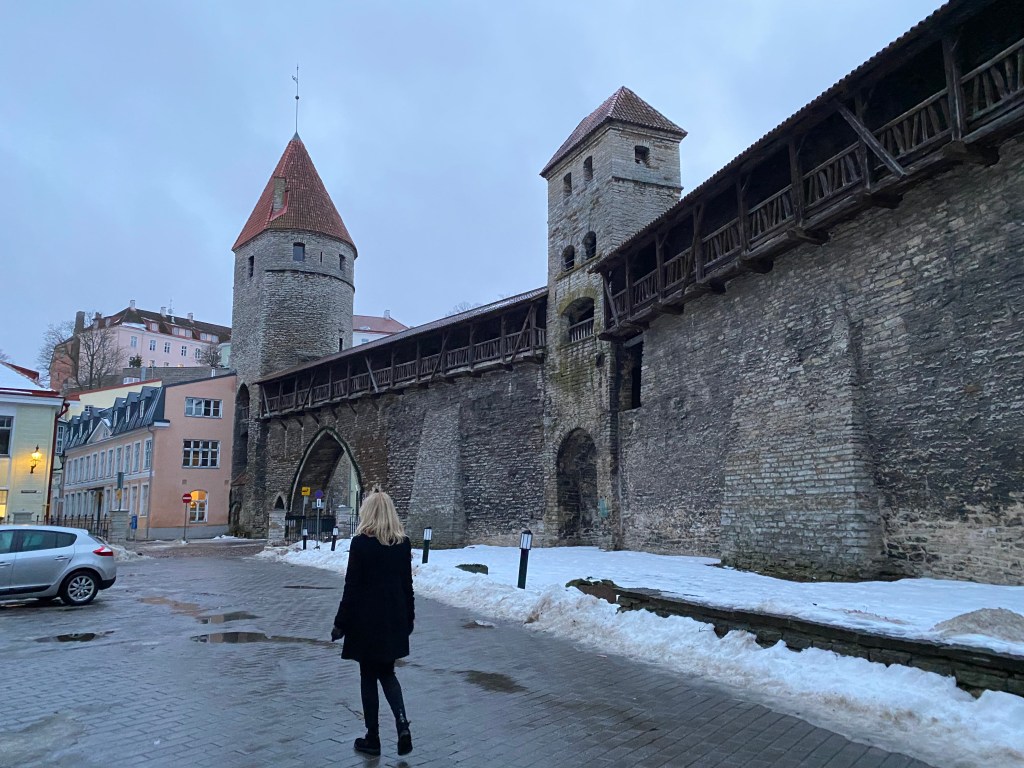
Plus, there are chunks that are still intact and walkable (that’s Tower behind Monks in the background)

Not a lot of snow, but Tallinn proved to be pretty atmospherically wintery, nonetheless:

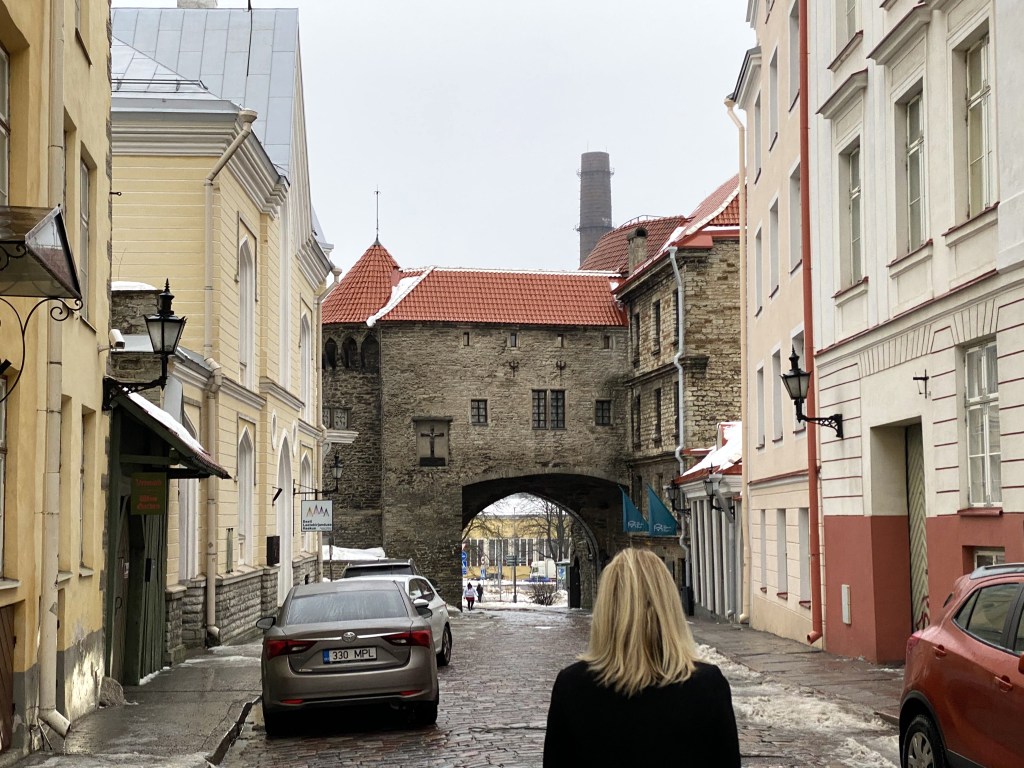
Located across town, we found Tallinn’s Great Coastal Gate, first mentioned in 1359:

The Great Coastal Gate was the most important gate when Tallinn was a Hanseatic town because it protected the main route for traffic between the port and the market square.

Above the gate stands an impressive dolomite carving bearing Tallinn’s coat of arms (from 1529):

Protecting the Great Coastal Gate? FAT MARGARET! Dating from the early 16th century, Fat Margaret not only served as a fortification against invaders of the town’s port but also a military monstrosity to impress visitors arriving by sea.

Michelin 2* dining experience at 180 Degrees:

Pretty good perch at the Chef’s Table

where we could watch all the cooking and prep work for multiple courses.

Heading up the next morning to Toompea, Tallinn’s central hill district, which is home to. . .

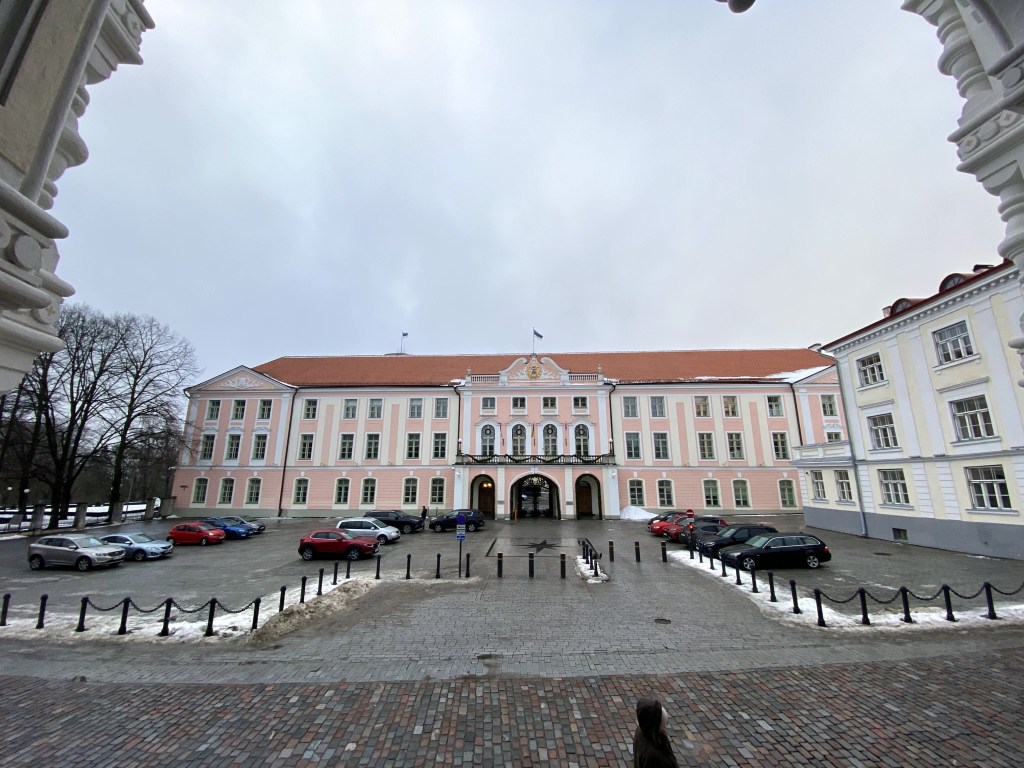
Estonia’s Parliament, the Riigikogu:

And also the Orthodox Alexander Nevsky Cathedral, built in the late 19th century:

Crests for local noble families along one wall:

Because the church was built when Estonia was part of the former Russian Empire, and because it represents Russian Orthodoxy, and because the Estonians are outraged by Russia’s aggression against Ukraine, there’s a movement in Tallinn to raze it and replace it with a park.

Back through the walls:

To yet another stretch of Tallinn’s extant city wall. Here, we have Kiek in de Kok (“Peek into the Kitchen”) on the left, an artillery tower so named because the garrison could see into the kitchens of the nearby houses; and Maiden’s Tower on the right.

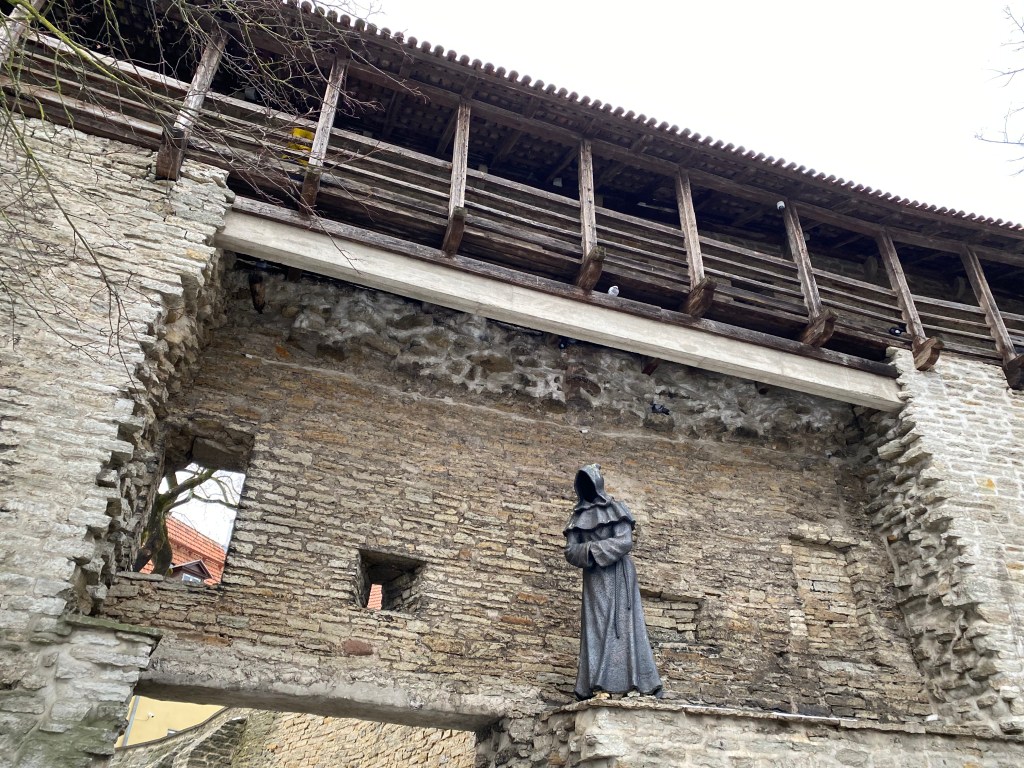
And a creepy, faceless monk statue perched on one segment of the wall. This is one of three faceless monks in this area; this one is “Observing Monk.”

More city wall-and-towers action:

Loewenschede Tower:

Enough with the tower names; here’s a buttload of towers. Definitely a cool, preserved medieval town.

Heading to dinner one night; one cannot escape the walls, man.

Rataskaevu Street, where the novels featuring Melchior, the 15th-century Tallinn apothecary / amateur sleuth are set (or at least where his apothecary is located). The first book – pretty good! The second – should have been tossed down that well.

Featured in the Apothecary Melchior novels are Tallinn’s medieval guilds. The Great Guild hall, dating from the very early 15th century is right off the main square. It was used as the headquarters of various merchant and artisan guilds until as recent as 1920.

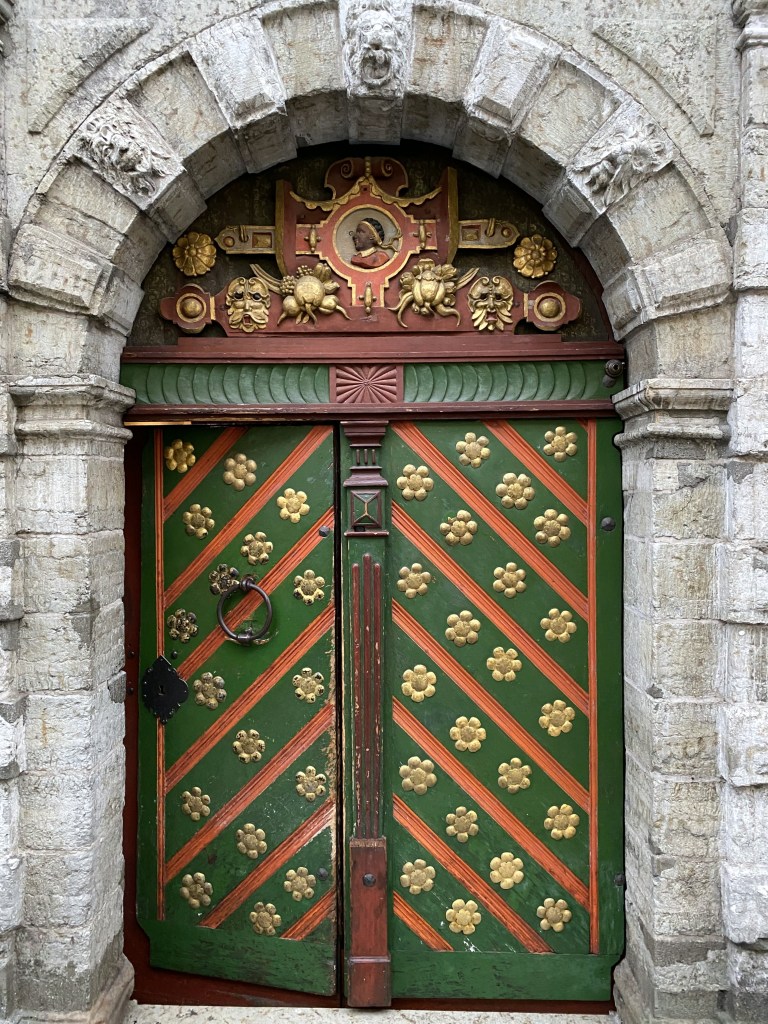
Aaand, the House of the Brotherhood of Black Heads. Also featured in the Melchior novels.

Described as a social club for single merchants and other tradesmen in the Melchior books, it “was a professional association of ship owners, merchants, and foreigners dating from the 14th century.

“The House of the Blackheads was visited by several Russian Emperors including Peter I, Paul I and Alexander I who also became honorable members the Brotherhood.

Just some Art Nouveau architecture down the street, which was pretty cool. (But NOTHING like we’d see later in Riga.)

Toompea at night.

Tallinn’s Victory Column on Freedom Square, commemorating the Estonian War of Independence at the end of WW I.

More winter scenes from Toompea’s stretch of wall.

Next stop: Riga!

Categories: Estonia, Europe | Tags: , , , | Leave a comment

Christmas 2022 – Baltics and Back to the Netherlands: Riga

From Tallinn, Estonia, we headed slightly south to the capital of Latvia: Riga.

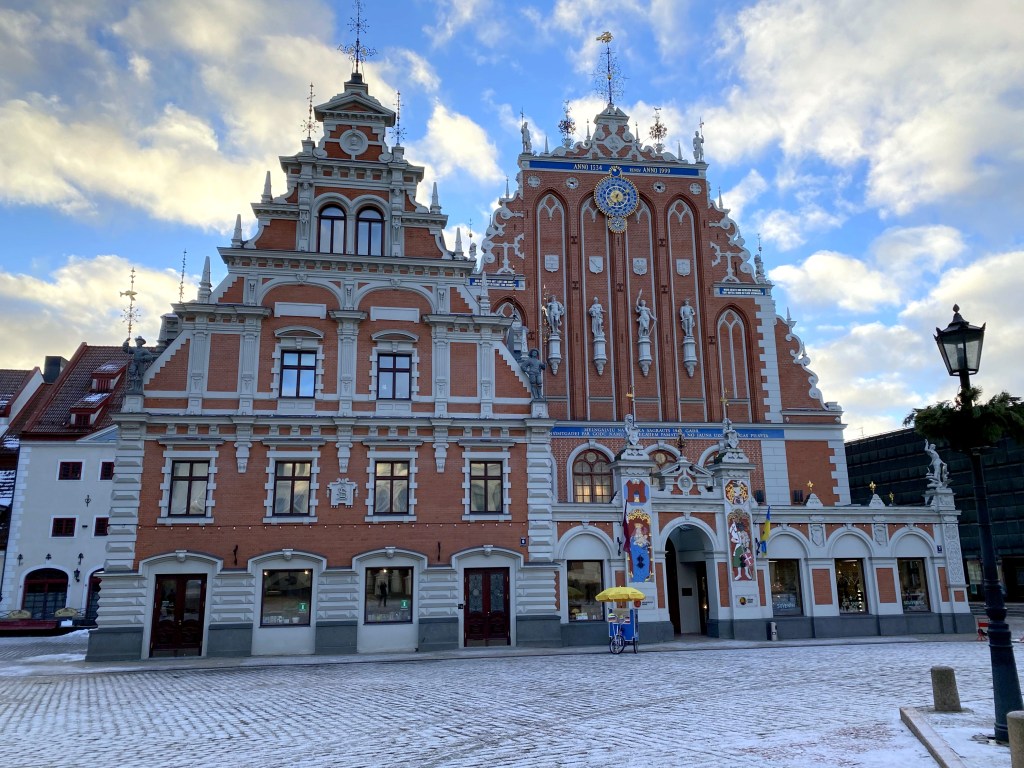
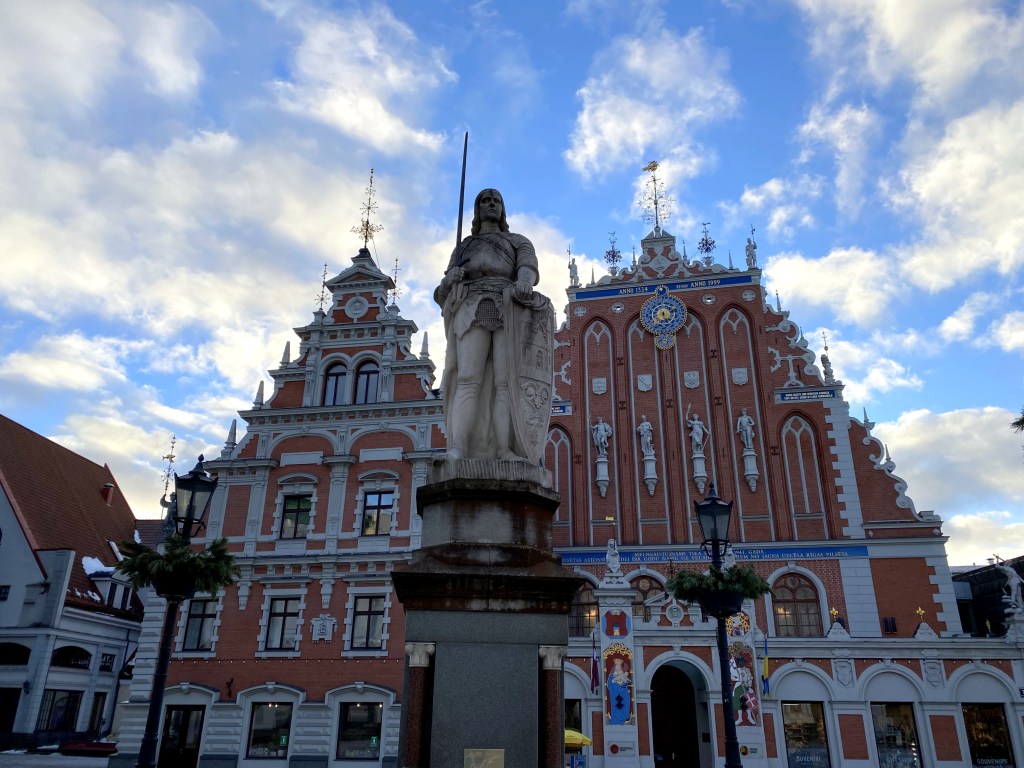
Although not a walled, medieval, historically preserved town like Tallinn, Riga nonetheless offered its own flavor of charm and architectural notability. Case in point, Riga’s own House of the Blackheads. As with Tallinn’s House of the Blackheads, Riga’s building housed the Brotherhood of Blackheads, a guild for unmarried merchants, shipowners, and foreigners in Riga.

Unlike Tallinn’s modest townhouse (albeit with a very cool door and lunette), Riga’s House of the Blackheads is huge and ornate. The original building erected in 1334 was the largest public building in Riga at the time.

Unfortunately that building, updated over the centuries, was bombed out of existence in 1941 during a battle between Germany and the Soviets. The Soviet government razed what was left in 1948, but it was rebuilt in the late 1990s based on extensive archeological studies.

Right around the corner from the Blackheads lies Riga’s capitol building. Very unassuming, we thought.

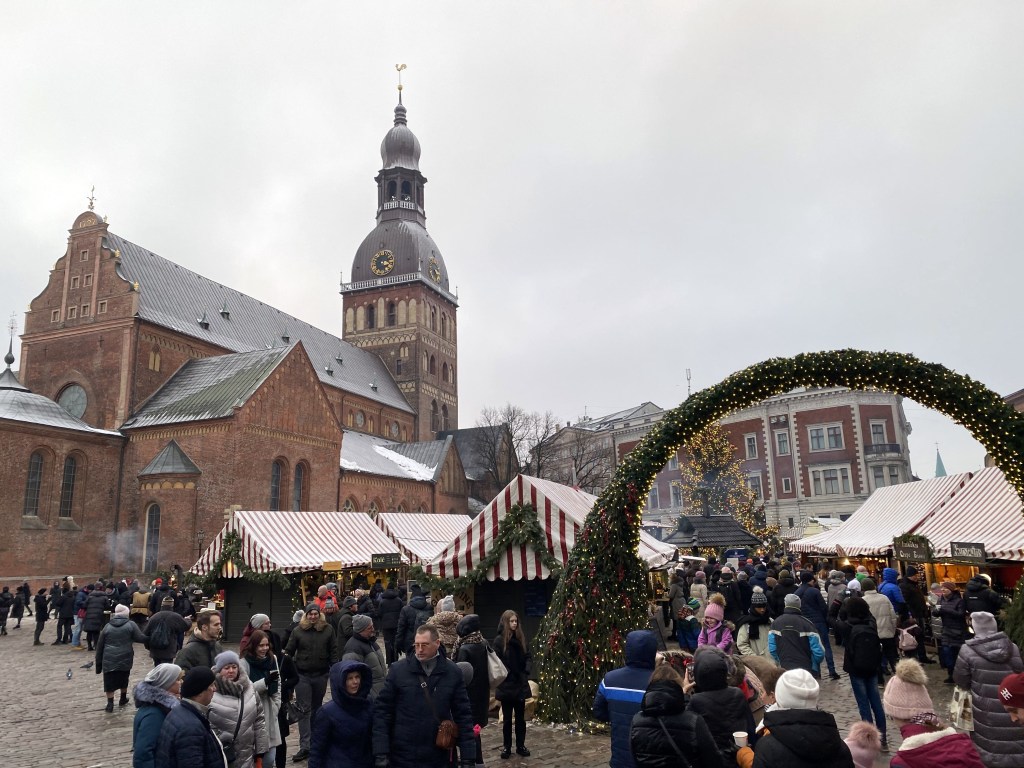
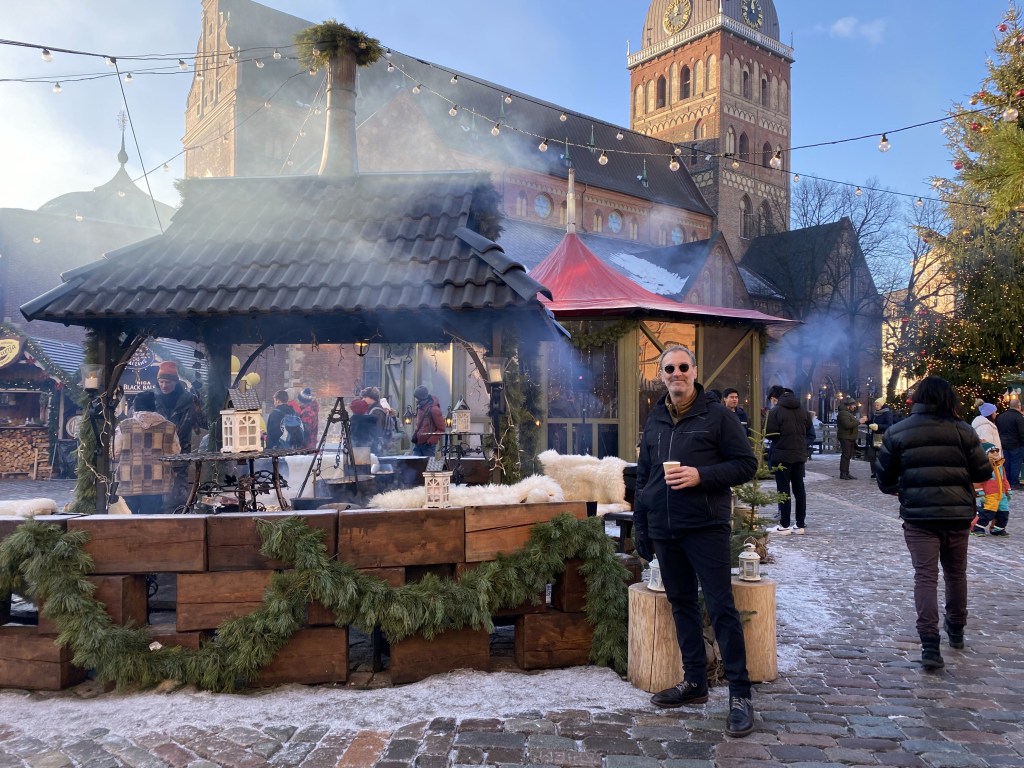
Riga’s Christmas market in the shadow of the Dome Cathedral was pretty great.

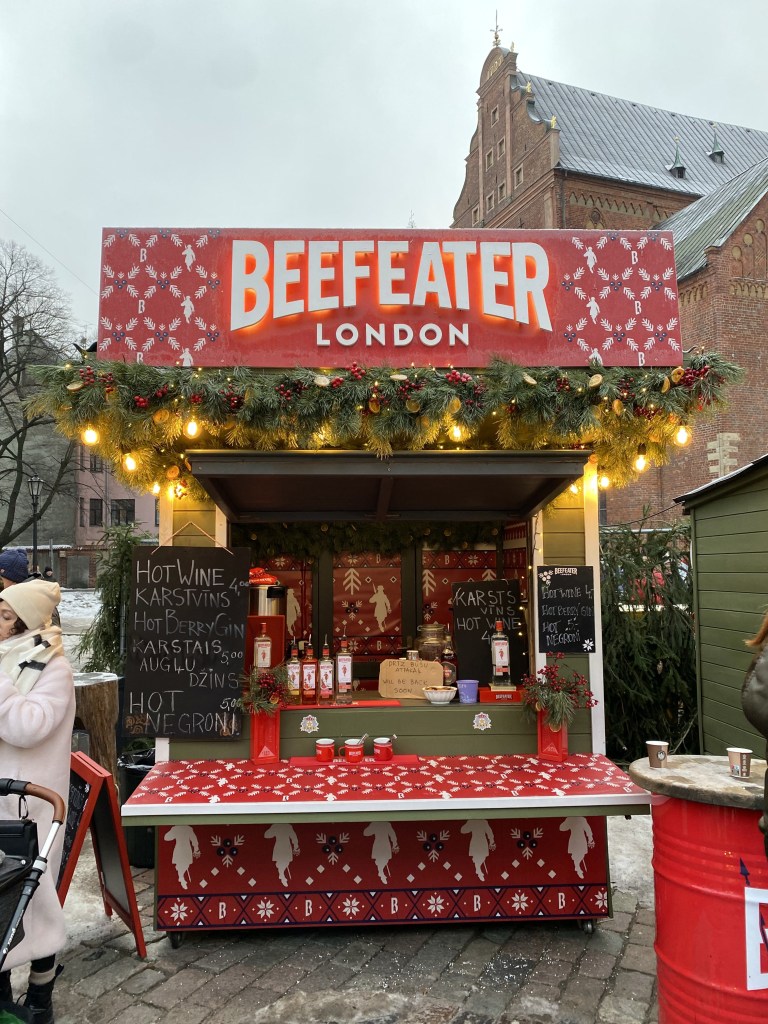
But some stalls were actually branded, which we’d never seen before, and gave areas of the Christmas market a commercial taint that we didn’t welcome:

Nonetheless, the overt booziness of the place was pretty cool – not just glühwein, but all sorts of booze, including – weirdly for both time and place – gin stalls.

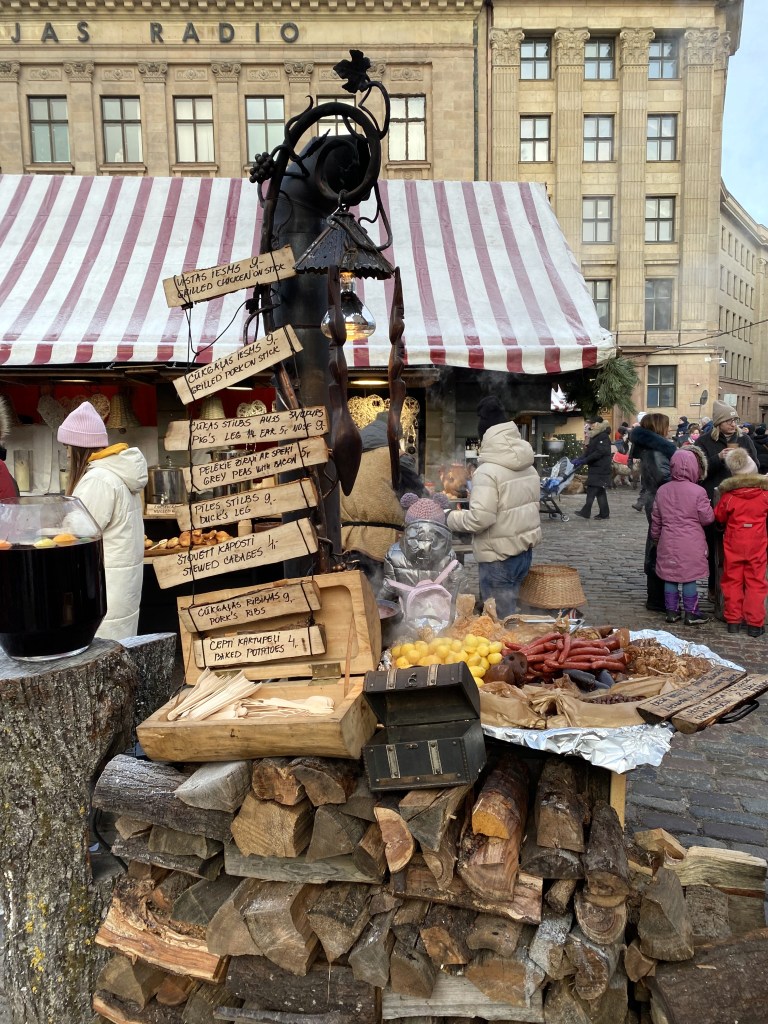
Lots of food. . .

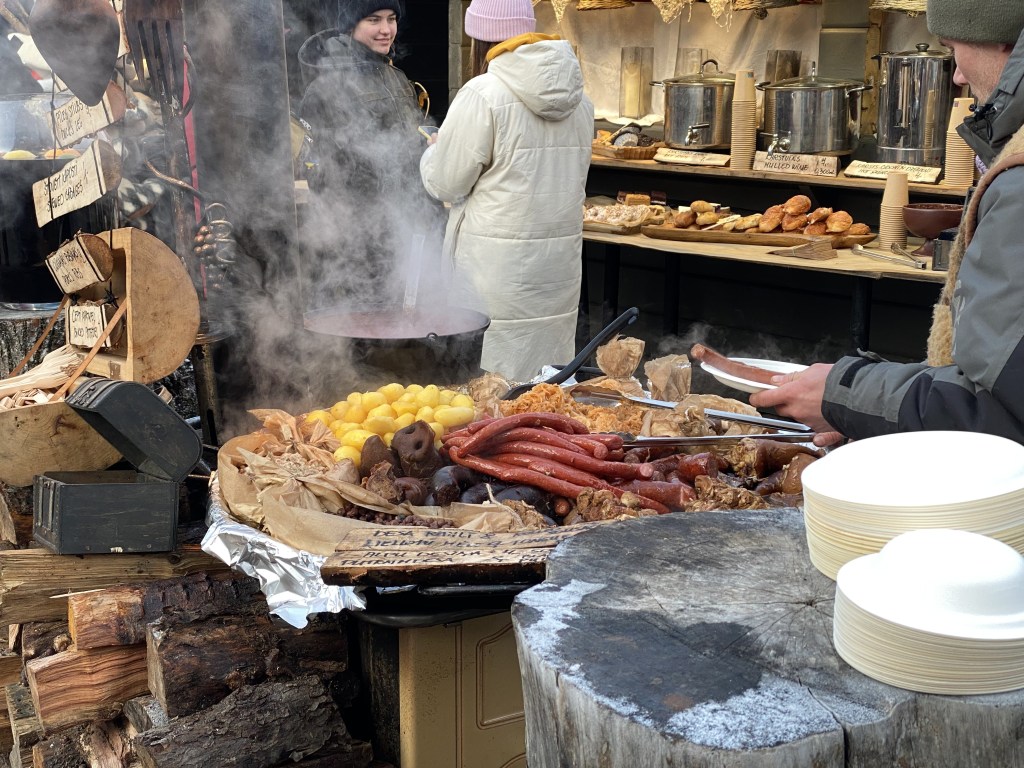
which had a distinct eastern Europe flair – check out the pig snout:

Or maybe it’s an entire pig submerged down there? Who knows.

Pigs a poppin’ in this place:

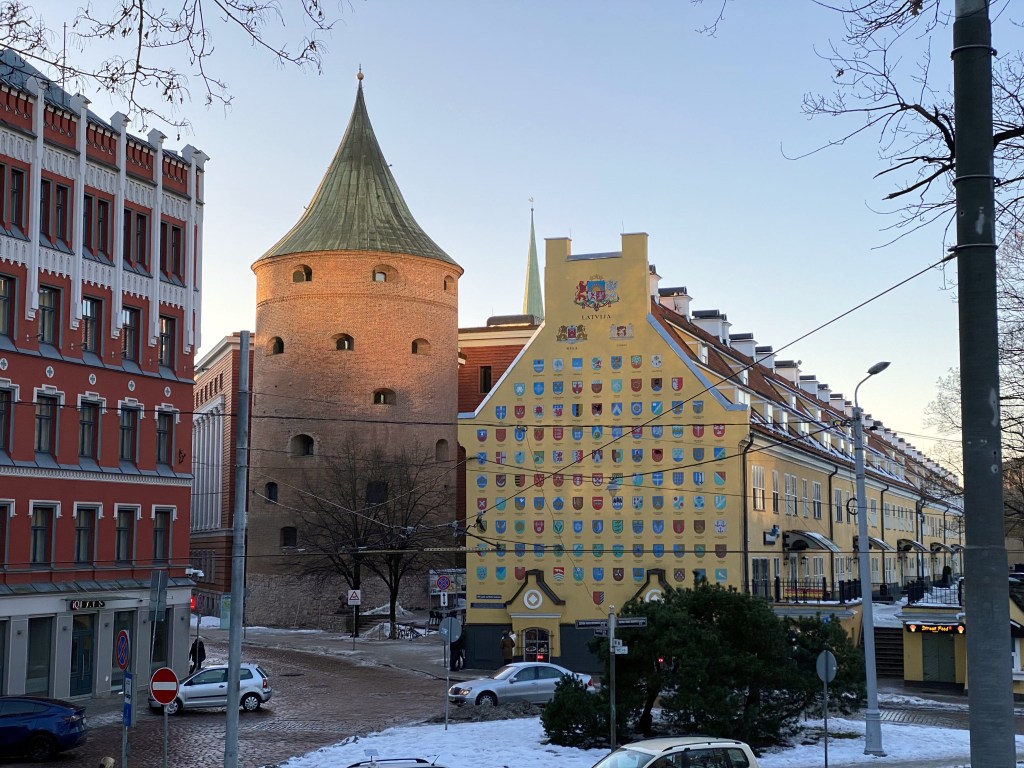
Riga’s Powder Tower, originally built in 1330 as part of the defensive wall system, that one was destroyed during an attack by the Swedes on the Polish-Lithuanian Commonwealth in 1621. (Livonia [which encompasses parts of multiple modern Baltic nations including Latvia] was a fiefdom at the time).

The current iteration dates from 1650.

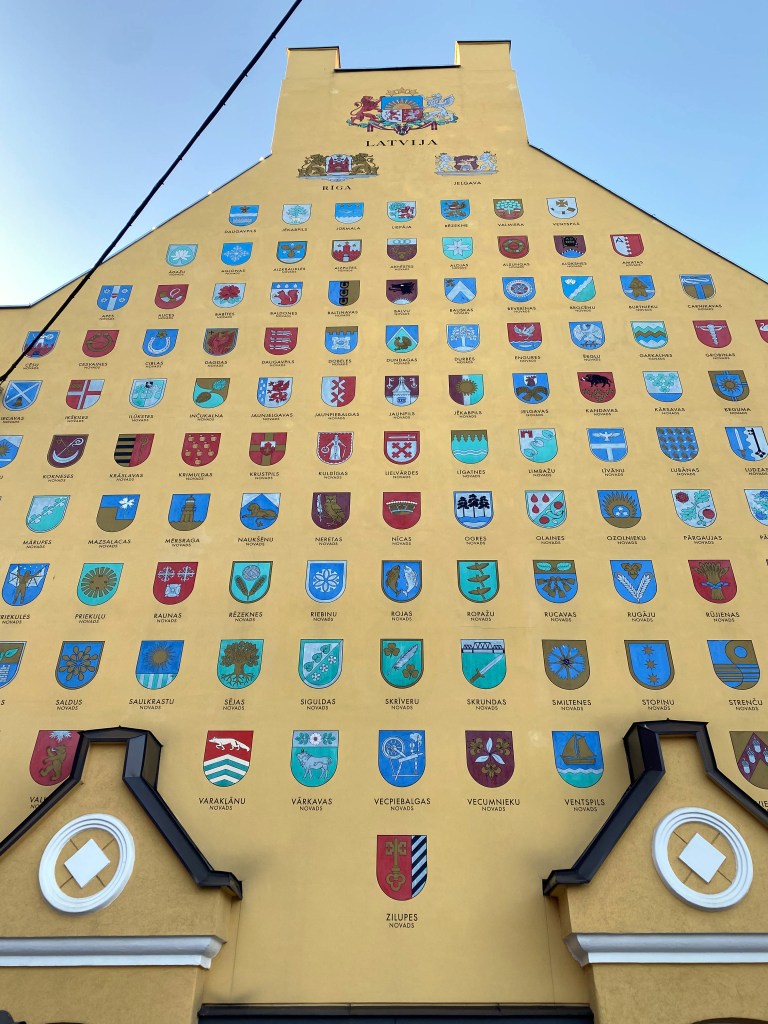
Next door lies Jacob’s Barracks, built in the 18th century to house the garrison, the structure continued to be used until 1997 by various militaries as the area’s geopolitics evolved over time. The length of the barracks are now home to bars and restaurants, but the end, with its depiction of the coats of arms of Latvian towns and municipalities, was the most intriguing to us.

Portions of the old city wall running along the barracks:

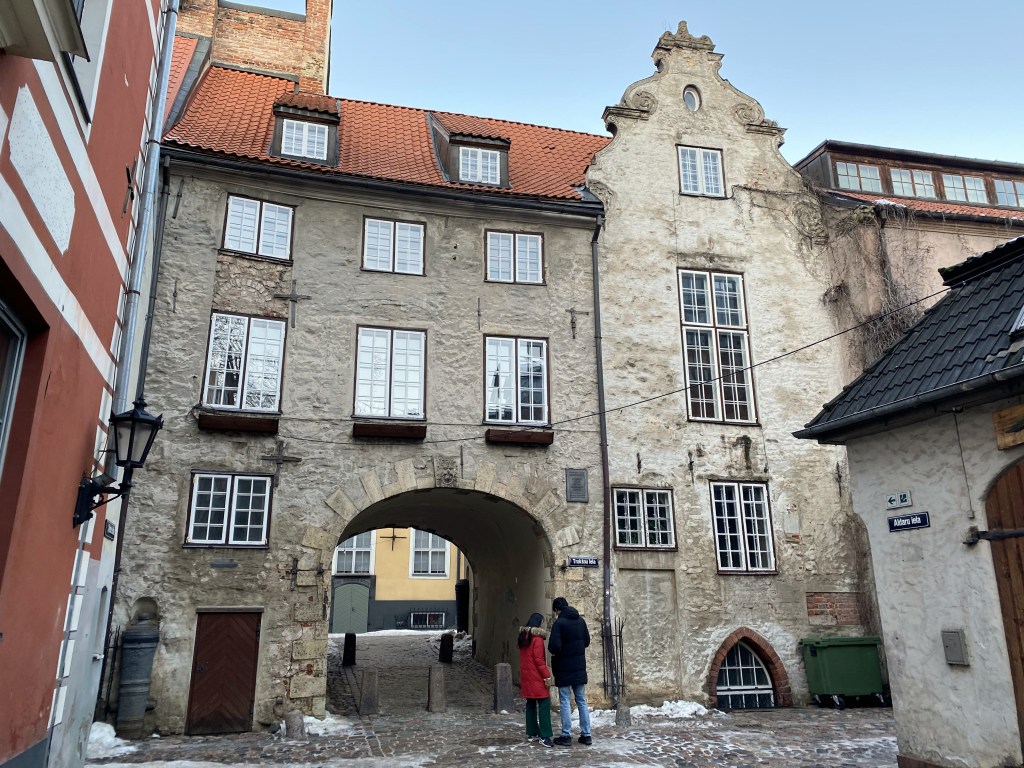
The Swedish Gate – the only portal in the medieval city walls to still exist. Beyond lies Trokšņu iela (Noisy Street) which ironically is one of the quietest and most charming street in Riga now. I’m sure we walked through here and down this apparently amazing street, but we have no visible evidence of this. ¯\_(ツ)_/¯

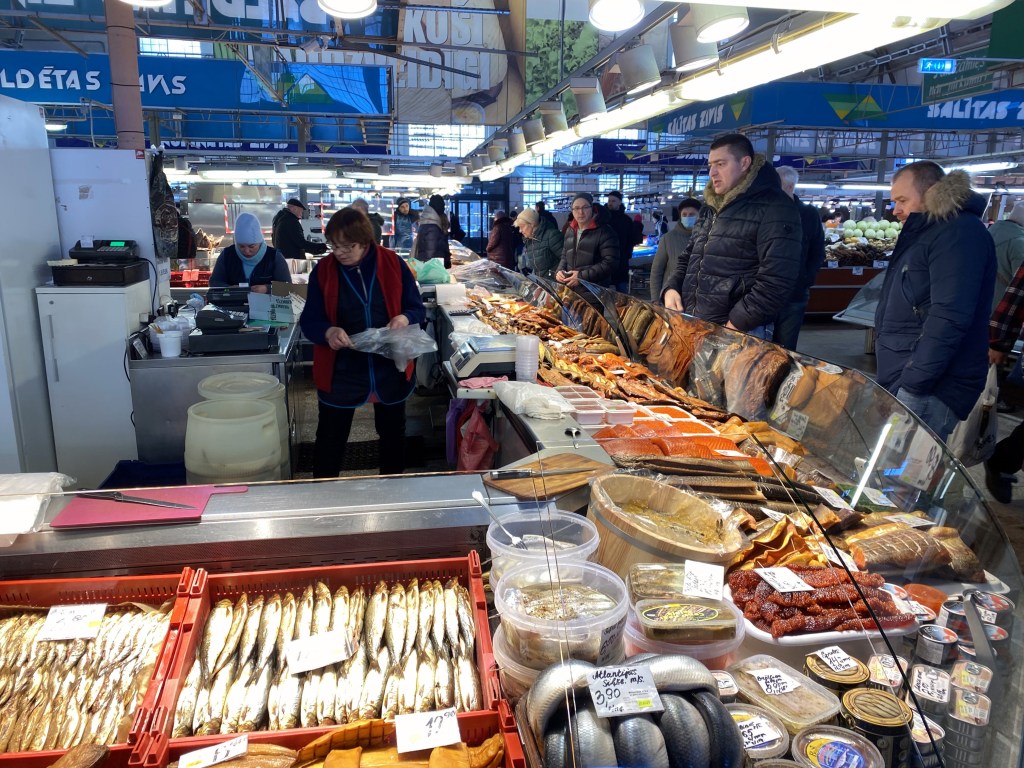
Instead, here’s some pics of Riga’s mammoth Central Market.

Absolutely any variety of food one could desire is available here.

The Riga Central Market (there’s a bird’s eye view later in the post) is composed of multiple, massive, hanger-like structures and is not only the largest shopping destinations in Latvia, but one of the largest markets in Europe.

The aforementioned bird’s eye view would come courtesy of St. Peter’s Church steeple.

Built in chunks over centuries, the first St. Peters was constructed as early as 1209; then a few decades later, in the middle of the 13th century; then the early 15th century; then at the end of the 17th century. Pretty plain brick church though, much like the Scandinavian Gothic brick churches encountered in Denmark.

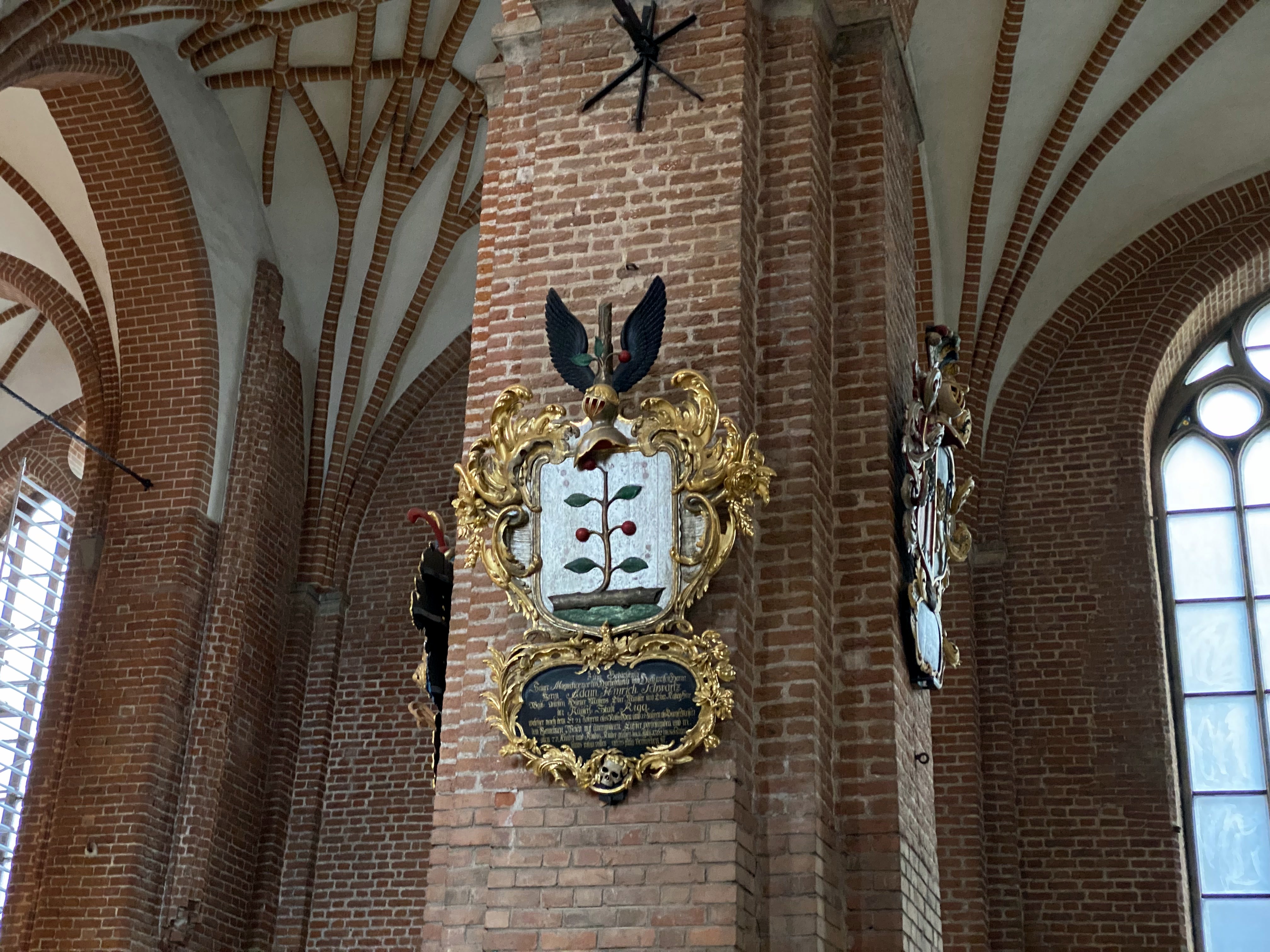
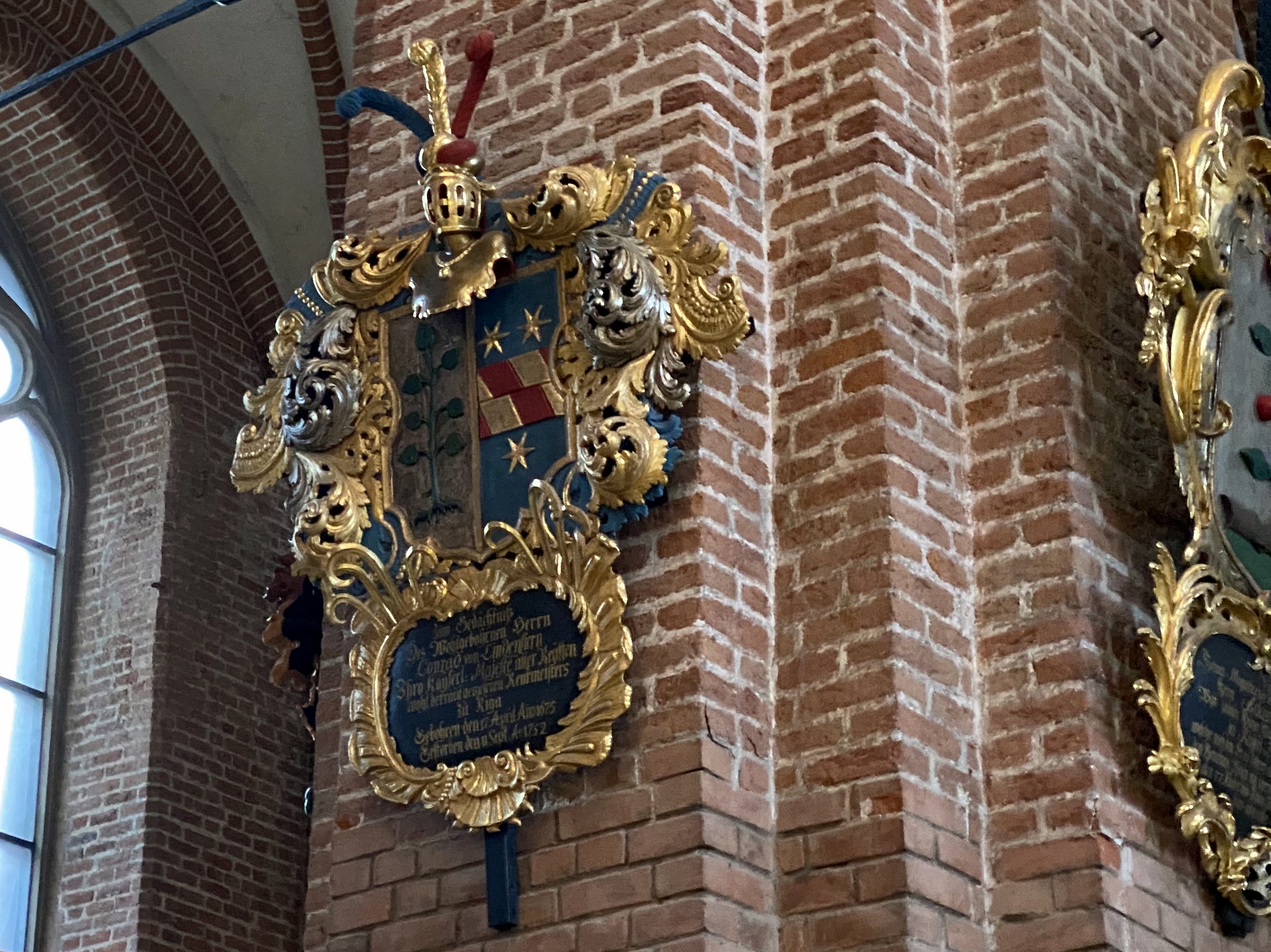
As with Tallinn’s cathedral, portions of the interior are adorned with local noble family coats of arms (one of which looks dangerously close to the esteemed crest of the Connells):

Something in the crypt we think? Dunno – pretty cool though.

Views from St. Peter’s steeple observation deck – pretty awesome perspective on the town.

Renaissance facades in front of the Dome Cathedral:

Another, higher view of the Powder Tower:

Riga’s Central Market hangers:

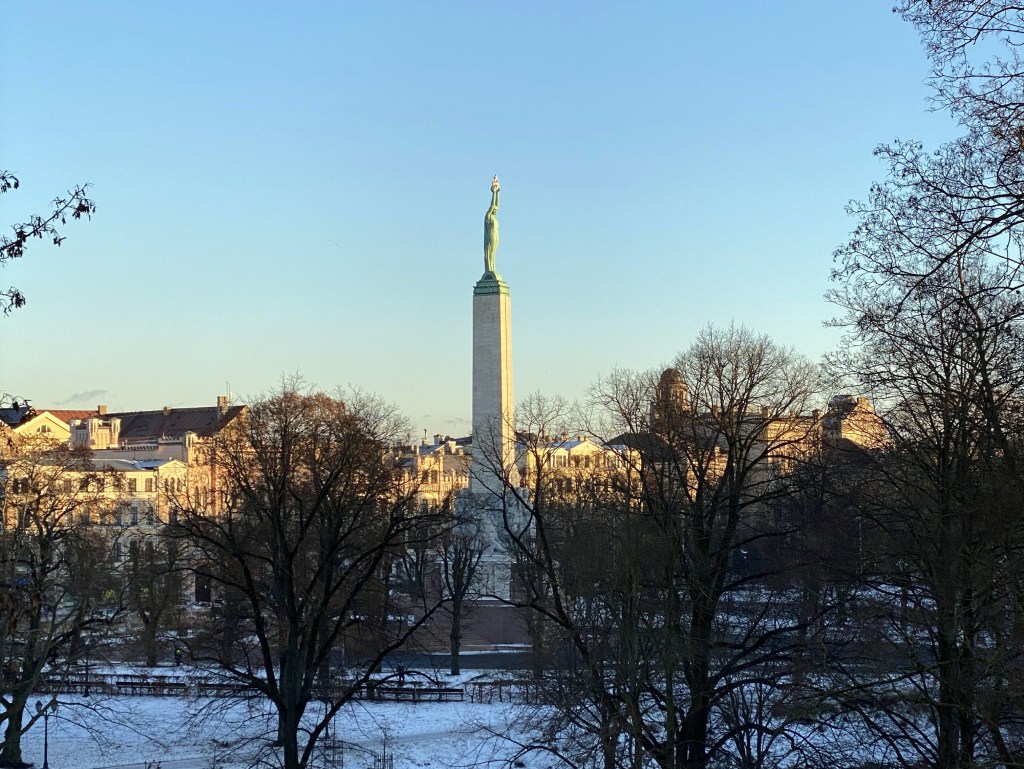
Down the street lies Riga’s Freedom Monument. A large statue of Peter the Great astride a horse once occupied this plaza, but it disappeared during WWI and the Latvians weren’t eager to replace it. Instead, the Freedom Monument was erected in its place in 1935.

Flowers are allegedly placed at the foot of the monument each day (we didn’t see any) as an act of defiance – such a gesture was punishable by deportation to Siberia during the Soviet era.

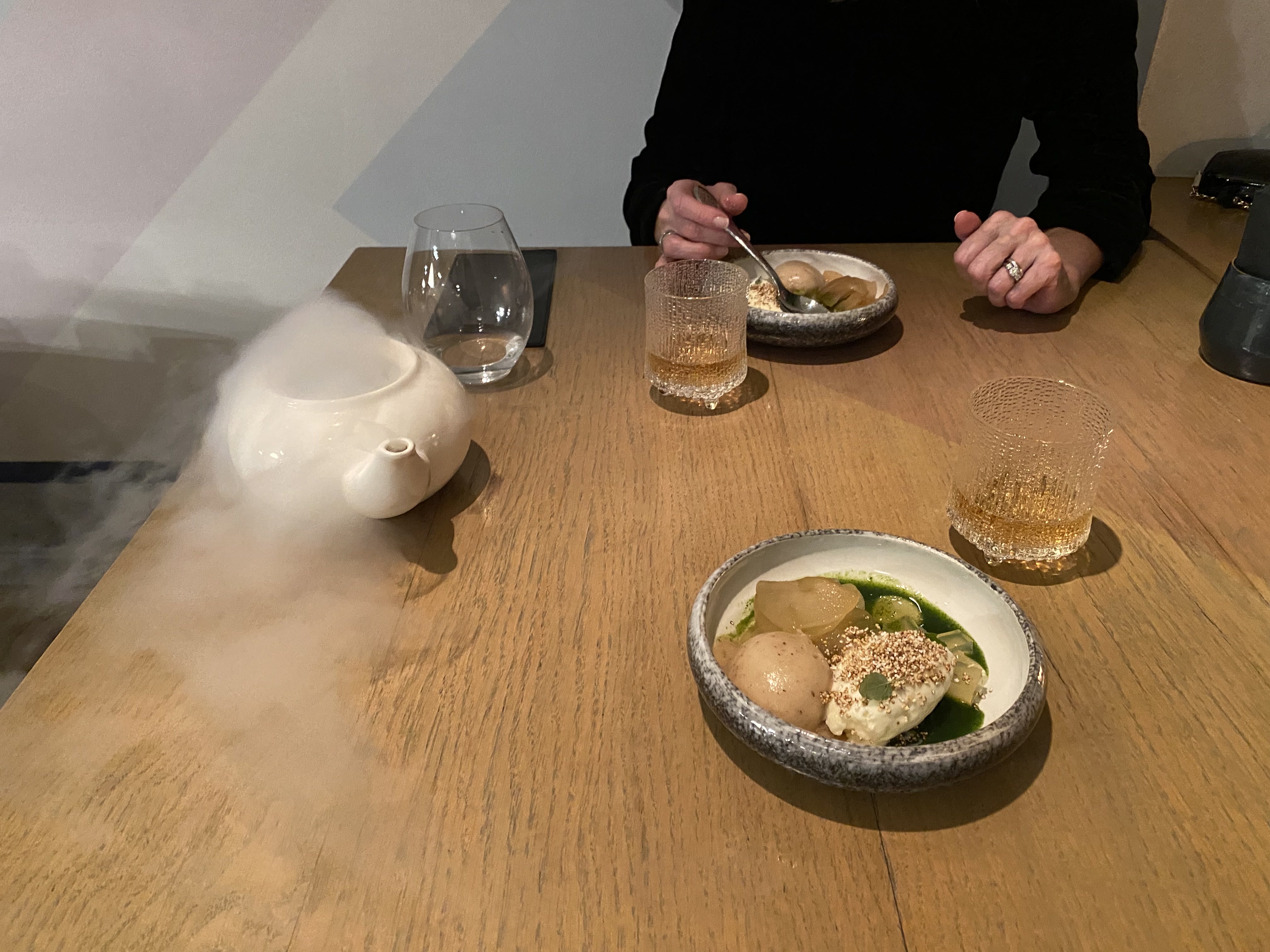
Dinner at 3 Pavāru Restorāns – definitely the dining highlight of our stay.

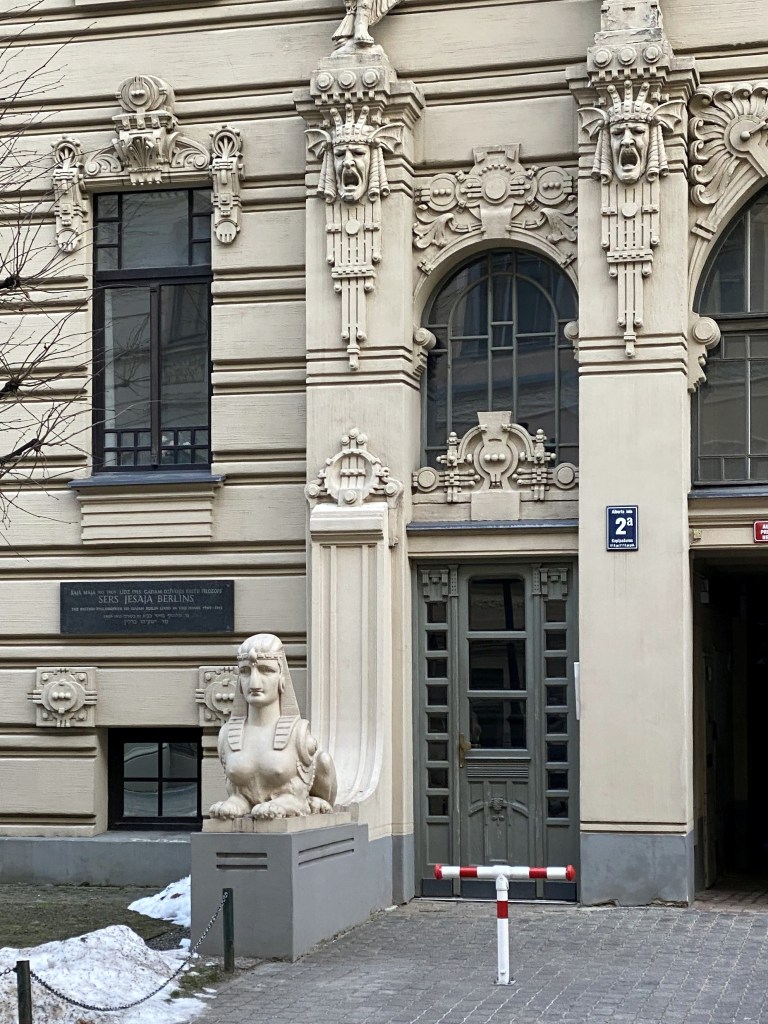
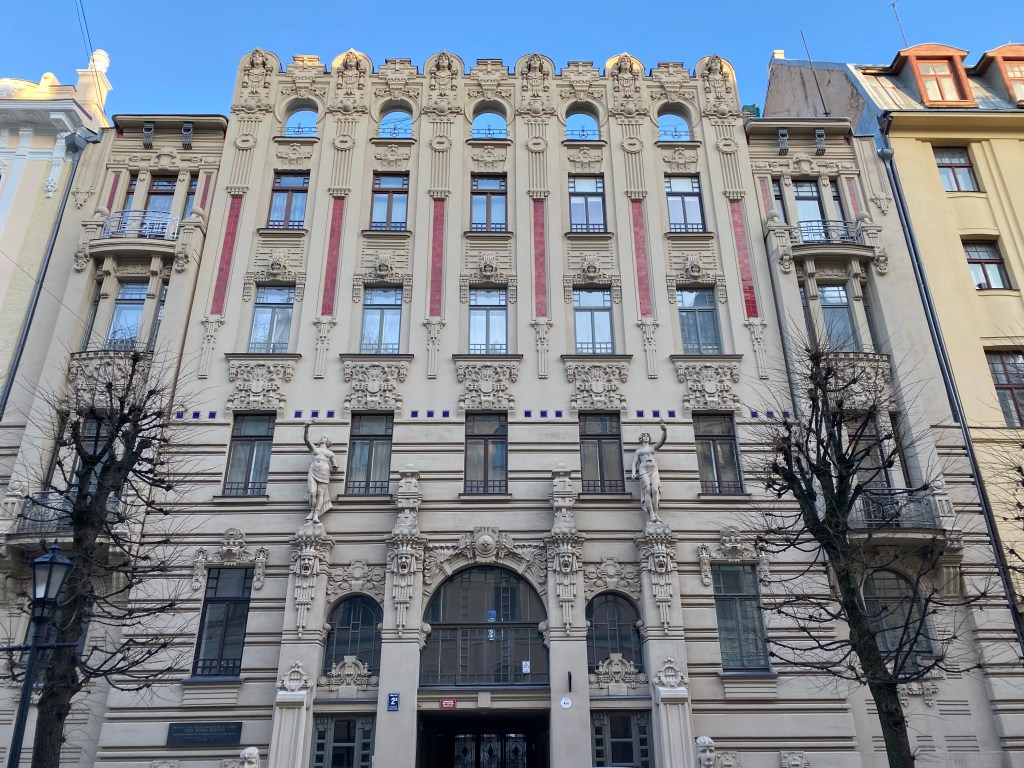
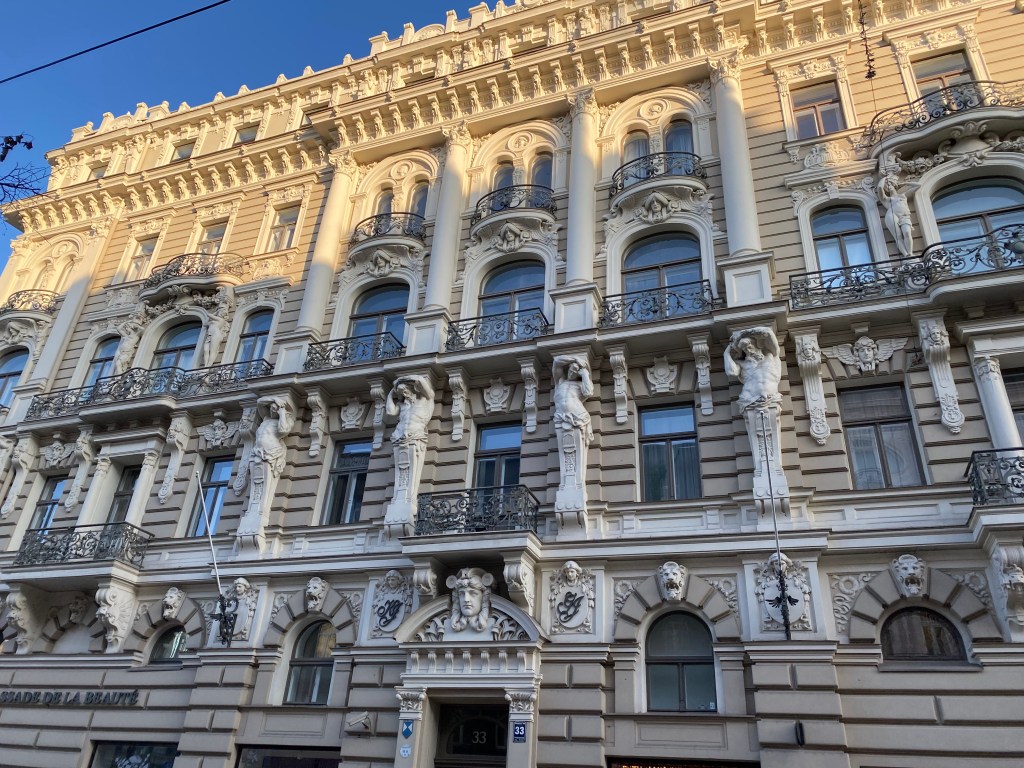
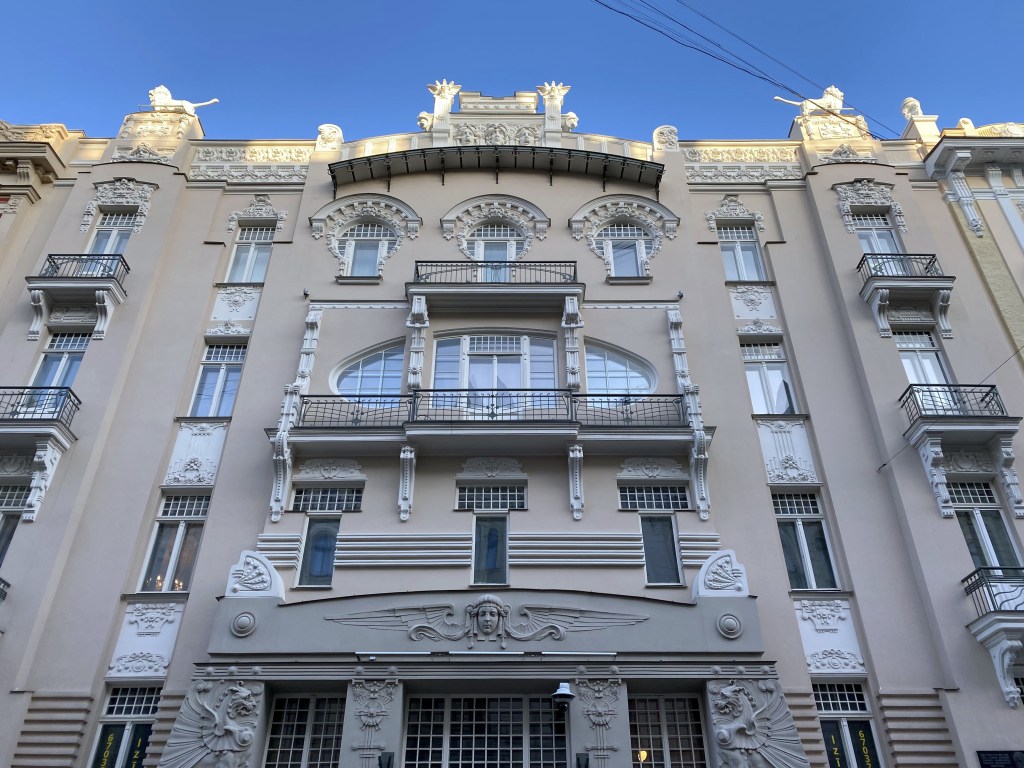
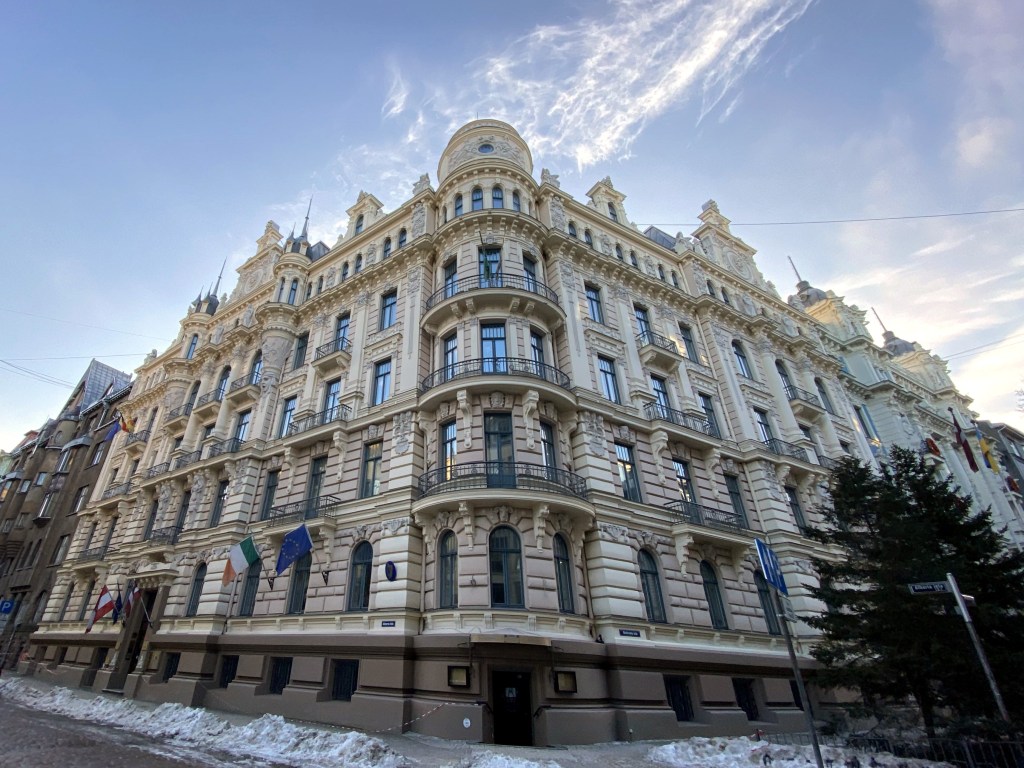
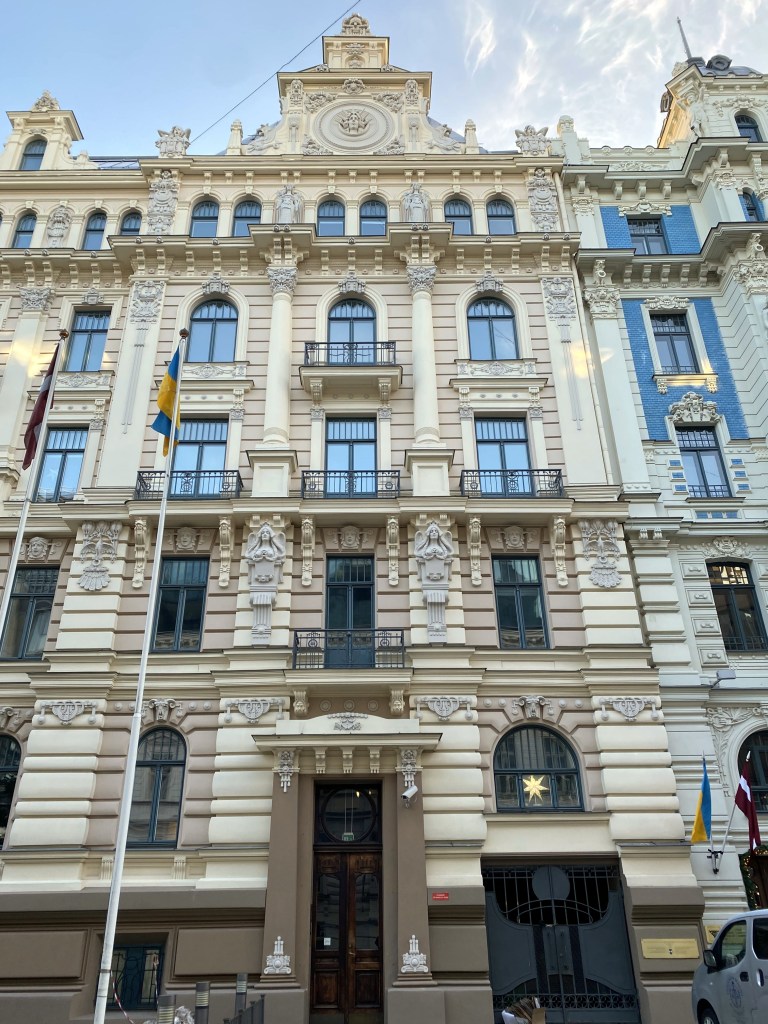
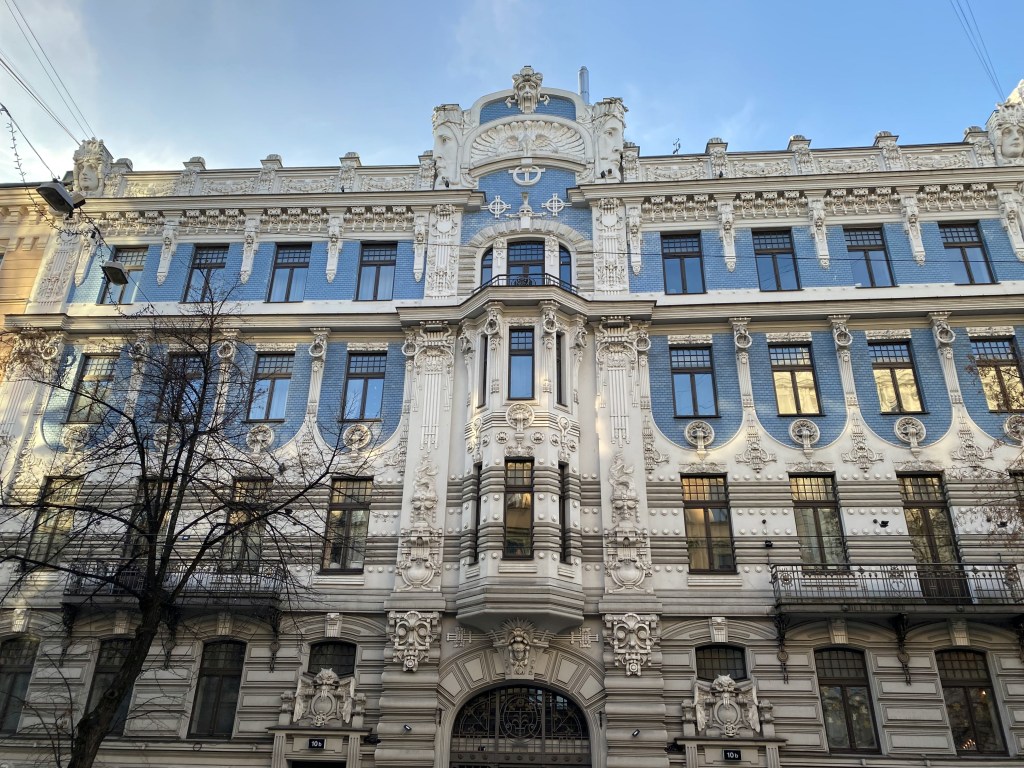
Riga’s Art Nouveau district on our Christmas Day walk. Riga’s period of peak prosperity happened to coincide with the Art Nouveau arts and architecture movement between 1890 and the outbreak of WWI. Although not at all unique to Riga, the town benefited from not being bombed into oblivion during WWII, resulting in a concentration of buildings in this style not seen anywhere else in Europe.

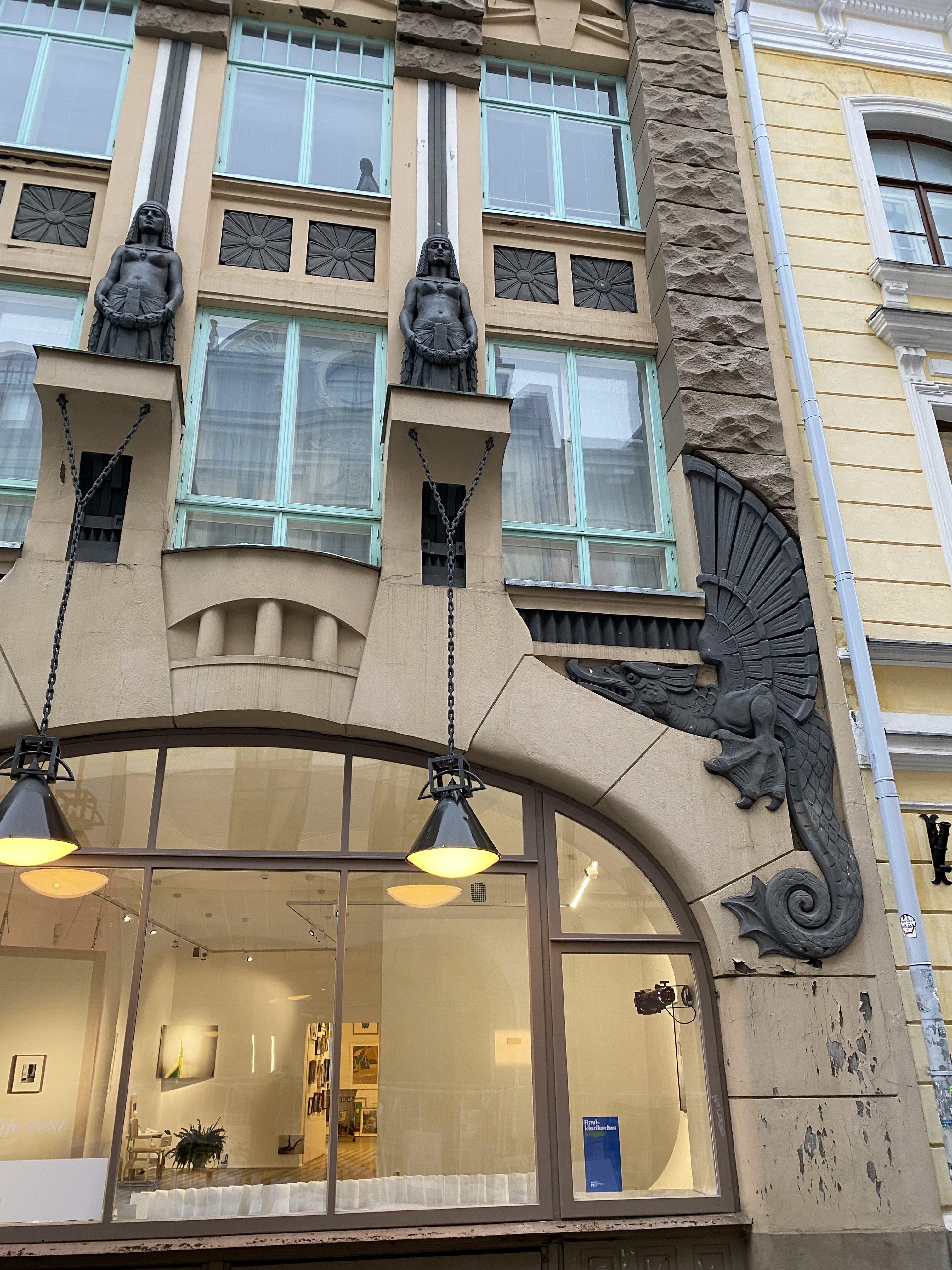
Perhaps the coolest: No. 10b, with a peacock (the symbol of art nouveau) flanked by big-ass faces.

Perfect winter weather in Riga for a Christmas visit.

On to our final stop of the trip: Amsterdam.

Categories: Europe, Latvia | Tags: , , , , , | Leave a comment

Protected: Christmas 2022 – Baltics and Back to the Netherlands: Amsterdam Again

This content is password-protected. To view it, please enter the password below.

Categories: Europe, Netherlands | Enter your password to view comments.

Turkey and Back to Greece: Paros Part 2 – Around the Island

Although we’d spend each evening in or near Naousa, we’d field trip around the island each day to explore, hike, or swim.

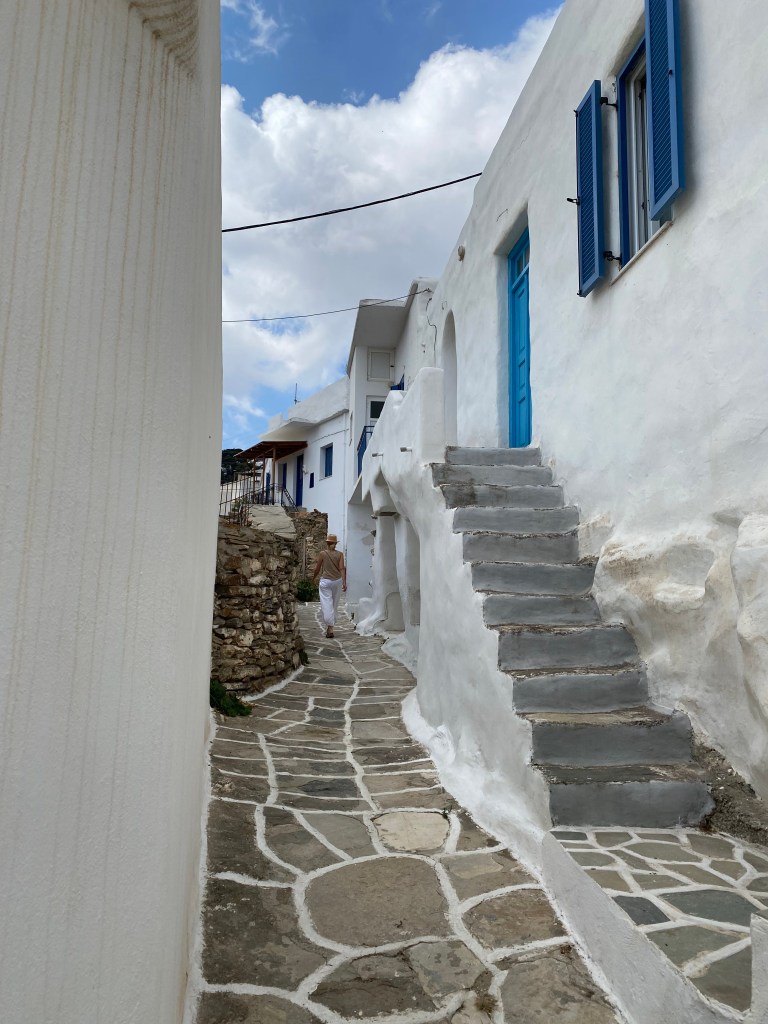
Including driving up to the traditional Cyclades mountain village of Lefkes.

Which featured quite a few picturesque Greek churches.

Grabbing some lunch at Anemos Taverna above the eroded-rocky Kolympethres Beach:

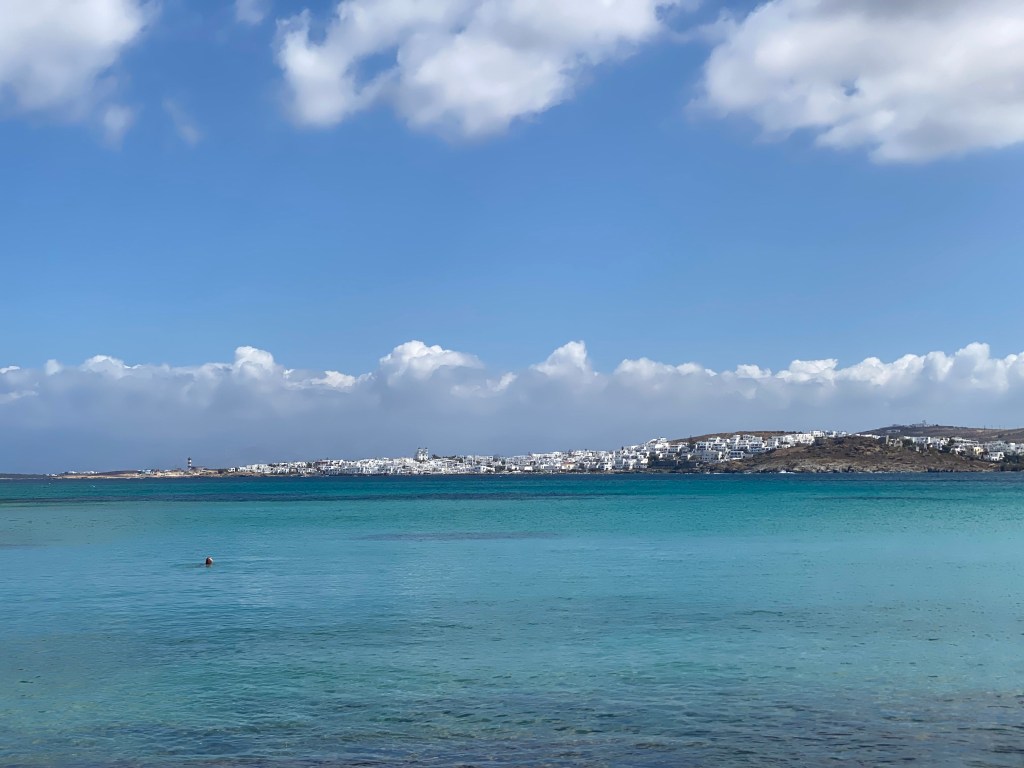
White-washed Naousa in the distance:

A visit to the Monastery of St. Johns of Deti:

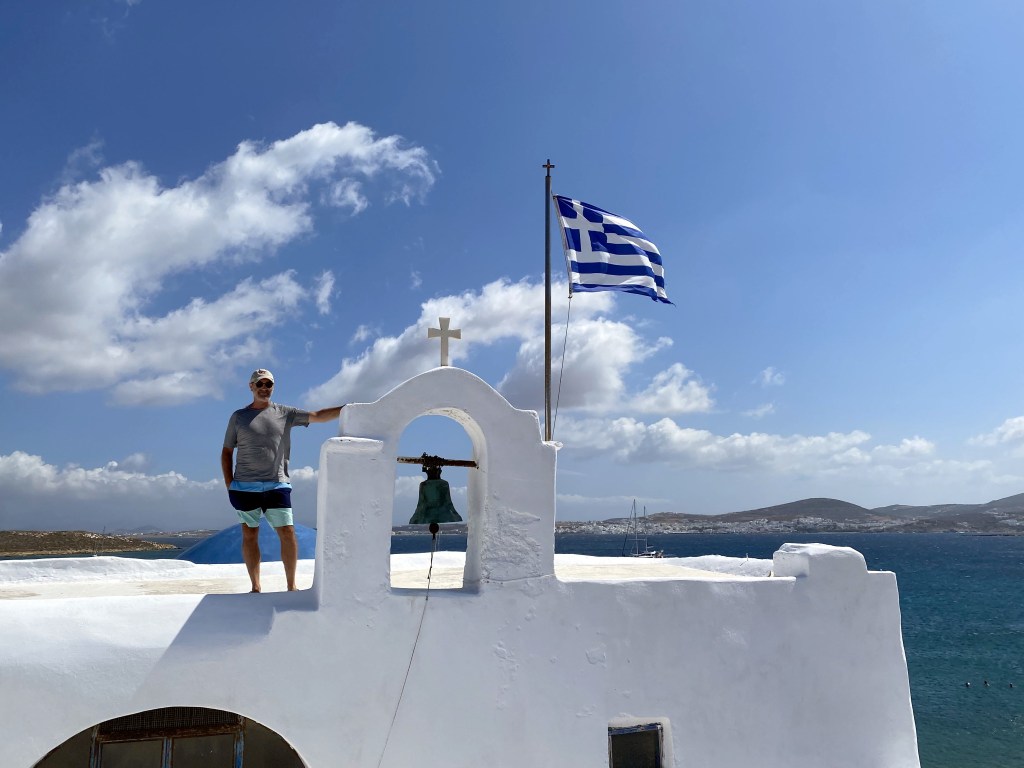
Which offered a pretty great, quintessentially Greek view from the roof:

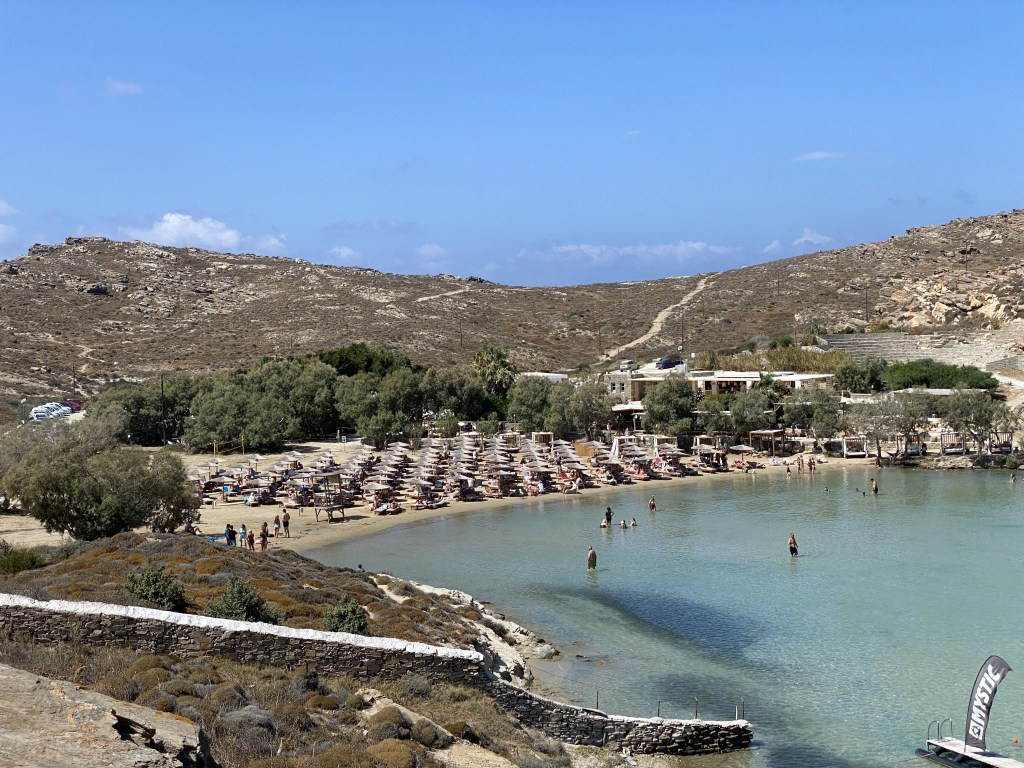
And also a view to the very commercial Monastiri Beach. Typical density of many European (and especially Italian) beaches, but a little packed in for our taste.

Much more appealing to us was Ampelas Beach on the other side of the island:

Great swimming and lower key. . .

and with two amazing restaurants available for lunch.

Aspro Paros, with it’s spectacular zucchini salad (and calamari and smelt, natch):

And Blue Oyster right next door:

Everything amazingly fresh.

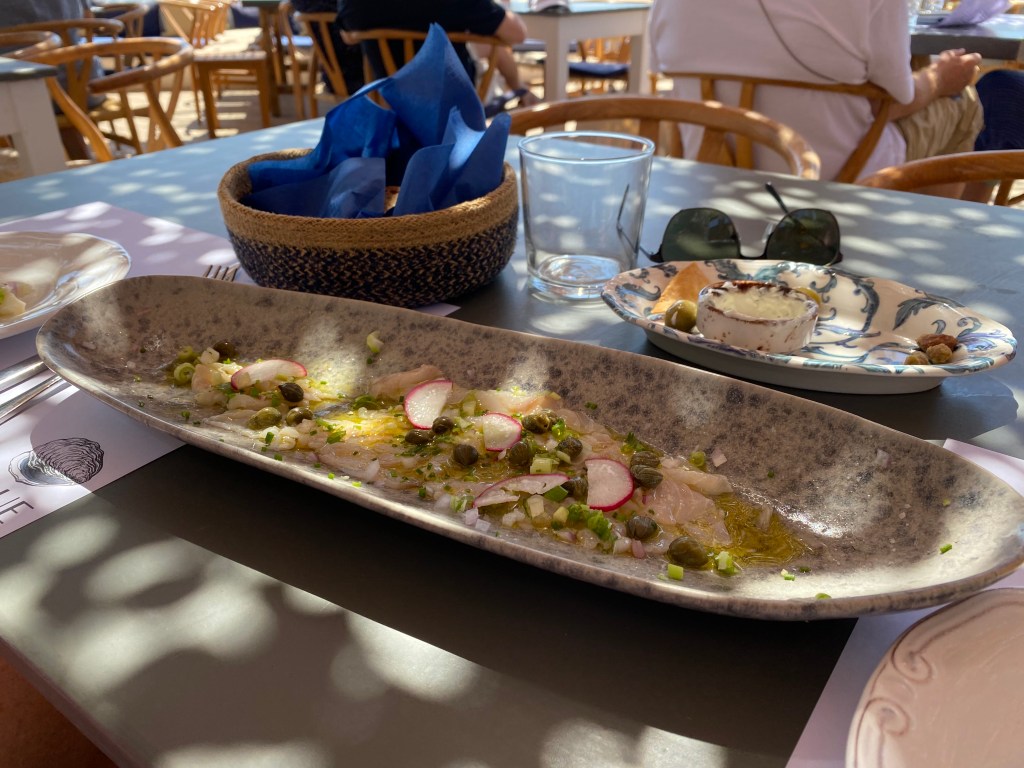
Including some zesty ceviche and Greek cheese:

We’d return to Ampelas Beach three times during our stay. Perfect experience each time.

Next up: the mercifully last post before we move beyond this trip and thence to the Baltics and a starkly different, winter climate.

Categories: Greece | Leave a comment

Turkey and Back to Greece: Paros Part 3 – The Final Reckoning (Or, Parikia, a Lighthouse Hike, and the Linguistically Exact Opposite of Paros)

The final post on the Turkey and Back to Greece trip (finally!). And just in the nick of time: we’re hitting the road (and the Adriatic Sea) tomorrow, and so won’t be posting any of the other backlogged trips for a while. These are all the long trips (versus week-long trips that we responsibly posted immediately after getting back from each), and include the following:

We’ll eventually post the detailed content on each of these trips here on WolfeStreetTravel.com; in the meantime, we’ll be posting pics in real time during two upcoming extended trips over the next 5 months @wolfestreettravel on Instagram, if you’re interested.

Back to our final post on Paros. . .

Although we chose not to stay in the largest town on the island (for reasons obvious here), we nonetheless headed to Parikia one day during our stay on Paros as a day trip.

Very cool, bustling burg. With equally cool, wooden-framed bikes to boot.

The absolute most intriguing site in town has to be the Frankish Castle.

Built by the Venetians in the 1200s on the site of the town’s ancient acropolis, the “castle” (actually the remains of a tower that was part of a castle wall) was constructed Jenga-style using the vestiges of classical temples from around the island.

Little remains of the original fortification, and nearby structures incorporate what remains into their own walls.

One of the three “Mavrogenus’ Fountains” found around town. ” Nicolaos Mavrogenus was one of the prodigal sons of Parikia, Paros Island main town in the Greek Cyclades. Missing his native Aegean and as Wallachia governor decided benefit his hometown providing a public drinking water supply [in 1777]: three beautiful marble fountains.” (From here.)

And another (we never came across the third):

Finally getting a gyro at a local place in Parikia’s port (the empty plate would soon be filled):

The Byzantine-era church complex of Panagia Ekatontapiliani (The Church with 100 Doors):

According to tradition, the church currently has 99 doors and a secret, 100th door will open when the church of Hagia Sofia in Constantinople become Orthodox Christian again.

The original church dates back to 326, during the reign of Roman Emperor Constantine, and purportedly was founded by his mother, Helene (whose sarcophagus we came across during the micronations road trip).

We think the church elders employed third graders to carve the church’s tombstones:

In the 6th century, Byzantine Emperor Justinian enhanced the church and added a dome.

Another view of the Frankish Castle as we head out of town.

The best hike we experienced on the island took us to the Korakas Cape Lighthouse at the northwest tip of the island.

Another field trip, this time a short ferry ride to the polar opposite of the island of Paros: Antiparos (it’s just a smaller island than Paros).

With a really picturesque main town:

Bye, Antiparos.

And bye, Paros, and Cappadocia, and Istanbul. Trip posts complete!

Categories: Greece | Tags: , , , , | Leave a comment

Turkey and Back to Greece: Paros Part 1 – Naousa

This, at long last, represents the final tranche of posts for our September 2022 Turkey and Greece trip: a week on the Greek island of Paros in the Cyclades archipelago.

The Turkey and Back to Greece trip, as originally planned, was to be our first post-retirement travel excursion. The second WolfeStreetTraveler would retire in mid-August 2022 (the first had retired the previous year), and then we’d immediately spend a full month on the road – leaving in late August and returning in late September. After a week in Turkey, we’d spend 3 weeks island hopping in the Cyclades:

  • Paros for 1 week
  • Milos for 4 days
  • Folegandros for 3 days
  • Naxos for 1 week

But a perpetually problematic NOAA weather forecasting supercomputing support contract in the otherwise optimally operating Science & Engineering business run by on of the WolfeStreetTravelers had other plans. The recalcitrant actions of the most uncooperative data center and the most incompetent supercomputing vendor to ever play a role in weather forecasting would require, it turns out, another 6 months to address. So that WolfeStreetTraveler postponed retirement, canceled the Milos / Folegandros / Naxos legs of the trip (for which both the ferry fares and the hotel / AirBnB reservations were refundable, which was a relief), enjoyed the remaining first legs of the trip, then returned to work to dig in for another half year to pound on pernicious program problems.

But that’s okay – a week in Paros was unbelievably great. And we’d get to the other Cyclades islands later (in fact, they were supposed to comprise the second half of a 6-week trip planned later this year, but earthquakes in the area scared us off, so we’re hitting Mallorca and Andalusia instead, which should be pretty great, too). We’ll get back to the remaining Cyclades soon enough.

In Paros, we based ourselves in the town of Naousa at the north end of the island. Although the main city and ferry port on the island, Parika, held some appeal, our research suggested that Naousa offered more of what we were looking for; and we could always day trip to Parika (which we did).

And Naousa was absolutely perfect for us:

Although definitely a tourist town, Naousa still operated as a working fishing port

where the catch of the day would appear on your table for lunch and dinner.

For the entire week, we’d begin each evening with sunset cocktails on the water, then wander into town to find dinner. The best of these, which we’d patronize three evenings during our stay, was called – fittingly enough – Come Back. So we did. Again and again.

And for obvious reasons.

Sunset in Naousa from the Come Back beach:

And thence, into Naousa for some seafood.

Pretty great weather – mostly – during out stay. We did have a day and a half of super windy weather that was part of the normal weather cycle in the Cyclades, but that also was strong enough that it curtailed some activities.

Fishing wasn’t one of them.

Our time on Paros also encompassed our anniversary, which was great.

Pretty good AirBnB digs.

Another evening, another round (or three) of cocktails at Come Back.

And another sunset. Pretty good routine.

A break from fish with some moussaka.

One of the most photographed spots in Naousa, based on our Instagram feed before the trip. Colorful, yes, but empty.

And then night falls:

Another sunset, and our second favorite cocktail spot.

Maybe they should name this place “Also Come Back Here.”

Full moon over Naousa.

Categories: Greece | Tags: , , , , , | Leave a comment

Blog at WordPress.com.