“WASHINGTON—A report released Wednesday by the United Nations revealed that the U.S. continues to lead the world with the highest per capita density of Kevins of any nation. ‘Ranked against the rest of the international community, the United States is far and away the global leader in Kevins, with upwards of 27 Kevins per square mile in most major American urban centers,’ said lead researcher Gilbert Dujarric, who added that when factoring in the nation’s Kevs, the density figure nearly doubles. ‘There are certainly areas of Australia, the U.K., and Canada where the concentration of Kevins is high, but they all fall well short of the United States’ Kevin population across all demographics. And when we look at the benchmark Kevin-to-John ratio, no country comes even remotely close to the staggering .205 figure the U.S. posted in 2013.’ The report’s authors noted with surprise, however, that the United States had surpassed Denmark and risen to second place in Jürgen density.”
Right on the heels of our post Five Legs in Six Weeks trip overview, the New York Times slyly attempted to one-up our juggernaut media platform with this “One House in Four Countries” article:
Clearly a knockoff of WolfeStreetTravel and a blatant brand encroachment violation, but we’ll let it pass because the situation described in the article is very cool, and certainly aligns with our interest in European history and cartography. The gist (and hook) of the article is pretty much captured in the first three paragraphs of the New York Times article:
“ ‘Wait until you find out how everyone in my family has come from a different country,’ says Alex Zigante on a recent summer afternoon.
Mr. Zigante, a 30-year-old engineer, takes a breath and lays out the family tree: His great-grandmother, Angela, was born in Austria-Hungary. His grandmother, Maria, 90, in Italy. His father, Aldo, 61, in Yugoslavia. And Alex was born and raised in Slovenia.
And yet, all of them have lived their lives here in Portorož, a seaside village in what is now southwestern Slovenia, where the family’s roots go back centuries to the Venetian Empire, and where their modest three-story home has been a fixed point on an ever-changing map.”
Even better (for WolfeStreetTravel’s interests, anyway) is the series of maps included with the article, depicting the fluid and ever-evolving geopolitical construct that swirled around Portorož over a 100-year period:
Super freakin’ cool, from our perspective, to have your property caught up in the maelstrom of pre- and post-world war political territory restructuring; then revolution; then restructuring. Absolutely enthralling.
And who doesn’t want the occasional reminder of the scope and size of the extinct but still-mildly intriguing Austro-Hungarian Empire?
Following the strategy articulated in the overview for our 6-week trip up the Adriatic coast (and into the Dolomites and Bavaria) earlier this summer, we bookended the summer with another 6-week, shoulder-season trip. Last time, we left on June 1 and returned on July 15. After a 6-week respite at home, we left for this trip the last week of August and returned the first week of October, which still provided us with great weather in Mallorca and Cornwall, but without the crowds that would be there in July and August.
And, unlike the “pick-up-a-car-in-Sarajevo-and-drop-it-off-6-weeks-later-in-Munich” approach from the last trip, where we luxuriated in a car that we could hang on to during the entire, 6-week road trip, we popped in and out of five rental cars in as many trip legs for this journey.
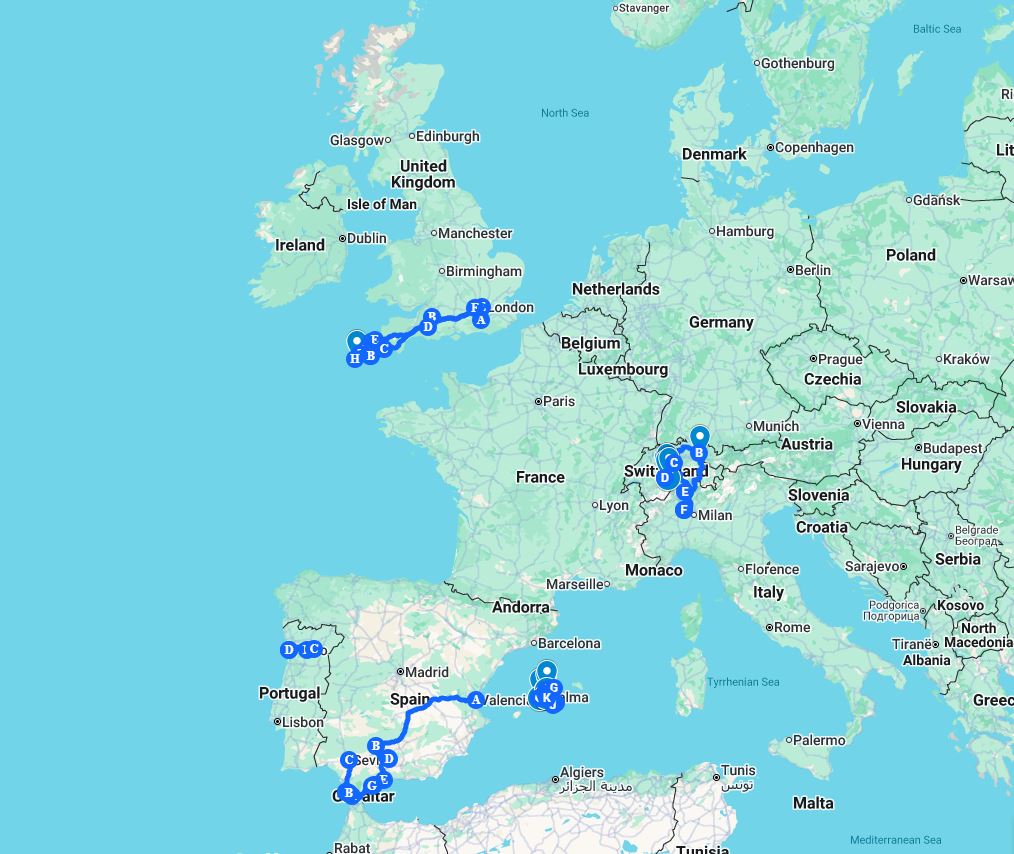
A cartographic overview of the trip’s five legs is pasted below:
Treating the map above as a clock, our route rolled out like this:
We began our trip at the 3:00 spot, with an 8-day loop around Switzerland
Then flew counterclockwise south to the 5:00 location, with an 8-day loop around Mallorca
Then flew to Valencia at the 6:00 spot, after a couple of days there, we began an 9-day drive west to multiple locations in Andalusia in Spain
Then flew up to Portugal at the 9:00 location for 3 days in the Douro Valley and then back to Porto for day
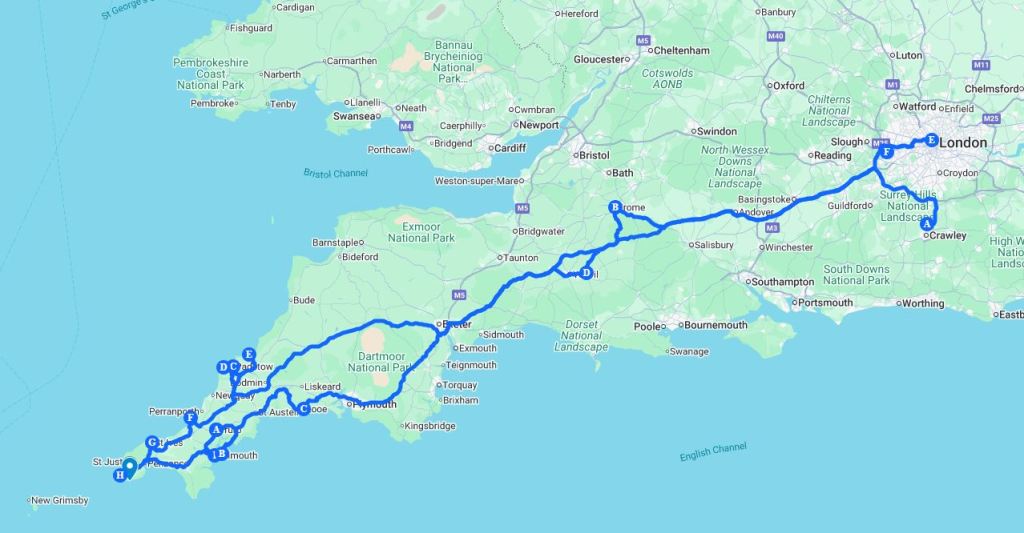
And finally ended the trip at the 12:00 spot with a 10-day loop around Cornwall and back to London in the UK
An interactive, zoomable map of the legs is provided below:
The route around the Switzerland leg of the trip also proceeded in counterclockwise fashion (and provided a second opportunity to visit (or at least drive through) Liechtenstein!):
Although we’d spend all of our time on this leg in the land of cantons, we nonetheless began at the Milan airport in Italy, since this location provided a more logical start and end point for a loop route that would cover several mountainous regions as well as Switzerland’s lake-happy Ticino canton in the south.
Our first stop in Switzerland – straight from the airport – was a gondola ride and hike to the Aescher Gashaus near Appenzel for a little lunch – pretty great perch to kick off our time in Switzerland (other than the first of the two parking tickets we’d get on this trip):
Just a normal day of traffic in Appenzel:
Our time in Appenzel, hiking and otherwise, was pretty damp the entire stay:
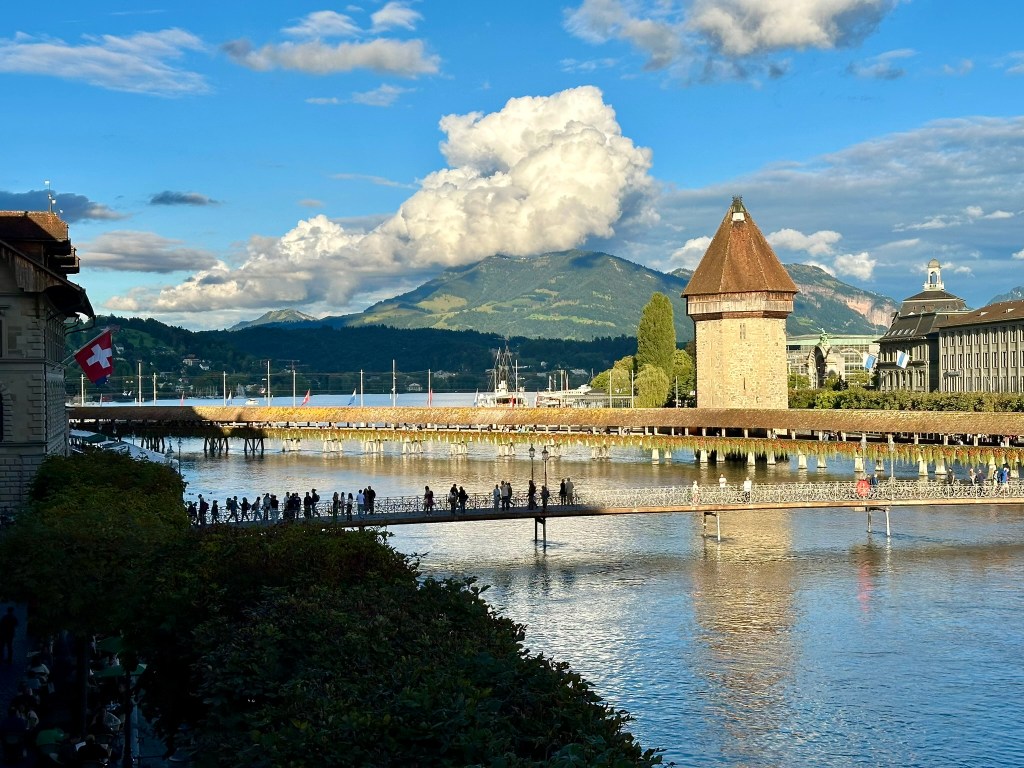
So onward we headed – first to Lucerne:
Really atmospheric and enjoyable – plus a great, historic footbridge!
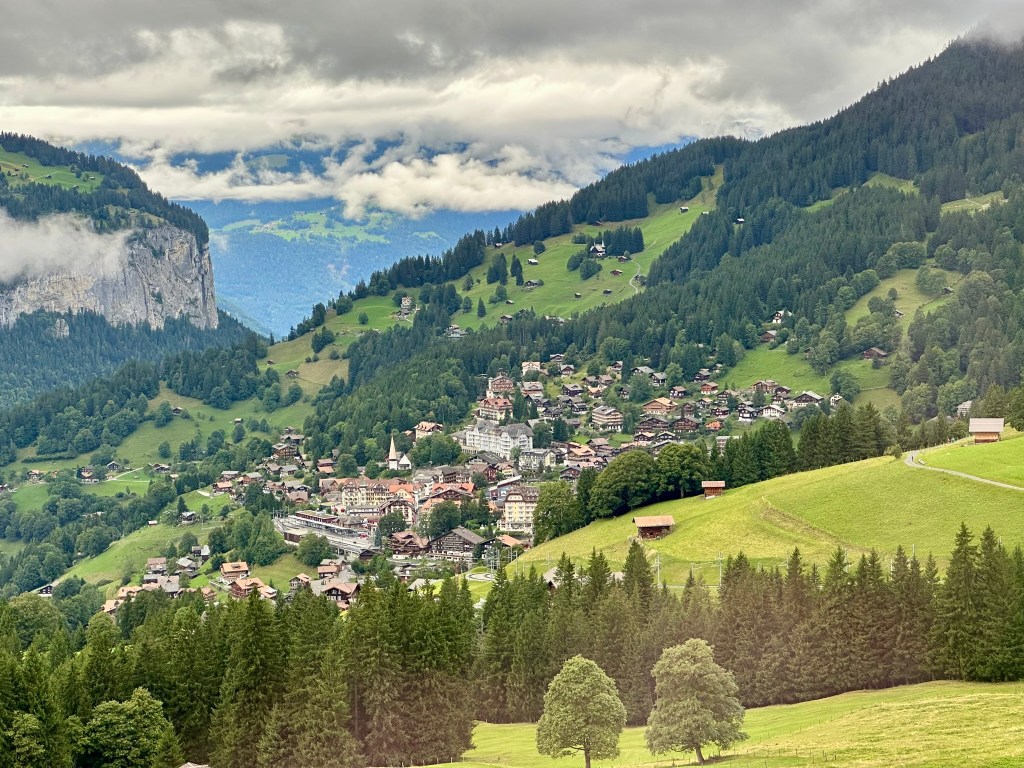
Then to the car-free mountain town of Wengen in the Lauterbrunnen region:
From whence we experienced one of the most spectacular hikes ever, in the Swiss Alps:
View from the nearby, smaller hamlet of Murren to the Junfrau and Eiger:
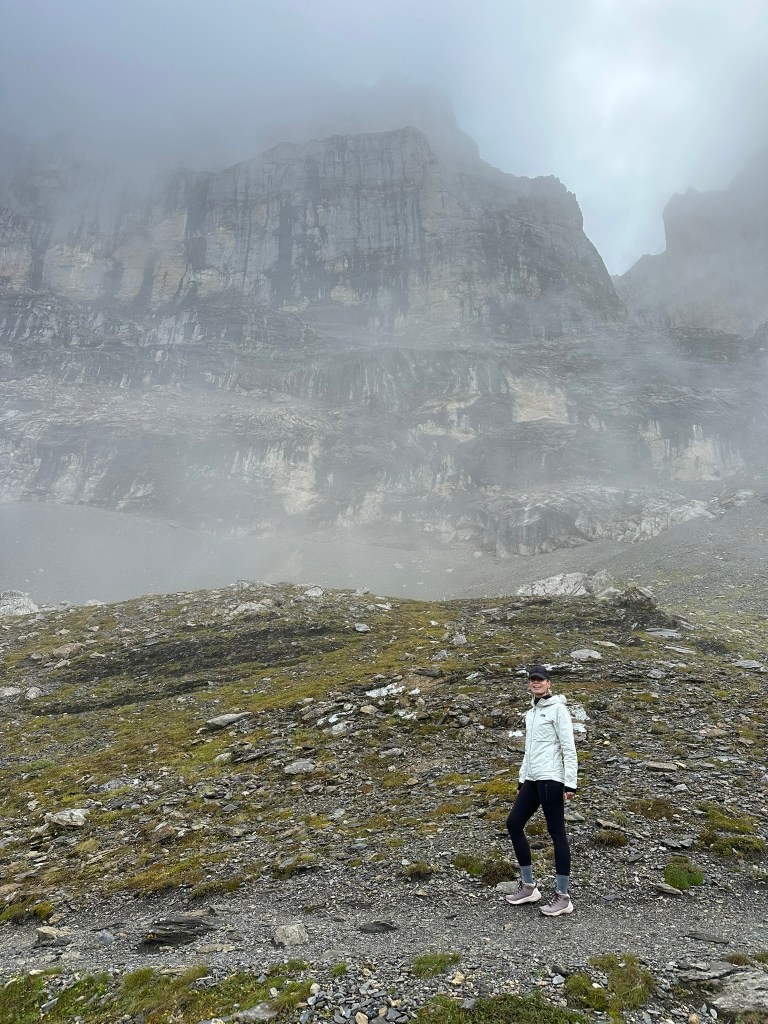
Our final hike – the Eiger Trail – and more mist and rain, unfortunately:
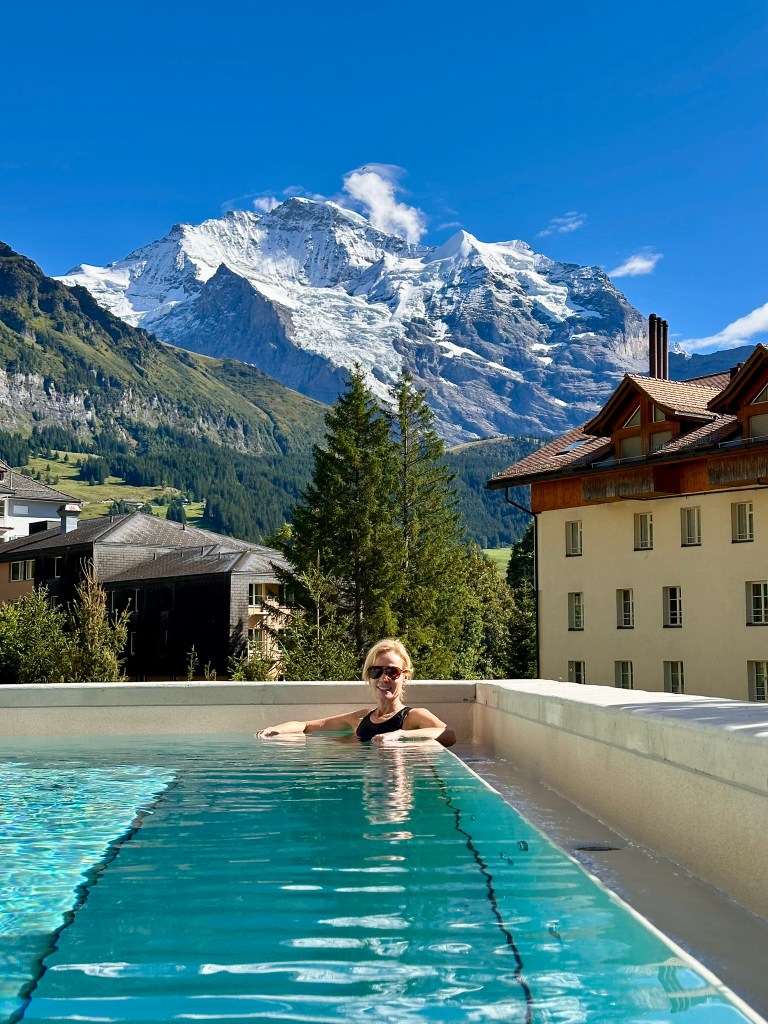
But our digs in Wengen helped assuage this a bit:
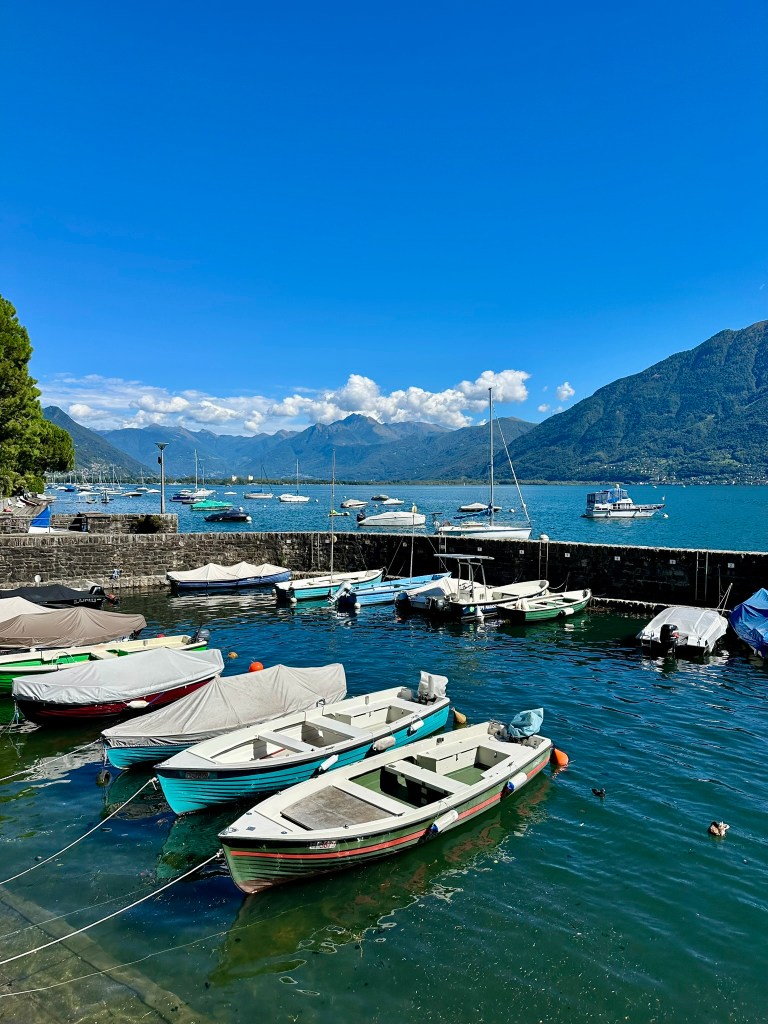
After a week, we ended our loop with an 8th day in the Swiss town of Locarno on Lake Maggiore (strategically booked at an AirBnB with a washer / dryer – a key element to our long-duration trips):
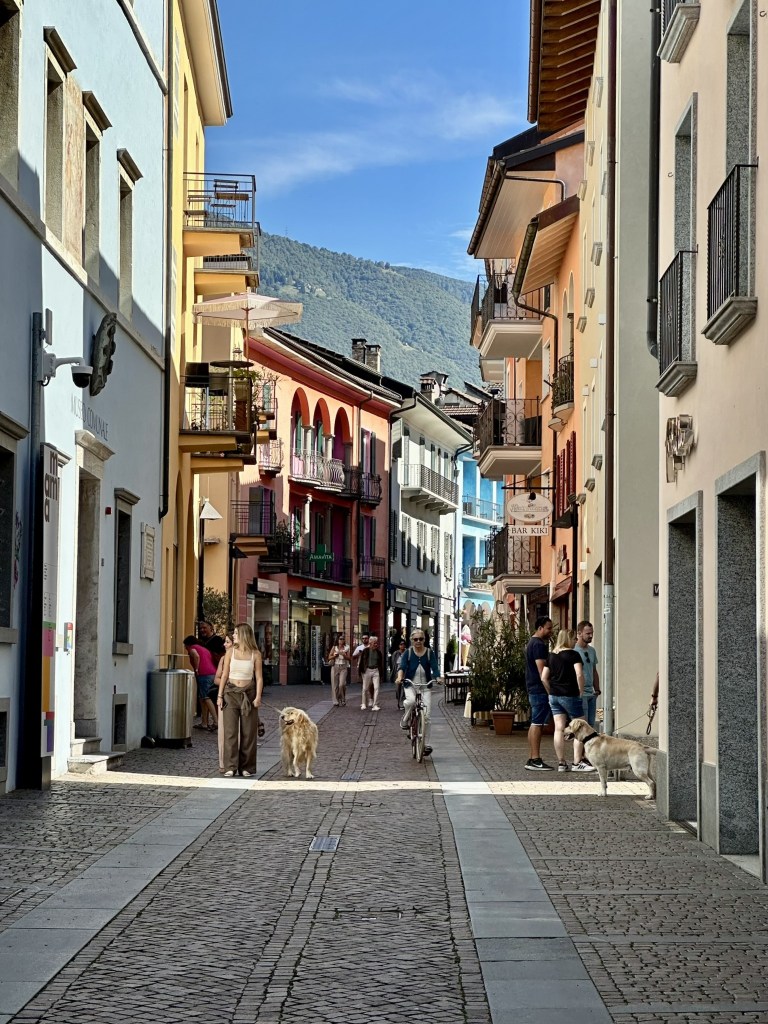
Then spent the next morning in Locarno’s even more charming sister town of Ascona before heading to the Milan airport for a flight to our next leg in. . .
the Spanish Balearic island of Mallorca, where we’d spend the next 8 days:
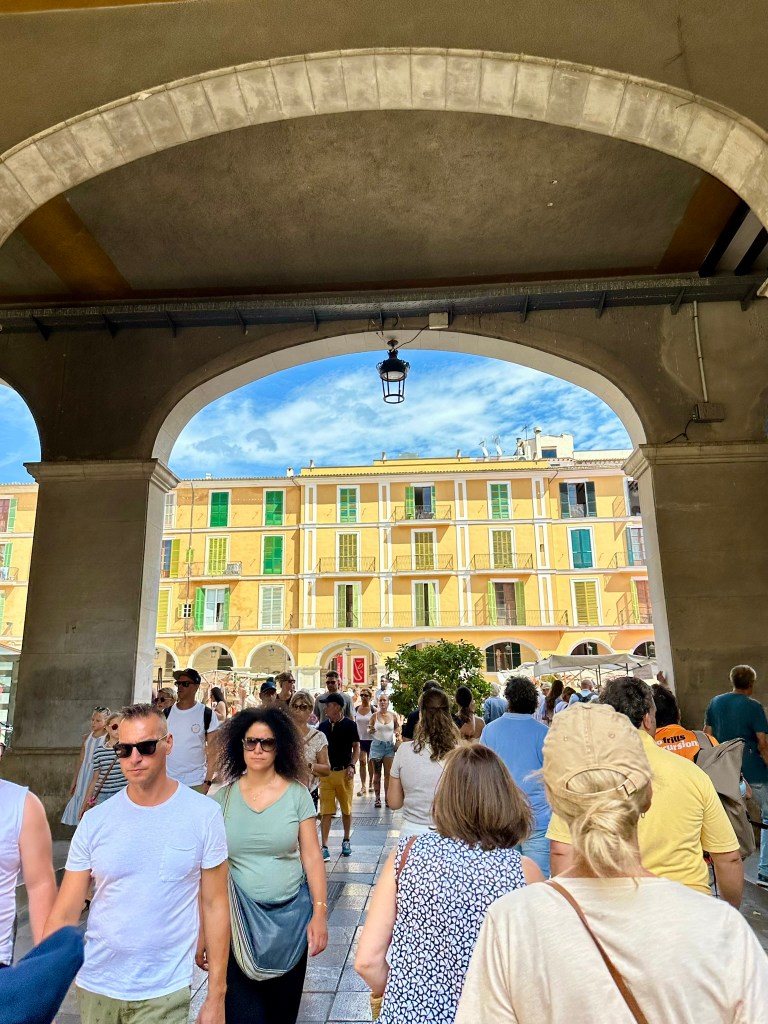
Mallorca’s capital of Palma, the biggest town (and only city) on the island:
Cool pool in the shadow of one of Palma’s massive churches (very reminiscent of our pool sitch in Carcassonne in 2017 and Uzes in 2021):
Strolling Palma on the way to our 27th anniversary dinner:
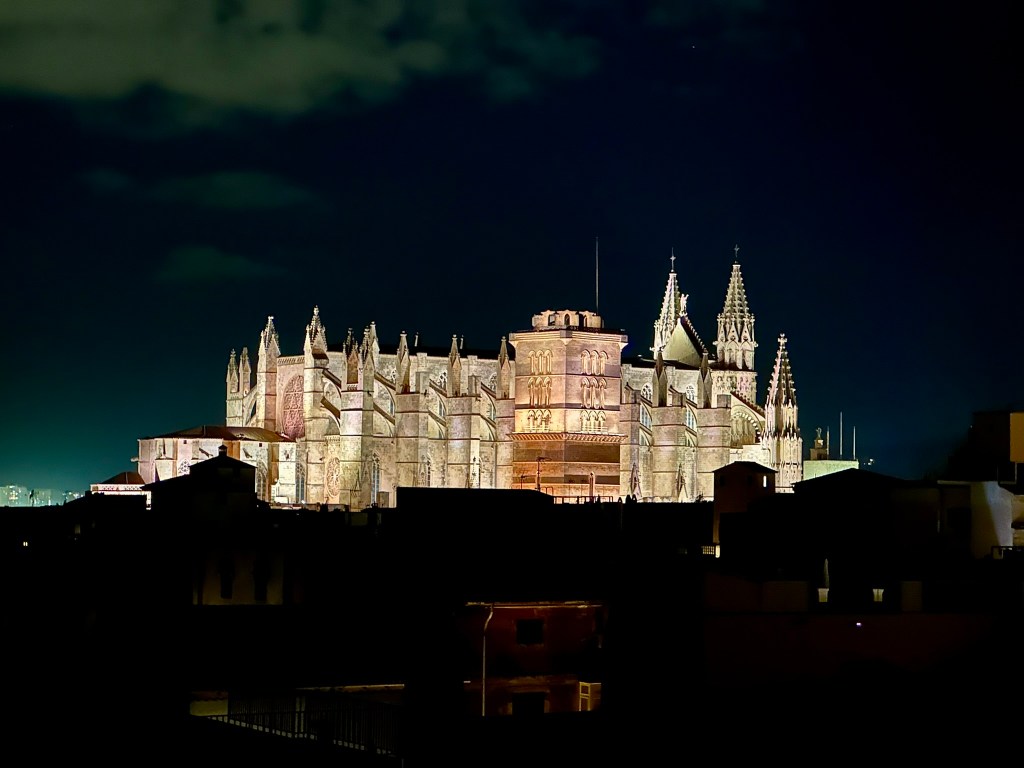
Palma’s cathedral lit up at night from our terrace:
And strolling amidst its flying buttresses the next day:
On to a couple of days in Port de Soller on the island’s west coast:
Cool perch over the port and ocean on our last night:
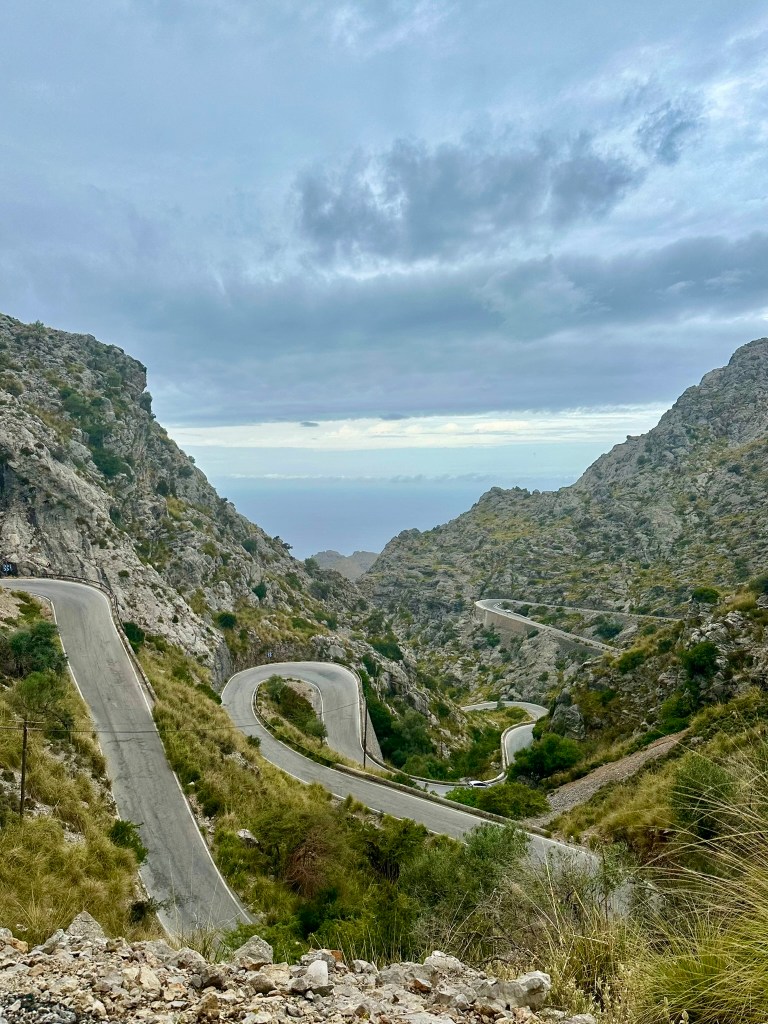
On to Pollença on the north end of the island, which necessarily entailed driving the absolute most insane road we’ve ever experienced:
Super charming town of Pollença, with it’s 365 steps to reach the town’s Oratori del Calvari chapel:
After swimming in the ocean and trying the nearby beach for all of 20 minutes, we decided that this arrangement would better suit our interests for the day. We were right.
Our last town of Colónia di Sant Jordi (and another AirBnB laundry stop), in the southeast corner of Mallorca
On to the Spanish mainland!
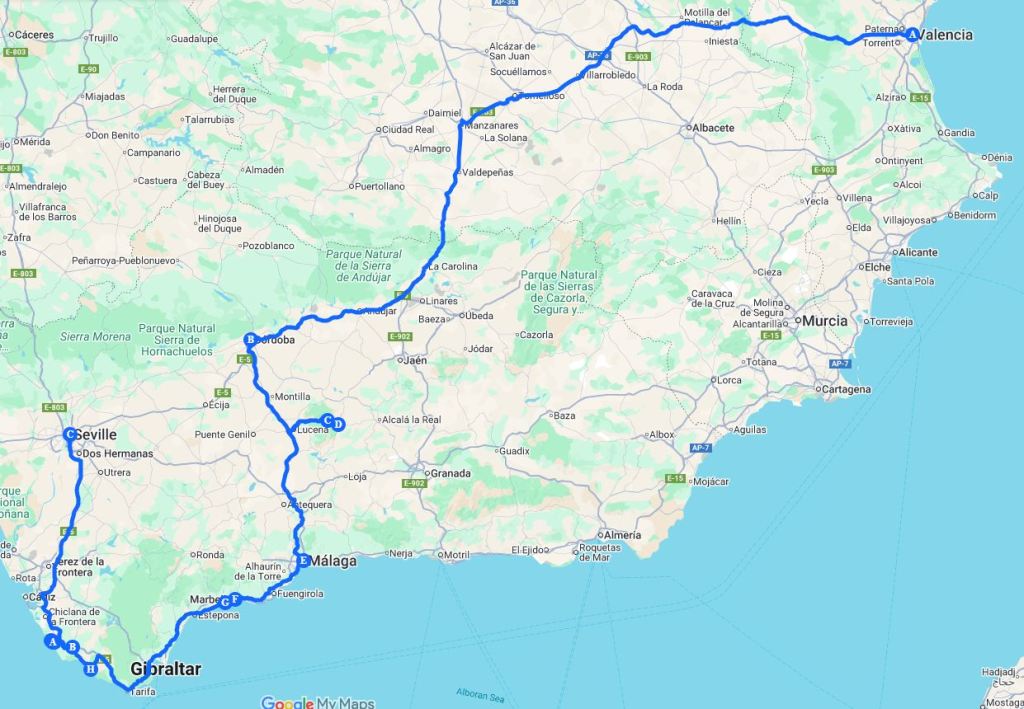
Although we’d spend the rest of our time in Spain exploring more of Andalusia (after seeing and loving much of it during our bike trip in the region in 2017), we’d first bop around Valencia on the east coast for a few days:
Spectacular city – super vibrant and fun and very Beaux Arts-y. The unbelievably perfect weather undoubtedly had a lot to do with this impression.
Cool little bike tour one day around the city and out to the beach:
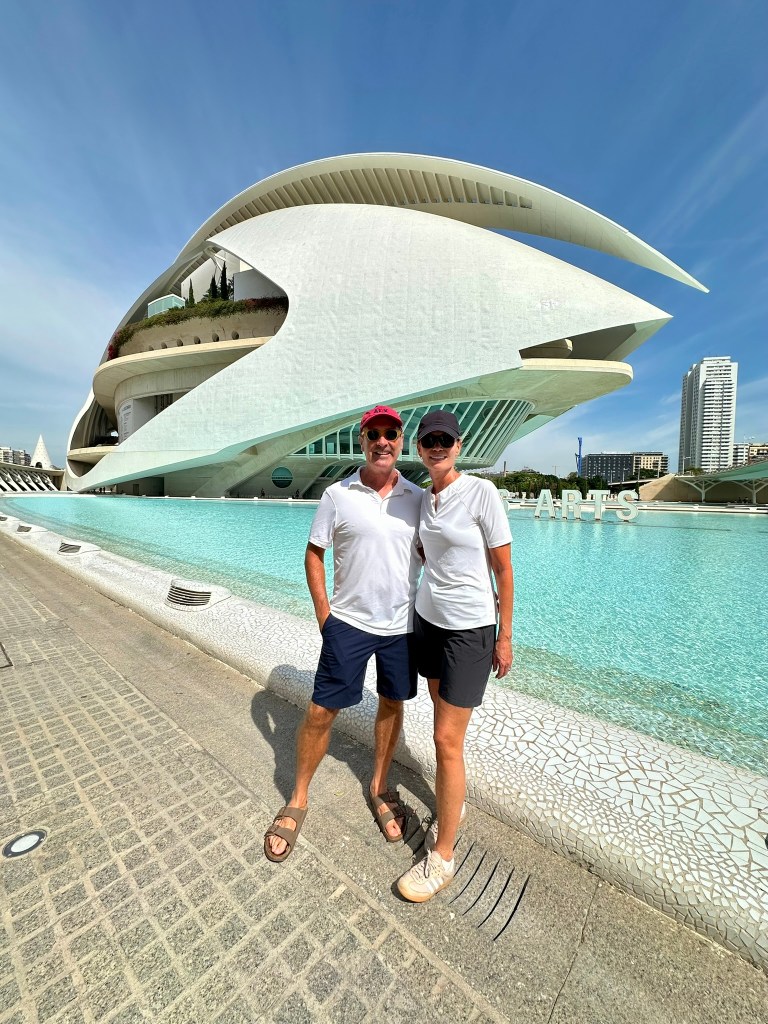
Including riding through Valencia’s sci-fi City of Arts and Sciences:
Then, a long drive west to our first Andalusian town that we missed on our bike trip: Cordoba.
Star of the show? The absolutely unique Mosque–Cathedral of Córdoba. Originally built as a grand mosque in the 8th century under the Umayyad dynasty, it was converted into a Catholic cathedral after the Christian Reconquista in 1236. Unlike every other instance of these conversions, however, the existing mosque structure and architecture was not razed, but retained.
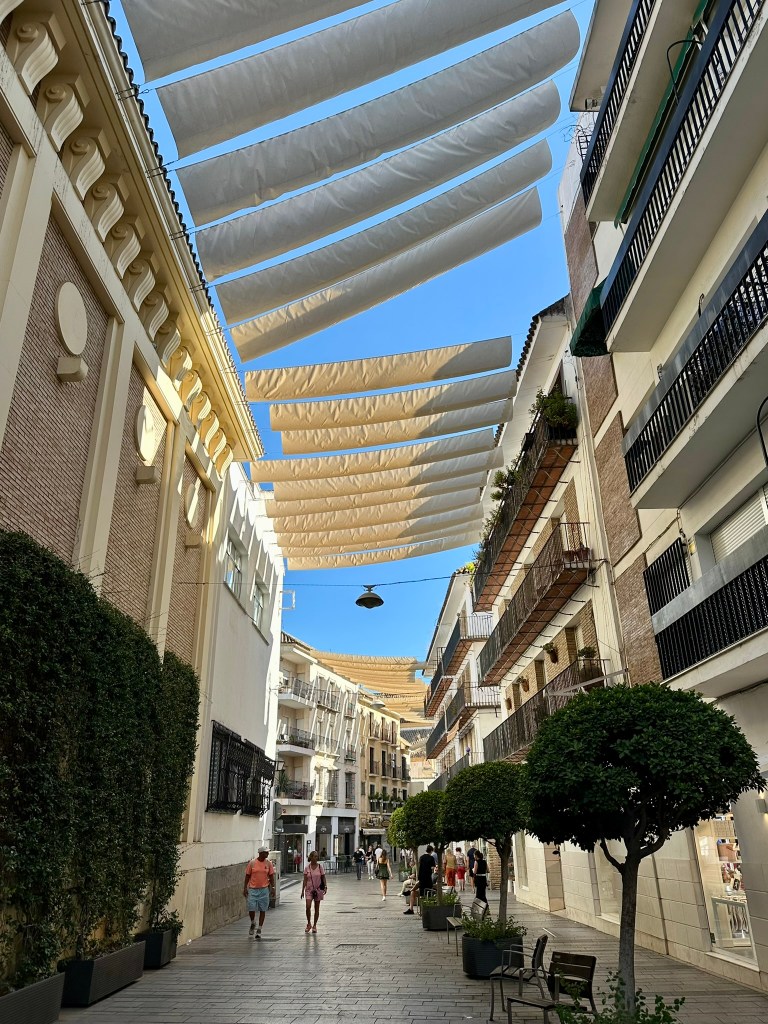
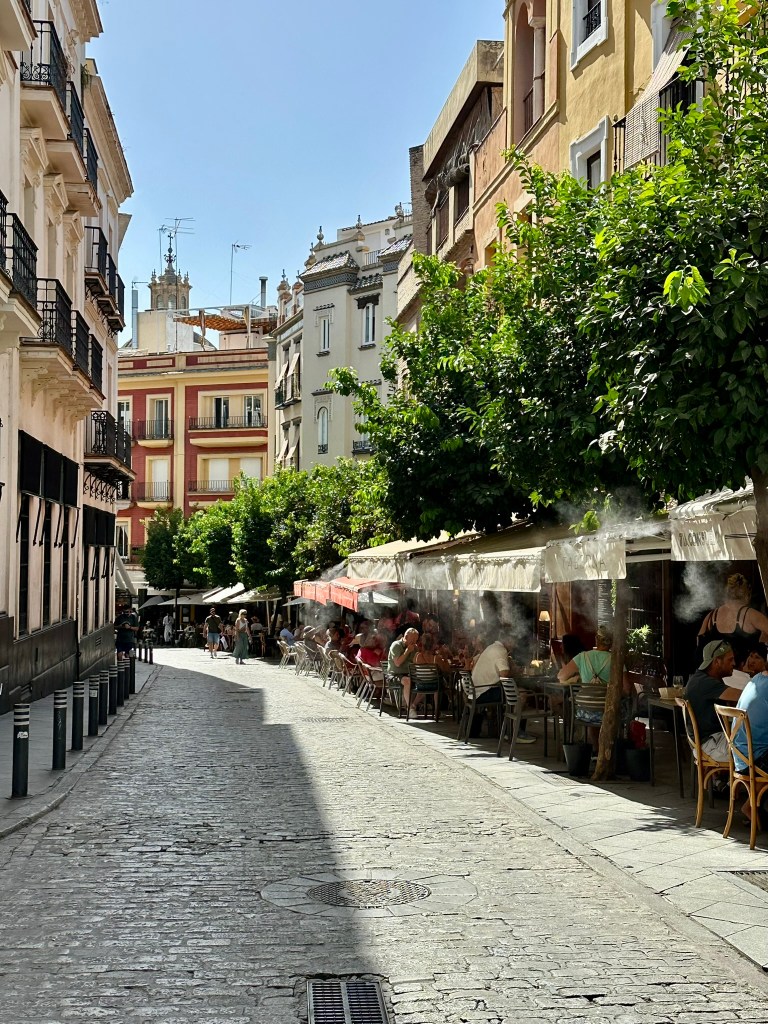
First of several times we’d see this street-cooling technique used in Andalusia:
At one end of Cordoba’s Roman Bridge lies the Moorish Tower (Torre de la Calahorra), a fortified gate built by the Moors in the 12th century to defend the southern end of the bridge.
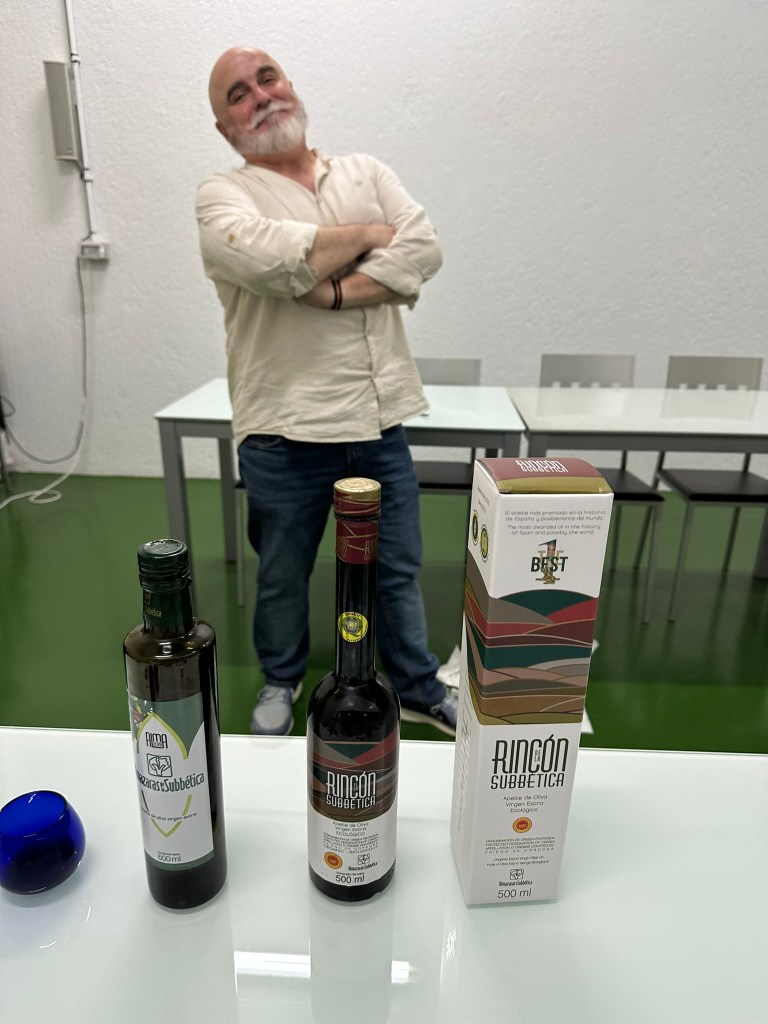
On the drive from Cordoba to Malaga, a stop at an olive oil processing facility for a tour and tasting at the Almazaras de la Subbética cooperative south of Córdoba – winner of the World’s Best Olive Oil competition in 2024/2025. And the 10 previous years. Super cool.
That’s a LOT of olive oil!
Priego de Cordoba, another white-washed Andalusian town visited on the drive to Malaga:
Malaga, the second (and final) iconic Andalusian town we missed on our previous bike trip:
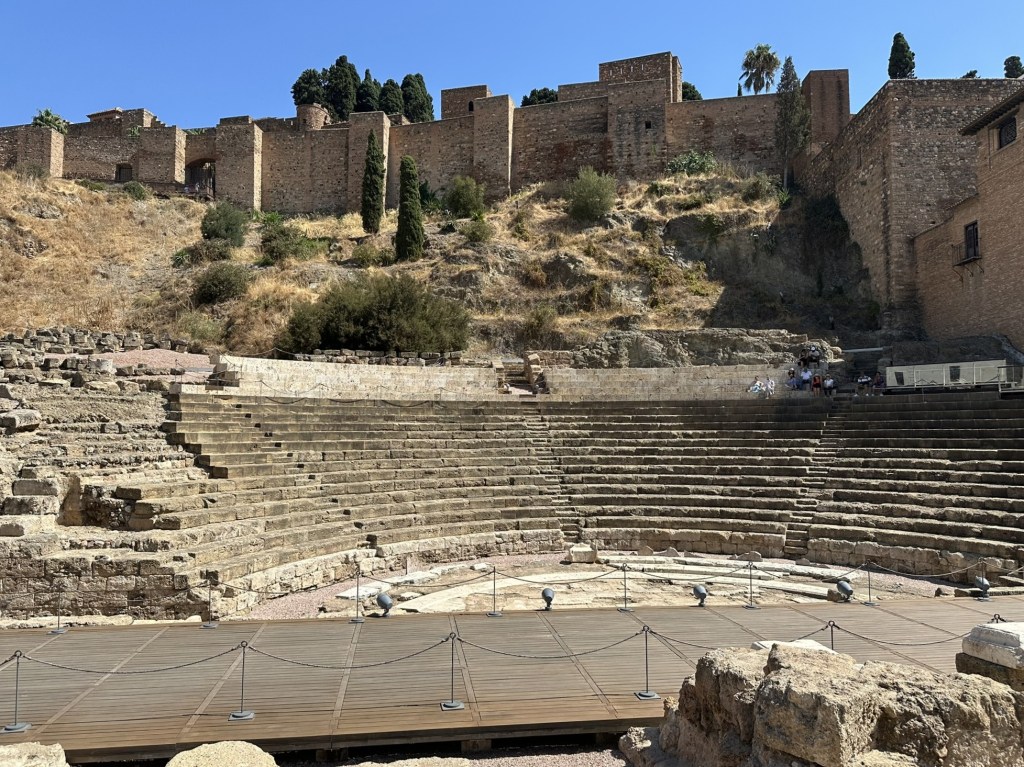
Right in the heart of town lies a Moorish calabaza atop a Roman amphitheater. The history half of WolfeStreetTravel was delighted.
Cool little tapas tour our first night; it turns out that maybe we DIDN’T need to pack 45 cigars for the trip (which we certainly did).
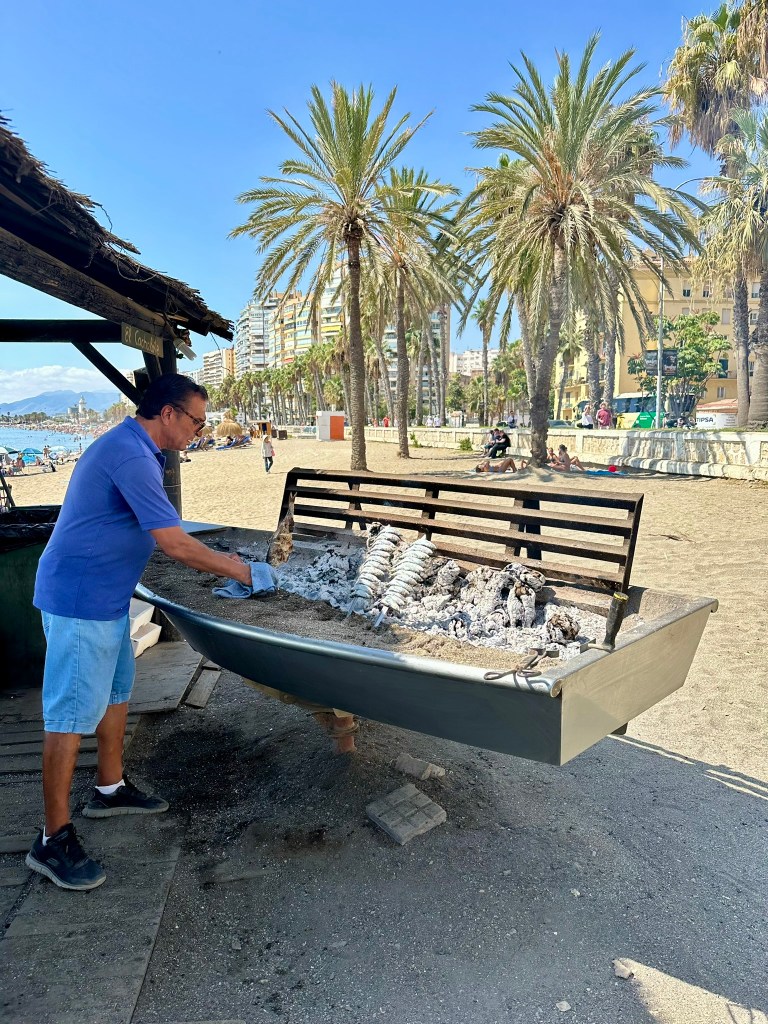
One of our goals? Chow down on espetos at a chiringuito – a beach fish-grilling restaurant (which we learned about on The Amazing Race, for what it’s worth).
Definitely lived up to the hype (especially accompanied by a few tinto de veranos).
A stopover in Marbella en route from Malaga to our next town. Despite high expectations for a super awesome area – meh.
After months of the Mediterranean (first in Croatia on the initial bookend and then in Mallorca, Valencia, and Malaga on this trip), we transitioned to the Atlantic after driving past Gibraltar to get to Playa Zahara de los Atunes.
Where we stumbled, during our only night there, into a cool little concert at a beach bar down the street:
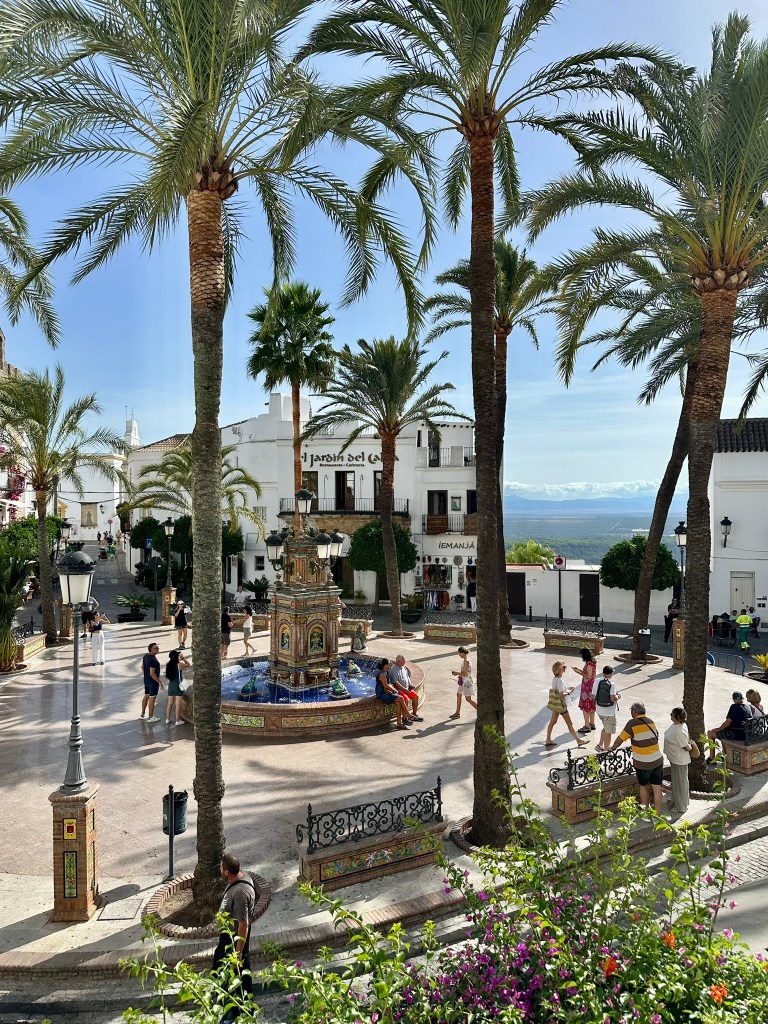
Continuing our little U-shaped arc around Andalusia, we headed next to Conil de la Frontera (our third de la Frontera, designating a frontier town between Christian and Moorish territories in the 900s):
Fried fish frenzy.
And a little day trip to Vejer de la Frontera:
Even more atmospheric Andalusian town (and our forth de la Frontera):
More beach fish at Playa de la Fontanilla:
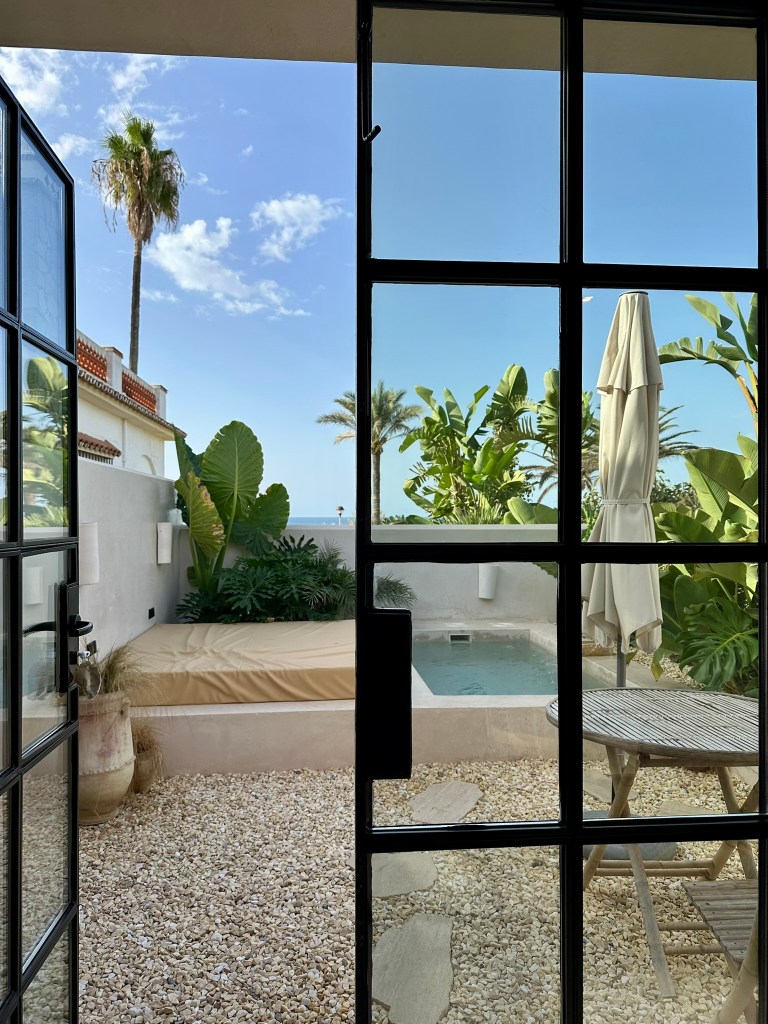
And our casita for 2 days right down the beach. One of the best AirBnBs we’ve experienced (plus a laundry stop):
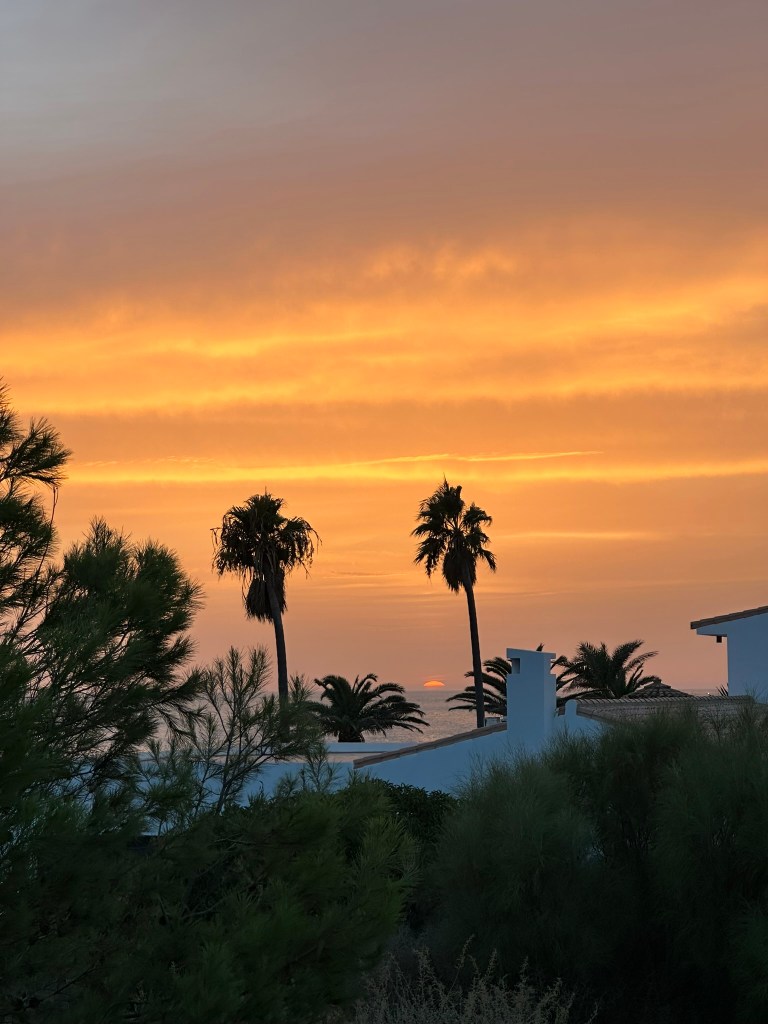
Amazing sunsets from the casita’s roof deck:
Then, back to Seville, which we really enjoyed when we first visited in 2017.
Never got to see the “mushroom” during that visit; this has been corrected:
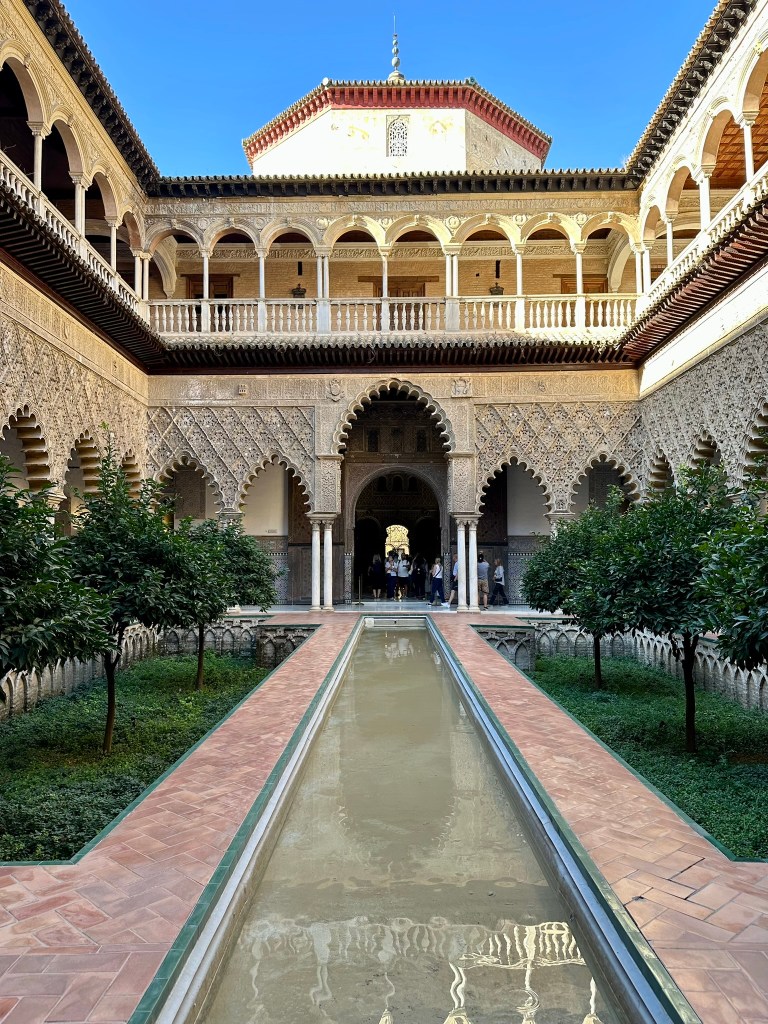
And we spent our limited time in 2017 visiting Seville’s storied cathedral and did not have an opportunity to visit its alcazar. This also was corrected:
And, reminiscent of our days feasting on pinxos in San Sebastian in 2021, a dinner in Seville that included baby eels. Delicious.
Seville served as our last stop in Andalusia; from there, we flew to Porto, Portugal, picked up another car, and headed immediately east to the Douro Valley – Portugal’s wine country.
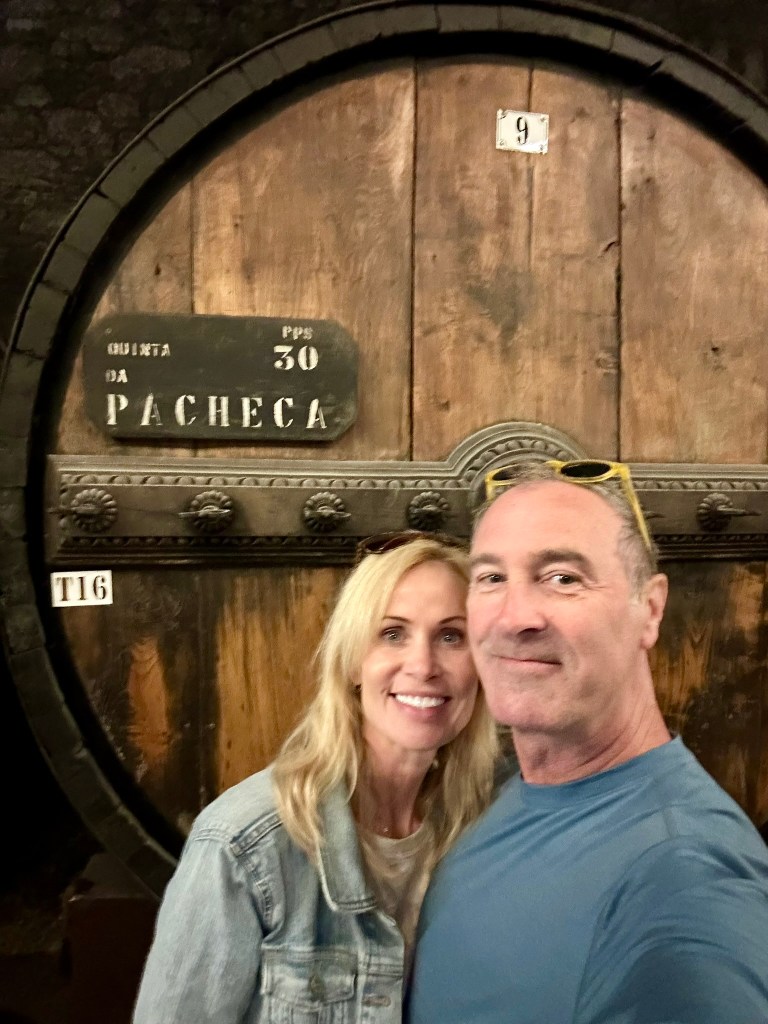
Our first stop – literally straight from the airport – was a tour and tasting at Quinta da Pacheca. Good wine. Great port.
And the Douro Valley wineries really DO still stomp grapes, a la I Love Lucy. Pretty wild.
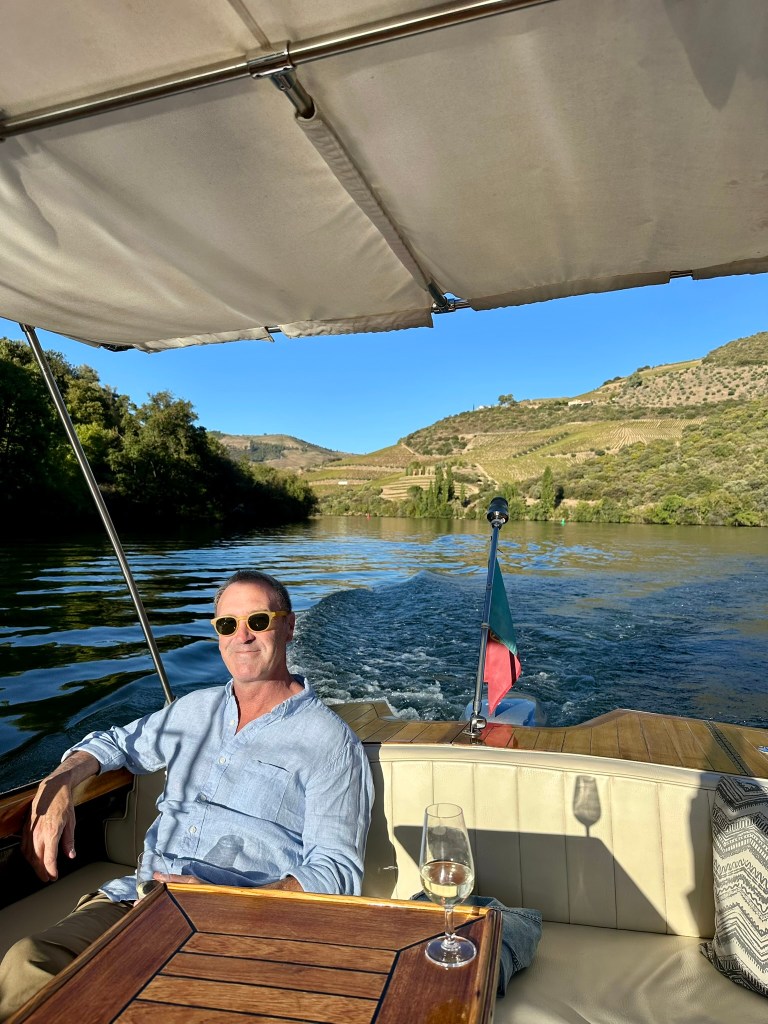
Cool little sunset boat trip on the Douro River:
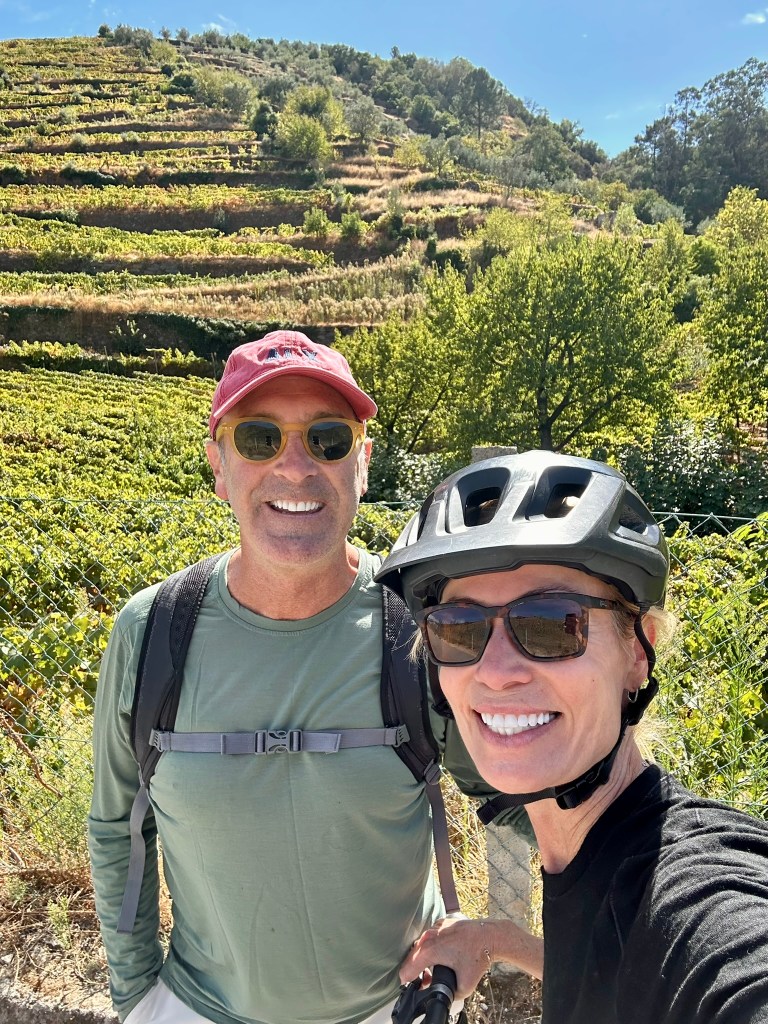
And a full day of biking through vineyards (none of which accommodated walk-in tastings – you had to have reservations, which we thought was insane:
Douro needs to learn lessons from the Virginia (and sure, California) wine region.
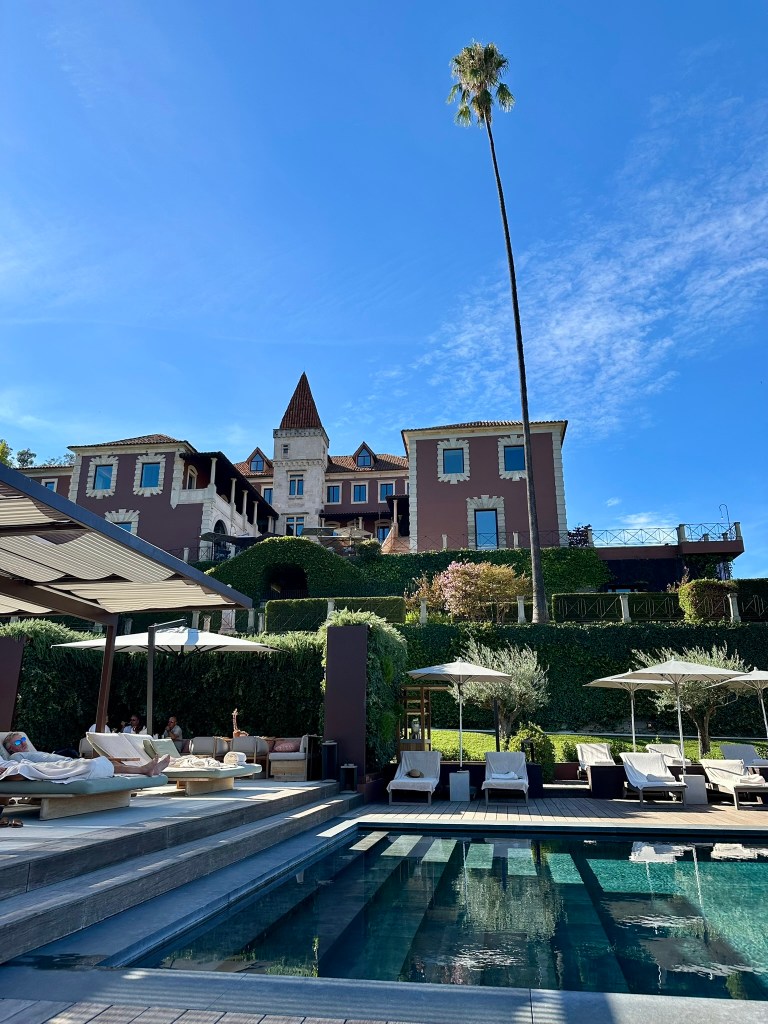
Pretty good digs for our 3-day stay:
The day after biking, we did end up calling and then visiting Quinta de Fojo, which offered an outstanding and authentic tasting experience at a generations-old family winery:
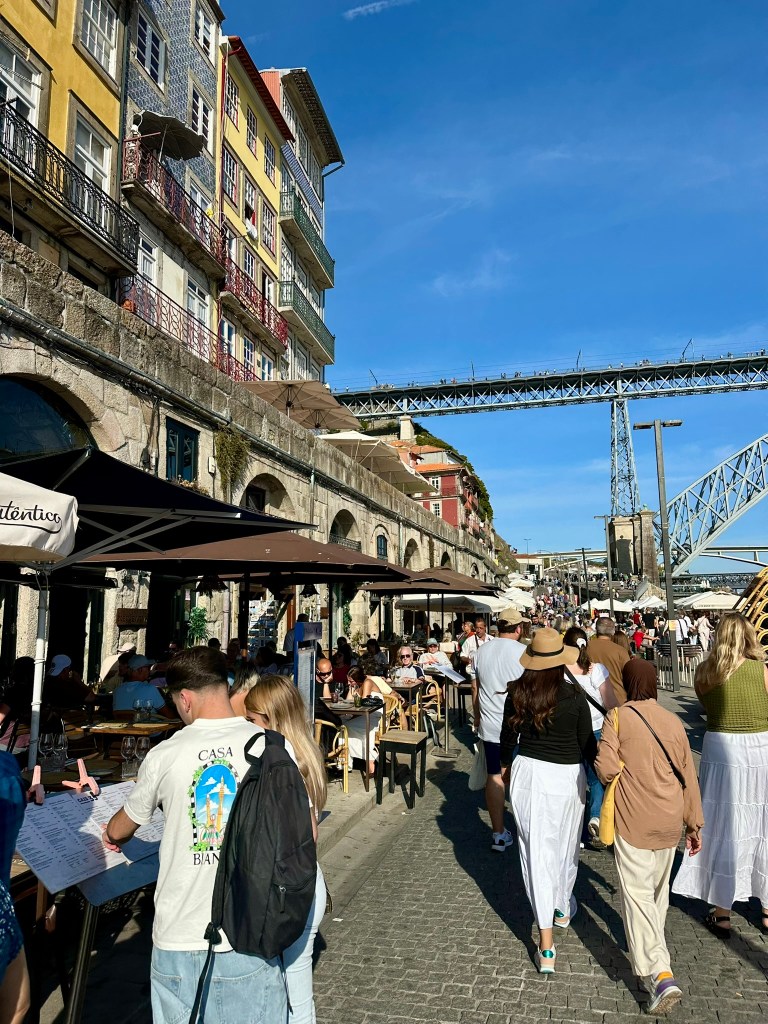
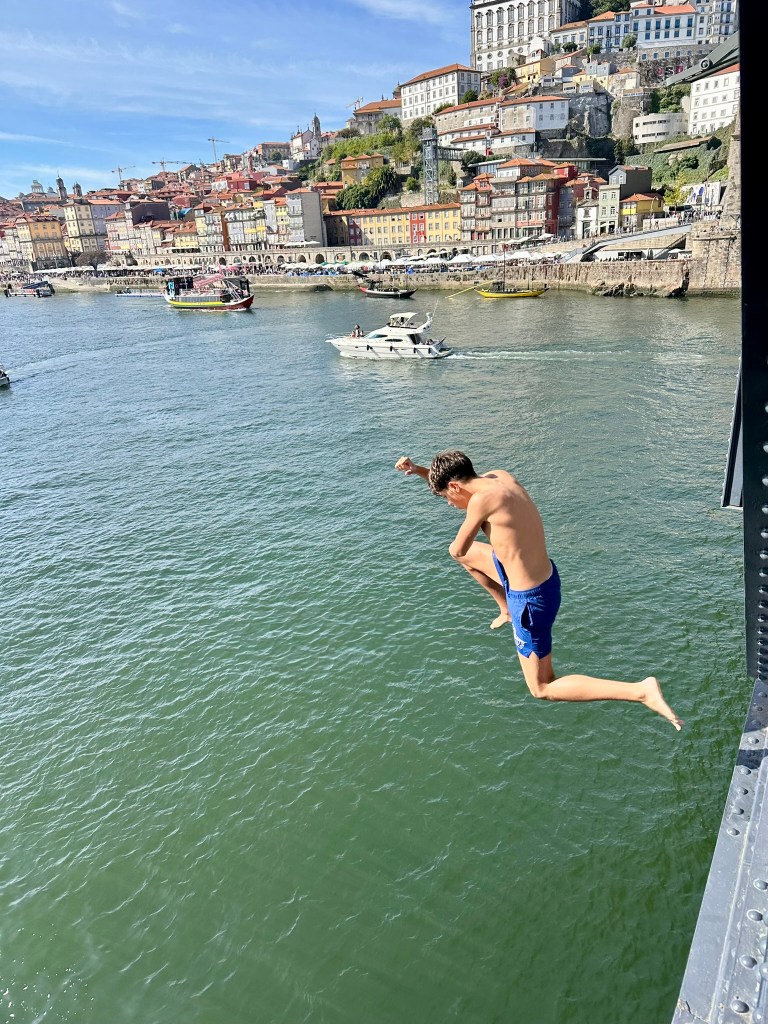
Then, back to Porto for a day; we first visited at the tail end of our inaugural post-retirement long trip in 2023 and definitely wanted to return, even if only for a short time:
Like our second visit to Rovinj, Croatia, a few months earlier, we stayed across the river from Porto’s core instead of inside – definitely a different point of view!
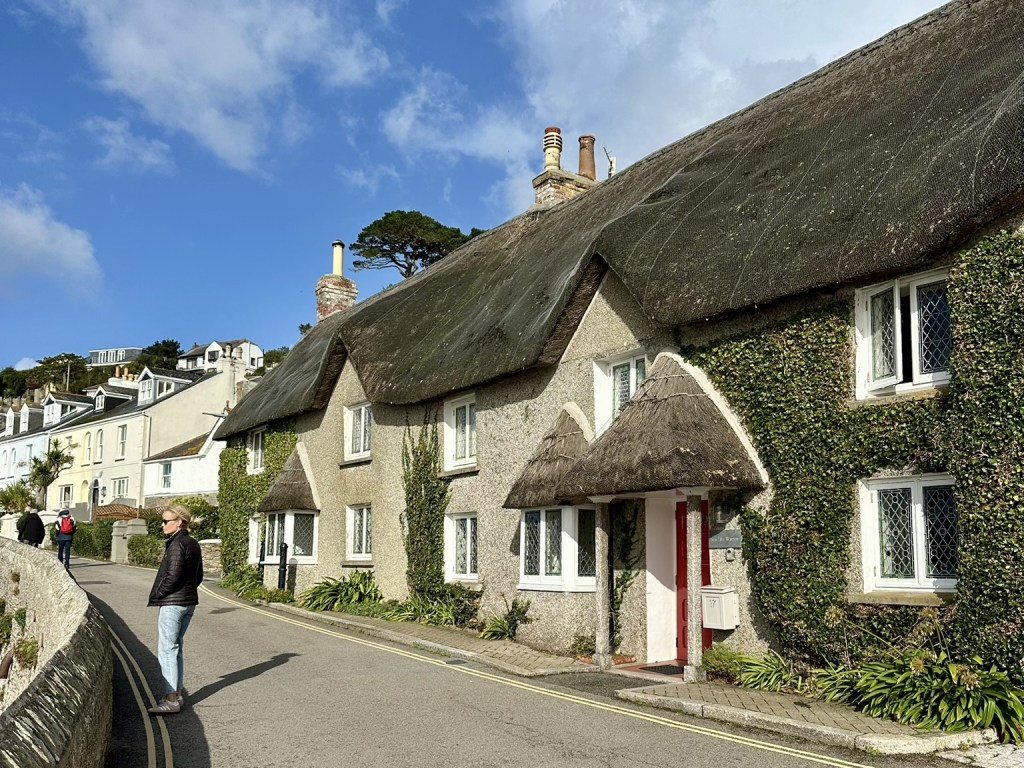
From Porto, we flew to our final leg: Cornwall in the southernmost tip of England:
Due to the length of the drive from London to our first Cornwall location (we try to keep drives between locations under 4 hours, and ideally no more than 3), we stopped halfway in the town of Frome, in Somerset:
Turned out to be pretty cool, and with a remarkably high ratio of pubs to people, which was a plus for us:
Then, to our first stop in Cornwall – Padstow:
Rather than stay in town, which was a little bereft of cool lodging options, we stayed about 10 minutes away, at. . . The Pig. Which was a cool lodging option, it turned out:
But we did get into town our second night to dine at The Seafood Restaurant, the flagship eatery of Rick Stein, who we had never before heard of, but who turns out to be a beloved English restauranteur and a seafood magnate in Padstow (the restaurant was one of at least three Rick Stein joints in town):
And on our first full day, our real purpose for visiting the region: spectacular hiking. In this instance, a quasi-loop hike between the achingly charming village of Port Isaac to the even smaller hamlet of Port Quin:
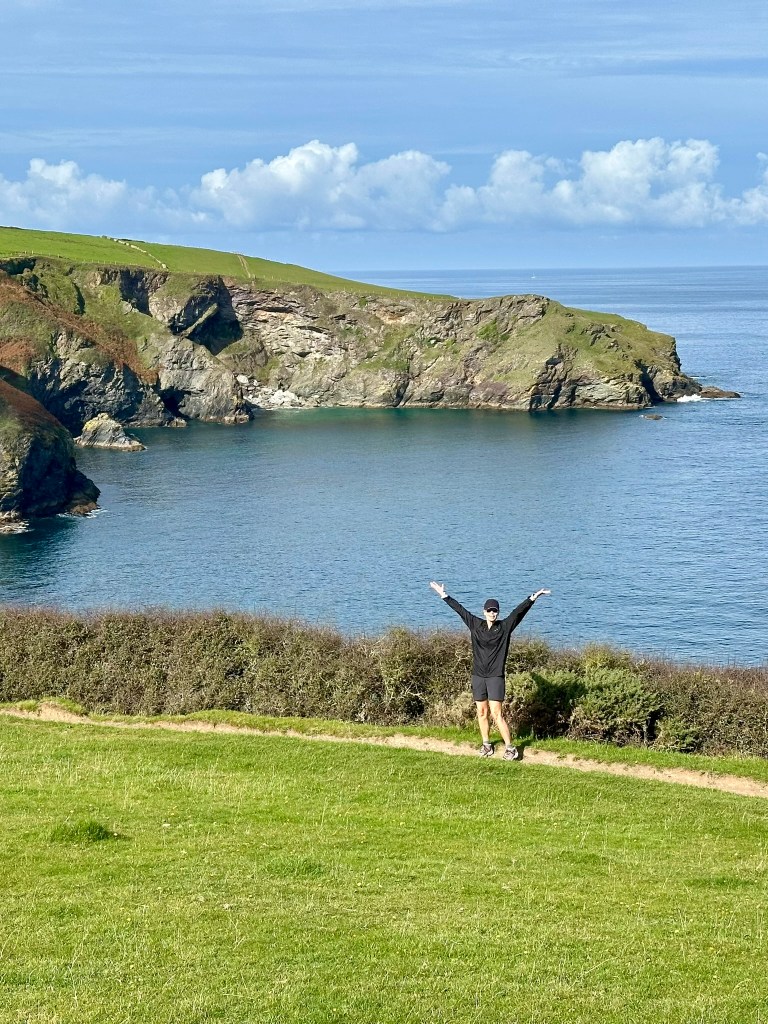
The hike exceeded all expectations:
Our excitement manifested itself in different ways, to be sure:
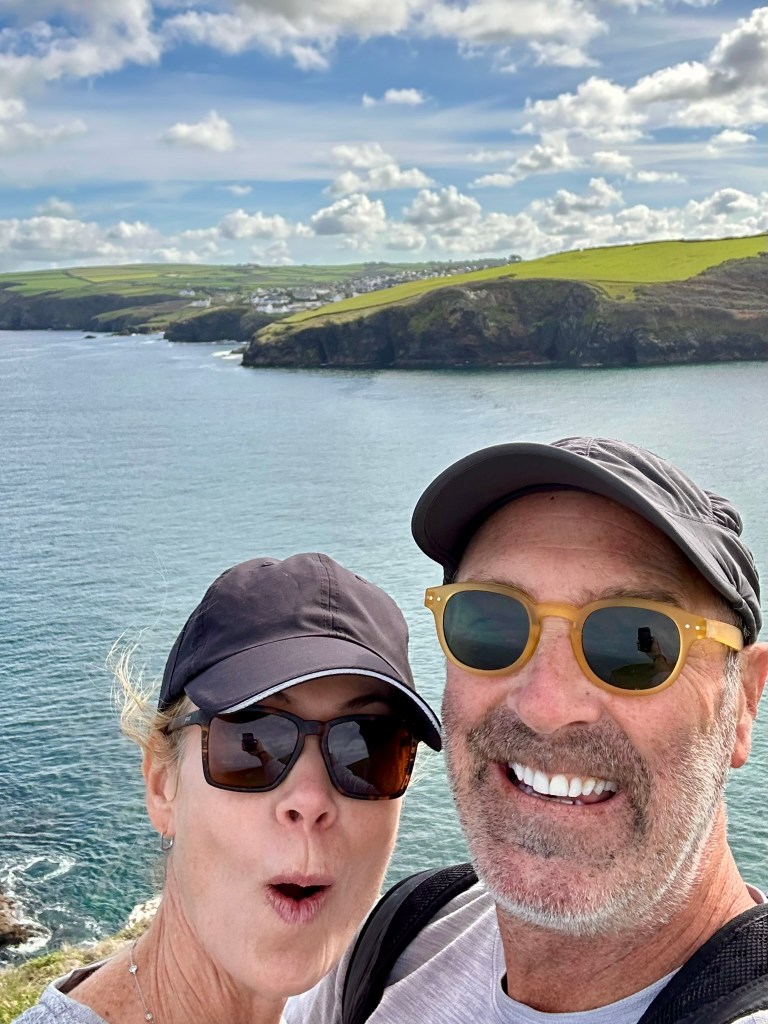
Port Isaac in the distance:
The local cows seemed excited to see hikers come by, since all of them crowded the fence when they saw us coming:
Our reward once back in Port Isaac? The first of several fish and chips (less than half a dozen during this trip, much less than the daily dosage we sought in our 2-week Cotswolds and Wales trip in 2022 that packed on so many pounds that we had to wear muumuus when we got home):
Our next hike en route from Padstow to St. Ives represented the most iconic views from the British TV series Poldark, which essentially inspired this entire leg. At the start of the hike lay the very tin mine that Poldark worked in the show, Wheal Coates:
Cliffside hiking at its best:
Our next base, St. Ives:
(Which always seemed to be at low tide during our stay, oddly enough):
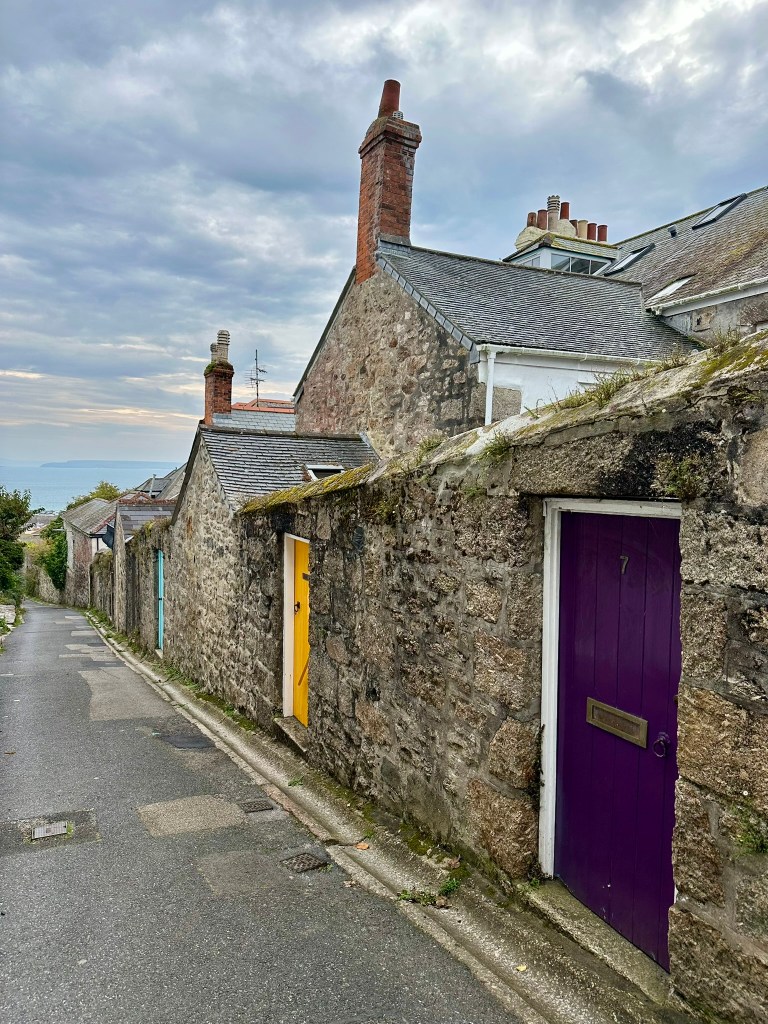
But had a legit, picturesque English port town charm to it, even if most days were overcast (which seemed to amplify the Englishness of it all):
En route to our next hike, we stopped at the Minack Theatre, which was reputed to be an amazing venue for performances on a cliff facing the water. All of the facts were correct, but it was, in fact, meh:
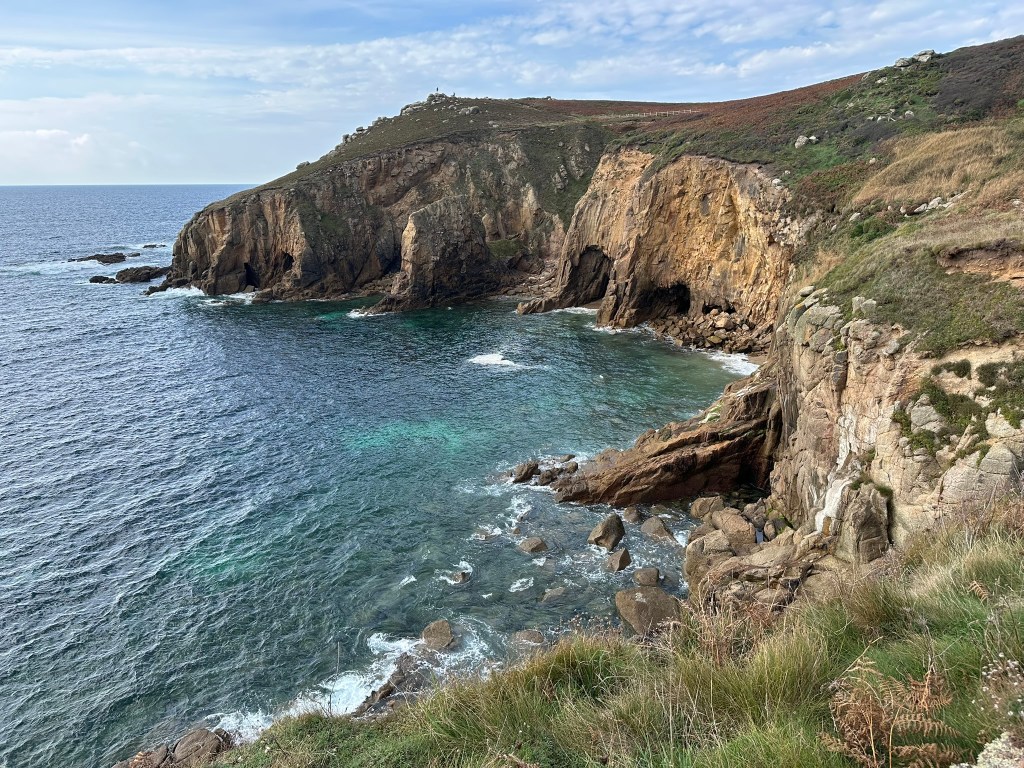
The next hike? Around Lands End! The actual, for real most southwestern most point in England (and the UK):
More unbelievable Cornish cliffside walks:
Then, around the horn of Lands End and on to the first of our last two Cornish stops: Falmouth.
Meh.
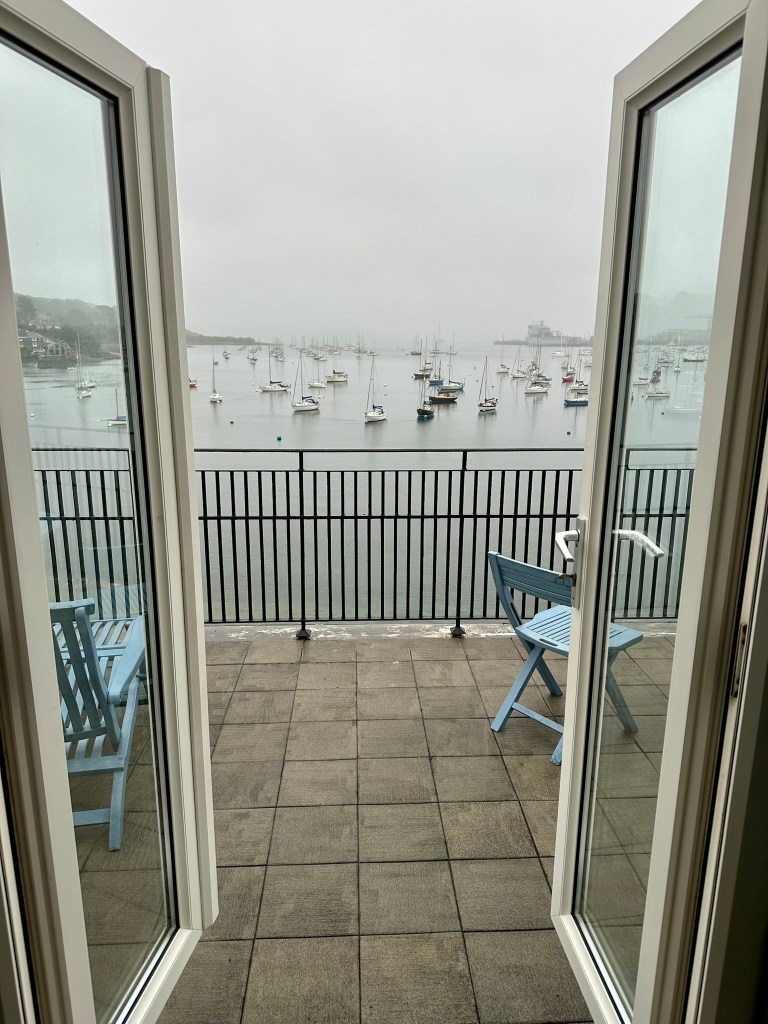
The weather during our stay may have, however, influenced this assessment:
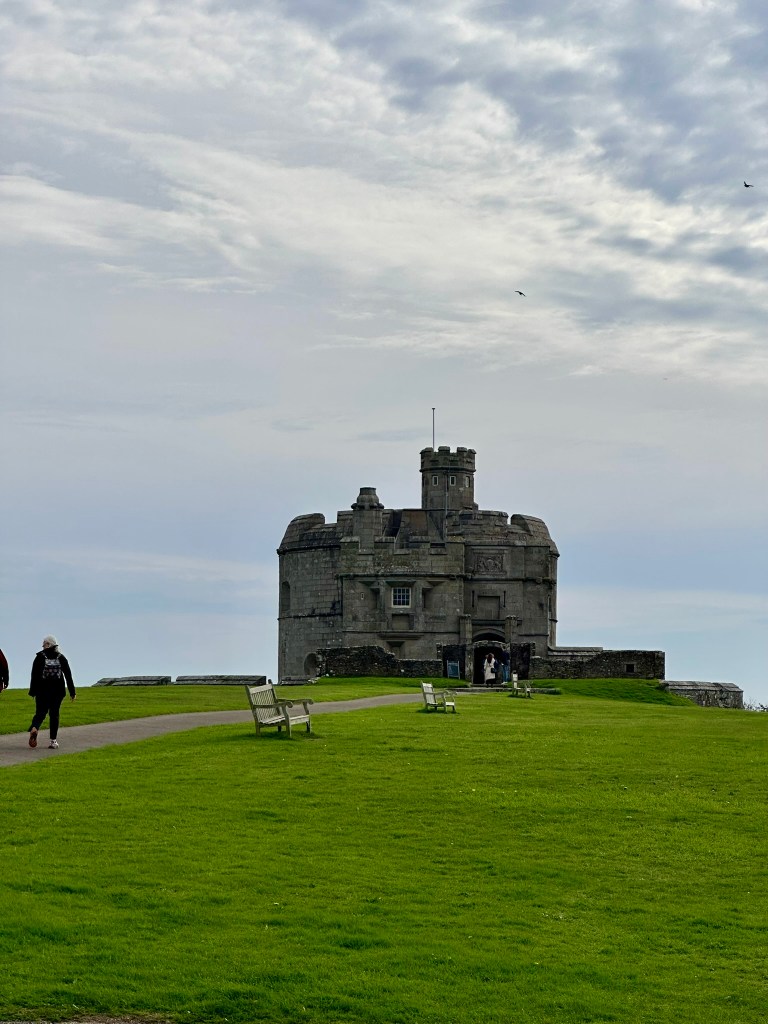
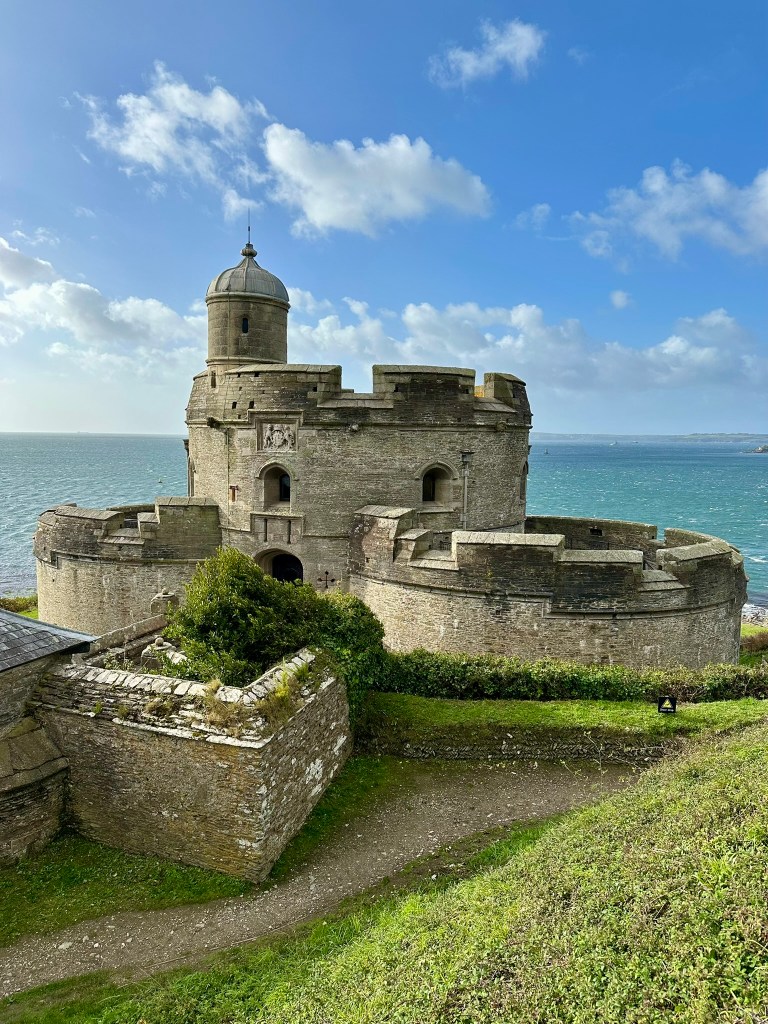
And the final Cornish stop, St. Mawes. More shitty weather, but a super picturesque Cornish seaside village:
And, of course, the weather improves the day we depart:
On the way back to London (by way of Sherborne), we literally drive right by Stonehenge. It turns out that we never actually needed to buy the entrance fee in 2022!
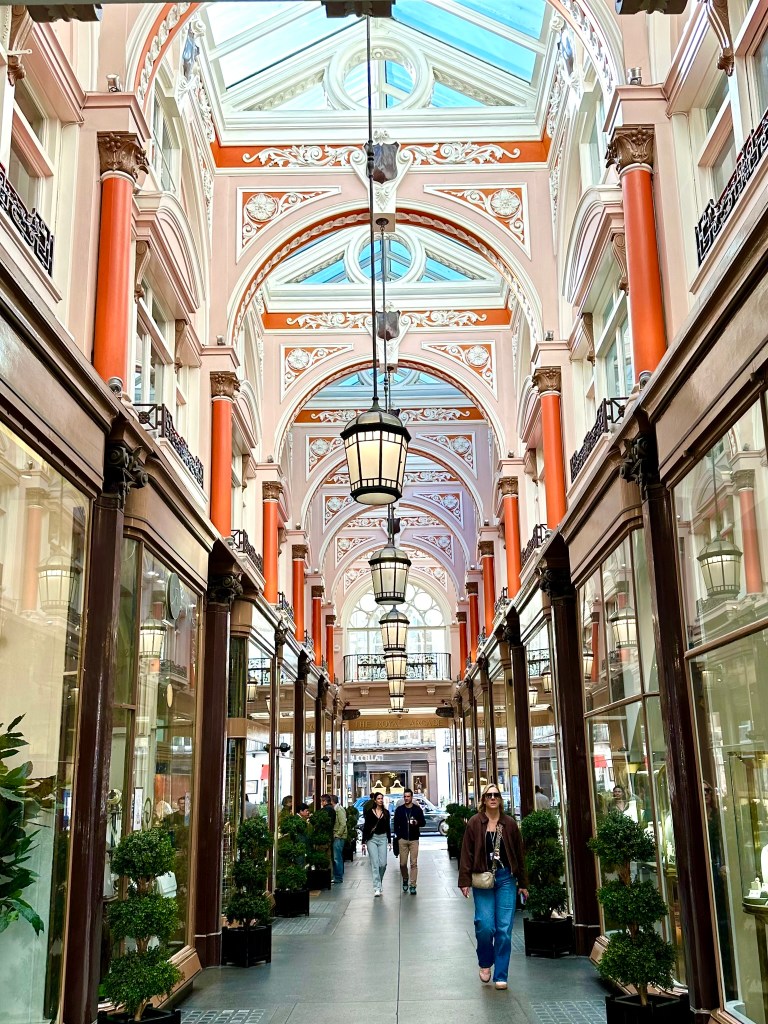
One of the many block-bisecting arcades of London, our final stop.
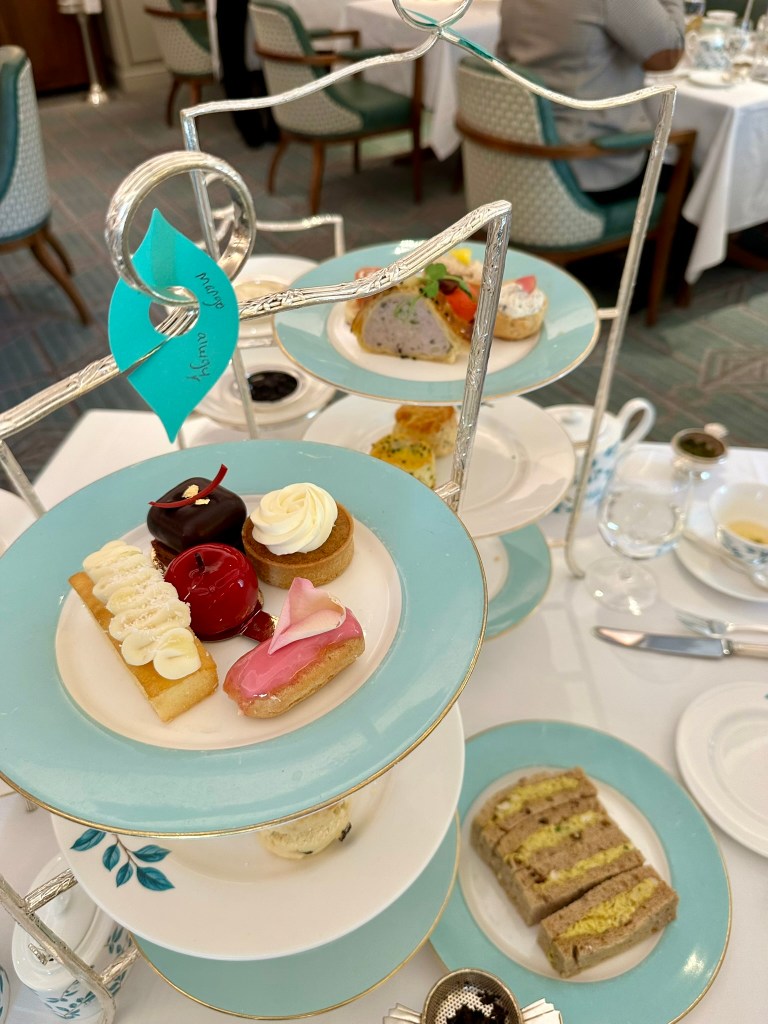
This was our fourth stay there, and we base ourselves in a different neighborhood each time – this time was Marylebone. Also, since we forewent the whole high tea experience on each of our previous three stays, we concluded that the fourth time was the charm:
The next day, a visit to London’s 3rd century Mithraeum, discovered beneath the modern city in 1954. This was a Roman temple dedicated to the god Mithras, a mystery cult popular among soldiers in the 2nd and 3rd centuries and could have continued to be more popular than early Christianity as an alternative to the traditional Roman pantheon had it not been for the pivotal backing of the latter by a couple of Roman emperors.
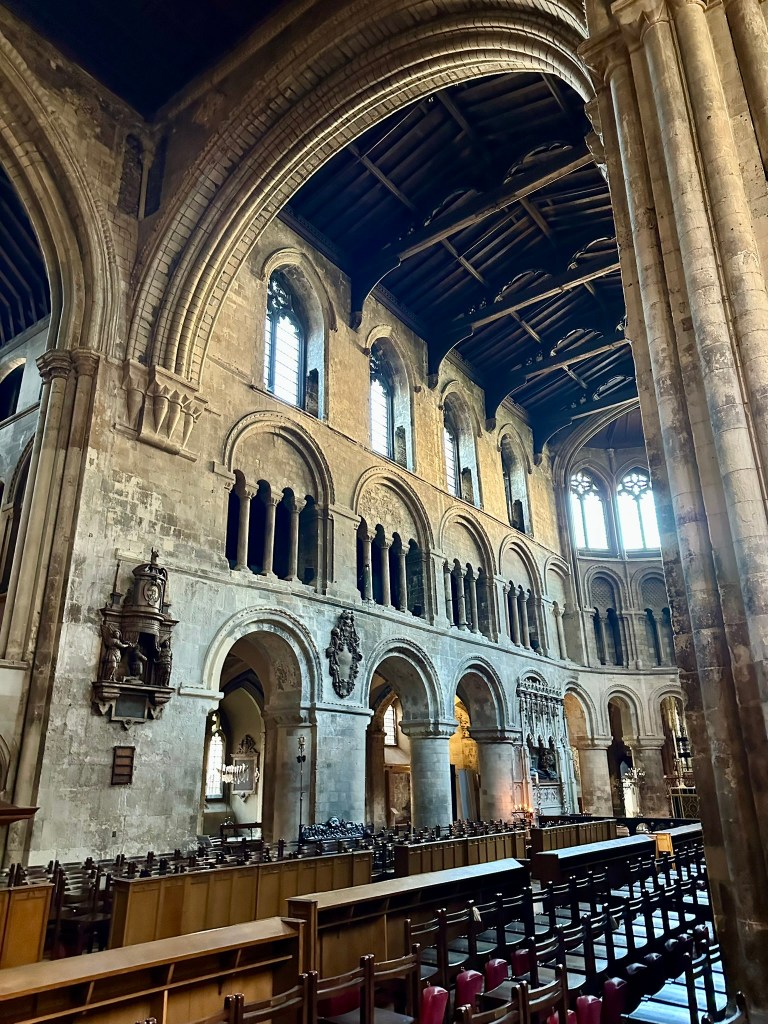
And a visit to St. Bartholomew the Great church, founded in 1123 – London’s oldest surviving parish church and a rare masterpiece of Norman architecture. Its Romanesque nave and medieval chancel evoke nearly nine centuries of continuous use, surviving the Great Fire, the Reformation, and the Blitz.
Definitely a historic end to an epic 6-week journey of 5 legs!
We’re definitely done traveling for the next few months – we need a break and some recovery time to revel in the most appealing town of all: Old Town Alexandria. So, this is where we’ll hang and try (really try!) to post some of the growing backlog of trip photos that are piling up (and have, in fact, now contributed to maxing out the storage capacity to the home PC, prompting a replacement).
Our first, 6-week, shoulder-season session of 2025 is complete! We’ve had a yen to return to Europe after our last five trips, all of which have been elsewhere, including and in particular our last three, long-duration trips to French Polynesia and New Zealand, South America, and New England and Canada. We also wanted to get out of stifling Alexandria for the summer like we did last year with the New England and Canada road trip, during which we fled Old Town for the entirety of July and August, as well as the first week or so of September.
The problem with this convergence – return to Europe and get out of Dodge for the summer – is being in Europe in the summer. This we were not keen on. Not only are all of the spastic Germans, Dutch, and English rampaging all over the continent during the high season, but too many Americans are there now, too. We love traveling, but we hate crowds, abhor lines, and are not too keen on being around other tourists. We’re super hypocritical like that.
Our imperfect solution? Avoid the high season and instead head to Europe for two, 6-week trips during the shoulder seasons that flank the insanity that is July and August in Europe. The first trip would hit the early summer shoulder and the second would take us to Europe in the very late summer / early fall. Our strategy would (hopefully) grant us sufficiently warm weather for swimming (in the locations where we’d be coastal) but still avoid the crowds that come with the hotter peak periods. However, our strategy would not get us out of steamy Alexandria for the peak summer period, so there’s a downside.
For the first trip, we’d finally return to Croatia and explore this country more. We spent about 10 days in Slovenia and Croatia in 2007 and loved that trip so much that when people ask us our favorite country, we’d almost always respond with Croatia. Despite this, we had never been back, despite returning to Italy, Spain, and France again and again (just see the list with years visited on the home page).
So, we’d spend most of the first, 6-week European road trip in Croatia. And we’d sequence travel here first, over other trip targets, to hit the balance between suitably warm weather and low crowds, and then head to a more northerly location before the real heat hit in early July. What more northerly location has been on our list (and tantalizing us frequently in our Instagram feeds)? The Italian Dolomites. So, we’d spend 11 days there (and South Tyrol), across five locations.
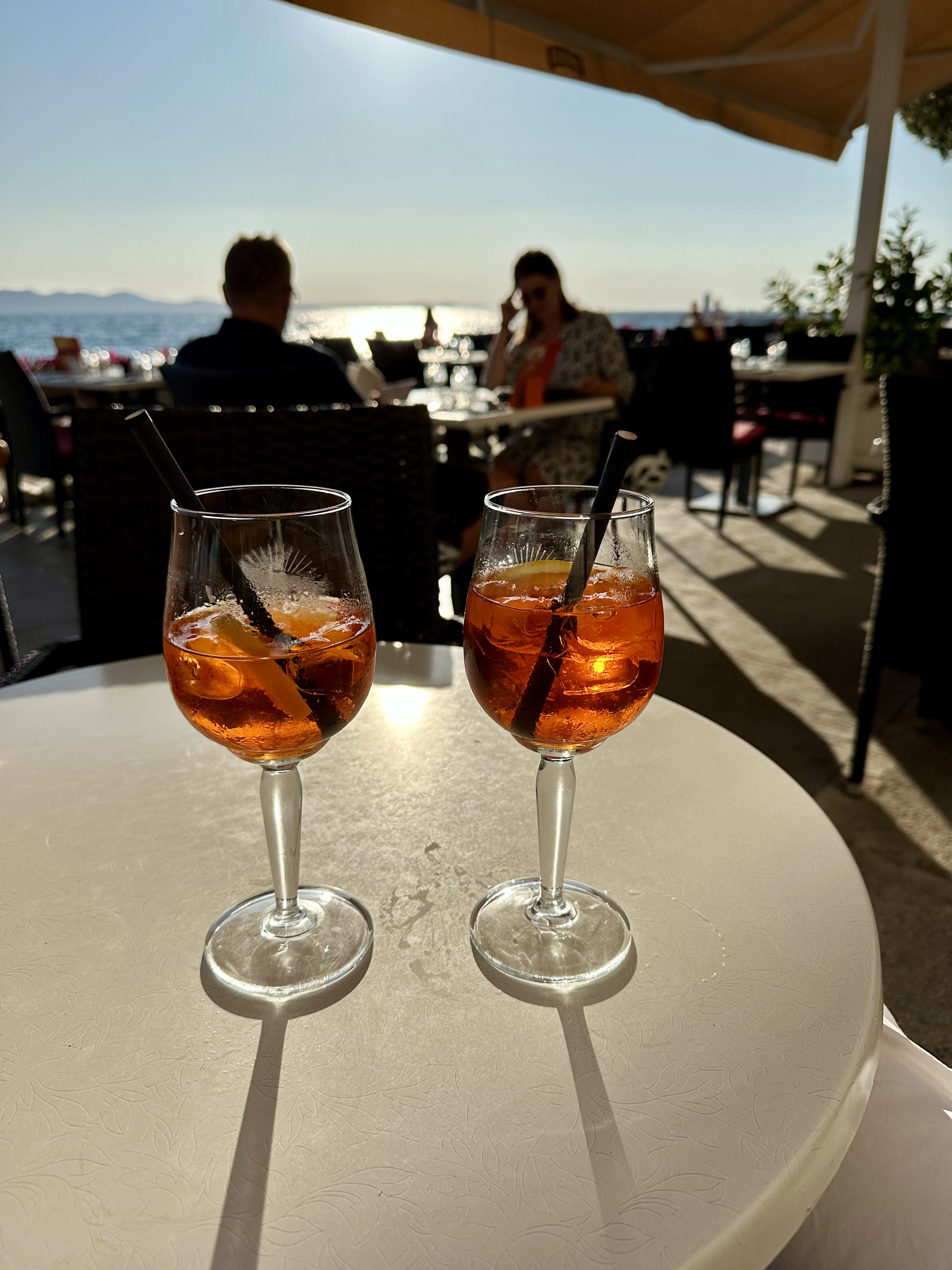
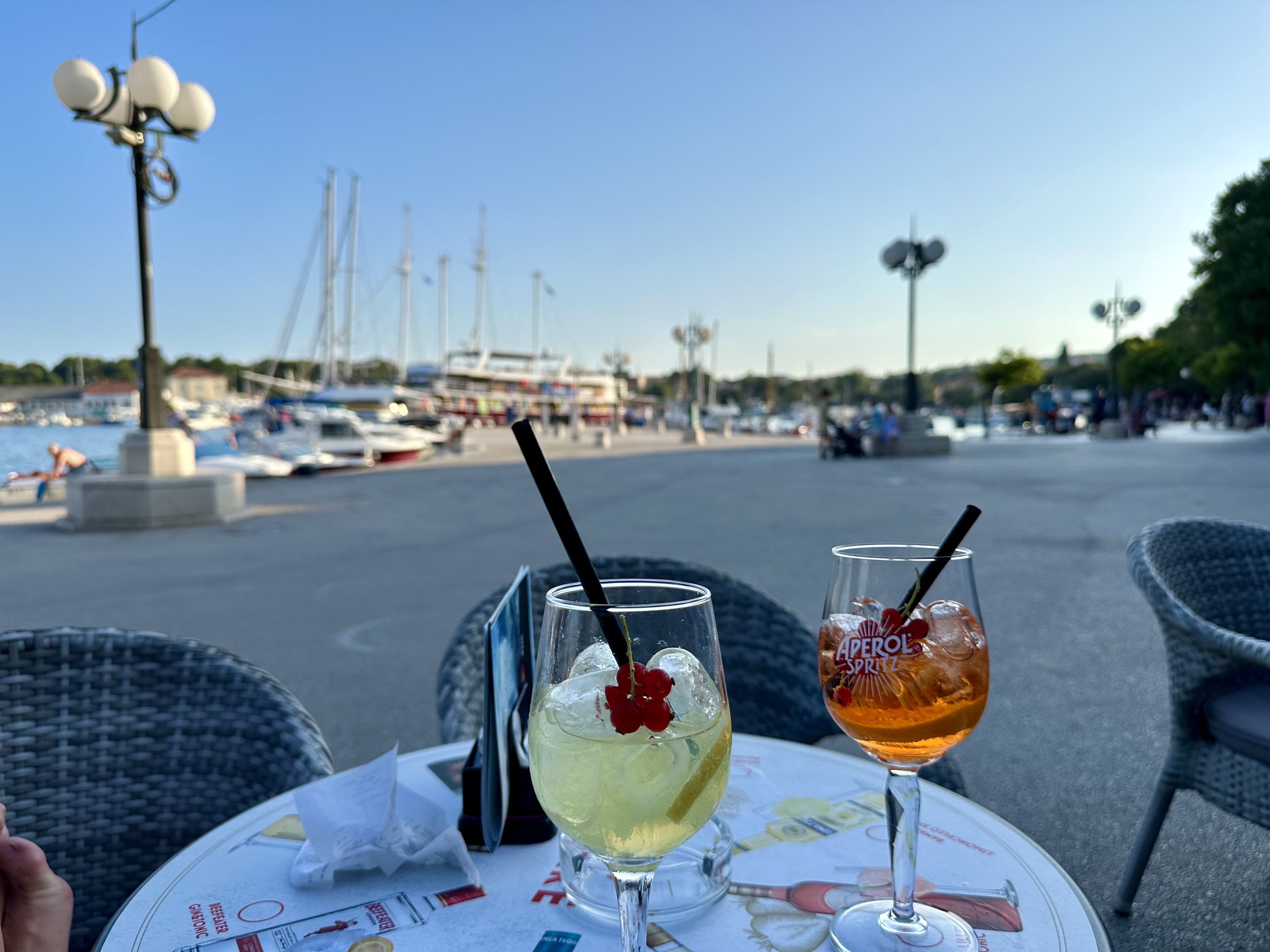
But we’d bookend our time in Croatia and the Dolomites with a few days in a new country to us (no. 81, if you’re keeping track) on the front end (Bosnia and Herzegovina) and a series of Bavarian towns like a string of pearls that has been on our list since visiting Lansburg am Lech in 2008 (the Romantic Road). In short, we’d pick up a car in Sarajevo, drive through Bosnia, up the Dalmatian islands in the Adriatic, across mountain passes in the Dolomites, and into Bavaria, and drop it back off 6 weeks later in Munich. Pretty cool. Plus, we only had to board airplanes at the start and the end of the trip, resulting in much more flexibility in what we lugged around with us (mostly bottles of Aperol and prosecco, if we’re honest here. . .).
The route looked like this:
Before conveying the overview of the road trip delineated in the interactive map above, an acknowledgement: the WolfeStreetTravel’s Chief Adventure Officer – despite his expertise in trip planning earned from arranging scores of trips and overcoming the most vexing of logistical challenges – committed an embarrassing planning error. The route should have formed a perfect J, beginning at the lower right in Bosnia and heading down, then up and up until its conclusion in Bavaria. But as you’ll see at the top of the route above, there’s a weird jug handle at the top of the J. The CAO shamefully backtracked the WolfeStreetTravelers – a cardinal sin of trip planning in our view – at the end of the trip when this could have been avoided.
We flew back out of Munich at the end of that jug handle simply because the CAO (mistakenly) assumed that MUC would be the closest airport to Würzburg, our final Romantic Road town on the Bavarian leg of the trip. It is not. MUC is a 3-hour drive south, back the way we came. Had the CAO done his job and simply compared the driving time between Wurzburg and FRA Würzburg and MUC, he would have seen that FRA was only an hour away. We could have come back a day early and avoided the overnight stay in Munich the day before we flew out (although we also would have missed the chance to stay in another Rosewood, so there was an upside).
With that gaffe behind us, we will proceed to the the trip overview.
Bosnia and Herzegovina
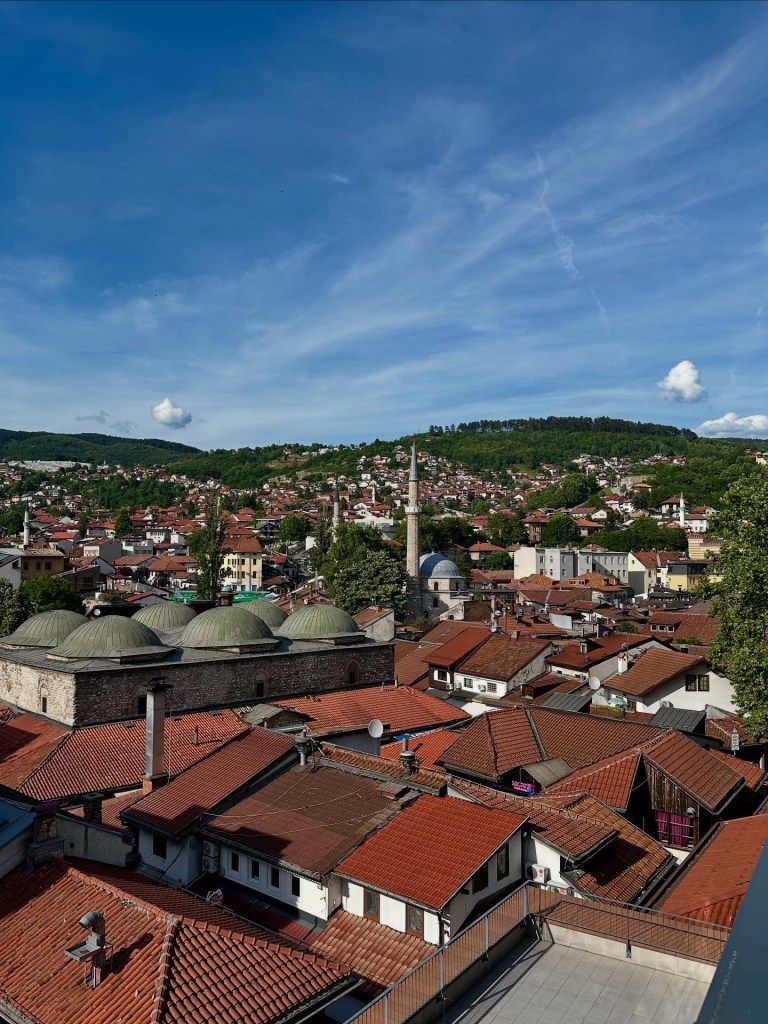
We landed in Sarajevo, Bosnia and Herzegovina’s capital, midday, picked up our car (a brand new Renault Clio with only about 25 km on it) and headed into town. Founded by the Ottomans in the 15th century, the town is still a very Islamic country, much like parts of North Macedonia that we biked through back in 2019.
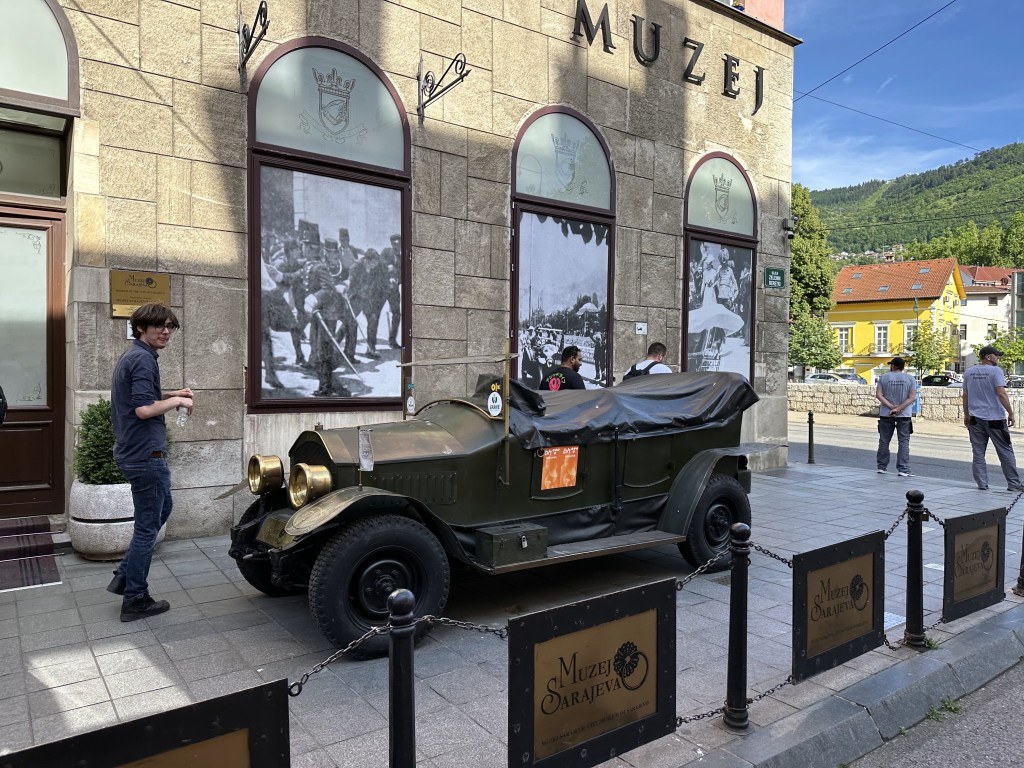
Famously, Sarajevo played the pivotal role in kicking off WW I with the assassination of Archduke Franz Ferdinand – right on this corner here:
The next morning(ish), we headed to our second stop in Bosnia: Mostar.
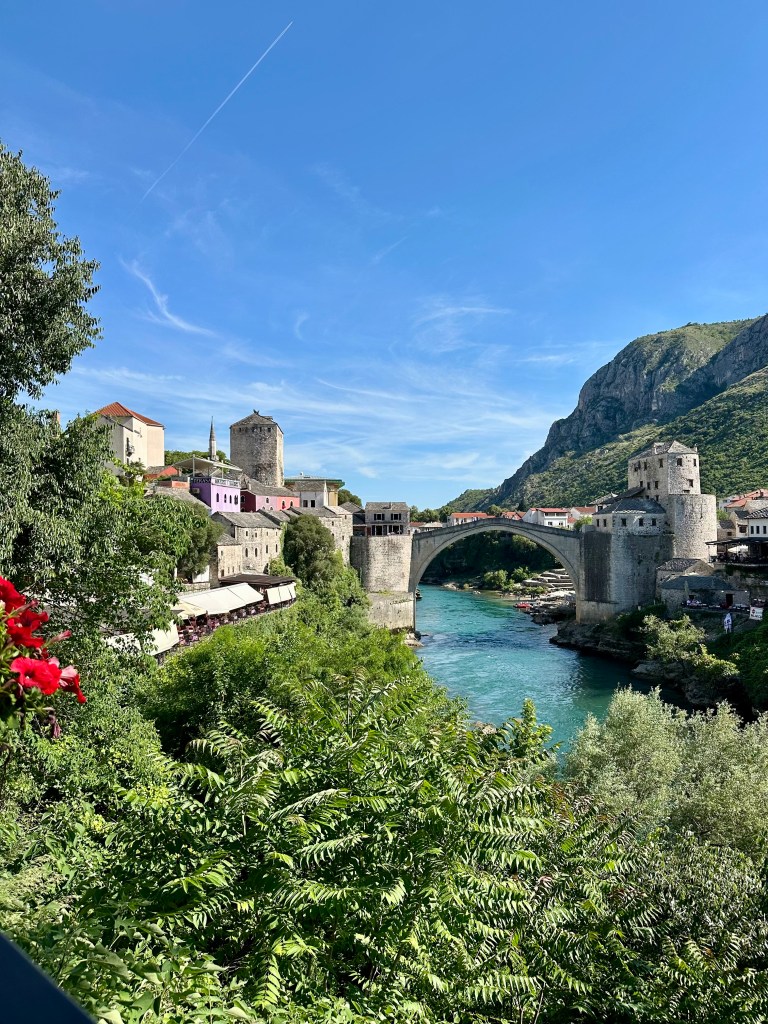
Mostar, established in the 15th century under Ottoman rule, became renowned for its iconic Stari Most (Old Bridge), a symbol of unity destroyed during the Bosnian War in 1993 and rebuilt in 2004 as a UNESCO World Heritage Site.
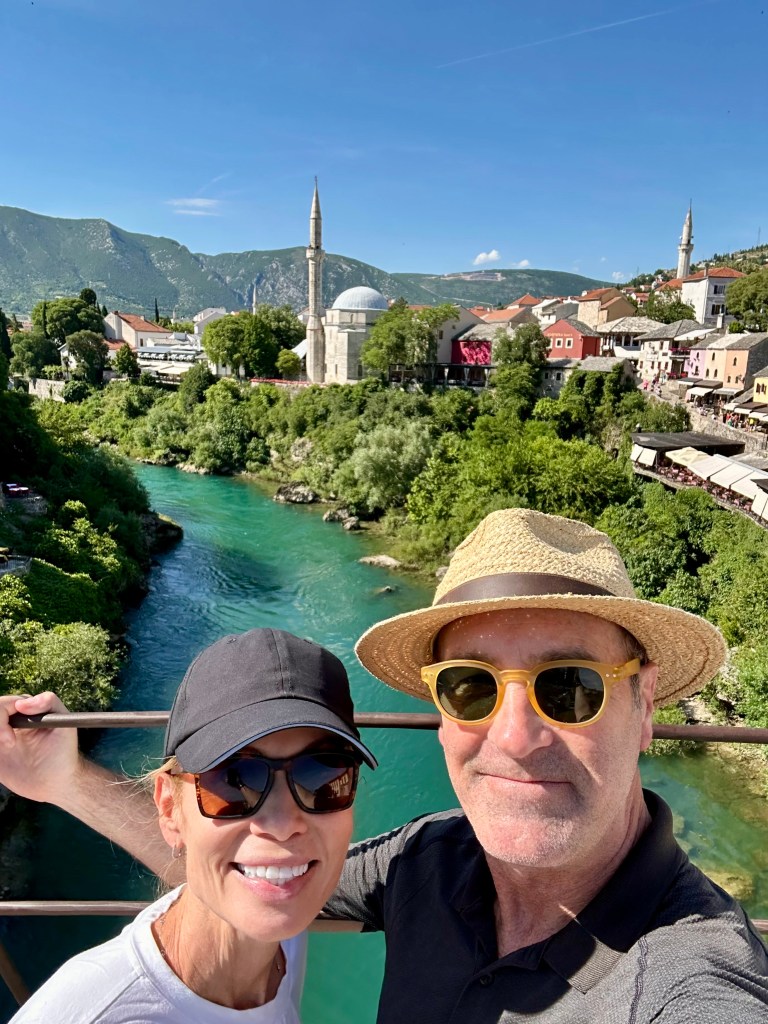
We’d spend 2 days here – pretty cool town.
Croatia – The Islands
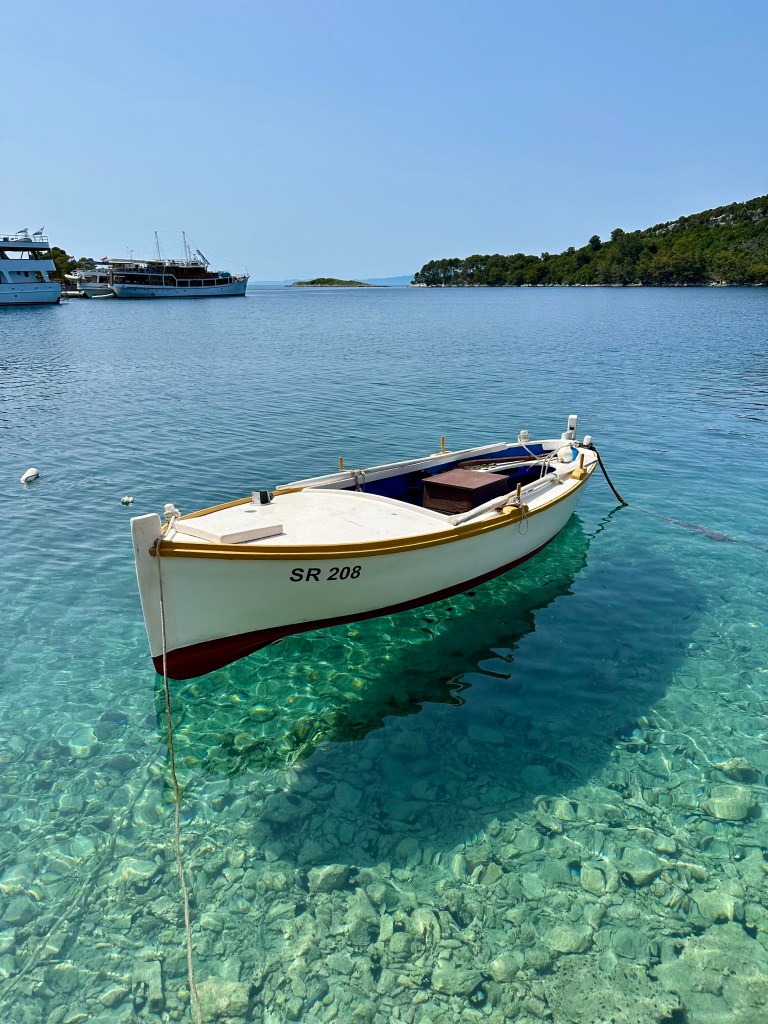
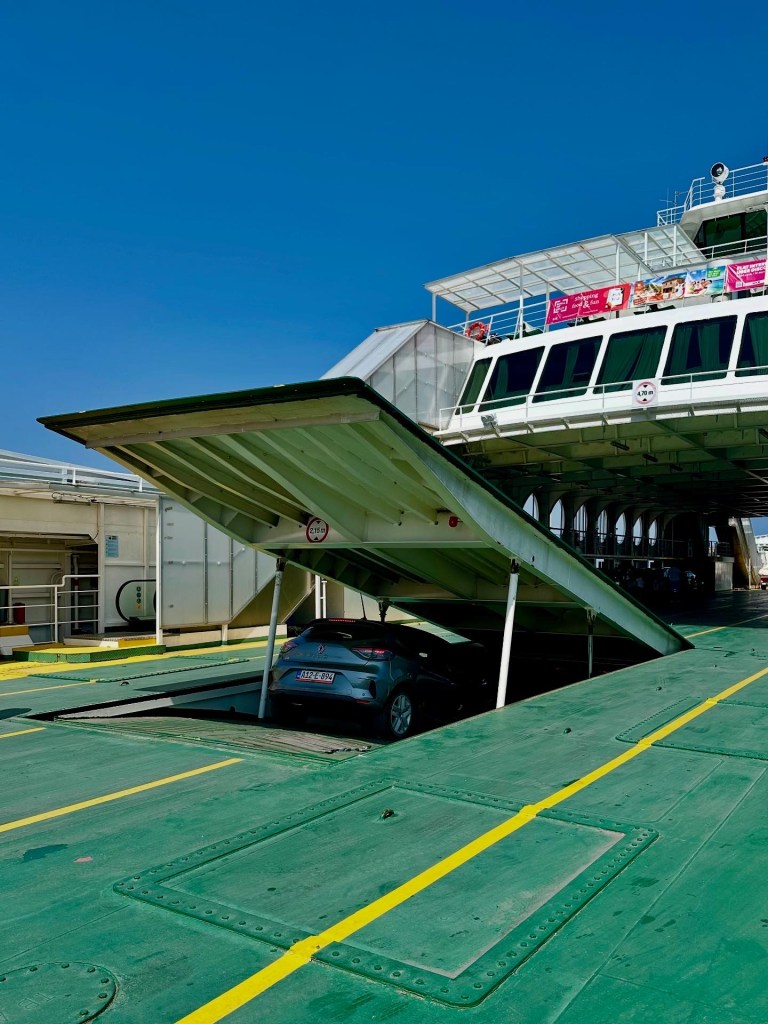
We then headed across the border and, via our first of five ferries, across a straight in the Adriatic to the Croatian island of Mljet, which is home to a really nice national park.
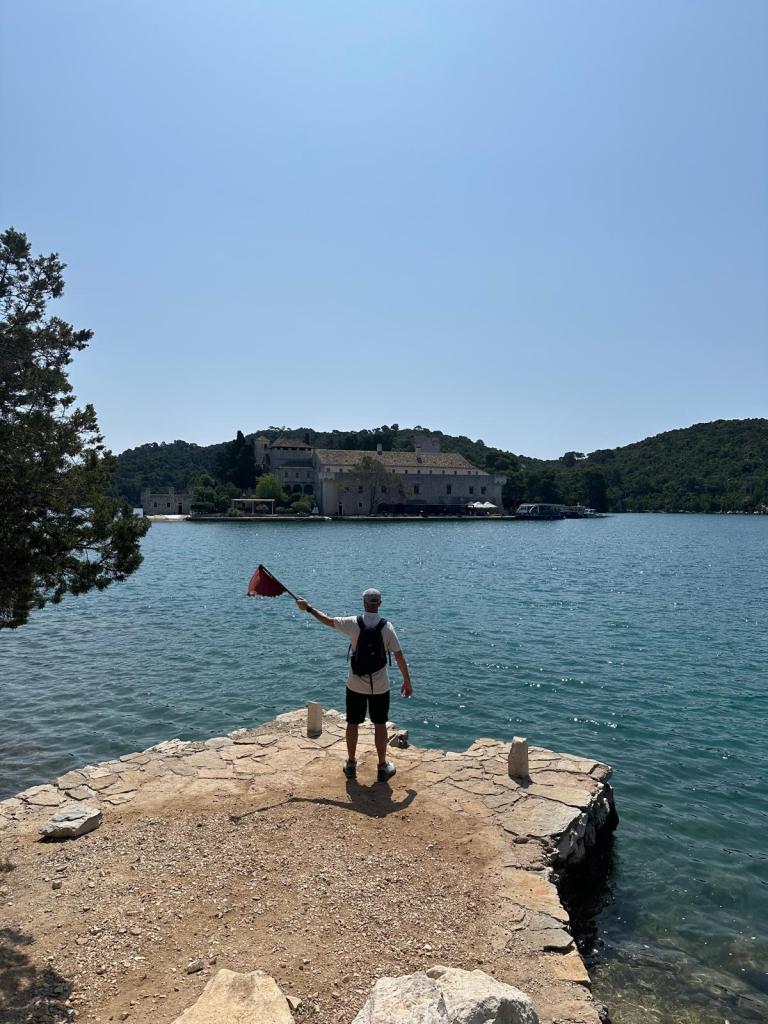
In the middle of which is The Benedictine Monastery, built in the 12th century on the islet of St. Mary in Veliko Jezero. You get there by waving a red flag on shore to summon a boat.
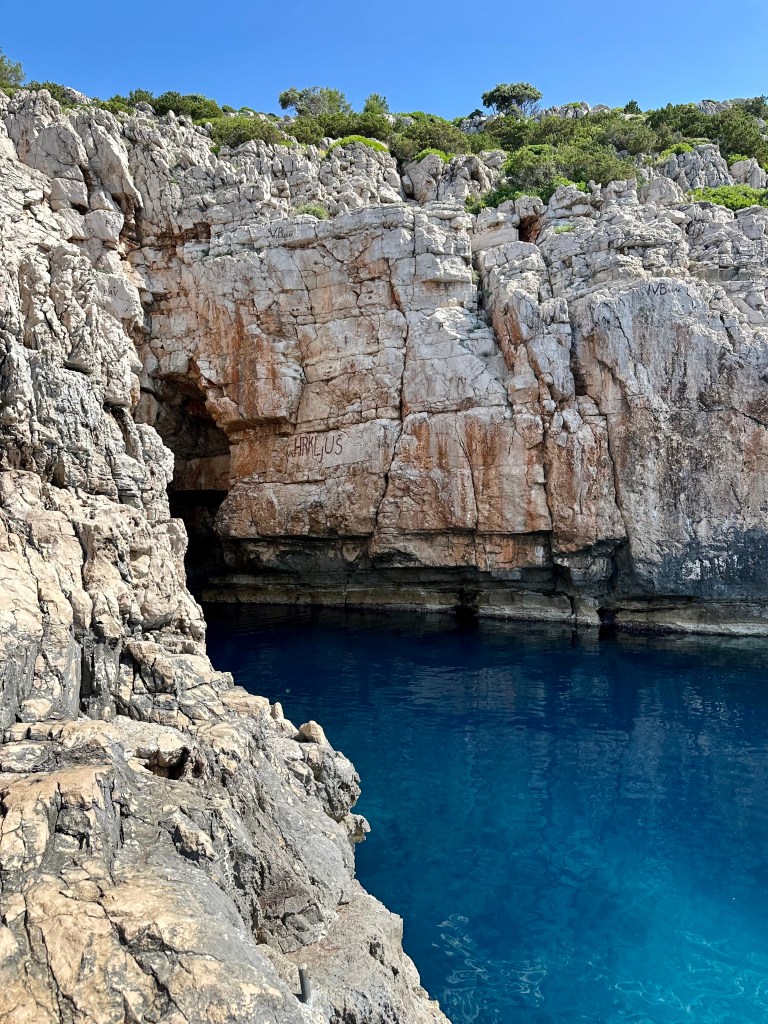
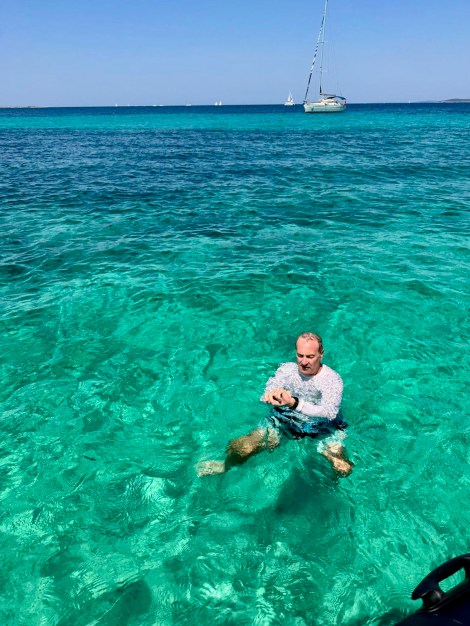
Probably our best (and first) swimming experience of the trip diving off the rocks at Odysseus’ Cave and swimming in and out of the cave in the awesome azure water.
After 3 days on Mljet, we headed off to our next destination. . .
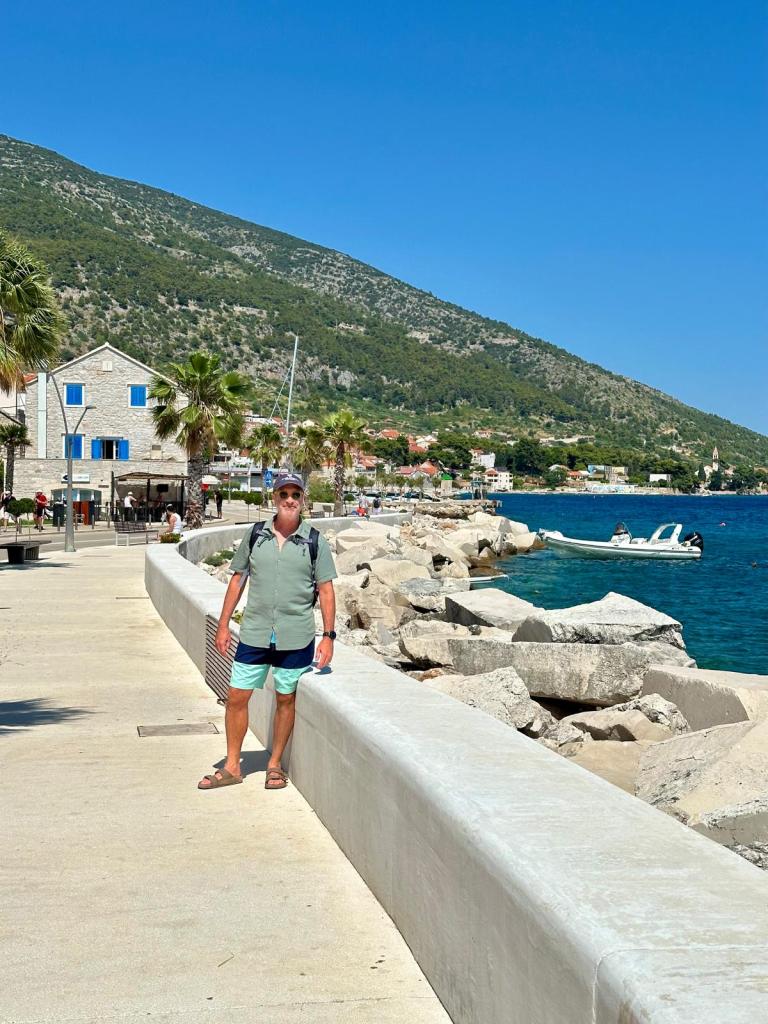
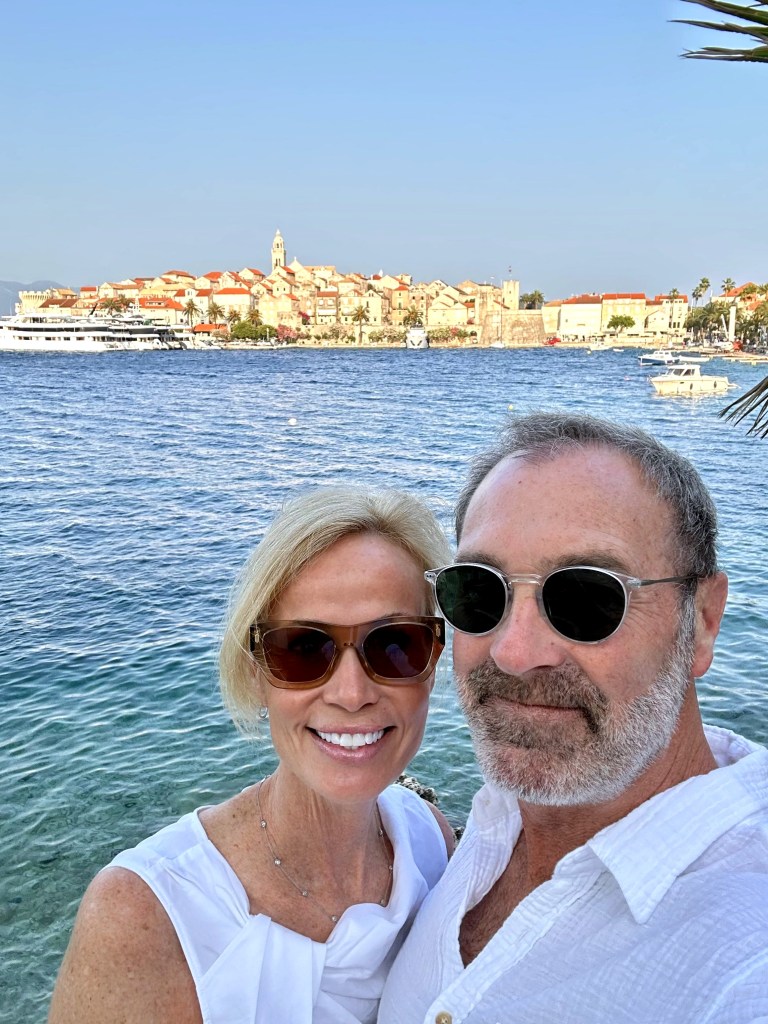
The island of Korčula. One of our two favorite stops on the trip. Our AirBnB here may have been a factor.
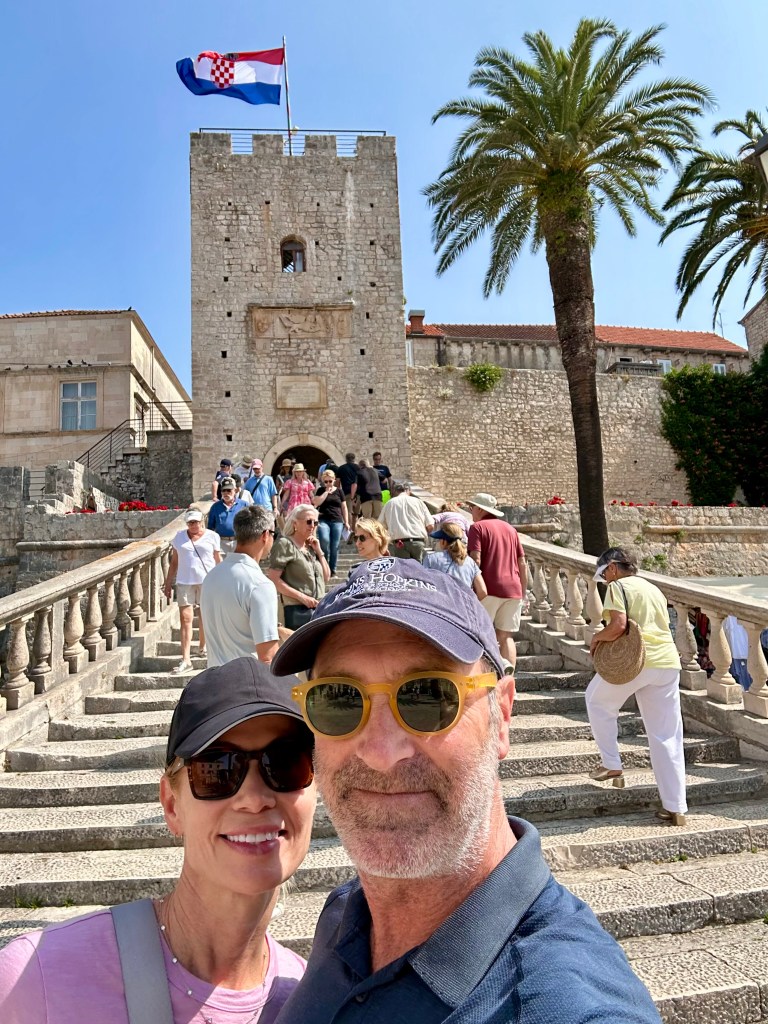
Korčula’s Old Town had a great vibe, great history, and great architecture.
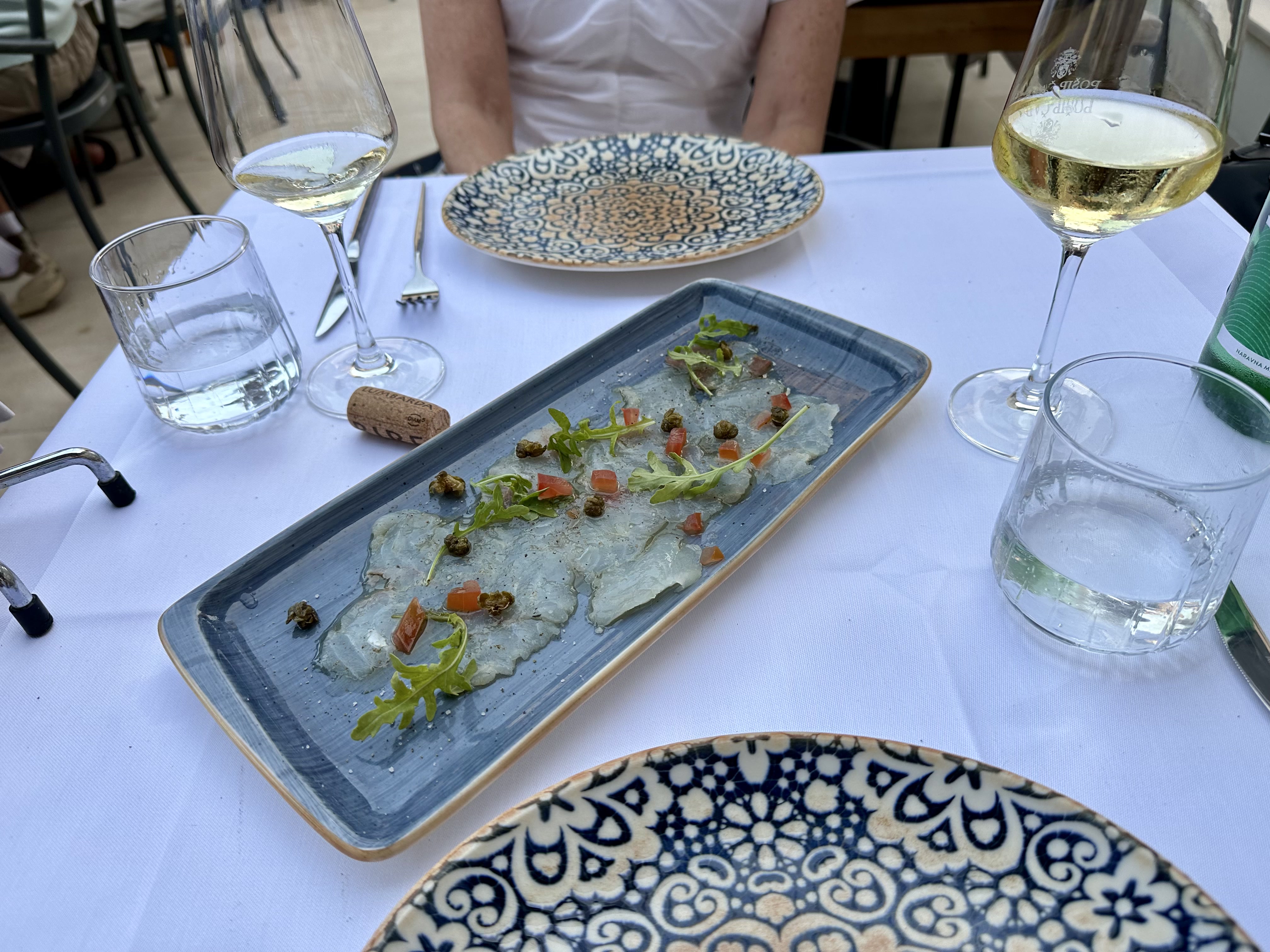
And great food, including our first Michelin-starred meal of the trip:
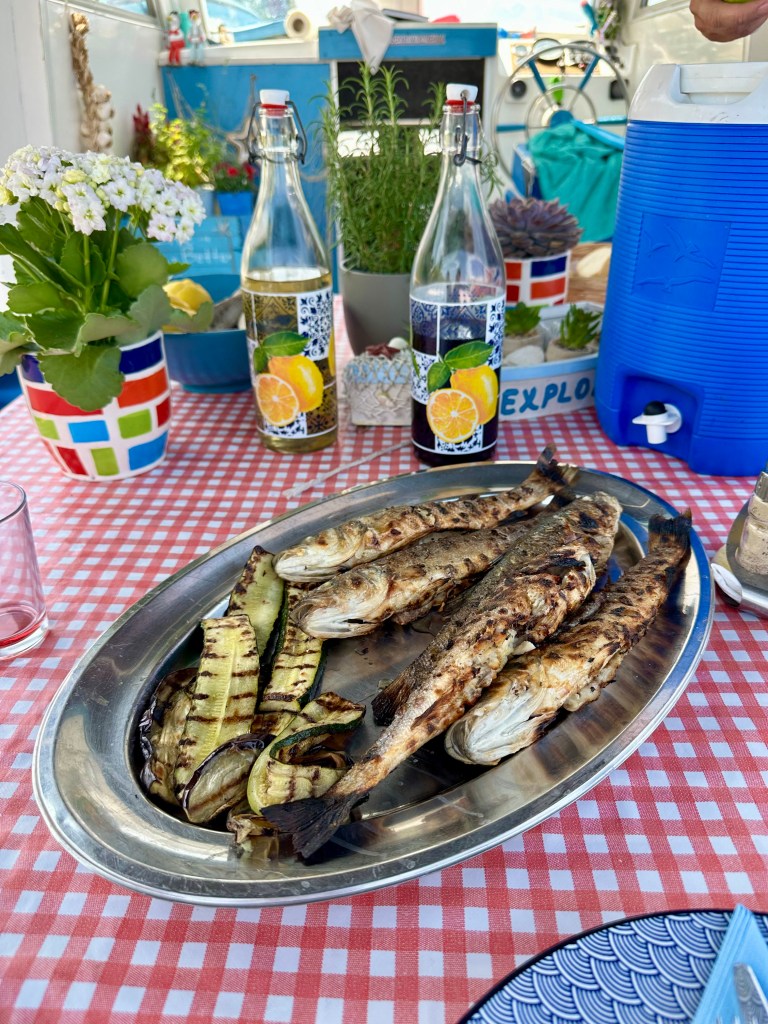
Very cool boat tour to Korčula’s nearby islands and swimming bays, complete with some outstanding fish grilled on the boat.
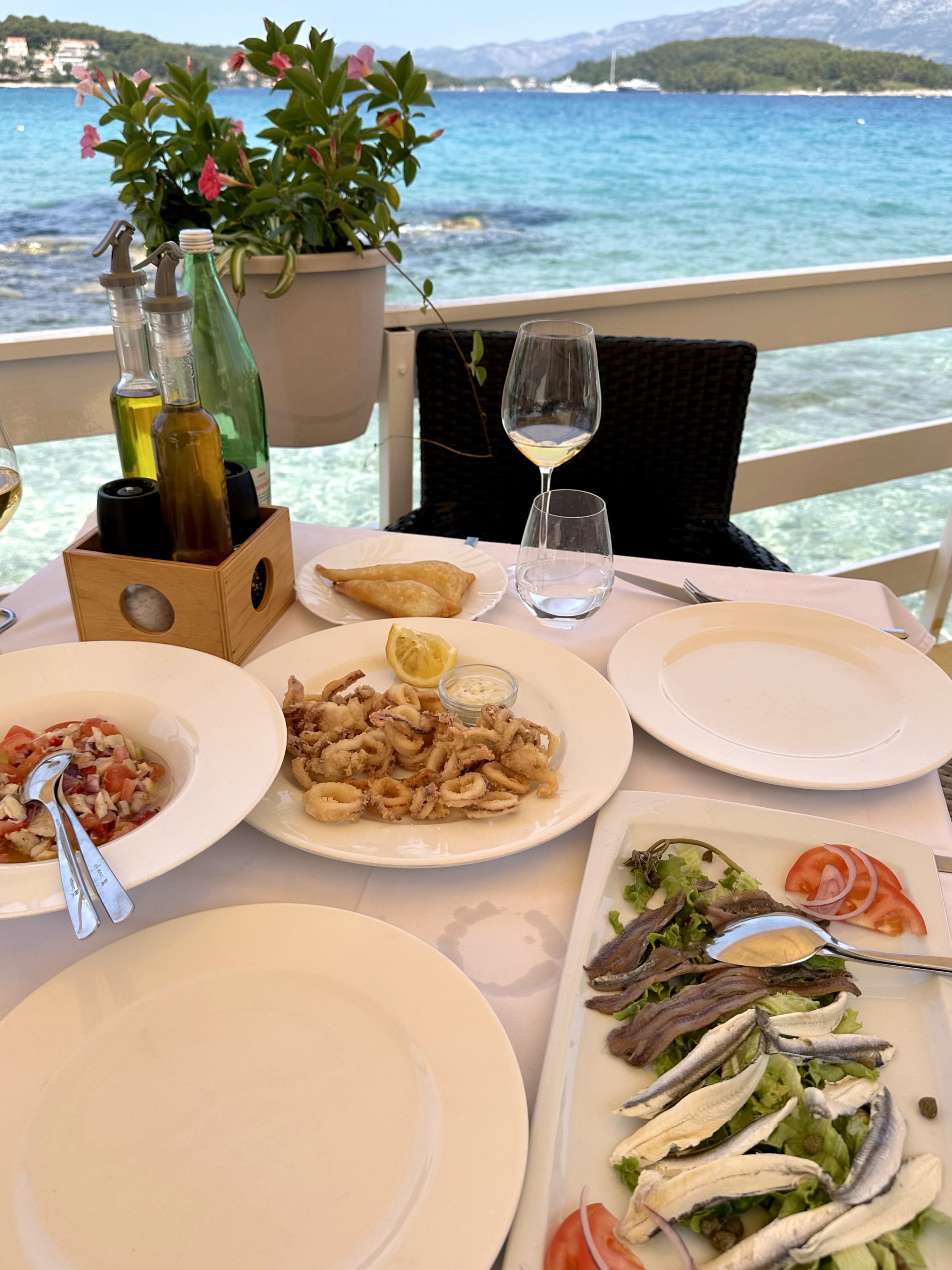
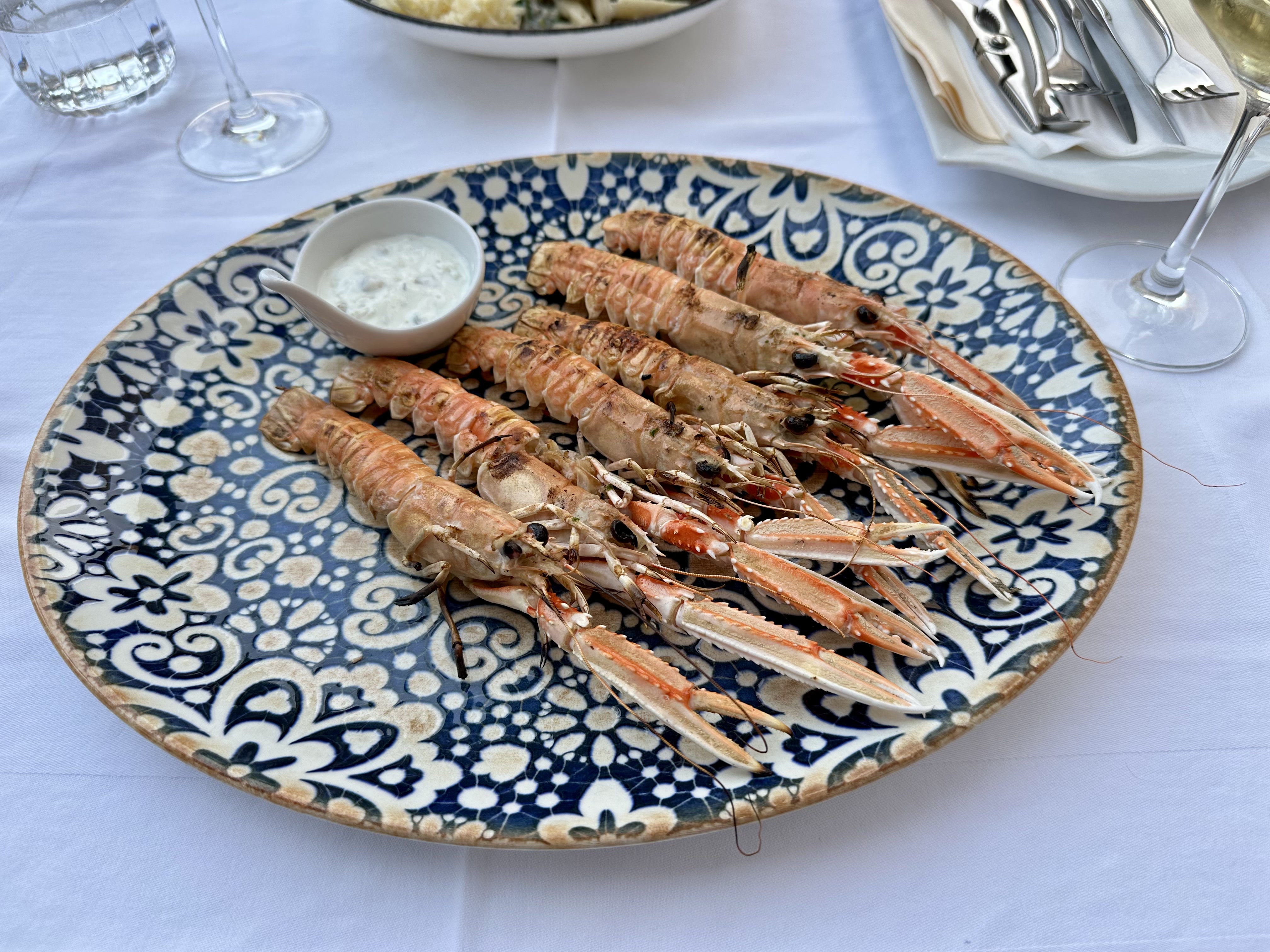
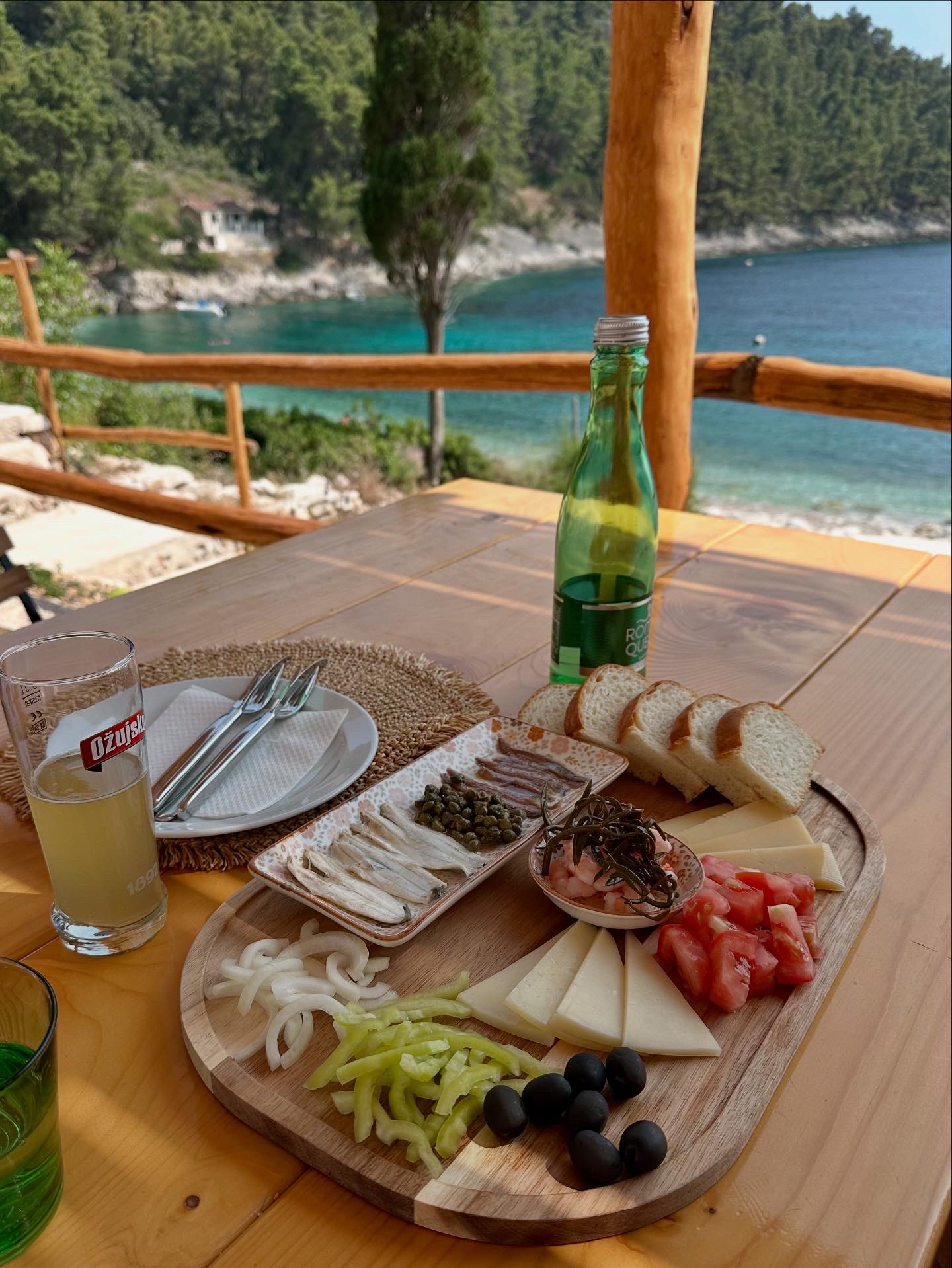
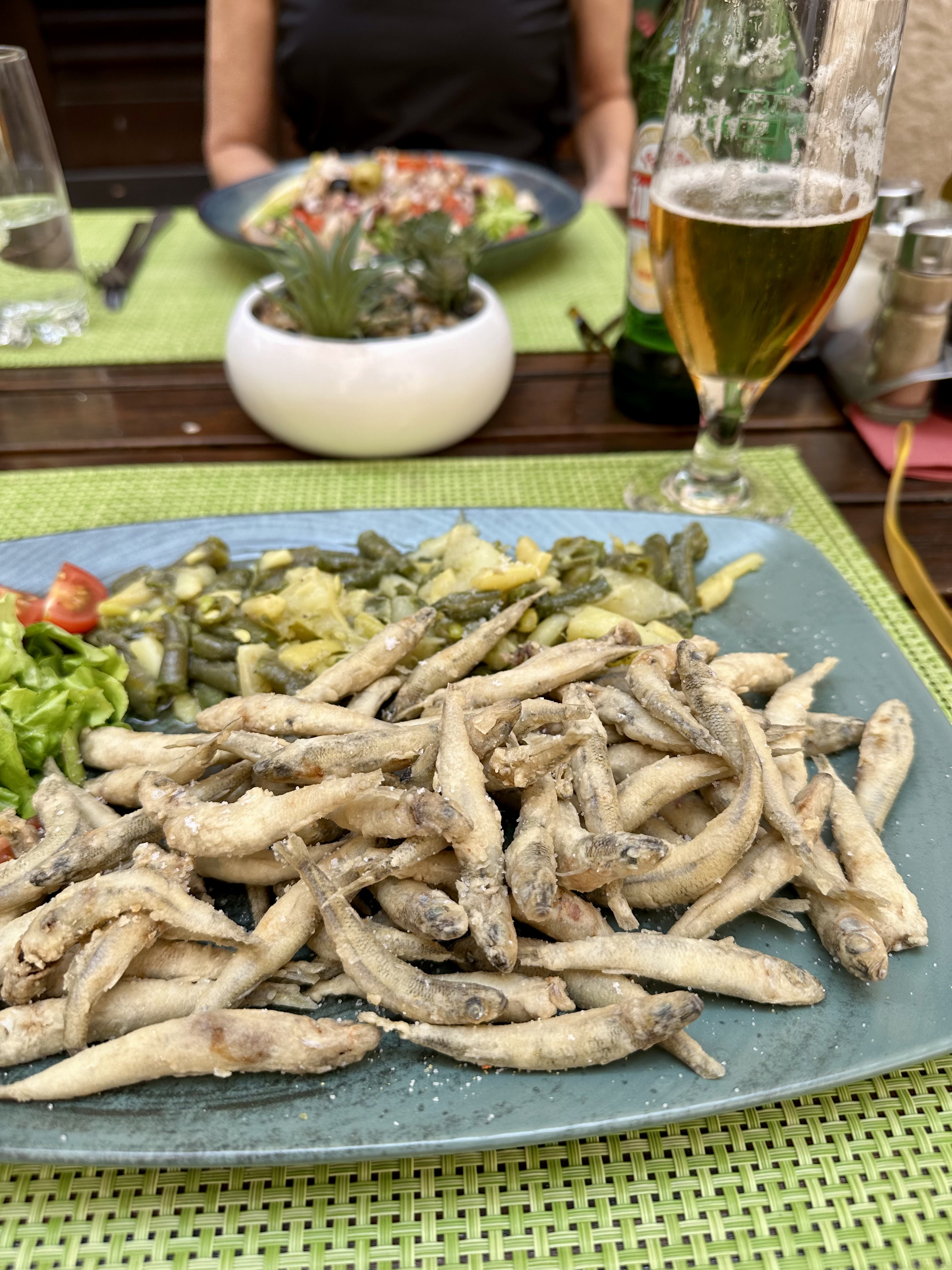
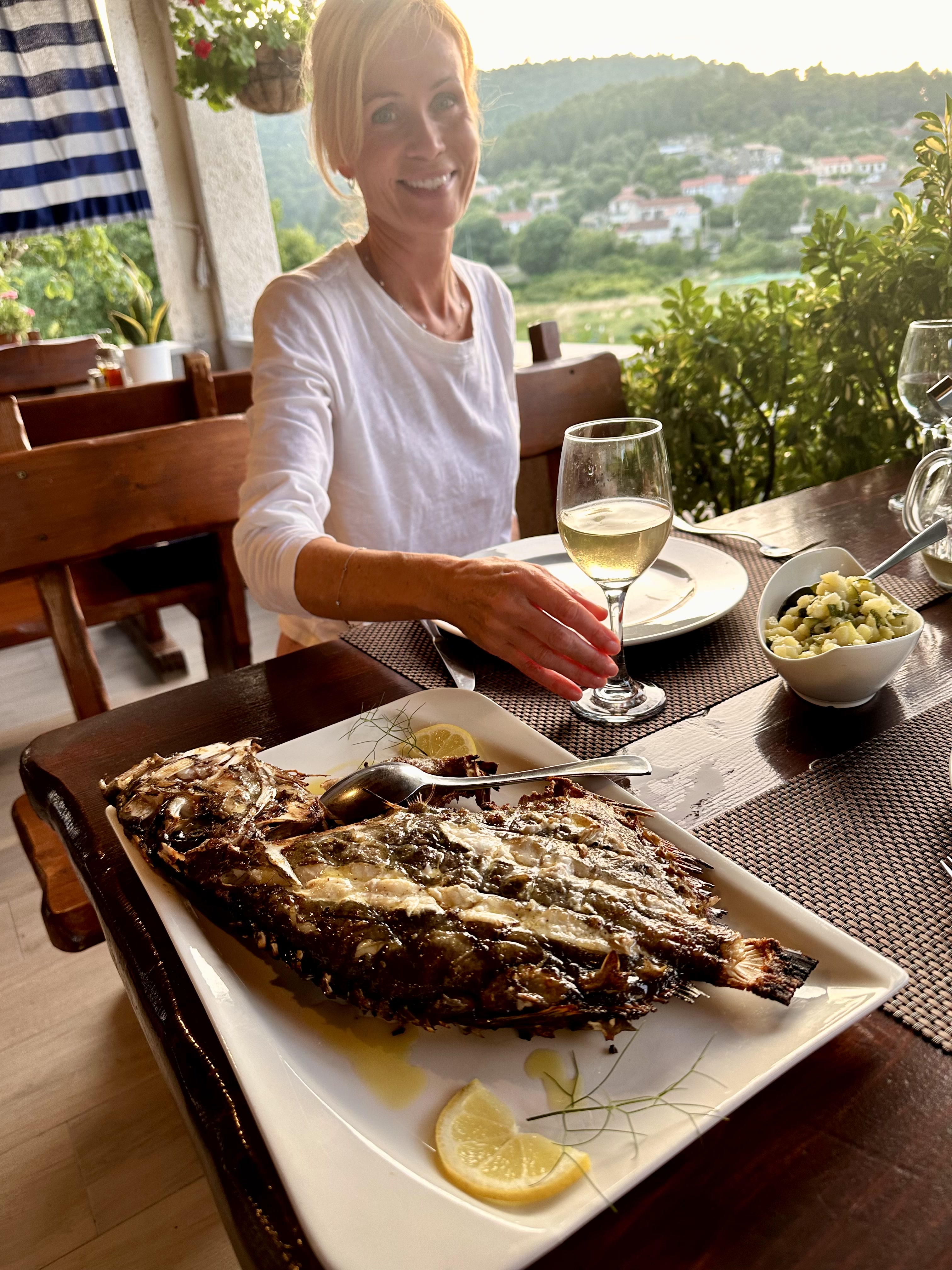
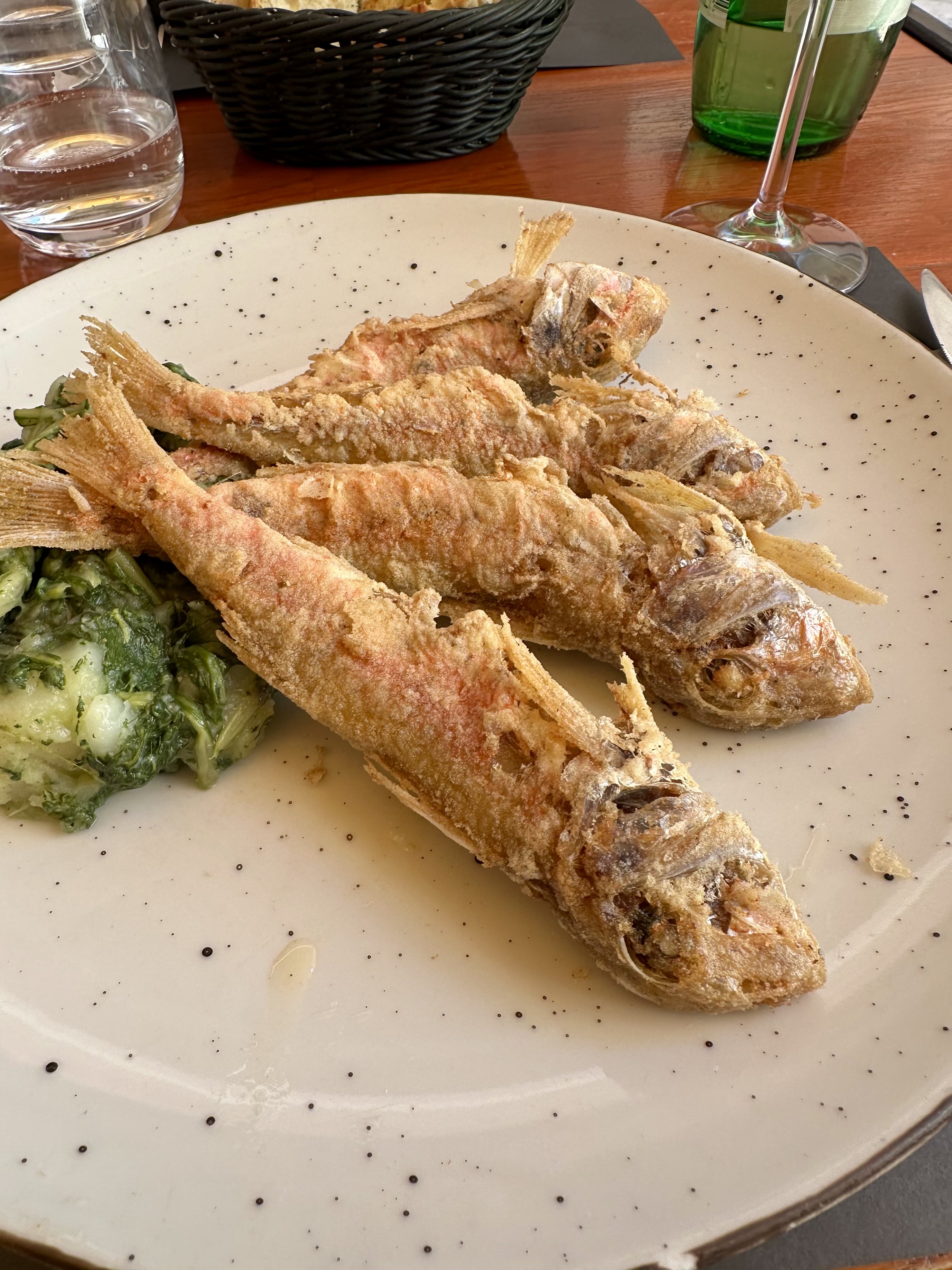
Frankly, most of our meals in Croatia consisted mostly of fish. Fish, cheese, and wine:
Pretty great living for a month!
After 5 days on Korčula, we headed to Hvar, where we’d spend another 5 days.
Hvar, settled since prehistoric times and founded as a Greek colony in the 4th century BC, flourished under Venetian rule from the 15th to 18th centuries as a strategic Adriatic port and cultural hub, famed for its Renaissance architecture and maritime trade.
We visited Hvar in 2008 and fell in love with the place then.
The island still captivated us in 2025, but it definitely exuded a clubbier, 20-something vibe that wasn’t nearly as idyllic as during our first stay.
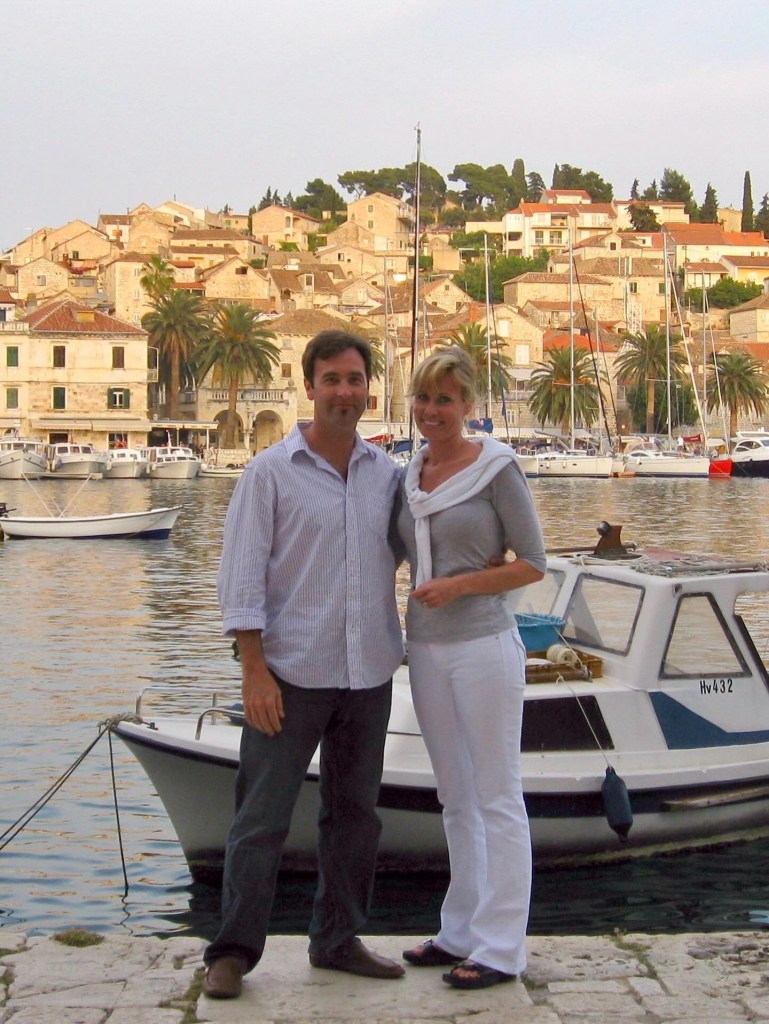
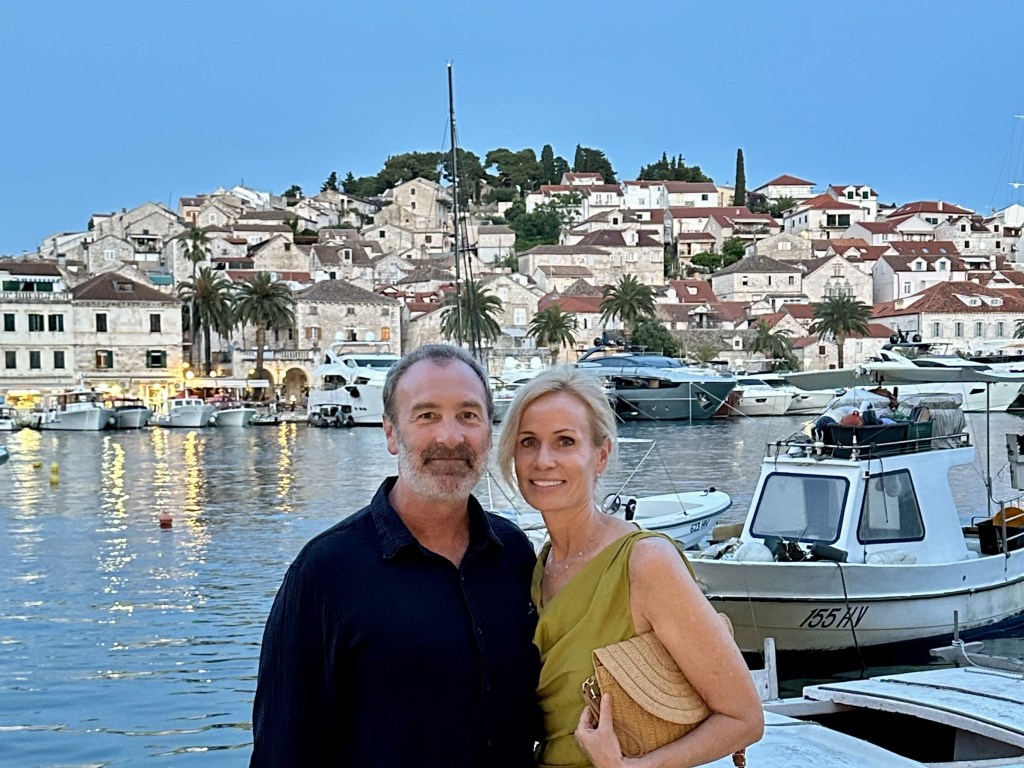
But it still had our favorite features – the historic port of the Venetian empire, always full of incredible yachts,
Super low-key atmosphere on the nearby Palmazini Islands,
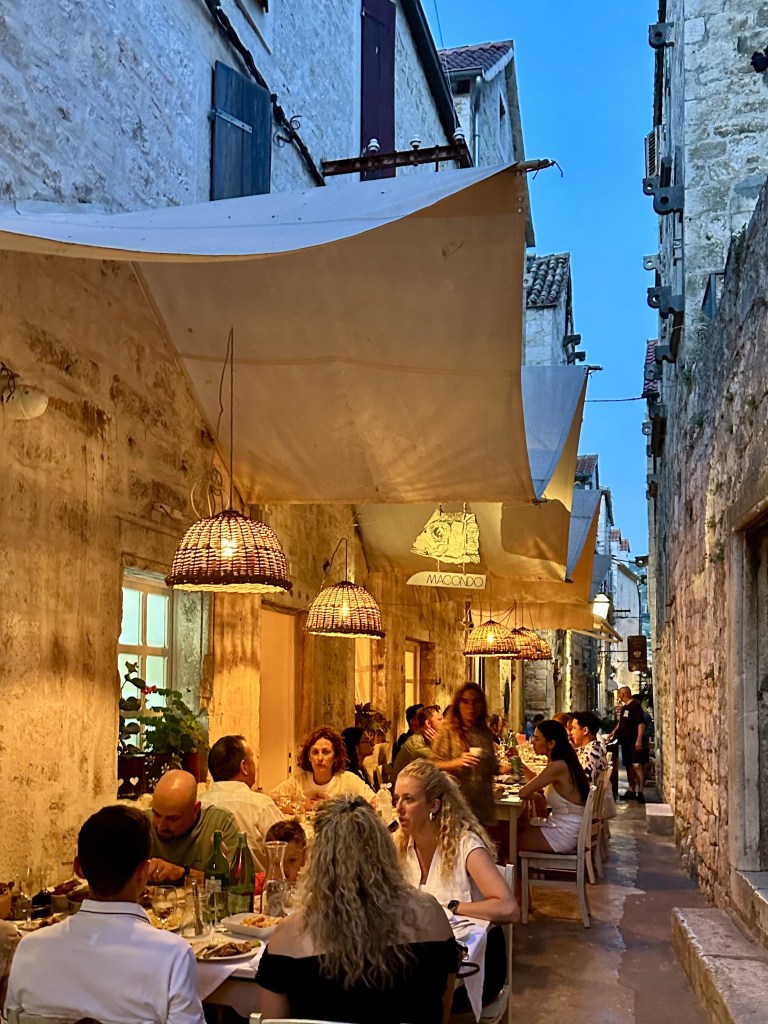
and awesome, al fresco dining every night,
including one night at Dalmatino, one of the Boston Connell’s recommendations from their recent trip.
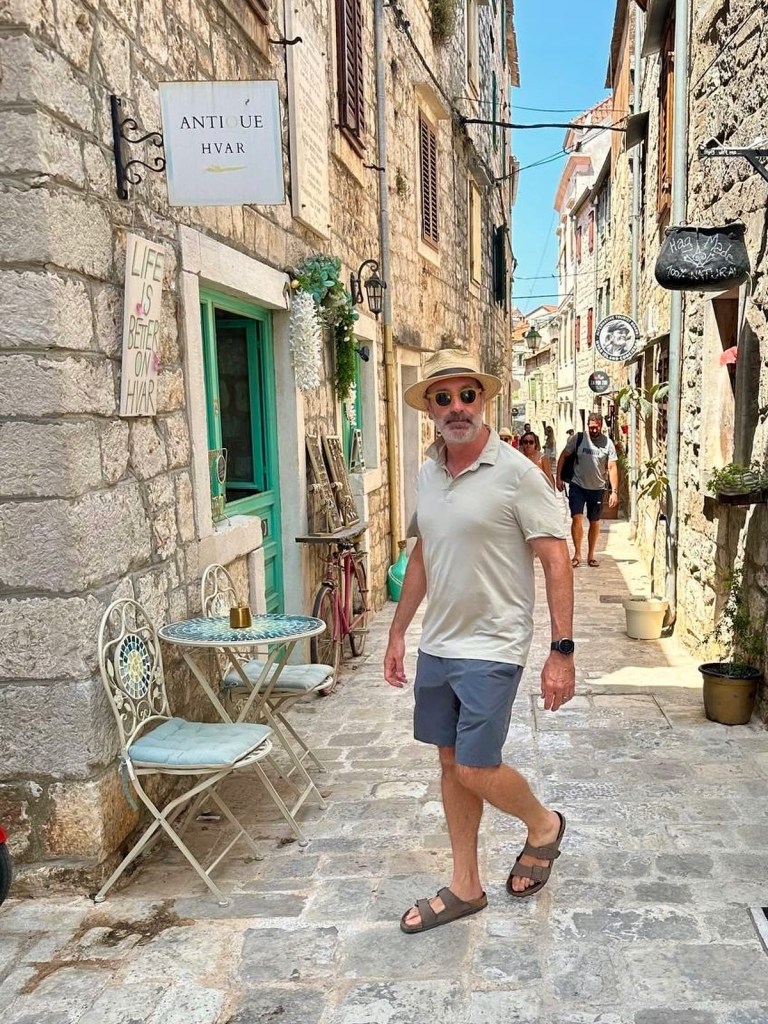
A little field trip one day to Hvar’s other town, Stari Grad, which turned out to be incredibly charming and atmospheric (and with no herds of 20 somethings around to degrade the vibe).
Very cool beach club at the foot of the hill below our AirBnB that we frequented two of the days of our stay.
Last night in Hvar before moving on.
Croatia – the Coast
To spend 4 days in Split, via the last of the five ferry rides of the trip.
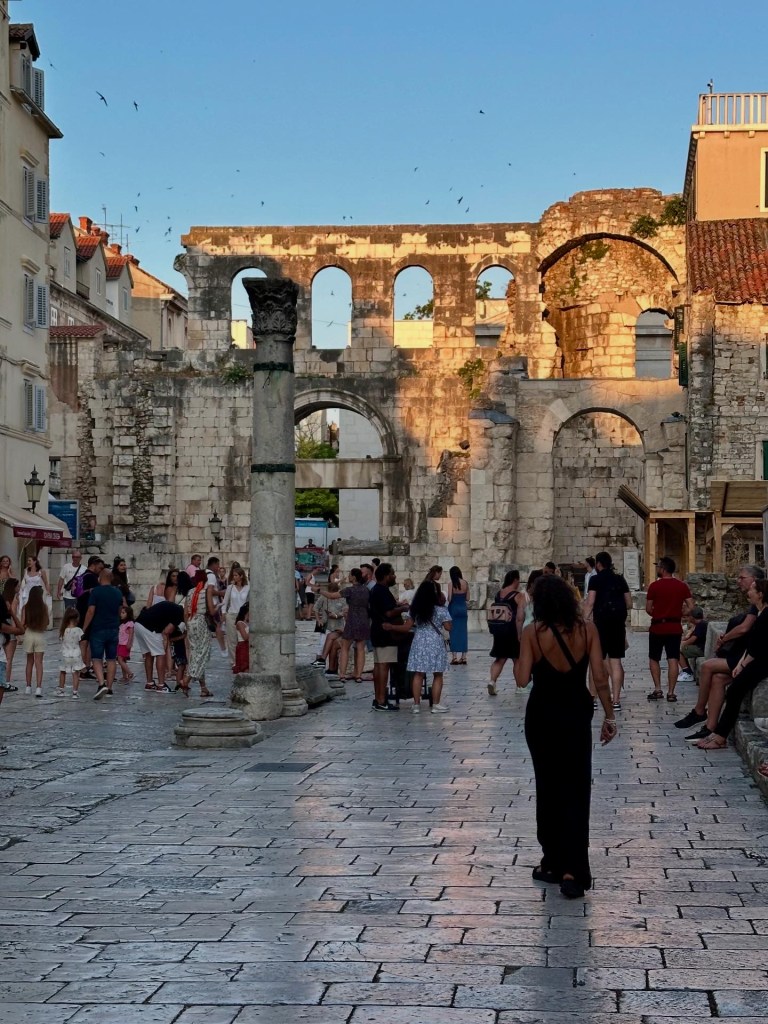
Split began as the Roman Emperor Diocletian’s Palace, built around 305 AD as his retirement residence, and grew into a bustling medieval town after refugees from the fallen city of Salona (which we would visit) settled within its walls, eventually evolving into Croatia’s second-largest city.
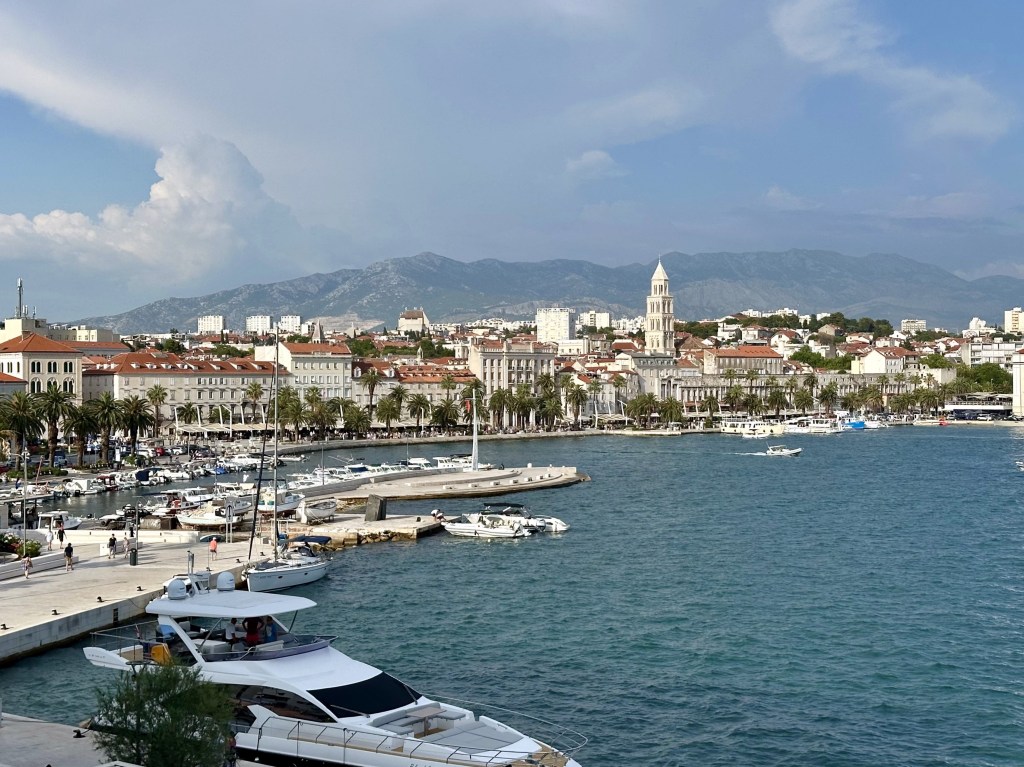
Split’s iconic Riva between Diocletian’s palace and the harbor – as appealing now as it was to us in 2008.
And the main square of the palace itself.
After AirBnBs on all of the Croatian islands so far, finally a hotel in Split (with a pretty cool setting, to boot).
A hot day trip to Klis Fortress, high above Split.
The fortress has served as a strategic stronghold since Illyrian times, famously defending Croatia against Ottoman invasions in the 16th century and later passing through Venetian, Napoleonic, and Austrian hands.
And another field trip to the ruins of the Roman city of Salona, once the flourishing capital of Roman Dalmatia with over 60,000 inhabitants.
The city was destroyed by invading Avars and Slavs in the 7th century, prompting its surviving residents to flee to the nearby coastal refuge of Diocletian’s Palace—laying the foundations of modern-day Split.
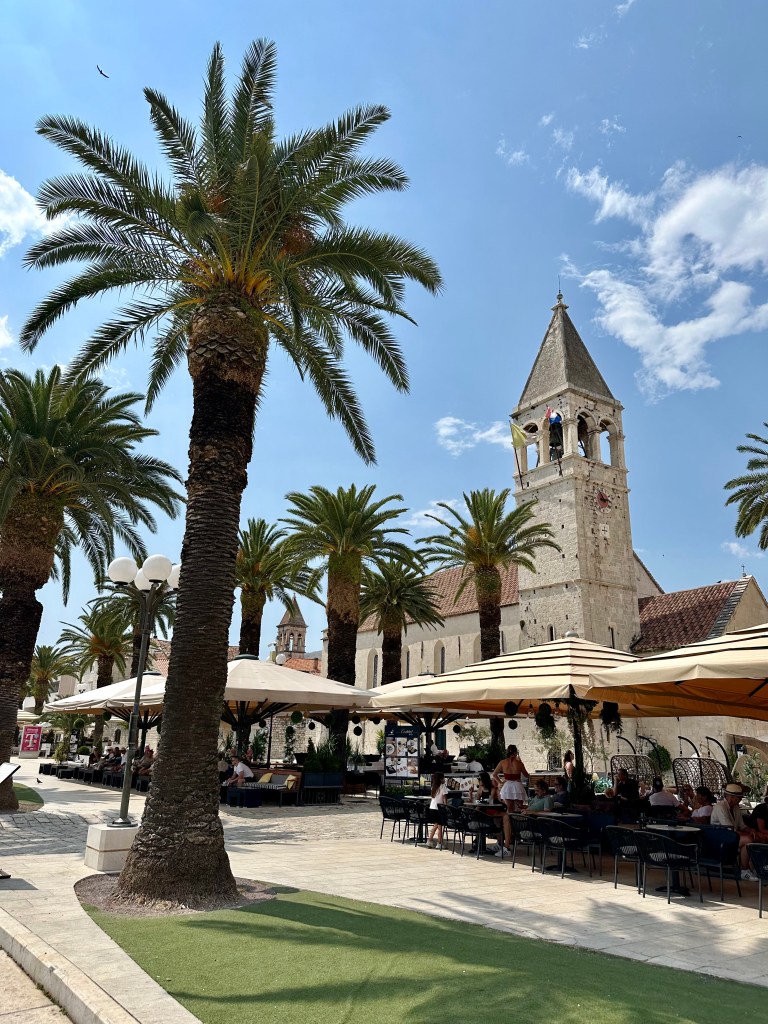
Yet another excursion from Split – this time to the incredibly charming Trogir just north of Split on the Dalmatian coast.
Trogir was founded by Greek settlers from Vis in the 3rd century BC and thrived under Roman, Venetian, and other rulers as a fortified port town, preserving a remarkable blend of medieval, Renaissance, and Baroque architecture that earned it UNESCO World Heritage status.
Sporting its own little Riva, Trogir struck us as Split’s Mini Me.
A final field trip from Split to the island of Brač (which is actually closer to Hvar, but we didn’t act on our original plan to visit it from there because the boat left Hvar way too early for us). Oh, and more little fried fish!
The Dalmatian islands and coast were pretty hard to beat – everything we were looking for.
But we had to end our stay in Split and move on.
Cool free concert in Diocletian’s palace on the way home:
We continued to drive north, this time to Zadar – another Venetian masterpiece – where we’d spend another 3 days. Zadar, a settlement since prehistoric times, became a Roman colony in the 1st century BC and later a prominent medieval Dalmatian port, enduring Byzantine, Venetian, and Austro-Hungarian rule before joining modern Croatia.
Zadar’s Venetian Gate, built in 1543 during Venetian rule, which once served as the city’s grand entrance and a symbol of its strategic maritime importance.
The 10th century Basilica of St. Donatus built on the ruins of a Roman temple of Jupiter and Minerva.
The Five Wells Square, built in the 16th century, was engineered to provide the city with fresh water during Ottoman sieges and remains a testament to Zadar’s resilience:
The highlight of our stay was an all-day boat excursion that began with a visit to a ridiculously cool, Bond-villain-esque, abandoned Yugoslavian nuclear sub pen:
And then proceeded to swimming and snorkeling spots along the islands off the coast, including snorkeling on a freighter wreck. Throughout the trip and including here off Zadar, the Adriatic was spectacular.
We then continued to drive north along the coast to Krk, a Croatian island perennially in search of its missing vowel. (A massive bridge connects the island to the mainland, so no ferries needed, and Krk does not get counted among the Croatian islands category addressed previously.)
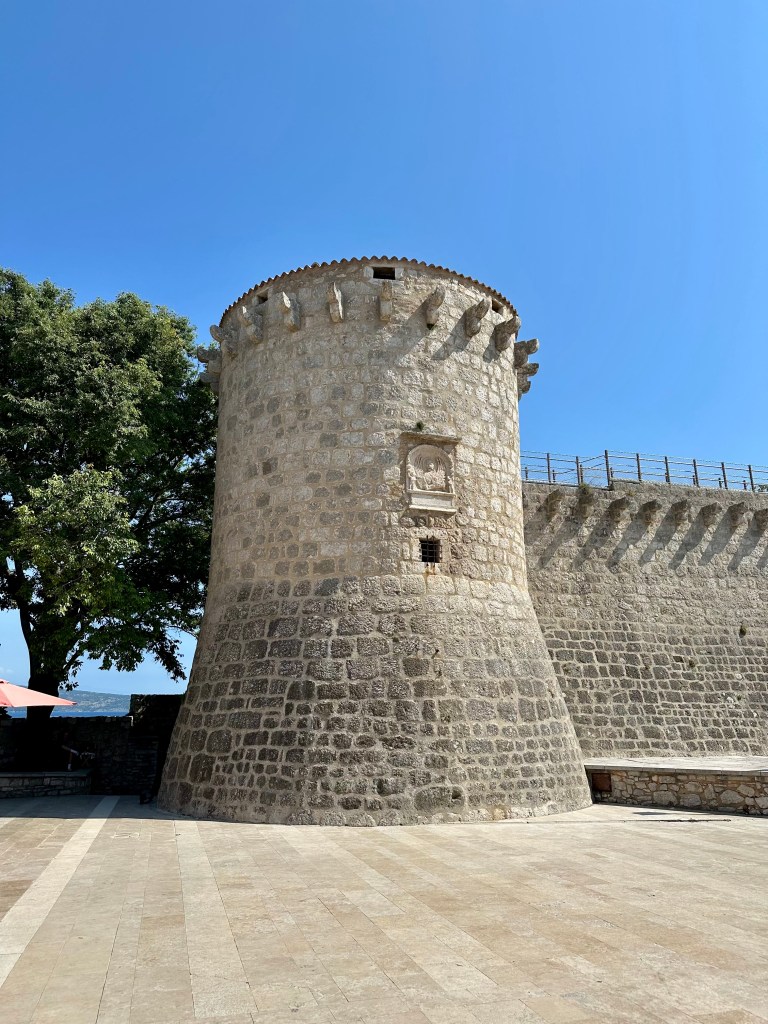
The Frankopan Castle in Krk, built between the 12th and 15th centuries by the powerful Frankopan noble family, served as both their residence and a defensive stronghold protecting the island’s main town.
Krk harbor:
Pretty cool view from the AirBnB.
A view surpassed by that of our next lodging at our last stop in Croatia: Rovinj.
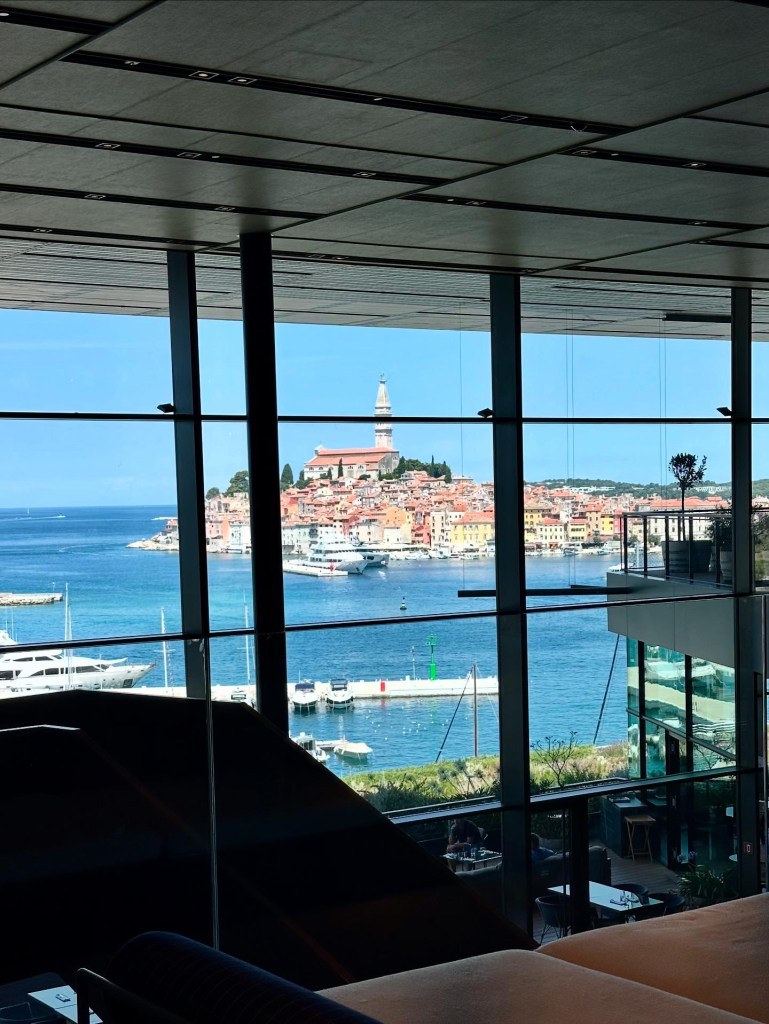
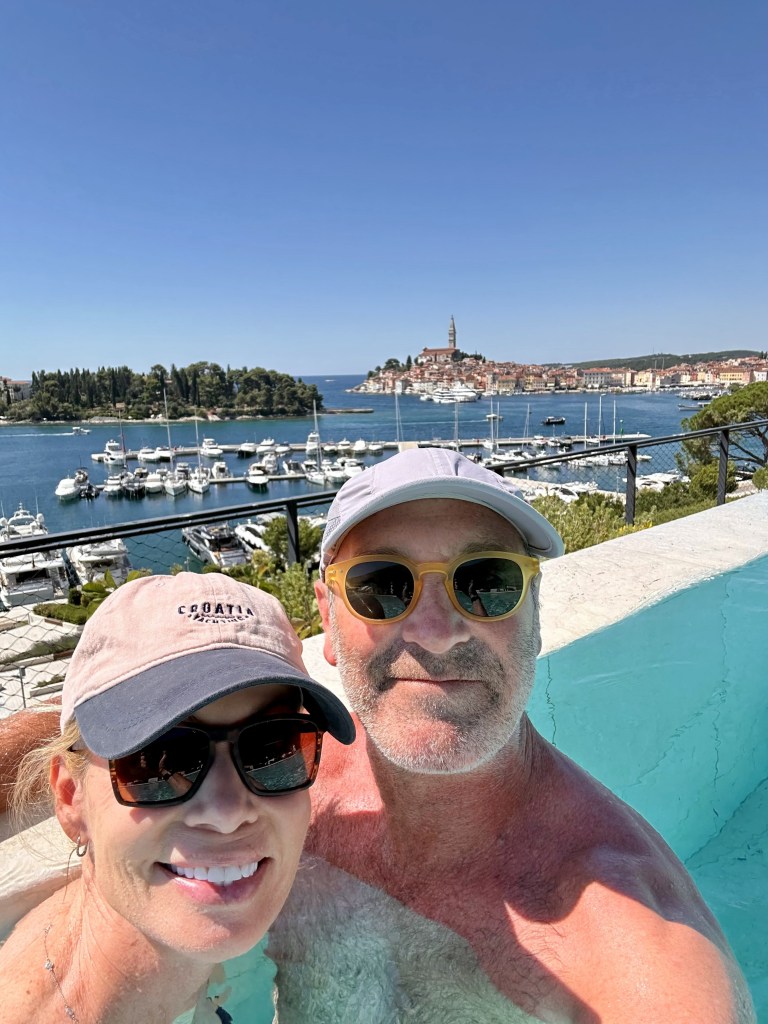
During our visit to Rovinj in 2008, we stayed inside the historic Venetian old town. This time, we stayed across the harbor so we had a view.
Pretty good decision.
Rovinj evolved from a Roman settlement to a Venetian fishing village in the 13th century, and developed into a charming Adriatic coastal town known for its medieval architecture and vibrant maritime heritage.
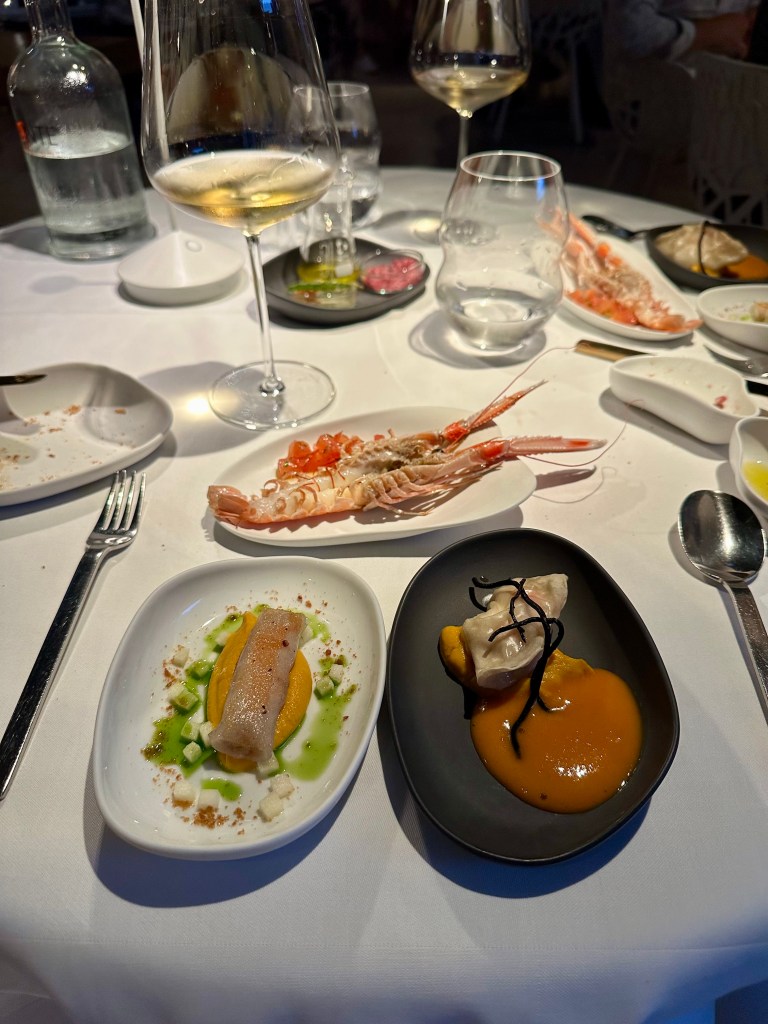
Second Michelin dining experience of the trip in the middle of Rovinj’s old town
Field trip to medieval hamlet of Bale. . .
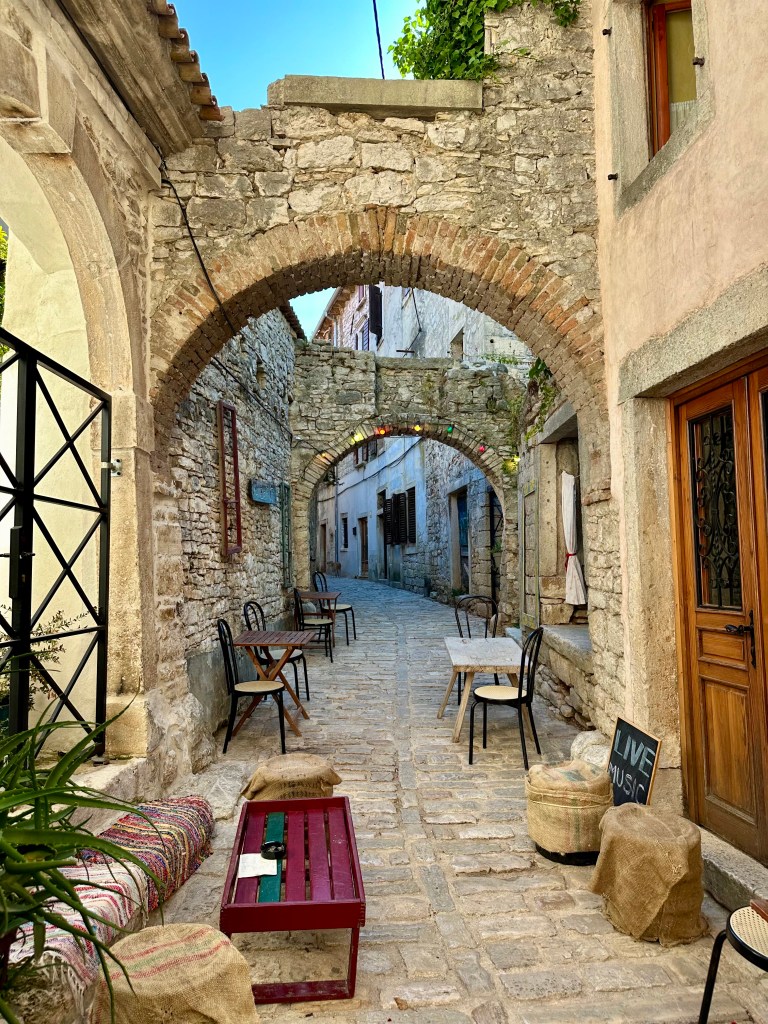
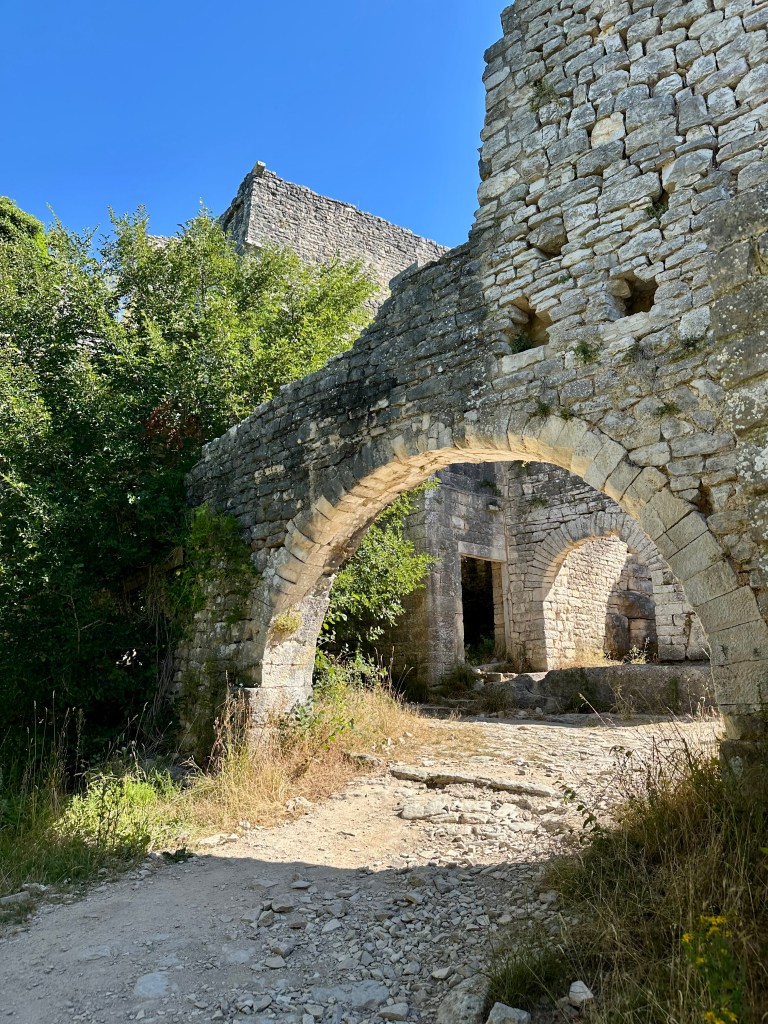
and the ruins of the medieval town of Dvigrad.
Last evening in Rovinj.
and last sunset at La Puntulina, where we had enjoyed our favorite dinner in 2008.
Dolomites
After 4 days in Rovinj (and 25 days in Croatia), we drove north to finally cross the border into Italy and the Dolomites – the second major segment of this trip (combined with South Tyrol). Our goal in the mountains was to experience the iconic hikes we kept seeing on Instagram, and so we based ourselves in towns with easy access to the trailheads of these hikes.
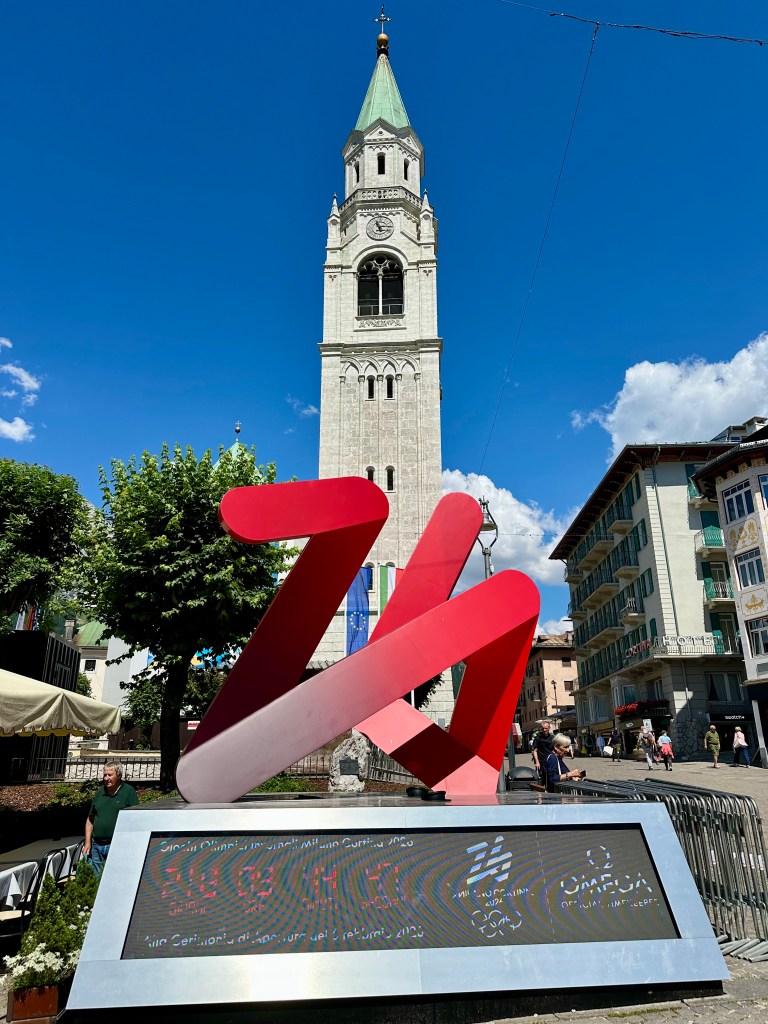
We stayed first in Cortina d’Amprezzo, which will co-host with Milan the 2026 Winter Olympics.
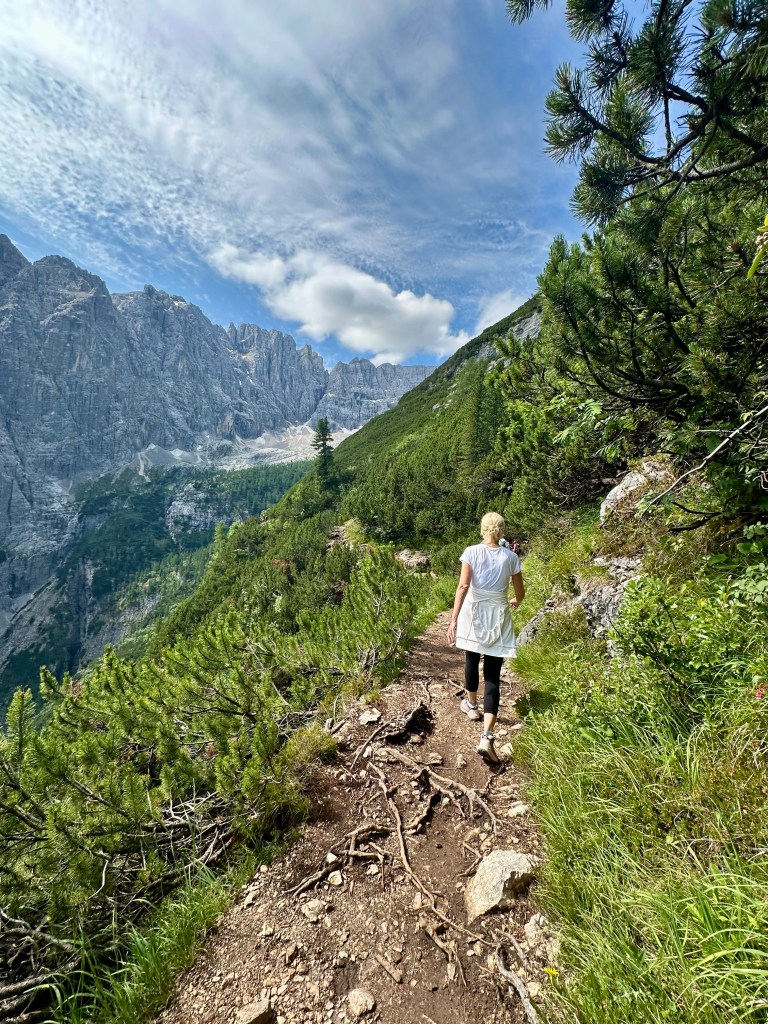
The next day, we hit the trails, first up was the out-and-back hike to Lago di Sorapis:
The day started out perfectly (then we’d get absolutely drenched in a downpour during the last 1.5 miles of the hike on the way back).
The lago at the apex of the hike was, indeed, pretty spectacular (although crawling with skeevy Instagrammers posing up a storm, which we took great pains to avoid including in our pics).
Then, thoroughly soaked from the rainstorm and while still drying off in the car, we drove about 45 minutes to Lago di Braies, another reportedly iconic experience in the Dolomites. The lake was spectacular, but it was pretty touristy. That didn’t stop us from doing the touristy thing and renting a boat to row across and around the emerald lake.
The next day, we first took three gondolas to reach the Cima Tofana di Mezzo, 10,573 feet above Cortina d’Ampezzo and above the clouds.
Where we encountered snow in July (and a reminder of why we ultimately chose to bring boots to hike in instead of our regular trip shoes – a choice we were surprisingly torn over, which seems absurd in retrospect).
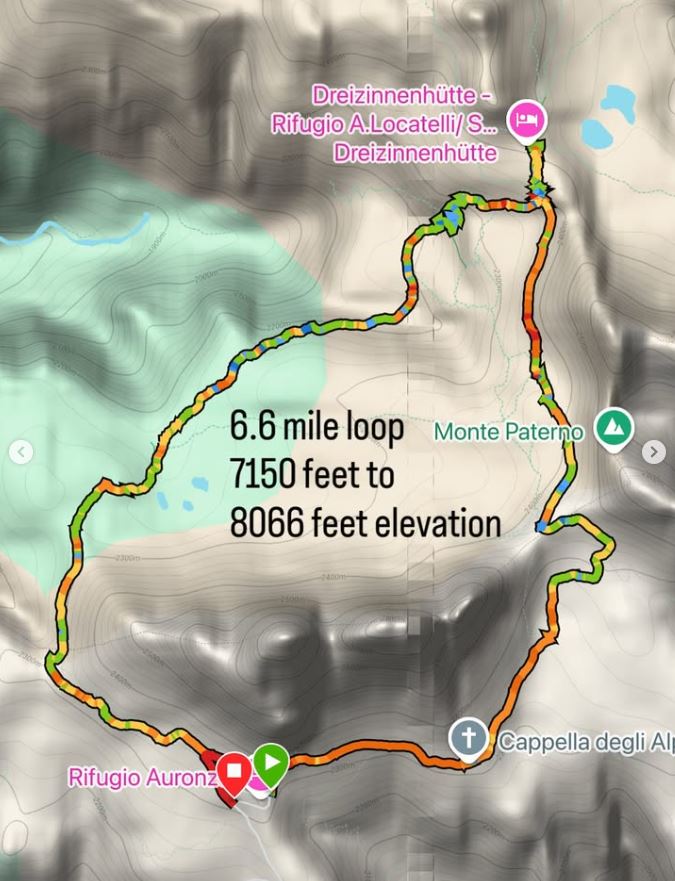
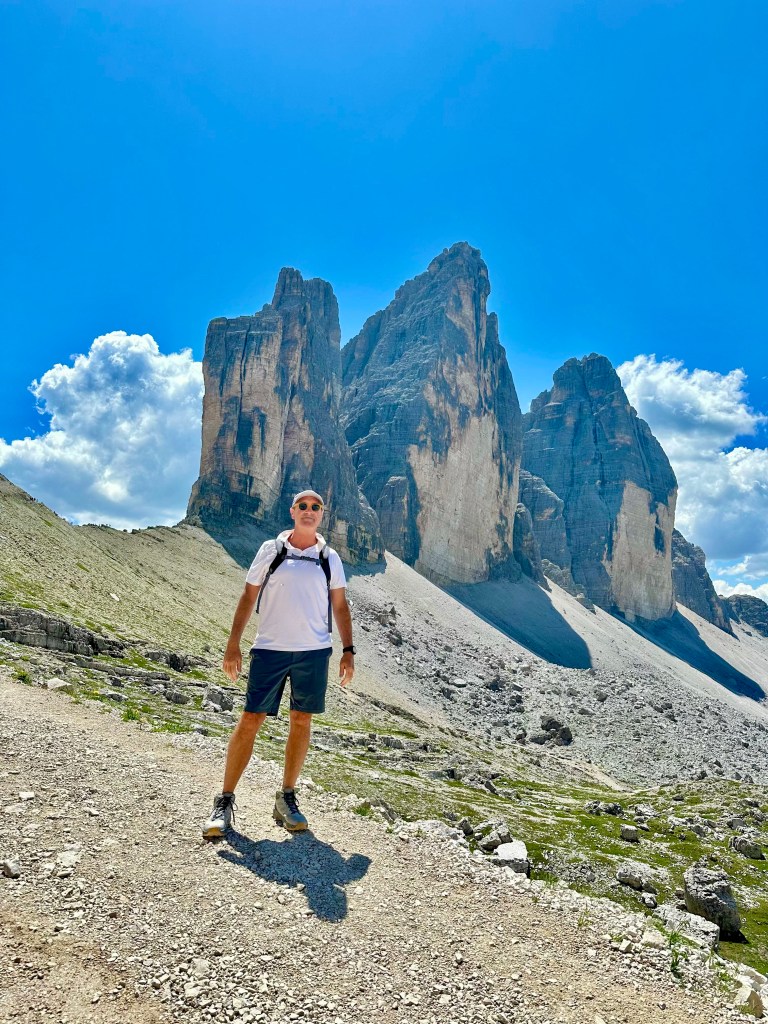
Then, we hit the Tre Cime loop hike, easily the hottest hike of the trip.
Tre Cime = Three Peaks:
After 3 days in Cortina, we headed west over some pretty incredible mountain passes to reach what turned out to be our other favorite spot on the trip: Ortisei.
And a new language for WolfeStreetTravel upon reaching it: Ladin. For years, our favorite obscure European language was the fourth official language of Switzerland, Romansch, which, tradition holds, resulted from the abandonment and isolation of Roman legions in Helvetica when the Western Roman Empire petered out. But in Ortisei we encountered Ladin (the first language on the trilingual sign below).
Like Romansch in the Alps, Ladin is living evidence of Roman history in the Dolomites. Its origins trace back to the Romanization of the Central and Eastern Alps. When the Romans conquered the region (1st century BC–1st century AD), Latin mixed with the local Raetian and Celtic languages spoken by the mountain tribes. Over centuries, this “vulgar Latin” evolved in the isolated Alpine valleys, diverging from mainstream Italian, French, and standard Romansh. The term Ladin historically referred to the word Latinus (Latin), underlining its Roman roots. Today Ladin survives in five main valleys in the Dolomites – including Val Gardena, where Ortisei is located – which are naturally secluded by mountains. Until modern roads and tunnels, each valley was quite cut off, preserving dialects and traditions.
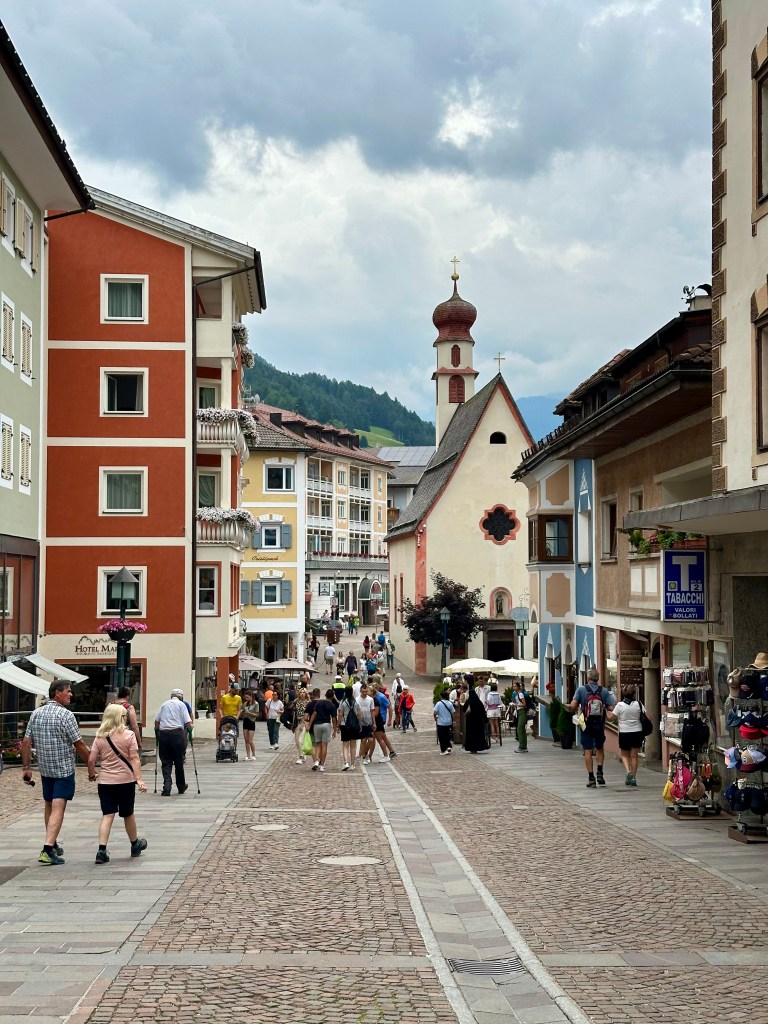
And Ortisei itself was super charming (and way more German Tyrolean than Italian).
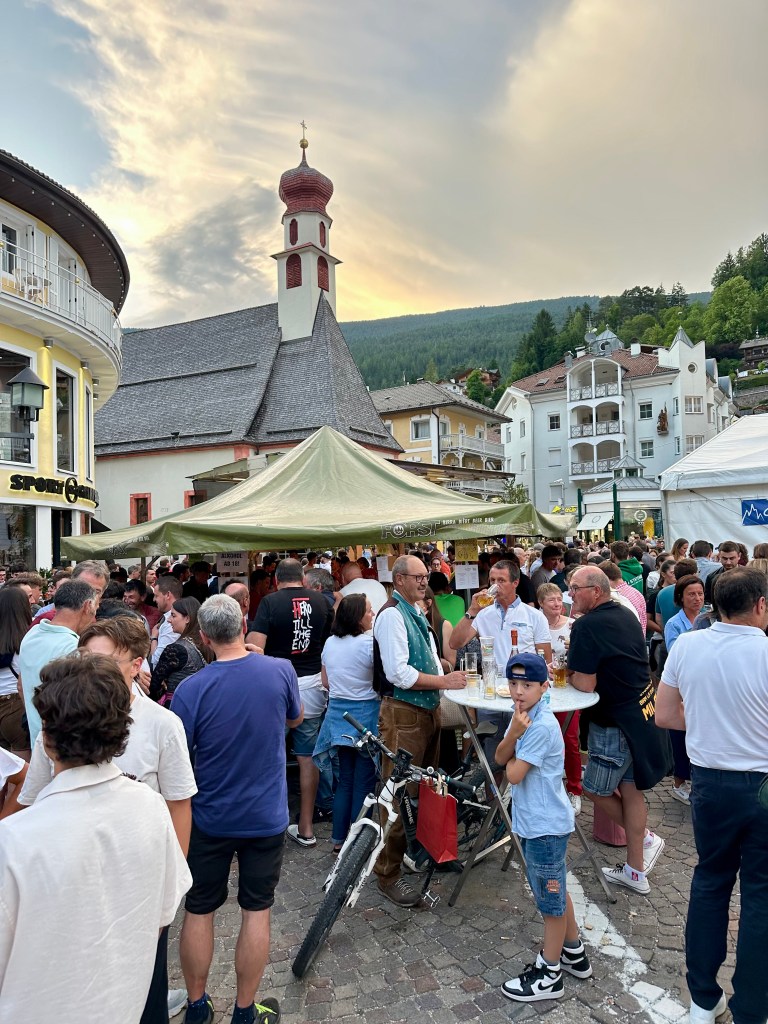
Including a decent smattering of lederhosen at the town’s beer festival.
Also, instead of driving to each of the trail heads like in Cortina, all three of the major hikes out of Ortisei were accessible just by walking down the street to three different gondolas. Way more civilized.
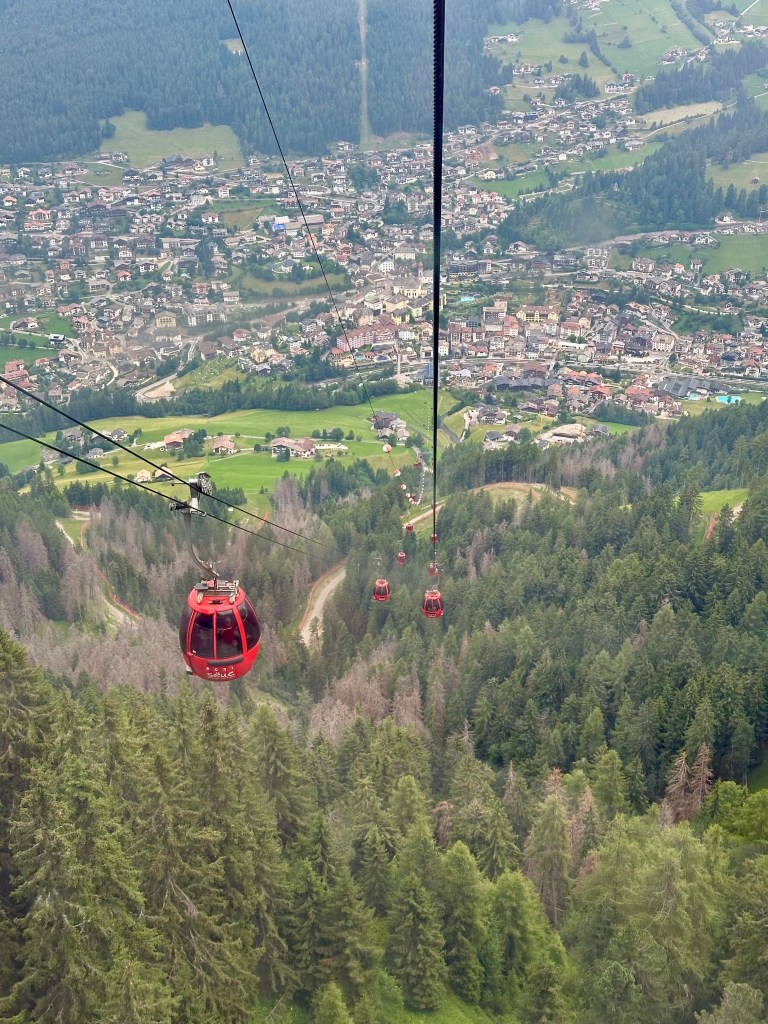
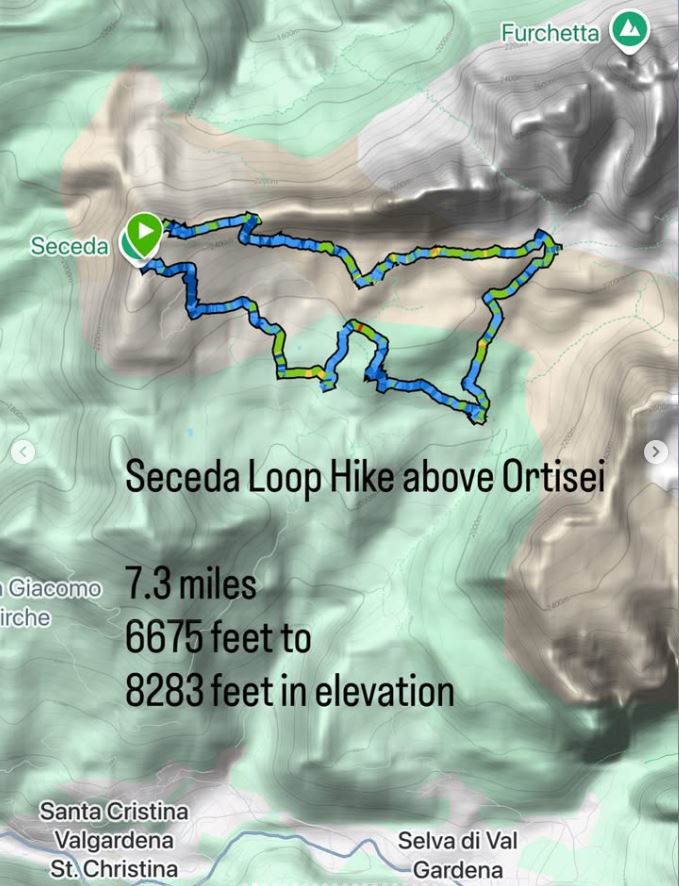
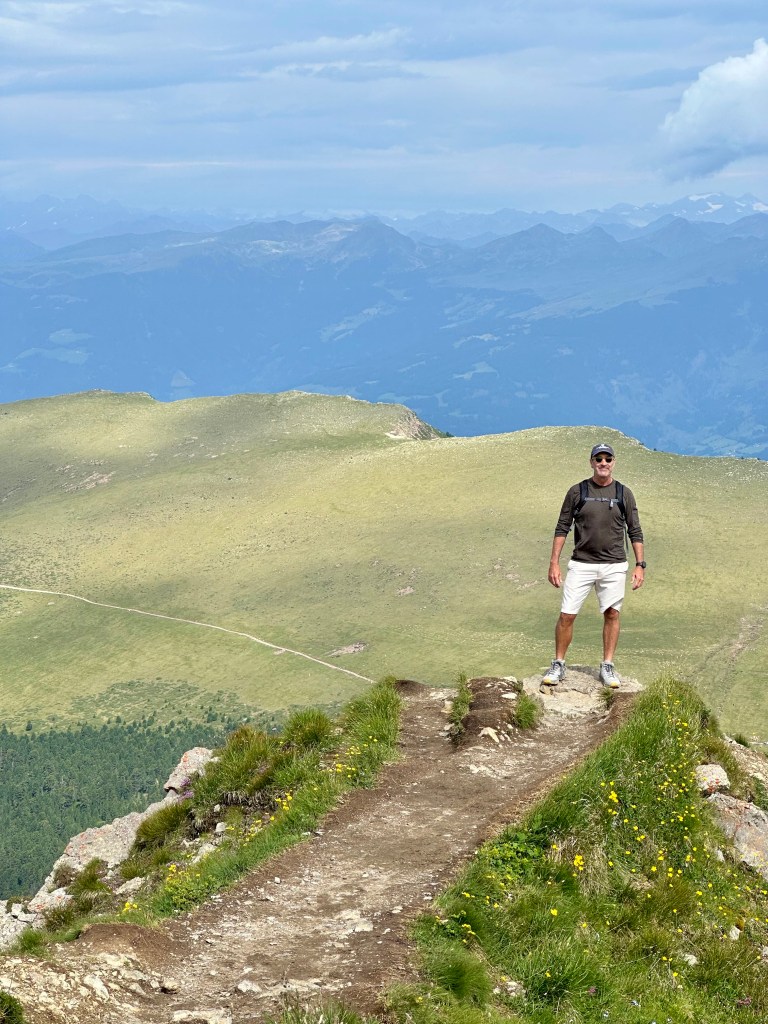
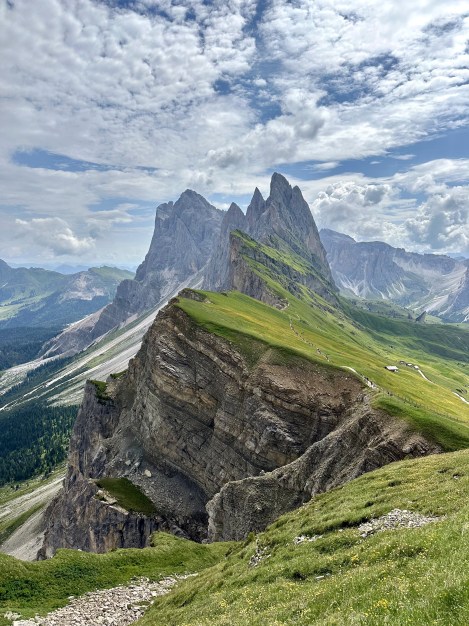
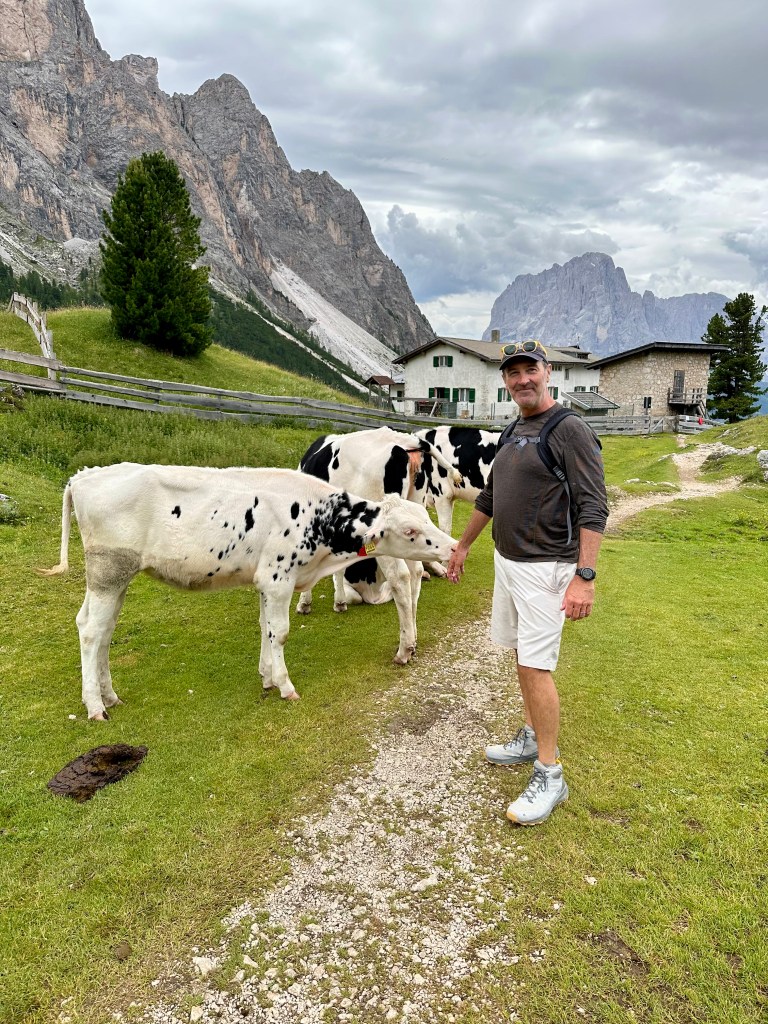
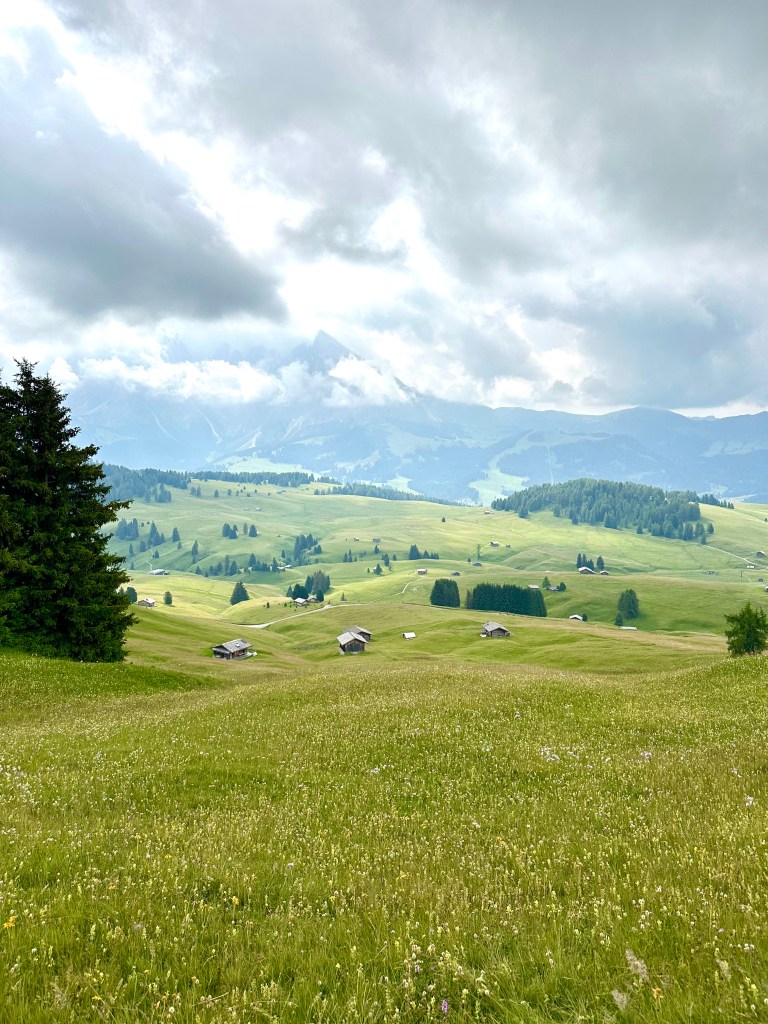
Just as Ortisei became our favorite town in this leg of the trip, our first hike out of Ortisei turned out to be the most spectacular of the trip: Seceda.
Our next hike across the Alpi du Siusi was the most boring. . .
Meh.
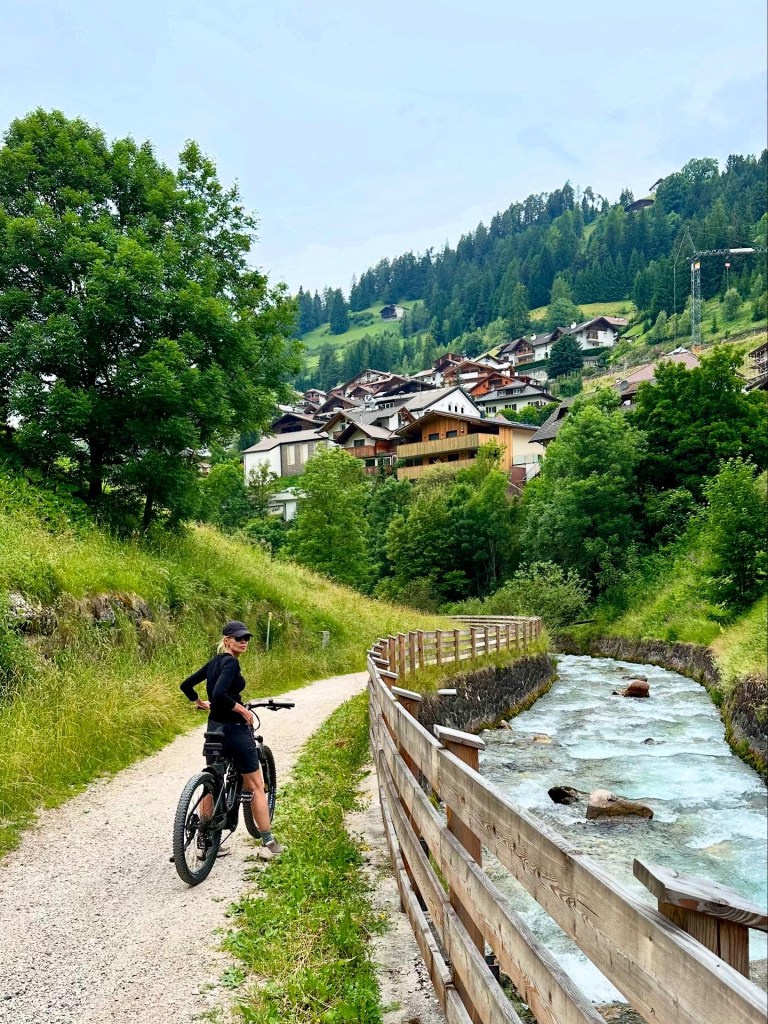
So we headed back down into town, rented bikes, and rode along a cool bike path that followed the bottom of the valley to each of the towns in the area.
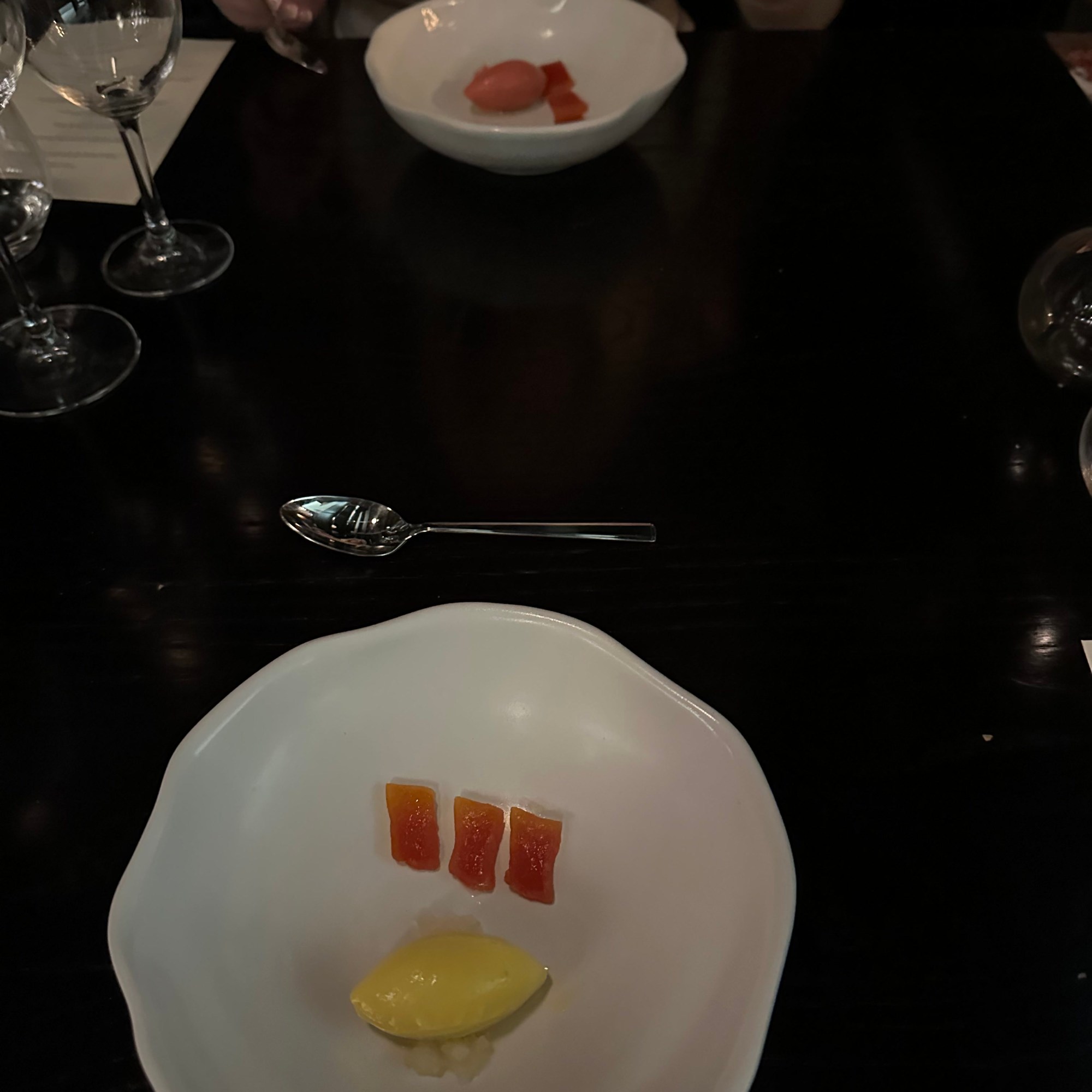
But we were rewarded with our third Michelin dinner of the trip that evening:
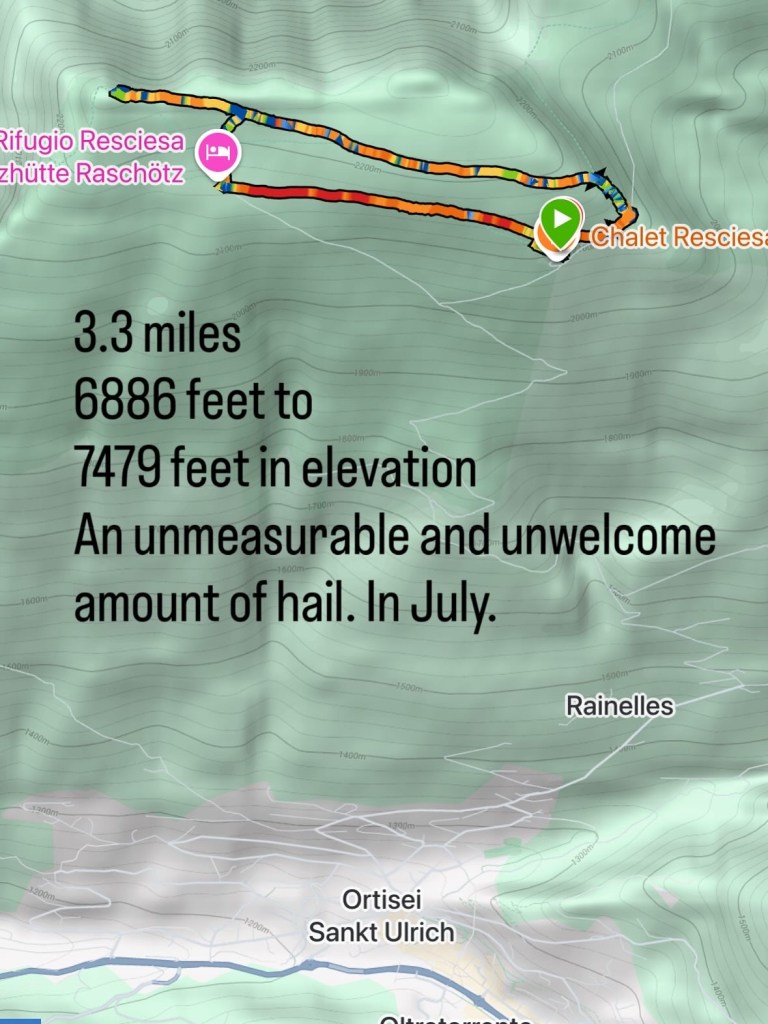
Our final hike should have been much longer, but we hightailed it back when we were not only caught in another deluge, but also hail. In July.
Absolutely insane, but also hilariously unexpected, as clearly articulated in this video on the cliff:
South Tyrol
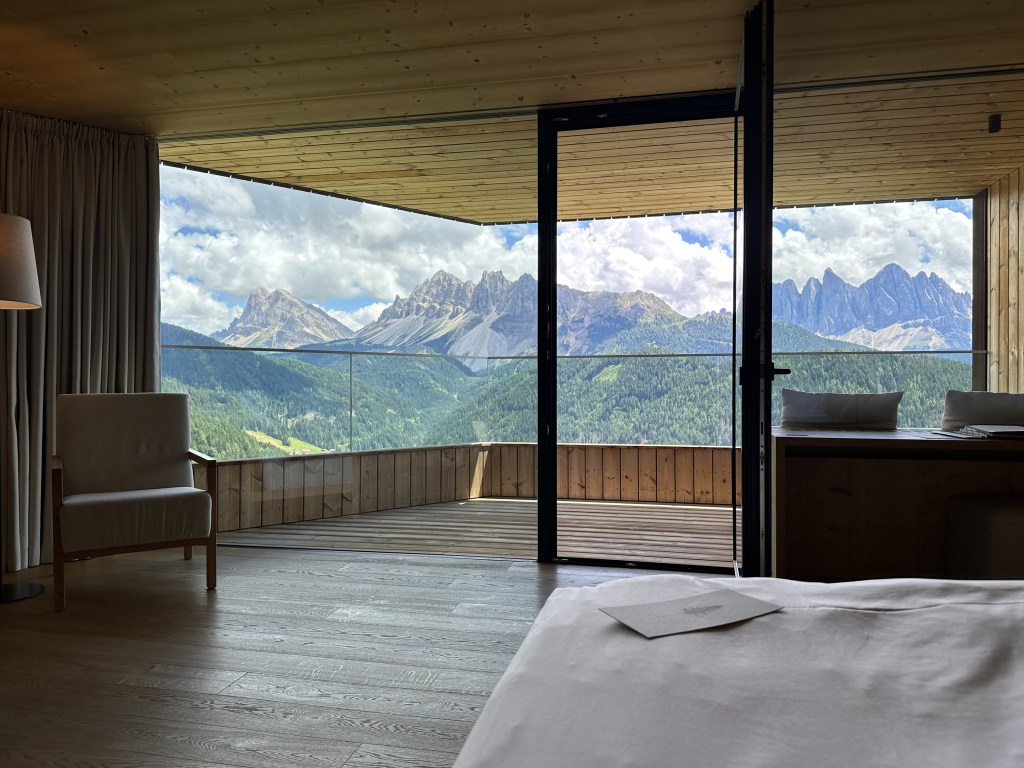
From Ortisei we veered a little northwest to Plose Mountain in the South Tyrol and our epic stay at a hotel that our safari friends recommended to us:
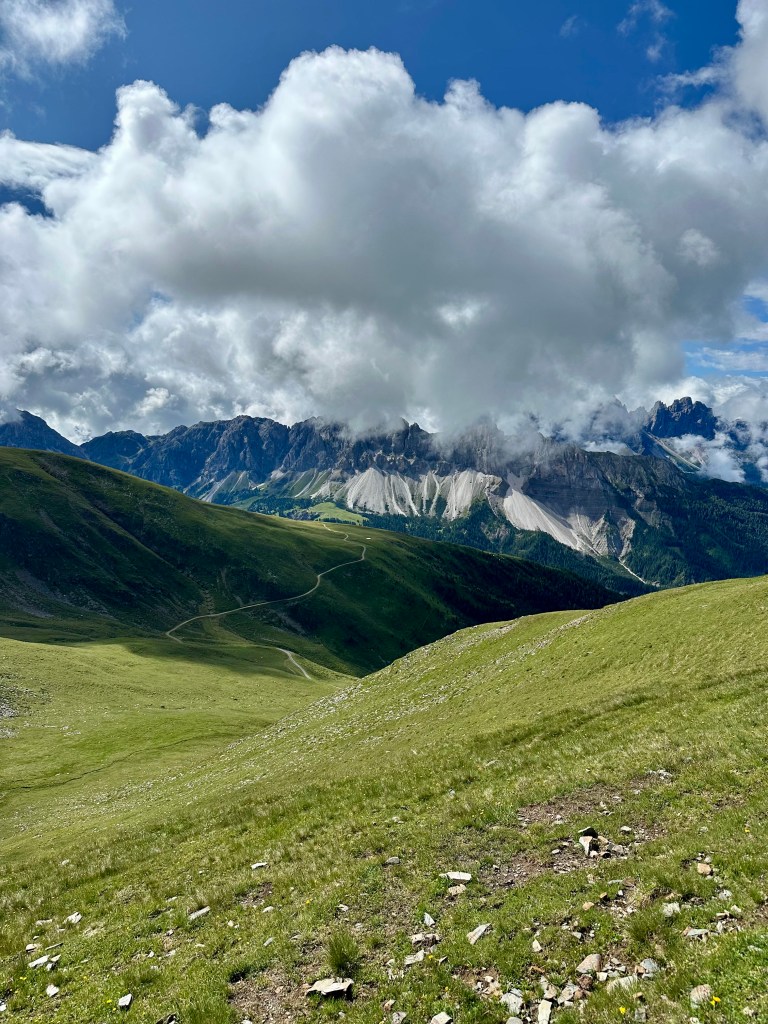
Third favorite hike of the trip – Plose Mountain, Part Uno (or maybe Part Eins, considering that in the Italian South Tyrol, they’re still all German-speaking Austrians in a region that was transferred from the Austro-Hungarian Empire to Italy after WW I).
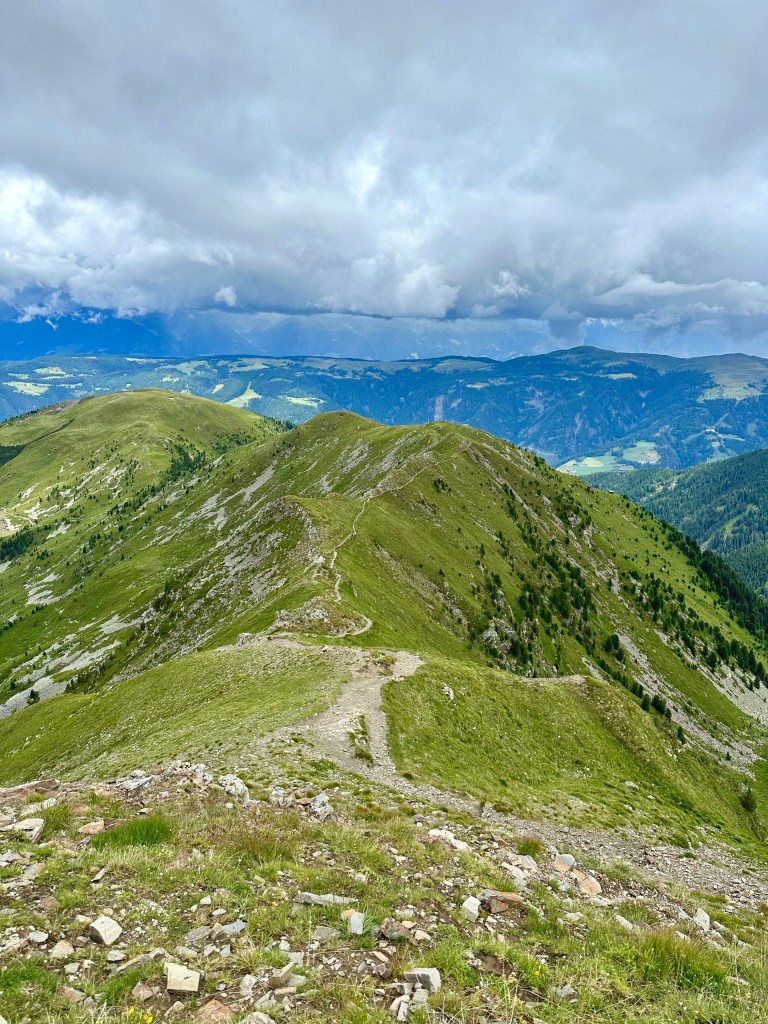
The next day, back up we went – Plose Mountain Part Due / Part Zvei, where we climbed to the peak itself, after hitting the other two peaks nearby on the first hike. Second favorite hike of the trip, even though it hailed on us at the end of the trek – AGAIN!
It was also 42 degrees at the top – lowest temperature of the trip.
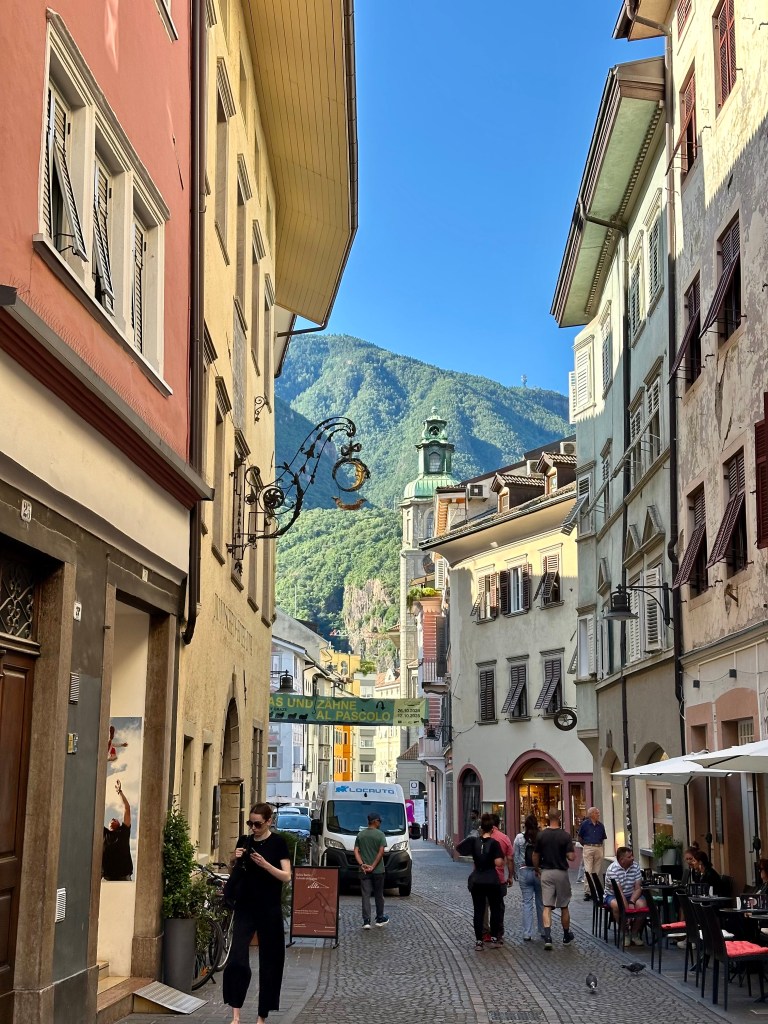
Then, a quick stopover for a night in South Tyrol’s capital of Bolzano.
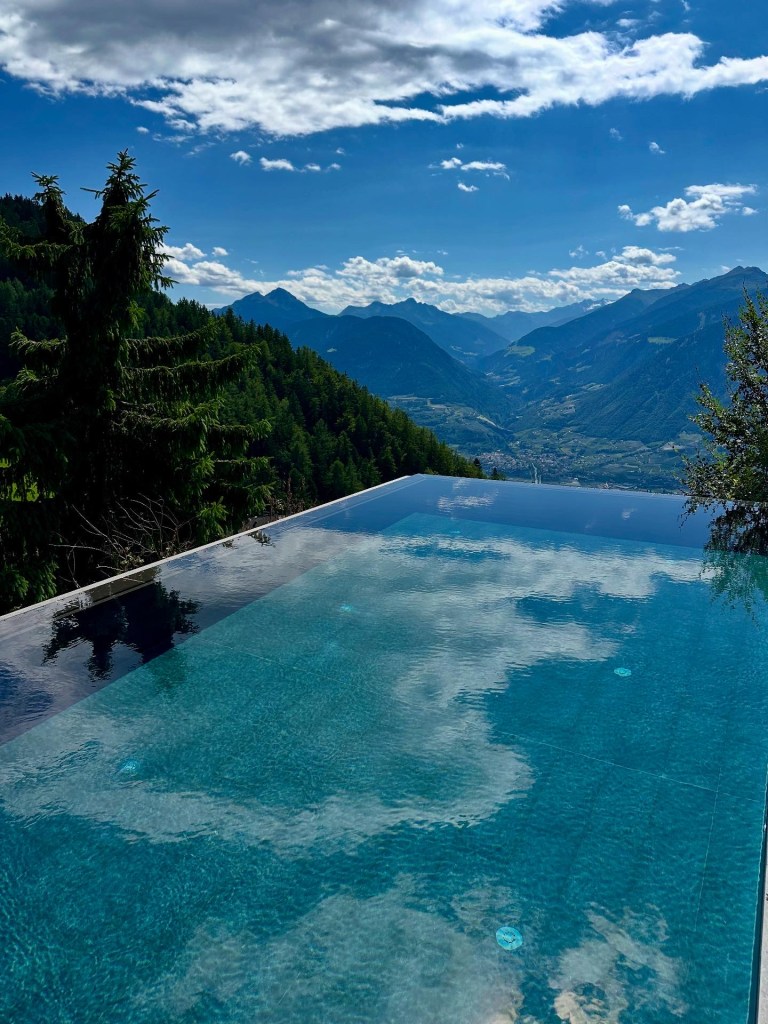
Another cool perch at our place perched 4035 feet above the town of Merano:
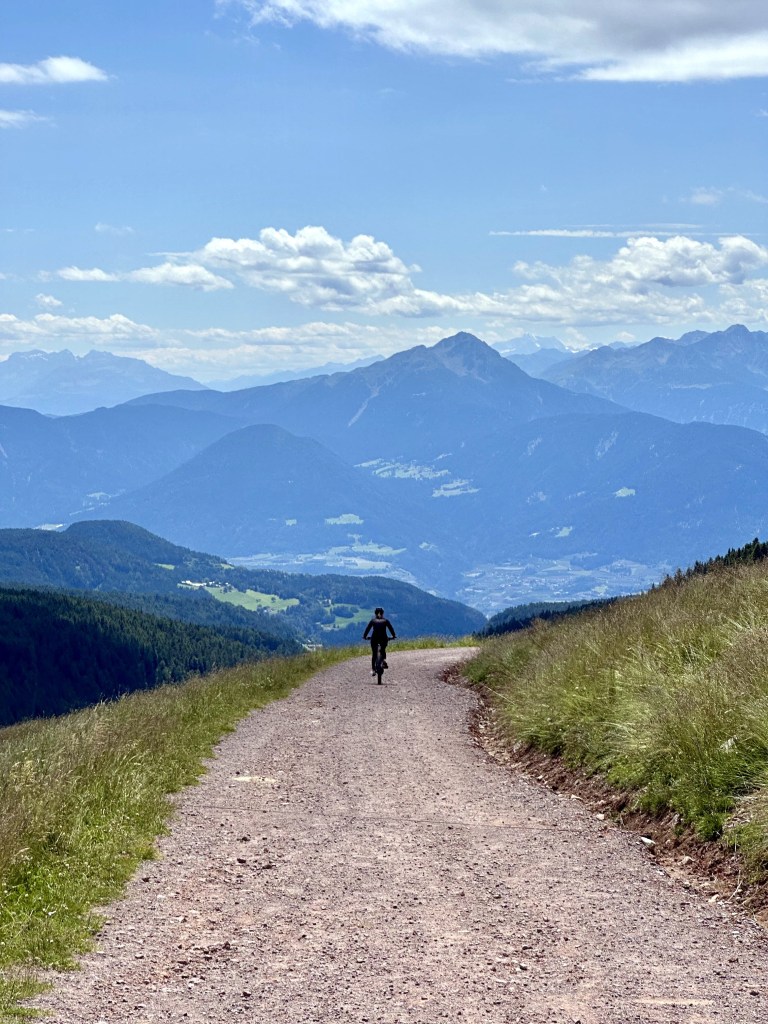
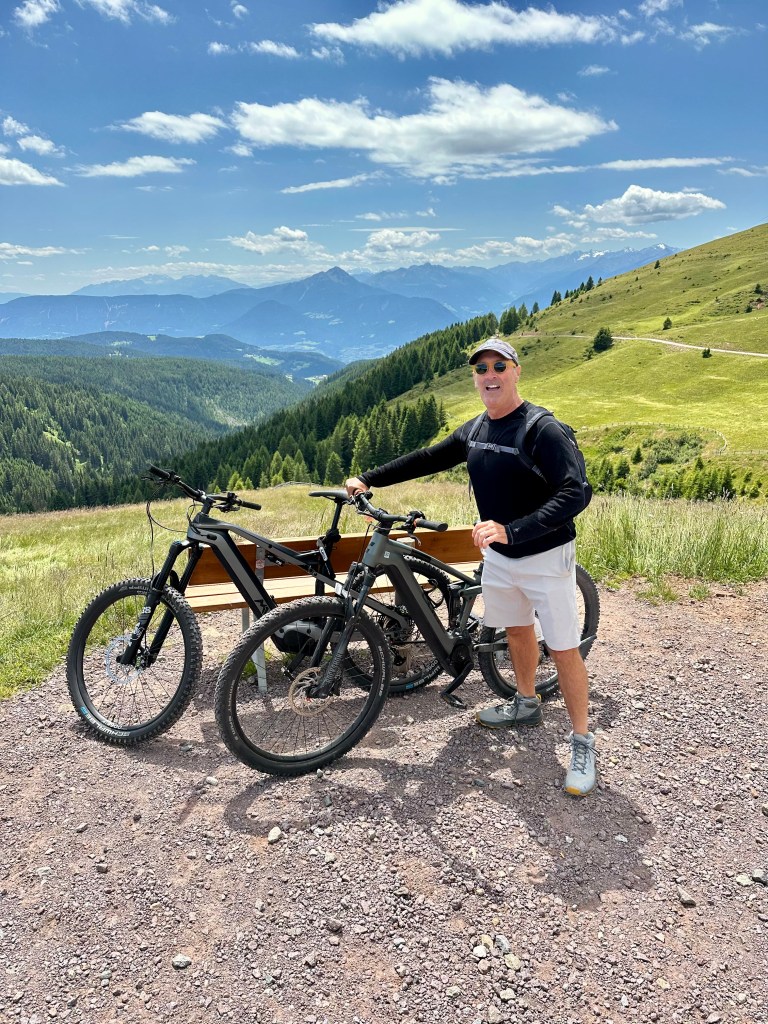
Foregoing our hiking routine, at MiraMonti, we rented bikes to ride up and around the nearby Merano 2000 mountain.
Romantic Road in Bavaria
We spent the last few days of the trip on the Romantic Road, visiting the string of medieval walled towns just over the border in Germany where the clock has stopped some time in the 15th century.
Although not officially on the Romantische Straße, we stopped for a night to revisit Garmisch-Partenkirchen (and to do a bunch of laundry in the AirBnB, since we’d only been in hotels since Rovinj).
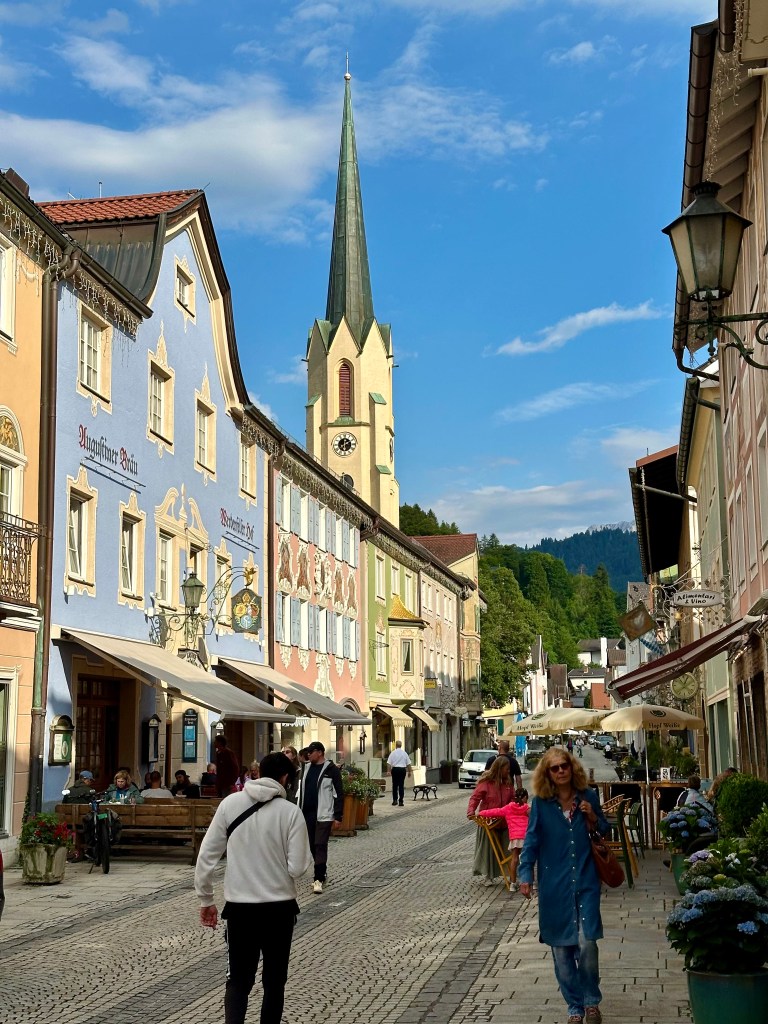
The charming Bavarian town we remembered as Garmisch from our earlier trip turned out, in fact, to be Partenkirchen, which was way more interesting.
Met some cool locals over lunch and, appropriately, ordered our first schnitzel on this leg of the trip.
Then, on to Donauwörth,
Harburg Castle,
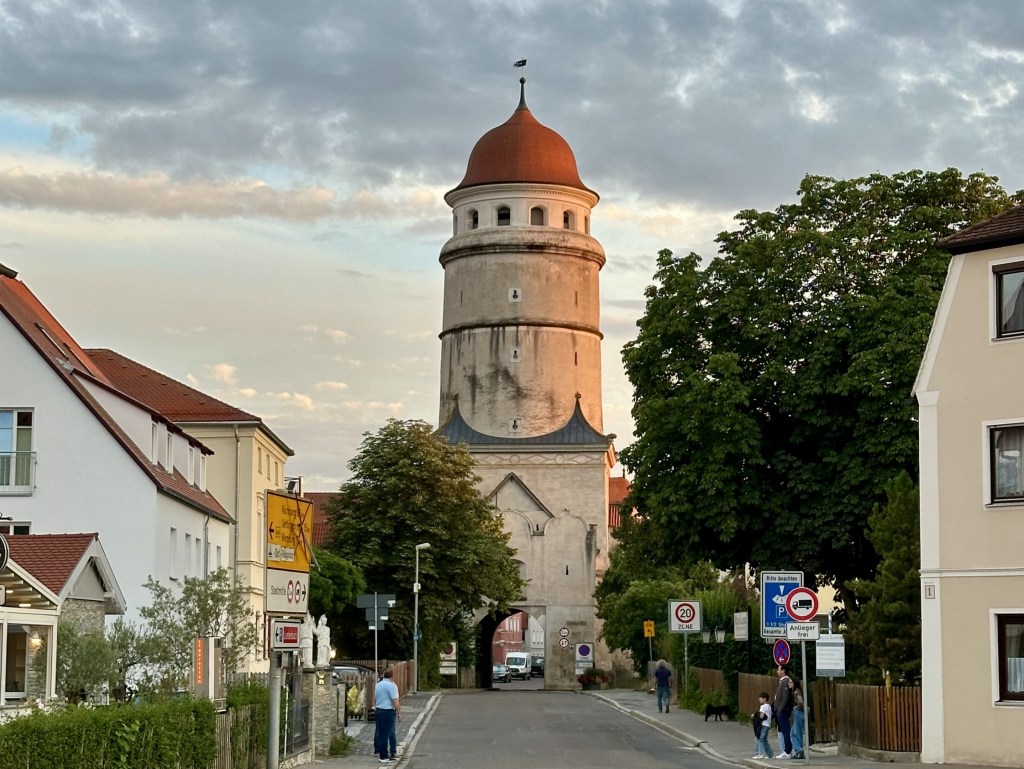
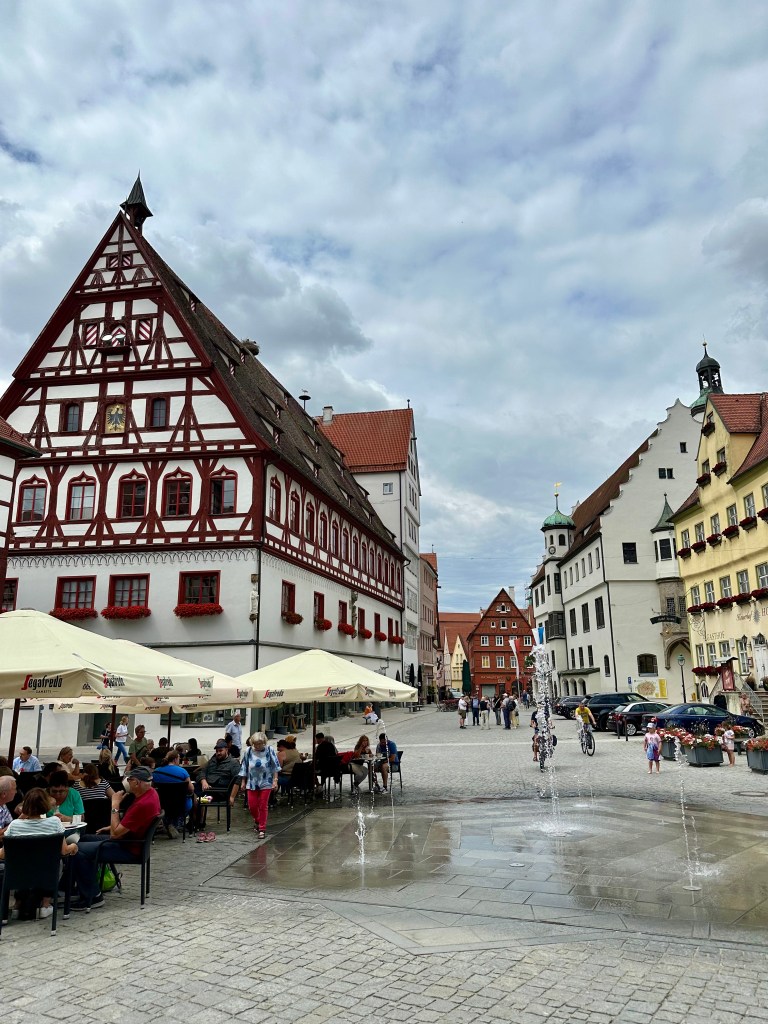
Nördlingen with its entirely intact medieval walls and tors,
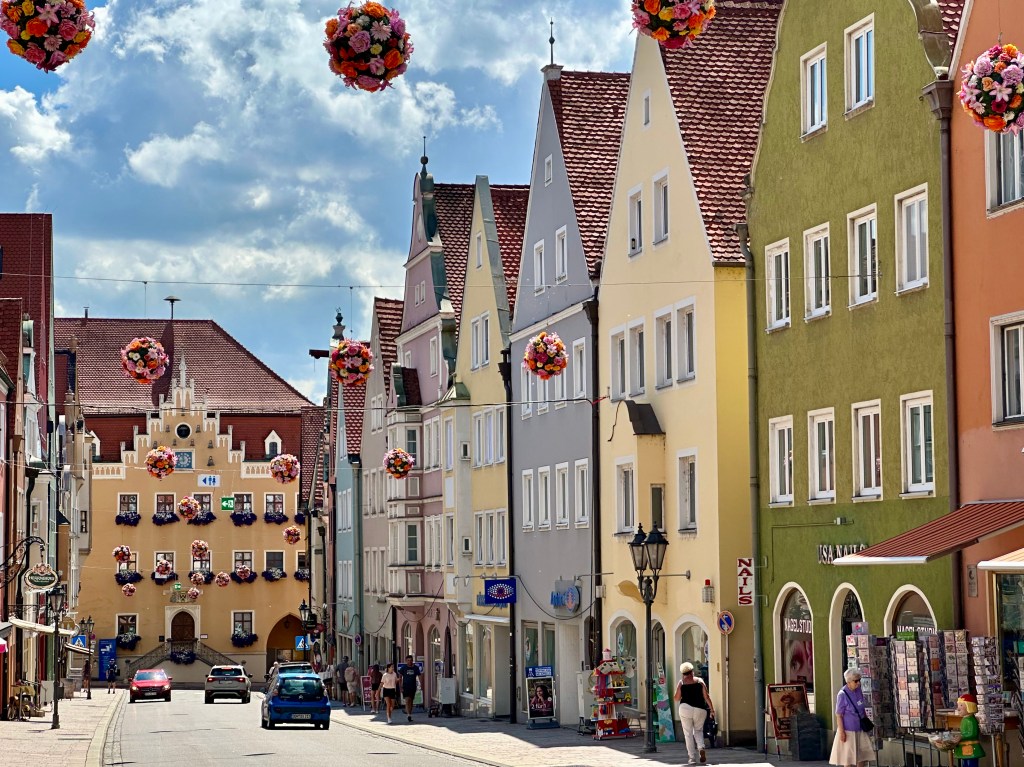
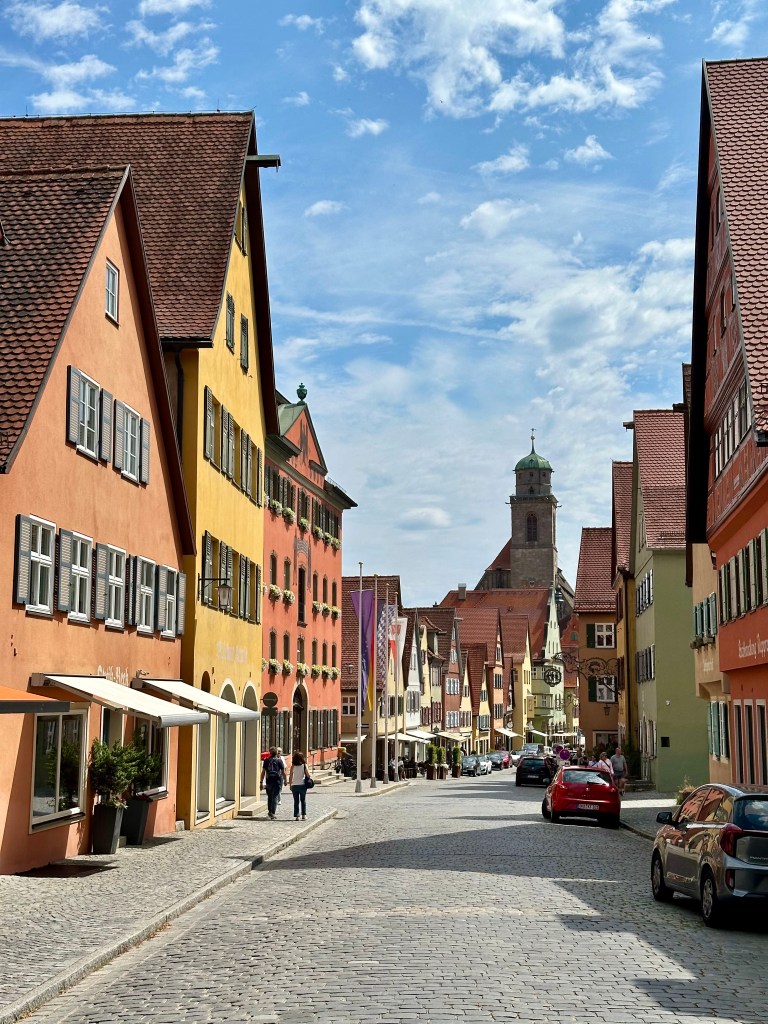
Dinkelsbühl, which we found to be both the most charming and least touristy of them all,
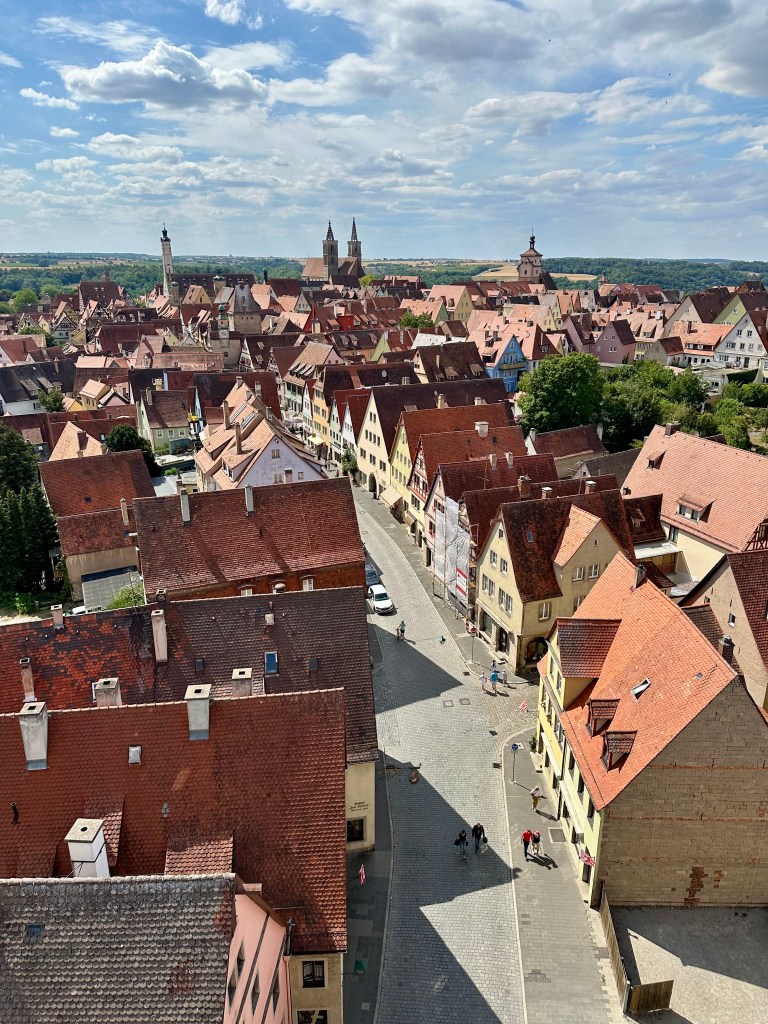
And, of course, the crown jewel of the Romantische Straße, Rothenburg ob der Tauber:
We ended our Romantic Road journey in Würtzburg, which was thoroughly underwhelming. Luckily, one of us has cousins in Germany and luckily one of the cousins has friends in the nearby charming village of Eibelstadt and luckily Eibelstadt was hosting a wine festival that evening. Relatives and wine and friends delightfully solved the Würtzburg problem.
We drove 3 freakin’ hours to Munich the next day to hang out, spend the night, and fly the following morning out of MUC when we should have just headed an hour the other direction from Würtzburg and flown out of FRA. But considering that that was the only major misstep of the trip (there was a minor one in the Dolomites that we’ll cover in a future post), the overall trip was fantastic. Really great pace, in terms of time spent in each location and time on the road between locations.
All told, our latest road trip entailed the following:
The New York Times reported “Trump Suggests U.S. Territorial Expansion and Airs Grievances: In a news conference, President-elect Donald Trump refused to rule out the use of military force or economic coercion to take Greenland and the Panama Canal.”
“President-elect Donald J. Trump said (“In a rambling, hourlong news conference”) Tuesday that he would not rule out the use of military or economic coercion to force Panama to give up control of the canal America built more than a century ago and to force Denmark to sell Greenland to the United States.”
WolfeStreetTravel finds interest in all things cartographic, vexillologic, and heraldric. Particularly the compelling cartographic oddities we encounter on our travels. But yesterday, multiple news outlets (and several travel Instagram accounts we follow) reported a development directly relevant to the last item in the list.
As reported in the UK’s Guardian, “The Danish king has shocked some historians by changing the royal coat of arms to more prominently feature Greenland and the Faroe Islands – in what has also been seen as a rebuke to Donald Trump.”
The previous Danish coat of arms was formalized in 1972, but elements of the current heraldric symbols can be traced back to the rule of King Canute VI around1194. The old coat of arms did acknowledge Greenland, but subordinated its polar bear to a position in quarters within quarters upon the field (shield shape). The Greenland polar bear shared a quartered space in the lower left quadrant of the field with the Faroe Islands ram, below three crowns, “symbolizing “the symbol of the Kalmar Union between Denmark, Norway, and Sweden, which was led by Denmark between 1397 and 1523.”
Denmark’s new coat of arms more prominently devotes an entire quarter of the field – the same lower left quadrant – to the polar bear symbol of Greenland. Although not as relevant to the story, the Faroe Islands’ ram gets its own quarter a the top right quadrant of the field, and the crowns are now gone. (They made cosmetic updates to the dudes with the clubs, too, but no one is commenting on the rationale for this change.)
All of this, of course, in response to Trump’s declaration that owning Greenland is in America’s strategic interest. Trump wrote yesterday on Truth Social, ““Greenland is an incredible place, and the people will benefit tremendously if, and when, it becomes part of our Nation. We will protect it, and cherish it, from a very vicious outside World.”
The Washington Post reported that “For the Danish government, this situation is “a huge headache,” according to Mikkel Runge Olesen, senior researcher at the Danish Institute for International Studies. “It cannot be seen to be pressuring Greenland or jeopardize relations with Washington, which it depends on for security guarantees through NATO.”
Headache or not, WolfeStreetTravel finds it fascinating that the Danes are asserting their sovereignty over Greenland through updates to their ancient heraldric symbols while this whole thing plays out in the lead up to the new presidential administration.
After mulling over an extended trip to Japan over Christmas during our New England and Canada road trip this past summer, we quickly concluded that the time and focus needed to plan the logistics of that trip would be misspent while actively engaged in another. And so we defaulted to an easier-to-plan, one-stop trip to a location closer by that’s been on our list for a few years: San Miguel de Allende in the center of Mexico.
The town had been on our radar for a few reasons:
Most notably, the town hosted the finale of Top Chef one season, and the gastronomic reputation of San Miguel appeals to us
The Boston Connells spent more than a month in San Miguel back in the day as part of the boys’ Spanish immersion education (which certainly paid off, considering that one of them ended up taking two semesters of college engineering courses in Spain – in Spanish – and the other spent a month in Ecuador last year)
There’s a Rosewood there
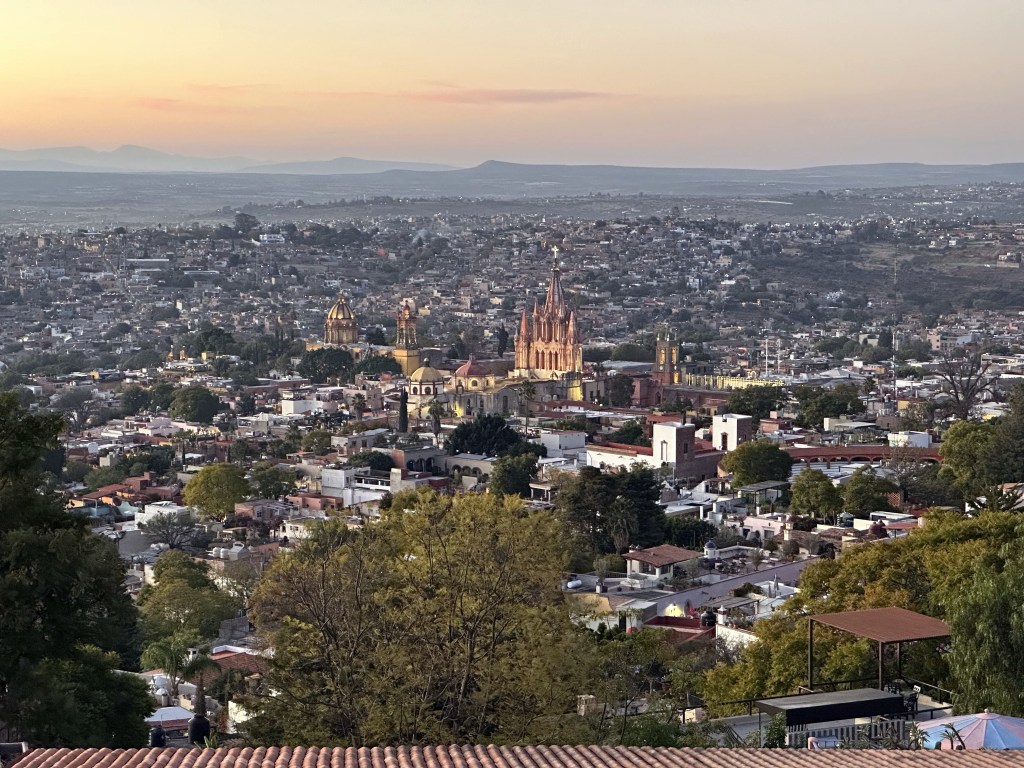
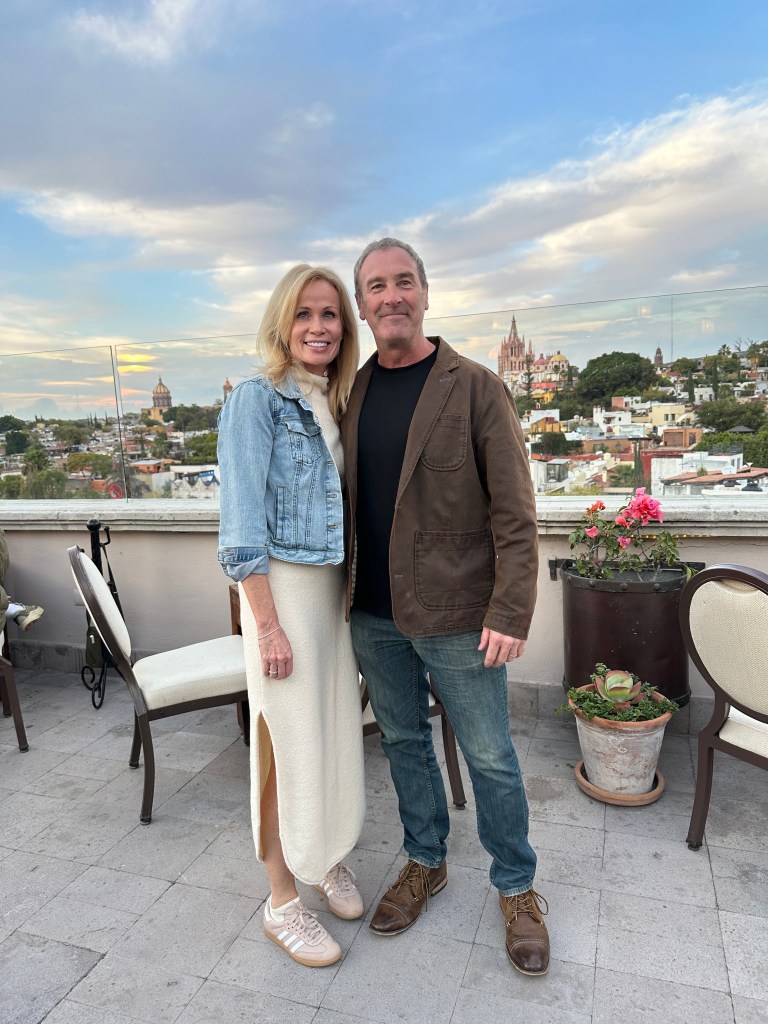
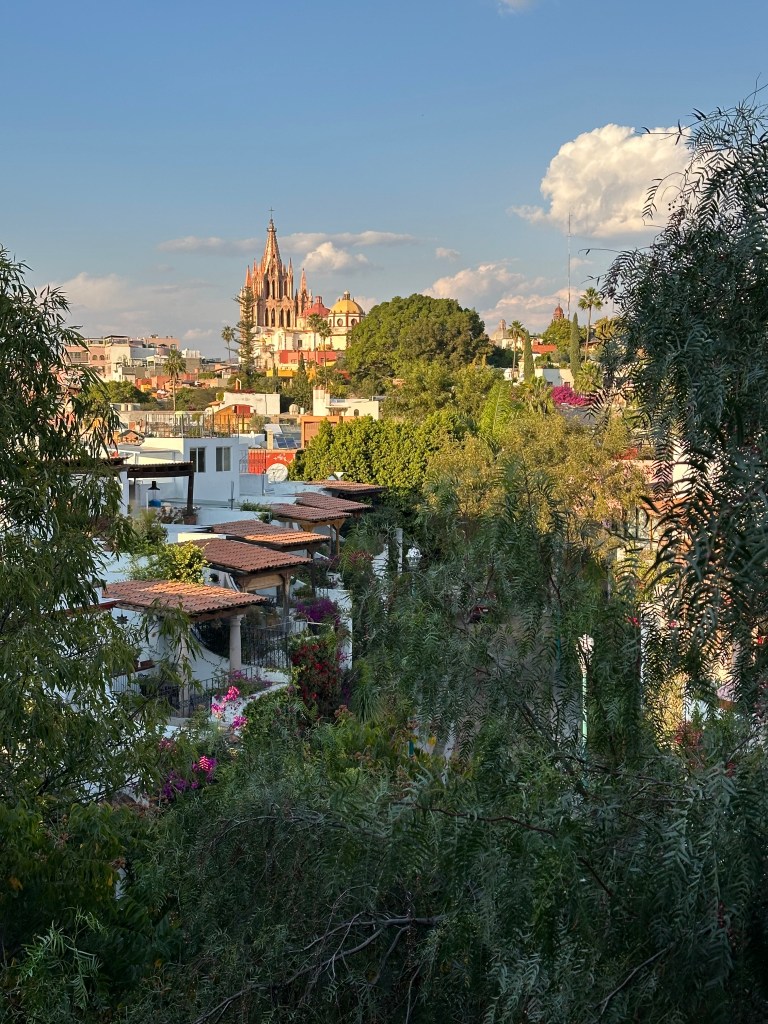
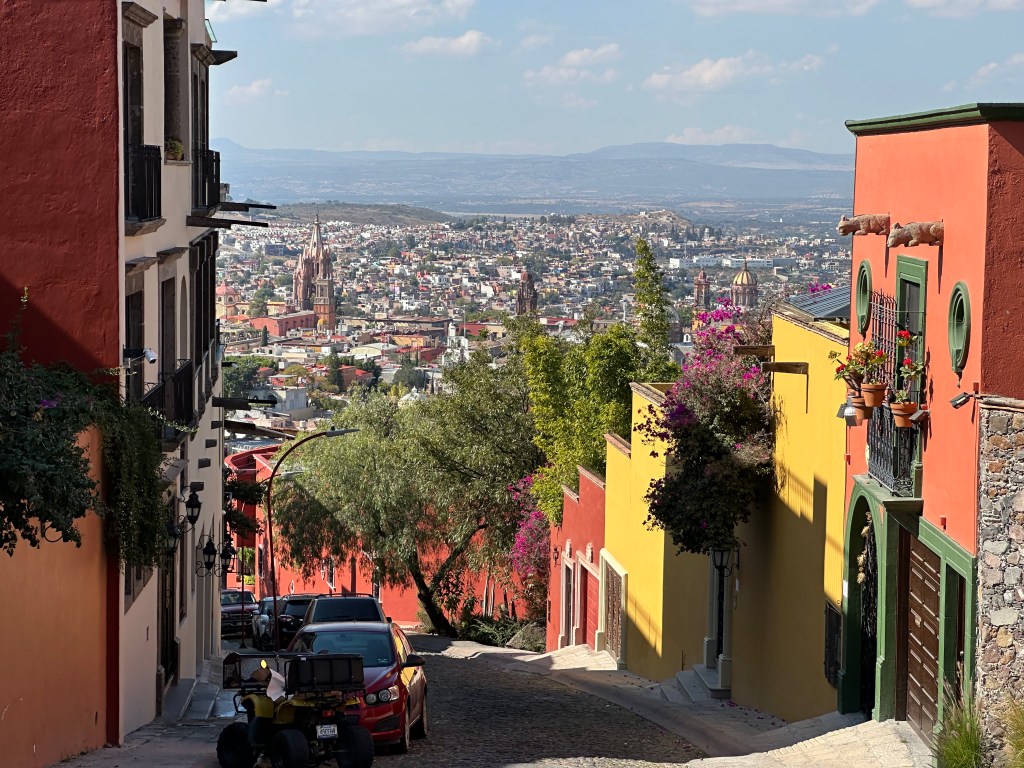
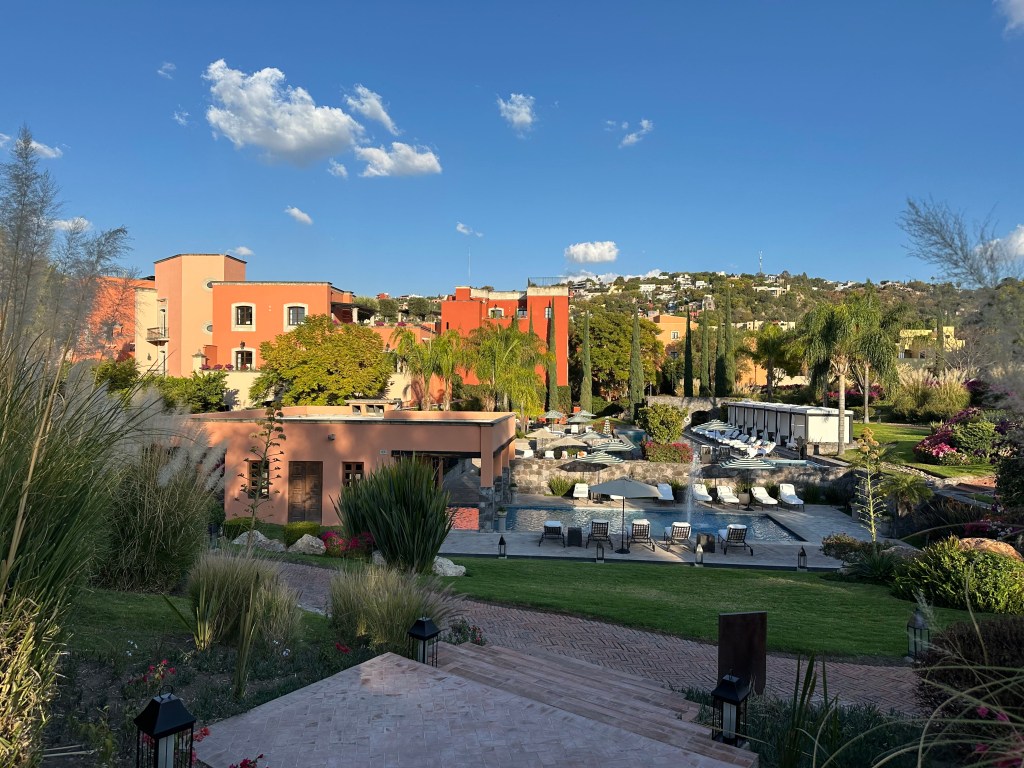
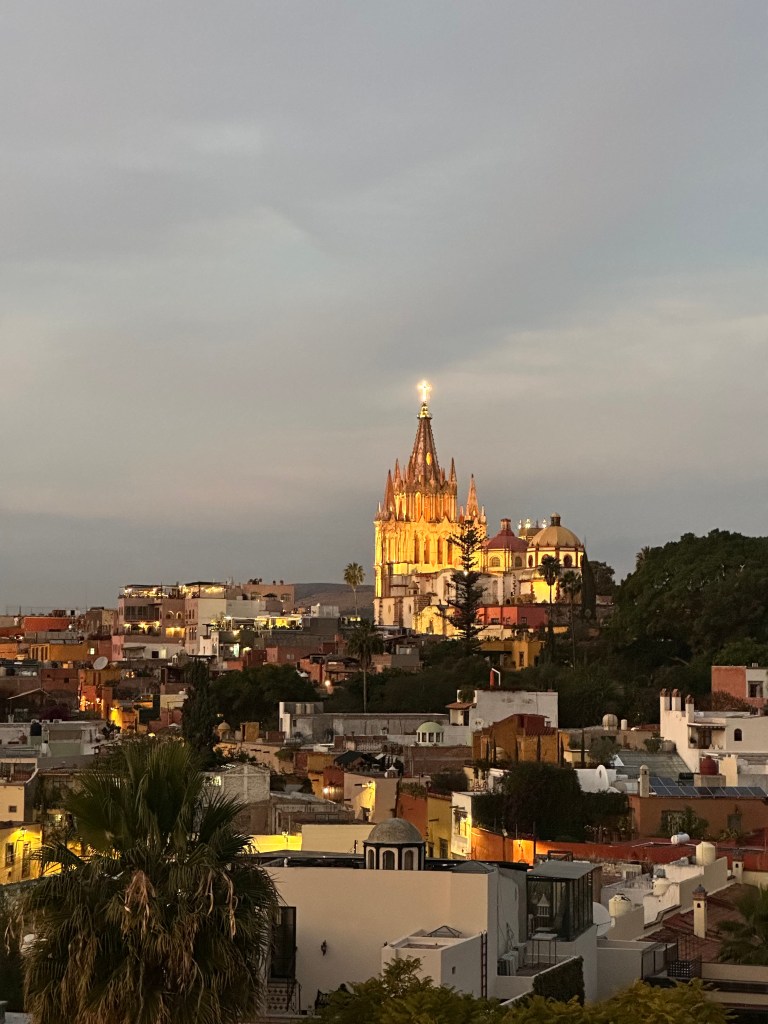
The choice turned out to be a wise one – really beautiful place, both from a distance during cocktail hour:
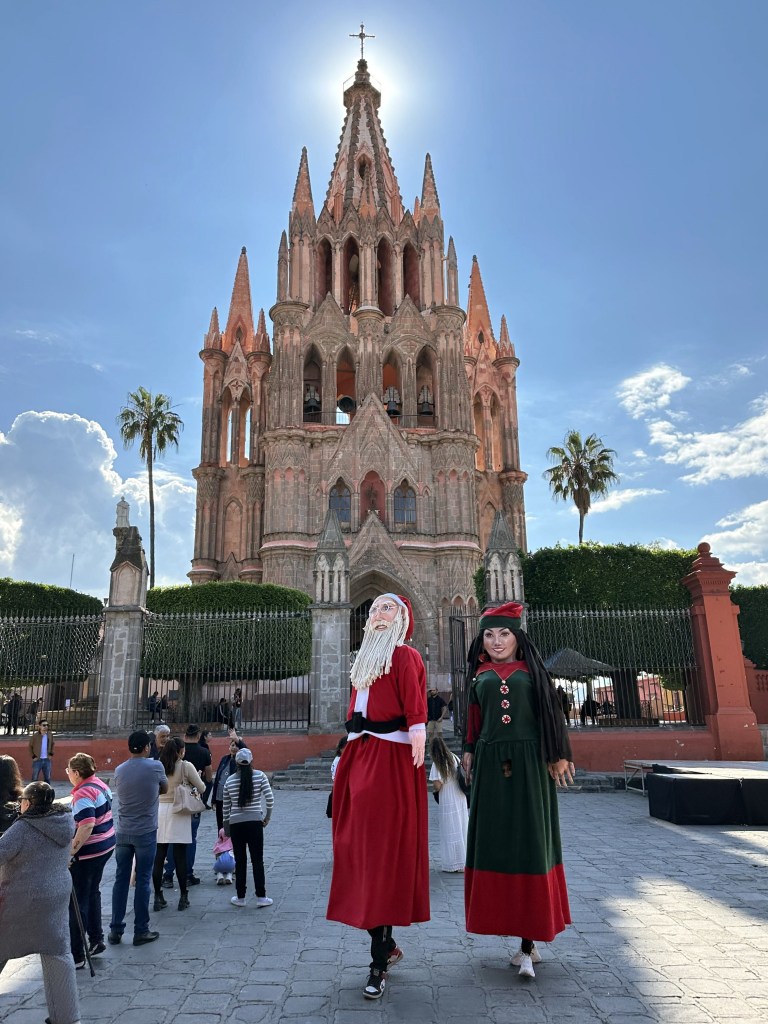
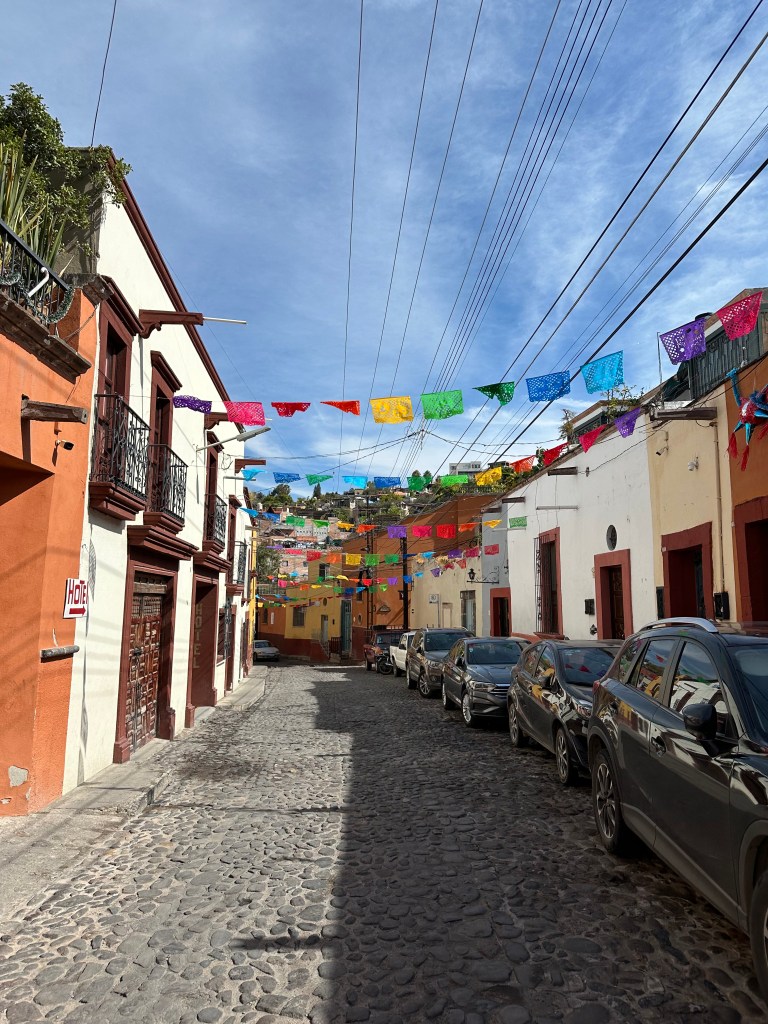
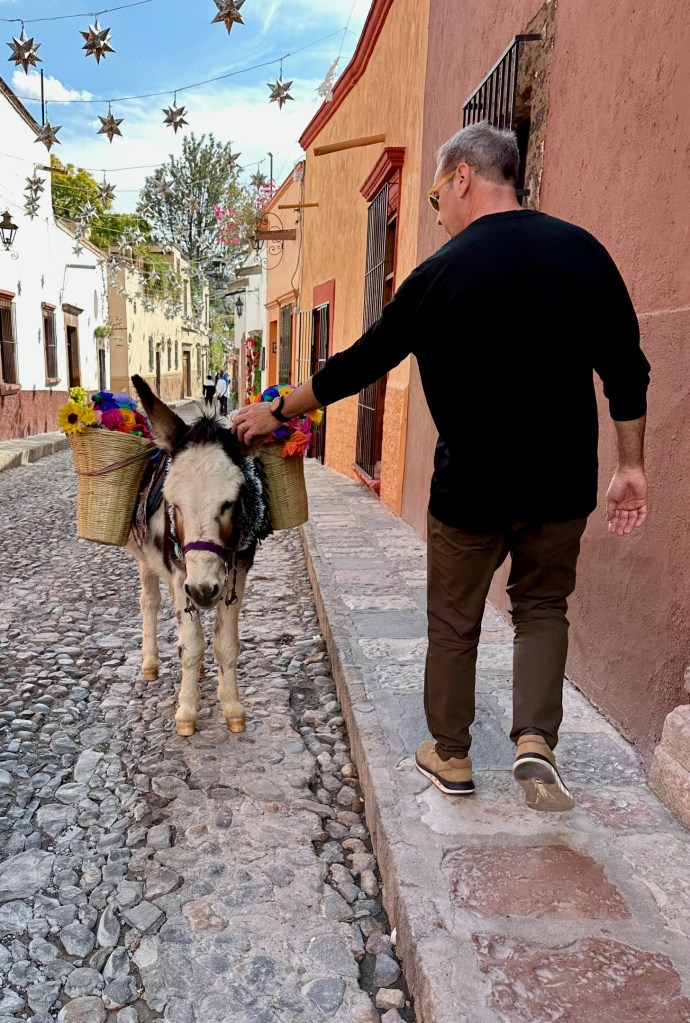
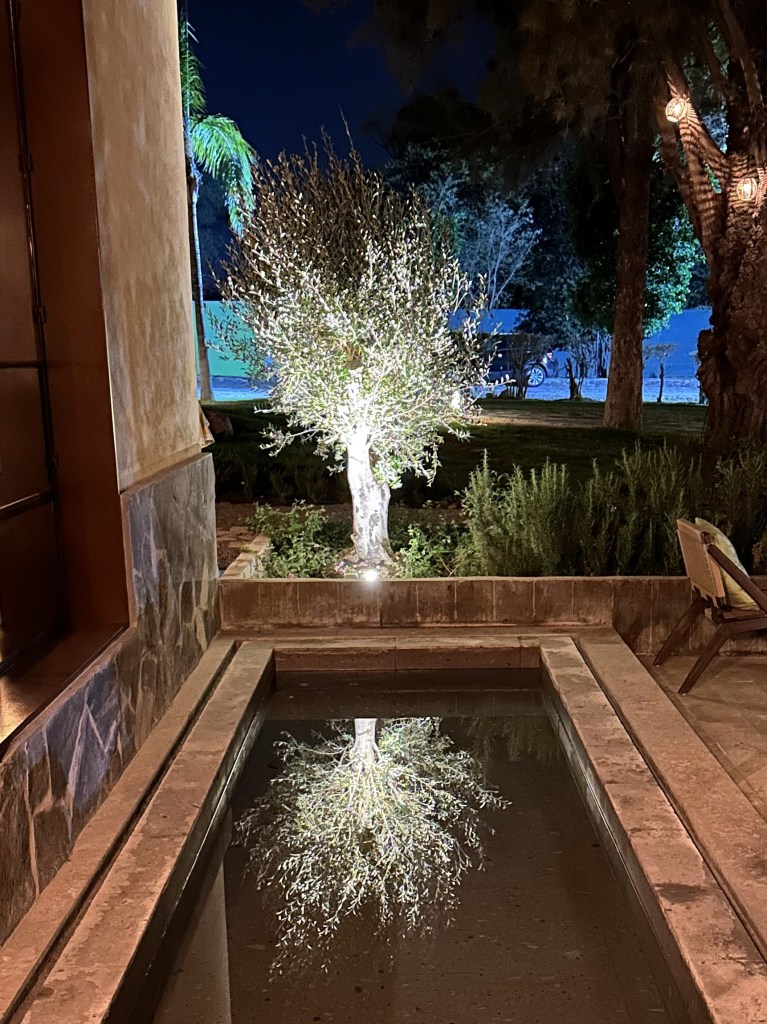
And up close and personal in town:
We took a walking tour our first morning there, and our guide stated that San Miguel now consists of 14% gringos, and that, although Americans began visiting the town in meaningful numbers after WW II due to a Spanish language school that was covered by the GI Bill, the big surge came much later. Due, according to our guide, to a proclamation a dozen years ago by Conde Nast Travel that San Miguel was the most beautiful town in the world.
Moneyed Americans (and Canadians) soon followed – first as visitors, then as residents.
UNESCO also designated the center of town as a World Heritage Site, which is a pretty meaningful statement about the place. As a result of these moneyed new residents and the UNESCO designation, San Miguel has been beautifully preserved. Or gentrified. It’s a fine line.
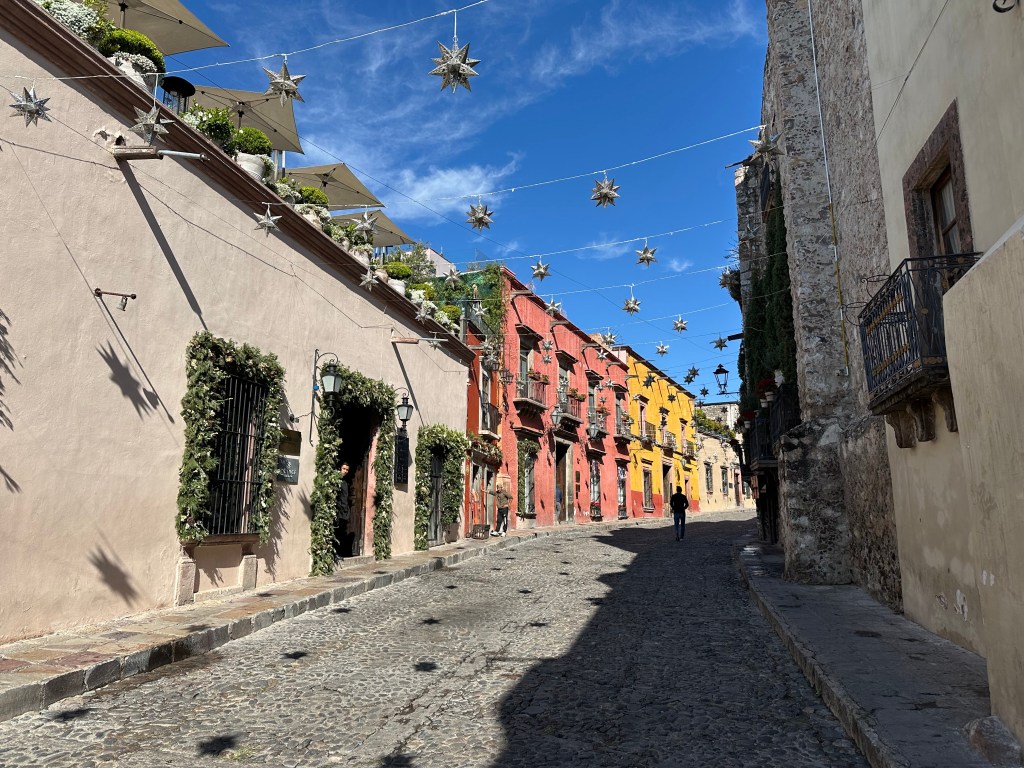
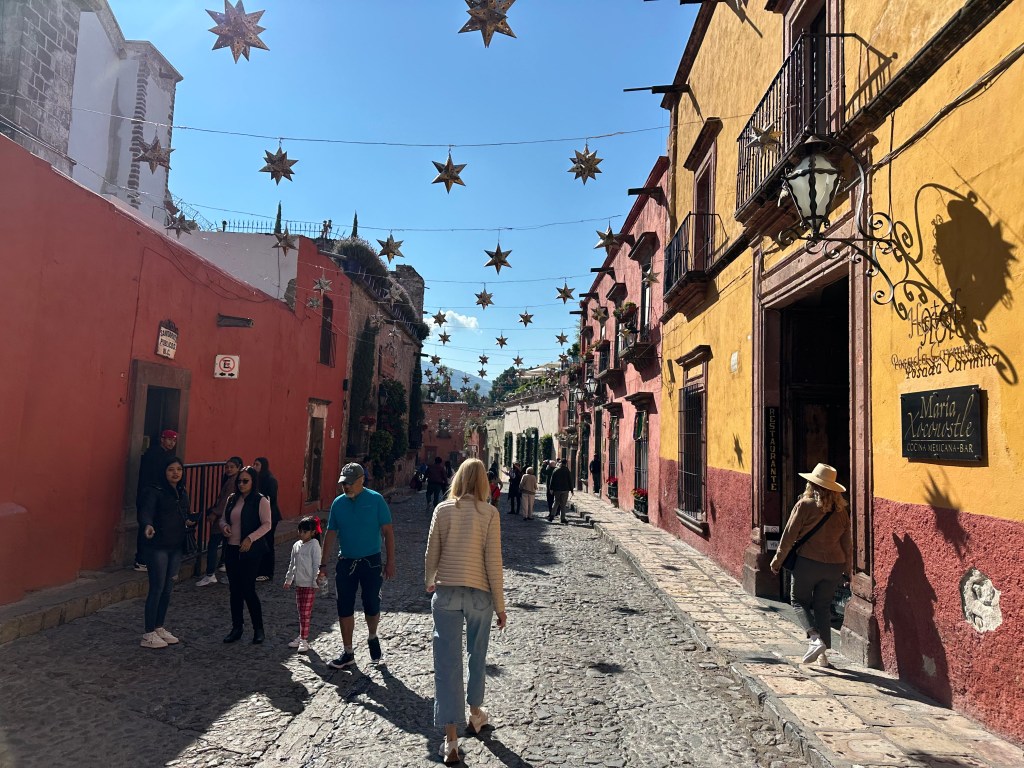
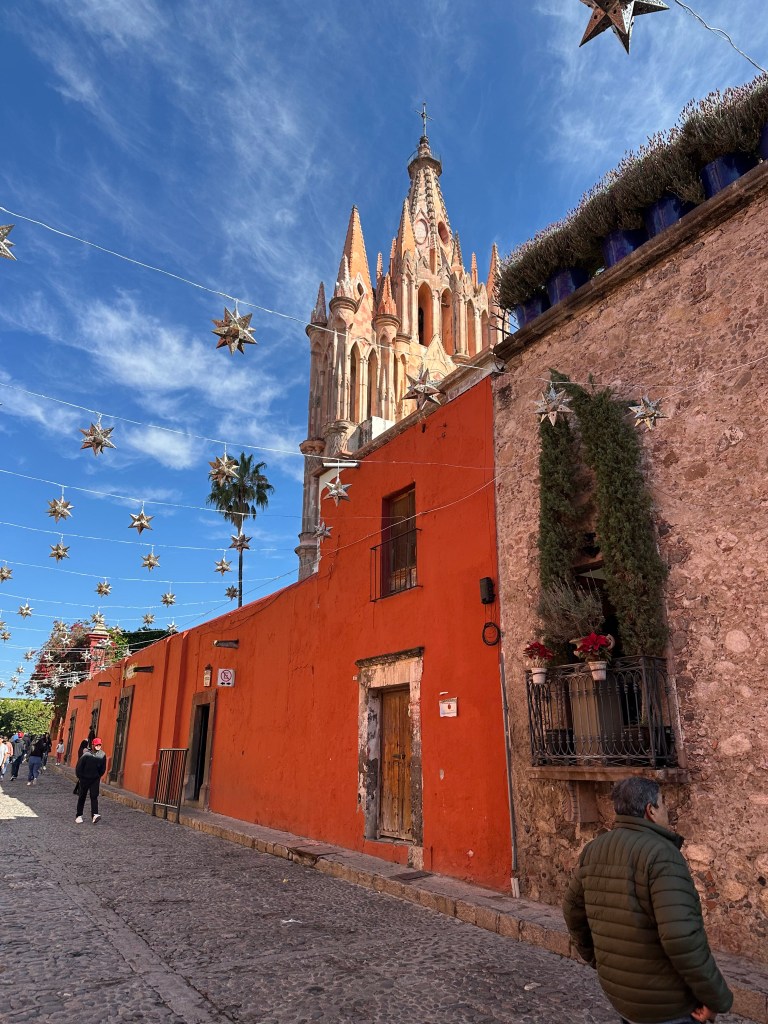
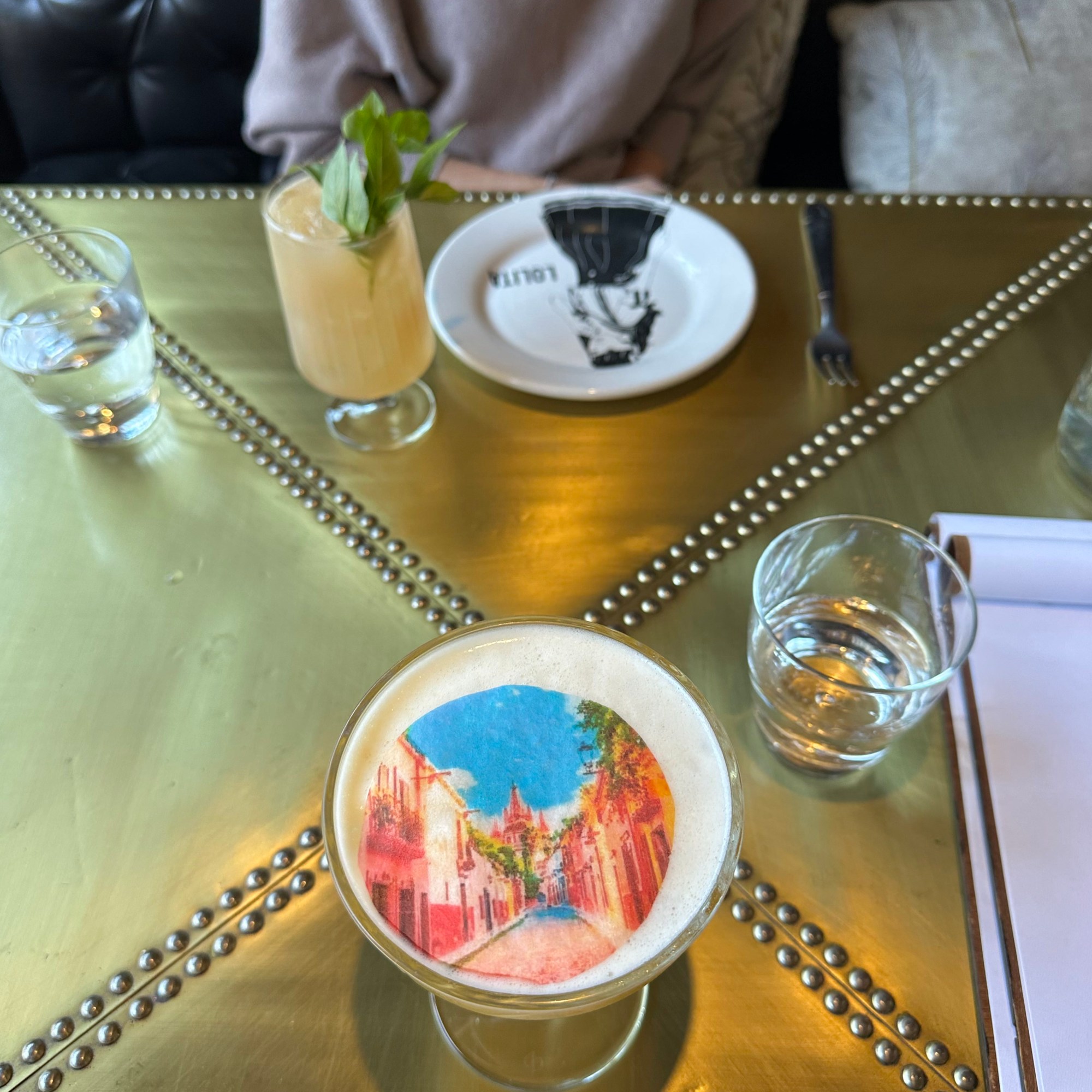
And in all of the town declared by Conde Nast to be the most beautiful in the world, the magazine declared this street to be the most beautiful in town (and in the world). While the specific rank is questionable to us, considering some of the places that we’ve visited, it was undeniably beautiful, and made more so by the Christmas decorations here and all around the center of town:
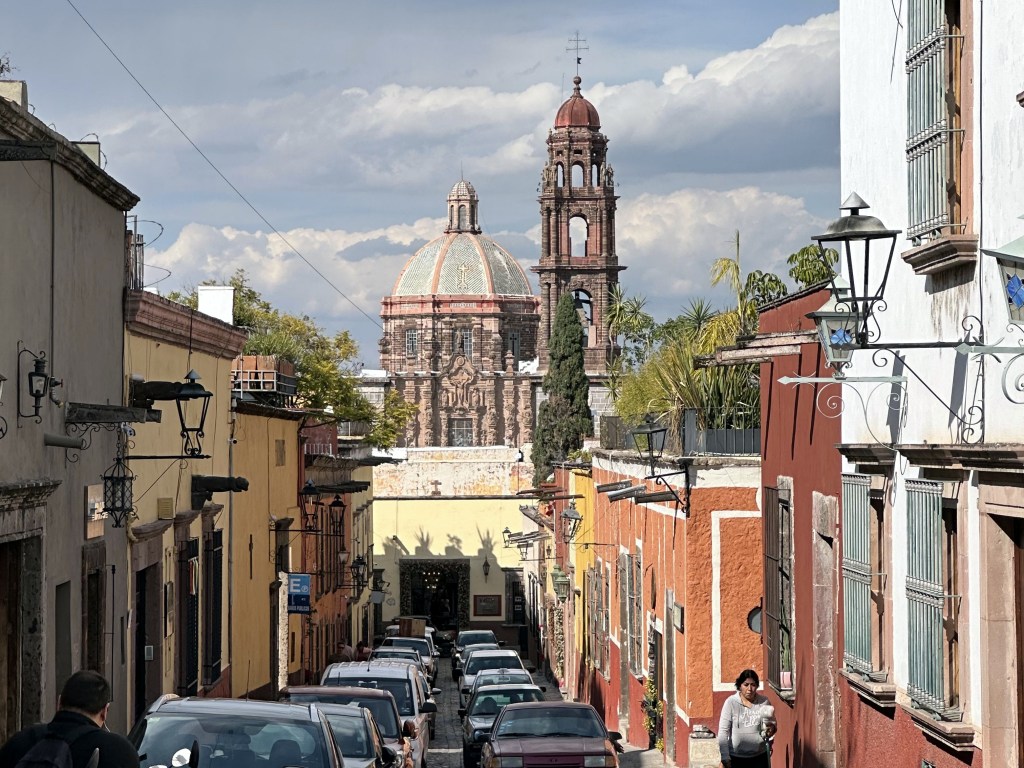
And cool street views weren’t limited to just that most famous lane:
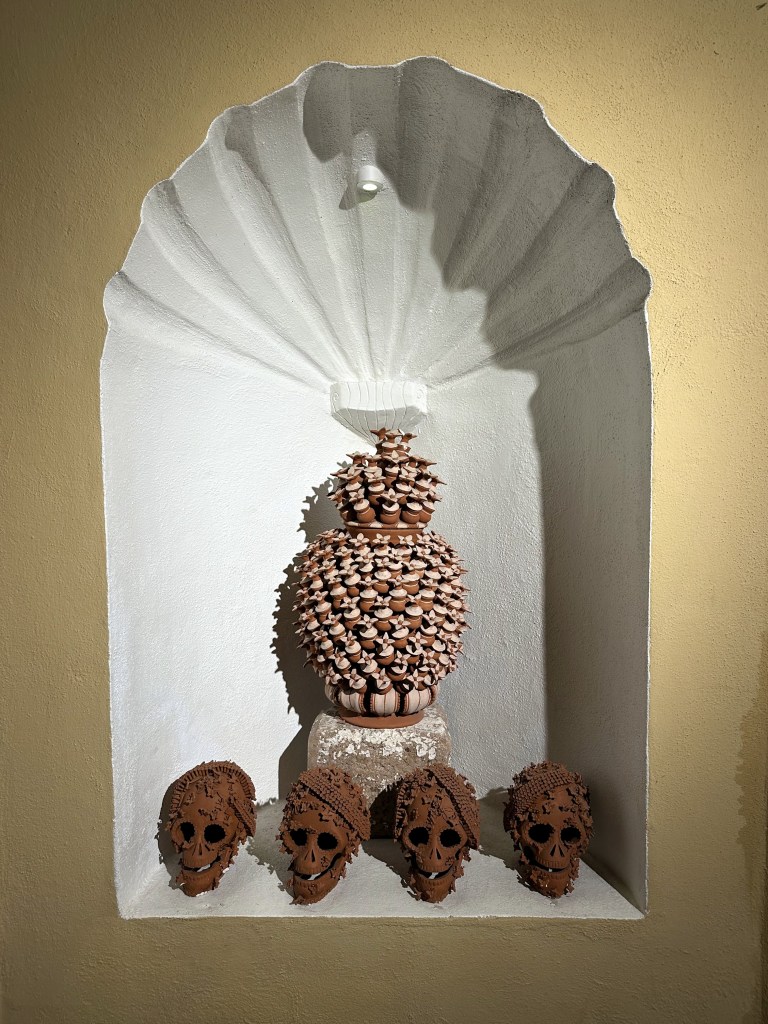
Cool dia de los muertos mural by a local artist in a San Miguel bar:
And the dia de los muertos accessories didn’t stop there.
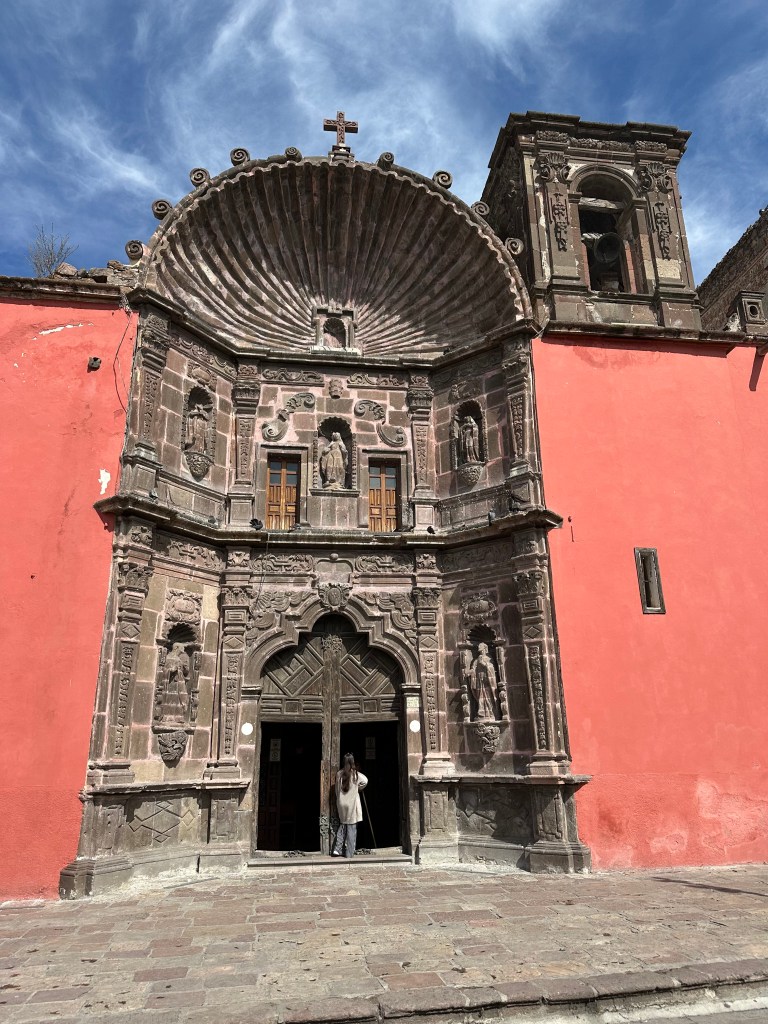
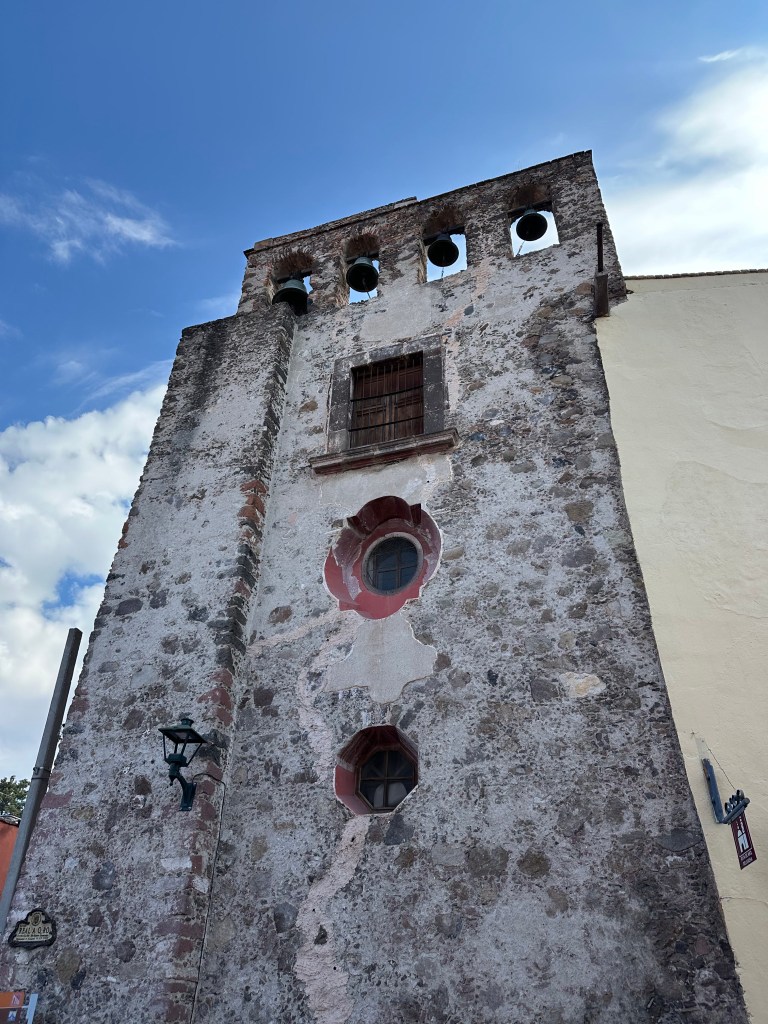
The rather picturesque Templo de Nuestra Señora de la Salud/Temple of Our Lady of Health:
First lunch in town at a fish taco place – pretty good!
San Miguel’s bull ring, which still hosts bull fighting events (none of which were held during our visit, though):
Great view from the rooftop bar at our place, with San Miguel’s landmark Parroquia de San Miguel Arcángel (Parish Church of St. Michael, Archangel) as a centerpiece of the vista:
Although the town is actually named after a 16th-century friar, Juan de San Miguel (and Ignacio Allende, who we’ll get to), the San Miguel reference we most commonly encountered during our visit was the town’s patron saint and parish church personality – St. Michael the Archangel.
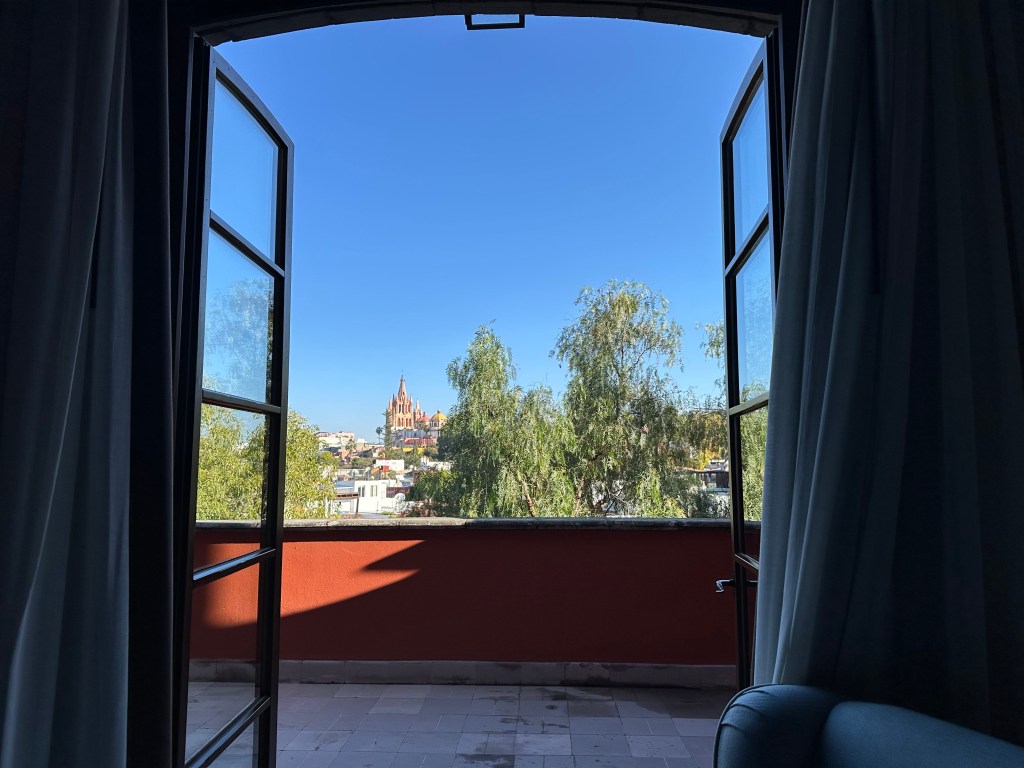
Pretty good view of the parish church from our room’s terrace, too!
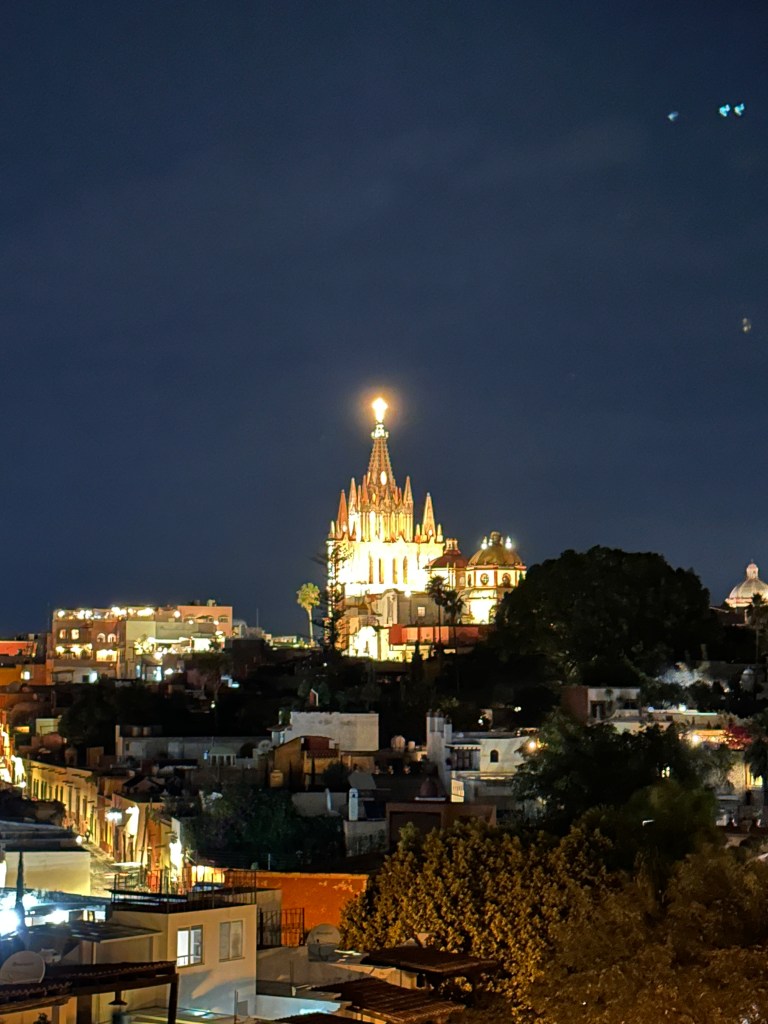
Parroquia de San Miguel Arcángel was, in fact, omnipresent during our visit. One simply could not escape its intrusion. Which was a good thing, from a town aesthetics point of view. . .
Both up close:
And from afar:
And during the day:
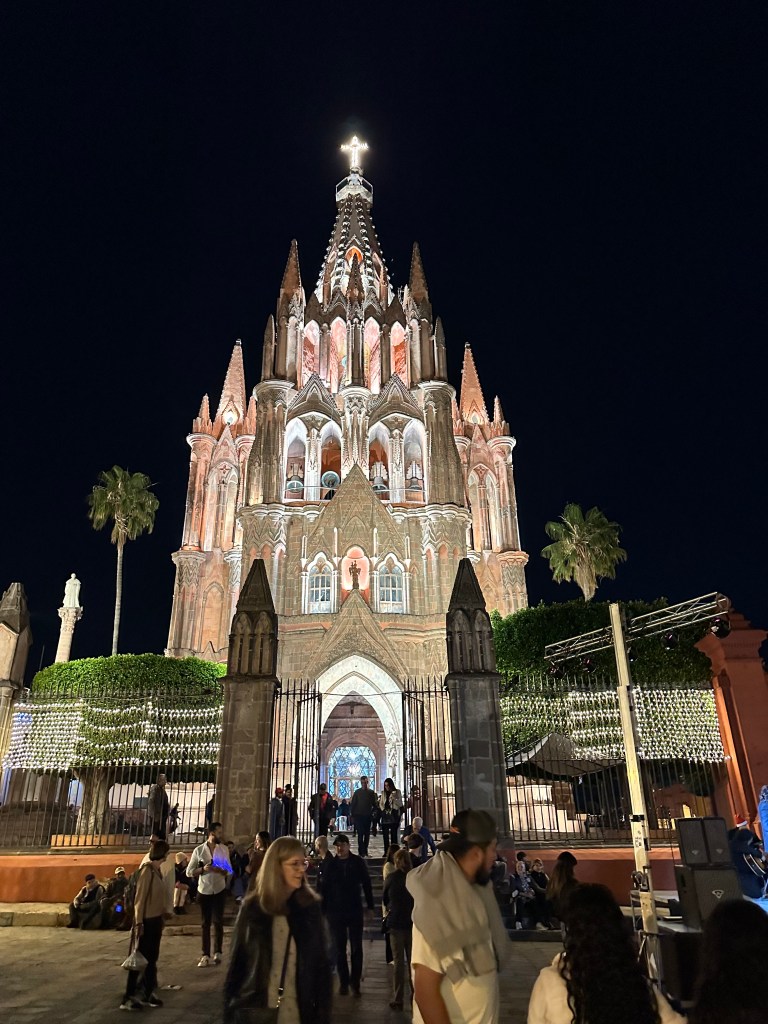
And at night:
(Not sure this functions in email version of post.)
Christmas Eve:
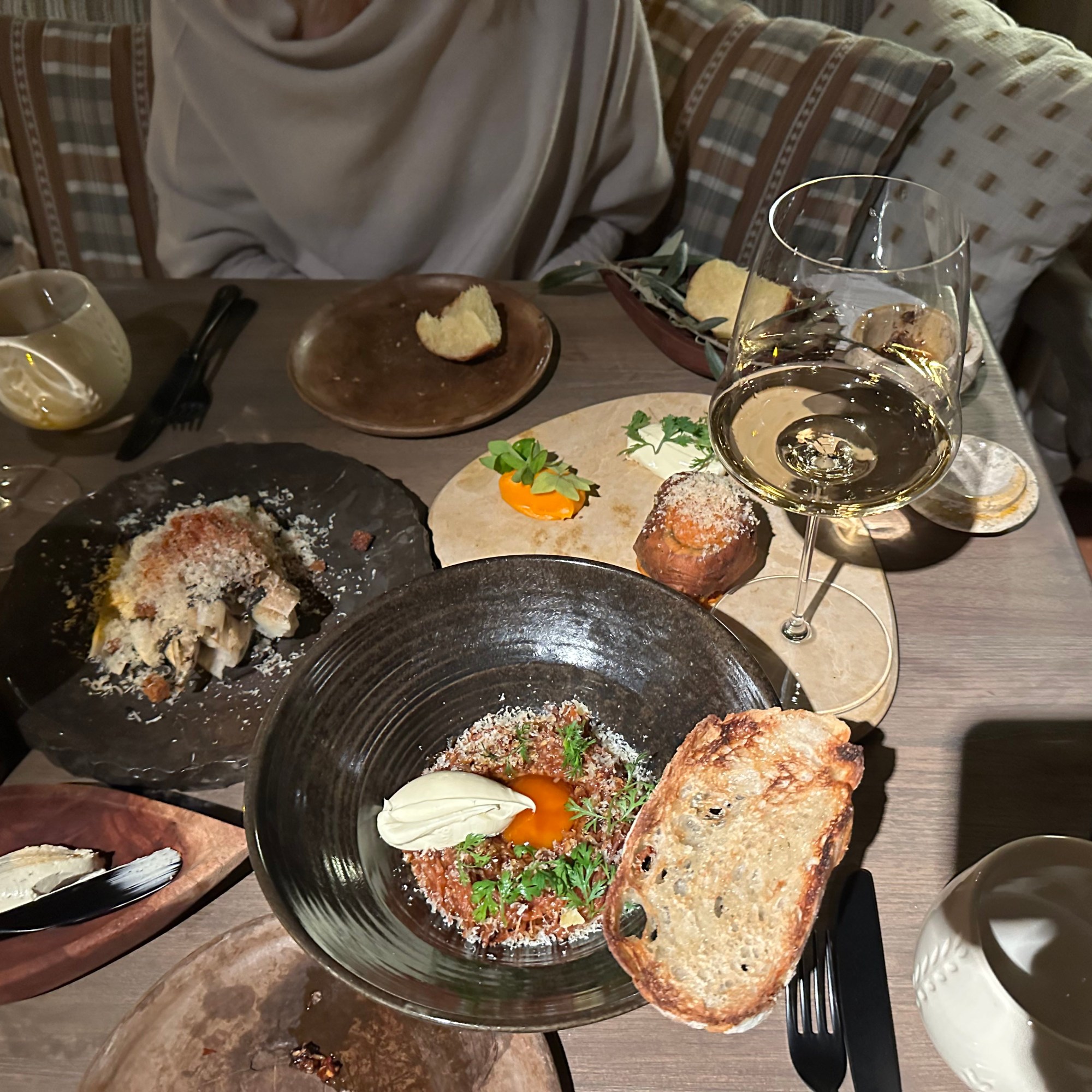
Christmas Eve dinner at Aperi:
And the tradition of the traveling Christmas stockings continues!
Christmas day in the Rosewood’s courtyard (not sure this functions in email version of post):
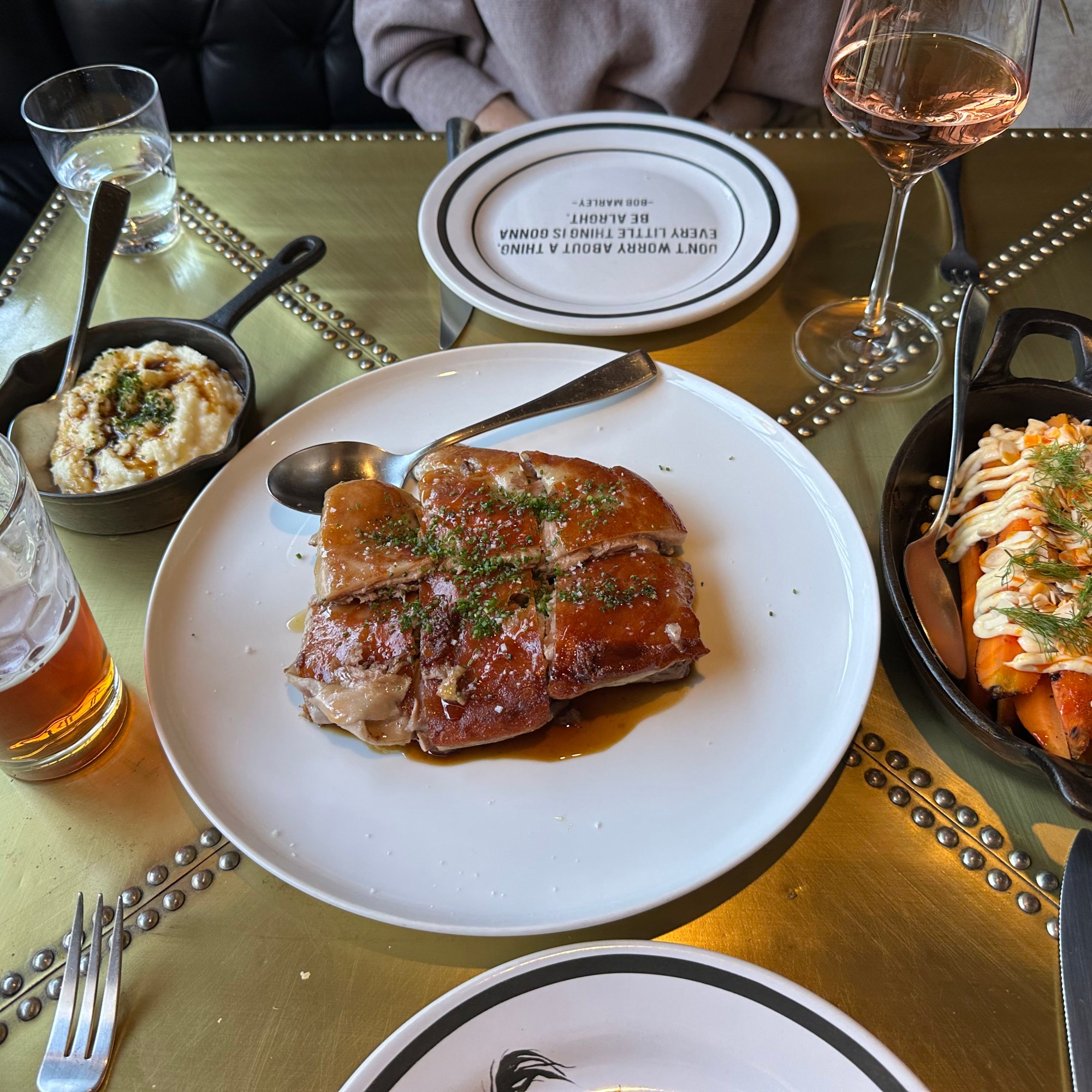
Christmas Day lunch at Bovine, featuring outstanding suckling pork.
Christmas dinner at Rosewood’s gastronomic restaurant 1826 absolutely sucked balls, and so does not merit any photographic documentation.
Instead, let’s turn to a field trip we took to the birthplace of the Mexican revolution: Guanajuato, about a 1.5-hour drive from San Miguel.
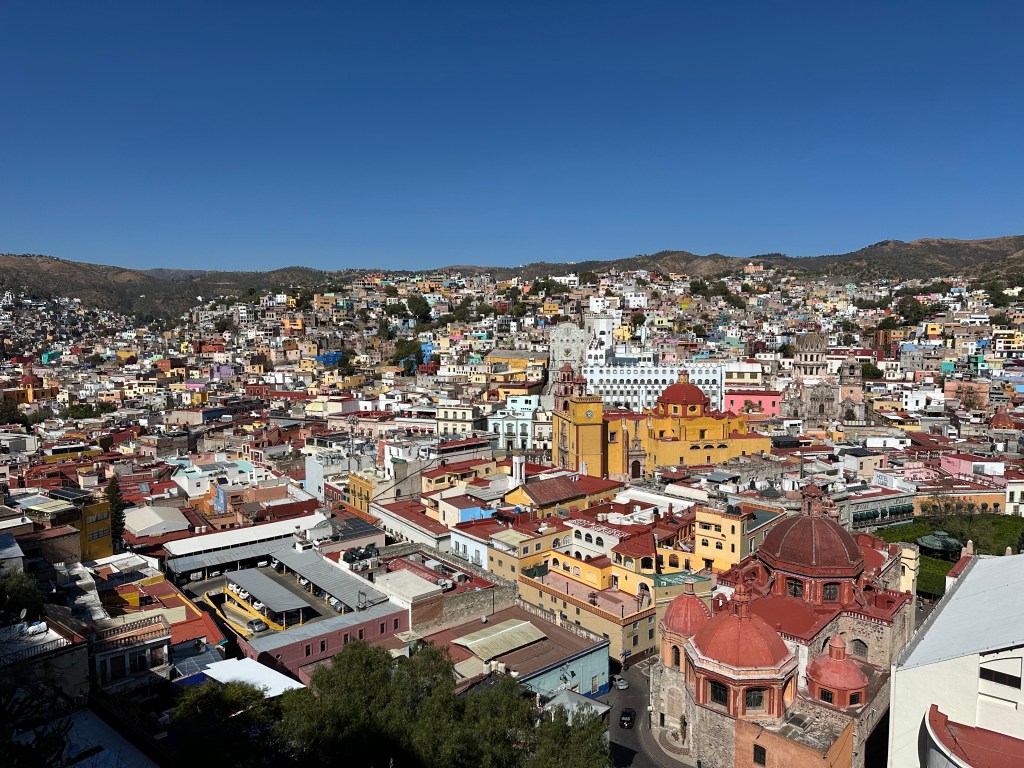
Unlike San Miguel, which permits residents to paint house in whatever color they wish – as long as it’s some shade of ocher or red – Guanajuato really does allow any color paint. As evidenced in the kaleidoscope of house colors seen from the belle view over town:
So, here’s Guanajuato’s role in the overthrow of Mexico of Spanish rule. During the Spanish colonial period, the region around and including Guanajuato was home to incredibly productive silver mines, yielding great wealth. But only to some – namely, the Spanish-born aristocracy. A stark wealth gap developed between these aristocrats and the indigenous and mestizo inhabitants working the mines and haciendas, and the areas slaves. Moreover, the native-born Spanish also were denied wealth and agency, and so, in the late 18th century, multiple rebellions broke out. All of them brutally suppressed and unsuccessful.
In 1809, however, a group led by Ignacio Allende, Miguel Hidalgo y Costilla, Juan Aldama, Miguel Domínguez planned an armed revolt against the colonial government. (The last part of San Miguel de Allende takes its moniker from the first guy, bringing closure to our San Miguel discussion earlier in the post).
In September 1810, the rebel forces arrived in Guanajuato and besieged Spanish loyalist forces holed up in the city’s heavily fortified grain exchange, below:
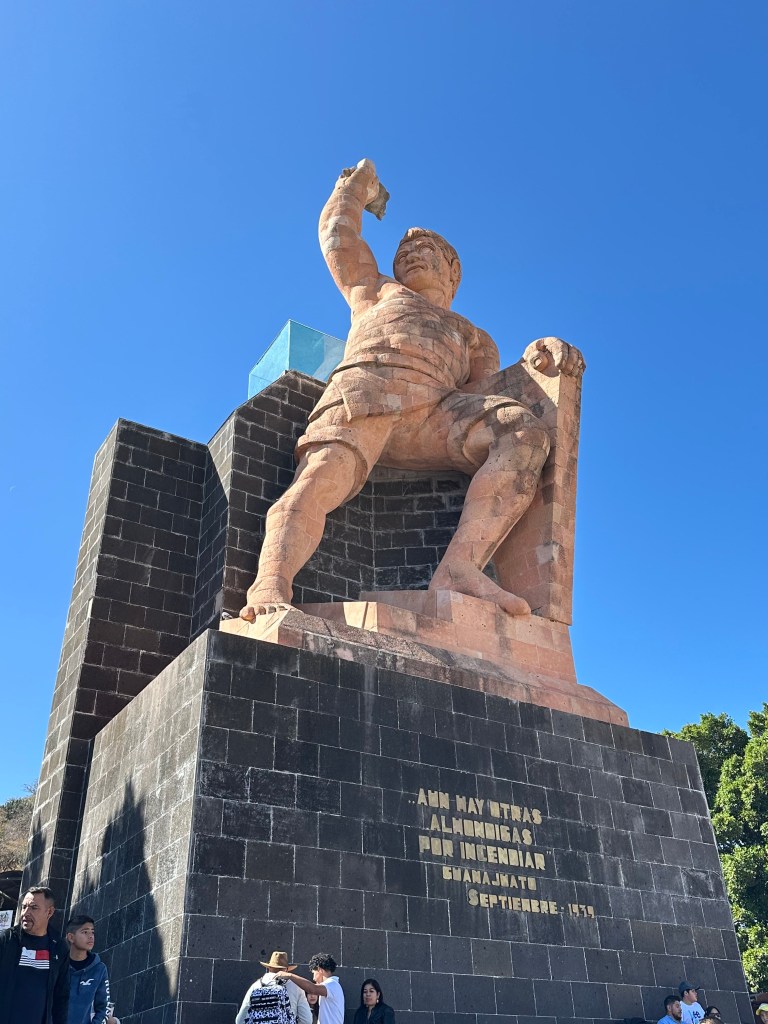
The rebels besieged the grain exchange, but there were only four doors and rifles on the roof. So this dude, Juan José Martínez – a silver miner – strapped a slap of stone on his back and charged one of the doors, setting it alight and gaining entry. All of the loyalists were killed.
But the Spanish forces caught up with the leaders. “The four main participants – Hidalgo, Ignacio Allende, Juan Aldama, and José Mariano Jiménez – were shot by Spanish firing squads, and their bodies decapitated. The four heads were hung from the corners of the Grain Exchange, to discourage other independence movements. The heads remained hanging for ten years, until Mexico achieved its independence. They were then taken to Mexico City and eventually put to rest under el Ángel de la Independencia in 1910.” (From here.)
On to more contemporary activities; namely, our second funicular of the year!
Pretty cool town.
Guanajuato Basilica, now that we’re down in the city:
The town’s opera house, Teatro Juárez:
And the Jesuit University of Guanajuato, which looks way more like a church, frankly.
Albeit with visually appealing green limestone facade elements – this limestone is unique to Guanajuato.
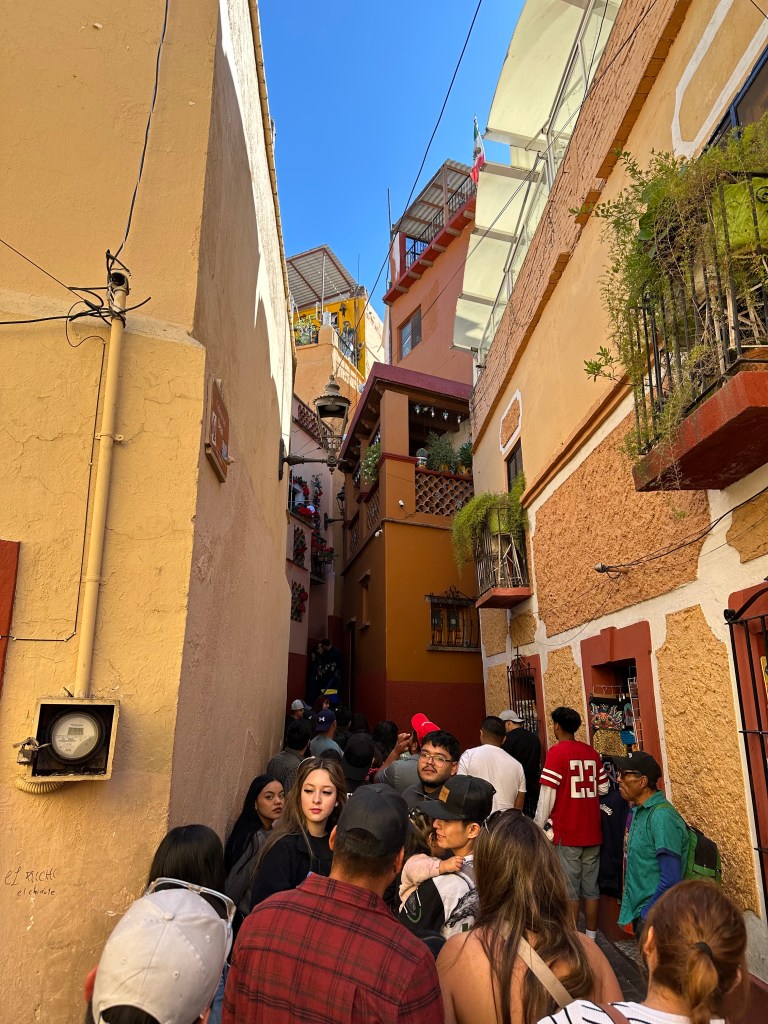
The tourist-trap Alley of the Kiss; with two balconies close enough to do so, the location spawned a local Romeo and Juliette-style legend.
Pretty cool main cultural area, with topiary-style park trees, a la San Miguel.
Juan José Martínez from down below:
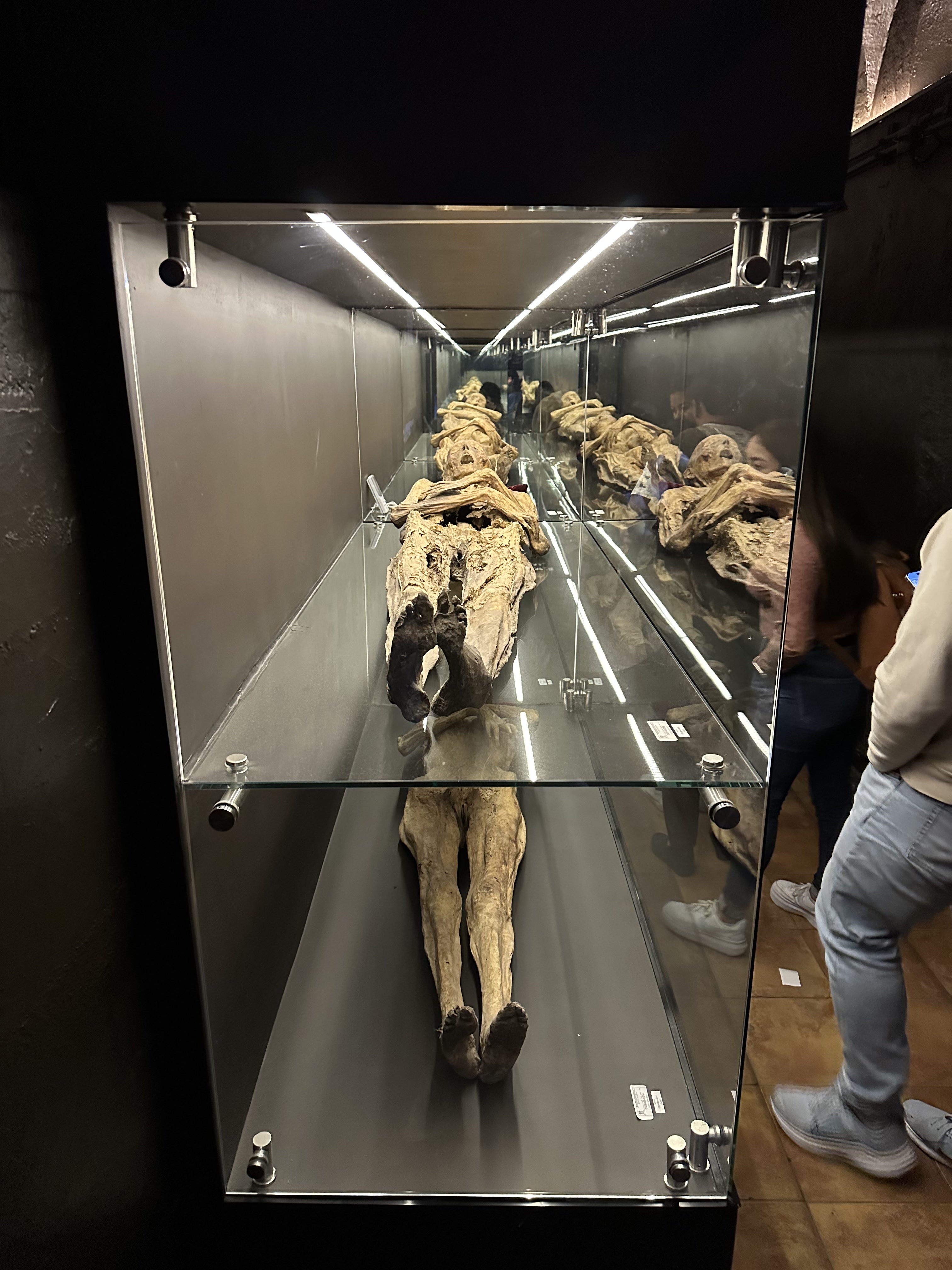
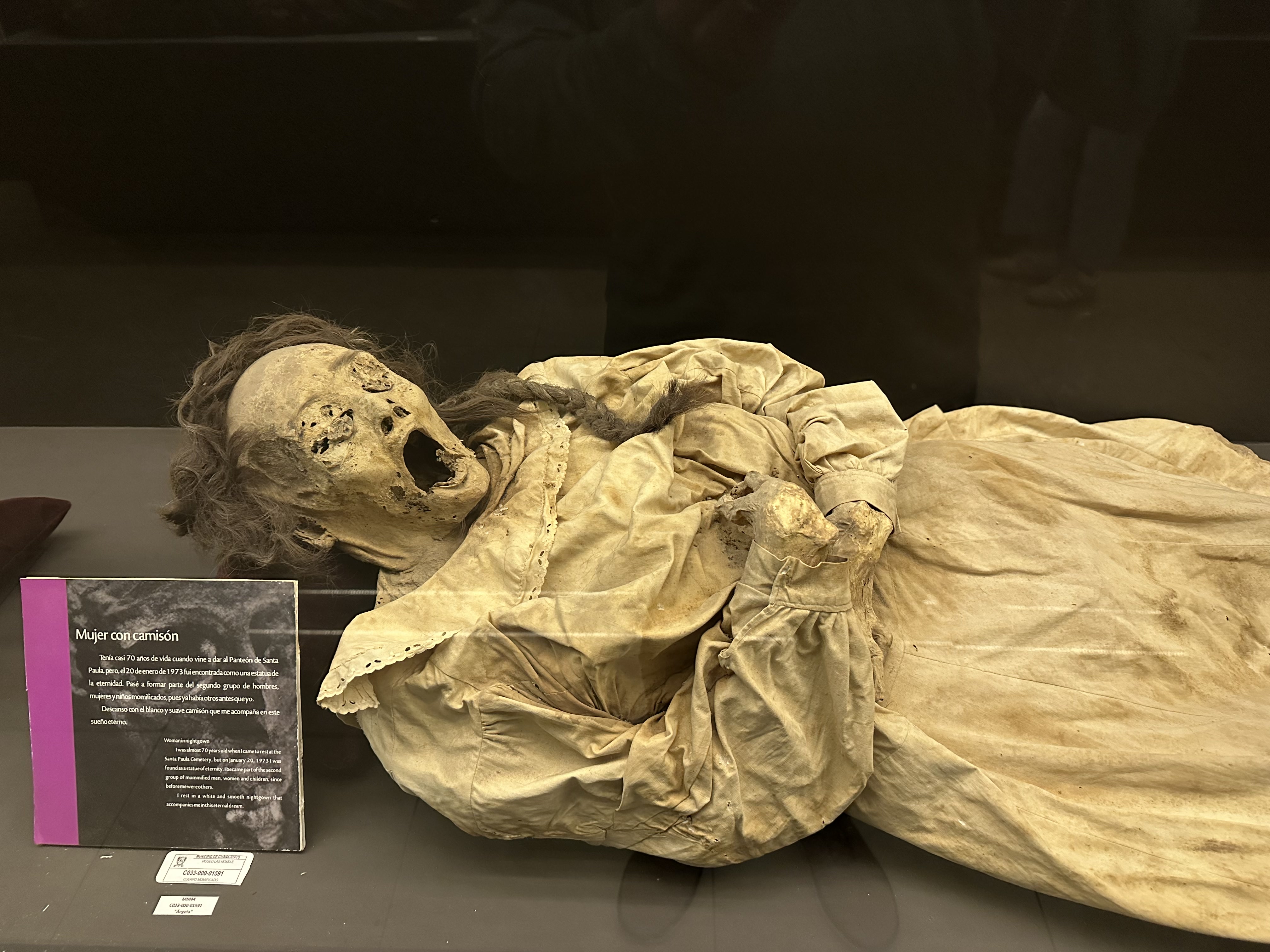
And one more stop before our return – a bunch of mummies. There’s a story regarding the high cost of burial, a poor population, abandoned corpses, and naturally dry climate that accounts for all of this, but that’s for a later post. For now, just be a little grossed out. (As much, or perhaps more so, than by their counterparts in Sicily last year.)
Another great night in San Miguel (which we did prefer greatly over Guanajuato, for what it’s worth).
A normal creche in the city’s main park during the day:
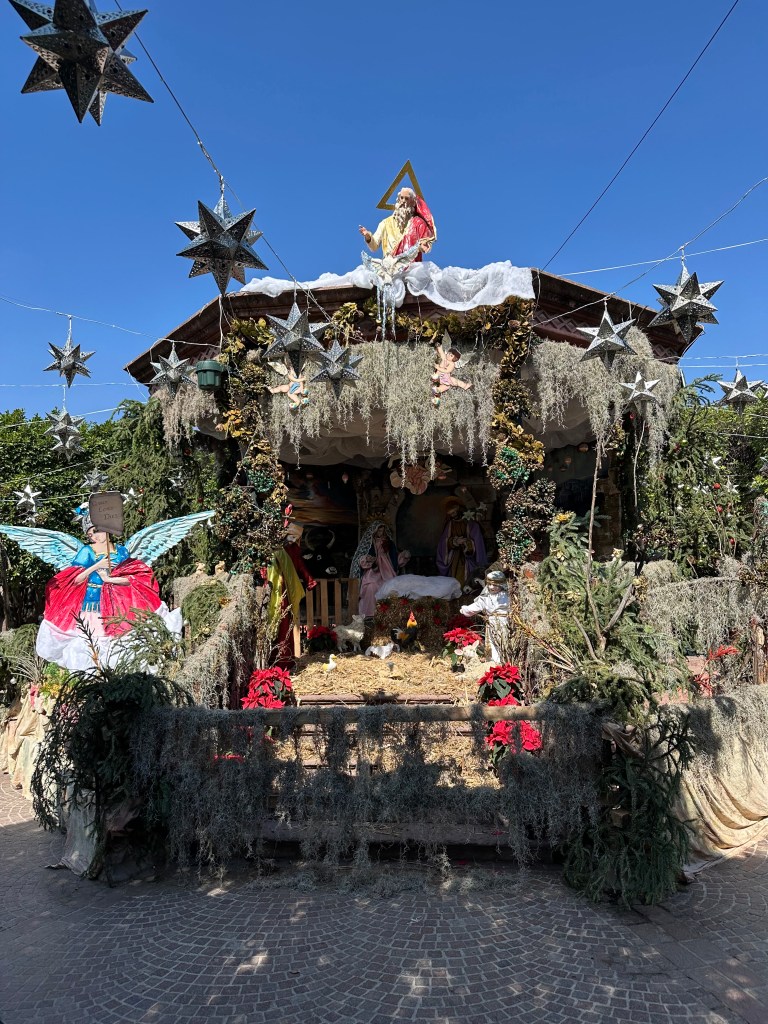
And a rather more contemporary version encountered in town that night:
Pretty happening square!
The most prominent Spanish aristocratic families in San Miguel, btw, supported the rebellion against the Spanish crown in 1810. As a result, they retained their haciendas and their palaces in town. To this day, some of the most valuable properties in town are still owned by less than a dozen noble Spanish families. This includes several, huge private churches around town that are open to the public only on specific feast days. And even then only for, like, a 7:30 AM mass, then they’re back outta there and doors are closed.
Dinner with a view that night at Quince:
And some unexpected entertainment (not sure this functions in email version of post):
And then a ringside table to the main event, of which we were completely unaware prior to sitting down here:
(Not sure this functions in email version of post.)
(Not sure this functions in email version of post.)
A walk one morning straight up hill to the Mirador neighborhood occupying the heights over San Miguel.
Great views all along the way of downtown San Miguel:
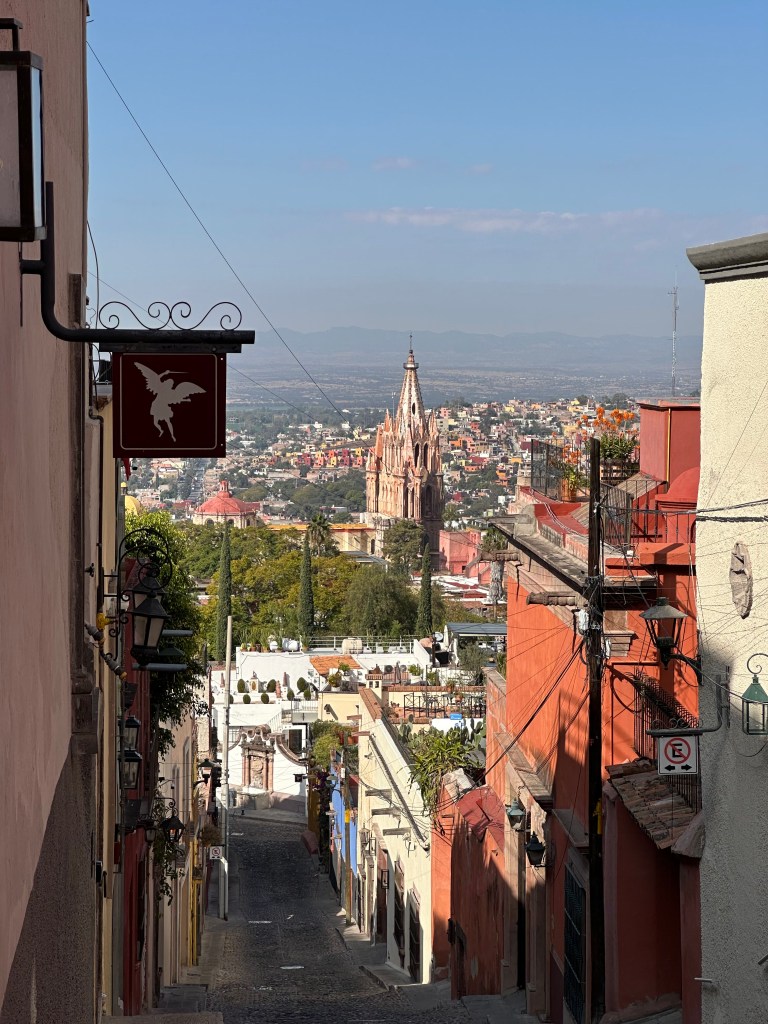
Pretty good combo: a sign with the archangel and the dude’s church right below:
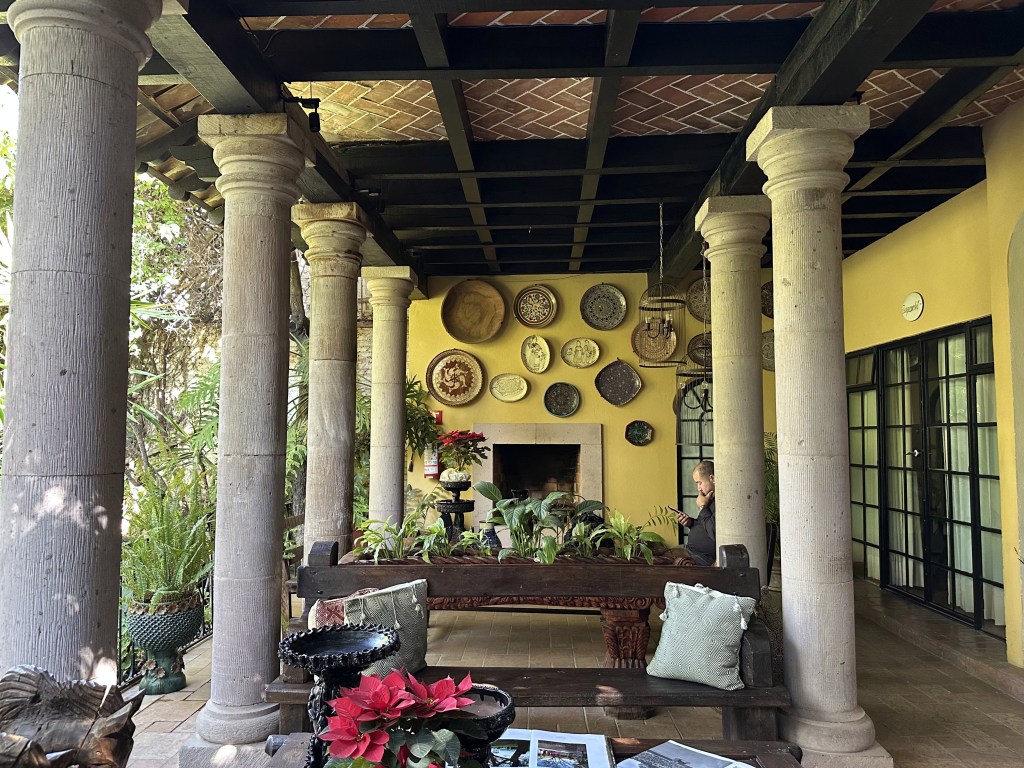
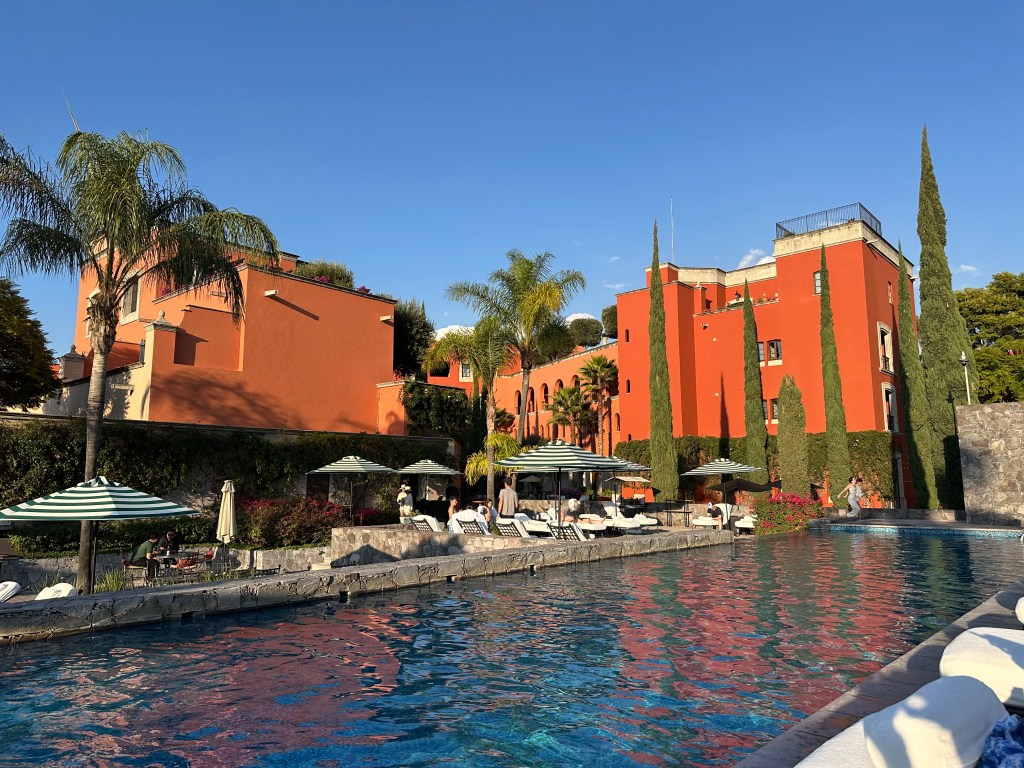
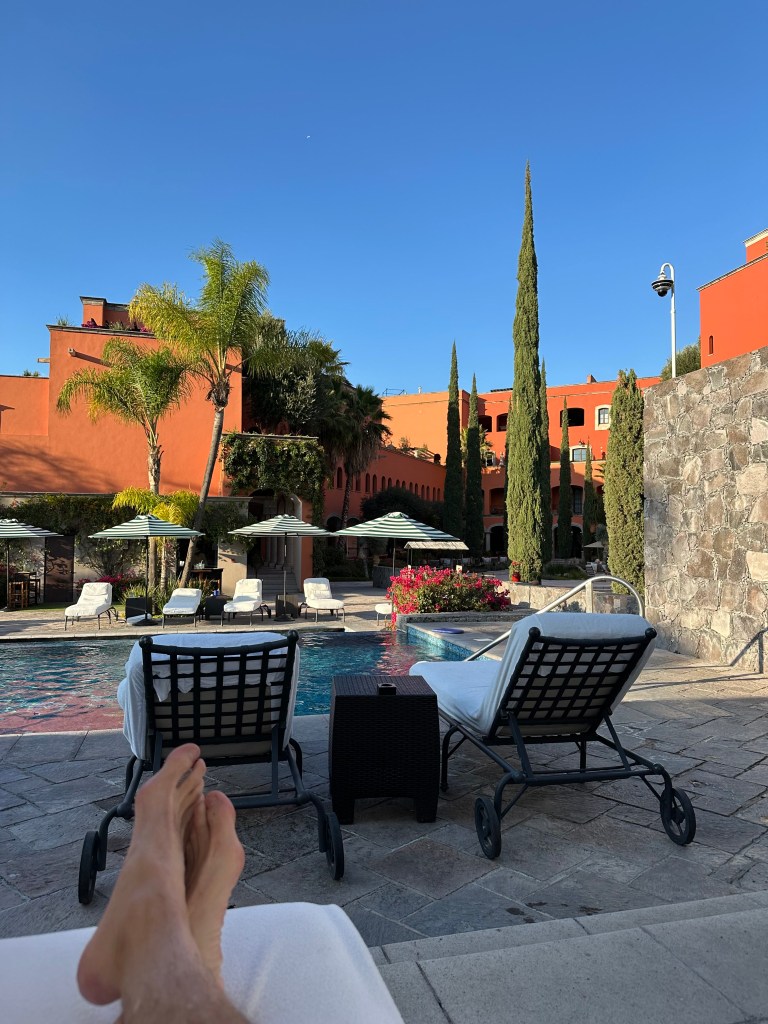
Some downtime at Rosewood:
Final dinner of the trip:
Adios, San Miguel.
And adios to our 2024 travels!
Pretty good year:
February: Colombia
April: Uruguay, Argentina, Chile, Brazil, Peru
May: Texas
June: Georgia
July – September: Pennsylvania, Connecticut, Massachusetts, New Hampshire, Maine, Vermont, New York, Quebec, New Brunswick, Prince Edward Island, Nova Scotia, Rhode Island
After many years of unsuccessful attempts to visit St. Barts over Christmas, we finally hit the island in November, before the holiday season rush and associated ridiculous spikes in rates. Definitely worth it – tiny but very cool – and very European – Caribbean island.
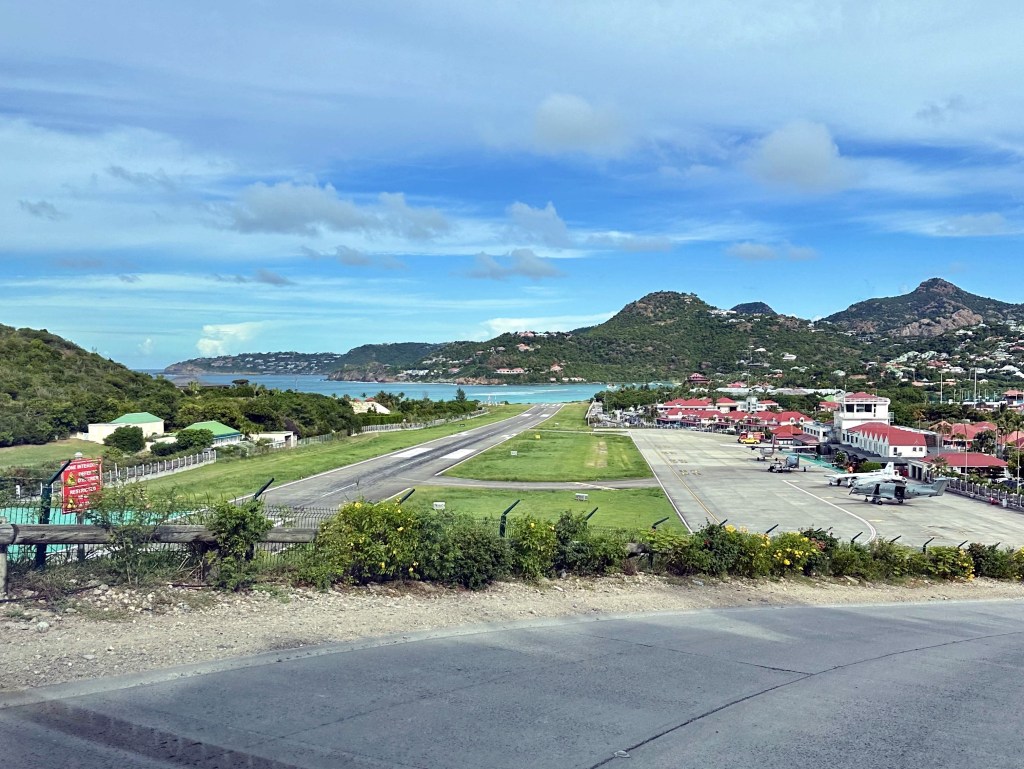
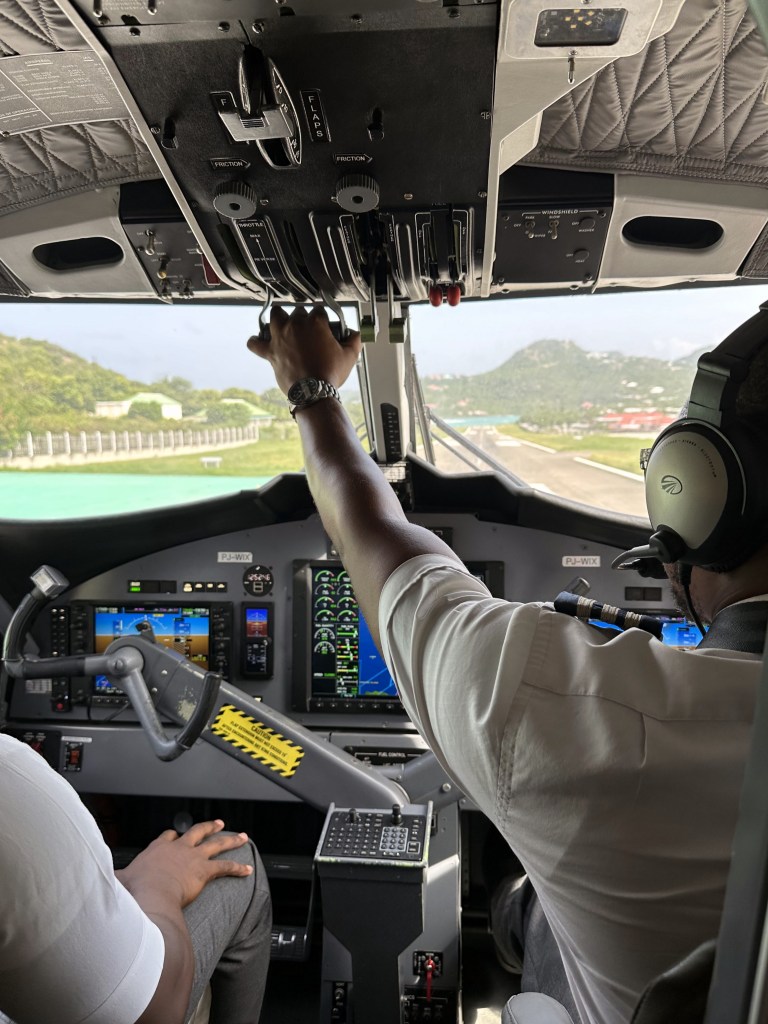
We were able to fly direct from IAD to St. Martin, but then puddle jumped on a 12-minute flight to St. Barts and its tiny air strip.
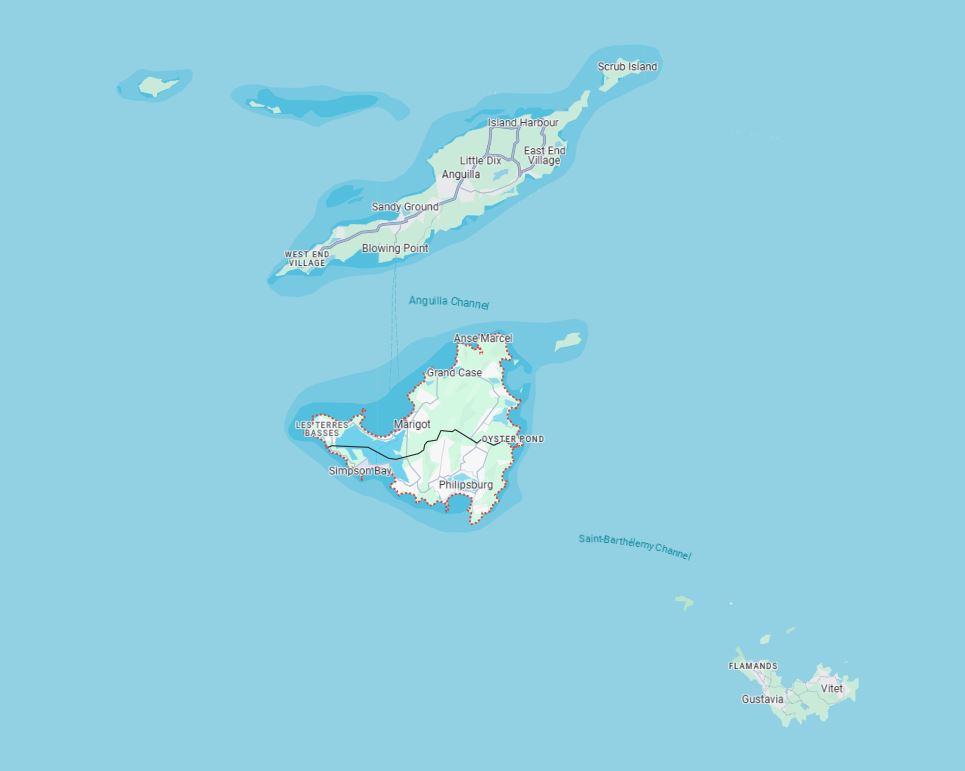
St. Martin turns out to be the hub of Winair, with obvious connections to Anguilla (long, eel-like island at top) and St. Barts (tiny little arm-shaped island on the bottom), but also to pretty much all of the Leeward Islands and many of the Windward Islands farther to the southwest.
The tiny, tiny airstrip of St. Barts:
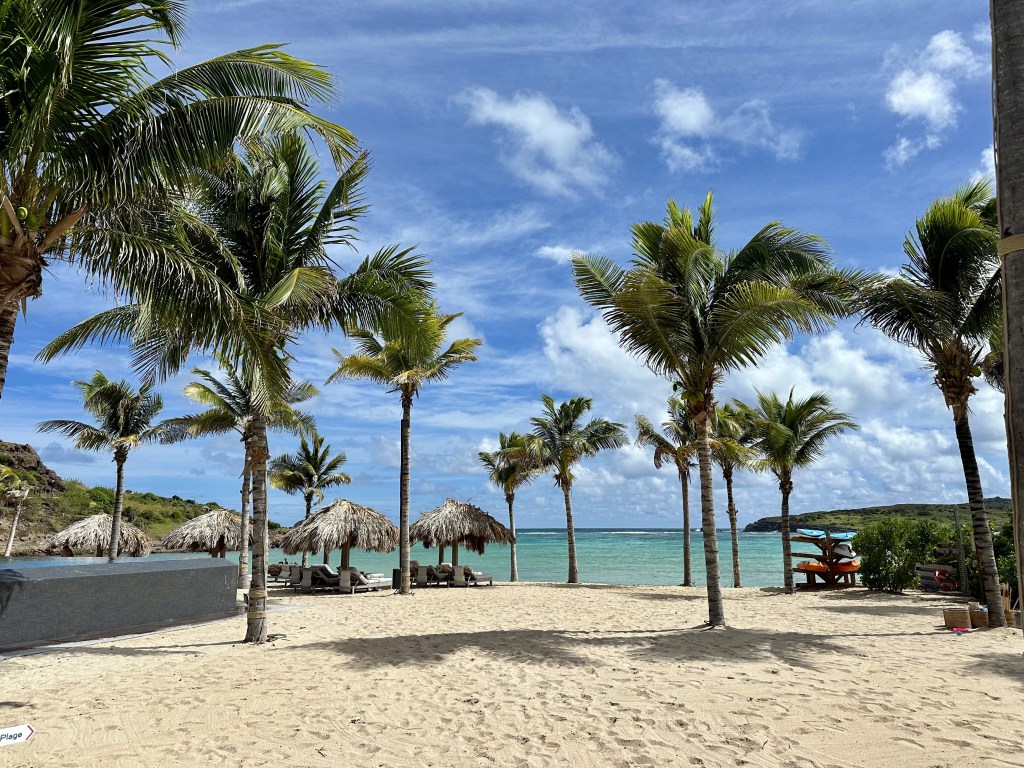
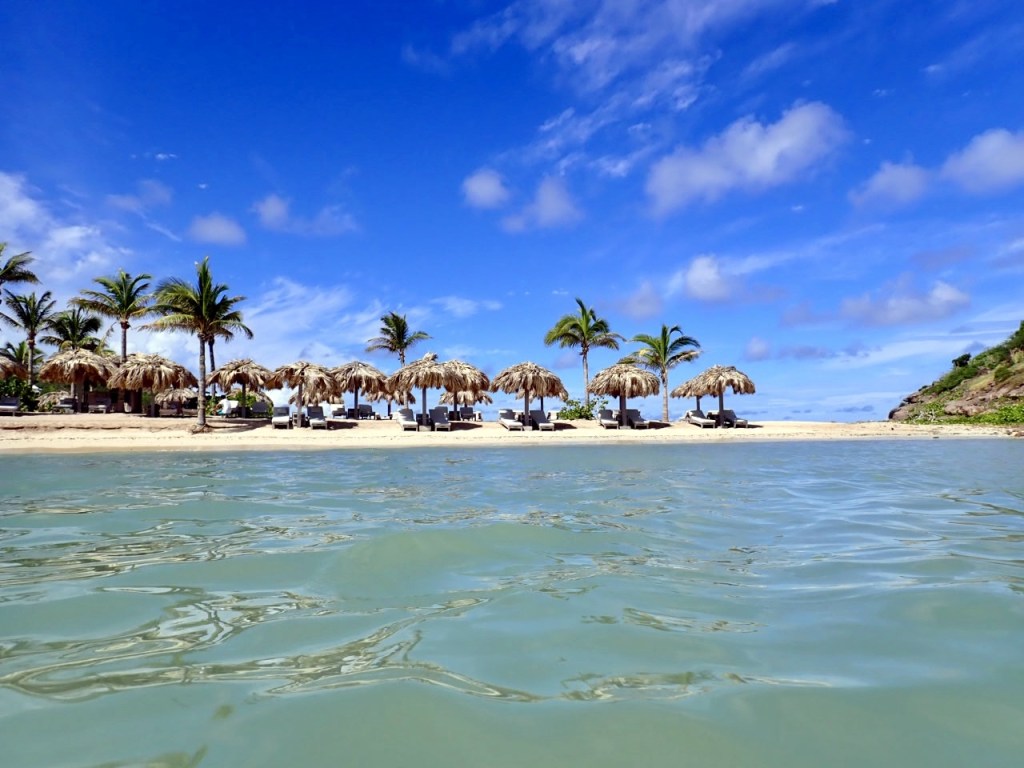
Our slice of the island for the next 5 days:
Definitely a better beach than Barbados (and some fine alliteration):
You’re in the Caribbean, but you always know that it’s a very French type of Caribbean:
Crepes each morning (exact same thing one of us always gets from takeaways in Paris – Nutella, banana, and coconut, but a slightly different presentation of the ingredients than when you grab one to walk around the 6th arrondissement).
A little field trip one day to the island’s capital, Gustavia:
St. Barts originally was settled by the French West India Company, but King Louis XVI became disenchanted with its output, so he traded it to Sweden for trading privileges in the Swedish trading hub of Gothenburg. Sweden sold the island back to France in the late 1800s, but not before the island’s capital had been named after the Swedish king Gustav III.
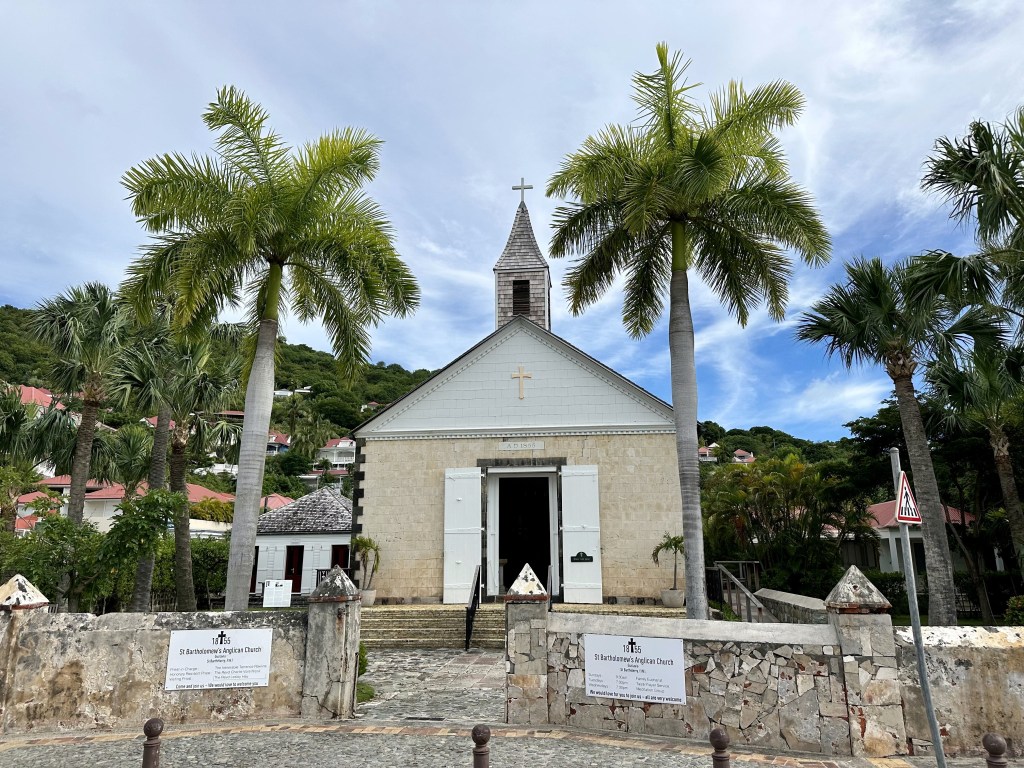
The British captured the island and held it for 20 years, as well, and there’s an old Anglican church in town, as a result:
Gustavia Lighthouse towering over town:
The dreaded Moke, a form of transportation we were warned against. So we got a regular car rental while on the island.
Another couple of field trips / lunch outings. This one at Gyp Sea’s beach club in St. Jean:
The beach at St. Jean with the iconic (and underwhelming) Eden Rock jutting out in the center (you can also see it from the return flight video at the end):
And, all the way on the other side of the tiny island, Cheval Blanc resort. We were torn over staying here versus Rosewood, where we ended up. Very cool place, but super compact. We think we made the right choice.
Our choice:
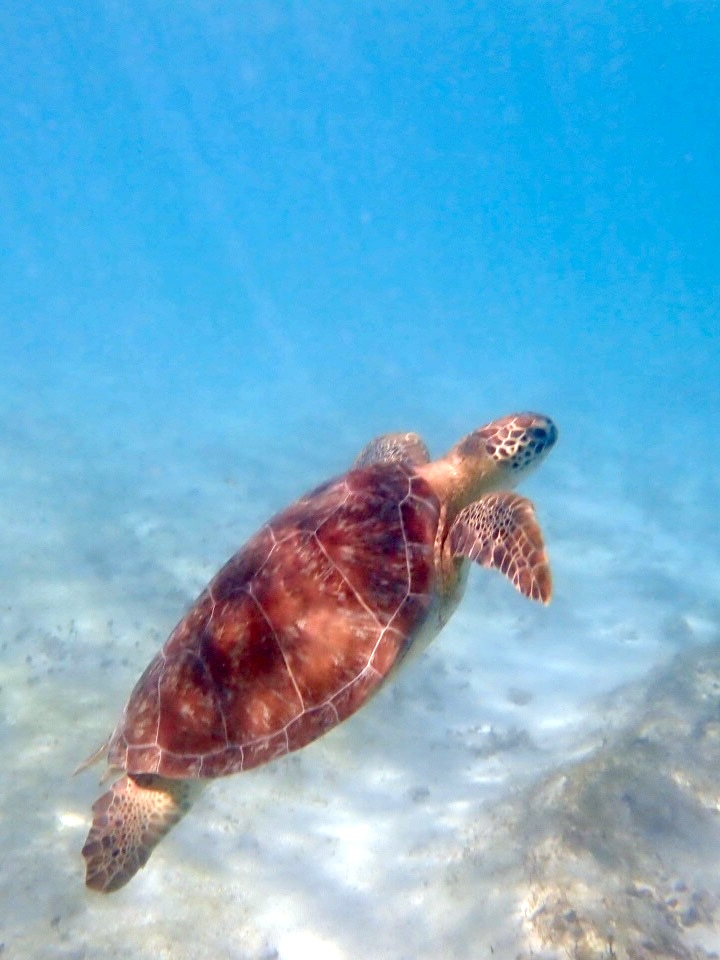
The Anse de Grand Cul de Sac lagoon outside our door was home to dozens of sea turtles due to the sea grass there.
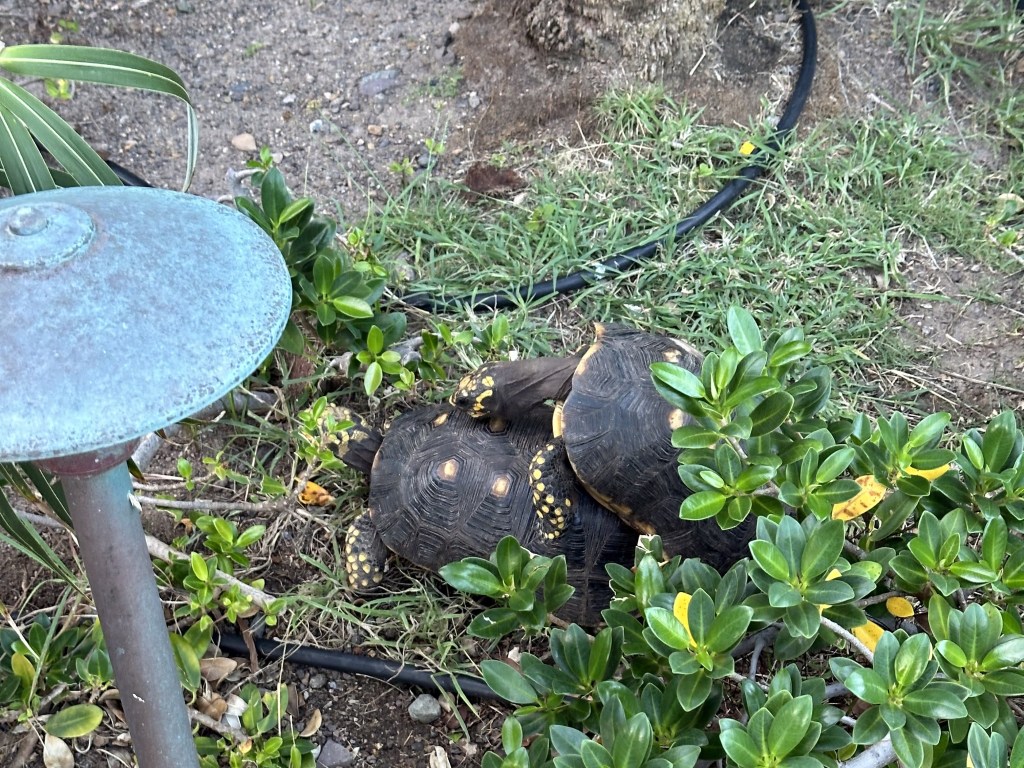
And the turtles weren’t the only denizens of the property. To wit: the reptiles of Rosewood:
We expect to see even more tortoises when we return. . .
They’d wander by our place at totally random times:
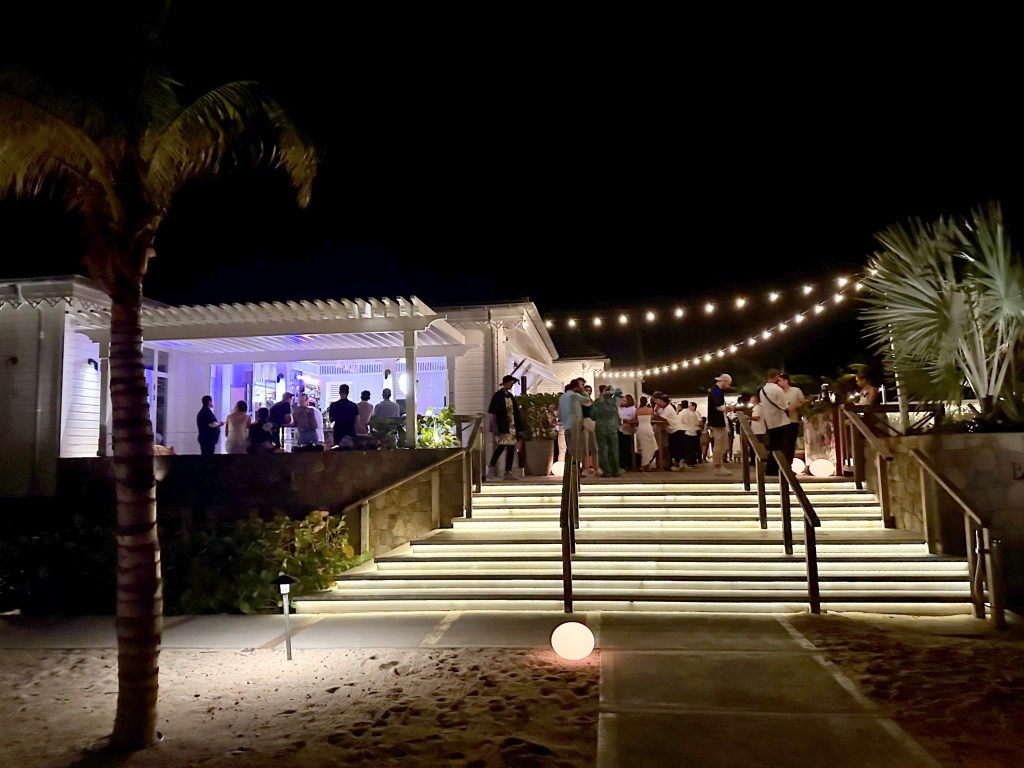
Pretty good digs:
And Nespresso quantities in line with our consumption for a change:
Deviating from the international flavor of the three long-duration trips we’ve embarked on since retirement (in Europe, the South Pacific, and South America), WolfeStreetTravel this summer chose a region closer to home for a 2.5-month-long road trip to escape the oppressive heat and humidity of Alexandria: New England and eastern Canada. We spent all of July and August and the first part of September on the road north of here and out of the heat (mostly).
In all, we visited 8 states and 4 Canadian provinces, staying in 28 locations, including 18 hotels, 6 AirB&Bs, and a few relatives’ places. Here’s a Google map of the entire road trip (with stops in order, if you can follow the letters):
Previously, during our 2-week-long road trip through England and Wales, we ate so many fish and chips lunches, for cod sake, that our consumption became a trip theme. In the truest form of homage to this tradition, we ate our way on this trip through more than 20 dozen oysters – almost daily during the second half of the trip when we were traveling exclusively in coastal areas – resulting in an undeniable oyster theme to the trip. Not since biking along the coast of Normandy with Thomas and Lisa had the world more been our oyster.
But the trip themes didn’t end with the bewitching bivalve – additional food- and non-food-related recurrences worked themselves unintentionally but inexorably into our travels. We checked out two dozen lighthouse, took eight ferries (from full-blown car ferries to little bike- and people-only ferries), drove over a half dozen covered bridges, and consumed almost a dozen lobster rolls. All distinctive features and foods that became the ongoing themes of our trip (and subjects of our real-time Instagram posts @WolfeStreetTravel).
Our trip route took the general form of an arc that slanted and slumped towards the northeast:
We first headed north to the apex of the arc on the west side of the map, through New York and Vermont, into the province of Quebec
We reached our northeast apex during a week-long stay in Prince Edward Island
And then headed southwest to complete the arc, down the coasts of Maine, New Hampshire, Massachusetts, and Rhode Island.
Since we went back and forth, east and west, a few times in the beginning of the trip to see friends and relatives when they were available, the arc concept doesn’t really apply to the first few weeks (but it’s still a great travel construct!).
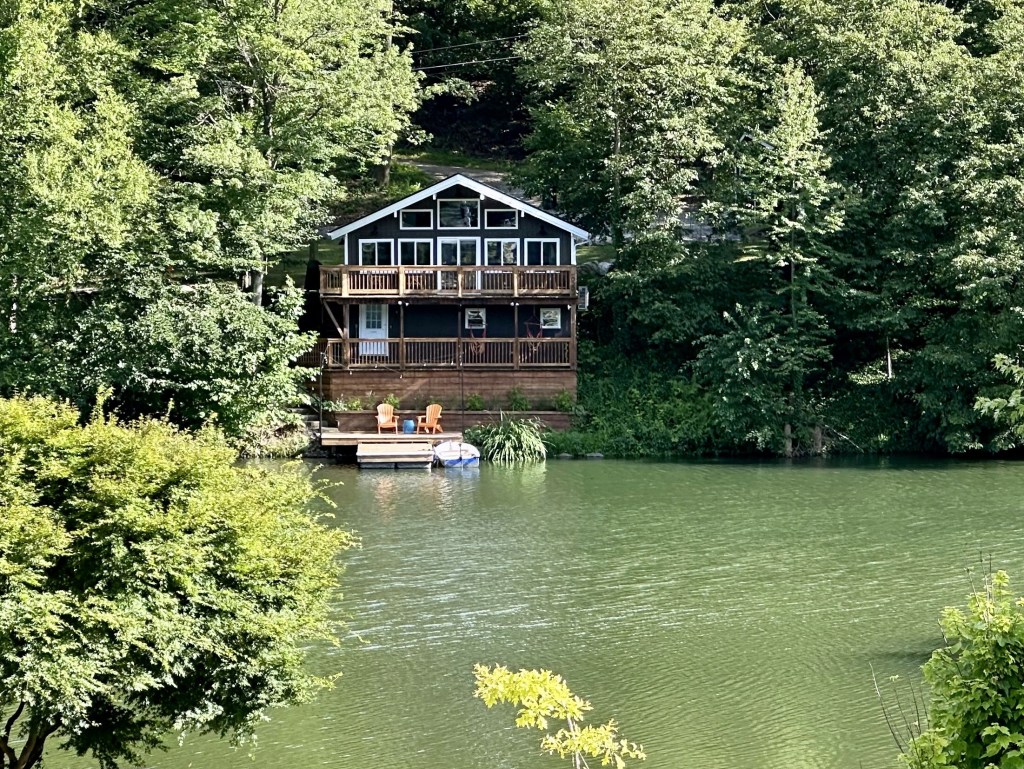
We began on July 1 not in New England, but in Pennsylvania to spend a few days in what one of us thought was a very appealing lake house.
Appealing though it was, indeed, this was a mistake.
The lake was more of a pond, and, although we hiked and ran in the area, there wasn’t a lot around. The only really appealing aspect of this stop was the little cabin itself. But that wasn’t enough to satisfy a 3-day stay – which one of the WolfeStreetTravelers totally predicted and warned against, but the other ignored. Not an auspicious start.
The area did offer the first covered bridge, though – a theme unique to the first half of the trip. Other, more prevalent themes would emerge later in the journey.
From the little pond house, we headed east to visit our first targeted relative, but not directly. Since it was July 4, and since we had never been there before, we toured West Point:
And then spent a couple of days in the pretty cool town of Beacon, NY, on the Hudson, where even the churches prize efficiency:
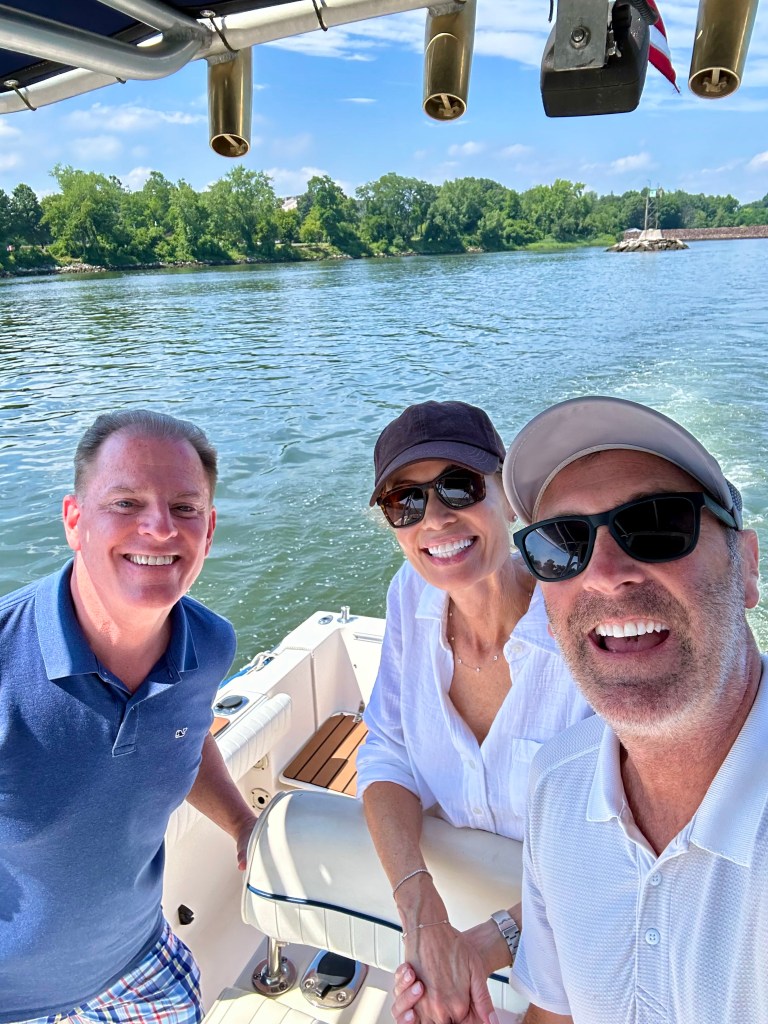
And then on to Stamford, CT, and our first relative of the trip: KJQ, skipper of the Quick Getaway:
Plus, the Sprucks!
Then, back west, again, to the Adirondacks region of NY, to occupy a lake house (for real this time – not a pond house) for 5 days:
Pretty good digs.
Plus, a little pontoon boat action:
And some decent hikes:
And then back east – again!
First for a couple of days in “The Berkshires” in North Adams, which really did not feel like the Berkshires to us. Our stay straddled the Appalachian Trail, so, some decent hiking / running, but the place really was for shite, in our view.
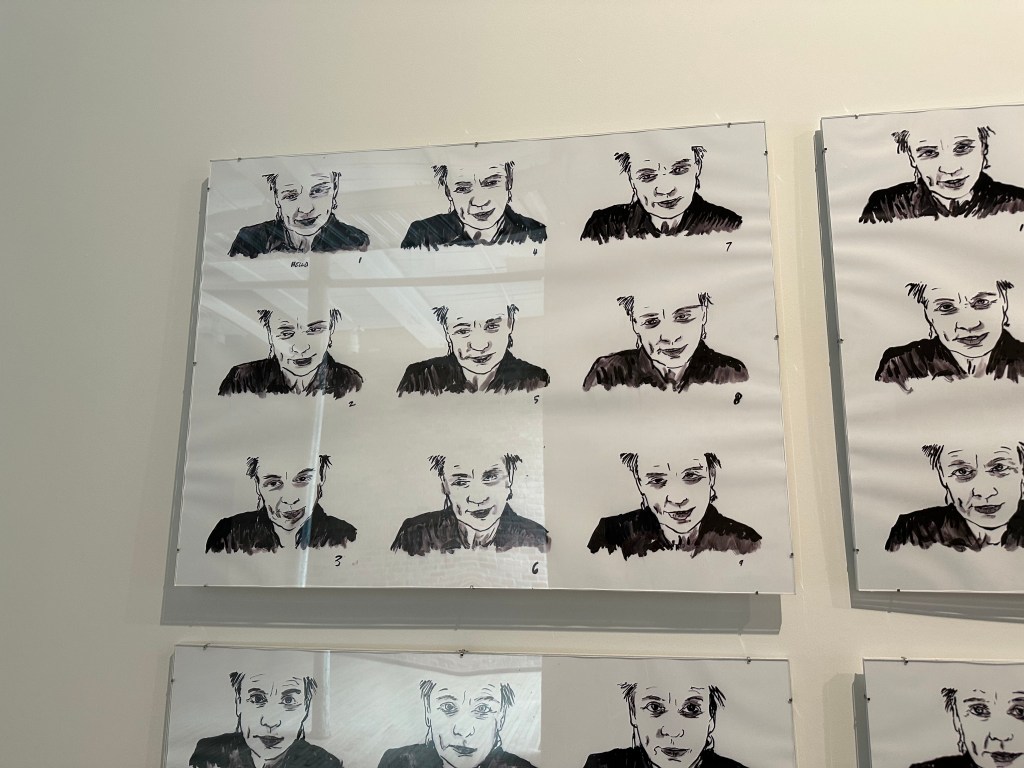
The only redeeming quality presented itself in the form of an art museum: the Massachusetts Museum of Contemporary Art (MASS MoCA), which was pretty outstanding, actually. Plus, Laurie Anderson (an Avant Garde favorite of one of us since her release of “O Superman” in the early 80s.
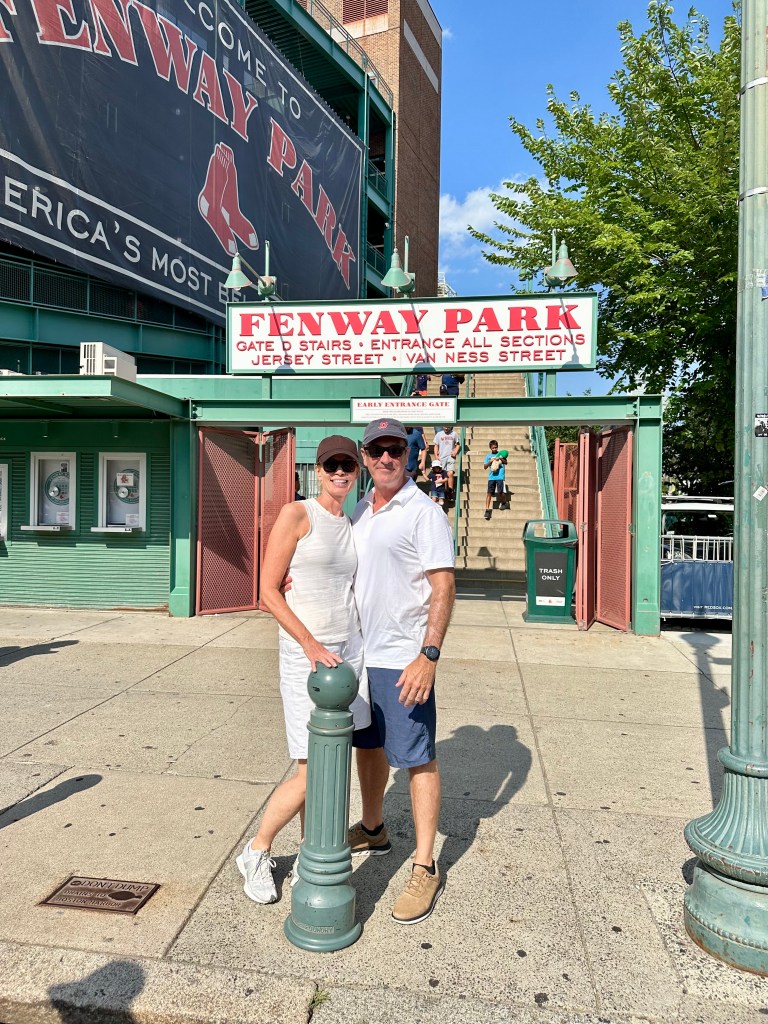
Thence on to Boston, and the Boston Connells! Who treated us to a Red Socks game:
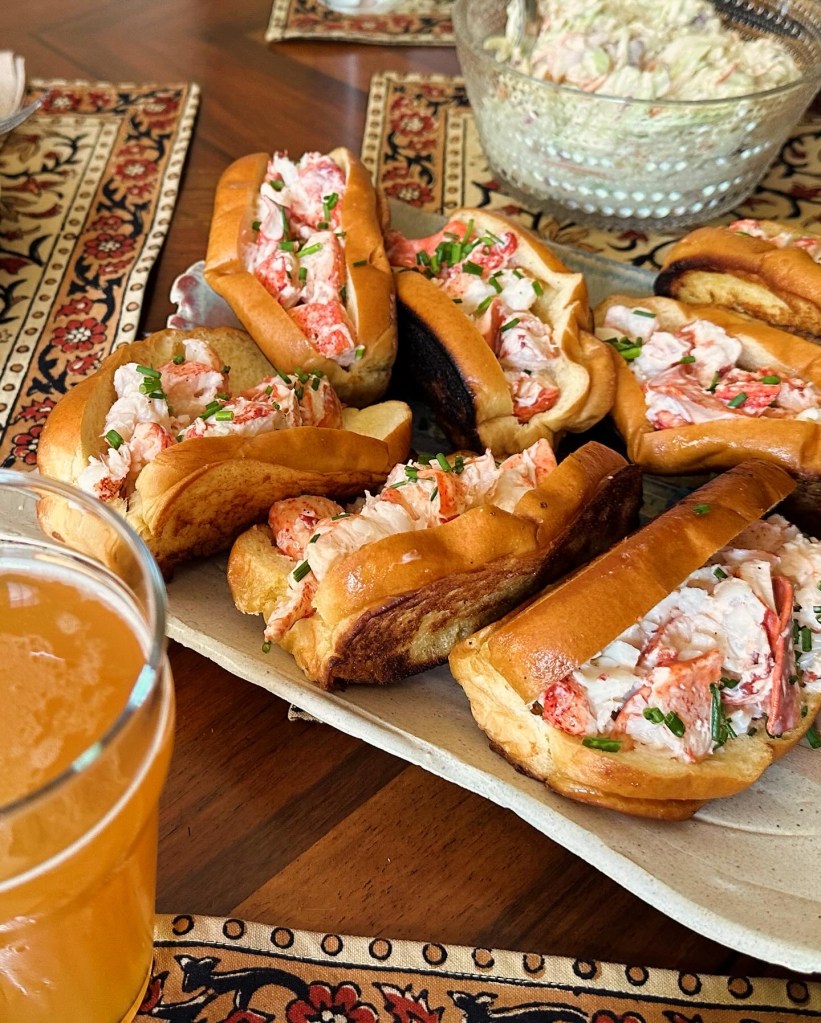
And amazing, authentic lobster rolls, which were to become another theme of the trip, as you’ll see; and it all started here:
A day exploring Boston with Dan, including the North Church:
And the very compelling JFK Museum with both of the Boston Connells:
Then, north(ish), first for a quick stop for lunch in Portsmouth, NH,
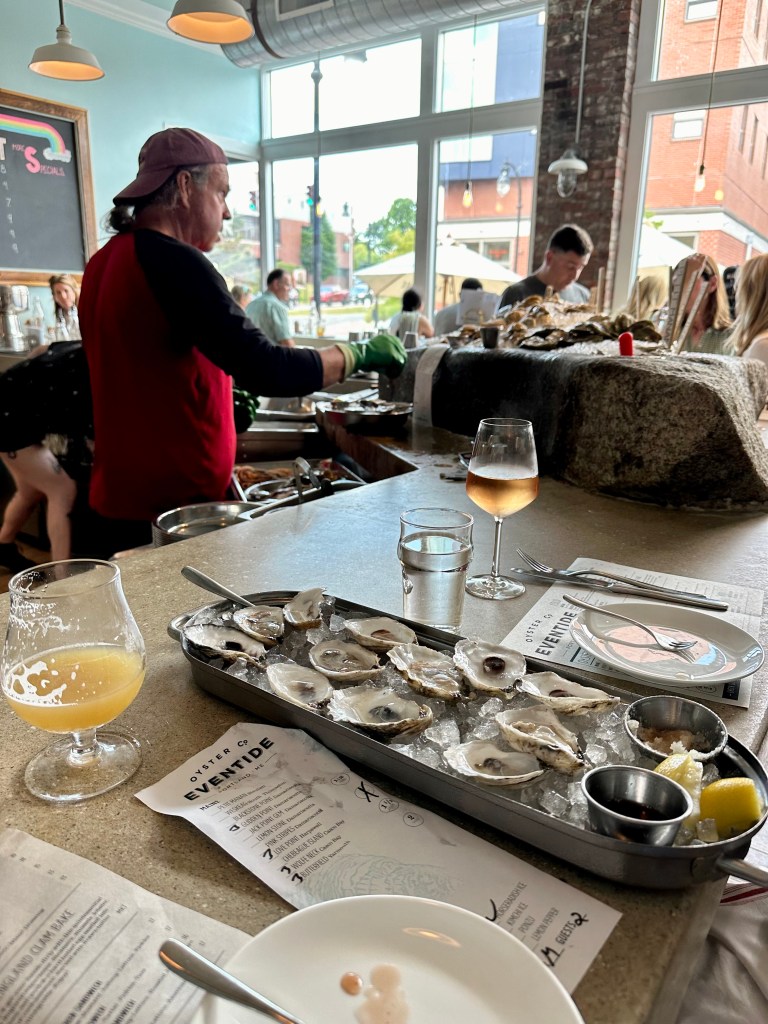
Then to Portland/Yarmouth/Freeport, Maine, and Bill! Our first stop was our must-visit oyster bar in Portland, EvenTide:
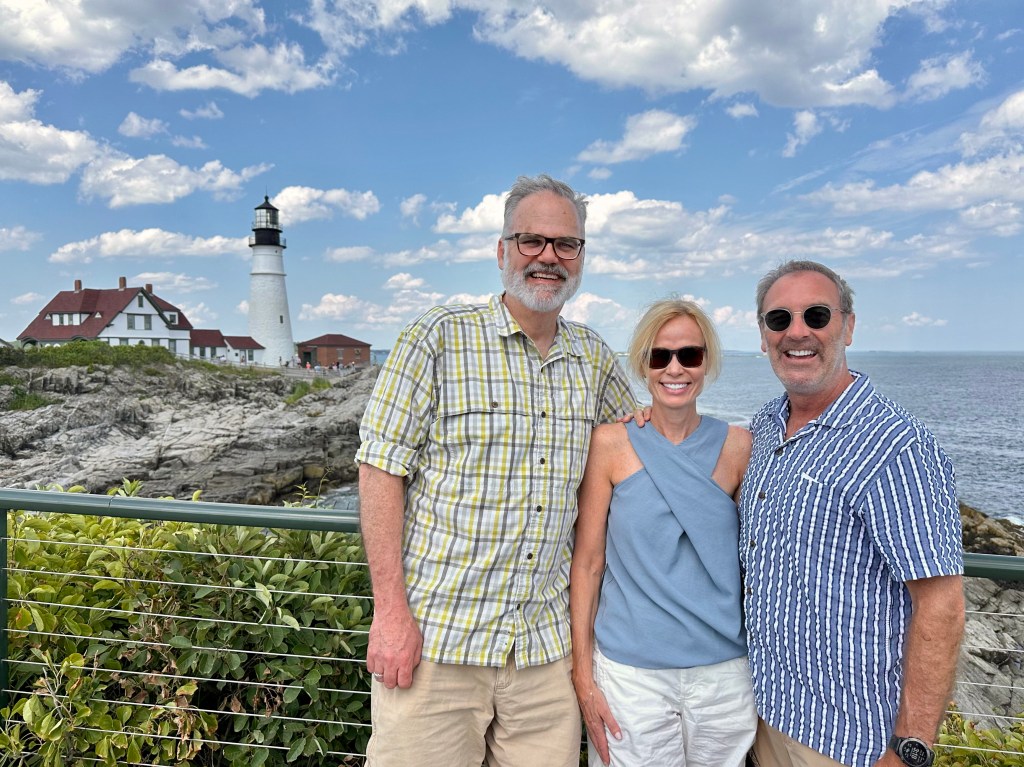
Portland Head Light, w Bill (and the first sighting of another trip theme):
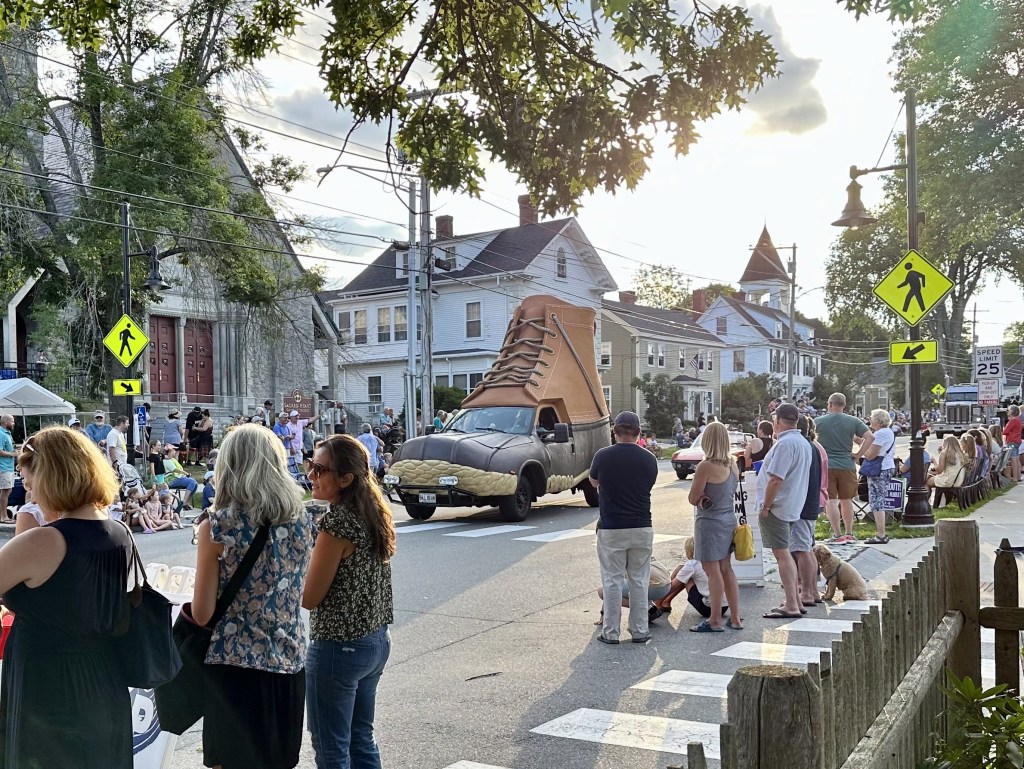
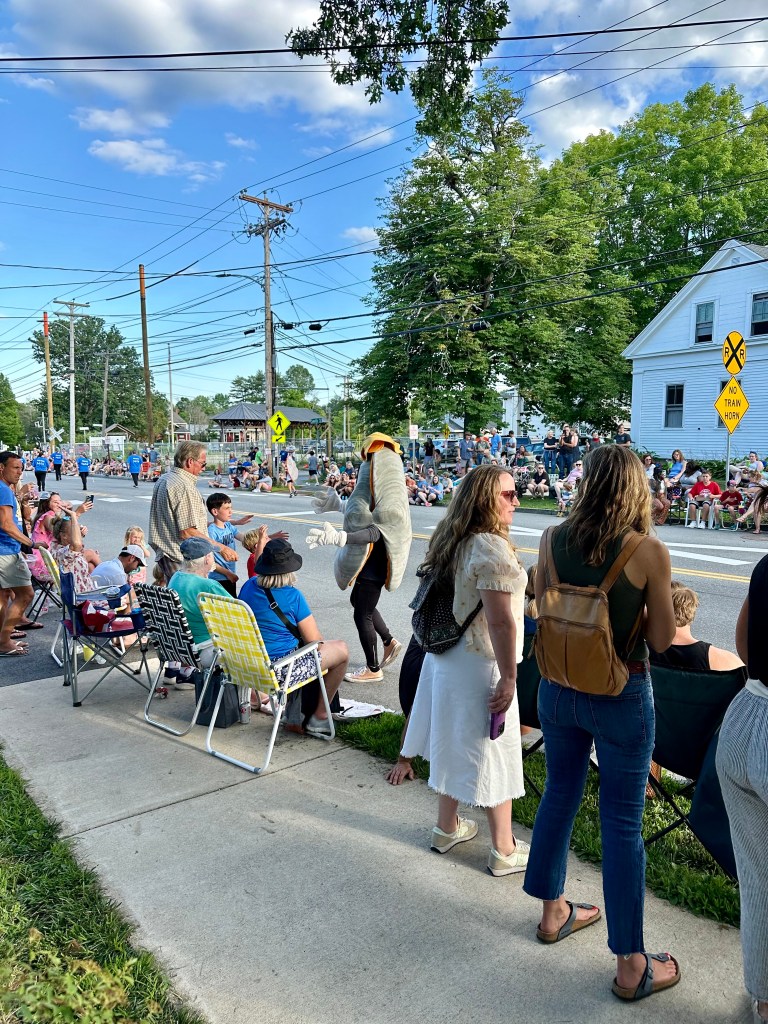
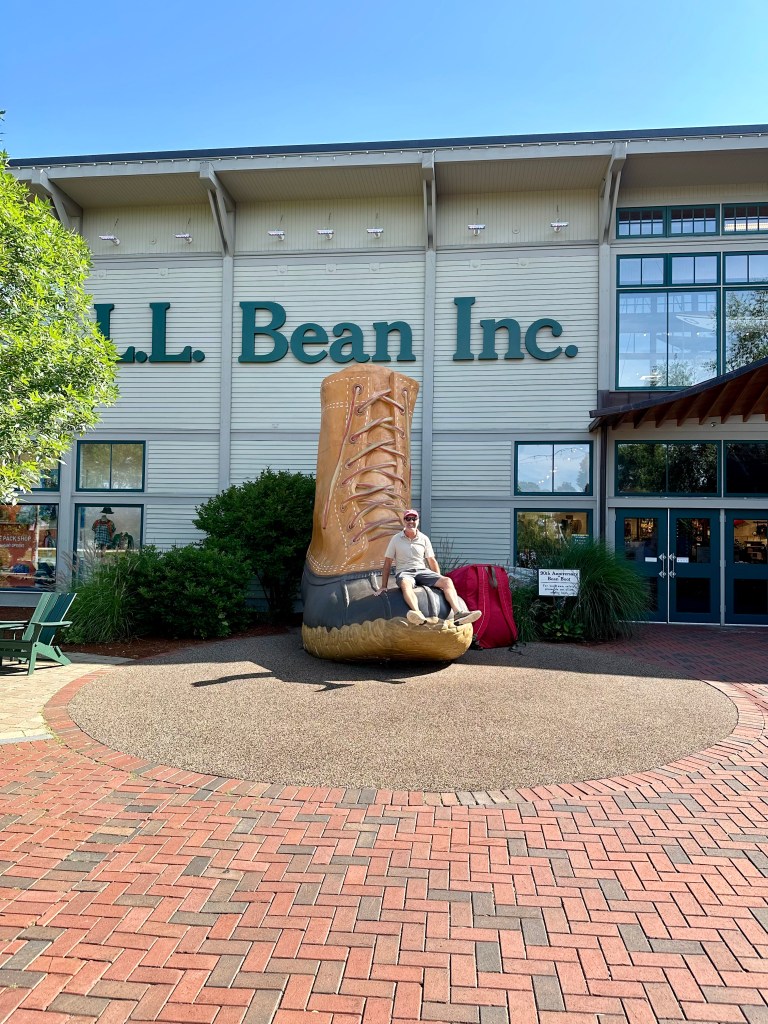
The truly Rockwell-esque Clam Festival in Bill’s adopted hometown of Yarmouth, ME, featuring the LL Bean Bootmobile:
And, of course, Shucky the Clam!
And our second lobster rolls of the trip at Five Islands with Bill, Aine, and Kieran:
An obligatory stop the morning we headed out:
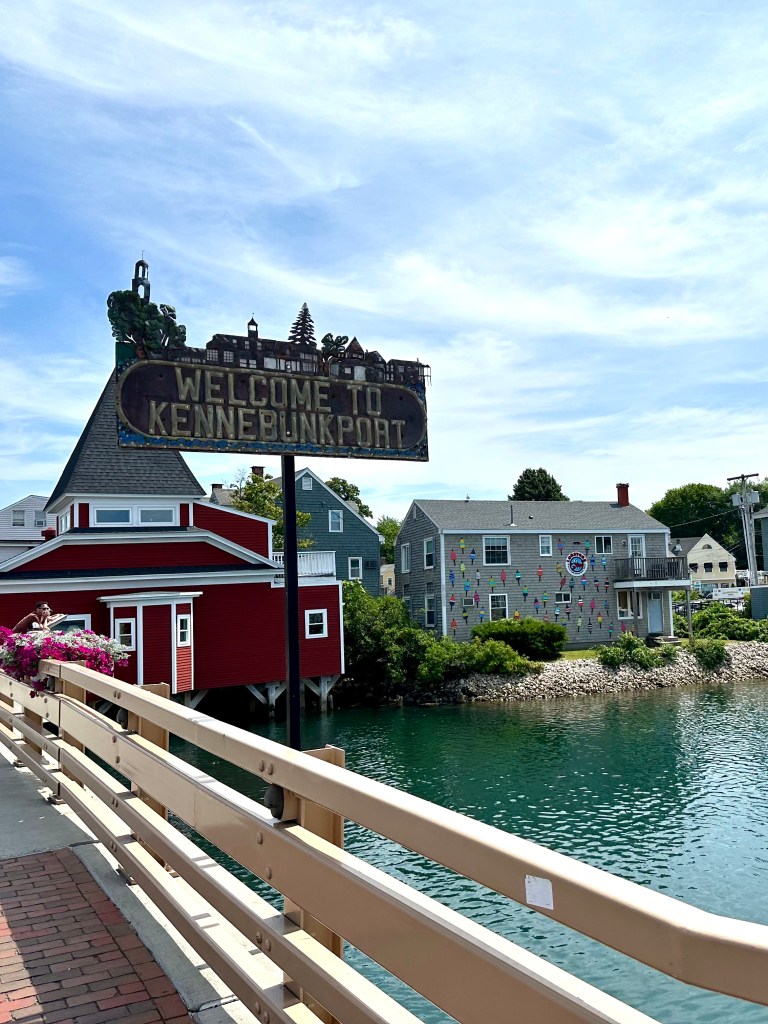
After the long-overdue visits to friends and family in Massachusetts and Maine, we headed west again. But, on the way: a stop for lunch in Kennebunkport. Home to the Bush family compound and, nearby, some Kellys, now in California.
Then, on to Vermont, and the true western arc northward on the trip, beginning with 2 nights based in the tiny hamlet of Grafton.
Which was home to two more covered bridges:
Good digs, in a 19th-century Air B&B:
A little day trip to Weston, home to the famous (and pretty interesting, actually) Vermont Country Store:
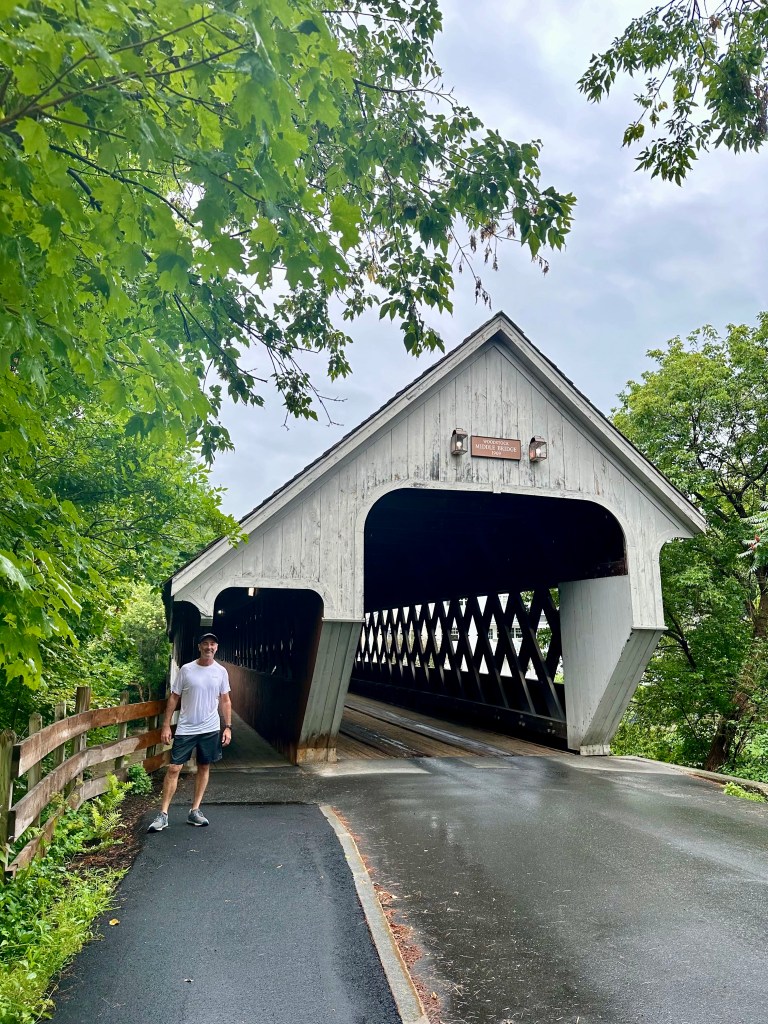
We engaged on a bunch of additional day trips to other allegedly charming towns that also were just tiny hamlets and a little underwhelming, so we’ll move on in this summary to our next destination: Woodstock, VT, home to yet another covered bridge and the only such bridge with a dedicated pedestrian section (visited at the end of a rainy run the morning we left):
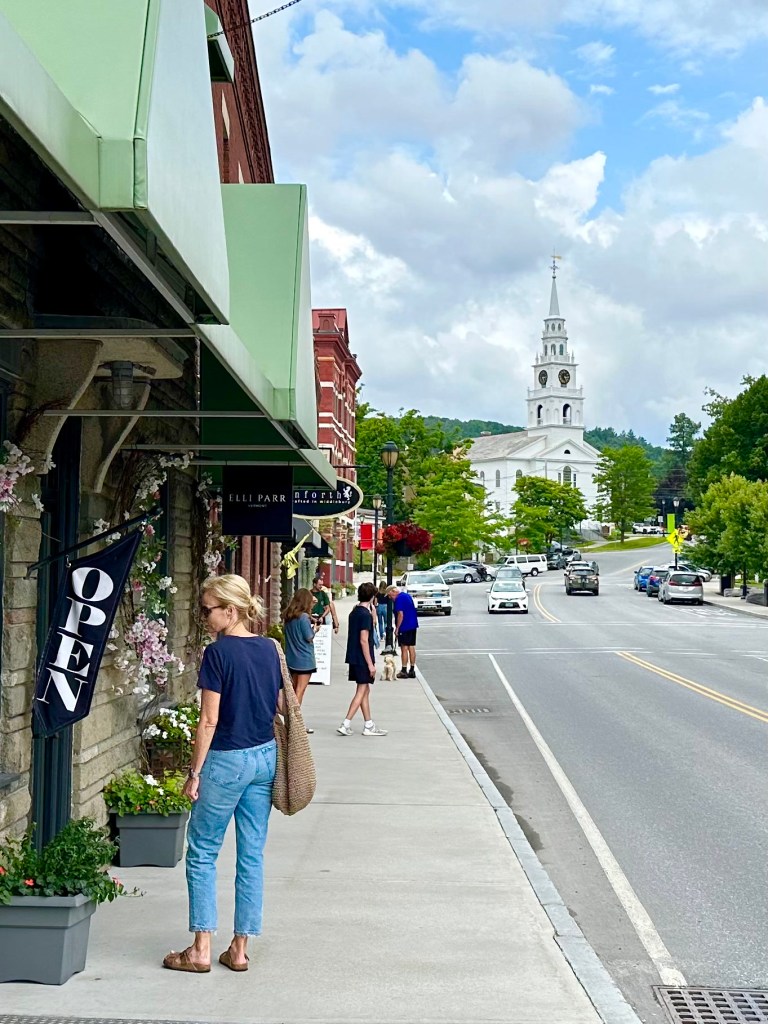
And then, on to Middlebury for 2 nights. We held high hopes for this location, based on family recommendations. Not so. Not so at all.
But here’s an interesting (the only interesting?) item from this college town: a Union civil war memorial. One of many (many!) that we’d encounter up north, and distinctively different in appearance from the Confederate monuments that we both grew up around. Not just down the street from us in Alexandria, but all over Virginia and the South. We’ll discuss this in a future post, but the distinctive Union versus Confederate soldier image was striking to us.
Middlebury. Meh.
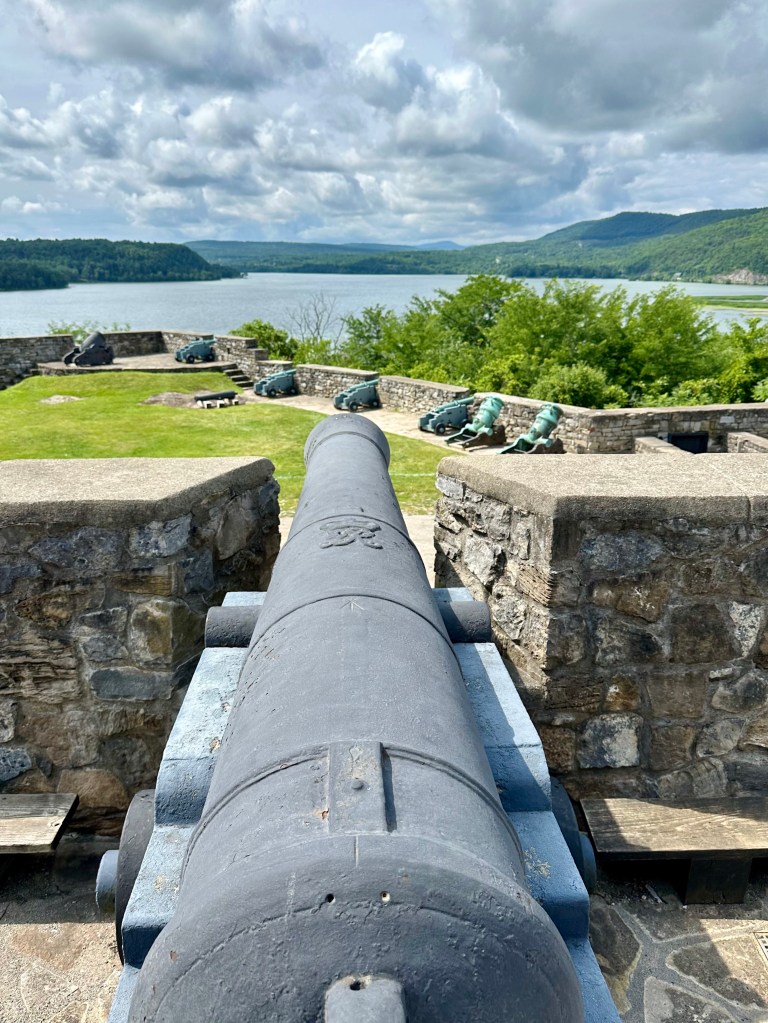
But a day trip away from Middlebury to a 18th-century fort? On a freaking cable ferry?! Hell yeah (and we love a cable ferry):
Fort Ticonderoga, site of French and Indian and Revolutionary War actions – pretty cool!
And across the lake, Mount Defiance:
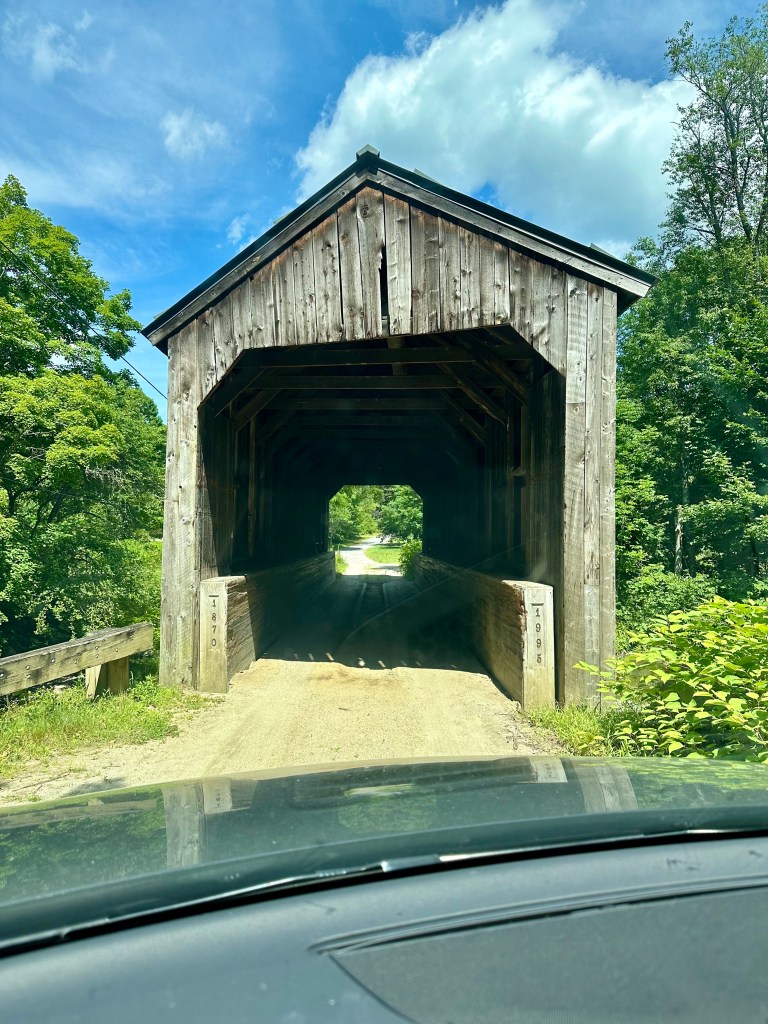
And departing middling Middlebury via it’s unique two-lane covered bridge – crappy town, but great addition to the covered bridge theme!
En route to Burlington, we stopped over for a hike and lunch at Shelburne farms, at Caren’s suggestion. Cool experimental, sustainable farm initially owned by the Varnderbilts:
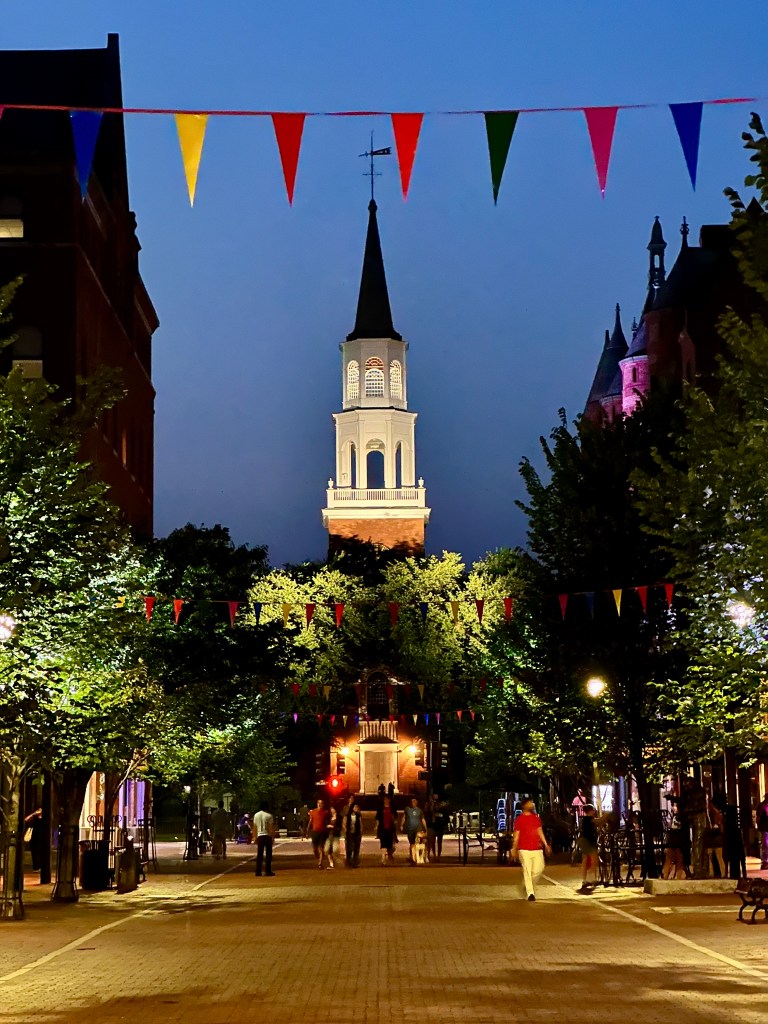
And then on to 3 days in Burlington, VT – good running each morning along Lake Champlain, great food and culture, but tons of homeless, pot-smoking douchebags shambling about the public spaces. But, you gotta take your good with your bad, right! Overall, a great location to visit.
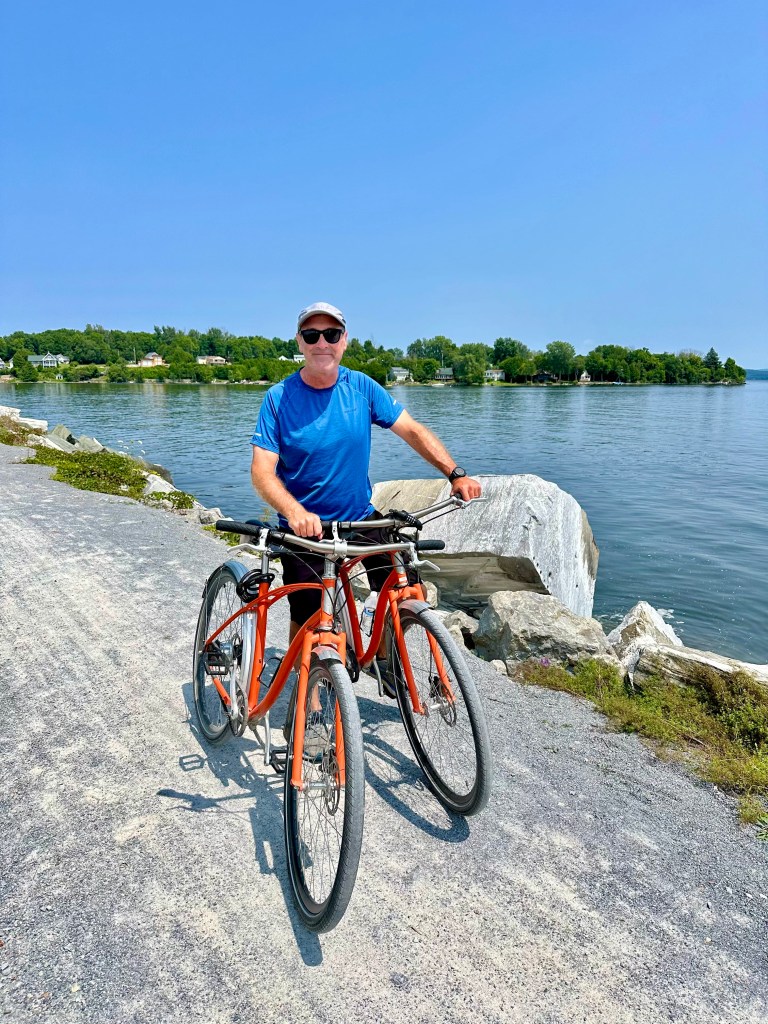
The highlight of our stay was, without question, the totally impromptu, 26-mile round-trip, bike ride up Burlington’s bike causeway to Grande Isle for a maple creemee (Vermont parlance for a maple-flavored, soft serve ice cream cone):
And the causeway came with a dedicated bike ferry to bridge a cut for boats right before you reached Grand Isle – our second ferry!
Totally worth the ride.
Burlington was cool, but after 3 days, we were ready to move on.
Via yet ANOTHER ferry! This one once again across Lake Champlain to New York, but in a larger format than our first cable ferry.
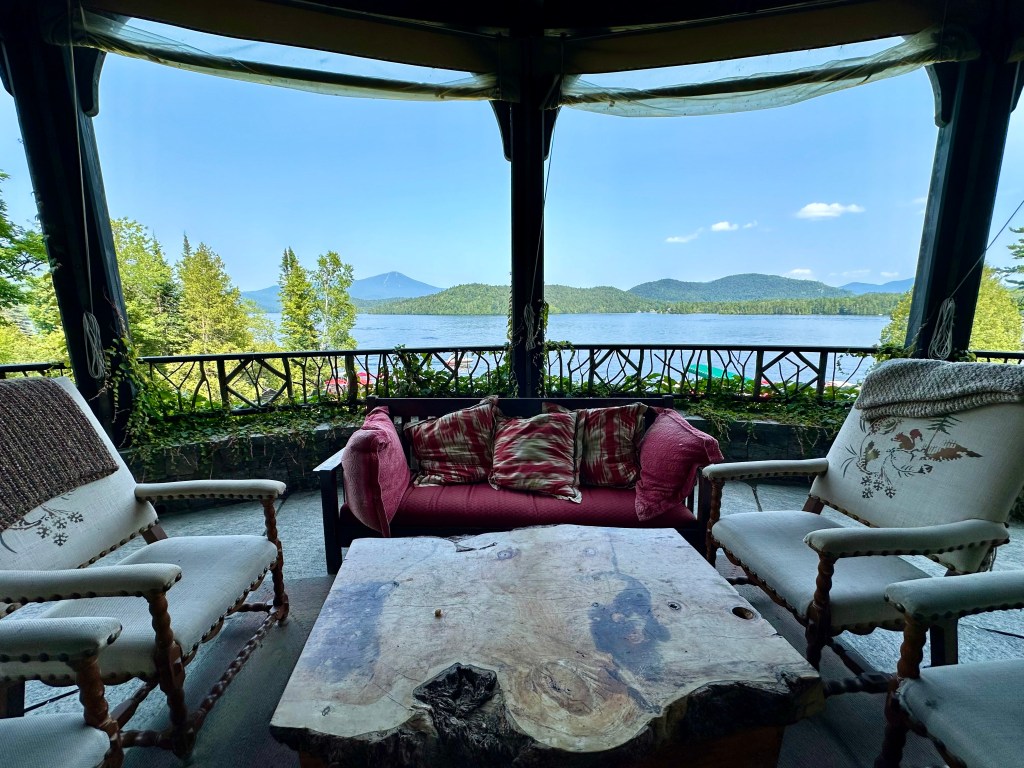
We spent the next 3 days on Lake Placid in a classic Adirondack lodge.
The aesthetics were everything we had hoped – super cool.
Including our cabin:
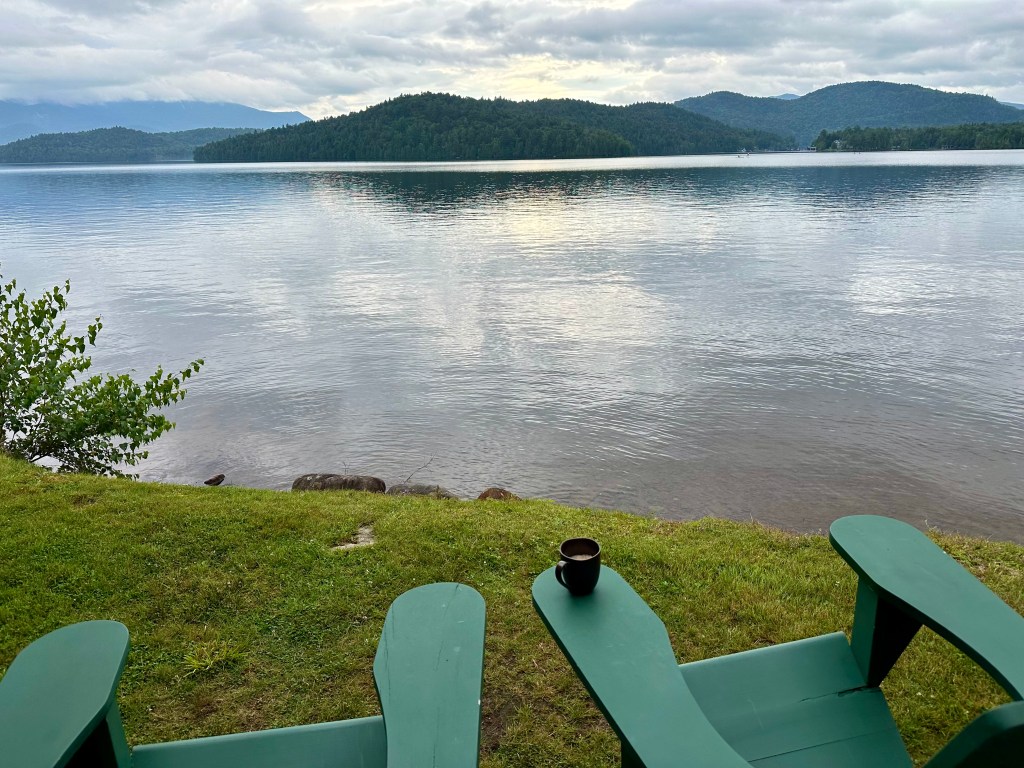
Adirondack chairs in the Adirondacks:
And classic wood boats to watch, plying the lake:
We spent some time at the Olympic center, home to the Miracle on Ice – this was the US Hockey Team’s locker room during the 1980 Olympics:
And the Olympics ski jump – who knew you didn’t need snow?
And then north, across the frontier to Canada and Montreal, where we celebrated one of our birthdays:
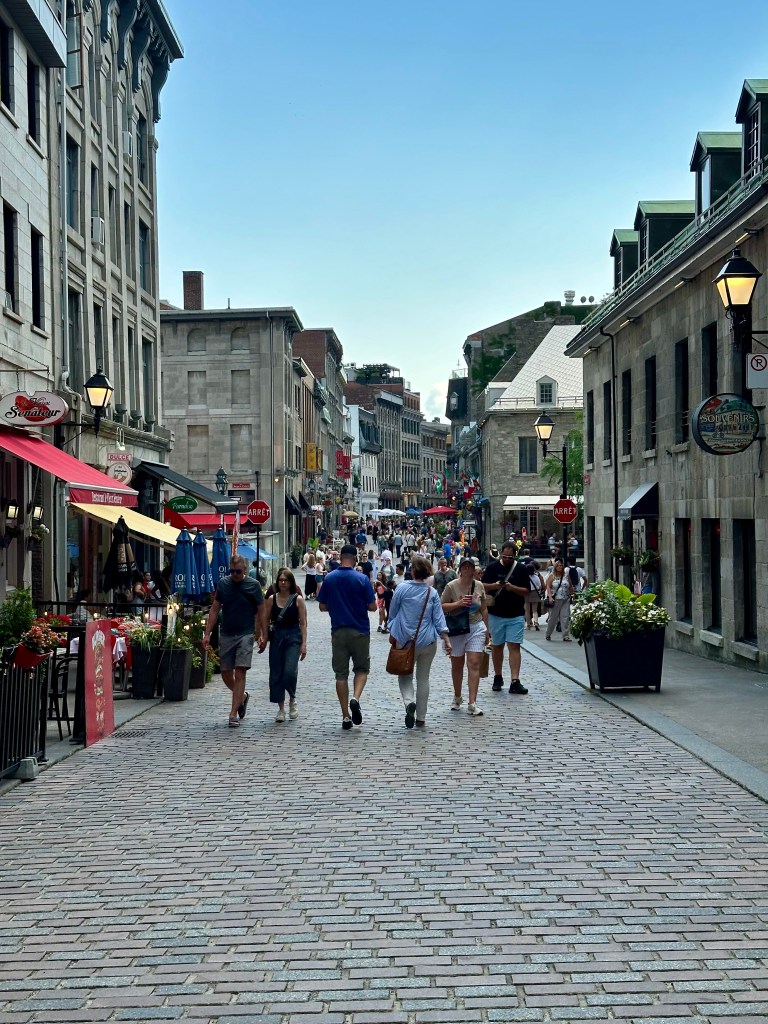
Although we’d been to Quebec City before, that trip was 25 years ago, for our first anniversary, and we vaguely recall that the province was noticeably bilingual. Things have changed: Montreal is thoroughly and very intentionally Francophone, and we encountered plenty of residents who spoke only French. The English may have conquered New France in the 18th century, but the French culture is clearly victorious in Montreal in the 21st.
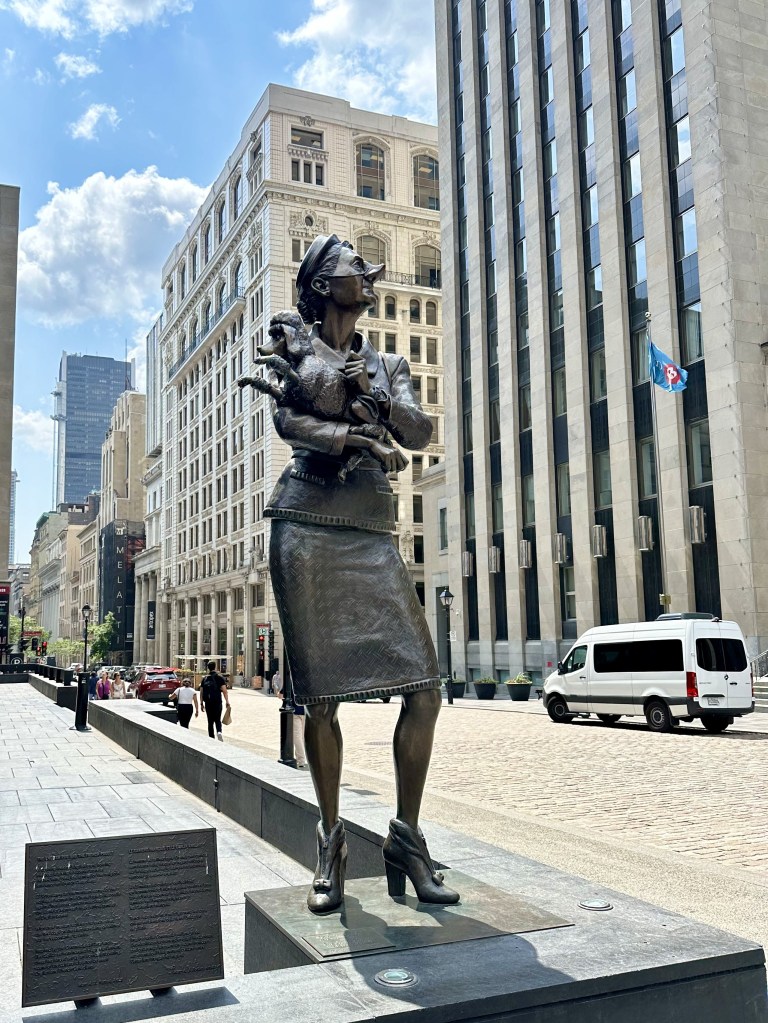
We’ll post details in a future post on how and why this happened over the past 40 years, but let these statues on Montreal’s main square provide some insight for now. On one side, an English man holding an English bulldog, turning up his nose at the French; on the other, a French woman holding a French poodle returning the gesture. There is no love lost between the two cultures in Montreal.
Because this was a domestic road trip unbroken by planes to and from home, we were able to pack a little more, including running gear (and a Nespresso machine). We successfully ran about two thirds of the mornings of our trip, including each of our three mornings here, along Montreal’s harbor, dominated on one end by the Molson beer building (there’s also a Molson bank in town).
More oysters! Although the best were yet to come (and in significant quantities), we experienced more consecutive outstanding dining experiences in Montreal than anywhere else (PEI was a close second, though).
We hadn’t planned on visiting giant Olmec heads on our trip, but there they were in Montreal’s Museum of Archeology. Only 23 have ever been discovered. And they are, indeed, giant.
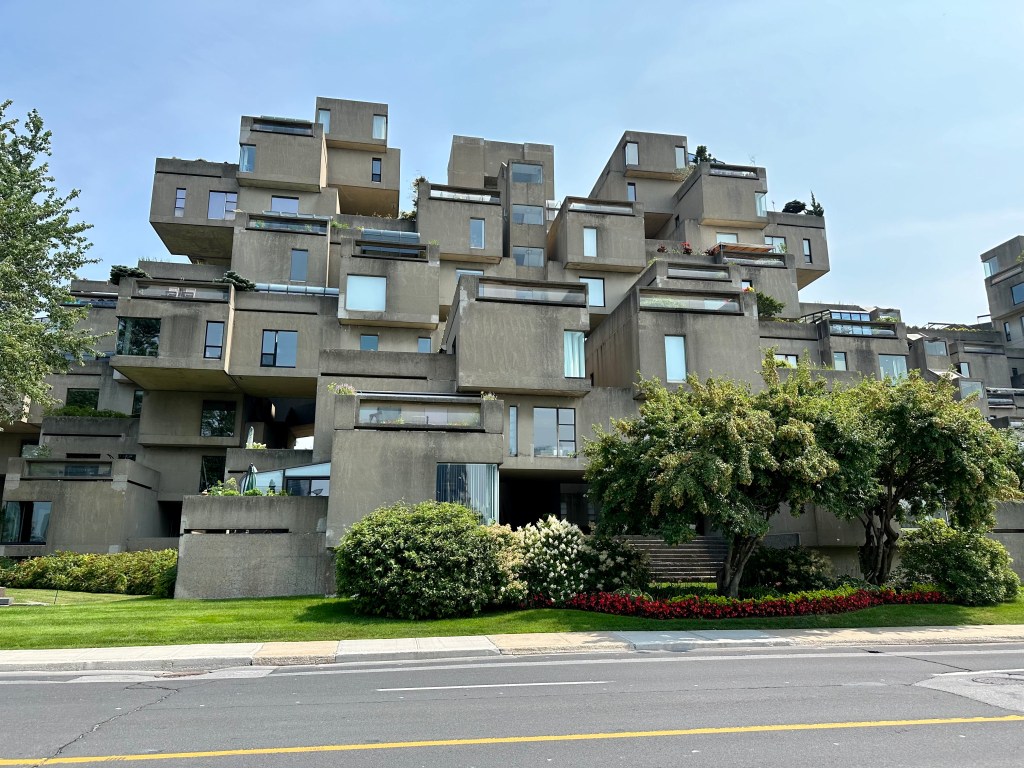
Across the harbor from Montreal proper lies the wildly cubist Habitat ’67 residences. Initially created in advance of Montreal’s winter Olympics, they’re now high-priced condos very much in demand due to their city skyline view (and uniqueness).
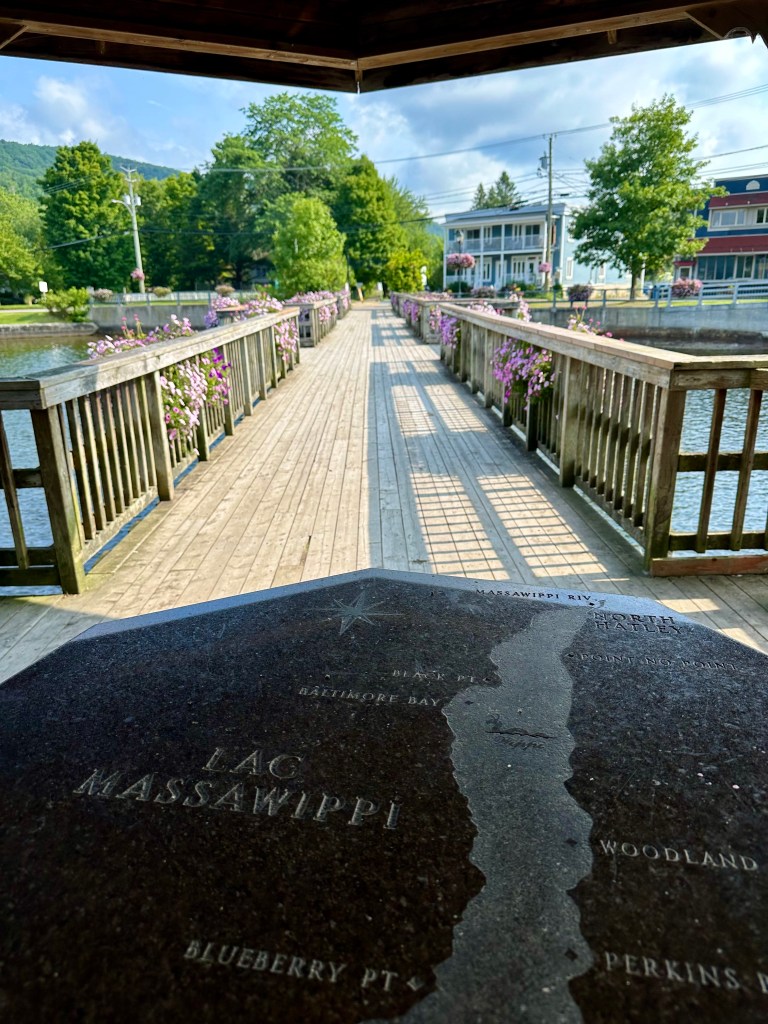
From Montreal, we drove east, more specifically to North Hatley, in Quebec’s Eastern Townships. Nice place along Lac Massawippi to hang for a few days.
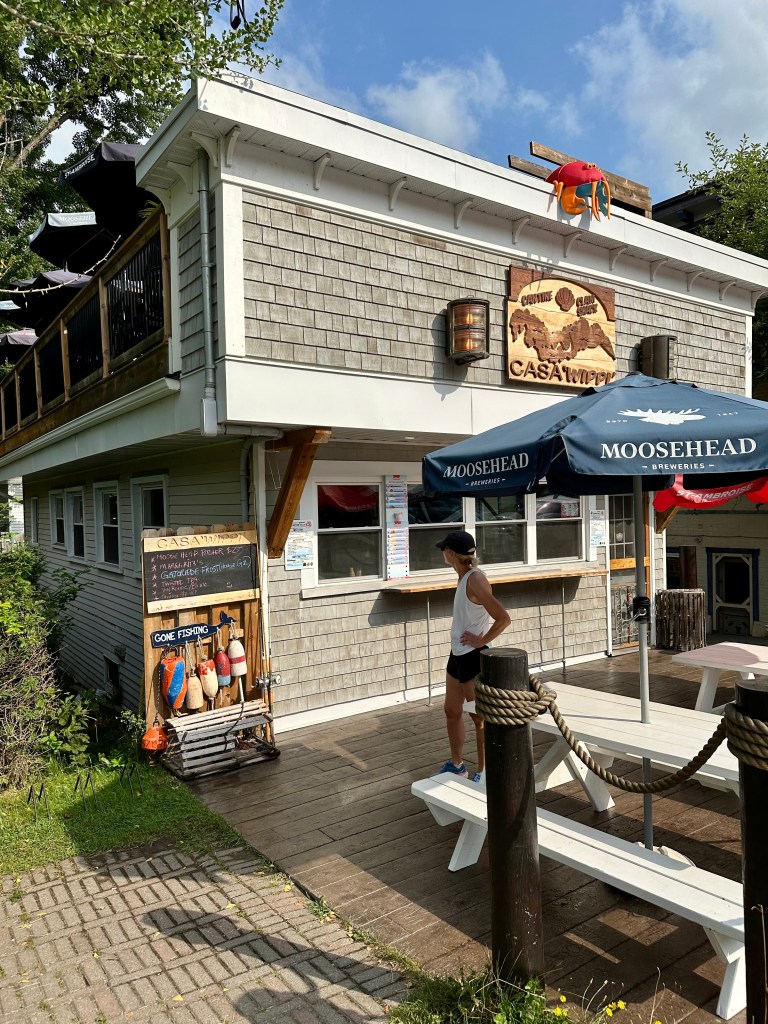
The town’s lobster shack:
More lobster rolls (and fried clams) in North Hatley – definitely a contender!
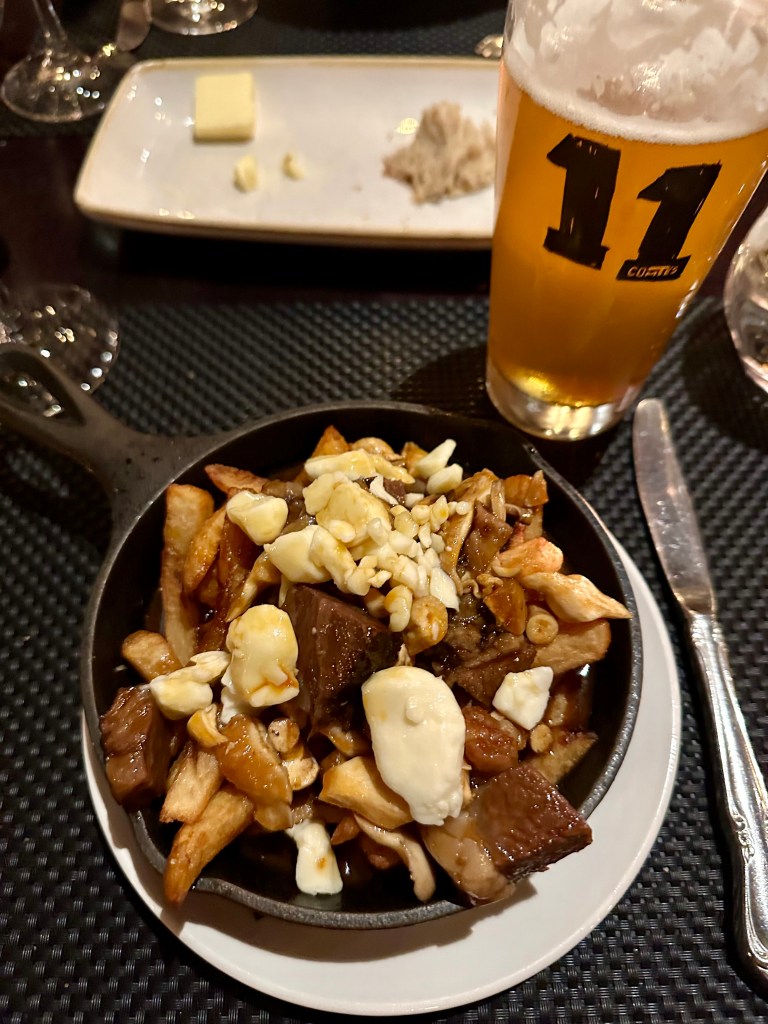
And also our first (and only) helping of Canada’s signature poutine – artery-clogging goodness!
And back across the border again, to Maine’s North Woods:
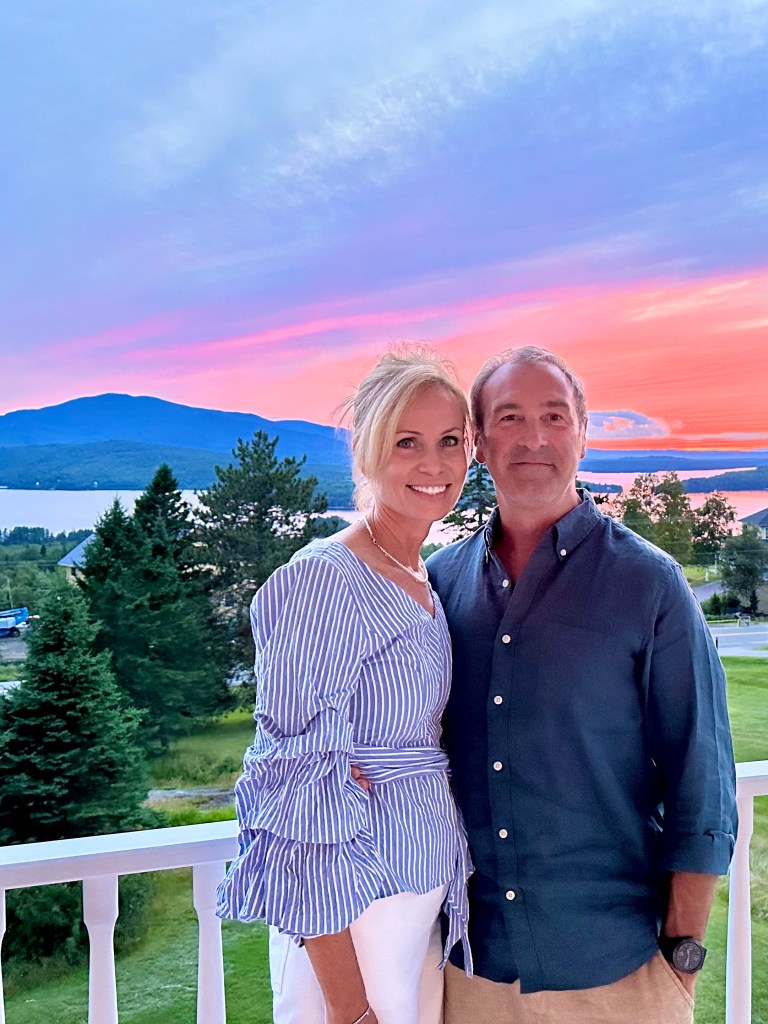
One of the two most spectacular sunsets of the trip (both conveniently during cocktail hour):
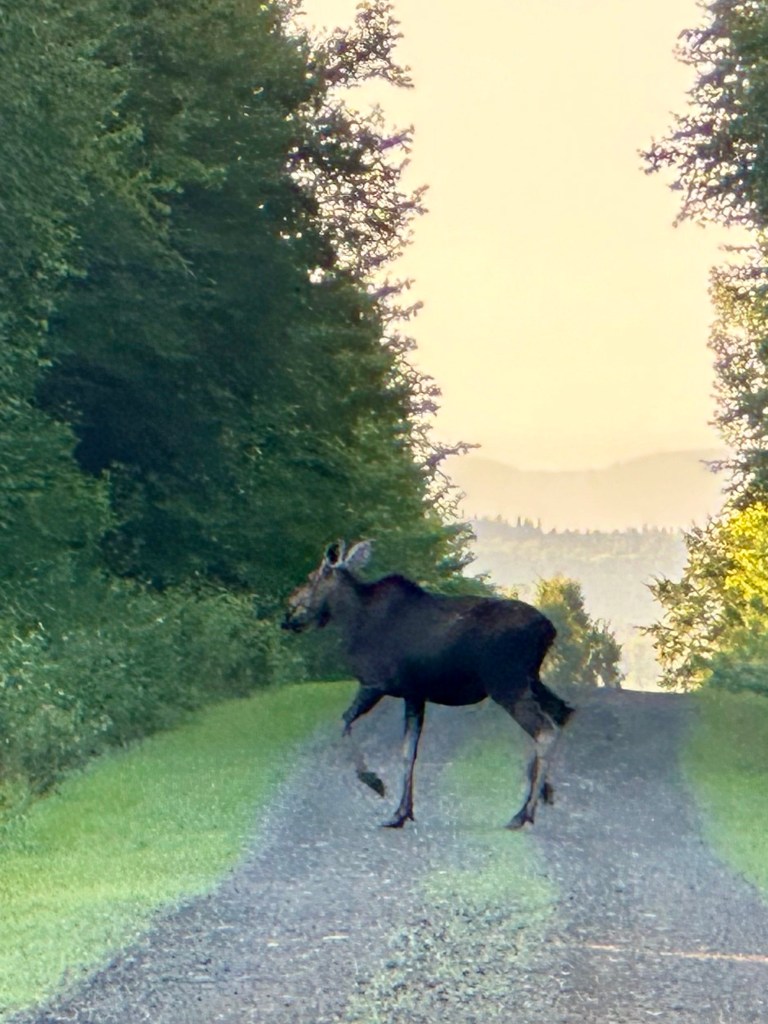
We awoke at 4:30 one morning to go on a moose safari deep in paper company forests. We only saw one moose, though, and a female without a rack, at that.
Great setting along Moosehead Lake, though!
Another ferry – this time pedestrian only – across Moosehead lake to climb the island of Mount Kineo:
Pretty great views!
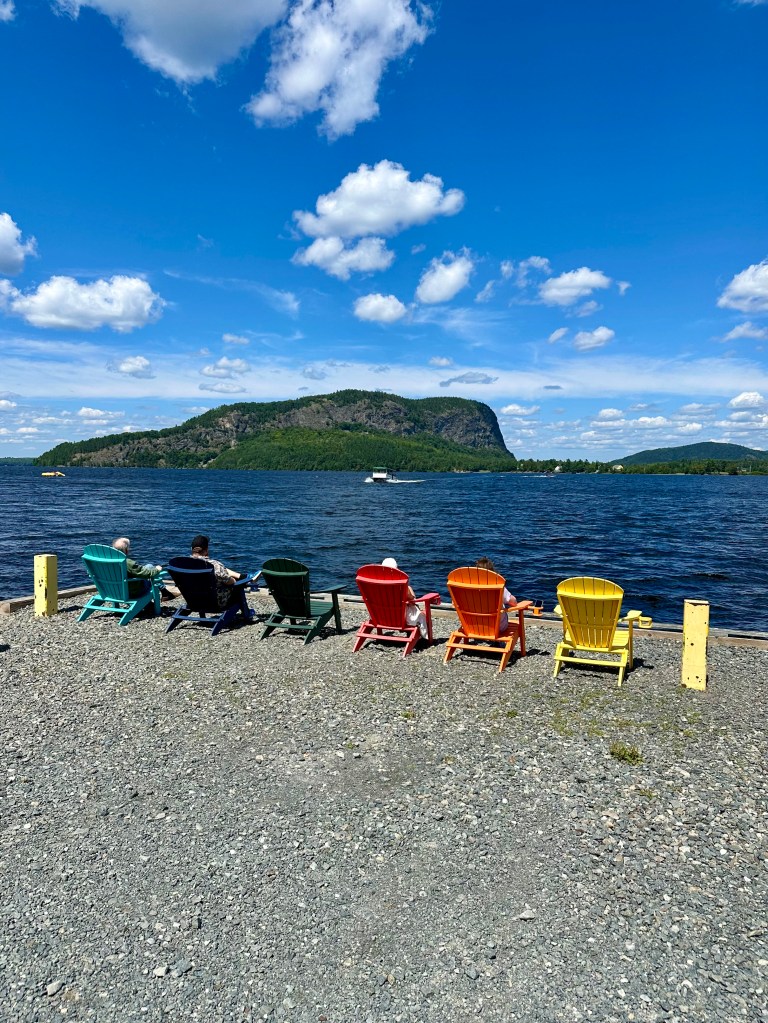
Perhaps the most Maine Adirondack chair ever:
Another hike up Burnt Jacket Mountain. No charred outerwear at the top, but there was a surprise swing.
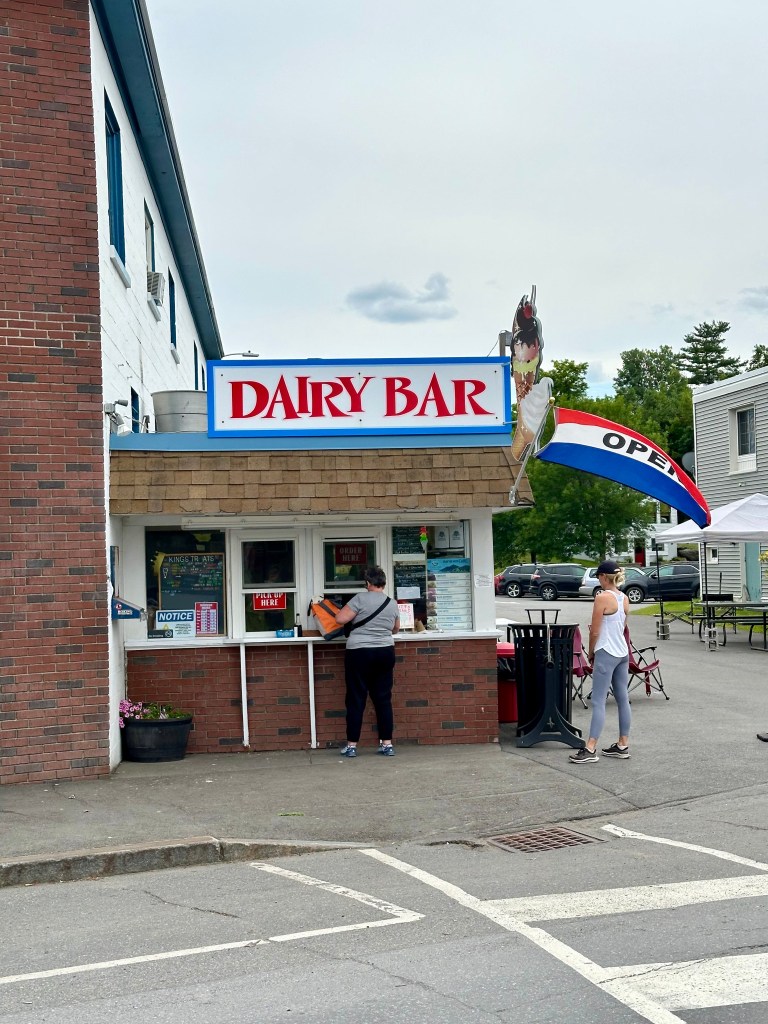
Vermont has creemees; Maine has dairy bars. Both offered delicious soft-serve – perfect for a post-ride or post-hike treat.
Last evening on Moosehead Lake before heading east and north, to Prince Edward Island.
By way of New Brunswick’s capital of Frederickton, which was dreary the evening and morning of our stopover.
Which did nothing but enhance the weather on PEI – spectacular! We would spend a full week on this Canadian island province at the apex of our trip’s arc.
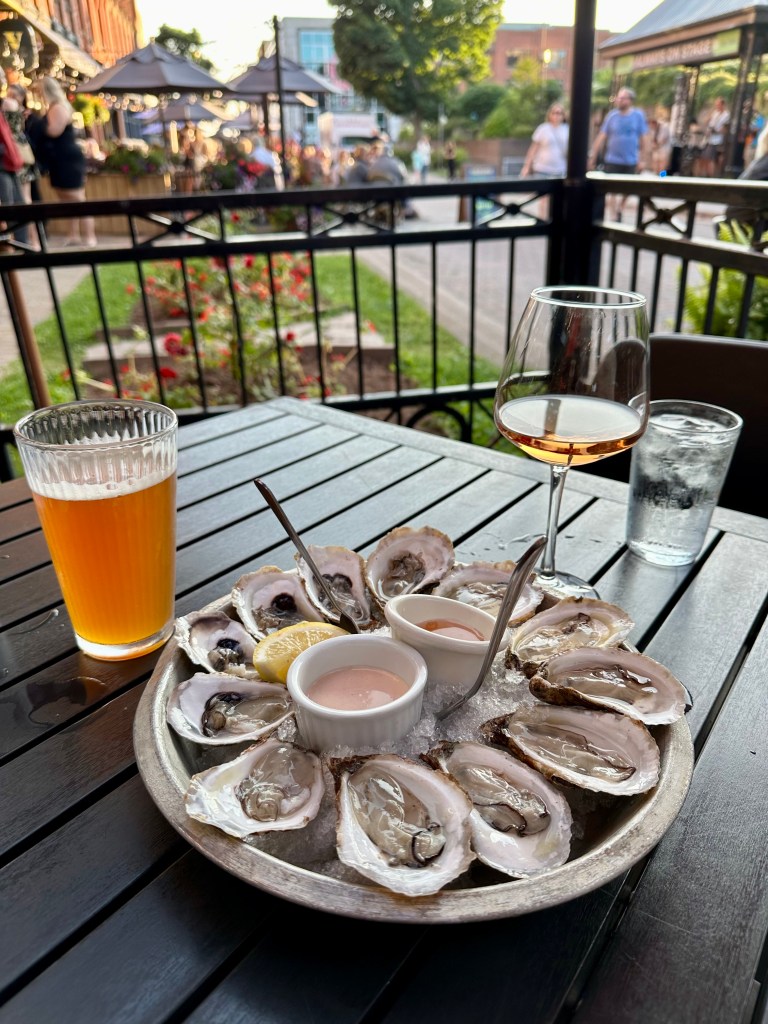
And more oysters!
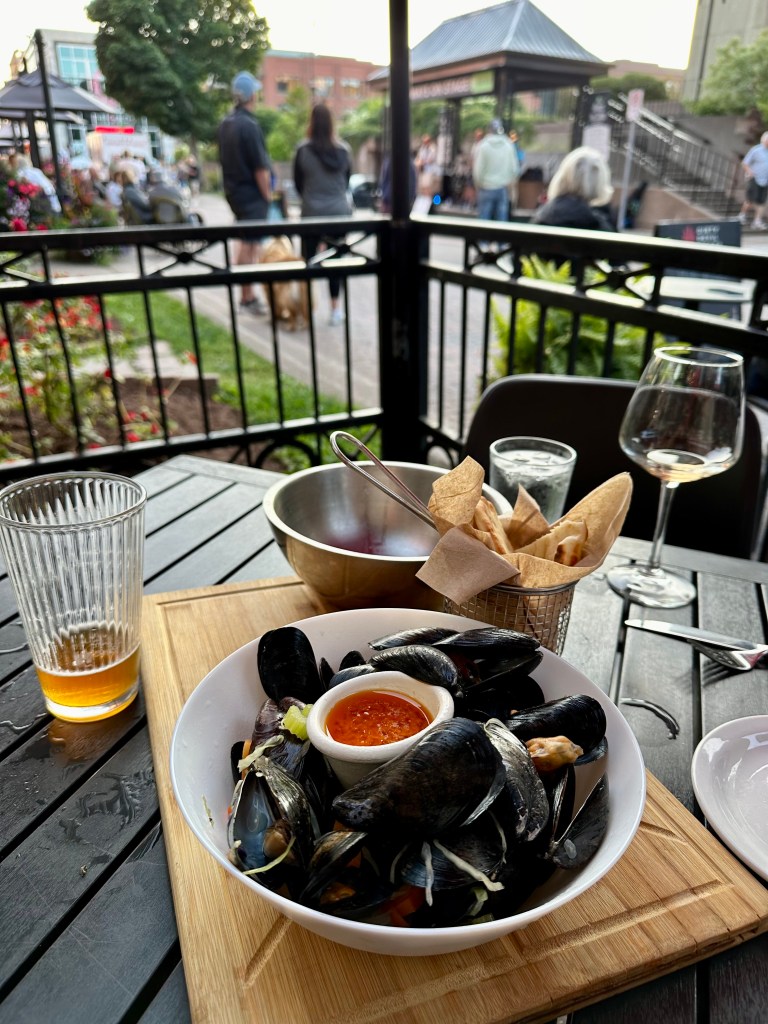
And PEI’s renowned mussels – the first of several orders during our week on the island.
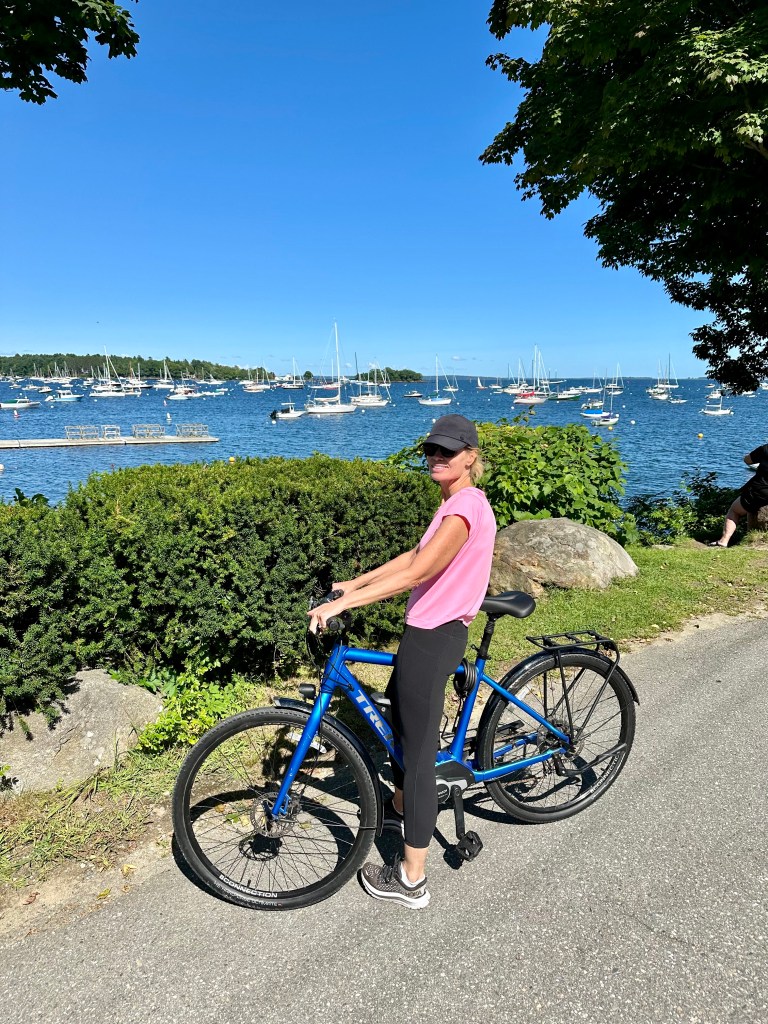
More biking! This time a 26-mile trip, but on e-bikes, which we initially eschewed, even though we had a fun time riding them in San Antonio as part of Emma’s graduation celebration. We’re now totally converts for when we’re just traveling – e-bikes just make touring around tons more fun.
The first of PEI’s characteristic lighthouses along the bike ride – adding to one of our trip’s themes.
And the objective of the ride? We were on a roll with lobster rolls!
Another quintessential PEI lighthouse on our morning run along the harbor, which was so enjoyable that we ran all seven mornings of our stay.
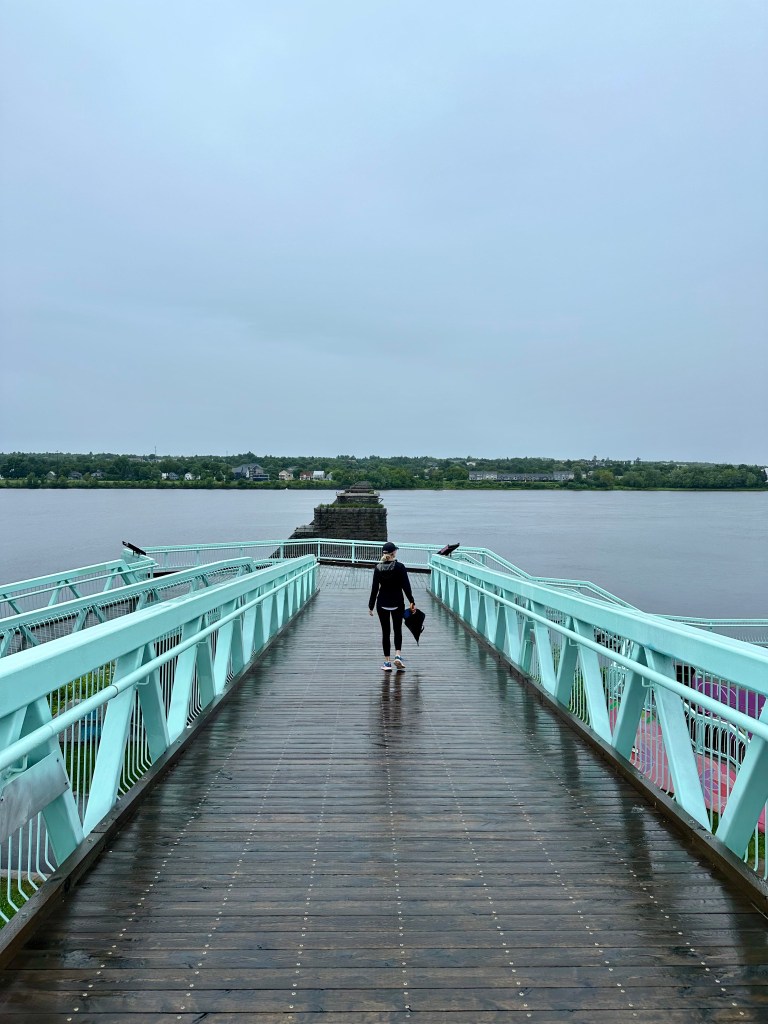
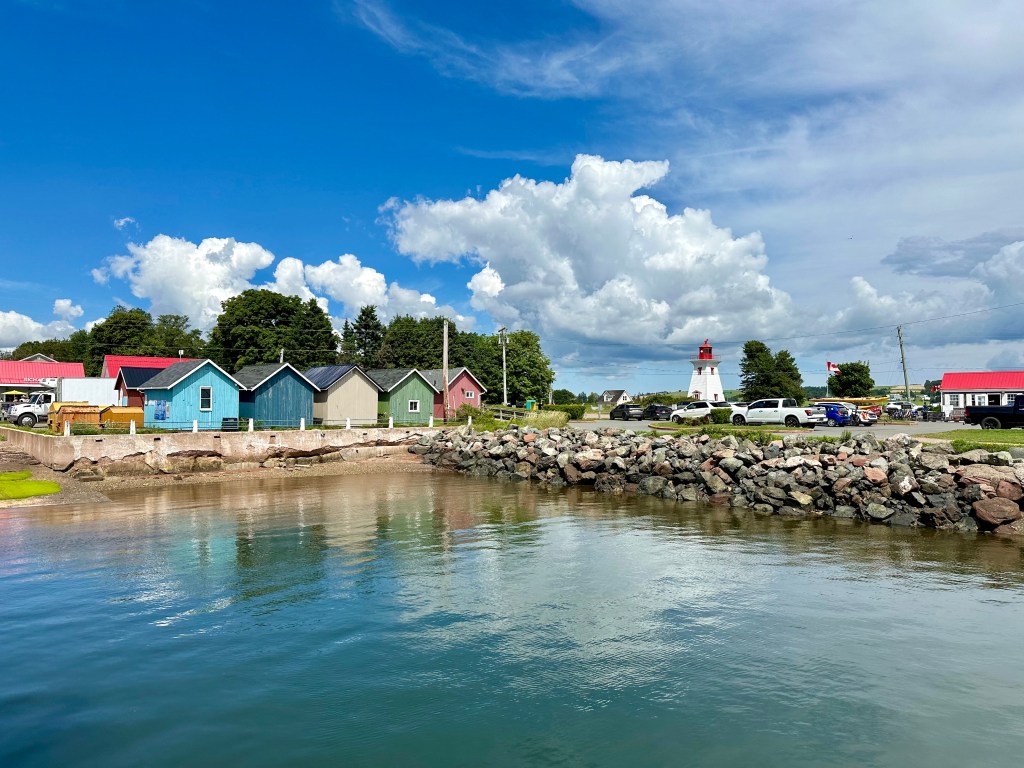
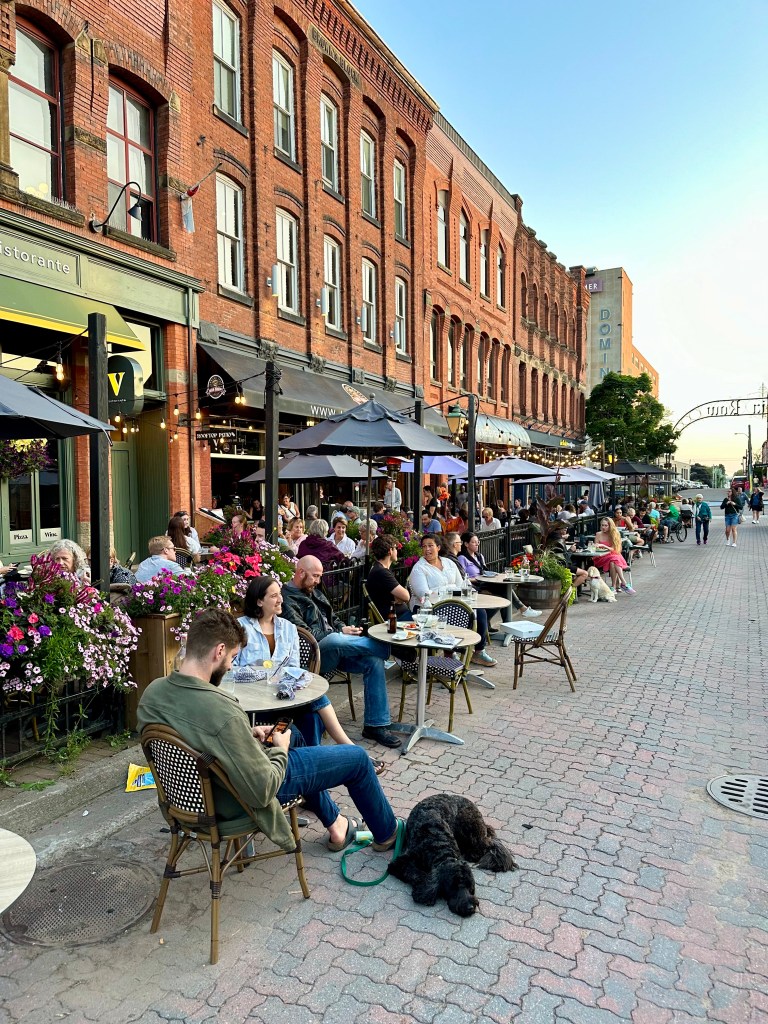
The remarkably picturesque town of Victoria-by-the-Sea, which offered us a trifecta of trip themes during our midday field trip.
More oysters. . . .
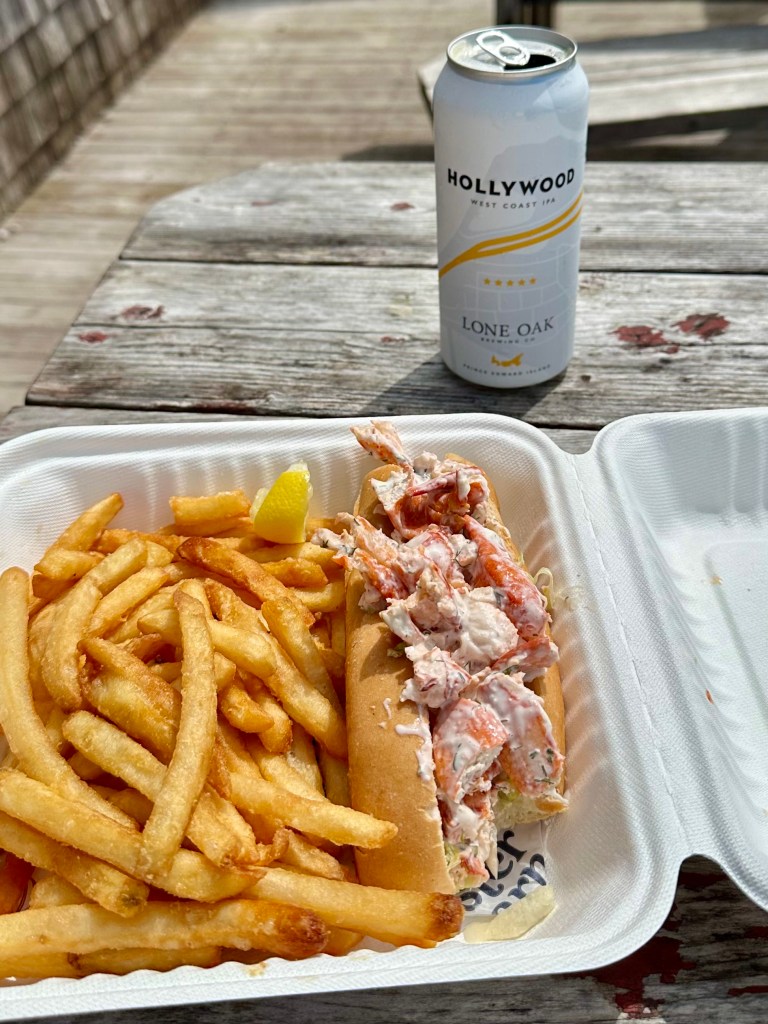
More lobster rolls. . .
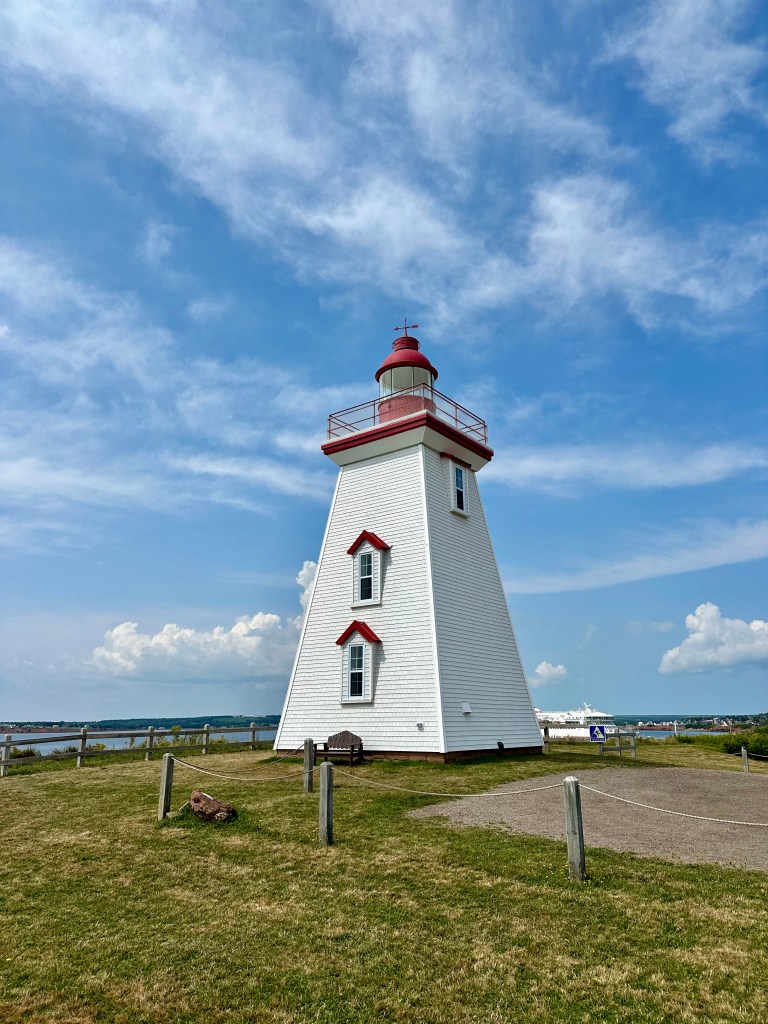
And the best PEI lighthouse yet!
More PEI mussels at the renowned Blue Mussel on the north coast, in the little fishing hamlet of North Rustico:
And more oysters, natch! With blueberry ale, a frequent offering that we’d been sampling (along with copious hazys) ever since our lunch in Portsmouth, NH.
Another PEI lighthouse encountered on a lunch excursion to Souris on the east side of the island.
Our home base of Charlottetown – very reminiscent of Old Town. Right on the water and tons of restaurants. It even sports a King Street, Queen Street, and Prince Street. Perfect home for WolfeStreetTravel for a week!
The town’s vibrant Victoria Row a few blocks from the water.
Good setting for some more oysters!
And our last PEI mussels on PEI. . .
Sunset on Victoria Row.
Our last lobster roll on PEI (and easily the greatest underperformer of the trip – look how thin that loser is!):
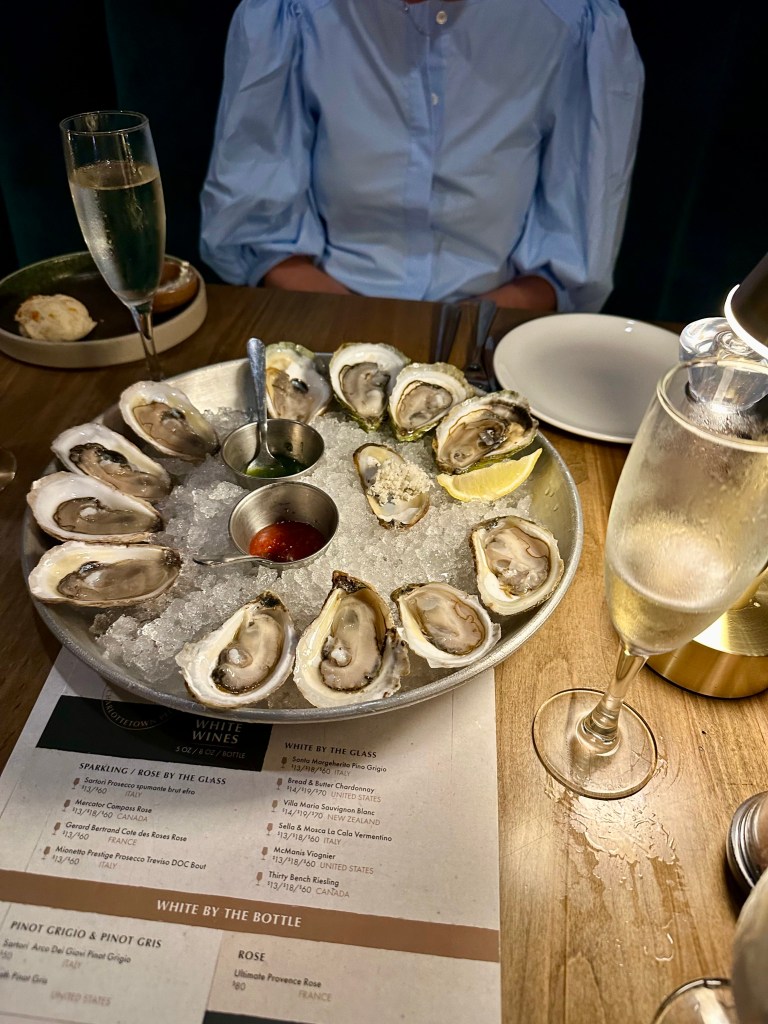
And our last oysters (these, on the other hand, were great) on the island during our final dinner before arcing southeast to begin our return leg.
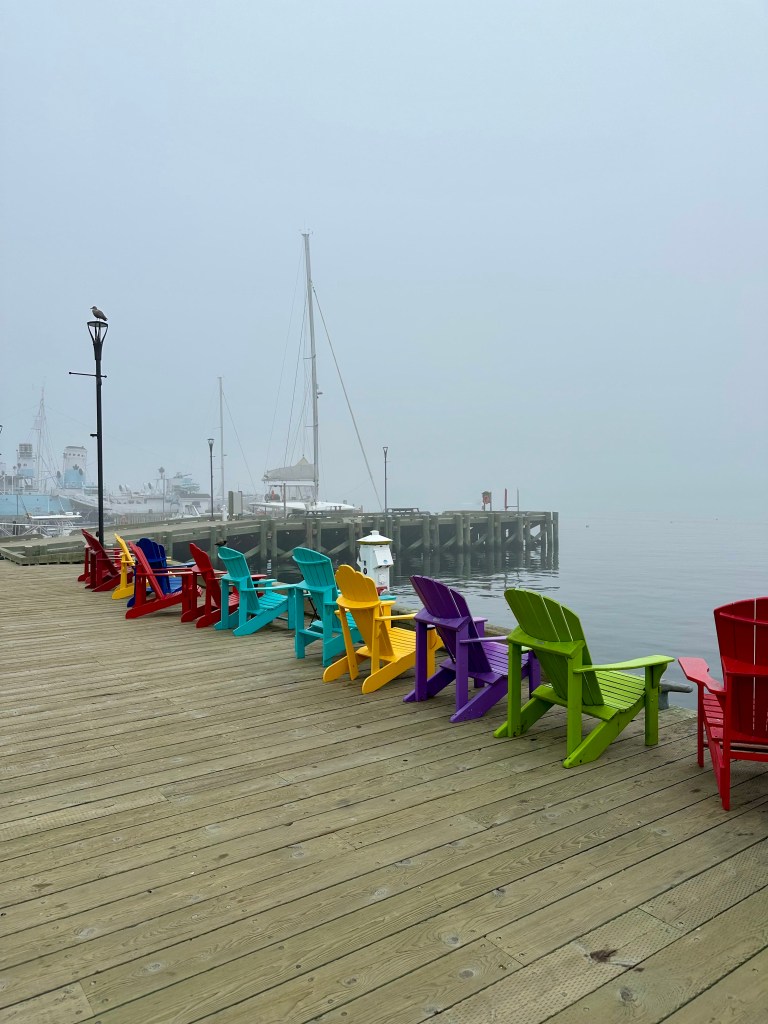
We headed over the internal Canadian border to our fourth province: Nova Scotia, where we spent 2 days in Halifax, right on the water. Which was super cloudy our first morning in town:
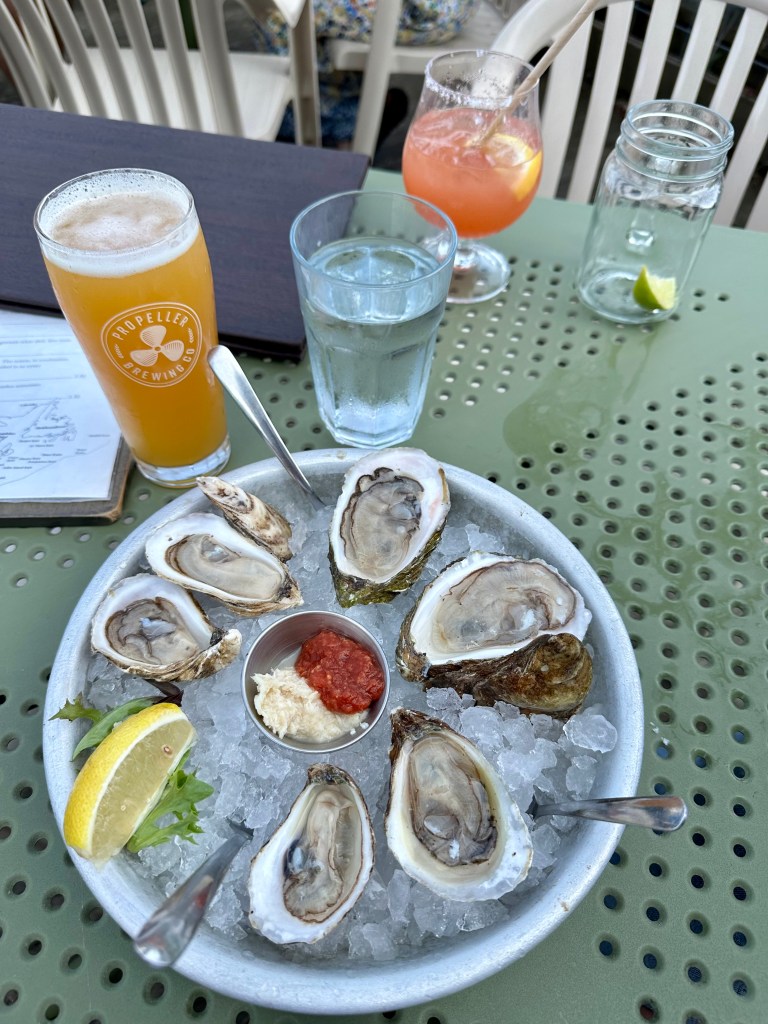
But with oysters, hazys, and Aperols, no one’s complaining.
Halifax’s harbor and boardwalk, which was really scenic.
During both day and night.
Heading up to Halifax’s British fortress on the hill above town:
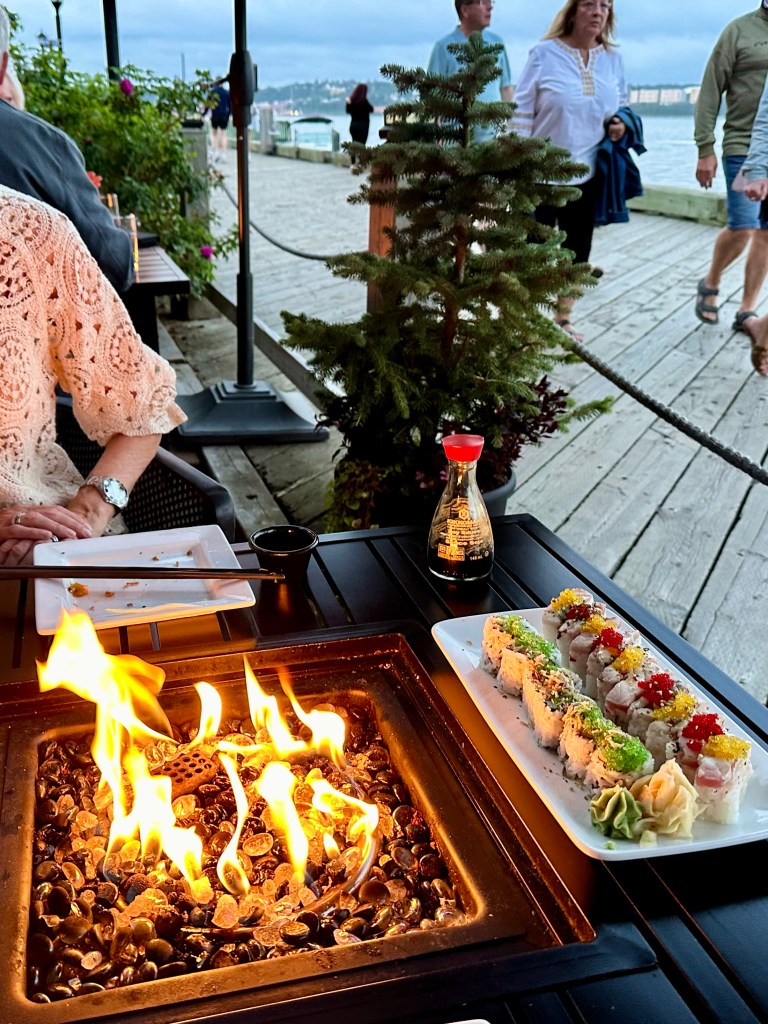
And a pretty awesome dinner our last night at Sea Smoke on the boardwalk,
where you could have fireside sushi while people watching. Perfect.
An addition to the lighthouse theme in Halifax harbor.
And then, across an actual border for the last time to drive down the coast of Maine, stopping first in Bar Harbor.
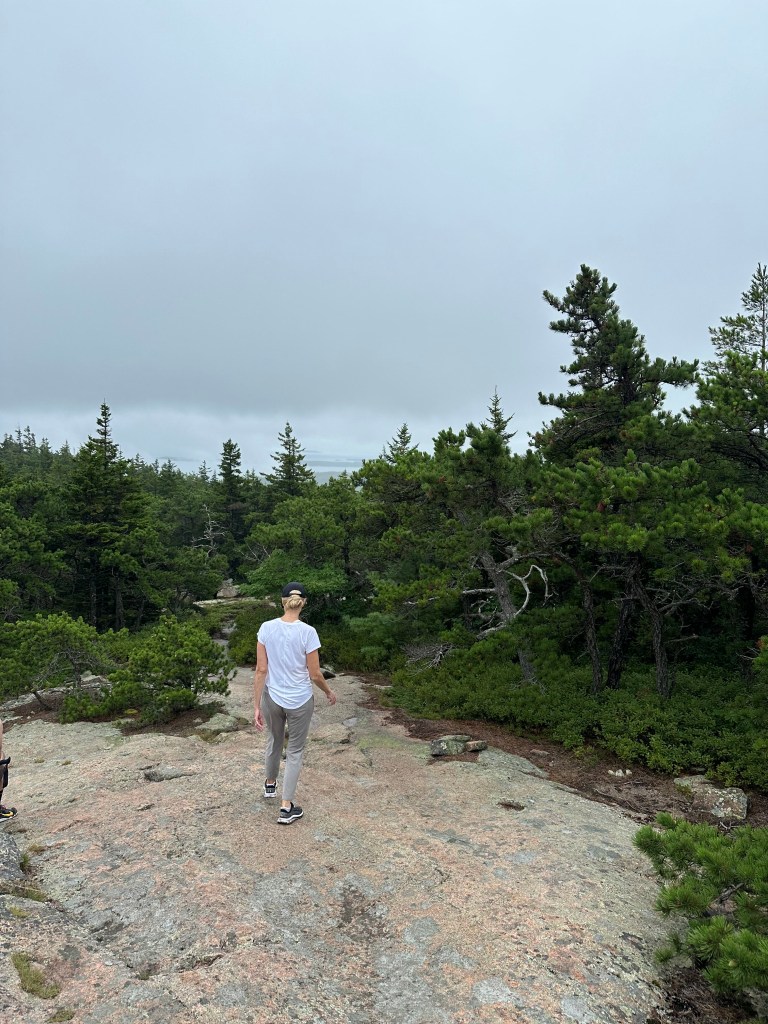
Including on our hike up Cadillac Ridge in Acadia,
where we encountered zero visibility at the top, identical to our experience on Arthur’s Seat in Edinburgh.
But, the fog also led to a bumper crop of mushrooms on the trail, much to the delight of the WolfeStreetTraveler who took a full year of graduate-level mycology as an undergrad.
And, on our final morning, a whale watching cruise! Great, right?!
Nope! Also zero visibility, and with huge swells, leading to a third of the boat becoming seasick:
The cruise was cut short and refunds were issued to all due to both factors (we did see two whales off in the fog, though).
From Bar Harbor, we continued down the coast to the charming port town of Camden.
Home to a classic harbor inn.
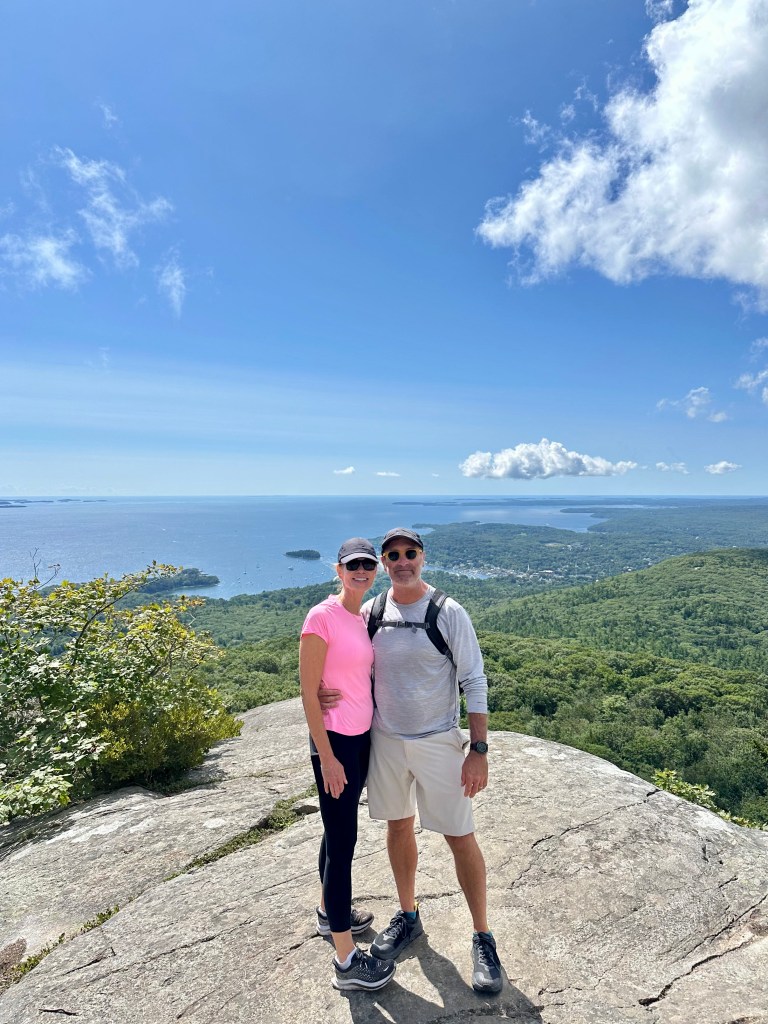
And the iconic views from Mount Megunticook:
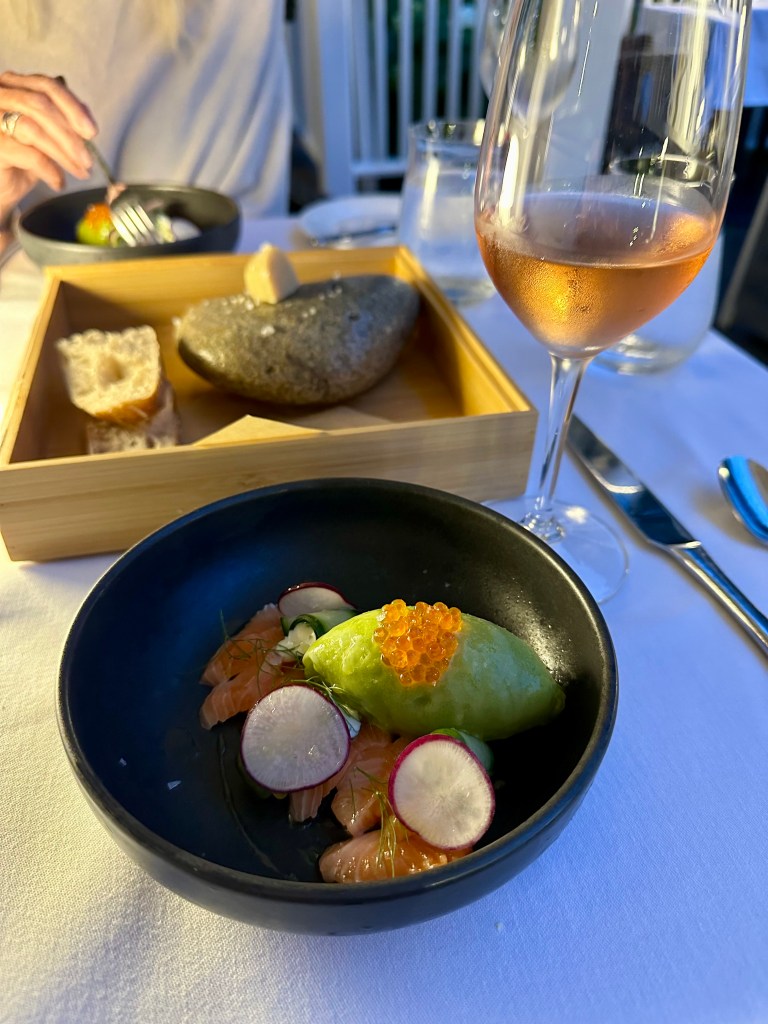
And, notwithstanding the three consecutive outstanding dinners in Montreal and tons of great dining on PEI, we actually experienced our best dining experience of the trip on our final night in Camden at Camden Harbor Inn’s Natalie’s.
Based on recommendations from a couple we met around a fire at Lake Placid, we stopped for lunch at Cliff House in Ogunquit on the way to Kara’s in New Hampshire. More oysters, natch.
And then to Bedford, NH, for Jen’s 60th birthday party and the Olympic Jentathalon, pitting two teams of family members against each other in contests of skill, determination, and an eclectic mix of life skills.
Thence, on to Cape Cod. First, to Chatham, a lovely town that was not part of our original itinerary. We left 2 days after Jen’s party unplanned, in case there were follow on activities. Seeing none, we followed the advice of the Spruck’s at KJQ’s back in July, and booked 2 nights in Chatham, located at the elbow of the flexed arm that is Cape Cod.
More oysters!
An evening at Chatham Bars Inn – we declined to stay there, but still took advantage of the setting for drinks and dinner our first night.
Atmospheric final morning during our run in Chatham. . .
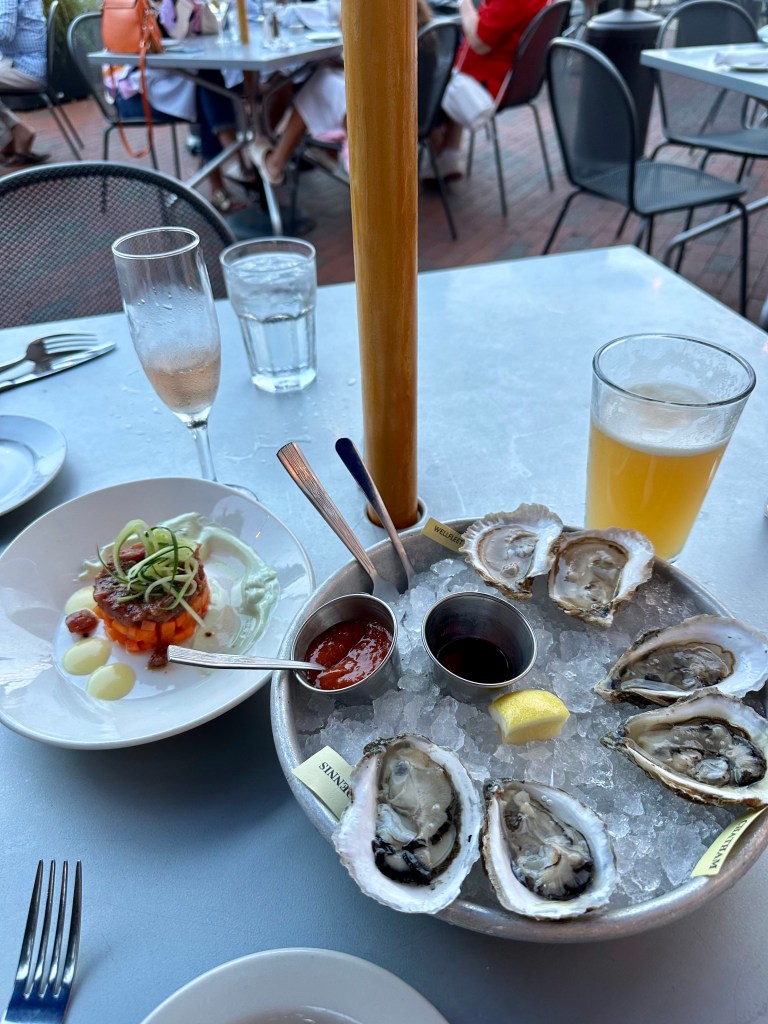
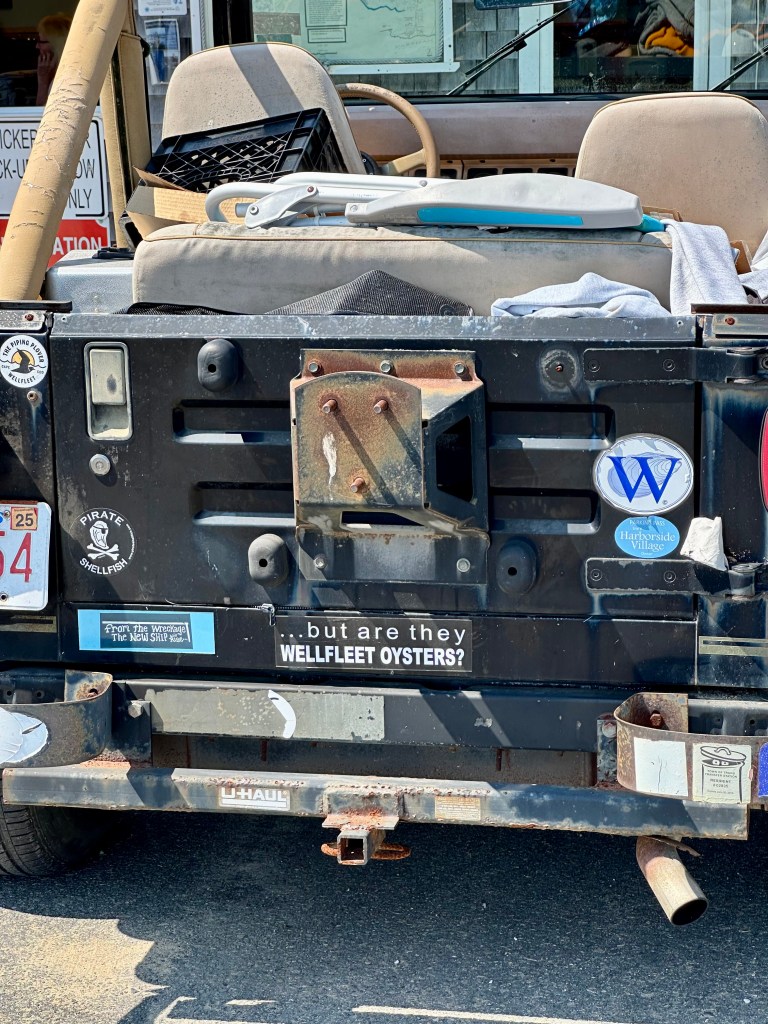
We then headed up Cape Cod’s arm to Provincetown, stopping for lunch in Wellfleet, as famous for their oysters as PEI is for their mussels:
A well-deserved reputation!
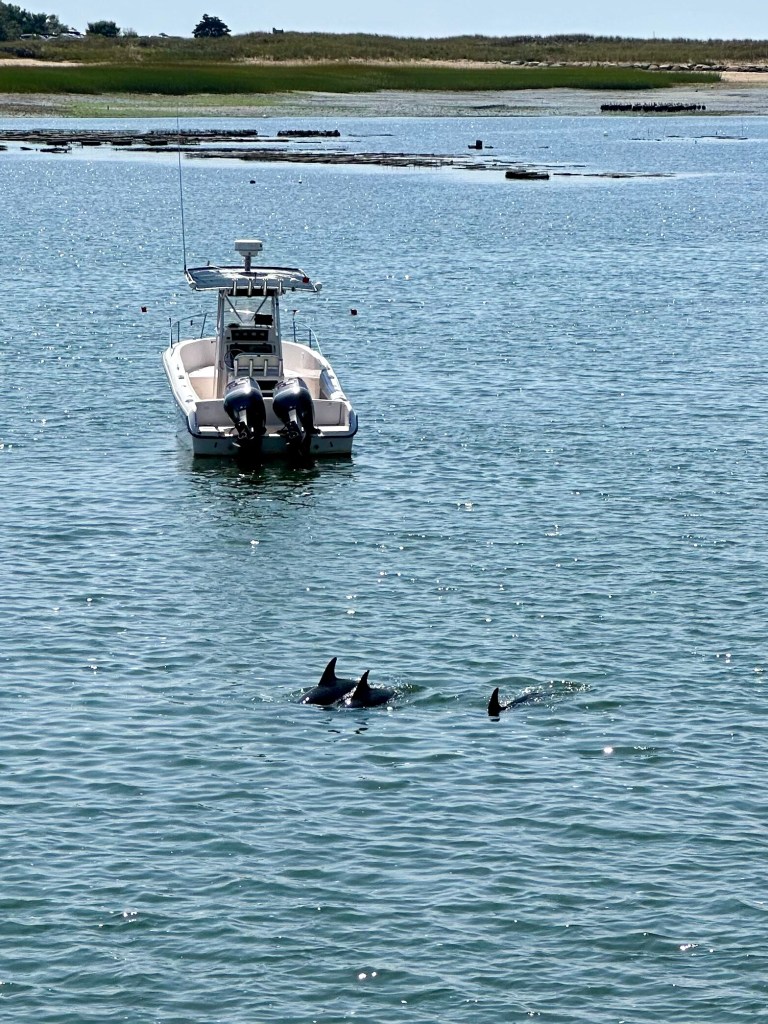
While we were there, bottle-nosed dolphins got stranded in their harbor and a team of marine mammal specialists were trying to shoo them out.
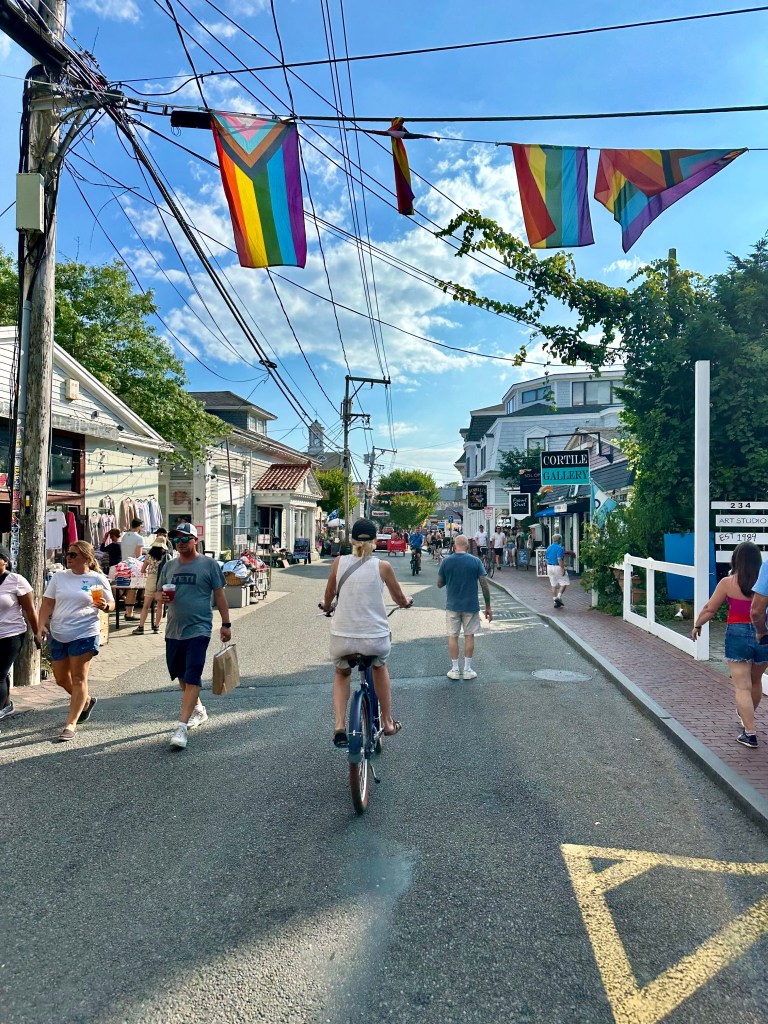
And then – Provincetown. Super entertaining! Super fun! Super gay!
Definitely a cool place to visit for 3 days.
And, with super oysters (natch).
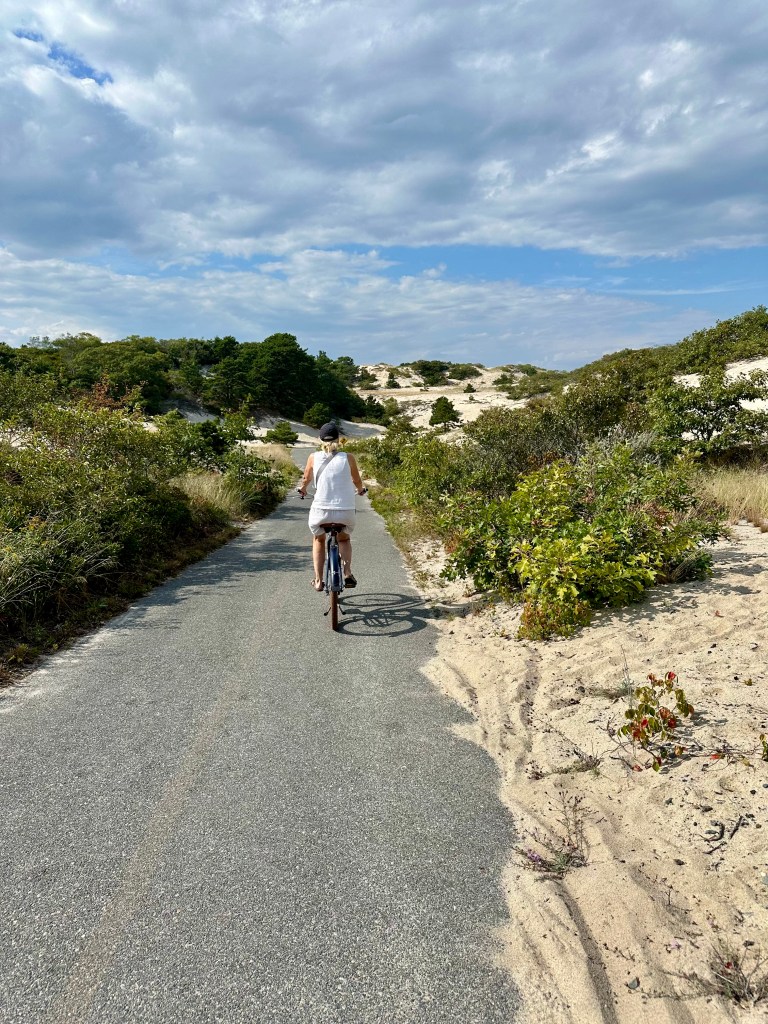
We grabbed our inn’s bikes one day and biked to Race Point Beach, on the other side of the peninsula.
Which was full of great white sharks.
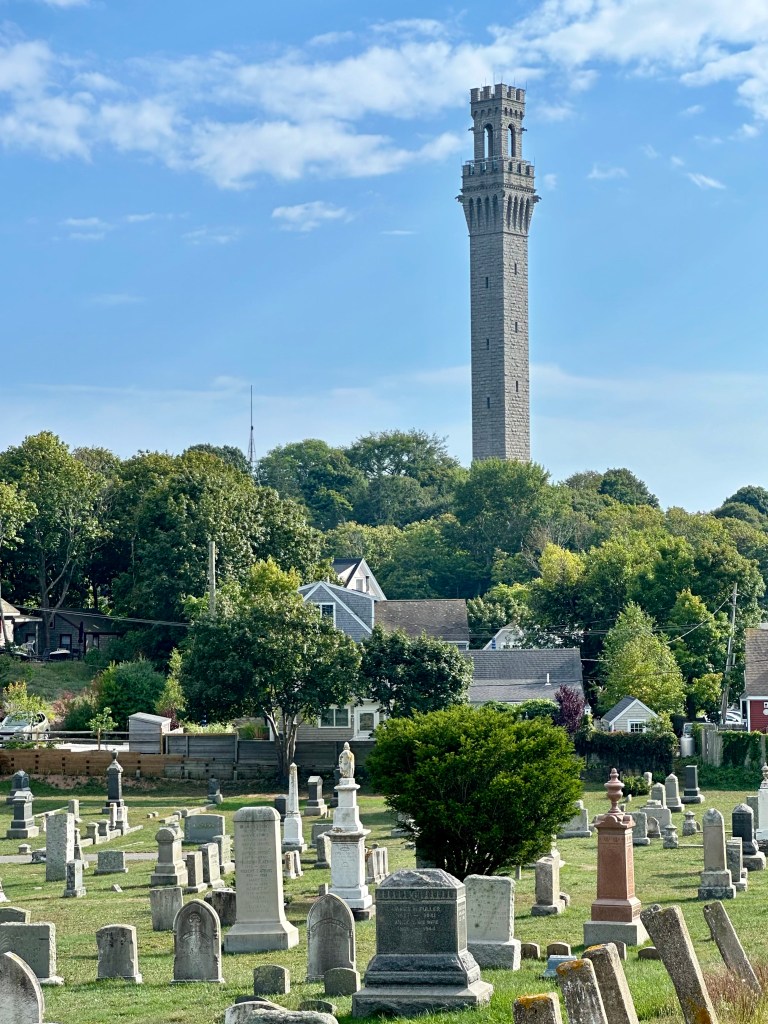
Pilgrim Monument looming over town.
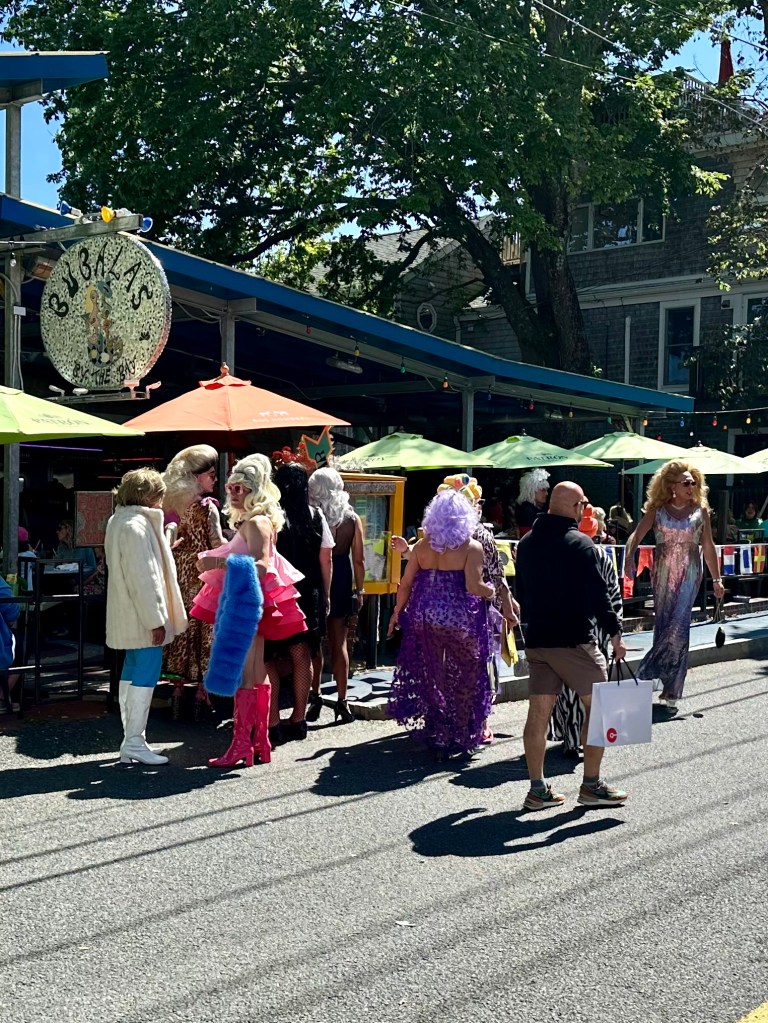
Drag queens at brunch.
And then, our next ferry, from Woods Hole, Cape Cod, to Oak Bluffs, Martha’s Vineyard, our first of two towns on the island.
The big Victorians on Oak Bluffs:
And the tiny revival Victorian cottages:
And, of course, oysters, during lunch in Vineyard Haven down the road.
Dropping by Gay Head Light on the west end of the island during our migration from Oak Bluffs (not our favorite, frankly) to Edgartown (very, very good).
And ANOTHER bike ferry, this one across a cut to the fishing village of Chilmark for lunch:
Adding to one of the five themes of the trip, we present the Edgartown Harbor Lighthouse:
(And more oysters.)
Yet another ferry from Edgartown to the island of Chappaquiddick to circumnavigate the island by bike.
Pretty good digs while in Edgartown.
And, after our final ferry from Martha’s Vineyard back to Woods Hole, our final lobster roll of the trip in Newport.
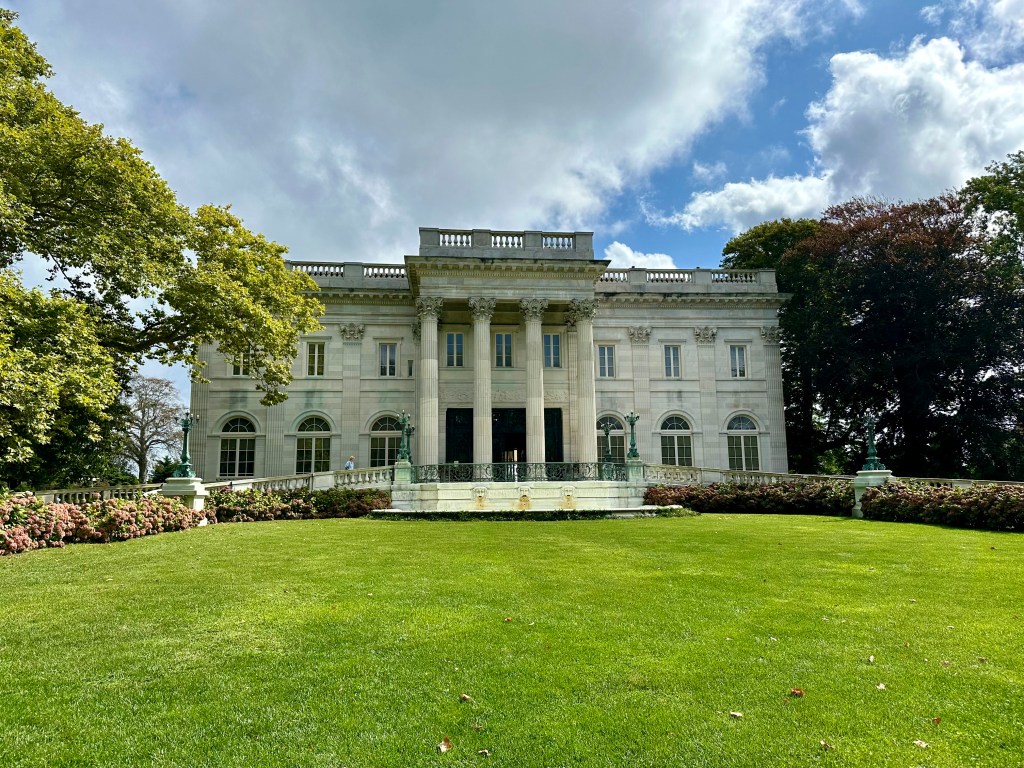
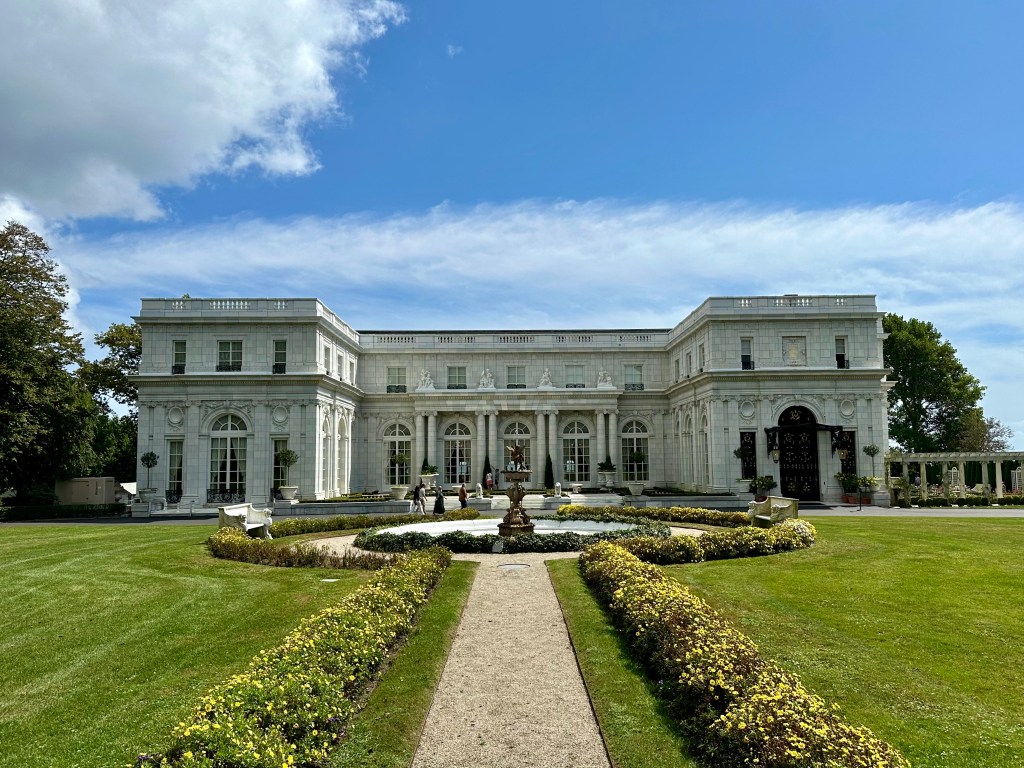
As an appropriate accompaniment to lobster, we visited three Gilded Age mansions in Newport, starting with The Breakers.
Followed by Marble House.
And ending with Rose Cliff.
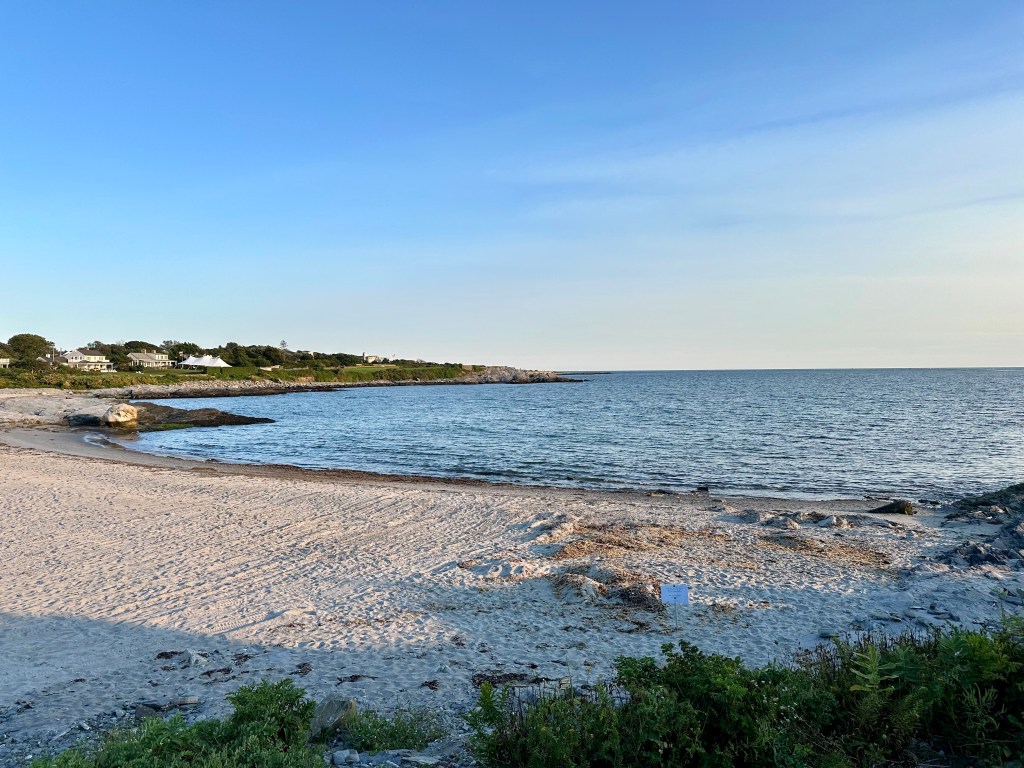
Also pretty good digs at Castle Hill Inn’s beach house.
The final lighthouse of the trip: Castle Hill Lighthouse on Narragansett Bay, in Rhode Island.
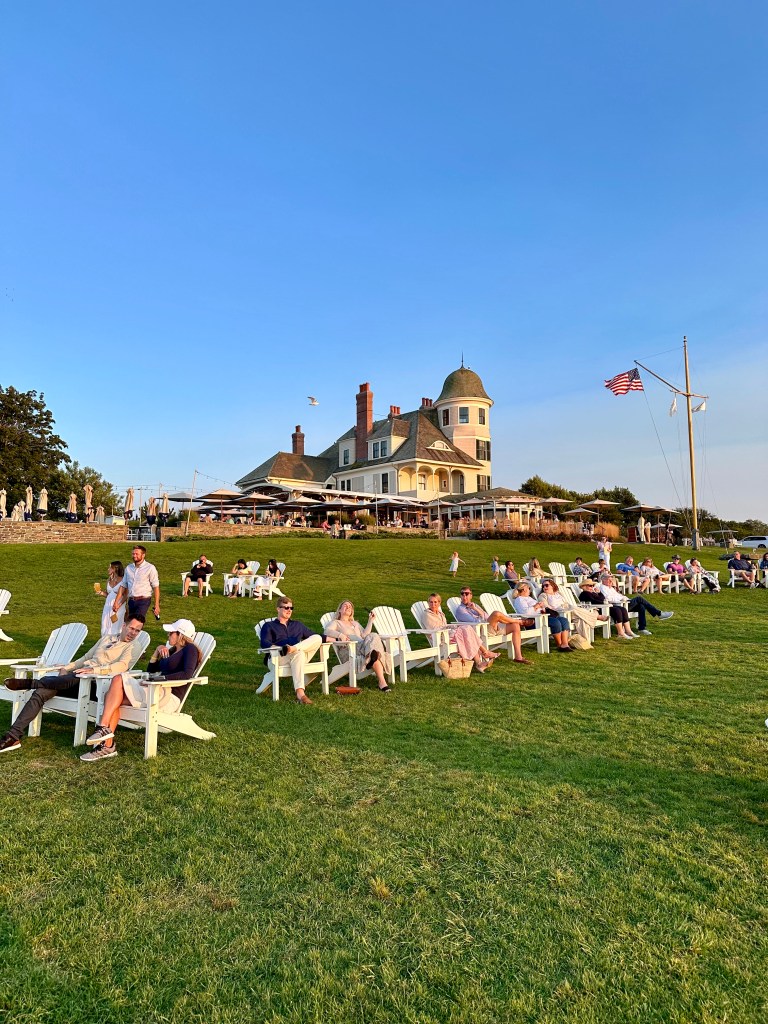
Our last stop in Newport, RI, also was the location of the best sunset cocktail hour scene of the entire trip: Castle Hill Inn’s lawn of Adirondack chairs.
Accompanied one evening by a completely unexpected air show by, everyone assumed, the naval station up the bay. We still don’t know, but it was awesome:
And at Castle Hill Inn to end the trip: A. Final. Order. of. Oysters.
Pretty good trip. We’ll publish more detailed posts after we address our backlog. Likely in 2028 or something.
Really interesting article in today’s New York Times about North Macedonia’s claim that Alexander is their native son, much to the infuriation of Greece. Historians agree that Alexander (and his father Philip) both originate from the Macedonia region of Greece, south of the country of North Macedonia. But historical realities don’t discourage the nationalistic fervor of the North Macedonians in creating a national identity for themselves.
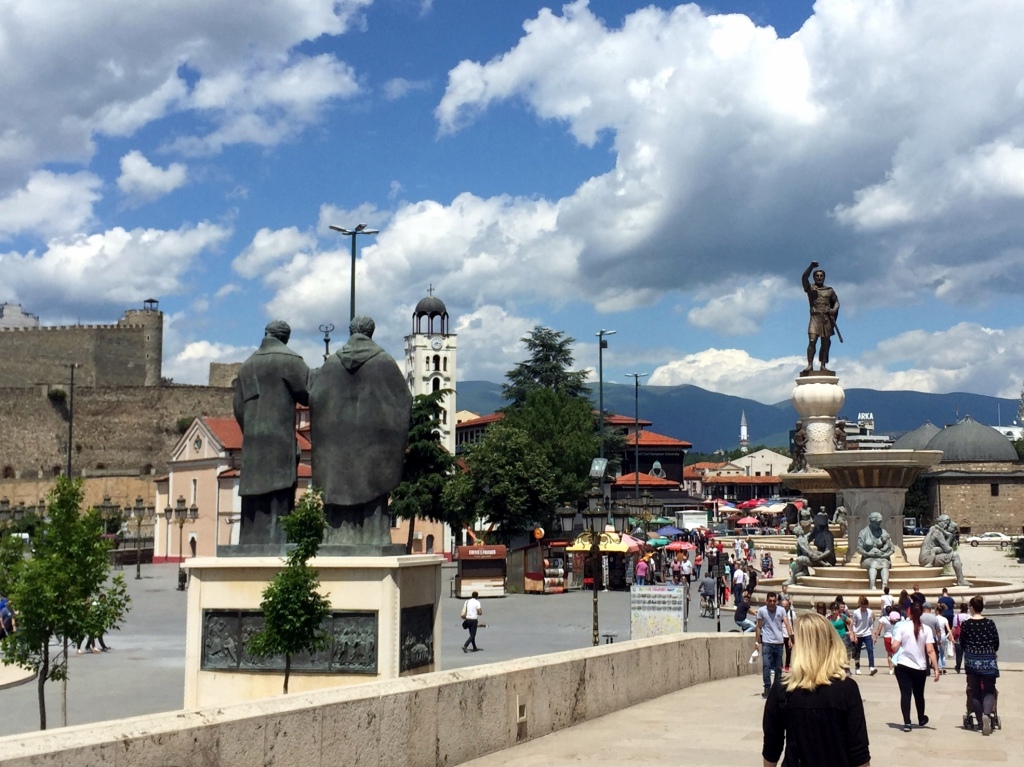
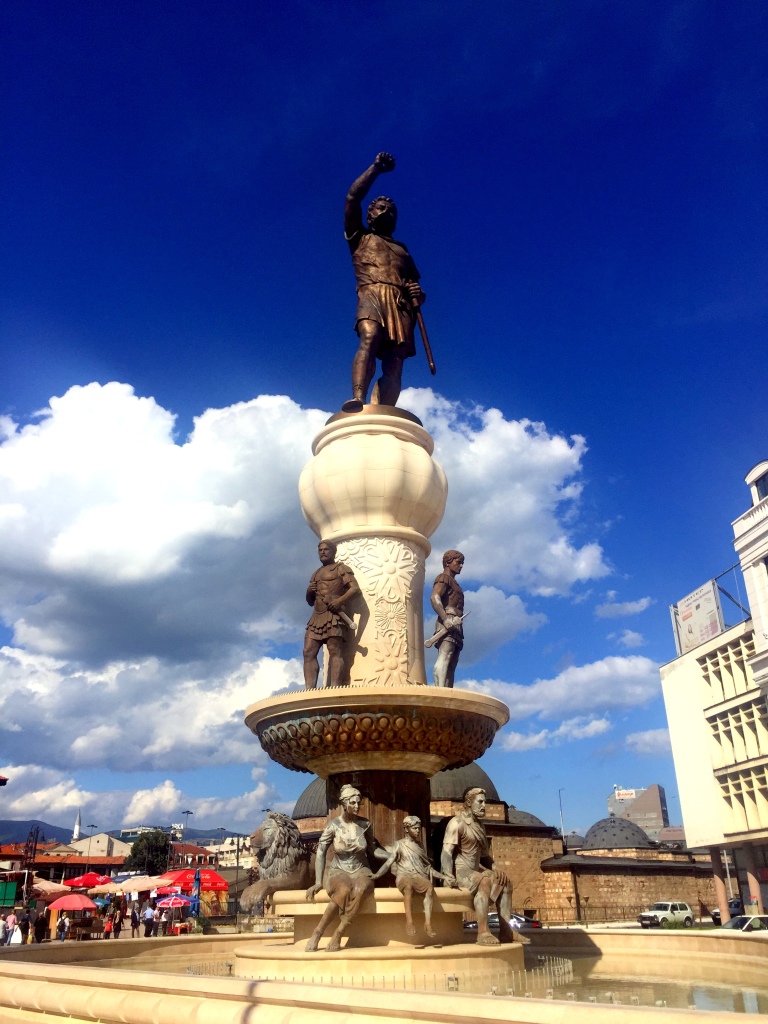
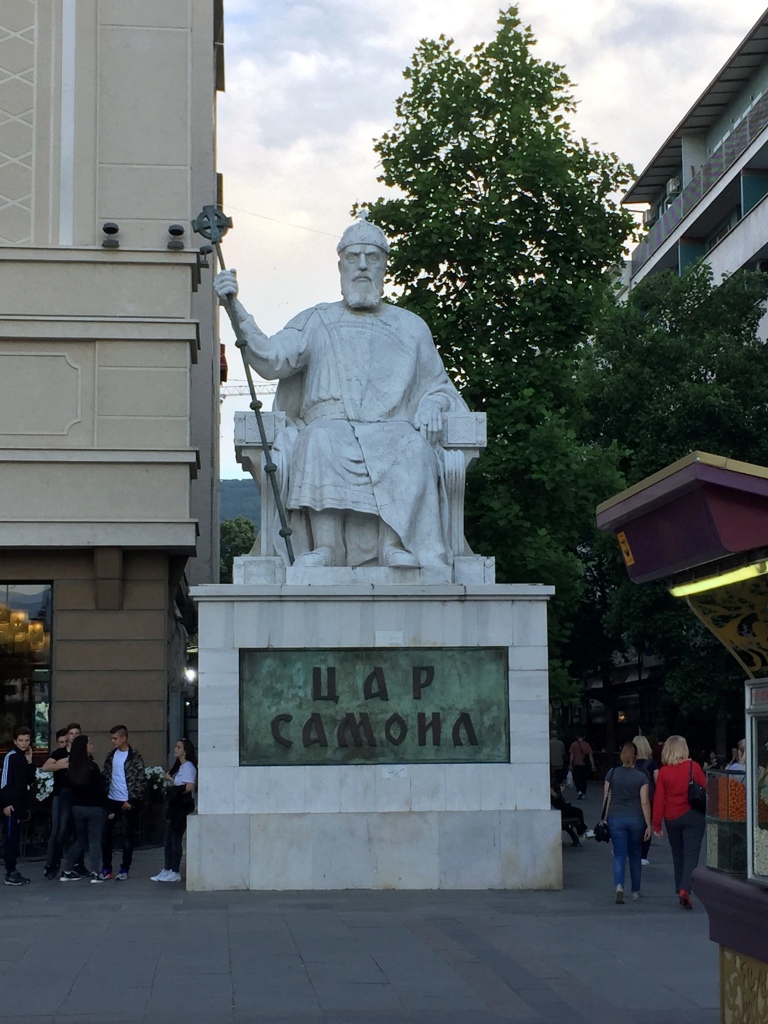
We encountered all of this during our bike trip through Macedonia and Albania a few years ago, including the presence of oversize statues of Alexander, his father Philip, and a 10th-century Bulgarian king (who also isn’t native to Macedonia).
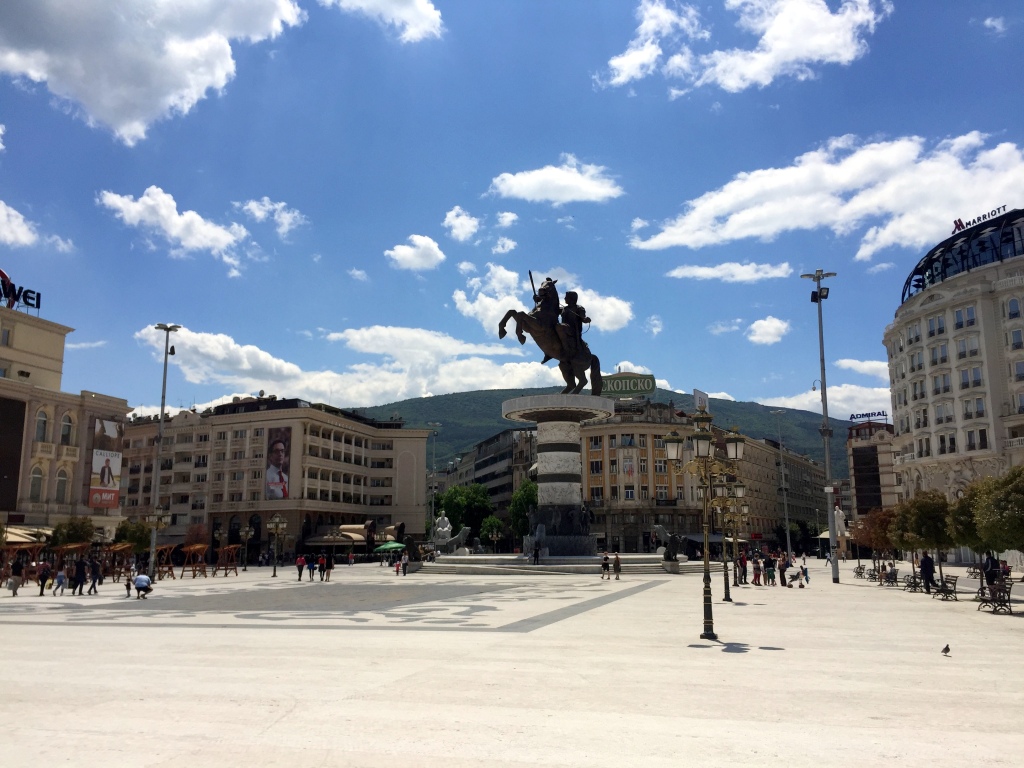
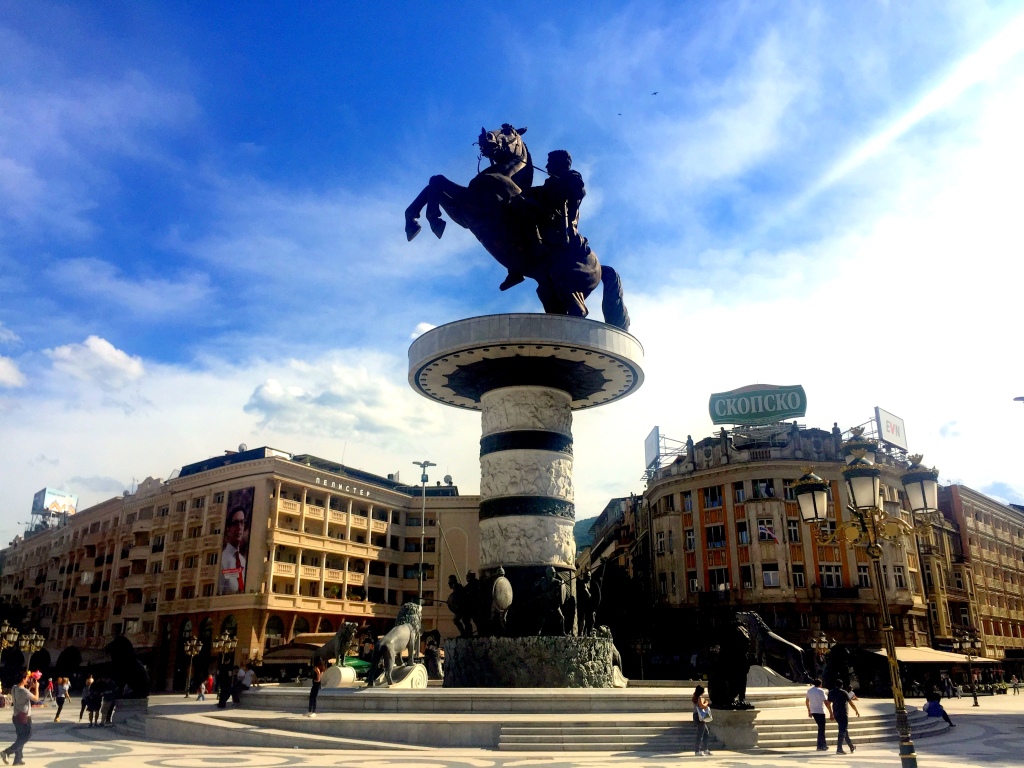
Greece’s Alexander the Great, prominently displayed during our trip in Skopje, North Macedonia’s capital:
And across the bridge, his father, Philip of Macedon (also not North Macedonian):
One one side of Skopje’s main square squats Samuil, the Tsar of the First Bulgarian Empire from 997 to 1014 (also not North Macedonian, enraging the Bulgarians, as noted in today’s NYT article):
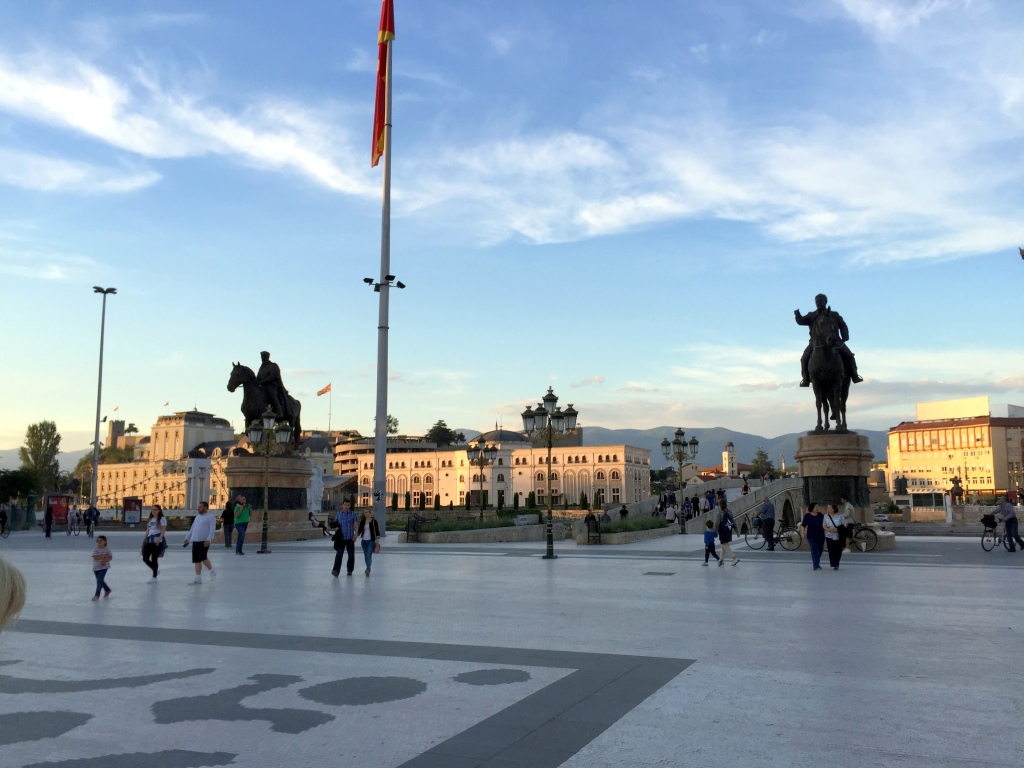
And on the other side, a couple of more recent heros of the Balkan region – maybe Macedonian, maybe Bulgarian. All of this is a little disputed.