
After limiting our travel each year for the past several decades to 1- and 2-week trips abroad due to work responsibilities, retirement by the second of the two travelers in 2023 eliminated this constraint. So, we kicked off WolfeStreetTravel’s 2023 journeys with one-way tickets to Italy with no plans to return.
The original vision for this prolonged foray to Europe assumed that we’d have an itinerary and lodging planned for the first week or two, then we’d wing it from there. However, this approach proved to be completely unbearable for the travel-planning arm of the consortium. As a result, our entire itinerary, including all destinations, transportation, and accommodations (and about a half a dozen dinners) were planned for the first 7 weeks of the trip.
We still had no return plans, maintaining fidelity to the spirit of the trip, but we definitely weren’t winging it, either.
The trip, which began on May 5, can be logically sequenced into the following legs:
- Italian peninsula road trip (17 days)
- Sardinian break (4 days, including overnight ferry to Palermo)
- Sicily road trip (18 days)
- Malta break (4 days)
- Normandy bike trip (8 days, including a day before and after biking)
- Portugal (8 days)
The color coding of each leg above aligns to the destinations depicted in the interactive map below:
In addition to the color coding, the map breaks down our travels using the following icons:
- Bed = hotel stay
- House = villa / Airbnb stay
- Pin = day trip
- Hiker = uh, a hike
- Biker = a stage in our Normandy bike trip
We’ll file detailed posts on the trip later, but each of the legs is summarized in this post. We really have tried to keep this overview to a bare minimum, but it’ll still be the longest update we’ve ever posted – sorry!
Italian Peninsula Road Trip
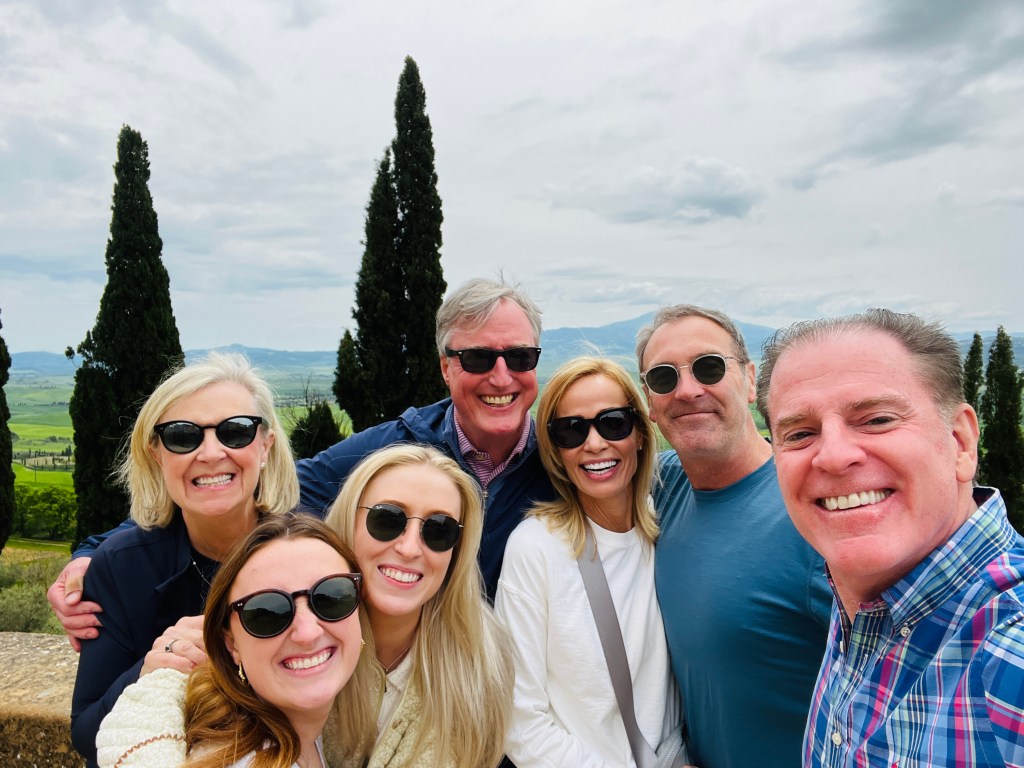
The trip began in Tuscany, where we’d spend 5 days with the Brandts and KJQ in a beautiful area just northeast of Siena.

Overlooking the Val d’Orcia:
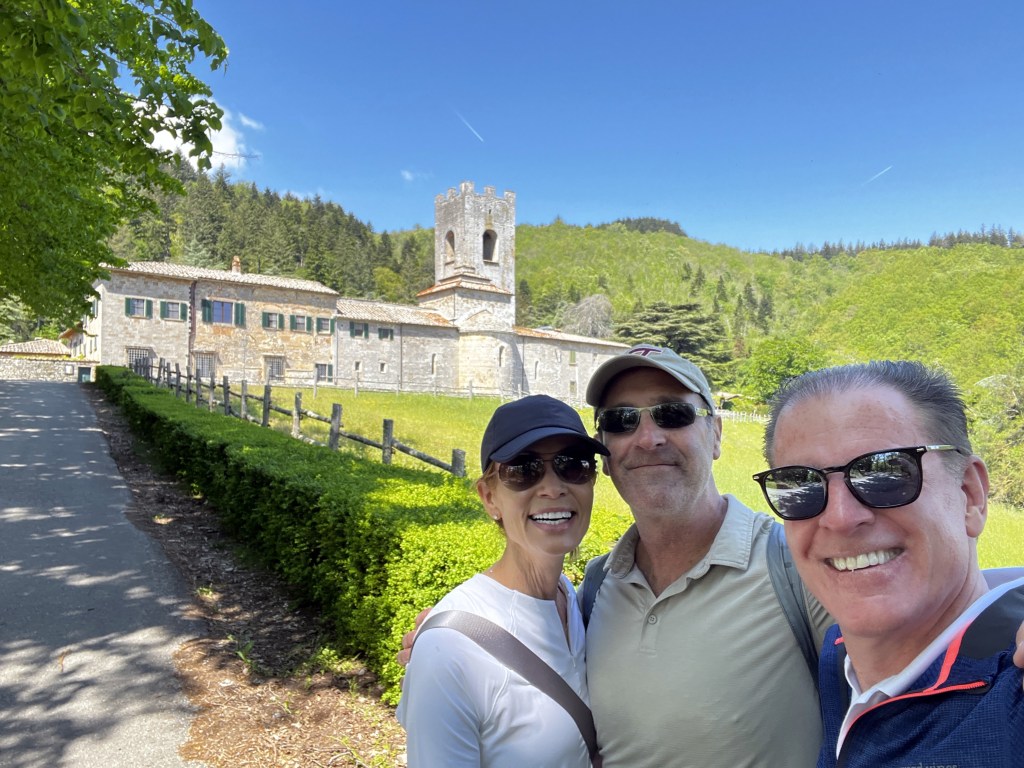
We hiked w KJQ one day to the Abbey of San Lorenzo a Coltibuono (and, about 5 miles later, to a harrowing shortcut escaped only through an opening KJQ dubbed The Gate to Salvation):
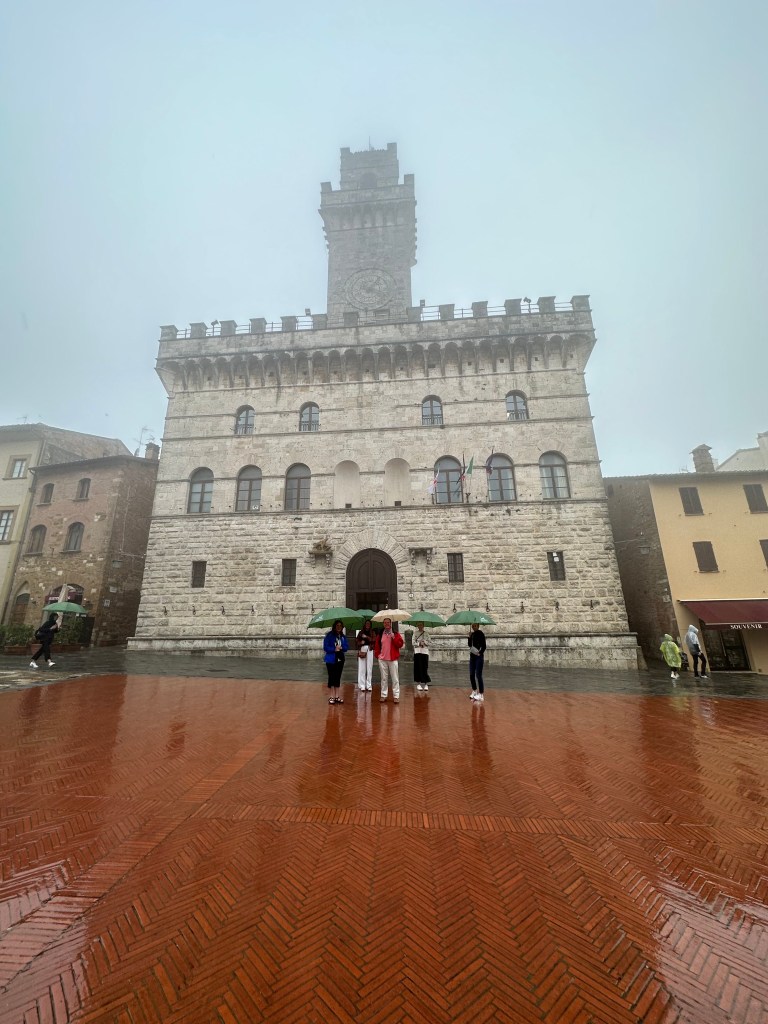
Tuscany wasn’t all sunshine and Brunello, though – it freaking poured in Montepulciano:
Gracie joined us for a portion of the stay, as well (and a team comprised of her and Madison cleaned up on two successive nights of Trivial Pursuit)

From Tuscany, we drove north, to Portofino on the Ligurian coast – a town that had been on Lisa’s wish list for several years. It did not disappoint.
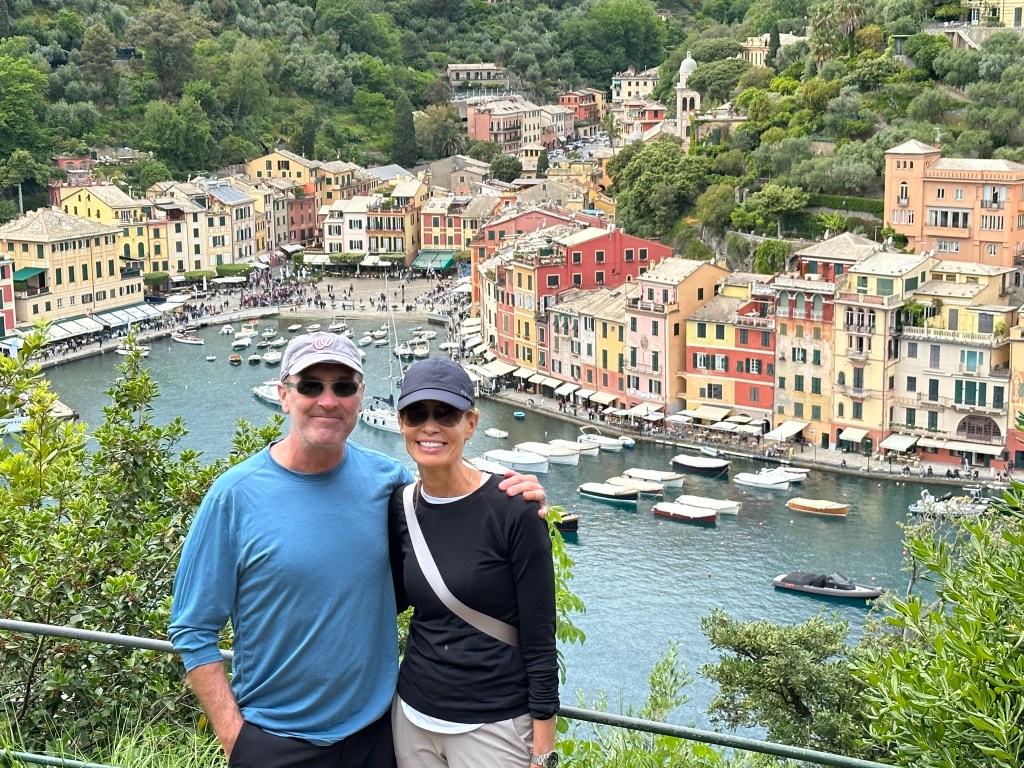
We continued our hiking habit in Portofino, hiking one day to the Abbey of San Fruttuoso:

And the next along the coastline to Santa Margherita Ligure:
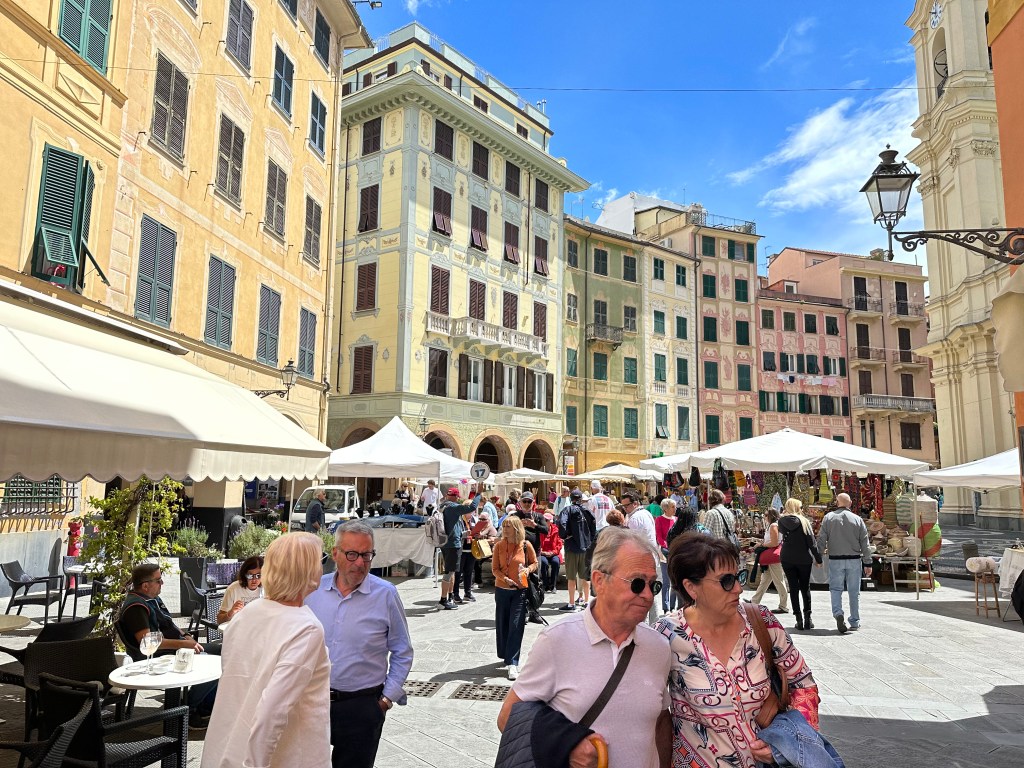
Portofino also was the jumping off point to scores and scores of Aperol spritzes consumed as aperitivos throughout the trip.

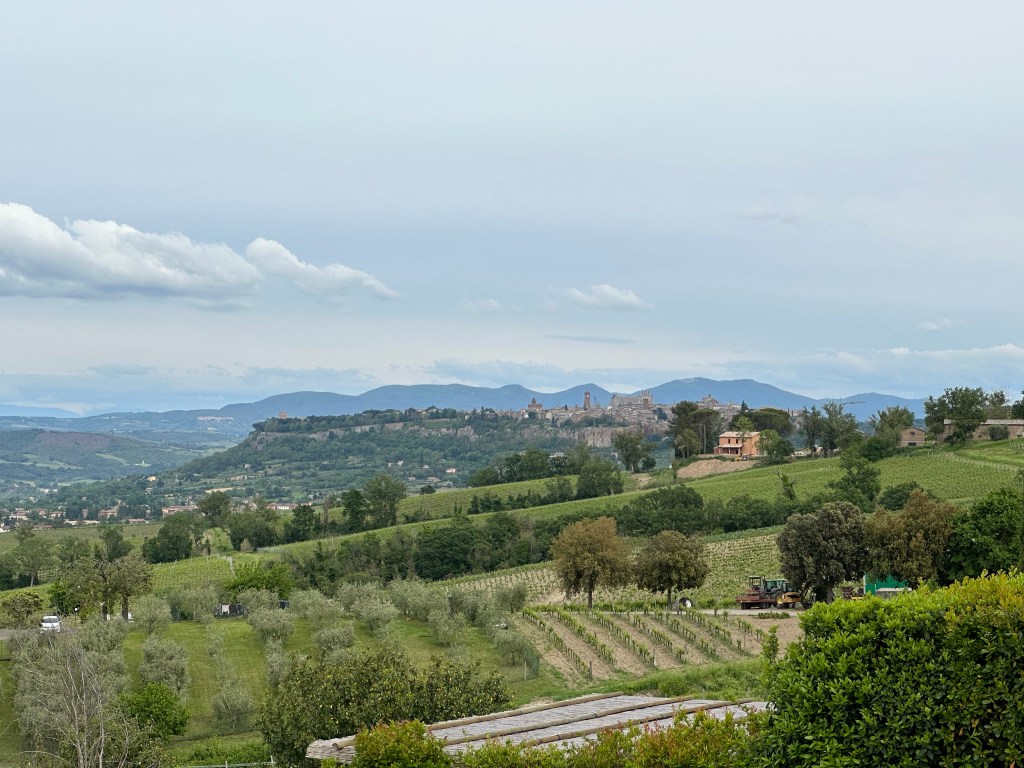
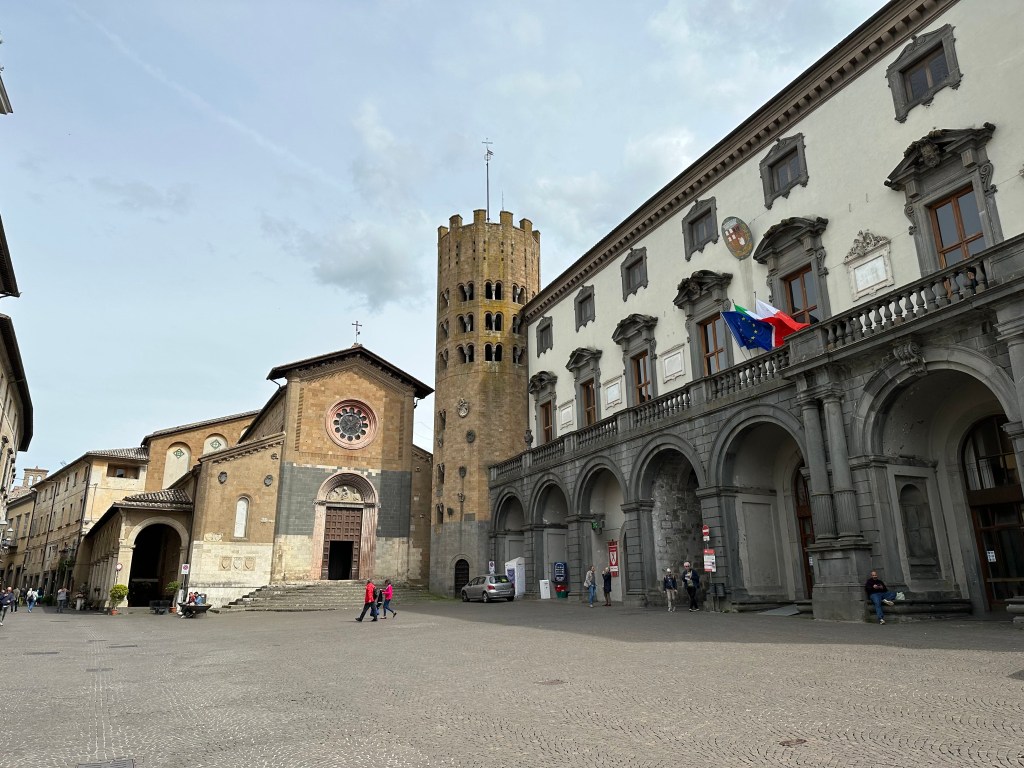
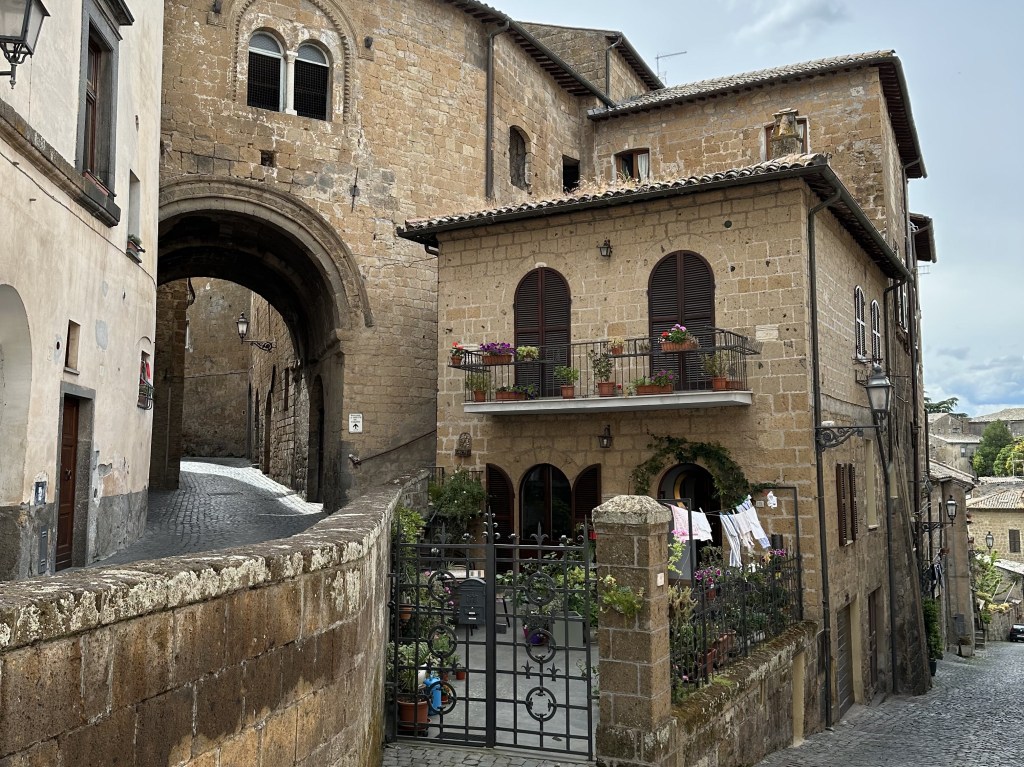
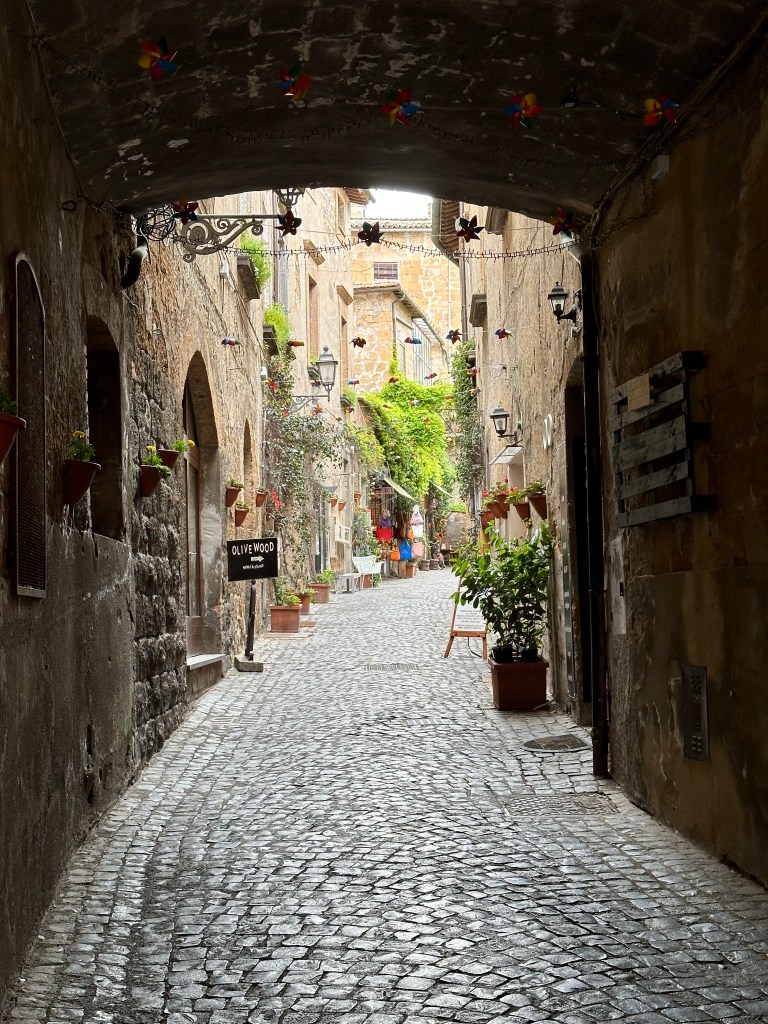
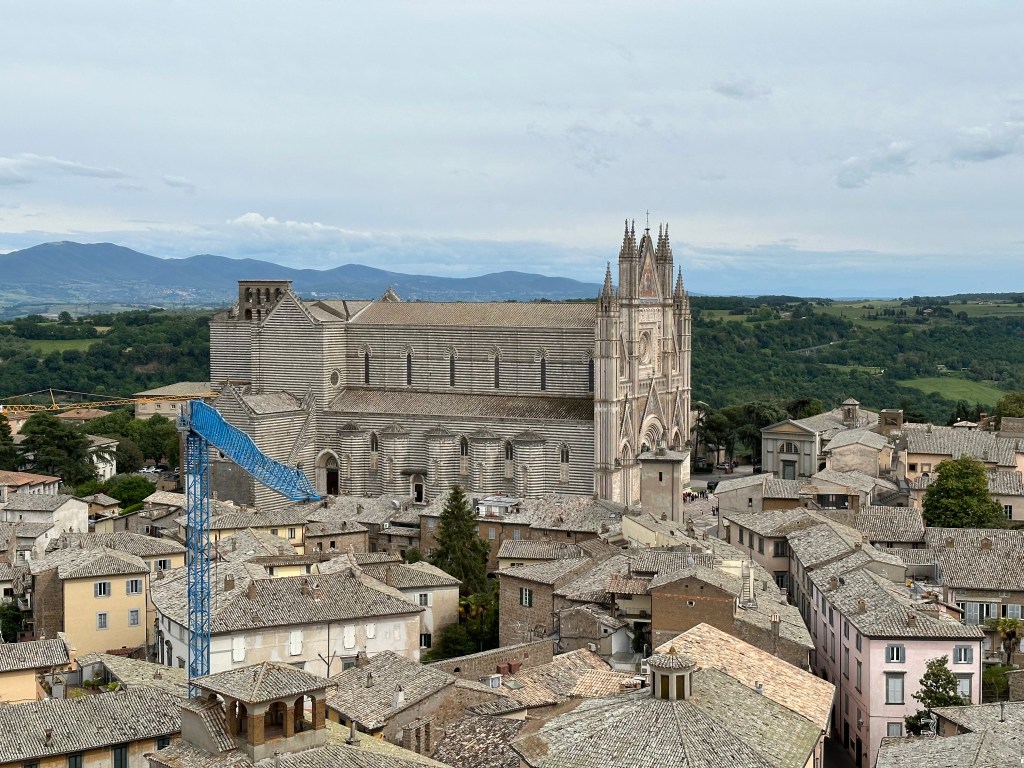
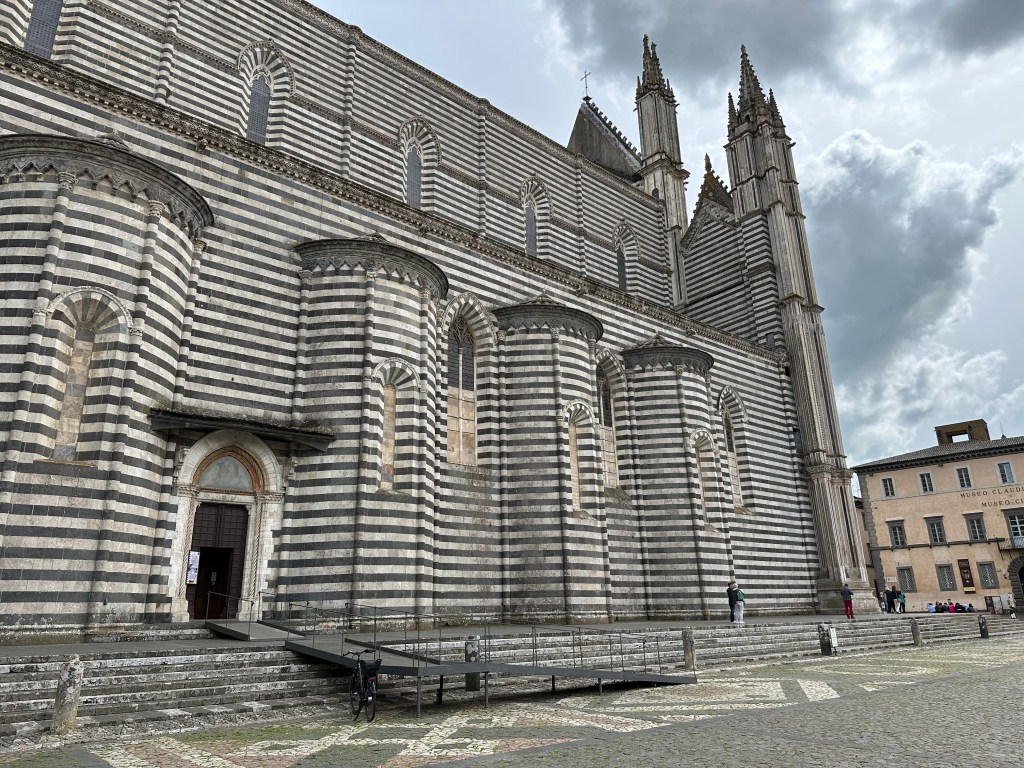
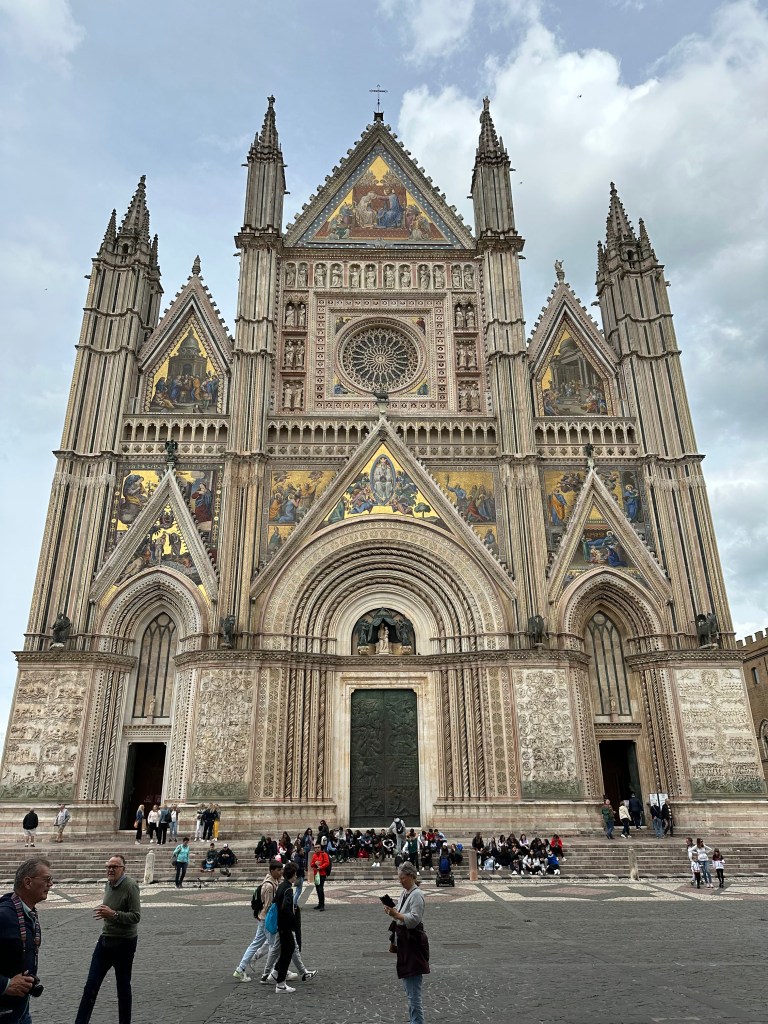
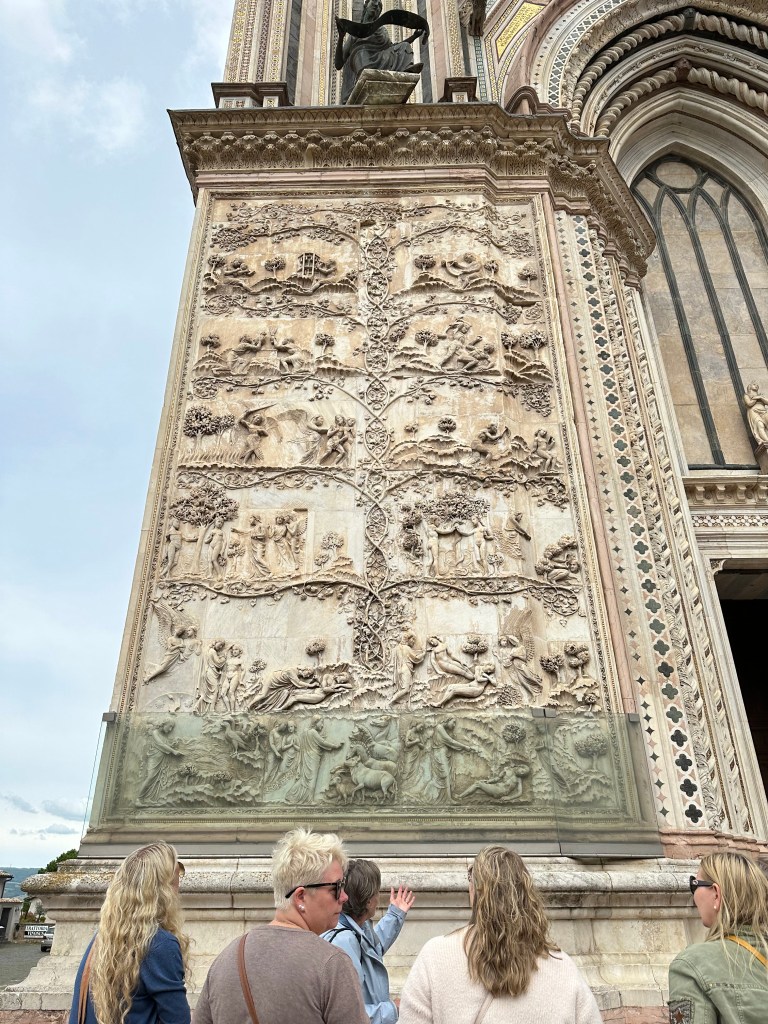
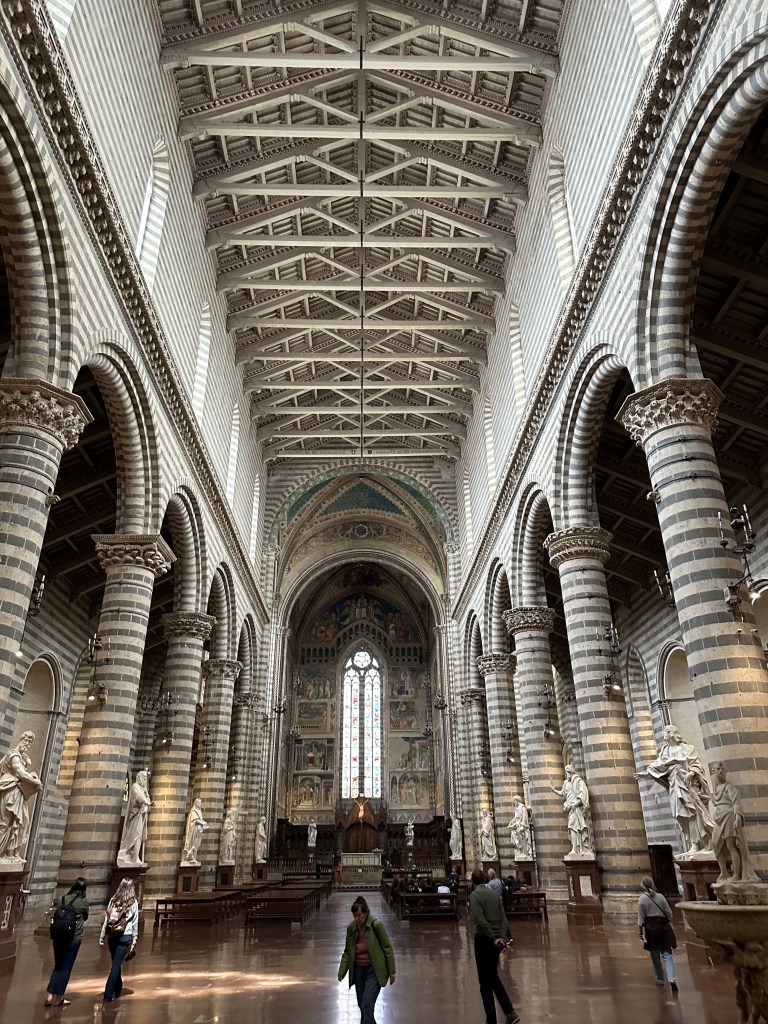
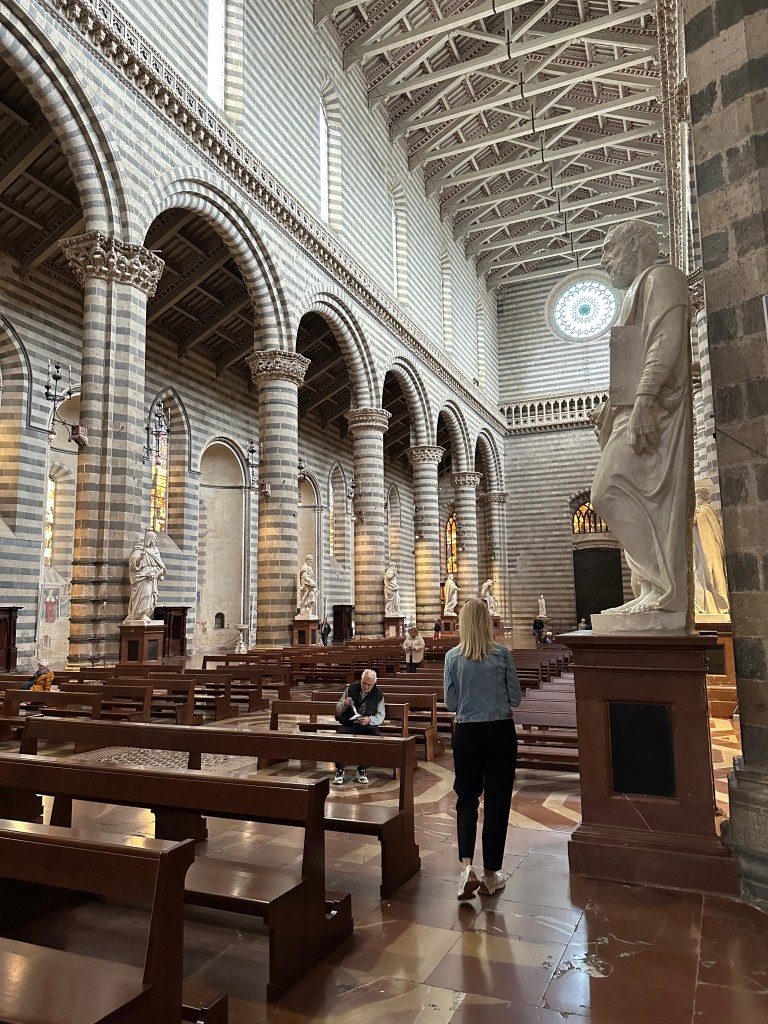
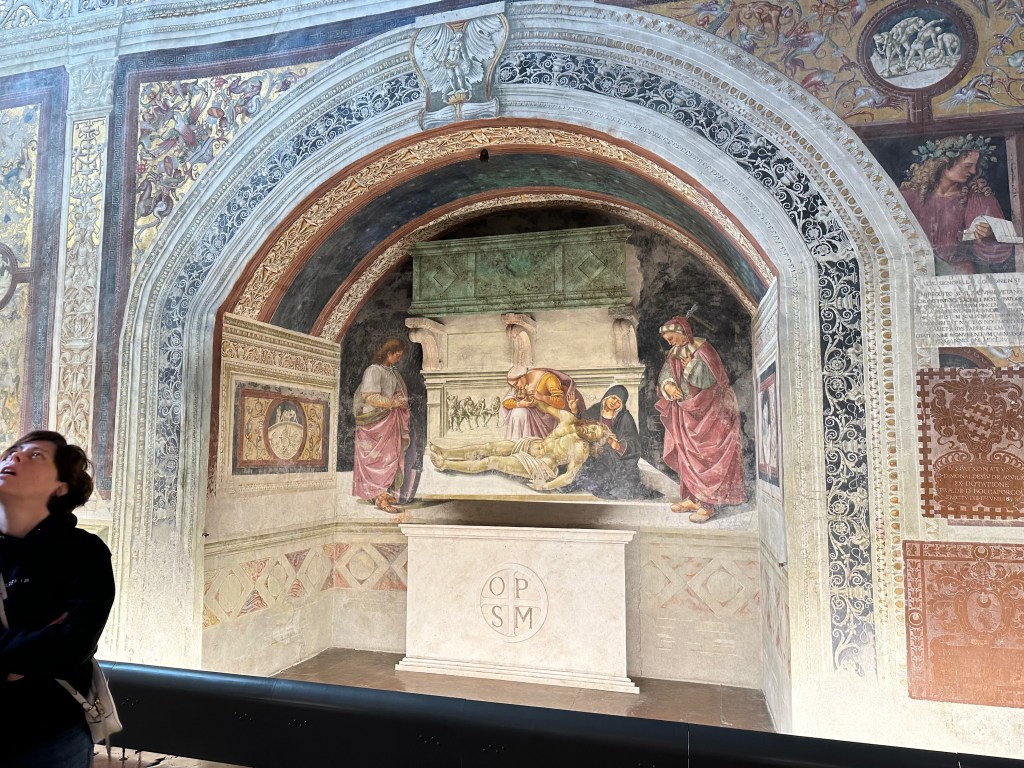
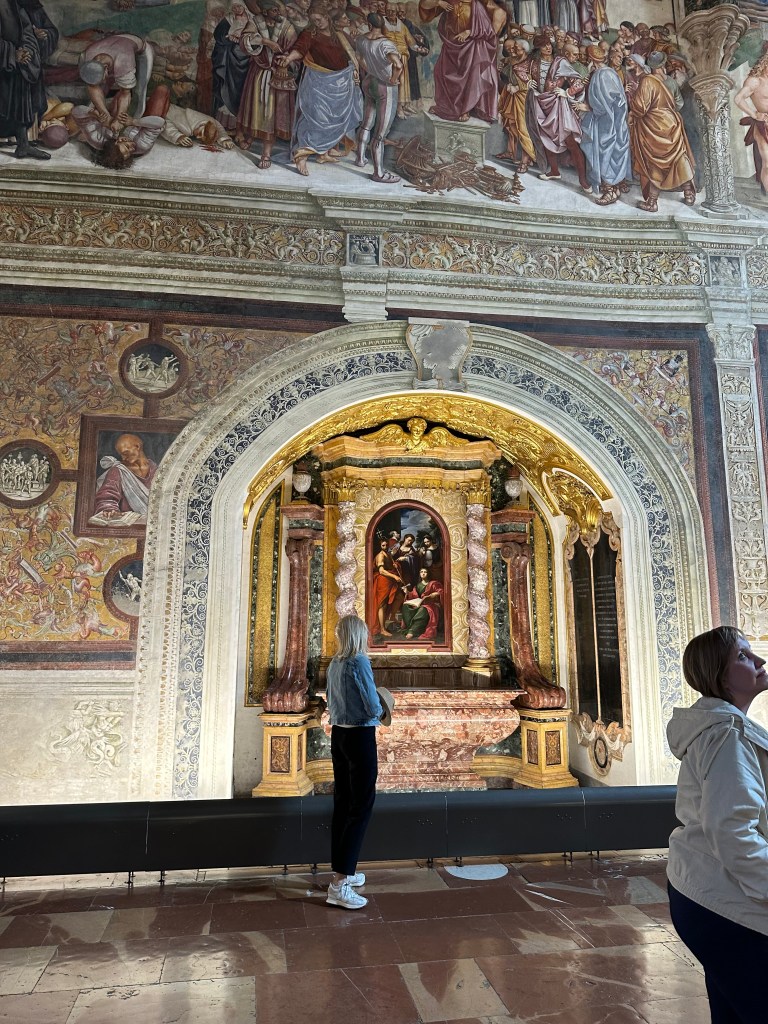
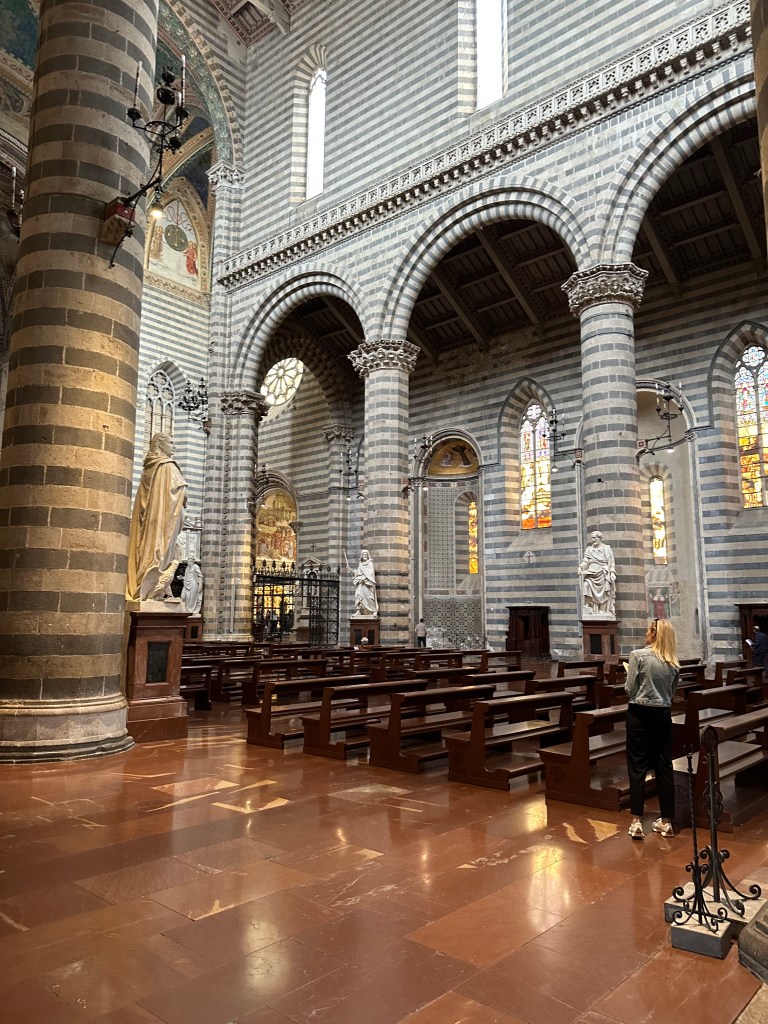
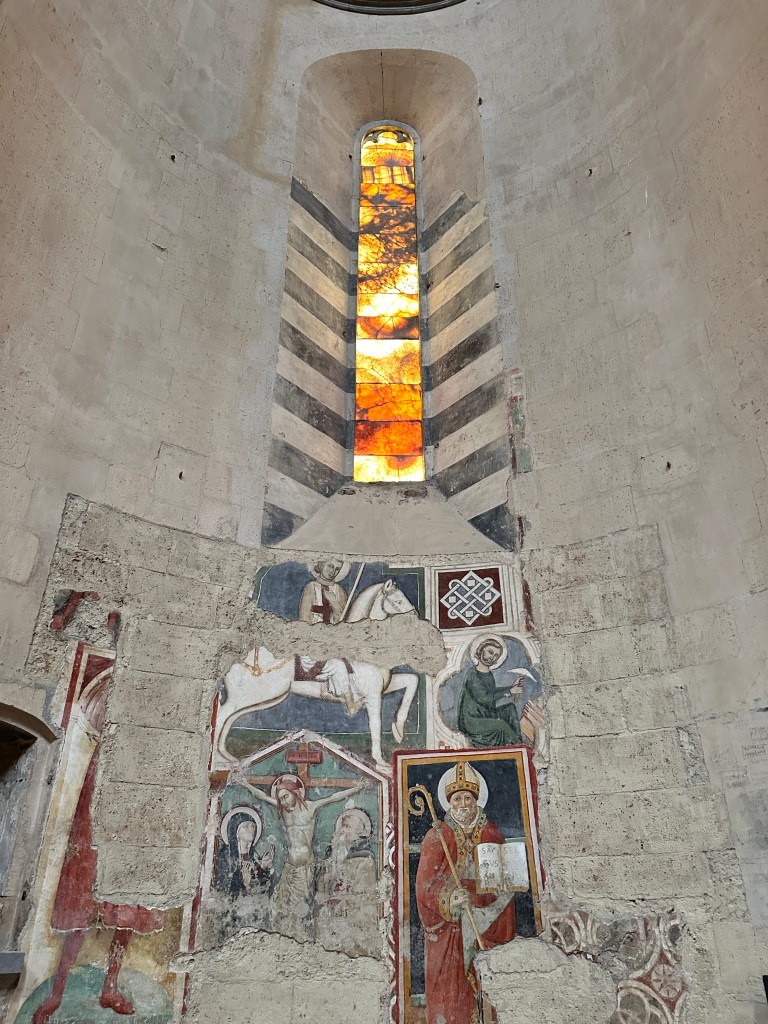
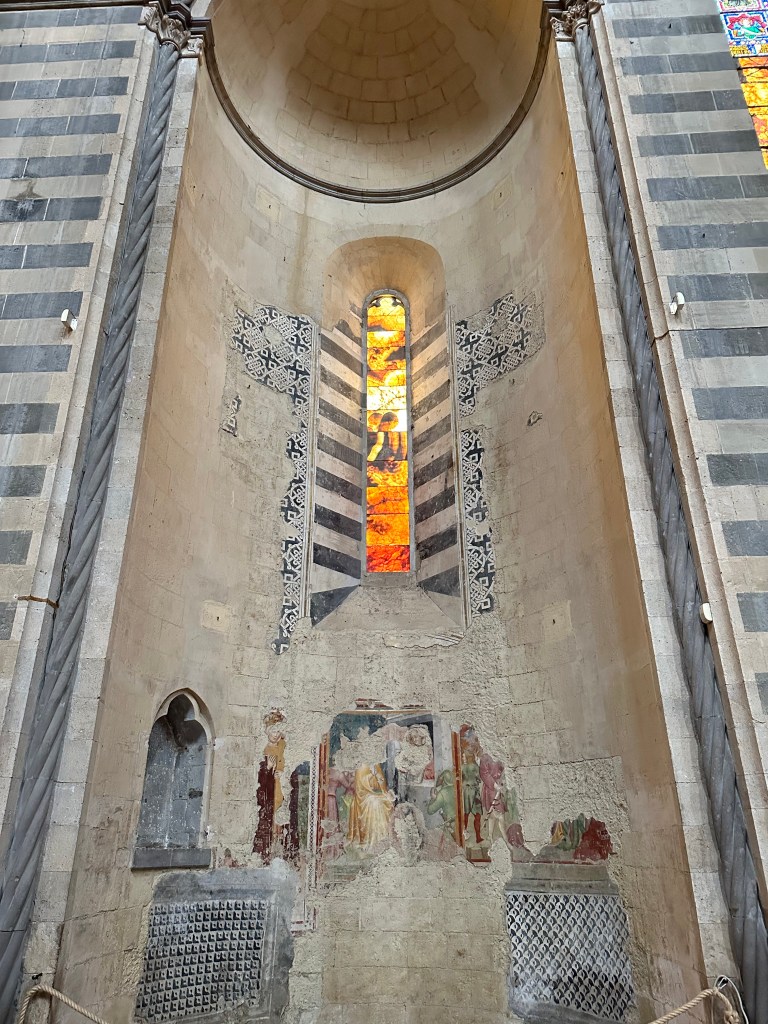
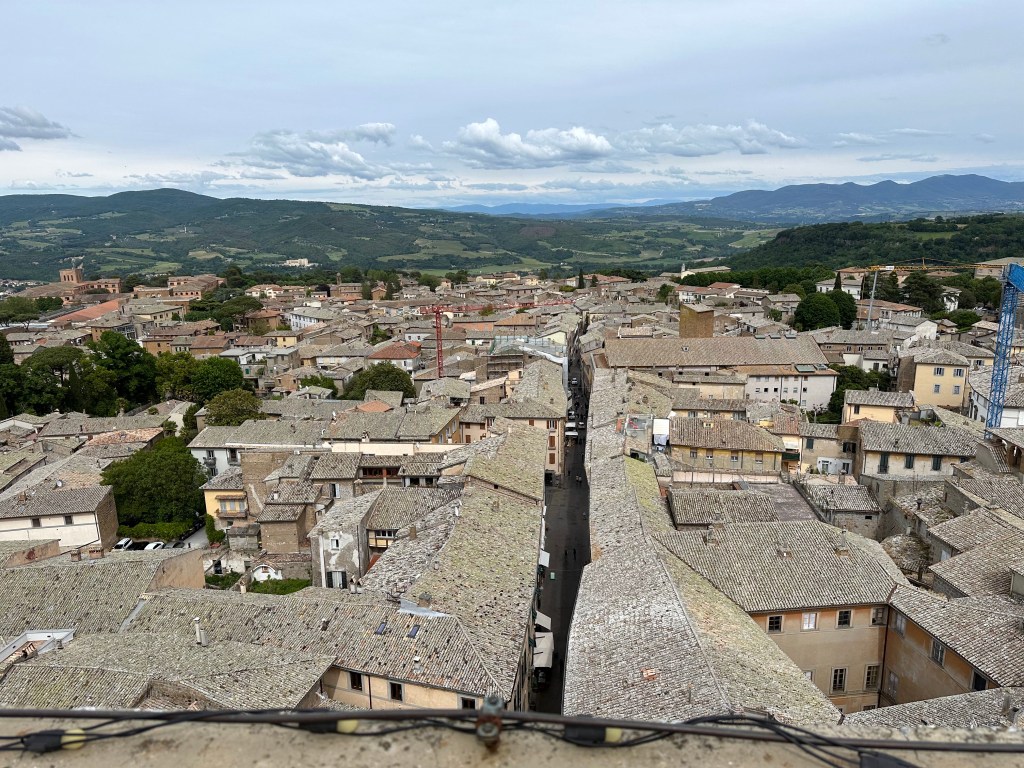
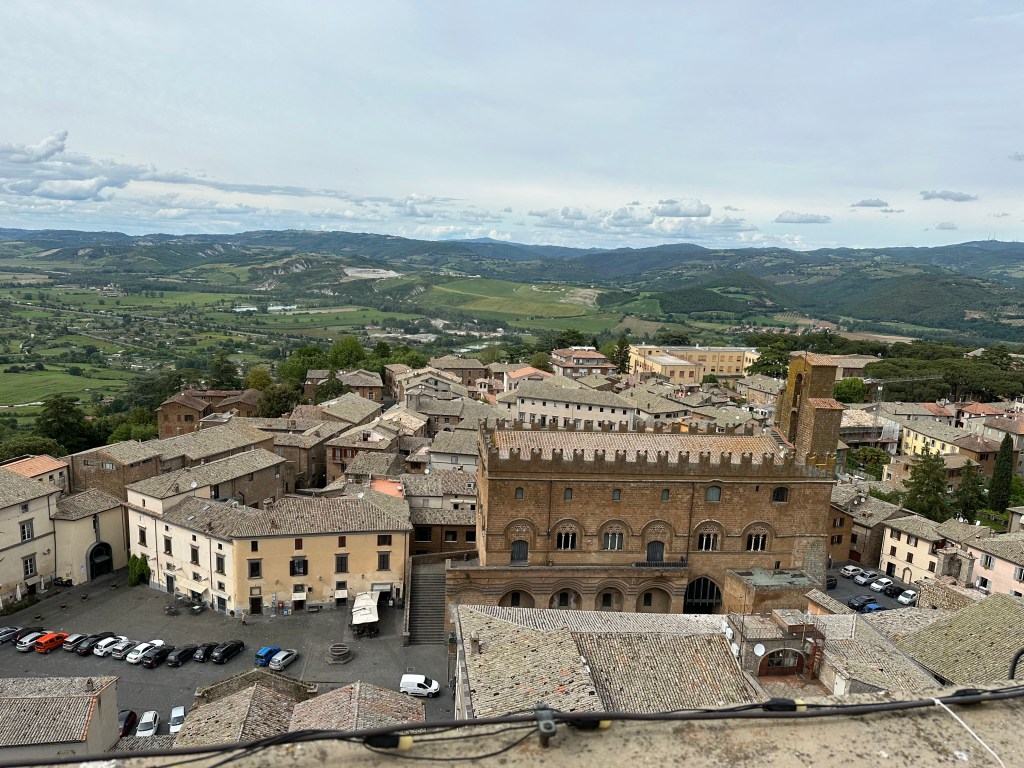
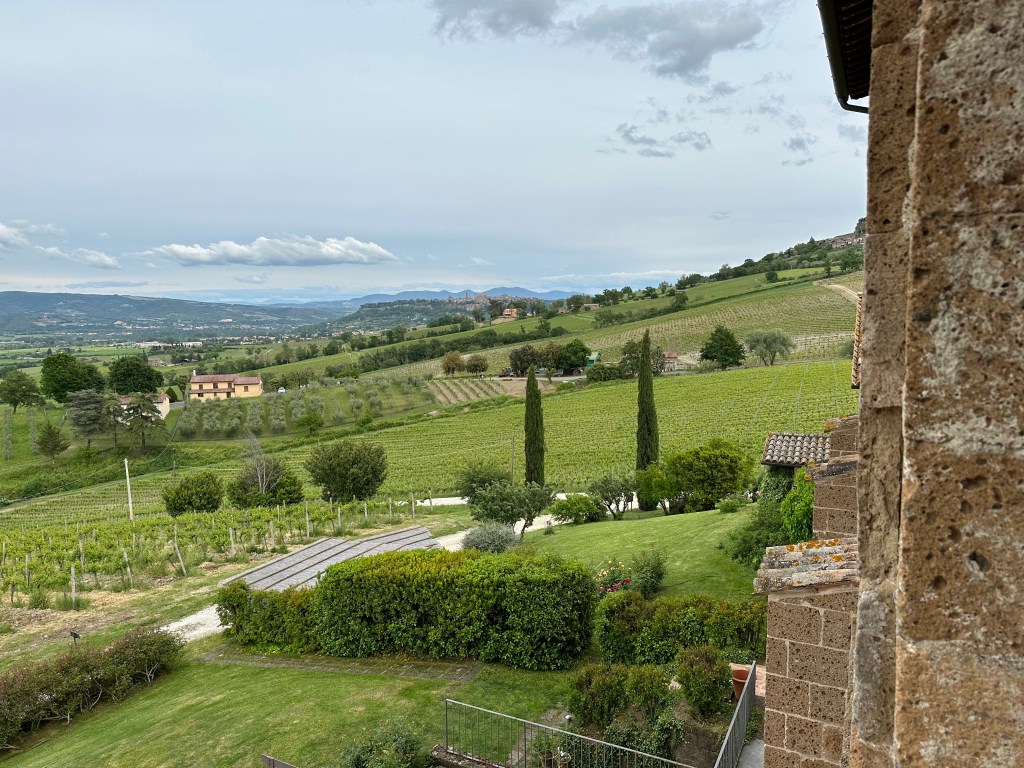
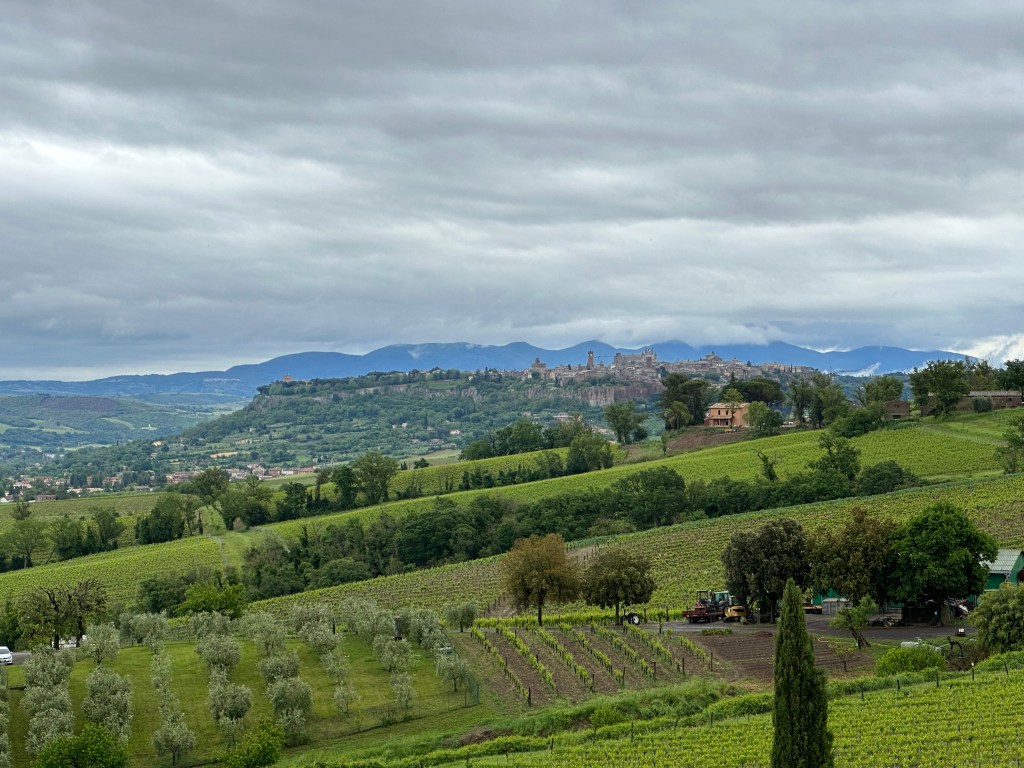
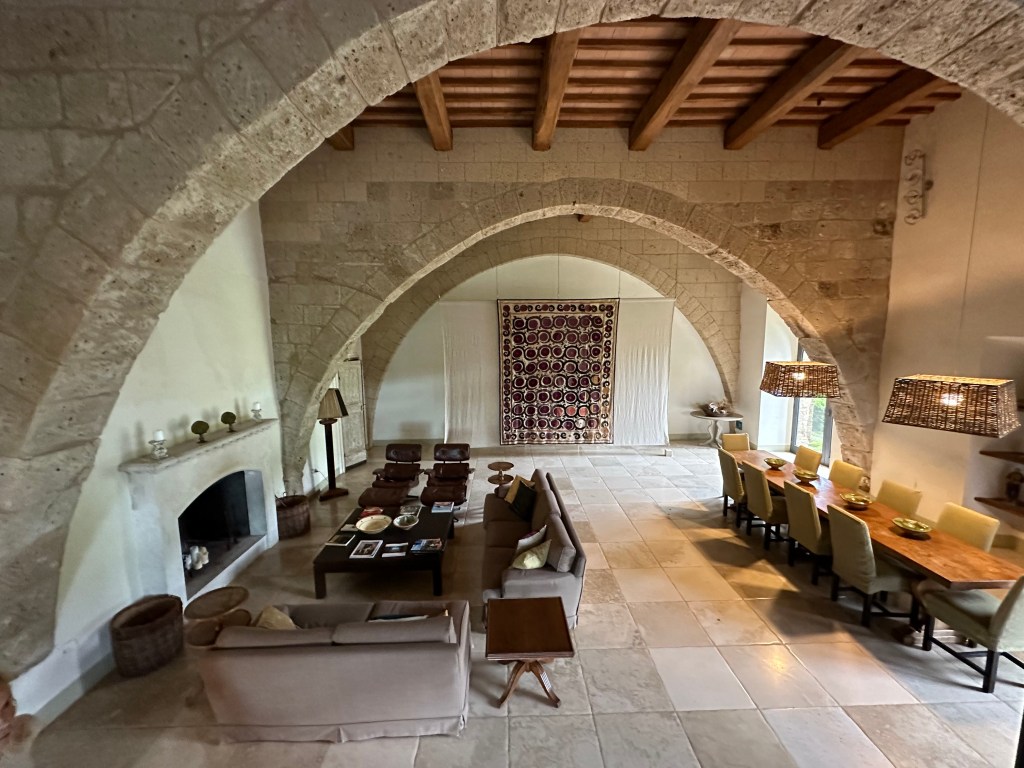
From the Ligurian coast, we drove south, back through Tuscany, and over the border to Umbria, and the medieval town of Orvietto for a stopover on our way to the Amalfi coast:

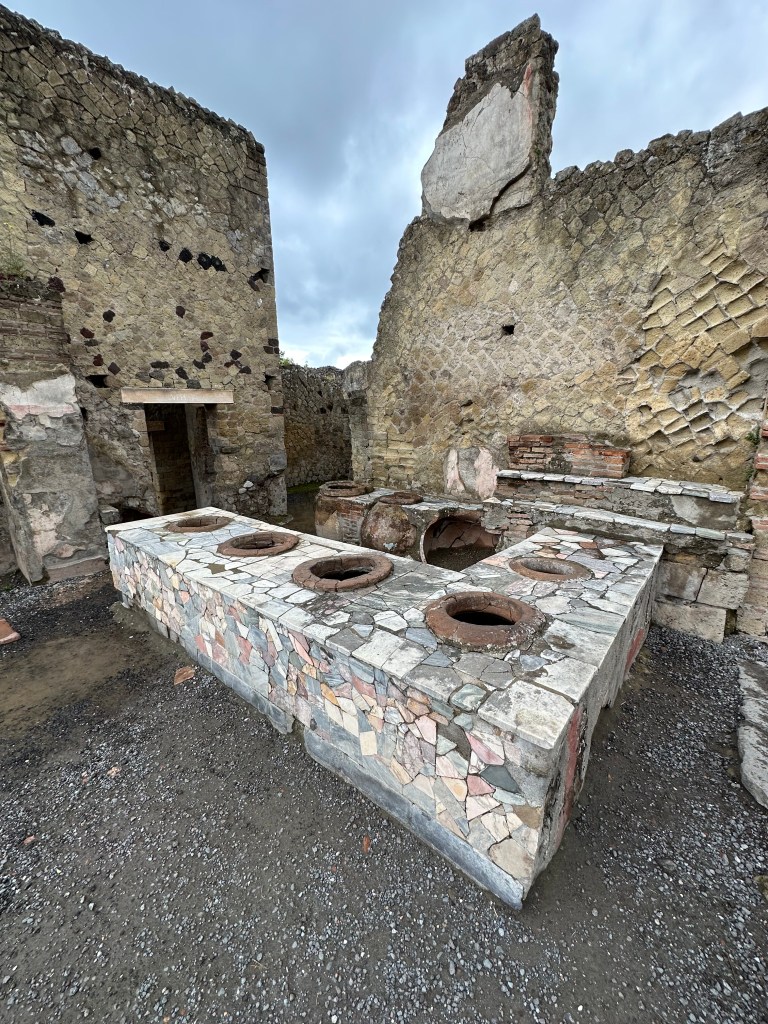
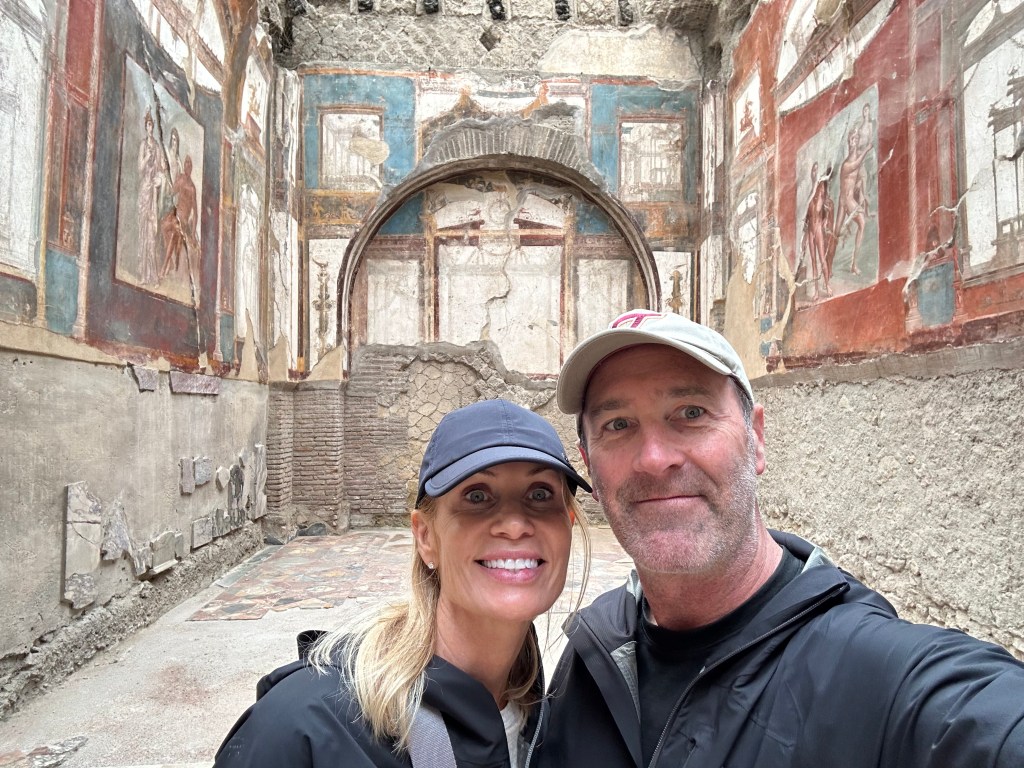
We continued south the next day, to Herculaneum. A smaller town than Pompeii, Herculaneum also was nonetheless lost due to the eruption of Mount Vesuvius in 79 AD, but it was covered in ash and pumice, rather than being flattened by rocky debris, preserving it much better, including numerous, intact, Roman snack bars:
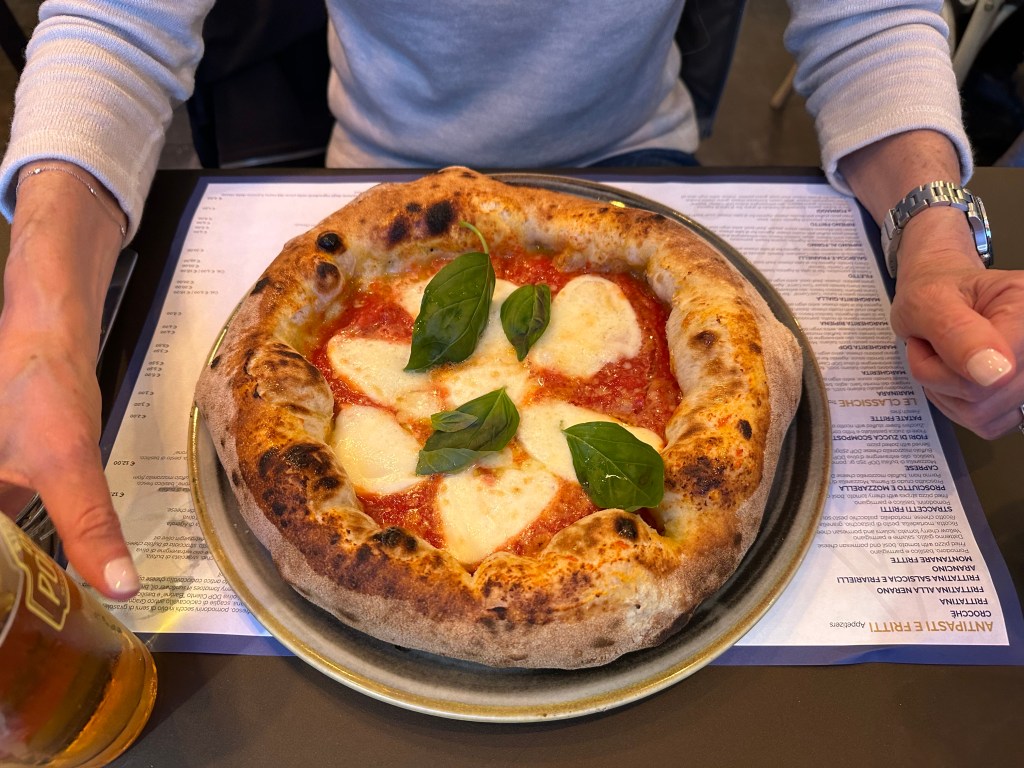
After a quick overnight in Naples (in which our only goal was to score some iconic Neapolitan pizza), we headed to Capri for a couple of days, leaving the car in Sorrento:
Our stay on Capri was one of the highlights of the trip – we will definitely be back. View over Capri Town from our place:

Hikes each day, including to the ruins of Emperor Tiberius’ villa:

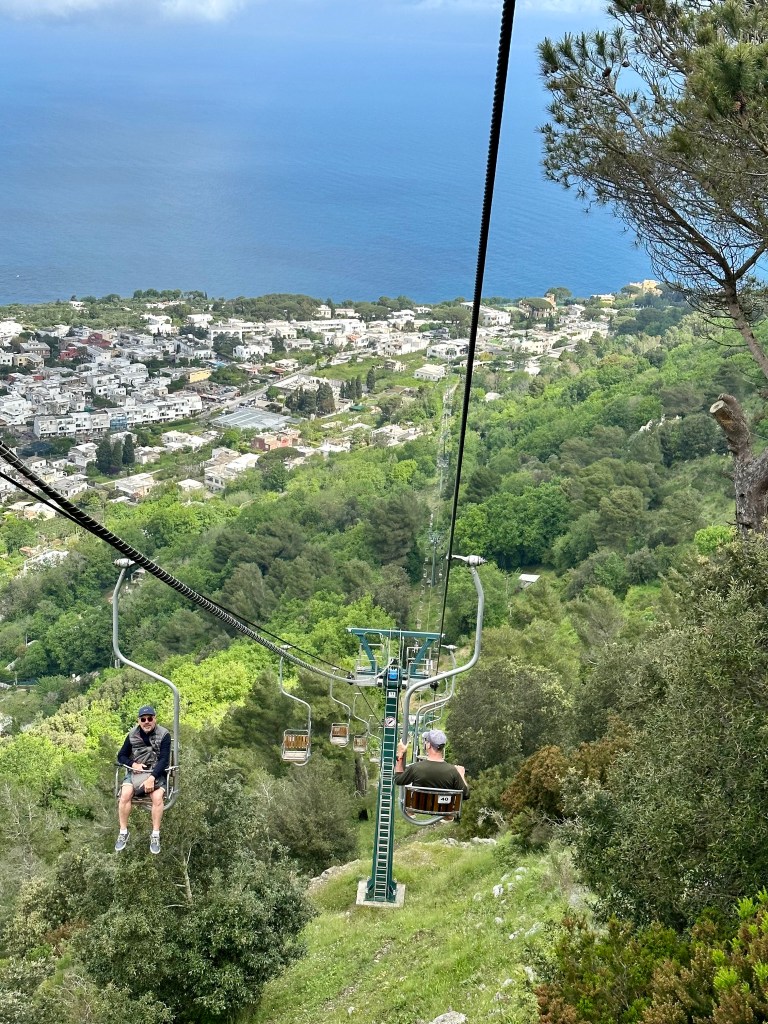
And a hike from Capri to Anacapri, followed by a hike up Monte Solaro because fog reduced visibility to zero for a ride up the cool little cable chairs:


But the weather cleared for a chair ride back down:
We ferried from Capri back to Sorrento, retrieved our car, and began the most harrowing aspect of our peninsular road trip: driving on the Amalfi coast. Seriously – really treacherous.
Luckily, relief was at hand in Praiano, our home for the next 3 days:

We headed a few miles down the road to Positano the next morning, only to retreat back to Praiano after a half a day there. A lot of travelers characterize Positano as the “Jewel in the Crown of the Amalfi Coast.” It’s not. Its a cruise ship packed full of tourists and shitty shops that happens be be tumbling down a cliff in a picturesque way.

We enjoyed Positano much more from a distance, content at our place in Praiano:

The next morning we hiked the Path of the Gods from Praiano to Positano:

Once the path paralleled the coastline, the going was a little technical, but not a big problem. The challenge to the 5-mile-long Path of the Gods hike was the >2000 feet of incline and decline, almost all of which is straight up from Praiano and then straight down 1700 steps into Positano.

Praiano also hosted the first of three Michelin-starred gastronomic dinners of the trip. Plus, a ridiculous perch over the Tyrrhenian Sea on the Amalfi Coast:

From the Amalfi Coast, we drove southeast for a couple of days in Matera, Italy’s oldest city:
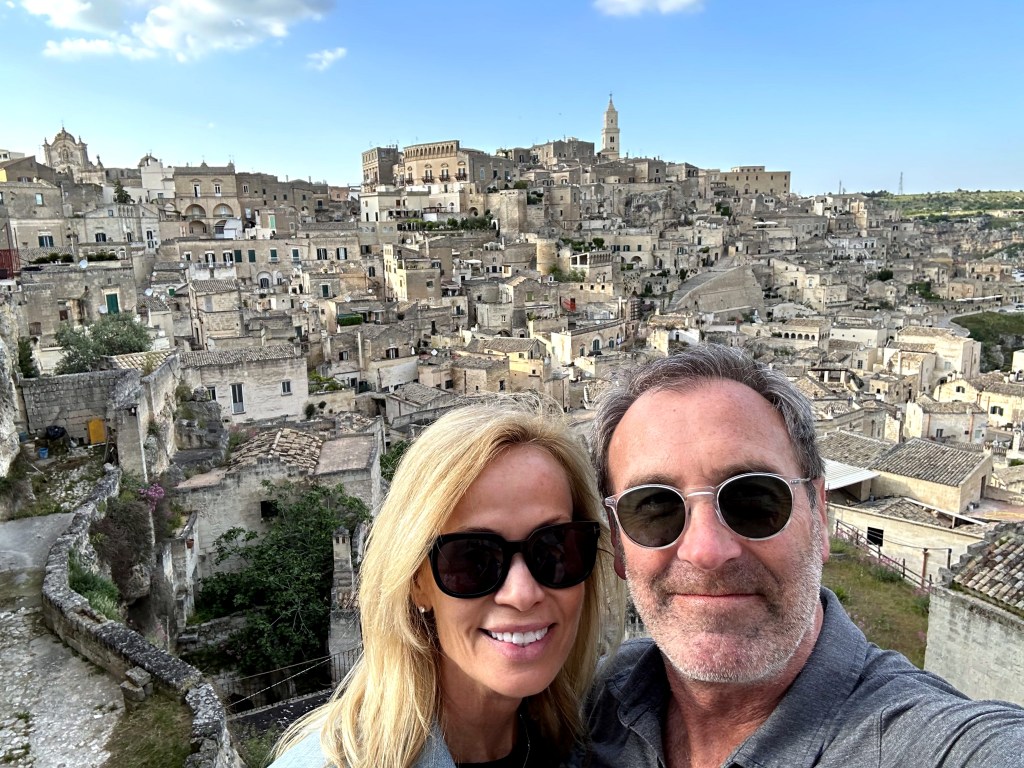
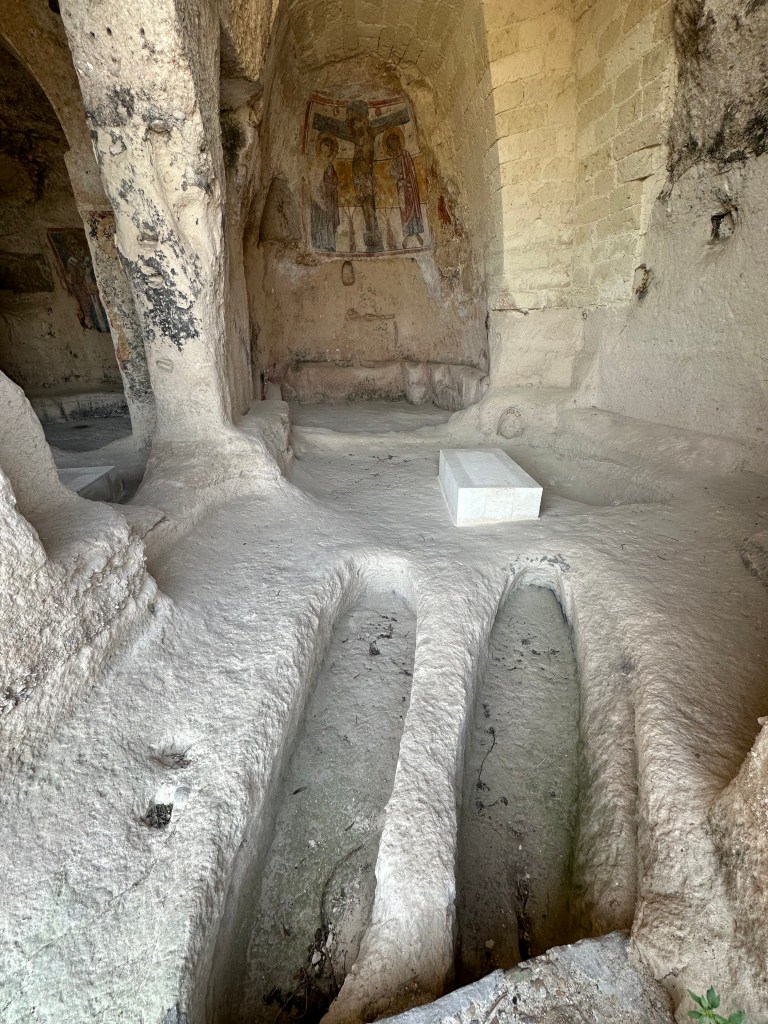
Similar to our experience in Capadocica in Turkey, Matera sported tons of centuries-old troglodite homes, churches, and tombs:
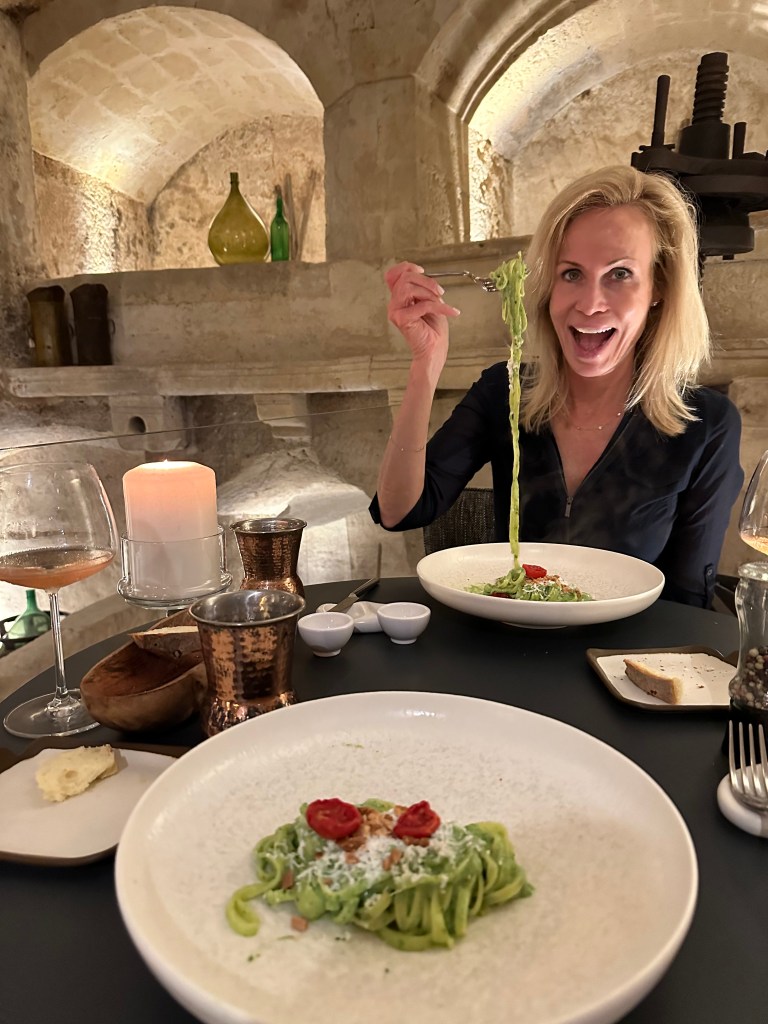
And cave restaurants, too:
Our last night on the Italian peninsula:

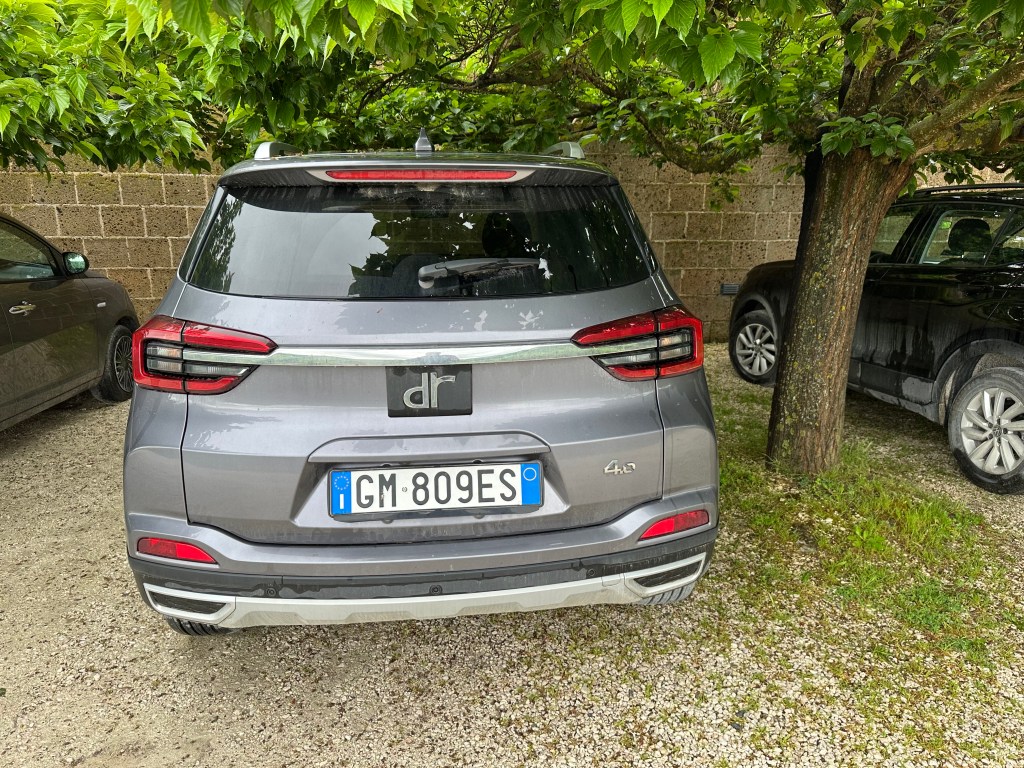
The next morning, we surrendered our ride for the past 3 weeks (a dr, a brand none of us – not even KJQ – had heard of before), and flew to the island of Sardinia:
Sardinian Break
Between the end of one 3-week road trip, and the start of the next, we built into the itinerary a little down time on the the Costa Rei on the southeastern coast of Sardinia.
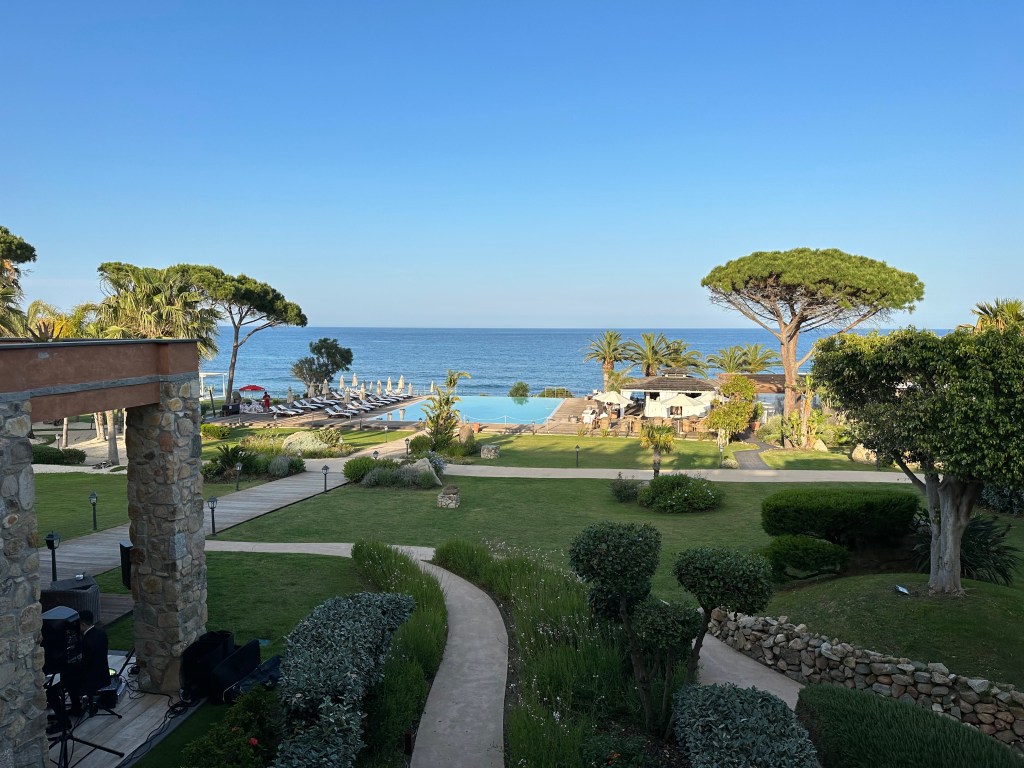
Not a lot to report – a few miles of walking each morning along the beach:

And some killer seafood, including and in particular, Sardinian oysters. (We thought these were the best we had every tasted until we later encountered even better ones in Normandy.)

Then an overnight ferry to Palermo, when we’d start another road trip leg across Sicily.
Sicily Road Trip
The surprisingly vibrant and enjoyable city of Palermo – very different from the gritty and sketchy image that we had prior to our time there:

And the first of many cool encounters with Arabo-Norman architecture in Sicily at the city’s 12-century Church of San Cataldo:

And our introduction to the ubiquity of pistachios on everything in Sicily:

And the most horrific of the catacombs of our entire journey below Palermo’s Capuchin Monastery:

And a cool, 3-hour street food tour, featuring a spleen sandwich (4/10: would not try again):

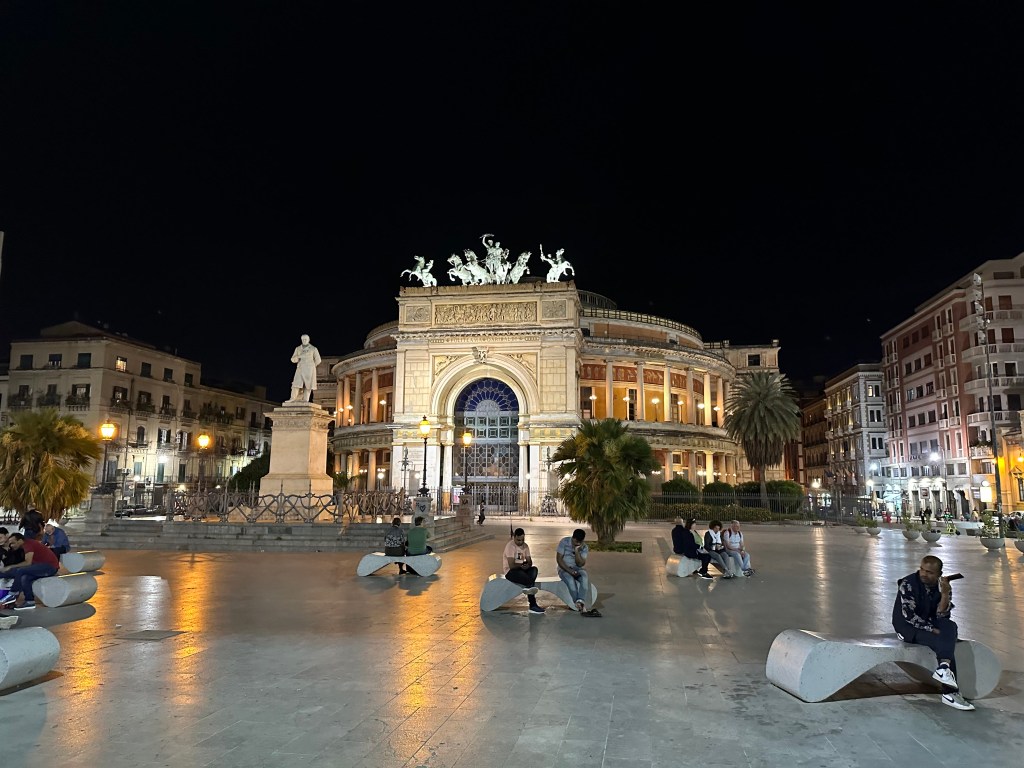
Our last evening in Palermo:
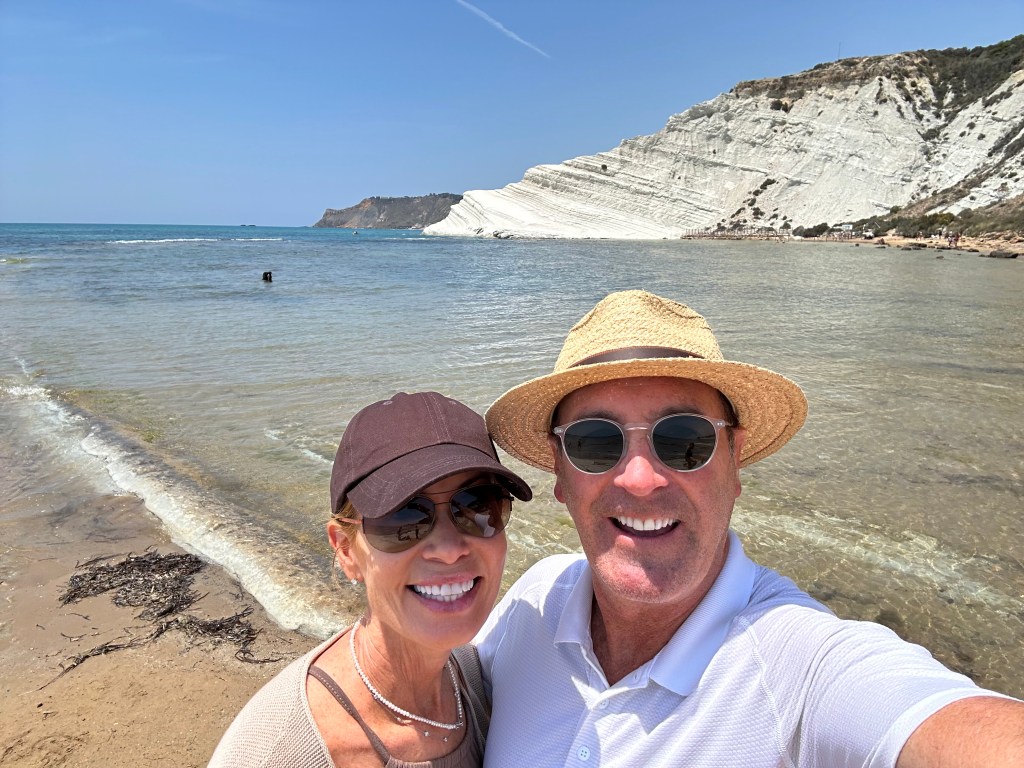
We drove from Palermo to the south-center of the island, to Agrigento, home to the most intact Doric Greek temples in the world, dating to 400 BC:


And spent a little time on the coast while we were there:
And continued the recommended daily doses of Aperol:
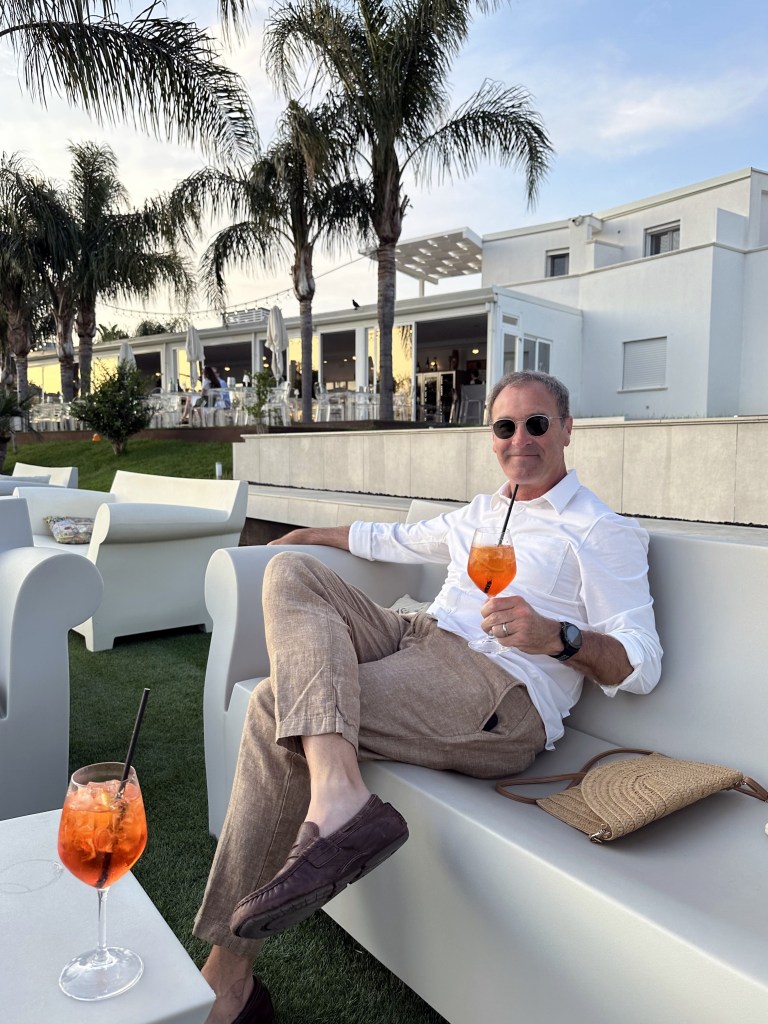
Final evening in Agrigento, with a view to the Temple of Juno and the sea:

From Agrigento, we headed due east to a cluster of Baroque towns, so called because they were all destroyed by an earthquake in 1796 and were all rebuilt in the Baroque style du jour. We based ourselves in the town of Modica for 6 days:


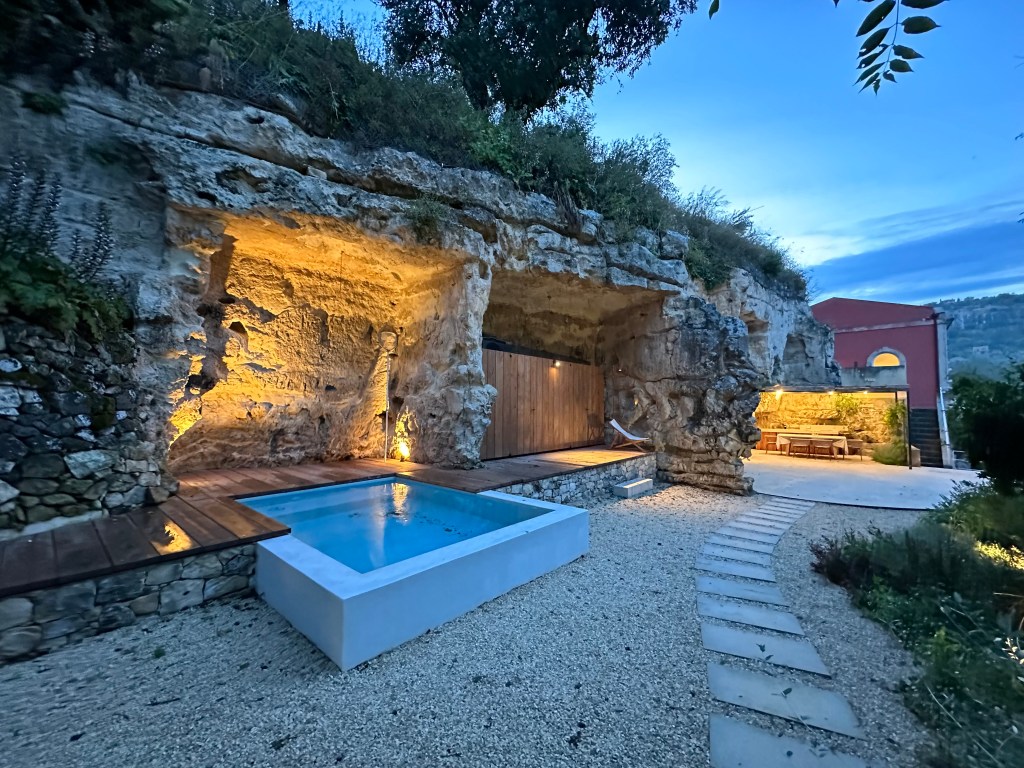
Which sported a pretty cool AirB&B that was built into a cliff:
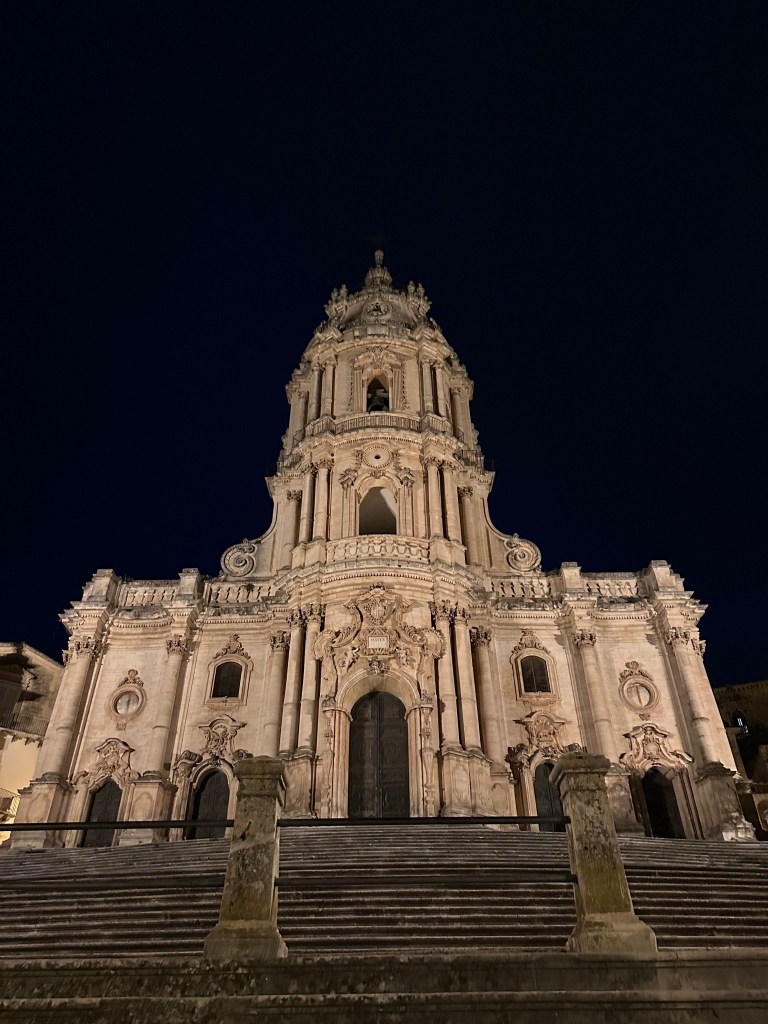
The Baroque Church of San Giorgo in the nearby town of Ragusa Ibla:

The main piazza (such as it is) of the Baroque town of Scicli:

And the spectacularly picturesque Baroque town of Noto:

Modica also was just 20 minutes from the beach, so we started two of our mornings during our stay with some pretty great beach hikes along the Sicilian coast:

Second gastronomic experience on the trip at the tiny Michelin-starred hole in the wall of Accursio, featuring, among other things, Sicily’s orange wine (the color, not the fruit):

Modica’s Baroque Church of San Giorgio (same name as in Ragusa, same style, just different town) on our last night:
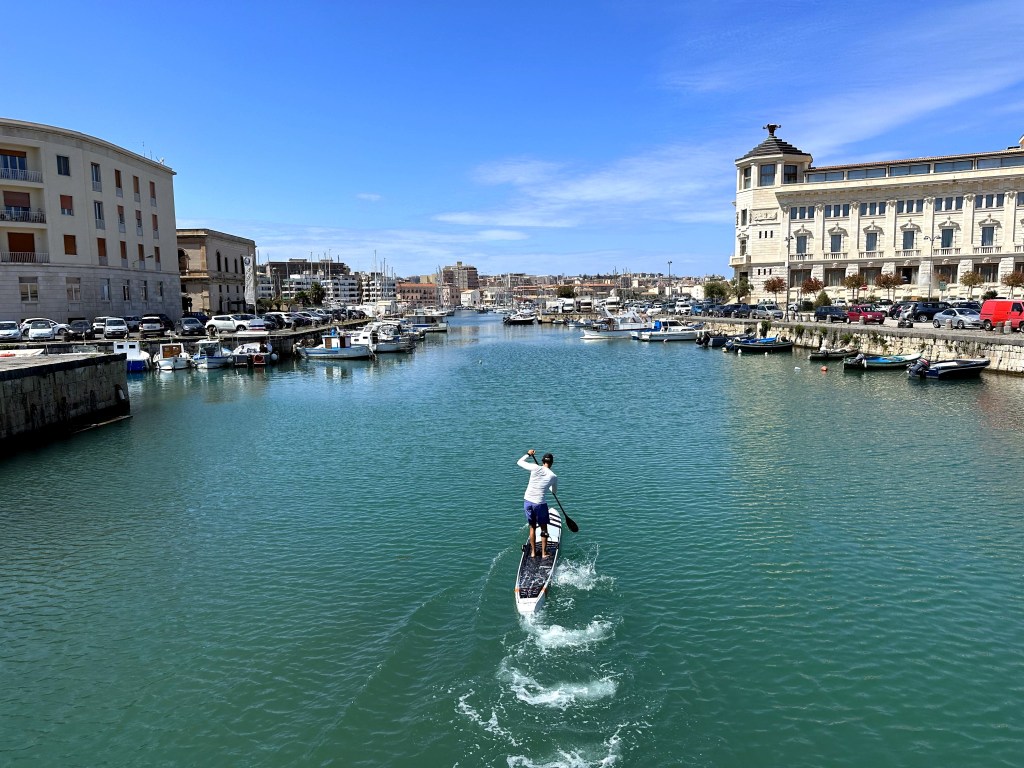
The ancient town / island of Syracuse served as our final stop in the south of Sicily – also another city we liked so much that we may return:
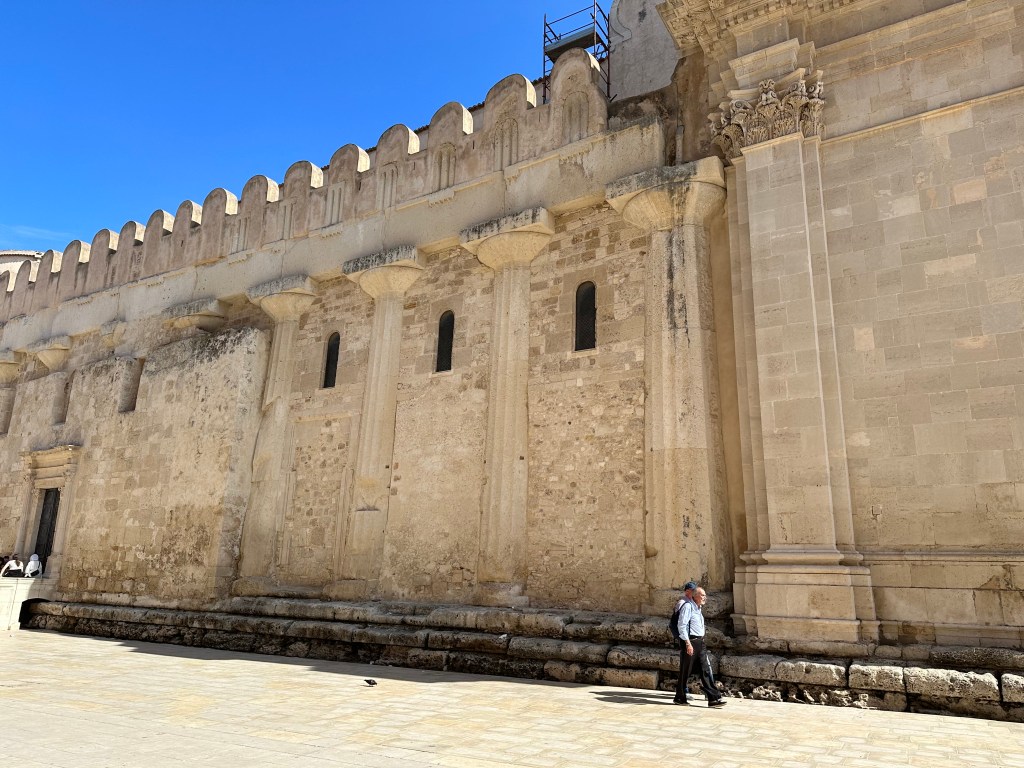
Sicily’s most captivating characteristic, at least to WolfeStreetTravel, must be the convergence and layers upon layers of different cultures that have dominated the island. We witnessed this with the mélange of Arab and Norman architectural styles in churches in Palermo and Monreal, for example. But nowhere was it more evident than Siracusa’s cathedral, which began as a Greek temple to Athena in 480 BC. In our travels, we’ve seen tons of churches build on top of pagan temples, replacing them. That was how they operated. Good site, but obliterate the offending structure. Not so in Siracusa. In the 6th century AD, the Byzantines just filled in the spaces between the Doric columns and incorporated the temple into their new church. Then the Normans added to it in the 11th century w crenellations reflective of their military-style churches. AND IT’S ALL STILL STANDING. You can see the ~2500-year-old Doric columns and capitals inside and outside the church (which was hosting a wedding while we were there, reinforcing how Sicilians simply live through their amazing history).
Another case in point, the Syracuse’s abandoned, 1st-century Roman amphitheater. . .
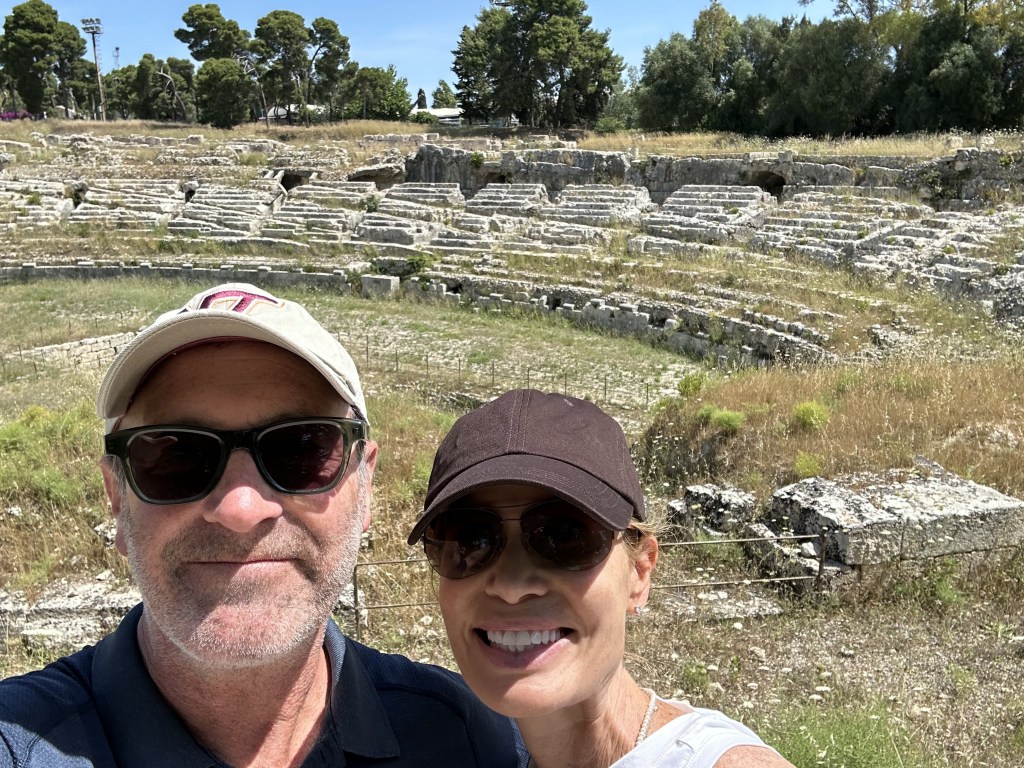
But just up a path lies the city’s even older, 5th-century BC Greek amphitheater, which is still in use today:

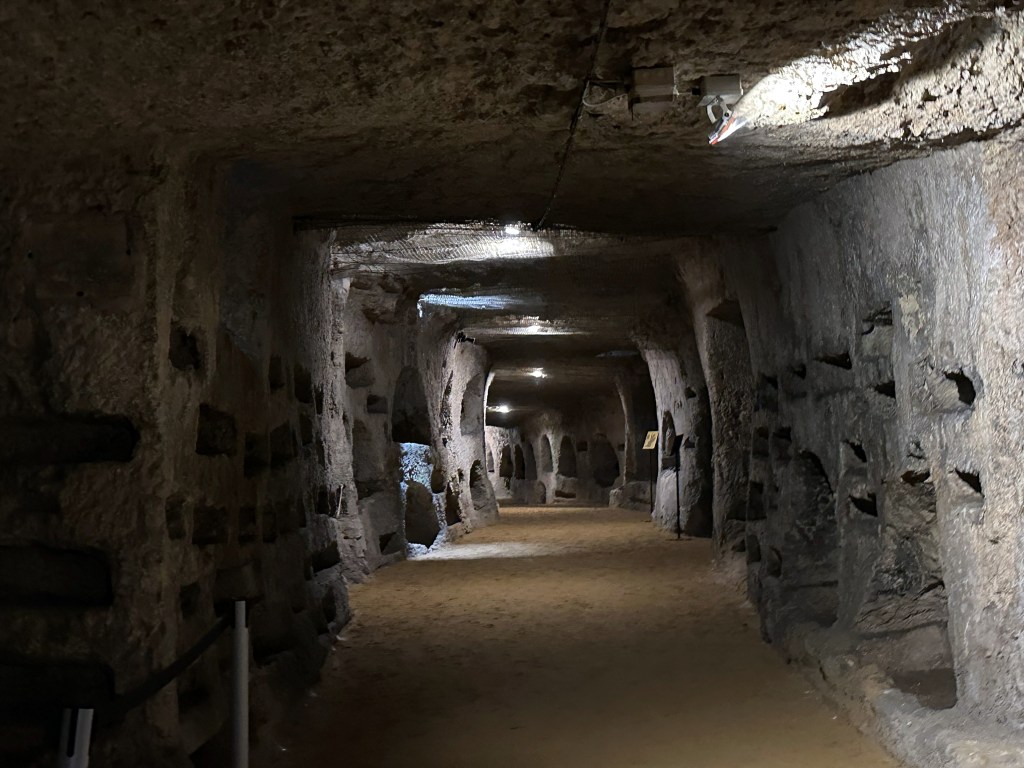
And, of course, we checked out the local catacombs:
Imbibing our daily recommeneded allowance of Aperol spritzes at one of the cooler little roadside cafes on Syracuse’s ancient Ortigia island old town:

And then north! To hike Sicily’s still-active Mount Etna. Twice.

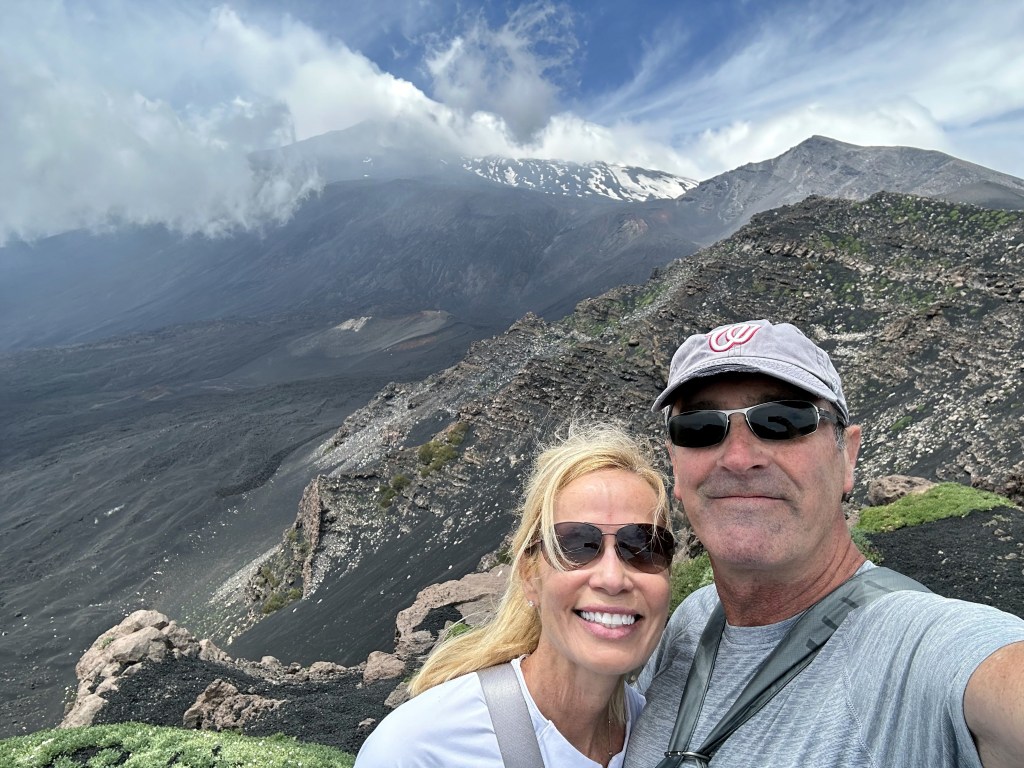
The first day’s hike, from the caldera’s southern approach was okay, but not particularly thrilling. The next day, we hiked up from the eastern approach. Holy shit – absolutely stunning. First, a legit old lava tube:

And then, at the top, along the rim of the old caldera, a view of the still active peak, plus smoky evidence in the old caldera of still active volcanic evolution:
And finally, to the northeast(ish) of Sicily, and the now hyperpopular town of Taormina, setting for White Lotus Season 2 (although we didn’t know this when we planned the trip).
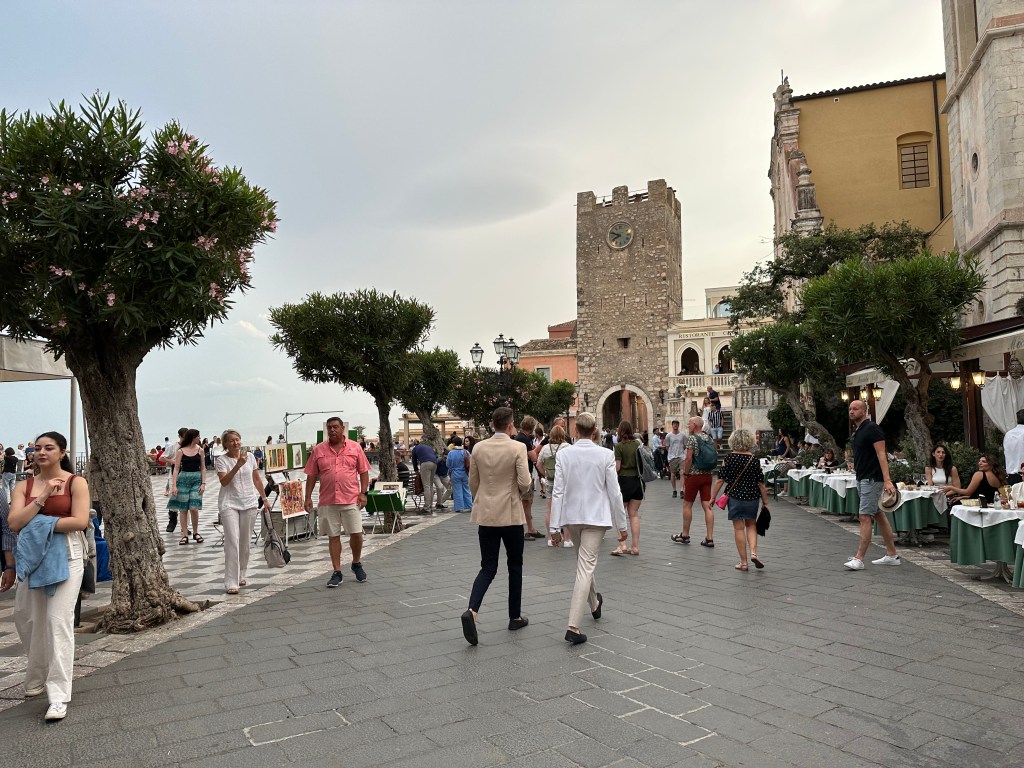
We challenge anyone to locate a more stunning, atmospheric setting for a classical theater than the one in Taormina. It began as a 3rd-century-BC Greek theater, then 1st-century-BC Roman theater, then 2nd-century-AD Roman theater, then 18th- 19th- and 20th-century restorations. Pretty freaking cool. And, like Syracuse’s Greek theater, still in use today.

Our digs for 5 days, perched above IsolaBella. Wins the prize for best AirB&B pool on the trip.
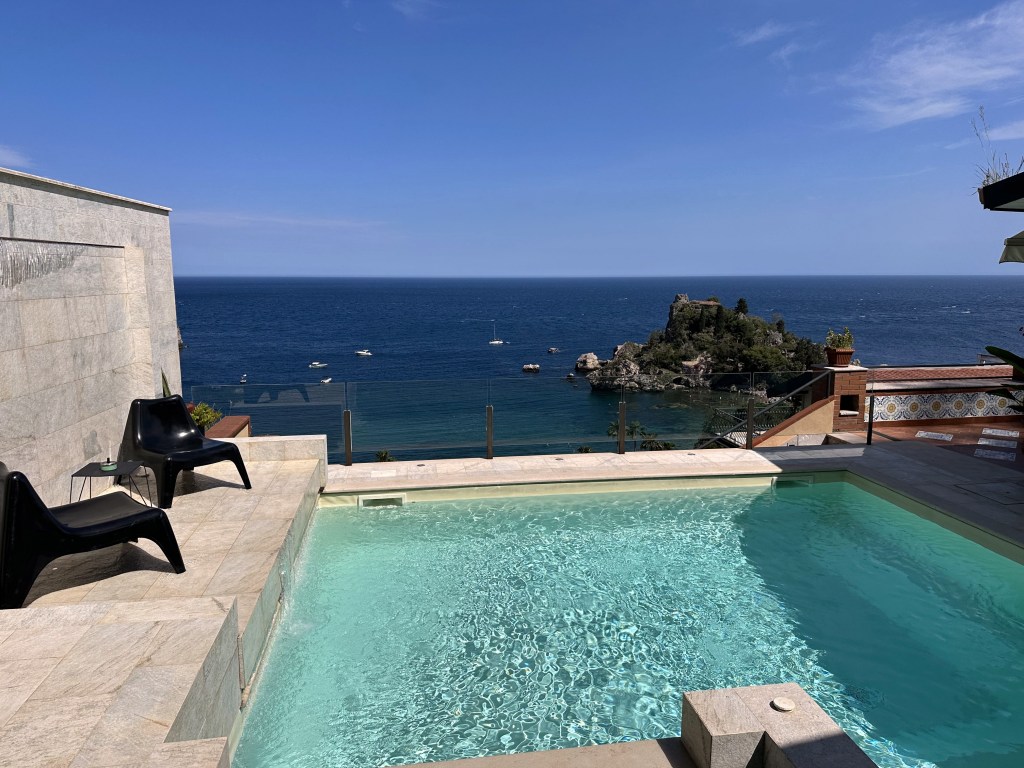
Last night in Taormina:

The next day, we flew from Sicily to Malta, dropping off our trusty Citroen C3 – the second time we’ve had one of these for a European road trip. It looks like a sneaker with the unnecessary side effects, but this car grows on you!

Malta Break
And then, Malta! Country no. 71 for WolfeStreetTravel.

Downtown Valletta, the tiny country’s capital, with its unique wooden balcony boxes (gallarija):

And on the heels of the best AirB&B pool in Taormina, the best hotel pool at our digs in Sanglea built into an old fortress and overlooking Malta’s Grand Harbour:

A side trip to Mdina, Malta’s golden limestone old capital:
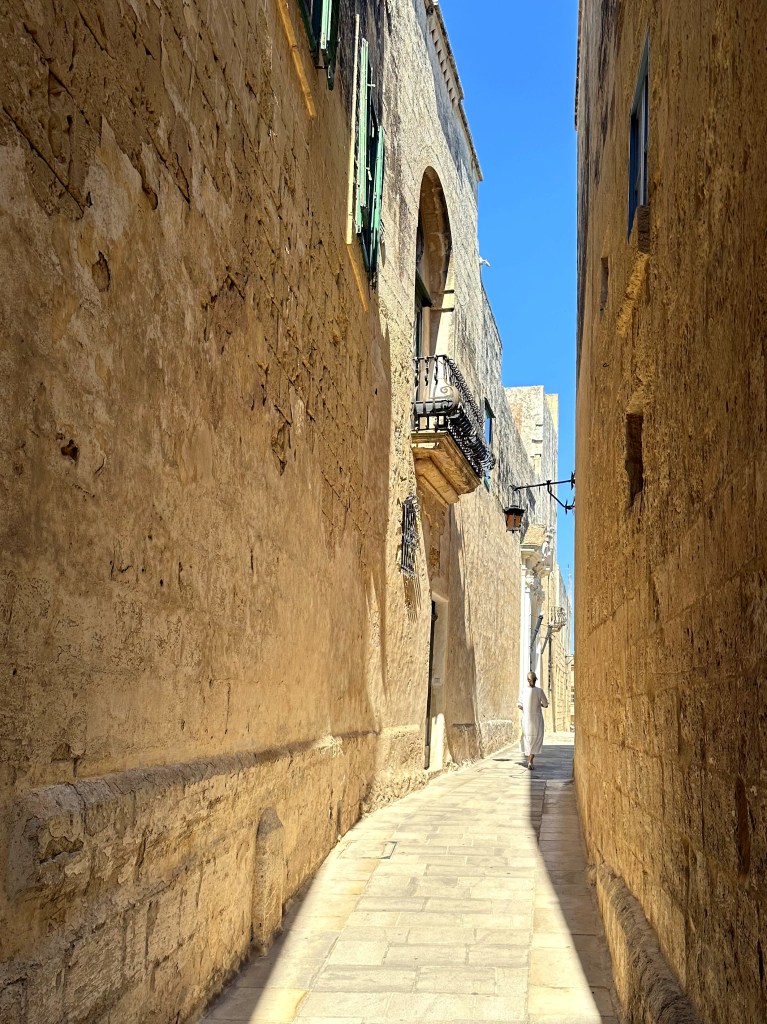
Last night in Malta along the harbor:

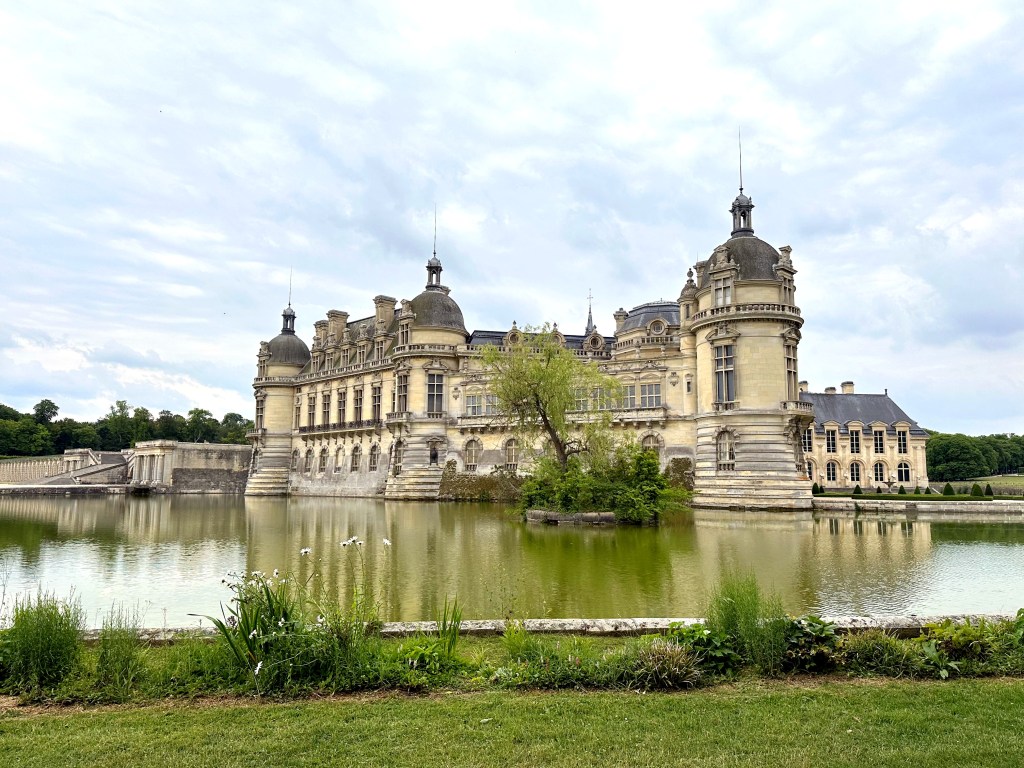
To avoid potential flight issues to reach our next destination in Normandy, where we had a hard start, we flew to France a day early, and stopped over in Chantilly, home to Chateau de Chantilly. No delay, but good call – cool place.
Normandy Biking
The next leg of the our extended foray to Europe entailed our latest biking trip – this time with Thomas and Lisa, in celebration of their wedding (albeit delayed for 2 years).

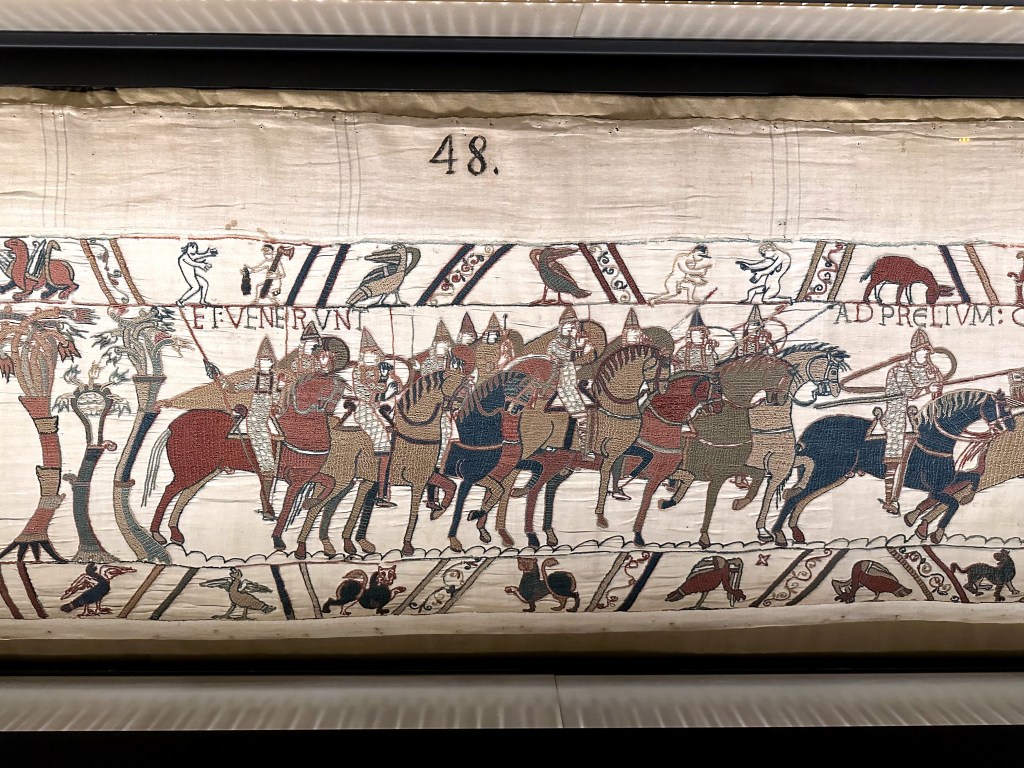
The five stages of the bike trip spanned two invasions. The first in 1066, by William the Conqueror conquering England from Normandy, as depicted in the 11th-century Bayeux Tapestry, as seen in Bayeux, our starting town:
The next almost a thousand years later, this time and invasion of Normandy in 1944. On our first day we visited three bunkers in a German battery on Gold Beach:

And on the same ride, the first of our dozens and dozens of dozen oysters ordered in Normandy:

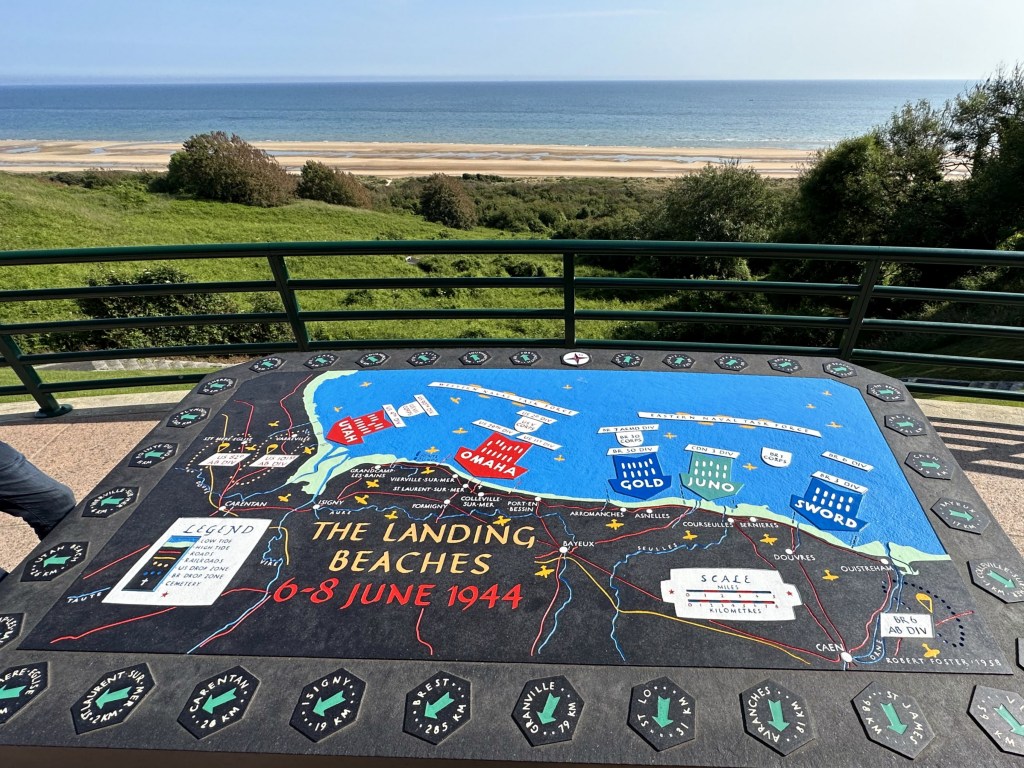
Invasion overview at the American Cemetary at Omaha Beach:
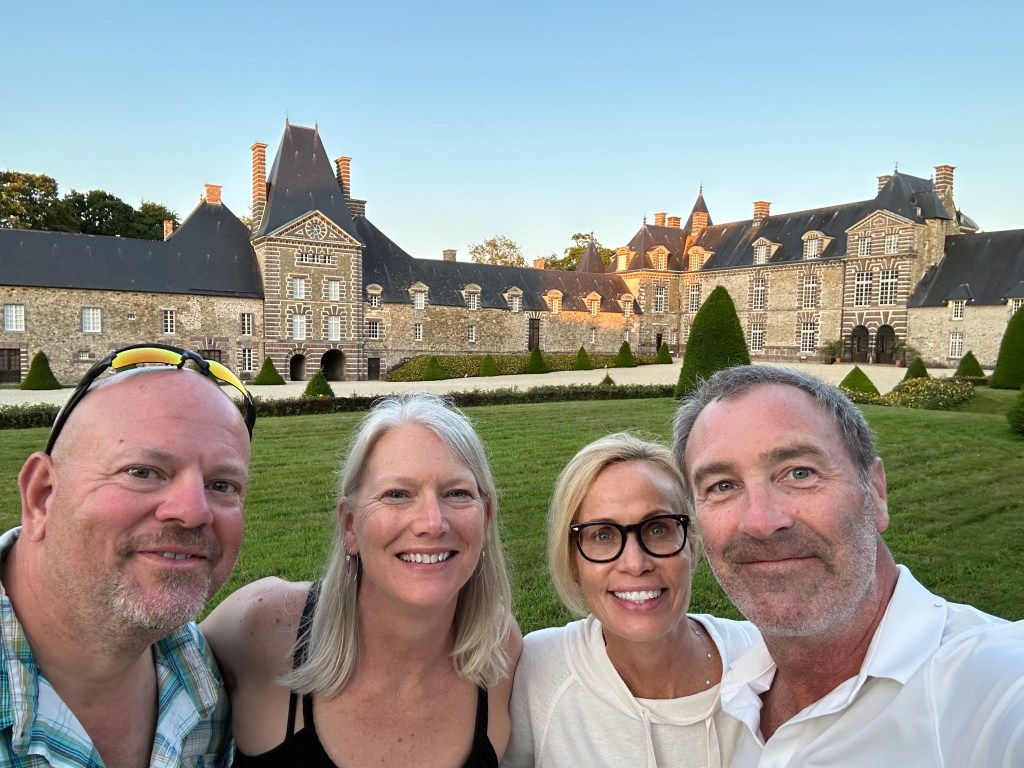
And a night in a 13th- and 14th-century chateau, which may have been the most surreal night of our entire travelling lives. There’s an entire story about this insane evening, but we’ll deal with that in a separate post.
The conclusion of our biking journey at Mont Saint Michel. Originating in 708, the site has attracted pilgrims who still trek across the sandy estuary at low tide for more than 1300 years, staved off an entire English army during the 100 Years War with a garrison of just 100 Norman knights, and is claimed to this day by both Normandy and Brittany.

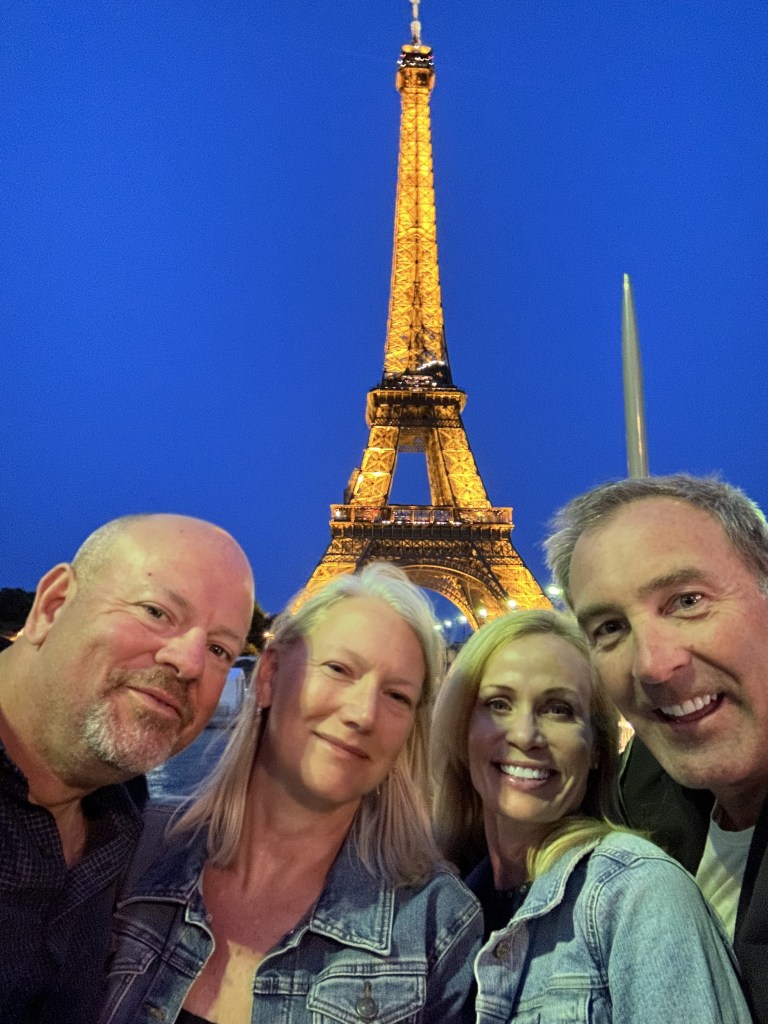
Then, a day in Paris:
Of all of the legs of the trip, only Portugal was unplanned. We knew while in Malta that we didn’t want to go home after biking, and considered either grabbing a car after Thomas and Lisa departed Paris and then driving south to the Dordogne region for a week or two or flying to Portugal at the same time as their return flight. We’re going to save Dordogne for another bike trip, and so we decided to head to Portugal. Still without having a set itinerary there or a return flight home, though!
Portugal
We decided to first spend 4 days in Porto, in northern Portugal. This turned out to be the absolute best location of the entire trip. We’ll be back to spend a month or two here in the future.
Porto’s medieval Ribeira District and south Porto astride the Duoro River:

Everything in Porto is clad in tile:

And, after 7 weeks of Aperol spritzes:

Local port and tonics suddenly dominated the scene:

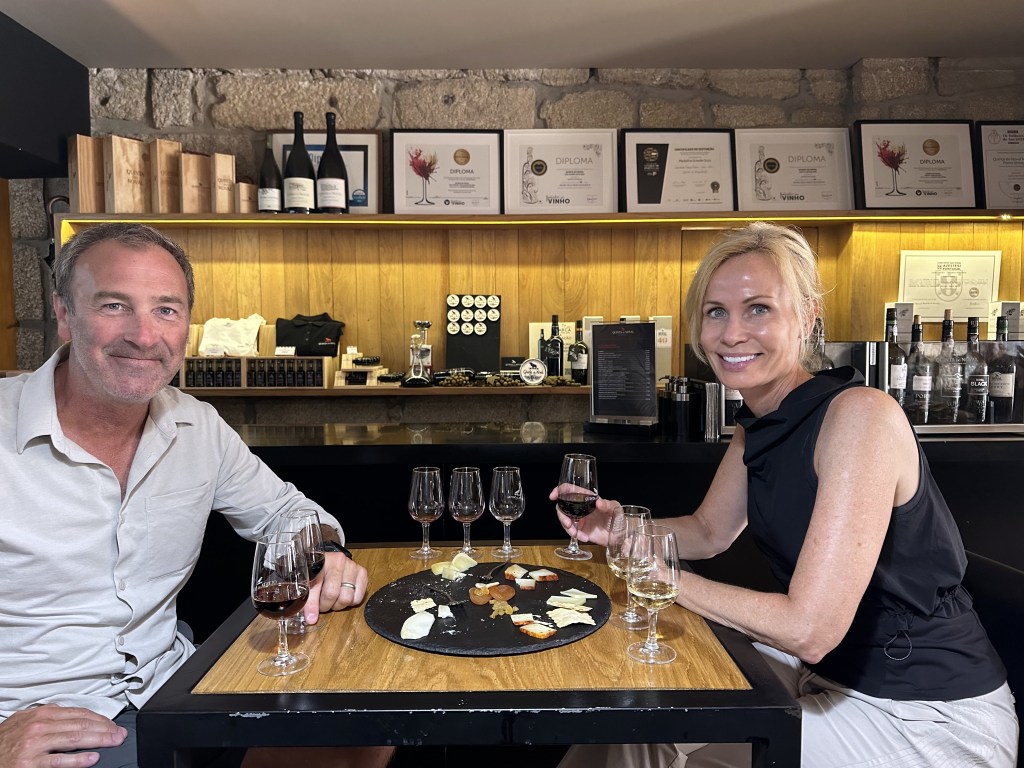
And an afternoon of port tastings:
Then, a train south, to Lisbon, the first European destination we had ever visited, back in 2002:

With some monumental areas:

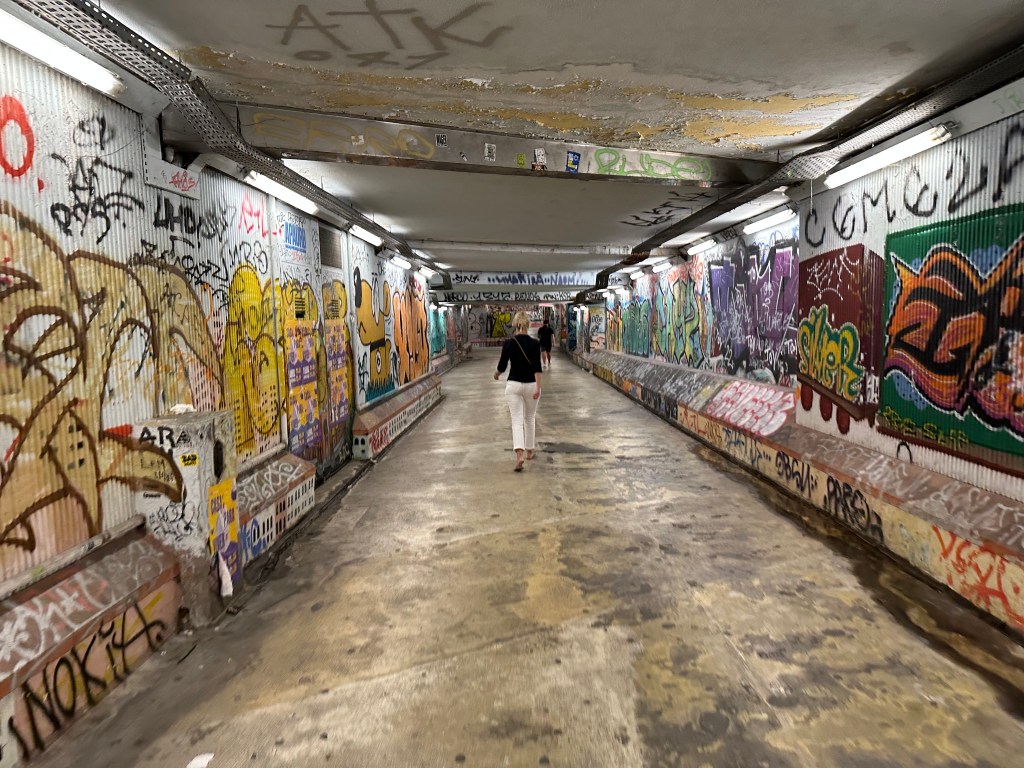
And some more sketchy areas:
And a day trip to Sintra, home to the Pena Palace:

And a final gastronomic meal:

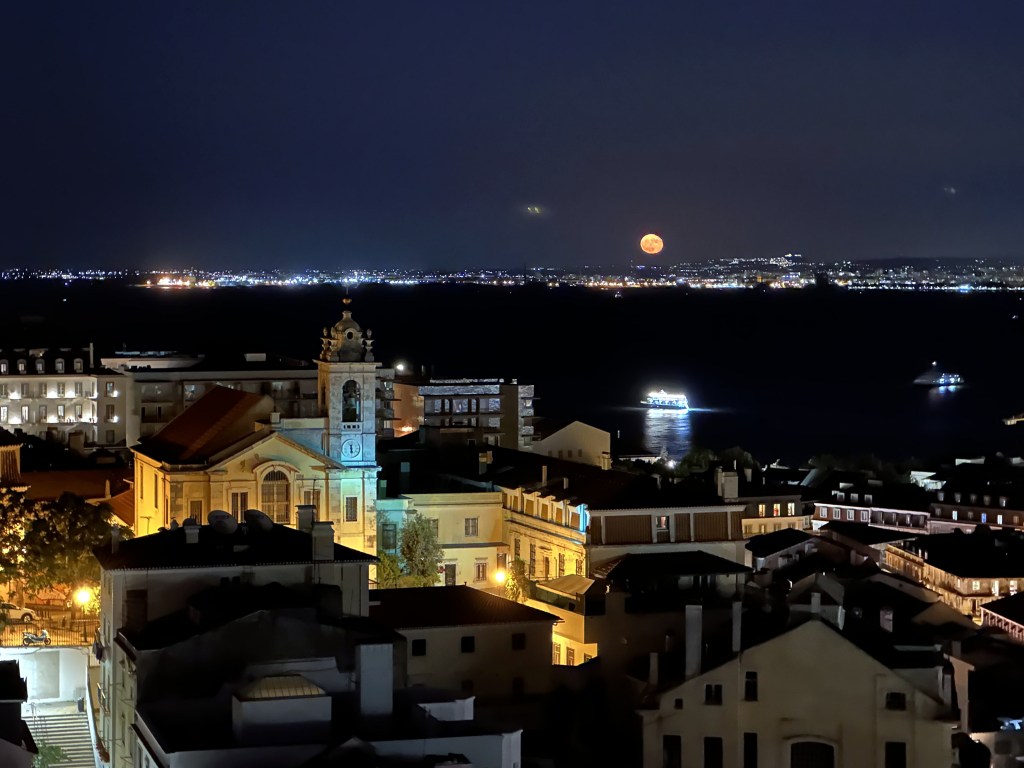
Final night in Lisbon before finally flying home, accompanied by July’s Blood Moon:
All told, we traveled for 2 months, experienced 4 countries, 41 towns, stayed in 19 hotels, 5 AirB&Bs/villas, and traveled by trains, planes, and automobiles (and ferries, trams, tuk tuks, and bikes). Amazing trip!



 WolfeStreetTravel