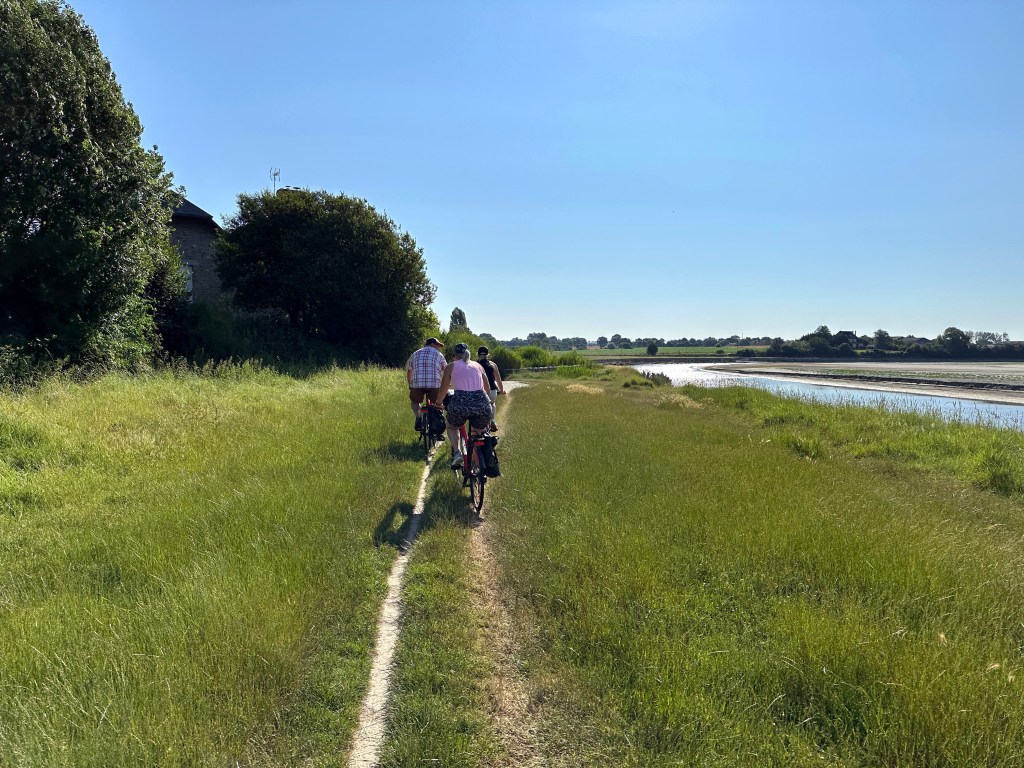
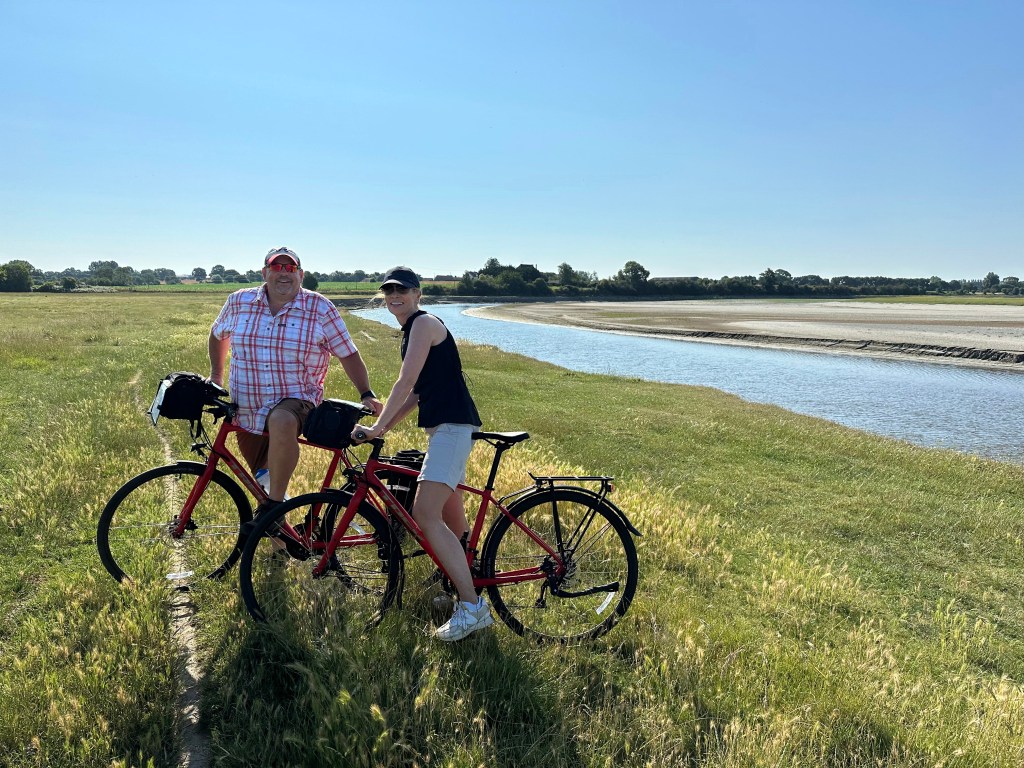
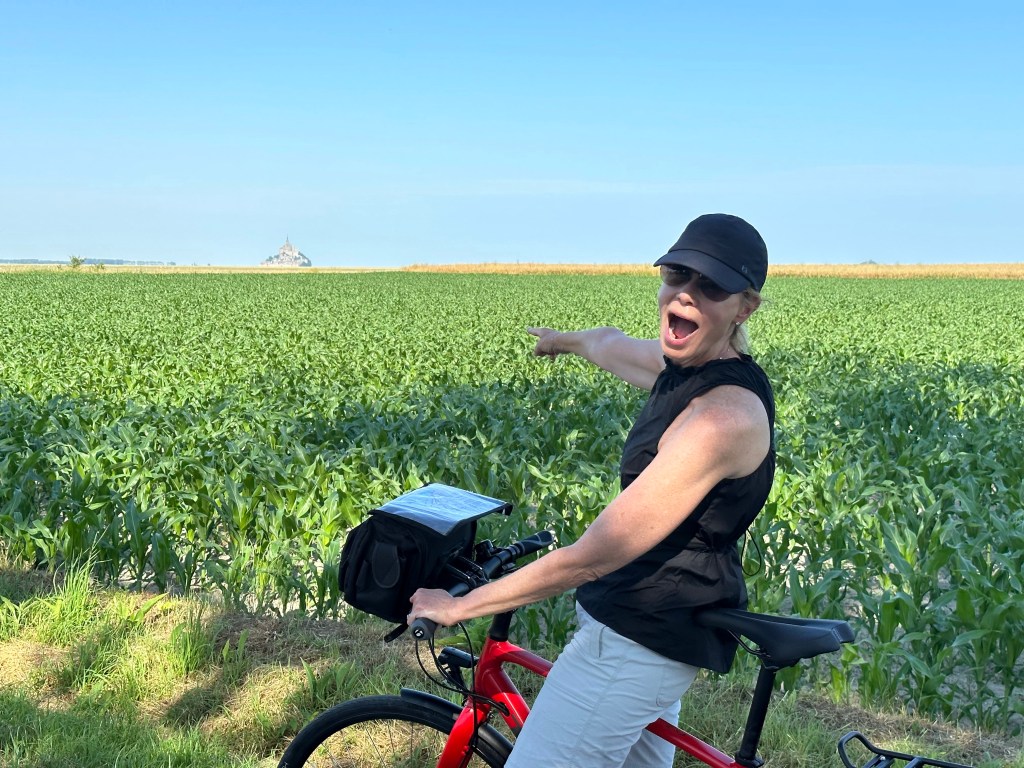
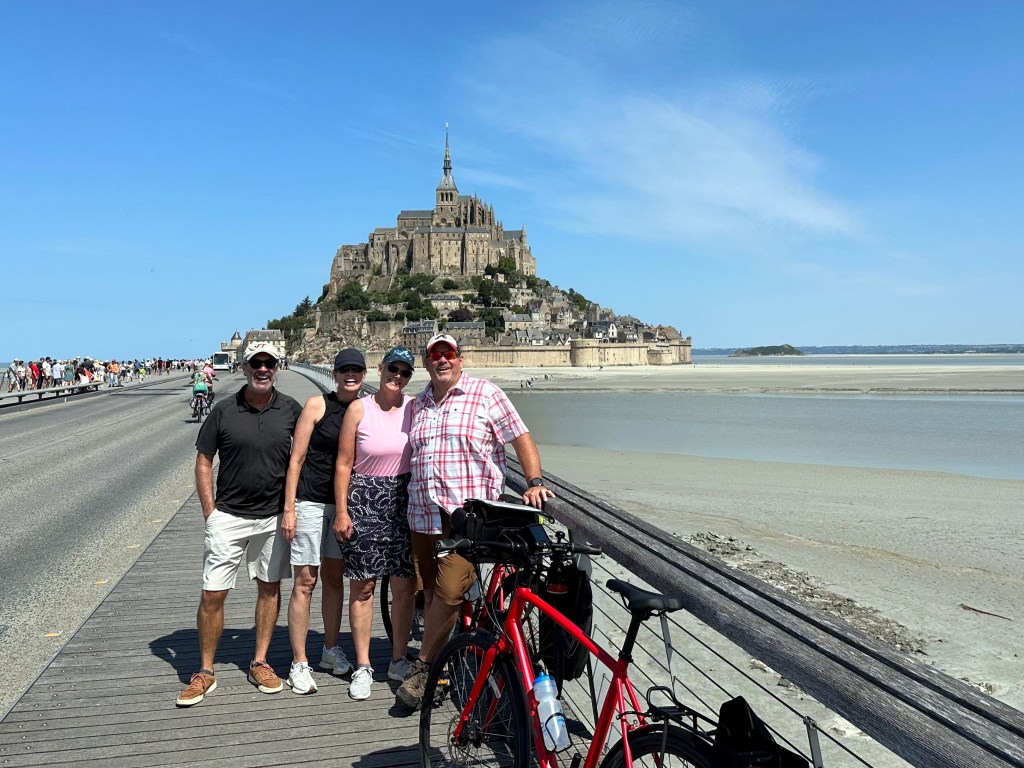
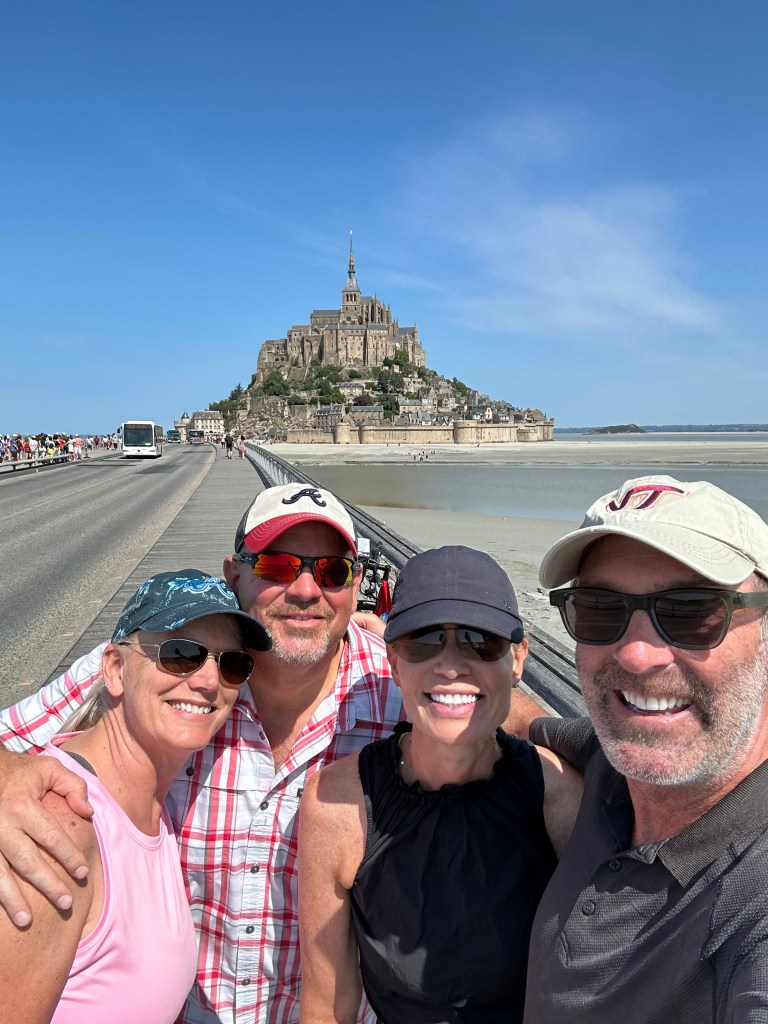
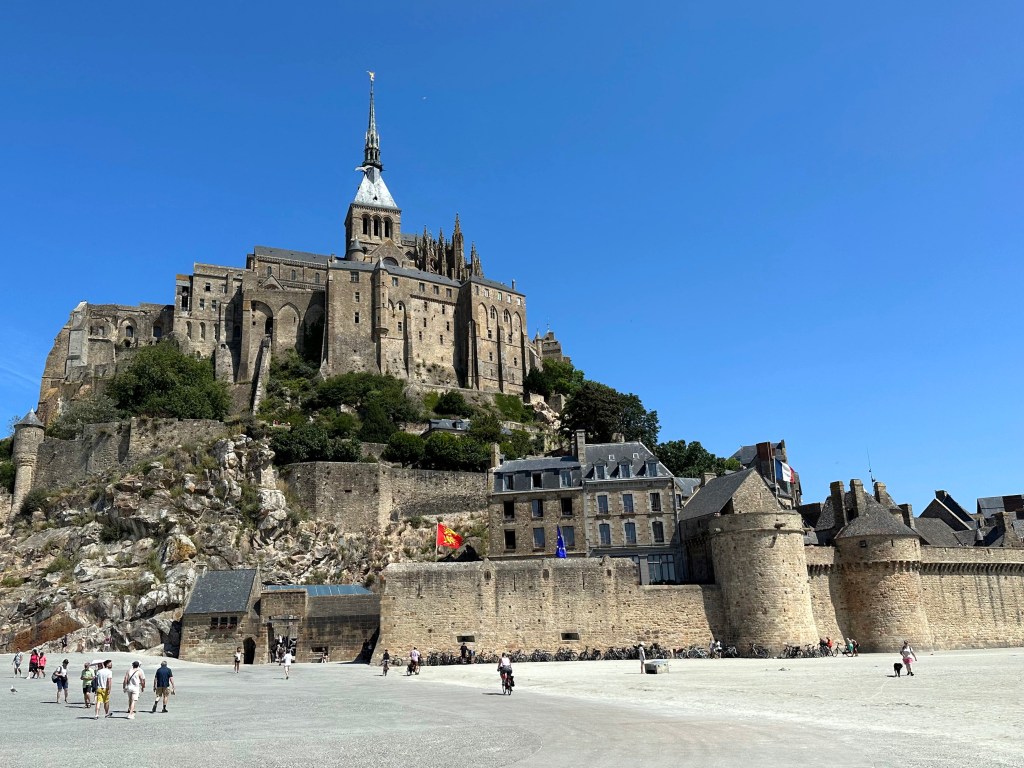
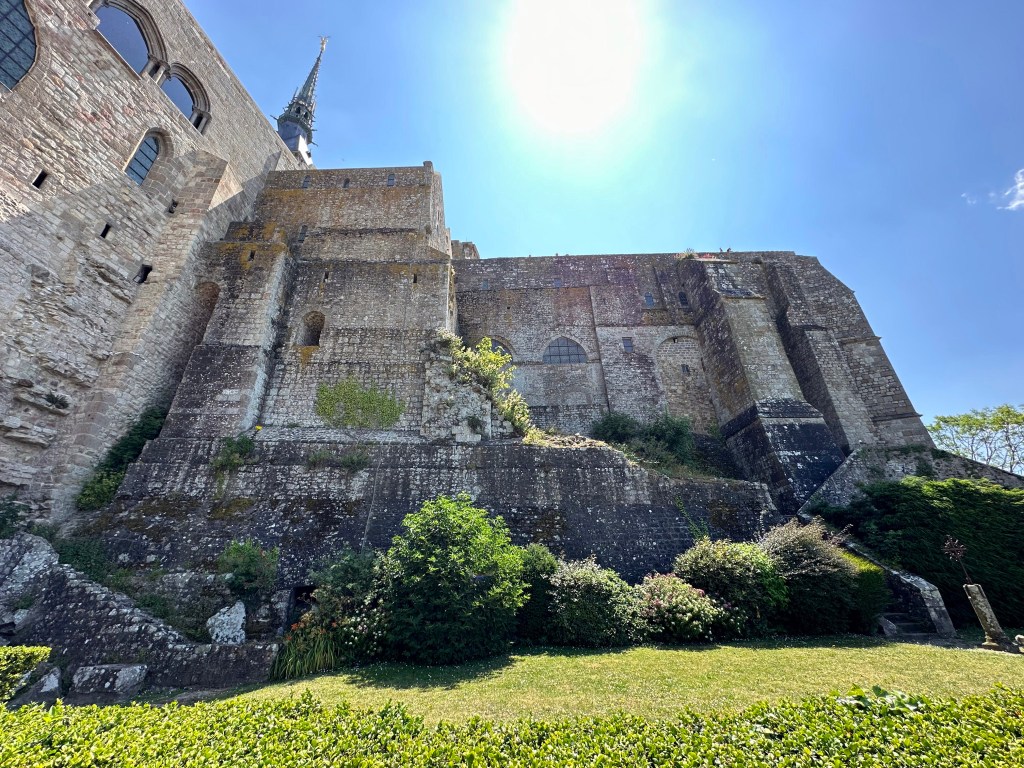
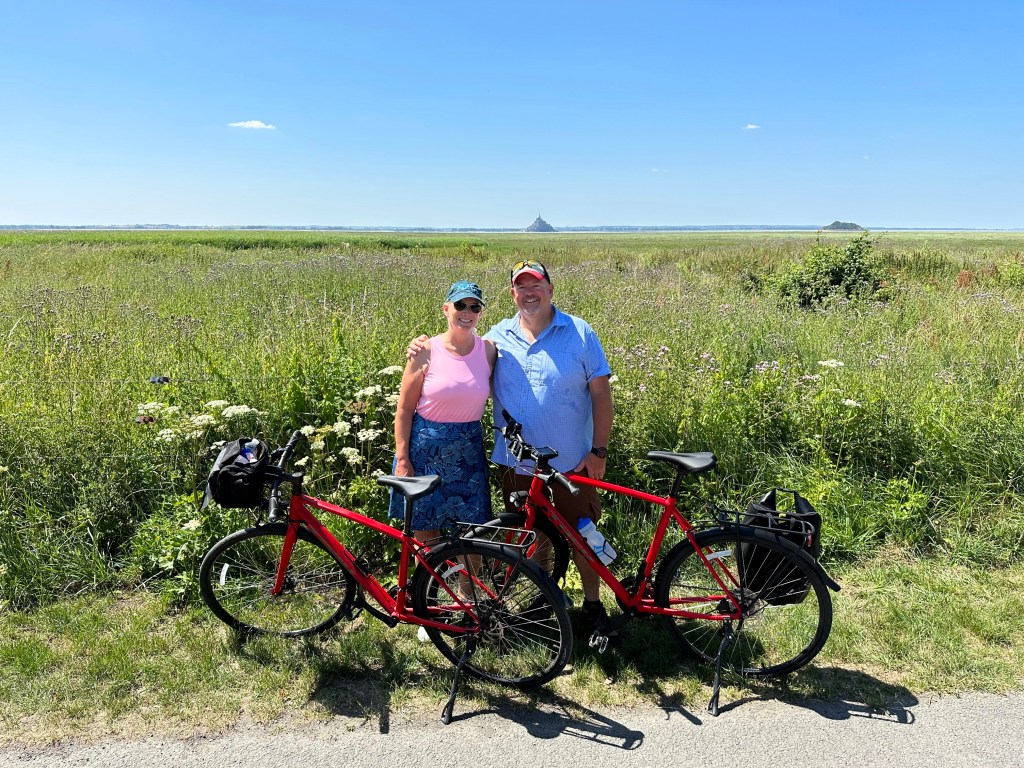
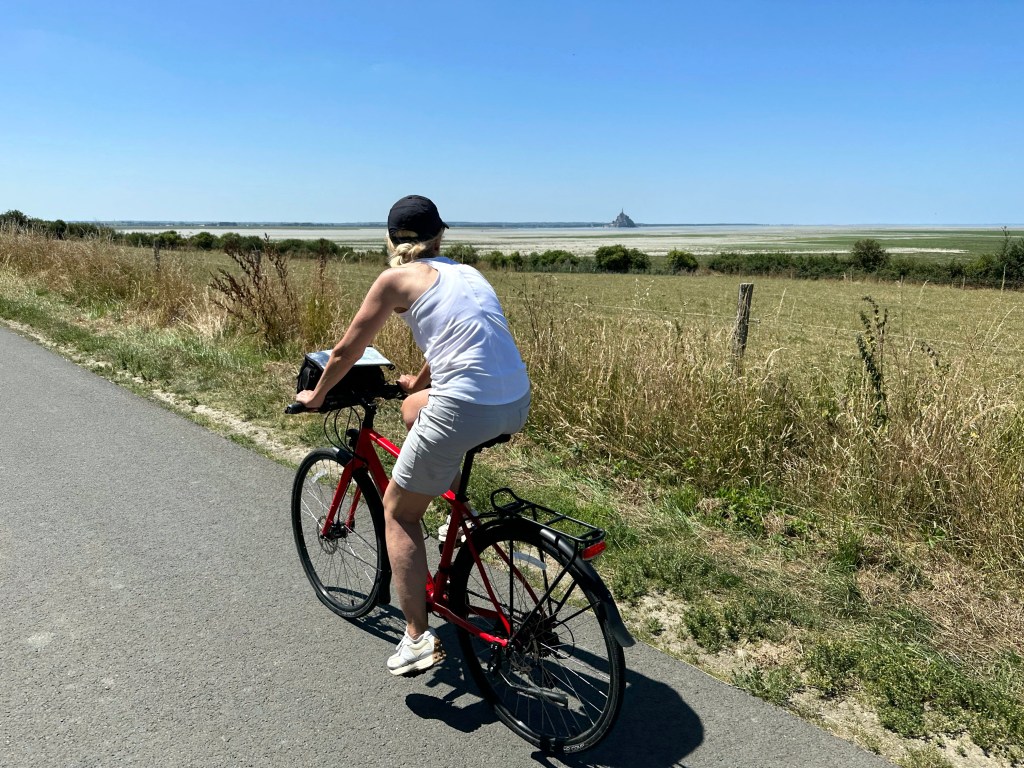
Our final day of biking in Normandy entailed riding from Avranches to the final major sight on the itinerary: the quasi-island abbey of Mont Saint Michel.
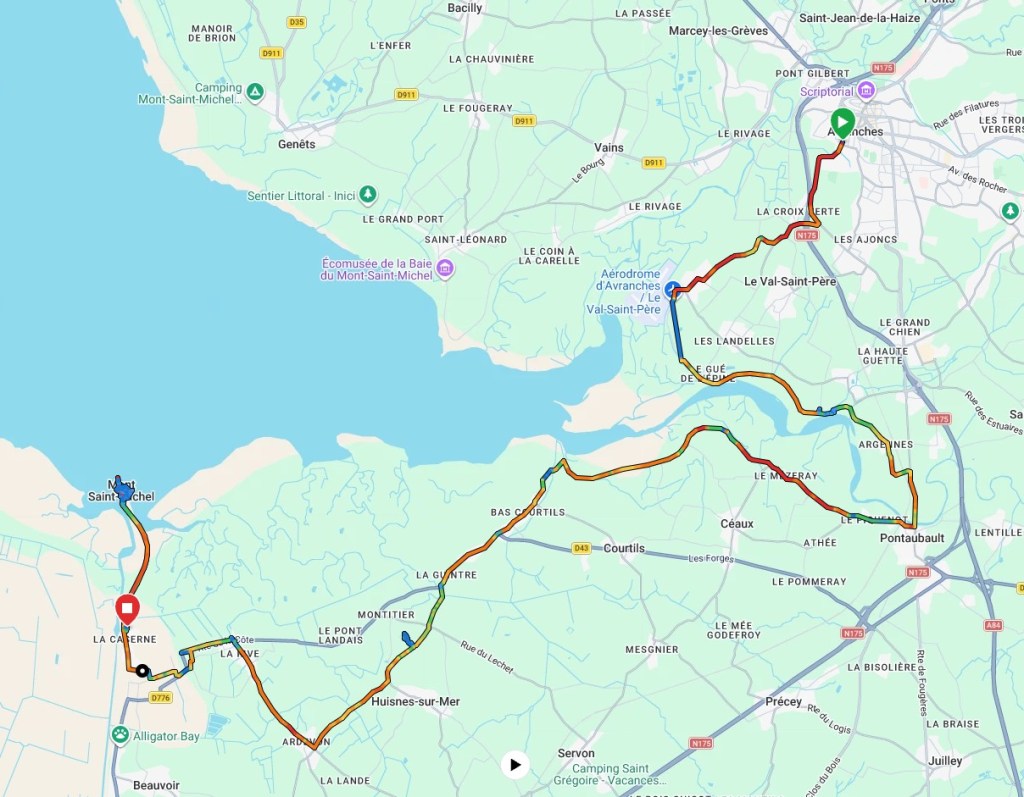
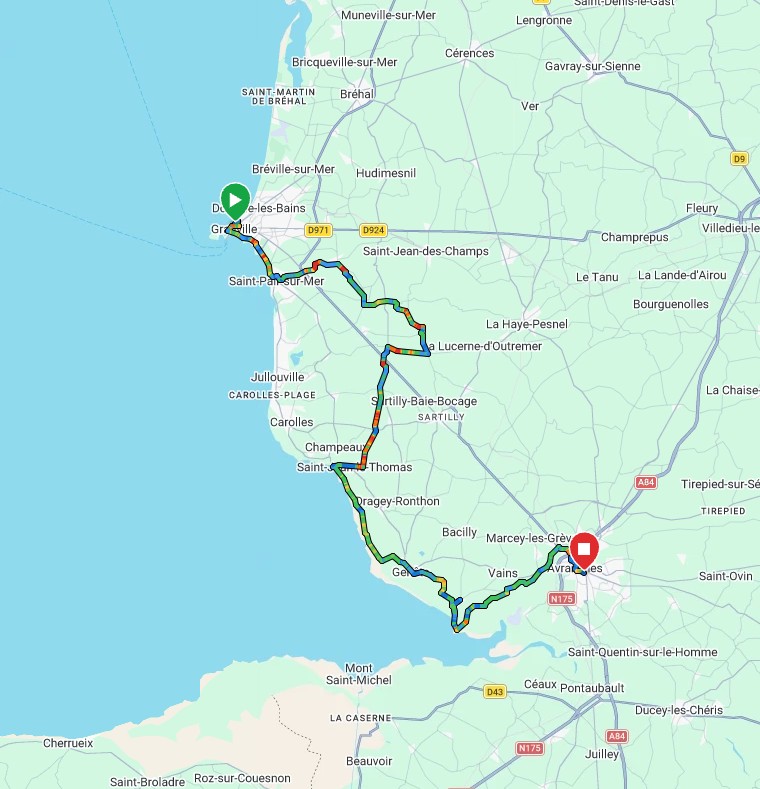
Route for the day, from Avranches to Mont Saint Michel (we forgot we had all of these and are adding them to previous Normandy biking posts):
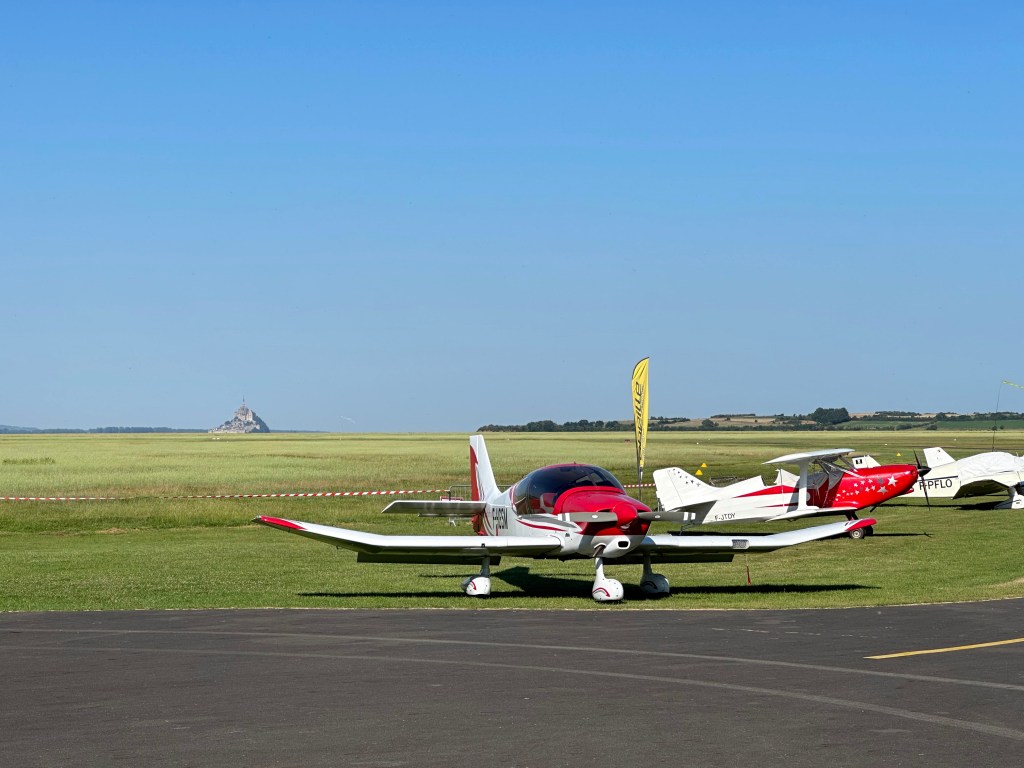
Just a short distance out of town we came upon an air show at the Aerodrome d’Avranches:
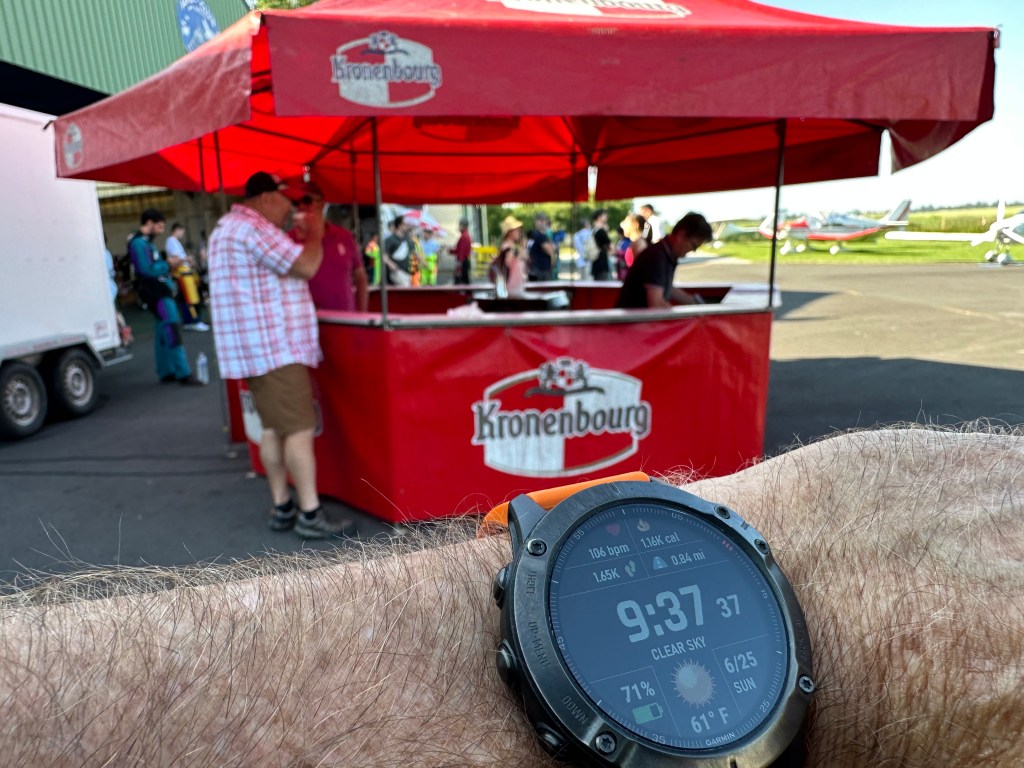
Where Thomas immediately took advantage of the beer tent:
Onward!
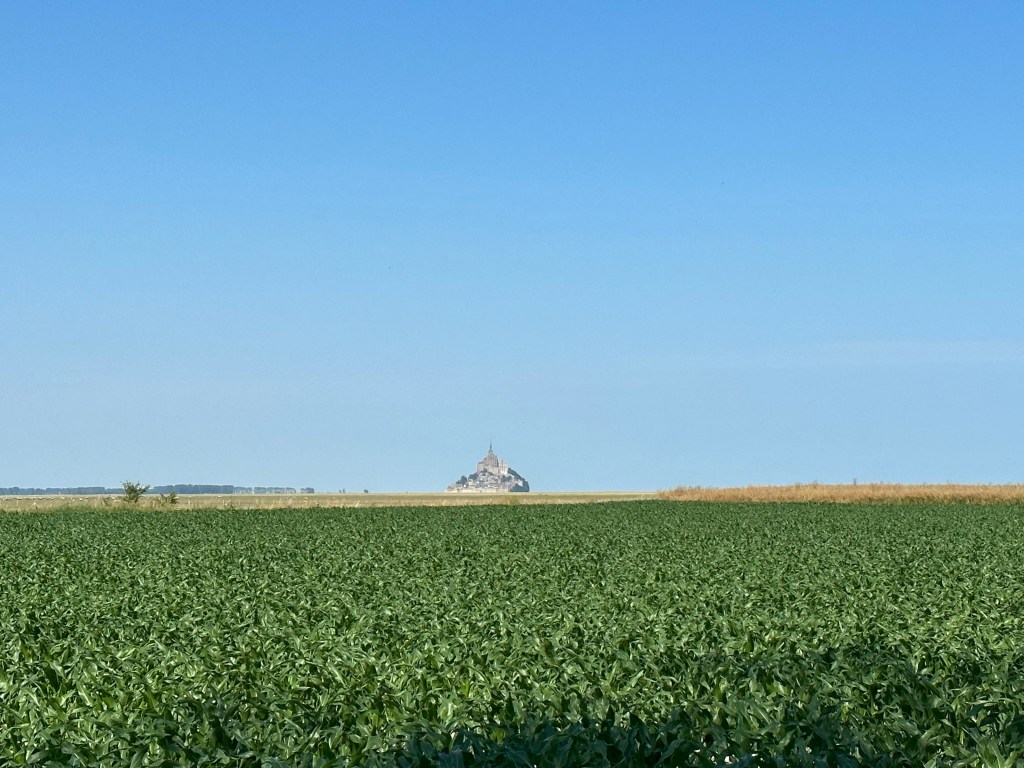
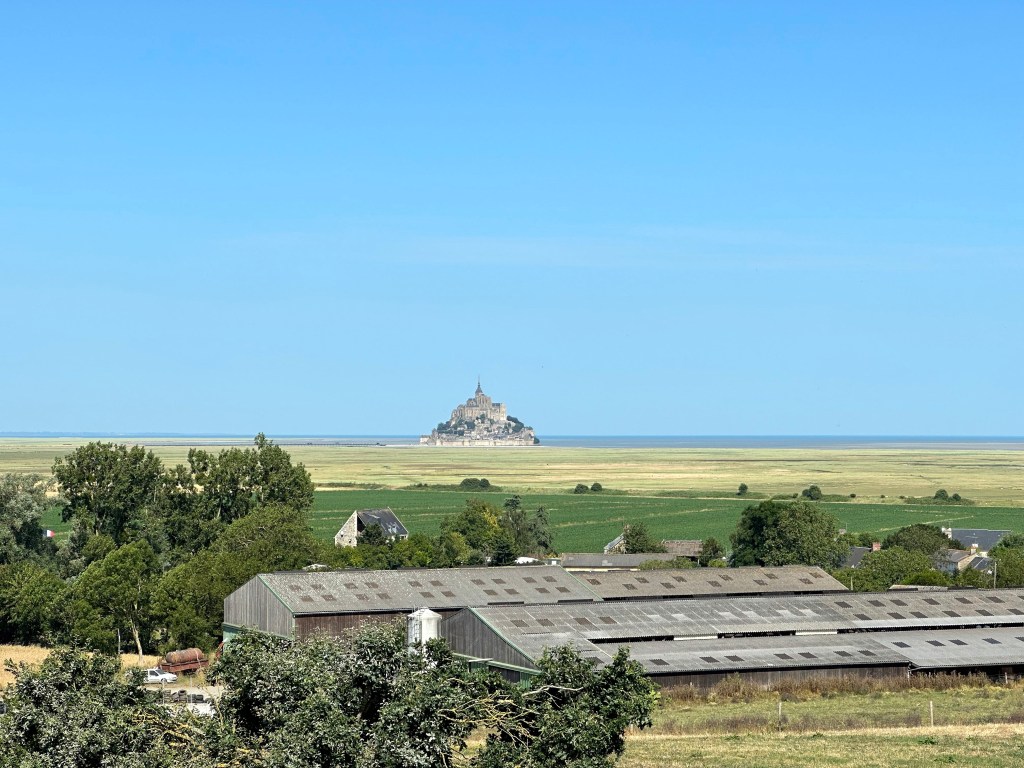
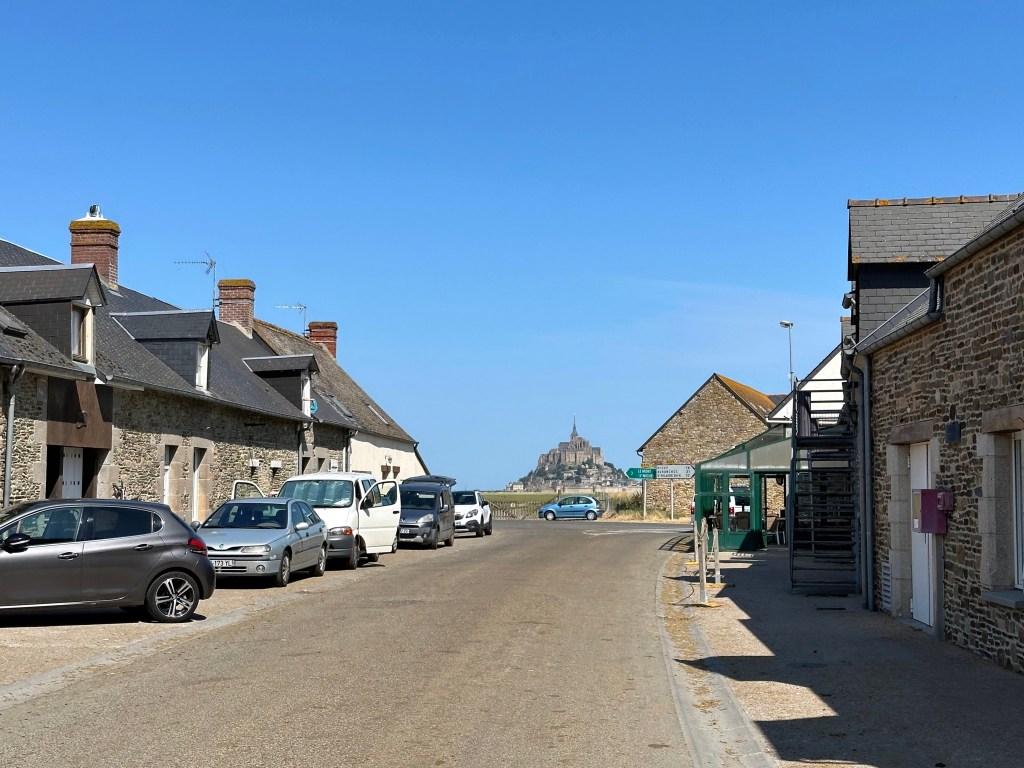
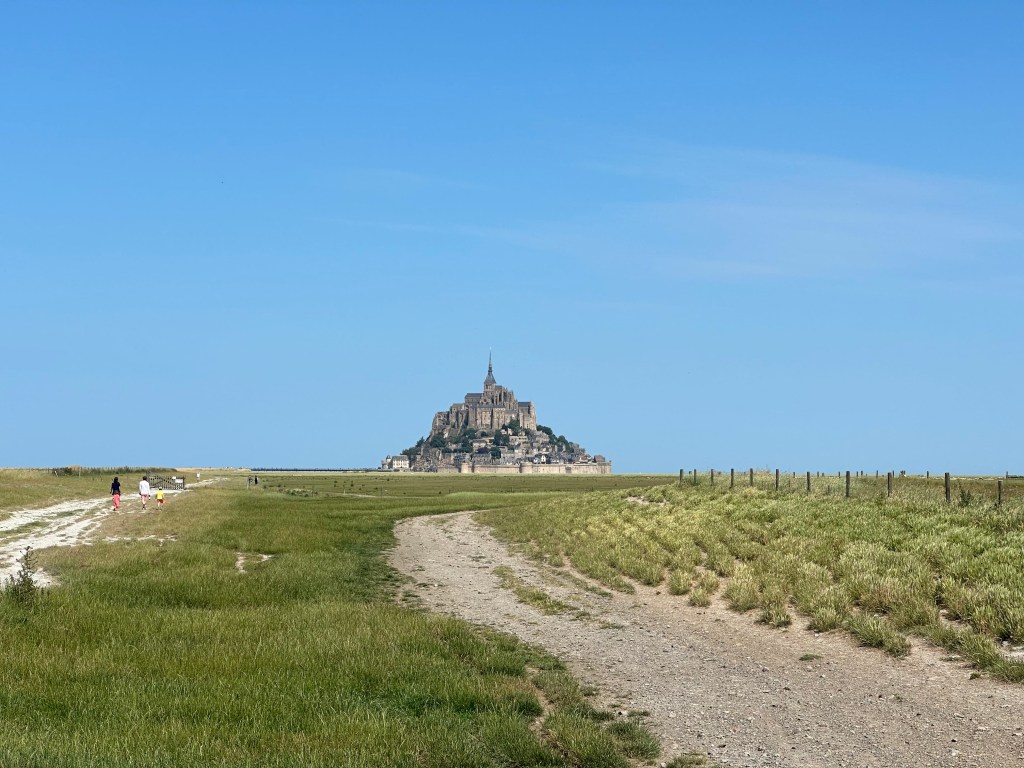
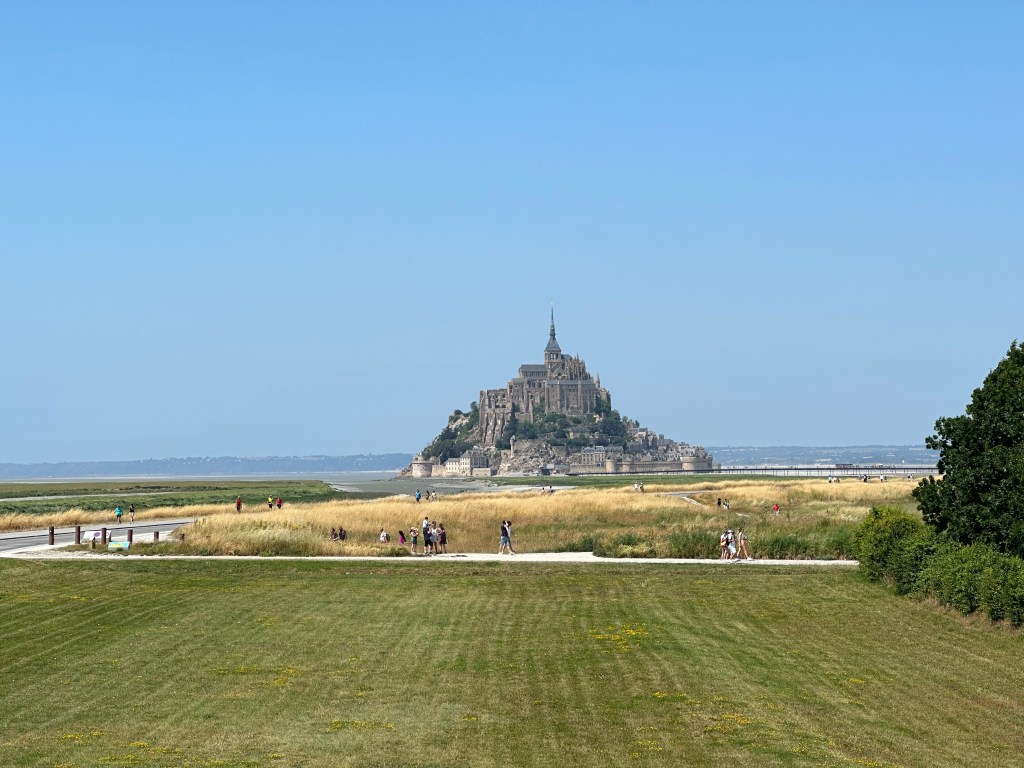
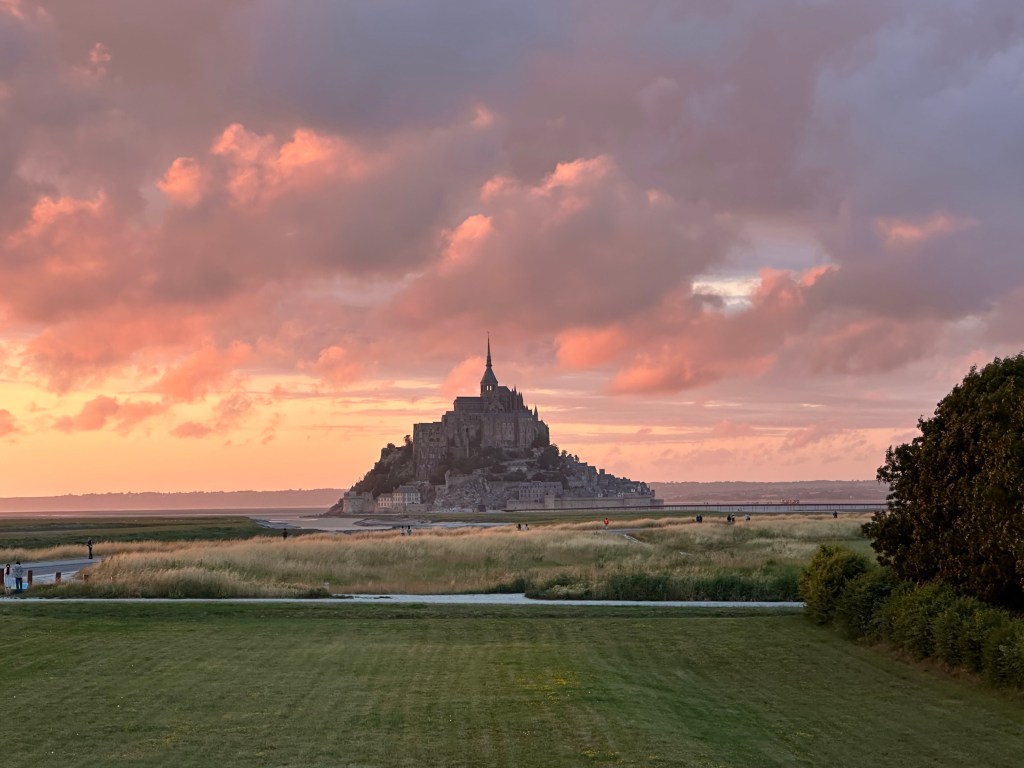
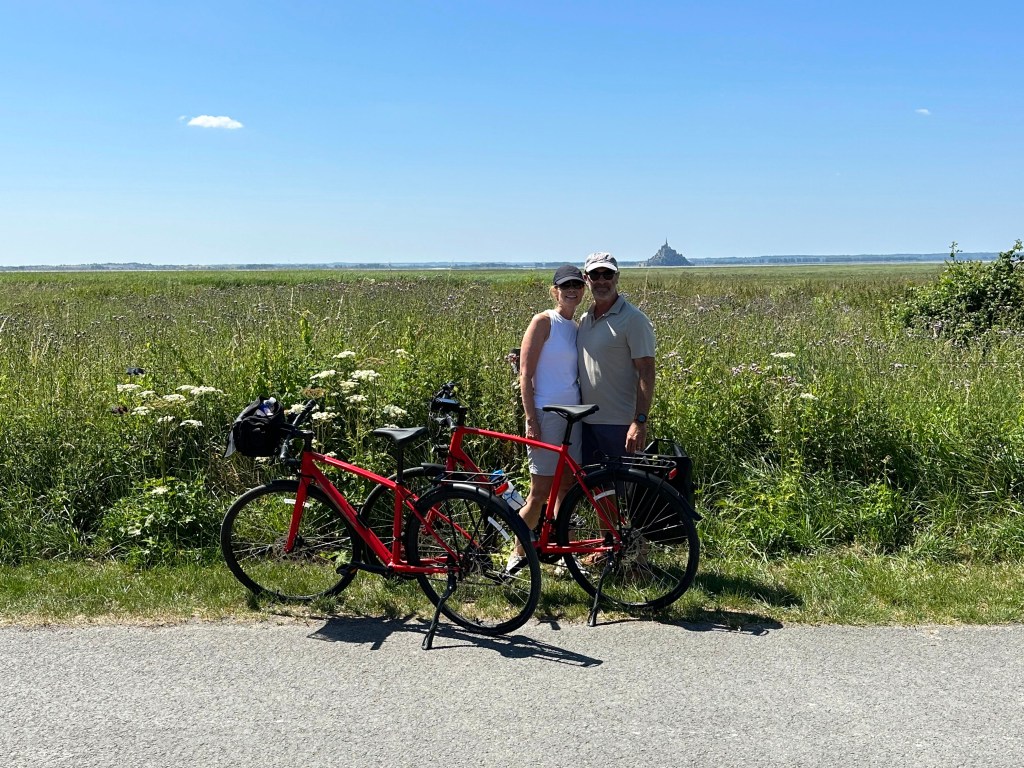
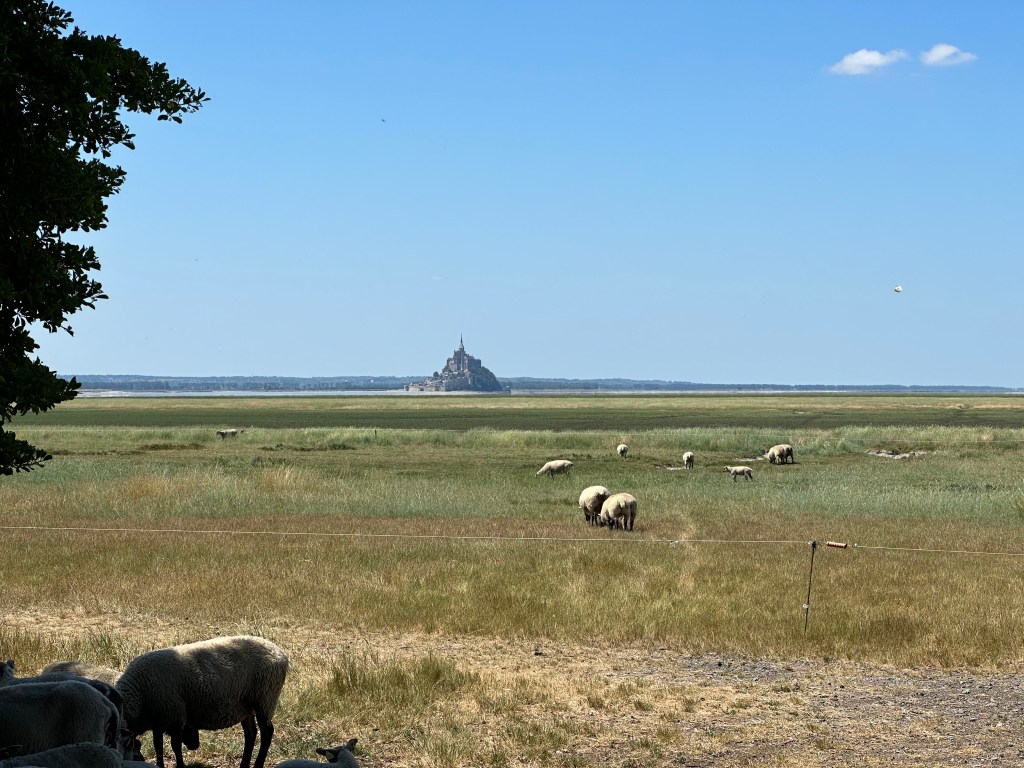
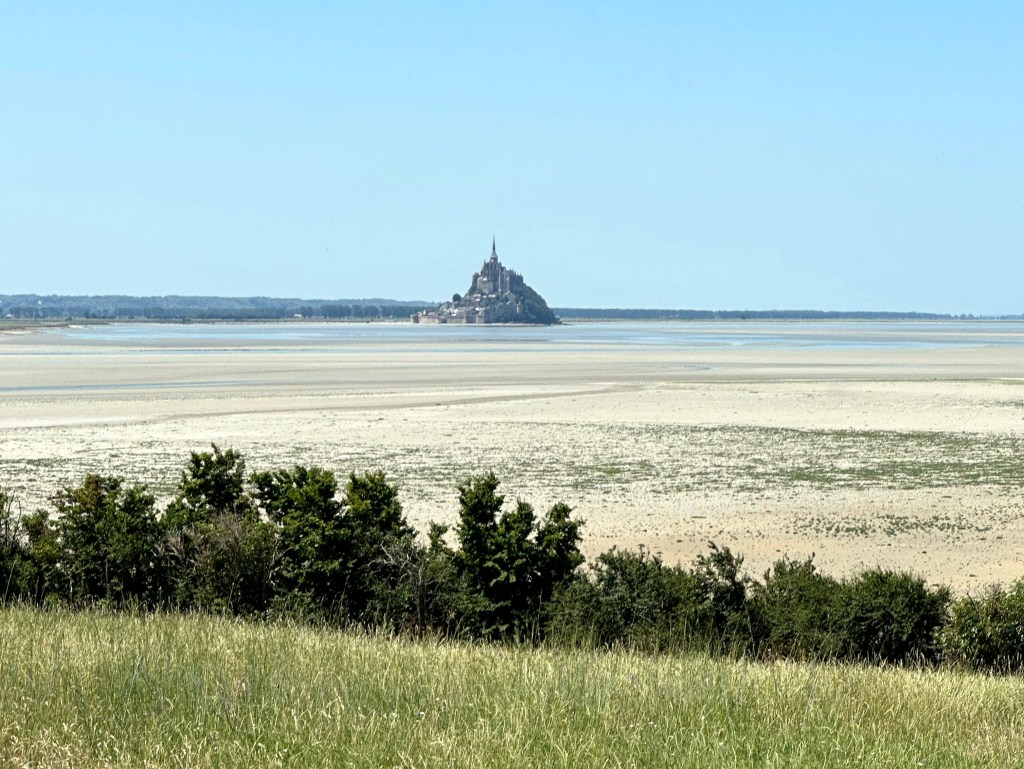
Our destination for the day, looking every bit like a sand castle in the distance:
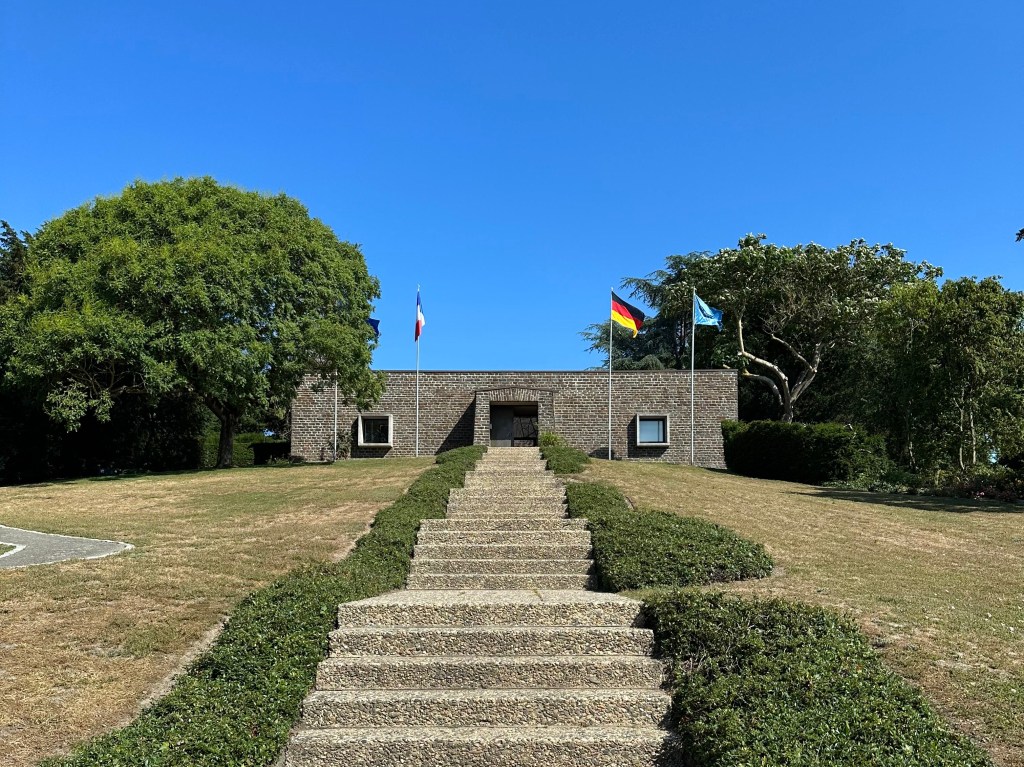
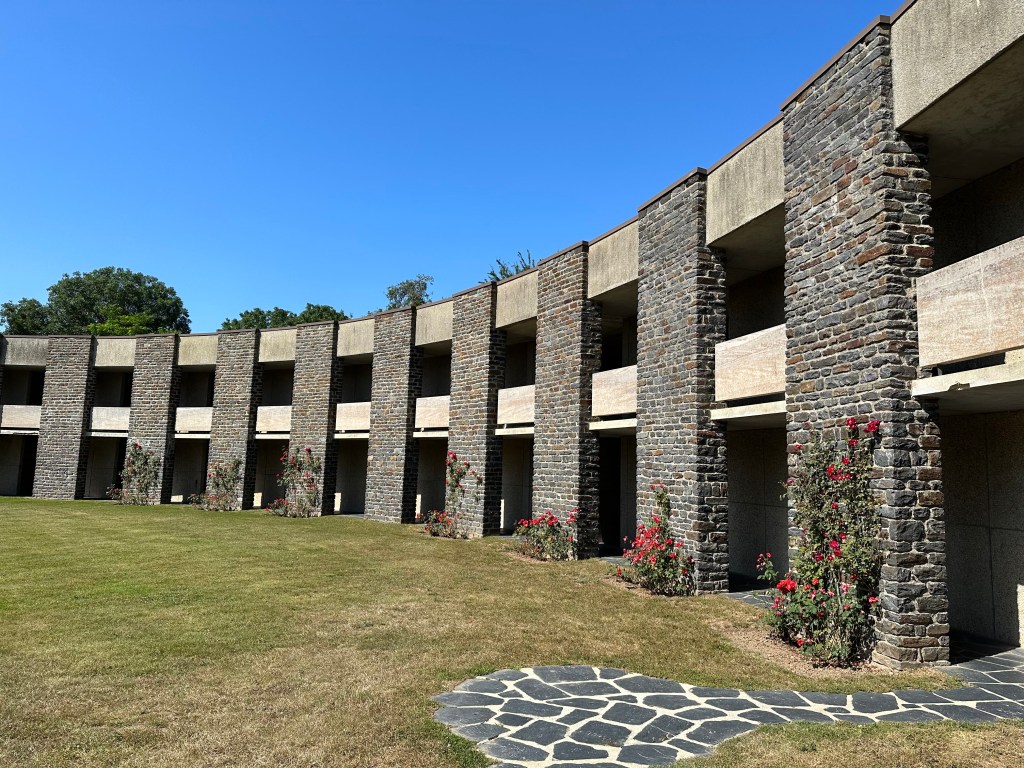
The heretofore unknown-to-us German War Cemetery in Normandy:
It’s an unassuming columbarium containing the remains of 12,000 war dead from western France and the Channel Islands.
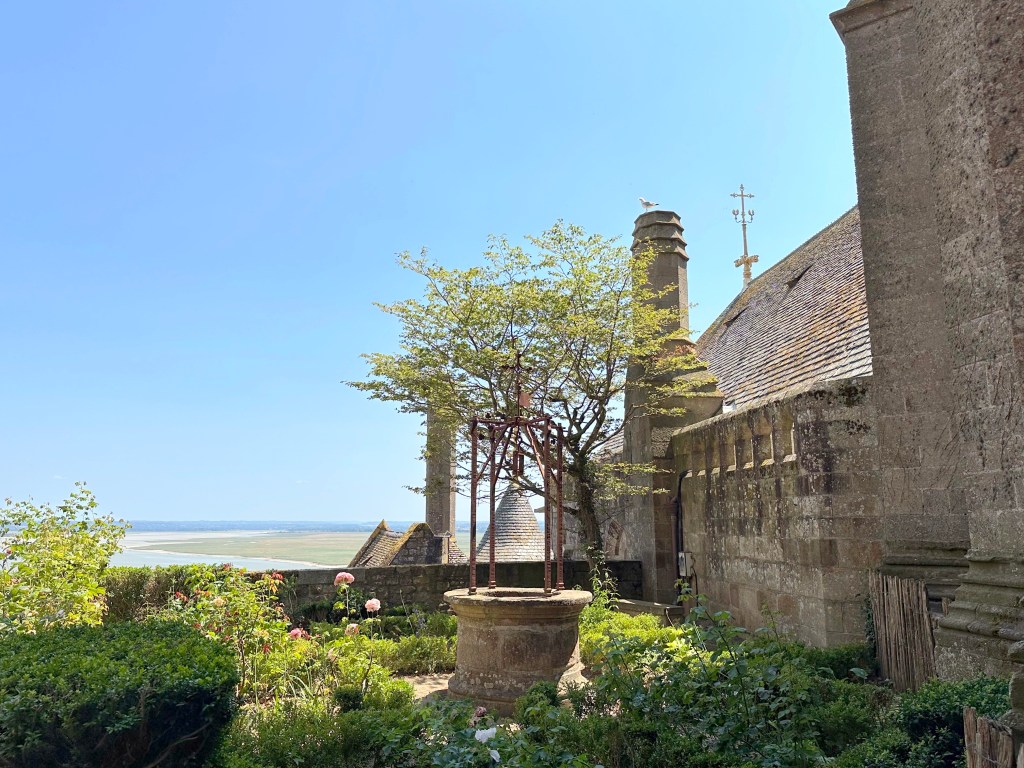
With another view of Mont Saint Michel from the top:
The little hamlet of La Rive, with a trailhead to the monastery:
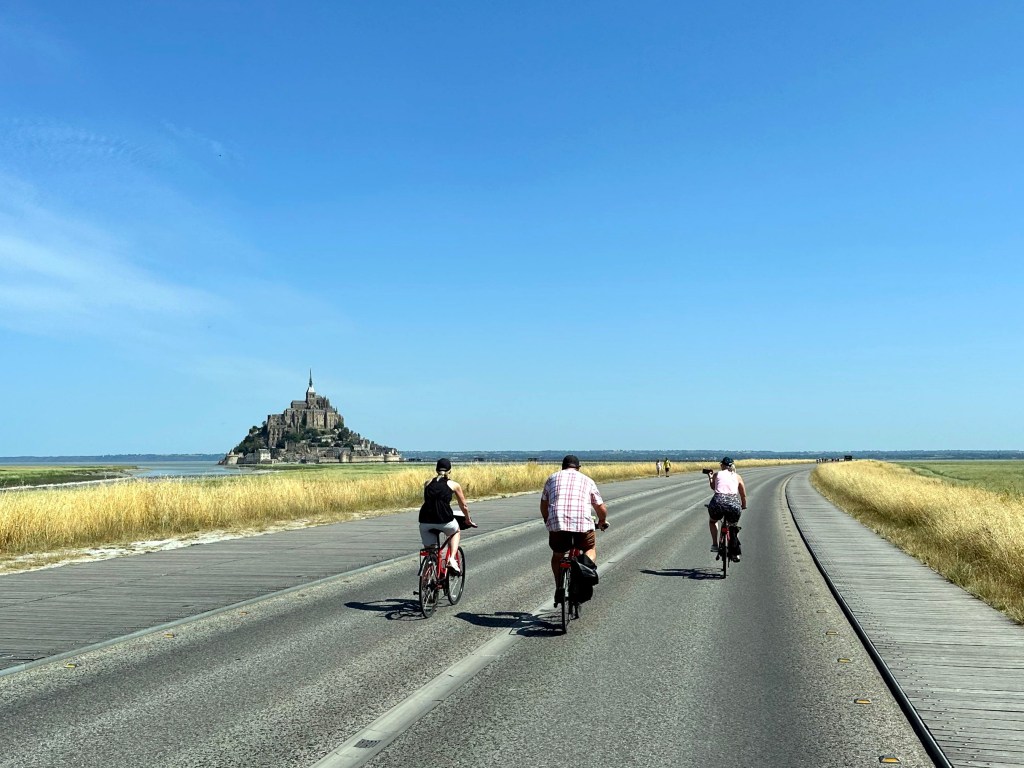
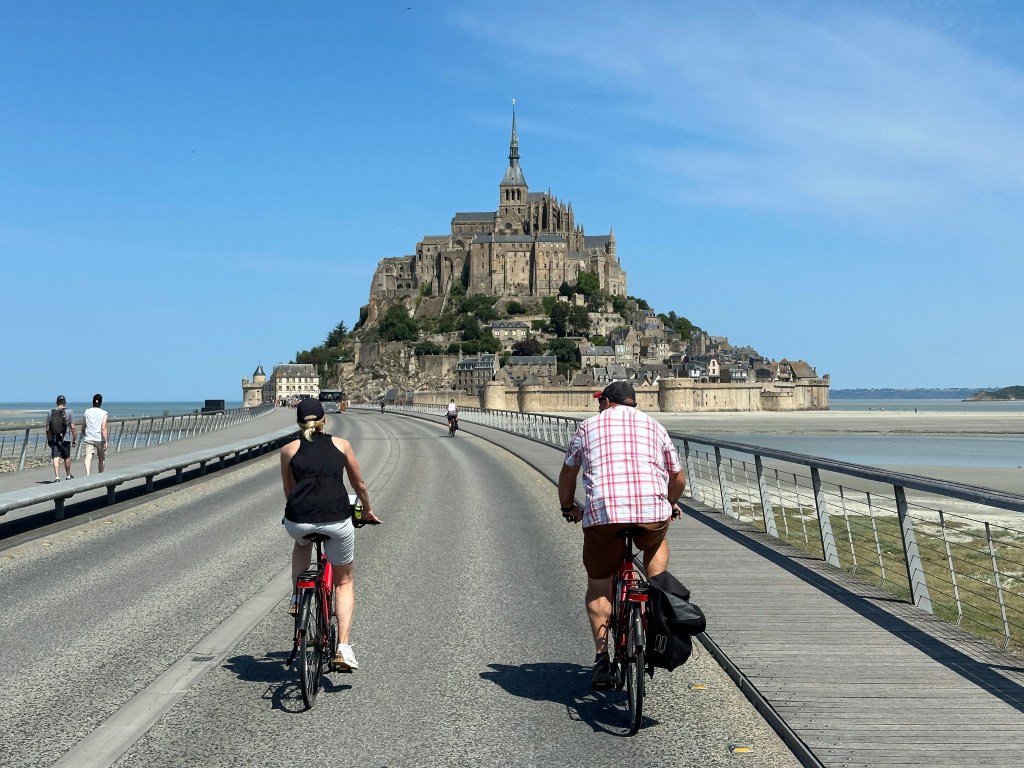
On the causeway, site of an individual time trial in the 2013 Tour de France:
The place is like a wedding cake.
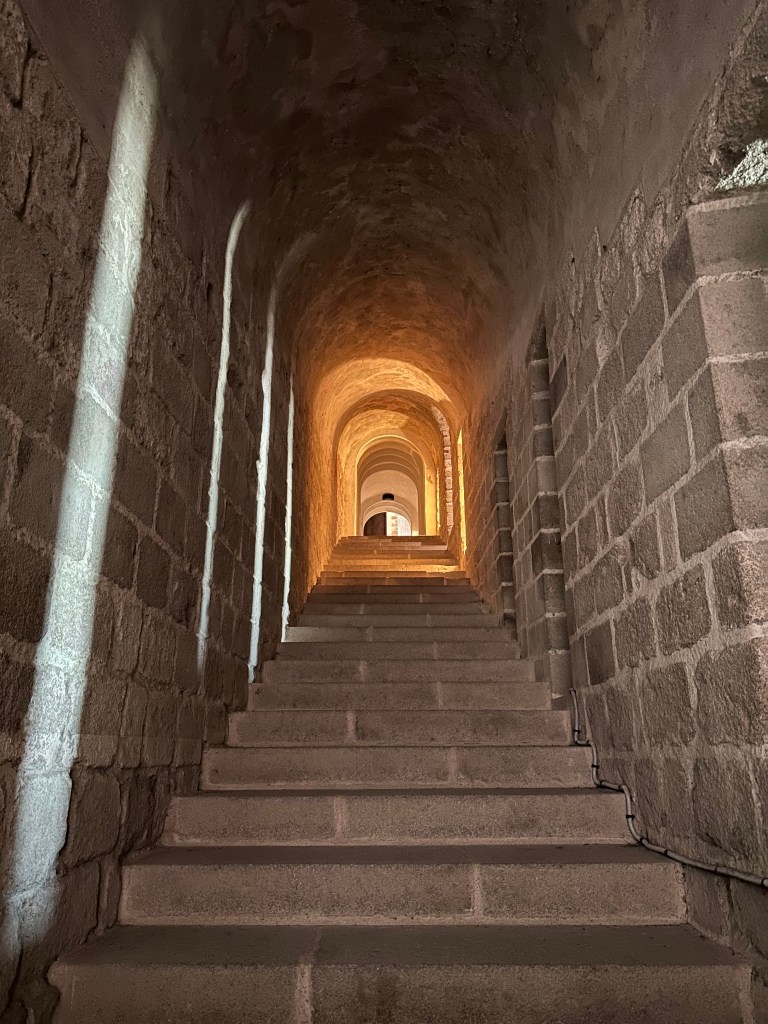
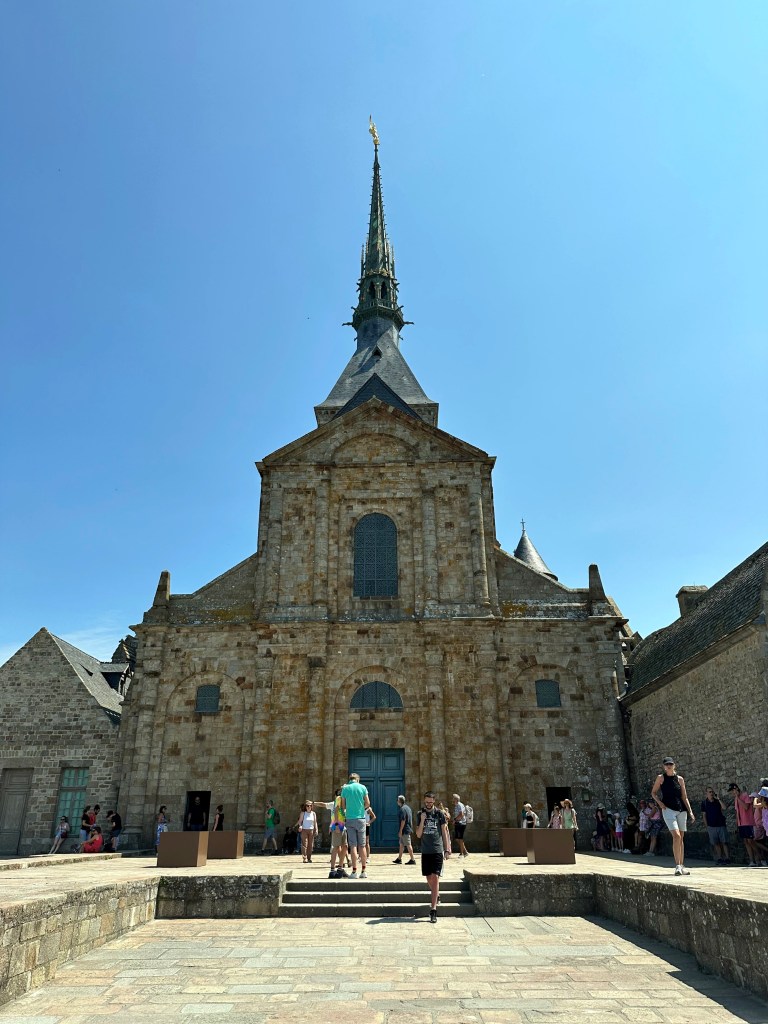
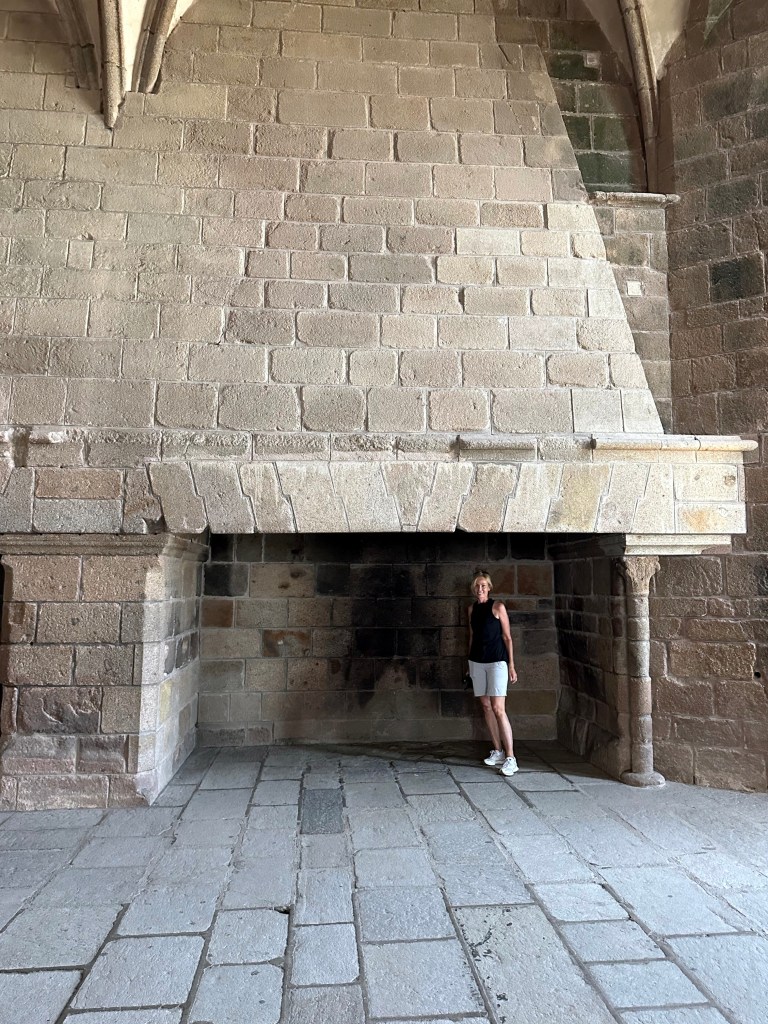
Once inside the walled abbey and its little encircling town, we made a beeline to the top of the complex.
Mont Saint-Michel’s history began in 708 AD, when, according to tradition, the Archangel Michael appeared to Aubert, Bishop of Avranches, and instructed him to build a sanctuary on the rocky tidal island.
Benedictine monks established an abbey there in 966, transforming it into a major medieval pilgrimage destination.
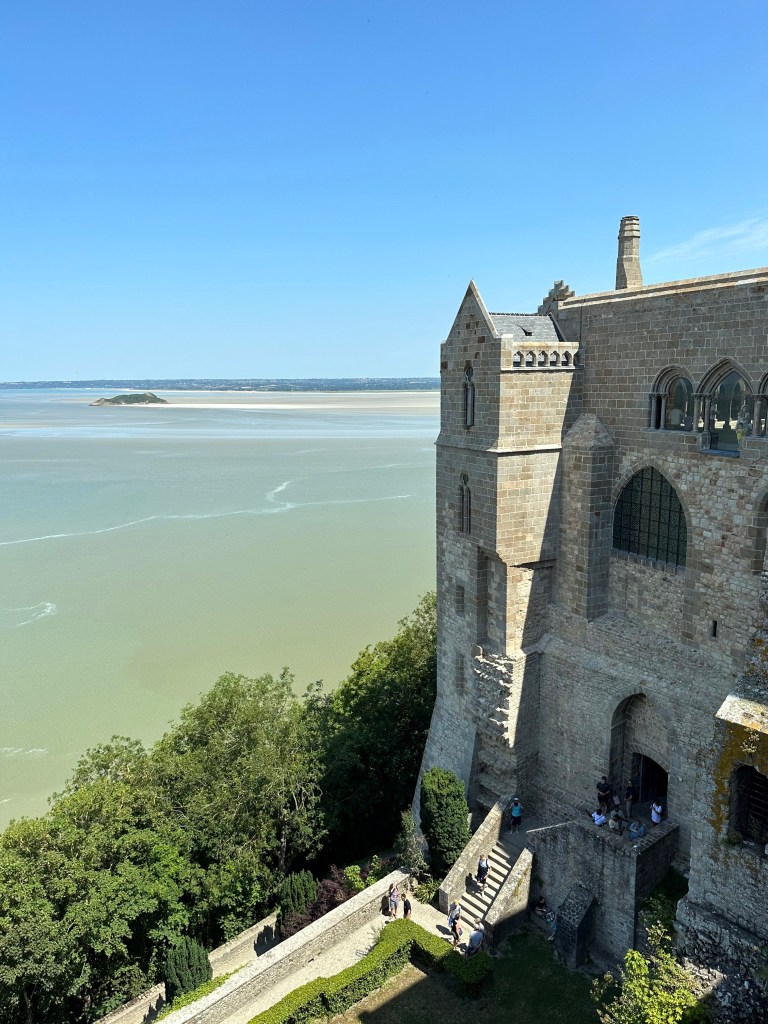
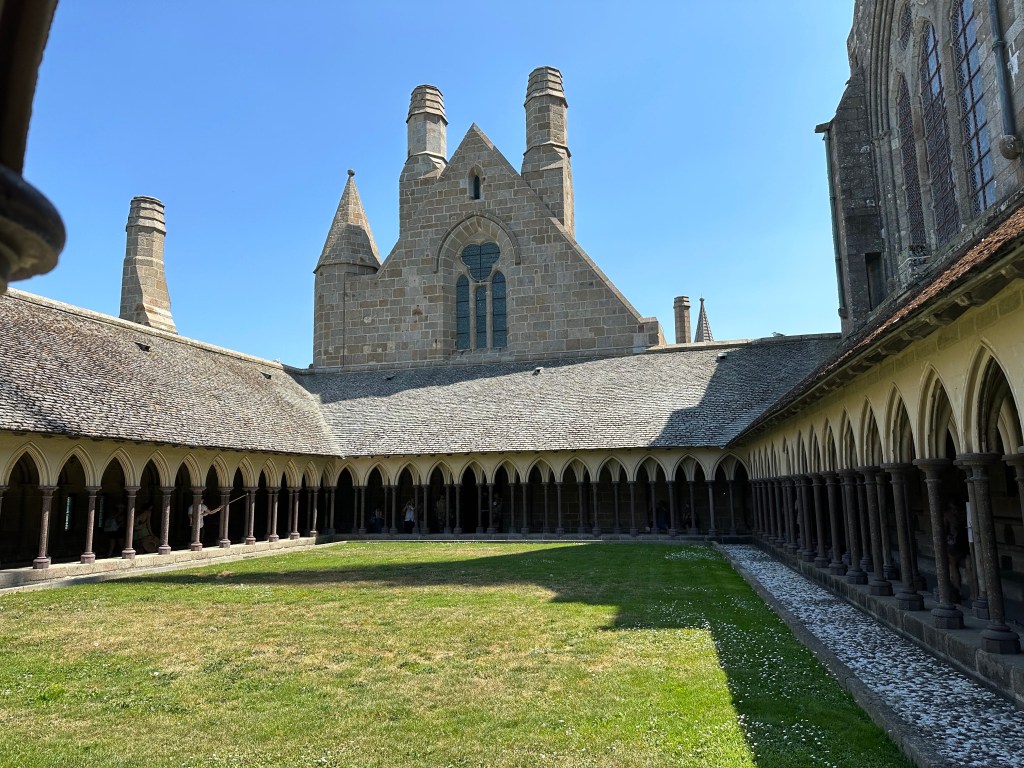
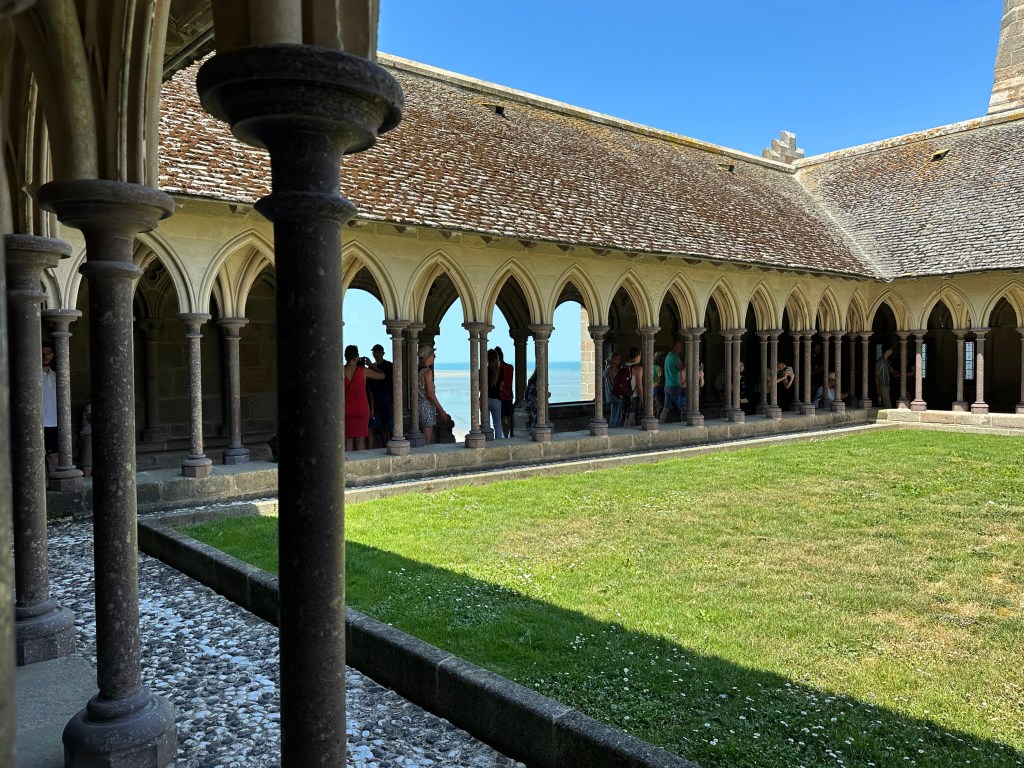
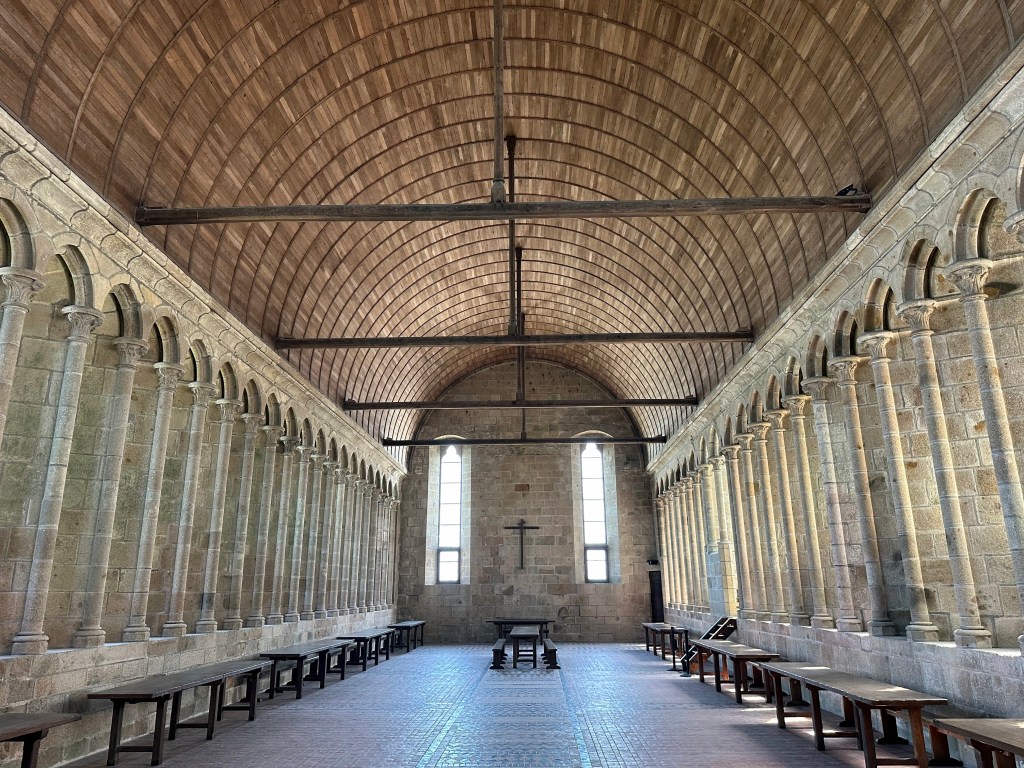
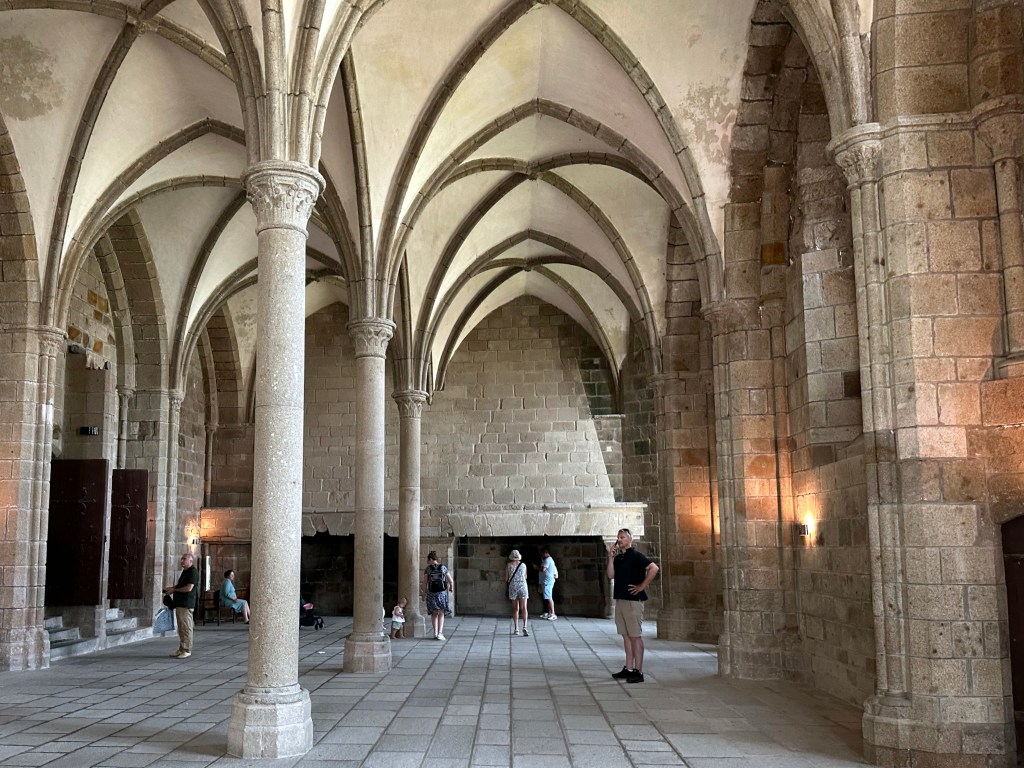
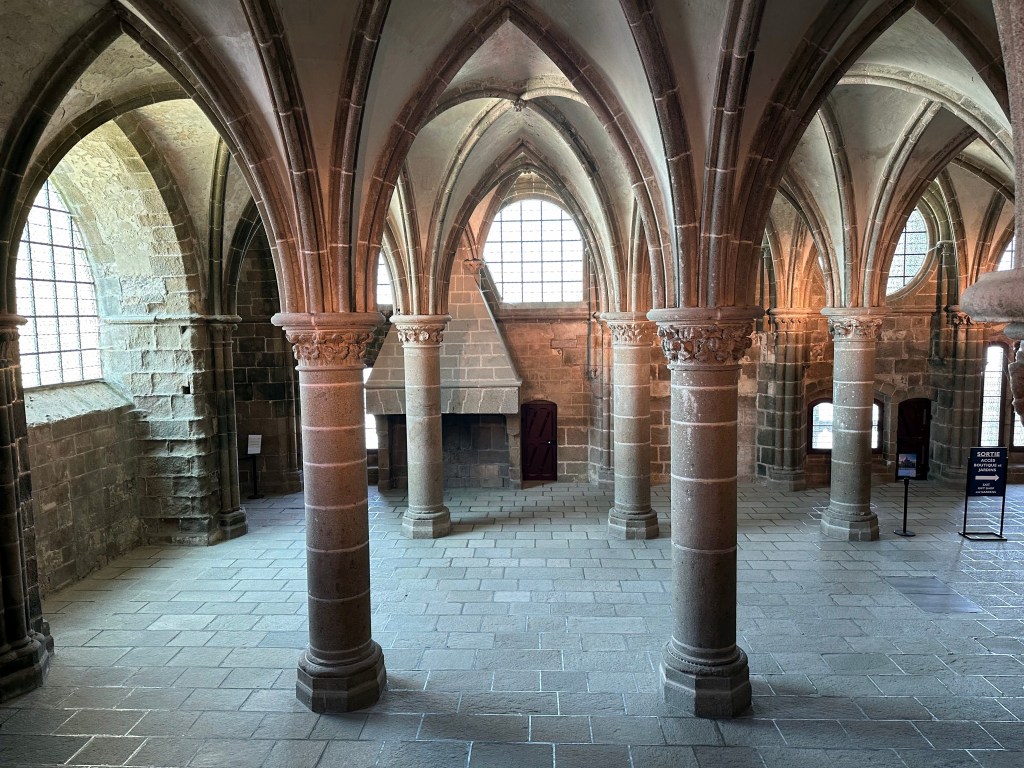
An extraordinary Gothic complex, known as La Merveille (“The Marvel”) was built on the abbey’s north side in the early 13th century.
During the Hundred Years’ War, its formidable fortifications helped it withstand English attacks, making it a powerful symbol of French resistance.
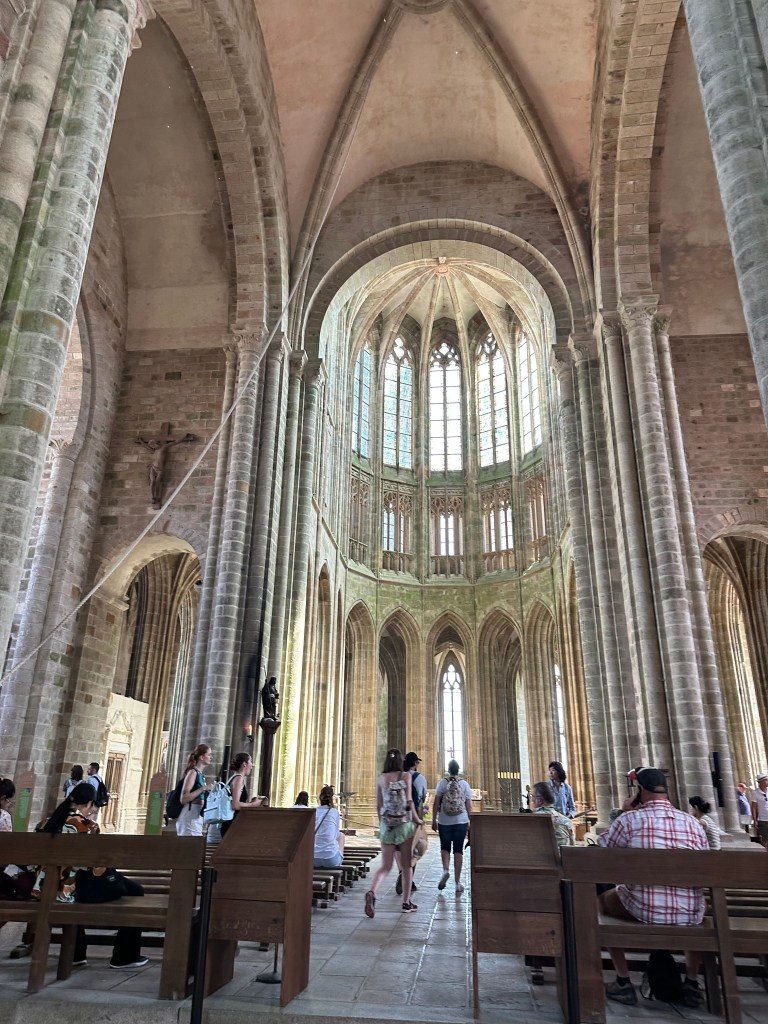
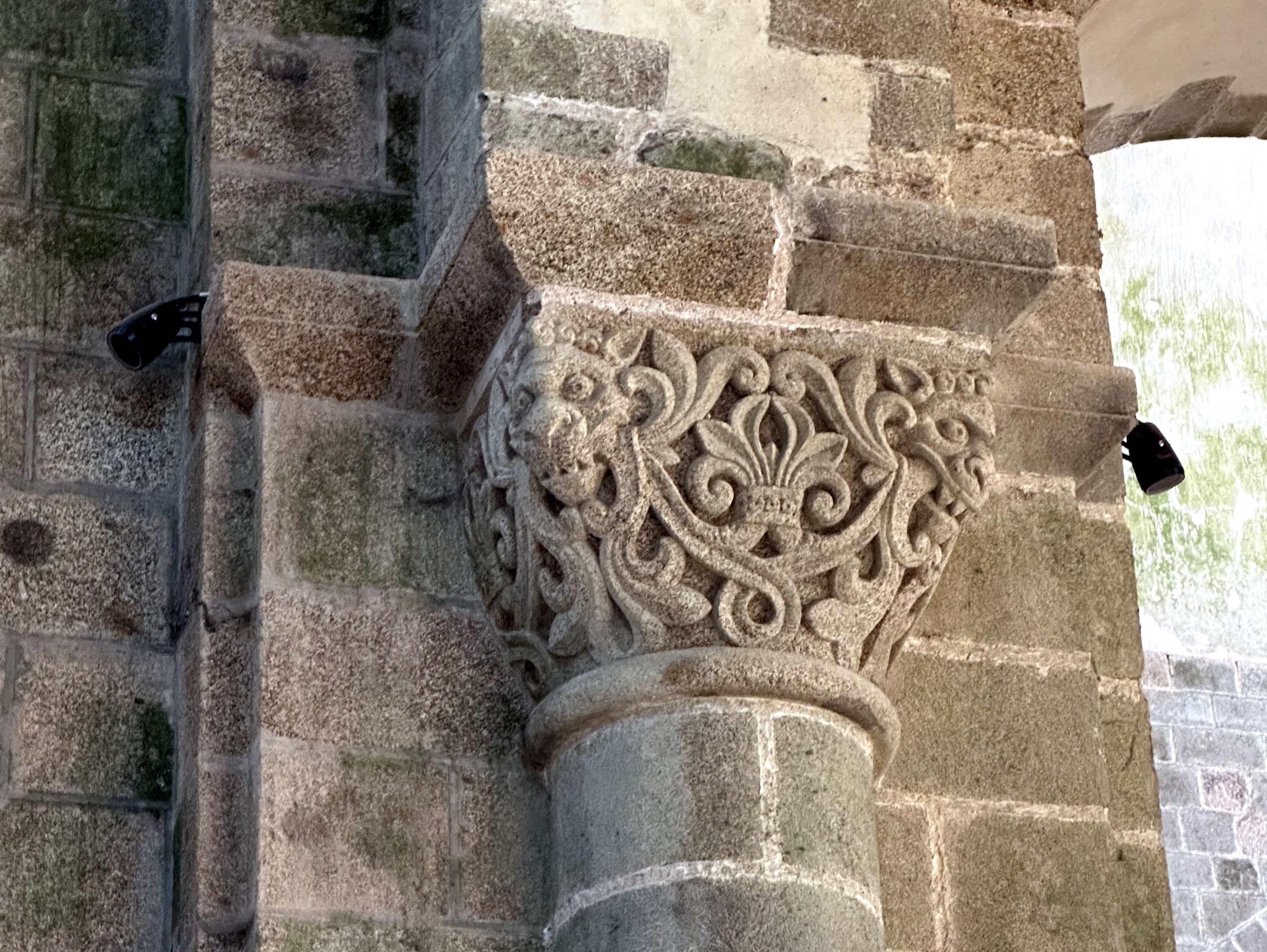
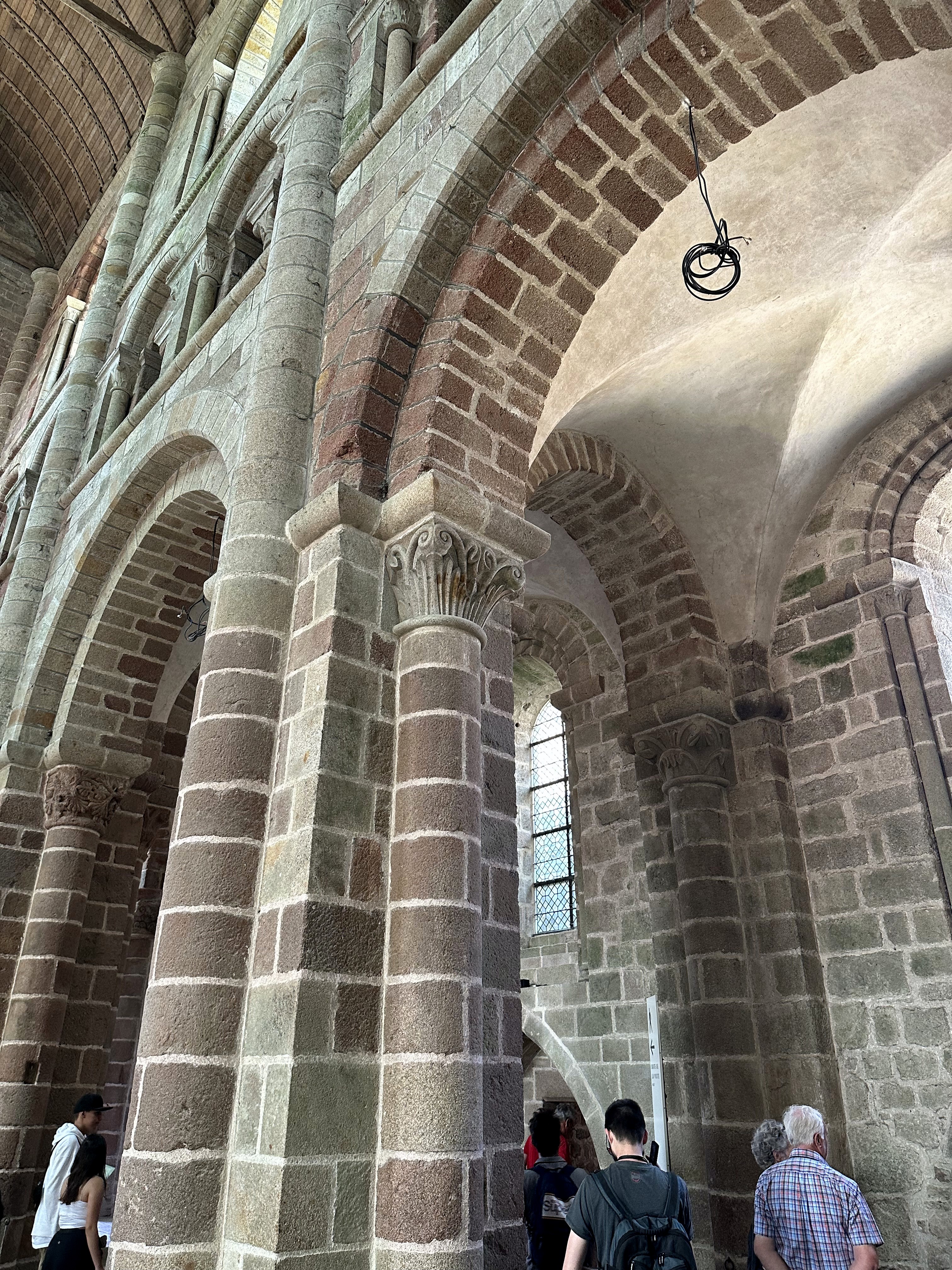
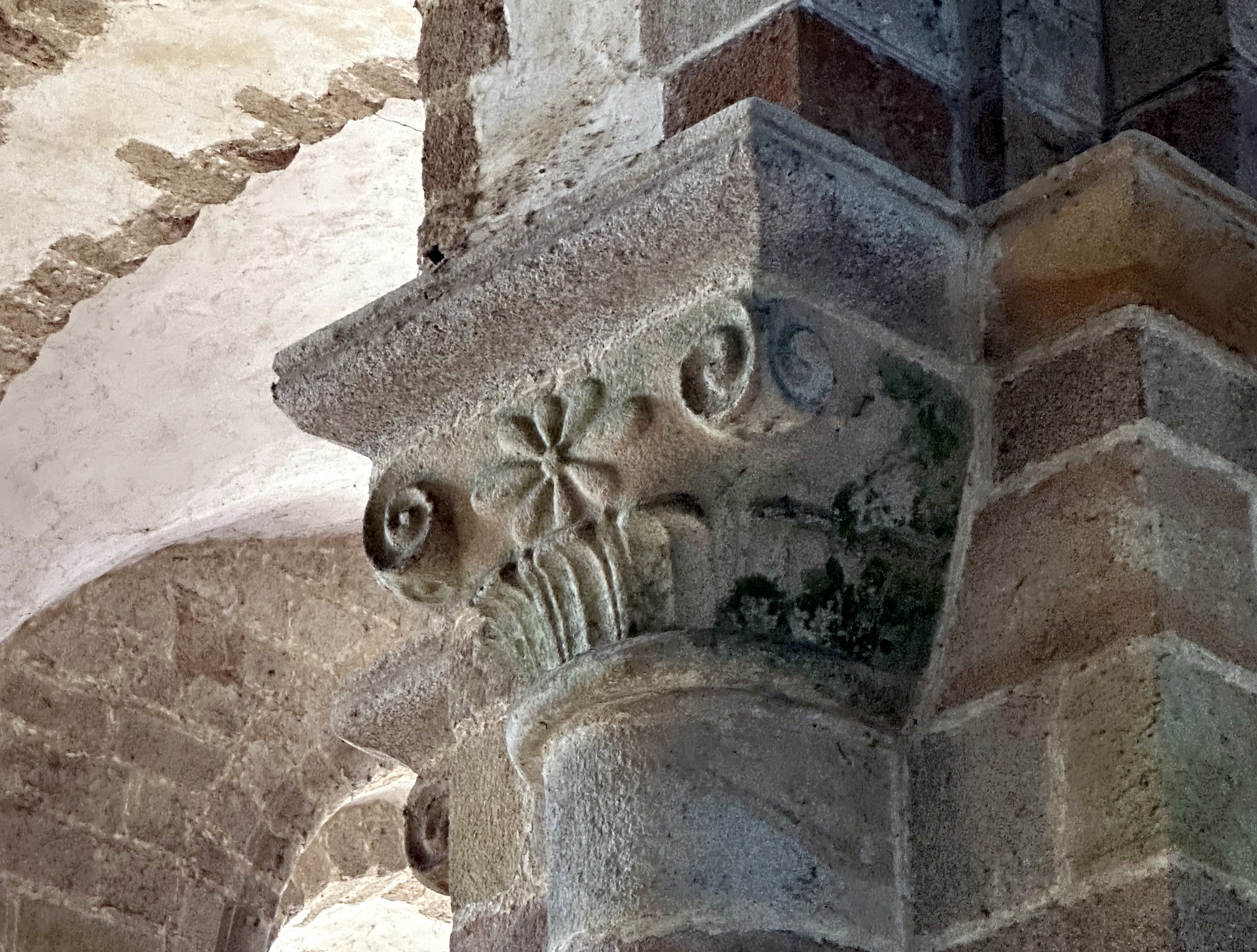
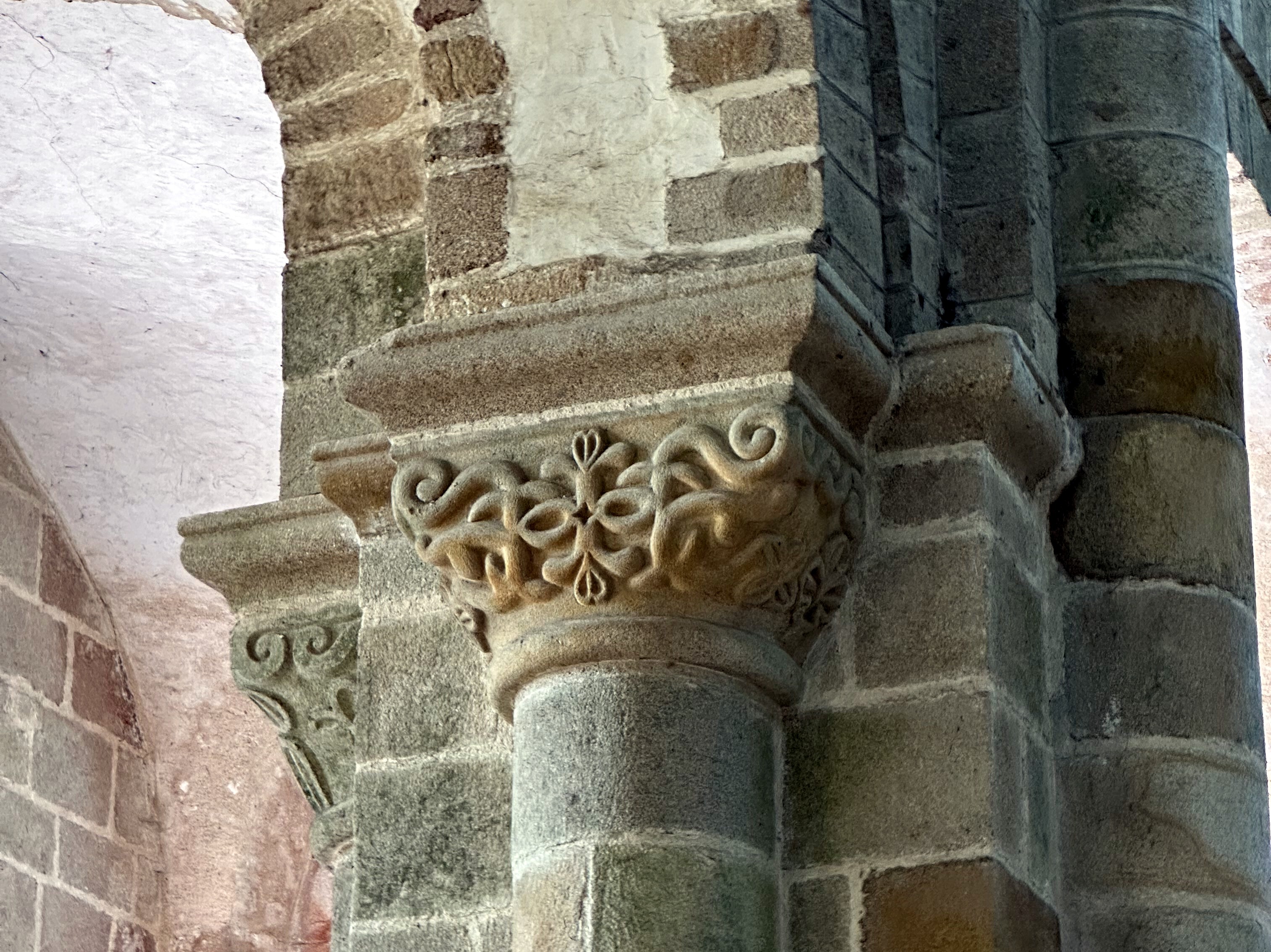
Cool capitals on the church columns:
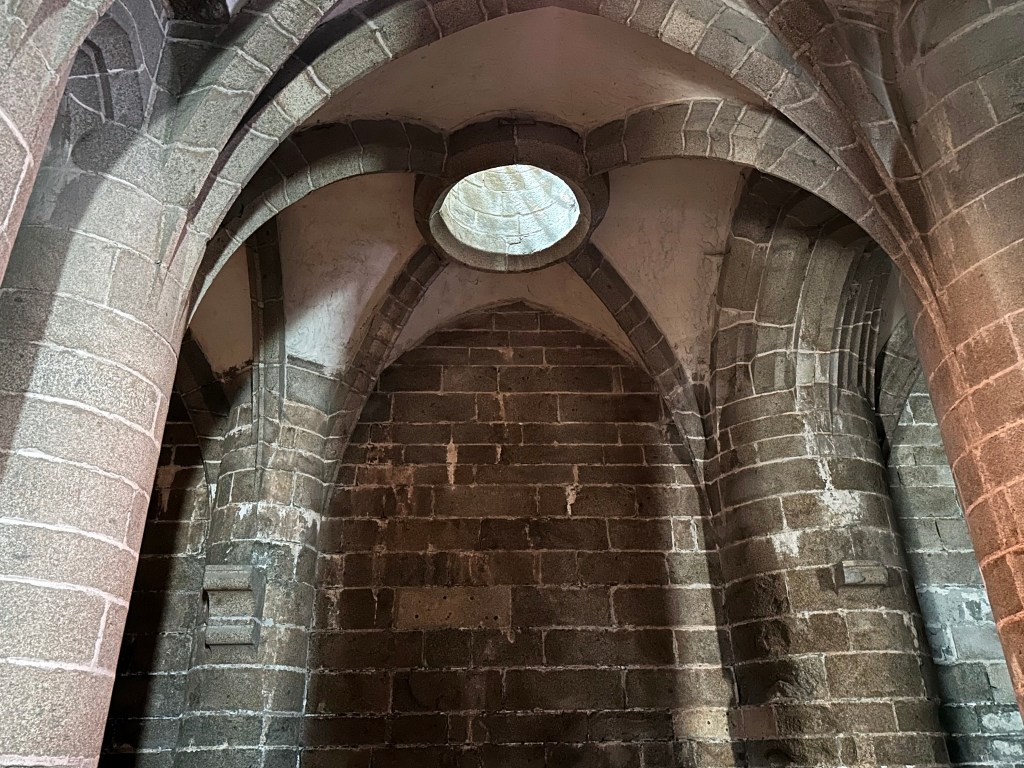
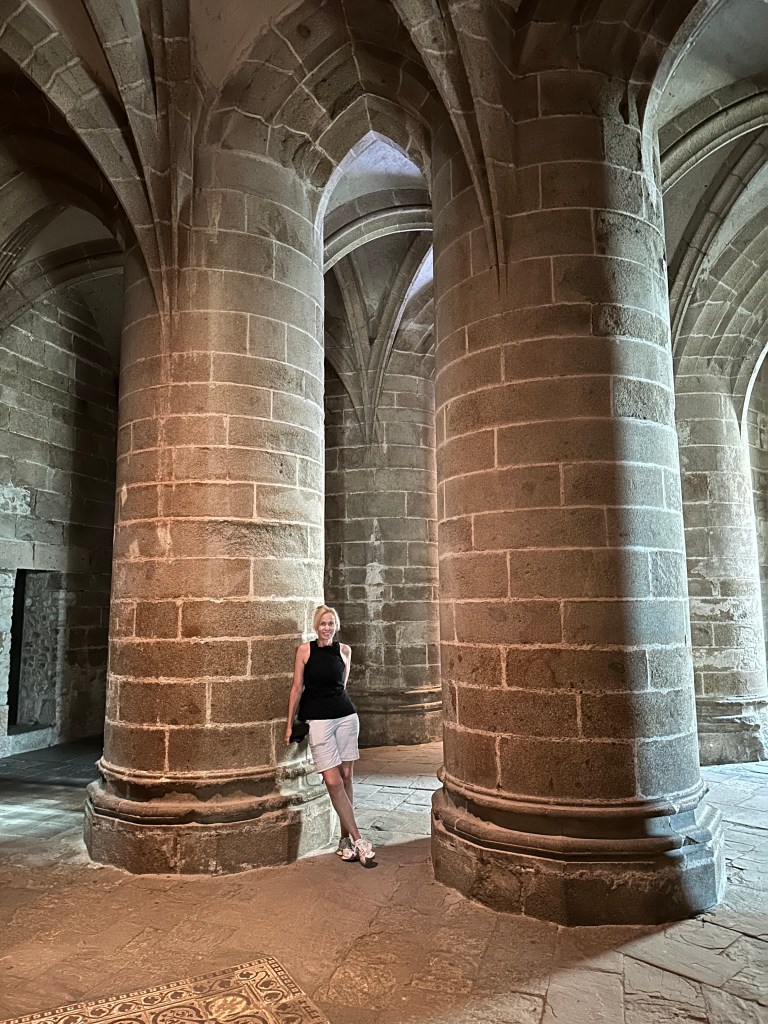
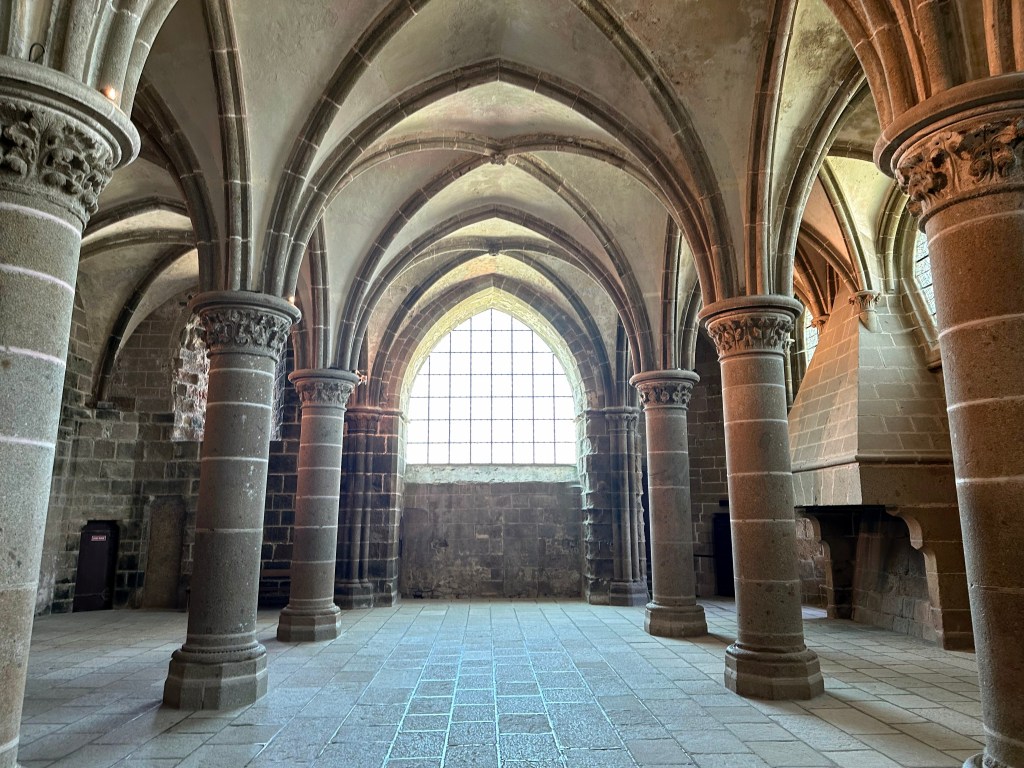
“A marvel within the “Merveille,” the cloister offers a timeless experience, between sky and sea. The Merveille is a group of Gothic buildings, built on the north side of the rock, composed of three levels, a magnificent testimony to the know-how of the 13th century builders.” (From here.)
After the French Revolution, the abbey was converted into a prison, which operated until 1863, before restoration efforts revived its religious and historic significance.
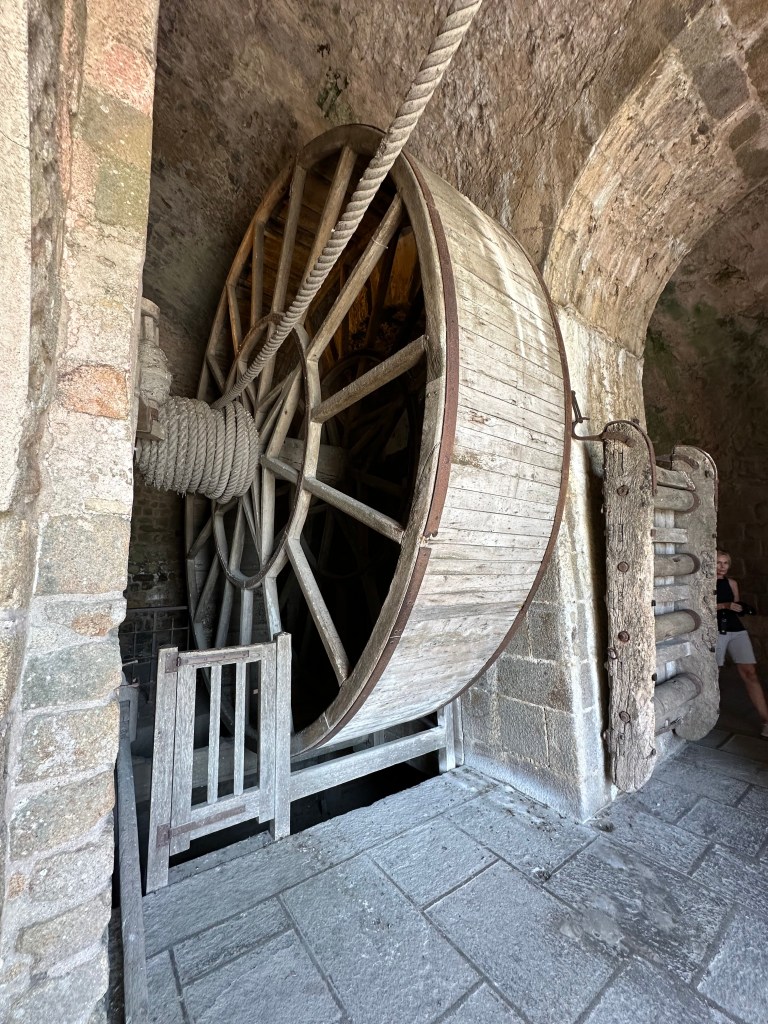
Elevator / crane:
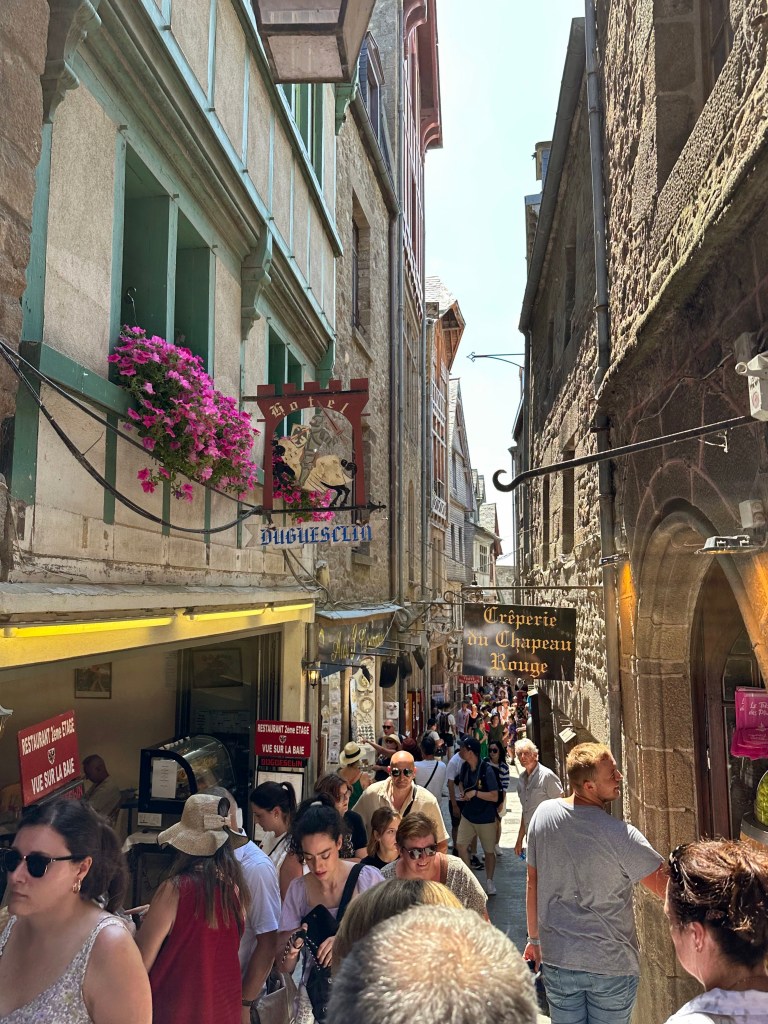
Our abbey tour concluded, we headed back through the throngs and out to our bikes.
And rode to our hotel, right at the edge of the causeway.
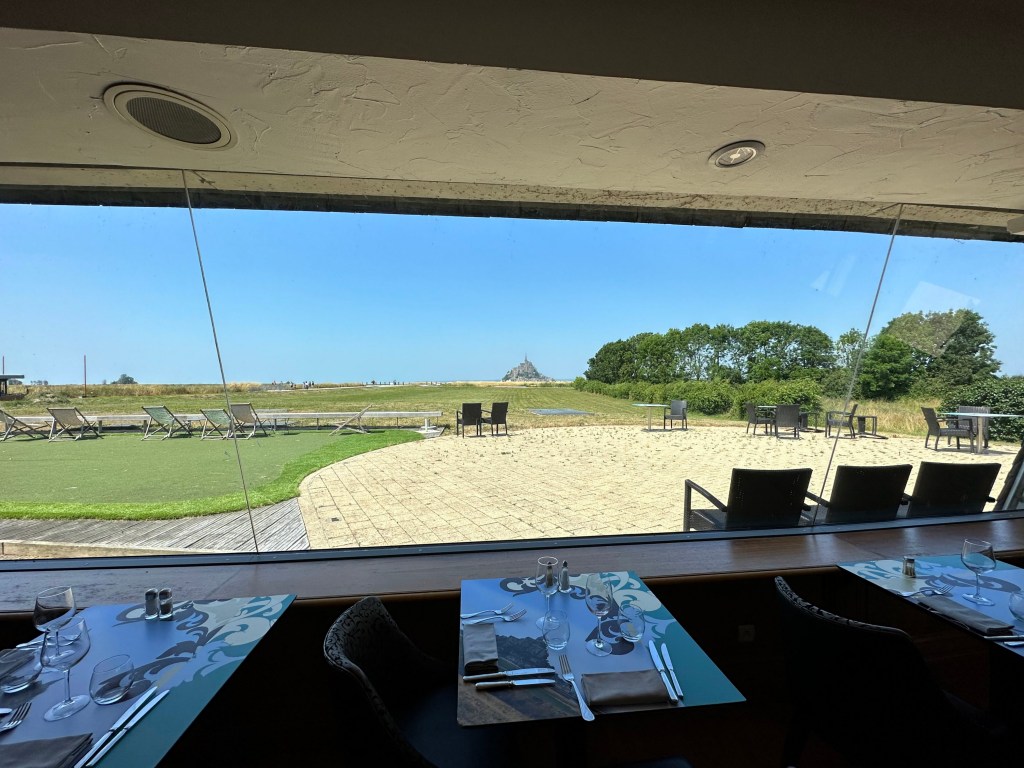
The hotel’s location was phenomenal.
Even if the hotel itself was for shite.
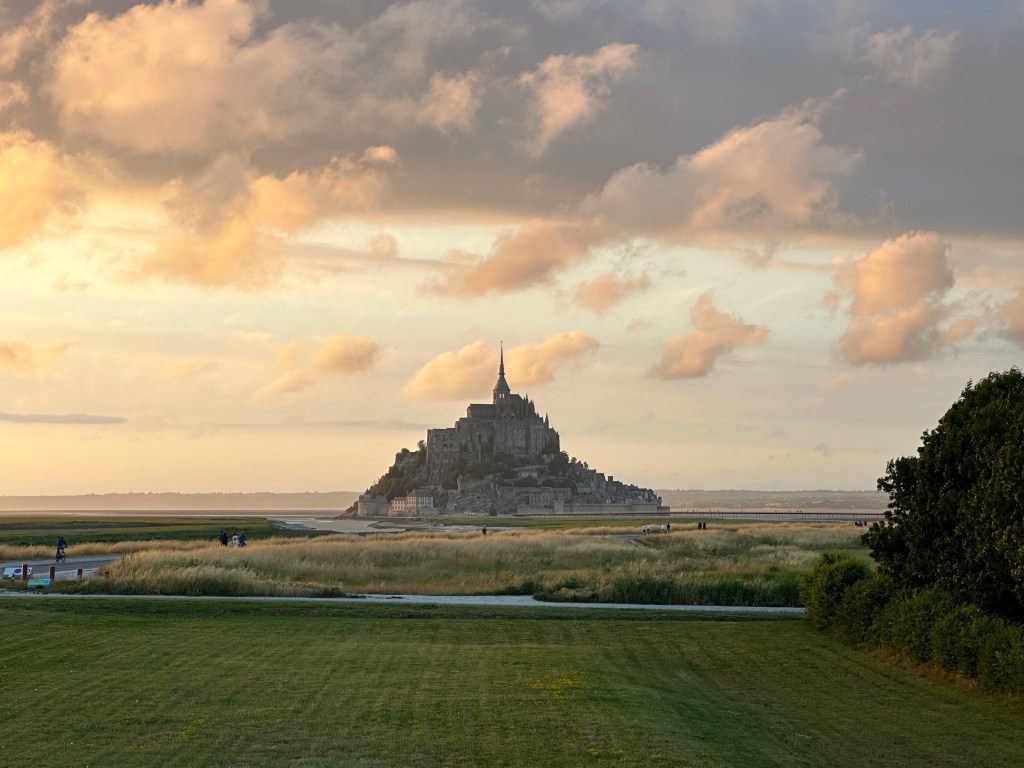
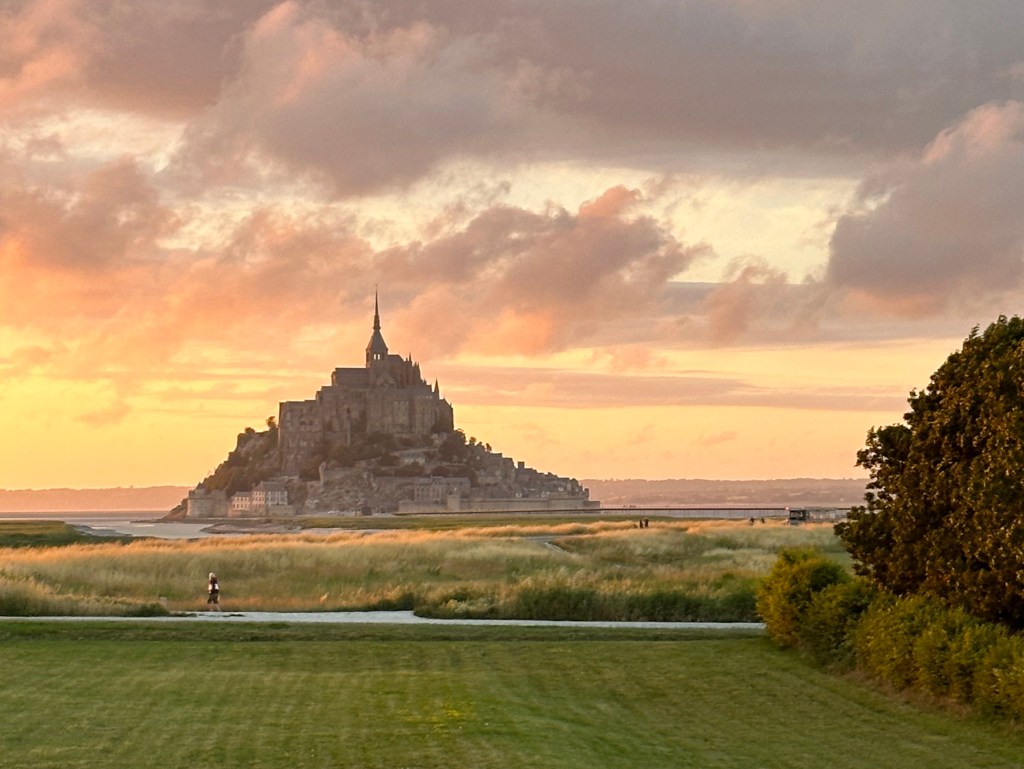
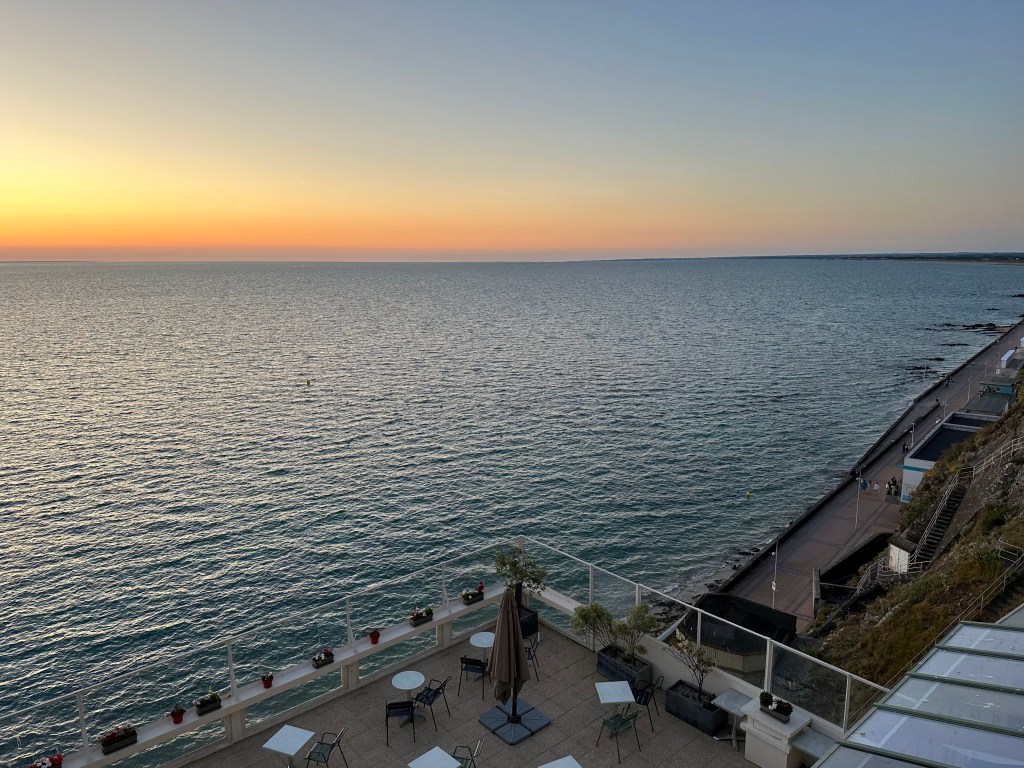
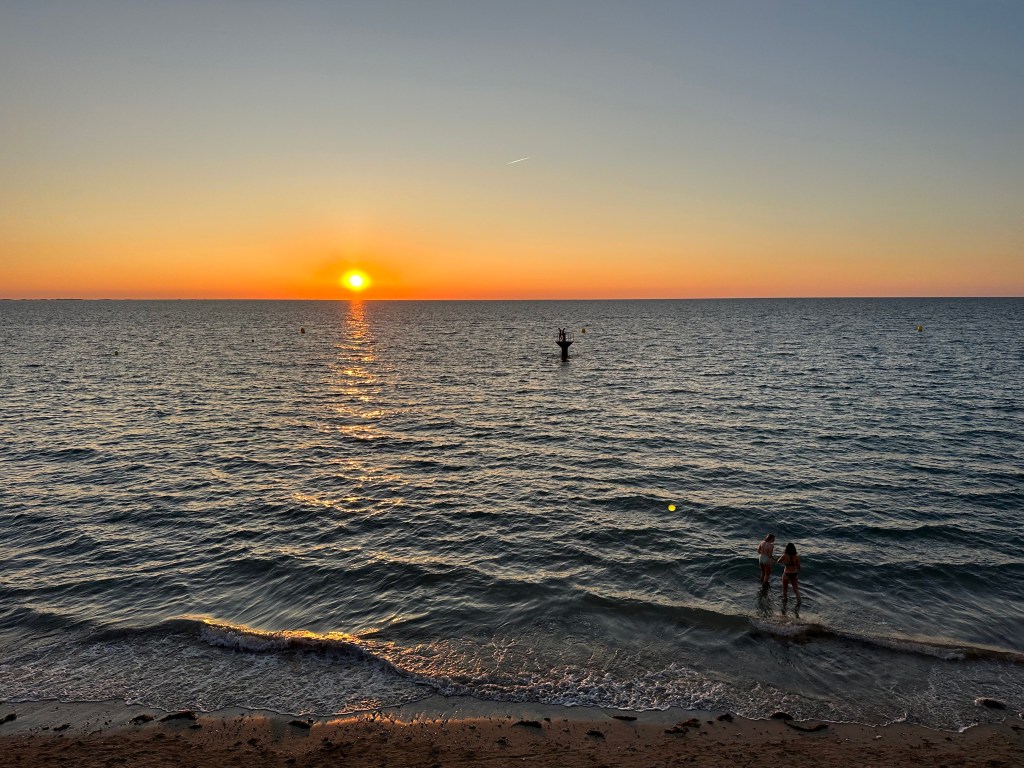
Watching the sunset from our terraces – pretty awesome.
Despite our fears, all four bikers survived the night alone and abandoned in the haunted chateau.
We woke to another perfect Normandy morning.
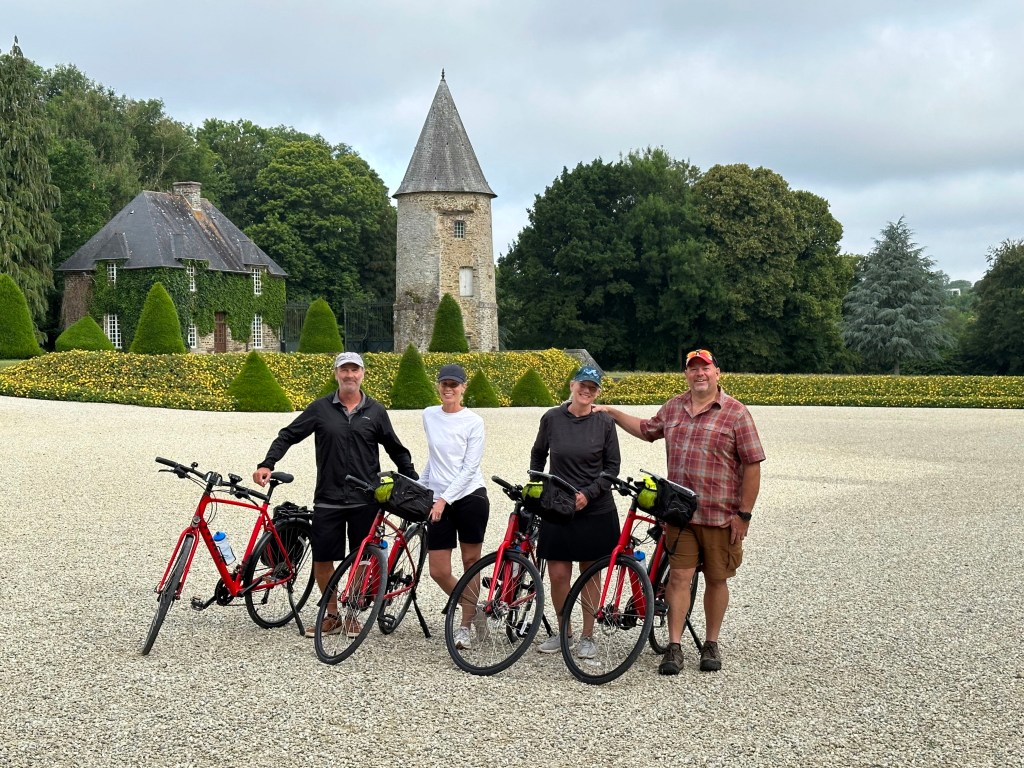
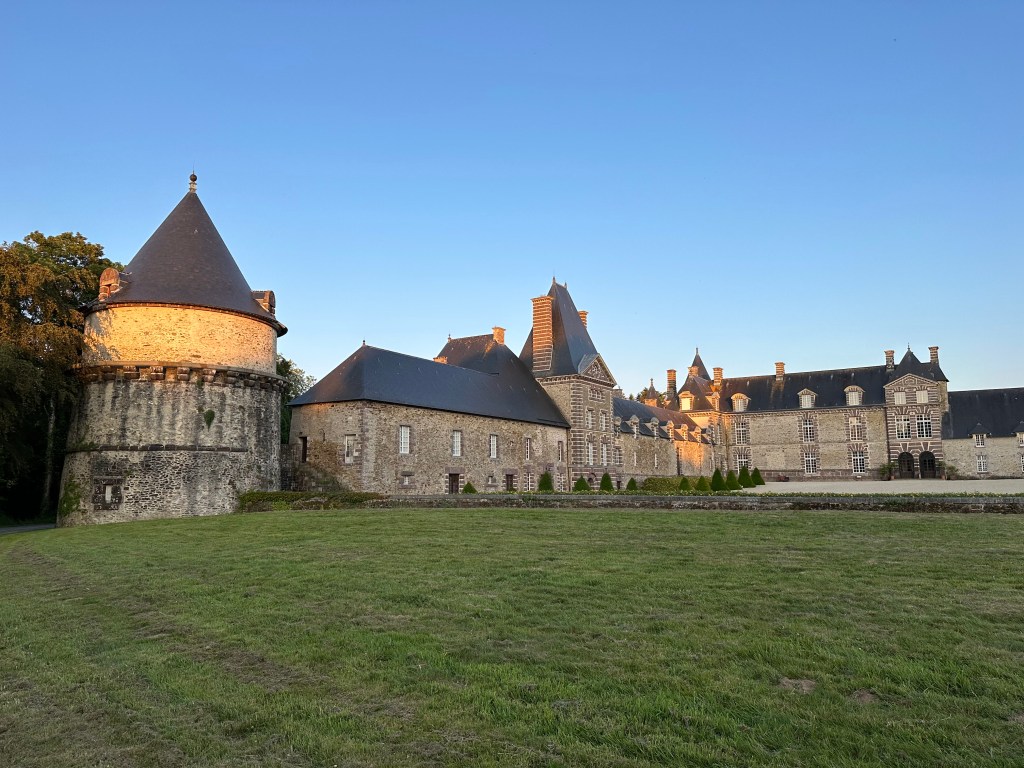
The riders prepare in the shadow of the chateau for the day’s excursion to the coast.
So long, Chateau de Canisy, you crazy gal.
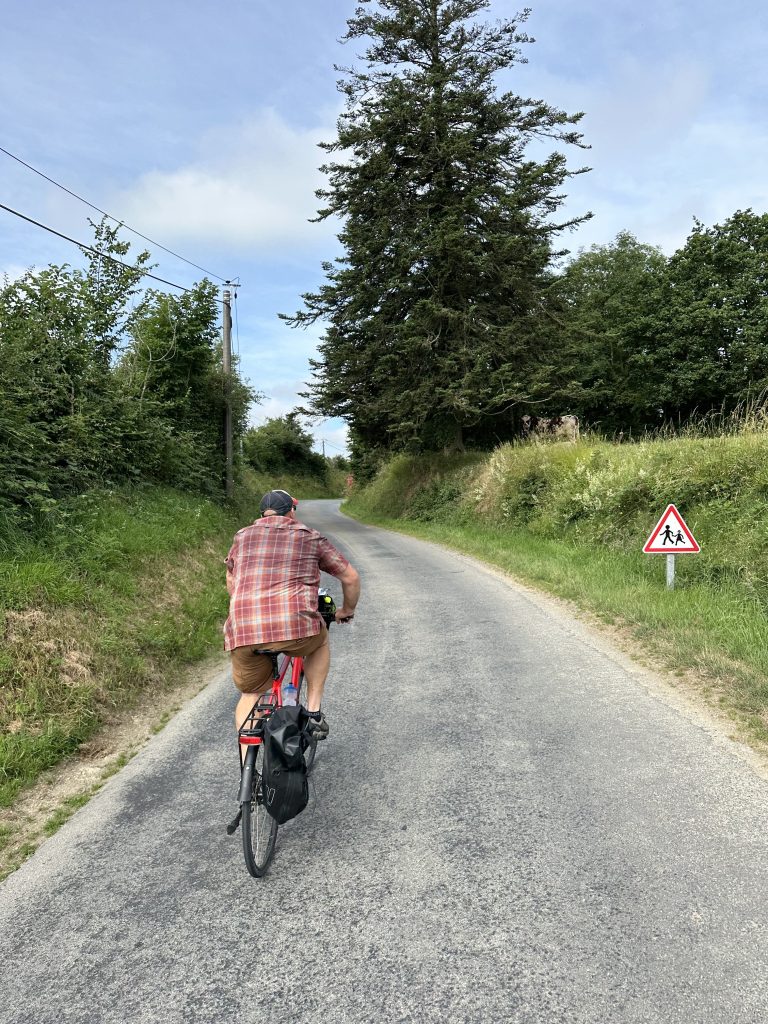
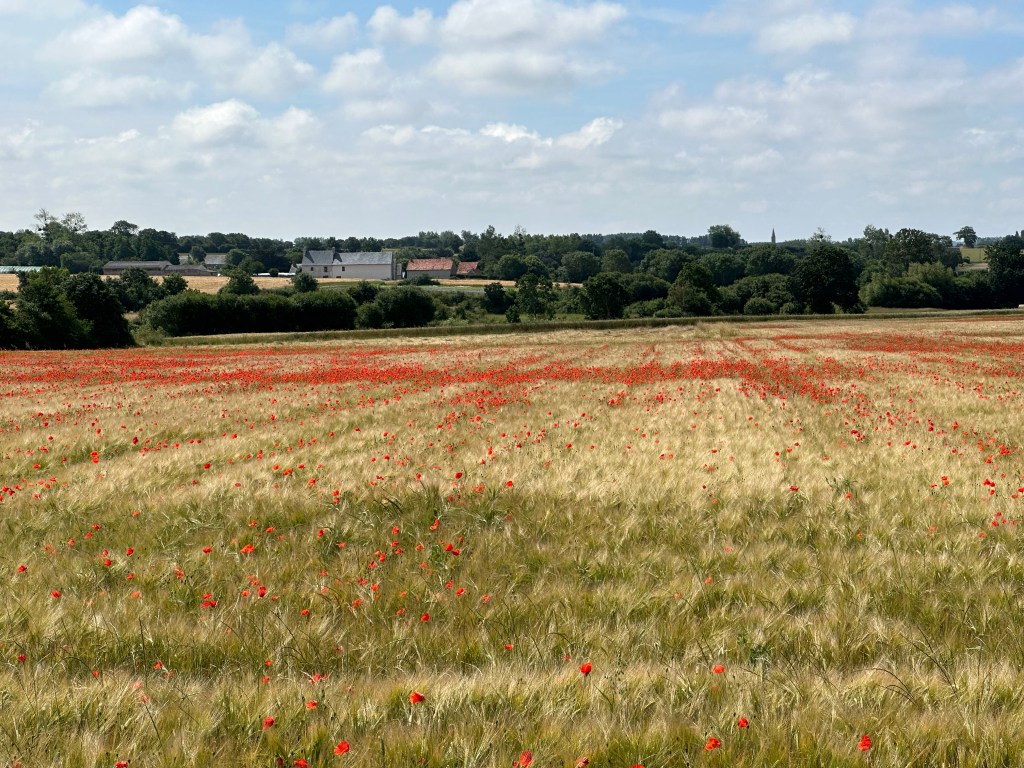
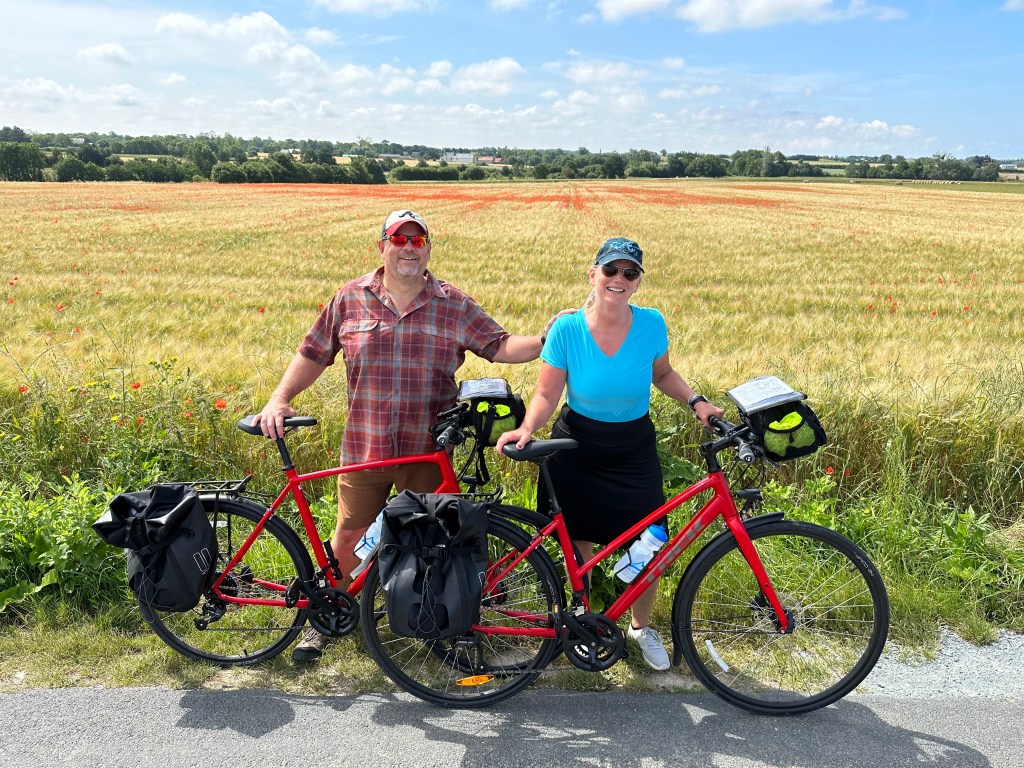
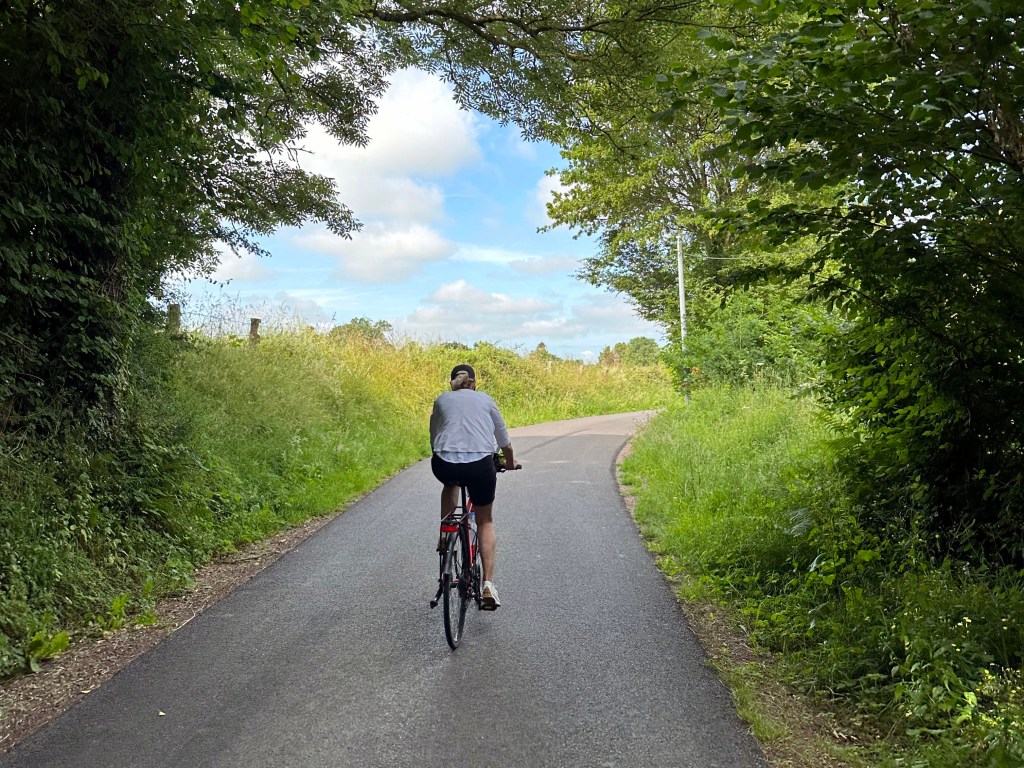
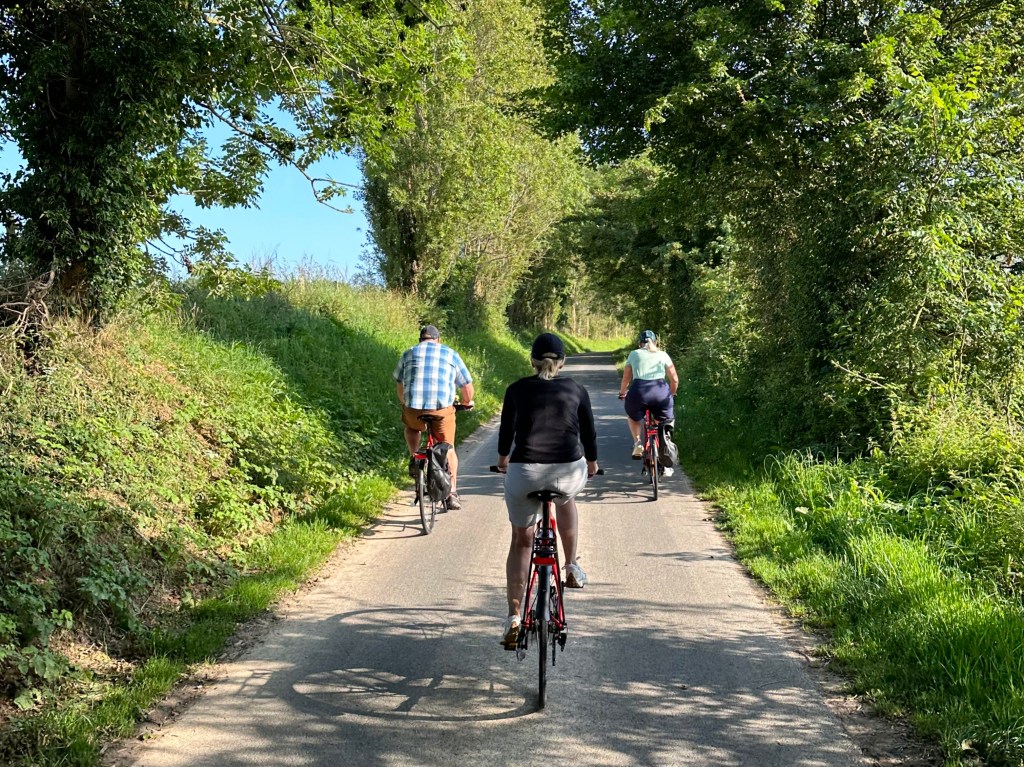
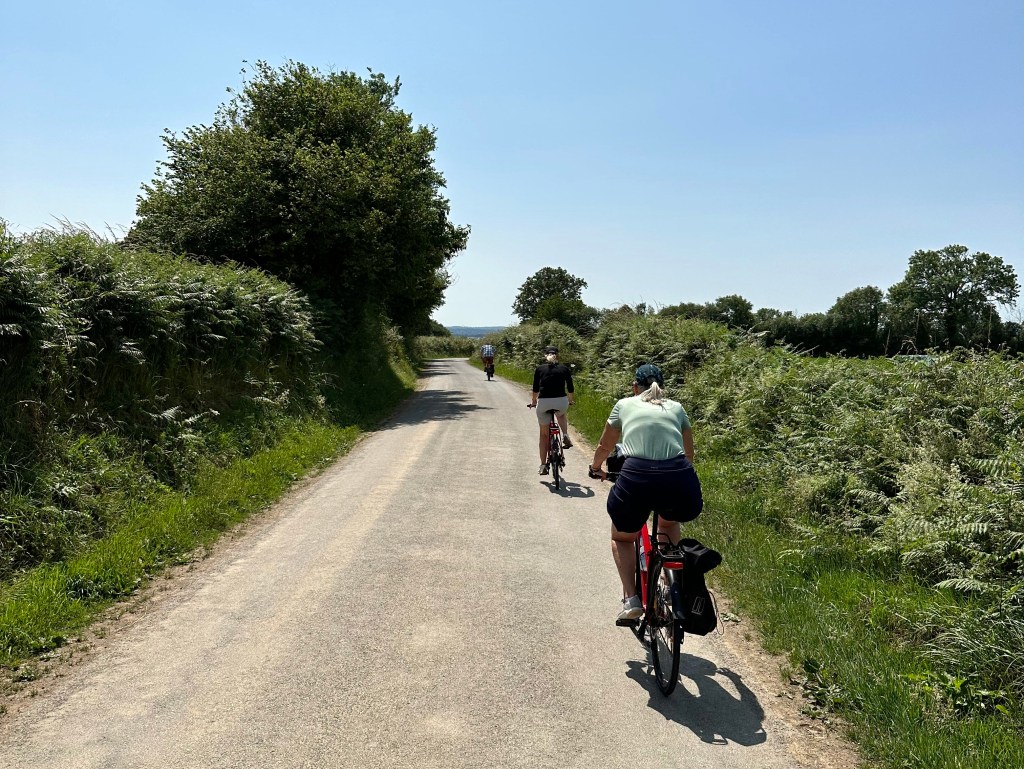
Not too much to see on the day’s ride, but nice scenery.
We actually stopped for lunch on the coast about 5 miles (if that) away from Granville, where we’d be spending the night, but didn’t take any pics there. Notably, we feasted once again on Normandy oysters, and when we asked where they were from, he hooked his thumb behind him, pointed to the shoreline about 50 yards away, and said, “right there.” Pretty awesome, as were the oysters.
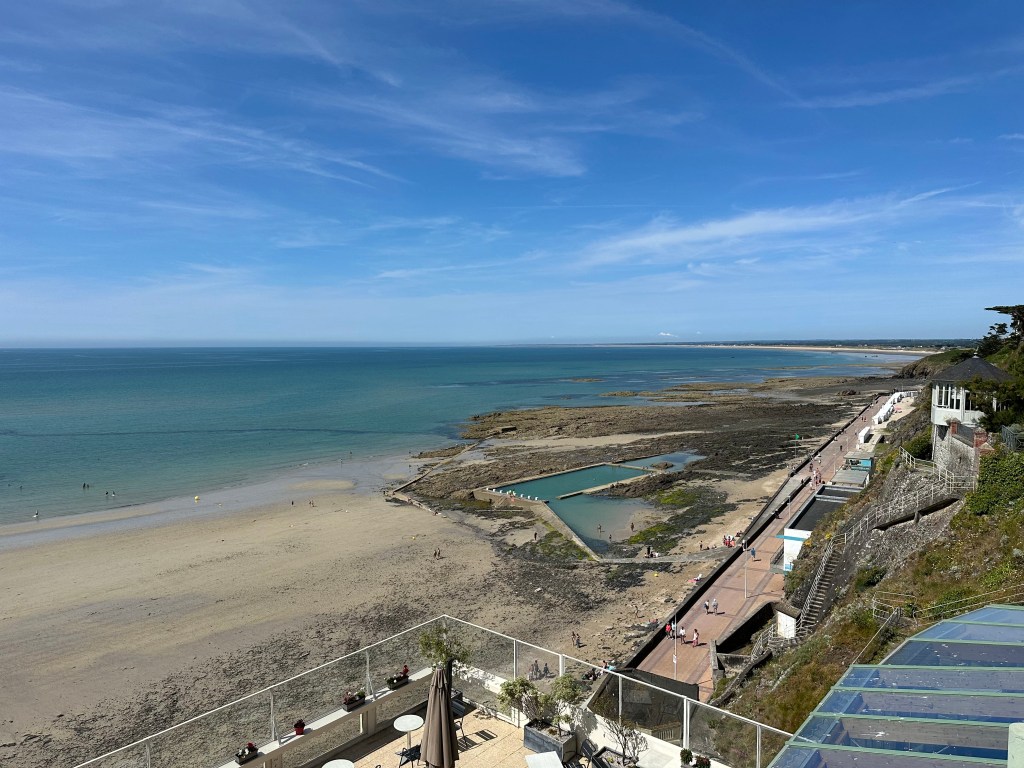
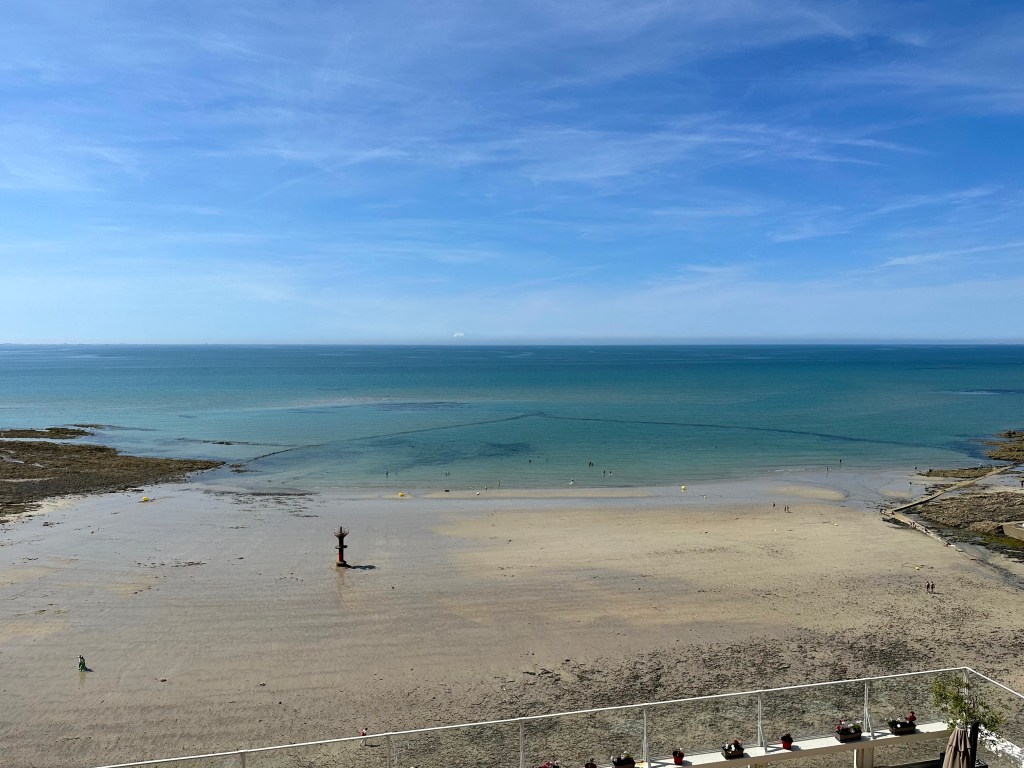
The beach town of Granville. Two items of interest here:
The first is the saltwater pool, there in the middle. Very cool; refreshed twice a day as the tide comes in and overwhelms it before heading back and and revealing the pool once again. We had a nice swim there, as well as in the ocean proper.
The second is the insane tidal extreme. Granville boasts some of the most dramatic tides in France. The combination of the bay’s shape, the shallow seabed, and tidal forces of the Atlantic-facing English Chanel produce tidal ranges of up to 46 feet.
To wit, the same view at high tide:
Low tide:
High tide.
And these two:
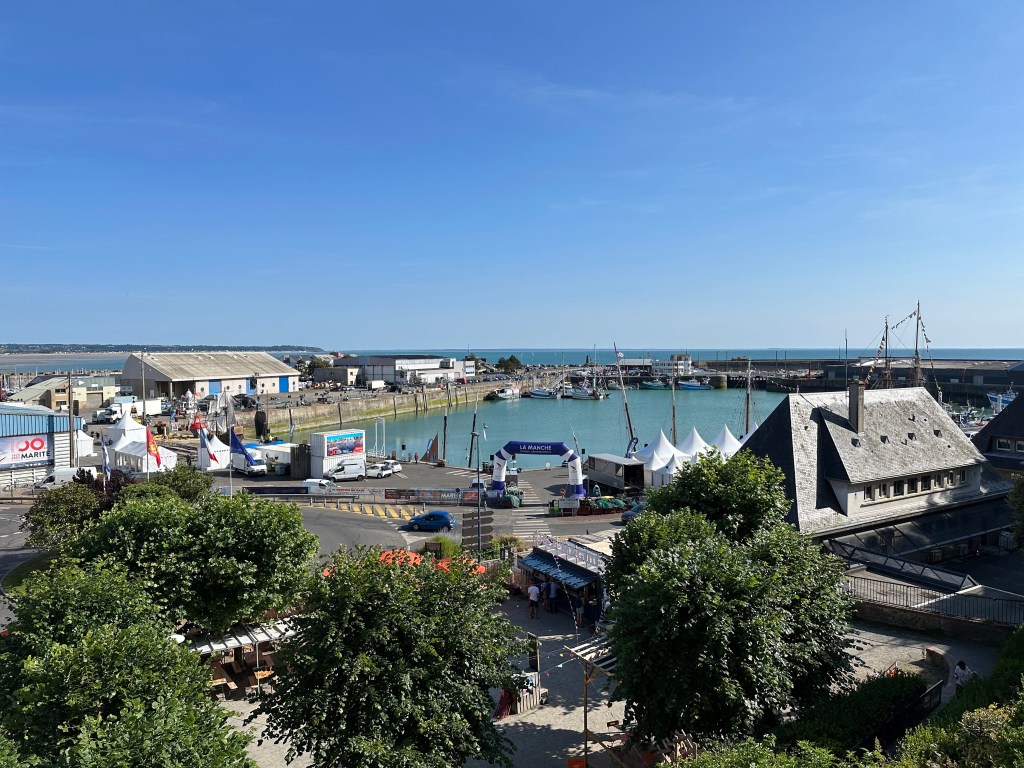
The little port area of the town, where some festival offered the opportunity for a bunch of beers on picnic benches in a tent.
A little entertainment by the locals:
On the road the next day:
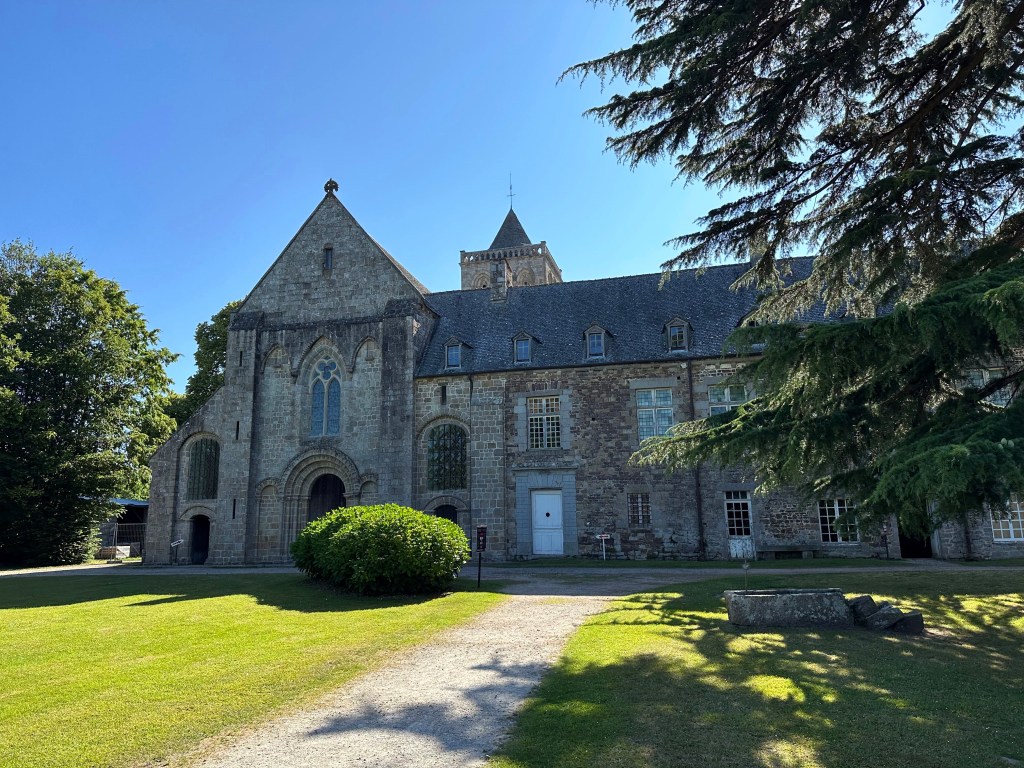
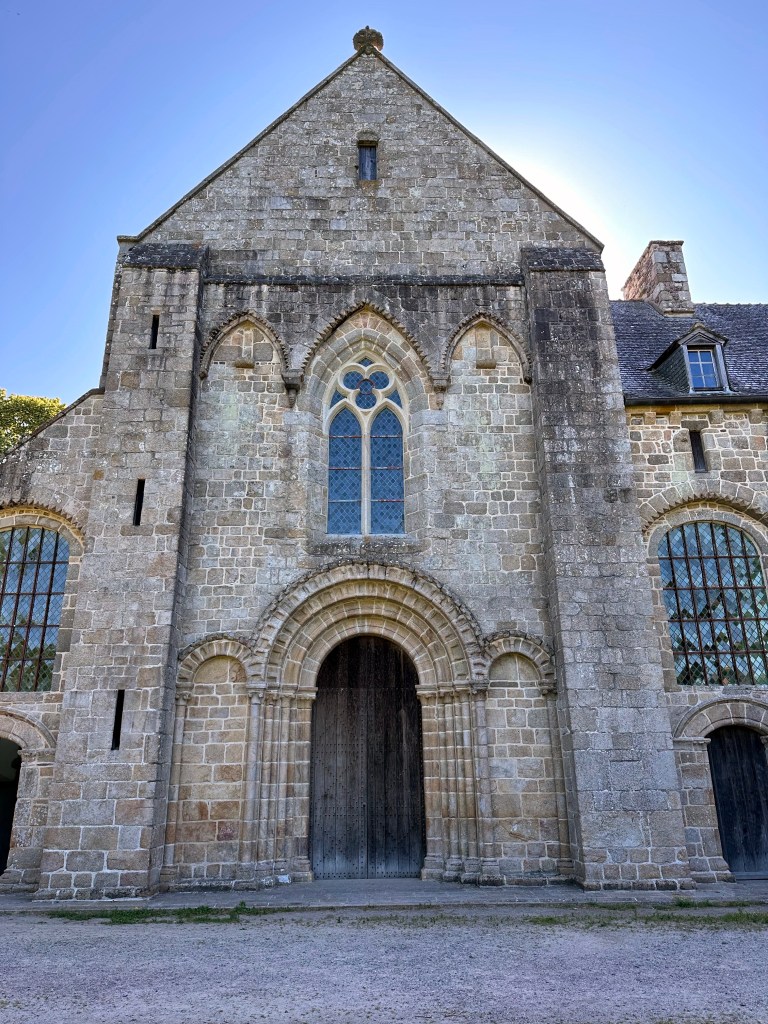
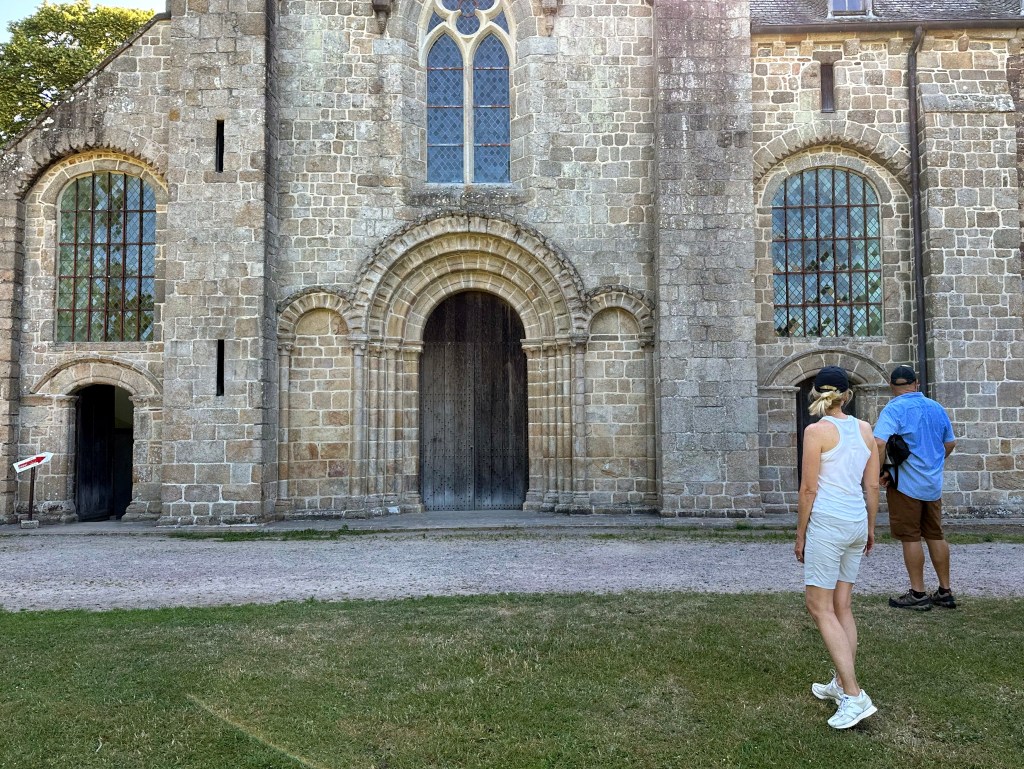
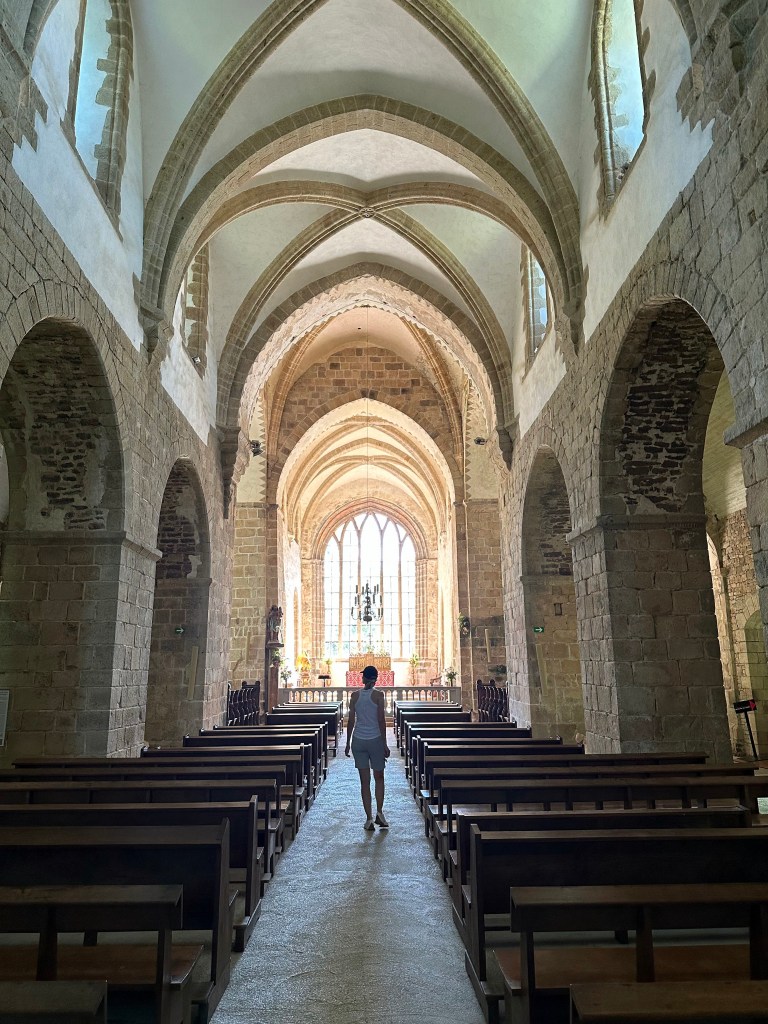
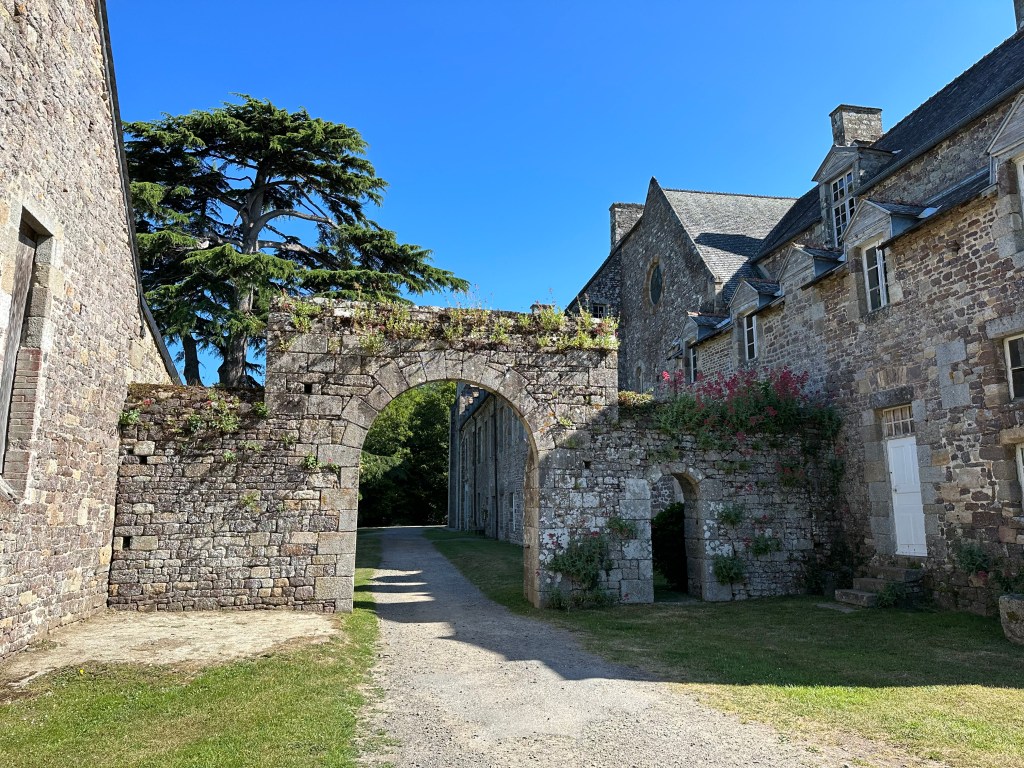
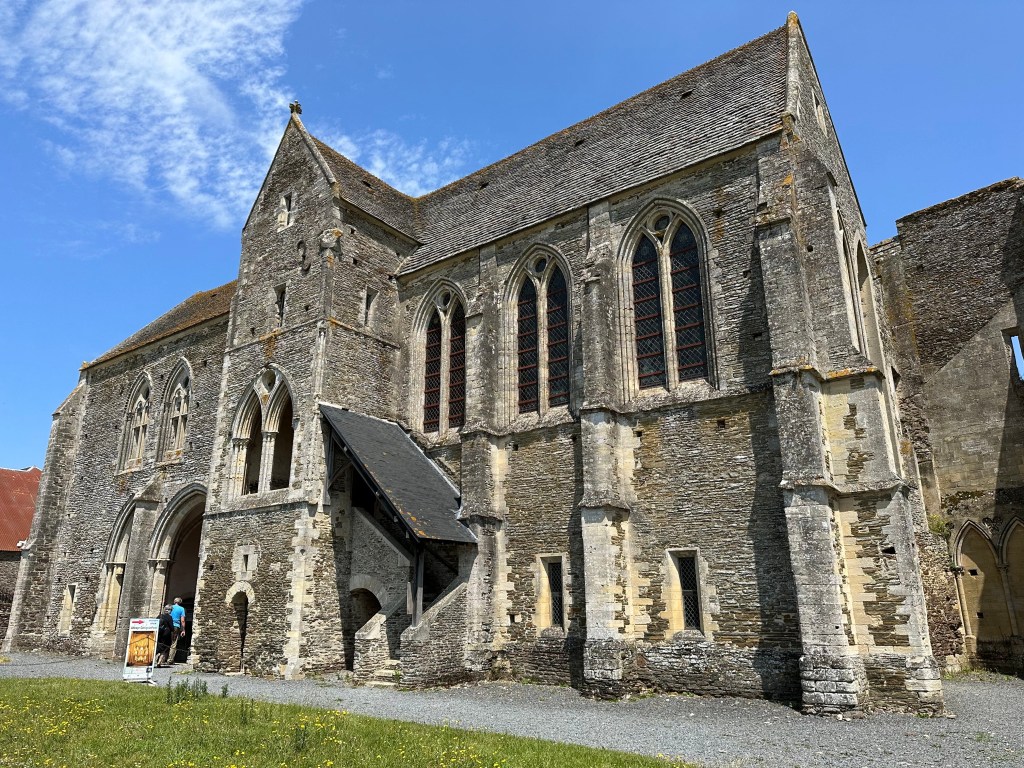
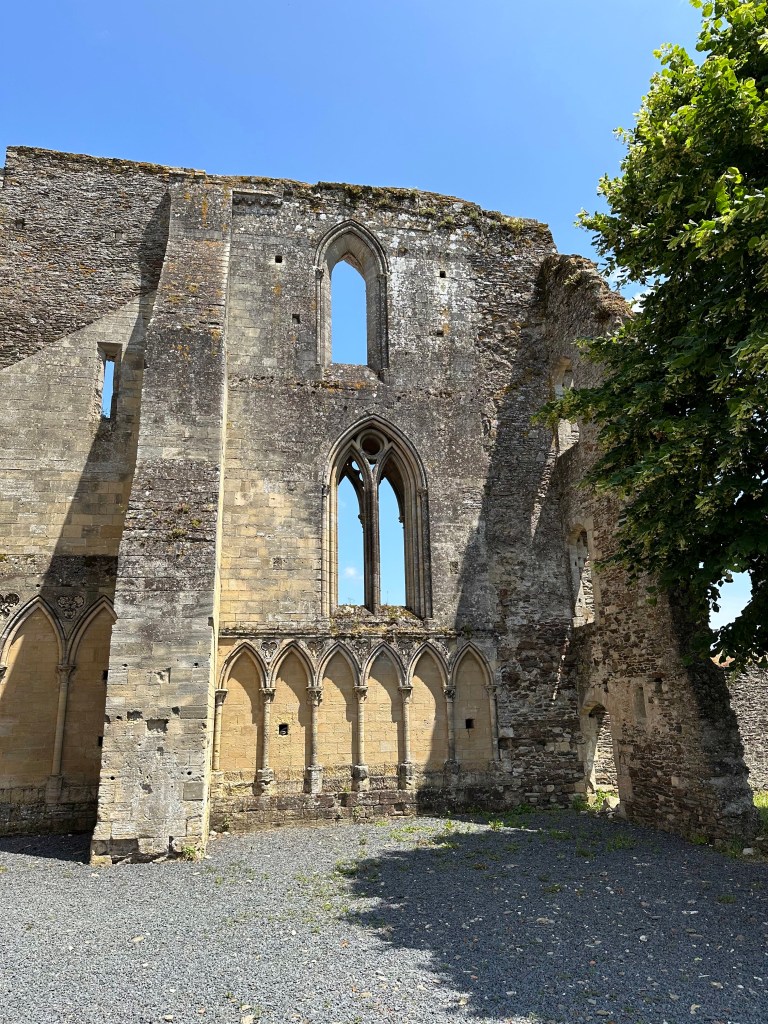
First stop, Abbey de Lucerne.
The abbey itself was founded in 1143, but in a different location that was too remote and too damp, apparently. So they reestablished it here in 1164.
The abbey was partly destroyed during the Hundred Years’ War, then restored in the 15th century.
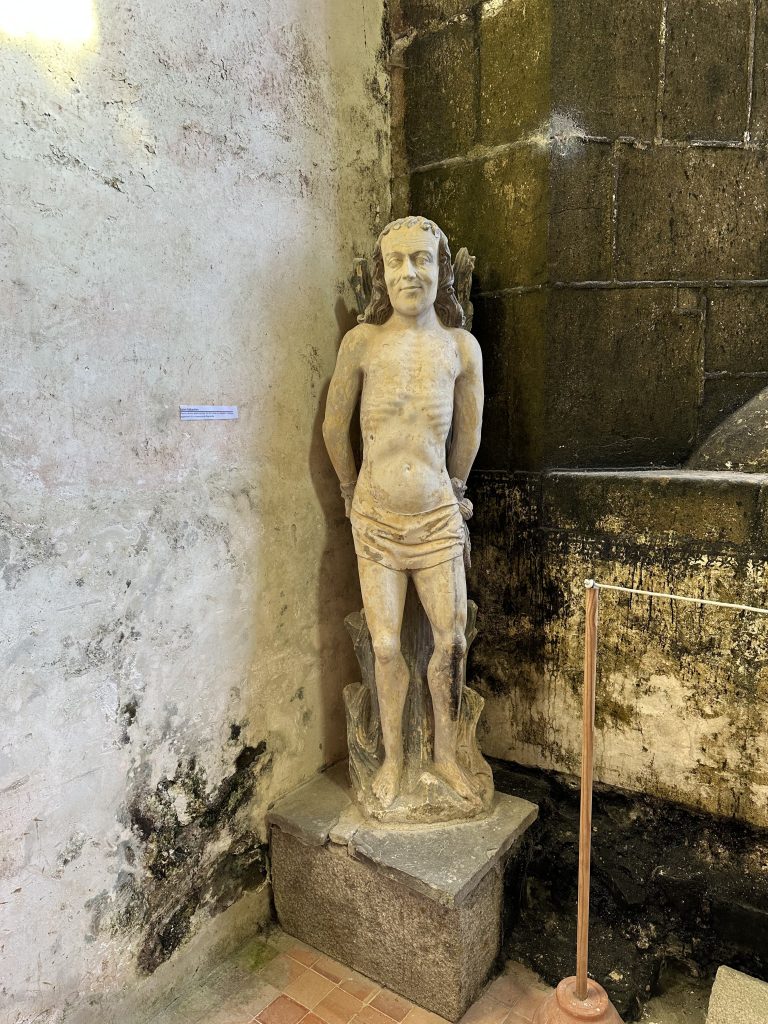
The abbey is home to this rather smarmy little 16th-century depiction of Saint Sebastian, who was martyred under Emperor Diocletian in the 3rd century.
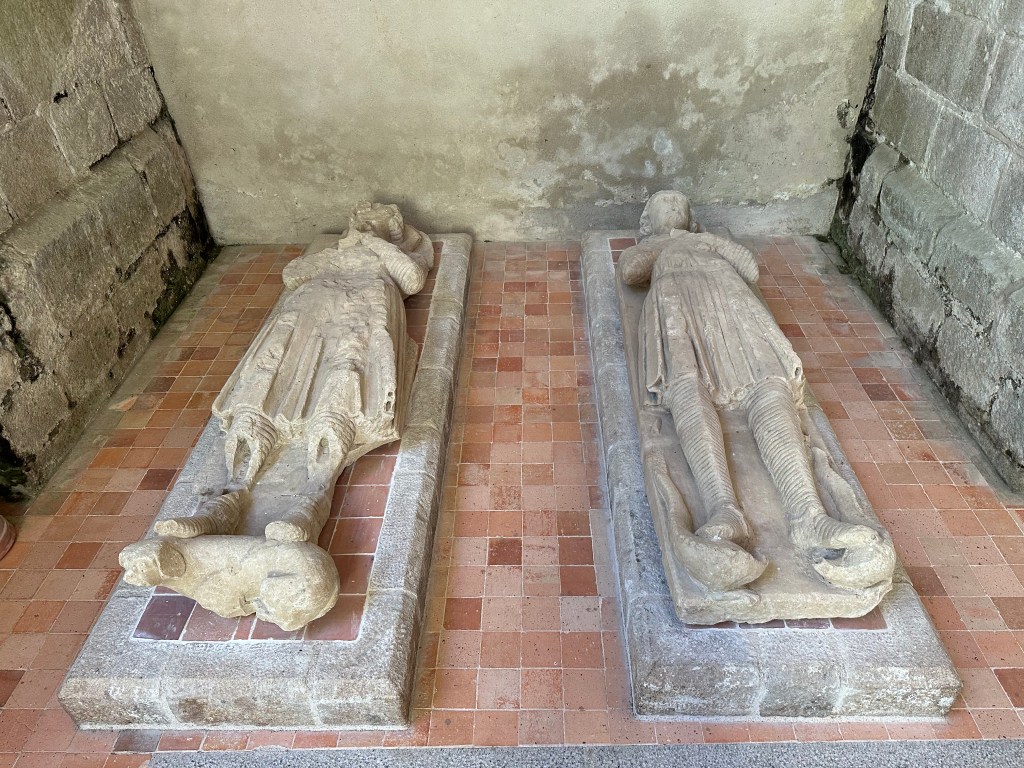
On the left, a recumbent effigy of Guillaume de Saint-Jean Limestone from the first half of the 13th century unearthed during archaeological excavations of the church’s northern chapels in 1990. He financed the construction of the abbey in the 12th century and was then buried here. The dog lying to the right at his feet is a symbol of fidelity, obedience, and gratitude.
O the right, a recumbent effigy of Hasculphe de Subligny from the 13th century, also unearthed during archaeological excavations of the church’s northern chapels in 1990. His feet rest medieval salamanders, a creature believed to be an elemental being linked to fire, and also the emblem of Francis I, which we encountered during a previous French bike trip in the Loire Valley.
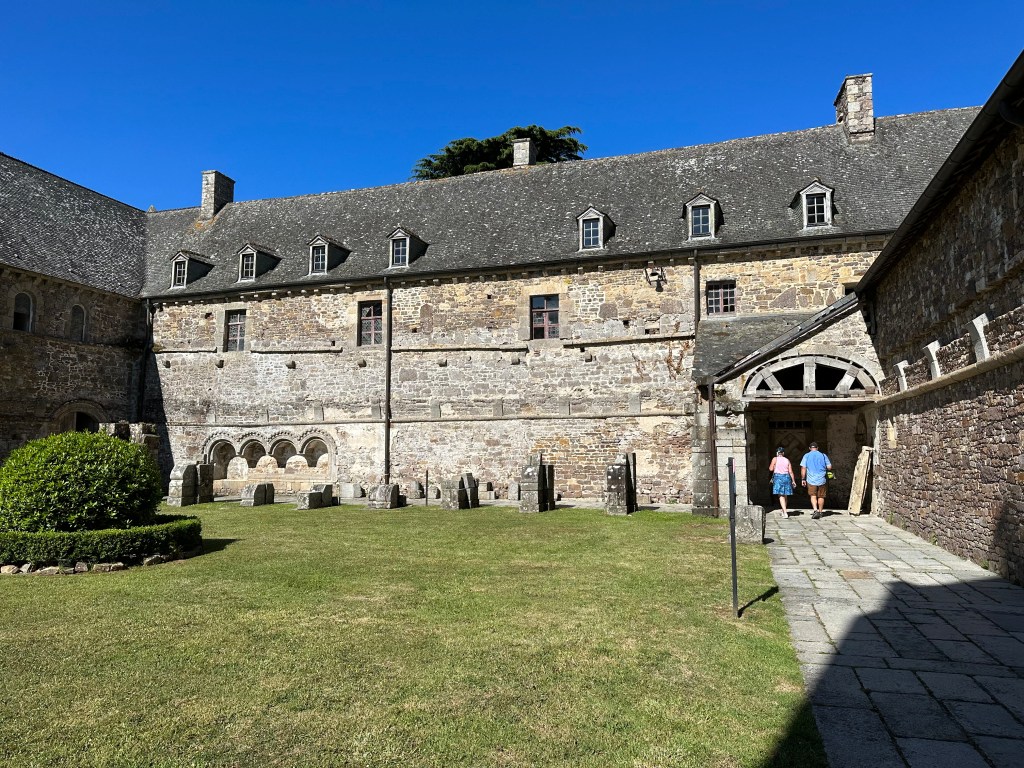
The abbey was sold as national property during the French Revolution.
And then transformed into a cotton spinning mill,
and then a limestone sawmill.
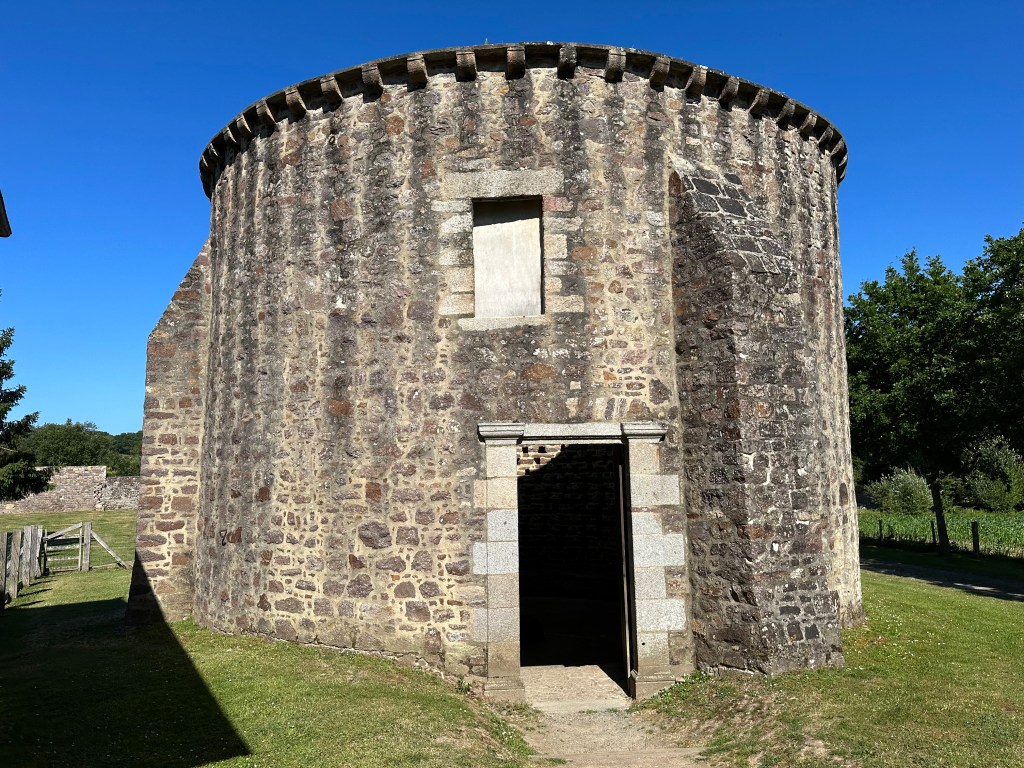
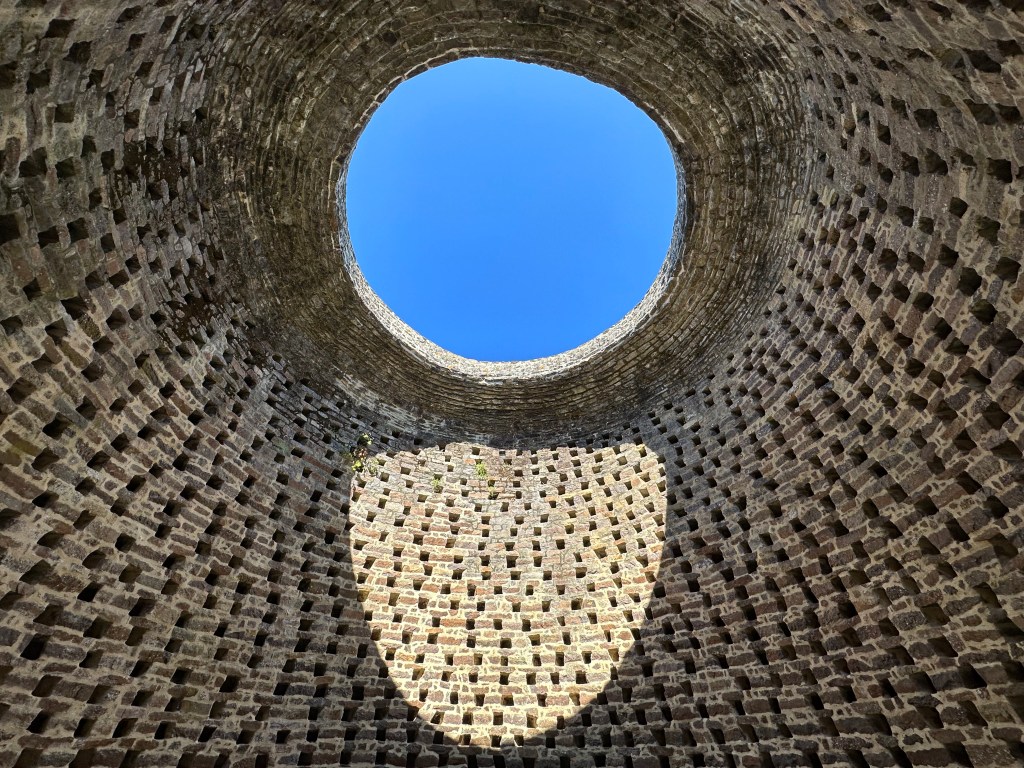
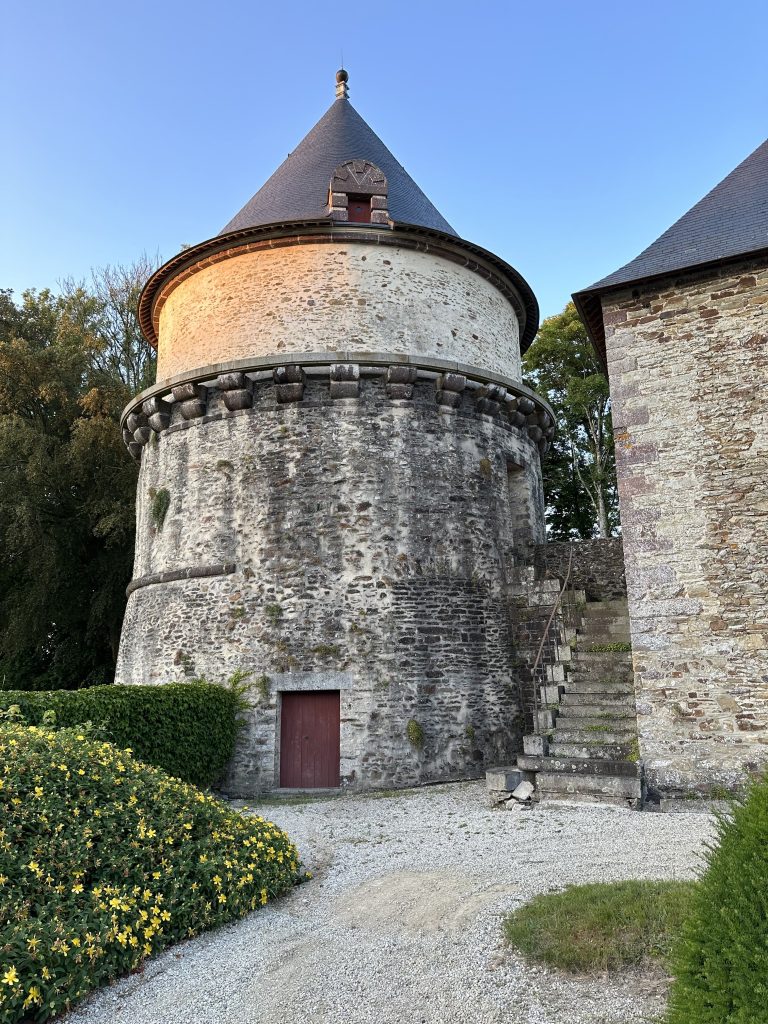
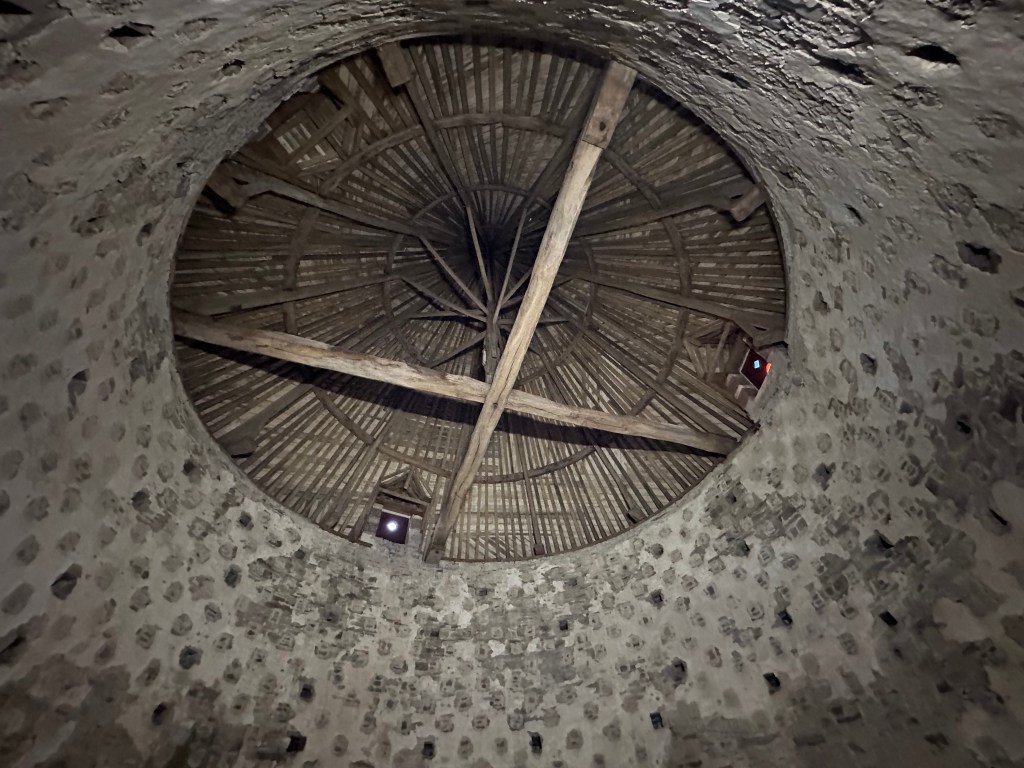
Cool-ass dovecote:
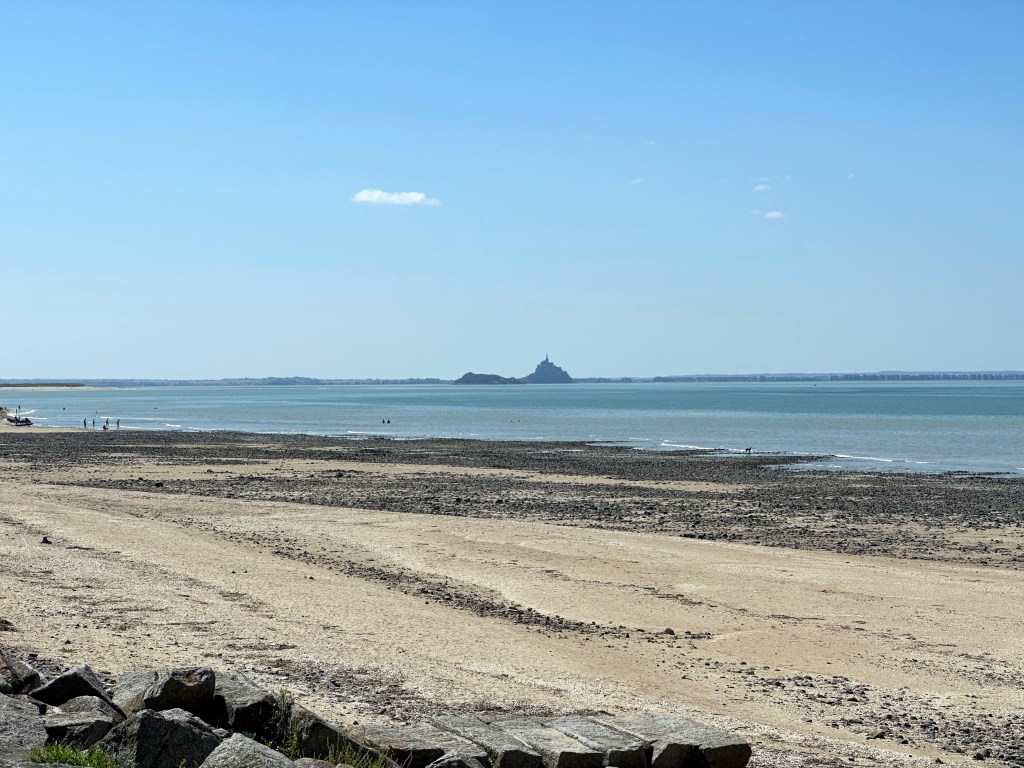
Reaching the coast again, we get our first glimpse of our objective the next (and final) day – Mont Saint Michel.
It would be with us on and off for the next 2 days of biking.
And there are pilgrims that depart across the tidal plain (which becomes boot-sucking mud when you get our further) each day:
Heading back inland to our destination for the evening. . .
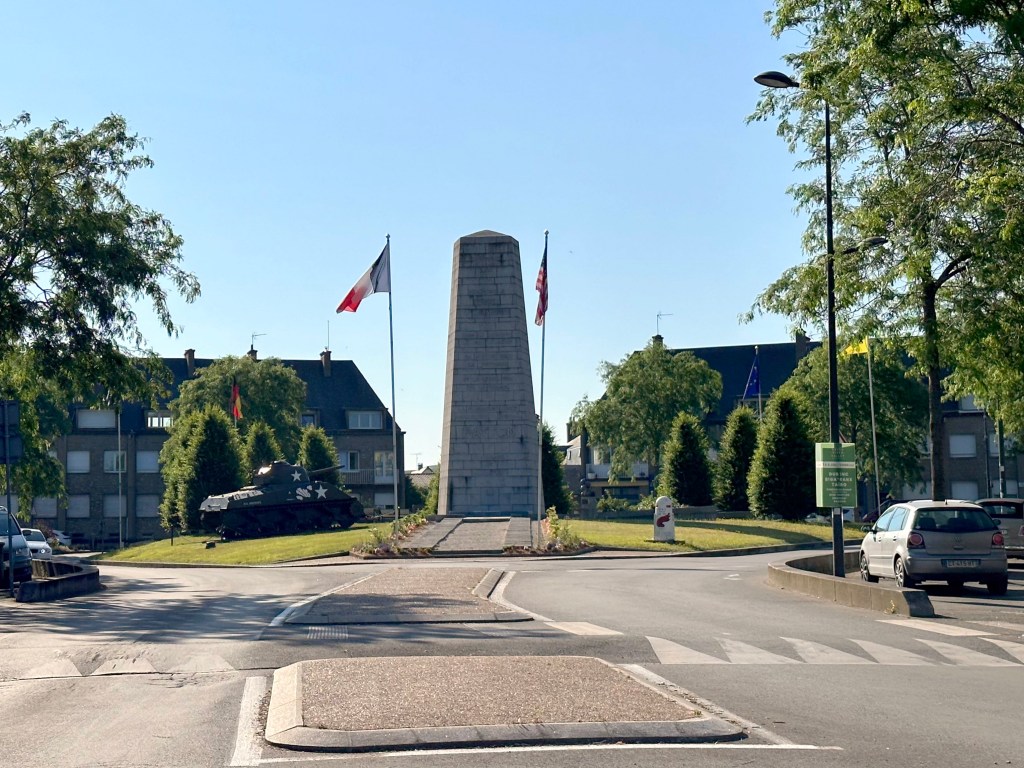
Avranches. The liberation of Avranches during WWII was led by Patton and began on the very auspicious day of July 31 (1944).
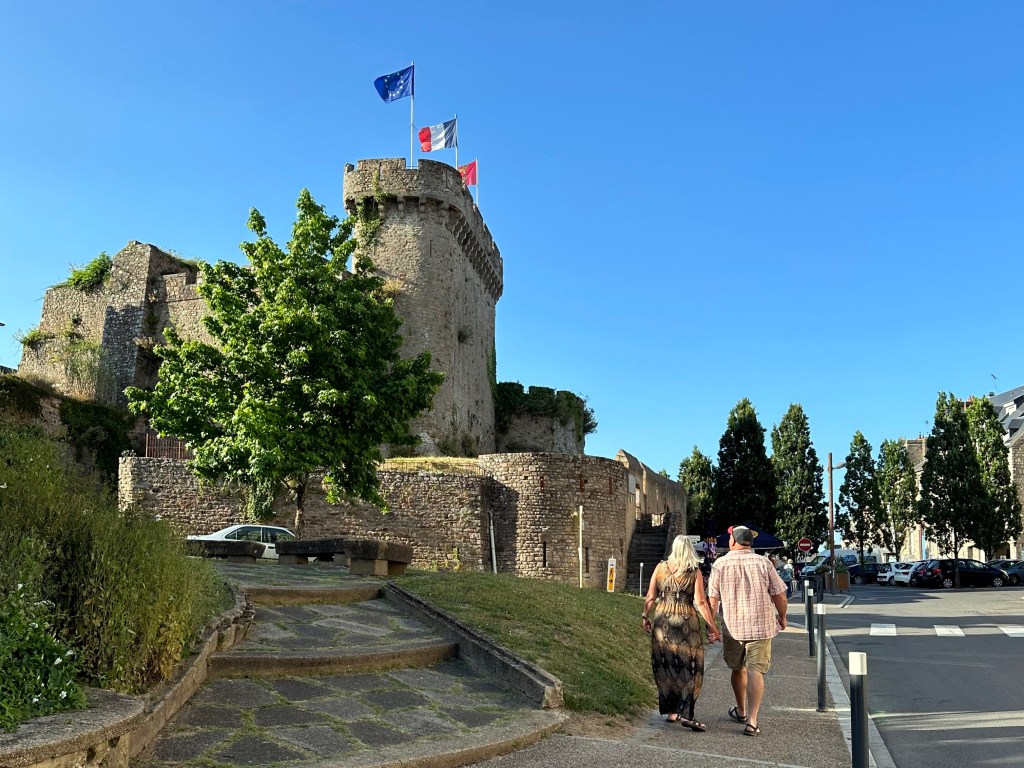
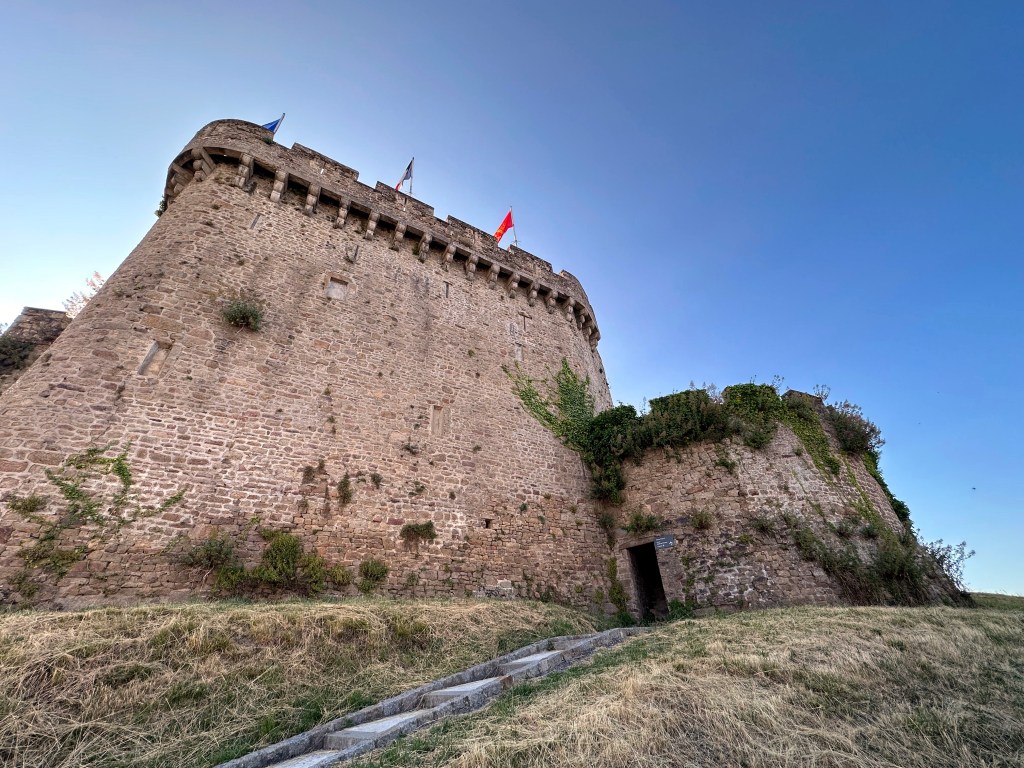
The Donjon d’Avranches:
The castle was built in 950 on the remains of an old Roman fort.
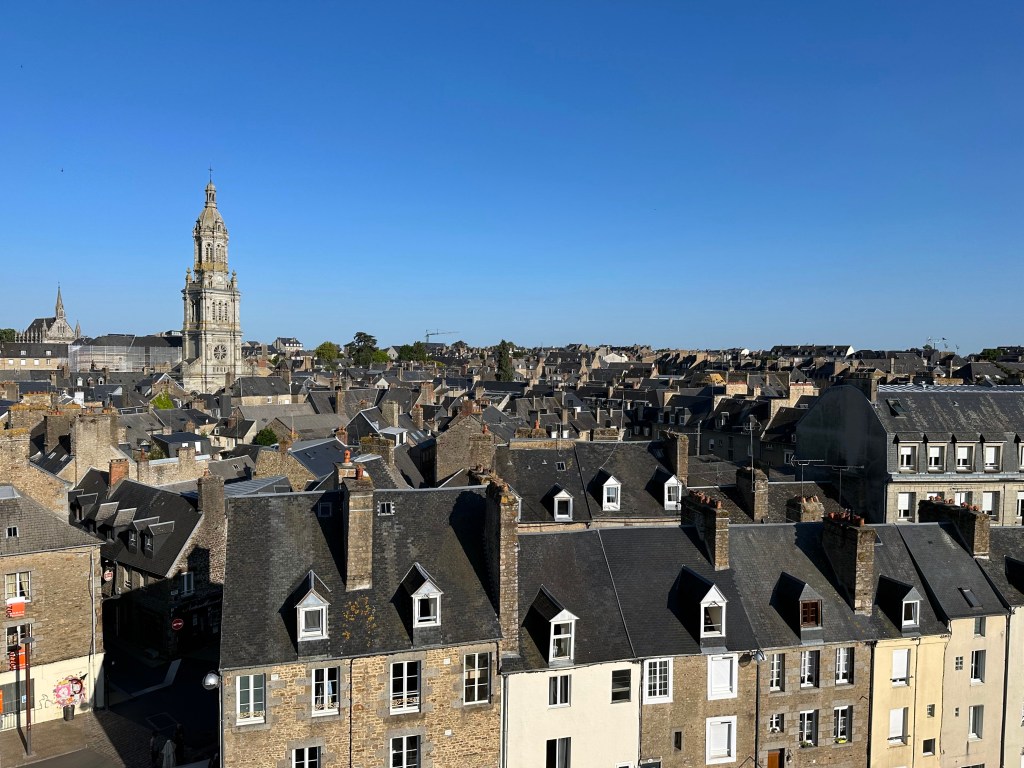
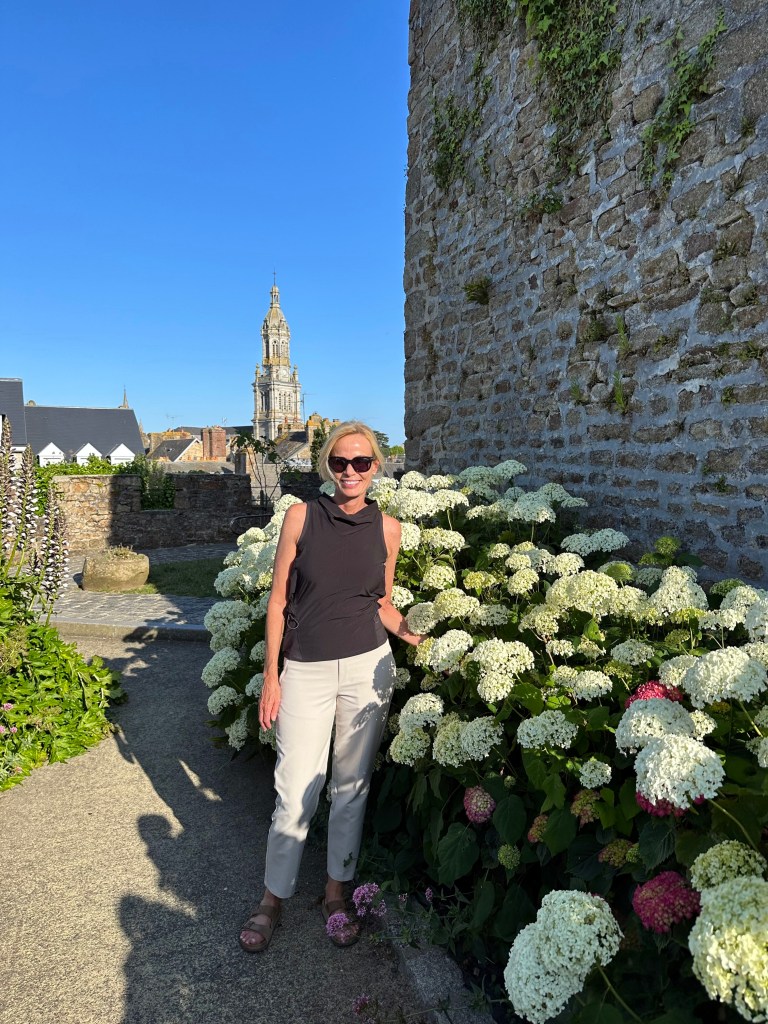
The view from the donjon over a very Normandy-looking town:
And some hydrangeas.
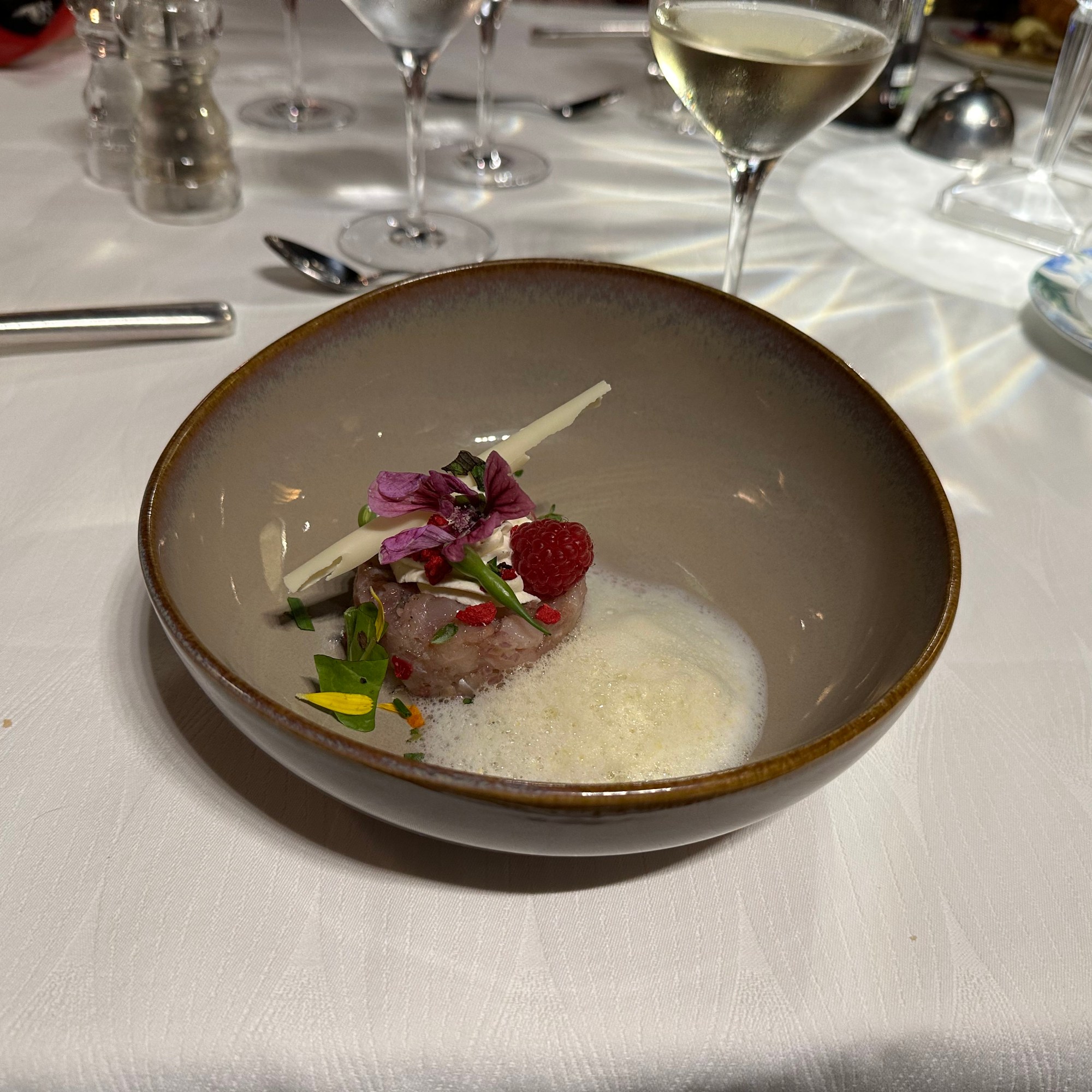
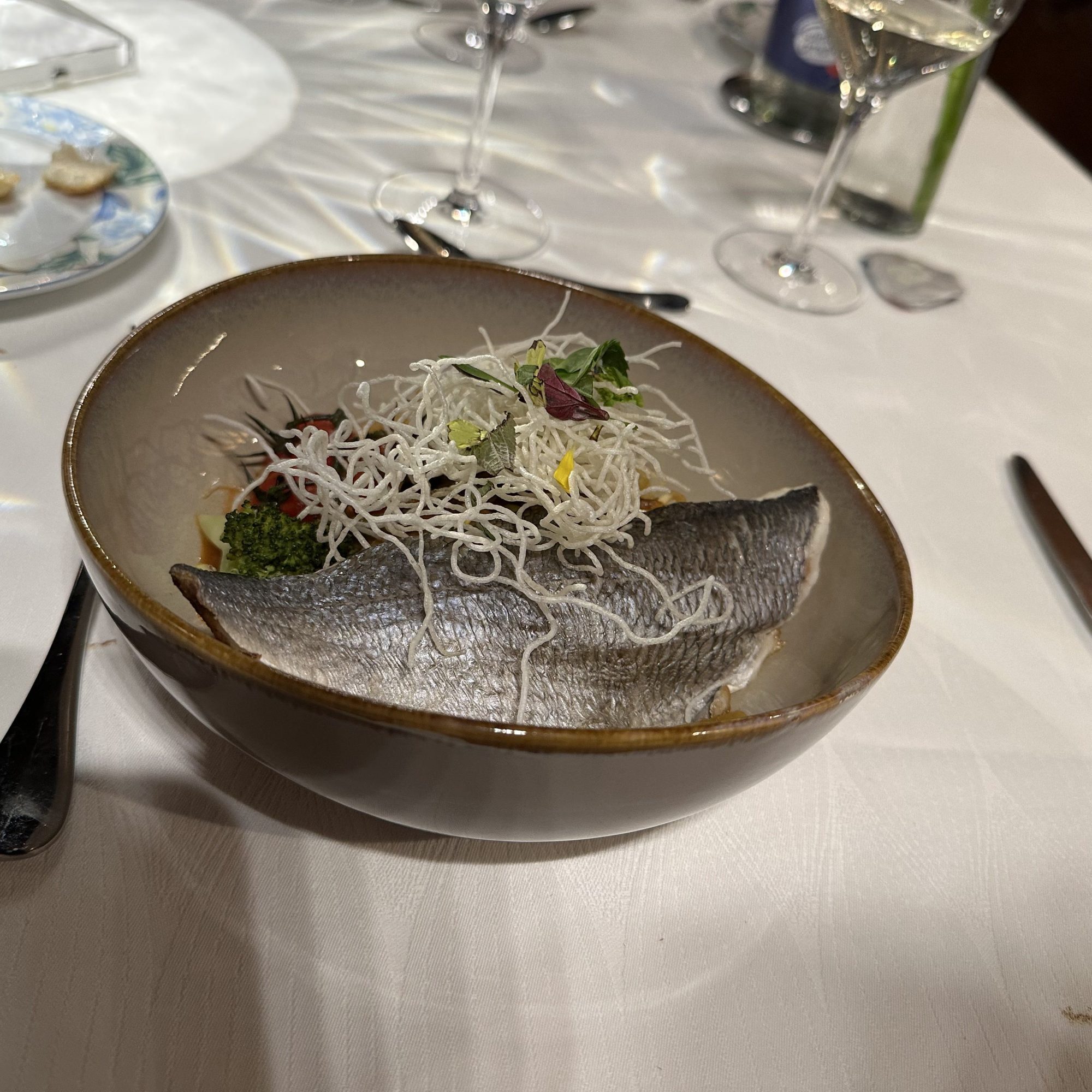
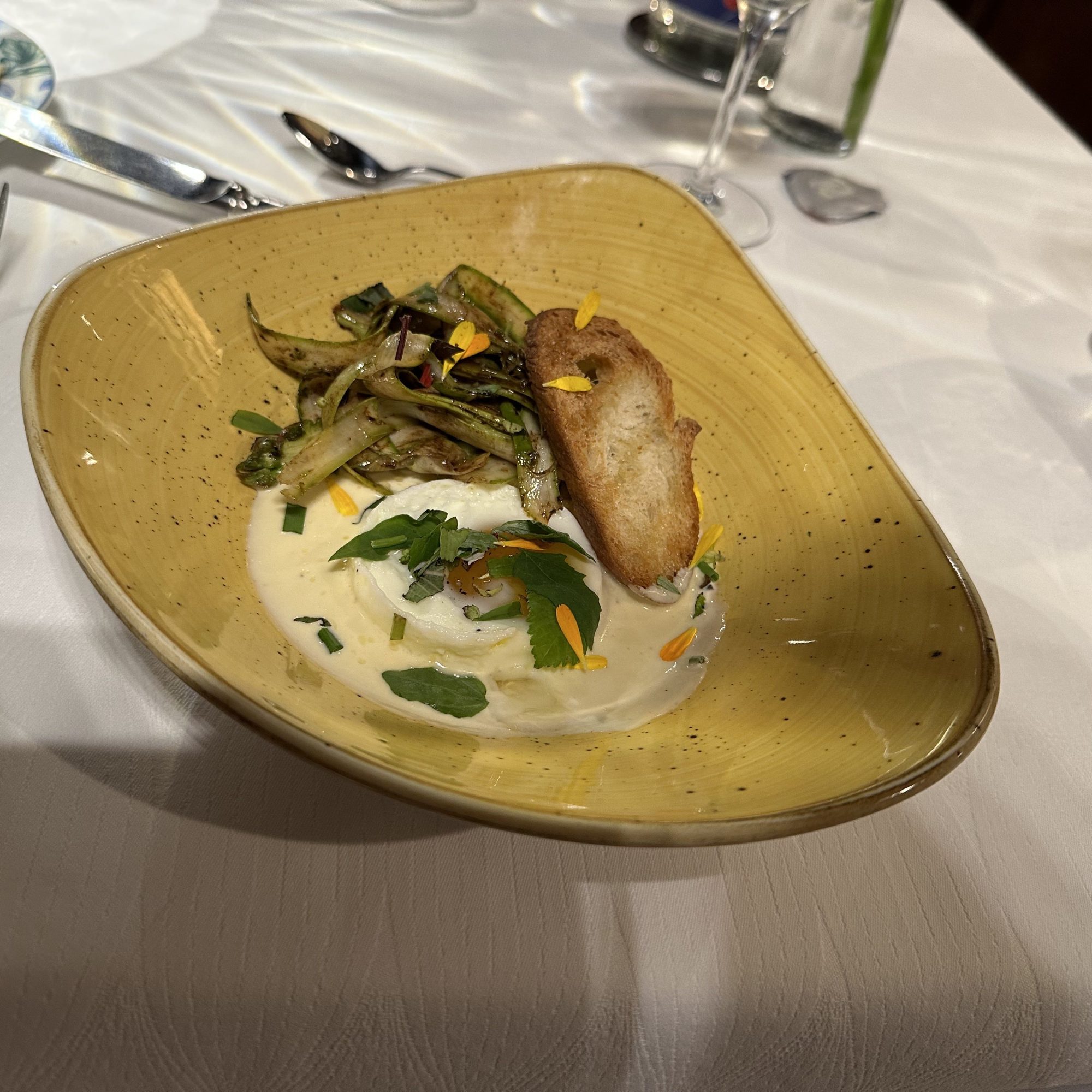
Pretty good bites that night.
On to Mont Saint Michel and the last bike day of the trip!
After 2 nights in Bayeux and a loop ride to the coast and the British and Canadian Normandy beaches on Day 1 of biking, Day 2 took us back to the coast to the American beaches, and then inland.
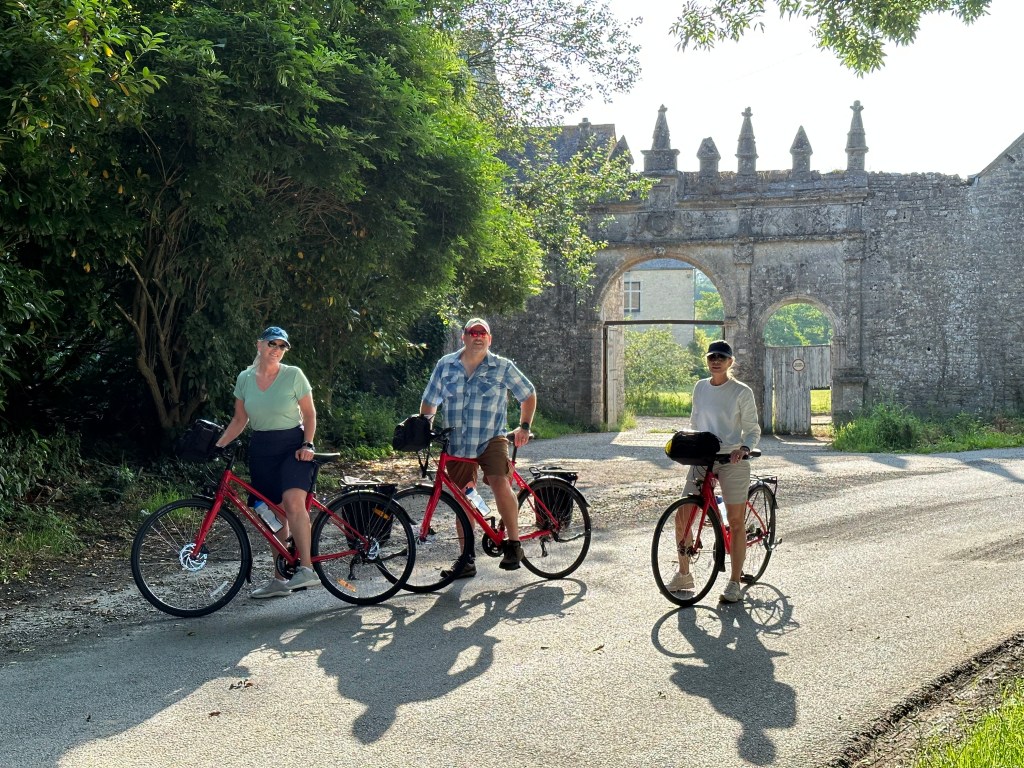
Some historic estate or other a few miles outside of town:
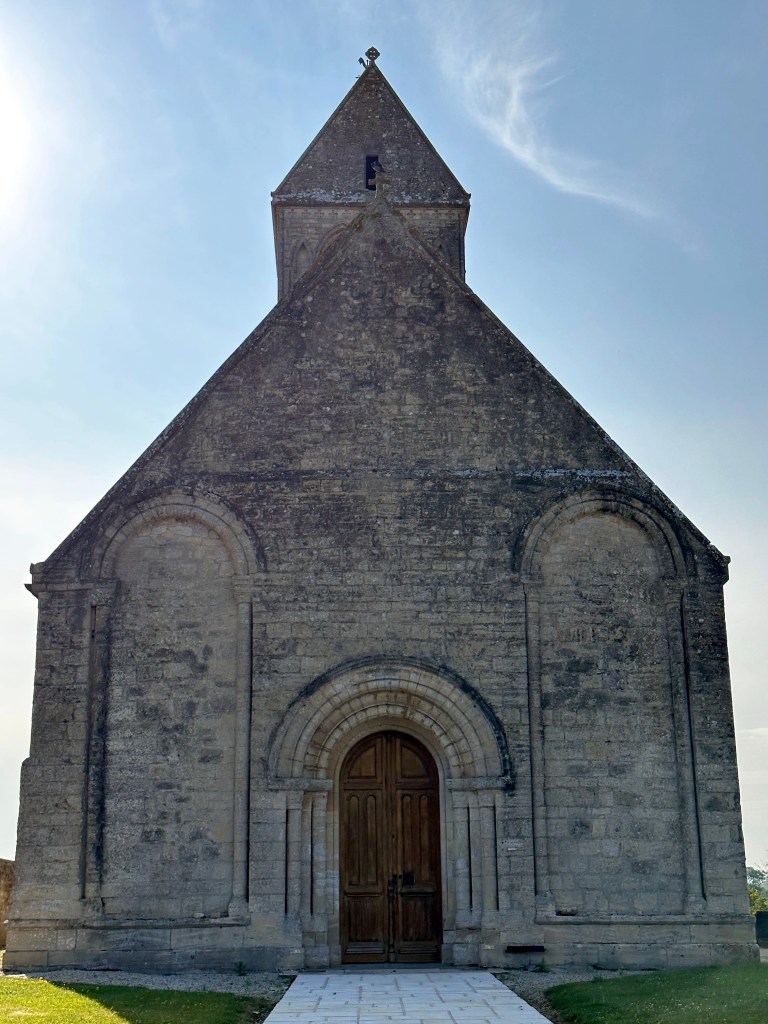
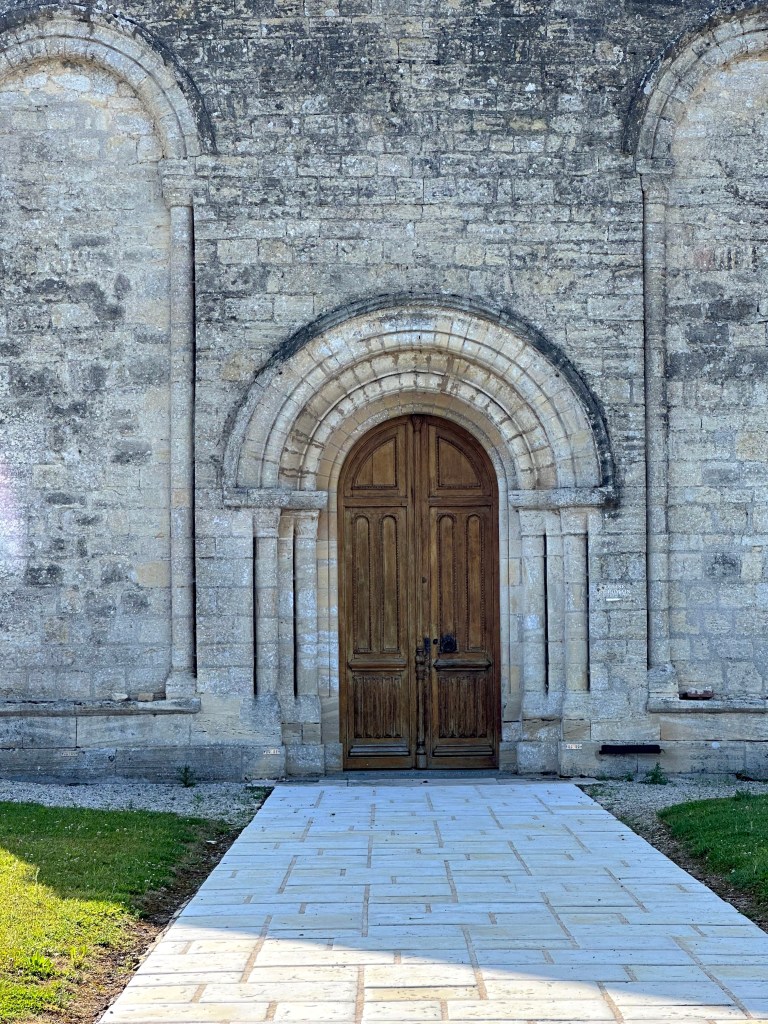
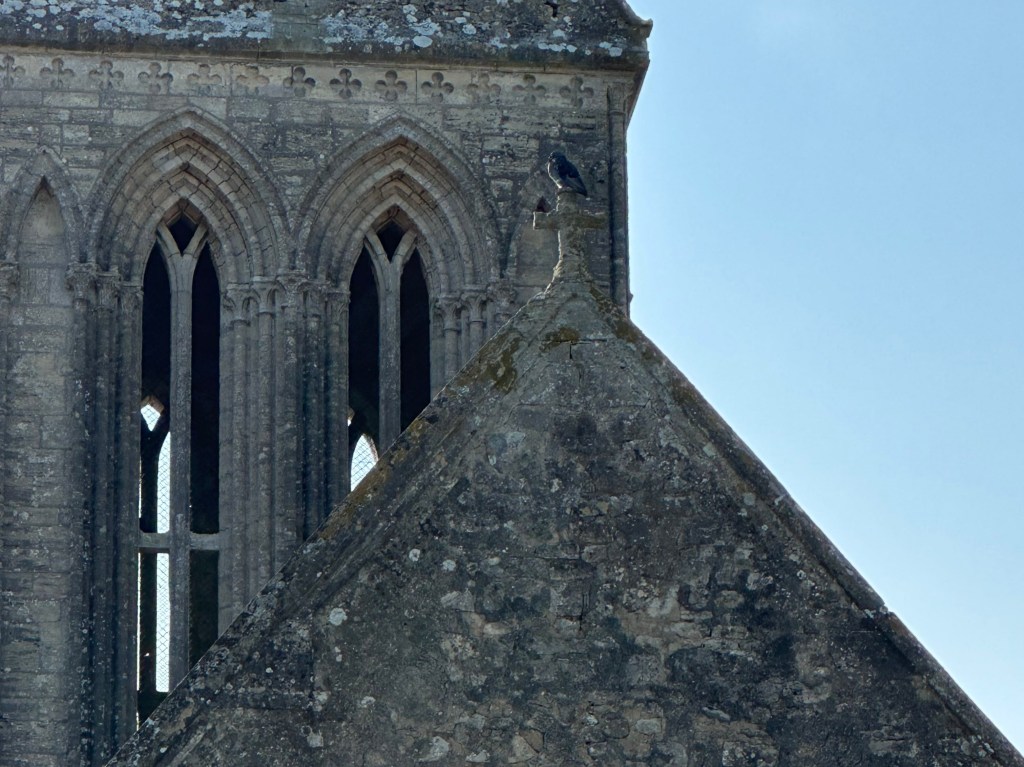
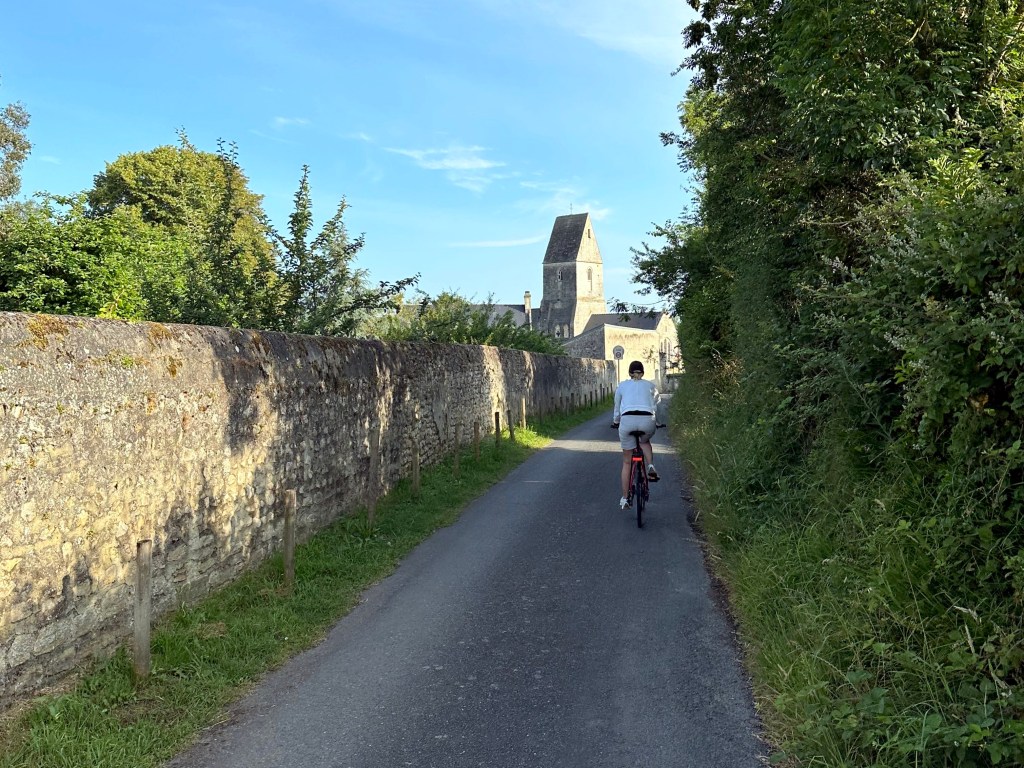
Passing by the Église Saint-Romain de Étréham, the Church of Saint-Roman.
Originally built in the 11th century, but renovated over time, it still retains its Romanesque west facade.
And 12th-century tower.
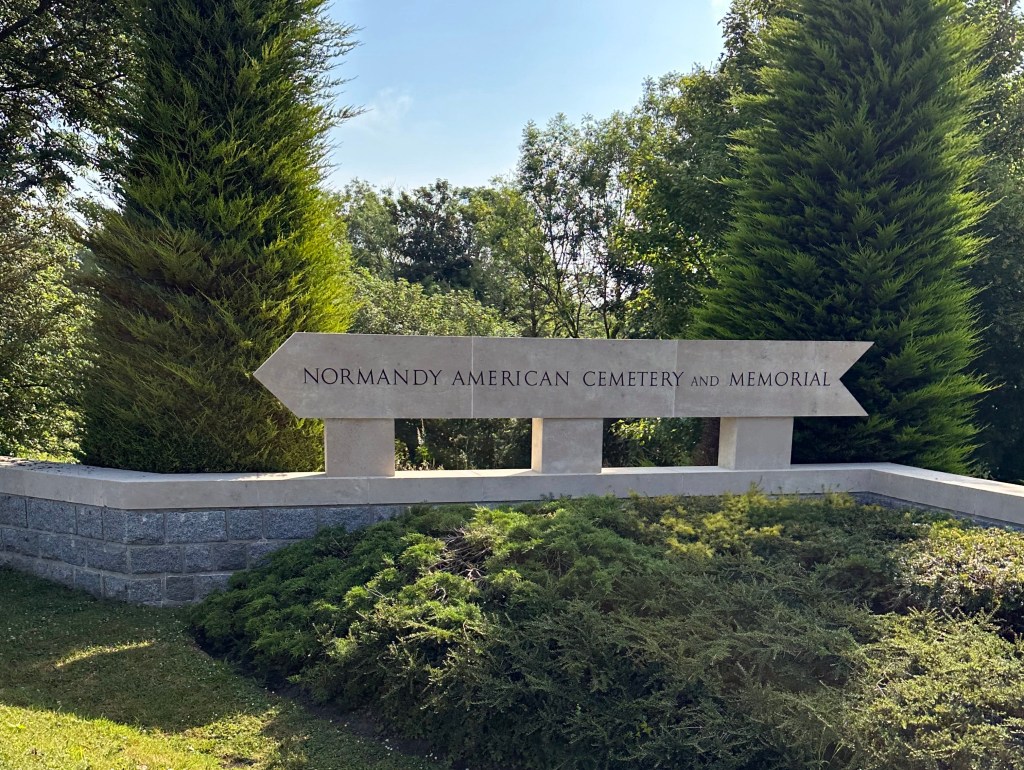
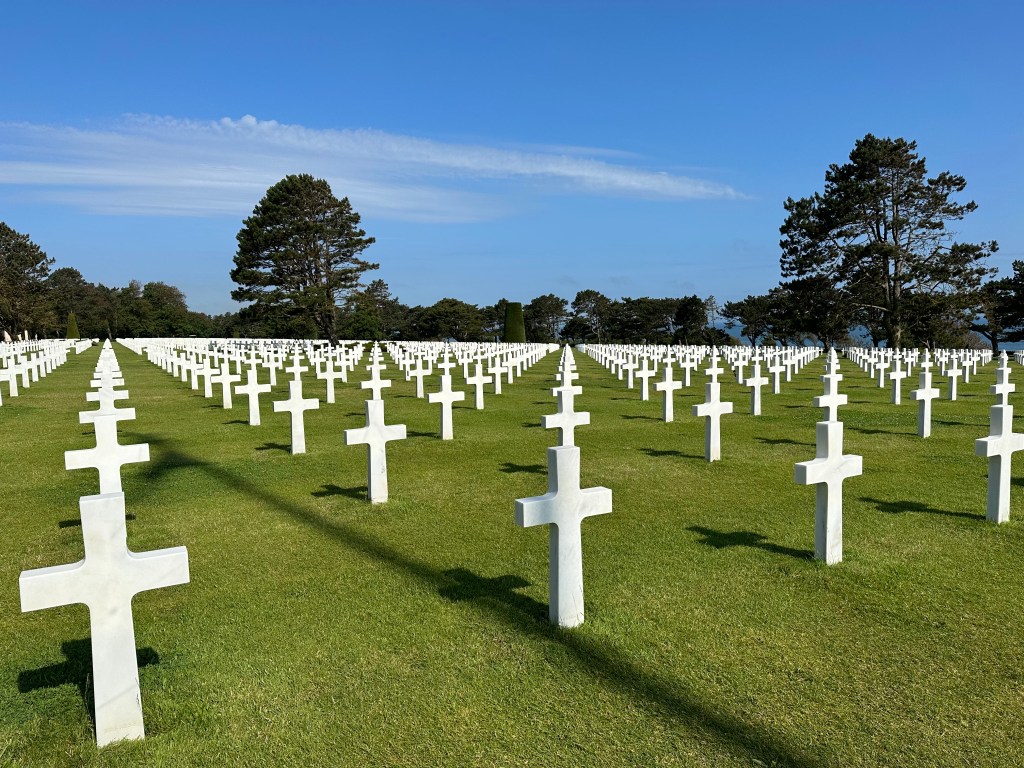
Highlight of the day’s ride, at Omaha Beach:
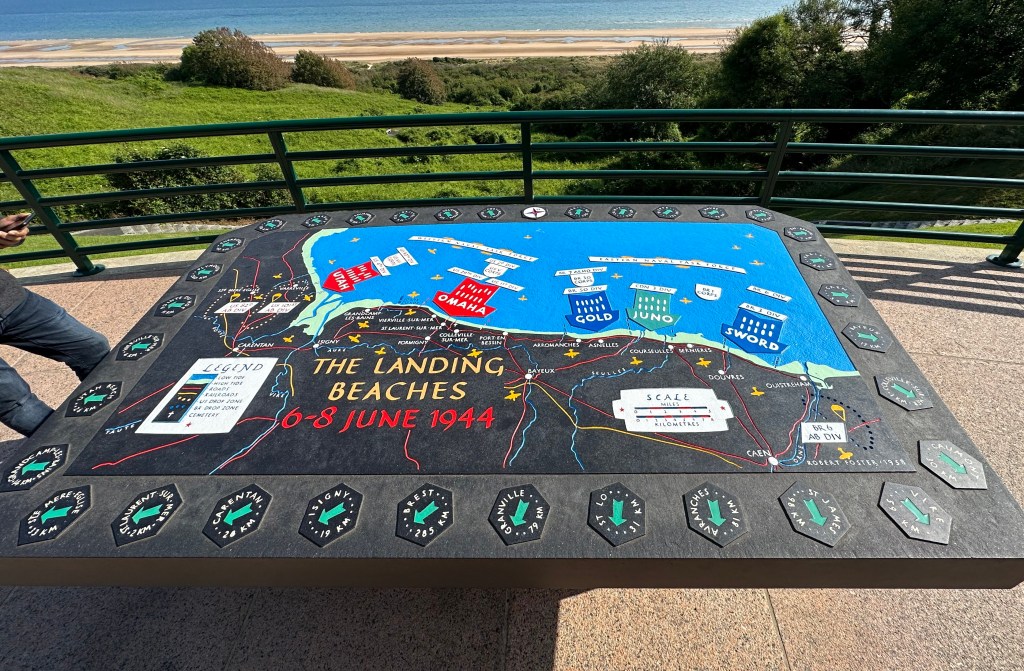
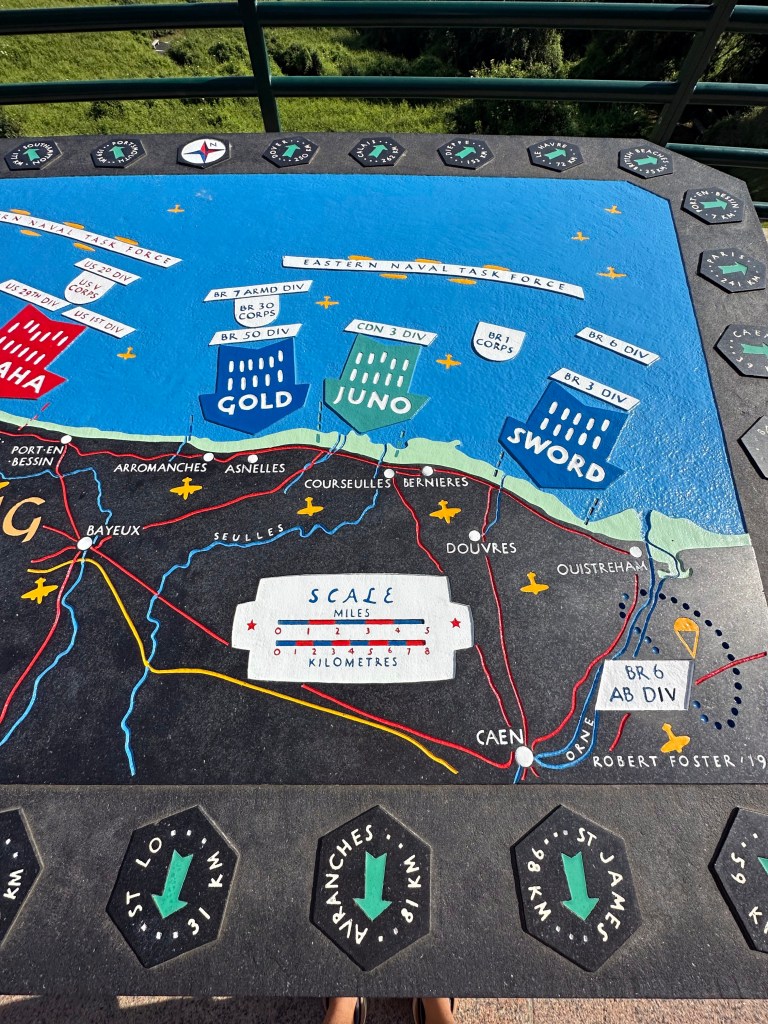
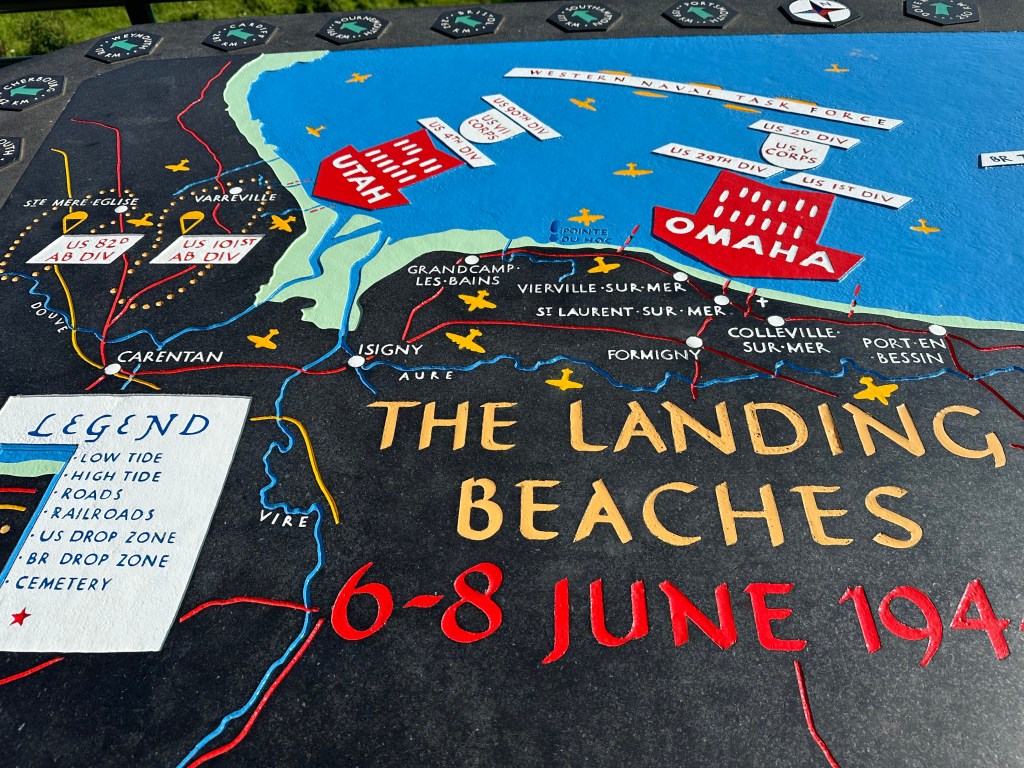
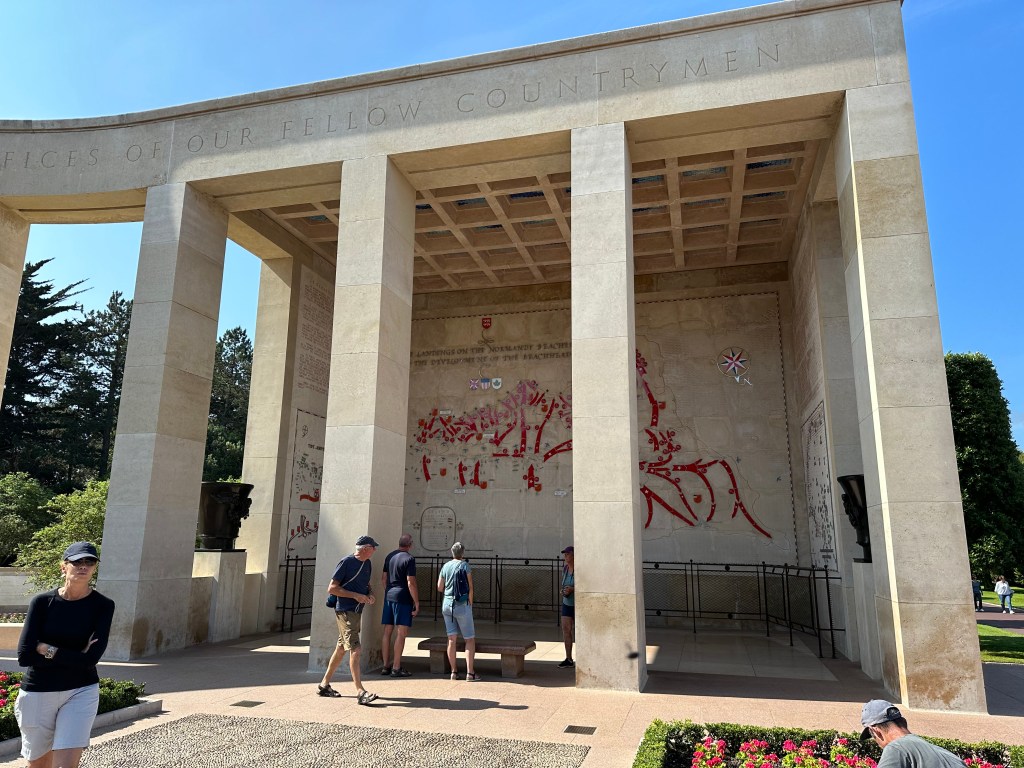
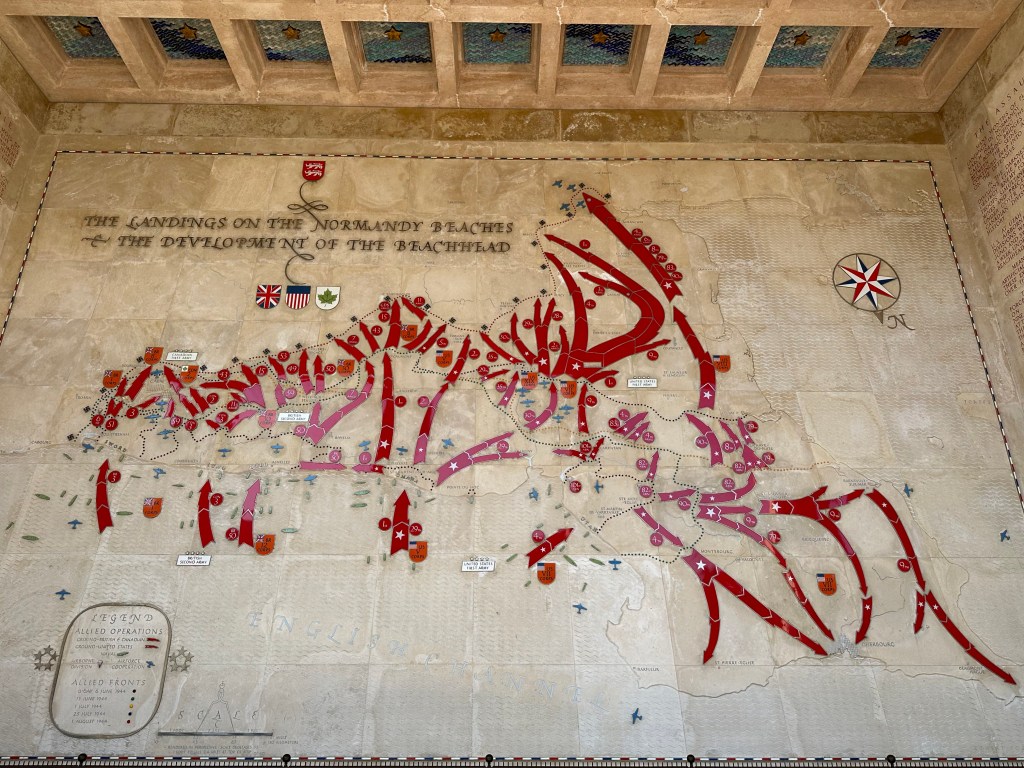
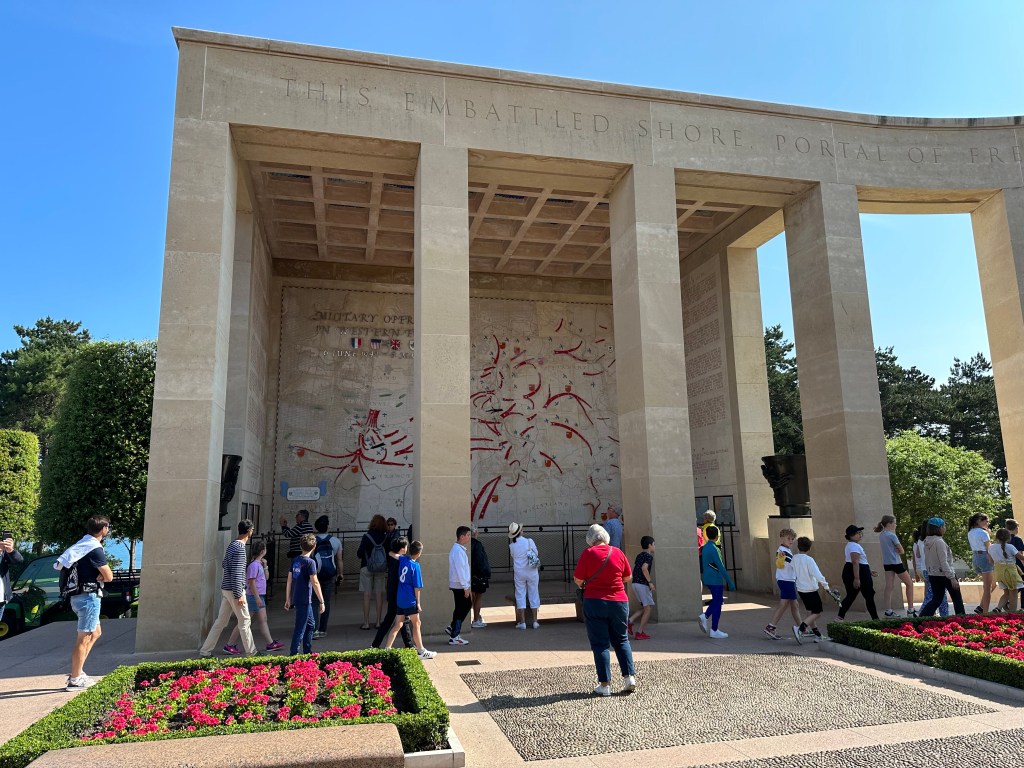
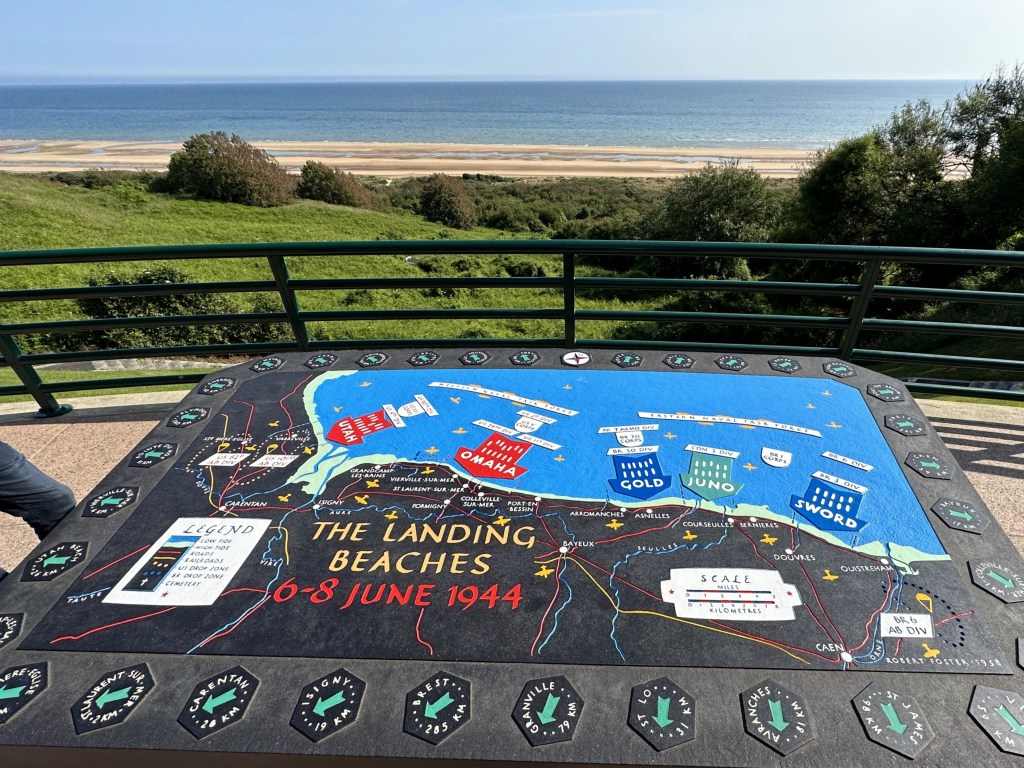
Cool map of the Normandy landings at the cemetery:
Yesterday, we were there:
Today, we are here:
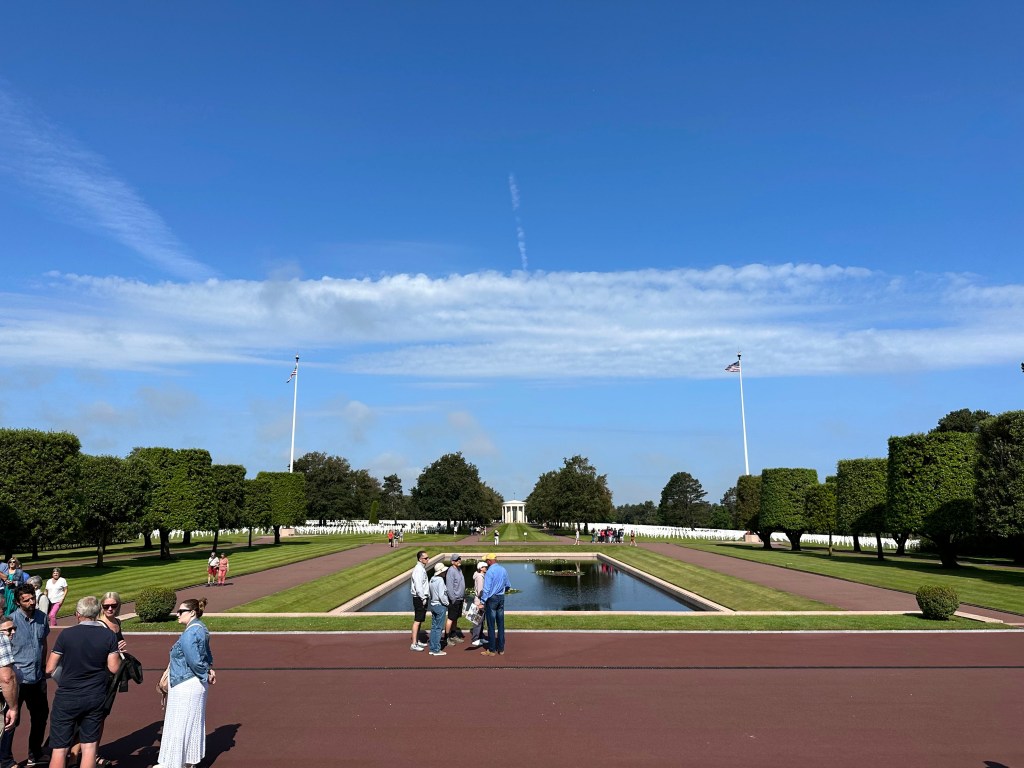
Sobering but serene.
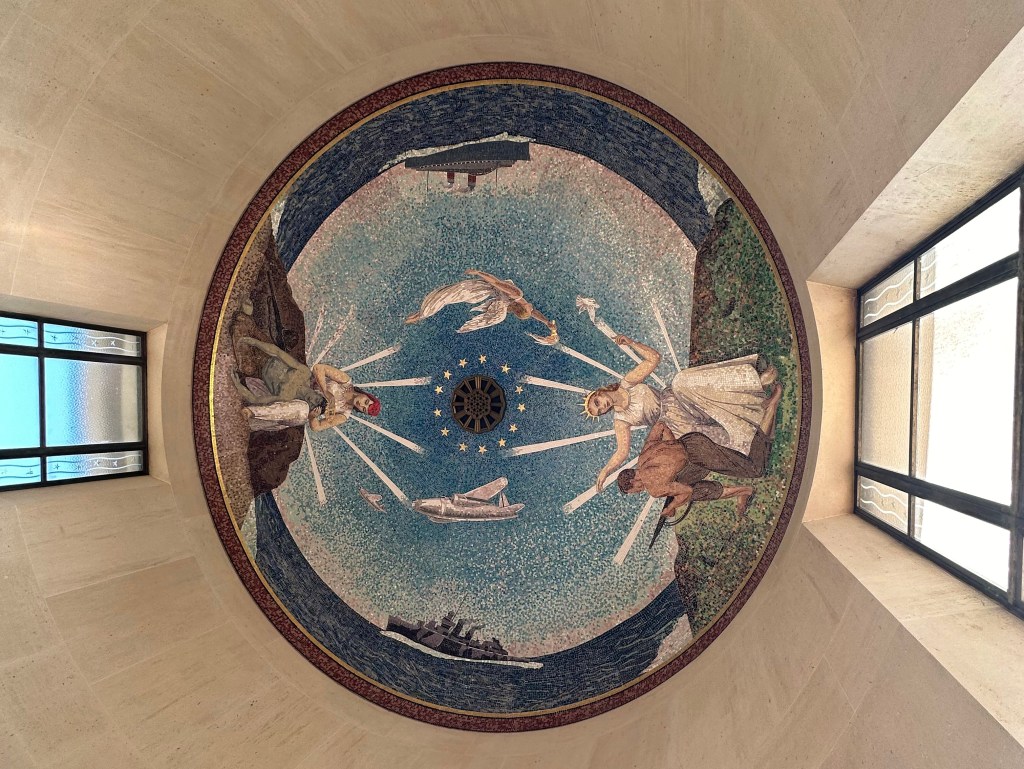
Cool mosaic capturing the cycle of Americans traveling to and fighting in Normandy on the ceiling of the cemetery’s chapel:
Massive mural of the landings and subsequent beachheads:
And a short distance away. . .
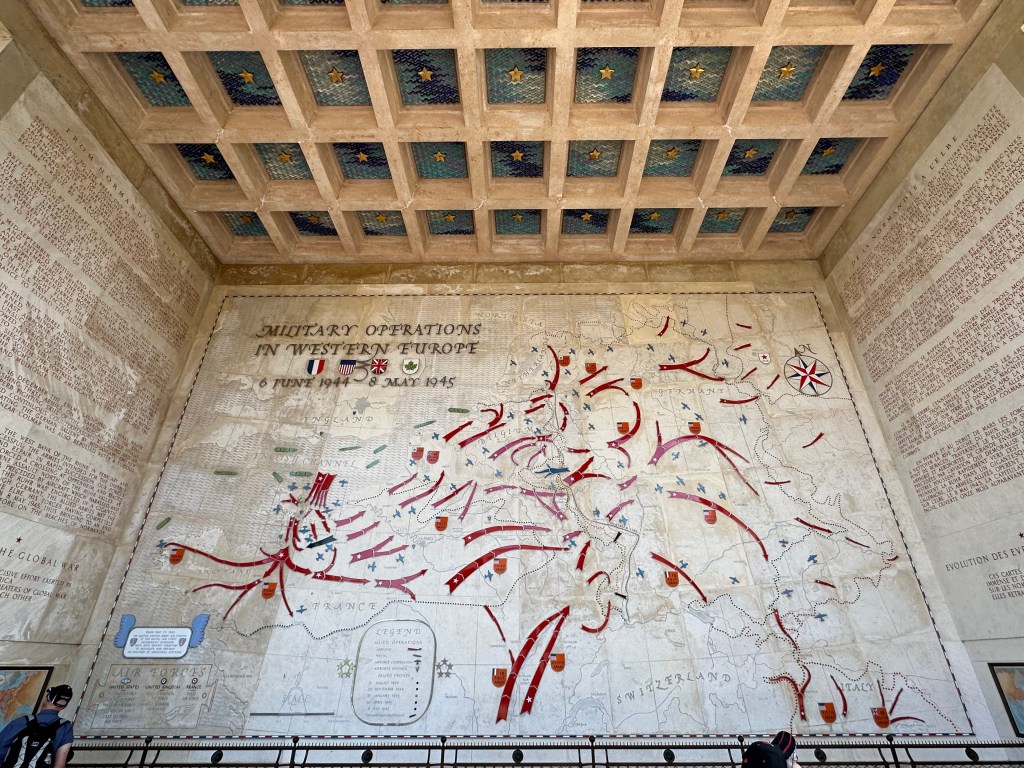
the entire European theater (from the non-Soviet POV, anyway):
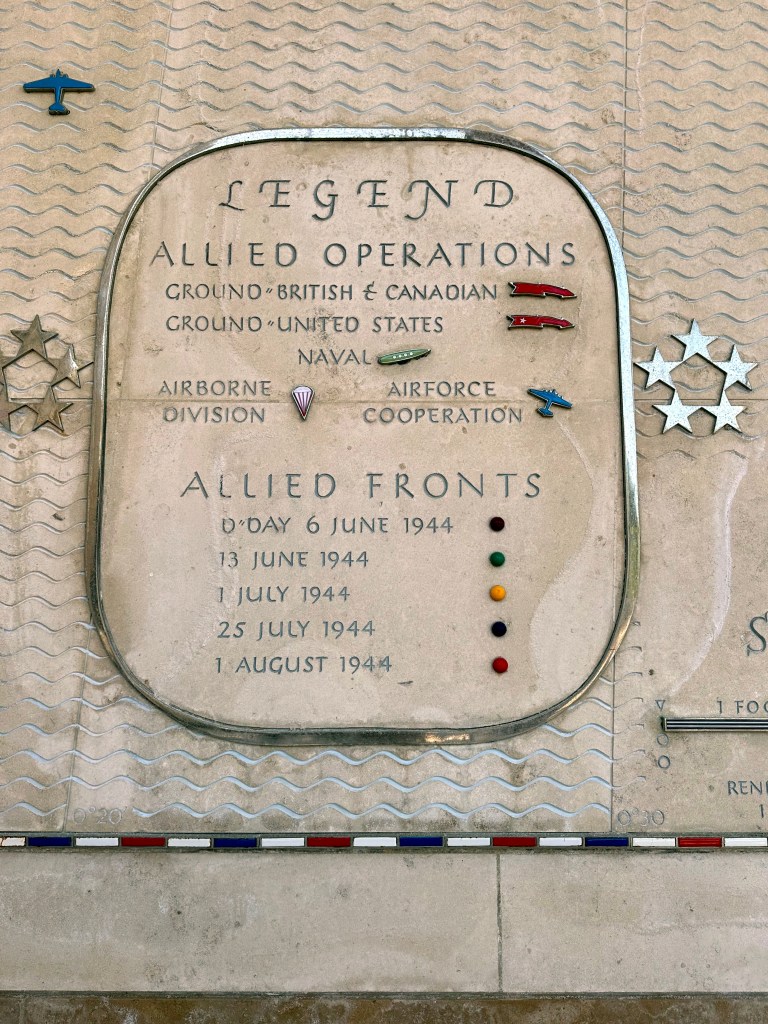
Both with handy legends.
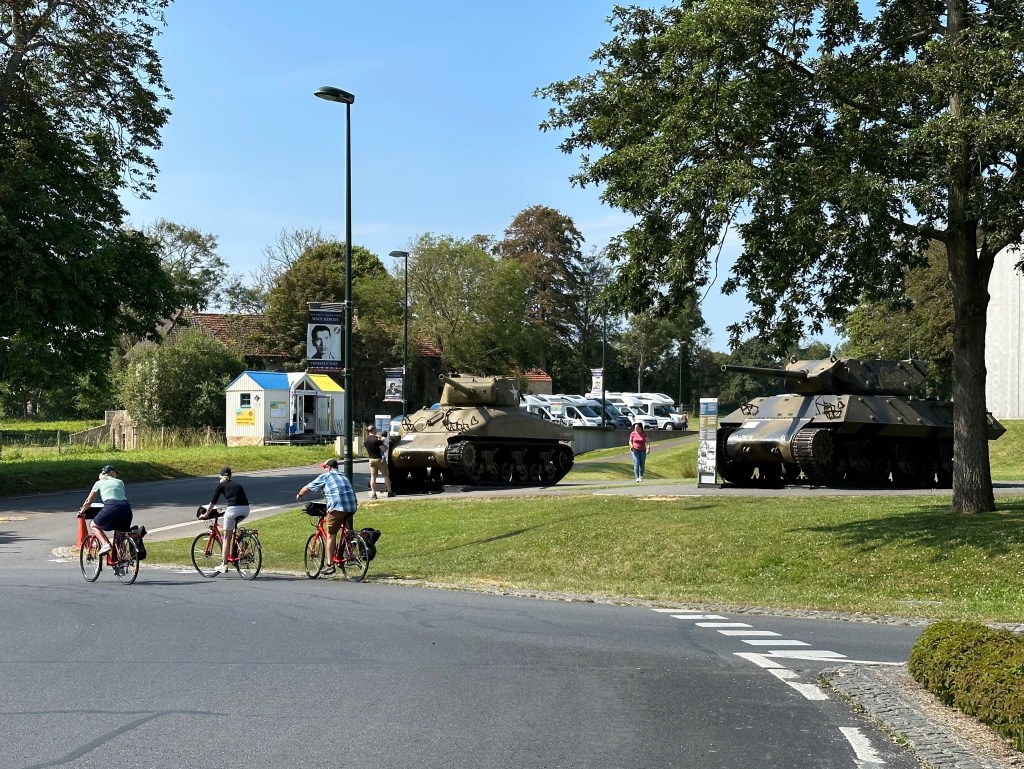
Onward (and more tanks!).
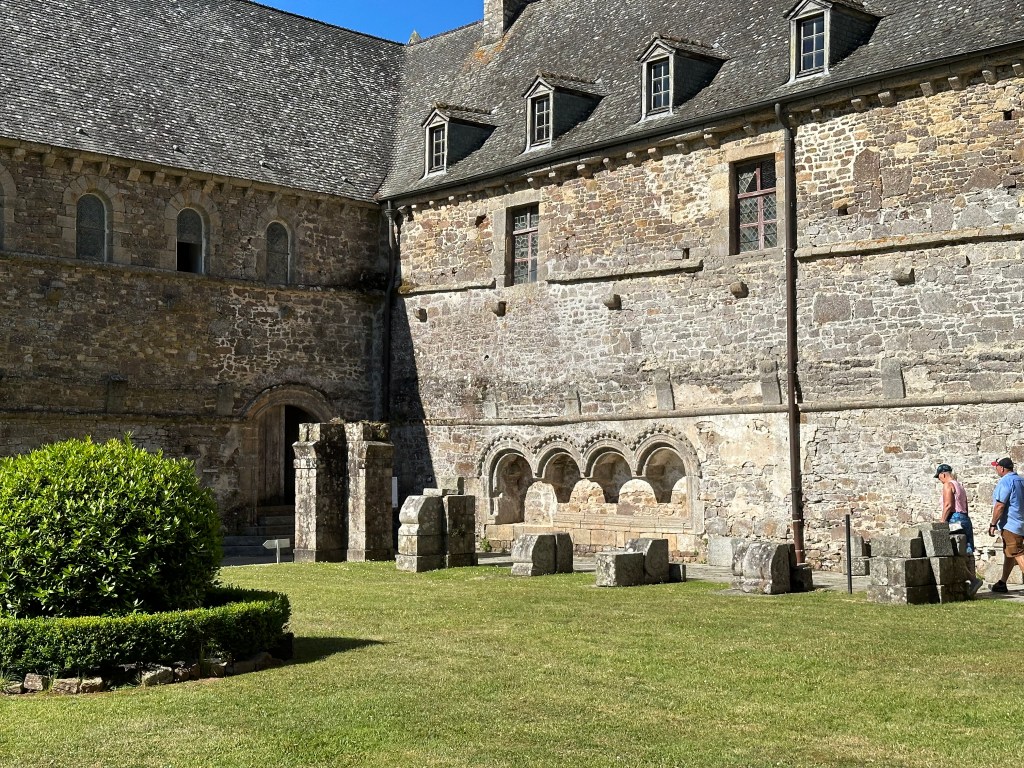
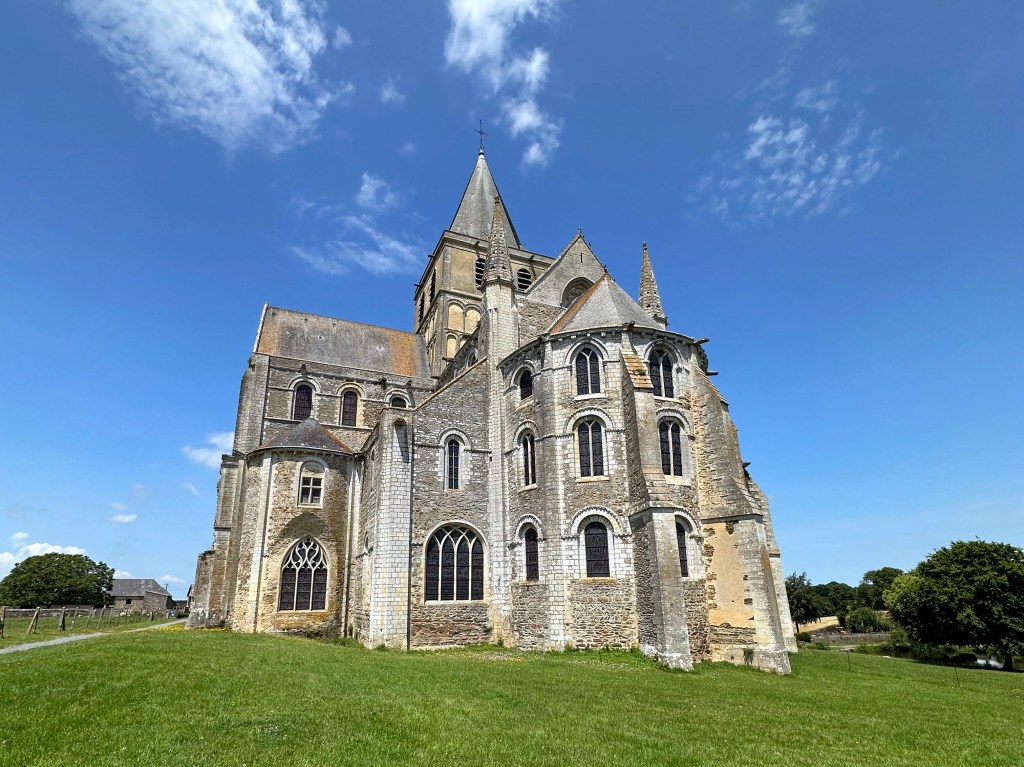
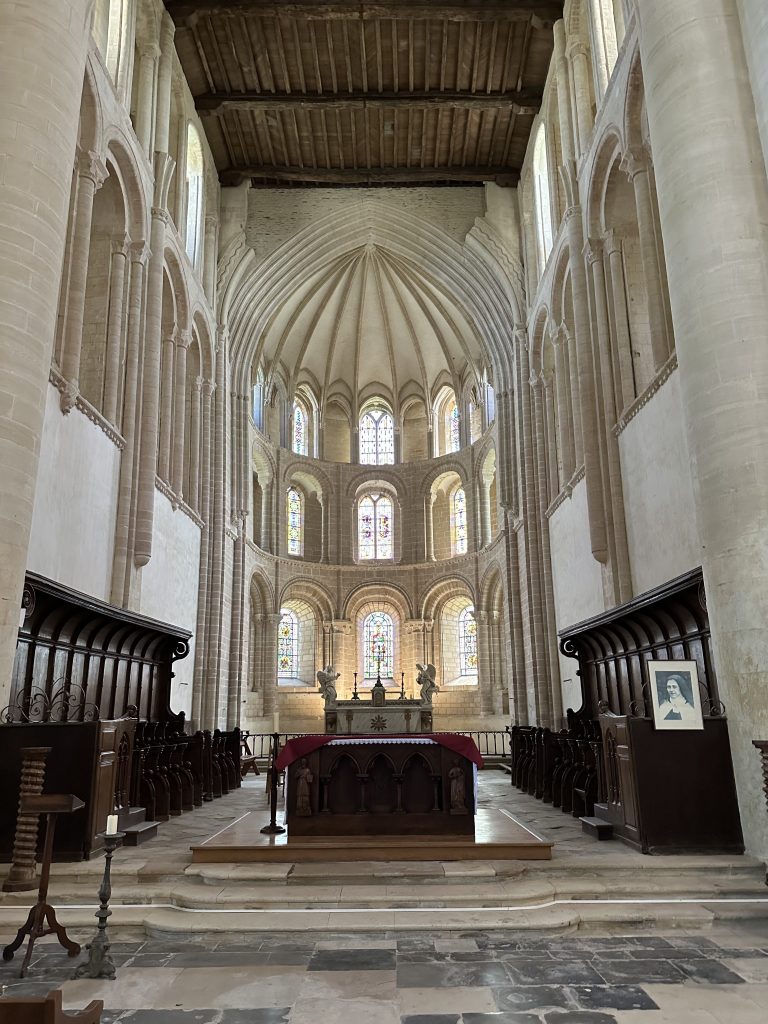
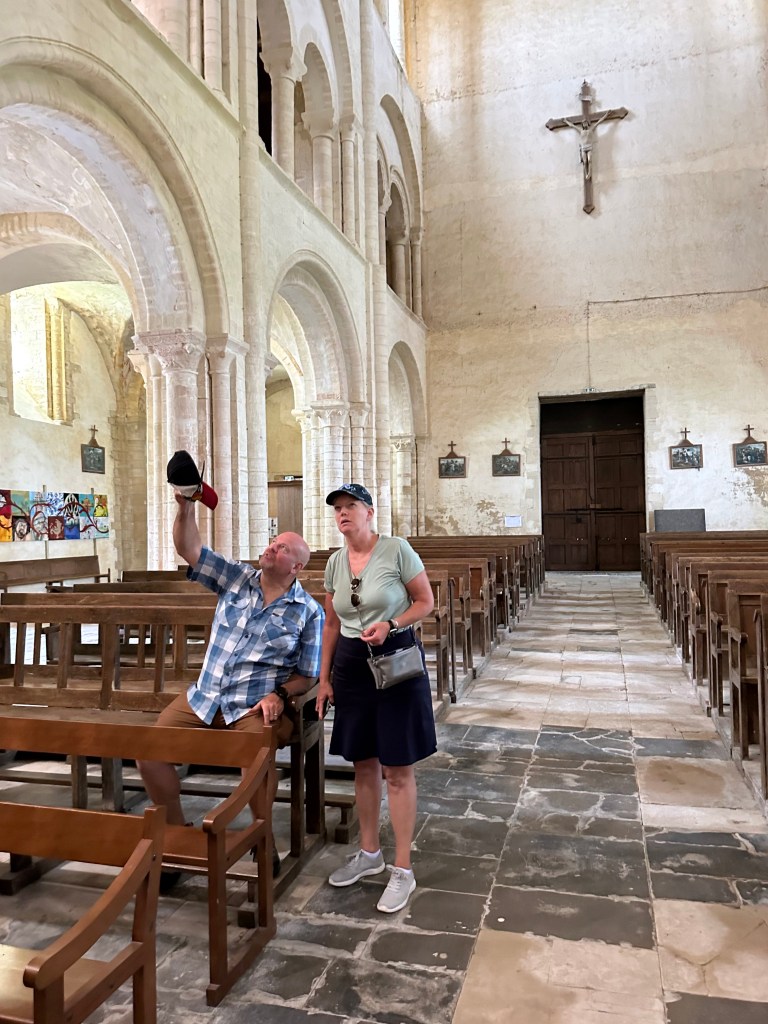
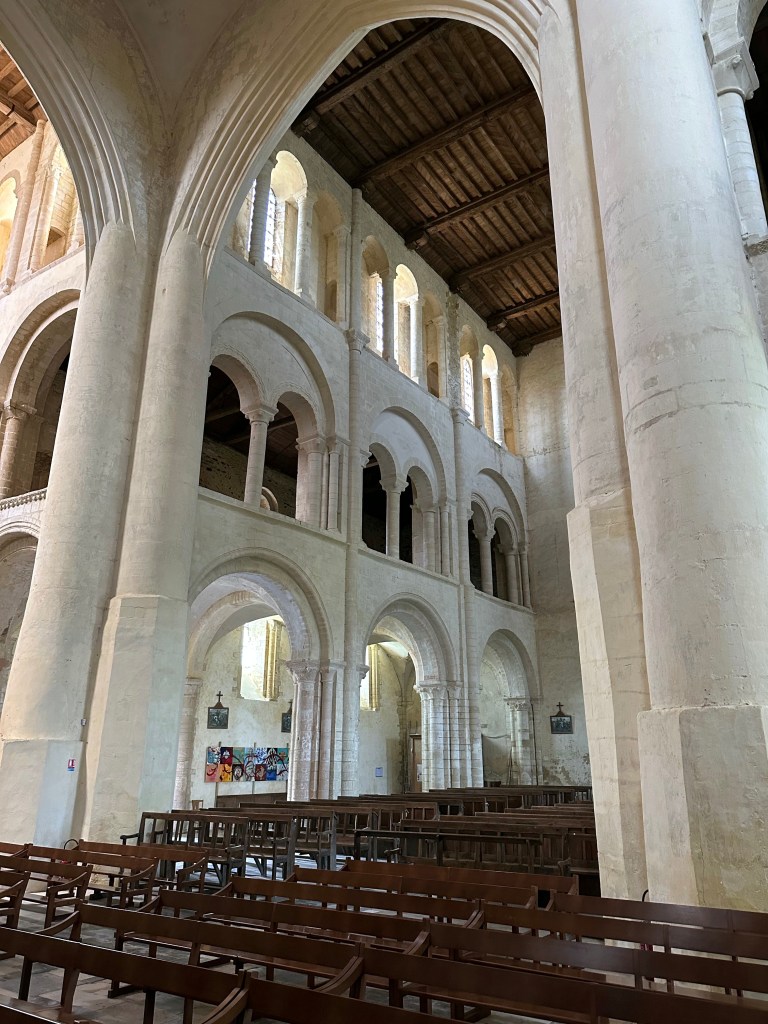
The Abbey of Saint Vigor, founded in 1032 by Duke of Normandy, Robert the Magnificent (father of William the Bastard, who went on to become William the Conqueror). (Robert the Vigorous would have been much funnier and more apropos.)
In the 12th century, the abbey extended its powers over nearby, former Merovingian abbeys, and also founded several priories, becoming more influential and wealthy in the process.
“In 1337, the dynastic rivalries between the Valois and the kings of England precipitated the country into the Hundred Years War, which plunged the country into misery, aggravated by epidemics of plague. The abbey was fortified and a garrison settled there. In 1418, Richard de Silly, knight and captain of the abbey, was obliged to cede the abbey to the King of England. However, after the victory of the constable de Richemont over the English at Formigny in 1450, Normandy returned definitively to the kingdom of France.” (From here.)
The monks left the abbey during the French Revolution, and the abbey became the unique parish church of the village of Cerisy-la-Forêt in 1790.
The abbey was built on the ruins of an older monastery destroyed by the Normans during their invasion.
Of the French. When the Normans were still Vikings and did not yet benefit from Rollo’s permanent settlement here. . .
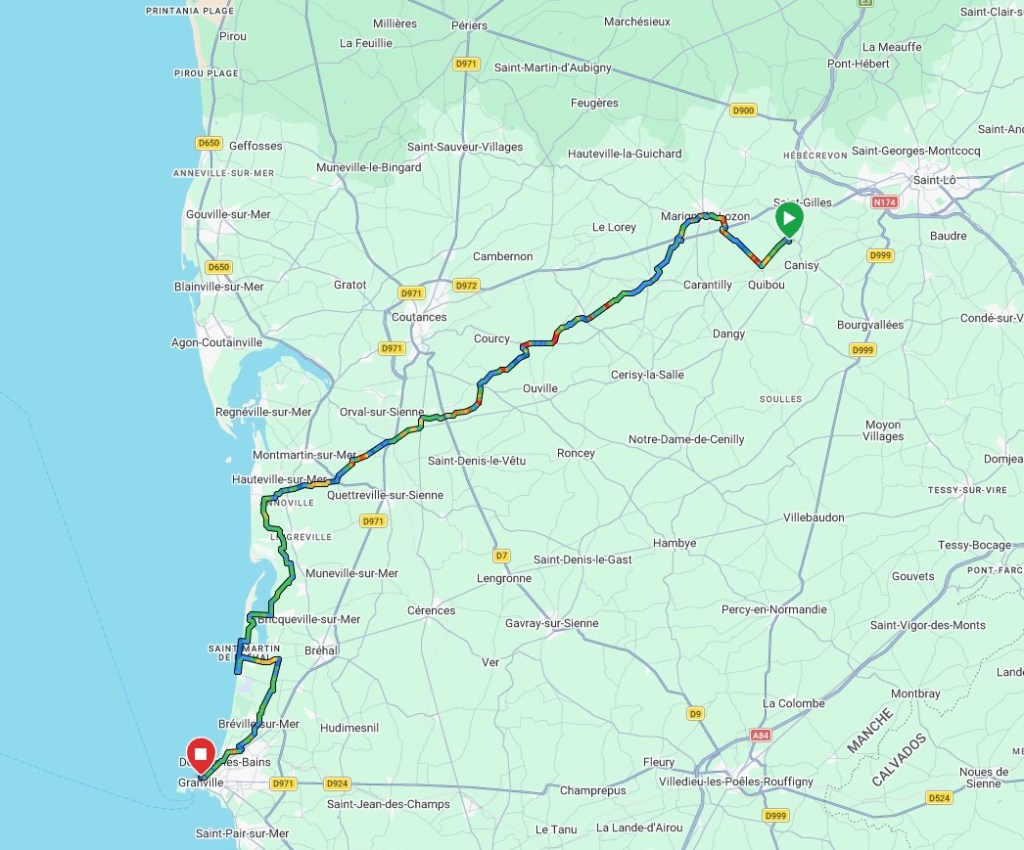
Final (and very long) stretch of the day’s ride.
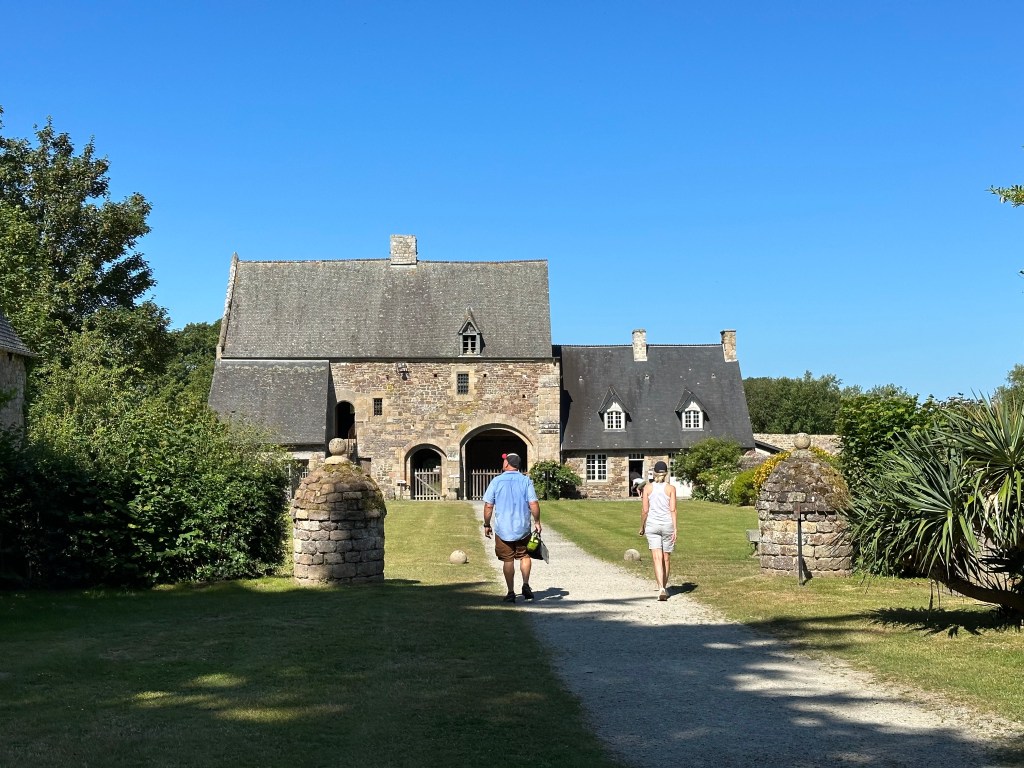
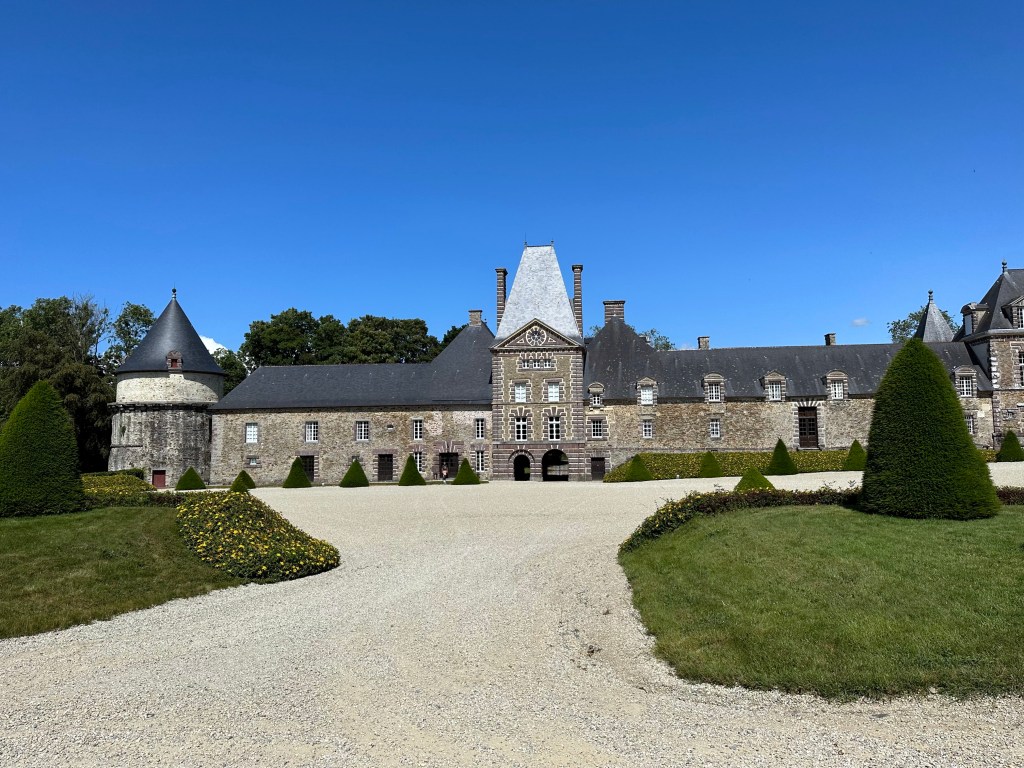
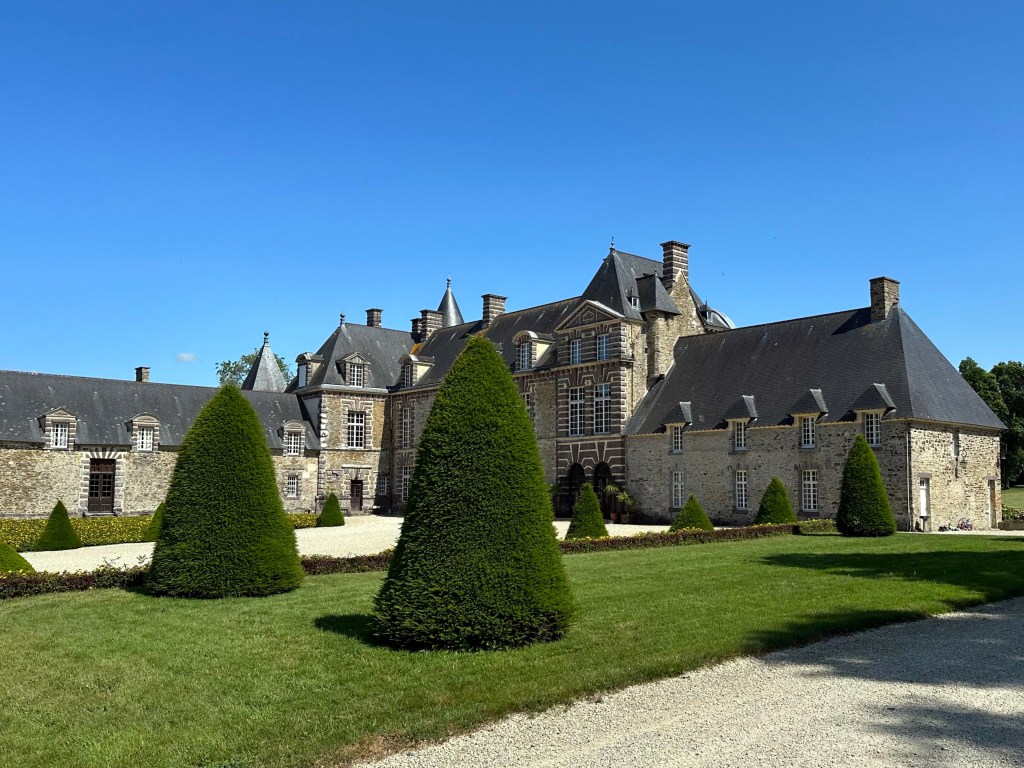
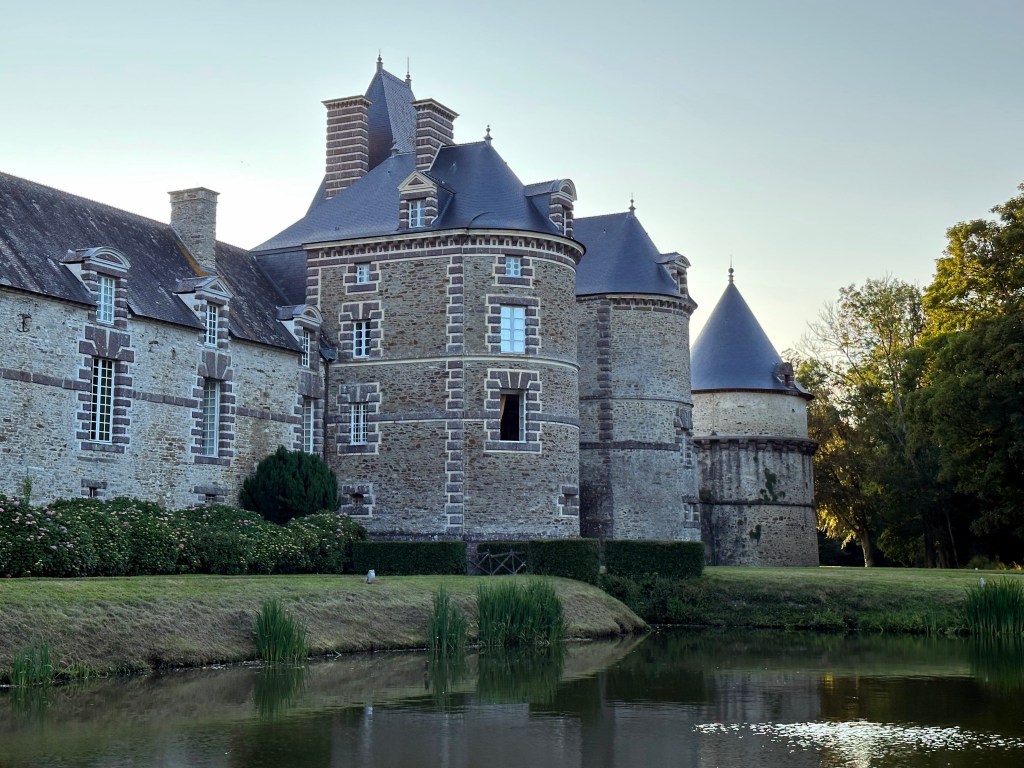
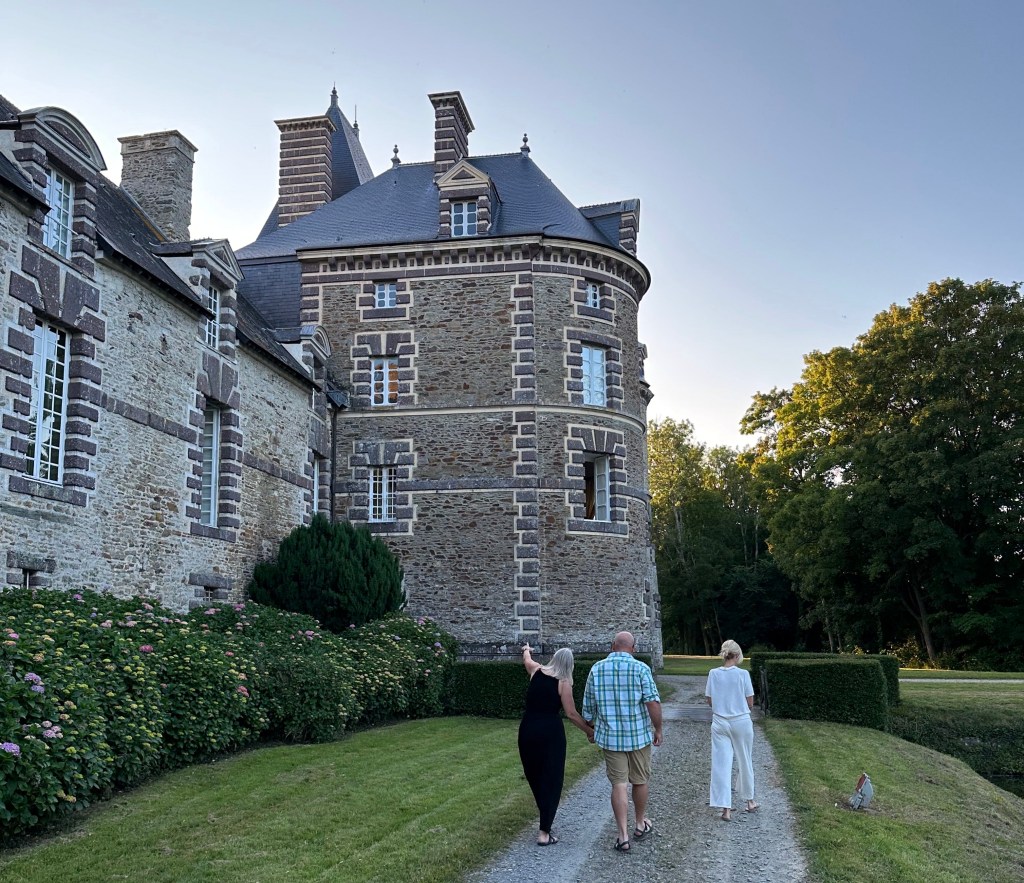
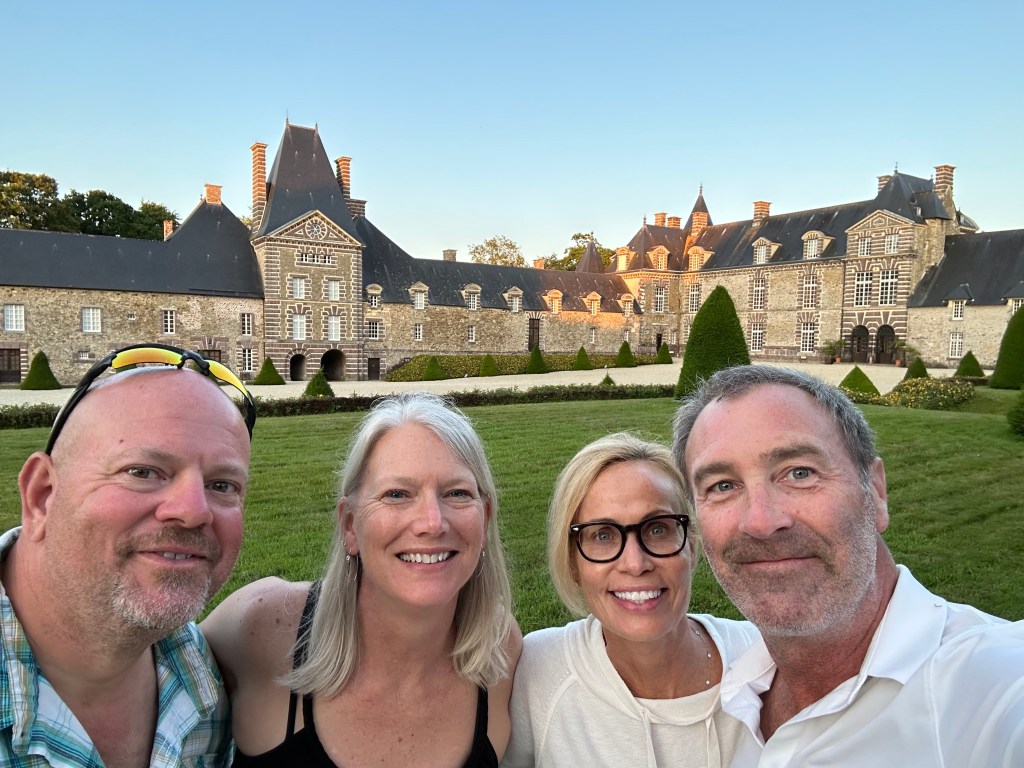
But with a pretty cool conclusion: Chateau de Canisy, our lodging for the evening.
About which we have much to discuss – both the very cool (its history) and the very bizarre (our actual stay).
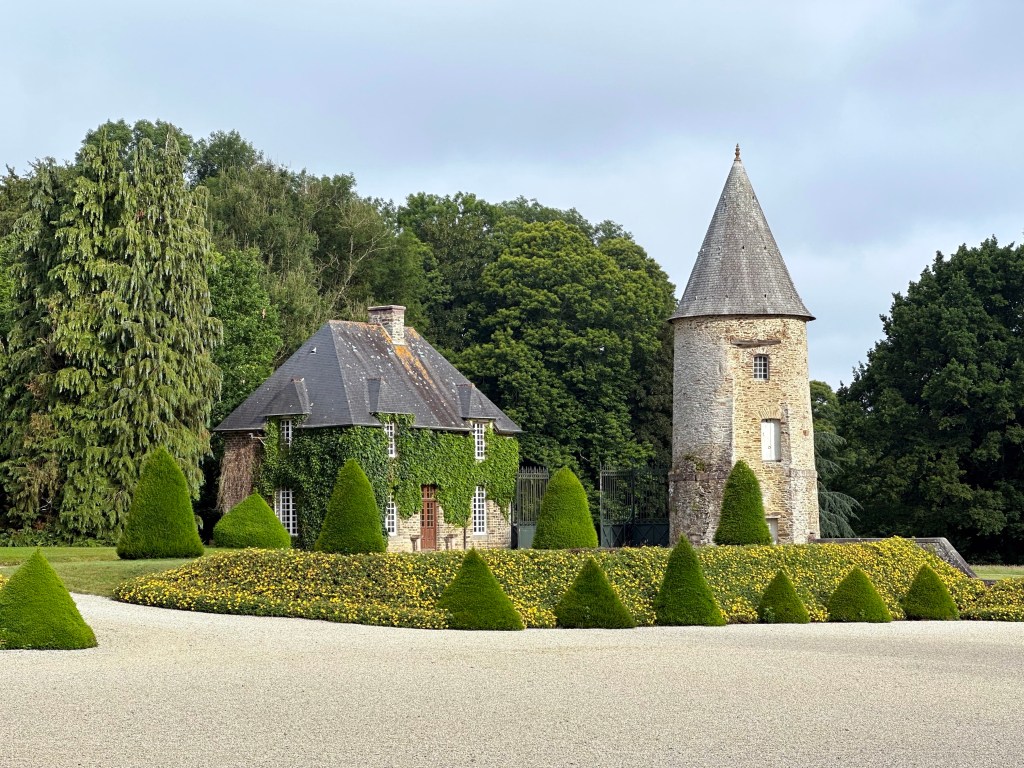
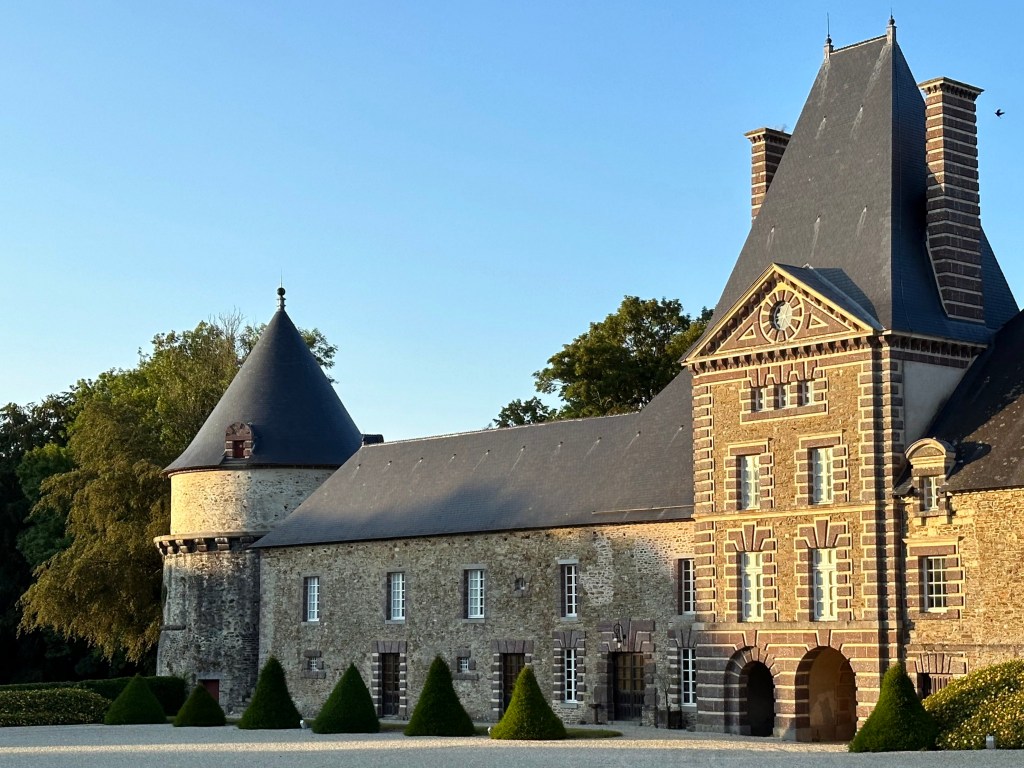
First, some history. Chateau de Canisy dates to the freakin’ 11th century. Definitely the oldest and most historic place we’ve stayed (just off the top of our head – we did stay in a Welsh castle 2 years earlier, but we think that was built maybe 100 years later (by Normans, as it happens)).
AND there’s a connection to Billy the Conq and the first of the two invasions referenced during our Day 1 post of the trip. In 1066, Hughe de Carbonnel participated in the conquest of England alongside William the Conqueror. At that time, Hugues de Carbonnel already was Lord of Canisy. Of the medieval chateau, one fortified tower and part of the living quarters remain. The family also remains – the current occupants, the Count and Countess Denis de Kergorlay, are direct descendants of Hugues de Carbonnel. The Countess, we would learn, is quite a piece of work.
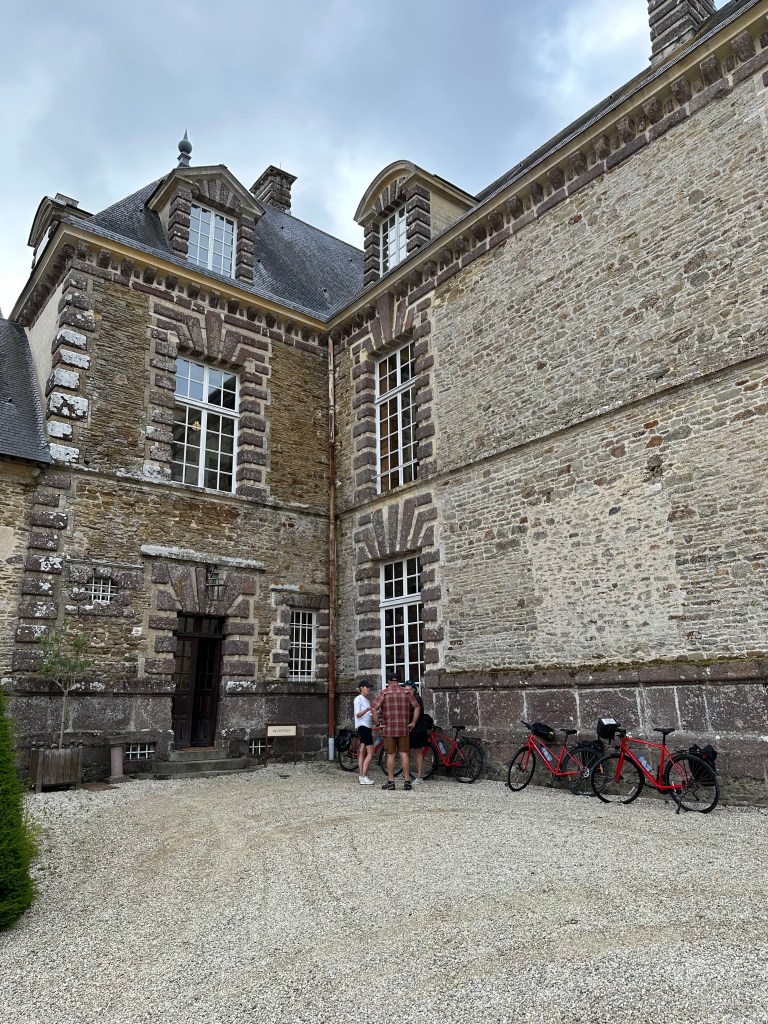
Most of the Chateau de Canisy’s present architecture dates from the time of Henry IV, when Herve de Carbonnel (1558 – 1625) undertook the construction of a castle to mark his illustrious alliance with Anne de Matignon, daughter of the Count of Thorigny, Marshal of France. In 1588, he commissioned much of the rest of the chateau to be built by architect François Gabriel, (the ancestor of Ange-Jacques Gabriel, one of the architects of the Château de Versailles). A monumental granite staircase was designed by Gabriel, as well as “the addition to the magnificent Cotentin stone of the pudding stone, a purple stone with amethyst reflections, for creating bosses and door and window frames.”
And who wouldn’t want to adorn their chateau with pudding stones?!
In the 20th century, Chateau de Canisy remained a stronghold of the Kergorlay family. From generation to generation, the family has lived in the chateau and has preserved and restored it. Damaged by the fighting during the allied landings in 1944, the chateau was restored with the help of the Historical Monument administration and classified as “Monument Historique” in 1945. Therein ends the cool, historical aspect of our visit.
On to our stay itself. We were the only guests there. The good news? Both couples got massive, luxurious, royal accommodations with tons of character. That was pretty much the only good news. The first bad news was that only a receptionist, manager, and cook were in residence. No bar, no bartender, and no one spoke English. Using Google Translate, we ended up ordering the beers we so desperately needed after the long last leg of the ride. When we stay we ordered the beers, we ordered all of their beers. They had maybe 3/4 of a case? Maybe? We had them bring all of them out, where they were rapidly consumed.
Then the receptionist left, and we were served dinner (in the music room located in a turret, which was cool, although we have notes on the meal itself). After this, the manager announced the second bad news: they were leaving and that we should lock the front door when we went to bed.
We’ll be alone here by ourselves, we asked?
Oui.
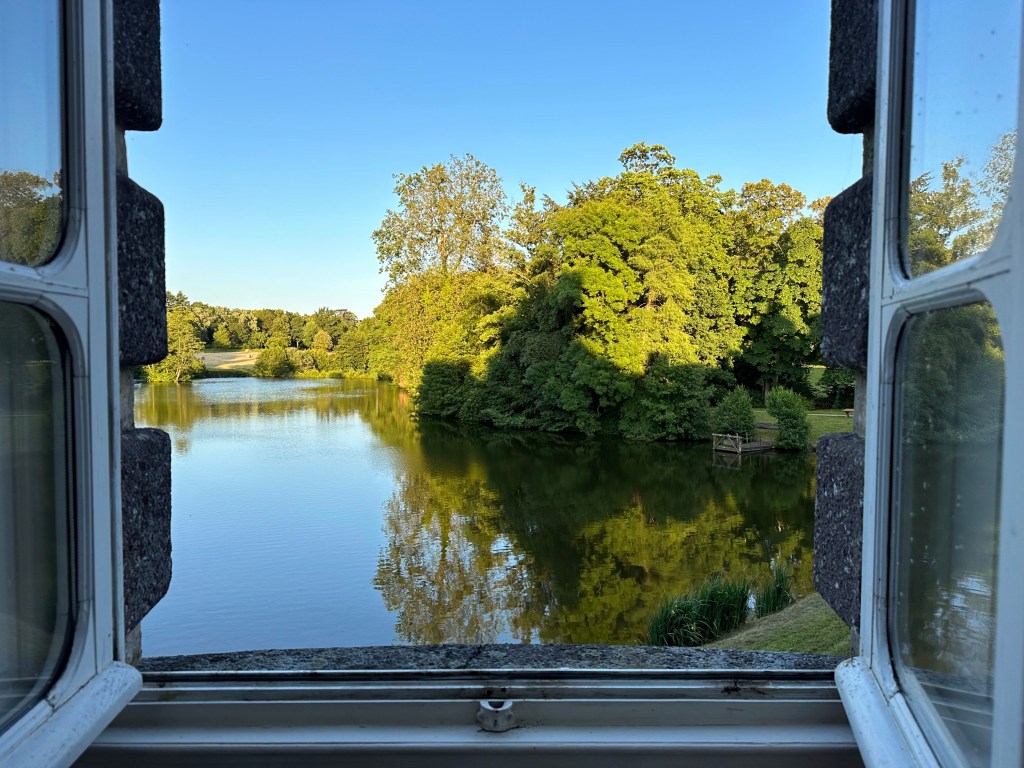
So, because nightfall came so late in Normandy in July, our first act of our now-independent stay was to take a walk all around the grounds, which were very nice.
“Is that a pudding stone?”
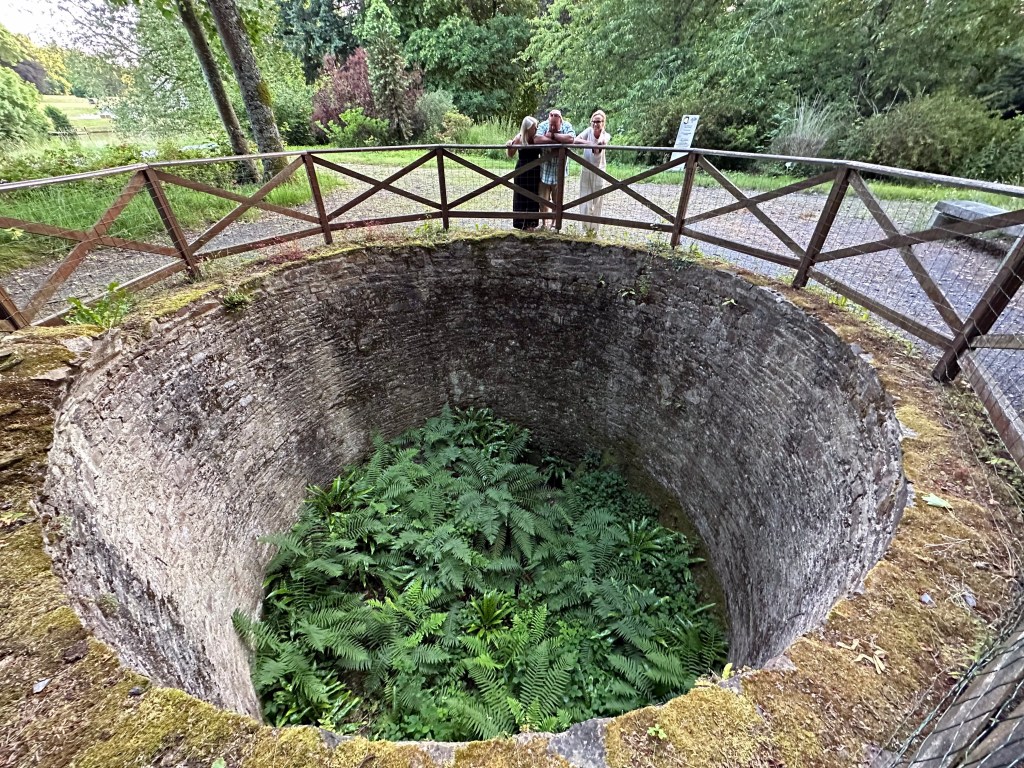
The chateau’s 16th-century ice house (minus roof and “entrance airlock”), discovered in the 1850s.
Then, we reentered the chateau to explore there. On our own. Alone and unsupervised.
We explored every inch of this place, from the barrel-vaulted basement (no dungeon or torture chamber was evident, but there could always have been a secret door that we missed. . .), to the 1980s era bar (!) and disco, to the unused hallway of standard hotel rooms on the second floor, to the attic space above.
And also the inside of this original tower from the 11th century.
After all of the exploring, and because we had consumed the entire chateau’s supply of booze, we decided to turn in.
As we locked the front door per the creepy – and now absent – manager’s instructions, and resigned ourselves to spending the night in a deserted, 11th-century chateau, we truly and sincerely turned to each other and somberly pronounced “see you tomorrow to whoever makes it through the night here alive.”
Seriously. It was like retiring for the night knowing that you’re in an unsettling horror film where something bad is going to happen. But you don’t know what; or to whom.
But with fewer cobwebs.
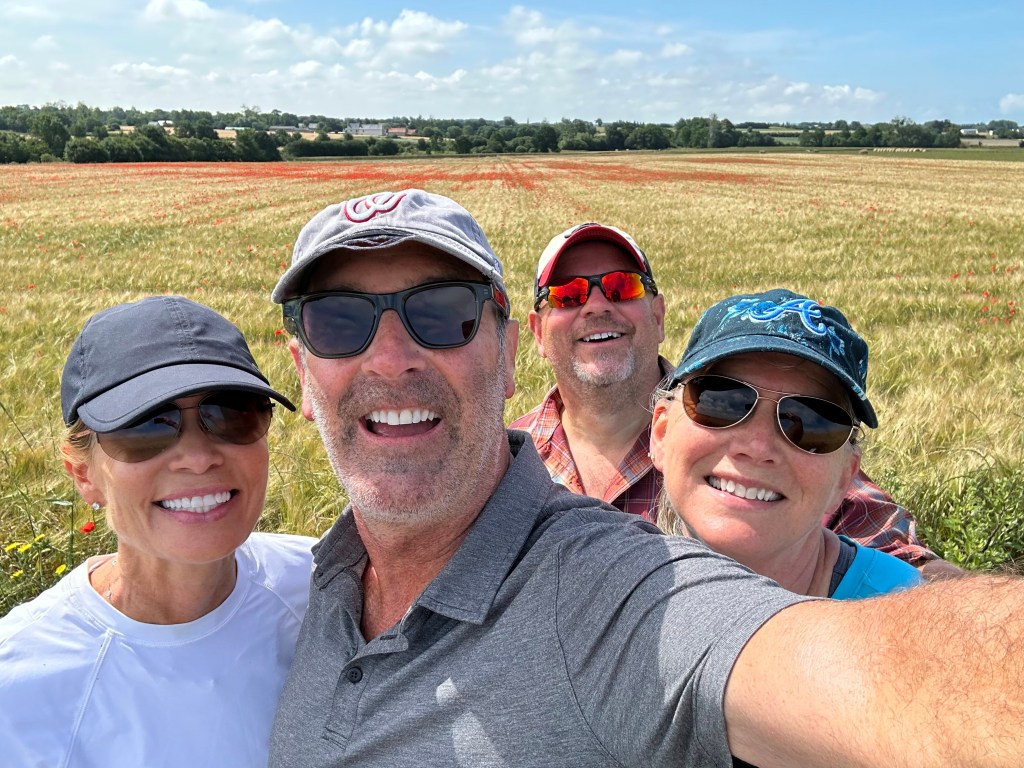
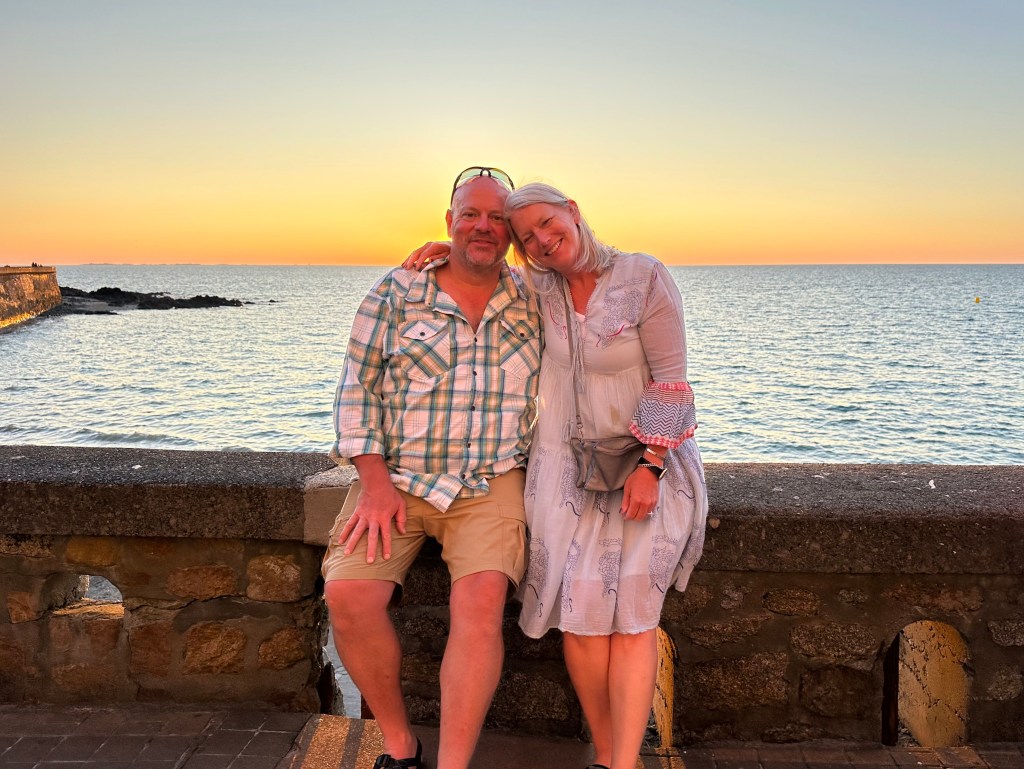
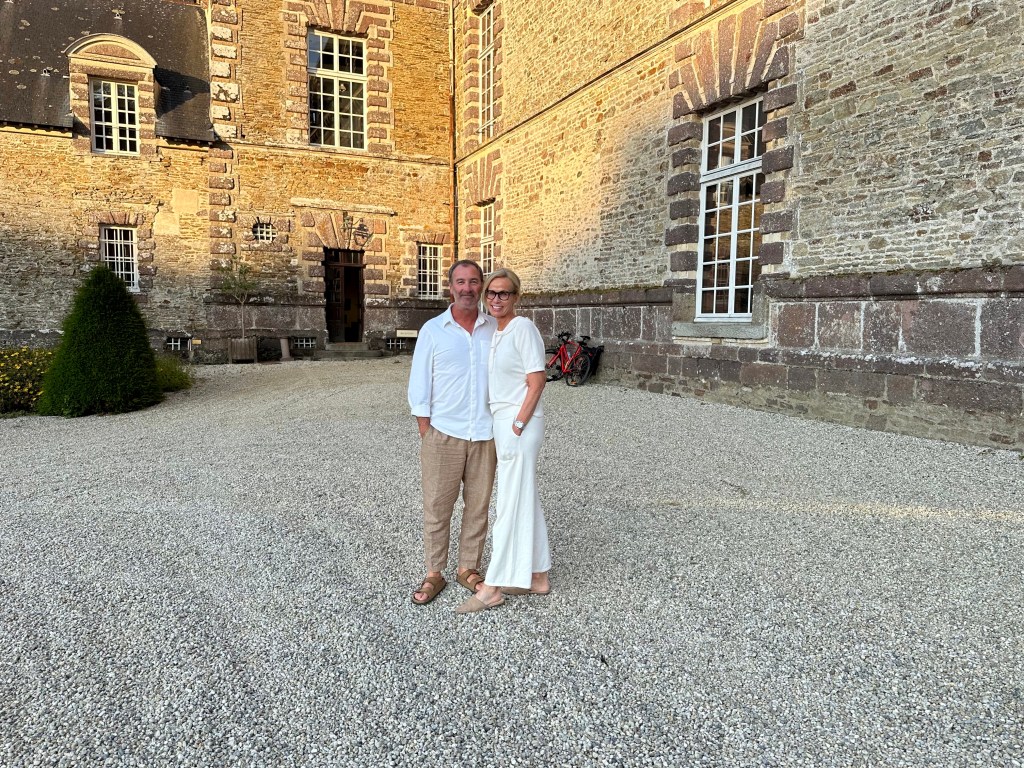
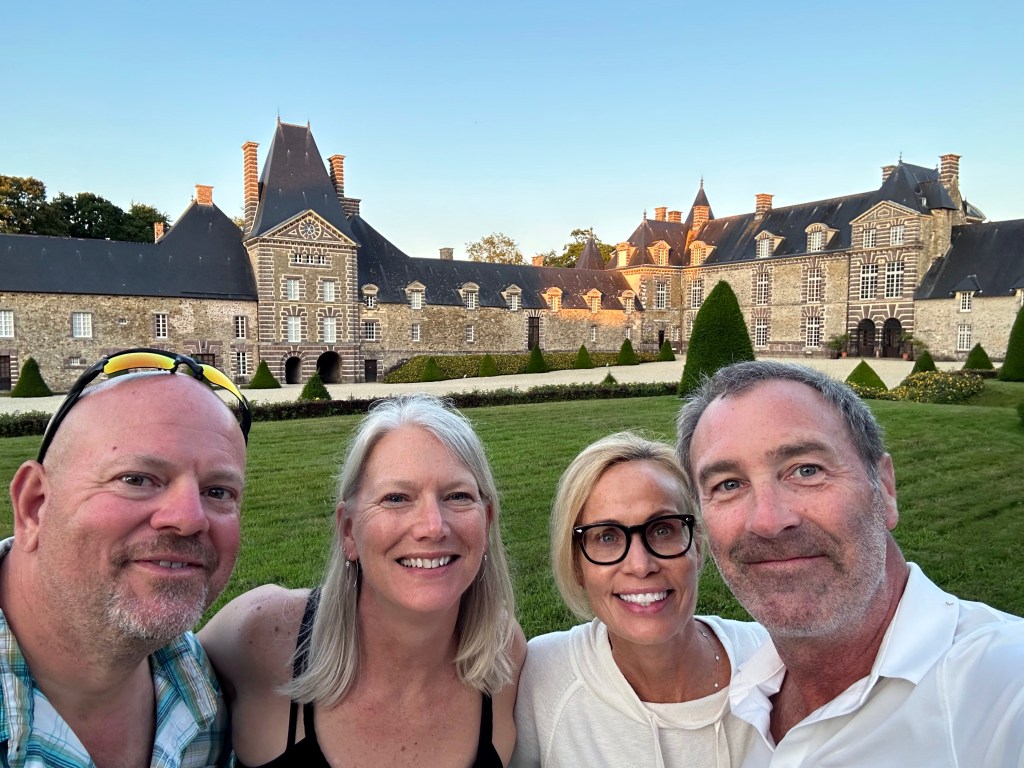
The intrepid group of ghost hunters who dared to spend the night alone in a medieval chateau.
There’s a postscript to this adventure: WolfeStreetTravel posted a review a few months later on TripAdvisor, on which we’ve posted many of our stays to that point (we submitted 290 reviews). The review reflected the narrative above, complementing the chateau’s history and architecture but also expressing bewilderment and unease over being left alone there overnight. The countess decided to respond to the review by denying all of this and stating that staff were there during our entire stay. Which, all four of us will contend, was patently untrue.
TripAdvisor apparently lets the hotel – not the guest reviewing the hotel – have the last word, and so we were not provided the opportunity to rebut the blatant fiction peddled by the countess. We were annoyed, but that was that.
Then, when, 3 years later, WolfeStreetTravel FINALLY gets around to posting this experience to our blog, we went to copy the review to simply paste it here only to find that TRIPADVISOR HAS REMOVED OUR REVIEW ENTIRELY.
We’re going to try to confront TripAdvisor about this, but it’ll take some effort to navigate through the turrets and walls they (and every other corporate entity on the web) have erected to delay, deny, or distract an actual person from contacting them. But we’re pretty annoyed, so we’ll give it a shot. If this effort bears fruit, we’ll post a follow up here.
After limiting our travel each year for the past several decades to 1- and 2-week trips abroad due to work responsibilities, retirement by the second of the two travelers in 2023 eliminated this constraint. So, we kicked off WolfeStreetTravel’s 2023 journeys with one-way tickets to Italy with no plans to return.
The original vision for this prolonged foray to Europe assumed that we’d have an itinerary and lodging planned for the first week or two, then we’d wing it from there. However, this approach proved to be completely unbearable for the travel-planning arm of the consortium. As a result, our entire itinerary, including all destinations, transportation, and accommodations (and about a half a dozen dinners) were planned for the first 7 weeks of the trip.
We still had no return plans, maintaining fidelity to the spirit of the trip, but we definitely weren’t winging it, either.
The trip, which began on May 5, can be logically sequenced into the following legs:
Italian peninsula road trip (17 days)
Sardinian break (4 days, including overnight ferry to Palermo)
Sicily road trip (18 days)
Malta break (4 days)
Normandy bike trip (8 days, including a day before and after biking)
Portugal (8 days)
The color coding of each leg above aligns to the destinations depicted in the interactive map below:
In addition to the color coding, the map breaks down our travels using the following icons:
Bed = hotel stay
House = villa / Airbnb stay
Pin = day trip
Hiker = uh, a hike
Biker = a stage in our Normandy bike trip
We’ll file detailed posts on the trip later, but each of the legs is summarized in this post. We really have tried to keep this overview to a bare minimum, but it’ll still be the longest update we’ve ever posted – sorry!
Italian Peninsula Road Trip
The trip began in Tuscany, where we’d spend 5 days with the Brandts and KJQ in a beautiful area just northeast of Siena.
Overlooking the Val d’Orcia:
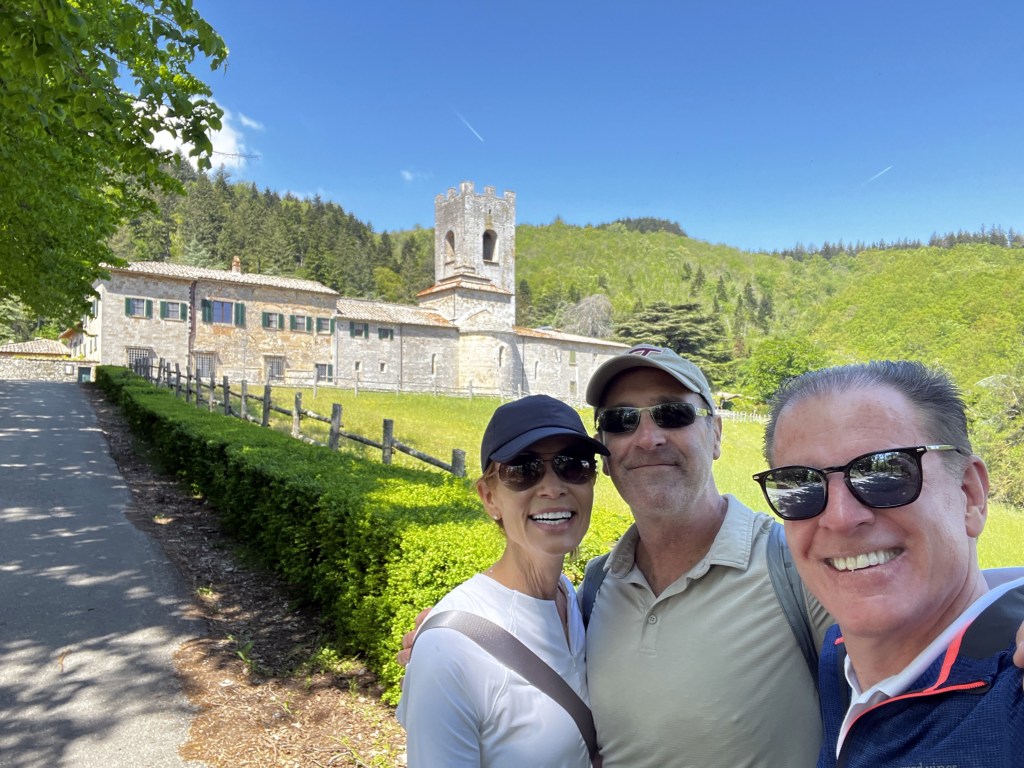
We hiked w KJQ one day to the Abbey of San Lorenzo a Coltibuono (and, about 5 miles later, to a harrowing shortcut escaped only through an opening KJQ dubbed The Gate to Salvation):
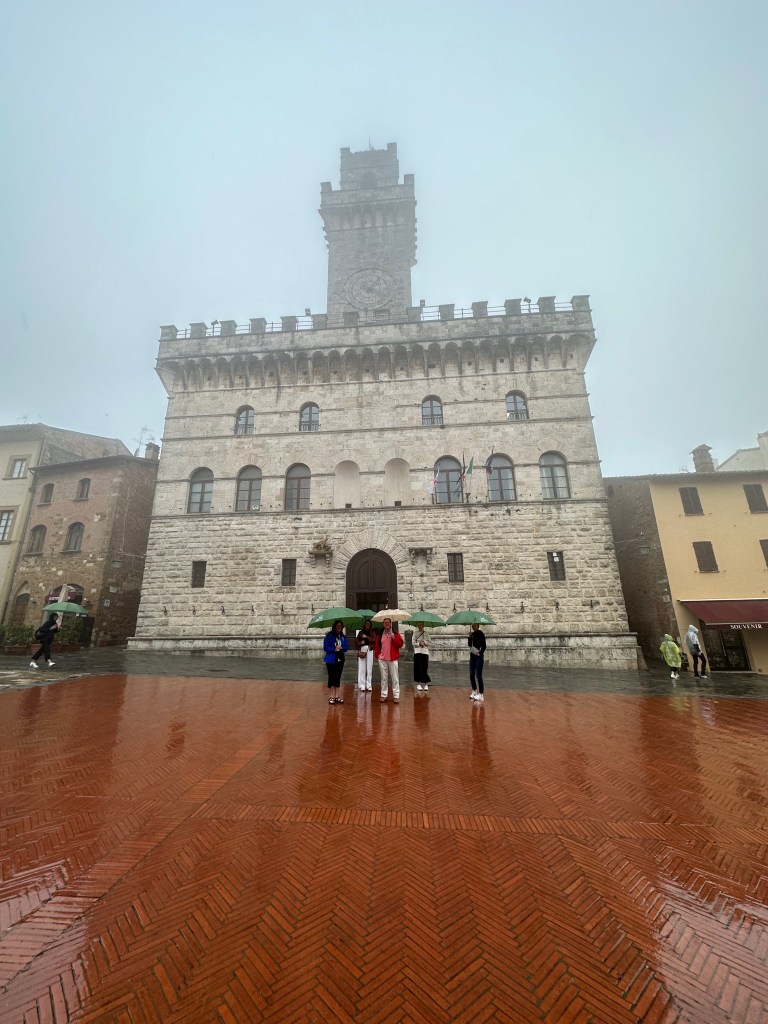
Tuscany wasn’t all sunshine and Brunello, though – it freaking poured in Montepulciano:
Gracie joined us for a portion of the stay, as well (and a team comprised of her and Madison cleaned up on two successive nights of Trivial Pursuit)
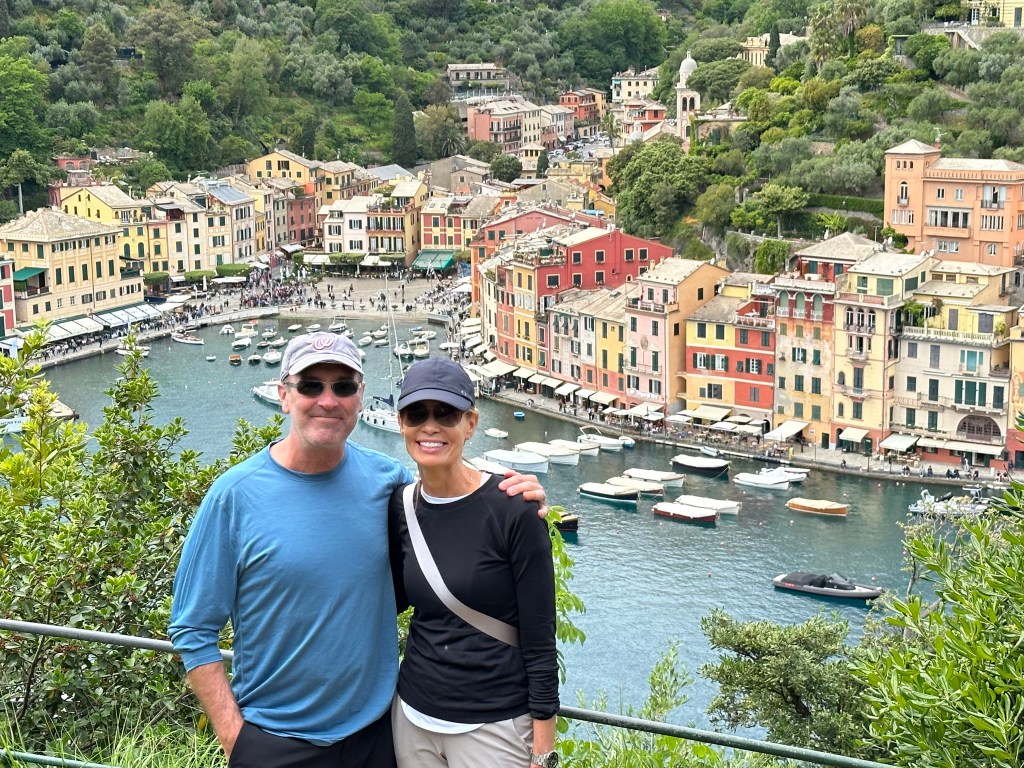
From Tuscany, we drove north, to Portofino on the Ligurian coast – a town that had been on Lisa’s wish list for several years. It did not disappoint.
We continued our hiking habit in Portofino, hiking one day to the Abbey of San Fruttuoso:
And the next along the coastline to Santa Margherita Ligure:
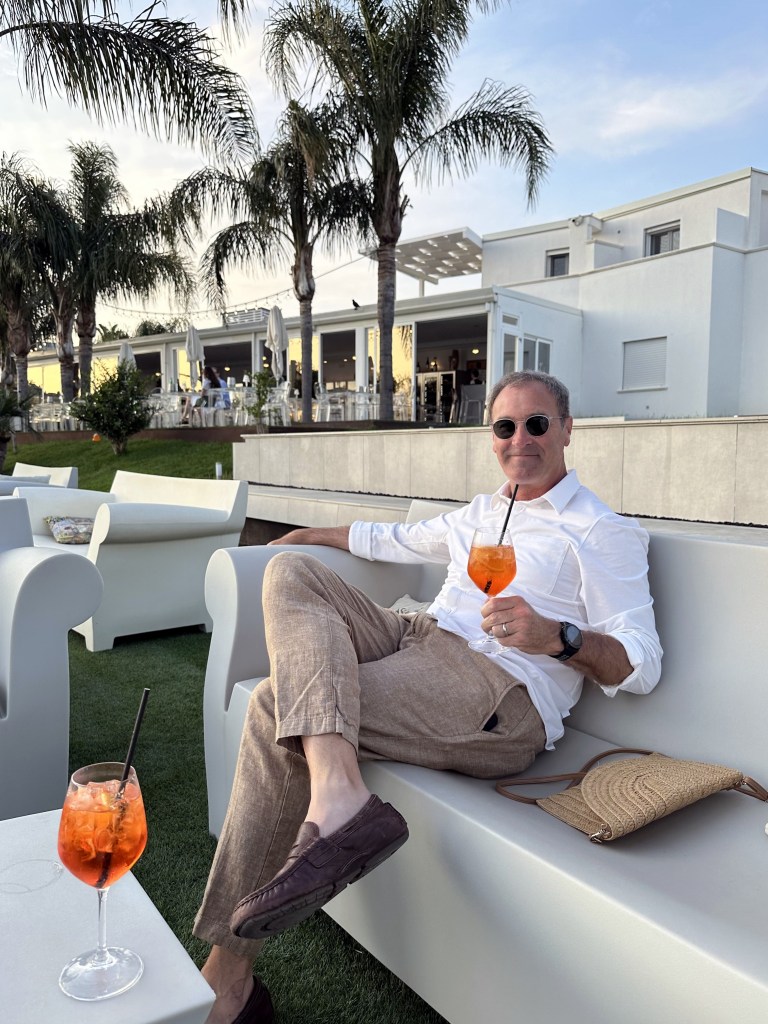
Portofino also was the jumping off point to scores and scores of Aperol spritzes consumed as aperitivos throughout the trip.
From the Ligurian coast, we drove south, back through Tuscany, and over the border to Umbria, and the medieval town of Orvietto for a stopover on our way to the Amalfi coast:
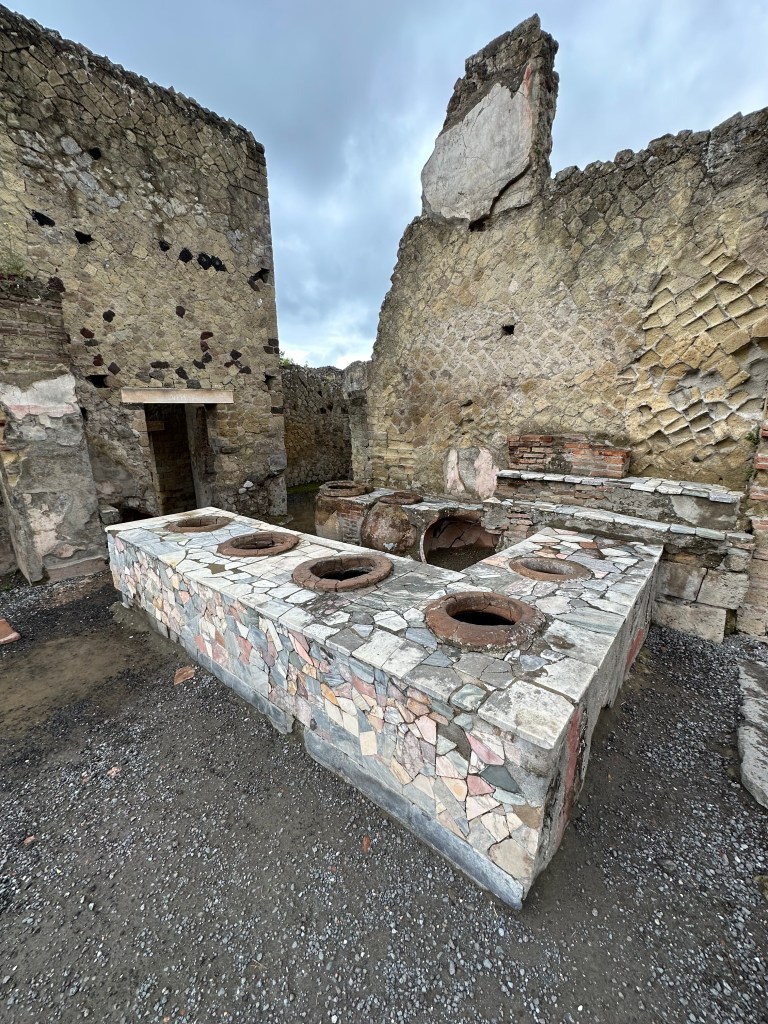
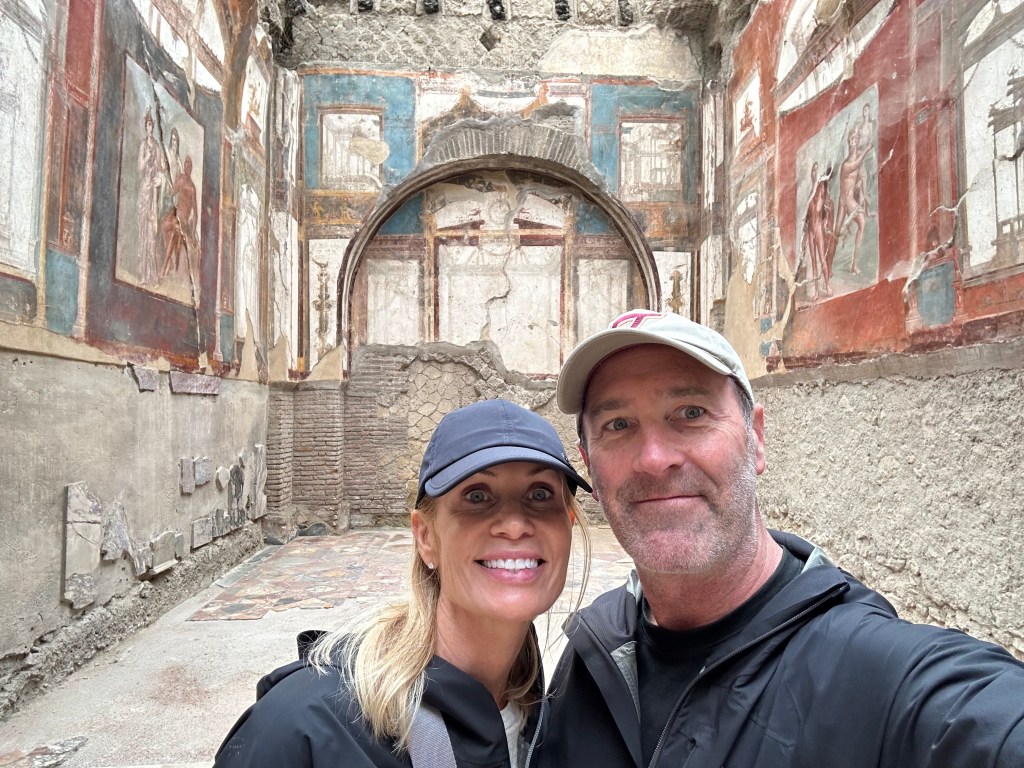
We continued south the next day, to Herculaneum. A smaller town than Pompeii, Herculaneum also was nonetheless lost due to the eruption of Mount Vesuvius in 79 AD, but it was covered in ash and pumice, rather than being flattened by rocky debris, preserving it much better, including numerous, intact, Roman snack bars:
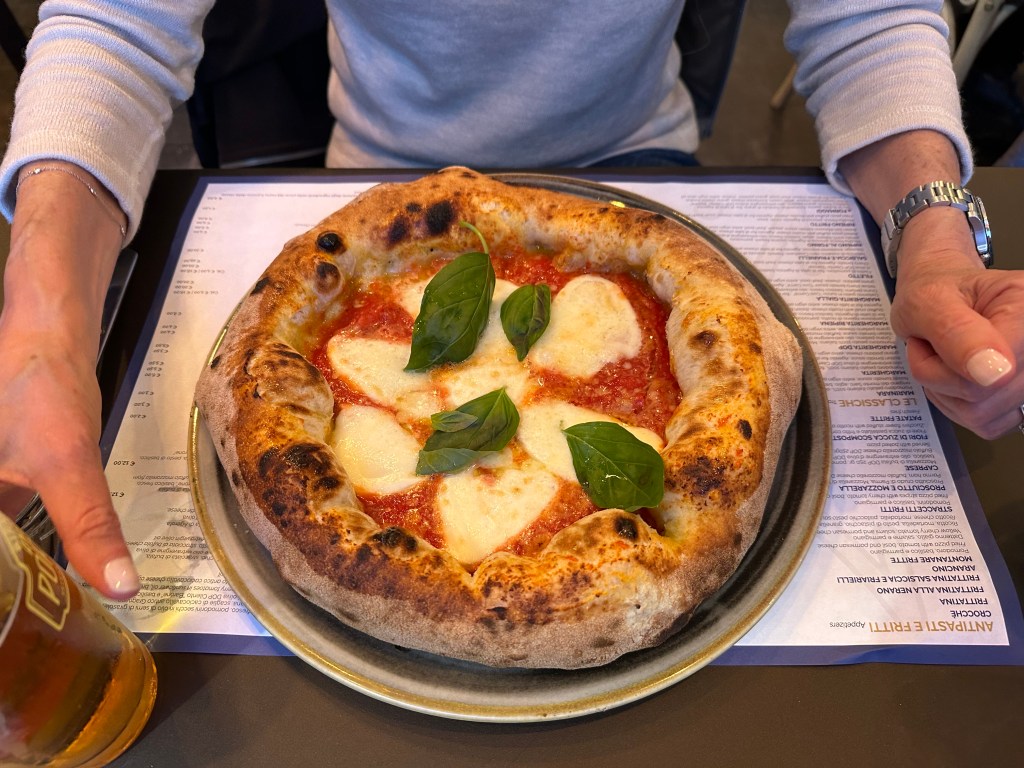
After a quick overnight in Naples (in which our only goal was to score some iconic Neapolitan pizza), we headed to Capri for a couple of days, leaving the car in Sorrento:
Our stay on Capri was one of the highlights of the trip – we will definitely be back. View over Capri Town from our place:
Hikes each day, including to the ruins of Emperor Tiberius’ villa:
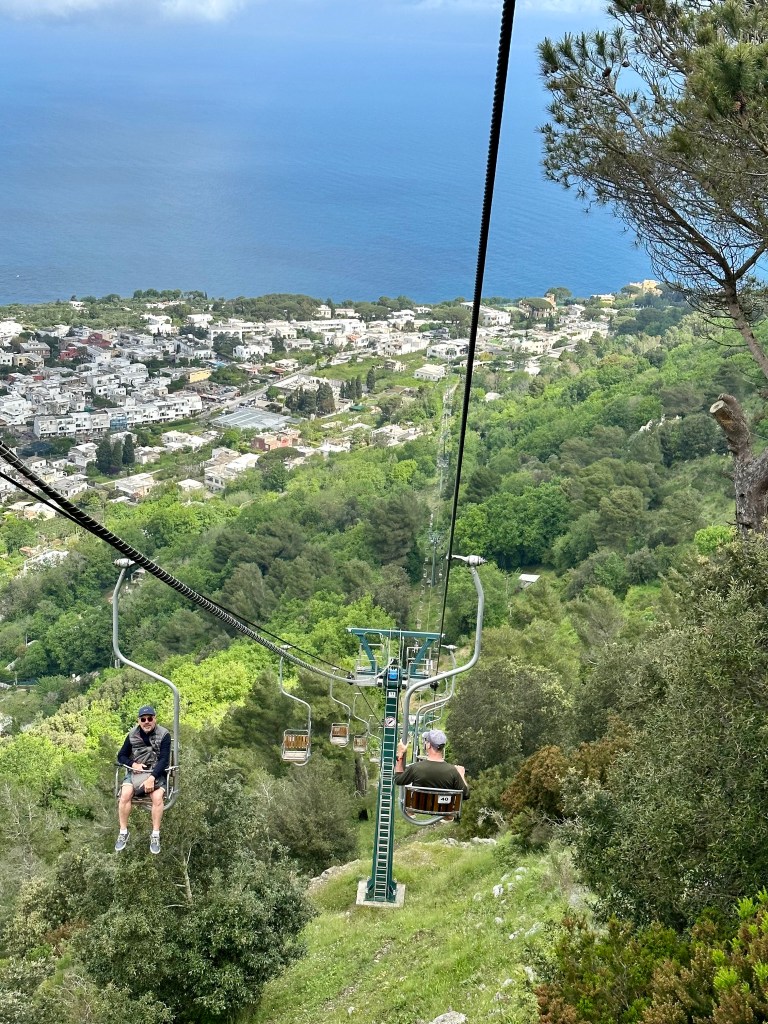
And a hike from Capri to Anacapri, followed by a hike up Monte Solaro because fog reduced visibility to zero for a ride up the cool little cable chairs:
But the weather cleared for a chair ride back down:
We ferried from Capri back to Sorrento, retrieved our car, and began the most harrowing aspect of our peninsular road trip: driving on the Amalfi coast. Seriously – really treacherous.
Luckily, relief was at hand in Praiano, our home for the next 3 days:
We headed a few miles down the road to Positano the next morning, only to retreat back to Praiano after a half a day there. A lot of travelers characterize Positano as the “Jewel in the Crown of the Amalfi Coast.” It’s not. Its a cruise ship packed full of tourists and shitty shops that happens be be tumbling down a cliff in a picturesque way.
We enjoyed Positano much more from a distance, content at our place in Praiano:
The next morning we hiked the Path of the Gods from Praiano to Positano:
Once the path paralleled the coastline, the going was a little technical, but not a big problem. The challenge to the 5-mile-long Path of the Gods hike was the >2000 feet of incline and decline, almost all of which is straight up from Praiano and then straight down 1700 steps into Positano.
Praiano also hosted the first of three Michelin-starred gastronomic dinners of the trip. Plus, a ridiculous perch over the Tyrrhenian Sea on the Amalfi Coast:
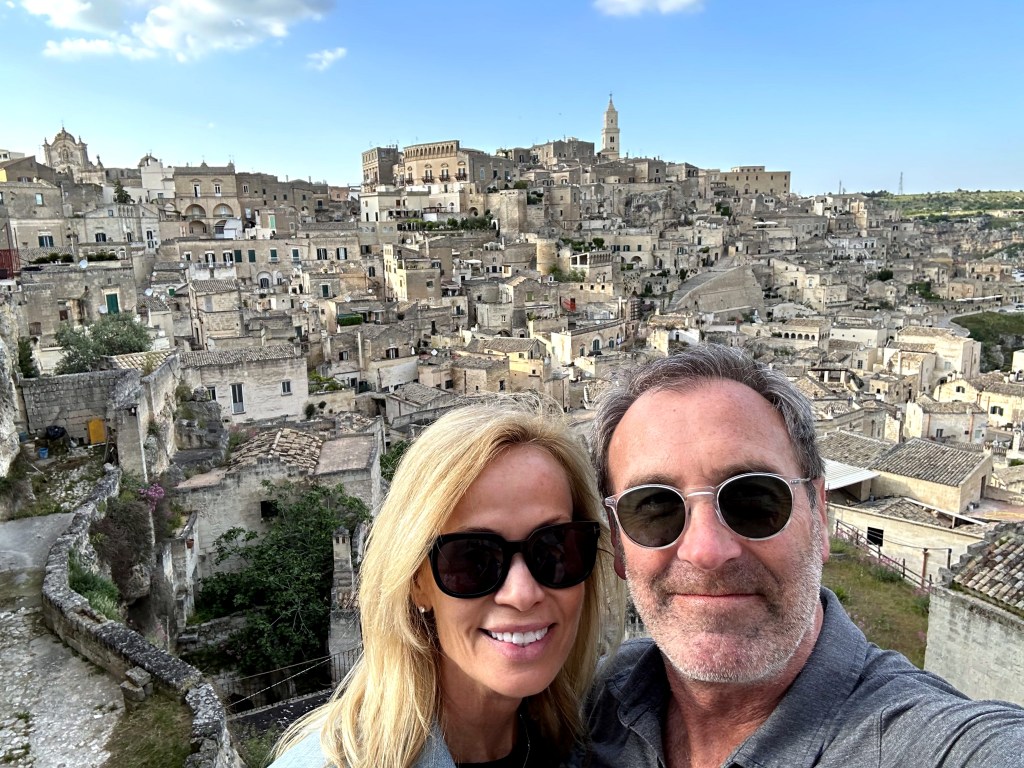
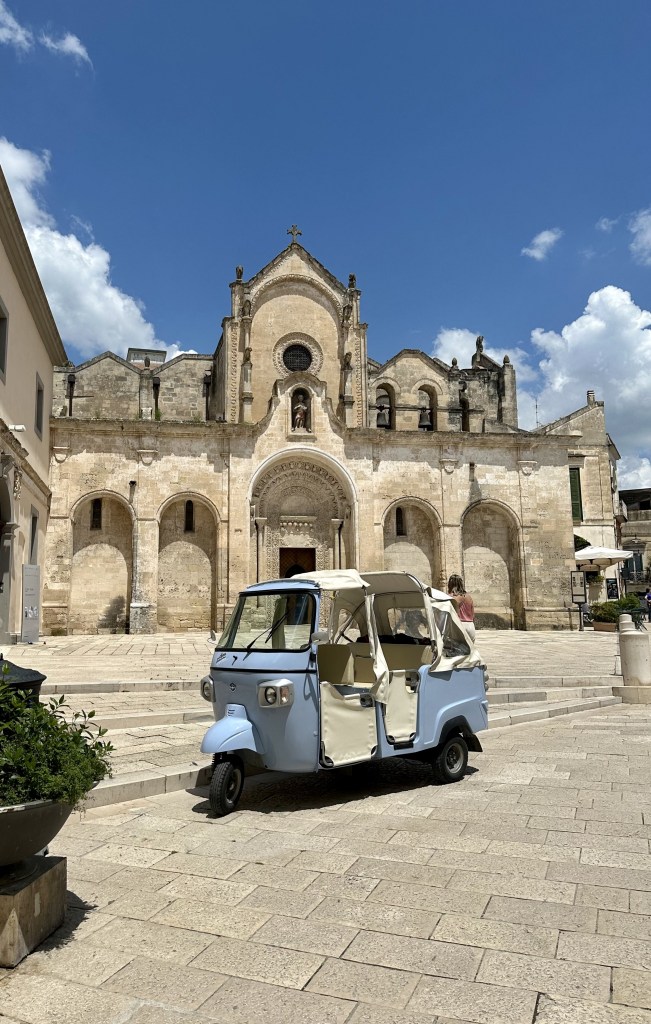
From the Amalfi Coast, we drove southeast for a couple of days in Matera, Italy’s oldest city:
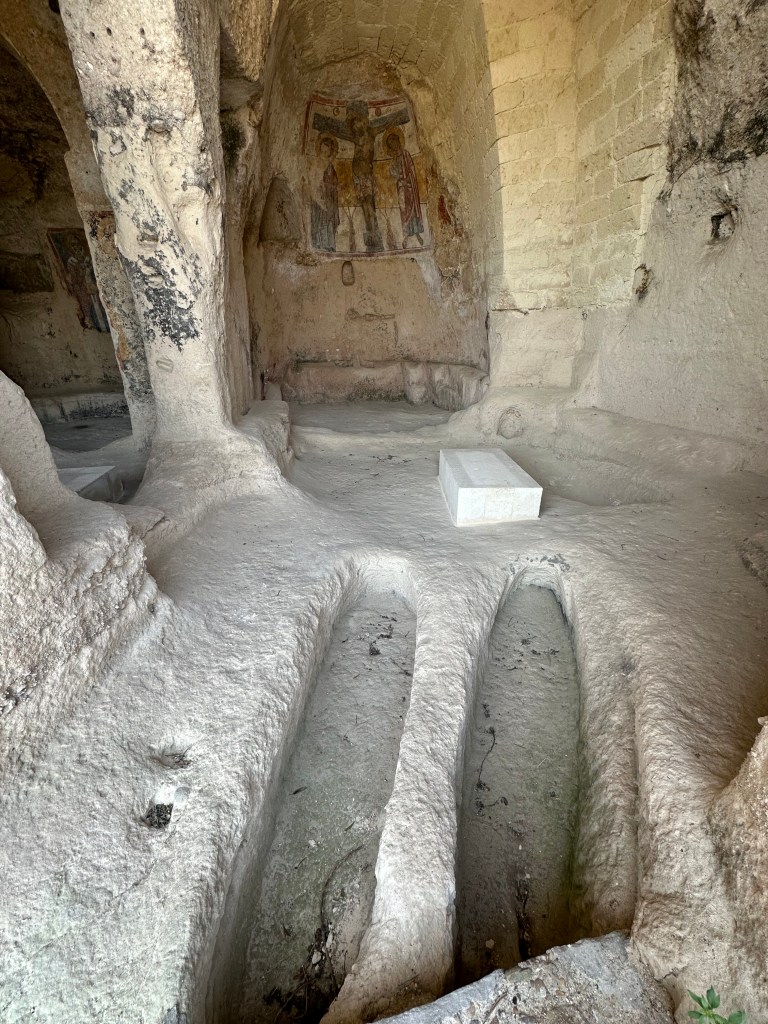
Similar to our experience in Capadocica in Turkey, Matera sported tons of centuries-old troglodite homes, churches, and tombs:
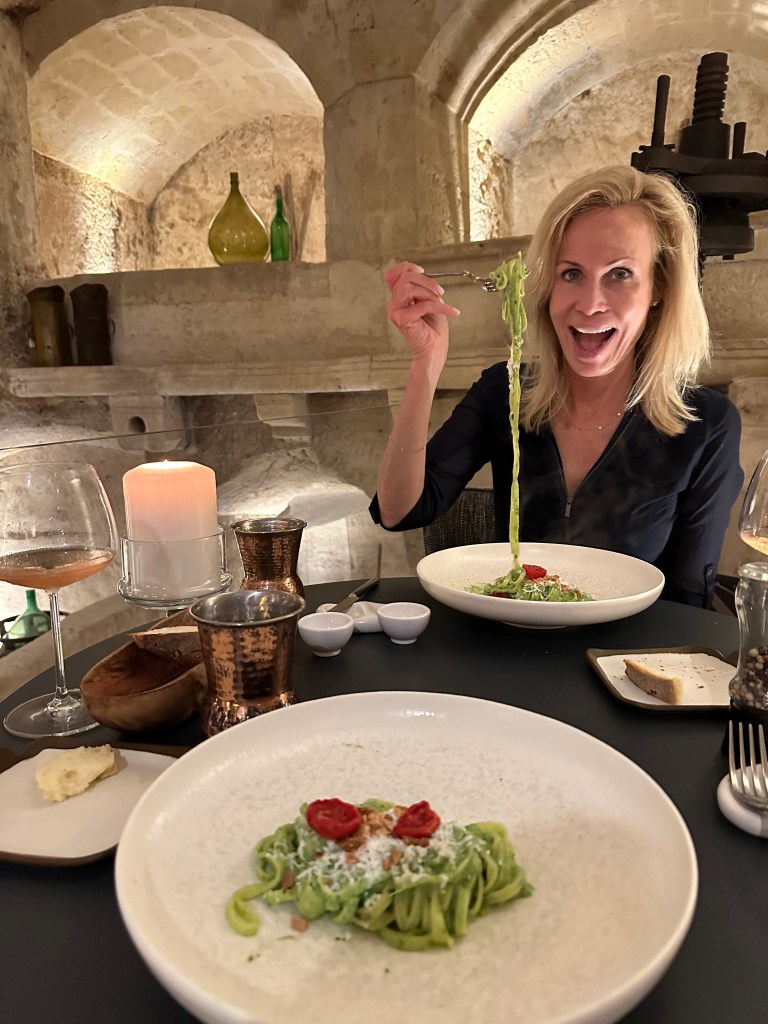
And cave restaurants, too:
Our last night on the Italian peninsula:
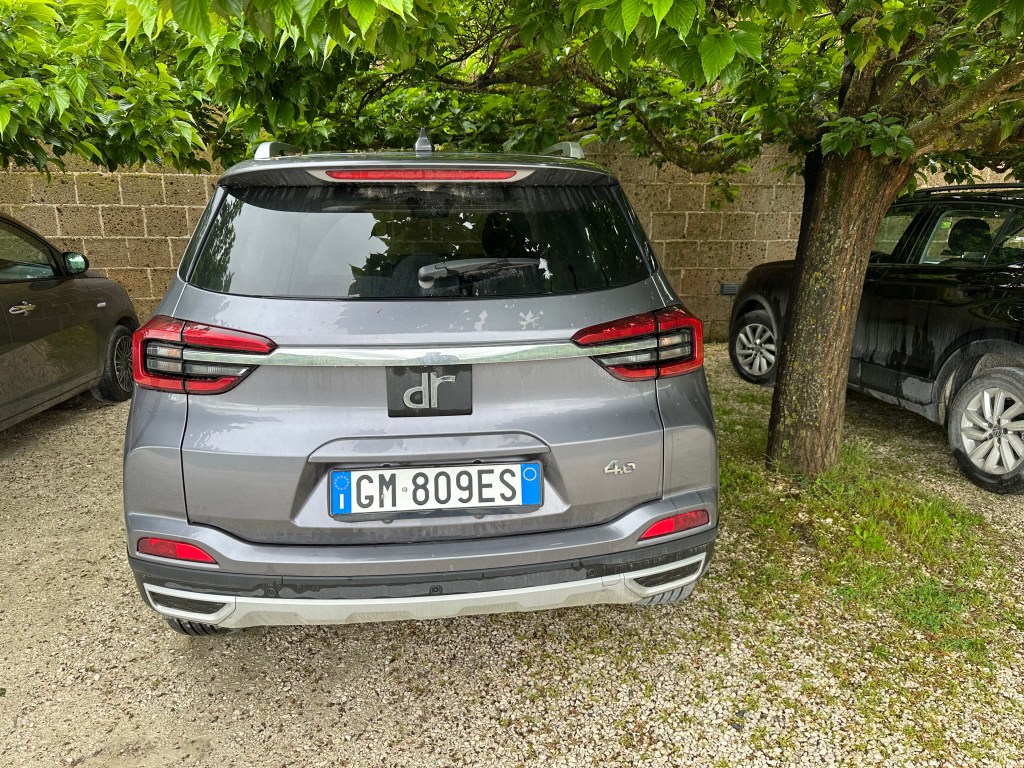
The next morning, we surrendered our ride for the past 3 weeks (a dr, a brand none of us – not even KJQ – had heard of before), and flew to the island of Sardinia:
Sardinian Break
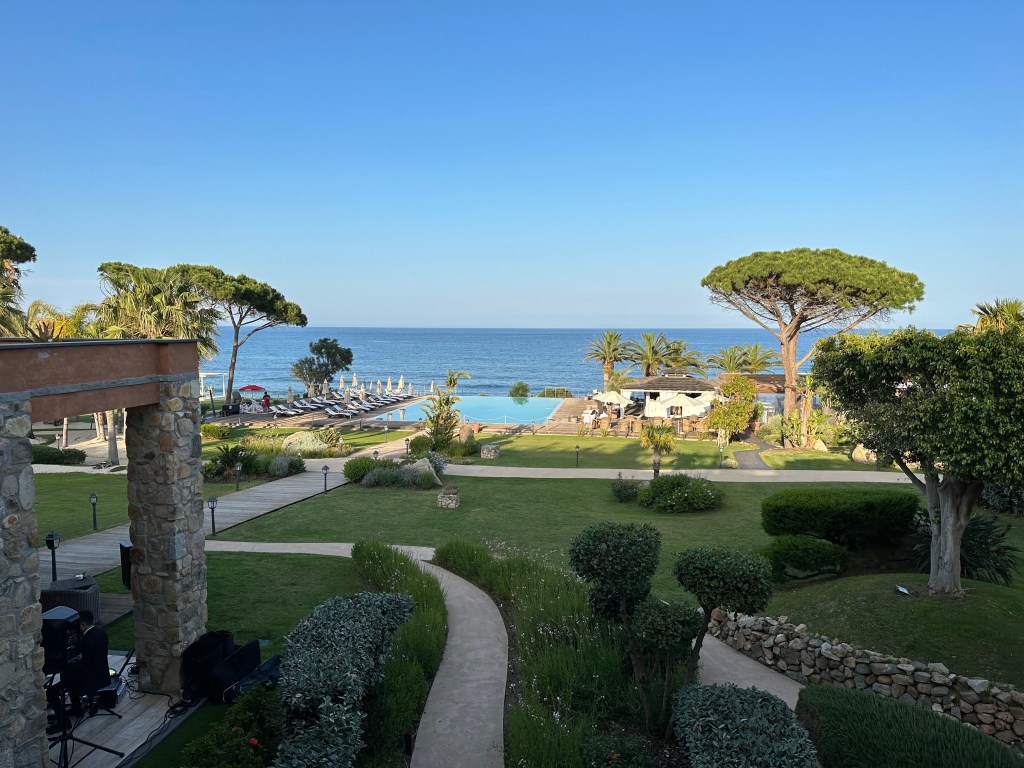
Between the end of one 3-week road trip, and the start of the next, we built into the itinerary a little down time on the the Costa Rei on the southeastern coast of Sardinia.
Not a lot to report – a few miles of walking each morning along the beach:
And some killer seafood, including and in particular, Sardinian oysters. (We thought these were the best we had every tasted until we later encountered even better ones in Normandy.)
Then an overnight ferry to Palermo, when we’d start another road trip leg across Sicily.
Sicily Road Trip
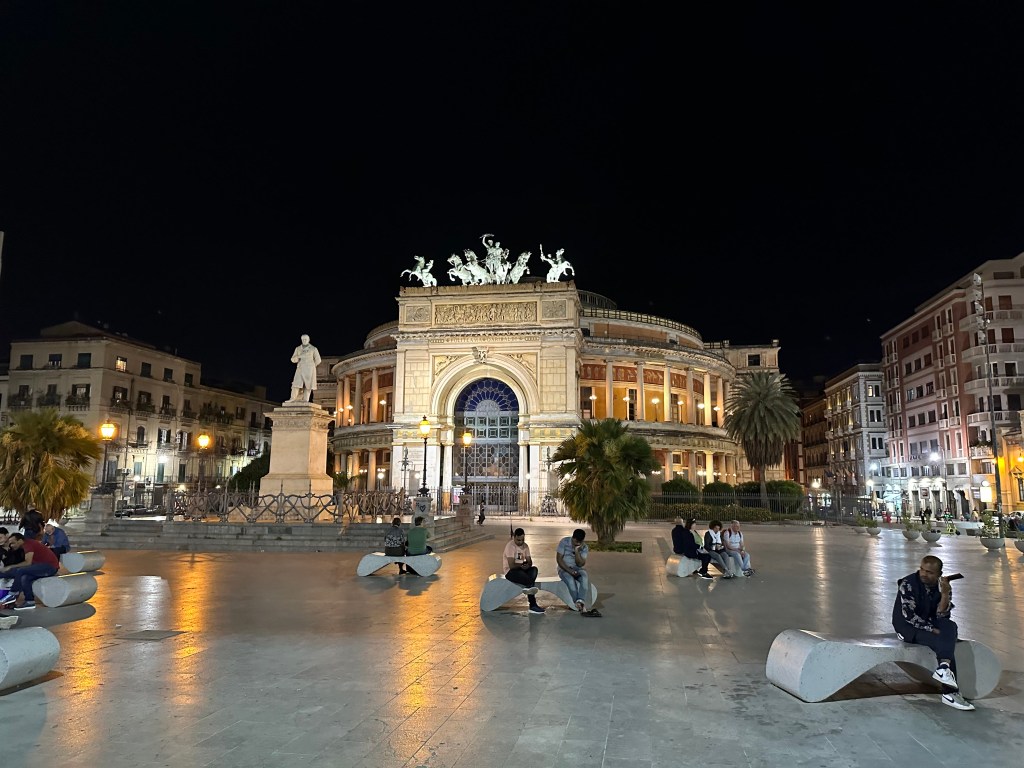
The surprisingly vibrant and enjoyable city of Palermo – very different from the gritty and sketchy image that we had prior to our time there:
And the first of many cool encounters with Arabo-Norman architecture in Sicily at the city’s 12-century Church of San Cataldo:
And our introduction to the ubiquity of pistachios on everything in Sicily:
And the most horrific of the catacombs of our entire journey below Palermo’s Capuchin Monastery:
And a cool, 3-hour street food tour, featuring a spleen sandwich (4/10: would not try again):
Our last evening in Palermo:
We drove from Palermo to the south-center of the island, to Agrigento, home to the most intact Doric Greek temples in the world, dating to 400 BC:
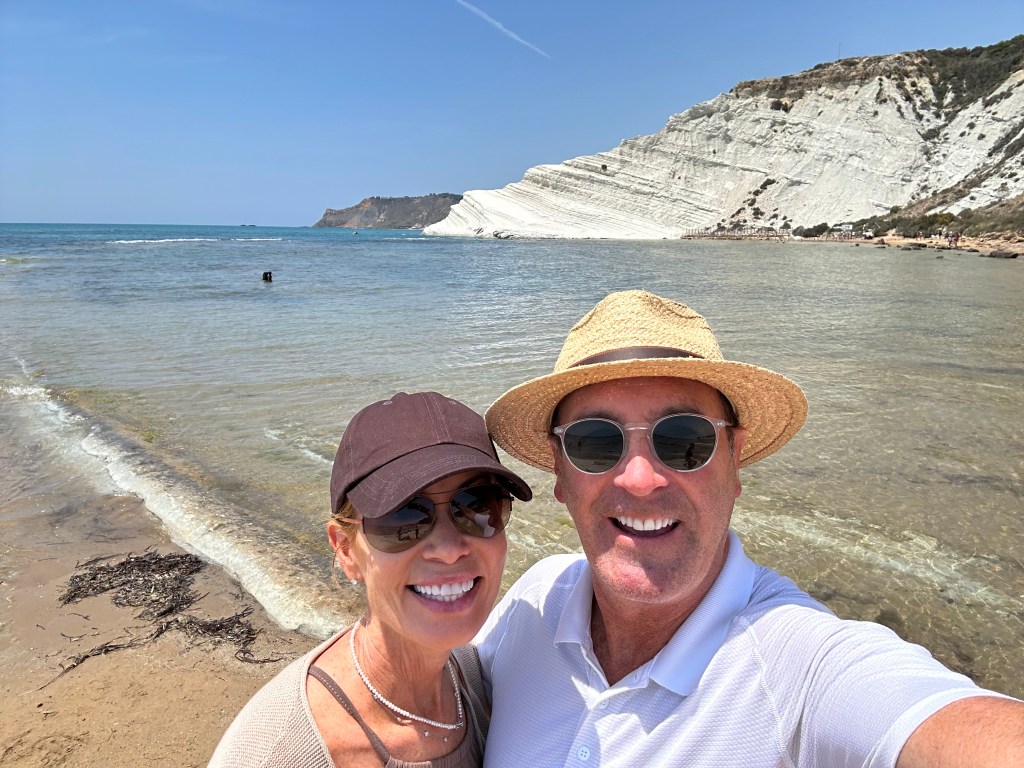
And spent a little time on the coast while we were there:
And continued the recommended daily doses of Aperol:
Final evening in Agrigento, with a view to the Temple of Juno and the sea:
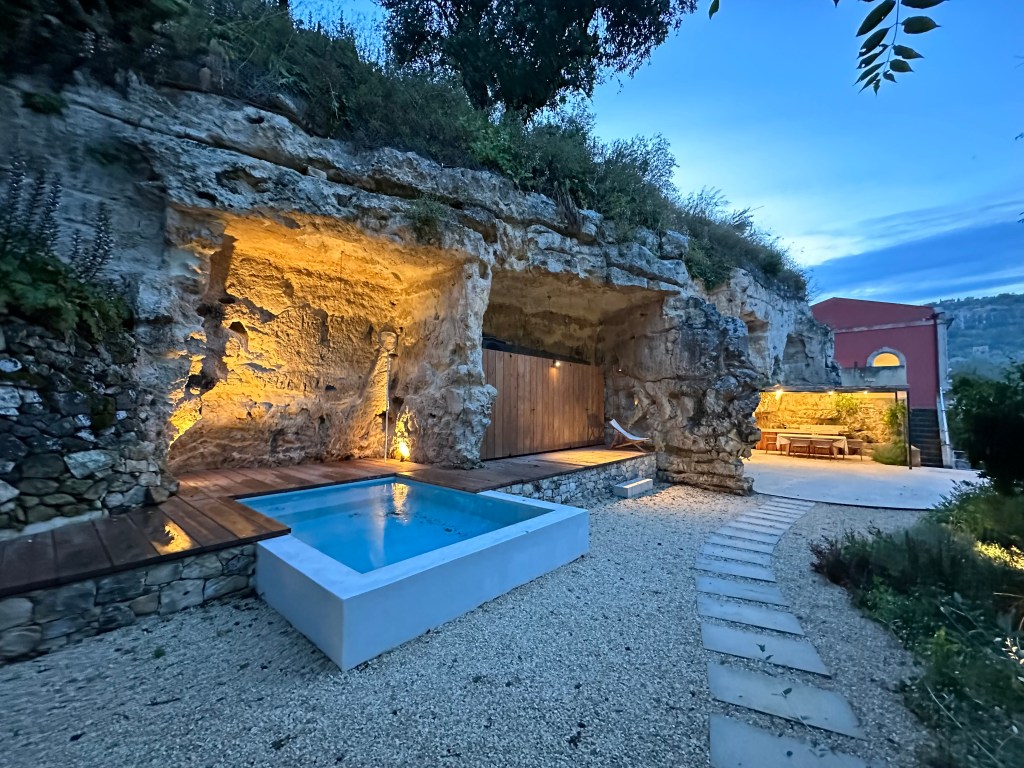
From Agrigento, we headed due east to a cluster of Baroque towns, so called because they were all destroyed by an earthquake in 1796 and were all rebuilt in the Baroque style du jour. We based ourselves in the town of Modica for 6 days:
Which sported a pretty cool AirB&B that was built into a cliff:
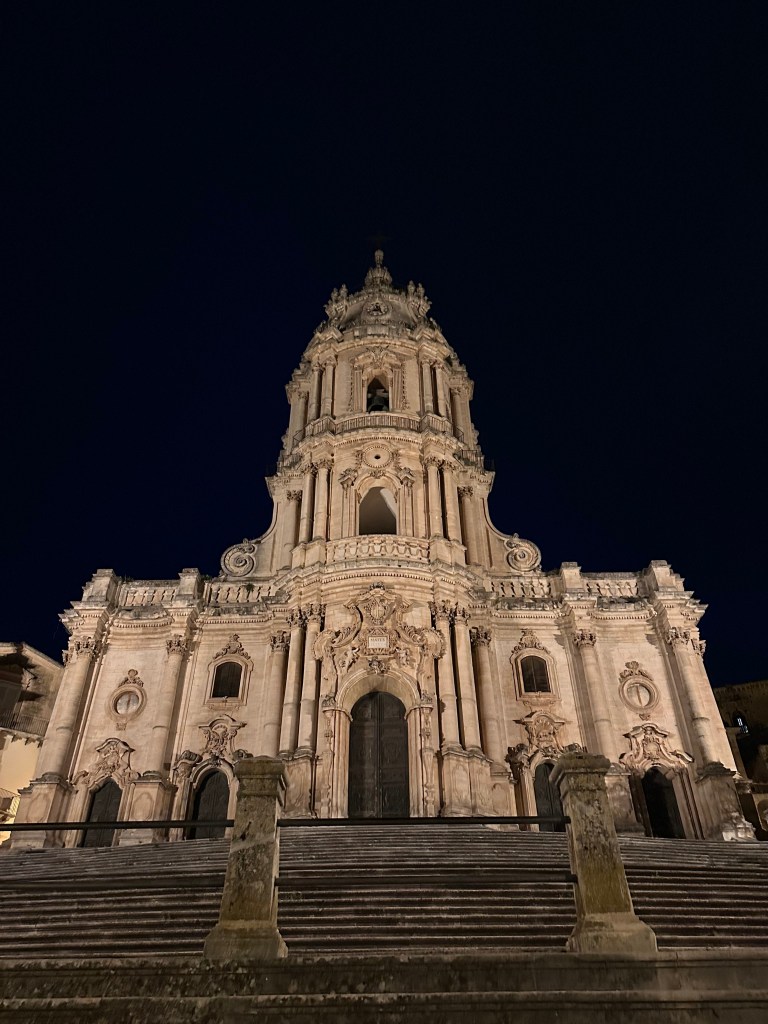
The Baroque Church of San Giorgo in the nearby town of Ragusa Ibla:
The main piazza (such as it is) of the Baroque town of Scicli:
And the spectacularly picturesque Baroque town of Noto:
Modica also was just 20 minutes from the beach, so we started two of our mornings during our stay with some pretty great beach hikes along the Sicilian coast:
Second gastronomic experience on the trip at the tiny Michelin-starred hole in the wall of Accursio, featuring, among other things, Sicily’s orange wine (the color, not the fruit):
Modica’s Baroque Church of San Giorgio (same name as in Ragusa, same style, just different town) on our last night:
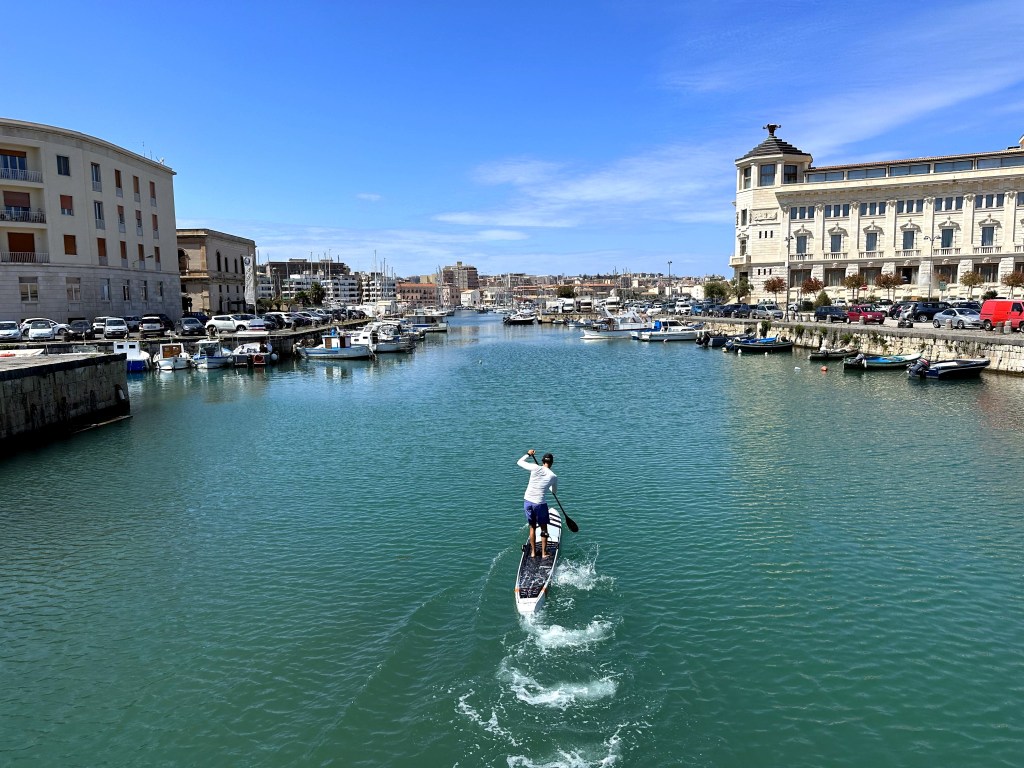
The ancient town / island of Syracuse served as our final stop in the south of Sicily – also another city we liked so much that we may return:
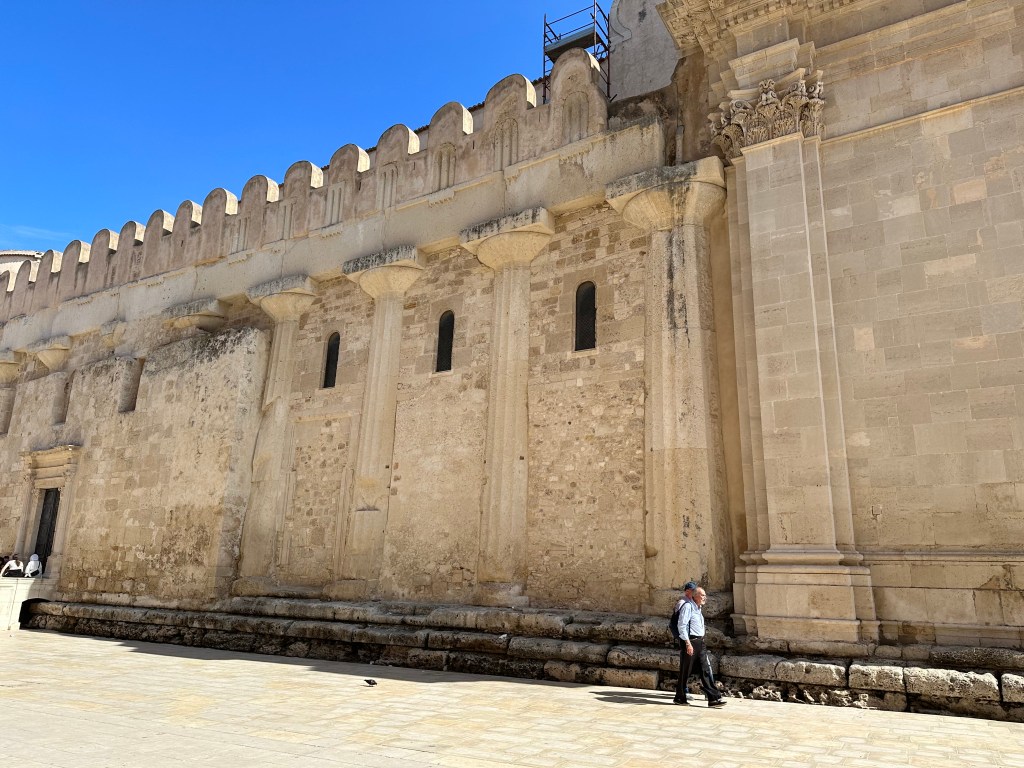
Sicily’s most captivating characteristic, at least to WolfeStreetTravel, must be the convergence and layers upon layers of different cultures that have dominated the island. We witnessed this with the mélange of Arab and Norman architectural styles in churches in Palermo and Monreal, for example. But nowhere was it more evident than Siracusa’s cathedral, which began as a Greek temple to Athena in 480 BC. In our travels, we’ve seen tons of churches build on top of pagan temples, replacing them. That was how they operated. Good site, but obliterate the offending structure. Not so in Siracusa. In the 6th century AD, the Byzantines just filled in the spaces between the Doric columns and incorporated the temple into their new church. Then the Normans added to it in the 11th century w crenellations reflective of their military-style churches. AND IT’S ALL STILL STANDING. You can see the ~2500-year-old Doric columns and capitals inside and outside the church (which was hosting a wedding while we were there, reinforcing how Sicilians simply live through their amazing history).
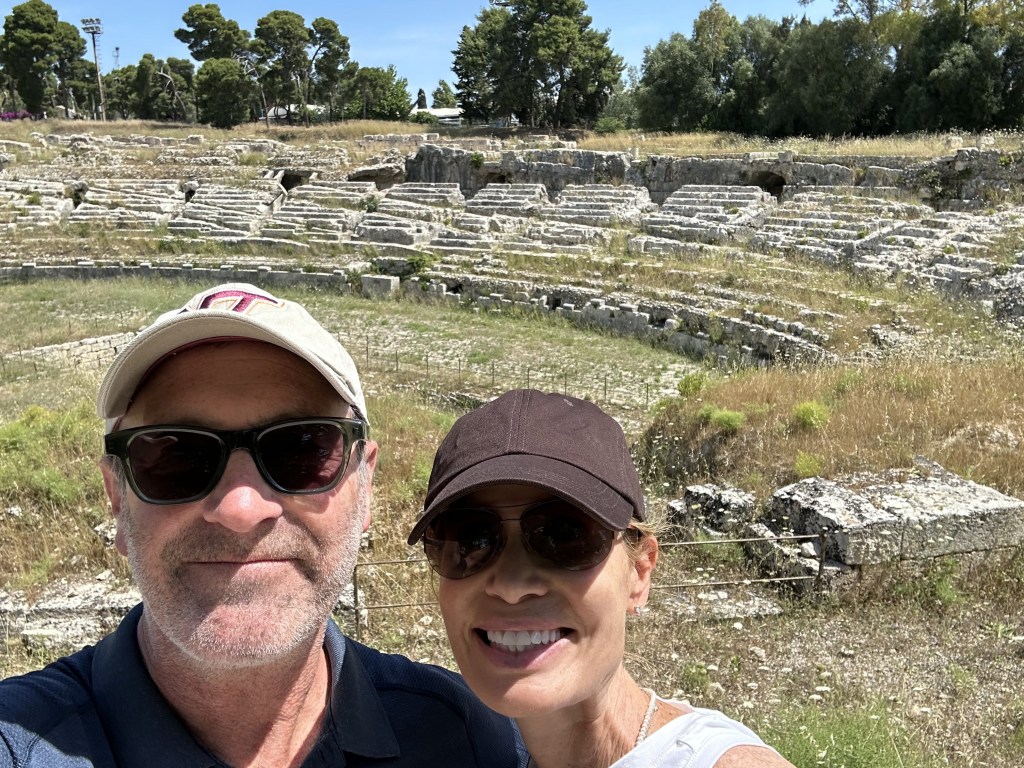
Another case in point, the Syracuse’s abandoned, 1st-century Roman amphitheater. . .
But just up a path lies the city’s even older, 5th-century BC Greek amphitheater, which is still in use today:
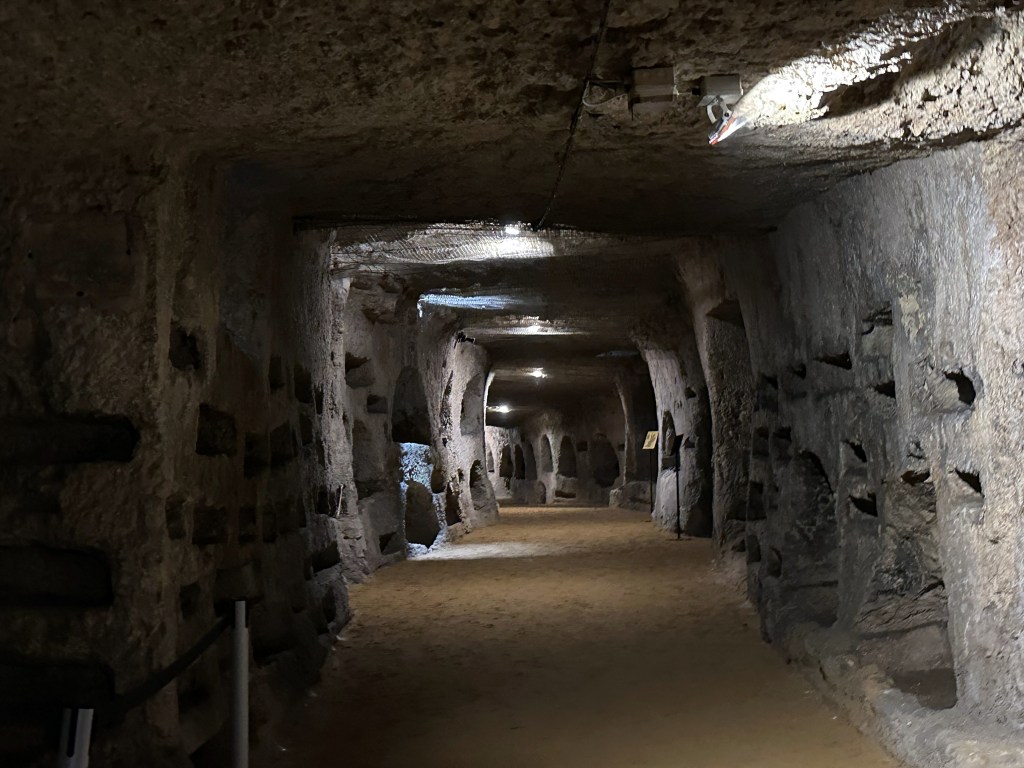
And, of course, we checked out the local catacombs:
Imbibing our daily recommeneded allowance of Aperol spritzes at one of the cooler little roadside cafes on Syracuse’s ancient Ortigia island old town:
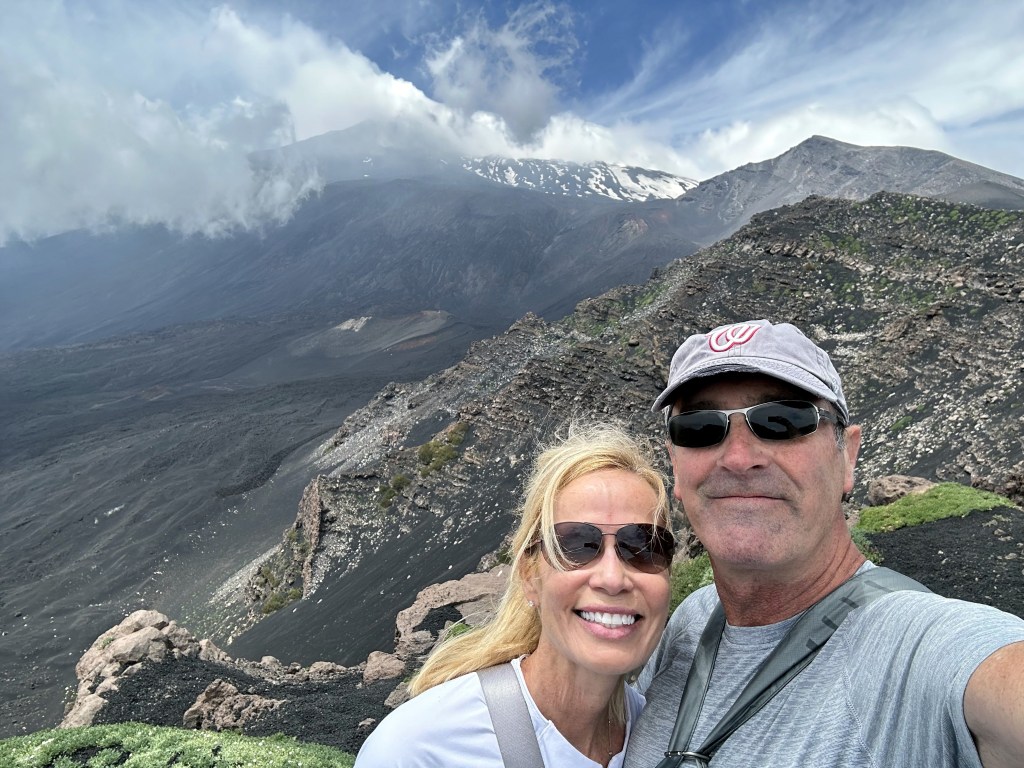
And then north! To hike Sicily’s still-active Mount Etna. Twice.
The first day’s hike, from the caldera’s southern approach was okay, but not particularly thrilling. The next day, we hiked up from the eastern approach. Holy shit – absolutely stunning. First, a legit old lava tube:
And then, at the top, along the rim of the old caldera, a view of the still active peak, plus smoky evidence in the old caldera of still active volcanic evolution:
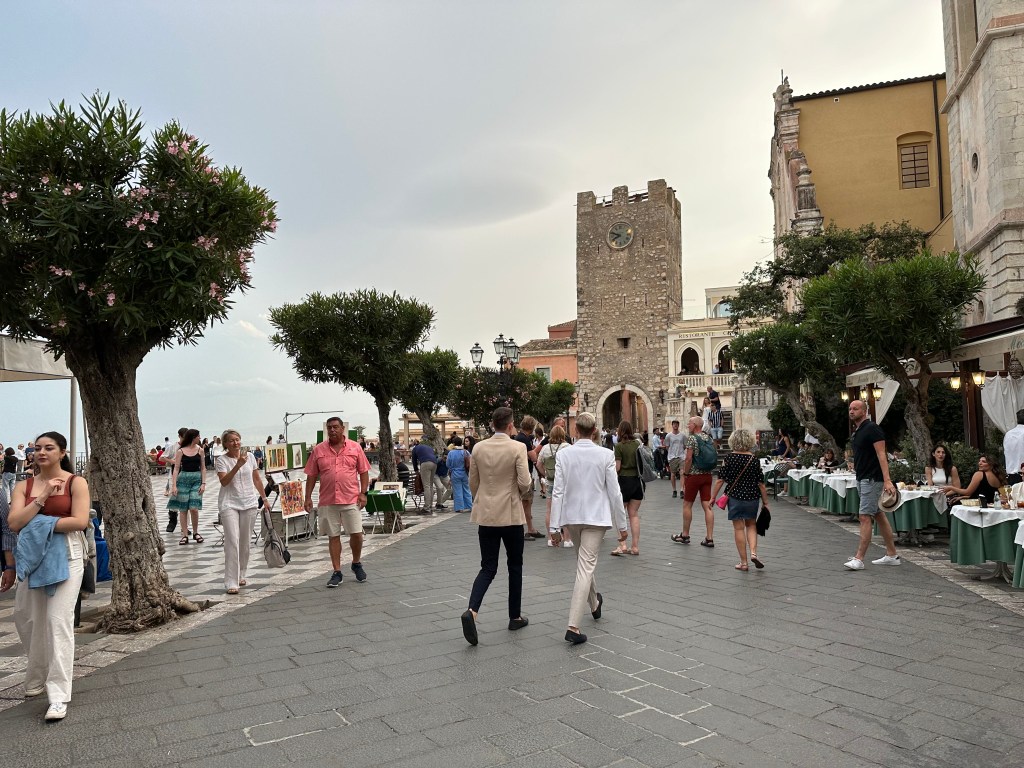
And finally, to the northeast(ish) of Sicily, and the now hyperpopular town of Taormina, setting for White Lotus Season 2 (although we didn’t know this when we planned the trip).
We challenge anyone to locate a more stunning, atmospheric setting for a classical theater than the one in Taormina. It began as a 3rd-century-BC Greek theater, then 1st-century-BC Roman theater, then 2nd-century-AD Roman theater, then 18th- 19th- and 20th-century restorations. Pretty freaking cool. And, like Syracuse’s Greek theater, still in use today.
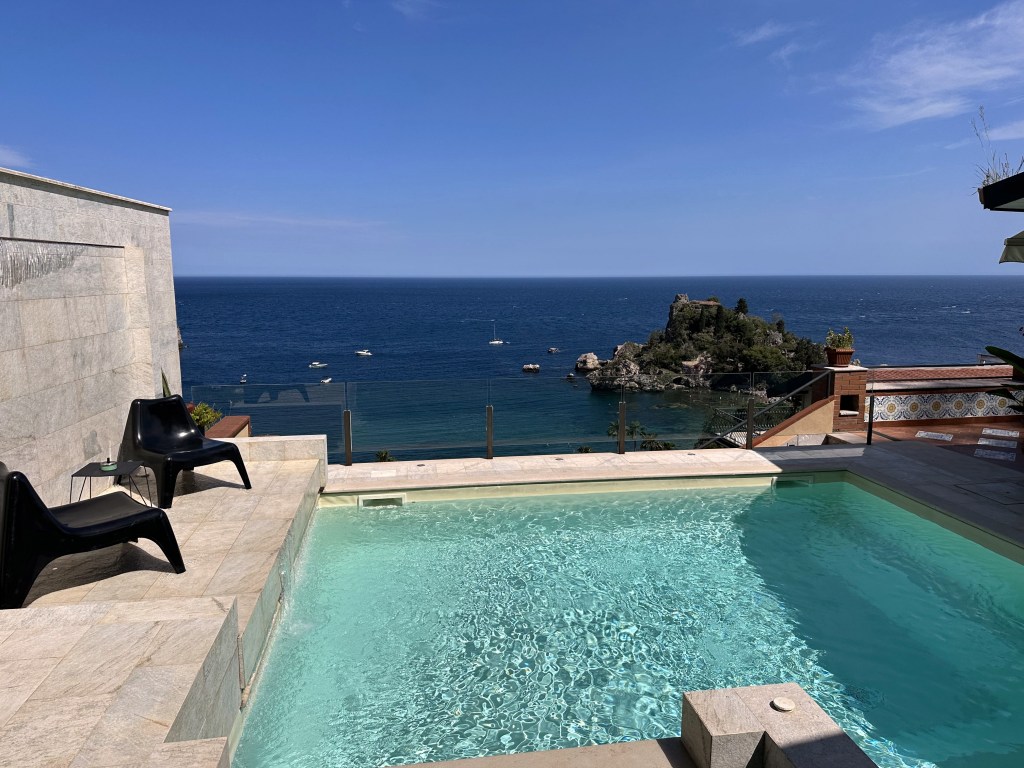
Our digs for 5 days, perched above IsolaBella. Wins the prize for best AirB&B pool on the trip.
Last night in Taormina:
The next day, we flew from Sicily to Malta, dropping off our trusty Citroen C3 – the second time we’ve had one of these for a European road trip. It looks like a sneaker with the unnecessary side effects, but this car grows on you!
Malta Break
And then, Malta! Country no. 71 for WolfeStreetTravel.
Downtown Valletta, the tiny country’s capital, with its unique wooden balcony boxes (gallarija):
And on the heels of the best AirB&B pool in Taormina, the best hotel pool at our digs in Sanglea built into an old fortress and overlooking Malta’s Grand Harbour:
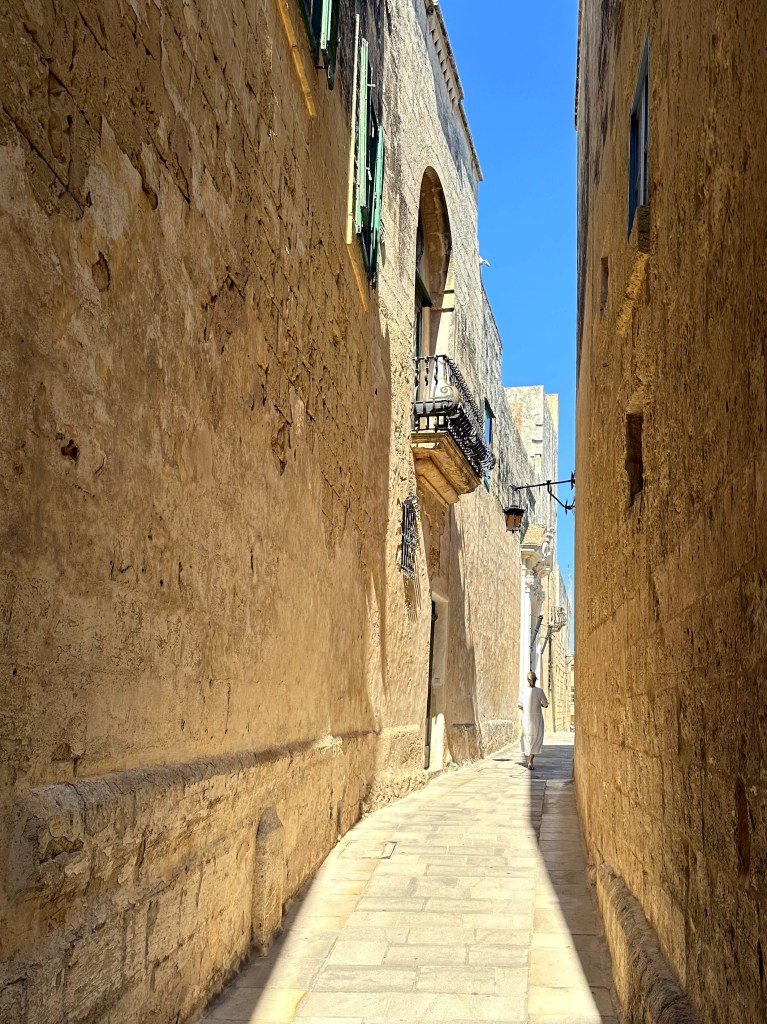
A side trip to Mdina, Malta’s golden limestone old capital:
Last night in Malta along the harbor:
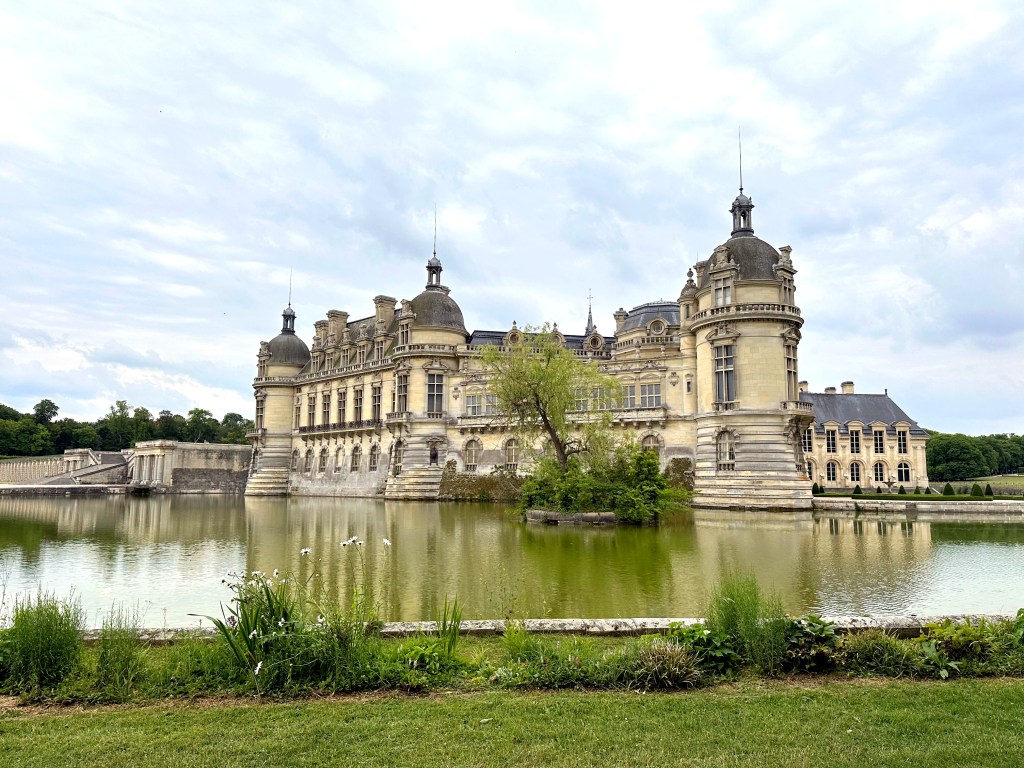
To avoid potential flight issues to reach our next destination in Normandy, where we had a hard start, we flew to France a day early, and stopped over in Chantilly, home to Chateau de Chantilly. No delay, but good call – cool place.
Normandy Biking
The next leg of the our extended foray to Europe entailed our latest biking trip – this time with Thomas and Lisa, in celebration of their wedding (albeit delayed for 2 years).
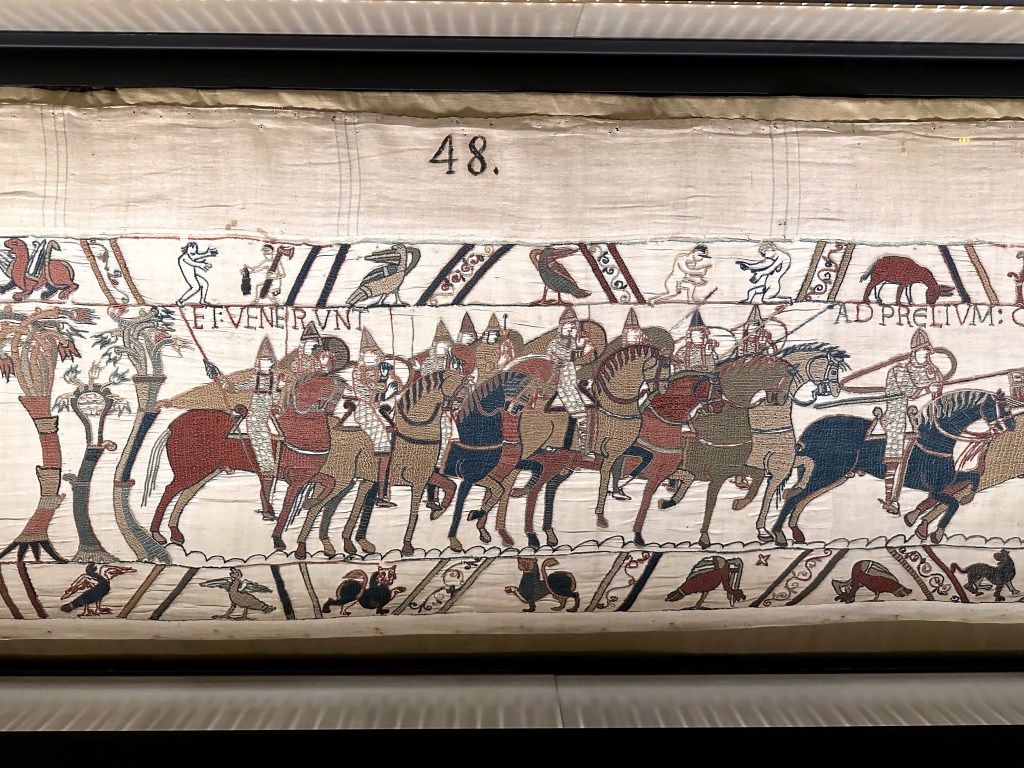
The five stages of the bike trip spanned two invasions. The first in 1066, by William the Conqueror conquering England from Normandy, as depicted in the 11th-century Bayeux Tapestry, as seen in Bayeux, our starting town:
The next almost a thousand years later, this time and invasion of Normandy in 1944. On our first day we visited three bunkers in a German battery on Gold Beach:
And on the same ride, the first of our dozens and dozens of dozen oysters ordered in Normandy:
Invasion overview at the American Cemetary at Omaha Beach:
And a night in a 13th- and 14th-century chateau, which may have been the most surreal night of our entire travelling lives. There’s an entire story about this insane evening, but we’ll deal with that in a separate post.
The conclusion of our biking journey at Mont Saint Michel. Originating in 708, the site has attracted pilgrims who still trek across the sandy estuary at low tide for more than 1300 years, staved off an entire English army during the 100 Years War with a garrison of just 100 Norman knights, and is claimed to this day by both Normandy and Brittany.
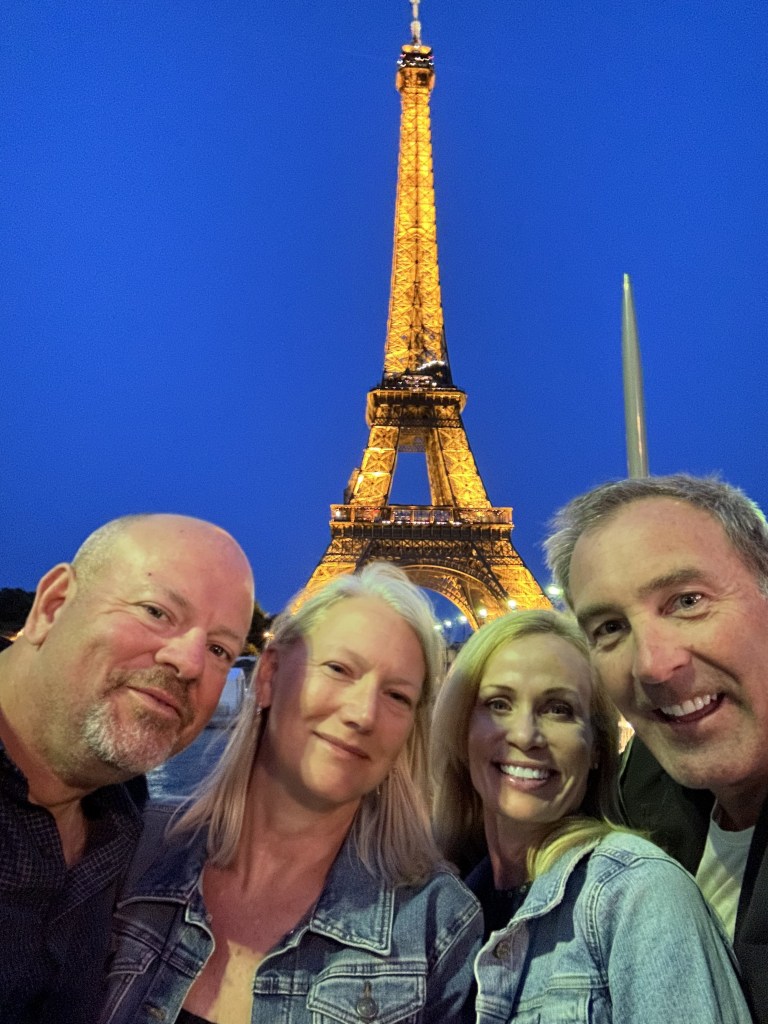
Then, a day in Paris:
Of all of the legs of the trip, only Portugal was unplanned. We knew while in Malta that we didn’t want to go home after biking, and considered either grabbing a car after Thomas and Lisa departed Paris and then driving south to the Dordogne region for a week or two or flying to Portugal at the same time as their return flight. We’re going to save Dordogne for another bike trip, and so we decided to head to Portugal. Still without having a set itinerary there or a return flight home, though!
Portugal
We decided to first spend 4 days in Porto, in northern Portugal. This turned out to be the absolute best location of the entire trip. We’ll be back to spend a month or two here in the future.
Porto’s medieval Ribeira District and south Porto astride the Duoro River:
Everything in Porto is clad in tile:
And, after 7 weeks of Aperol spritzes:
Local port and tonics suddenly dominated the scene:
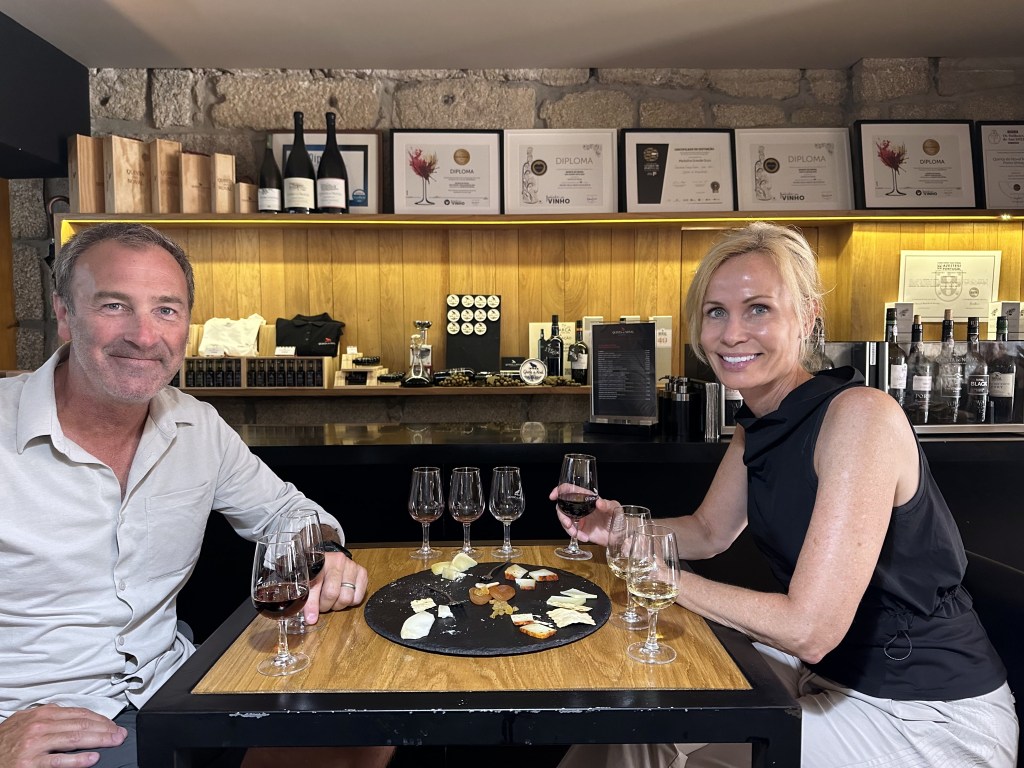
And an afternoon of port tastings:
Then, a train south, to Lisbon, the first European destination we had ever visited, back in 2002:
With some monumental areas:
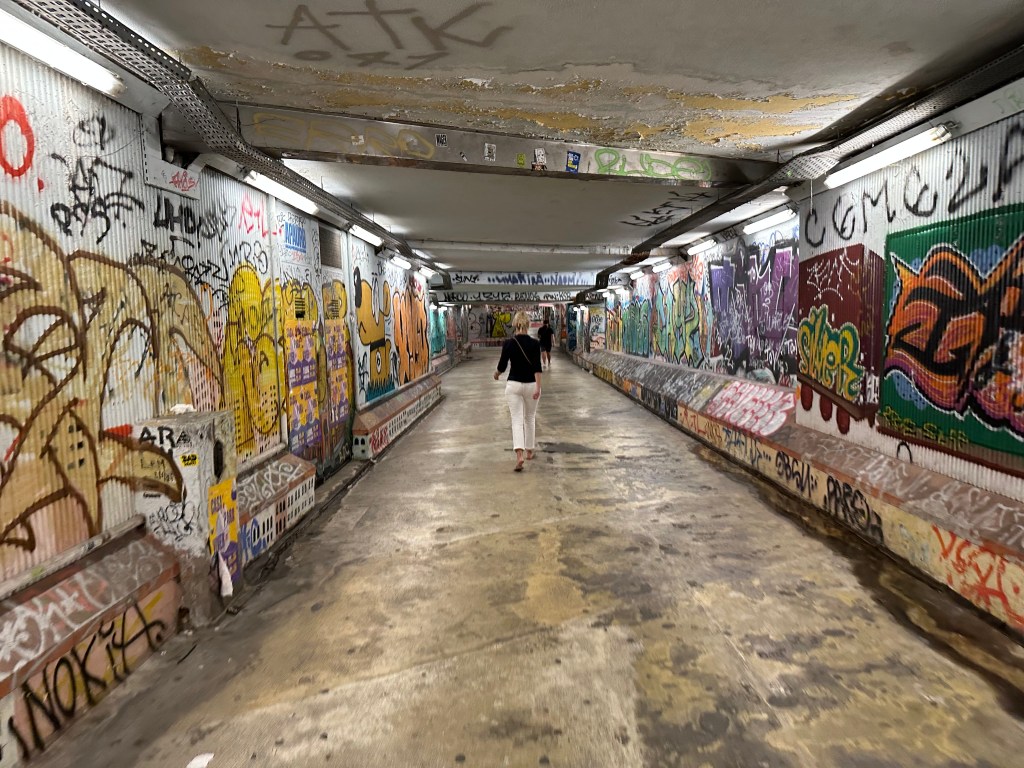
And some more sketchy areas:
And a day trip to Sintra, home to the Pena Palace:
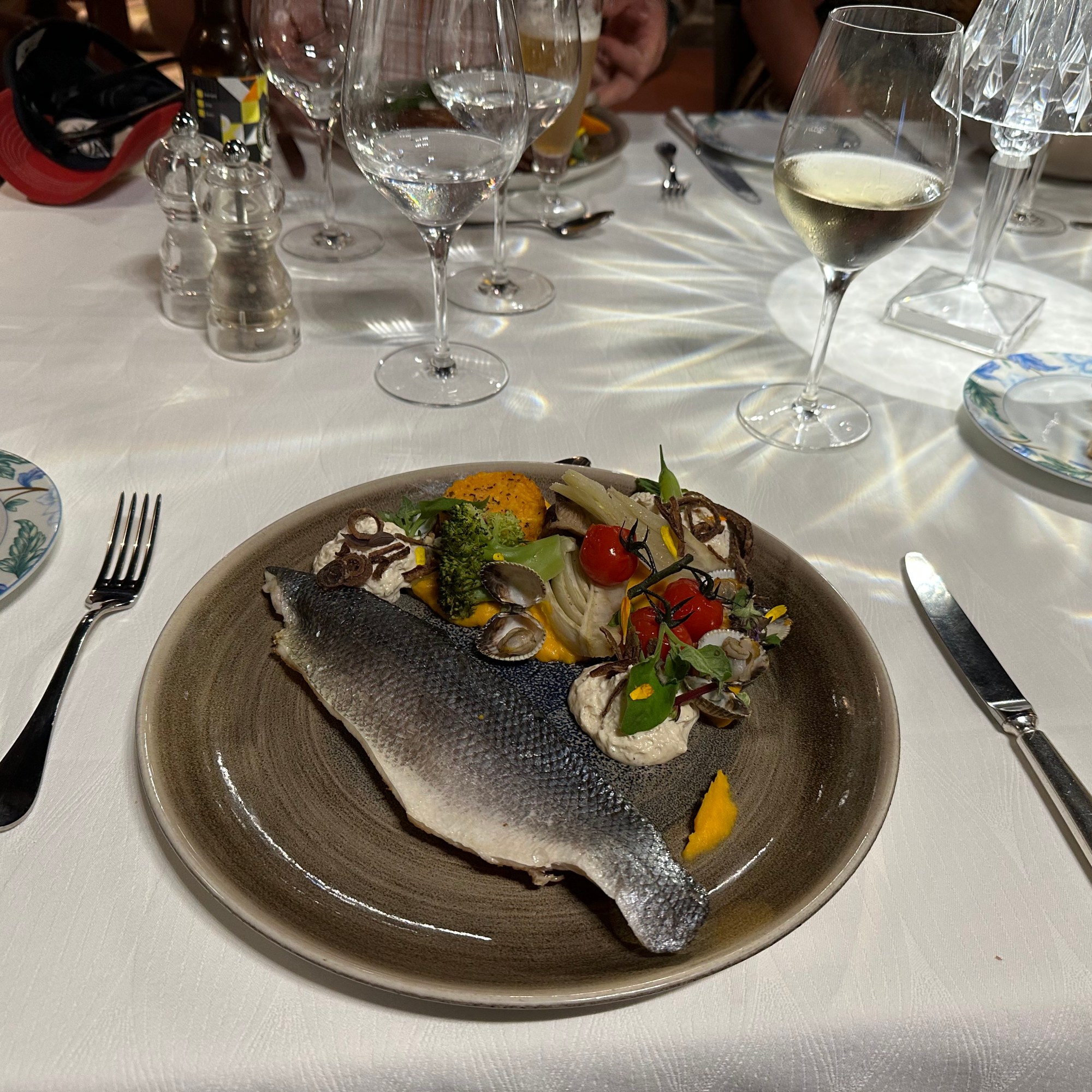
And a final gastronomic meal:
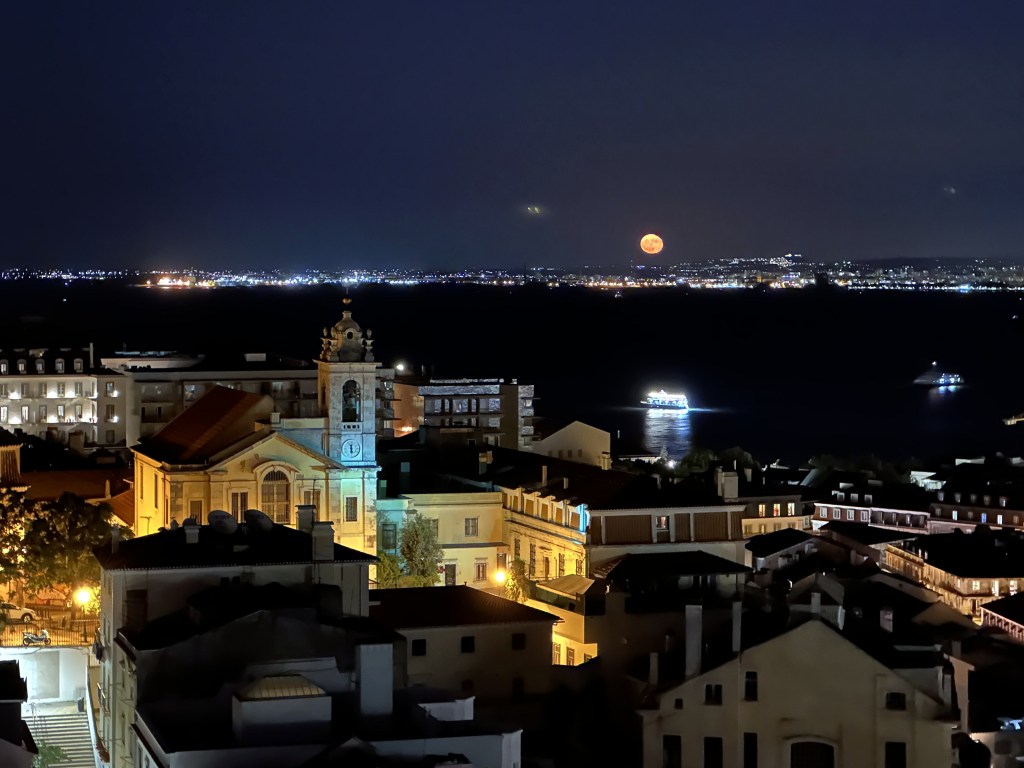
Final night in Lisbon before finally flying home, accompanied by July’s Blood Moon:
All told, we traveled for 2 months, experienced 4 countries, 41 towns, stayed in 19 hotels, 5 AirB&Bs/villas, and traveled by trains, planes, and automobiles (and ferries, trams, tuk tuks, and bikes). Amazing trip!