After a lag day / risk-mitigation buffer day between Malta and Normandy in Chantilly, France, we headed early the next morning to CDG to pick up Thomas and Lisa from their red eye that departed Atlanta the evening before. (We did not, in fact, need to head out early the next morning, as noted in the Chantilly post. Because one of us is an idiot).
From CDG, we headed to Bayeux in Normandy to kick off some kick ass biking.
Bayeux is home to a pair of invasions, albeit separated by approximately an entire millennium. The first, by William the Conqueror (or Billy the Conk, as David Crowther would say) occurred in 1066, and the invasion rolled out east to west: the Norman conquest of England.
Our very first activity after checking in to our hotel was a visit to the Bayeux Tapestry to check out this 1000-year-old graphic comic depiction of the invasion.
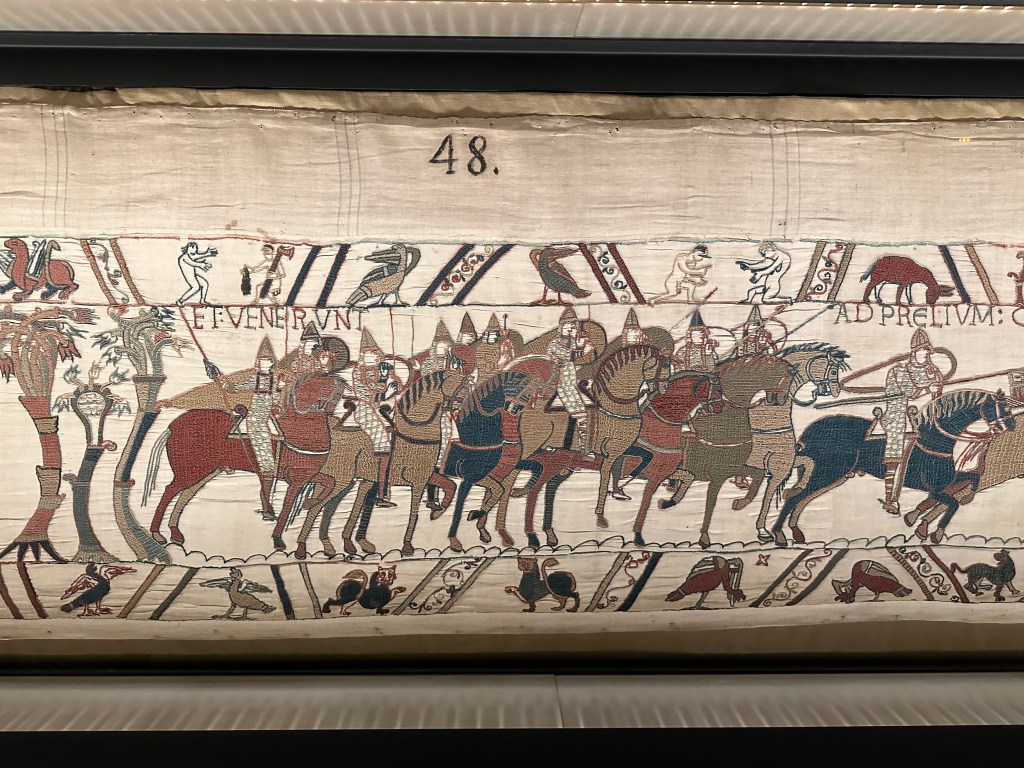
It did not disappoint (other than the museum’s insidious approach to keeping the viewing line moving using the audio tour prompts to move you forward to the next scene much sooner than you would have liked).
Taking photos was prohibited, but WolfeStreetTravel is nothing if not an opportunistic, determined, scofflaw.
The penultimate caption about Harold Godwinson:
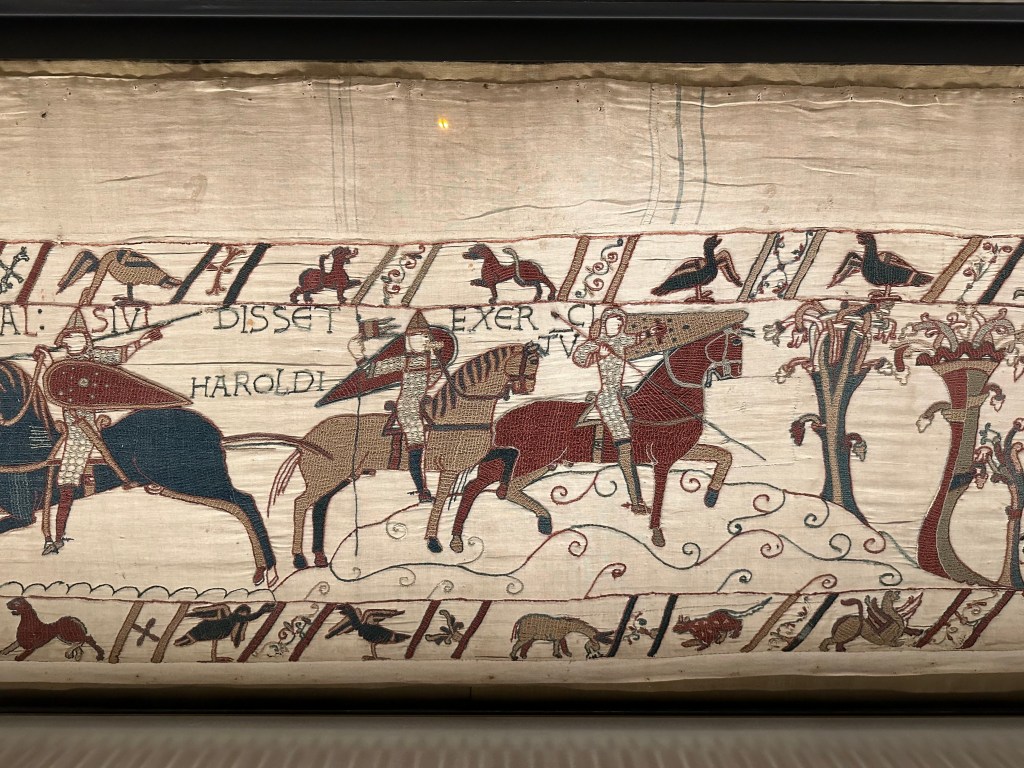
Aaaand, the ultimate Harold caption, right above the infamous arrow in the eye:
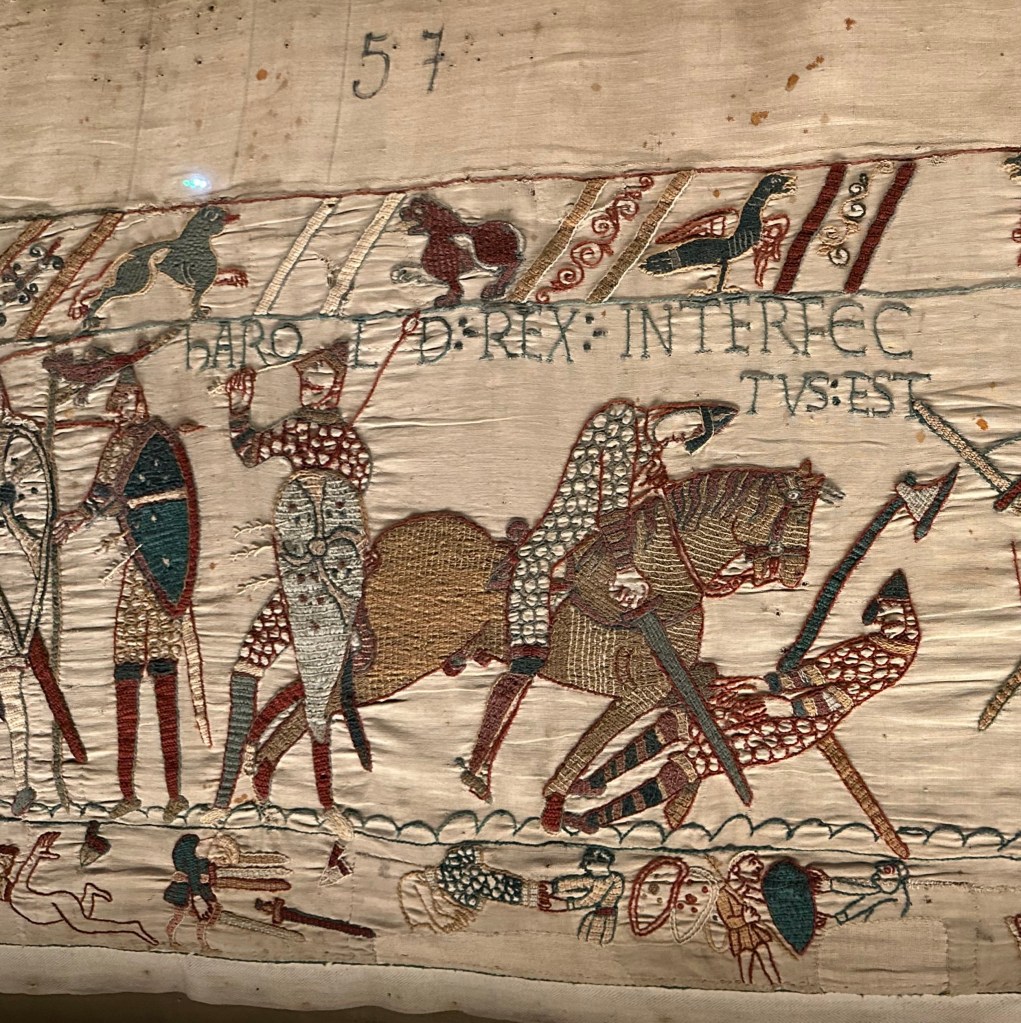
Infamous – and inaccurate, apparently. The earliest known account of the Battle of Hastings (which, of course, is what’s being depicted above) states only that Harold was killed. It does not say how. Moreover, it seems that the arrow in the Bayeux tapestry (which also is not actually a tapestry but an embroidery), was not part of the original 11th-century stitching, but part of a 19th-century restoration. According to an 18th century drawing of the tapestry, the arrow originally was a spear and the dude holding it was actually a spearman. Harold most likely is the ax man on the right who has just been slain. All of this and quite a bit more is from this fascinating article on Medievalists.net.
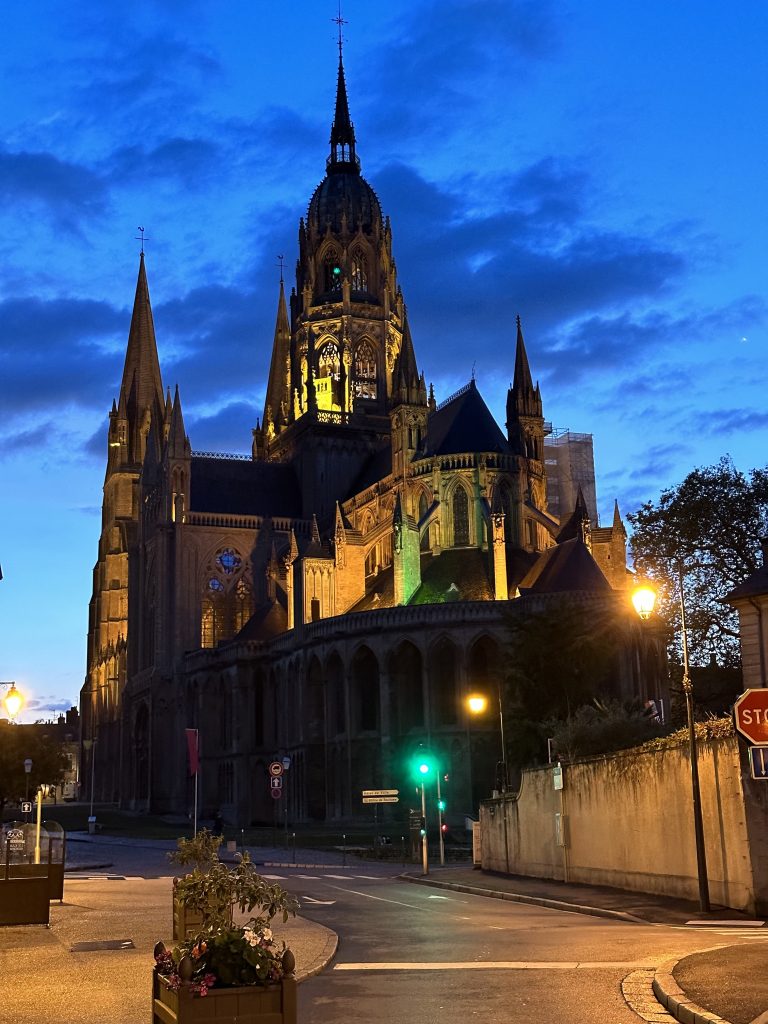
After being prodded along the entire, 70-meter length of the tapestry by the pushy audio tour, we exited and headed to another of Bayeux’s 11th-century sites: Notre-Dame de Bayeux, built in 1079.
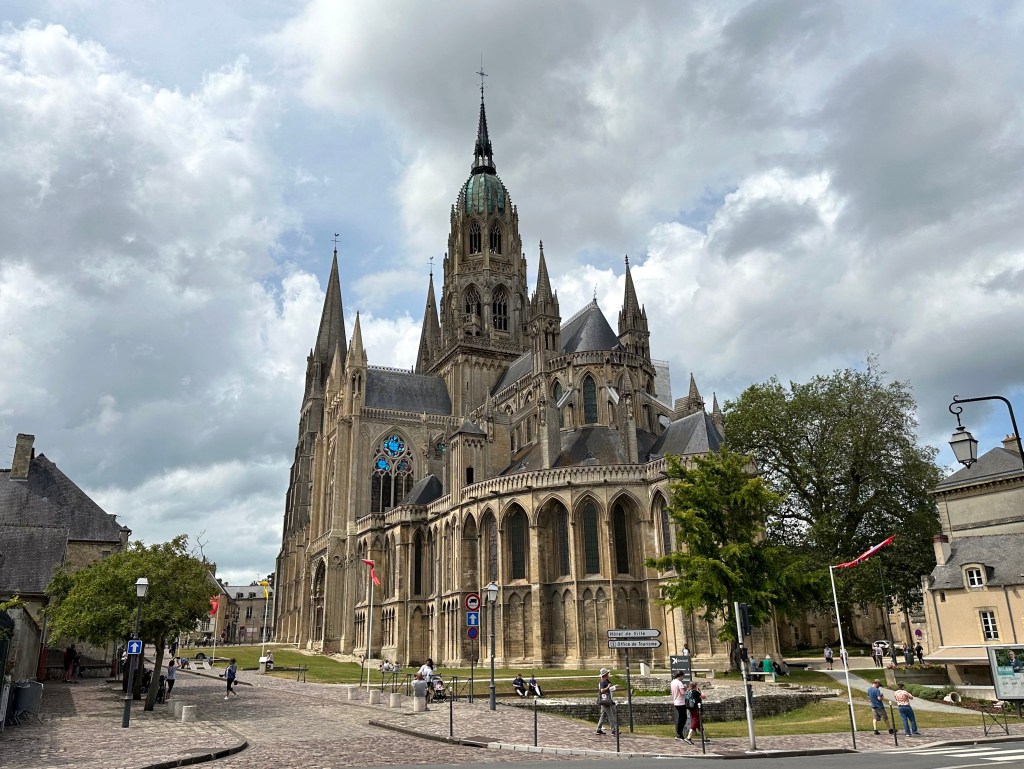
Consecrated in the presence of Billy the Conk, the cathedral was the original home of the Bayeux Tapestry.
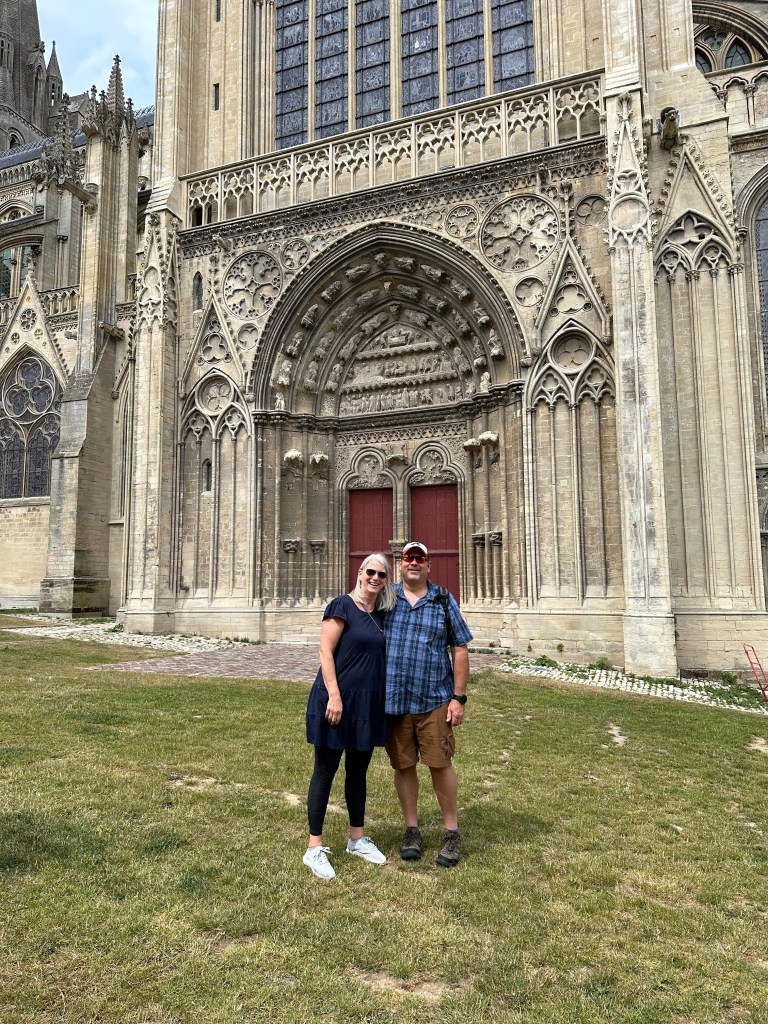
It’s considered to be the finest example of Norman-Romanesque architecture in the world.
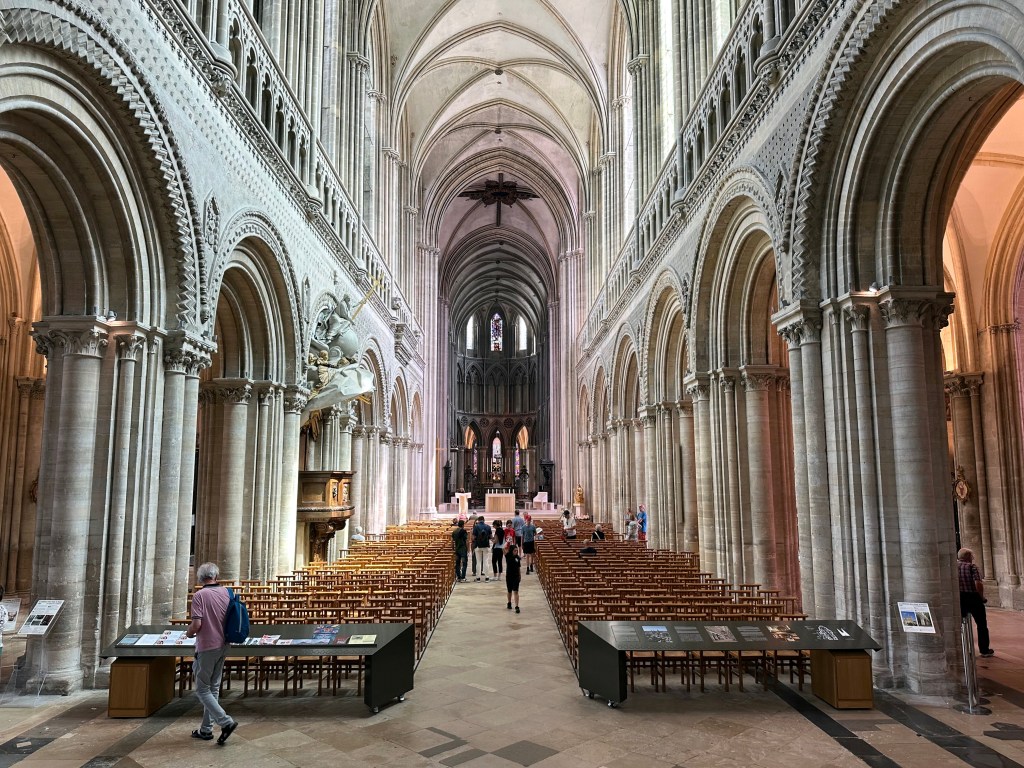
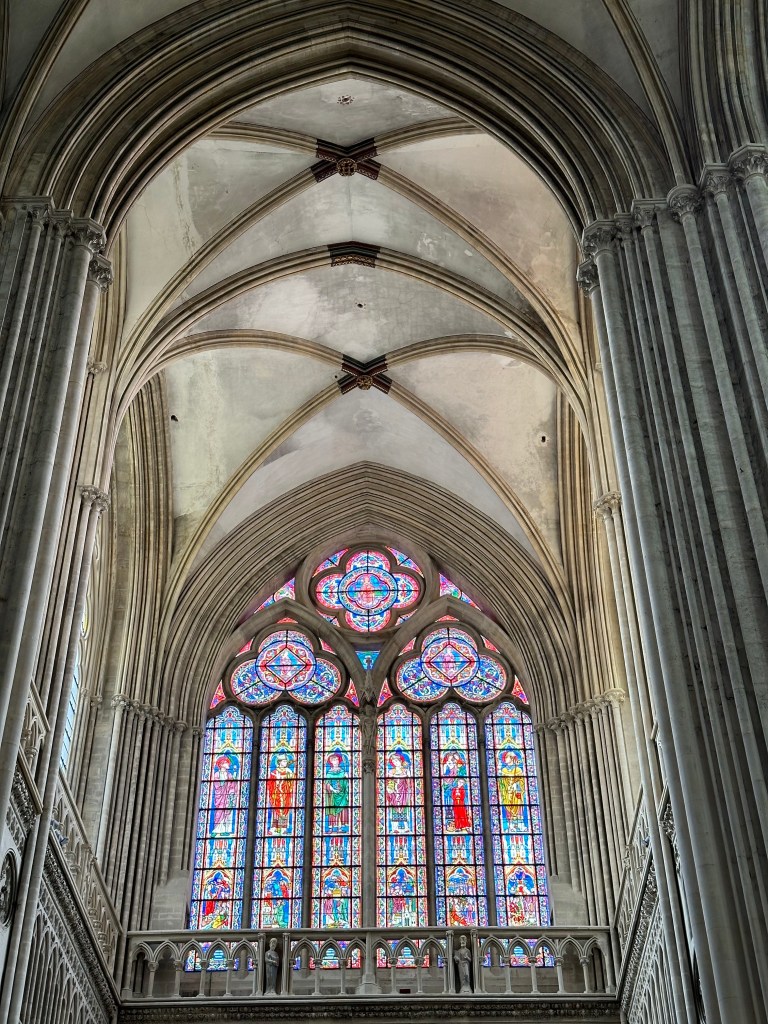
And it was consecrated by Odo, William’s half brother and the most likely patron of the Bayeux Tapestry’s creation.
Dinner our first biking night included a little celebration of Lisa’s (the other Lisa) new job.
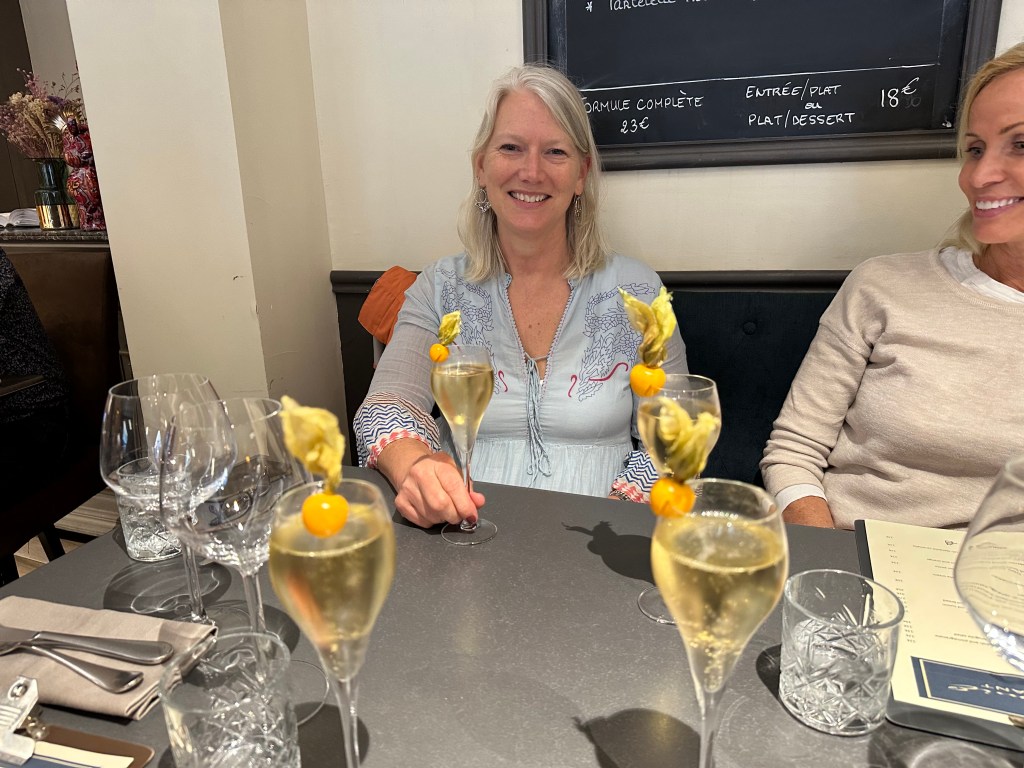
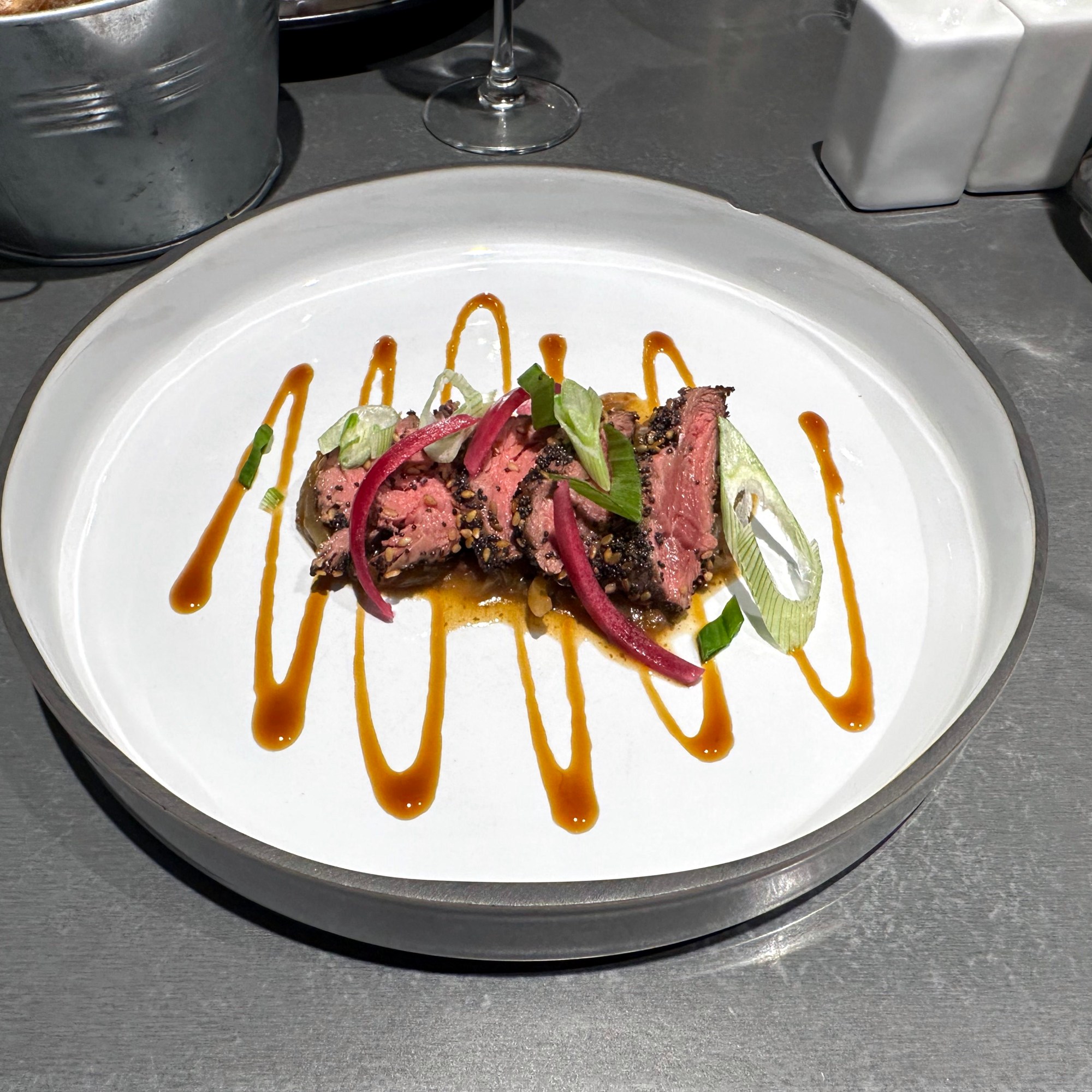
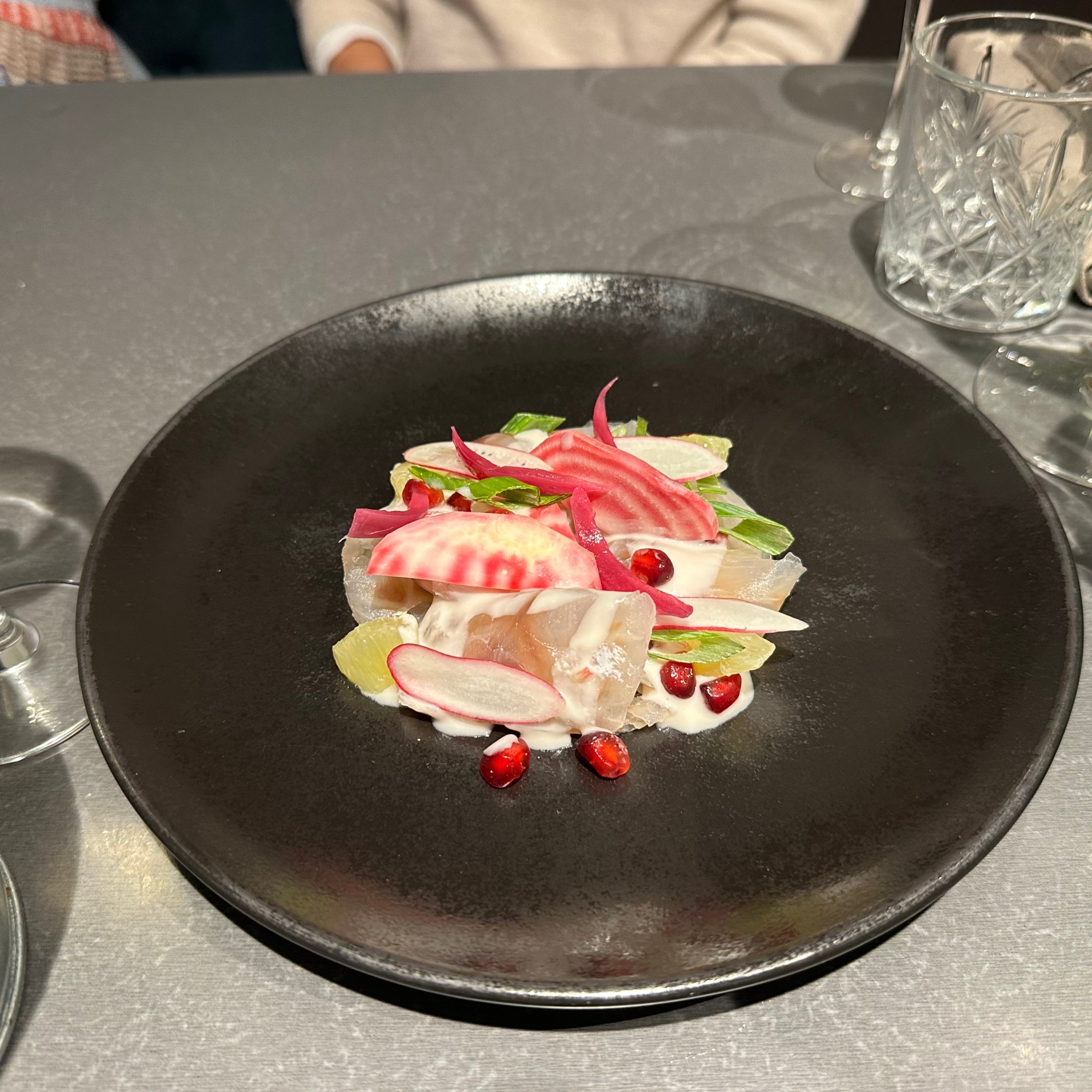
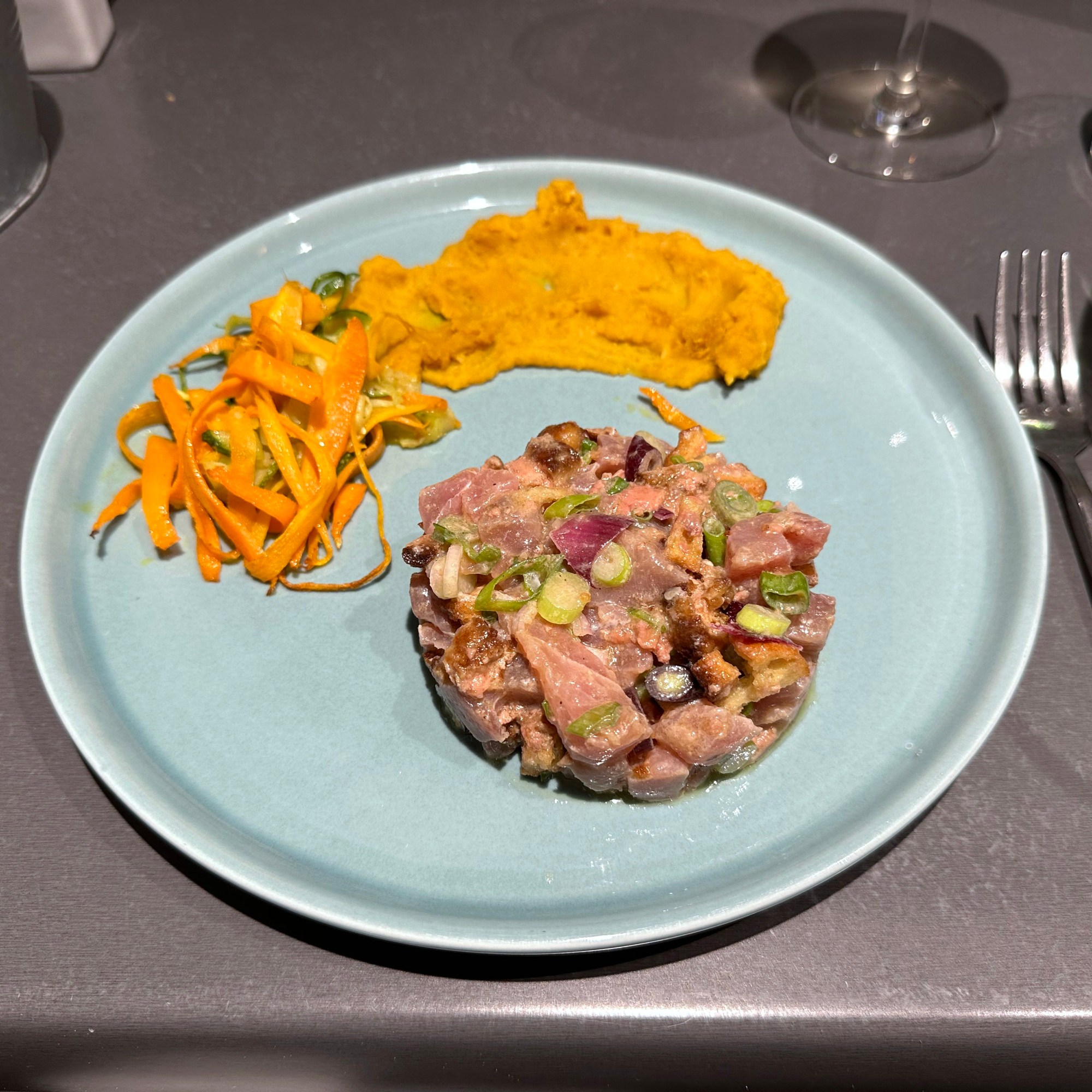
Pretty good French cuisine to start this leg of the trip.

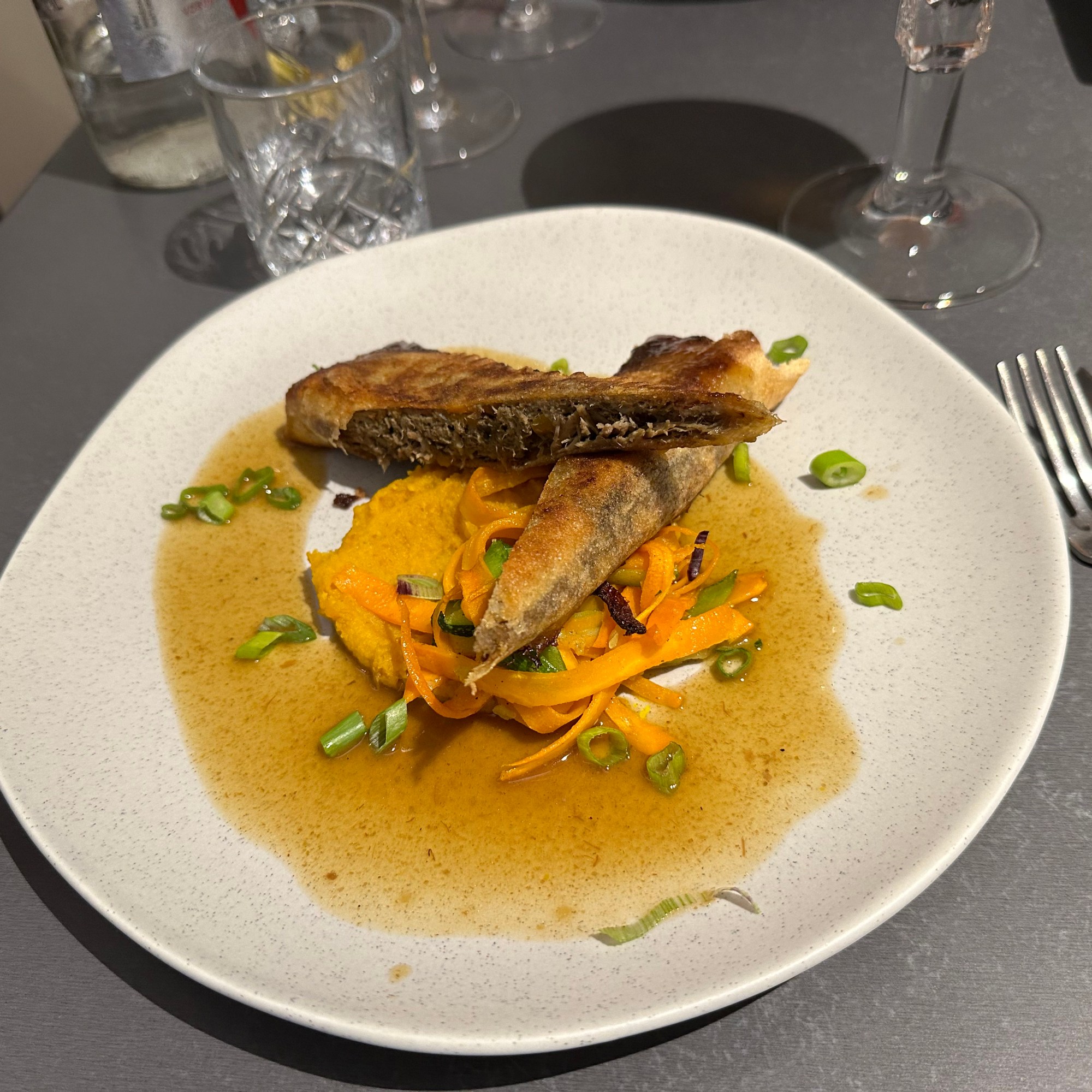
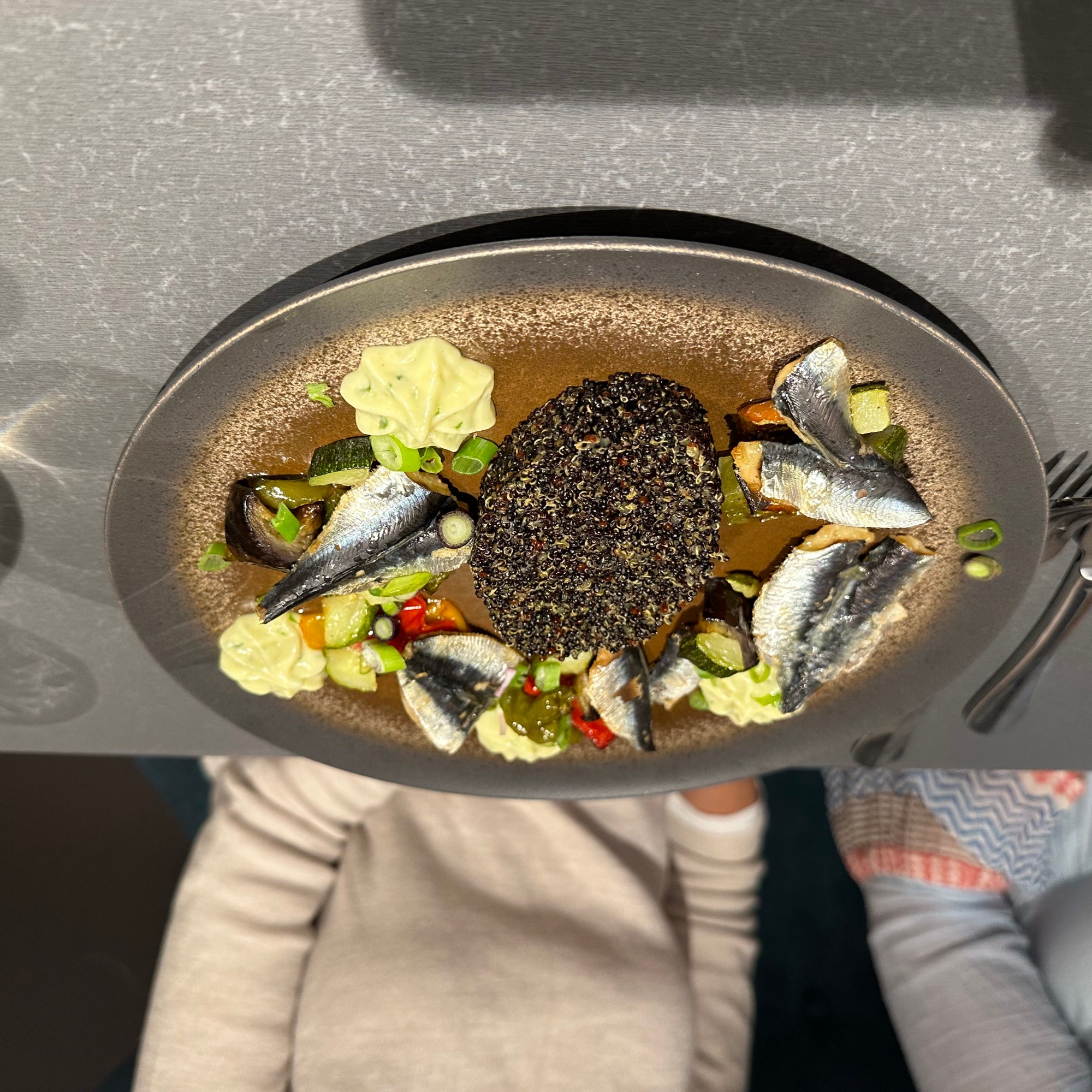
Night falls on Bayeux and the cathedral. Tonight we rest. . .
for tomorrow we ride!
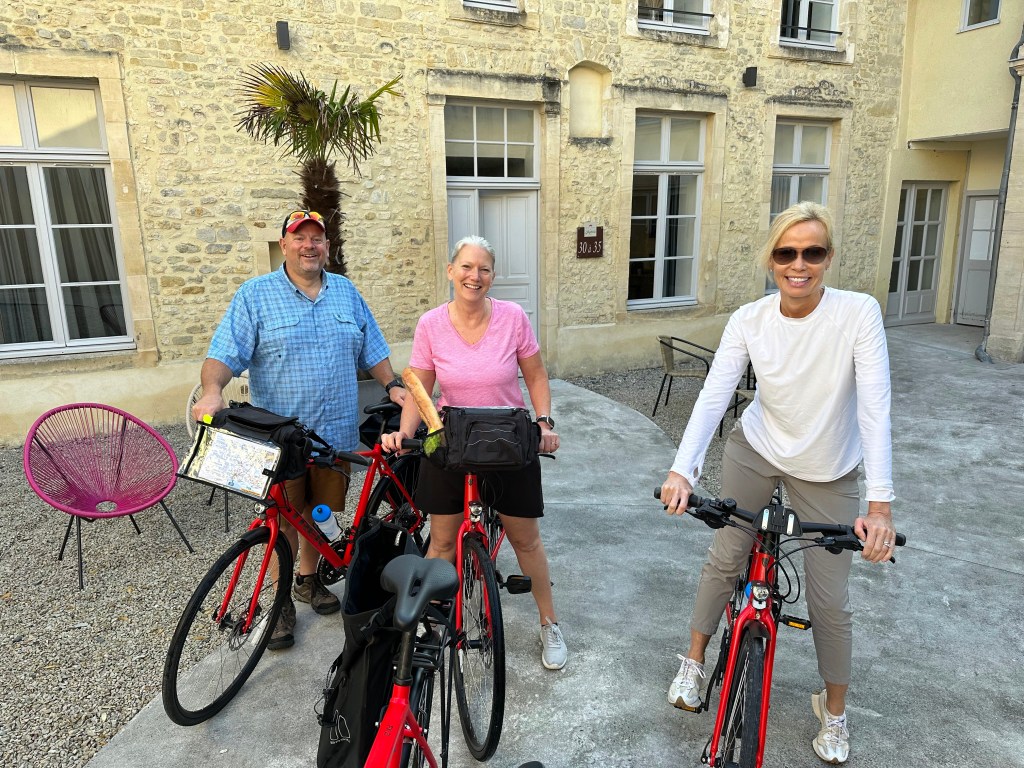
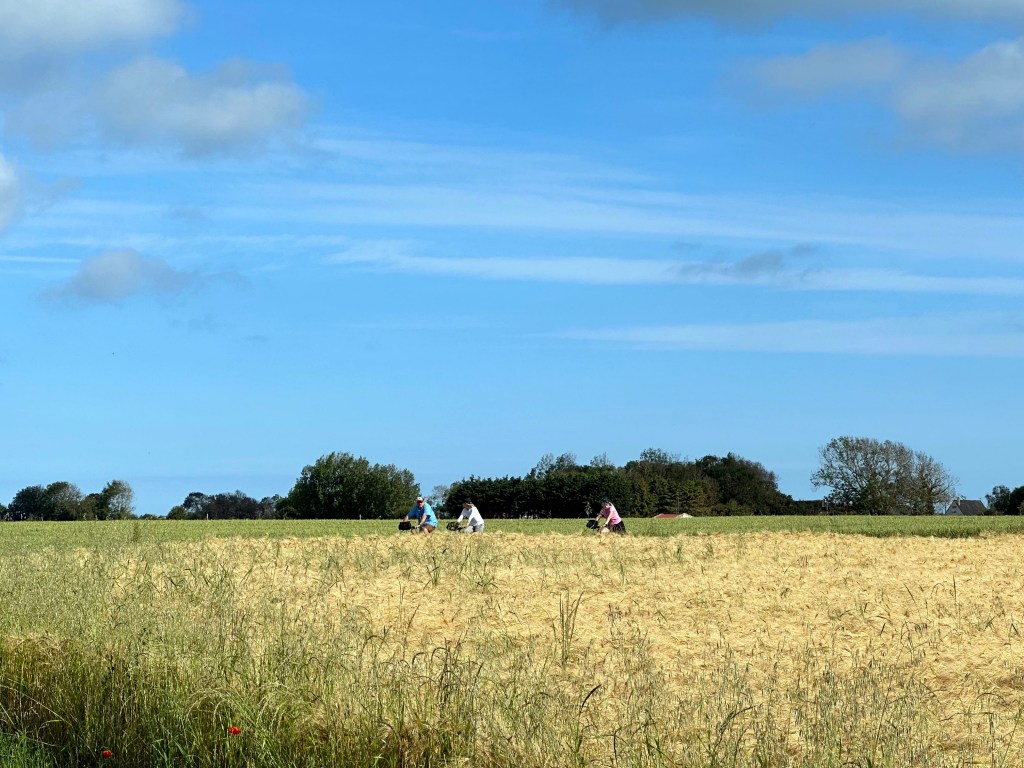
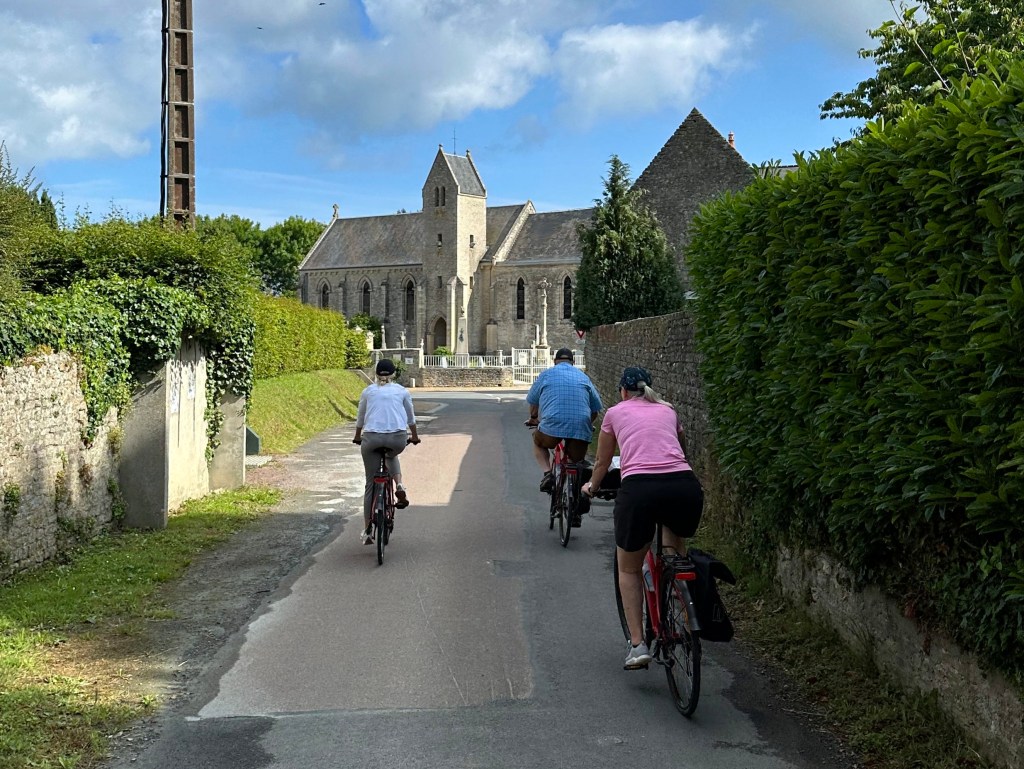
Perfect weather for the first day of biking in France.
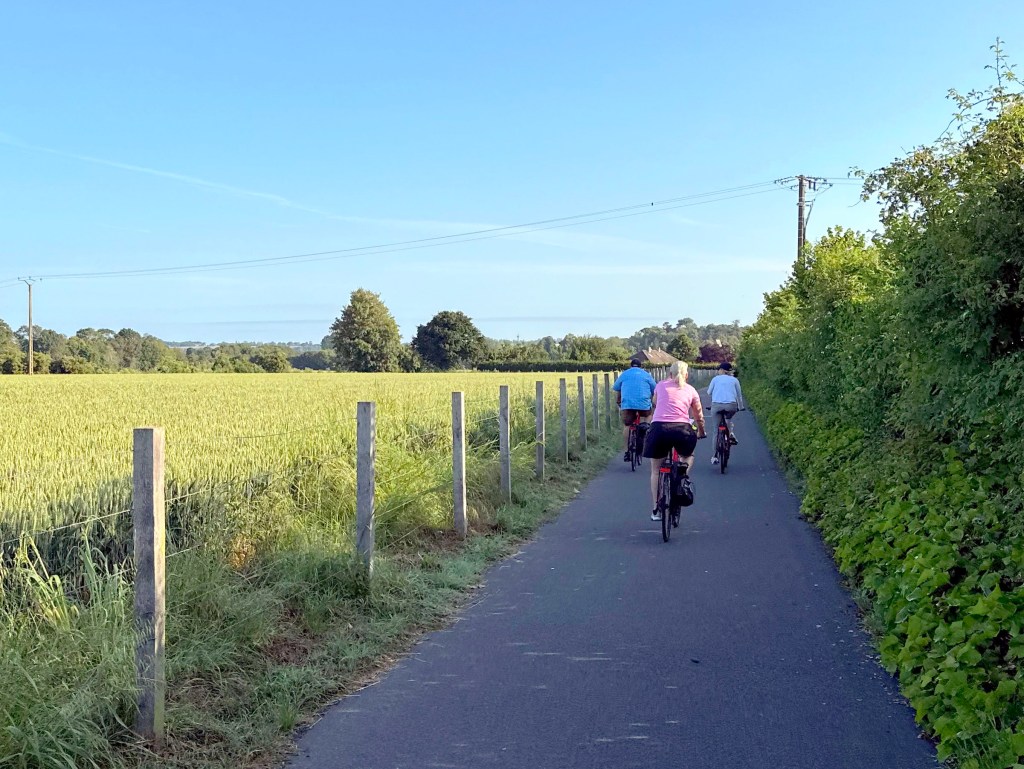
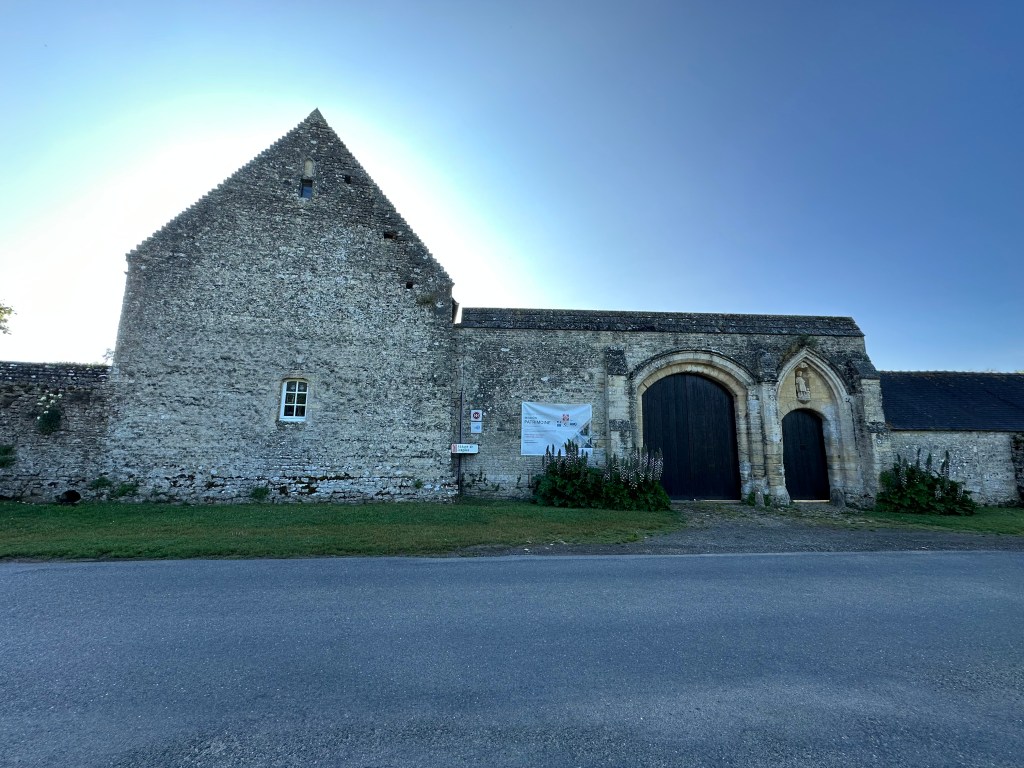
The Longues Abbey, which was founded 1168, peaked in 1257 with 22 monks and four priories, declined in 1526 during the chaos of the Hundred Years’ War, was trashed by Protestants in 1562 during the Wars of Religion, and finally was disbanded by the Bishop of Bayeux in 1782.
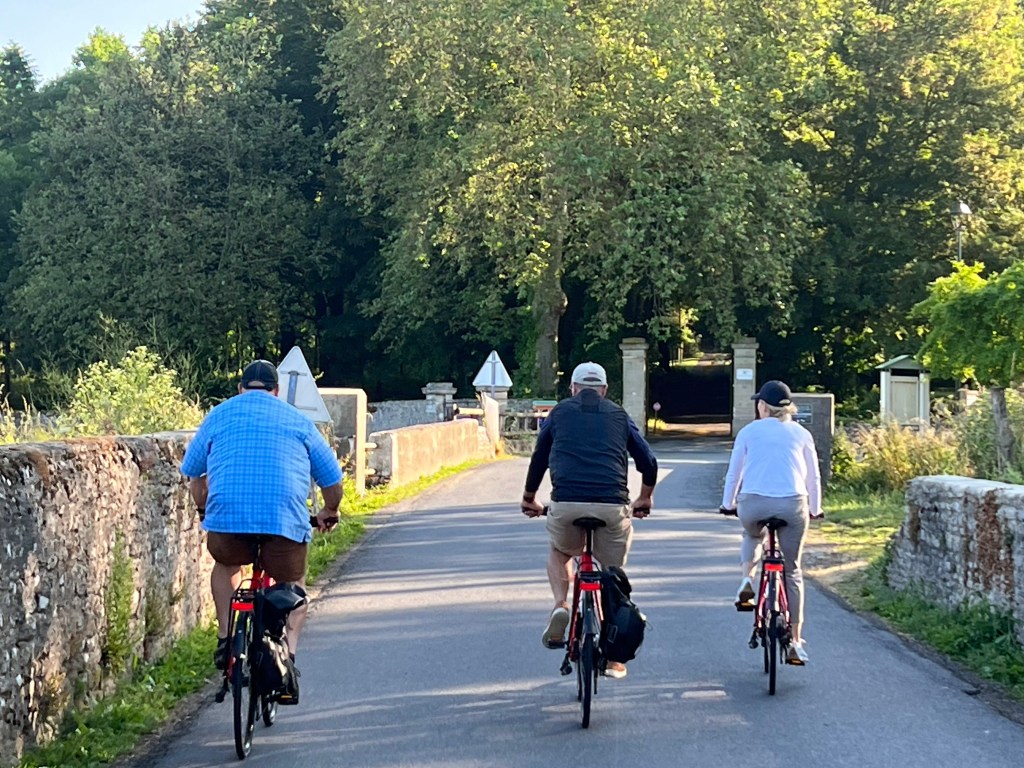
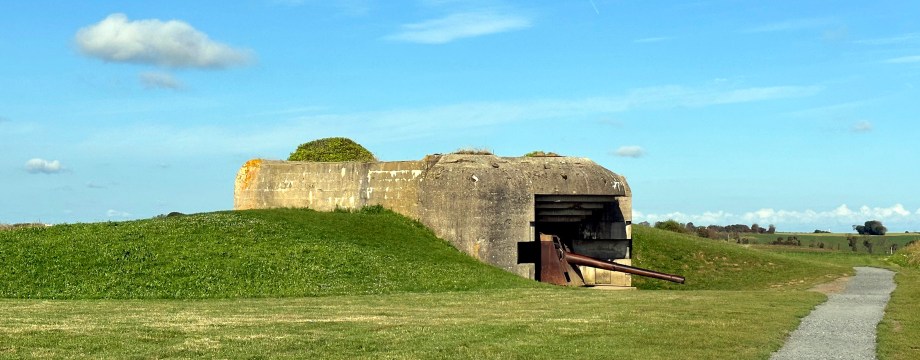
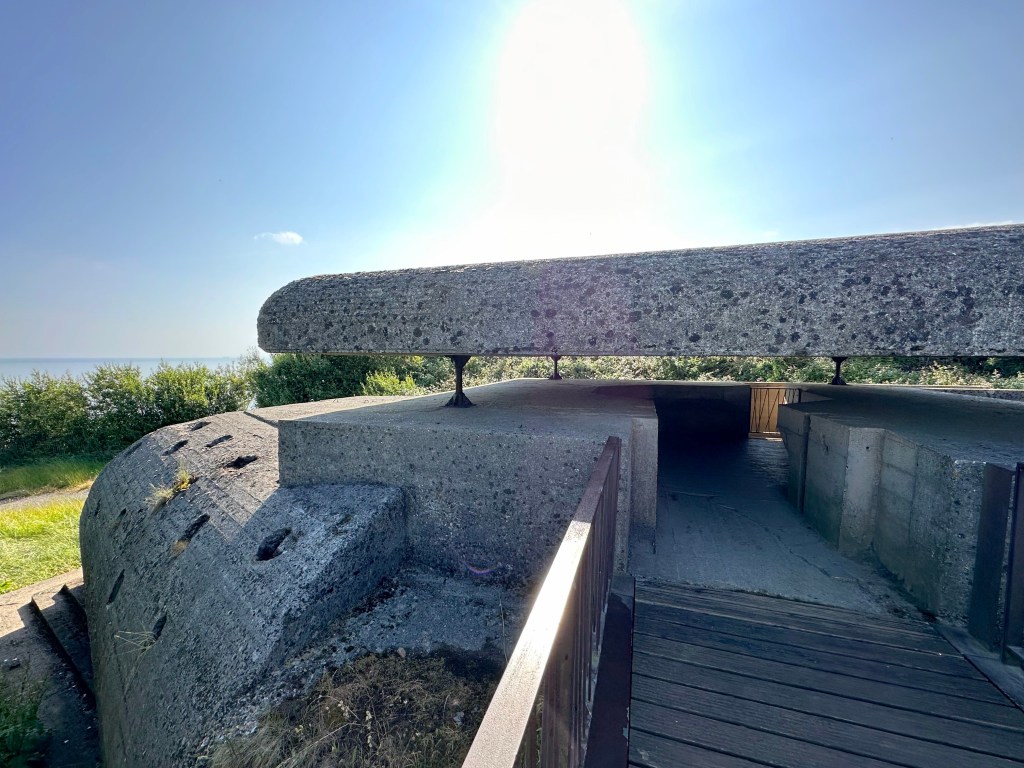
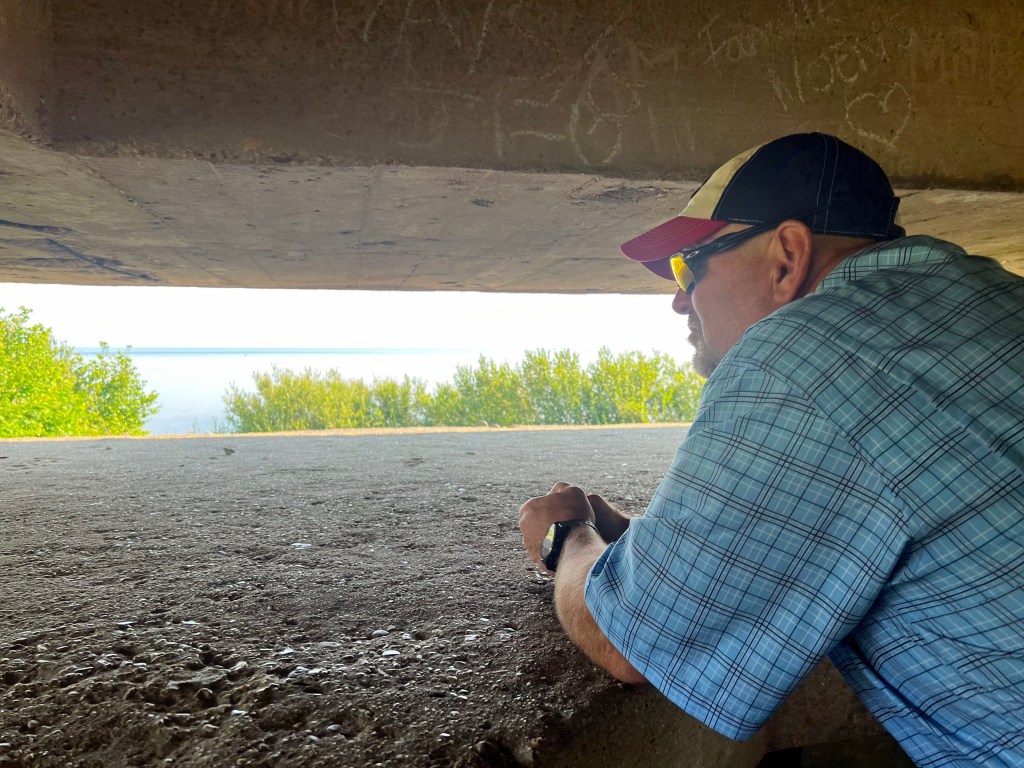
The absolute highlight of the day was the WWII, German Longues-sur-Mer coastal artillery battery.
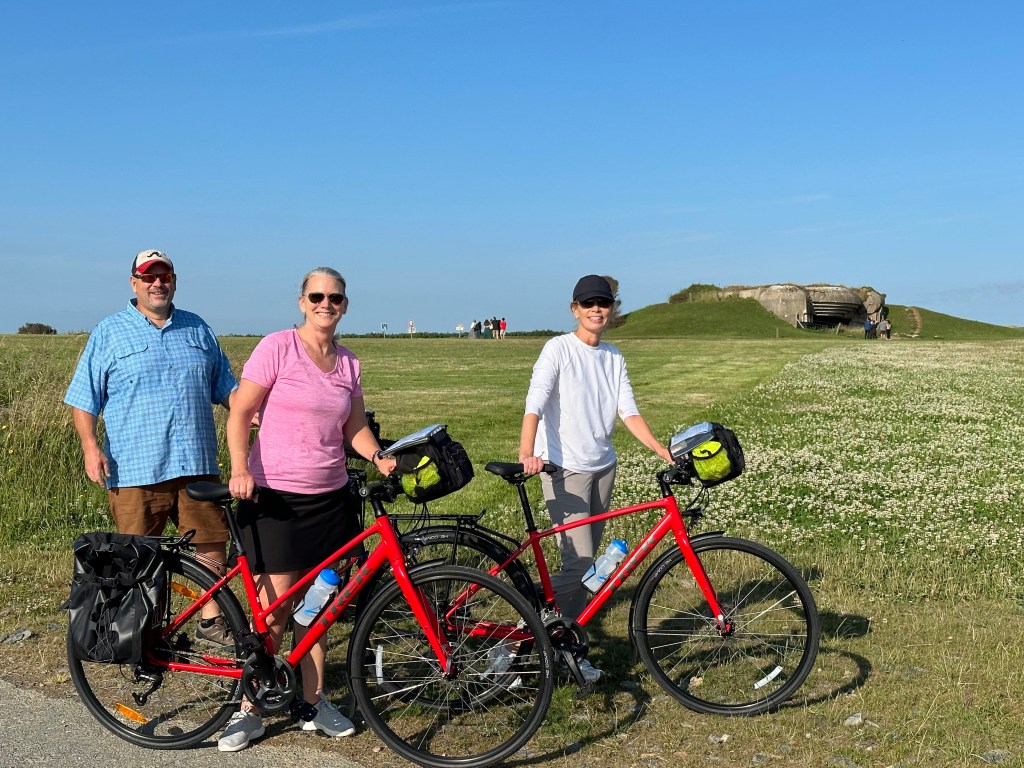
Which brings us to the second invasion: the Allied invasion of Normandy during WWII, a millennium after the Battle of Hastings. The Longues-sur-Mer battery shelled Allied naval forces off Gold and Omaha beaches on June 6, D Day, but was damaged by Allied shore bombardment the same day.
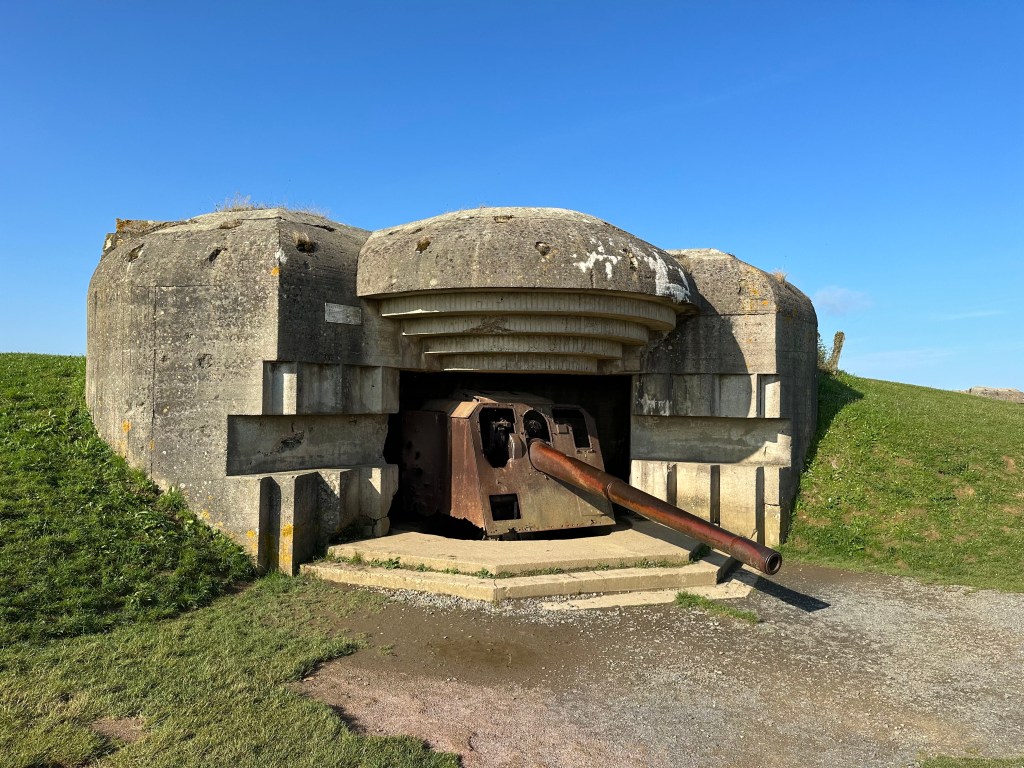
It was captured by British ground forces on June 7 and played no further part in the Normandy campaign.
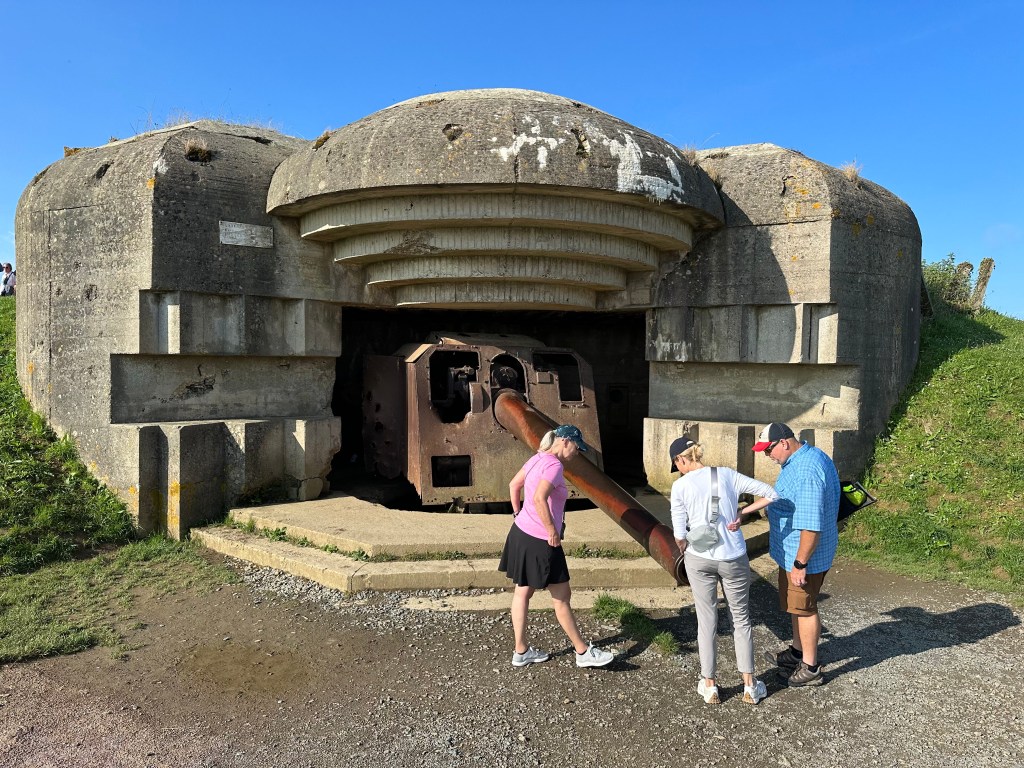
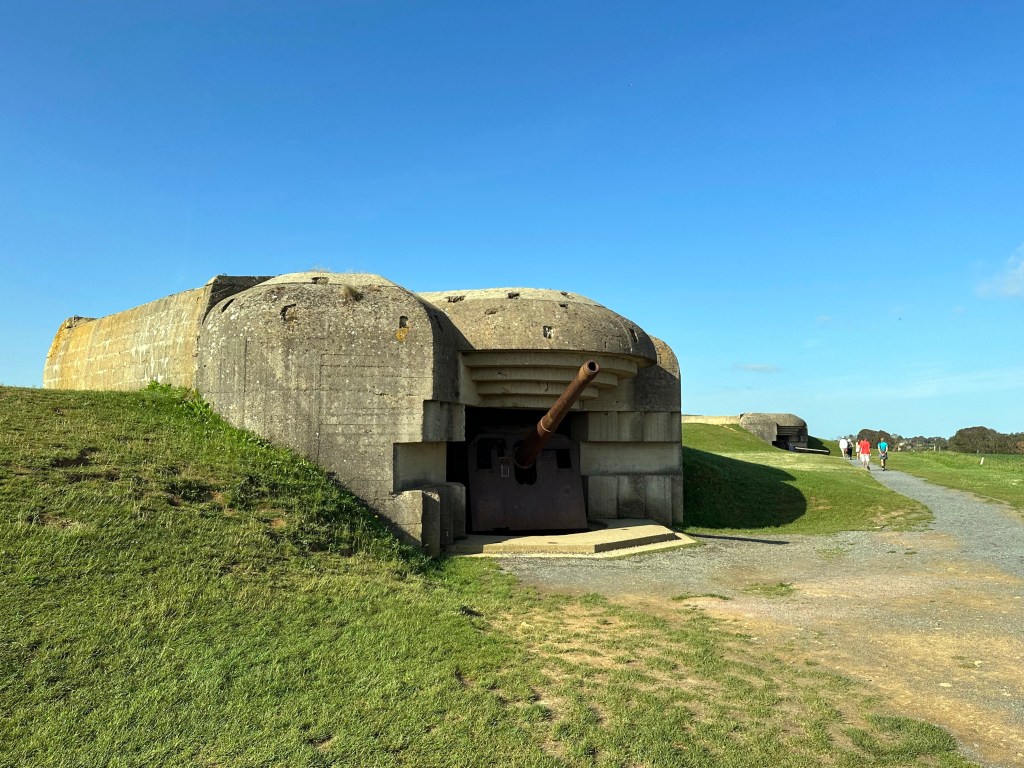
The battery is the only one in Normandy to retain its original complement of guns.
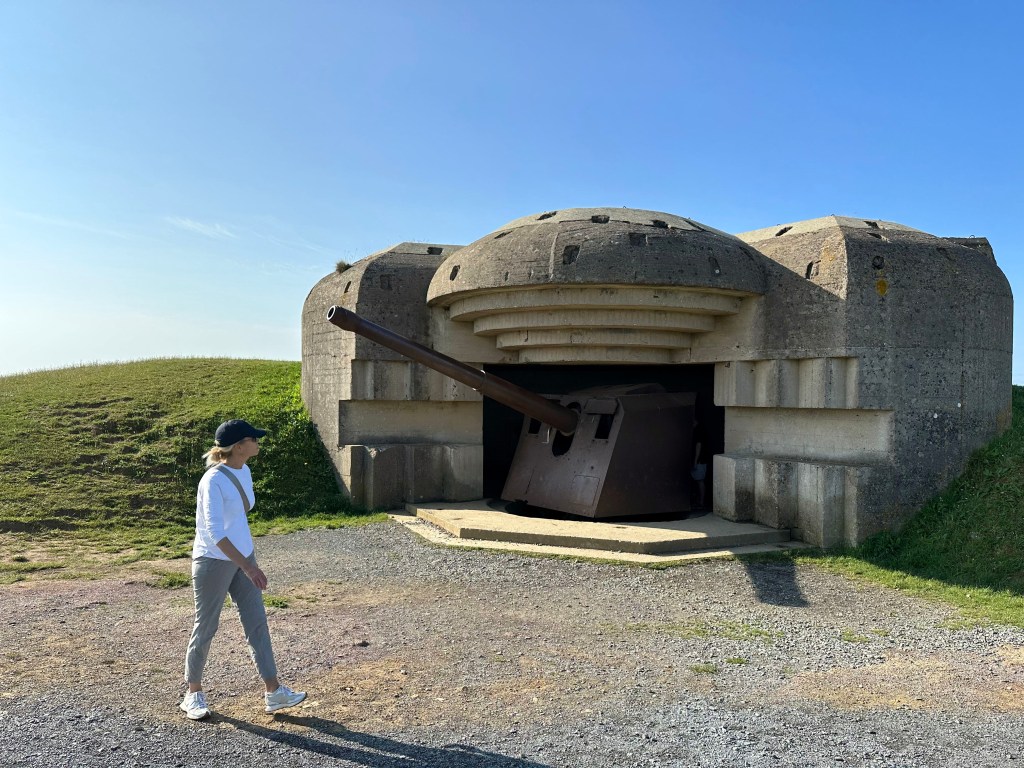
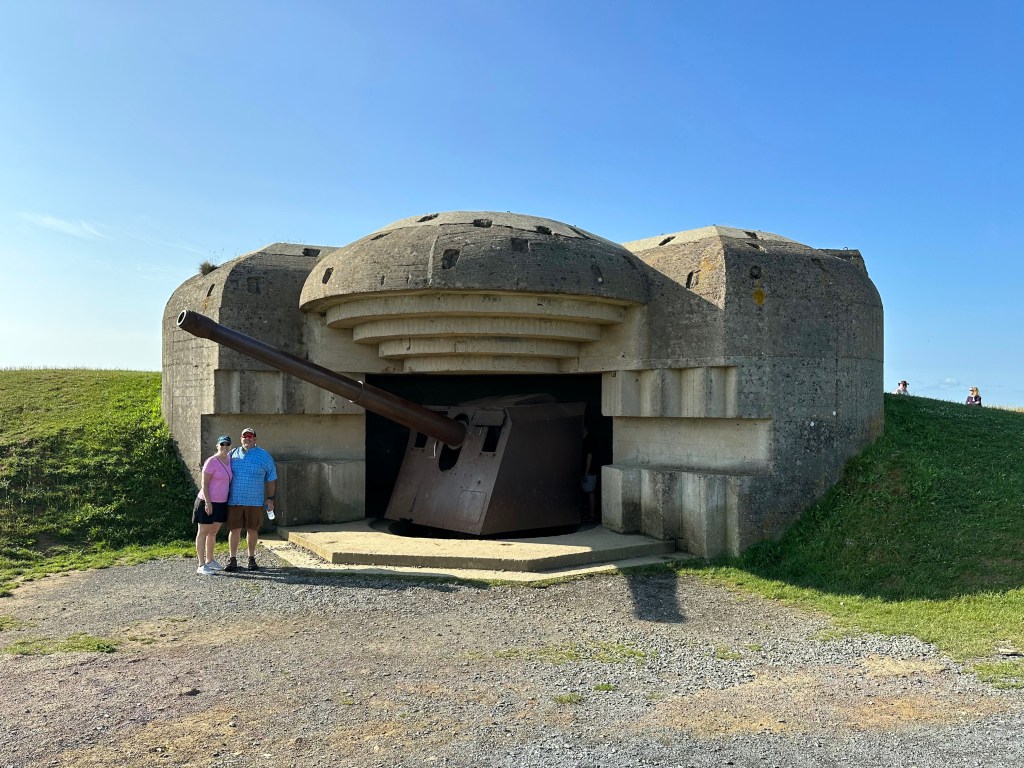
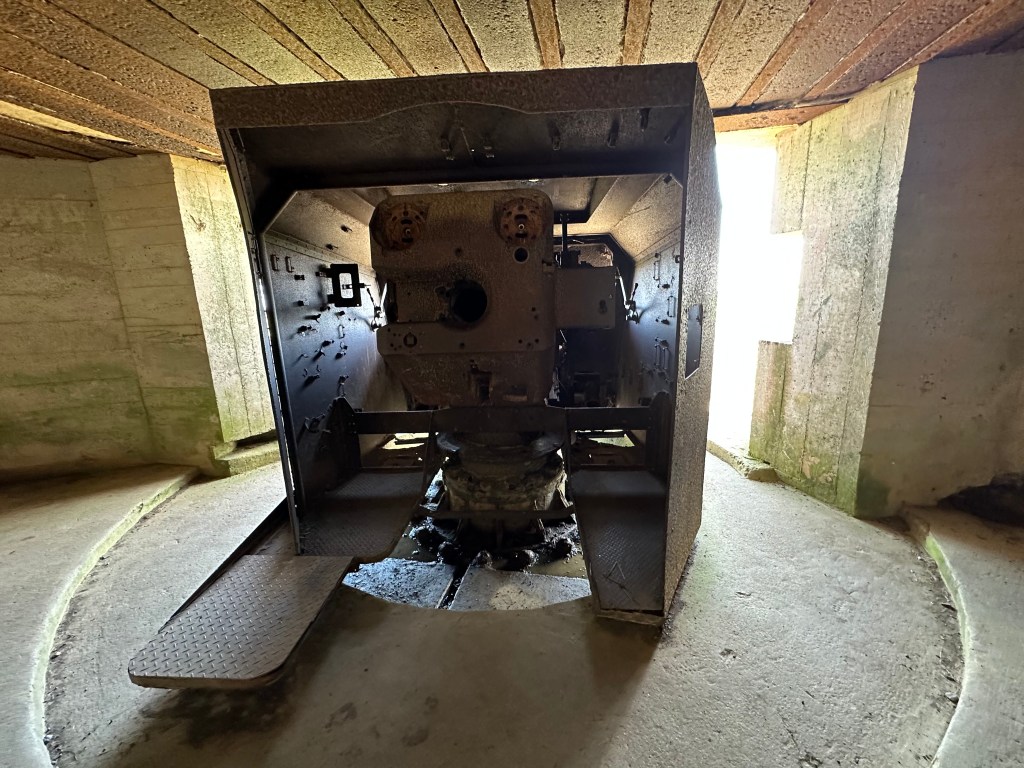
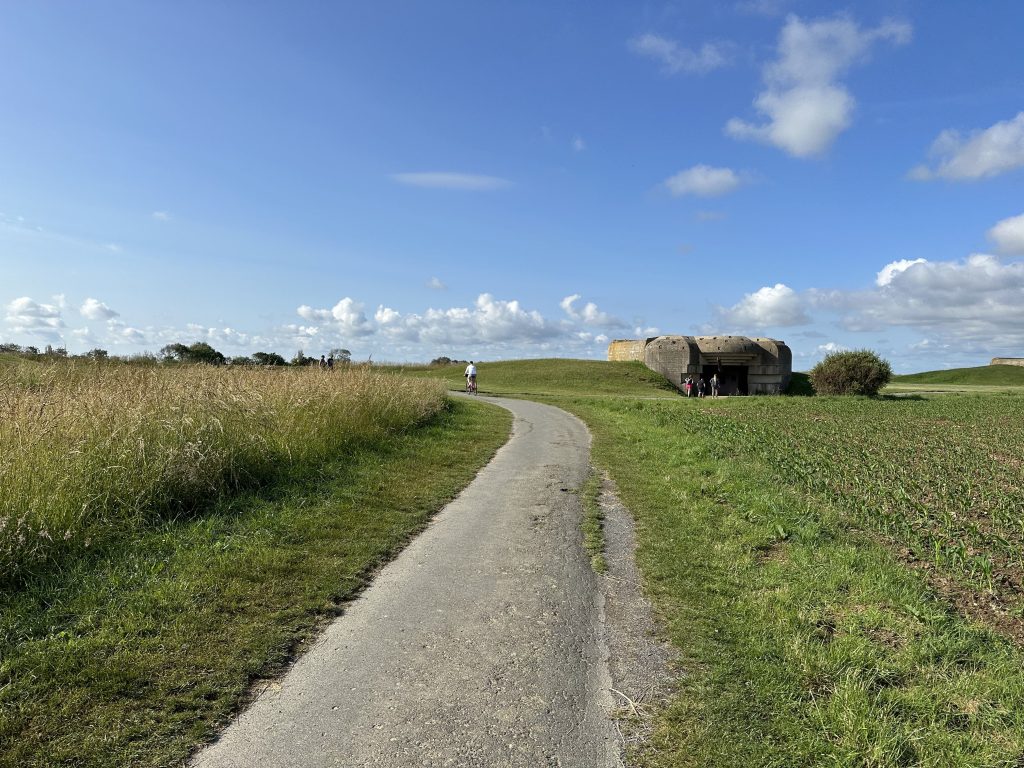
Heading to the coast.
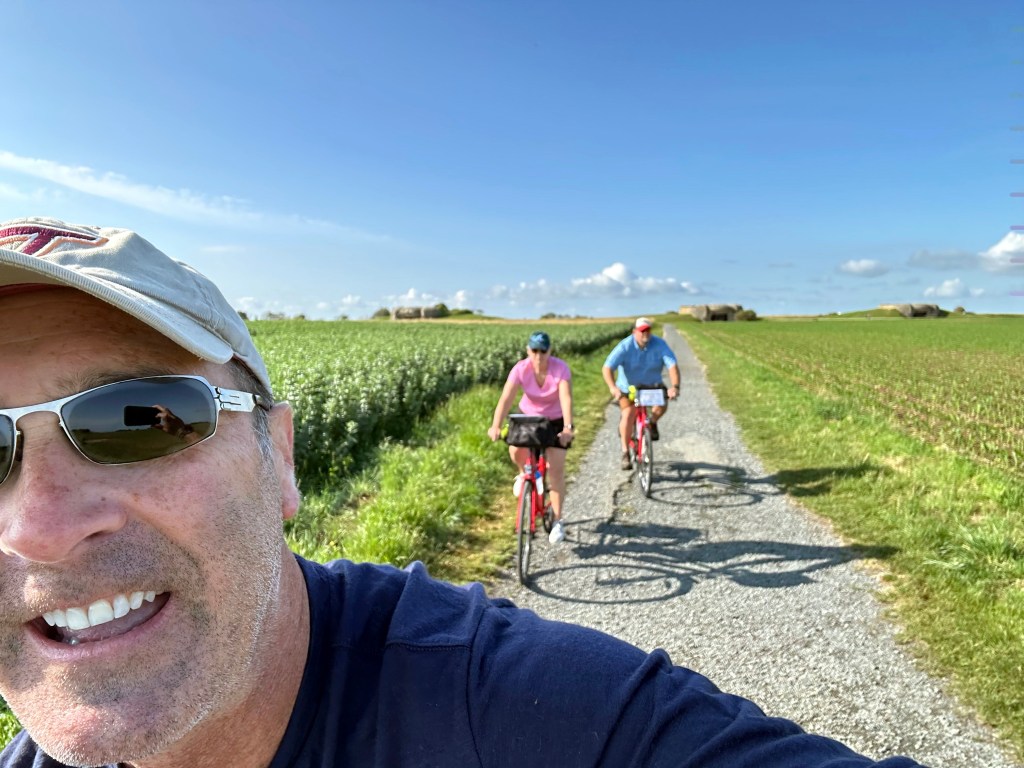
And the battery’s fire control post.
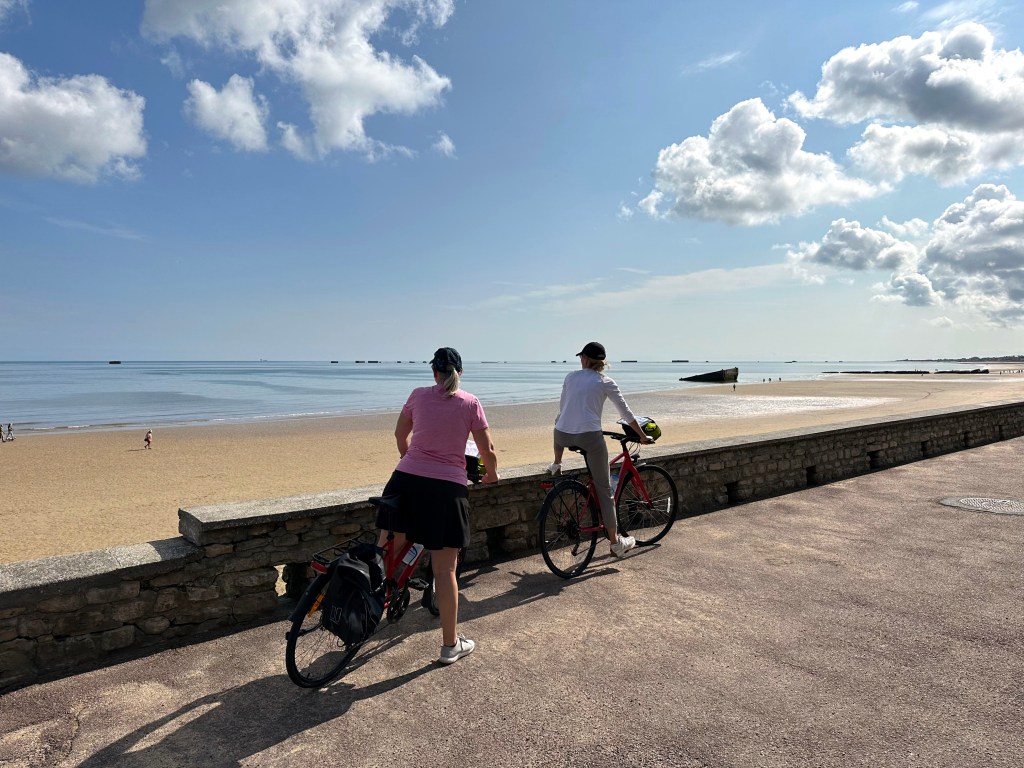
On the coast, the remains of Mulberry Harbor B off Arromanches, named Port Winston. The two Mulberry harbors were designed by the British to be towed across the channel during the Allied invasion of Normandy.
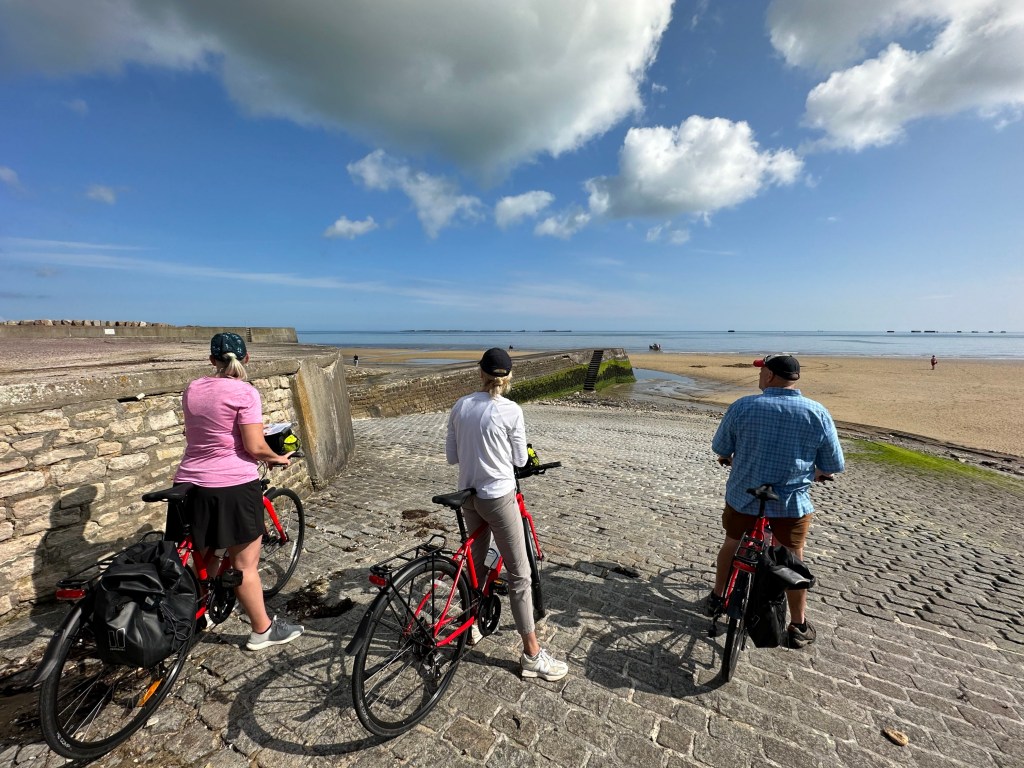
“The Mulberry harbours solved the problem of needing deepwater jetties and a harbour to provide the invasion force with the necessary reinforcements and supplies, and were to be used until major French ports could be captured and brought back into use after repair of the inevitable sabotage by German defenders. Composed of floating but sinkable breakwaters, floating pontoons, piers and floating roadways, this innovative and technically difficult system was being used for the first time.
The Mulberry B harbour at Gold Beach was used for ten months after D-Day, while over two million men, four million tons of supplies and half a million vehicles were landed before it was fully decommissioned.” (From here.)
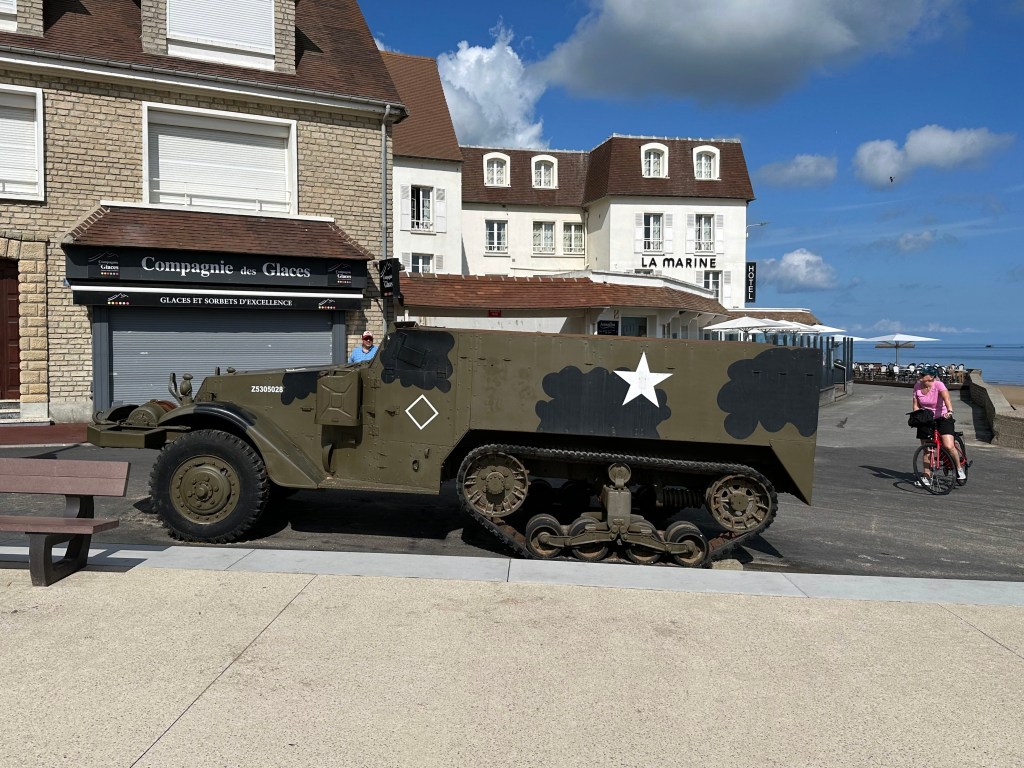
And just up the hill, the town of Arromanches. (With another WWII military artifact – we were delighted to come across these (mostly tanks) everywhere we rode our first 3 days of the tour.

A Mulberry dock pier, codenamed “whales.”
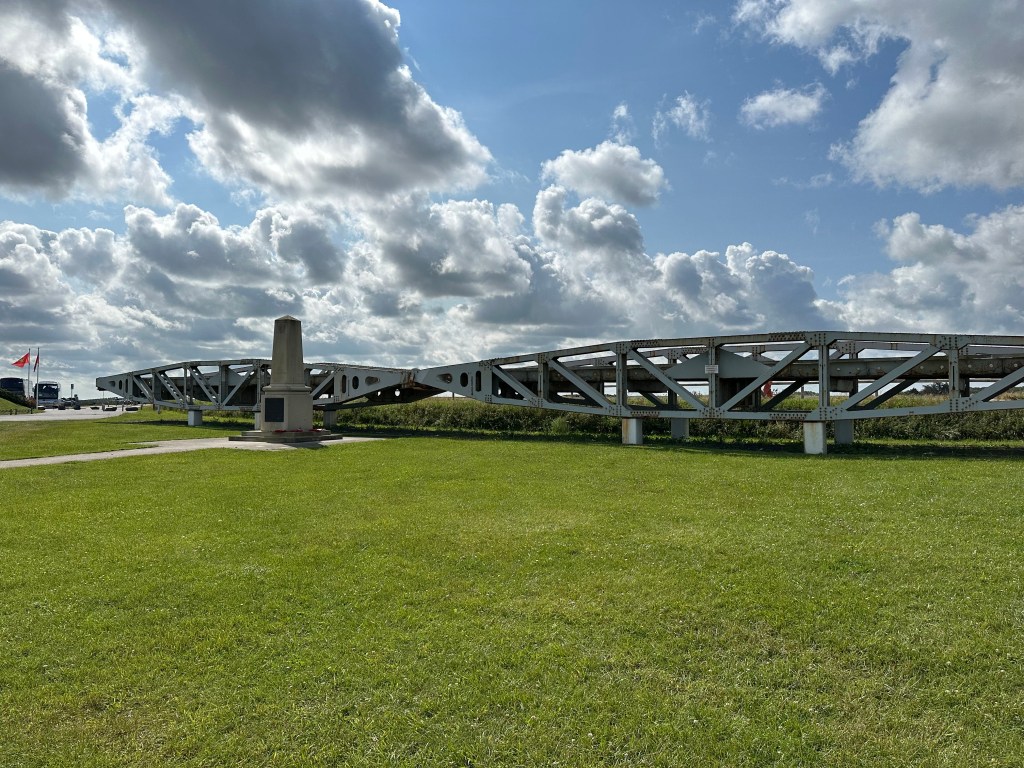
Memorial to the invasion of Gold Beach here in Arromanches. A British beach, obviously.
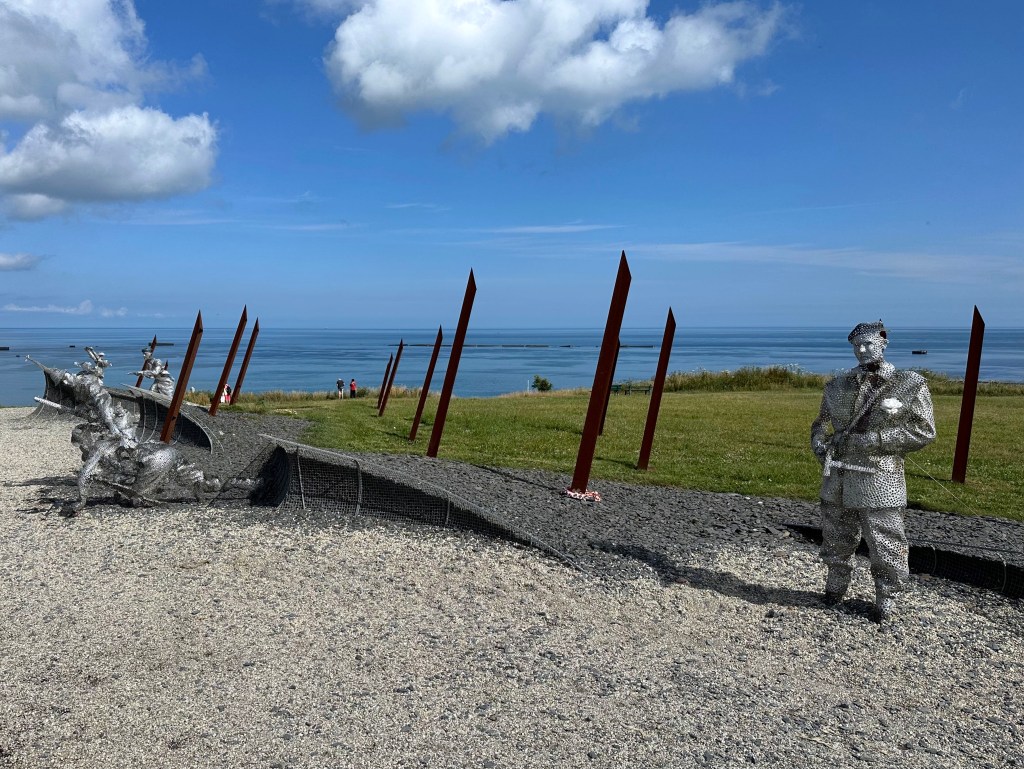
Heading out of town to our next WWI site.
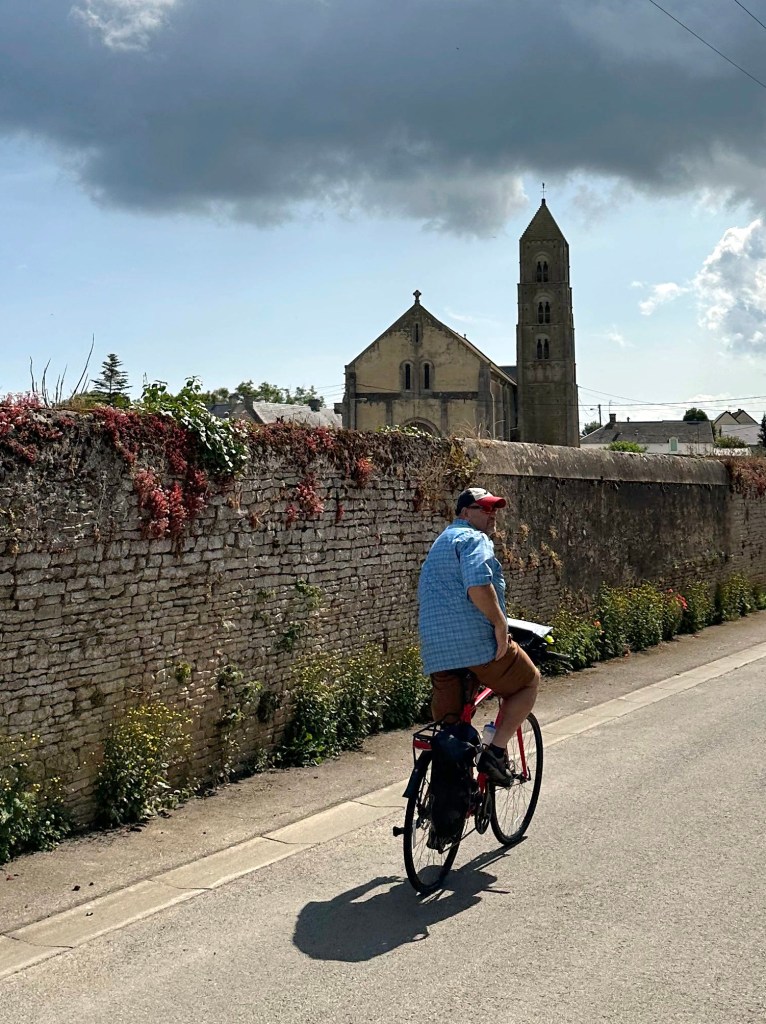
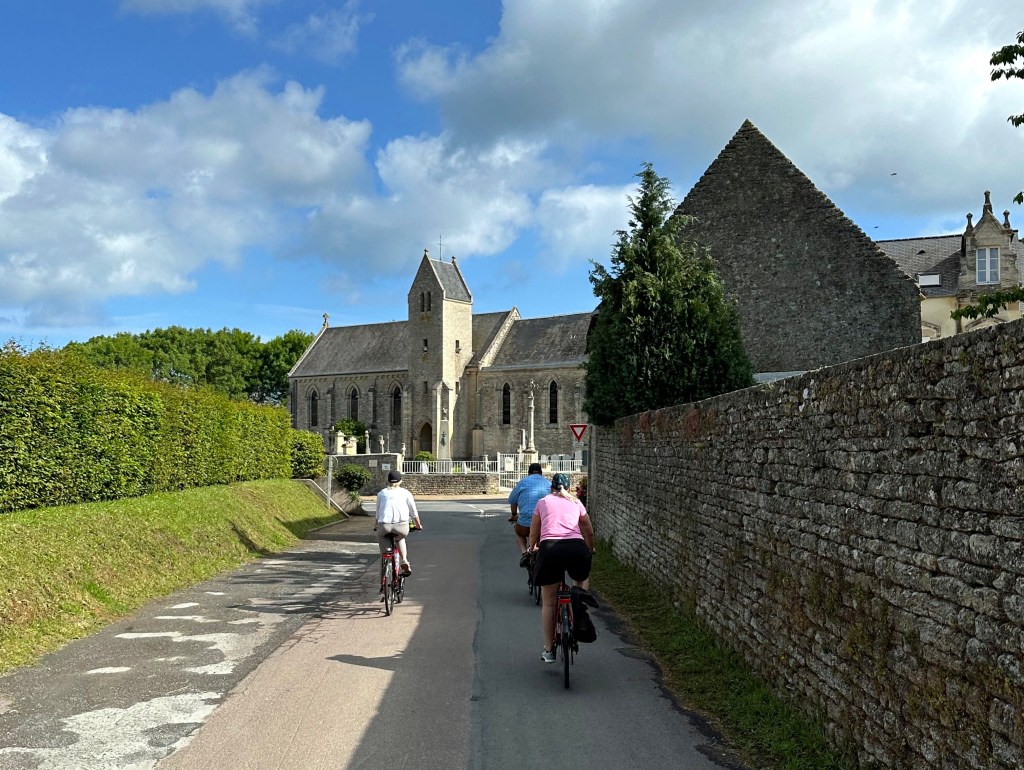
Passing a cool church with an even cooler tree on the way. (A little reminiscent of the even awesomer trees on either side of the church door in Stow-on-the-Wold during our Cotswolds road trip.)
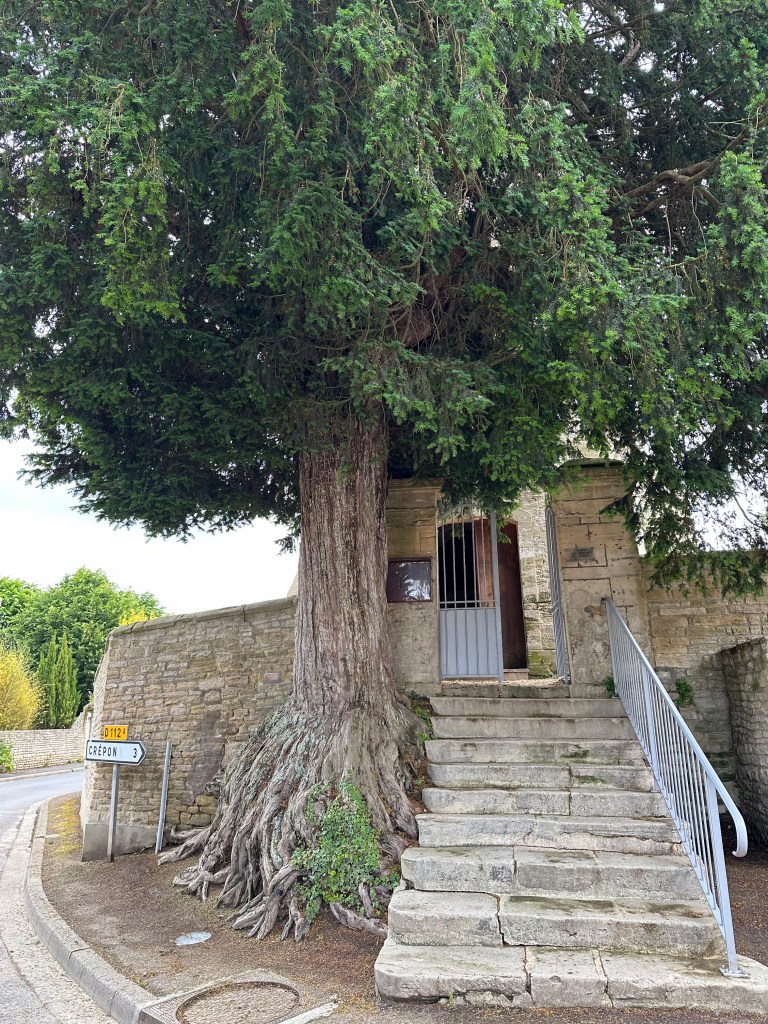
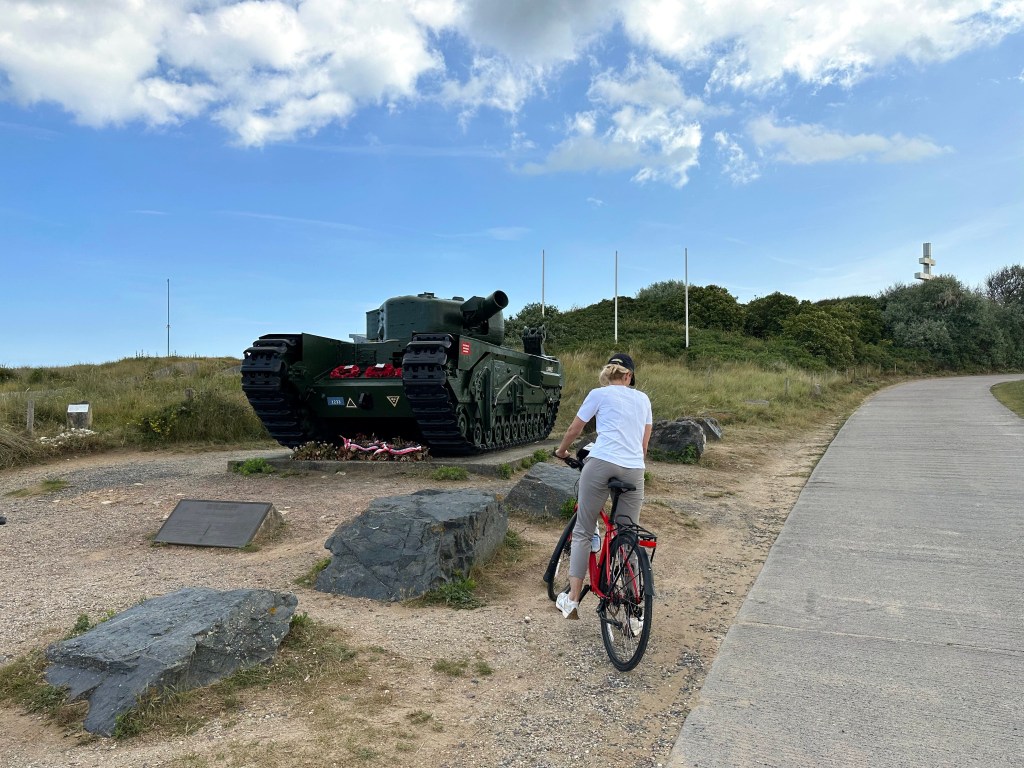
More WWII hardware on the coast! This is One Charlie, a British Churchill AVRE engineer tank that landed at Graye-sur-Mer on D-Day with the 79th Armoured Division, became stuck in a flooded crater, and was used to help support a makeshift crossing; four of its six crew members died, and the tank was recovered in 1977 and has stood as a memorial ever since. The ashes of its driver, Bill Dunn, were scattered at the site in 2014.
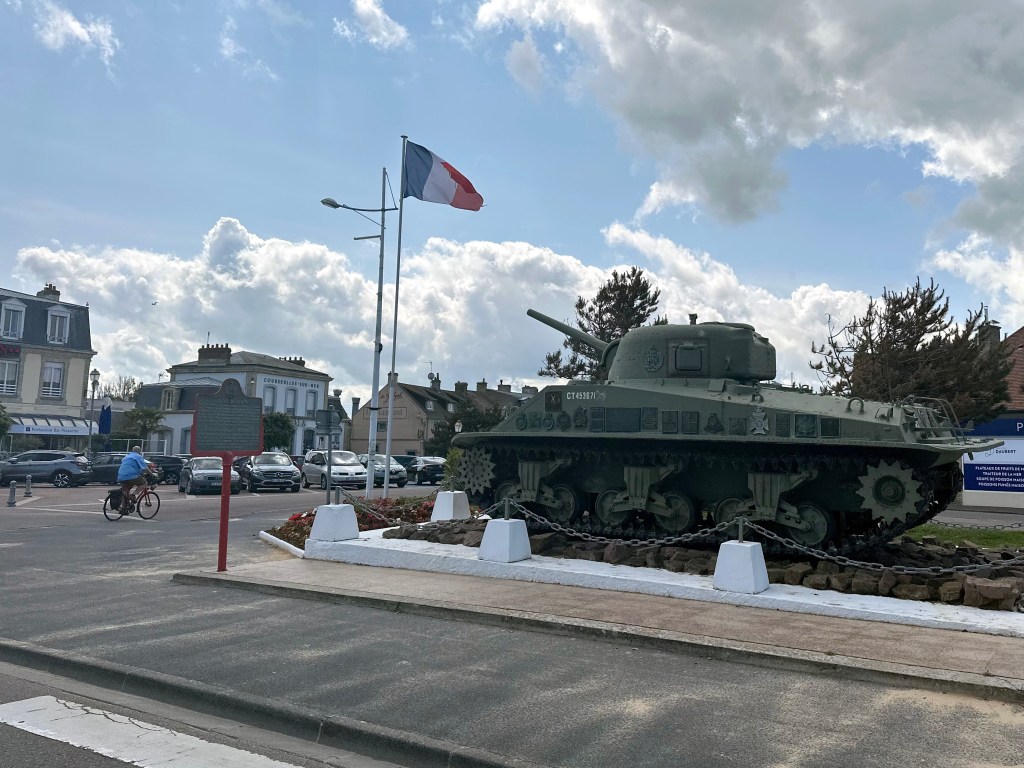
And even more hardware – a Sherman in town as we head to lunch.
Super cool rotating canal bridge:
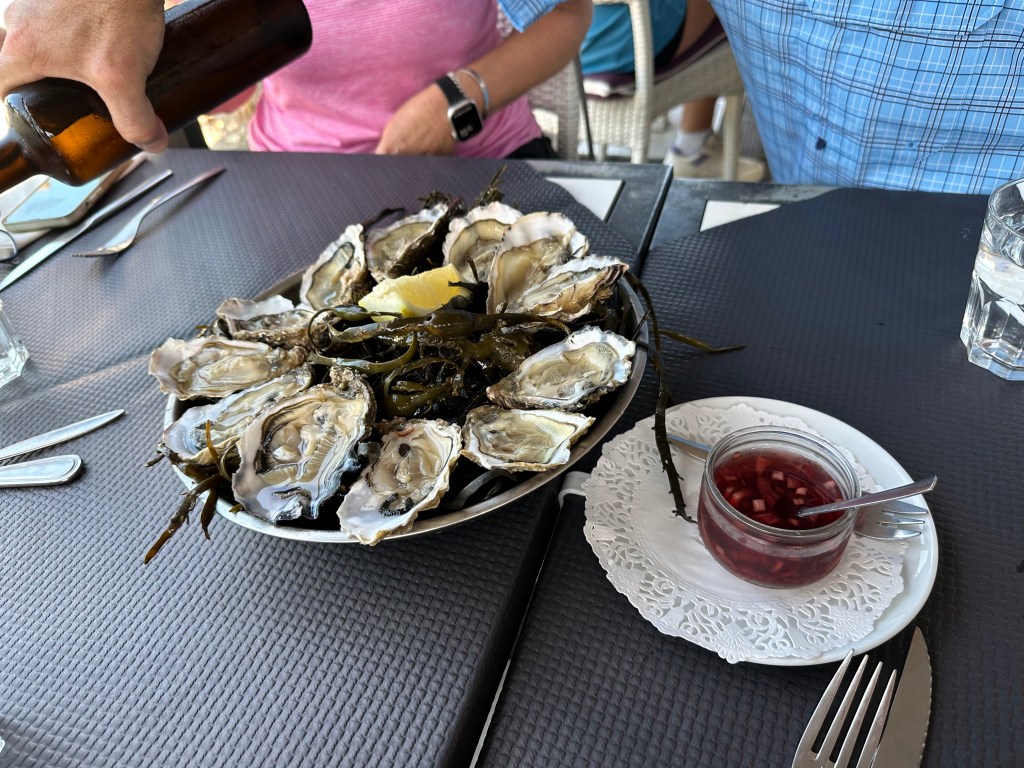
Our first taste of Normandy oysters in Courseulles-sur-Mer. Freakin’ amazing. This would be the first of dozens and dozens we’d enjoy down the coast as we proceeded through our trip.
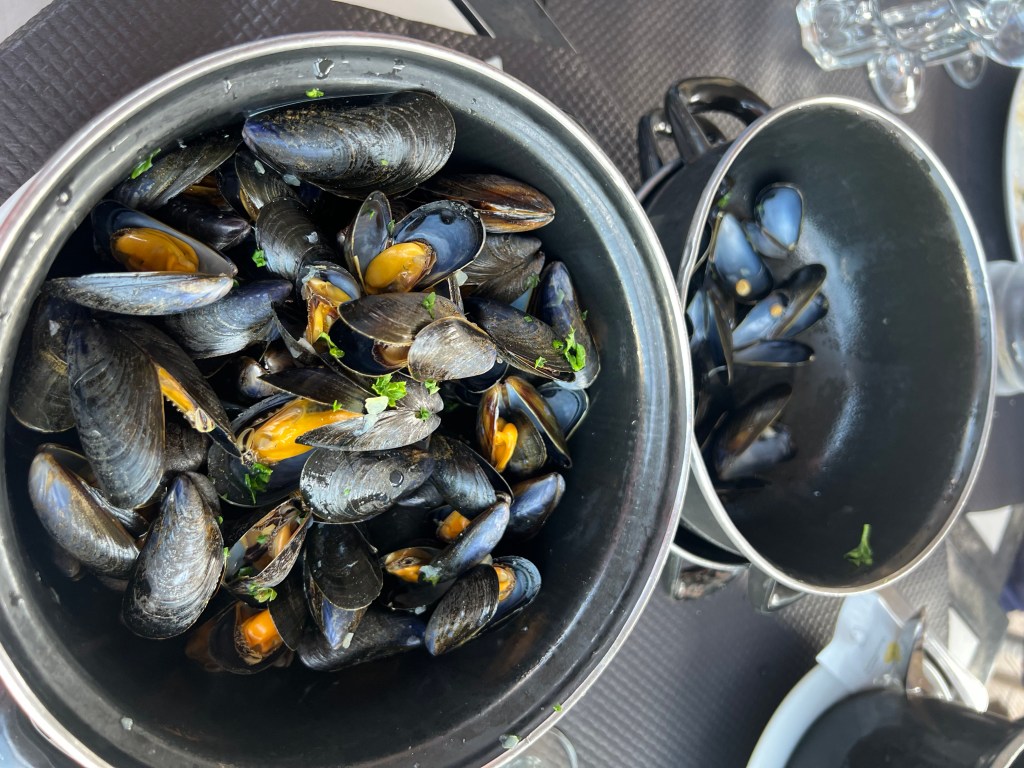
And moules, natch.
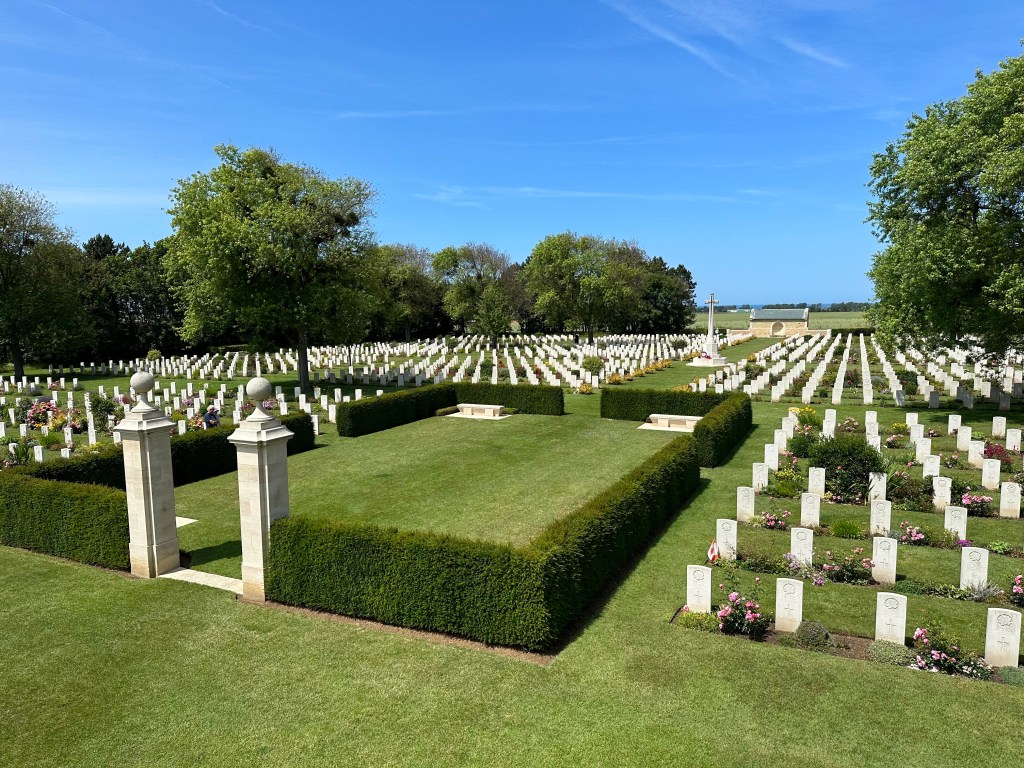
The Canadian cemetery in Normandy.
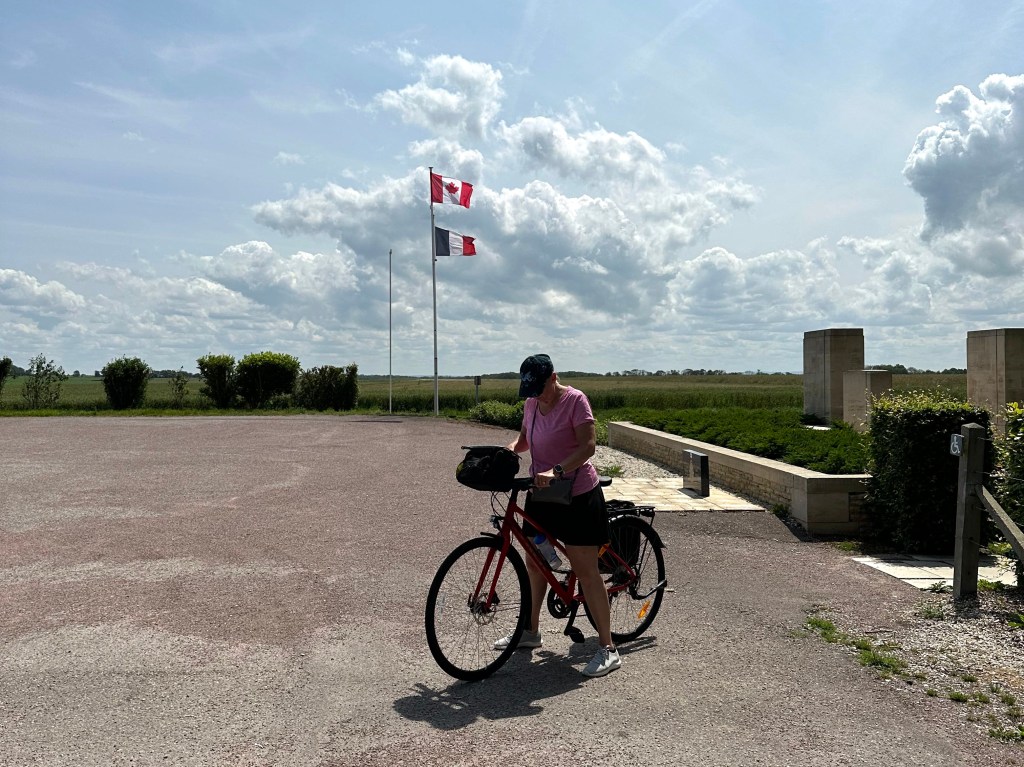
Very serene and impactful.
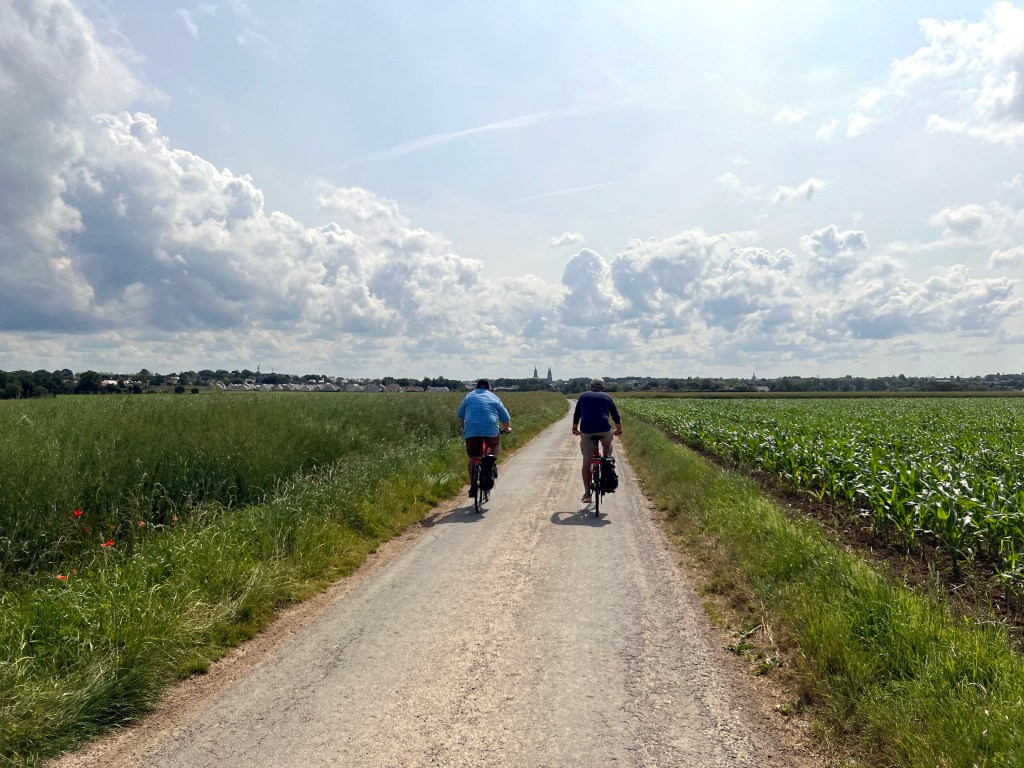
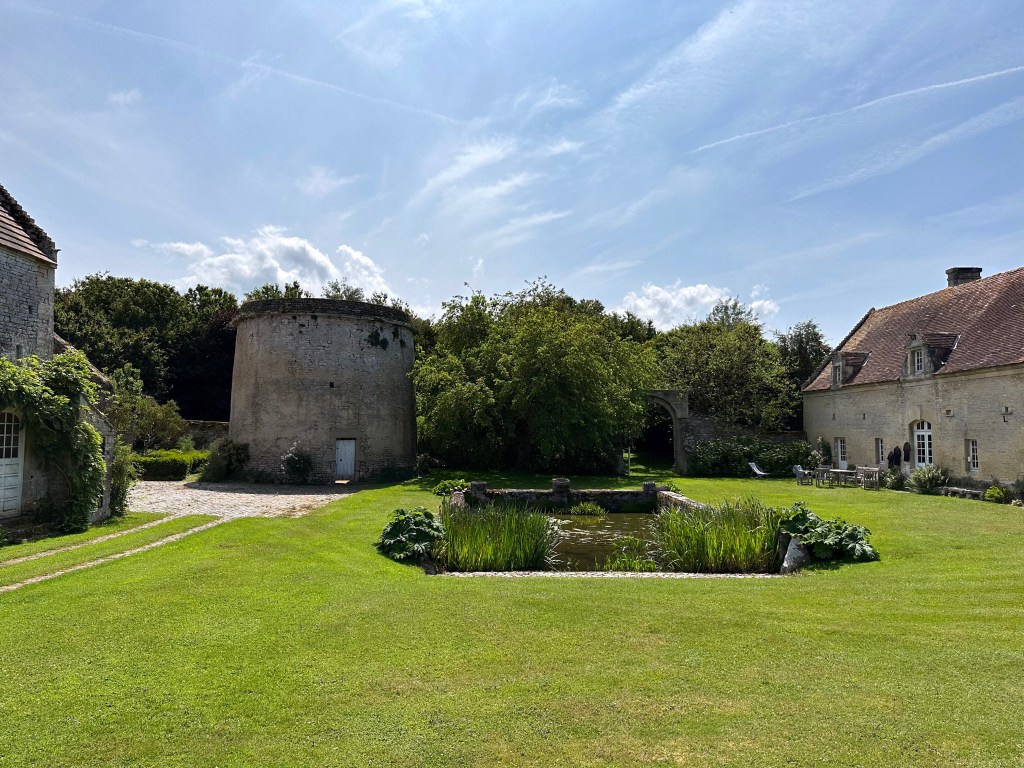
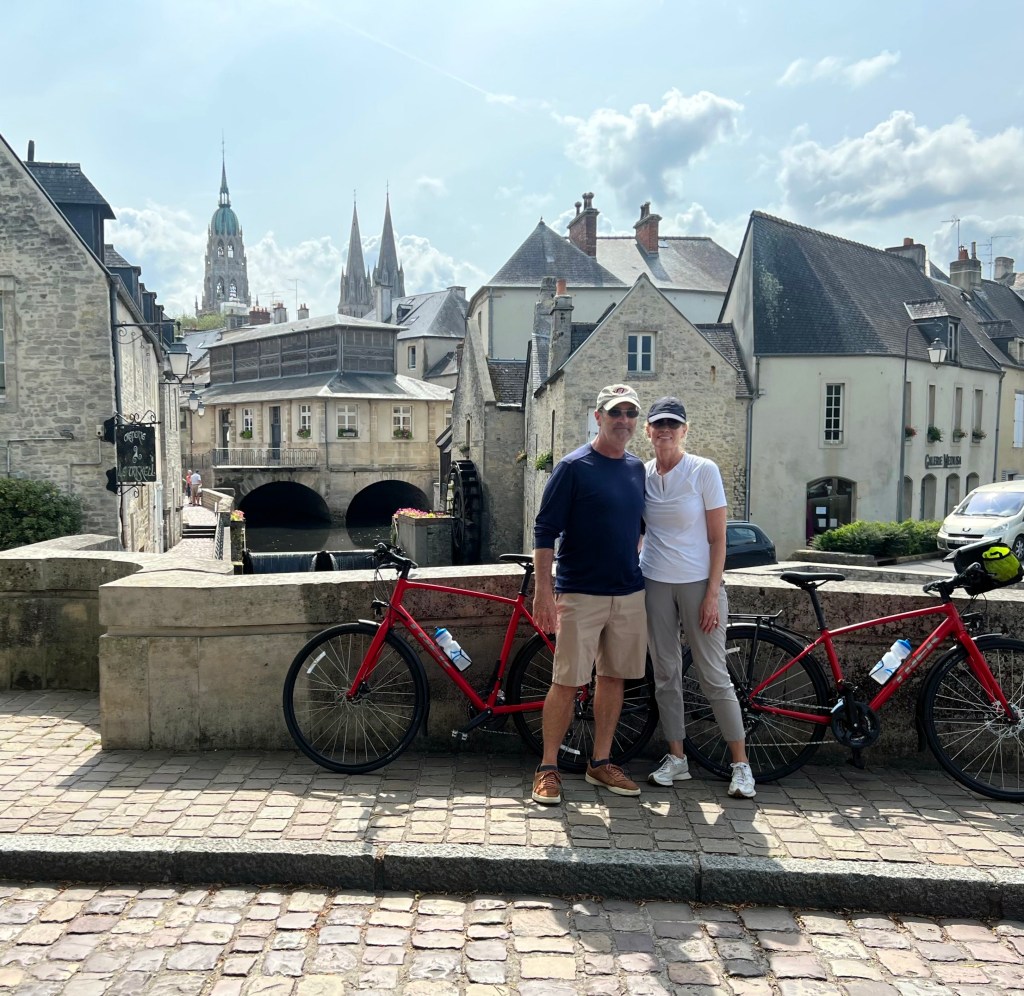
Back in Bayeux at the end of our first day of biking.
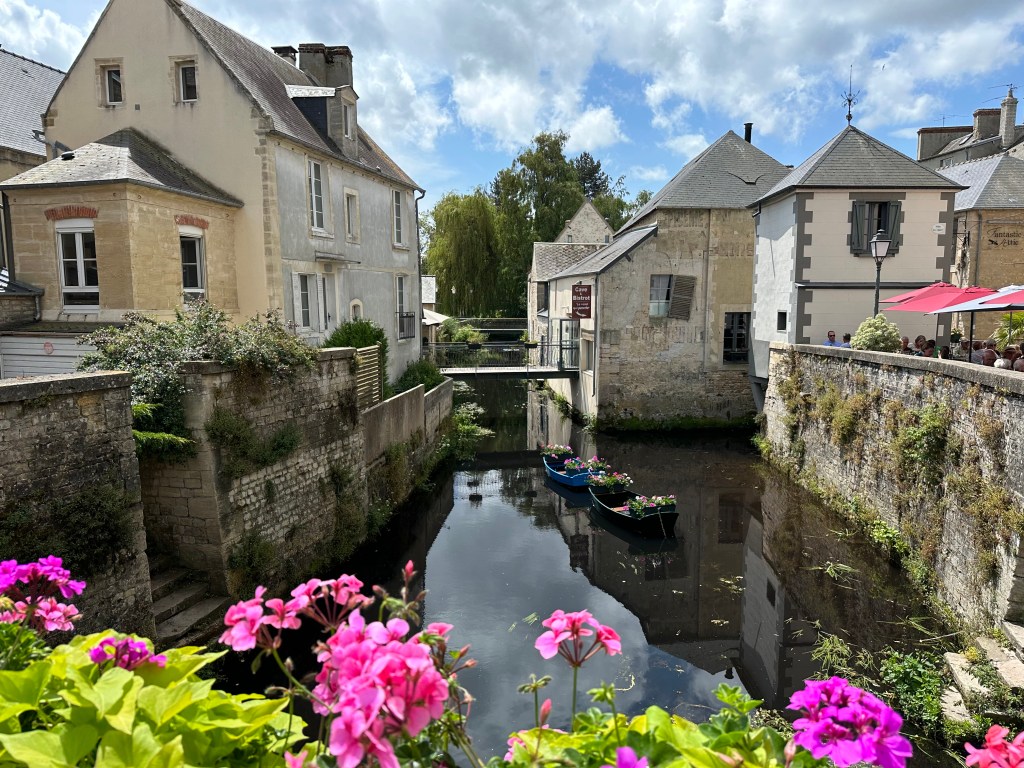
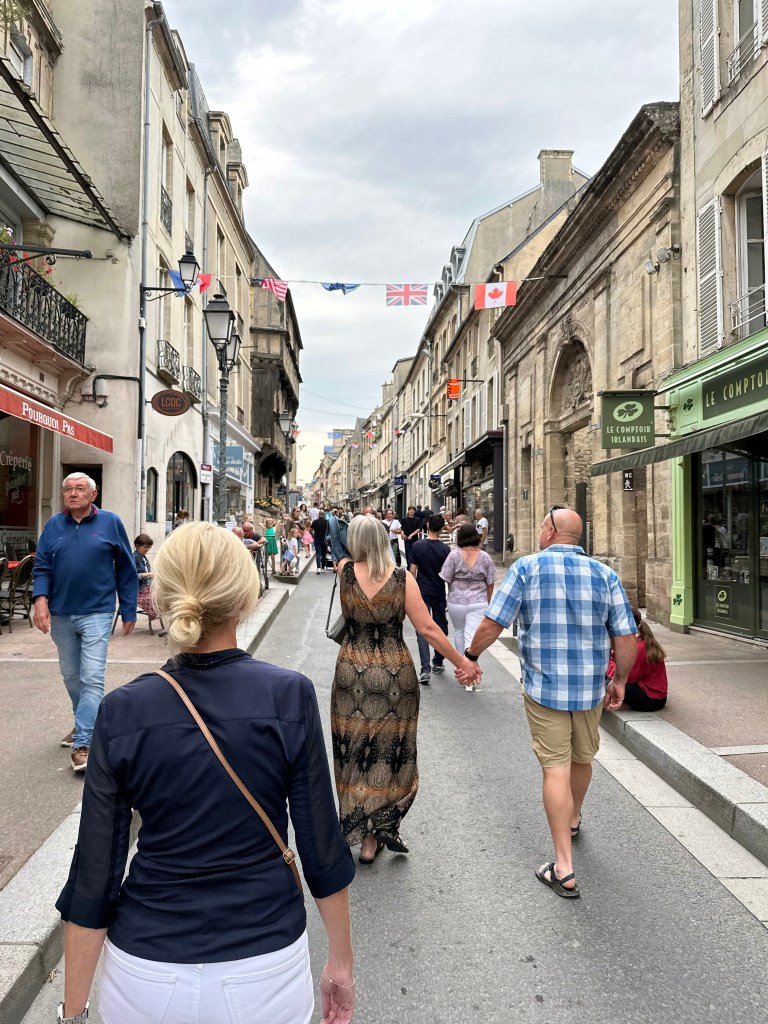
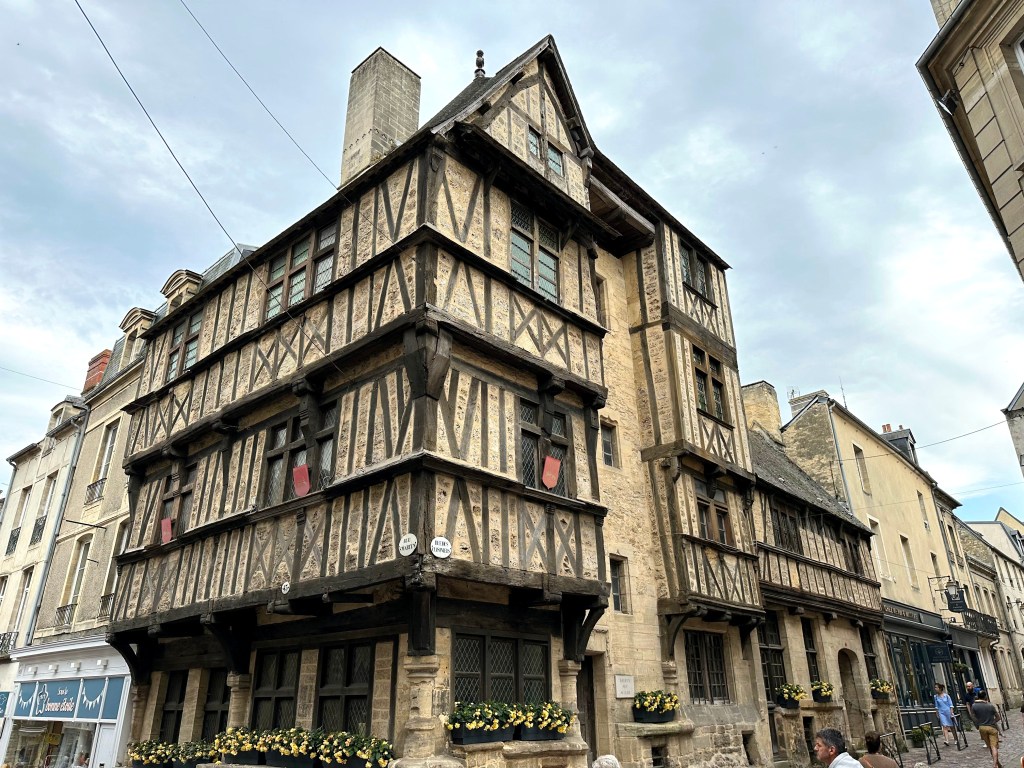
Very cool half-timbered medieval house in town.
Yesterday’s cathedral looming over centre ville.
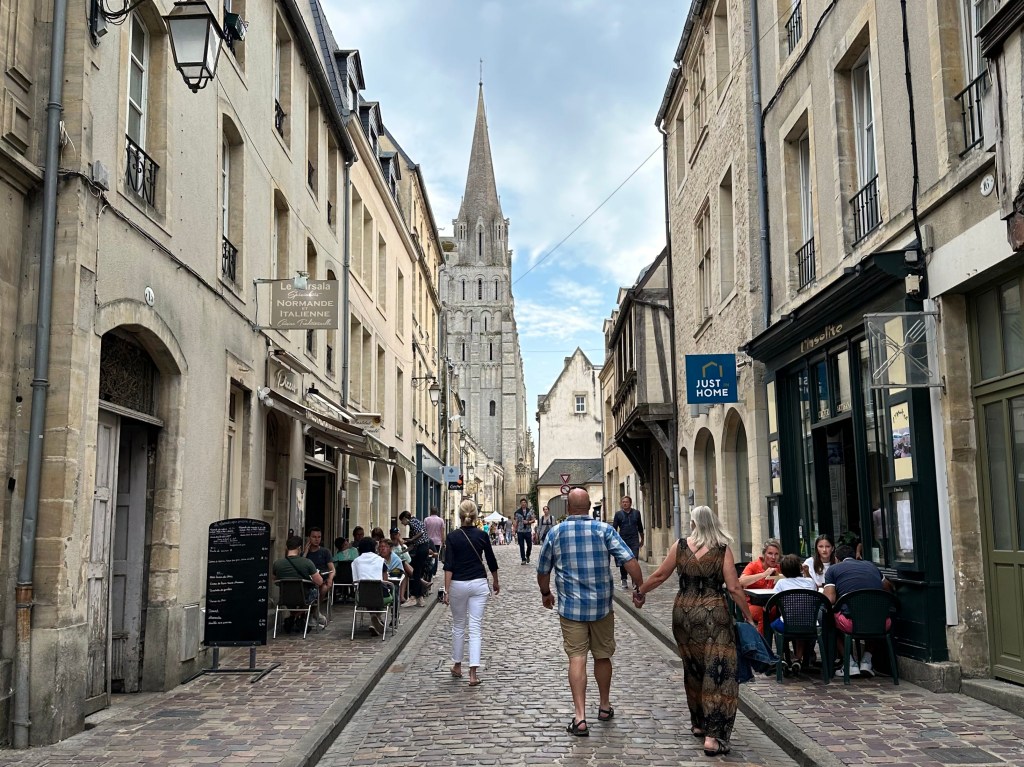
And, we soon learned, it was France’s national Day of Music – Fete de la Musique – where every town in France explodes into dozens of little tiny desk concerts.
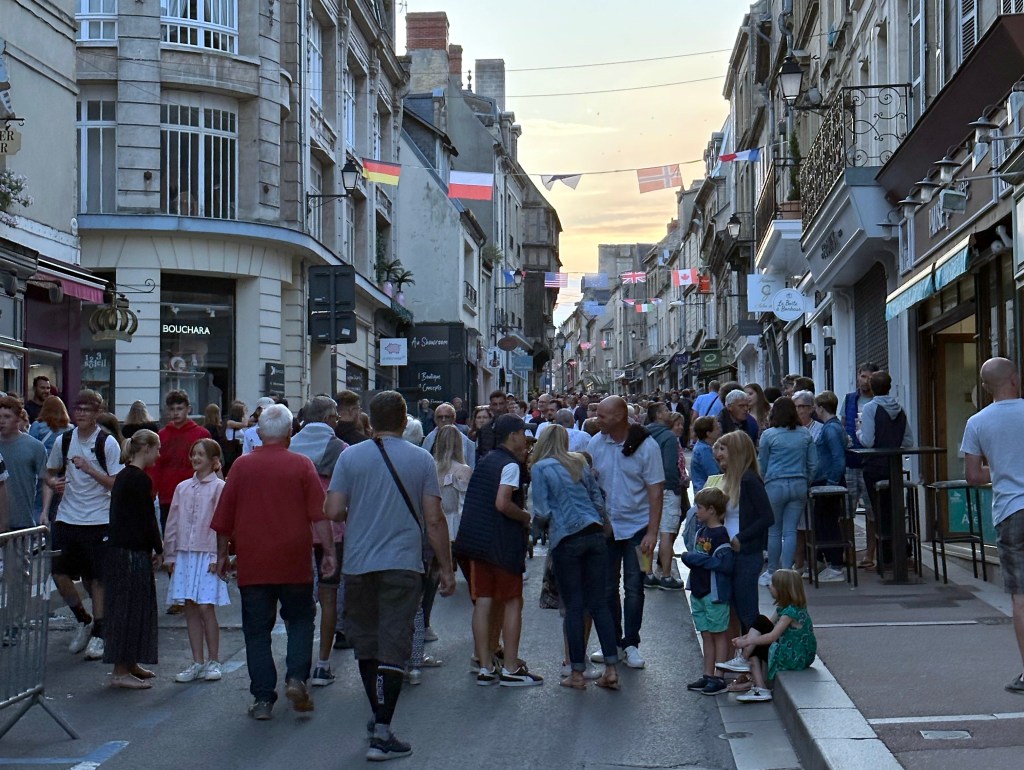
Including Bayeux.
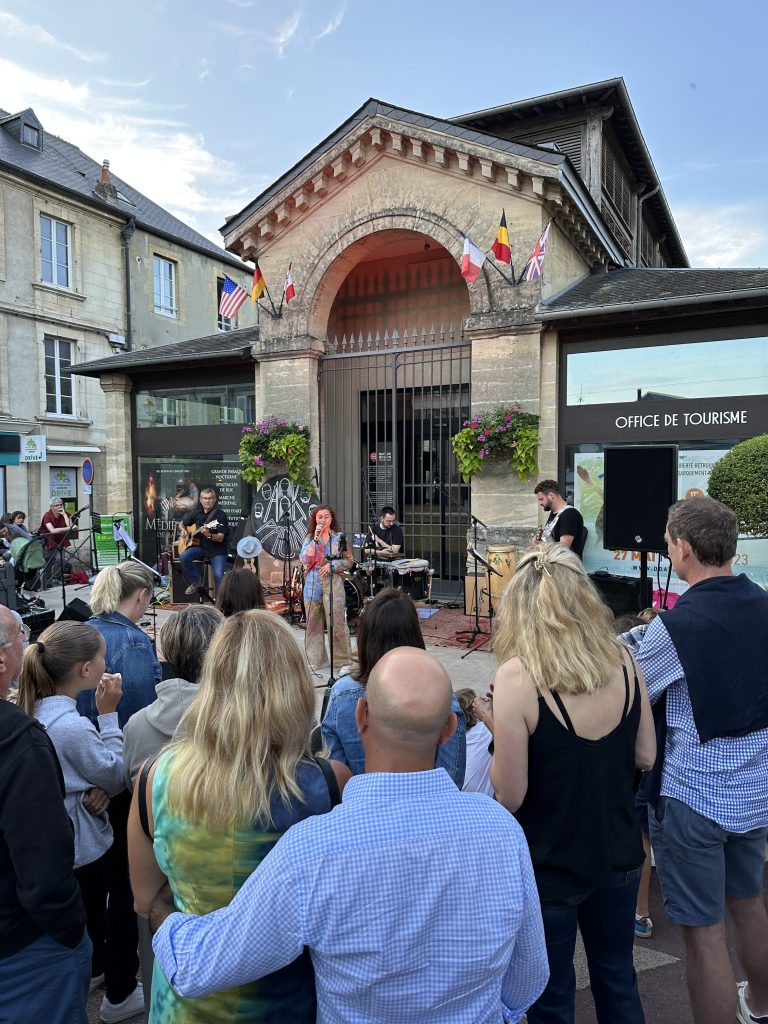
The locals were definitely digging it! (Aided, we’re sure, by the high-octane Belgian trappist ale, Delirium Tremens.)
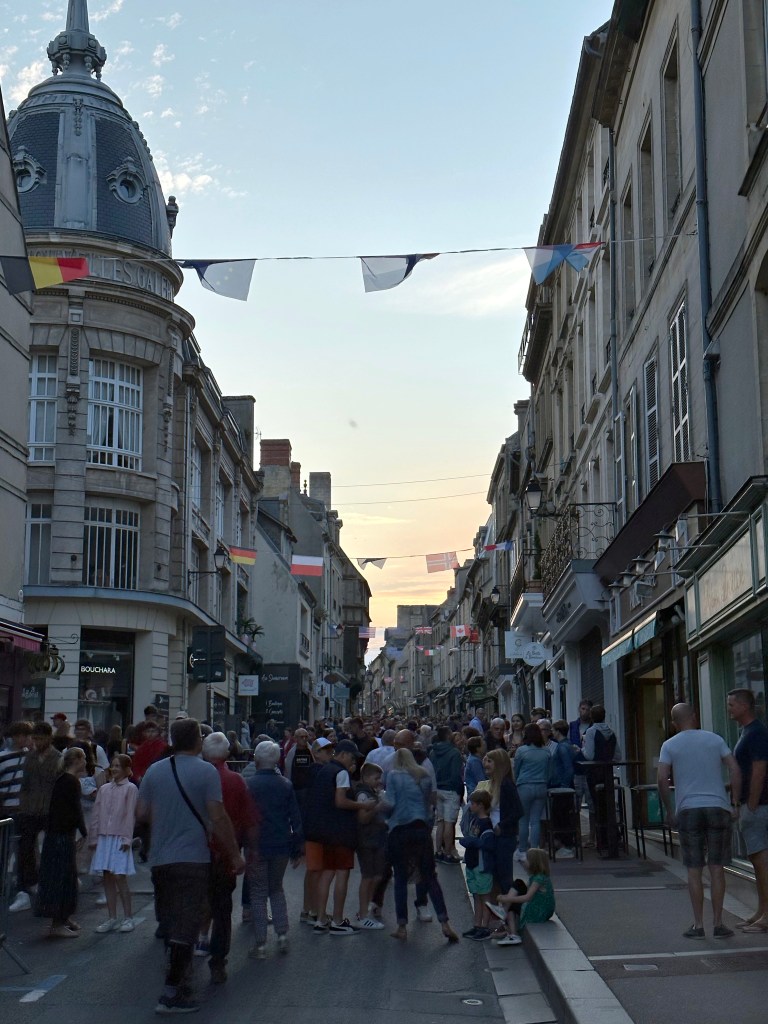
Pretty good start to this leg of the trip!

