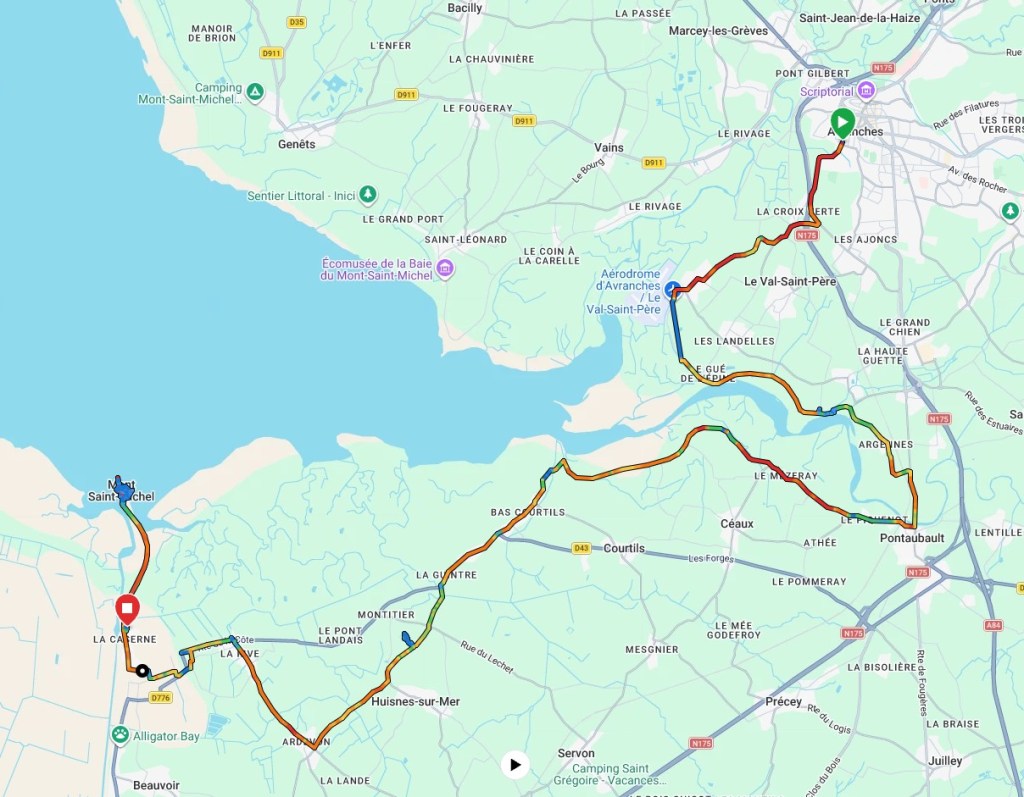
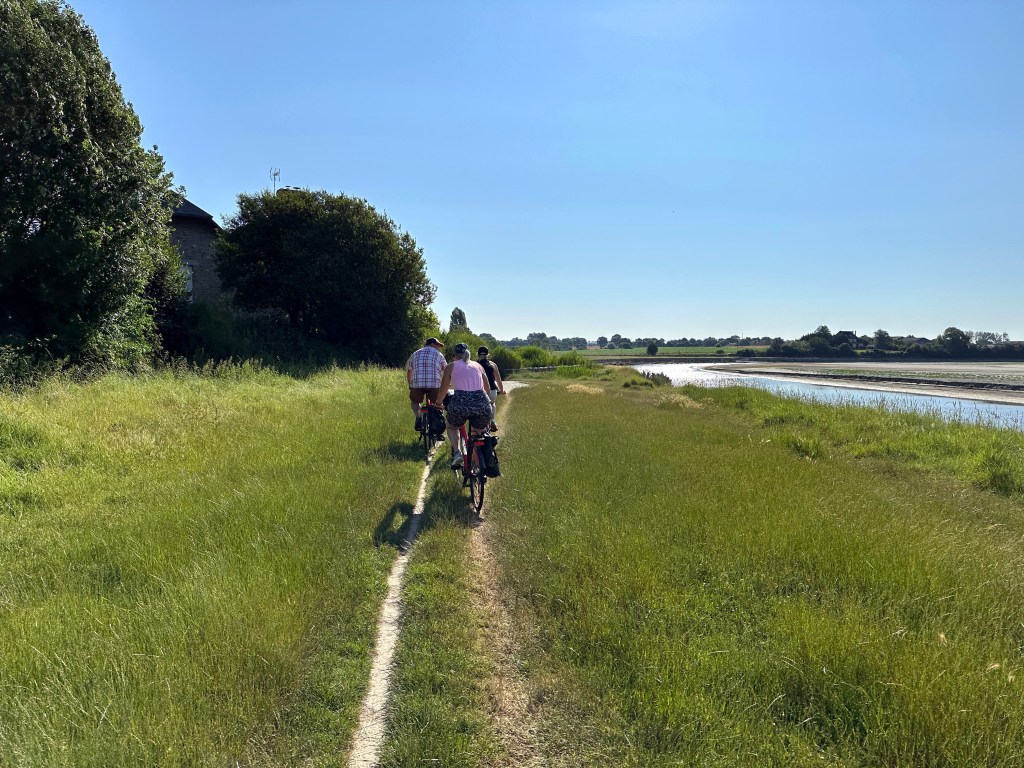
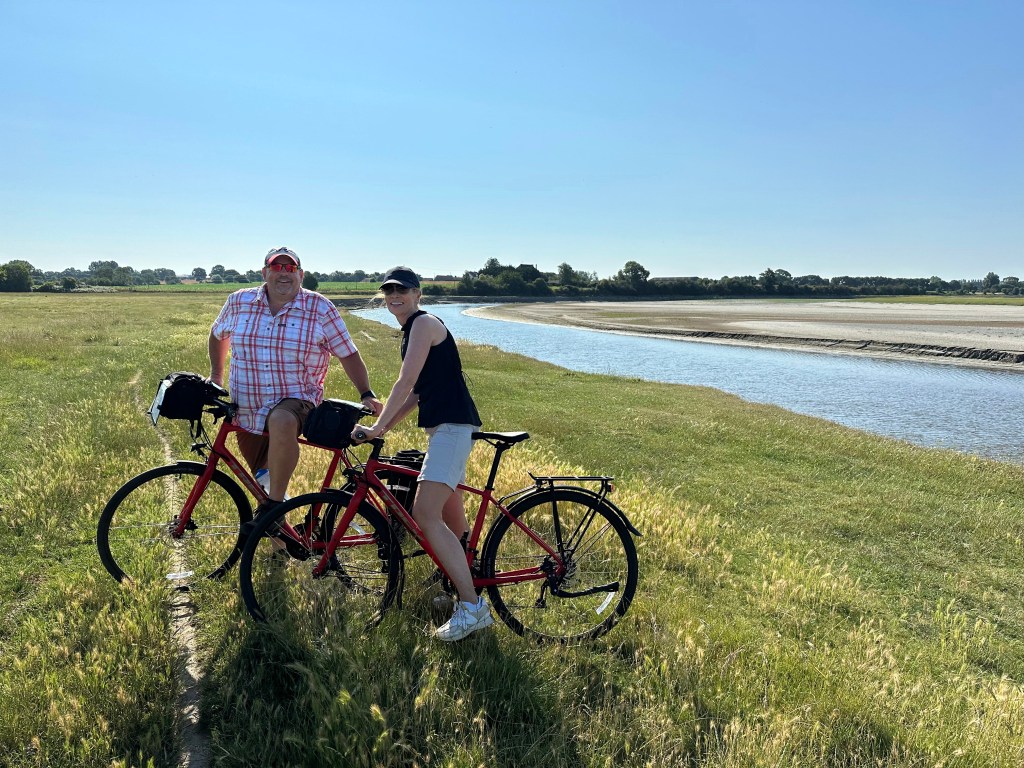
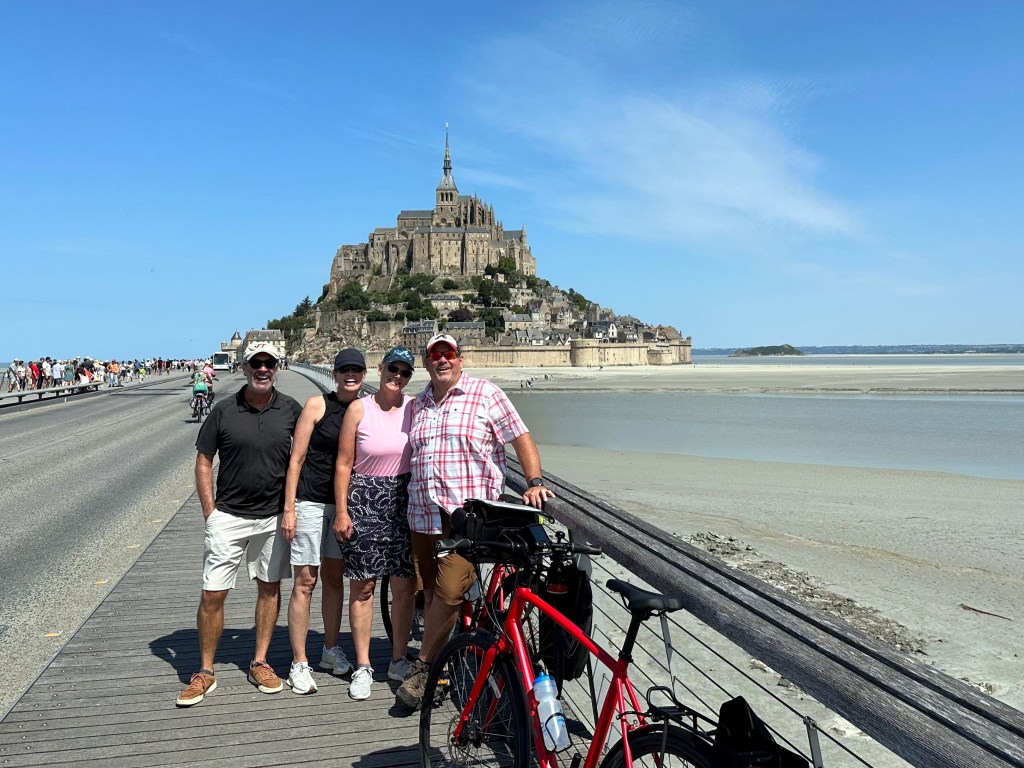
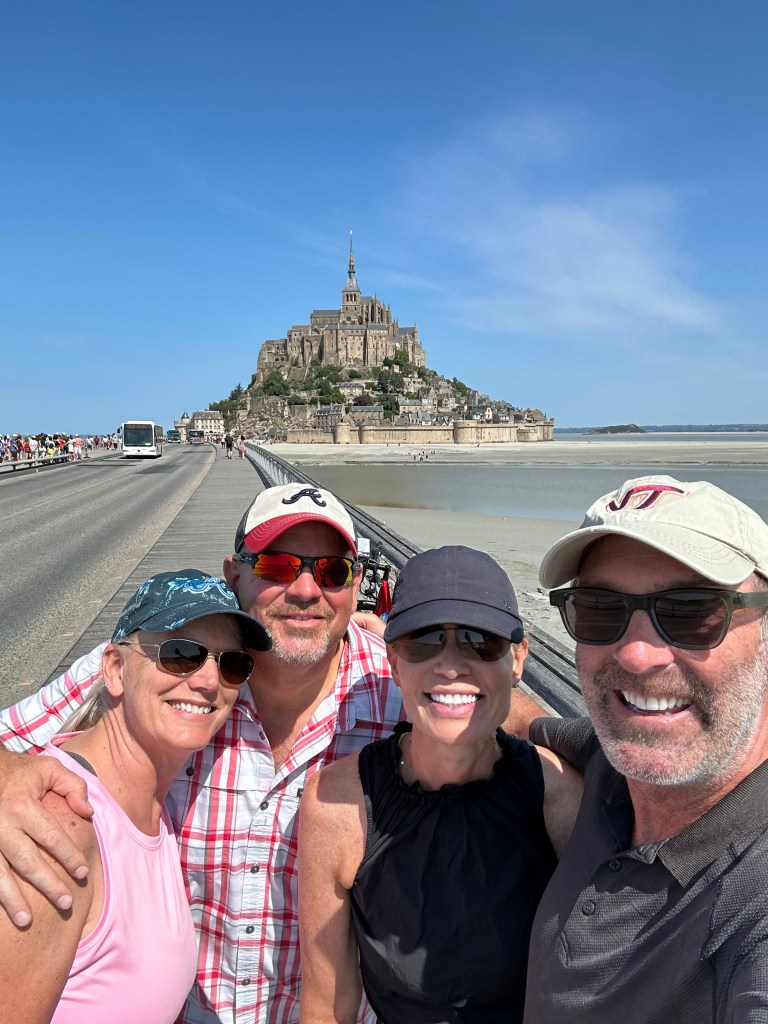
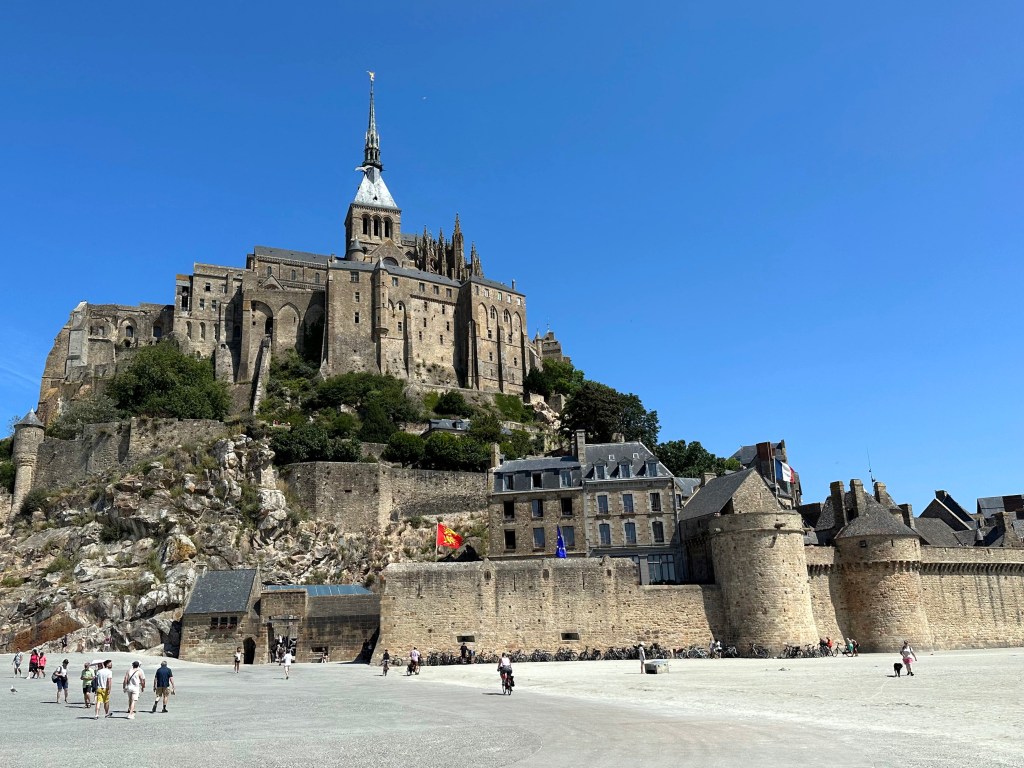
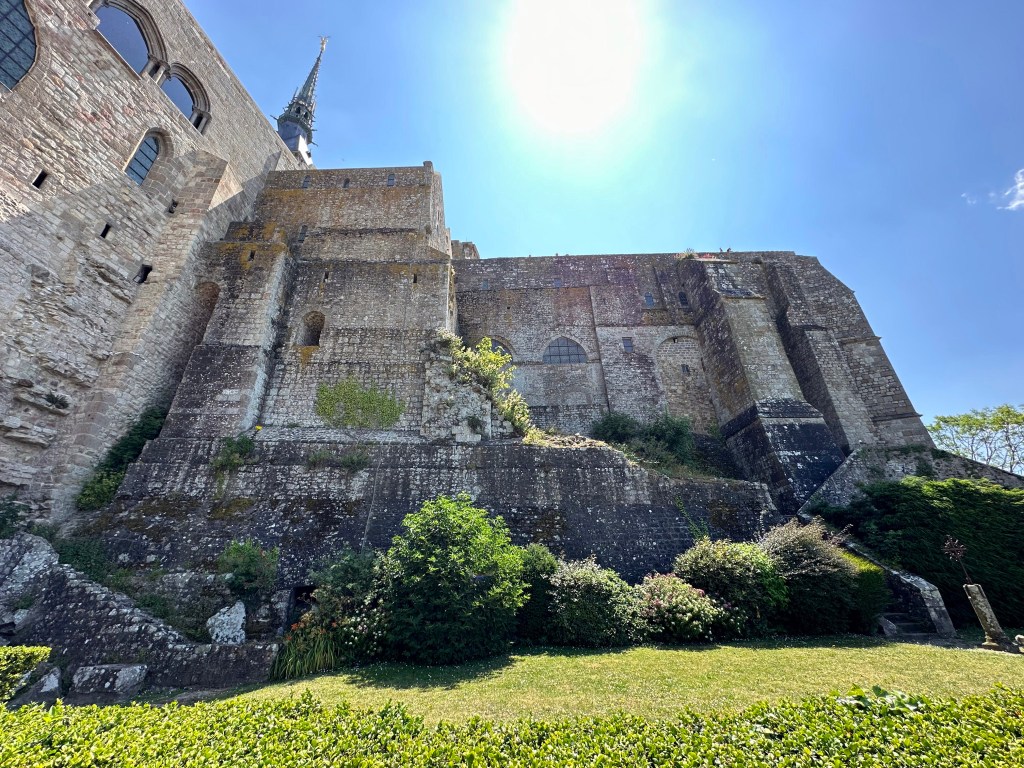
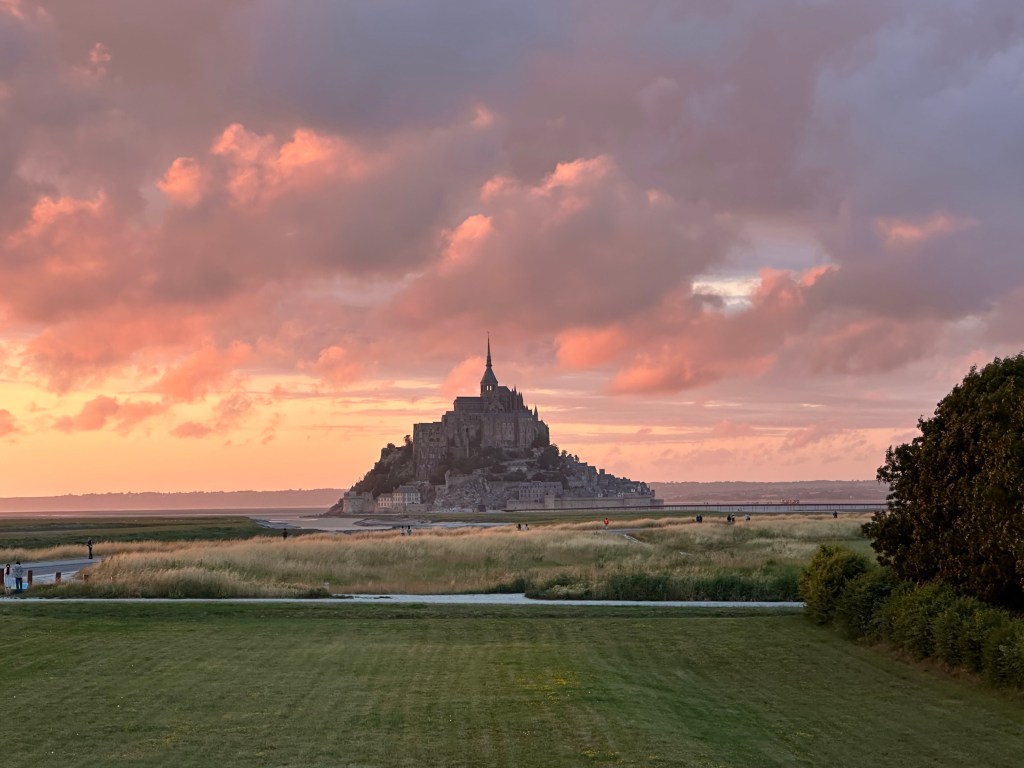
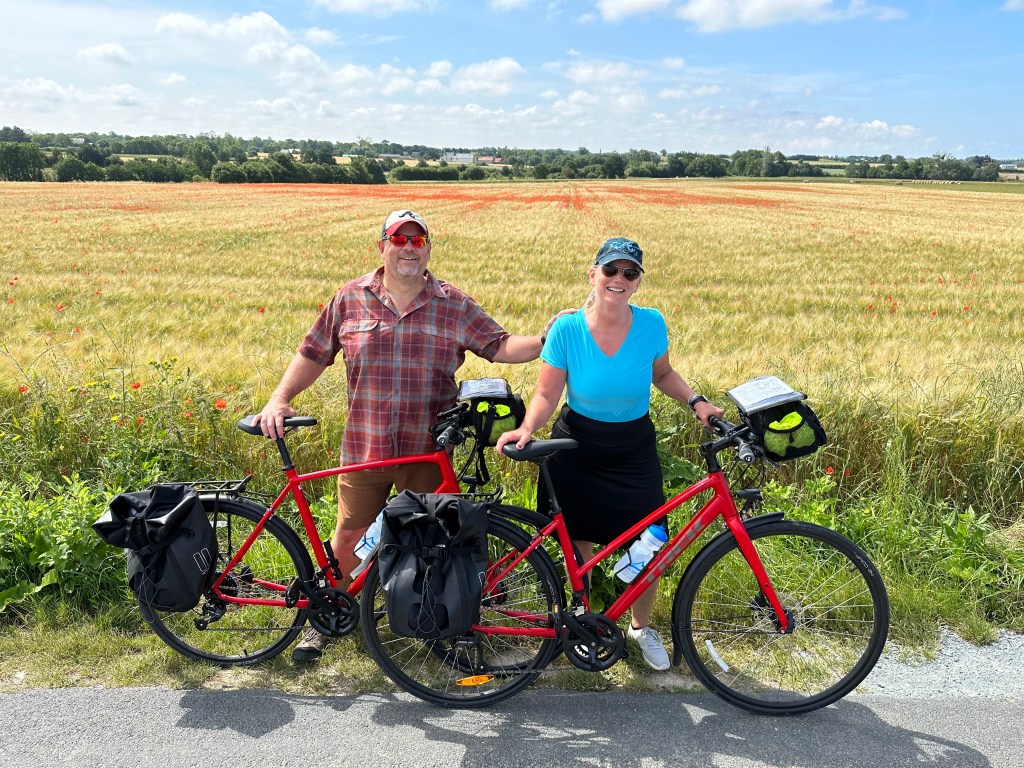
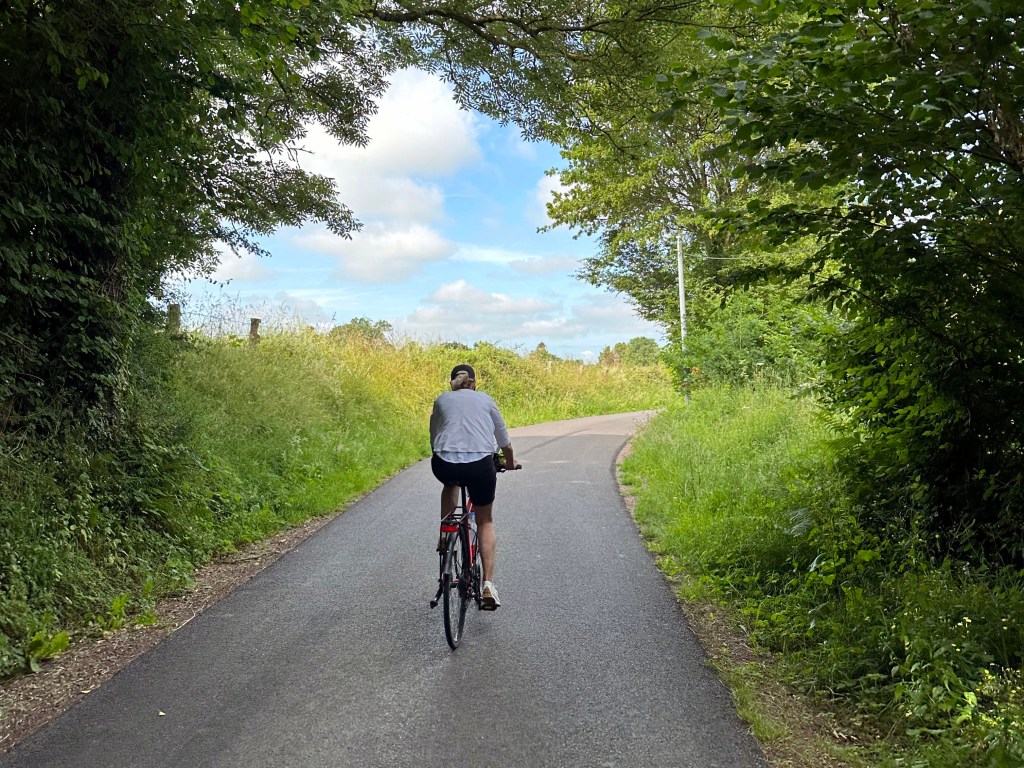
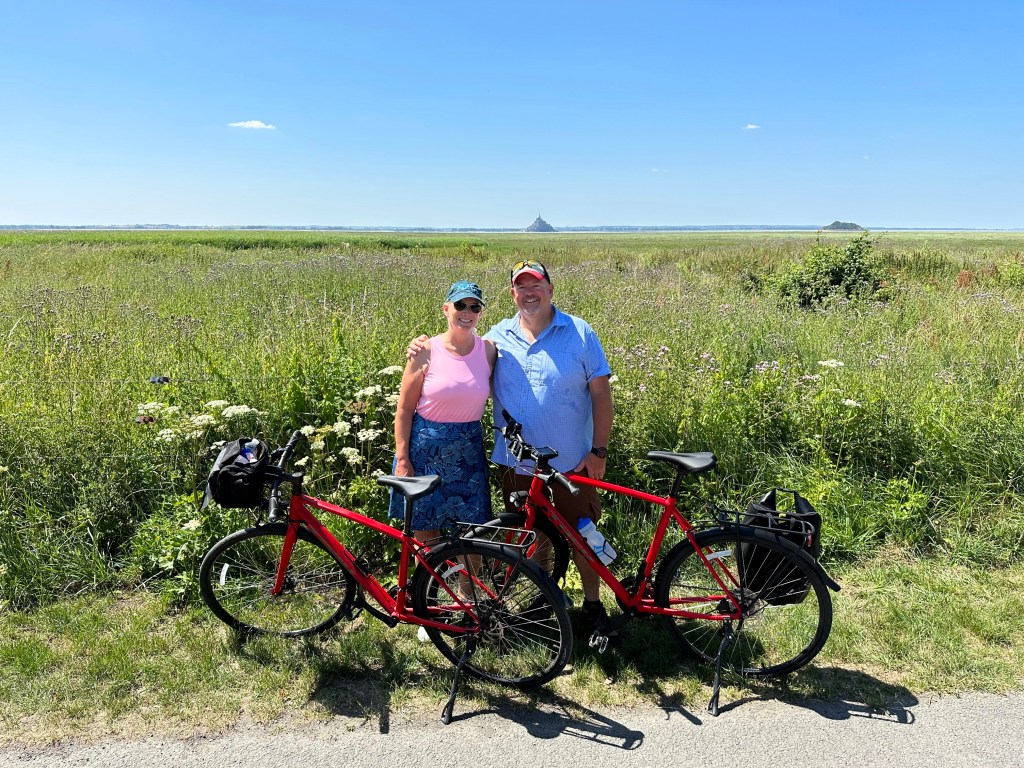
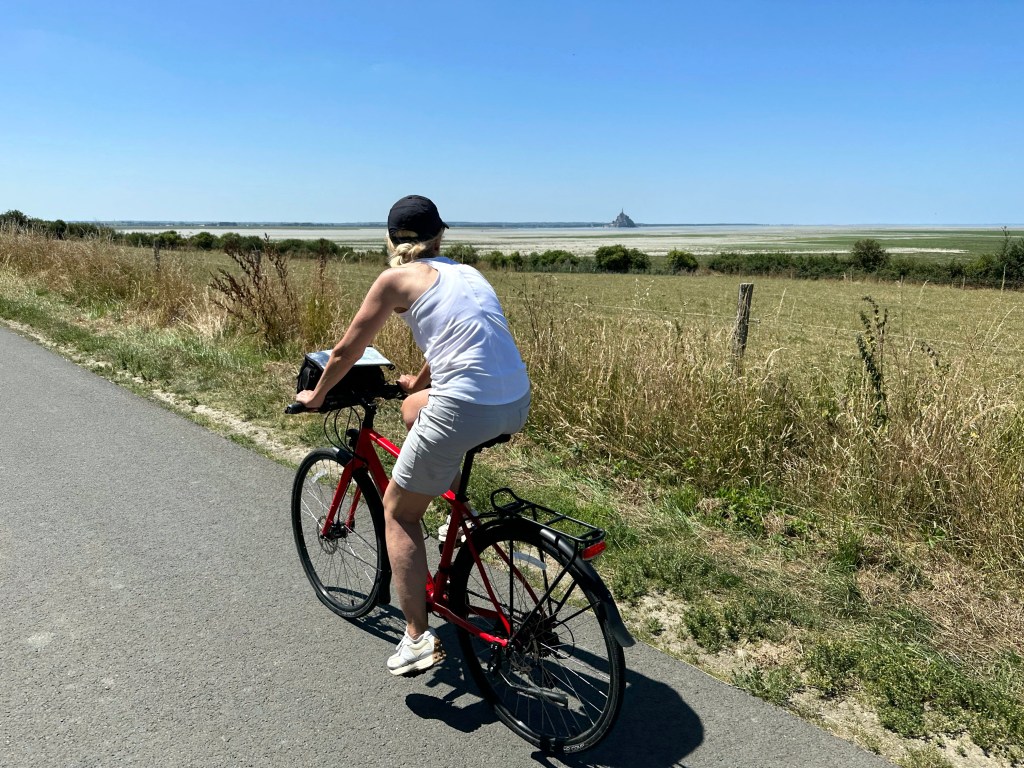
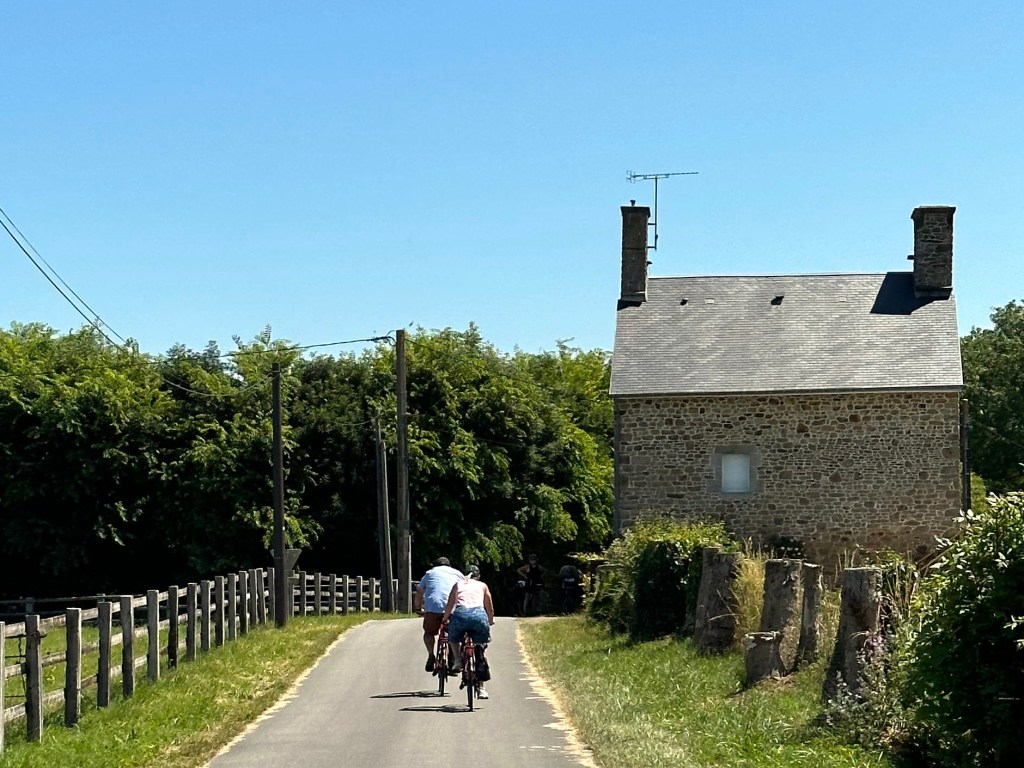
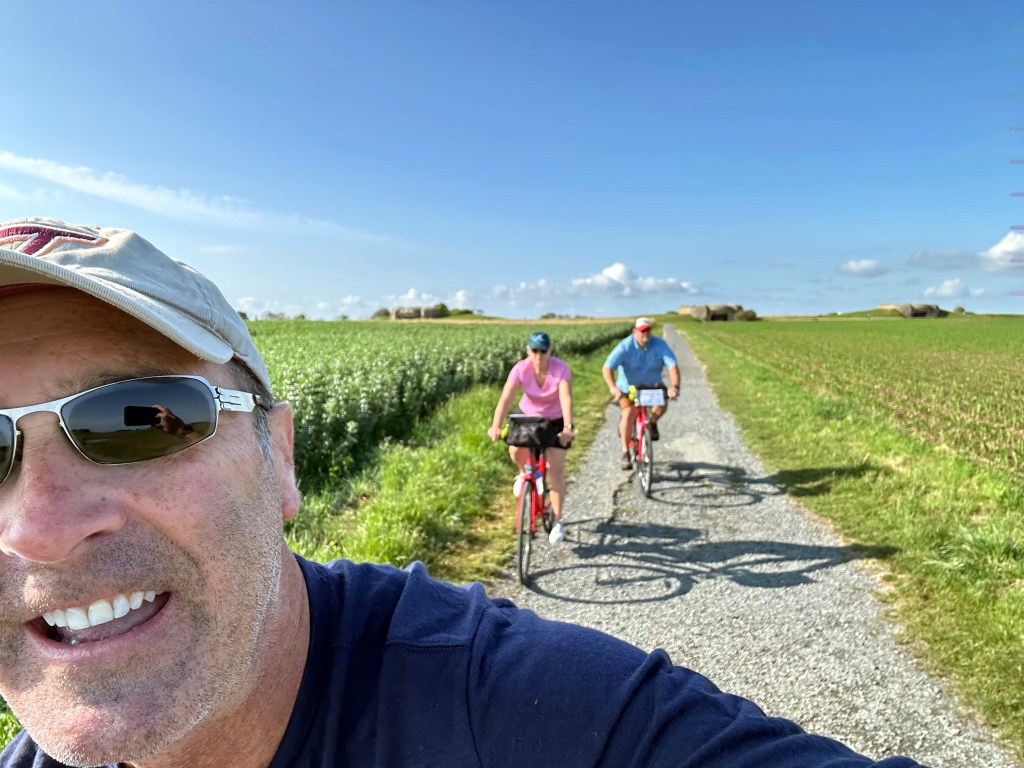
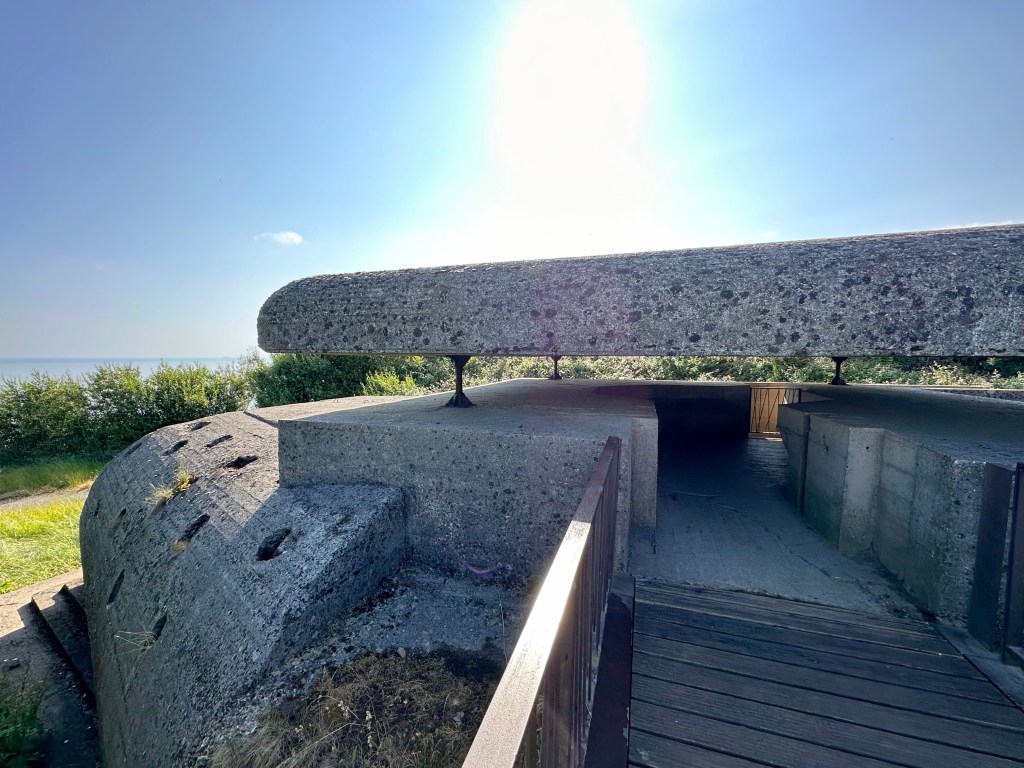
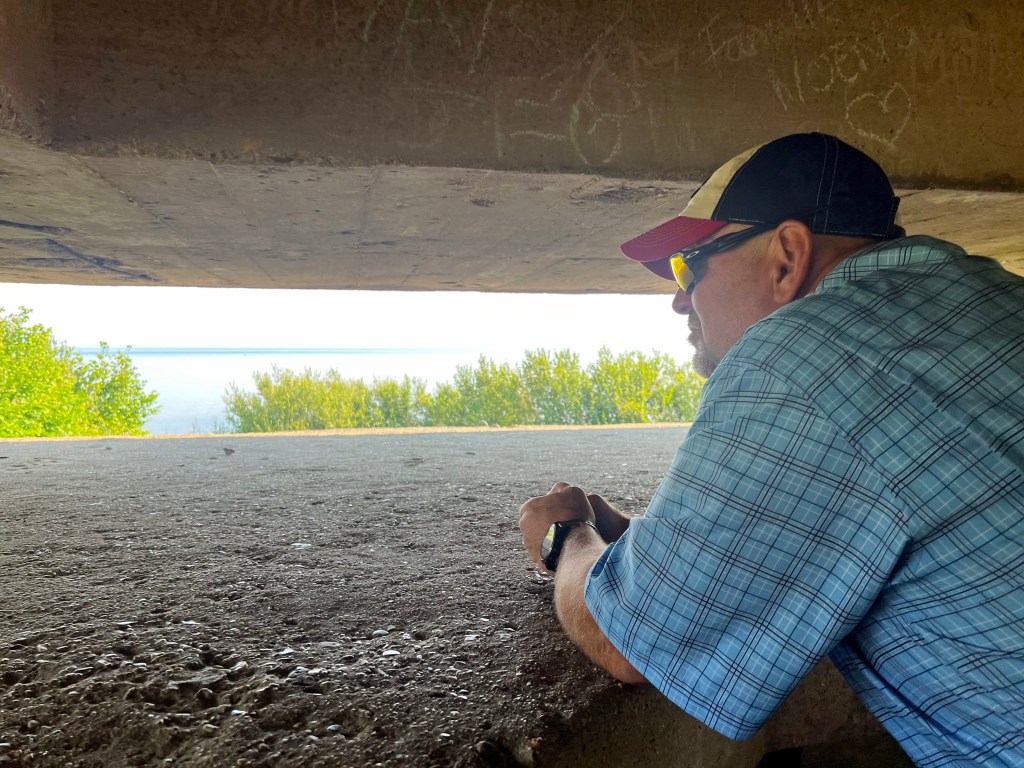
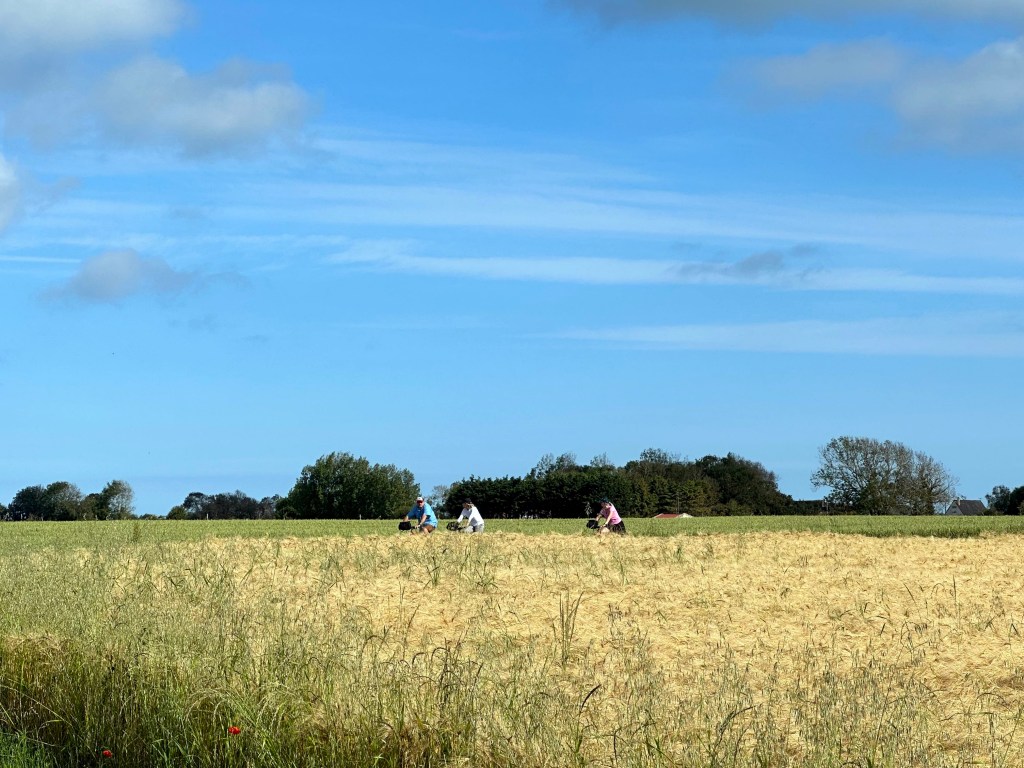
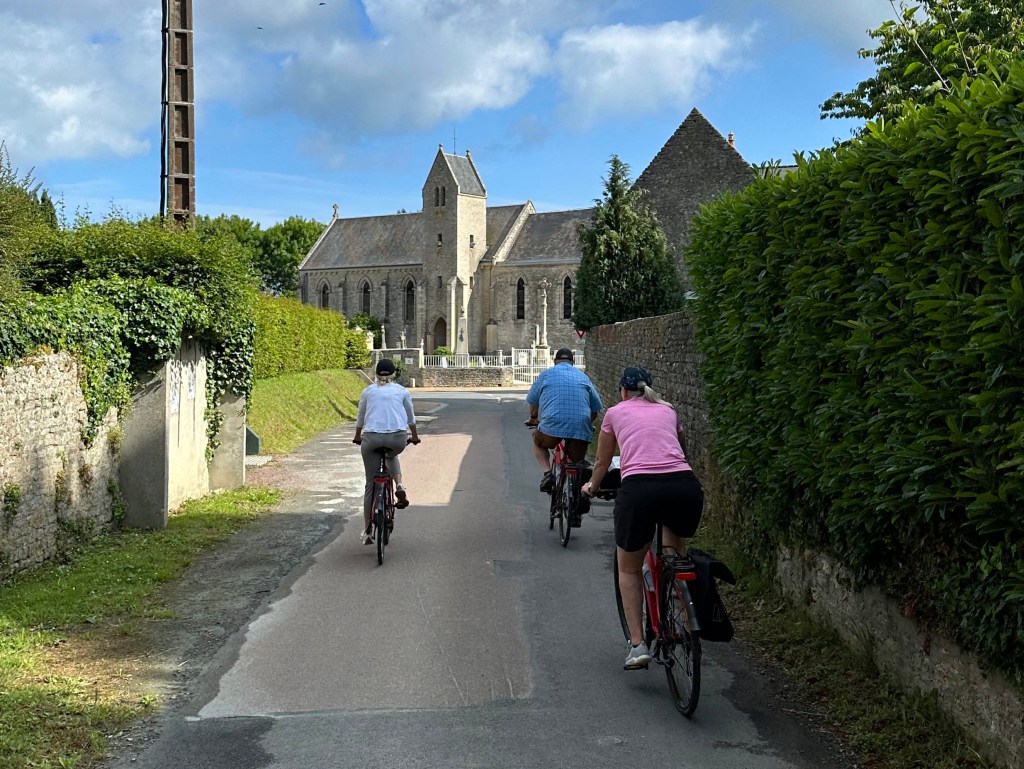
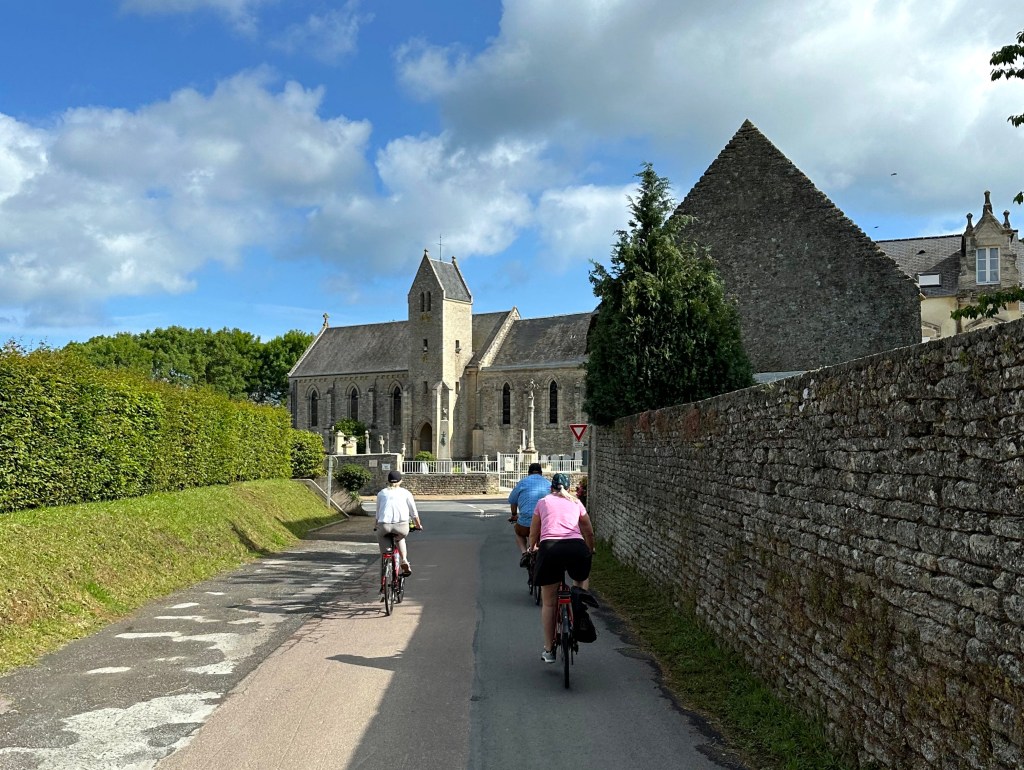
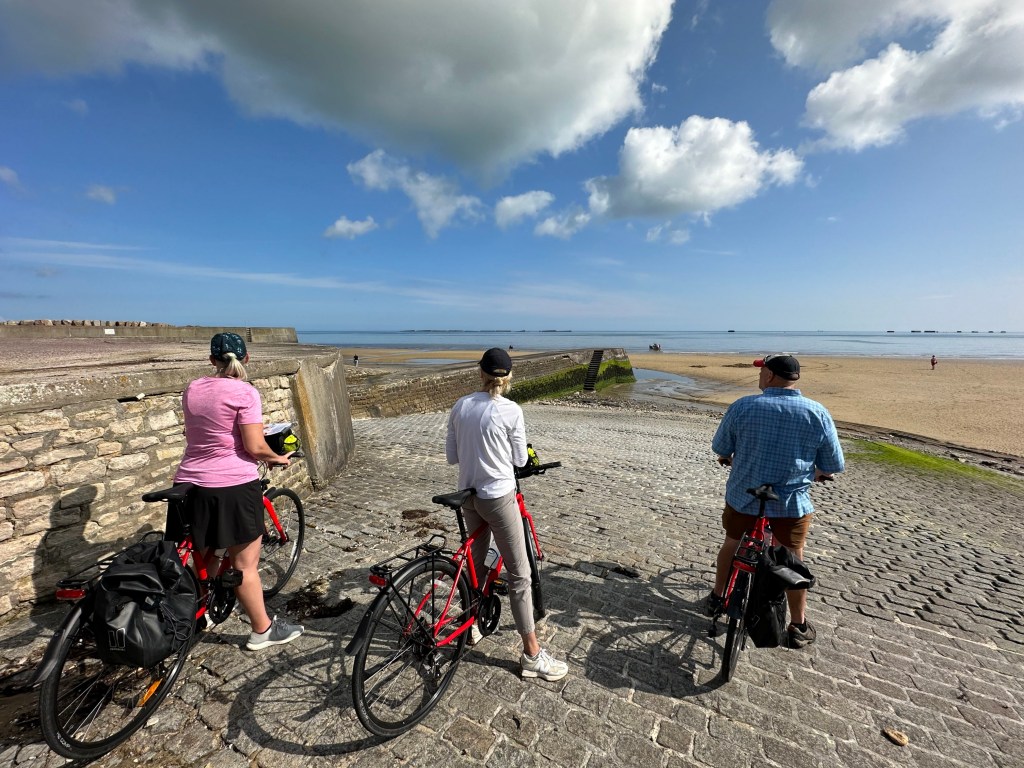
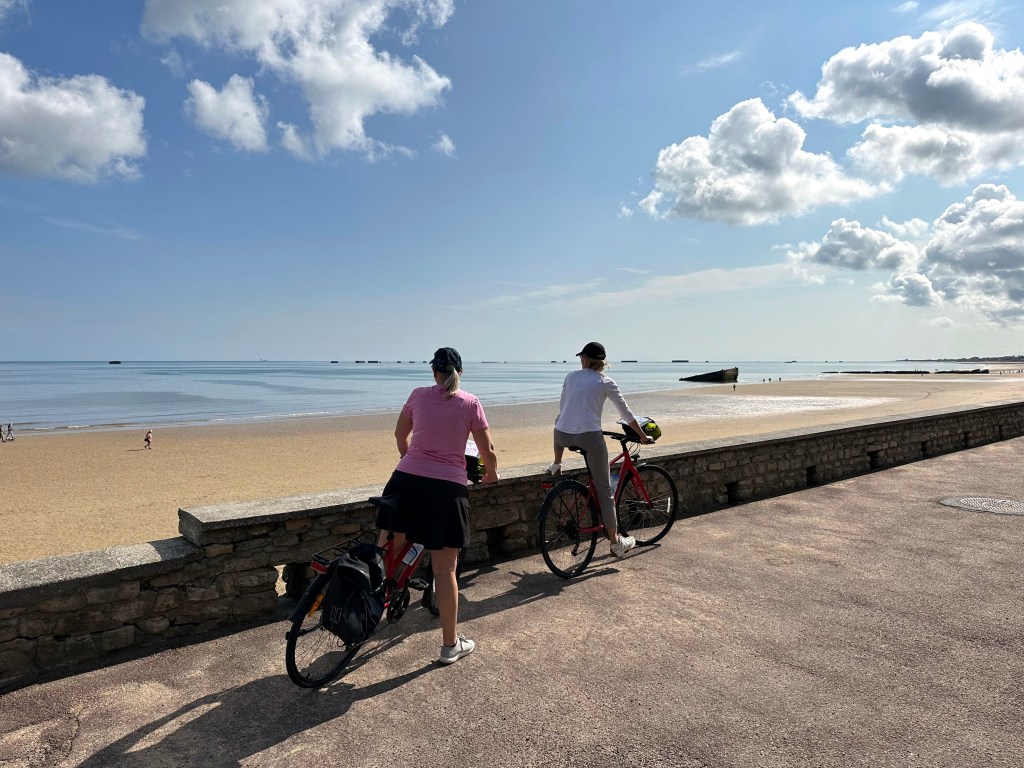
Our final day of biking in Normandy entailed riding from Avranches to the final major sight on the itinerary: the quasi-island abbey of Mont Saint Michel.
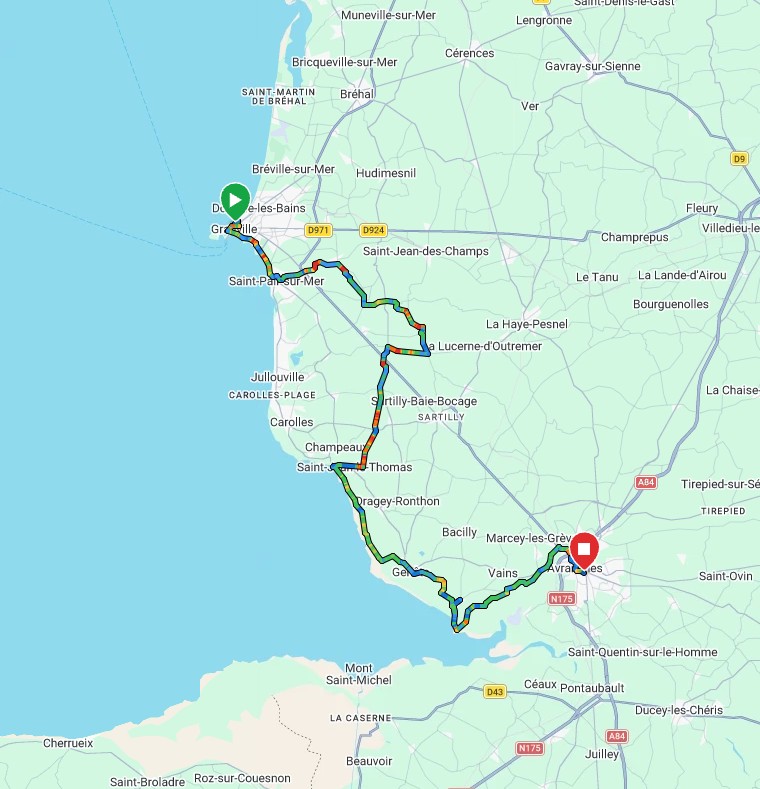
Route for the day, from Avranches to Mont Saint Michel (we forgot we had all of these and are adding them to previous Normandy biking posts):
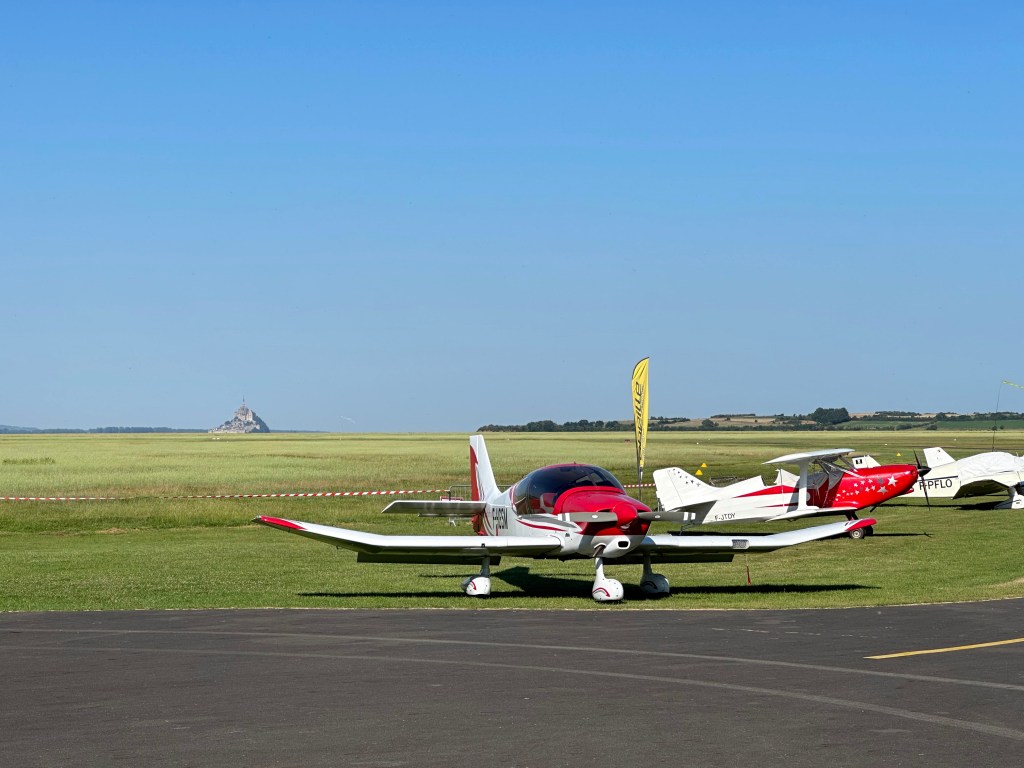
Just a short distance out of town we came upon an air show at the Aerodrome d’Avranches:
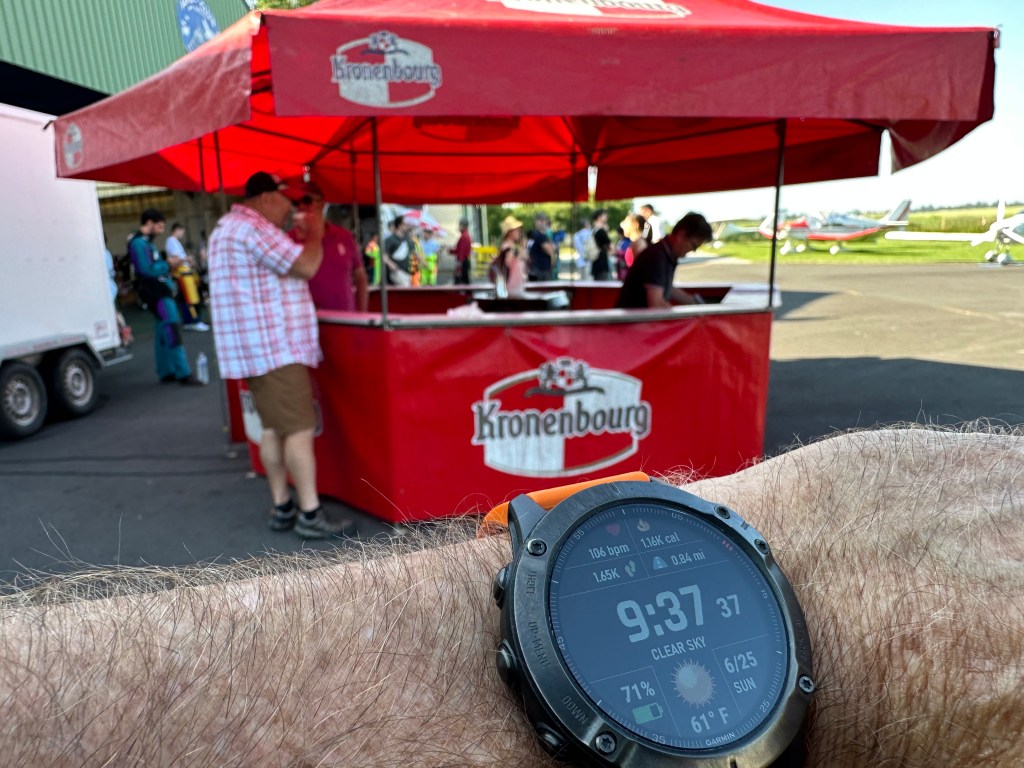
Where Thomas immediately took advantage of the beer tent:
Onward!
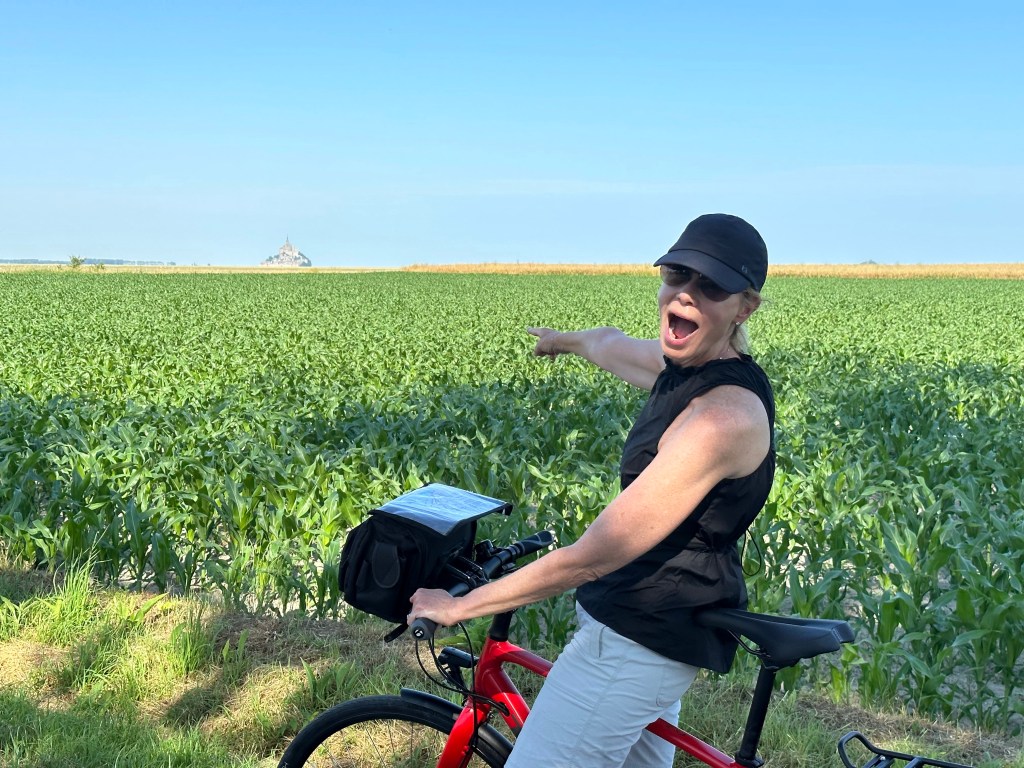
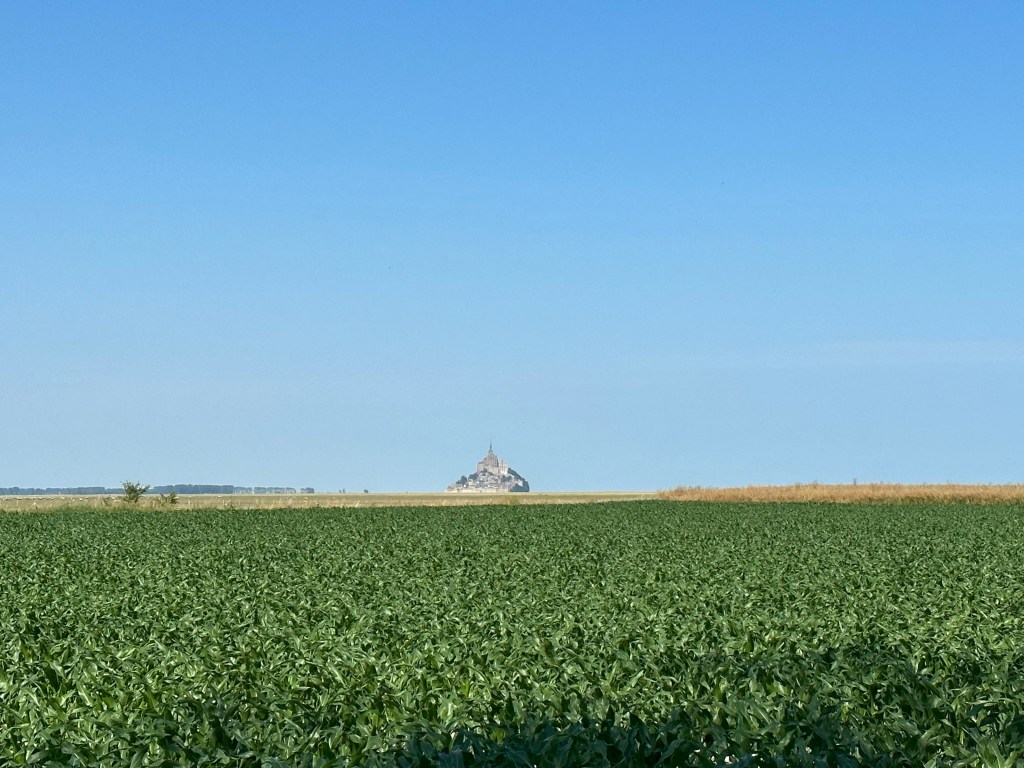
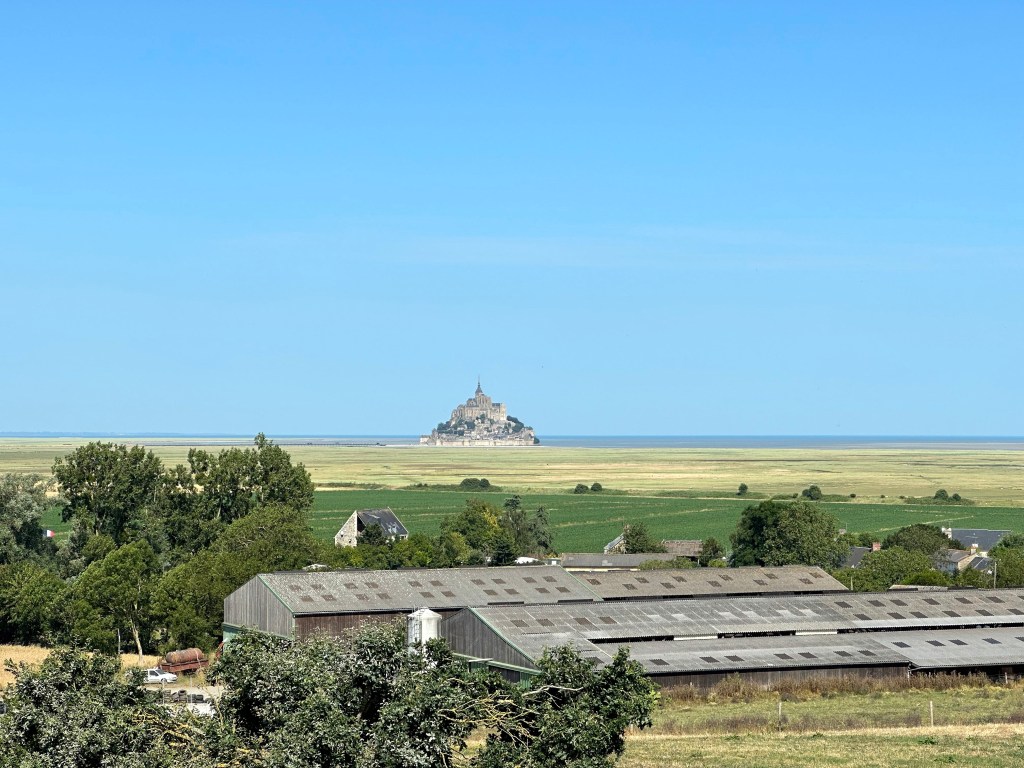
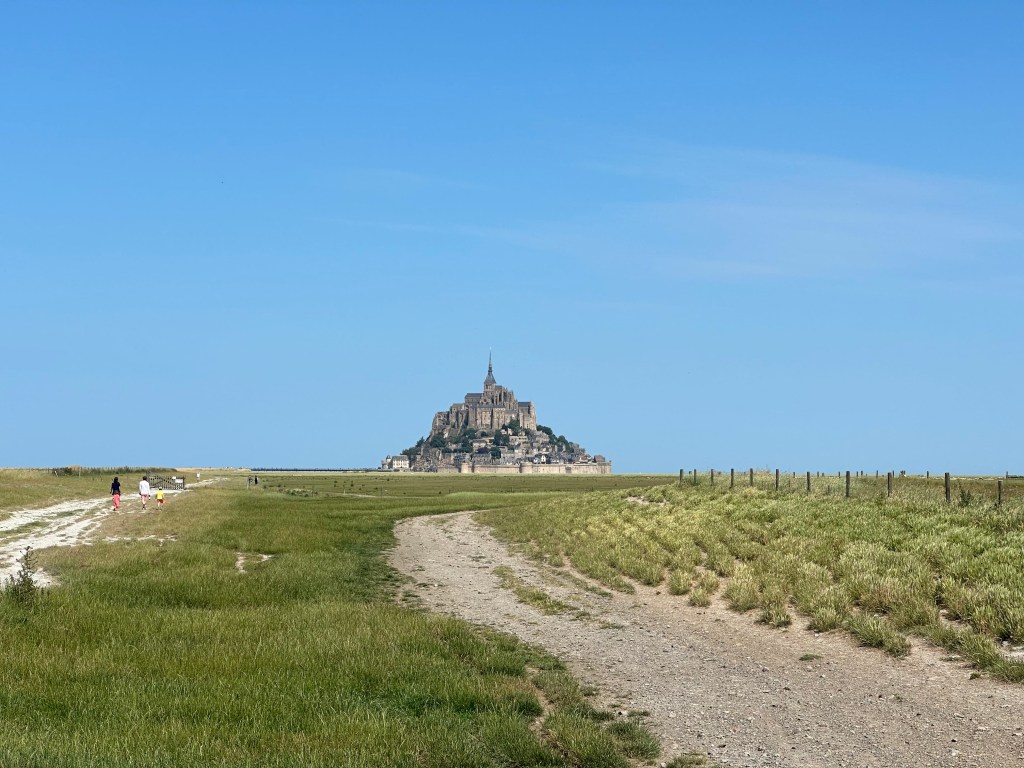
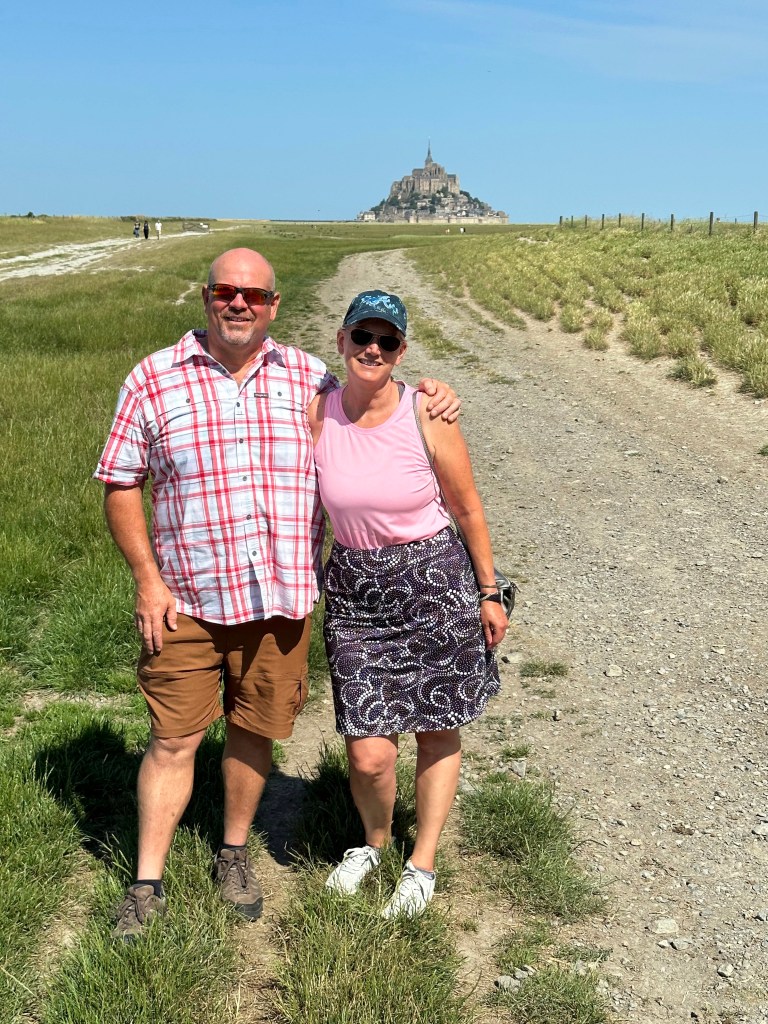
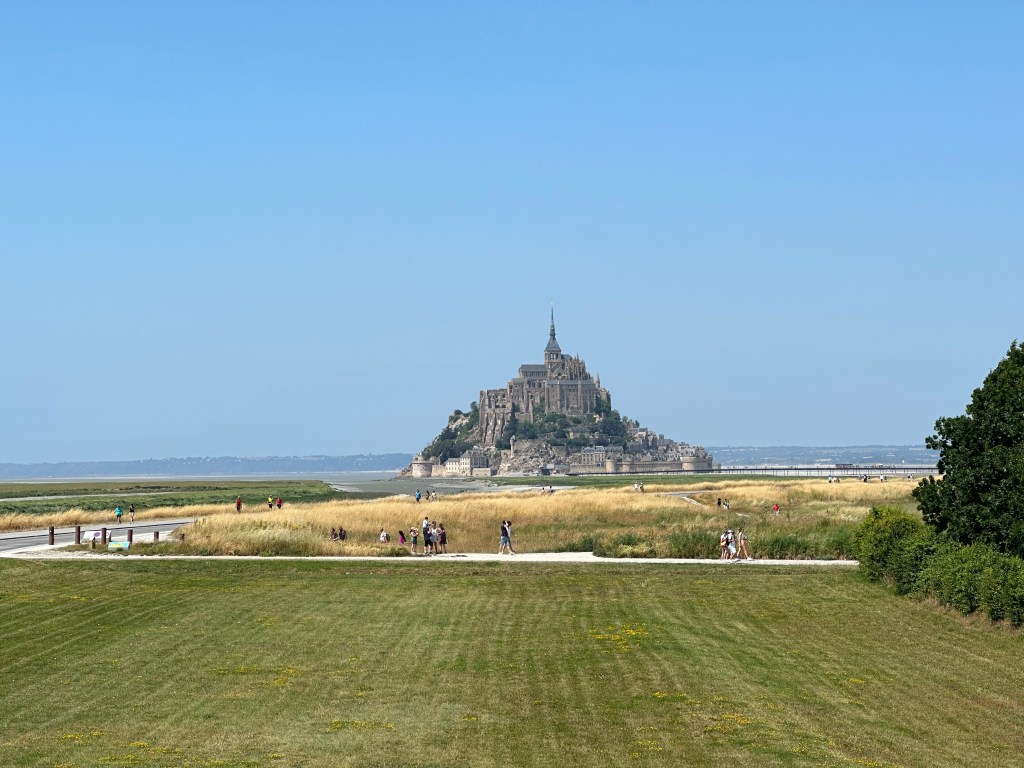
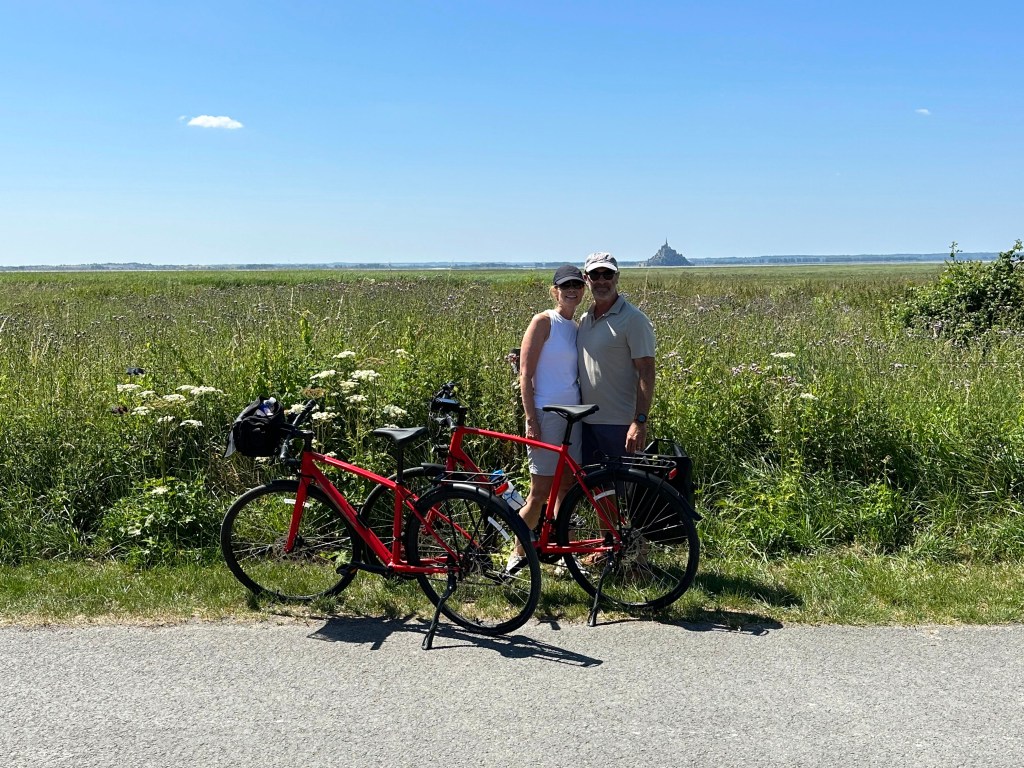
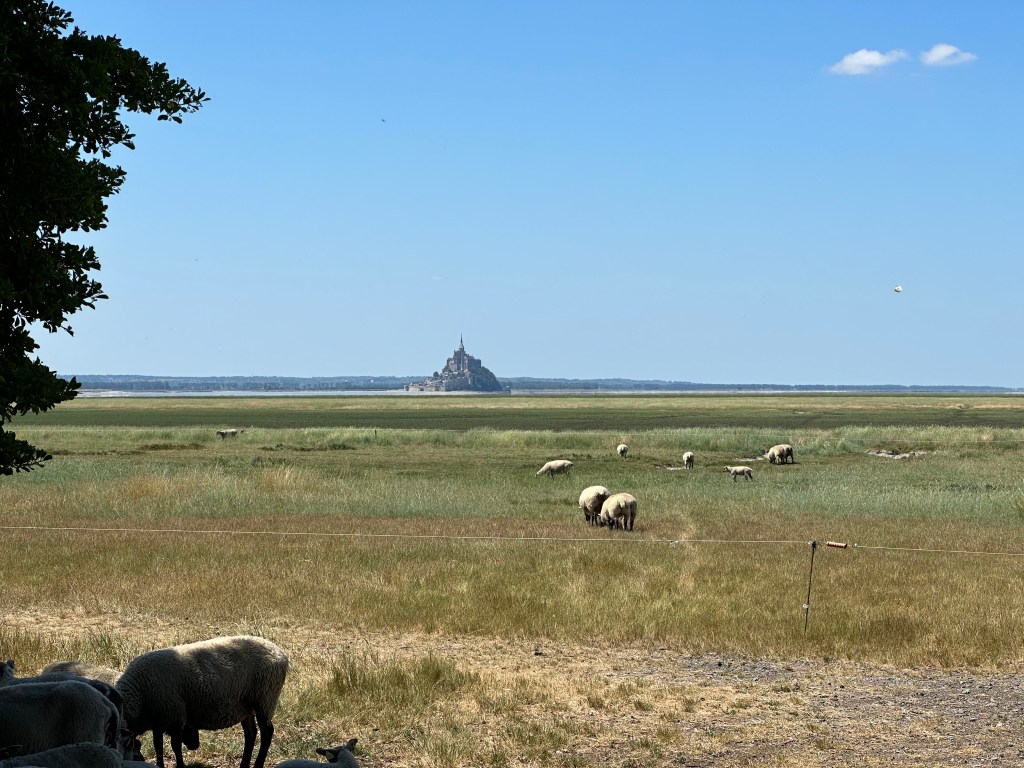
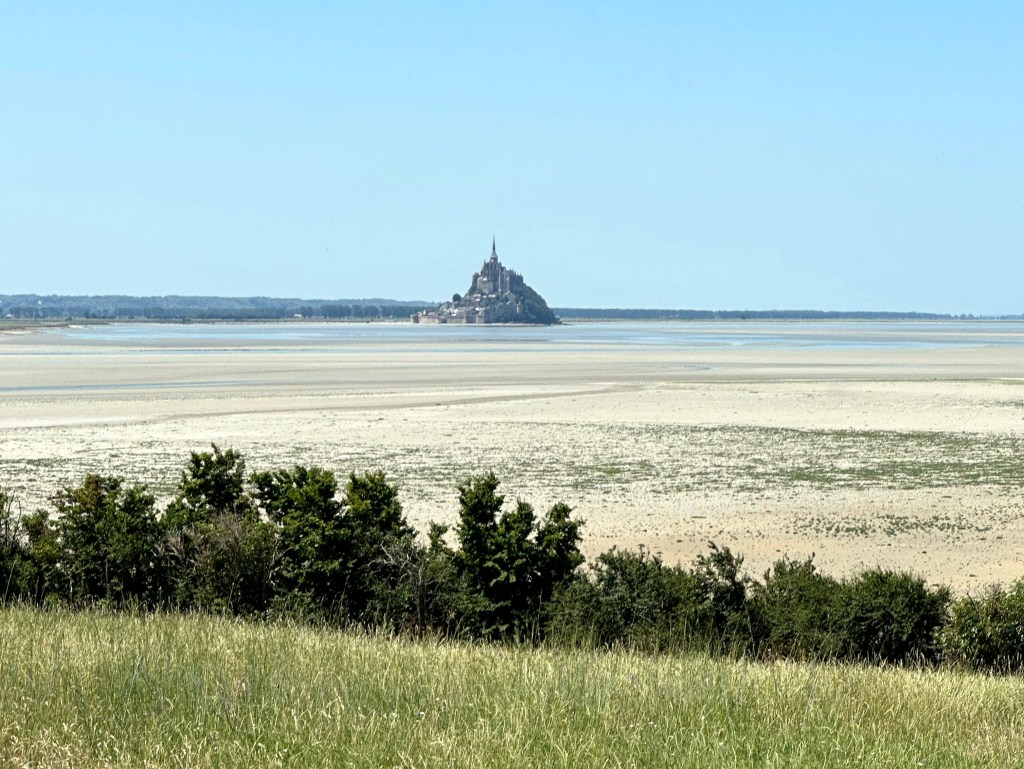
Our destination for the day, looking every bit like a sand castle in the distance:
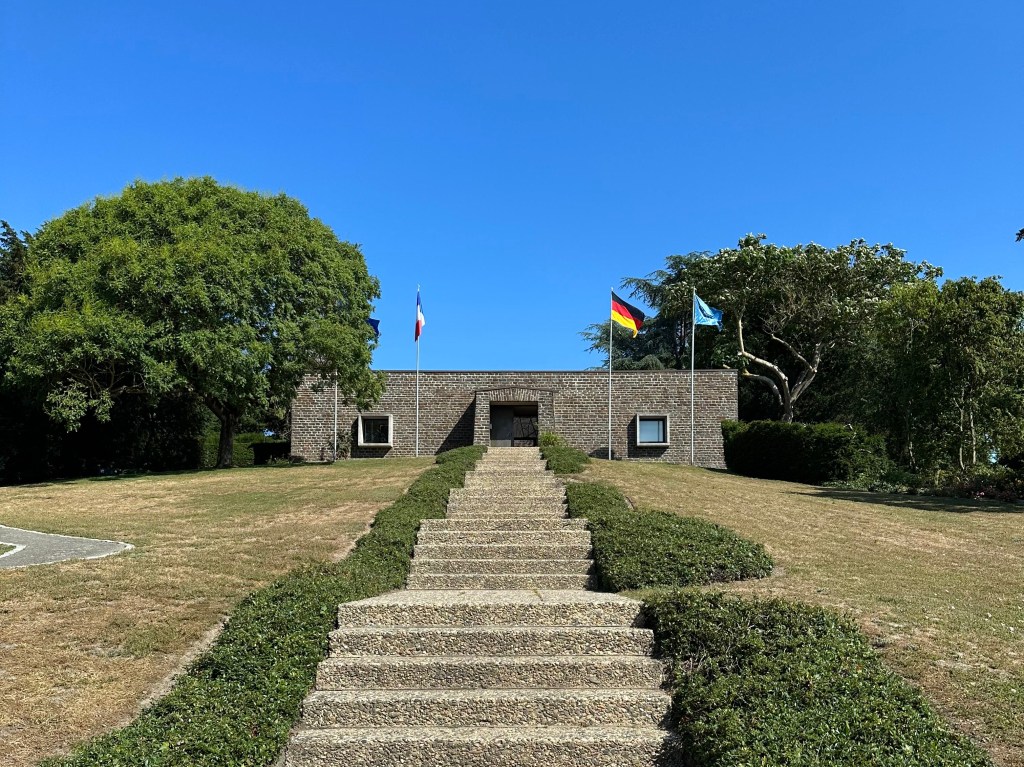
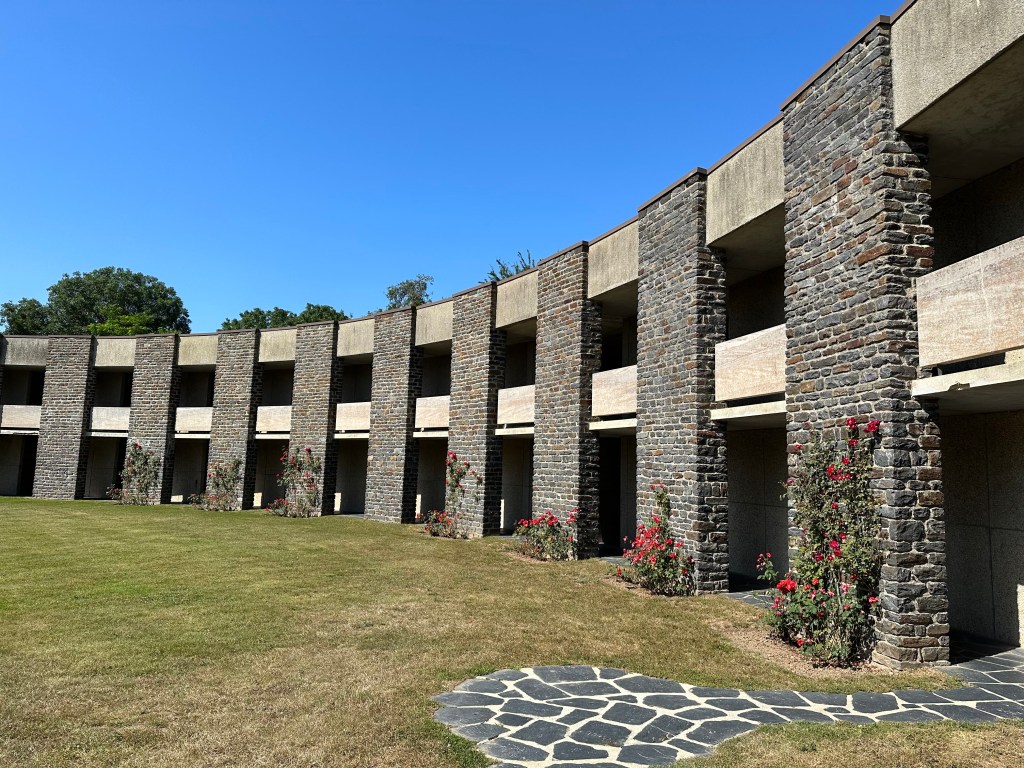
The heretofore unknown-to-us German War Cemetery in Normandy:
It’s an unassuming columbarium containing the remains of 12,000 war dead from western France and the Channel Islands.
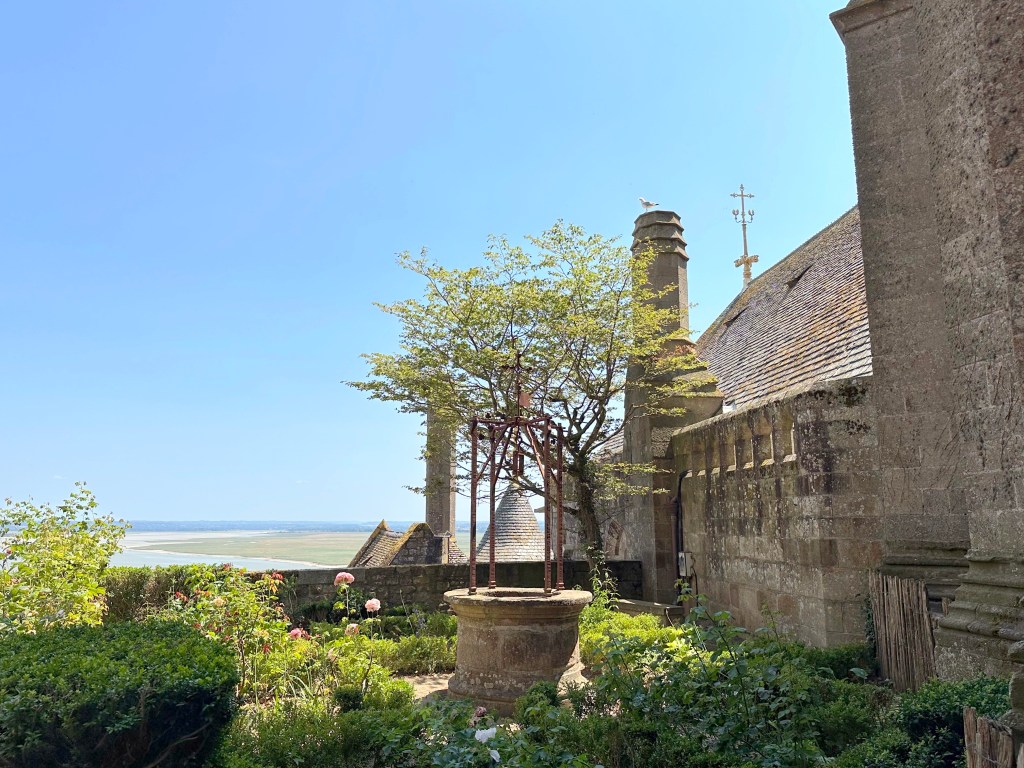
With another view of Mont Saint Michel from the top:
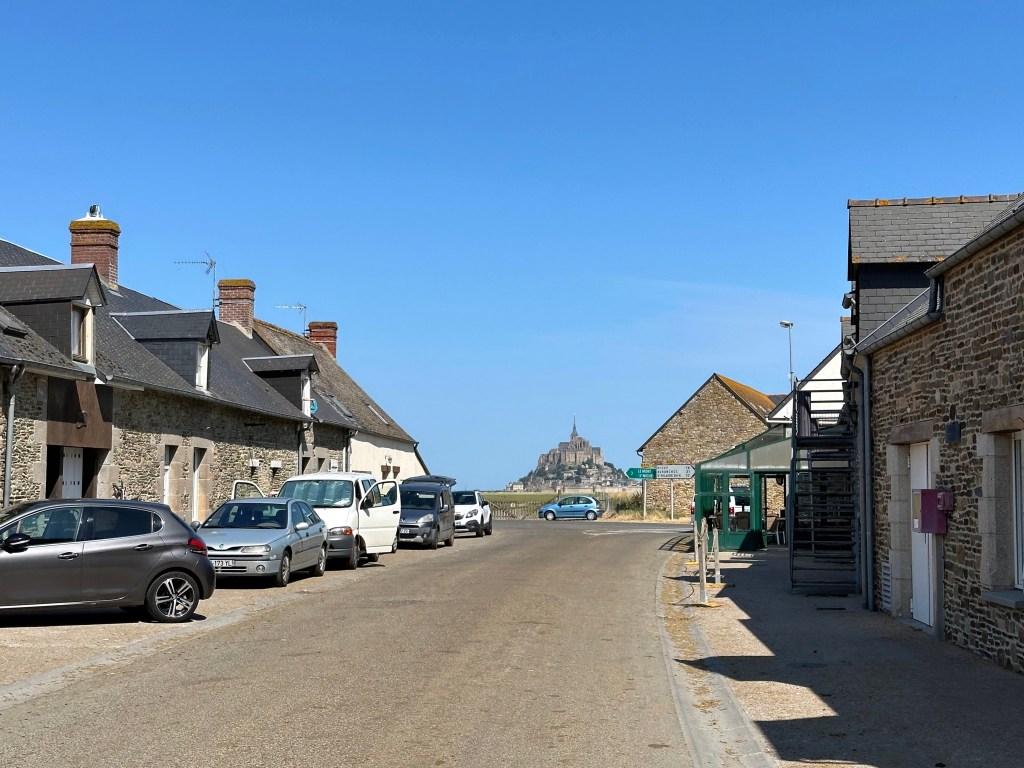
The little hamlet of La Rive, with a trailhead to the monastery:
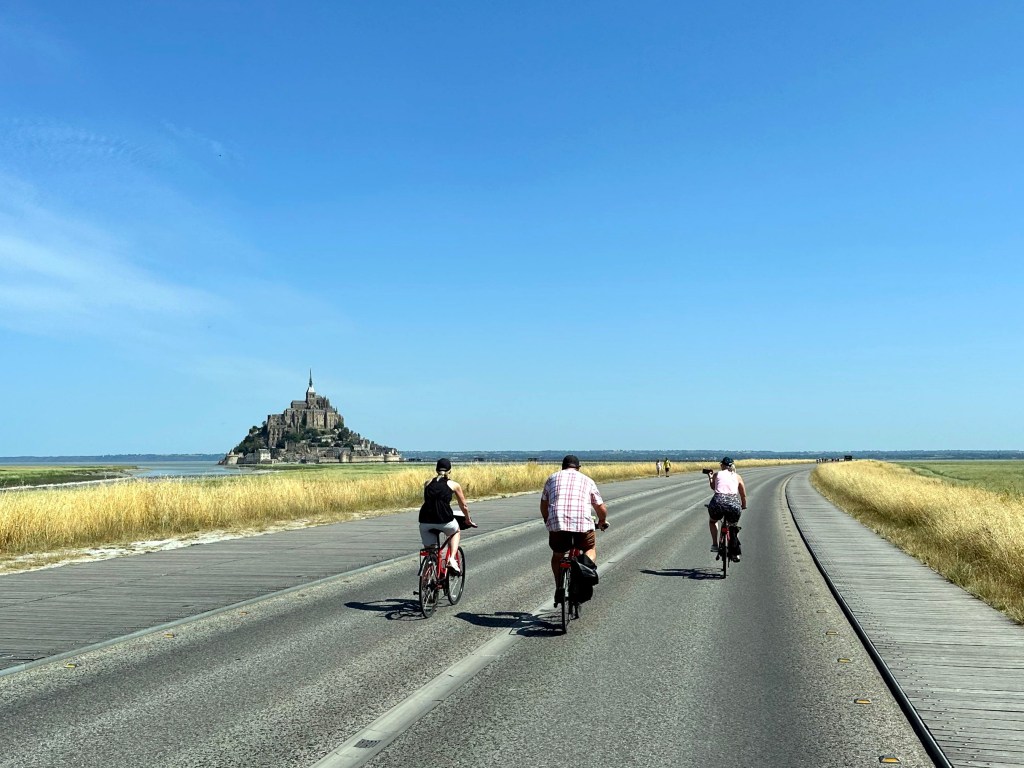
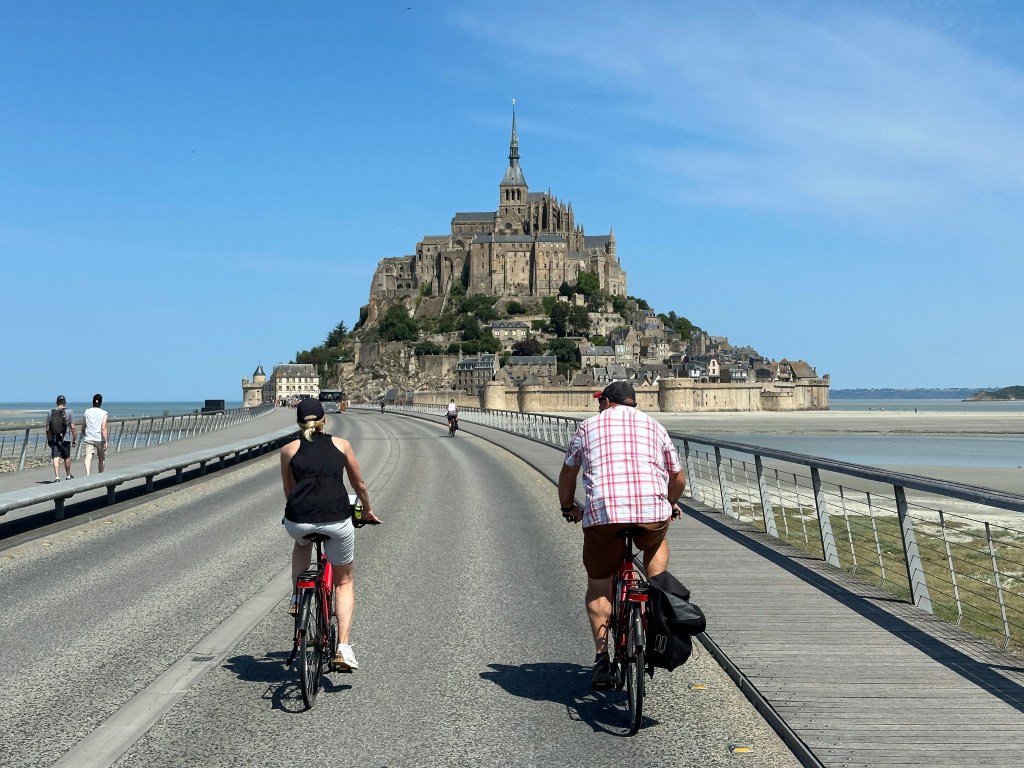
On the causeway, site of an individual time trial in the 2013 Tour de France:
The place is like a wedding cake.
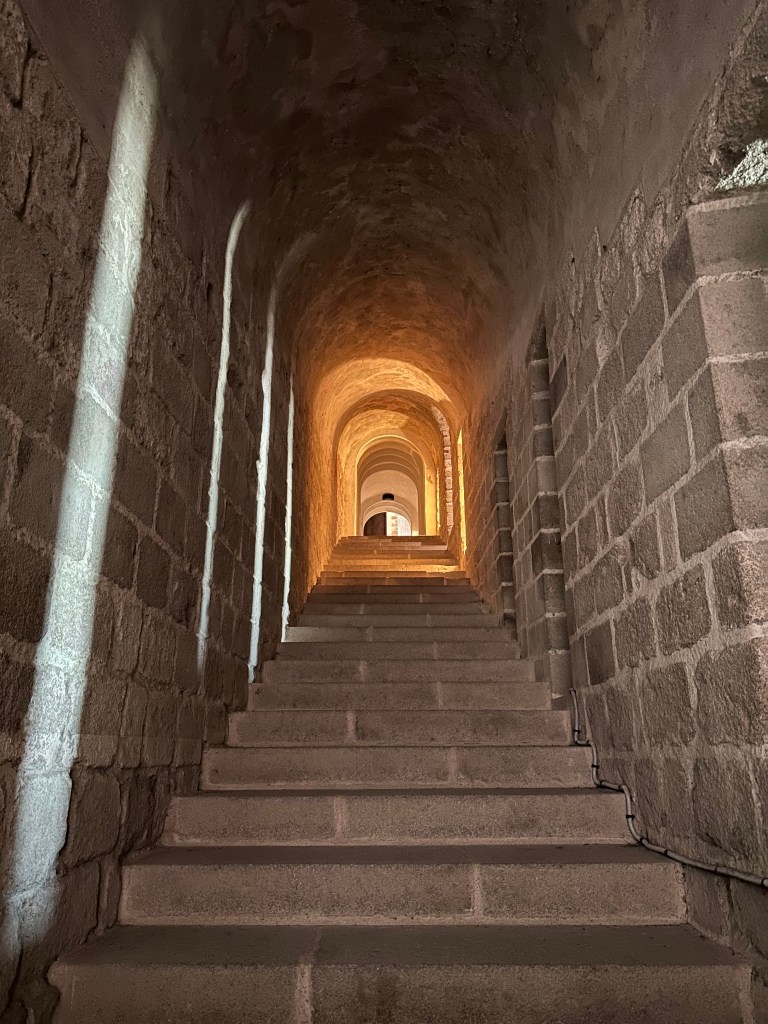
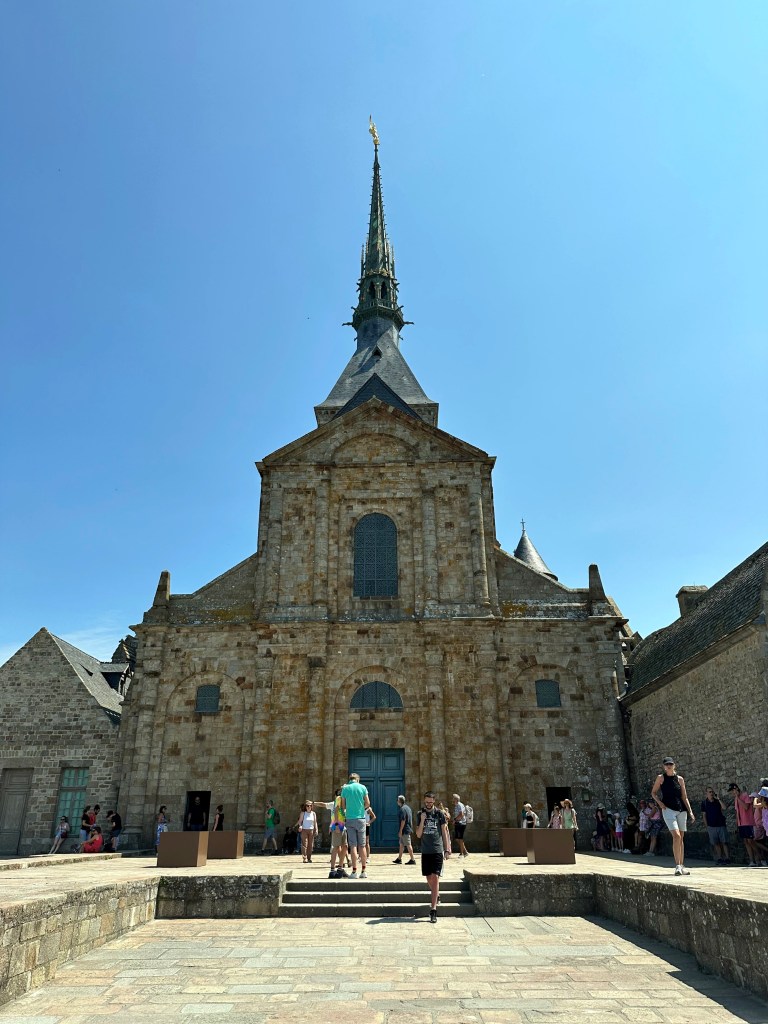
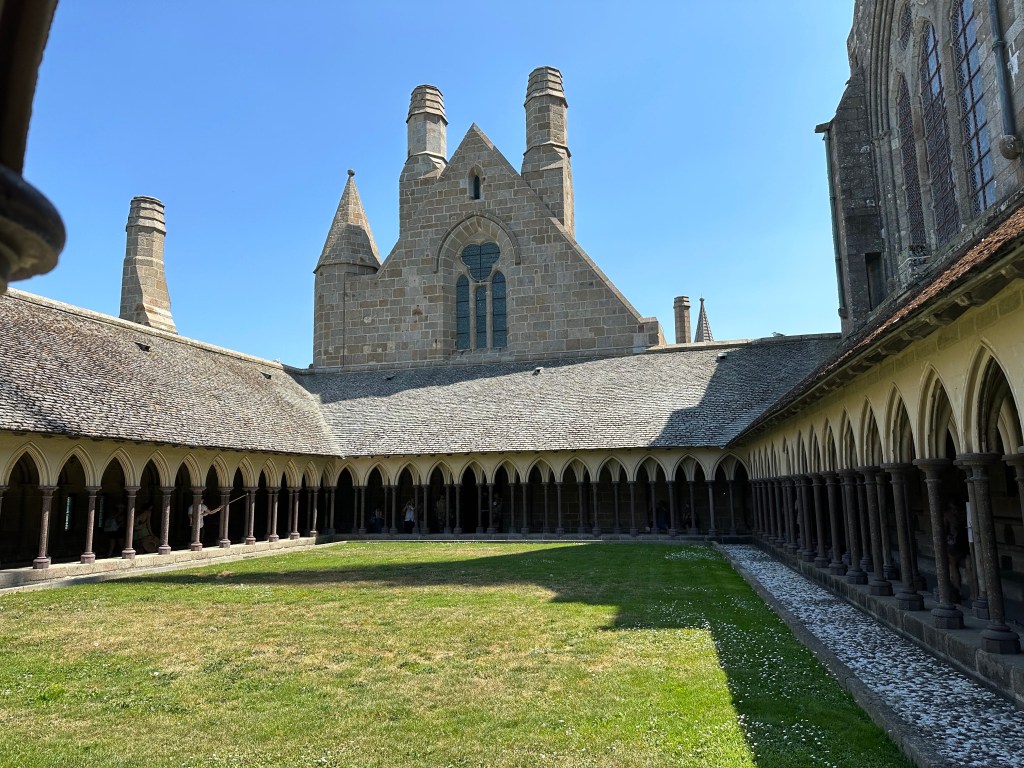
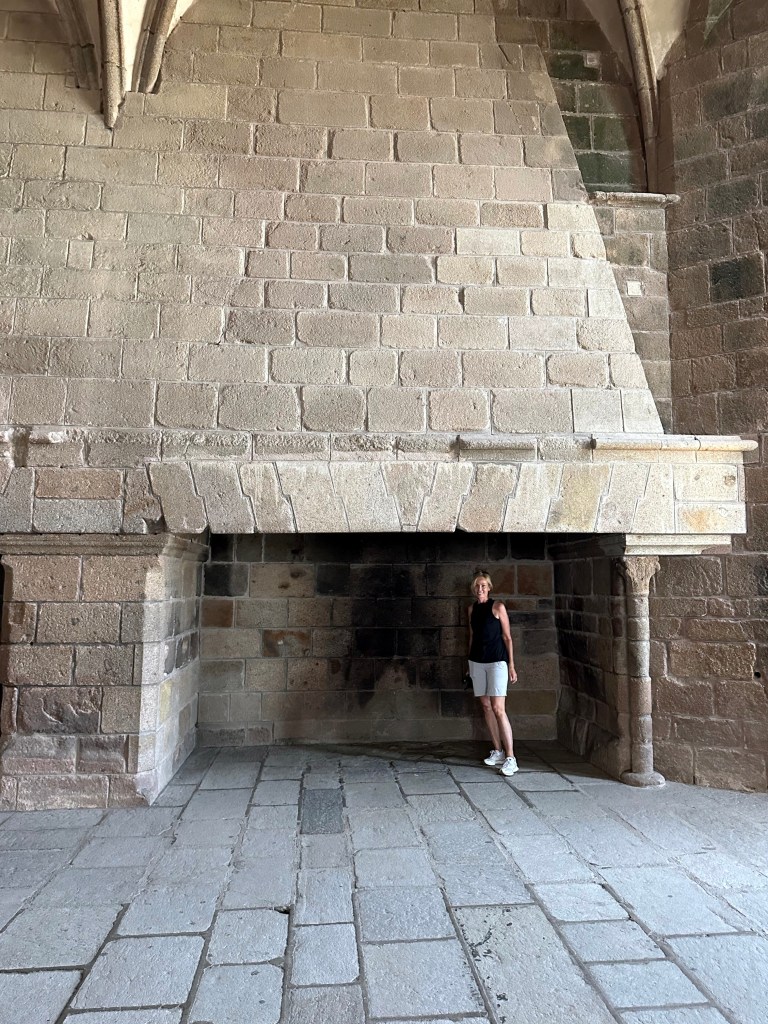
Once inside the walled abbey and its little encircling town, we made a beeline to the top of the complex.
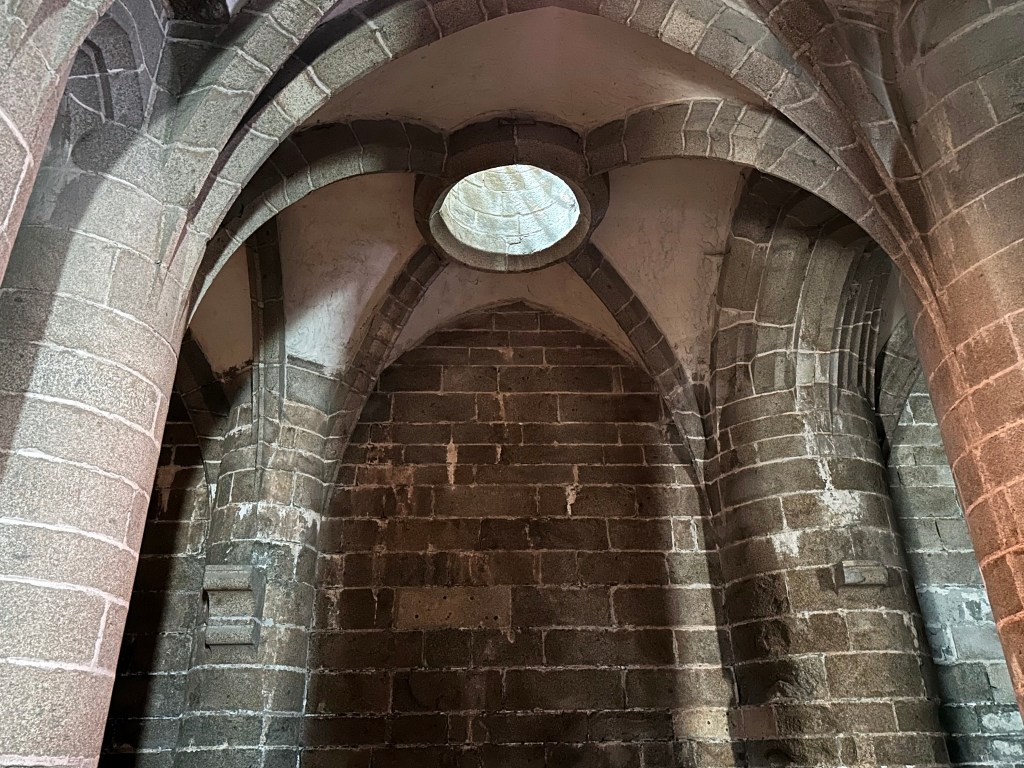
Mont Saint-Michel’s history began in 708 AD, when, according to tradition, the Archangel Michael appeared to Aubert, Bishop of Avranches, and instructed him to build a sanctuary on the rocky tidal island.
Benedictine monks established an abbey there in 966, transforming it into a major medieval pilgrimage destination.
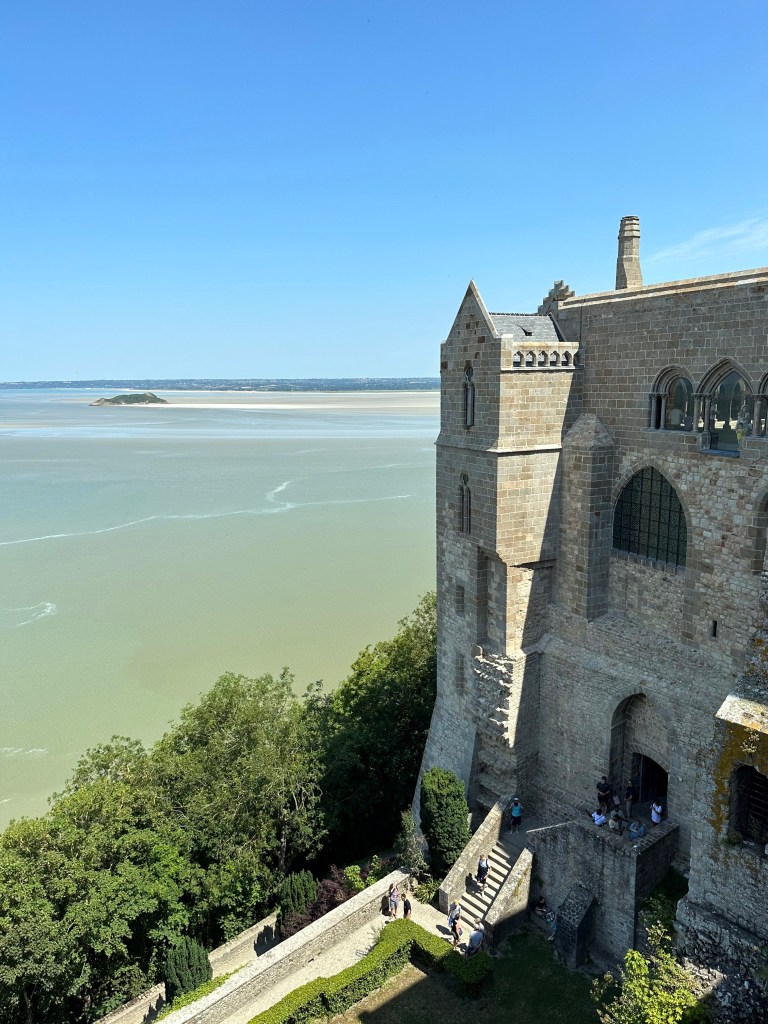
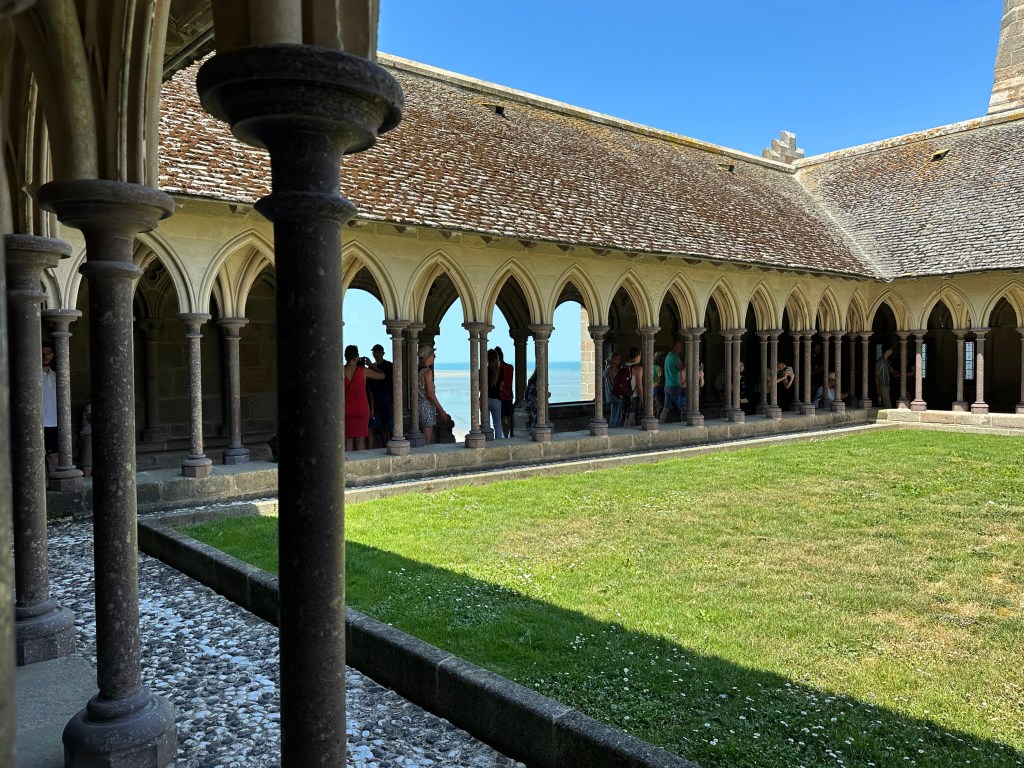
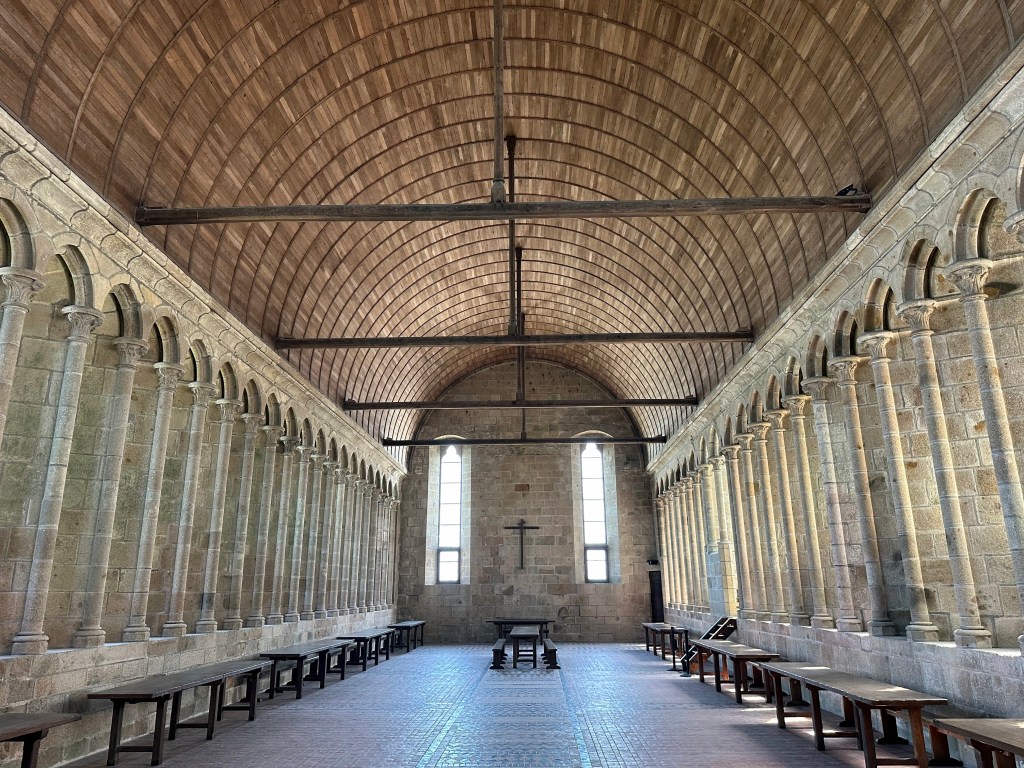
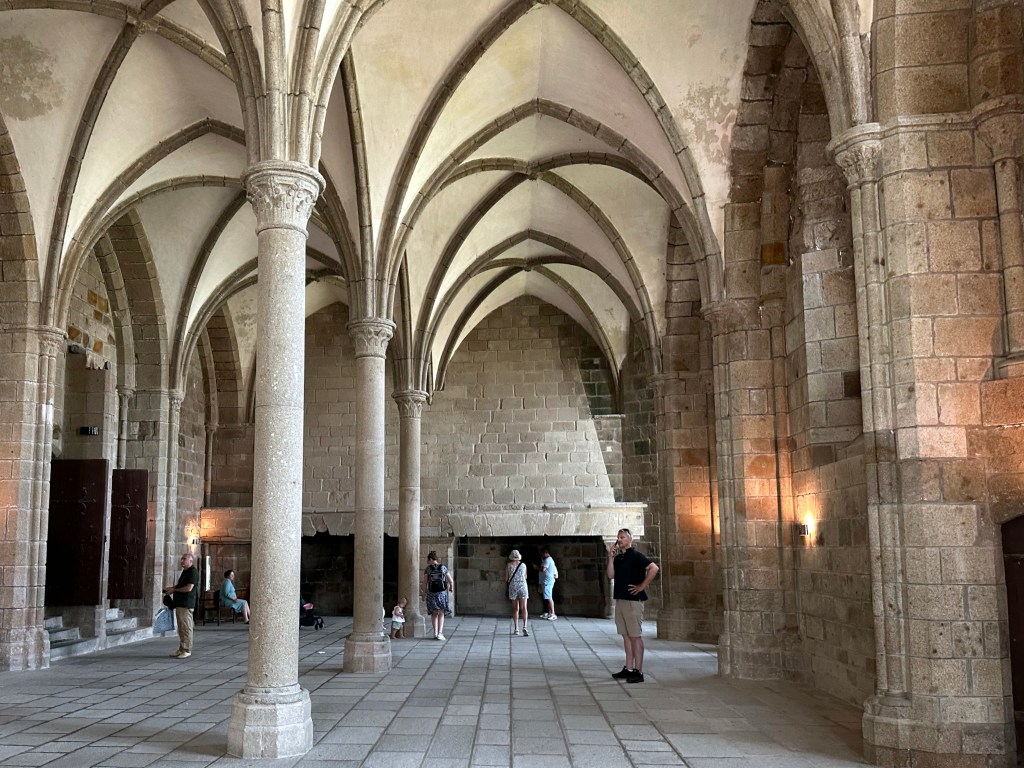
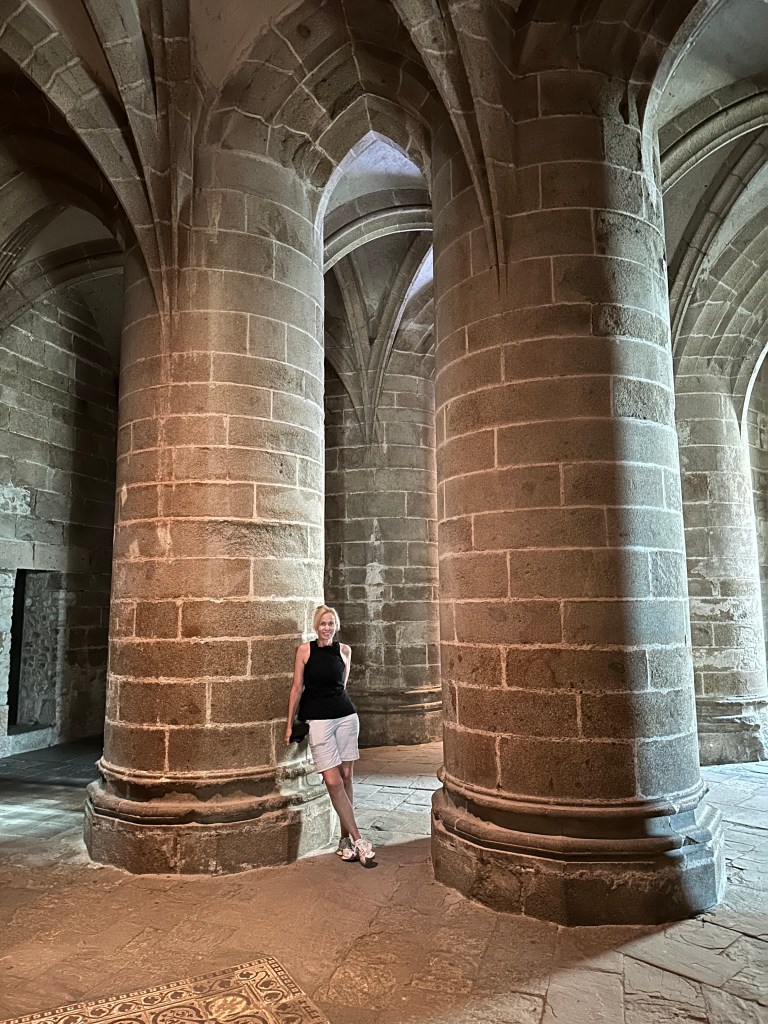
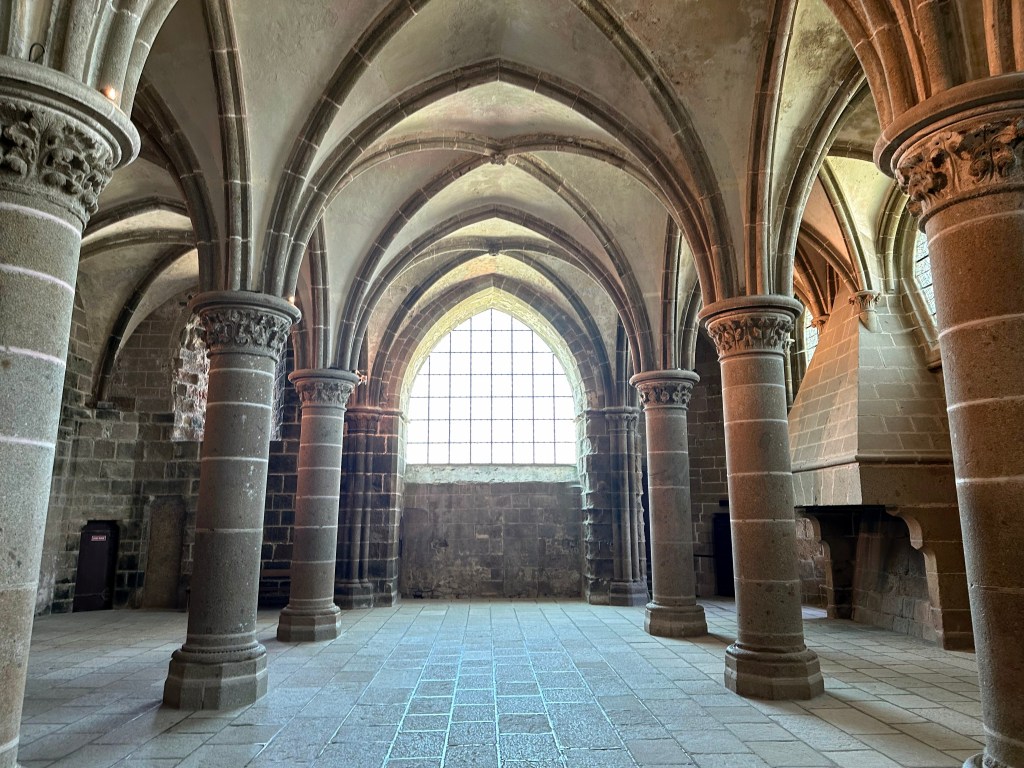
An extraordinary Gothic complex, known as La Merveille (“The Marvel”) was built on the abbey’s north side in the early 13th century.
During the Hundred Years’ War, its formidable fortifications helped it withstand English attacks, making it a powerful symbol of French resistance.
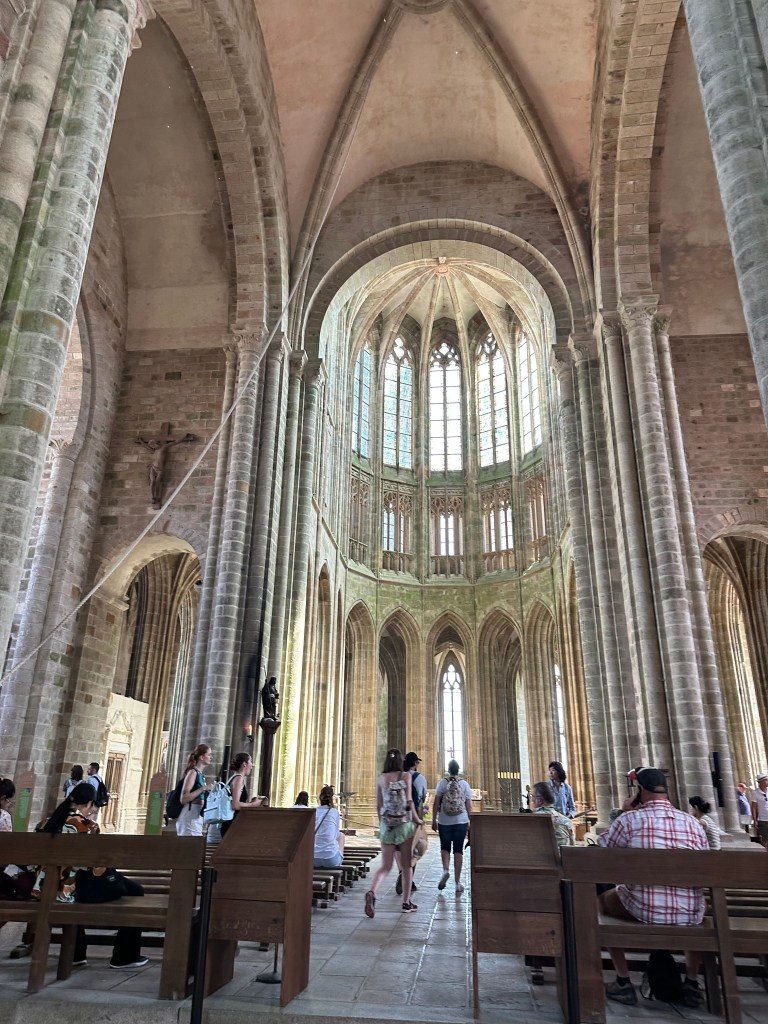
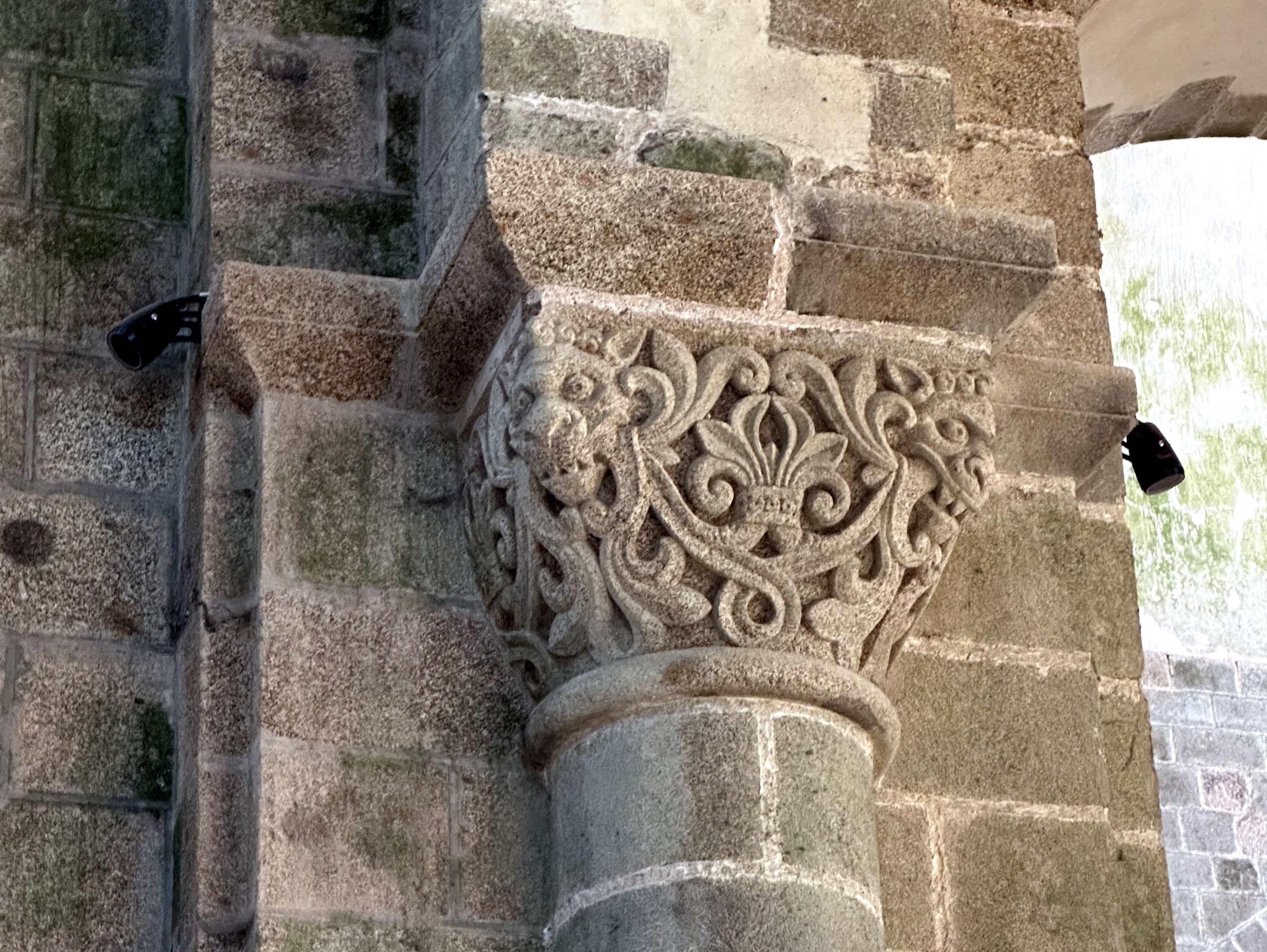
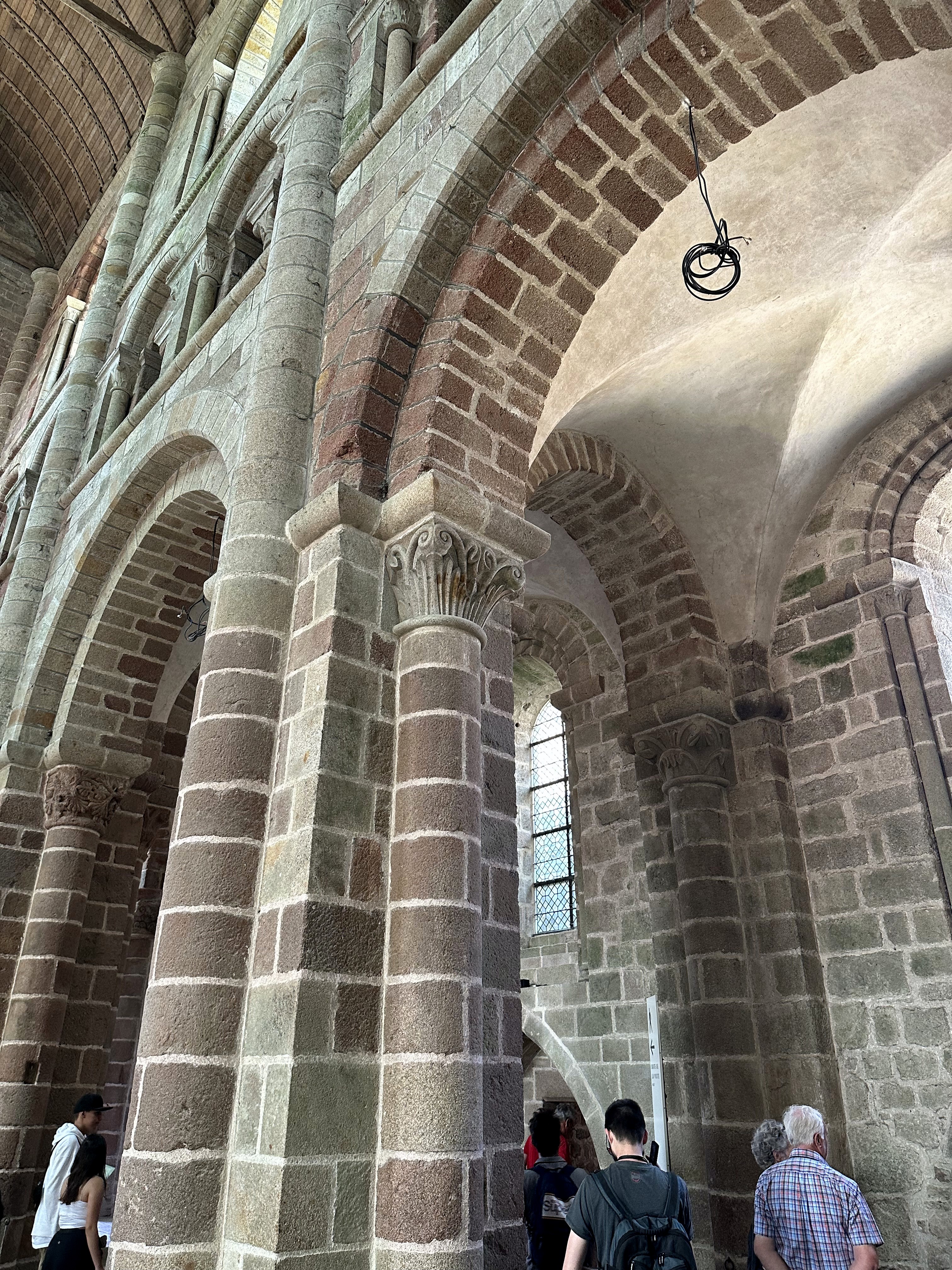
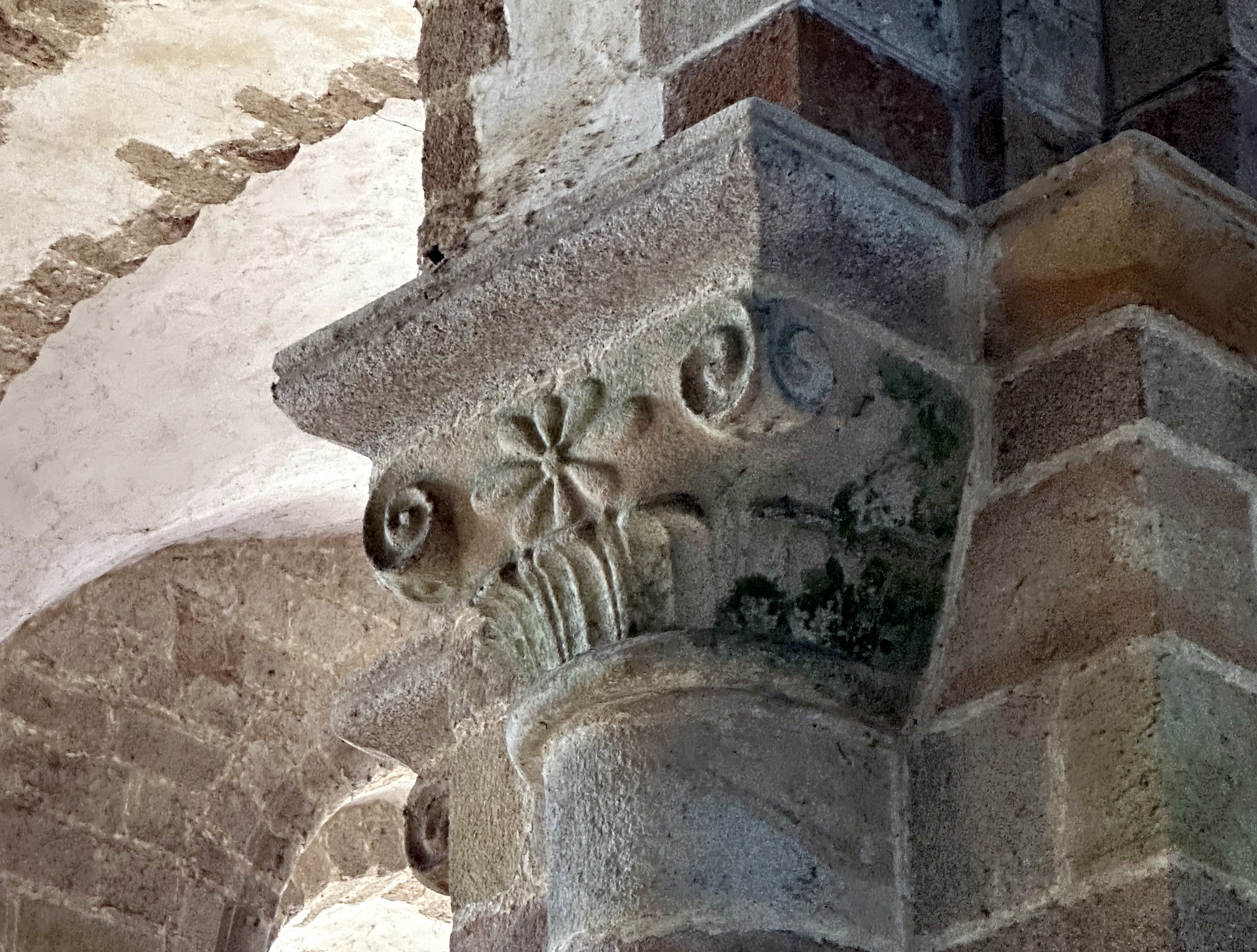
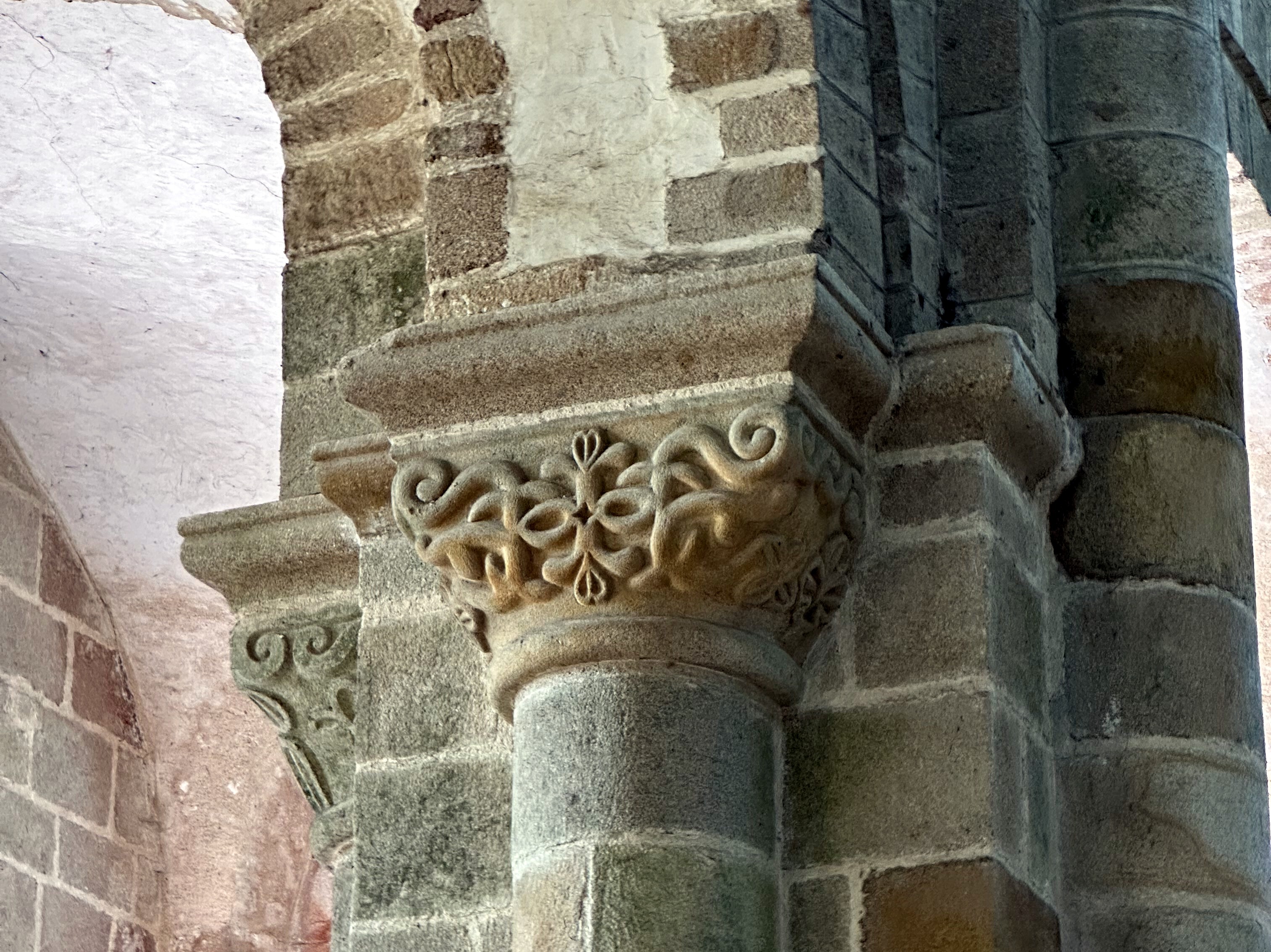
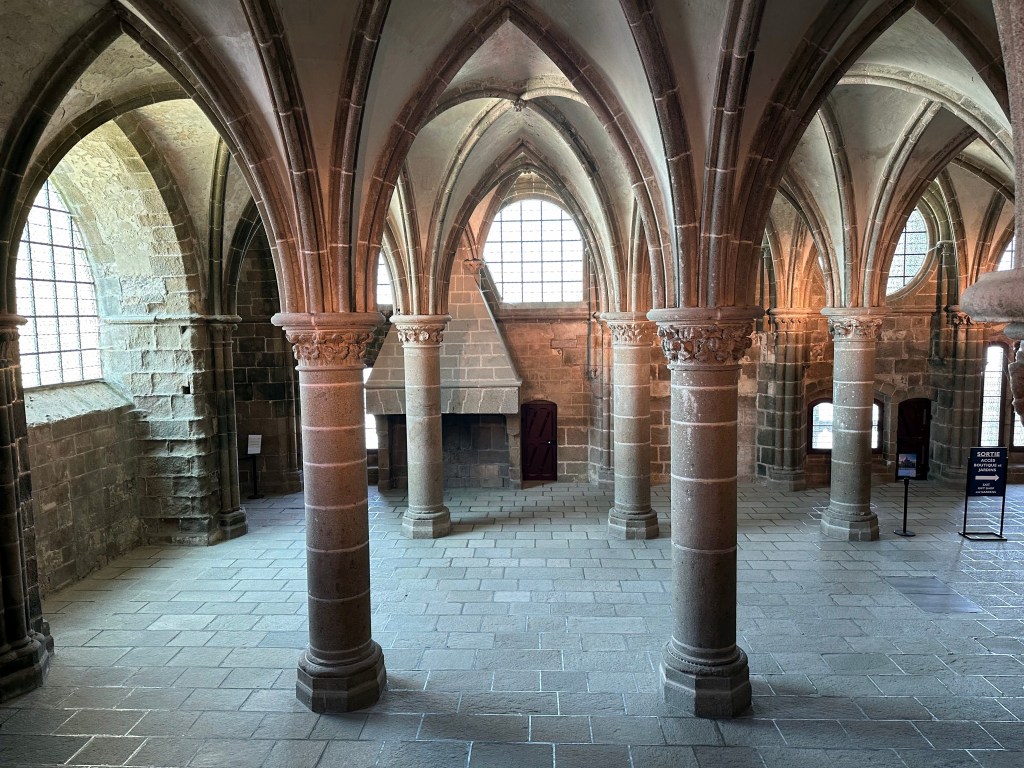
Cool capitals on the church columns:
“A marvel within the “Merveille,” the cloister offers a timeless experience, between sky and sea. The Merveille is a group of Gothic buildings, built on the north side of the rock, composed of three levels, a magnificent testimony to the know-how of the 13th century builders.” (From here.)
After the French Revolution, the abbey was converted into a prison, which operated until 1863, before restoration efforts revived its religious and historic significance.
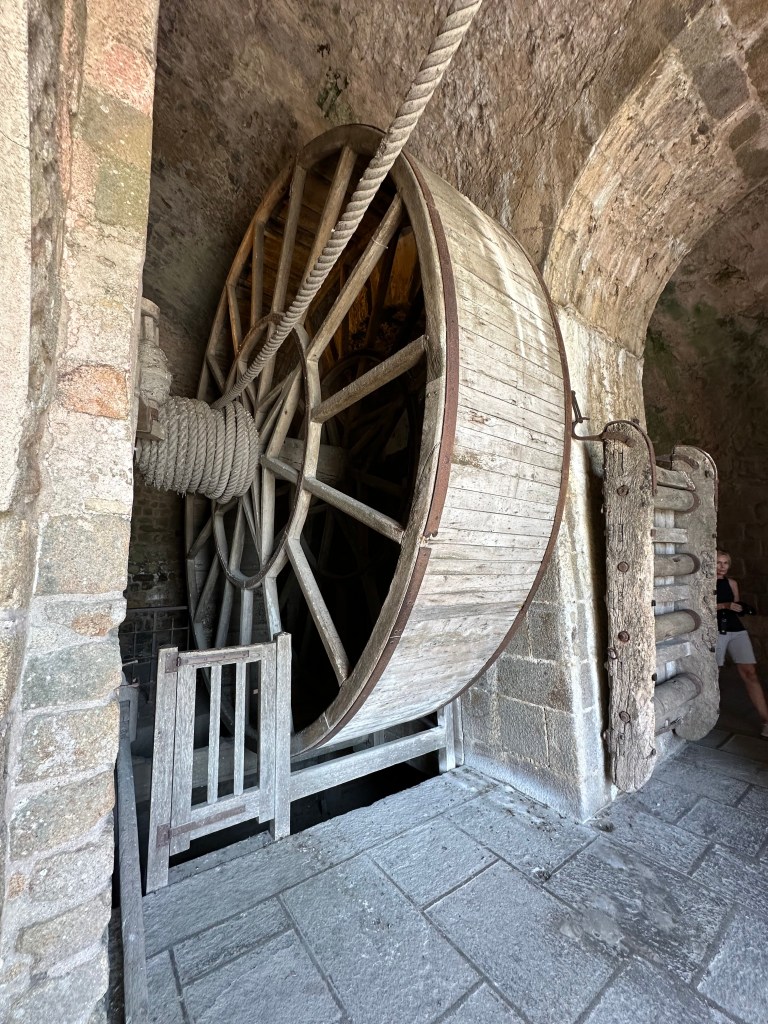
Elevator / crane:
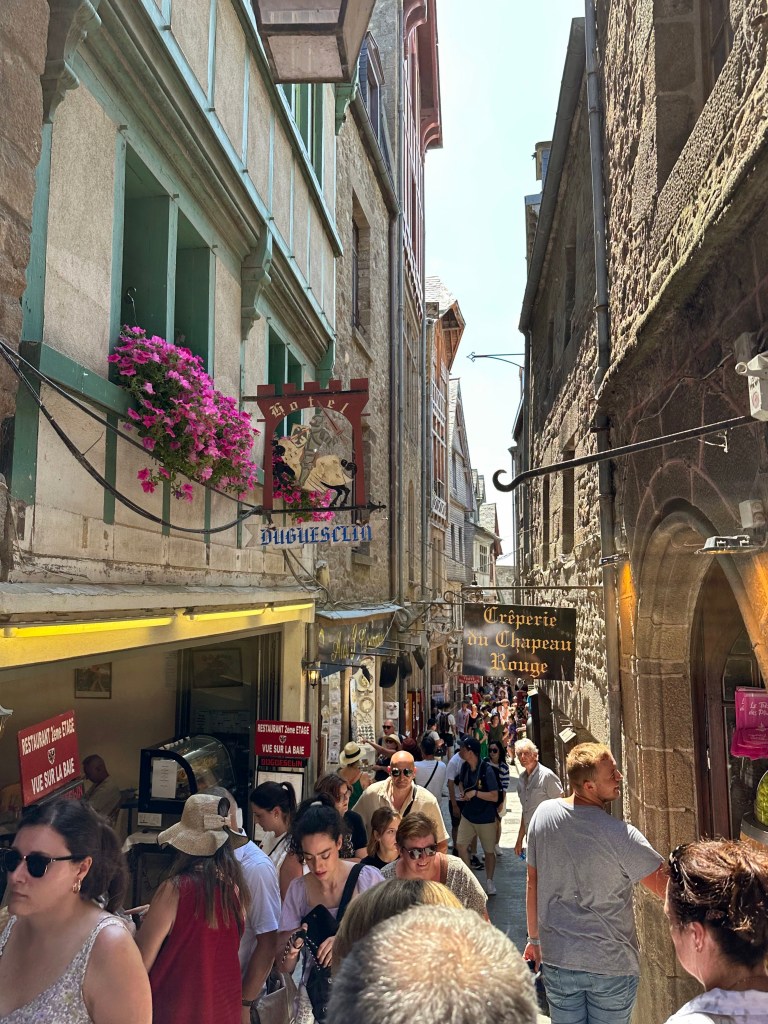
Our abbey tour concluded, we headed back through the throngs and out to our bikes.
And rode to our hotel, right at the edge of the causeway.
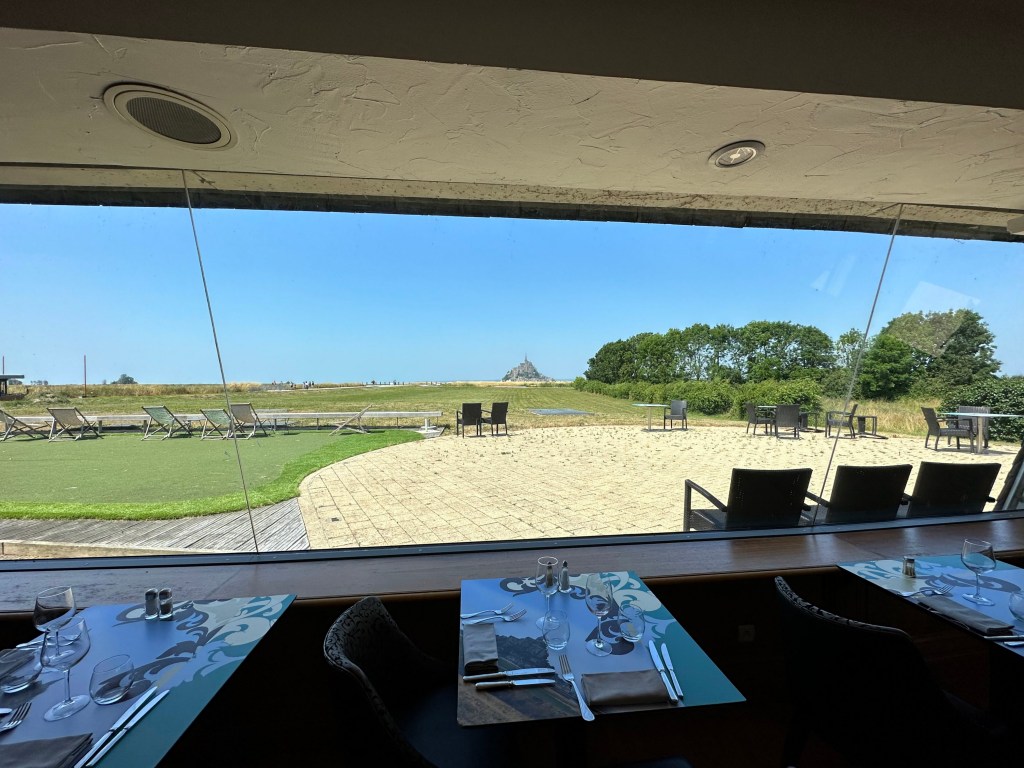
The hotel’s location was phenomenal.
Even if the hotel itself was for shite.
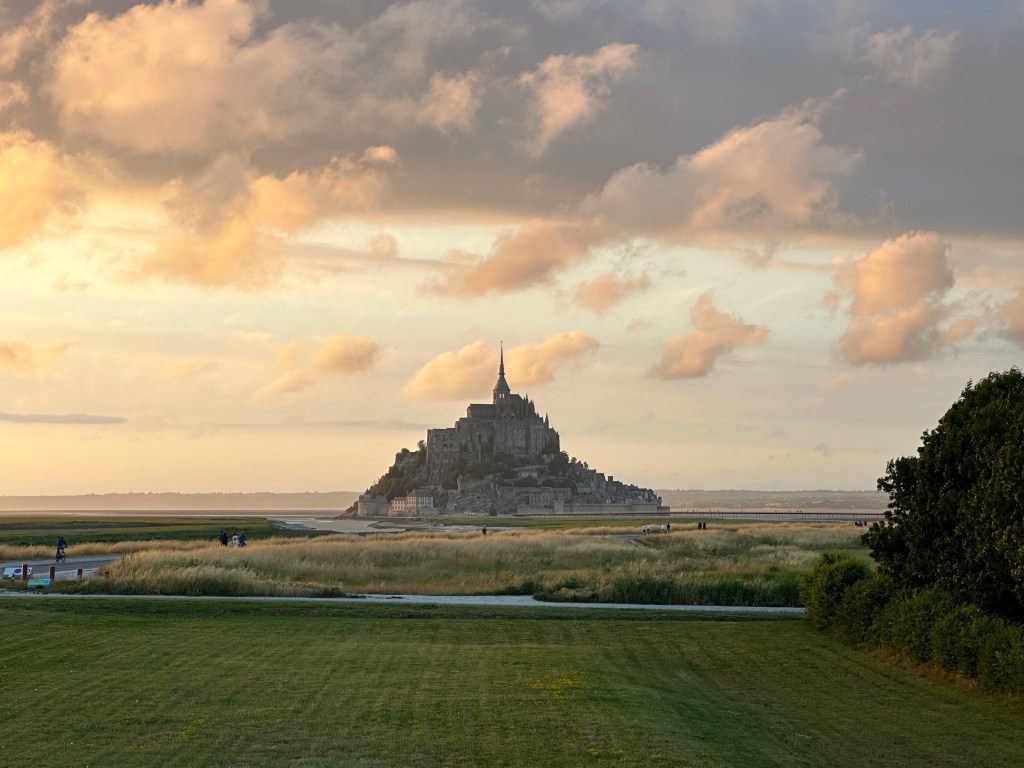
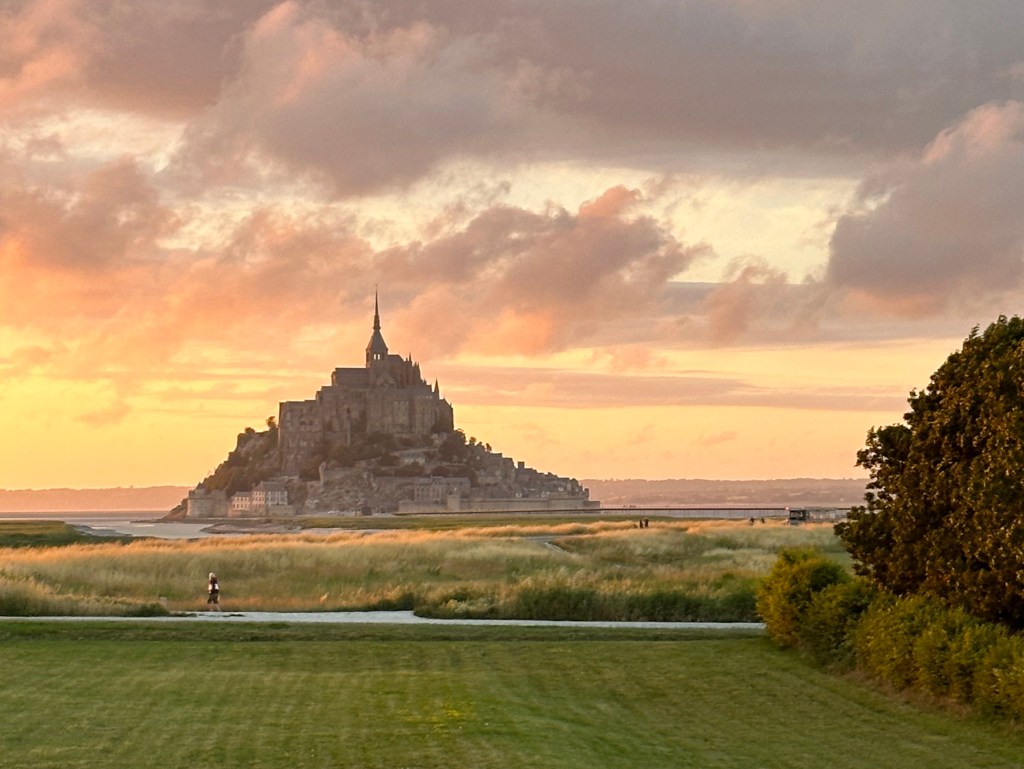
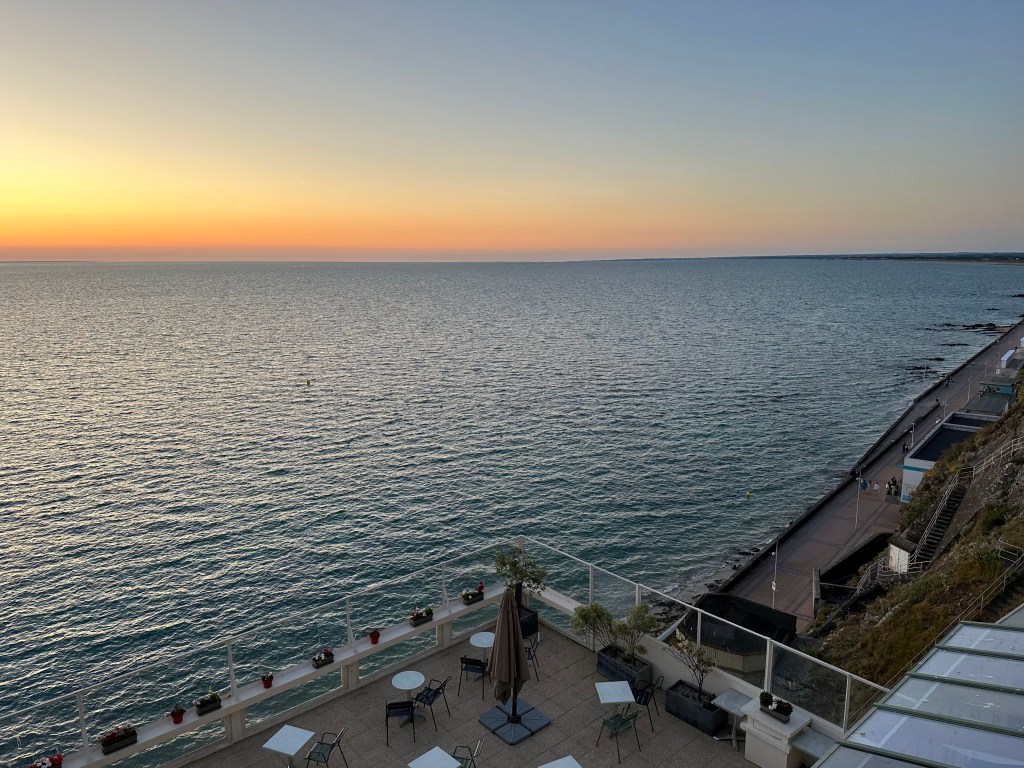
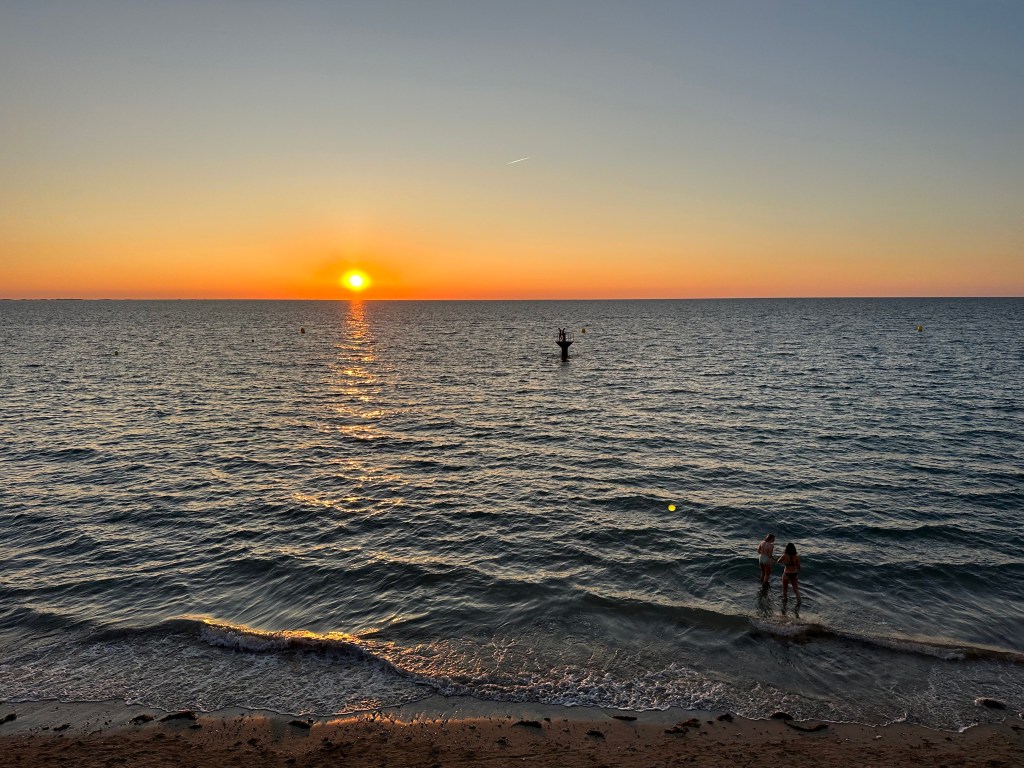
Watching the sunset from our terraces – pretty awesome.
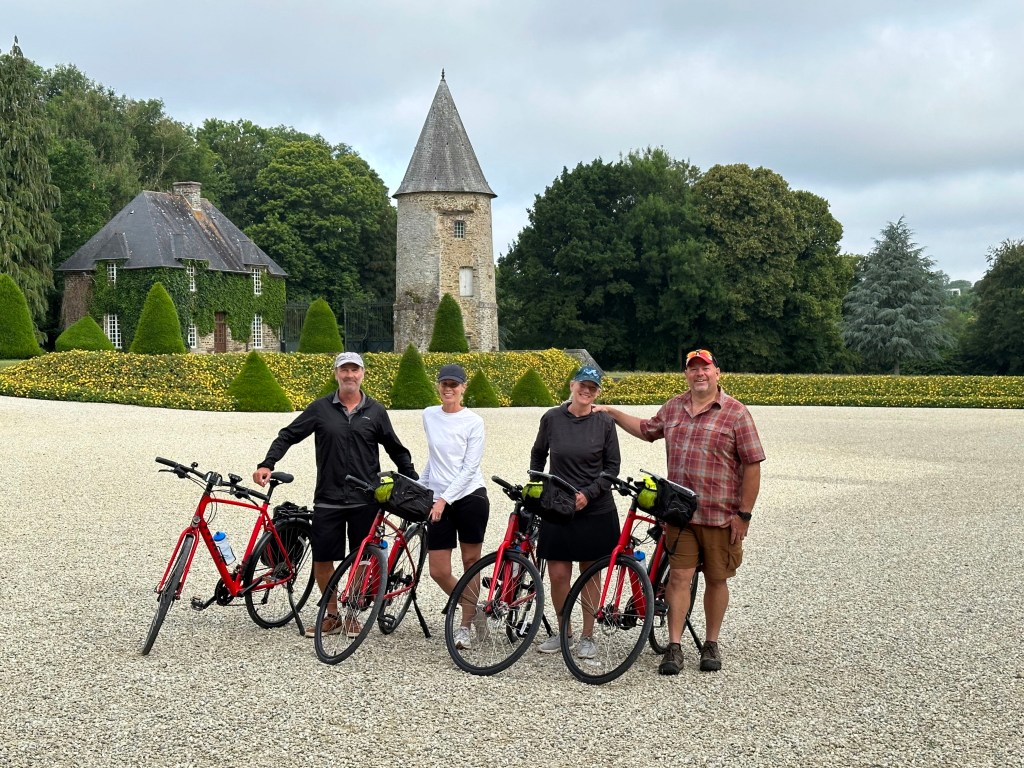
Despite our fears, all four bikers survived the night alone and abandoned in the haunted chateau.
We woke to another perfect Normandy morning.
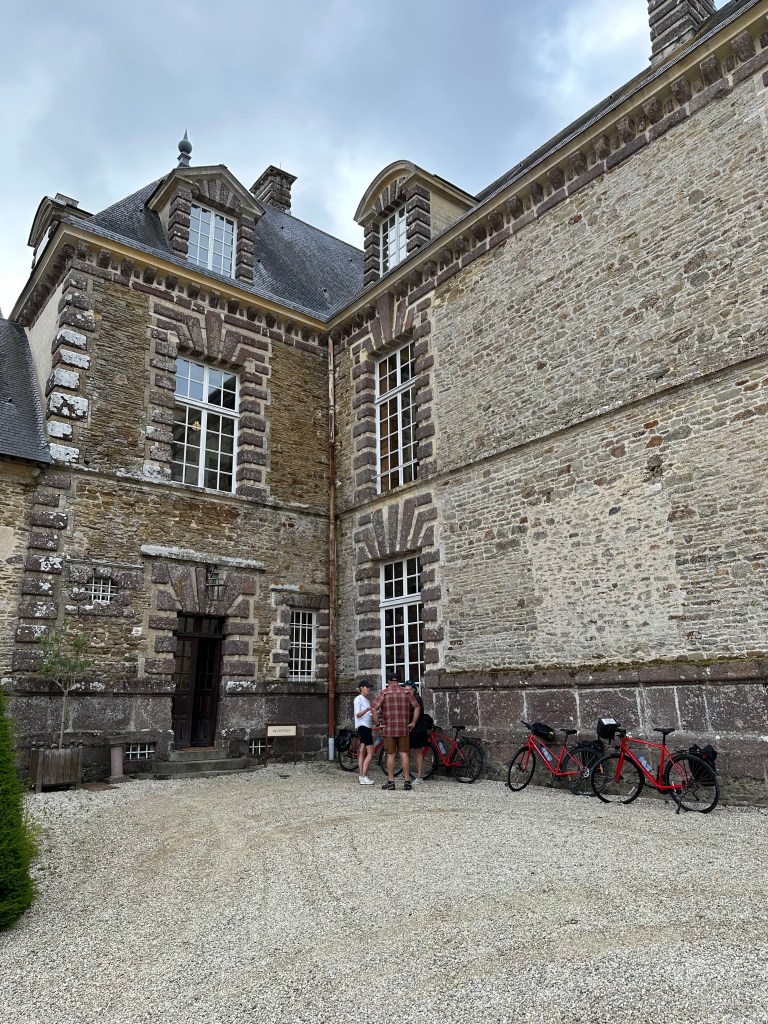
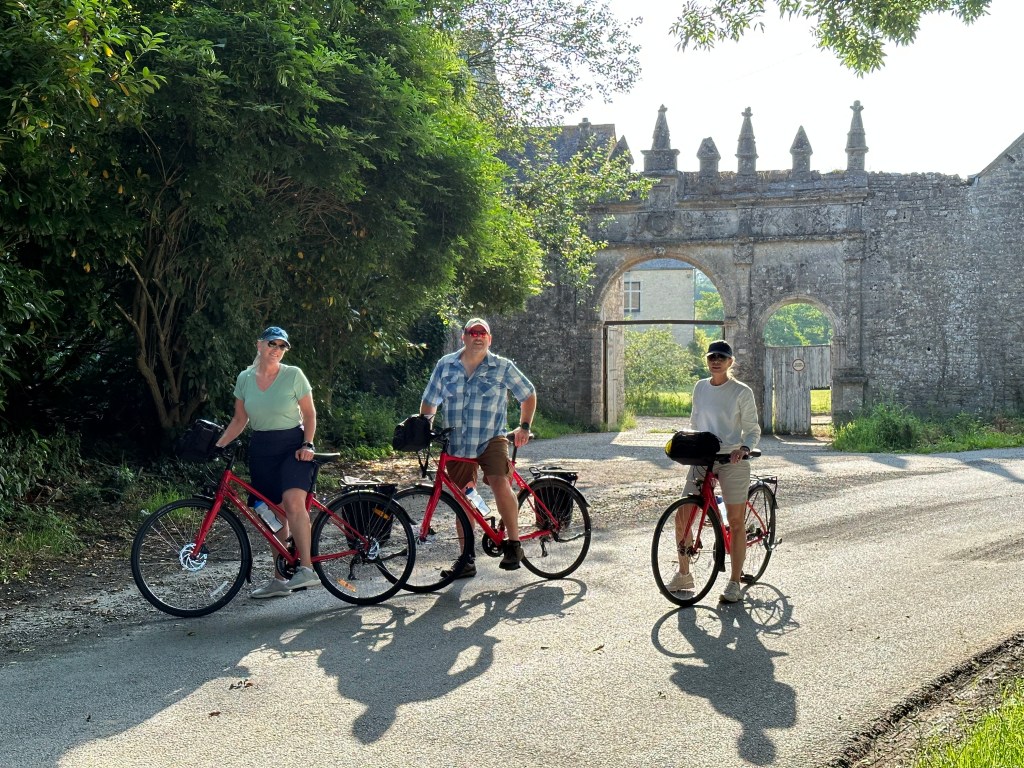
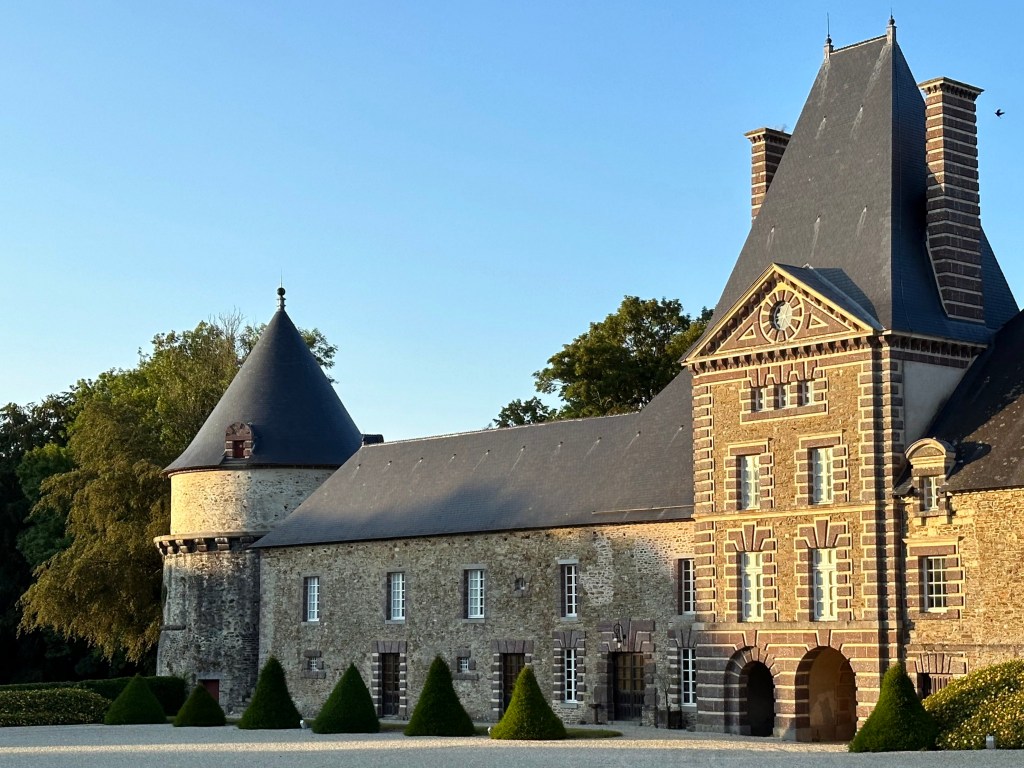
The riders prepare in the shadow of the chateau for the day’s excursion to the coast.
So long, Chateau de Canisy, you crazy gal.
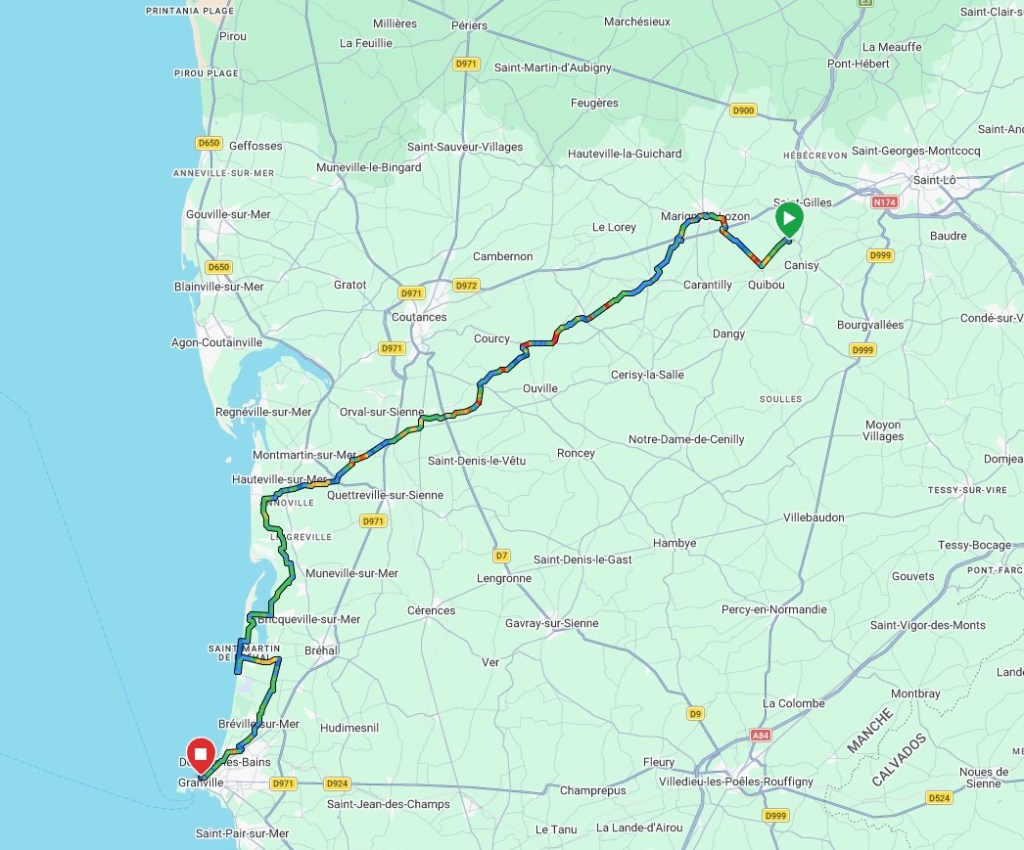
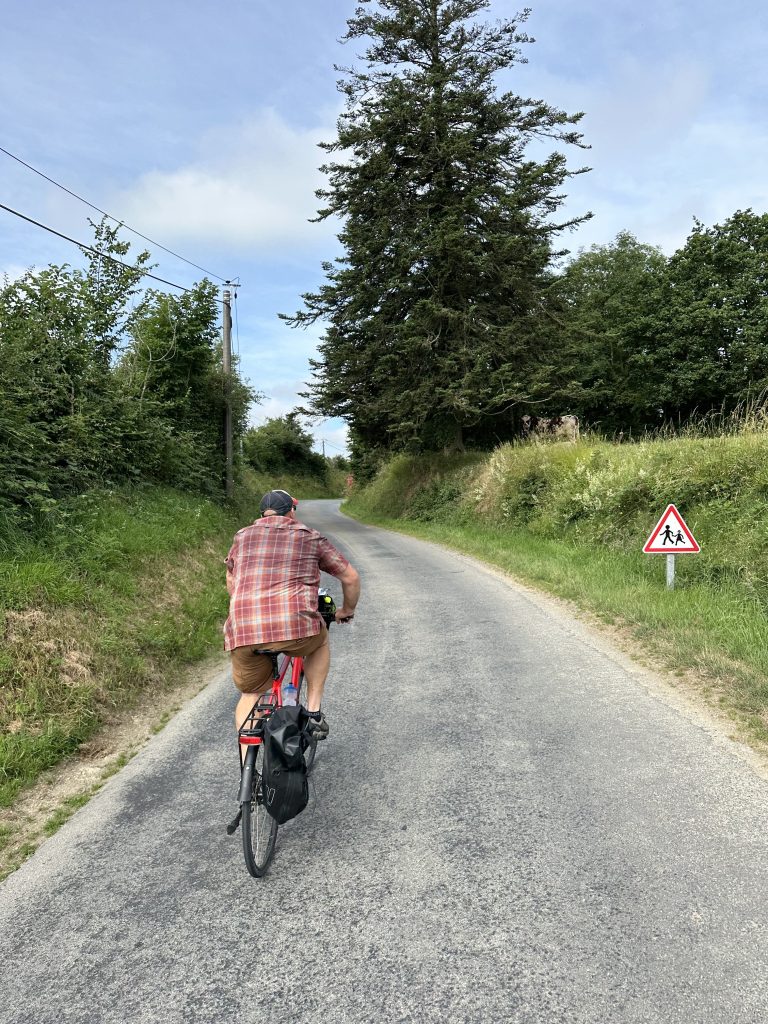
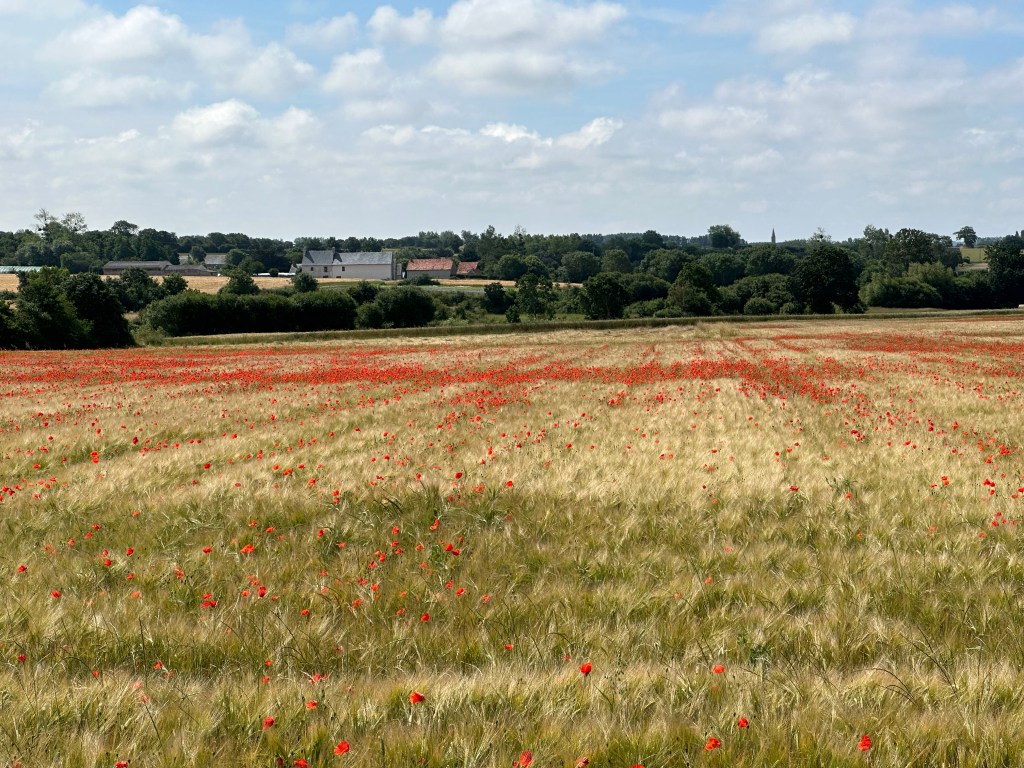
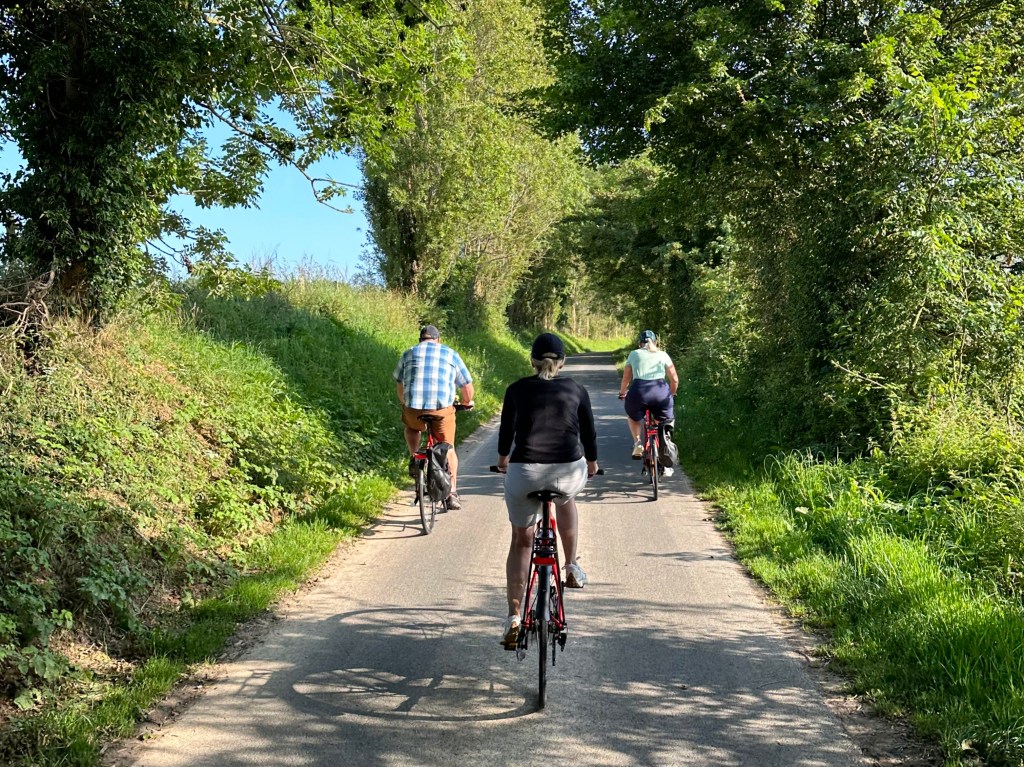
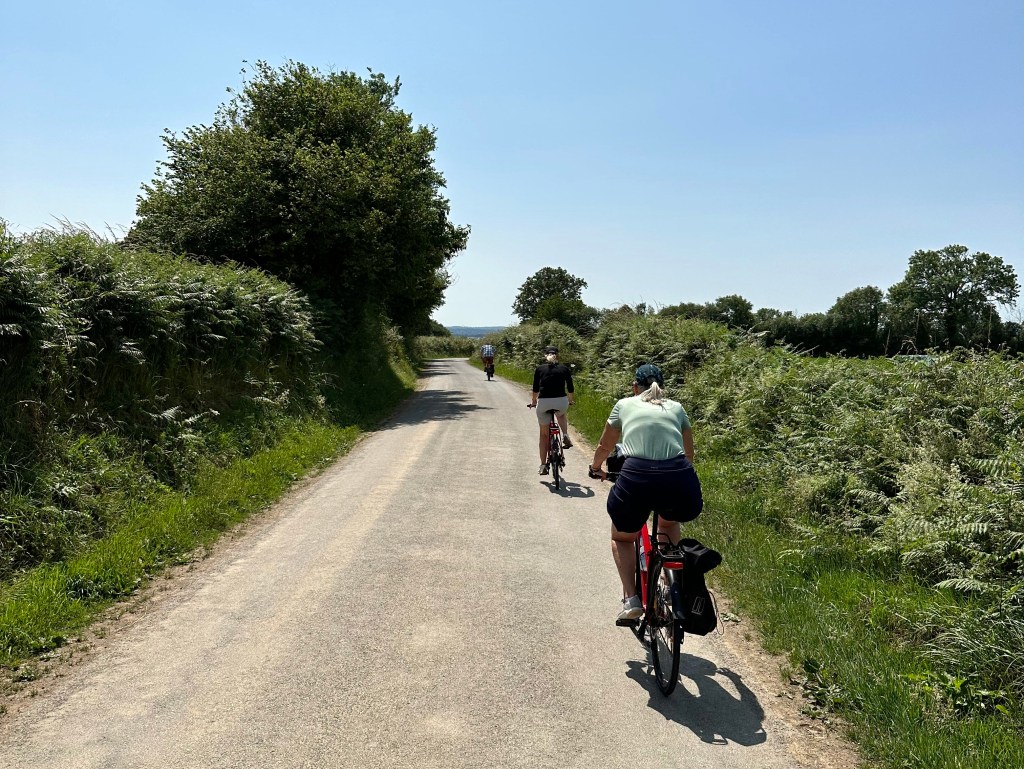
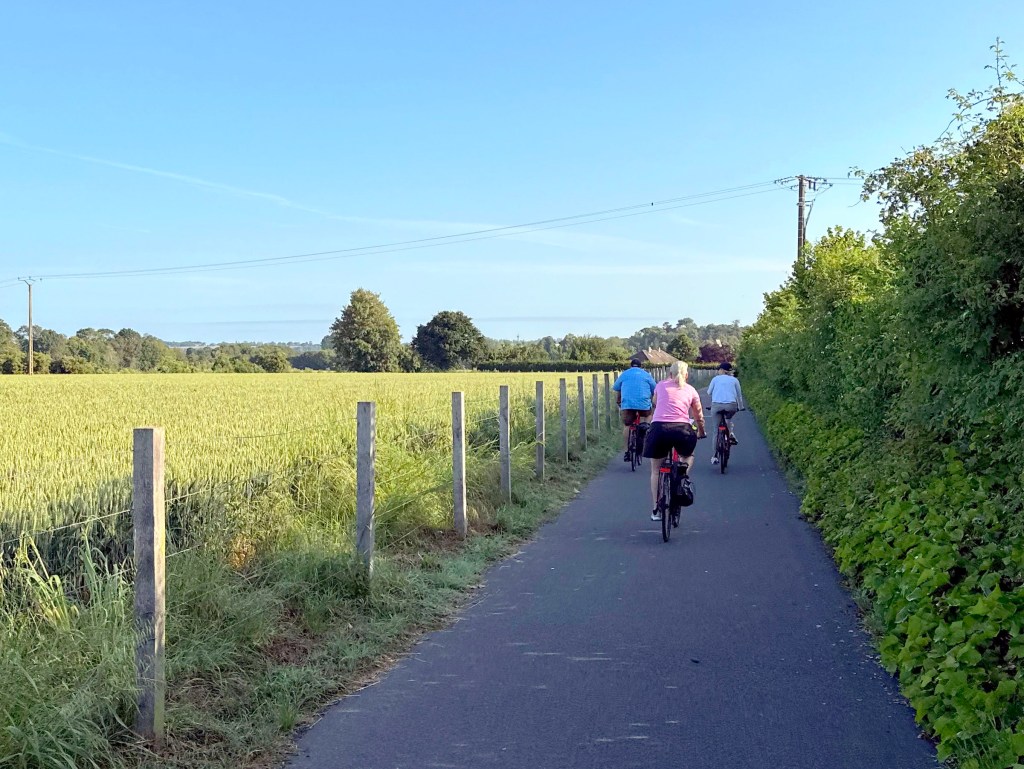
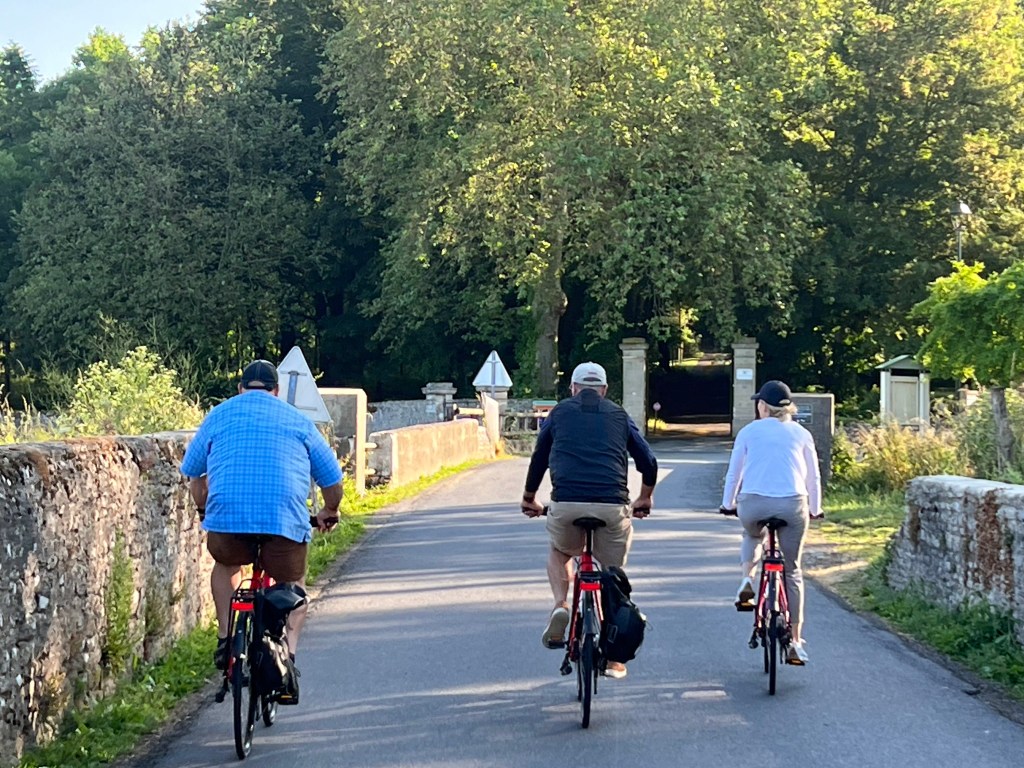
Not too much to see on the day’s ride, but nice scenery.
We actually stopped for lunch on the coast about 5 miles (if that) away from Granville, where we’d be spending the night, but didn’t take any pics there. Notably, we feasted once again on Normandy oysters, and when we asked where they were from, he hooked his thumb behind him, pointed to the shoreline about 50 yards away, and said, “right there.” Pretty awesome, as were the oysters.
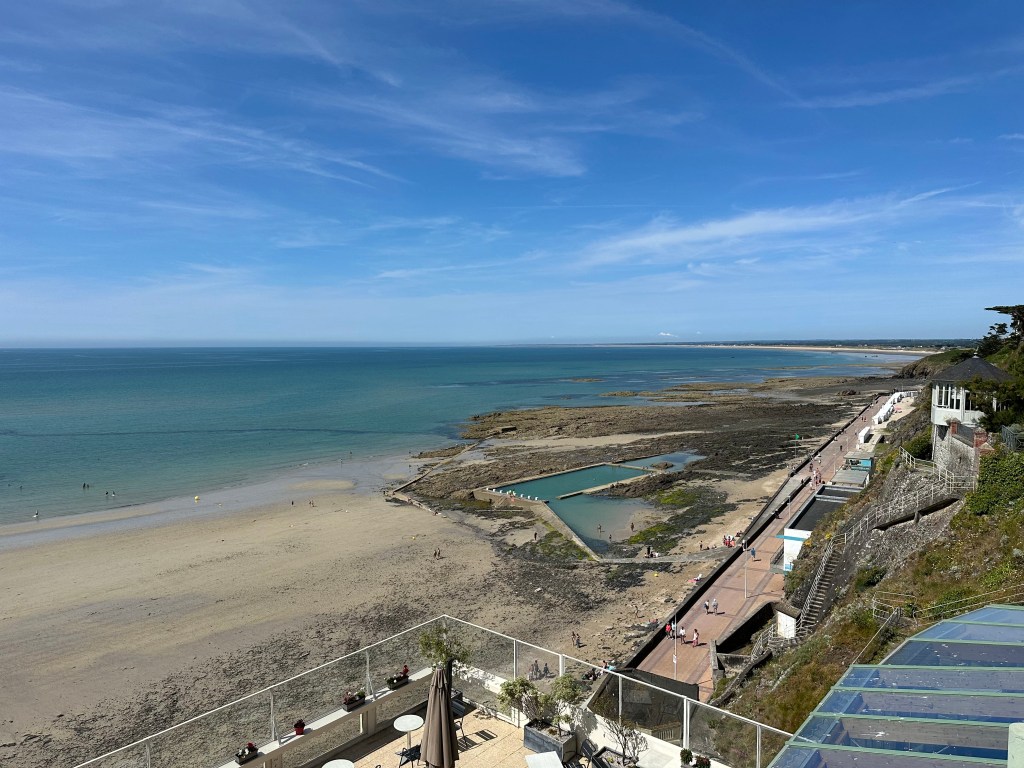
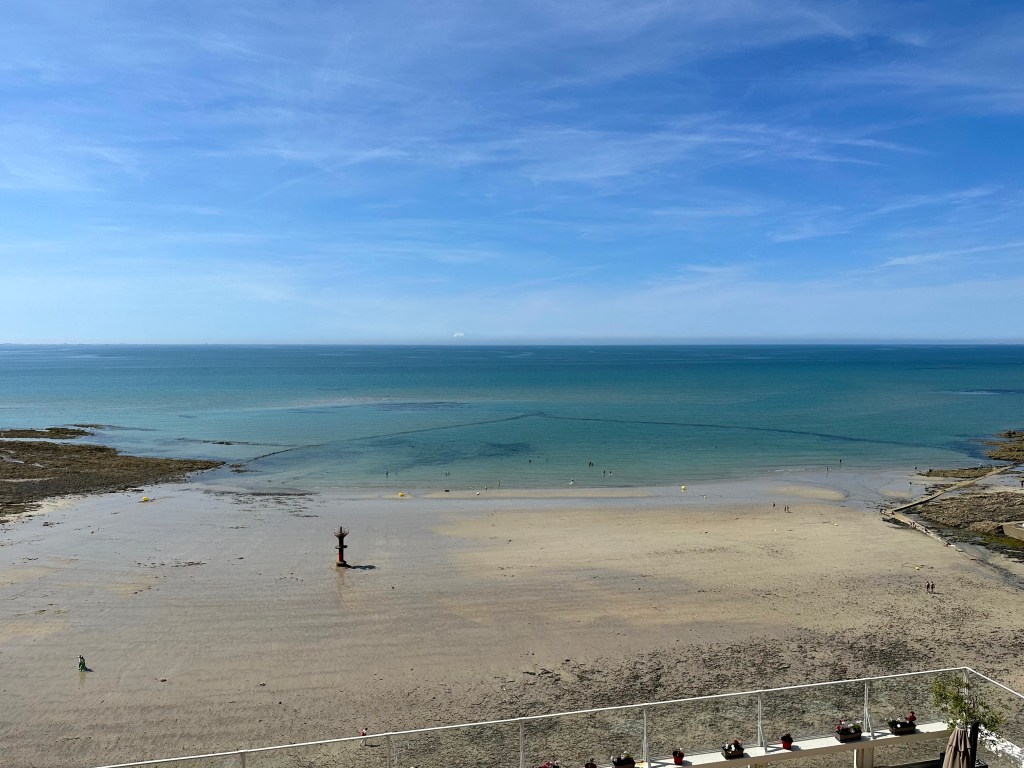
The beach town of Granville. Two items of interest here:
The first is the saltwater pool, there in the middle. Very cool; refreshed twice a day as the tide comes in and overwhelms it before heading back and and revealing the pool once again. We had a nice swim there, as well as in the ocean proper.
The second is the insane tidal extreme. Granville boasts some of the most dramatic tides in France. The combination of the bay’s shape, the shallow seabed, and tidal forces of the Atlantic-facing English Chanel produce tidal ranges of up to 46 feet.
To wit, the same view at high tide:
Low tide:
High tide.
And these two:
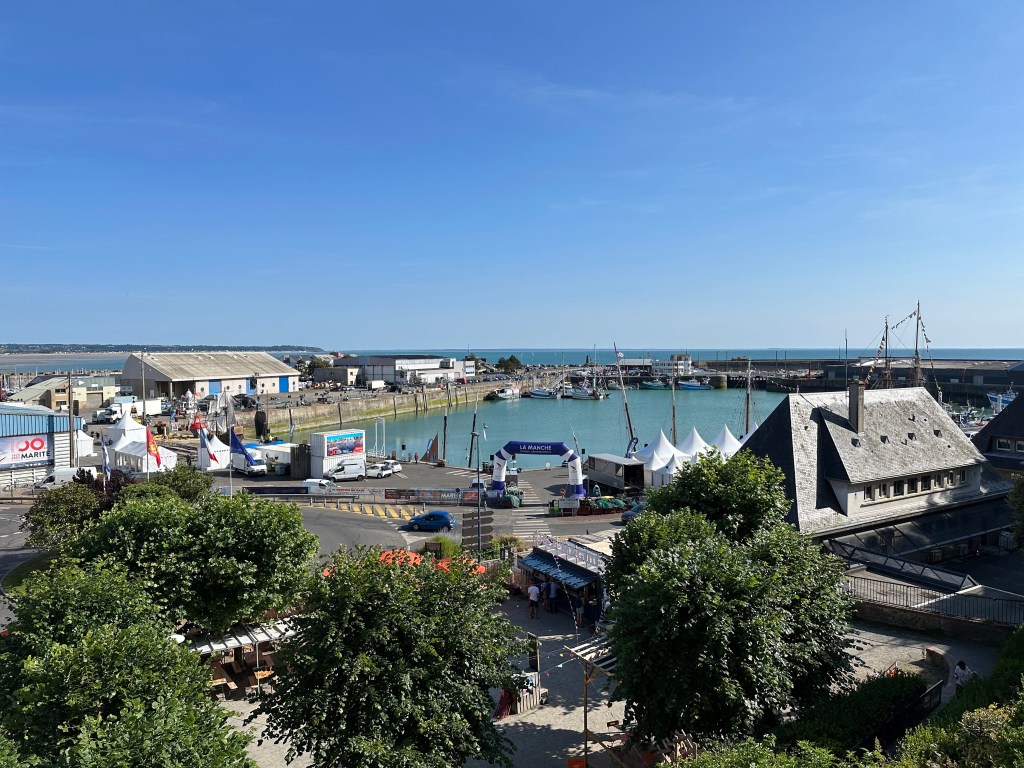
The little port area of the town, where some festival offered the opportunity for a bunch of beers on picnic benches in a tent.
A little entertainment by the locals:
On the road the next day:
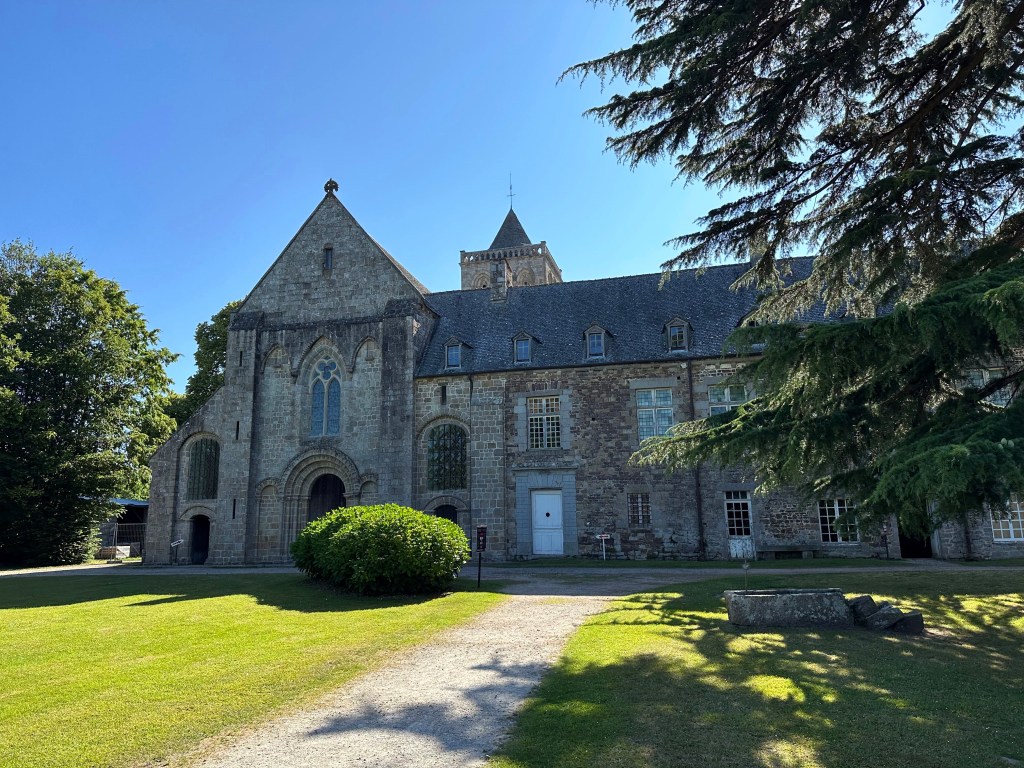
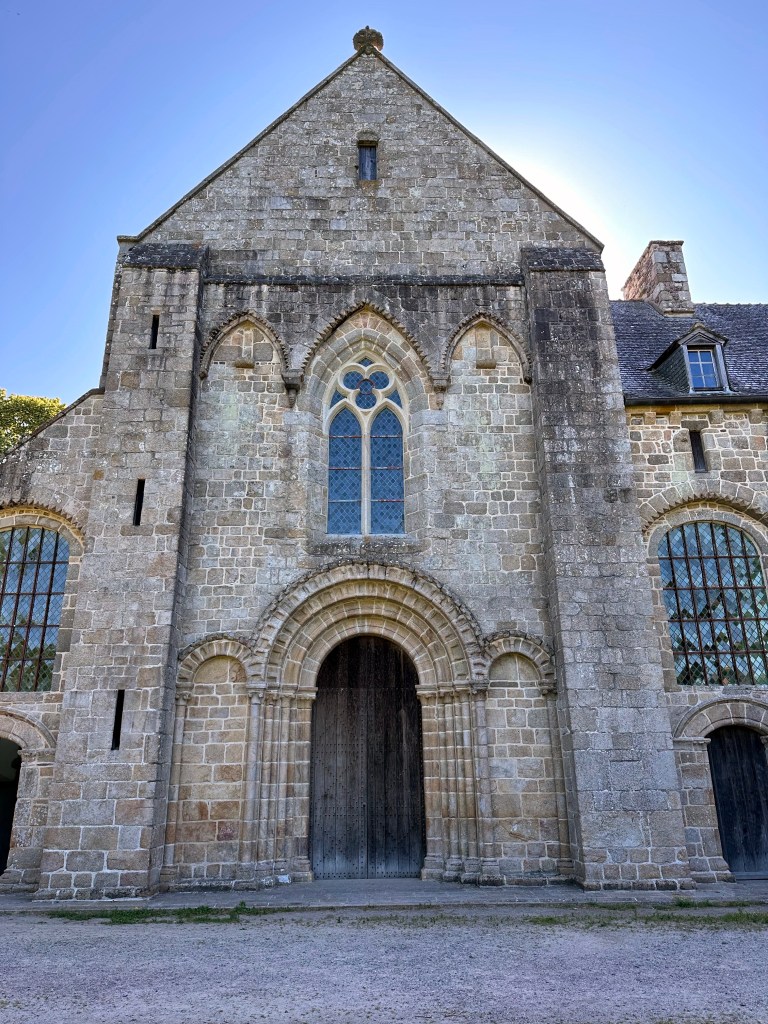
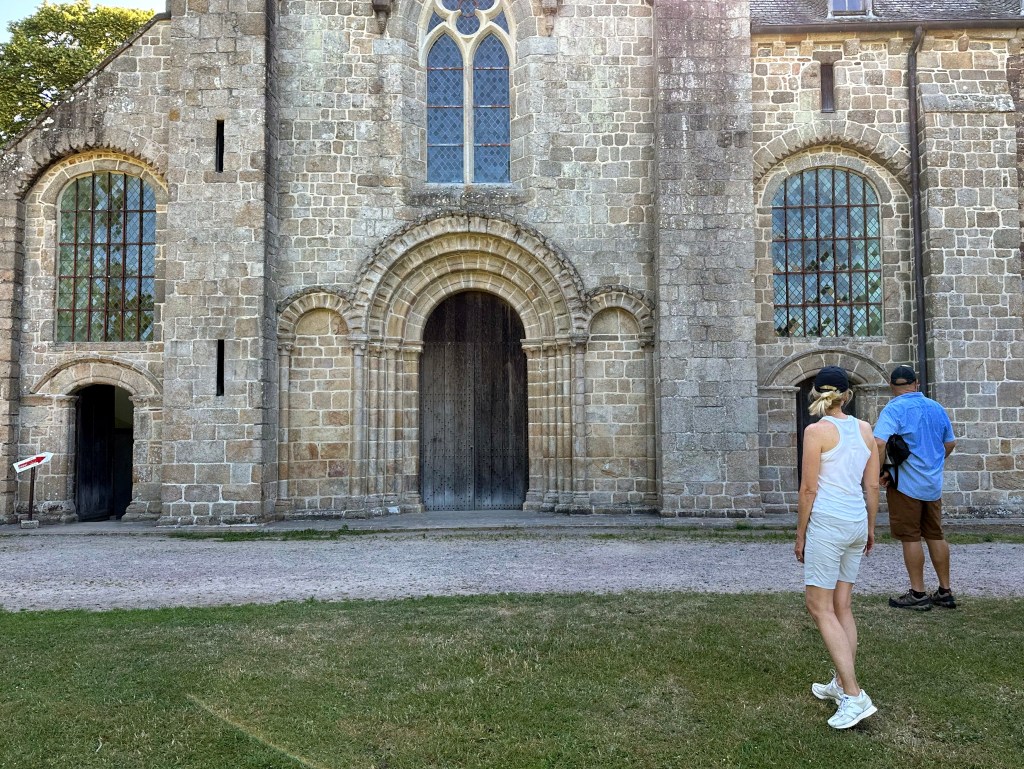
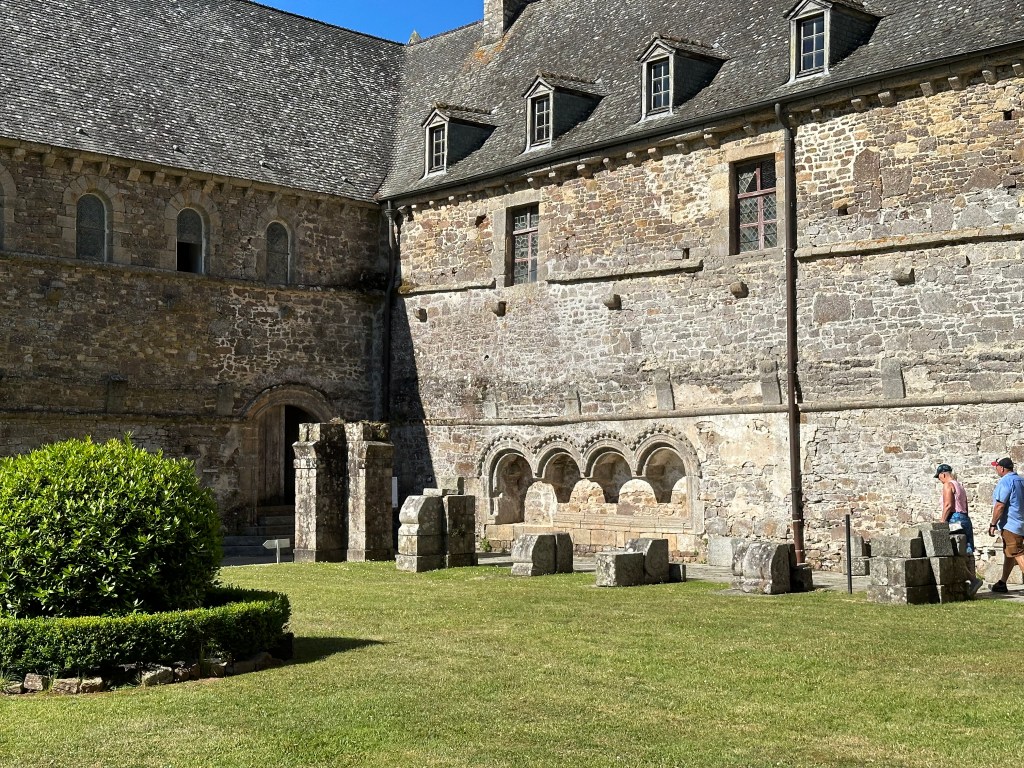
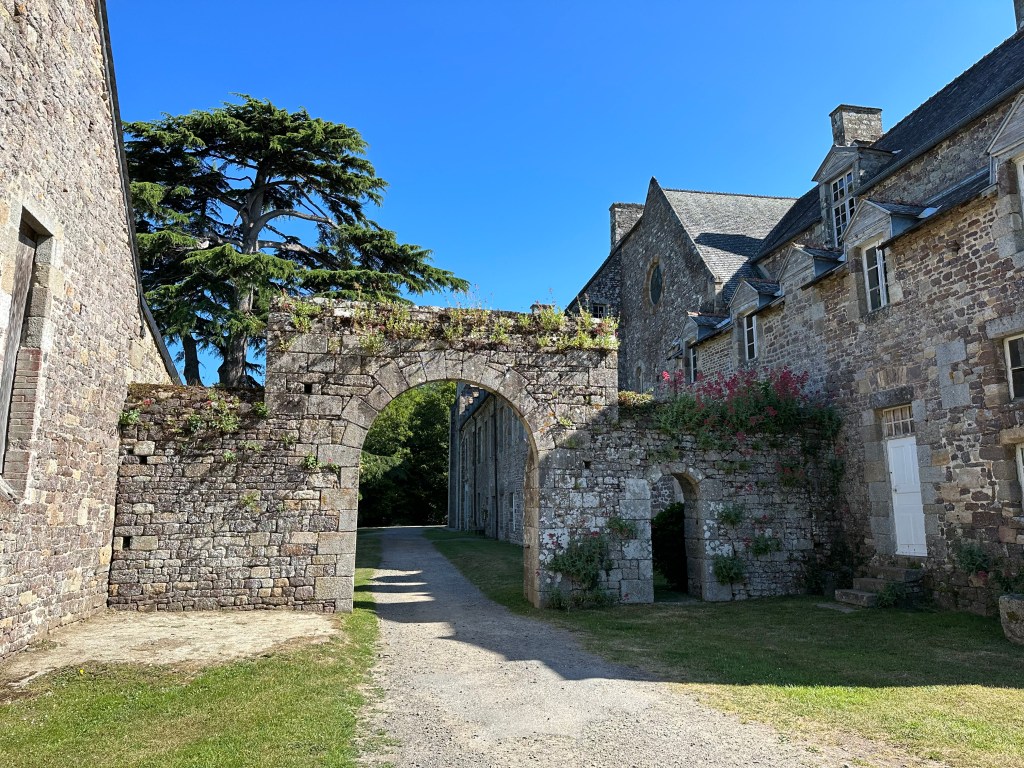
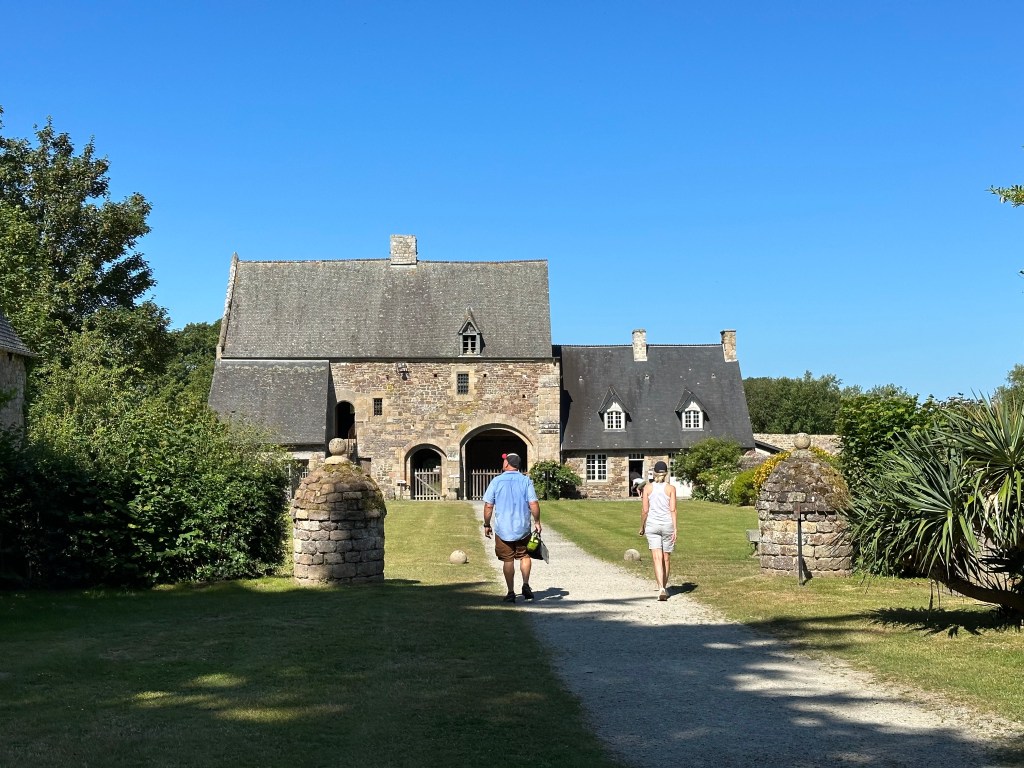
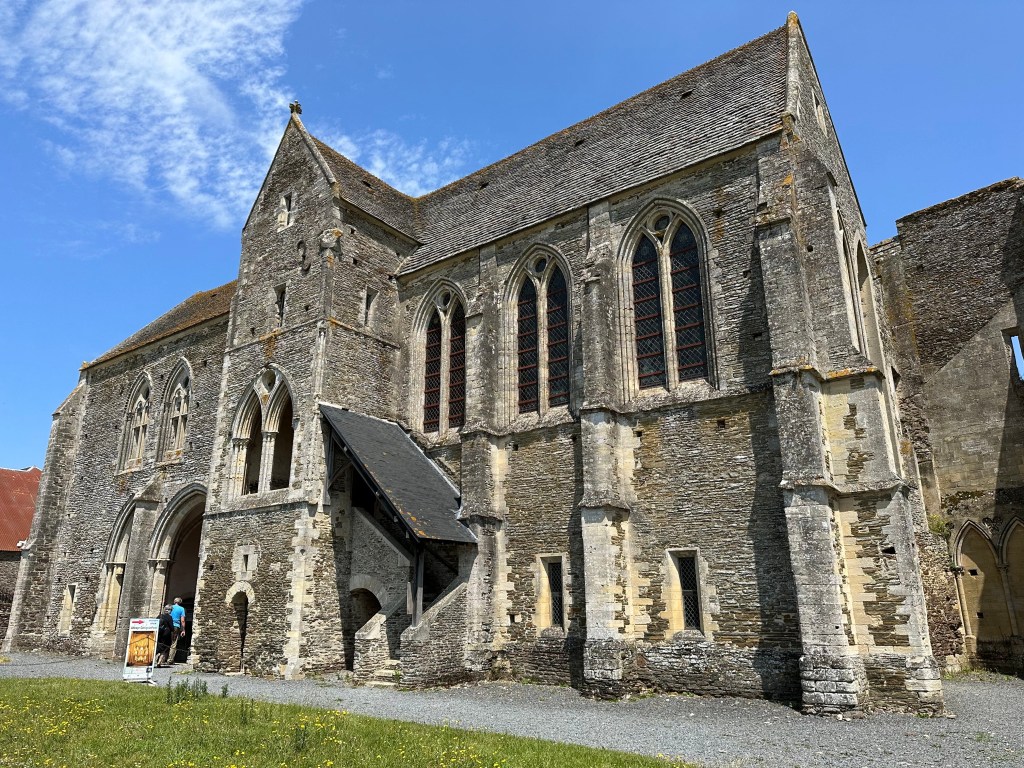
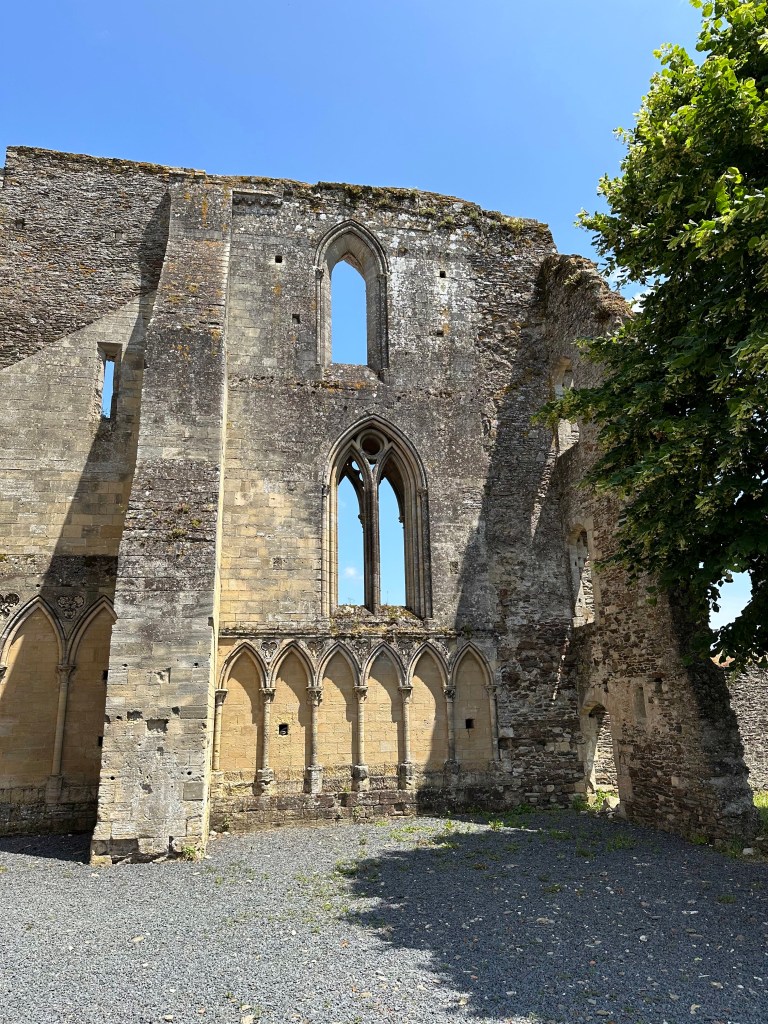
First stop, Abbey de Lucerne.
The abbey itself was founded in 1143, but in a different location that was too remote and too damp, apparently. So they reestablished it here in 1164.
The abbey was partly destroyed during the Hundred Years’ War, then restored in the 15th century.
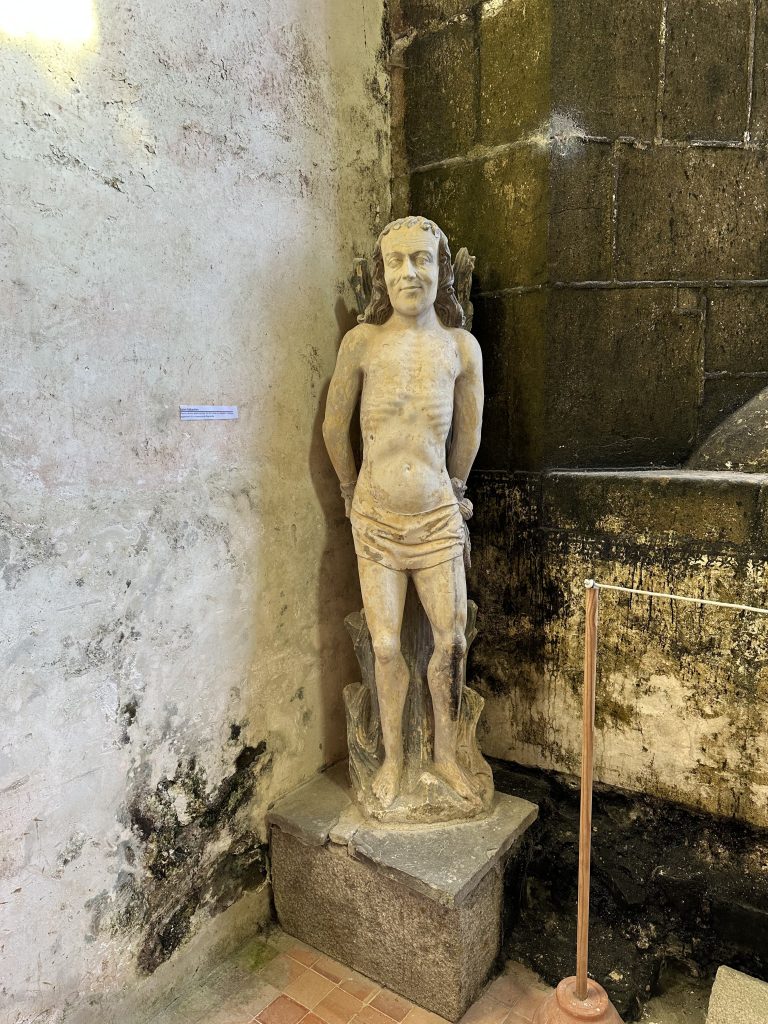
The abbey is home to this rather smarmy little 16th-century depiction of Saint Sebastian, who was martyred under Emperor Diocletian in the 3rd century.
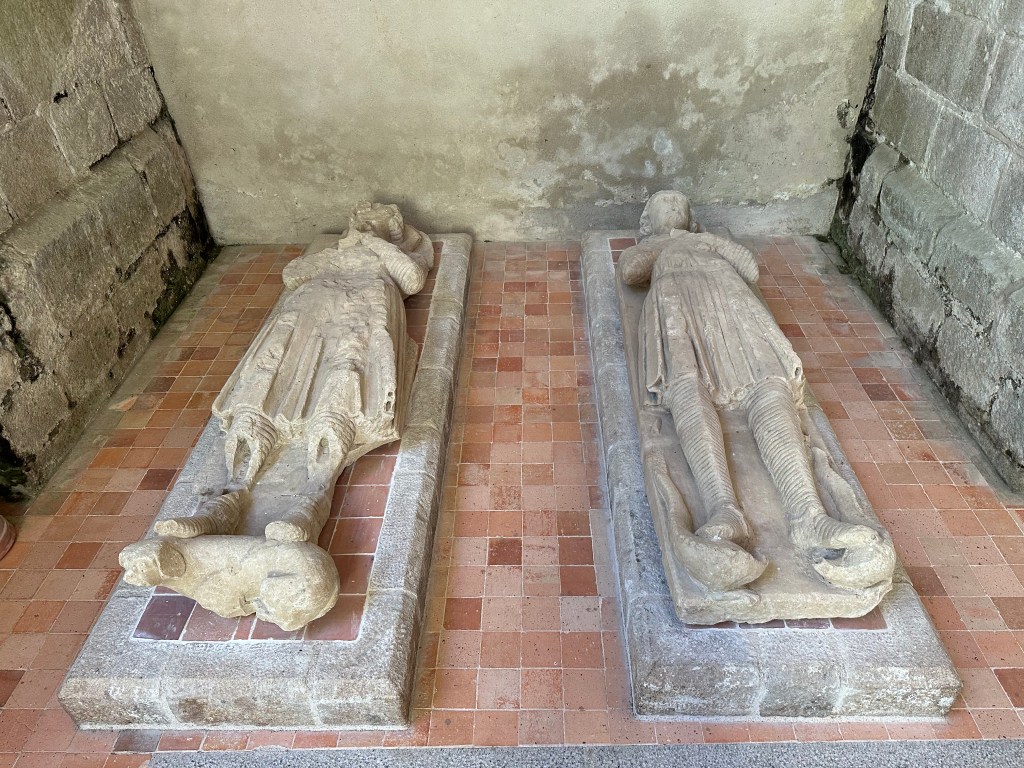
On the left, a recumbent effigy of Guillaume de Saint-Jean Limestone from the first half of the 13th century unearthed during archaeological excavations of the church’s northern chapels in 1990. He financed the construction of the abbey in the 12th century and was then buried here. The dog lying to the right at his feet is a symbol of fidelity, obedience, and gratitude.
O the right, a recumbent effigy of Hasculphe de Subligny from the 13th century, also unearthed during archaeological excavations of the church’s northern chapels in 1990. His feet rest medieval salamanders, a creature believed to be an elemental being linked to fire, and also the emblem of Francis I, which we encountered during a previous French bike trip in the Loire Valley.
The abbey was sold as national property during the French Revolution.
And then transformed into a cotton spinning mill,
and then a limestone sawmill.
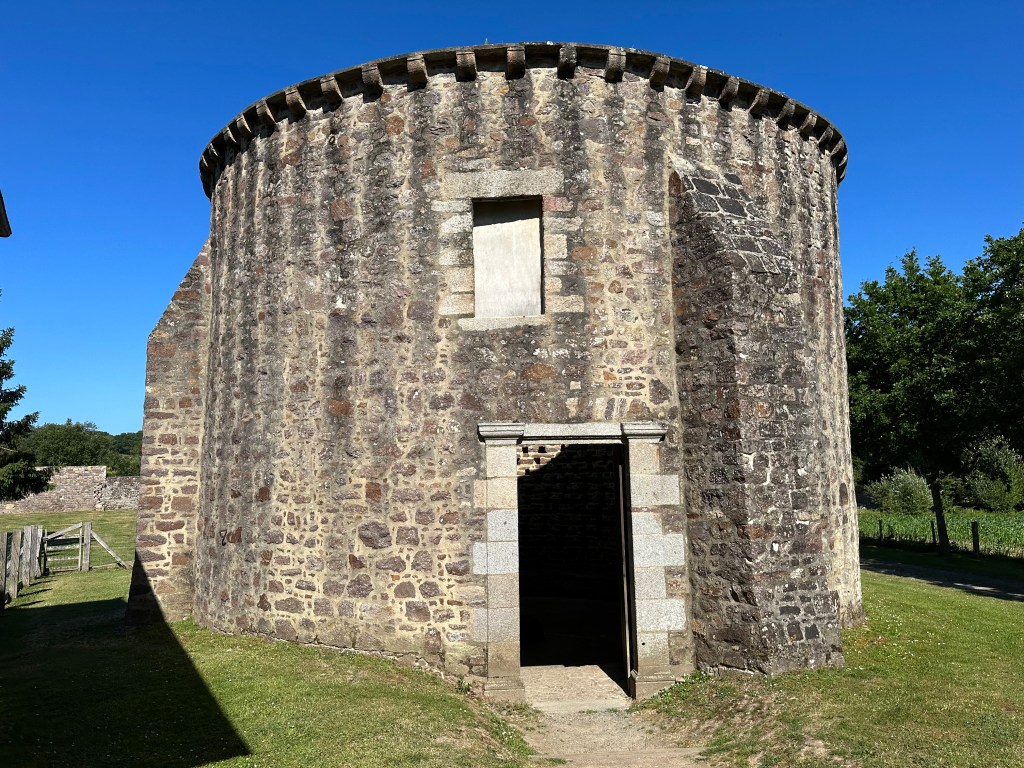
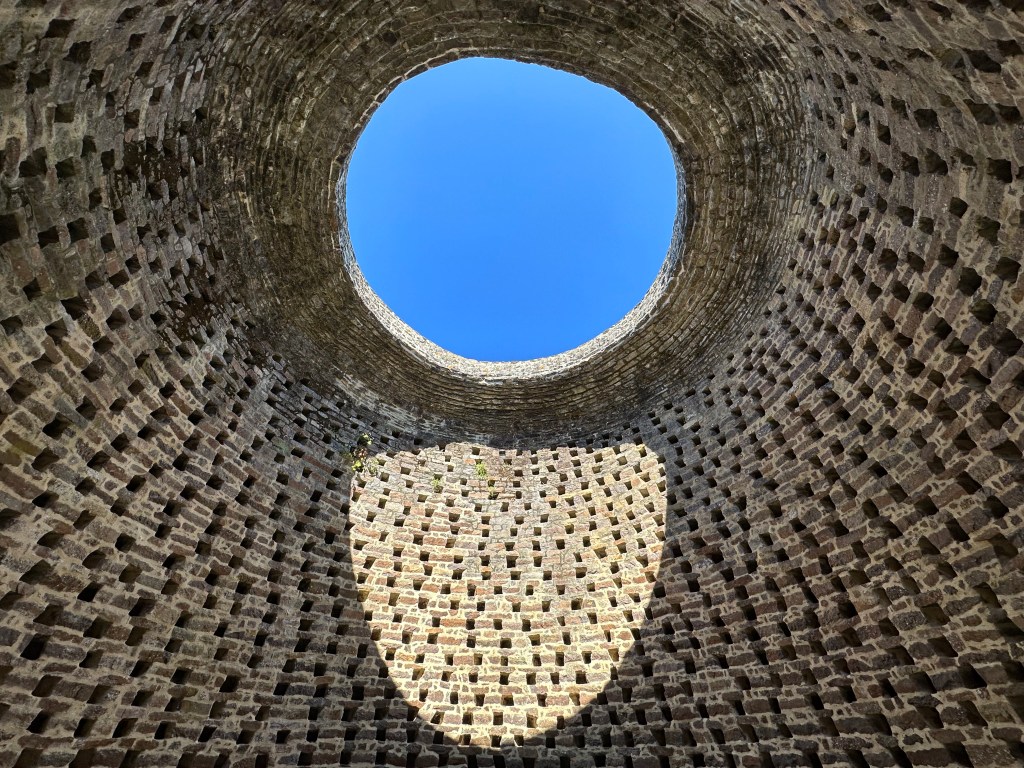
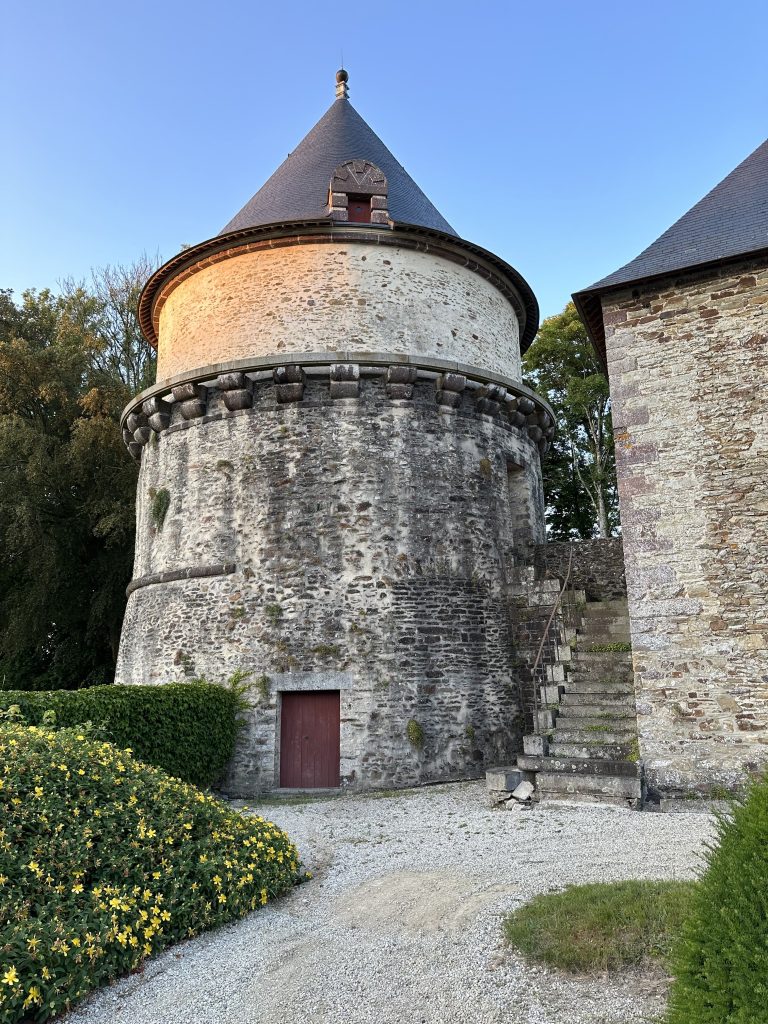
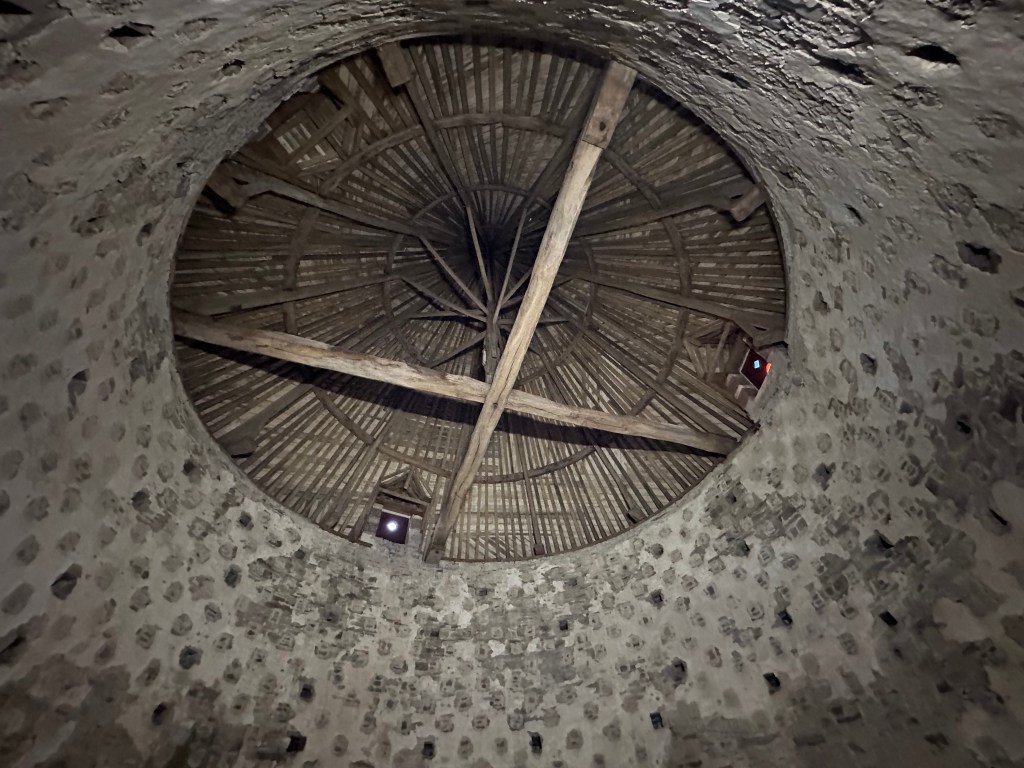
Cool-ass dovecote:
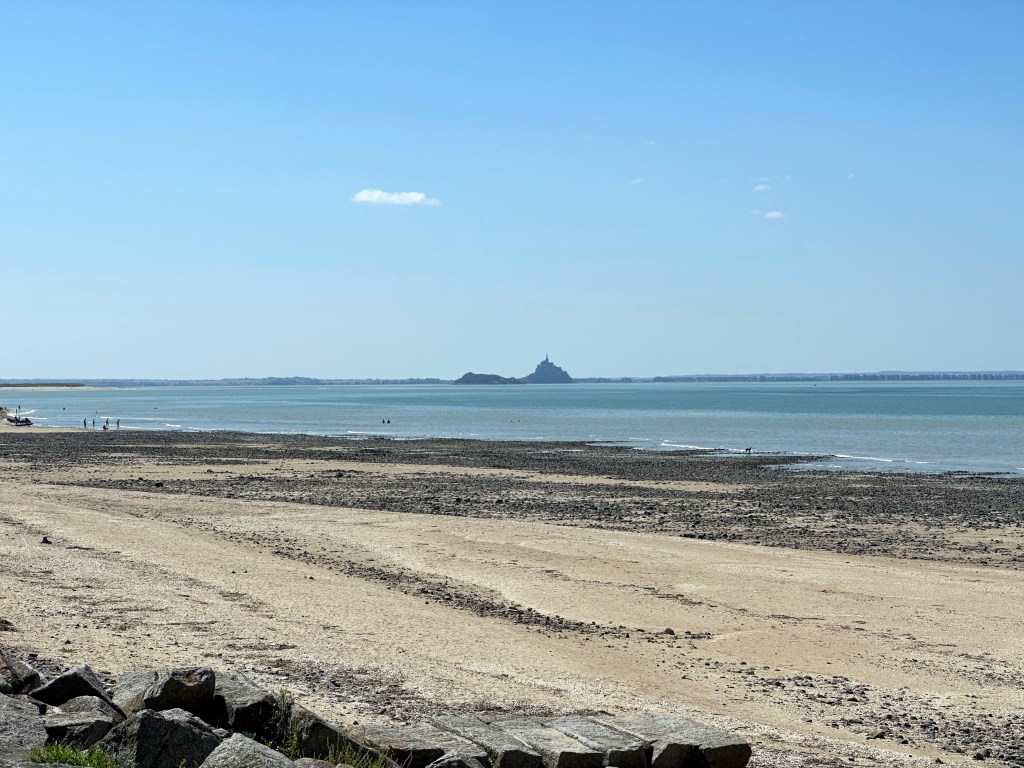
Reaching the coast again, we get our first glimpse of our objective the next (and final) day – Mont Saint Michel.
It would be with us on and off for the next 2 days of biking.
And there are pilgrims that depart across the tidal plain (which becomes boot-sucking mud when you get our further) each day:
Heading back inland to our destination for the evening. . .
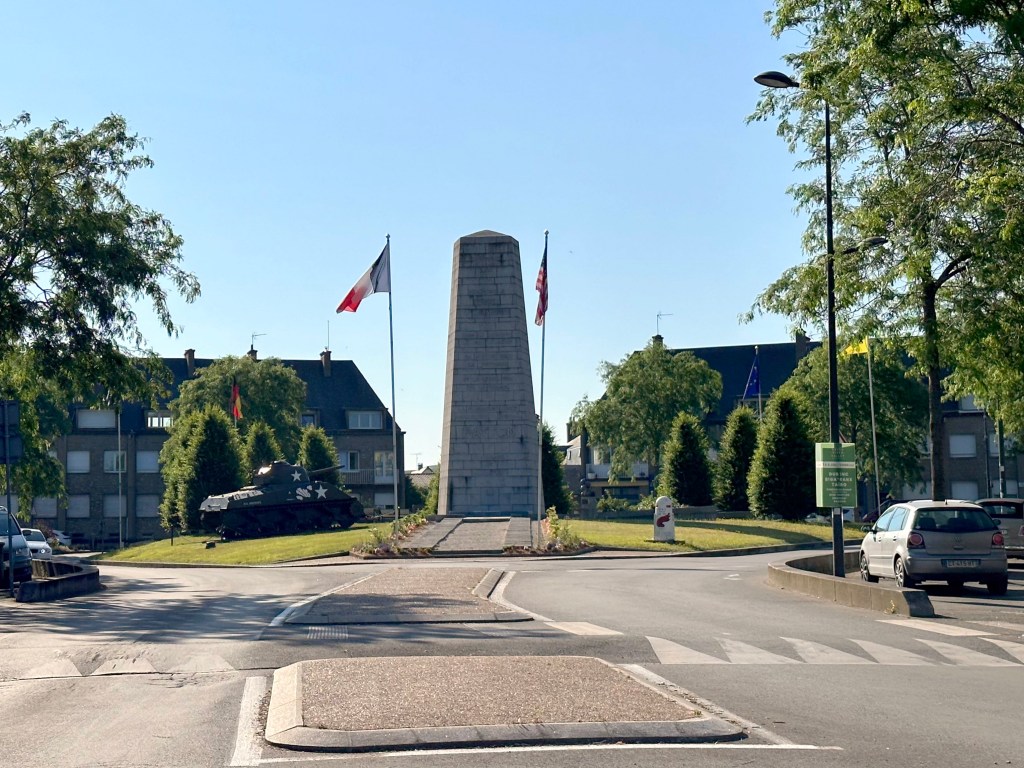
Avranches. The liberation of Avranches during WWII was led by Patton and began on the very auspicious day of July 31 (1944).
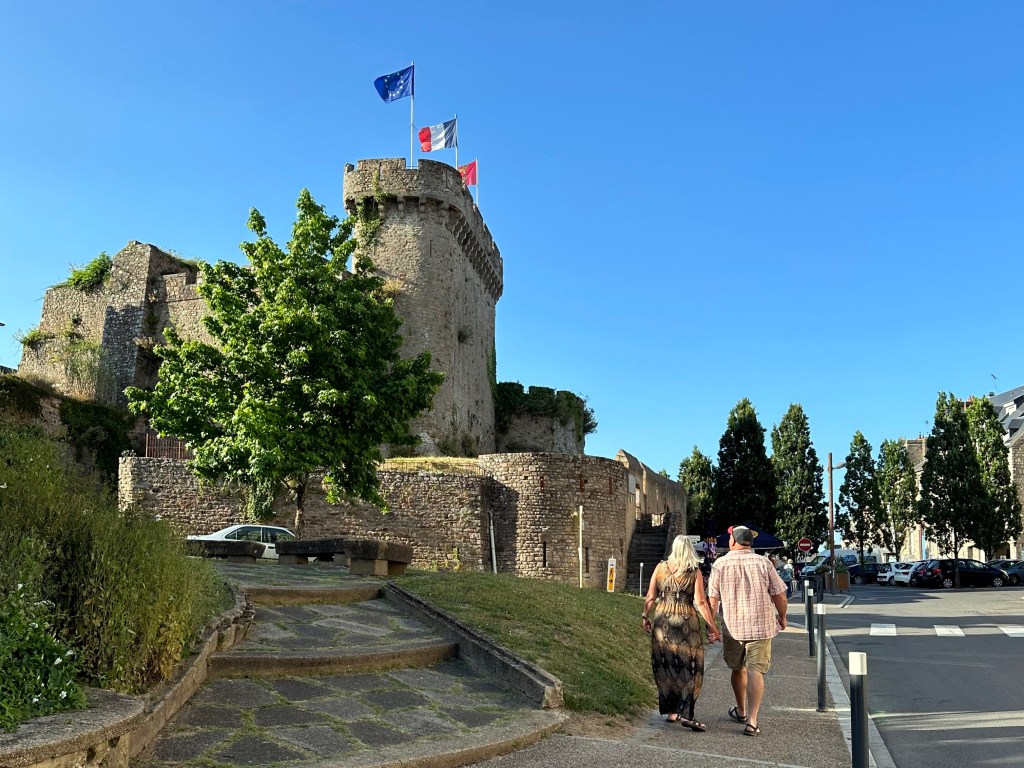
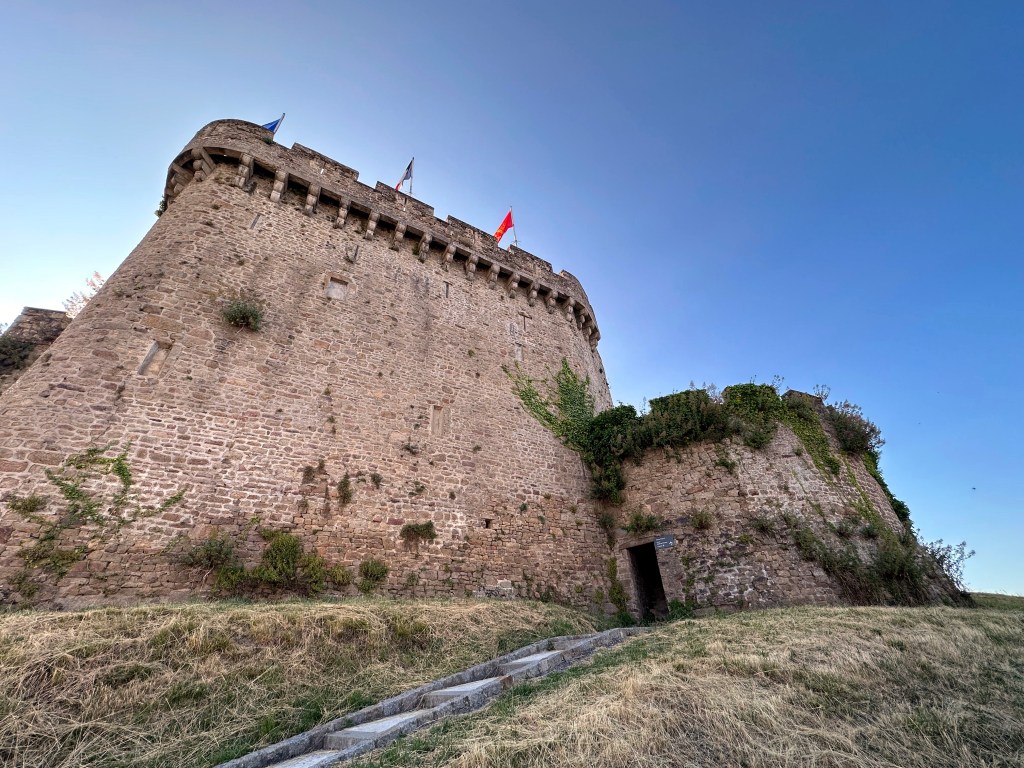
The Donjon d’Avranches:
The castle was built in 950 on the remains of an old Roman fort.
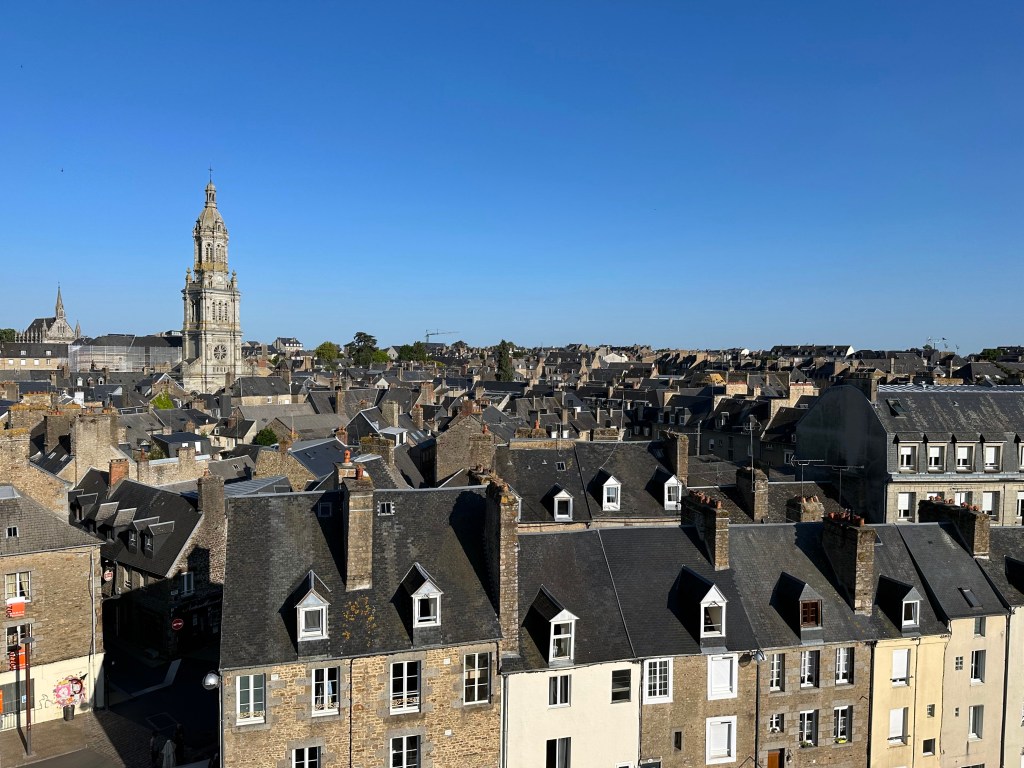
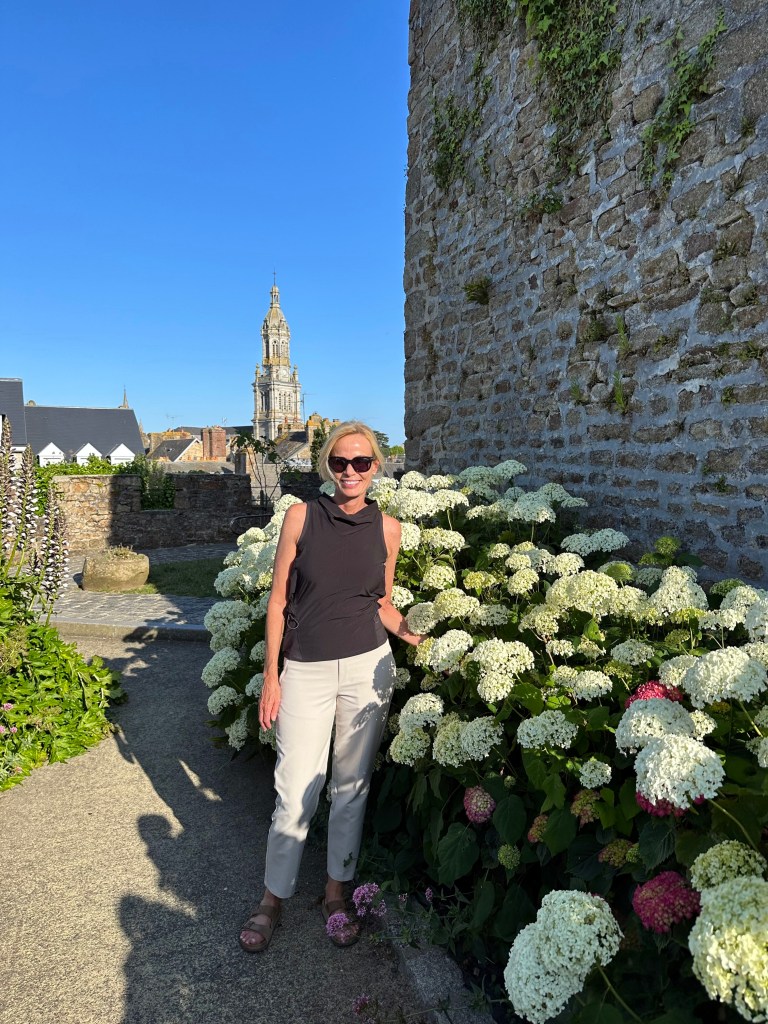
The view from the donjon over a very Normandy-looking town:
And some hydrangeas.
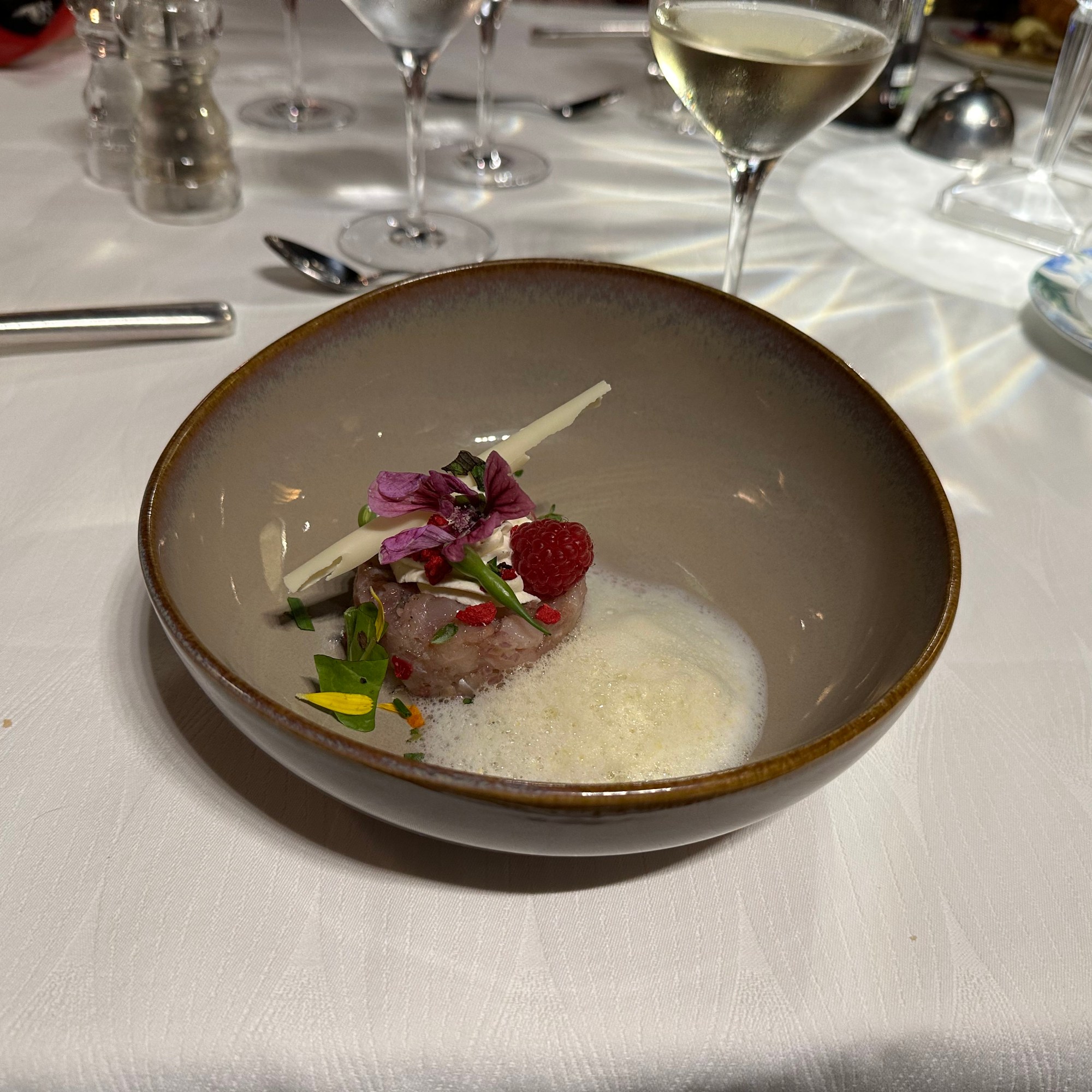
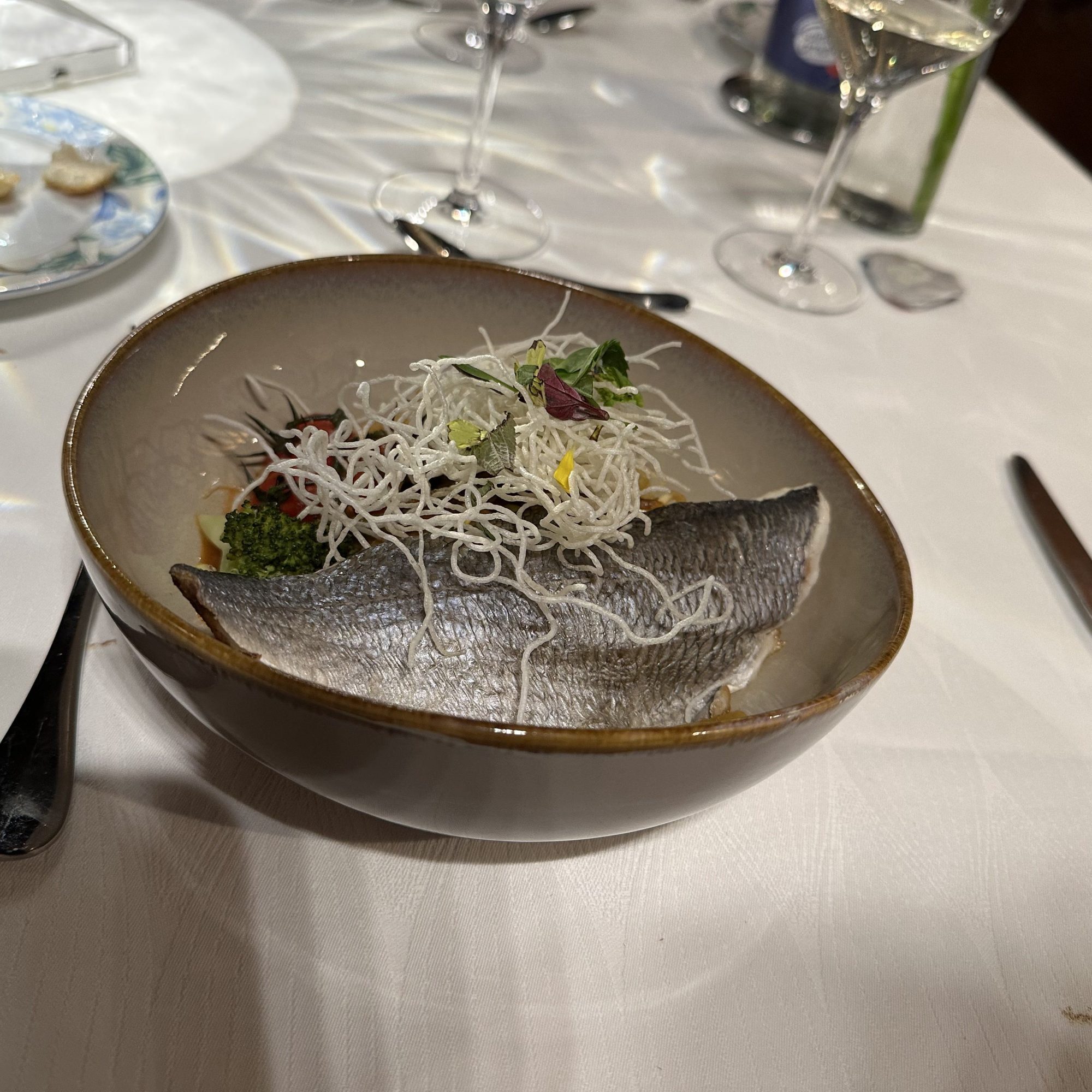
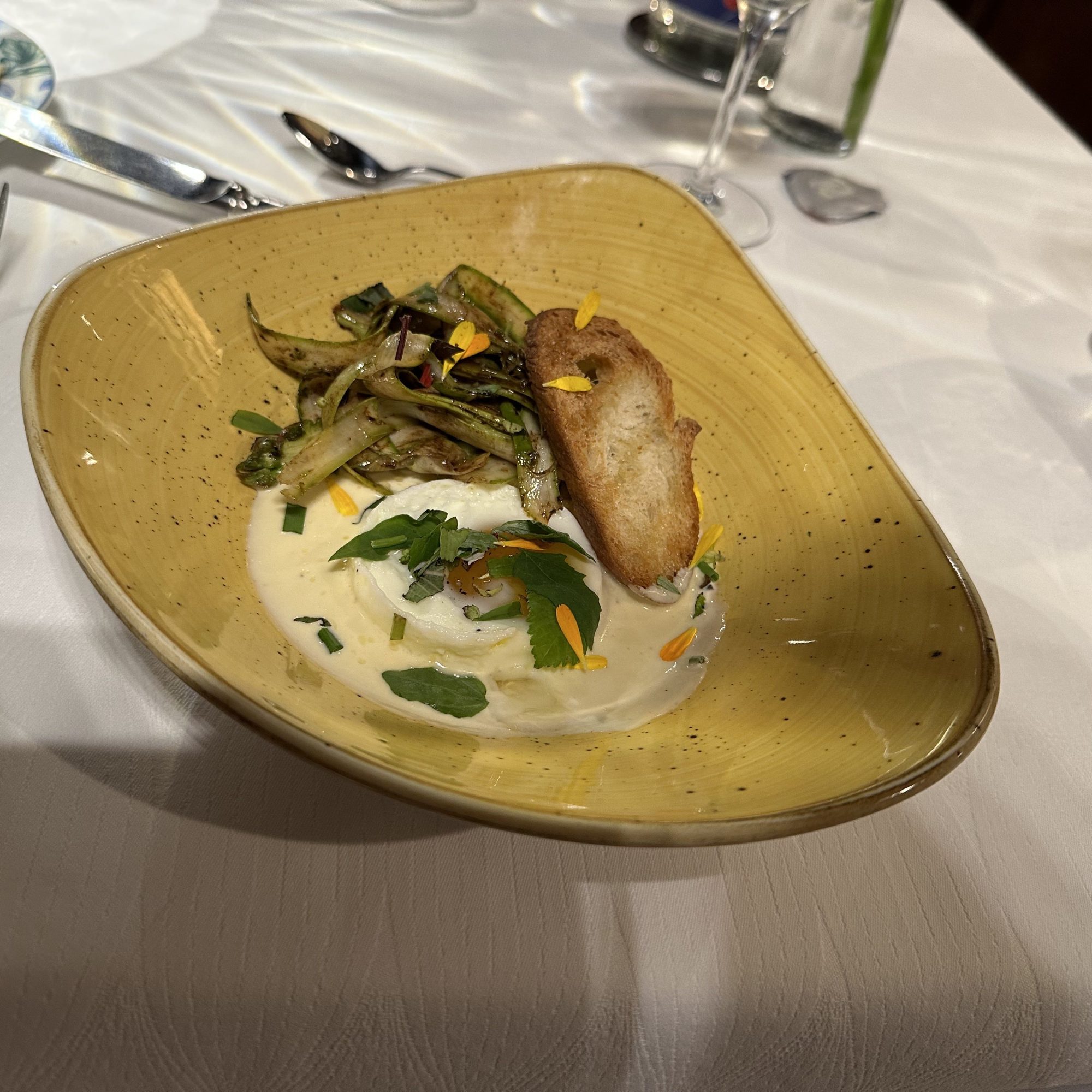
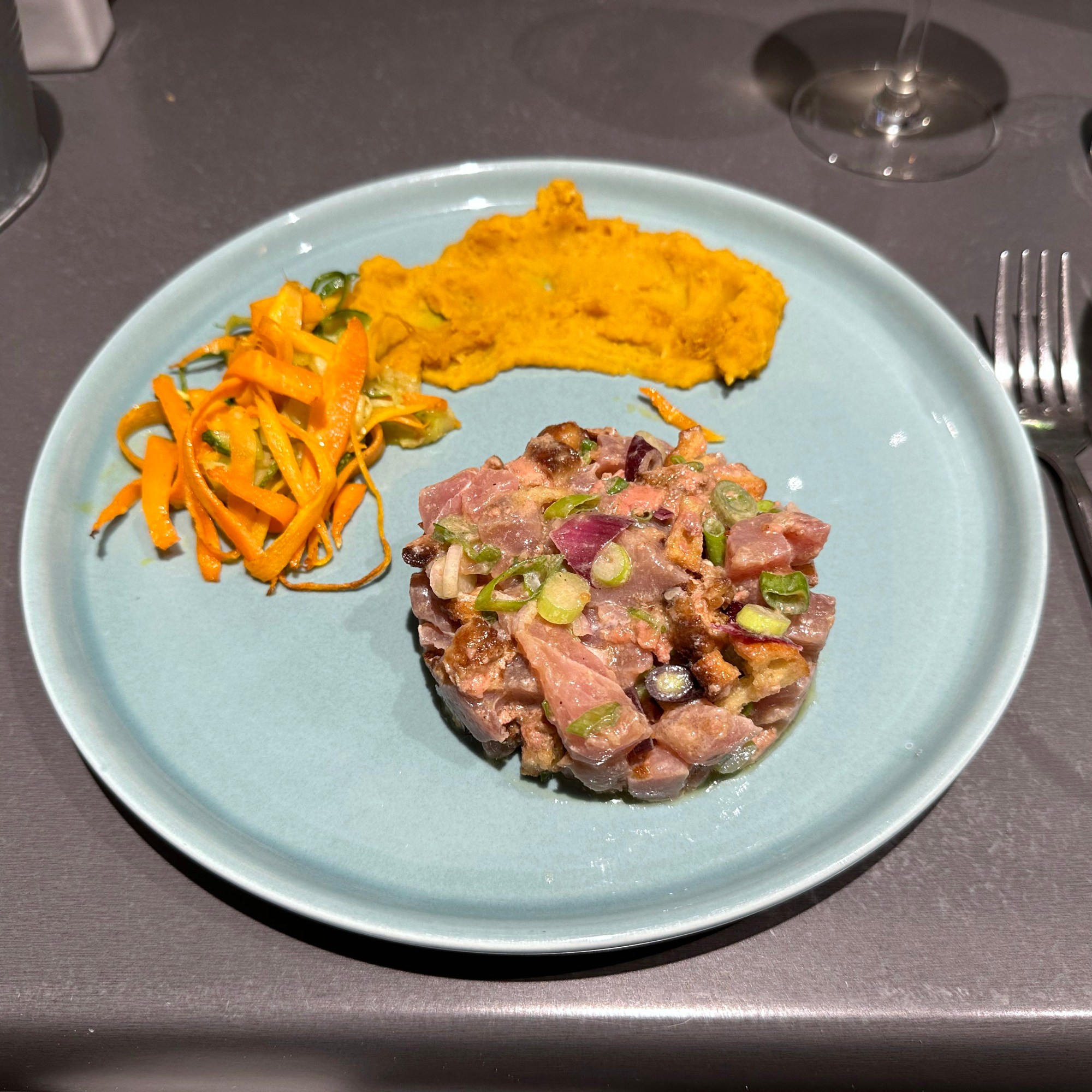
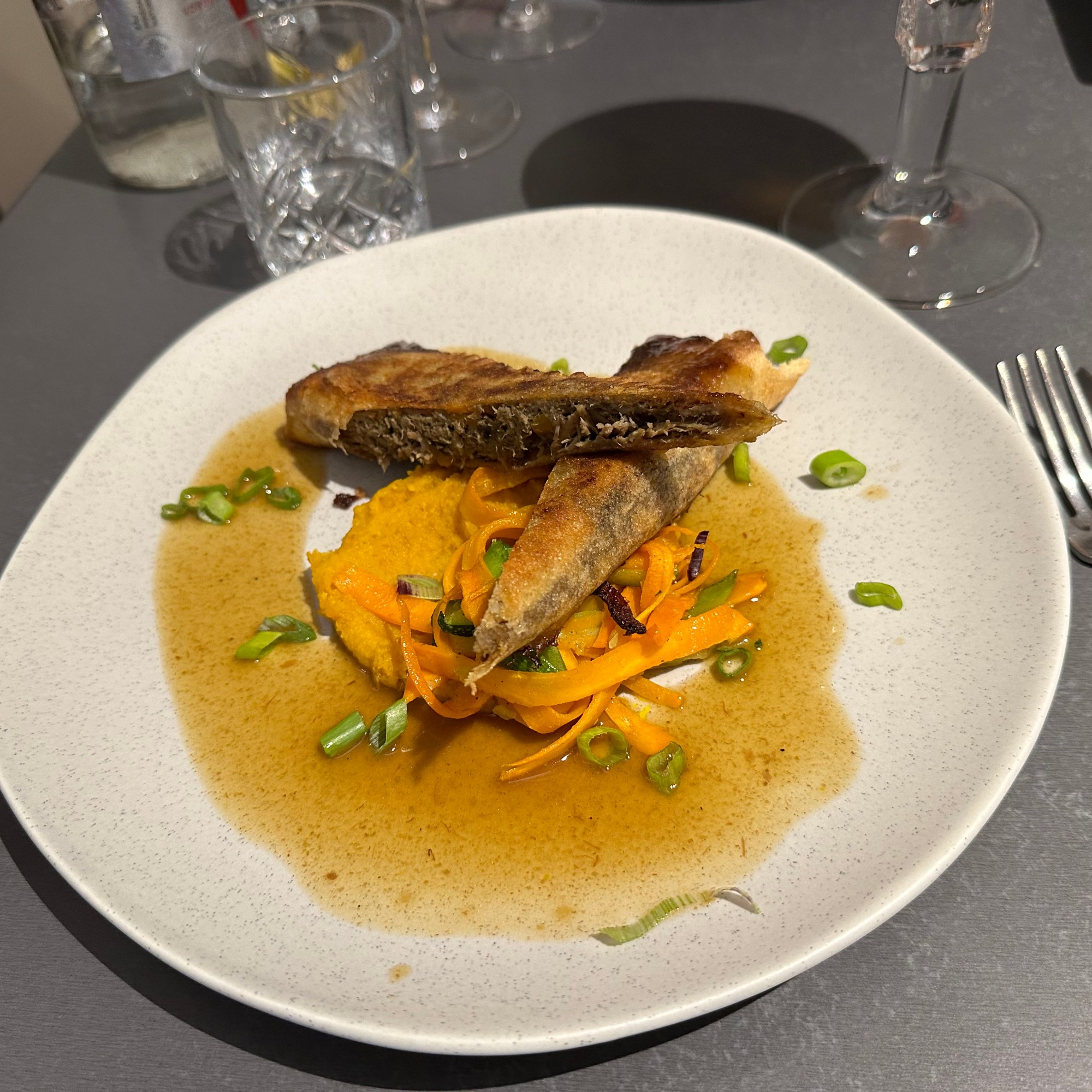
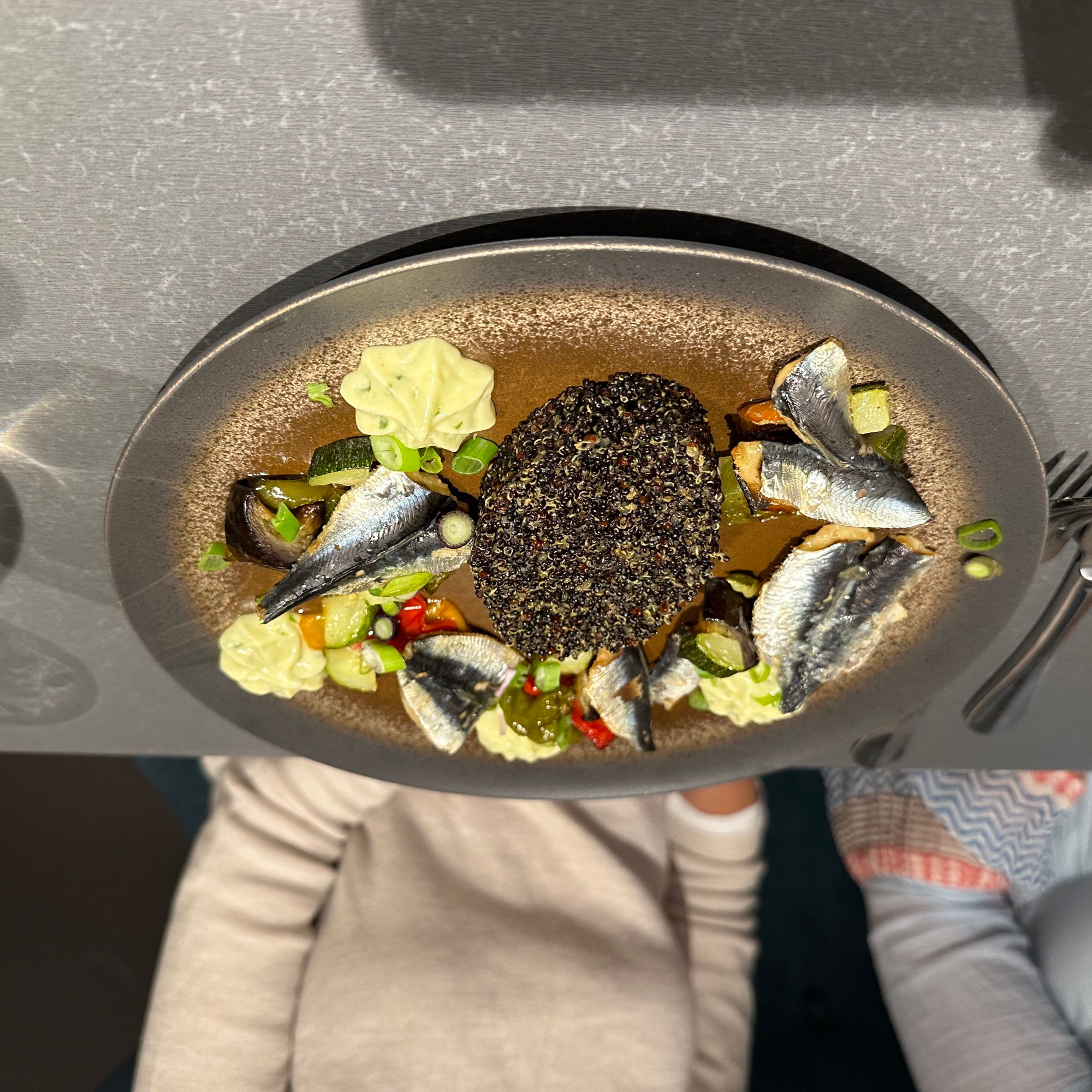
Pretty good bites that night.
On to Mont Saint Michel and the last bike day of the trip!
After 2 nights in Bayeux and a loop ride to the coast and the British and Canadian Normandy beaches on Day 1 of biking, Day 2 took us back to the coast to the American beaches, and then inland.
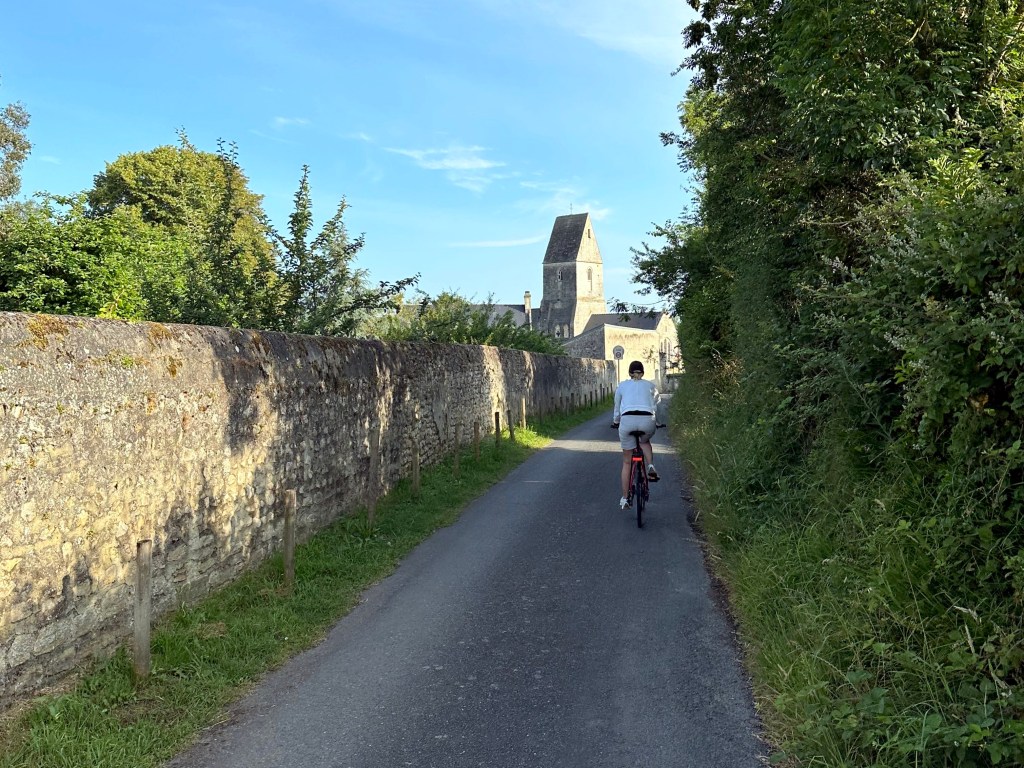
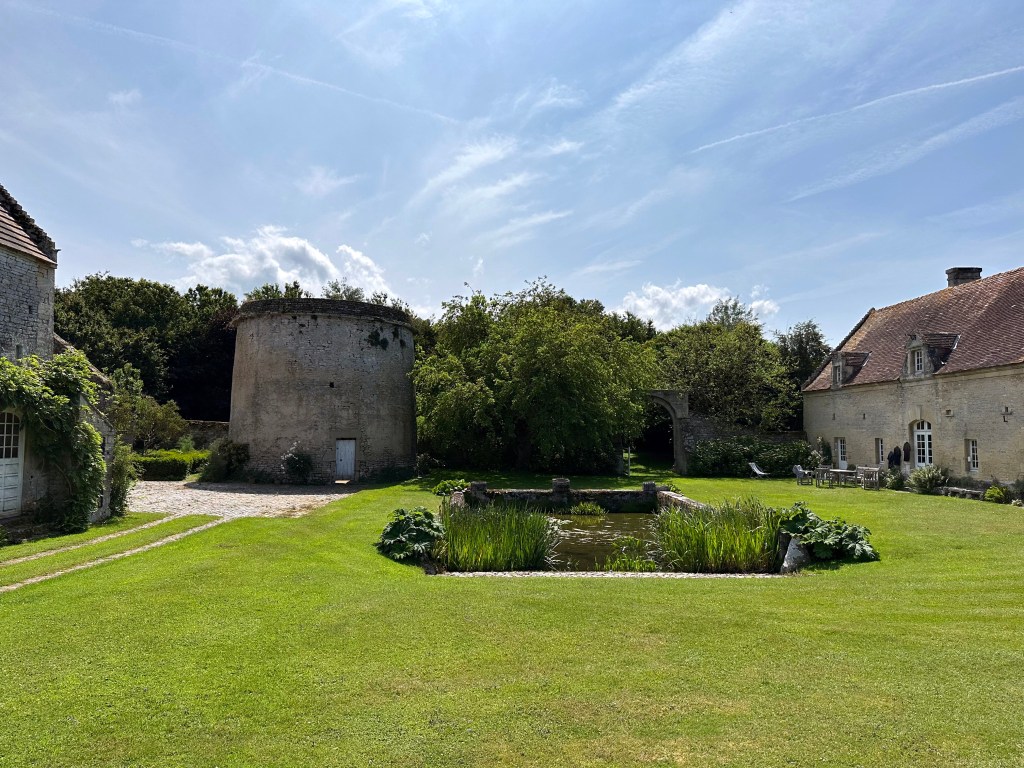
Some historic estate or other a few miles outside of town:
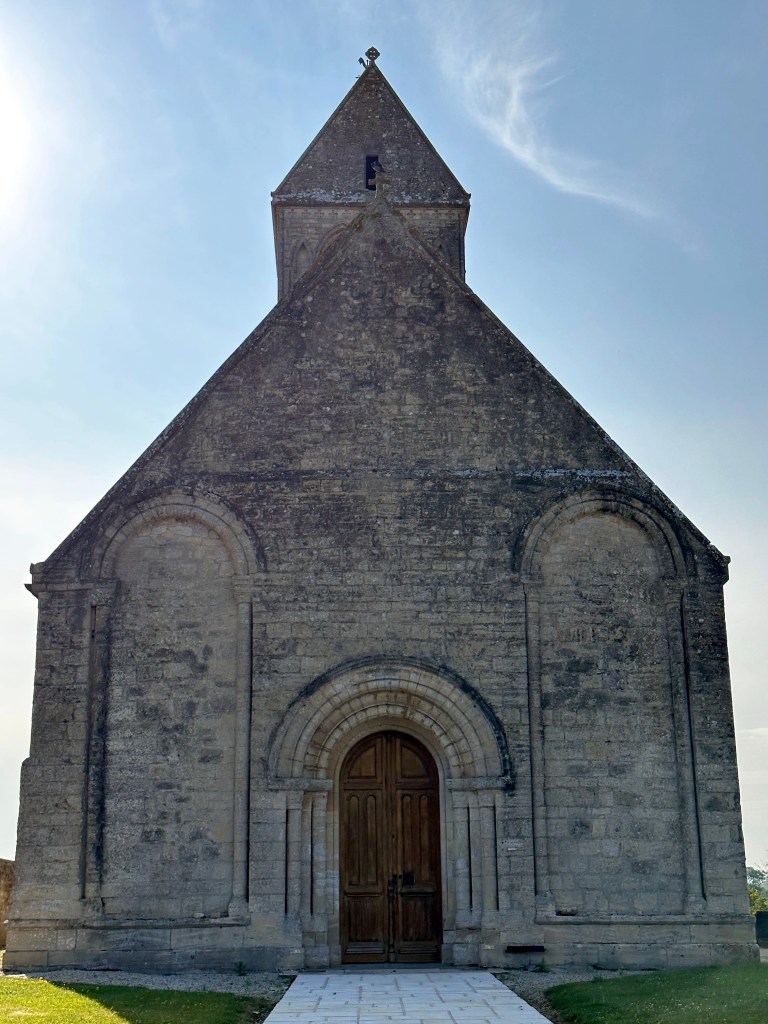
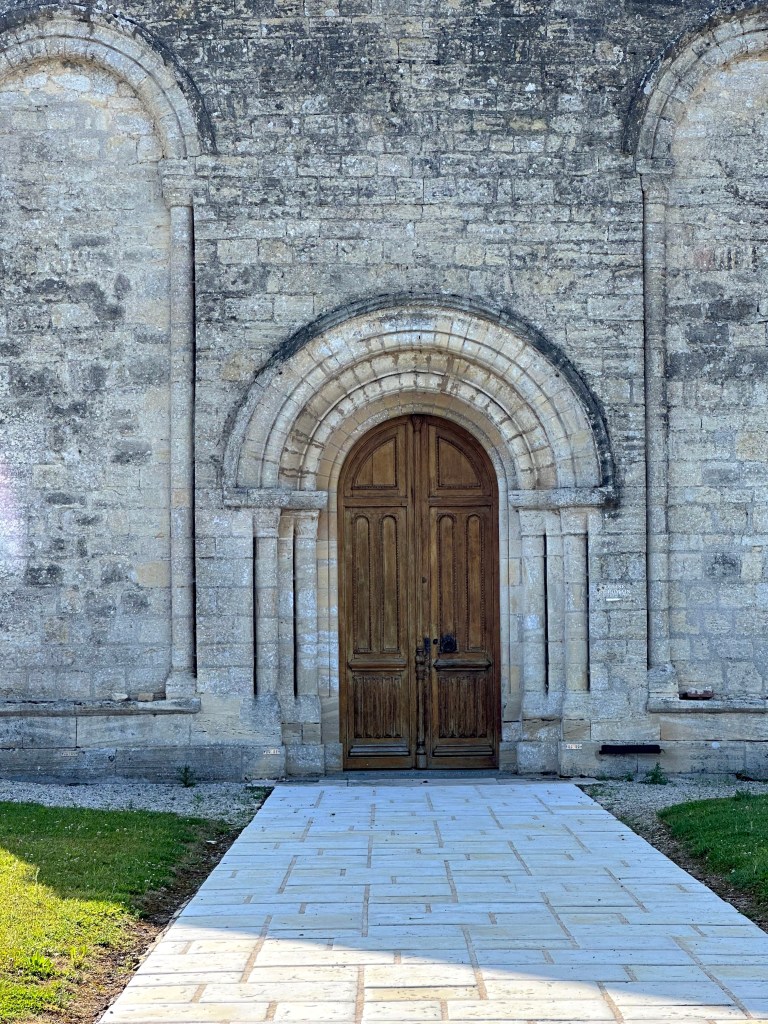
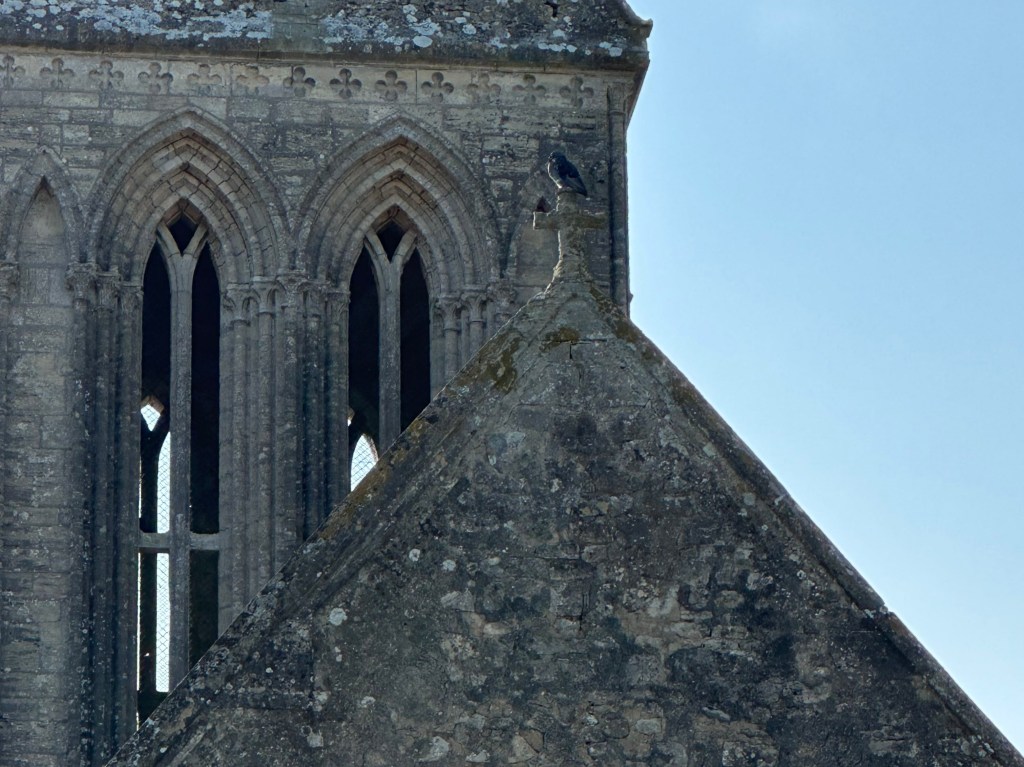
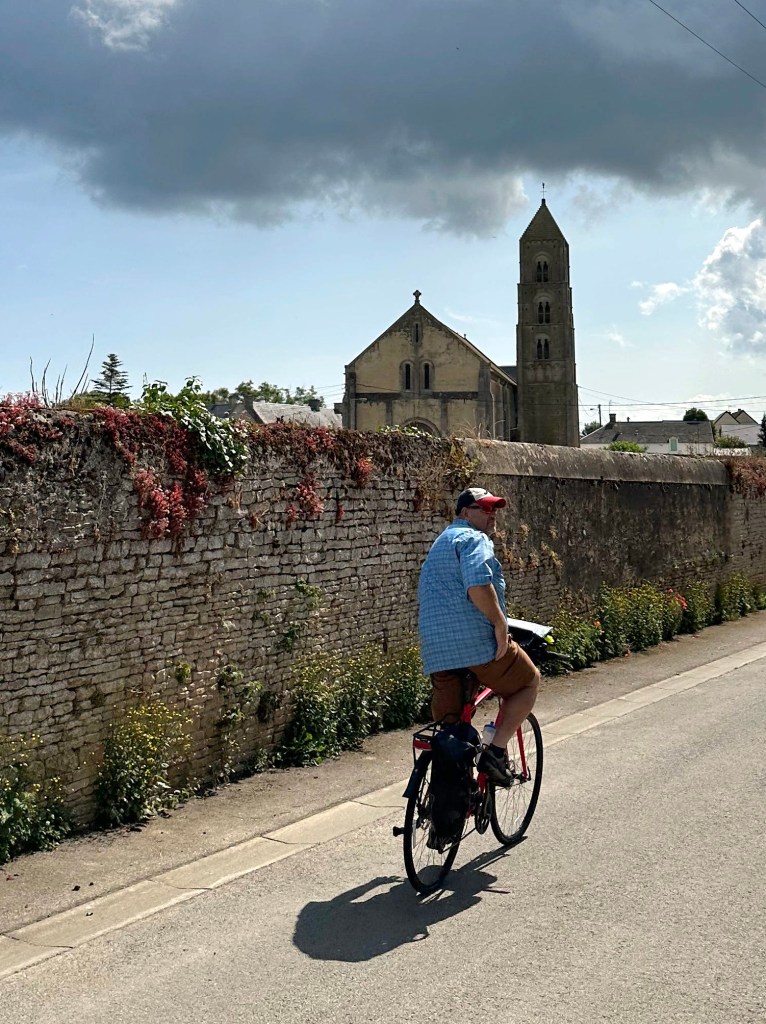
Passing by the Église Saint-Romain de Étréham, the Church of Saint-Roman.
Originally built in the 11th century, but renovated over time, it still retains its Romanesque west facade.
And 12th-century tower.
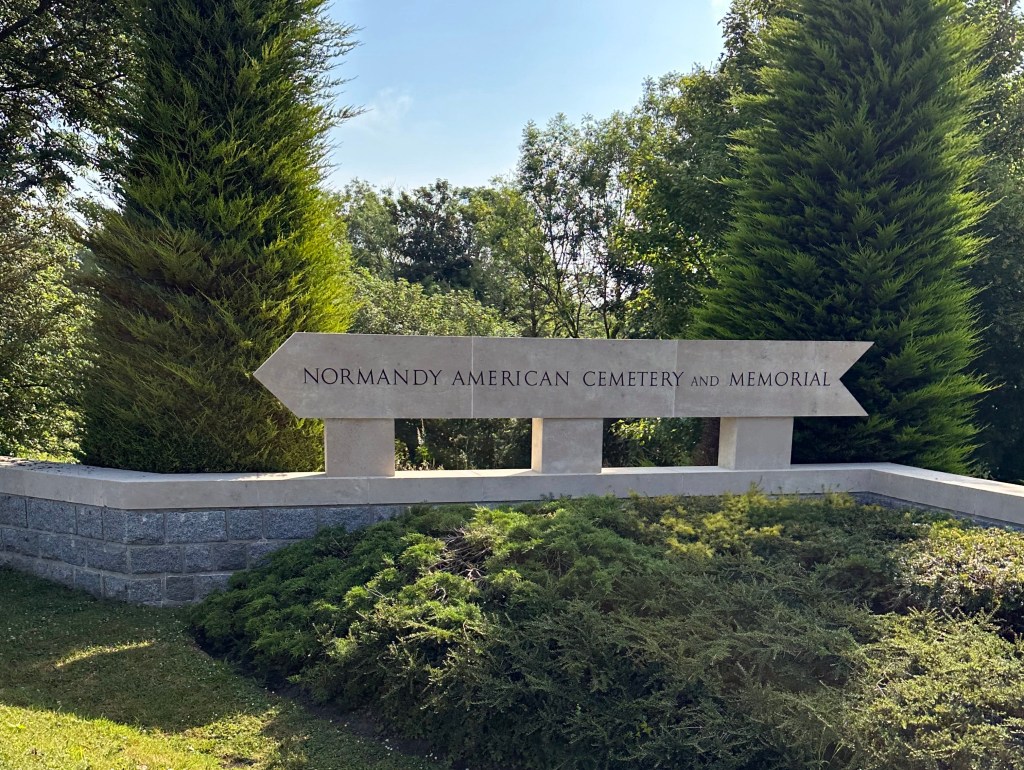
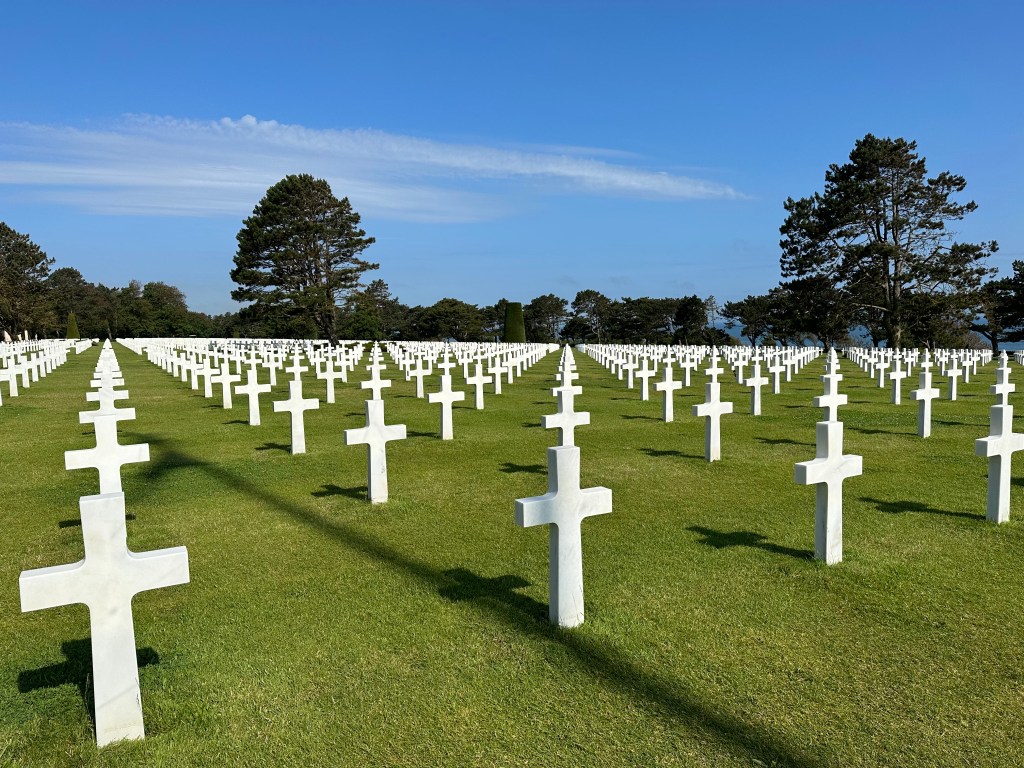
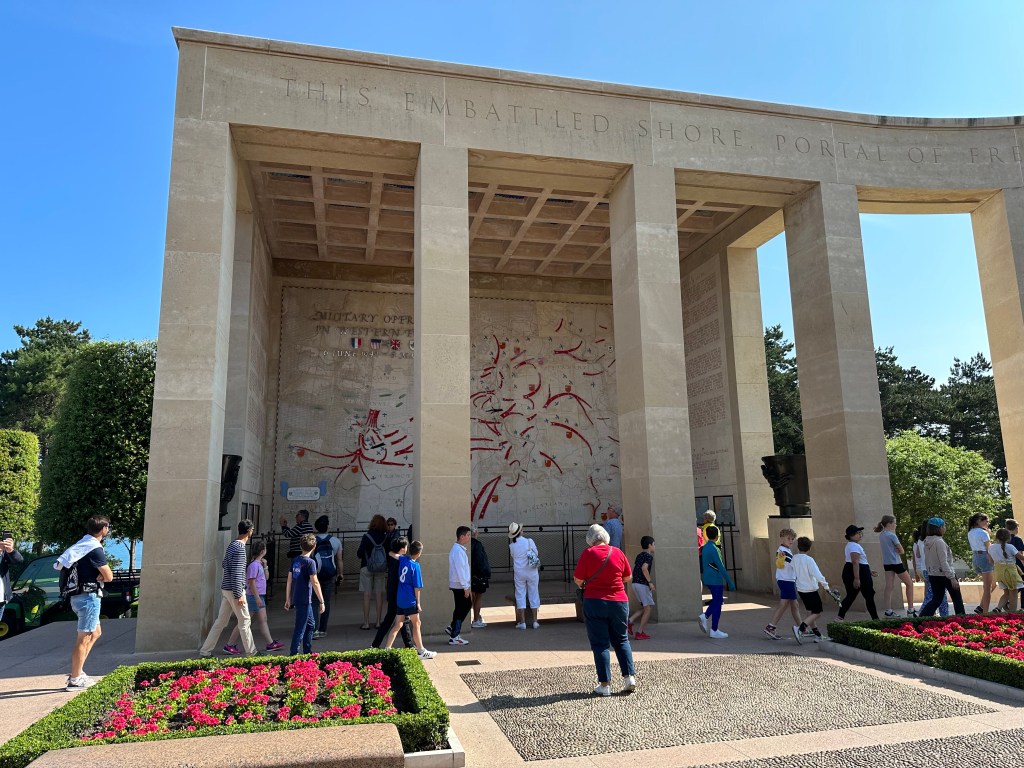
Highlight of the day’s ride, at Omaha Beach:
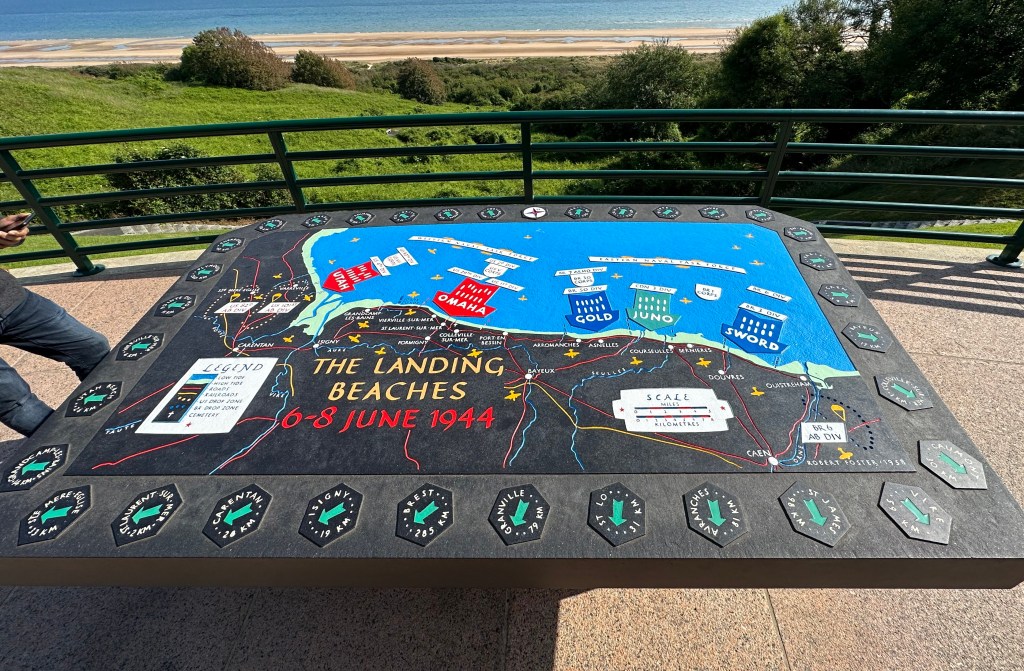
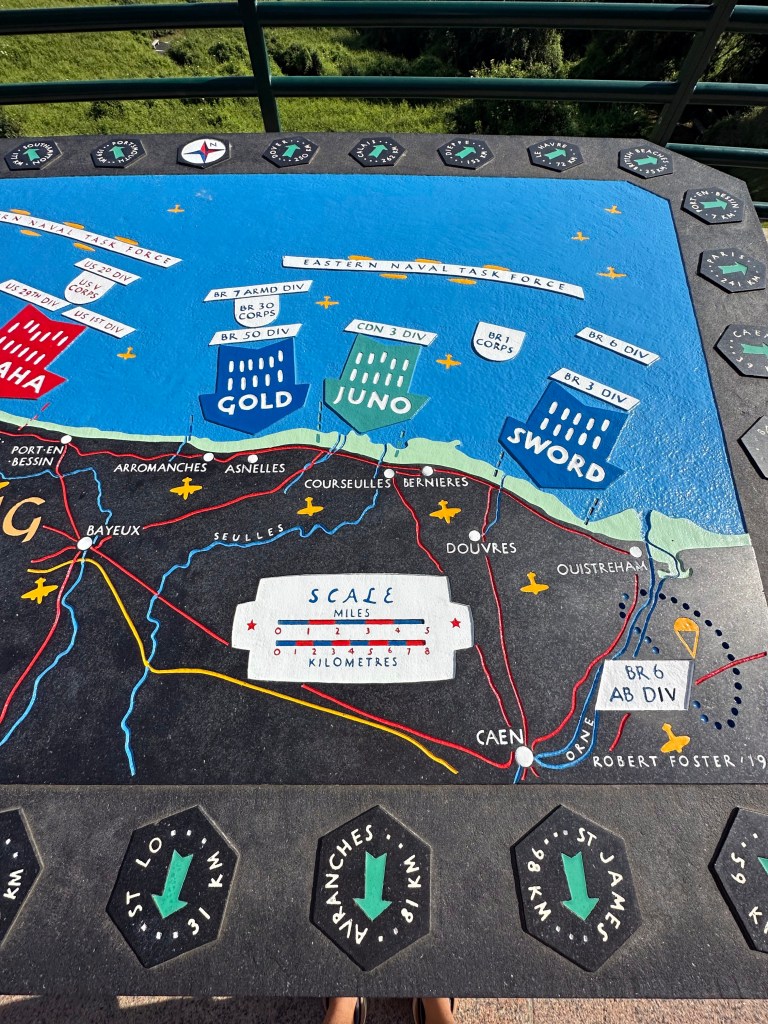
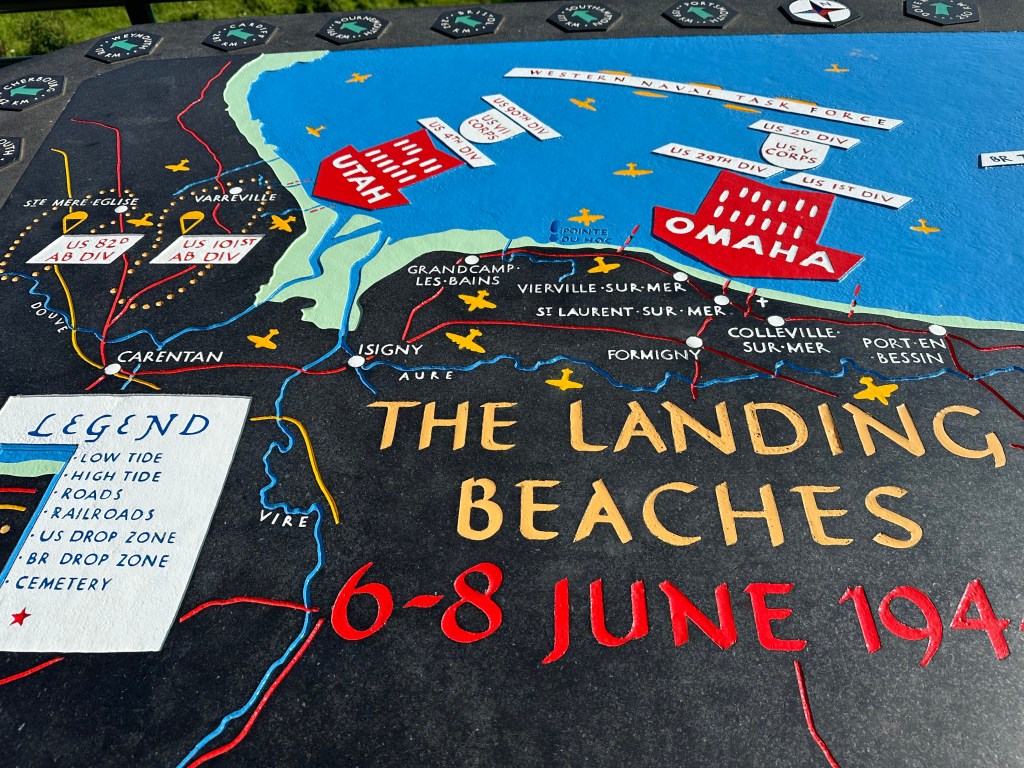
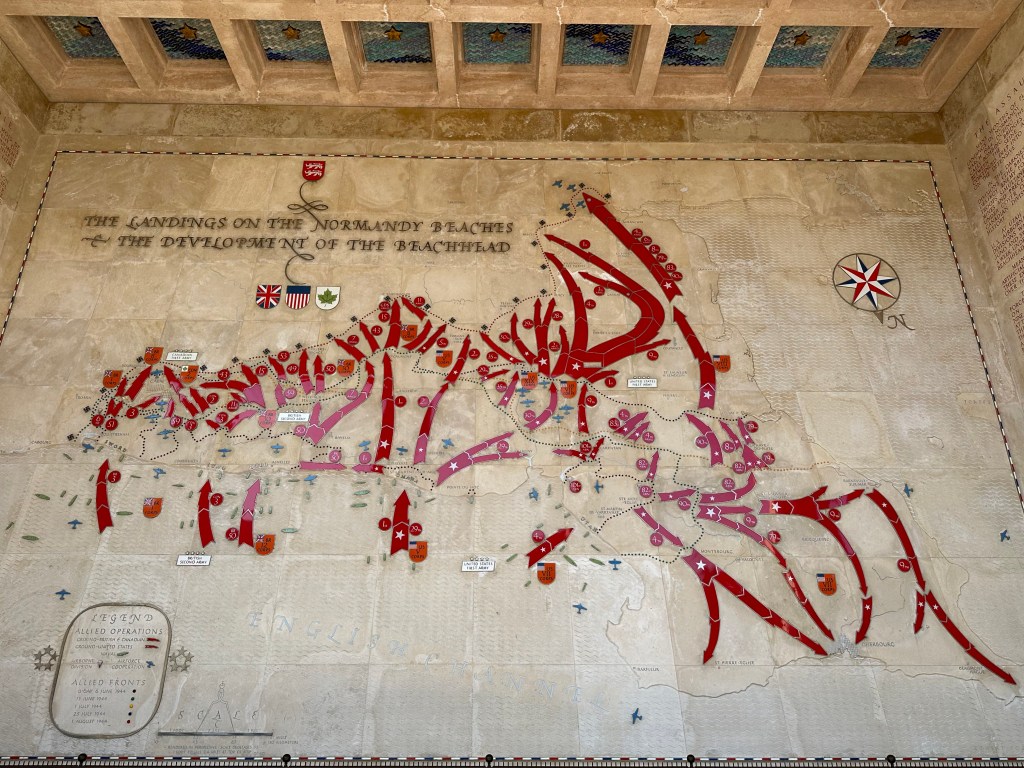
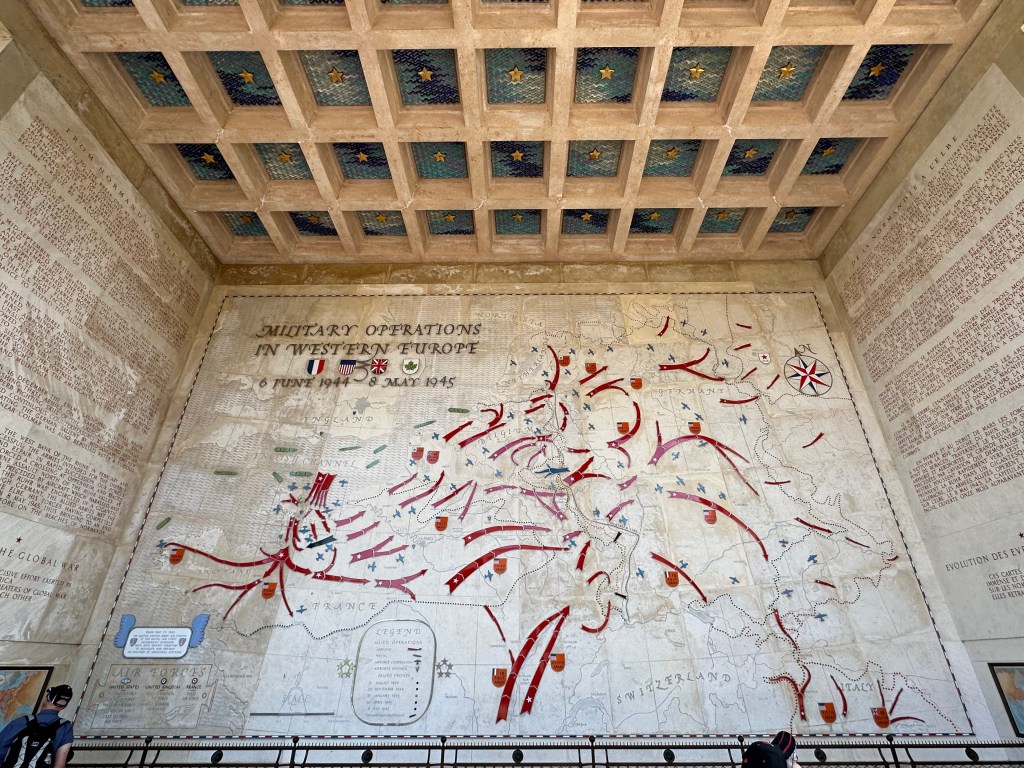
Cool map of the Normandy landings at the cemetery:
Yesterday, we were there:
Today, we are here:
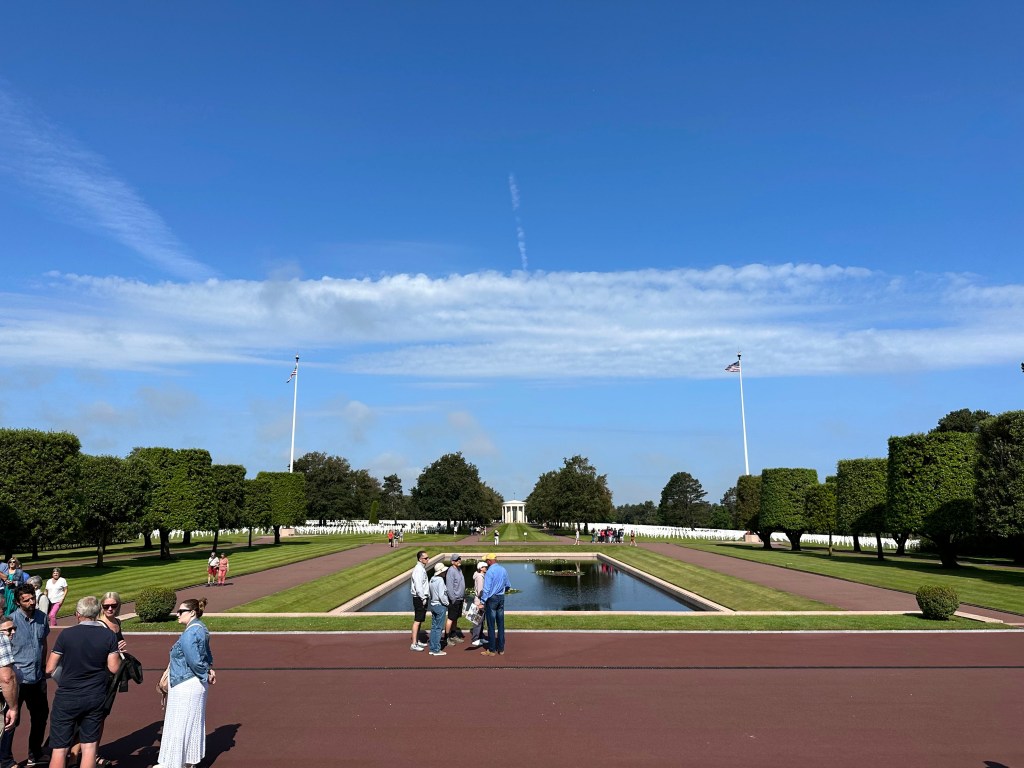
Sobering but serene.
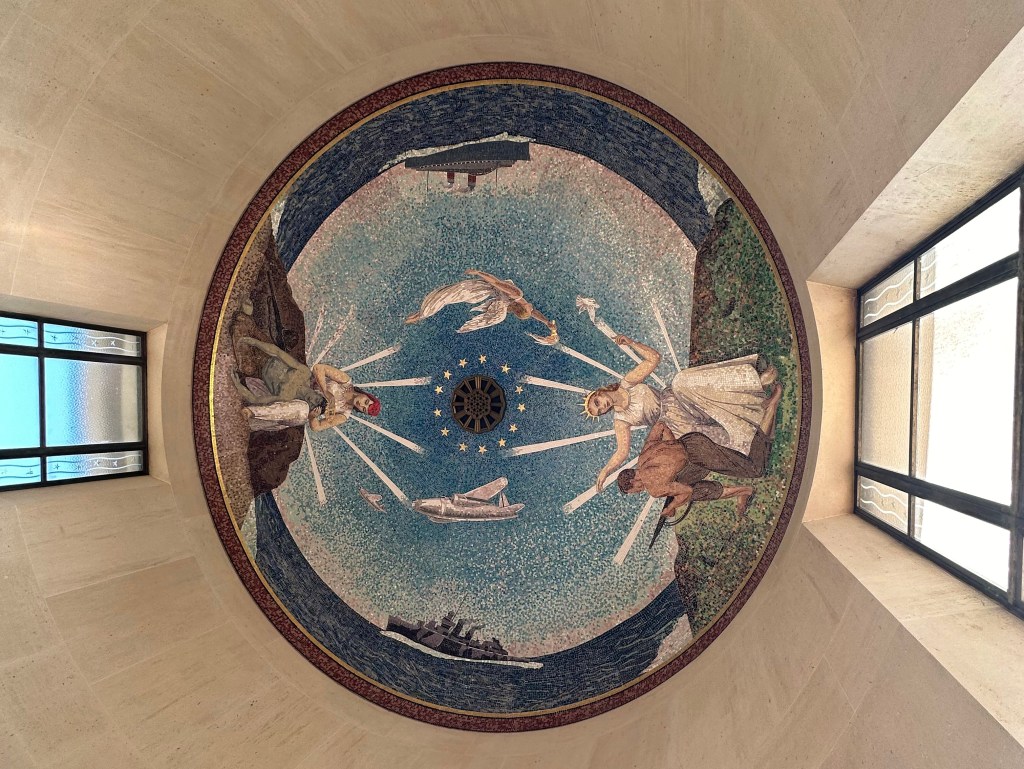
Cool mosaic capturing the cycle of Americans traveling to and fighting in Normandy on the ceiling of the cemetery’s chapel:
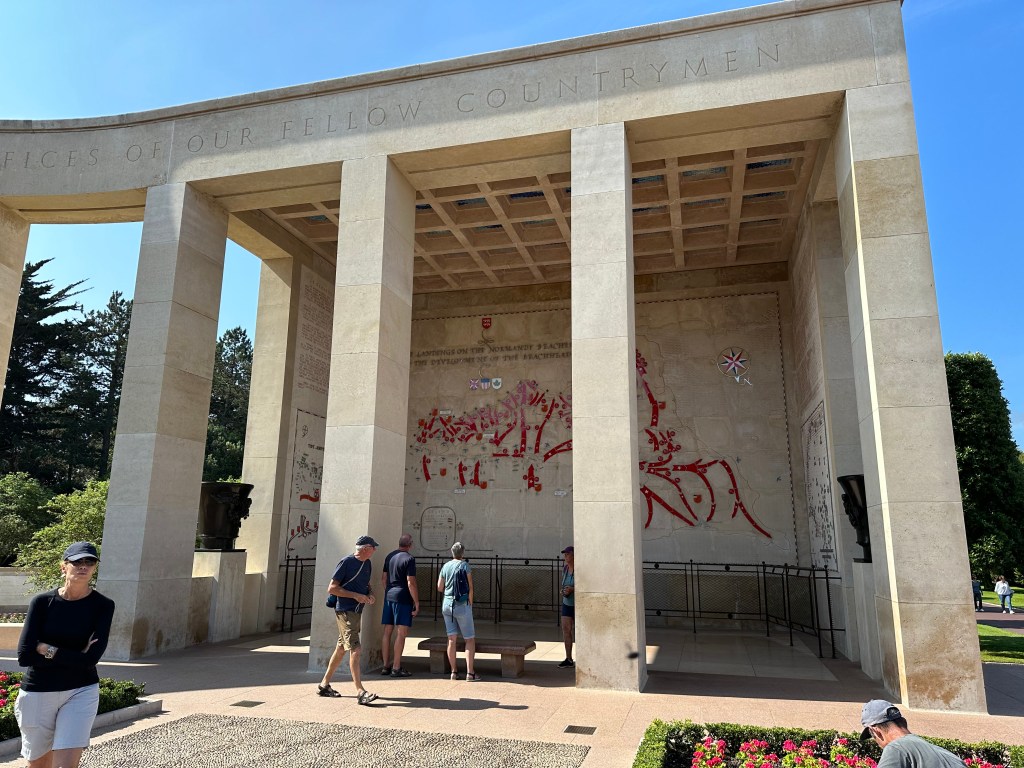
Massive mural of the landings and subsequent beachheads:
And a short distance away. . .
the entire European theater (from the non-Soviet POV, anyway):
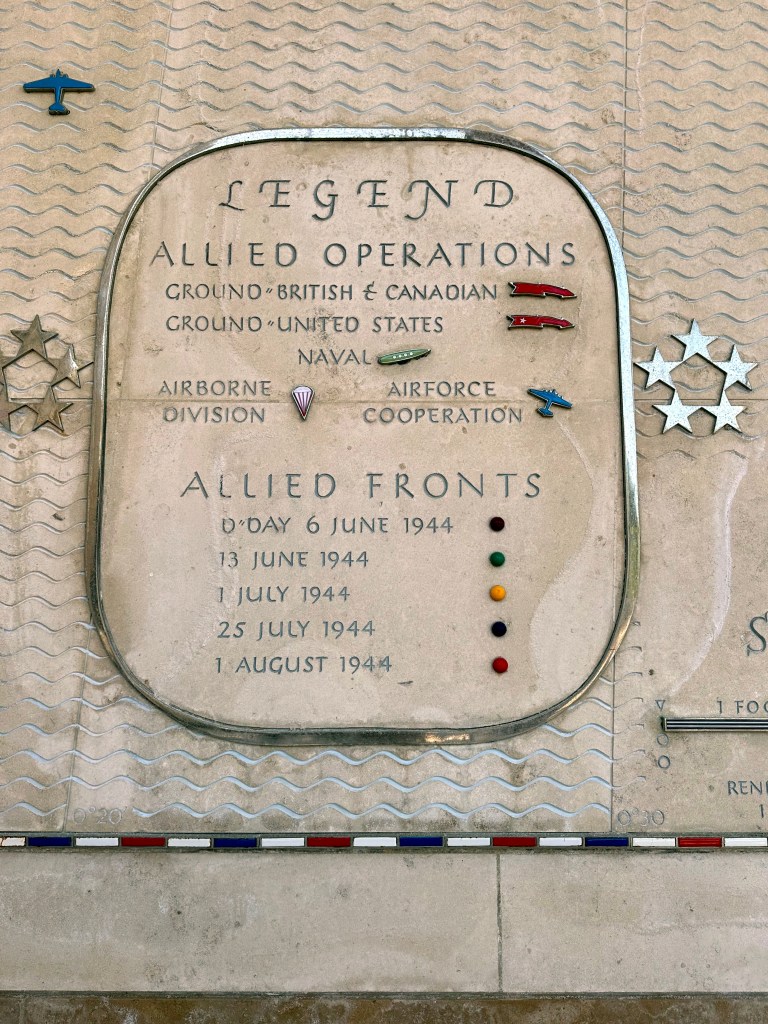
Both with handy legends.
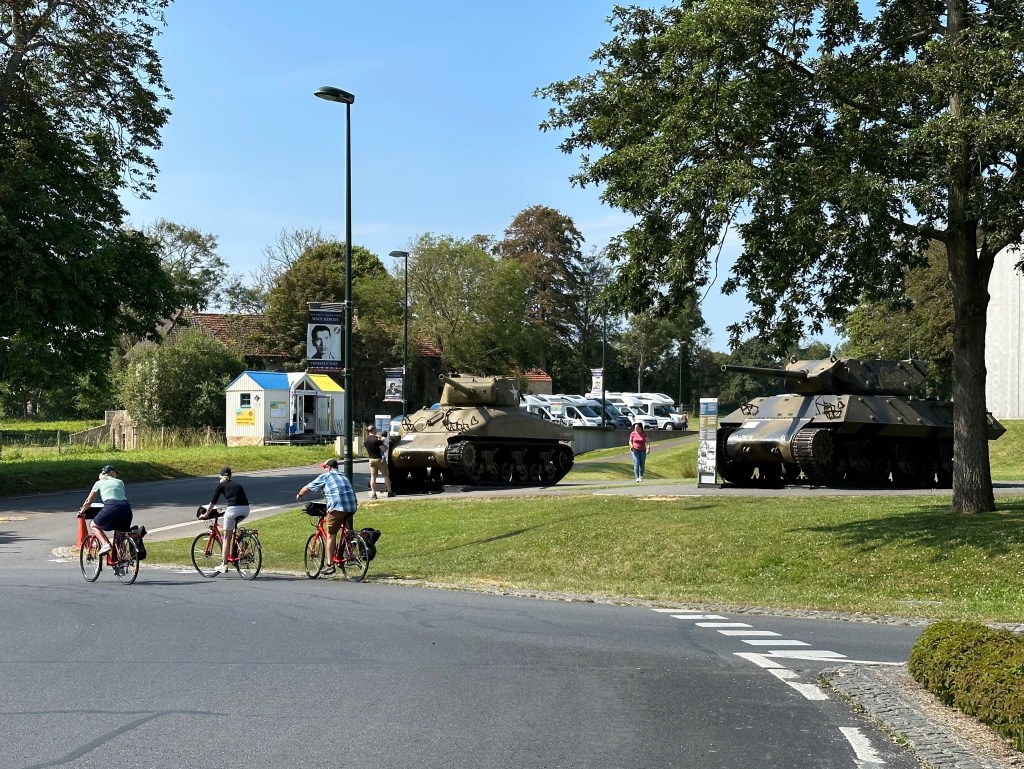
Onward (and more tanks!).
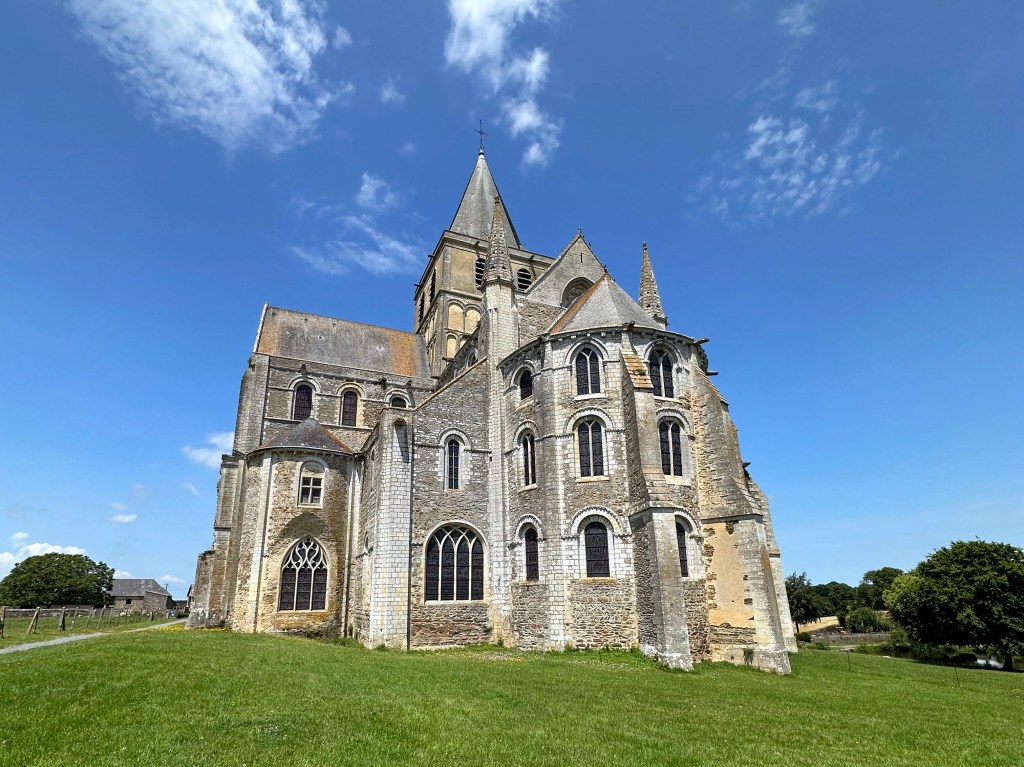
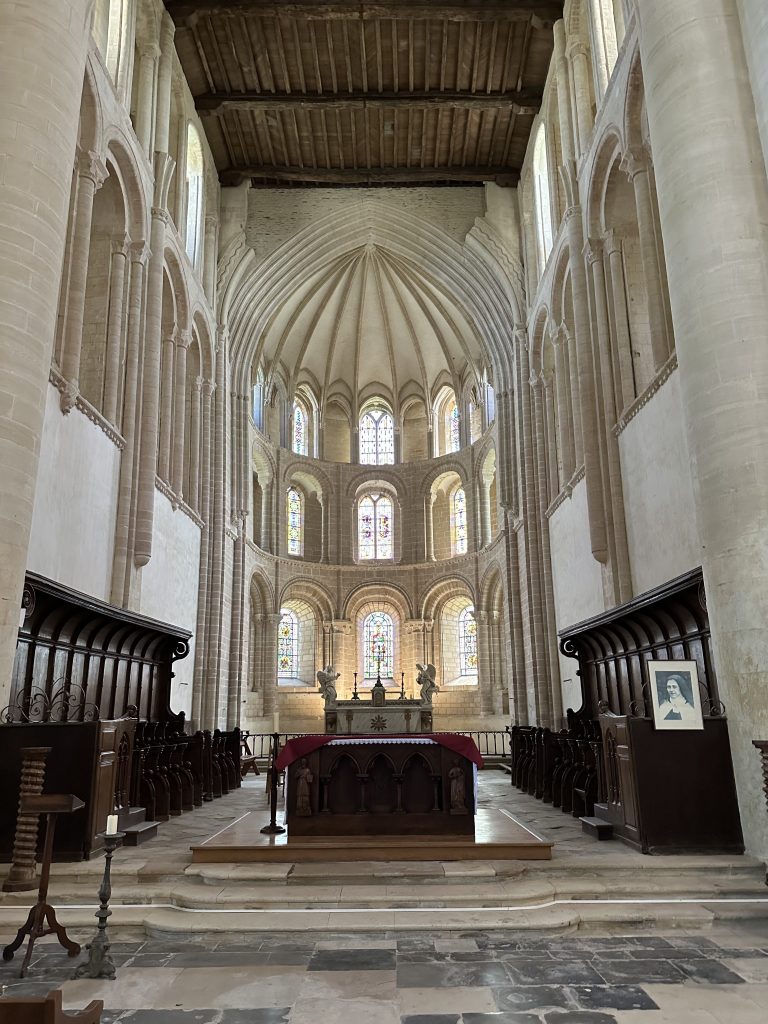
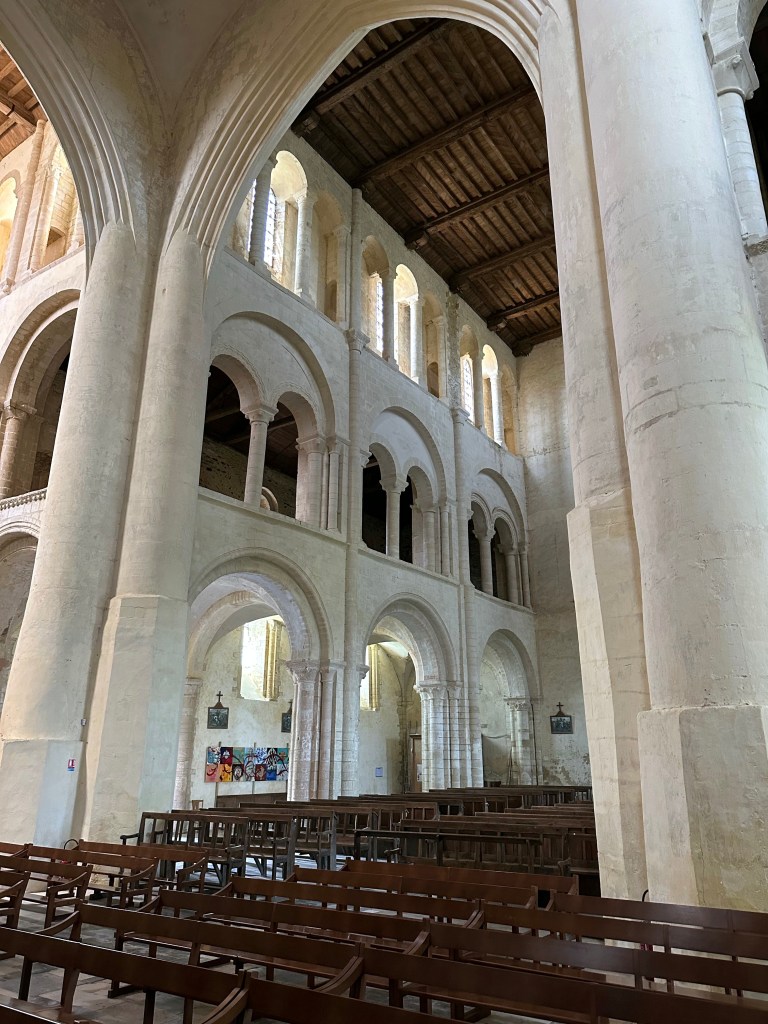
The Abbey of Saint Vigor, founded in 1032 by Duke of Normandy, Robert the Magnificent (father of William the Bastard, who went on to become William the Conqueror). (Robert the Vigorous would have been much funnier and more apropos.)
In the 12th century, the abbey extended its powers over nearby, former Merovingian abbeys, and also founded several priories, becoming more influential and wealthy in the process.
“In 1337, the dynastic rivalries between the Valois and the kings of England precipitated the country into the Hundred Years War, which plunged the country into misery, aggravated by epidemics of plague. The abbey was fortified and a garrison settled there. In 1418, Richard de Silly, knight and captain of the abbey, was obliged to cede the abbey to the King of England. However, after the victory of the constable de Richemont over the English at Formigny in 1450, Normandy returned definitively to the kingdom of France.” (From here.)
The monks left the abbey during the French Revolution, and the abbey became the unique parish church of the village of Cerisy-la-Forêt in 1790.
The abbey was built on the ruins of an older monastery destroyed by the Normans during their invasion.
Of the French. When the Normans were still Vikings and did not yet benefit from Rollo’s permanent settlement here. . .
Final (and very long) stretch of the day’s ride.
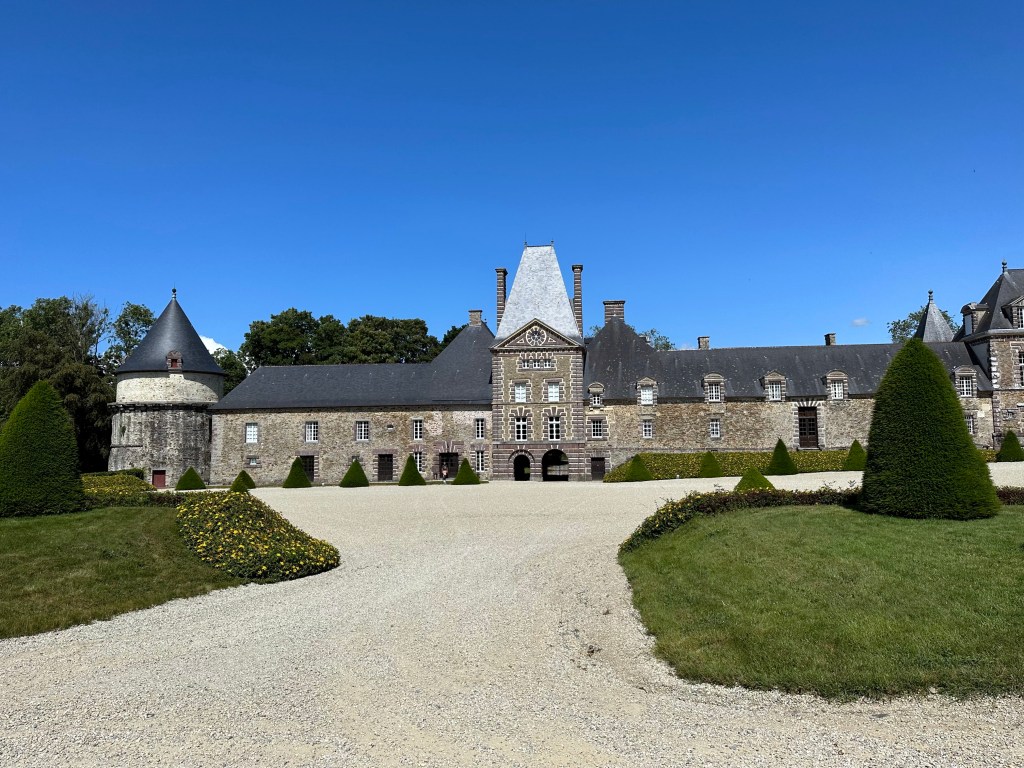
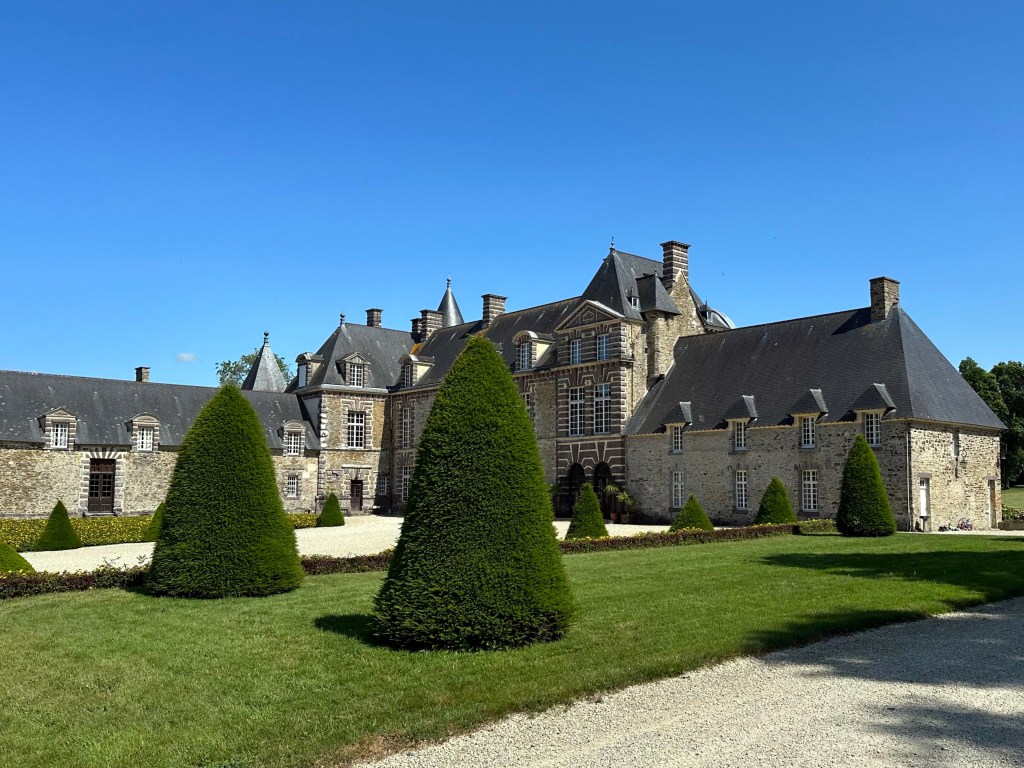
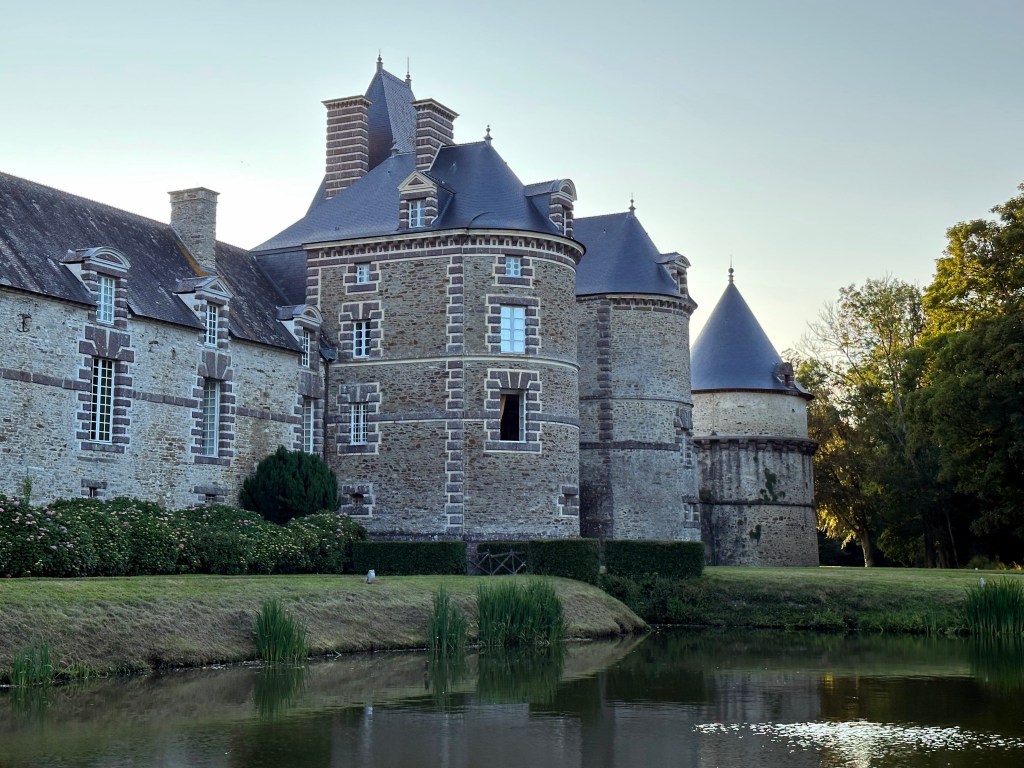
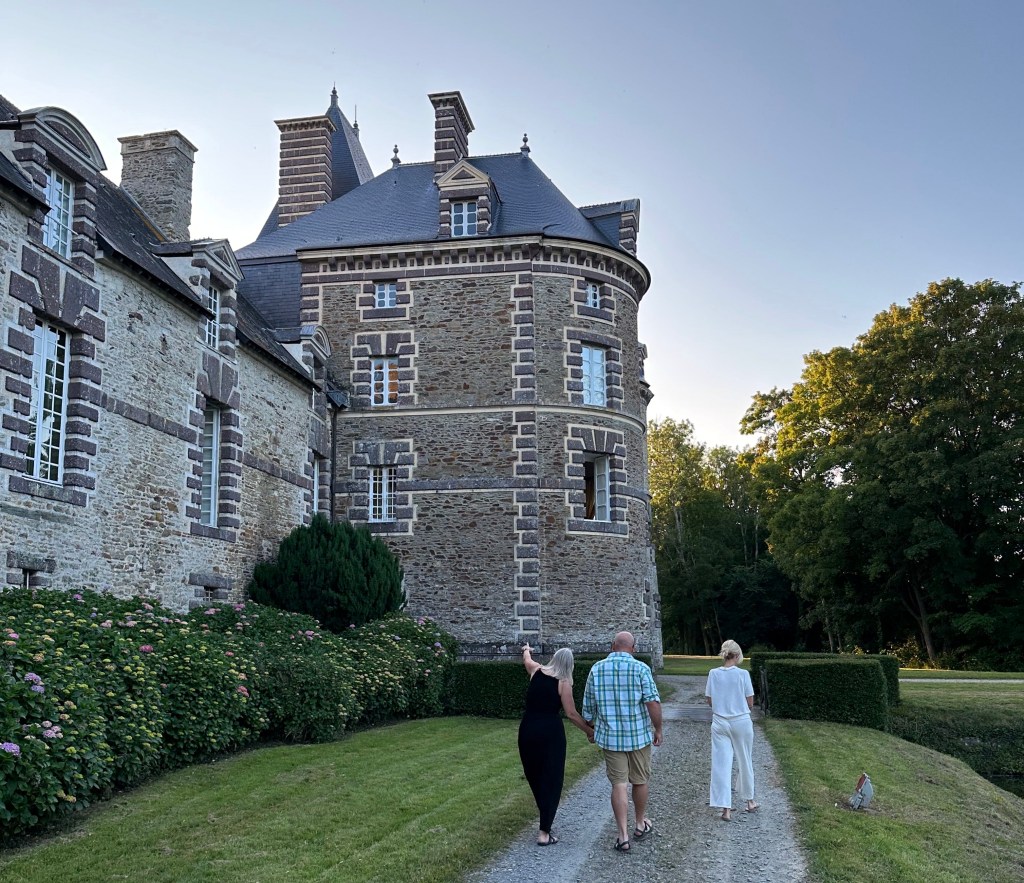
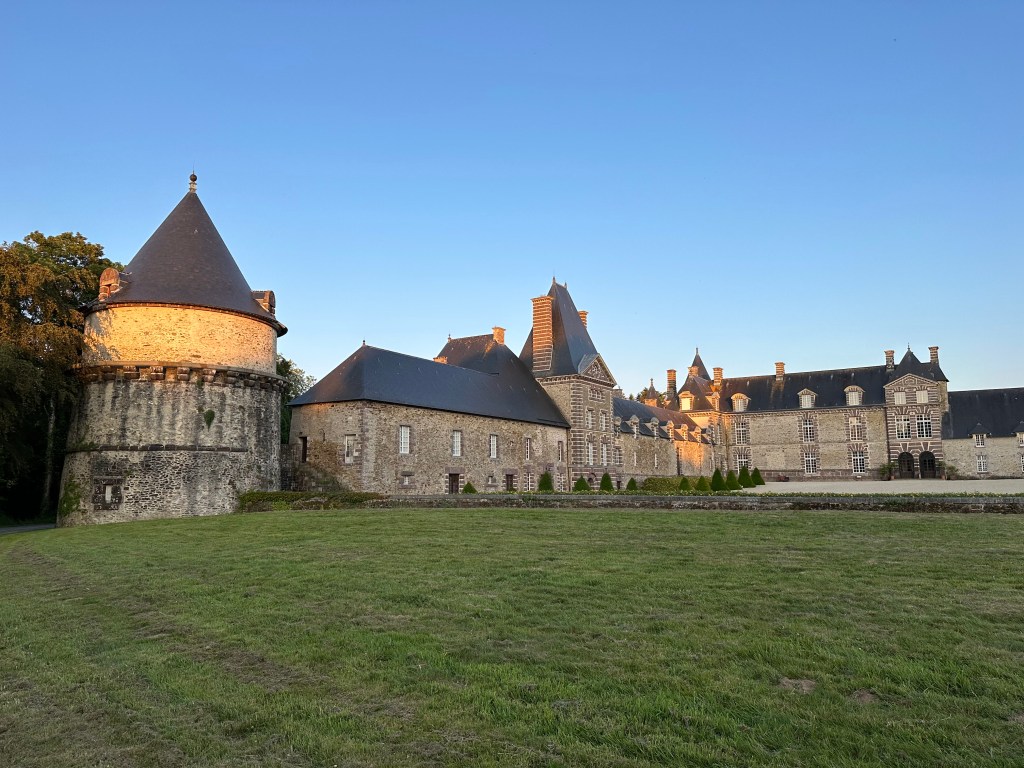
But with a pretty cool conclusion: Chateau de Canisy, our lodging for the evening.
About which we have much to discuss – both the very cool (its history) and the very bizarre (our actual stay).
First, some history. Chateau de Canisy dates to the freakin’ 11th century. Definitely the oldest and most historic place we’ve stayed (just off the top of our head – we did stay in a Welsh castle 2 years earlier, but we think that was built maybe 100 years later (by Normans, as it happens)).
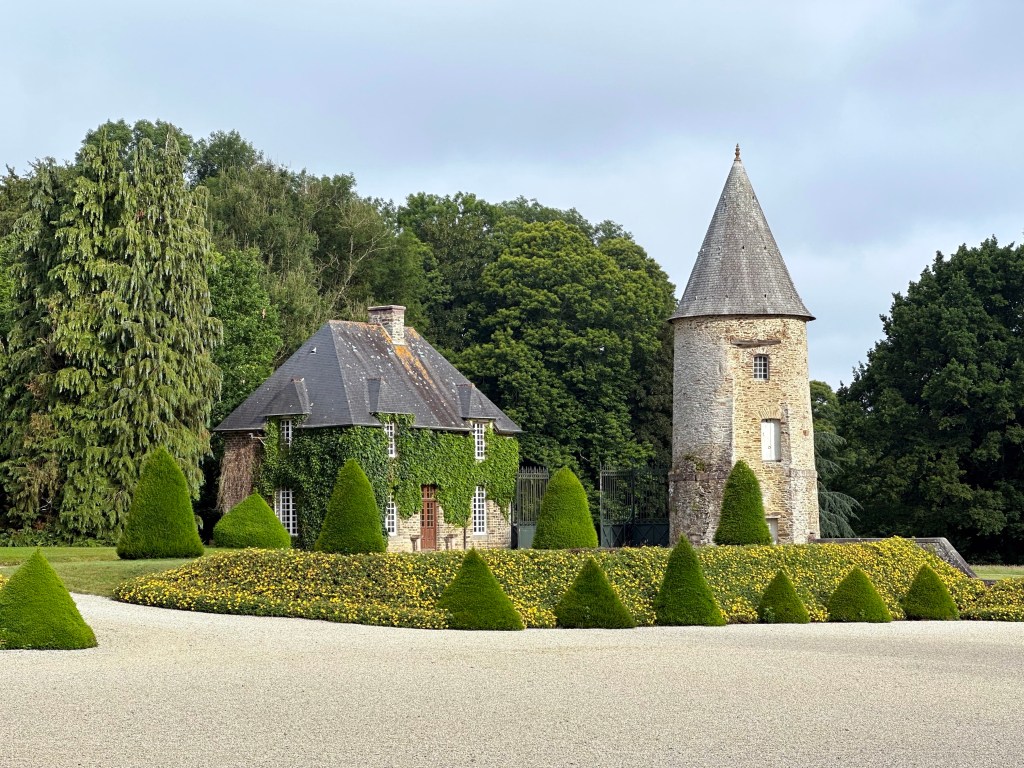
AND there’s a connection to Billy the Conq and the first of the two invasions referenced during our Day 1 post of the trip. In 1066, Hughe de Carbonnel participated in the conquest of England alongside William the Conqueror. At that time, Hugues de Carbonnel already was Lord of Canisy. Of the medieval chateau, one fortified tower and part of the living quarters remain. The family also remains – the current occupants, the Count and Countess Denis de Kergorlay, are direct descendants of Hugues de Carbonnel. The Countess, we would learn, is quite a piece of work.
Most of the Chateau de Canisy’s present architecture dates from the time of Henry IV, when Herve de Carbonnel (1558 – 1625) undertook the construction of a castle to mark his illustrious alliance with Anne de Matignon, daughter of the Count of Thorigny, Marshal of France. In 1588, he commissioned much of the rest of the chateau to be built by architect François Gabriel, (the ancestor of Ange-Jacques Gabriel, one of the architects of the Château de Versailles). A monumental granite staircase was designed by Gabriel, as well as “the addition to the magnificent Cotentin stone of the pudding stone, a purple stone with amethyst reflections, for creating bosses and door and window frames.”
And who wouldn’t want to adorn their chateau with pudding stones?!
In the 20th century, Chateau de Canisy remained a stronghold of the Kergorlay family. From generation to generation, the family has lived in the chateau and has preserved and restored it. Damaged by the fighting during the allied landings in 1944, the chateau was restored with the help of the Historical Monument administration and classified as “Monument Historique” in 1945. Therein ends the cool, historical aspect of our visit.
On to our stay itself. We were the only guests there. The good news? Both couples got massive, luxurious, royal accommodations with tons of character. That was pretty much the only good news. The first bad news was that only a receptionist, manager, and cook were in residence. No bar, no bartender, and no one spoke English. Using Google Translate, we ended up ordering the beers we so desperately needed after the long last leg of the ride. When we stay we ordered the beers, we ordered all of their beers. They had maybe 3/4 of a case? Maybe? We had them bring all of them out, where they were rapidly consumed.
Then the receptionist left, and we were served dinner (in the music room located in a turret, which was cool, although we have notes on the meal itself). After this, the manager announced the second bad news: they were leaving and that we should lock the front door when we went to bed.
We’ll be alone here by ourselves, we asked?
Oui.
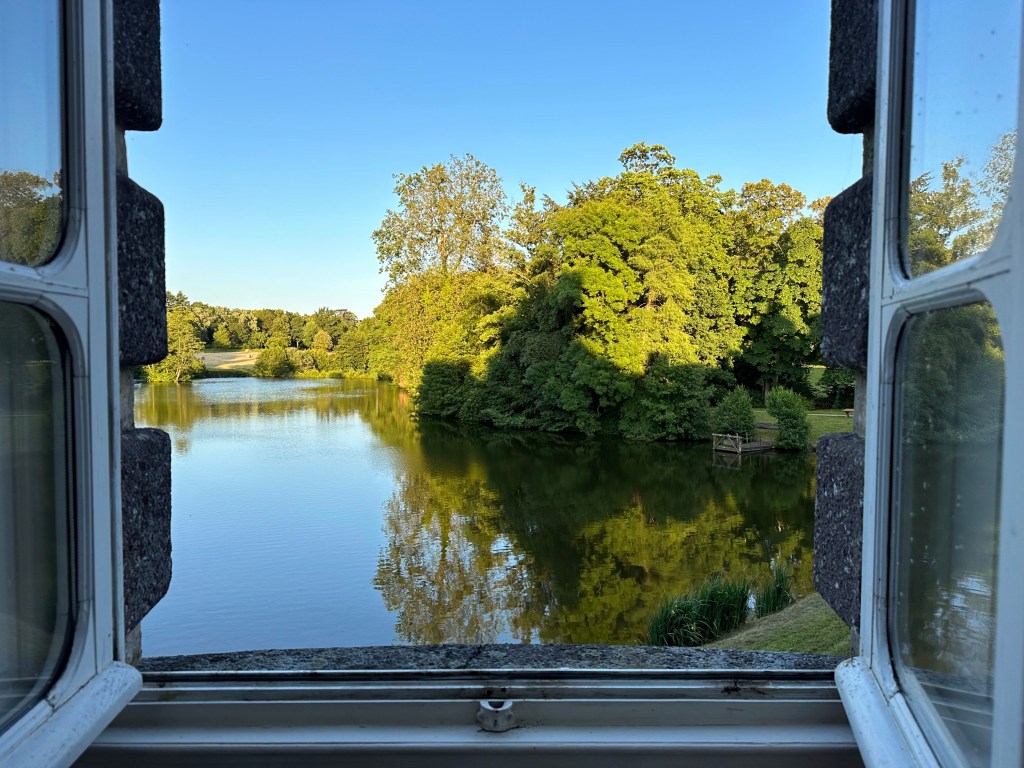
So, because nightfall came so late in Normandy in July, our first act of our now-independent stay was to take a walk all around the grounds, which were very nice.
“Is that a pudding stone?”
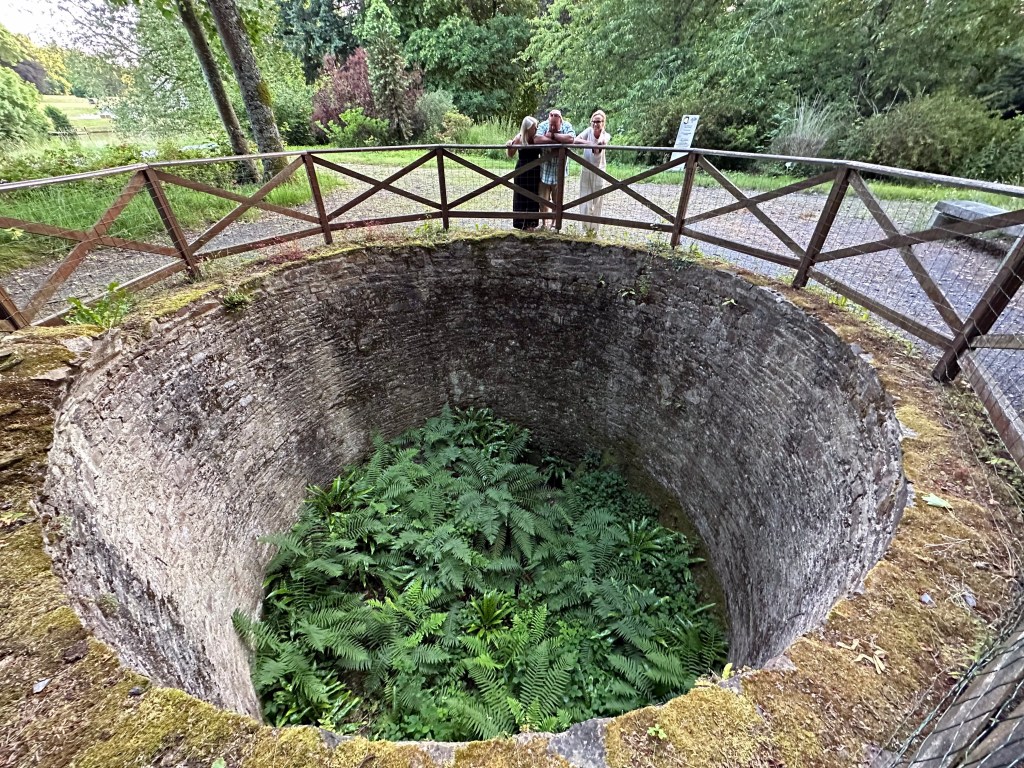
The chateau’s 16th-century ice house (minus roof and “entrance airlock”), discovered in the 1850s.
Then, we reentered the chateau to explore there. On our own. Alone and unsupervised.
We explored every inch of this place, from the barrel-vaulted basement (no dungeon or torture chamber was evident, but there could always have been a secret door that we missed. . .), to the 1980s era bar (!) and disco, to the unused hallway of standard hotel rooms on the second floor, to the attic space above.
And also the inside of this original tower from the 11th century.
After all of the exploring, and because we had consumed the entire chateau’s supply of booze, we decided to turn in.
As we locked the front door per the creepy – and now absent – manager’s instructions, and resigned ourselves to spending the night in a deserted, 11th-century chateau, we truly and sincerely turned to each other and somberly pronounced “see you tomorrow to whoever makes it through the night here alive.”
Seriously. It was like retiring for the night knowing that you’re in an unsettling horror film where something bad is going to happen. But you don’t know what; or to whom.
But with fewer cobwebs.
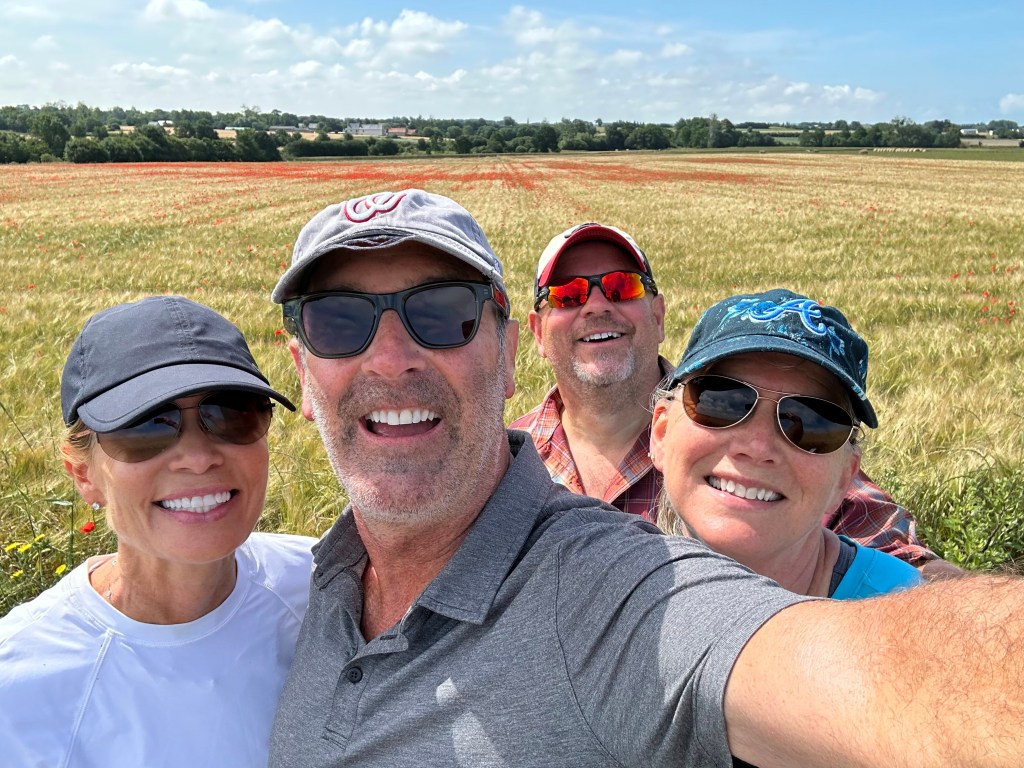
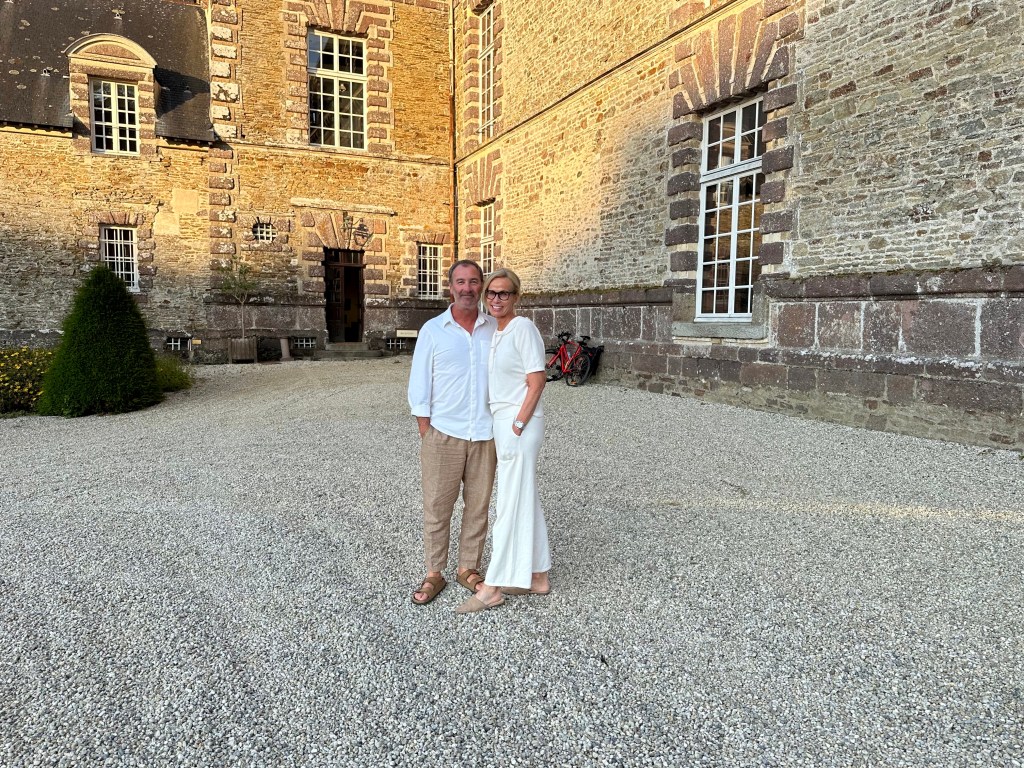
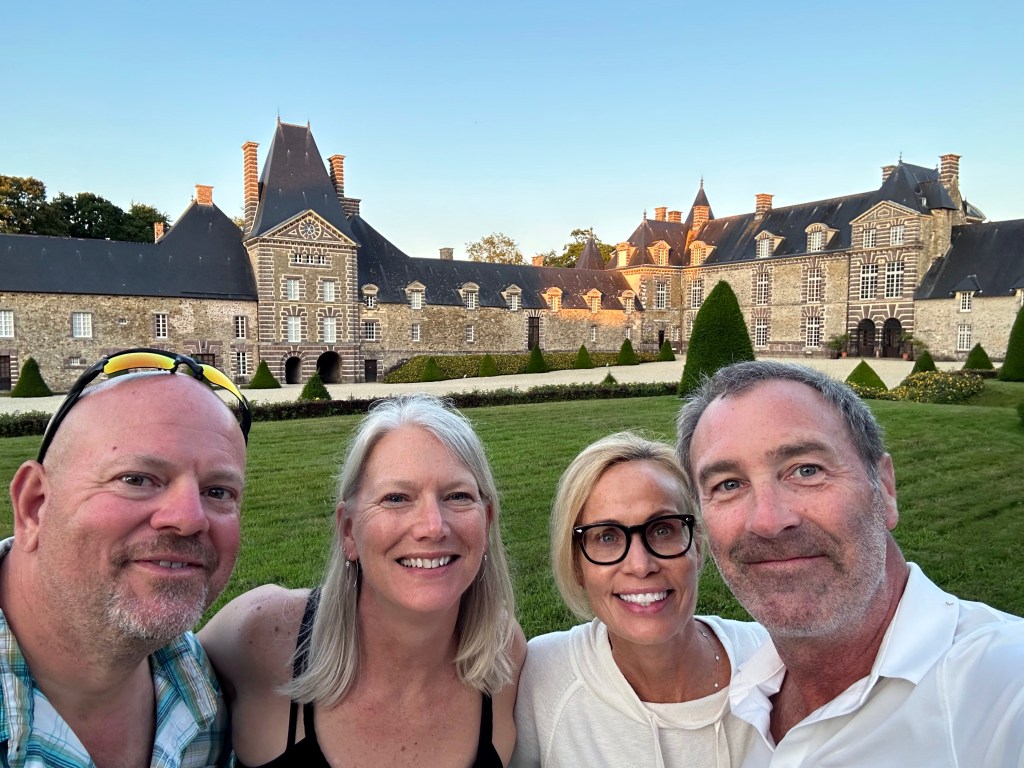
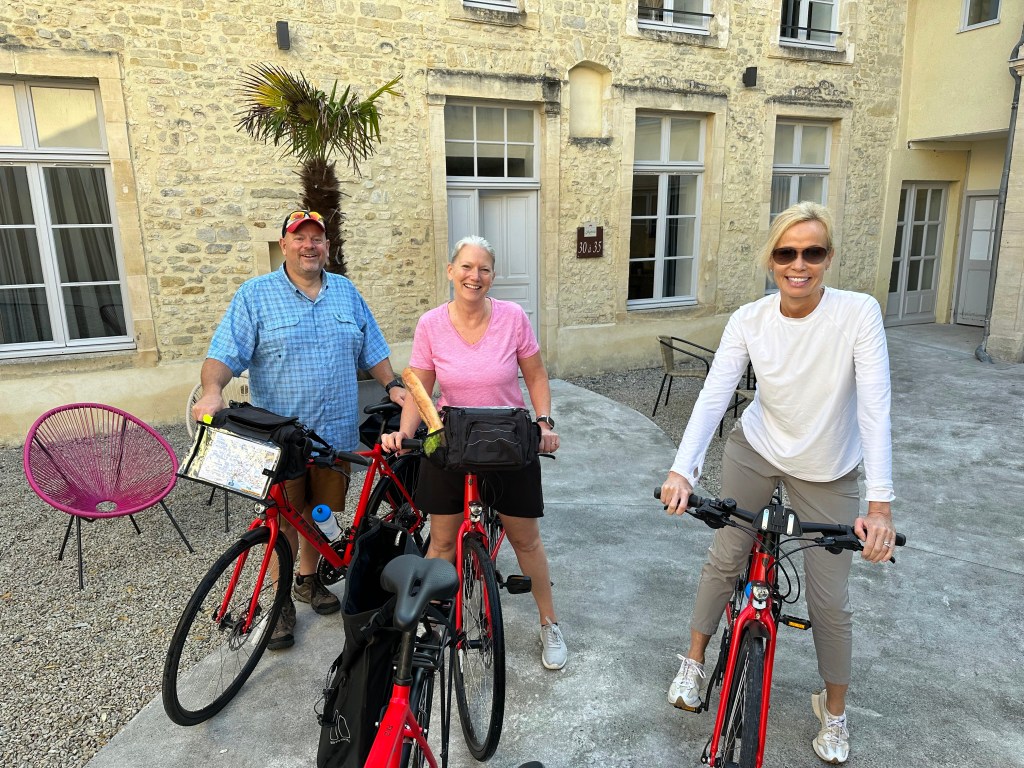
The intrepid group of ghost hunters who dared to spend the night alone in a medieval chateau.
There’s a postscript to this adventure: WolfeStreetTravel posted a review a few months later on TripAdvisor, on which we’ve posted many of our stays to that point (we submitted 290 reviews). The review reflected the narrative above, complementing the chateau’s history and architecture but also expressing bewilderment and unease over being left alone there overnight. The countess decided to respond to the review by denying all of this and stating that staff were there during our entire stay. Which, all four of us will contend, was patently untrue.
TripAdvisor apparently lets the hotel – not the guest reviewing the hotel – have the last word, and so we were not provided the opportunity to rebut the blatant fiction peddled by the countess. We were annoyed, but that was that.
Then, when, 3 years later, WolfeStreetTravel FINALLY gets around to posting this experience to our blog, we went to copy the review to simply paste it here only to find that TRIPADVISOR HAS REMOVED OUR REVIEW ENTIRELY.
We’re going to try to confront TripAdvisor about this, but it’ll take some effort to navigate through the turrets and walls they (and every other corporate entity on the web) have erected to delay, deny, or distract an actual person from contacting them. But we’re pretty annoyed, so we’ll give it a shot. If this effort bears fruit, we’ll post a follow up here.
The penultimate leg of our prolonged foray to Europe: France! We’ve already hit mainland Italy, Sardinia, Sicily, and Malta (trip overview, including legs, is here).
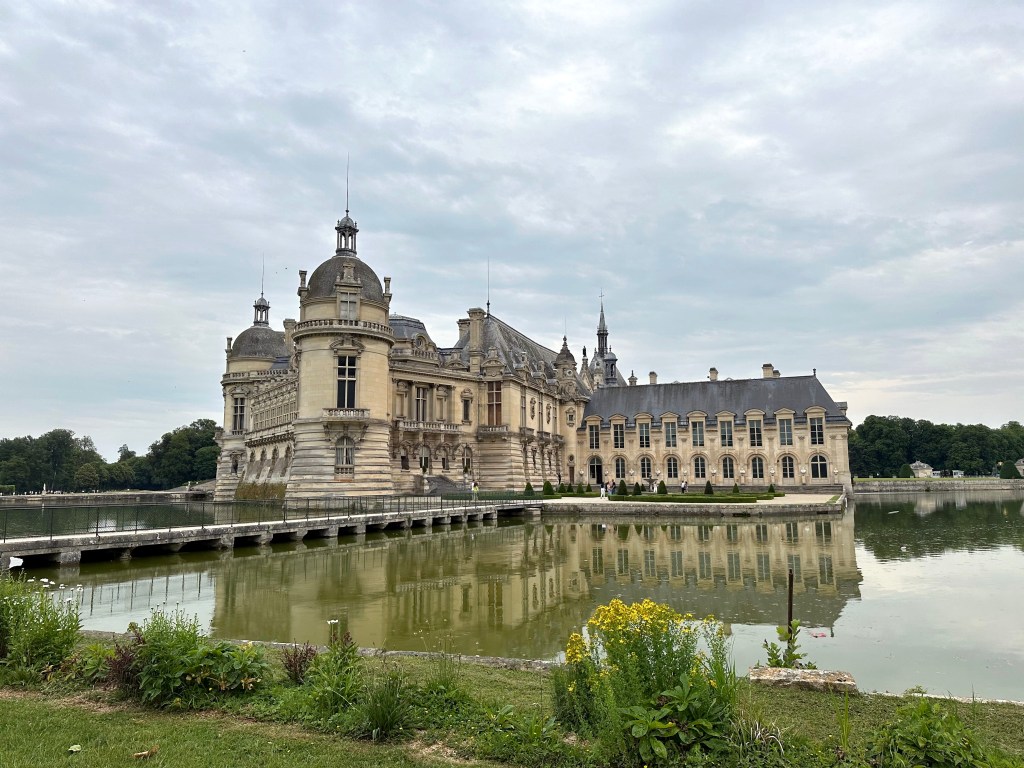
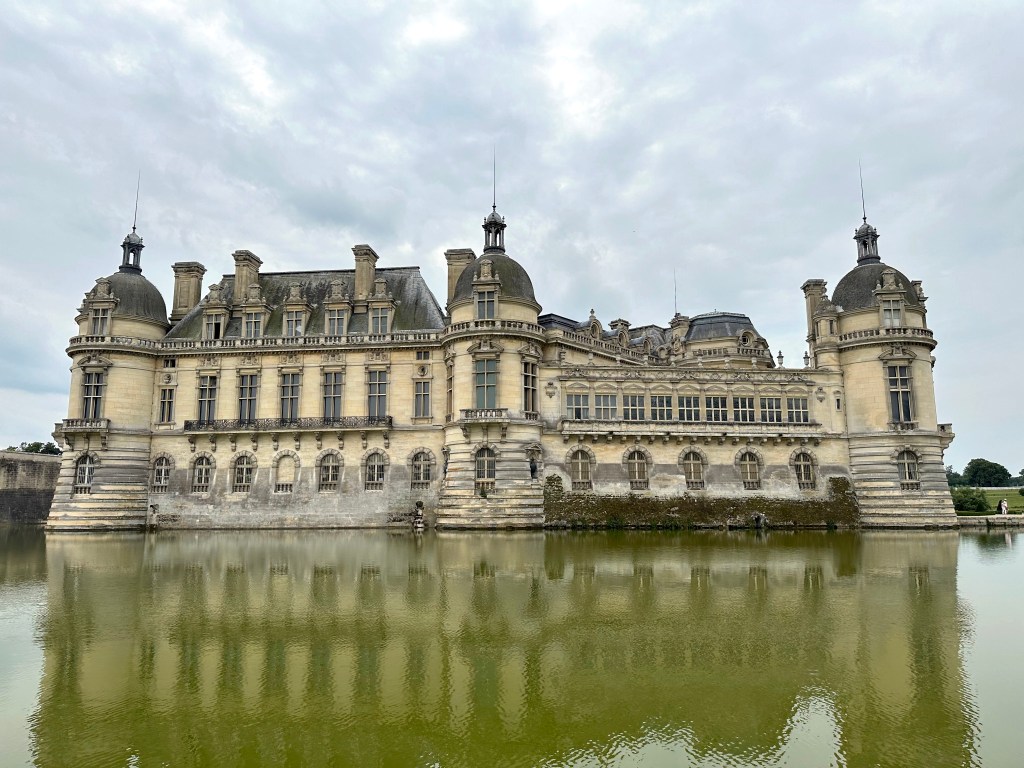
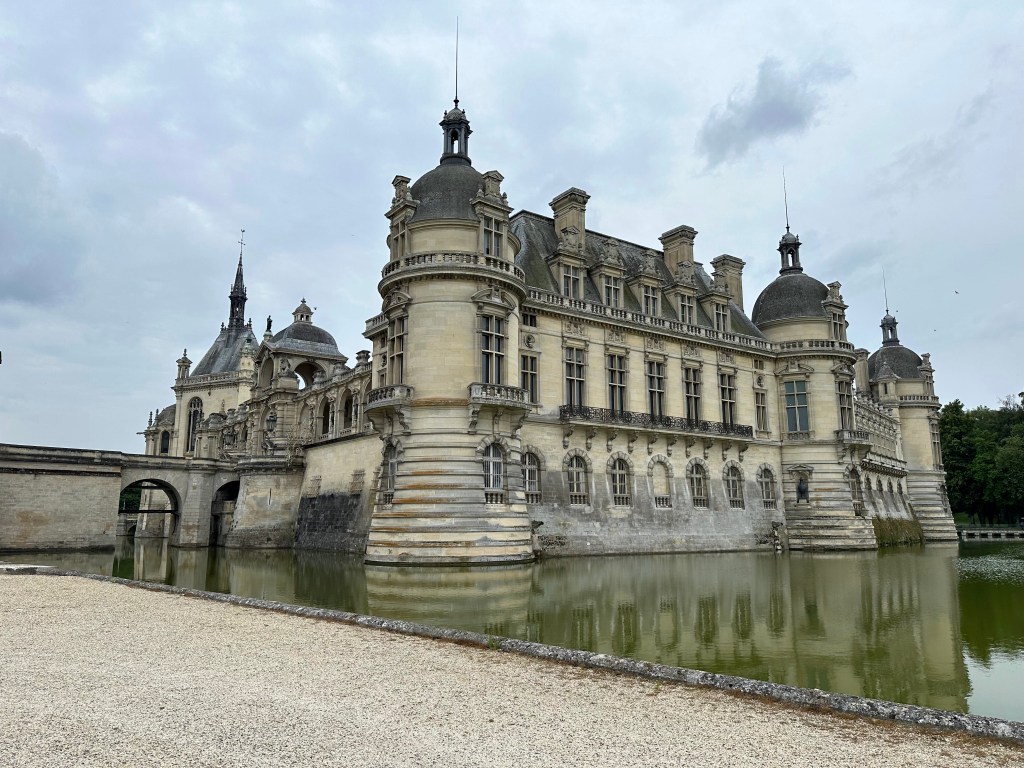
We flew from Malta to Paris to bike through Normandy with Thomas and Lisa, but left a day early to guard against any flight issues or other delays that might impact our connecting with them when they arrived from Atlanta the next morning. Rather than stay in Paris, which we had visited three times and which, frankly, we didn’t particularly like, we headed about 30 miles north to the Chateau de Chantilly and its little town.
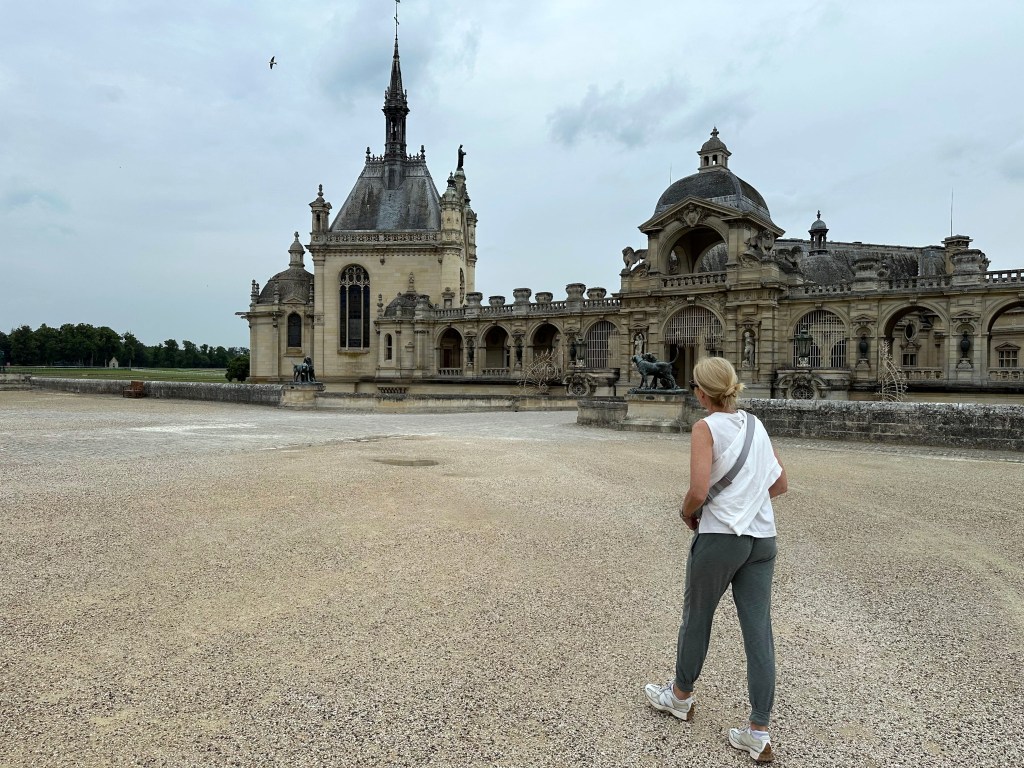
We checked in to our hotel a short walk away from the chateau, headed down the street for some lunch, then headed to the chateau itself.
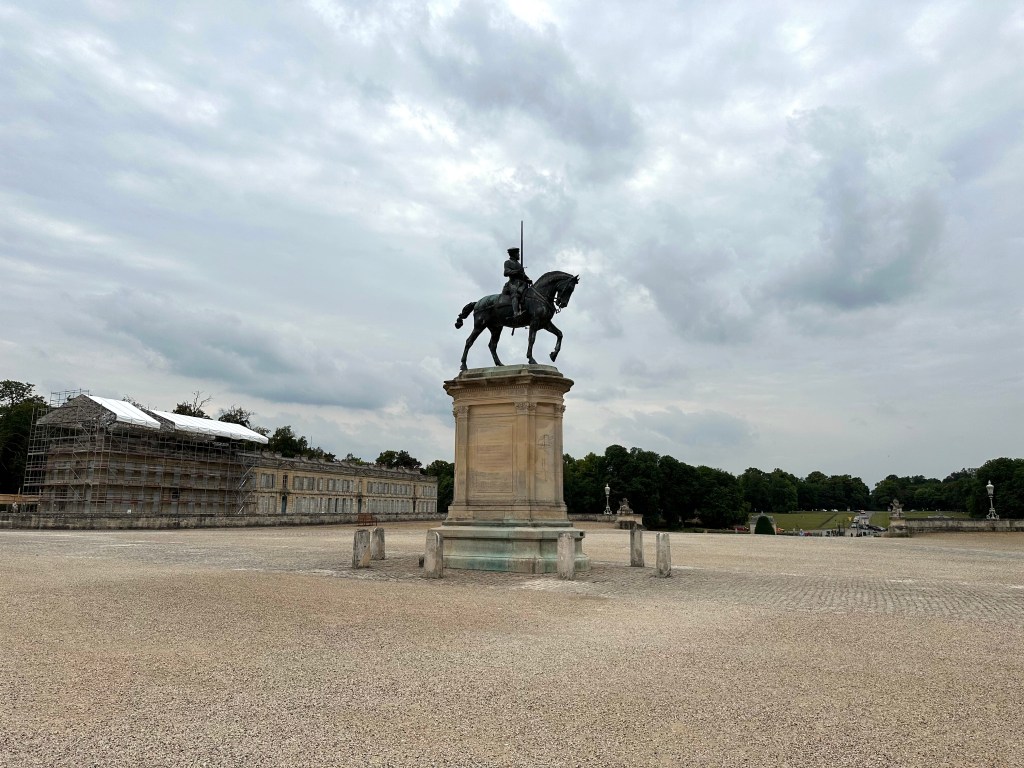
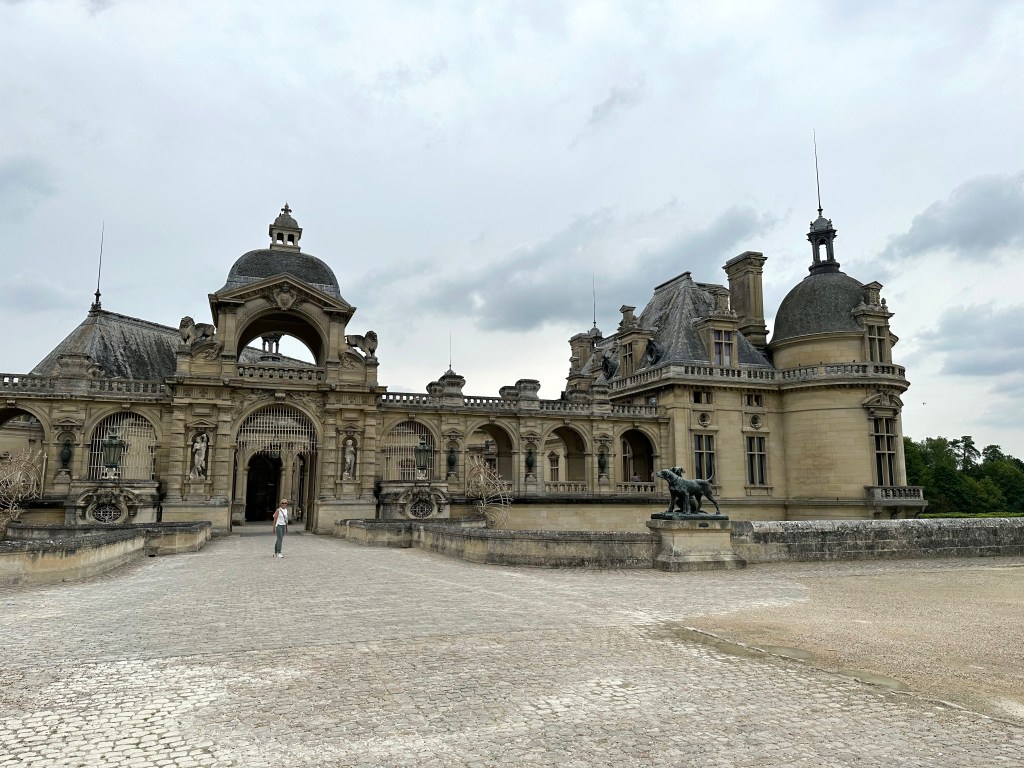
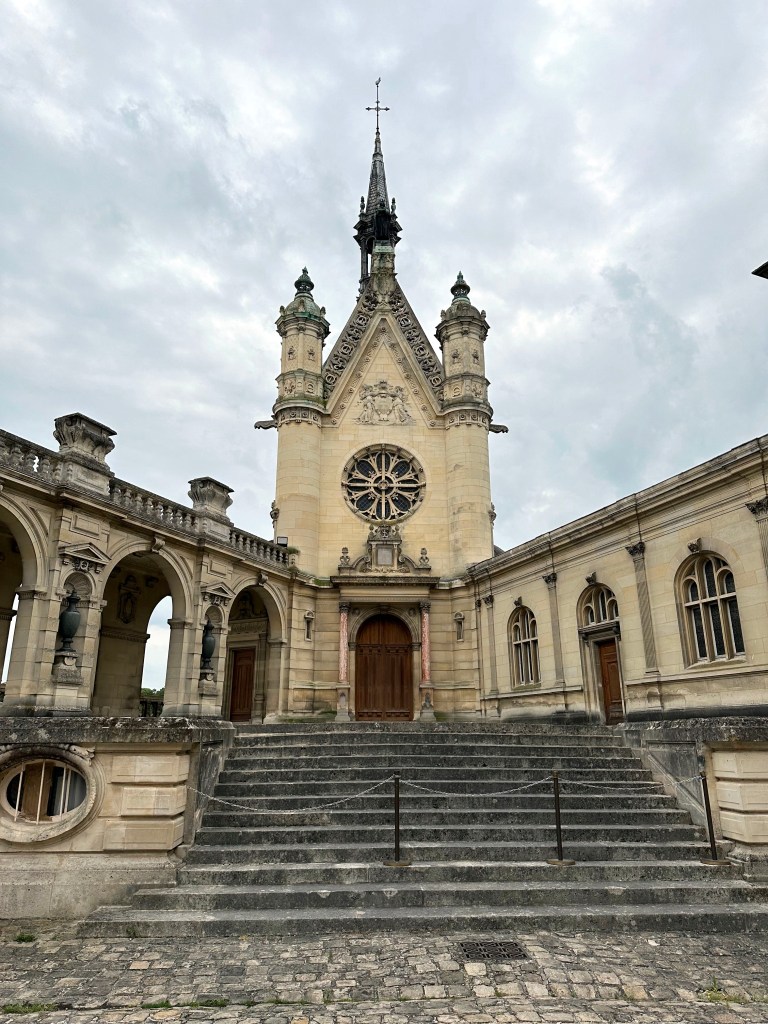
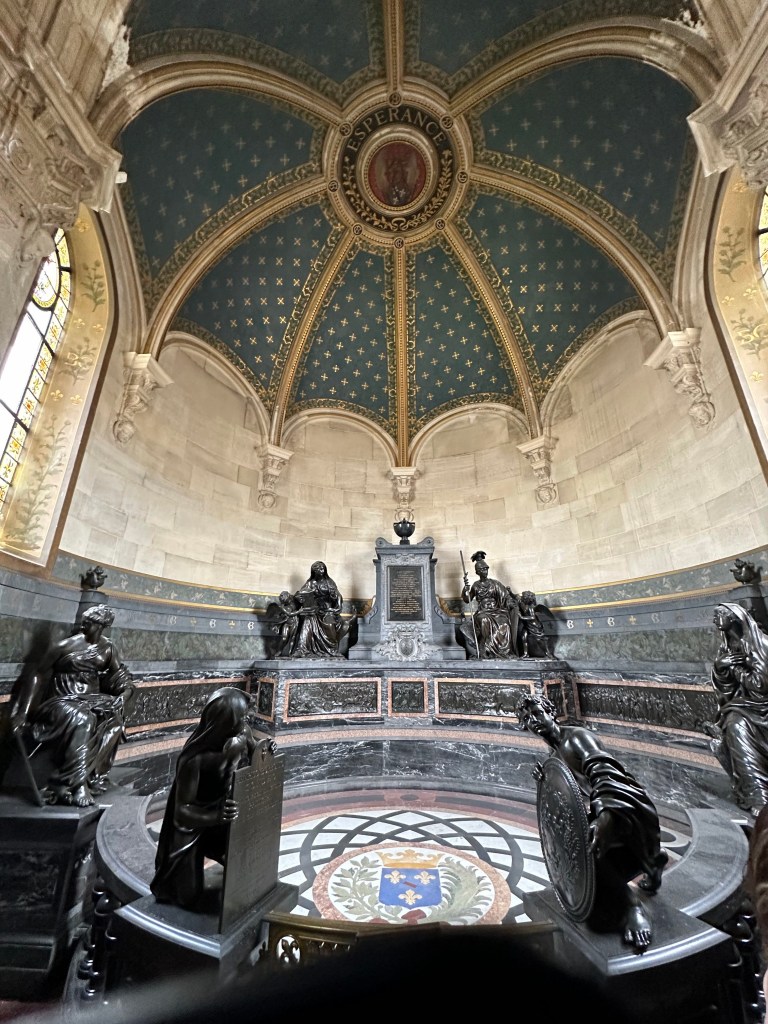
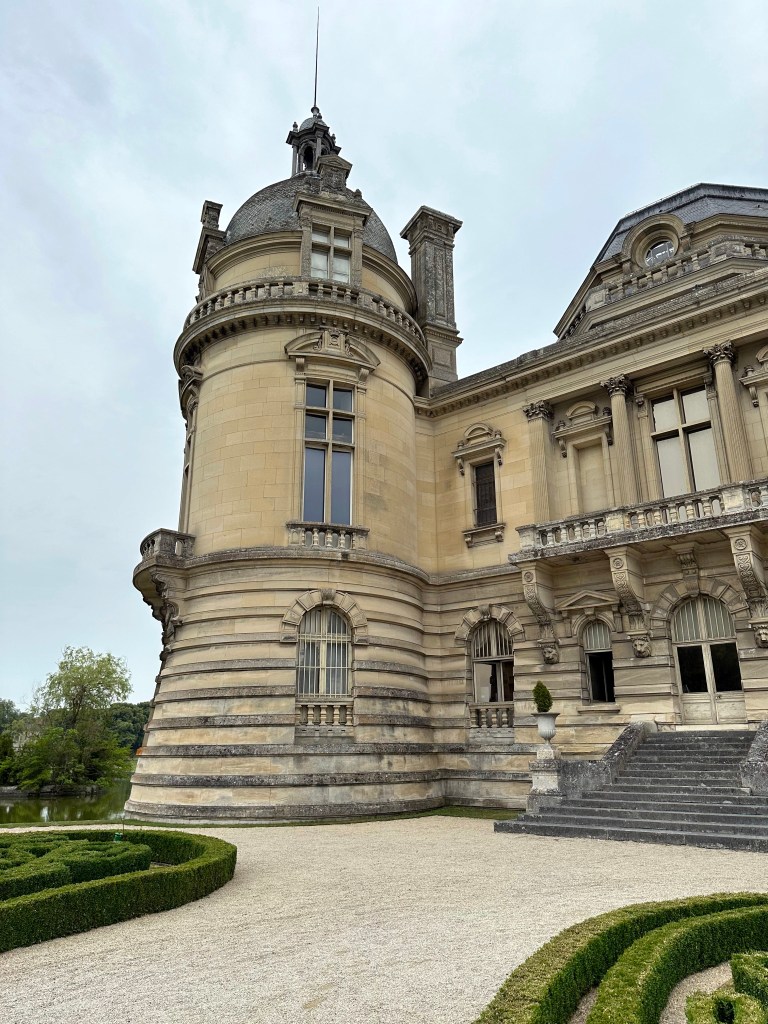
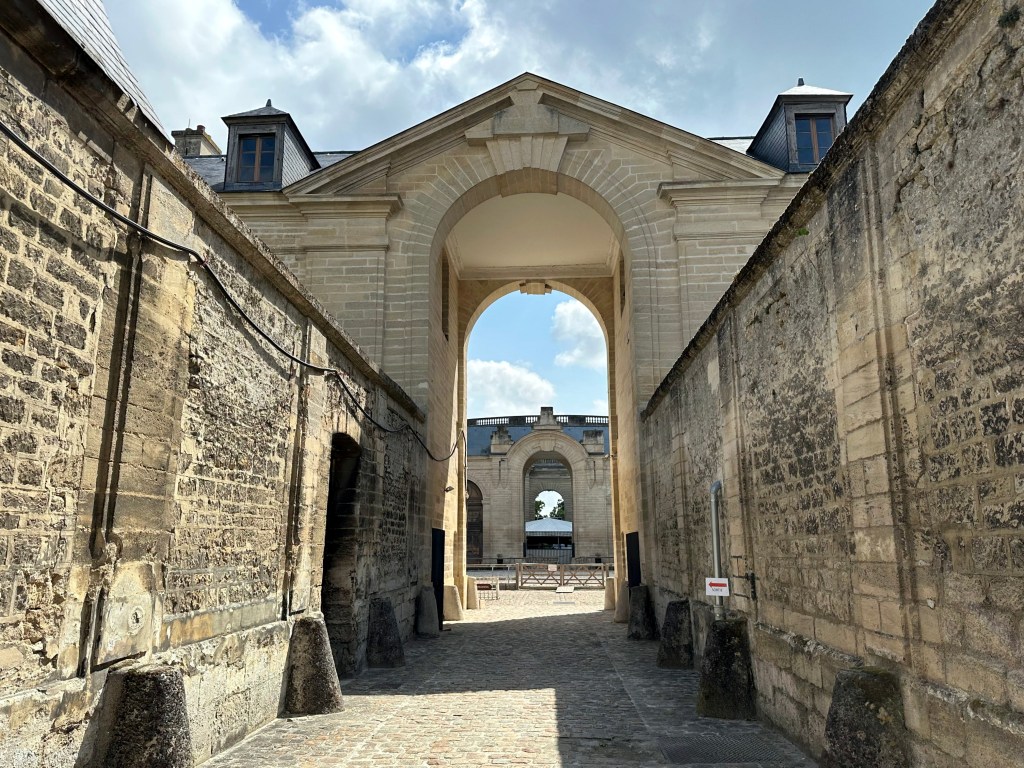
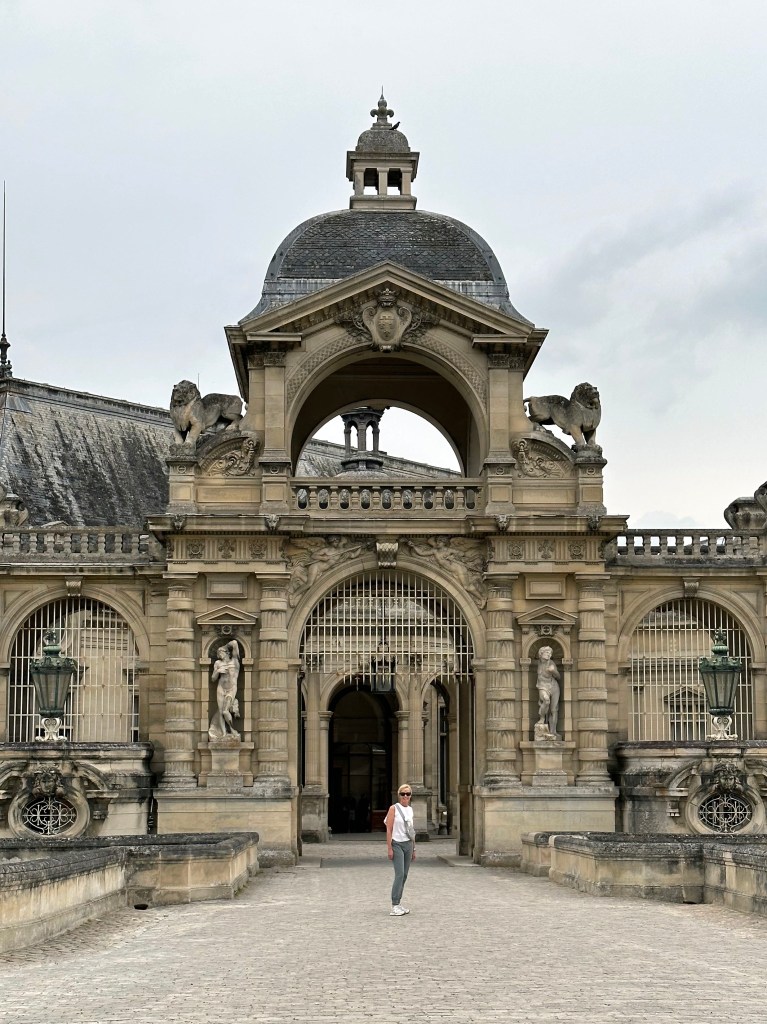
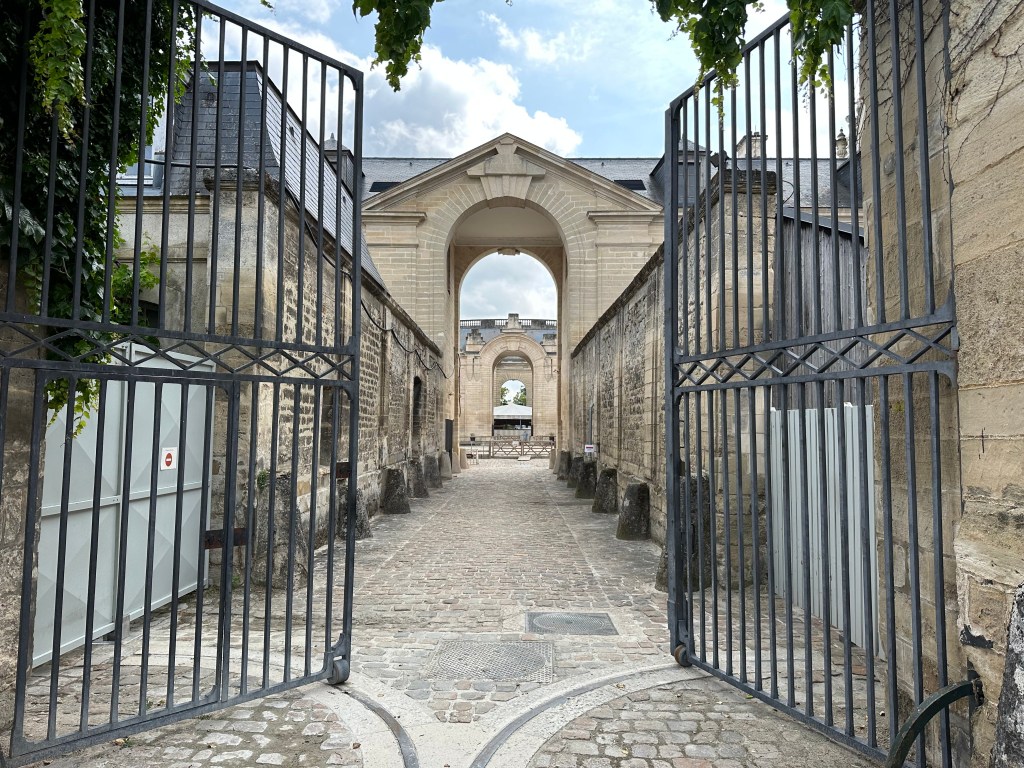
The chateau largely dates from the 19th century, when the Duke of Aumale rebuilt the structure on the foundations of a medieval fortress.
The chateau’s formal gardens were designed by the same landscape architect credited with designing the grounds of Versailles.
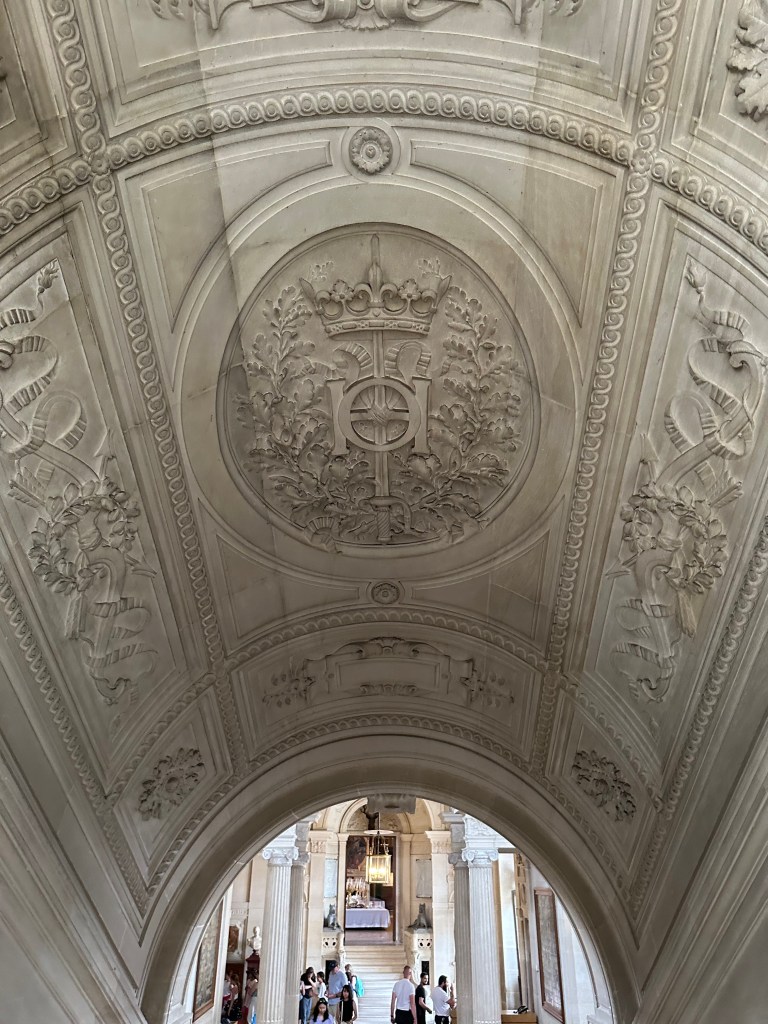
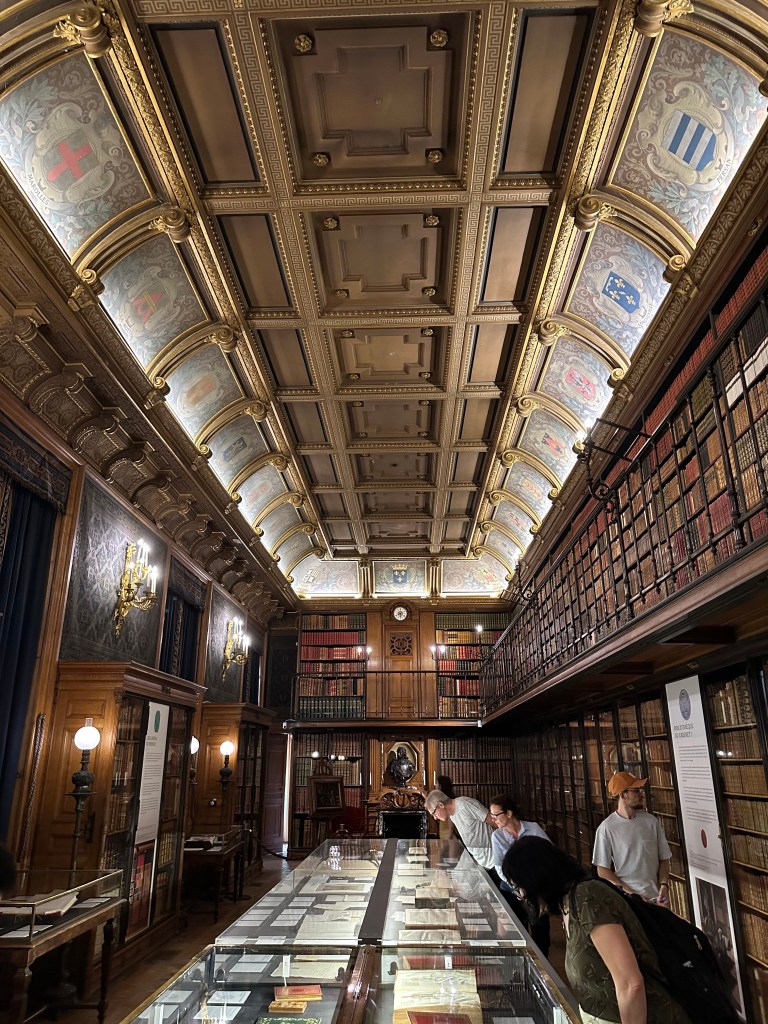
Barrel-vaulted, highly decorated ceiling above the grand staircase:
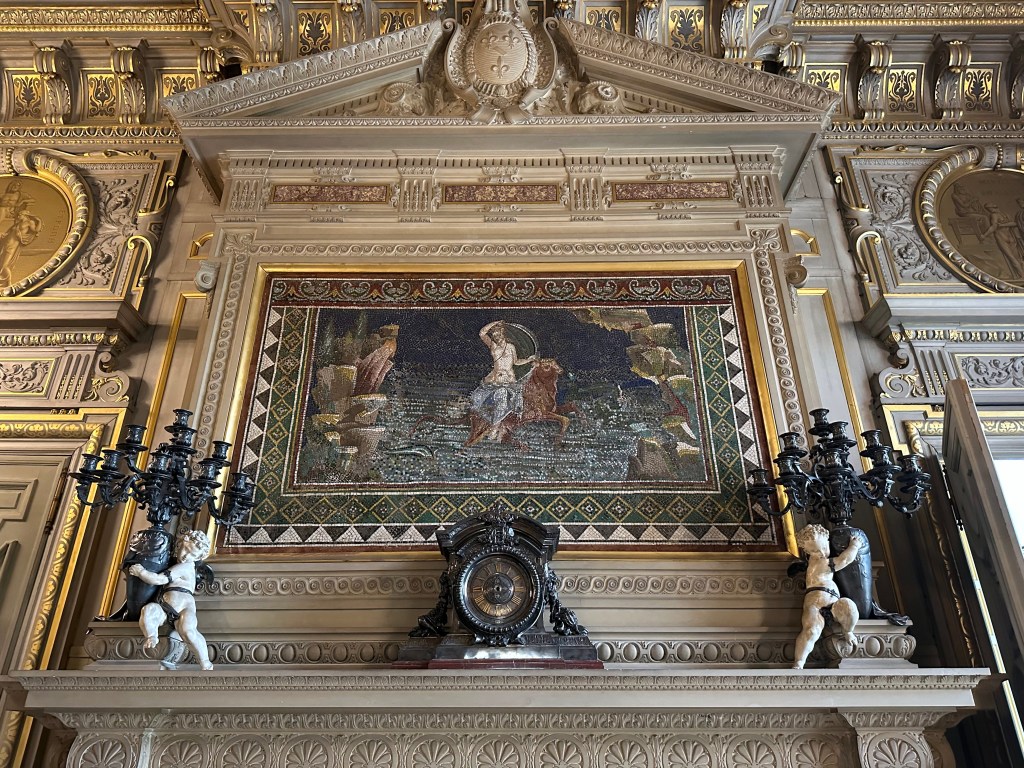
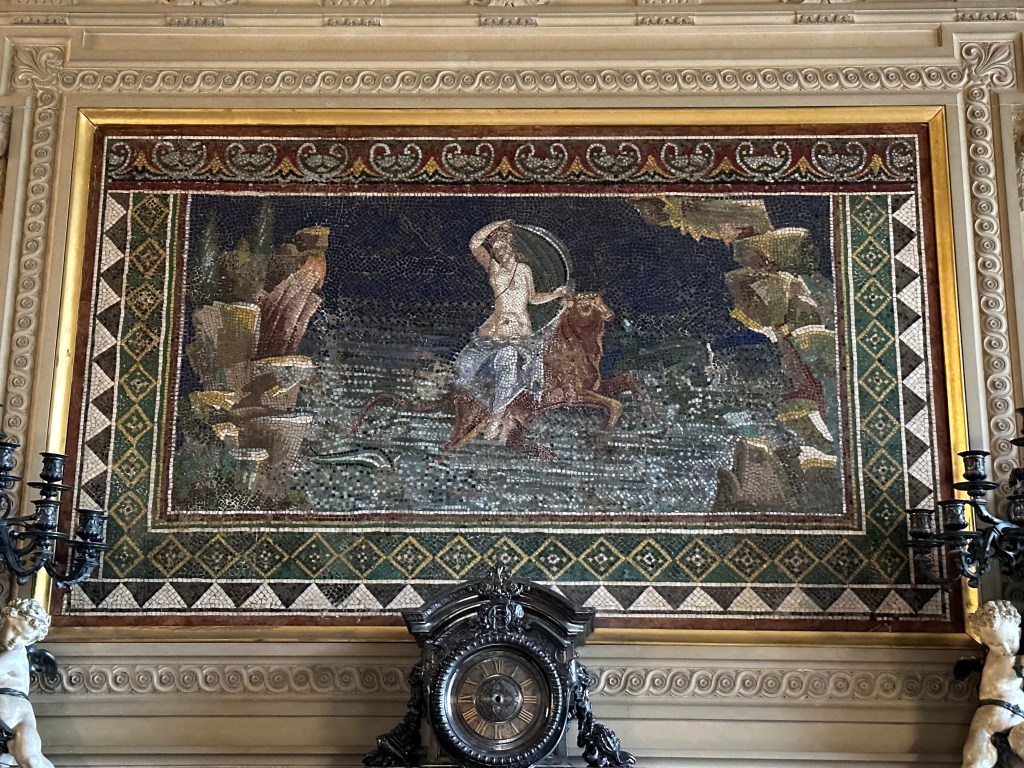
Mosaic above the fireplace in the Salle des Gardes depicting the Rape of Europa by Jupiter:
But it’s not just a 19th-century French mosaic, it’s a Roman mosaic dating to the 1st century AD recovered from around Herculaneum, where we wandered just a month or so ago on this trip. Freakin’ crazy to have this just mounted here.
Libery:
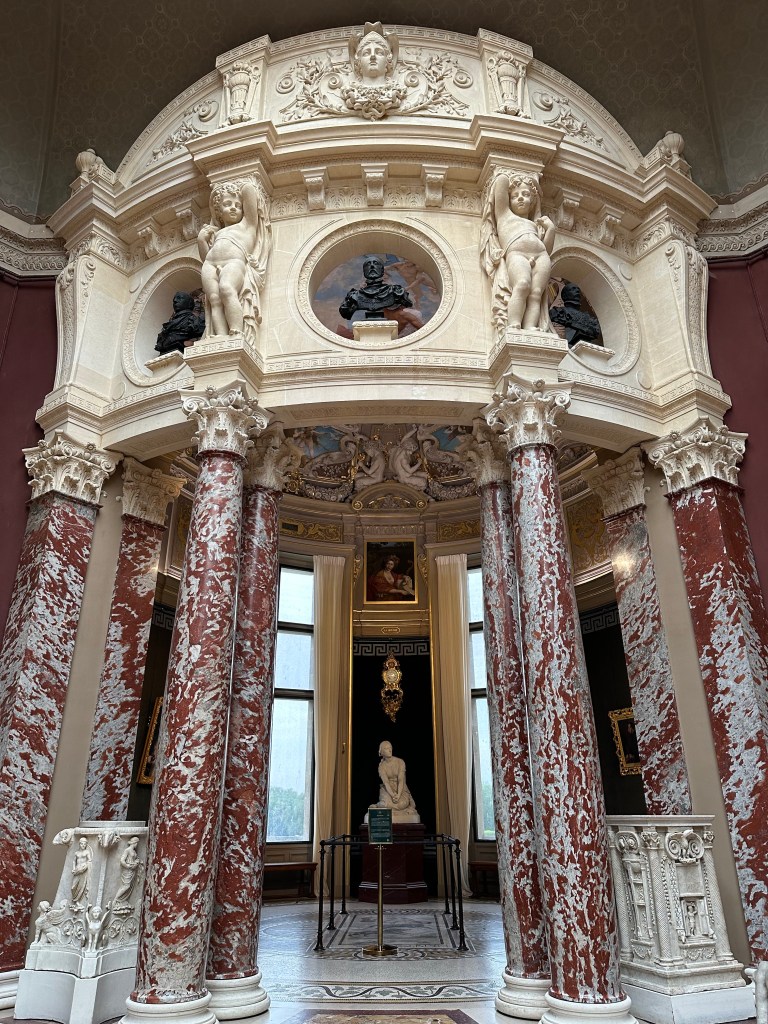
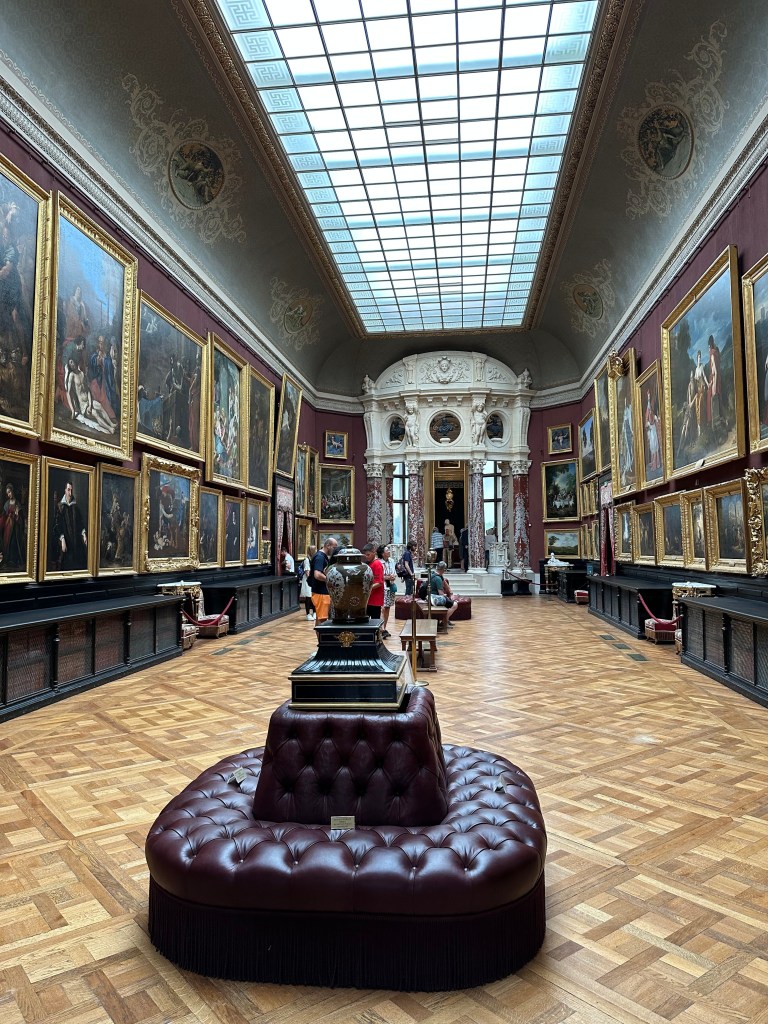
The Rotunda of the Musée Condé at Château de Chantilly, created by the Duke of Aumale to display his art collection, with Henri Chapu’s marble Joan of Arc at Domrémy beneath Paul Baudry’s ceiling painting of the Abduction of Psyche
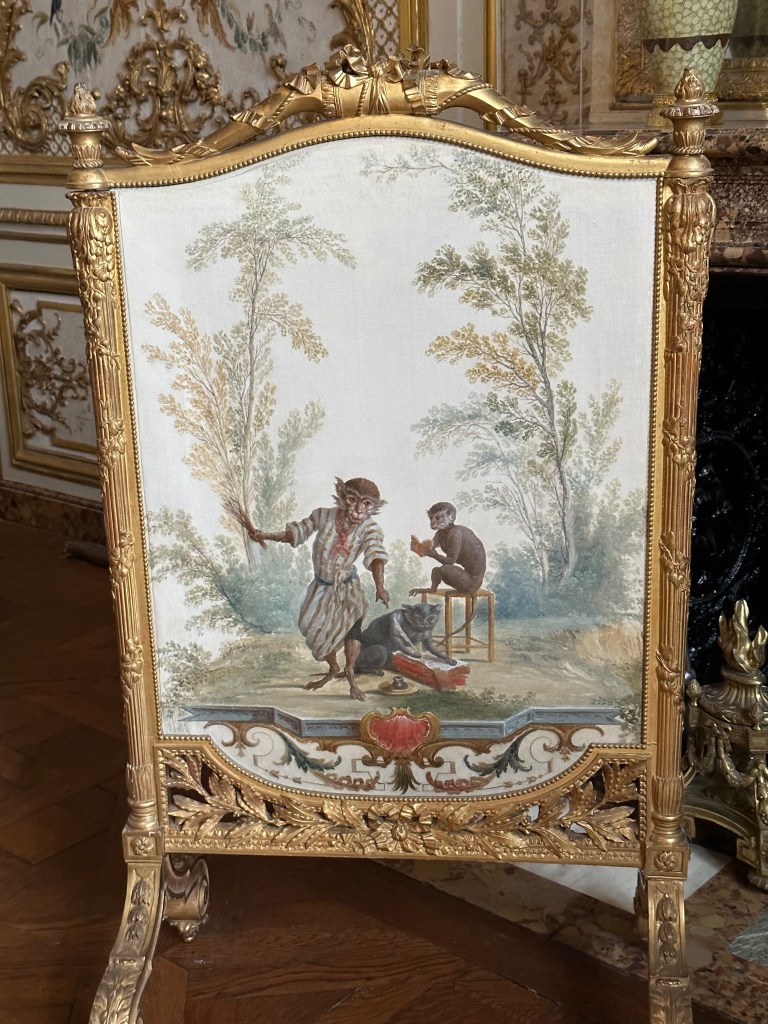
Just your normal decorative French fire screen; nothing to see here. . .
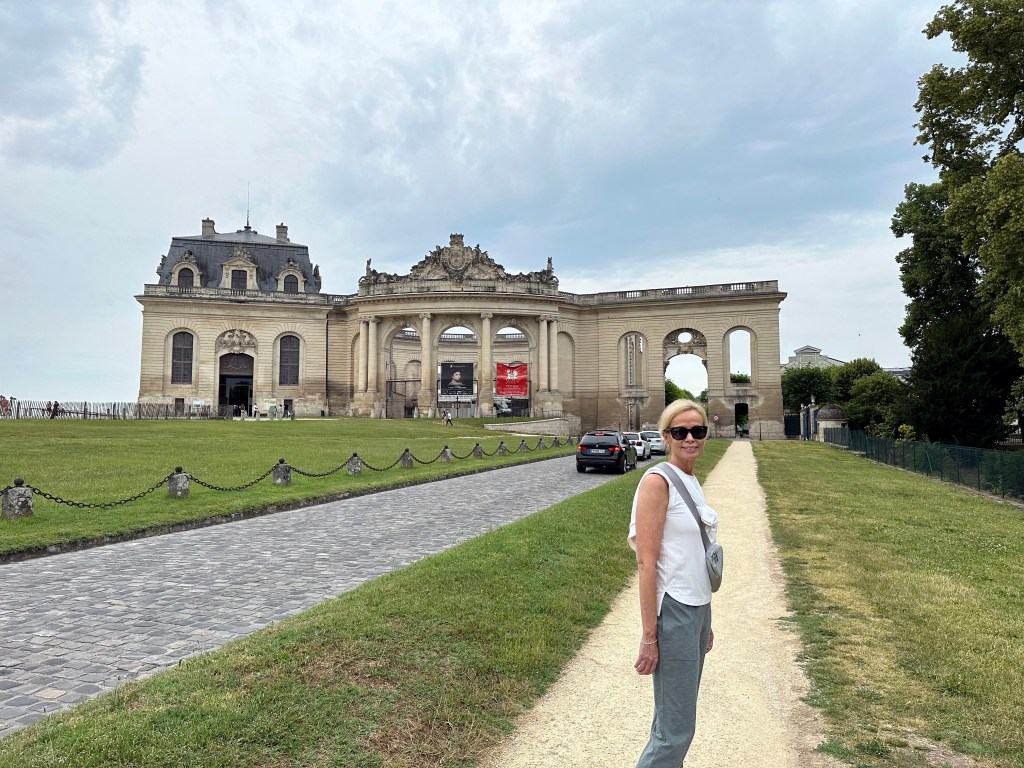
Heading to the stables. . .
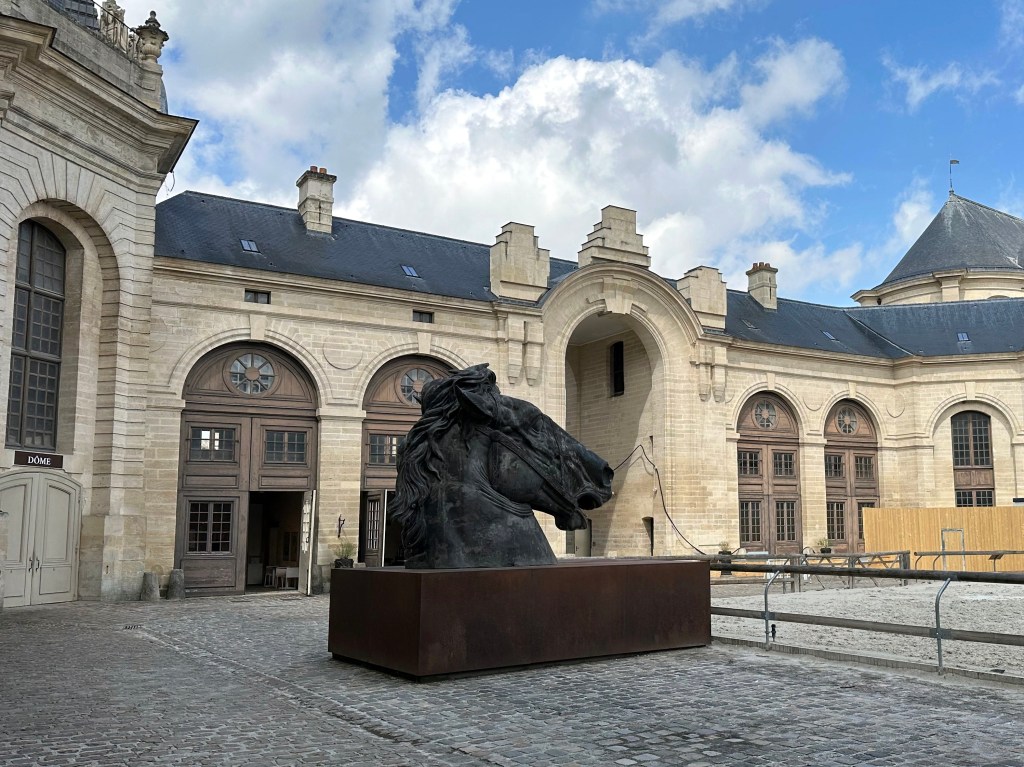
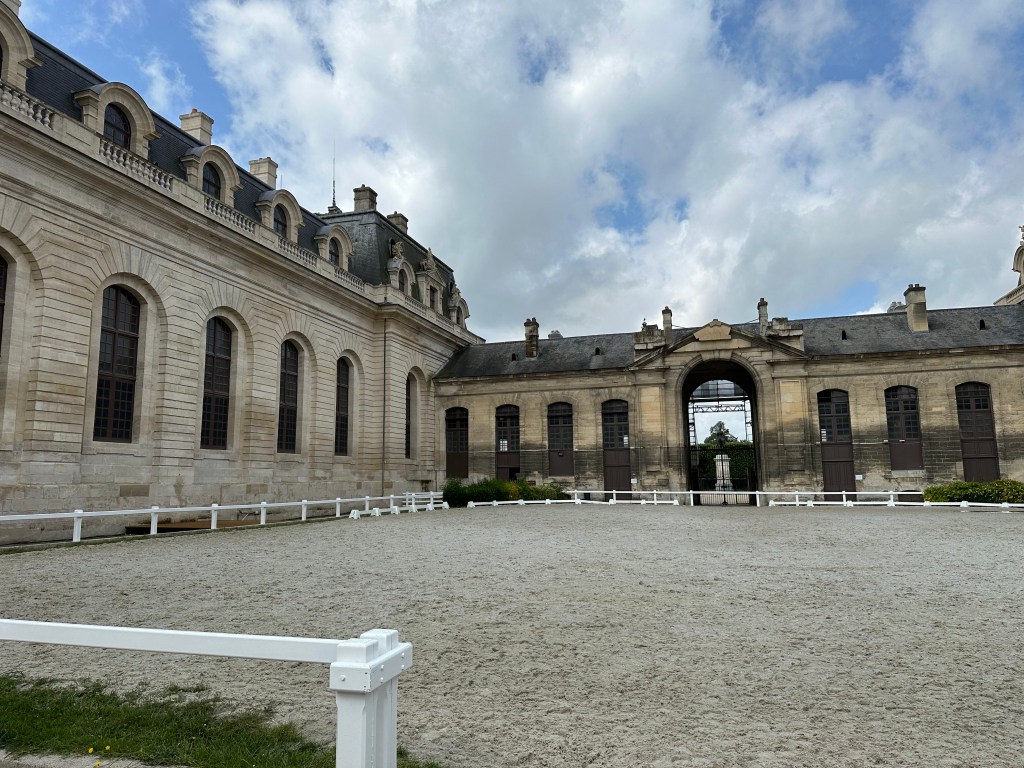
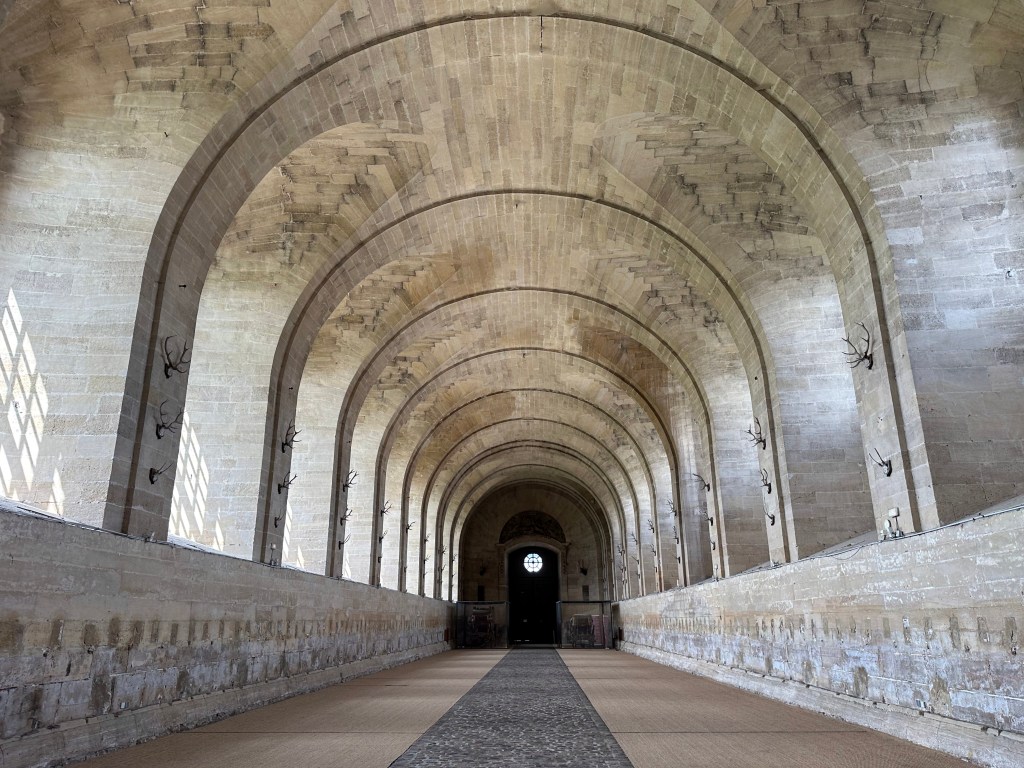
Just as grand as the chateau itself.
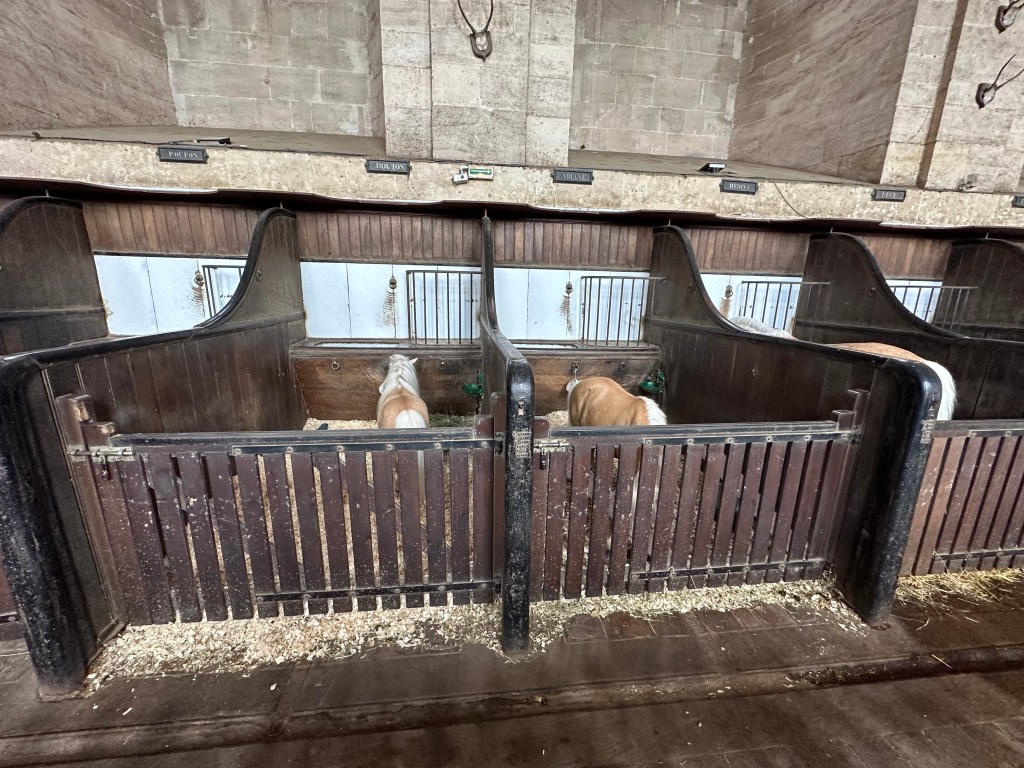
Stables: huge. Horses therein: not so much.
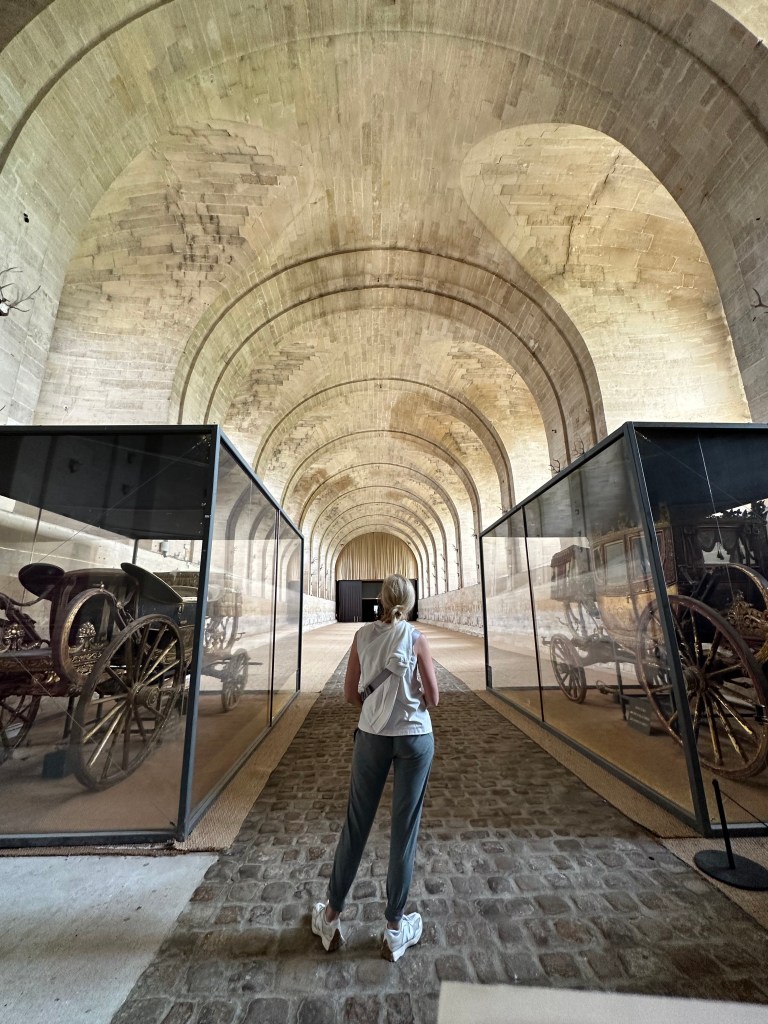
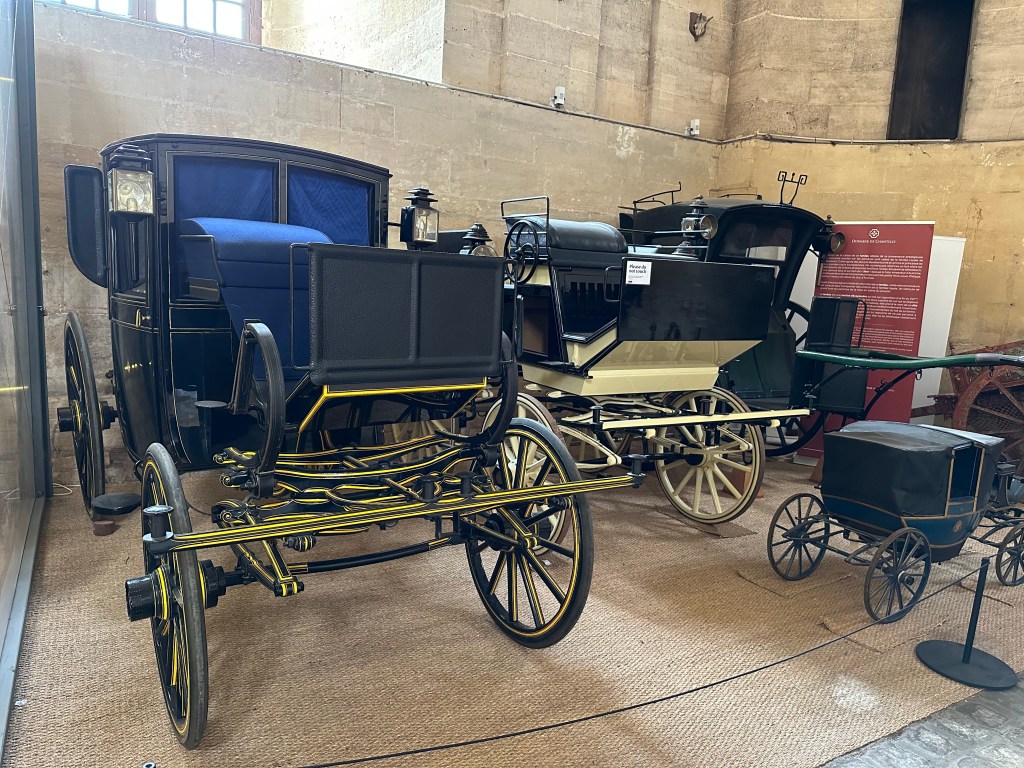
Old-school carriages:
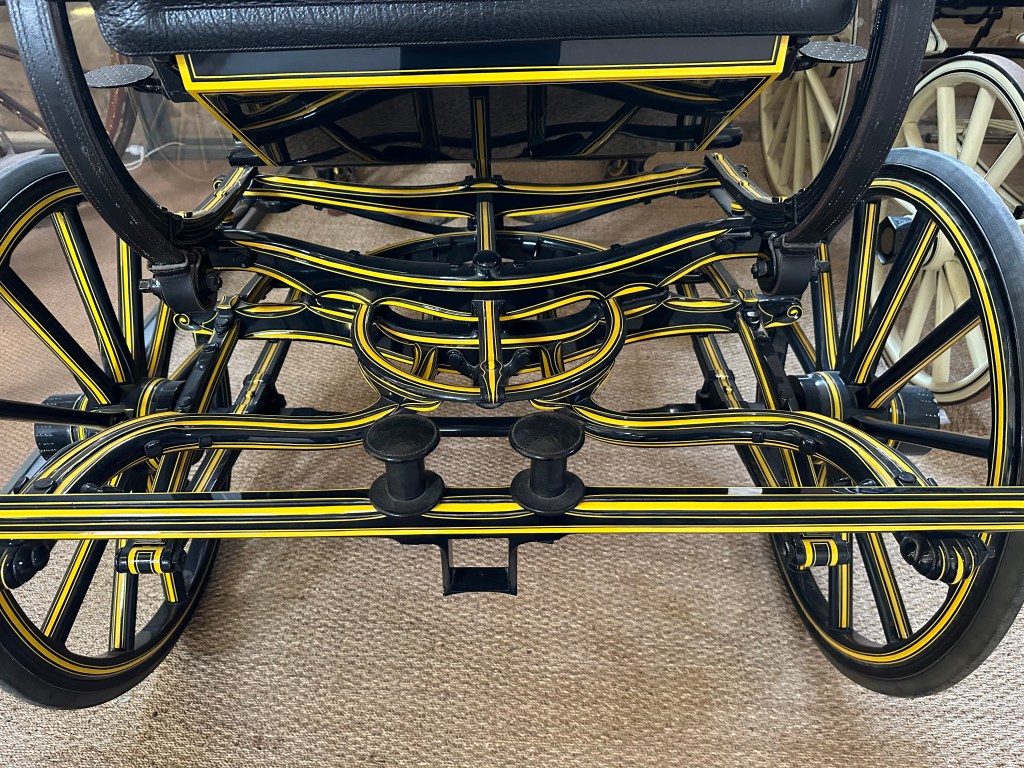
Just a pretty cool suspension and paint job.
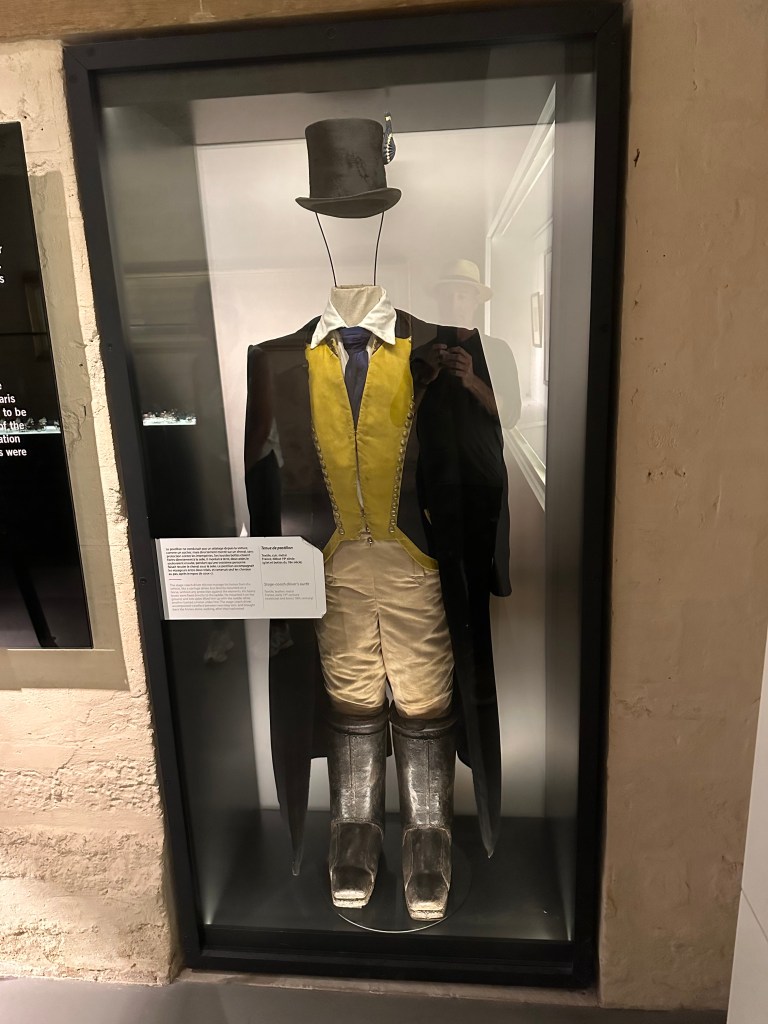
Stage coach driver uniform:
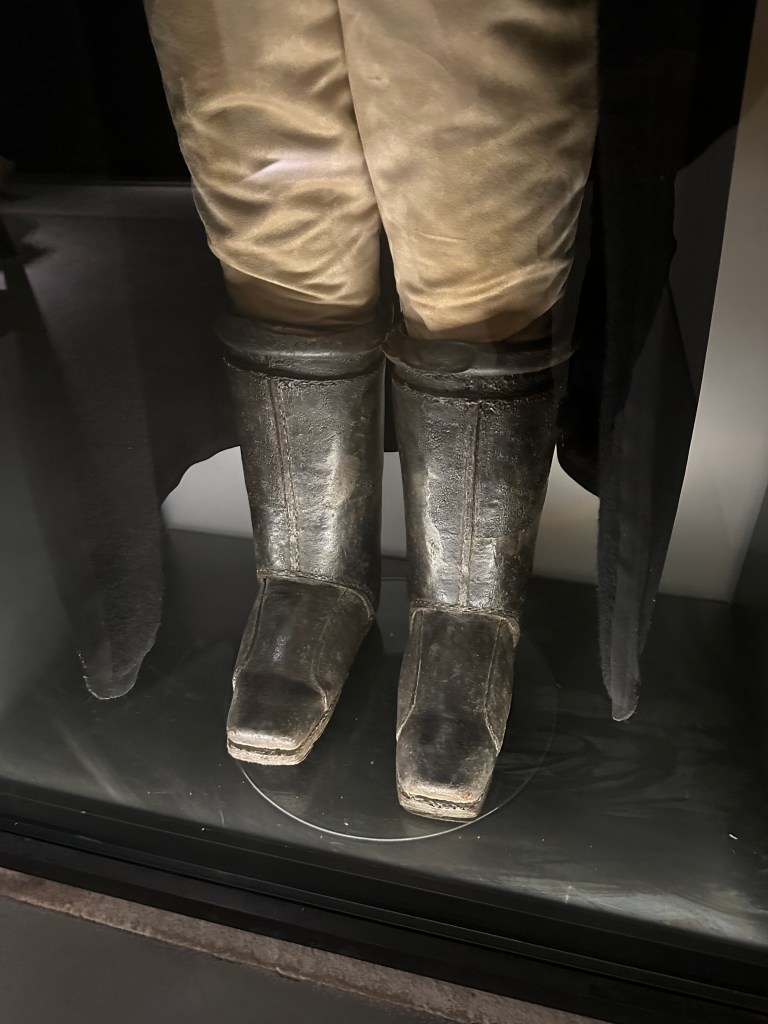
His boots were not worn, but instead affixed directly to his saddle.
We spent the night at a nice Relais & Chateau hotel next to Chateau de Chantilly, then woke up the next morning to meet Thomas and Lisa upon their disembarkation in CDG from their redeye from ATL. But WolfeStreetTravel’s Chief Adventure Officer, who’s in charge of the entire itinerary, mistook their takeoff time (at around 6:30 PM) for their landing time (at around 9:00 AM) and so we left the hotel WAY too early, missed a nice breakfast, and ended up trying to sleep a little more in the lobby of one of the airport hotels at CDG while we waited for Thomas and Lisa. One more screw up, but luckily a minor one (although the WolfeStreetTravel Navigator was pretty annoyed that she lost sleep over this, literally).
After a lag day / risk-mitigation buffer day between Malta and Normandy in Chantilly, France, we headed early the next morning to CDG to pick up Thomas and Lisa from their red eye that departed Atlanta the evening before. (We did not, in fact, need to head out early the next morning, as noted in the Chantilly post. Because one of us is an idiot).
From CDG, we headed to Bayeux in Normandy to kick off some kick ass biking.
Bayeux is home to a pair of invasions, albeit separated by a millennium. The first, by William the Conqueror (or Billy the Conq, as David Crowther would say) occurred in 1066, and the invasion rolled out east to west: the Norman conquest of England.
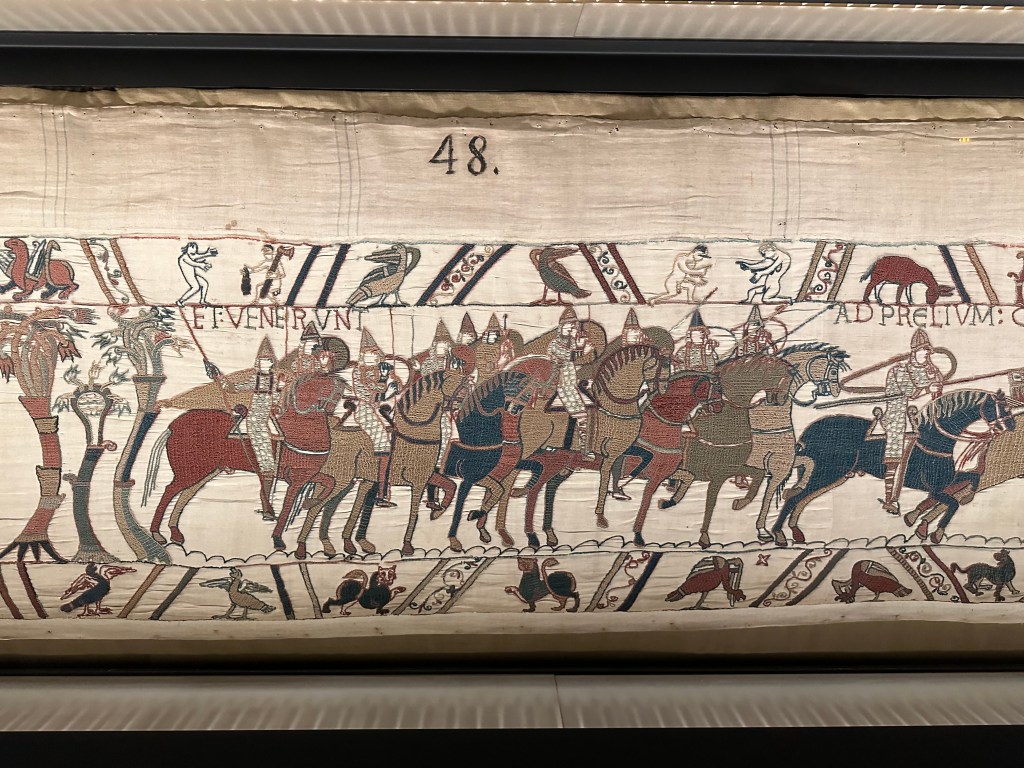
Our very first activity after checking into our hotel was a visit to the Bayeux Tapestry to check out this 1000-year-old graphic novel depiction of the invasion.
It did not disappoint (other than the museum’s insidious approach to keeping the viewing line moving using the audio tour prompts to move you forward to the next scene much sooner than you would have liked).
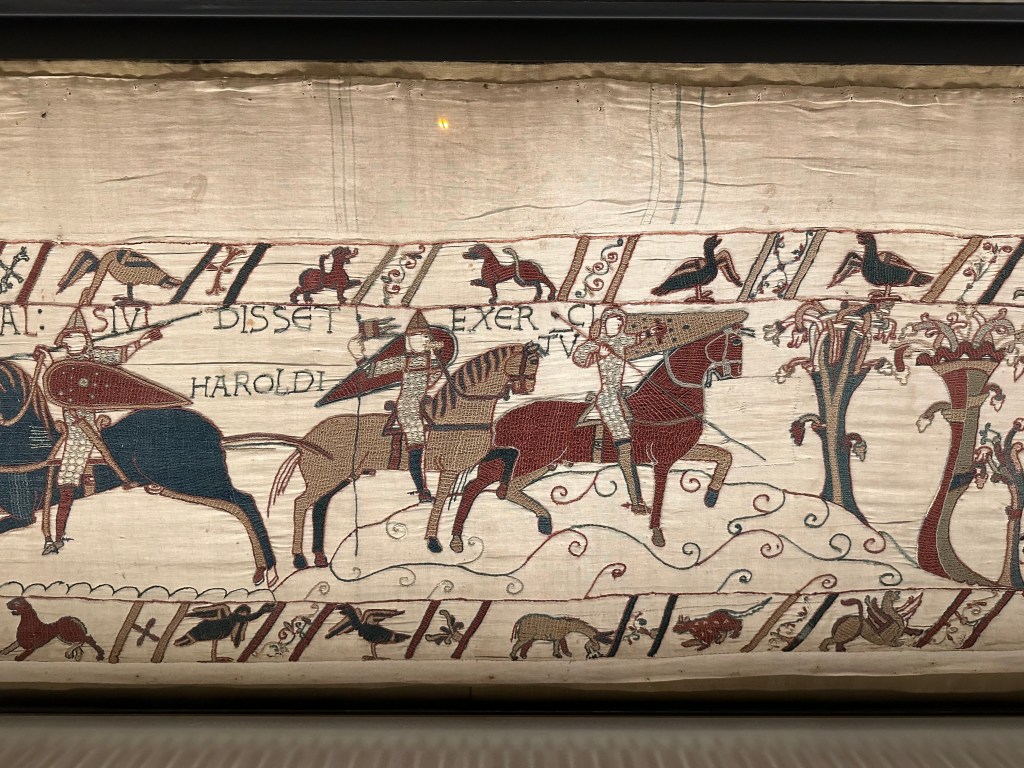
Taking photos was prohibited, but WolfeStreetTravel is nothing if not an opportunistic, determined, scofflaw.
The penultimate caption about Harold Godwinson:
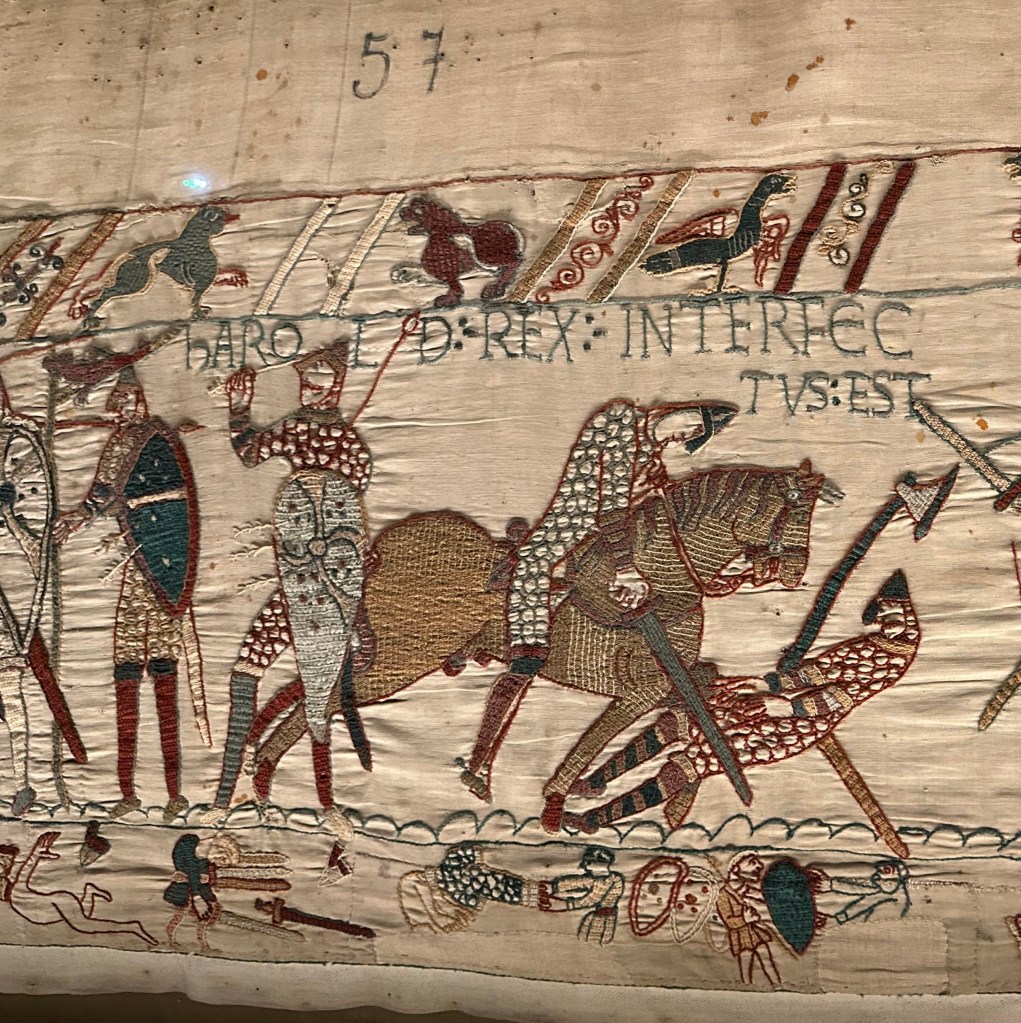
Aaaand, the ultimate Harold caption, right above the infamous arrow in the eye:
Infamous – and inaccurate, apparently. The earliest known account of the Battle of Hastings (which, of course, is what’s being depicted above) states only that Harold was killed. It does not say how. Moreover, it seems that the arrow in the Bayeux tapestry (which also is not actually a tapestry but an embroidery), was not part of the original 11th-century stitching, but part of a 19th-century restoration. According to an 18th-century drawing of the tapestry, the arrow originally was a spear and the dude holding it was actually a spearman. Harold most likely is the ax man on the right who has just been slain. All of this and quite a bit more is from this fascinating article on Medievalists.net.
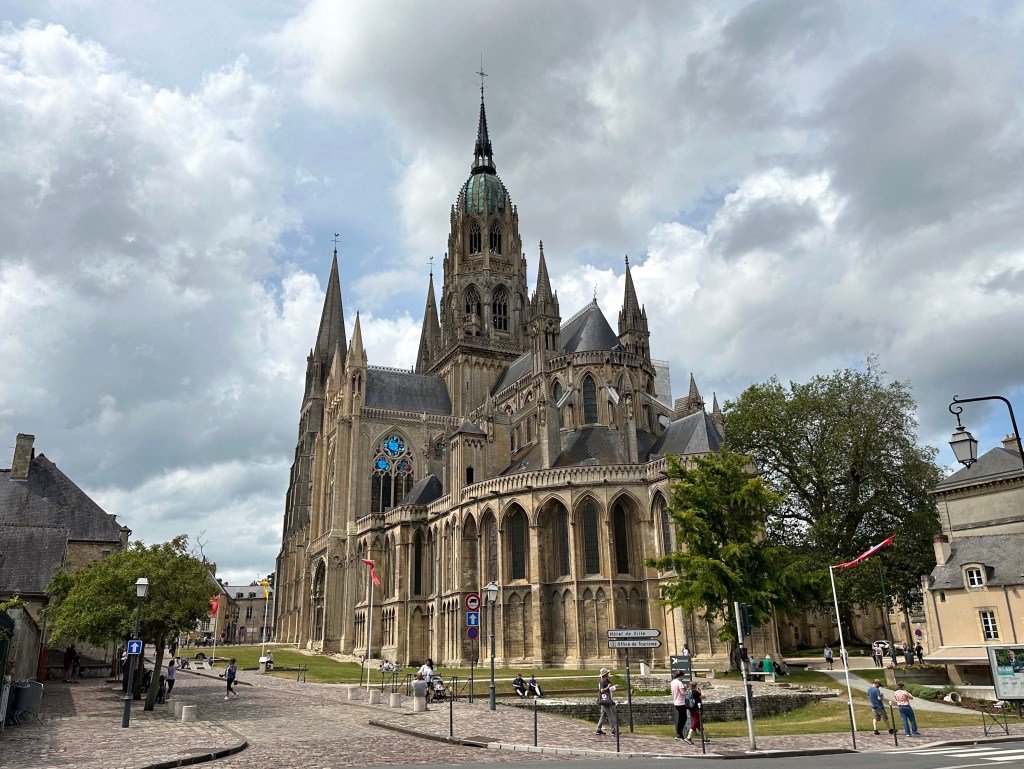
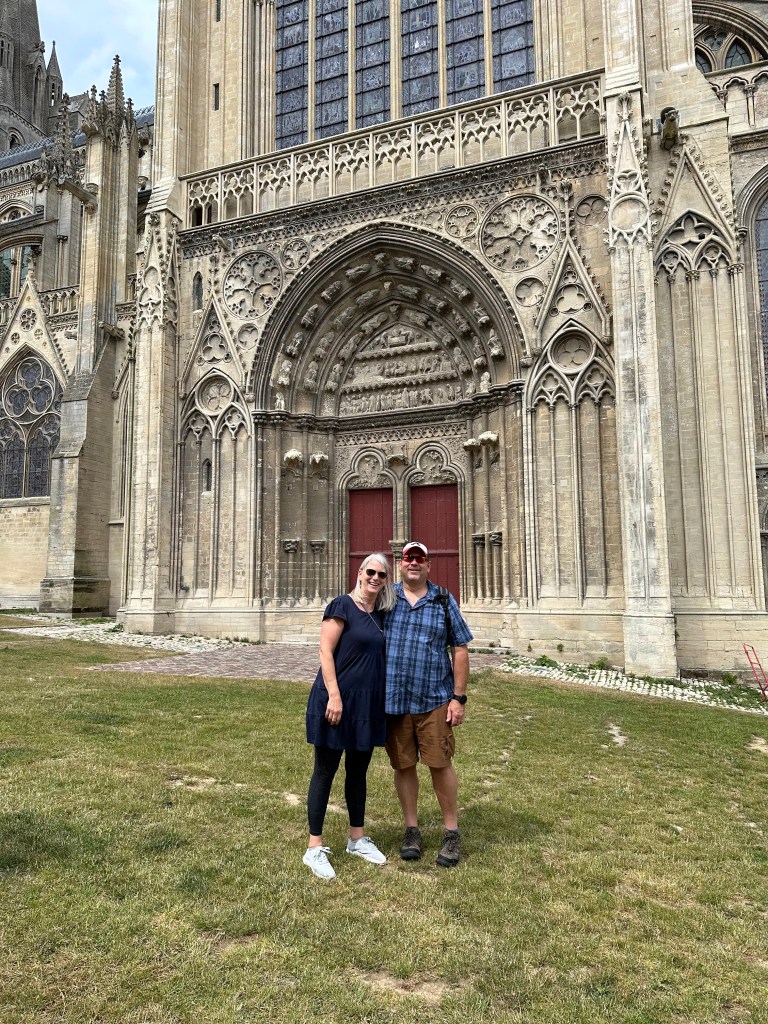
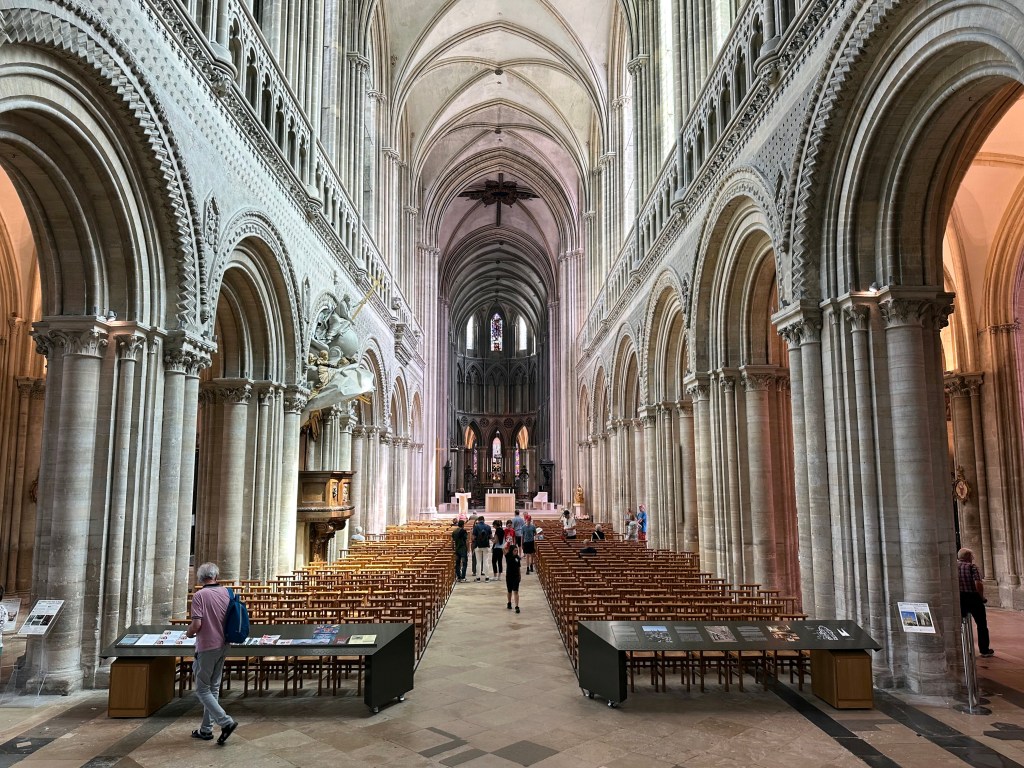
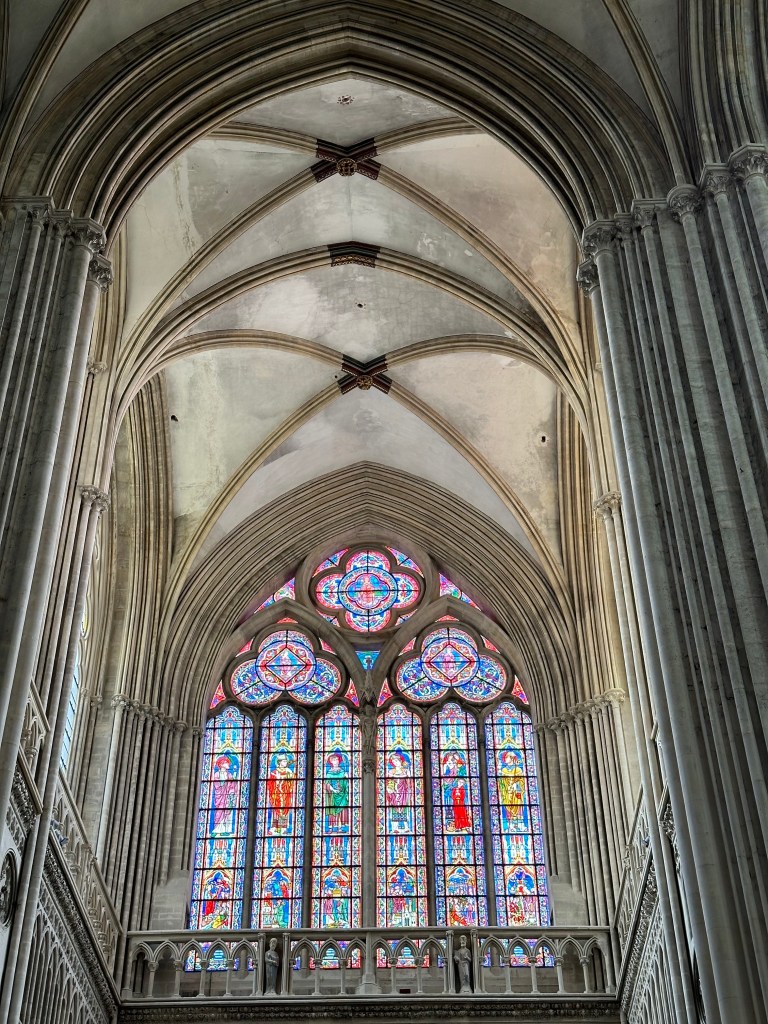
After being prodded along the entire, 70-meter length of the tapestry by the pushy audio tour, we exited and headed to another of Bayeux’s 11th-century sites: Notre-Dame de Bayeux, built in 1079.
Consecrated in the presence of Billy the Conq, himself, the cathedral was the original home of the Bayeux Tapestry.
It’s considered to be the finest example of Norman-Romanesque architecture in the world.
And it was consecrated by Odo, William’s half brother and the most likely patron of the Bayeux Tapestry’s creation.
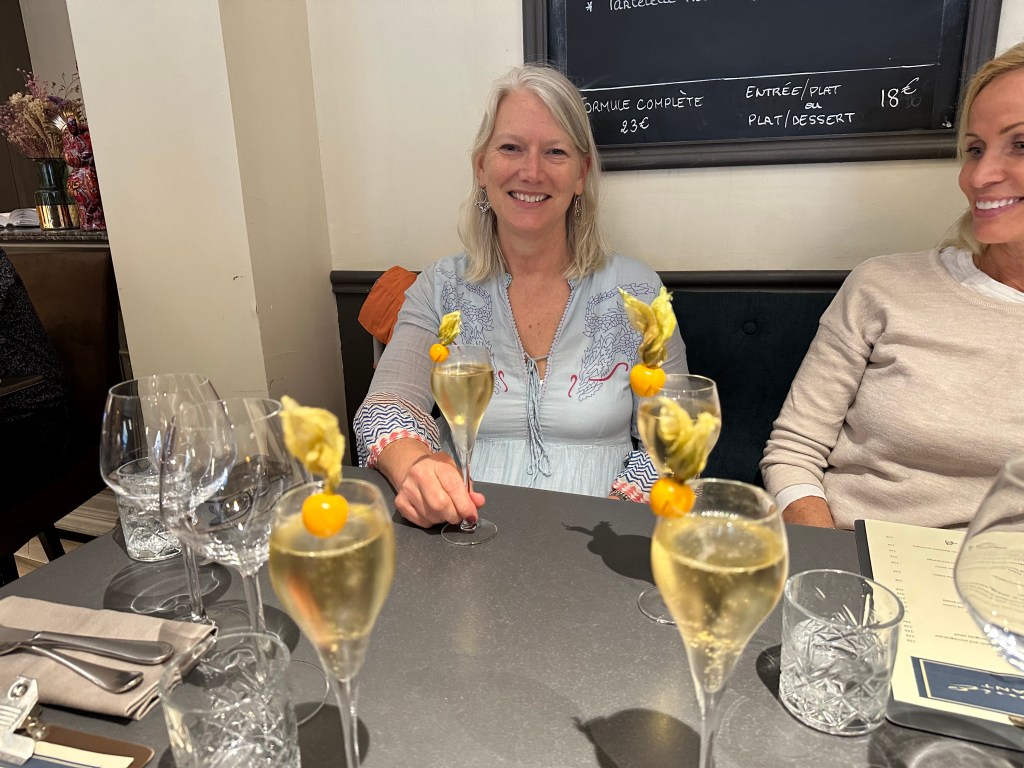
Dinner our first biking night included a little celebration of Lisa’s (the other Lisa) new job.
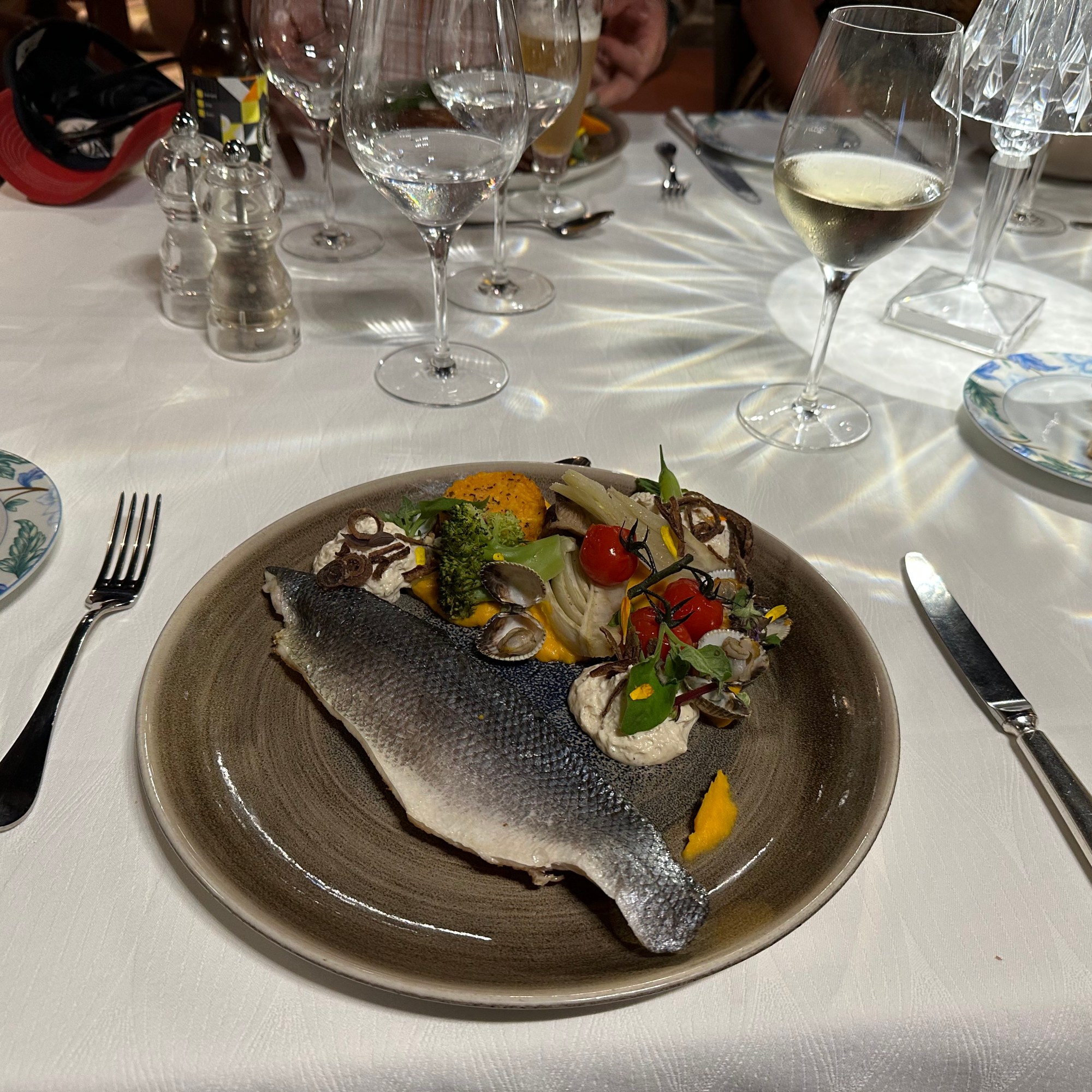
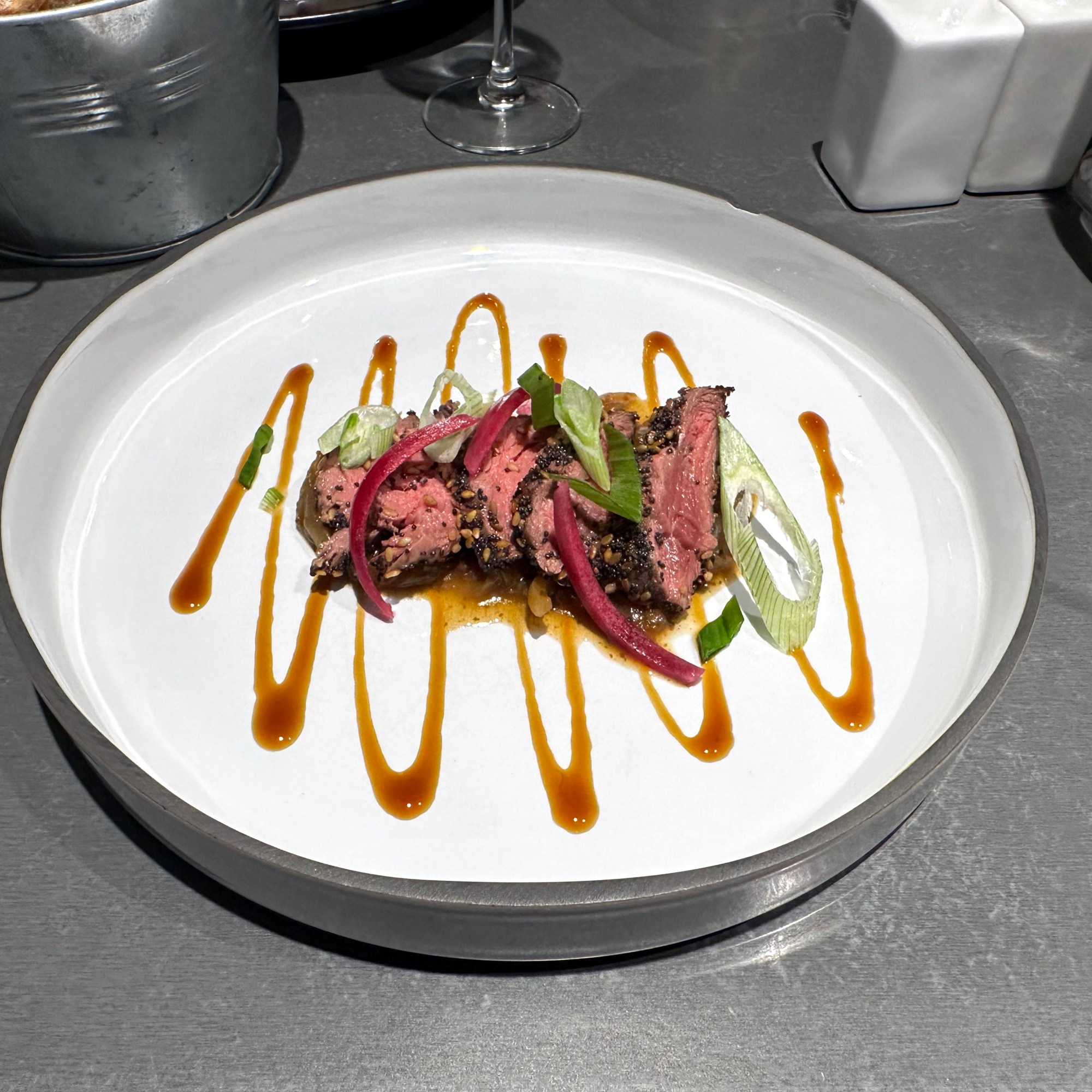
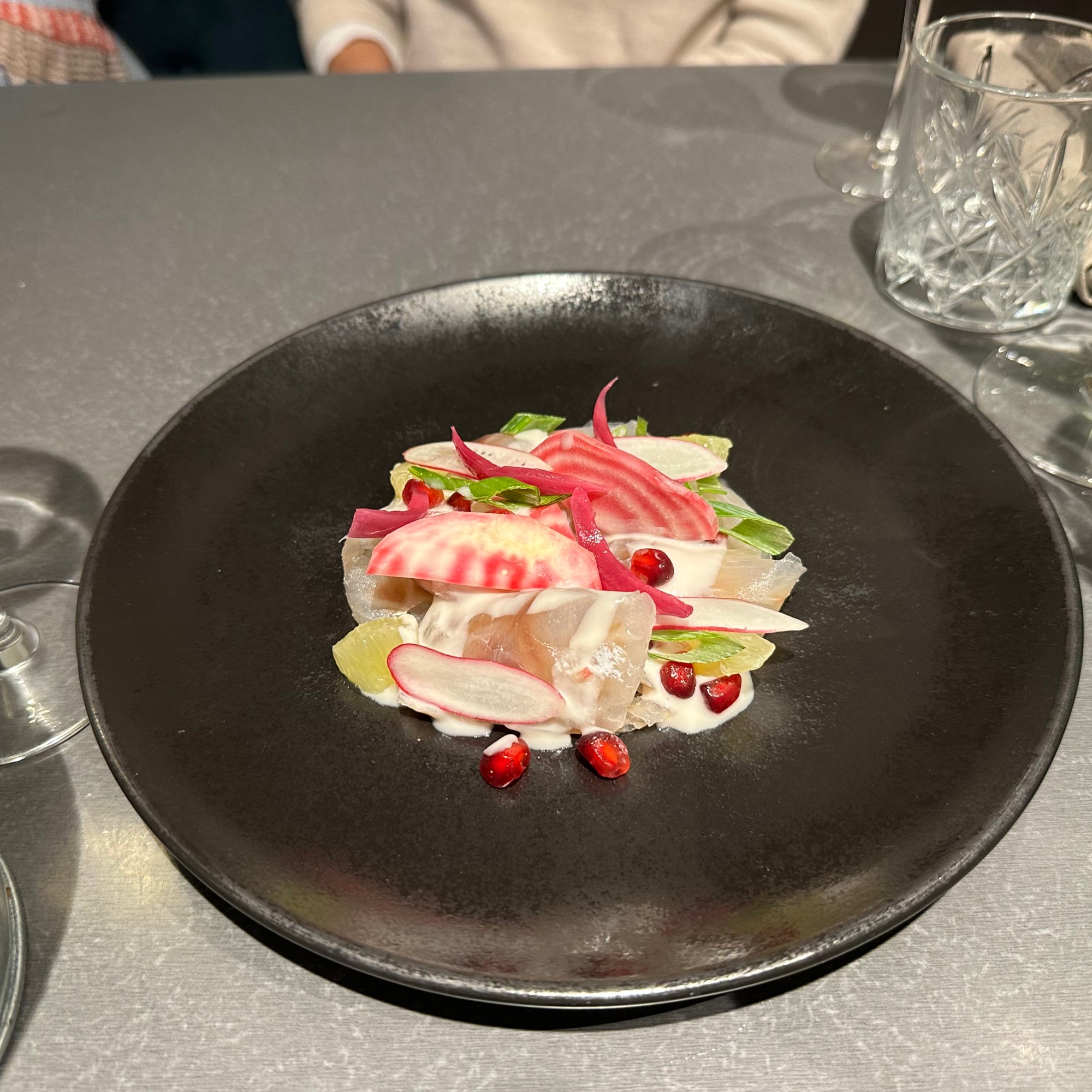
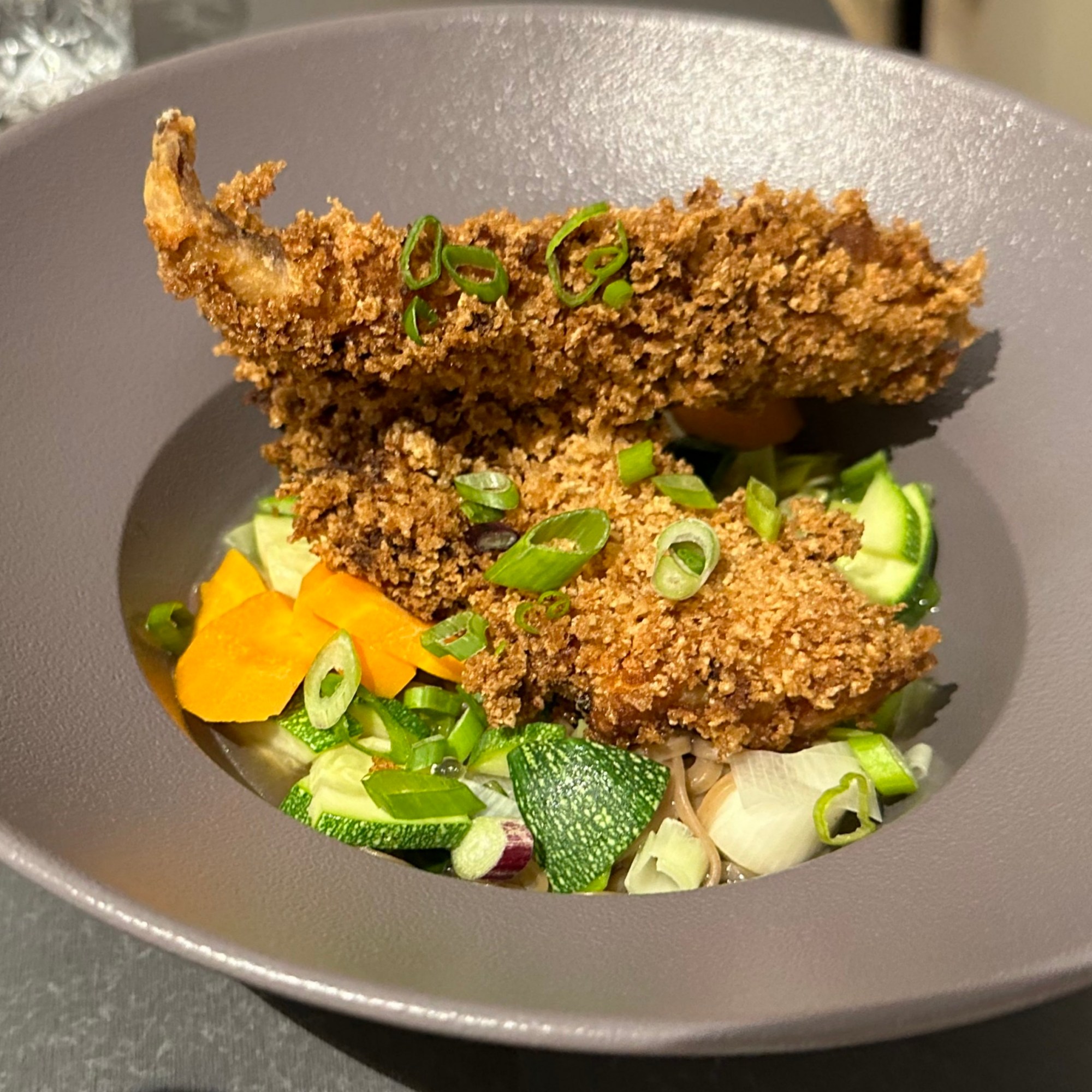
Pretty good French cuisine to start this leg of the trip.
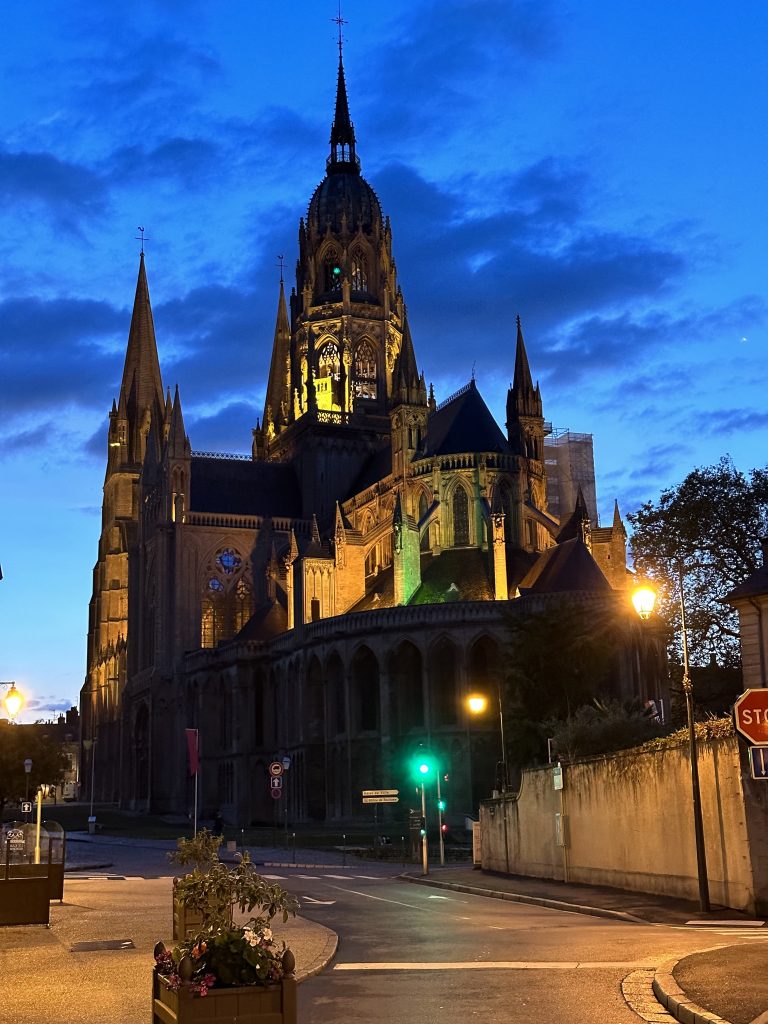
Night falls on Bayeux and the cathedral. Tonight we rest. . .
for tomorrow we ride!
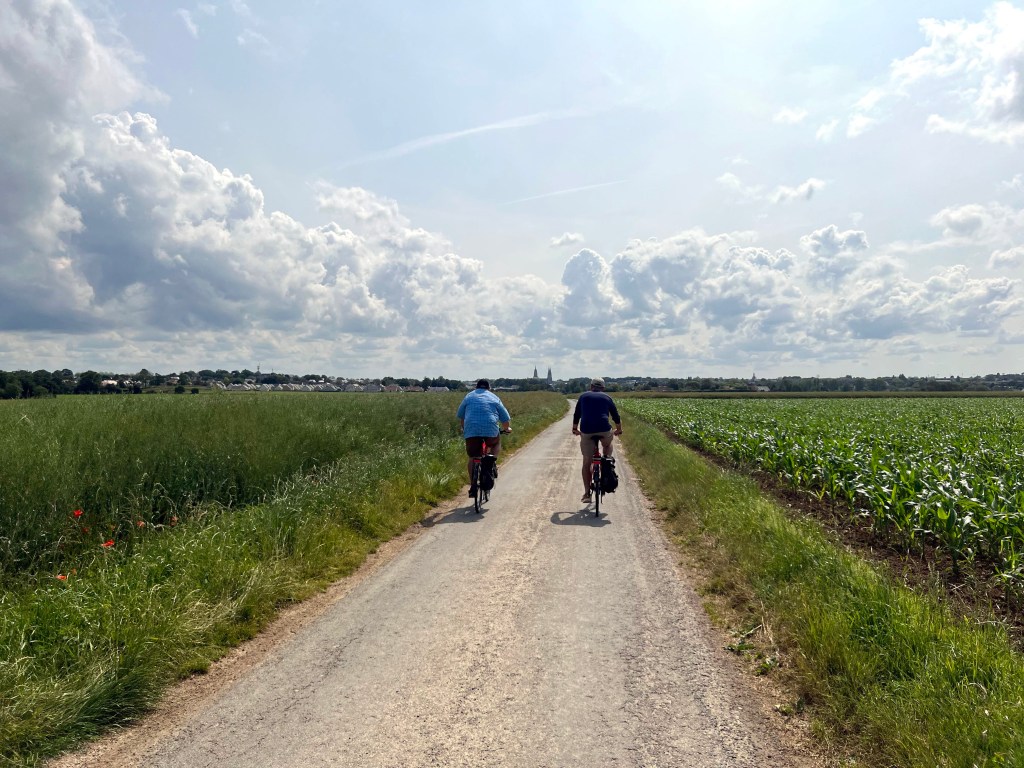
Perfect weather for the first day of biking in France.
The Longues Abbey, which was founded 1168, peaked in 1257 with 22 monks and four priories, declined in 1526 during the chaos of the Hundred Years’ War, was trashed by Protestants in 1562 during the Wars of Religion, and finally was disbanded by the Bishop of Bayeux in 1782.
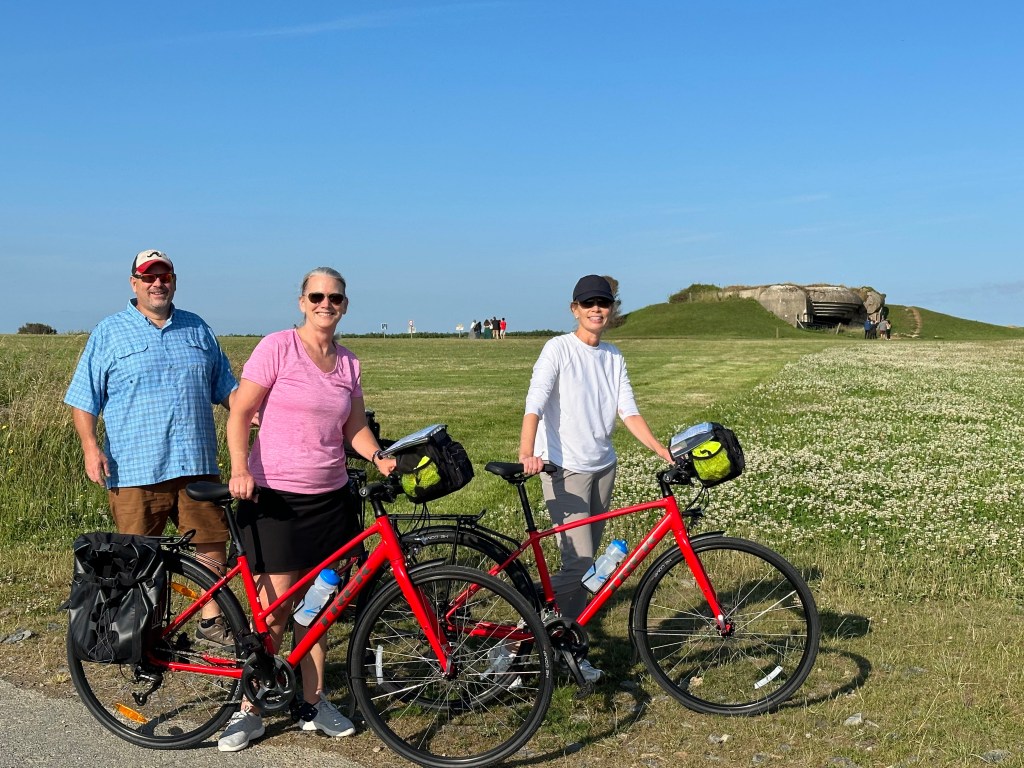
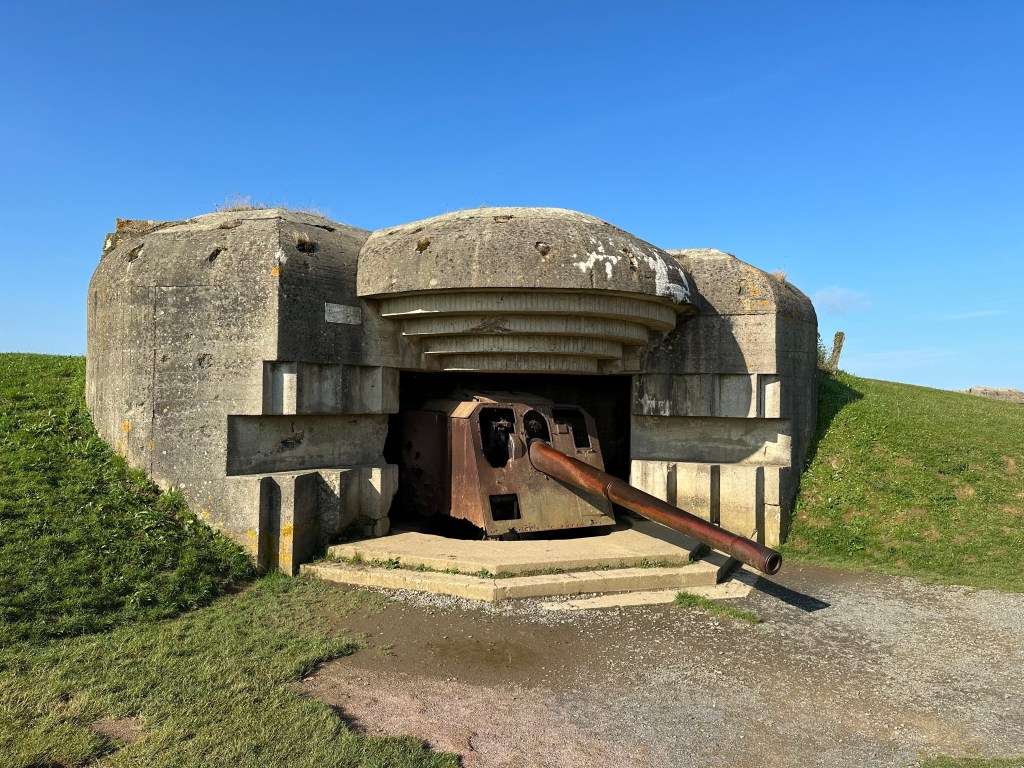
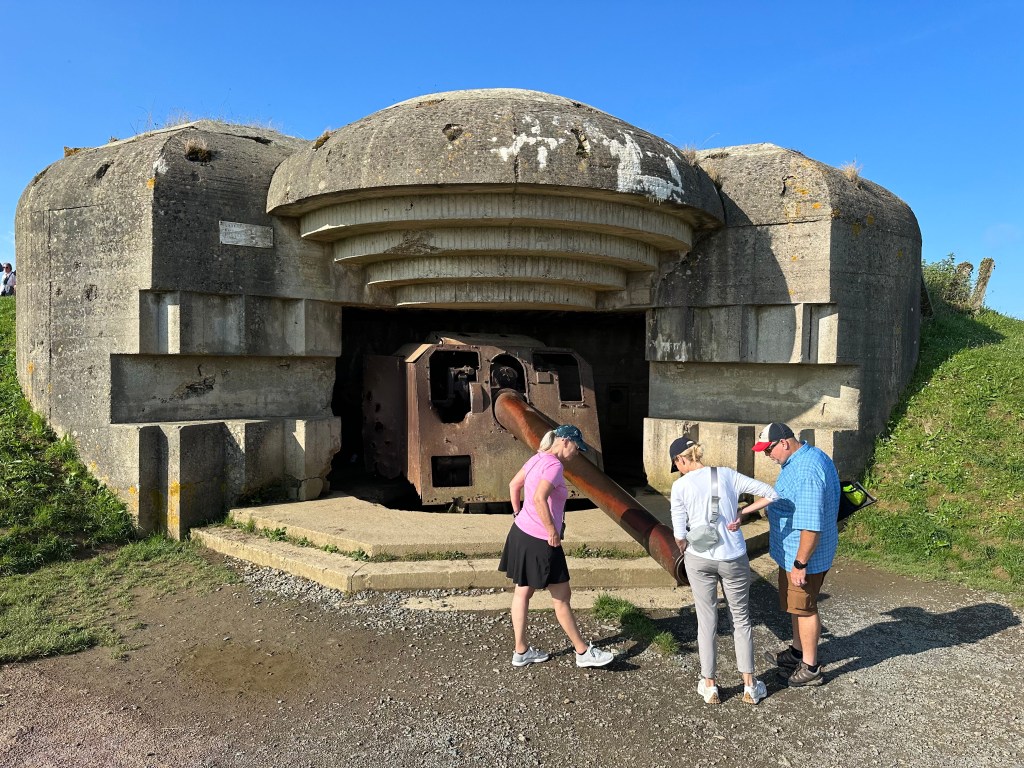
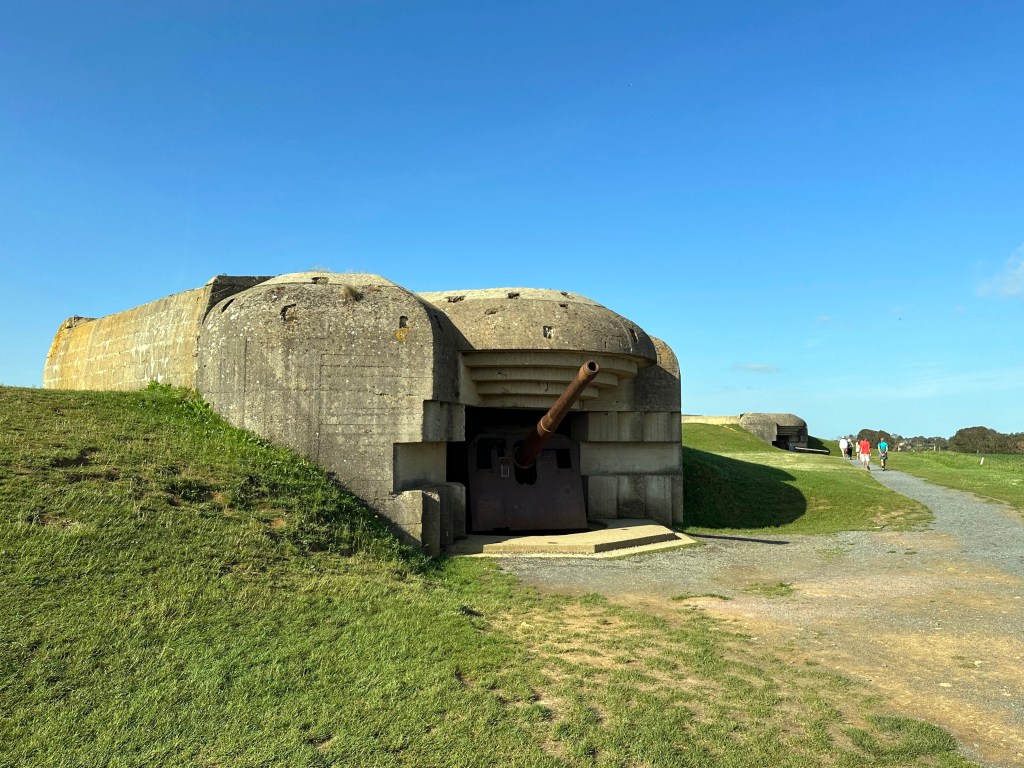
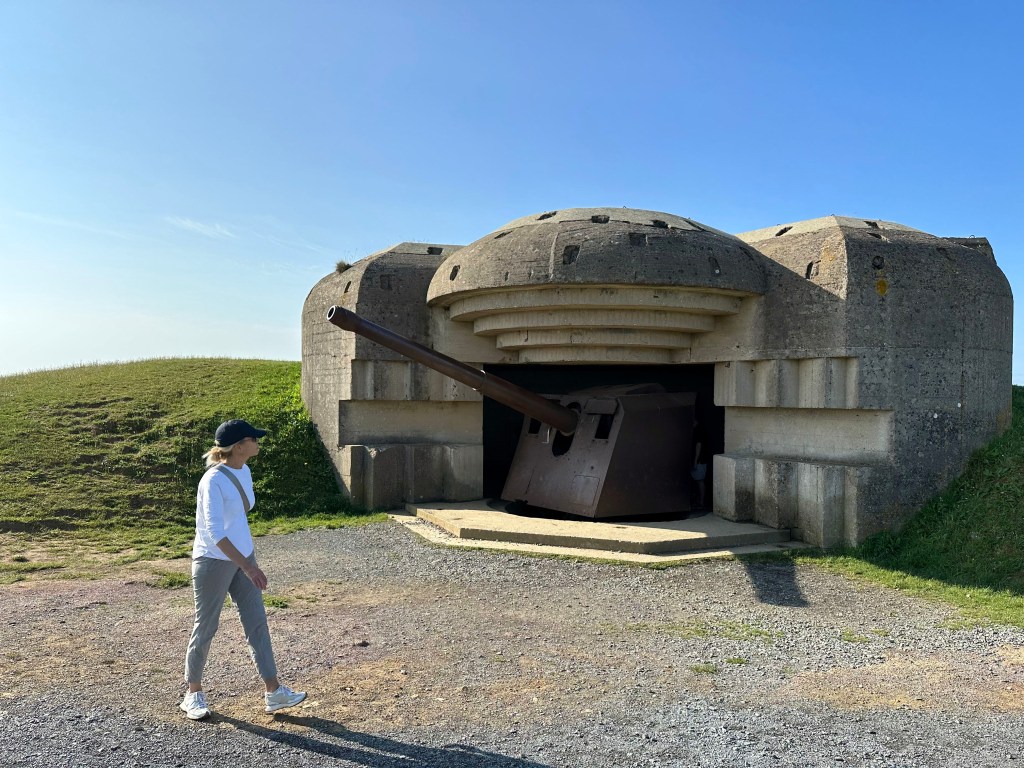
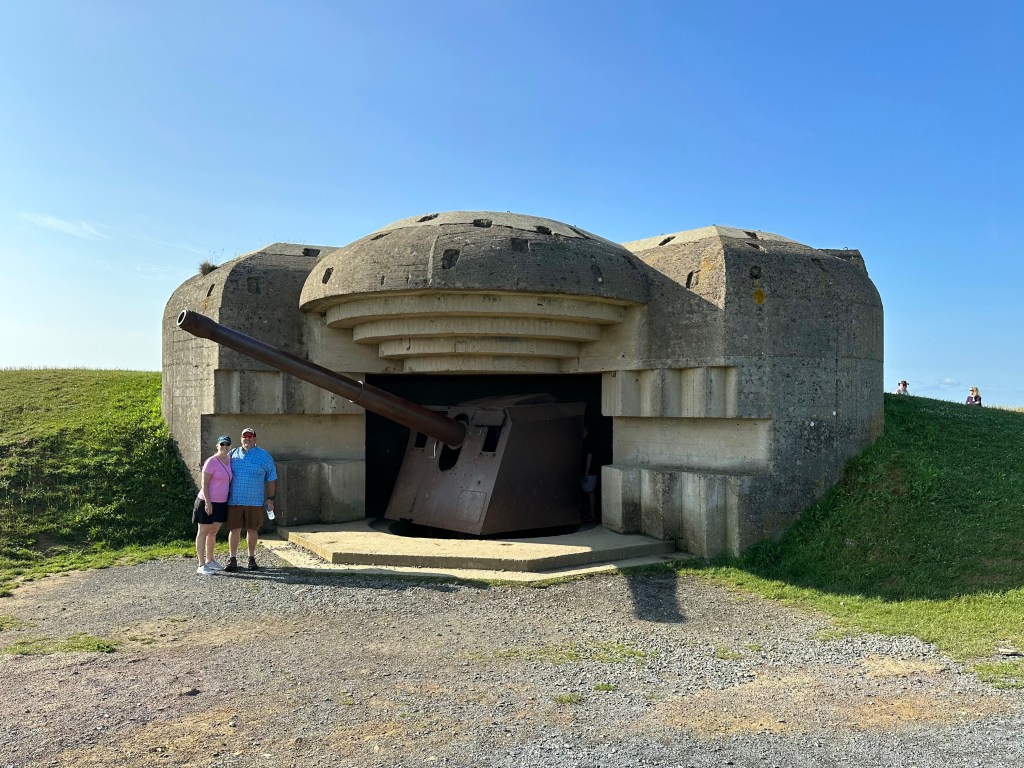
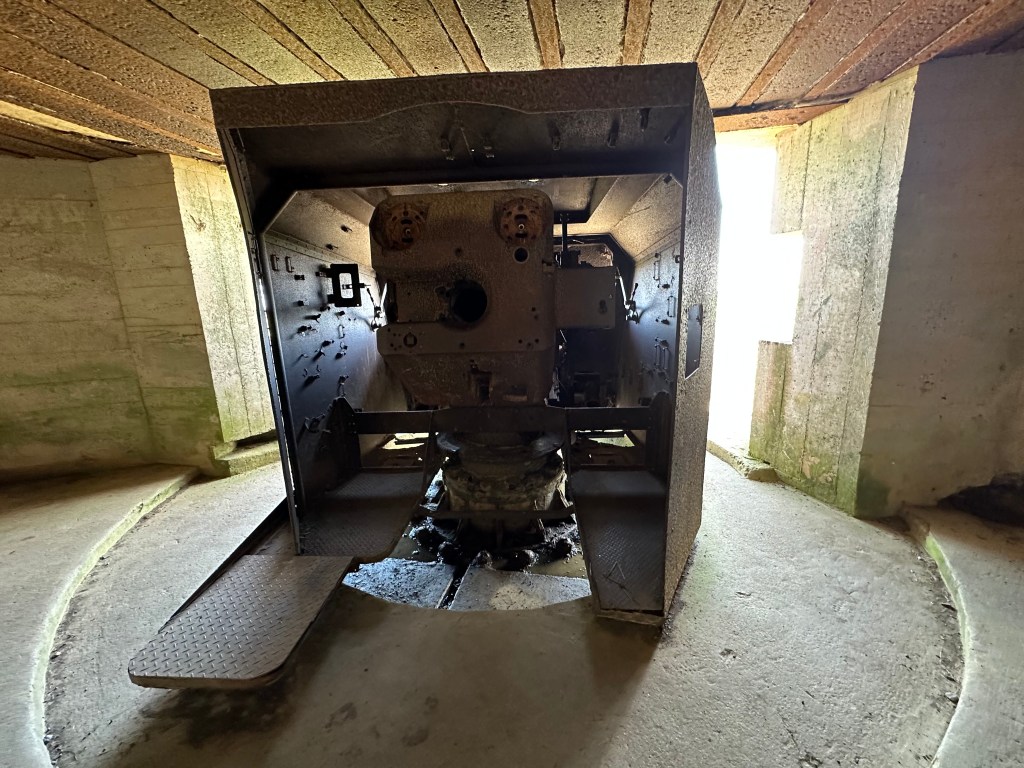
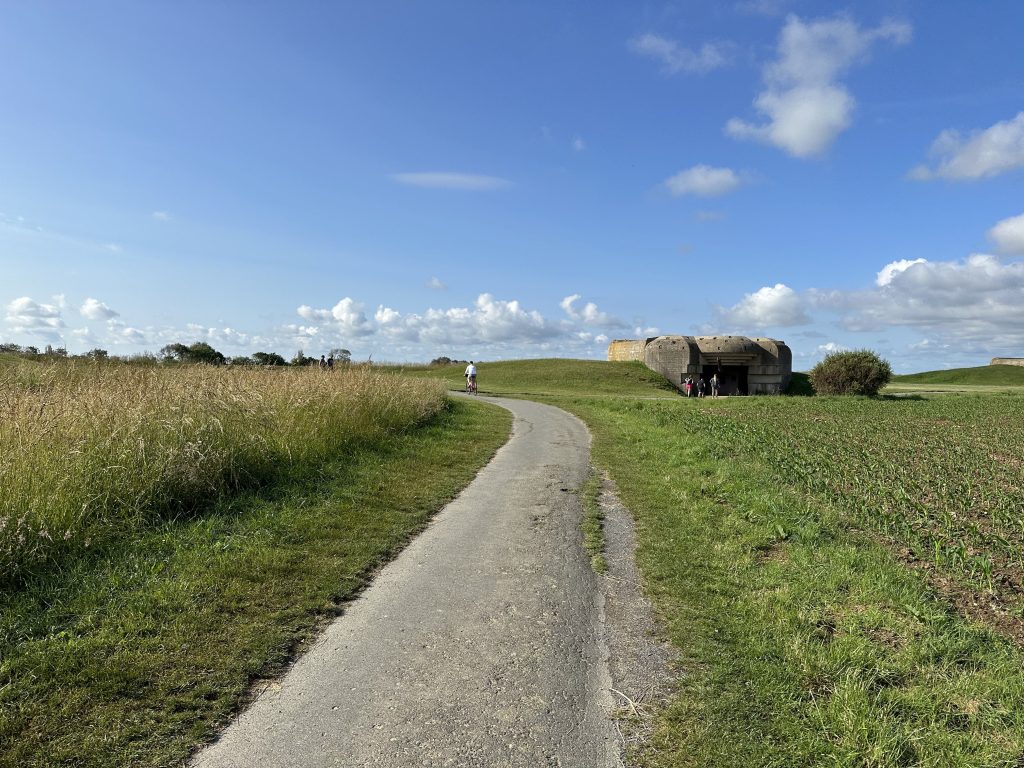
The absolute highlight of the day was the WWII, German Longues-sur-Mer coastal artillery battery.
Which brings us to the second invasion, this time west to east: the Allied invasion of Normandy during WWII, a millennium after the Battle of Hastings.
The Longues-sur-Mer battery shelled Allied naval forces off Gold and Omaha beaches on June 6, D Day, but was damaged by Allied shore bombardment the same day.
It was captured by British ground forces on June 7 and played no further part in the Normandy campaign.
The battery is the only one in Normandy to retain its original complement of guns.
Heading to the coast.
And the battery’s fire control post.
On the coast, the remains of Mulberry Harbor B off Arromanches, named Port Winston. The two Mulberry harbors were designed by the British to be towed across the channel during the Allied invasion of Normandy.
“The Mulberry harbours solved the problem of needing deepwater jetties and a harbour to provide the invasion force with the necessary reinforcements and supplies, and were to be used until major French ports could be captured and brought back into use after repair of the inevitable sabotage by German defenders. Composed of floating but sinkable breakwaters, floating pontoons, piers and floating roadways, this innovative and technically difficult system was being used for the first time.
The Mulberry B harbour at Gold Beach was used for ten months after D-Day, while over two million men, four million tons of supplies and half a million vehicles were landed before it was fully decommissioned.” (From here.)
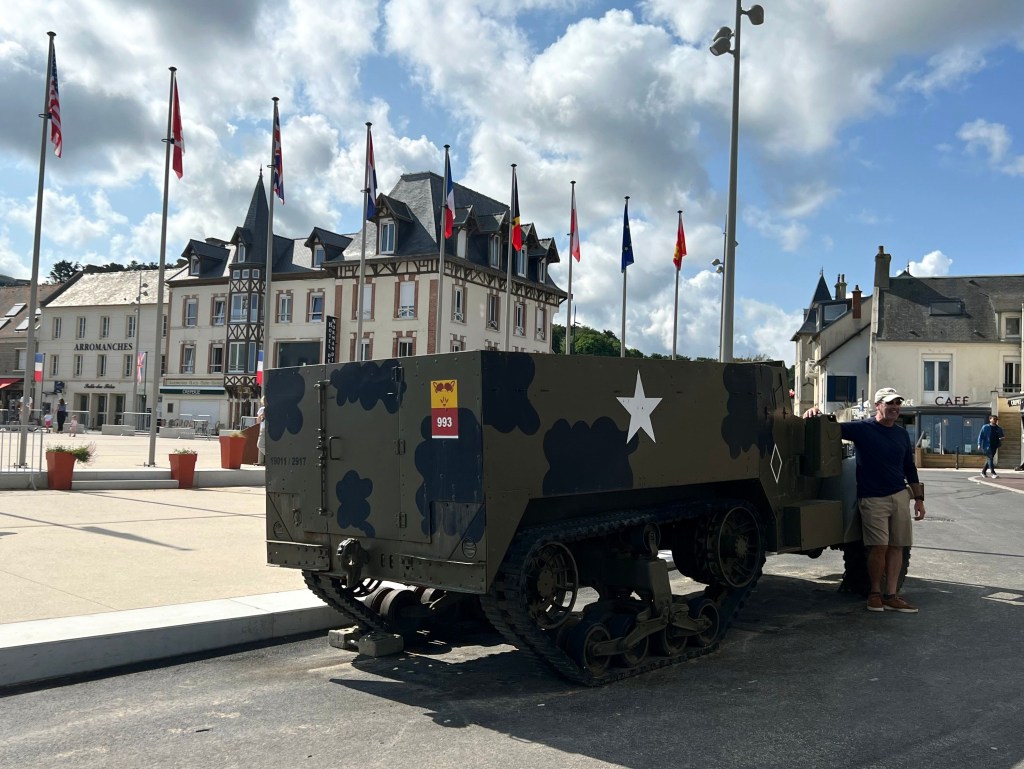
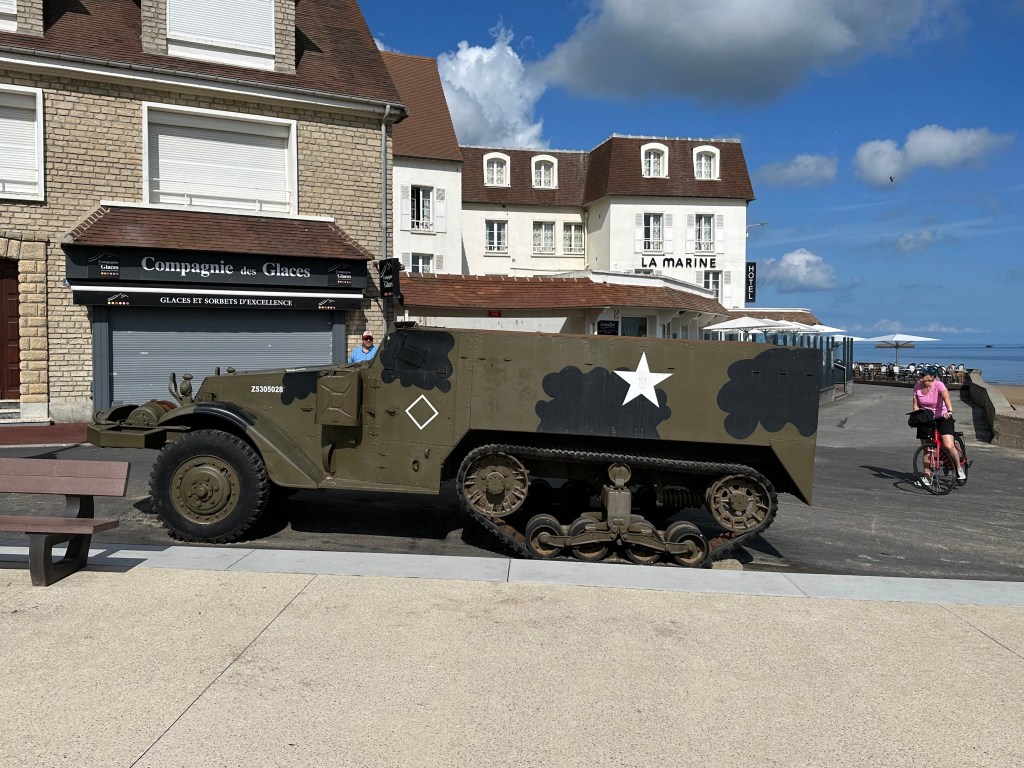
And just up the hill, the town of Arromanches. (With another WWII military artifact – we were delighted to come across these (mostly tanks) everywhere we rode our first 3 days of the tour.
A Mulberry dock pier, codenamed “whales.”
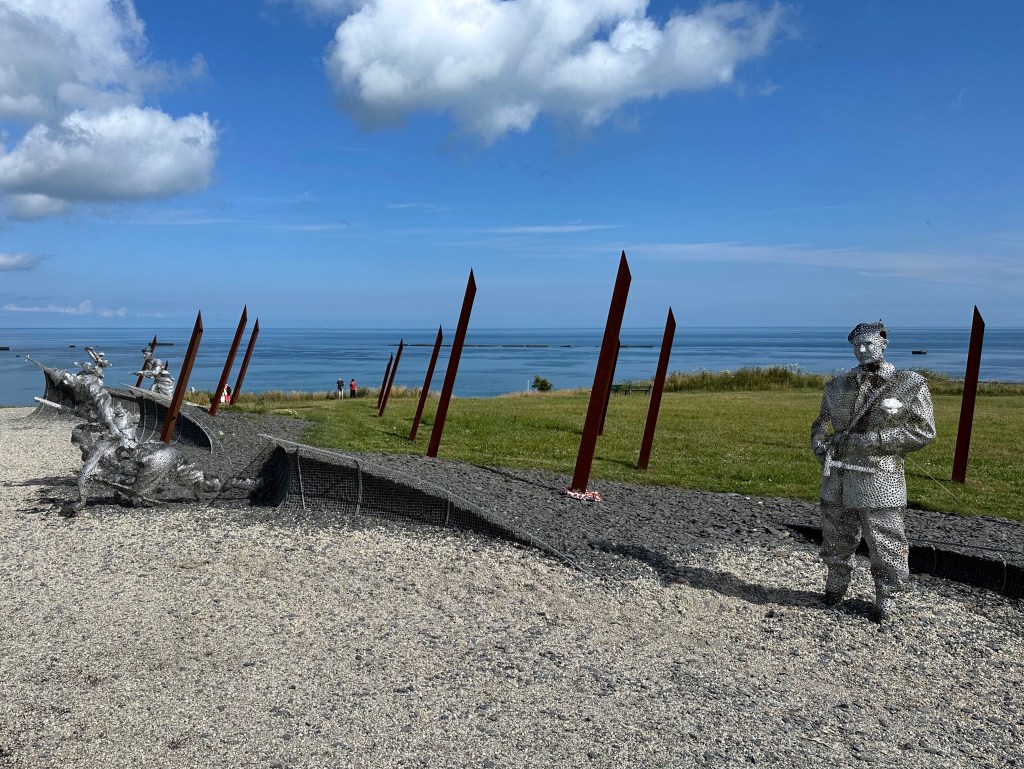
Memorial to the invasion of Gold Beach here in Arromanches. A British beach, obviously.
Heading out of town to our next WWI site.
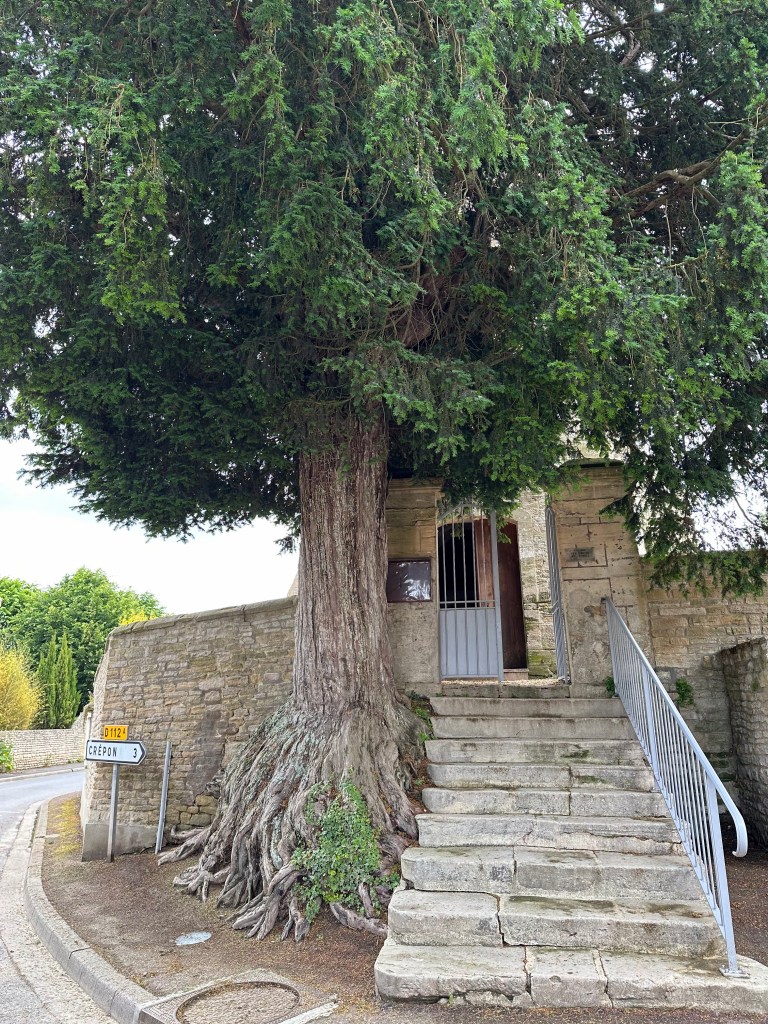
Passing a cool church with an even cooler tree on the way. (A little reminiscent of the even awesomer trees on either side of the church door in Stow-on-the-Wold during our Cotswolds road trip.)
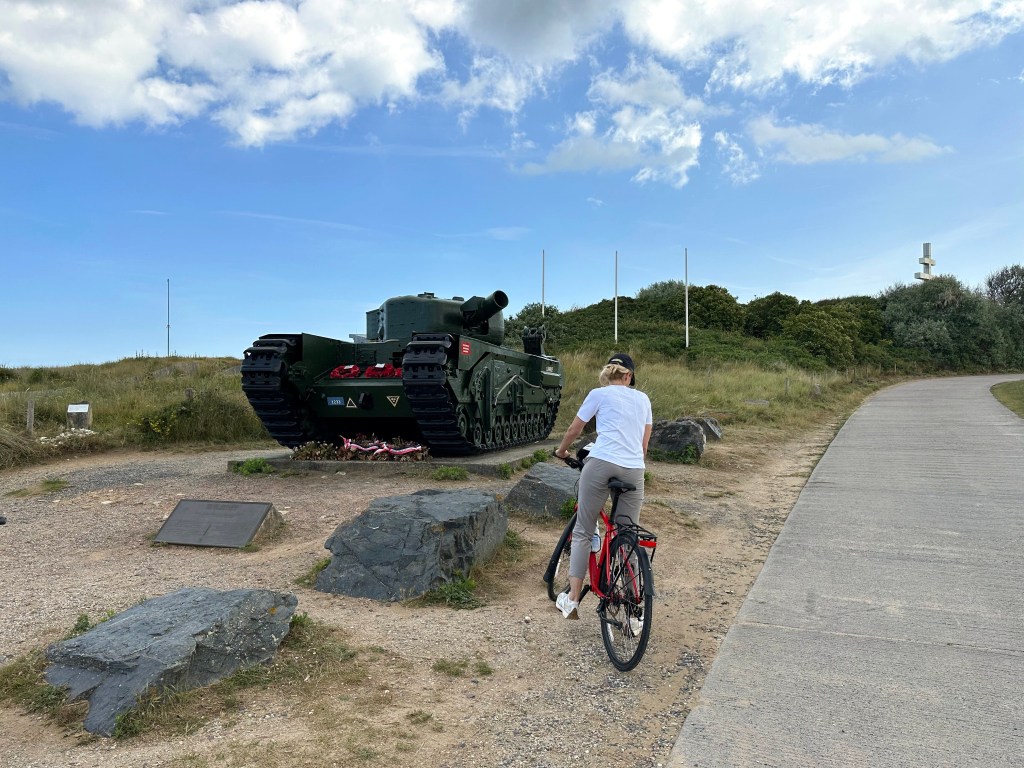
More WWII hardware on the coast! This is One Charlie, a British Churchill AVRE engineer tank that landed at Graye-sur-Mer on D-Day with the 79th Armoured Division, became stuck in a flooded crater, and was used to help support a makeshift crossing; four of its six crew members died, and the tank was recovered in 1977 and has stood as a memorial ever since. The ashes of its driver, Bill Dunn, were scattered at the site in 2014.
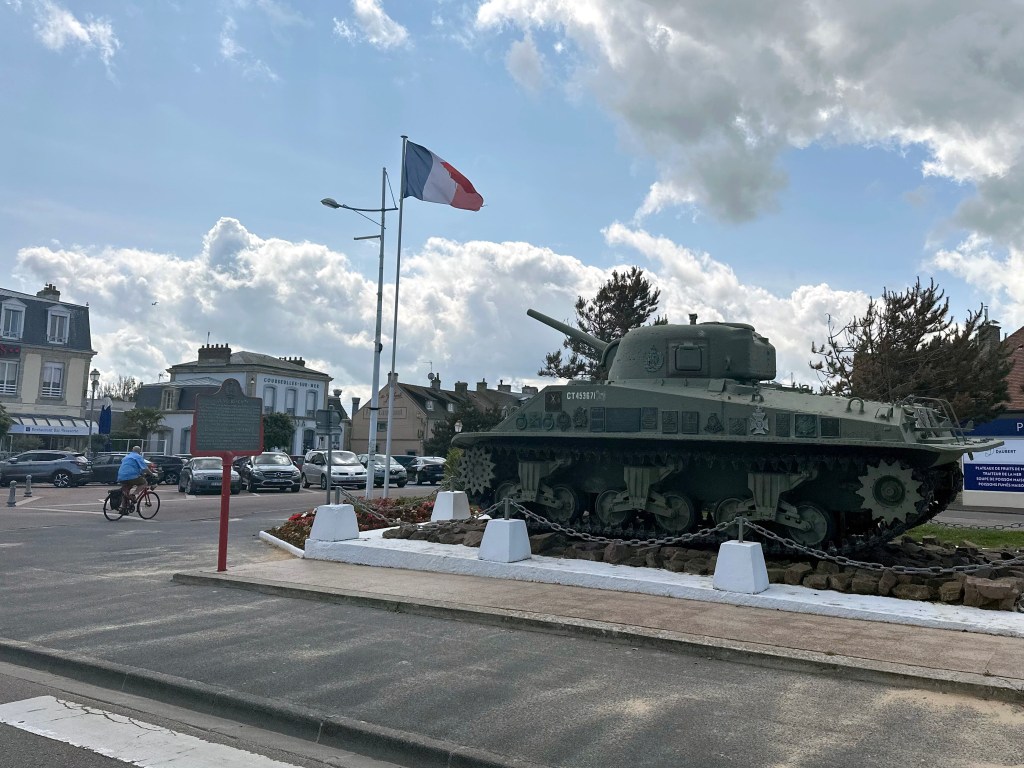
And even more hardware – a Sherman in town as we head to lunch.
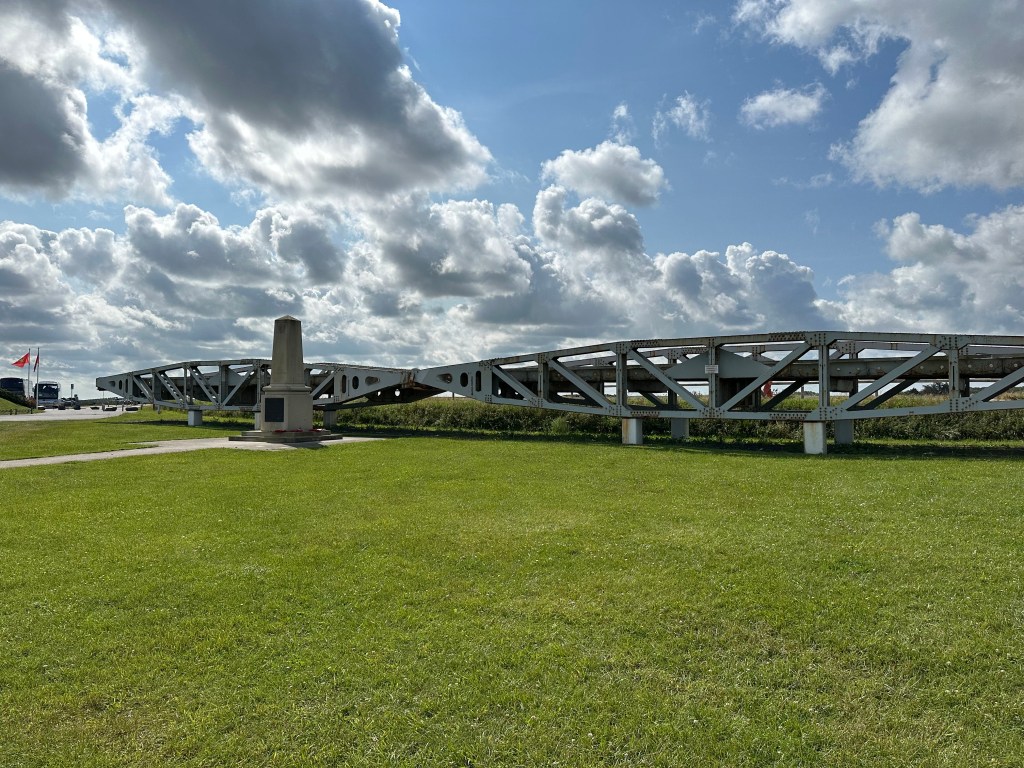
Super cool rotating canal bridge:
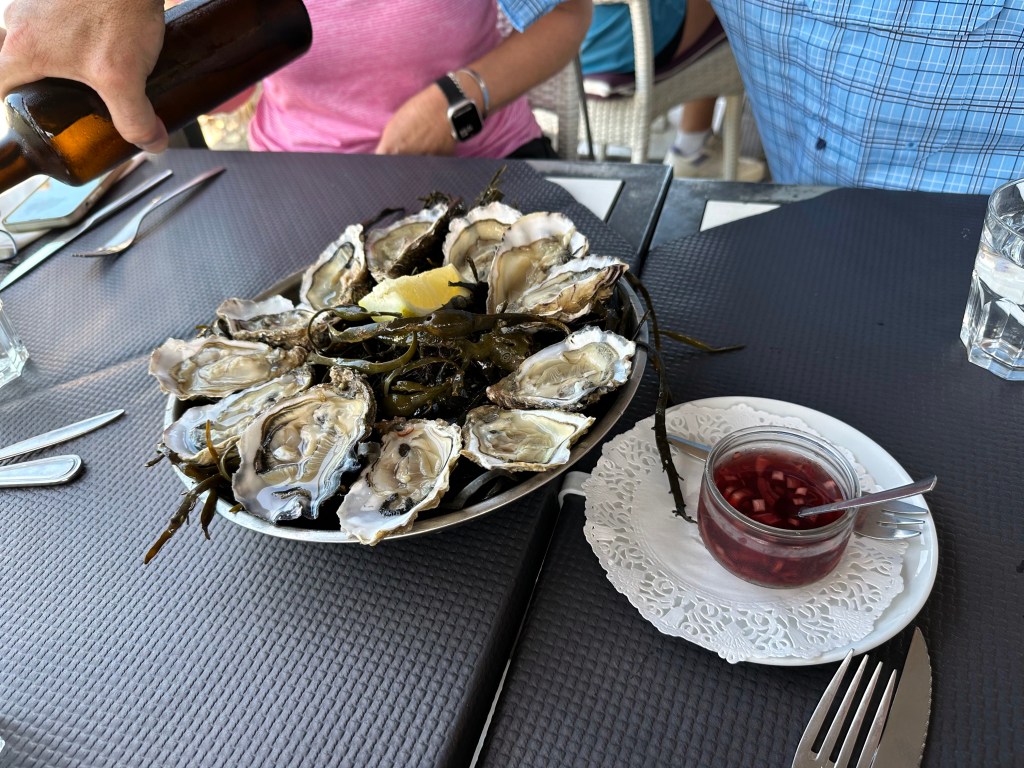
Our first taste of Normandy oysters in Courseulles-sur-Mer. Freakin’ amazing. This would be the first of dozens and dozens we’d enjoy down the coast as we proceeded through our trip.
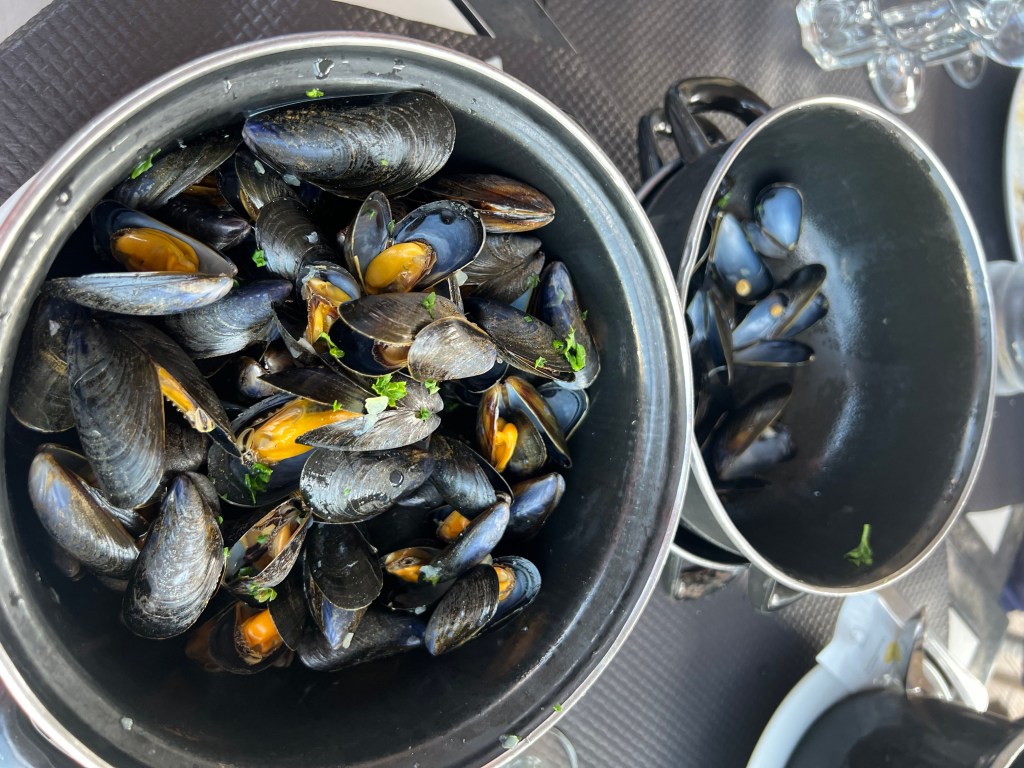
And moules, natch.
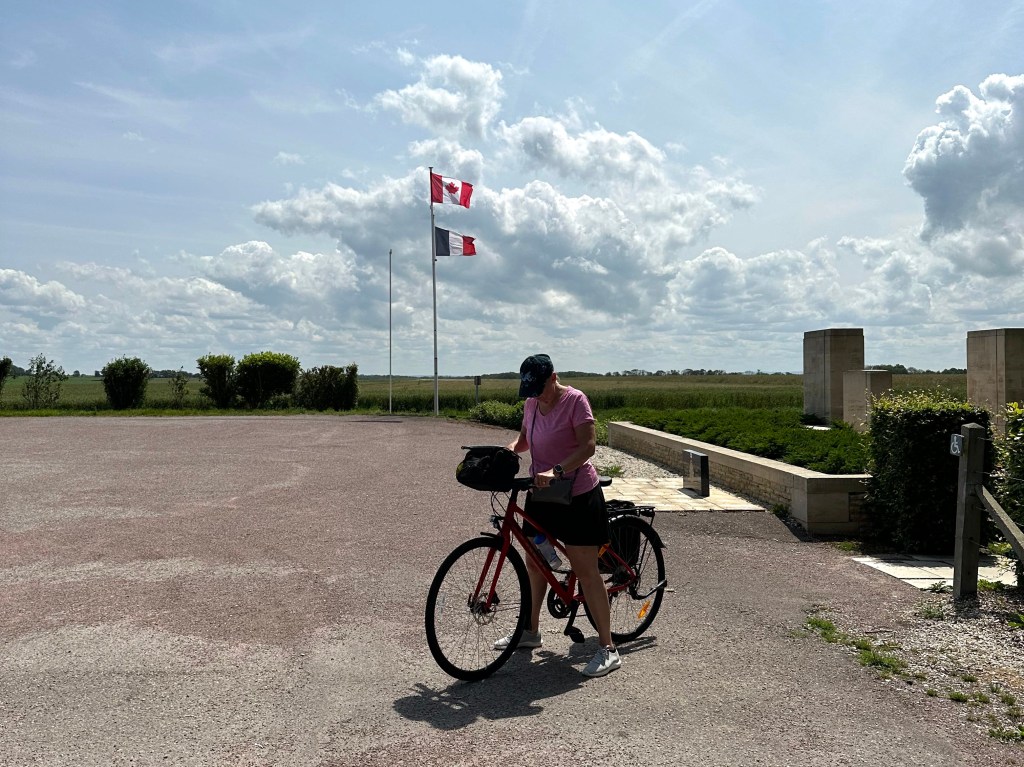
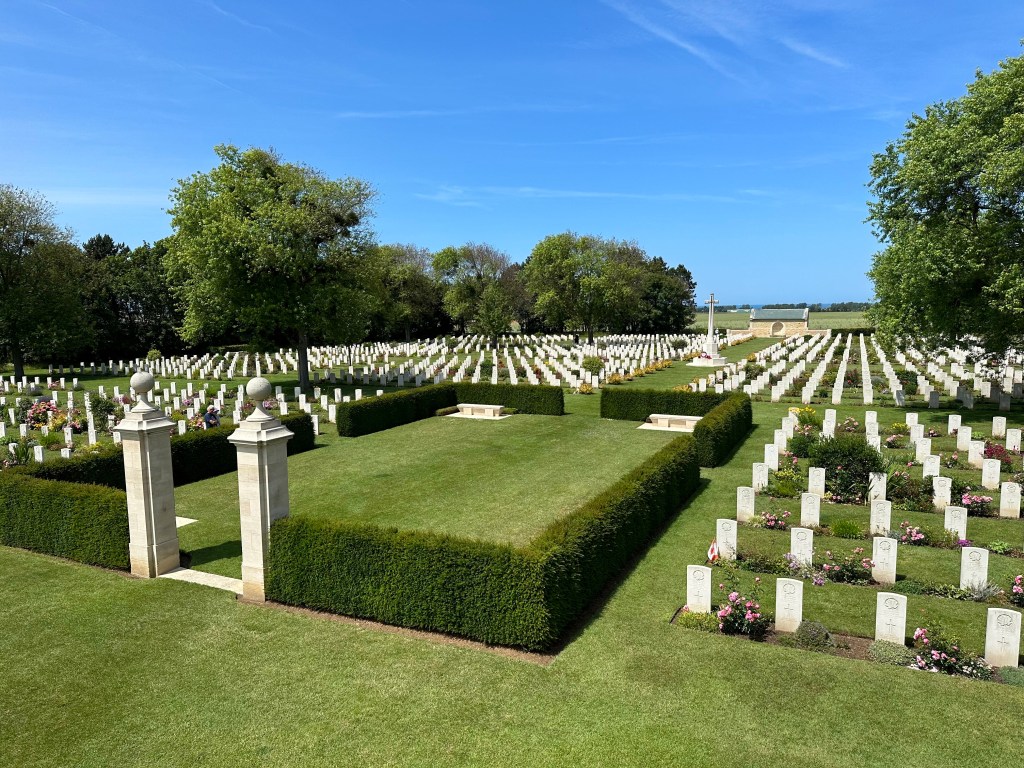
The Canadian cemetery in Normandy.
Very serene and impactful.
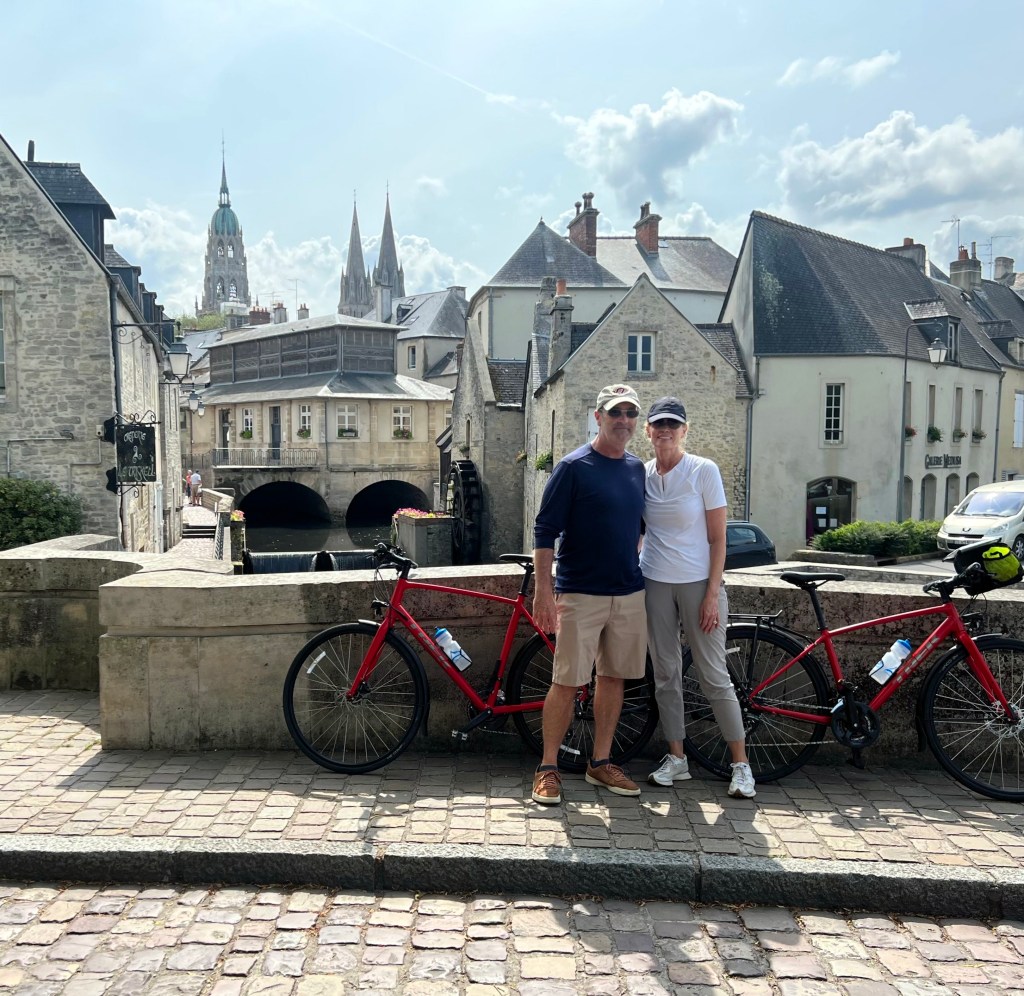
Back in Bayeux at the end of our first day of biking.
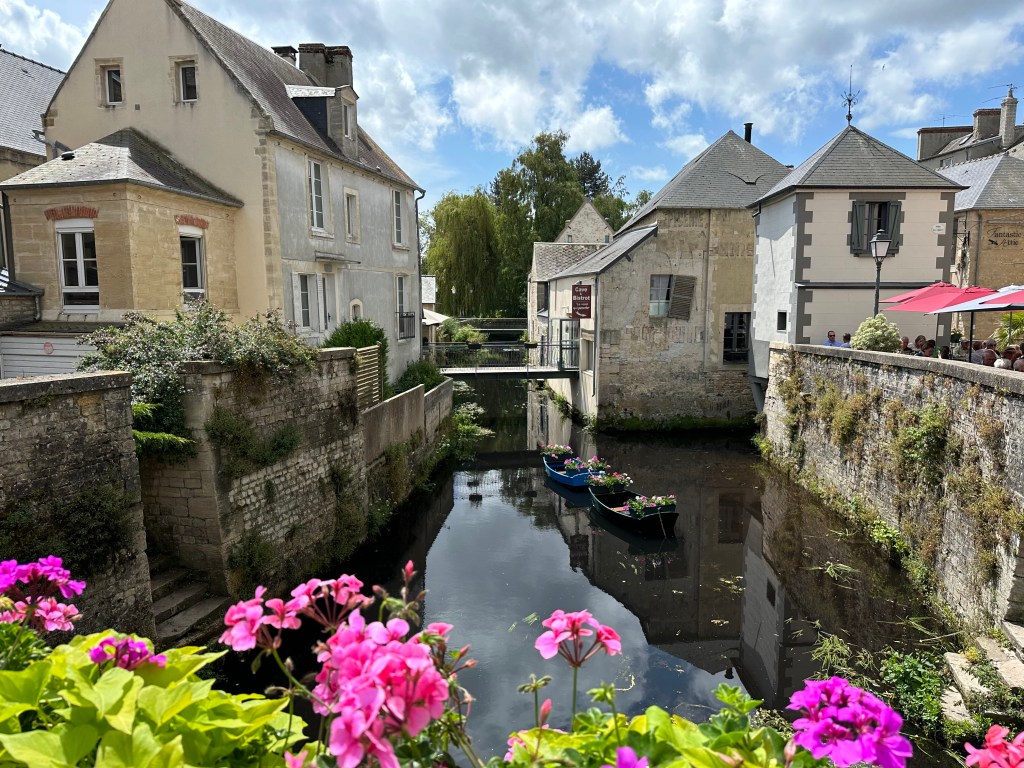
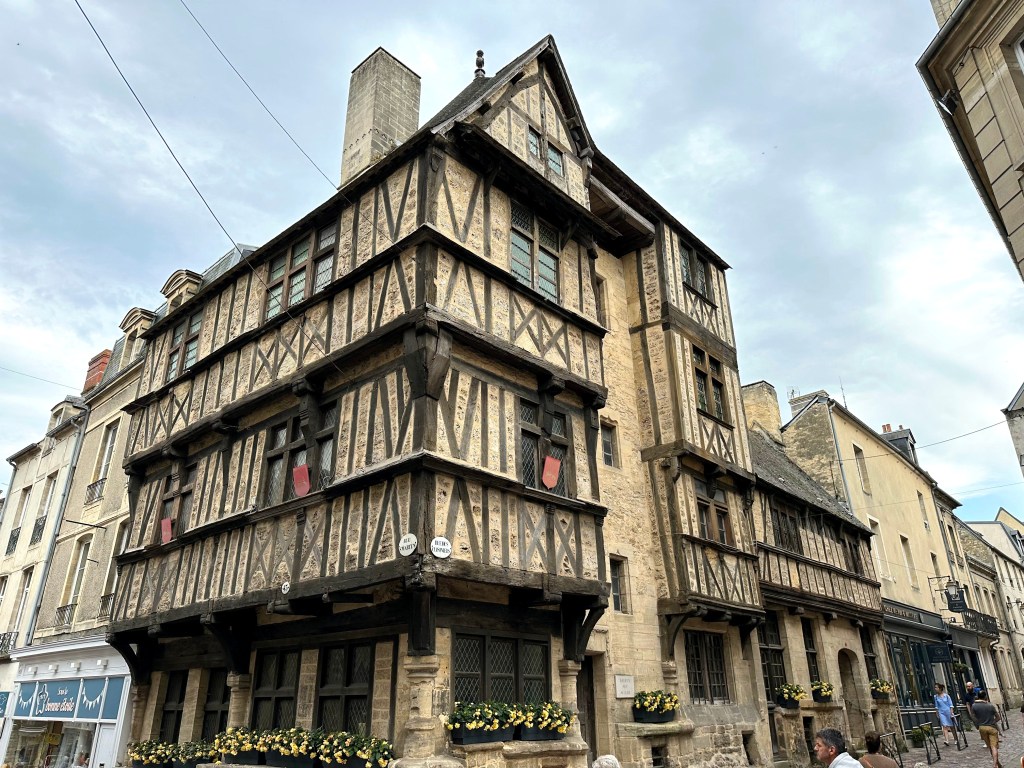
Very cool half-timbered medieval house in town.
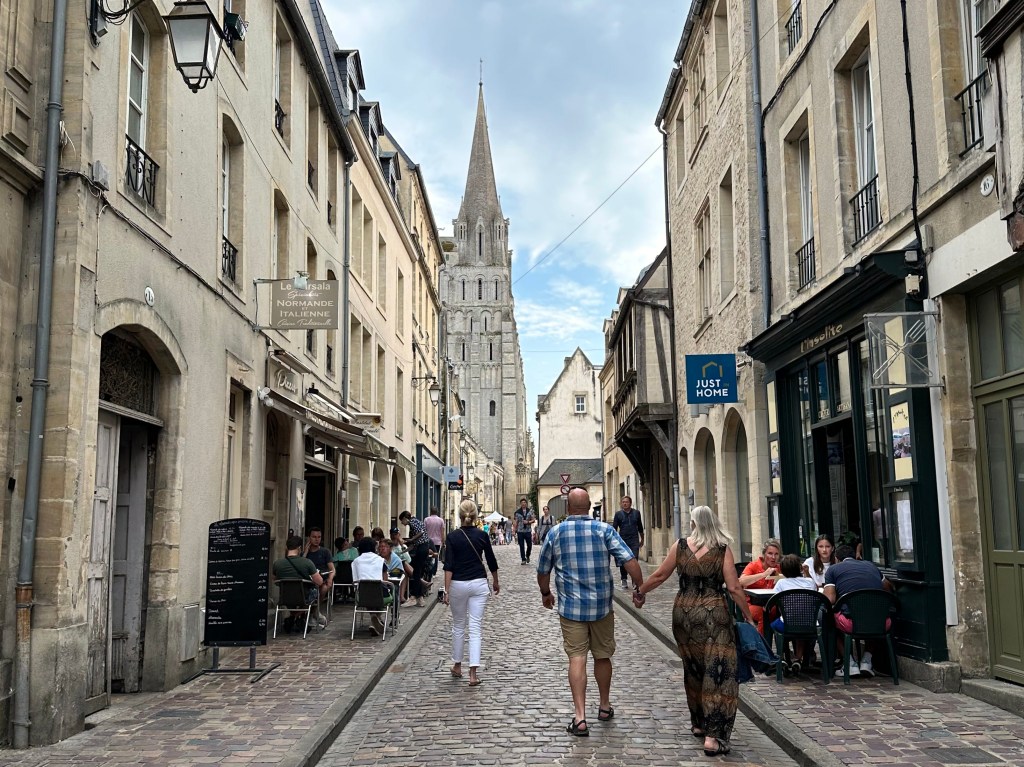
Yesterday’s cathedral looming over centre ville.
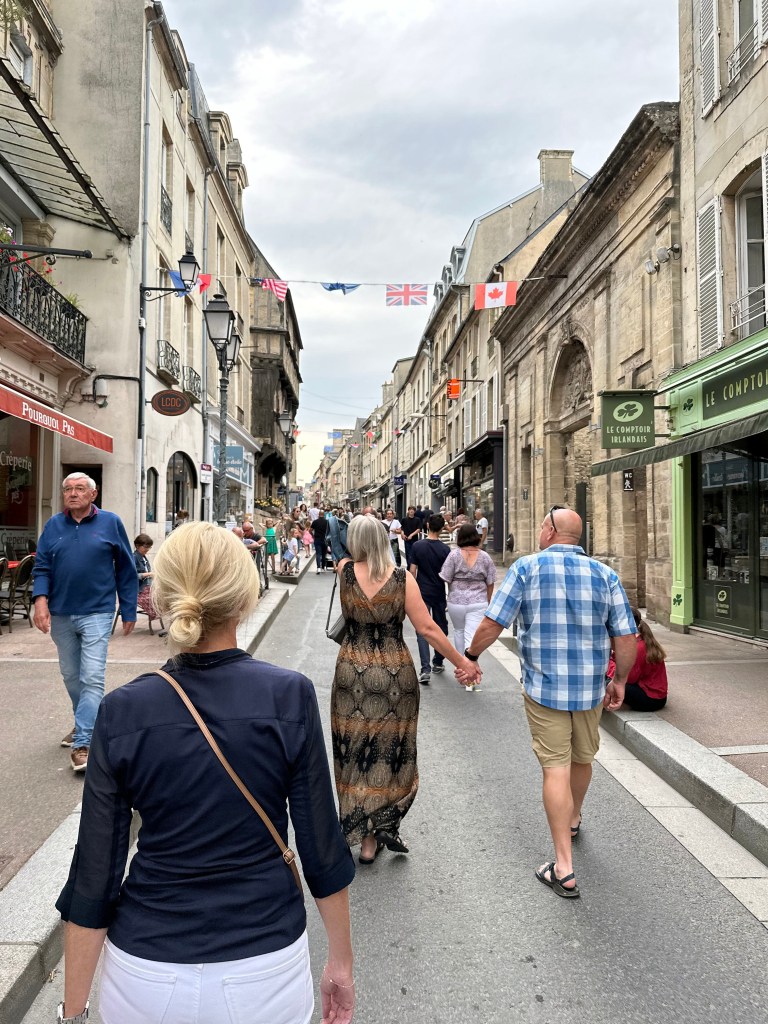
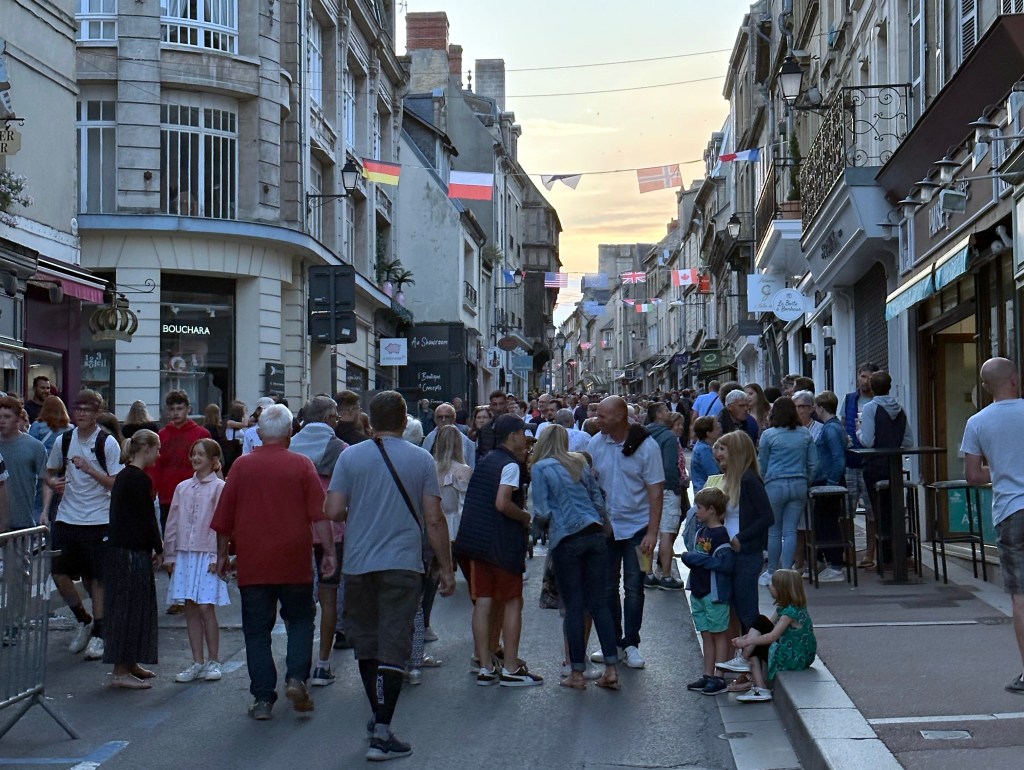
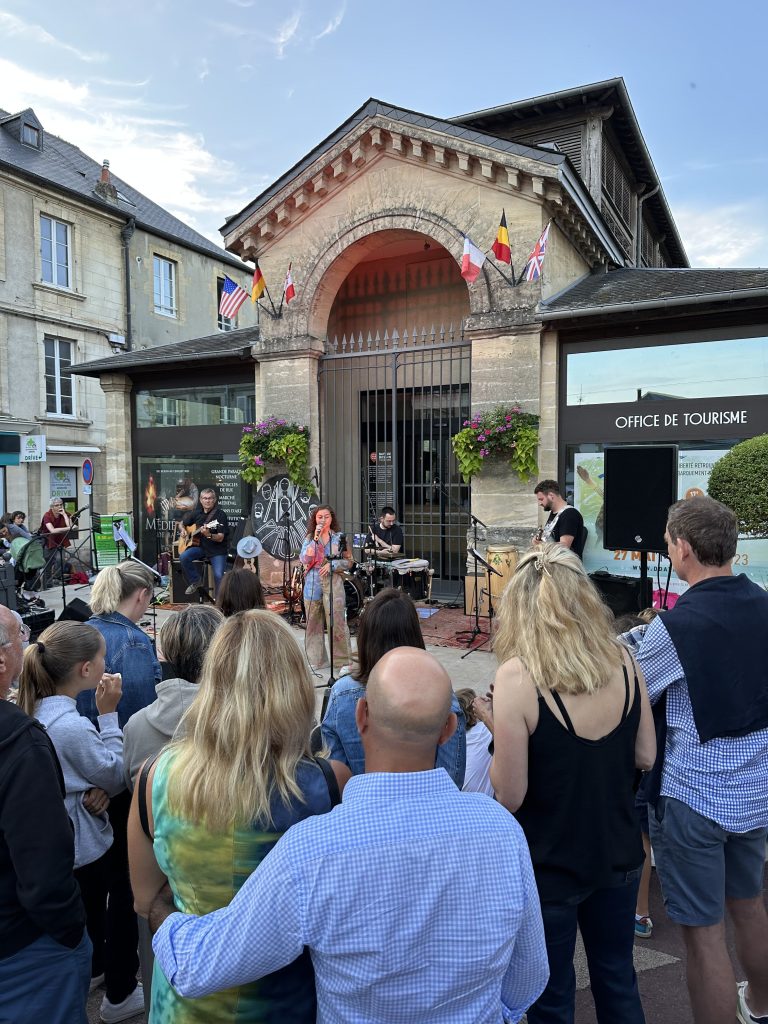
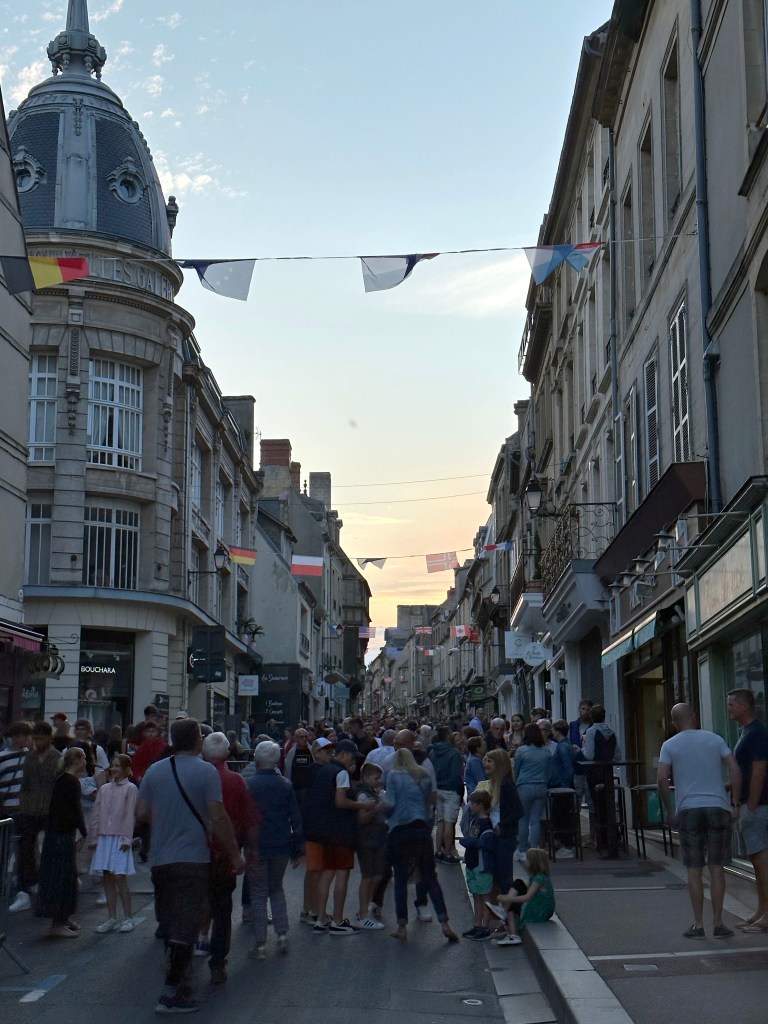
And, we soon learned, it was France’s national Day of Music – Fete de la Musique – where every town in France explodes into dozens of little tiny desk concerts.
Including Bayeux.
The locals were definitely digging it! (Aided, we’re sure, by the high-octane Belgian trappist ale, Delirium Tremens.)