After 2 nights in Bayeux and a loop ride to the coast and the British and Canadian Normandy beaches on Day 1 of biking, Day 2 took us back to the coast to the American beaches, and then inland.
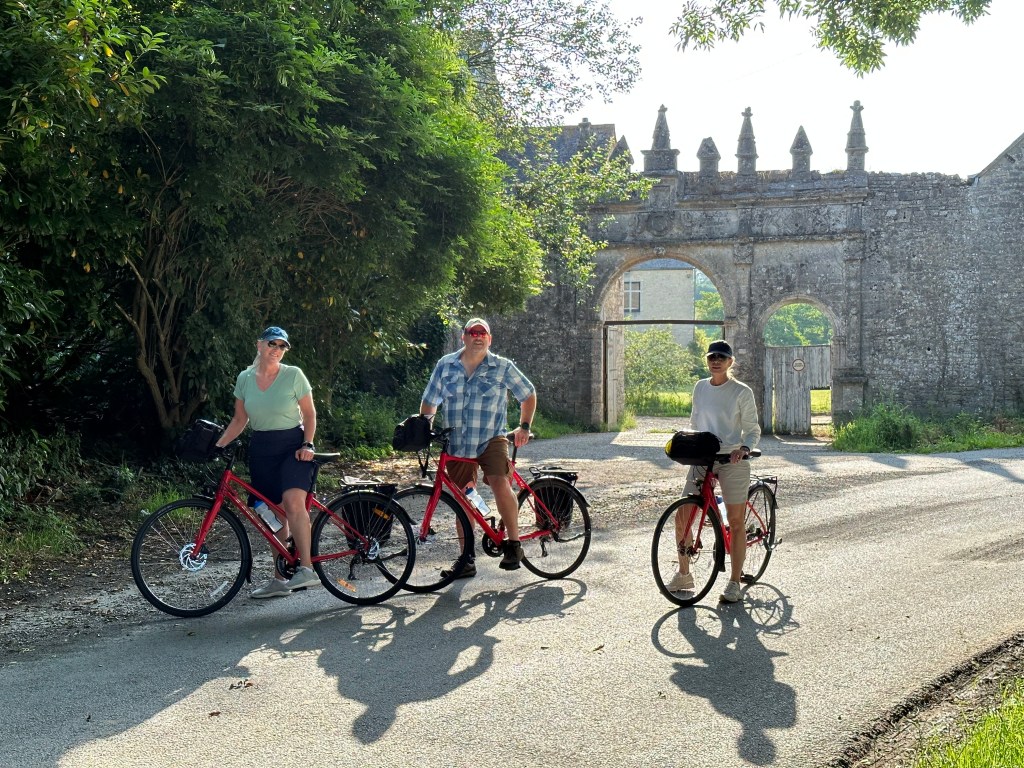
Some historic estate or other a few miles outside of town:
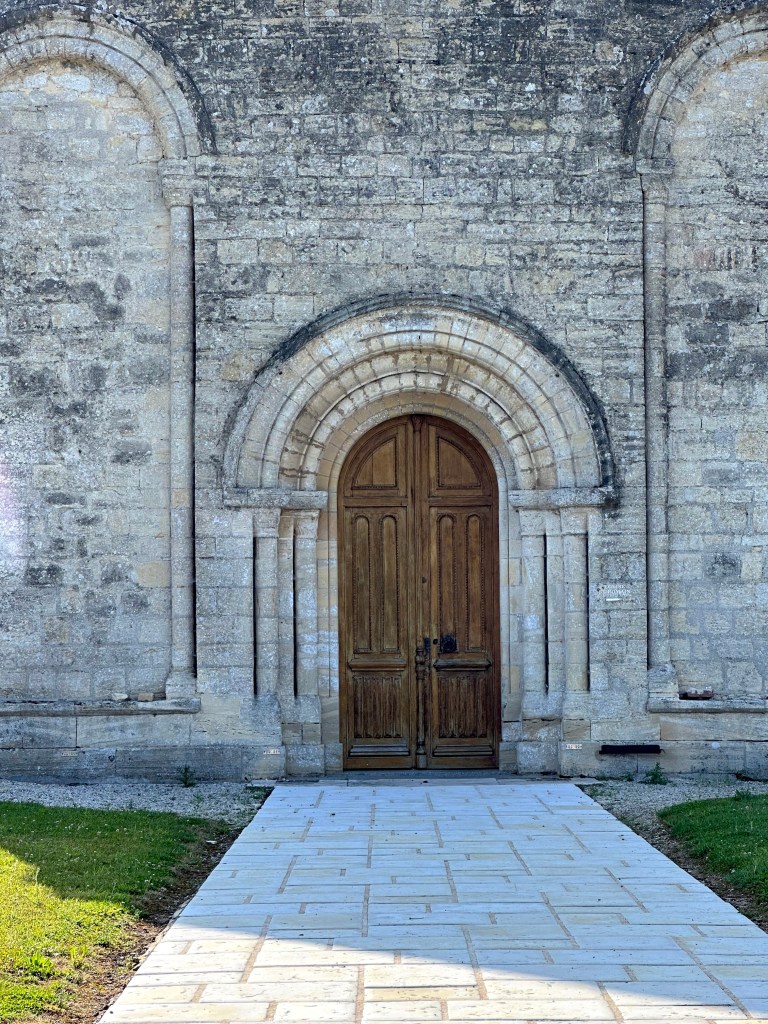
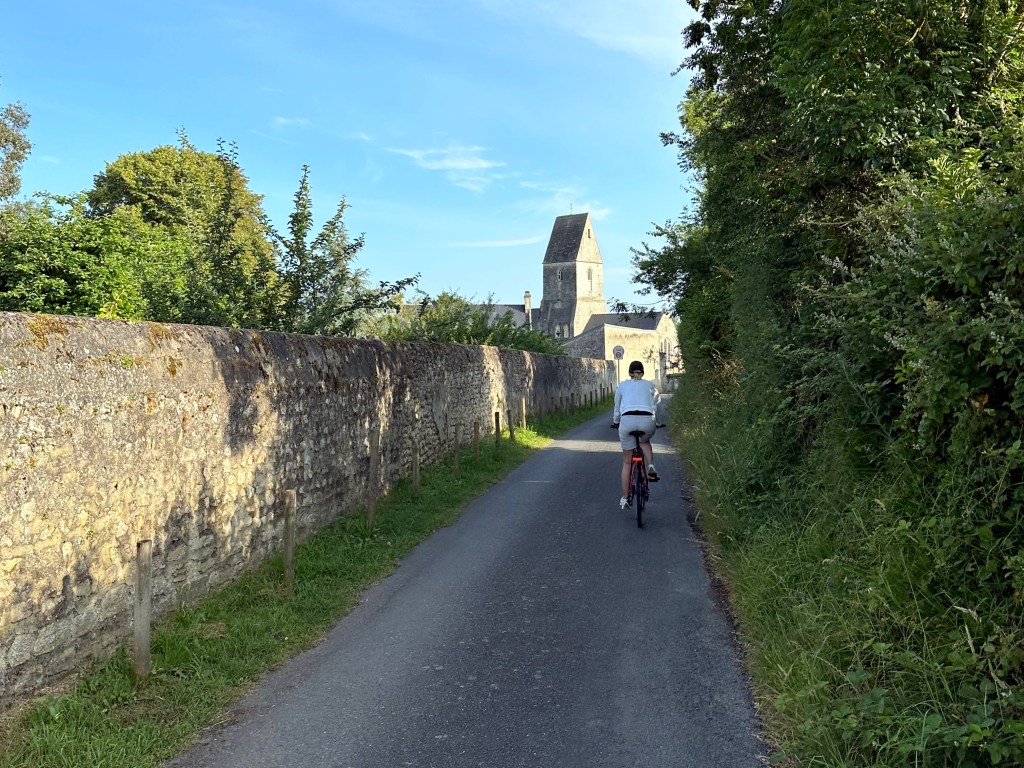
Passing by the Église Saint-Romain de Étréham, the Church of Saint-Roman.
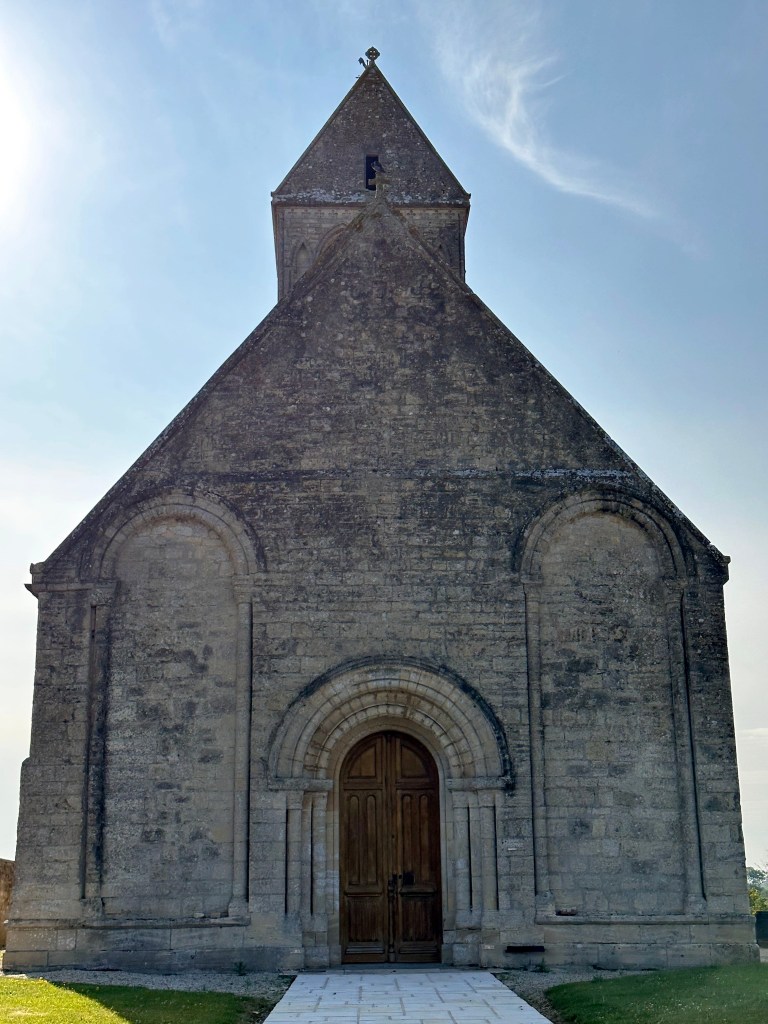
Originally built in the 11th century, but renovated over time, it still retains its Romanesque west facade.
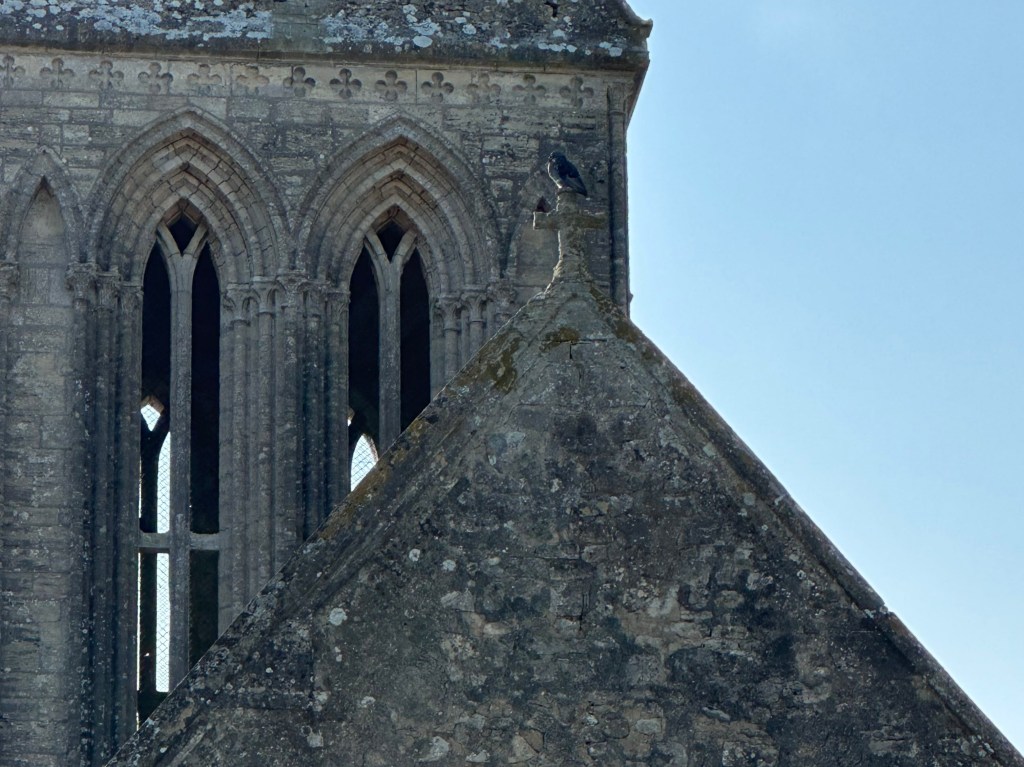
And 12th-century tower.
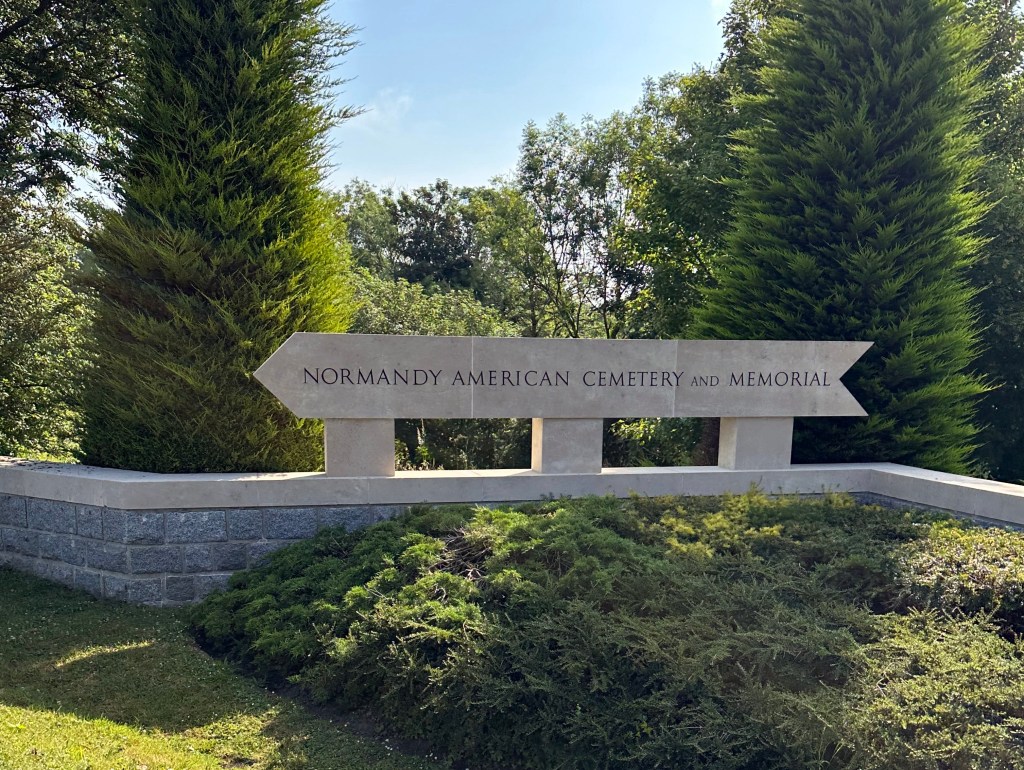
Highlight of the day’s ride, at Omaha Beach:
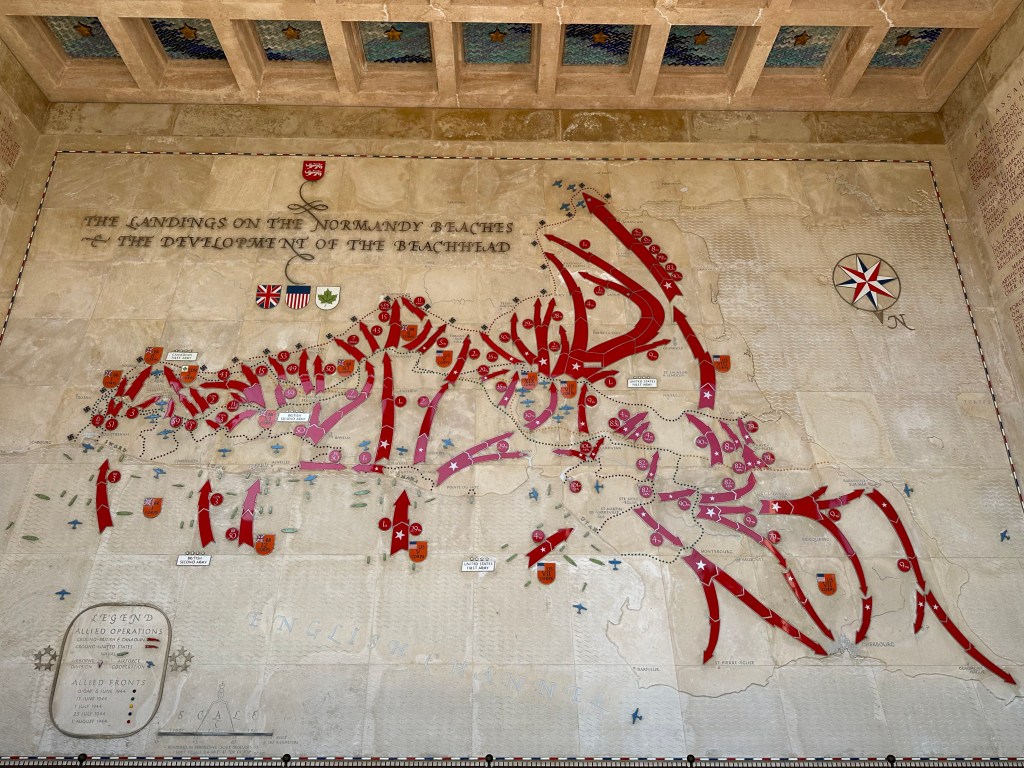
Cool map of the Normandy landings at the cemetery:
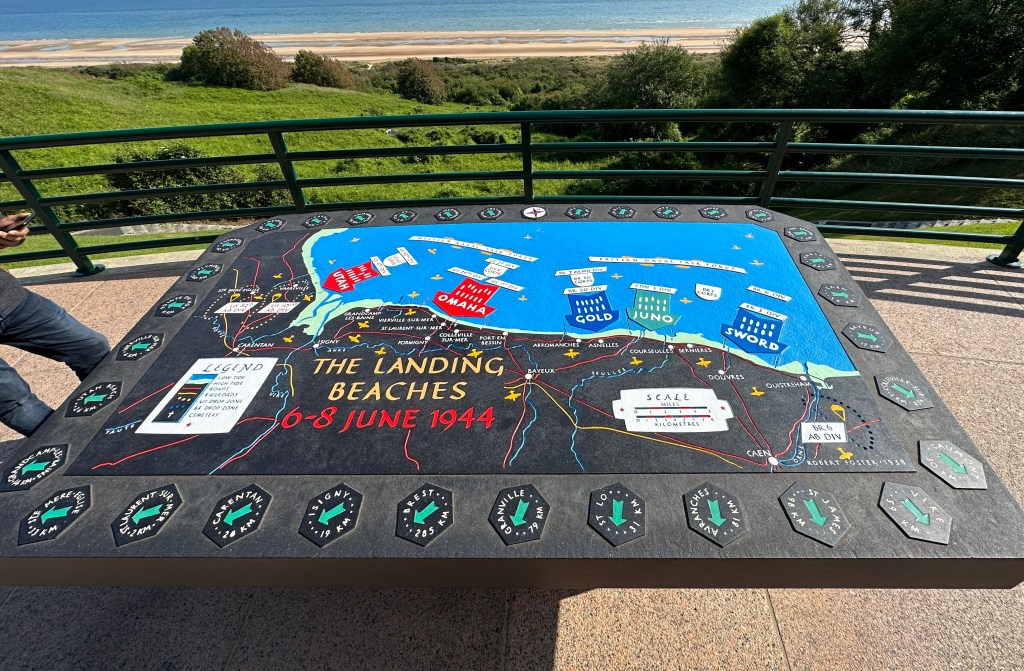
Yesterday, we were there:
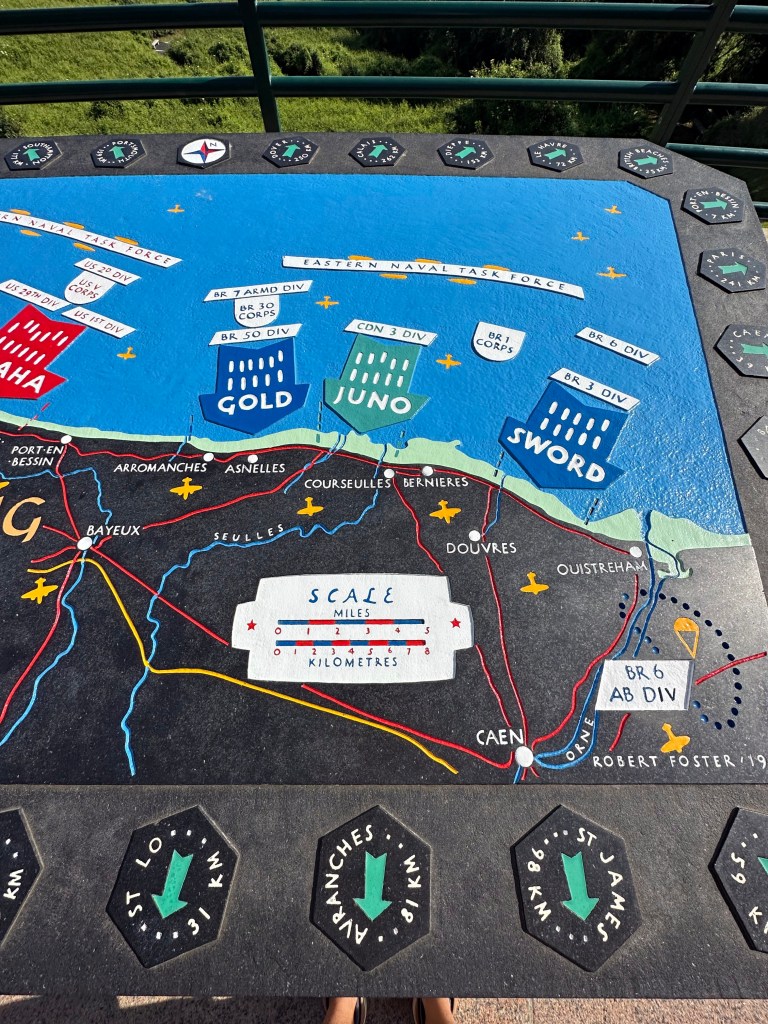
Today, we are here:
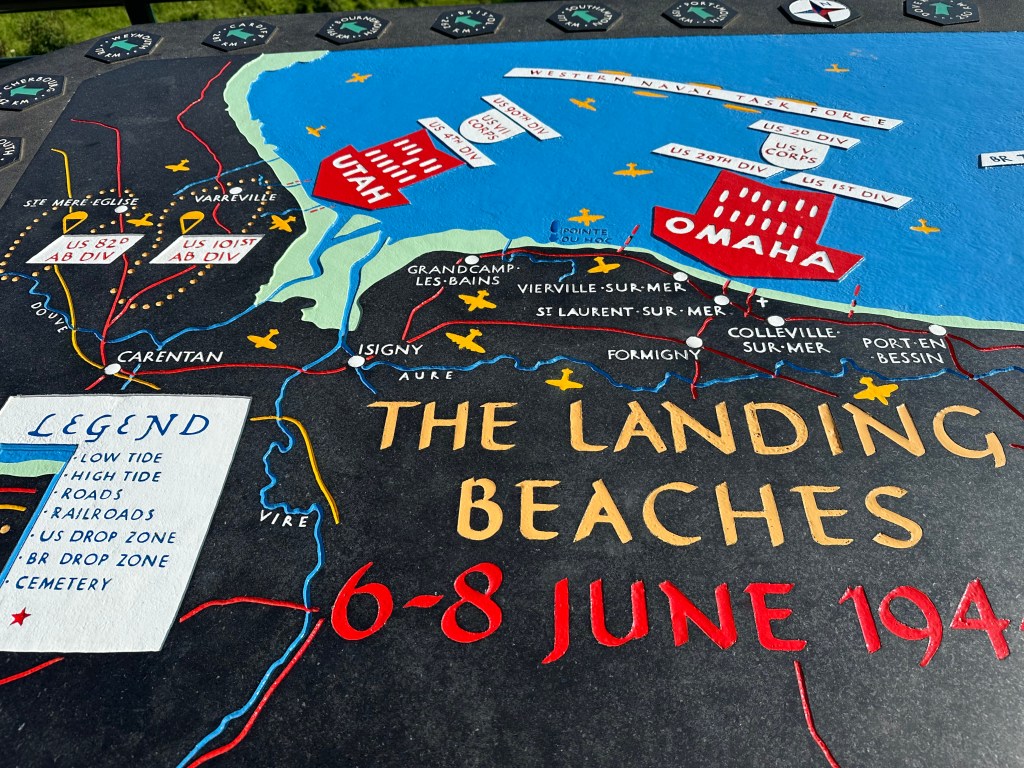
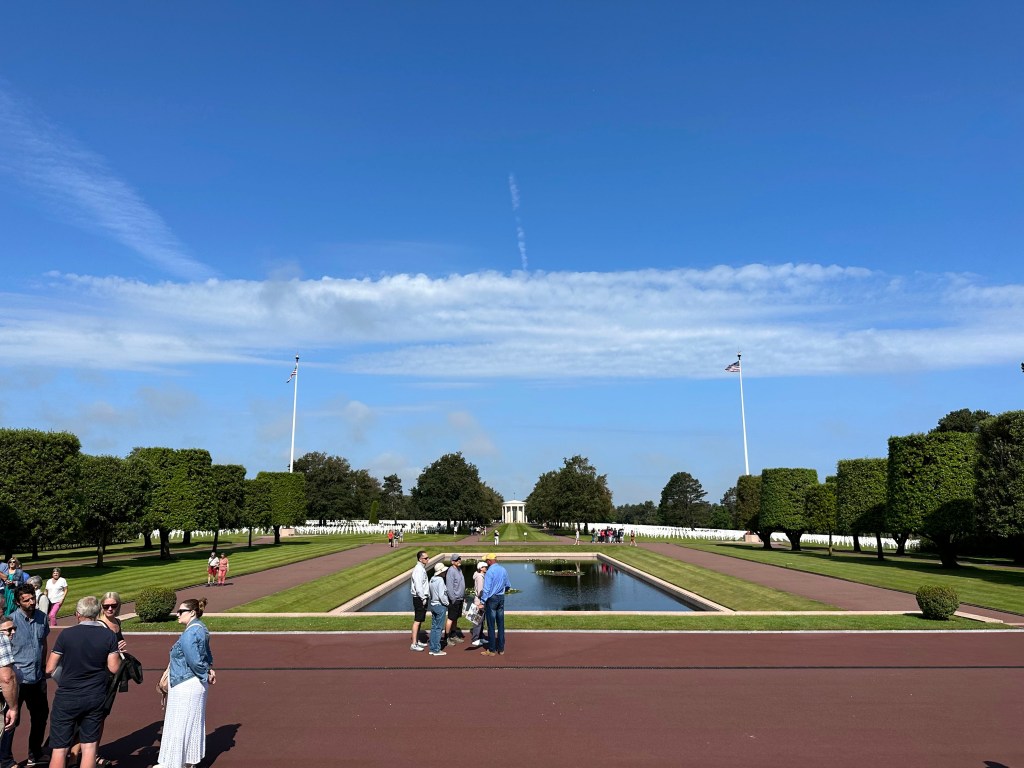
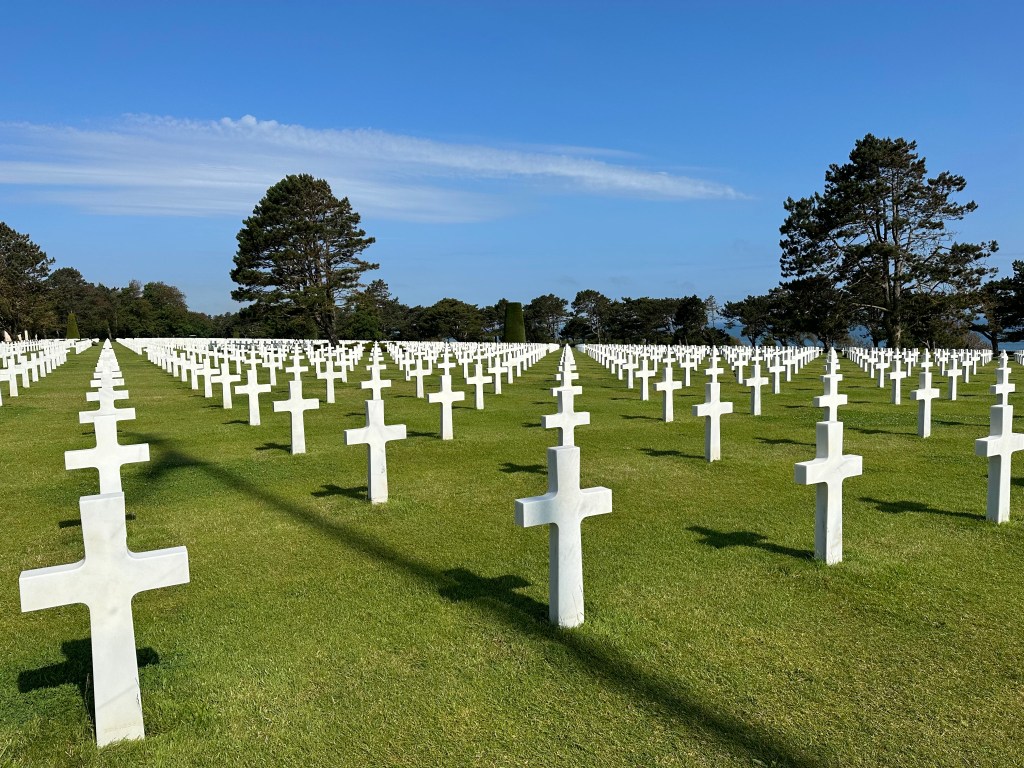
Sobering but serene.
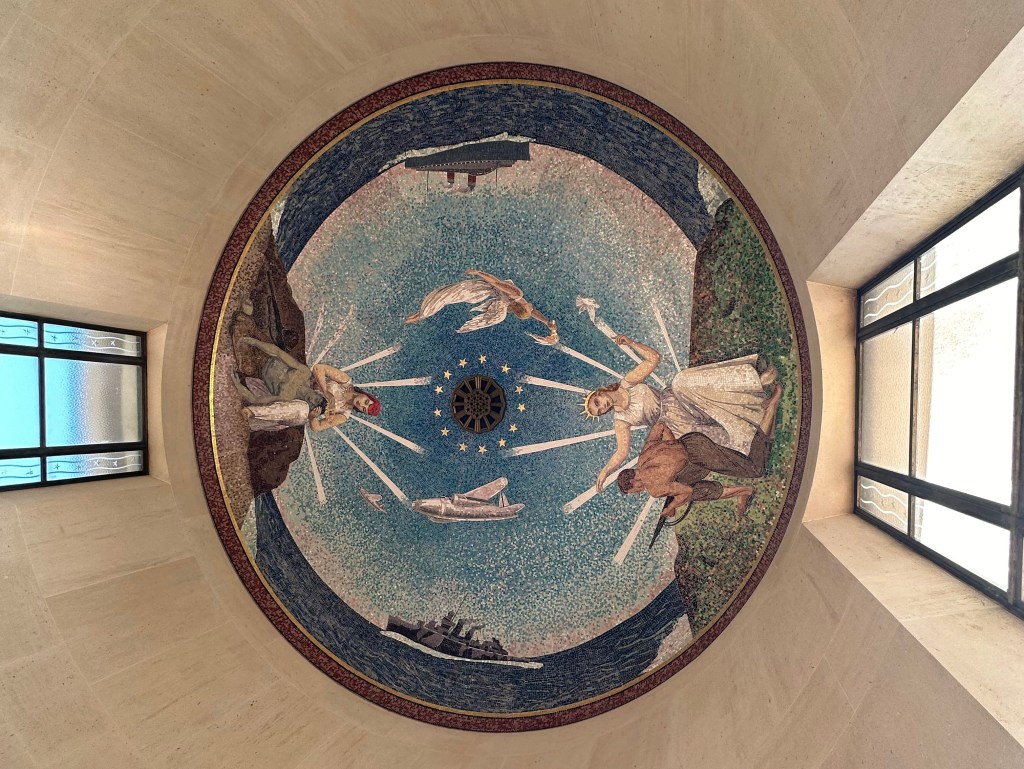
Cool mosaic capturing the cycle of Americans traveling to and fighting in Normandy on the ceiling of the cemetery’s chapel:
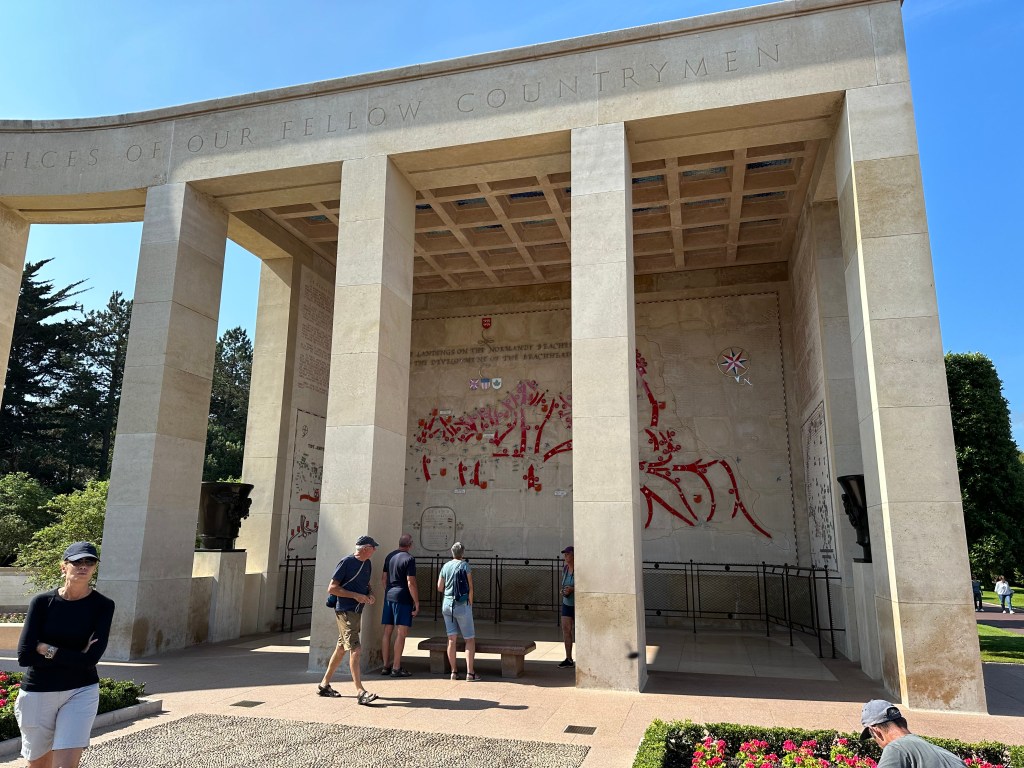
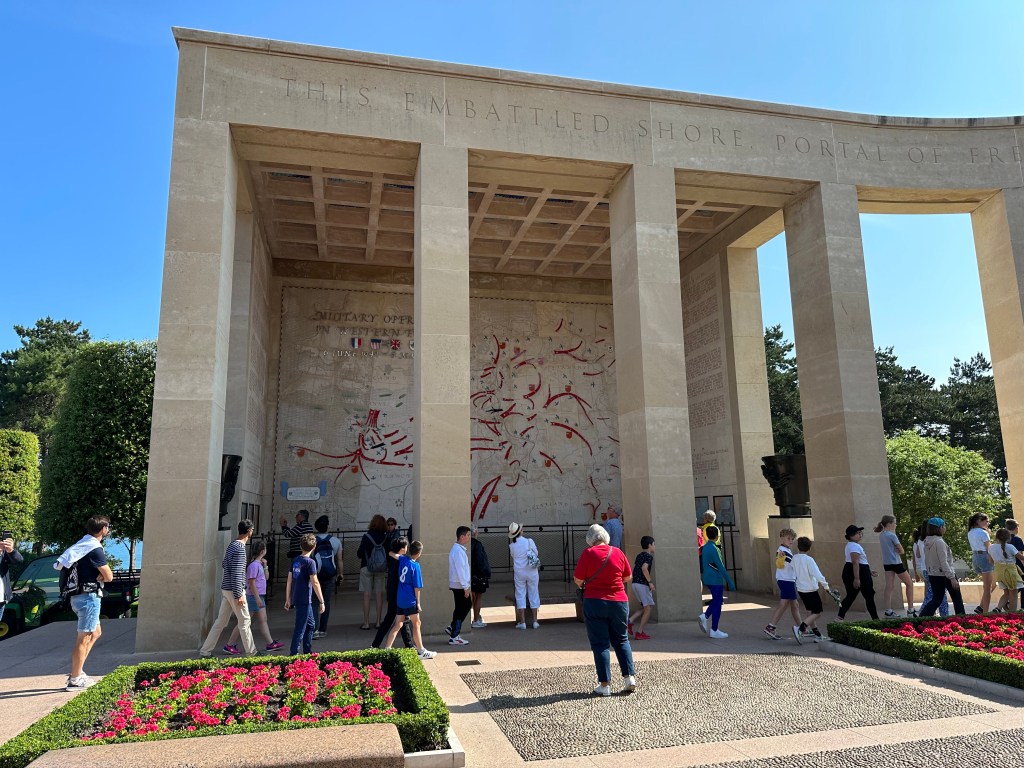
Massive mural of the landings and subsequent beachheads:
And a short distance away. . .
the entire European theater (from the non-Soviet POV, anyway):
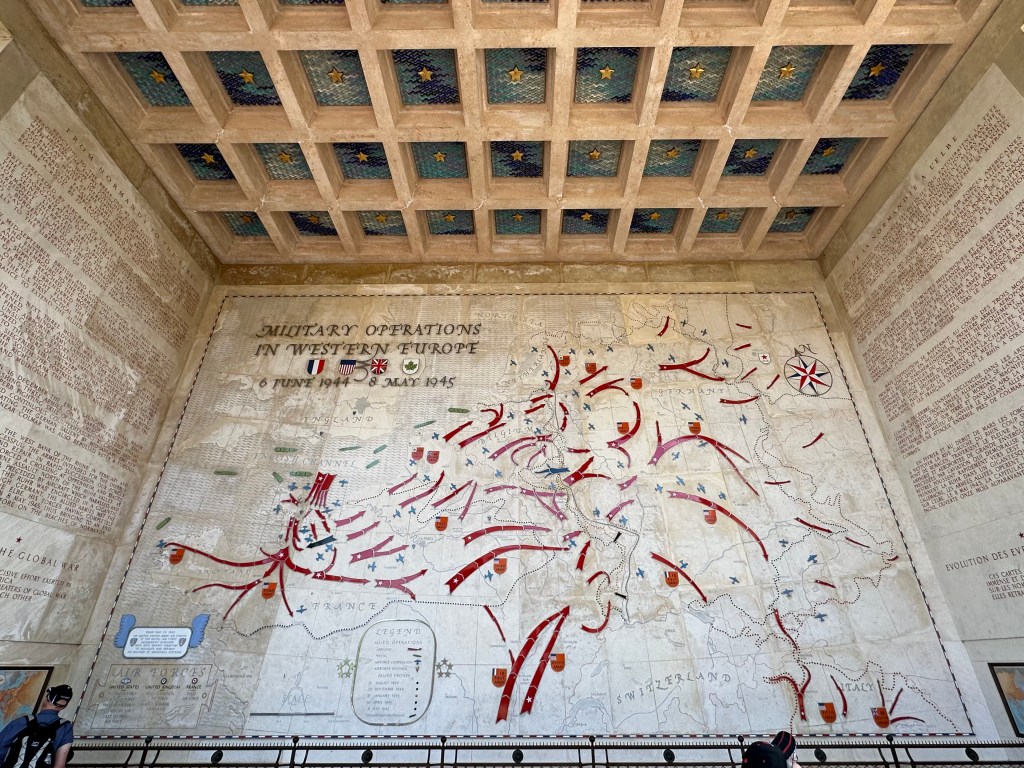
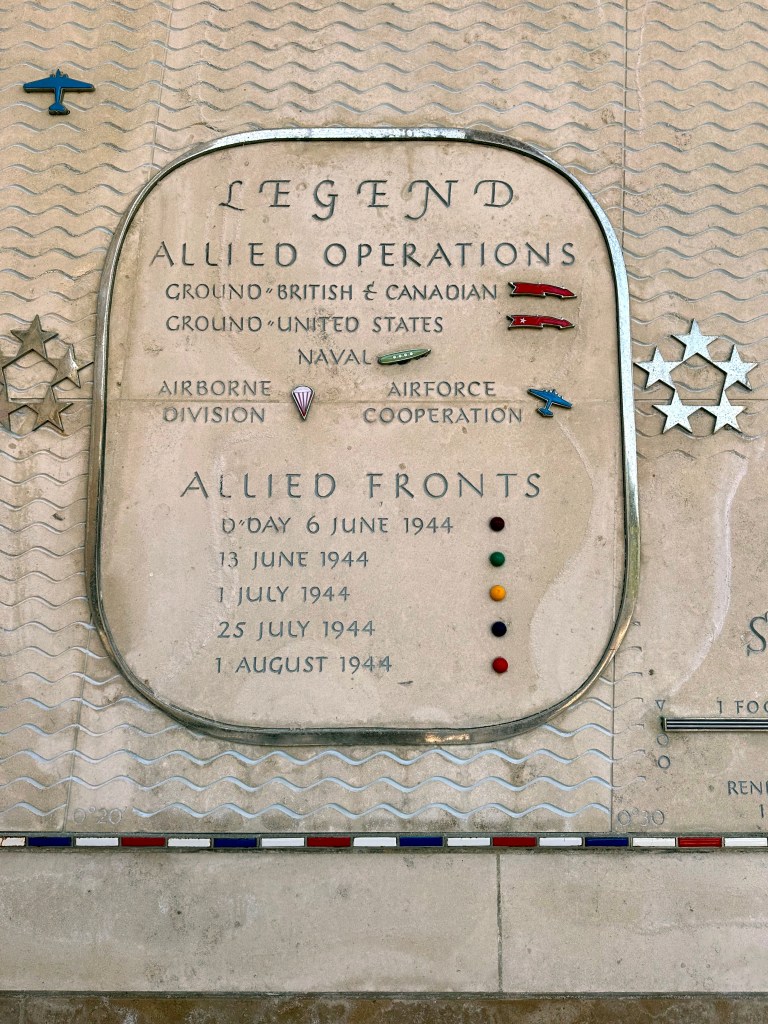
Both with handy legends.
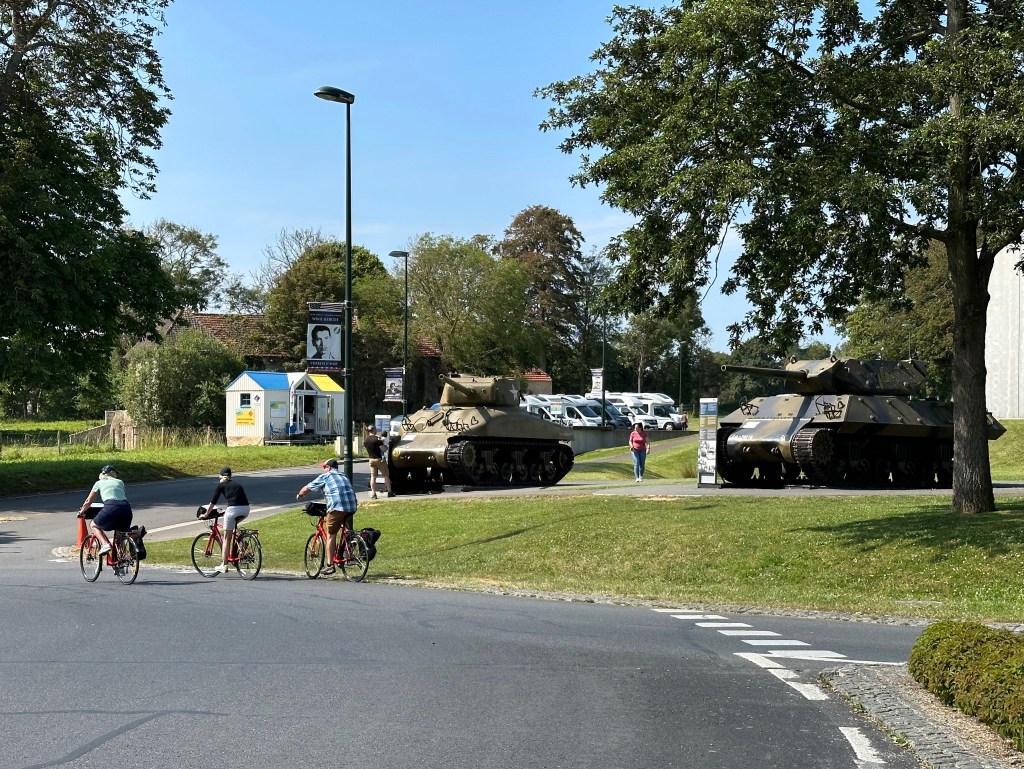
Onward (and more tanks!).
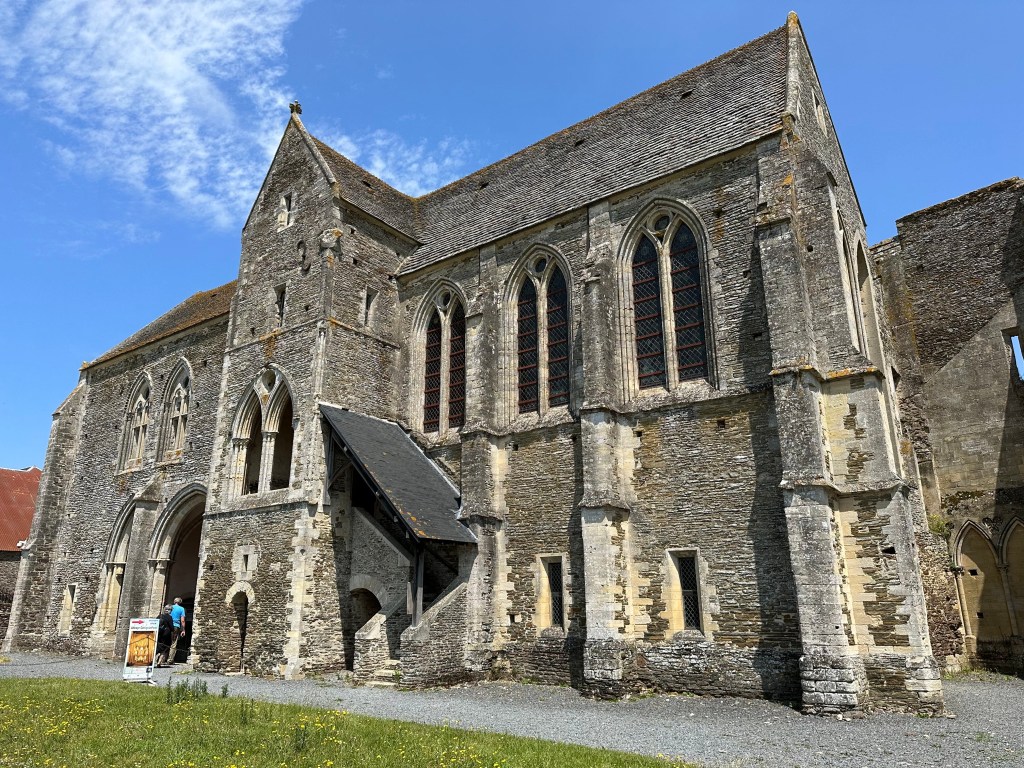
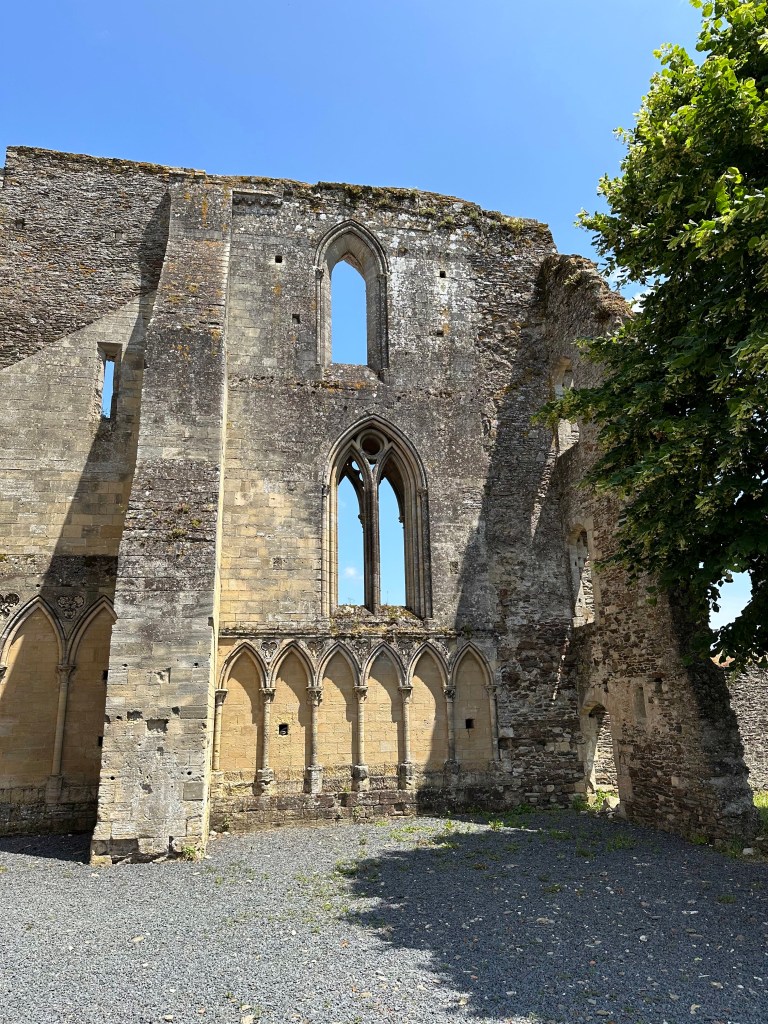
The Abbey of Saint Vigor, founded in 1032 by Duke of Normandy, Robert the Magnificent (father of William the Bastard, who went on to become William the Conqueror). (Robert the Vigorous would have been much funnier and more apropos.)
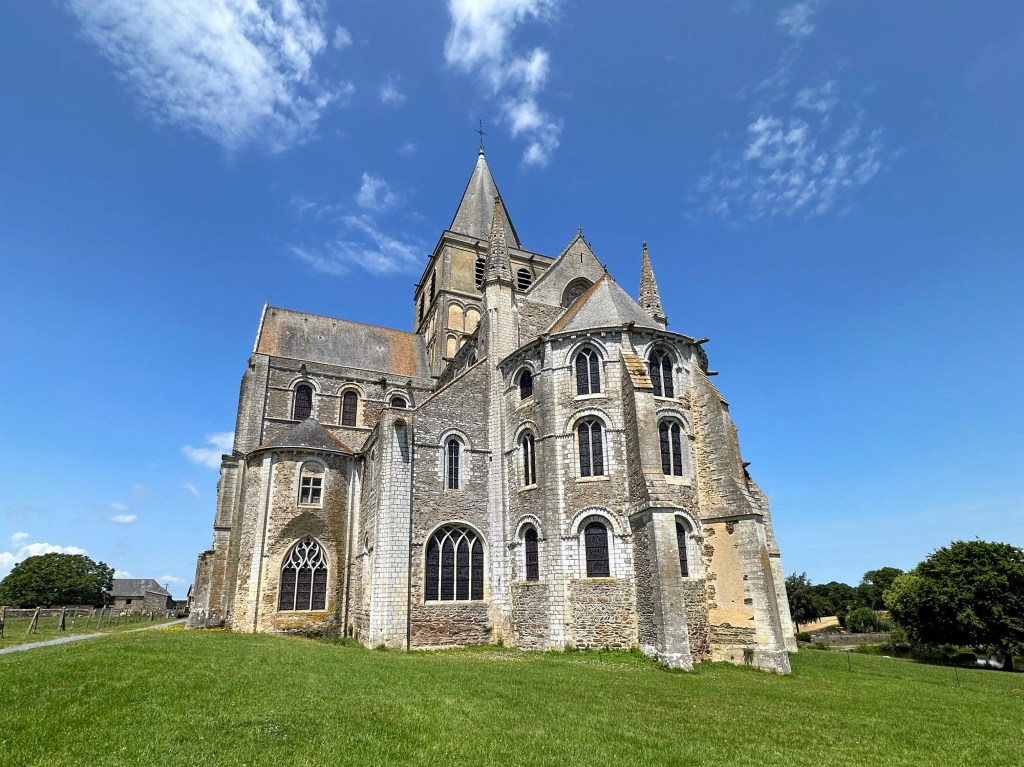
In the 12th century, the abbey extended its powers over nearby, former Merovingian abbeys, and also founded several priories, becoming more influential and wealthy in the process.
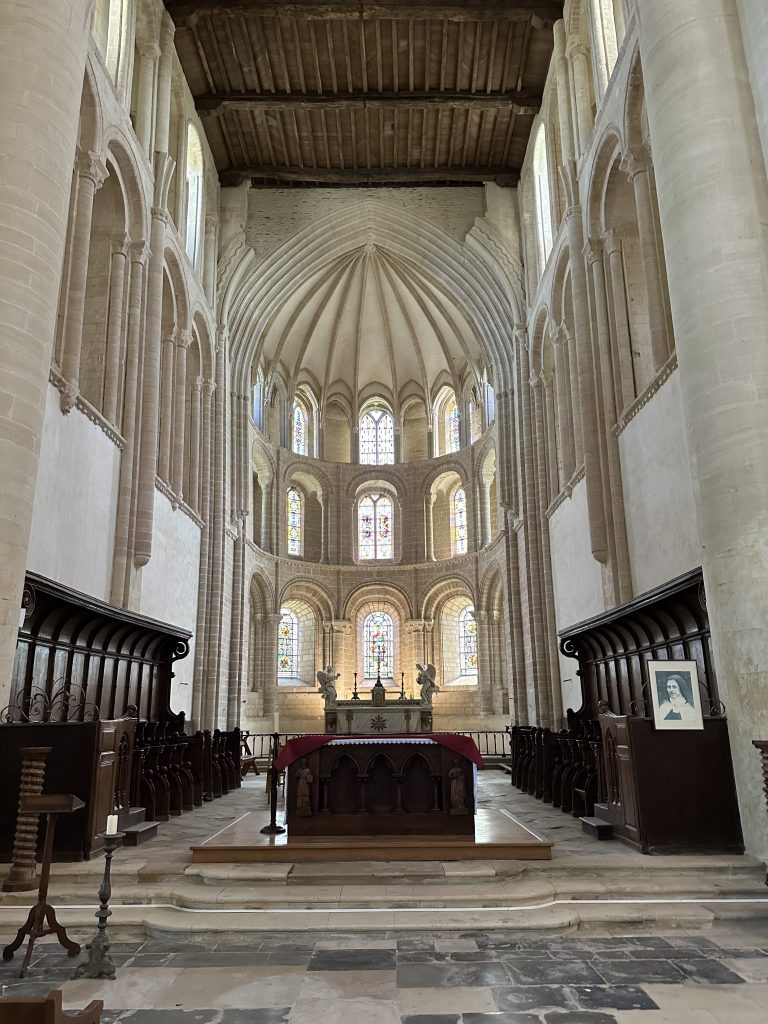
“In 1337, the dynastic rivalries between the Valois and the kings of England precipitated the country into the Hundred Years War, which plunged the country into misery, aggravated by epidemics of plague. The abbey was fortified and a garrison settled there. In 1418, Richard de Silly, knight and captain of the abbey, was obliged to cede the abbey to the King of England. However, after the victory of the constable de Richemont over the English at Formigny in 1450, Normandy returned definitively to the kingdom of France.” (From here.)
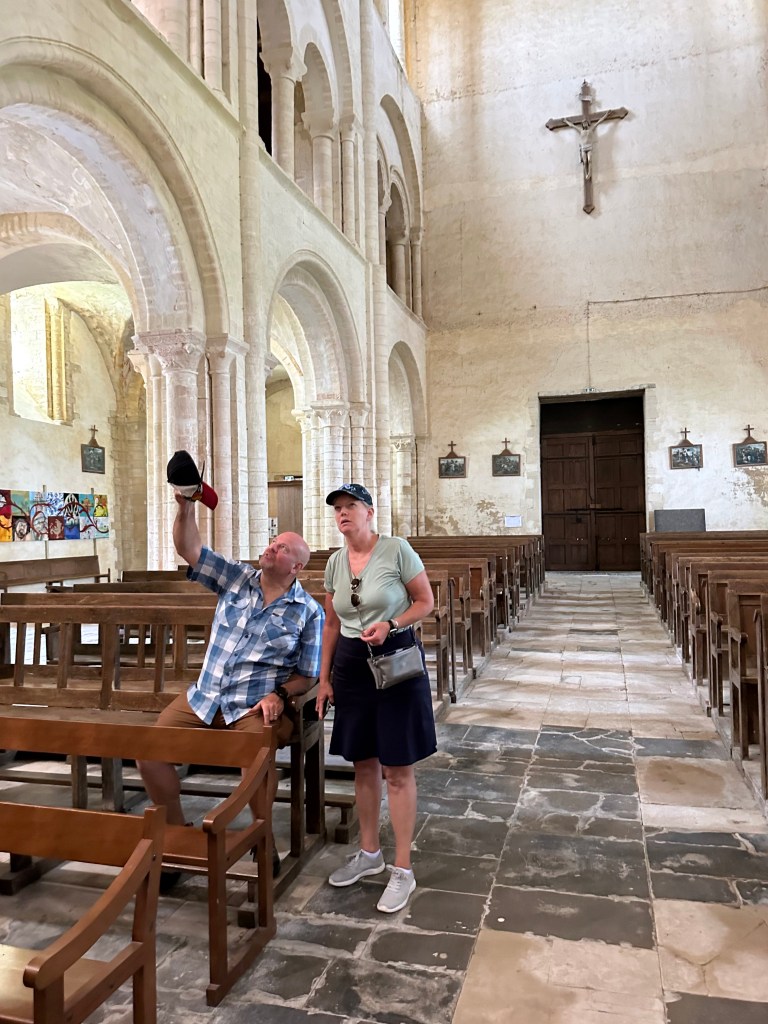
The monks left the abbey during the French Revolution, and the abbey became the unique parish church of the village of Cerisy-la-Forêt in 1790.
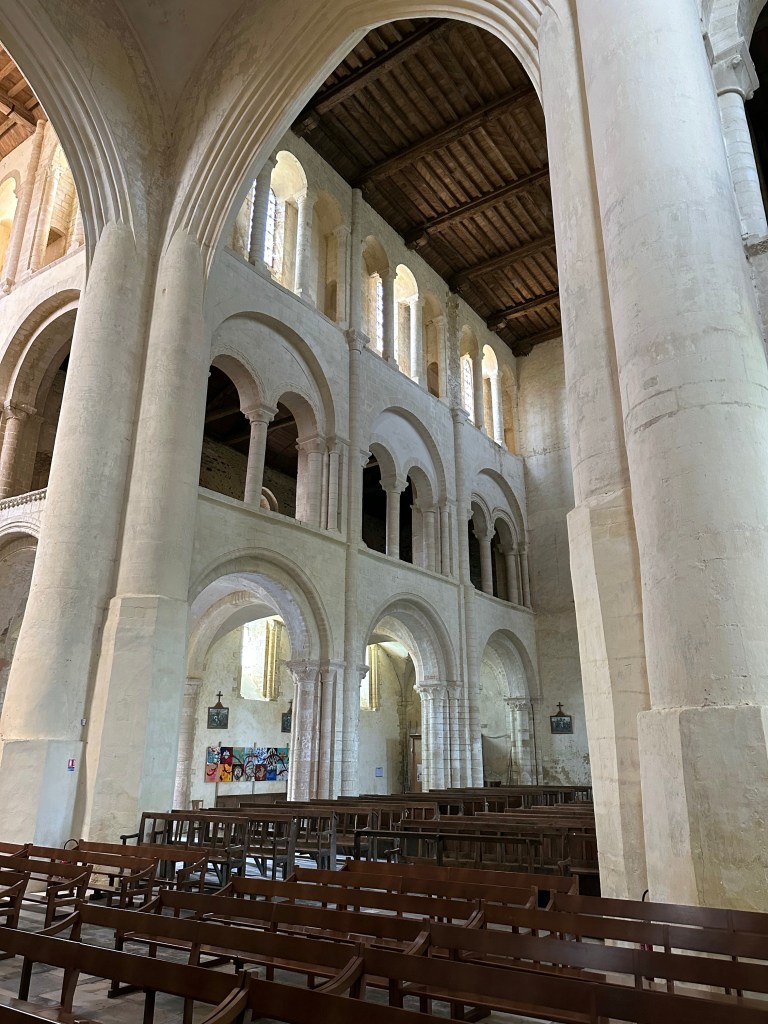
The abbey was built on the ruins of an older monastery destroyed by the Normans during their invasion.
Of the French. When the Normans were still Vikings and did not yet benefit from Rollo’s permanent settlement here. . .
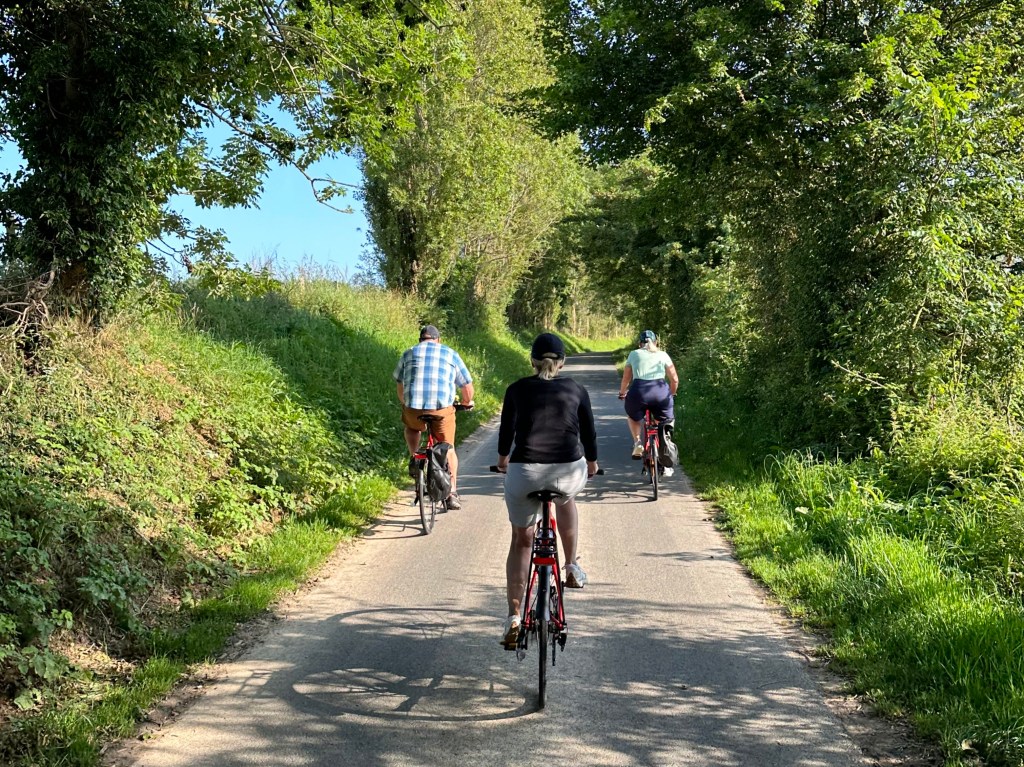
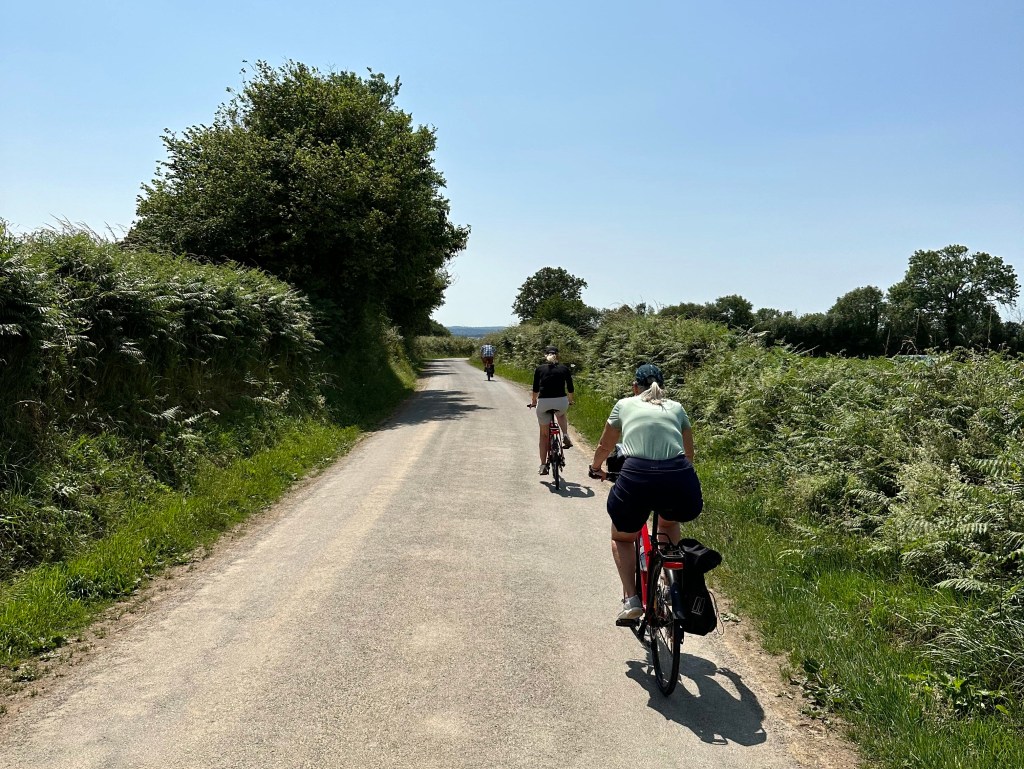
Final (and very long) stretch of the day’s ride.
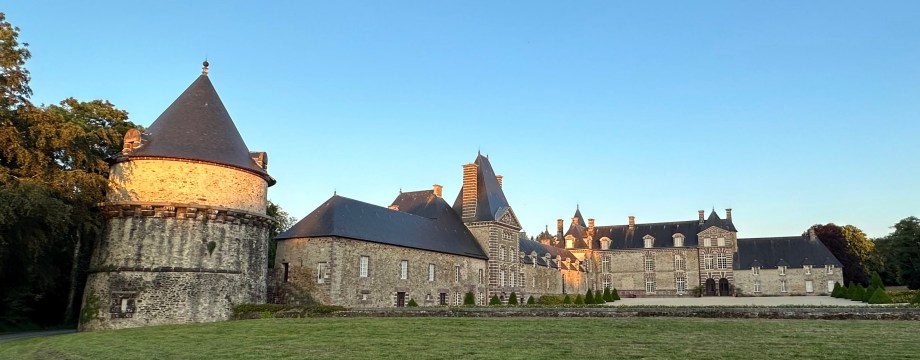
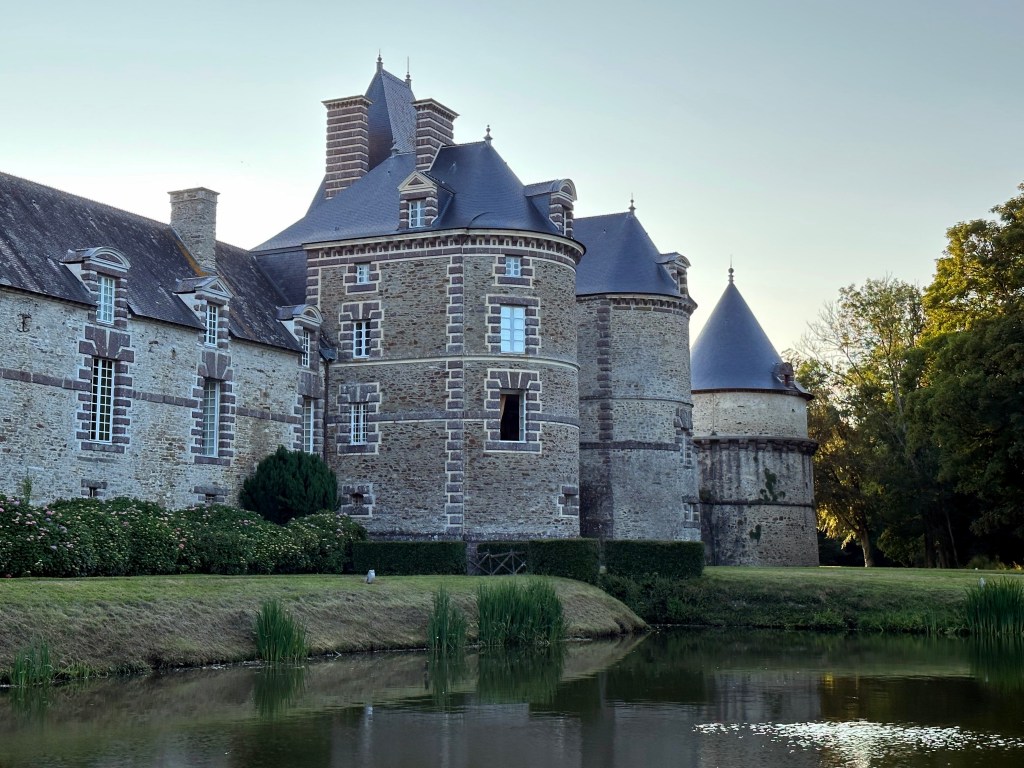
But with a pretty cool conclusion: Chateau de Canisy, our lodging for the evening.
About which we have much to discuss – both the very cool (its history) and the very bizarre (our actual stay).
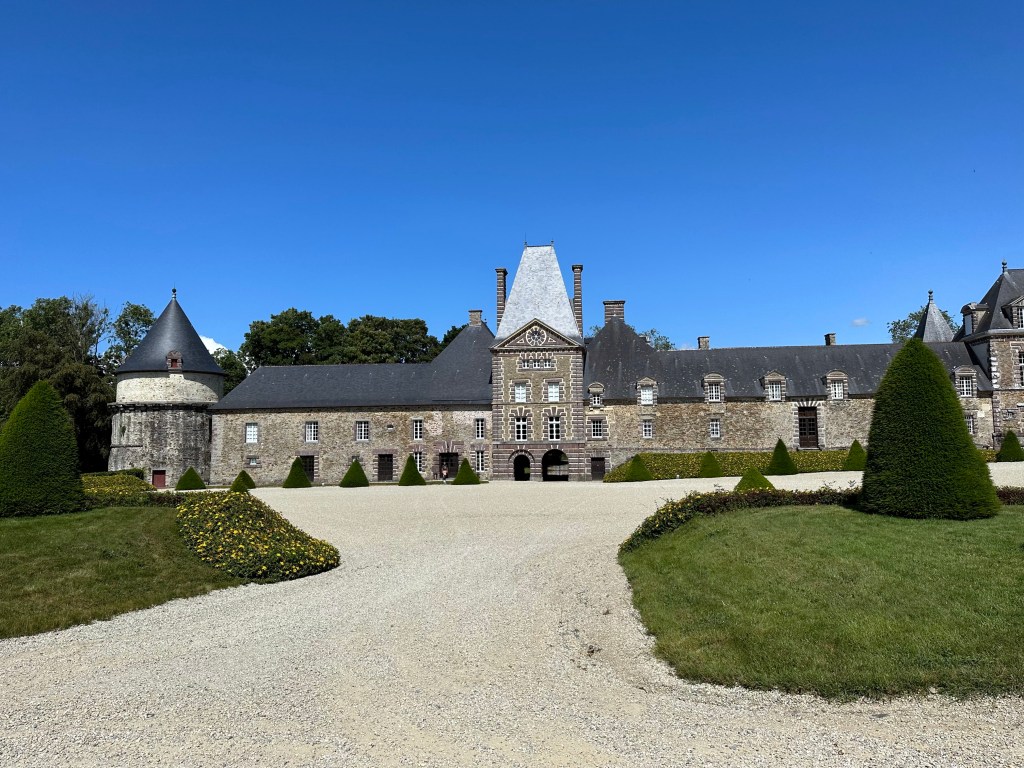
First, some history. Chateau de Canisy dates to the freakin’ 11th century. Definitely the oldest and most historic place we’ve stayed (just off the top of our head – we did stay in a Welsh castle 2 years earlier, but we think that was built maybe 100 years later (by Normans, as it happens)).
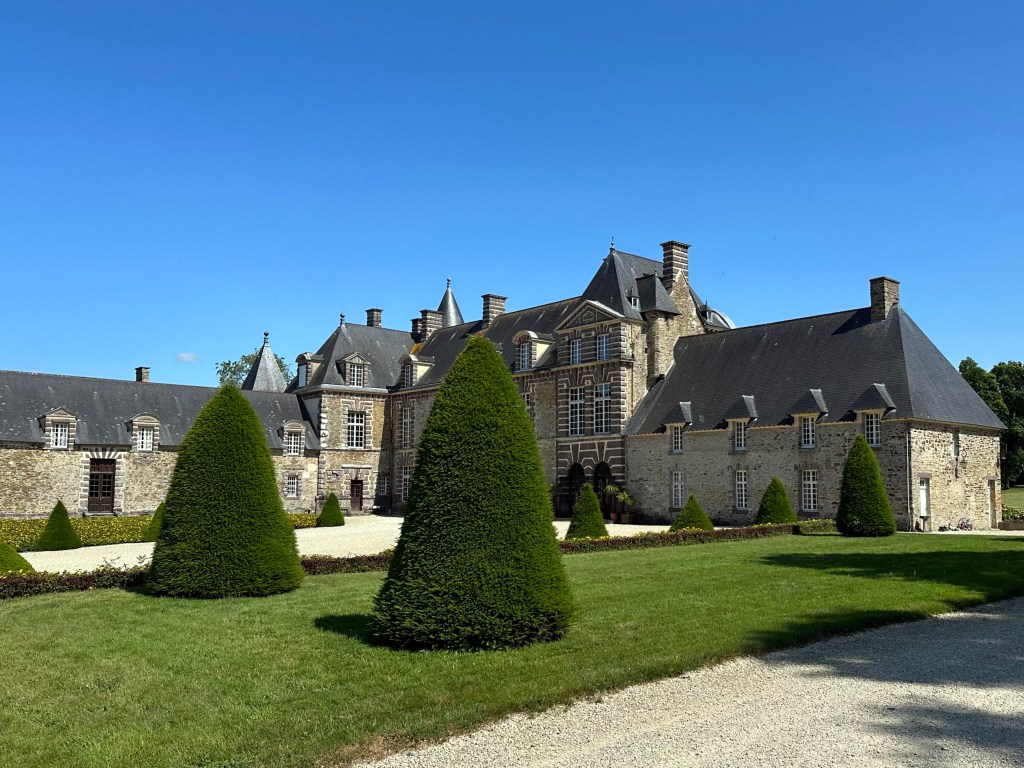
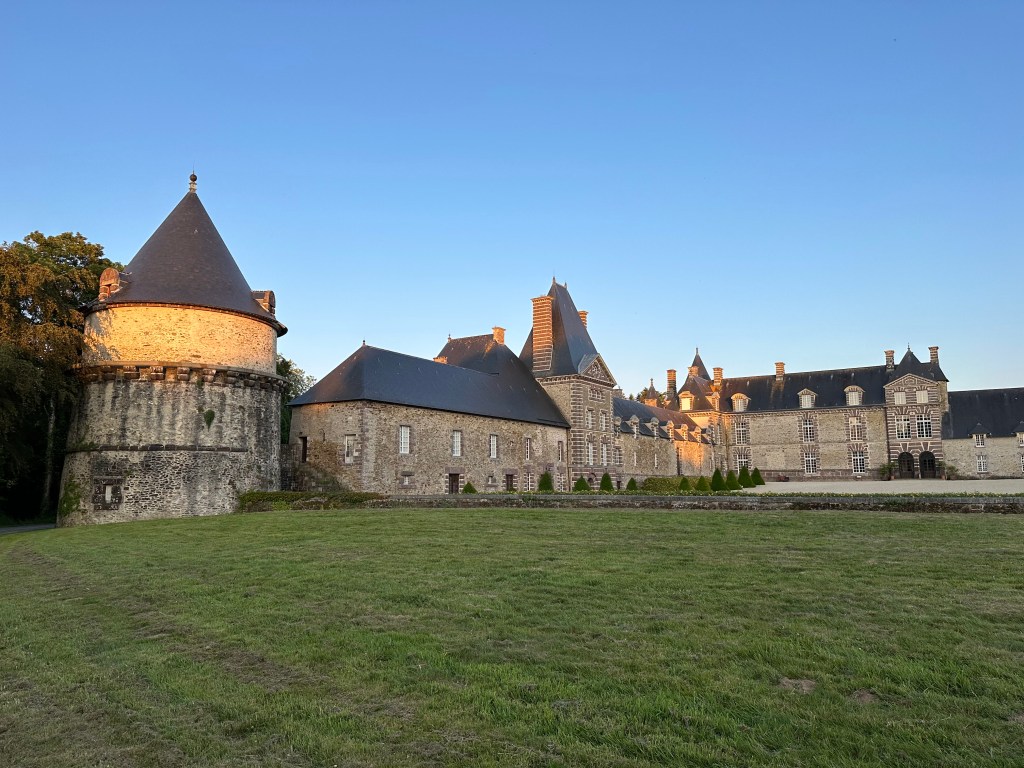
AND there’s a connection to Billy the Conq and the first of the two invasions referenced during our Day 1 post of the trip. In 1066, Hughe de Carbonnel participated in the conquest of England alongside William the Conqueror. At that time, Hugues de Carbonnel already was Lord of Canisy. Of the medieval chateau, one fortified tower and part of the living quarters remain. The family also remains – the current occupants, the Count and Countess Denis de Kergorlay, are direct descendants of Hugues de Carbonnel. The Countess, we would learn, is quite a piece of work.
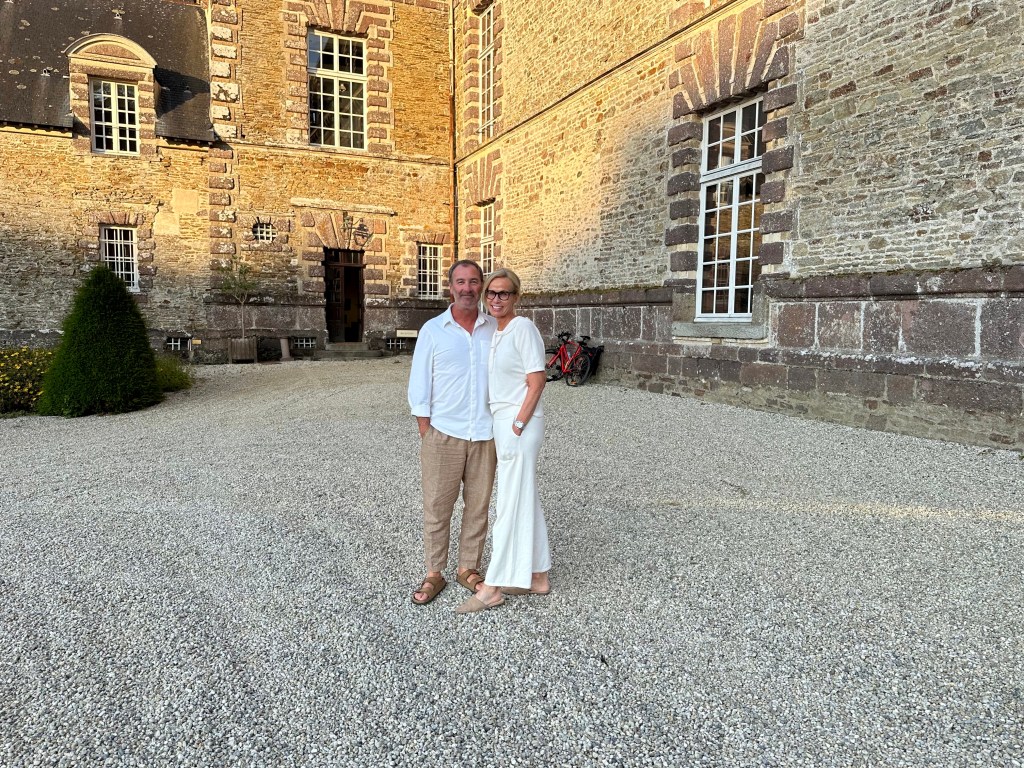
Most of the Chateau de Canisy’s present architecture dates from the time of Henry IV, when Herve de Carbonnel (1558 – 1625) undertook the construction of a castle to mark his illustrious alliance with Anne de Matignon, daughter of the Count of Thorigny, Marshal of France. In 1588, he commissioned much of the rest of the chateau to be built by architect François Gabriel, (the ancestor of Ange-Jacques Gabriel, one of the architects of the Château de Versailles). A monumental granite staircase was designed by Gabriel, as well as “the addition to the magnificent Cotentin stone of the pudding stone, a purple stone with amethyst reflections, for creating bosses and door and window frames.”
And who wouldn’t want to adorn their chateau with pudding stones?!
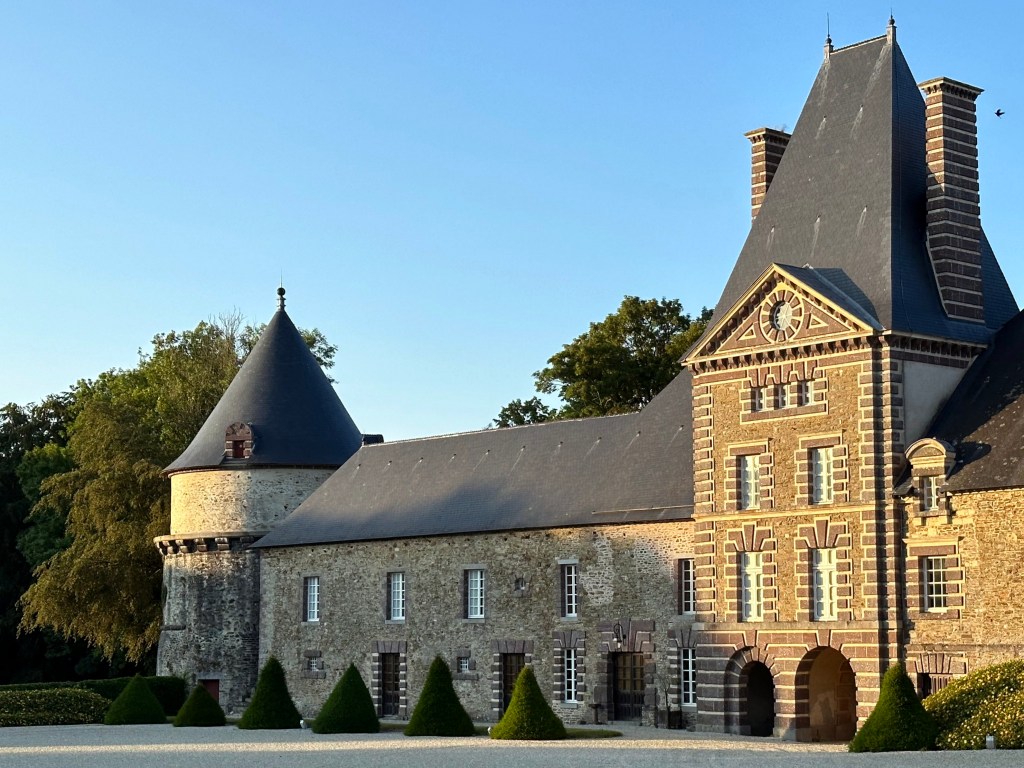
In the 20th century, Chateau de Canisy remained a stronghold of the Kergorlay family. From generation to generation, the family has lived in the chateau and has preserved and restored it. Damaged by the fighting during the allied landings in 1944, the chateau was restored with the help of the Historical Monument administration and classified as “Monument Historique” in 1945. Therein ends the cool, historical aspect of our visit.
On to our stay itself. We were the only guests there. The good news? Both couples got massive, luxurious, royal accommodations with tons of character. That was pretty much the only good news. The first bad news was that only a receptionist, manager, and cook were in residence. No bar, no bartender, and no one spoke English. Using Google Translate, we ended up ordering the beers we so desperately needed after the long last leg of the ride. When we stay we ordered the beers, we ordered all of their beers. They had maybe 3/4 of a case? Maybe? We had them bring all of them out, where they were rapidly consumed.
Then the receptionist left, and we were served dinner (in the music room located in a turret, which was cool, although we have notes on the meal itself). After this, the manager announced the second bad news: they were leaving and that we should lock the front door when we went to bed.
We’ll be alone here by ourselves, we asked?
Oui.
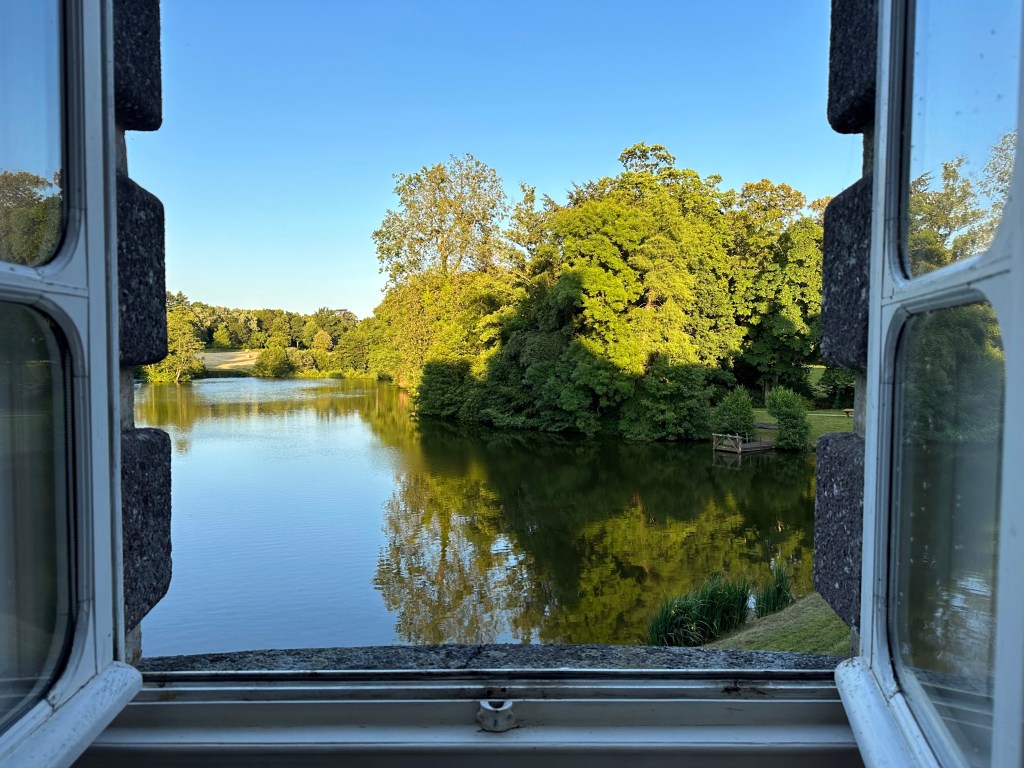
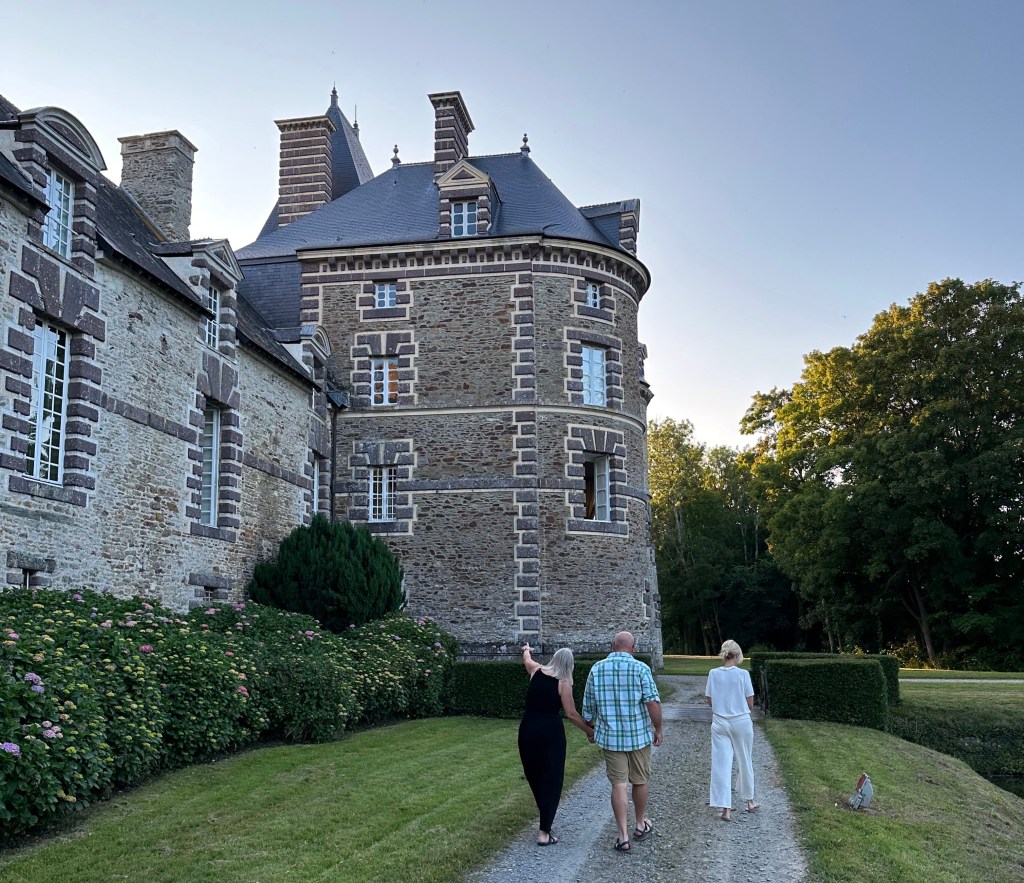
So, because nightfall came so late in Normandy in July, our first act of our now-independent stay was to take a walk all around the grounds, which were very nice.
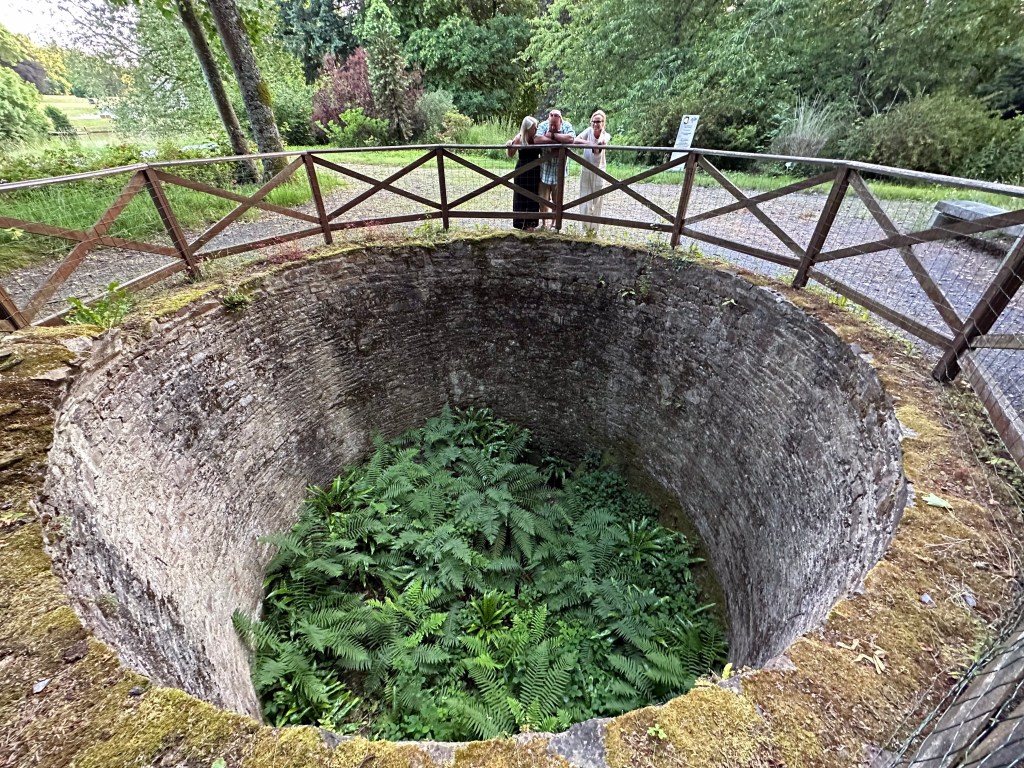
The chateau’s 16th-century ice house (minus roof and “entrance airlock”), discovered in the 1850s.
Then, we reentered the chateau to explore there. On our own. Alone and unsupervised.
We explored every inch of this place, from the barrel-vaulted basement (no dungeon or torture chamber was evident, but there could always have been a secret door that we missed. . .), to the 1980s era bar (!) and disco, to the unused hallway of standard hotel rooms on the second floor, to the attic space above.
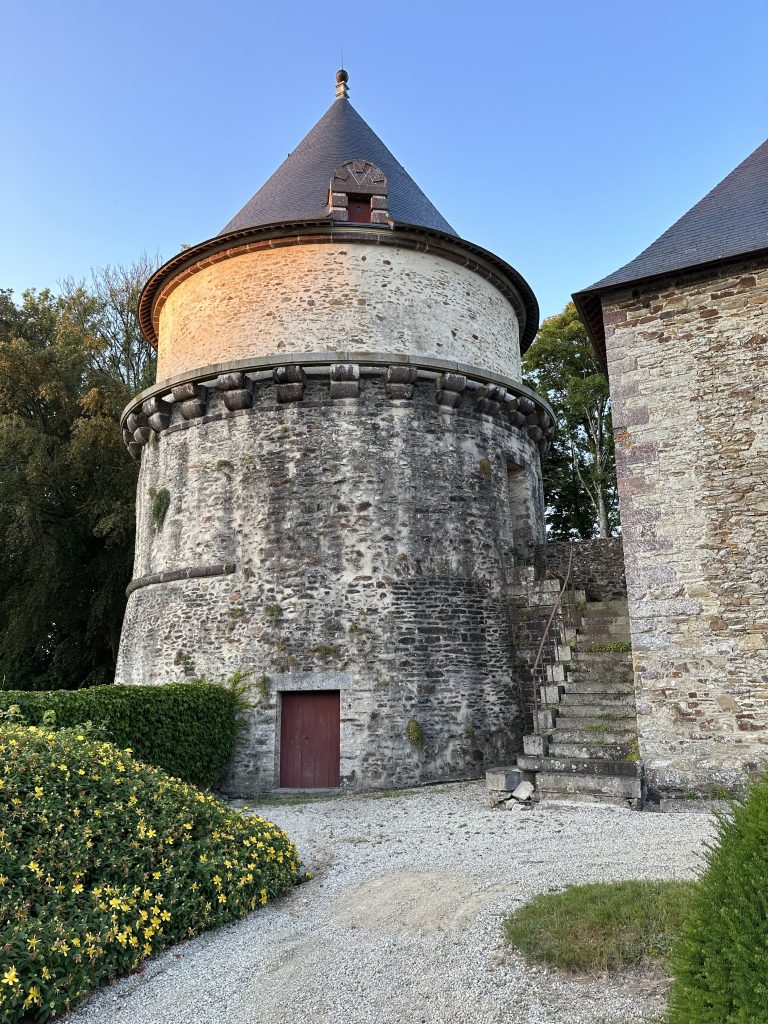
And also the inside of this original tower from the 11th century.
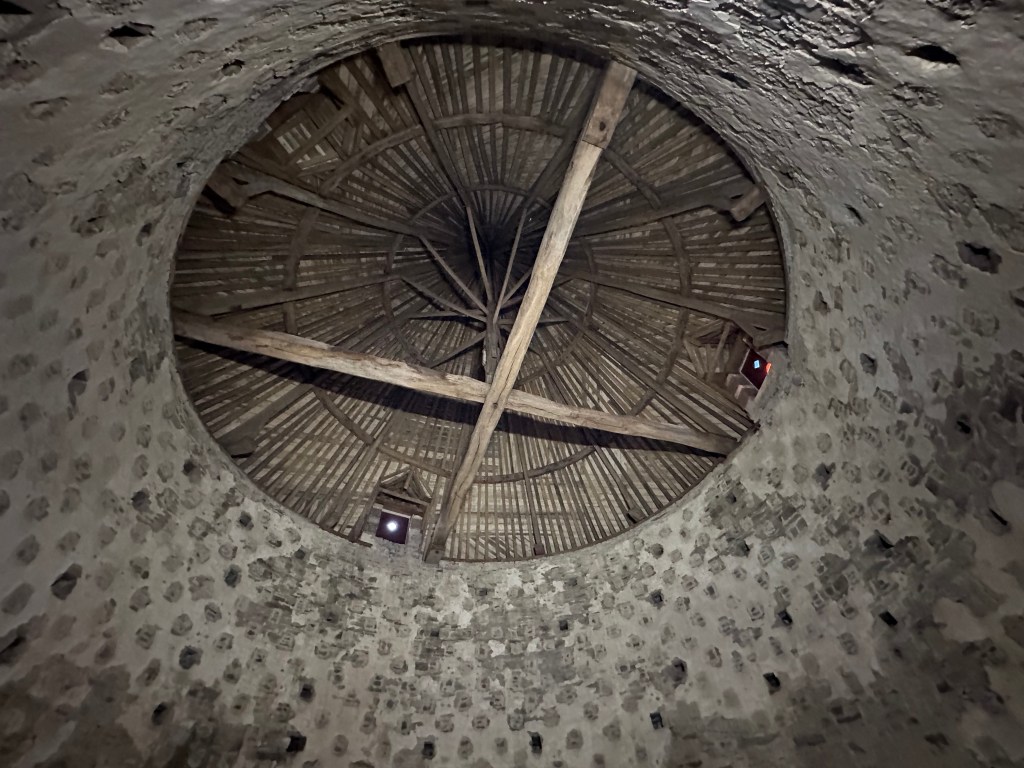
After all of the exploring, and because we had consumed the entire chateau’s supply of booze, we decided to turn in.
As we locked the front door per the creepy – and now absent – manager’s instructions, and resigned ourselves to spending the night in a deserted, 11th-century chateau, we truly and sincerely turned to each other and somberly pronounced “see you tomorrow to whoever makes it through the night here alive.”
Seriously. It was like retiring for the night knowing that you’re in an unsettling horror film where something bad is going to happen. But you don’t know what; or to whom.
But with fewer cobwebs.
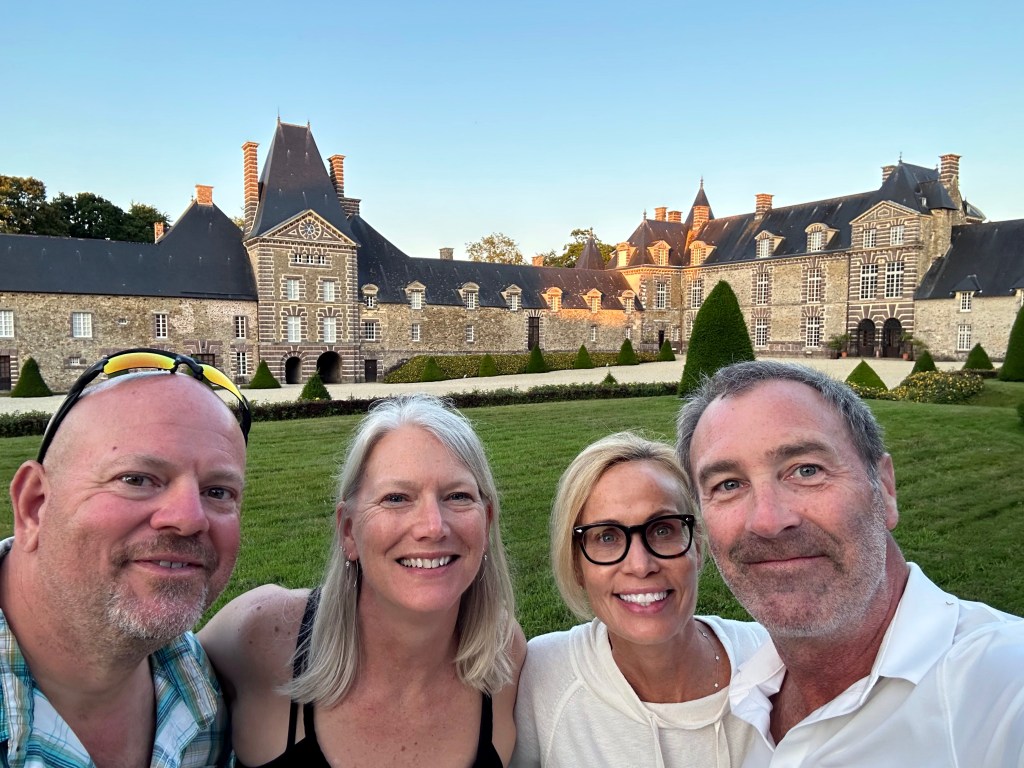
There’s a postscript to this adventure: WolfeStreetTravel posted a review a few months later on TripAdvisor, on which we’ve posted many of our stays to that point (we submitted 290 reviews). The review reflected the narrative above, complementing the chateau’s history and architecture but also expressing bewilderment and unease over being left alone there overnight. The countess decided to respond to the review by denying all of this and stating that staff were there during our entire stay. Which, all four of us will contend, was patently untrue.
TripAdvisor apparently lets the hotel – not the guest reviewing the hotel – have the last word, and so we were not provided the opportunity to rebut the blatant fiction peddled by the countess. We were annoyed, but that was that.
Then, when, 3 years later, WolfeStreetTravel FINALLY gets around to posting this experience to our blog, we went to copy the review to simply paste it here only to find that TRIPADVISOR HAS REMOVED OUR REVIEW ENTIRELY.
We’re going to try to confront TripAdvisor about this, but it’ll take some effort to navigate through the turrets and walls they (and every other corporate entity on the web) have erected to delay, deny, or distract an actual person from contacting them. But we’re pretty annoyed, so we’ll give it a shot. If this effort bears fruit, we’ll post a follow up here.
On to the next day of biking!

