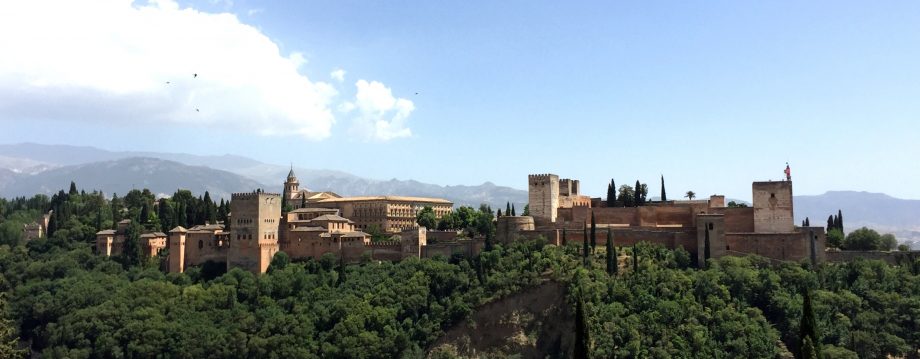
Spain

Five Legs in Six Weeks: Trip Overview

Following the strategy articulated in the overview for our 6-week trip up the Adriatic coast (and into the Dolomites and Bavaria) earlier this summer, we bookended the summer with another 6-week, shoulder-season trip. Last time, we left on June 1 and returned on July 15. After a 6-week respite at home, we left for this trip the last week of August and returned the first week of October, which still provided us with great weather in Mallorca and Cornwall, but without the crowds that would be there in July and August.

And, unlike the “pick-up-a-car-in-Sarajevo-and-drop-it-off-6-weeks-later-in-Munich” approach from the last trip, where we luxuriated in a car that we could hang on to during the entire, 6-week road trip, we popped in and out of five rental cars in as many trip legs for this journey.

A cartographic overview of the trip’s five legs is pasted below:
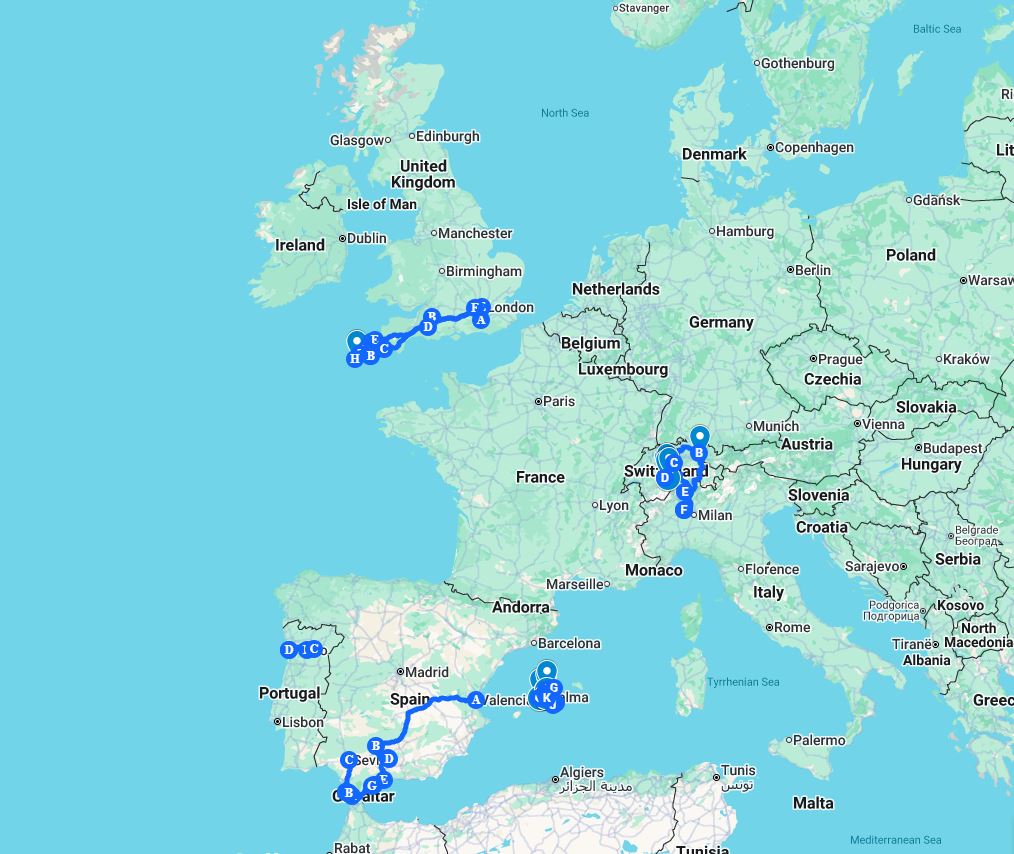
Treating the map above as a clock, our route rolled out like this:

  1. We began our trip at the 3:00 spot, with an 8-day loop around Switzerland
  2. Then flew counterclockwise south to the 5:00 location, with an 8-day loop around Mallorca
  3. Then flew to Valencia at the 6:00 spot, after a couple of days there, we began an 9-day drive west to multiple locations in Andalusia in Spain
  4. Then flew up to Portugal at the 9:00 location for 3 days in the Douro Valley and then back to Porto for day
  5. And finally ended the trip at the 12:00 spot with a 10-day loop around Cornwall and back to London in the UK

An interactive, zoomable map of the legs is provided below:

The route around the Switzerland leg of the trip also proceeded in counterclockwise fashion (and provided a second opportunity to visit (or at least drive through) Liechtenstein!):

Although we’d spend all of our time on this leg in the land of cantons, we nonetheless began at the Milan airport in Italy, since this location provided a more logical start and end point for a loop route that would cover several mountainous regions as well as Switzerland’s lake-happy Ticino canton in the south.

Our first stop in Switzerland – straight from the airport – was a gondola ride and hike to the Aescher Gashaus near Appenzel for a little lunch – pretty great perch to kick off our time in Switzerland (other than the first of the two parking tickets we’d get on this trip):

Just a normal day of traffic in Appenzel:

Our time in Appenzel, hiking and otherwise, was pretty damp the entire stay:

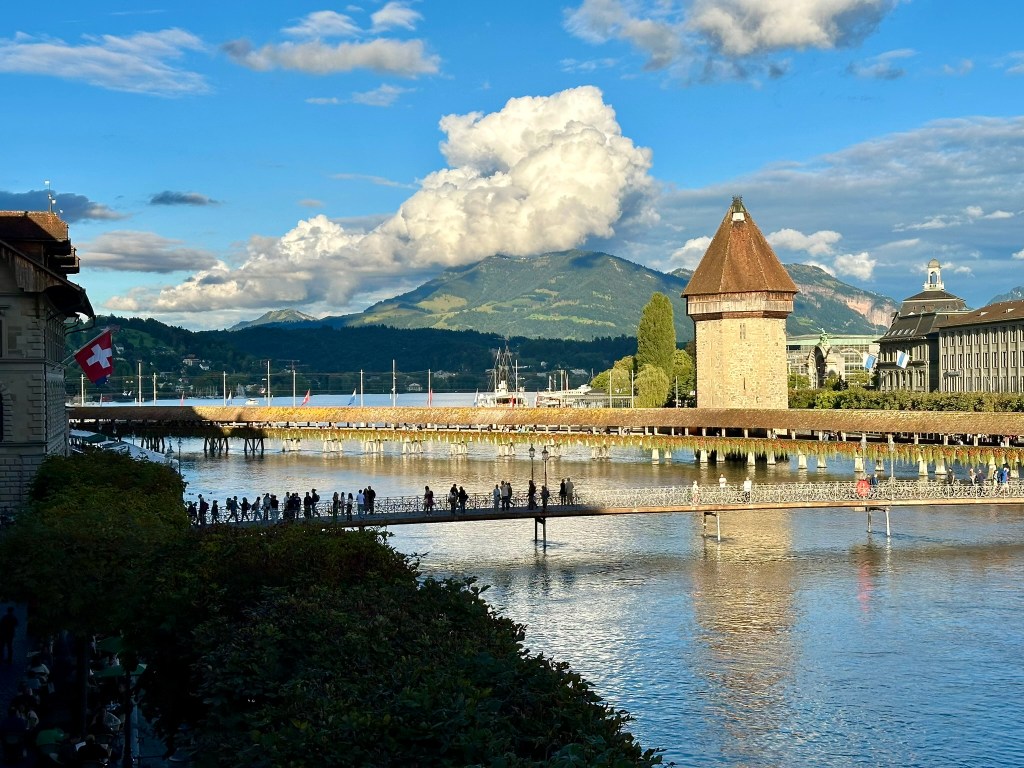
So onward we headed – first to Lucerne:

Really atmospheric and enjoyable – plus a great, historic footbridge!
Then to the car-free mountain town of Wengen in the Lauterbrunnen region:
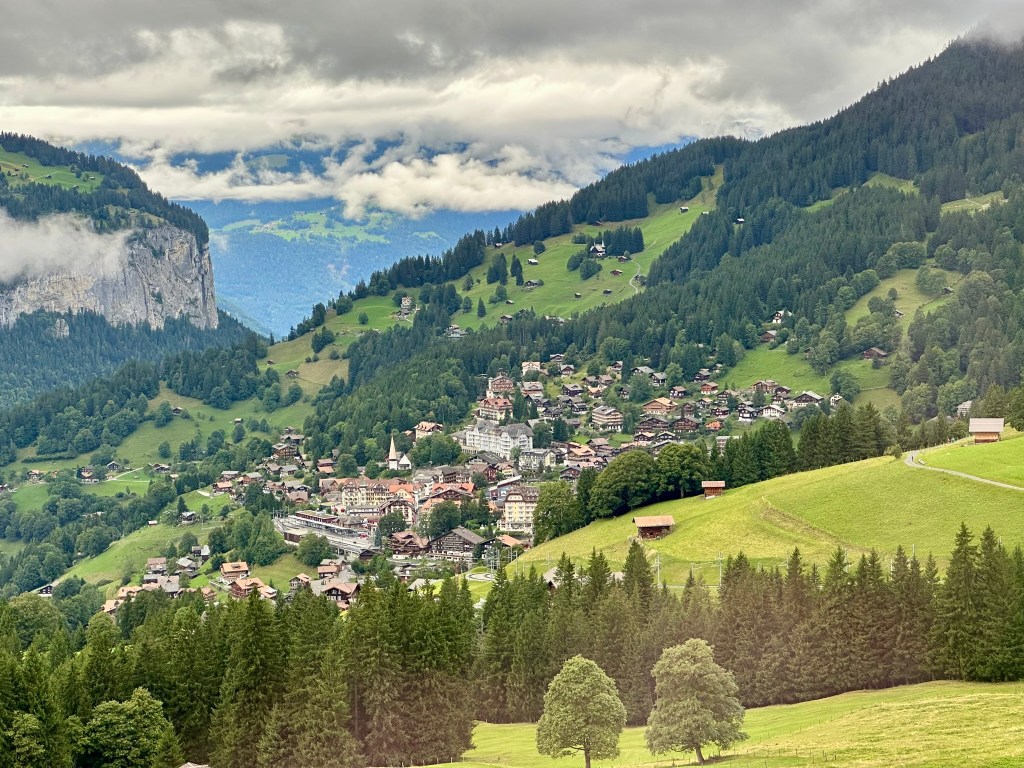
From whence we experienced one of the most spectacular hikes ever, in the Swiss Alps:

View from the nearby, smaller hamlet of Murren to the Junfrau and Eiger:

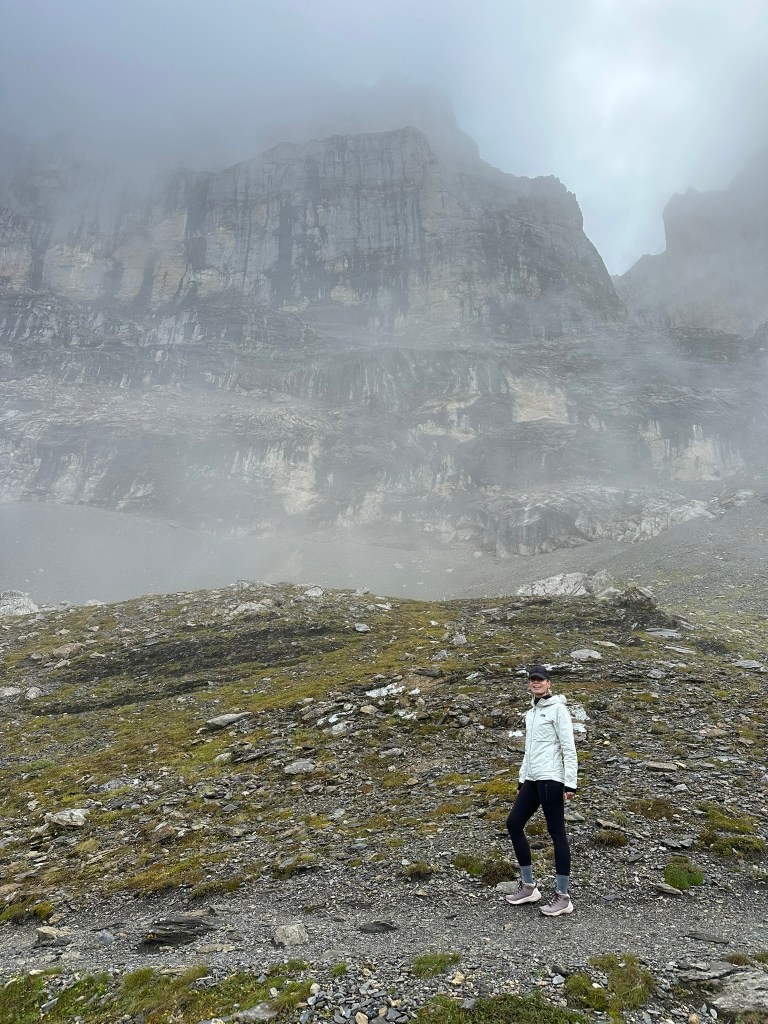
Our final hike – the Eiger Trail – and more mist and rain, unfortunately:
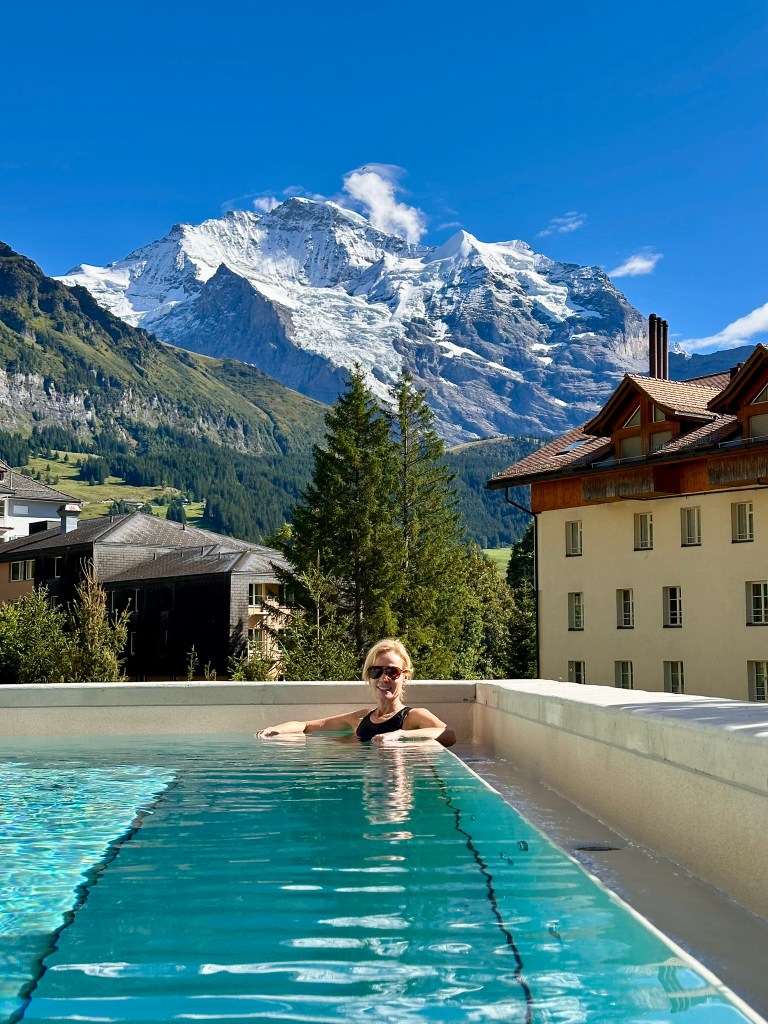
But our digs in Wengen helped assuage this a bit:
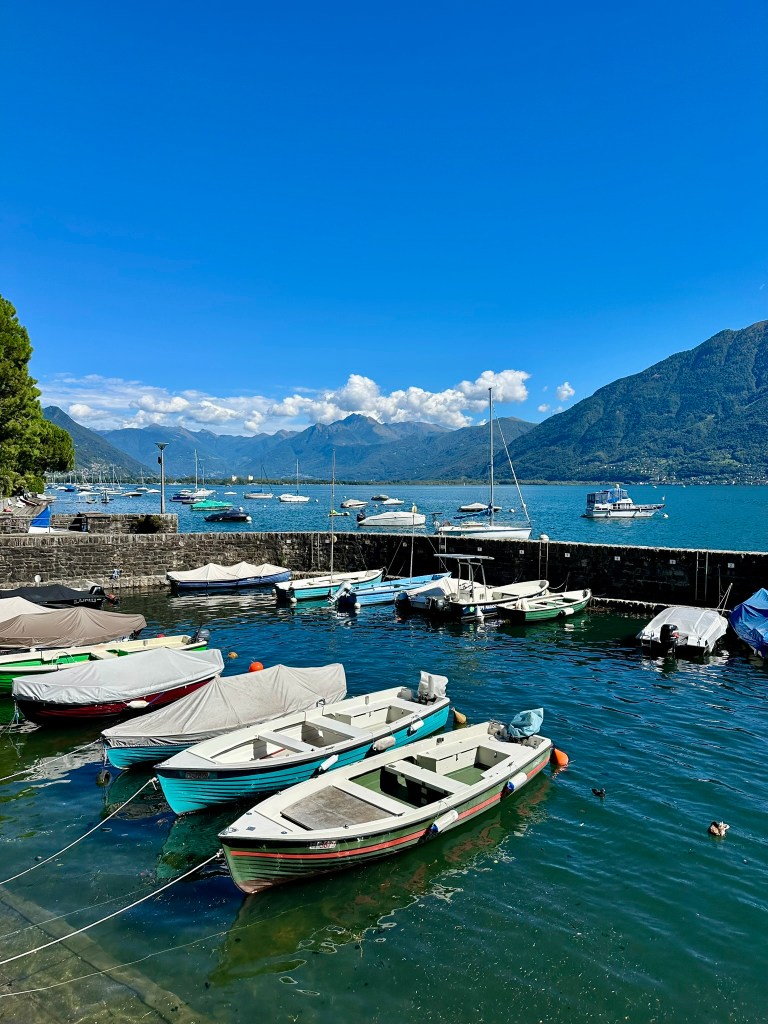
After a week, we ended our loop with an 8th day in the Swiss town of Locarno on Lake Maggiore (strategically booked at an AirBnB with a washer / dryer – a key element to our long-duration trips):
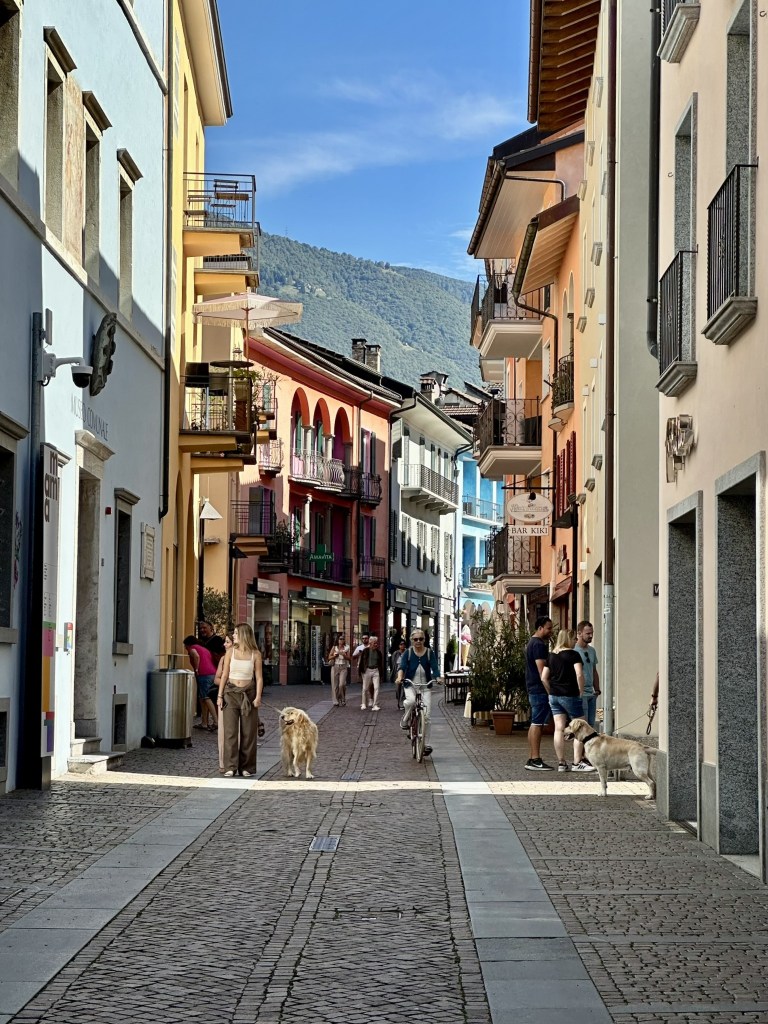
Then spent the next morning in Locarno’s even more charming sister town of Ascona before heading to the Milan airport for a flight to our next leg in. . .
the Spanish Balearic island of Mallorca, where we’d spend the next 8 days:

Mallorca’s capital of Palma, the biggest town (and only city) on the island:
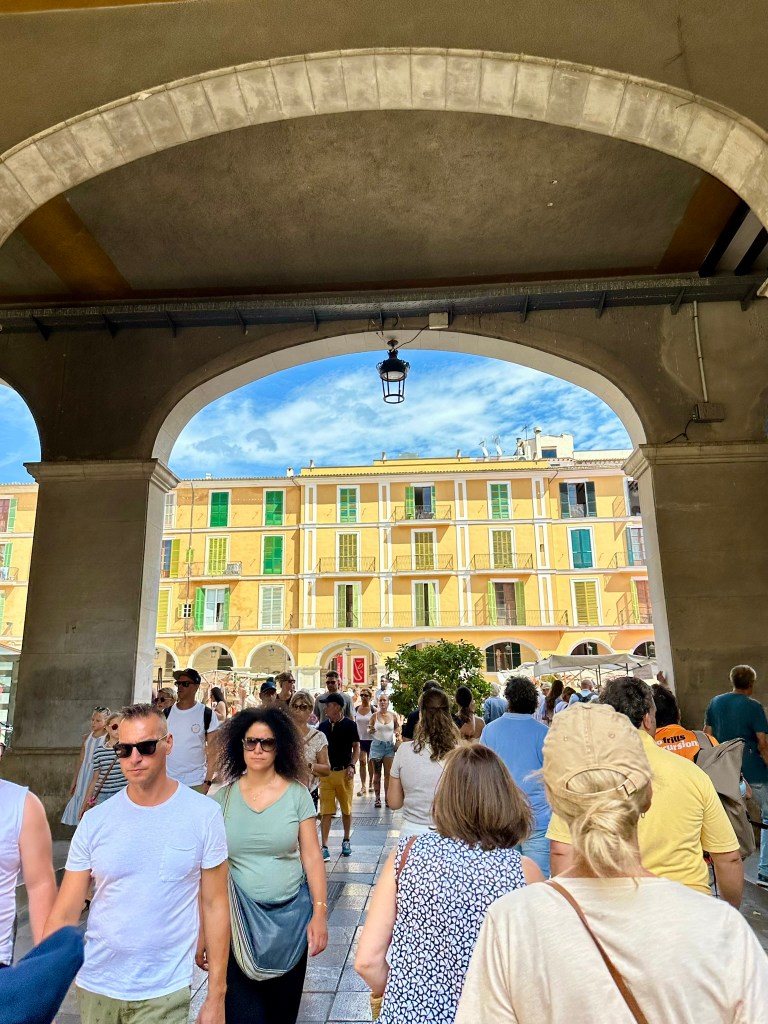
Cool pool in the shadow of one of Palma’s massive churches (very reminiscent of our pool sitch in Carcassonne in 2017 and Uzes in 2021):

Strolling Palma on the way to our 27th anniversary dinner:

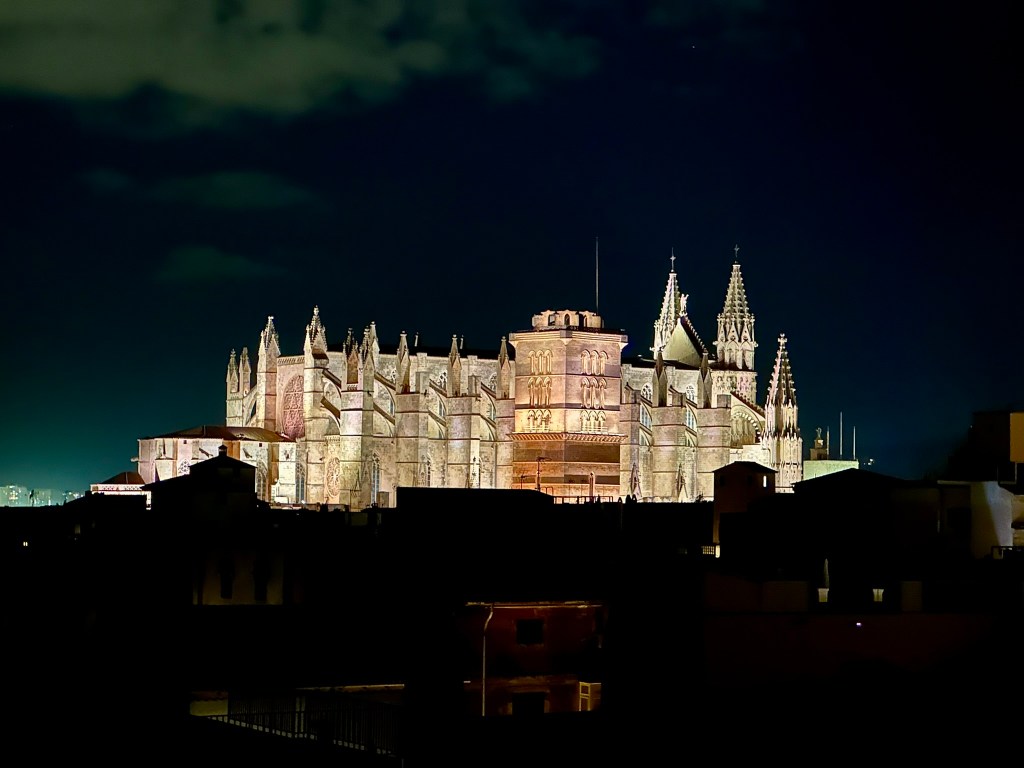
Palma’s cathedral lit up at night from our terrace:
And strolling amidst its flying buttresses the next day:

On to a couple of days in Port de Soller on the island’s west coast:

Cool perch over the port and ocean on our last night:

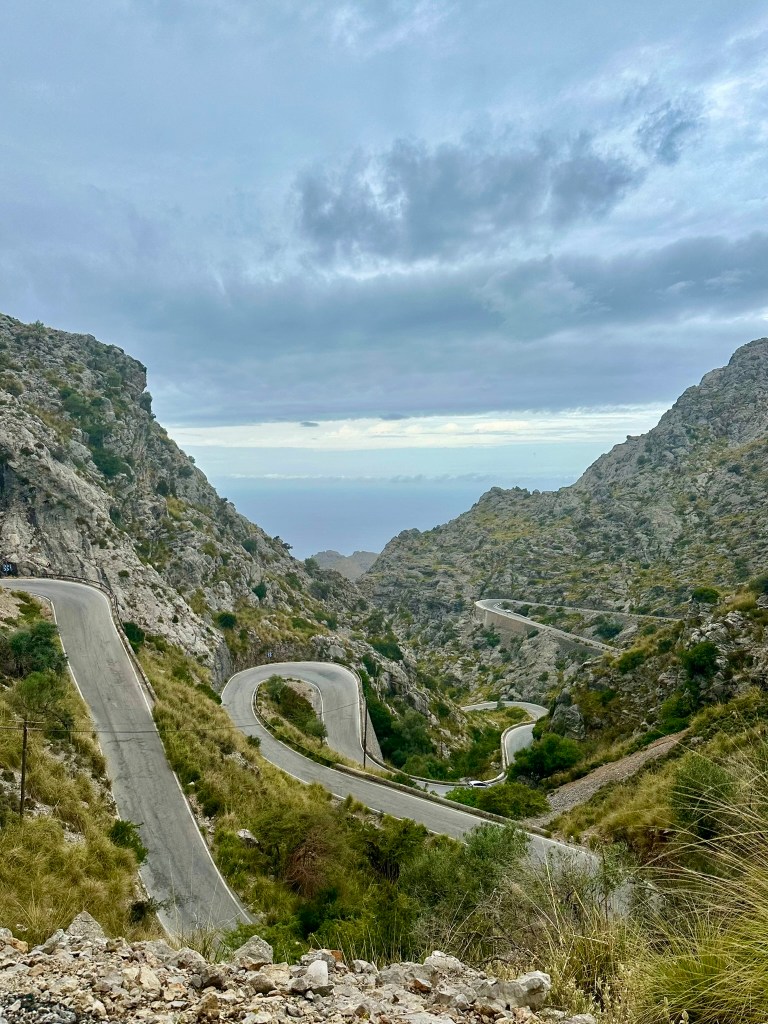
On to Pollença on the north end of the island, which necessarily entailed driving the absolute most insane road we’ve ever experienced:
Super charming town of Pollença, with it’s 365 steps to reach the town’s Oratori del Calvari chapel:

After swimming in the ocean and trying the nearby beach for all of 20 minutes, we decided that this arrangement would better suit our interests for the day. We were right.

Our last town of Colónia di Sant Jordi (and another AirBnB laundry stop), in the southeast corner of Mallorca

On to the Spanish mainland!
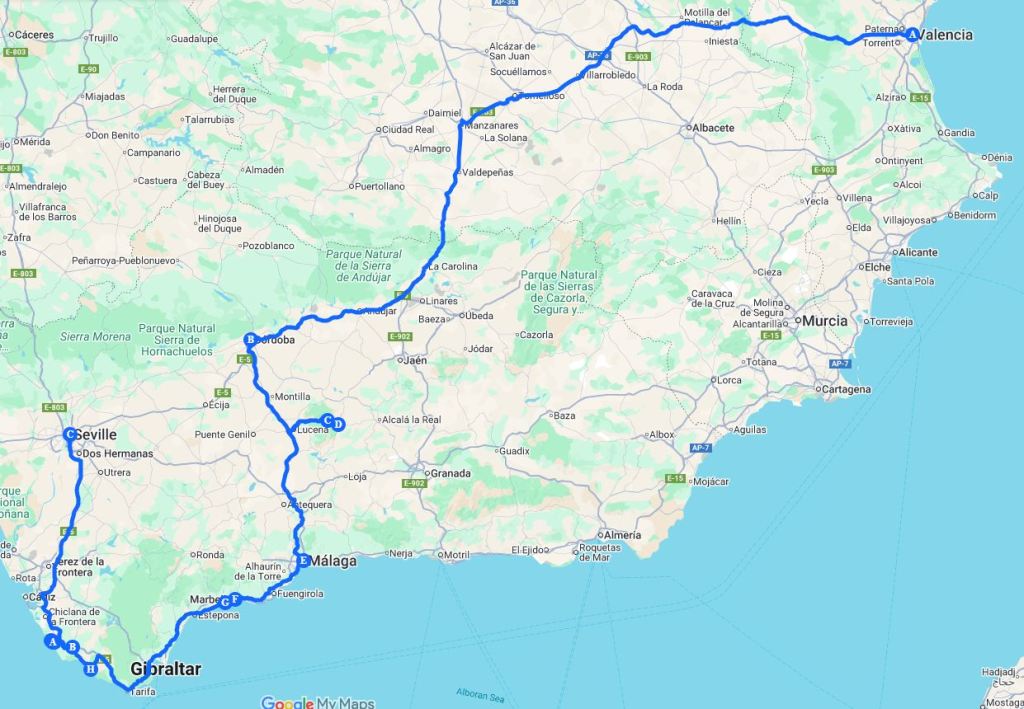
Although we’d spend the rest of our time in Spain exploring more of Andalusia (after seeing and loving much of it during our bike trip in the region in 2017), we’d first bop around Valencia on the east coast for a few days:

Spectacular city – super vibrant and fun and very Beaux Arts-y. The unbelievably perfect weather undoubtedly had a lot to do with this impression.

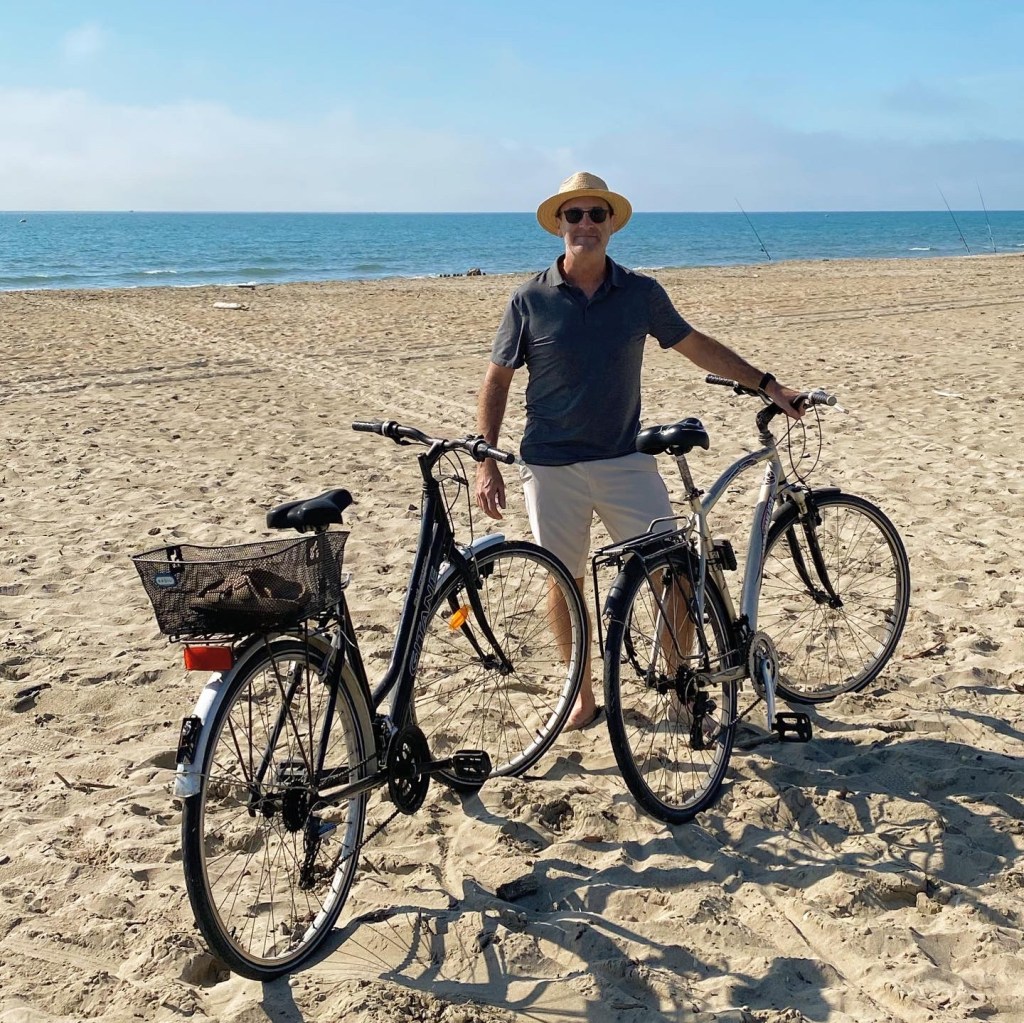
Cool little bike tour one day around the city and out to the beach:

Including riding through Valencia’s sci-fi City of Arts and Sciences:
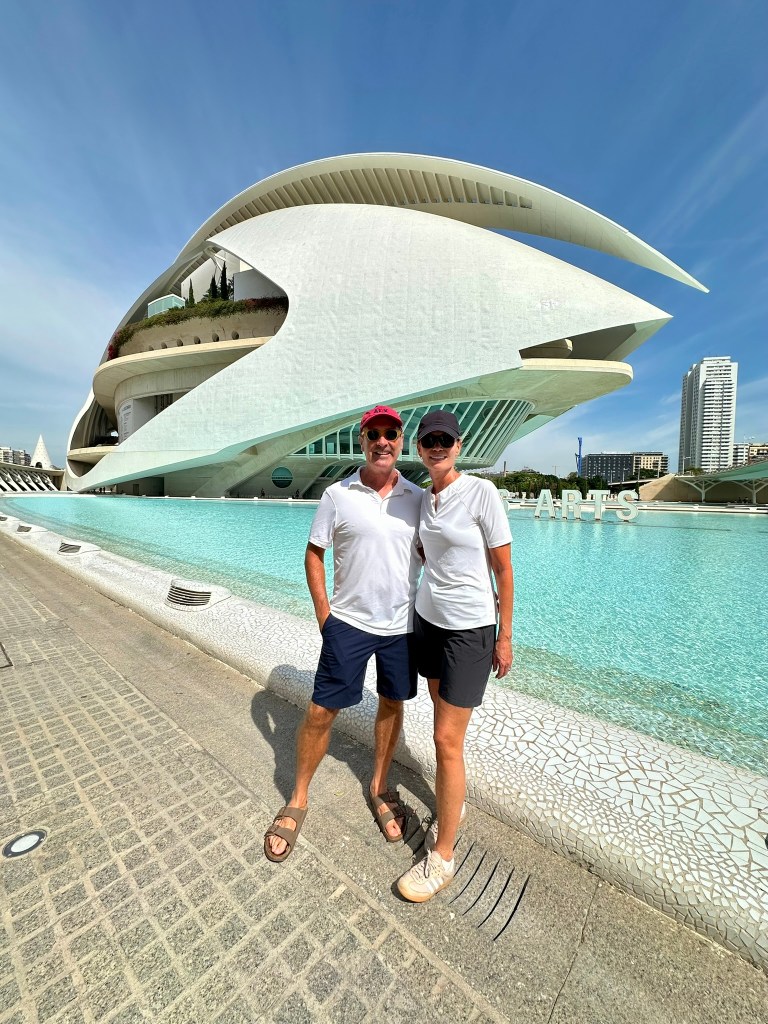
Then, a long drive west to our first Andalusian town that we missed on our bike trip: Cordoba.

Star of the show? The absolutely unique Mosque–Cathedral of Córdoba. Originally built as a grand mosque in the 8th century under the Umayyad dynasty, it was converted into a Catholic cathedral after the Christian Reconquista in 1236. Unlike every other instance of these conversions, however, the existing mosque structure and architecture was not razed, but retained. 

First of several times we’d see this street-cooling technique used in Andalusia:
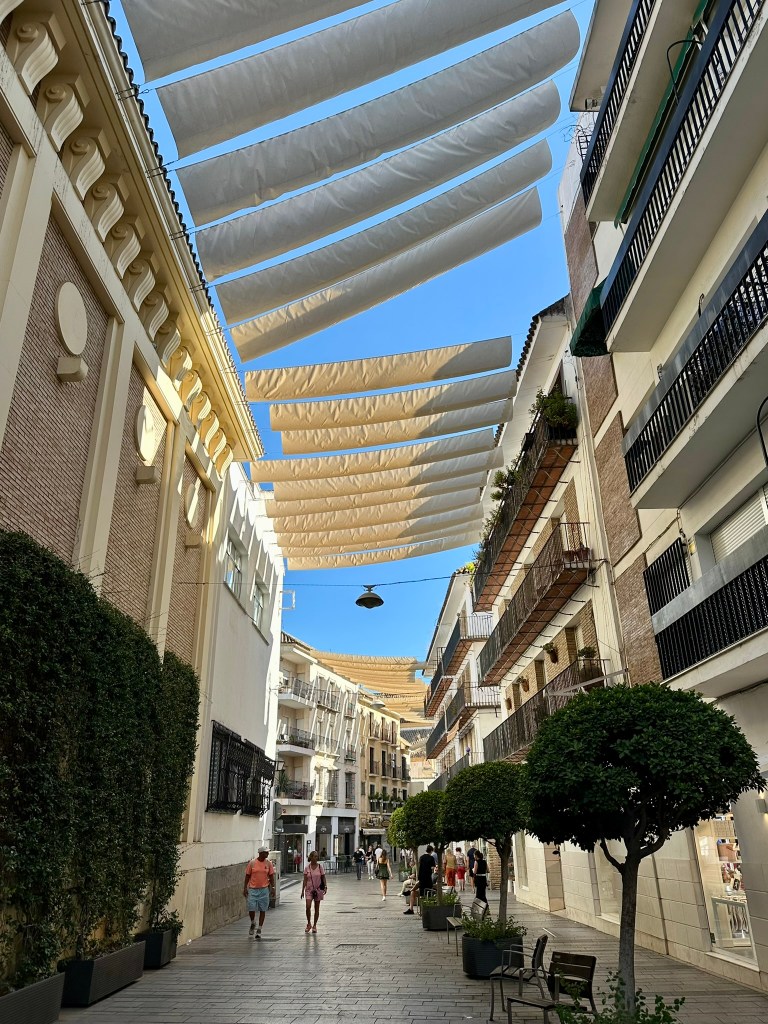
At one end of Cordoba’s Roman Bridge lies the Moorish Tower (Torre de la Calahorra), a fortified gate built by the Moors in the 12th century to defend the southern end of the bridge.

On the drive from Cordoba to Malaga, a stop at an olive oil processing facility for a tour and tasting at the Almazaras de la Subbética cooperative south of Córdoba – winner of the World’s Best Olive Oil competition in 2024/2025. And the 10 previous years. Super cool.
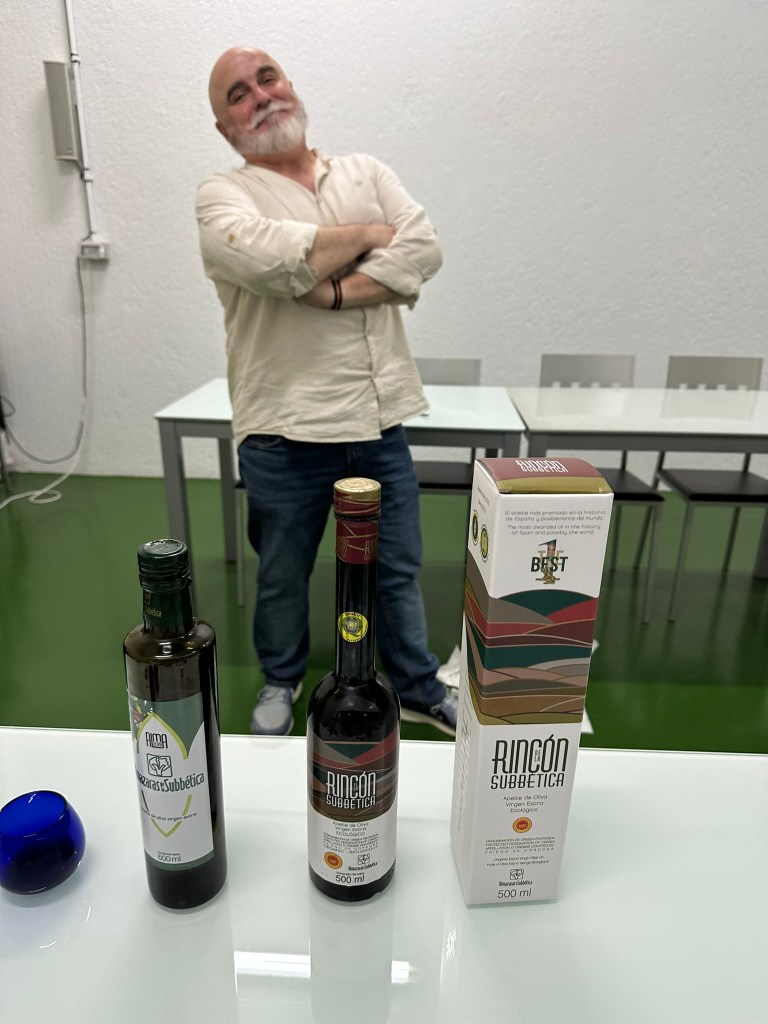
That’s a LOT of olive oil!

Priego de Cordoba, another white-washed Andalusian town visited on the drive to Malaga:

Malaga, the second (and final) iconic Andalusian town we missed on our previous bike trip:
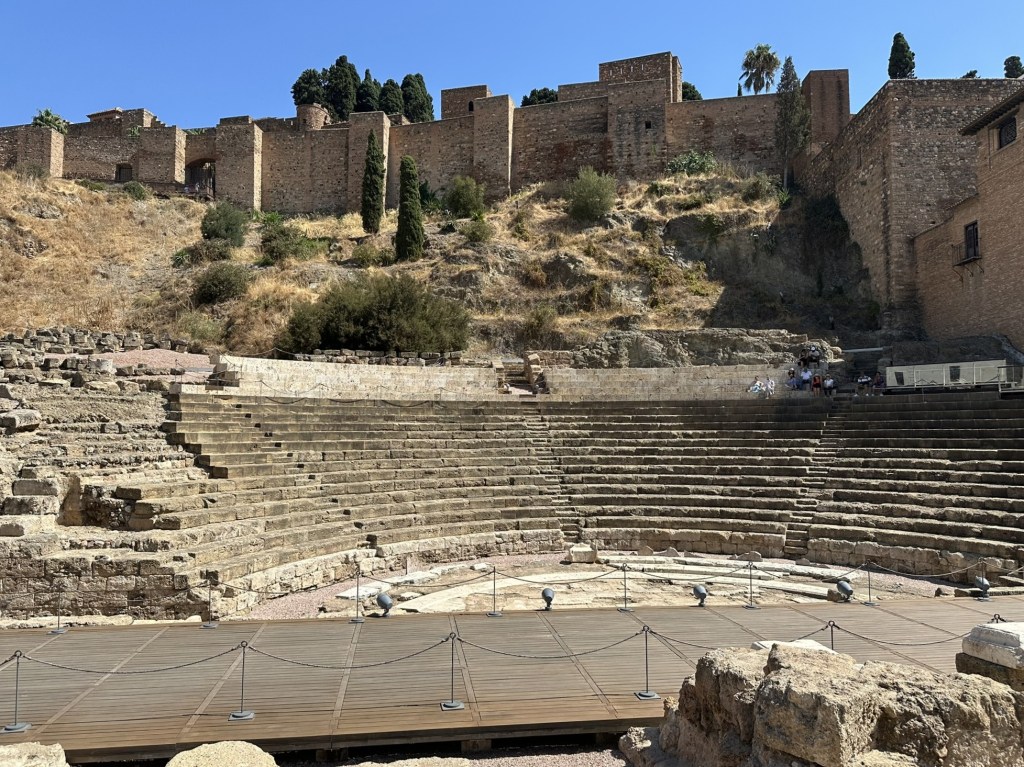
Right in the heart of town lies a Moorish calabaza atop a Roman amphitheater. The history half of WolfeStreetTravel was delighted.

Cool little tapas tour our first night; it turns out that maybe we DIDN’T need to pack 45 cigars for the trip (which we certainly did).

One of our goals? Chow down on espetos at a chiringuito – a beach fish-grilling restaurant (which we learned about on The Amazing Race, for what it’s worth).
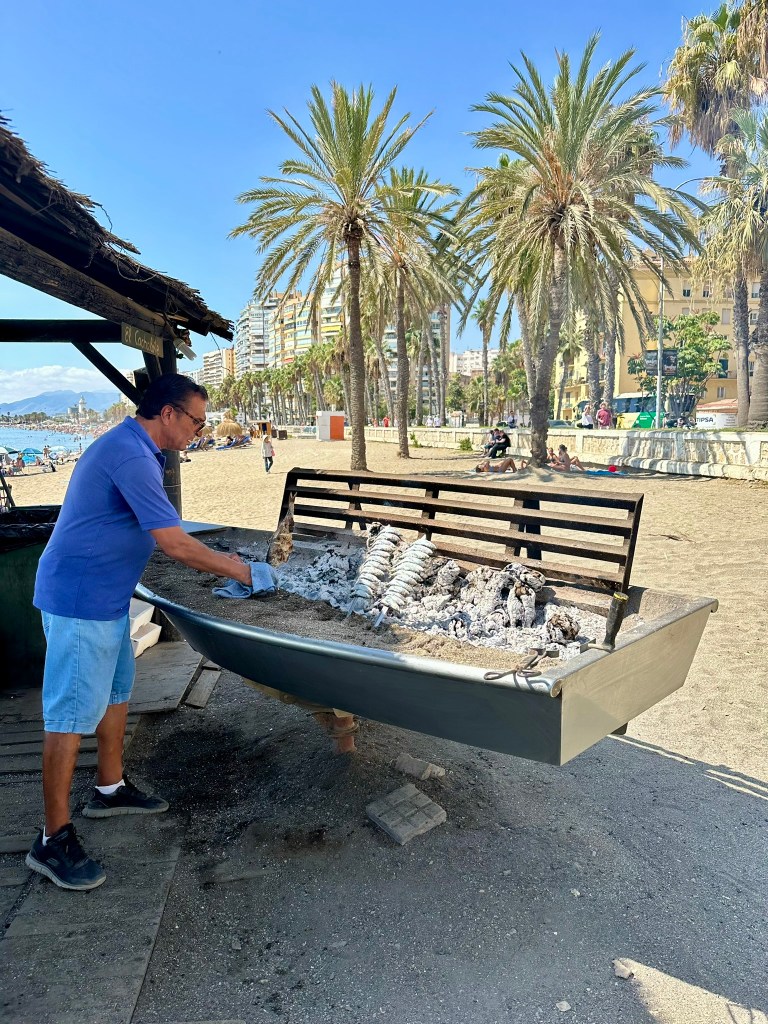
Definitely lived up to the hype (especially accompanied by a few tinto de veranos).

A stopover in Marbella en route from Malaga to our next town. Despite high expectations for a super awesome area – meh.

After months of the Mediterranean (first in Croatia on the initial bookend and then in Mallorca, Valencia, and Malaga on this trip), we transitioned to the Atlantic after driving past Gibraltar to get to Playa Zahara de los Atunes.

Where we stumbled, during our only night there, into a cool little concert at a beach bar down the street:

Continuing our little U-shaped arc around Andalusia, we headed next to Conil de la Frontera (our third de la Frontera, designating a frontier town between Christian and Moorish territories in the 900s):

Fried fish frenzy.

And a little day trip to Vejer de la Frontera:
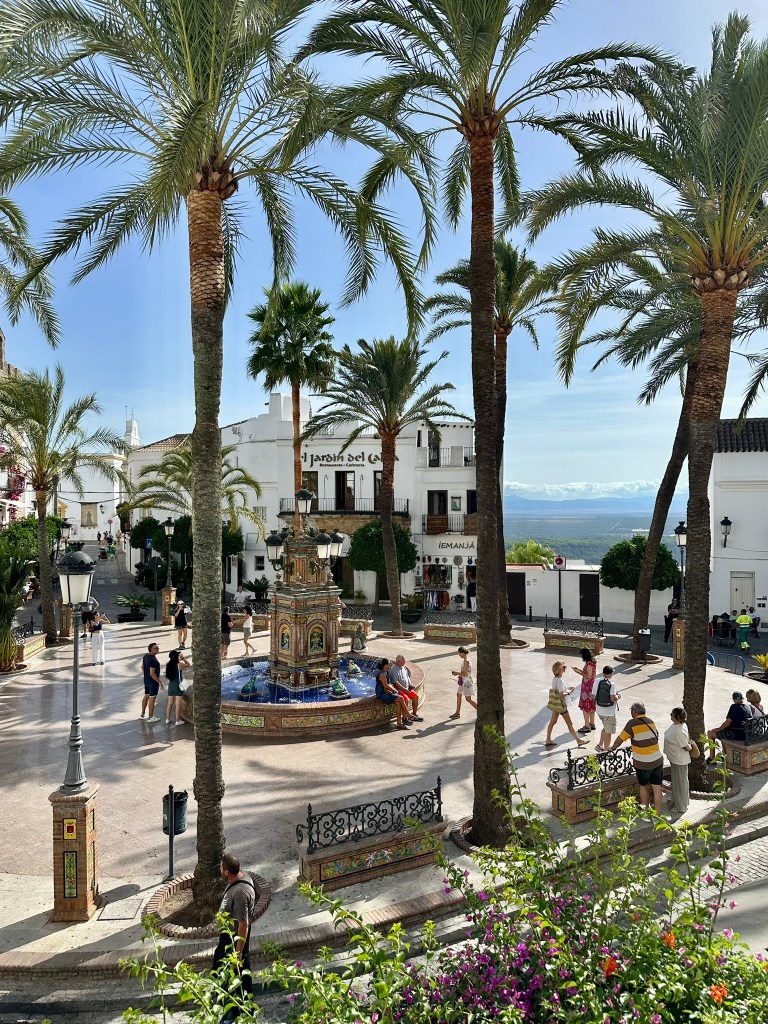
Even more atmospheric Andalusian town (and our forth de la Frontera):

More beach fish at Playa de la Fontanilla:

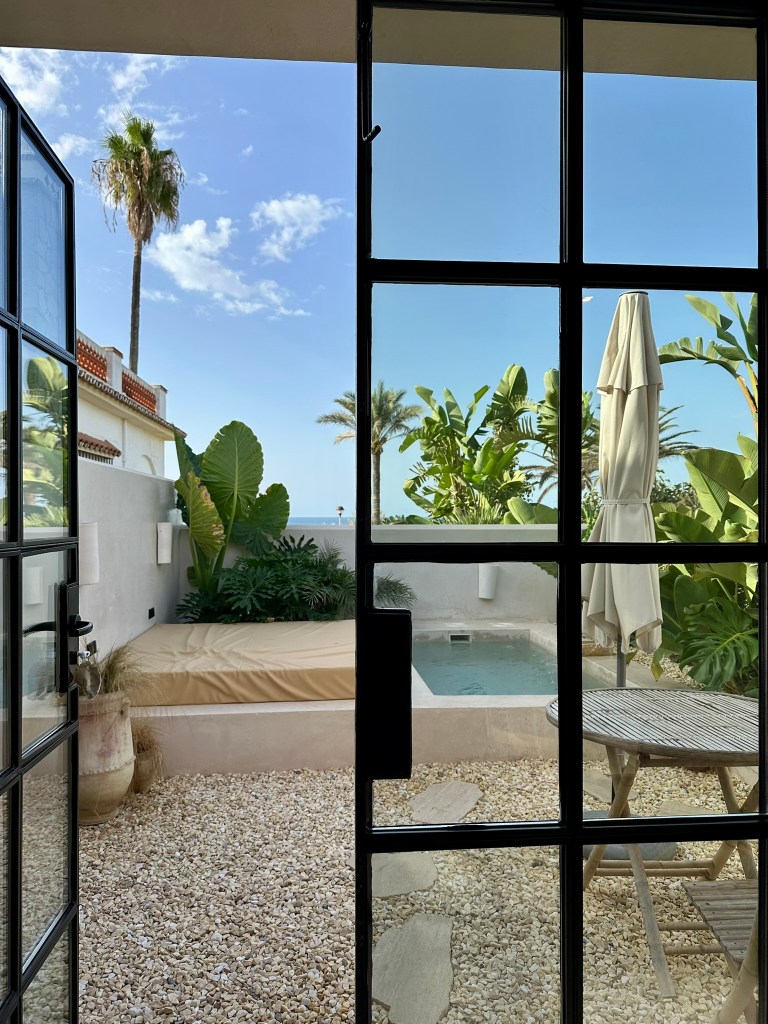
And our casita for 2 days right down the beach. One of the best AirBnBs we’ve experienced (plus a laundry stop):
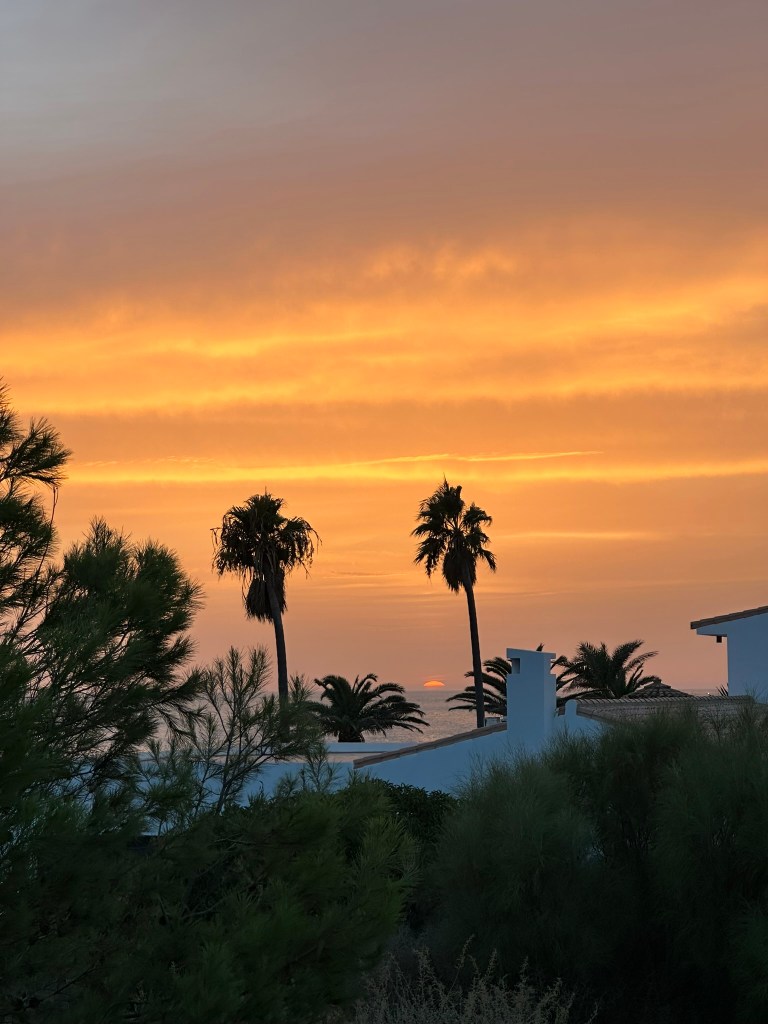
Amazing sunsets from the casita’s roof deck:
Then, back to Seville, which we really enjoyed when we first visited in 2017.
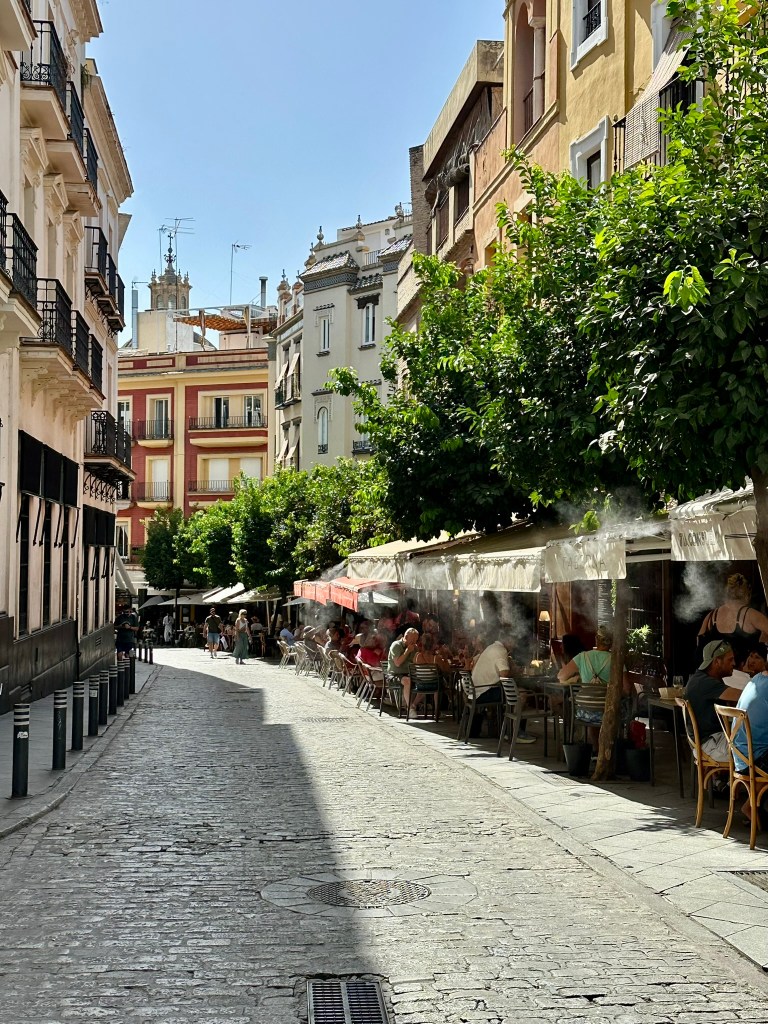
Never got to see the “mushroom” during that visit; this has been corrected:

And we spent our limited time in 2017 visiting Seville’s storied cathedral and did not have an opportunity to visit its alcazar. This also was corrected:
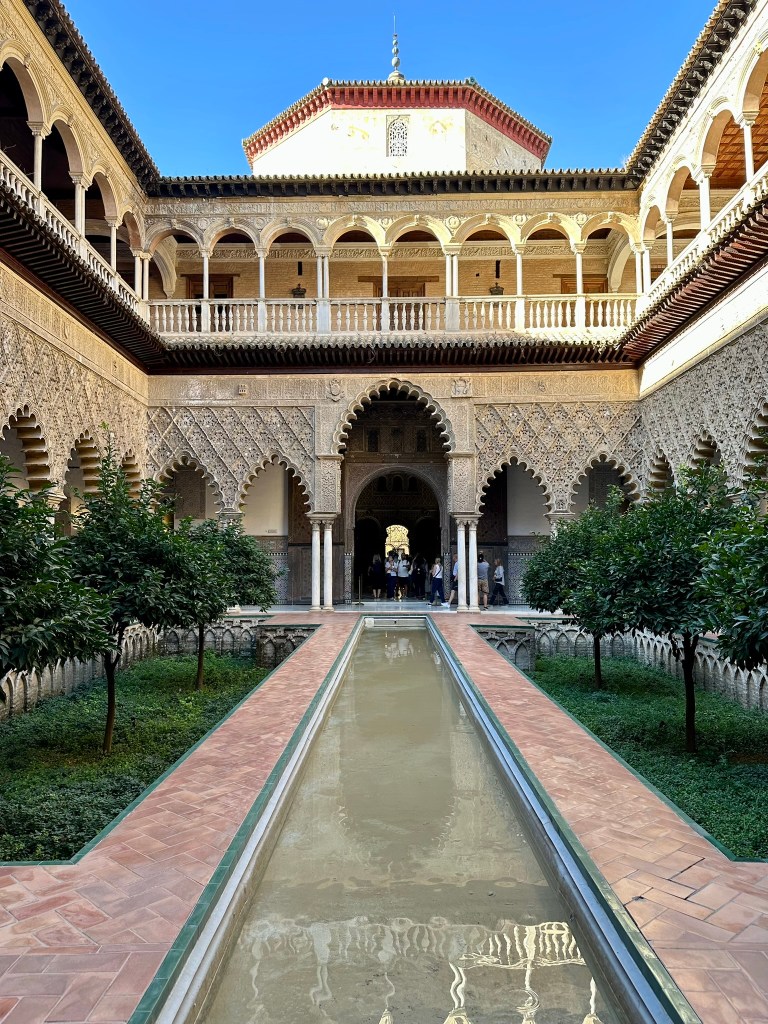
And, reminiscent of our days feasting on pinxos in San Sebastian in 2021, a dinner in Seville that included baby eels. Delicious.

Seville served as our last stop in Andalusia; from there, we flew to Porto, Portugal, picked up another car, and headed immediately east to the Douro Valley – Portugal’s wine country.

Our first stop – literally straight from the airport – was a tour and tasting at Quinta da Pacheca. Good wine. Great port.
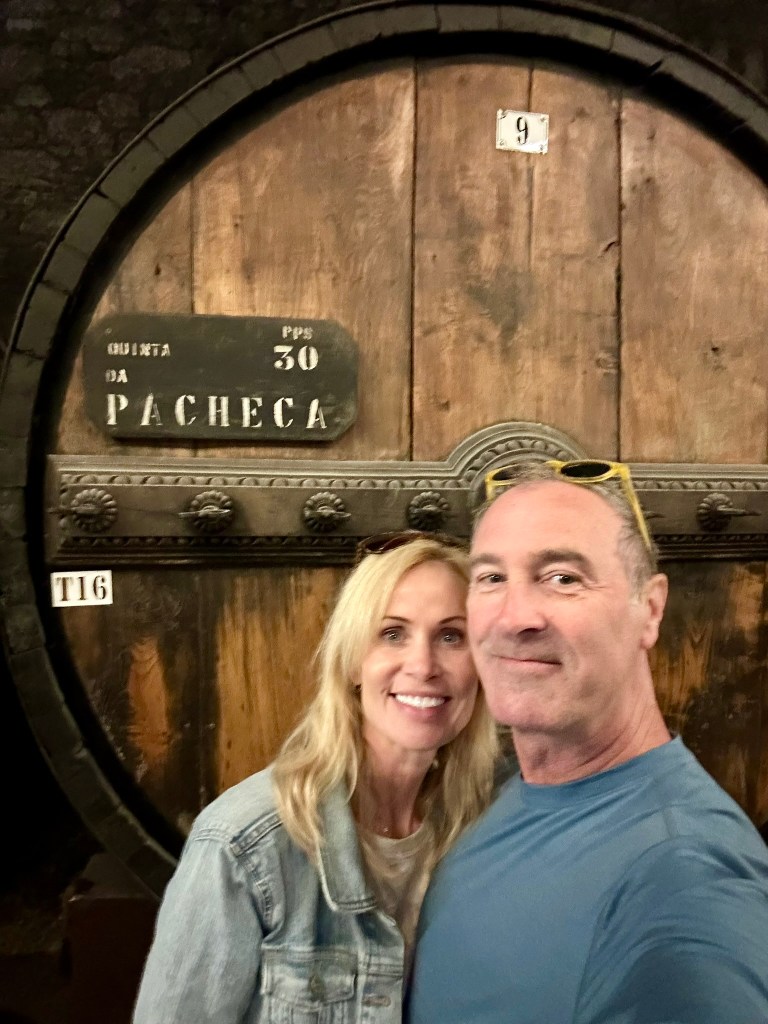
And the Douro Valley wineries really DO still stomp grapes, a la I Love Lucy. Pretty wild.

Cool little sunset boat trip on the Douro River:
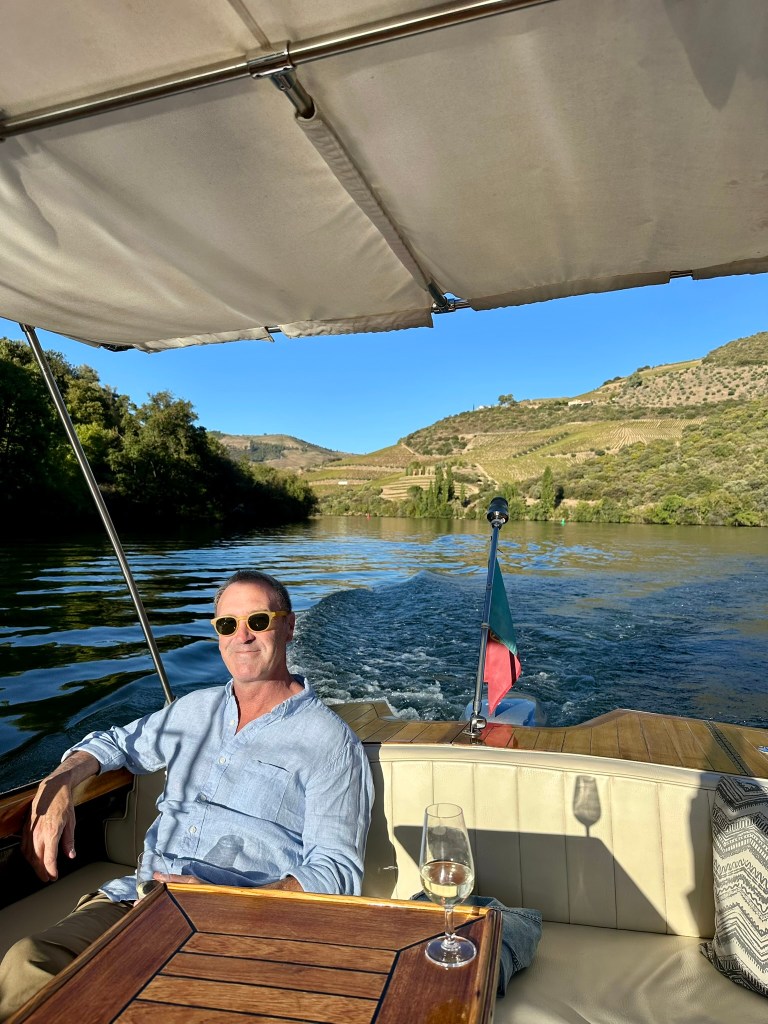
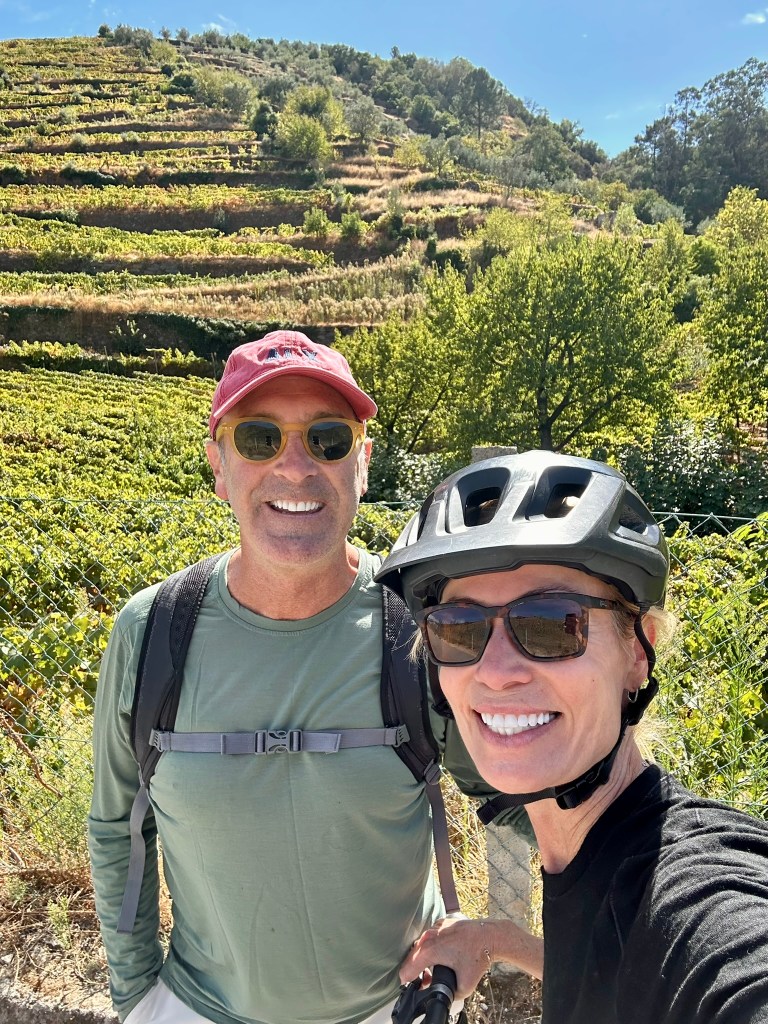
And a full day of biking through vineyards (none of which accommodated walk-in tastings – you had to have reservations, which we thought was insane:

Douro needs to learn lessons from the Virginia (and sure, California) wine region.
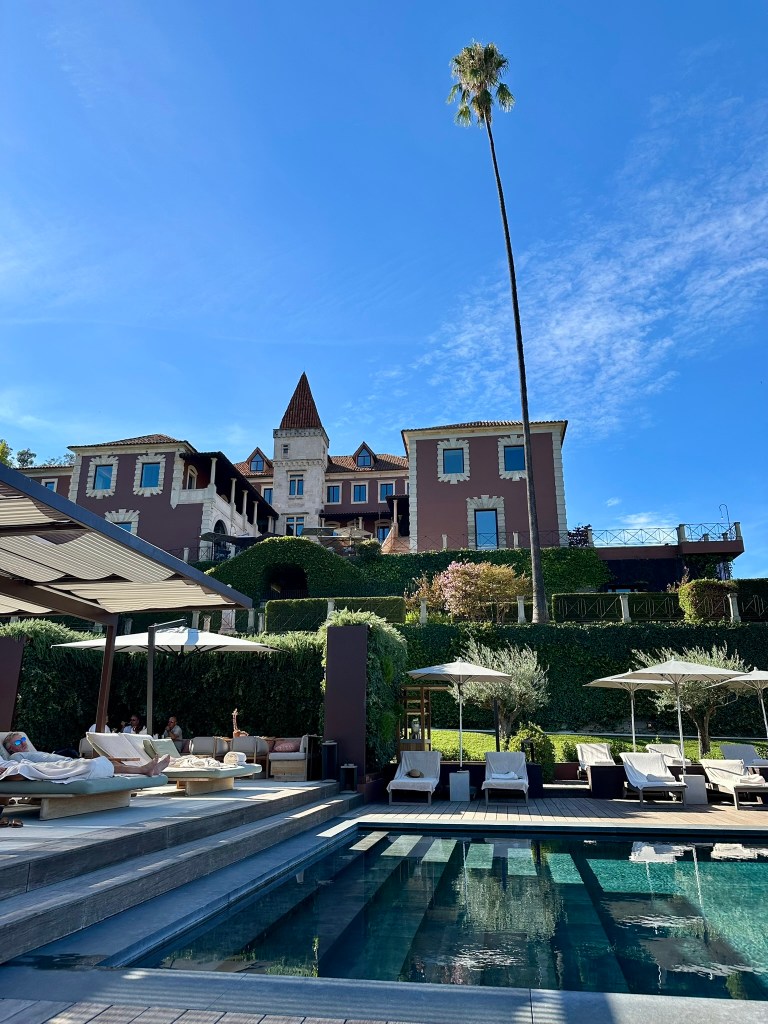
Pretty good digs for our 3-day stay:
The day after biking, we did end up calling and then visiting Quinta de Fojo, which offered an outstanding and authentic tasting experience at a generations-old family winery:

Then, back to Porto for a day; we first visited at the tail end of our inaugural post-retirement long trip in 2023 and definitely wanted to return, even if only for a short time:
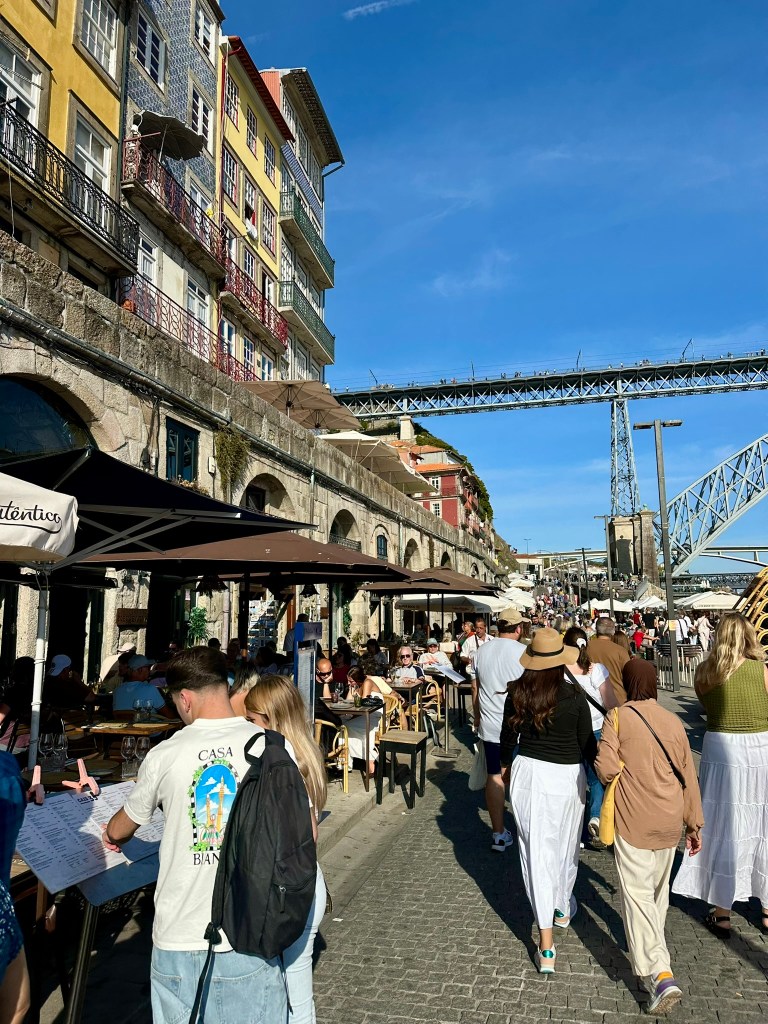
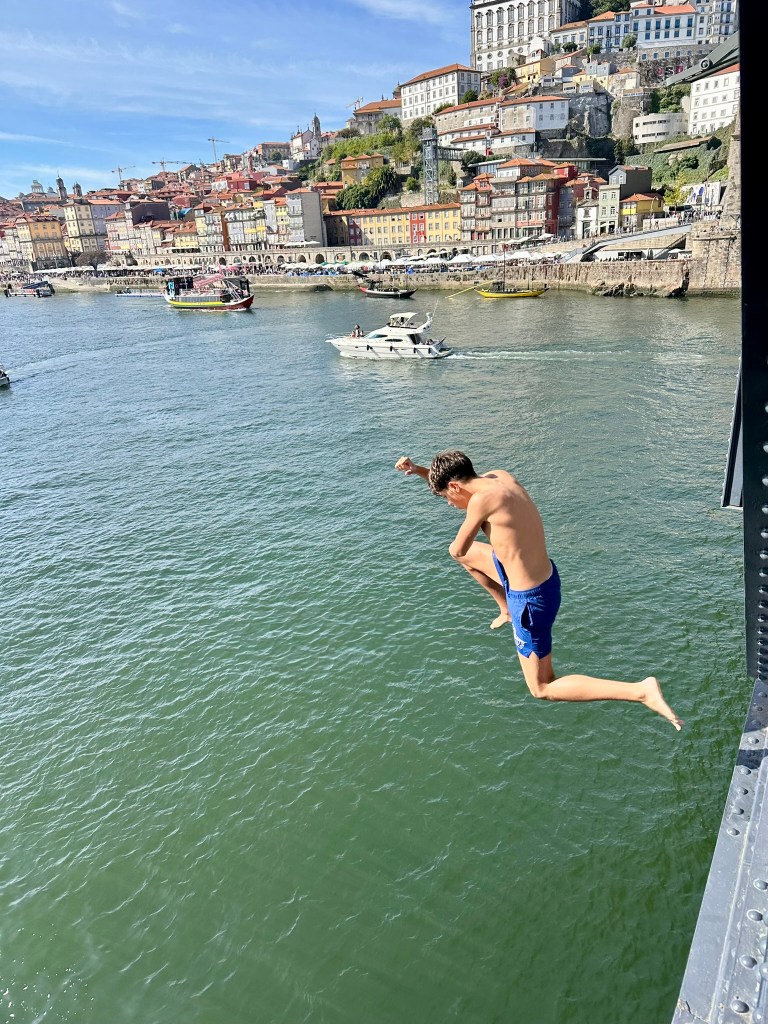
Like our second visit to Rovinj, Croatia, a few months earlier, we stayed across the river from Porto’s core instead of inside – definitely a different point of view!

From Porto, we flew to our final leg: Cornwall in the southernmost tip of England:
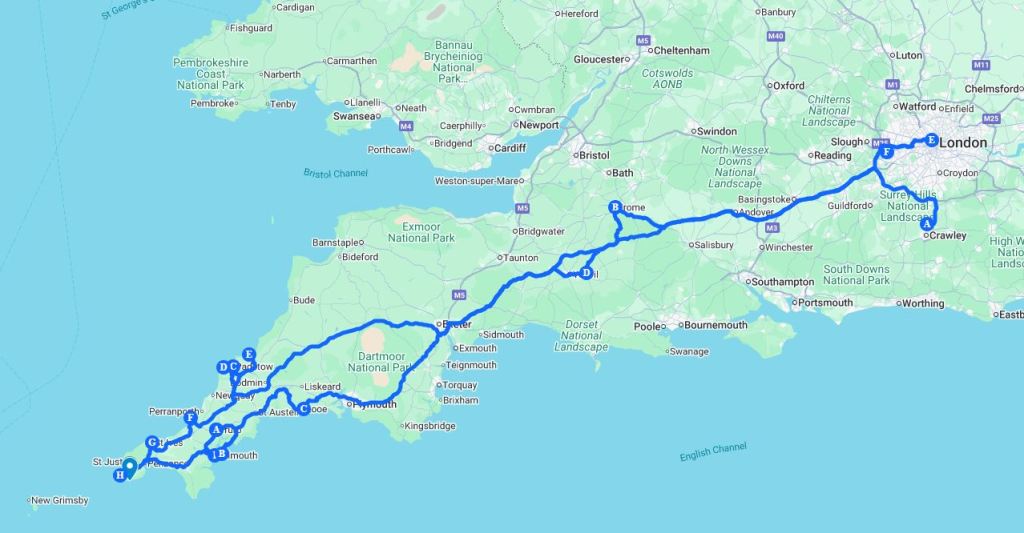
Due to the length of the drive from London to our first Cornwall location (we try to keep drives between locations under 4 hours, and ideally no more than 3), we stopped halfway in the town of Frome, in Somerset:

Turned out to be pretty cool, and with a remarkably high ratio of pubs to people, which was a plus for us:

Then, to our first stop in Cornwall – Padstow:

Rather than stay in town, which was a little bereft of cool lodging options, we stayed about 10 minutes away, at. . . The Pig. Which was a cool lodging option, it turned out:

But we did get into town our second night to dine at The Seafood Restaurant, the flagship eatery of Rick Stein, who we had never before heard of, but who turns out to be a beloved English restauranteur and a seafood magnate in Padstow (the restaurant was one of at least three Rick Stein joints in town):

And on our first full day, our real purpose for visiting the region: spectacular hiking. In this instance, a quasi-loop hike between the achingly charming village of Port Isaac to the even smaller hamlet of Port Quin:

The hike exceeded all expectations:

Our excitement manifested itself in different ways, to be sure:
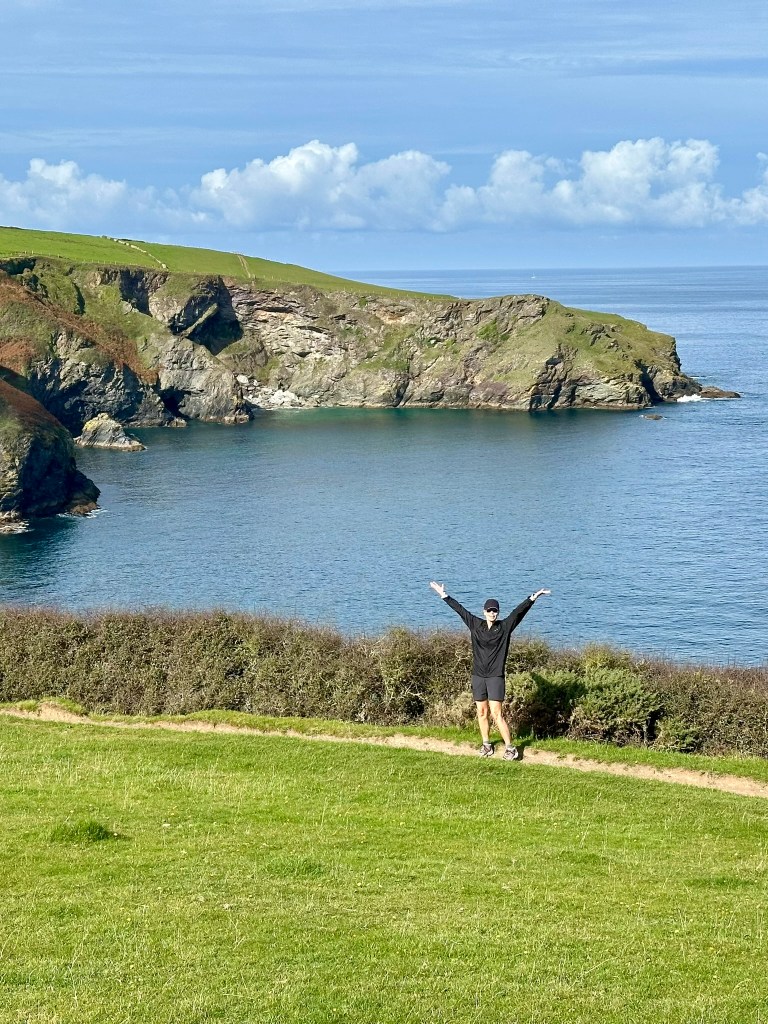
Port Isaac in the distance:
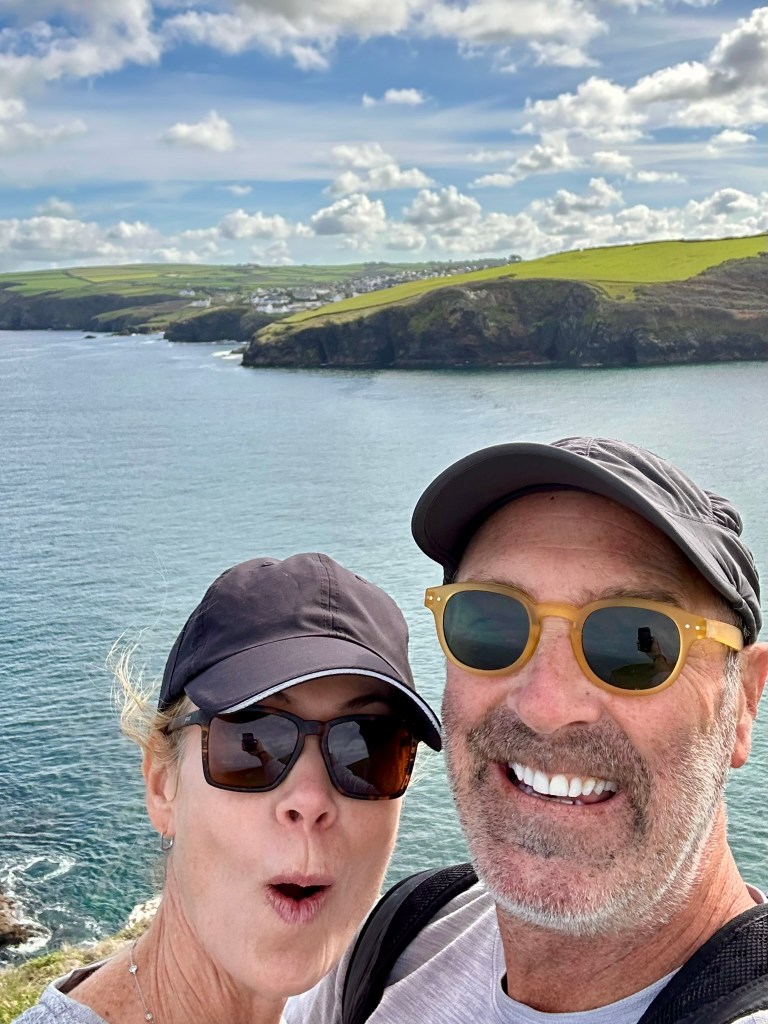
The local cows seemed excited to see hikers come by, since all of them crowded the fence when they saw us coming:

Our reward once back in Port Isaac? The first of several fish and chips (less than half a dozen during this trip, much less than the daily dosage we sought in our 2-week Cotswolds and Wales trip in 2022 that packed on so many pounds that we had to wear muumuus when we got home):

Our next hike en route from Padstow to St. Ives represented the most iconic views from the British TV series Poldark, which essentially inspired this entire leg. At the start of the hike lay the very tin mine that Poldark worked in the show, Wheal Coates:

Cliffside hiking at its best:

Our next base, St. Ives:

(Which always seemed to be at low tide during our stay, oddly enough):

But had a legit, picturesque English port town charm to it, even if most days were overcast (which seemed to amplify the Englishness of it all):
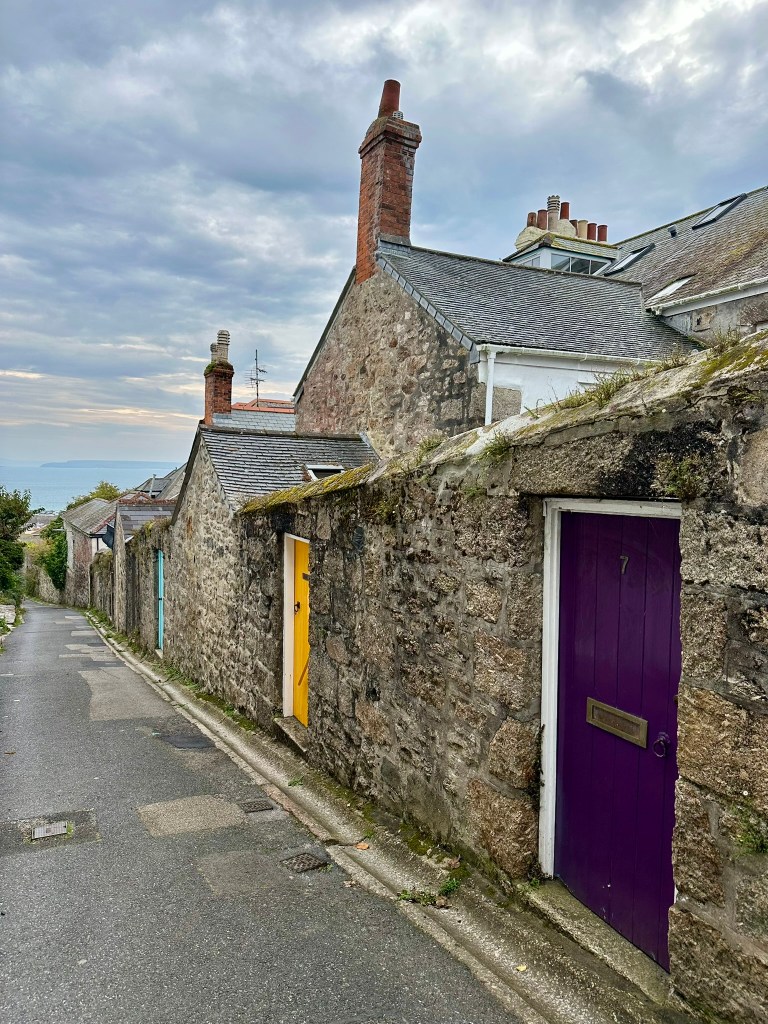
En route to our next hike, we stopped at the Minack Theatre, which was reputed to be an amazing venue for performances on a cliff facing the water. All of the facts were correct, but it was, in fact, meh:

The next hike? Around Lands End! The actual, for real most southwestern most point in England (and the UK):

More unbelievable Cornish cliffside walks:
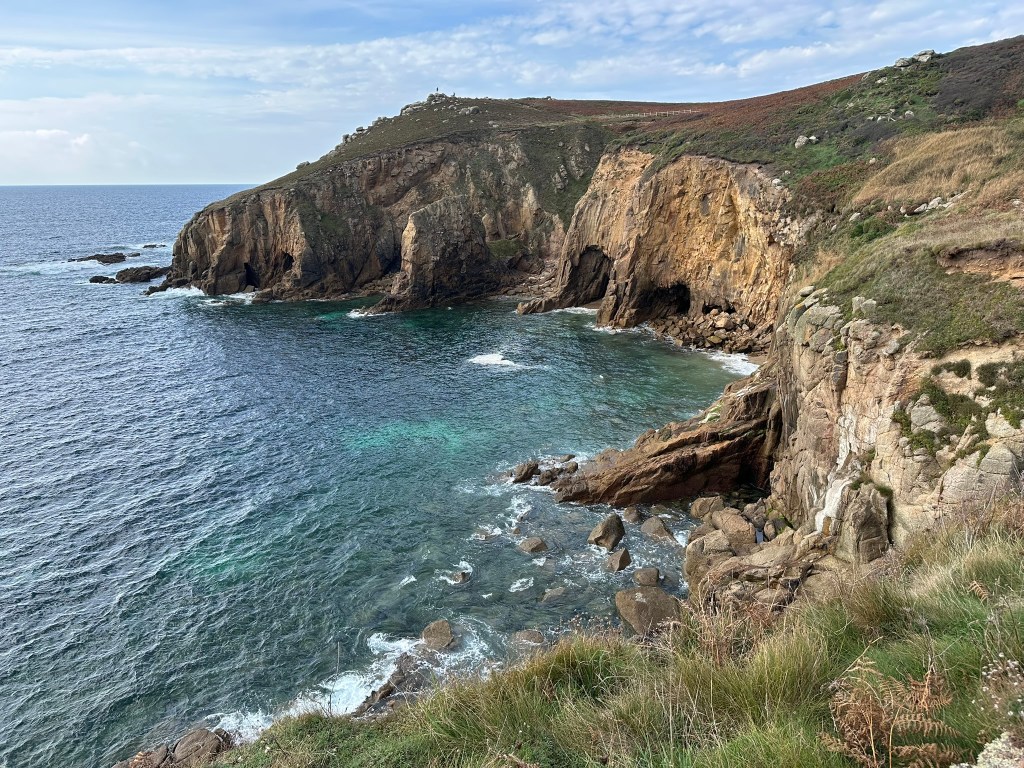
Then, around the horn of Lands End and on to the first of our last two Cornish stops: Falmouth.
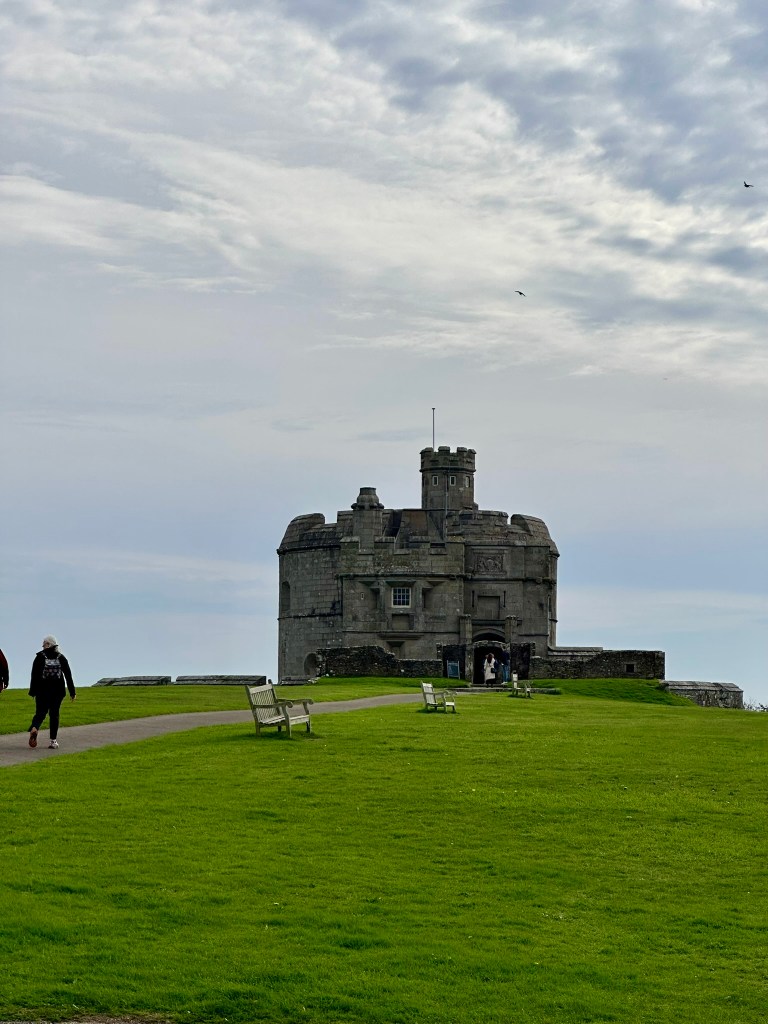
Meh.

The weather during our stay may have, however, influenced this assessment:
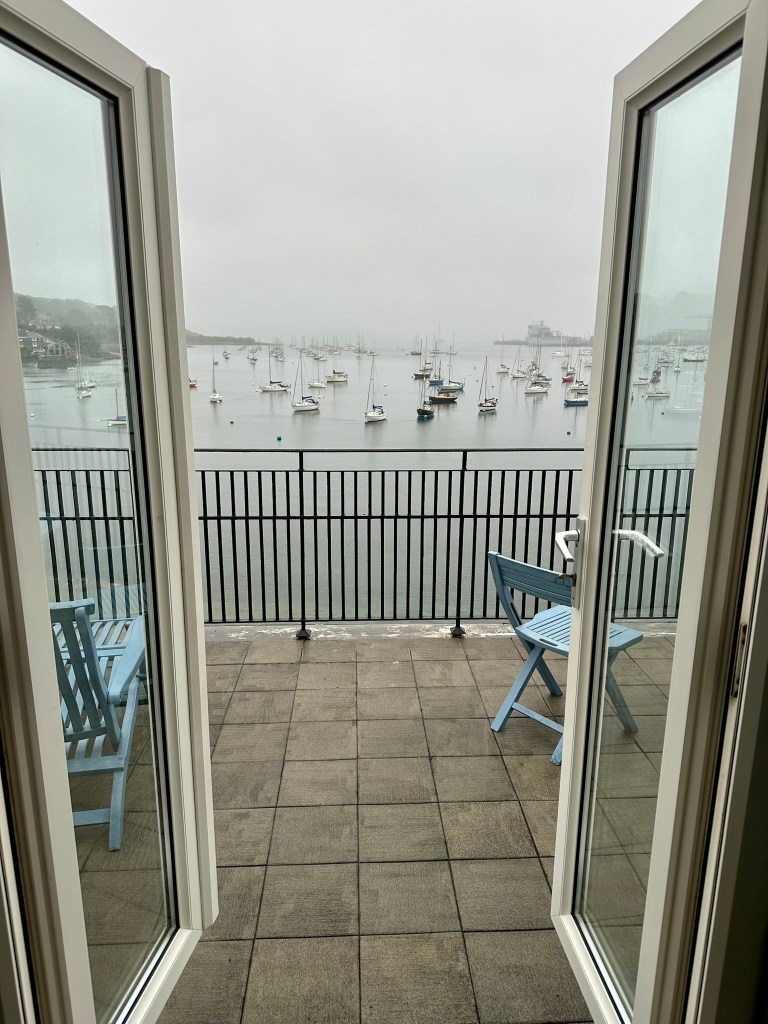
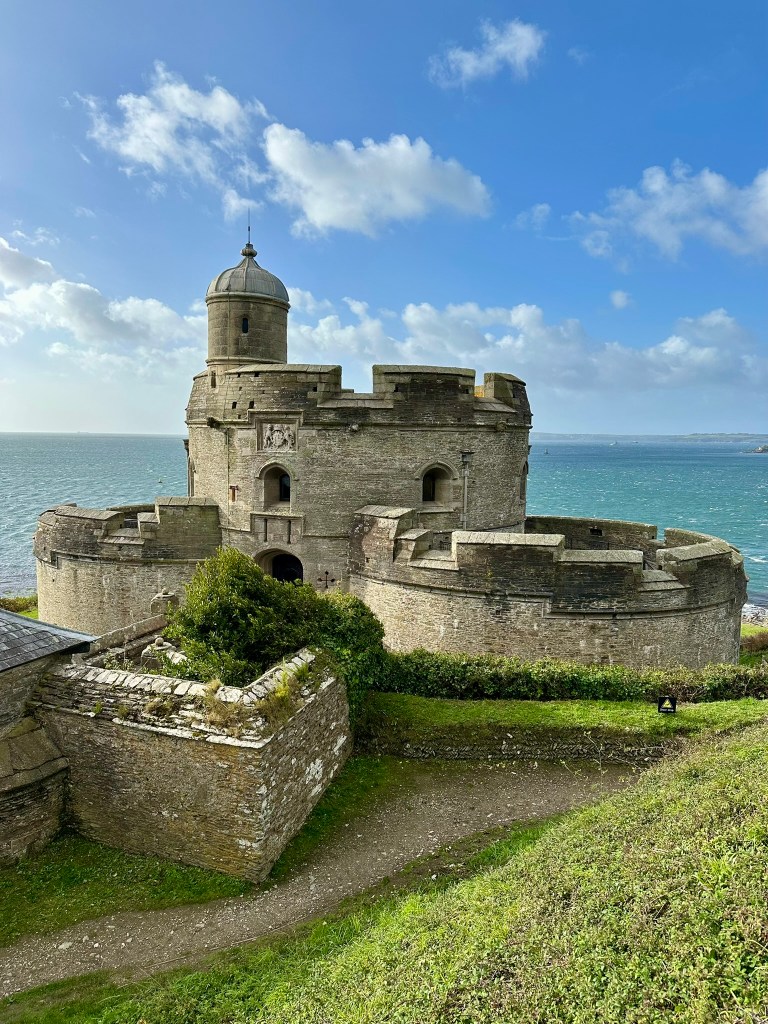
And the final Cornish stop, St. Mawes. More shitty weather, but a super picturesque Cornish seaside village:

And, of course, the weather improves the day we depart:
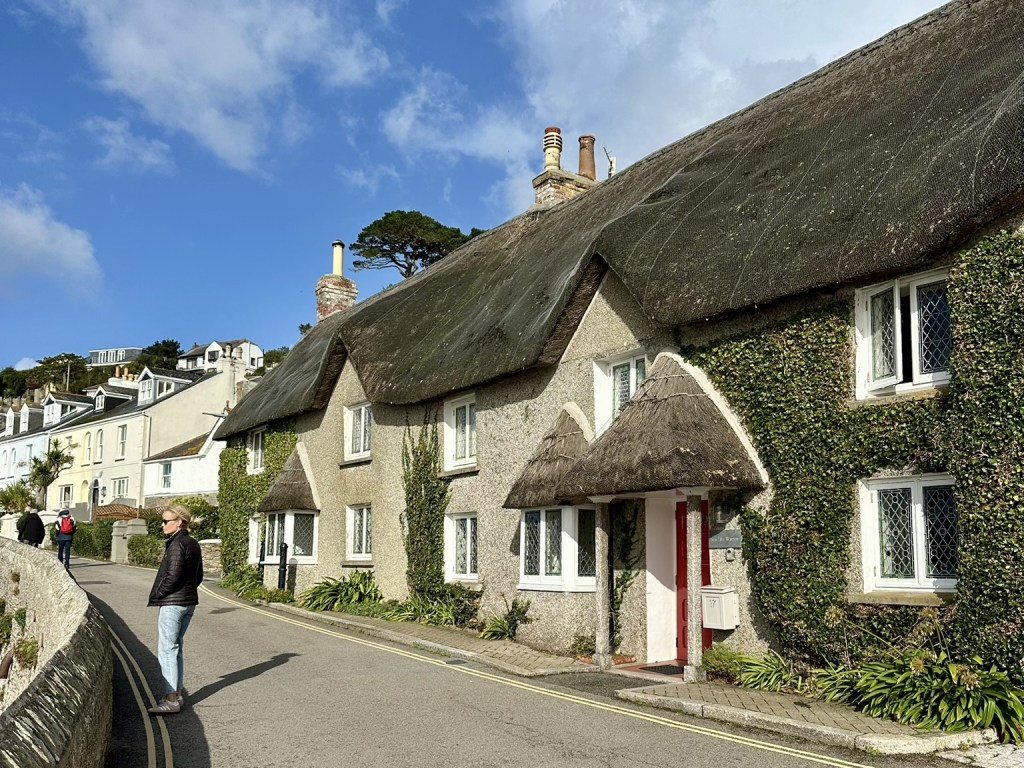
On the way back to London (by way of Sherborne), we literally drive right by Stonehenge. It turns out that we never actually needed to buy the entrance fee in 2022!

One of the many block-bisecting arcades of London, our final stop.
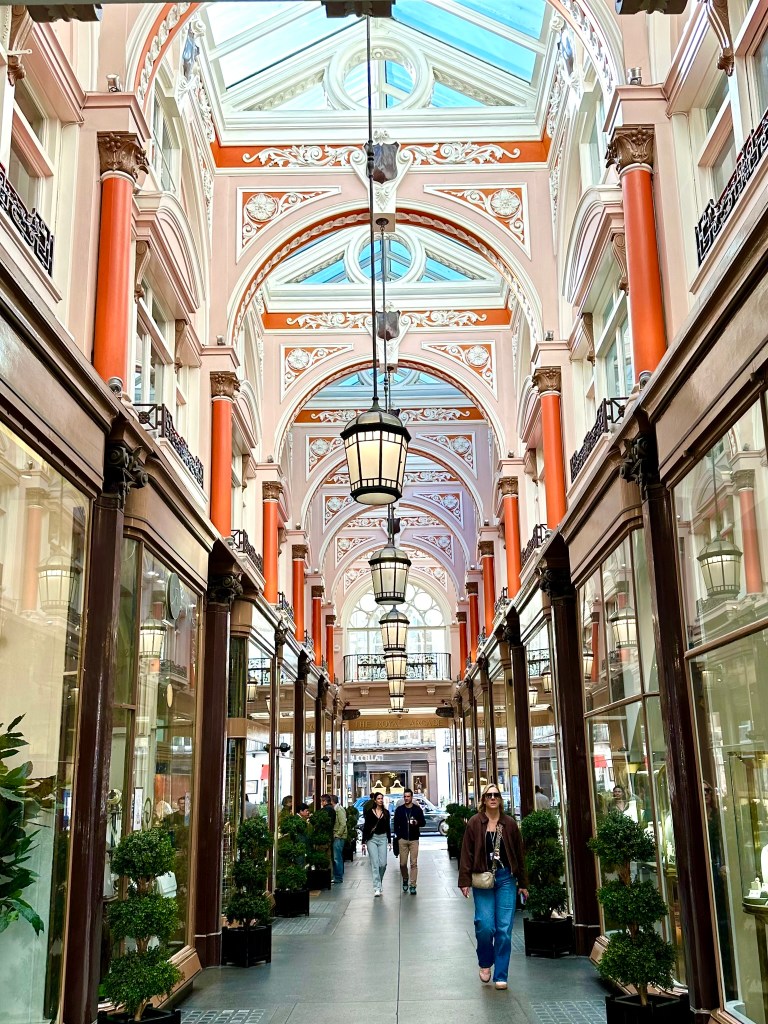
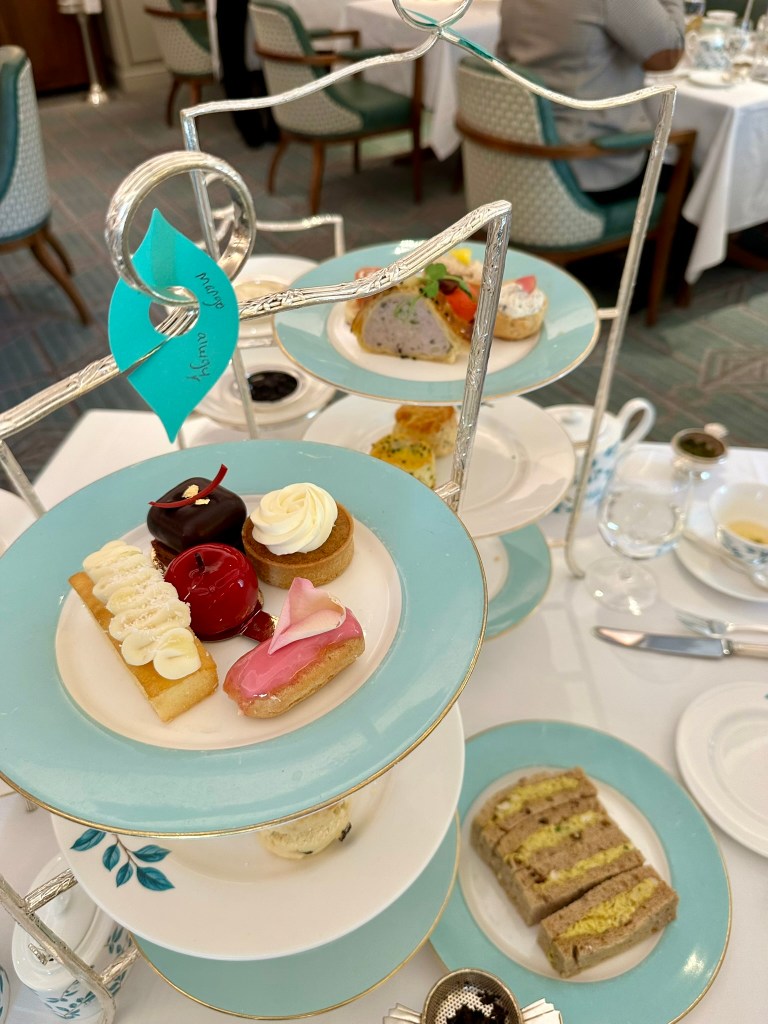
This was our fourth stay there, and we base ourselves in a different neighborhood each time – this time was Marylebone. Also, since we forewent the whole high tea experience on each of our previous three stays, we concluded that the fourth time was the charm:
The next day, a visit to London’s 3rd century Mithraeum, discovered beneath the modern city in 1954. This was a Roman temple dedicated to the god Mithras, a mystery cult popular among soldiers in the 2nd and 3rd centuries and could have continued to be more popular than early Christianity as an alternative to the traditional Roman pantheon had it not been for the pivotal backing of the latter by a couple of Roman emperors.

And a visit to St. Bartholomew the Great church, founded in 1123 – London’s oldest surviving parish church and a rare masterpiece of Norman architecture. Its Romanesque nave and medieval chancel evoke nearly nine centuries of continuous use, surviving the Great Fire, the Reformation, and the Blitz.
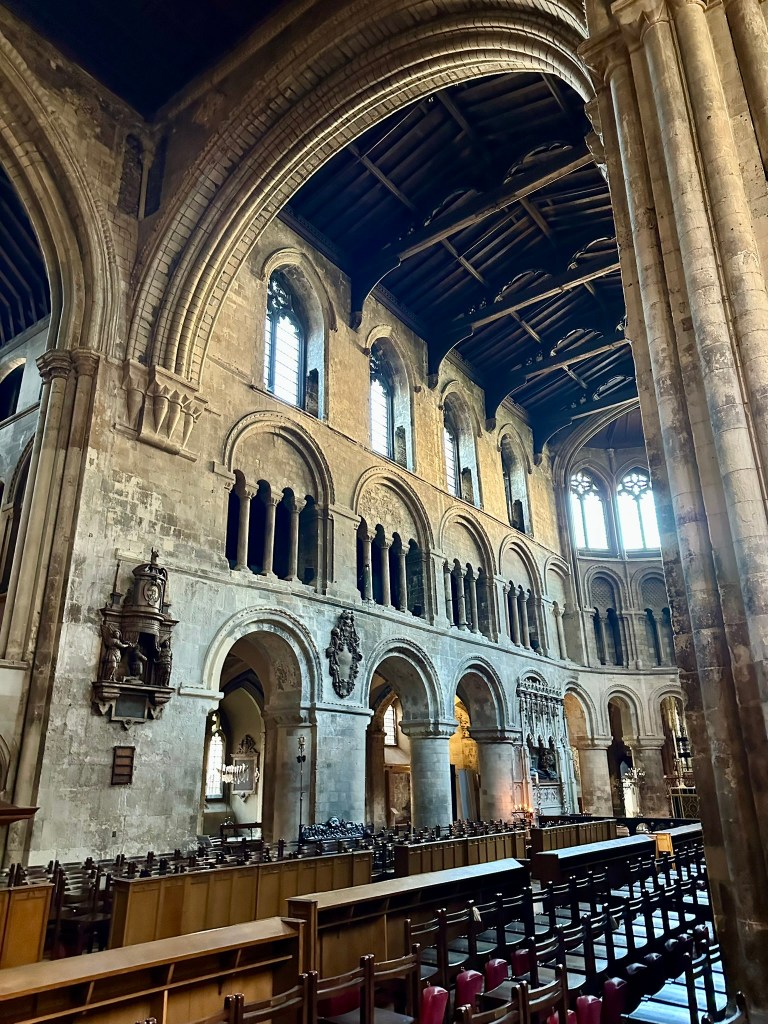
Definitely a historic end to an epic 6-week journey of 5 legs!

We’re definitely done traveling for the next few months – we need a break and some recovery time to revel in the most appealing town of all: Old Town Alexandria. So, this is where we’ll hang and try (really try!) to post some of the growing backlog of trip photos that are piling up (and have, in fact, now contributed to maxing out the storage capacity to the home PC, prompting a replacement).

More to come!

Categories: Andalusia, England, Five Legs in Six Weeks, Portugal, Spain, Switzerland | Tags: , , , , , , , , , , , , , , , , , , , , , , , , , , , , | 4 Comments

A Slow Roll through Languedoc, Provence, and Basque Country: Trip Overview

We’re back in action!

After 17 months of travel limted to the Mid-Atlantic and the Caribbean, we finally made it out of the country for real. This time to Europe, to finally execute a trip that we planned for this time last year.

As noted in our previous post, our ability to execute our plan very much depended on our securing a French passe sanitaire QR code, which would demonstrate to Air France and restaurants everywhere that we were vaccinated, a prerequisite to boarding or entering. After applying in early August and waiting more than 2 weeks, we received our passes at the 11th hour. Literally. The passes arrived late in the morning of the day we flew out of IAD at 5 PM. But we had them, and the relief in having this risk mitigated really was palpable.

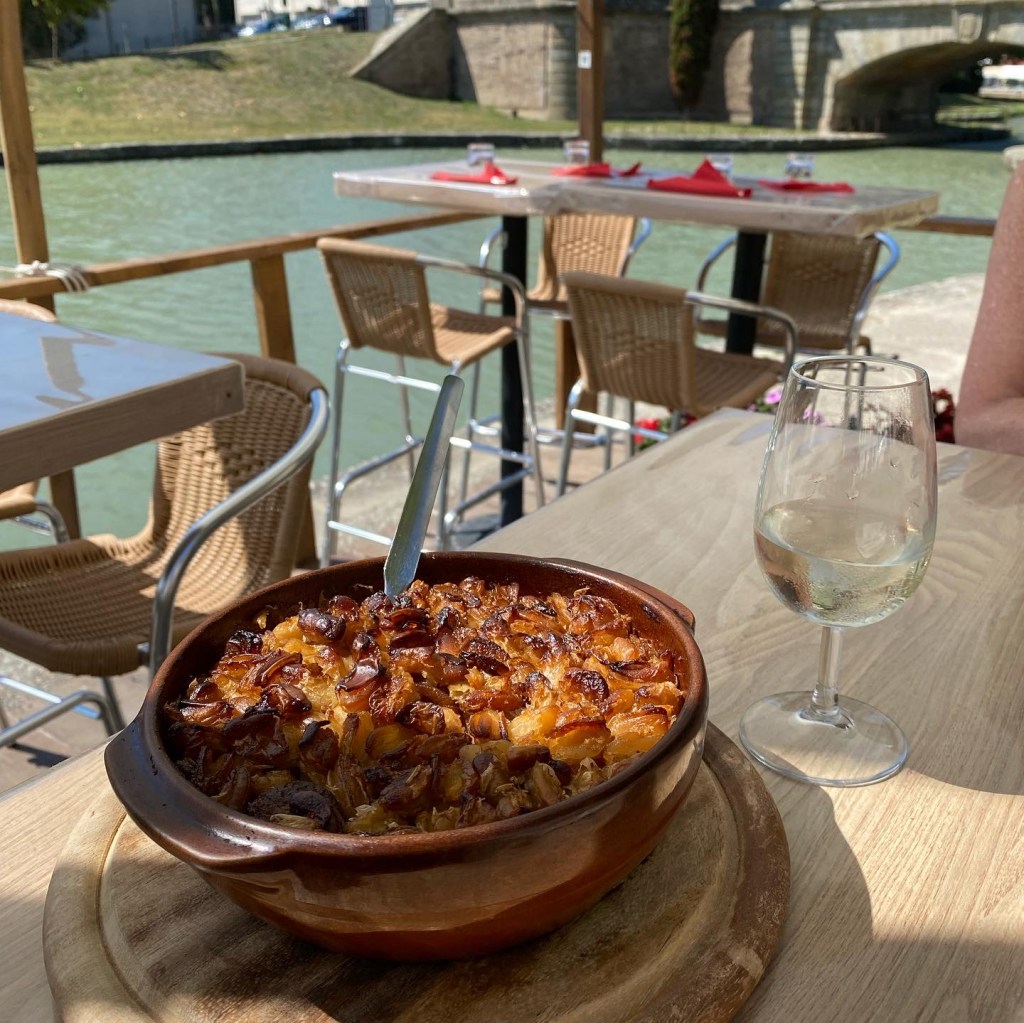
And the passes made all the difference. Everyone required them in France. Not just the gate agents for our domestic flight from Paris to Montpellier, and not just maitre d’s guarding the doors to indoor dining, but small restaurants serving exclusively outside, where there’s really minimal risk. And not just in the bigger towns, like Avignon, Arles, and Uzes, but in tiny hamlets like Castelnaudary, halfway between the Mediterranean and Toulouse, where we feasted on cassoulet outdoors by a canal. Even there, they required verification of vaccination via the passe sanitaire. Luckily, we were able to produce them and do everything we wanted to; no constraints.

We encountered the exact opposite in Spain – no one checked and no one cared. And despite the reference to indoor dining in France above, we only dined indoors there three times. But they checked every time. In San Sebastián, Spain, where Michelin-starred dining was our primary goal, dining was indoors each time. And each time, there was no concern and no checking. This served as an interesting contrast between EU countries. We’ll see what Italy does, when we head to Tuscany in October.

We spent most of our time on the 2-week trip in Languedoc, west of the Rhone, and in Provence, east of the Rhone, basing ourselves first in Uzès, then Gordes, and finally Sète, on the Mediterranean. The itinerary, such as it was, is depicted below, starting at the Montpellier airport and heading northeast first to Uzès, with a bunch of day trip, then to Gordes, with more forays, then to Sète, Toulouse, and finally San Sebastián on the Atlantic coast. We’d pop back up to France to fly back out of Biaritz to avoid an absurd drop fee if we returned the car we picked up in France in Spain, instead.

Although we spent the last 4 days in San Sebastián, in the Basque region of Spain, to get there from the South of France required a 7-hour drive, which is why we stopped half way in Toulouse. The black pins are places we saw during the trip, further delineated by house icons (towns where we stayed) and fork and spoon icons (typically stopover locations between home towns):

Despite all of the risks – we wouldn’t get our health passes, there would be no rental car waiting due to the crazy demand, we’d encounter issues or delays on the road and in towns – the trip went exactly as planned. Almost for the first time for us. Plus, we had awesome weather for all but one afternoon and evening.

Quick highlights from the trip are below, before more detailed posts to come.

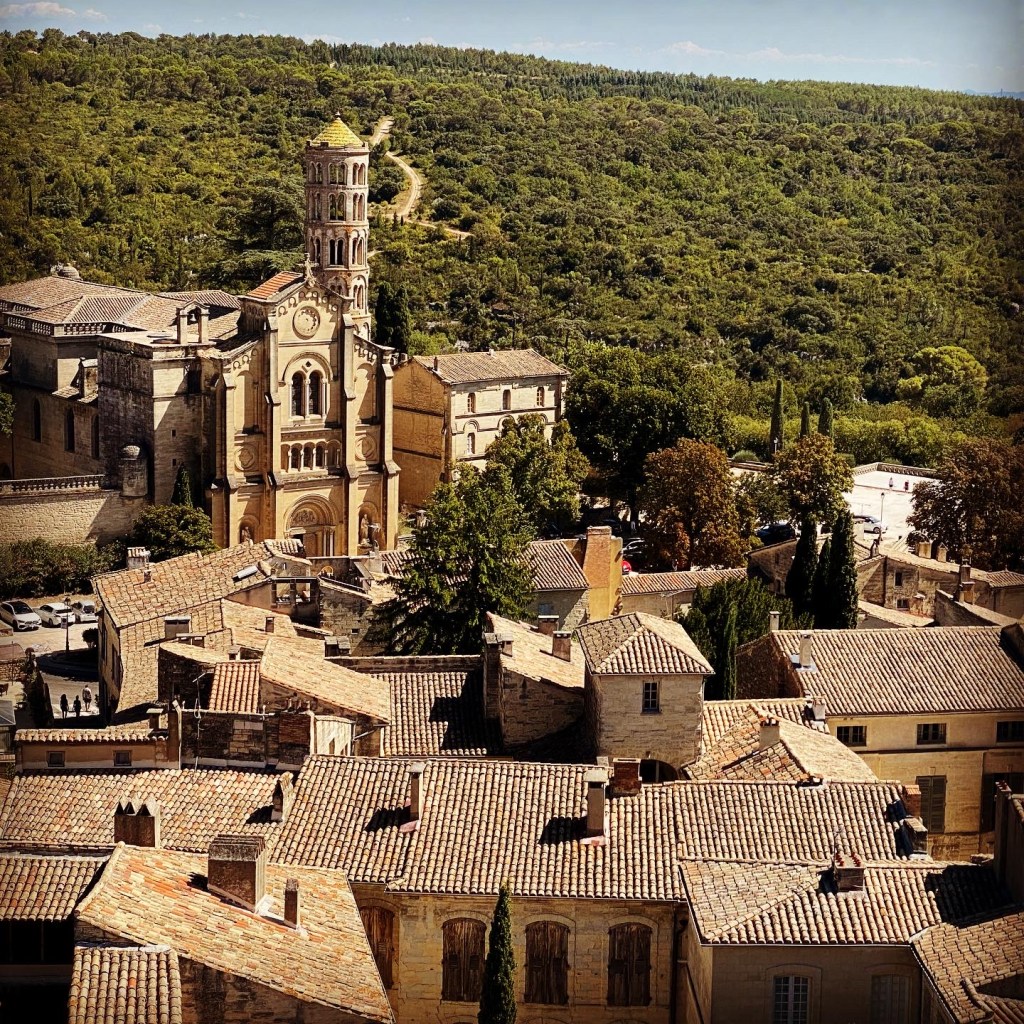
First, 4 nights in Uzès in Languedoc, a town we were hoping was a European version of Old Town based on a lot of research last year:

Close (and really charming), but no cigar.

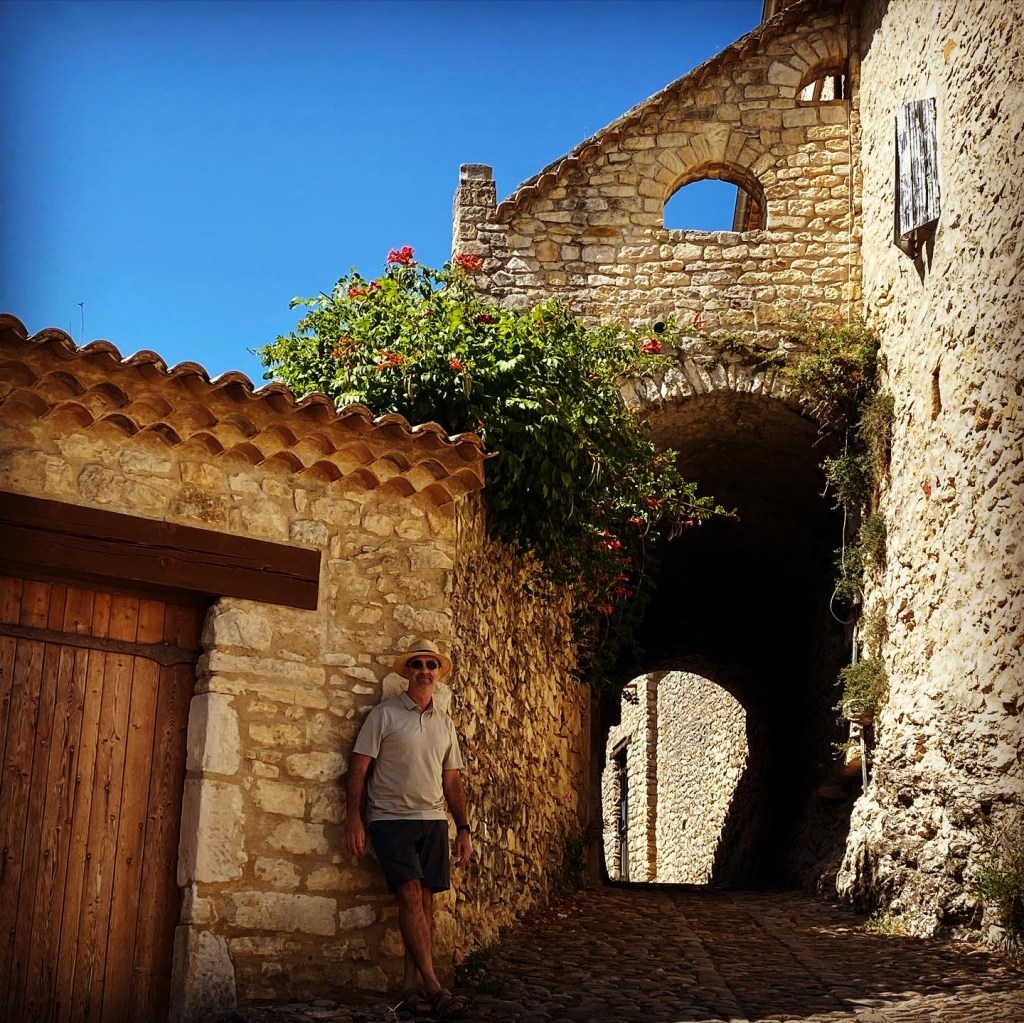
A day trip from Uzès to the fortified hilltop town of Lussan:

Hiking the crazy, river eroded Concluses de Lussan down the road from the little hamlet:

And another side trip to a similar aerie: La Roque-sur-Cèze:

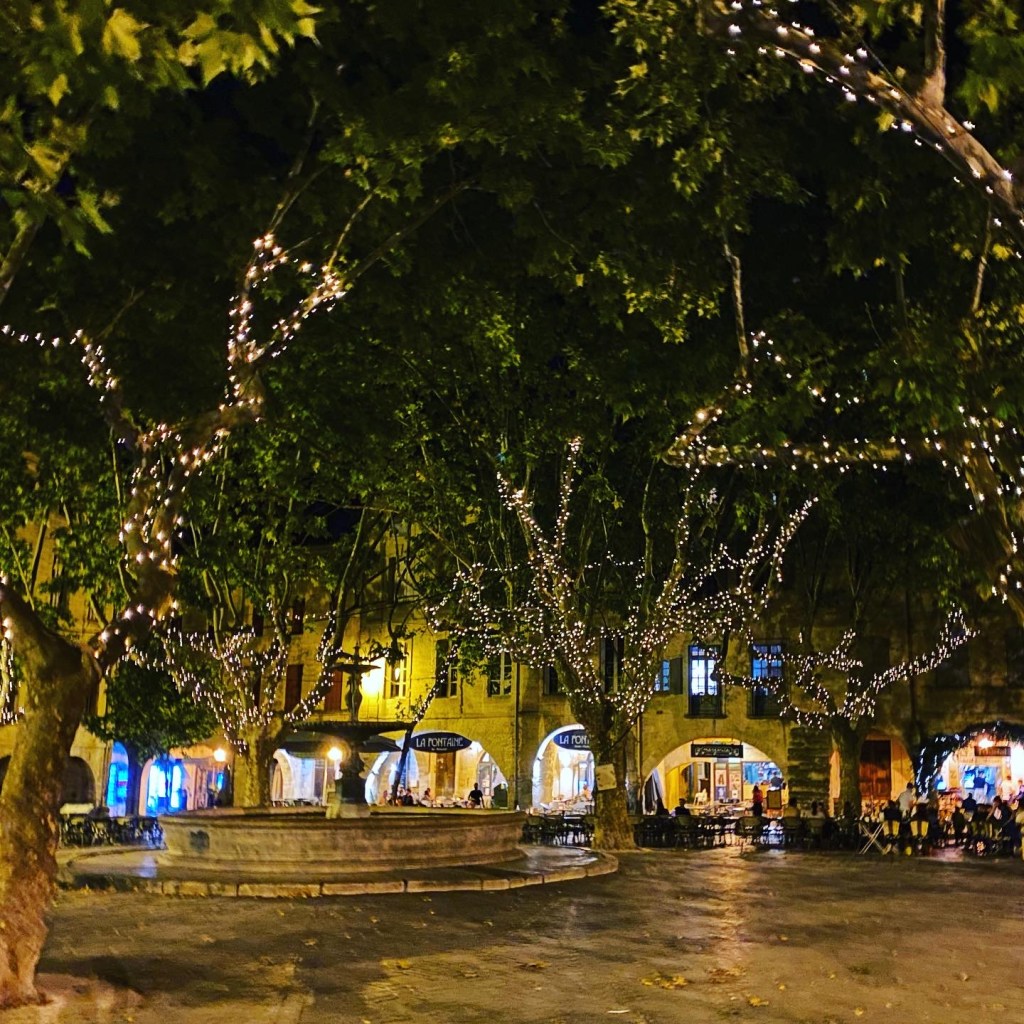
One last evening in Uzès:

On to Gordes, by way first of a return trip to the 2000-year-old Roman aqueduct of Pont du Gard, which we first visited during our first bike trip in Europe in September of 2002:

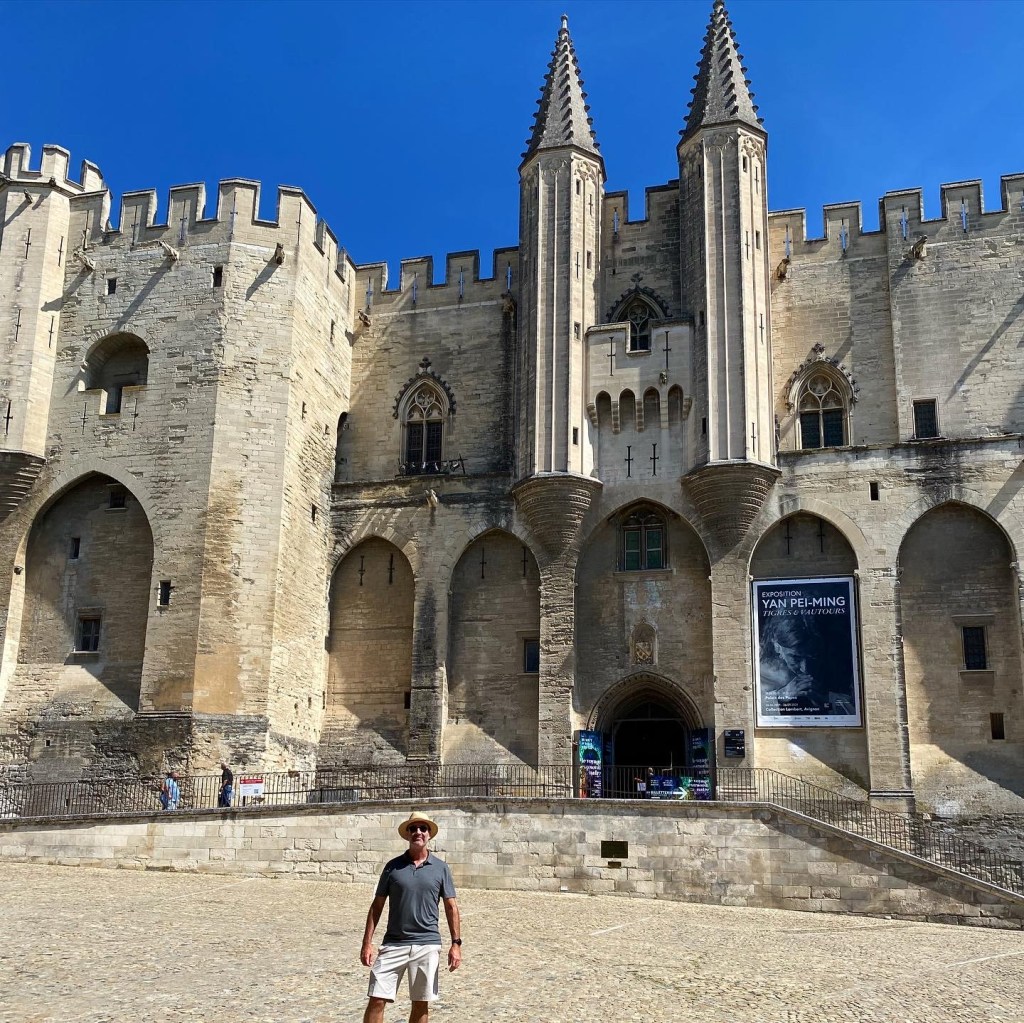
Followed by a return trip to Avignon, home to the Antipopes, for a little stroll and some lunch in front of the Palais des Papes:

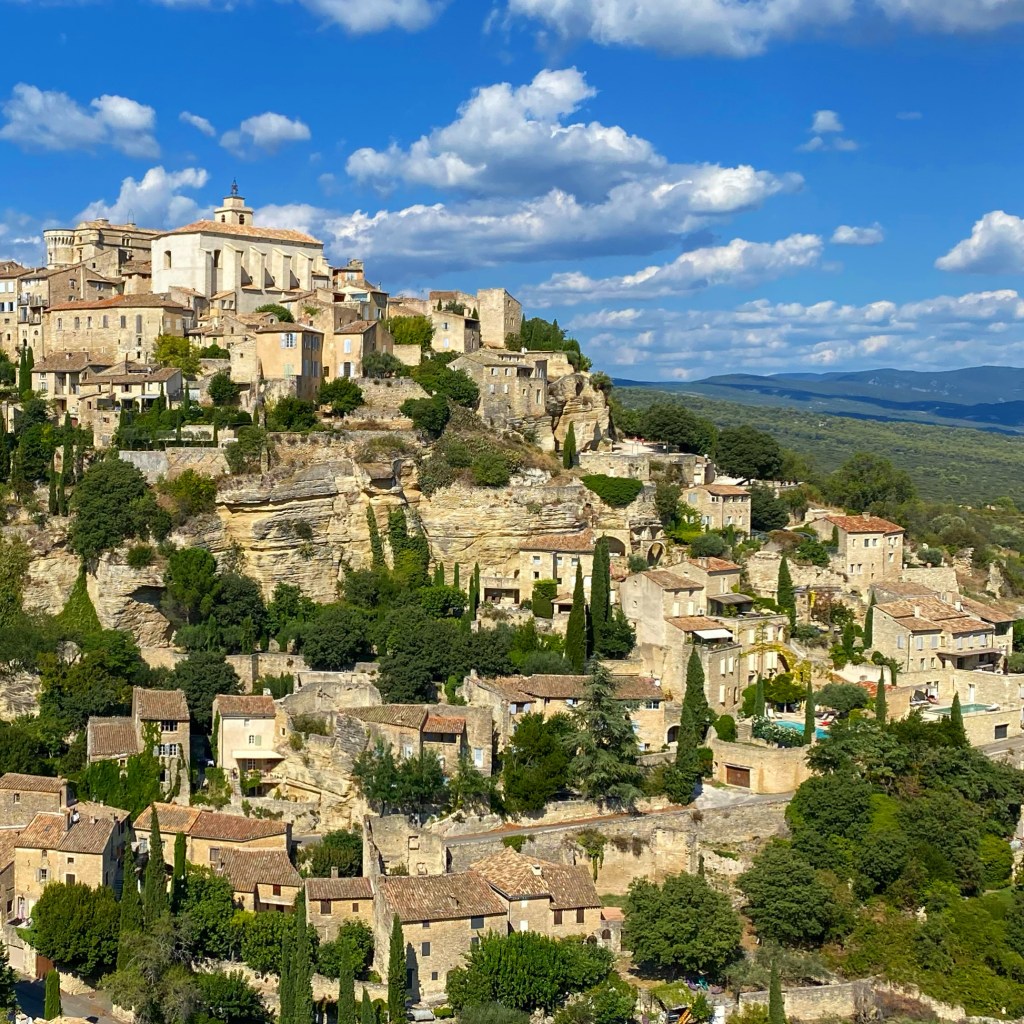
Before finally arriving in Gordes – the crown jewel of the Luberon in Provence:

The dry-set rock huts of the bories a few miles’ hike away from town:

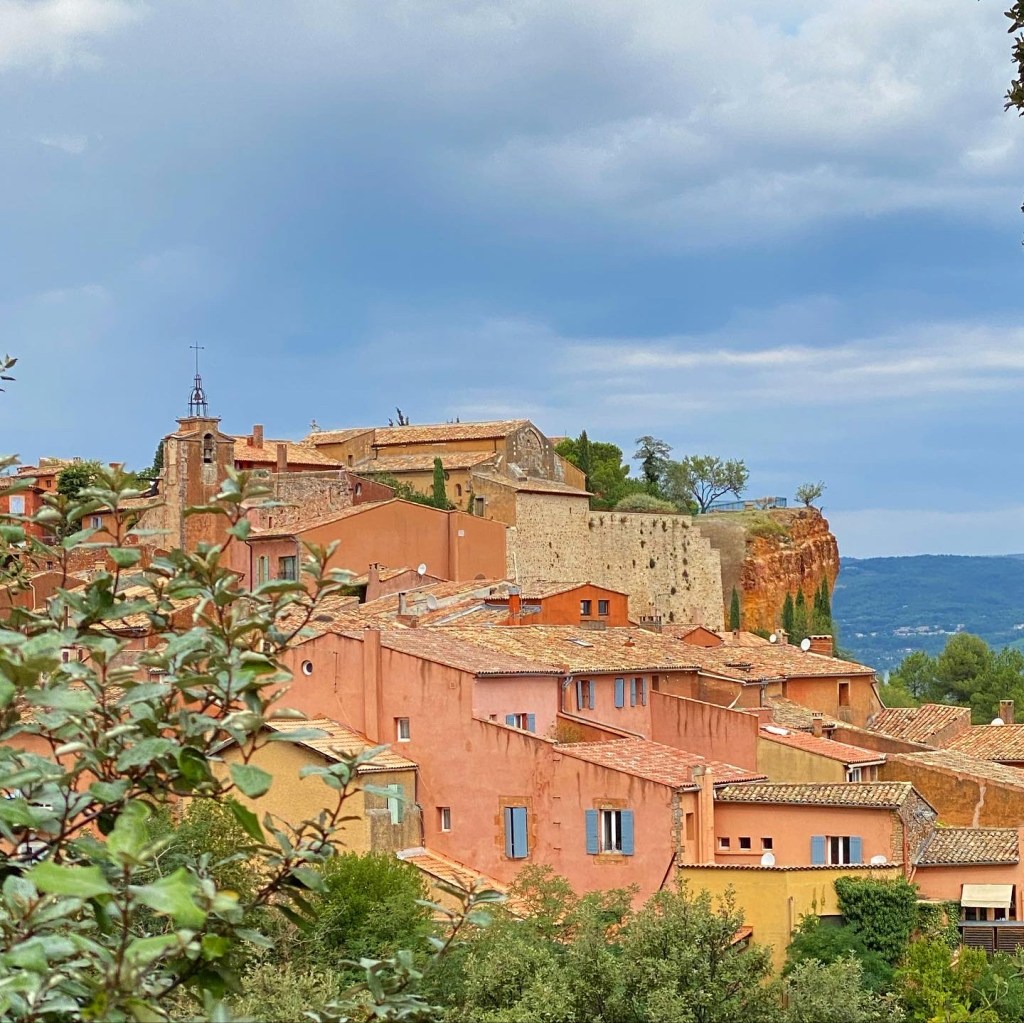
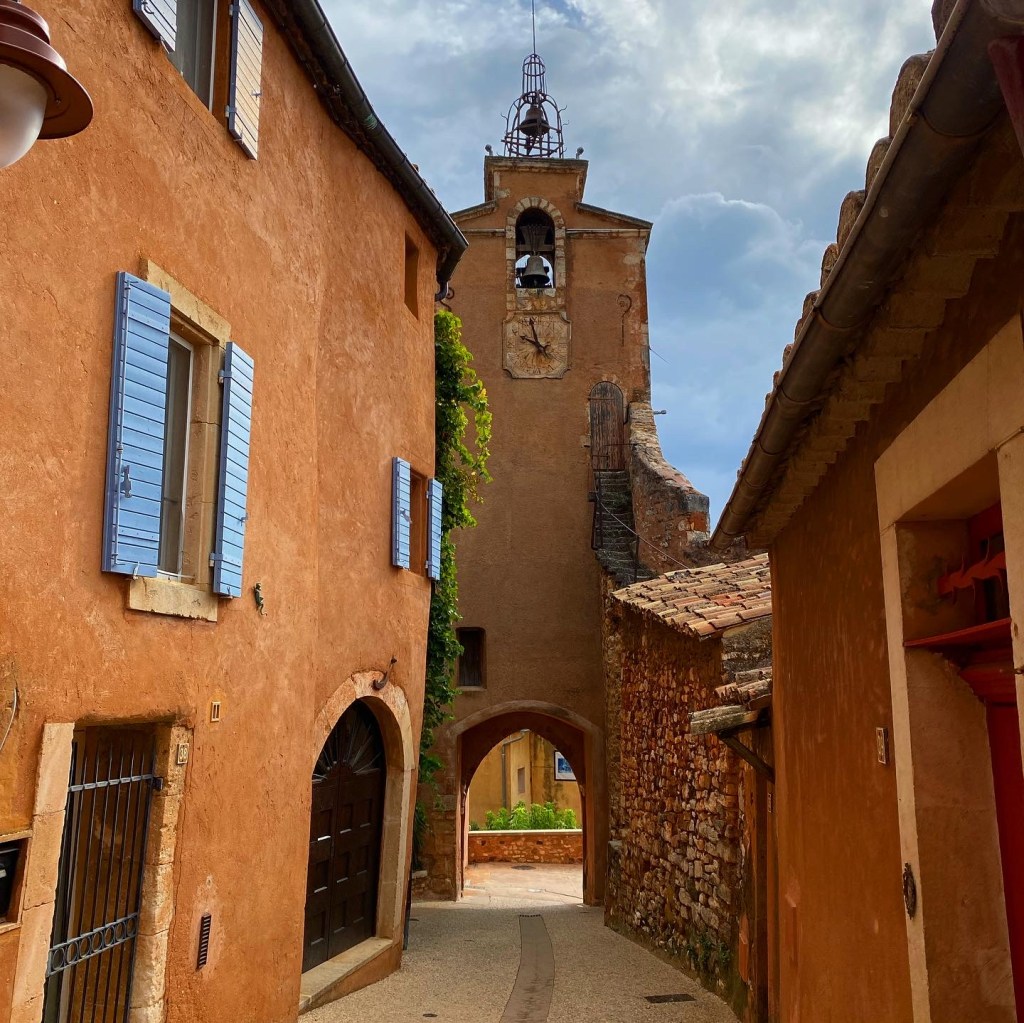
A morning drive to Roussillon, a hilltop town near Gordes built on ochre mining (in more ways than one):

Followed by a trip to another hilltop town in the Luberon – Menerbes:

Including a really great lunch at the edge of town that included “parsley knives” (an amusing quirk of translation that we’ll explain in a subsequent post). Also, both Languedoc and Provence are massive producers of rose, which we fully exploited.

And finally, a jaunt through the abandoned hilltop town of Oppedes:

Our last night in Gordes by the chateau at the top of the town and our only spot of weather:

From Gordes, we drove south, to the Mediterranean and the fishing port town of Sète. But on the way, a stop for lunch in Arles to revisit our favorite town from our Provence bike trip almost 2 decades ago.

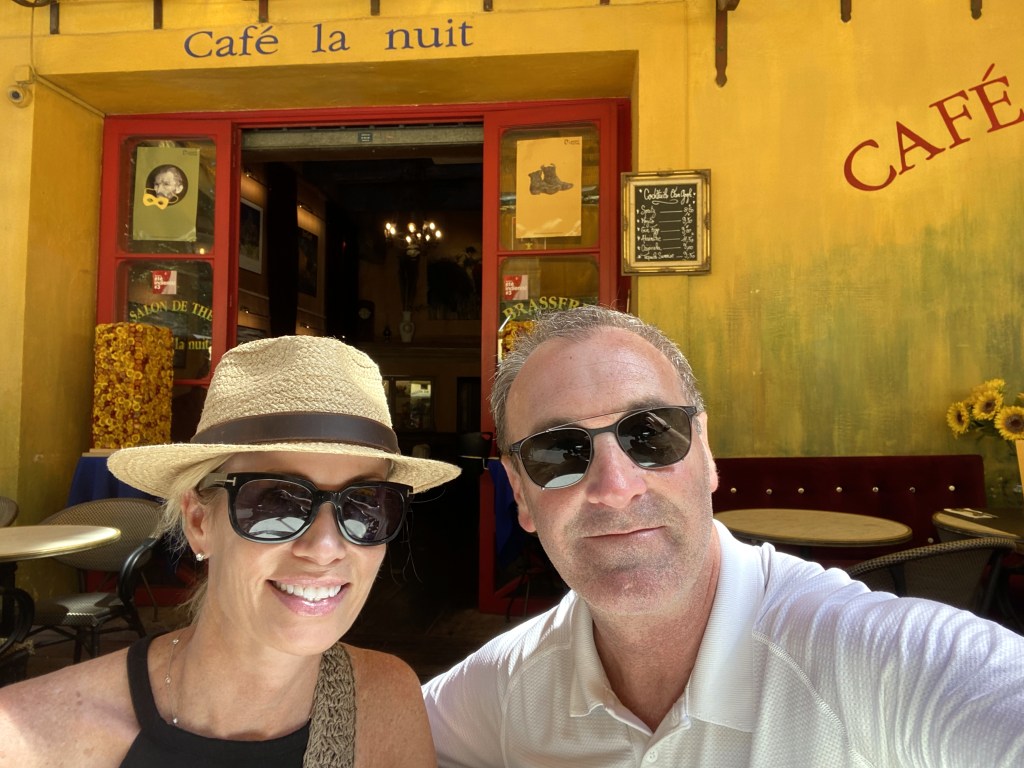
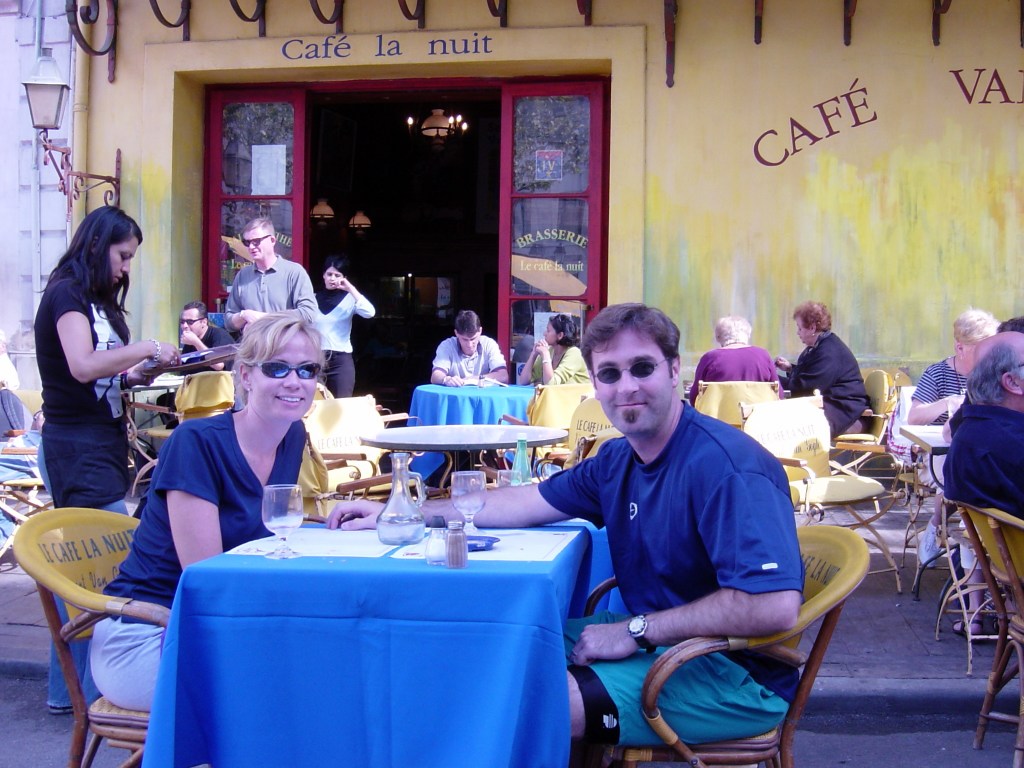
Same cafe, almost 20 years later!

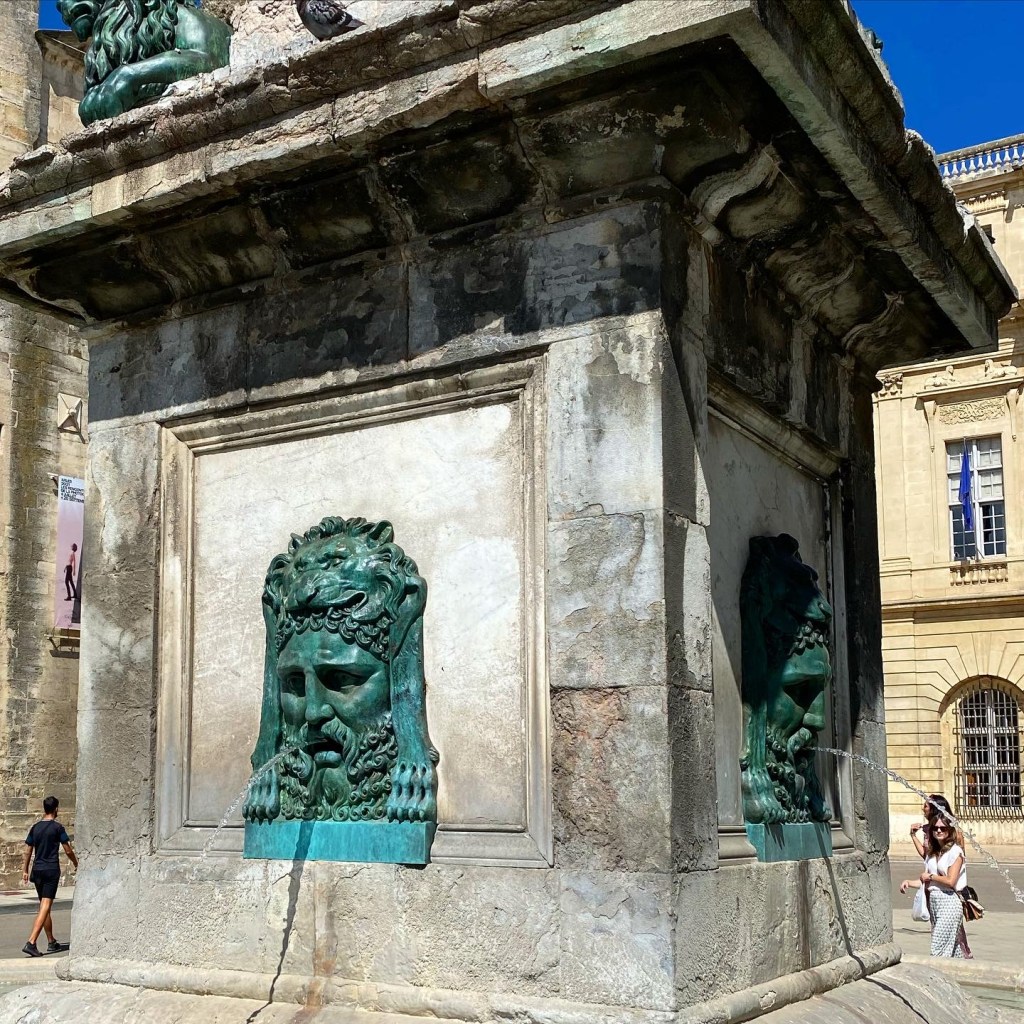
Plus, a visit to the WolfeStreetTravel avatar in the town square. Our guy clearly had been gussied up since our last visit, compared to the image of our blog avatar.

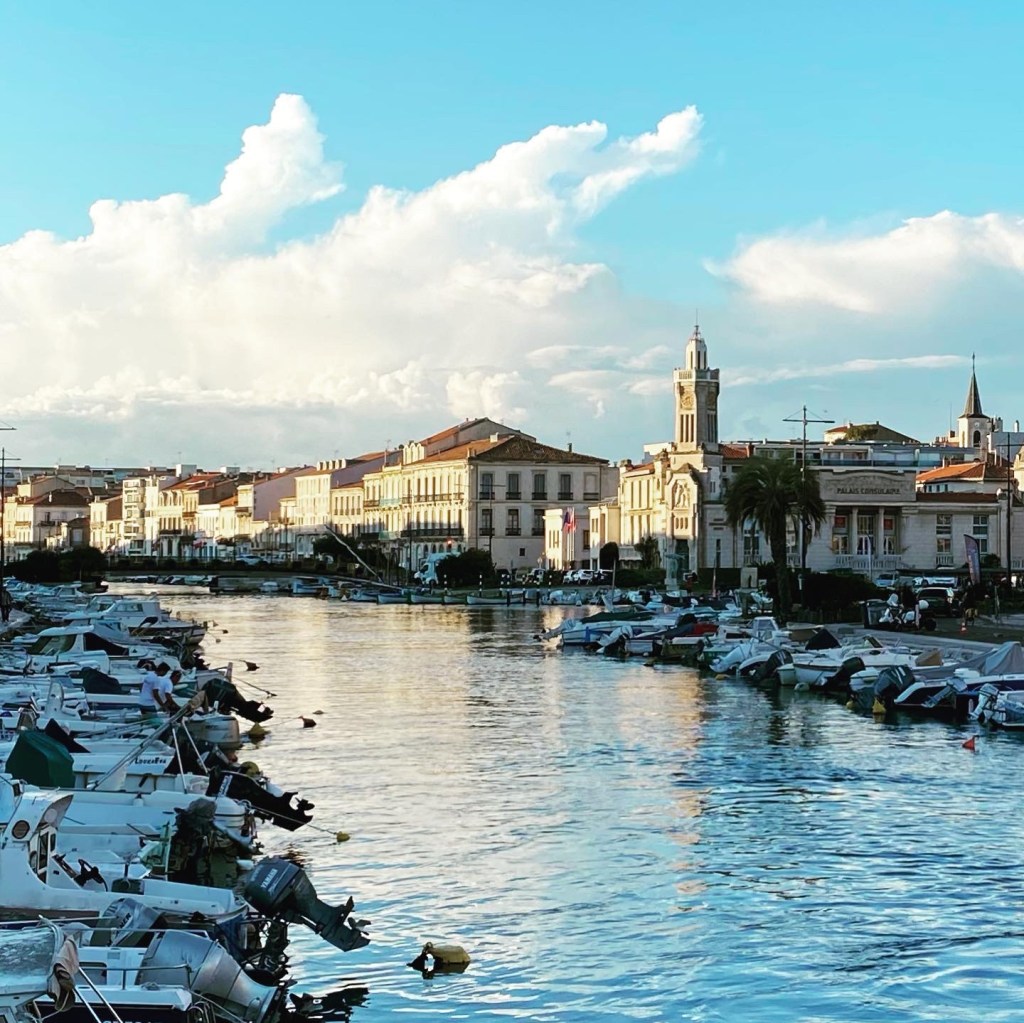
Two nights in Sète, for which we had moderate expectations, having been described as a “gritty port town.” It was perfect, and a great, seaside contrast to the hill towns of the Luberon, so we were able to bike for miles along the sea. The Sète fishing fleet includes trawlers with piggyback Mini me boats that are deployed at sea to haul the other side of the trawl or net:

Having completed the South of France portion of the slow roll, we slow rolled to San Sebastian, Spain. But first, a stop in Toulouse, by way of Castelnaudary, the birthplace of cassoulet (which made our lunch choice there pretty easy):

And then, there was No. Time. Toulouse!
Our final destination – the gastronomic capital of the world, San Sebastián, Spain.

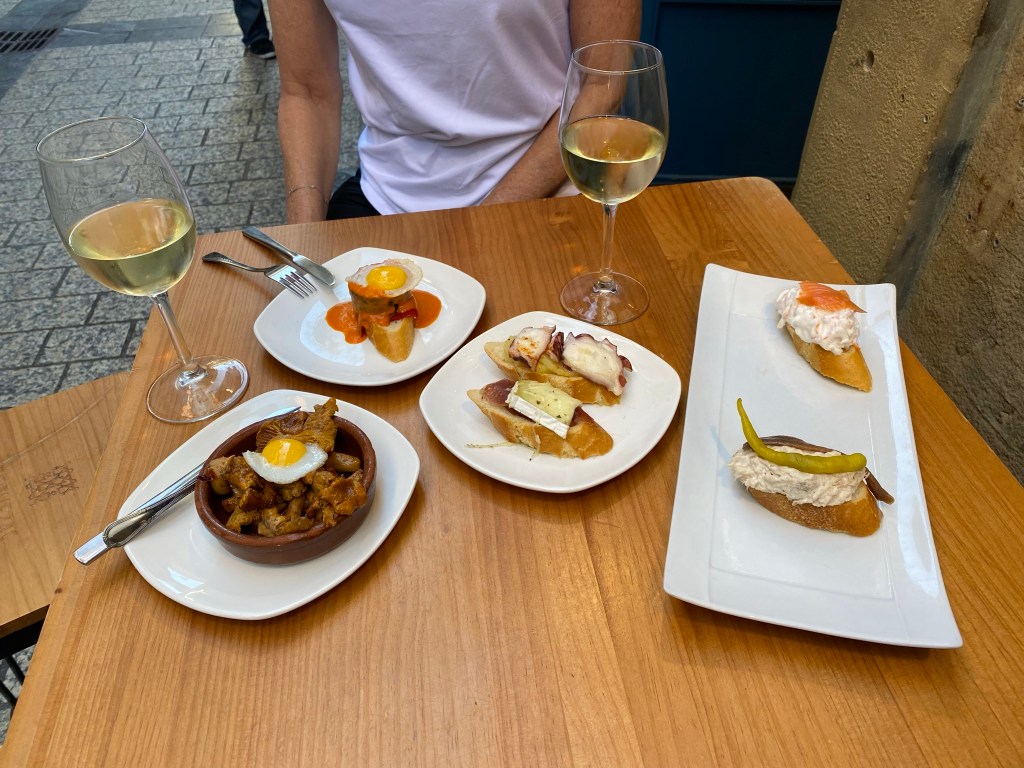
Where we participated in the age-old dining conflict between cheap, quick, delicious pintxos in the Old Town:

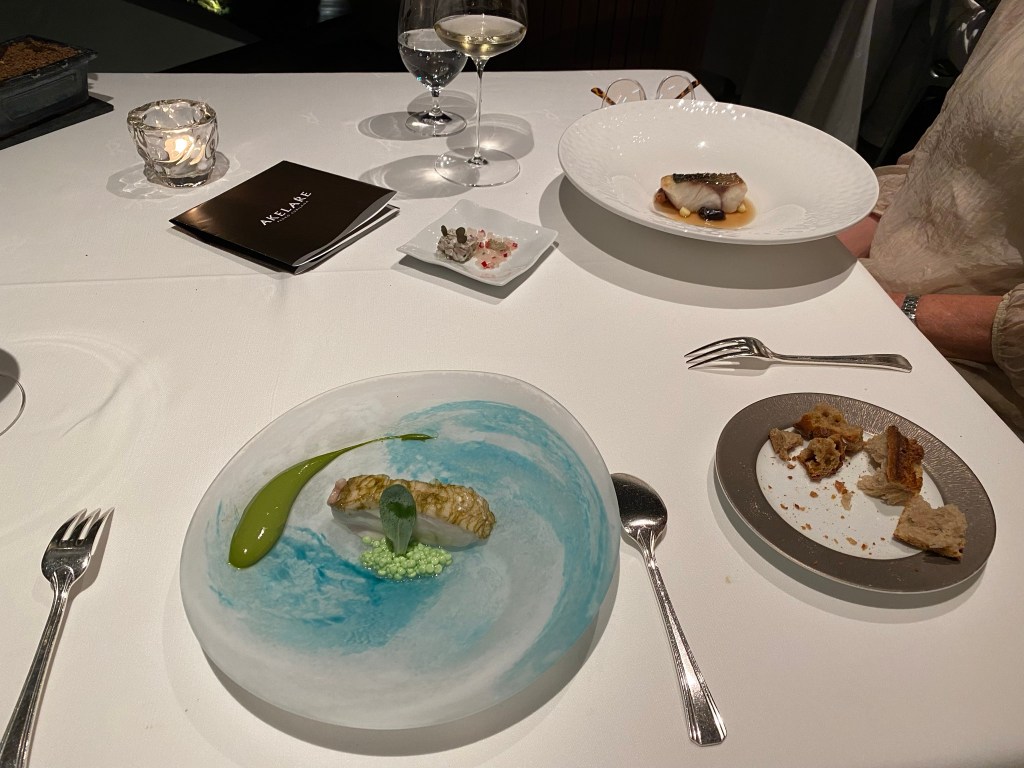
Or Michelin-starred fine dining in the outskirts:

A solid tie in this gastronomic war, in our view.

Final evening in San Sebastián:

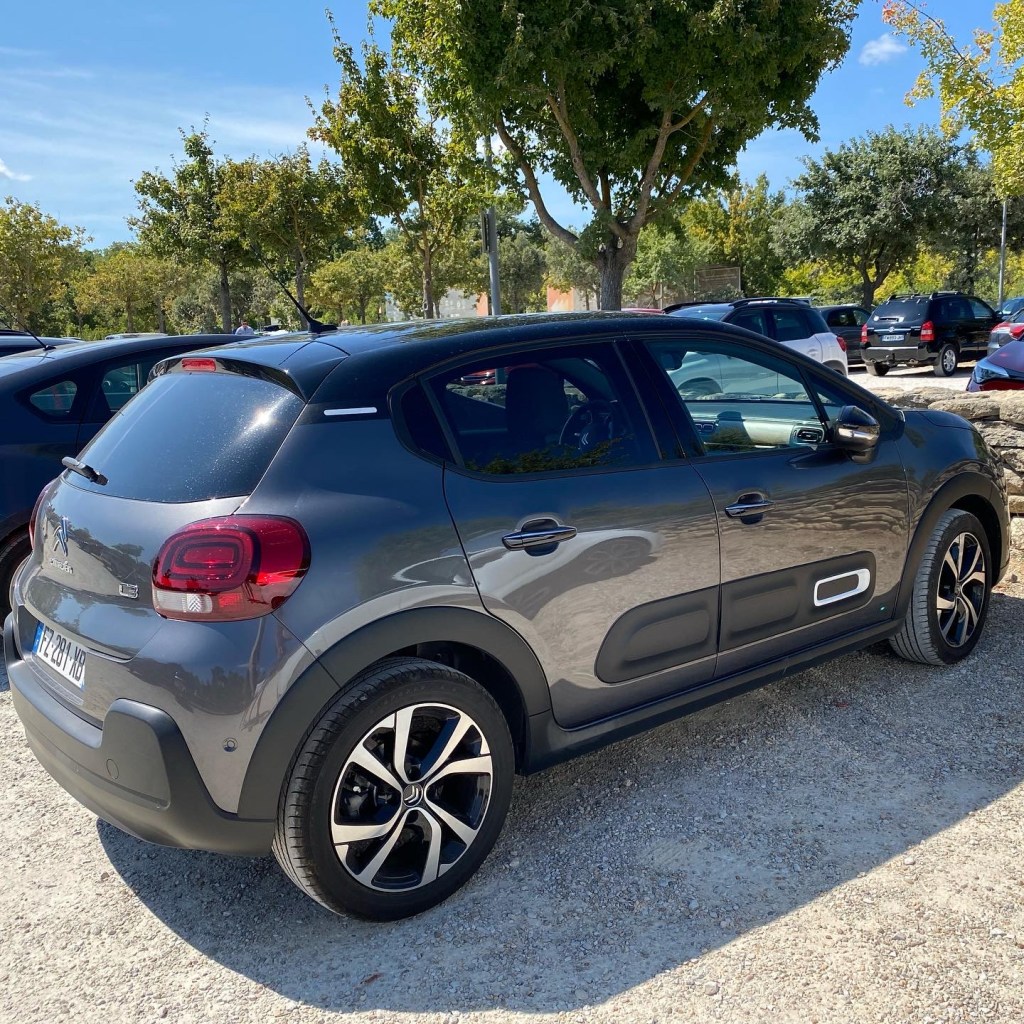
And the trip was powerfully reminiscent of our epic Micronations Road Trip of 2017. Although we did not move every day, like we did on that trip, we had an awesome little diesel family truckster (a Citroen that looked like a sneaker this time, instead of the trundling Skoda):

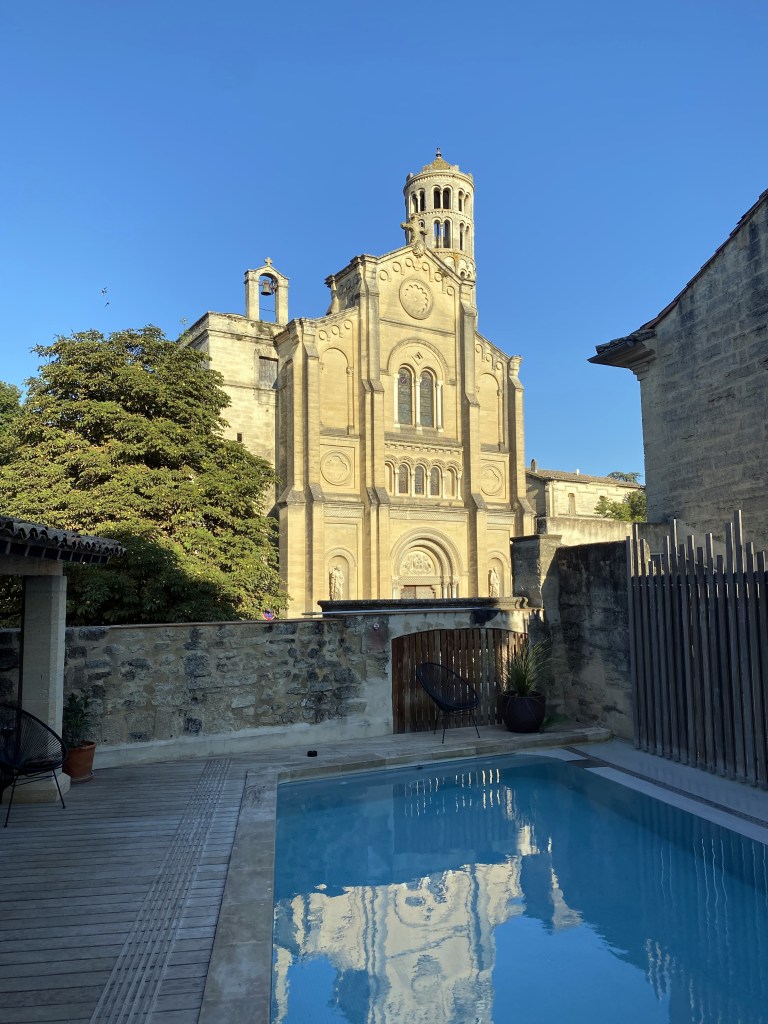
And we had some awesome downtime by pools at our base-camp towns, including one in the shadow of a cathedral, exactly like the one in Carcassonne in the Micronations Road Trip

Next up: Uzès.

Categories: Basque Region, France, Languedoc, Provence, Spain, The Slow Roll: South of France+ | Tags: , , , , , , , , , , , , , , , | 2 Comments

Protected: The Slow Roll: San Sebastián – Around Town

This content is password-protected. To view it, please enter the password below.

Categories: Basque Region, The Slow Roll: South of France+ | Enter your password to view comments.

Protected: The Slow Roll: San Sebastián – Gastronomy

This content is password-protected. To view it, please enter the password below.

Categories: Basque Region, The Slow Roll: South of France+ | Enter your password to view comments.

Protected: 2017

This content is password-protected. To view it, please enter the password below.

Categories: Andorra, France, Germany, Italy, Liechtenstein, Luxembourg, Monaco, San Marino, Spain, Switzerland, Vatican City | Enter your password to view comments.

The Smallest 5 for the Big 5-O

One of us turns 50 this year. In recognition of the milestone, we’re hitting all 5 of Europe’s “microstates” in a single road trip.

What prompted a birthday trip through Europe’s microstates? An inexplicable fixation with them since our first trip to Europe in 2002, which included a leg by train from Barcelona, Spain, to Avignon, France. When we planned the trip and looked at the train route, we noticed something to the west on the map – a country we didn’t know existed was positioned between France and Spain.

A entire freakin’ country – Andorra – lurking between France and Spain.

One of us (the one with the birthday, to be clear) has been fascinated ever since, and even tried to add a side trip to Andorra to our bike trip in Catalonia in 2009. (This was overruled in favor of Cadaques, which, we think you’ll agree, was a pretty good idea when you check out that post.)

Nonetheless, the impetus to visit the microstates persisted, and the 50th birthday milestone provided a great opportunity to finally see them.

There are some tiny regions in Europe and elsewhere, but not all can be considered microstates. For example, Gibraltar, at the southwest tip of Spain, is tiny, but it’s not independent – it’s a British Overseas Territory. Luxembourg, on the other hand, is independent, but not tiny (it covers 1000 square miles). By contrast, the microstates are truly micro – most cover less than 25 square miles and none of them exceed an area of 200 square miles.

So, other than being incredibly small, what defines a microstate?

  • Independence
  • Diplomatic recognition
  • Control of territory
  • Permanent population
  • Government

Based on these characteristics, the following sovereign countries within continental Europe qualify and will be part of the trip:

  1. The Principality of Andorra (finally!)
  2. The Principality of Liechtenstein
  3. The Principality of Monaco
  4. The Most Serene Republic of San Marino
  5. The State of Vatican City

Because none of the microstates, other than Vatican City, have rail stations (particularly Andorra and Liechtenstein – Nice and Rimini are somewhat close to Monaco and San Marino), we had to forego train travel, which otherwise is the best way to get around Europe. Instead, we’re renting a car and making this a road trip.

In our planning, we had a choice:

  1. Drive directly from one microstate to another, resulting in a couple of long days of driving, but providing a couple of rest days with no driving, or
  2. Add interim destinations between some of the microstates, so that we’re never driving more than 3 or 4 hours, but we would be driving every day

We chose Option 2:

The map above depicts the following itinerary:

  • Take a redeye to Rome
  • Day 1: Vatican City
  • Day 2: Drive to San Marino
  • Day 3: Drive to Bergamo, Italy
  • Day 4: Drive to Liechtenstein
  • Day 5: Drive to Lake Lugano, Switzerland
  • Day 6: Drive to Monaco
  • Day 7: Drive to Carcassonne, France (another place we’ve wanted to visit – last stronghold of the Cathars!)
  • Day 8: Drive to Andorra
  • Day 9: Drive to Barcelona
  • Day 10: Fly back

We’ll spend every afternoon and night in the destination town / country to check things out before heading off the next morning to the next target.

Today, we’re part of the way through the tip, in Vaduz, Liechtenstein. We’ll post highlights of the trip when we get back!

Categories: Andorra, France, Italy, Liechtenstein, Micronations!, Monaco, Road Trips, San Marino, Spain, Switzerland, Vatican City | Tags: , , , , , , , , , , , , , , , , , | 2 Comments

European Microstate Road Trip: Overview

Our epic 9-country road trip designed to hit all 5 European microstates came to an end on Sunday. Despite some initial trepidation, it turned out to be fantastic!

This was one of our best trips, in fact, despite encountering this choice little nugget on 2 of the tiny 5 from a Cadogan guide book that we used several years ago on a previous trip:

“It’s a sleazy little paradise, [Microstate X]. . . Today, the [inhabitants] have found a way to exploit every single possibility open to a grasping, sweaty-palmed pipsqueak principality. They’ve turned their lovely corner of the [region] into a single, garish supermarket. It’s a worthy competitor for Europe’s other Ruritanian craphole, [Microstate Y], which, if you’ve never been, is the first country in the world to be entirely paved over with factory outlet car parks.”

Yow! We’ll reveal which of the pipsqueak nations the Cadogan guide was referencing in subsequent posts, but we were infatuated with the tiny countries and undeterred! We persisted and planned and executed a pretty ambitious itinerary to hit all 5 microstates in a single trip.

Information on continental Europe’s 5 tiniest nations – and the characteristics that define a microstate – was previously posted here. A repost of the map with the location of each is below:

Location of the continental Europe’s five microstates

The trip was great adventure, overall – both based on the tiny countries and some of the outstanding start, stop, or stopover locations in Italy, Switzerland, France, and Spain that we included in the trip to keep driving distances practical. Our experiences in the five microstates spanned the spectrum:

  • Two exceeded our fairly modest expectations (biased in part by the pithy and brutal opinion proffered by the Cadogan guide) and we really enjoyed our visit to both
  • One was precisely as expected
  • Two were definitely not as awesome as we thought they would be – one was simply not as magnificent as we had envisioned, while the other turned out to be every bit just an outrageously expensive Disney world

These reactions will be assigned to the appropriate country in future posts, but some highlights of the tiny five are below, presented in the order in which we encountered the little buggers.

No. 1 of 5: The State of Vatican City:

Hallway of maps in the Vatican Museum

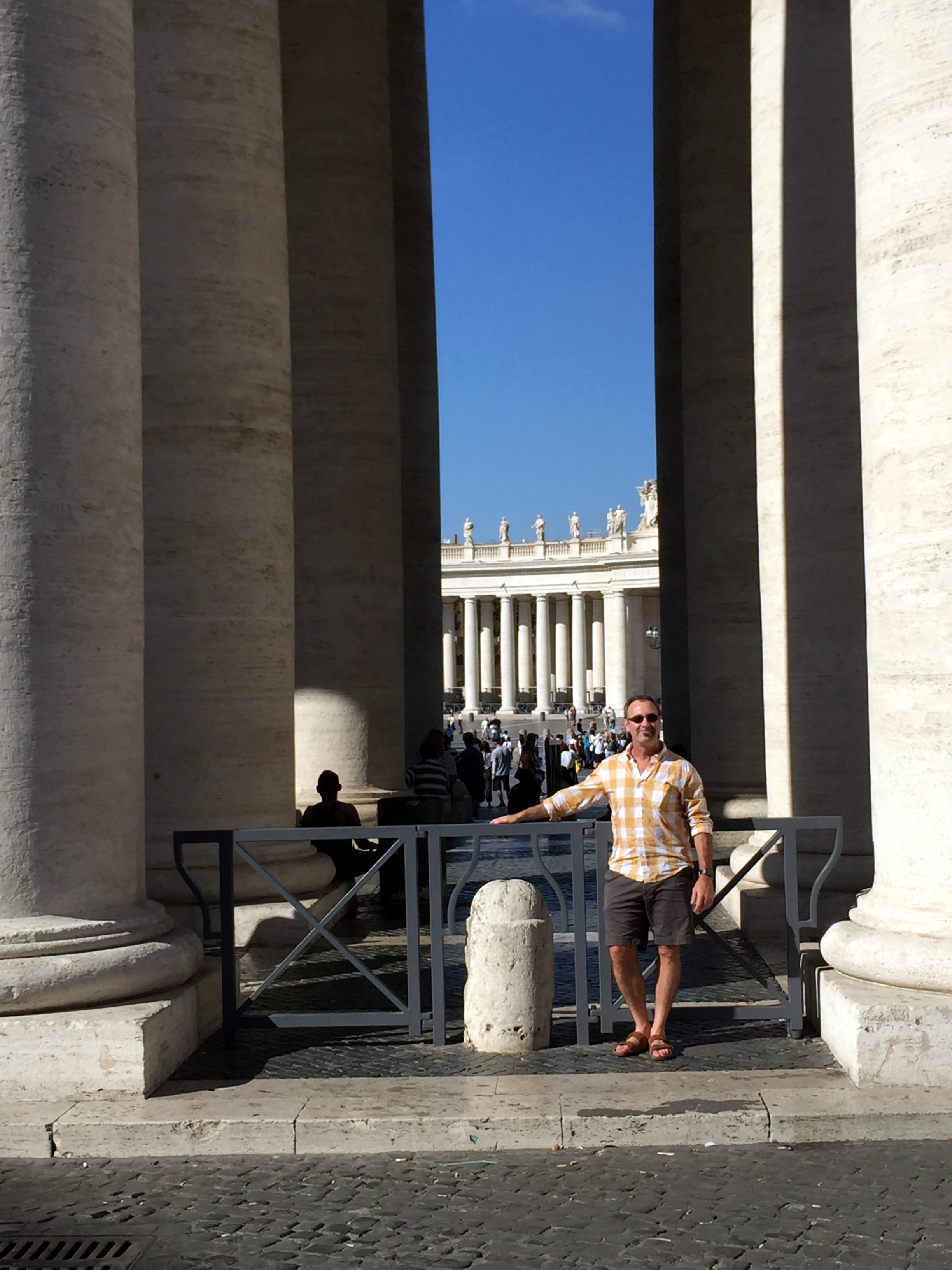
At the border between Vatican City and Rome – No. 1 complete

No. 2 of 5 – The Most Serene Republic of San Marino:

Guaita (1st Castle) on San Marino’s Mount Titano

San Marino’s town hall at sunset

View from Cesta (2nd Castle) to Guaita (1st Castle) on Mount Titano in San Marino – Microstate No. 2 complete

No. 3 of 5 and location for the Big 5-0 milestone – the Principality of Liechtenstein:

Vaduz castle from afar

and up close – No. 3 complete

4 of 5 – Principality of Monaco:

Monte Carlo casino our evening in Monaco

Above the port of Monte Carlo – No. 4 complete

And finally, No. 5 of 5 and the microstate that started it all – the Principality of Andorra:

11th-century Sant Joan de Caselles church with Lombard-style tower in Andorra

Casa de la Vall in Andorra la Vella – headquarters of the General Council of Andorra; No. 5 of 5 complete!

Before we left the US, we were a little concerned that the trip could turn out to be an arduous box-checking exercise involving too much driving and not enough time to enjoy each destination, based on the itinerary we designed:

  • Take a redeye to Rome
  • Day 1: Vatican City (1 of 5 . . .)
  • Day 2: Drive to San Marino (2 of 5 . . .)
  • Day 3: Drive to Bergamo, Italy
  • Day 4: Drive to Liechtenstein (3 of 5 . . .)
  • Day 5: Drive to Lake Lugano, Switzerland
  • Day 6: Drive to Monaco (4 of 5 . . .)
  • Day 7: Drive to Carcassonne, France
  • Day 8: Drive to Andorra (5 of 5!)
  • Day 9: Drive to Barcelona
  • Day 10: Fly back

Instead, our daily cadence ended up providing a good balance – we’d drive for a few hours each morning in our rockin’ diesel Skoda family truckster . . .

Our trusty Skoda after navigating the narrow alleyways of Bergamo on Day 3

. . . then arrive at our destination in the early afternoon to explore things, typically log some downtime in the evening at the hotel pool, then grab dinner.

Sweet pool in Carcassonne, our stopover between Monaco and Andorra

Although the trip focused on the microstates, some of the stopovers proved to be just as rewarding, including staying in a hotel that overlooked Lake Lugano in Switzerland on August 1, without realizing beforehand that this was the Swiss National Holiday – spectacular!

Fireworks over Lake Lugano to celebrate the Swiss National Holiday

We’ll post highlights of each of the five micronations plus the very cool stopover locations during the next few weeks.

Oh, and the book read as we started the trip?

Of course.

Categories: Andorra, France, Italy, Liechtenstein, Micronations!, Monaco, Road Trips, San Marino, Spain, Switzerland, Vatican City | Tags: , , , , , , , , , , , , , , , , | 4 Comments

Barcelona, per Tercera Vegada

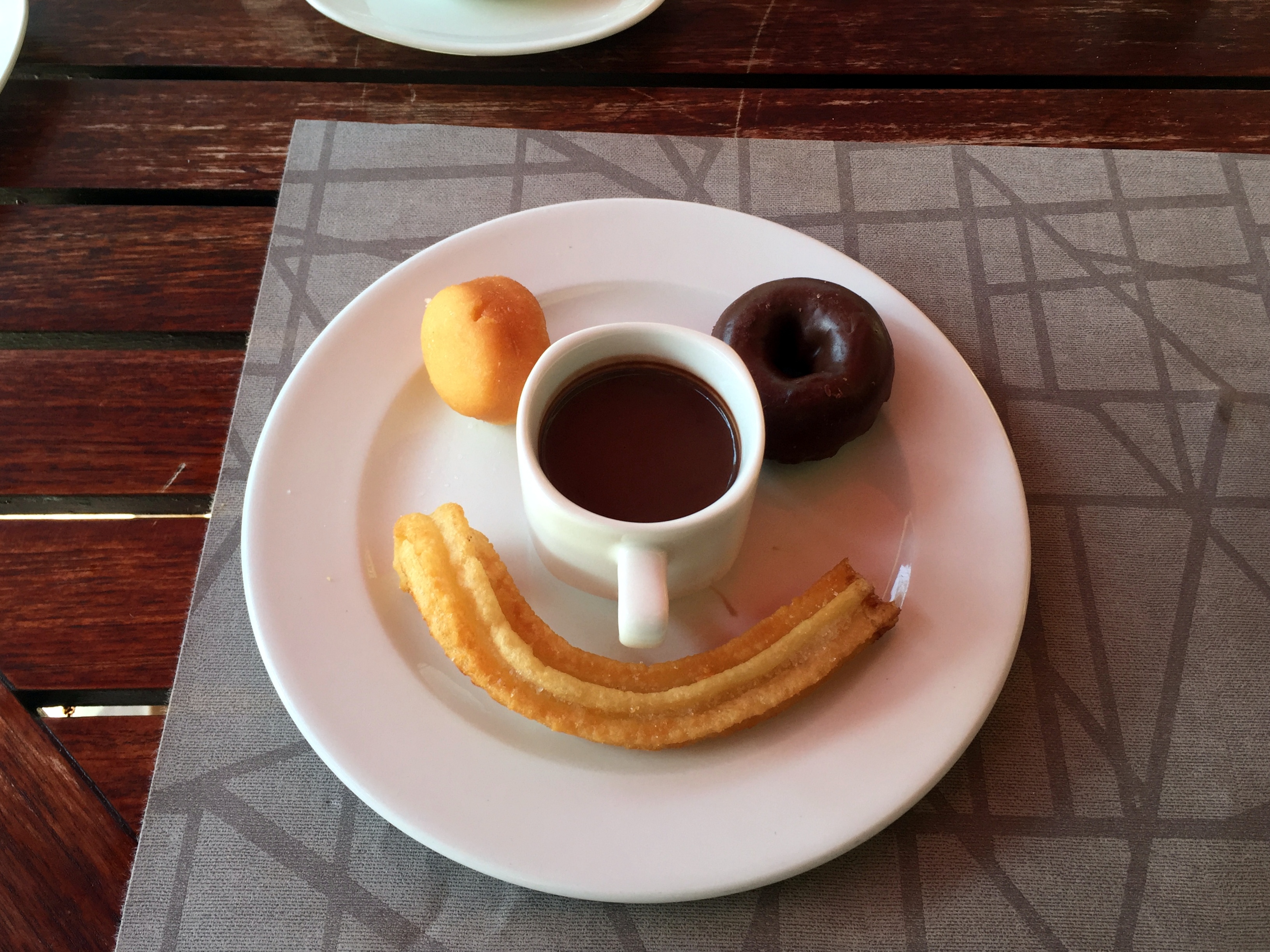
Best way to start your day virtually anywhere on the Iberian peninsula? Churros and doughnuts for breakfast! In this, on a fine morning in Andorra, accompanied by chocolate dipping sauce for the churros. Breakfast of champions!

Our final day of driving – here’s our route from Andorra la Vella to Barthelona:

We bookended our visit to Andorra by passing through the seats of power ruled over by both of Andorra’s original co-princes. The day before, we stopped in the home to one of the co-princes, the Count of Foix, on the trip from Carcassonne to Andorra. Today, where our route makes an abrupt turn to the east just south of Andorra, we moseyed around in Seu d’Urgell, home to the Bishop of Urgell. Not too much to see, really – not nearly as charming a town as Foix. But, here’s a view of the 12th-century Tower of Solsona, one of the three fortresses guarding the city, on the outskirts of Urgell:

Lots of cool little hill towns on the way to Barthelona – here’s Belver de Cerdanya:

By far, though, the most dramatic landmark we encountered on the way down was Montserrat (literally “the saw” in Catalan), as we neared Barthelona proper:

The mountain range is home to the Benedictine Abbey of Santa Maria de Montserrat, founded in the 11th century and still functioning today. In 1493, Christopher Columbus named the Caribbean island of Montserrat after the Virgin of Montserrat, the sanctuary of which is at the abbey.

We’d been to Barthelona a couple of times before, so instead of walking around, we spent a decent amount of the afternoon on top of our hotel, which was located right on the waterfront at the end of Las Ramblas:

Obligatory pic of Barthelona’s Gothic cathedral during our visit. We’ve used this cathedral, in particular, to contrast Gothic architecture with what we consider to be the much cooler Romanesque style:

Las Ramblas and the Columbus Monument as night falls on the last night of our microstate road trip:

One final nightcap on the sweet ass hotel rooftop before heading home the next day . . .

Micronations road trip complete!

Categories: Barcelona/Madrid, Micronations!, Spain | Tags: , , , , | 2 Comments

Protected: Andalusia Trip Overview

This content is password-protected. To view it, please enter the password below.

Categories: Andalusia, Andalusia, Spain, Biking | Tags: , , , , , | Enter your password to view comments.

Protected: Granada: Alhambra

This content is password-protected. To view it, please enter the password below.

Categories: Andalusia, Spain | Enter your password to view comments.

Blog at WordPress.com.