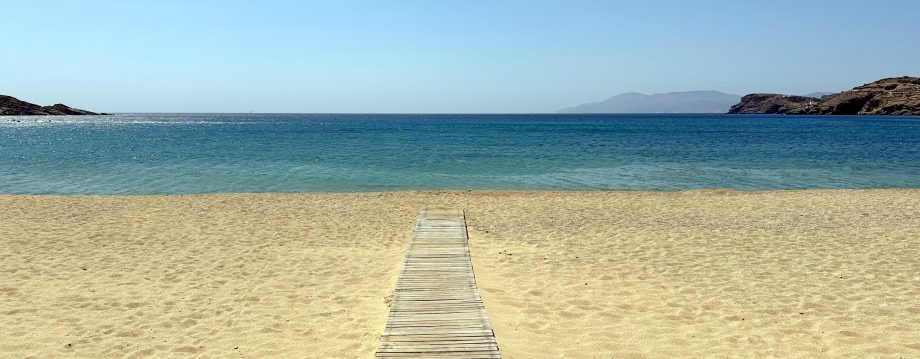
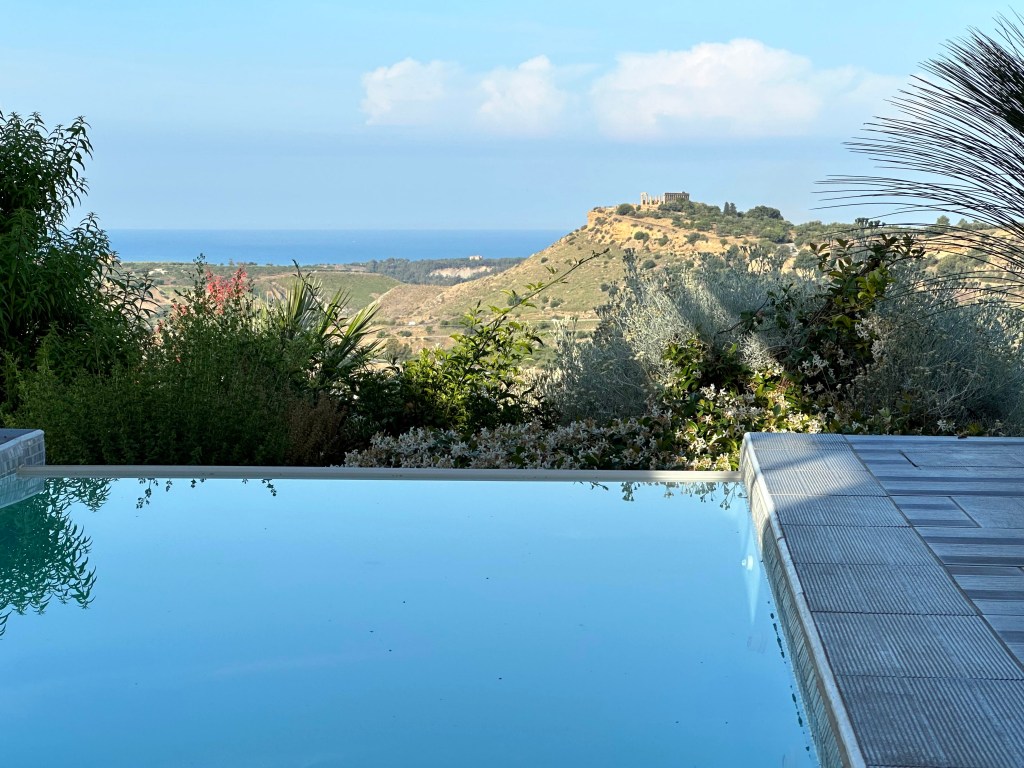
While our visit to Scala dei Turchi offered a little coastal sideshow during our stay in Agrigento, the Valley of the Temples (Valle dei Templi) provided the main event. We awoke to a pretty good view of our starting monument destination for the day: the Temple of Hera in the near distance.
Valle dei Templi is the site of ancient Akragas (now modern day Agrigento), a Greek colony founded around 582 BC by settlers from Gela and Rhodes that grew to become one of the most prosperous and powerful cities in the ancient Mediterranean world, with a population at its peak that ancient sources suggest may have rivaled Athens itself. The complex preserves seven Doric temples built primarily during the fifth century BC. Designated a UNESCO World Heritage Site in 1997, the Valley of the Temples stands as one of the supreme monuments of Greek civilization outside of Greece itself, embodying the extraordinary cultural and artistic ambition of Magna Graecia — the network of Greek colonies across southern Italy and Sicily — and representing an irreplaceable testament to a moment when this corner of the ancient world was at the very center of Mediterranean civilization.
Getting closer. . .
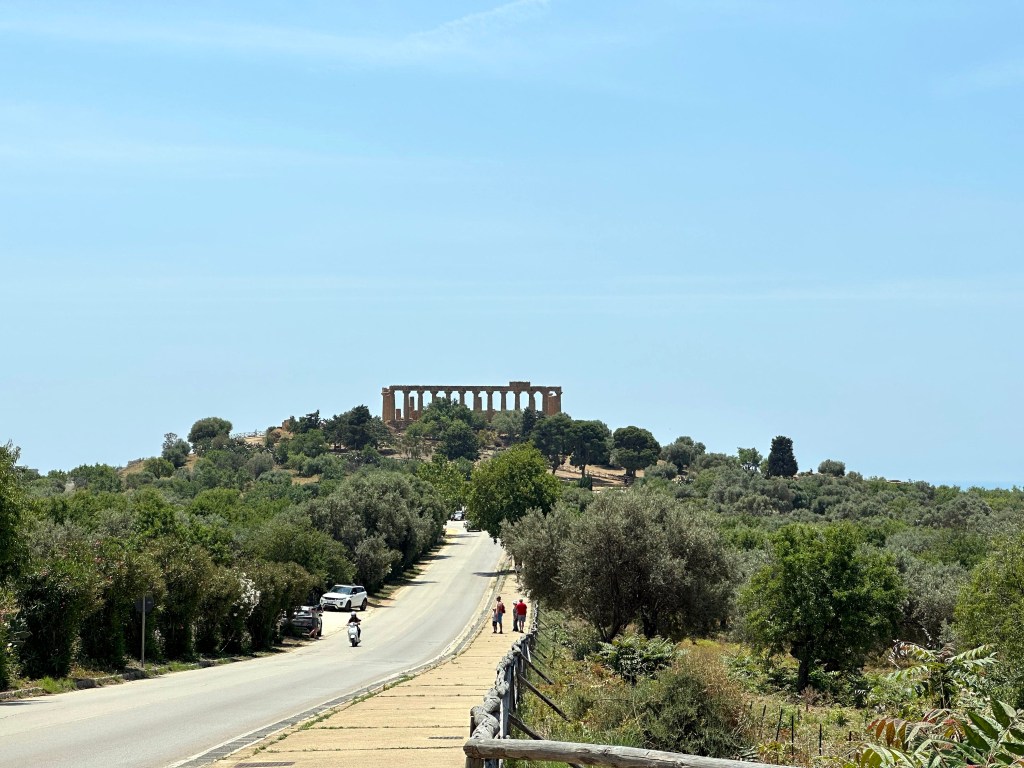
Closer. . .
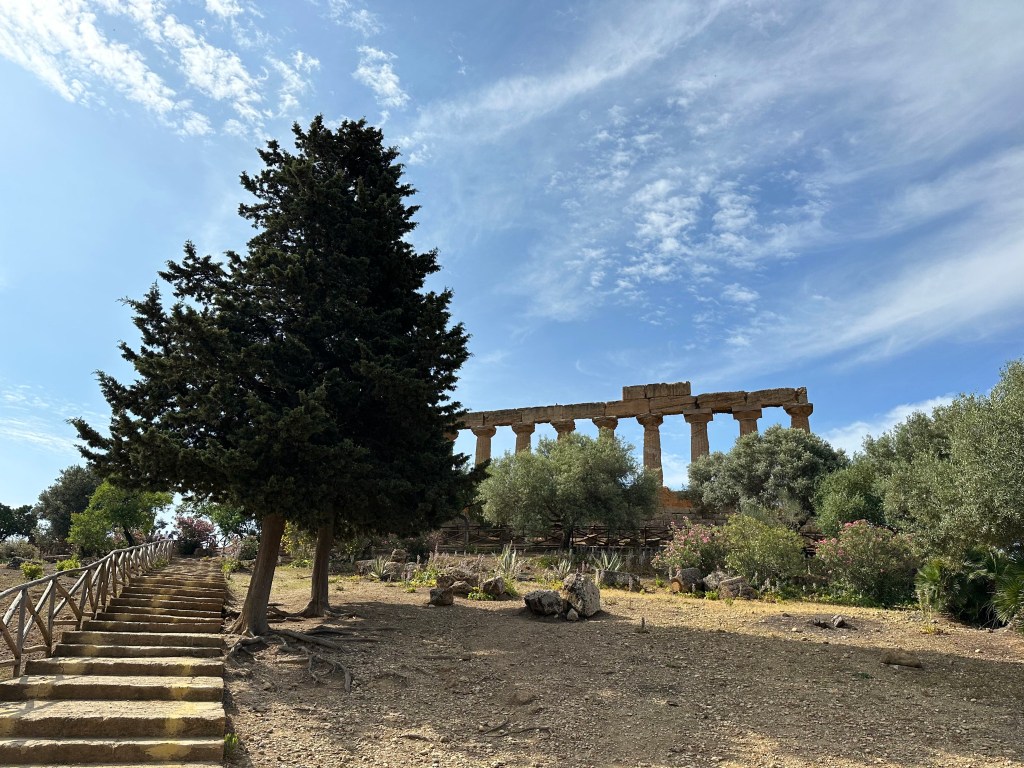
This is what we had been gazing at from afar.
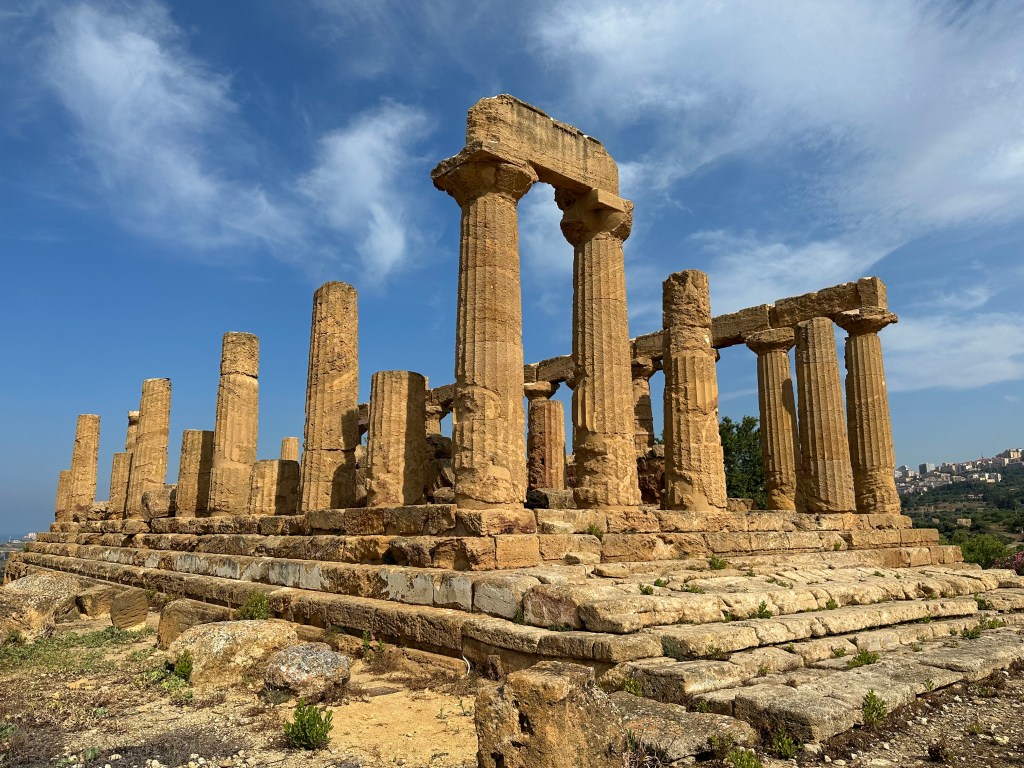
The Temple of Hera (or Juno, if you prefer your gods Roman), is not actually a temple to Hera (or Juno). This attribution resulted from a misunderstanding of the location in a Greek text by Pliny the Elder during the much later Roman period.
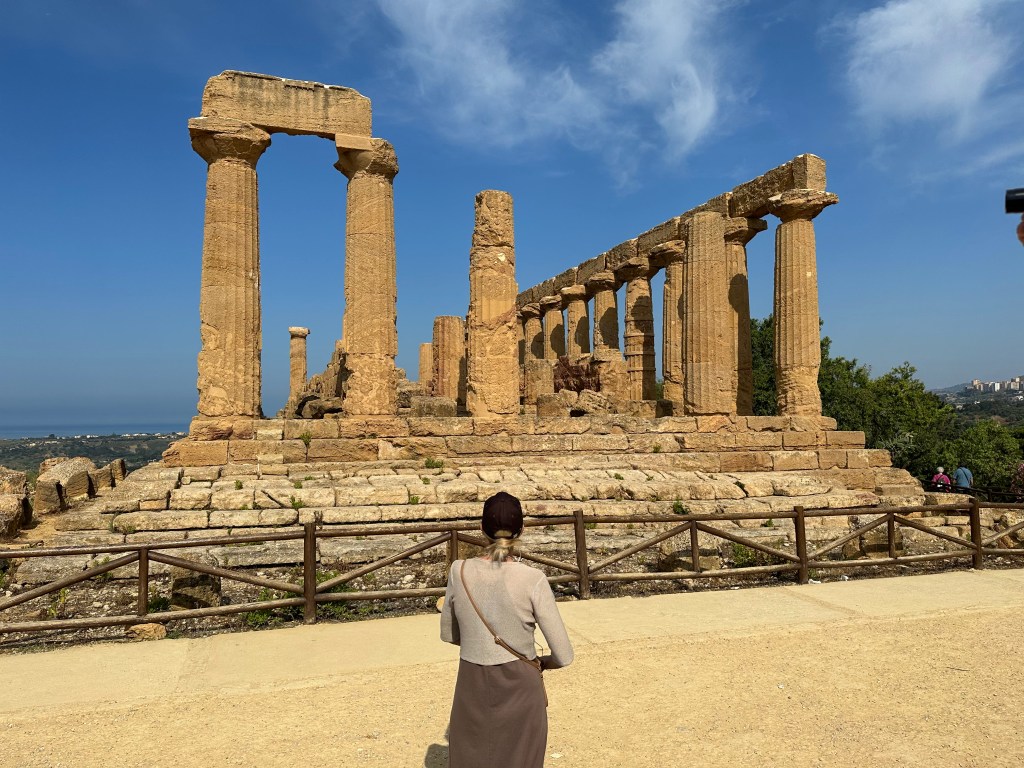
No correction on the temple’s correct name was evident anywhere, though.
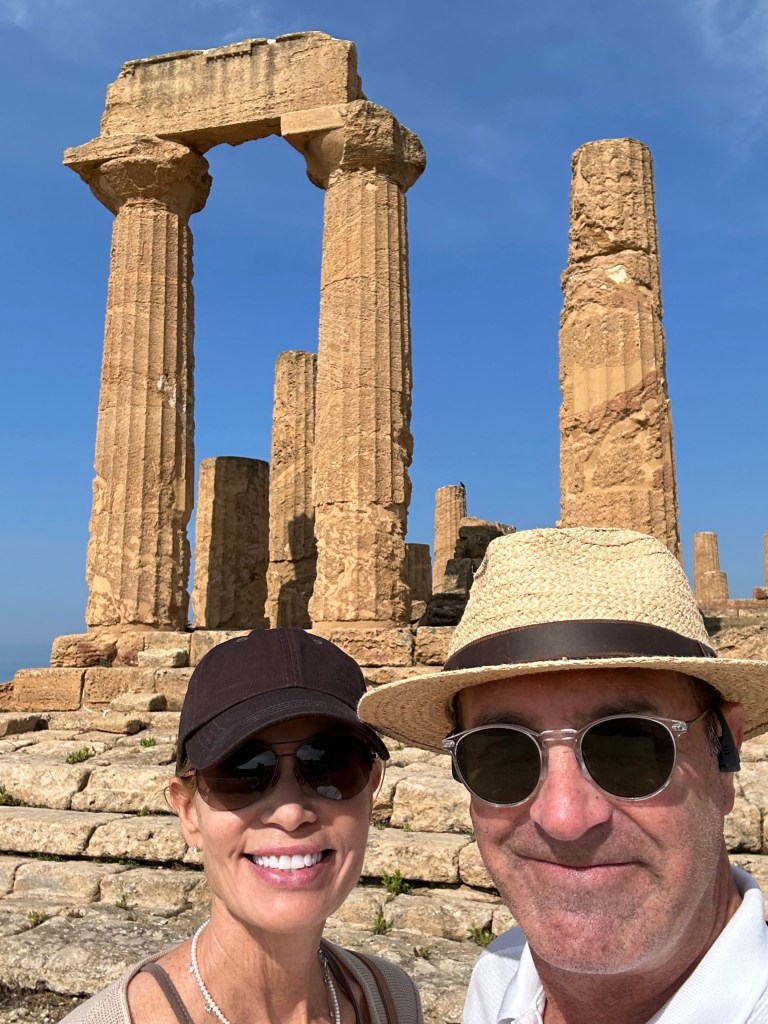
Regardless, the Greek colonists erected the temple in 450 BC, and was sacked and burned in 406 BC during a Carthaginian attack on the Greeks.
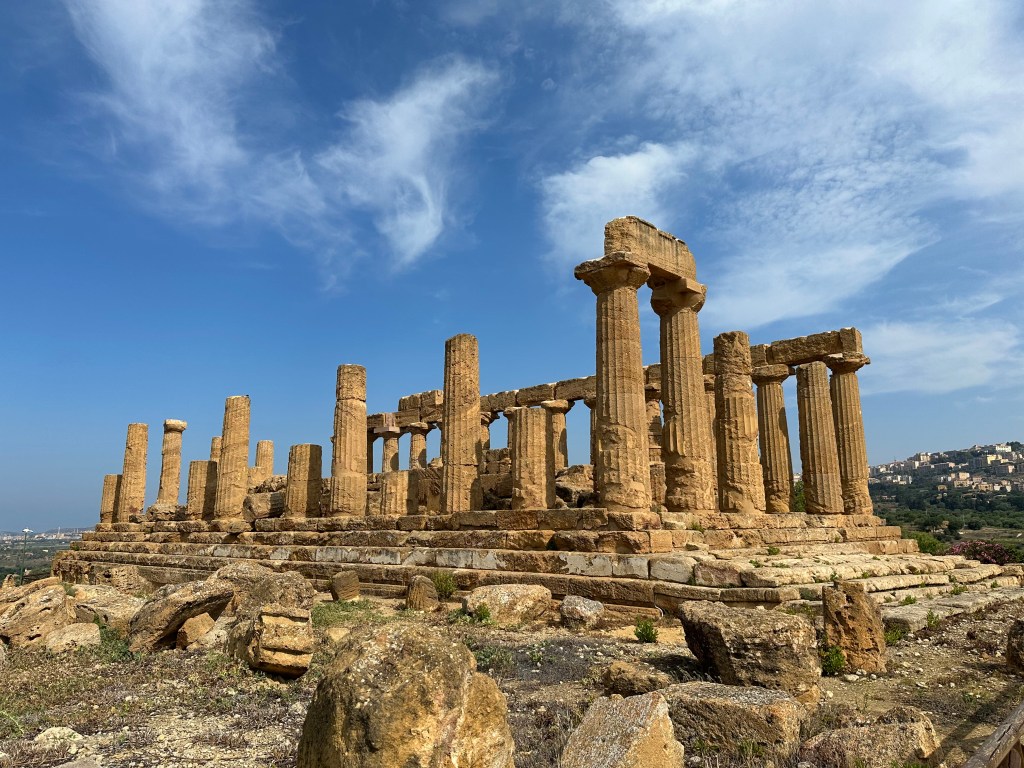
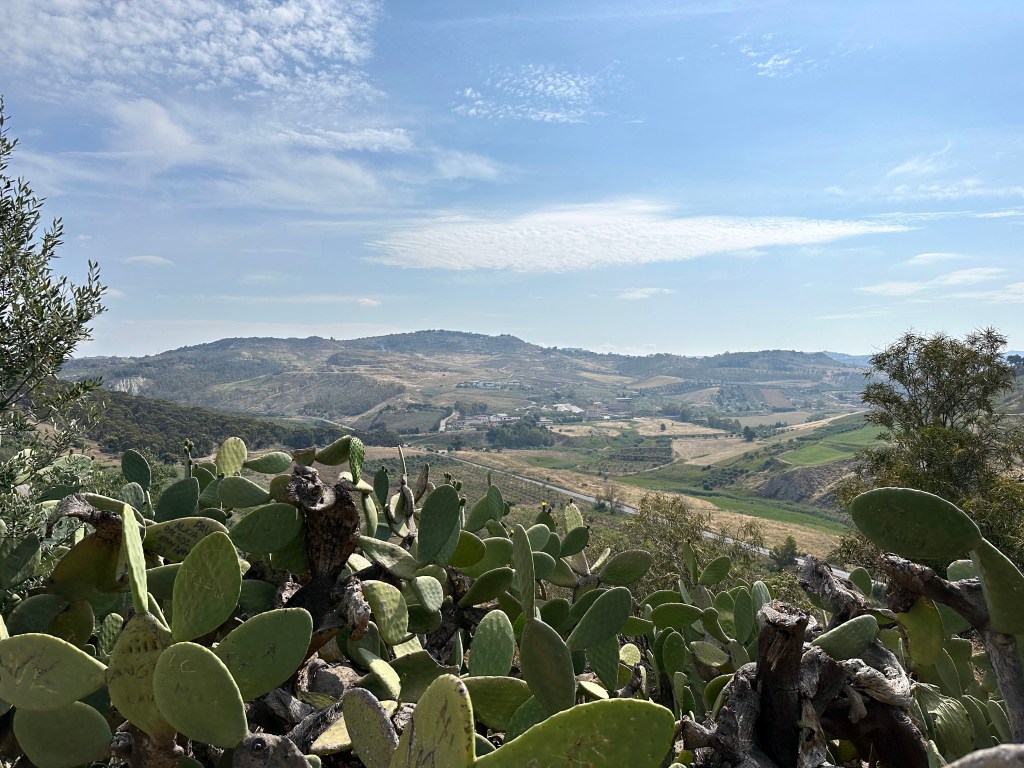
The Valley of the Temples is absolutely a misnomer: we’re actually on a ridge.
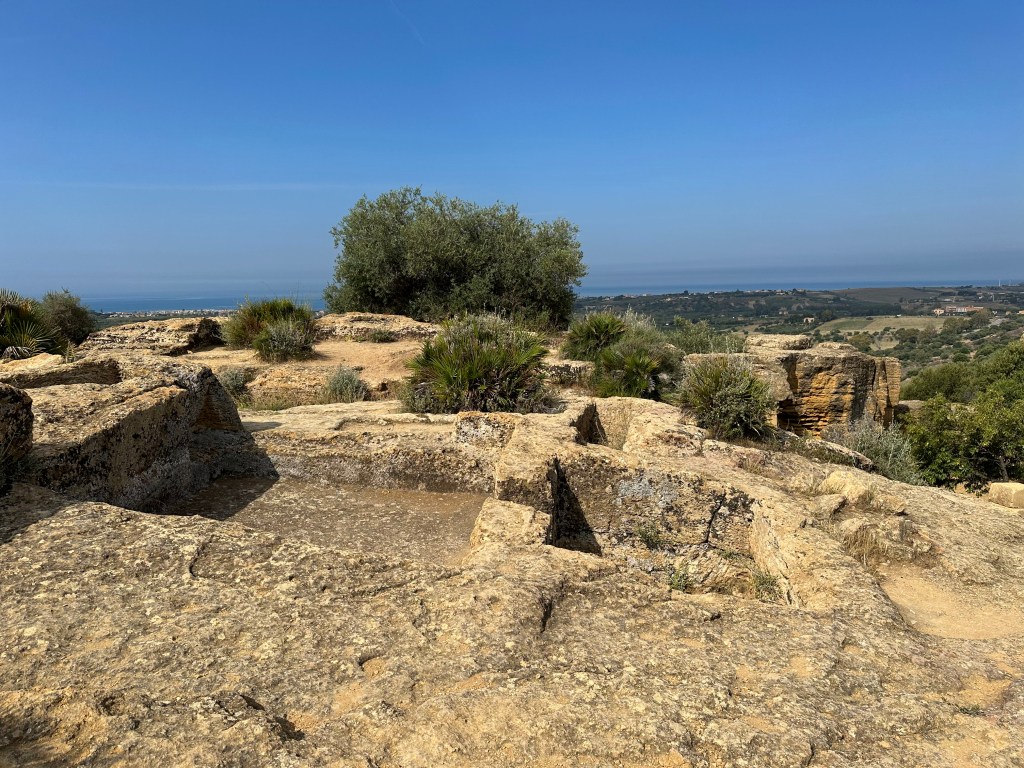
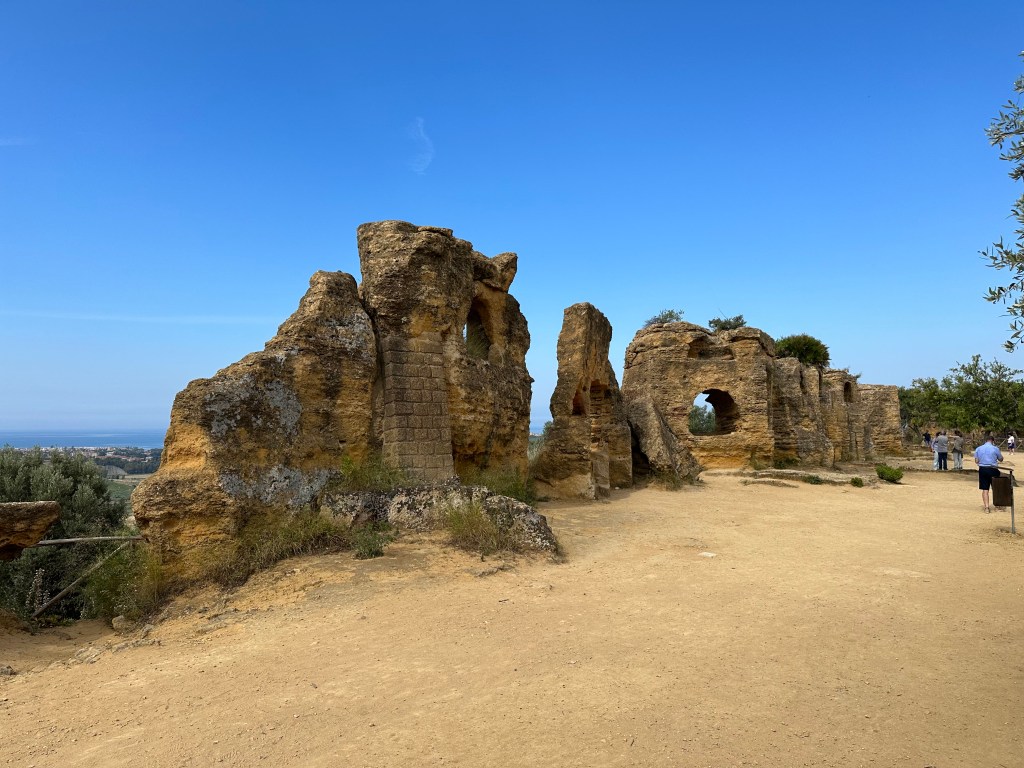
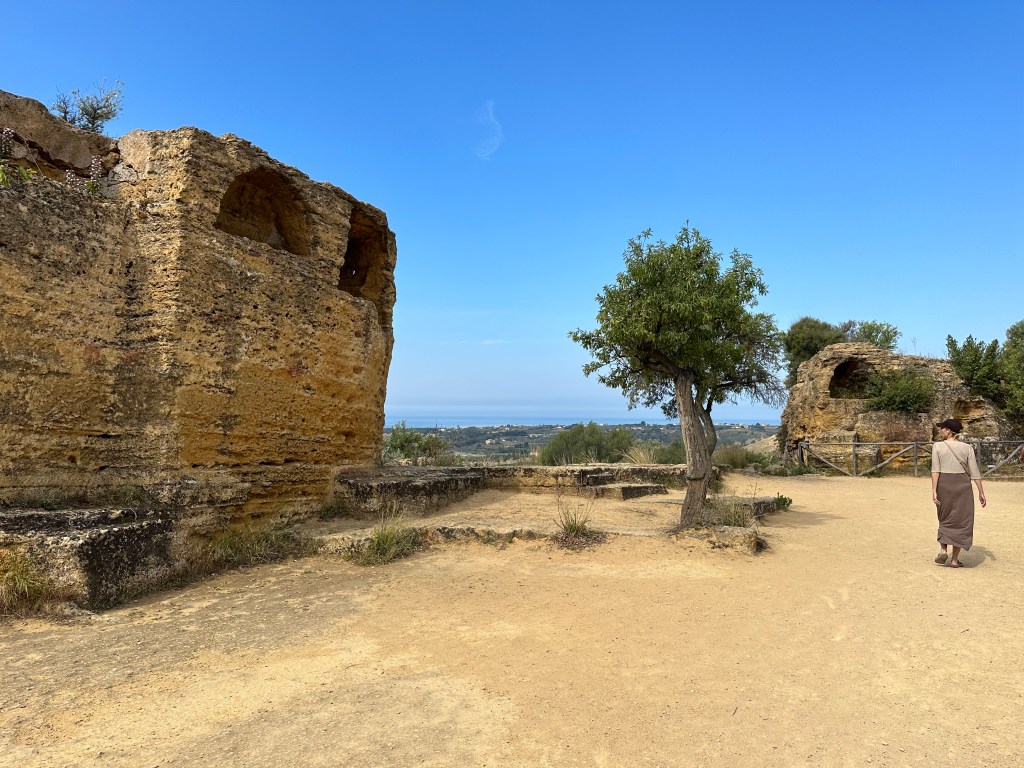
Partial remains of the city’s 6th-century-BC walls:
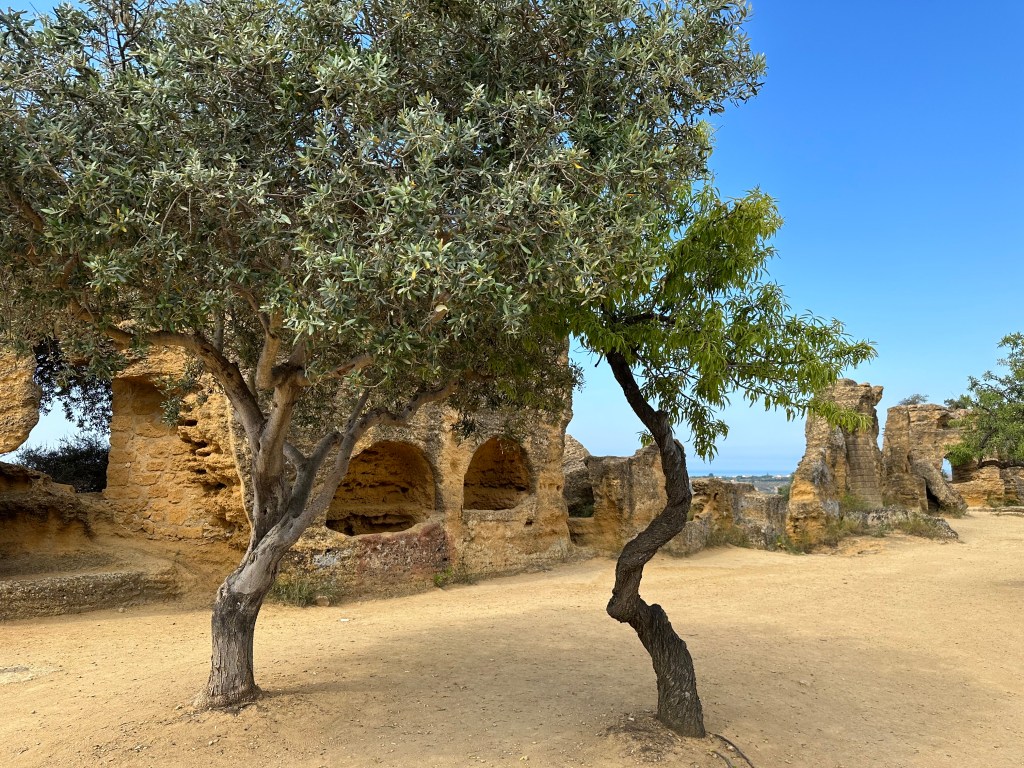
Which include early Christian, 2nd-century-AD arcosolium (arched, recessed) tombs carved directly into the walls themselves.
The star of the temple complex in the distance:
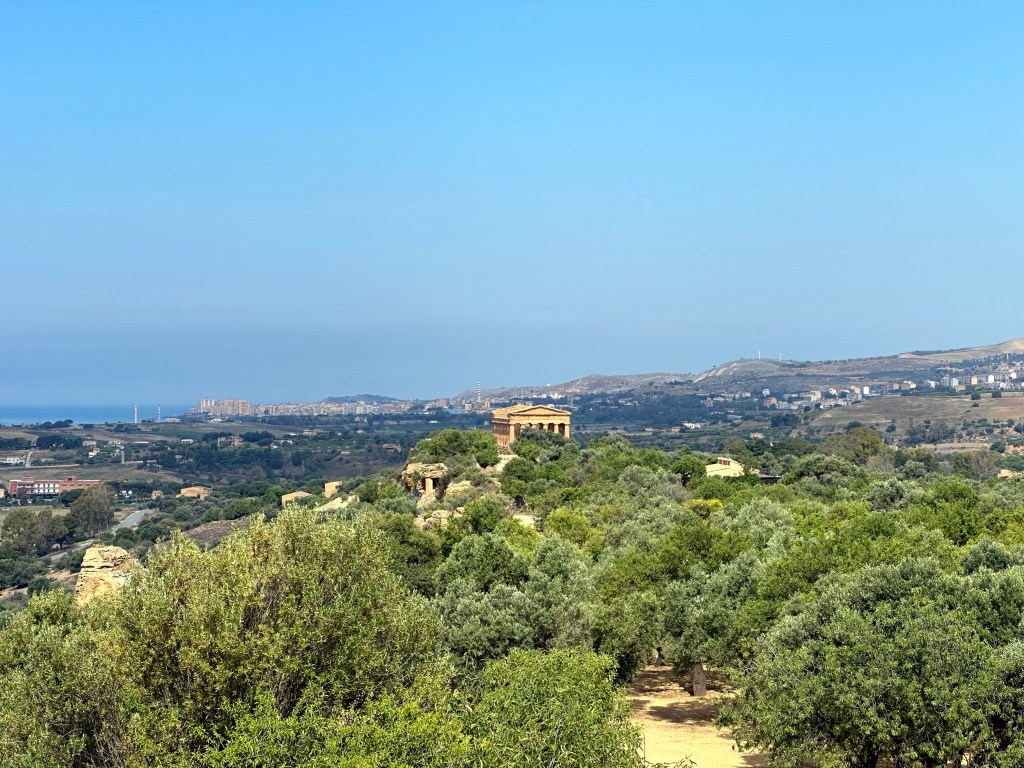
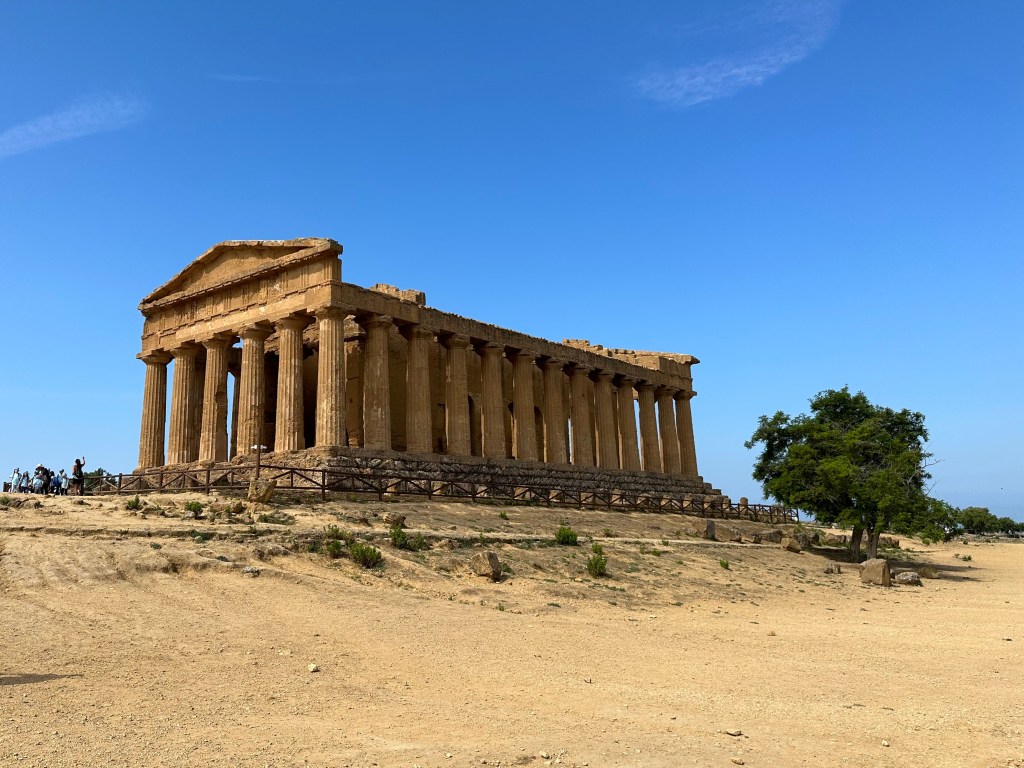
The Temple of Concordia is among the best-preserved Greek temples anywhere on earth — its remarkable survival owed largely to its conversion into a Christian church in the sixth century AD. “The temple was. . . dedicated to the apostles Peter and Paul by San Gregorio delle Rape, bishop of Agrigento and thus survived the destruction of pagan places of worship. The spaces between the columns were filled with walling, altering its Classical Greek form [we’d see the same thing in dramatic form when we hit Syracusa two stops later]. . . The Christian refurbishments were removed during the restoration of 1785.” (From here.)
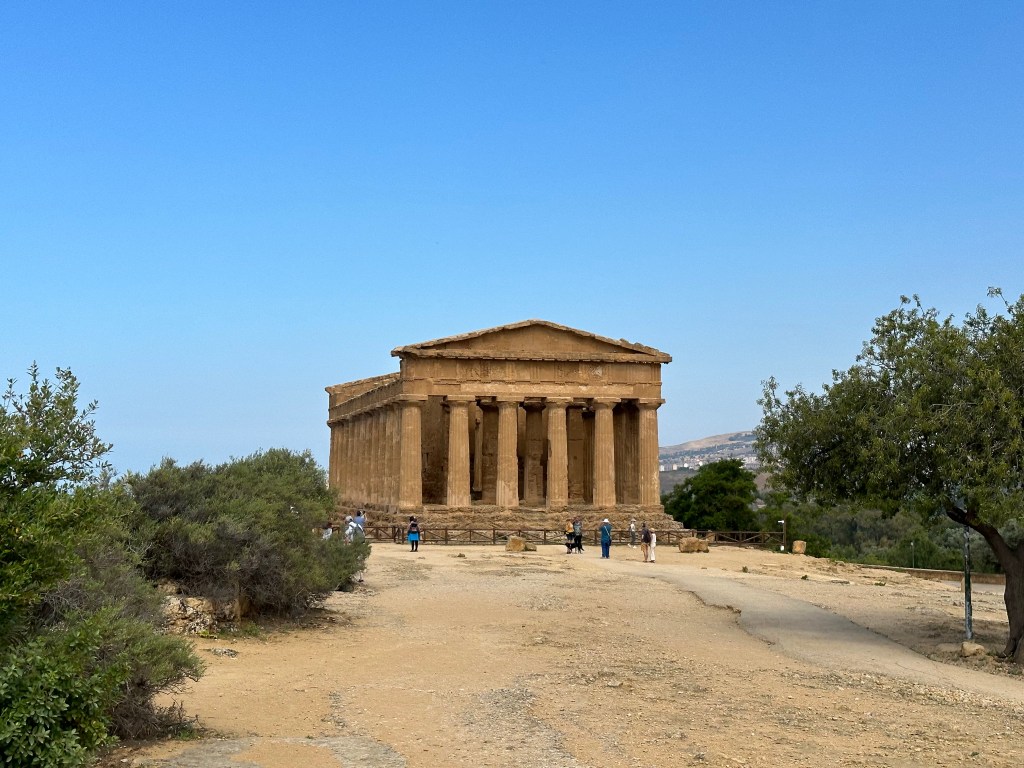
But it was built 1100 years before that, between 440 and 430 BC.
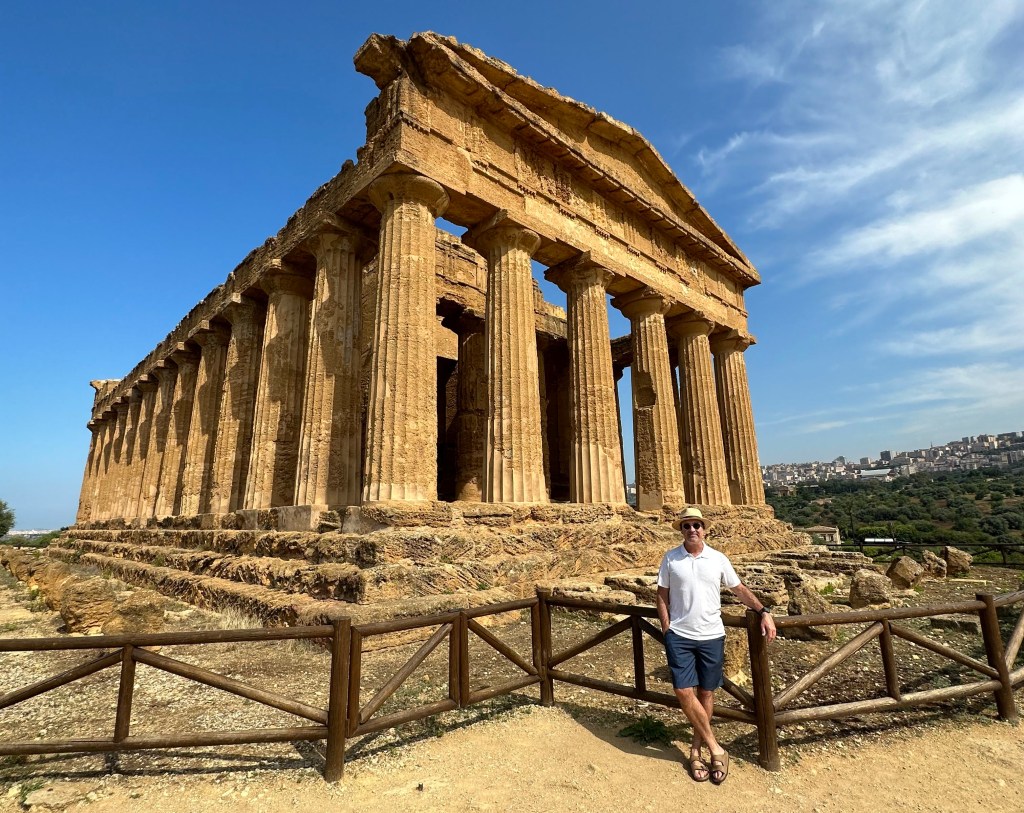
Similar to the misnamed Temple of Juno, the temple was associated with Concordia, the Roman goddess of harmony, simply because a Roman-era Latin inscription that included Concordia was found nearby. It was unrelated to the temple, but this trend of blatantly misnaming the monuments here IS related to our growing sense of annoyance.
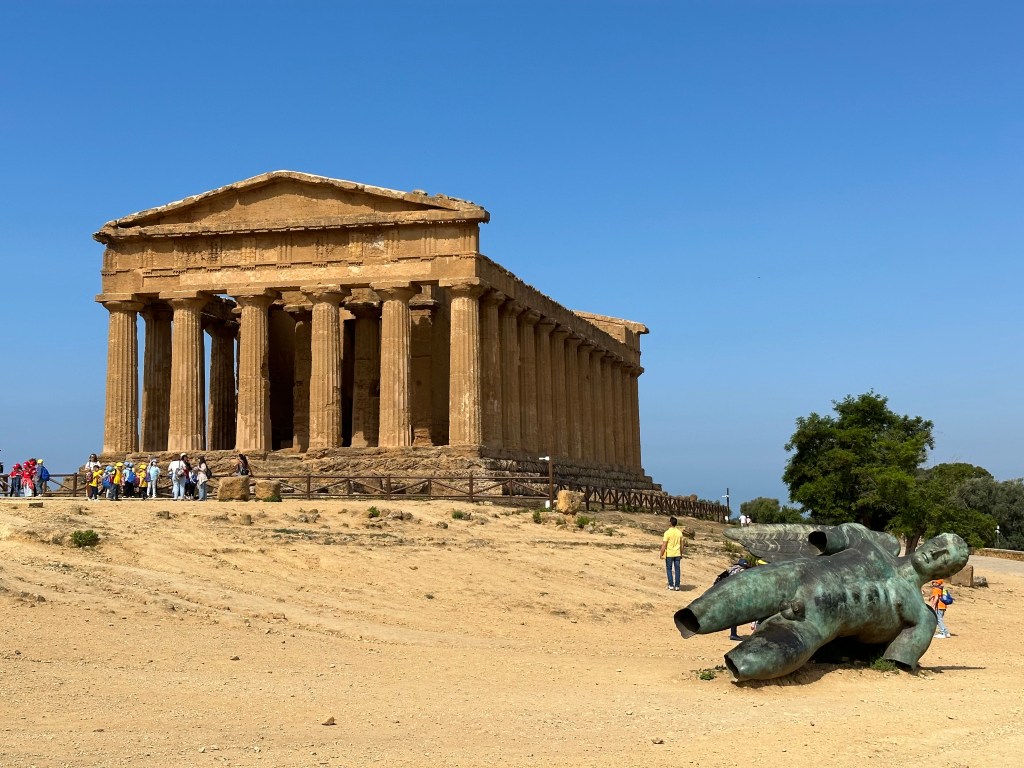
The Temple of Concordia is considered to be the best preserved Doric temple in the world, after the Parthenon.
WHAT characterizes a Doric temple, you ask? Question answered by a historical marker at the temple:
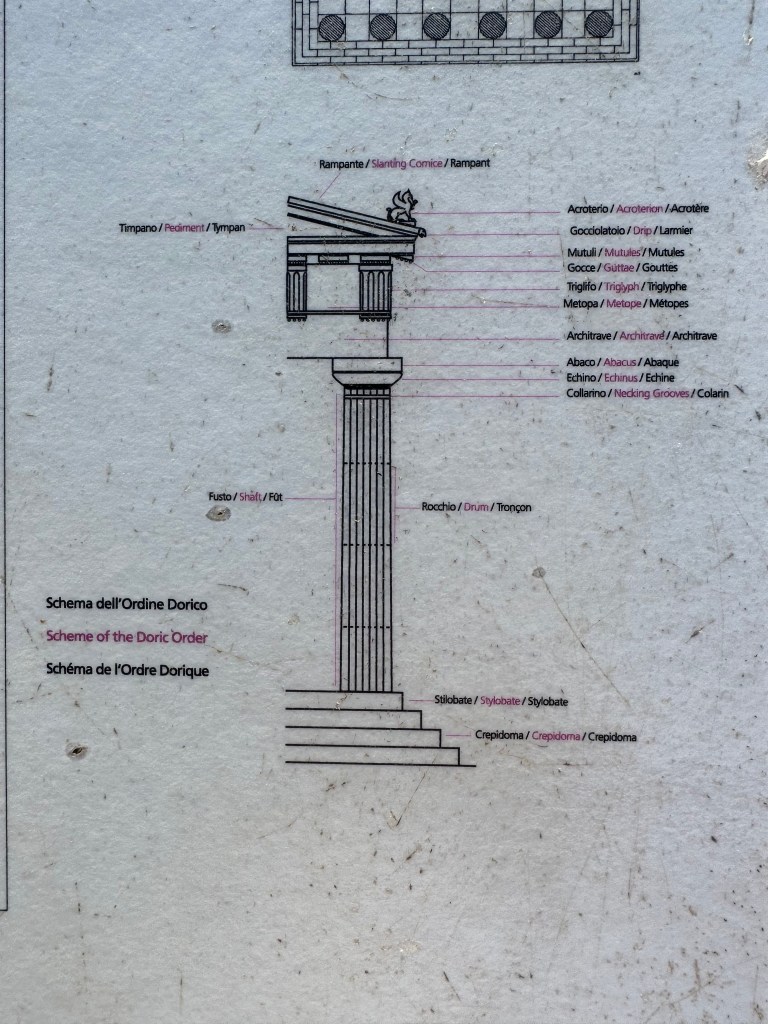
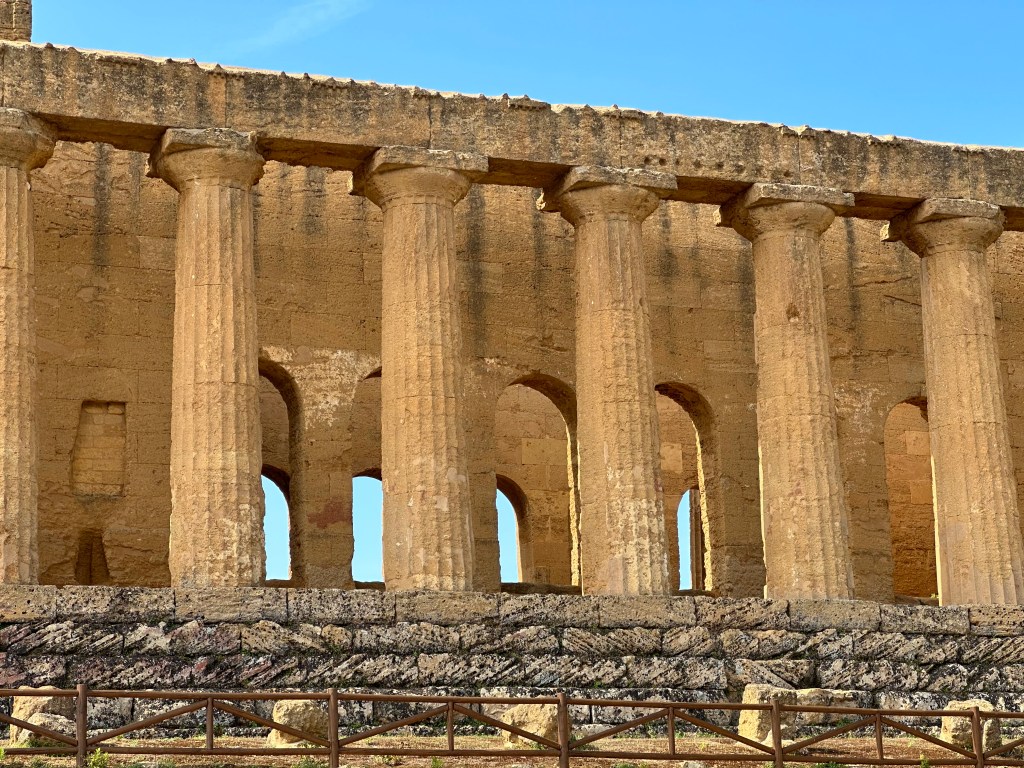
Yup, no Ionic or Corinthian columns here. Just a delightful density of Dorics.
But the Doric department hasn’t yet departed. Just down the path lies yet another temple.
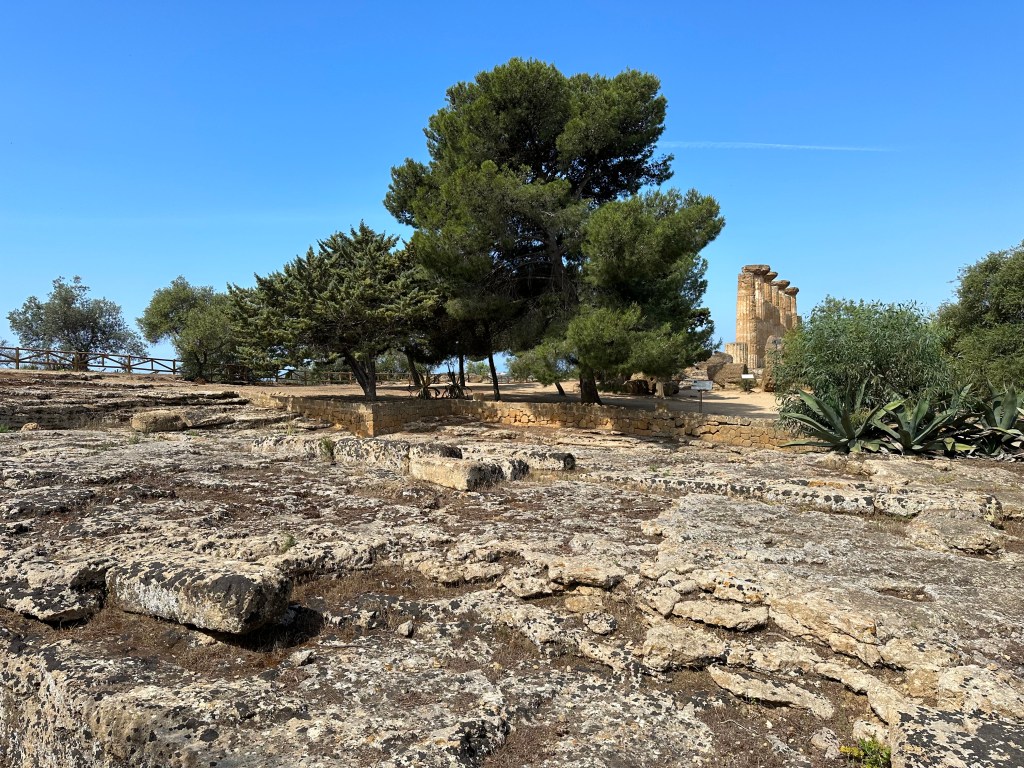
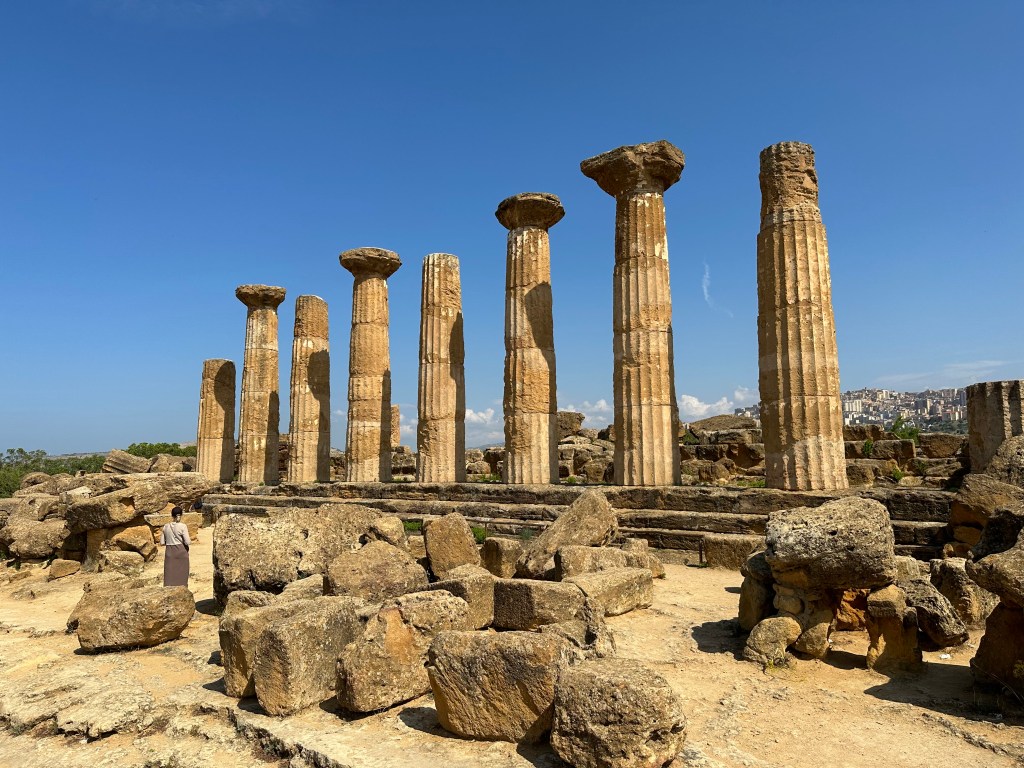
Behold, the remains of the Temple of Heracles (or Hercules, you Roman). And yet another BS misidentification. This one from another Cicero screed, mentioning a temple dedicated to Hercules not far from the Agrigento forum. But no one is sure that this is the one he was referencing. No worrries! In the apparent expediency of historo-archeology, researchers stuck the moniker on this half stack of columns and called it a day.
Not to content themselves with just misNAMING temples, they (we’re not sure who they is at this point), thought it would be a great idea to reconstruct a temple using pieces from various OTHER temples.
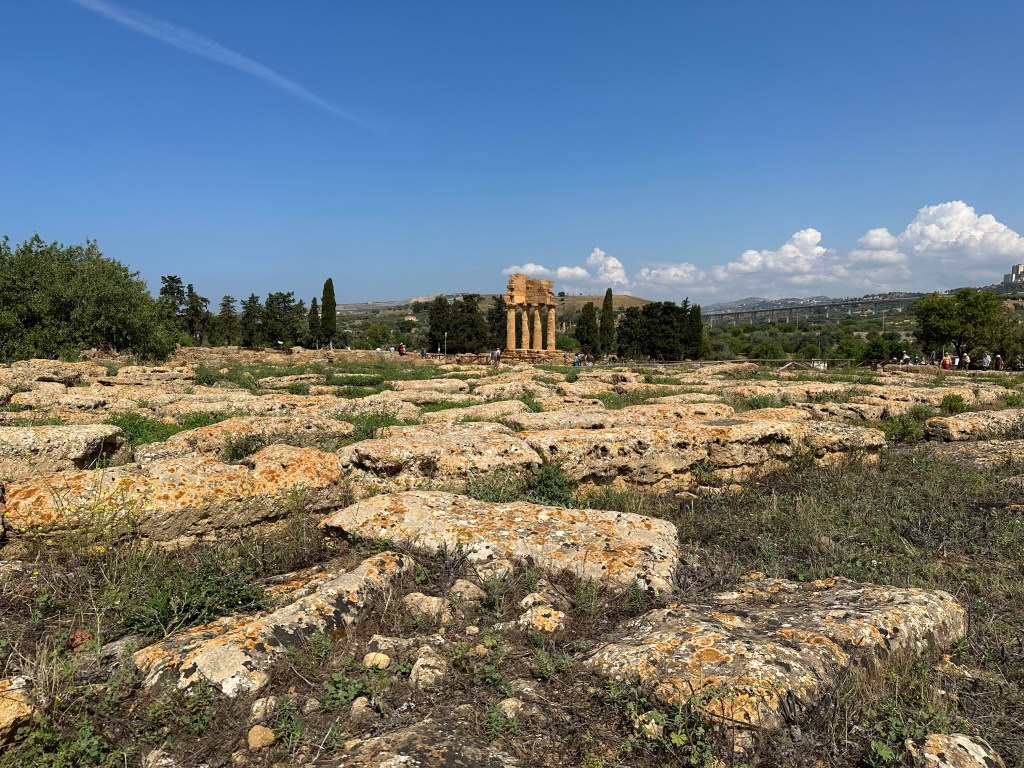
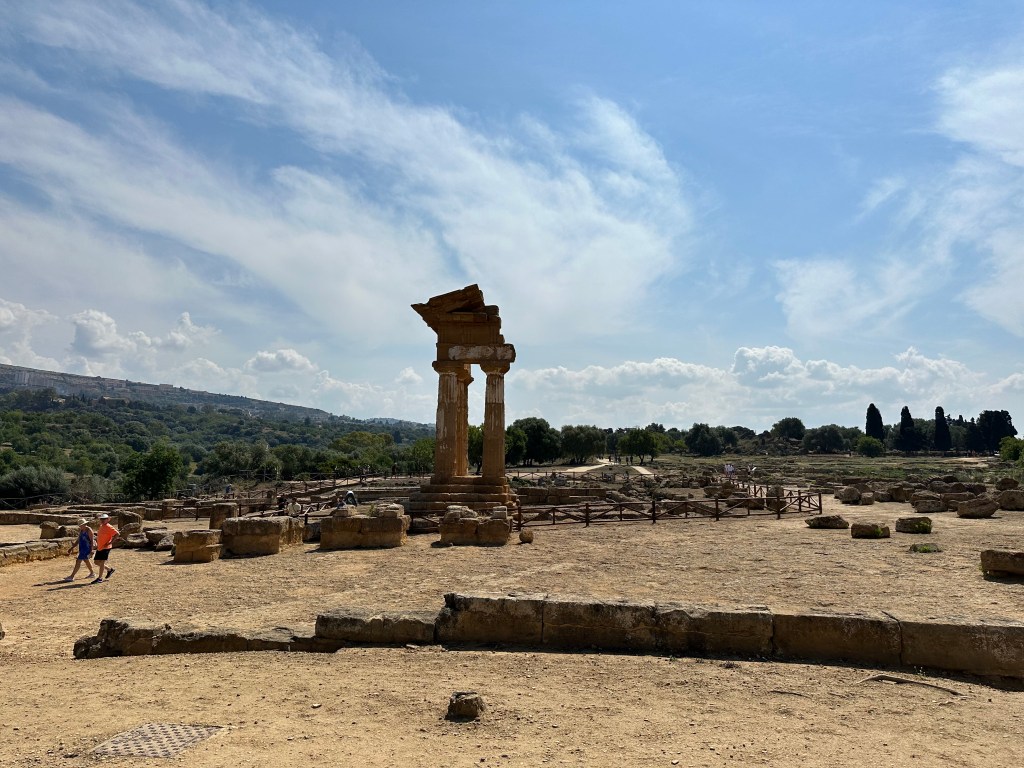
Behold, the Frankenstein Temple of the Dioscuri (Greek for “Sons of Zeus” – the twin deities Castor and Pollux). Luckily, they just contended themselves with building a corner out of mismatched, supersized Legos found on site.
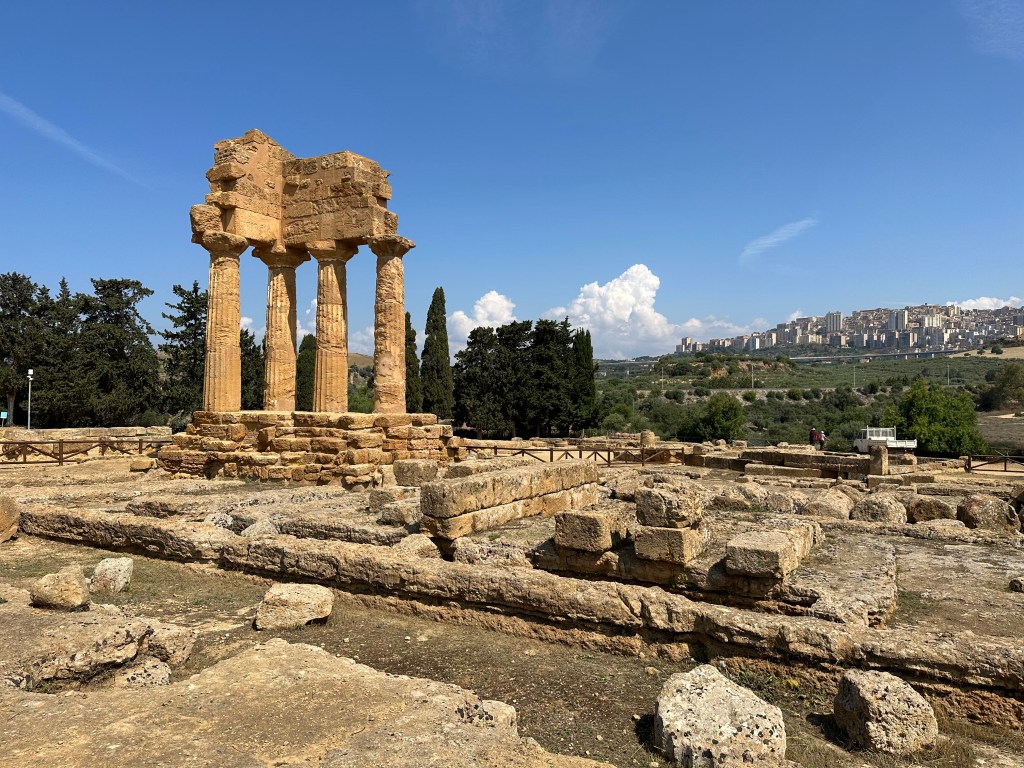
Lots of other pieces lying around, though.
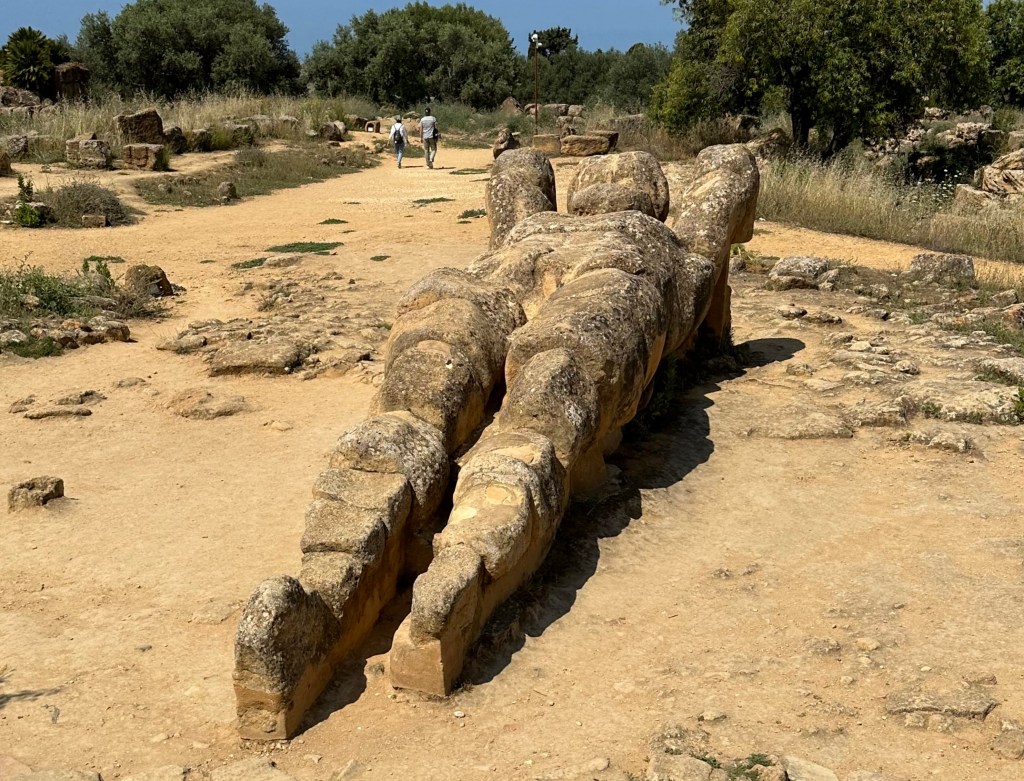
And finally, Atlas Shrugged (and then sat for a bit, and then just lay down for good). This is one of a few massive Atlas statues extant on site from an aborted attempt to build a massive (really massive) Temple of the Olympian Zeus.
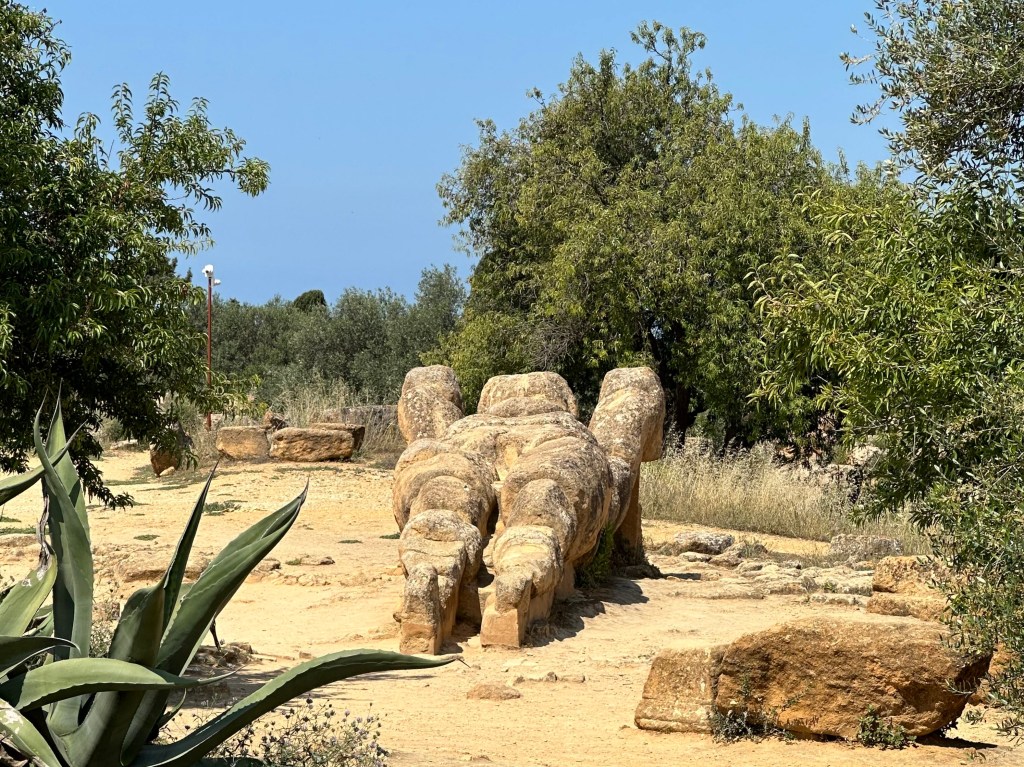
In its reclining position, you can’t tell, but this thing is more than 25 feet tall (long in its current orientation).
Here’s another, upright in the Agrigento museum, with a passer by for scale:
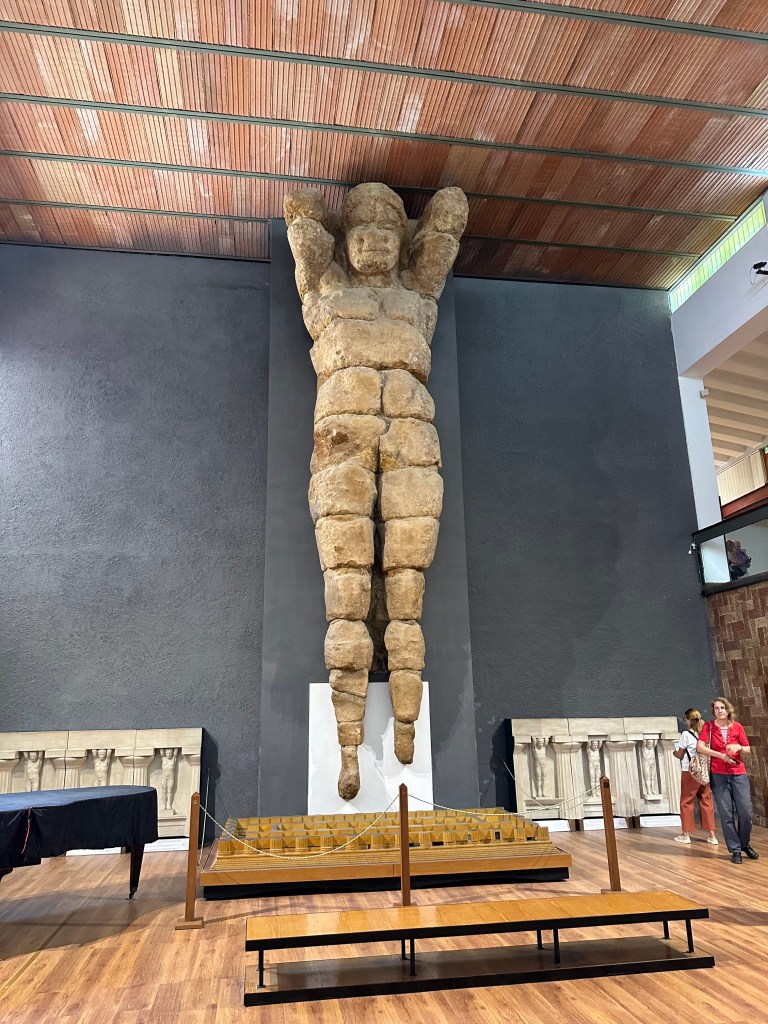
Had the Temple of Olympian Zeus been completed, it would have been the largest Greek temple ever constructed, featuring the Atlas’ serving as telamones supporting its entablature:
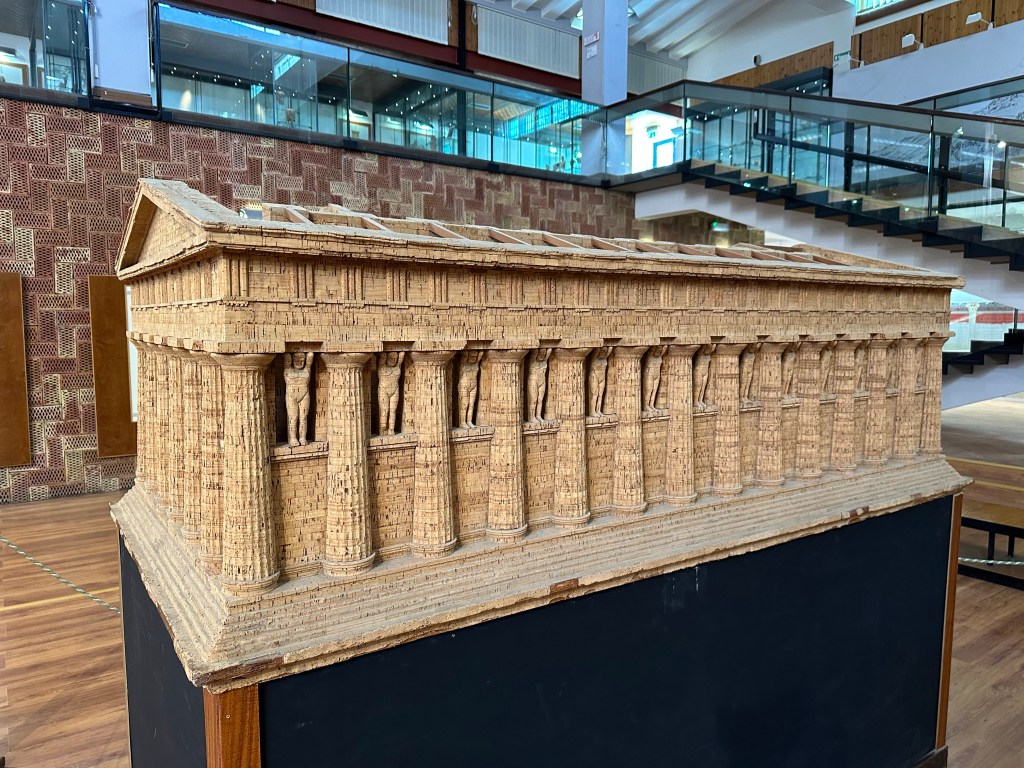
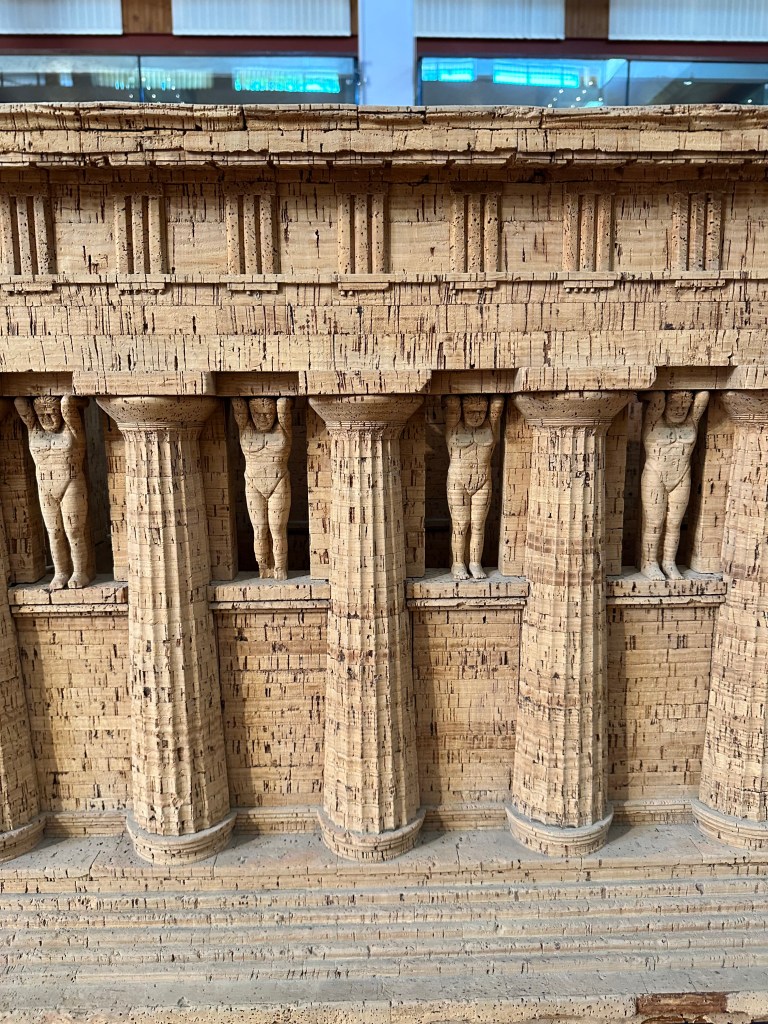
But, alas, the temple never really got off the ground. Construction commenced around 480 BCE (part of the base is below) after a major victory by Akragas Greeks over the Carthaginians at the Battle of Himera. At the time, Akragas was one of the richest Greek cities in the Mediterranean and the temple would be a statement of Akragas’s wealth and power.
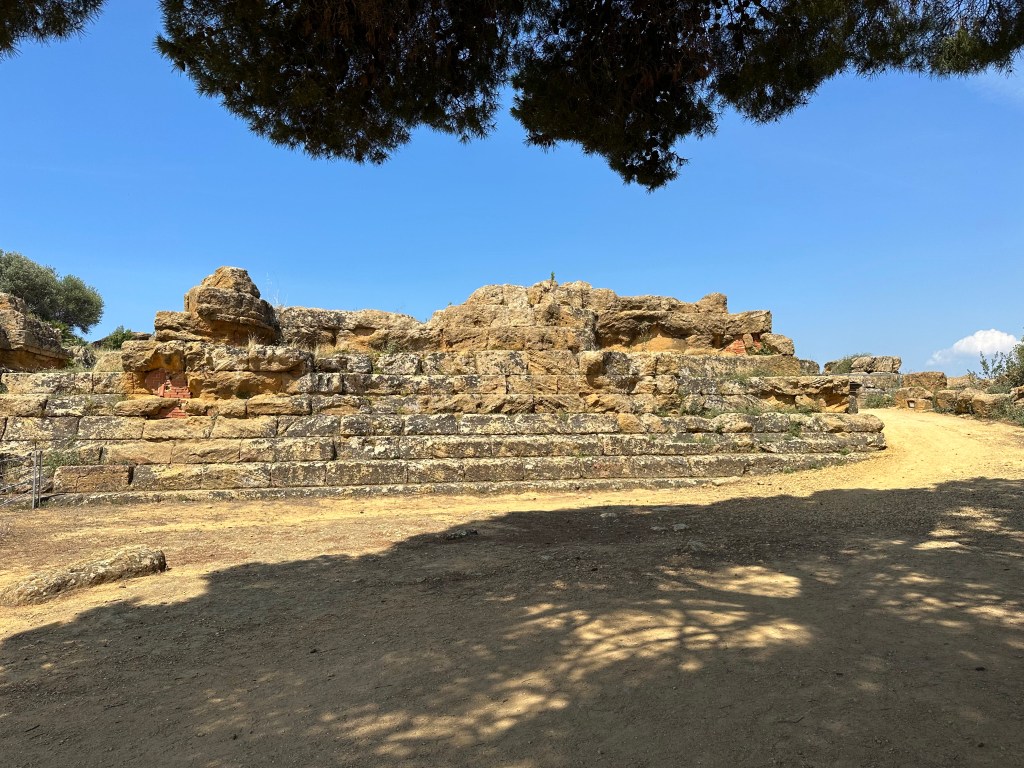
But the Carthaginian invasion of Sicily in 406 BCE put an end to this. Akragas was besieged, many inhabitants fled, the economy collapsed, and monumental construction projects ceased. Leaving just this:
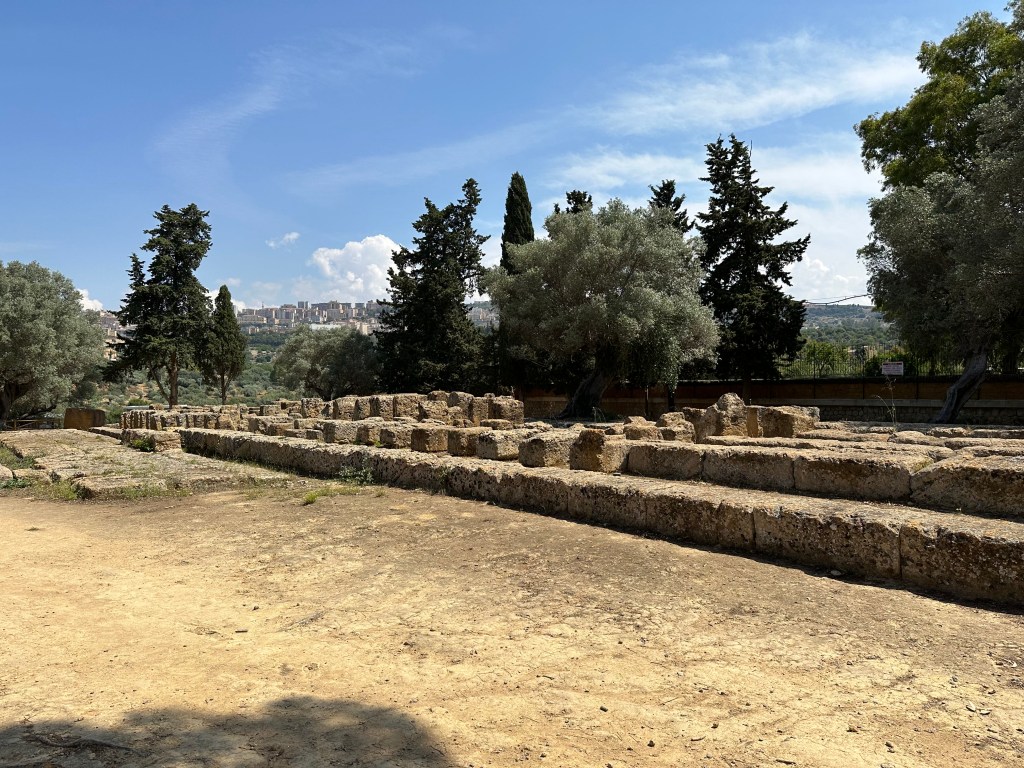
All of this is better viewed from a distance of both time and space from the comfort of our plunge pool at the end of a long day among ruins in the sun:
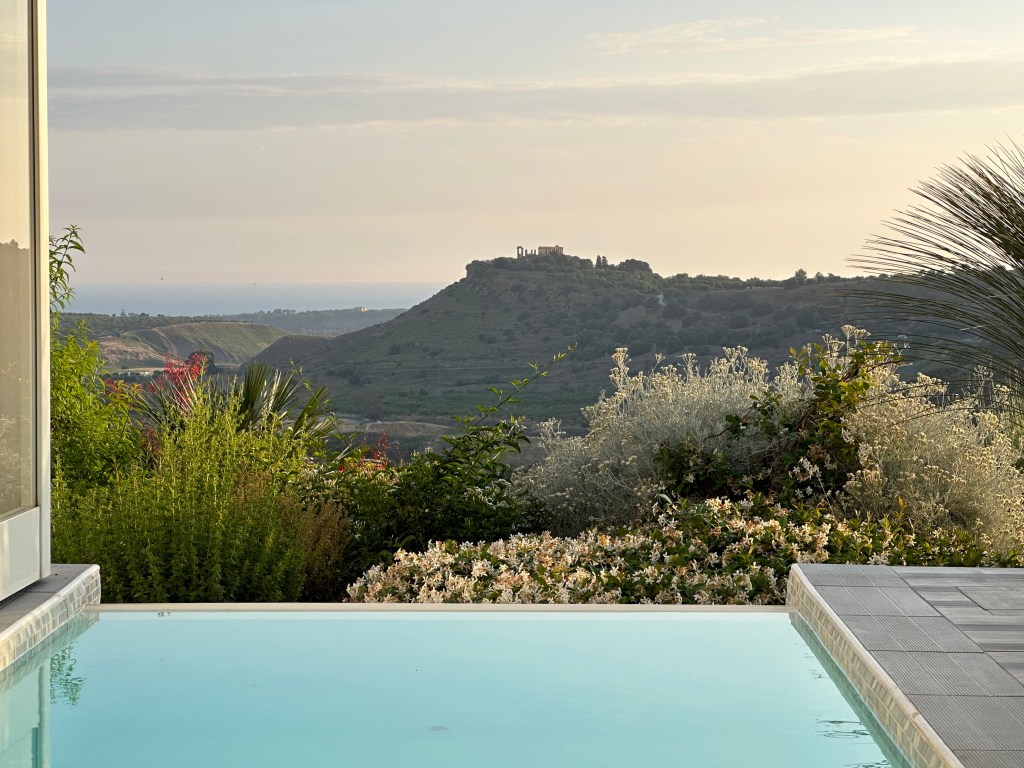
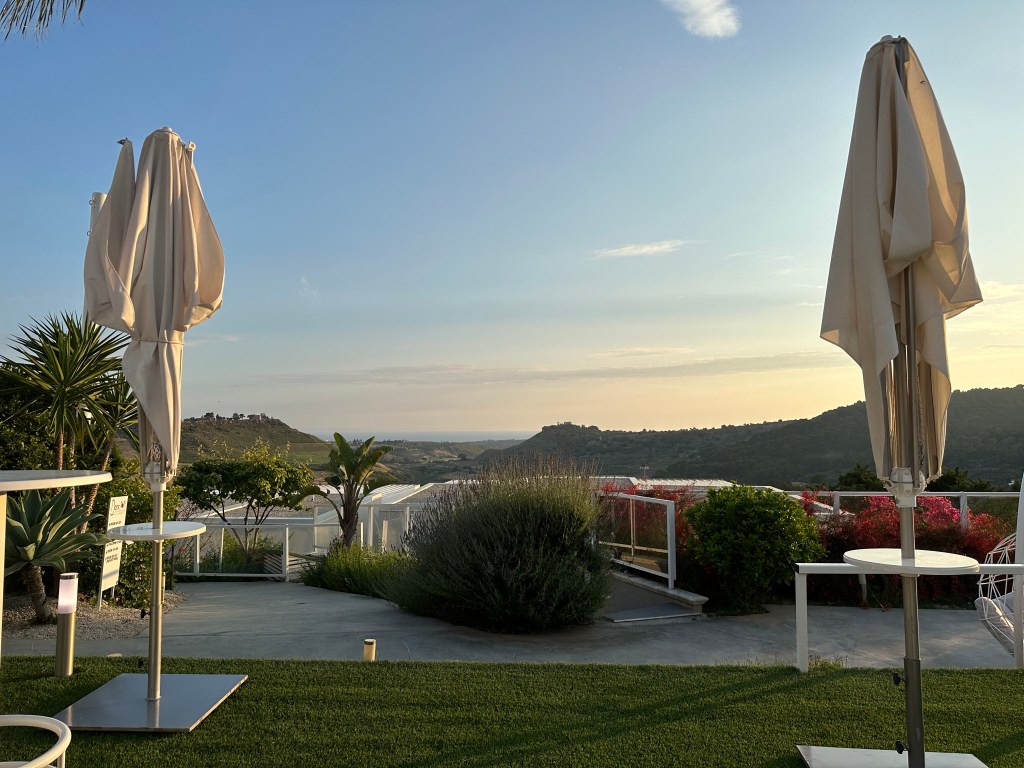
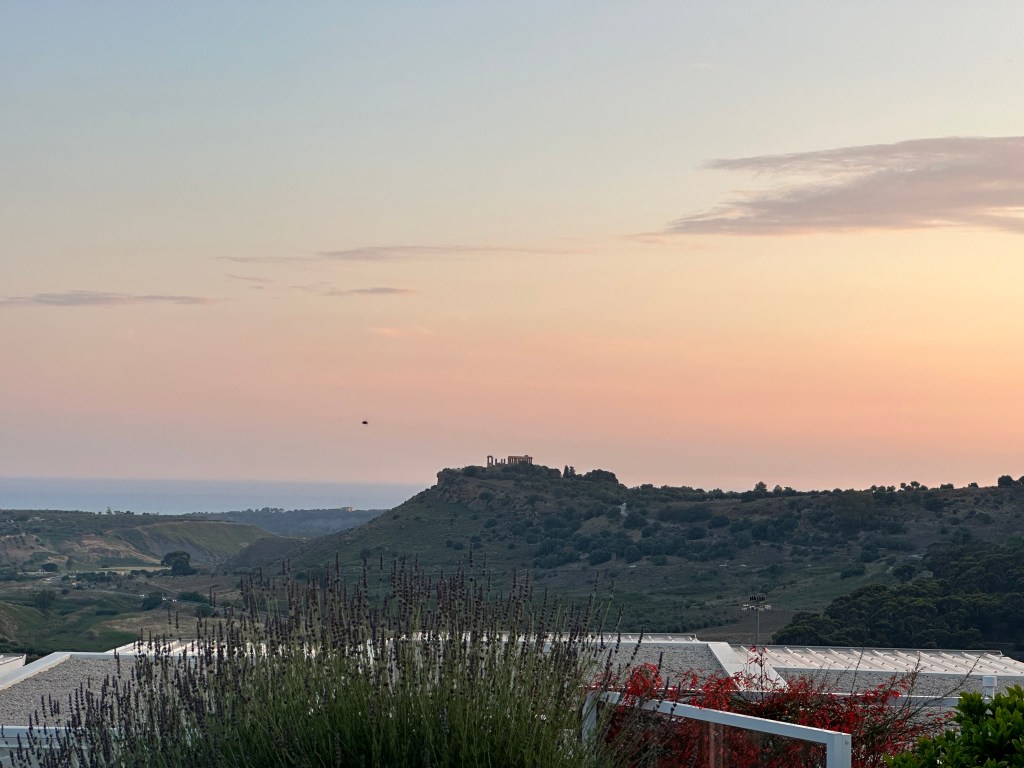
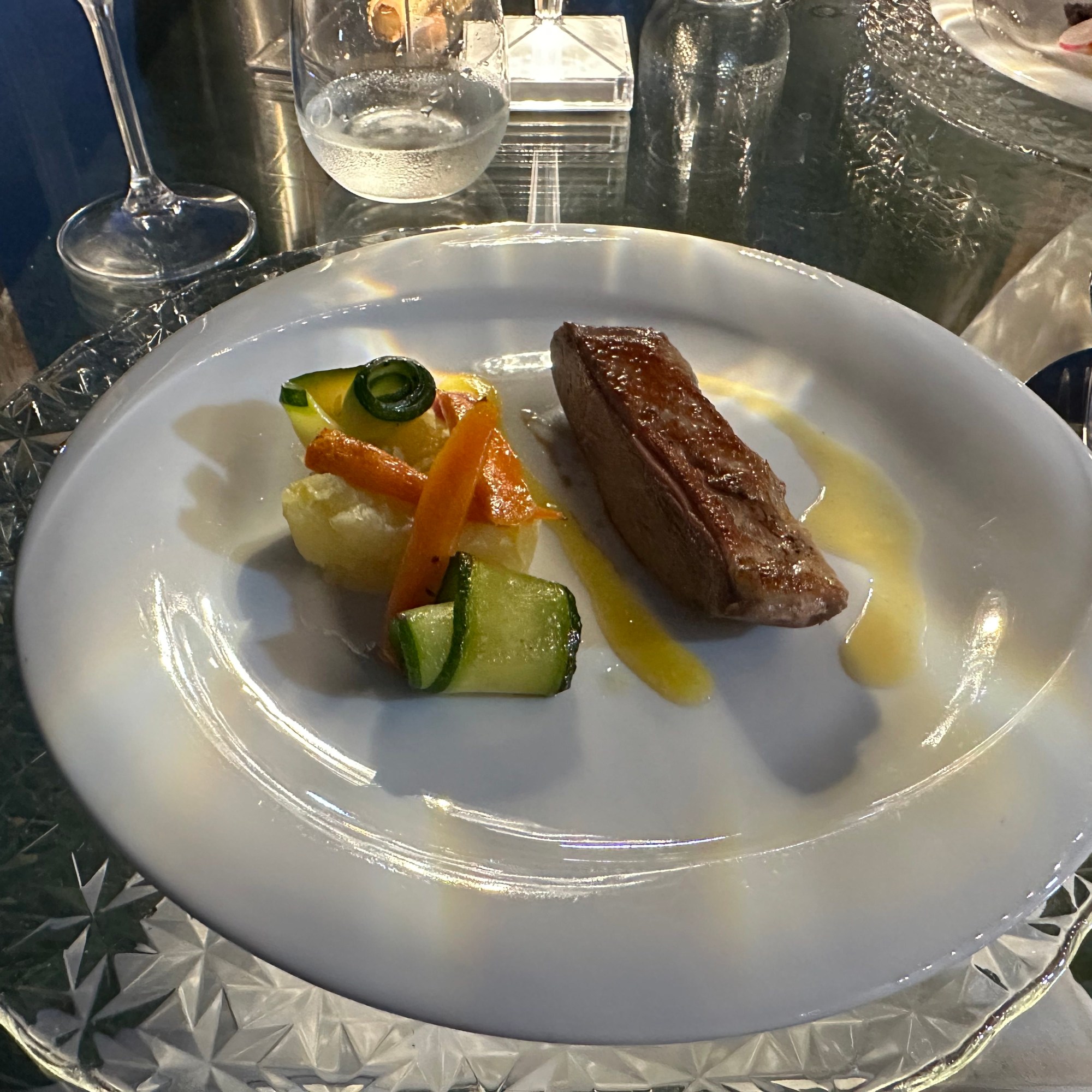
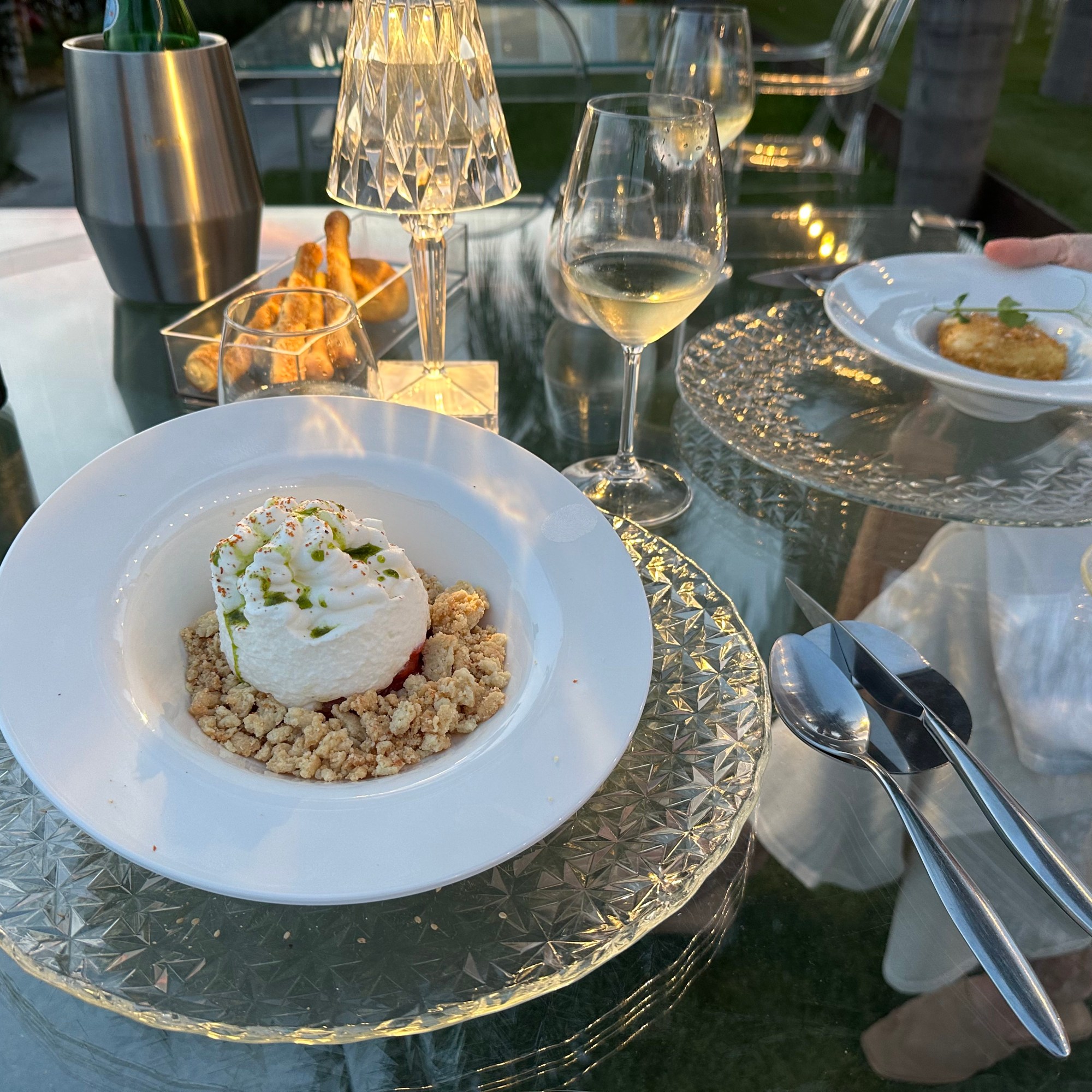
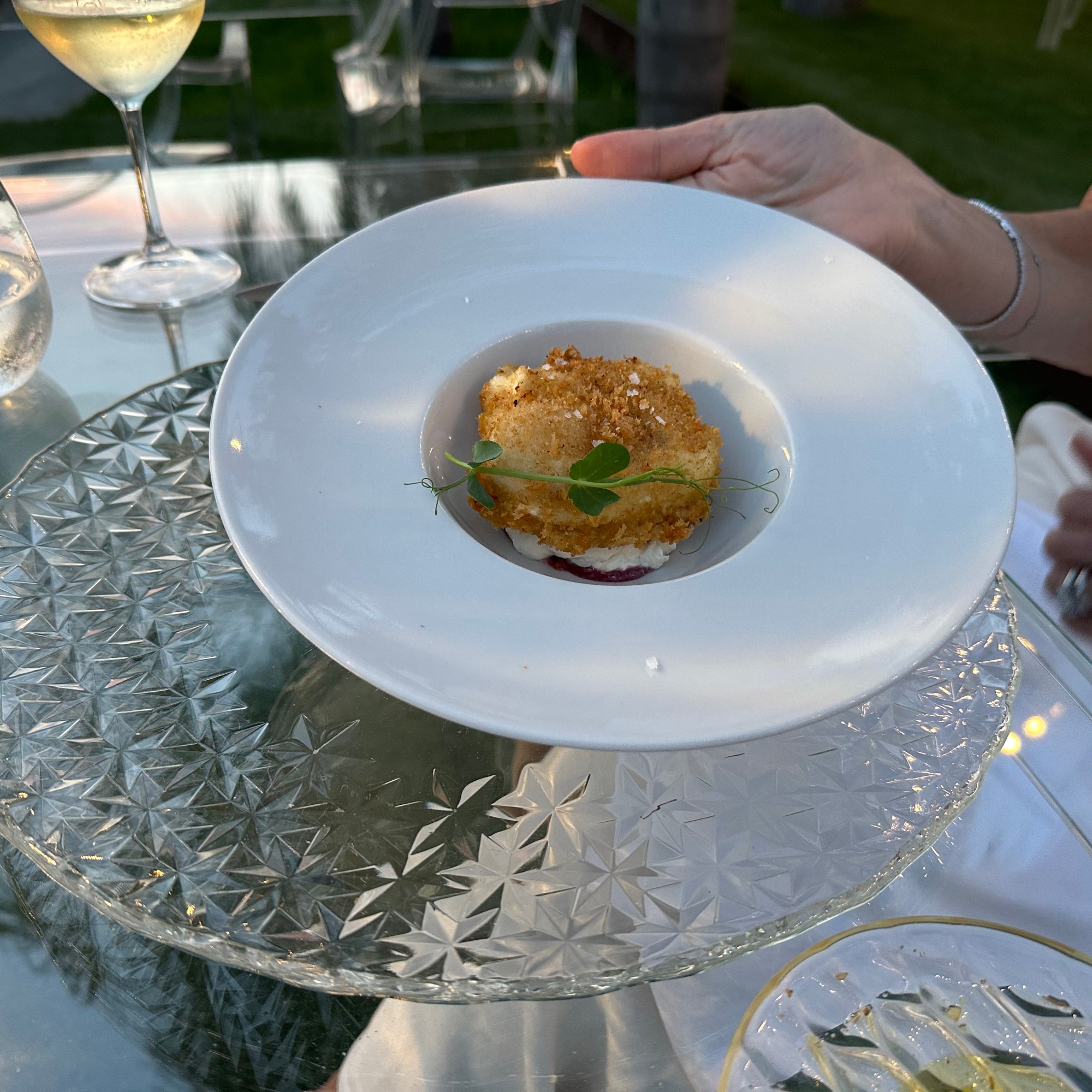
Our place was too inviting to venture out on either of the nights of our stay. Pretty good decision.
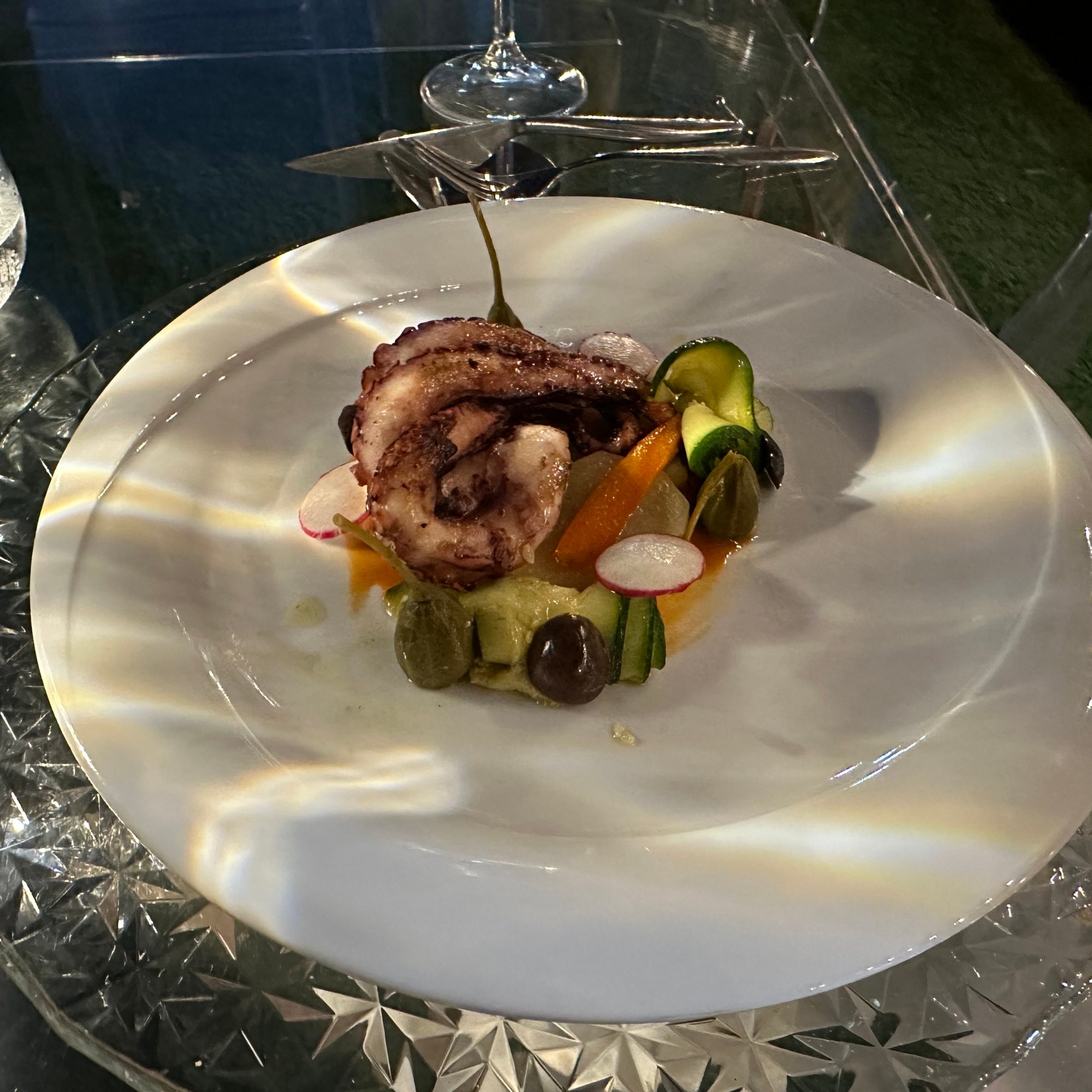
Next up: fast forwarding 2100 years and 90 miles from Agrigento to Modica and the first of our visits to the “Baroque Towns” of Sicily.
