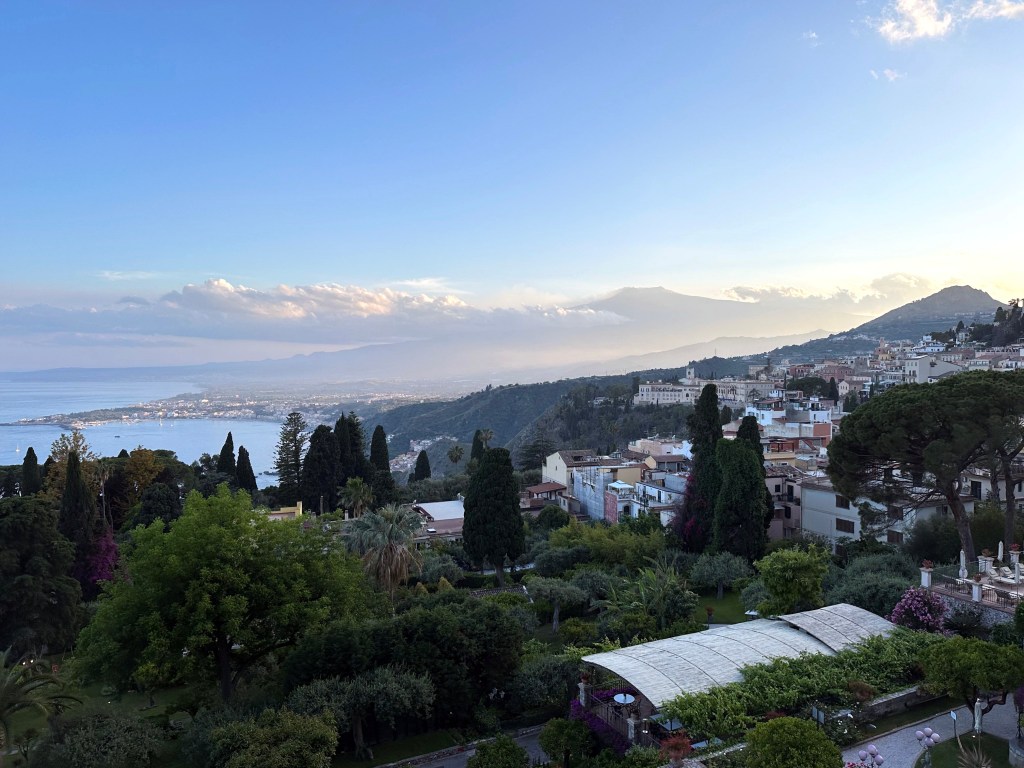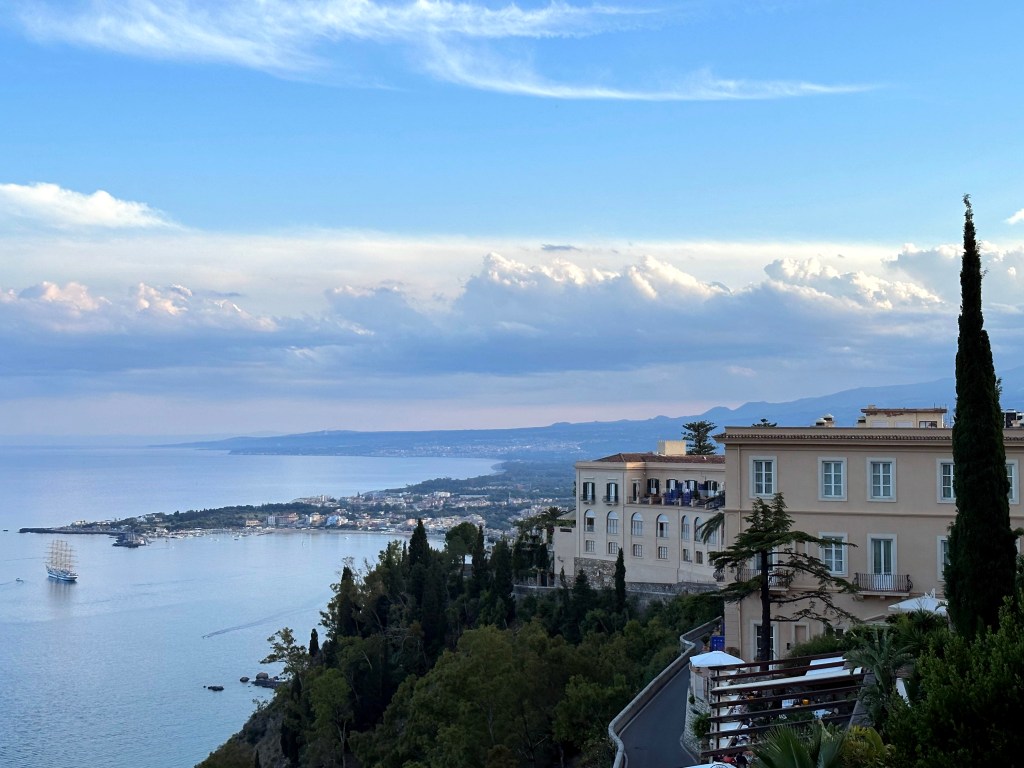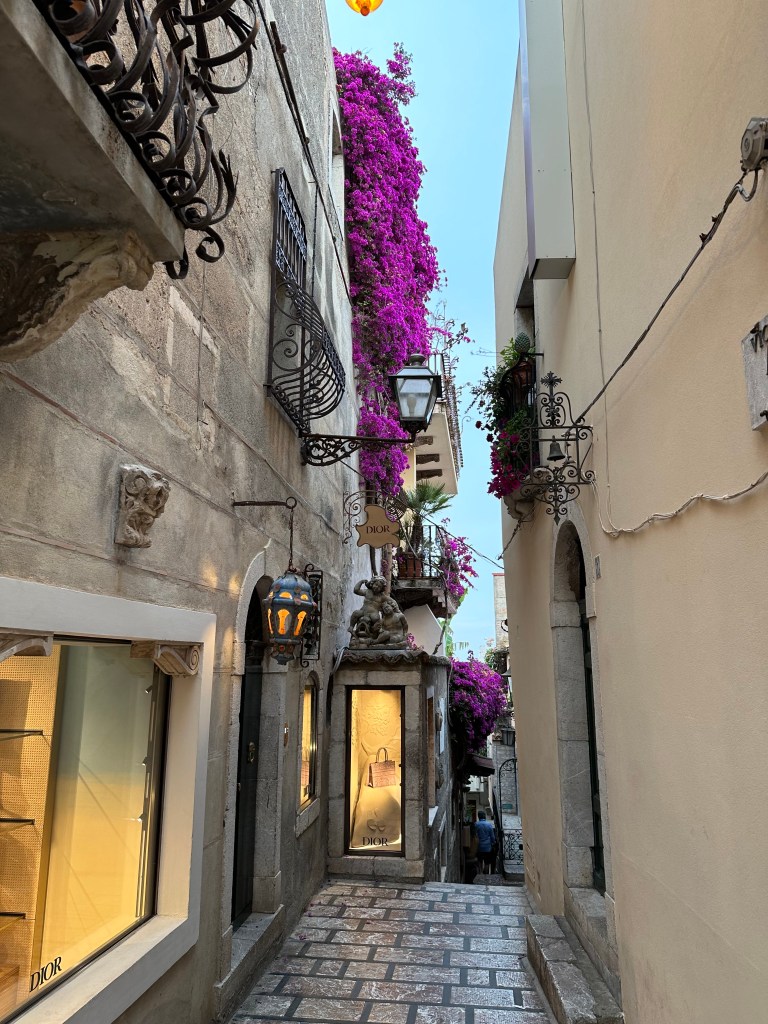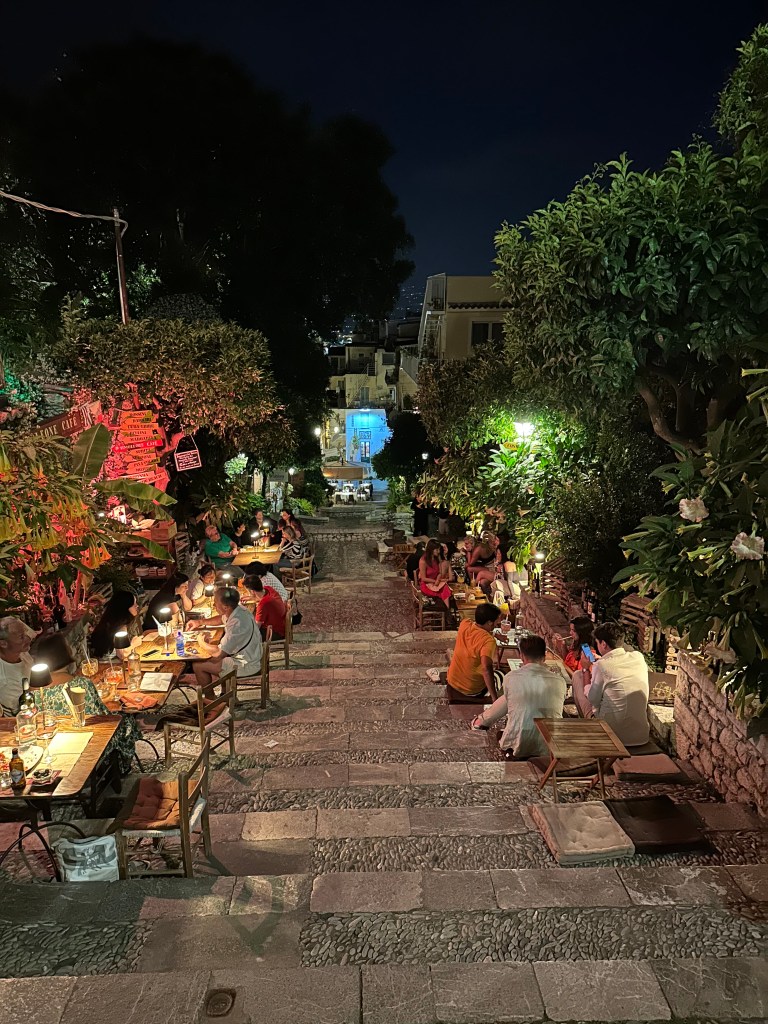
After a little less than a week barnstorming Baroque burgs, we headed further east, to the palpably historic quasi-island of Syracuse.
Founded by Corinthian Greeks (not the Doric Greeks) in 734 BC, Siracusa (Syracuse) rose to become one of the most powerful city-states in the Mediterranean. At its peak under the tyrant Dionysius I in the 4th century BC, it rivaled Athens itself in wealth, population, and military might. It was here that Archimedes was born and conducted his legendary experiments, here that the Athenian fleet suffered one of history’s most catastrophic military defeats in 413 BC, and here that Cicero served as quaestor, later calling it the most beautiful city in the Greek world. All concentrated on the small island of Ortigia (and the surrounding mainland).
View from the bridge between the mainland and Ortigia (although you’re never really aware that you’re on an island, inasmuch as this is the extent of the separation):
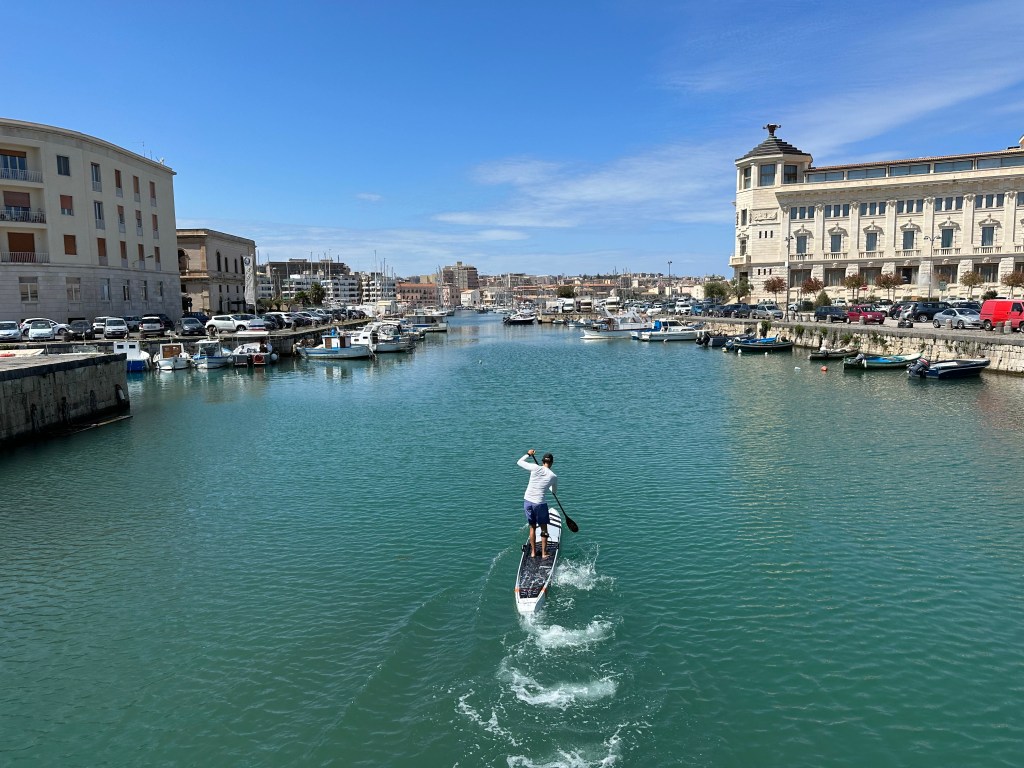
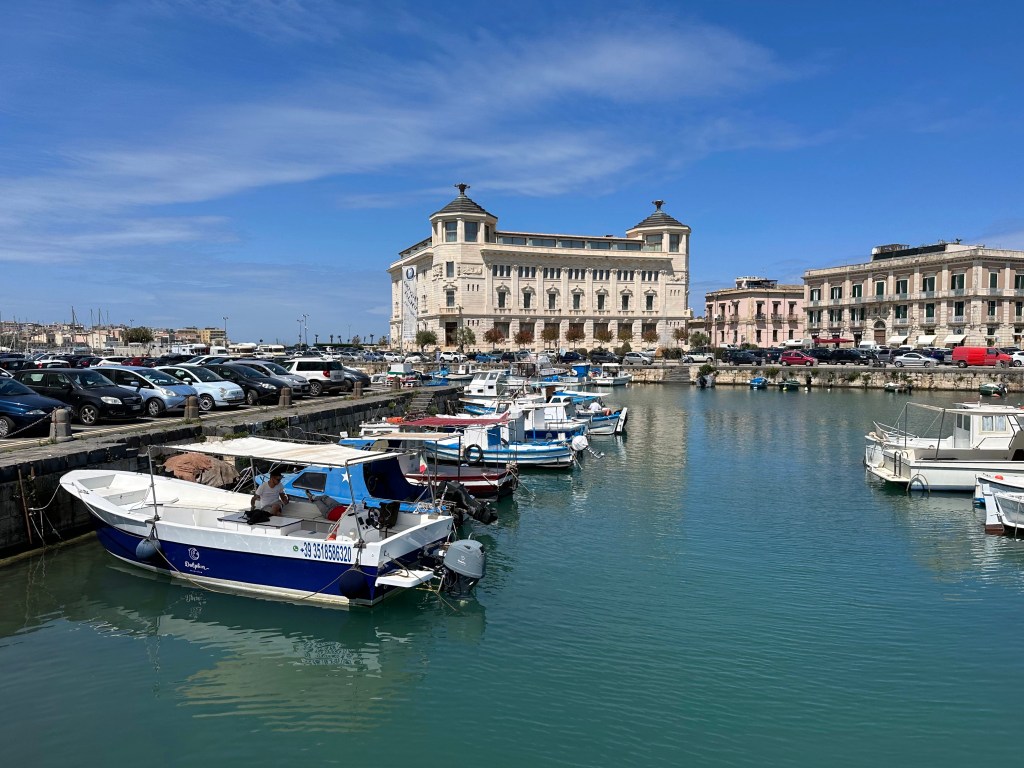
Siracusa’s extraordinary layering of Greek, Roman, Byzantine, Arab, Norman, and Aragonese civilizations (and Baroque architecture) earned it UNESCO World Heritage status in 2005.
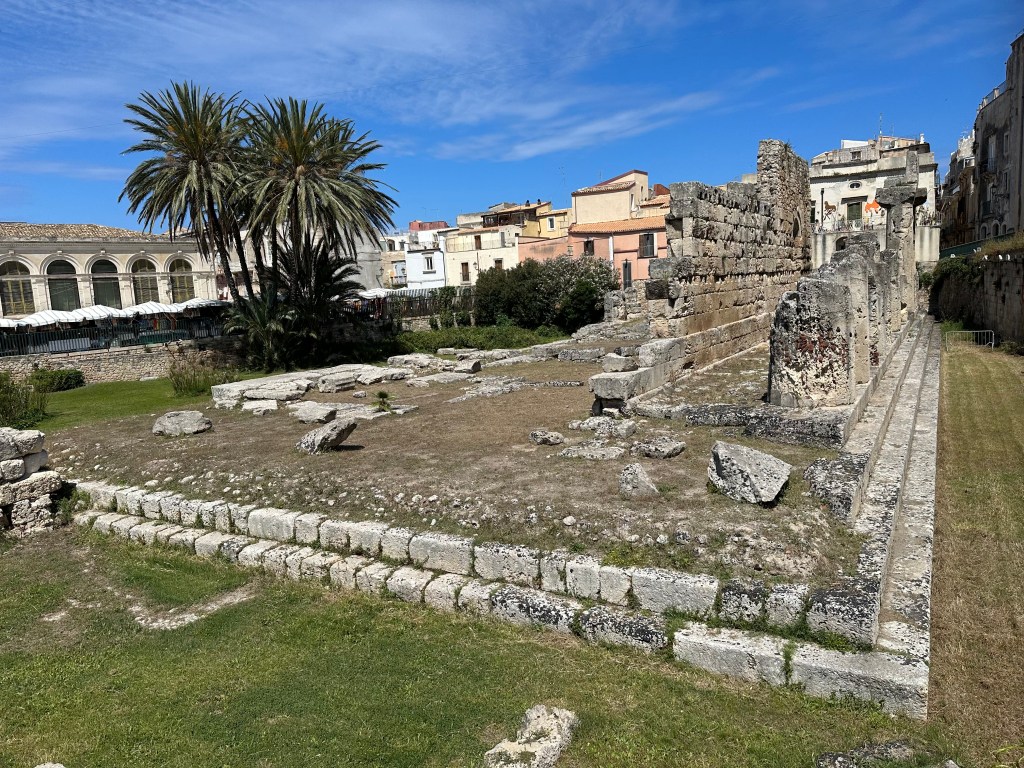
Exiting our hotel, we immediately run into ruins: ironically a Doric temple to Apollo from the 6th century BC:
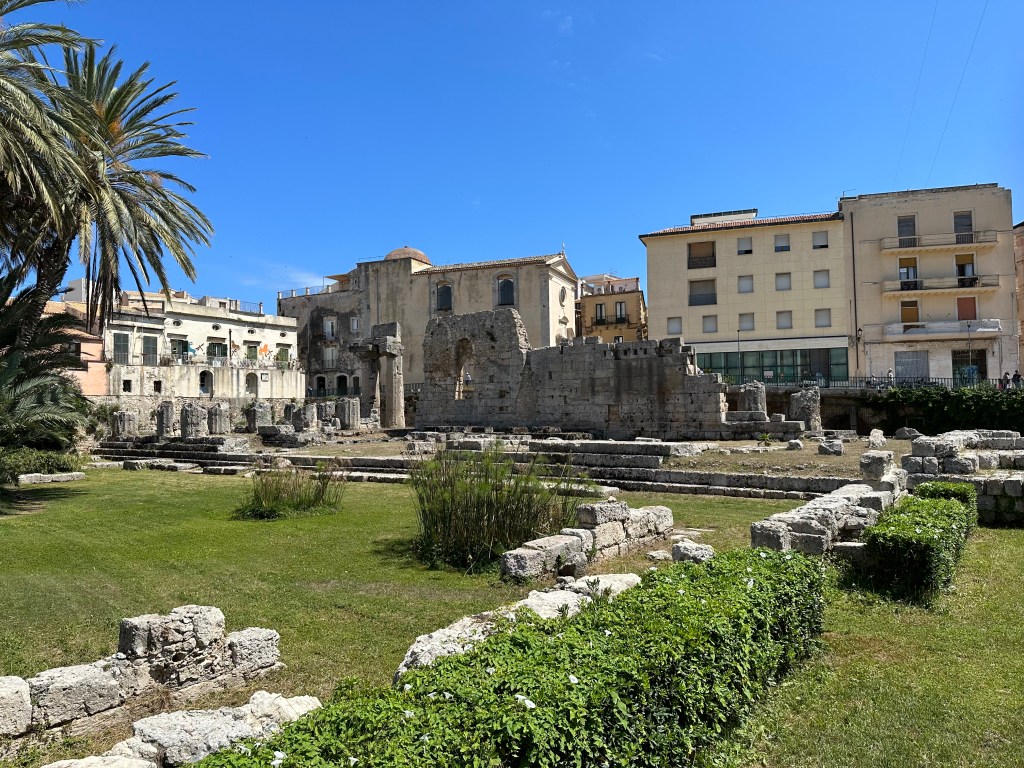
The Greek temple, unintentionally functioning as a snapshot of Sicily’s many cultural and religious layers of history, served later as a Byzantine church, an Arab mosque, a Norman basilica, and the Aragonese Church of Sanata Maria della Grazie as part of a Spanish barracks. It was finally demolished in 1864 – all of those layers of history reduced now to a mere archeological vestige of its prior history.
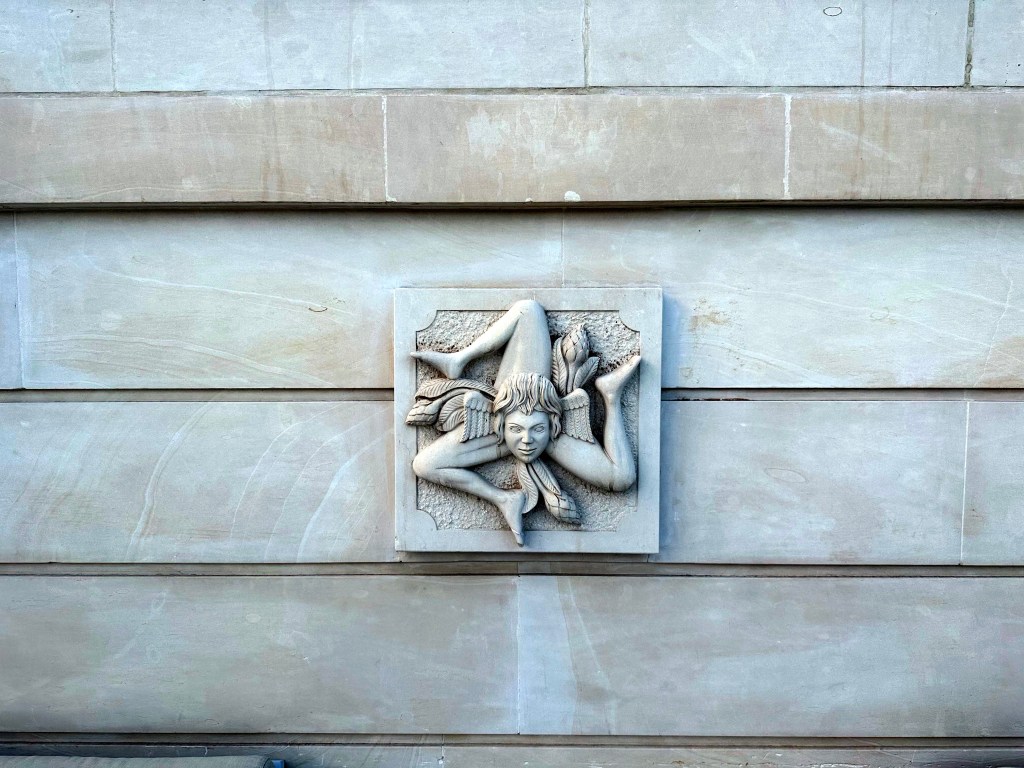
Our little Sicilian trinacria buddy embossed on a nearby building:
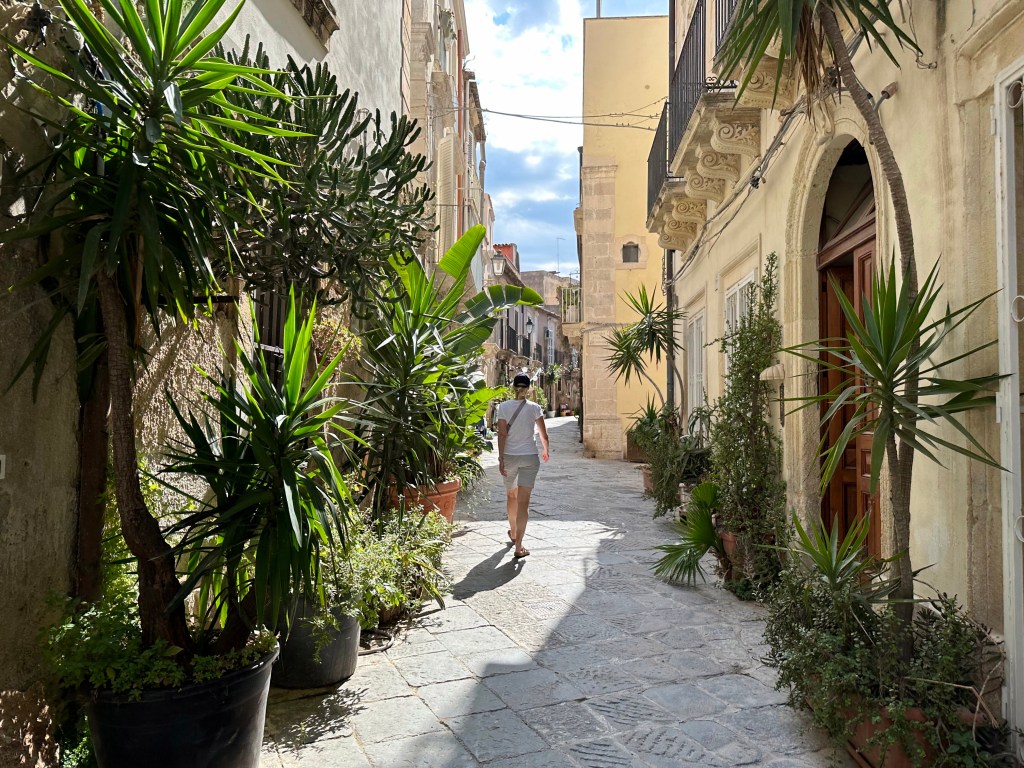
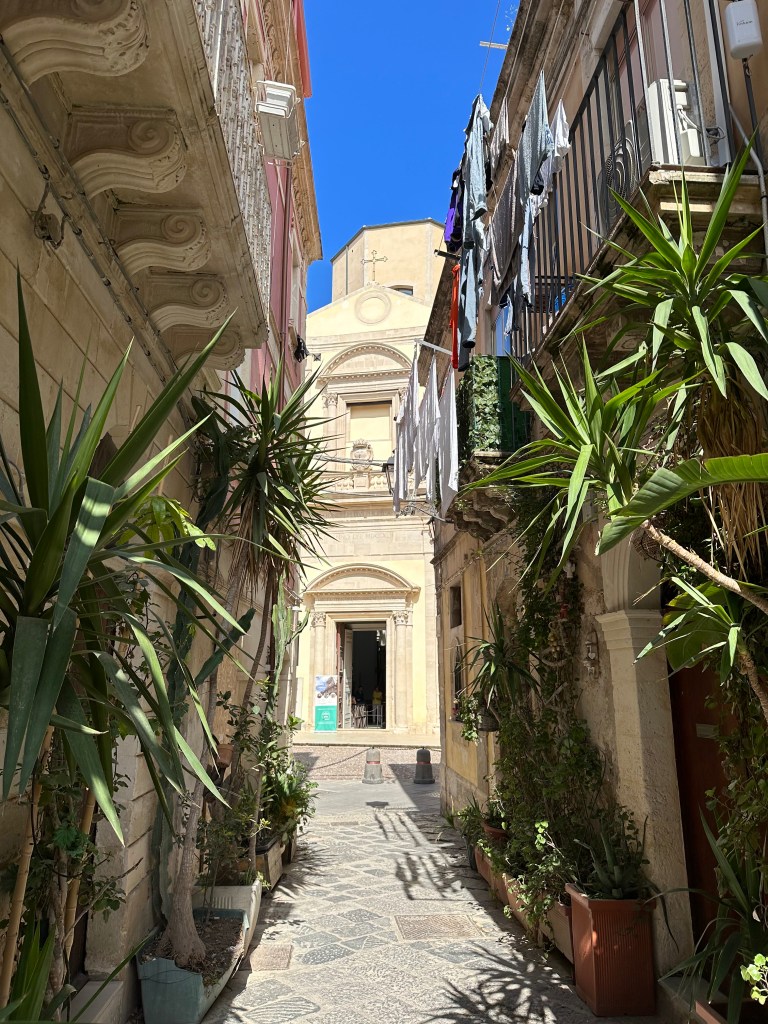
The winding alleyways of Ortigia in Syracuse:
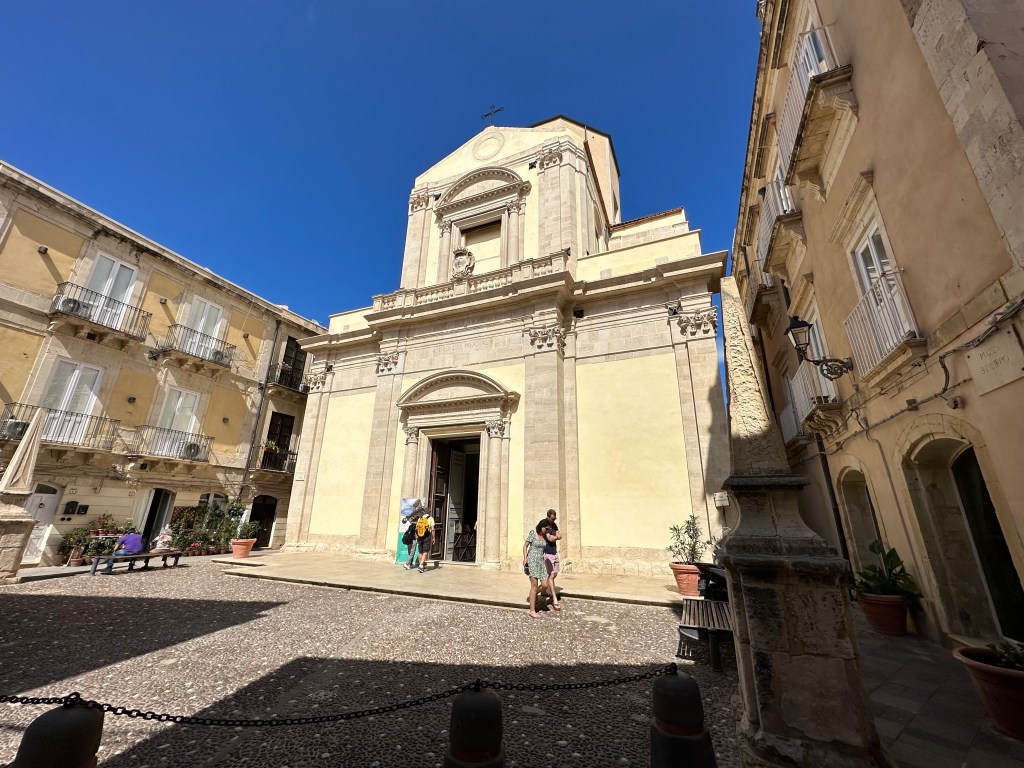
One of which brought us here, to Chiesa di San Filippo Apostolo:
But our interest here lay not in the plain-Jane church (not even Baroque ornamental!). . .
but what lies beneath:
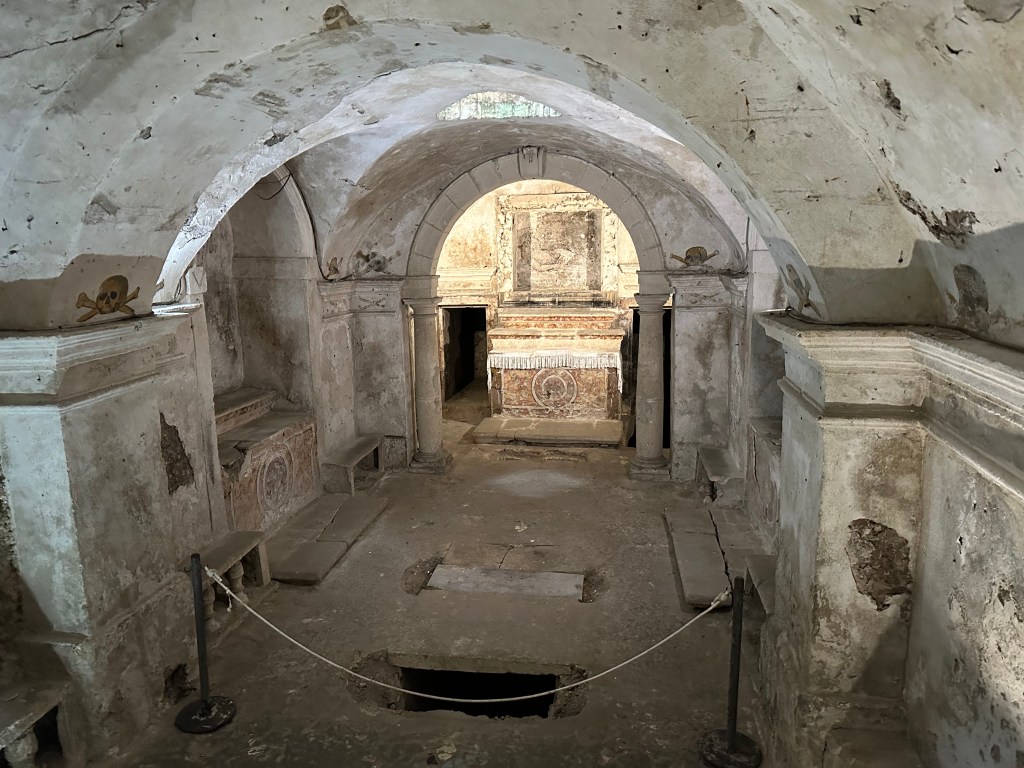
Immediately under the church floor lies an initial, pretty standard subterranean crypt level with 18th-century frescoes, burial chambers, and funerary chapels. This space was occupied by a confraternity, a Catholic religious brotherhood attached to a church — essentially a lay religious society rather than monks or priests — that frequently used underground burial and meeting space beneath the church.
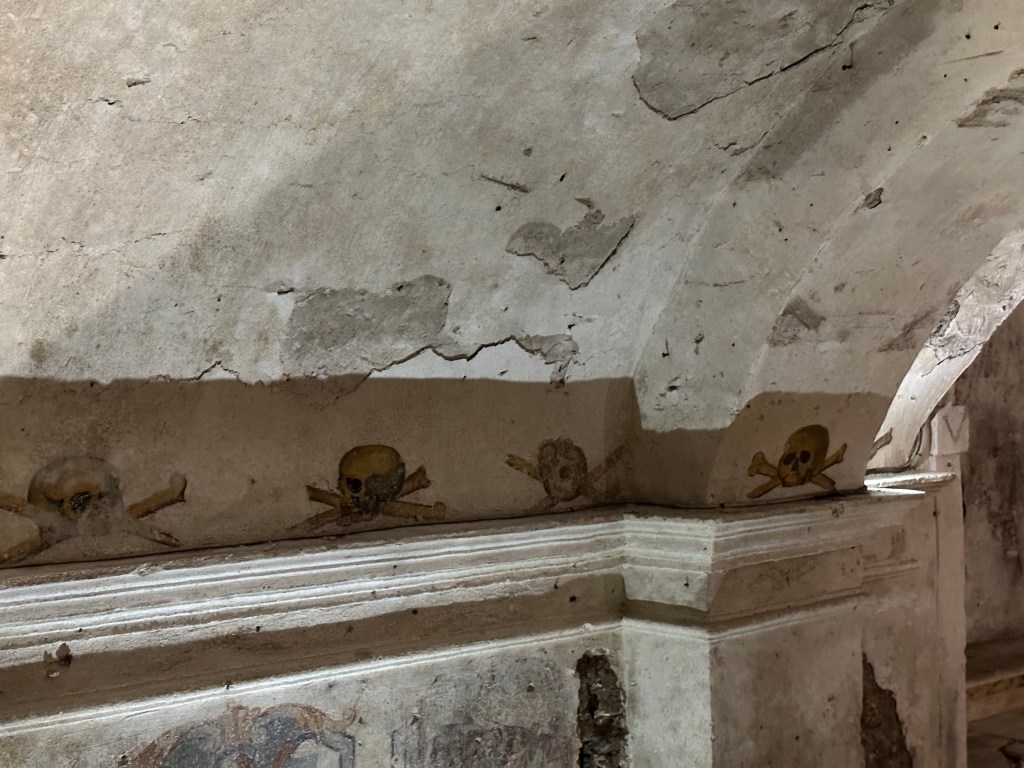
Some pretty wild mortality imagery throughout the crypt.
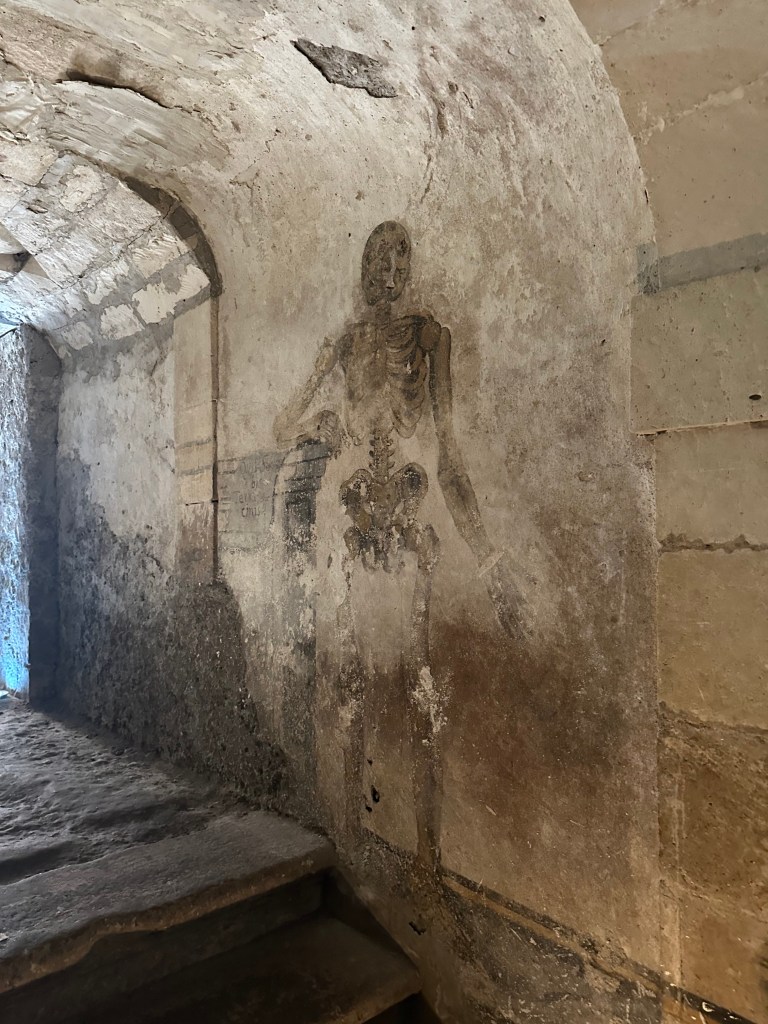
Then, descending below this initial subterranean level, we come to a more unusual underground labyrinth: WWII bomb-shelters beneath Chiesa di San Filippo Apostolo. These tunnels originally were part of an ancient Greek and Greco-Roman underground water and hypogeum network that stretches beneath Ortigia toward the sea.
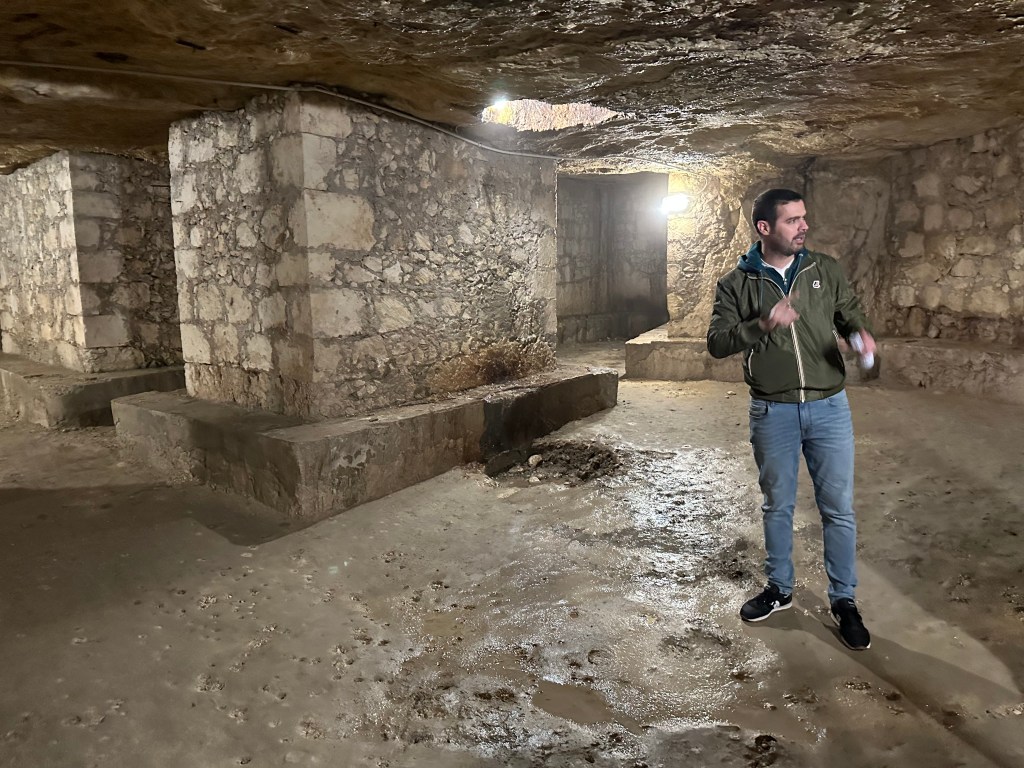
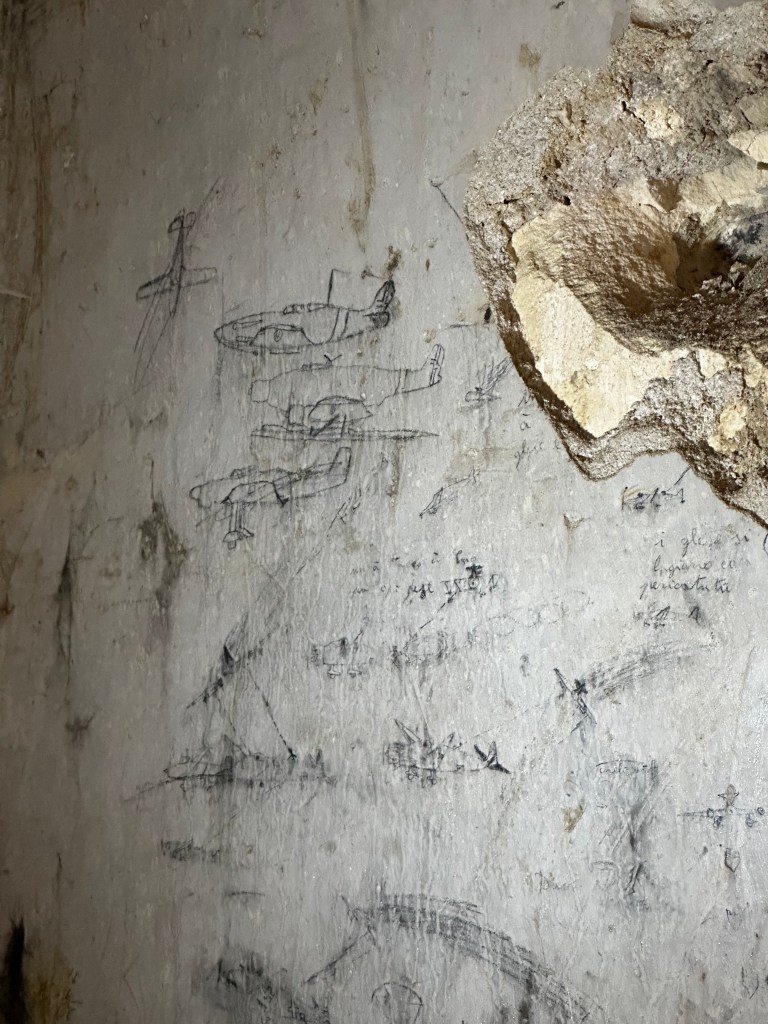
During the Allied bombing campaigns of 1943, the tunnels sheltered more than 10,000 civilians, and the walls still preserve wartime graffiti including drawings of British aircraft and parachutes sketched by people hiding underground during the raids.
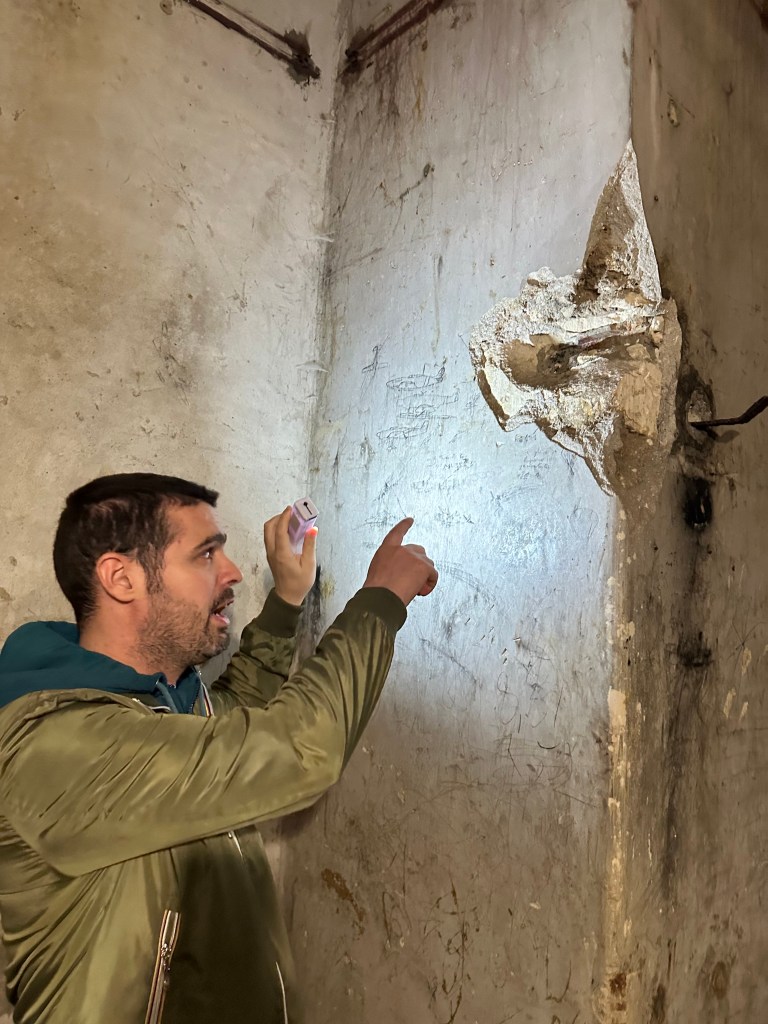
Pretty accurate.
Heading further in and down.
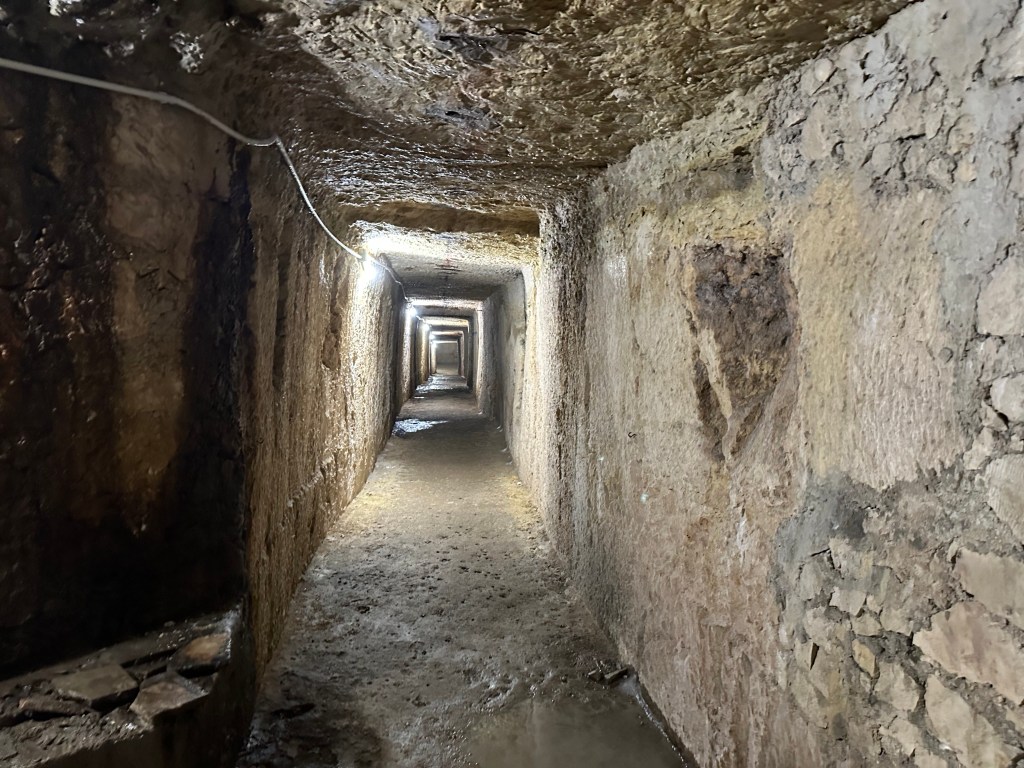
There’s a well carved into the rock that dates to around 734 BC, when Corinthian settlers first founded Syracuse. But in the 15th century, Jews living on Ortigia built a spiral staircase leading down to the well 18 meters below their synagogue on the street level above.
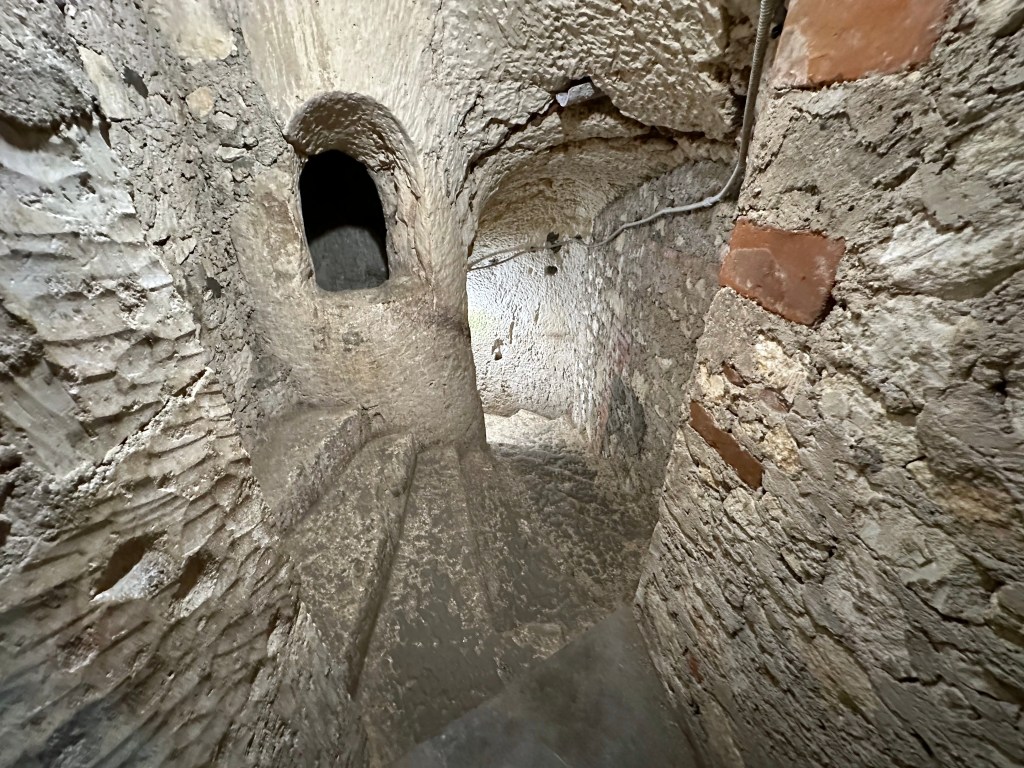
And converted the ancient Hellenistic freshwater spring well to their mikveh, a bath for ritual immersion to achieve purity. It is considered among the oldest surviving mikvehs in Europe.
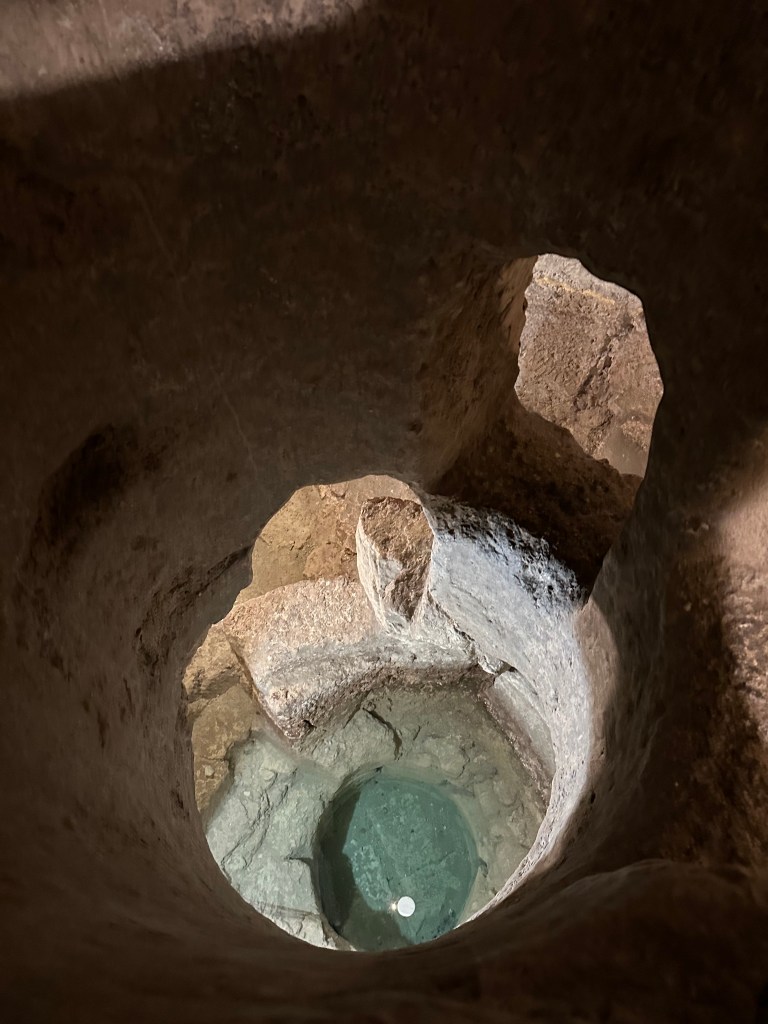
The community abandoned the mikveh after the 1492 expulsion of Sicily’s Jews under Spanish rule, and it was gradually forgotten for centuries until it was rediscovered and formally identified in 1977 beneath the church built atop the former synagogue site.
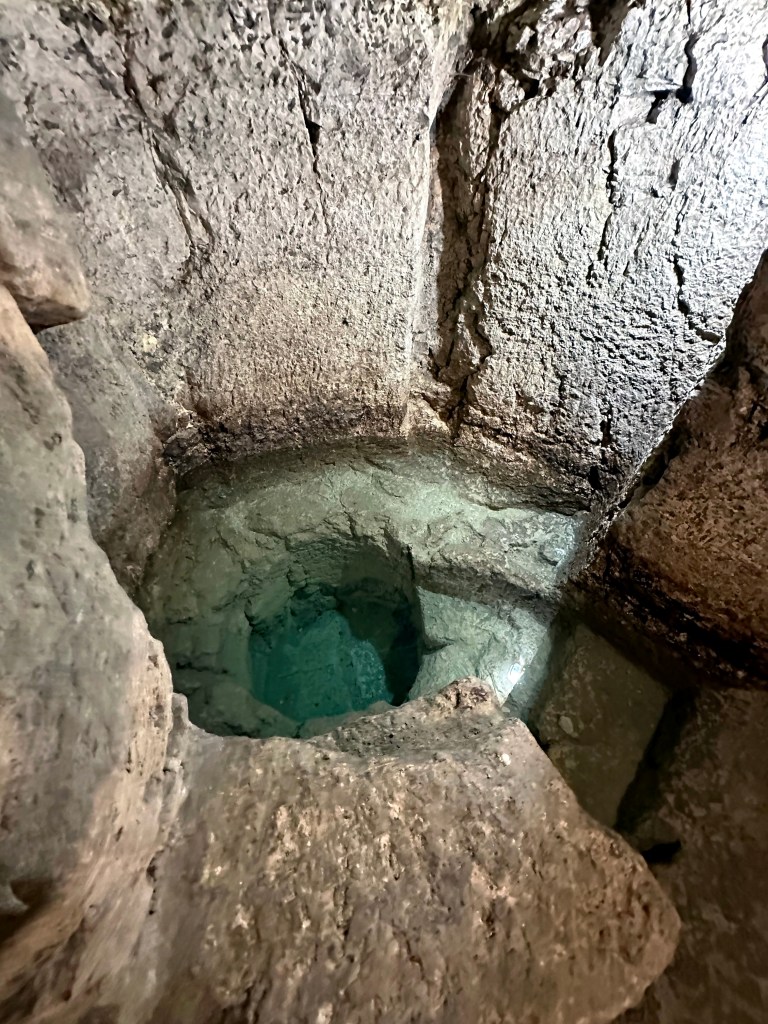
More layers of Sicilian cultural history that we definitely dug during our time on the island.
But wait, there’s even more!
Check out the Cathedral of Syracuse (Duomo di Siracusa). Just another ornamental Baroque church in Sicily, no?
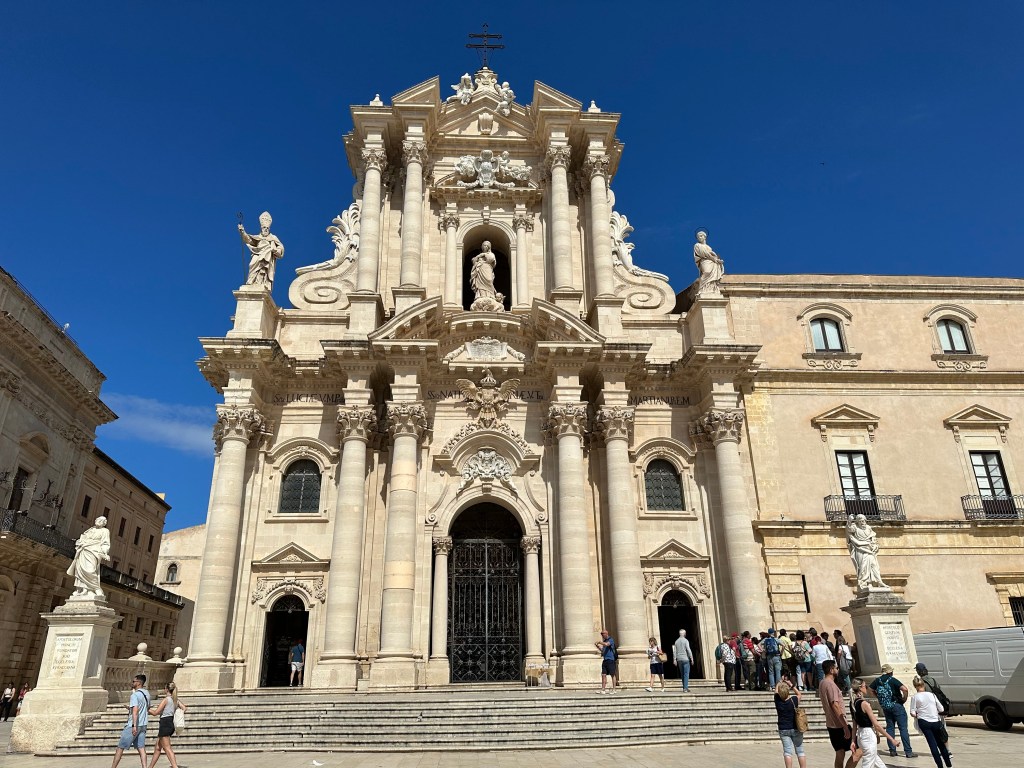
Maybe from the front facade, but when you peek around the corner. . .
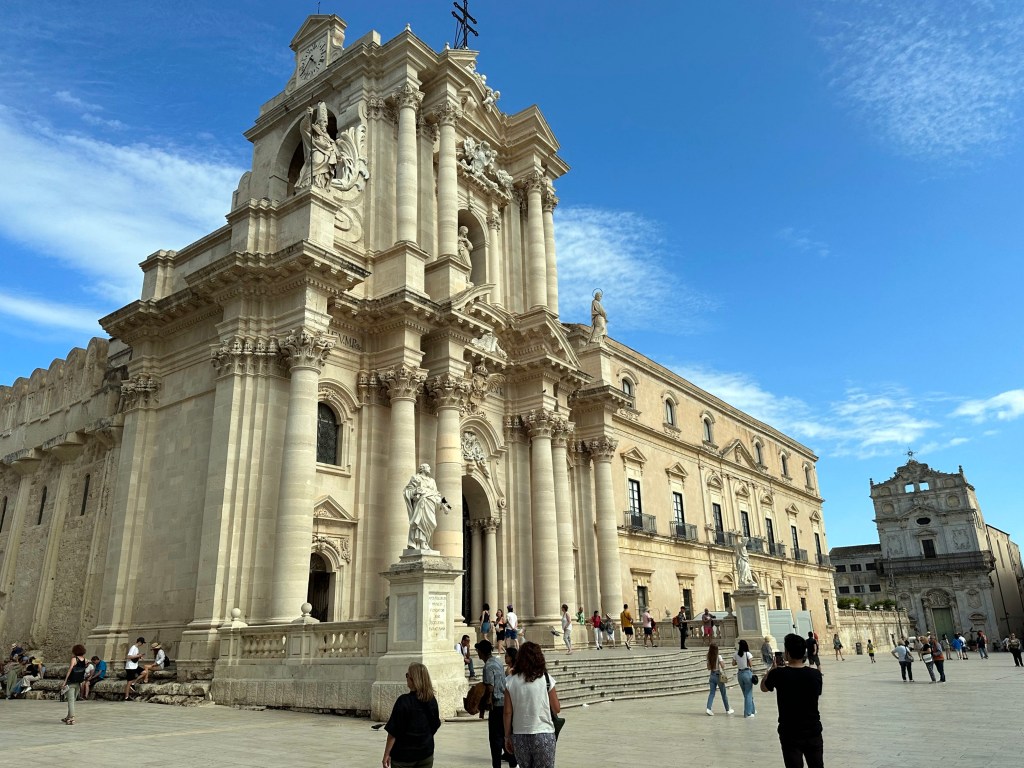
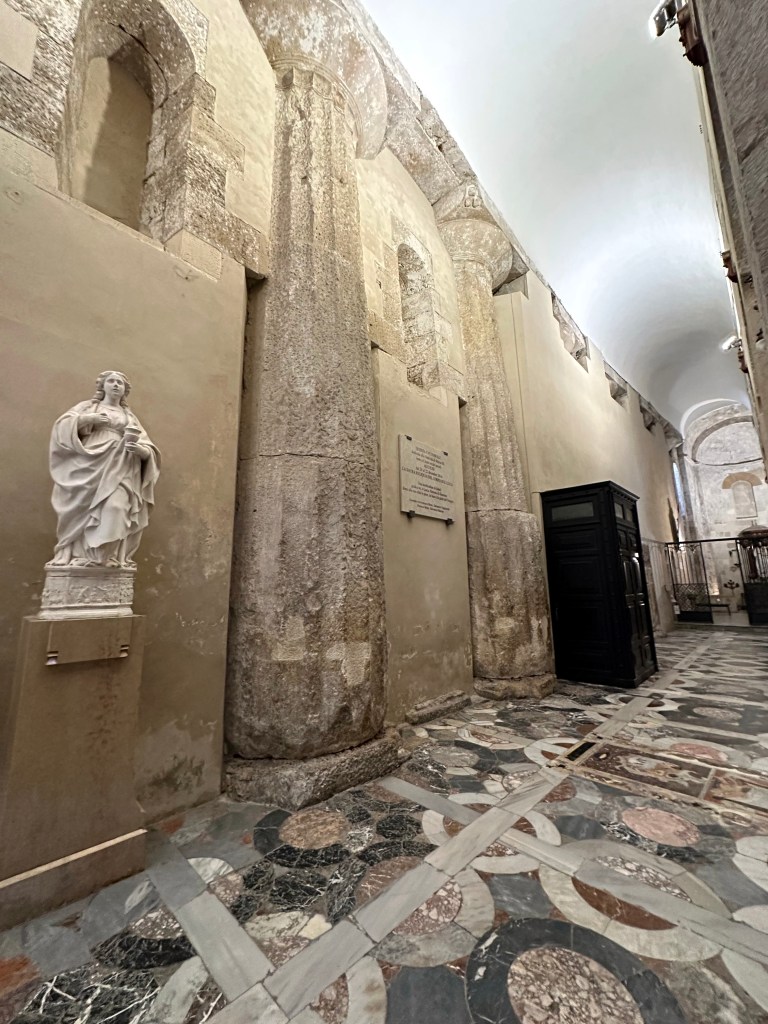
Look at this shit! It’s actually a 5th-century BC Doric temple originally dedicated to Athena by the tyrant Gelon after his victory at the Battle of Himera. A quick note on “tyrant” because we’ve used it twice in one post now and it probably gives the wrong impression. As articulated effectively in Sicily: Three Thousand Years of Human History (read while here, as noted in our Sicily leg intro post), a tyrant in the Greek colonies was simply someone who had seized or inherited sole rule rather than governing through the established aristocratic or democratic institutions of the city-state. In the Sicilian colonies, tyranny was often a pragmatic response to the intense pressures these communities faced: constant military threats from Carthage, competition between rival Greek cities, and the need for swift, unified military leadership that deliberative bodies could not always provide. So, not a tyrannical ruler; just one who took sole rule for himself.
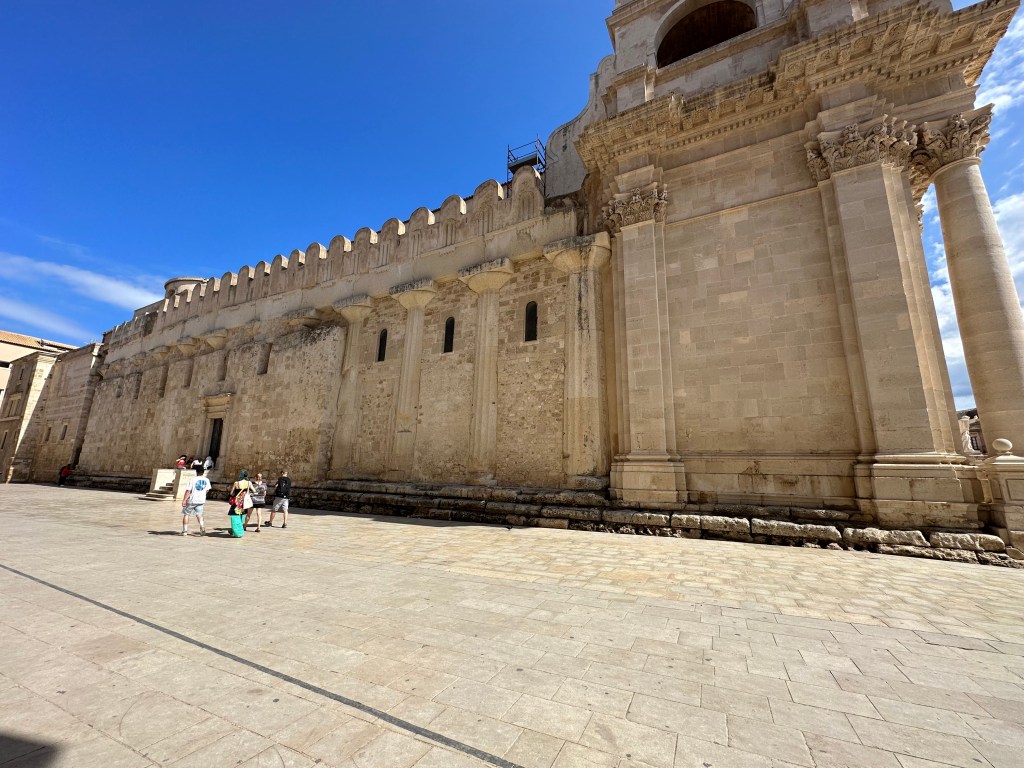
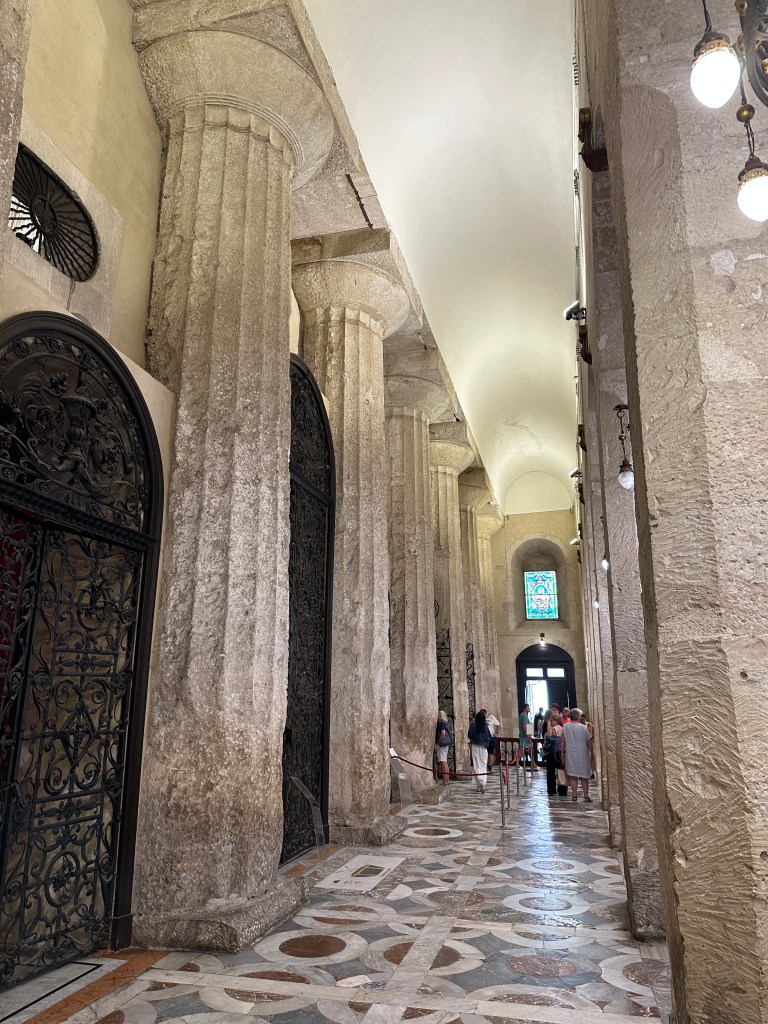
The best part about the temple-cum-duomo is the side wall, where the Normans simply filled in between the Doric columns of the Greek temple to create a Christian church, leaving them in place, rather than razing the place and rebuilding as was the norm. Oh, and in between, of course, the Arabs repurposed the temple as a mosque, of course.
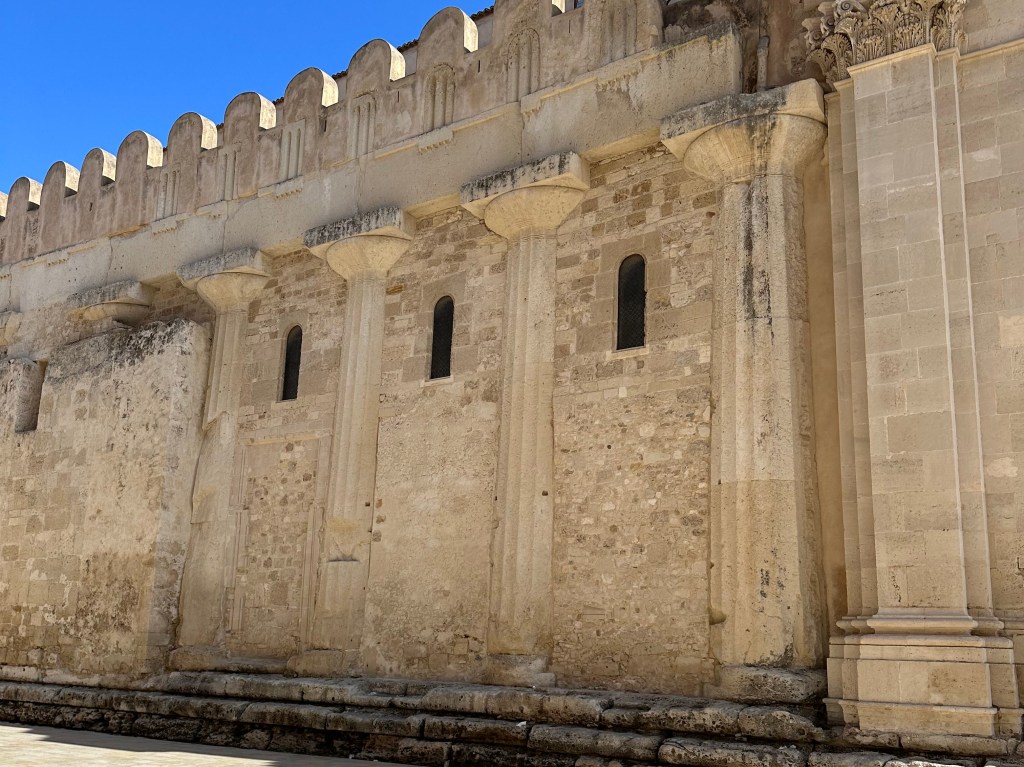
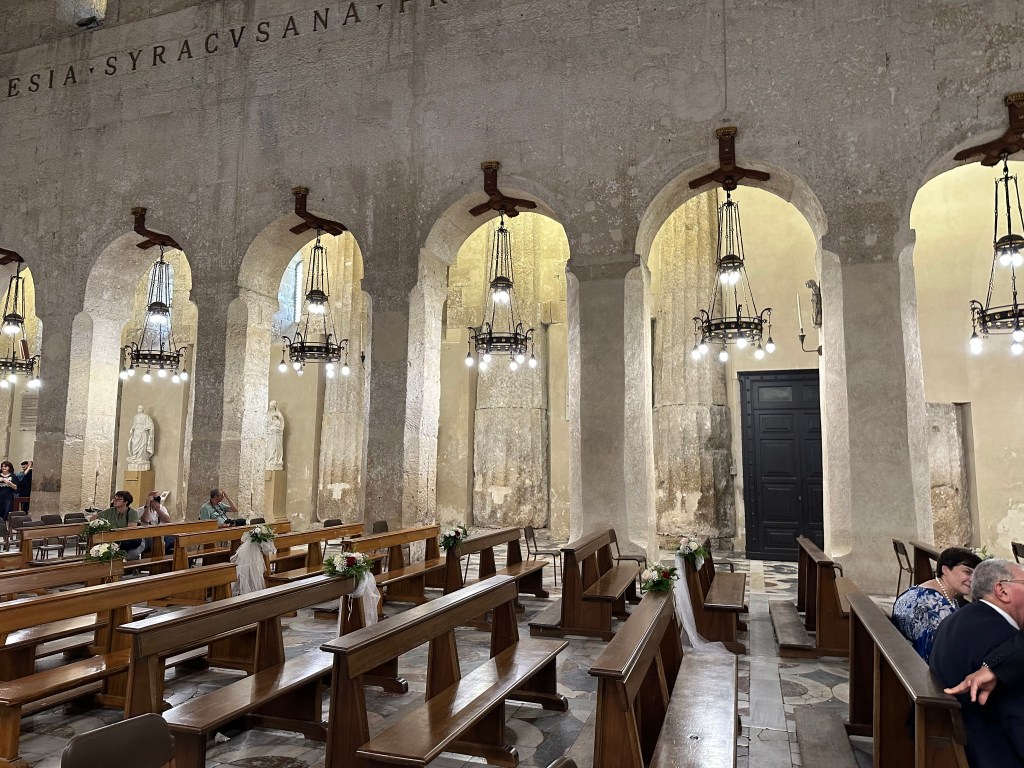
Inside the duomo, which was palpably medieval and beefy.
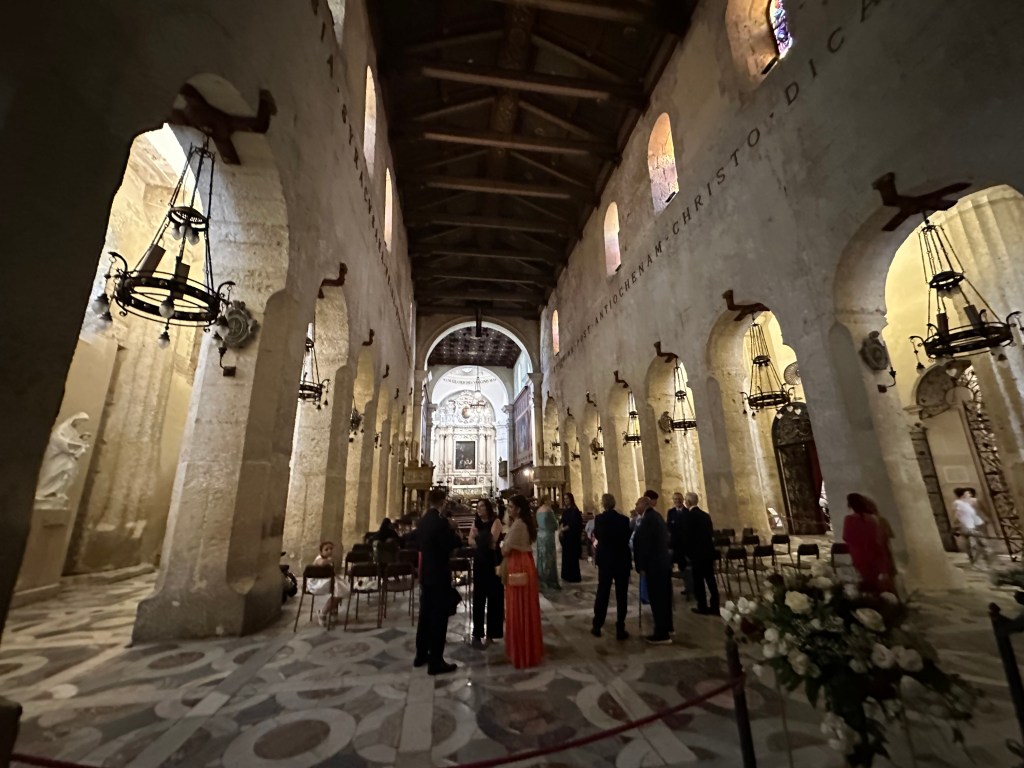
But still with the visually evident Doric columns of the original Greek temple.
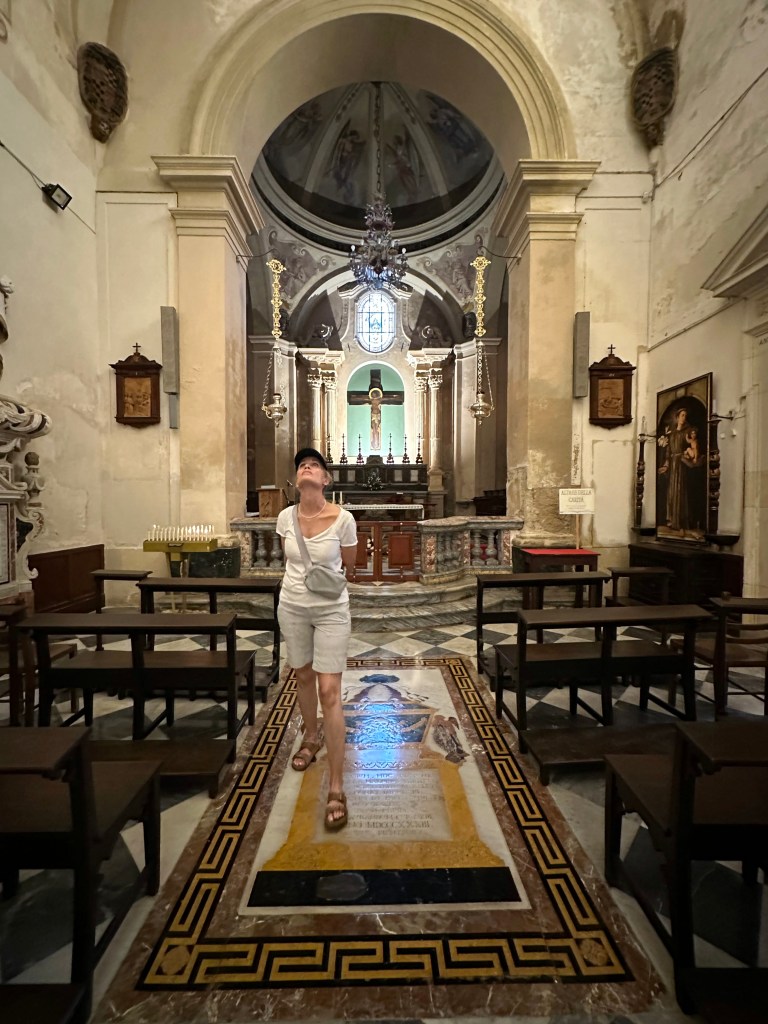
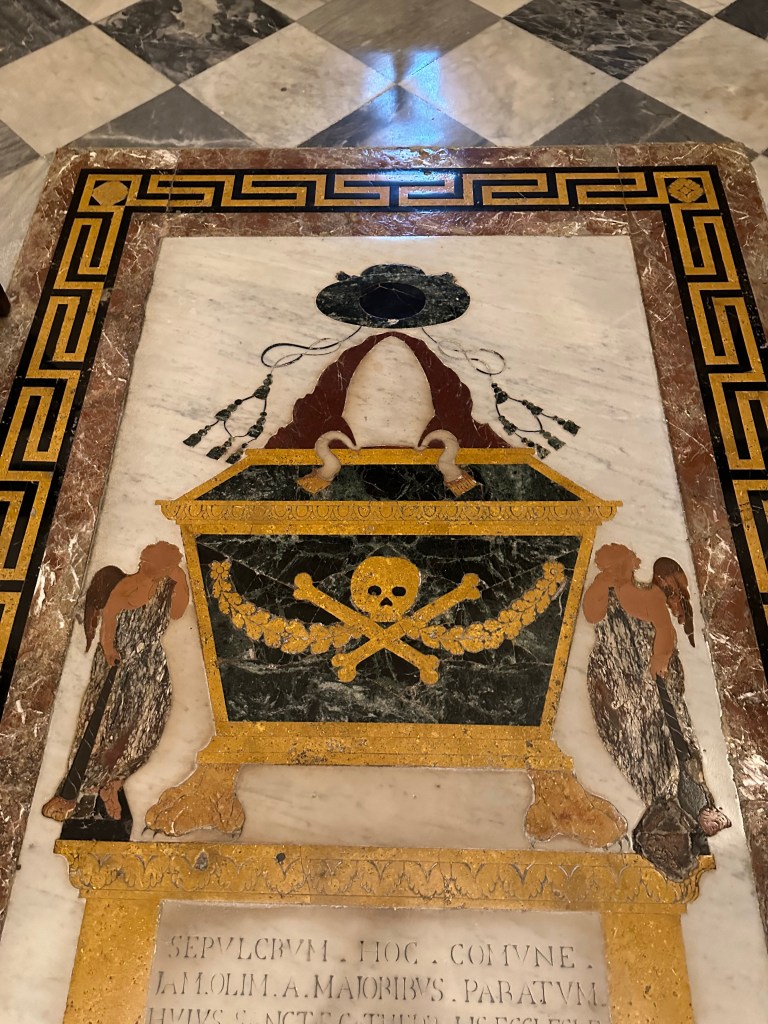
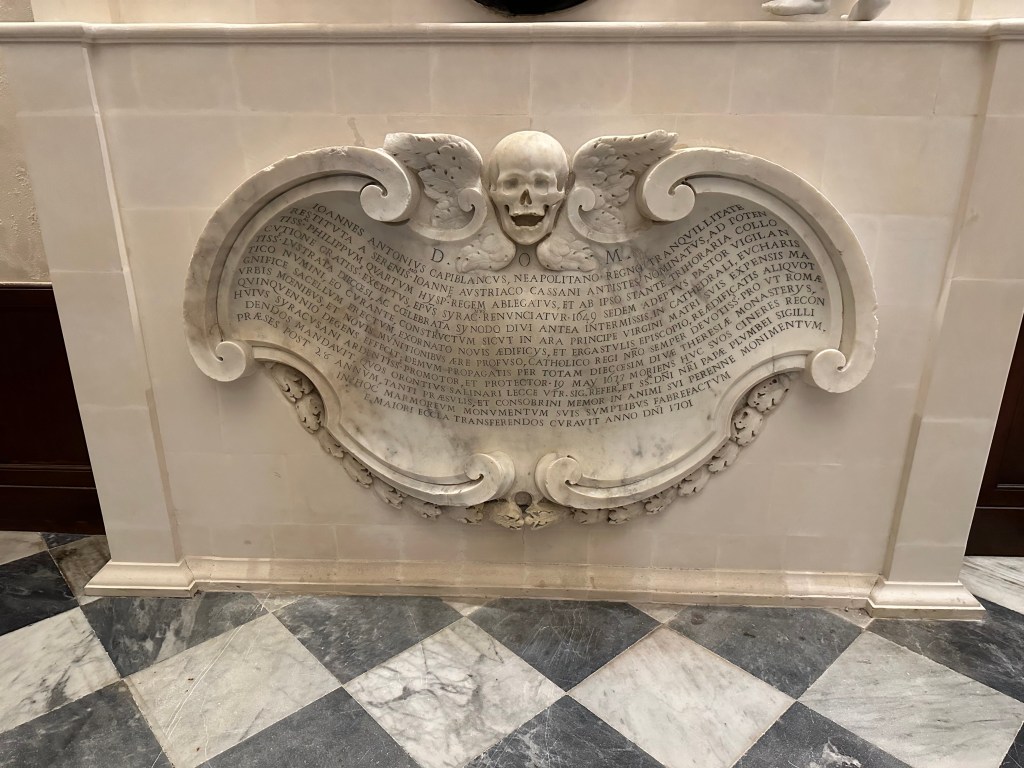
And more cool mortality motifs.
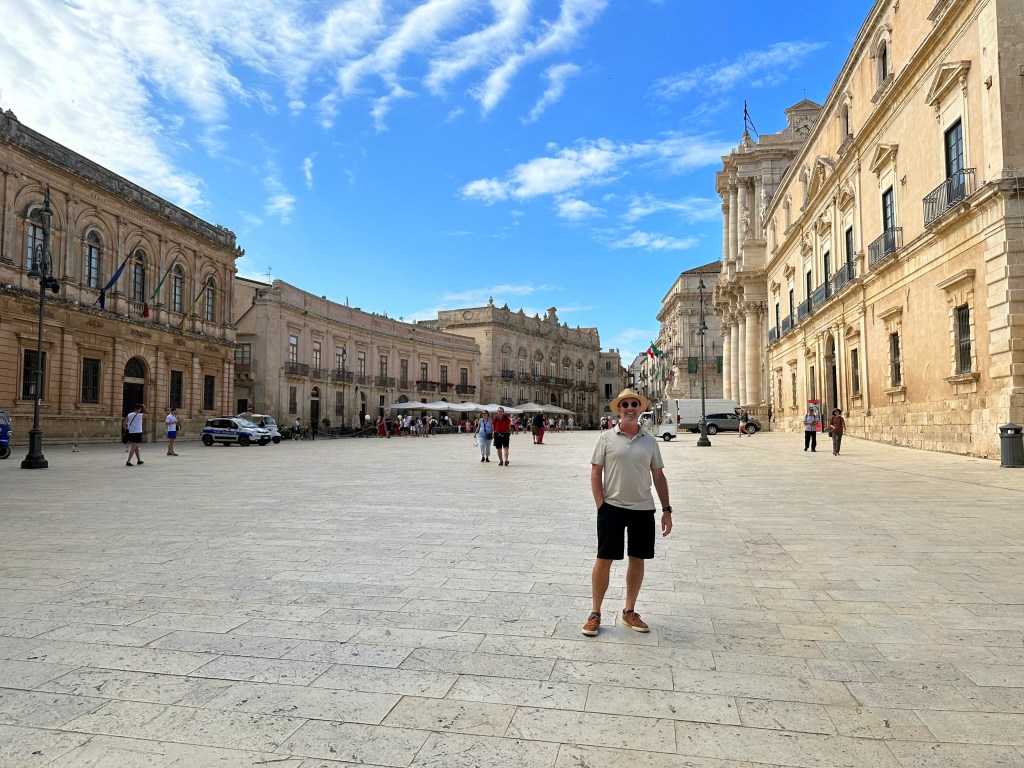
Out in the piazza of the duomo – pretty great day.
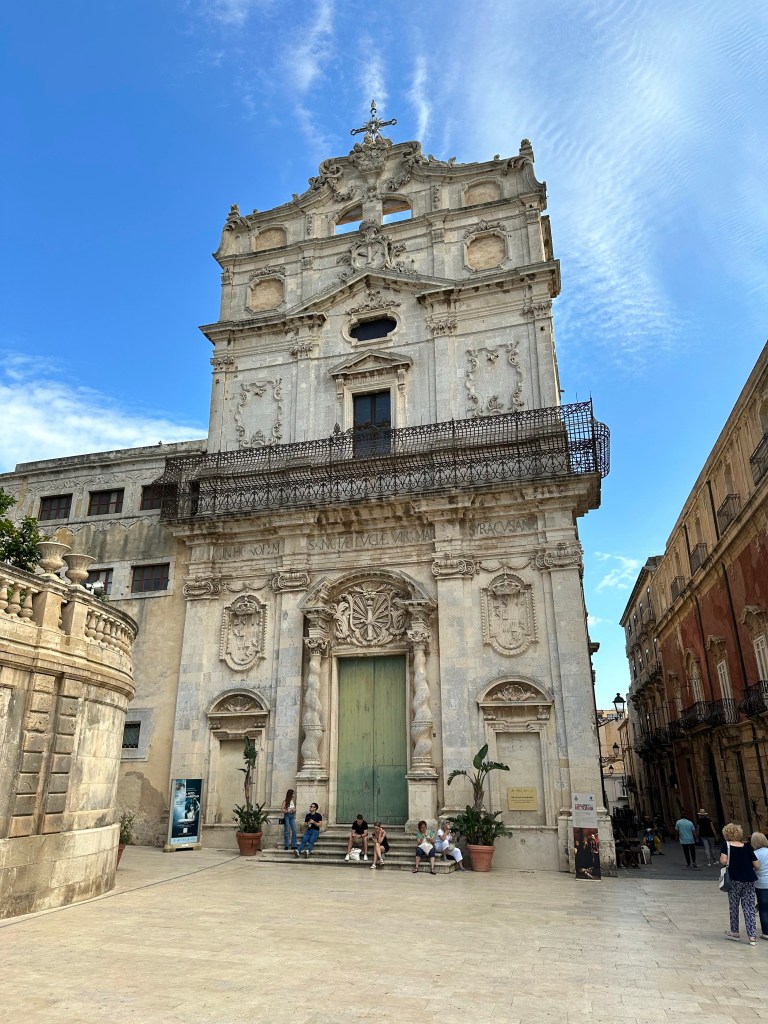
Dunno – some other picturesque church. With twisted columns like we saw in Lecce while biking through Puglia in 2013.
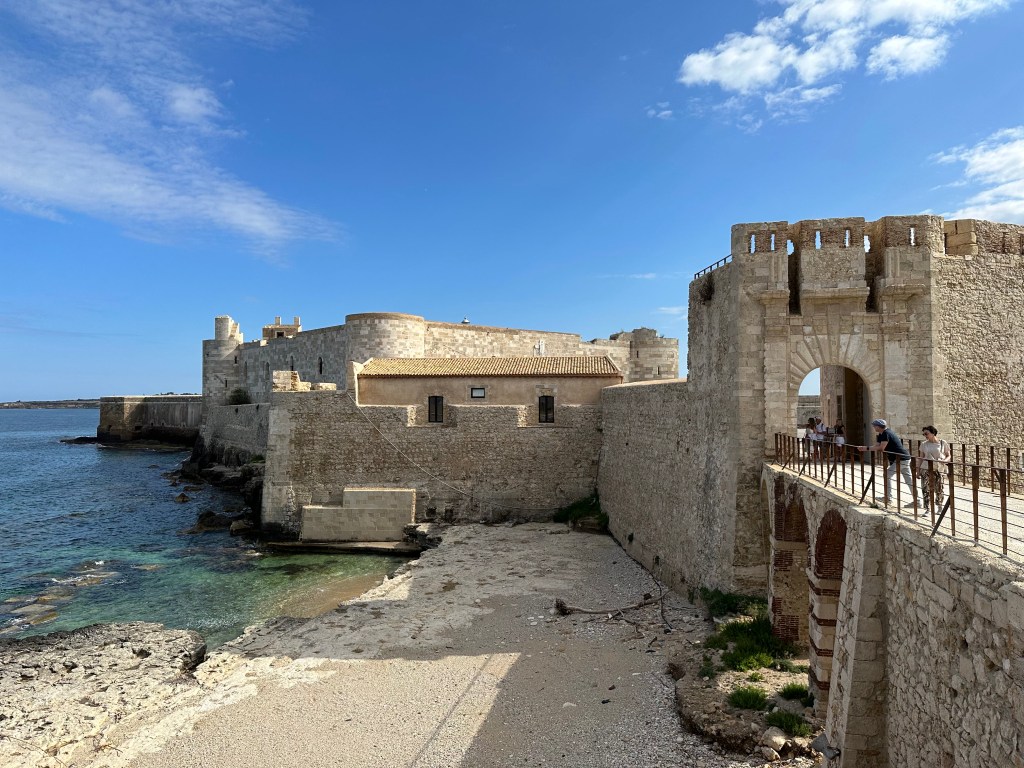
At the extreme southern tip of Ortigia lies Castello Maniace, a citadel named after the Byzantine general George Maniakes who seized Syracuse from the Arabs in 1038, although the present structure was built between 1232 and 1240 under Holy Roman Emperor Frederick II.
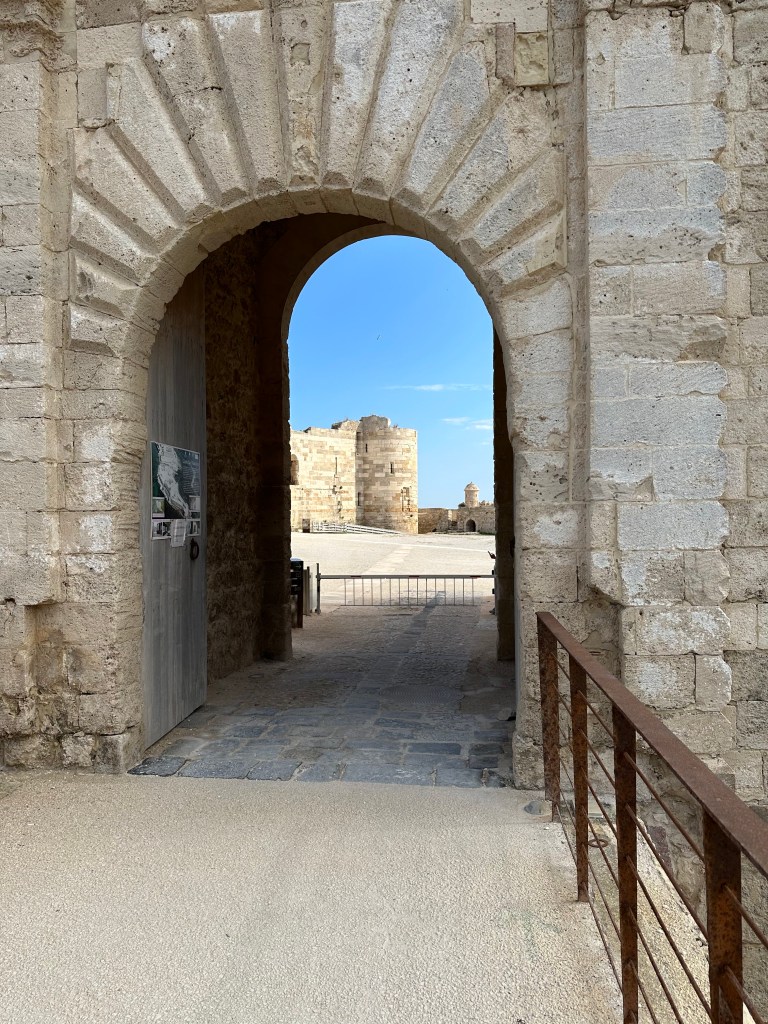
With four cylindrical corner towers, the massive castle later served as the site where Frederick of Aragon signed a truce with the Angevins in 1302.
And just up the promenade? A casual joint for early aperitivos.
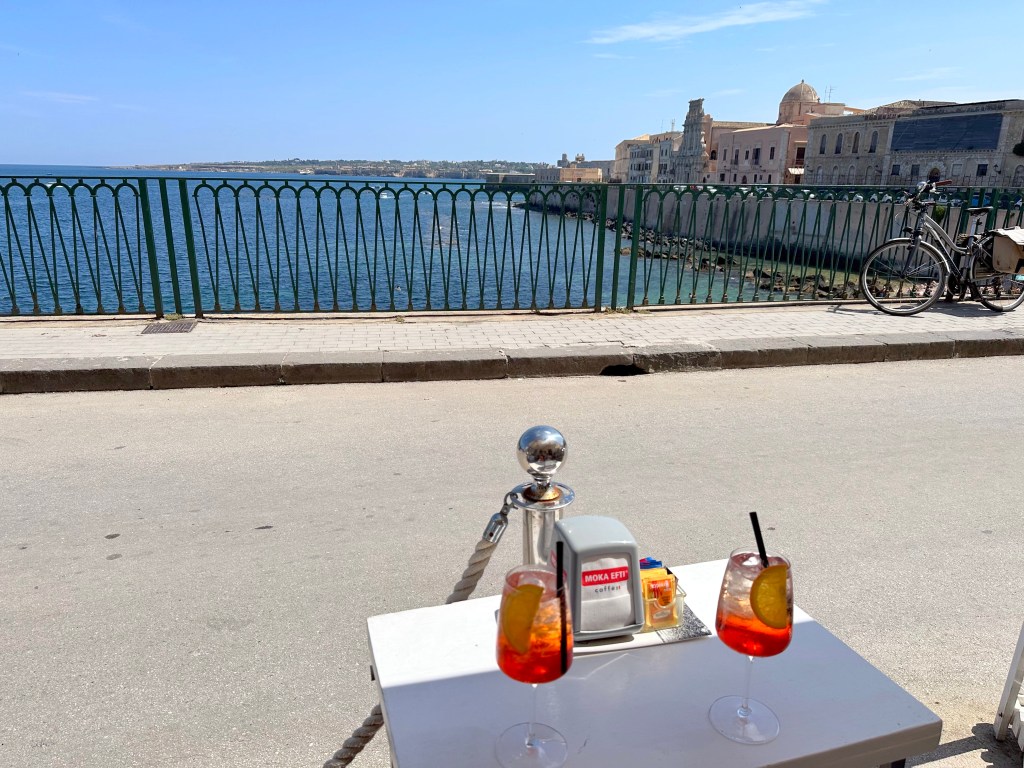
With a nice view of the aquatic activities available in the castle’s shadow.
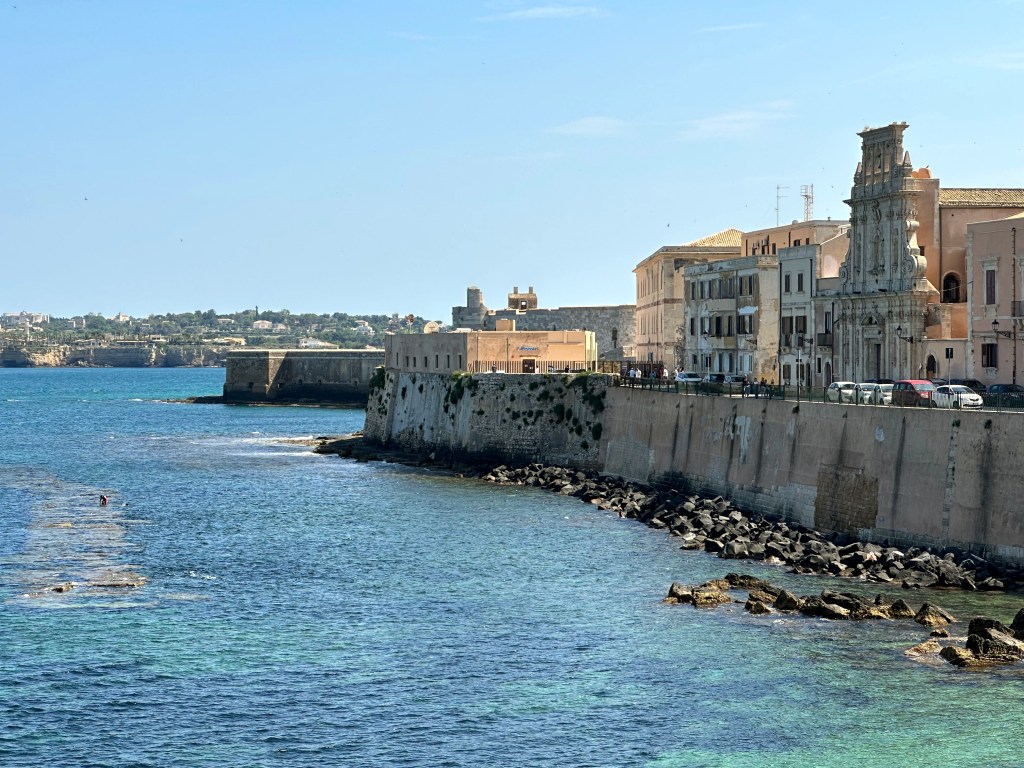
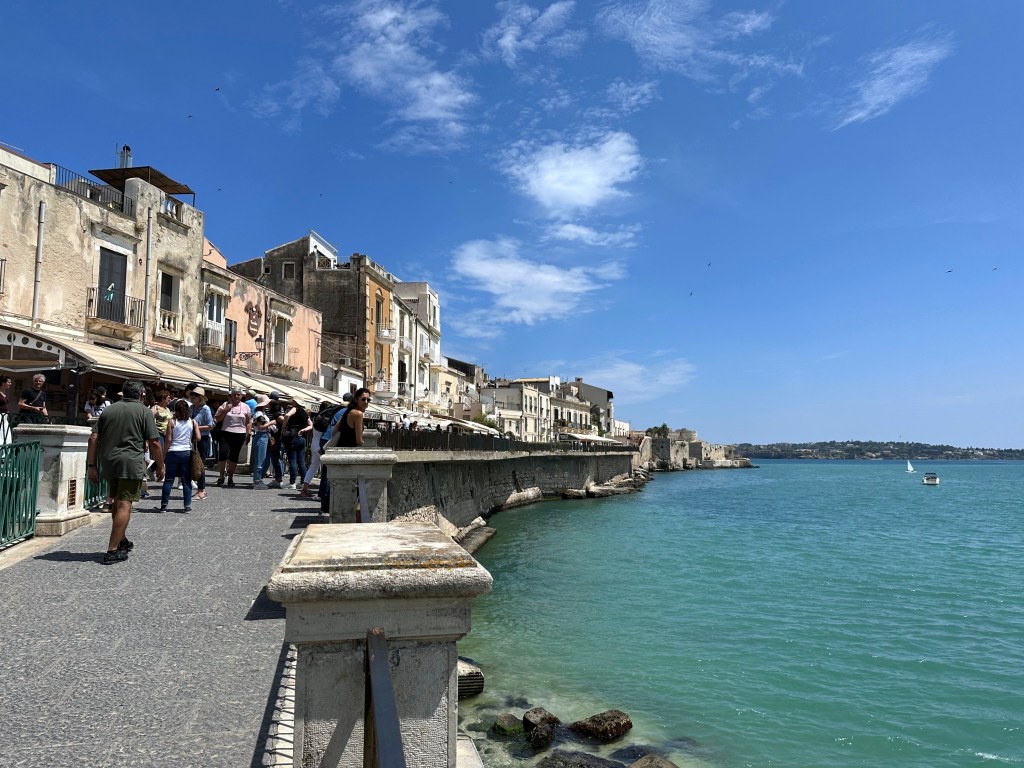
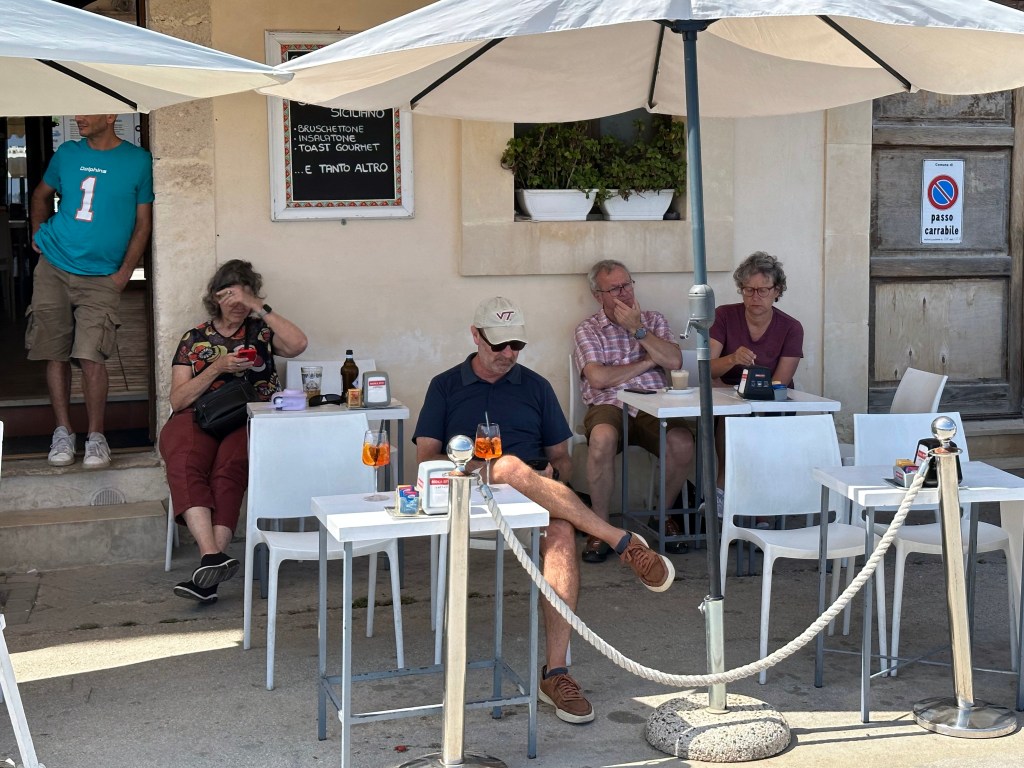
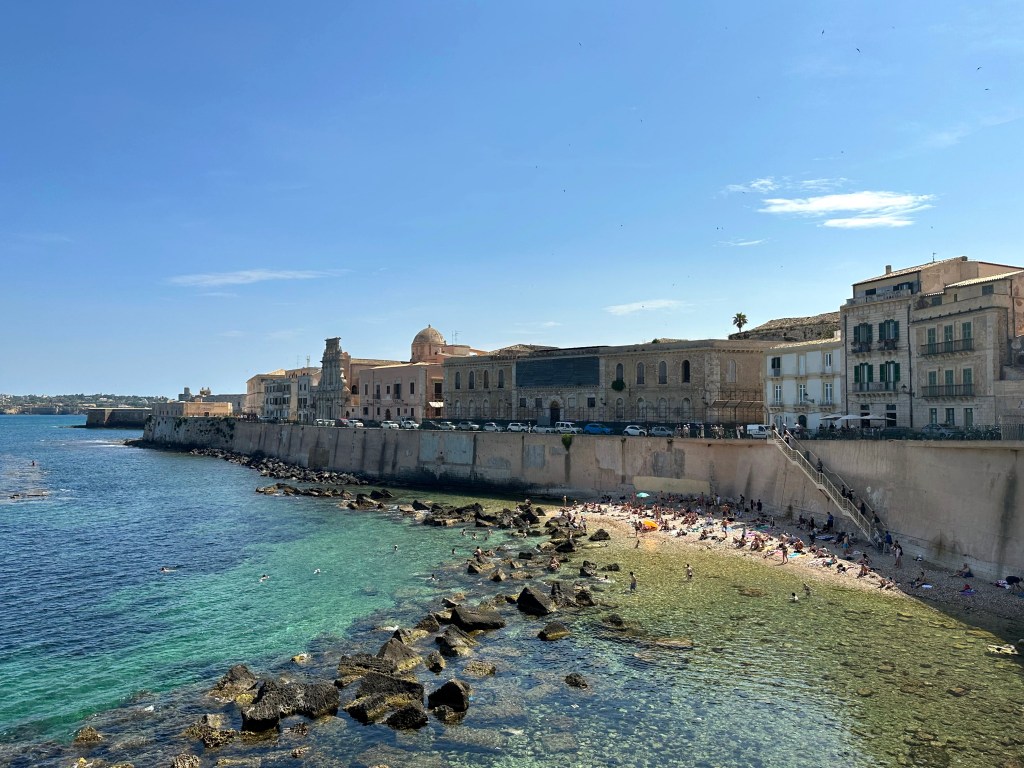
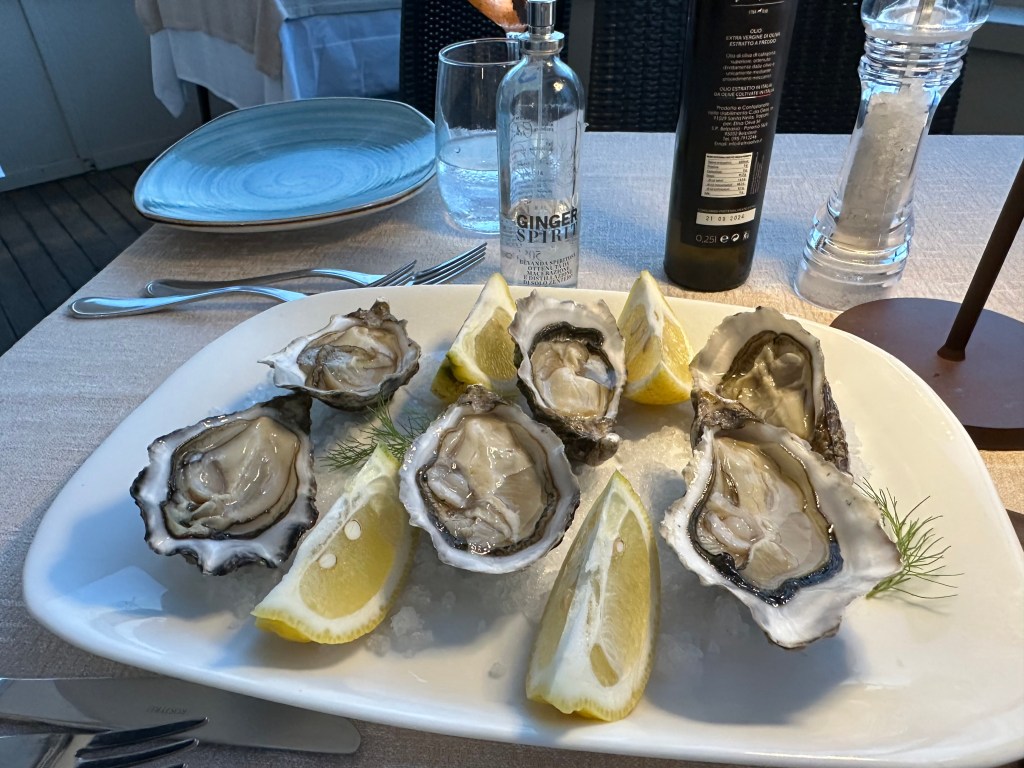
Some decent oysters, to be expected, with a first-time-encountered ginger spray, which was not expected.
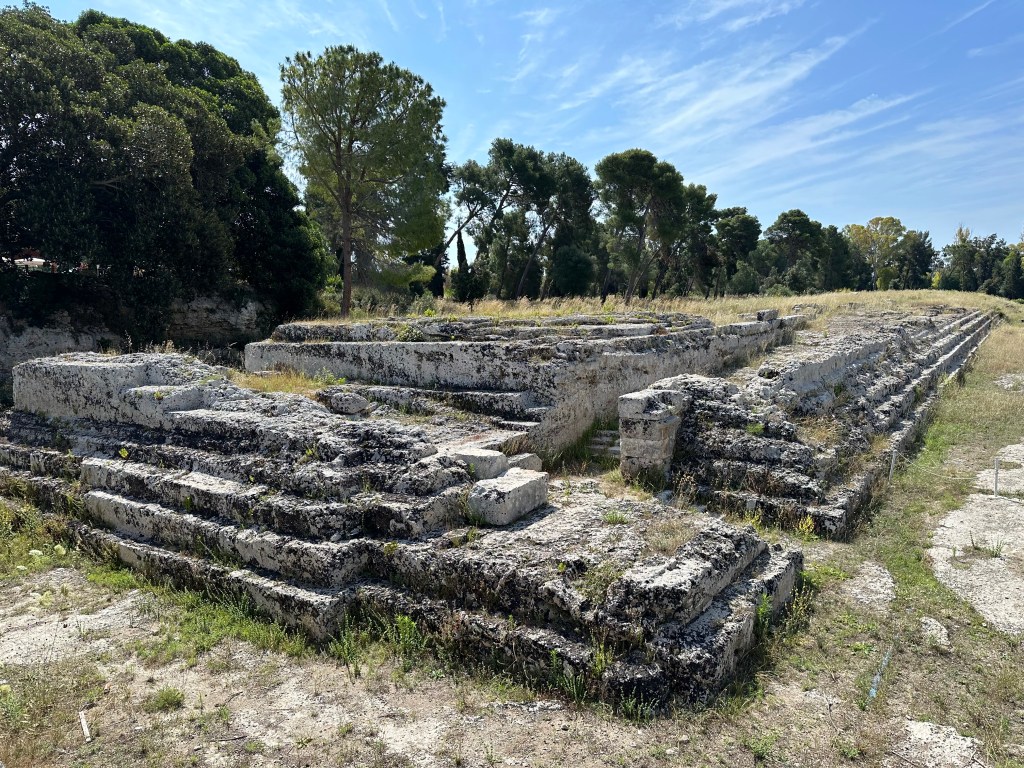
And now for something completely different: Greek and Roman ruins in Syracuse adjacent to Ortigia.
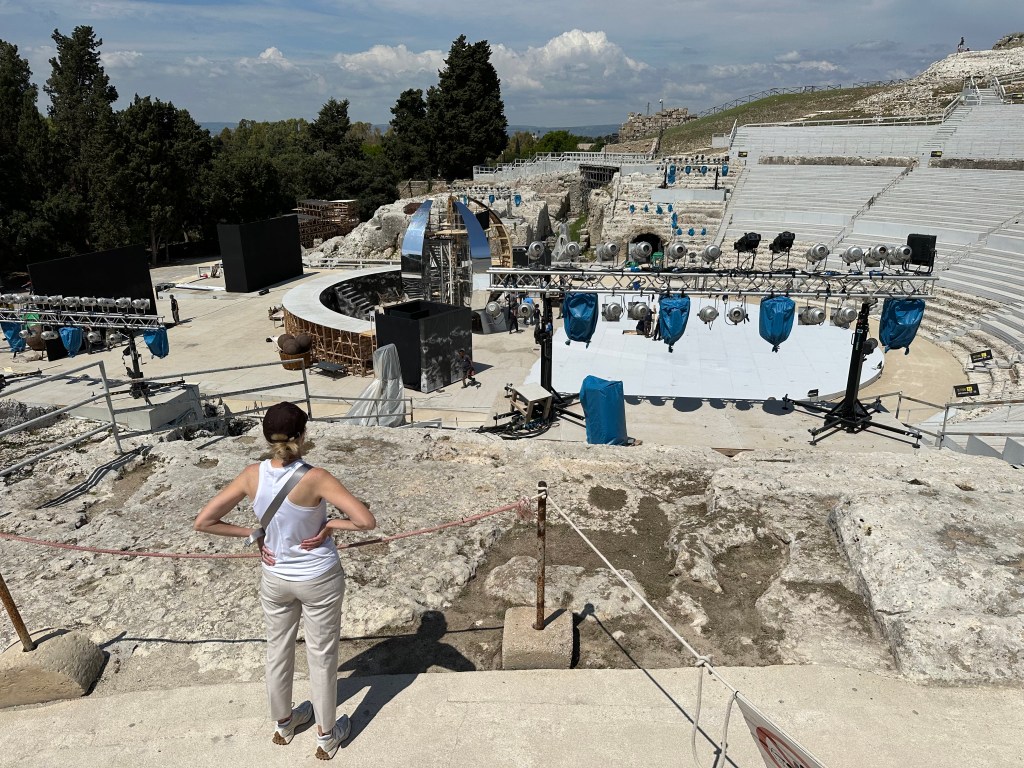
The Greeks built a theater at Syracuse around 470 BC, with a capacity of around 15,000 spectators and a diameter of nearly 140 meters.
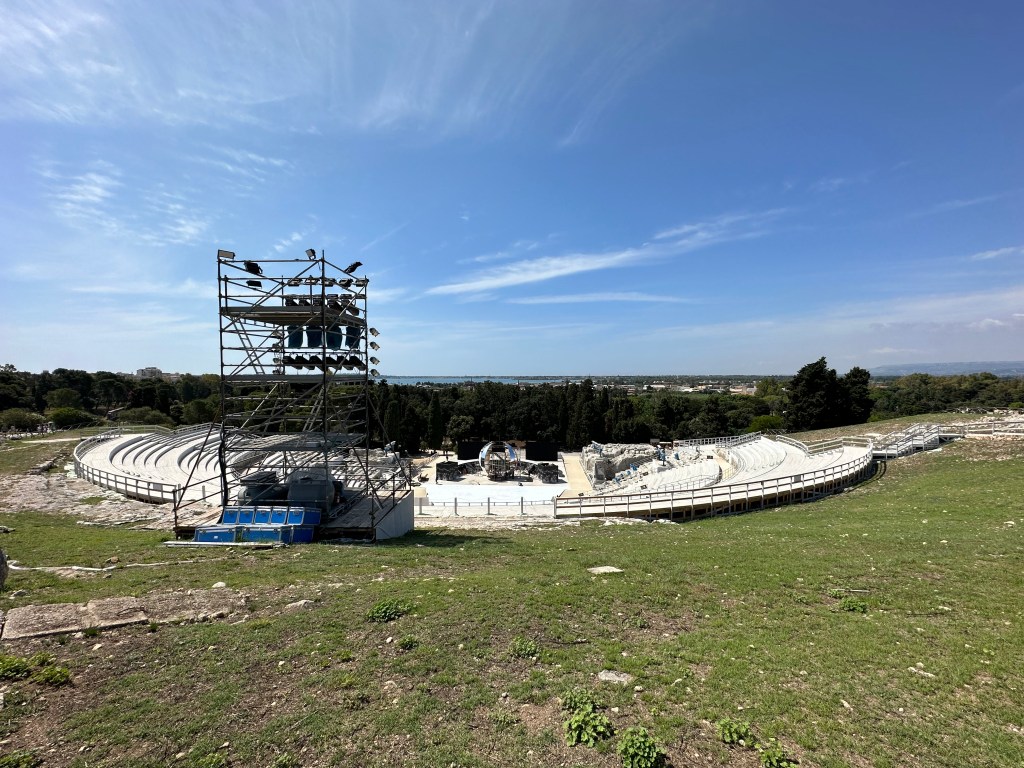
It was among the largest theaters in the ancient world, and served as the premiere venue for works by Aeschylus — including the world premieres of The Persians and The Women of Etna — as well as tragedies by Sophocles and Euripides.
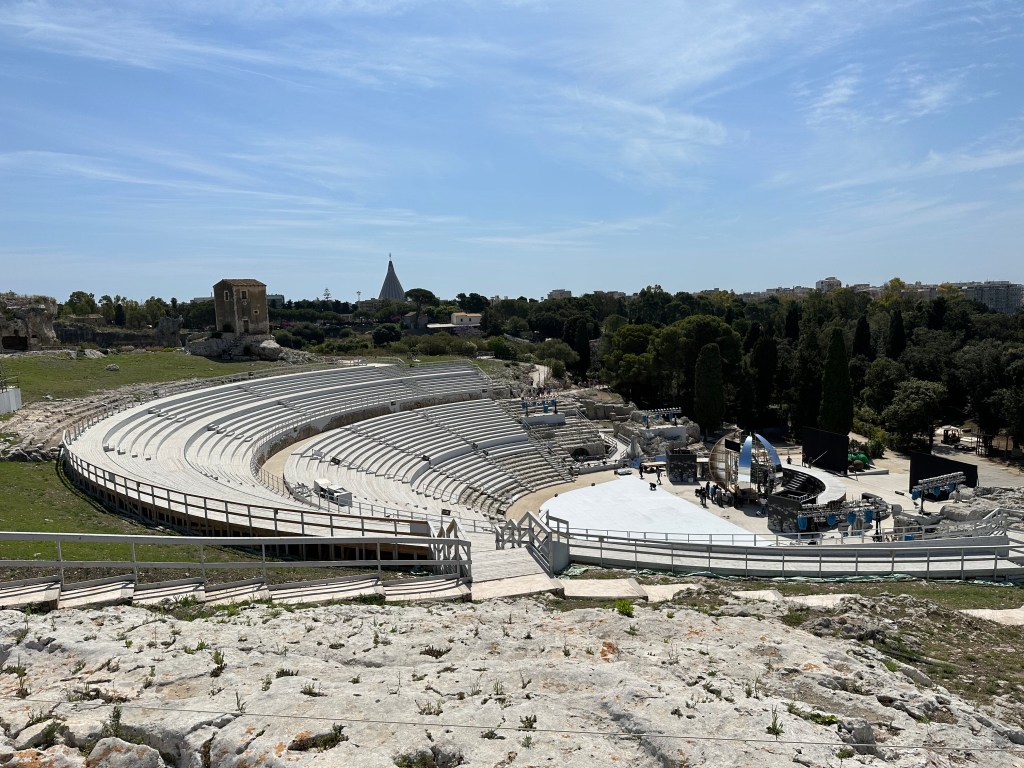
Carved directly into the rock of the Temenite hill, the theater was rebuilt in the 3rd century BC and renovated again in the Roman period, when traces of adaptations for gladiatorial battles and beast spectacles were added, and it continues to host a celebrated summer festival of classical drama to this day.
A necropolis above the Greek theater:
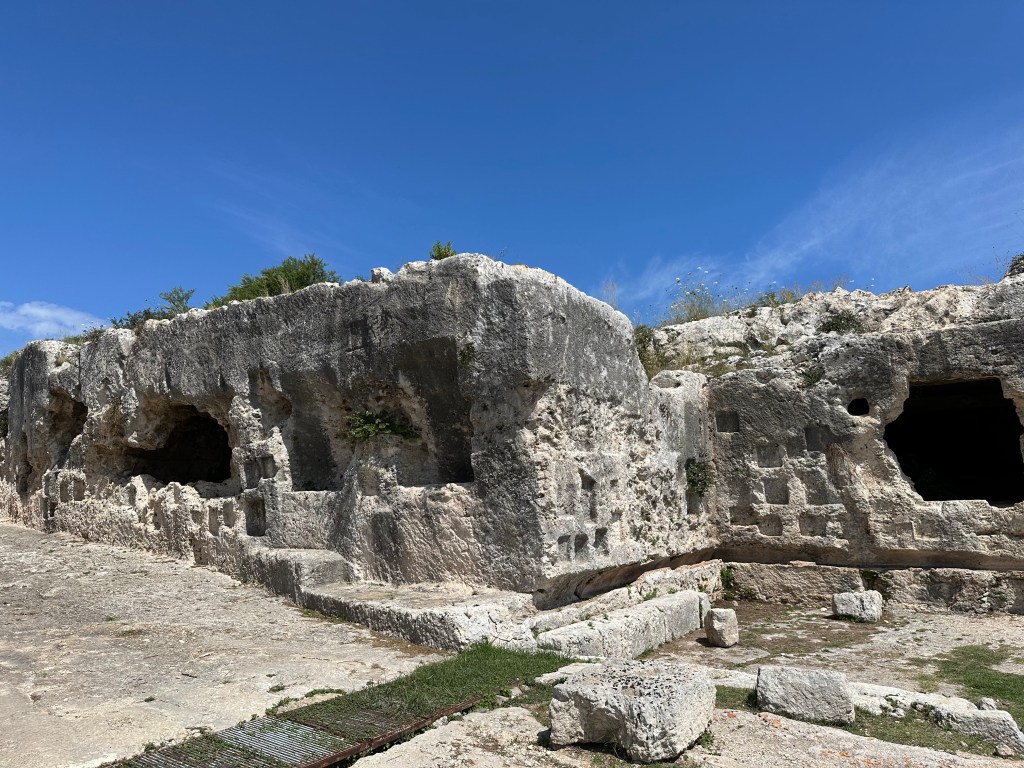
Containing the Via dei Sepolcrri – the Street of Tombs.
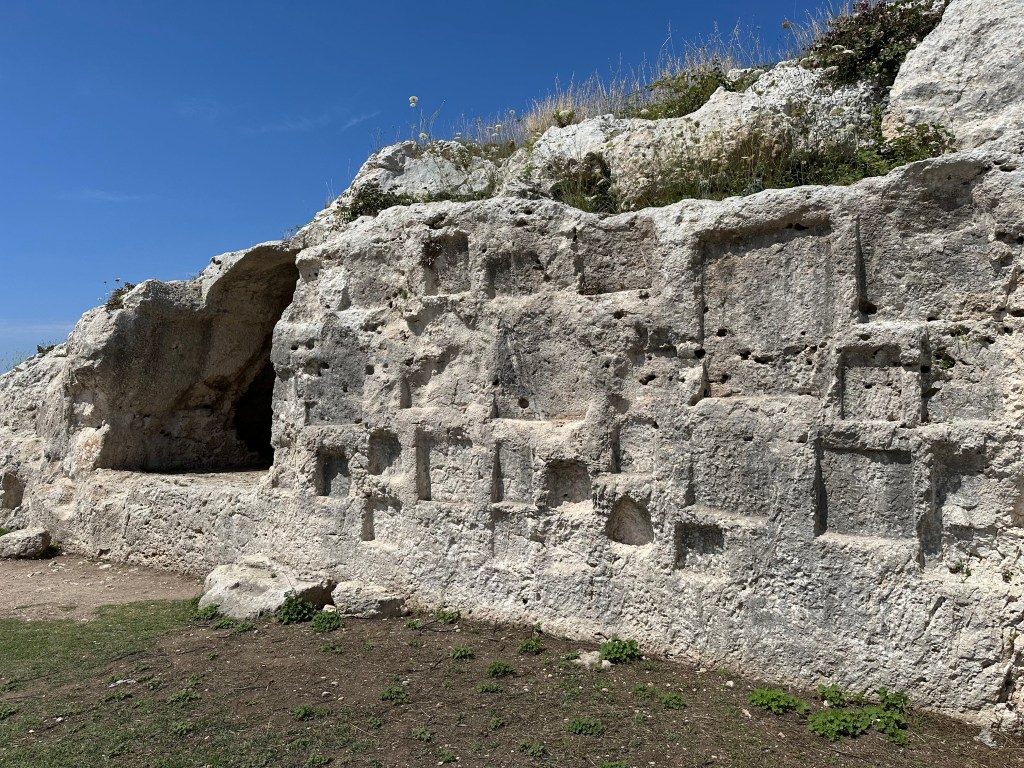
One of the tombs.
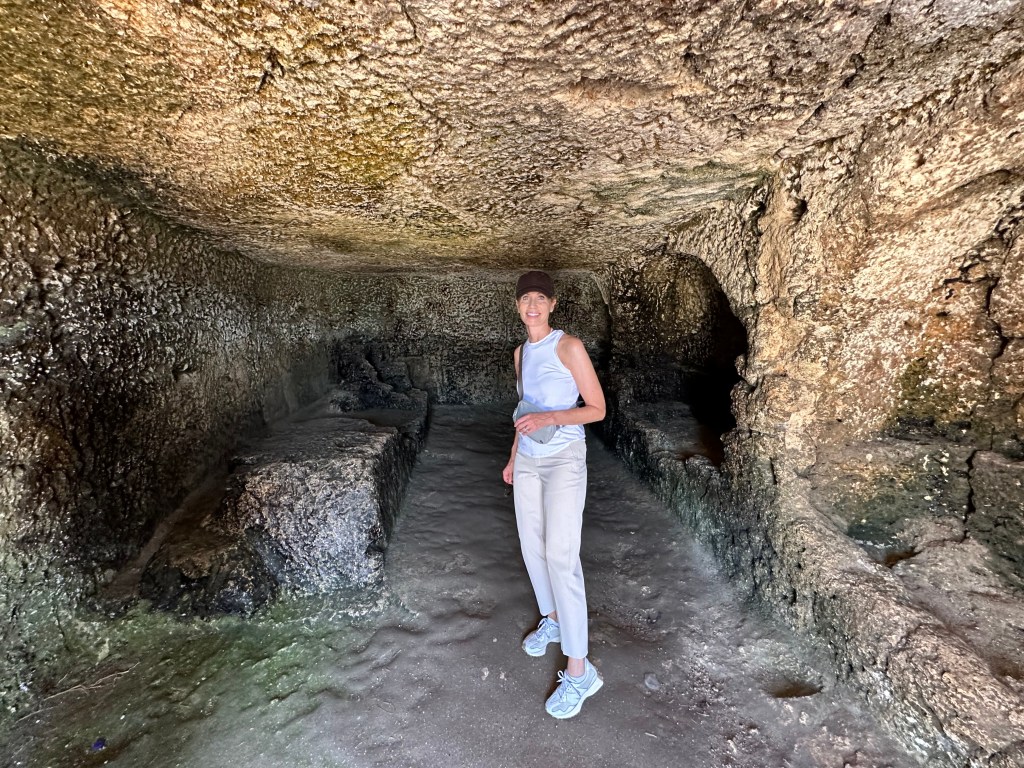
And the Grrotta del Nifeo, where the waters of the Anapo flow and where actors once prepared before performing in the theater.
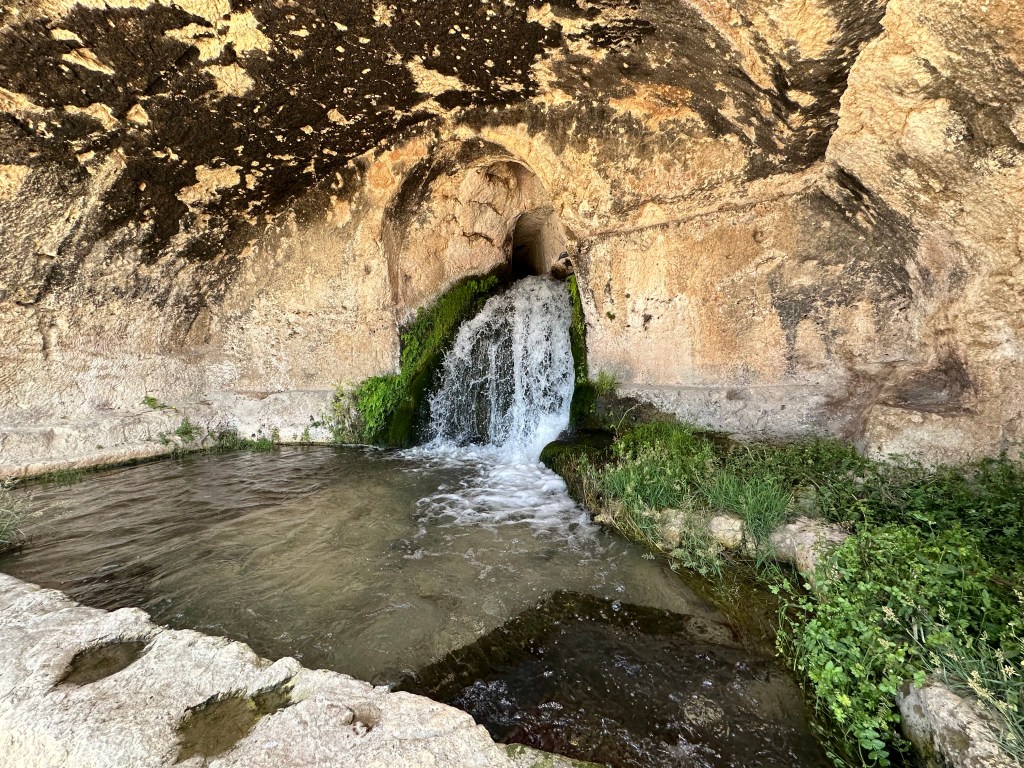
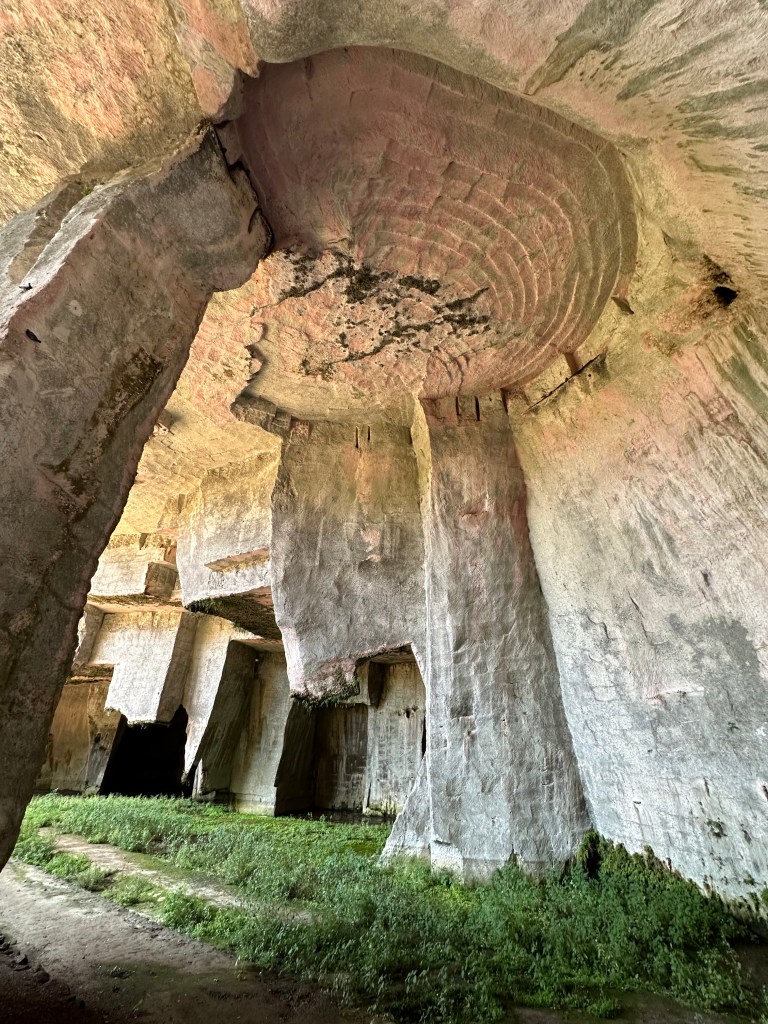
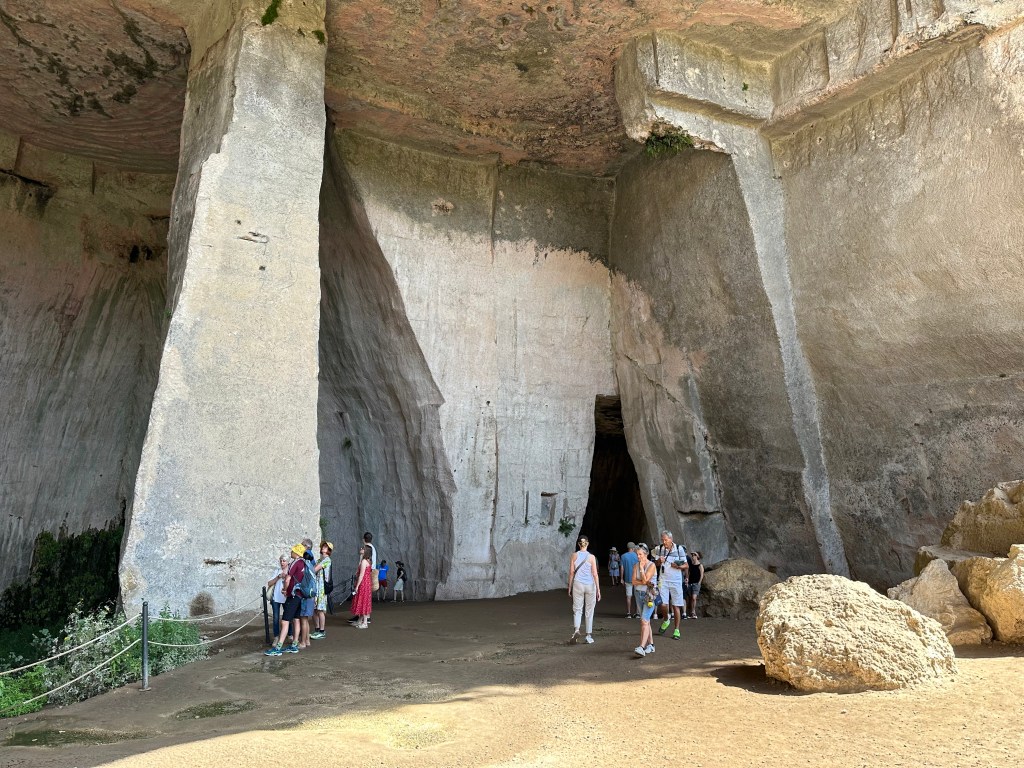
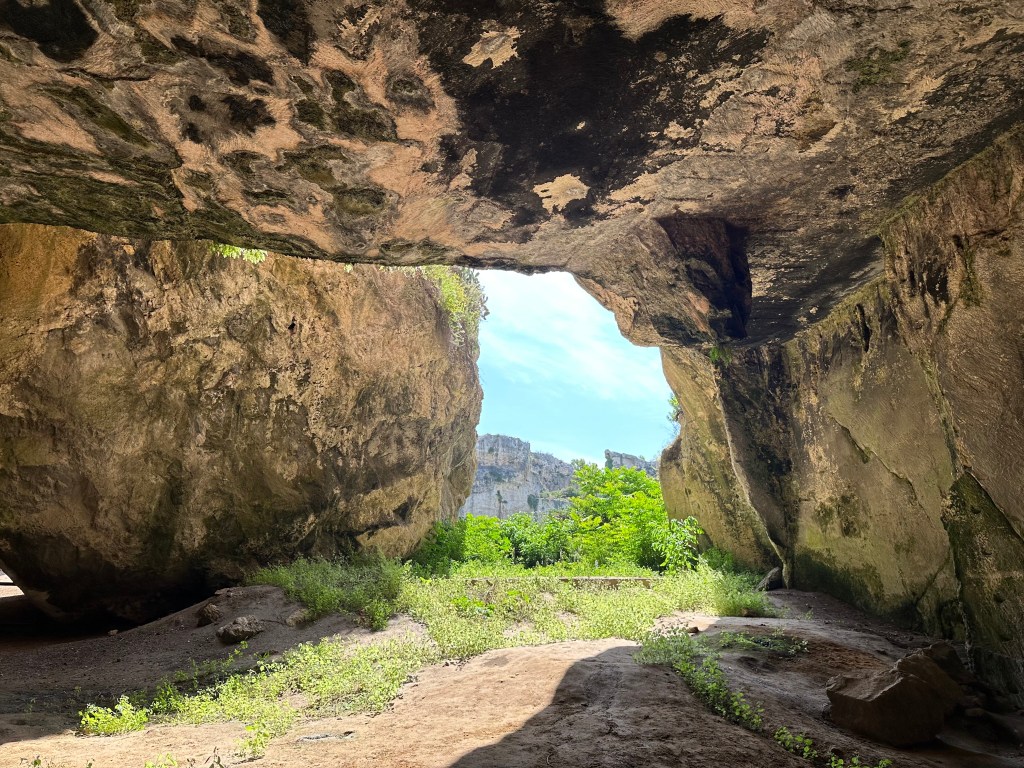
The Latomie del Paradiso — ancient stone quarries to the east of the Greek theater.
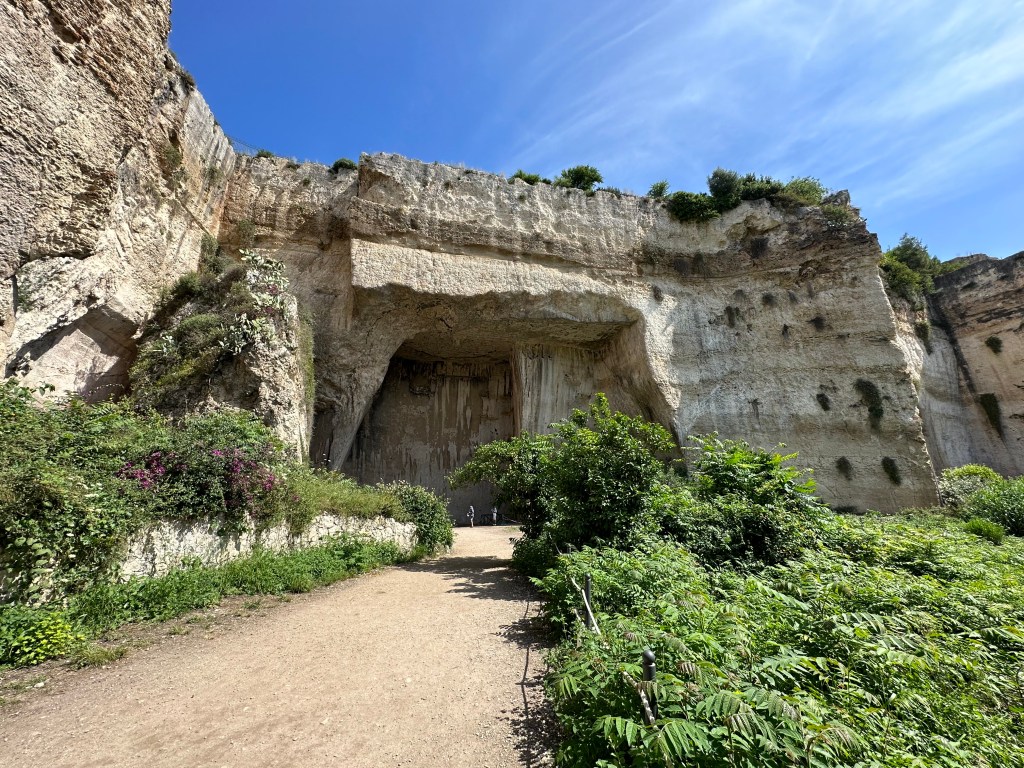
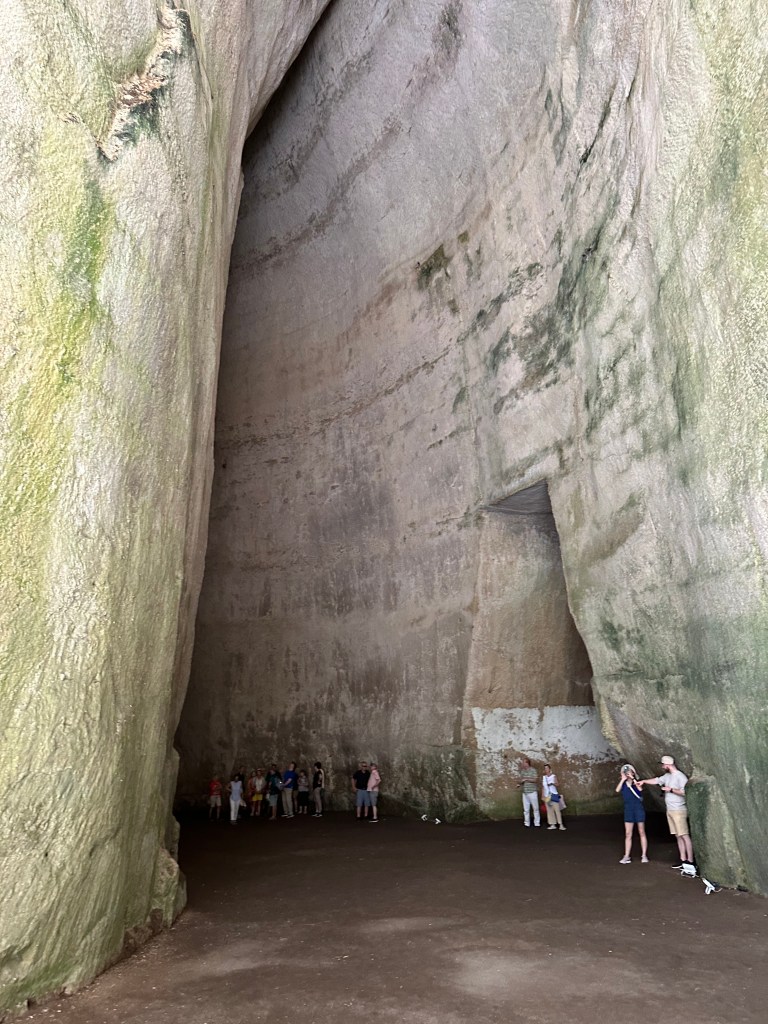
The Ear of Dionysius, a multistory-tall cave carved into the limestone:
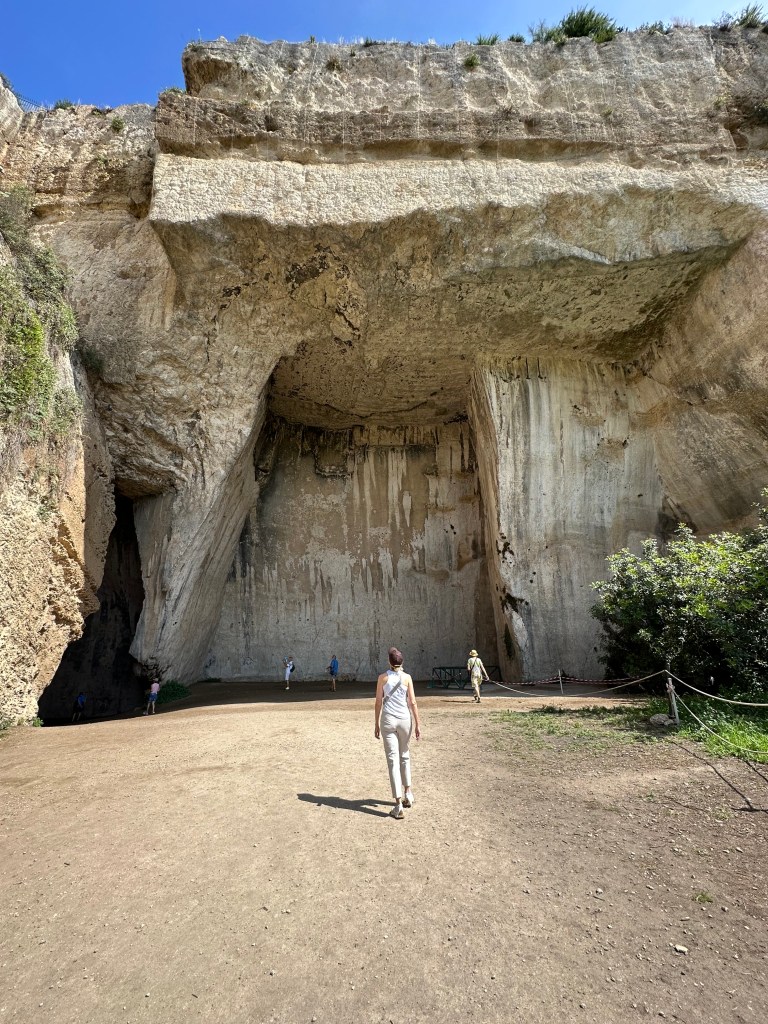
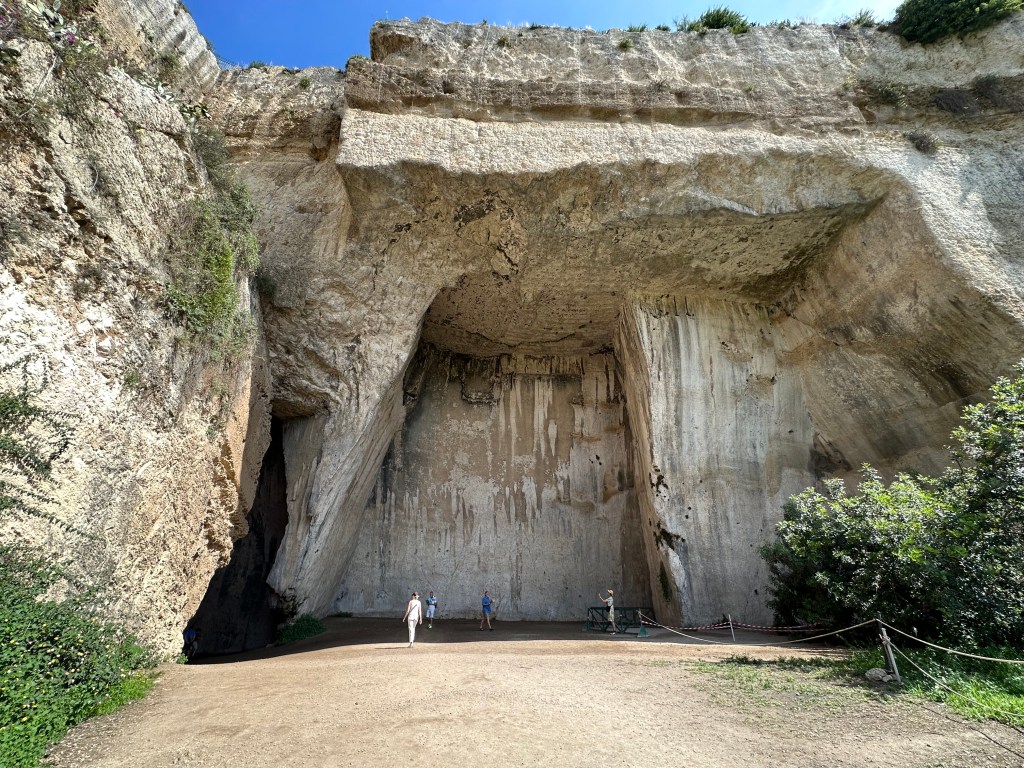
The cave’s extraordinary shape amplifies sound to remarkable effect.
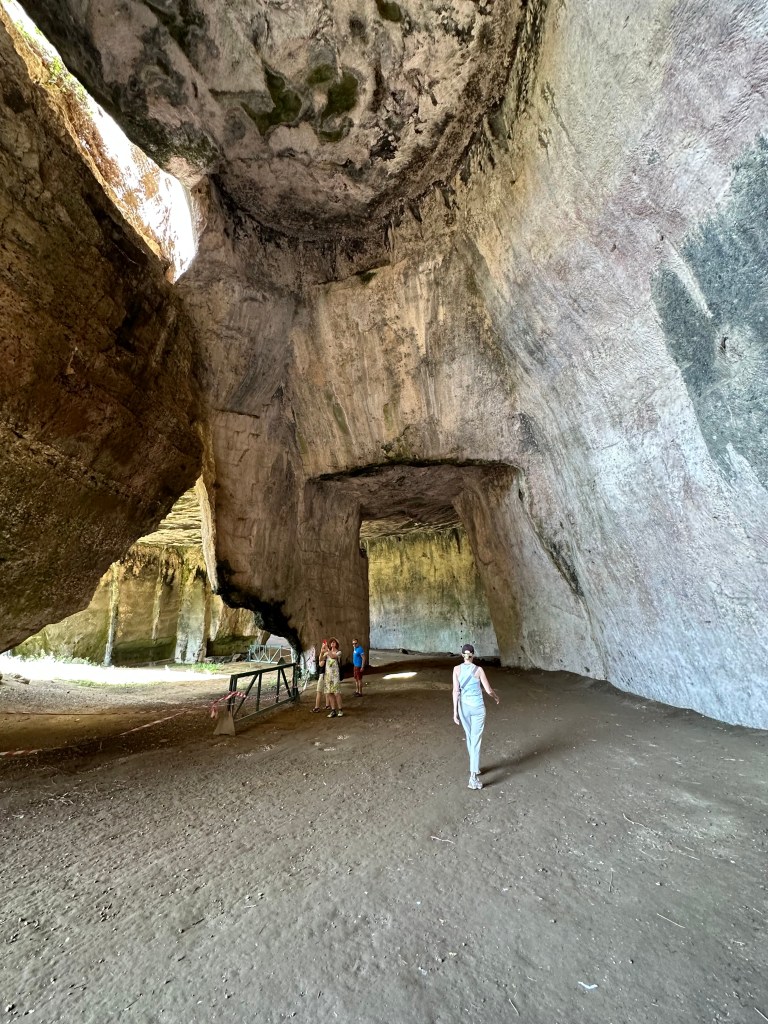
They were once used to imprison captured enemies of the tyrant Dionysius I, and are now lush with lemon groves and fragrant vegetation.
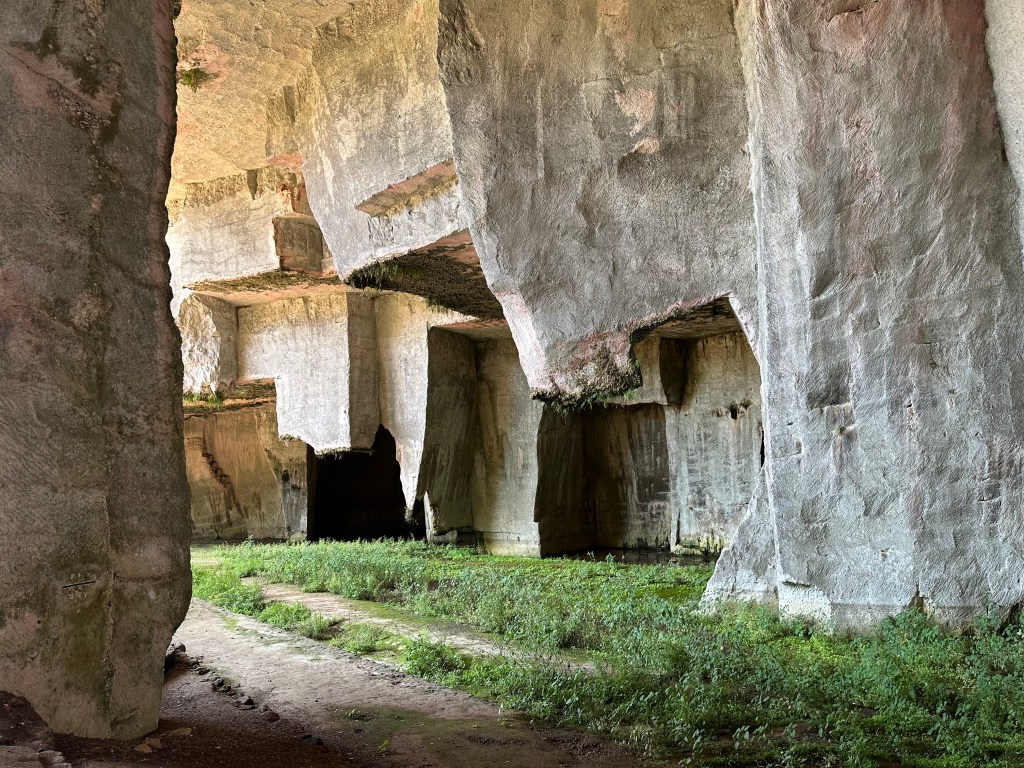
Evidence of quarrying:
And across the archeological park, the remains of the Roman amphitheater:
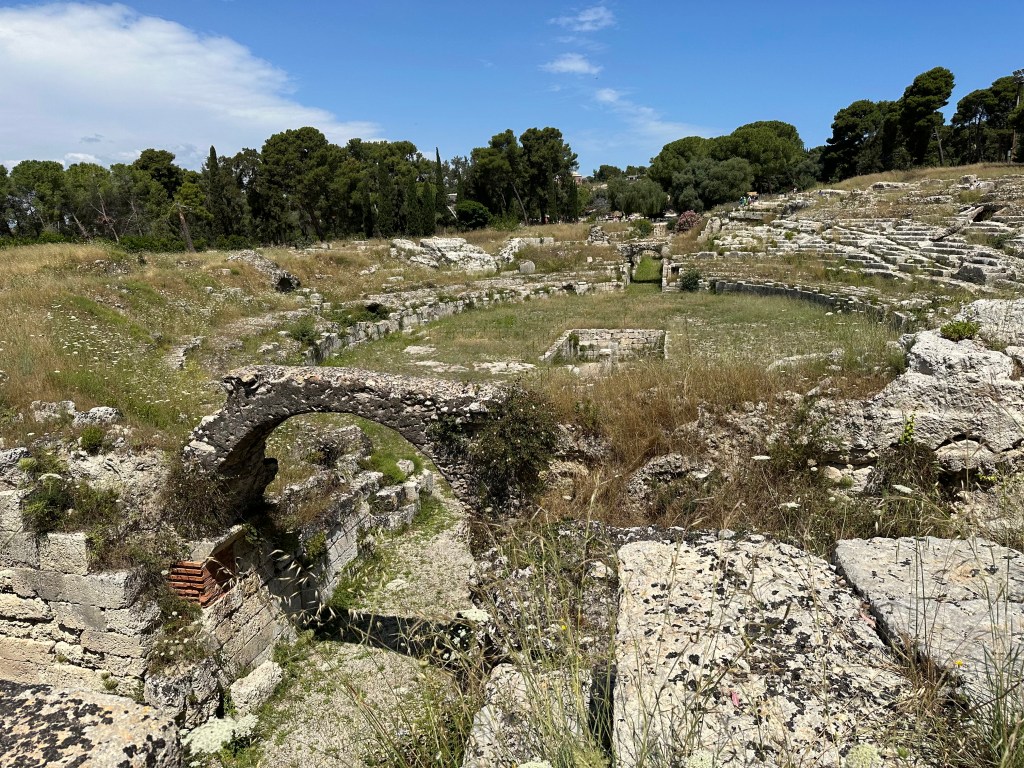
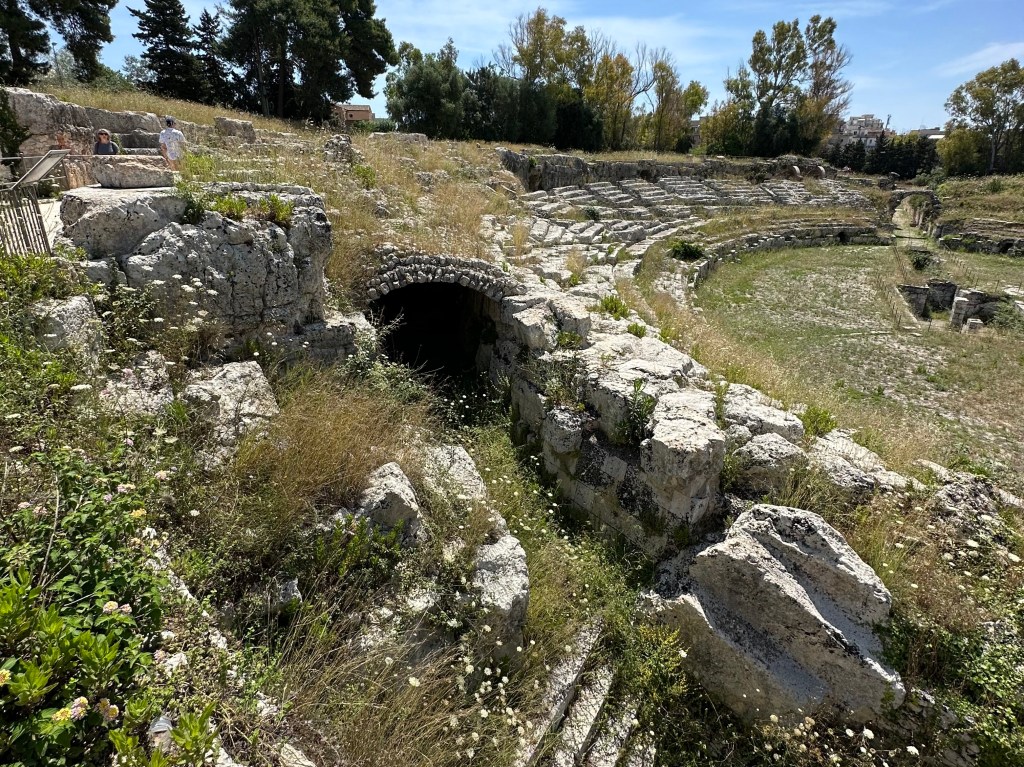
The Roman Amphitheater is largely excavated into the rock, utilizing the slope of a rocky crag, with a central arena featuring a large rectangular space originally covered and connected by underground passages to house the machinery and animals used during spectacles.
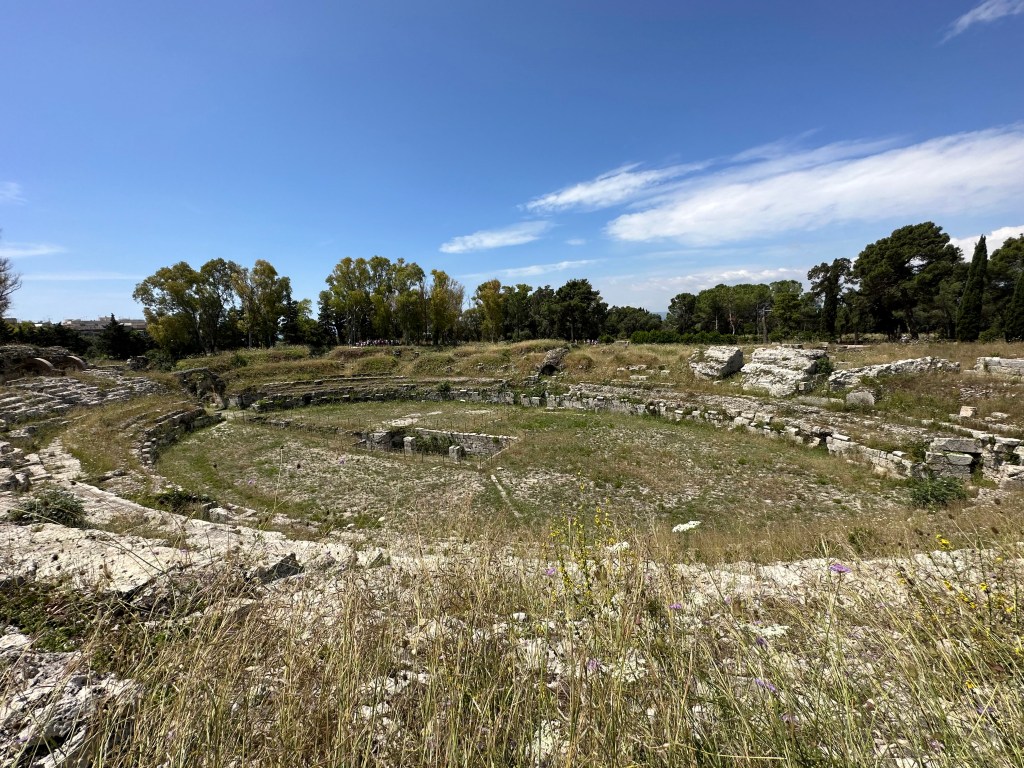
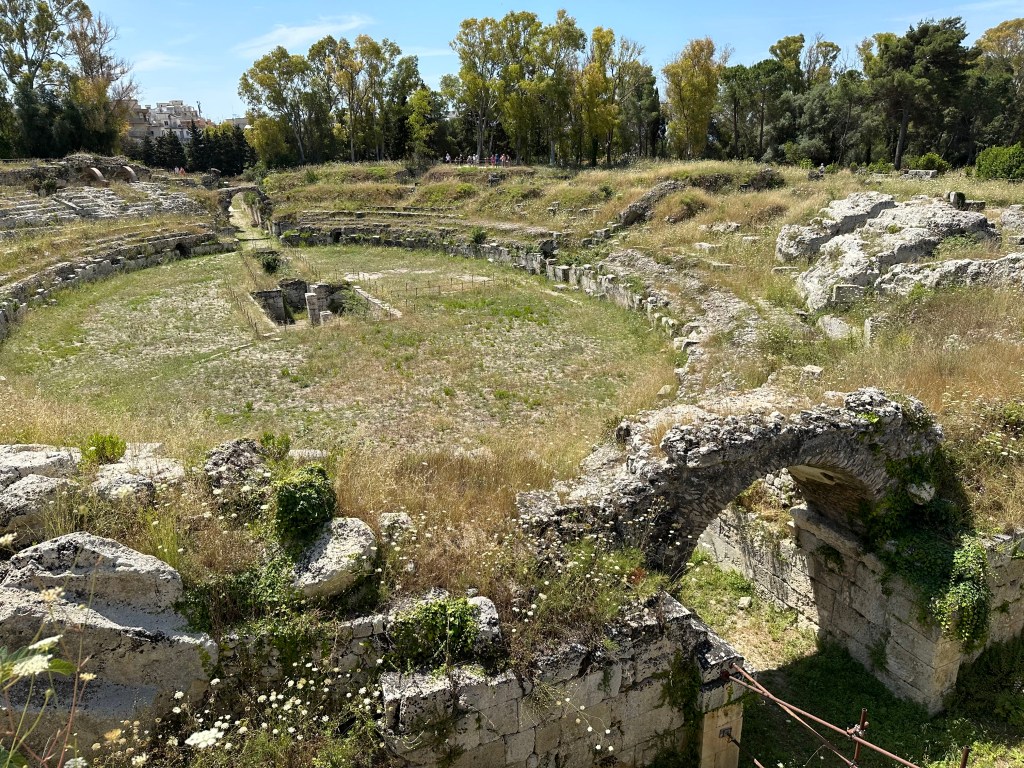
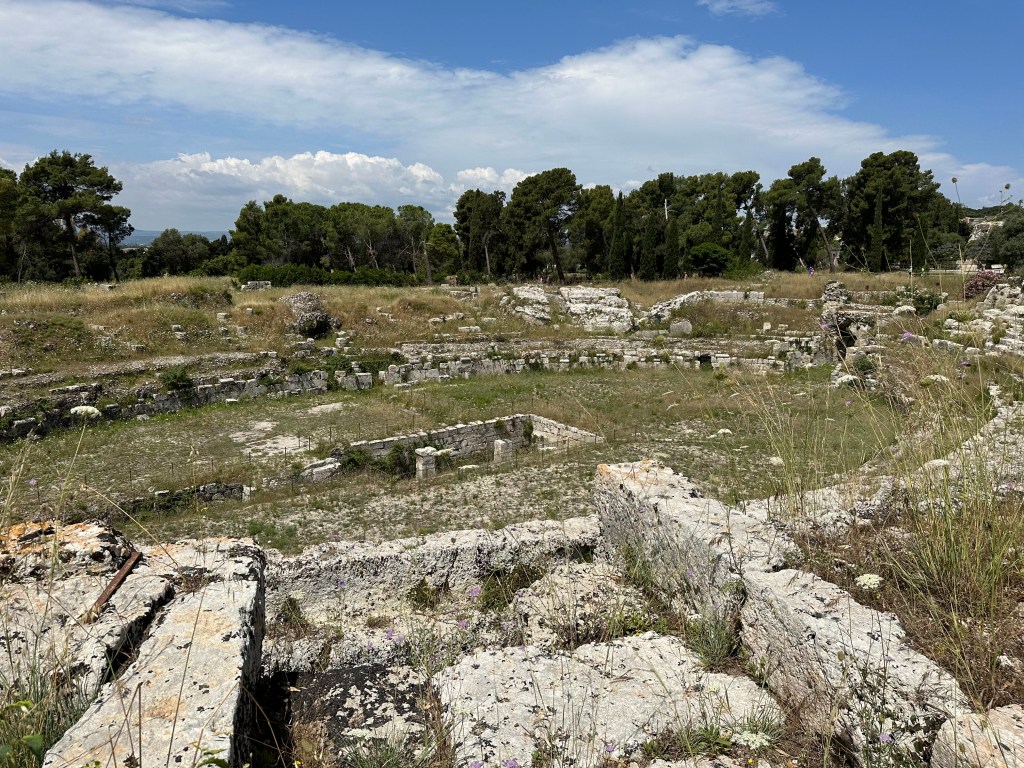
In the 16th century the Spanish, indifferent to its archaeological value, quarried much of the amphitheater’s large stone blocks to build the defensive city walls of Ortigia, leaving it in the partial, overgrown ruin visible today.
And on the way back from town? A little stop at the Catacomba di San Giovanni. The site sits beneath the ruined Basilica of San Giovanni — itself a place of extraordinary sacred history, where St. Paul is said to have preached and St. Marcian founded the first Christian community in Syracuse — and the catacombs were later used as an air-raid shelter during World War II, which is why no bones remain there today.
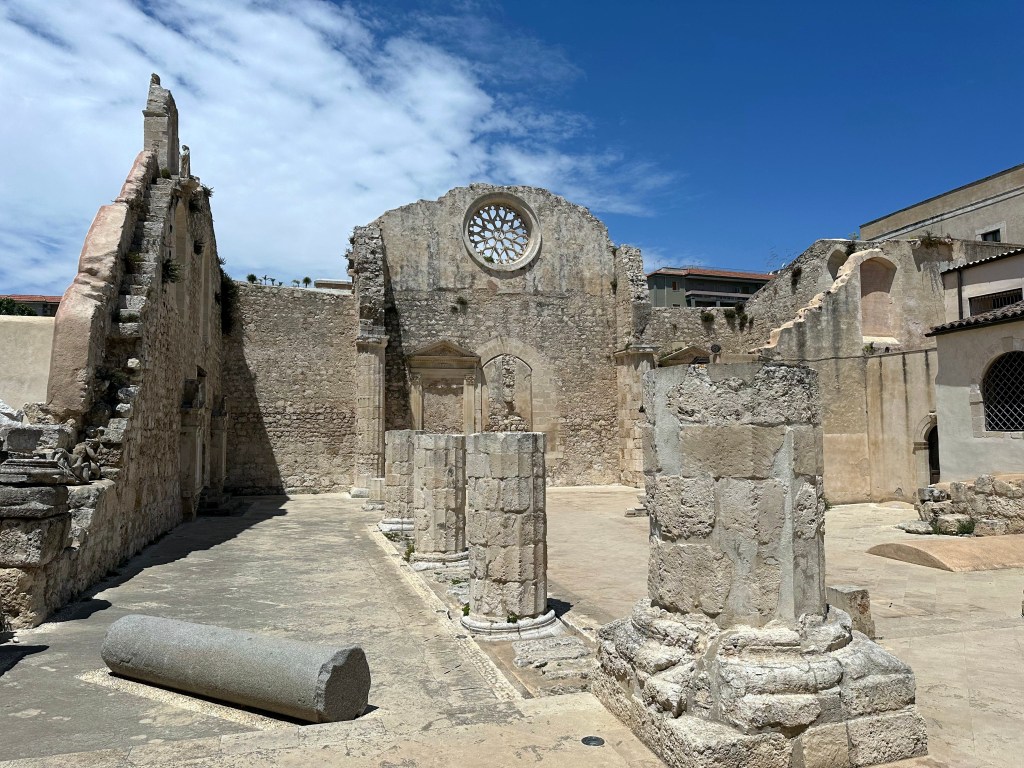
The Catacombs of San Giovanni were excavated for the most part between 315 and 360 AD, following the Edict of Constantine that established freedom of Christian worship, and remained in use as an early Christian cemetery until the end of the 5th century — making them, for size, the second largest catacombs in Italy after those of Rome.
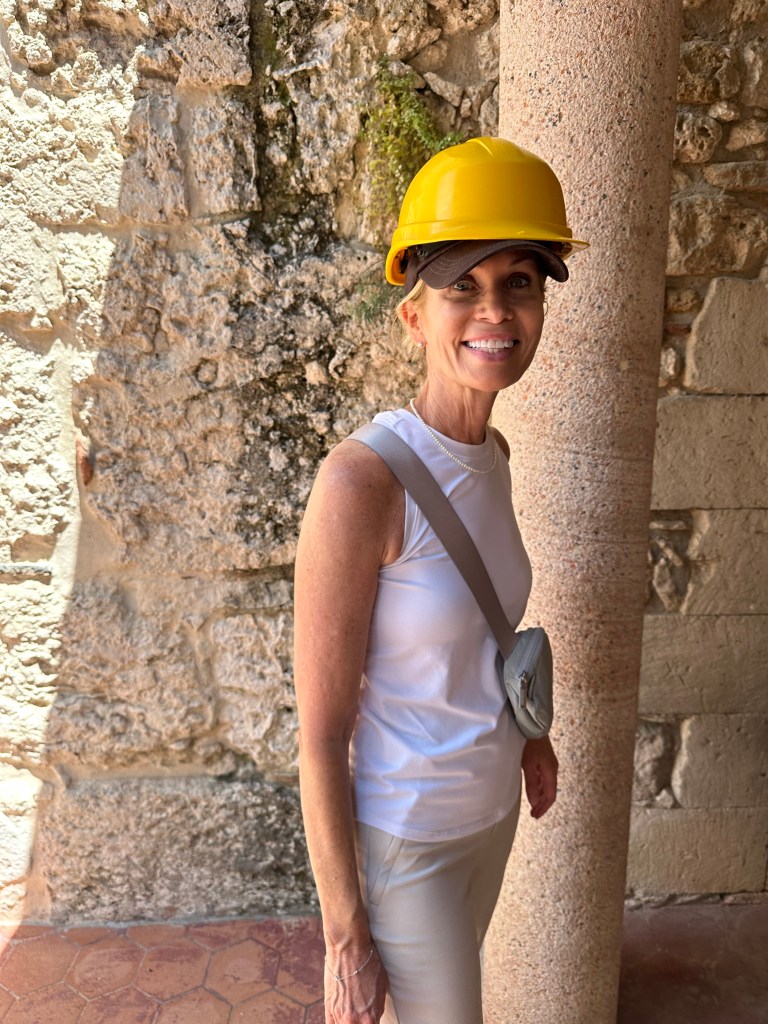
Unlike the subterranean adventure under Chiesa di San Filippo Apostolo, the catacombs here required us to don a little liability-reducing protective gear. (Also, we weren’t supposed to take pictures, just like at the monastery of creepy corpses in Palermo, but some urges cannot be resisted.)
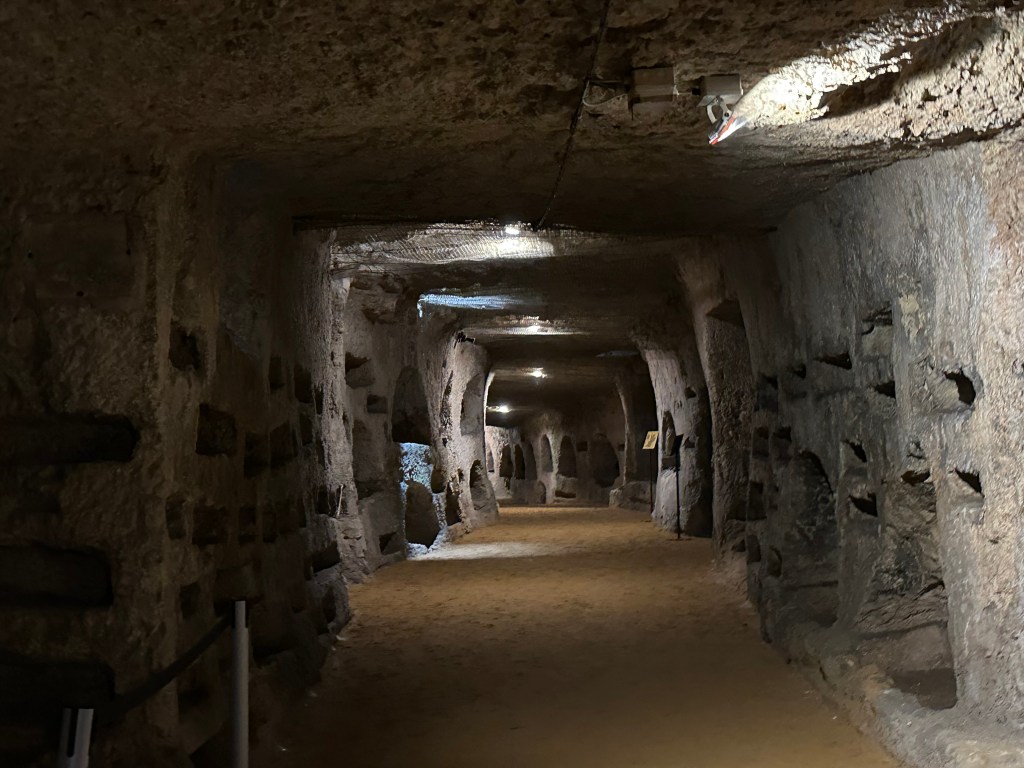
To save labor, the tunnels were initially opened along the route of a disused Greek aqueduct, traces of which are still visible on the ceiling of the main gallery, while existing cisterns along the route were converted into funeral chapels for distinguished families — a characteristically Syracusan layering of Greek infrastructure repurposed for Christian use.
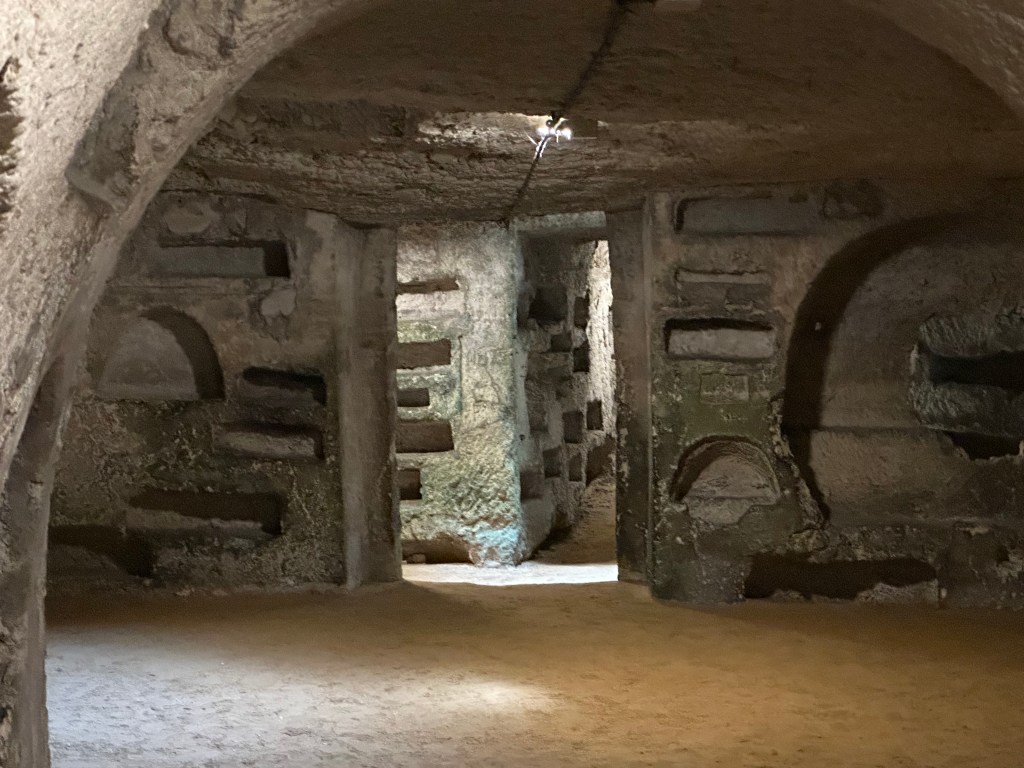
The layout of the catacombs mirrors the Roman military camp, with a central gallery (the decumanus maximus) from which ten secondary corridors branch off, leading to four large circular rooms — the Rotonda di Antiochia, the Rotonda Marina, the Rotonda di Adelphia, and the Rotonda dei Sarcofagi — that were once the ancient cisterns of the Greek aqueduct.
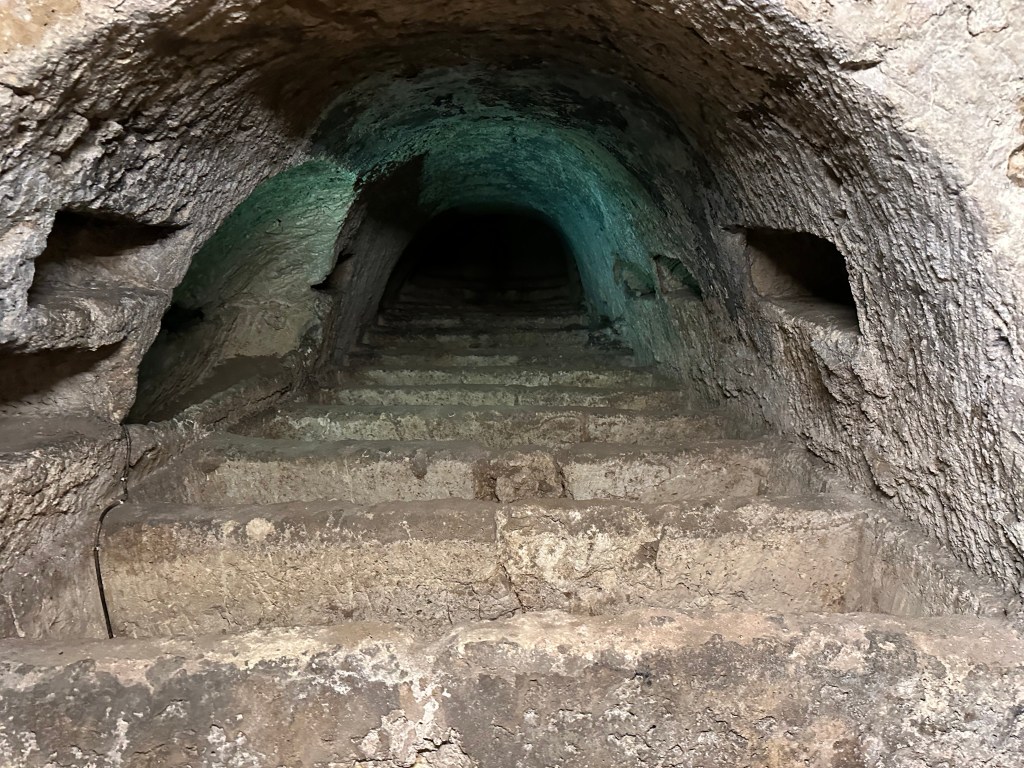
A nested set of at least 12 tombs in a niche along one wall of the catacombs; the whole labyrinth was pocked like this.
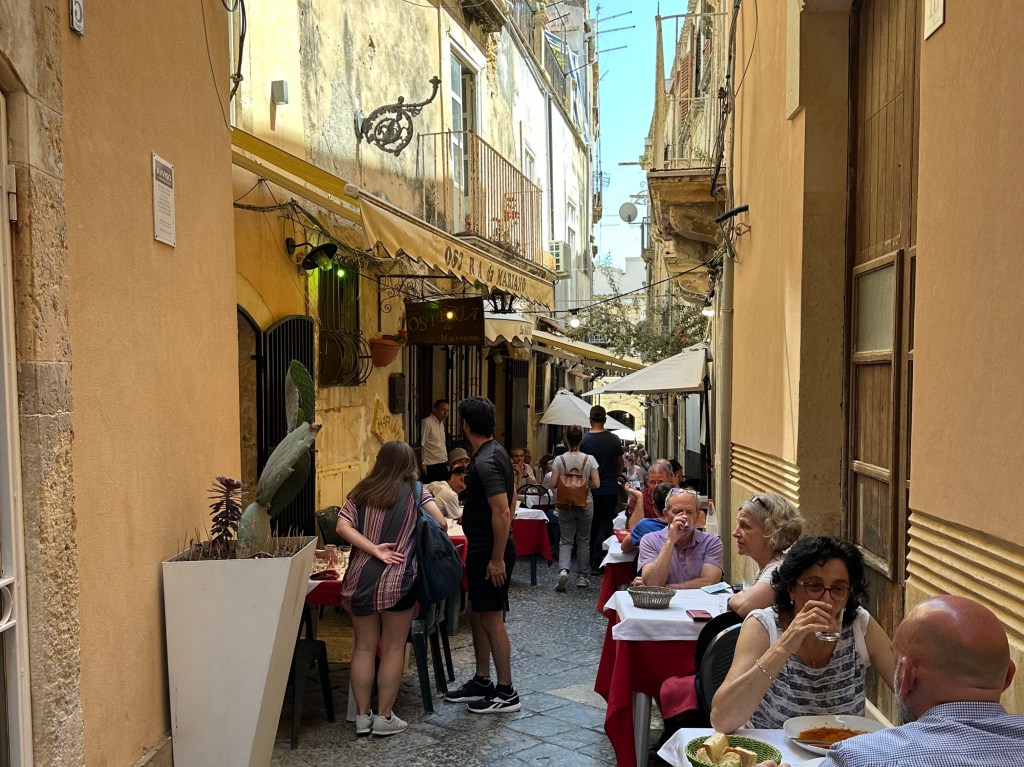
Back in town for some lunch – pretty atmospheric place.
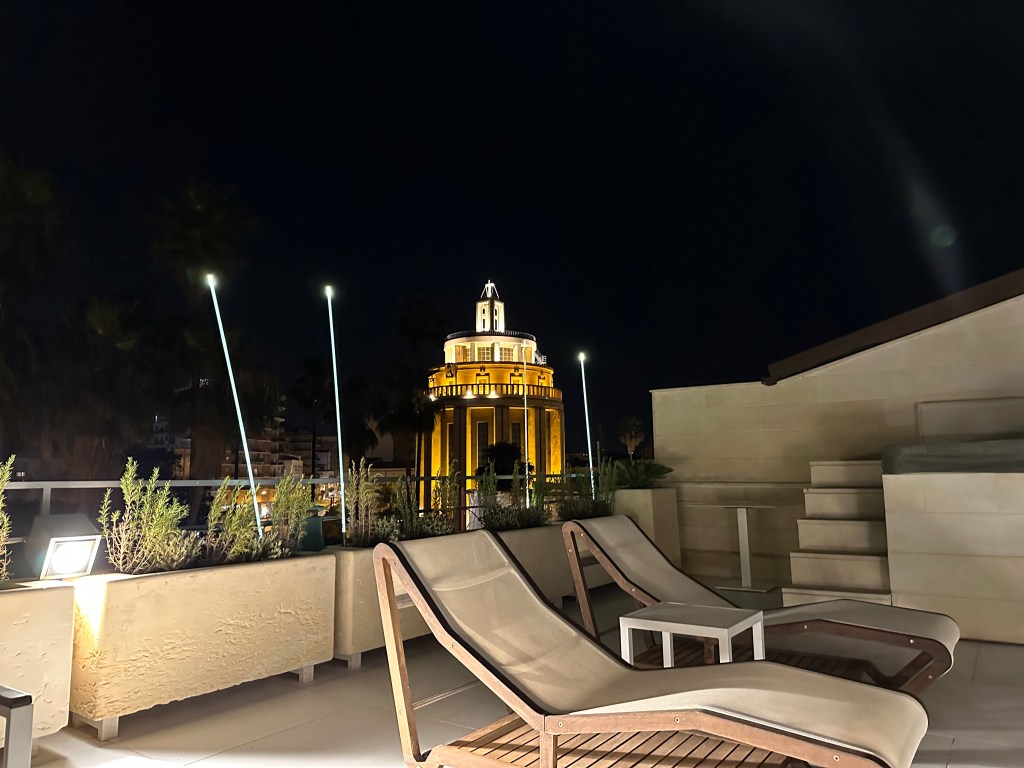
The last of our two nights here, with a few nightcaps on the hotel rooftop.
Onward to Mount Etna!