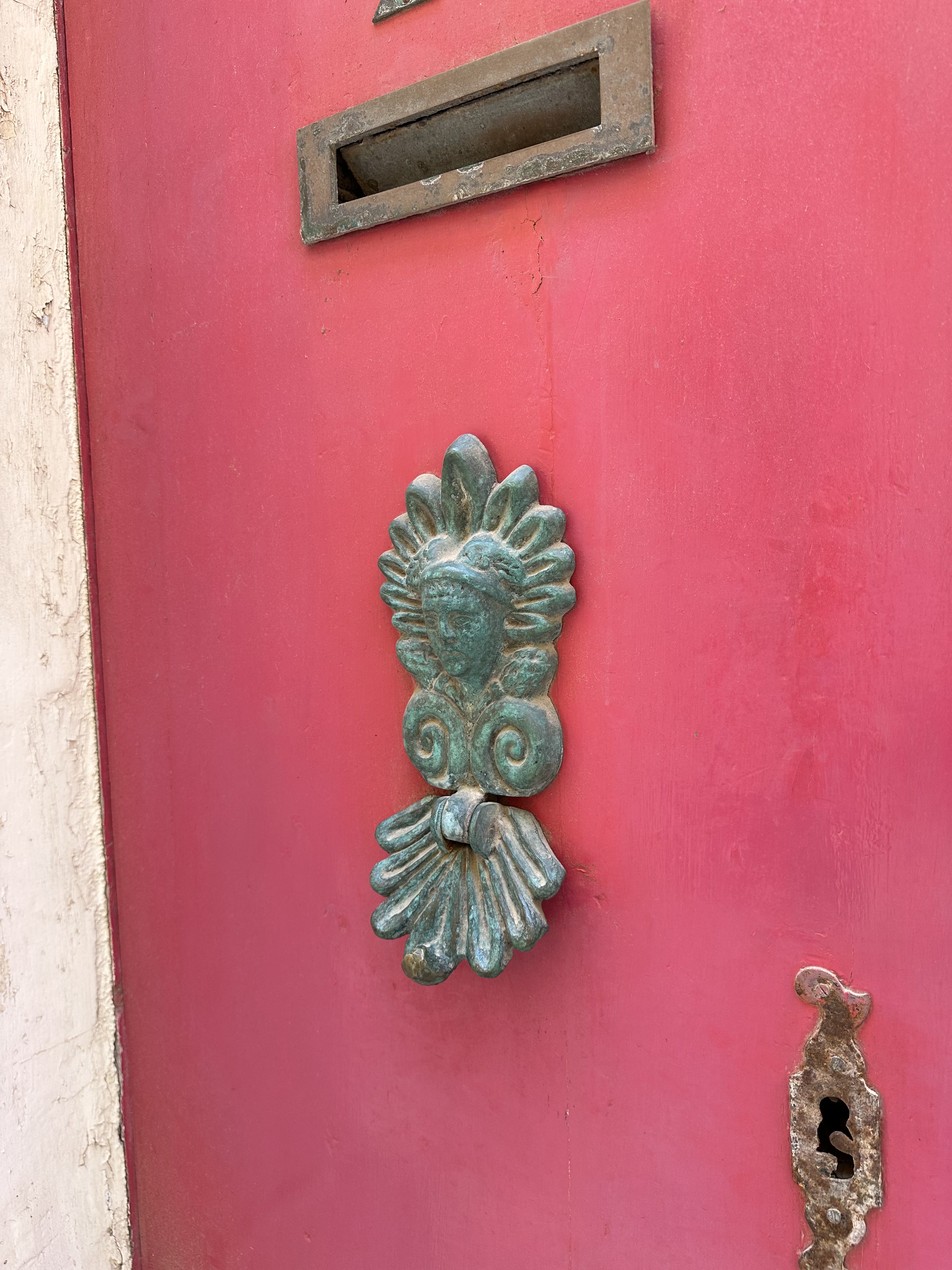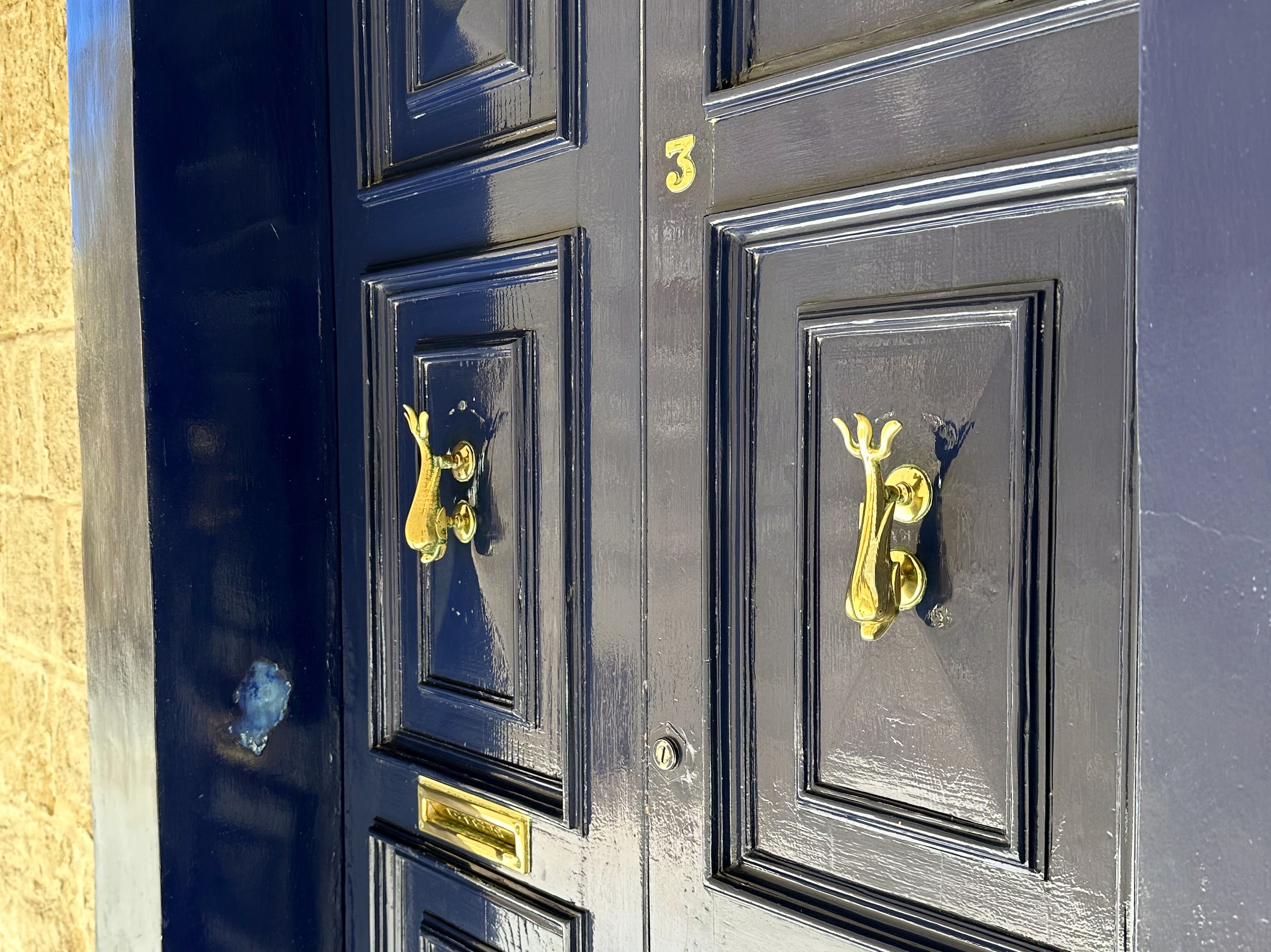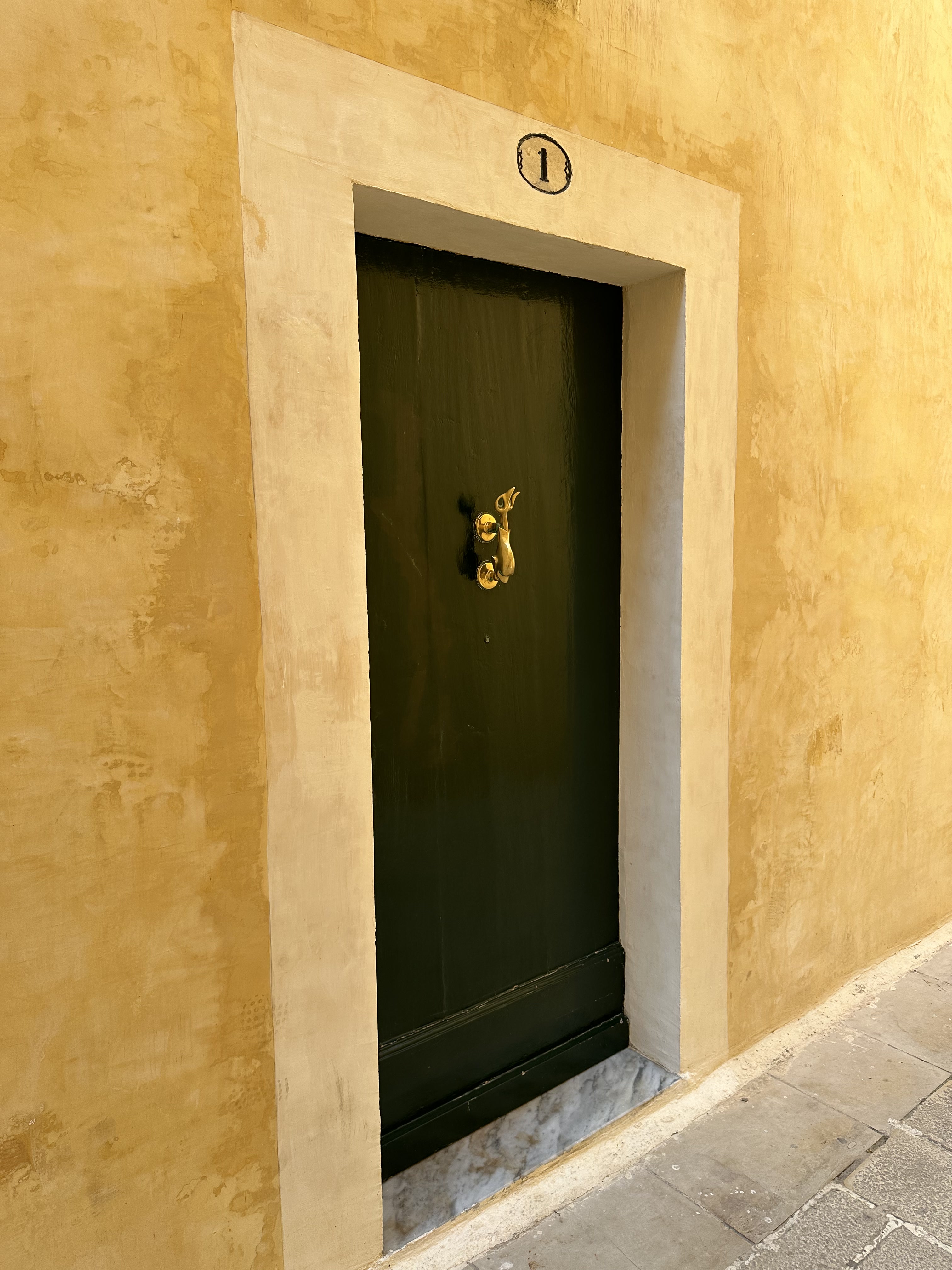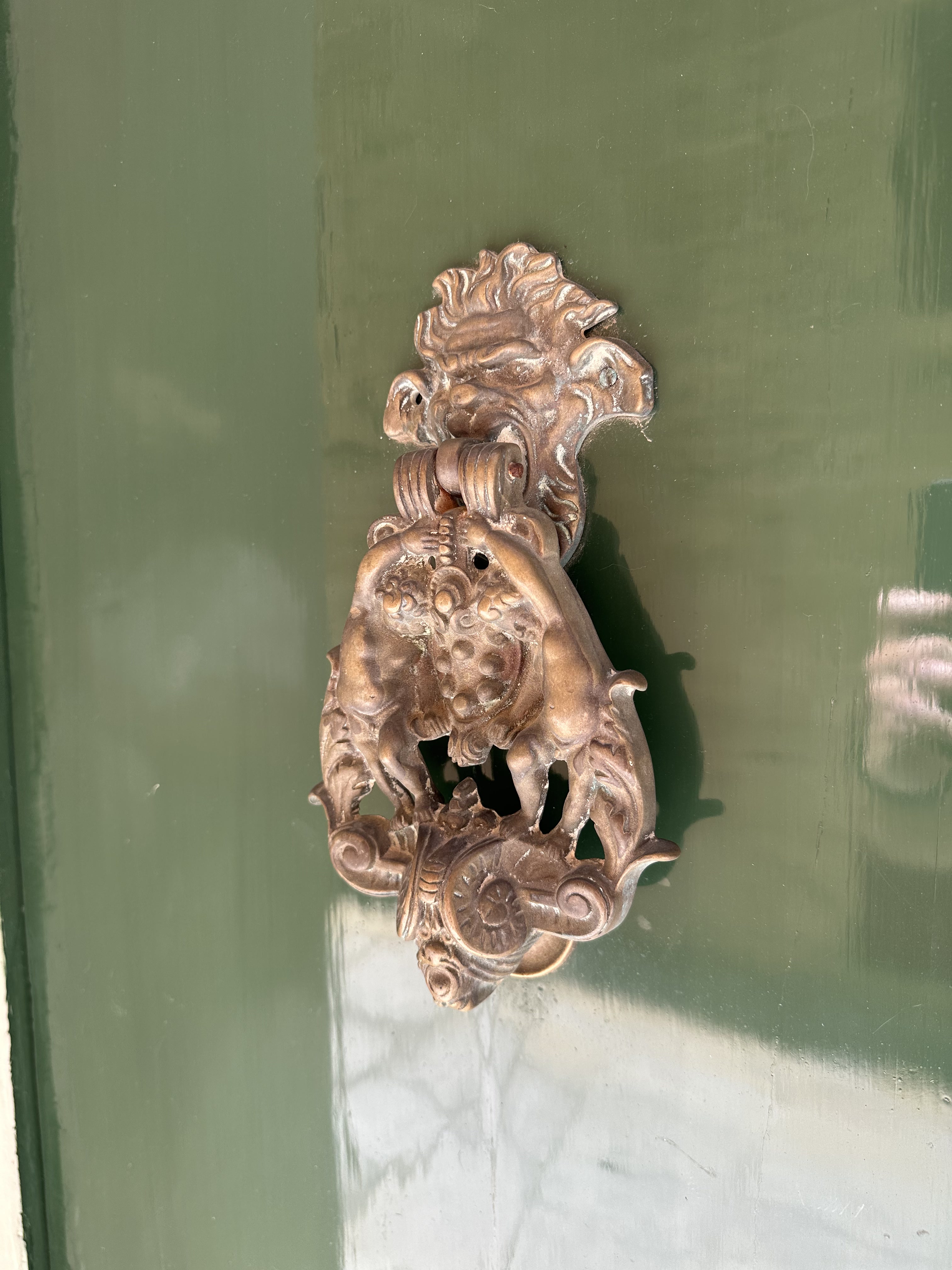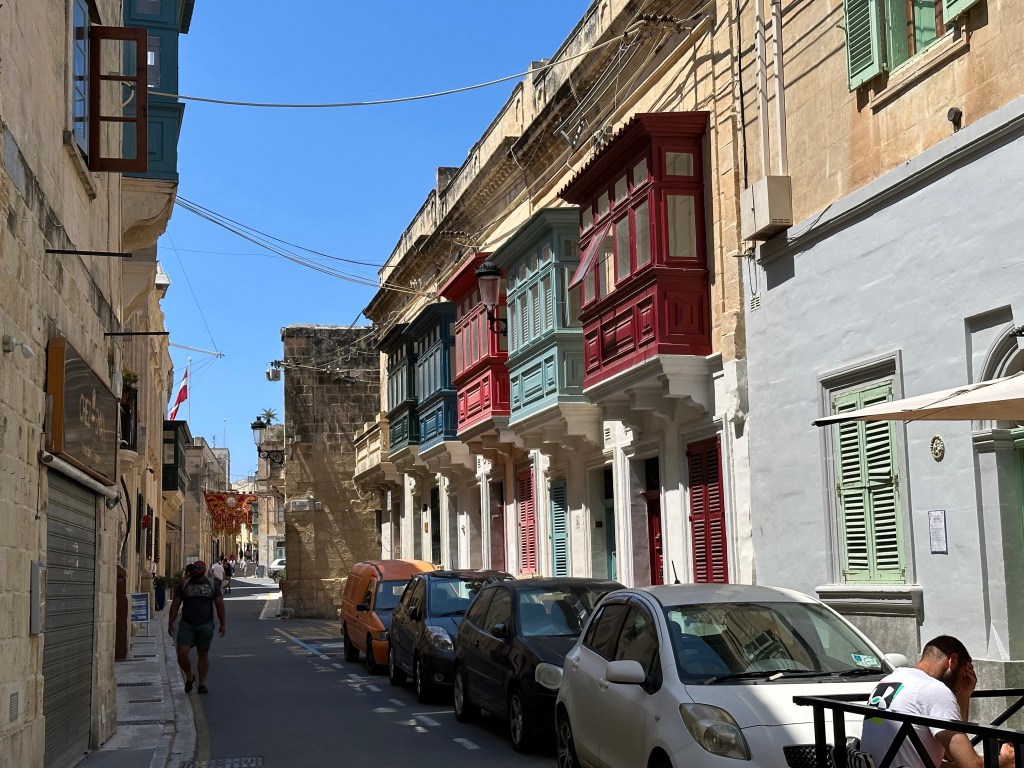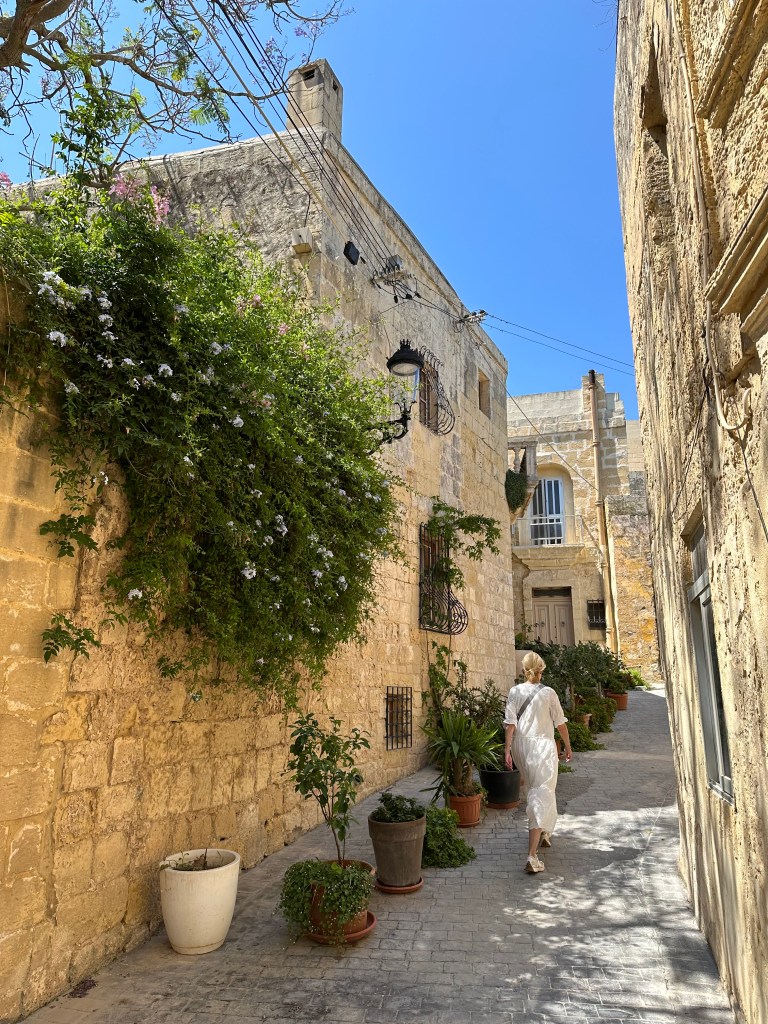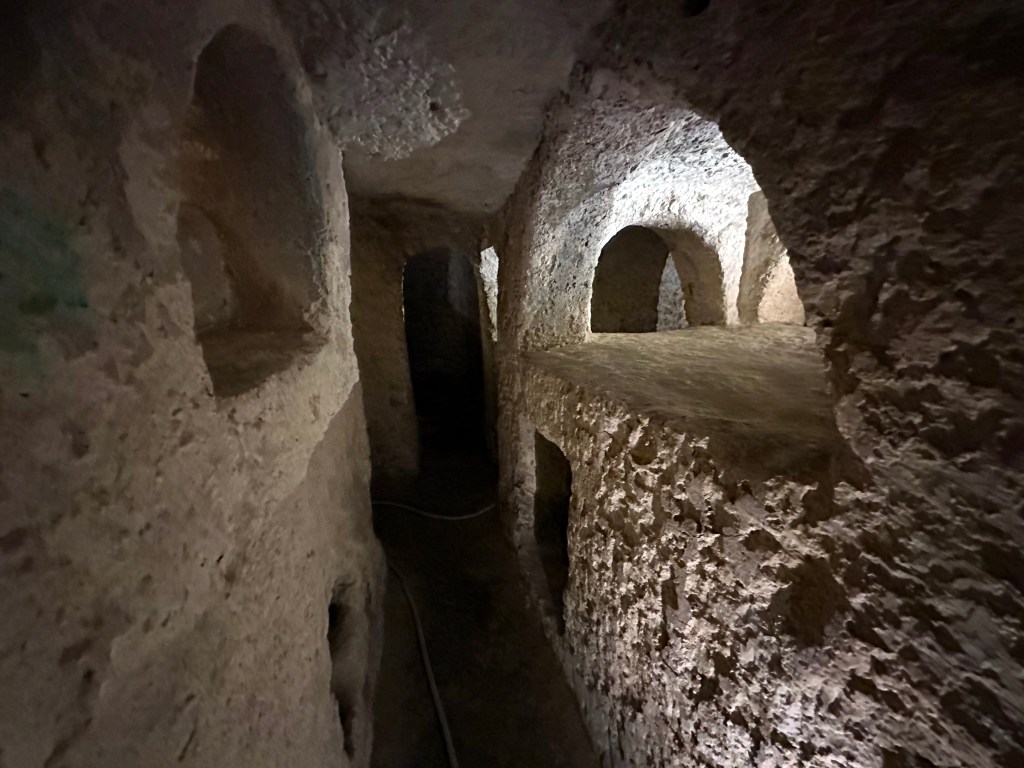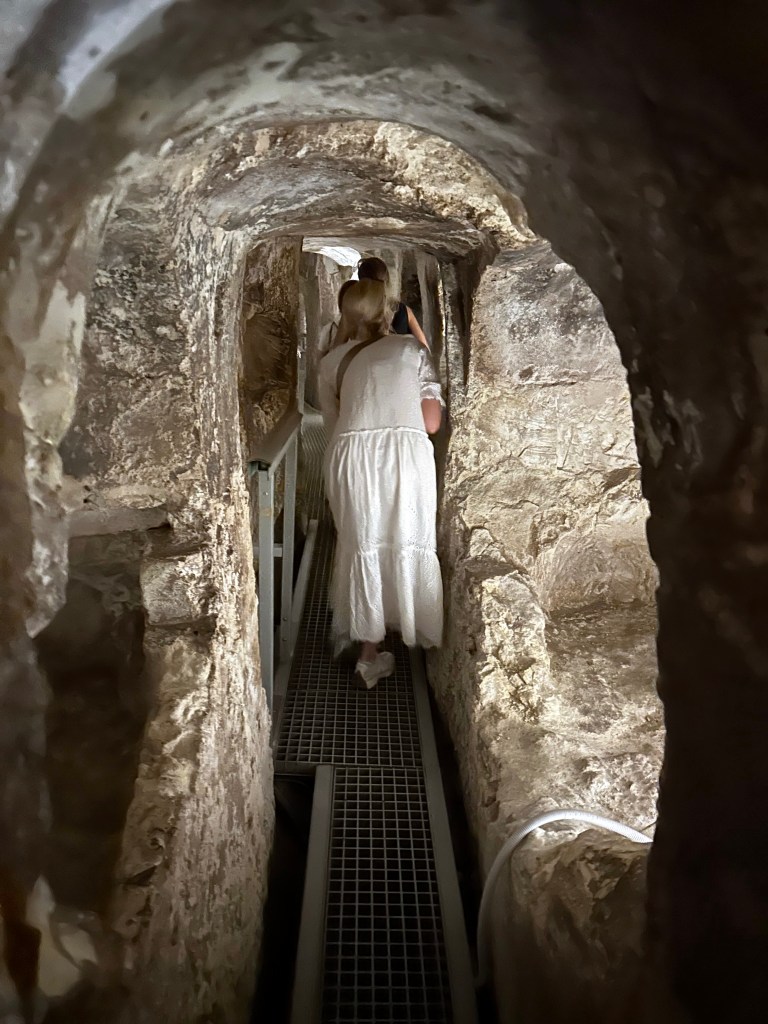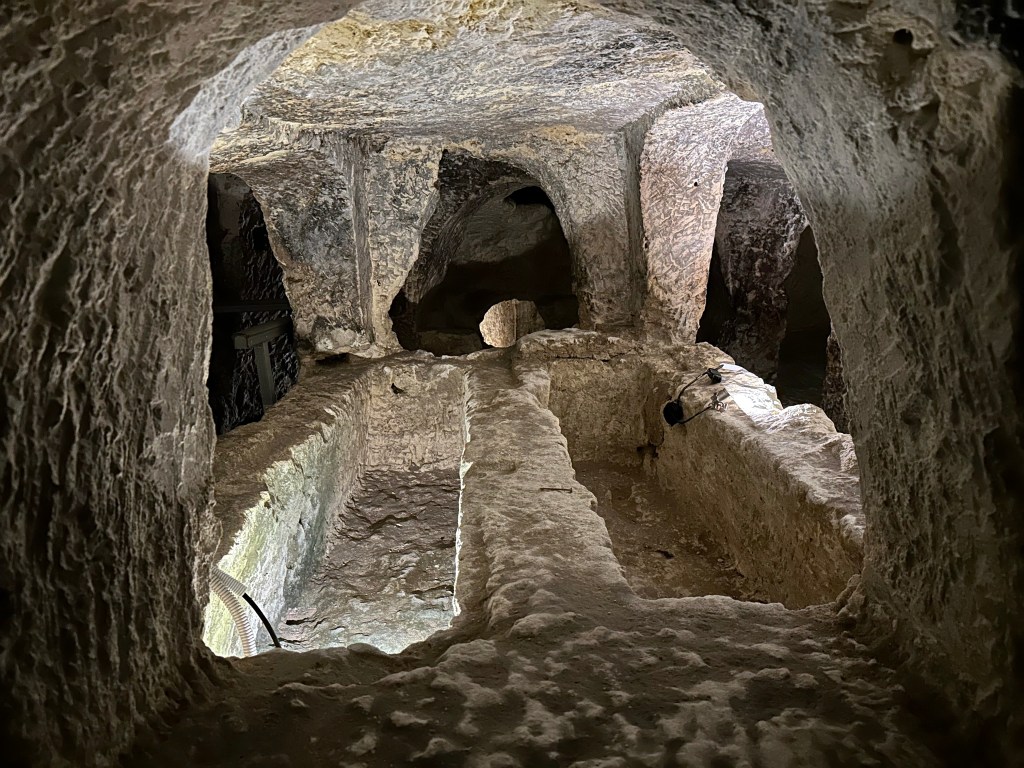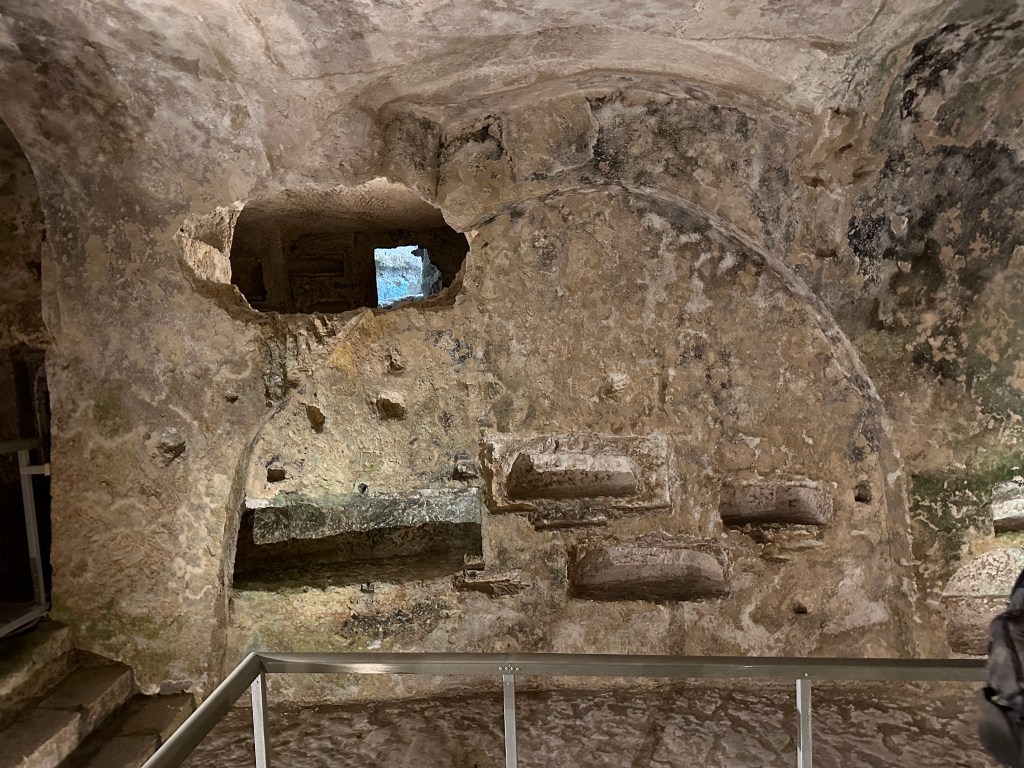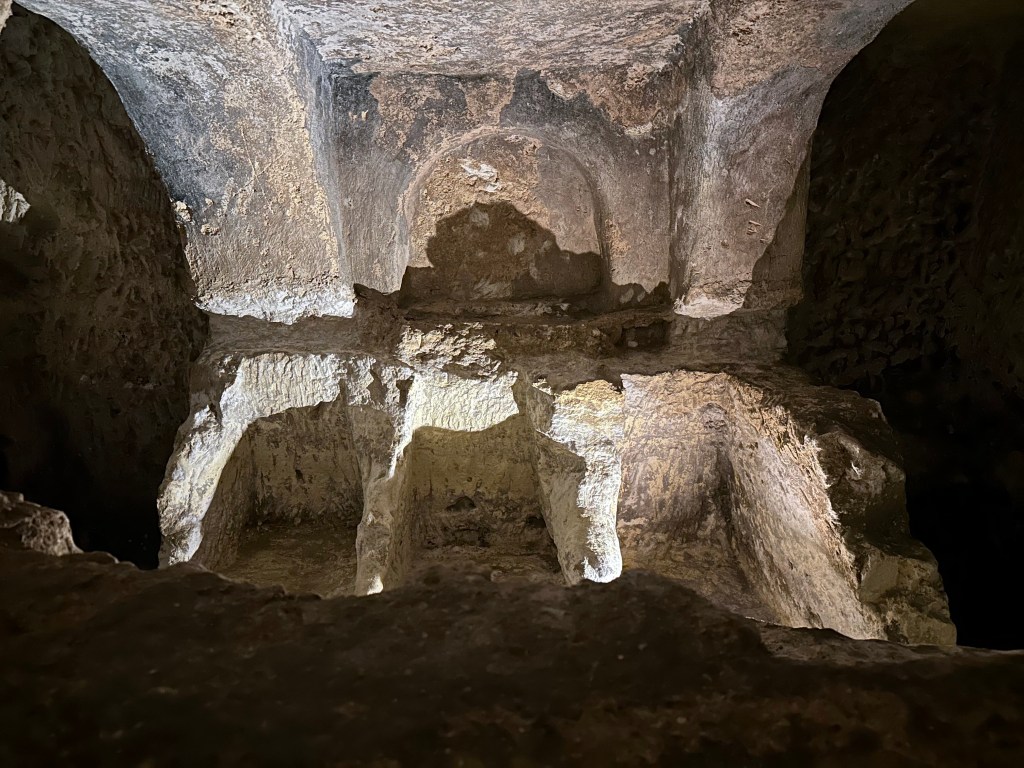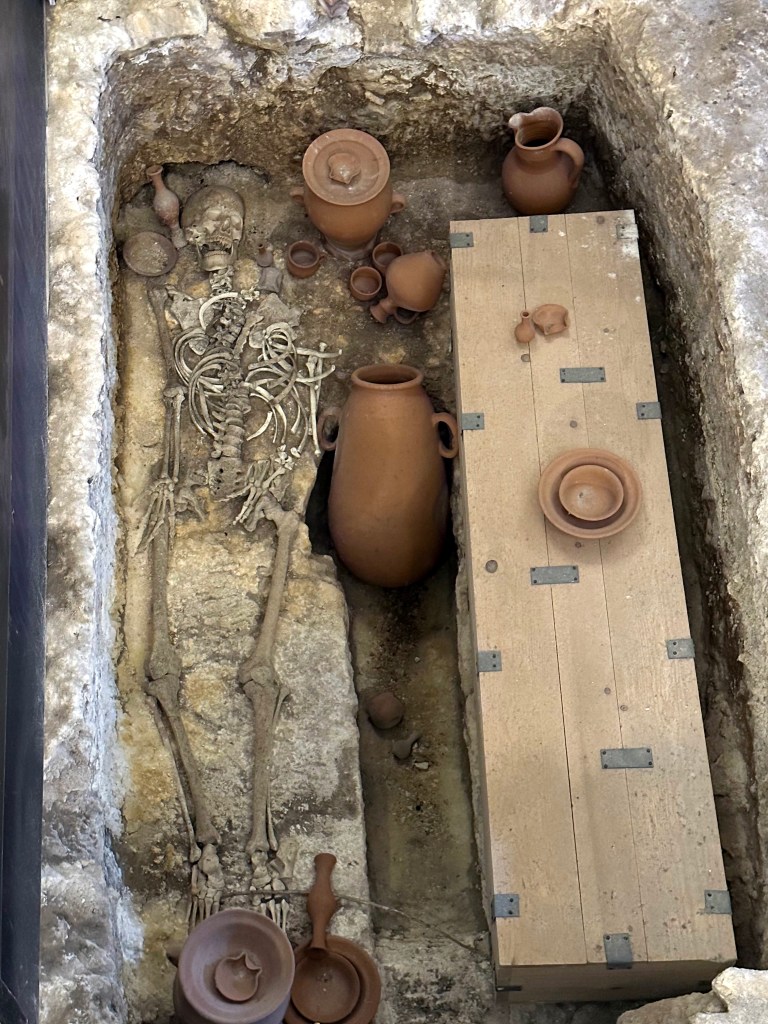
From Taormina, Sicily, we flew a very short hop to the island nation of Malta, country no. 79 for WolfeStreetTravel (and one we’d been eying ever since planning The Smallest 5 for the Big 5-0 trip to Europe’s micronations in 2017).
Malta also represents the third-to-last leg of our post-retirement prolonged foray to Europe trip, the overview and map of which are posted here. We’d spend 4 nights in Malta, and the dry little island nation did not disappoint.
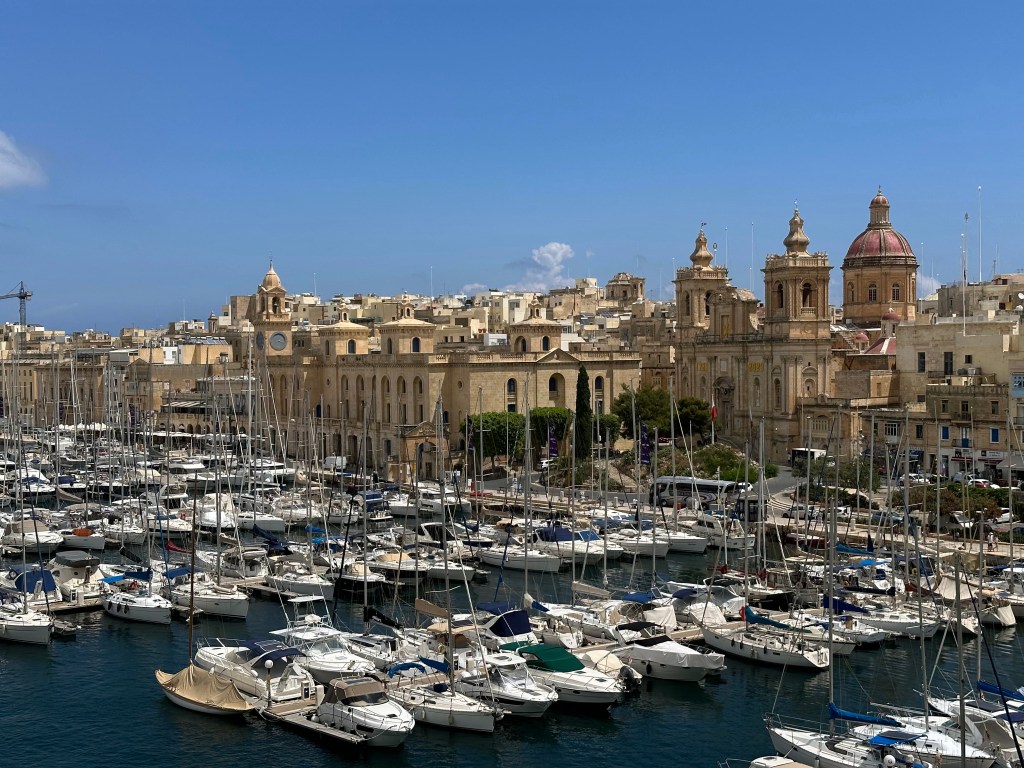
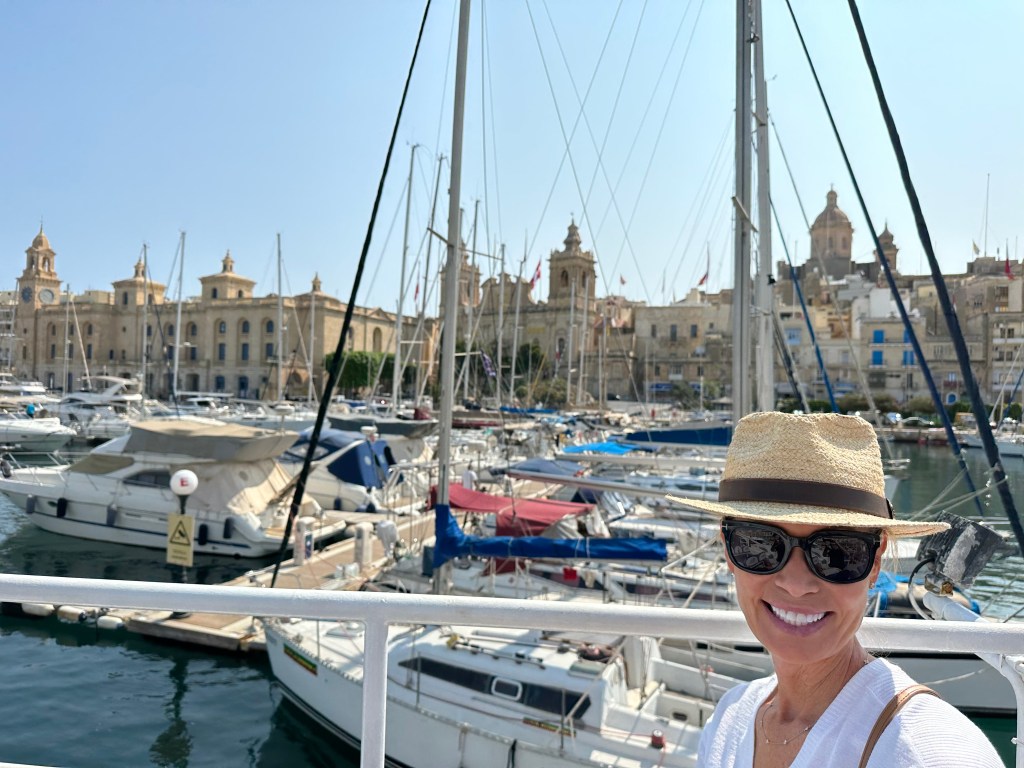
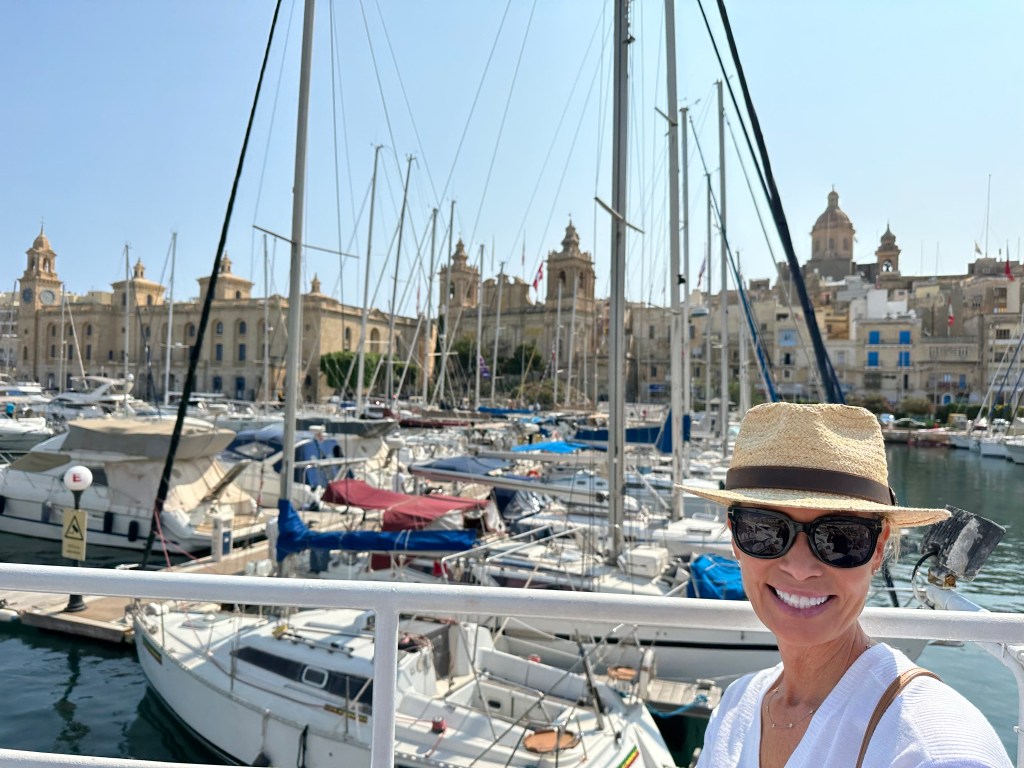
Malta’s Grand Harbor upon arrival:
The island’s history includes Phoenician, Carthaginian, and Roman occupation before the Arabs transformed it between 870 and 1090 AD, leaving a lasting imprint on the Maltese language, which remains Semitic at its core.
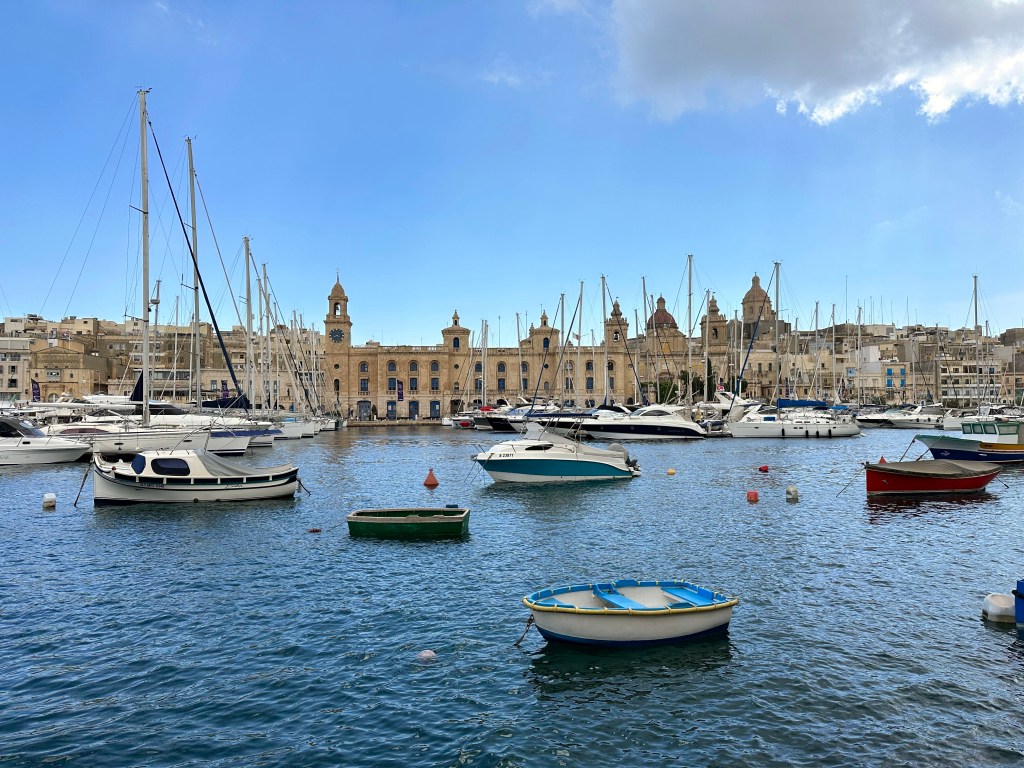
The Normans then took Malta, beginning a long stretch of Christian rule that culminated in 1530 when Holy Roman Emperor Charles V granted the island to the Knights Hospitaller after the order lost their previous base of operations, the island of Rhodes, to the Ottoman Turks. (The emperor also granted them the city of Tripoli in modern Libya, but the Ottomans ran them out of town there, as well, leaving them with only Malta [and a small town in the Holy Roman Empire, which they controlled until the early 19th century and Napoleon]).
While under Hospitaler control, the Ottomans continued their westward expansion across the Mediterranean, and targeted Malta as their next conquest. In 1565, the Hospitallers – left essentially to fend for themselves – repelled a prolonged Ottoman siege in one of history’s most dramatic defensive stands. Pretty epic tale. (And a good read – we finished Empires of the Sea: The Siege of Malta, the Battle of Lepanto, and the Contest for the Center of the World before we arrived to give us a good feel for what we were getting into; definitely recommended if you’re into that sort of thing.) After fending off the siege, the Hospitalers transformed some fortifications opposite the Grand Harbor into their capital city and named it Valletta after Jean Parisot de Valette, their Grand Master, who led the defense of the island.
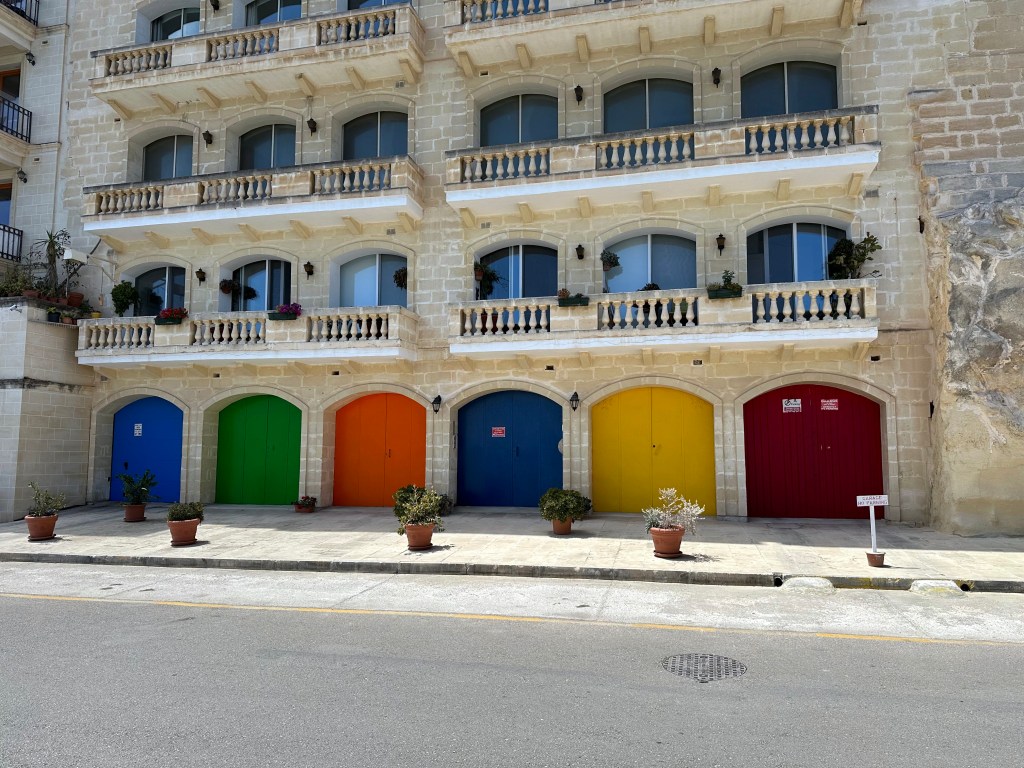
Britain took control of Malta in 1800 after helping the Maltese expel the French forces that had occupied the island following Napoleon Bonaparte’s invasion in 1798. Although Britain initially intervened as an ally, it retained Malta because its central Mediterranean location and excellent natural harbor made it a vital naval base for protecting British trade routes and projecting military power. Britain refused to return the island as required by the Treaty of Amiens, and Malta remained a British colony until it gained independence in 1964.
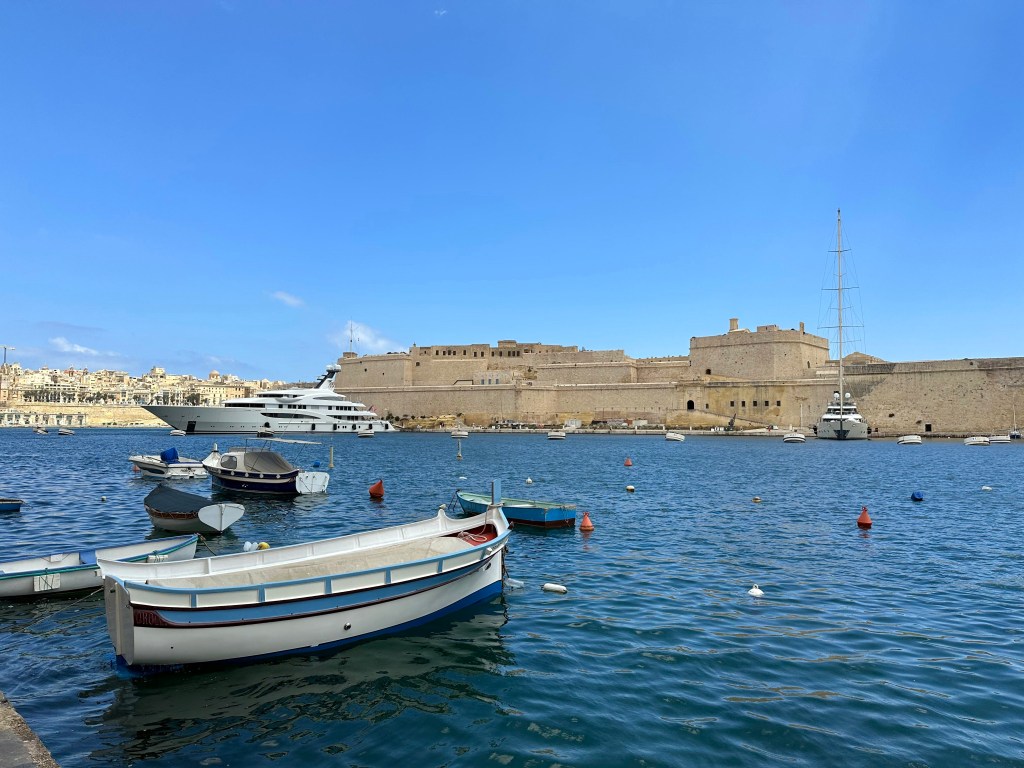
During Britain’s rule of the island in WWII, Malta became a critical naval hub and endured one of the most sustained aerial bombardments of the entire war, earning the troops the George Cross collectively from King George VI in 1942. Fort Angelo on the peninsula of Birgu, which was manned by the British Navy during WW II, seen from across the harbor from the peninsula of Senglea (we’d eventually visit it):
Malta gained independence in 1964, became a republic in 1974, and joined the European Union in 2004, completing a journey from ancient temple-builders to modern European democracy in one of the Mediterranean’s most strategically contested stretches of rock.
Our hotel in the background was located in a decommissioned fortress on Senglea, one of Malta’s historic Three Cities on a spit of land across the Grand Harbor from Valetta, the capital city.
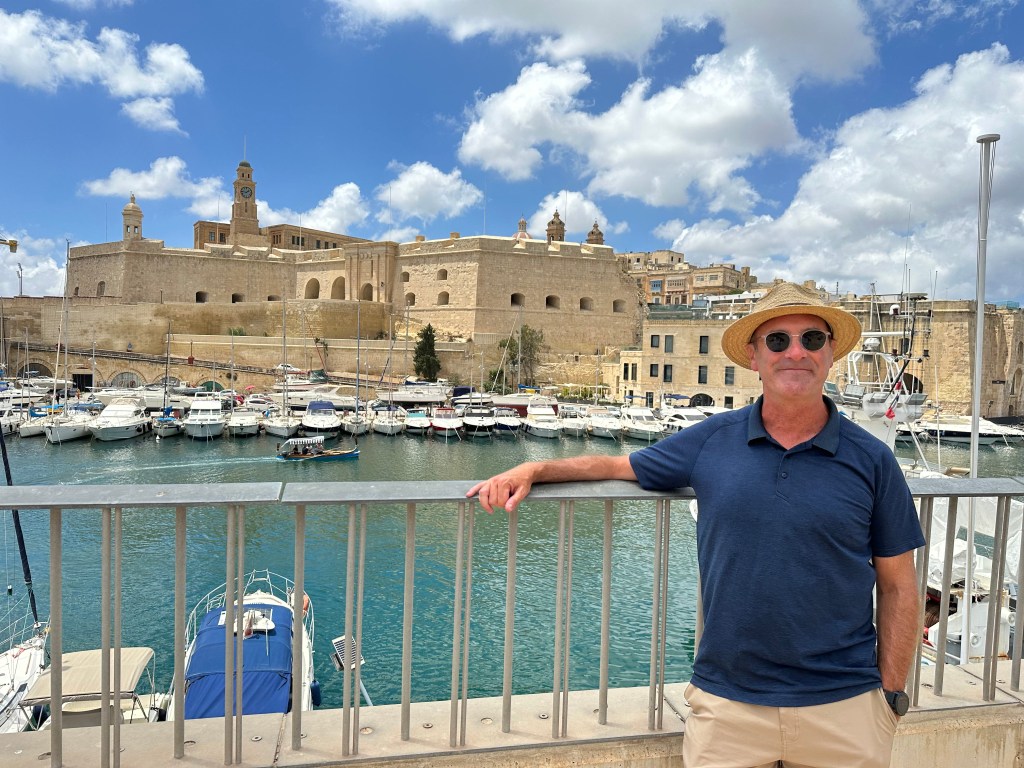
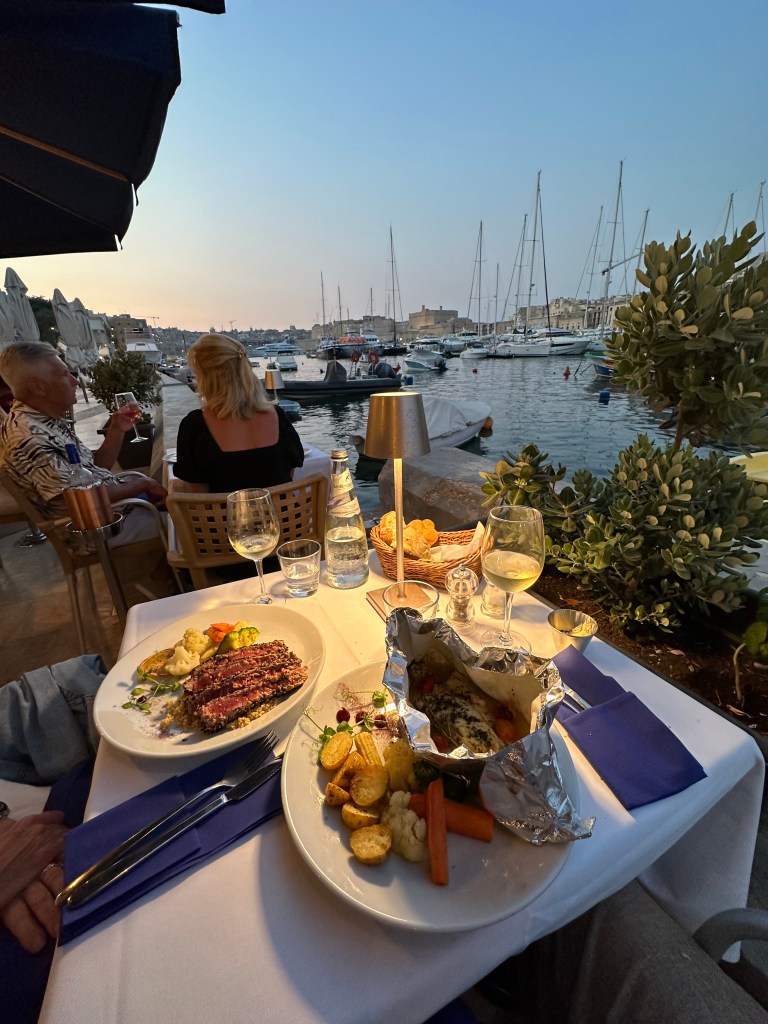
First lunch in town on Senglea – pretty great start to our stay (we’d return there for our final dinner):

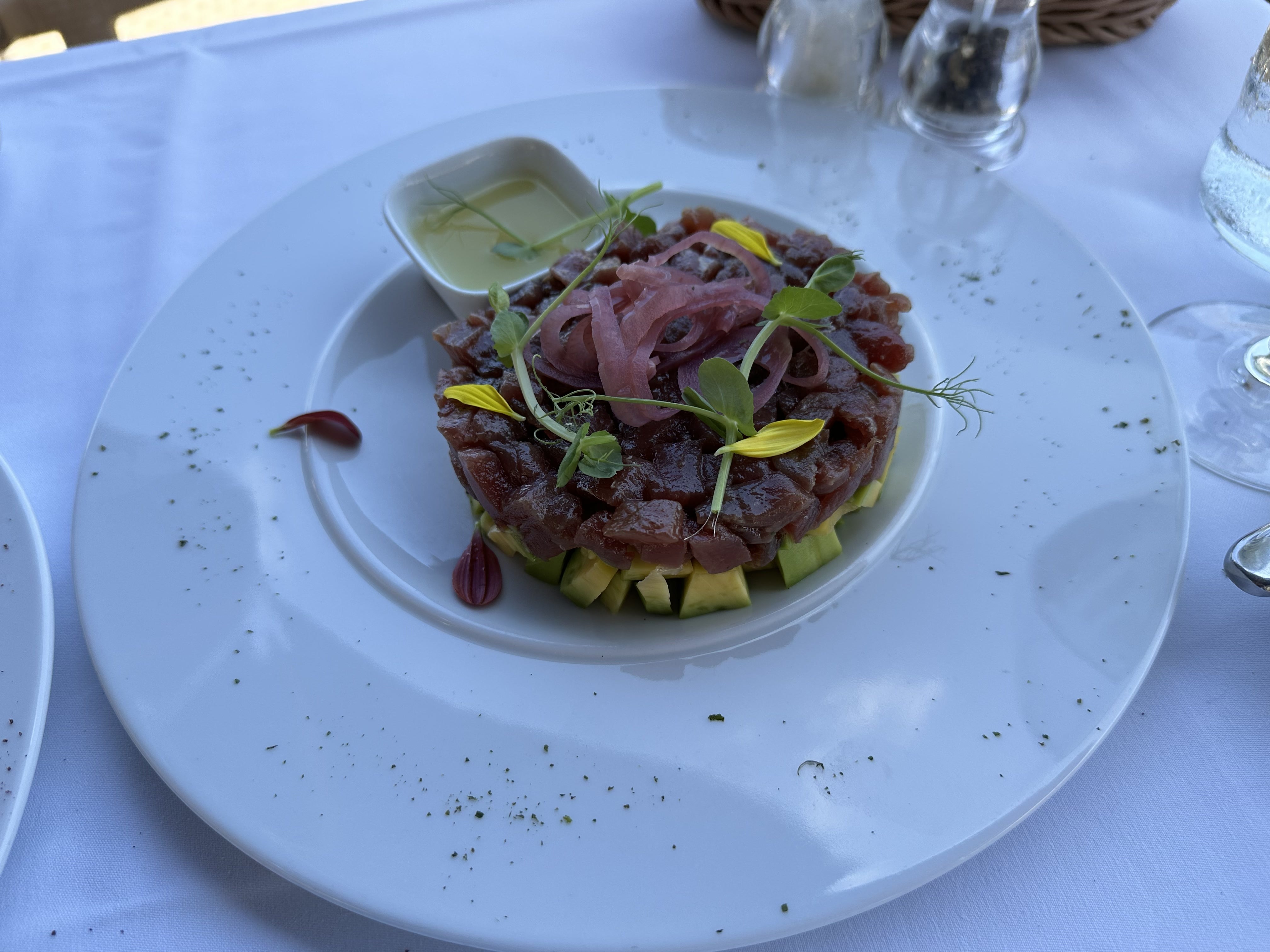
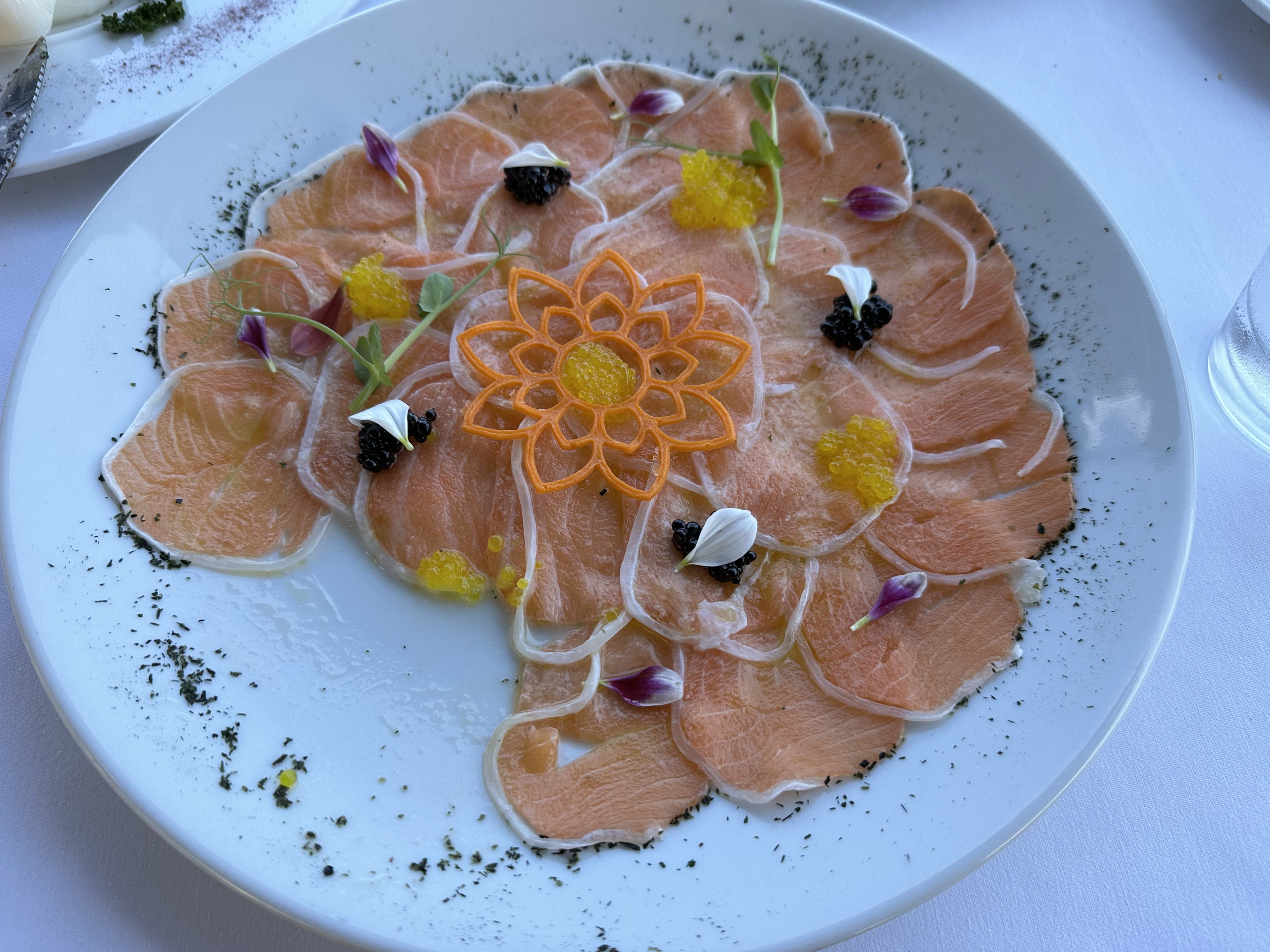
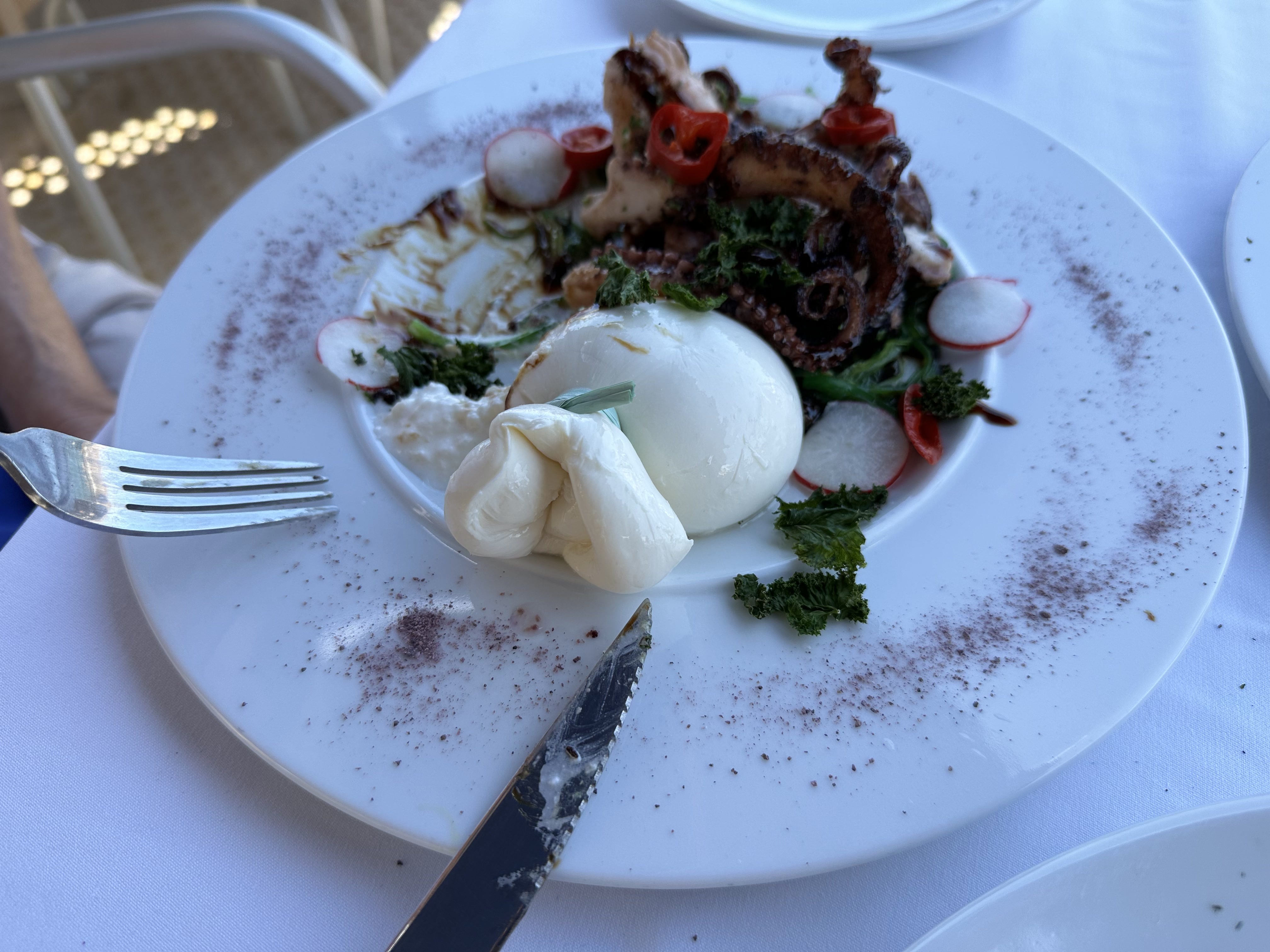
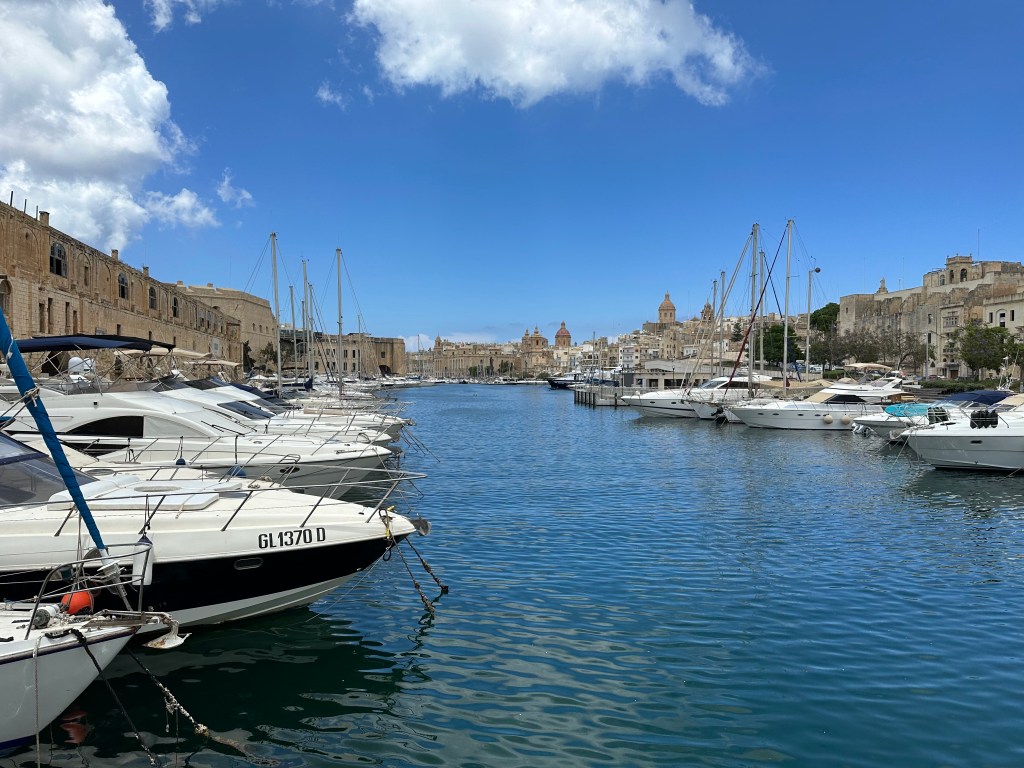
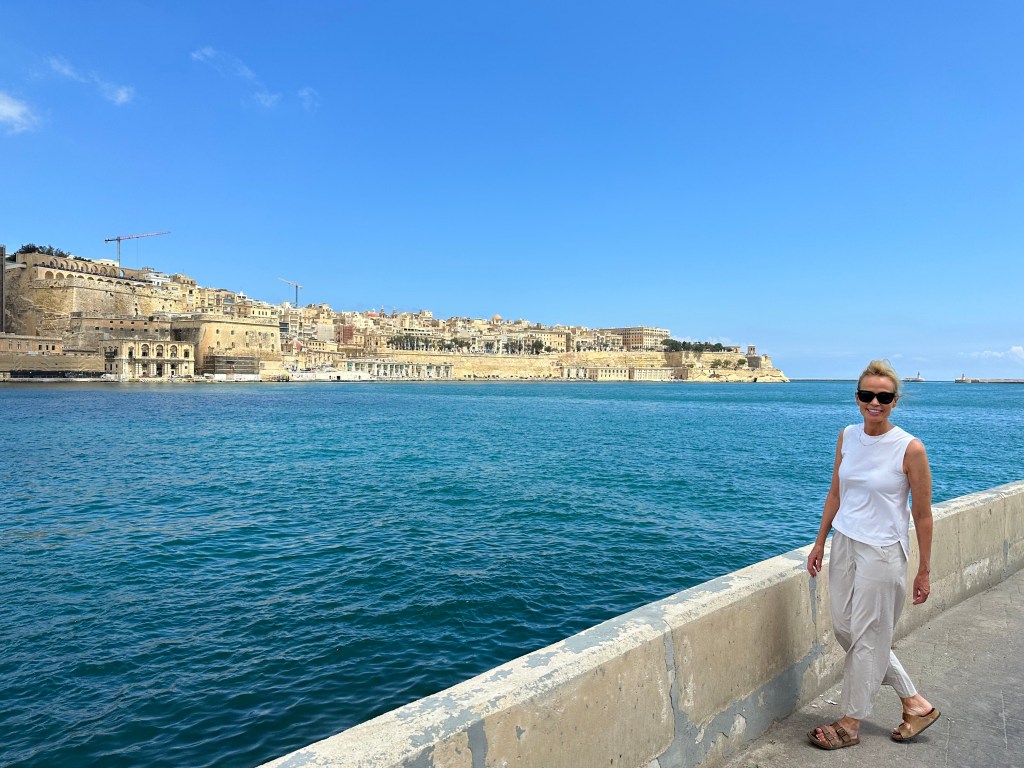
Walking along the Grand Harbor; we stayed on the left, the peninsula of Senglea; the parallel peninsula of Birgu is to the left, and Valletta itself is straight ahead.
The fortifications around Valletta, passed as we arrived from the water taxi stand many stories below the city elevation (there’s an outdoor elevator to get you from there to here):

The narrow and atmospheric streets of Valletta:
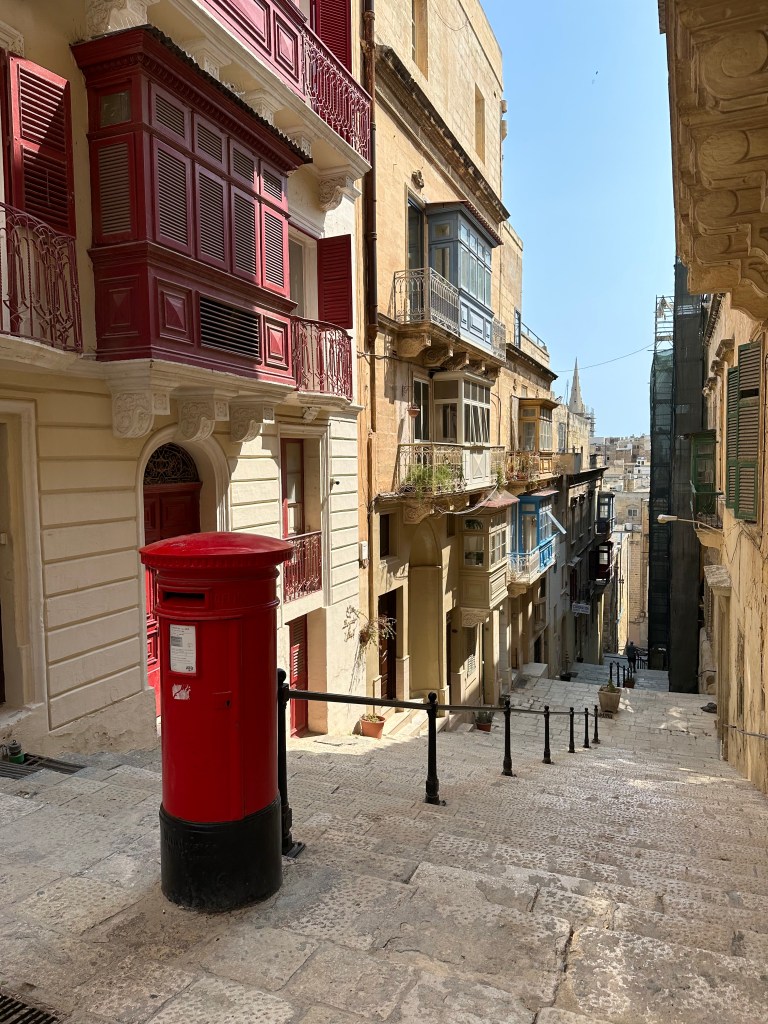
Punctuated by the city’s uniquely characteristic and multicolored gallarija:
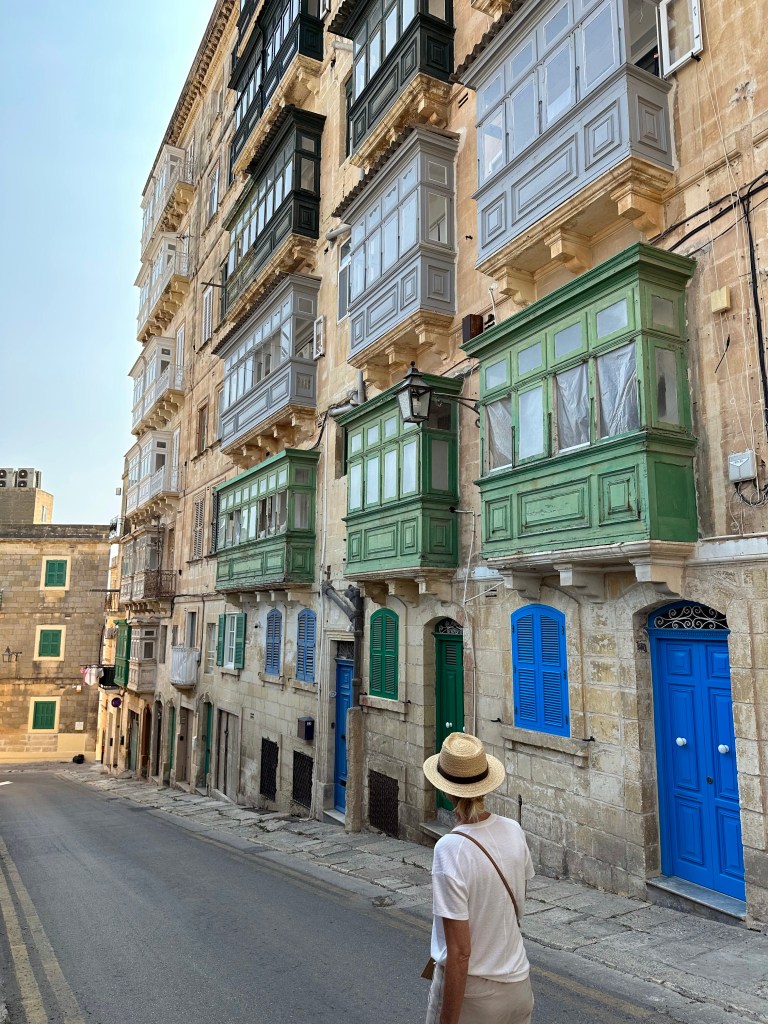
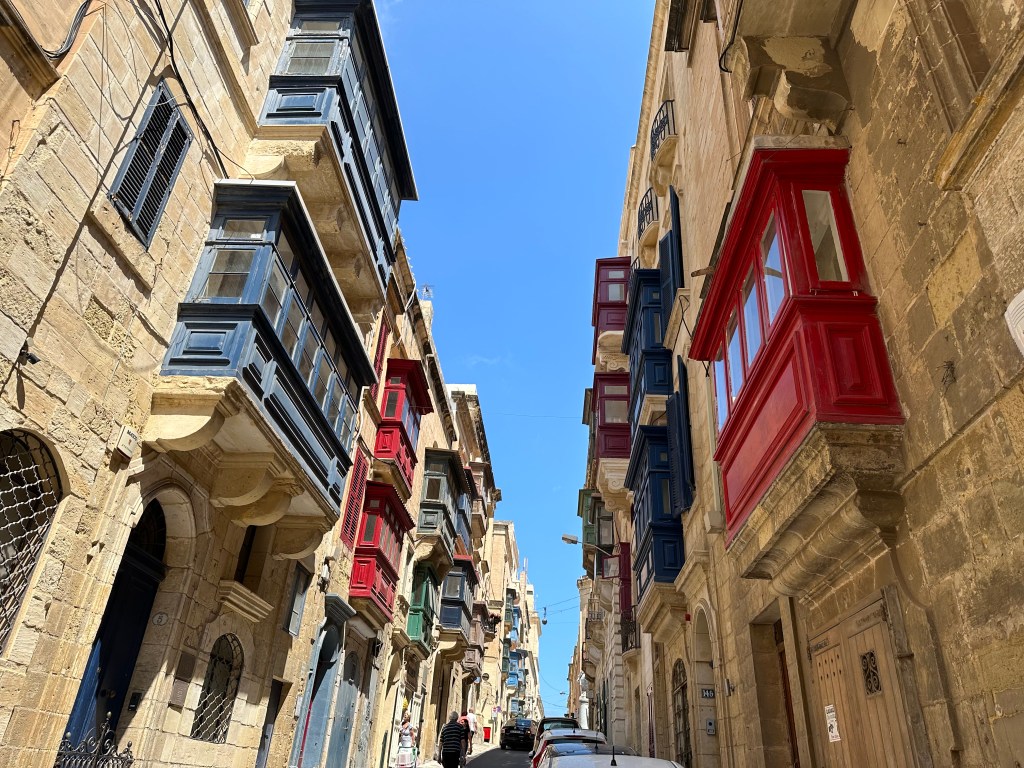
“The gallarija is considered a descendant of the Maltese muxrabija, and it is closely related to the mashrabiya which are typical in Arabic architecture. . . [which consist of] an ornate timber screen, perforated with an intricate network of holes, tightly fitted into a window or loggia. . . Muxrabijet had the task to keep the interior of the building cool by allowing circulation of air through the carved wood. They were also used as cooling device for storing water, and as a security measure to observe the outside without being seen.“

Pretty much every single street in Valletta was flanked by gallarija.
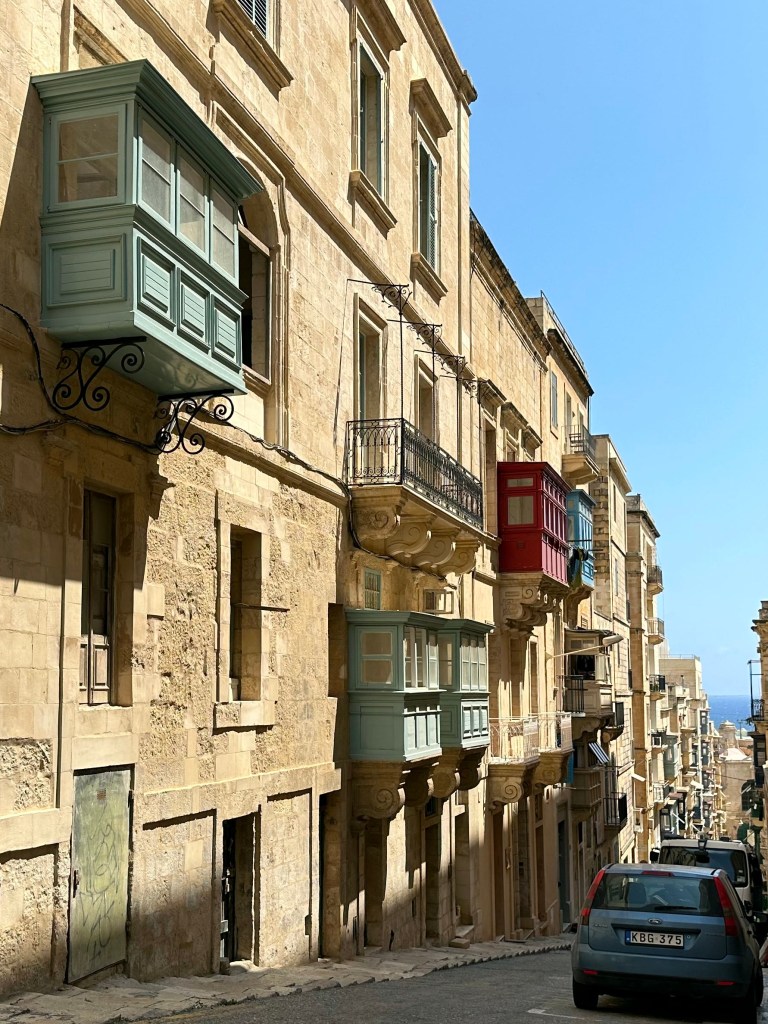

A city of limestone, punctuated by brightly colored wood elements. Pretty picturesque.

Water taxi ride back to Senglea:
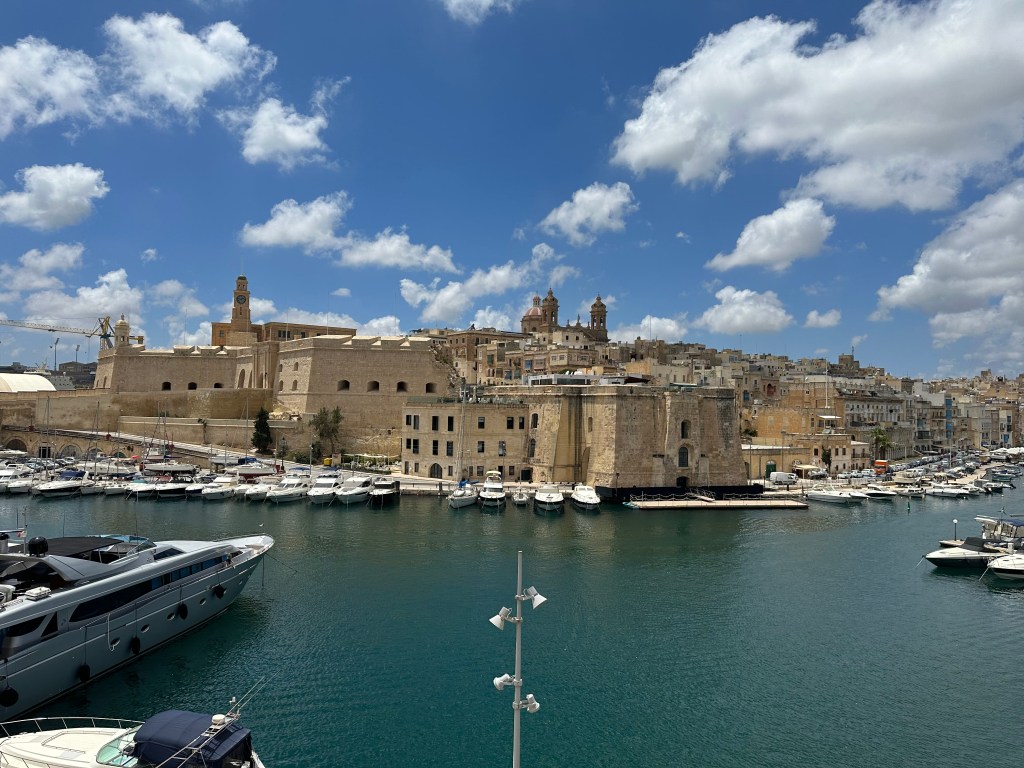
Our hotel occupied one of the Hospitalers’ old fortresses, which was freakin’ awesome. The walls in the rooms were 3′ thick and you could feel the history. Plus, this pool:

Pretty great perch of the Grand Harbor.
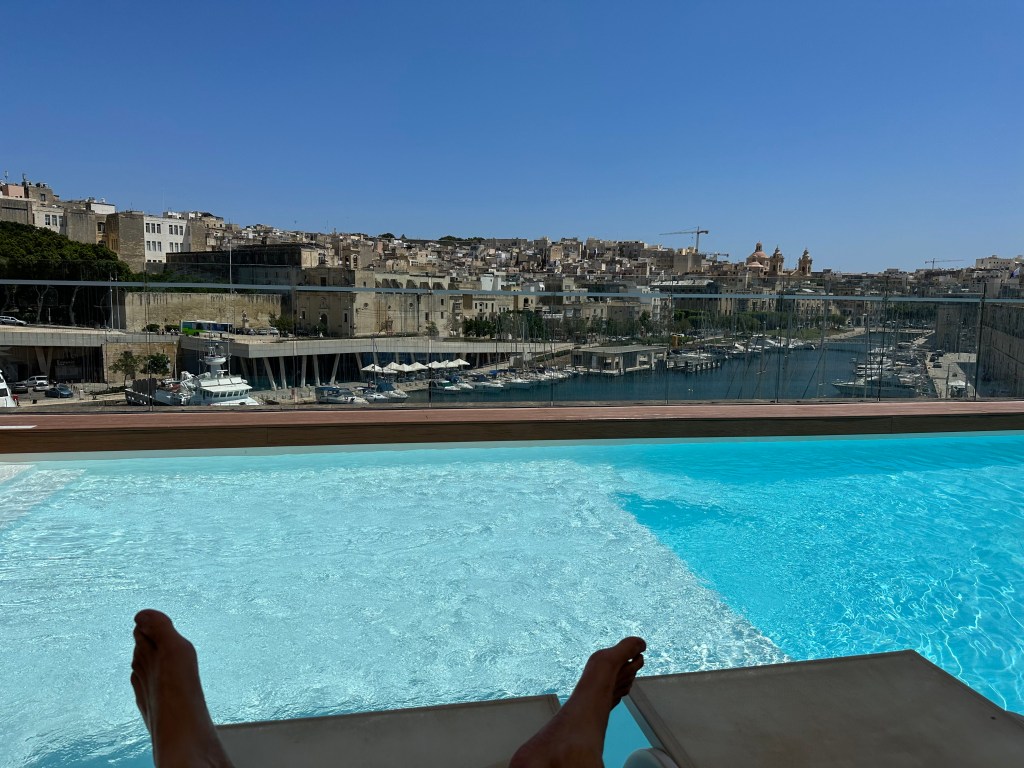
View from our room’s cannon embrasure-cum-window:

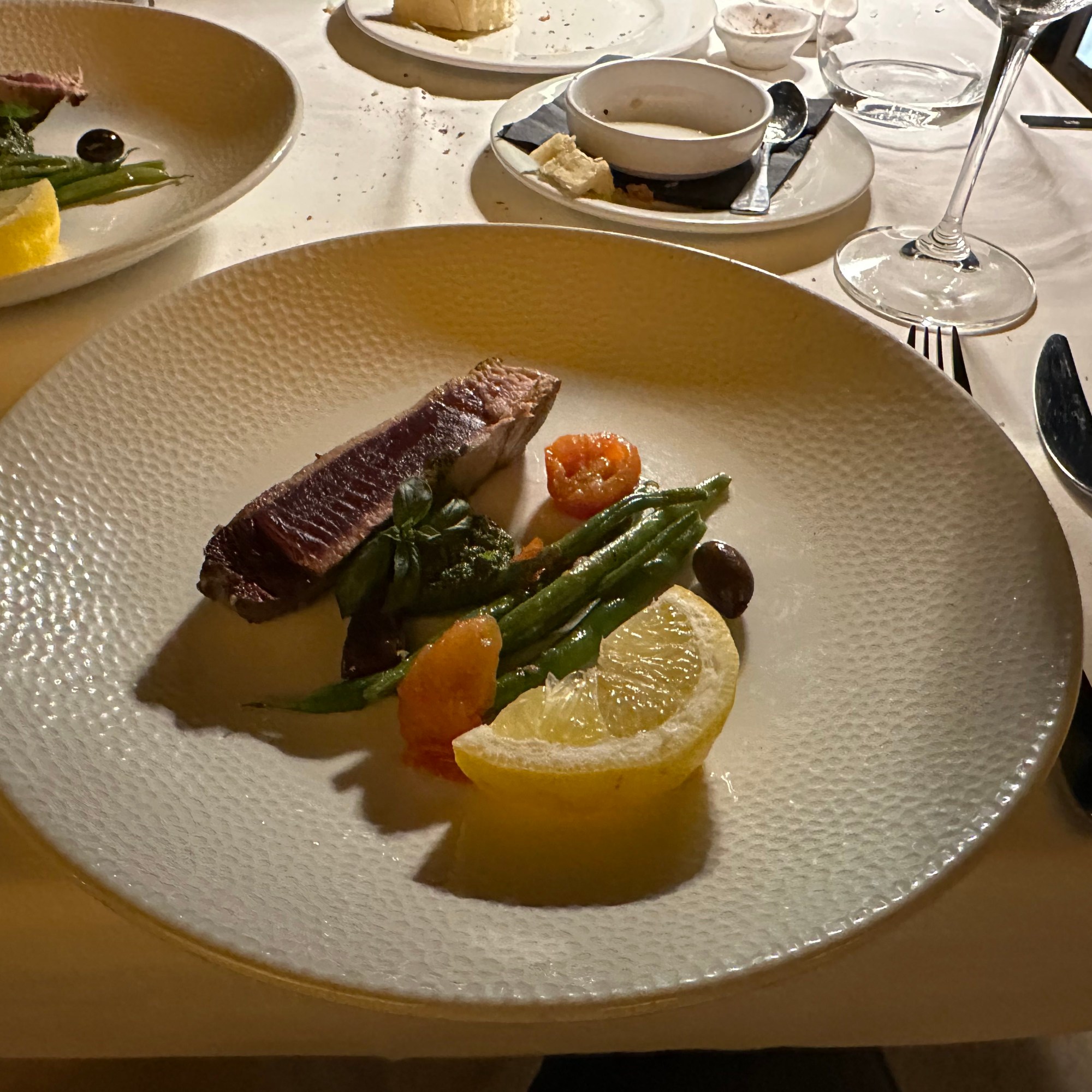
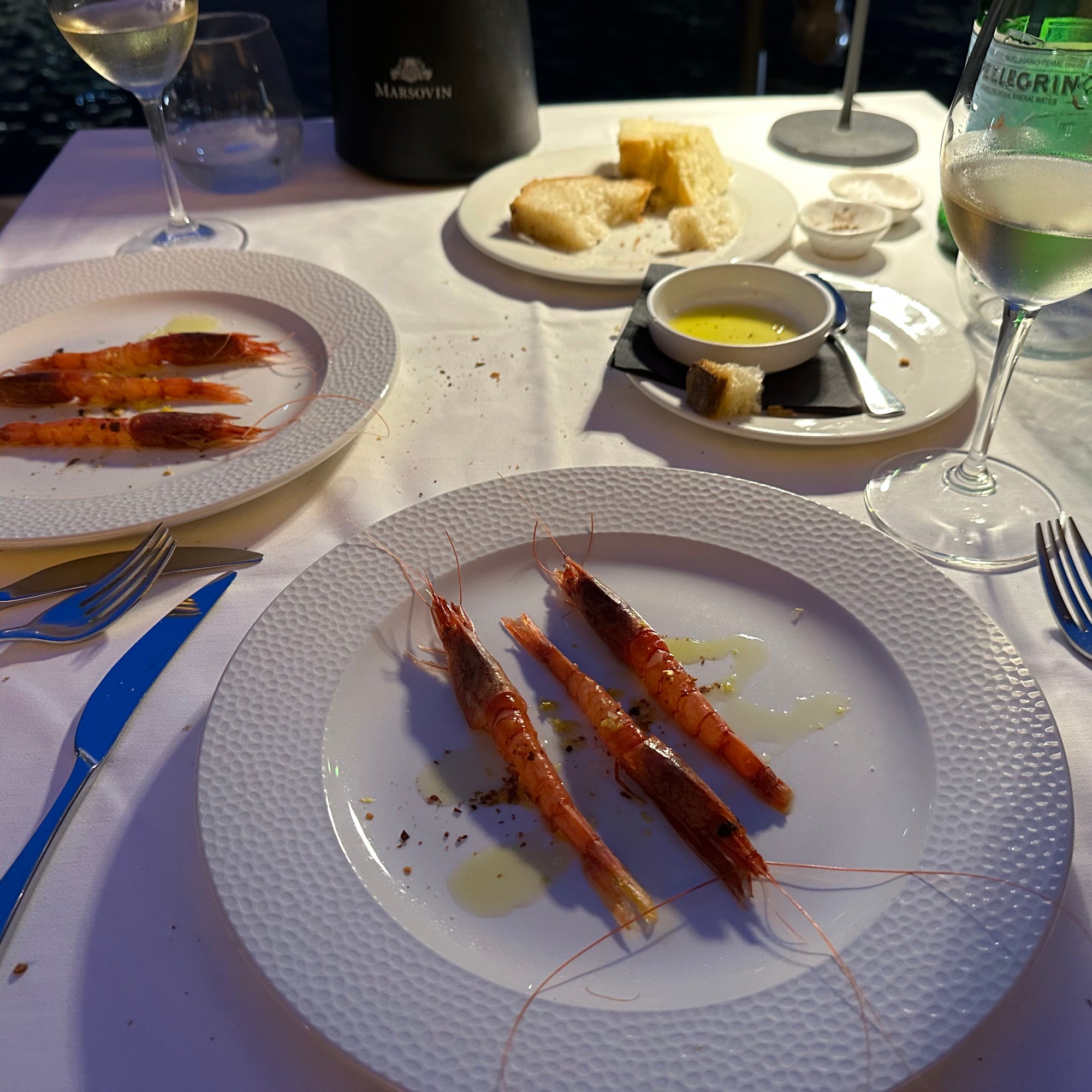
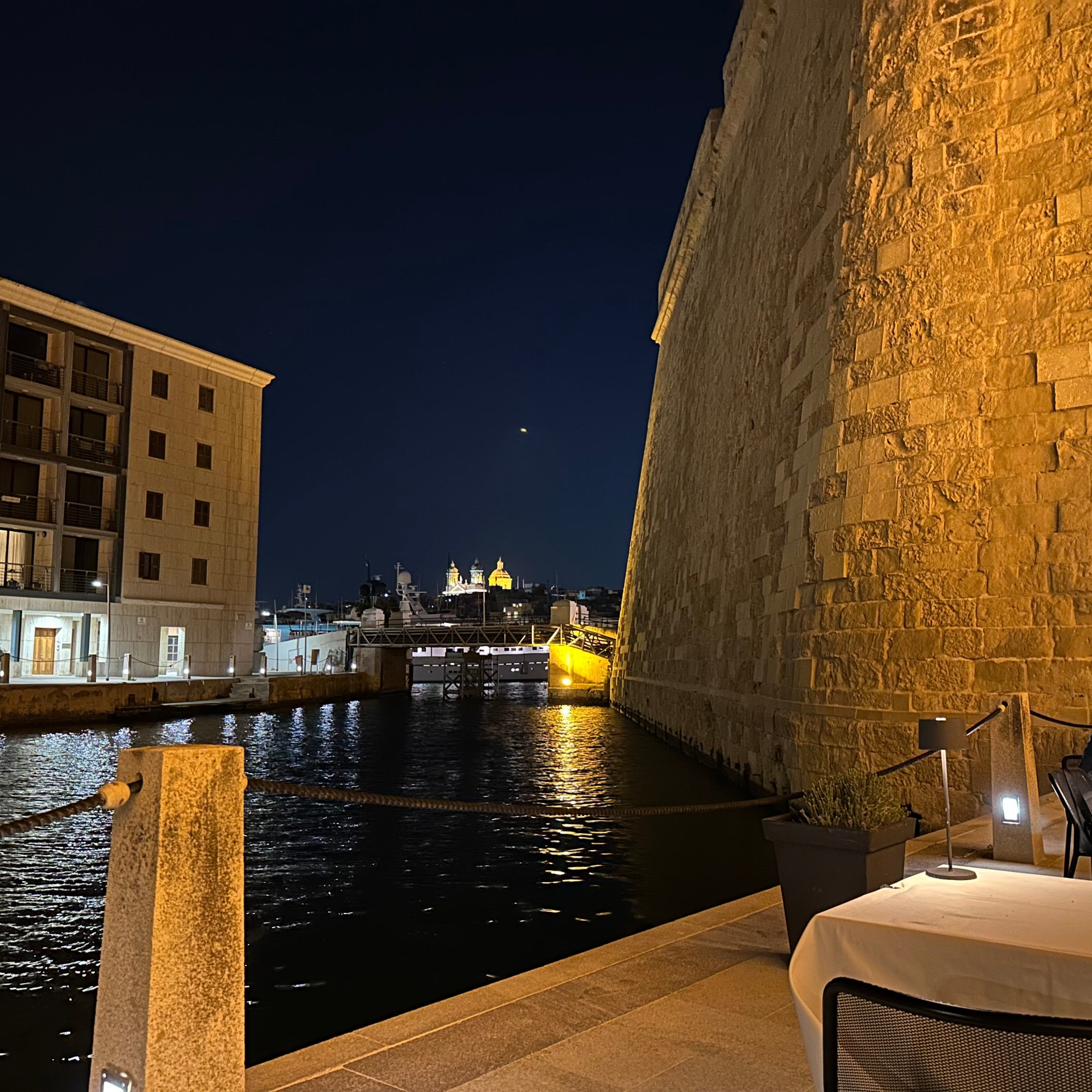
Very cool little harbor area off the Grand Harbor on Birgu that was, um, harboring a very nice restaurant.


Access to the restaurant was gained through the abandoned tunnels of Fort St. Angelo.


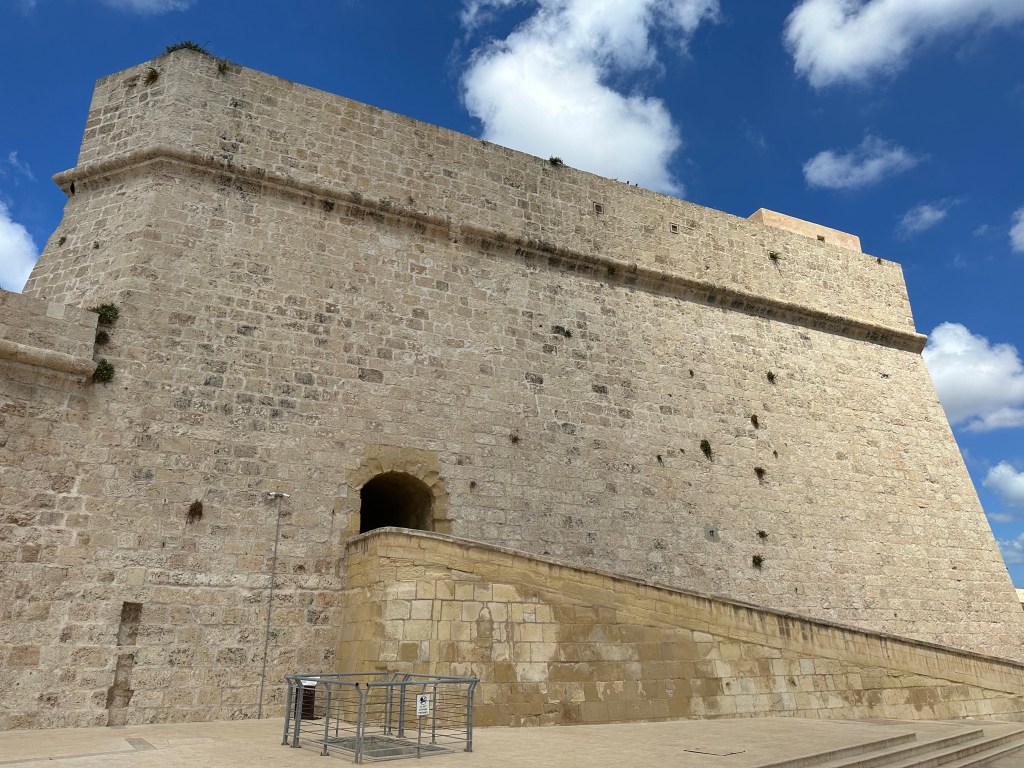
After walking around, sailing around, and walking under Fort St. Angelo, we finally decided to actually visit the place.
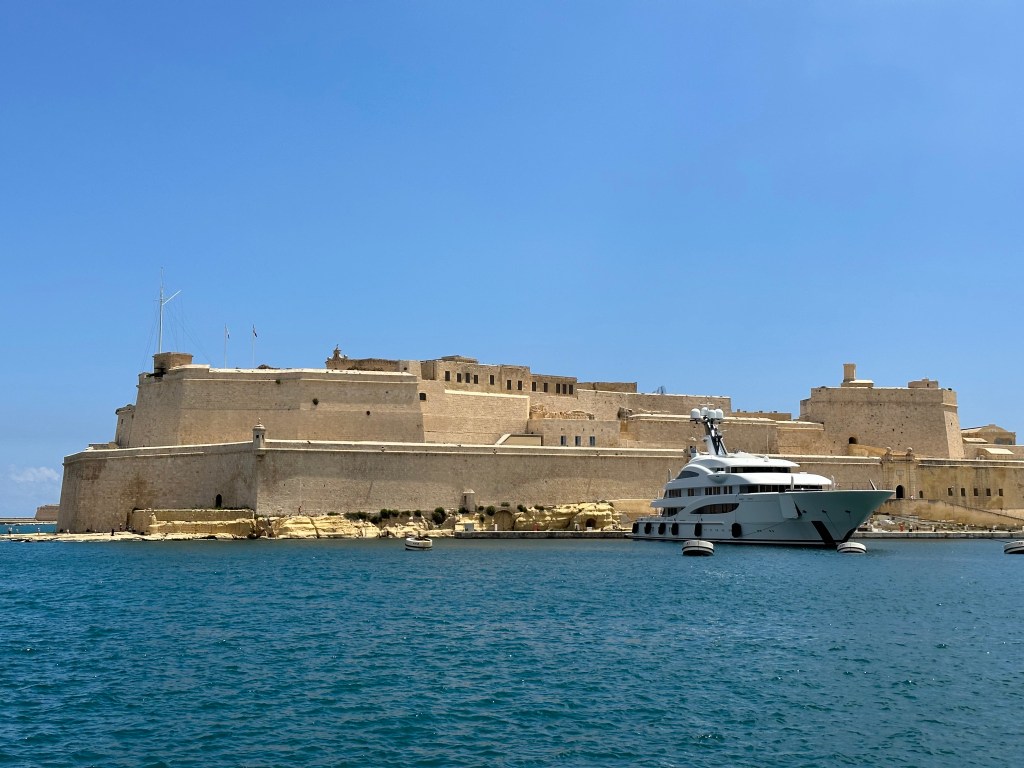
“The fort was garrisoned by the British from 1800 to 1979, at times being classified as a stone frigate known as HMS Egmont or later HMS St Angelo. The fort suffered considerable damage during World War II, but it was later restored.“
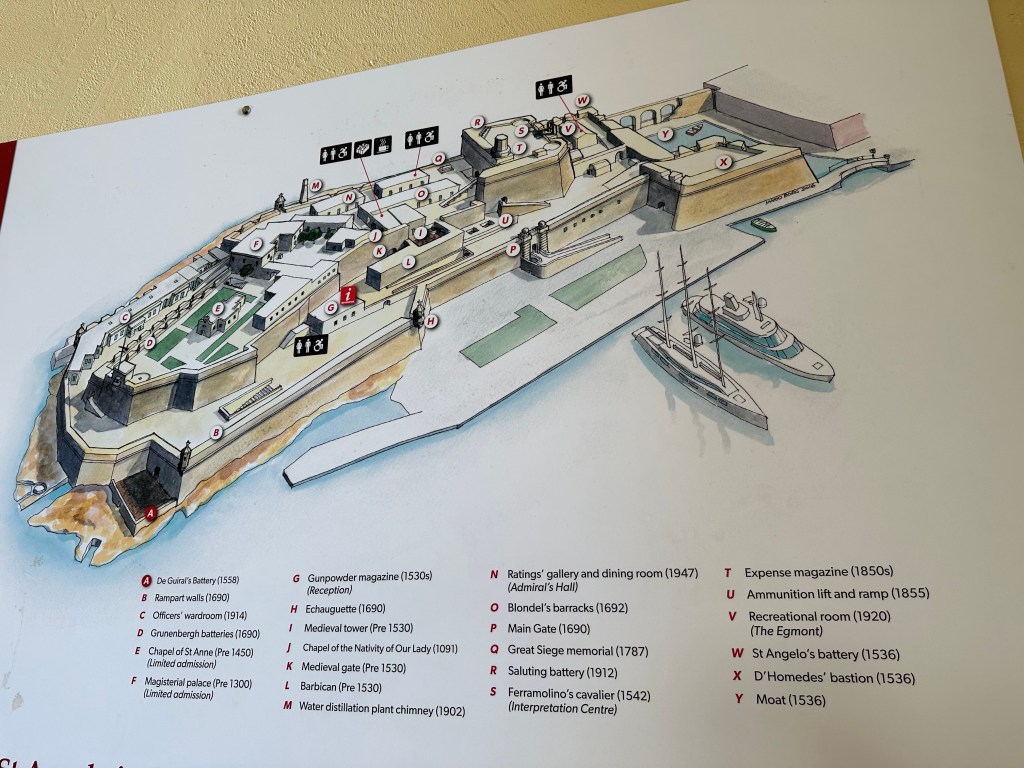
Map of the fortifications with dates delineating the evolution of the fort from the Hospitalers’ era in the 1500s (and even earlier to 1091 for one of the chapels that predated – by a long stretch – their arrival) to the 1940s:

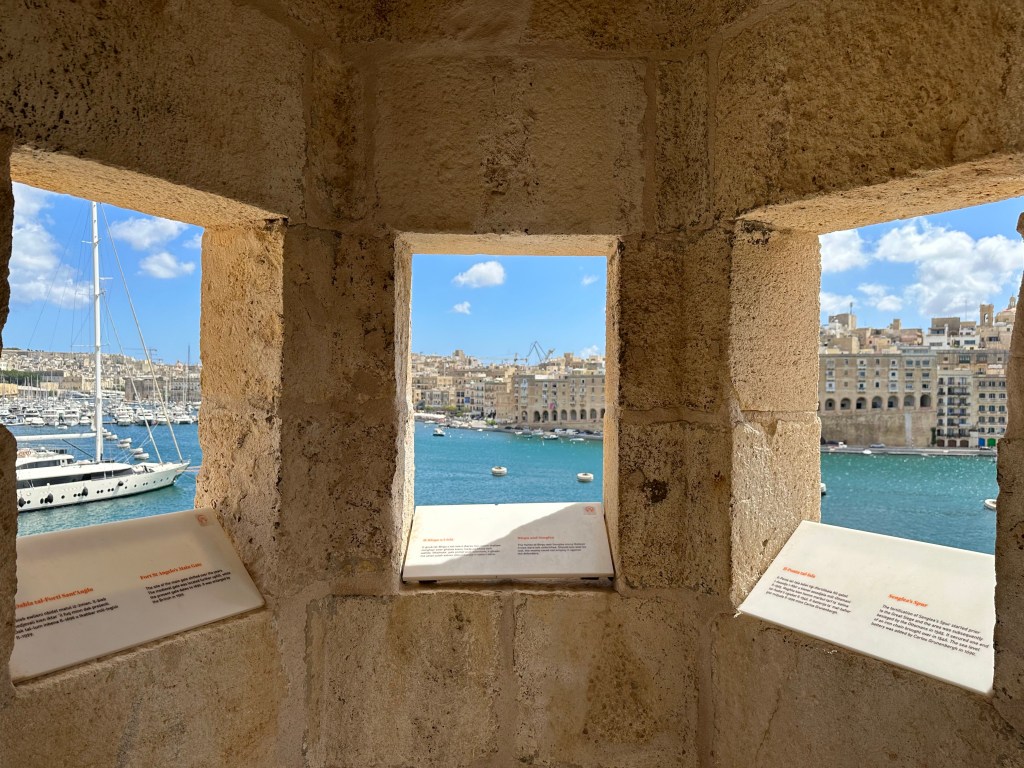
View over to Senglea across the harbor:

Inside a watchtower on the very tip of the fort and of Birgu; the tip of Senglea is out the right window, but you can’t tell.
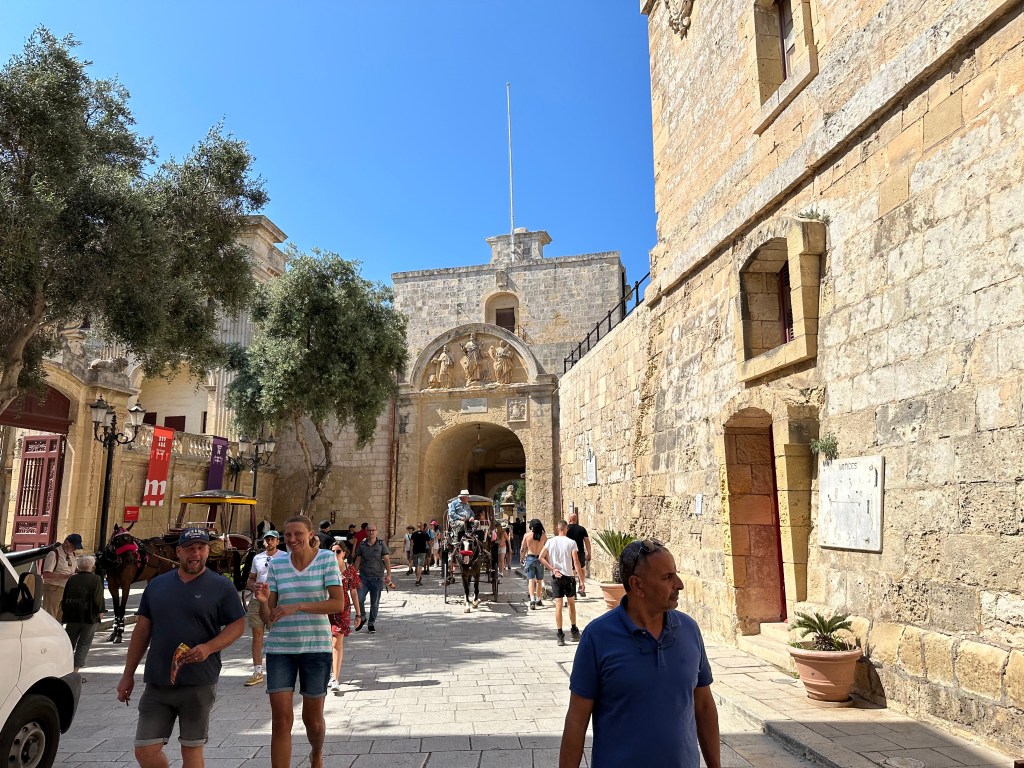
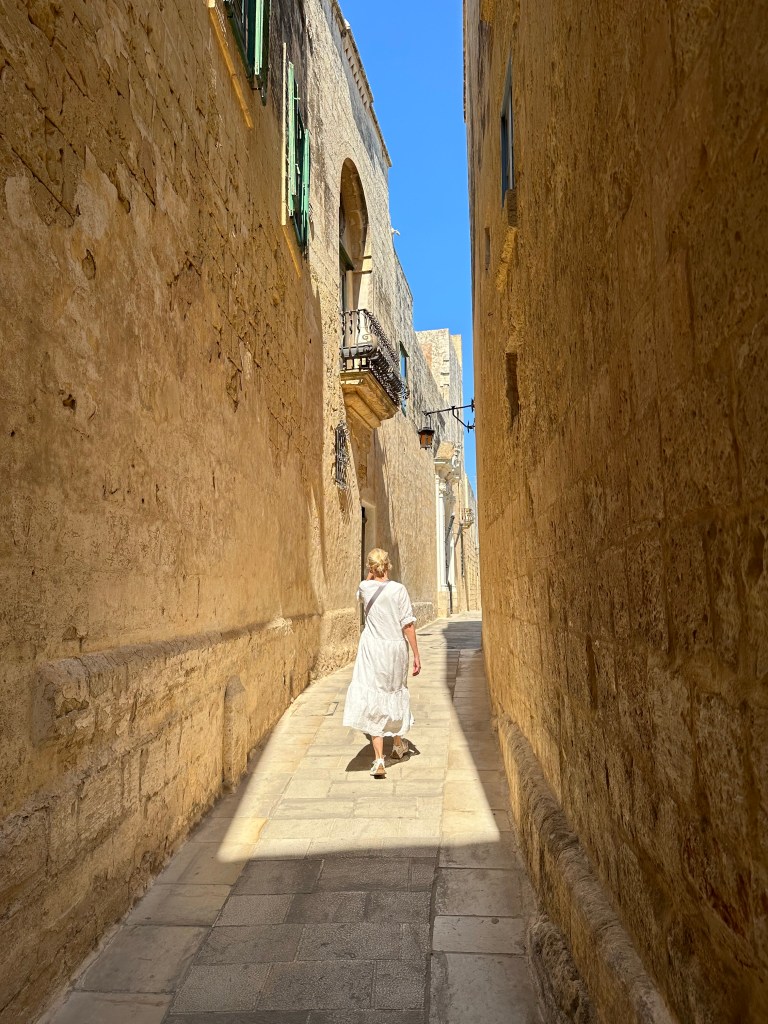
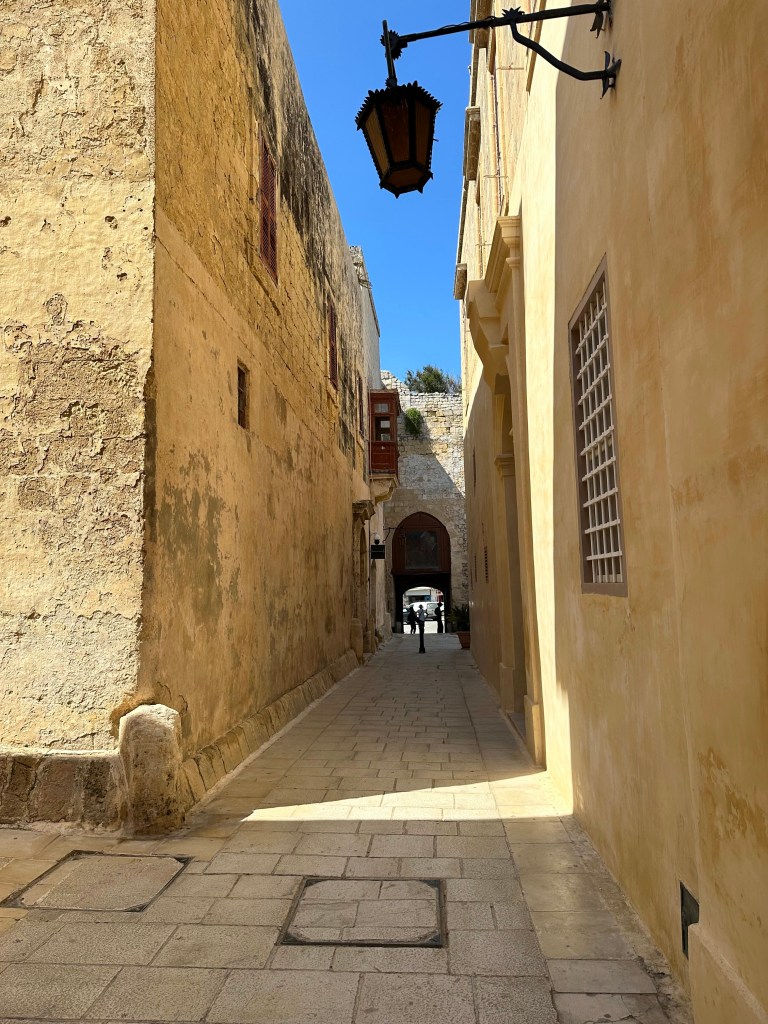
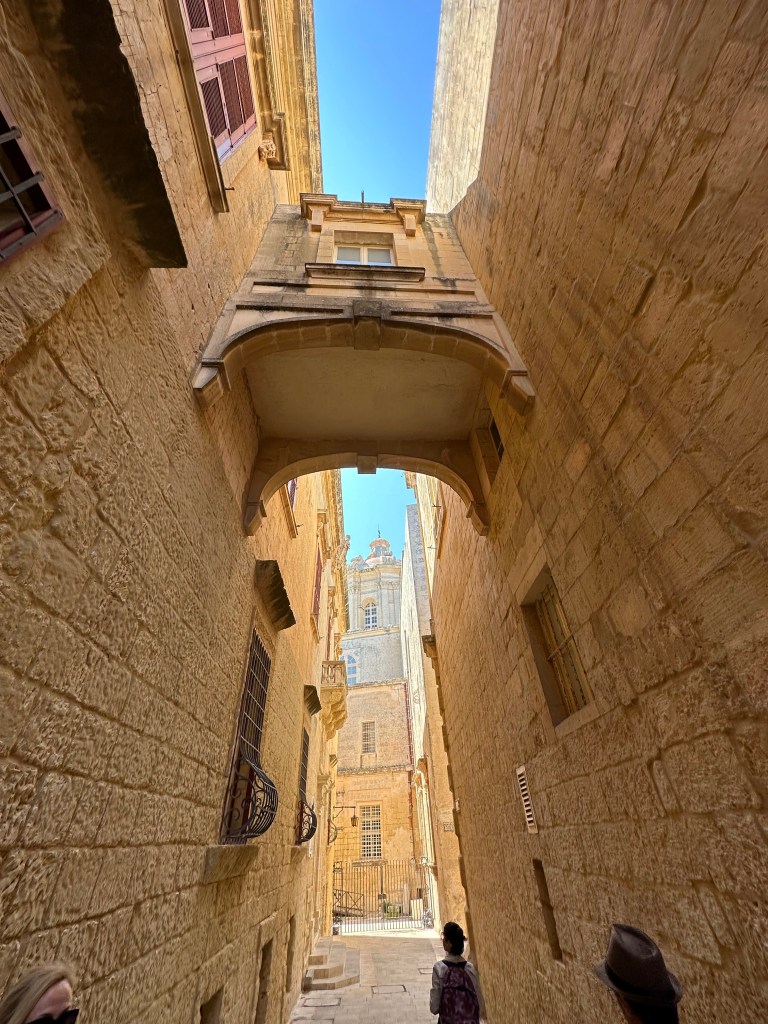
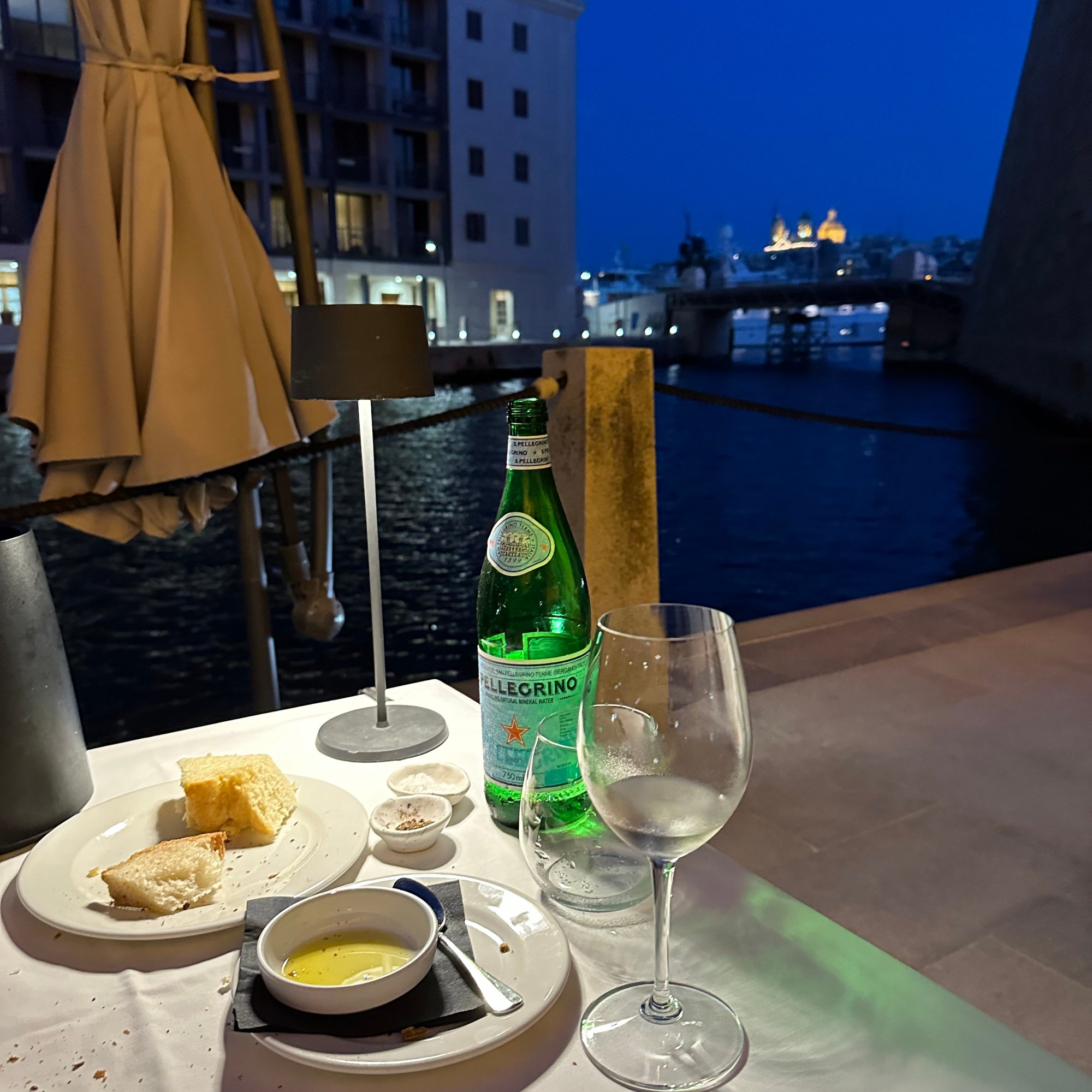
Another evening in Malta after a day trip to Mdina, which will cover in another post. Unbelievable weather the entire time, though.
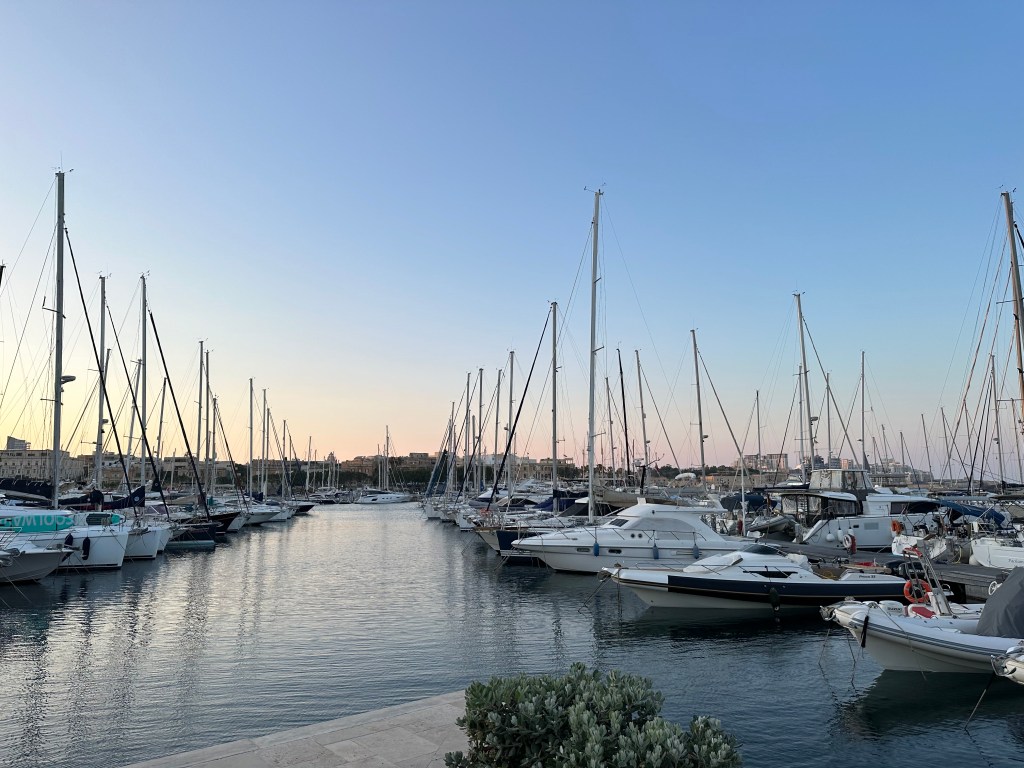
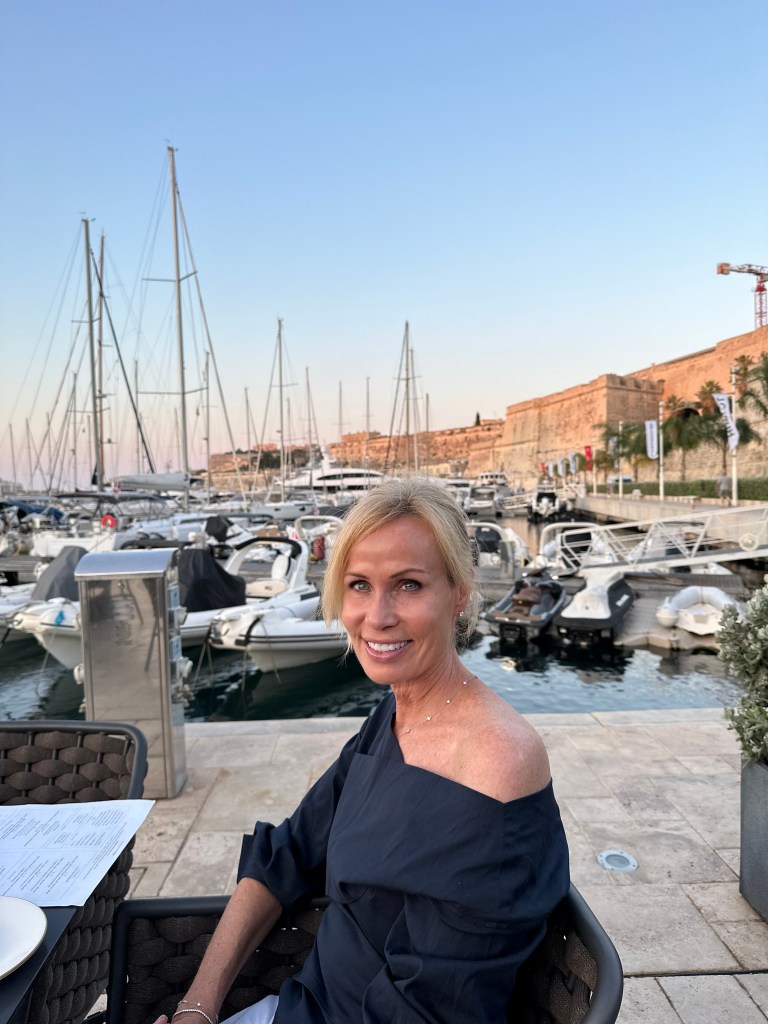

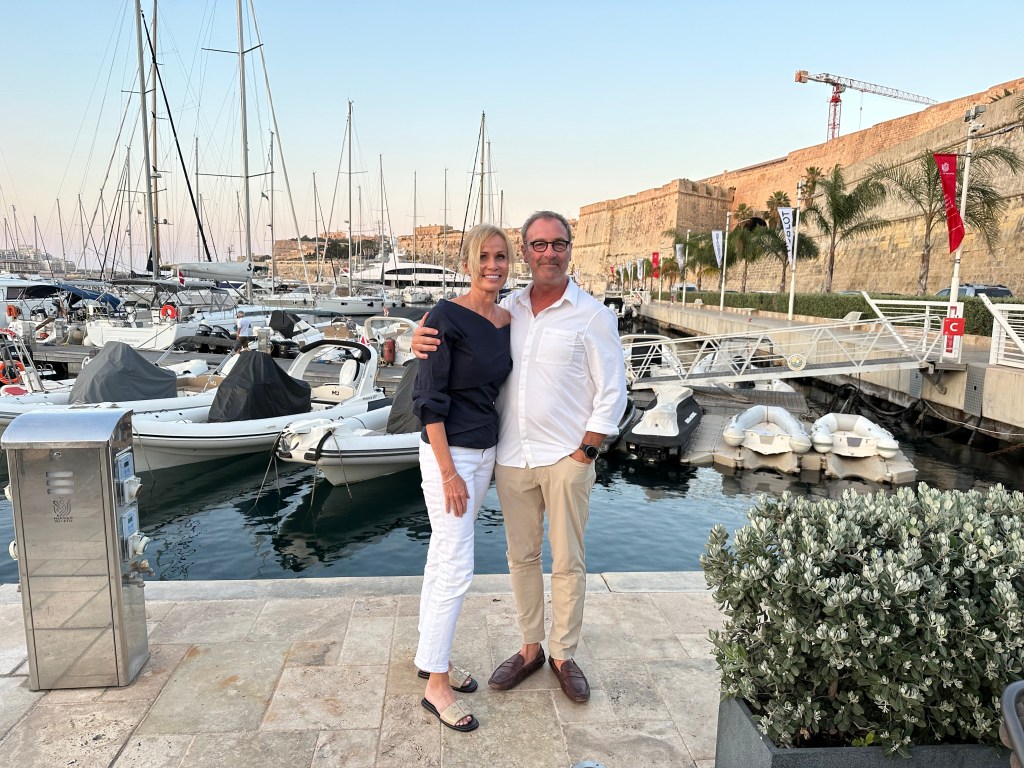

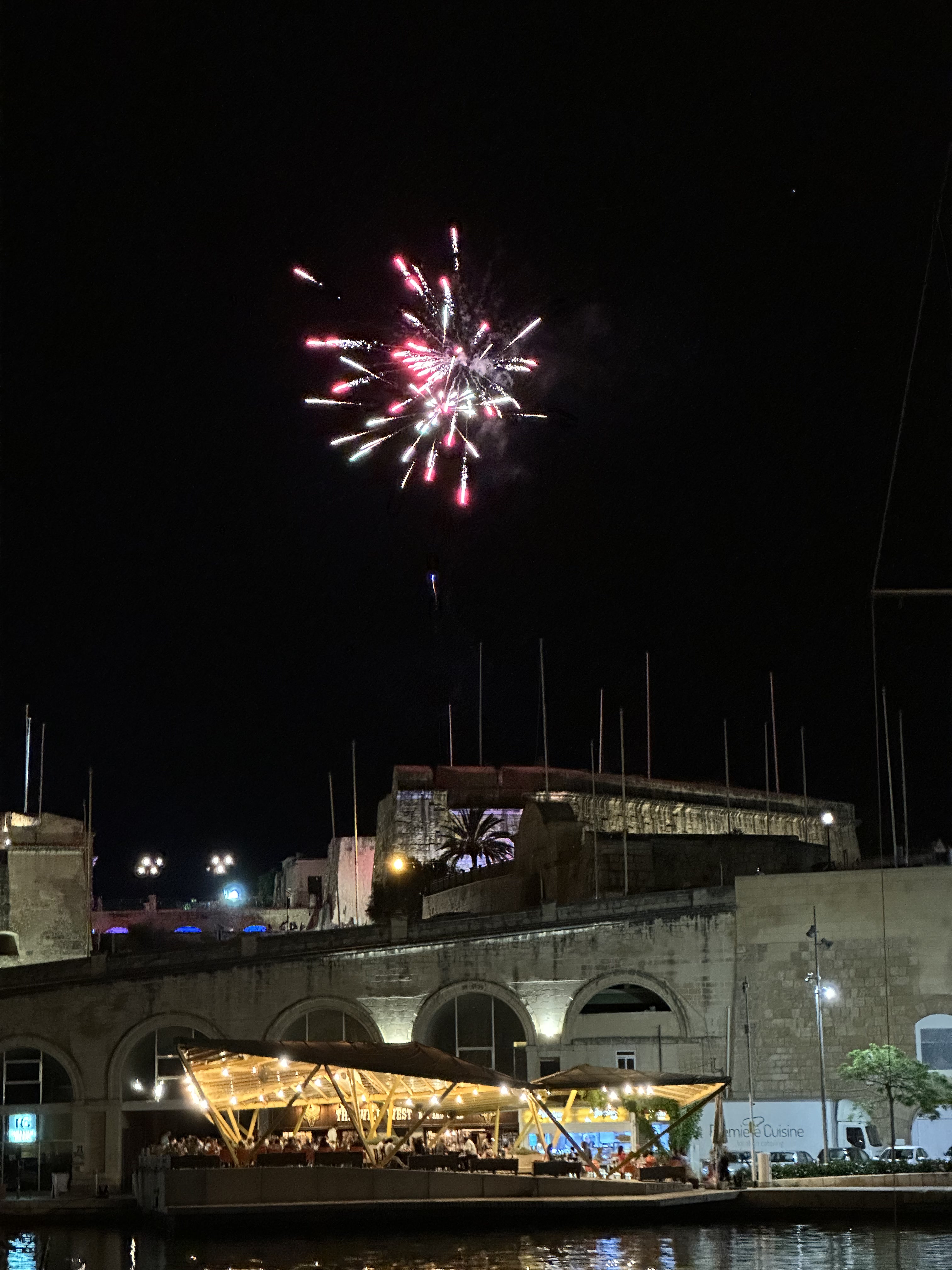
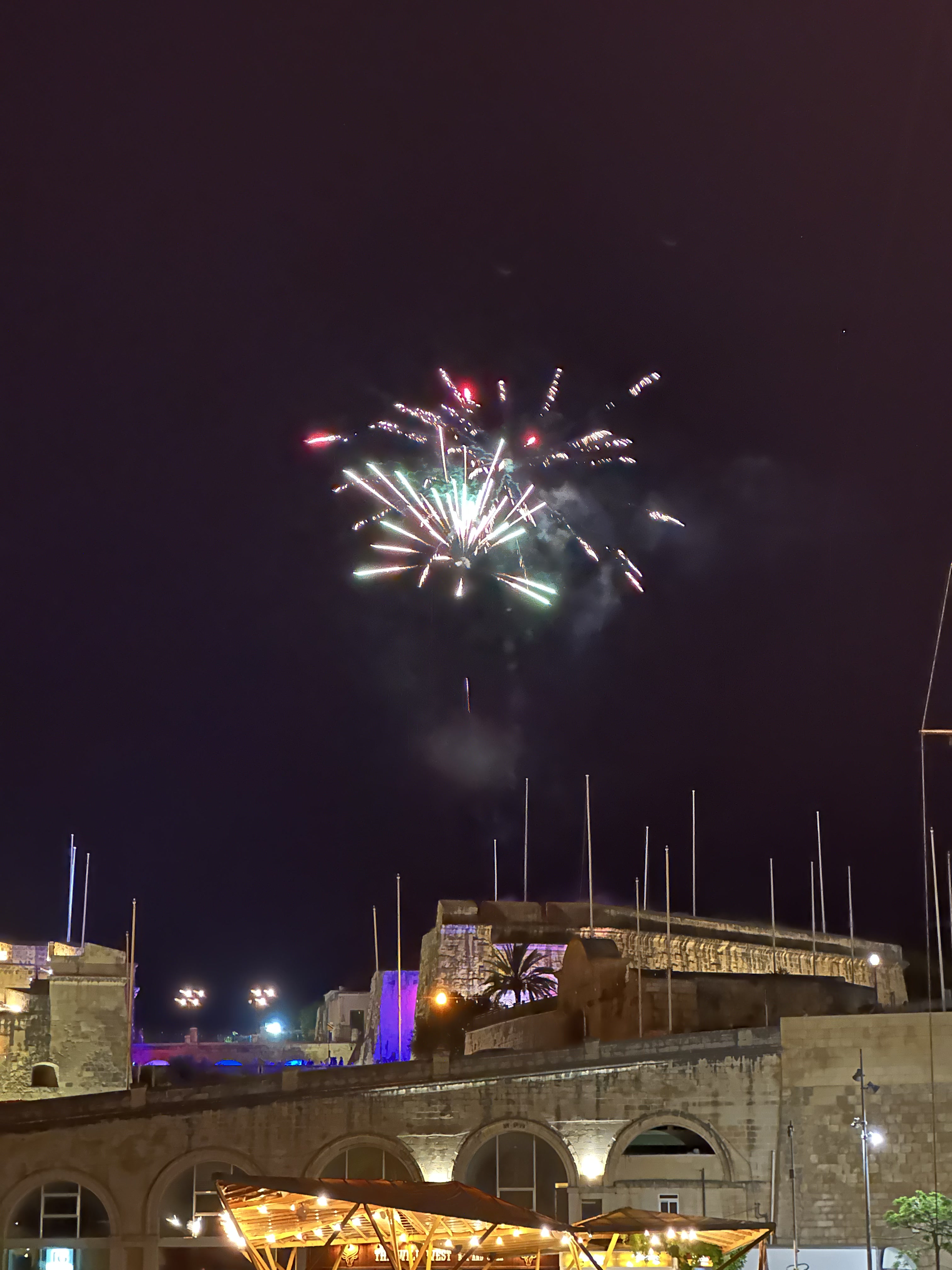
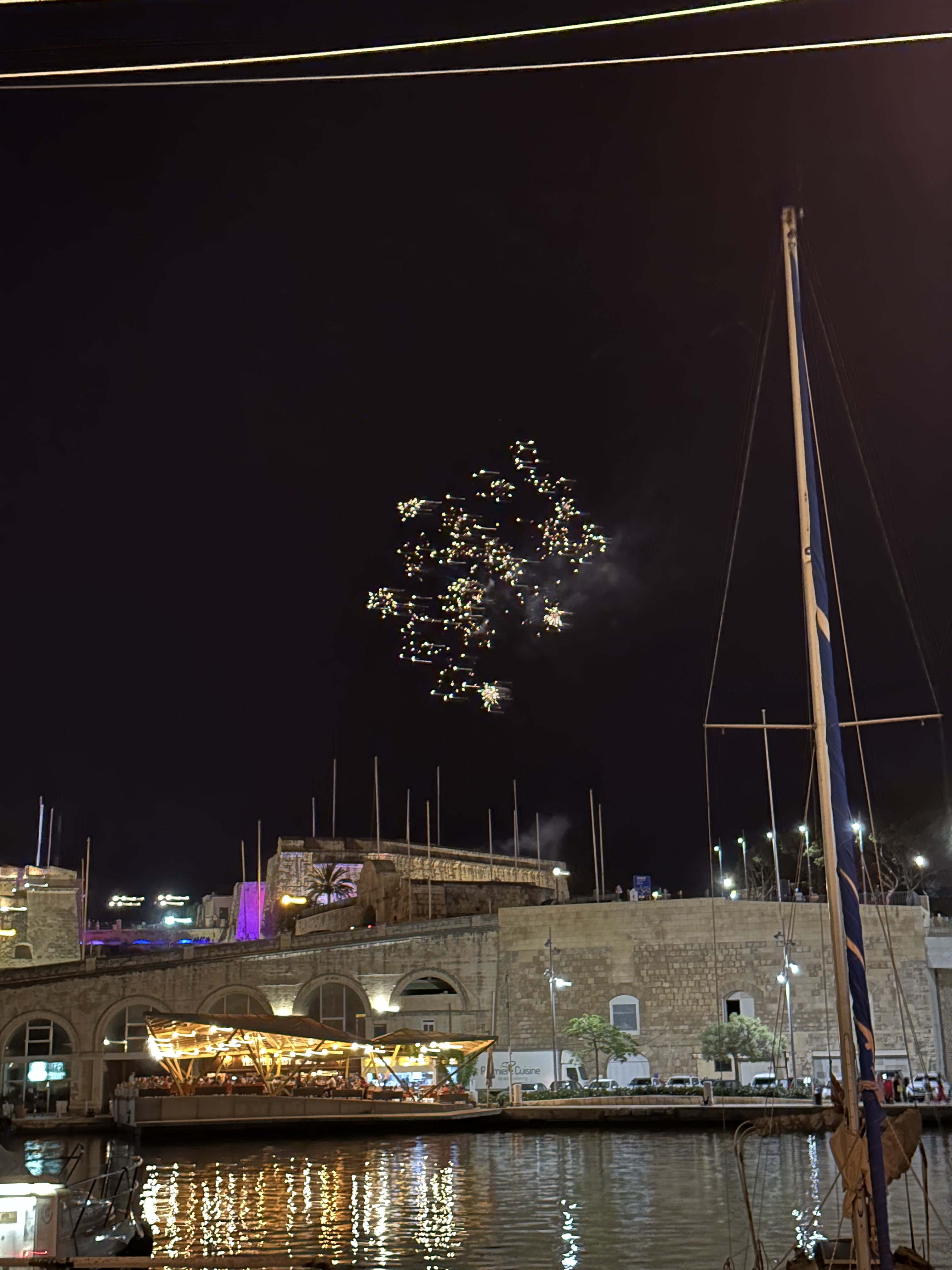
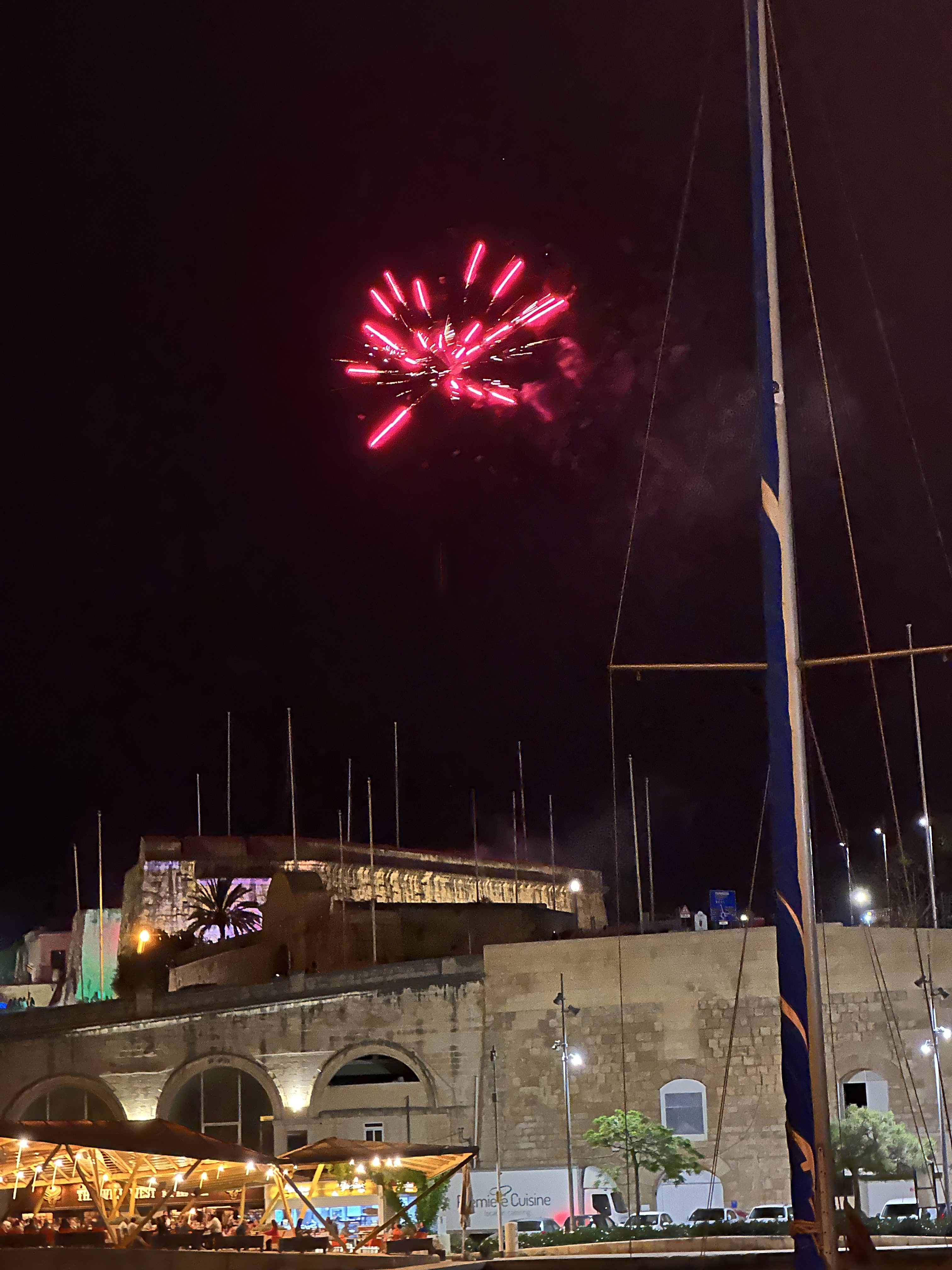
Unexpected fireworks towards the end of dinner:
The dome of Hospitalers’ (Order of St. John’s / Knights of St. John’s) St. John Co-Cathedral in Valletta:
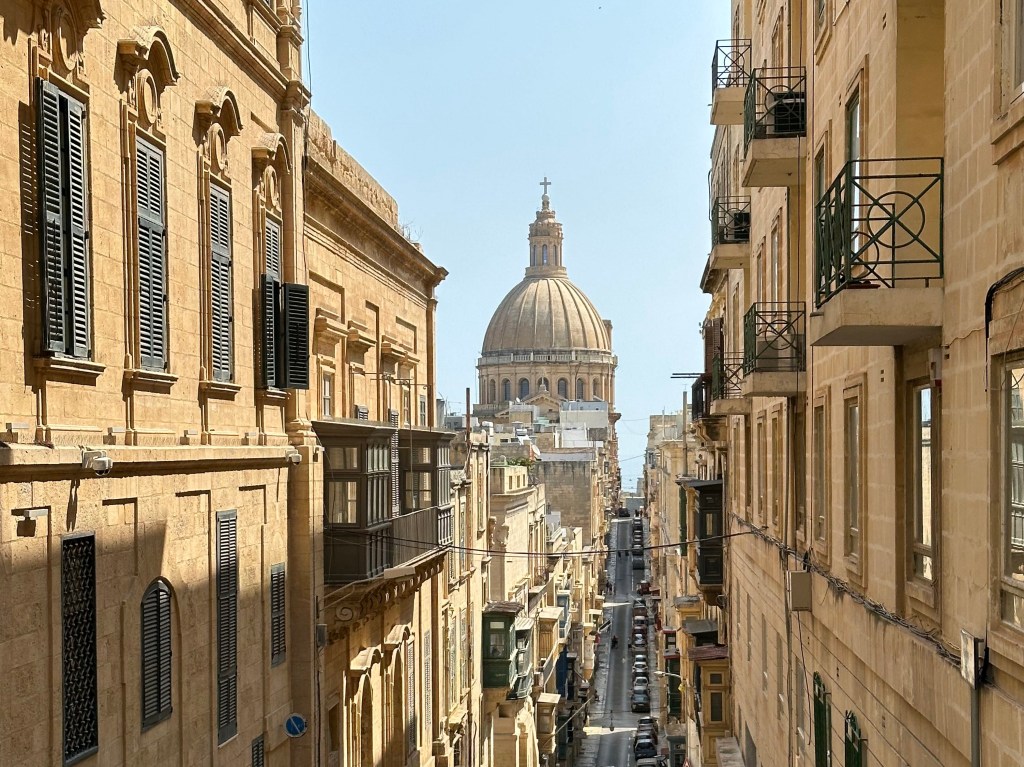
St. John’s Co-Cathedral was built between 1573 and 1578 by the Knights of St. John as their conventual church following the Great Siege of Malta, with its austere exterior designed by Maltese architect Girolamo Cassiere concealing one of the world’s most lavish Baroque interiors.
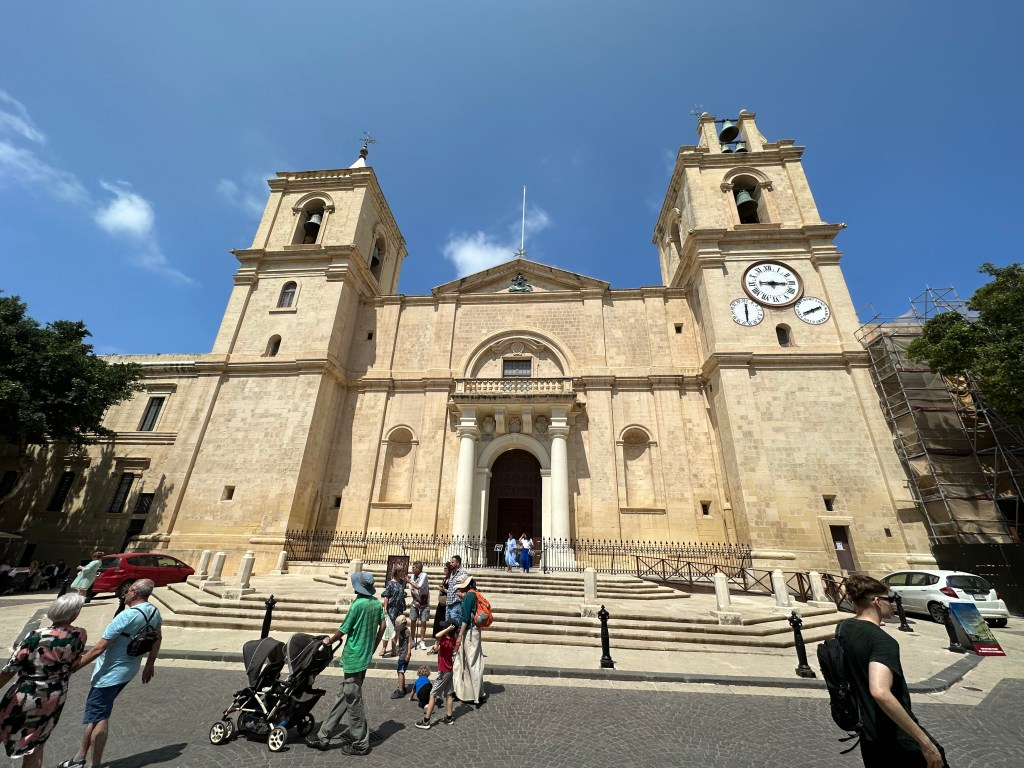
It’s a co-cathedral (we had never heard of this before) because the original (and still) bishop’s seat on Malta was in the interior town of Mdina at St. Paul’s Cathedral. But the Hospitalers new one got recognized by the Pope, as well, and he granted it equal cathedral status, as a co-cathedral. One bishop, two cathedrals. Pretty wild.
Today, the co-cathedral is Malta’s most important religious and artistic monument, symbolizing the power and legacy of the Knights Hospitaller while serving as one of Europe’s finest examples of Baroque architecture and a centerpiece of Valletta’s UNESCO World Heritage status.

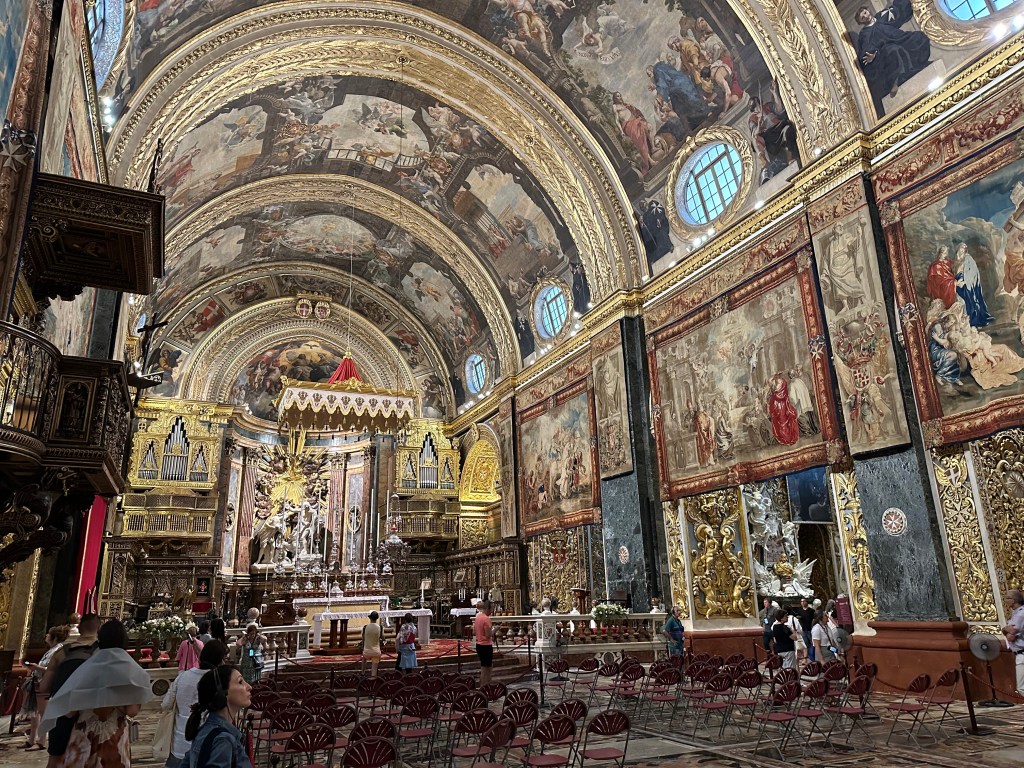
Spectacular ceiling of the co-cathedral
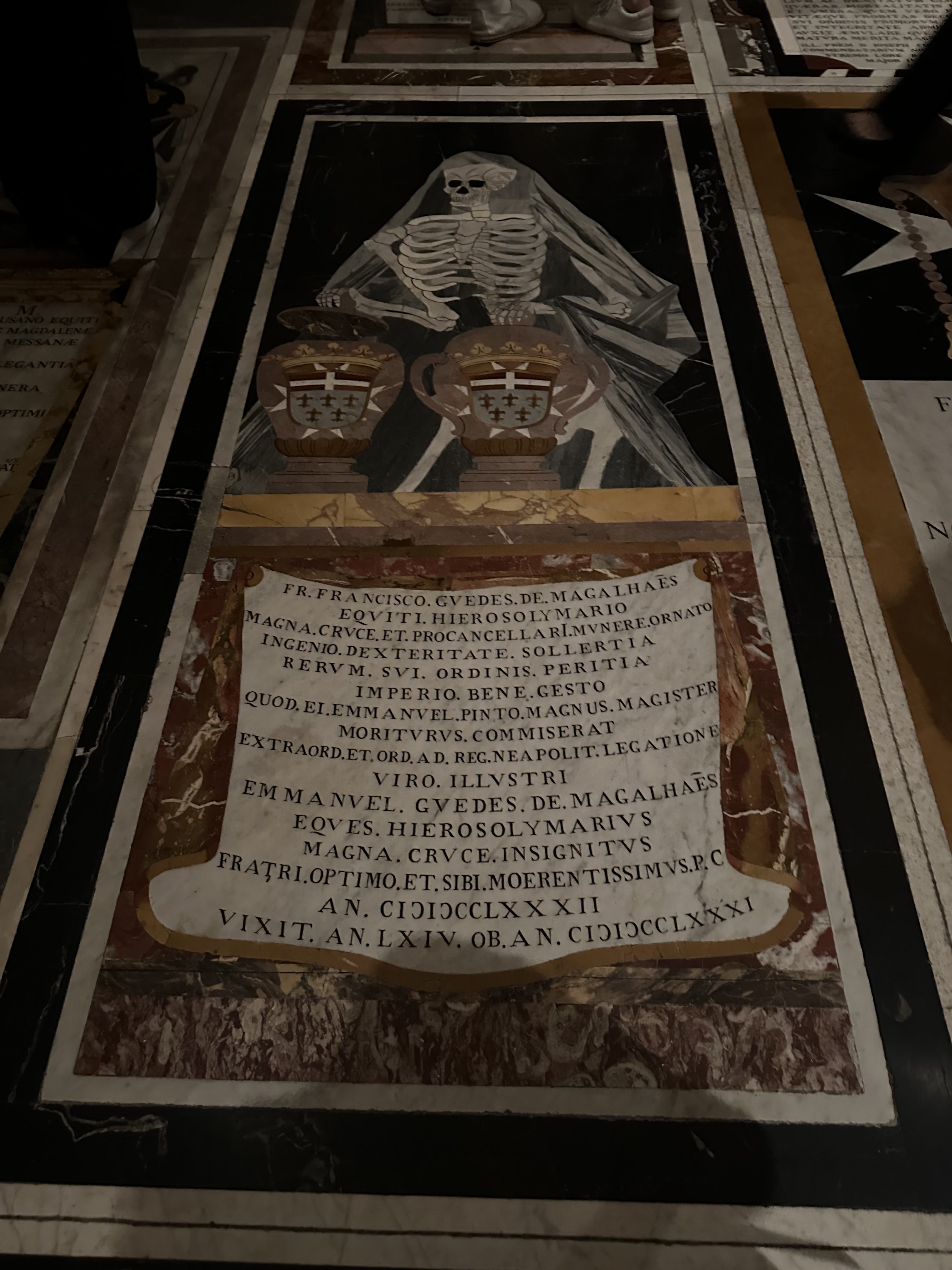
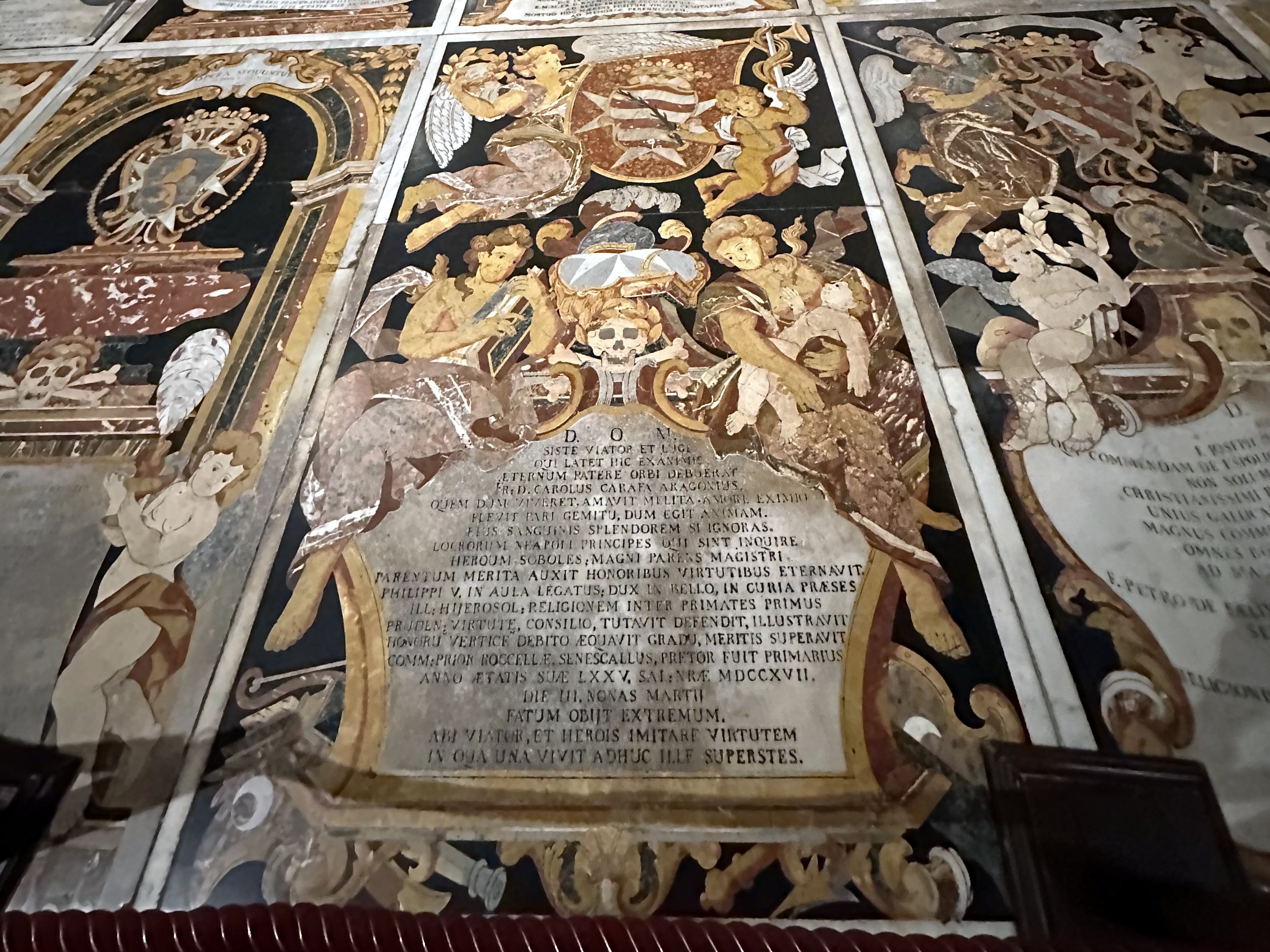
Way better to us was the floor – the entire place was occupied by elaborate tombs of the Knights of St. John:

Most of which included macabre elements, to our delight:
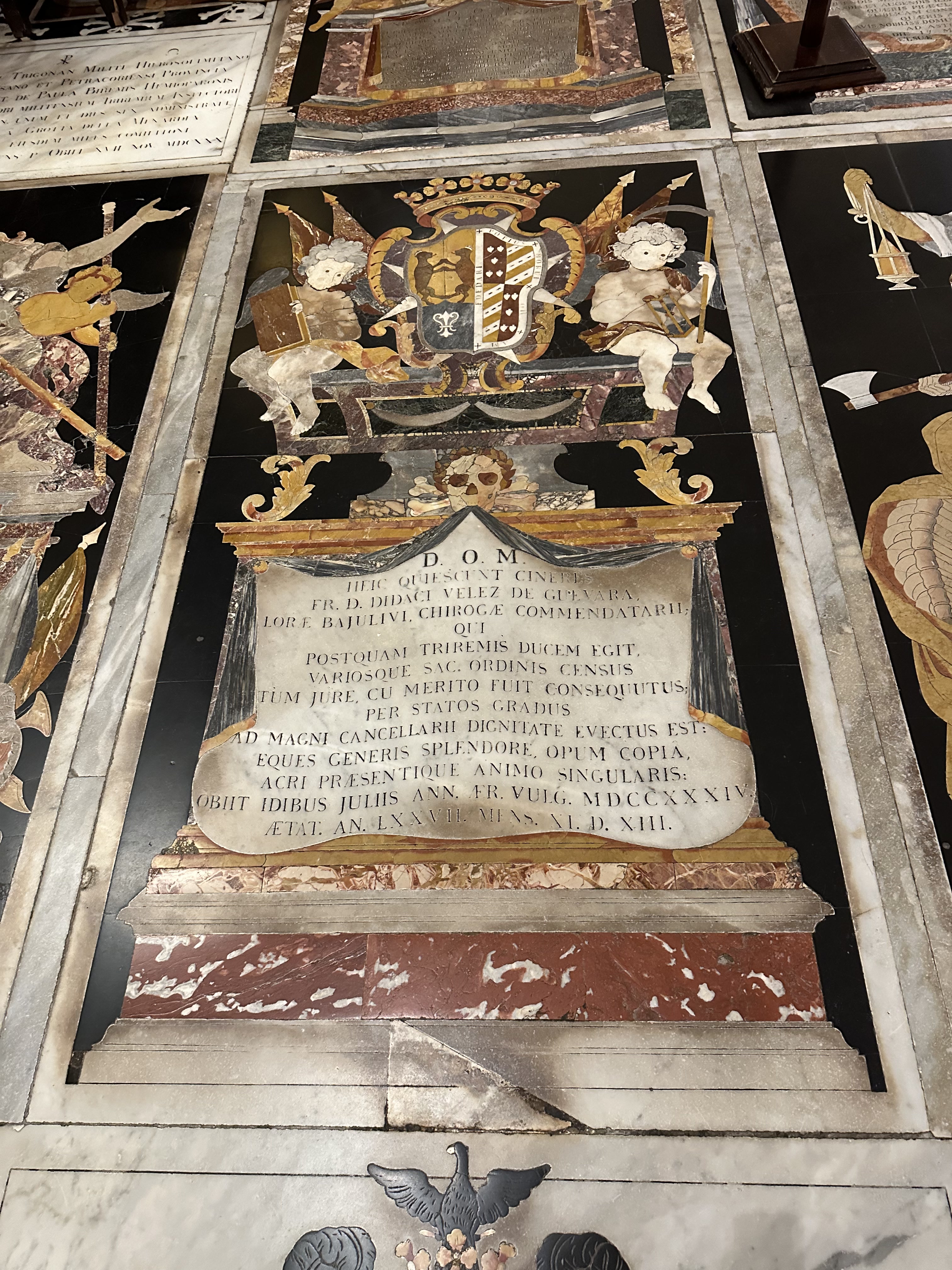
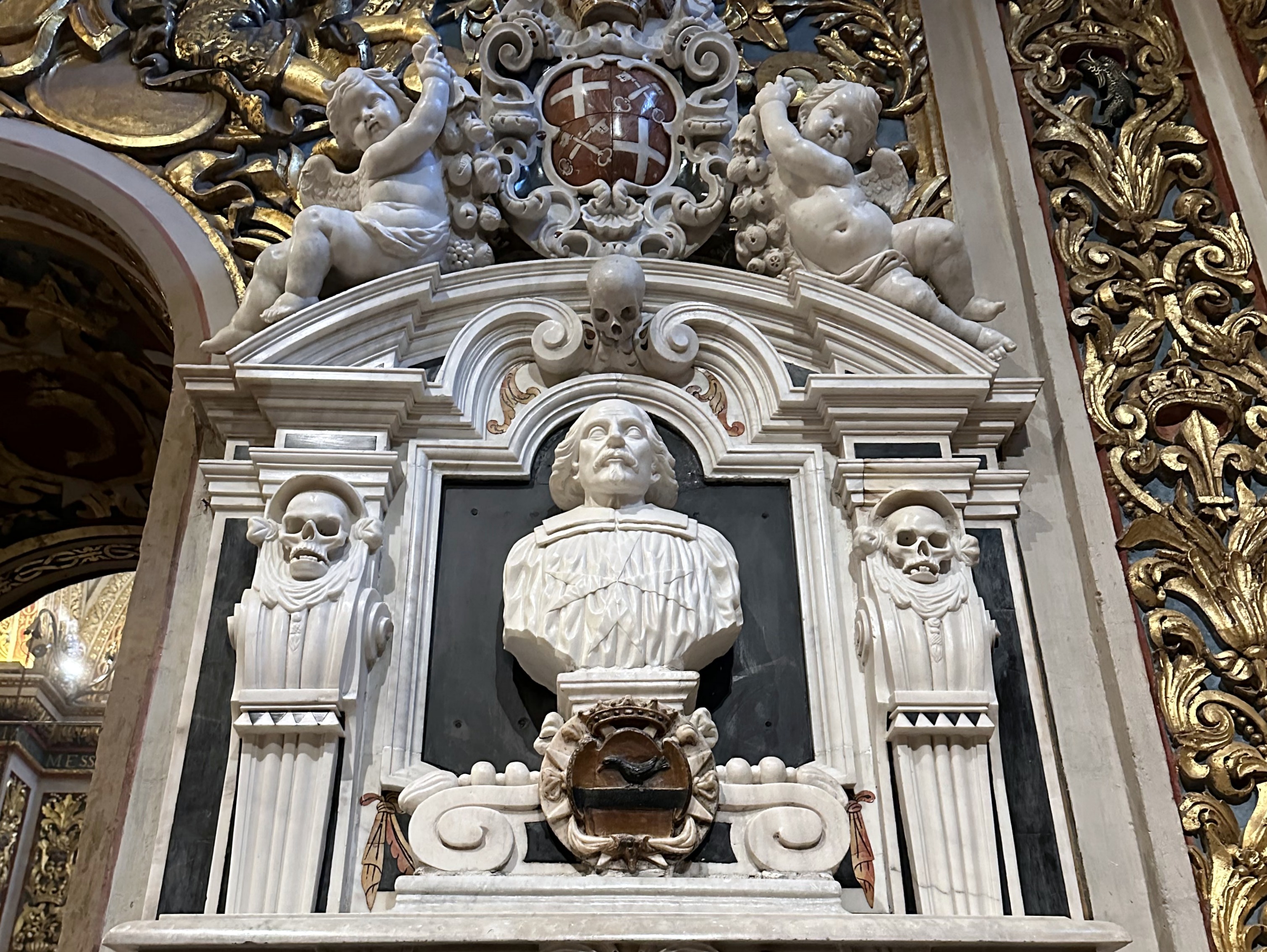
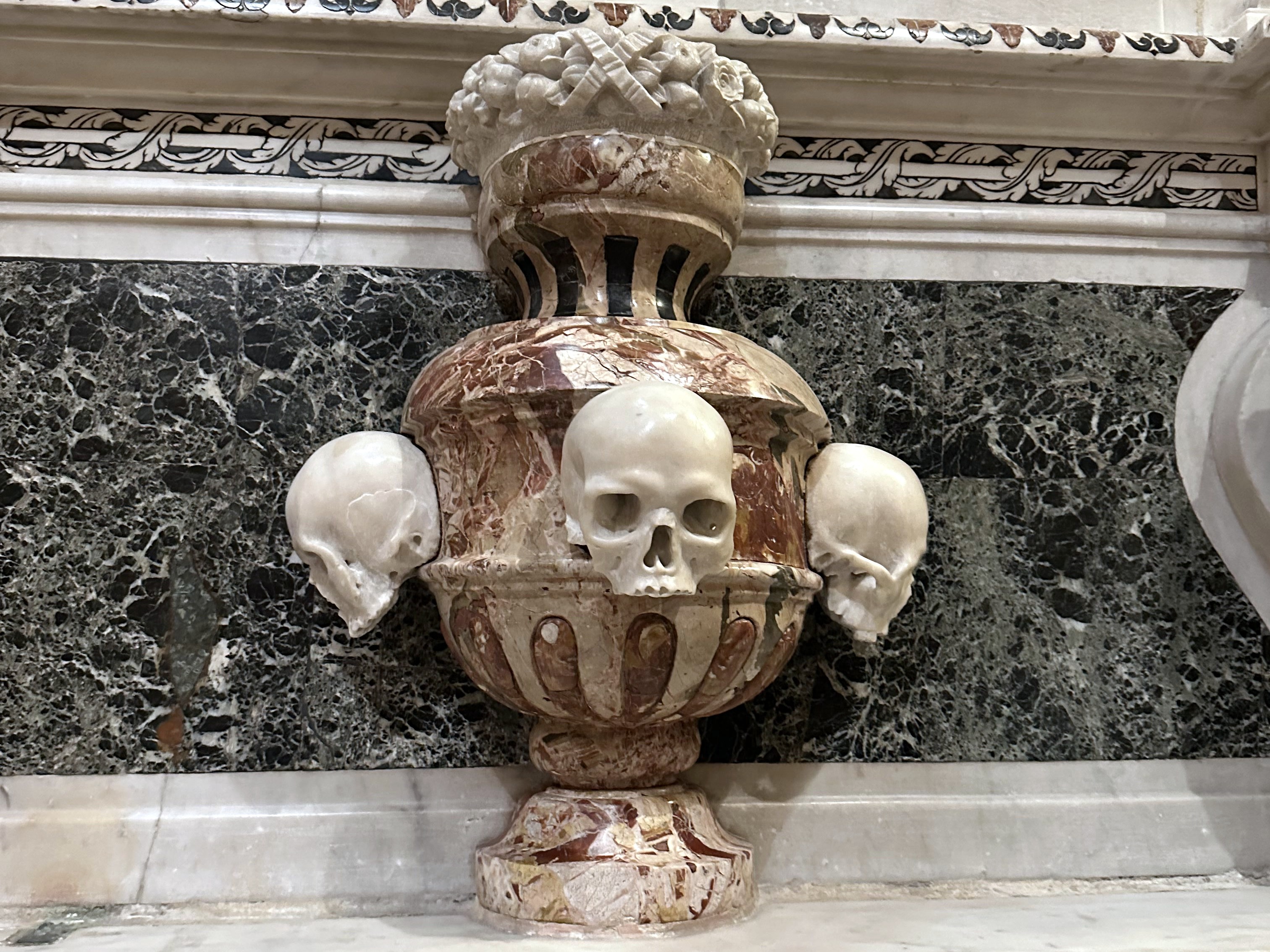
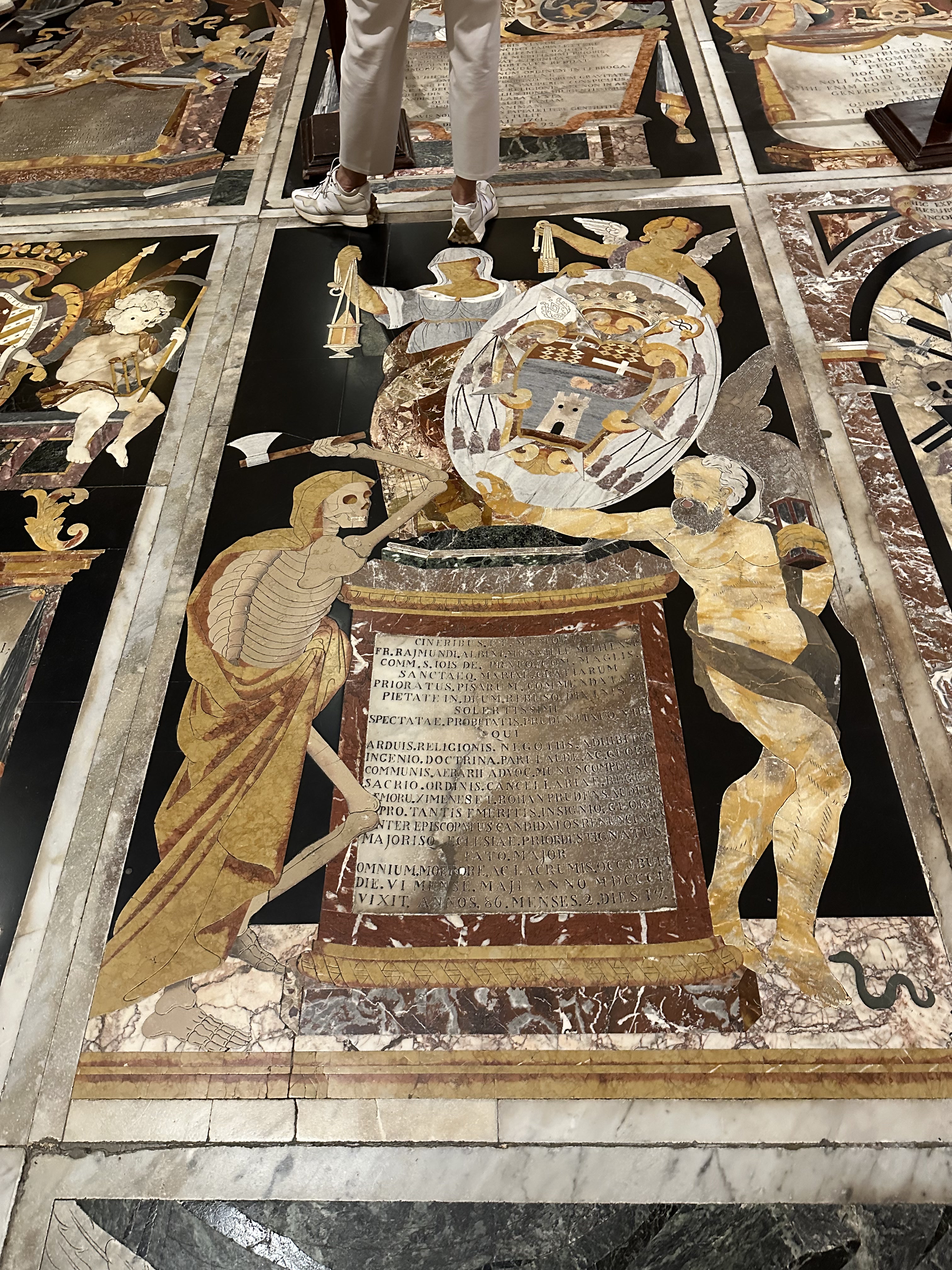
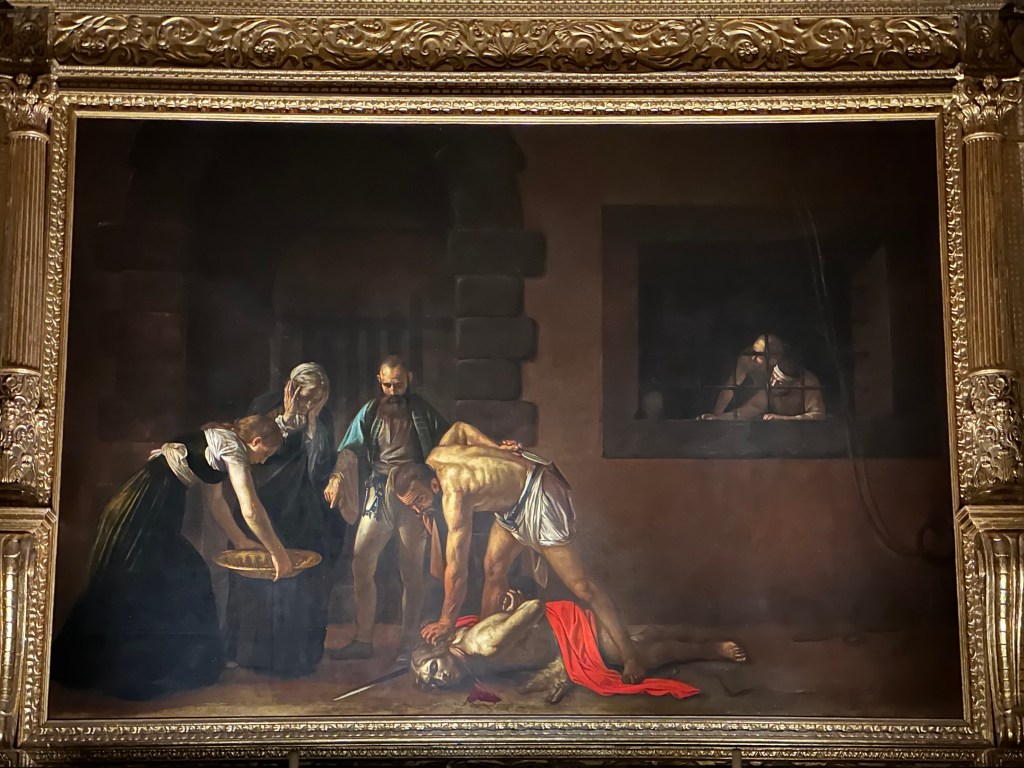
One of the greatest treasures of St. John’s Co-Cathedral and one of the masterpieces of Western art is Caravaggio’s The Beheading of Saint John the Baptist (1608). It’s the cathedral’s most famous work and the reason many art lovers travel to Malta.
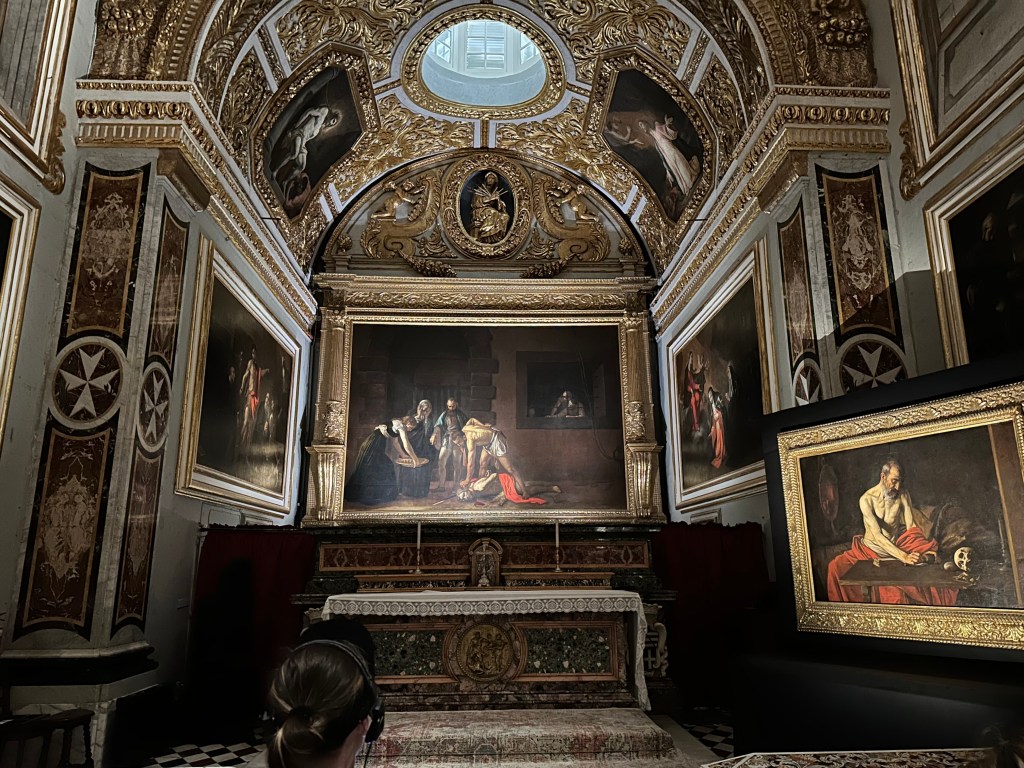
It’s significant for the following reasons:
- It is Caravaggio’s largest painting. Measuring roughly 3.6 × 5.2 meters (12 × 17 feet), it is the largest canvas he ever painted and one of the few works created specifically as an altarpiece.
- It is Caravaggio’s only signed painting. If you look near the pool of blood beneath John the Baptist’s neck, you’ll find the artist’s signature: “f. Michelangelo” (“Fra Michelangelo”), written in the blood. He signed it this way because he had just been admitted as a Knight of the Order of St. John—a unique moment in his tumultuous life.
Saint Jerome Writing, also by Caravaggio, painted around 1607–1608 during his stay in Malta, depicting Saint Jerome translating the Bible into Latin, with the skull symbolizing the fleeting nature of life.
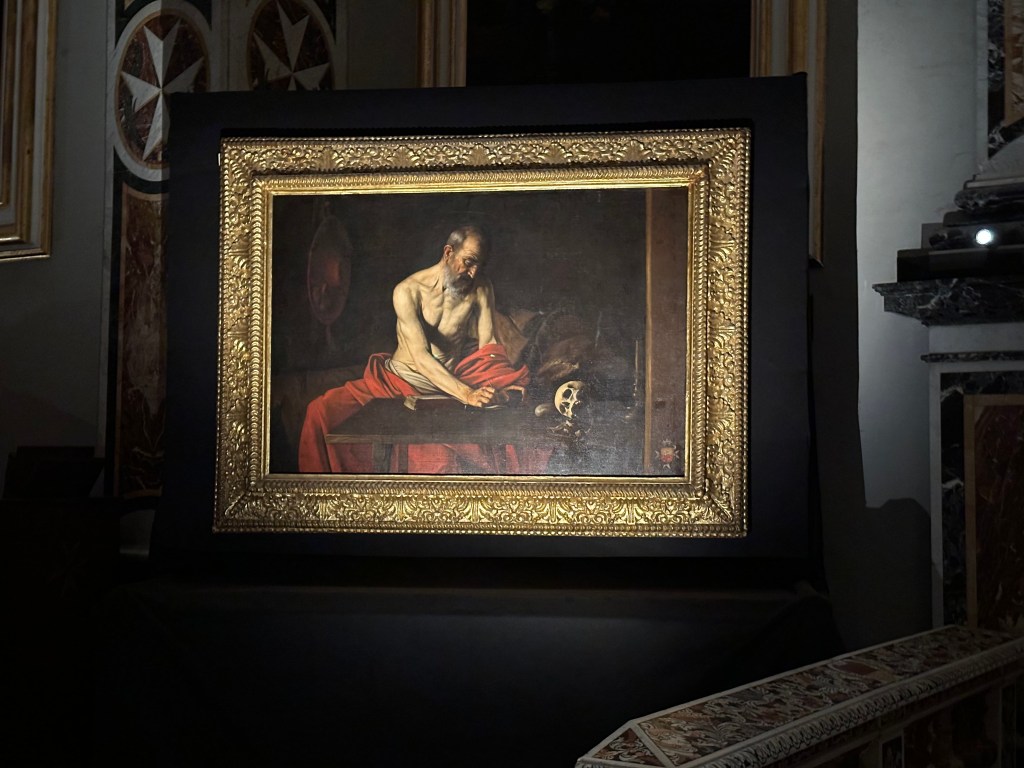
Check out the discrete Maltese cross Caravaggio included in the bottom right of the painting, paying homage to the patrons who funded it. . .
Next up: Mdina, Malta, and then, finally, some biking.