Built in the 1st century AD, the Pont du Gard is the highest Roman aqueduct.
From Pont du Gard, we ended up passing through a cool little walled town, the name of which has been completely forgotten.
Ubiquitous olive tree
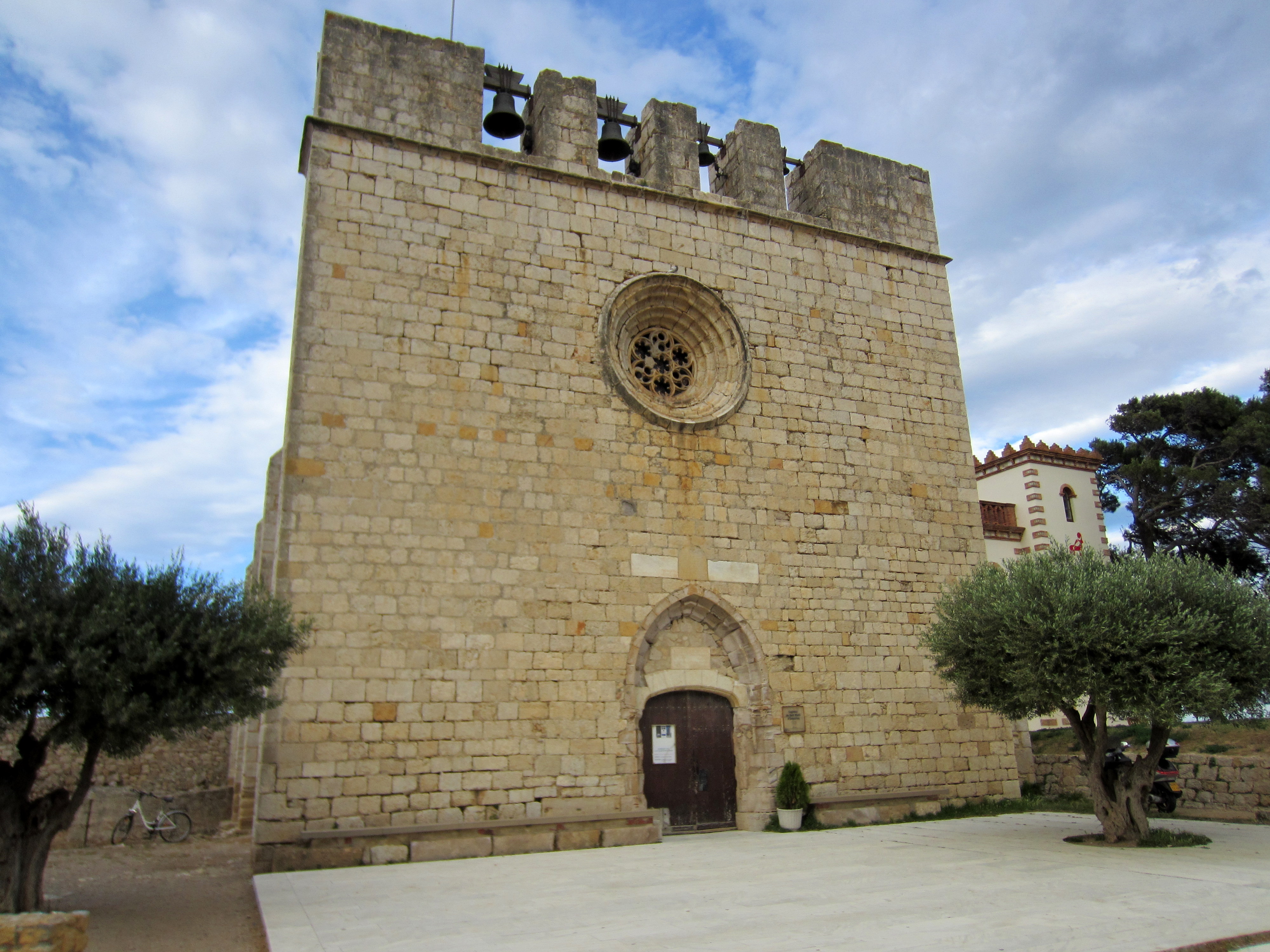
Cool Romanesque church
Near the end of the ride, we ended up visiting Abbey de Friglolet. Founded in the 10th century and abandoned in the 16th . . . only to be repopulated by monks of the Hieronymite Order in the 17th.
Our inn in Graveson turned out to be the ideal place to hang at the end of the ride.
Musee des Aromes – a perfume museum located in a former monastery
The old monastery garden
15th-century castle in Tarascon
The castle was used as a military prison from the 18th to the 20th centuries
View of the castle from Beaucaire, our next town right across the Rhone
In Beaucaire
Château de Beaucaire, first built in the 11th century, it was torn down on Richelieu’s orders and later rebuilt
The remaining wall and tower date from the 12th and 16th centuries
You find lavender everywhere in Provence
If an angry German Shepherd is in France, is it a French Shepherd?
Cool fountain in Beaucaire
Canal leading to the Rhone
Europe is full of majestic Gothic cathedrals. They’re impressive and inspiring, of course, but not nearly as compelling to us as older, Romanesque churches that were built before flying buttresses were used and soaring architecture and pointy arches took over. Romanesque churches are squatter, more compact, and, most importantly, older than Gothic churches. They’re representative of the heart of the middle ages, when Roman building techniques were still being used, but the Catholic Church was driving the building, rather than the Roman empire.
More prosperous regions in Europe partially or completely rebuilt Romanesque churches into Gothic structures. The largest groups of Romanesque survivors are in areas that were less prosperous in subsequent periods, including parts of southern France, northern Spain and rural Italy. Coincidentally, these are just the areas where several of our bike trips have allowed us to explore. As a result, we’d stumble across small and large Romanesque churches in the most unexpected places during our bike trips in Provence, Catalonia, and Puglia, in particular. They continue to appeal to us in a way that the big Gothic cathedrals never have.
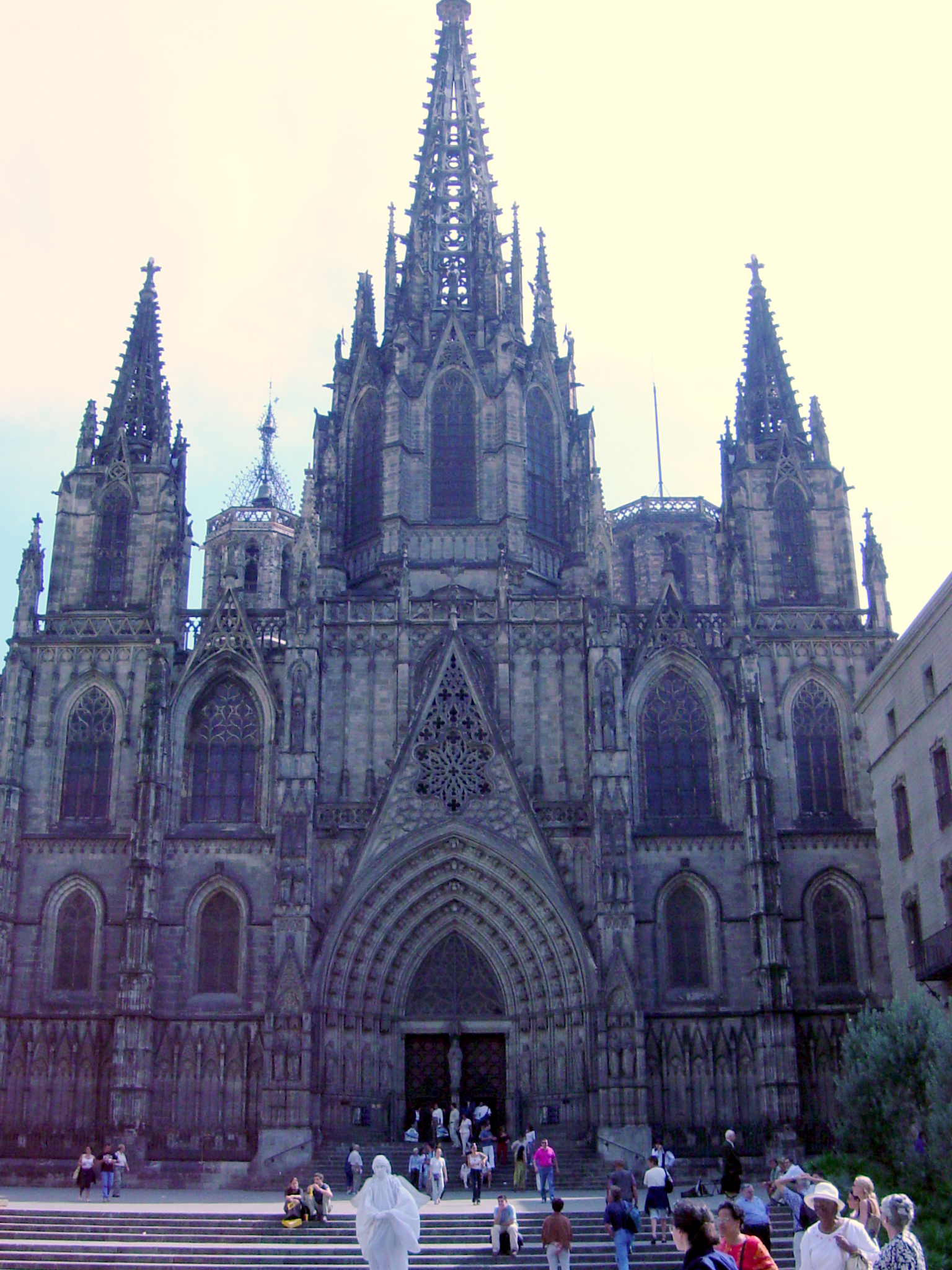
Gothic? Feh. This is the Cathedral of the Holy Cross and Saint Eulalia in Barcelona, from earlier in this trip.
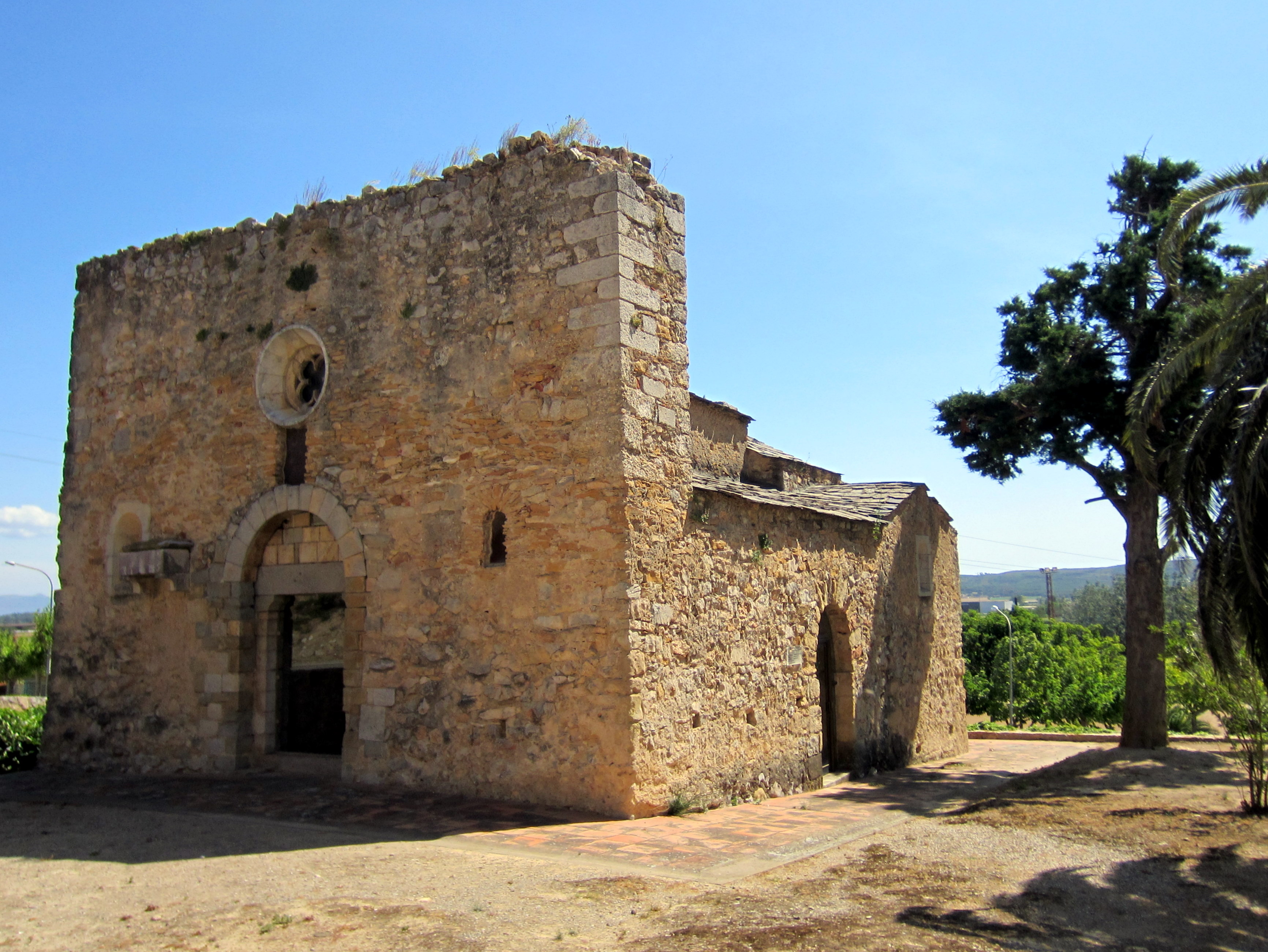
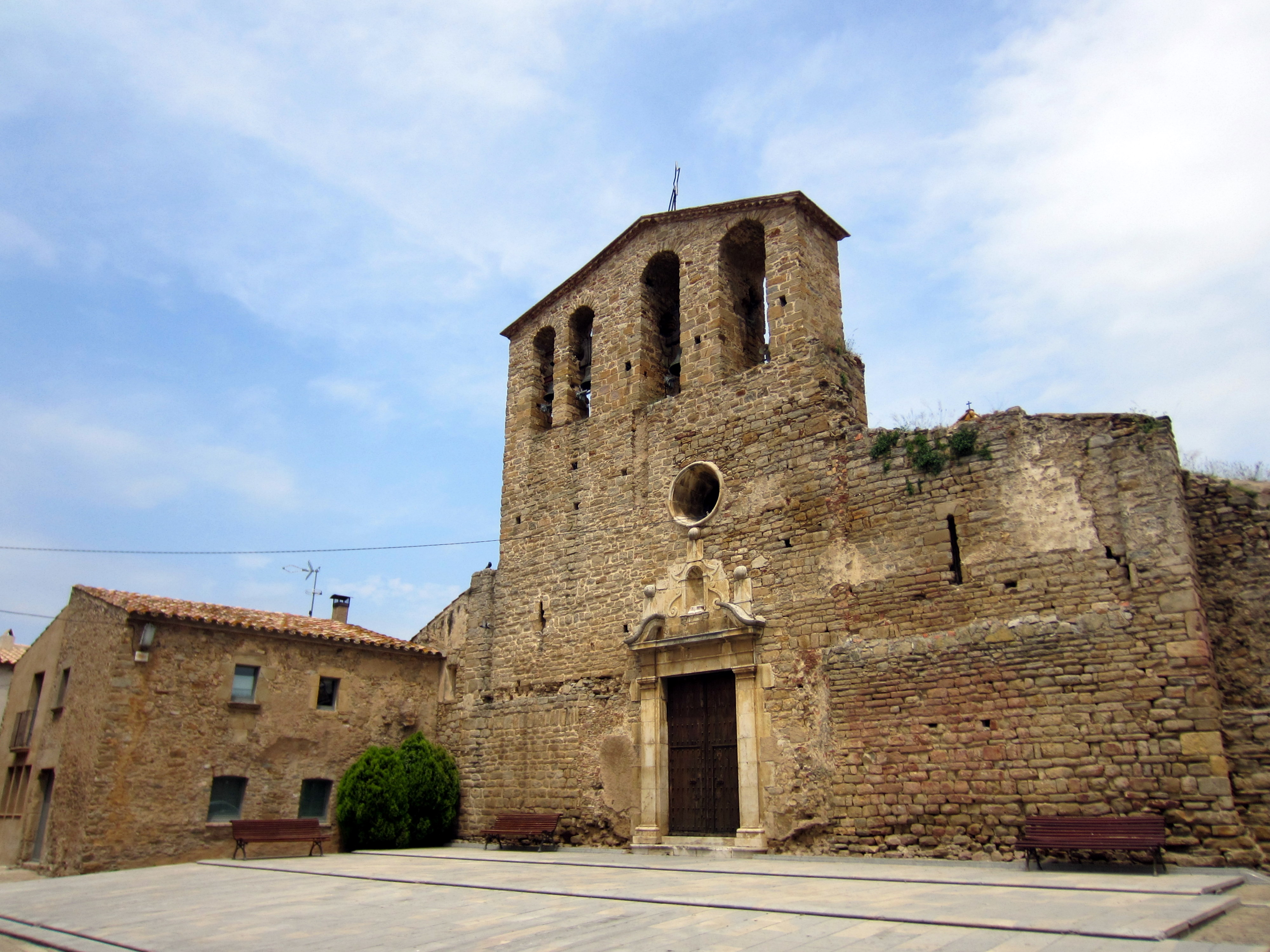
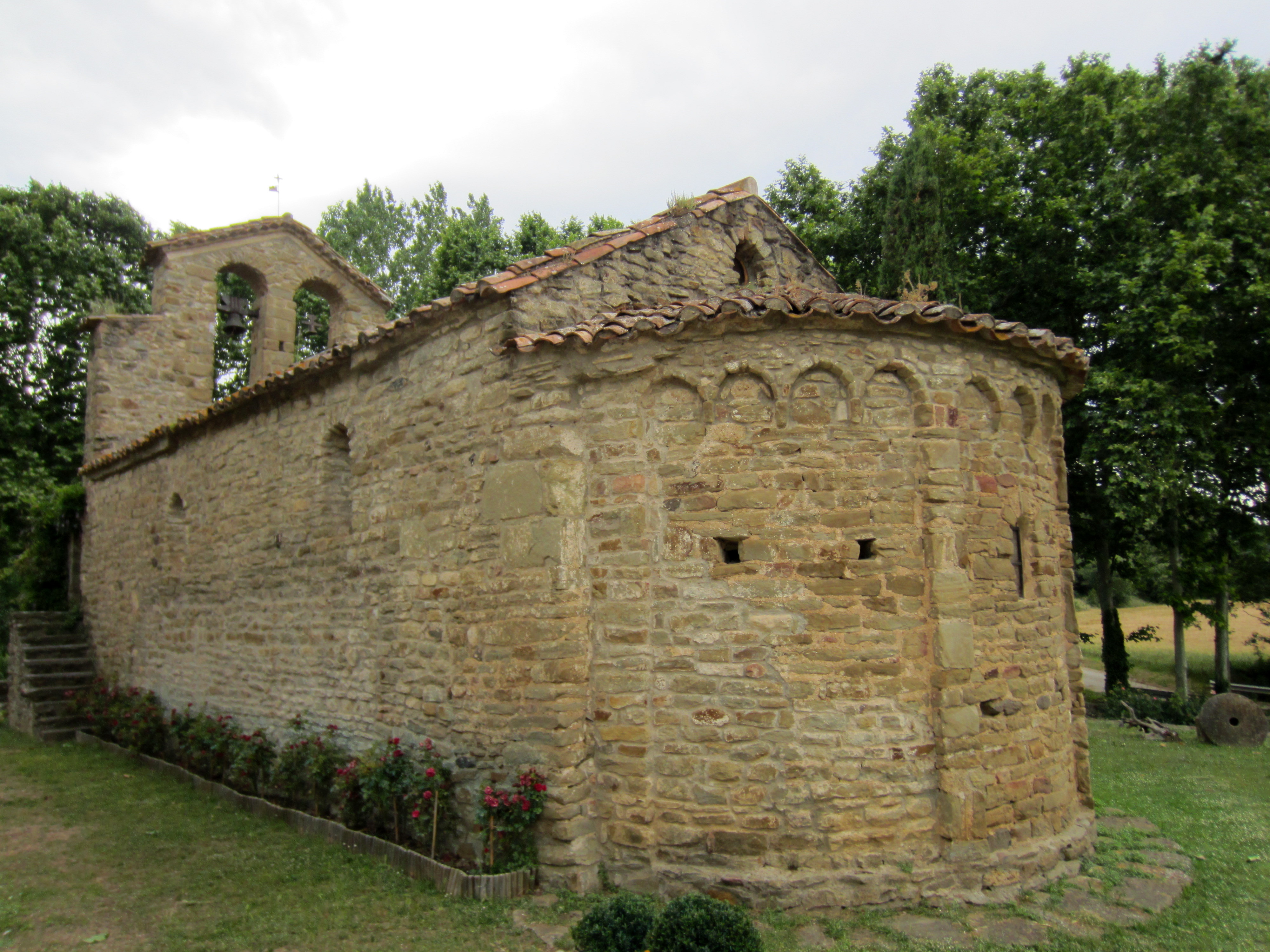
Romanesque? Much cooler. These are OLD-ass churches from Catalonia during a subsequent bike trip in 2011.
Combining features of ancient Roman and Byzantine buildings and other local traditions, Romanesque architecture is characterized by massive quality, thick walls, round arches, sturdy piers, groin vaults, large towers and decorative arcading. The overall appearance is one of simplicity when compared with the Gothic buildings that were to follow. The style can be identified across Europe, despite regional characteristics and different materials. Romanesque churches were built between the 6th to 12th centuries, by which time Gothic design overtook Romanesque as the most desirable structures, allowing for much larger, soaring, and light-filled churches and cathedrals.*
A really compelling example of Romanesque architecture is the Chapelle Saint-Gabriel de Tarascon, which we stumbled upon at the end of our Day 2 ride in Provence. the 12th-century church is all by itself amidst a grove of olive trees by the side of the road. This place was once the crossroads of several Roman roads: the Via Domitia, Via Aurelia, and the Via Agrippa. There was once a village at this crossroads – Ernaginum – which was wealthy and important enough to charter and construct the church. However, the trade routes changed and the village declined and disappeared, leaving only the forgotten, forlorn church.
Nested portals
Oculus and tetramorph over the portal
Lisa by the pentagonal apse
Typical, dark, Romanesque church interior
*from Wikipedia (natch), although there’s a surprisingly useful and more comprehensive guide to Romanesque architecture at the Kahn Academy
The highlight of the Fontvielle loop ride was the town of Arles. We planned to just have lunch there and ended up spending most of the day, then racing back to our hotel late in the day (foregoing a visit to a 10th-century abbey in the process). Totally worth it, though – we explored the town, bartered with vendors at a market for old crap (successfully wearing down one of them throughout the day to secure a cool Bourdeaux bottle opener), and had a leisurely lunch at an outdoor cafe made famous by a 19th-century post-Impressionist painting.
Arles was a notable Roman city beginning in the 1st century BC, and its power peaked in the 4th and 5th centuries AD. The town features an old Roman forum and an amphitheater that’s still used for bullfighting (surprisingly popular in Provence and other areas of southern France).
The town also was the home of Van Gogh in 1888 and 1889, during which time he produced more than 300 paintings, including a framed print that was hanging up in our house at the time. We totally stumbled across the location featured in the print without realizing it was in Arles and it made our day.
Daudet’s Windmill outside Fontvielle, featured in his Lettres de mon moulin (Letters from My Windmill)
Nice estate encountered on the way to Arles
Town square / Roman forum in the middle of Arles
Cool fountain in the town square / Roman forum
Van Gogh!
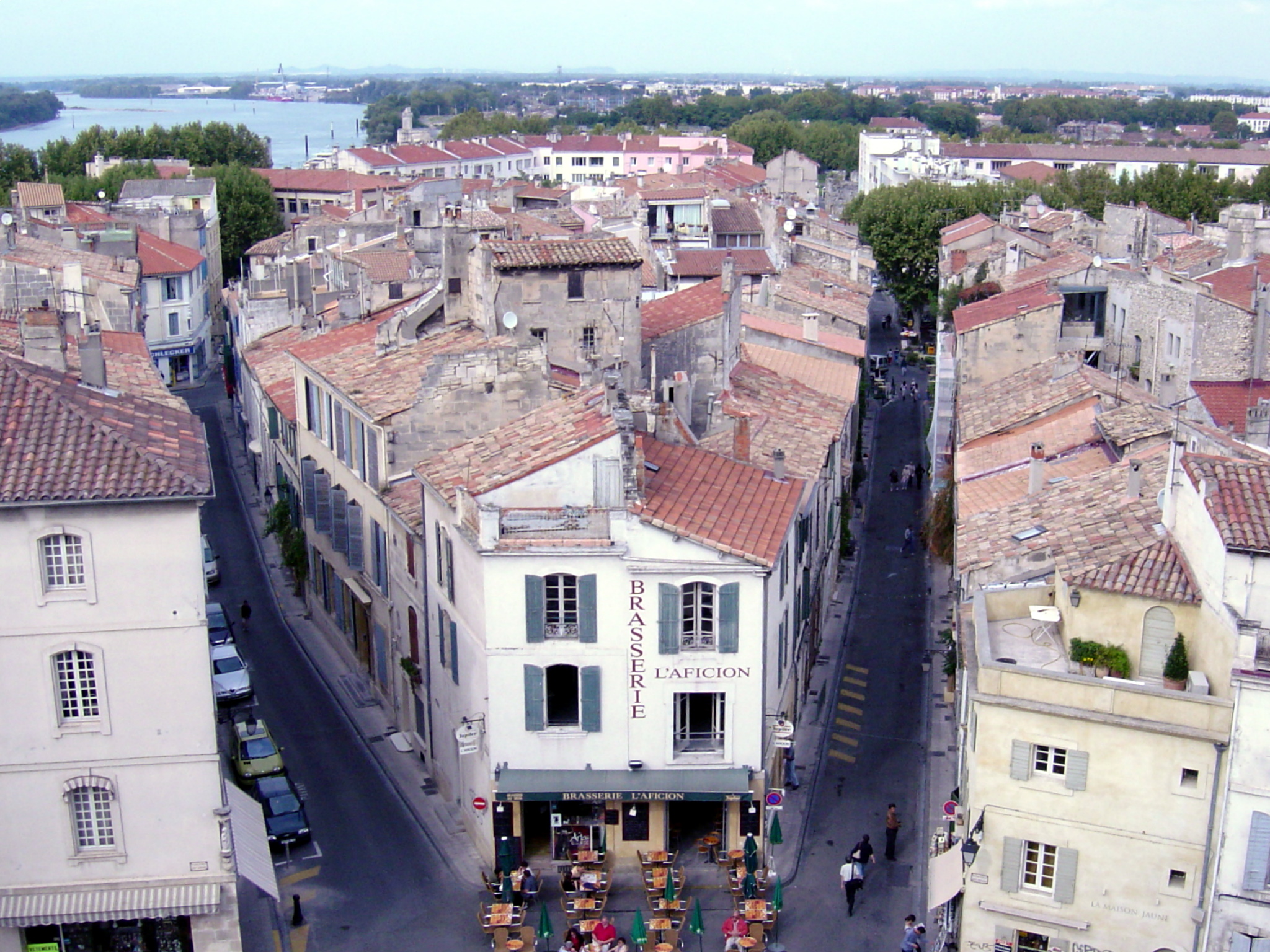
A cafe in Arles – this looked familiar . . .
Van Gogh’s Cafe Terrace at Night
The perfect location for a few drinks before checking out Arles
Roman ruins incorporated into 19th-century building
The Romanesque (but, of course) church of St. Trophime, built between the 12th and 15th centuries
It sits on the foundation of the much earlier 5th-century basilica of Arles
Ornate scenes of the Last Judgement at the entrance
Built in 90 AD, the Arles amphitheater was capable of seating more than 20,000 spectators, and was built to provide entertainment in the form of chariot races and gladiatorial combat. It’s used today for bullfighting and concerts.
With the fall of the roman Empire in the 5th century, the amphitheater became a shelter for the population and was transformed into a fortress with four towers. The structure encircled more than 200 houses, becoming a legit town, with its public square built in the center of the arena and two chapels, one in the center of the building, and another one at the base of the west tower.
After surrendering our bikes at the end of Day 4, we spent the next day hanging out in Avignon, home to the popesters in the 14th century, thereby supplanting Rome as the seat of Western Christianity for a hundred years. The Papal Palace still remains, as do the walls of the medieval city, which gave it a compact, intimate feel.
Seven popes and two antipopes resided in Avignon between 1309 and 1403 (the real reason we’re mentioning this, of course, is so we could use the vaguely sinister term “antipope”). The Palais des Papes was built to house and protect the popes, becoming in the process the largest Gothic palace in Europe.
A closeup of the portal on the palace church reveals that all of the religious figures around the portal were either hacked off or beheaded during the French Revolution:
From the palace, we could see the Pont d’Avignon, which spans (well, used to span, anyway) the Rhone between Avignon and Villeneuve-lès-Avignon, where we began our bike tour. It’s the inspiration for the song Sur le pont d’Avignon. The bridge was built between 1177 and 1185, then destroyed 40 years later during the Albigensian Crusade when Louis VIII of France laid siege to Avignon to purge the Cathars (we still have Carcassonne, a stronghold of the Cathars, on our list of places to visit in southern France someday. . .).
The bridge was rebuilt with 22 stone arches, which tended to collapse when the Rhone flooded. The bridge was eventually abandoned in the 17th century. The four surviving arches on the bank of the Rhone are believed to have been built in around 1345 by Pope Clement VI during the Avignon Papacy.
The town of Avignon was great – we hung out, ate roasted chestnuts (it was, after all, early October), and enjoyed the place.
Villeneuve-les-Avignon seen from the city
City walls
Every city needs a pink rhino store
Coat-of-arms of a subsequent, Roman, pope on a building located opposite the Papal Palace
Courtyard of the converted convent where we stayed
Mmmm . . . pie
We had two memorable experiences while in Avignon. The first was when Kevin was having a few beers in a bar on one of the city squares while Lisa was shopping. It was pleasant out, so he took his beer and went to sit out in the square and enjoy the afternoon. One of the waiters came out to check on him a while later, went back in to get Kevin another beer. He returned returned with two. He sat down, had a beer, and they both gawked at the cacophony of the crazy drivers honking and trying to navigate the square during what appeared to be Avignon’s rush hour. After looking bemused at the mayhem all around them while they were happily drinking beers, the waiter laughed, stood up, and declared, “Le theatre!”
The other experience involved pastis, the regional liquor of Provence. We saw the old guys in Saint-Rémy-de-Provence drinking this yellowish liquor while playing bocce and we asked them what it was. That evening in Avignon, we ordered some as an aperitif at dinner. The waiter brought two glasses of clear, amber-colored pastis out, along with a small pitcher of water. We looked at this arrangement, shrugged, and drank the pastis. It was definitely an anise liquor, and really strong.
On the ride to the airport the next morning, we struck up a conversation with the taxi driver. He asked if we had pastis while we were in Provence. We told him about our experience and asked him what the deal with the pitcher of water was. Just like the waiter the day before, he laughed. He said that you don’t drink it neat – you add whatever amount of water you need from the pitcher to dilute the pastis and make it palatable, changing its appearance in the process to a creamy yellow.
It’s supposed to look like this:
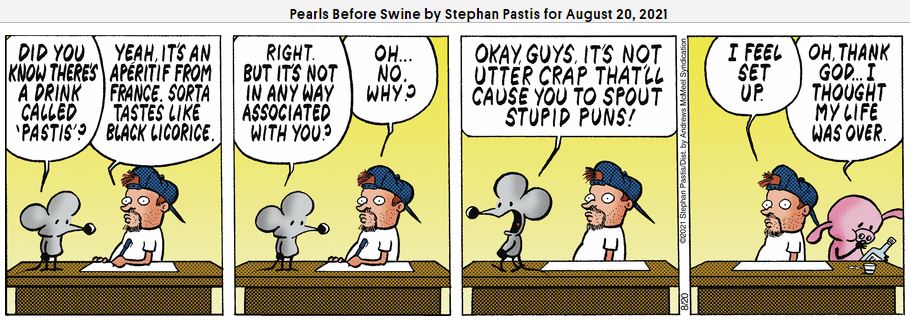
(Note that the pastis we had in Provence should not in any way be confused with another Pastis, the undisputed master of the complex and agonizing pun setup.)