Posts Tagged With: Europe

Five Legs in Six Weeks: Trip Overview

Following the strategy articulated in the overview for our 6-week trip up the Adriatic coast (and into the Dolomites and Bavaria) earlier this summer, we bookended the summer with another 6-week, shoulder-season trip. Last time, we left on June 1 and returned on July 15. After a 6-week respite at home, we left for this trip the last week of August and returned the first week of October, which still provided us with great weather in Mallorca and Cornwall, but without the crowds that would be there in July and August.

And, unlike the “pick-up-a-car-in-Sarajevo-and-drop-it-off-6-weeks-later-in-Munich” approach from the last trip, where we luxuriated in a car that we could hang on to during the entire, 6-week road trip, we popped in and out of five rental cars in as many trip legs for this journey.

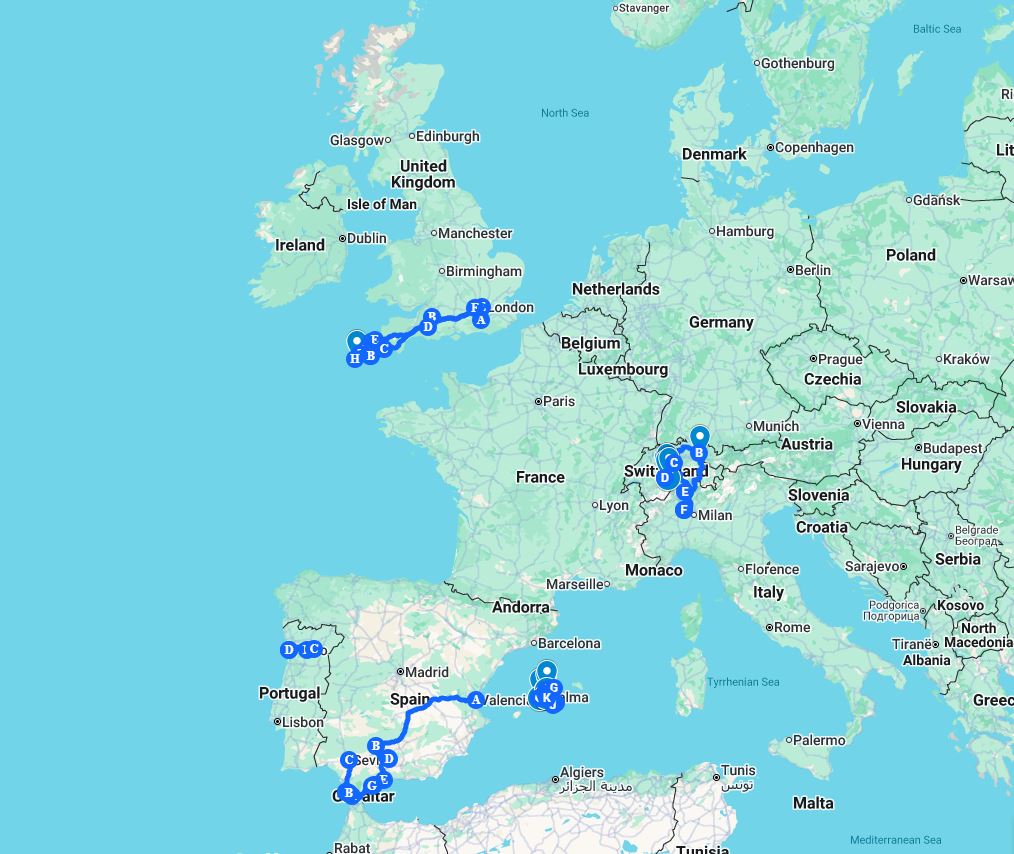
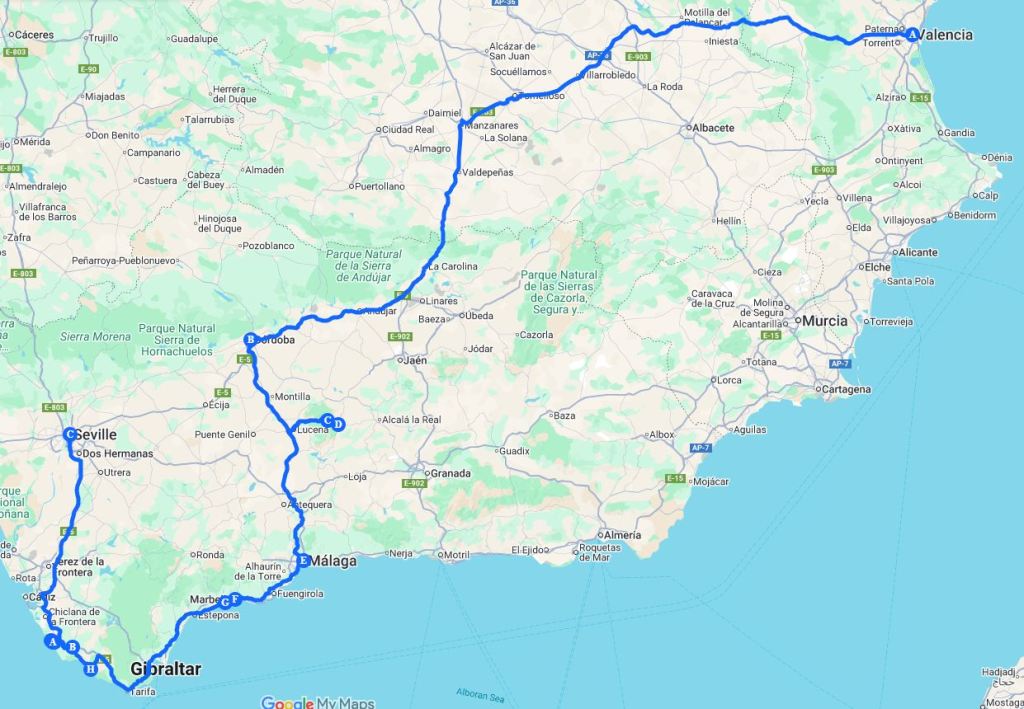
A cartographic overview of the trip’s five legs is pasted below:

Treating the map above as a clock, our route rolled out like this:

  1. We began our trip at the 3:00 spot, with an 8-day loop around Switzerland
  2. Then flew counterclockwise south to the 5:00 location, with an 8-day loop around Mallorca
  3. Then flew to Valencia at the 6:00 spot, after a couple of days there, we began an 9-day drive west to multiple locations in Andalusia in Spain
  4. Then flew up to Portugal at the 9:00 location for 3 days in the Douro Valley and then back to Porto for day
  5. And finally ended the trip at the 12:00 spot with a 10-day loop around Cornwall and back to London in the UK

An interactive, zoomable map of the legs is provided below:

The route around the Switzerland leg of the trip also proceeded in counterclockwise fashion (and provided a second opportunity to visit (or at least drive through) Liechtenstein!):

Although we’d spend all of our time on this leg in the land of cantons, we nonetheless began at the Milan airport in Italy, since this location provided a more logical start and end point for a loop route that would cover several mountainous regions as well as Switzerland’s lake-happy Ticino canton in the south.

Our first stop in Switzerland – straight from the airport – was a gondola ride and hike to the Aescher Gashaus near Appenzel for a little lunch – pretty great perch to kick off our time in Switzerland (other than the first of the two parking tickets we’d get on this trip):

Just a normal day of traffic in Appenzel:

Our time in Appenzel, hiking and otherwise, was pretty damp the entire stay:

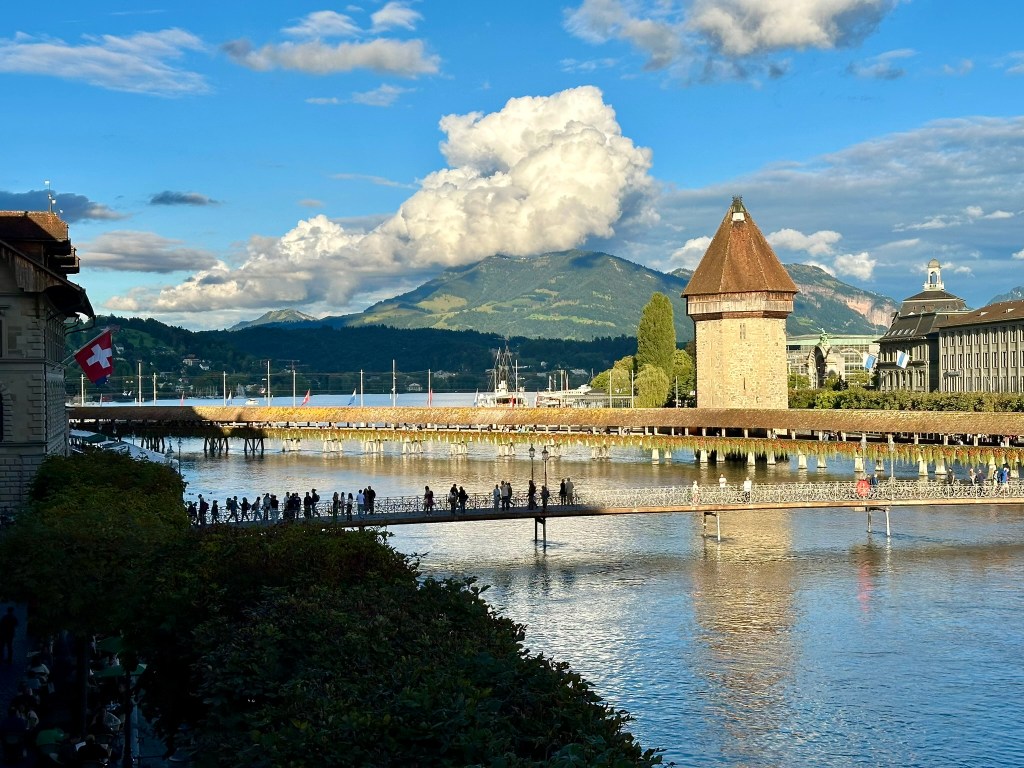
So onward we headed – first to Lucerne:

Really atmospheric and enjoyable – plus a great, historic footbridge!

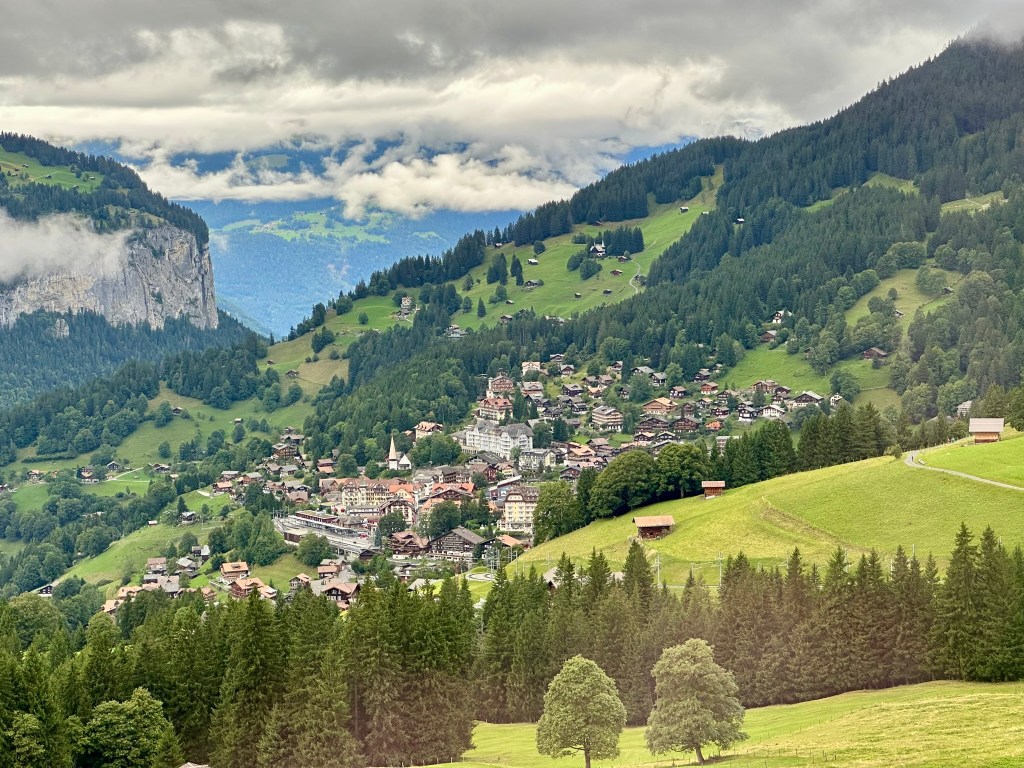
Then to the car-free mountain town of Wengen in the Lauterbrunnen region:

From whence we experienced one of the most spectacular hikes ever, in the Swiss Alps:

View from the nearby, smaller hamlet of Murren to the Junfrau and Eiger:

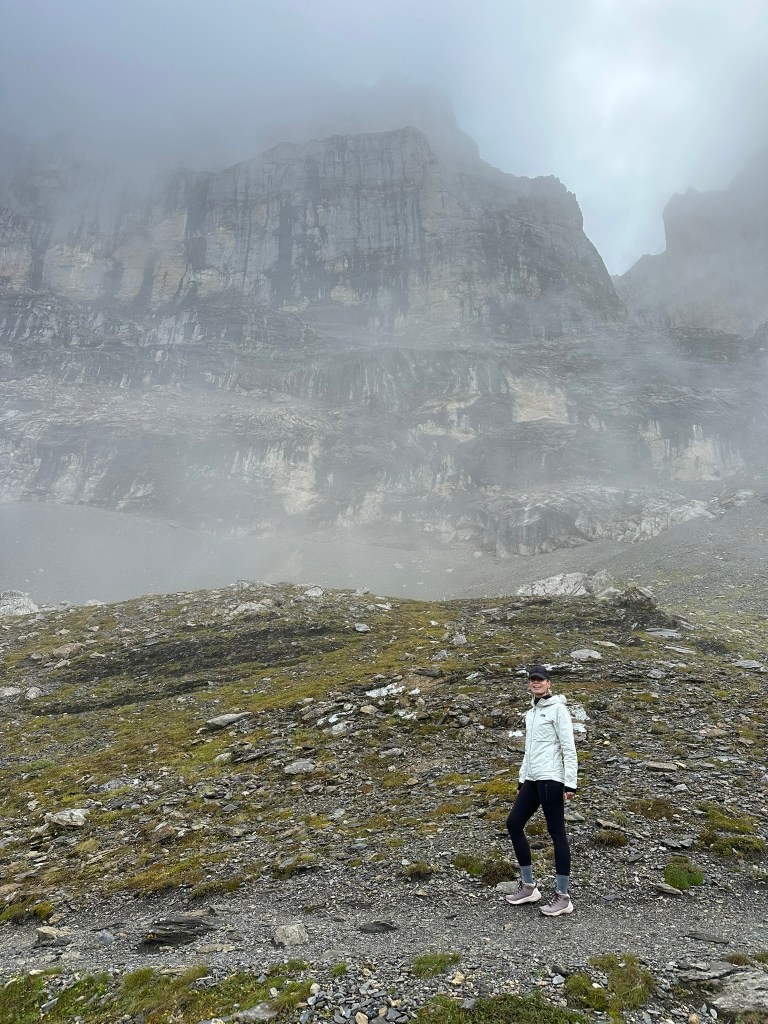
Our final hike – the Eiger Trail – and more mist and rain, unfortunately:

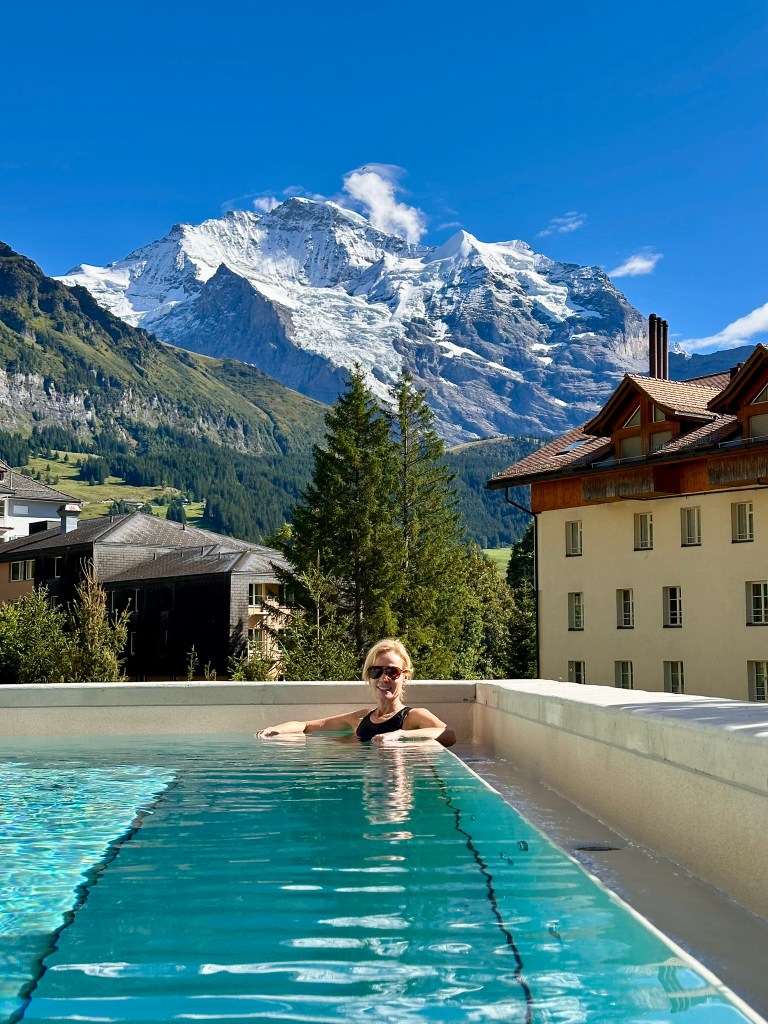
But our digs in Wengen helped assuage this a bit:

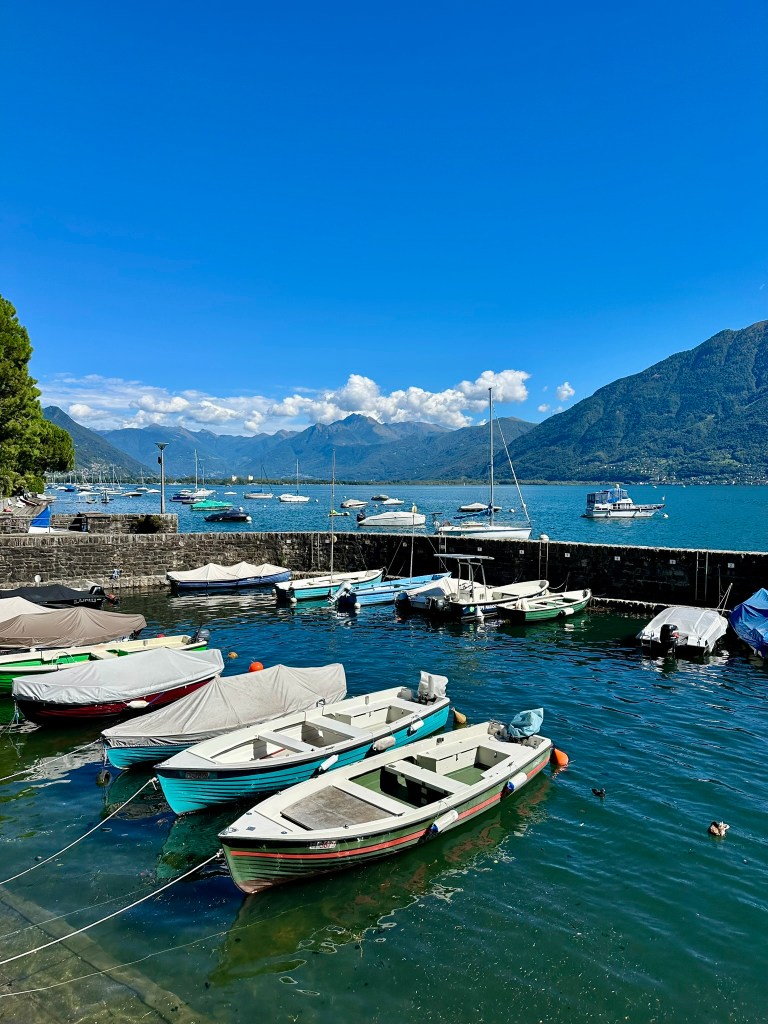
After a week, we ended our loop with an 8th day in the Swiss town of Locarno on Lake Maggiore (strategically booked at an AirBnB with a washer / dryer – a key element to our long-duration trips):

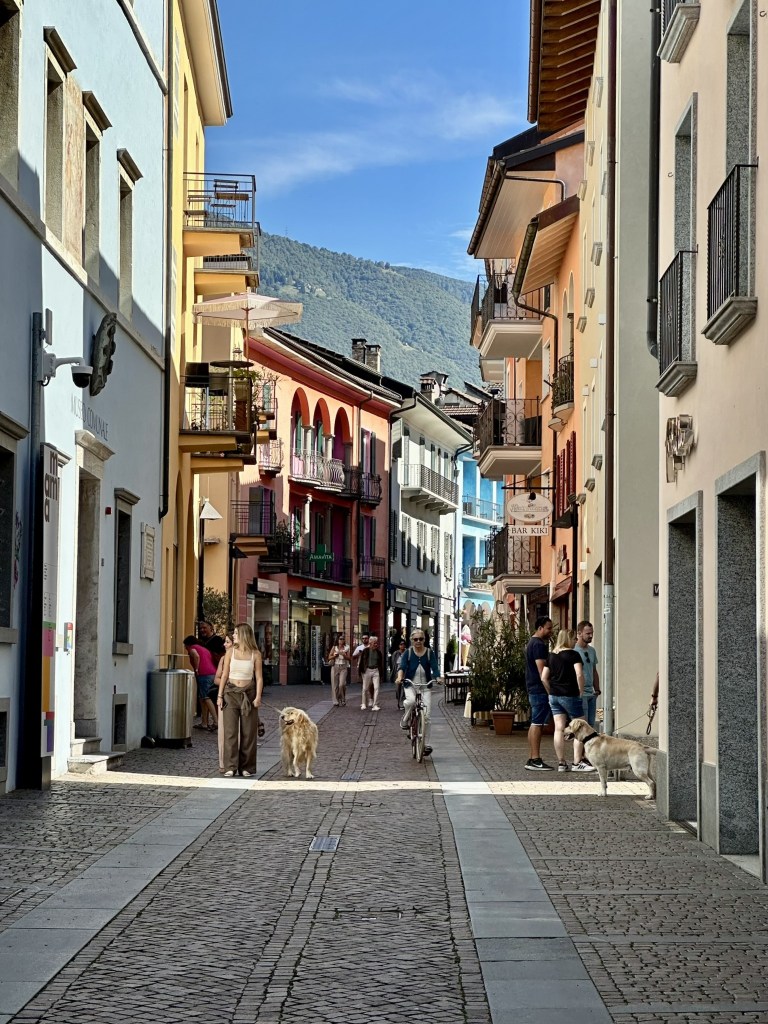
Then spent the next morning in Locarno’s even more charming sister town of Ascona before heading to the Milan airport for a flight to our next leg in. . .

the Spanish Balearic island of Mallorca, where we’d spend the next 8 days:

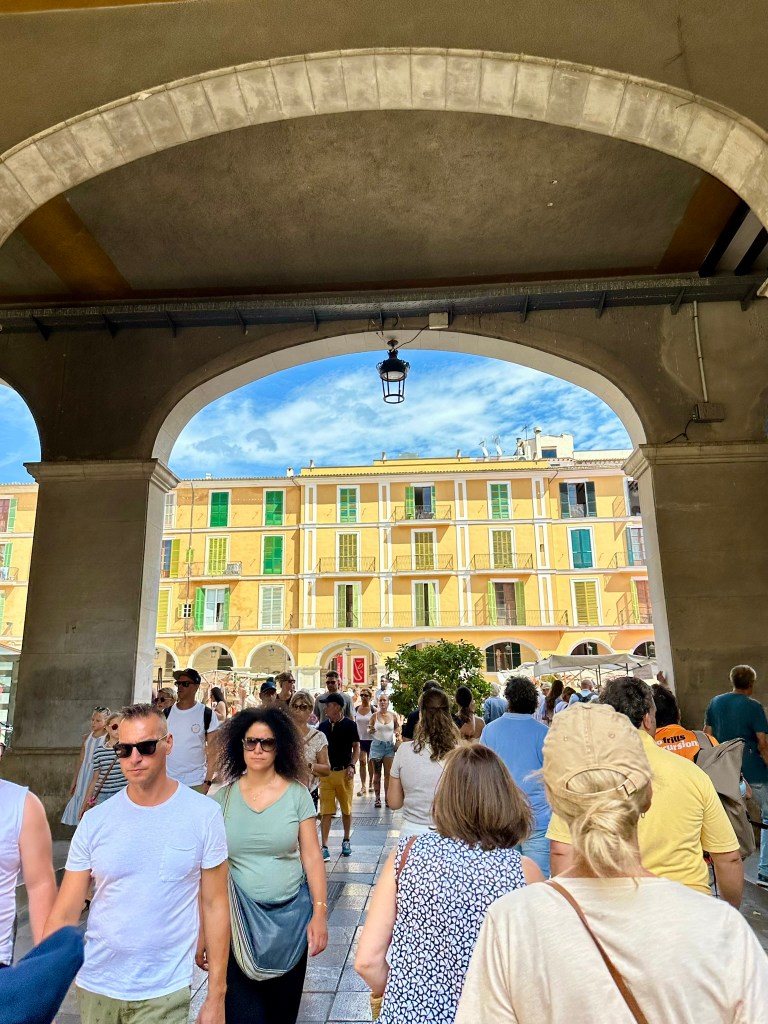
Mallorca’s capital of Palma, the biggest town (and only city) on the island:

Cool pool in the shadow of one of Palma’s massive churches (very reminiscent of our pool sitch in Carcassonne in 2017 and Uzes in 2021):

Strolling Palma on the way to our 27th anniversary dinner:

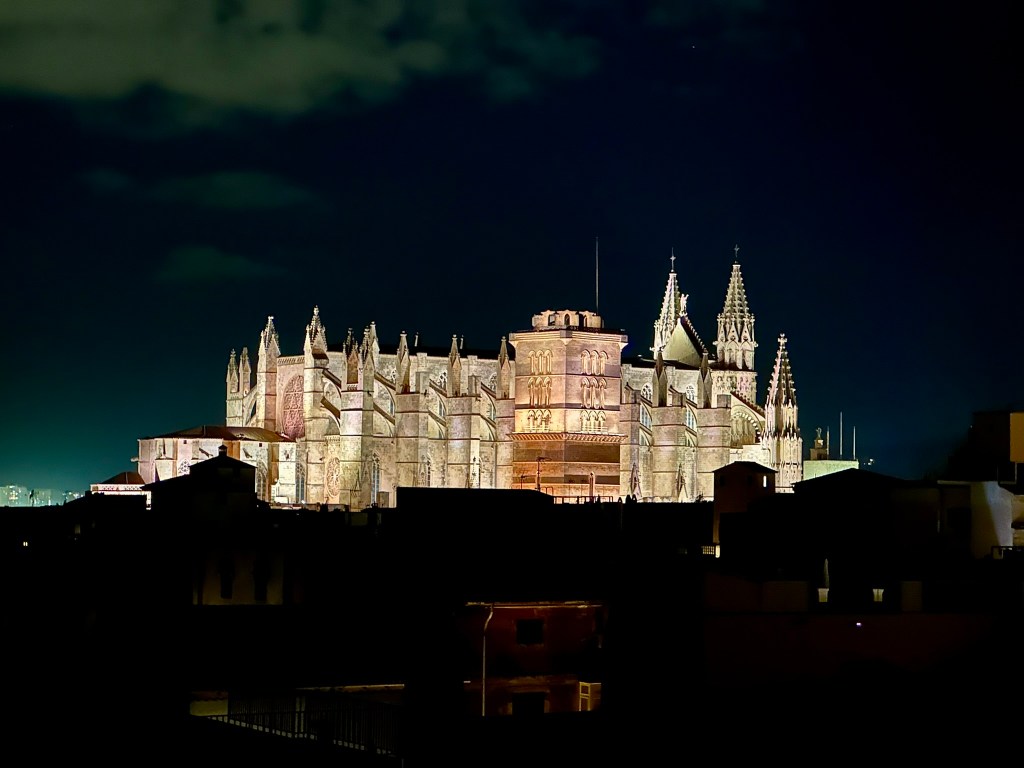
Palma’s cathedral lit up at night from our terrace:

And strolling amidst its flying buttresses the next day:

On to a couple of days in Port de Soller on the island’s west coast:

Cool perch over the port and ocean on our last night:

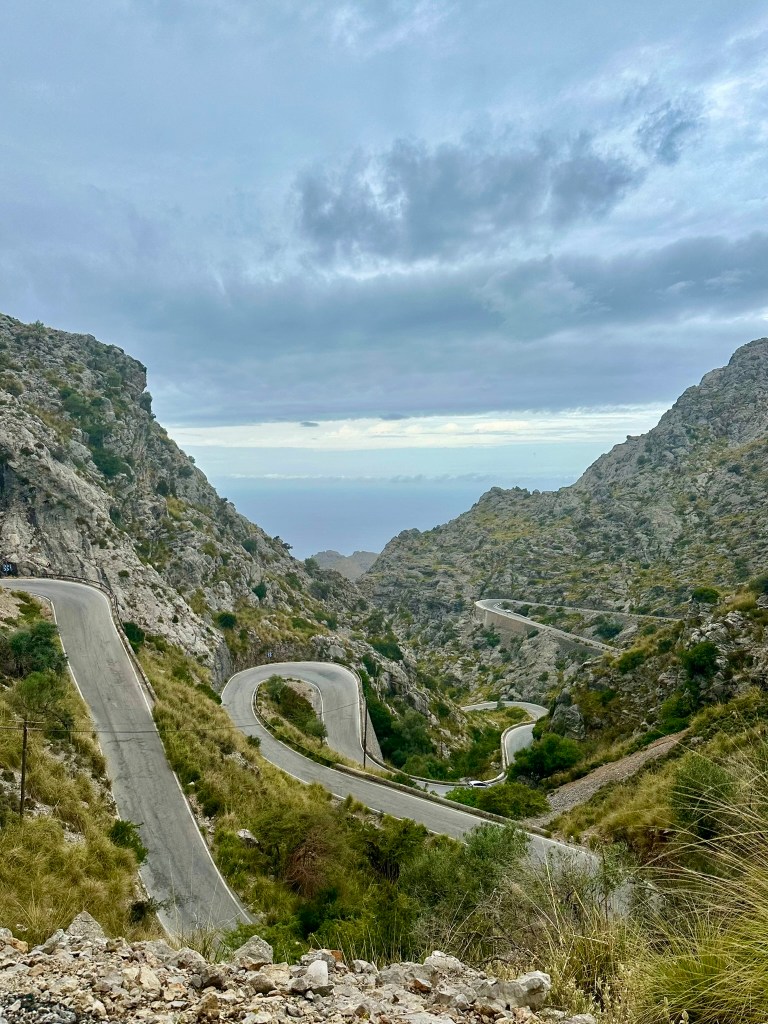
On to Pollença on the north end of the island, which necessarily entailed driving the absolute most insane road we’ve ever experienced:

Super charming town of Pollença, with it’s 365 steps to reach the town’s Oratori del Calvari chapel:

After swimming in the ocean and trying the nearby beach for all of 20 minutes, we decided that this arrangement would better suit our interests for the day. We were right.

Our last town of Colónia di Sant Jordi (and another AirBnB laundry stop), in the southeast corner of Mallorca

On to the Spanish mainland!

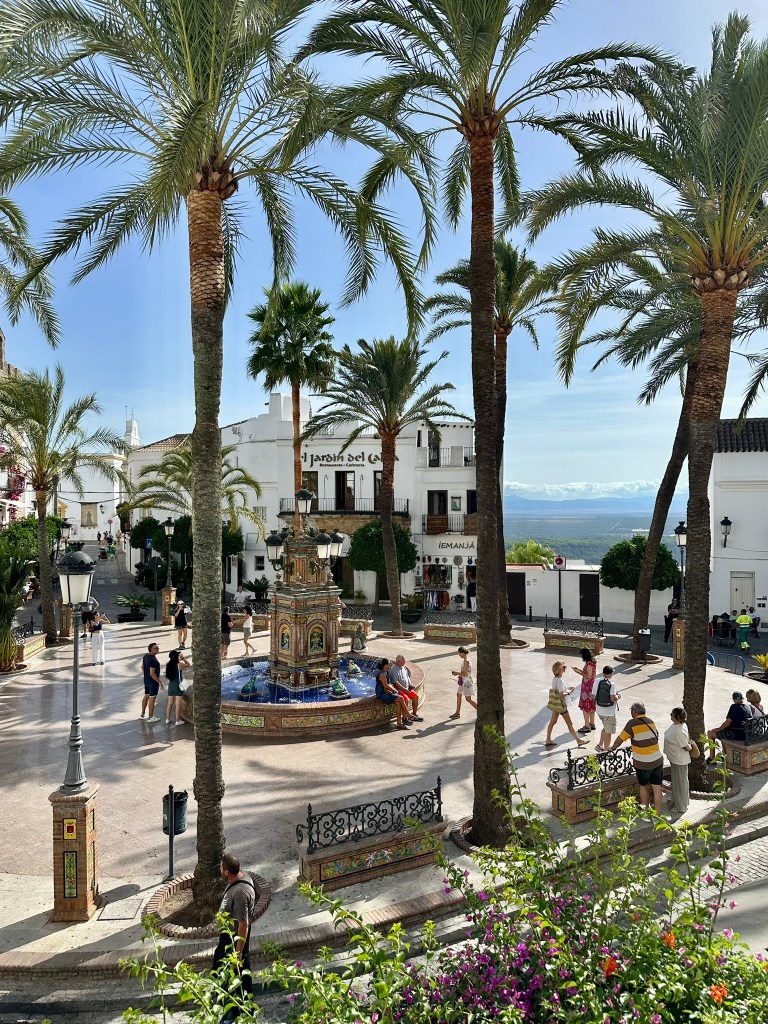
Although we’d spend the rest of our time in Spain exploring more of Andalusia (after seeing and loving much of it during our bike trip in the region in 2017), we’d first bop around Valencia on the east coast for a few days:

Spectacular city – super vibrant and fun and very Beaux Arts-y. The unbelievably perfect weather undoubtedly had a lot to do with this impression.

Cool little bike tour one day around the city and out to the beach:

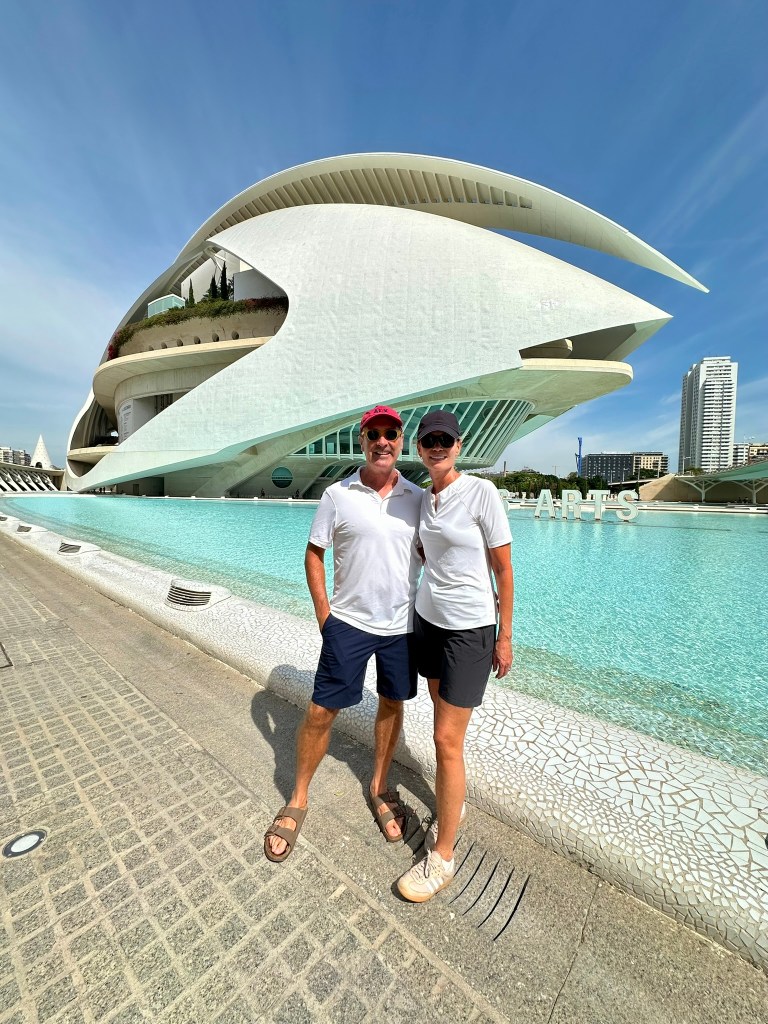
Including riding through Valencia’s sci-fi City of Arts and Sciences:

Then, a long drive west to our first Andalusian town that we missed on our bike trip: Cordoba.

Star of the show? The absolutely unique Mosque–Cathedral of Córdoba. Originally built as a grand mosque in the 8th century under the Umayyad dynasty, it was converted into a Catholic cathedral after the Christian Reconquista in 1236. Unlike every other instance of these conversions, however, the existing mosque structure and architecture was not razed, but retained. 

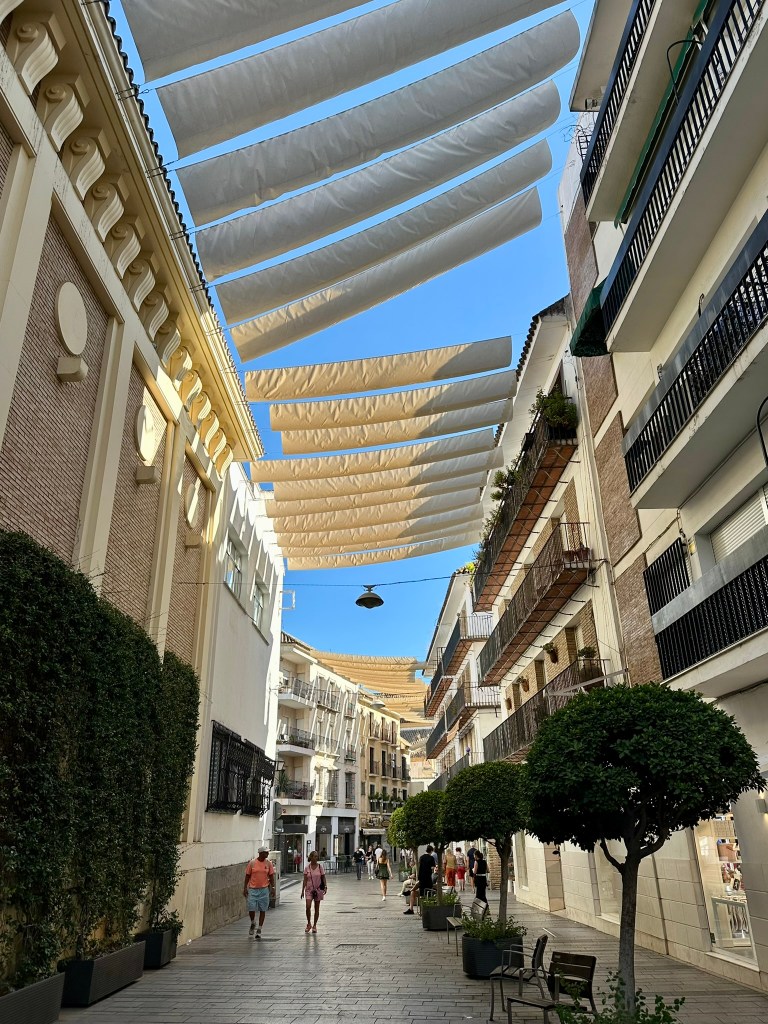
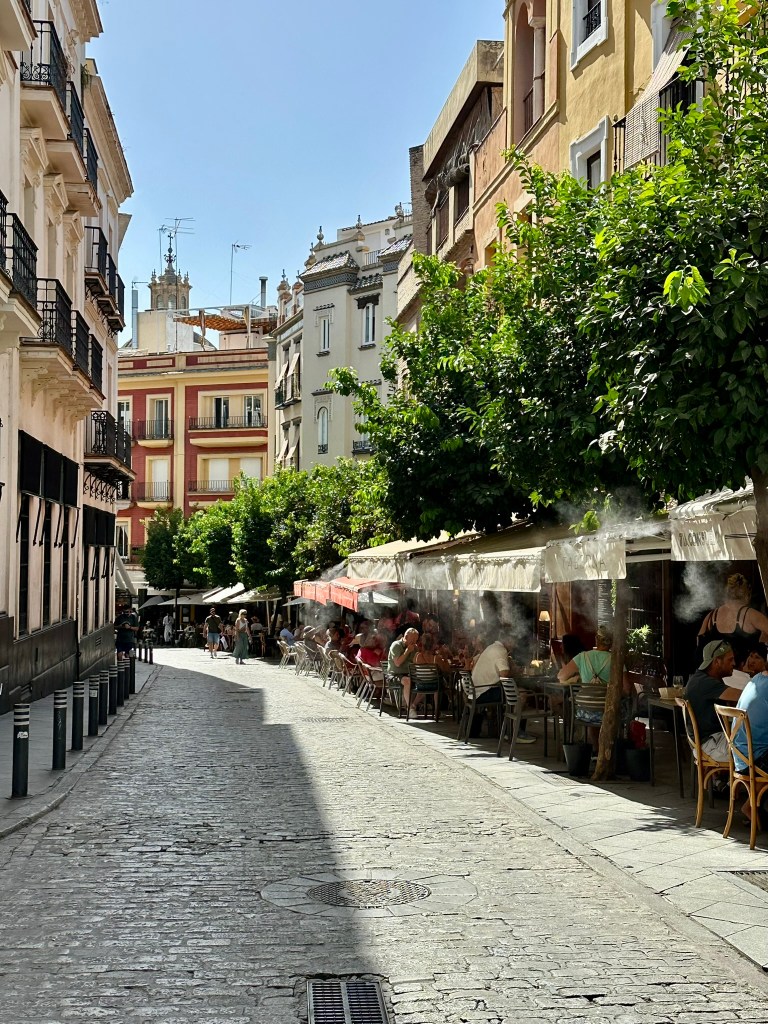
First of several times we’d see this street-cooling technique used in Andalusia:

At one end of Cordoba’s Roman Bridge lies the Moorish Tower (Torre de la Calahorra), a fortified gate built by the Moors in the 12th century to defend the southern end of the bridge.

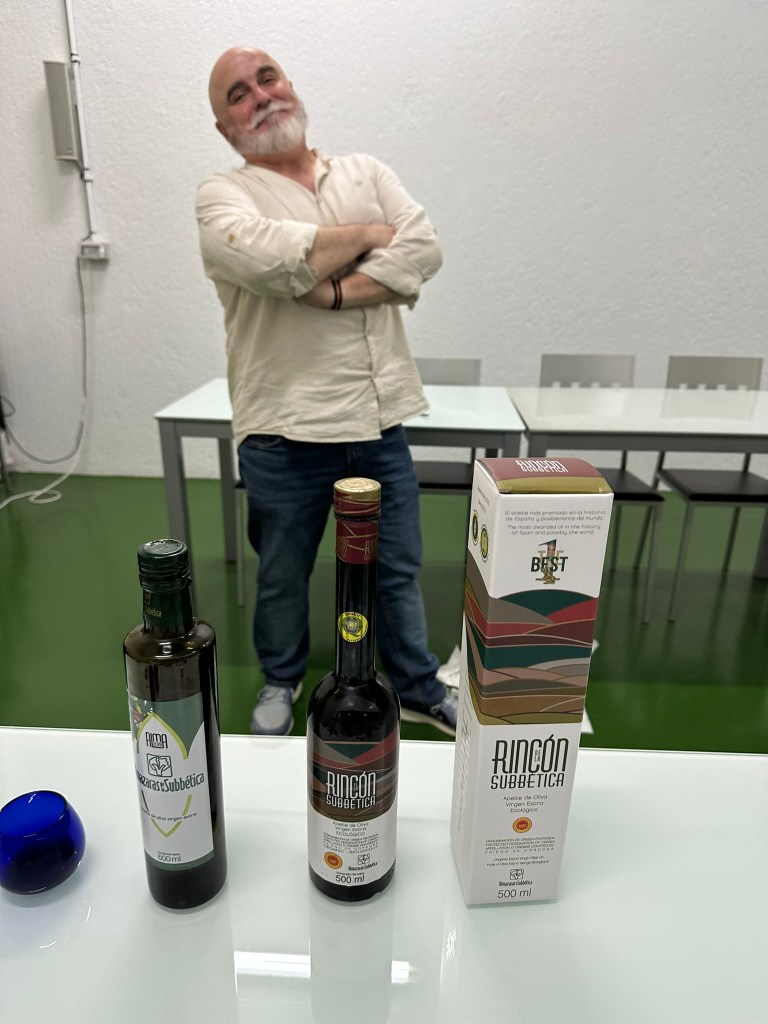
On the drive from Cordoba to Malaga, a stop at an olive oil processing facility for a tour and tasting at the Almazaras de la Subbética cooperative south of Córdoba – winner of the World’s Best Olive Oil competition in 2024/2025. And the 10 previous years. Super cool.

That’s a LOT of olive oil!

Priego de Cordoba, another white-washed Andalusian town visited on the drive to Malaga:

Malaga, the second (and final) iconic Andalusian town we missed on our previous bike trip:

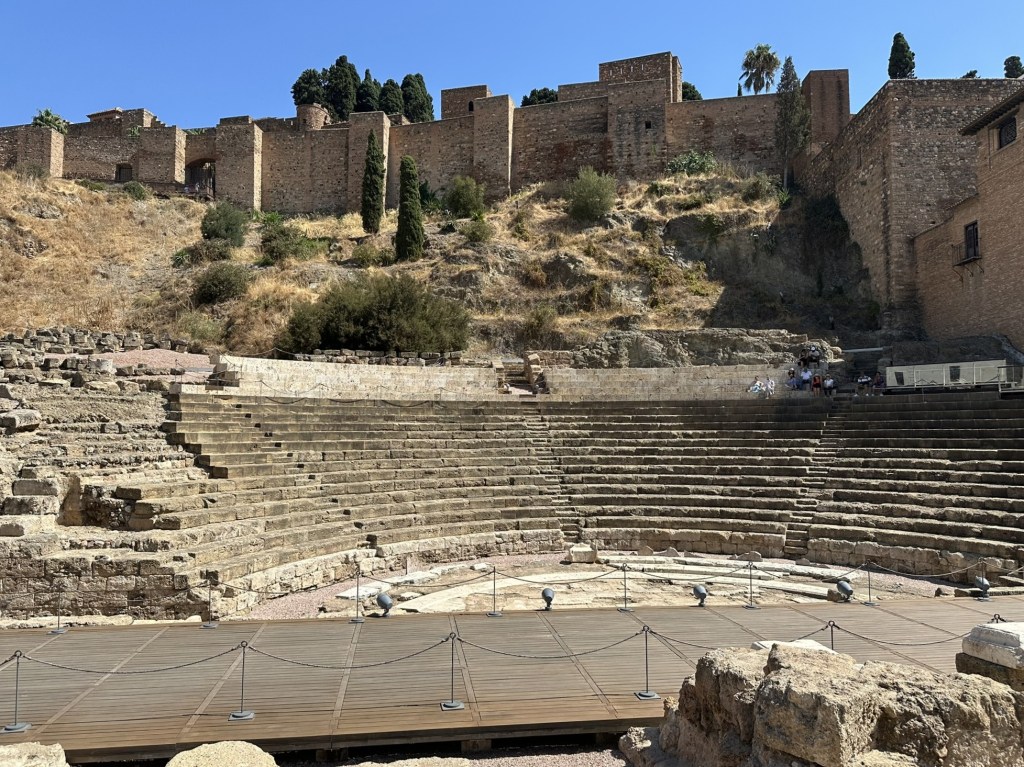
Right in the heart of town lies a Moorish calabaza atop a Roman amphitheater. The history half of WolfeStreetTravel was delighted.

Cool little tapas tour our first night; it turns out that maybe we DIDN’T need to pack 45 cigars for the trip (which we certainly did).

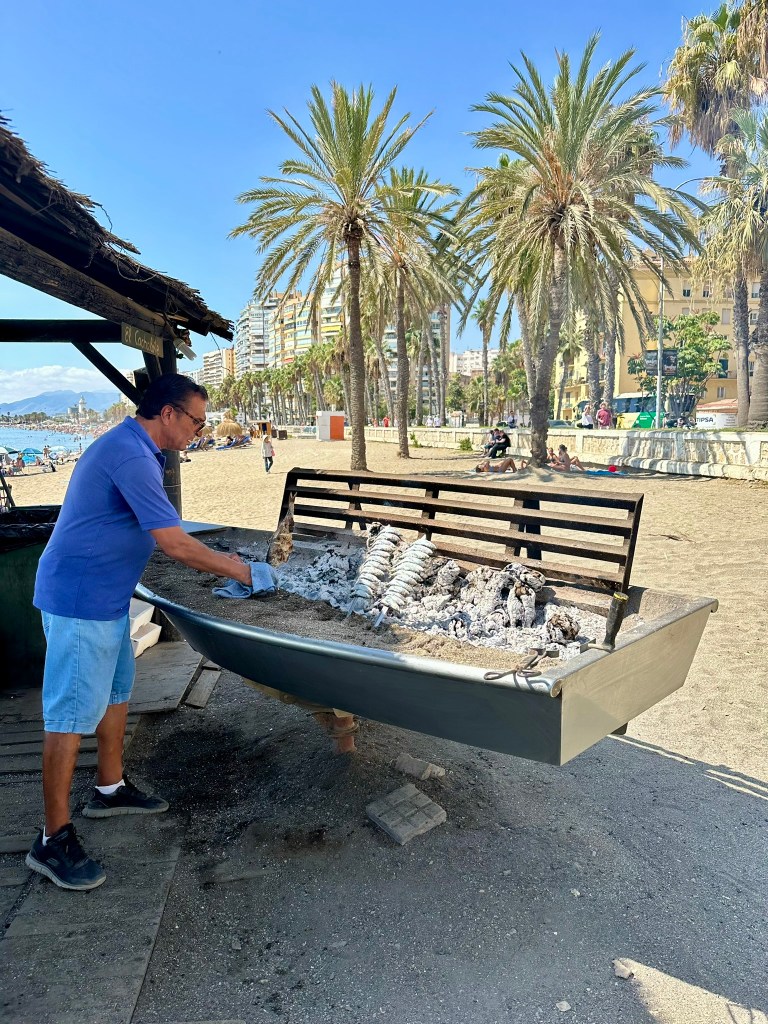
One of our goals? Chow down on espetos at a chiringuito – a beach fish-grilling restaurant (which we learned about on The Amazing Race, for what it’s worth).

Definitely lived up to the hype (especially accompanied by a few tinto de veranos).

A stopover in Marbella en route from Malaga to our next town. Despite high expectations for a super awesome area – meh.

After months of the Mediterranean (first in Croatia on the initial bookend and then in Mallorca, Valencia, and Malaga on this trip), we transitioned to the Atlantic after driving past Gibraltar to get to Playa Zahara de los Atunes.

Where we stumbled, during our only night there, into a cool little concert at a beach bar down the street:

Continuing our little U-shaped arc around Andalusia, we headed next to Conil de la Frontera (our third de la Frontera, designating a frontier town between Christian and Moorish territories in the 900s):

Fried fish frenzy.

And a little day trip to Vejer de la Frontera:

Even more atmospheric Andalusian town (and our forth de la Frontera):

More beach fish at Playa de la Fontanilla:

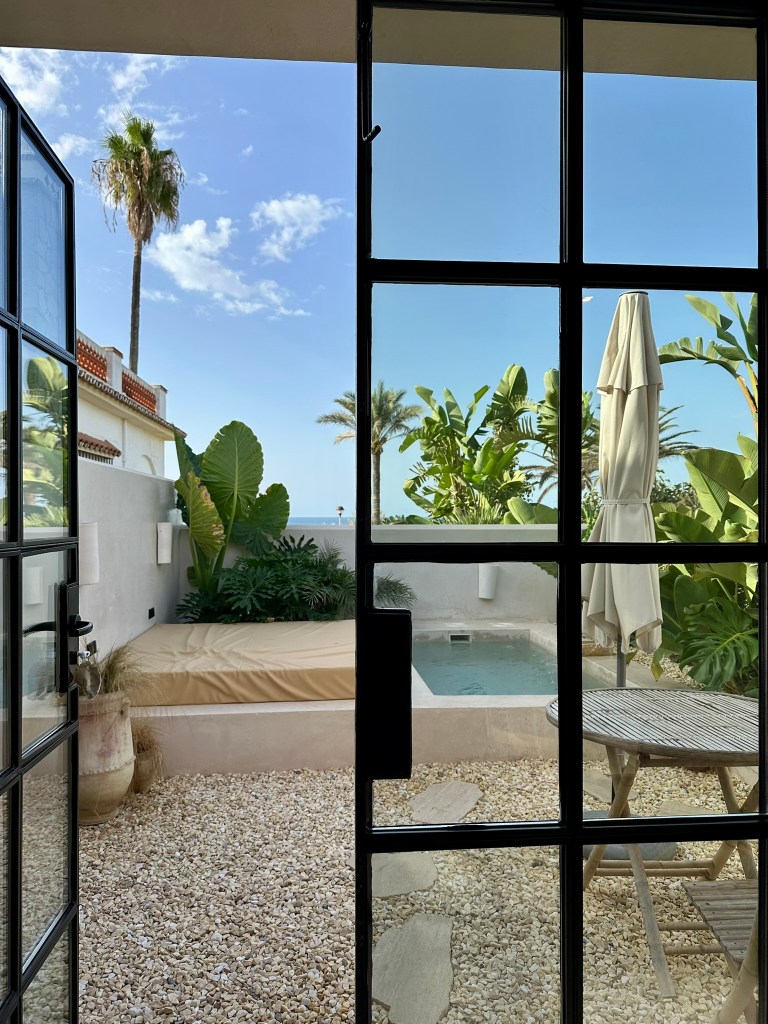
And our casita for 2 days right down the beach. One of the best AirBnBs we’ve experienced (plus a laundry stop):

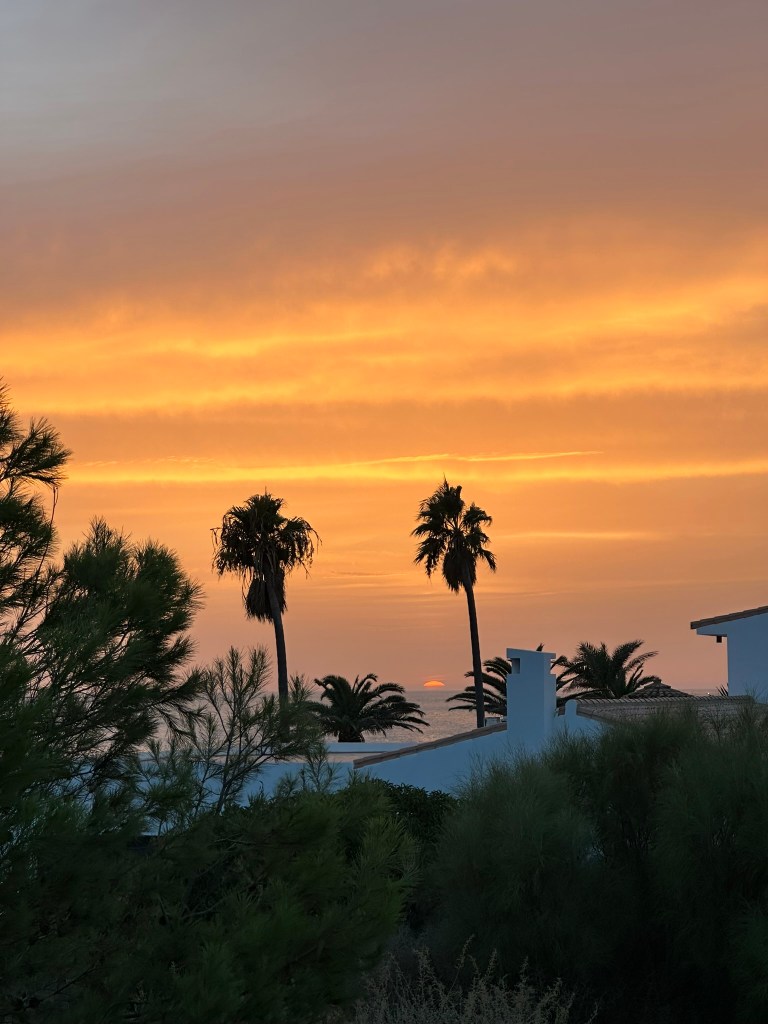
Amazing sunsets from the casita’s roof deck:

Then, back to Seville, which we really enjoyed when we first visited in 2017.

Never got to see the “mushroom” during that visit; this has been corrected:

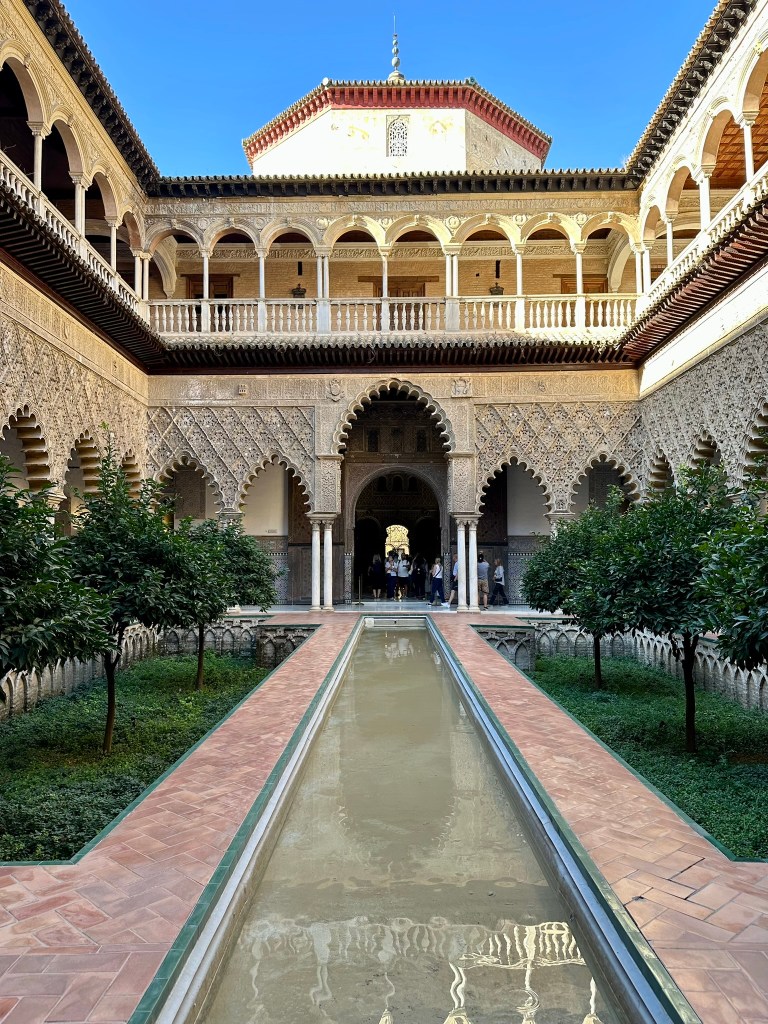
And we spent our limited time in 2017 visiting Seville’s storied cathedral and did not have an opportunity to visit its alcazar. This also was corrected:

And, reminiscent of our days feasting on pinxos in San Sebastian in 2021, a dinner in Seville that included baby eels. Delicious.

Seville served as our last stop in Andalusia; from there, we flew to Porto, Portugal, picked up another car, and headed immediately east to the Douro Valley – Portugal’s wine country.

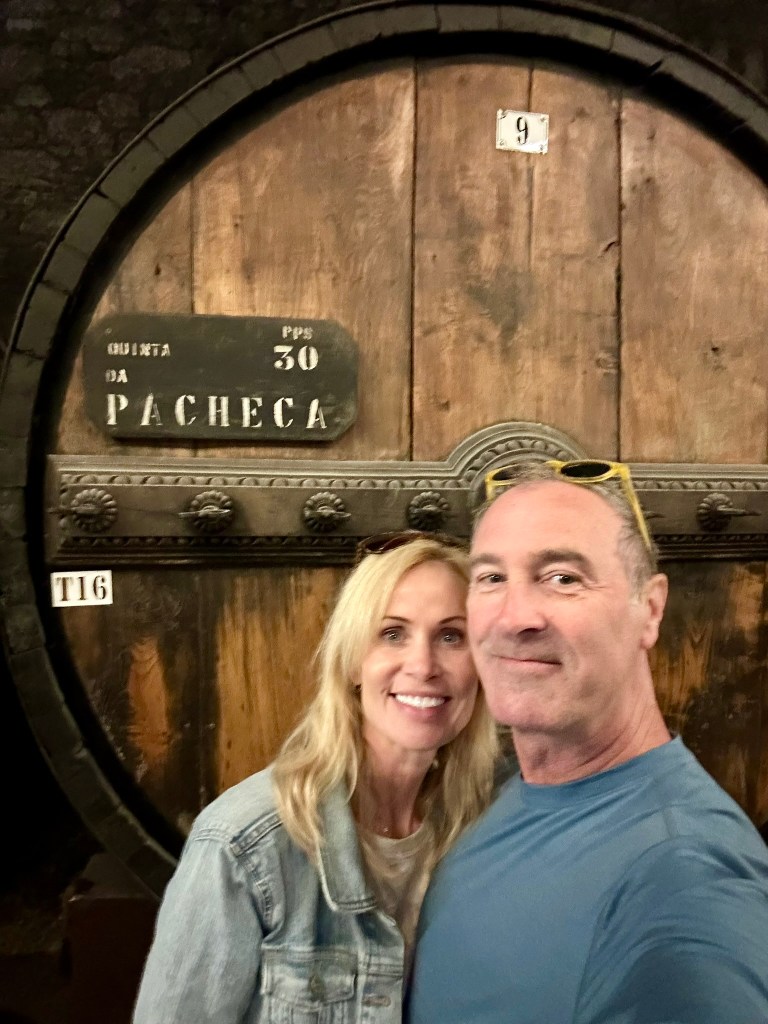
Our first stop – literally straight from the airport – was a tour and tasting at Quinta da Pacheca. Good wine. Great port.

And the Douro Valley wineries really DO still stomp grapes, a la I Love Lucy. Pretty wild.

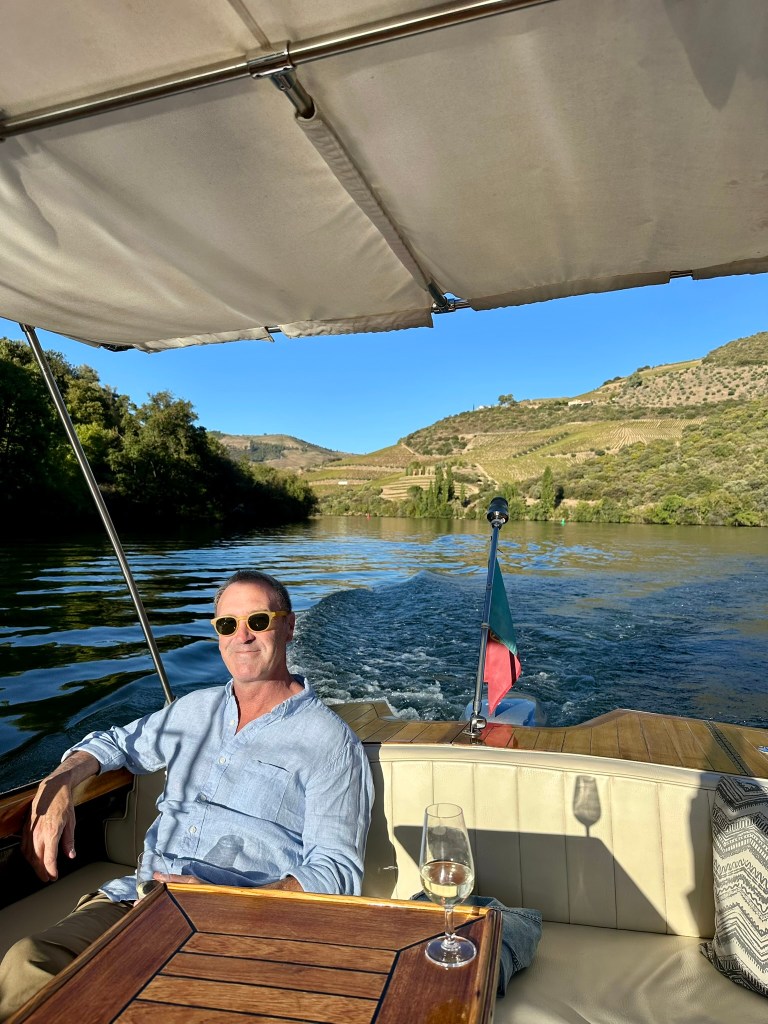
Cool little sunset boat trip on the Douro River:

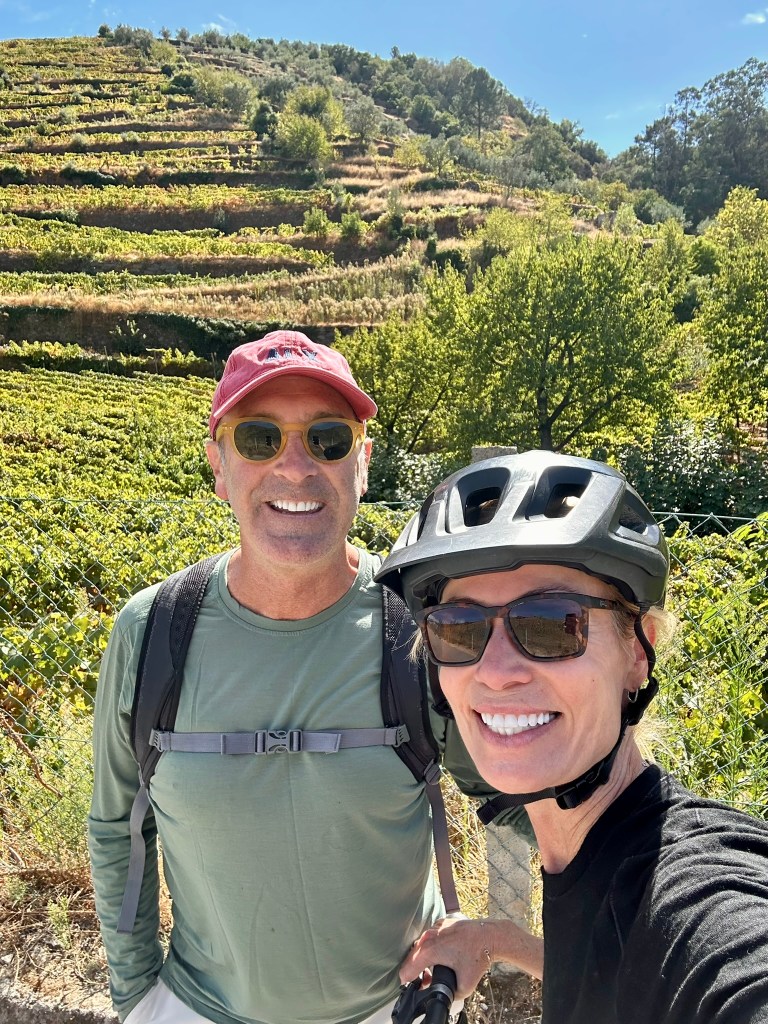
And a full day of biking through vineyards (none of which accommodated walk-in tastings – you had to have reservations, which we thought was insane:

Douro needs to learn lessons from the Virginia (and sure, California) wine region.

Pretty good digs for our 3-day stay:

The day after biking, we did end up calling and then visiting Quinta de Fojo, which offered an outstanding and authentic tasting experience at a generations-old family winery:

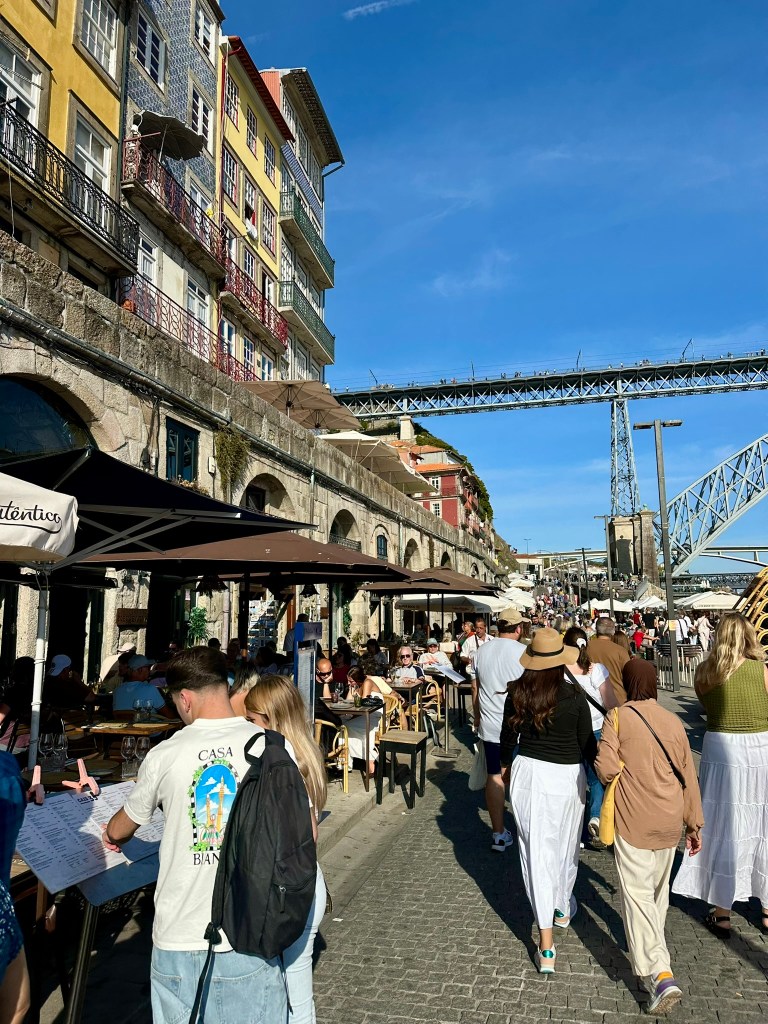
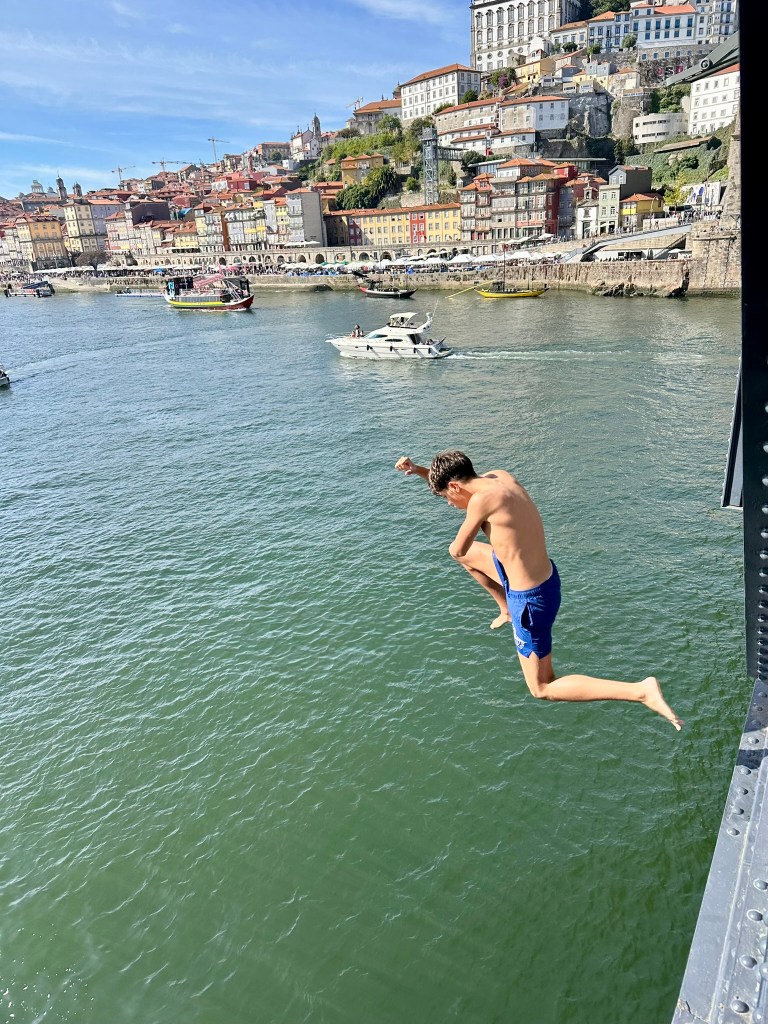
Then, back to Porto for a day; we first visited at the tail end of our inaugural post-retirement long trip in 2023 and definitely wanted to return, even if only for a short time:

Like our second visit to Rovinj, Croatia, a few months earlier, we stayed across the river from Porto’s core instead of inside – definitely a different point of view!

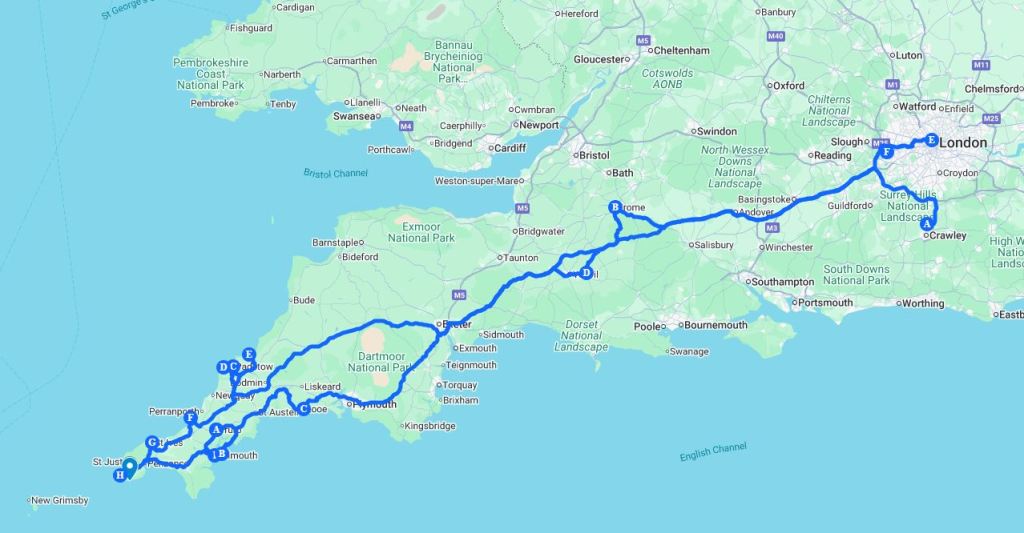
From Porto, we flew to our final leg: Cornwall in the southernmost tip of England:

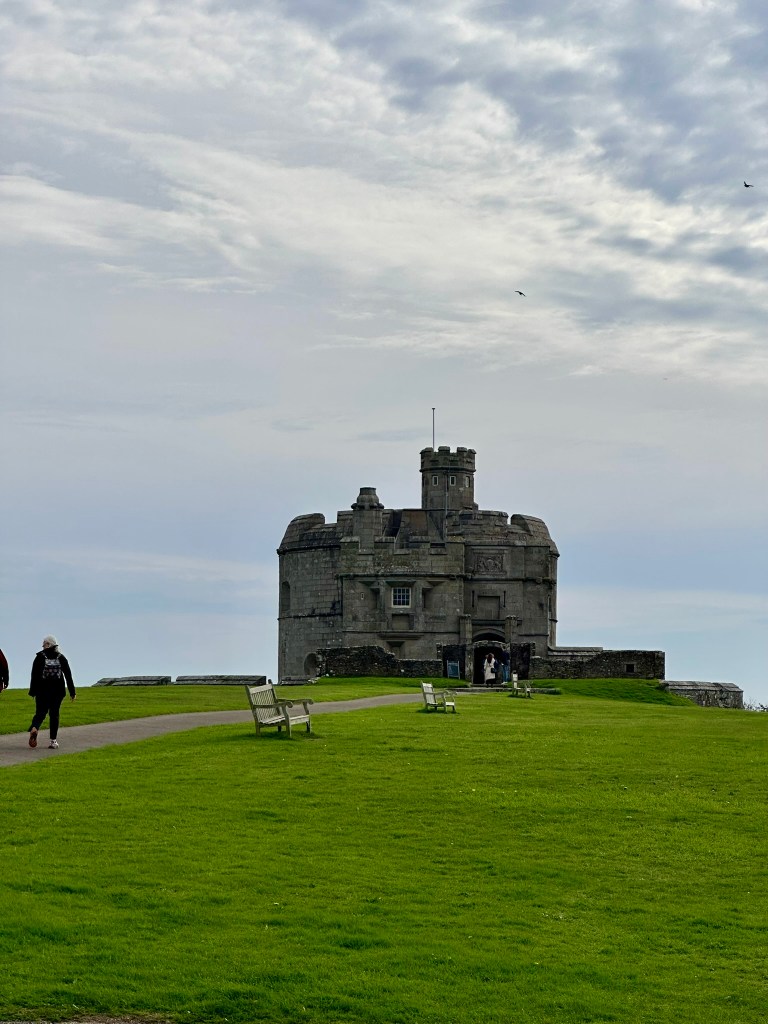
Due to the length of the drive from London to our first Cornwall location (we try to keep drives between locations under 4 hours, and ideally no more than 3), we stopped halfway in the town of Frome, in Somerset:

Turned out to be pretty cool, and with a remarkably high ratio of pubs to people, which was a plus for us:

Then, to our first stop in Cornwall – Padstow:

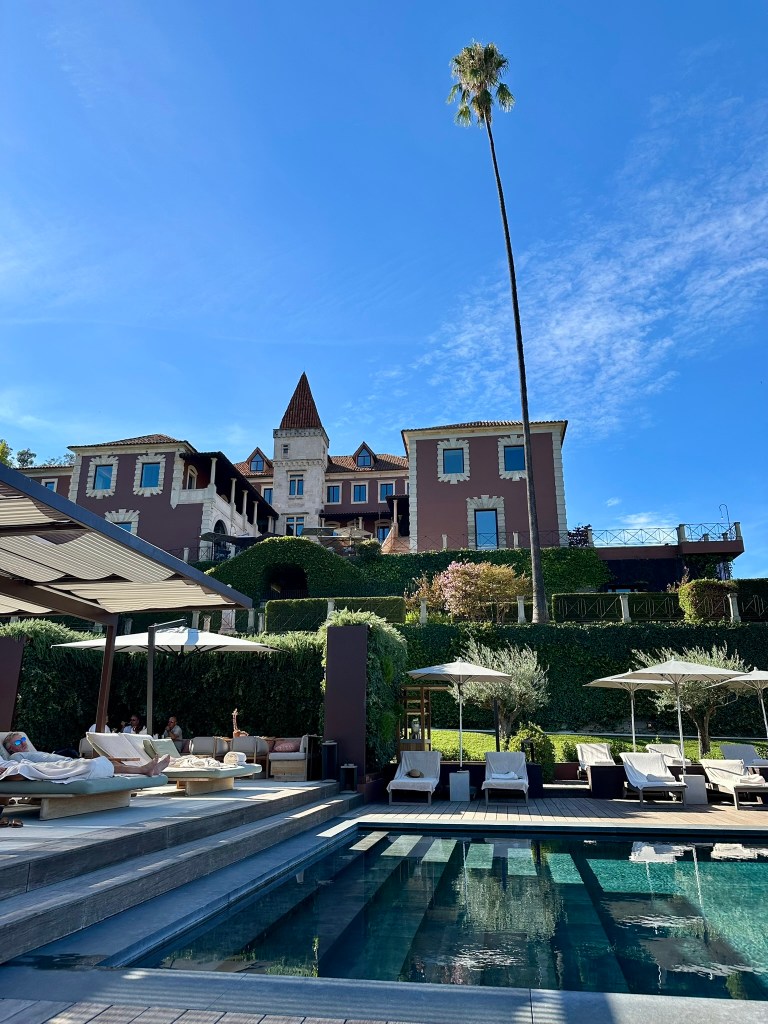
Rather than stay in town, which was a little bereft of cool lodging options, we stayed about 10 minutes away, at. . . The Pig. Which was a cool lodging option, it turned out:

But we did get into town our second night to dine at The Seafood Restaurant, the flagship eatery of Rick Stein, who we had never before heard of, but who turns out to be a beloved English restauranteur and a seafood magnate in Padstow (the restaurant was one of at least three Rick Stein joints in town):

And on our first full day, our real purpose for visiting the region: spectacular hiking. In this instance, a quasi-loop hike between the achingly charming village of Port Isaac to the even smaller hamlet of Port Quin:

The hike exceeded all expectations:

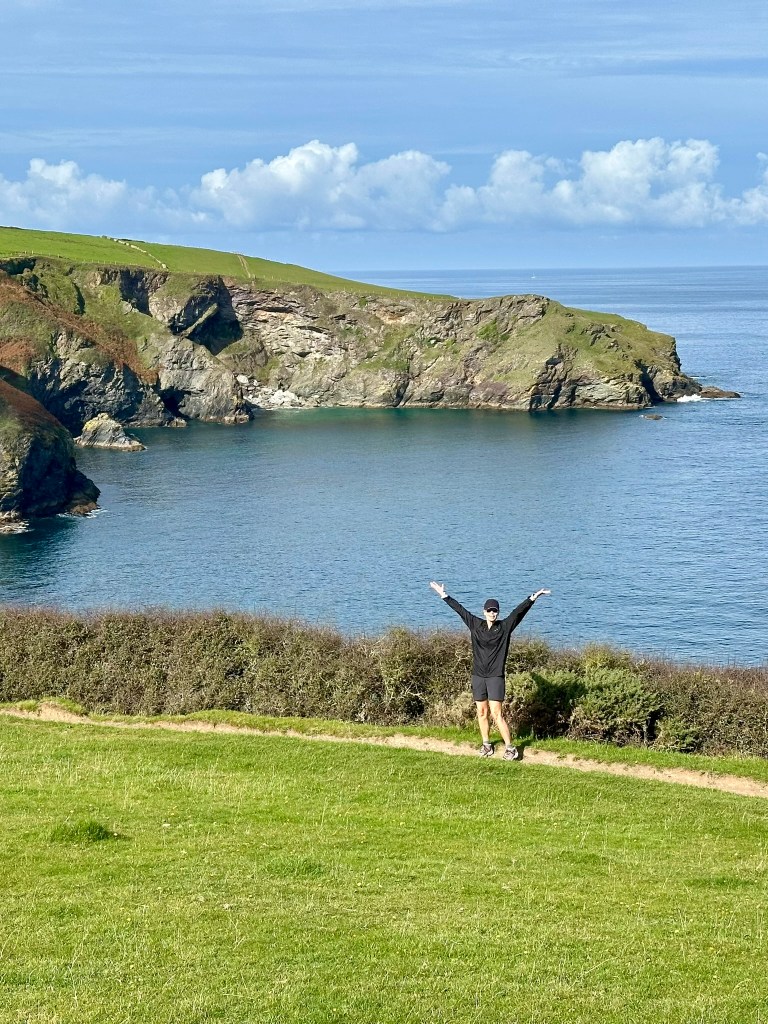
Our excitement manifested itself in different ways, to be sure:

Port Isaac in the distance:

The local cows seemed excited to see hikers come by, since all of them crowded the fence when they saw us coming:

Our reward once back in Port Isaac? The first of several fish and chips (less than half a dozen during this trip, much less than the daily dosage we sought in our 2-week Cotswolds and Wales trip in 2022 that packed on so many pounds that we had to wear muumuus when we got home):

Our next hike en route from Padstow to St. Ives represented the most iconic views from the British TV series Poldark, which essentially inspired this entire leg. At the start of the hike lay the very tin mine that Poldark worked in the show, Wheal Coates:

Cliffside hiking at its best:

Our next base, St. Ives:

(Which always seemed to be at low tide during our stay, oddly enough):

But had a legit, picturesque English port town charm to it, even if most days were overcast (which seemed to amplify the Englishness of it all):

En route to our next hike, we stopped at the Minack Theatre, which was reputed to be an amazing venue for performances on a cliff facing the water. All of the facts were correct, but it was, in fact, meh:

The next hike? Around Lands End! The actual, for real most southwestern most point in England (and the UK):

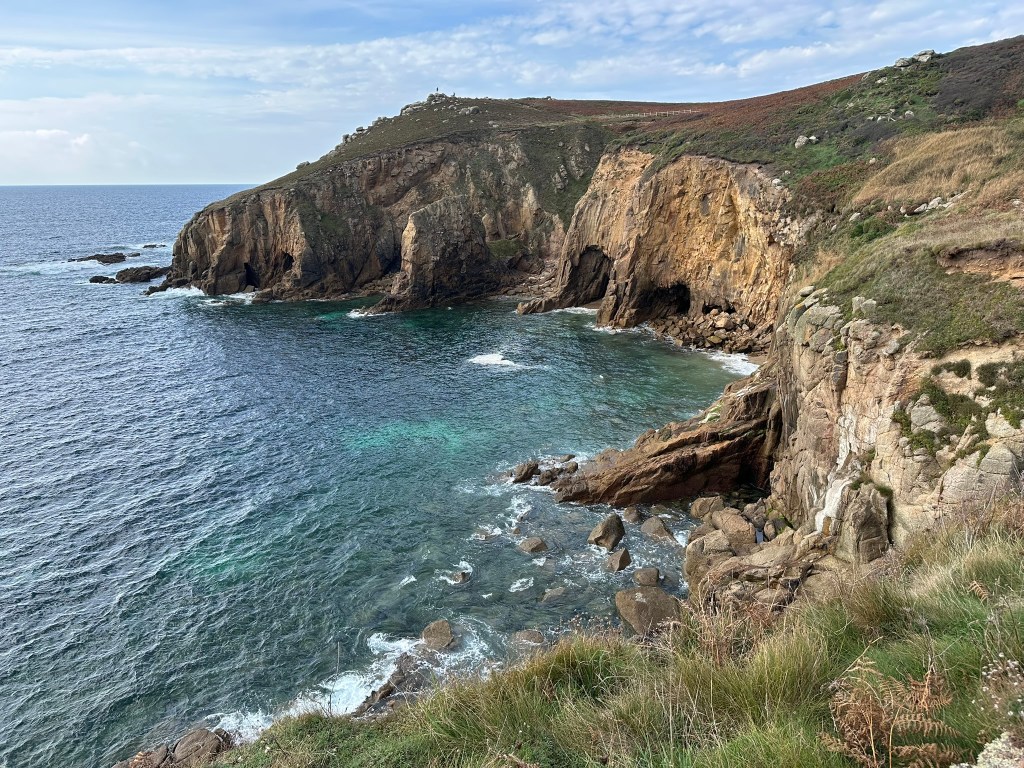
More unbelievable Cornish cliffside walks:

Then, around the horn of Lands End and on to the first of our last two Cornish stops: Falmouth.

Meh.

The weather during our stay may have, however, influenced this assessment:

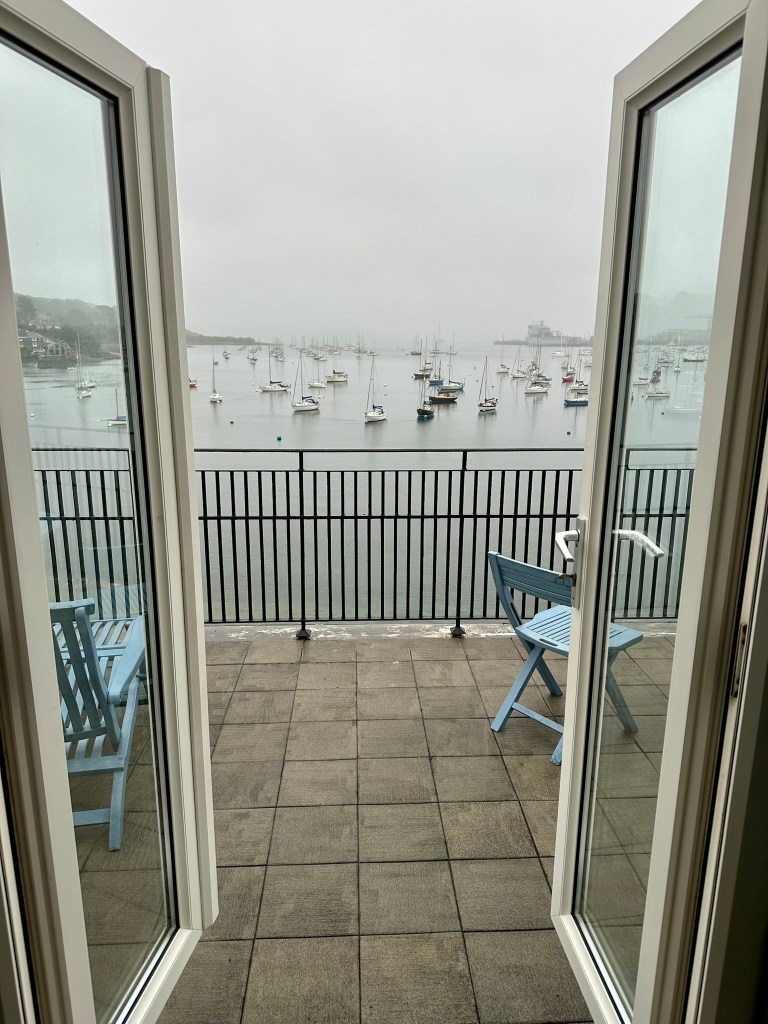
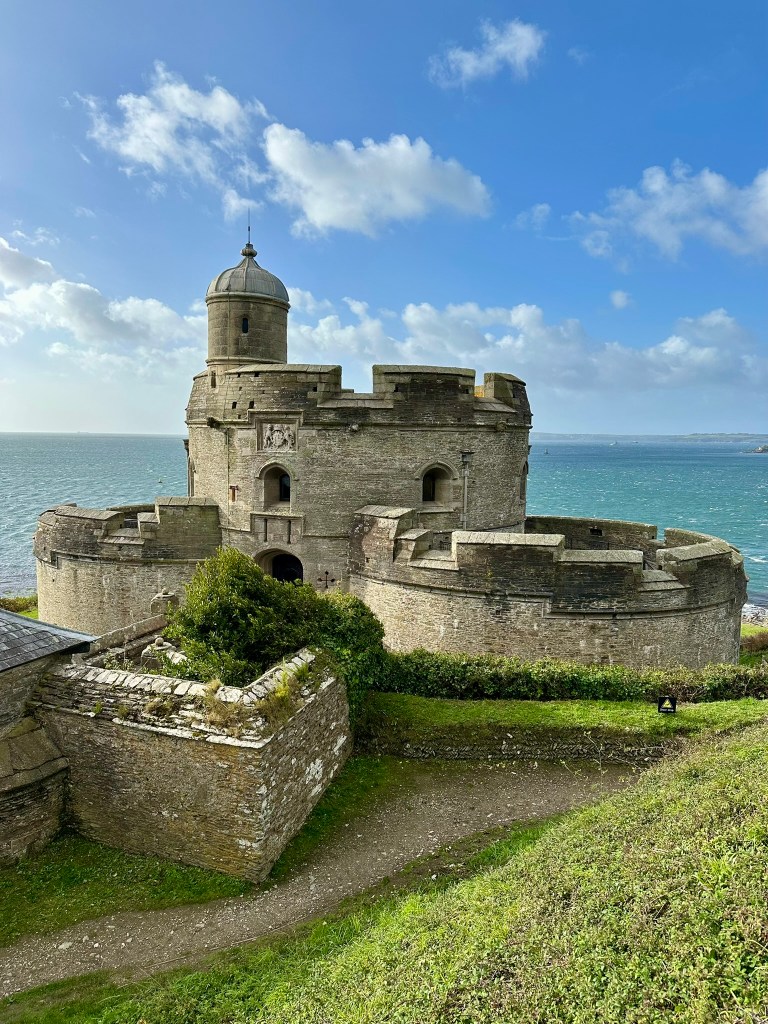
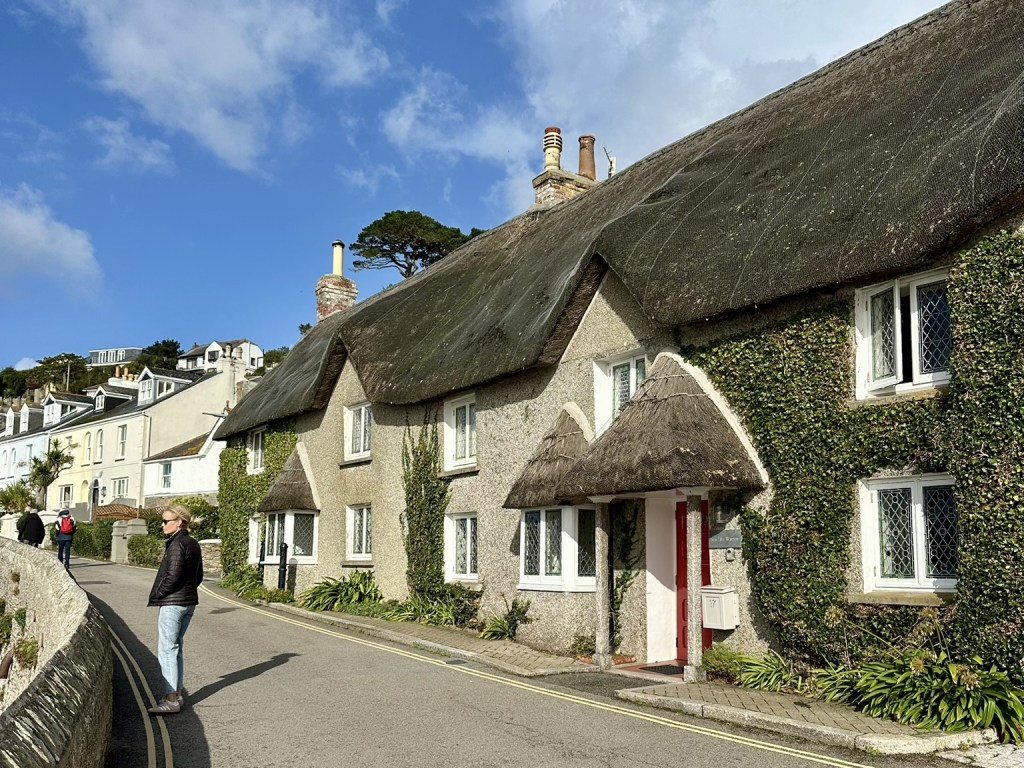
And the final Cornish stop, St. Mawes. More shitty weather, but a super picturesque Cornish seaside village:

And, of course, the weather improves the day we depart:

On the way back to London (by way of Sherborne), we literally drive right by Stonehenge. It turns out that we never actually needed to buy the entrance fee in 2022!

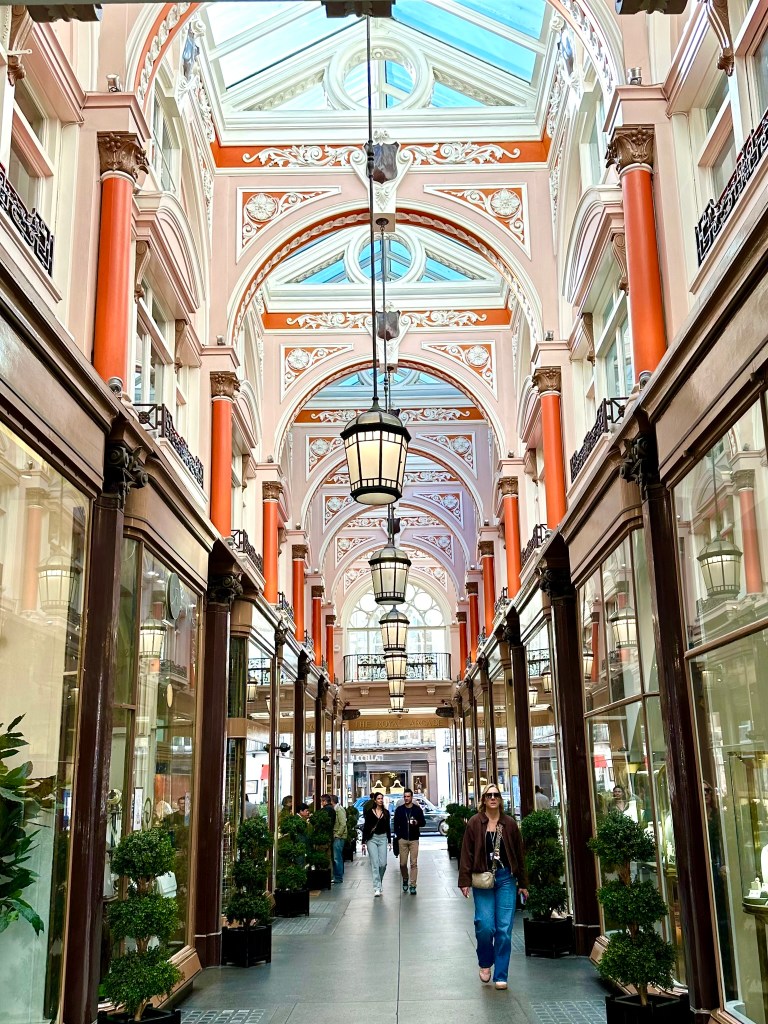
One of the many block-bisecting arcades of London, our final stop.

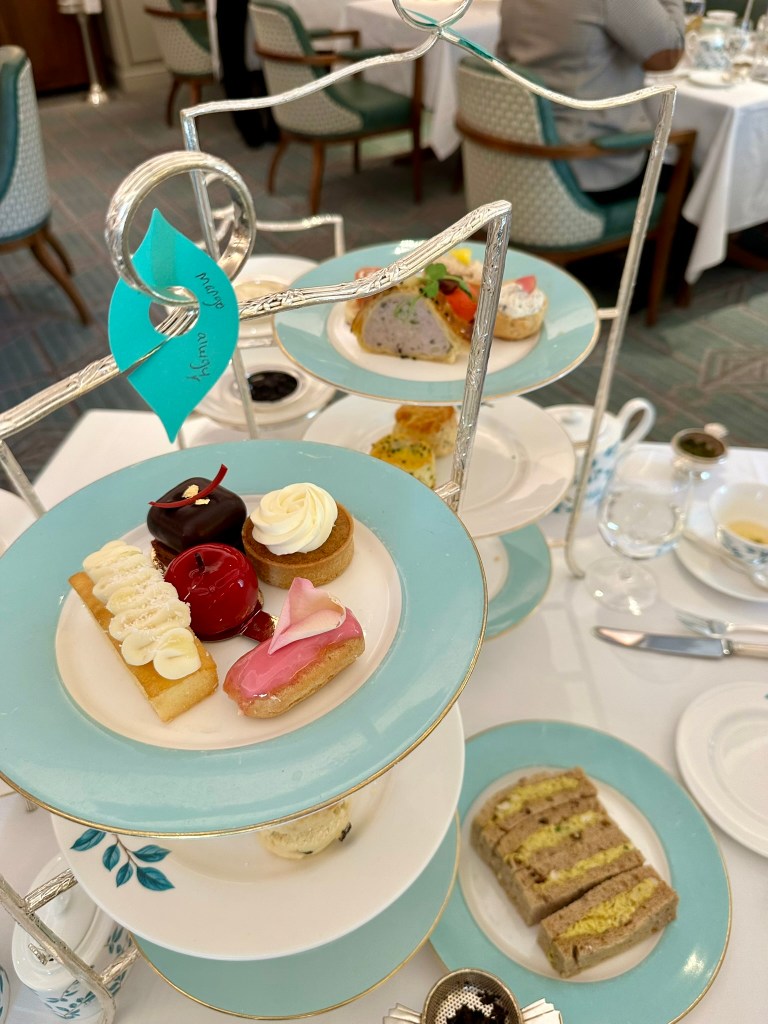
This was our fourth stay there, and we base ourselves in a different neighborhood each time – this time was Marylebone. Also, since we forewent the whole high tea experience on each of our previous three stays, we concluded that the fourth time was the charm:

The next day, a visit to London’s 3rd century Mithraeum, discovered beneath the modern city in 1954. This was a Roman temple dedicated to the god Mithras, a mystery cult popular among soldiers in the 2nd and 3rd centuries and could have continued to be more popular than early Christianity as an alternative to the traditional Roman pantheon had it not been for the pivotal backing of the latter by a couple of Roman emperors.

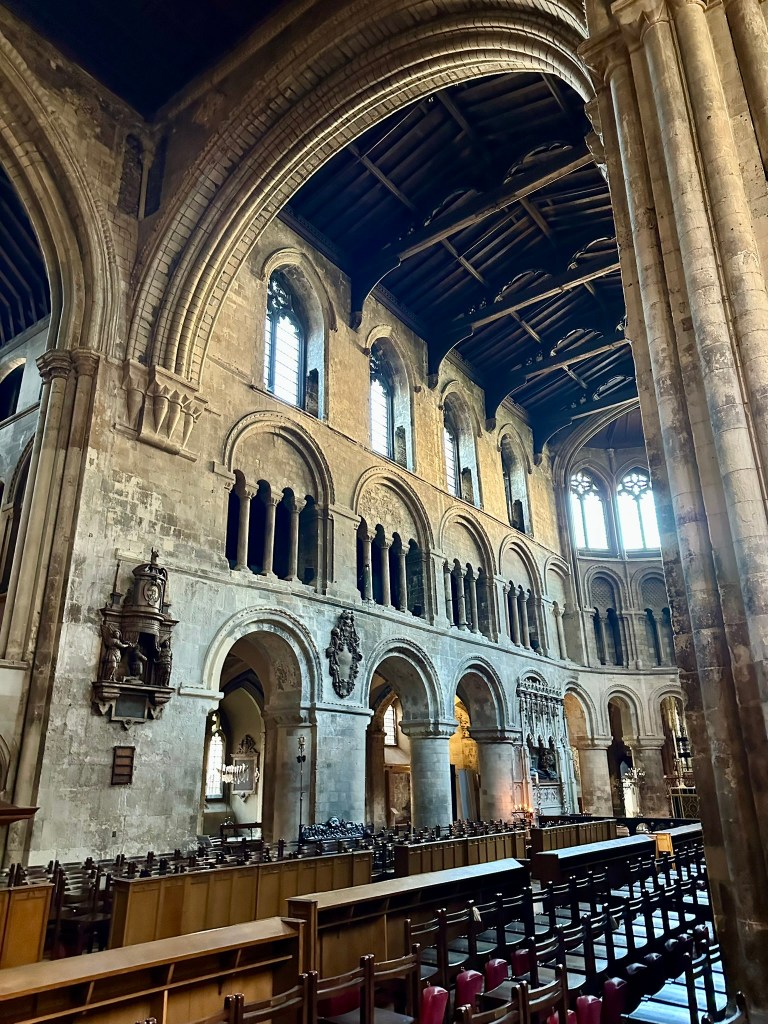
And a visit to St. Bartholomew the Great church, founded in 1123 – London’s oldest surviving parish church and a rare masterpiece of Norman architecture. Its Romanesque nave and medieval chancel evoke nearly nine centuries of continuous use, surviving the Great Fire, the Reformation, and the Blitz.

Definitely a historic end to an epic 6-week journey of 5 legs!

We’re definitely done traveling for the next few months – we need a break and some recovery time to revel in the most appealing town of all: Old Town Alexandria. So, this is where we’ll hang and try (really try!) to post some of the growing backlog of trip photos that are piling up (and have, in fact, now contributed to maxing out the storage capacity to the home PC, prompting a replacement).

More to come!

Categories: Andalusia, England, Five Legs in Six Weeks, Portugal, Spain, Switzerland | Tags: , , , , , , , , , , , , , , , , , , , , , , , , , , , , | 4 Comments

The Fight Over Who Owns Alexander the Great

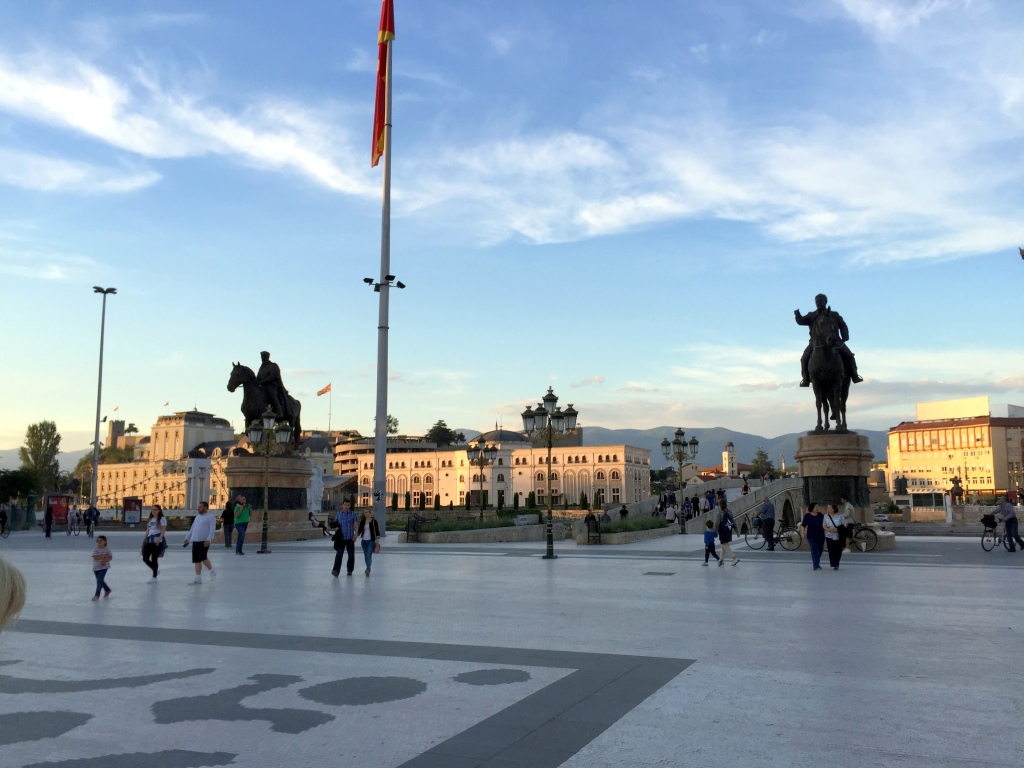
Really interesting article in today’s New York Times about North Macedonia’s claim that Alexander is their native son, much to the infuriation of Greece. Historians agree that Alexander (and his father Philip) both originate from the Macedonia region of Greece, south of the country of North Macedonia. But historical realities don’t discourage the nationalistic fervor of the North Macedonians in creating a national identity for themselves.

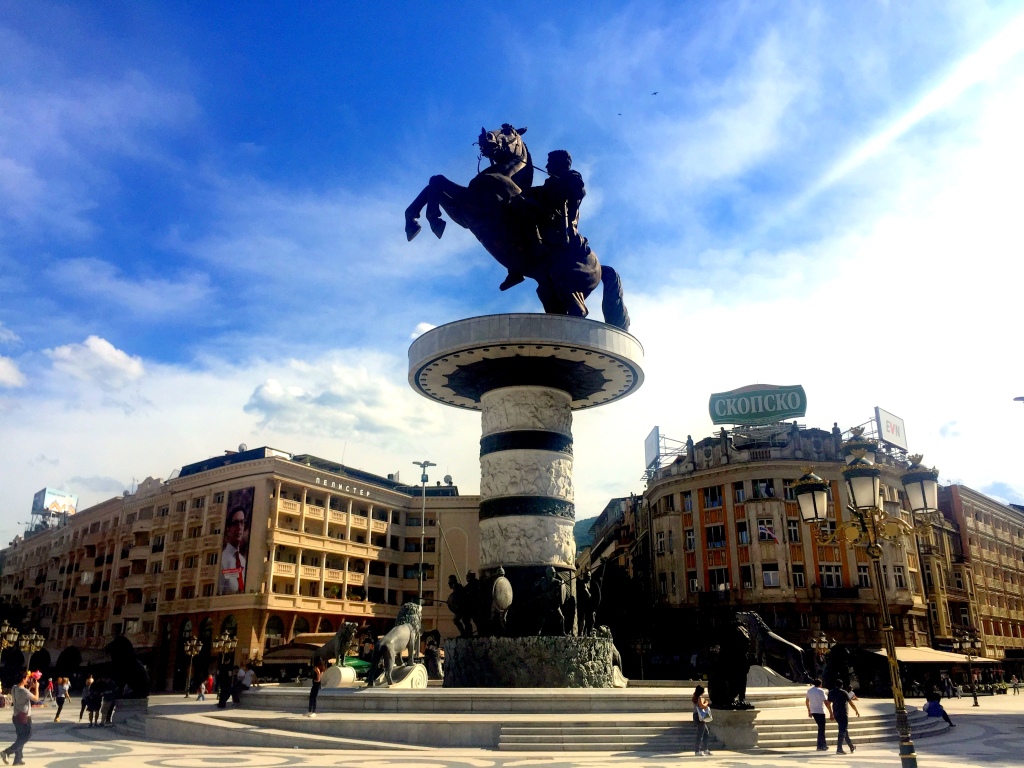
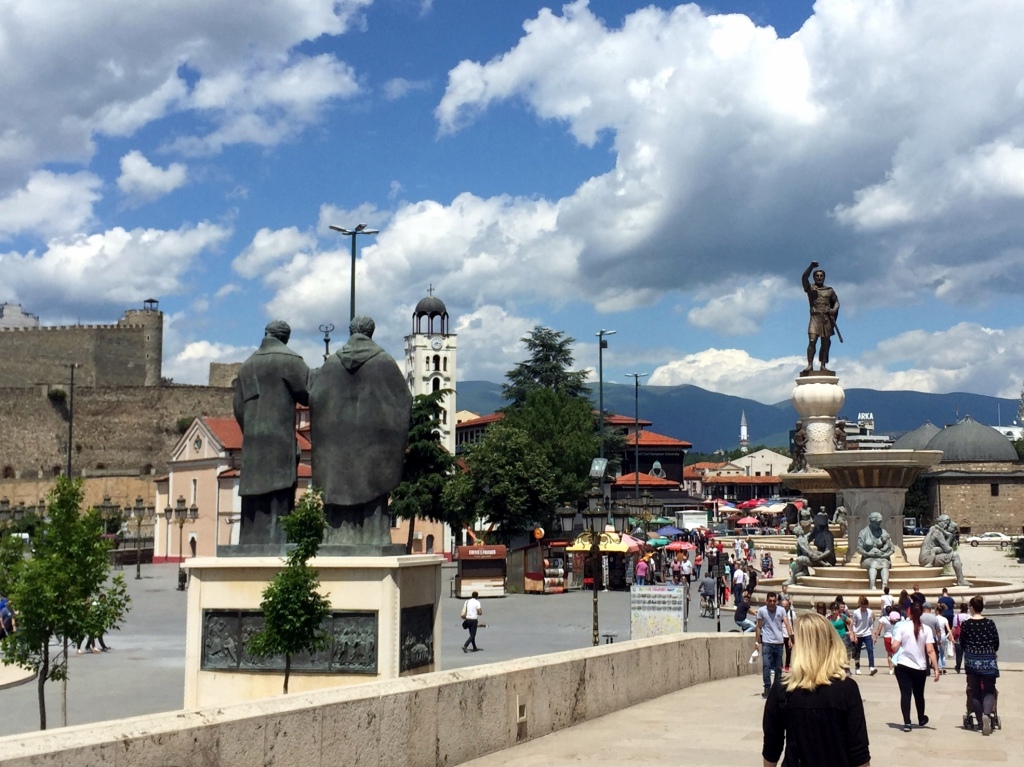
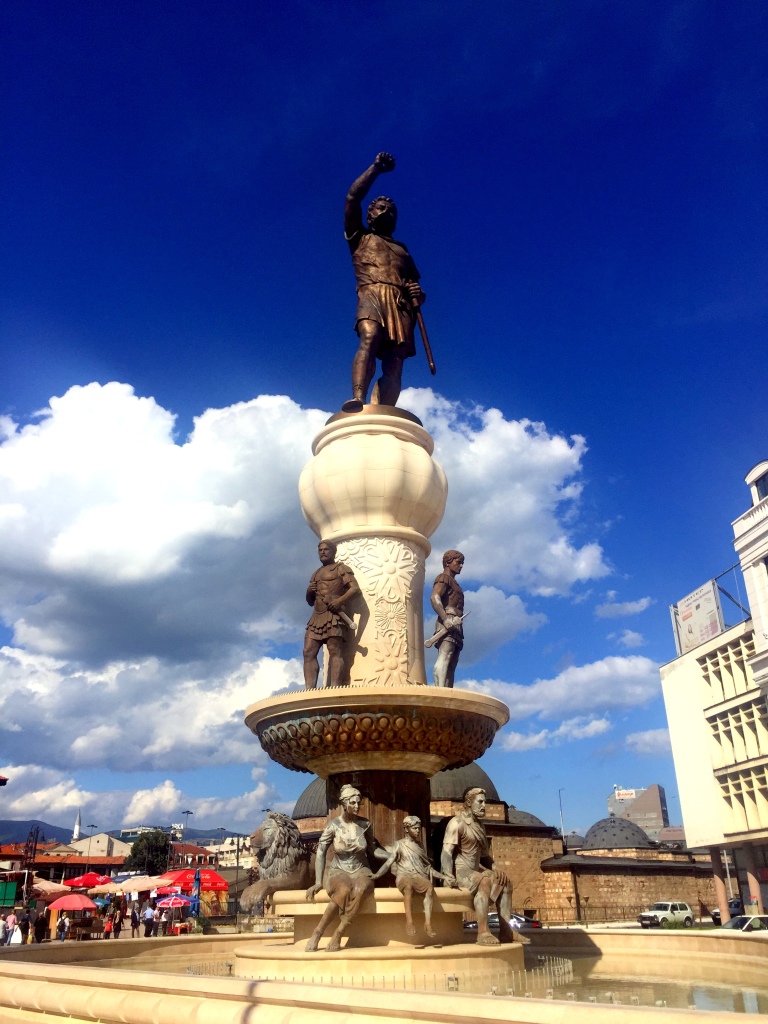
We encountered all of this during our bike trip through Macedonia and Albania a few years ago, including the presence of oversize statues of Alexander, his father Philip, and a 10th-century Bulgarian king (who also isn’t native to Macedonia).

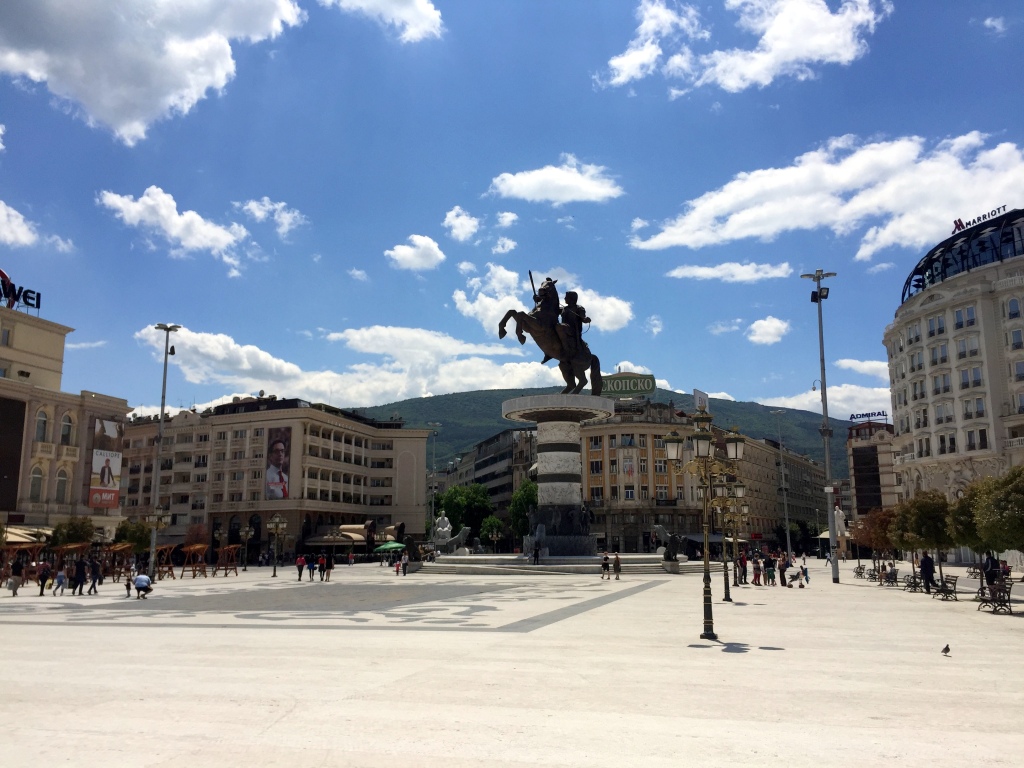
Greece’s Alexander the Great, prominently displayed during our trip in Skopje, North Macedonia’s capital:

And across the bridge, his father, Philip of Macedon (also not North Macedonian):

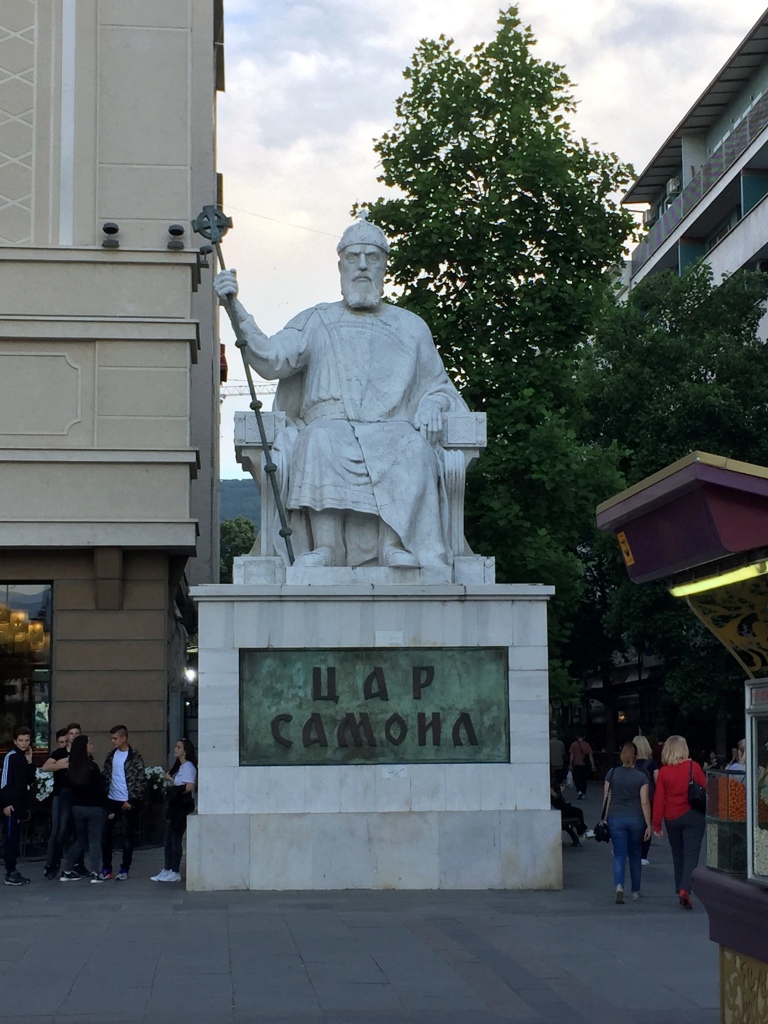
One one side of Skopje’s main square squats Samuil, the Tsar of the First Bulgarian Empire from 997 to 1014 (also not North Macedonian, enraging the Bulgarians, as noted in today’s NYT article):

And on the other side, a couple of more recent heros of the Balkan region – maybe Macedonian, maybe Bulgarian. All of this is a little disputed.

Categories: Macedonia | Tags: , , , , , , , | 2 Comments

A Prolonged Foray to Europe: Portofino

After our time in Tuscany with the Brandts and KJQ, we headed north, to the Liguria region and Portofino. Driving north originally had not been part of the plan, which was to head continually south from Tuscany. But one of the WolfeStreetTraveler was determined to see Portofino, so off we went – north for one freakin’ town, THEN south for the rest of the peninsular portion of the trip. 🙄

But it turned out that this detour was totally worth it.

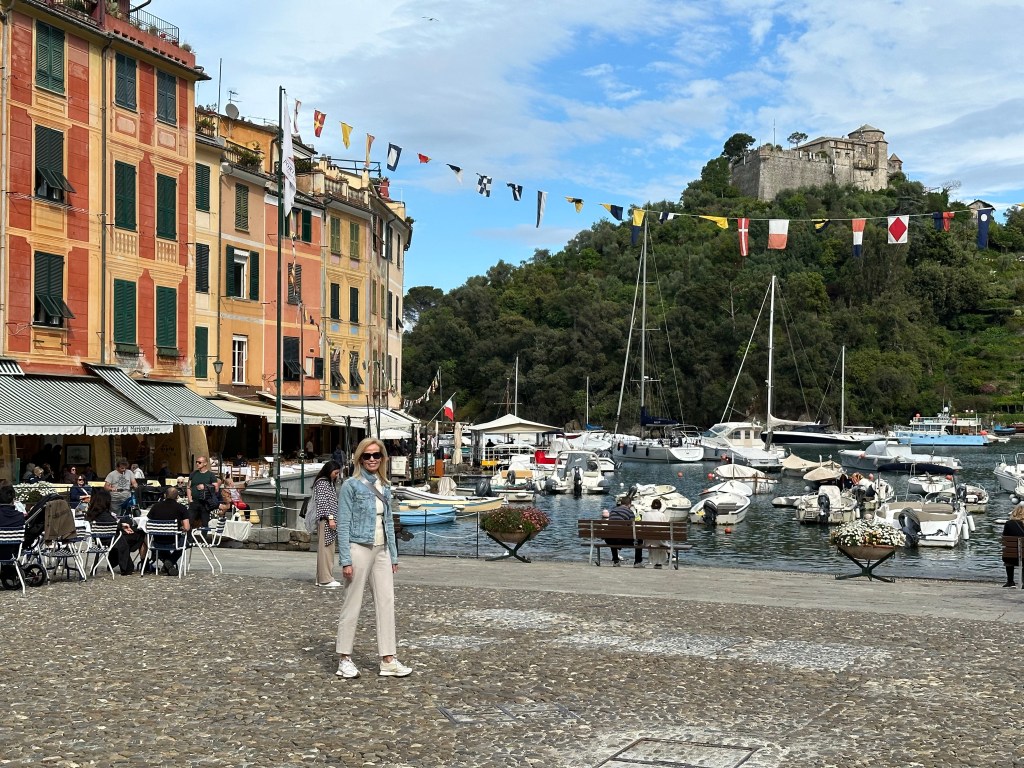
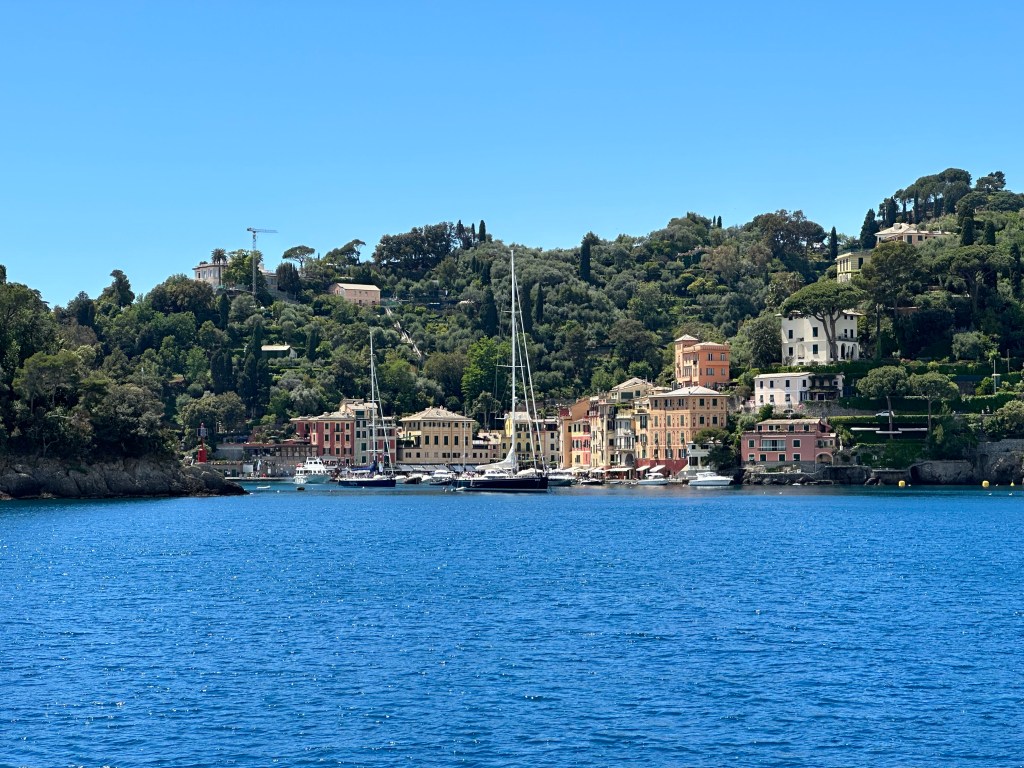
Portofino turned out to be a pocket-sized, perfect postcard of a town.

Cool little harbor under the gaze of the 16th-century Castello Brown.

Although mentioned during the middle ages, where it was a village associated with the nearby Abbey of San Fruttuoso di Capodimonte (to which we’d hike during our stay), Portofino for most of its documented history was part of the Republic of Genoa (except a brief period when Portofino was sold to the Republic of Florence, but reverted back after the Doge of Genoa was ousted).

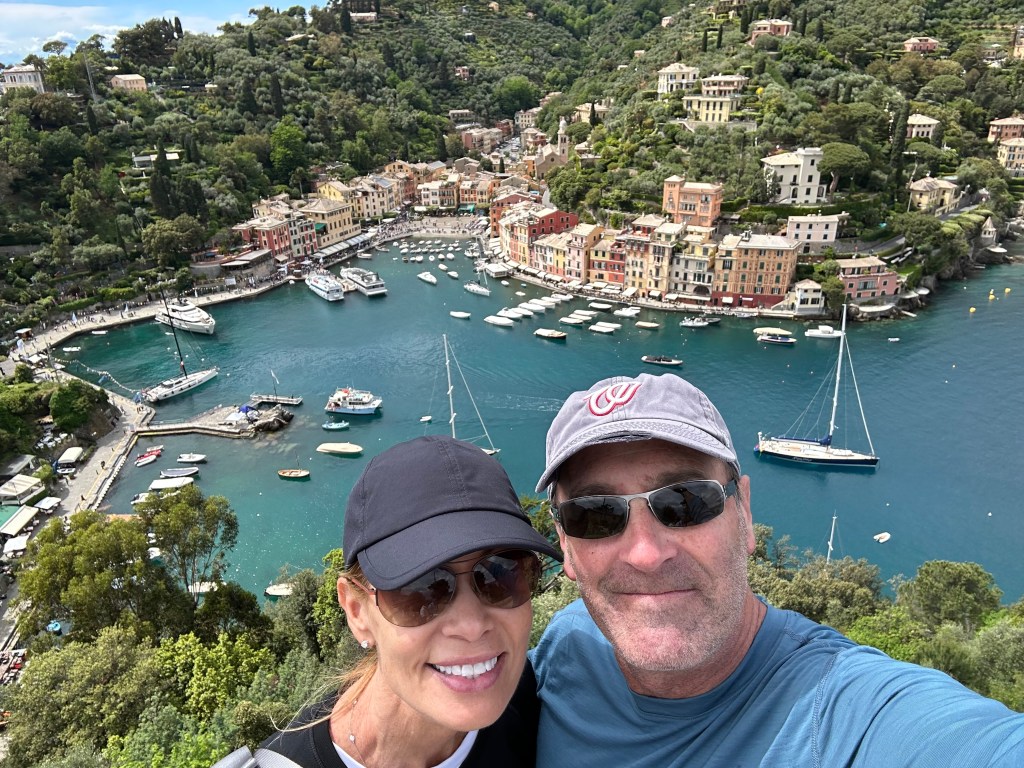
The entirety of Portofino’s harbor from its mouth:

When the Republic of Genoa fell to Napoleon in 1797, the region became Napoleon’s Ligurian Republic (including Cinque Terre), and Portofino came under (unsuccessful) attack by the British. After Waterloo and the Congress of Vienna, the town became part of the Kingdom of Sardinia and then incorporated into the newly unified Kingdom of Italy.

View from the roof deck of our place in town:

Restaurants lined the harbor, and we availed ourselves of aperitivos at every single one over our 3-day stay. (The second WolfeStreetTraveler at this stage still has not succumbed to the allure of the Apperol spritz, and is clinging here to a limoncello cocktail in what turned out to be a futile measure of resistance.)

Resistance has collapsed.

The high ground above Portofino’s harbor has been used for defensive purposes since Roman times, and fortifications from the 4th century have been identified in the foundations of the current castle.

The church of San Girogio encountered on the climb to the castle. Dedicated in 1154, it was renovated in the 17th and 18th centuries, accounting for its less-than-medieval appearance.

Pretty good views from the top:

And an adorable little Portofino miniature inside:

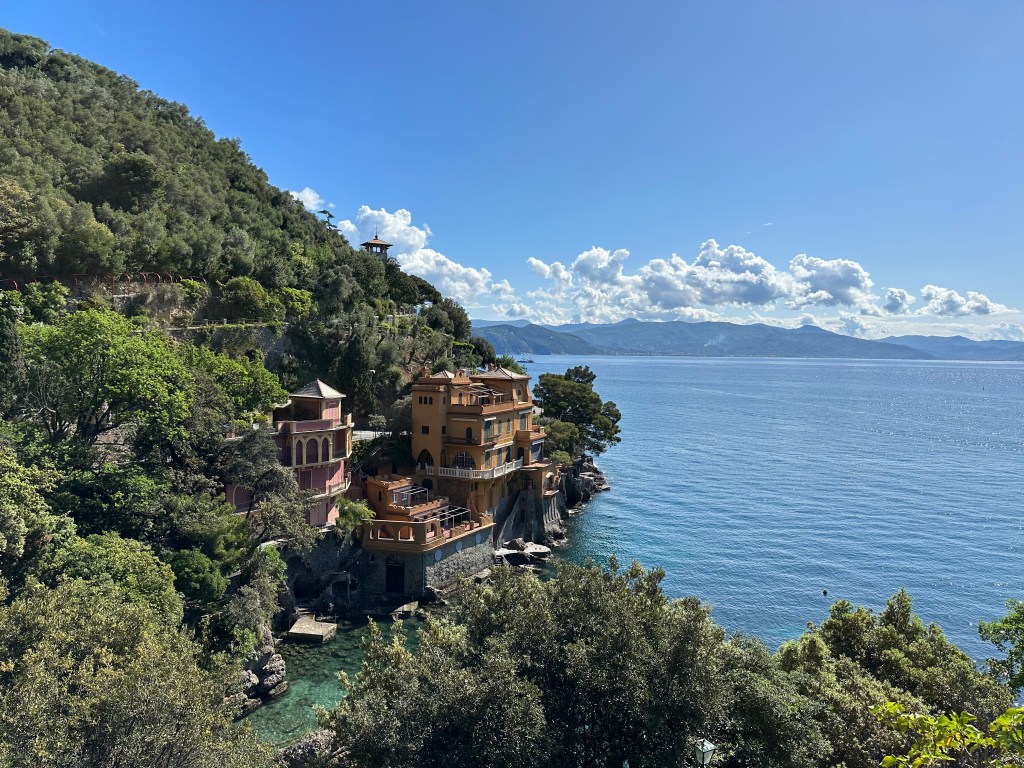
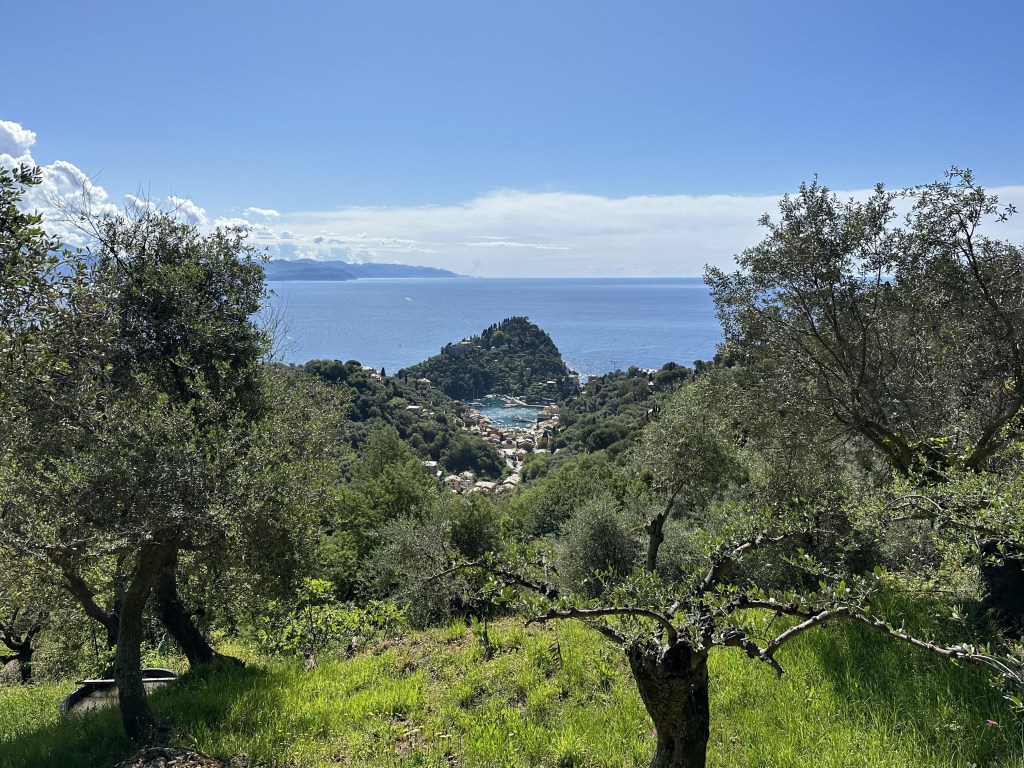
The Ligurian coast at its finest:

On our first full day, we followed the advice of a couple we met on safari years ago and who are possessed by a similar drive to travel – especially to Italy for them – and hiked from Portofino to the aforementioned Abbey of San Fruttuoso di Capodimonte.

Spectacular hike.

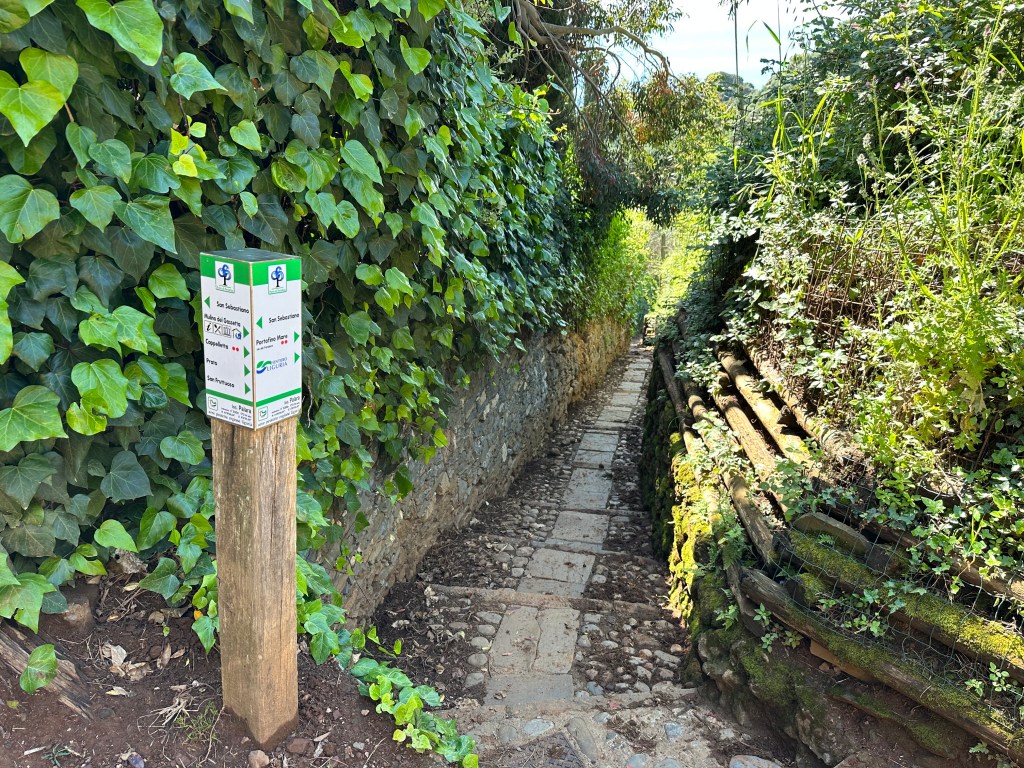
Very helpful trail markers in parts of the route:

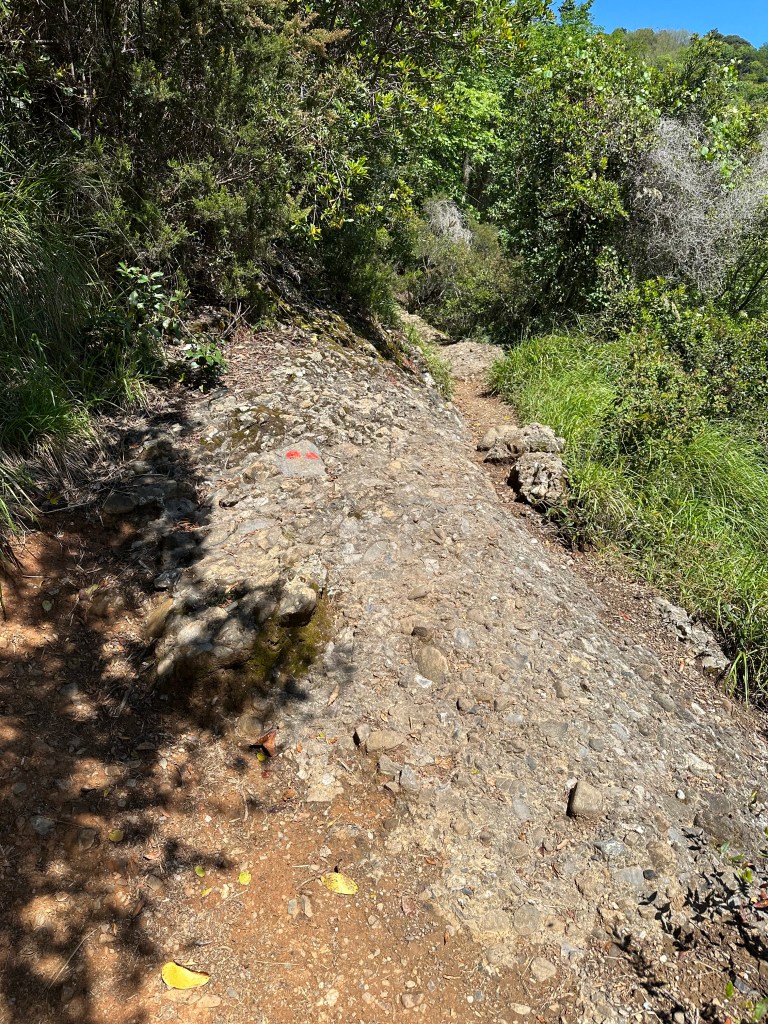
Which is particularly beneficial inasmuch as no roads lead to the abbey – it’s accessible only by sea or by these mountainous trails (marked here by two red dots):

Getting closer.

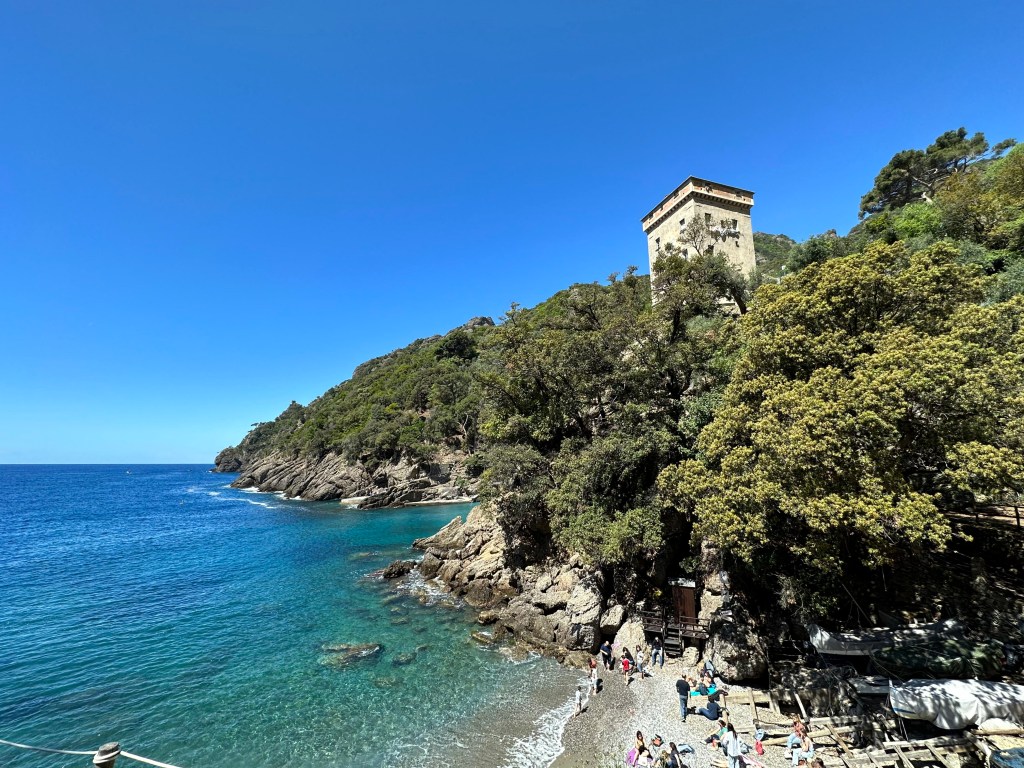
The first sign of the abbey cove – a beach around the corner from the structure:

At which we grabbed the first waterfront table we encountered for a well-deserved lunch.

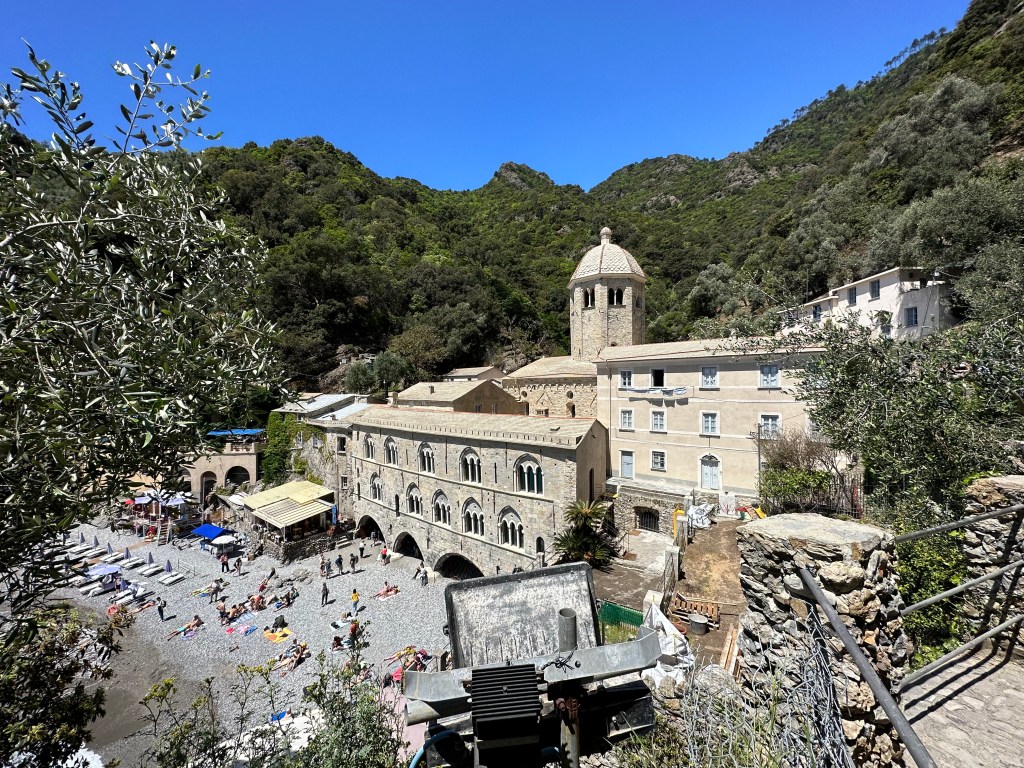
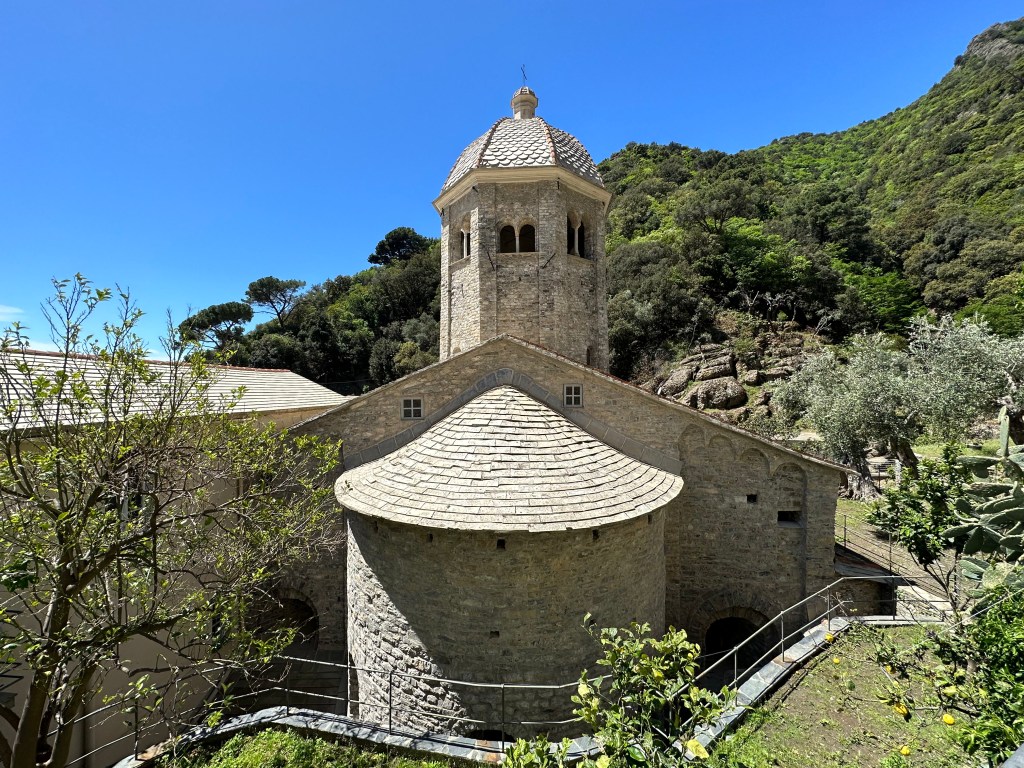
The Romanesque abbey founded by the Benedictines and built between the 10th and 11th centuries.

The abbey is dedicated to Saint Fructuosus, a 3rd-century bishop of what is now Tarragona in Catalonia, who was burned at the stake and martyred during Emperor Valerian’s anti-Christian persecutions. His remains were brought to the abbey by Greek monks and his relics are still entombed at the abbey.

As are those of the aristocratic Genoese Doria family members from the 13th and 14th centuries, under whose patronage the abbey fell.

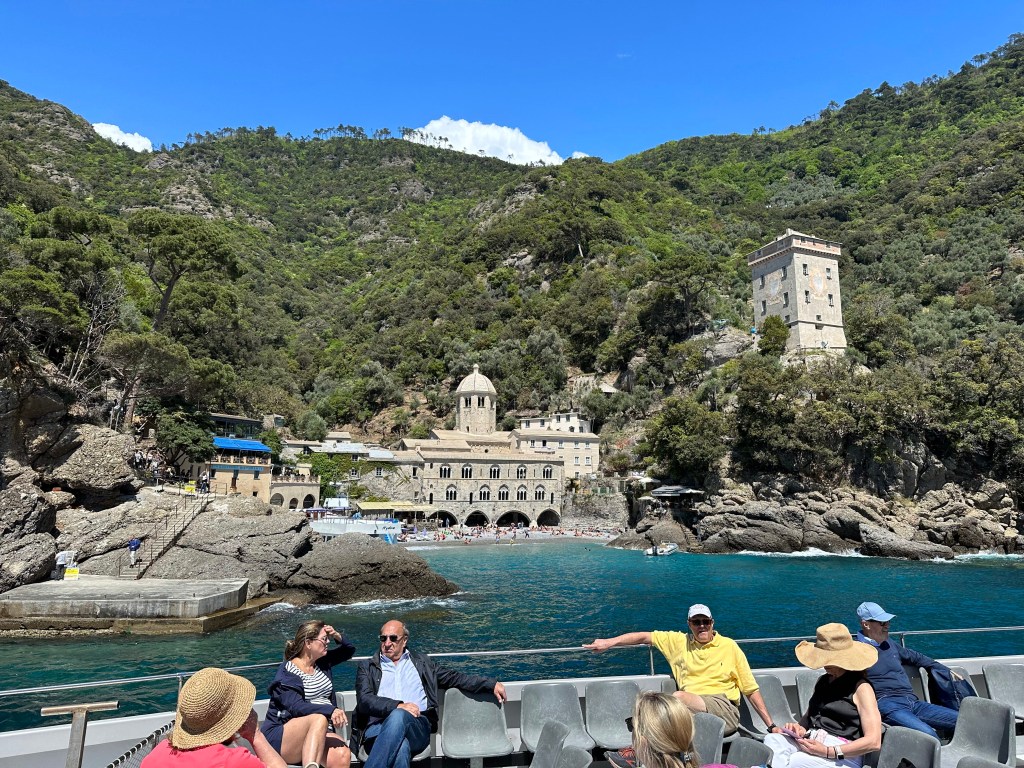
The abbey’s watchtower, built in the 16th century by the Dorias to guard against attacks by Barbary pirates:

Rather than hike back, we grabbed a return ferry to Portofino, again at the very sage advice of our traveler friends well versed in all things Italy.

Returning to Portofino’s compact harbor:

We thought this flag flying on the ferry was for Portofino or Liguria. It’s not. It’s actually the Genoa Cricket and Football Club flag. ¯\_(ツ)_/¯

The following day, we hiked the other direction from Portofino to the larger port town of Santa Margherita Ligure, encountering, oddly enough, some divers on the path there:

Statue in town of Victor Emmanuel II, the first king of the united Italy (having previously been the King of Sardinia (and Piedmont / Liguria, where we were currently hanging out):

Much larger port than petit Portofino:

We hiked pretty much along the entire coastal area of Santa Margherita before heading back into the core of the town to check it out and grab some lunch.

Little nonas making lace in the middle of town:

Decent al fresco lunch, including some squid ink gnocci:

Heading toward the only fortification left in town:

Just as with the abbey tower built to guard against Barbary pirates encountered the previous day, the Castello di Santa Margherita Ligure was built in the 16th century by order of the Senate of the Republic of Genoa for protection against the frequent Saracen pirate raids of the era.

Pretty densely packed town.

Villas encountered on the hike back to Portofino – pretty sweet.

A final evening in Portofino, with an outstanding dinner at Ristorante Strainer.

With our stay in Portofino complete, NOW we get to head south. Our next stop? Umbria for the first time.

Categories: A Prolonged Foray to Europe, Cinque Terre and Portofino, Italy | Tags: , , , , , , , , | 2 Comments

A Prolonged Foray to Europe: Tuscany (Per la Terza Volta)

We’re finally posting on the locations from our first, epic, post-retirement trip, which entailed, as noted above, a prolonged foray to Europe that ultimately spanned more than 2 months. As noted in the trip overview, this trip entailed multiple segments – in the Italian peninsula, Sardinia, Sicily, Malta, Normandy, and Portugal. Pretty great experience that commenced shortly after the second WolfeStreetTraveler retired, where we bought one-way tickets and could explore locations without having to solve crises at work or worrying about getting home in time for an important meeting. Very liberating change of pace.

Sunrise over Italy’s west coast as we head into Rome.

Tuscany served as our kickoff location for the trip. This would be our third time in the region, which really is quite awesome. The first took place in 2004, when we biked through the area. We then returned in 2021 for a road trip through Cinque Terre and Tuscany. And now, just 2 years later, we found ourselves here again. Although we knew we wanted to start our inaugural, post-retirement trip in Italy, we could have launched our journey anywhere on the peninsula.

But the Brandts (and KJQ) coincidentally were heading to Tuscany at the same time we were heading to Italy, so the timing was perfect to hang with them as the start of our trip. We would spend the first 5 days here, before heading north (and then immediately south, but that’s the story of the next post).

Another sunrise the first day in Italy from the terrace at our guest house on the estate of Castello Brandt.

First stop: Pienza. “It is first mentioned in documents from the 9th century. Around 1300 parts of the village became property of the Piccolomini family after Enghelberto d’Ugo Piccolomini had received the fief of Montertari in Val d’Orcia from the emperor Frederick II in 1220.

We were delighted to visit, inasmuch this was a well-regarded Tuscan hill town that we had yet to experience during or previous two Tuscan tours.

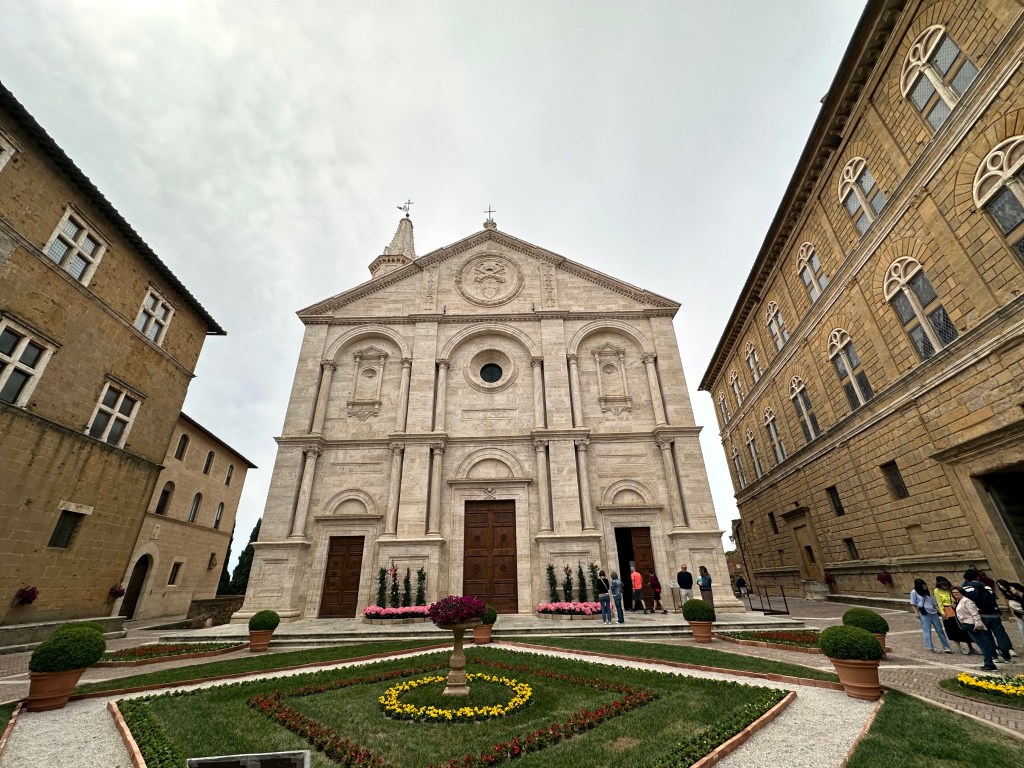
The remarkably monochromatic and stately Duomo di Santa Maria Assunta (Pienza’s cathedral):

The cathedral was commissioned by Pope Pius II (a member of the Piccolomini family who was born in Pienza) and consecrated in 1642; the piazzetta in front is named for the pope.

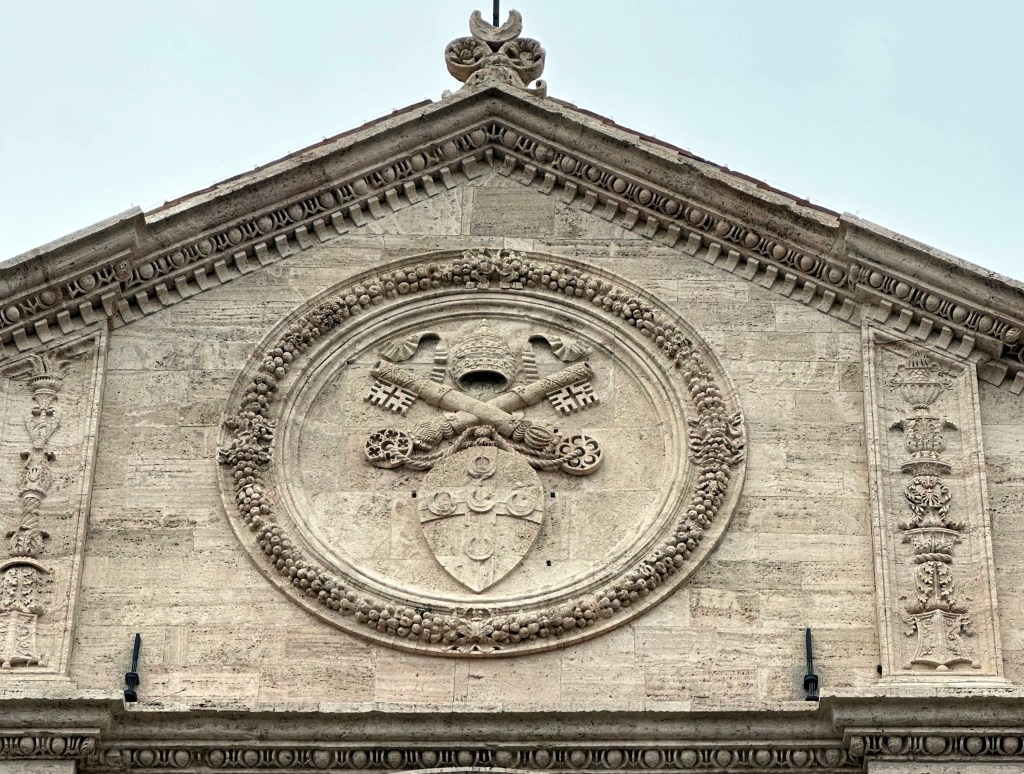
“Pienza Cathedral prominently features the Piccolomini coat of arms (a crescent moon with stars, representing Pope Pius II’s family) on its facade and a gothic window behind the altar, often combined with the Vatican keys and tiara, symbolizing papal authority and the Pope’s power over heaven and earth, linking the church to the Holy See. These symbols, especially the crossed keys (gold for heaven, silver for earth), are central to the cathedral’s design, reflecting Pius II’s vision for his ideal Renaissance city.

Key Elements:

  • Piccolomini Arms: The distinctive crescent moon and stars are the family emblem of Pope Pius II (Enea Silvio Piccolomini), who commissioned the cathedral.
  • Keys of St. Peter: Two crossed keys, one gold (heaven) and one silver (earth), signify the Pope’s spiritual authority, as seen on the well in Palazzo Piccolomini and potentially in the cathedral’s decoration.
  • Papal Tiara: The three-tiered crown (tiara) often accompanies the keys, representing the Pope’s threefold power (teacher, judge, ruler).”

Pienza certainly ranks up there in charm, but it’s super tiny. Based on the strong recommendation we received from our safari travel friends that this was their favorite Tuscan town, we thought it would be just as charming as it turned out to be, but more substantial.

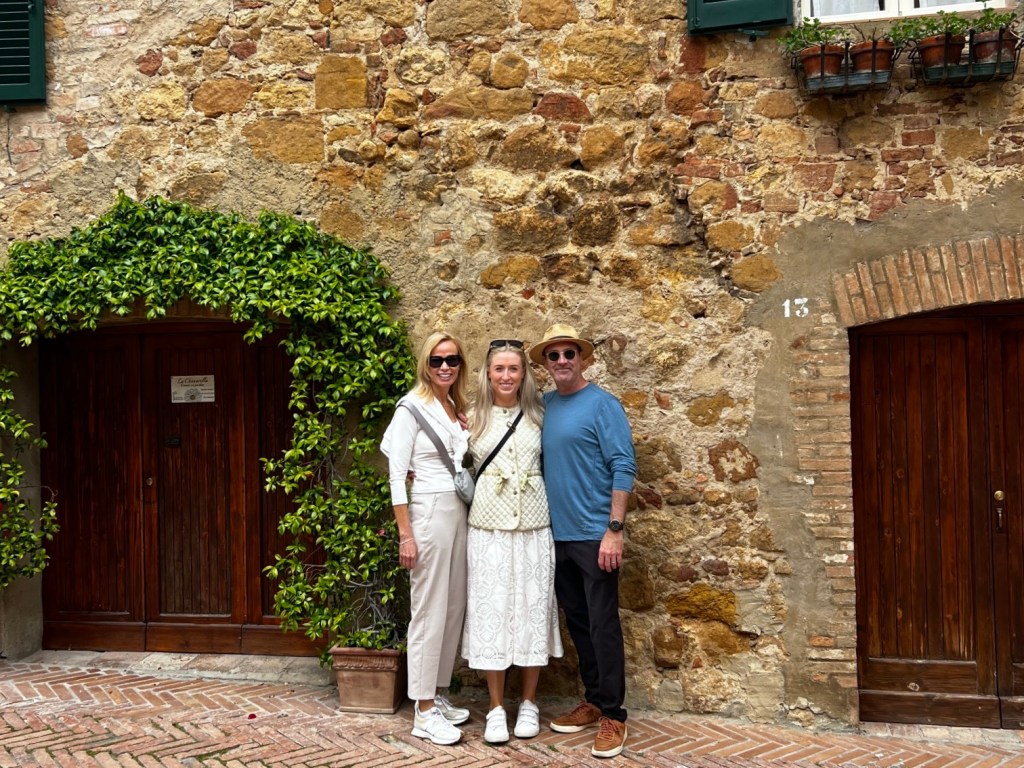
KJQ selfie hijinks:

Pienza’s bell tower, which was silenced the year we visited due to complaints by tourists in nearby hotels. Which pissed off the locals who consider the bells to be part of the town’s character (kind of like us when Appomattox was removed from the intersection of Washington and Prince in 2020. . .). Smithsonian magazine featured an article on the row titled, “This Italian Town Silenced a Historic Bell That Kept Tourists Awake. Now, Locals Can’t Sleep.” Indeed.

Dunno – some cloister somewhere? This was 2.5 years ago, so we don’t remember everything. But it was picturesque and atmospheric nonetheless.

Pretty cool portal from Pienza to the Val d’Orcia below:

Another pathway to the Val d’Orcia:

And there it is:

Pretty quintessentially Tuscan, as it happens:

Pretty awesome lunch at Ristorante la Terrazza della Val d’Orcia:

Heading out of Pienza, through its city walls:

Next field trip: Tenuta Valdipiatta for some fine brunellos (albeit in the rain – but this gets way worse):

A brief respite on a belvedere over the vineyards:

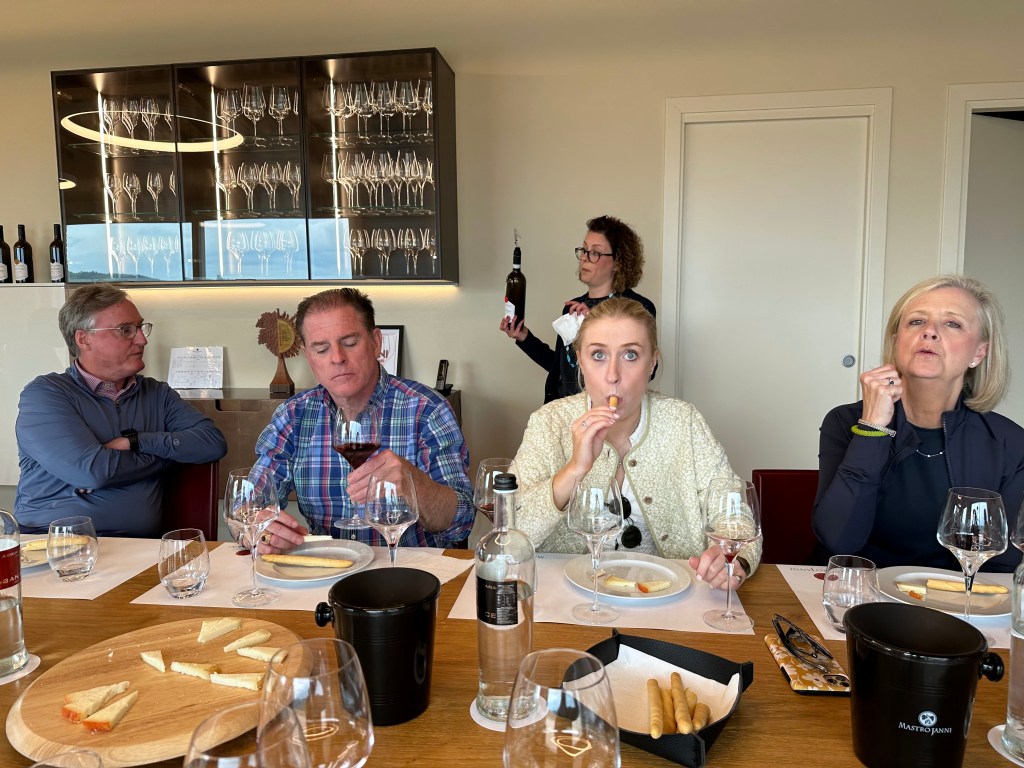
The wine tasting clearly elicited different emotions from the tasters:

Next day: a decent hike near Gaiole in Chianti.

Starting with a stroll around the 1000-year-old Badia Coltibuono Abbey:

Including the gardens that we were not supposed to be in, and from which we were brusquely ushered out (still worth it!):

The hike continues through countryside. . .

And the village of Montegrossi, founded in 500 – 600:

Small but mighty (and mighty old):

And a cool winery that we stalked through, seeking KJQ’s gate to salvation to cut a leg off the hike and get to town to grab a well-deserved lunch:

The gate!

Key component of a post-hike lunch:

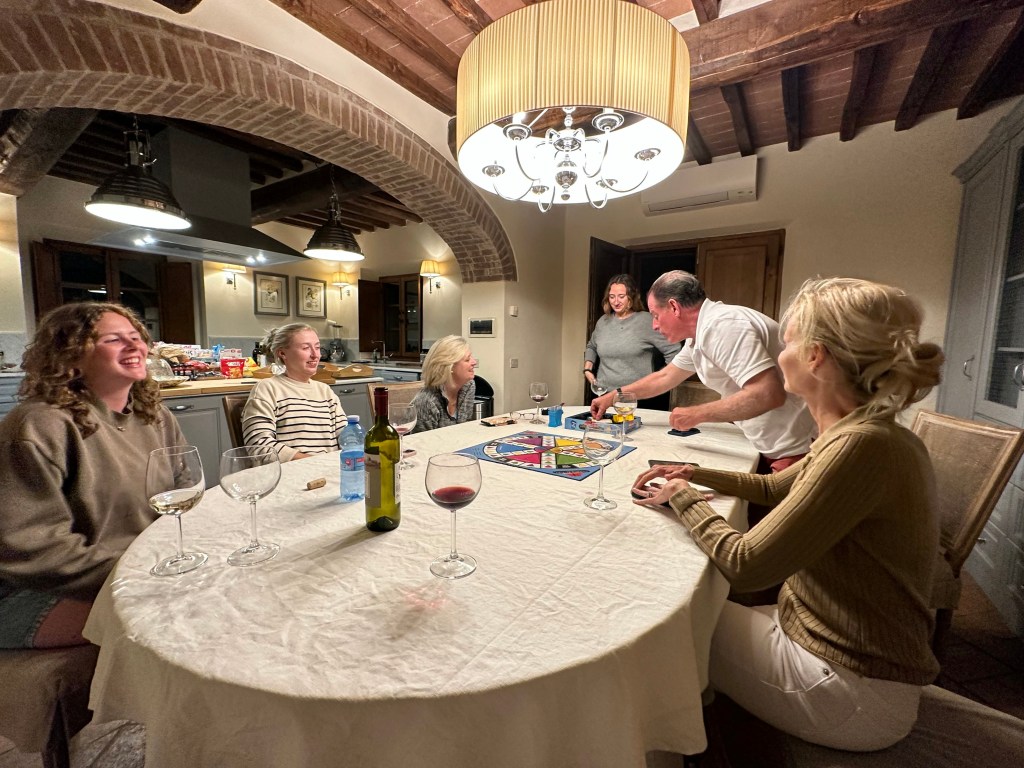
And the first of two nights of epic Trivial Pursuit competitions at Castello Brandt:

The winners of the first night:

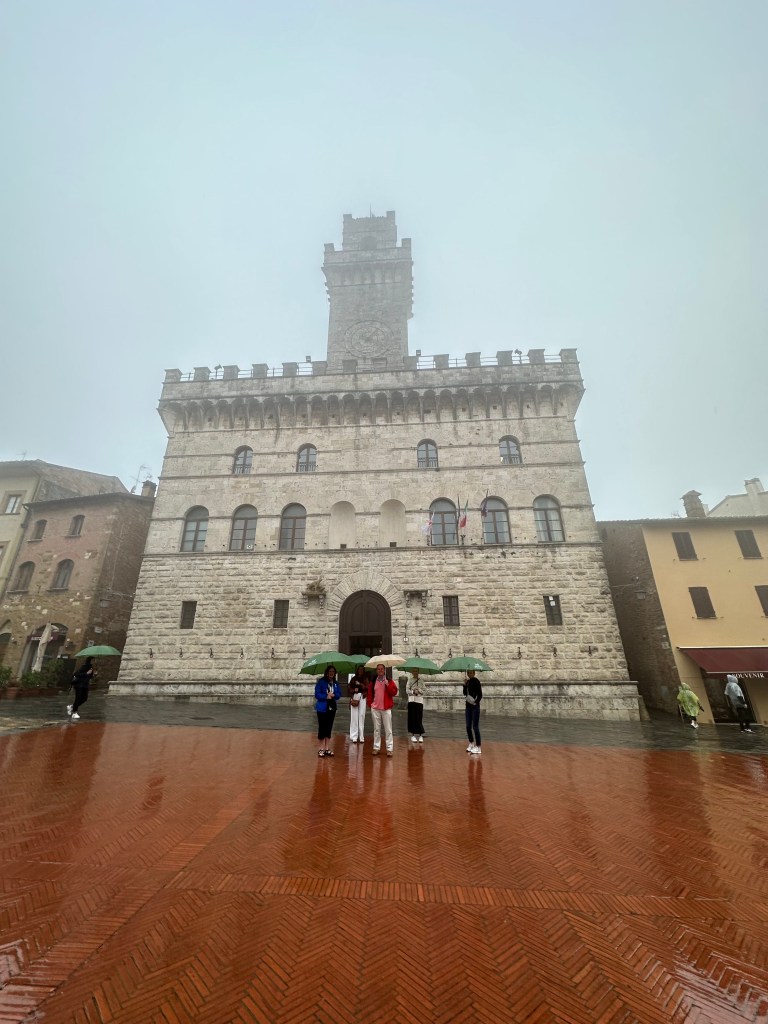
Here’s the much worse rain – torrents during our visit to Montepulciano, which we had visited back in 2005 during our bike trip in Tuscany:

Wet but happy(ish):

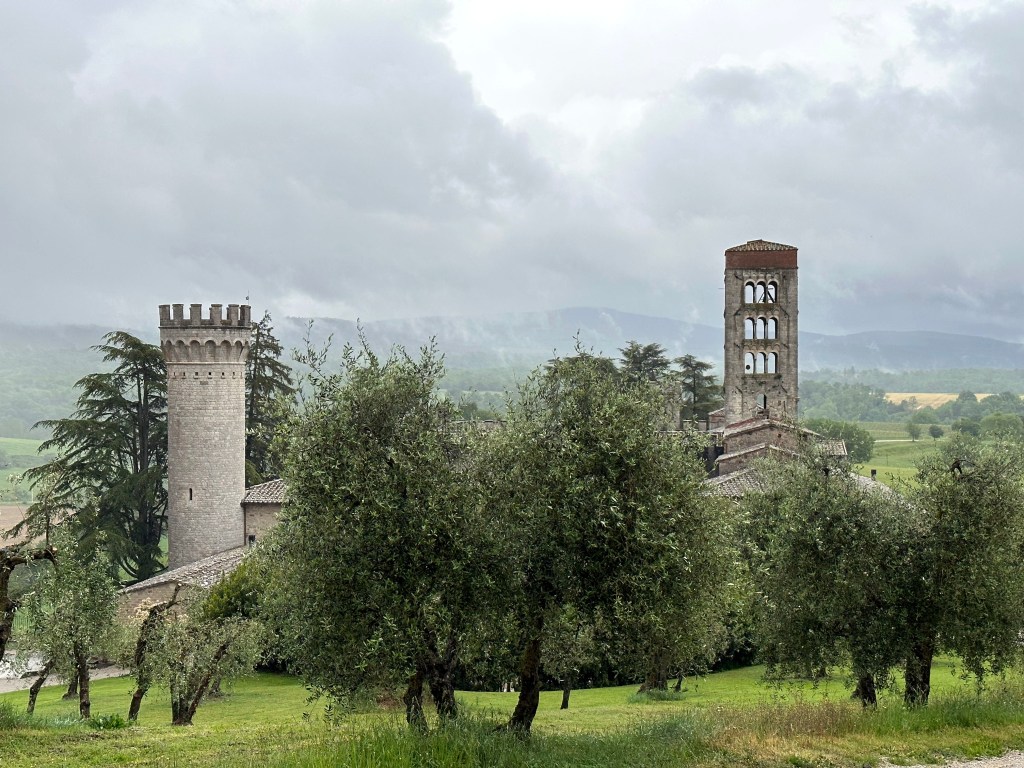
On the way back, a quick stop (for a few of us) at the monastery Badia a Monastero, founded in 867 (beating the longevity of the monastery visited during our hike):

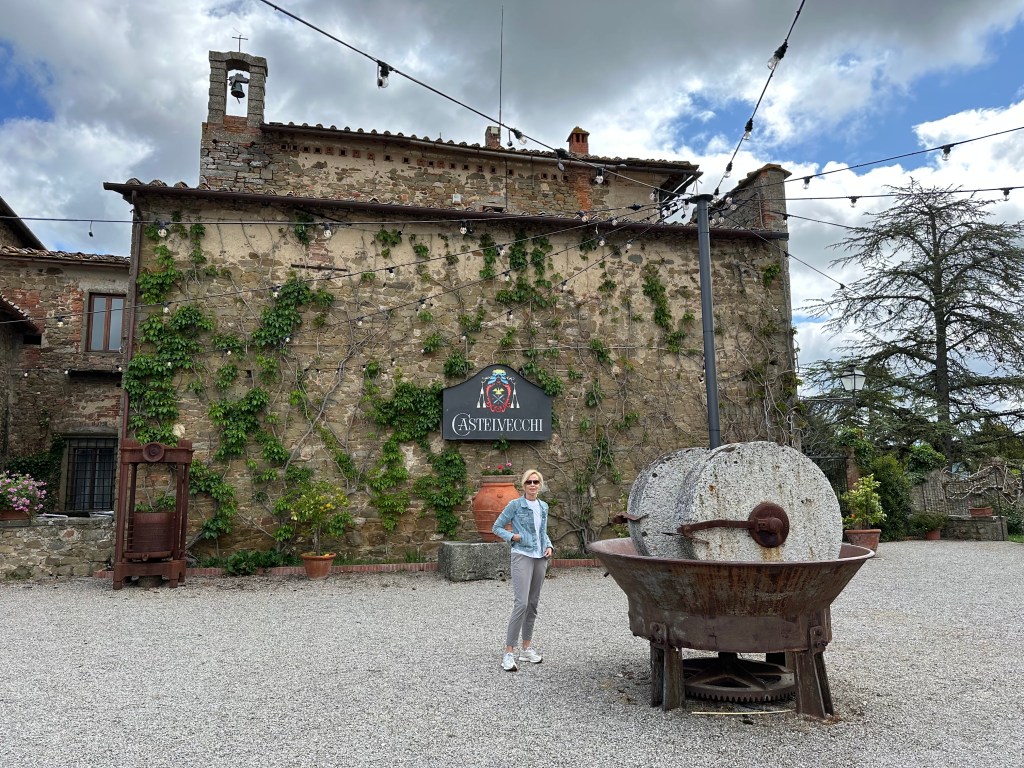
A final hike starting at Borgo Castelvecci (similar in structure to the borgo we stayed at during our last visit to Tuscany in 2021 – an ancient village converted into a hotel campus):

And then a stroll around the nearby hamlet of Valpaia, followed by a final Tuscan lunch before heading out the next morning.

The Brandt villa:

Pretty good digs:

And the cocktail that would dominate all of our European travels henceforth, but that one of the WolfeStreetTravelers would not imbibe, initially decreeing it too girly, and sticking to red wine. That point of view would change rather dramatically as the trip progressed. . .

Final evening in Tuscany:

And a final game of Trivial pursuit, where Team MadiGrace won once again:

Morning of departure at the guest house:

You can take the herpetologist out of the country but not the herp out of the herpetologist.

Gracie would be moving on, too – first to Venice, then to Valencia to stay with her cousin Quinn, who was in his second Spanish semester of mechanical engineering.

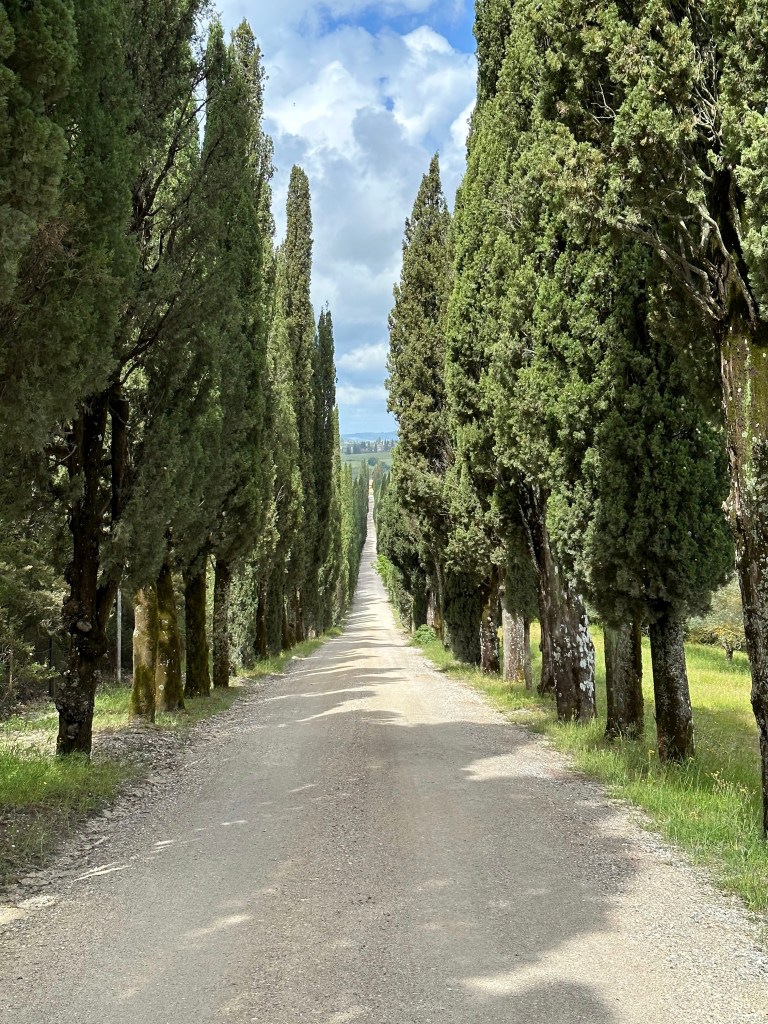
The Cyprus-tree lined lane departing the villa’s area on our departure:

On to Portofino!

Categories: A Prolonged Foray to Europe, Tuscany / Umbria | Tags: , , , , , | Leave a comment

A Prolonged Foray to Europe: Orvieto

We are seriously going to try to post the entirety of our trip backlog this year. Starting with the remaining two dozen posts on this, our first, post-retirement, long-duration trip. Posts on WolfeStreetTravel.com unfortunately take a back seat, priority-wise, to trip planning and actual trips, relegating this activity to “when we have some time.” But the first half of this year offers a rare opportunity of no planned travel, so we should be able knock a bunch of backlogged posts out over the next 6 months. The reason for no planned travel is that the ACTUAL Wolfe Street (an actual place where we really do reside), is getting torn up for a sewer upsizing project that one of the WolfeStreetTravelers pressured the city into undertaking for reasons we don’t need to go into here. (The city’s project page is here.)

The reason we want to be in residence during this process and not in Japan or Slovenia or Ecuador or something is that we have 100-year-old clay lateral lines that connect our house to the sewer pipe in our street. Read that again. 100-year-old CLAY pipes. Seriously. Because these fragile artifacts are prone to damage during this construction, we don’t want to have to deal with problems remotely or, worse, cut short a trip to come home and deal with them. So, we’re sticking around until we can confirm that our fragile porcelain China plumbing fixtures are undamaged and the project has progressed beyond the point where they are endangered.

With that, back to travel.

After completing our detour north to picture-perfect Portofino, we finally headed south within the Italian peninsula to our next destination: the Roman ruins of Herculaneum. But the drive was unacceptably long (we try to keep our road trip daily drives to no more than 4 hours), so we stopped at a halfway point: Orvieto in Umbria. (This was not our first choice, however. We originally planned to stop in Montemerano, in southern Tuscany, based on its small, hill-town charm and a Michelin-starred restaurant there. But the restaurant abruptly cancelled our reservation during our planning phase, citing a private event, so we pivoted to another appealing stop that still would be approximately halfway between Portofino and Herculaneum.)

So, why Orvieto? Popes and history (and a cool perch on a defensive bluff). But before the popery and such, a little earlier history. As with Volterra, far to its north, Orvieto originated as an Etruscan metropolis, and celebrated, historic Etruscan tombs punctuate the area (none of which we had time to visit, but they sounded very cool, to be sure). Then, Rome overran the area in the 3rd century BC, then Western Roman Empire collapsed, then Goths controlled the area, then the Lombards, and – finally – the city became a self-governing commune in the 10th century. But one with close ties with the papacy that would grow closer still with each successive century.

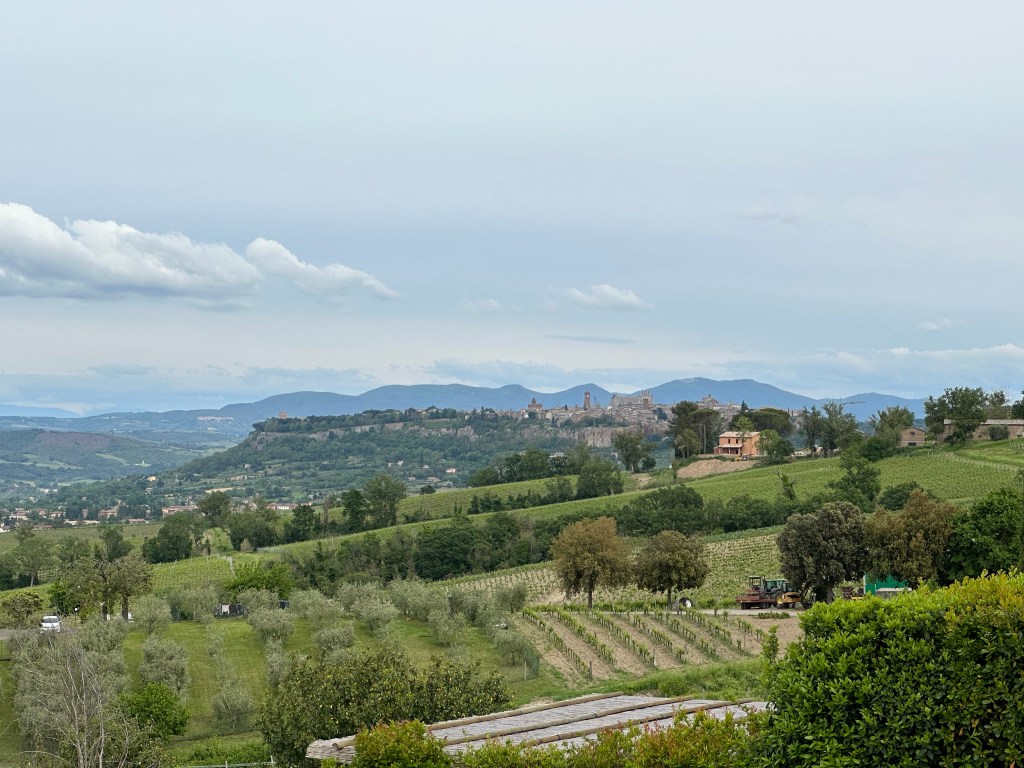
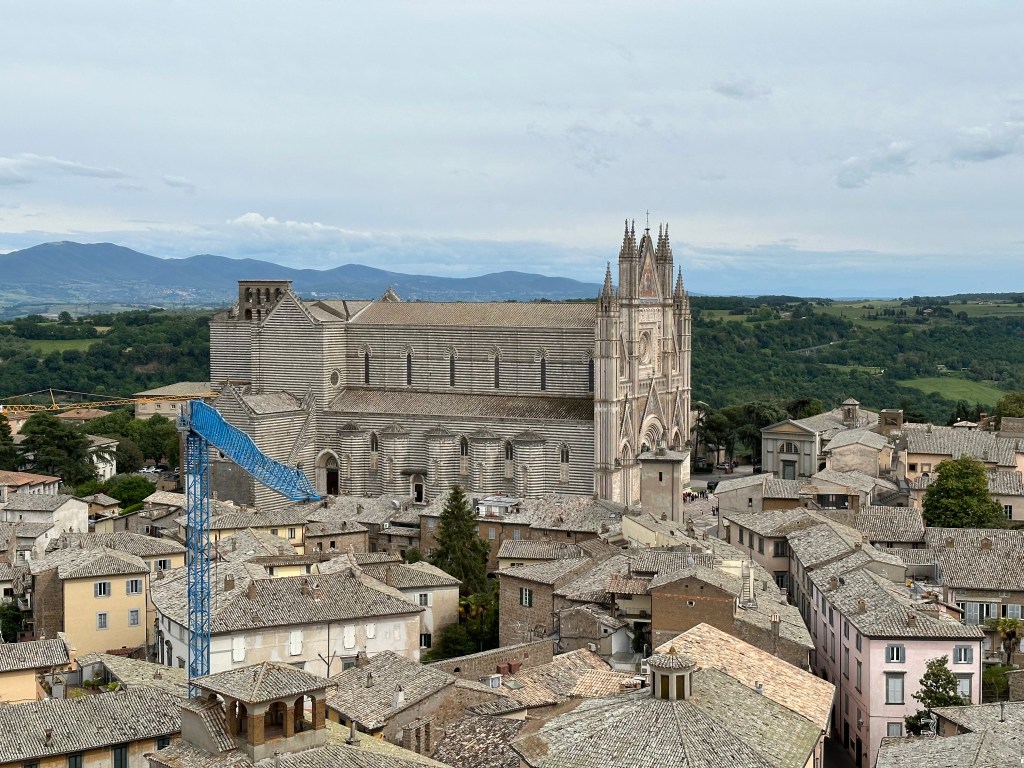
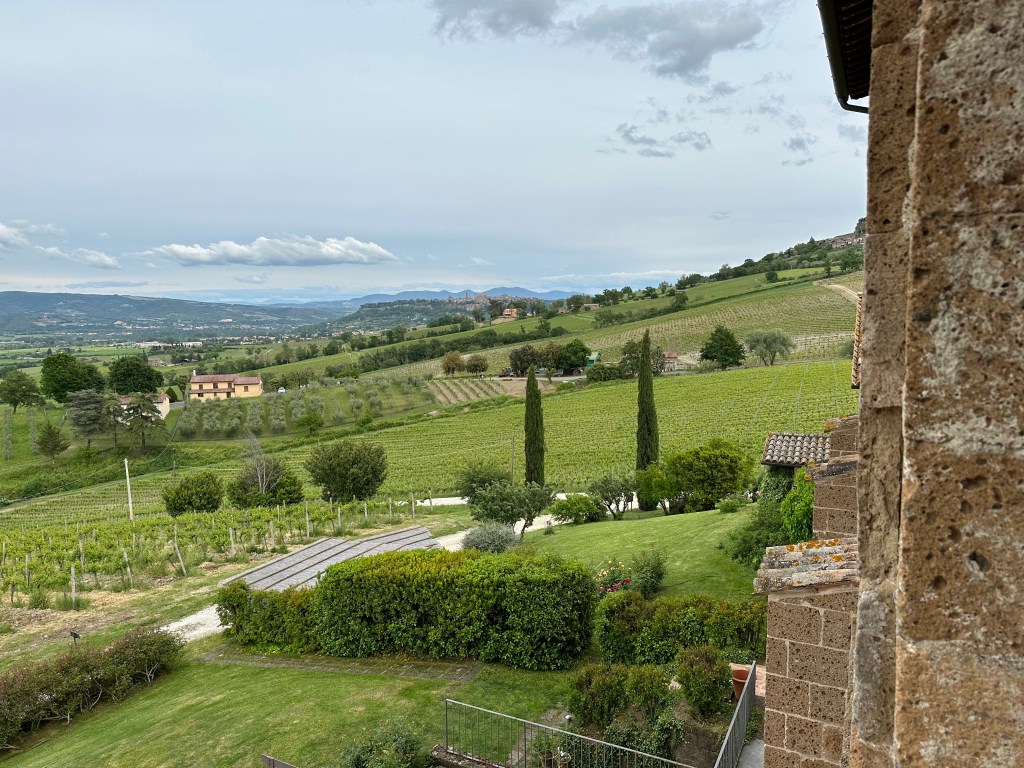
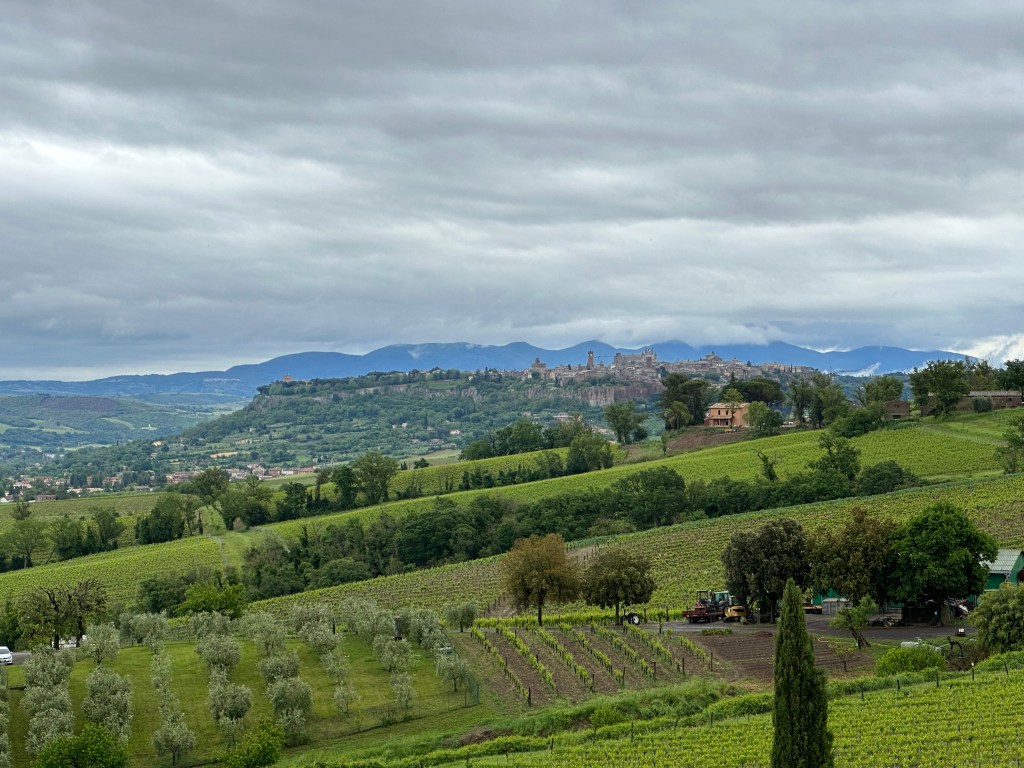
Orvieto in the distance, seen from our lodging that evening.

Pope Benedict VII was fond of the city, and his nephew became consul of the commune in 1016; Orvieto became Benedict’s retreat from Rome. A pattern emerged, and Orvieto sported three papal palaces from their extended stays there by the 13th century. The role of papal retreat reached its apogee with Pope Urban IV, who resided in Orvieto instead of Rome from 1262 to 1264. (As an aside, we cannot recommend highly enough reading Absolute Monarchs: A History of the Papacy, in which Orvieto appears on every third page or something during the reign of the medieval popes. Regardless, a wildly entertaining, mildly entertaining history tome.)

Considering all of this, Orvieto fell under de facto papal control starting in 1200 and ultimately became an official part of the Papal States in 1354. This rule lasted until 1860, during Italian unification.

With that historical context addressed, let’s check out the town.

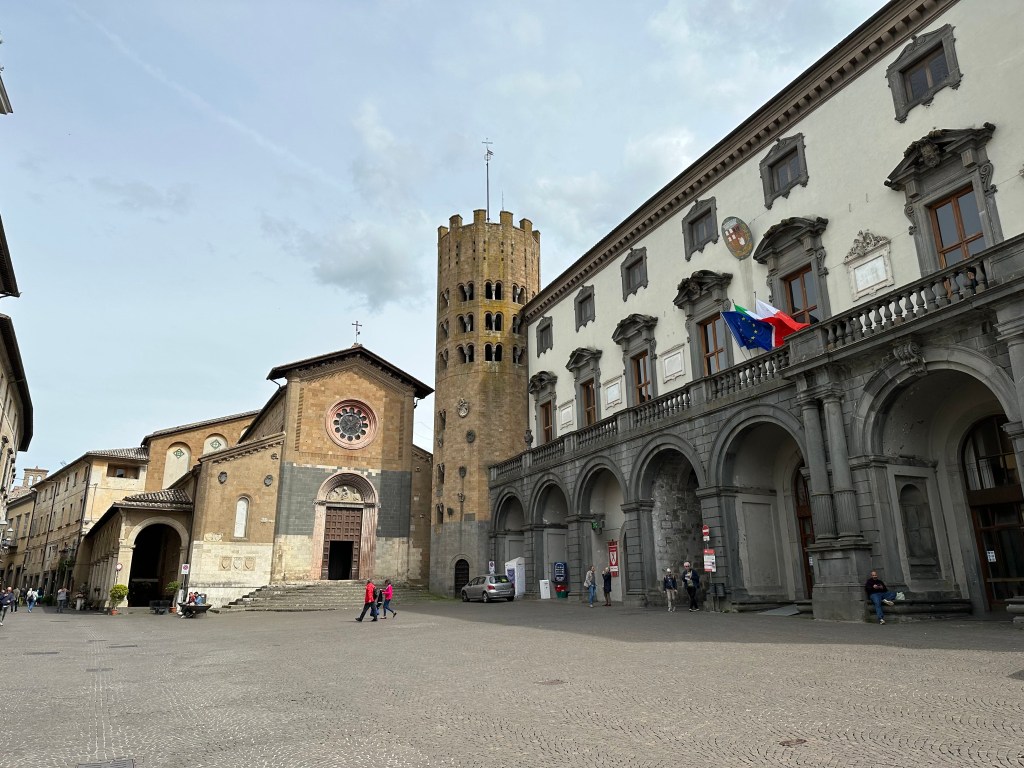
The Romanesque, 12th-century Sant’Andrea church and its distinctive, 13th-century decagonal bell tower.

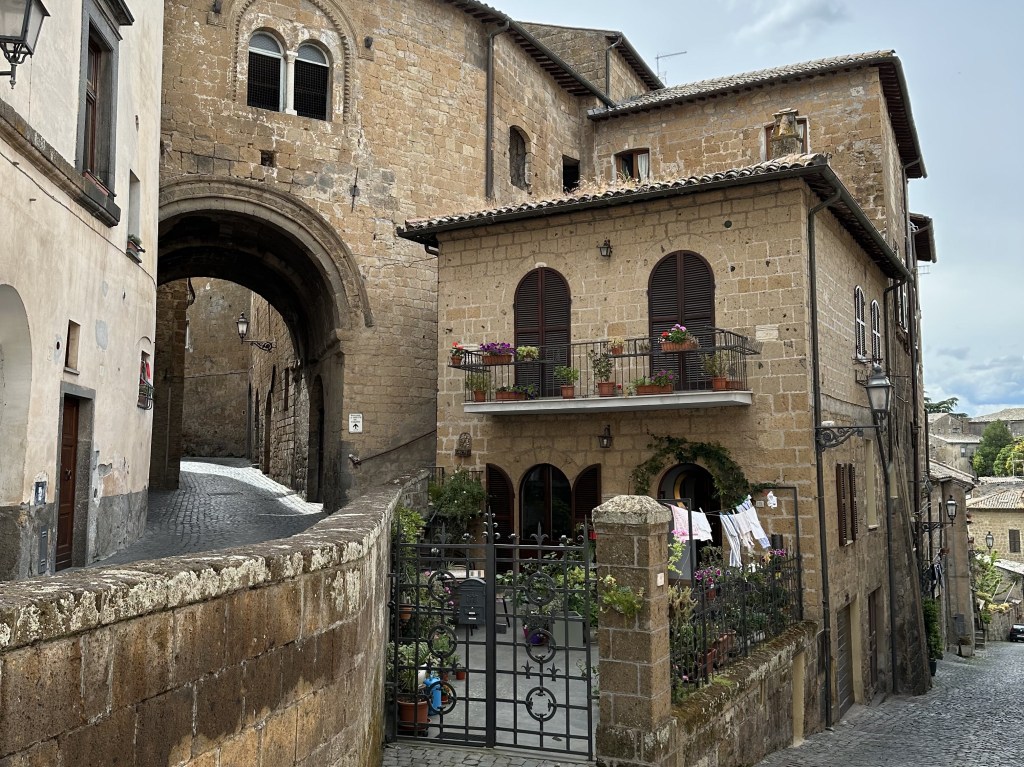
The whole town is build on an escarpment, but the elevation doesn’t stop after you enter the walled town:

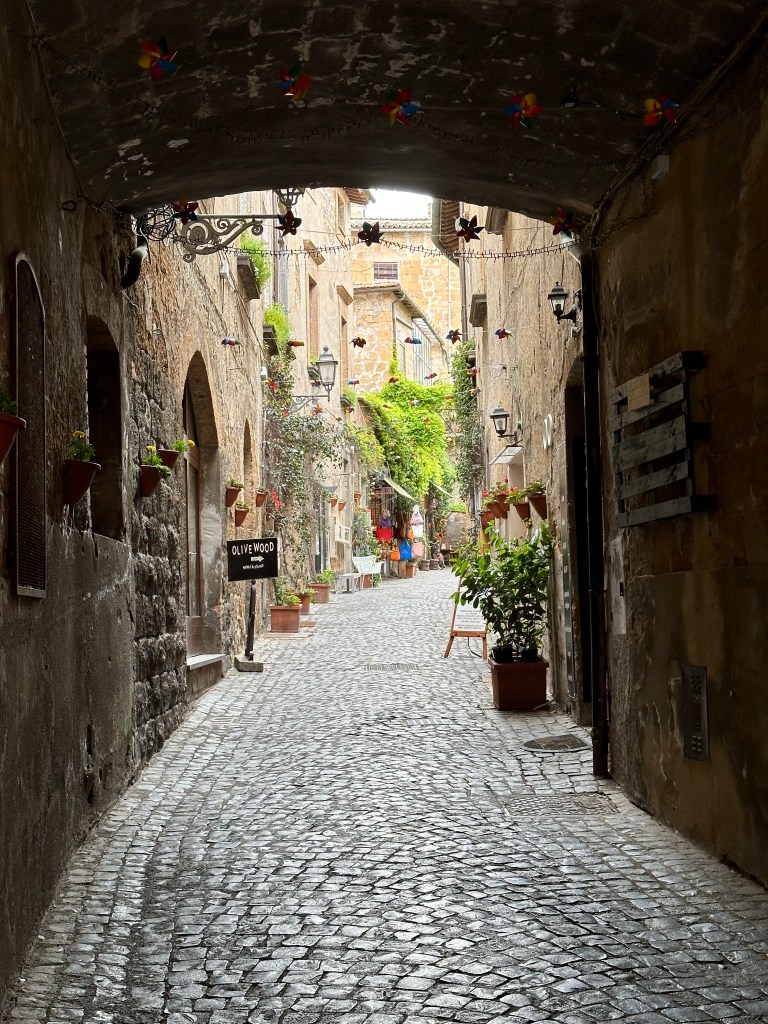
There are pretty cool, medieval warren of streets in some areas:

while others are more spaced out, like the street heading to the cathedral:

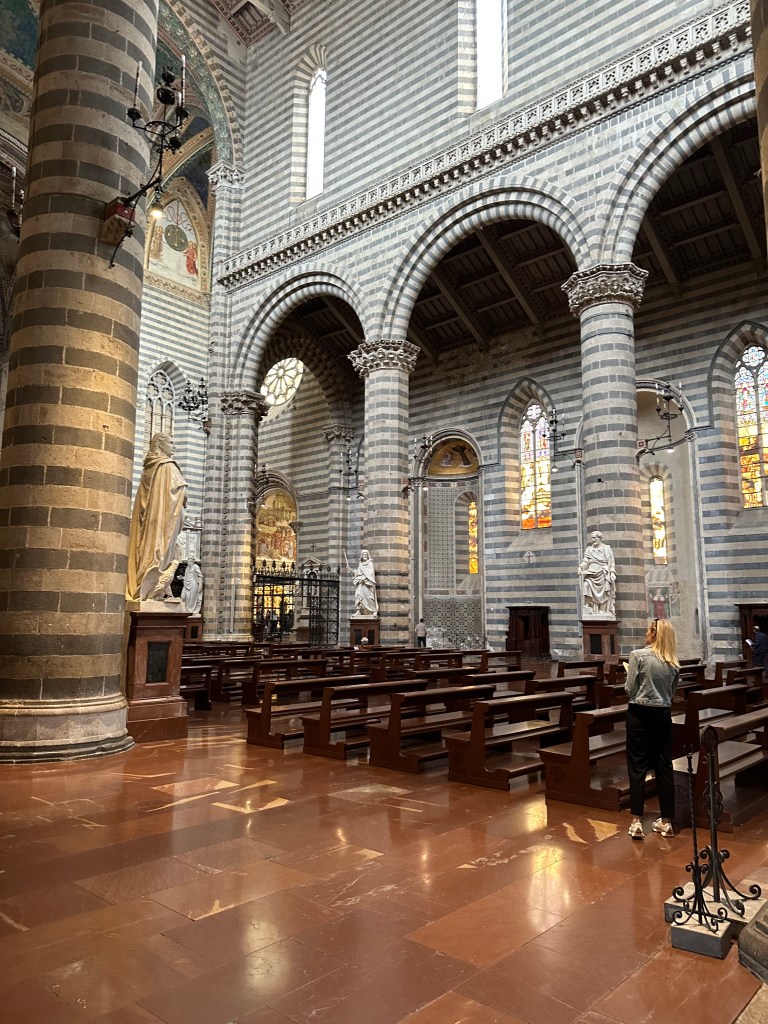
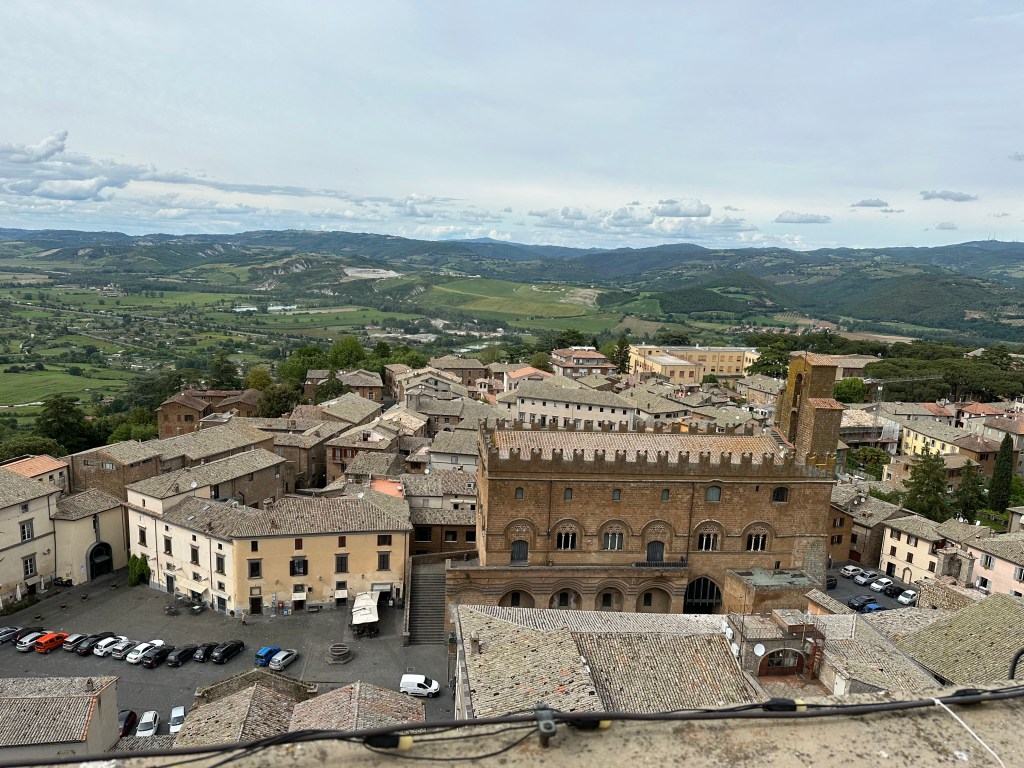
Orvieto’s primary attraction (other than the town-on-the-cliff itself): the 14th-century Duomo di Orvieto (also, the Cattredale di Santa Maria Assunta), seen here from la torre del Moro, which we’ll address below.

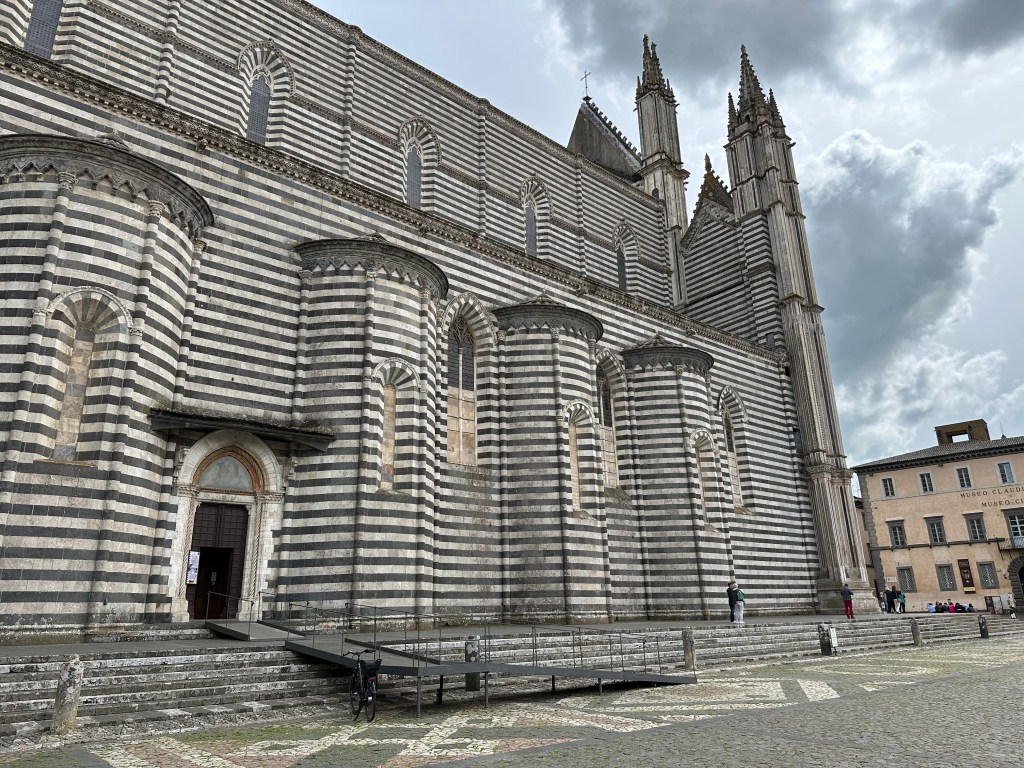
Those familiar with our posts from Cinque Terre will recognize the Ligurian Romanesque (or Pisan Romanesque) black-and-white stacked architectural style of the cathedral:

“The building was constructed under the orders of Pope Urban IV to commemorate and provide a suitable home for the Corporal of Bolsena, the relic of miracle which is said to have occurred in 1263 in the nearby town of Bolsena, when a traveling priest who had doubts about the truth of transubstantiation found that his Host was bleeding so much that it stained the altar cloth. The cloth is now stored in the Chapel of the Corporal inside the cathedral.” (From here.)

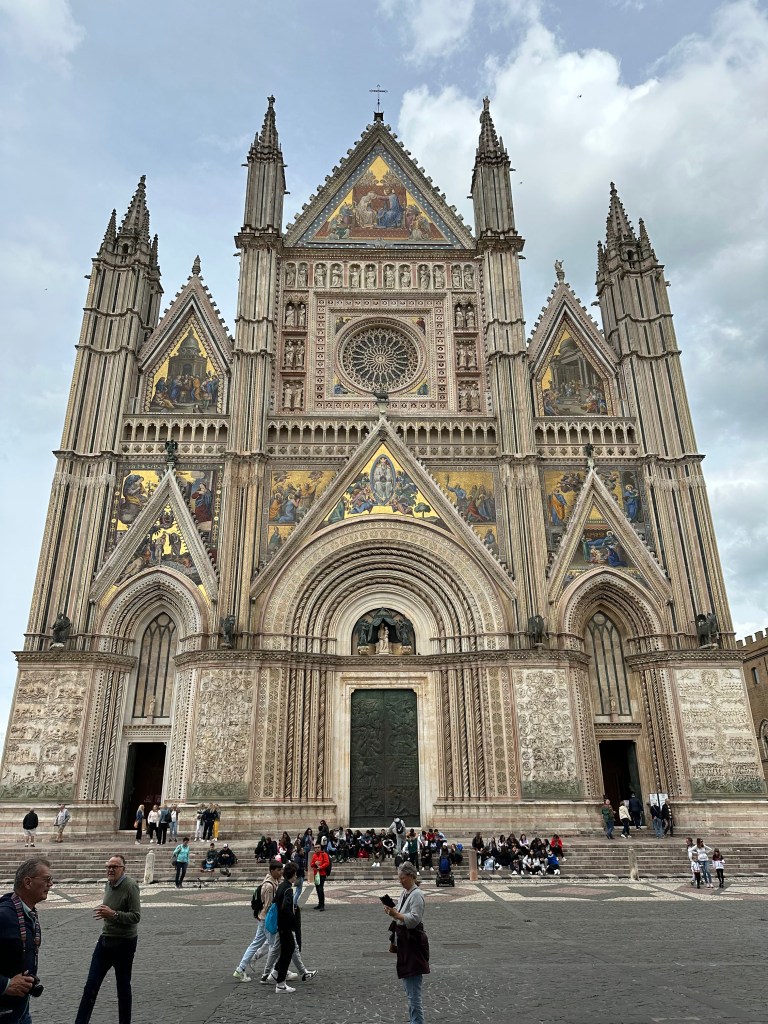
Pretty awesome, polychrome facade of the cathedral – a Late Middle Ages architectural masterpiece (but oddly still not as cool to us as the other polychrome facade we came across one evening in Lucca).

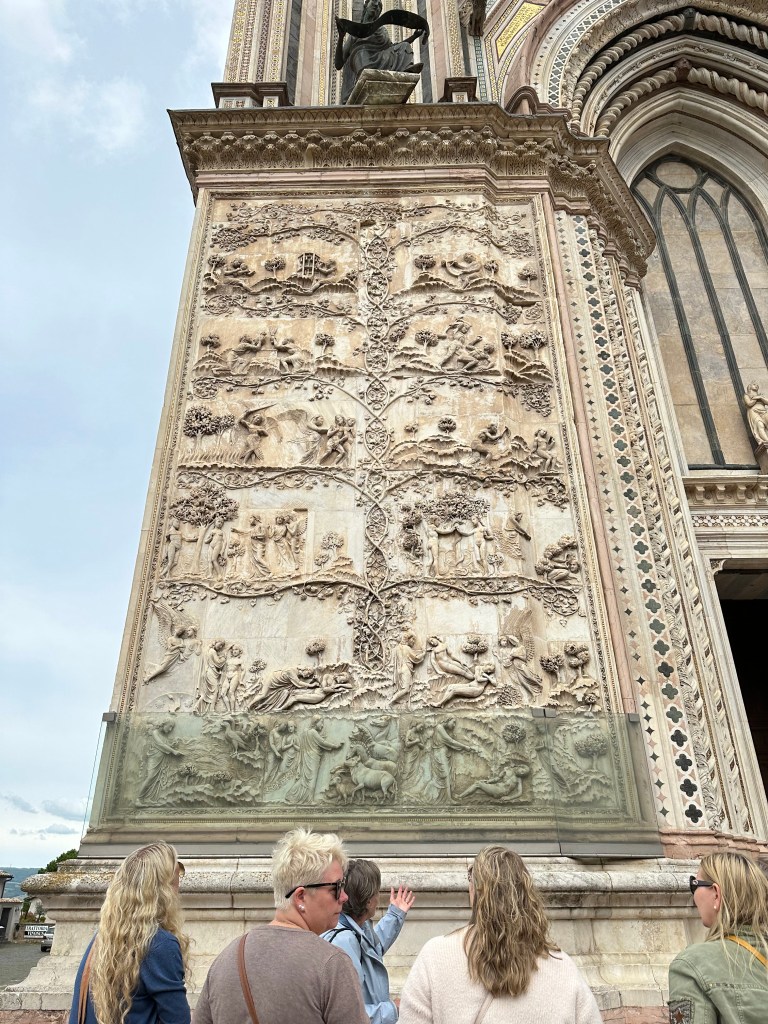
Bas relief of Genesis on the extreme left of the cathedral’s exterior:

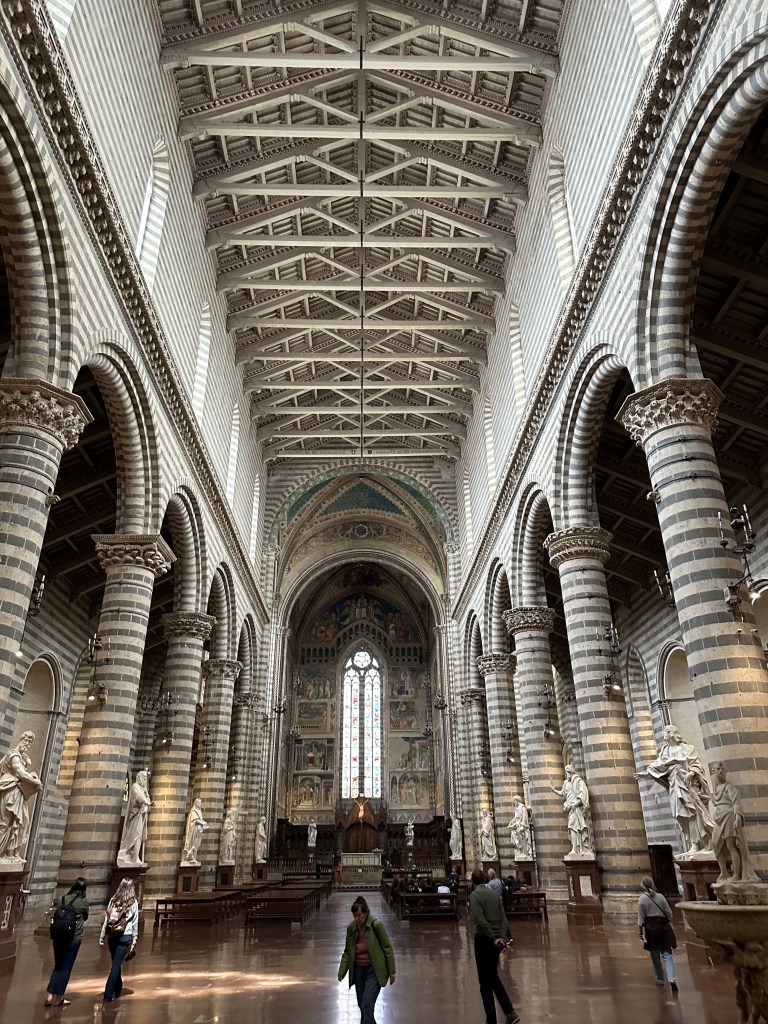
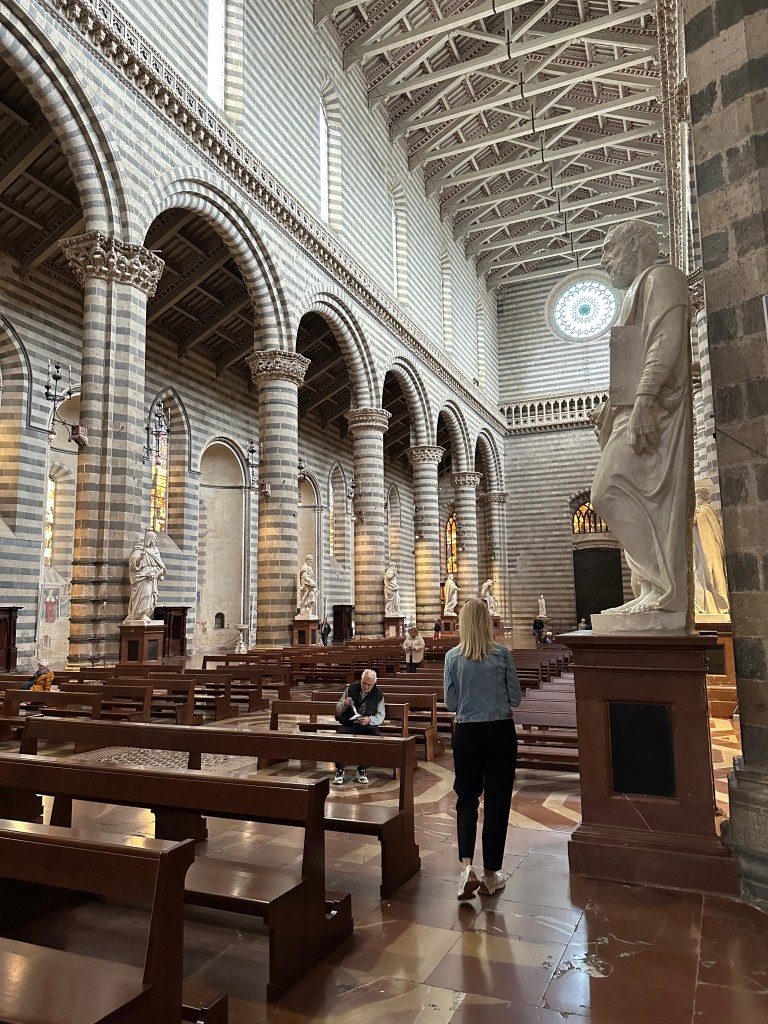
The cathedral’s soaring exterior and trussed timber roof:

But its size is surprisingly intimate:

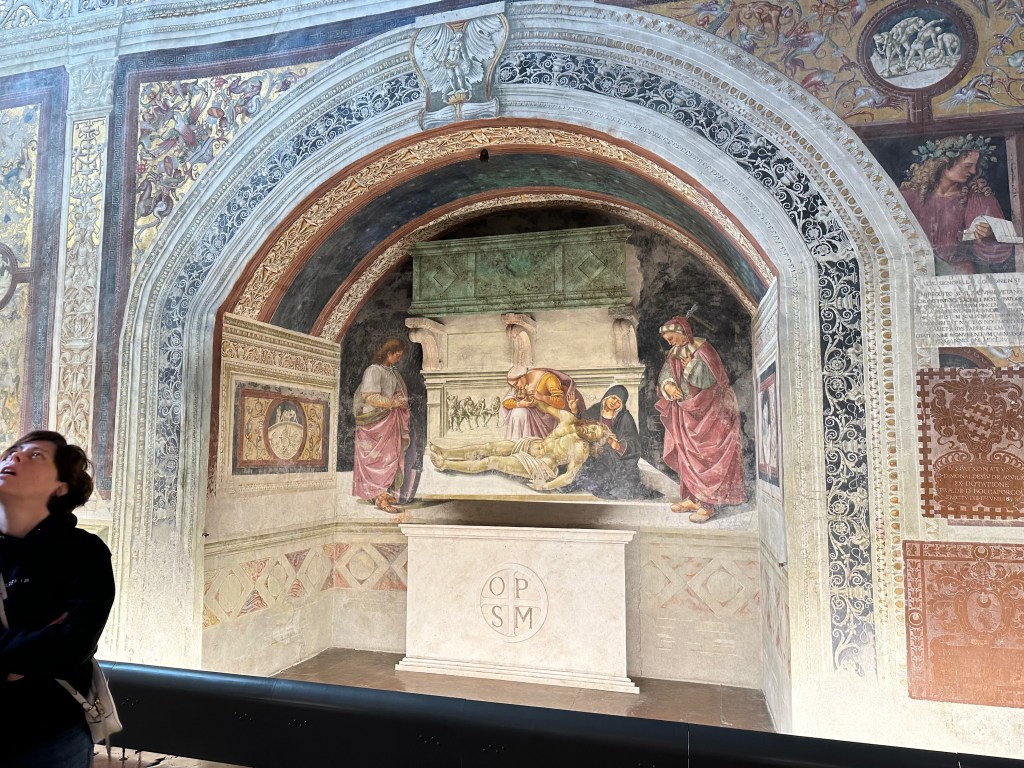
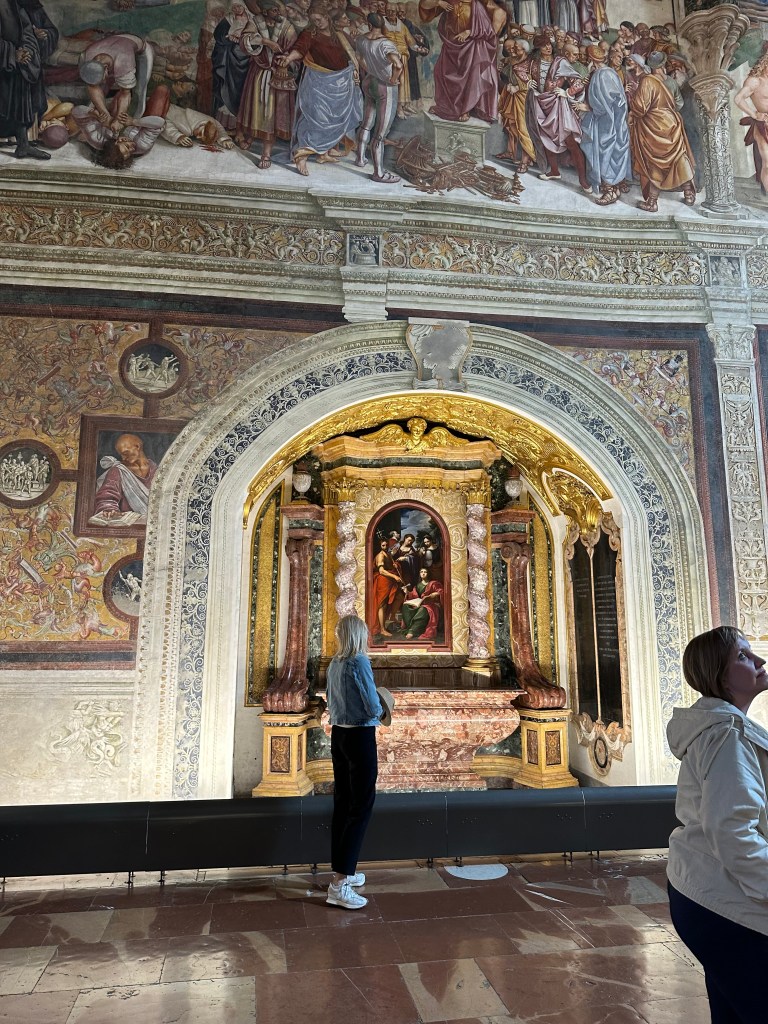
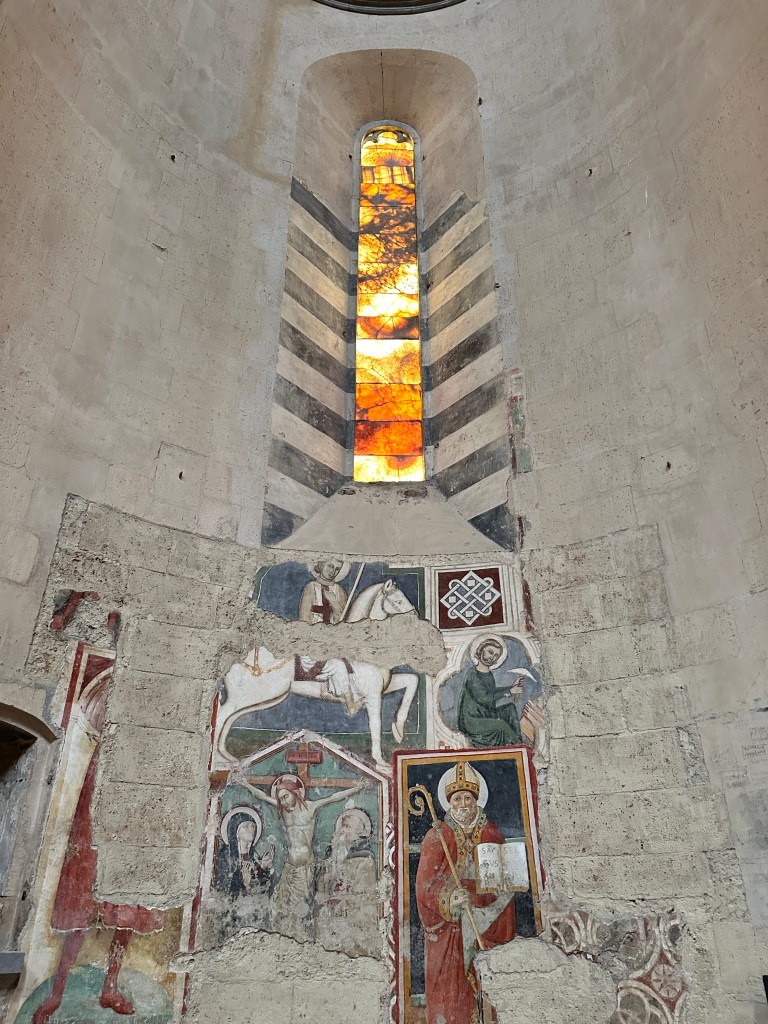
Frescos abound:

As do small chapels:

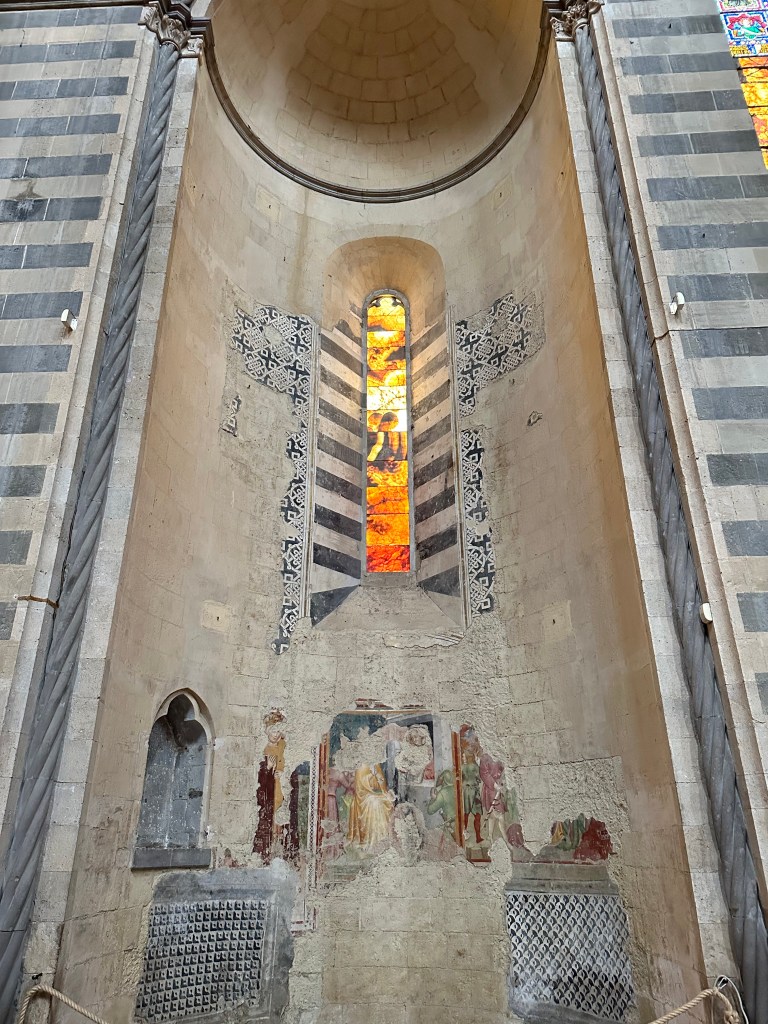
The later, 15th-century Chapel of the Corporal, with some pretty cool vaulting, all completely covered in frescoes (Christ in Judgement, apparently).

The remains of earlier decorations still visible in the cathedral (as well as alabaster windows, which are always of interest):

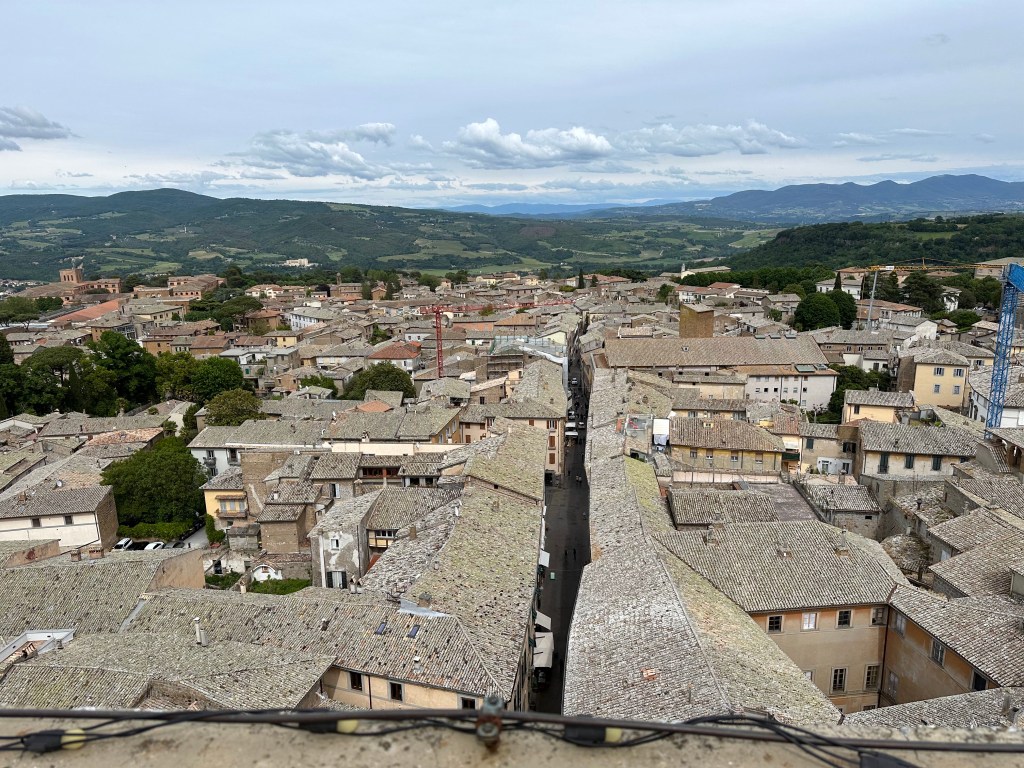
The visit to the cathedral complete, we headed to Torre del Moro (Tower of the Moor) built in 1200 for a view over Orvieto:

A view of the Capitano del Popolo, the Captain of the People (basically the representative head of the city):

A different perspective on the Sant’Andrea church and its decagonal bell tower encountered earlier when we entered Orvieto:

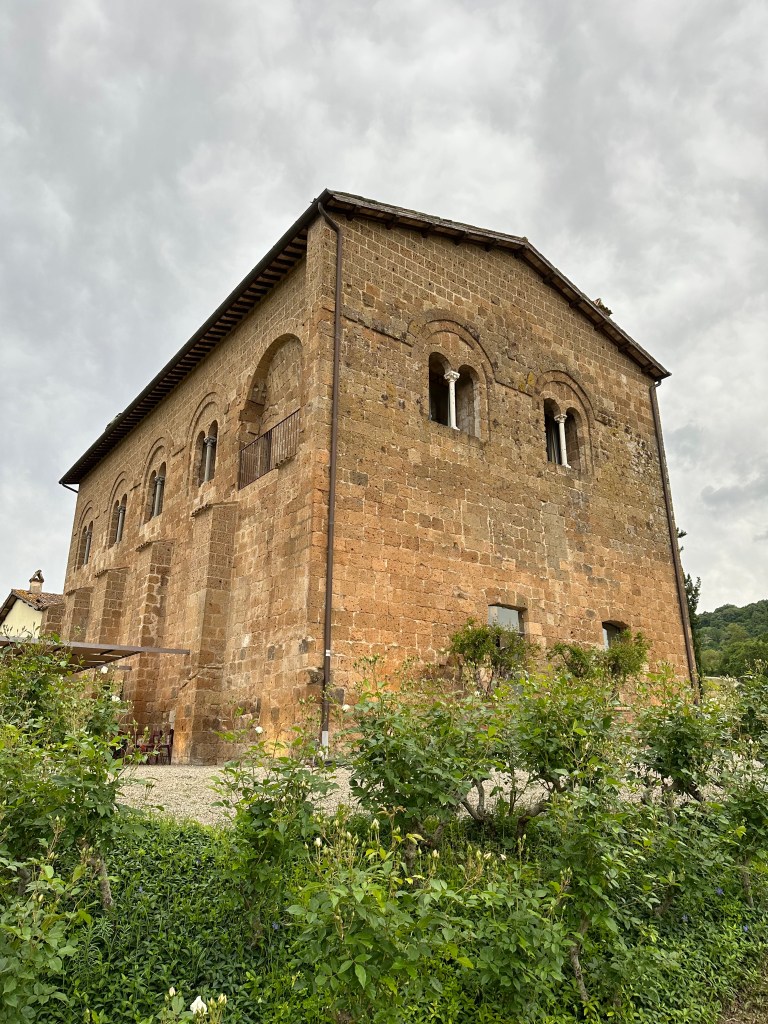
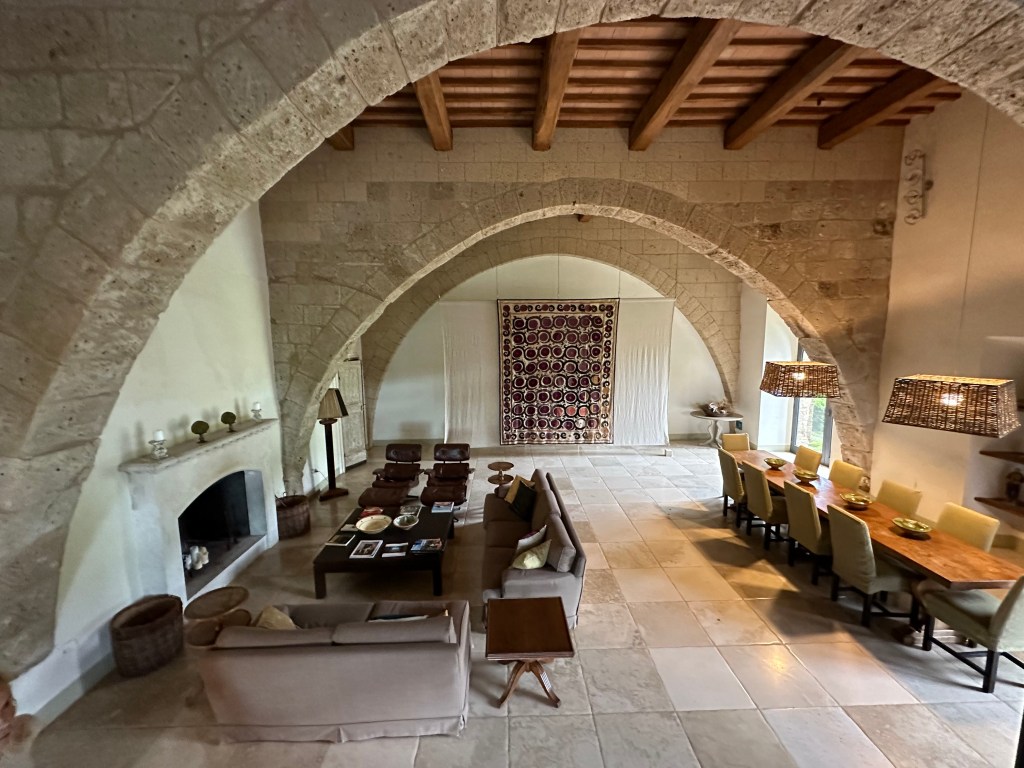
And then on to our lodging for the evening, a location we selected because of its similarly storied history.

“Locanda Palazzone is a historic residence from the medieval period. . . Taking into account its residential typology and its location of relative isolation in the countryside in the vicinity of Orvieto, it can be thought that the building may have been built as a “hospitalis,” in the sense of a hostel for prelates and wayfarers or a post station for pilgrims heading to Rome, since it was precisely in 1300 that Boniface VIII formalized the first Jubilee.”

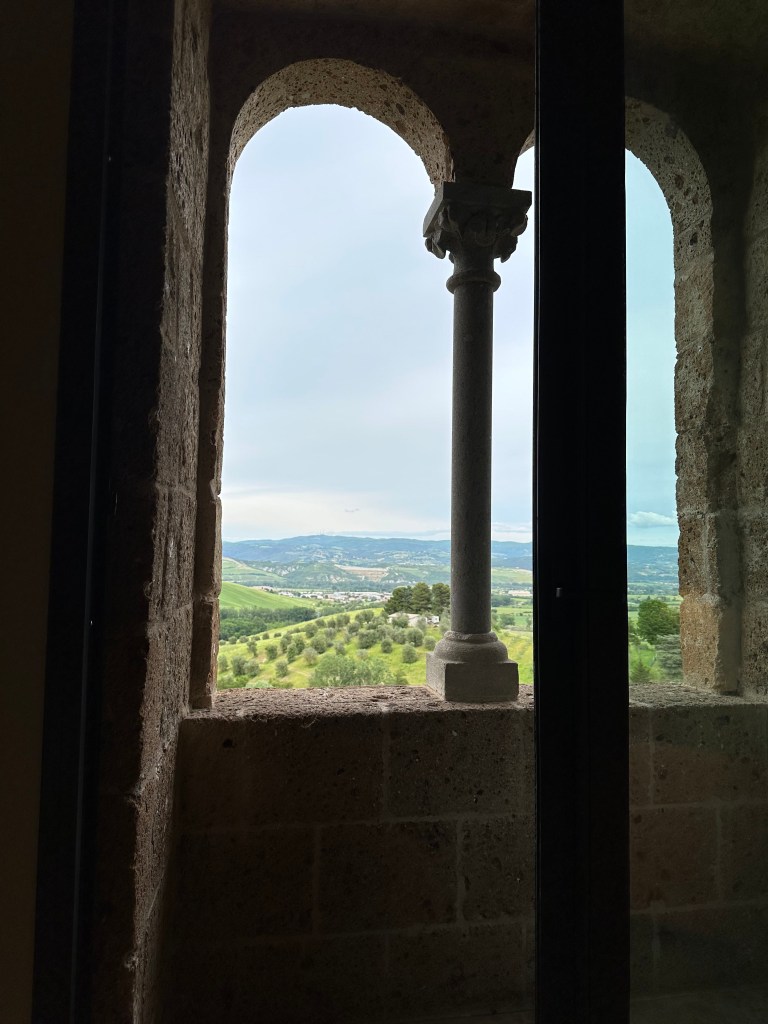
View out the ornate window of our room. . .

which, if you crane your neck out an around. . .

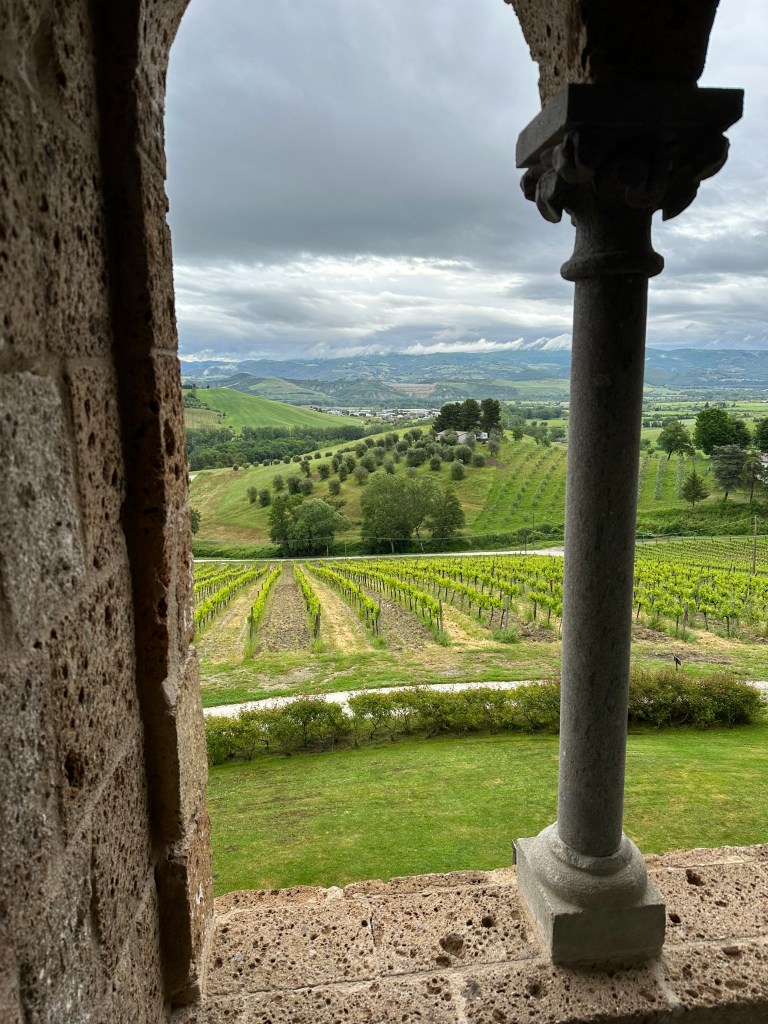
allows for a view across the valley. . .

to Orvieto itself.

Pretty cool place with lots of history.

On to Herculaneum and an amazing time capsule of Roman culture!

Categories: A Prolonged Foray to Europe, Tuscany / Umbria | Tags: , , , , | Leave a comment

Protected: Christmas 2022 – Baltics and Back to the Netherlands: Haarlem

This content is password-protected. To view it, please enter the password below.

Categories: Europe, Netherlands | Tags: , , , , | Enter your password to view comments.

Christmas 2022 – Baltics and Back to the Netherlands: Tallinn

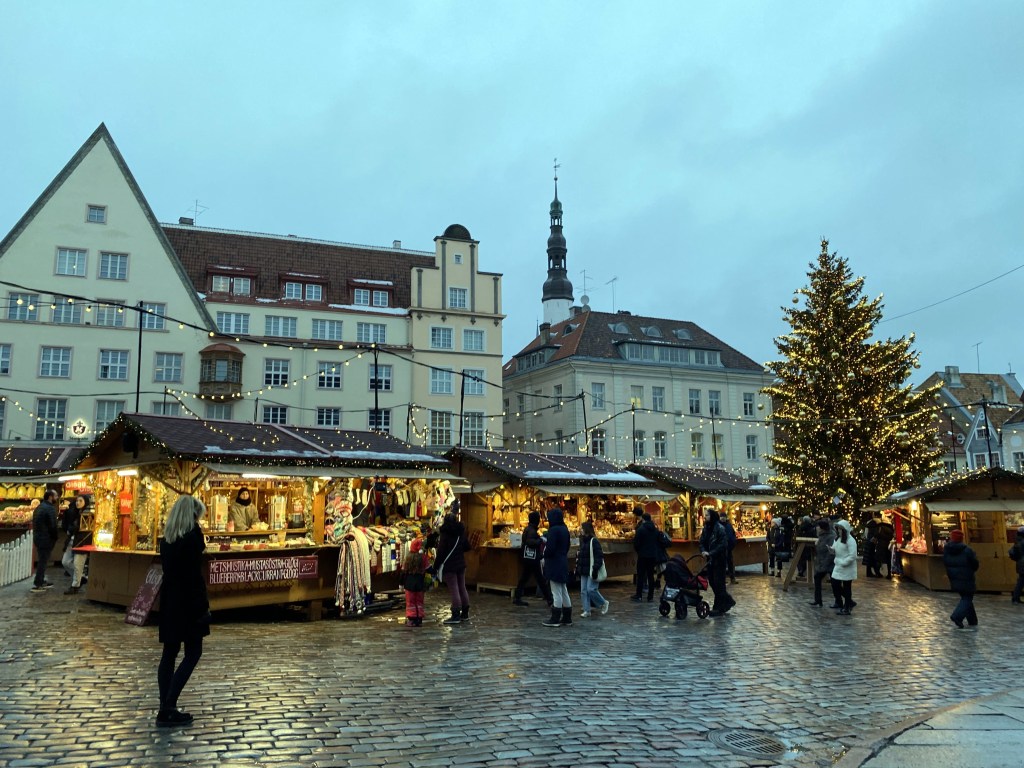
After a couple of days in Haarlem, we headed to the first of our actual Baltic destinations: Estonia and its capital city of Tallinn. We were hoping for snow, and we got some! (Initially, anyway.)

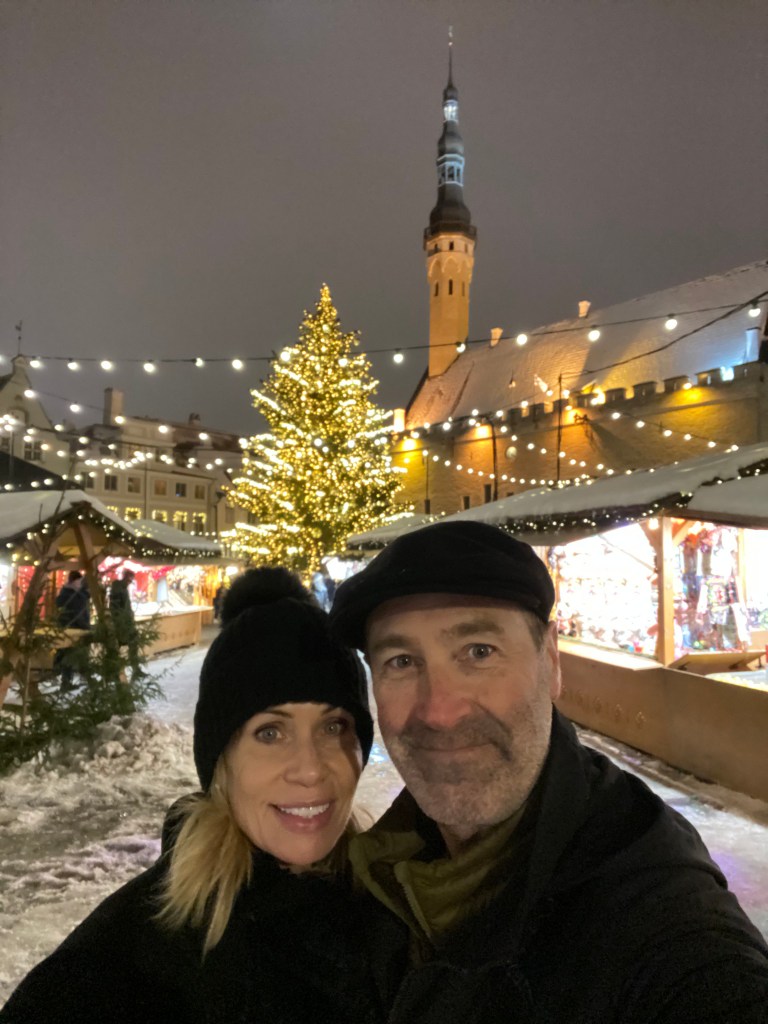
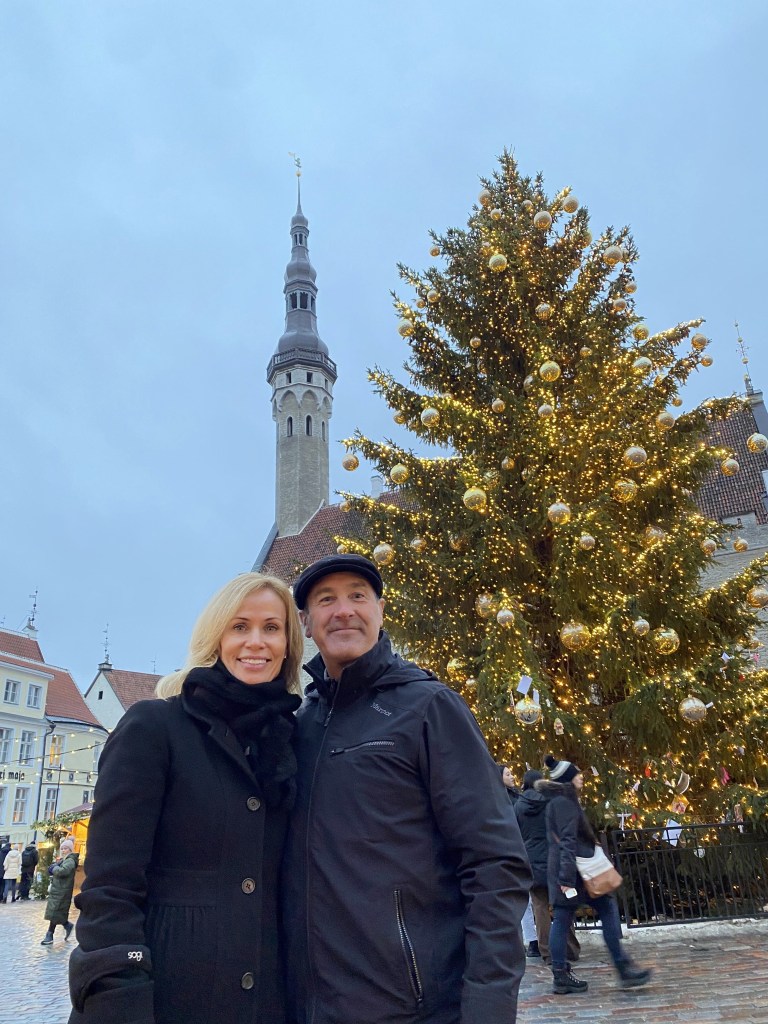
Tallinn’s main square and Christmas Market on our first evening – perfect!

But the next day (and throughout our stay), the snow on many of the streets and squares turned a little slushy.

Definitely more of a winter, Christmas atmosphere than Alexandria, but still. . .

Tallin’s settlement dates back thousands of years but the first fortress appeared around 1050 AD, demonstrating the importance of the town to the north Estonia region.

As a trading town on the Baltic coast, the town (then known as Reval) became a member of the Hanseatic League in 1285. We previously visited the Hanseatic towns of Lübeck and Hamburg in Germany and Bergen, Norway. (Riga, Latvia, another Hanseatic town, would be our next stop on this trip. Apparently, Berlin, Cologne, and Krakow also were Hanseatic towns due to the river system, but we have decided to ignore this because they’re not on the Baltic coast.)

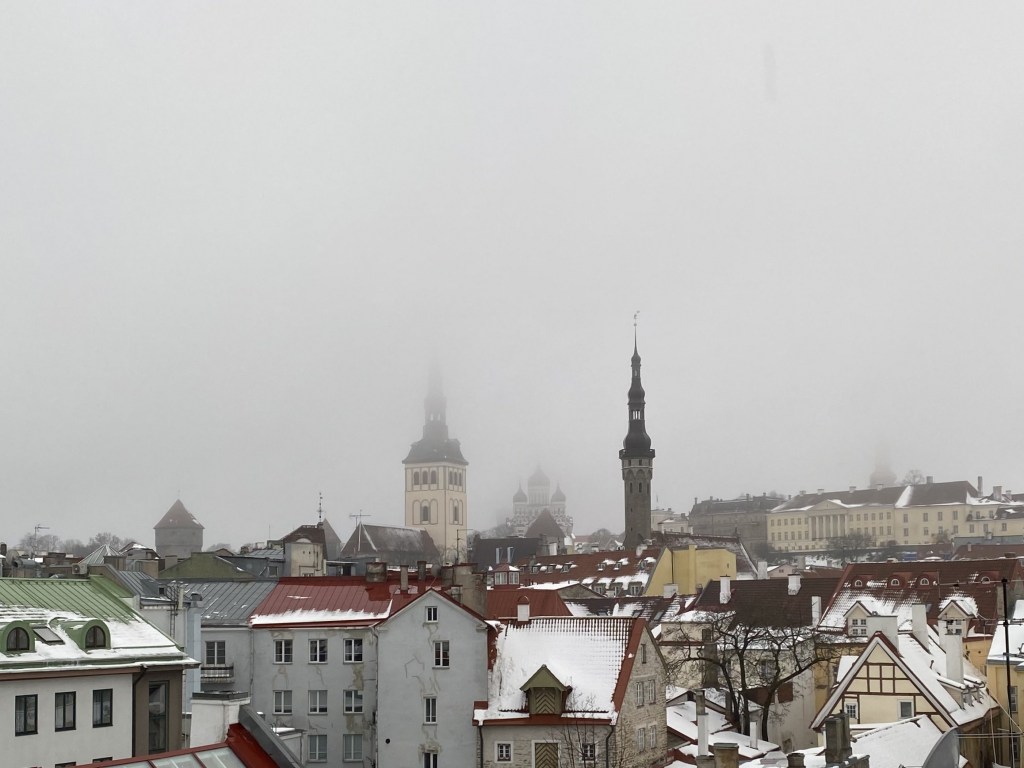
Snow still covered some streets – very cool medieval town.

Tallinn Old Town is one of the best-preserved medieval cities in Europe and is listed as a UNESCO World Heritage Site.

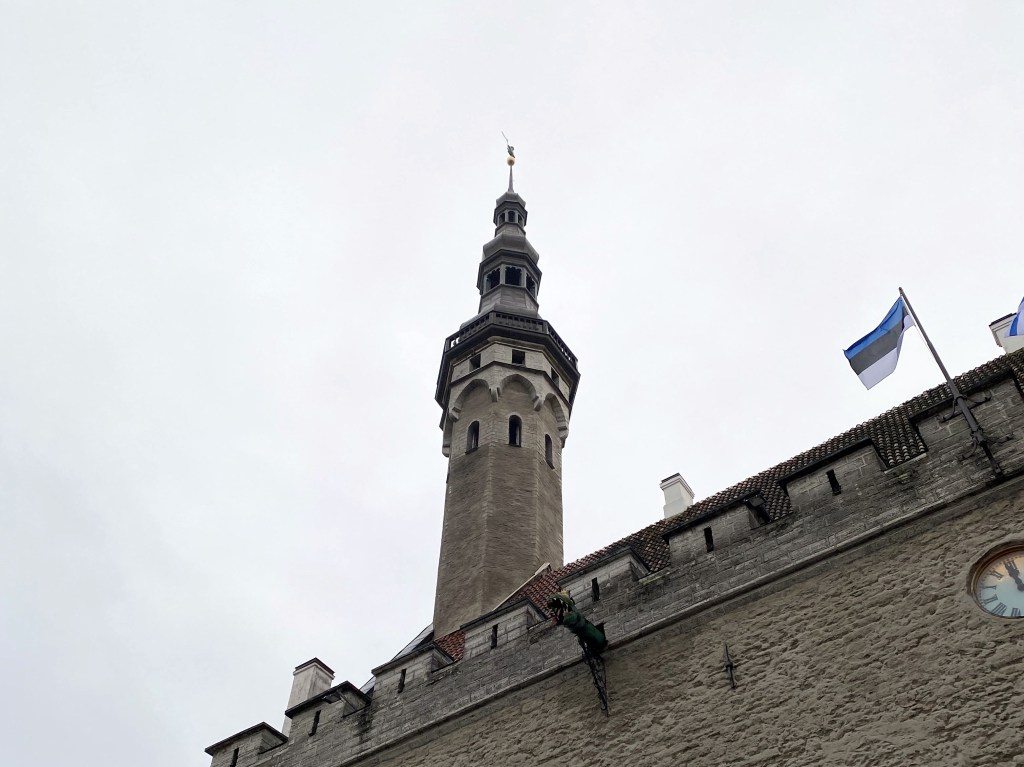
The spire of Tallinn’s Town Hall:

The town hall was first mentioned in 1322,

but the structure actually dates back to the 1200s.

It’s the oldest surviving town hall in Europe.

At the top of the spire stands Old Thomas, first placed there in 1530.

The figure memorializes a peasant who became famous for winning a crossbow competition held by the Baltic German Elite.

The tower – and Old Thomas – was damaged in 1944 during a bomb attack during the war. A new Old Thomas went up with the repaired tower in 1952, but it was weathering too much, and the Estonians put another one up there in 1996. The 1952 Old Thomas hangs out in the Tallinn City Museum. Nice codpiece.

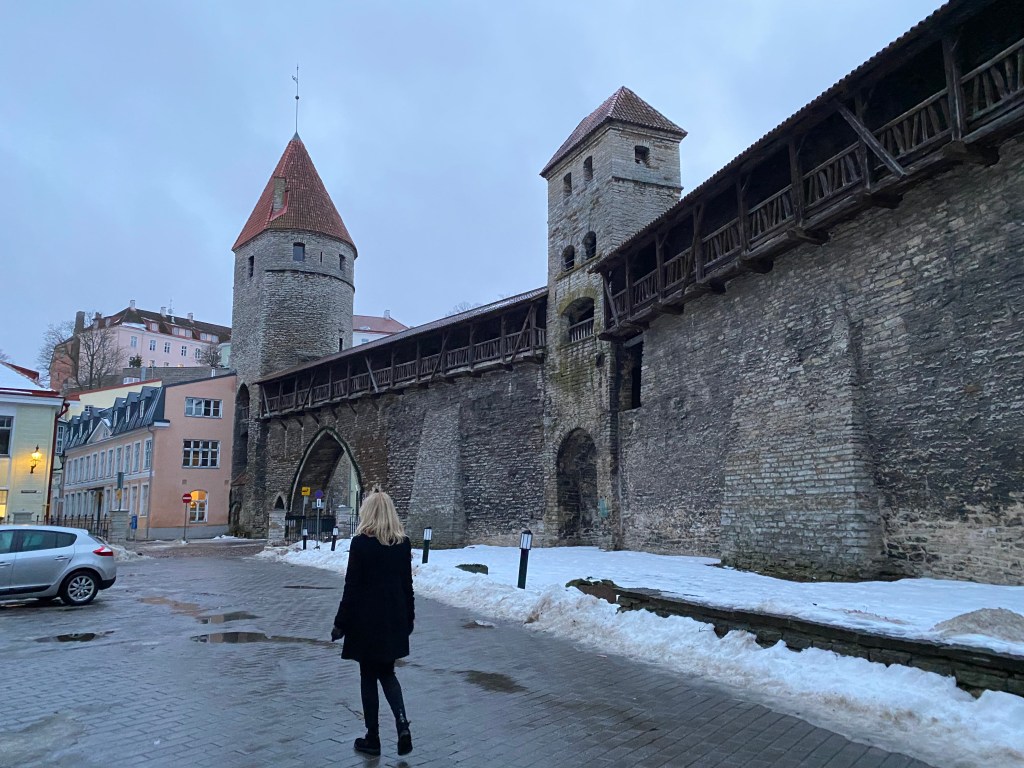
Viru Gate – one of the original eight gates in Tallinn’s city walls.

The first wall around Tallinn was ordered to be constructed by Queen Margaret of Denmark in 1265 (Denmark controlled northern Estonia from the early 13th century until 1346, when the Danish king sold it to the Teutonic Knights).

Fully taking shape during the next three centuries, Tallinn’s city wall was one of the strongest defense systems in Northern Europe at the time.

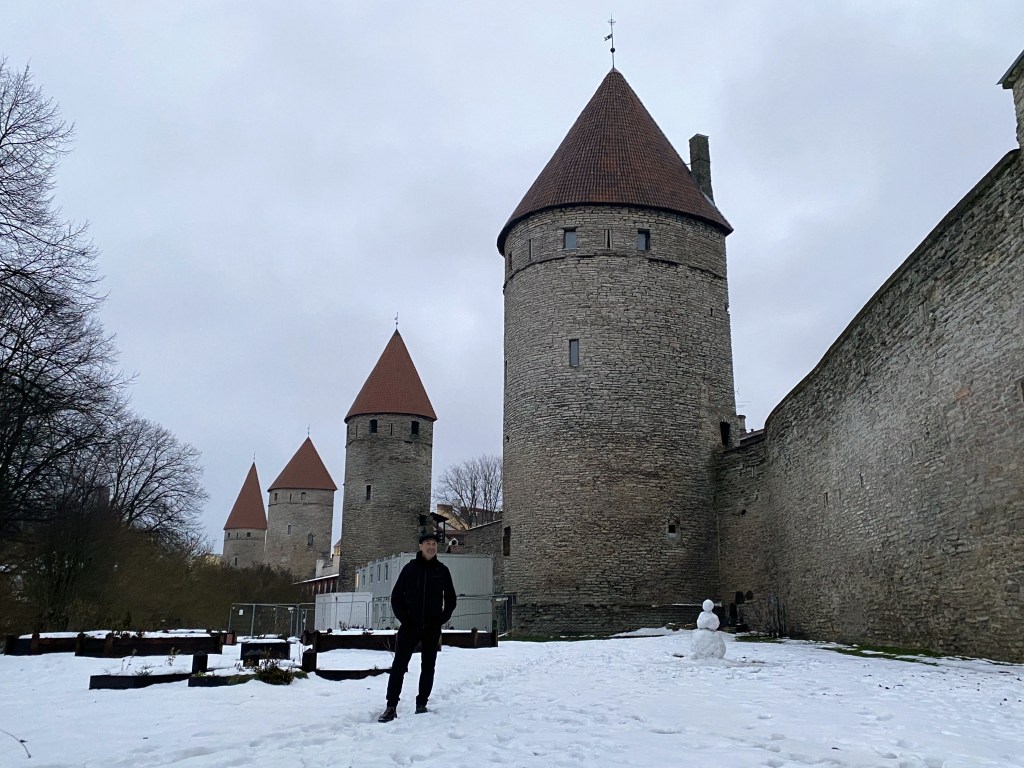
Plus, there are chunks that are still intact and walkable (that’s Tower behind Monks in the background)

Not a lot of snow, but Tallinn proved to be pretty atmospherically wintery, nonetheless:

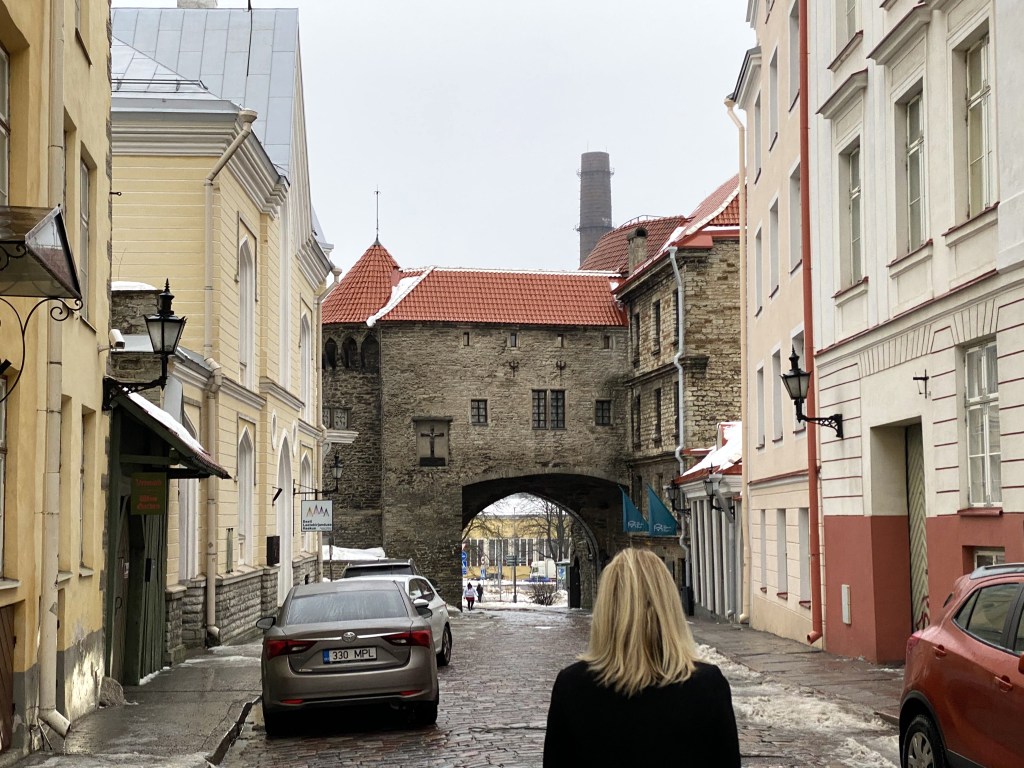
Located across town, we found Tallinn’s Great Coastal Gate, first mentioned in 1359:

The Great Coastal Gate was the most important gate when Tallinn was a Hanseatic town because it protected the main route for traffic between the port and the market square.

Above the gate stands an impressive dolomite carving bearing Tallinn’s coat of arms (from 1529):

Protecting the Great Coastal Gate? FAT MARGARET! Dating from the early 16th century, Fat Margaret not only served as a fortification against invaders of the town’s port but also a military monstrosity to impress visitors arriving by sea.

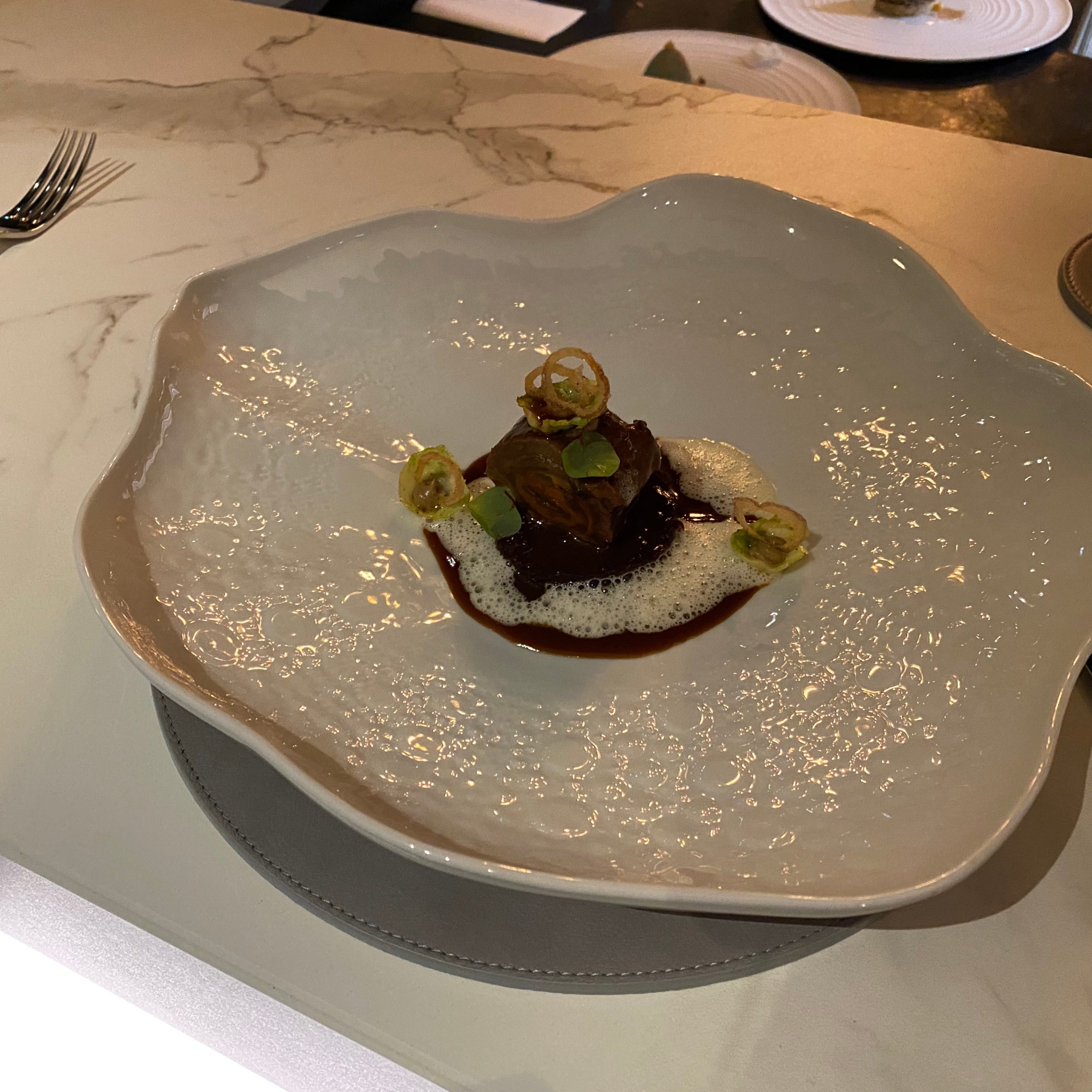
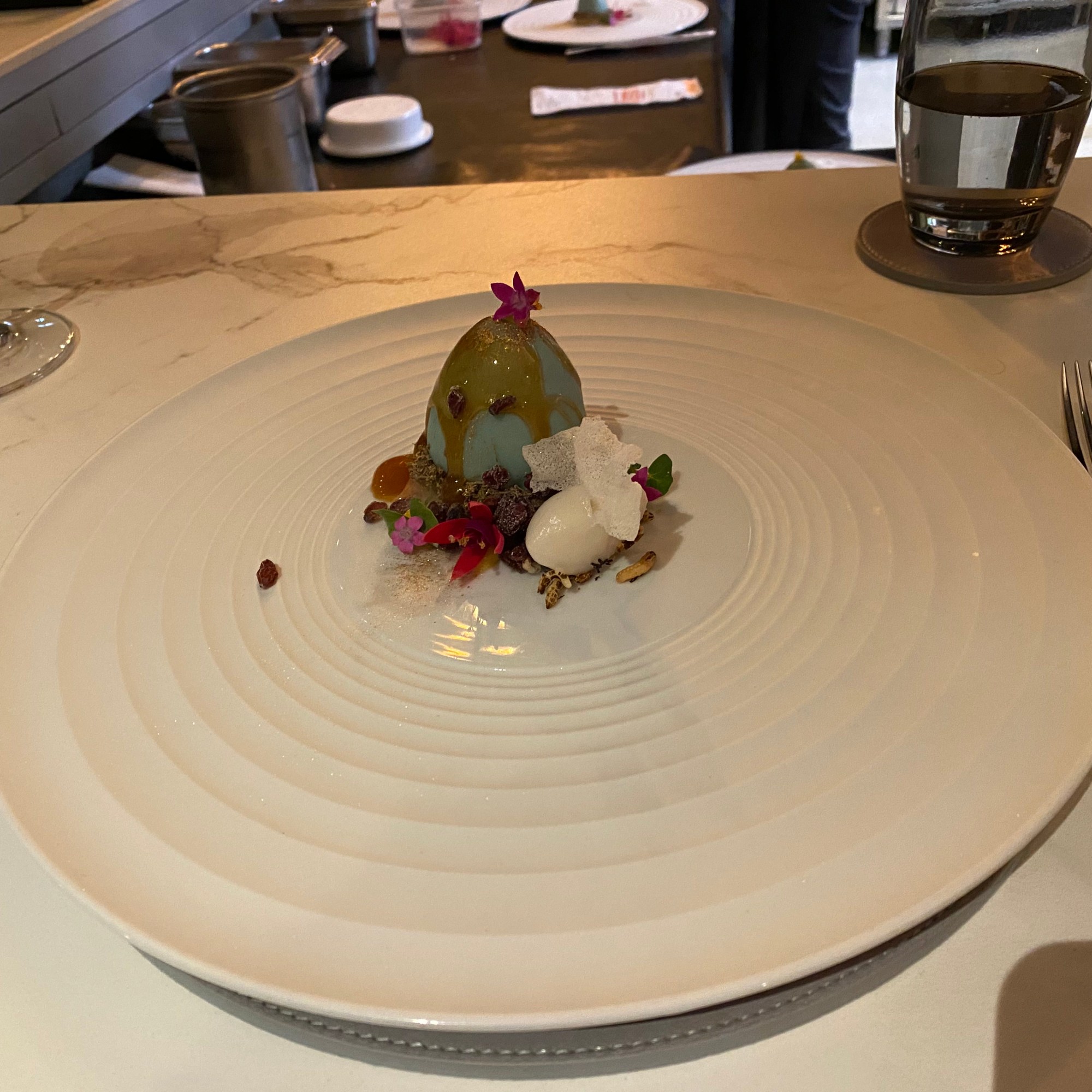
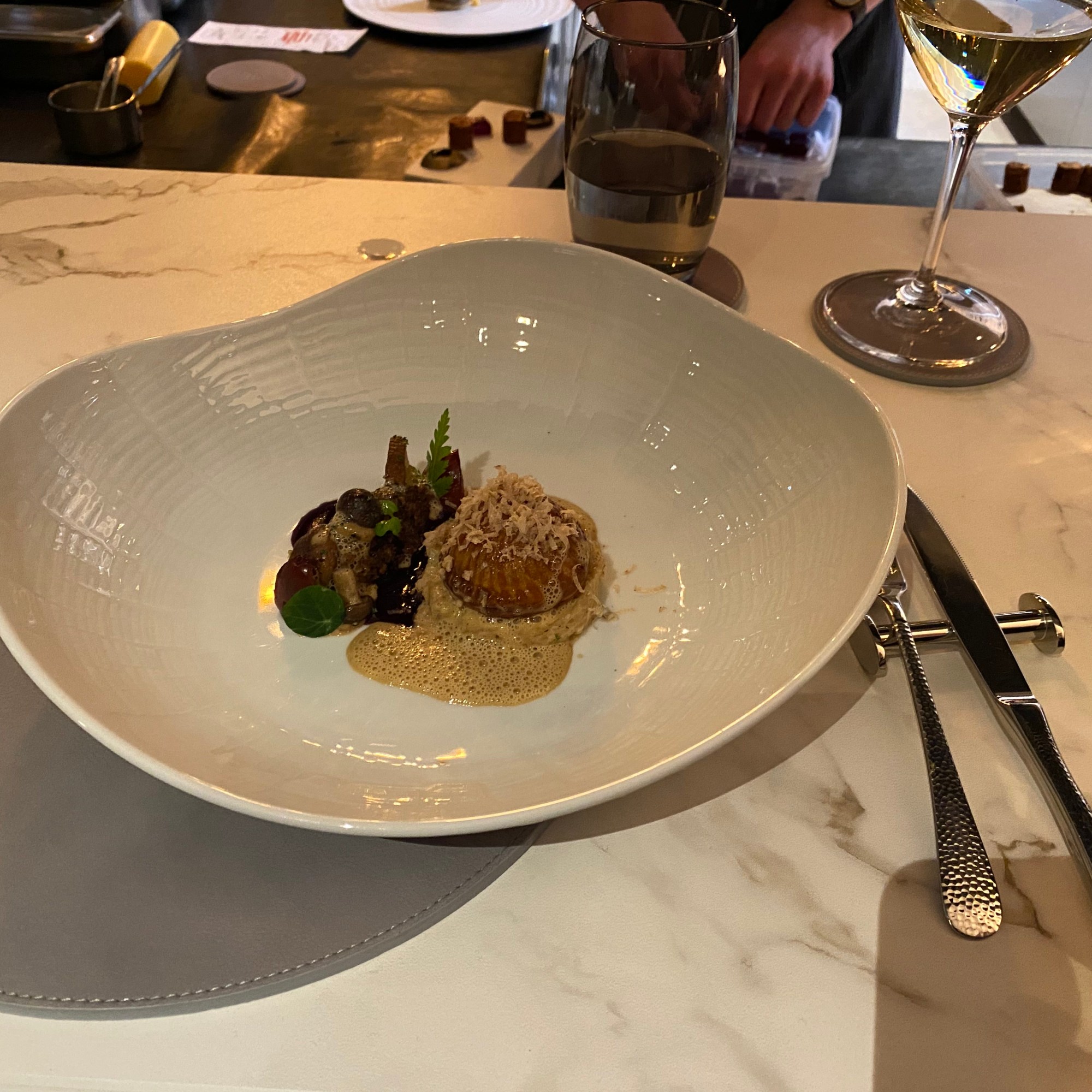
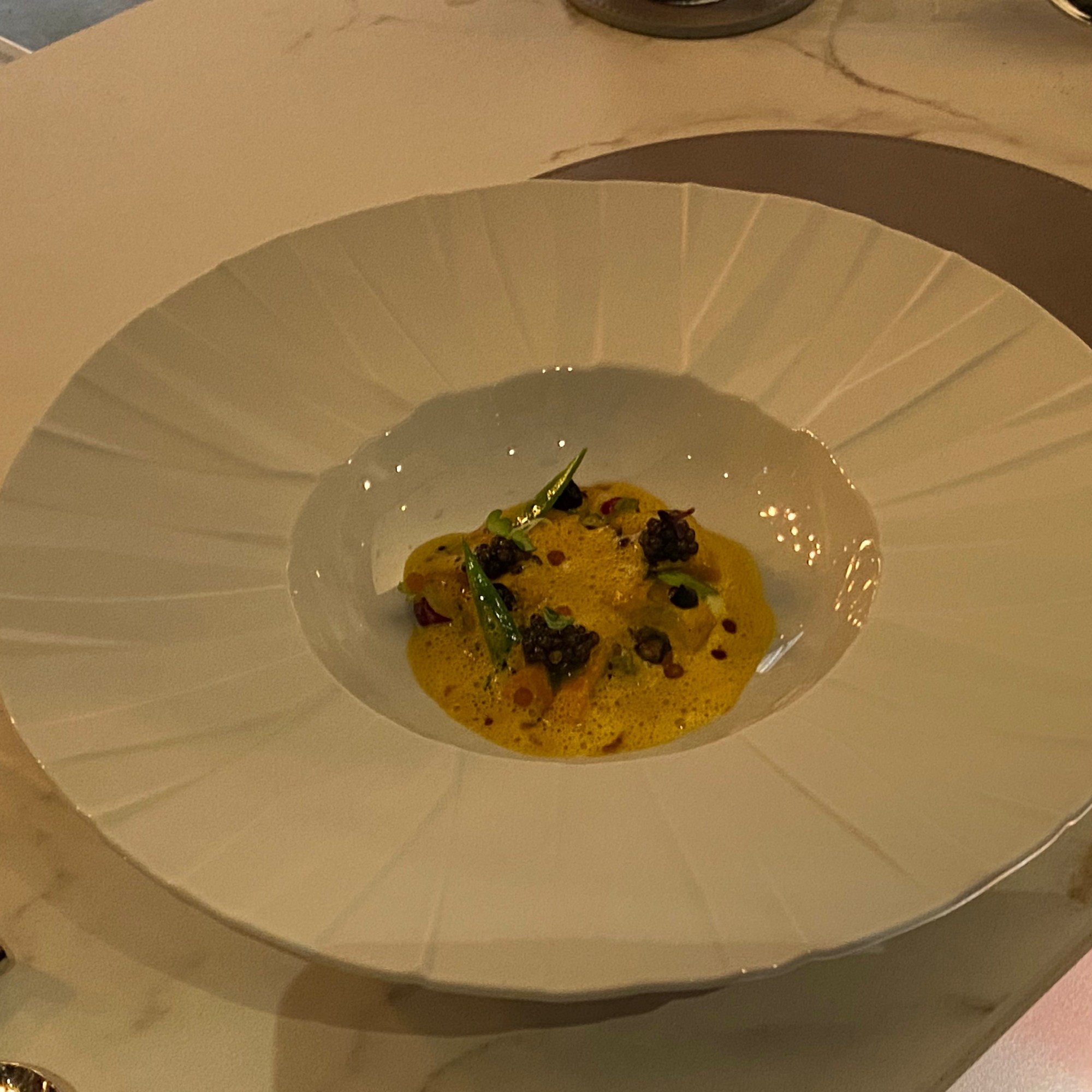
Michelin 2* dining experience at 180 Degrees:

Pretty good perch at the Chef’s Table

where we could watch all the cooking and prep work for multiple courses.

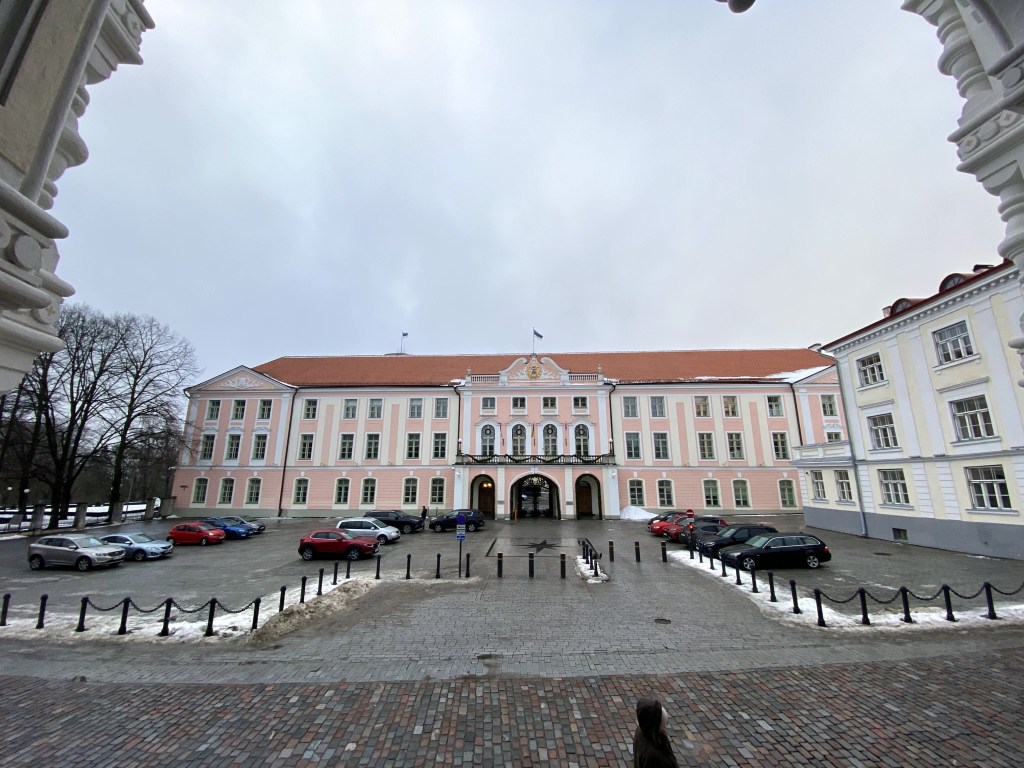
Heading up the next morning to Toompea, Tallinn’s central hill district, which is home to. . .

Estonia’s Parliament, the Riigikogu:

And also the Orthodox Alexander Nevsky Cathedral, built in the late 19th century:

Crests for local noble families along one wall:

Because the church was built when Estonia was part of the former Russian Empire, and because it represents Russian Orthodoxy, and because the Estonians are outraged by Russia’s aggression against Ukraine, there’s a movement in Tallinn to raze it and replace it with a park.

Back through the walls:

To yet another stretch of Tallinn’s extant city wall. Here, we have Kiek in de Kok (“Peek into the Kitchen”) on the left, an artillery tower so named because the garrison could see into the kitchens of the nearby houses; and Maiden’s Tower on the right.

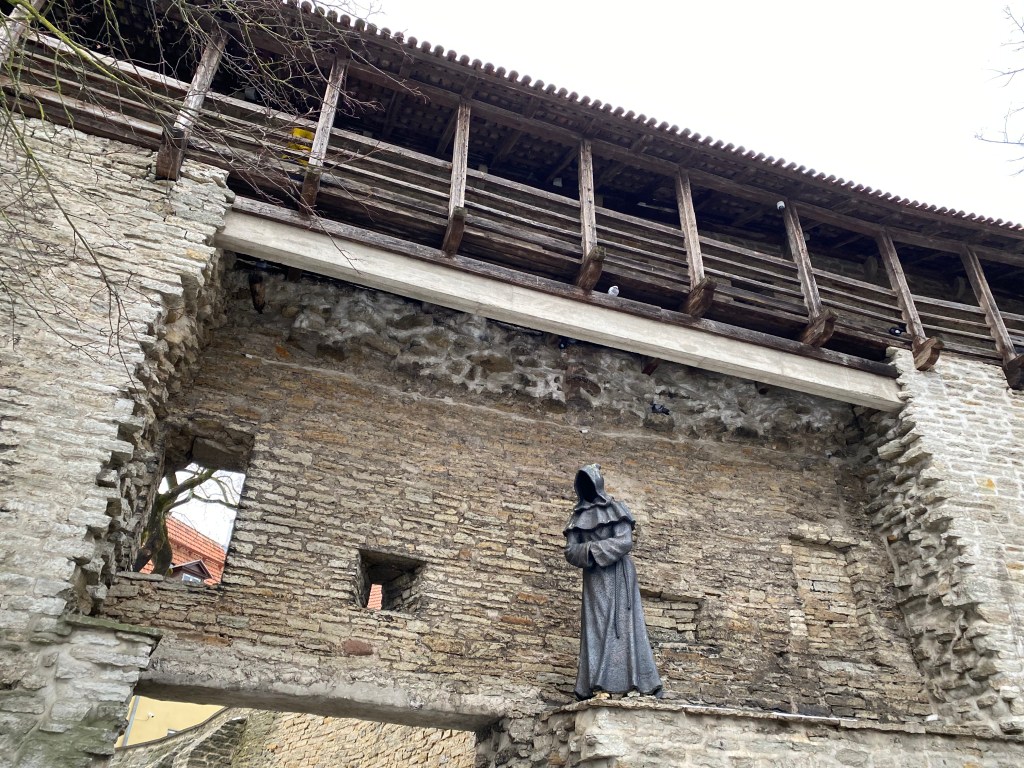
And a creepy, faceless monk statue perched on one segment of the wall. This is one of three faceless monks in this area; this one is “Observing Monk.”

More city wall-and-towers action:

Loewenschede Tower:

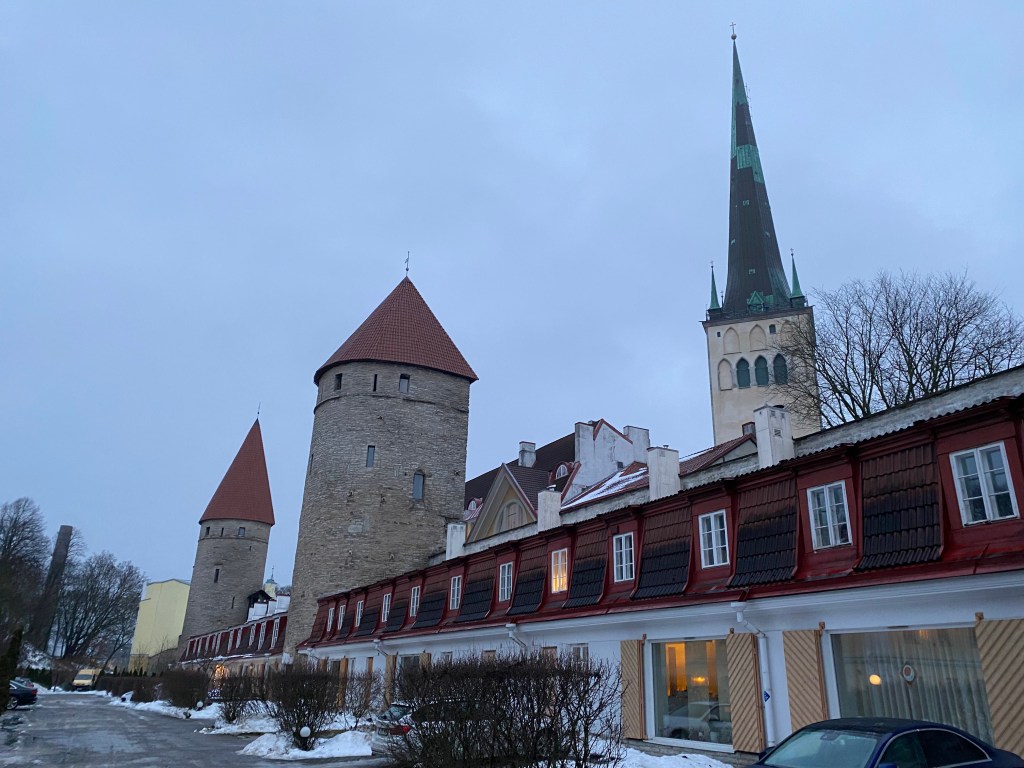
Enough with the tower names; here’s a buttload of towers. Definitely a cool, preserved medieval town.

Heading to dinner one night; one cannot escape the walls, man.

Rataskaevu Street, where the novels featuring Melchior, the 15th-century Tallinn apothecary / amateur sleuth are set (or at least where his apothecary is located). The first book – pretty good! The second – should have been tossed down that well.

Featured in the Apothecary Melchior novels are Tallinn’s medieval guilds. The Great Guild hall, dating from the very early 15th century is right off the main square. It was used as the headquarters of various merchant and artisan guilds until as recent as 1920.

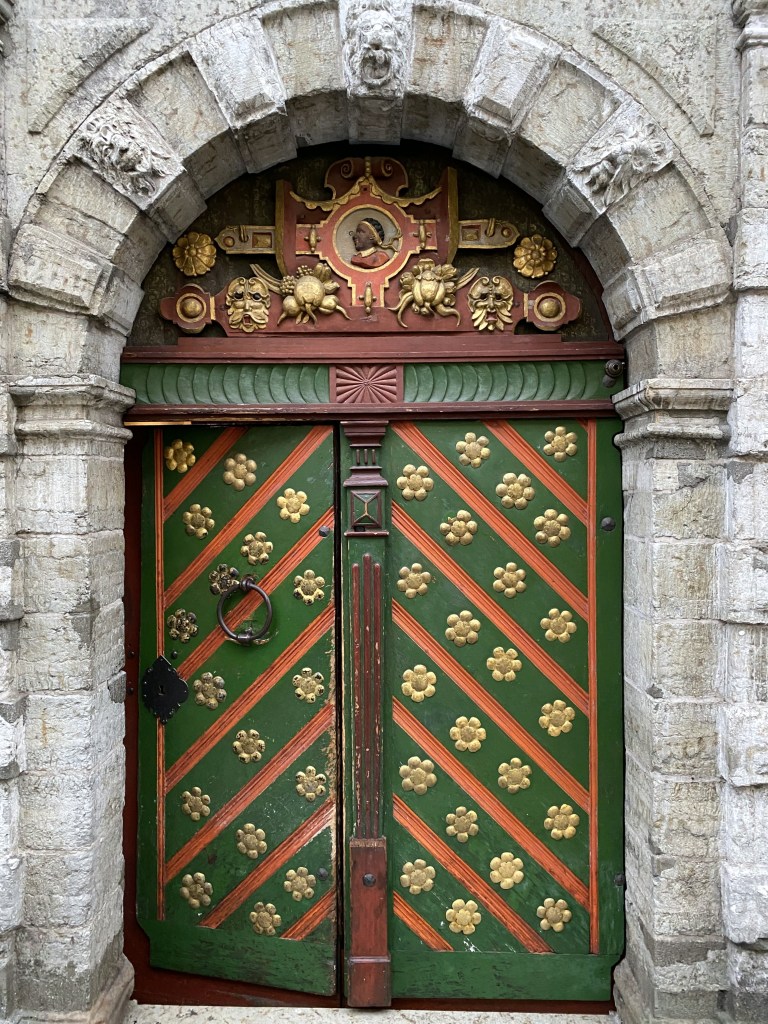
Aaand, the House of the Brotherhood of Black Heads. Also featured in the Melchior novels.

Described as a social club for single merchants and other tradesmen in the Melchior books, it “was a professional association of ship owners, merchants, and foreigners dating from the 14th century.

“The House of the Blackheads was visited by several Russian Emperors including Peter I, Paul I and Alexander I who also became honorable members the Brotherhood.

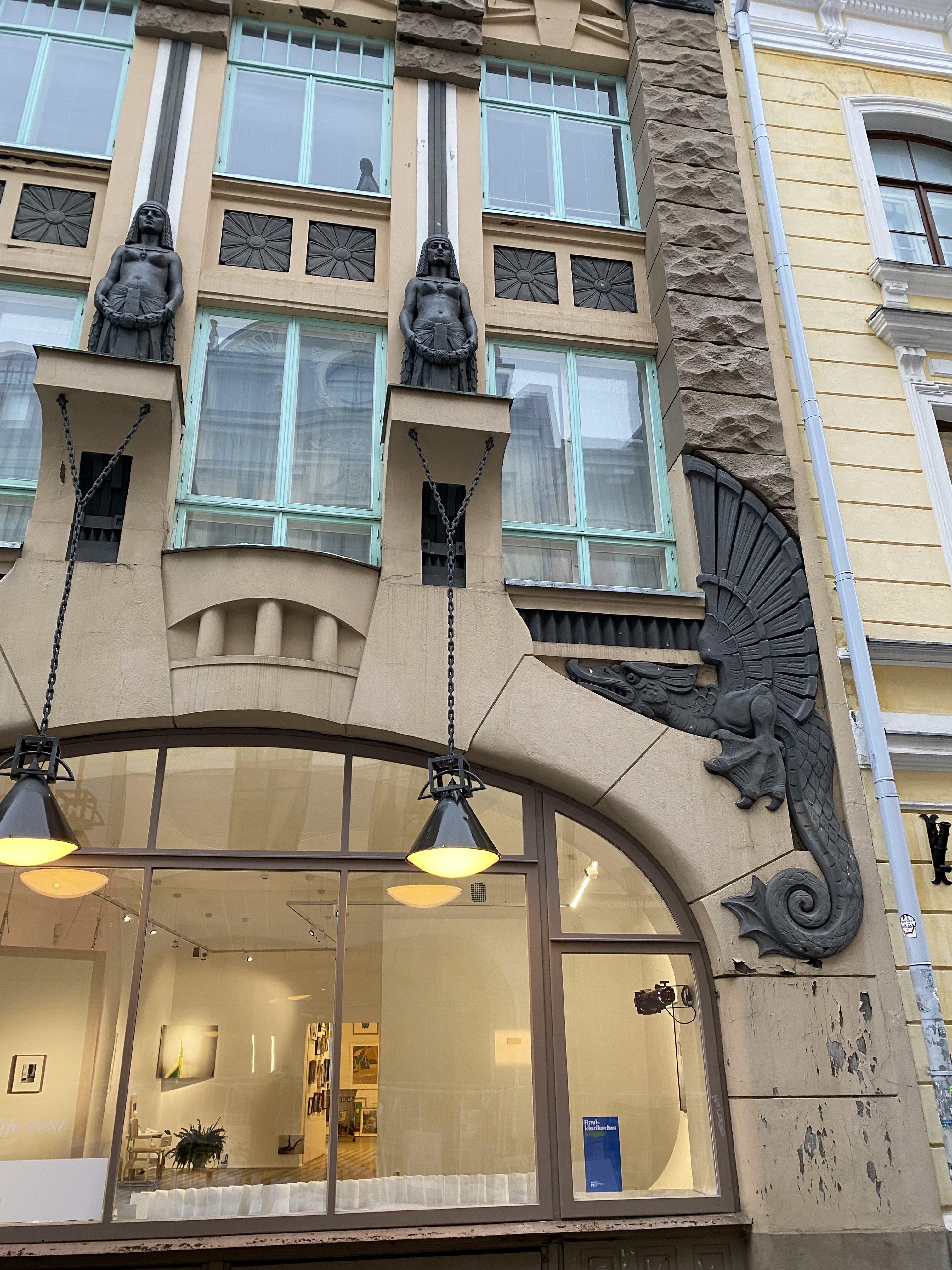
Just some Art Nouveau architecture down the street, which was pretty cool. (But NOTHING like we’d see later in Riga.)

Toompea at night.

Tallinn’s Victory Column on Freedom Square, commemorating the Estonian War of Independence at the end of WW I.

More winter scenes from Toompea’s stretch of wall.

Next stop: Riga!

Categories: Estonia, Europe | Tags: , , , | Leave a comment

Christmas 2022 – Baltics and Back to the Netherlands: Riga

From Tallinn, Estonia, we headed slightly south to the capital of Latvia: Riga.

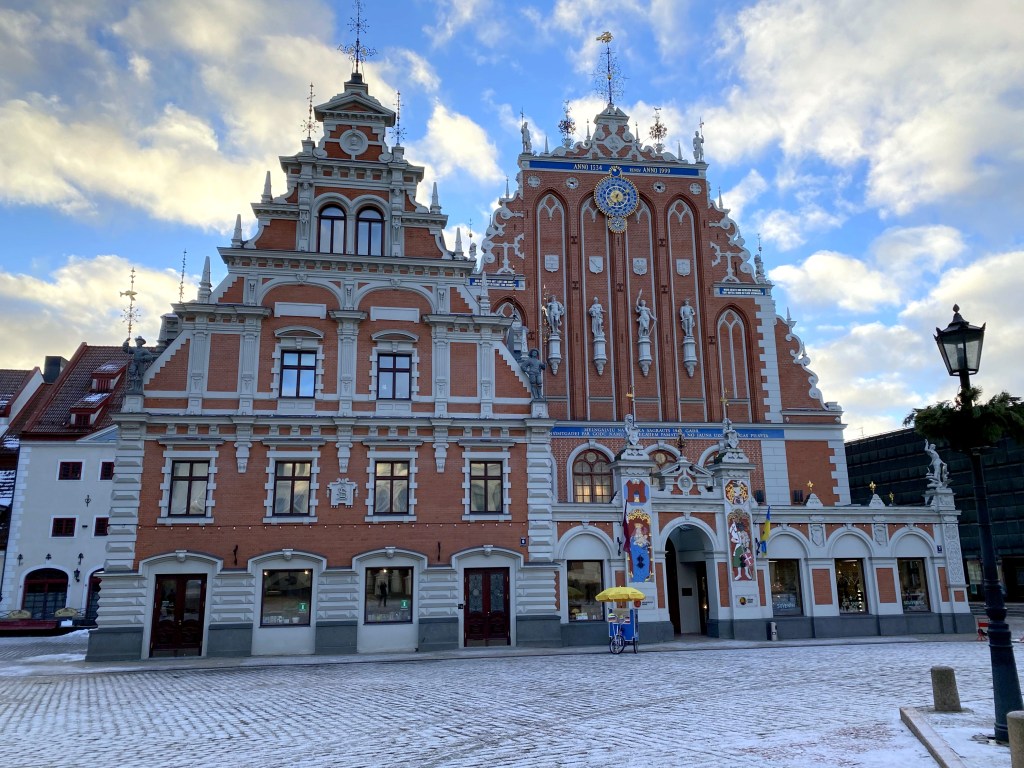
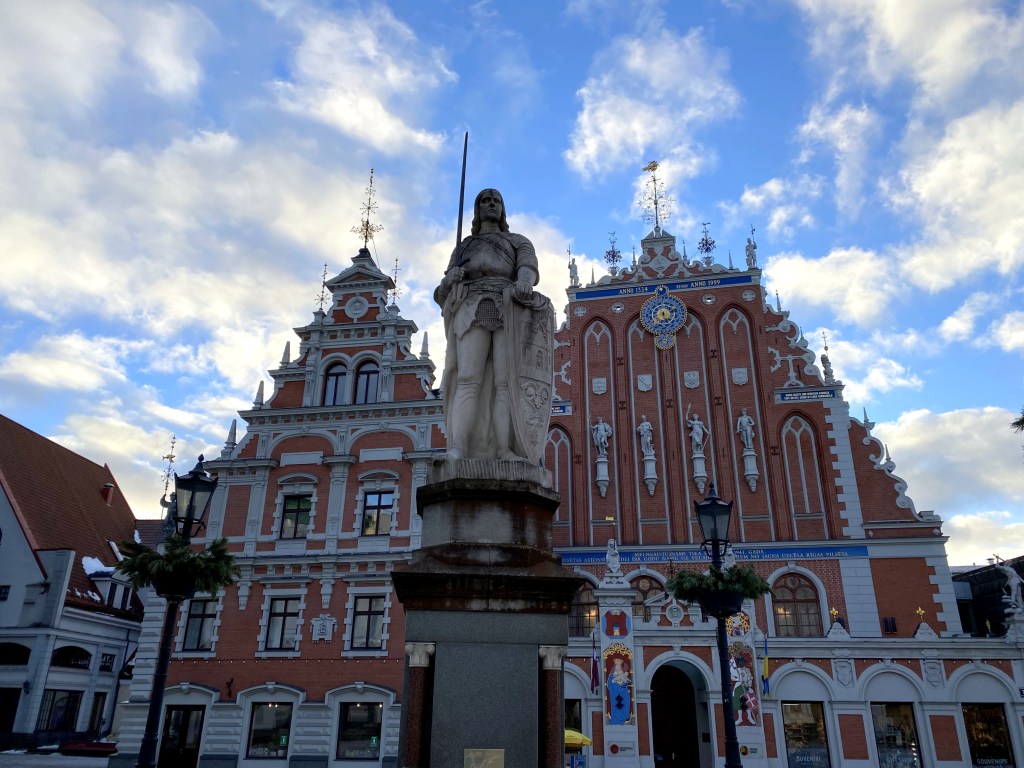
Although not a walled, medieval, historically preserved town like Tallinn, Riga nonetheless offered its own flavor of charm and architectural notability. Case in point, Riga’s own House of the Blackheads. As with Tallinn’s House of the Blackheads, Riga’s building housed the Brotherhood of Blackheads, a guild for unmarried merchants, shipowners, and foreigners in Riga.

Unlike Tallinn’s modest townhouse (albeit with a very cool door and lunette), Riga’s House of the Blackheads is huge and ornate. The original building erected in 1334 was the largest public building in Riga at the time.

Unfortunately that building, updated over the centuries, was bombed out of existence in 1941 during a battle between Germany and the Soviets. The Soviet government razed what was left in 1948, but it was rebuilt in the late 1990s based on extensive archeological studies.

Right around the corner from the Blackheads lies Riga’s capitol building. Very unassuming, we thought.

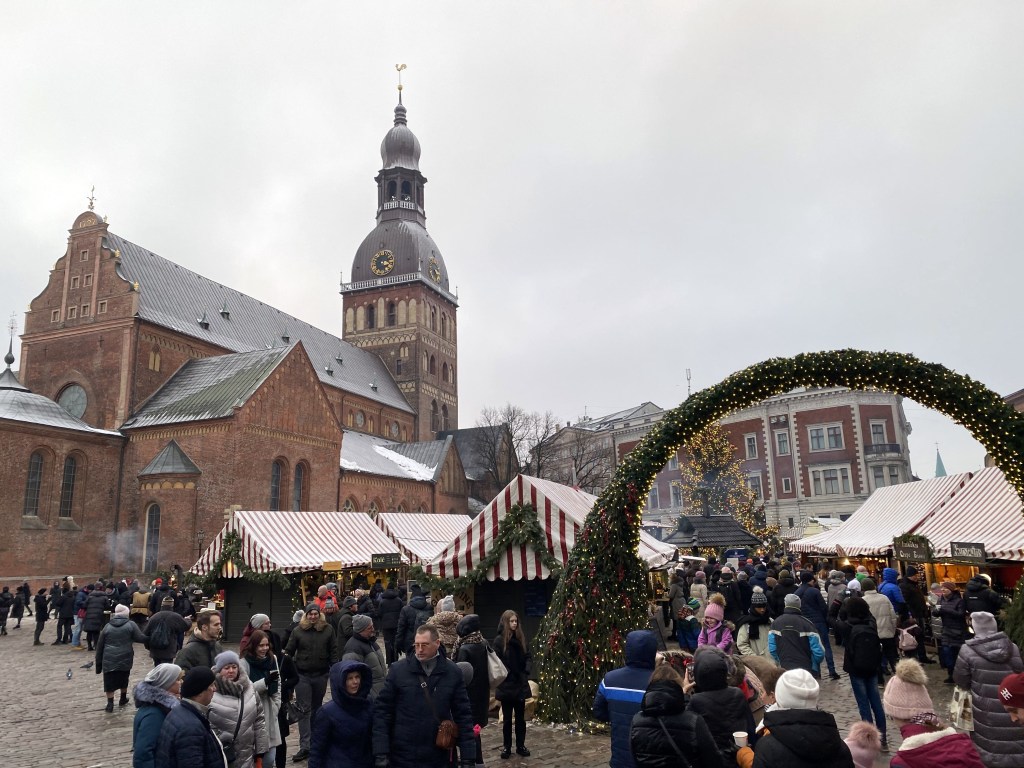
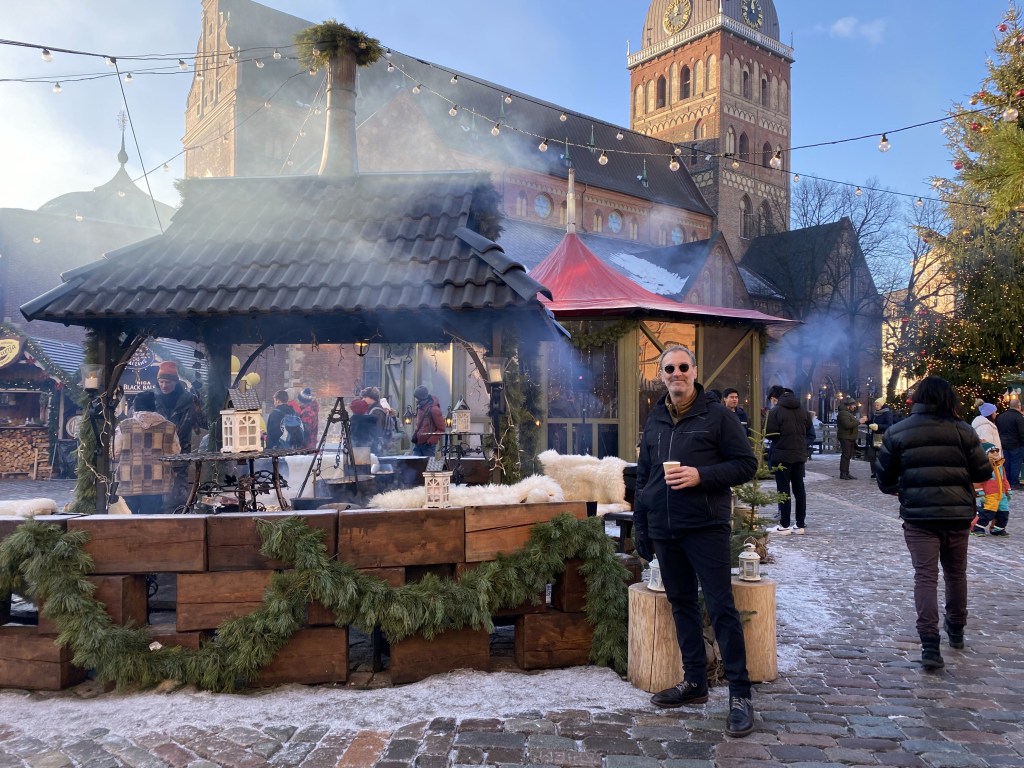
Riga’s Christmas market in the shadow of the Dome Cathedral was pretty great.

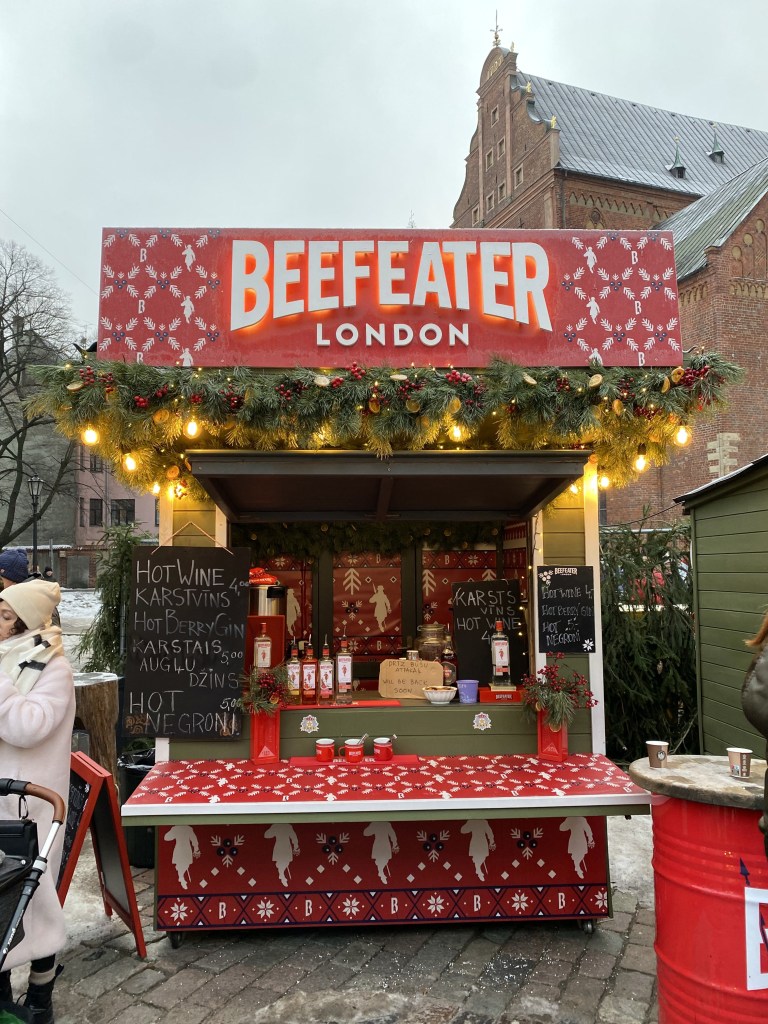
But some stalls were actually branded, which we’d never seen before, and gave areas of the Christmas market a commercial taint that we didn’t welcome:

Nonetheless, the overt booziness of the place was pretty cool – not just glühwein, but all sorts of booze, including – weirdly for both time and place – gin stalls.

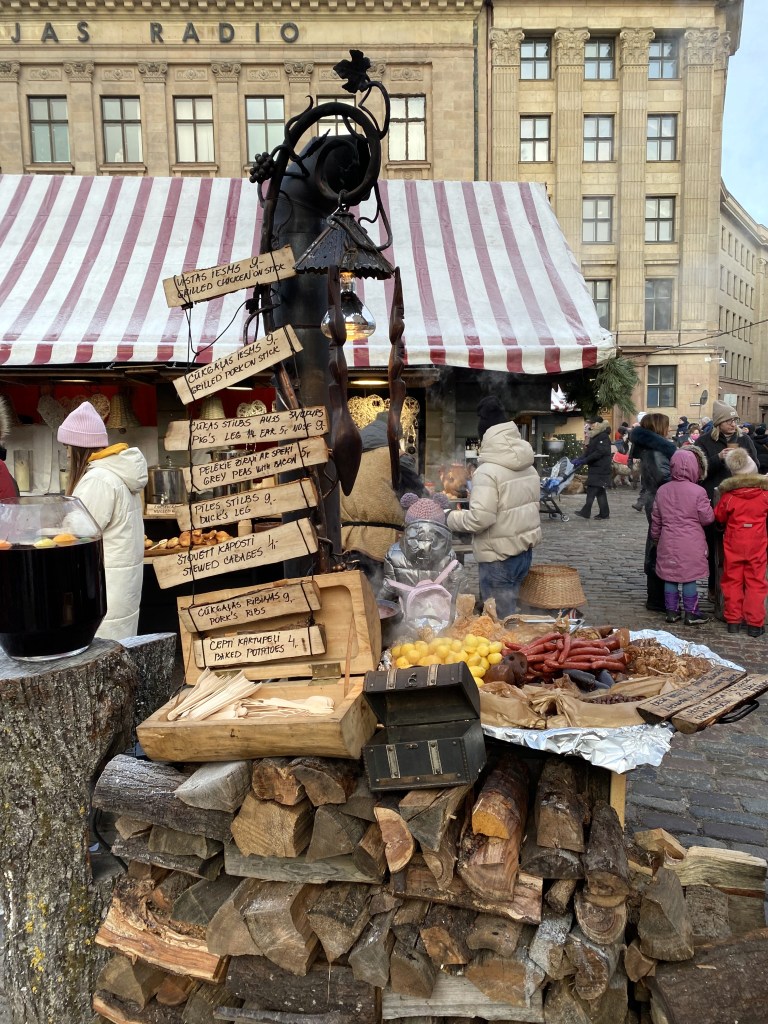
Lots of food. . .

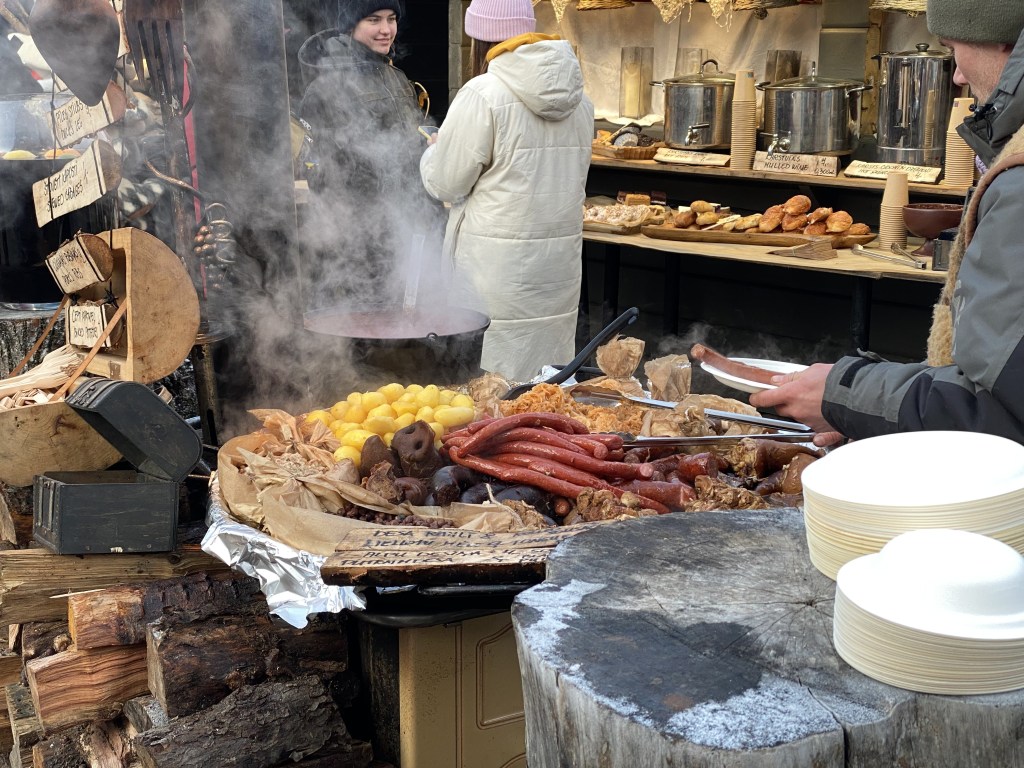
which had a distinct eastern Europe flair – check out the pig snout:

Or maybe it’s an entire pig submerged down there? Who knows.

Pigs a poppin’ in this place:

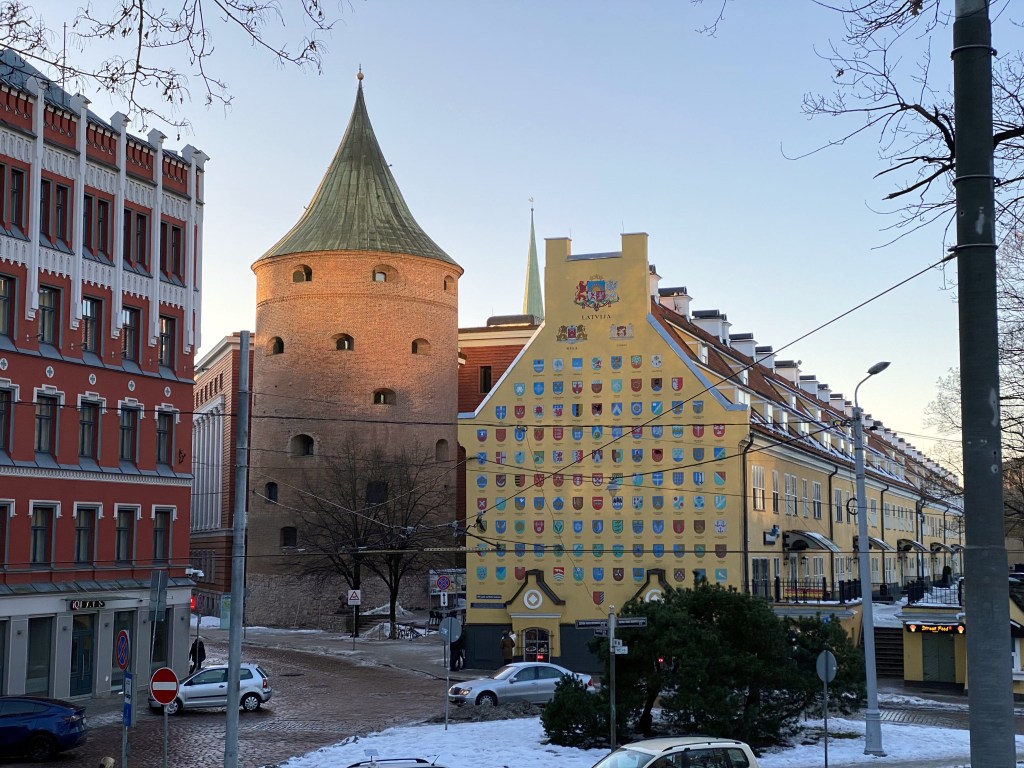
Riga’s Powder Tower, originally built in 1330 as part of the defensive wall system, that one was destroyed during an attack by the Swedes on the Polish-Lithuanian Commonwealth in 1621. (Livonia [which encompasses parts of multiple modern Baltic nations including Latvia] was a fiefdom at the time).

The current iteration dates from 1650.

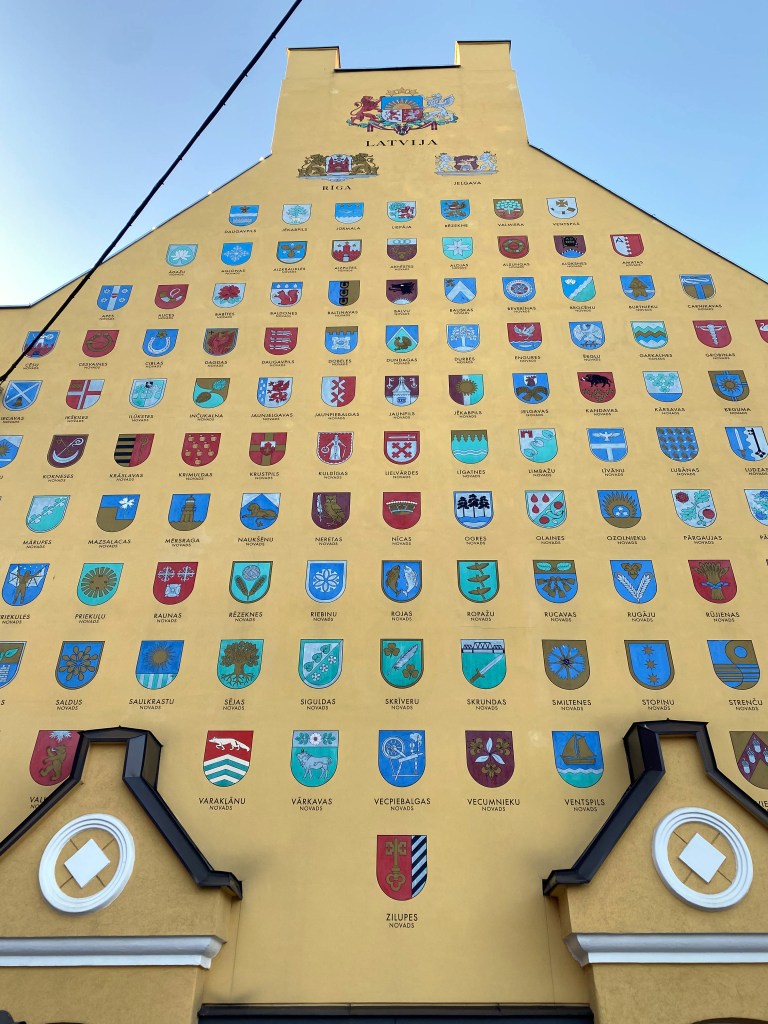
Next door lies Jacob’s Barracks, built in the 18th century to house the garrison, the structure continued to be used until 1997 by various militaries as the area’s geopolitics evolved over time. The length of the barracks are now home to bars and restaurants, but the end, with its depiction of the coats of arms of Latvian towns and municipalities, was the most intriguing to us.

Portions of the old city wall running along the barracks:

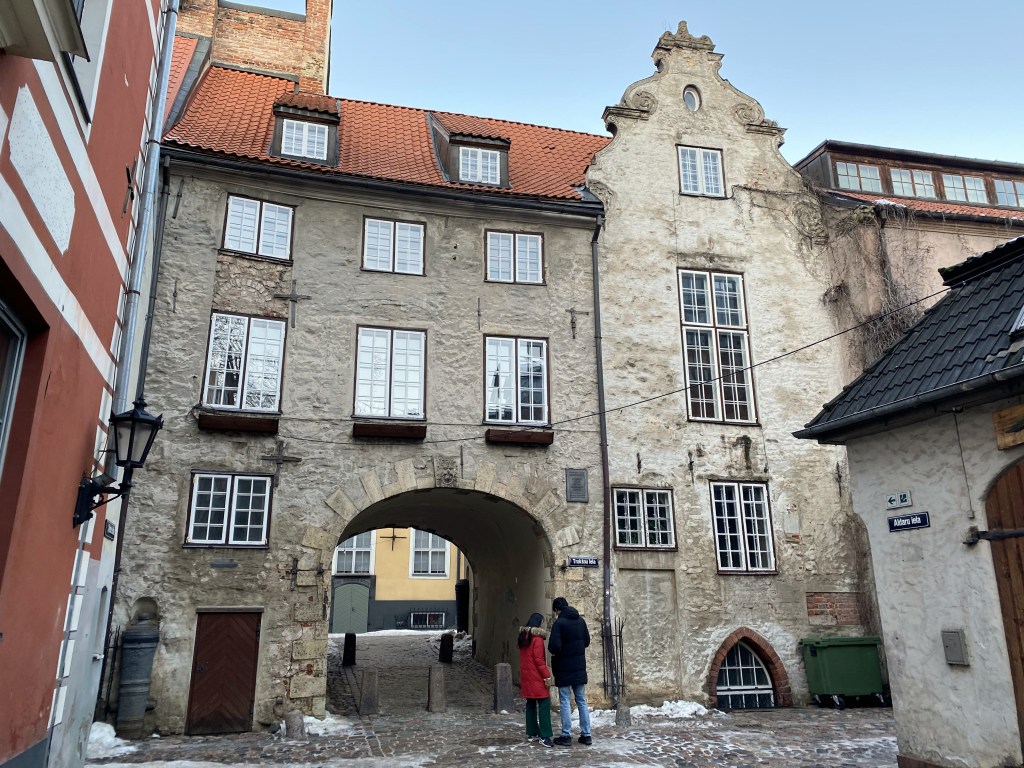
The Swedish Gate – the only portal in the medieval city walls to still exist. Beyond lies Trokšņu iela (Noisy Street) which ironically is one of the quietest and most charming street in Riga now. I’m sure we walked through here and down this apparently amazing street, but we have no visible evidence of this. ¯\_(ツ)_/¯

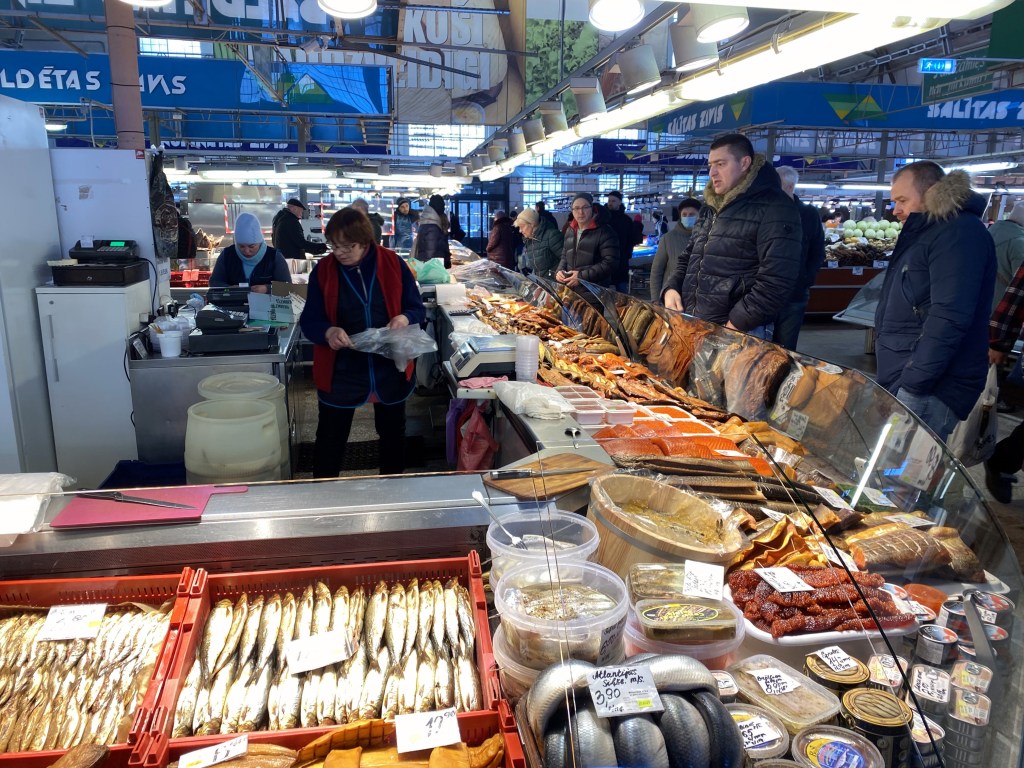
Instead, here’s some pics of Riga’s mammoth Central Market.

Absolutely any variety of food one could desire is available here.

The Riga Central Market (there’s a bird’s eye view later in the post) is composed of multiple, massive, hanger-like structures and is not only the largest shopping destinations in Latvia, but one of the largest markets in Europe.

The aforementioned bird’s eye view would come courtesy of St. Peter’s Church steeple.

Built in chunks over centuries, the first St. Peters was constructed as early as 1209; then a few decades later, in the middle of the 13th century; then the early 15th century; then at the end of the 17th century. Pretty plain brick church though, much like the Scandinavian Gothic brick churches encountered in Denmark.

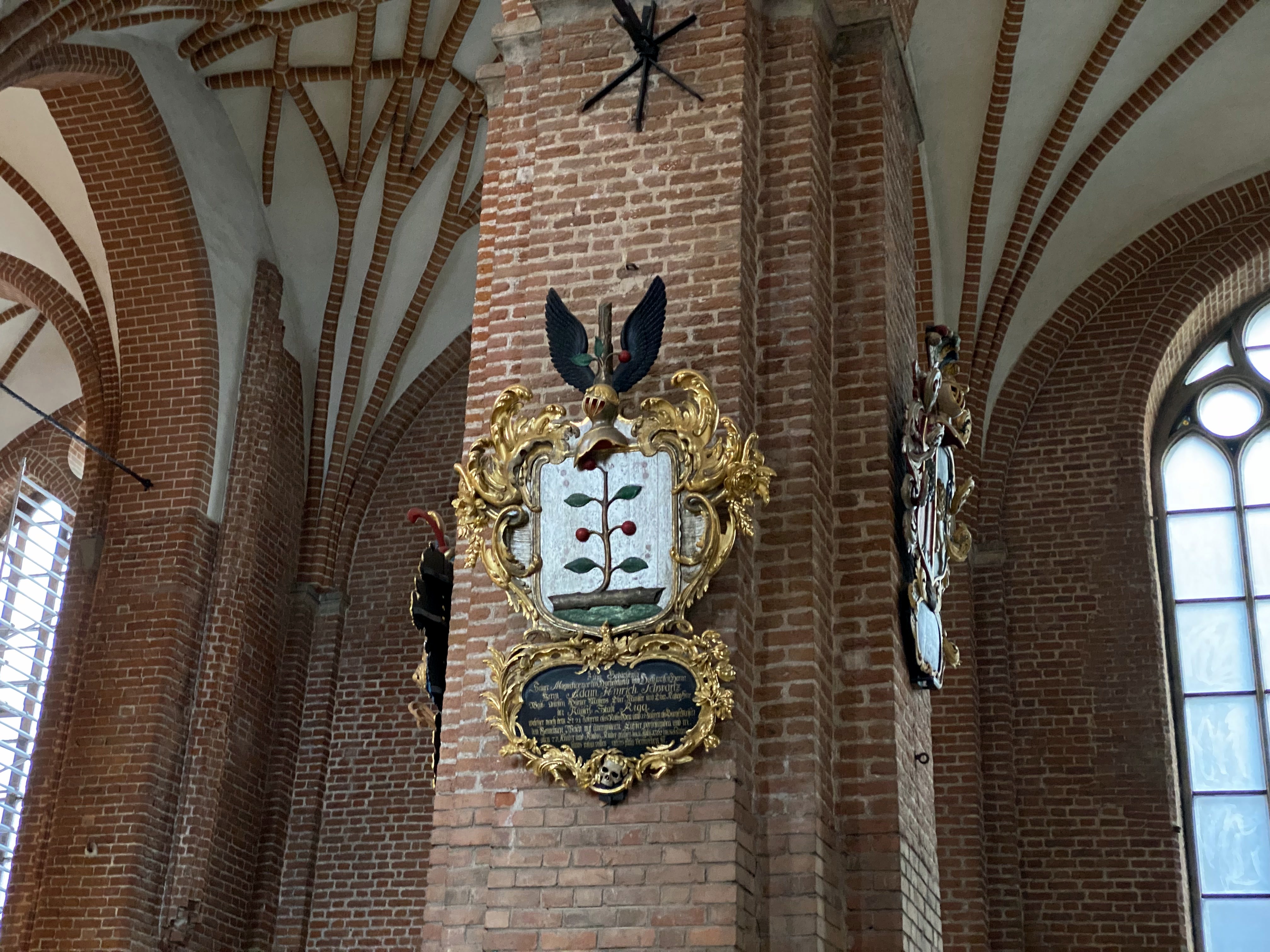
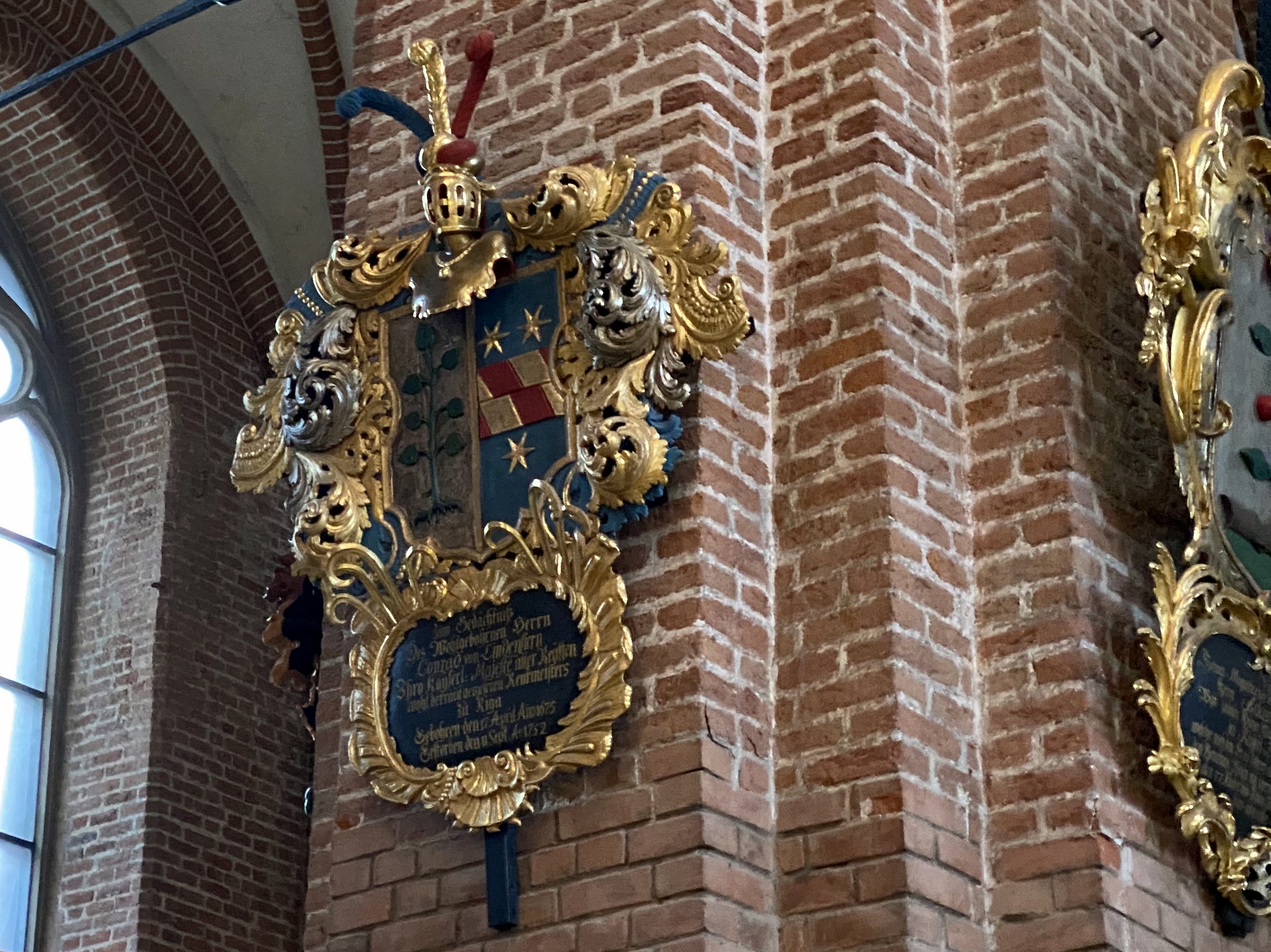
As with Tallinn’s cathedral, portions of the interior are adorned with local noble family coats of arms (one of which looks dangerously close to the esteemed crest of the Connells):

Something in the crypt we think? Dunno – pretty cool though.

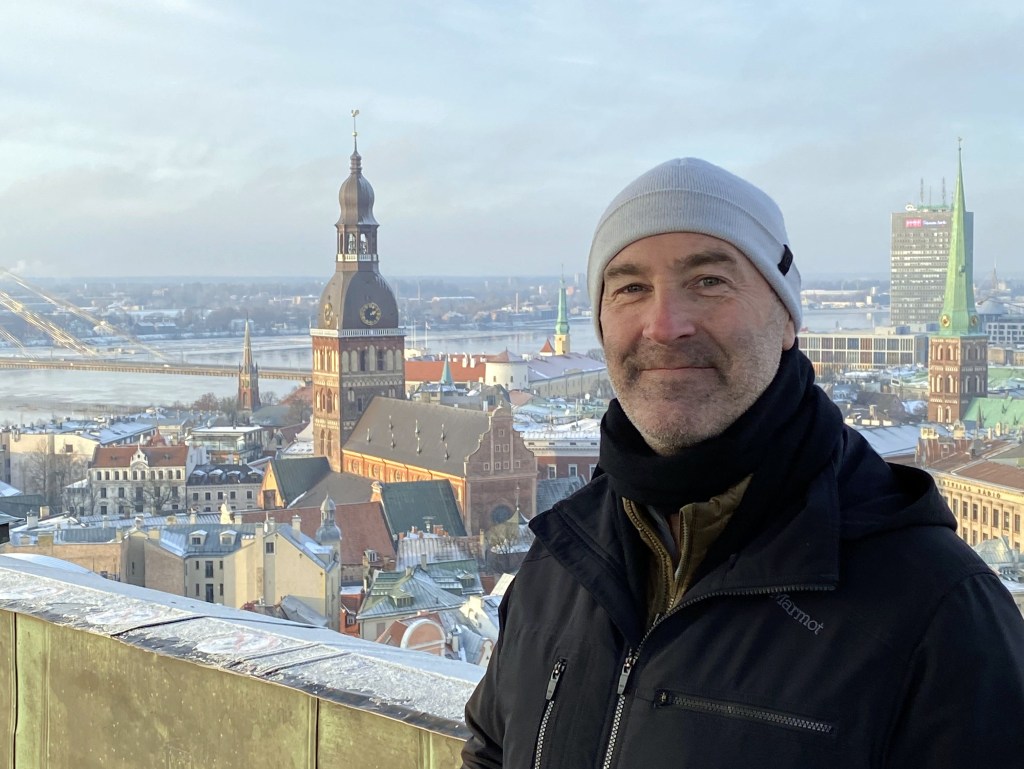
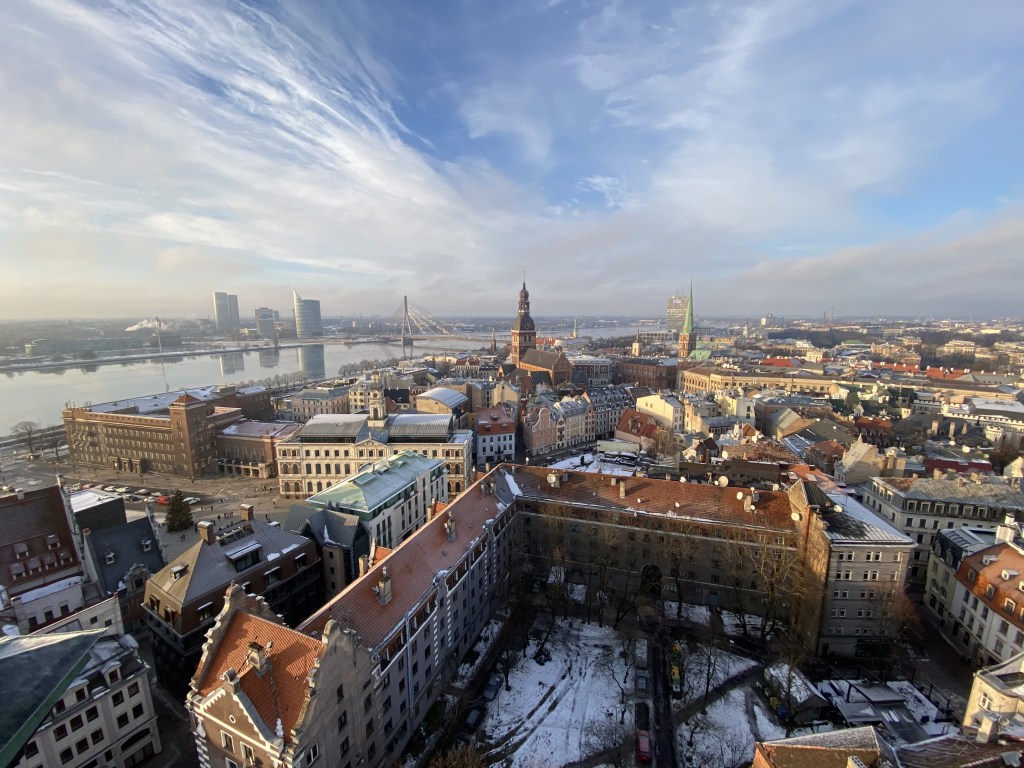
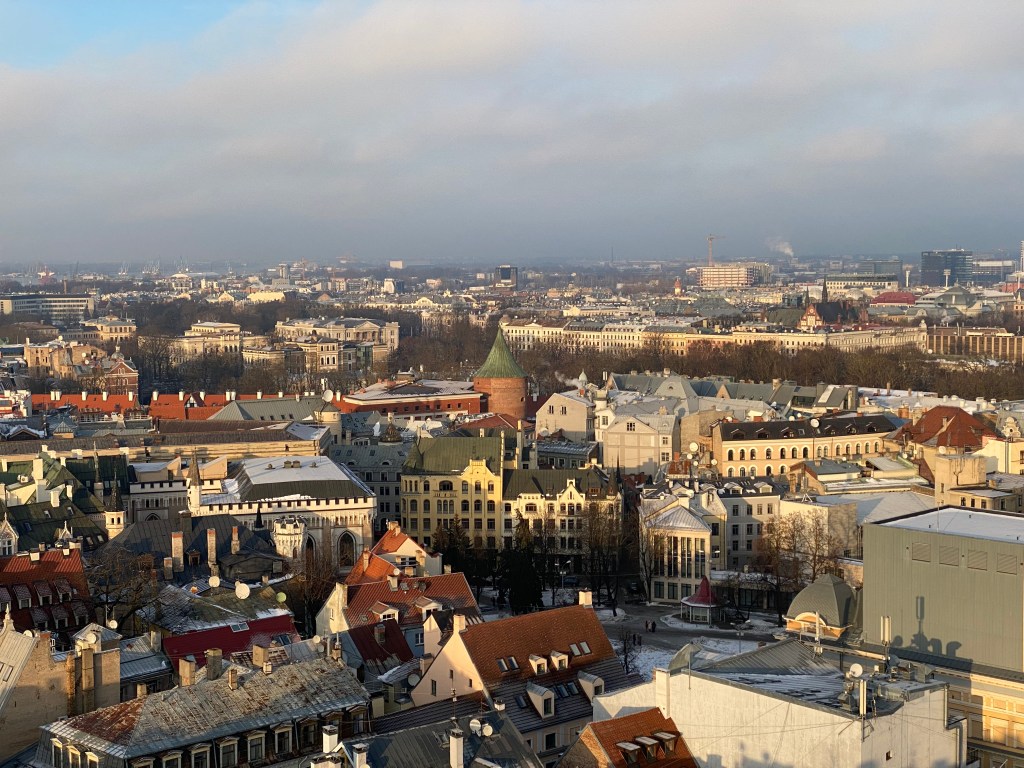
Views from St. Peter’s steeple observation deck – pretty awesome perspective on the town.

Renaissance facades in front of the Dome Cathedral:

Another, higher view of the Powder Tower:

Riga’s Central Market hangers:

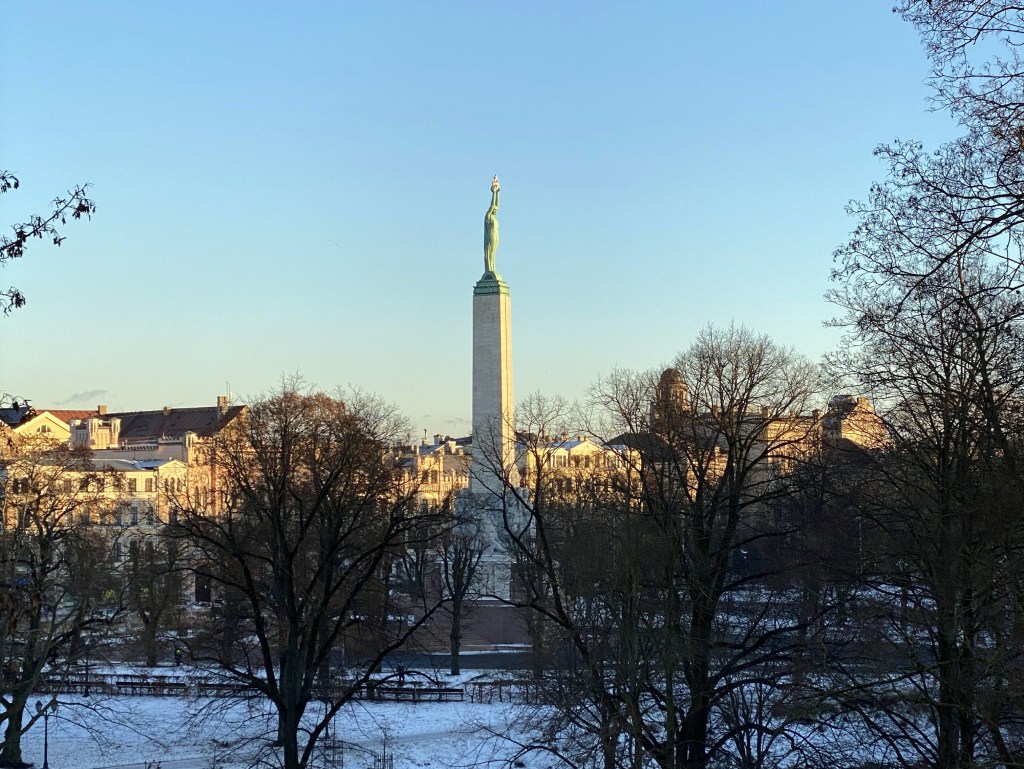
Down the street lies Riga’s Freedom Monument. A large statue of Peter the Great astride a horse once occupied this plaza, but it disappeared during WWI and the Latvians weren’t eager to replace it. Instead, the Freedom Monument was erected in its place in 1935.

Flowers are allegedly placed at the foot of the monument each day (we didn’t see any) as an act of defiance – such a gesture was punishable by deportation to Siberia during the Soviet era.

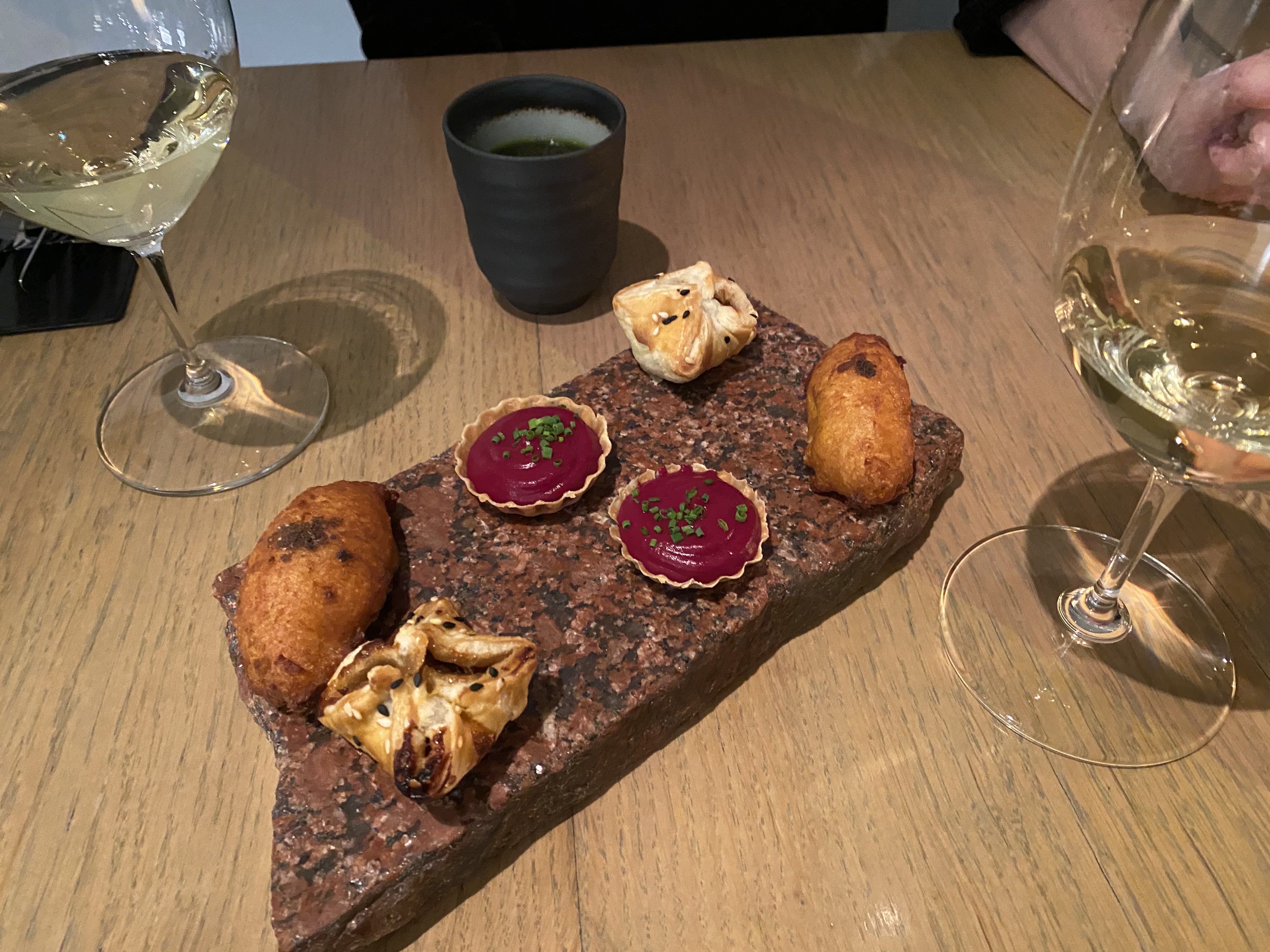
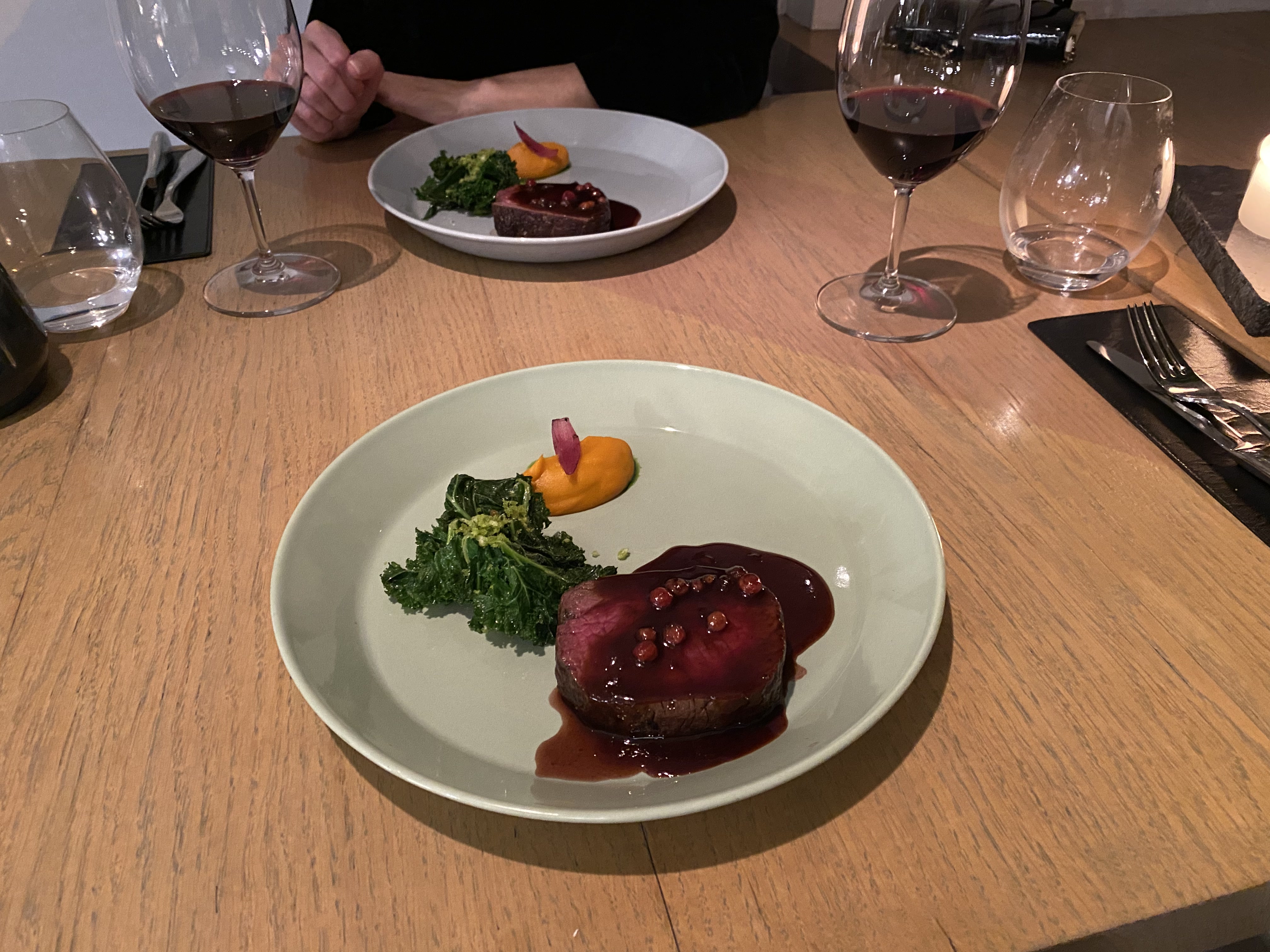
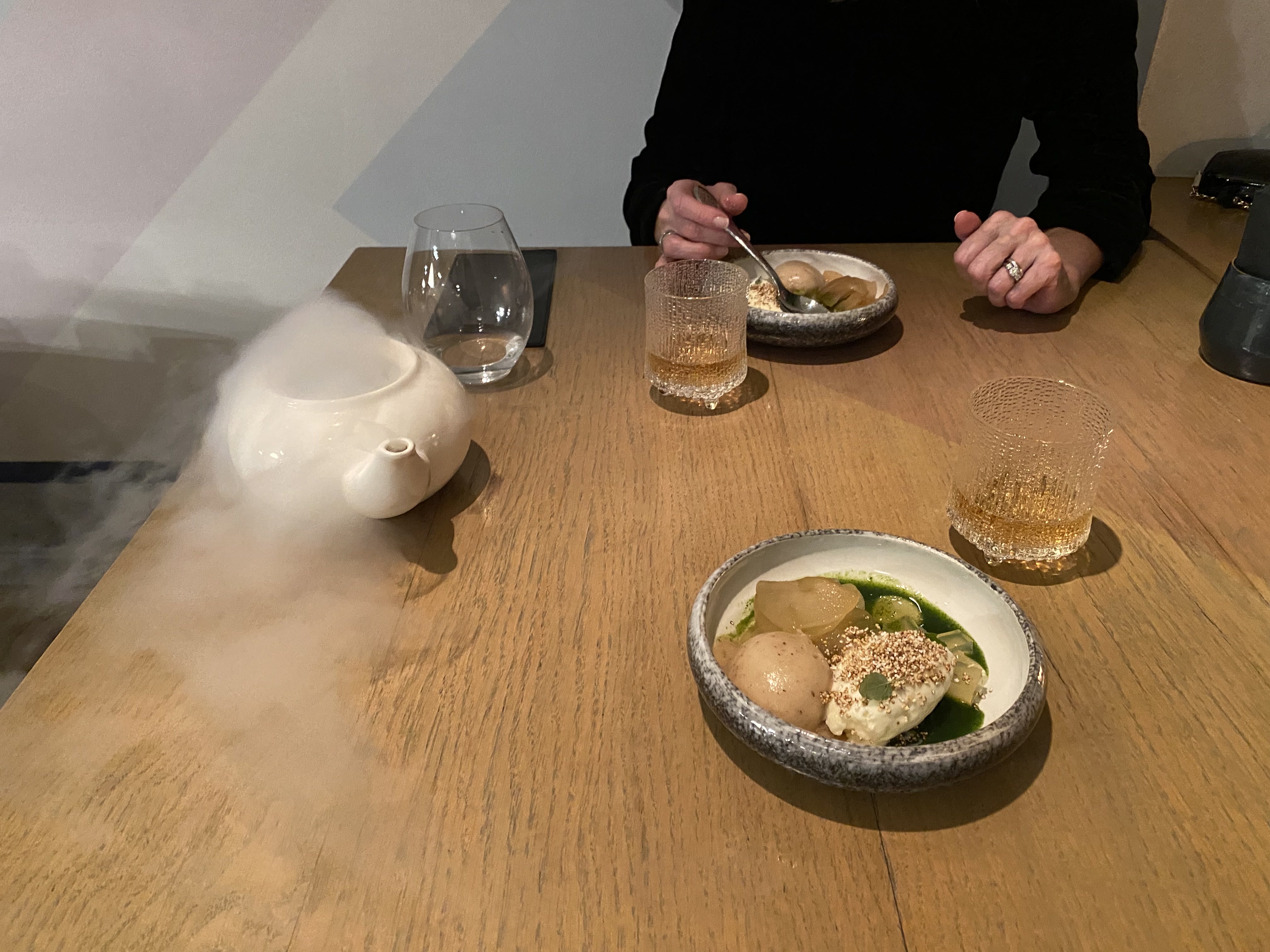
Dinner at 3 Pavāru Restorāns – definitely the dining highlight of our stay.

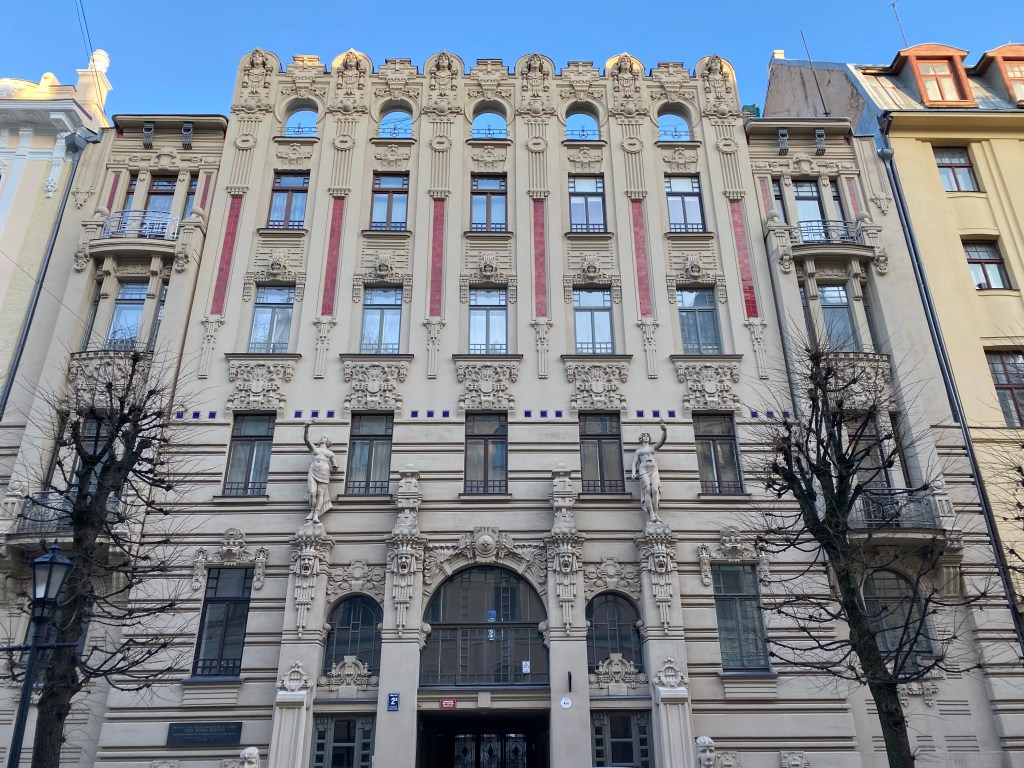
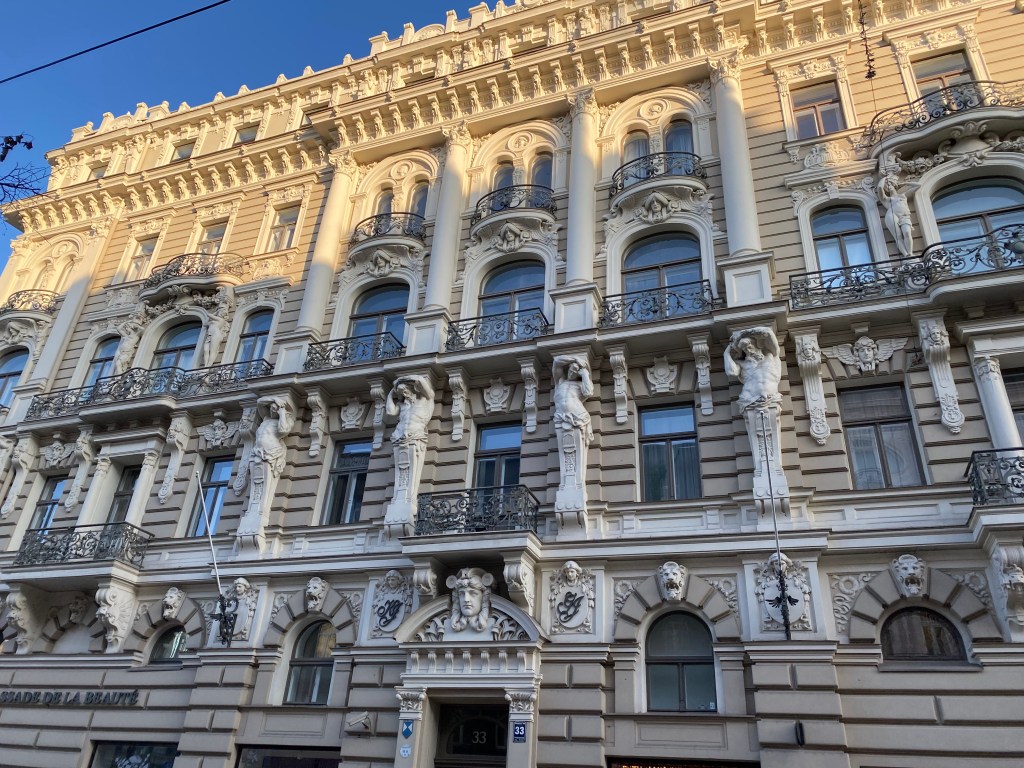
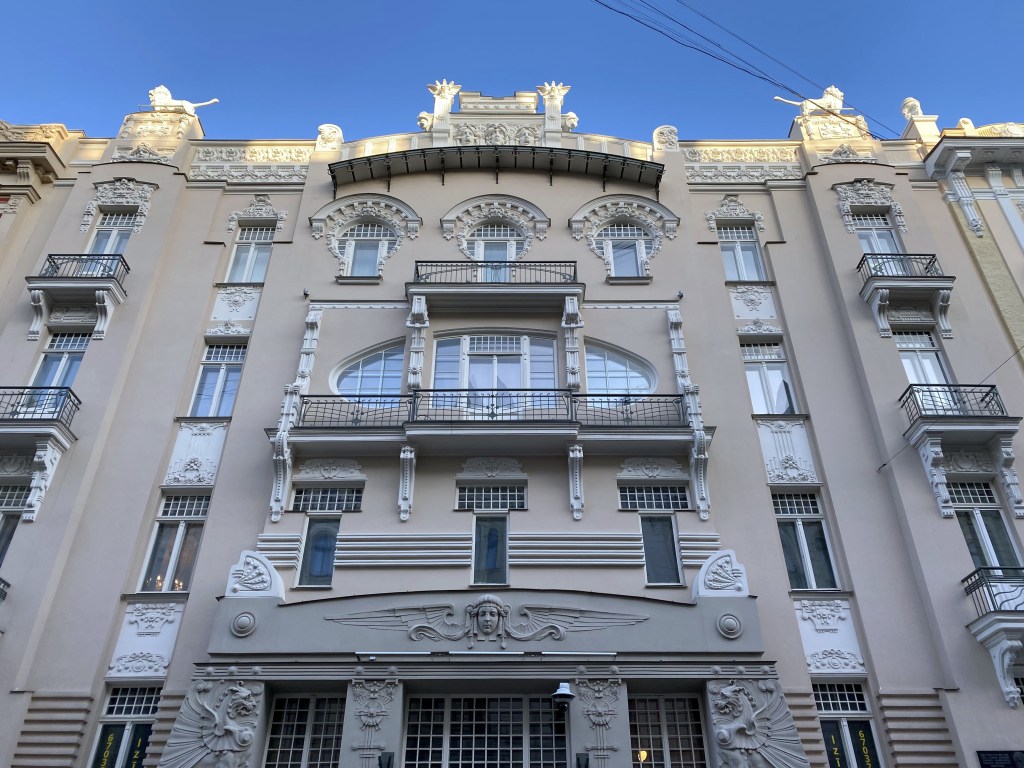
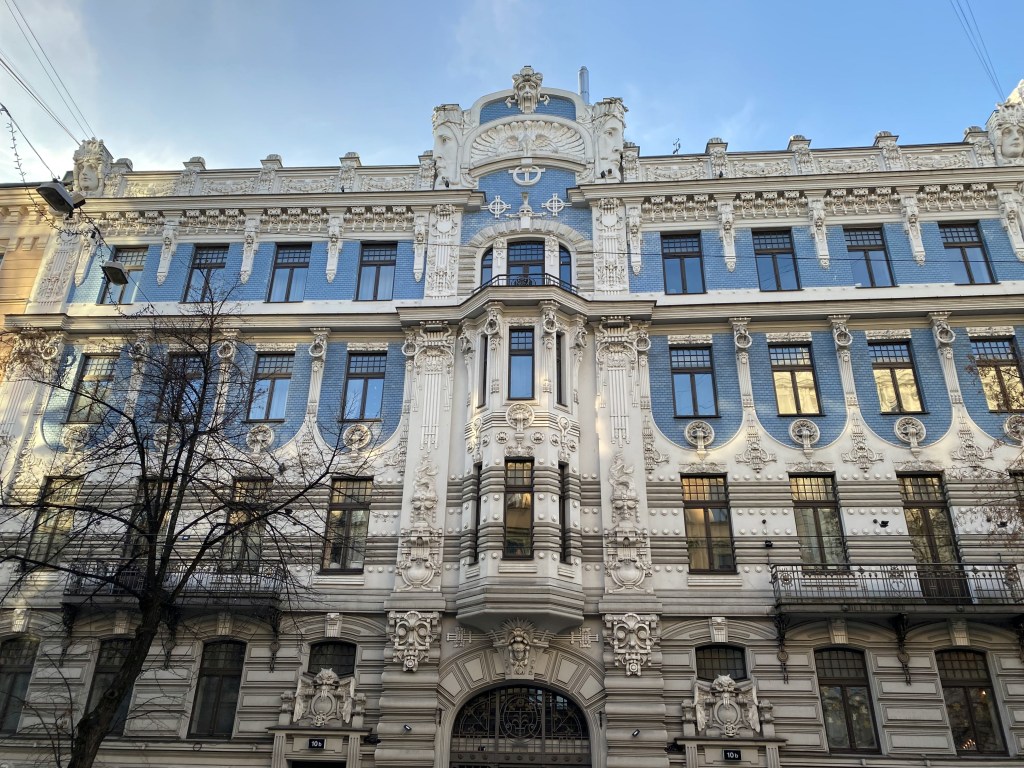
Riga’s Art Nouveau district on our Christmas Day walk. Riga’s period of peak prosperity happened to coincide with the Art Nouveau arts and architecture movement between 1890 and the outbreak of WWI. Although not at all unique to Riga, the town benefited from not being bombed into oblivion during WWII, resulting in a concentration of buildings in this style not seen anywhere else in Europe.

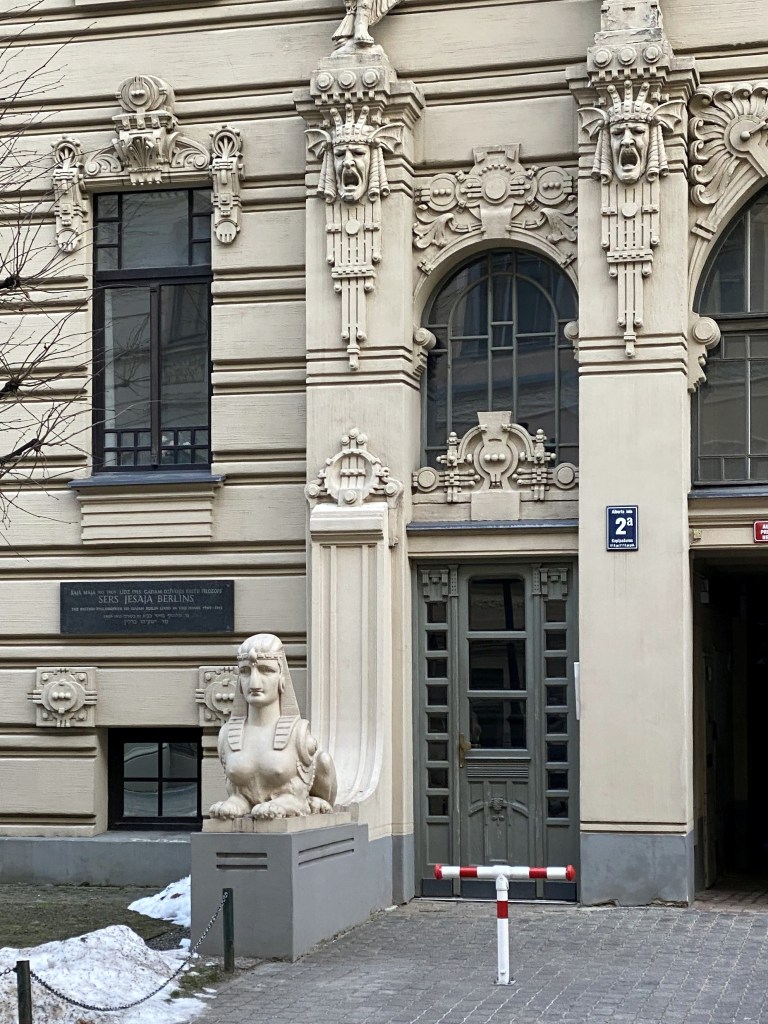
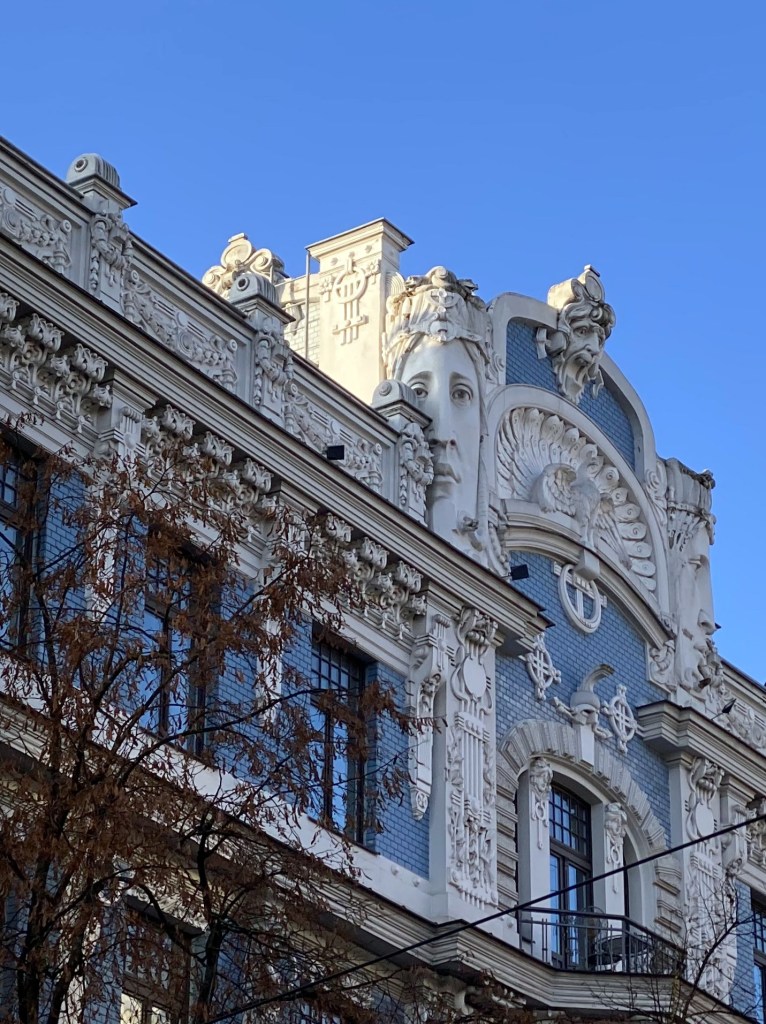
Perhaps the coolest: No. 10b, with a peacock (the symbol of art nouveau) flanked by big-ass faces.

Perfect winter weather in Riga for a Christmas visit.

On to our final stop of the trip: Amsterdam.

Categories: Europe, Latvia | Tags: , , , , , | Leave a comment

Turkey and Back to Greece: Paros Part 3 – The Final Reckoning (Or, Parikia, a Lighthouse Hike, and the Linguistically Exact Opposite of Paros)

The final post on the Turkey and Back to Greece trip (finally!). And just in the nick of time: we’re hitting the road (and the Adriatic Sea) tomorrow, and so won’t be posting any of the other backlogged trips for a while. These are all the long trips (versus week-long trips that we responsibly posted immediately after getting back from each), and include the following:

We’ll eventually post the detailed content on each of these trips here on WolfeStreetTravel.com; in the meantime, we’ll be posting pics in real time during two upcoming extended trips over the next 5 months @wolfestreettravel on Instagram, if you’re interested.

Back to our final post on Paros. . .

Although we chose not to stay in the largest town on the island (for reasons obvious here), we nonetheless headed to Parikia one day during our stay on Paros as a day trip.

Very cool, bustling burg. With equally cool, wooden-framed bikes to boot.

The absolute most intriguing site in town has to be the Frankish Castle.

Built by the Venetians in the 1200s on the site of the town’s ancient acropolis, the “castle” (actually the remains of a tower that was part of a castle wall) was constructed Jenga-style using the vestiges of classical temples from around the island.

Little remains of the original fortification, and nearby structures incorporate what remains into their own walls.

One of the three “Mavrogenus’ Fountains” found around town. ” Nicolaos Mavrogenus was one of the prodigal sons of Parikia, Paros Island main town in the Greek Cyclades. Missing his native Aegean and as Wallachia governor decided benefit his hometown providing a public drinking water supply [in 1777]: three beautiful marble fountains.” (From here.)

And another (we never came across the third):

Finally getting a gyro at a local place in Parikia’s port (the empty plate would soon be filled):

The Byzantine-era church complex of Panagia Ekatontapiliani (The Church with 100 Doors):

According to tradition, the church currently has 99 doors and a secret, 100th door will open when the church of Hagia Sofia in Constantinople become Orthodox Christian again.

The original church dates back to 326, during the reign of Roman Emperor Constantine, and purportedly was founded by his mother, Helene (whose sarcophagus we came across during the micronations road trip).

We think the church elders employed third graders to carve the church’s tombstones:

In the 6th century, Byzantine Emperor Justinian enhanced the church and added a dome.

Another view of the Frankish Castle as we head out of town.

The best hike we experienced on the island took us to the Korakas Cape Lighthouse at the northwest tip of the island.

Another field trip, this time a short ferry ride to the polar opposite of the island of Paros: Antiparos (it’s just a smaller island than Paros).

With a really picturesque main town:

Bye, Antiparos.

And bye, Paros, and Cappadocia, and Istanbul. Trip posts complete!

Categories: Greece | Tags: , , , , | Leave a comment

Turkey and Back to Greece: Paros Part 1 – Naousa

This, at long last, represents the final tranche of posts for our September 2022 Turkey and Greece trip: a week on the Greek island of Paros in the Cyclades archipelago.

The Turkey and Back to Greece trip, as originally planned, was to be our first post-retirement travel excursion. The second WolfeStreetTraveler would retire in mid-August 2022 (the first had retired the previous year), and then we’d immediately spend a full month on the road – leaving in late August and returning in late September. After a week in Turkey, we’d spend 3 weeks island hopping in the Cyclades:

  • Paros for 1 week
  • Milos for 4 days
  • Folegandros for 3 days
  • Naxos for 1 week

But a perpetually problematic NOAA weather forecasting supercomputing support contract in the otherwise optimally operating Science & Engineering business run by on of the WolfeStreetTravelers had other plans. The recalcitrant actions of the most uncooperative data center and the most incompetent supercomputing vendor to ever play a role in weather forecasting would require, it turns out, another 6 months to address. So that WolfeStreetTraveler postponed retirement, canceled the Milos / Folegandros / Naxos legs of the trip (for which both the ferry fares and the hotel / AirBnB reservations were refundable, which was a relief), enjoyed the remaining first legs of the trip, then returned to work to dig in for another half year to pound on pernicious program problems.

But that’s okay – a week in Paros was unbelievably great. And we’d get to the other Cyclades islands later (in fact, they were supposed to comprise the second half of a 6-week trip planned later this year, but earthquakes in the area scared us off, so we’re hitting Mallorca and Andalusia instead, which should be pretty great, too). We’ll get back to the remaining Cyclades soon enough.

In Paros, we based ourselves in the town of Naousa at the north end of the island. Although the main city and ferry port on the island, Parika, held some appeal, our research suggested that Naousa offered more of what we were looking for; and we could always day trip to Parika (which we did).

And Naousa was absolutely perfect for us:

Although definitely a tourist town, Naousa still operated as a working fishing port

where the catch of the day would appear on your table for lunch and dinner.

For the entire week, we’d begin each evening with sunset cocktails on the water, then wander into town to find dinner. The best of these, which we’d patronize three evenings during our stay, was called – fittingly enough – Come Back. So we did. Again and again.

And for obvious reasons.

Sunset in Naousa from the Come Back beach:

And thence, into Naousa for some seafood.

Pretty great weather – mostly – during out stay. We did have a day and a half of super windy weather that was part of the normal weather cycle in the Cyclades, but that also was strong enough that it curtailed some activities.

Fishing wasn’t one of them.

Our time on Paros also encompassed our anniversary, which was great.

Pretty good AirBnB digs.

Another evening, another round (or three) of cocktails at Come Back.

And another sunset. Pretty good routine.

A break from fish with some moussaka.

One of the most photographed spots in Naousa, based on our Instagram feed before the trip. Colorful, yes, but empty.

And then night falls:

Another sunset, and our second favorite cocktail spot.

Maybe they should name this place “Also Come Back Here.”

Full moon over Naousa.

Categories: Greece | Tags: , , , , , | Leave a comment

Blog at WordPress.com.