Posts Tagged With: Europe

A Prolonged Foray to Europe: Sicily’s Baroque Towns

From Agrigento, we headed to Siracusa, in Sicily’s southeast corner. But first, we’d spend a few days in the island’s “Baroque towns.” These towns, including Modica, Ragusa, Scicli, and Noto, were all leveled during the region’s catastrophic earthquake in 1693. All of the towns were rebuilt in the same, exuberant, late-Baroque architecture – which was the style at the time – creating some of the most visually cohesive historic towns in Europe.

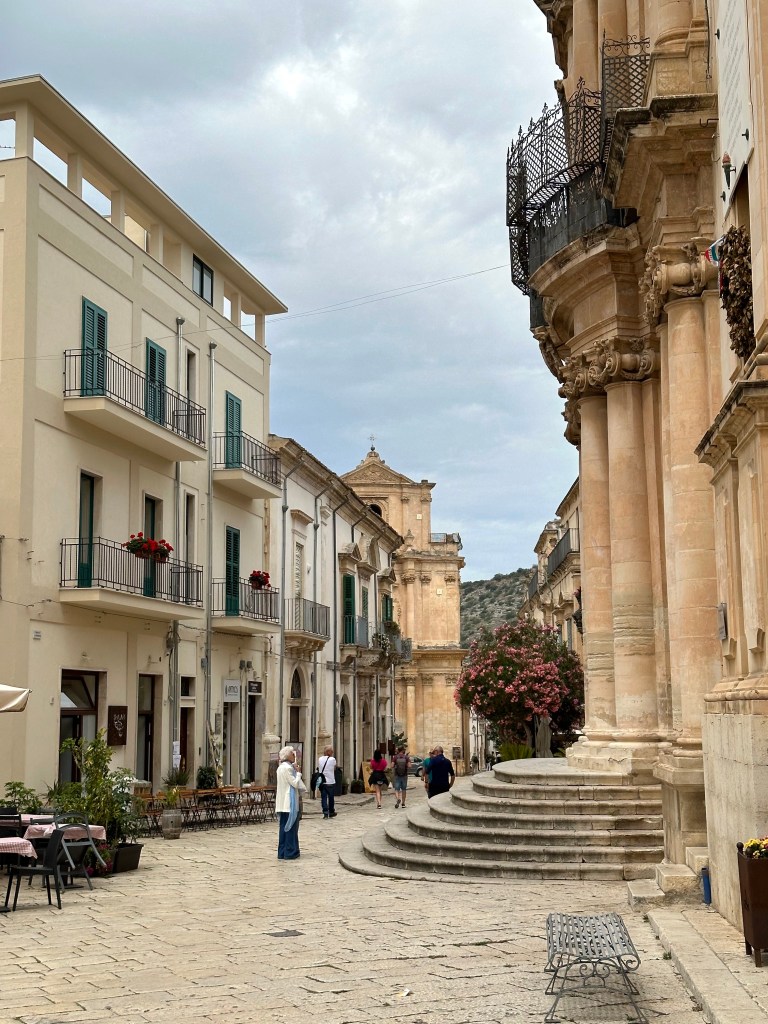
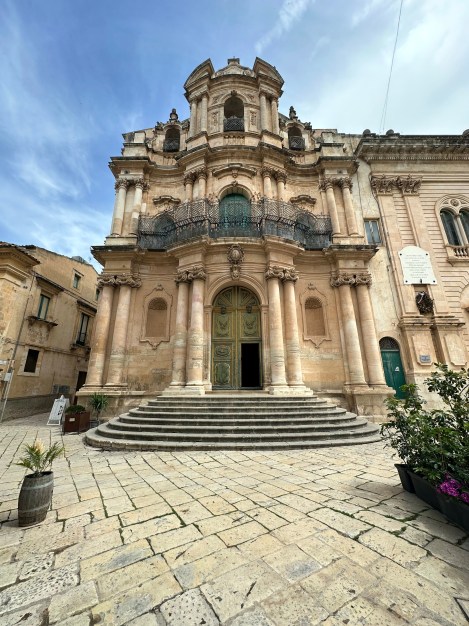
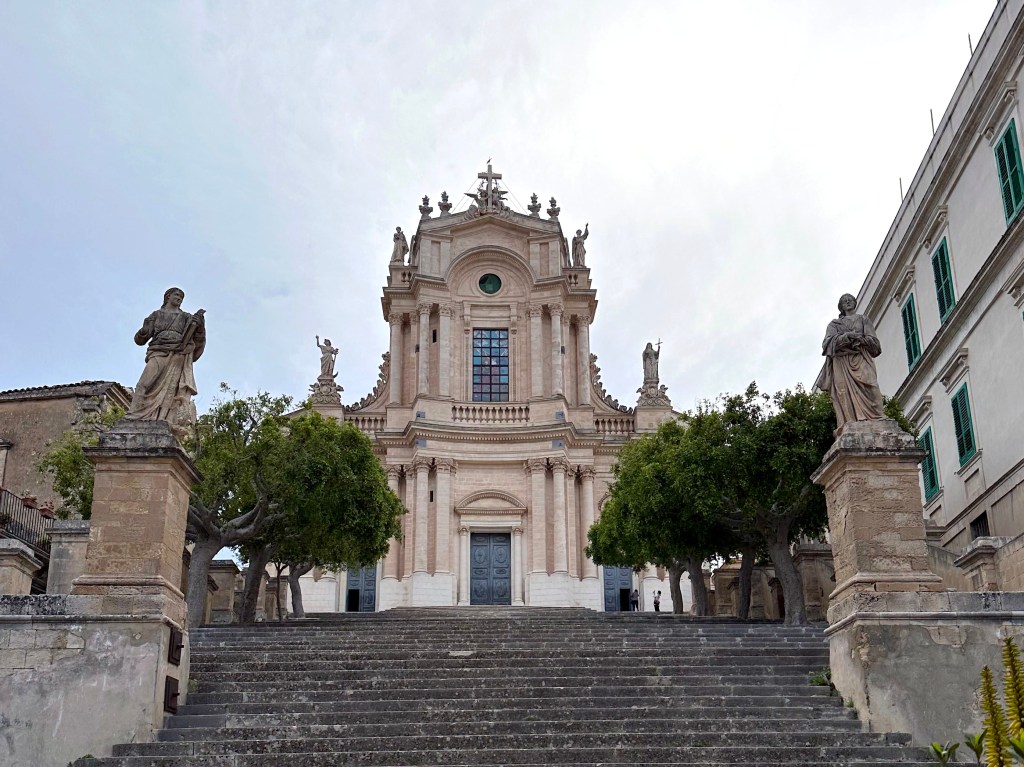
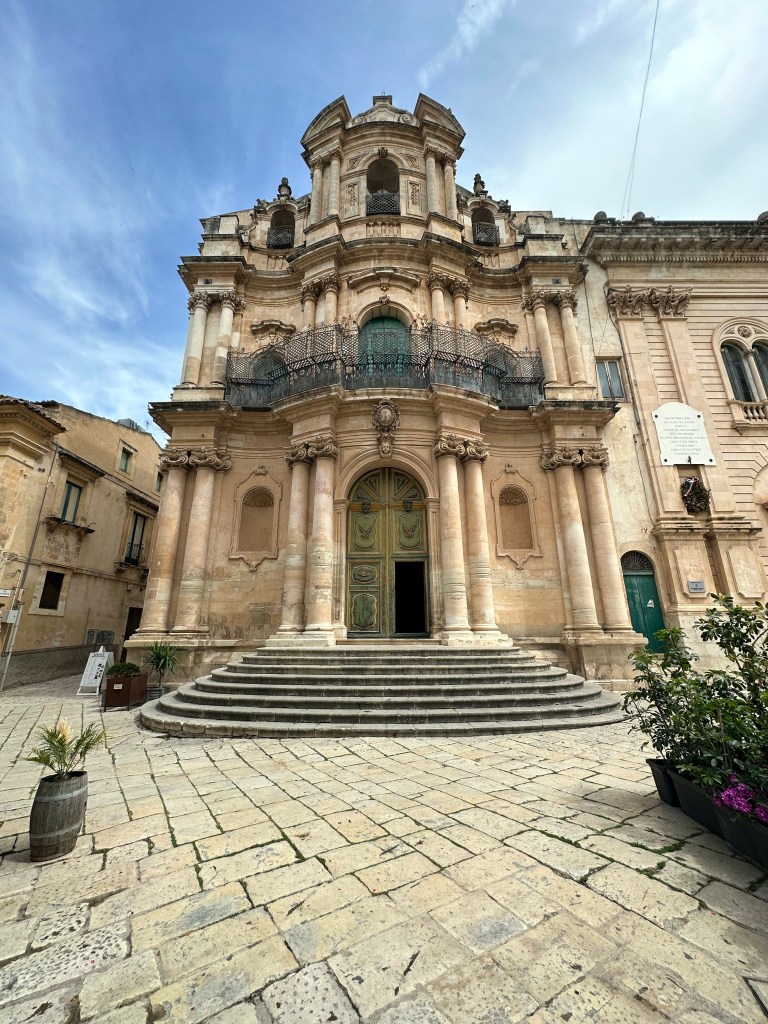
Each of the towns have the same characteristic Baroque, honey-colored stone architecture, dramatic staircases, and sun-drenched piazzas. But really, it’s the ornate churches that capture the essence of the Baroque towns – a prime example can be found in Chiesa di San Giovanni Evangelista in Scicli, but its siblings across the region all possess identical architectural DNA:
Of all of the towns to choose from, we decided to base ourselves in Modica for three reasons:

  1. It was centrally located among the Baroque towns
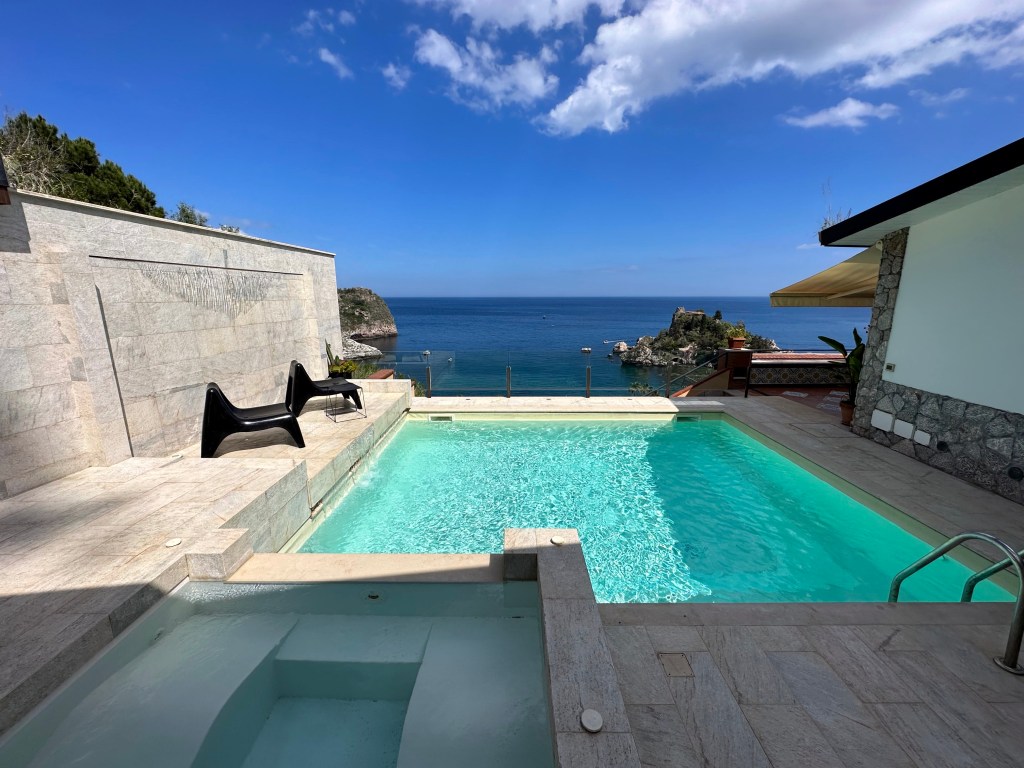
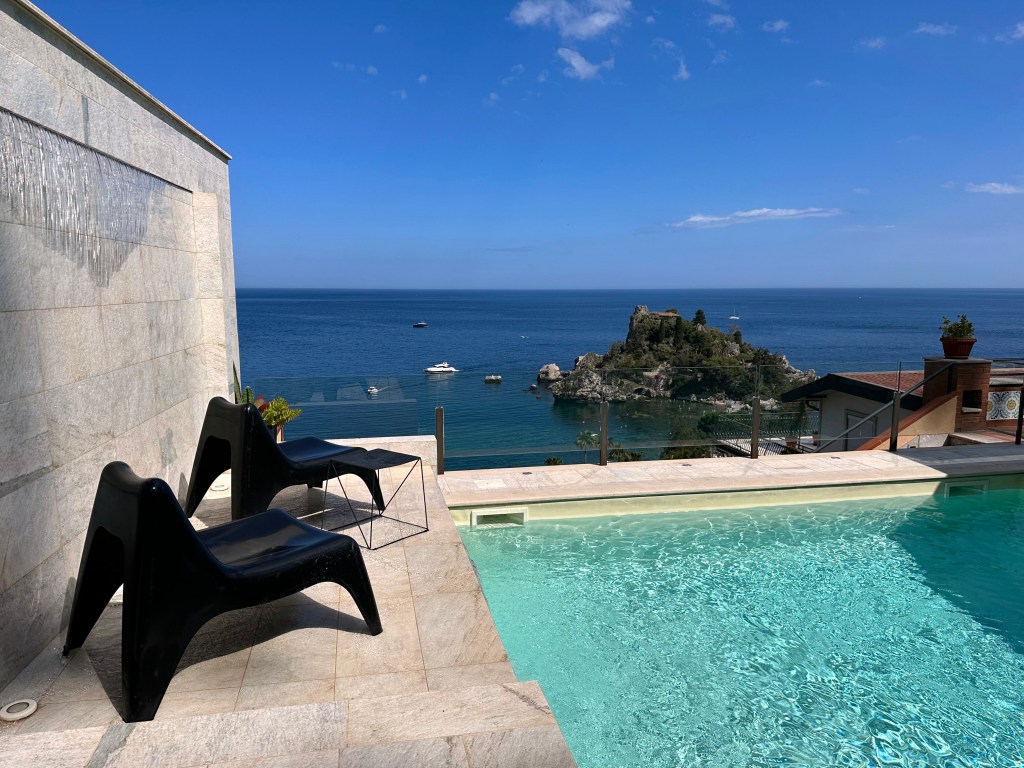
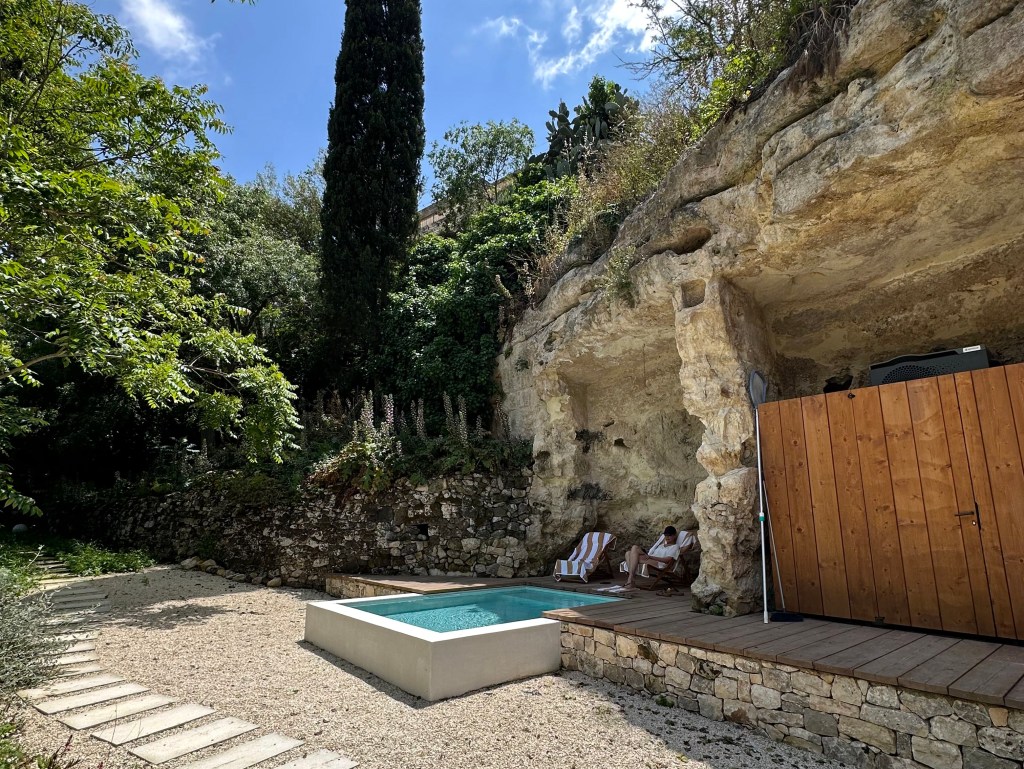
  2. There was an AirBnB in town WITH A POOL, which is uncommon in town, and we were obsessed during planning with having access to a pool while traveling through Sicily’s (and Italy’s, and Malta’s, and Portugal’s) hot climate
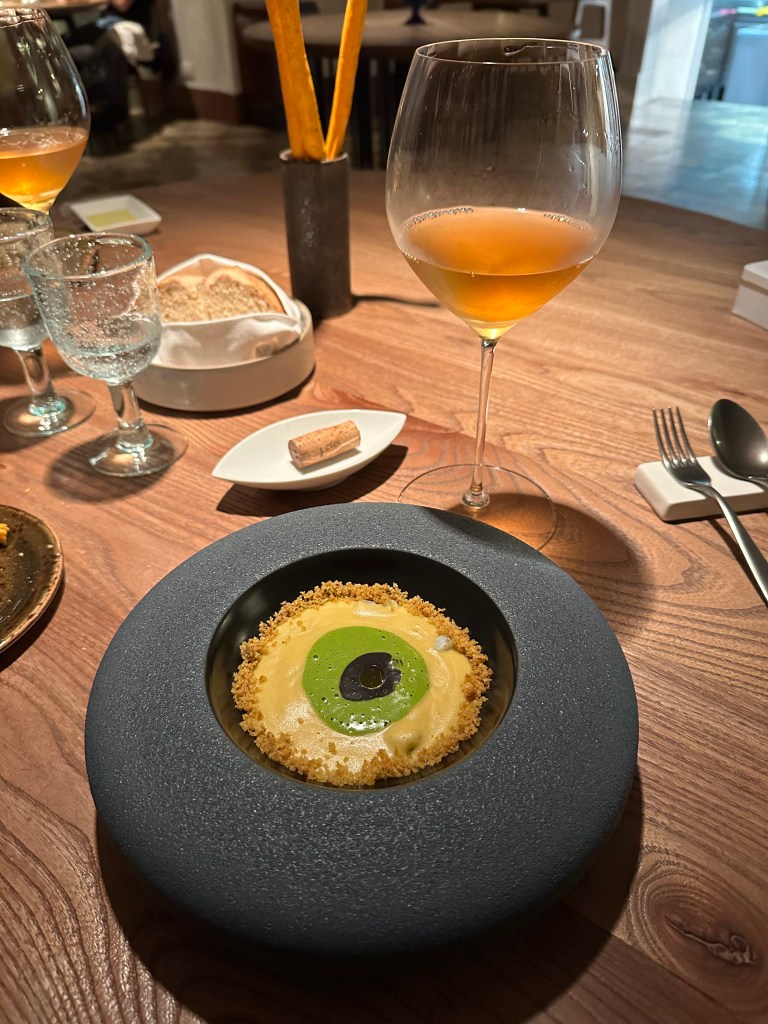
  3. Although the town looked small, it still hosted a Michelin-starred restaurant, seemingly an assurance that it would be a charming locale in which to base ourselves

We were wrong.

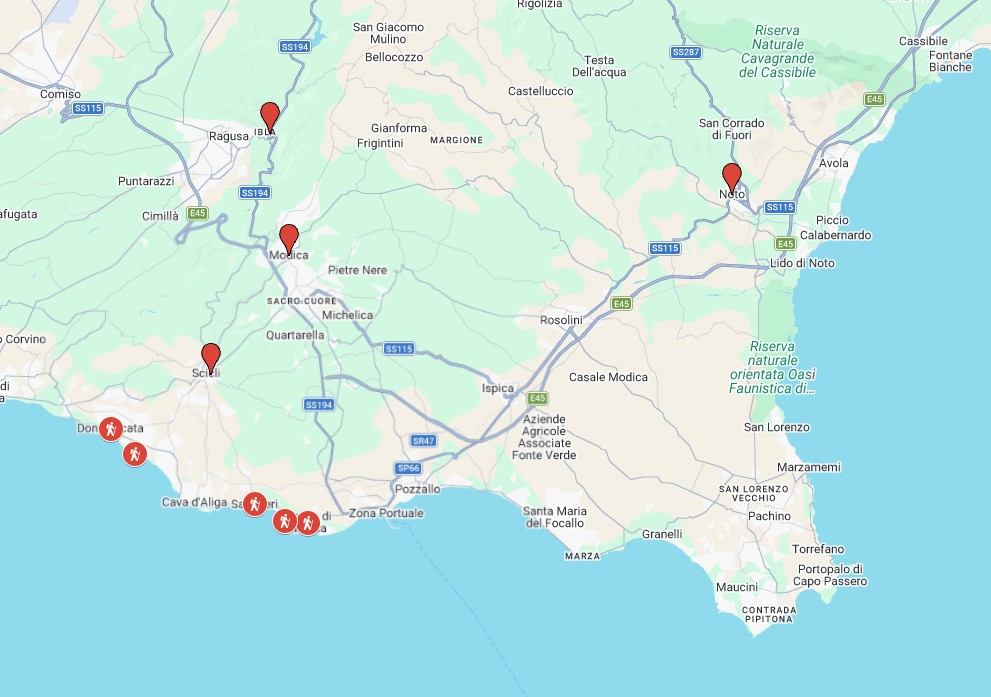
It was, indeed, centrally located:
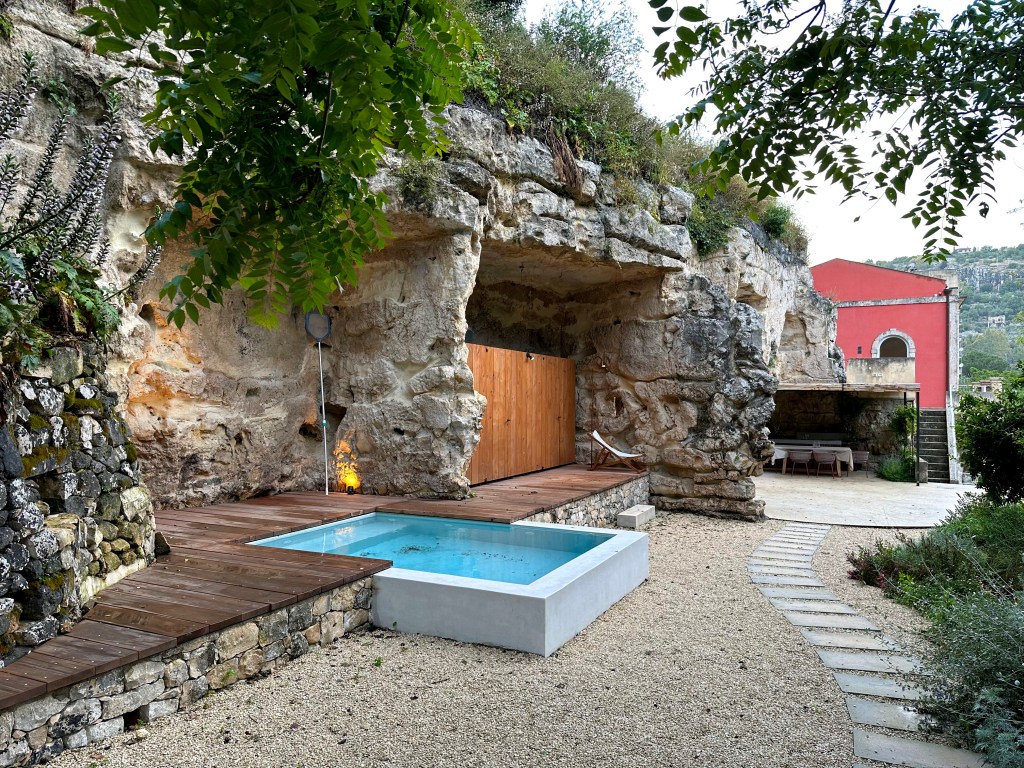
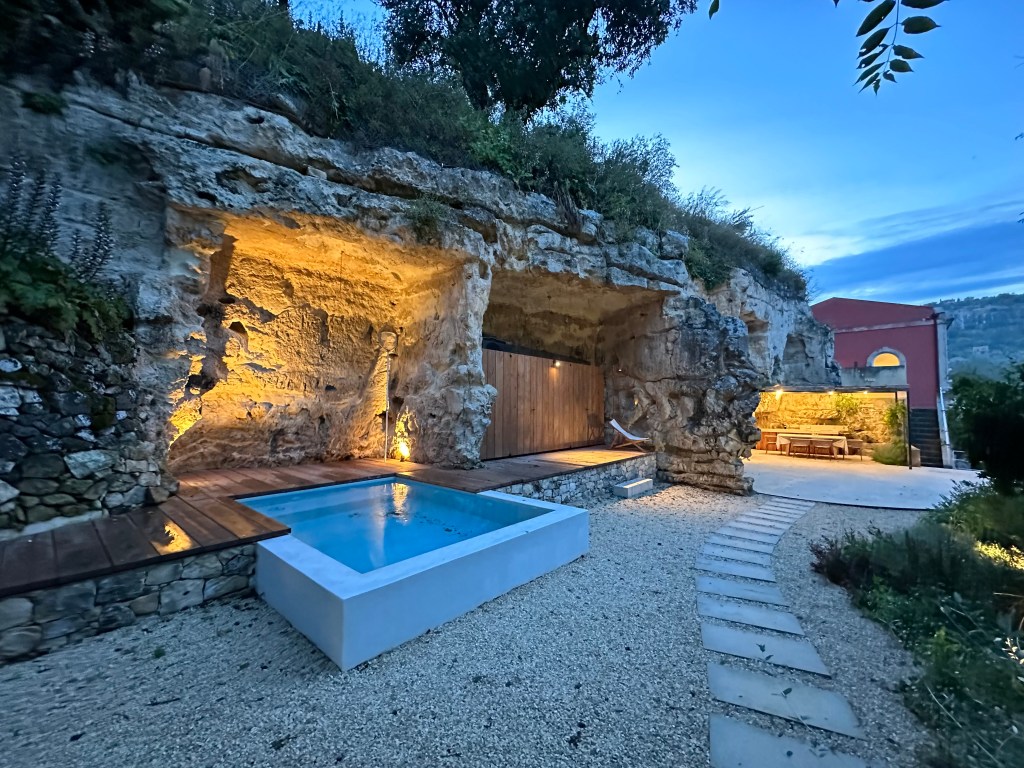
It did, indeed, have a cool AirBnB with a pool:
But, although the restaurant was on point,
the town lacked a pedestrian core and was not the most charming locale in which to base ourselves. After visiting Ragusa, we wished we had stayed there and had relegated Modica to day-trip status, a sentiment we passed on to our safari friends who had advised us on Capri and Praiano when they asked our advice when planning their trip to southern Sicily after our return.

Modica

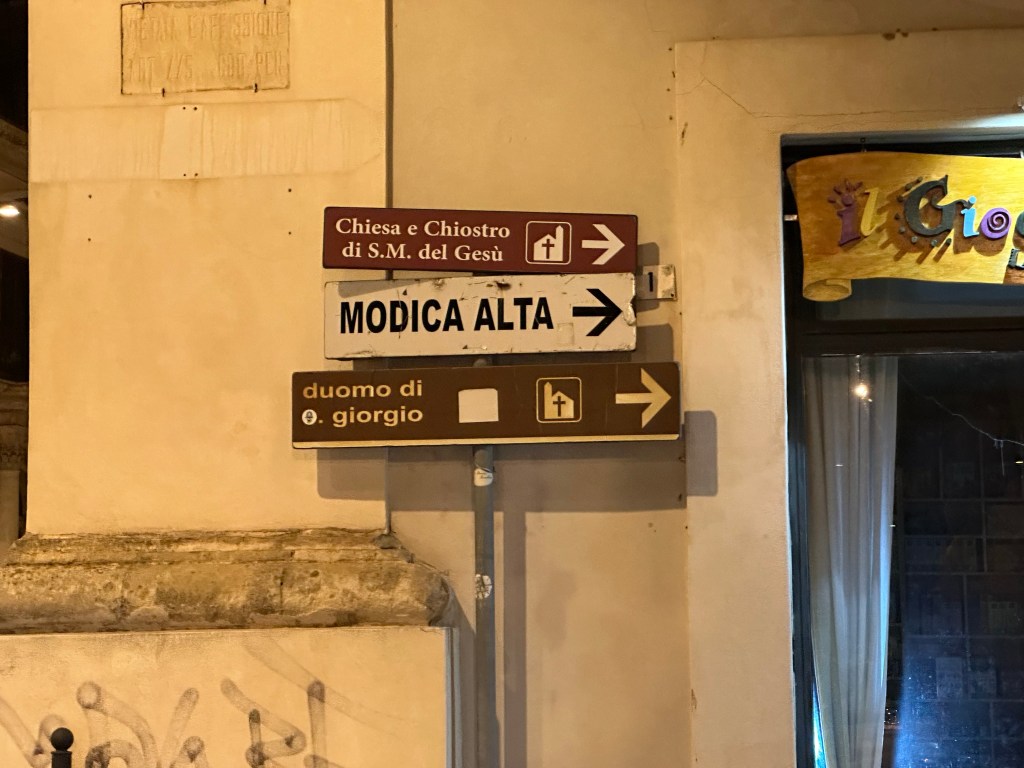
Modica is one of Sicily’s oldest continuously inhabited settlements, with roots stretching back to the Sicels and later the Greeks, Arabs, and Normans — each leaving layers of cultural imprint before the 1693 earthquake prompted its dramatic Baroque rebuilding across two hillsides joined by a central corso. One hillside is densely settled and comprises Modica alta, the high town:
At the bottom lies Modica basso, the low town:
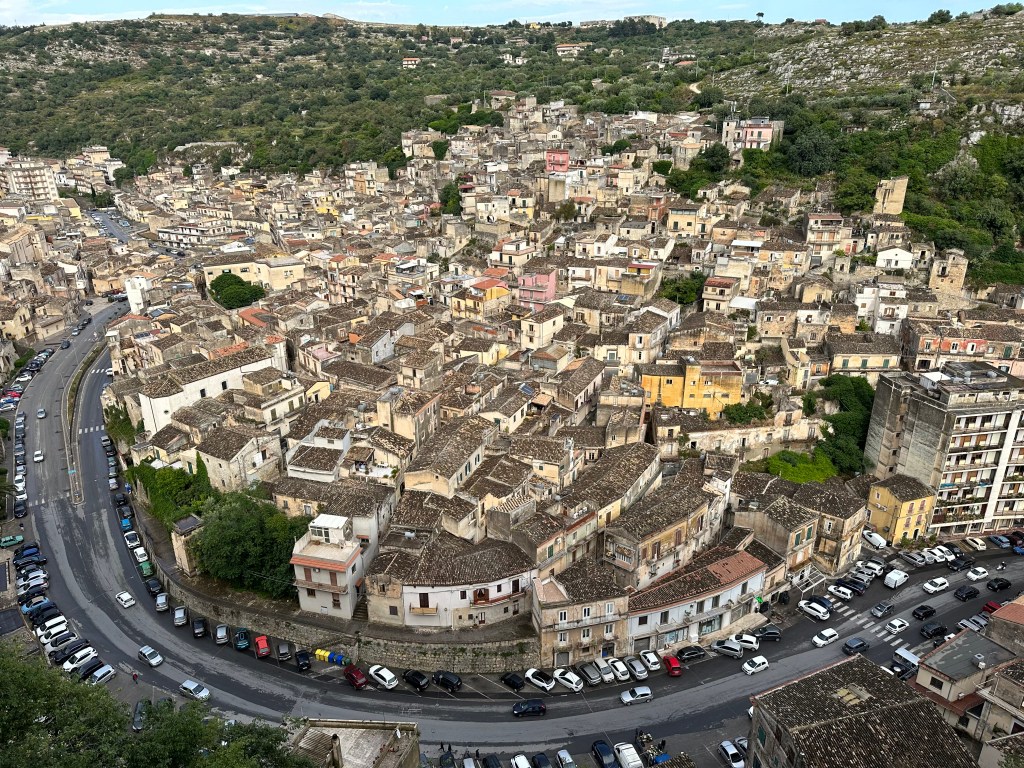
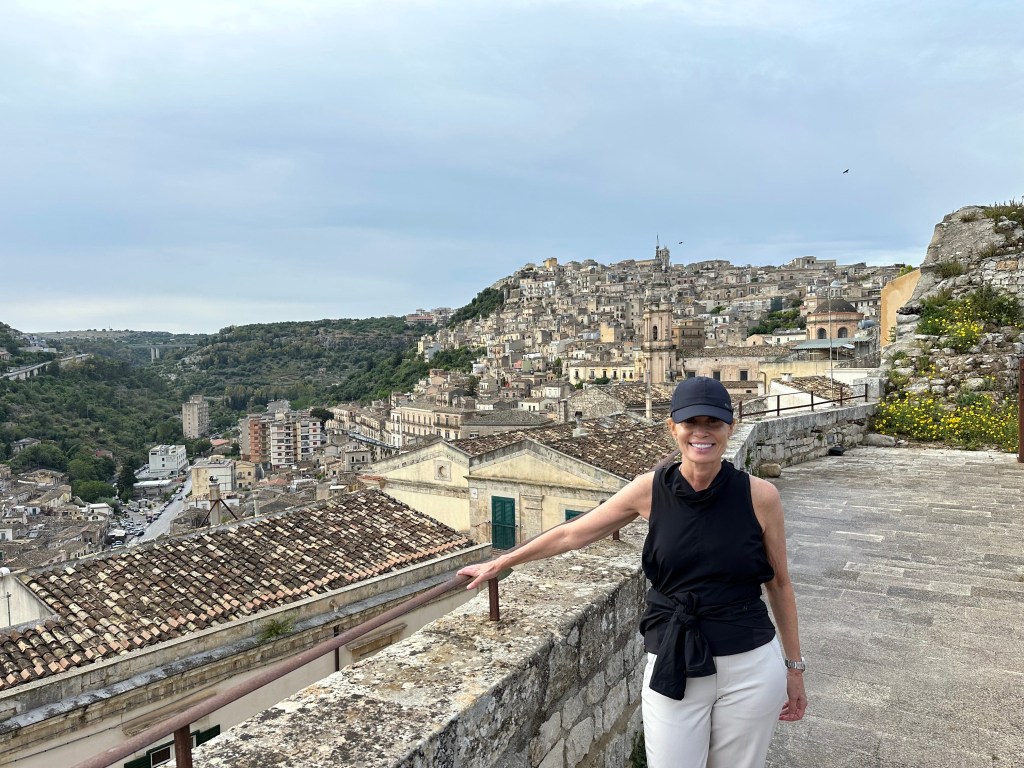
All of this viewed from Modica’s indominatable Castello dei Conti, a medieval fortress dating to 1272, perched on a rocky spur high above the town and reached via a long climb up steep steps.
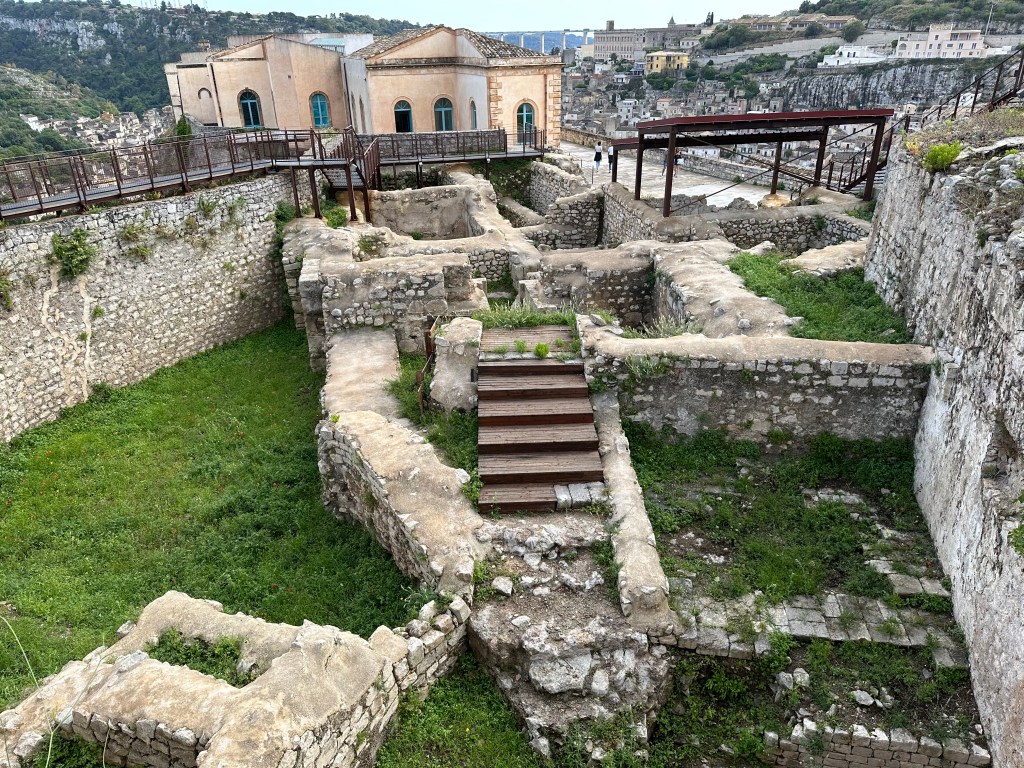
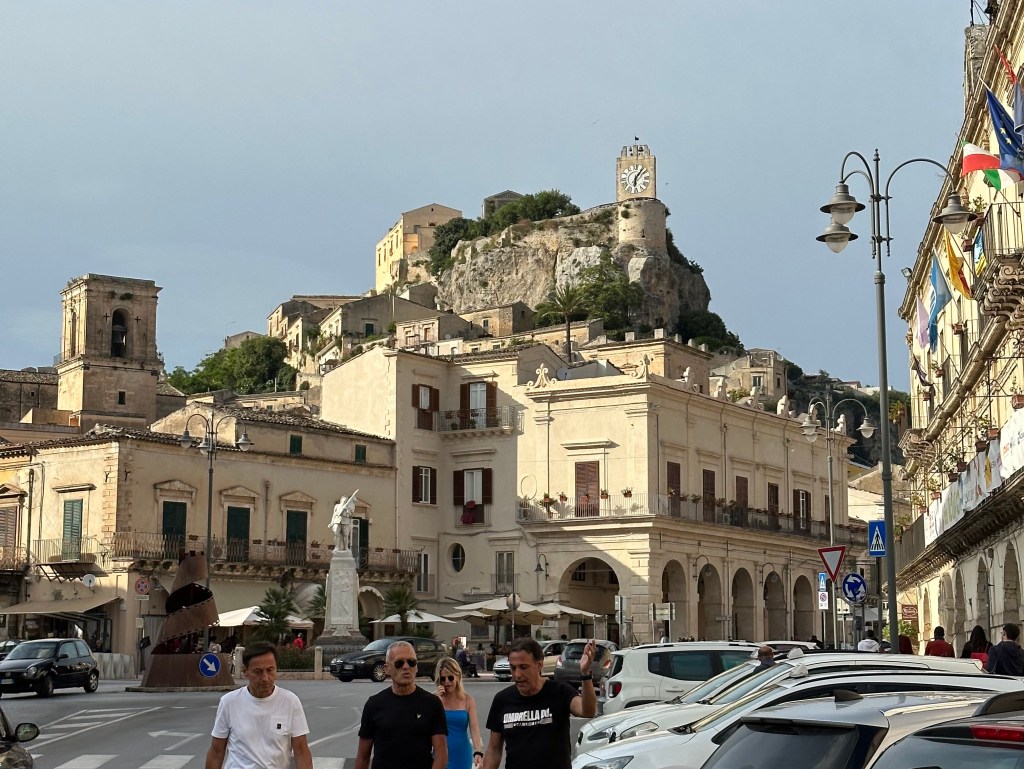
A rather nice view of the castello from below, in Modica basso:
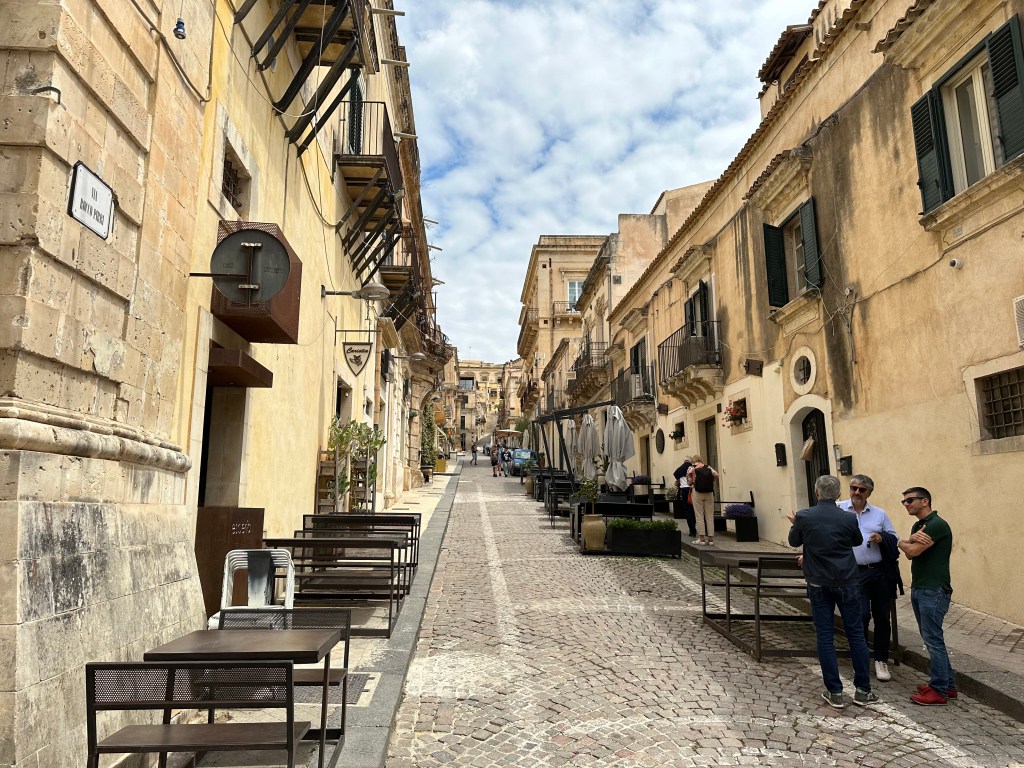
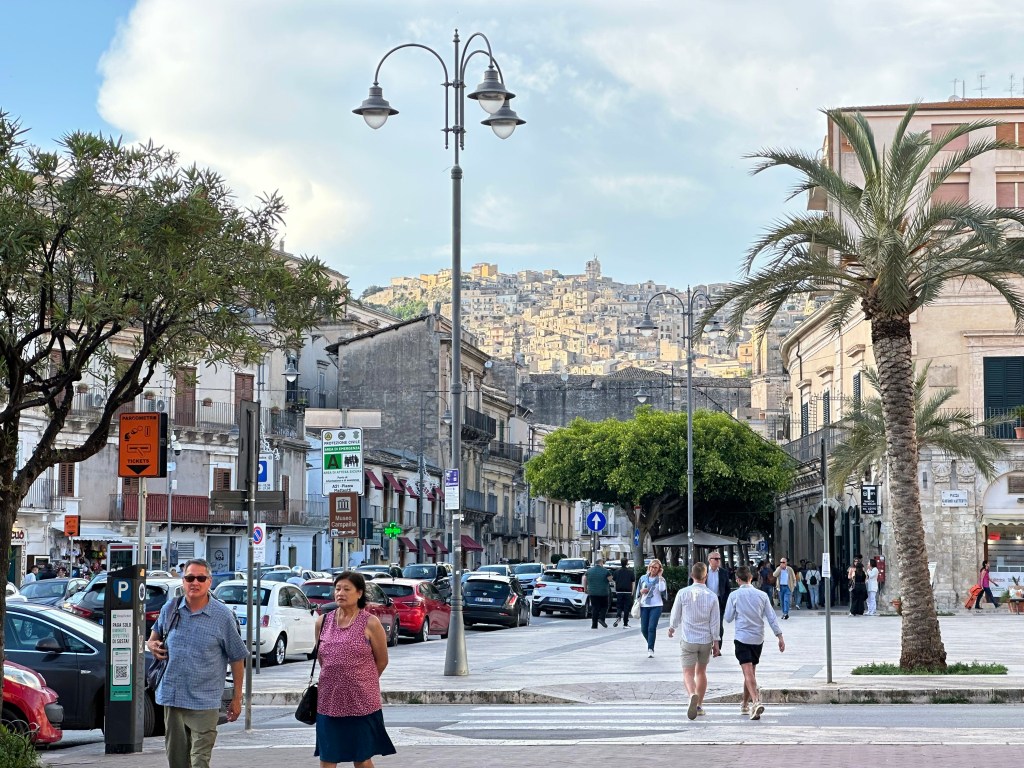
The town’s main drag:
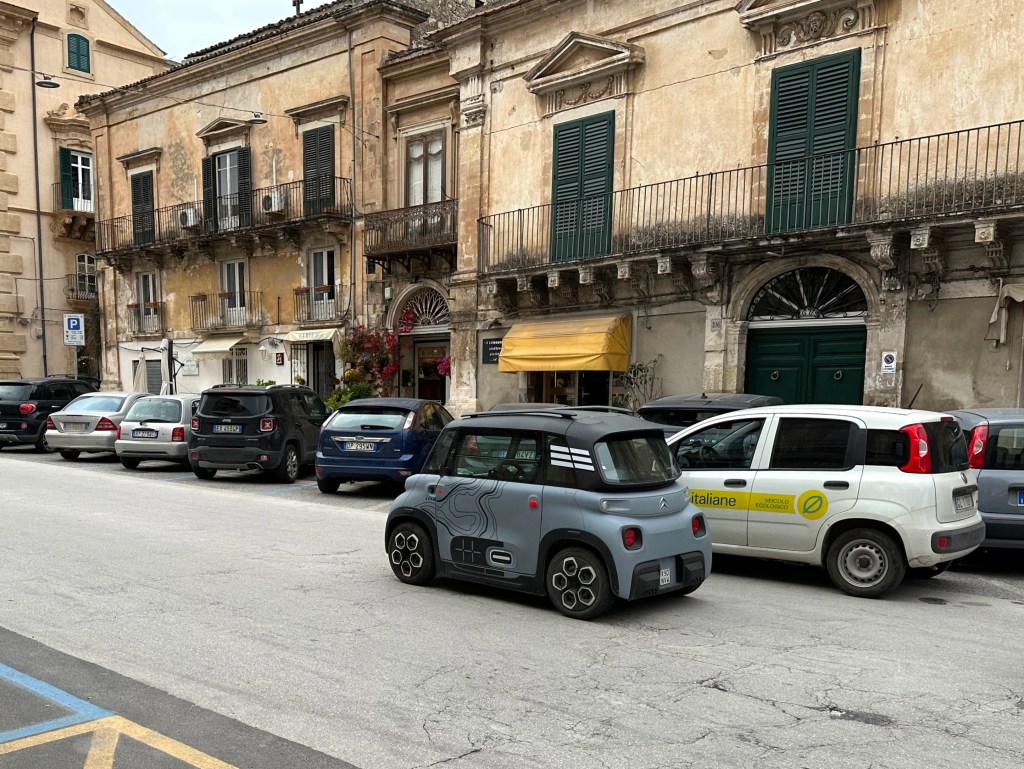
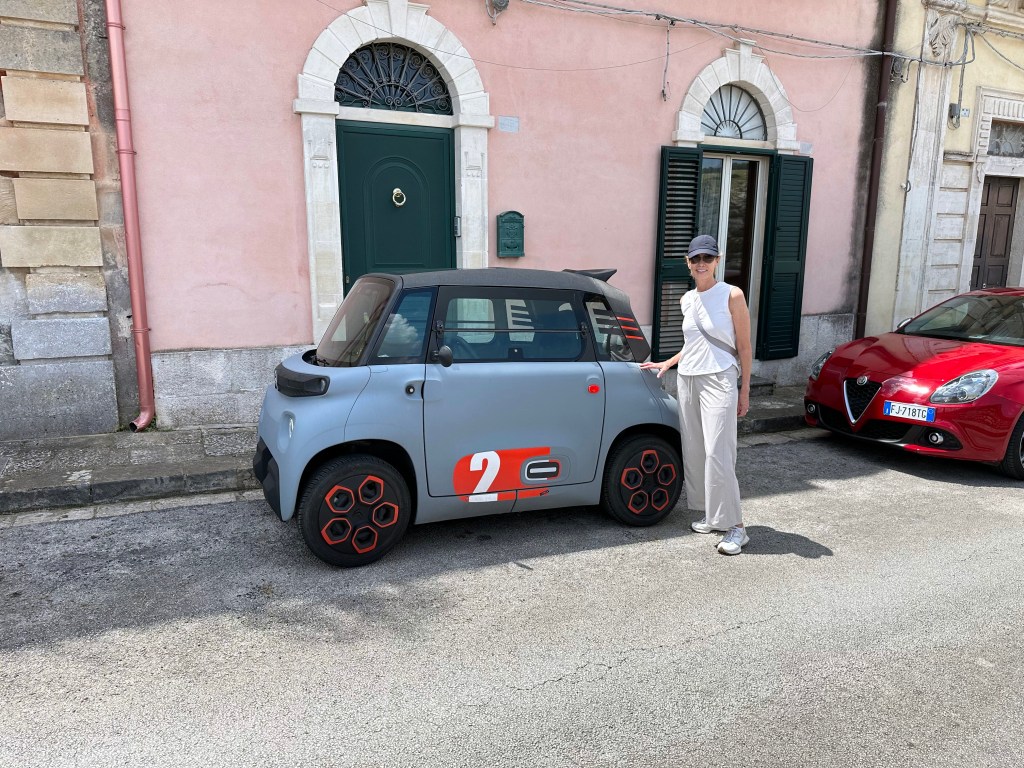
And the tiniest car we’ve ever seen. This little Citroen model would pop up in several of the Baroque towns. Hilarious.
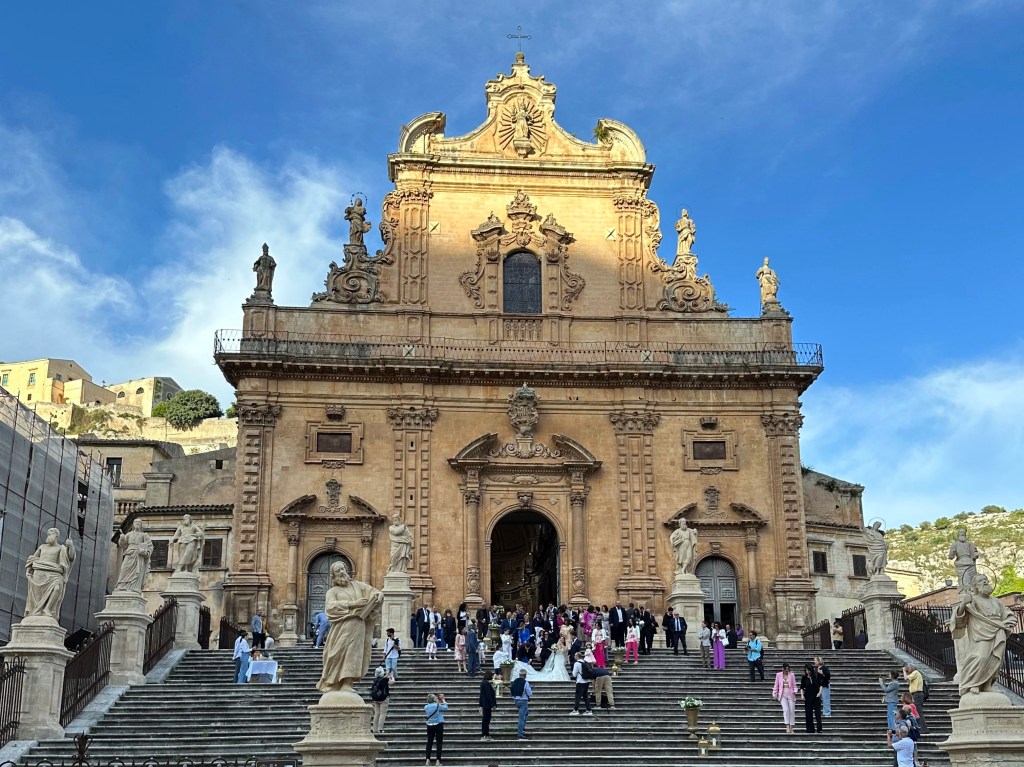
Our first (of way too many) Baroque churches. This one, a cathedral, the Duomo di San Pietro:
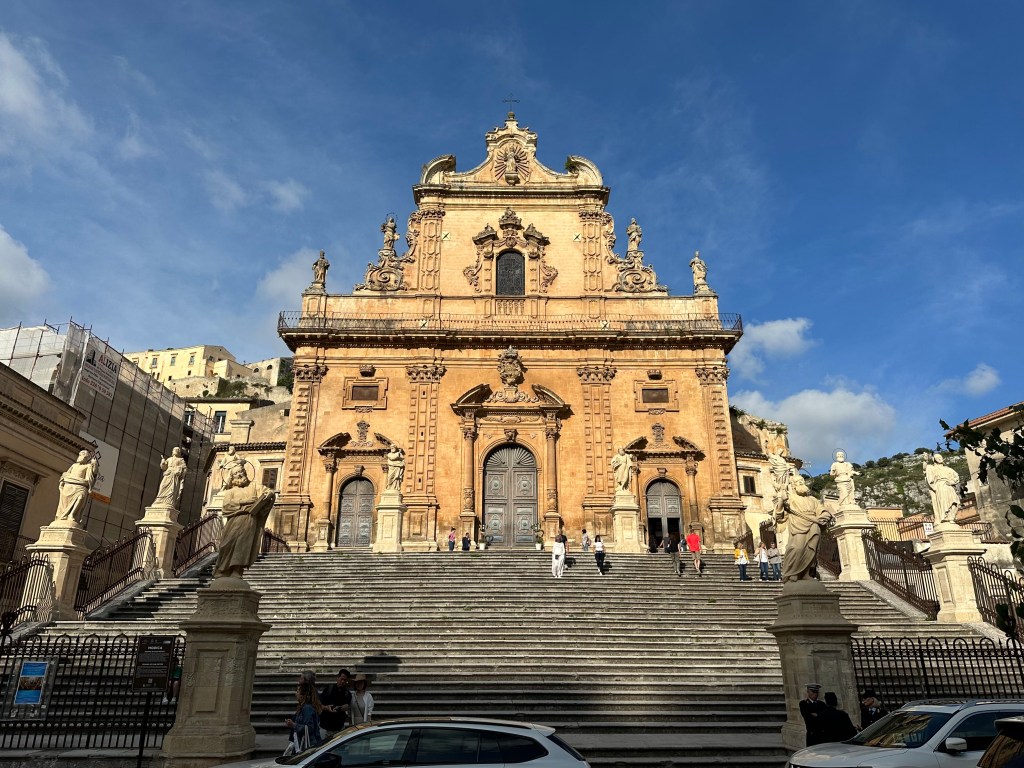
Put to good use hosting a wedding several days later:
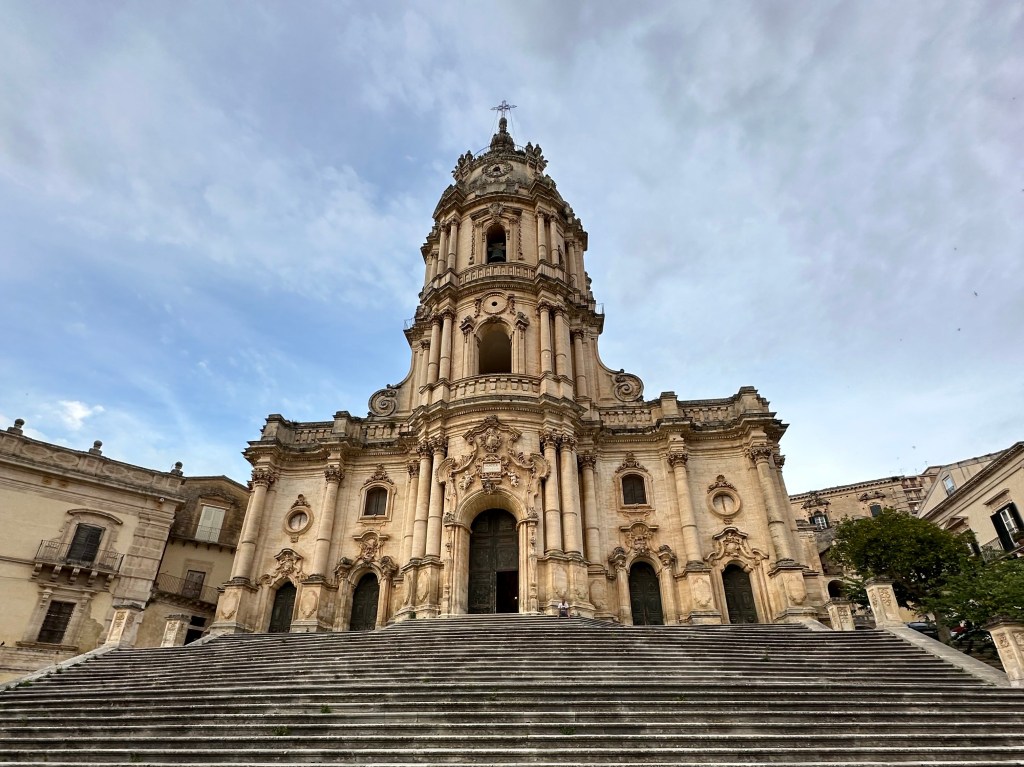
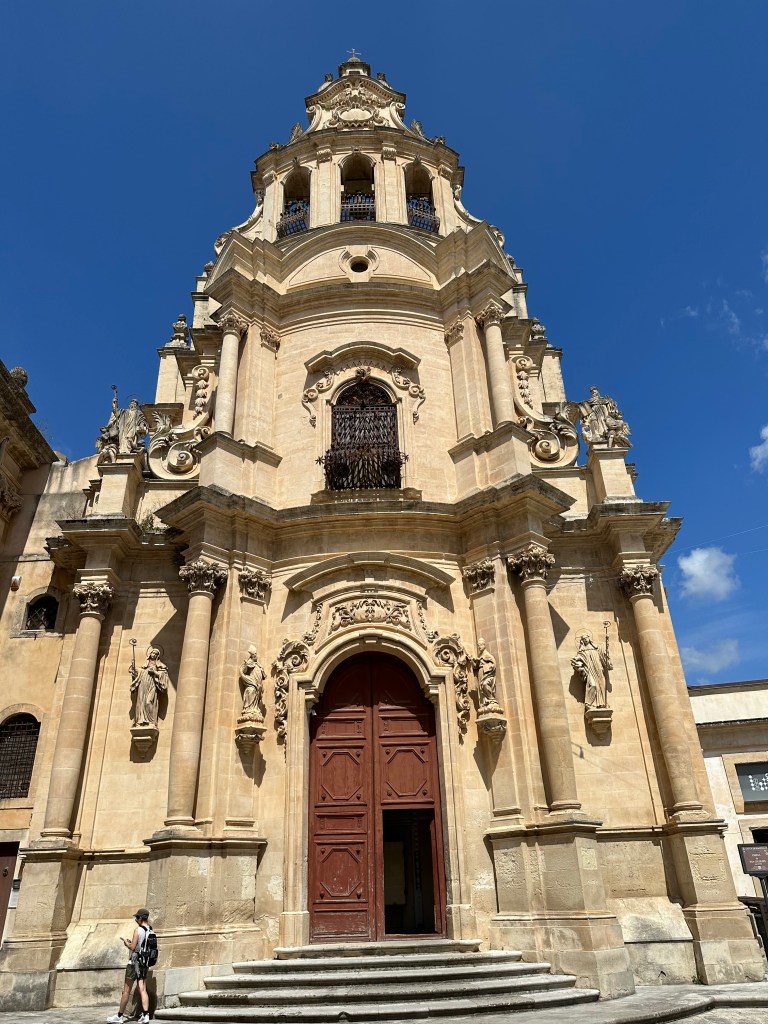
And yet another, ALSO a cathedral (which we totally do not get), the Duomo of San Giorgio:
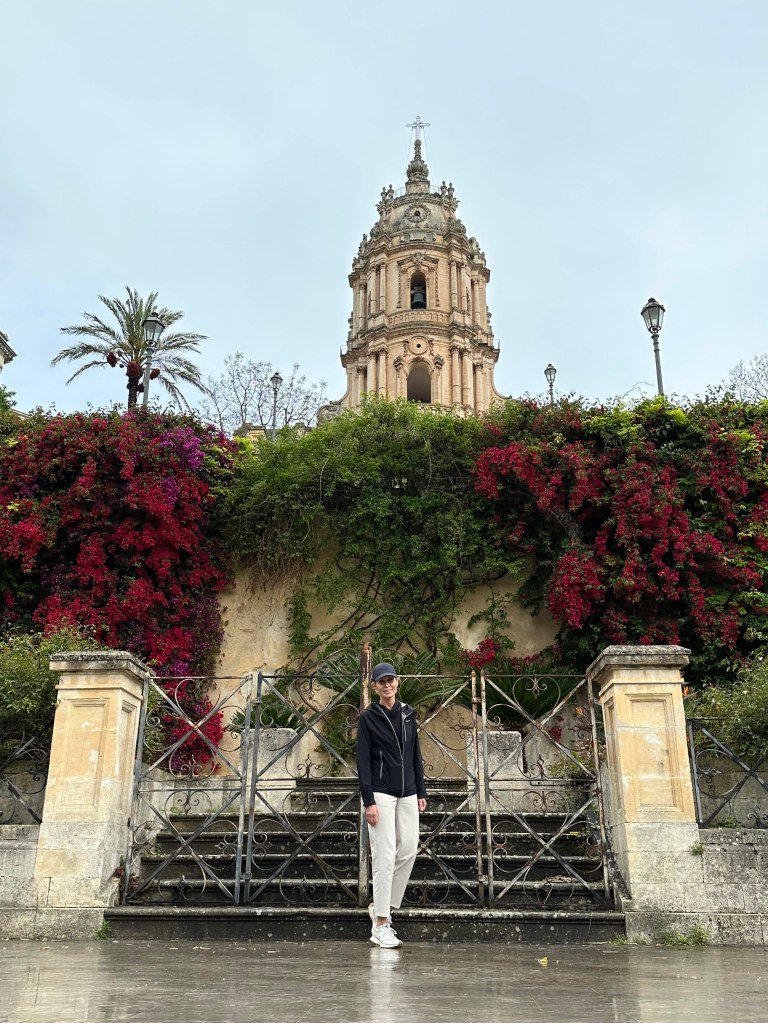
Of all of the towns and all of the churches we’d visit, we thought this one singularly captured the Baroque style – highly ornamented and be-columned, all built with the honey-tan marble:
Oh, okay – another one, this time the Church of St. John the Evangelist:
But they ain’t ALL baroque. To wit: the Rock Churrch of San Nicolo Inferiore. Discovered in 1987, the cave church dates to the 11th and 12th centuries and was abandoned following the Latinization of the island, when the Eastern (Byzantine/Greek) rite of Christianity was gradually replaced by the Western Roman (Latin) rite that followed the Norman conquest of Sicily in the 11th century .
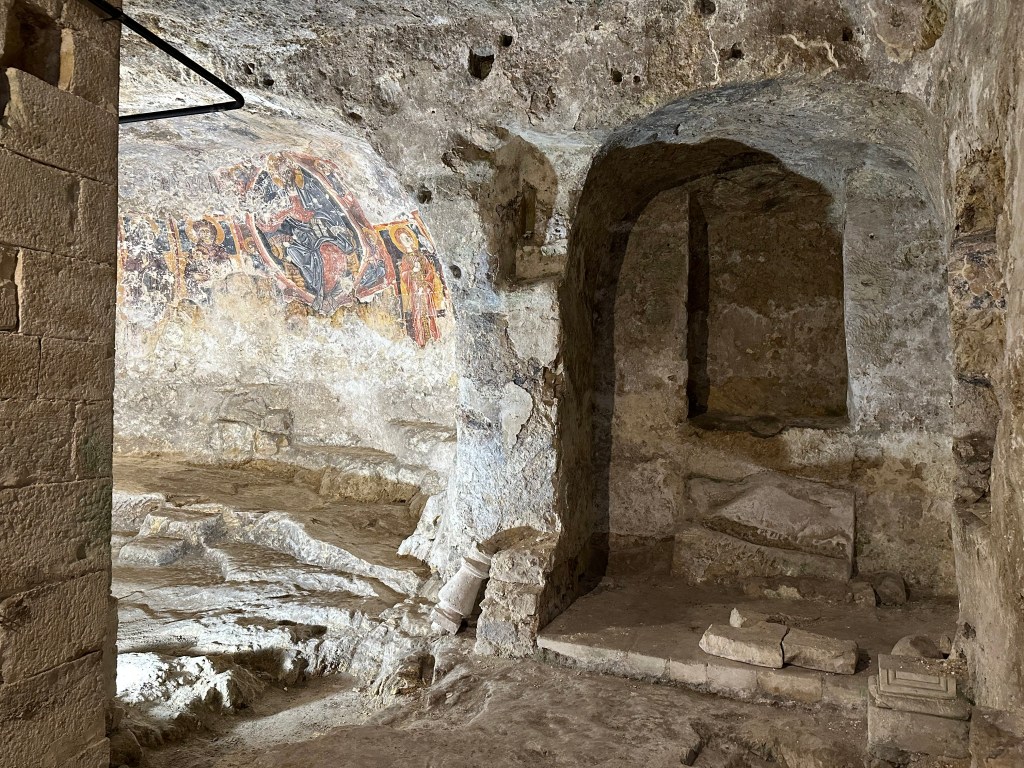
This place was covered by the collapse of surrounding buildings during the 1693 earthquake. But check out what was preserved.

Cool carved apse:
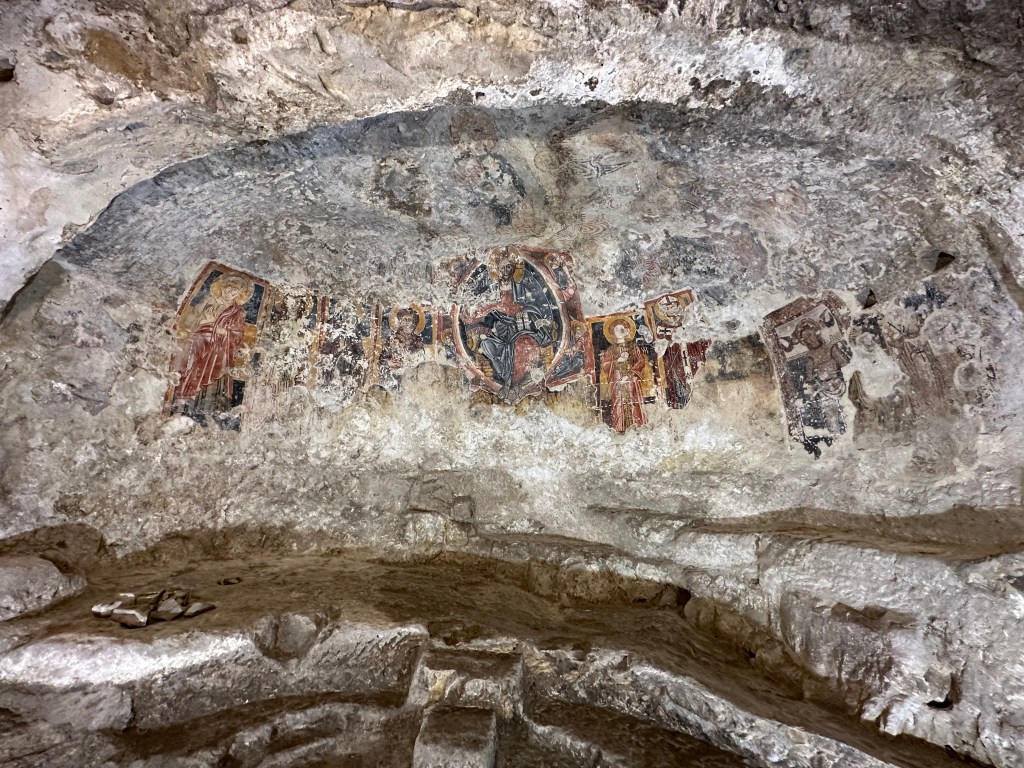
Featuring yet another freakin’ Christ Pantocrator – clearly a fave of the Sicilians:
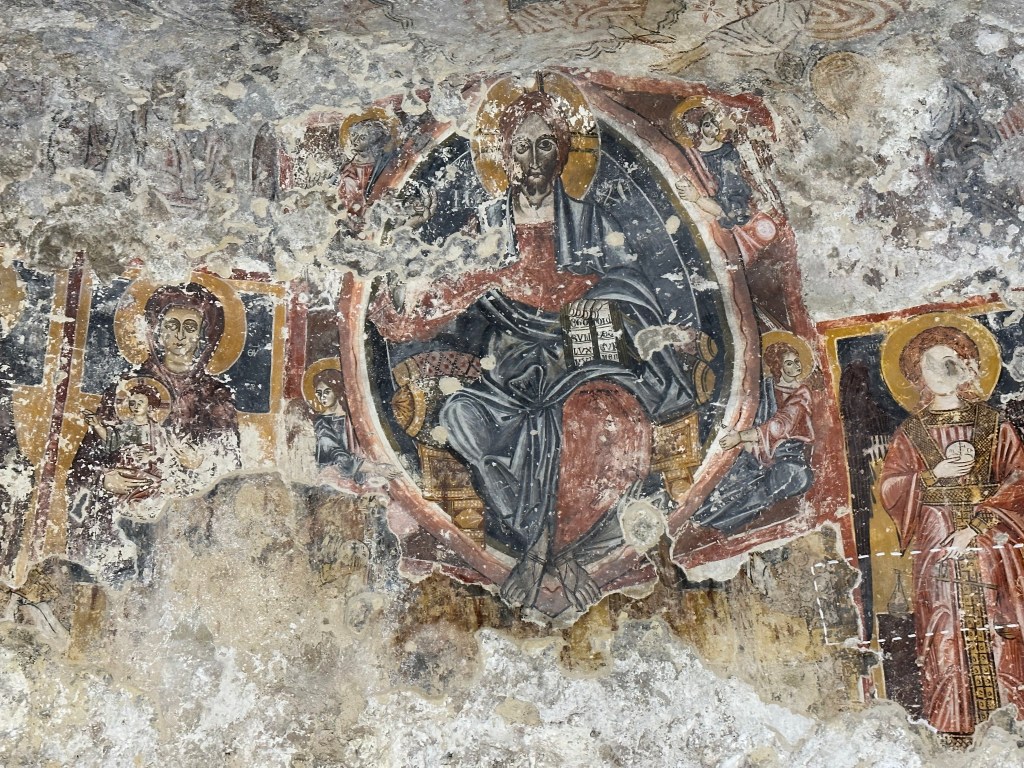
But we genuinely are engaged, entranced, and enthralled by troglodyte churches, with their openly exposed art applied a millennium ago and now just inches from you. Pretty incredible.

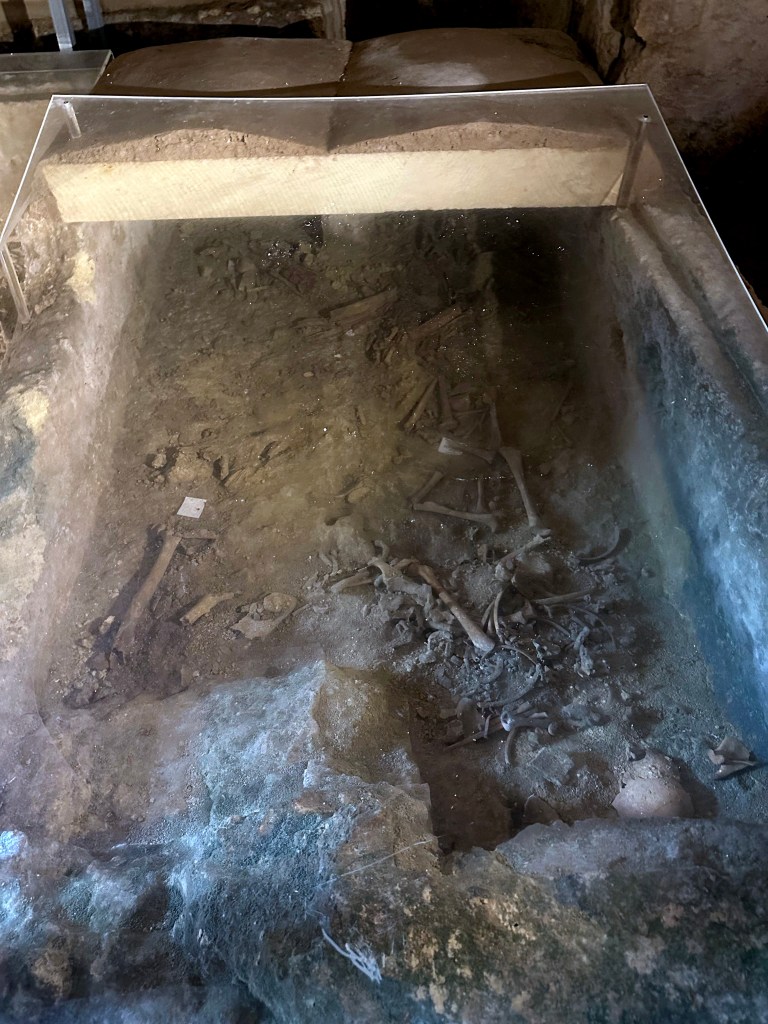
Five tombs are embedded in the center of the nave and likely date to the last phase of the building.
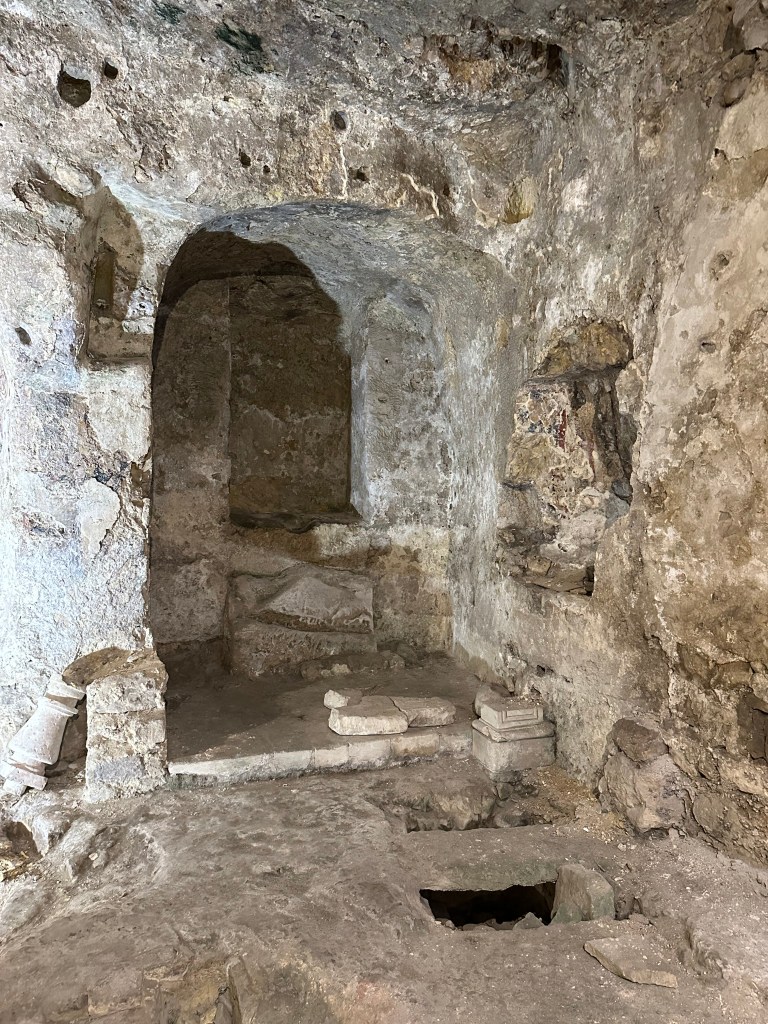
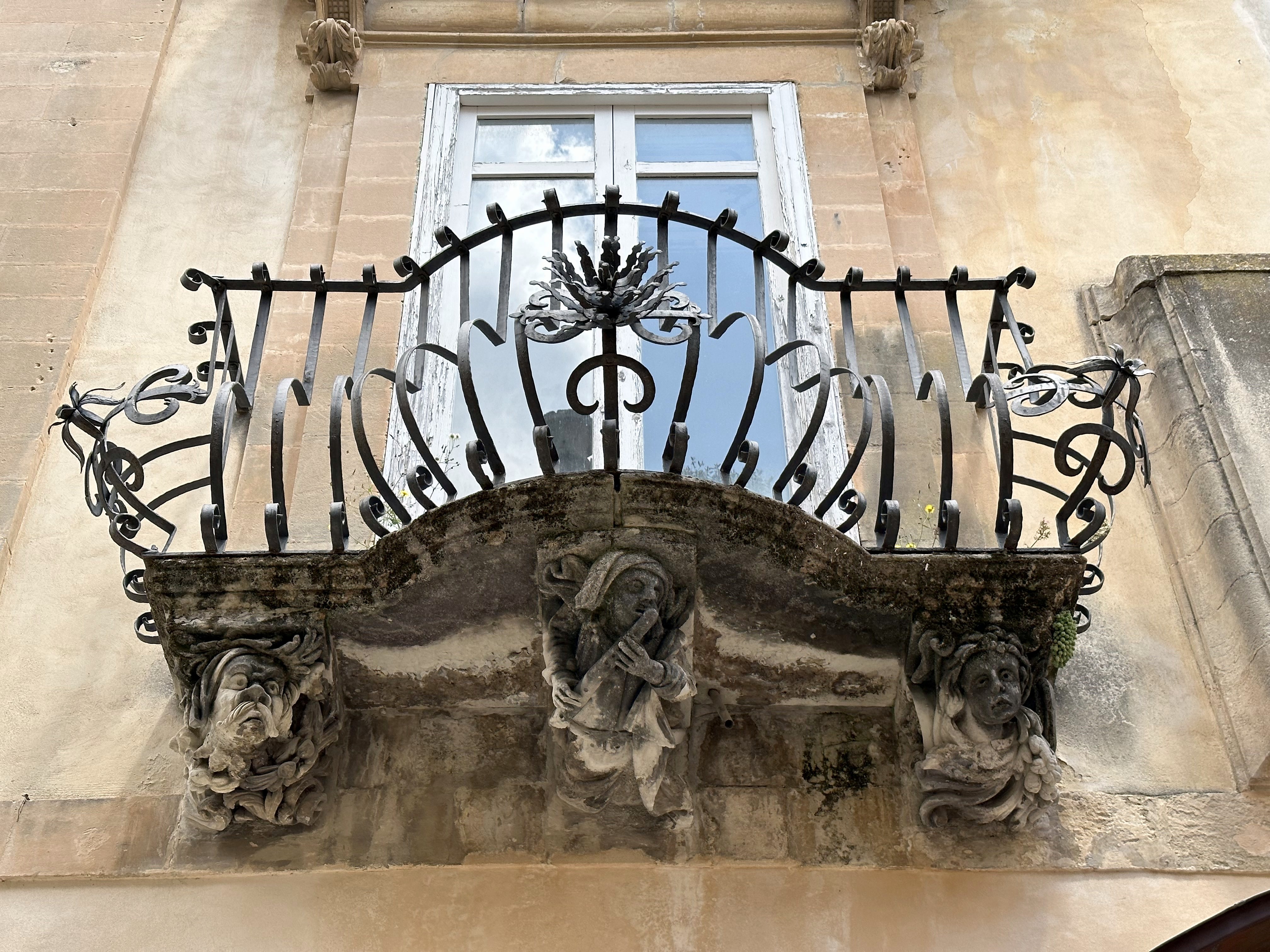
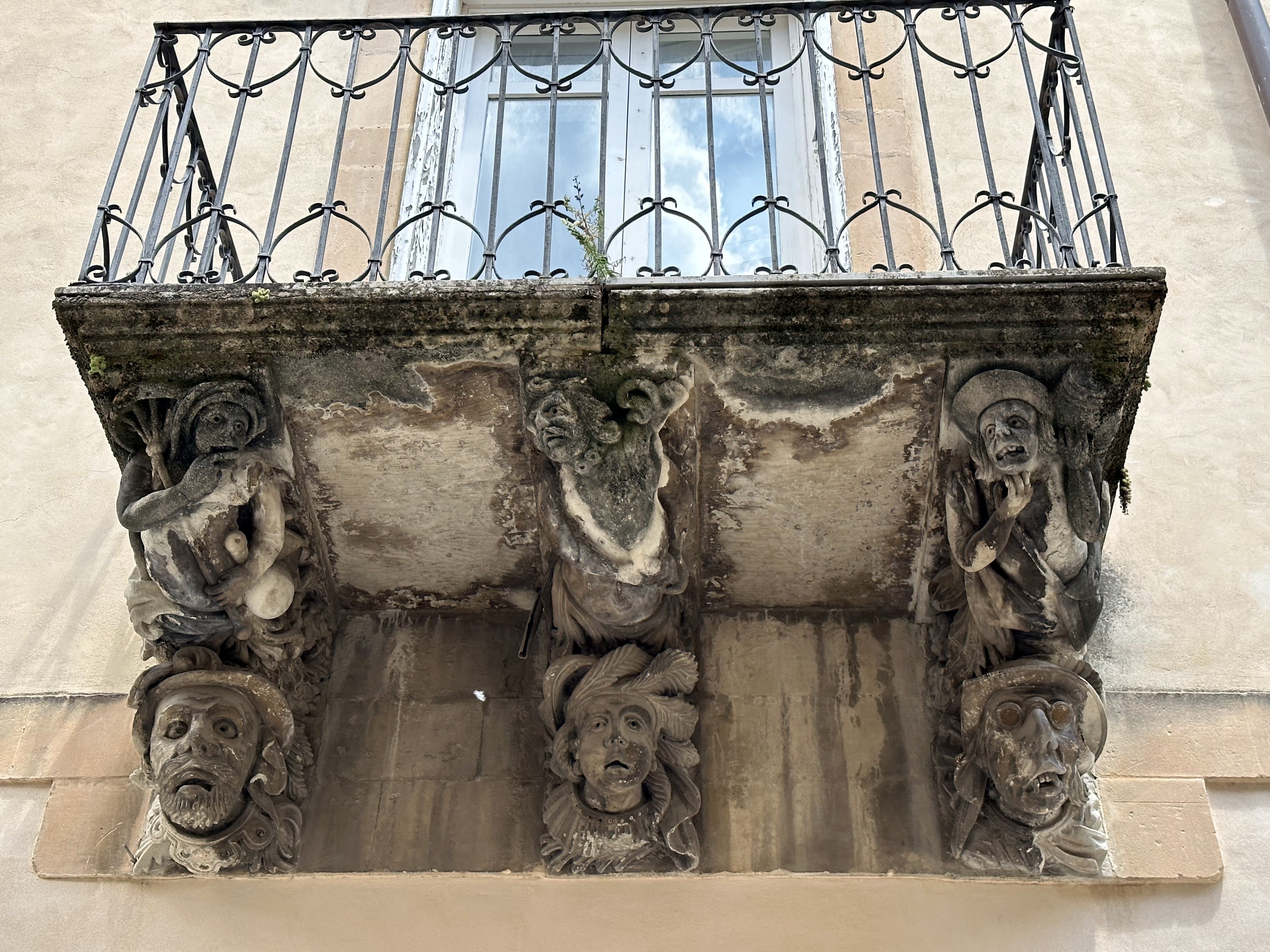
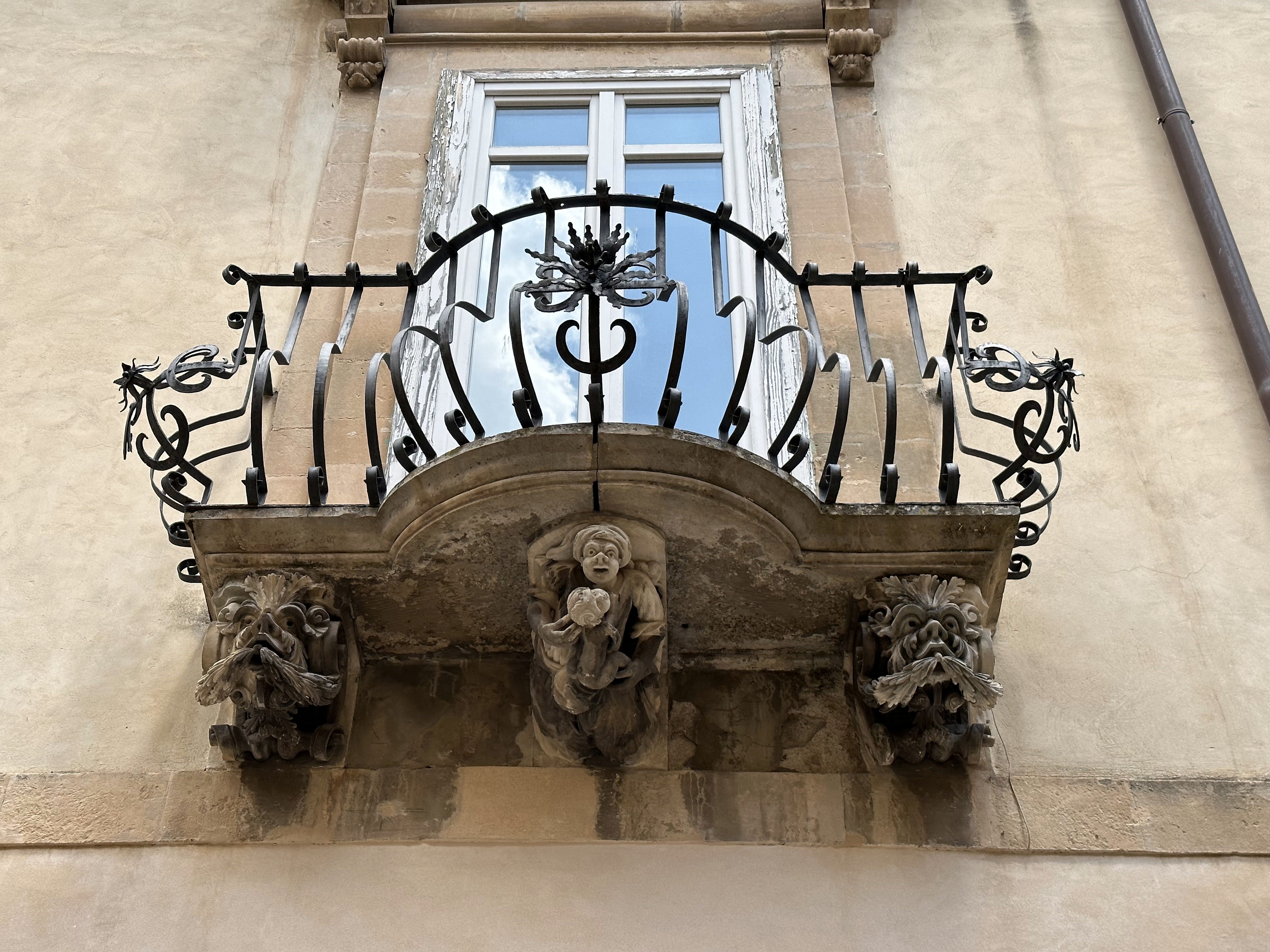
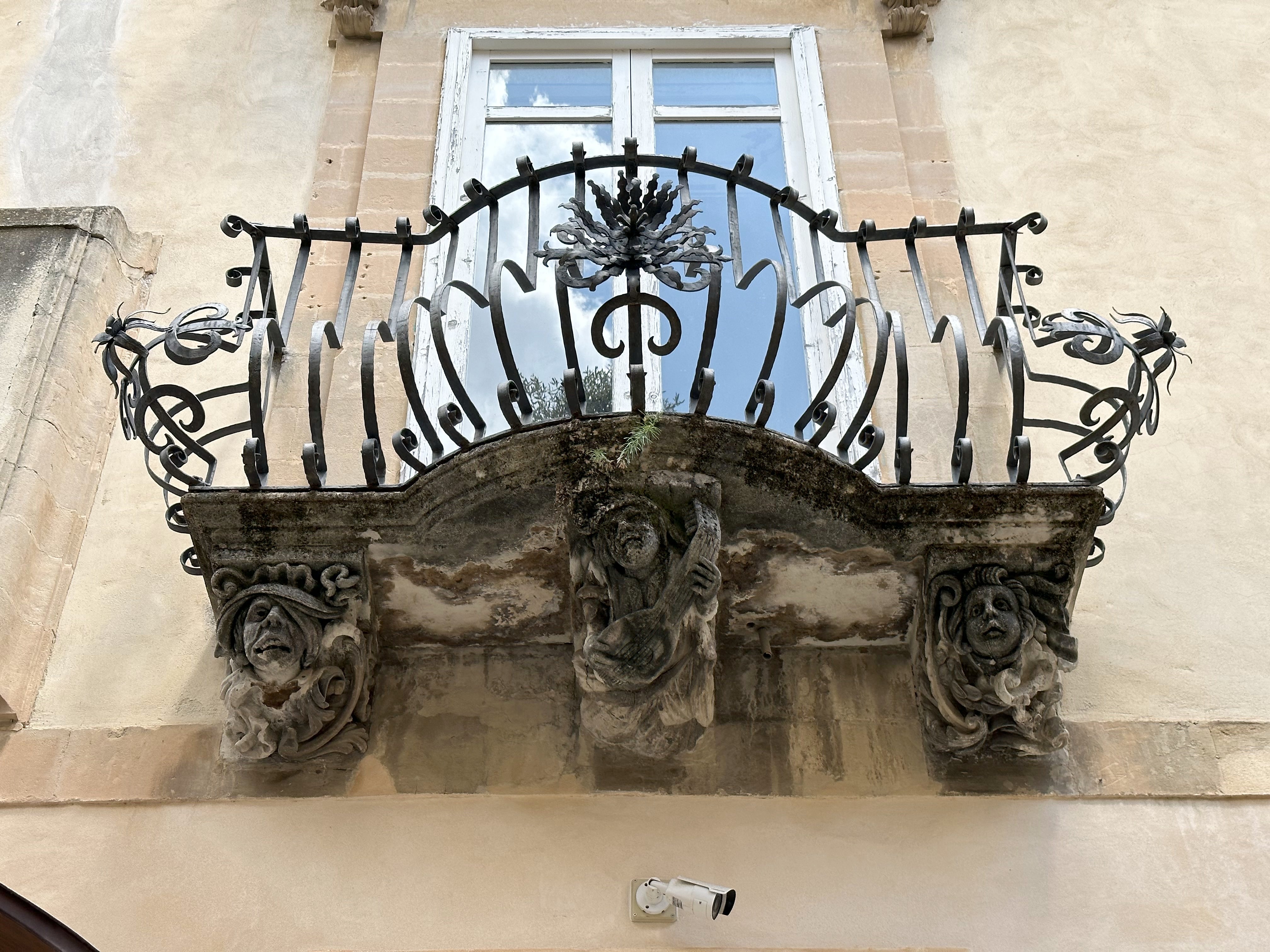
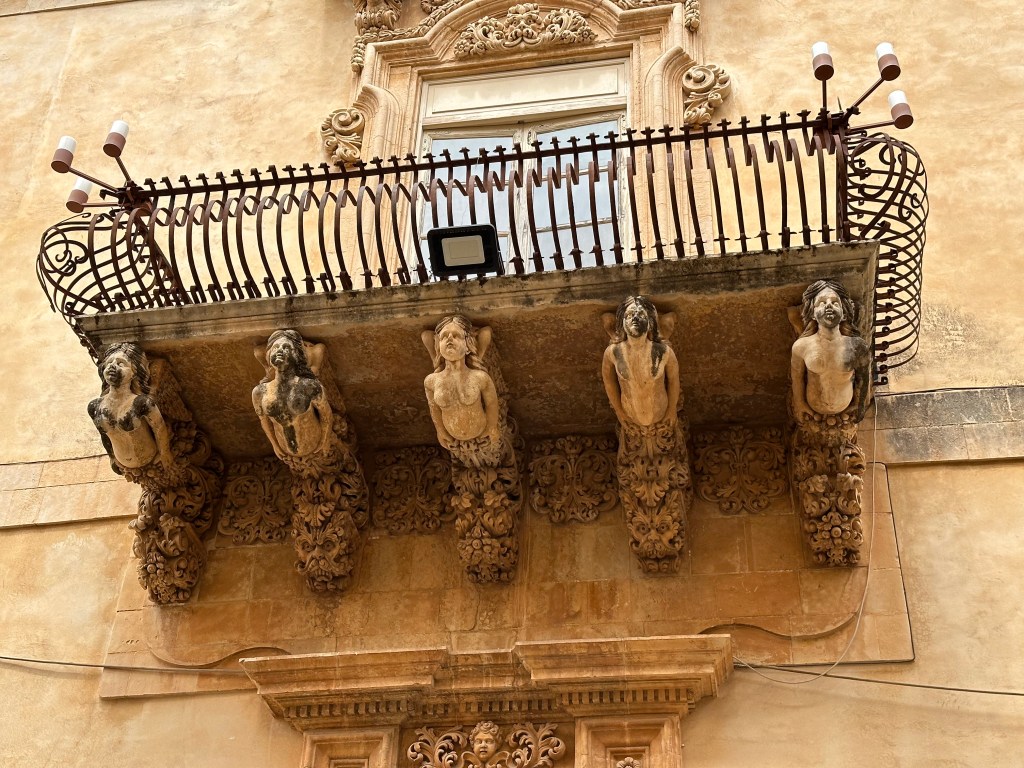
Outside on the streets of Modica, though, more Baroque elements – ornately carved balcony supports with lots of little characters (all of which we’d see in the other towns, too):
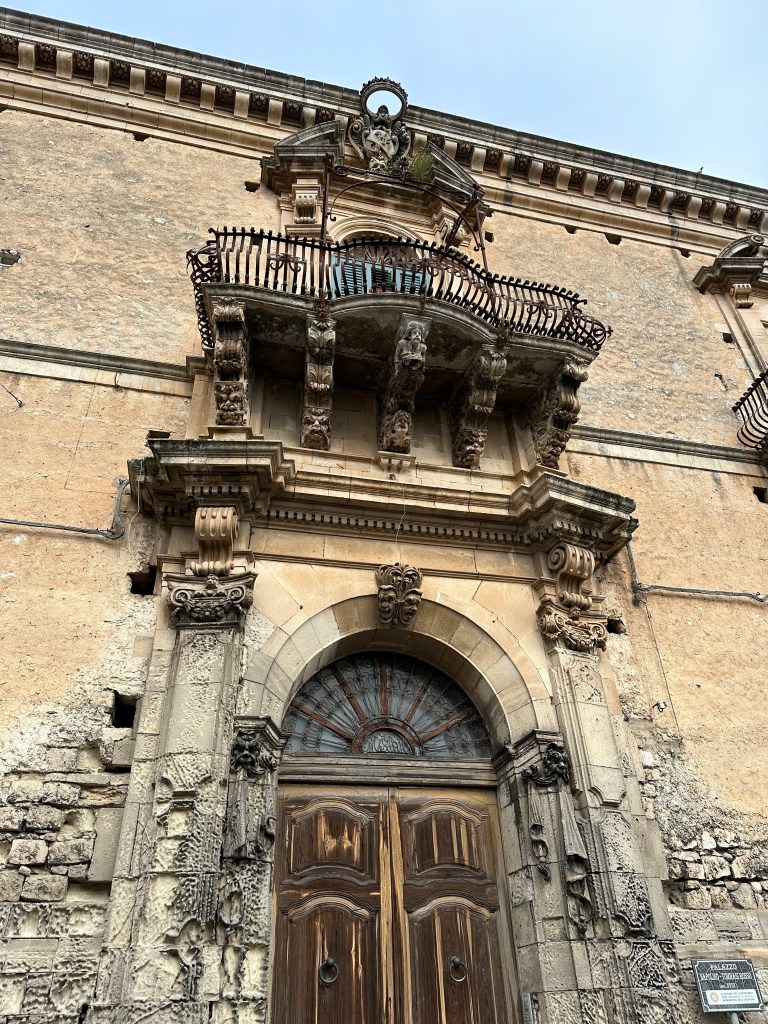
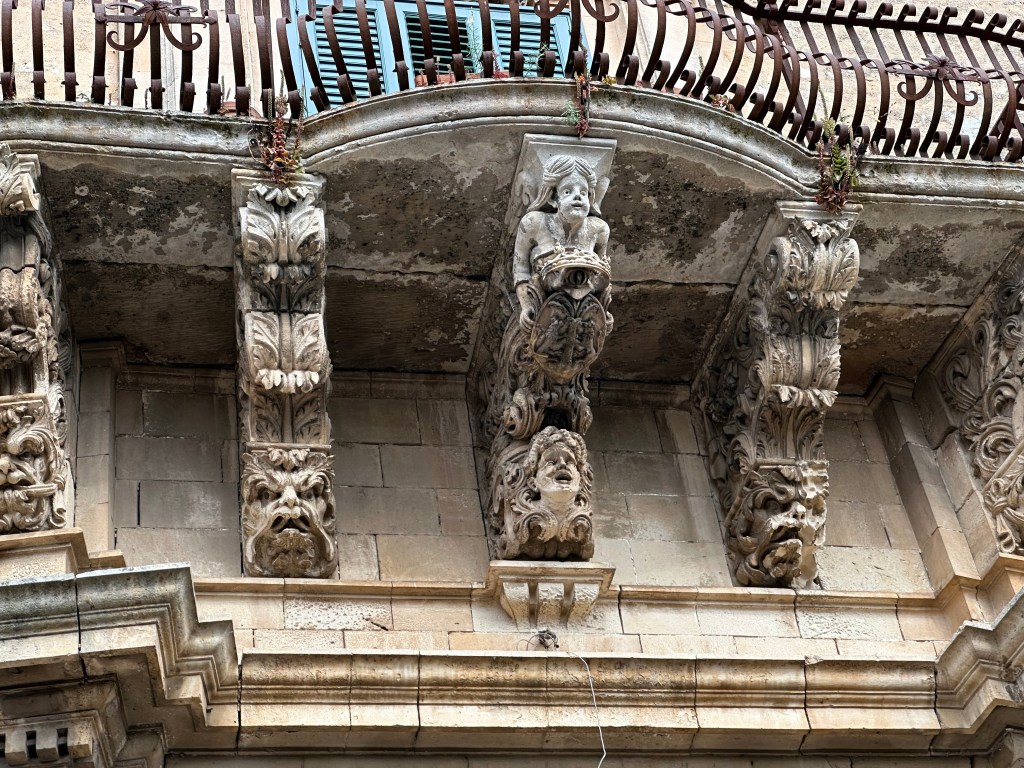
The town is perhaps most famous globally for its ancient chocolate-making tradition, inherited from the Aztecs via the Spanish and produced cold without cocoa butter, resulting in a grainy, intensely flavored bar that bears almost no resemblance to modern chocolate and is taken very seriously by locals. Modica’s chocolate is reputedly the closest thing one can get to the style of chocolate the Aztecs drank and ate. We tried some. Definitely an acquired taste. But we very much dug the provenance of chocolate and unique link to the Aragonese occupation of both central America and Sicily at the same time.

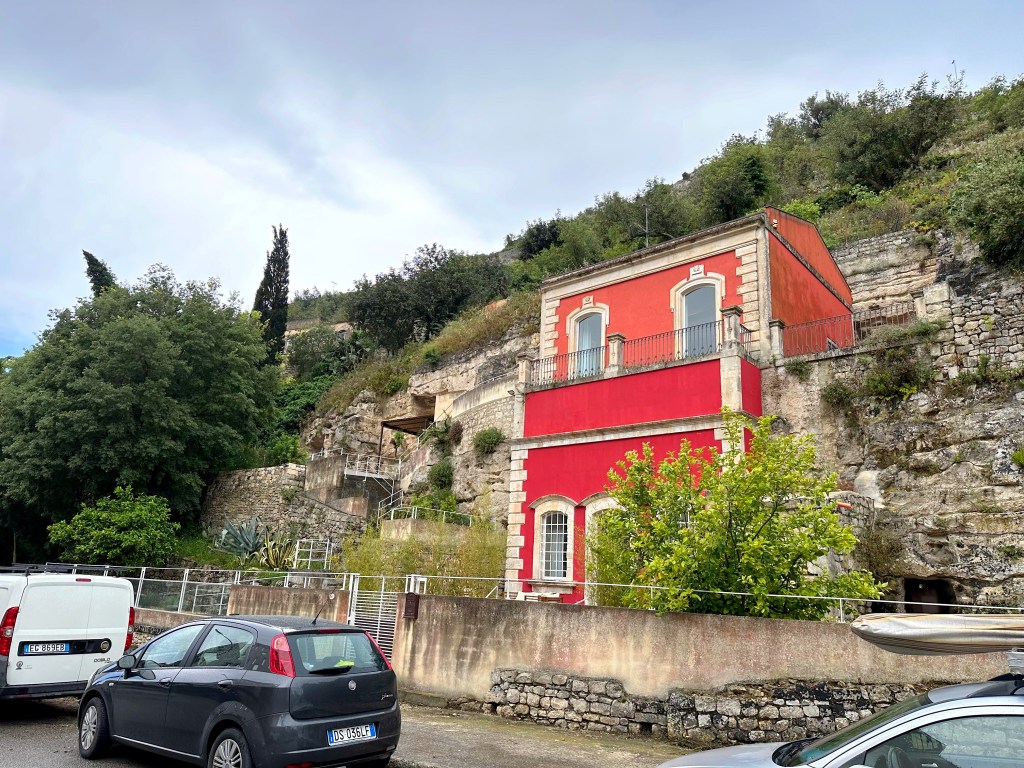
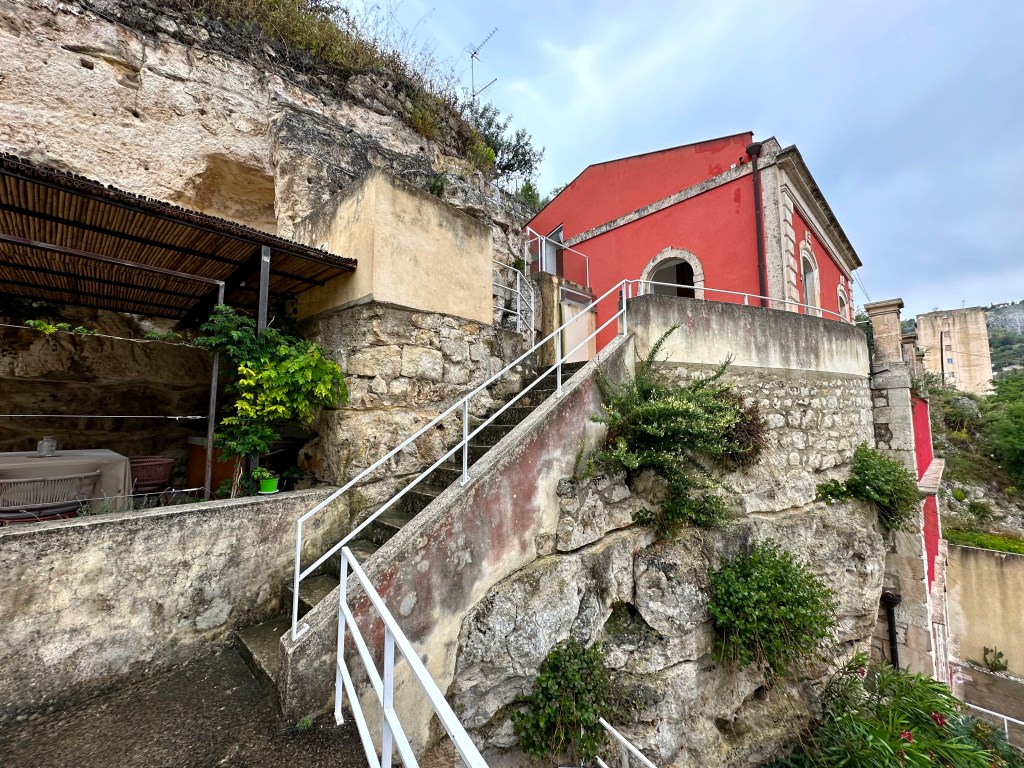
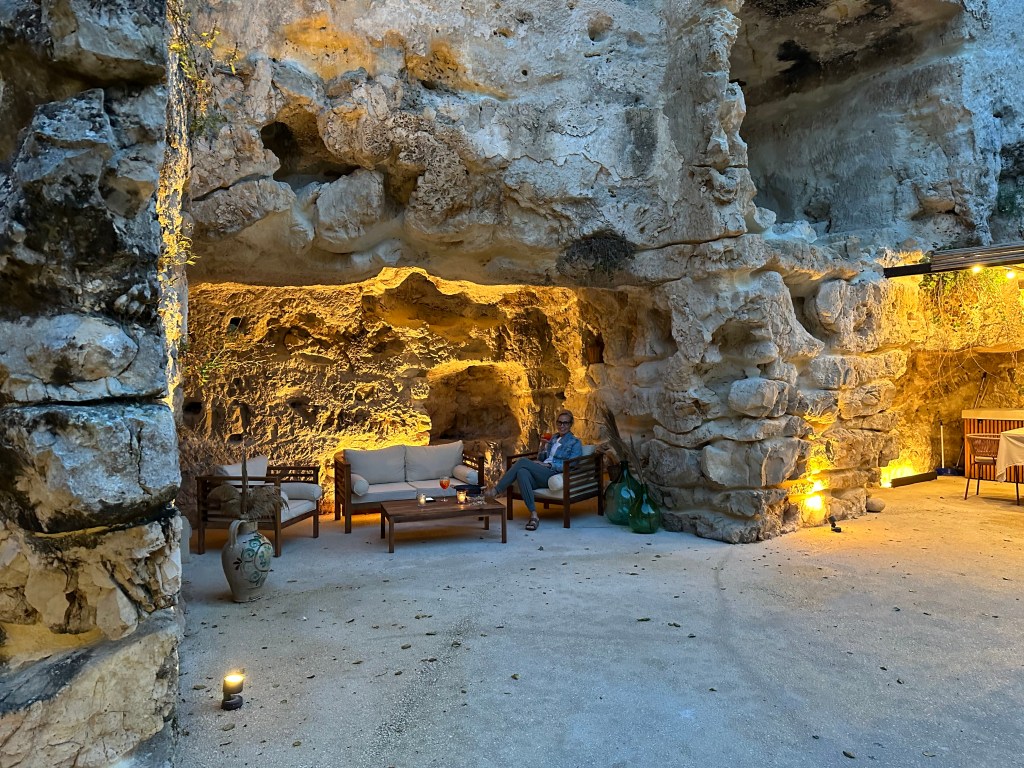
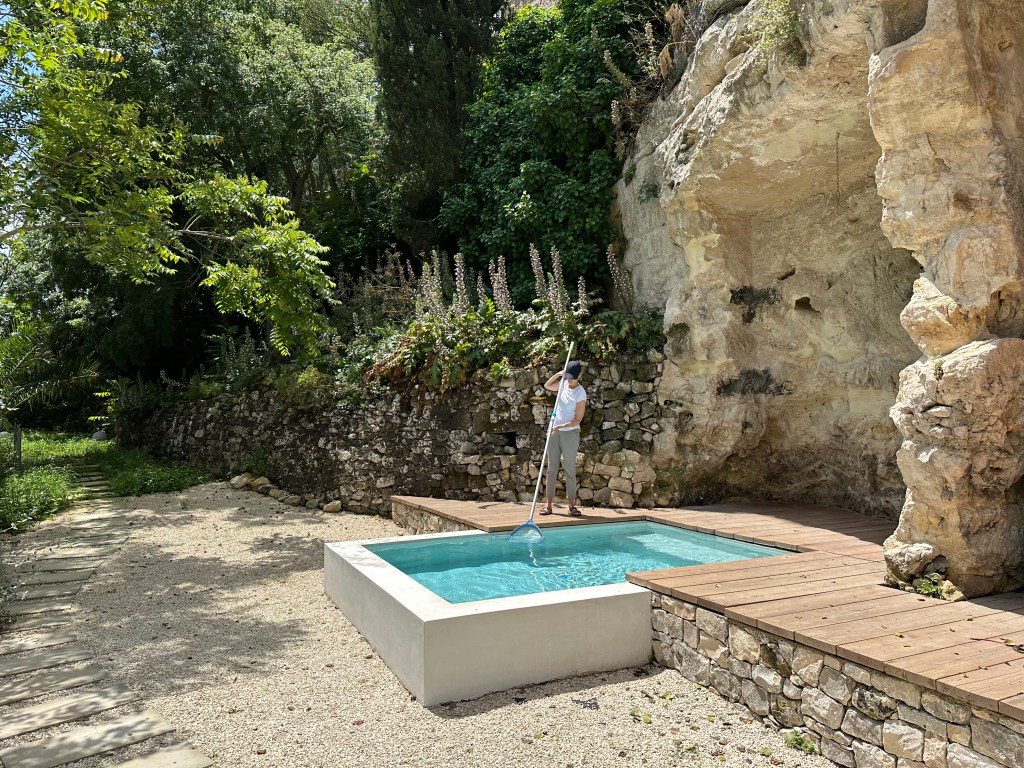
Our headquarters for Baroque barnstorming lay embedded in a cliff at the edge of town:
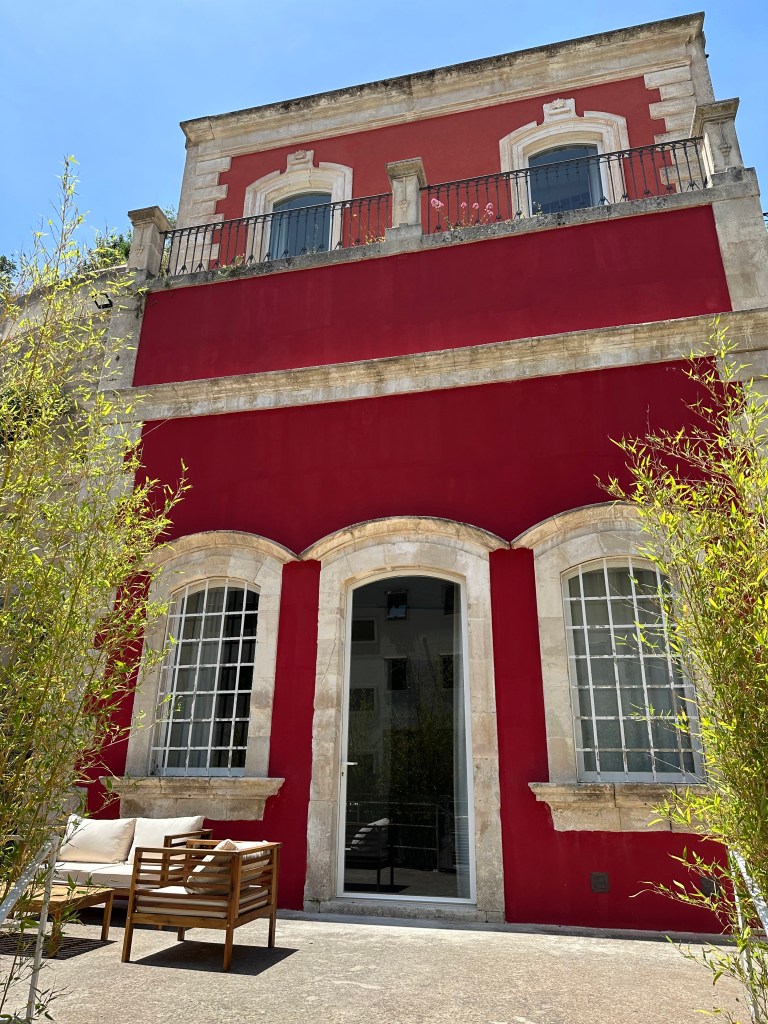
The place, both inside and out, offered LOTs of, well,
The place came with a pretty cute pool girl, which was nice:
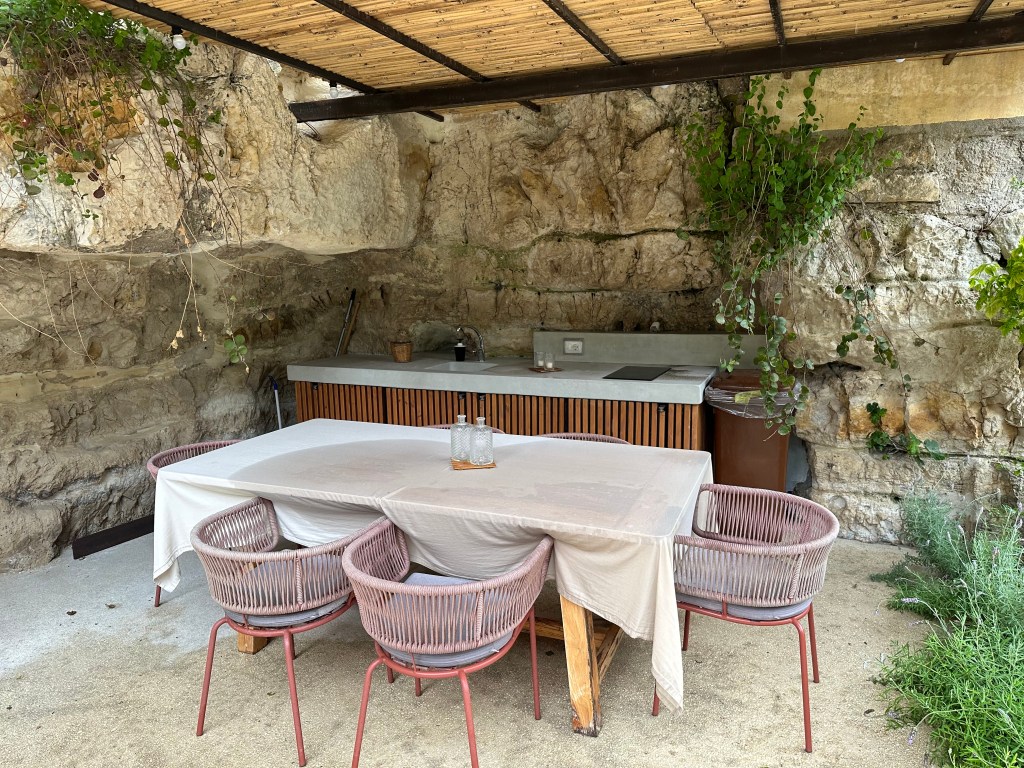
Our post-beach lunch area:
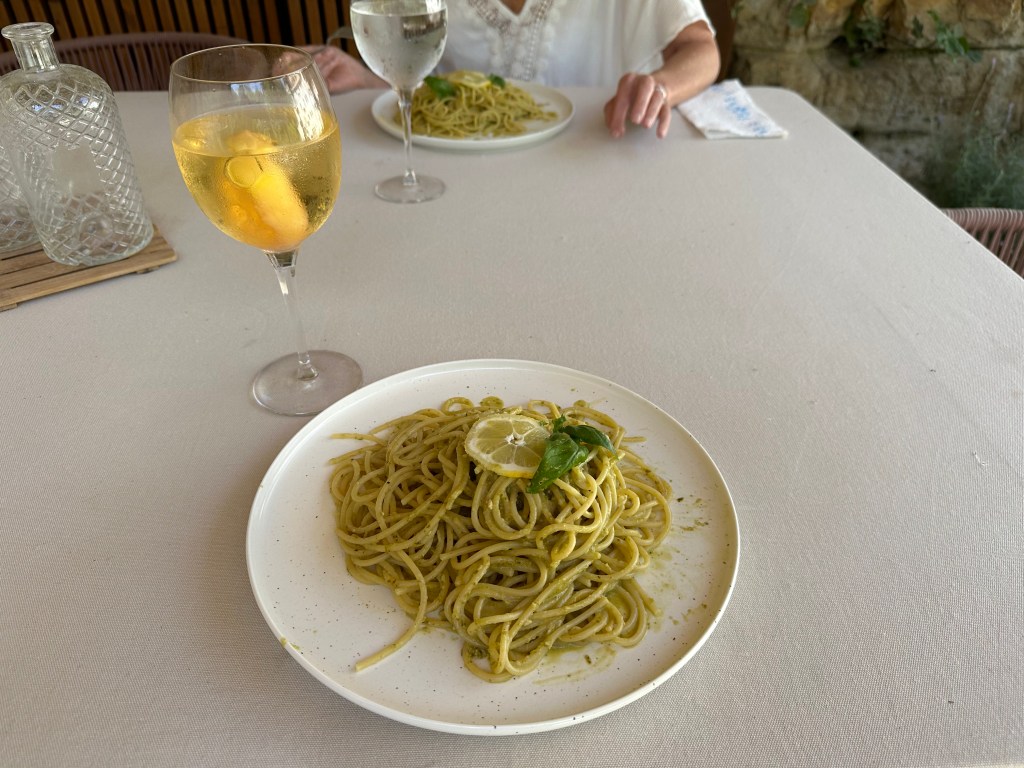
With pasta feasts prepared by the pool girl, who proved to possess multiple talents:
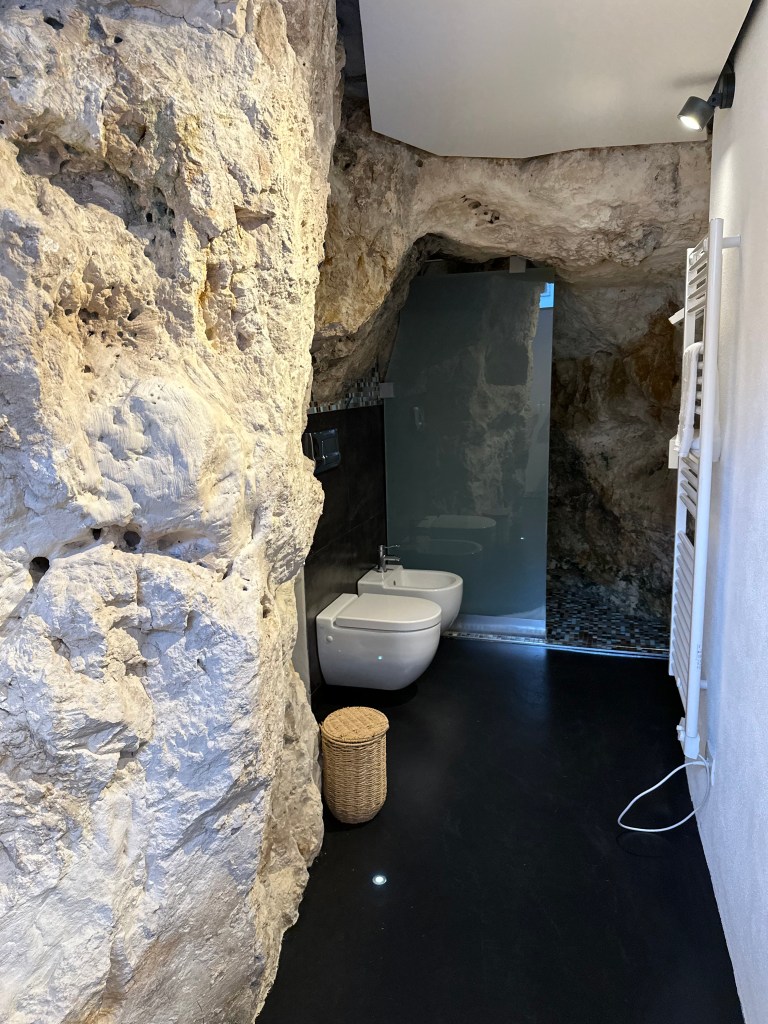
The cave action outside extended inside with a cave bathroom, perhaps to complement the cave church down the street:
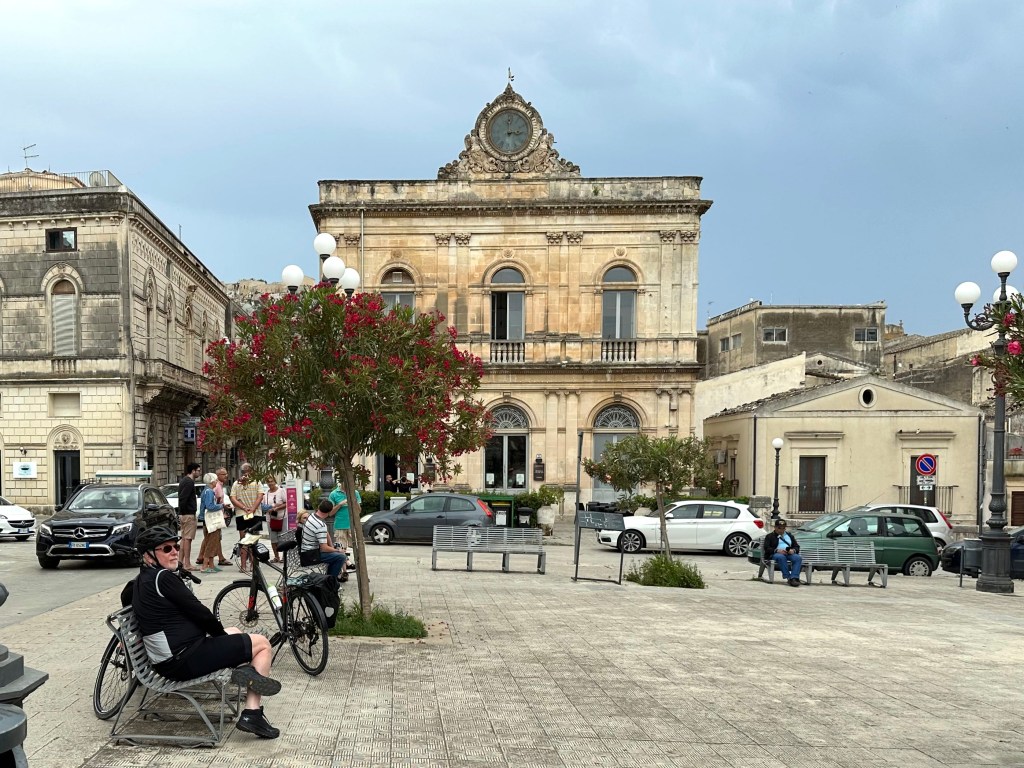
Although Modica was cursed with the absence of a true pedestrian core, it nonetheless sported plenty of car-free lanes in both Modica alta and Modica basso:
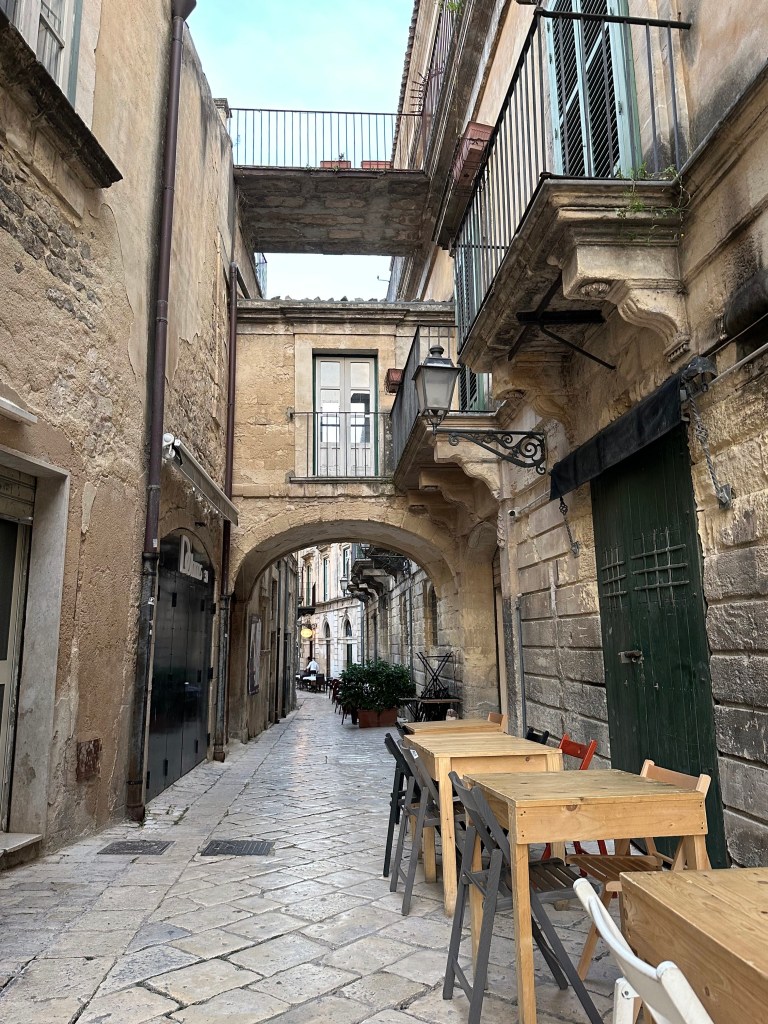
Ragusa

Our second Baroque town happened to be the one we SHOULD have stayed in: Ragusa. Much more charming and aligned with the WolfeStreetTravel style.

This is actually a view of Ragusa’s new town up on the hill; we did not visit.
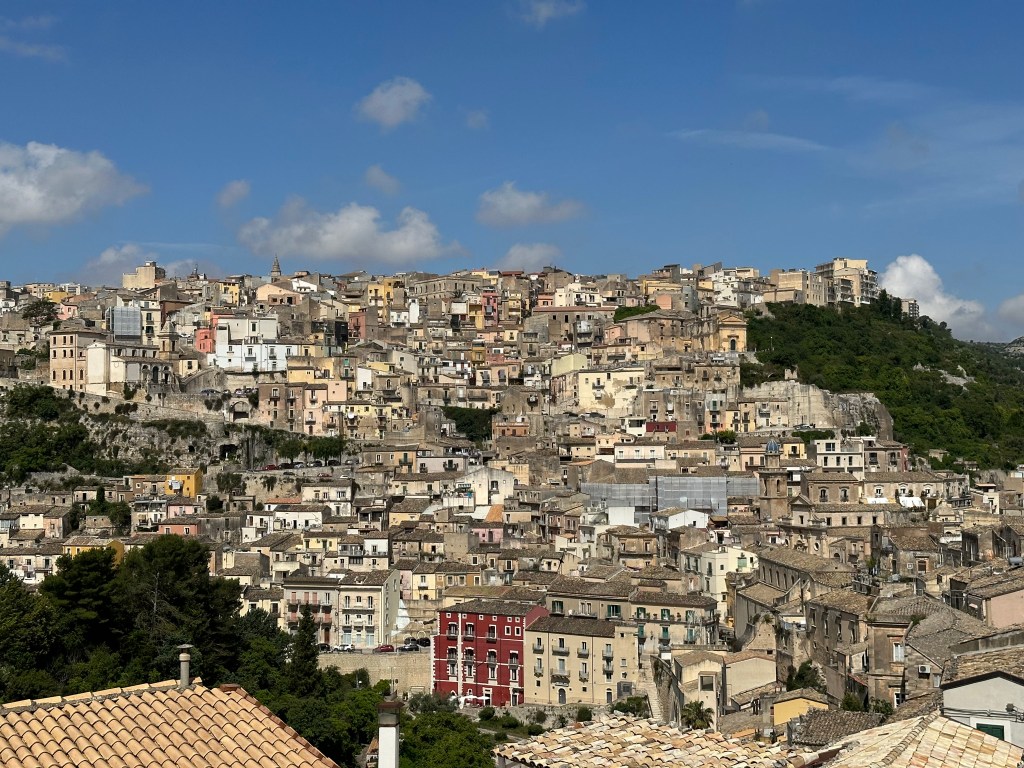
Instead, we headed up to Ragusa Ibla – the burg’s Baroque old town.

And the passageways that typified this area of town:
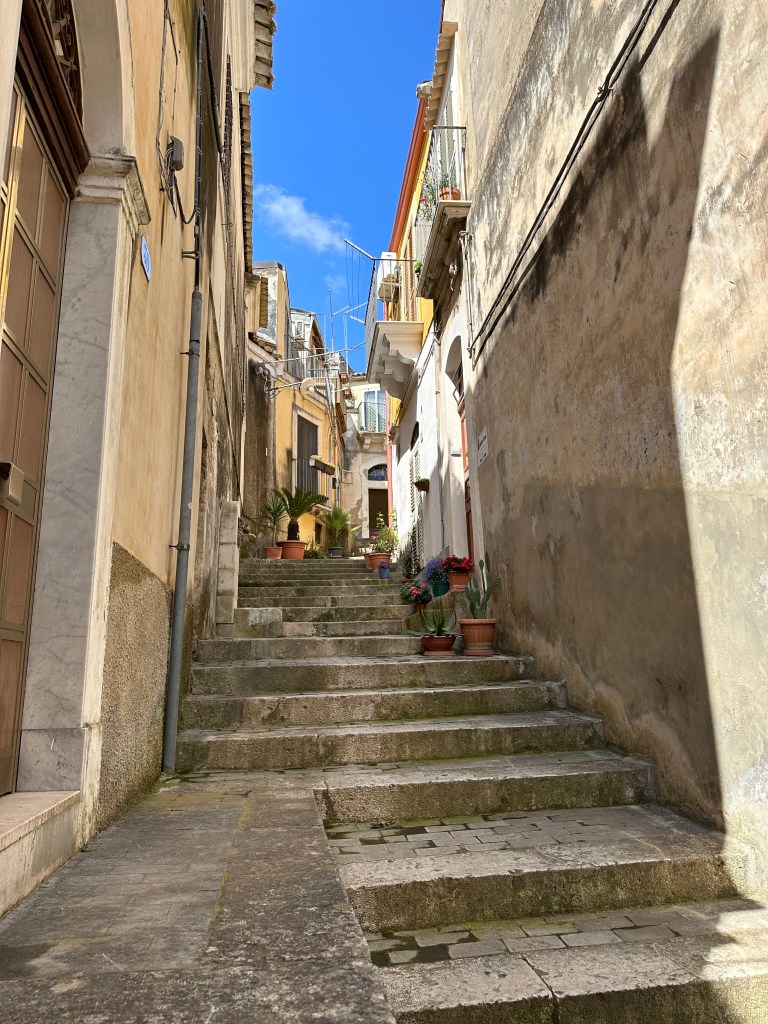
Getting closer.
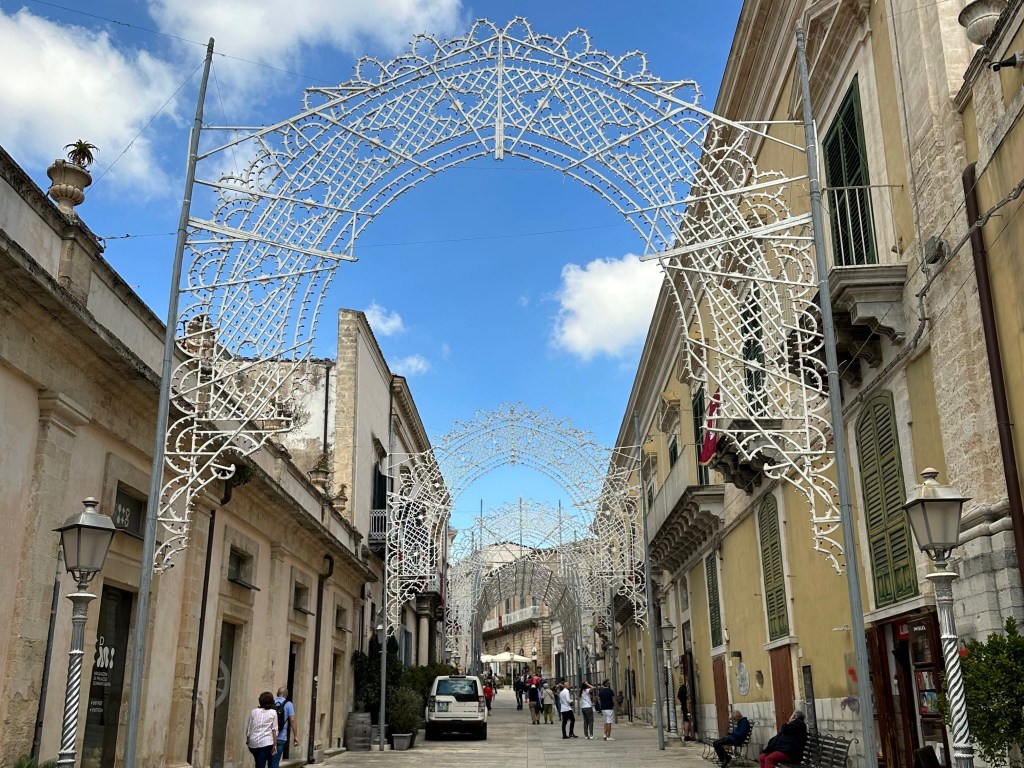
The heart of town:
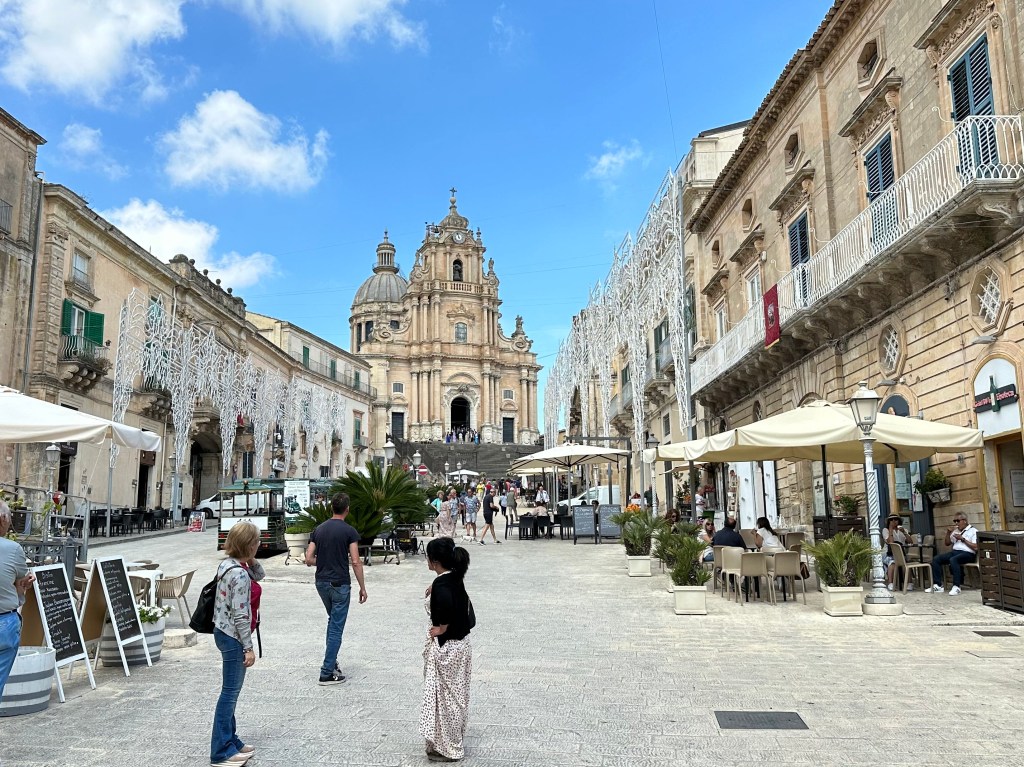
Ragusa Ibla is the ancient, labyrinthine lower town of Ragusa, a UNESCO World Heritage Site rebuilt in glorious Baroque style after the 1693 earthquake, its honey-colored stone churches and palazzos tumbling dramatically down a rocky promontory surrounded by deep ravines.

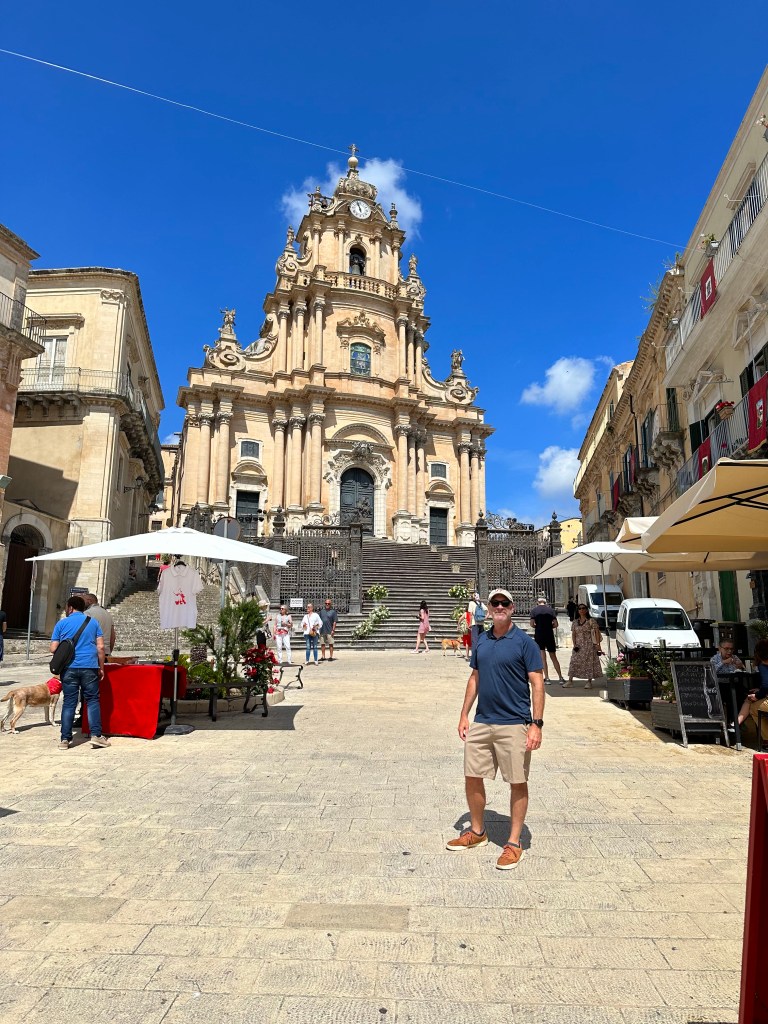
The undisputed highlight is the Cathedral of San Giorgio, one of the masterpieces of Sicilian Baroque attributed to Rosario Gagliardi, its magnificent facade rising above a sweeping staircase and presiding over a graceful piazza that ranks among the most beautiful in all of Italy.
Another Citroen breadbox!
Above and behind the Cathedral of San Giorgio:
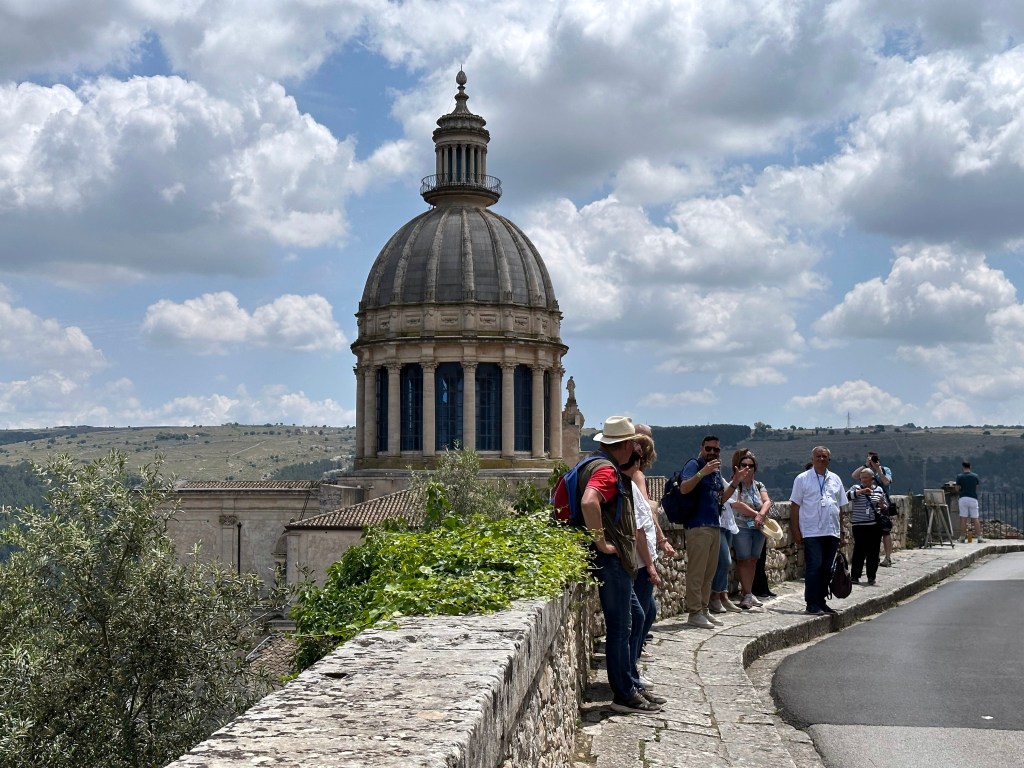
At last, a non-Baroque church. The Church of San Giacomo Apostolo is one of Ragusa Ibla’s oldest sacred sites, dating to the 13th or 14th century and built under the Chiaramonte family, though rebuilt into a single-nave Baroque structure after the 1693 earthquake absorbed the ruins of the adjacent church of San Teodoro. Tucked inside the beautiful Giardino Ibleo public gardens at the eastern tip of Ibla.
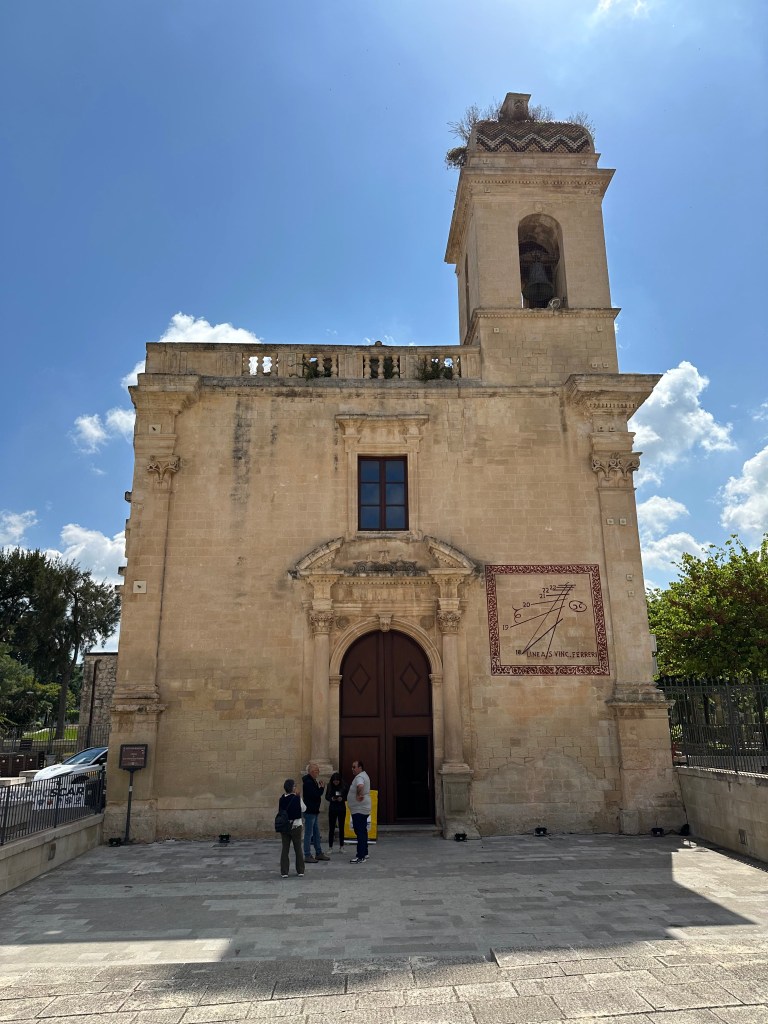
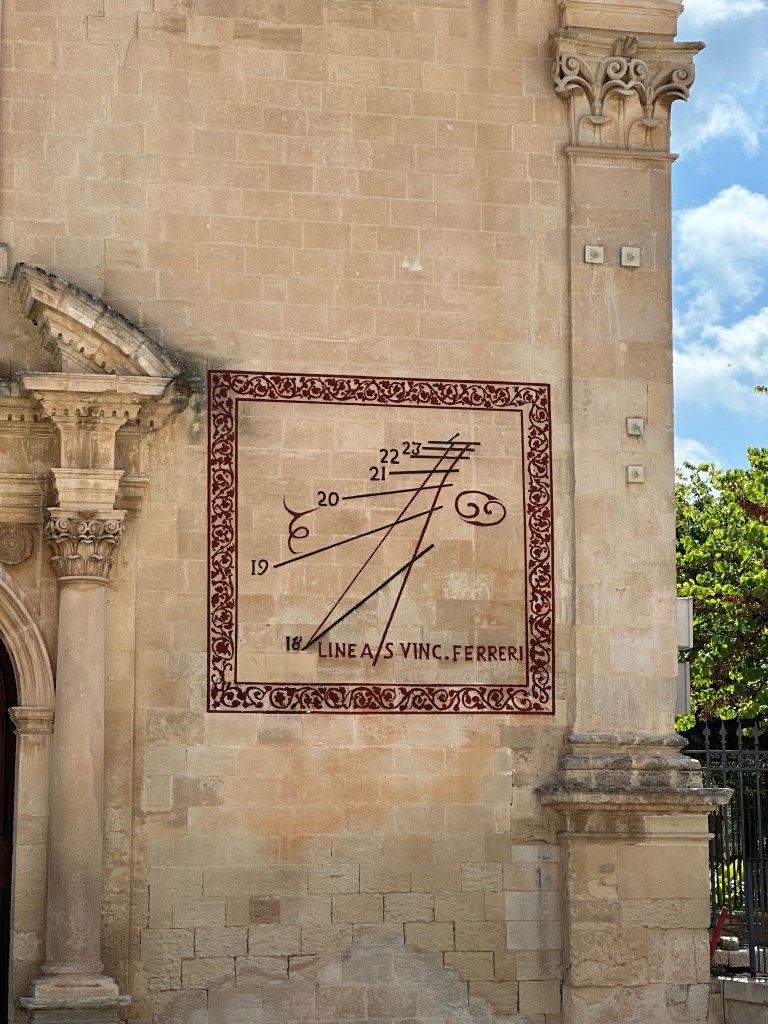
Dig the sundial:
And more Baroque balcony ballustrades:
And a mishap spotted on the hilly, serpentine alleys of Ragusa:
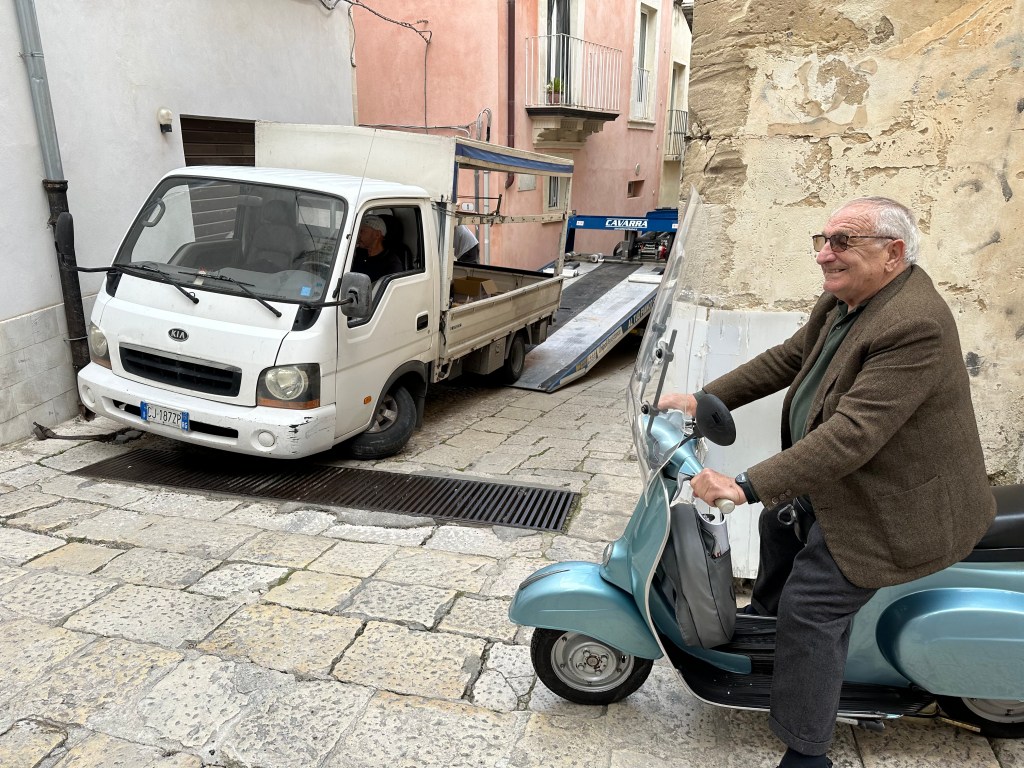
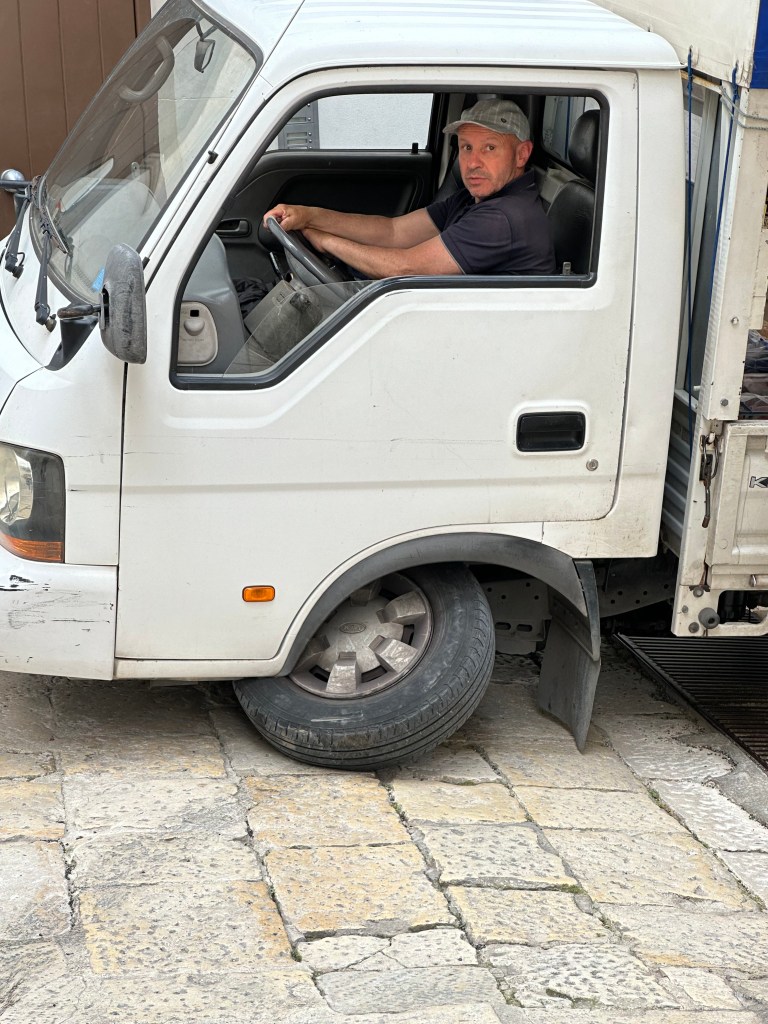
Not happy:
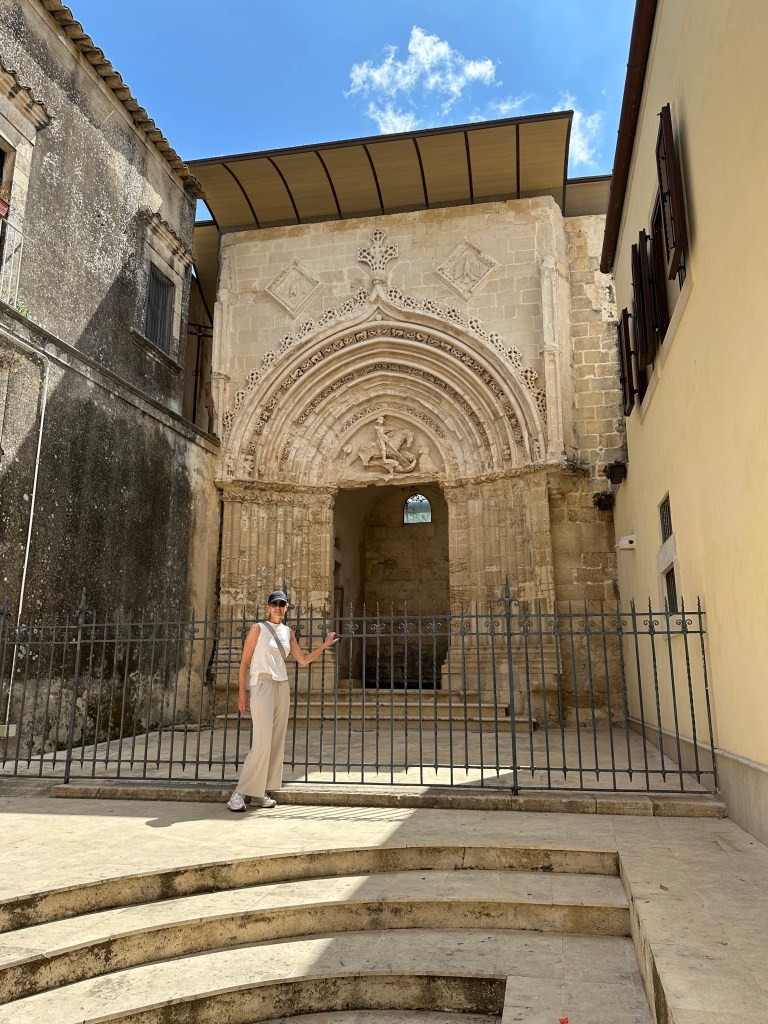
Portale di San Giorgio — the Gothic portal of the ancient Church of San Giorgio, which was completely destroyed in the 1693 earthquake. The original church dedicated to St. George existed as far back as 1120. The 13th-century doorway depicts St. George slaying the dragon and is now a UNESCO-protected symbol of Ragusa’s resilience — a solitary medieval portal standing alone as the sole survivor of an entire church.
Chiesa di San Giacomo Apostolo – definitely not Baroque. The church dates to the 13th century, hence its more Romanesque appearance.
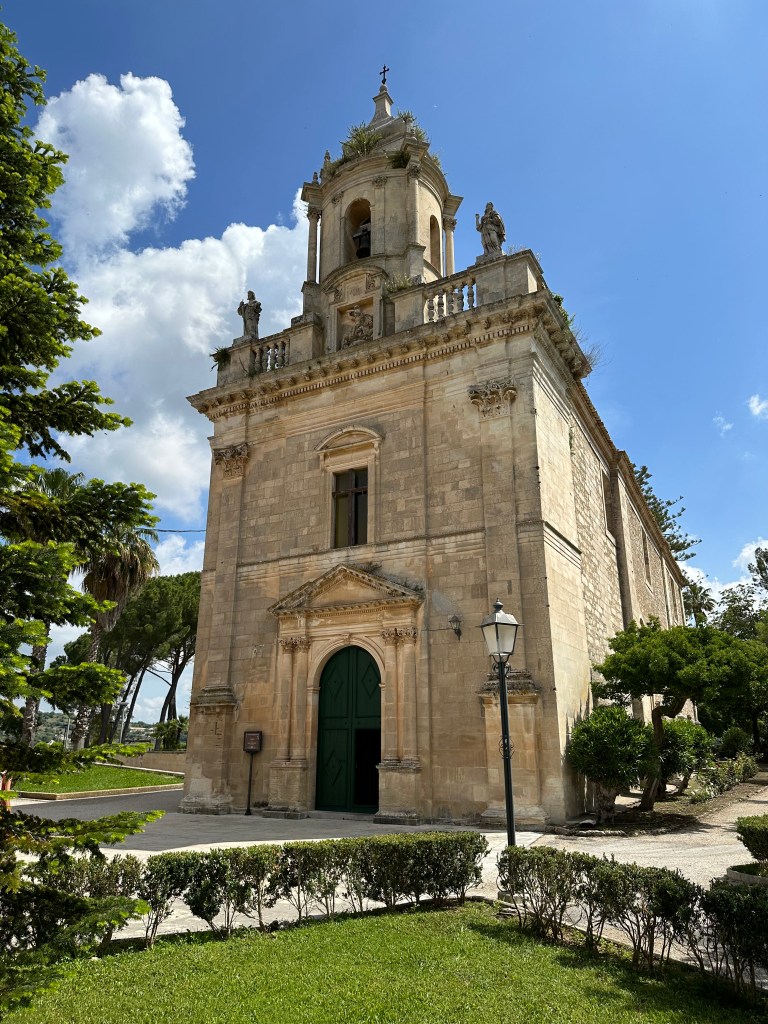
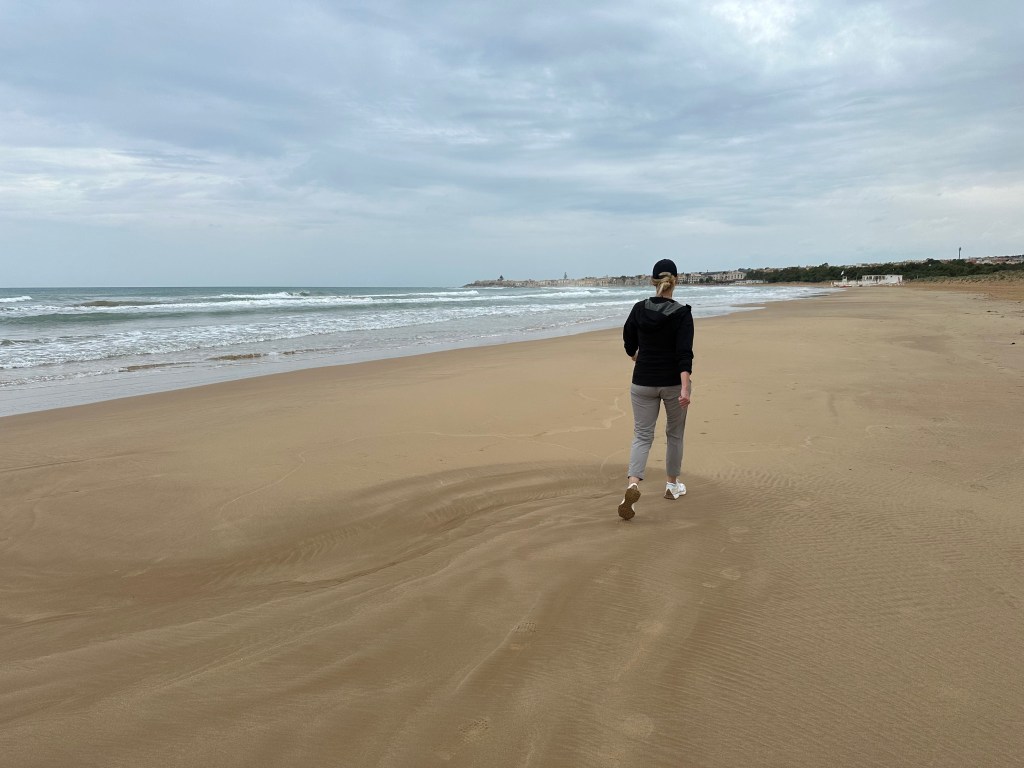
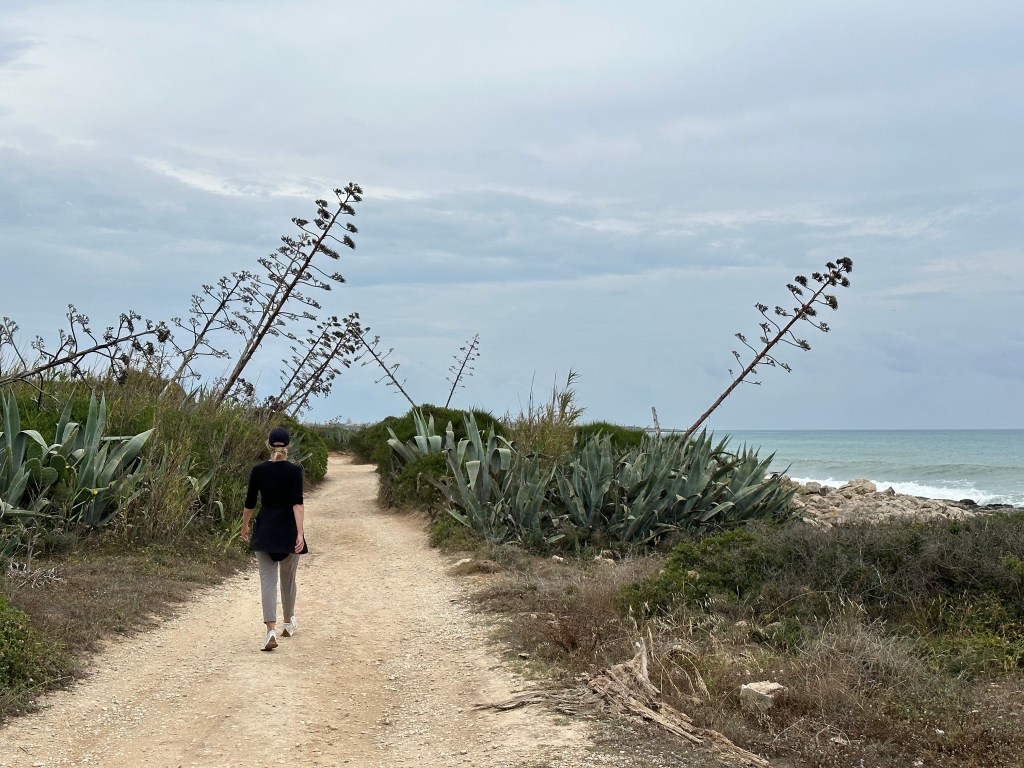
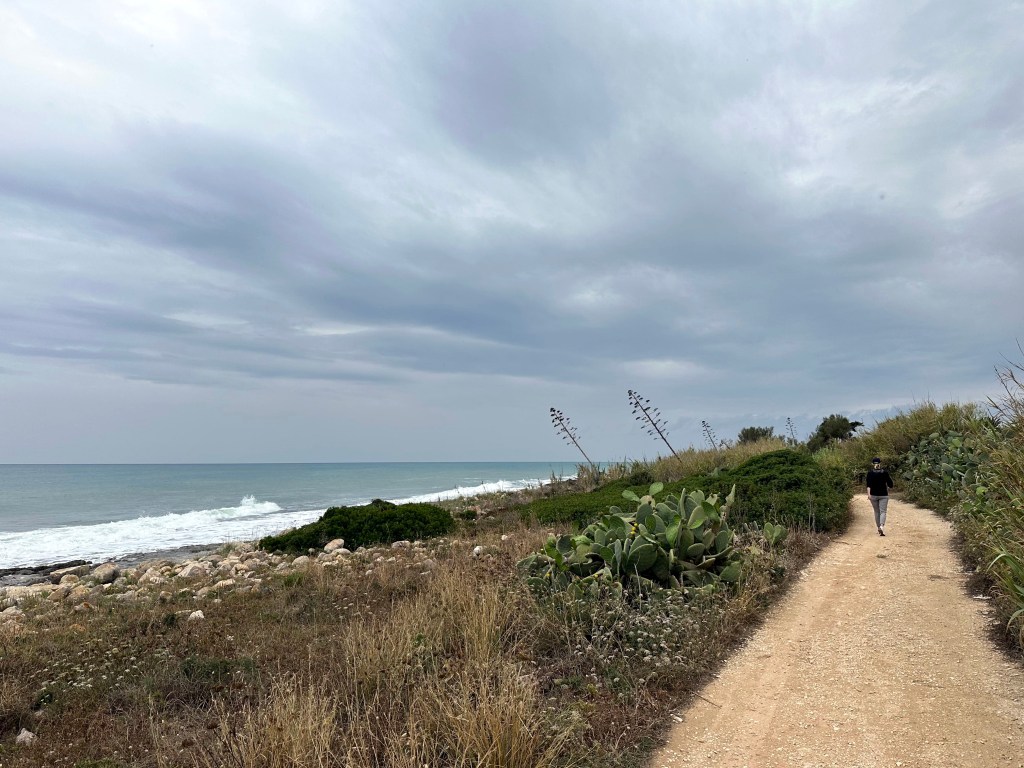
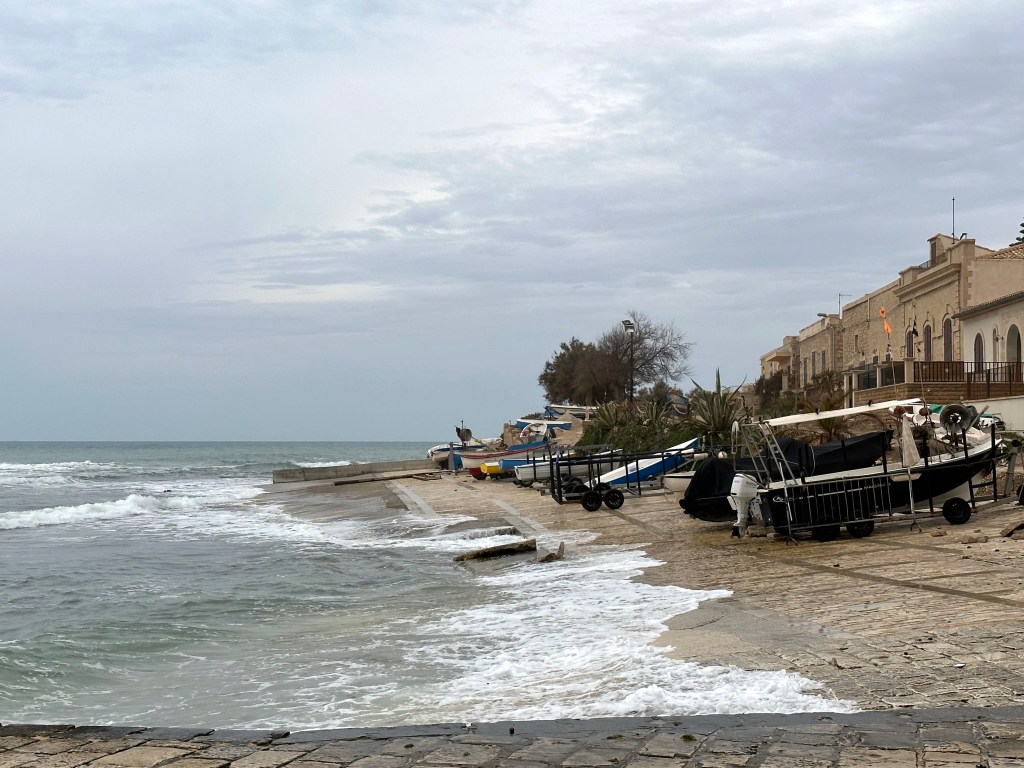
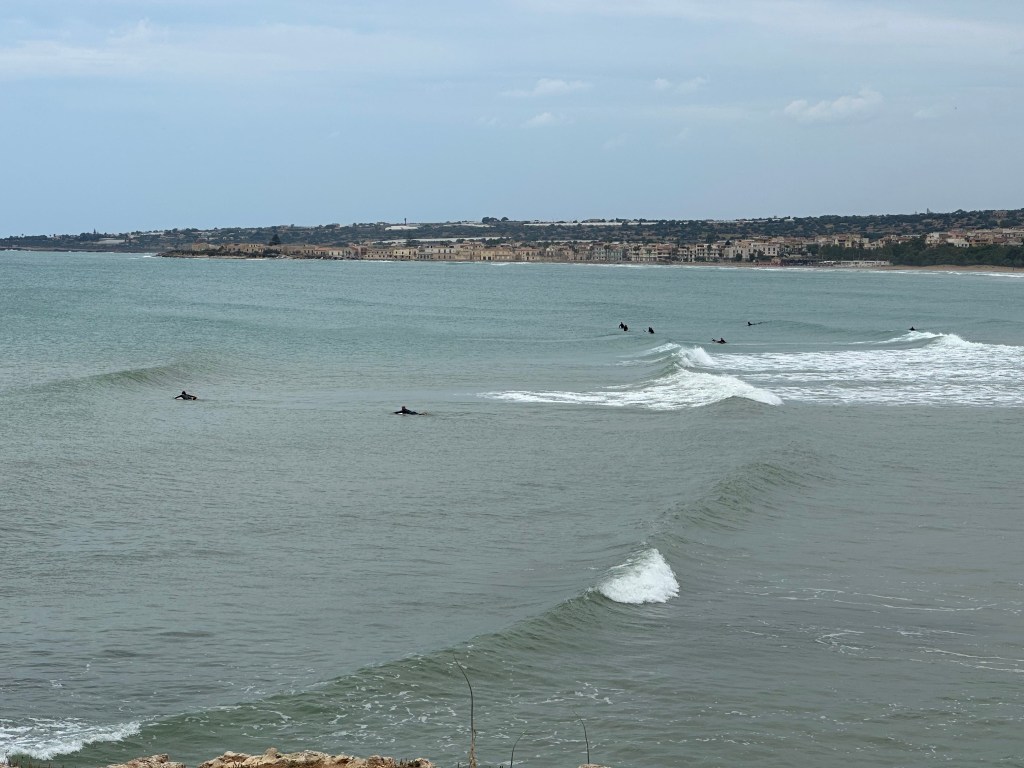
Unlike our 3-month New England and eastern Canada sojourn the next year, we couldn’t run every day here, but we could walk on the coast. So we headed a few mornings to beach towns just south of Modica. Which, frankly, provided some really nice hikes.
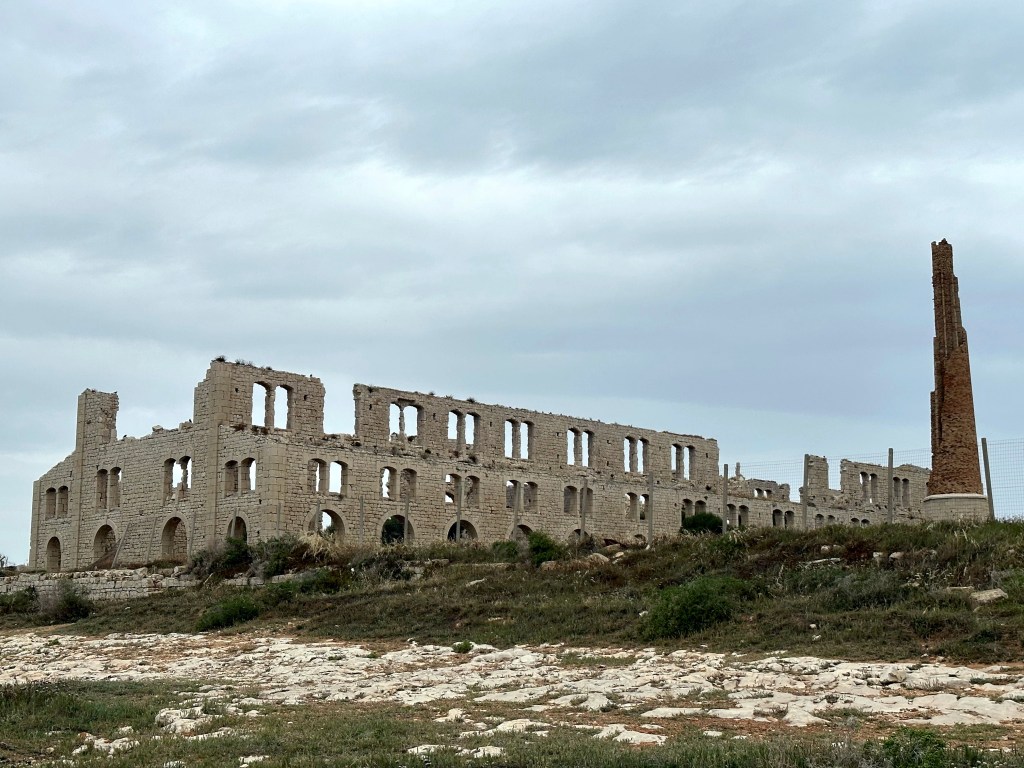
Our first hike took us past Fornace Penna, a hauntingly beautiful industrial ruin perched on a promontory just meters from the sea near the beach town of Sampieri. The kiln was built between 1909 and 1912 to produce bricks and construction materials.
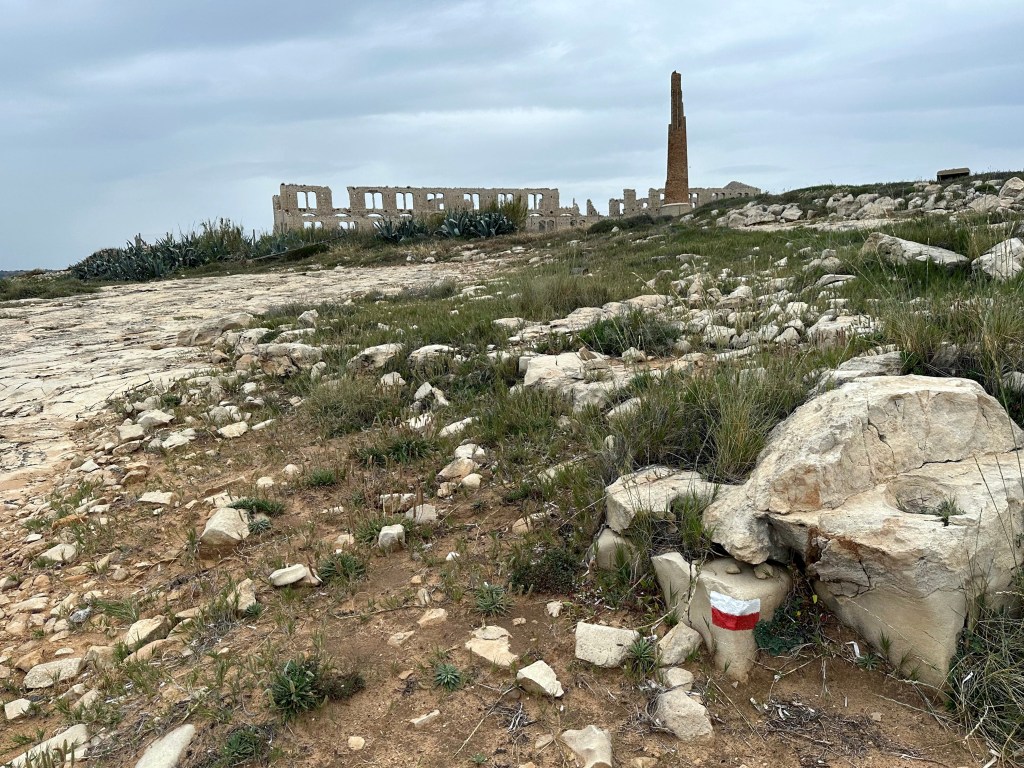
After only 14 years of operation it was destroyed by arson in 1926, and the owner chose never to rebuild it — leaving behind one of Italy’s most photogenic industrial ruins.
Little coastal view hiking into the beach town of Sampieri:
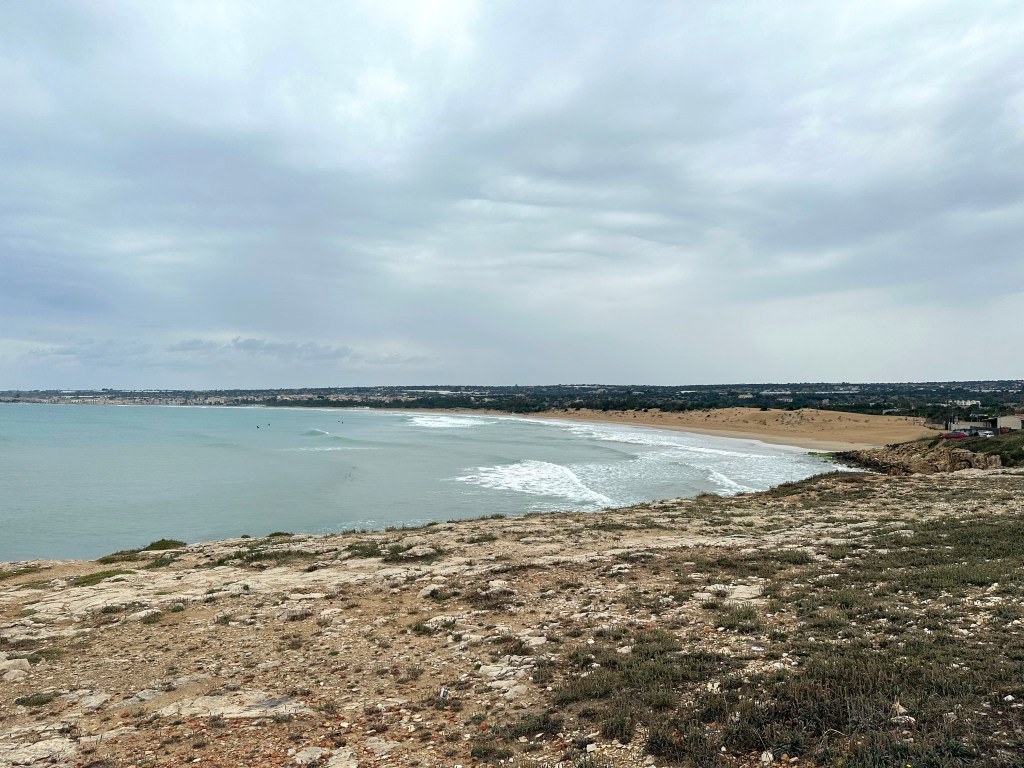
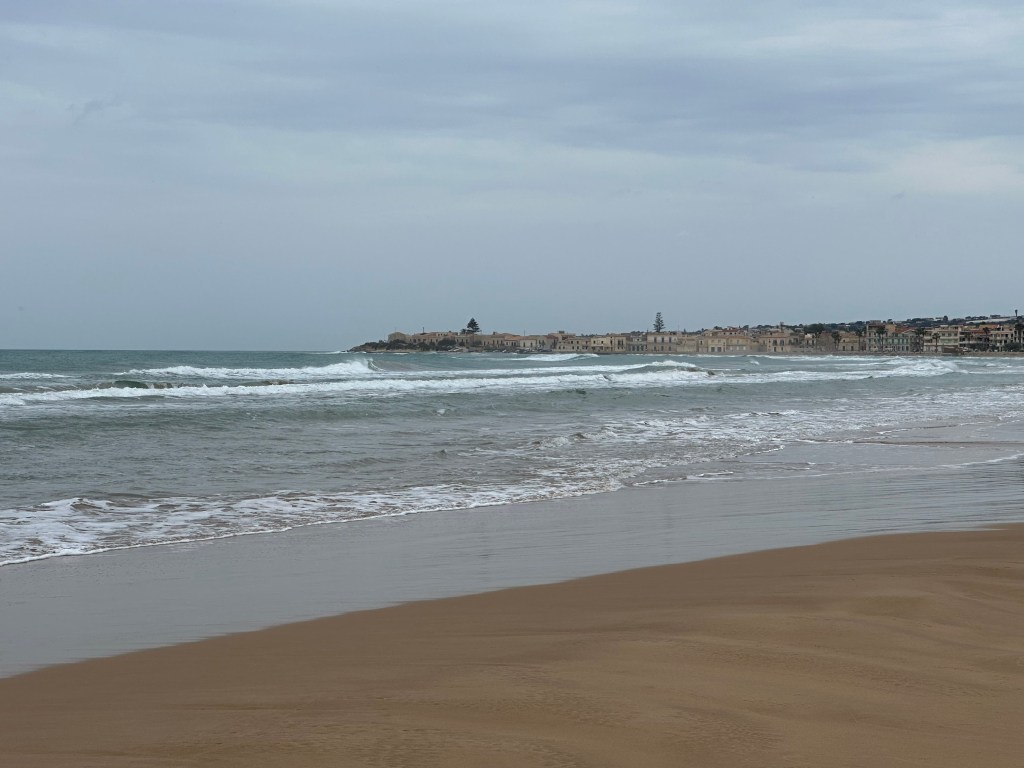
Not great.
Bodi’s out there performing for Point Break, we think.
Scicli

Our penultimate Baroque town to visit lay between Modica and the beach: Scicli.
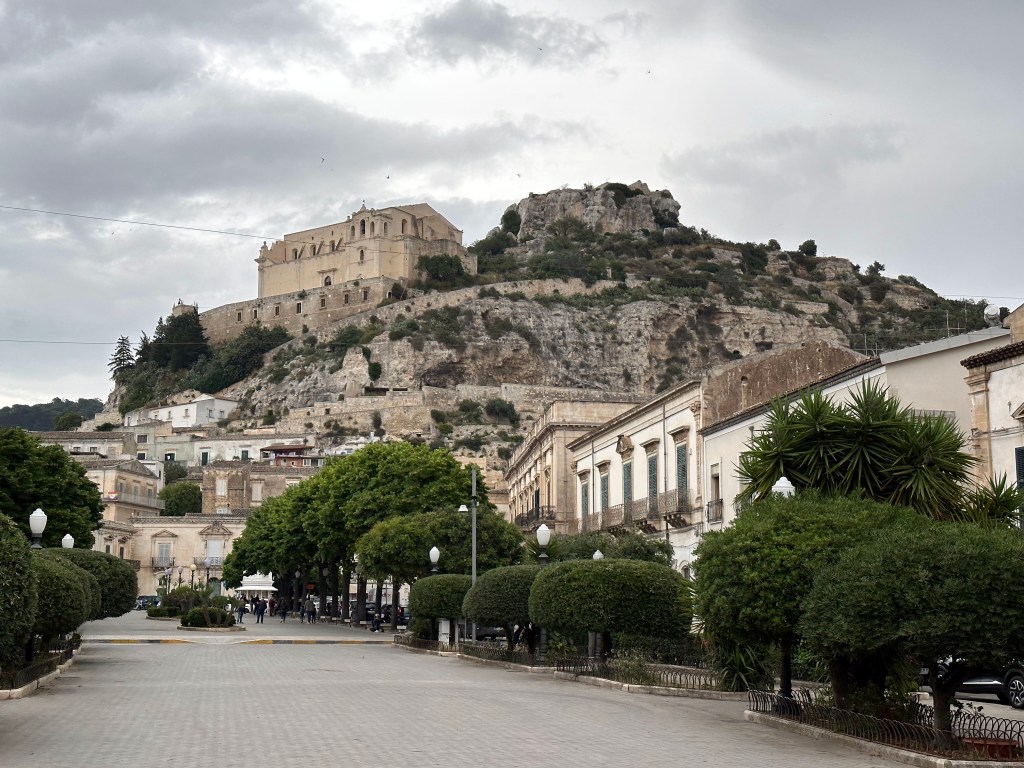
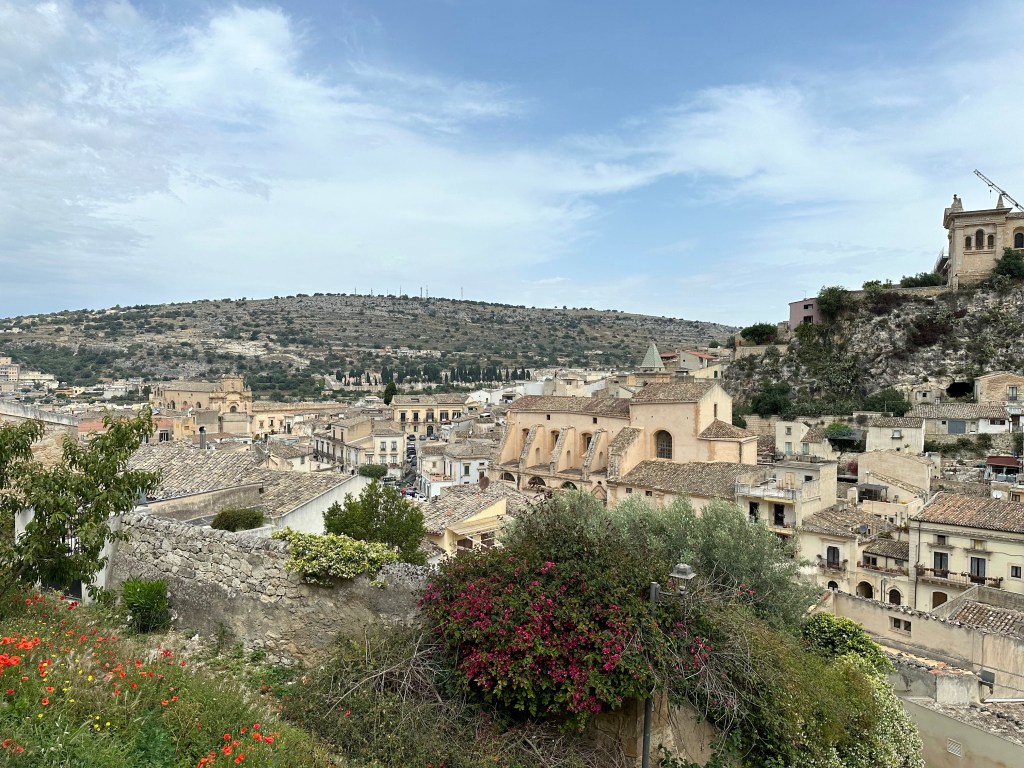
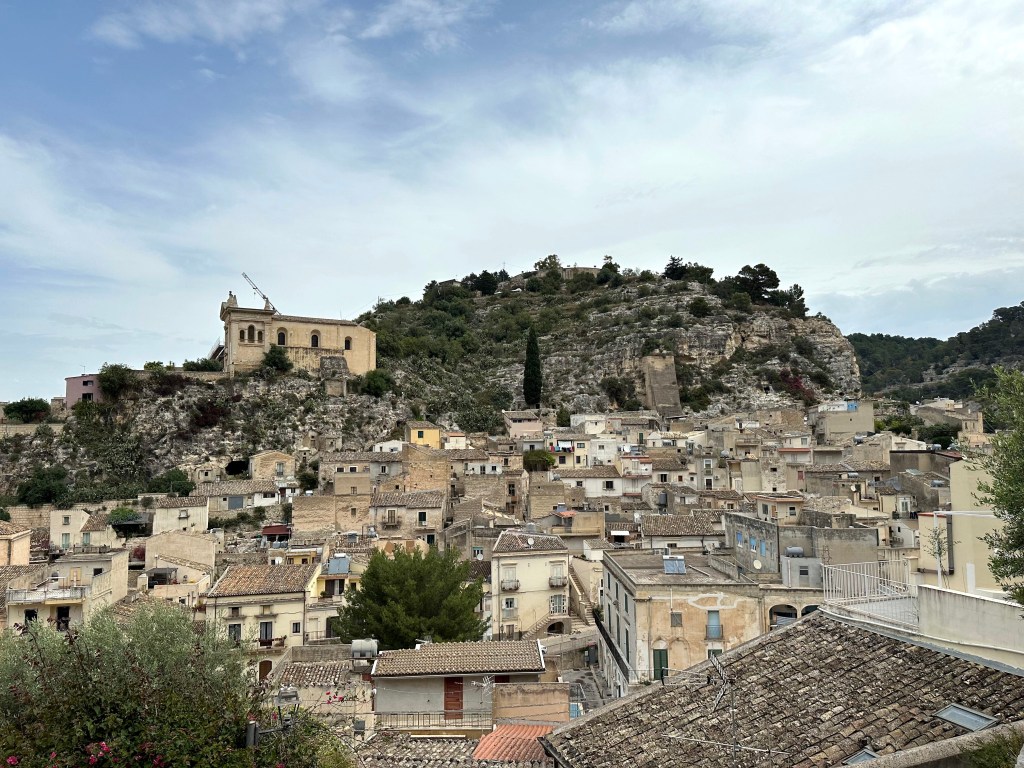
Scicli is a UNESCO-listed Baroque town tucked dramatically into the junction of three valleys in southeastern Sicily, rebuilt in golden stone after the catastrophic 1693 earthquake and flanked by a rocky hill crowned by the abandoned Church of San Matteo.
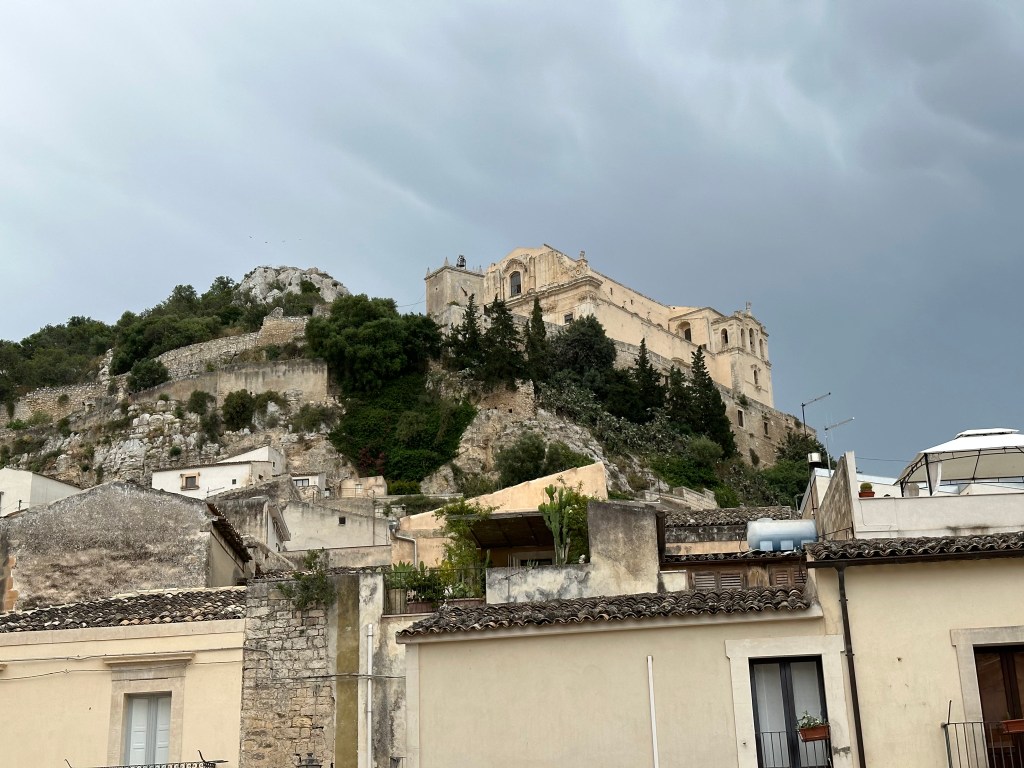
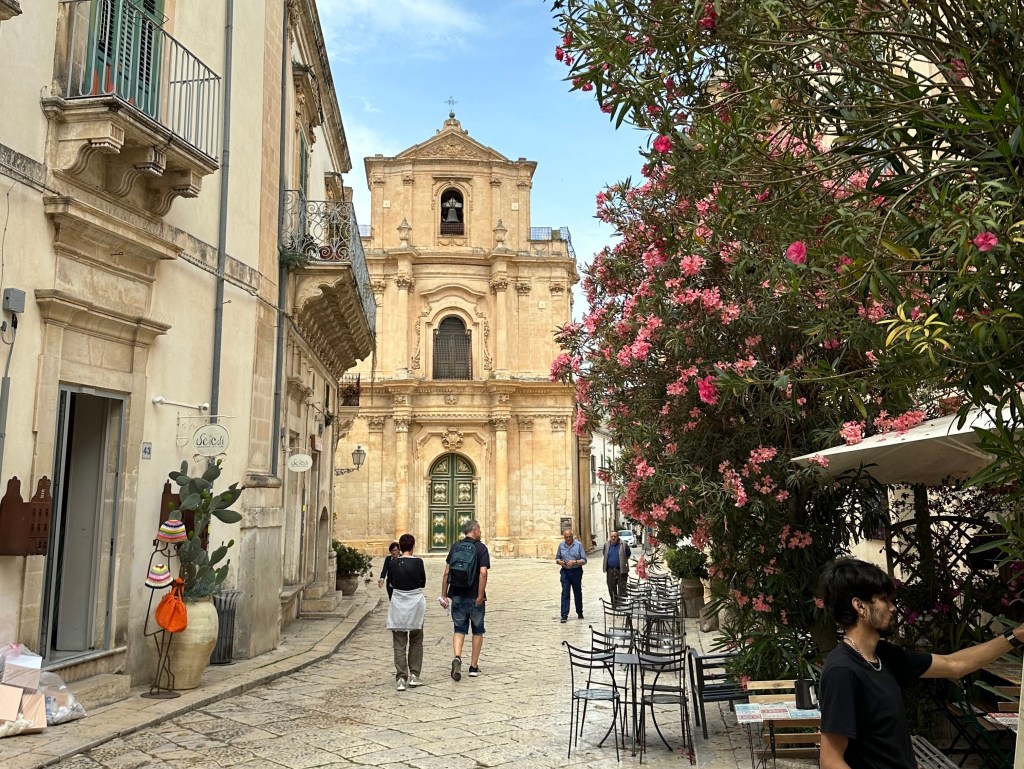
Smaller and less visited than its neighbors Ragusa, Modica, and Noto, Scicli still offered charm and – unlike Modica – a pedestrian core.
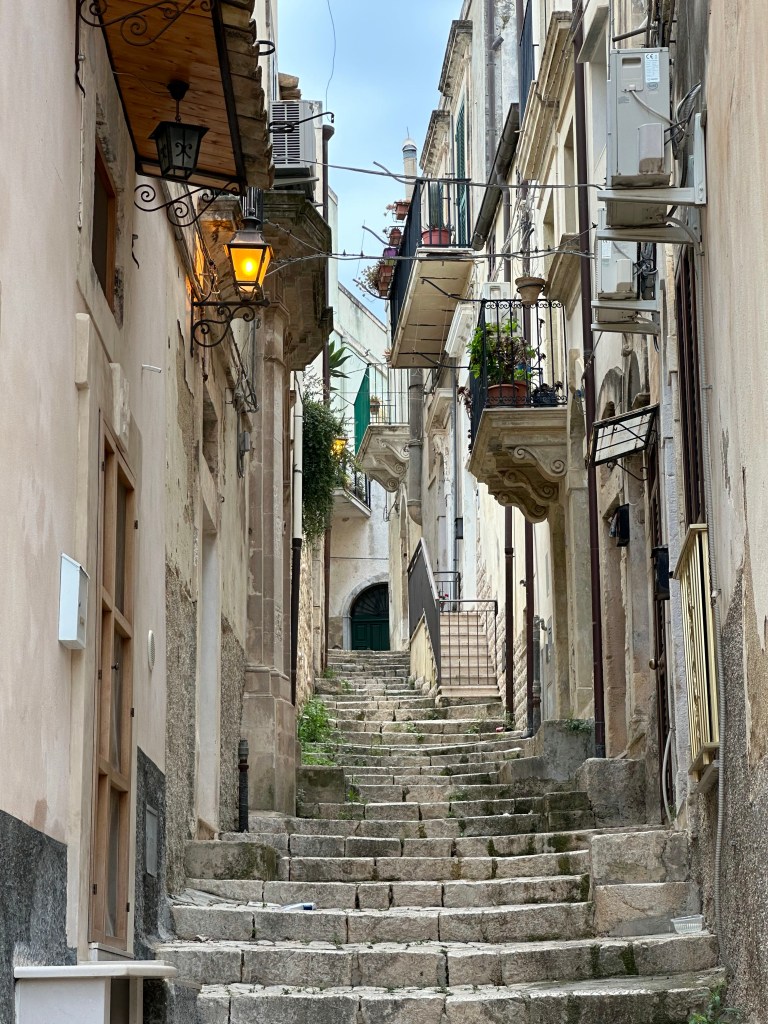
But just like Modica alta, Scicli had plenty of steps.
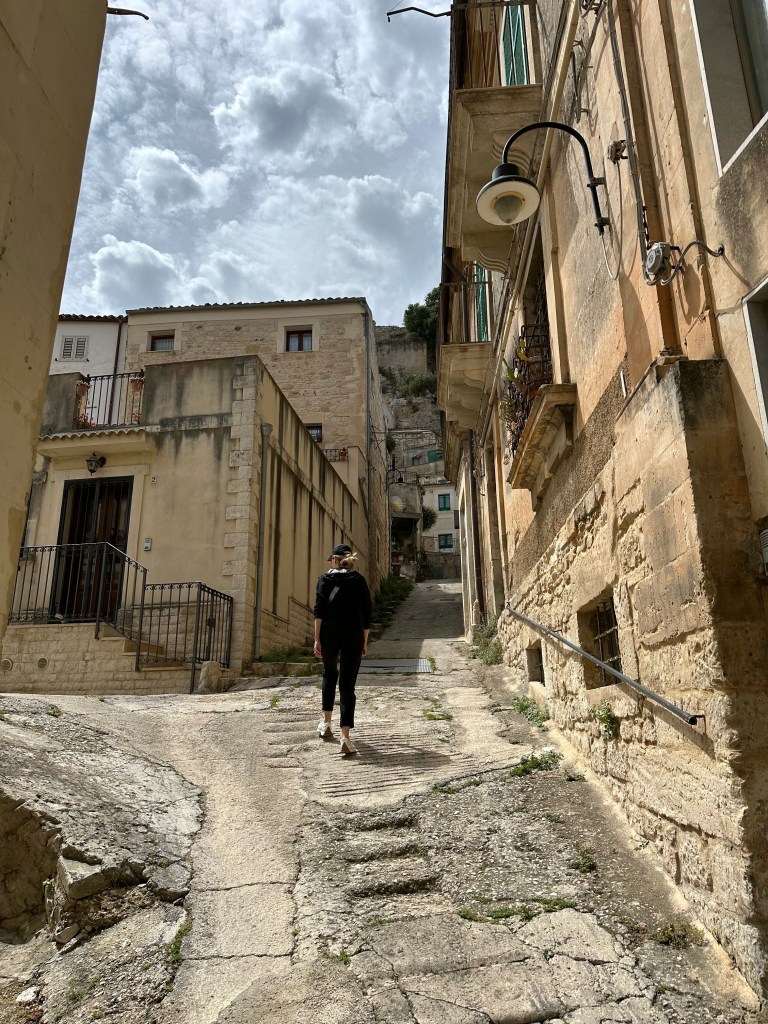
Leading to a pretty decent view.
Chiesa del Rosario perched on the cliff above town.
Chiesa di San Giovanni Evangelista from the top of the post, exemplifying the Baroque style:
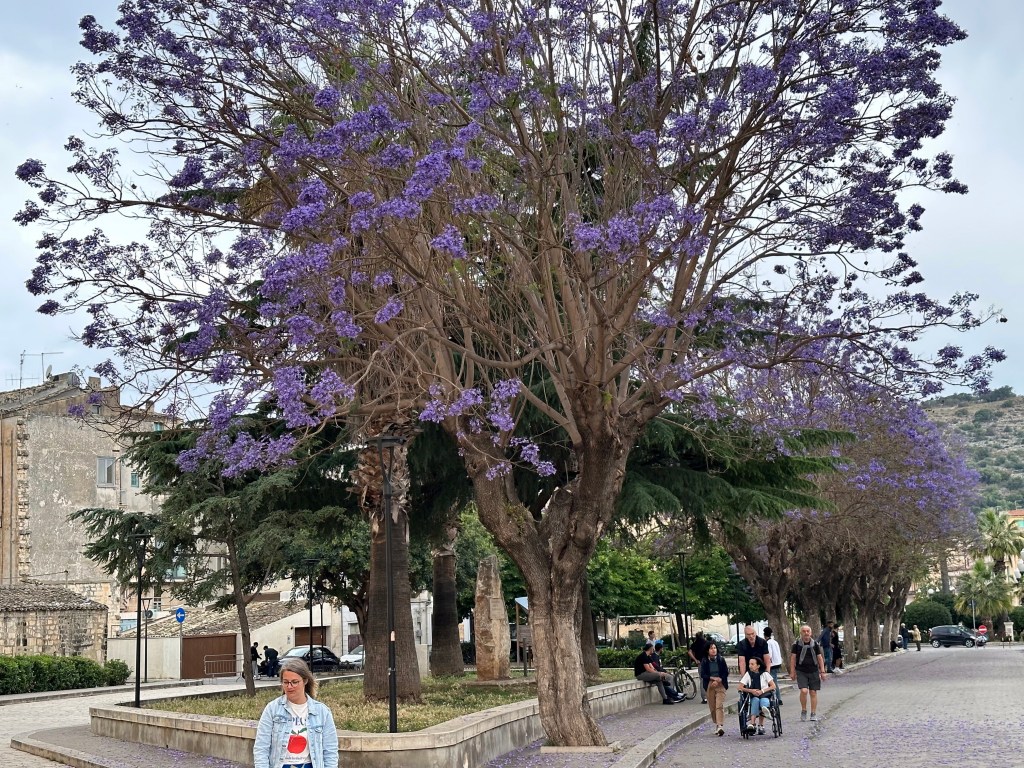
Jacaranda trees in Scicli, similar to those seen in another hilly town, Olvera, on our Catalonian bike trip.
Noto

And finally, a stopover in Noto, on the drive from Modica to Siracusa.
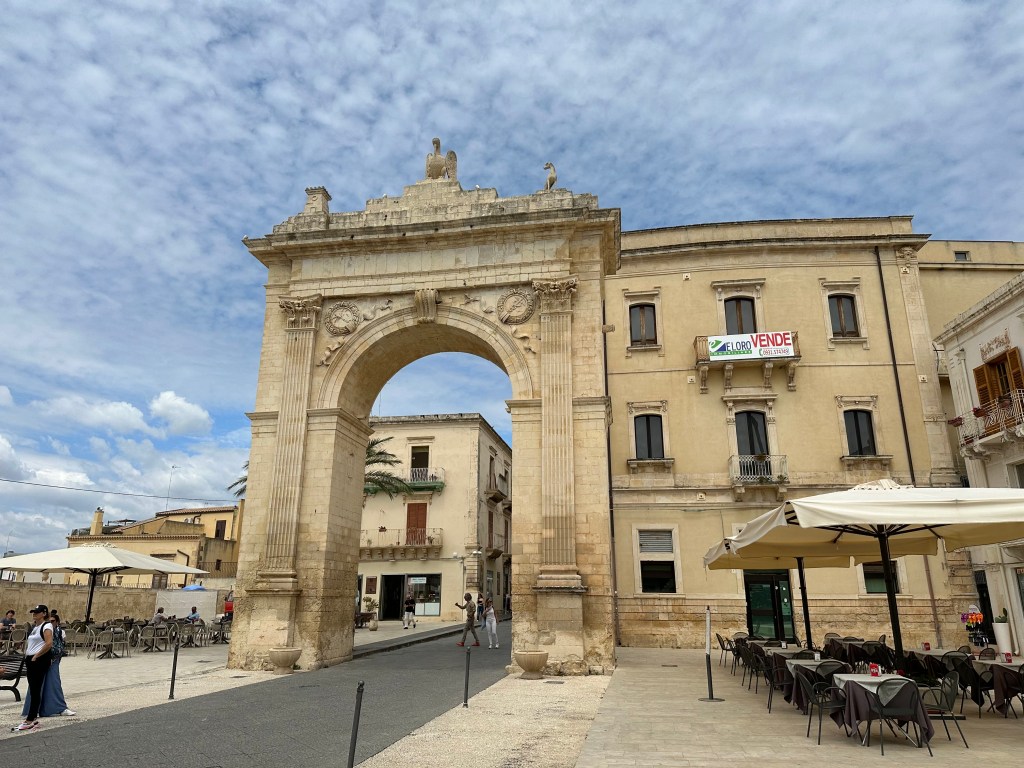
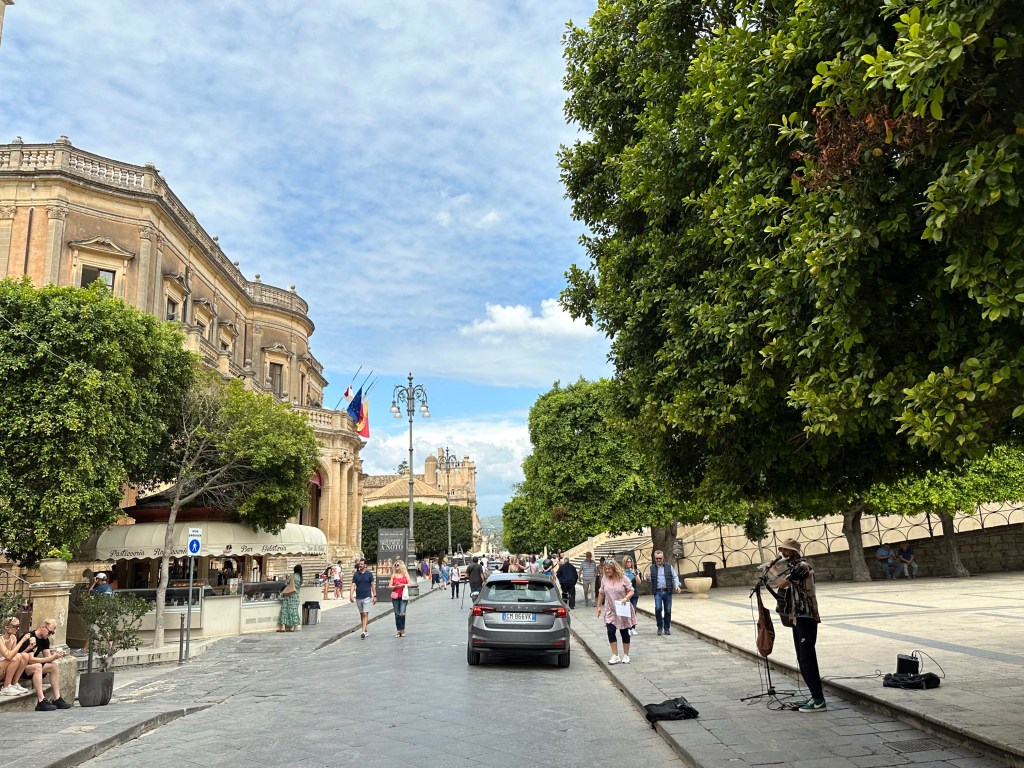
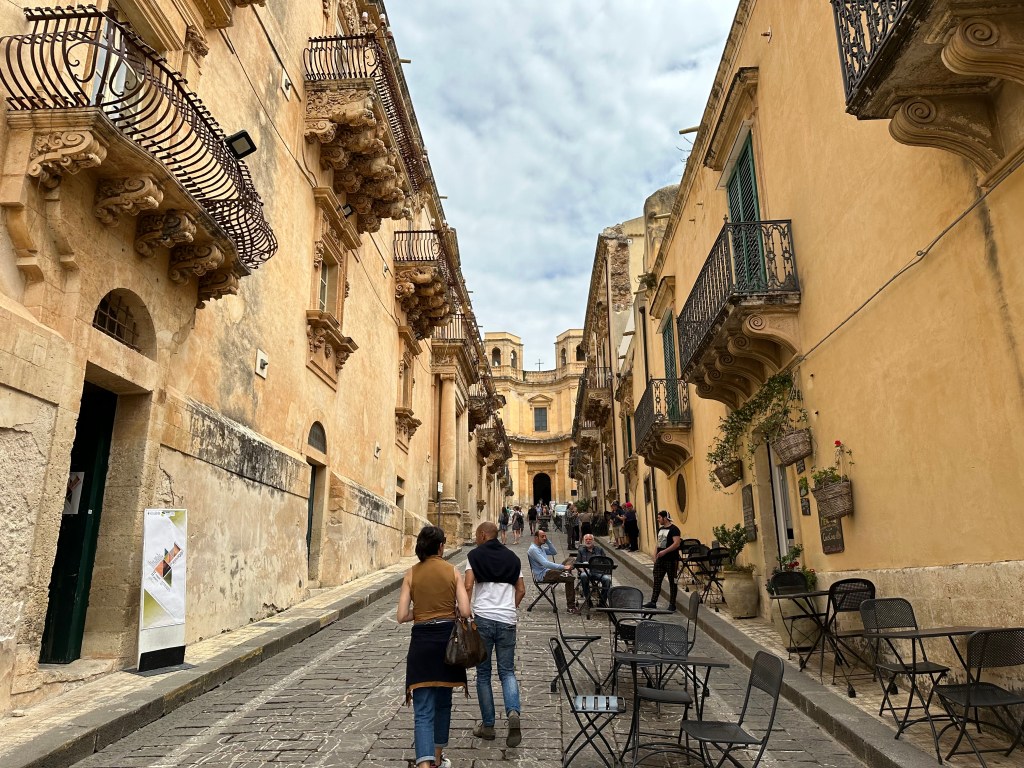
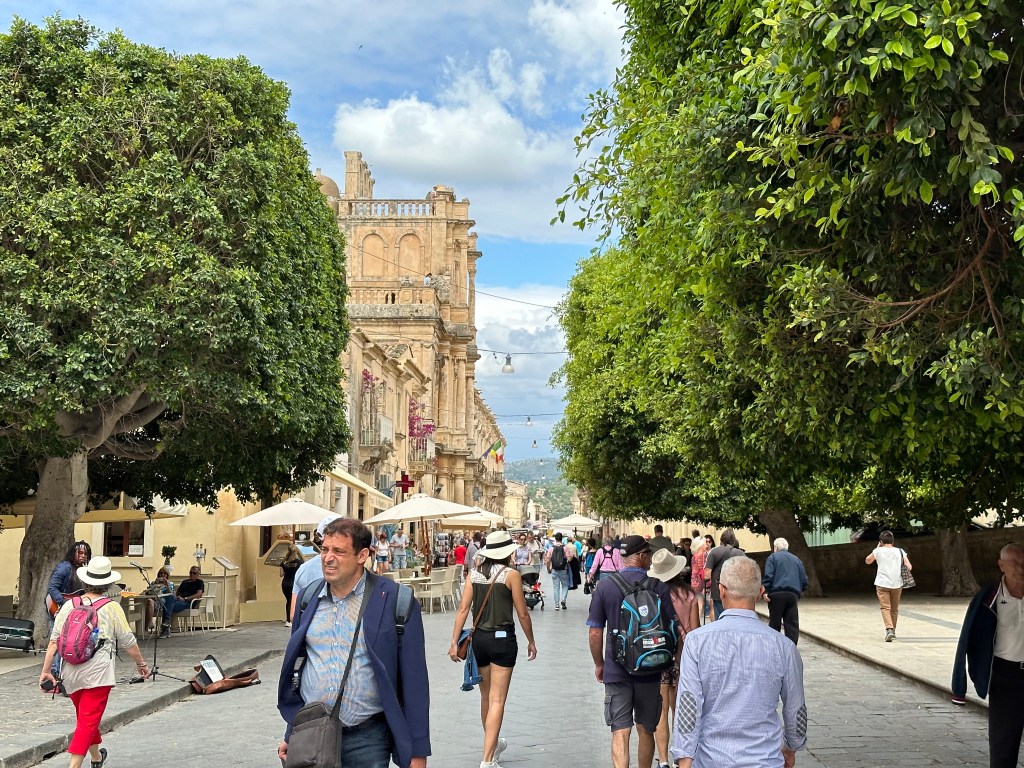
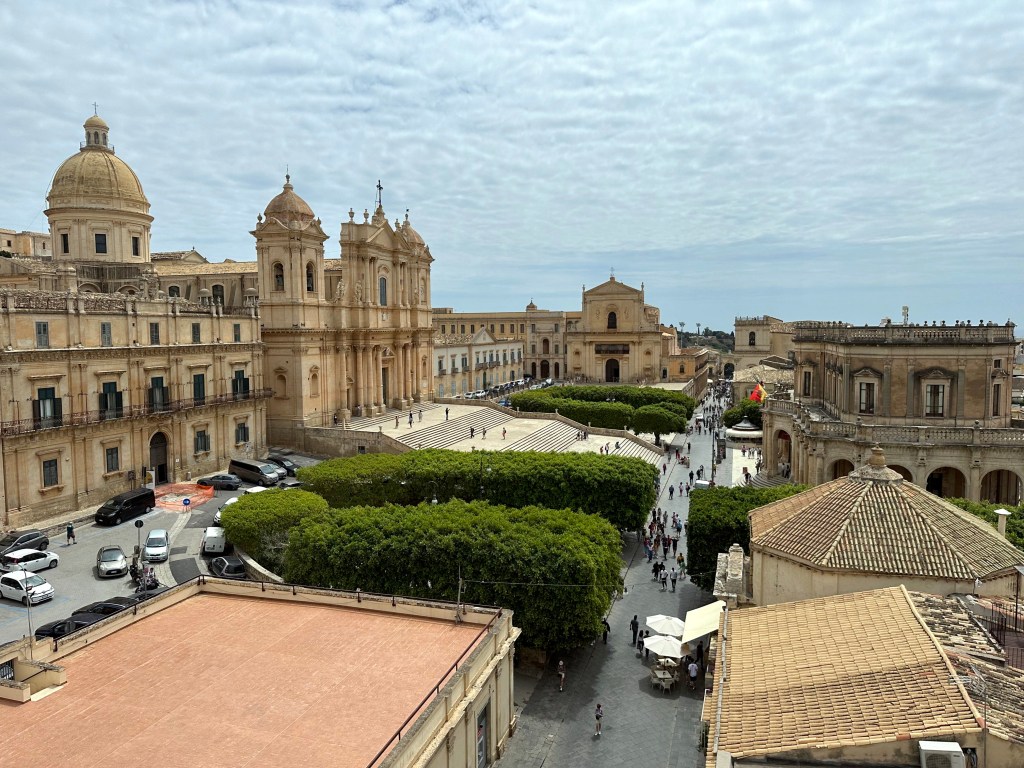
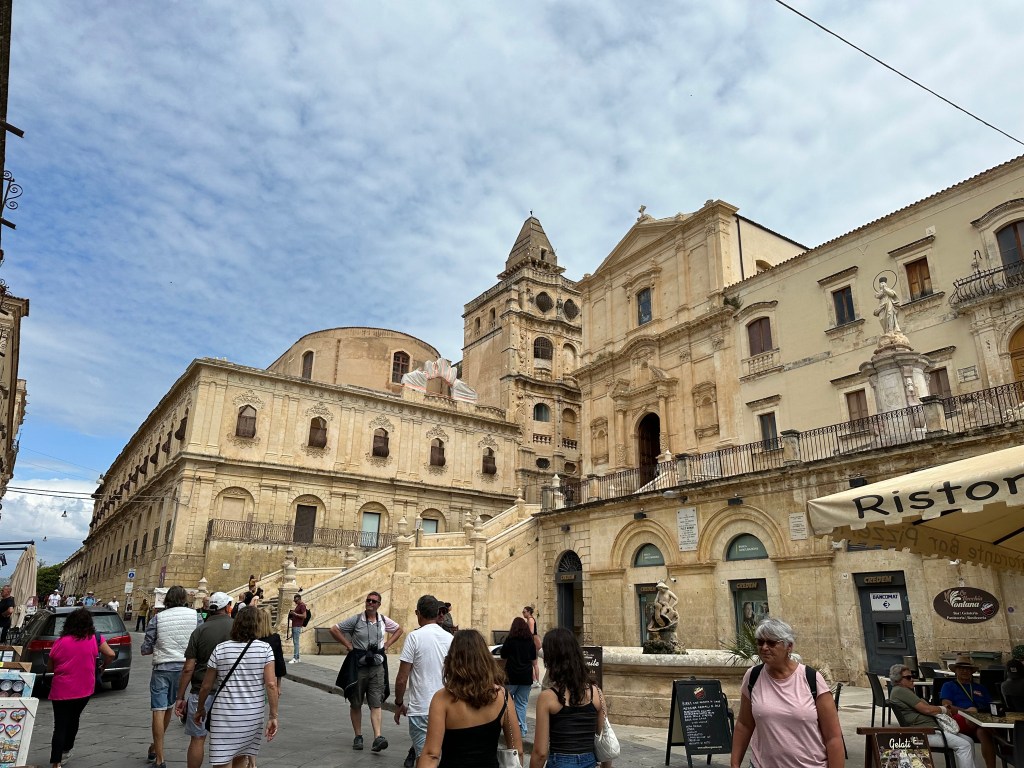
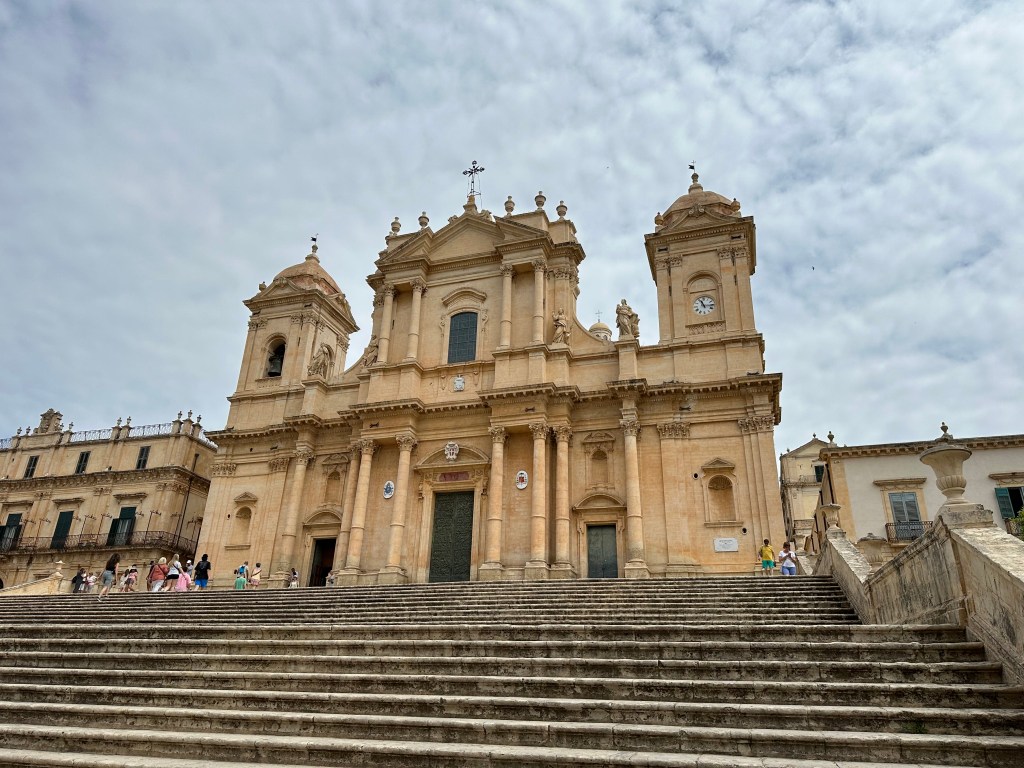
Noto is known as “the Capital of Baroque,” so our visits to its brethren apparently were just the warm up to the real deal. The main street, Corso Vittorio Emanuele, is, indeed lined with ornate churches and palaces that make the whole town feel like an open-air museum.
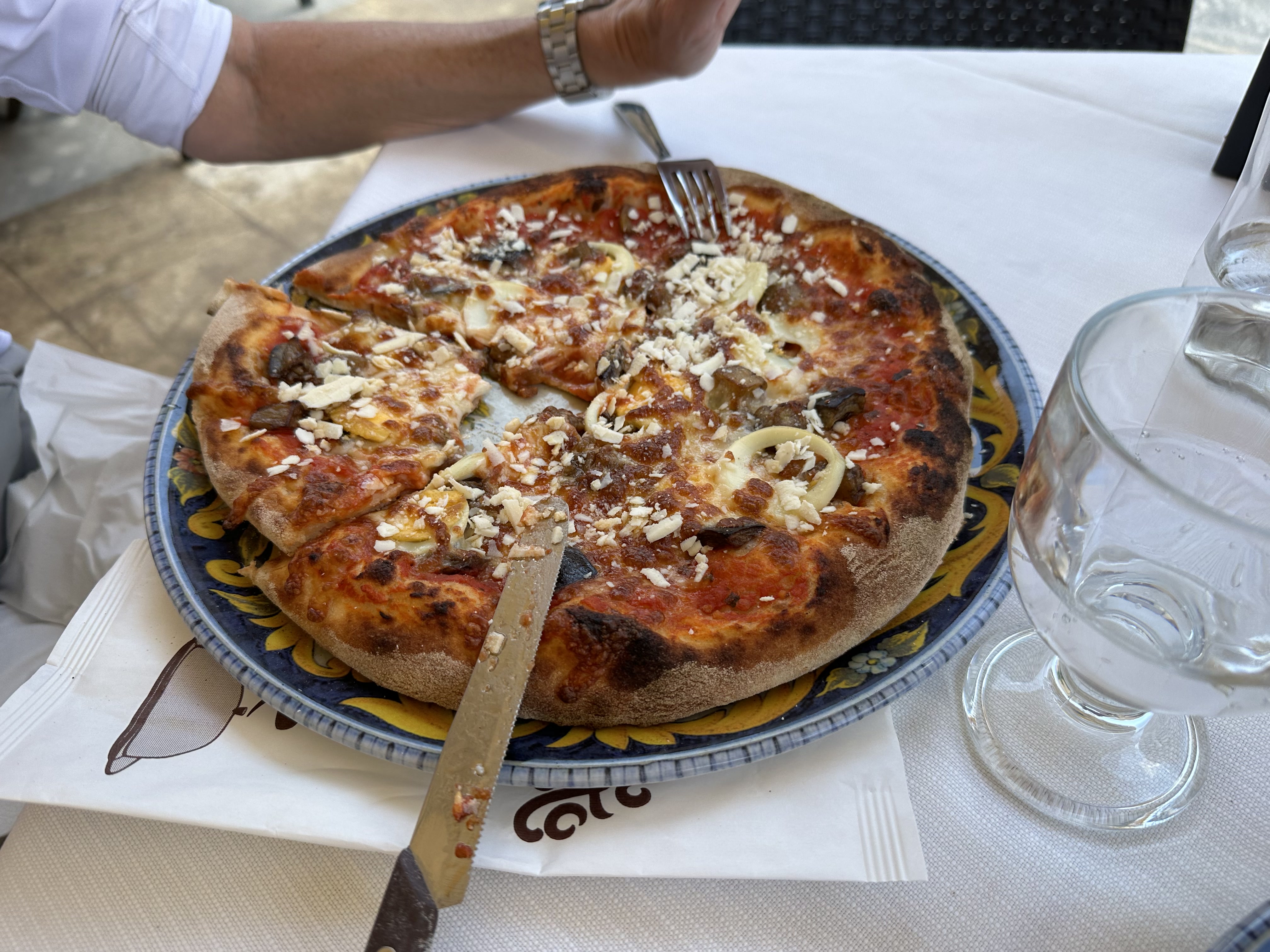
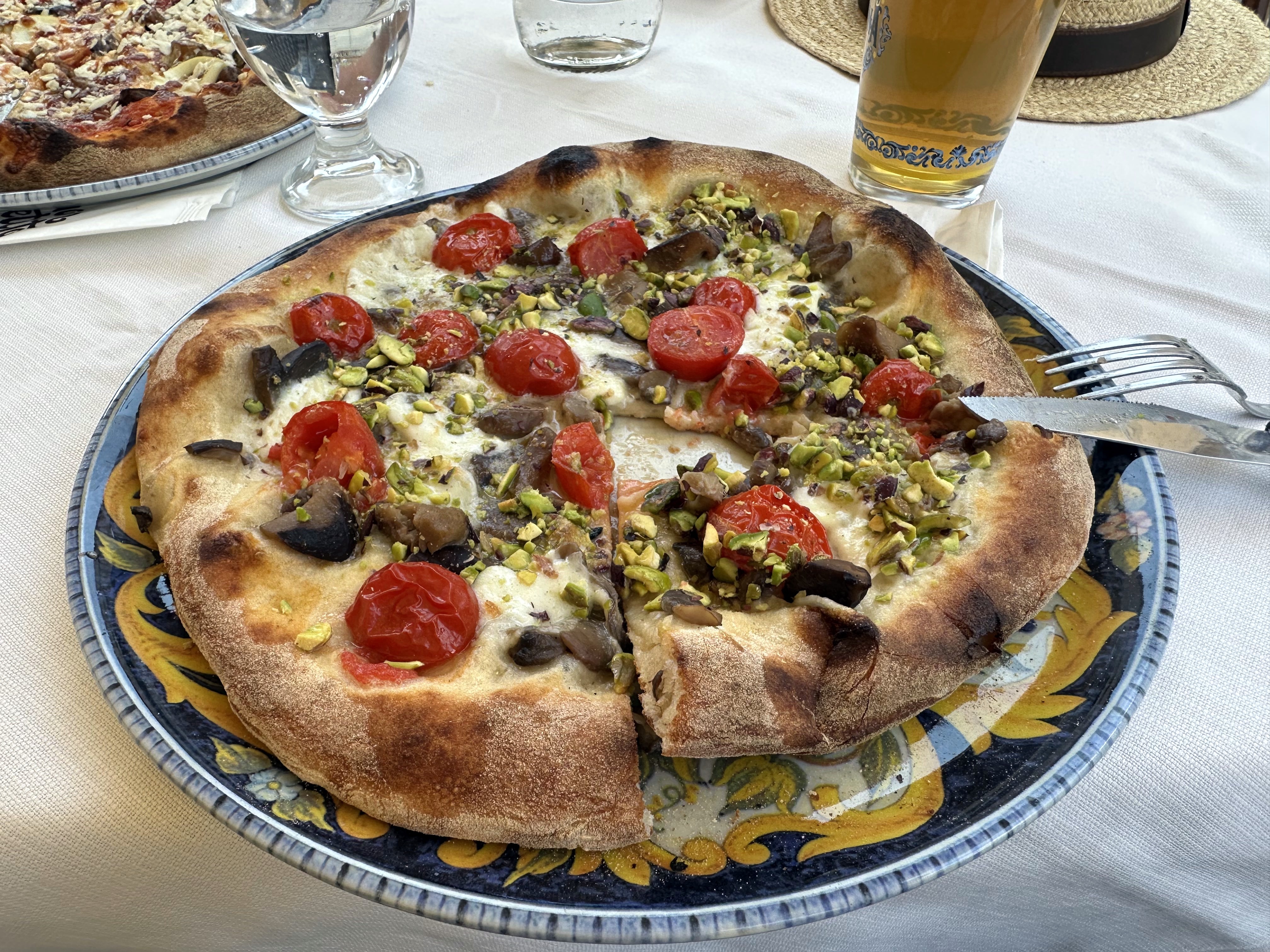
Little lunch in Noto, featuring both Neapolitan crusts and Sicilian pistachios.
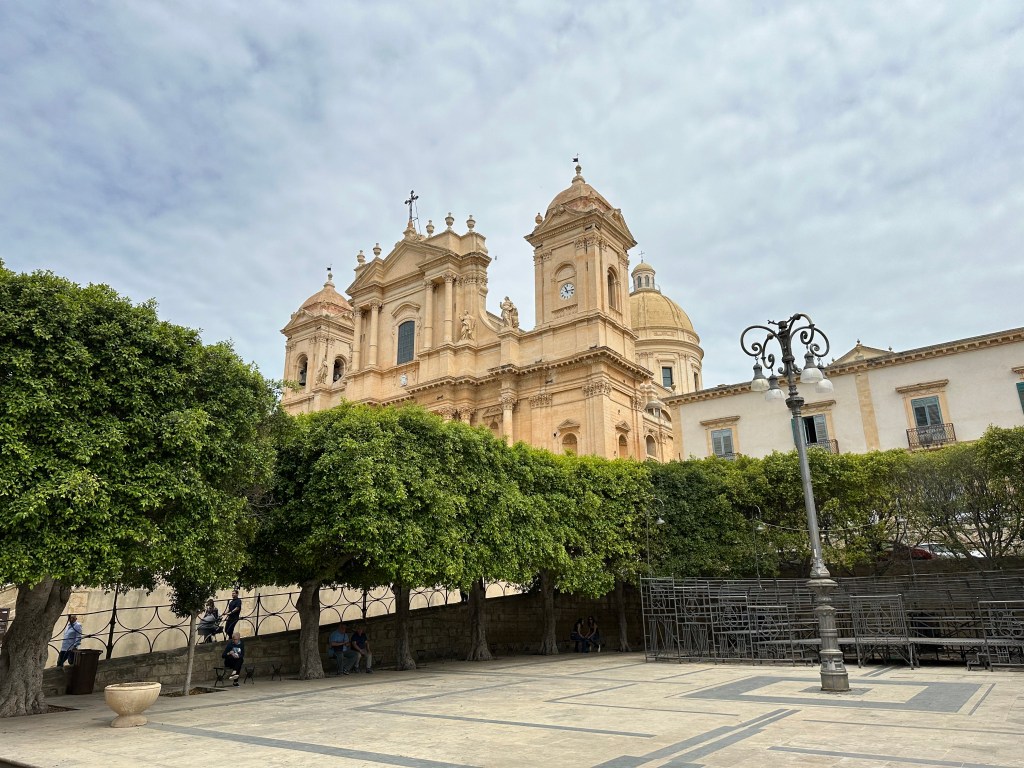
Noto’s cathedral:
And more Baroque balcony buddies:
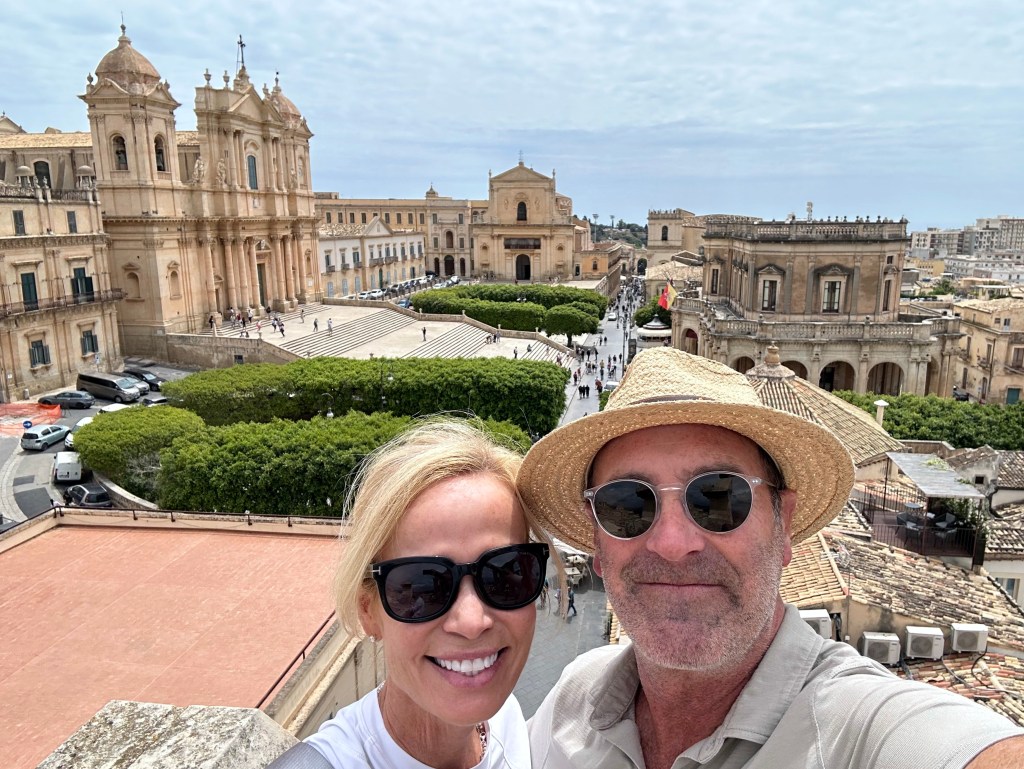
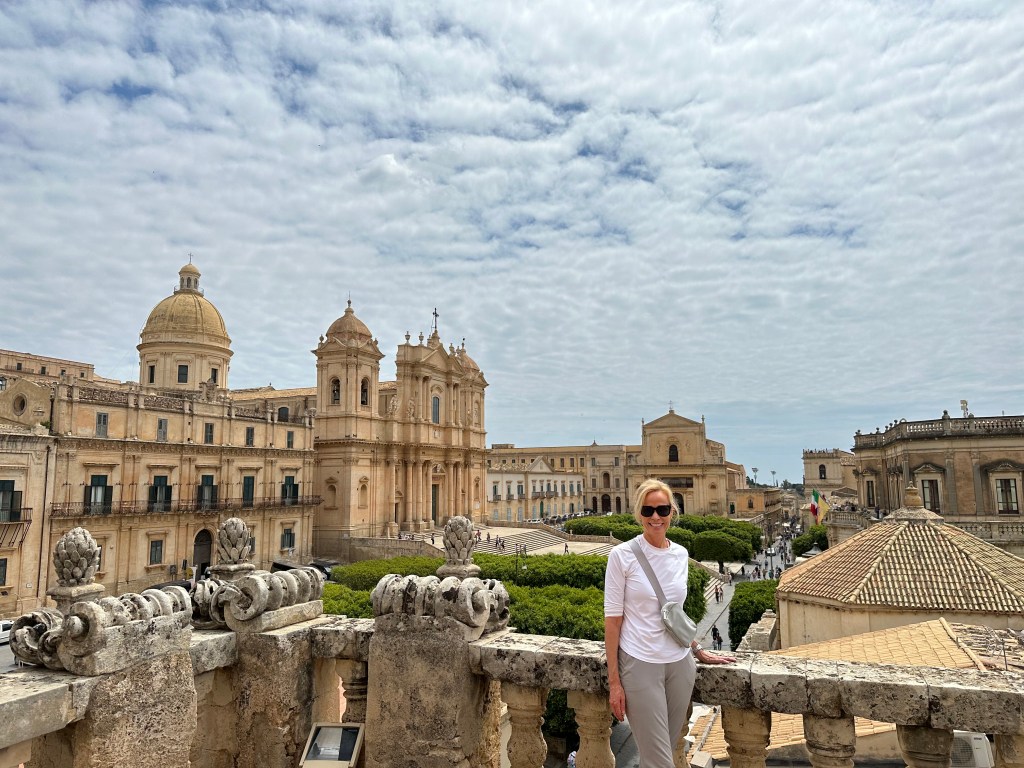
Pretty great view over town from the roof of the Church of St. Charles Borromeo:
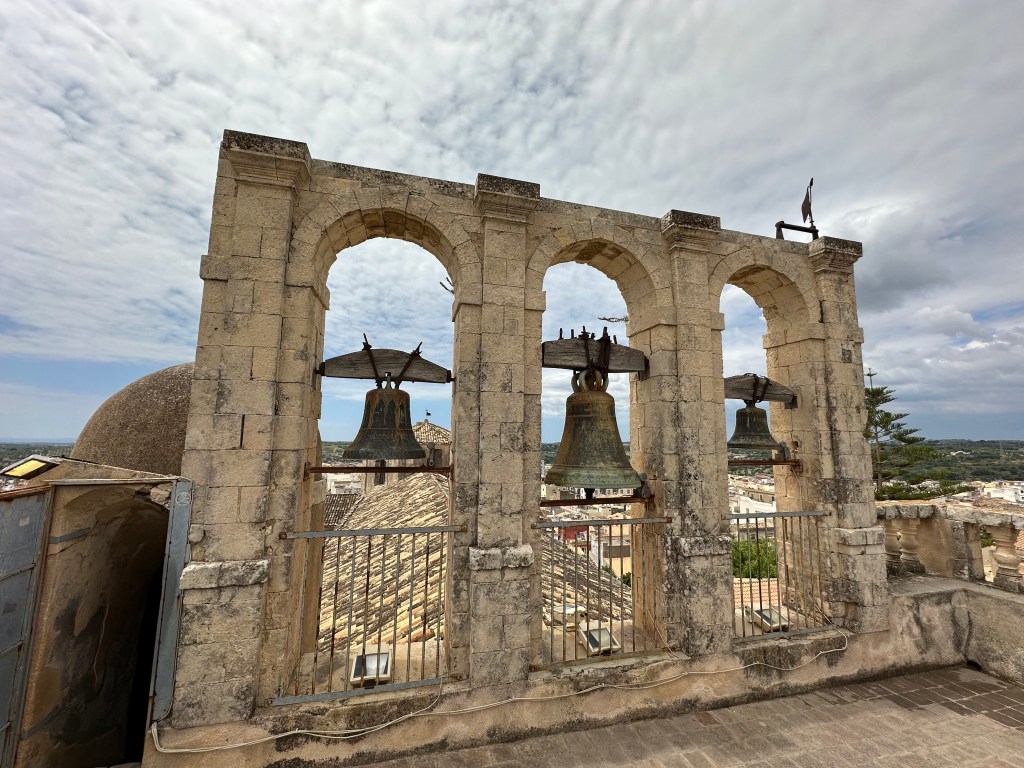
St. Mary’s bells in Old Town are better. . .
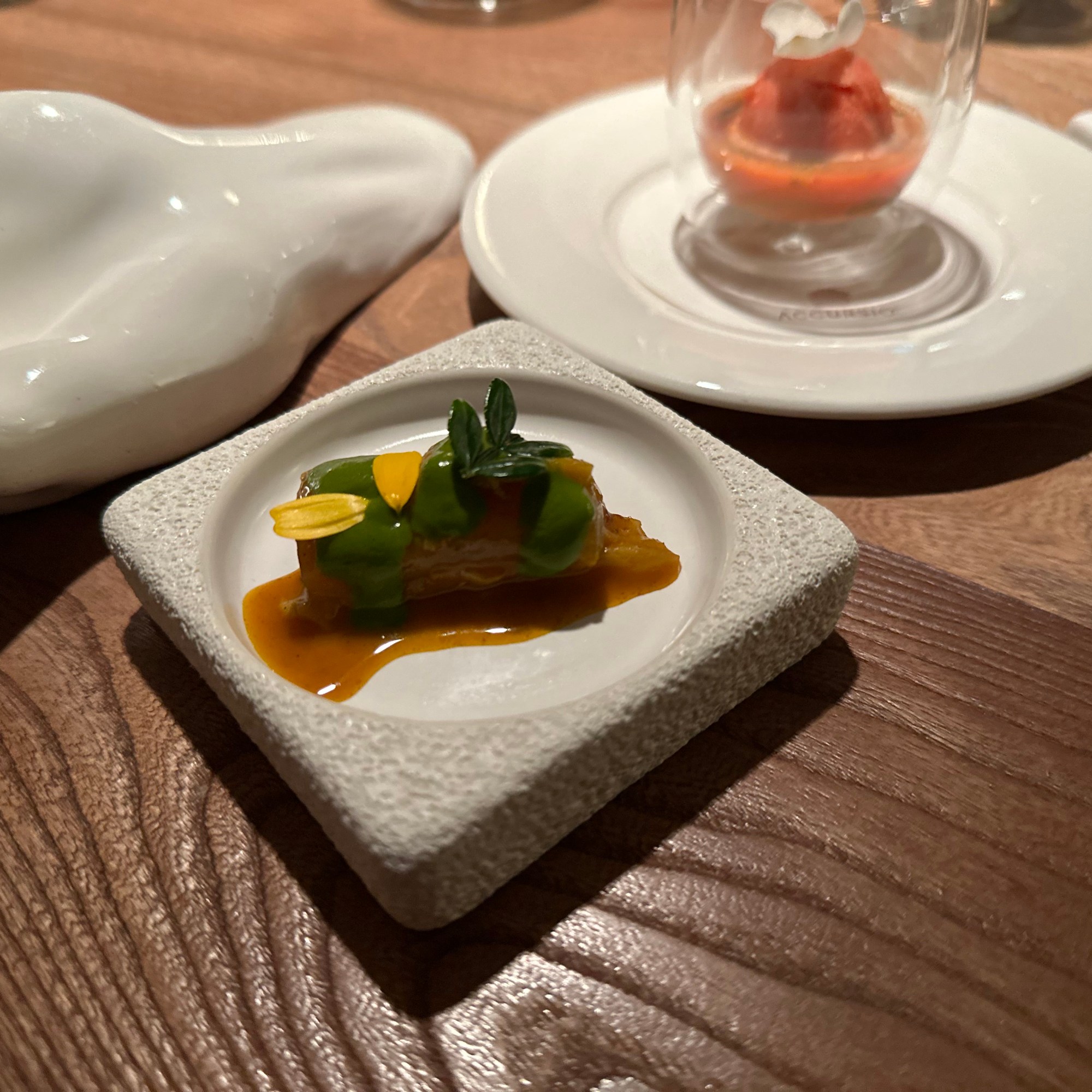
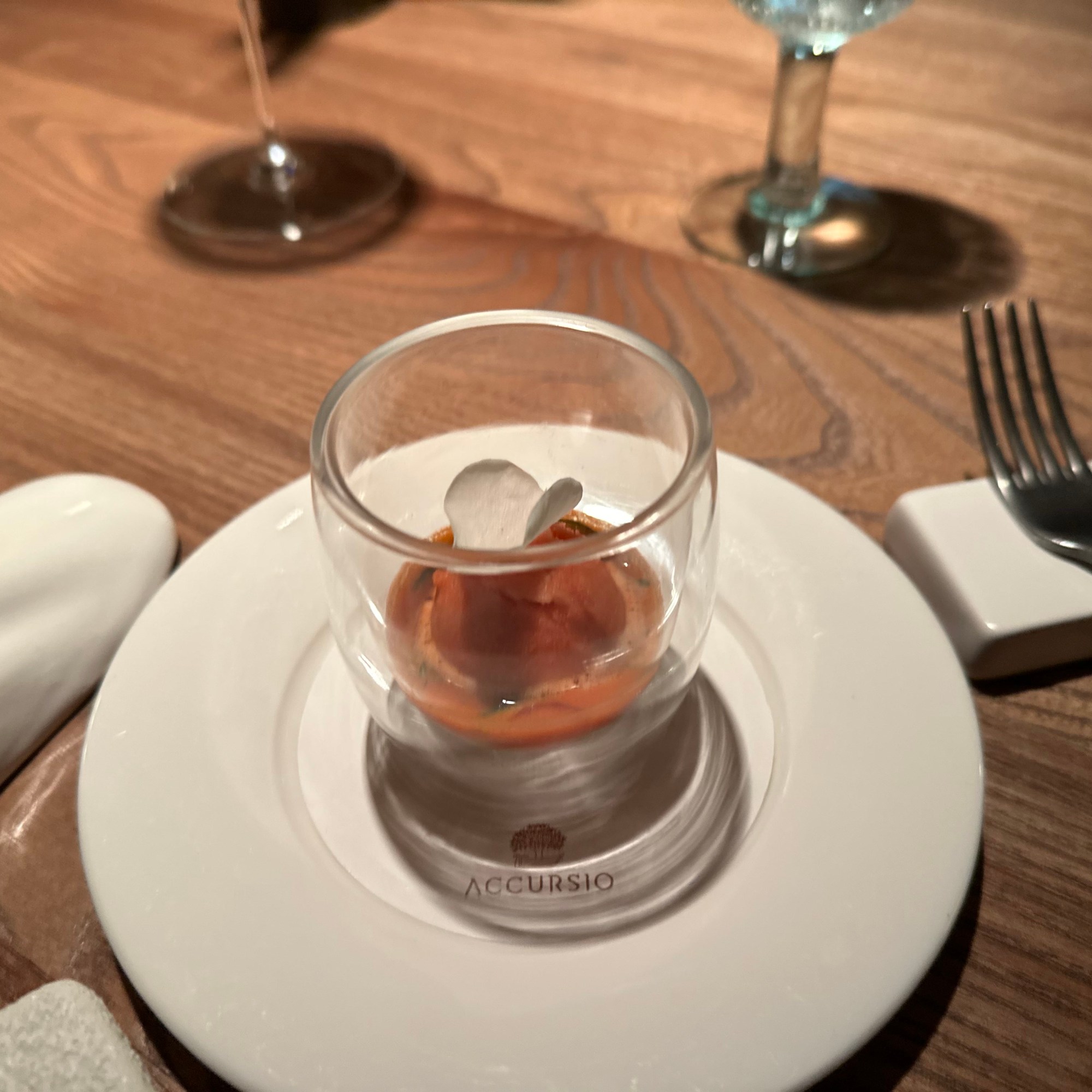
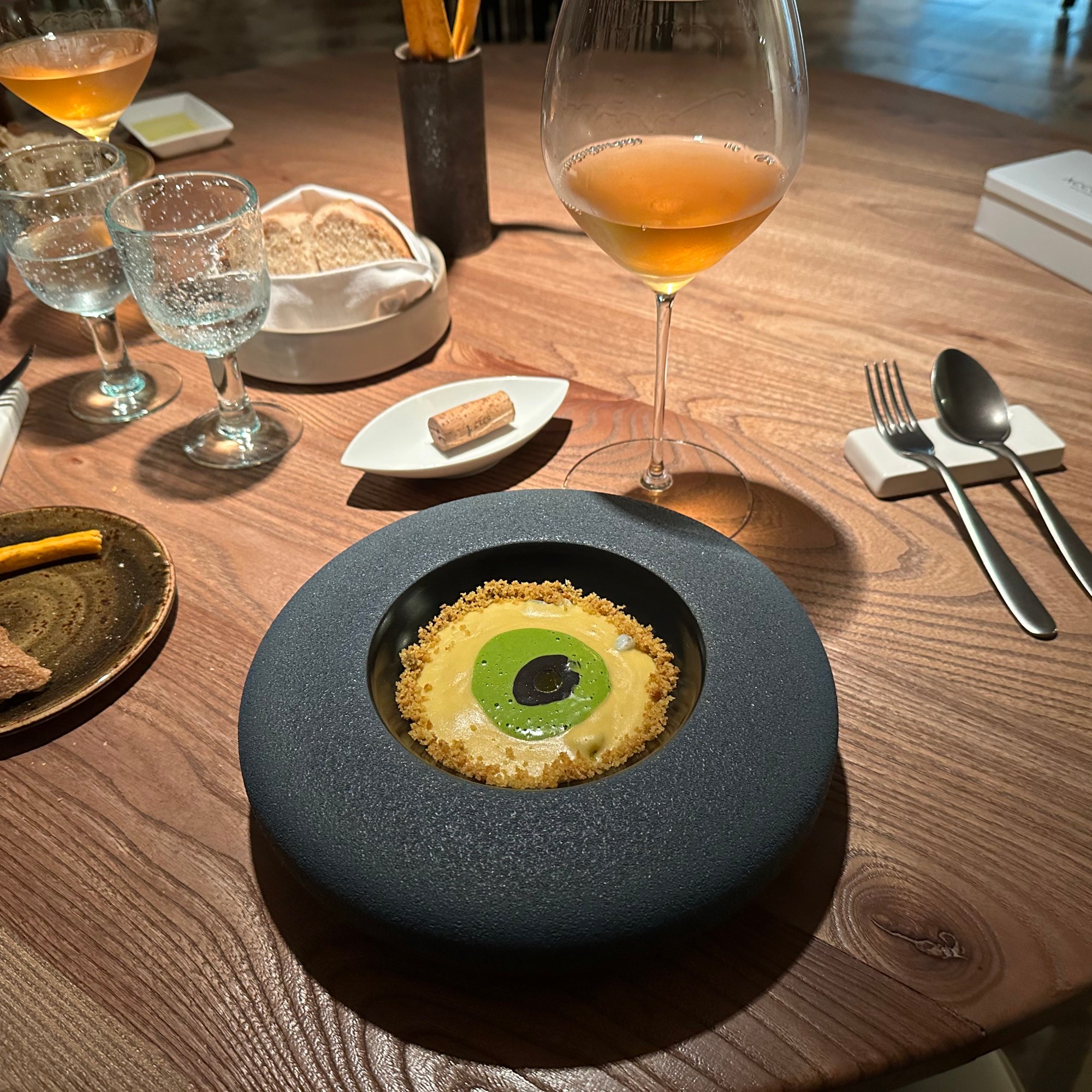
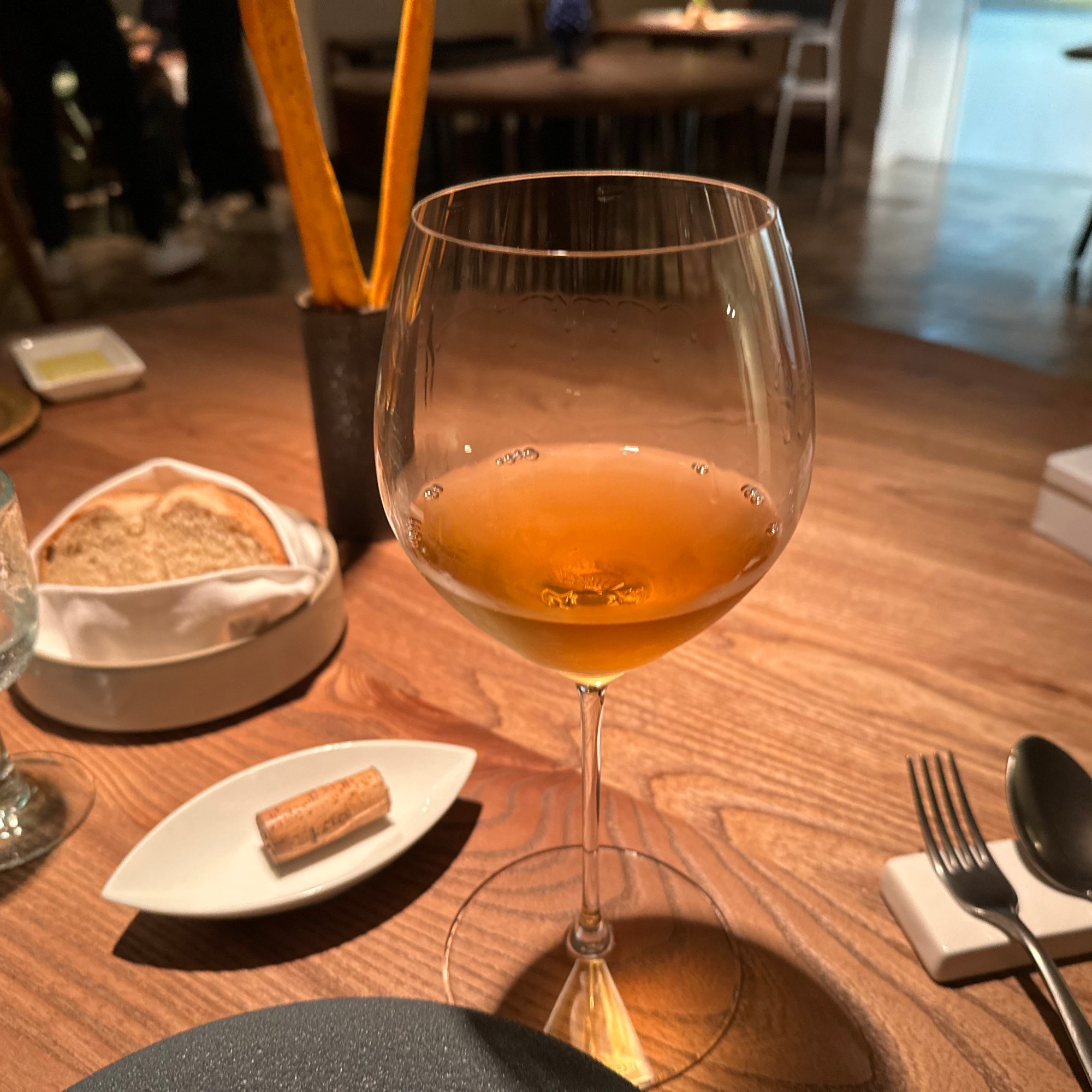
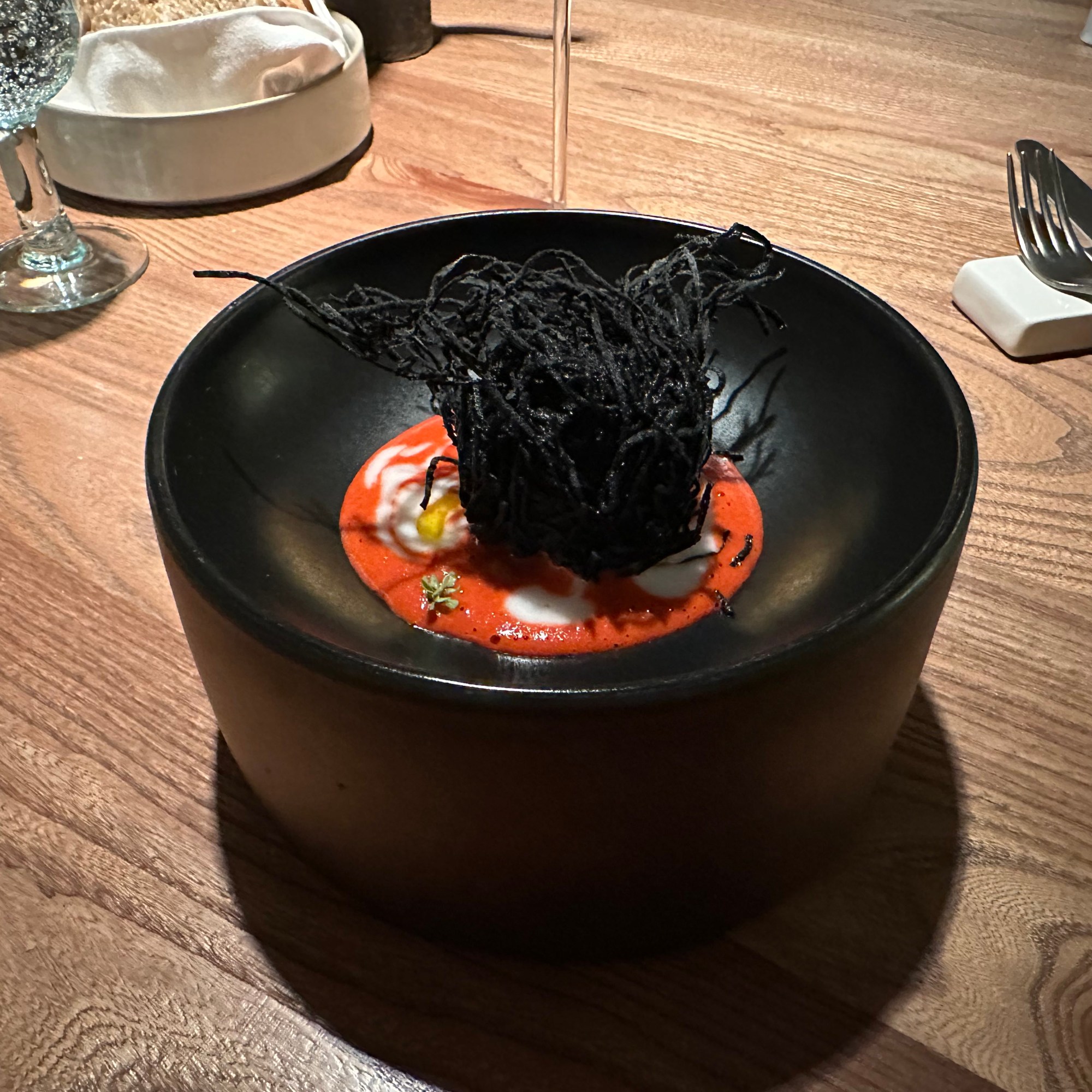
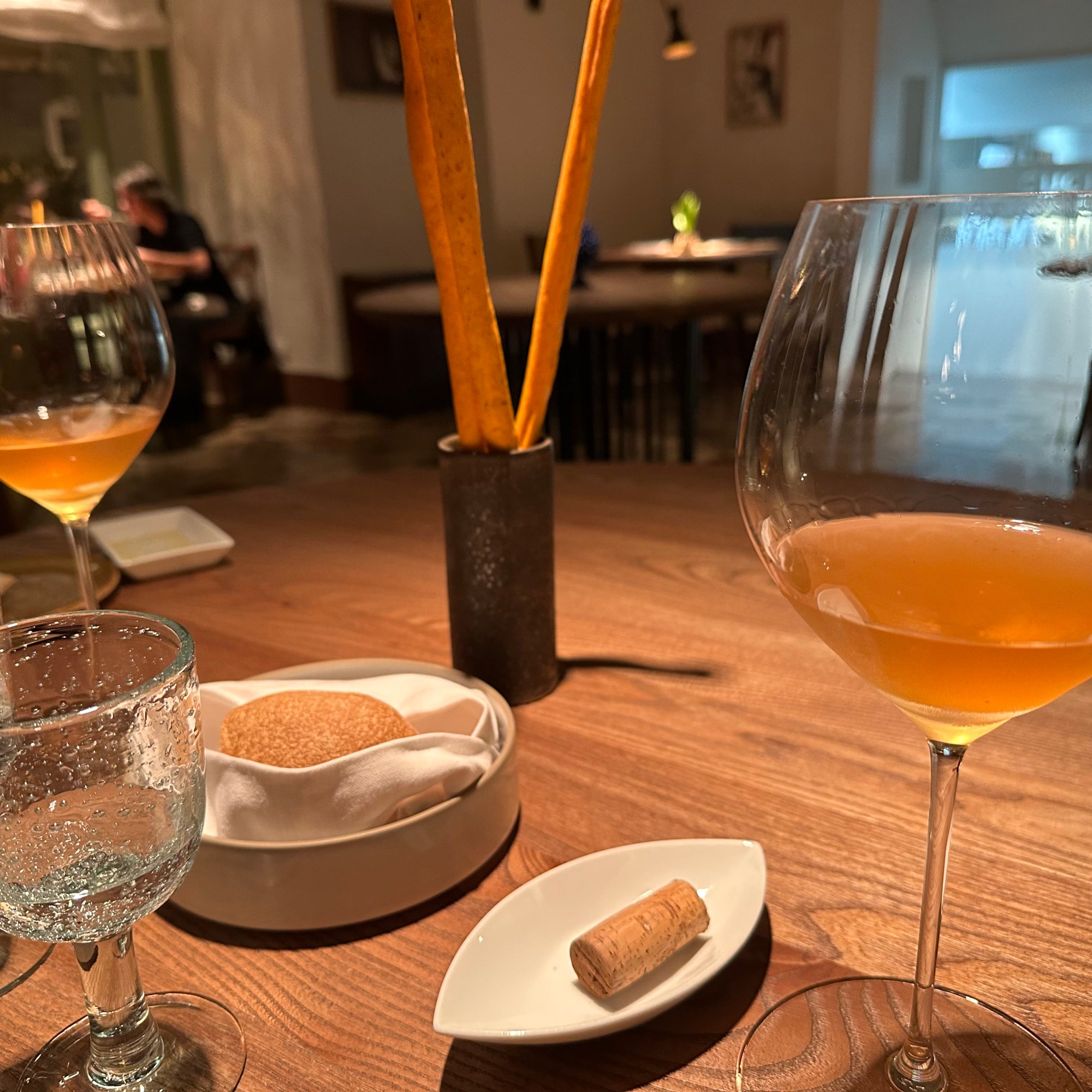
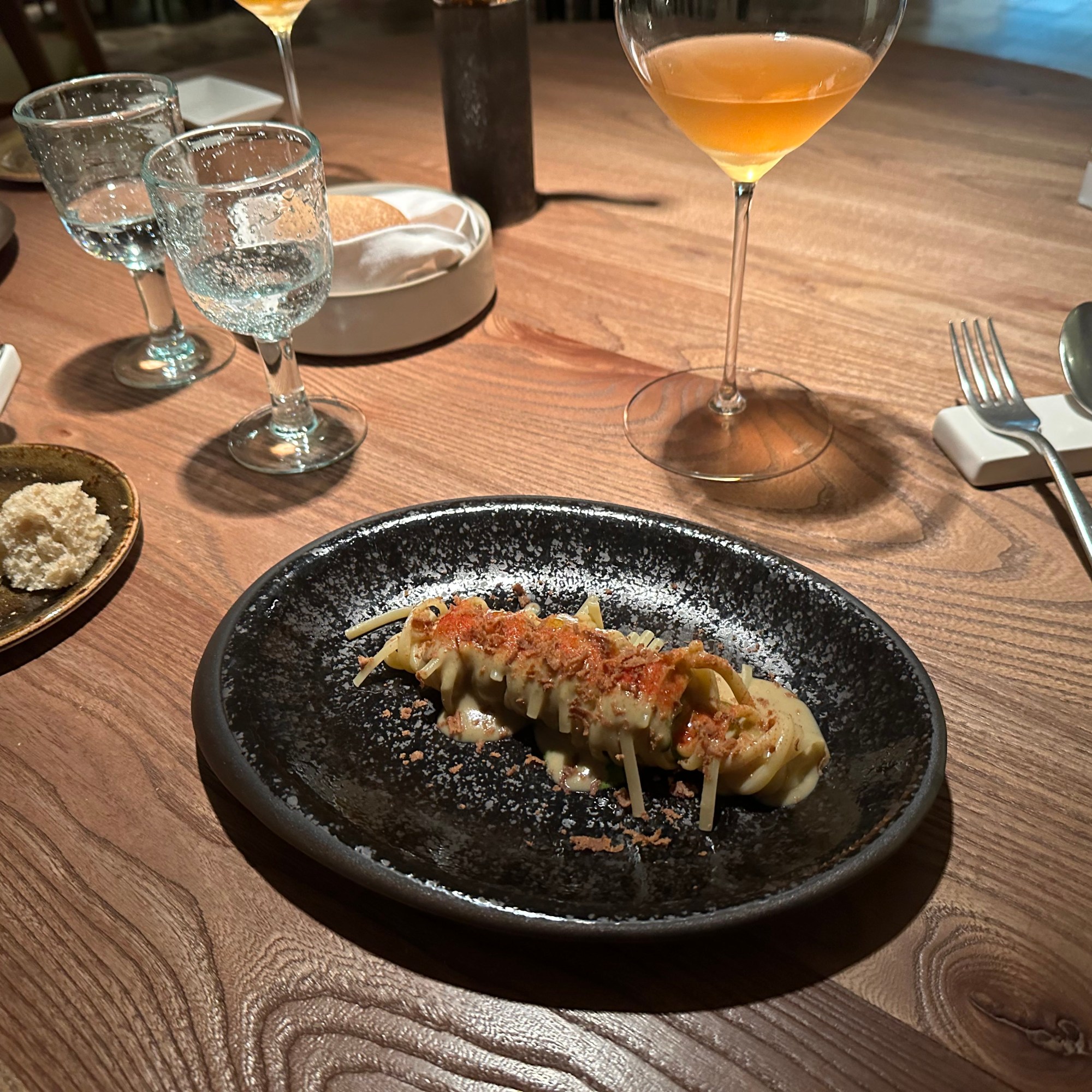
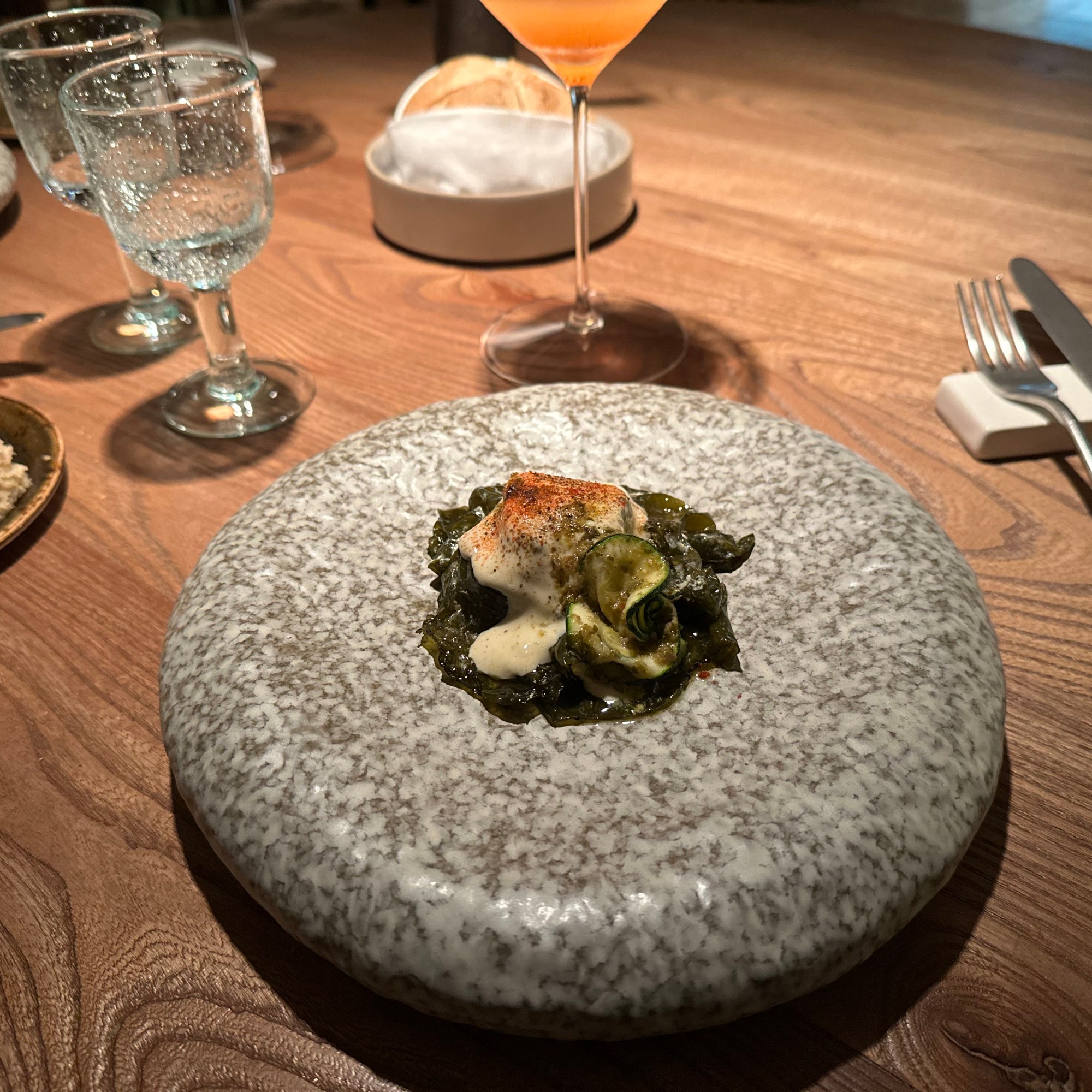
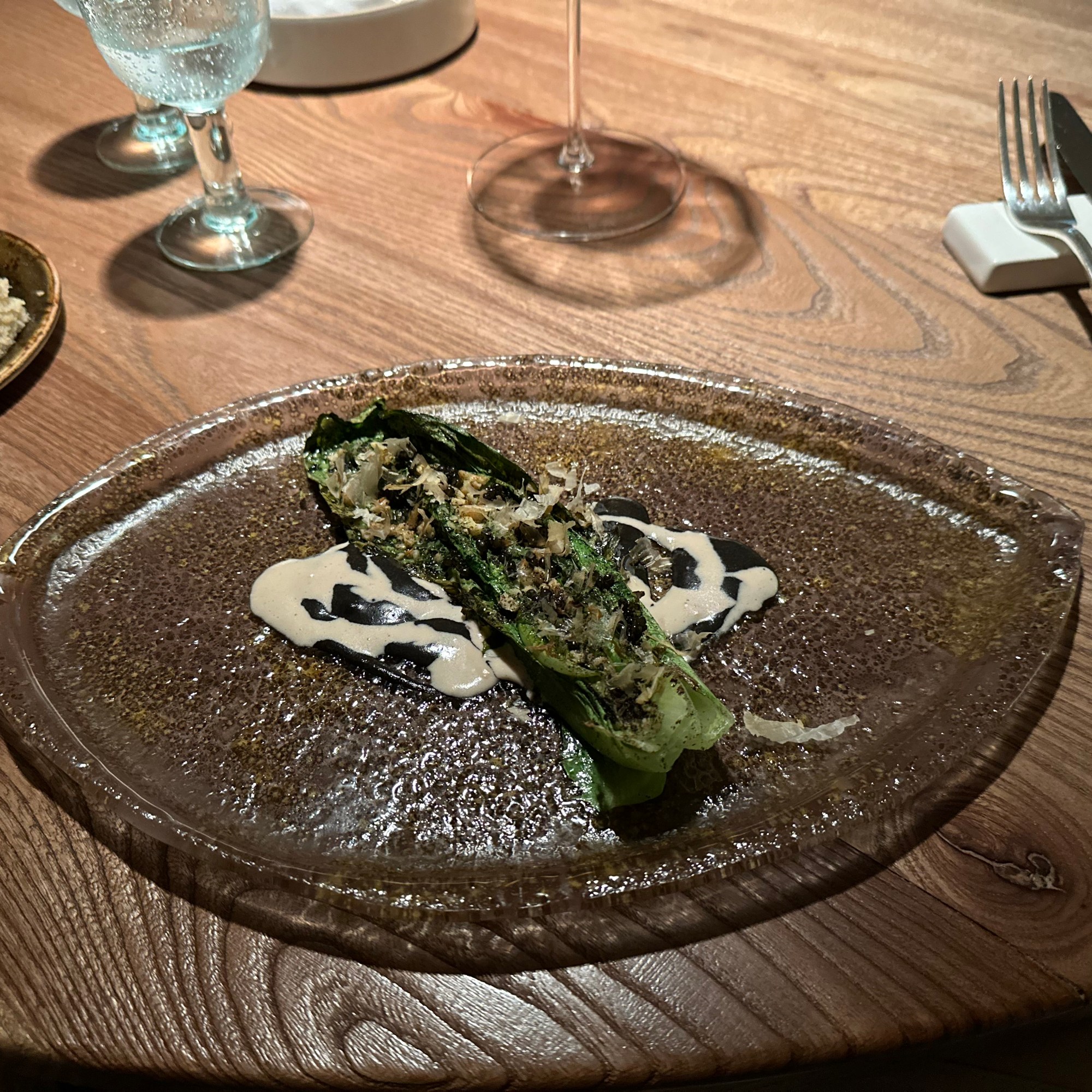
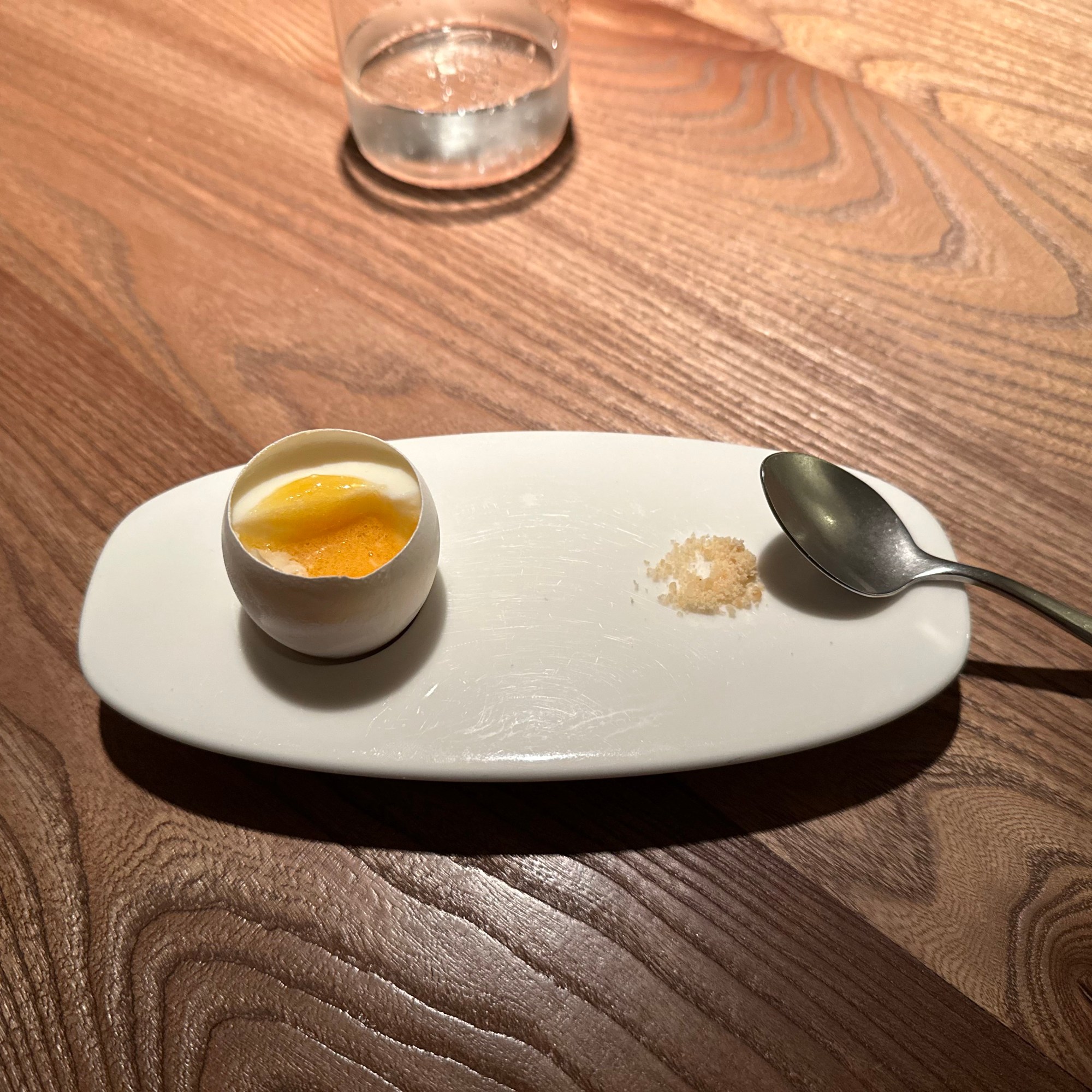
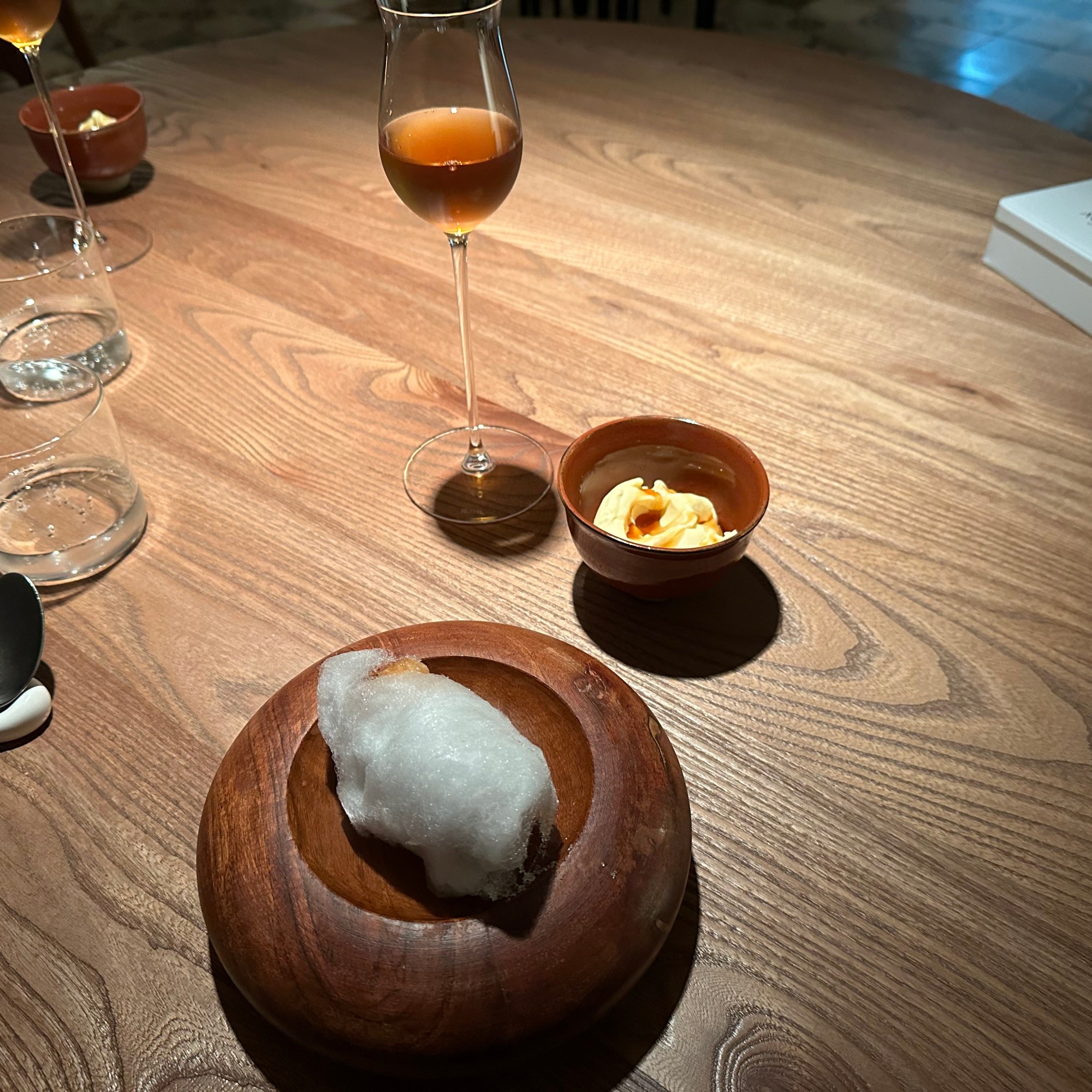
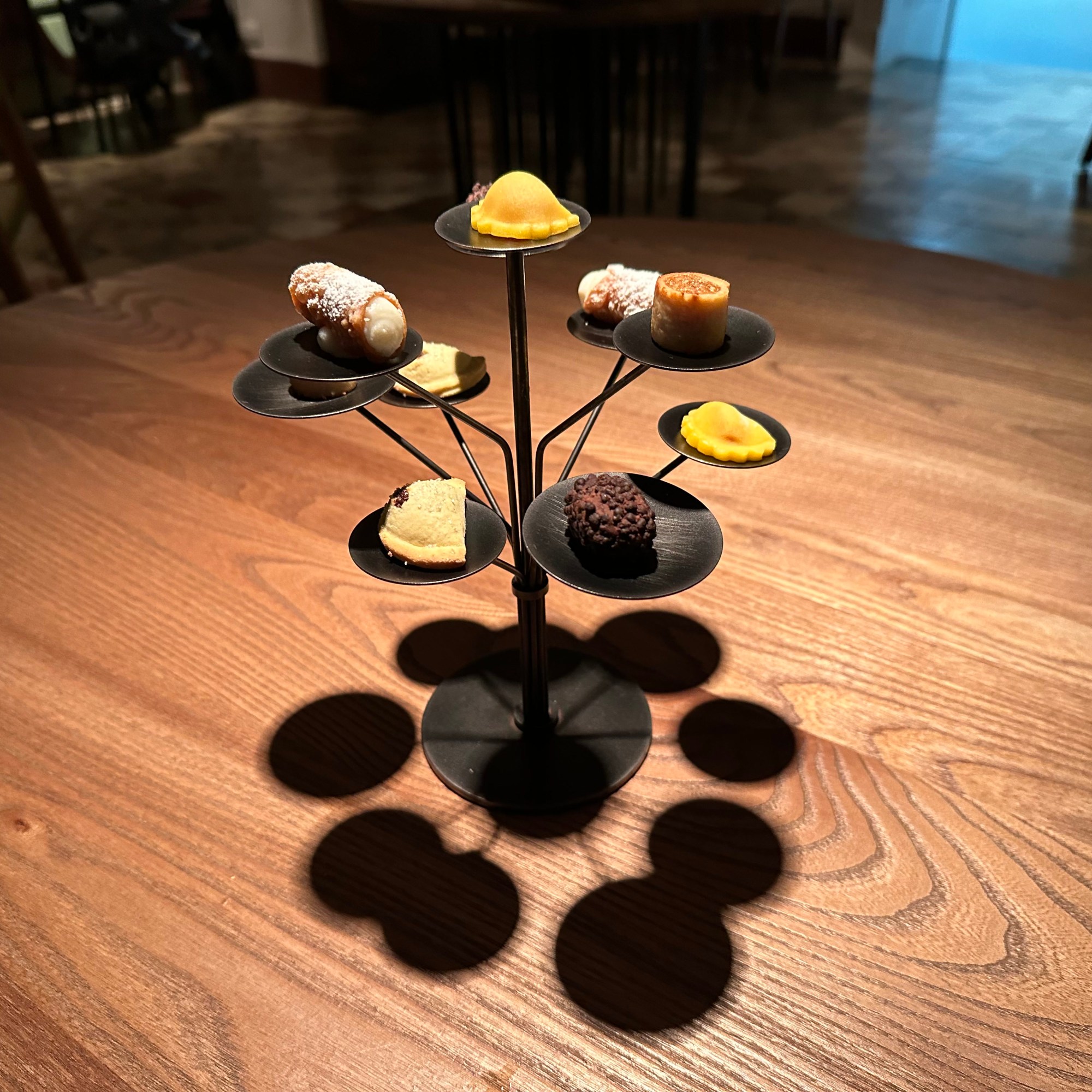
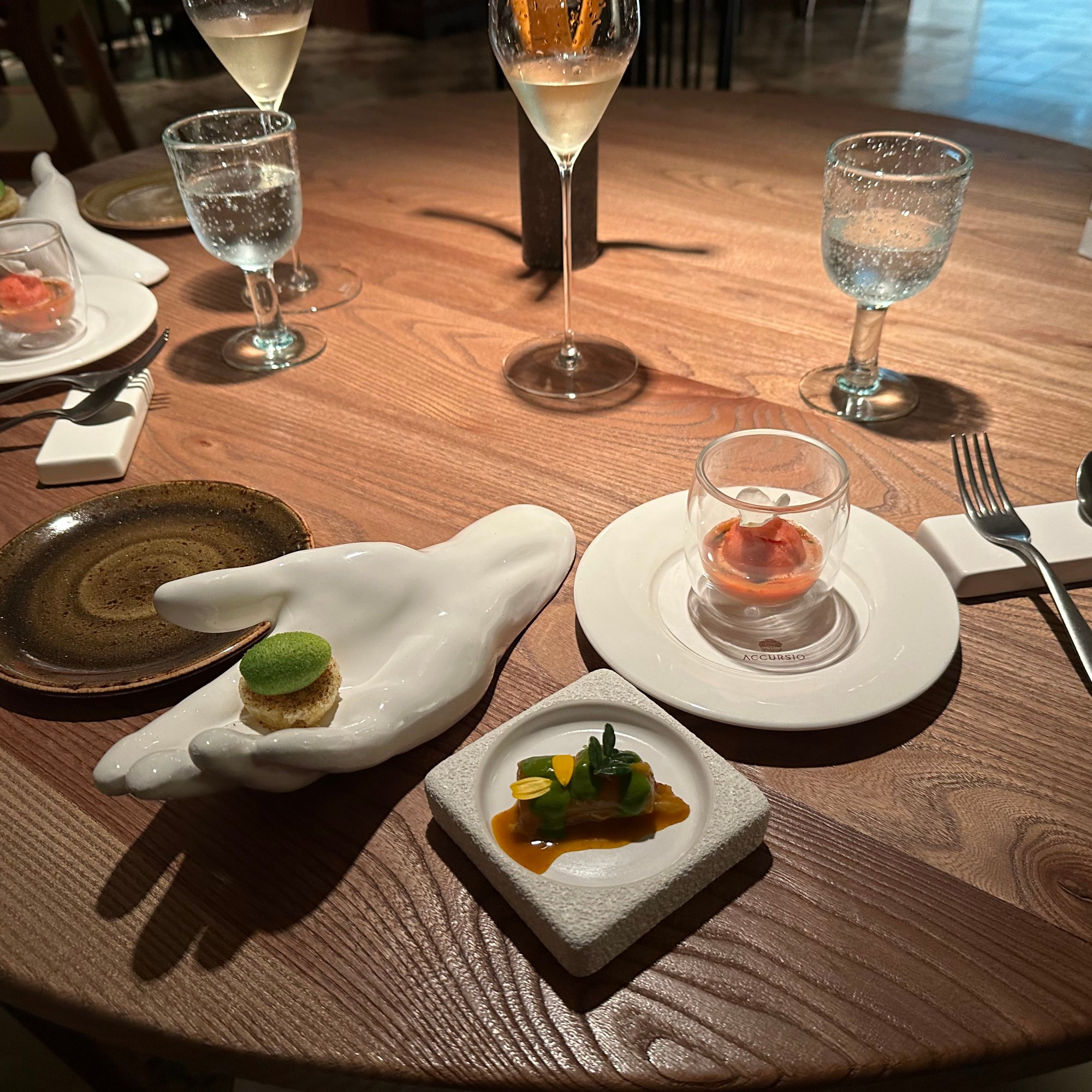
On our final night in the Baroque towns, we finally checked the Michelin-starred box for dinner in Modica at Accursio – one of the four best dining experiences of the trip, and our introduction to Sicily’s orange wine:
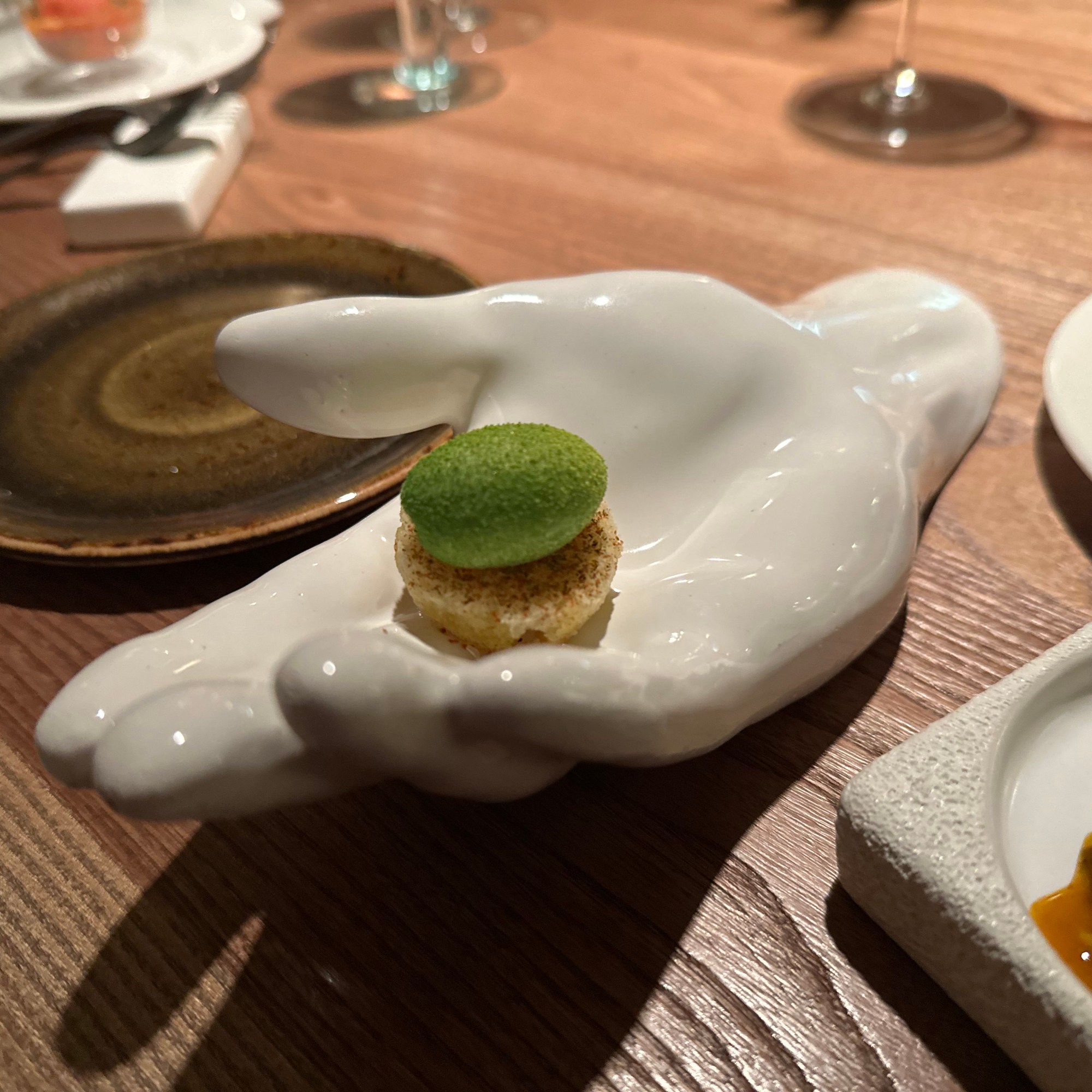
Wrapping up for the night before hitting the road the next morning:
Next up: Syracuse / Siracusa.
Categories: A Prolonged Foray to Europe, Sicily | Tags: , , , , , , , , , , | Leave a comment

A Prolonged Foray to Europe: Syracuse / Siracusa

After a little less than a week barnstorming Baroque burgs, we headed further east, to the palpably historic quasi-island of Syracuse.

Founded by Corinthian Greeks (not the Doric Greeks) in 734 BC, Siracusa (Syracuse) rose to become one of the most powerful city-states in the Mediterranean. At its peak under the tyrant Dionysius I in the 4th century BC, it rivaled Athens itself in wealth, population, and military might. It was here that Archimedes was born and conducted his legendary experiments, here that the Athenian fleet suffered one of history’s most catastrophic military defeats in 413 BC, and here that Cicero served as quaestor, later calling it the most beautiful city in the Greek world. All concentrated on the small island of Ortigia (and the surrounding mainland).

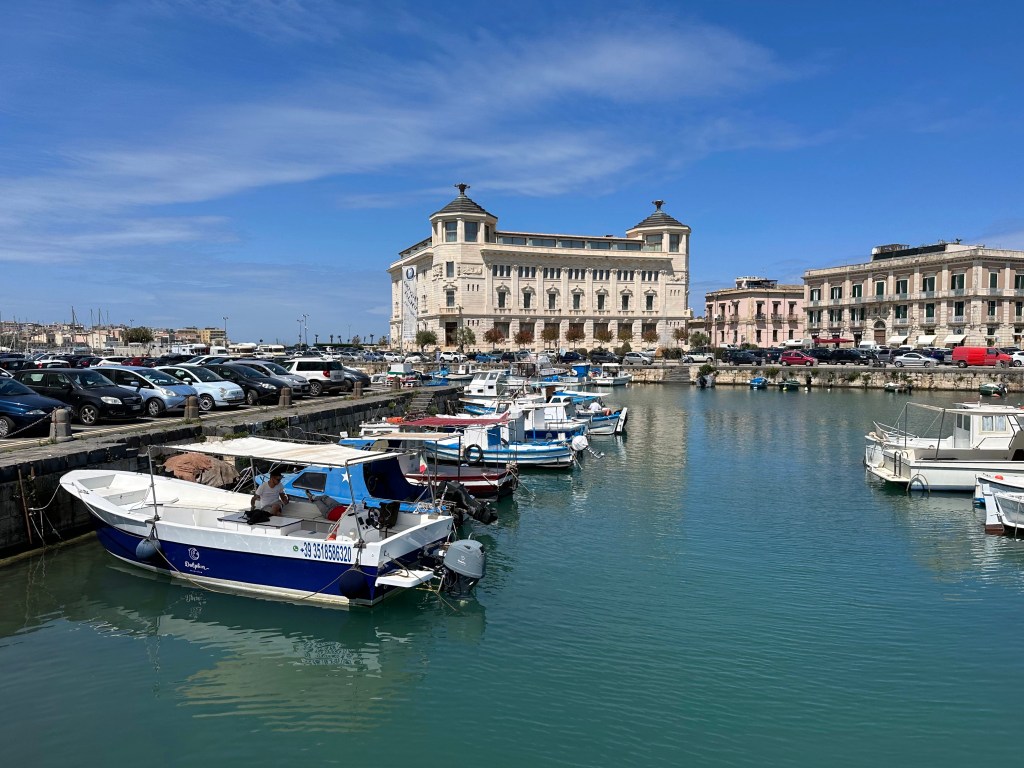
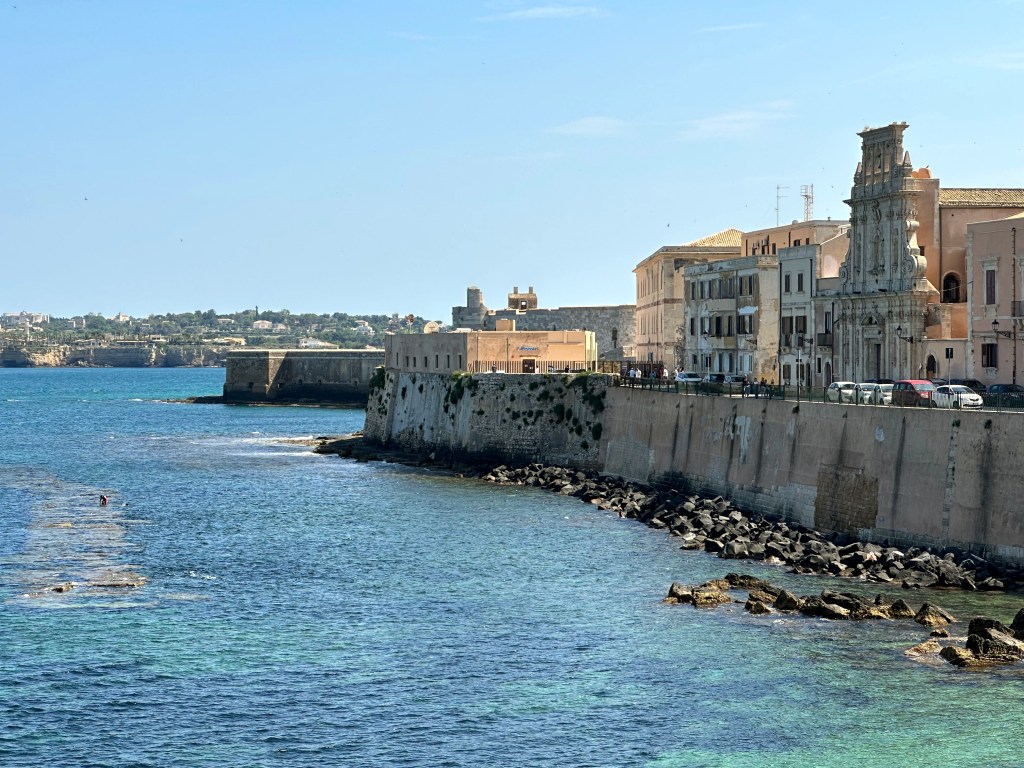
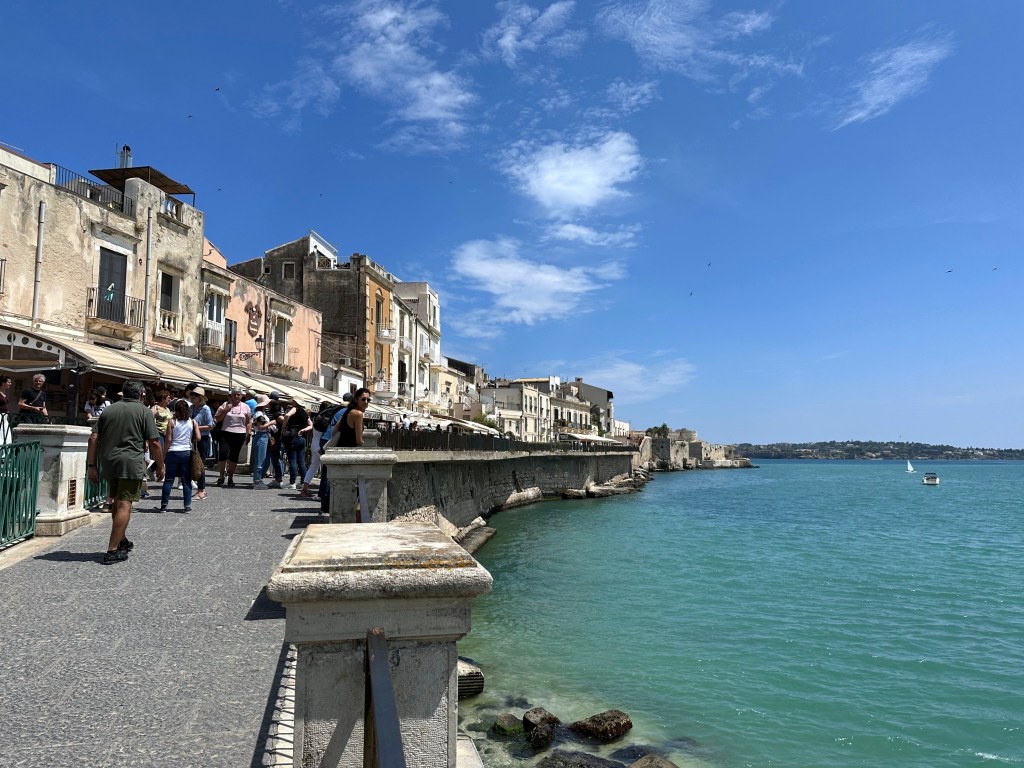
View from the bridge between the mainland and Ortigia (although you’re never really aware that you’re on an island, inasmuch as this is the extent of the separation):

Siracusa’s extraordinary layering of Greek, Roman, Byzantine, Arab, Norman, and Aragonese civilizations (and Baroque architecture) earned it UNESCO World Heritage status in 2005.

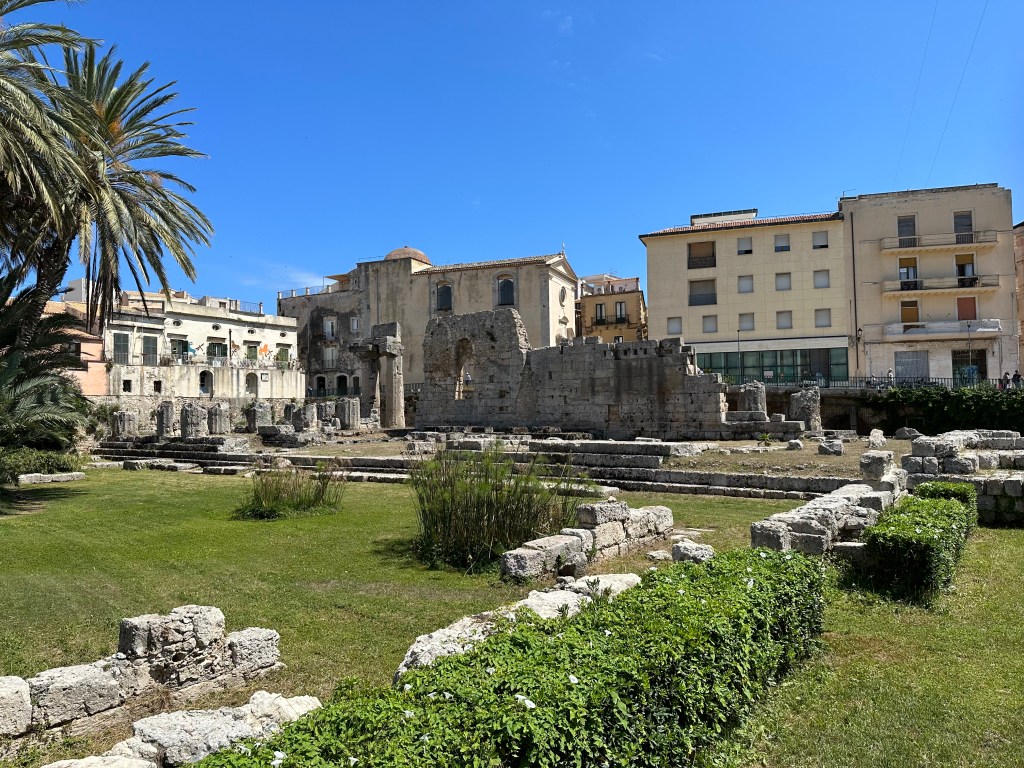
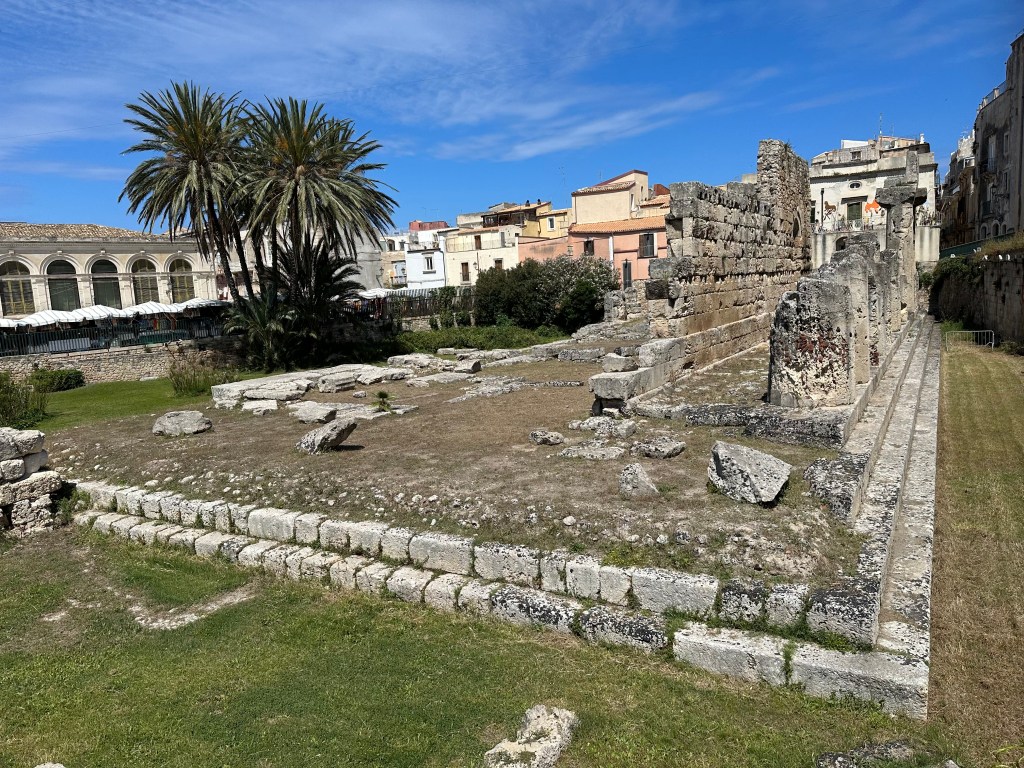
Exiting our hotel, we immediately run into ruins: ironically a Doric temple to Apollo from the 6th century BC:

The Greek temple, unintentionally functioning as a snapshot of Sicily’s many cultural and religious layers of history, served later as a Byzantine church, an Arab mosque, a Norman basilica, and the Aragonese Church of Sanata Maria della Grazie as part of a Spanish barracks. It was finally demolished in 1864 – all of those layers of history reduced now to a mere archeological vestige of its prior history.

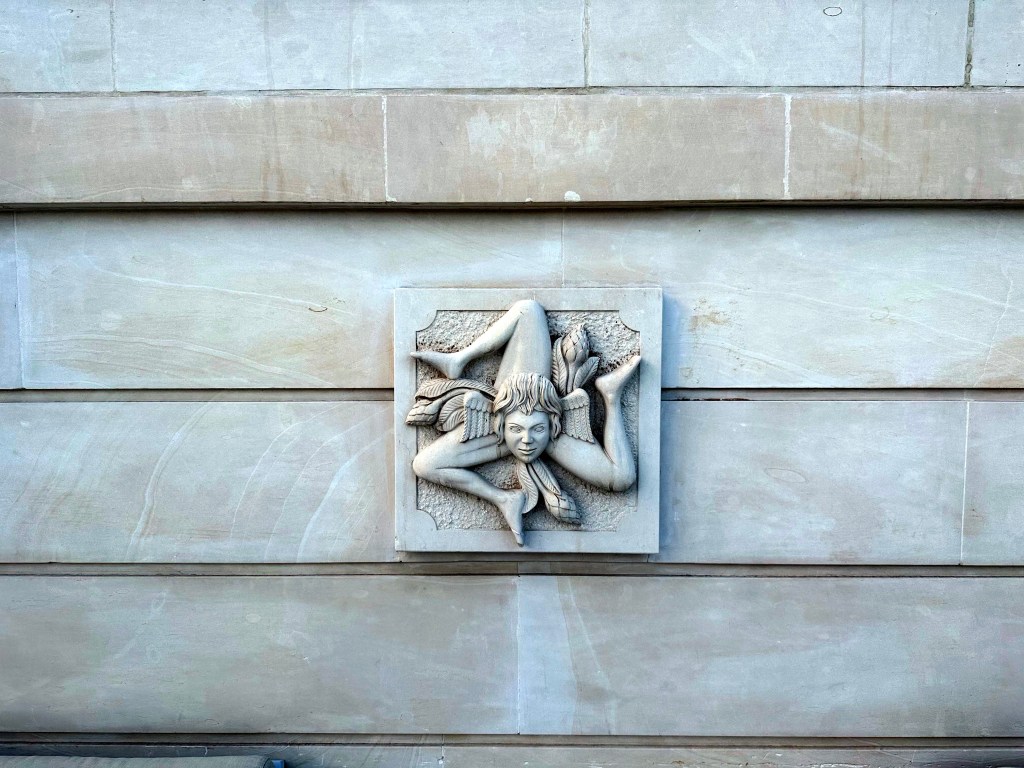
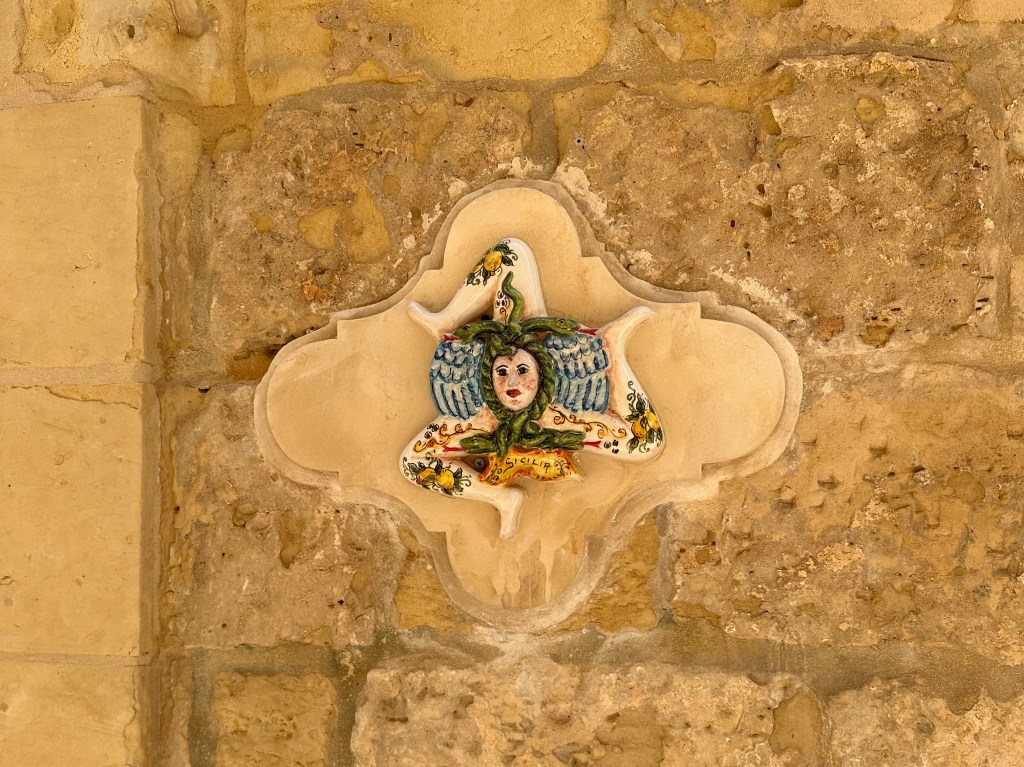
Our little Sicilian trinacria buddy embossed on a nearby building:

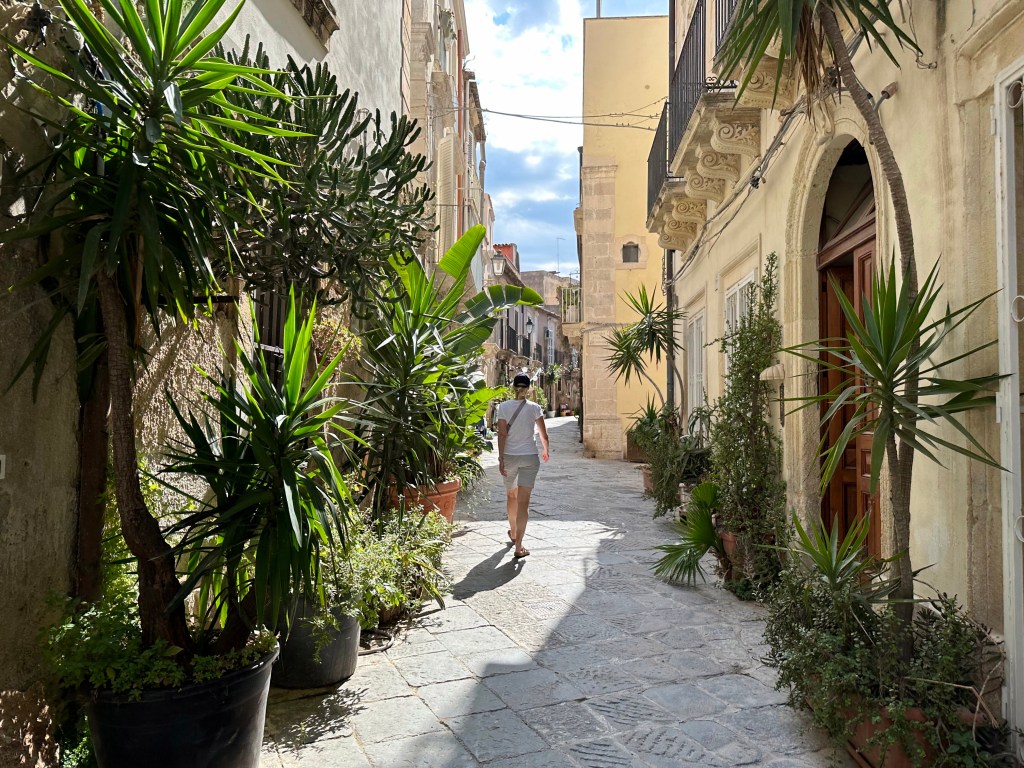
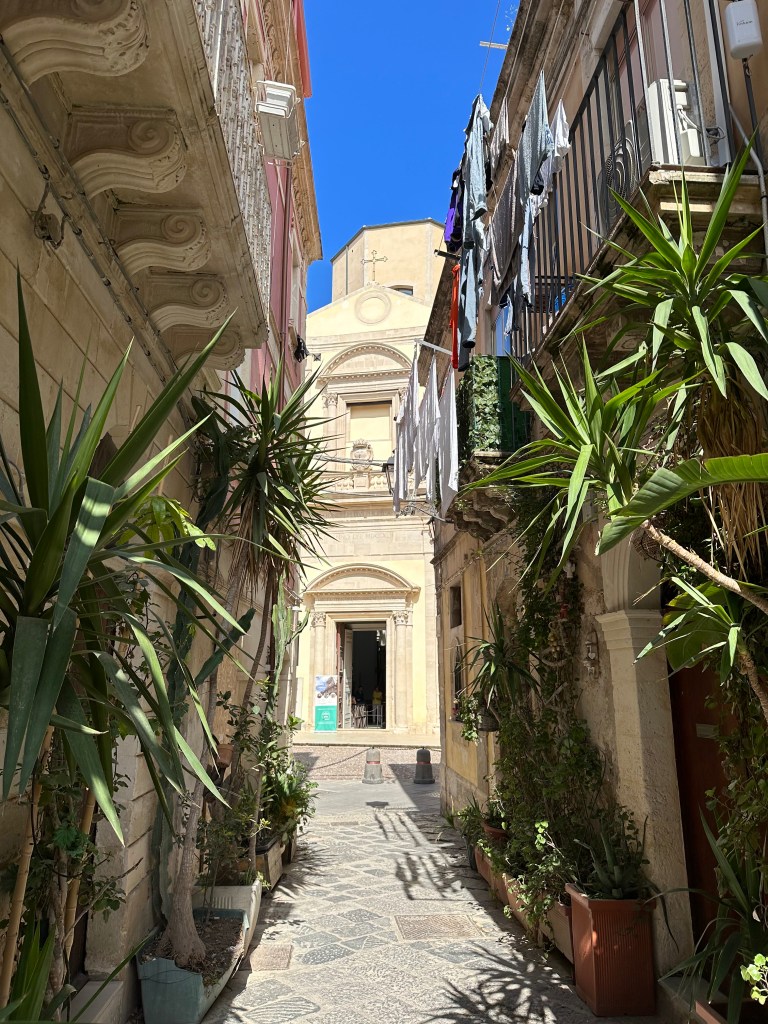
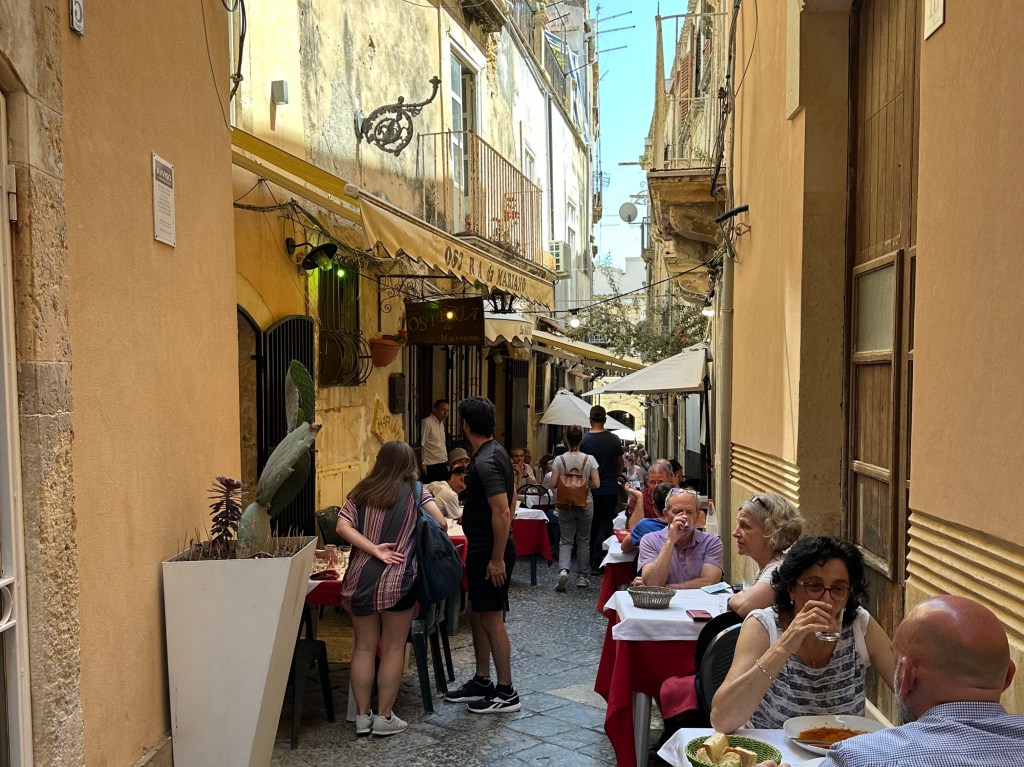
The winding alleyways of Ortigia in Syracuse:

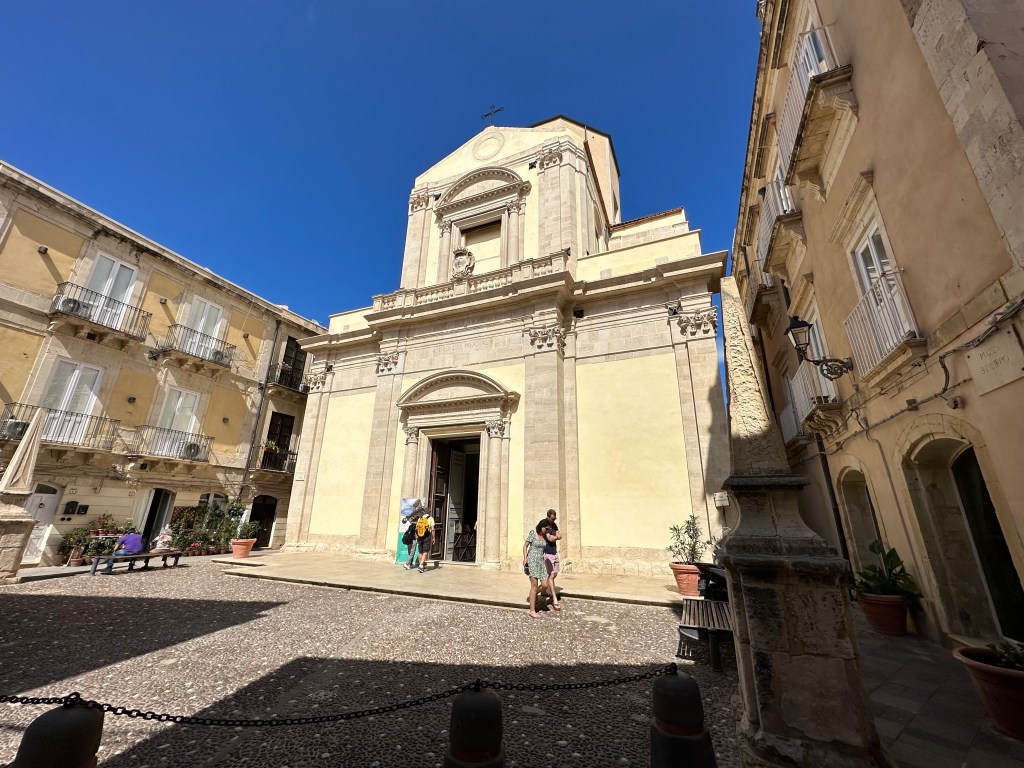
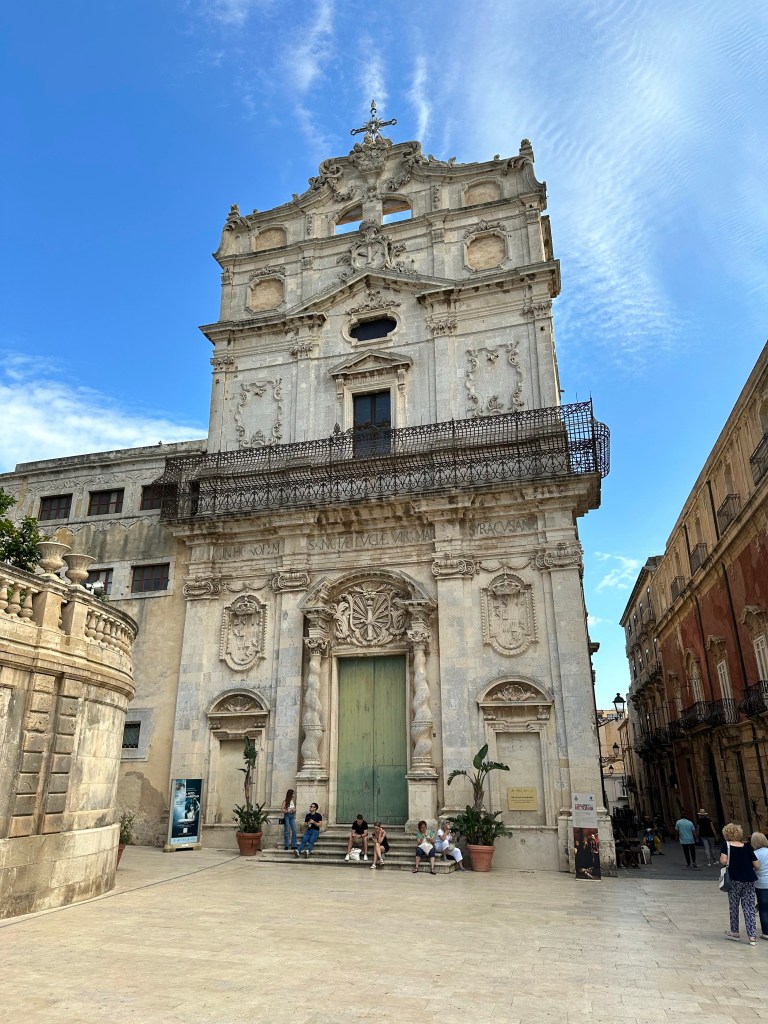
One of which brought us here, to Chiesa di San Filippo Apostolo:

But our interest here lay not in the plain-Jane church (not even Baroque ornamental!). . .

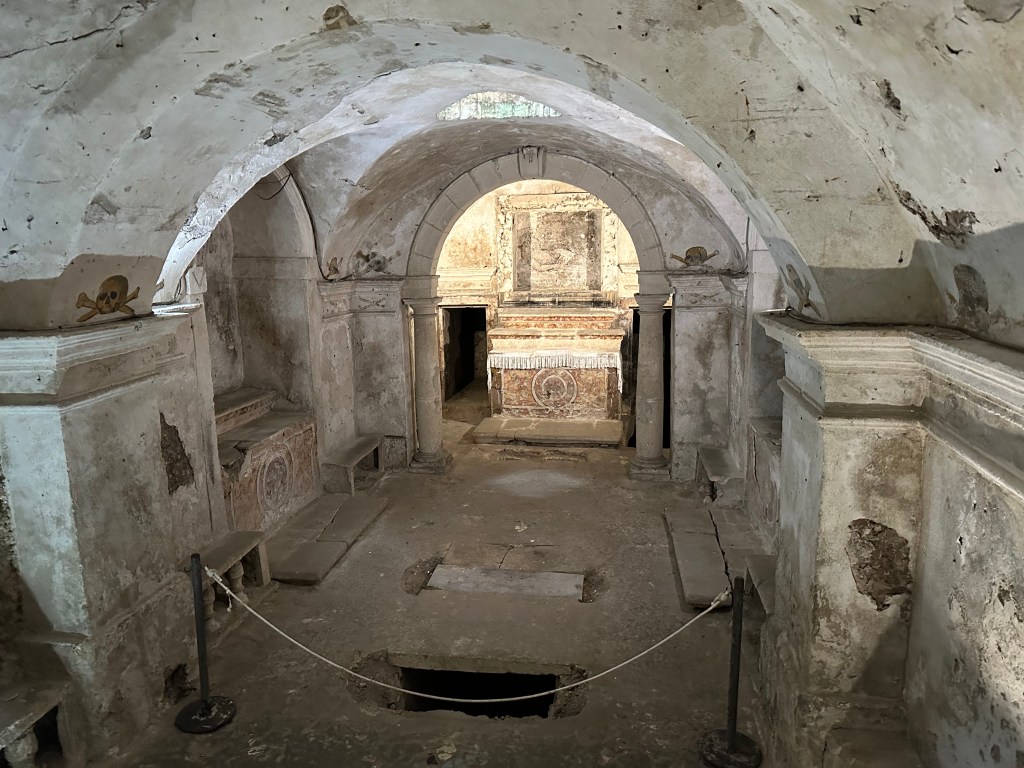
but what lies beneath:

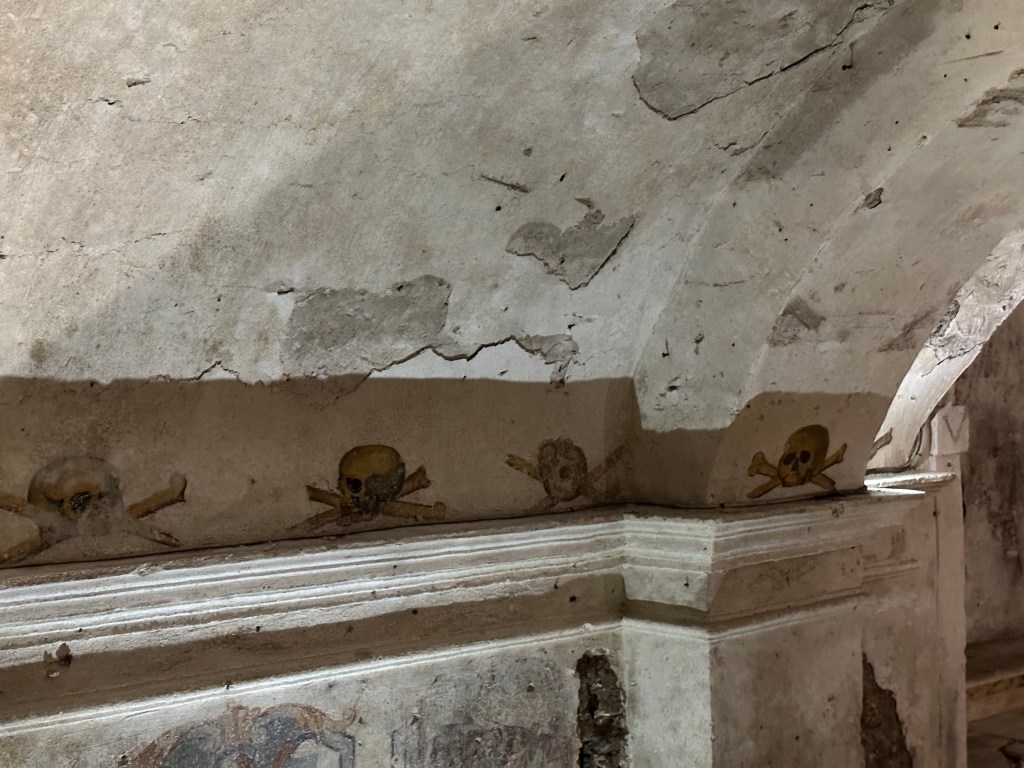
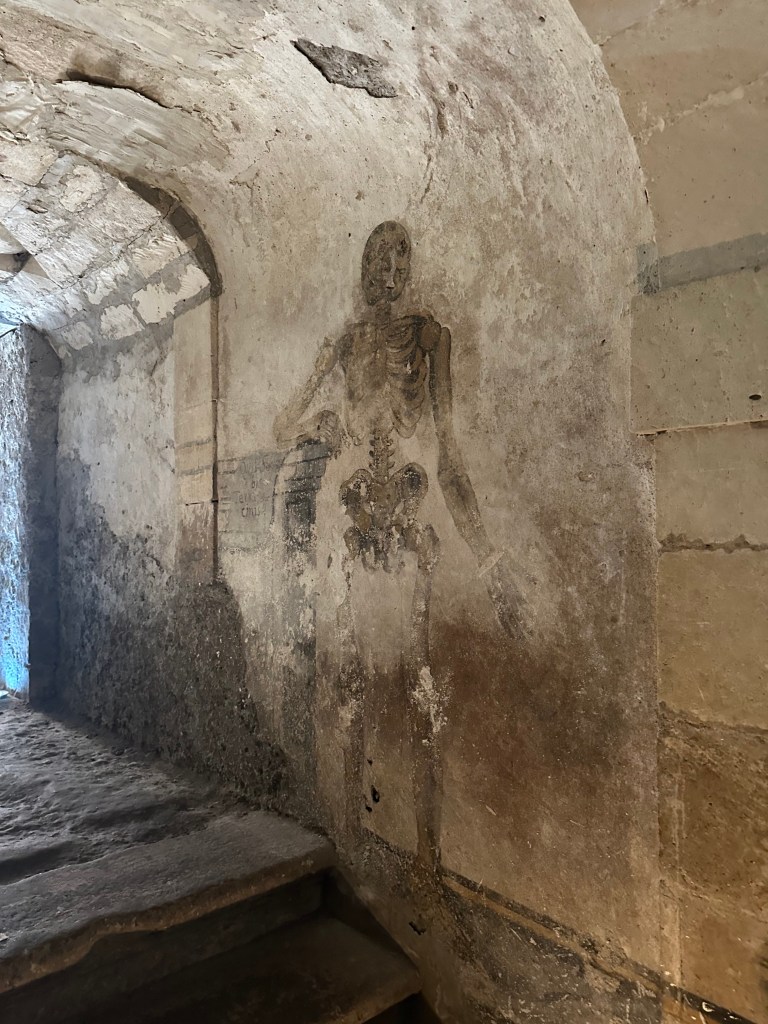
Immediately under the church floor lies an initial, pretty standard subterranean crypt level with 18th-century frescoes, burial chambers, and funerary chapels. This space was occupied by a confraternity, a Catholic religious brotherhood attached to a church — essentially a lay religious society rather than monks or priests — that frequently used underground burial and meeting space beneath the church.

Some pretty wild mortality imagery throughout the crypt.

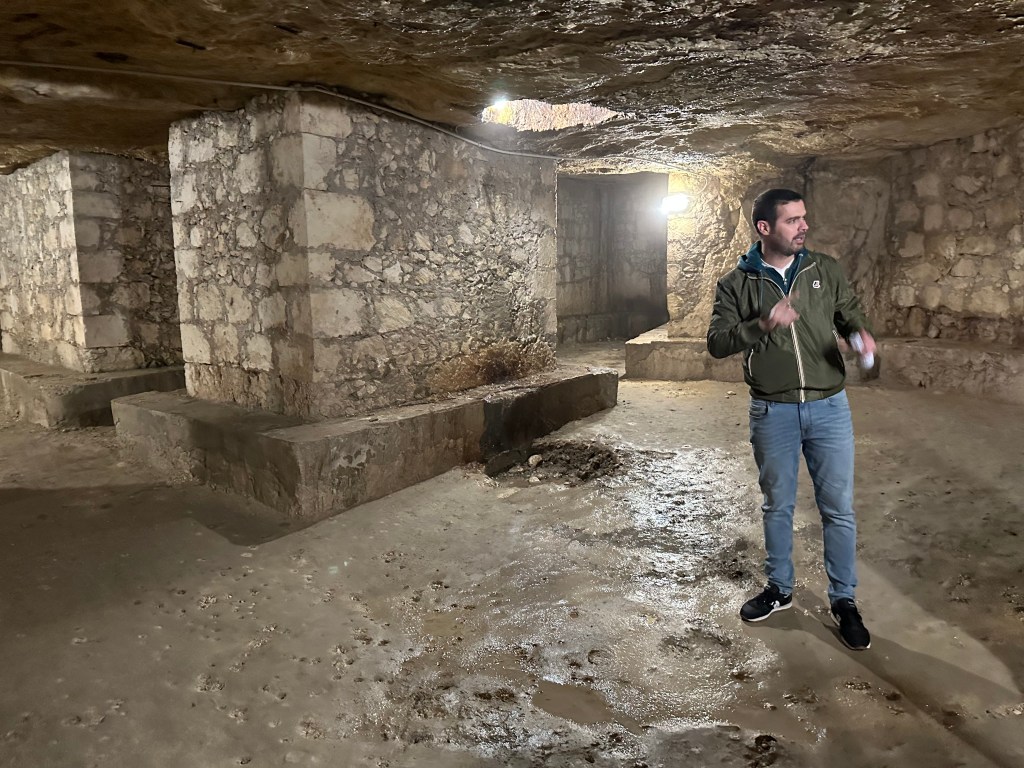
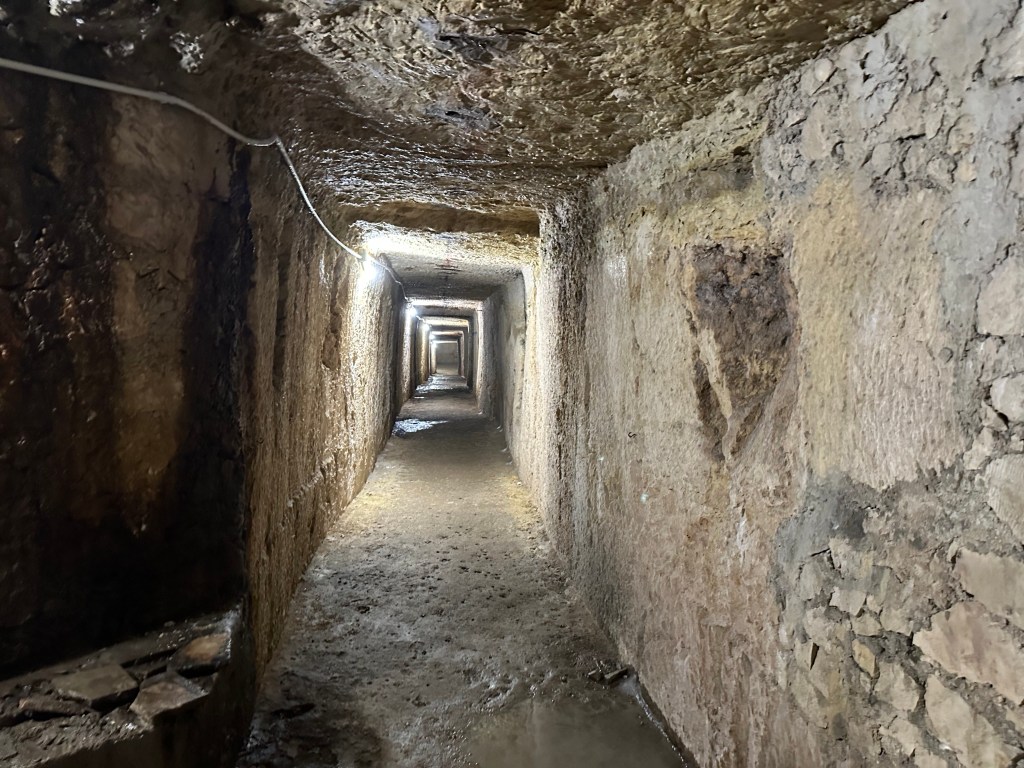
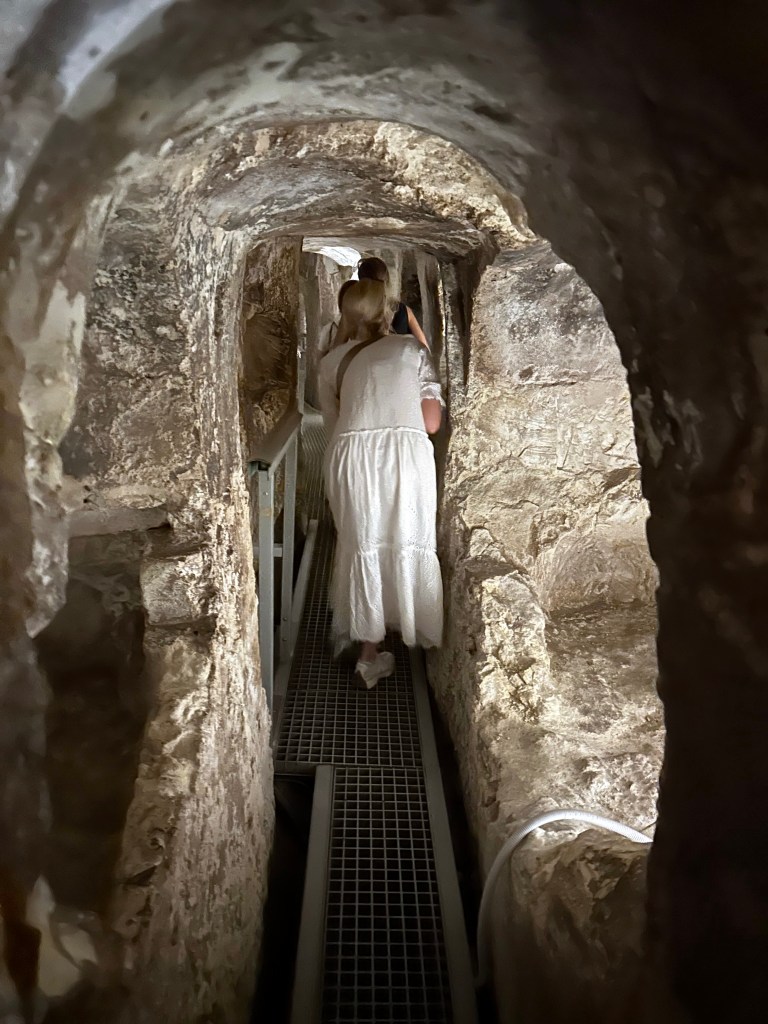
Then, descending below this initial subterranean level, we come to a more unusual underground labyrinth: WWII bomb-shelters beneath Chiesa di San Filippo Apostolo. These tunnels originally were part of an ancient Greek and Greco-Roman underground water and hypogeum network that stretches beneath Ortigia toward the sea.

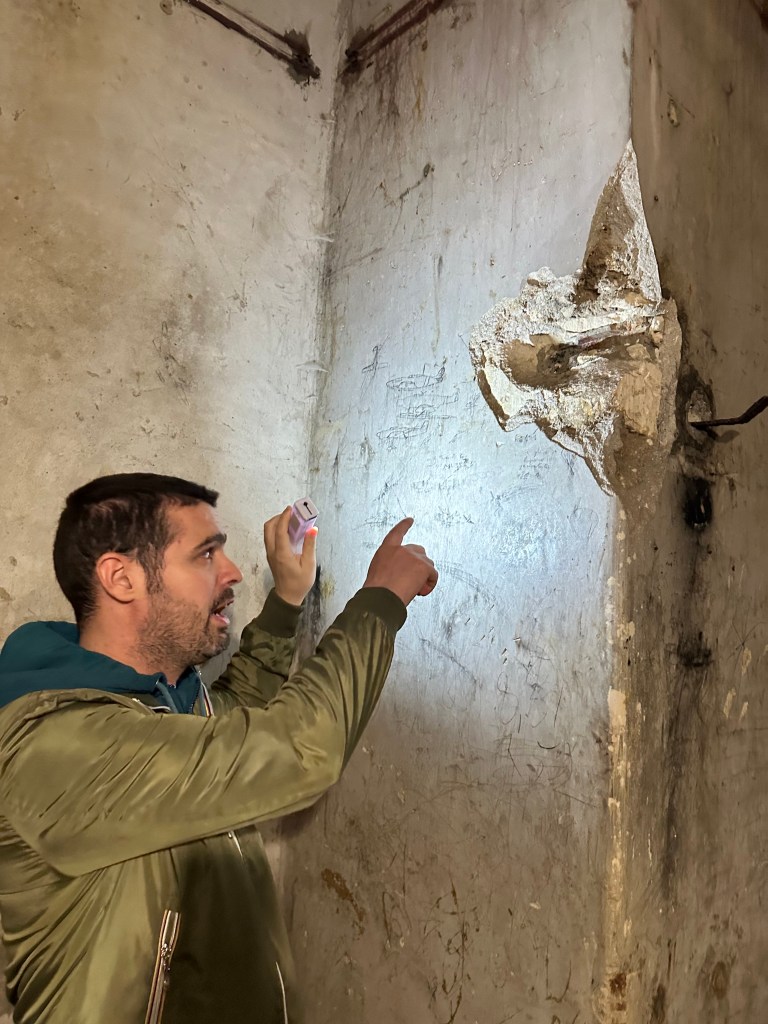
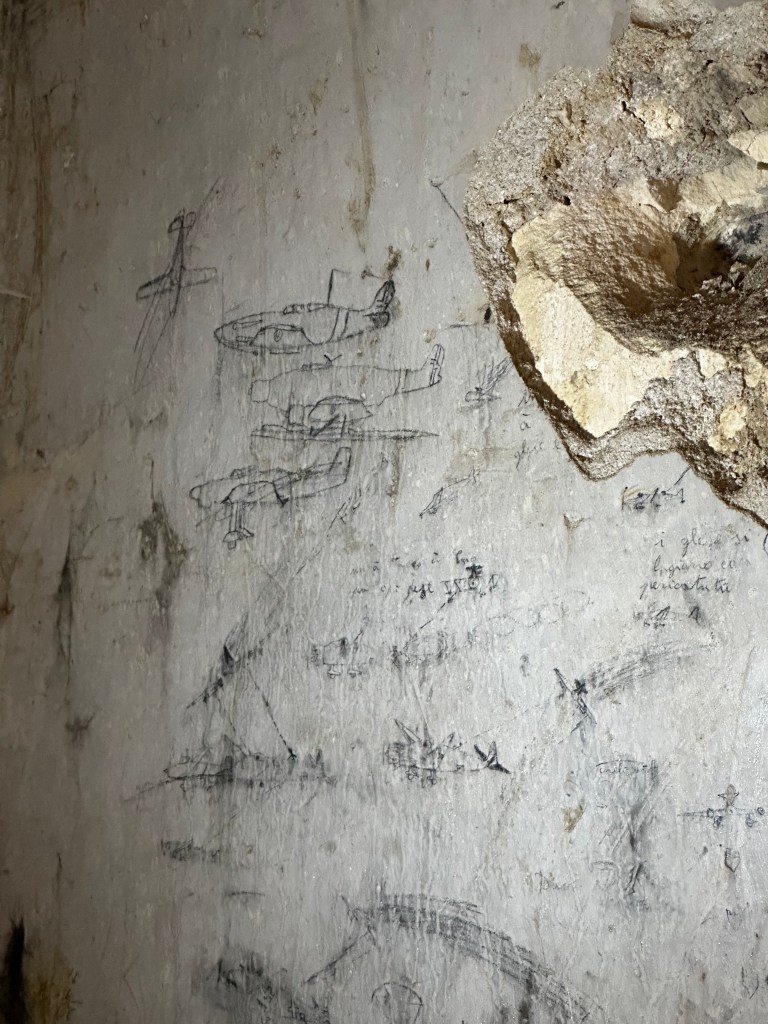
During the Allied bombing campaigns of 1943, the tunnels sheltered more than 10,000 civilians, and the walls still preserve wartime graffiti including drawings of British aircraft and parachutes sketched by people hiding underground during the raids.

Pretty accurate.

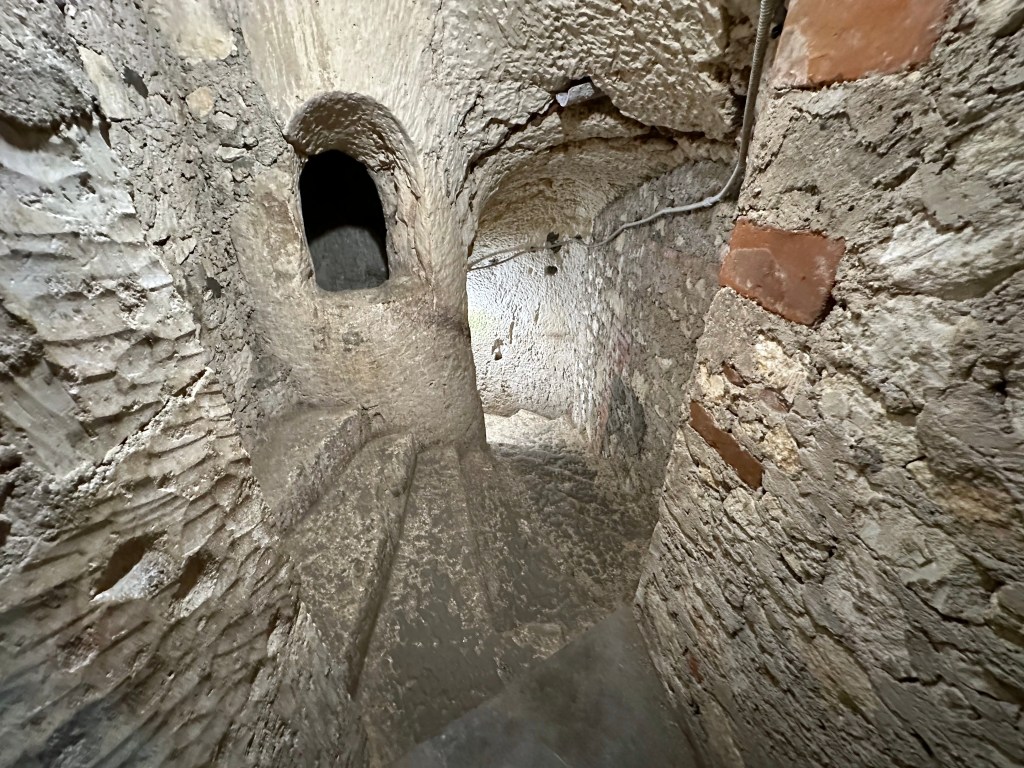
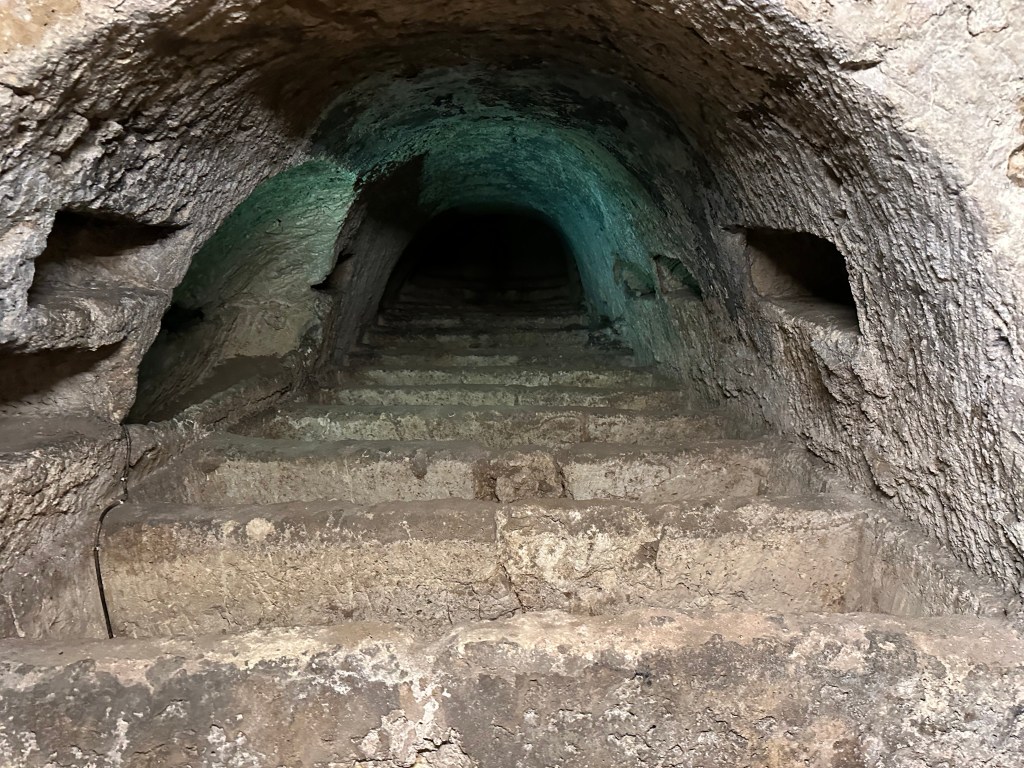
Heading further in and down.

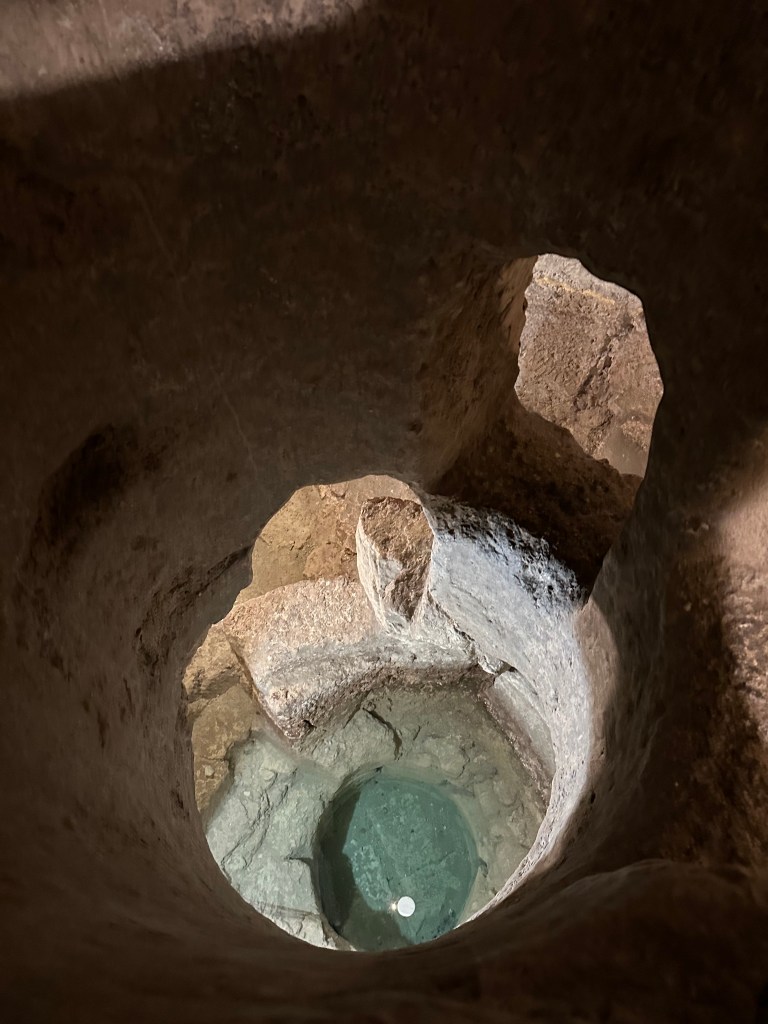
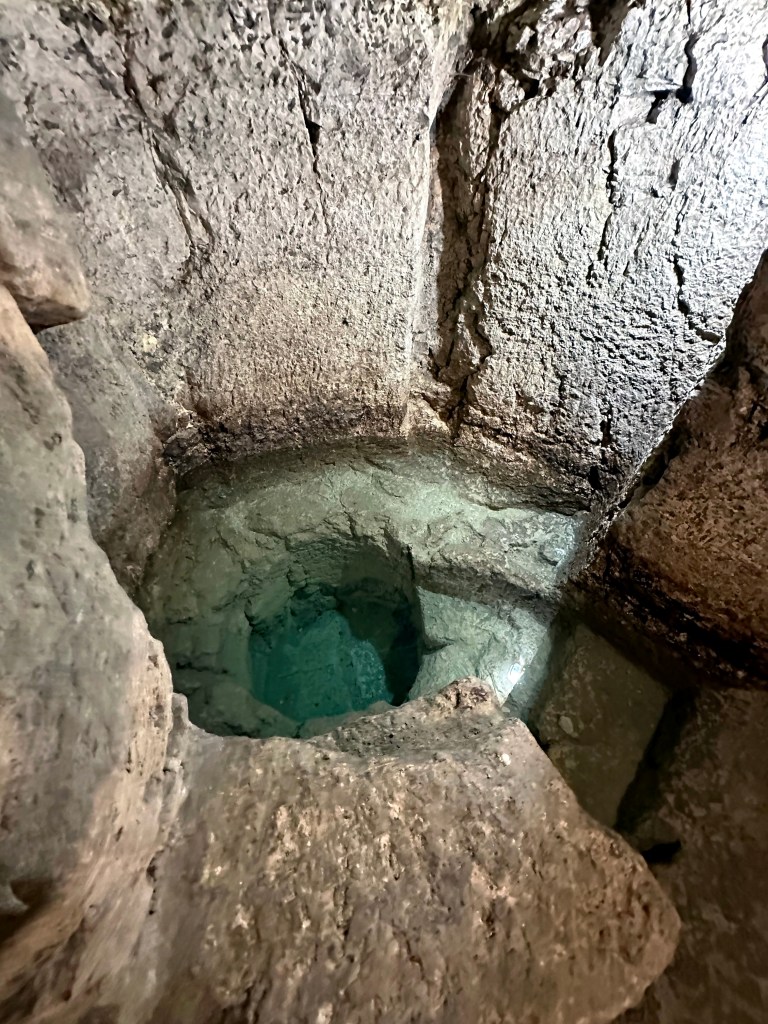
There’s a well carved into the rock that dates to around 734 BC, when Corinthian settlers first founded Syracuse. But in the 15th century, Jews living on Ortigia built a spiral staircase leading down to the well 18 meters below their synagogue on the street level above.

And converted the ancient Hellenistic freshwater spring well to their mikveh, a bath for ritual immersion to achieve purity. It is considered among the oldest surviving mikvehs in Europe.

The community abandoned the mikveh after the 1492 expulsion of Sicily’s Jews under Spanish rule, and it was gradually forgotten for centuries until it was rediscovered and formally identified in 1977 beneath the church built atop the former synagogue site.

More layers of Sicilian cultural history that we definitely dug during our time on the island.

But wait, there’s even more!

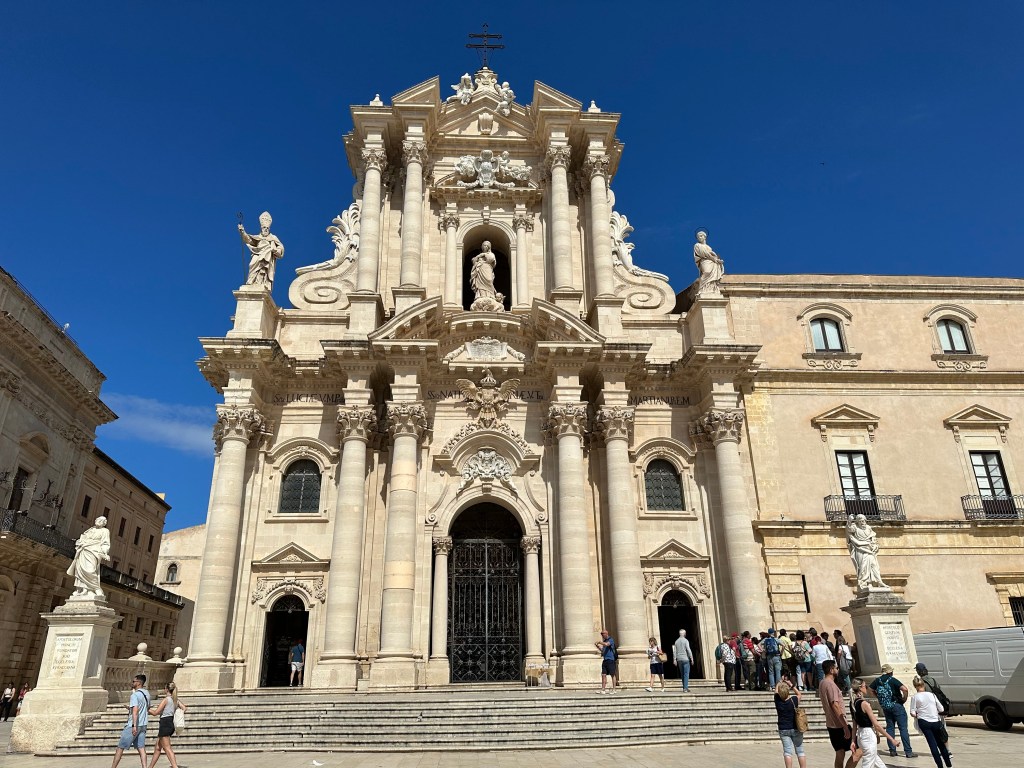
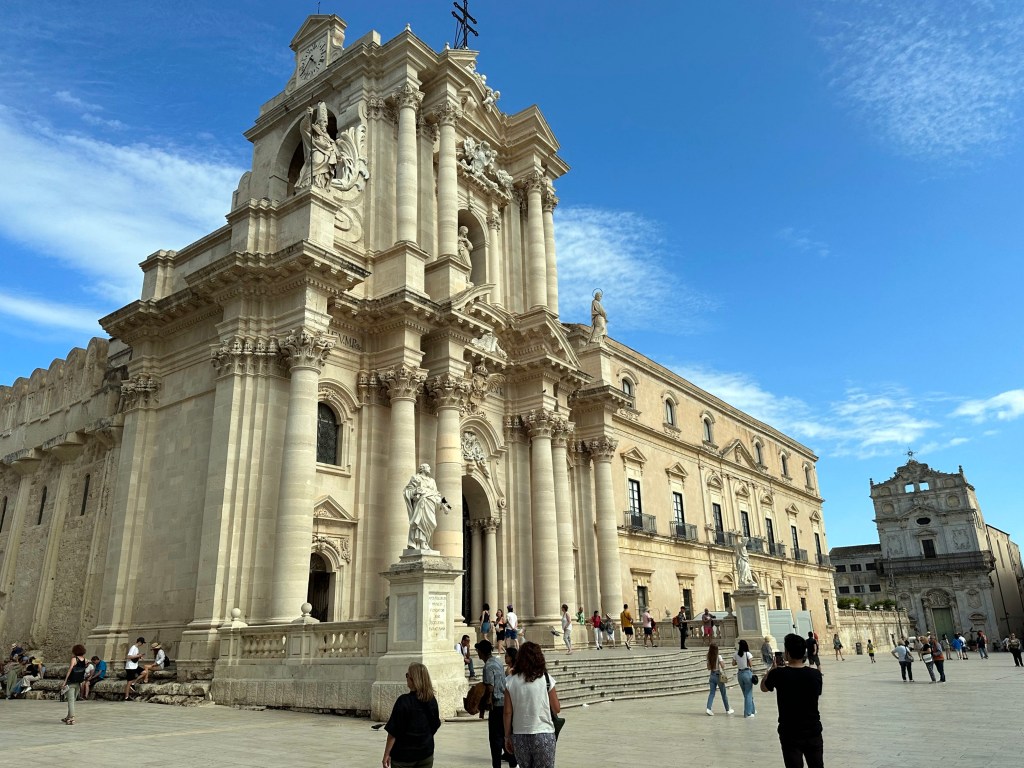
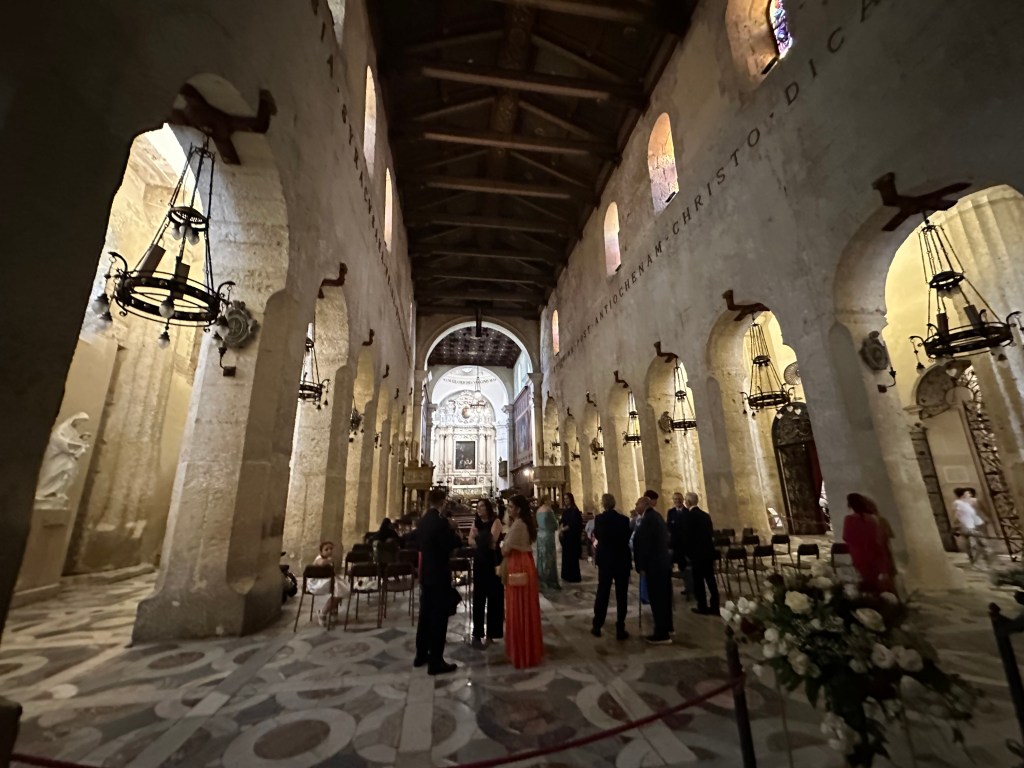
Check out the Cathedral of Syracuse (Duomo di Siracusa). Just another ornamental Baroque church in Sicily, no?

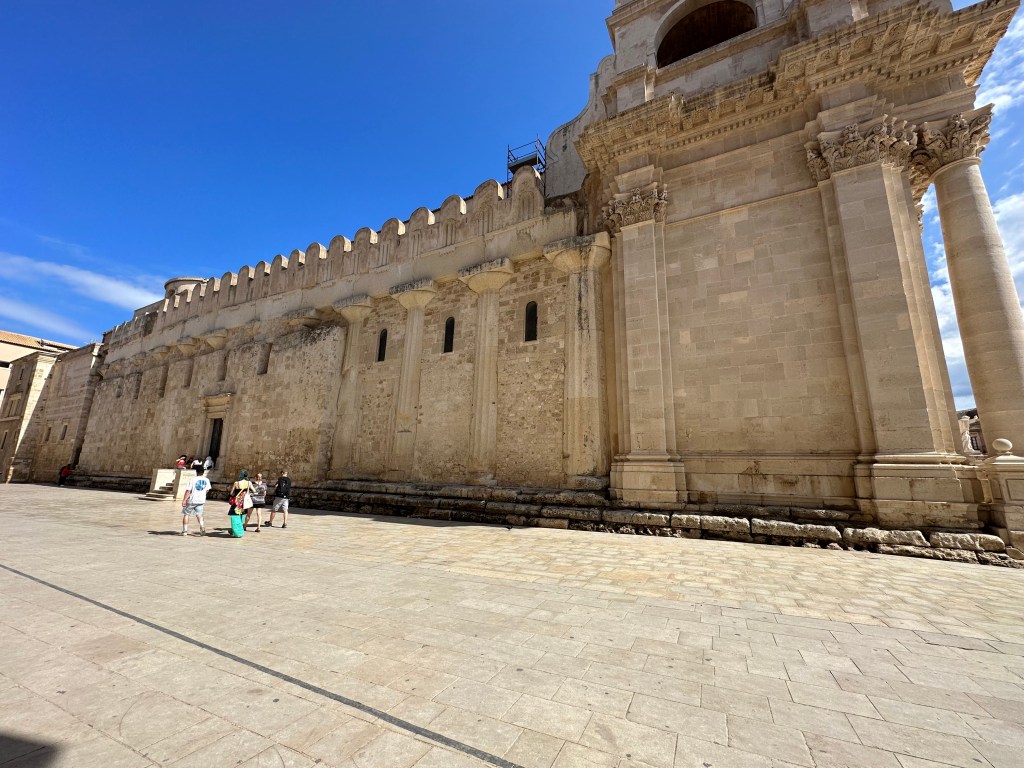
Maybe from the front facade, but when you peek around the corner. . .

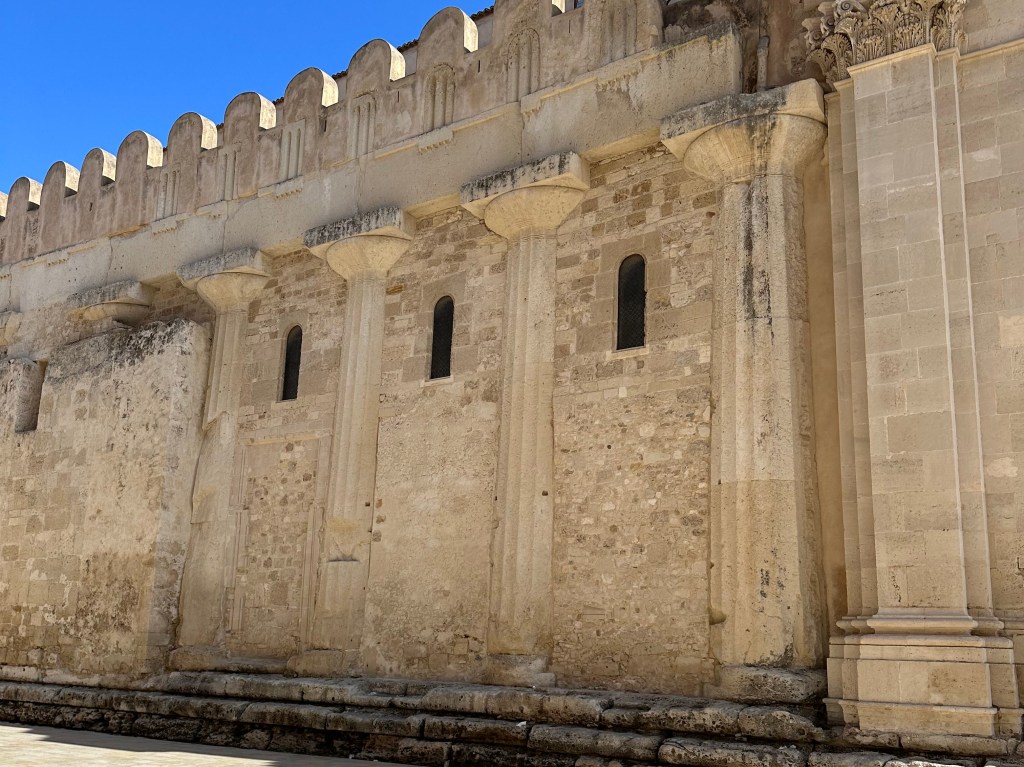
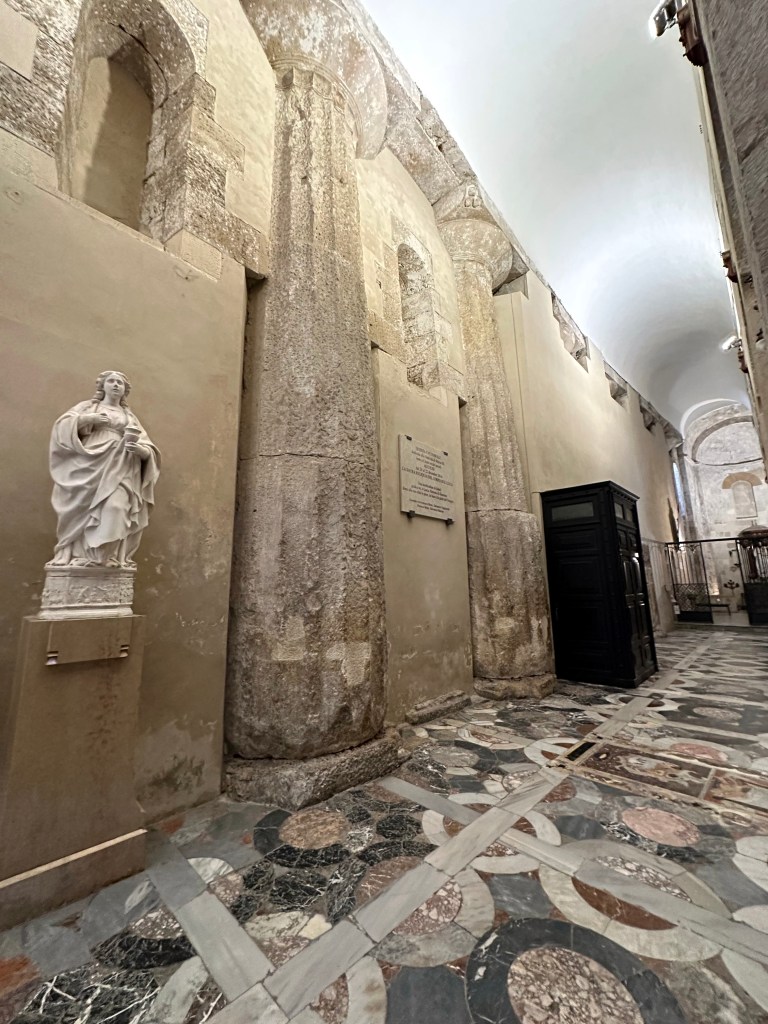
Look at this shit! It’s actually a 5th-century BC Doric temple originally dedicated to Athena by the tyrant Gelon after his victory at the Battle of Himera. A quick note on “tyrant” because we’ve used it twice in one post now and it probably gives the wrong impression. As articulated effectively in Sicily: Three Thousand Years of Human History (read while here, as noted in our Sicily leg intro post), a tyrant in the Greek colonies was simply someone who had seized or inherited sole rule rather than governing through the established aristocratic or democratic institutions of the city-state. In the Sicilian colonies, tyranny was often a pragmatic response to the intense pressures these communities faced: constant military threats from Carthage, competition between rival Greek cities, and the need for swift, unified military leadership that deliberative bodies could not always provide. So, not a tyrannical ruler; just one who took sole rule for himself.

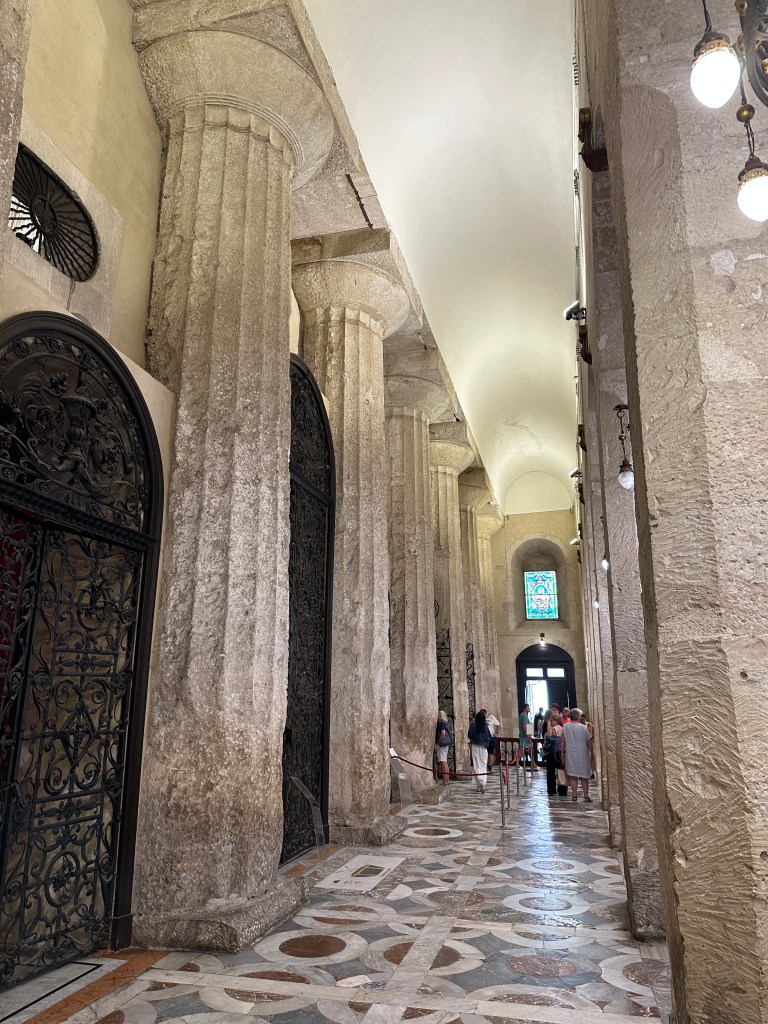
The best part about the temple-cum-duomo is the side wall, where the Normans simply filled in between the Doric columns of the Greek temple to create a Christian church, leaving them in place, rather than razing the place and rebuilding as was the norm. Oh, and in between, of course, the Arabs repurposed the temple as a mosque, of course.

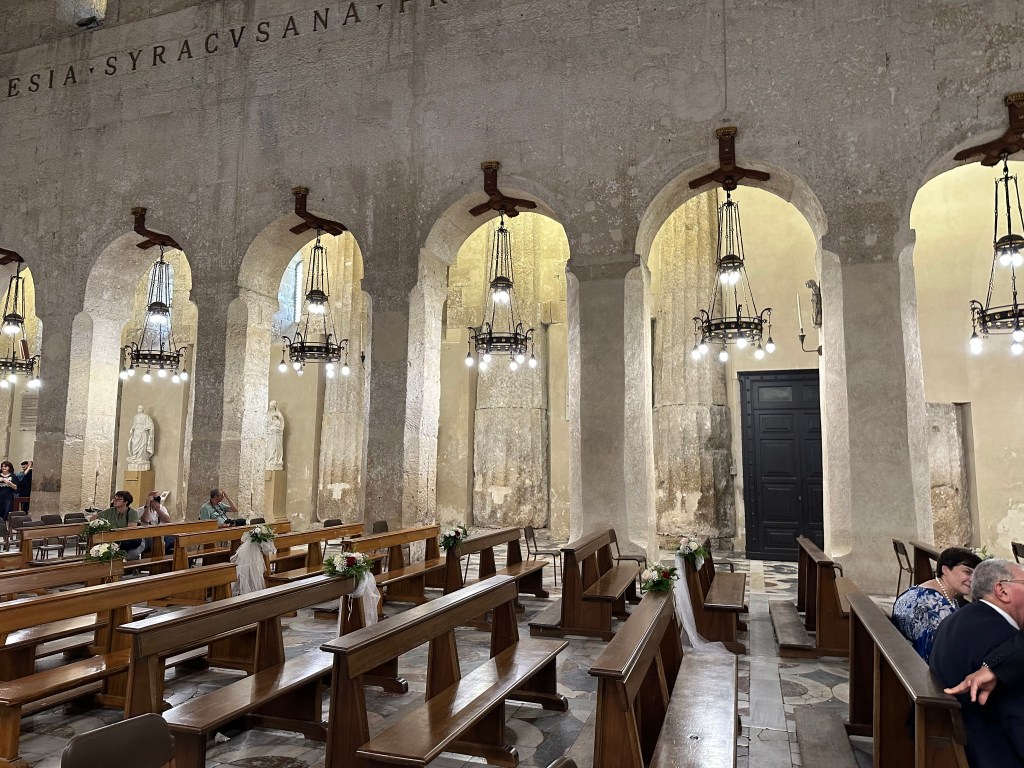
Inside the duomo, which was palpably medieval and beefy.

But still with the visually evident Doric columns of the original Greek temple.

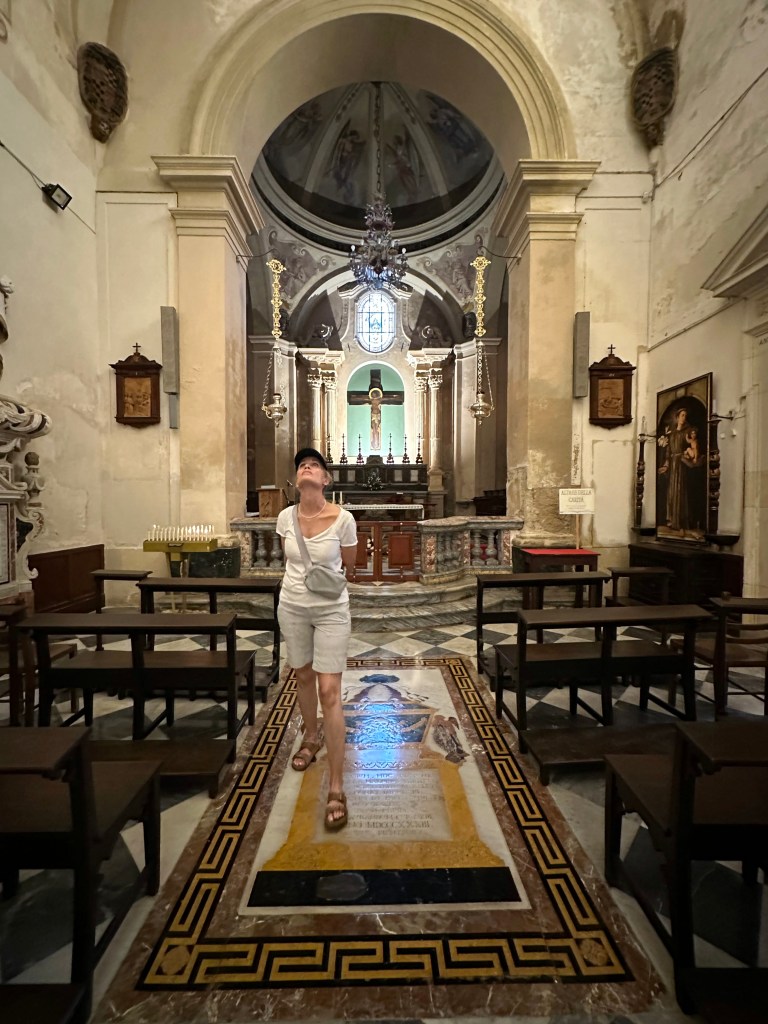
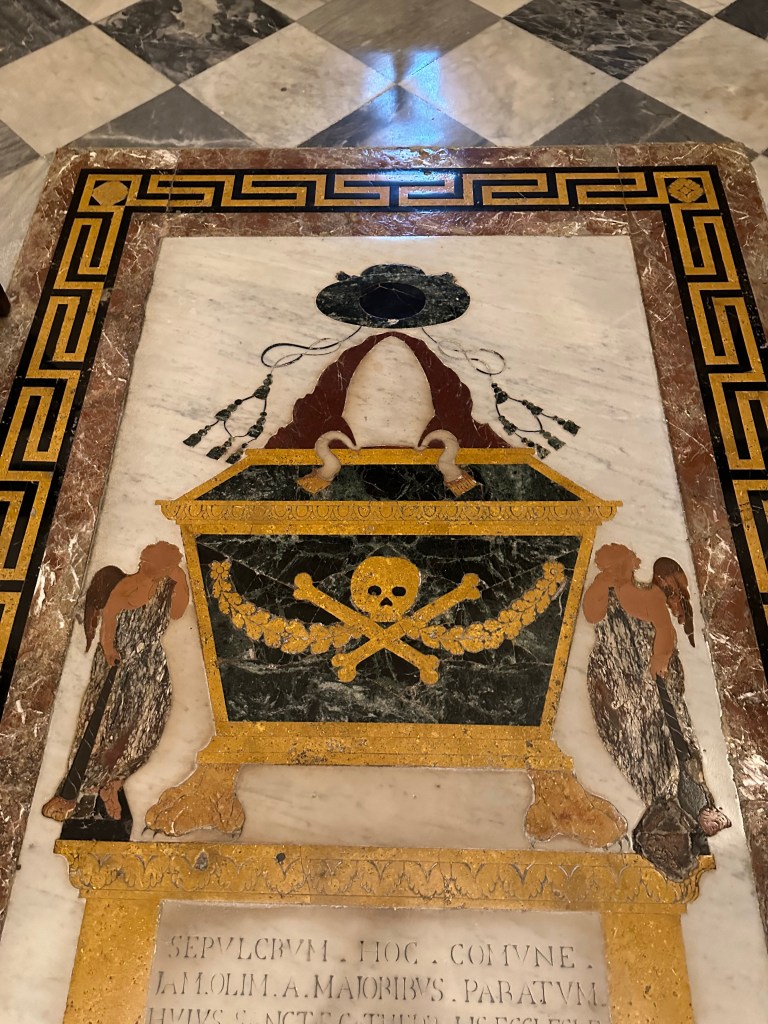
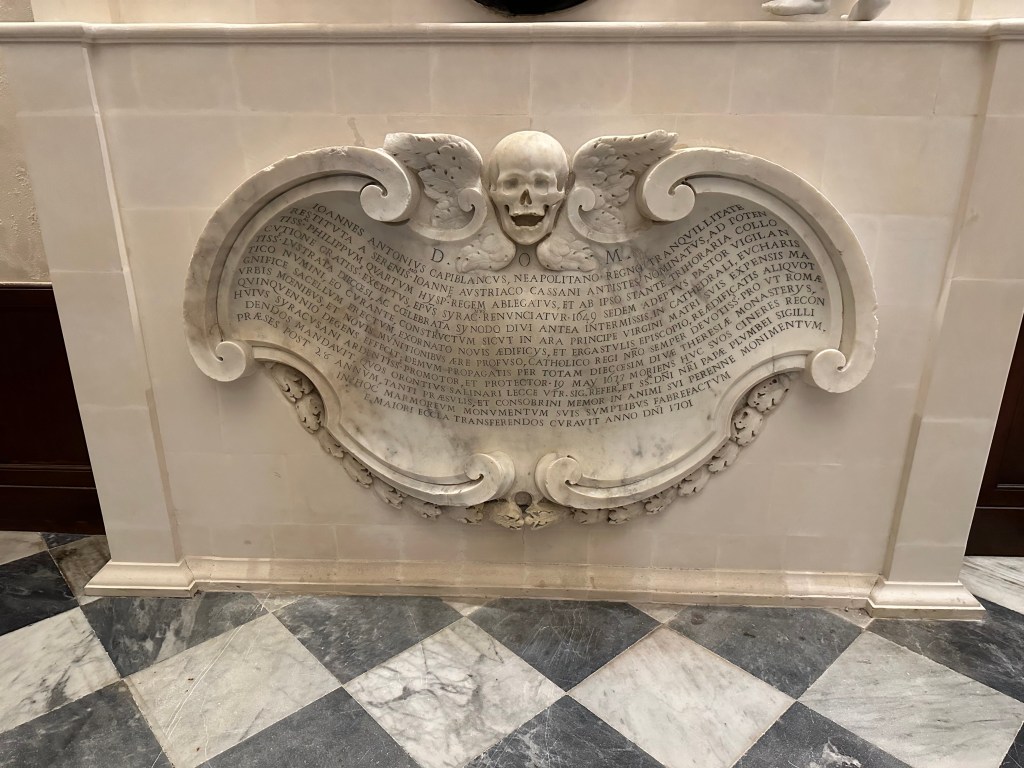
And more cool mortality motifs.

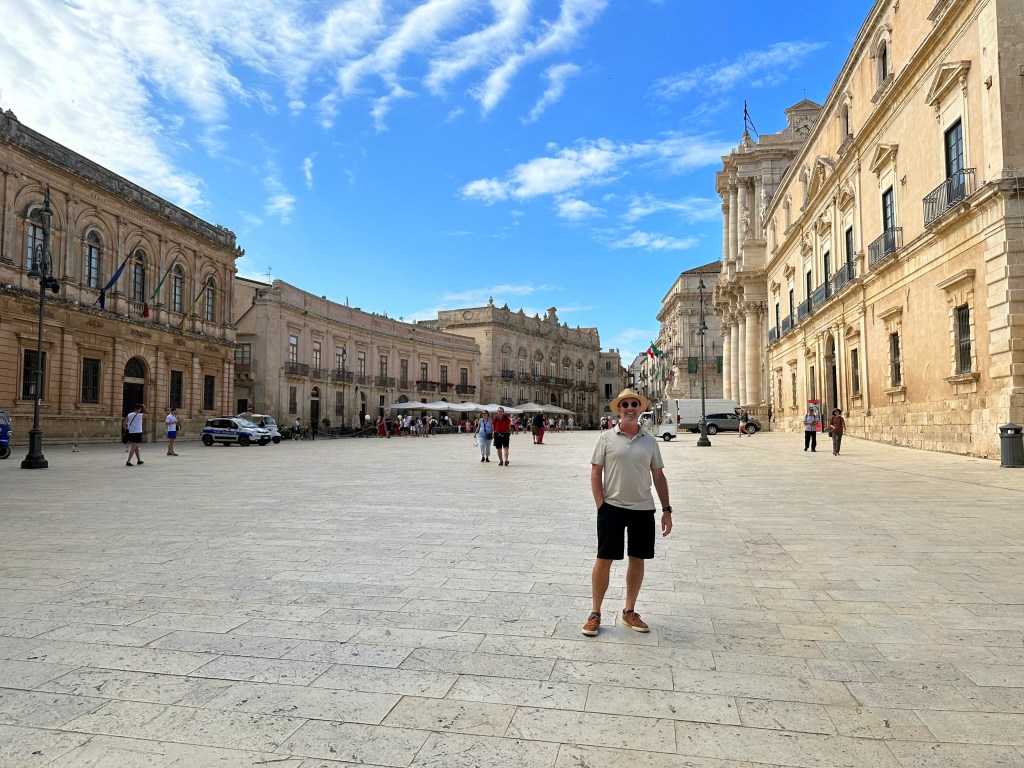
Out in the piazza of the duomo – pretty great day.

Dunno – some other picturesque church. With twisted columns like we saw in Lecce while biking through Puglia in 2013.

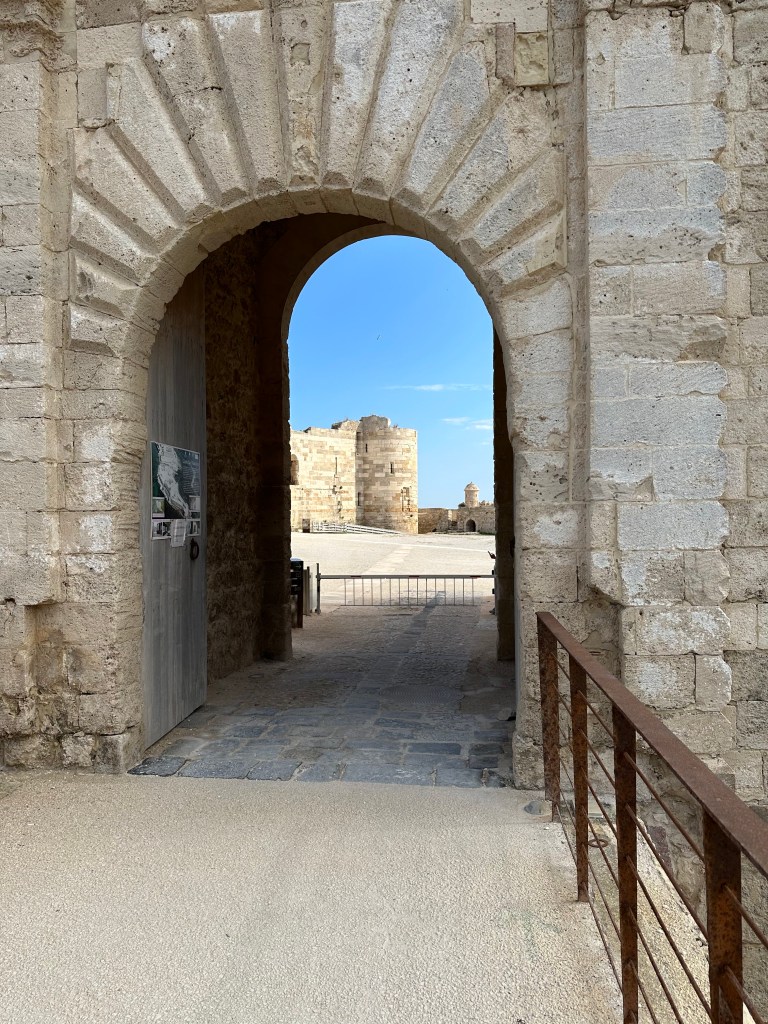
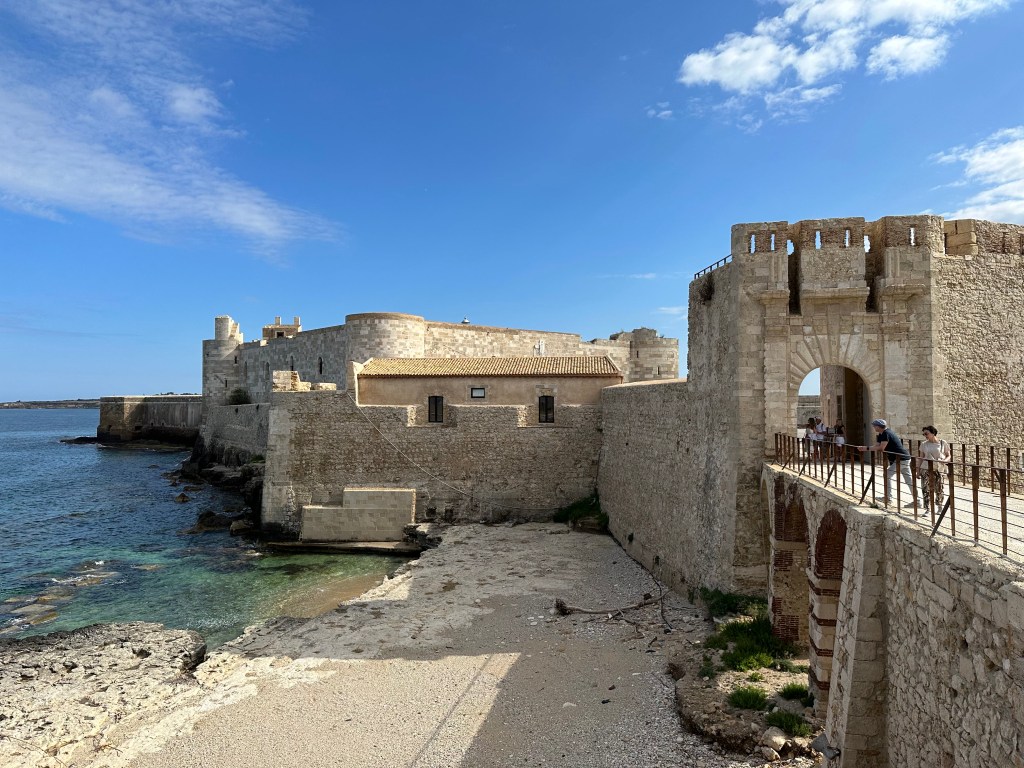
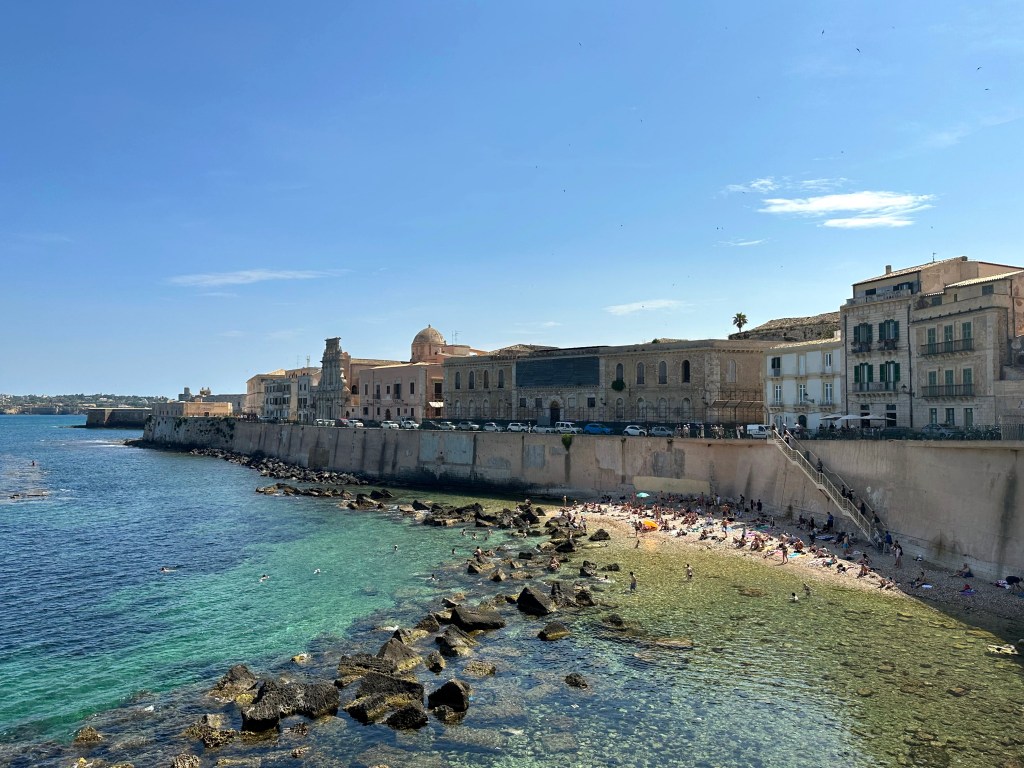
At the extreme southern tip of Ortigia lies Castello Maniace, a citadel named after the Byzantine general George Maniakes who seized Syracuse from the Arabs in 1038, although the present structure was built between 1232 and 1240 under Holy Roman Emperor Frederick II.

With four cylindrical corner towers, the massive castle later served as the site where Frederick of Aragon signed a truce with the Angevins in 1302.

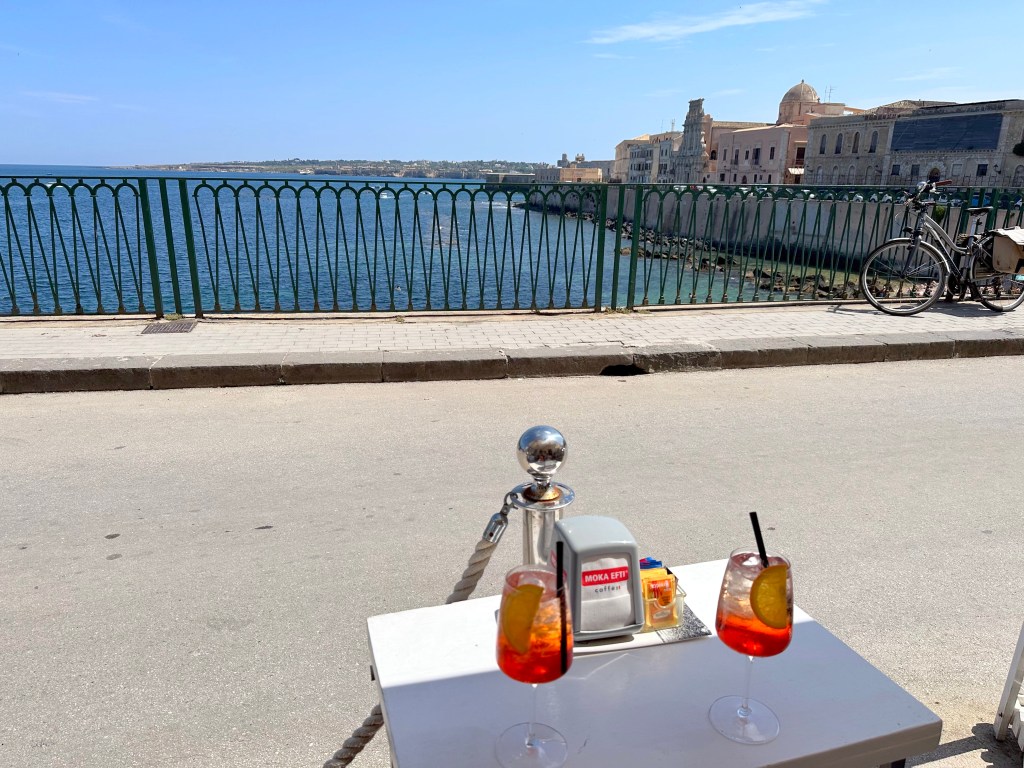
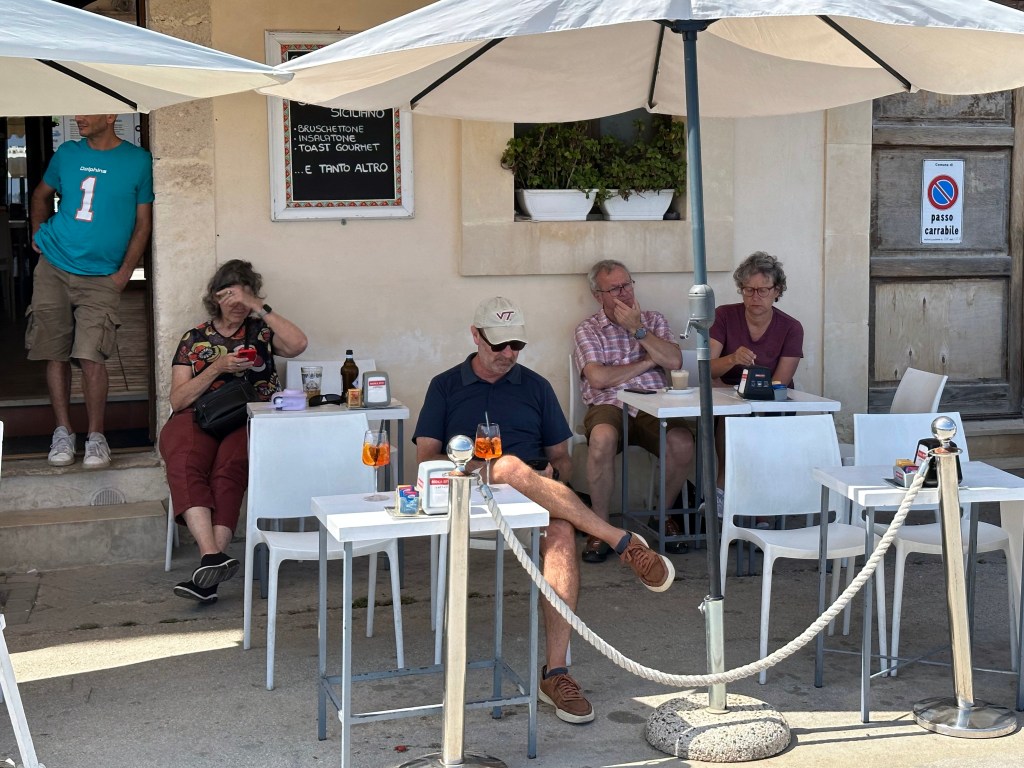
And just up the promenade? A casual joint for early aperitivos.

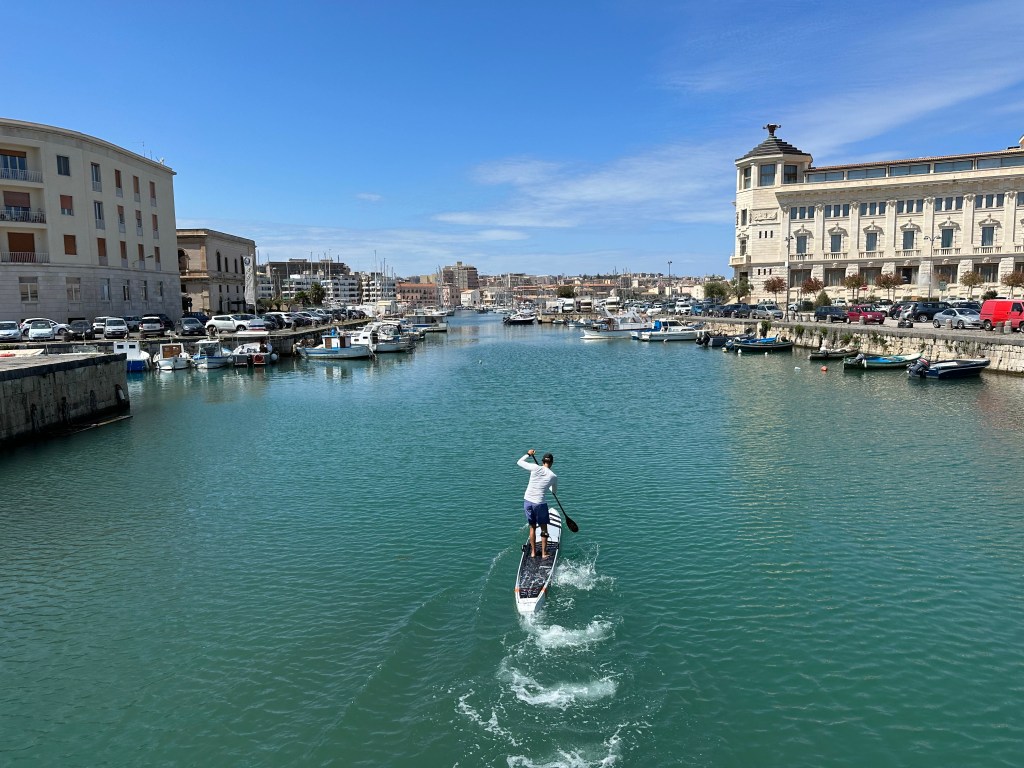
With a nice view of the aquatic activities available in the castle’s shadow.

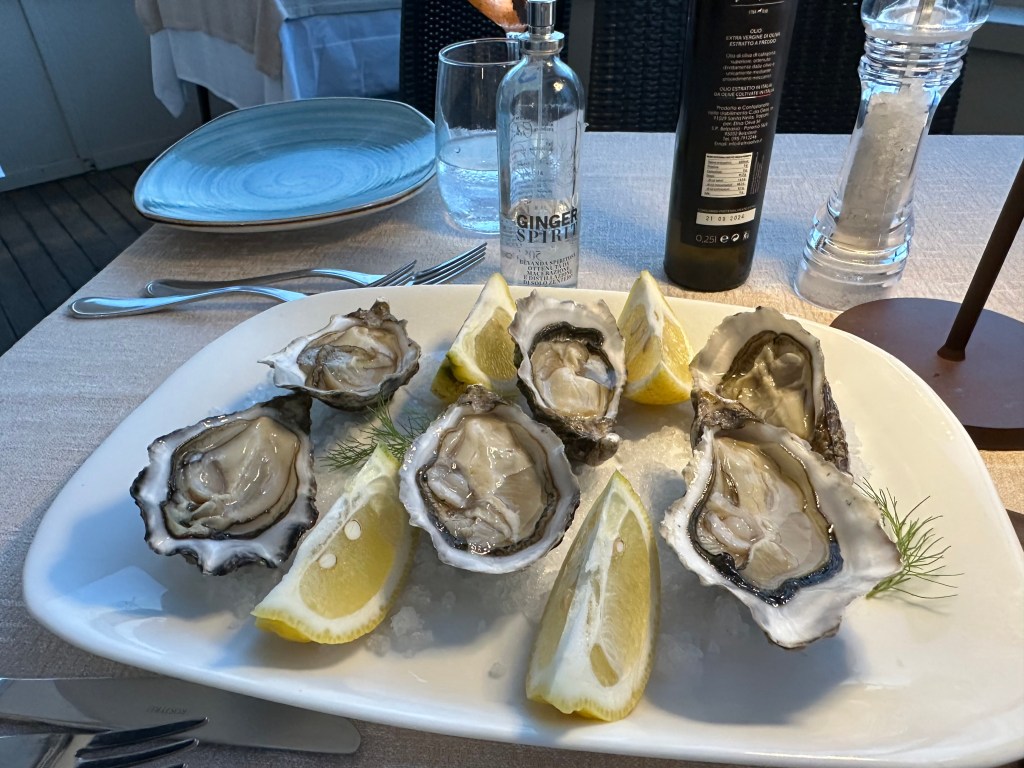
Some decent oysters, to be expected, with a first-time-encountered ginger spray, which was not expected.

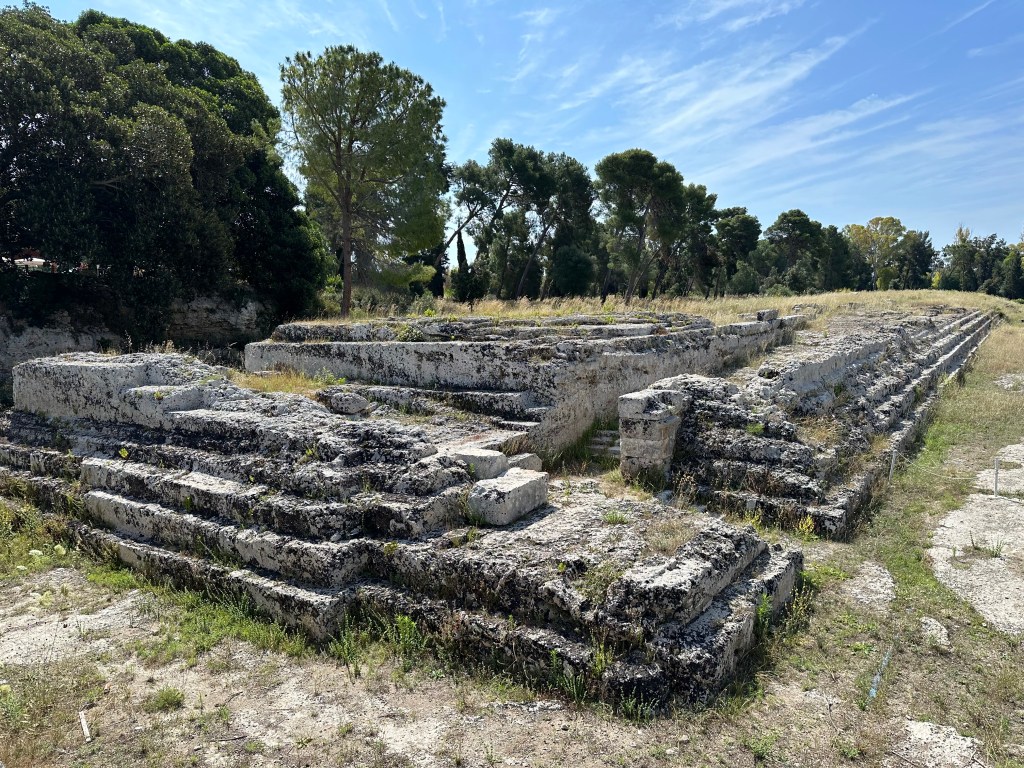
And now for something completely different: Greek and Roman ruins in Syracuse adjacent to Ortigia.

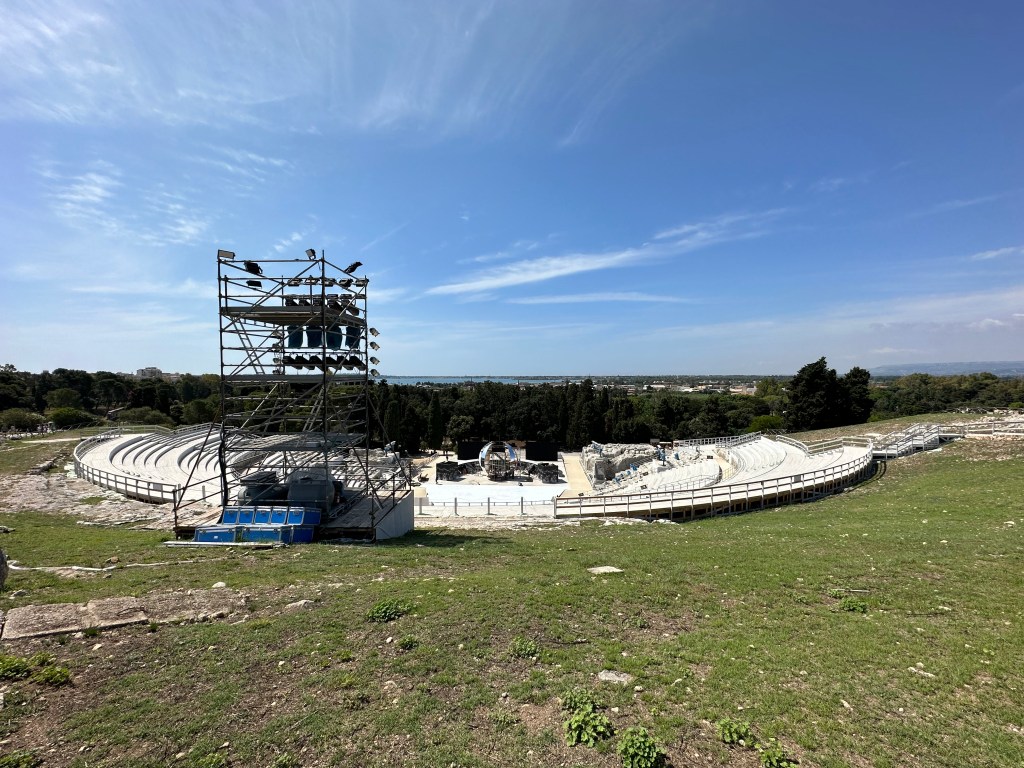
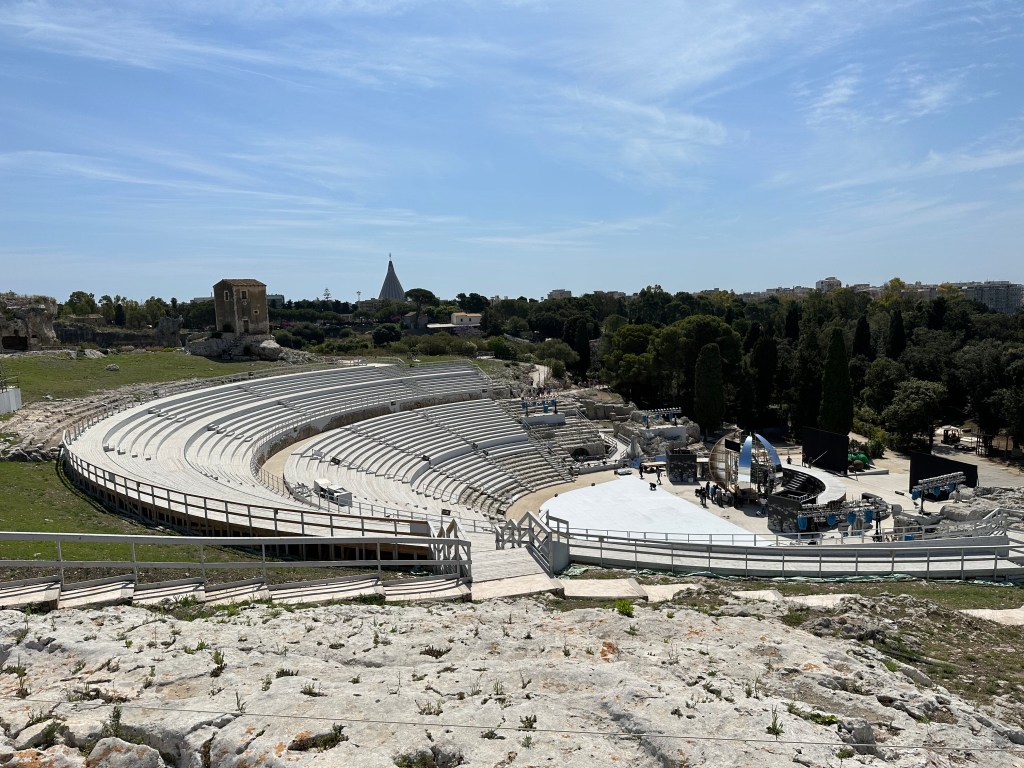
The Greeks built a theater at Syracuse around 470 BC, with a capacity of around 15,000 spectators and a diameter of nearly 140 meters.

It was among the largest theaters in the ancient world, and served as the premiere venue for works by Aeschylus — including the world premieres of The Persians and The Women of Etna — as well as tragedies by Sophocles and Euripides.

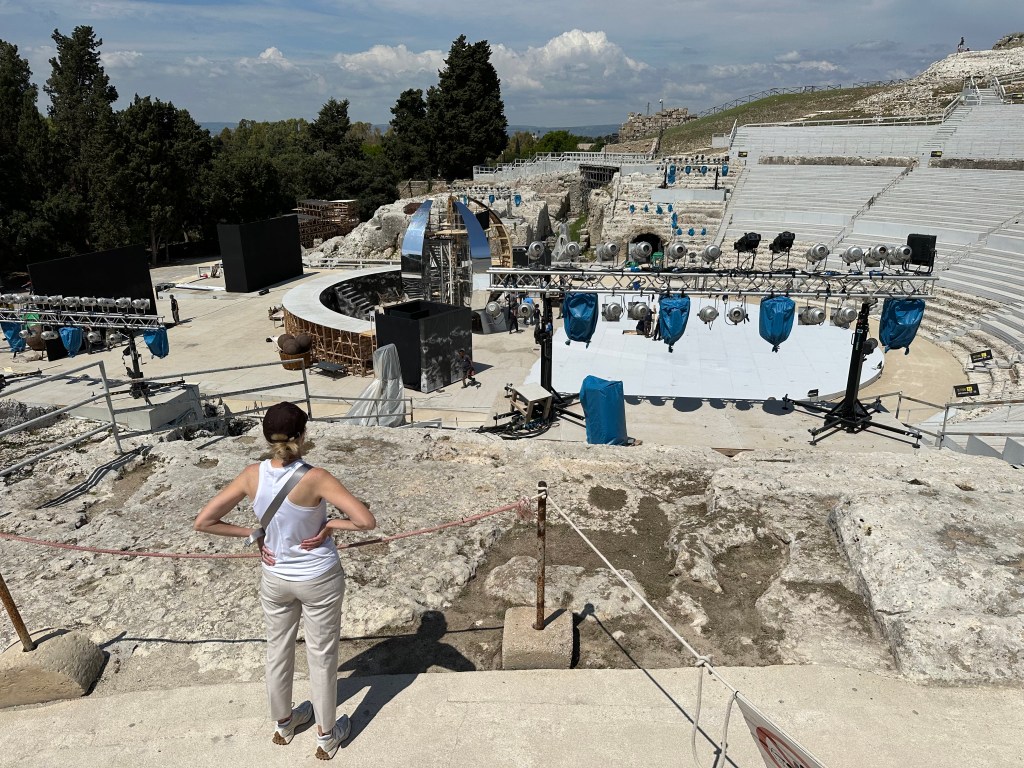
Carved directly into the rock of the Temenite hill, the theater was rebuilt in the 3rd century BC and renovated again in the Roman period, when traces of adaptations for gladiatorial battles and beast spectacles were added, and it continues to host a celebrated summer festival of classical drama to this day.

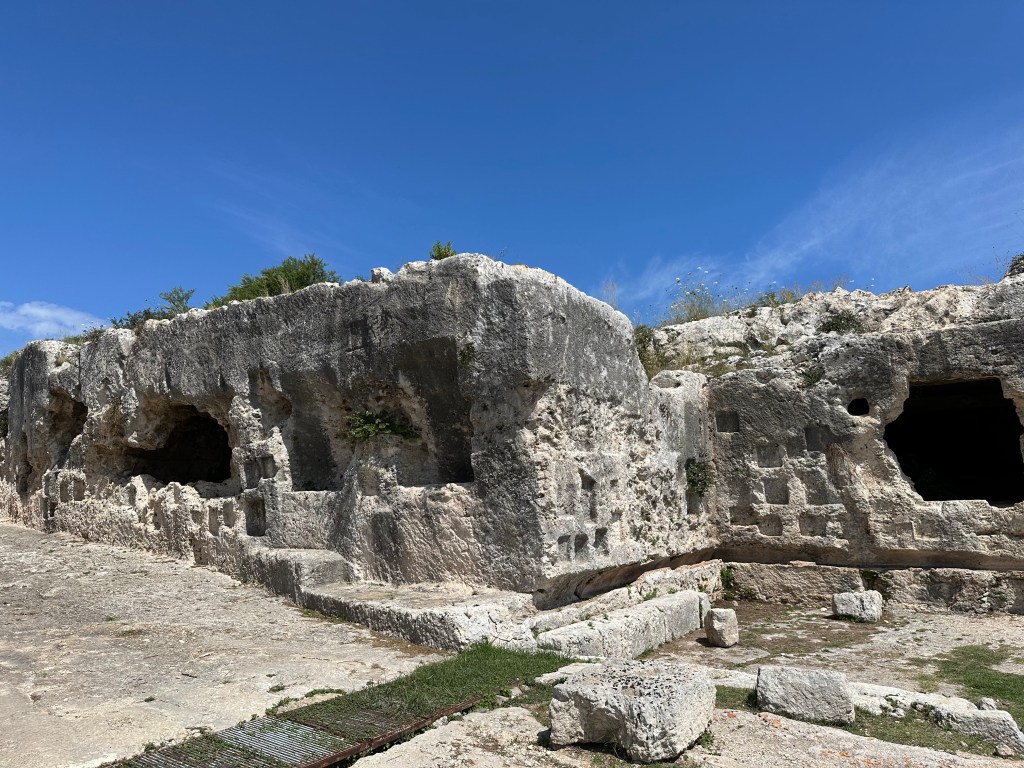
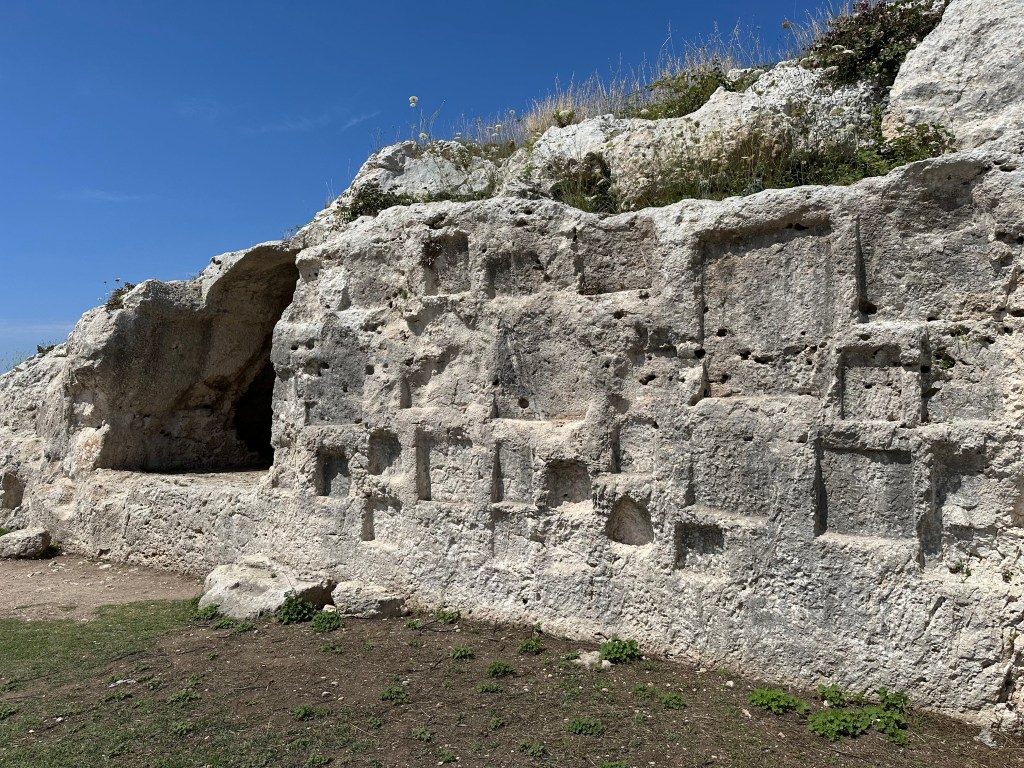
A necropolis above the Greek theater:

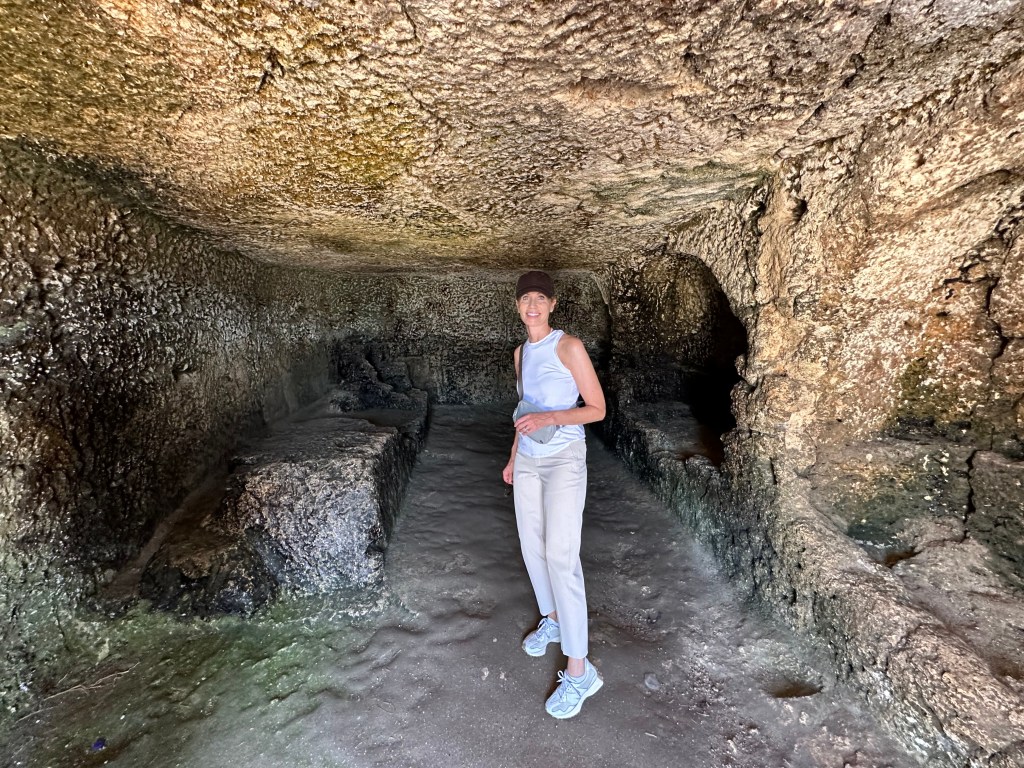
Containing the Via dei Sepolcrri – the Street of Tombs.

One of the tombs.

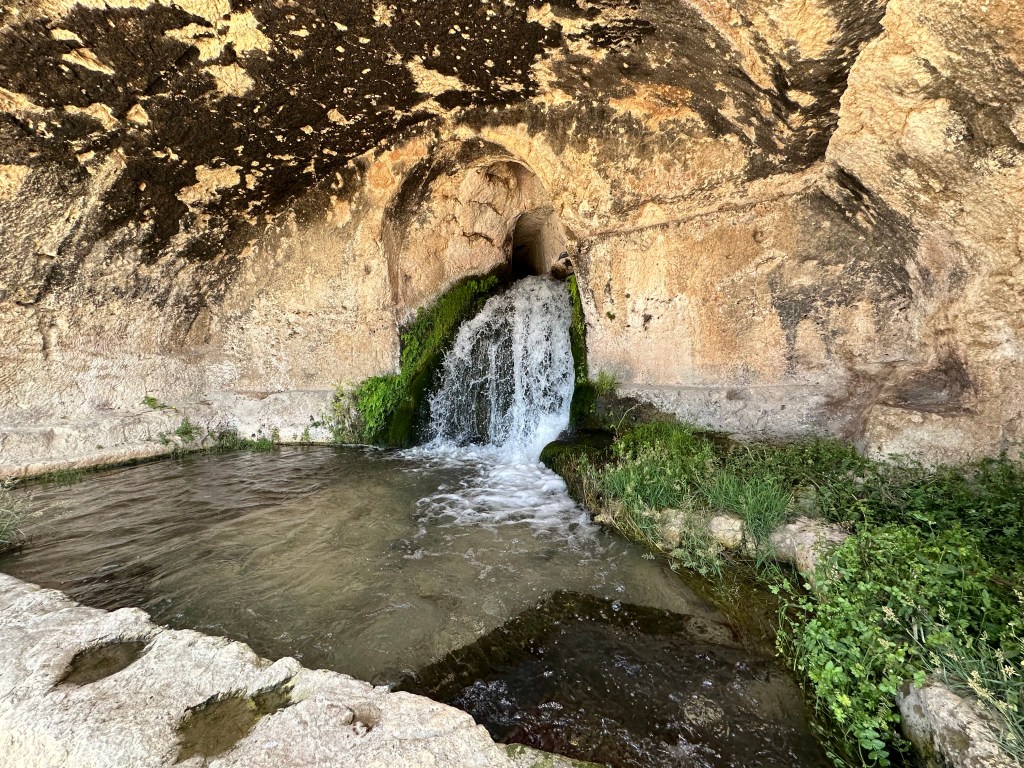
And the Grrotta del Nifeo, where the waters of the Anapo flow and where actors once prepared before performing in the theater.

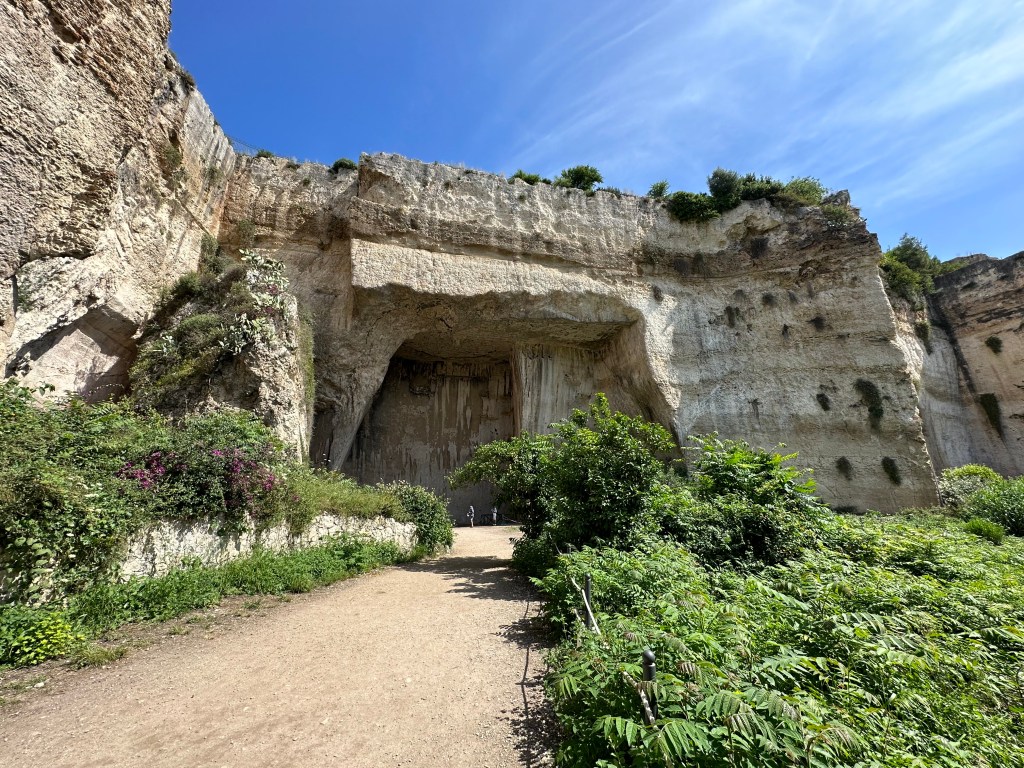
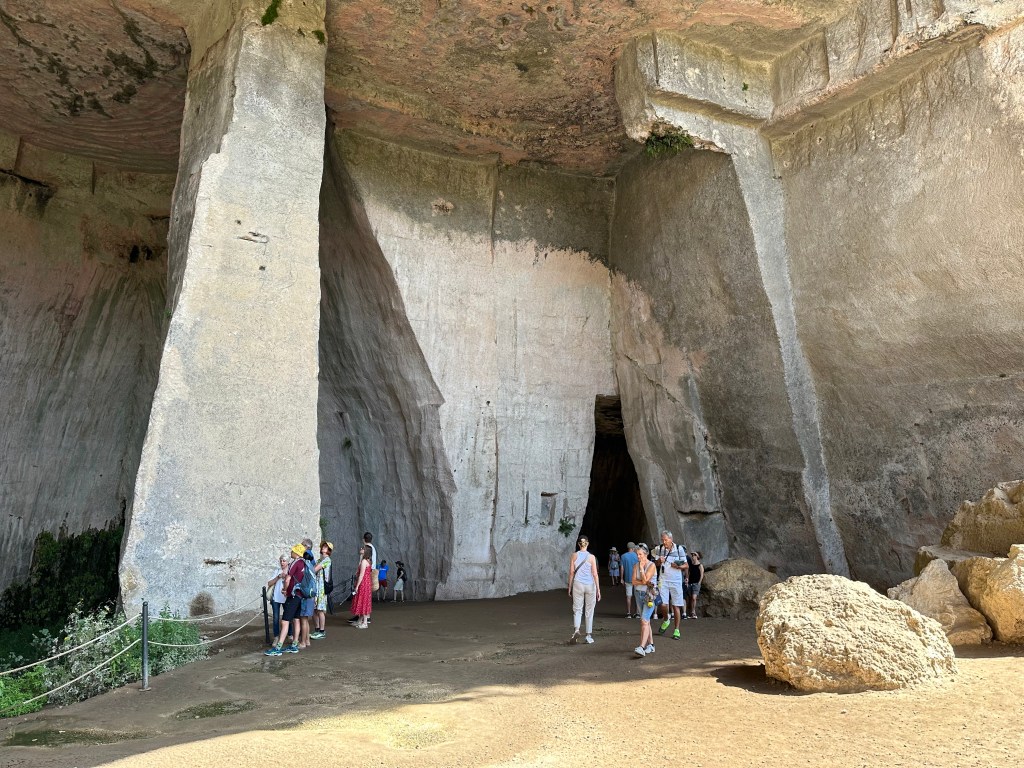
The Latomie del Paradiso — ancient stone quarries to the east of the Greek theater.

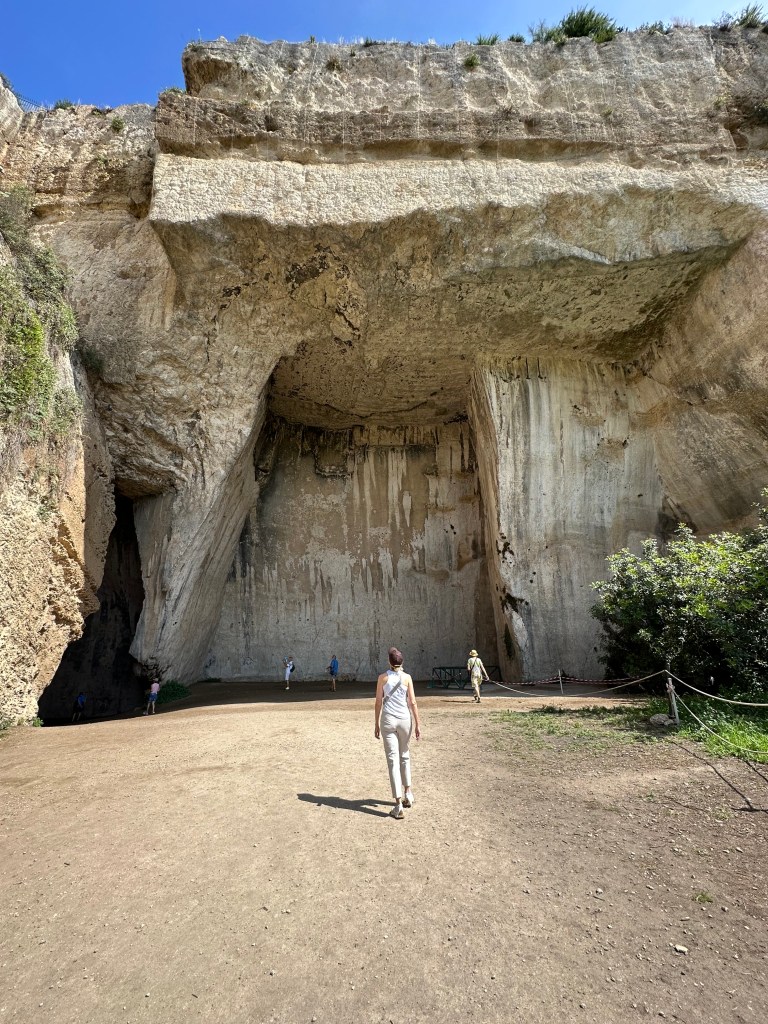
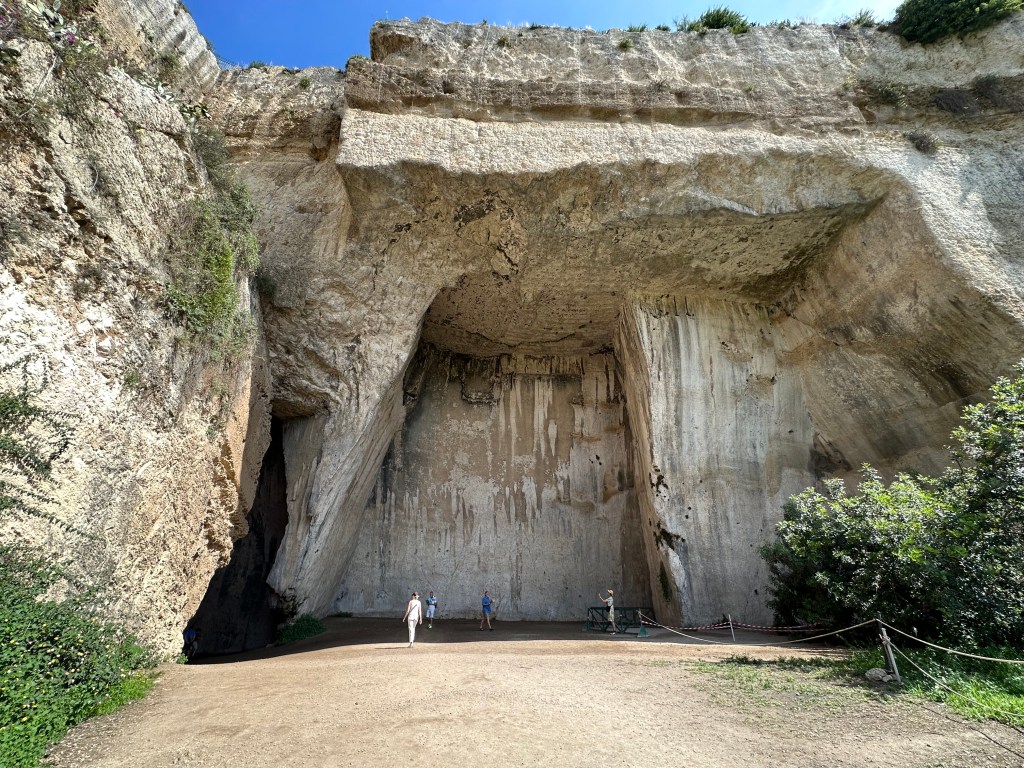
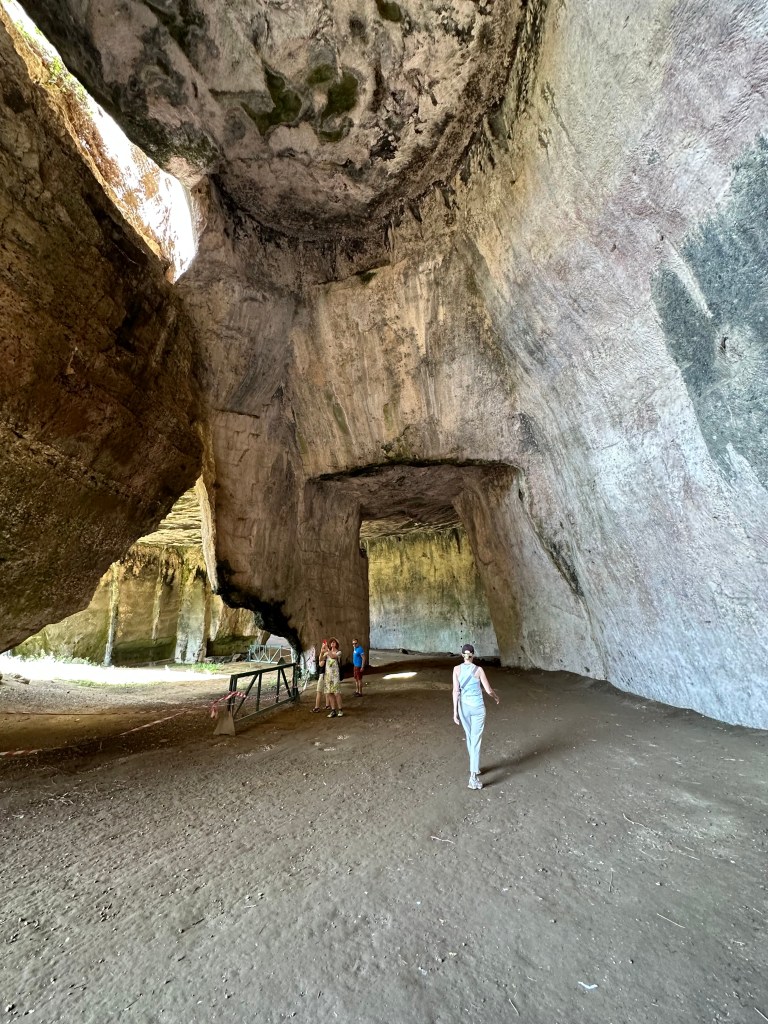
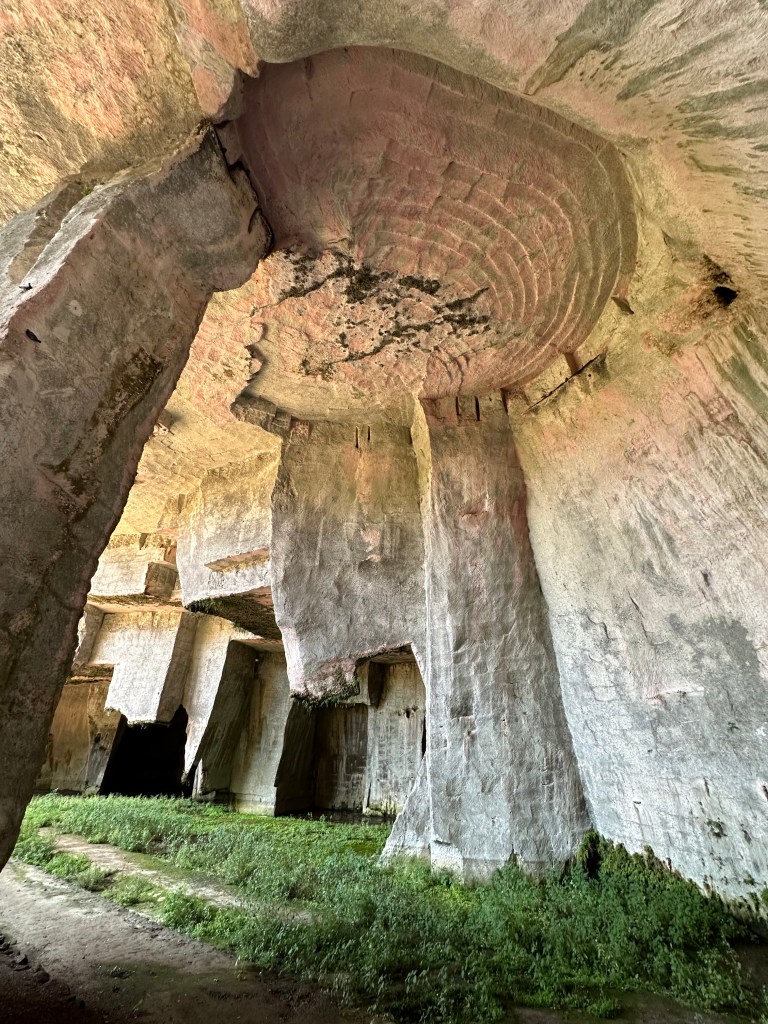
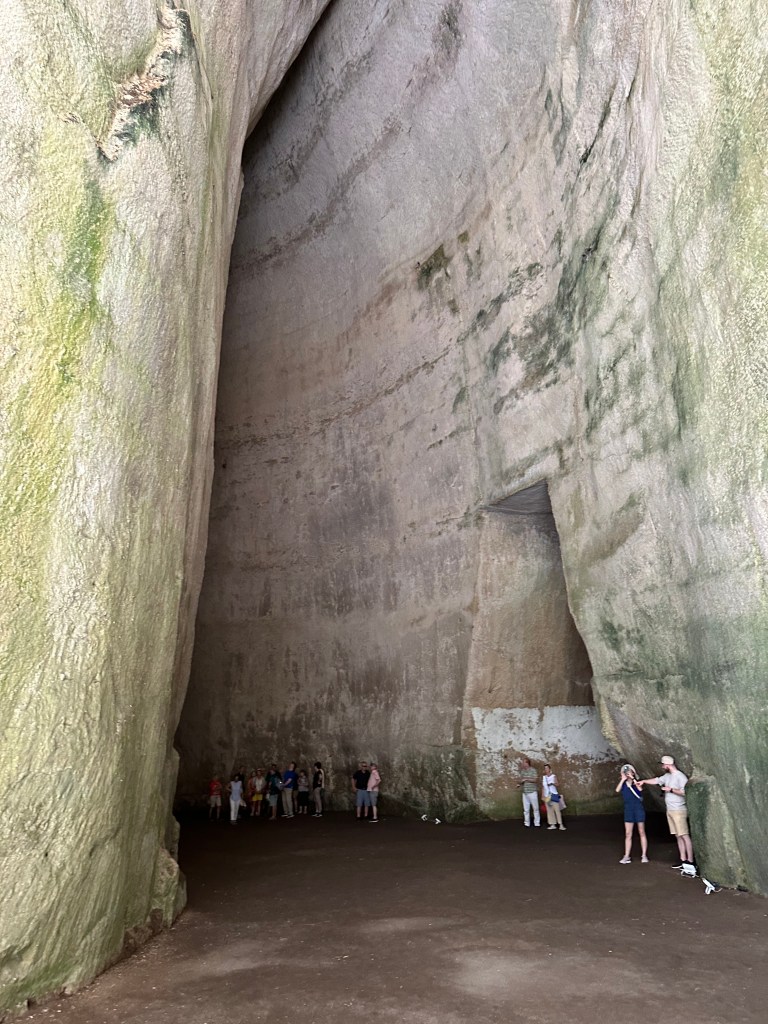
The Ear of Dionysius, a multistory-tall cave carved into the limestone:

The cave’s extraordinary shape amplifies sound to remarkable effect.

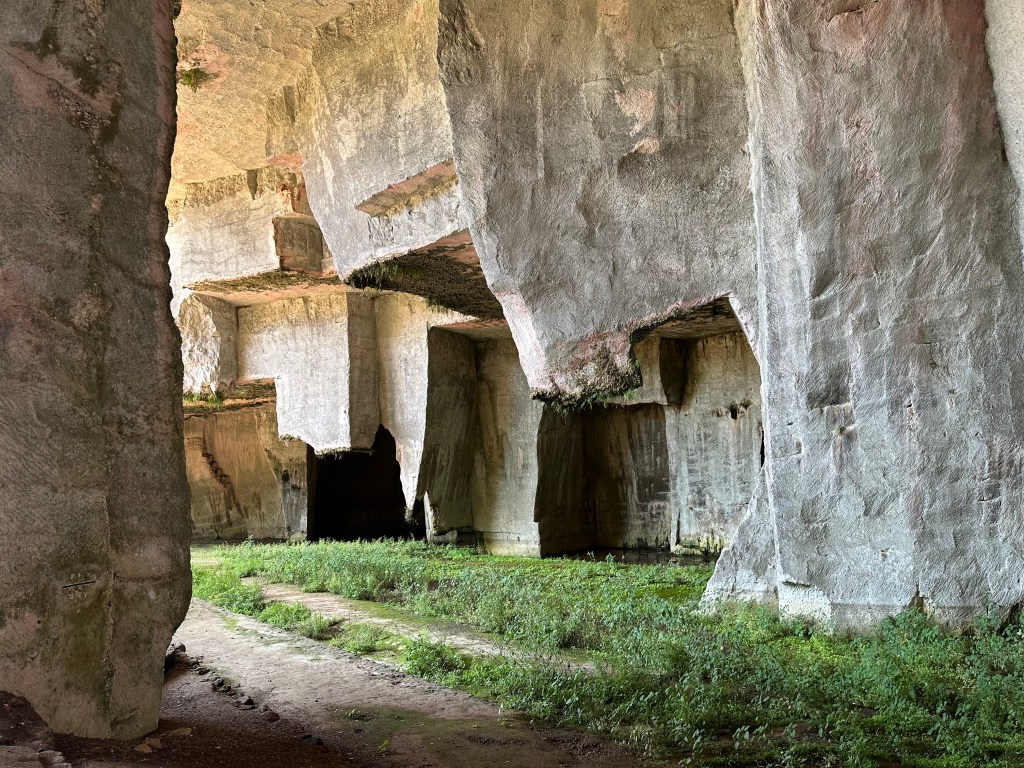
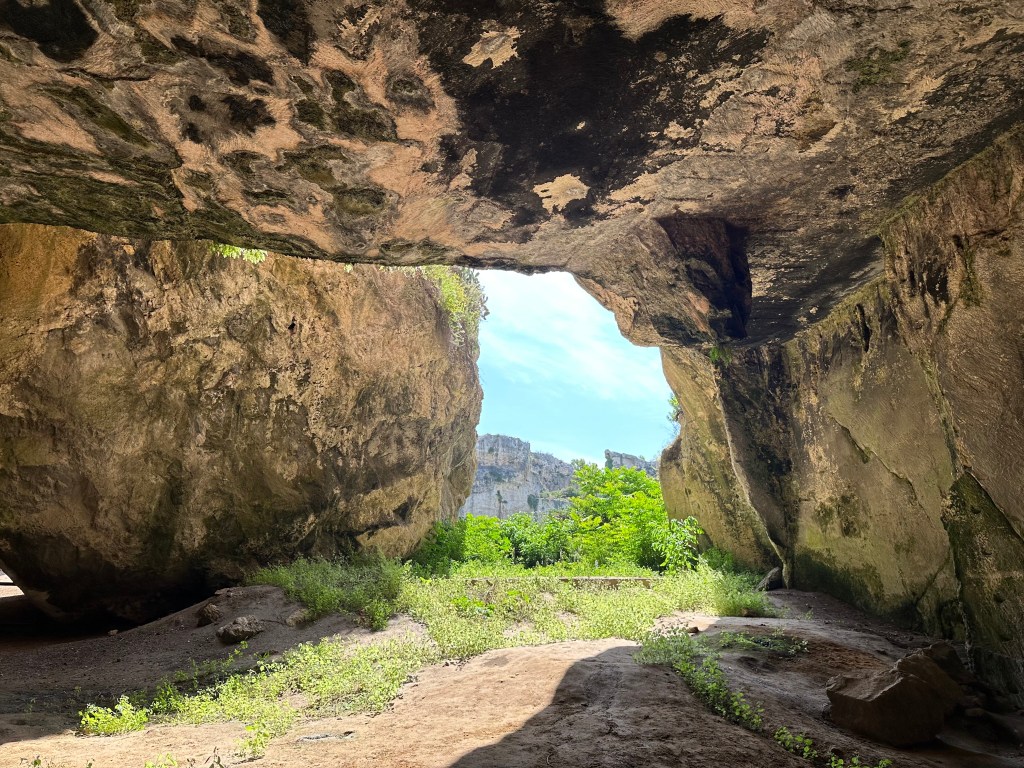
They were once used to imprison captured enemies of the tyrant Dionysius I, and are now lush with lemon groves and fragrant vegetation.

Evidence of quarrying:

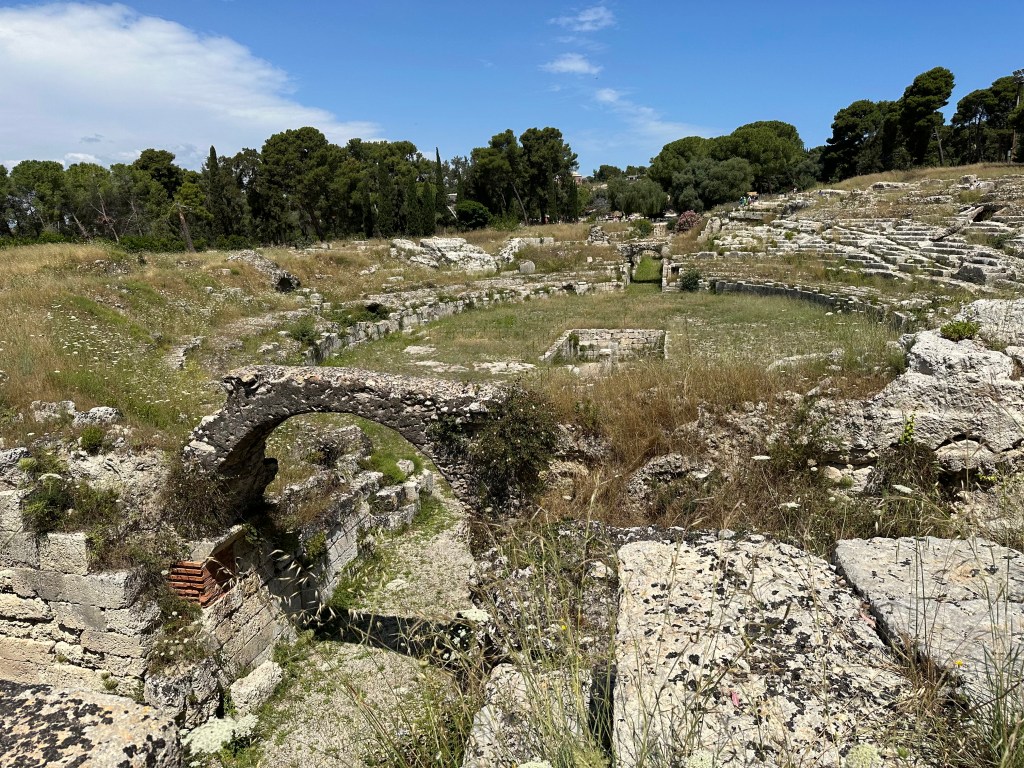
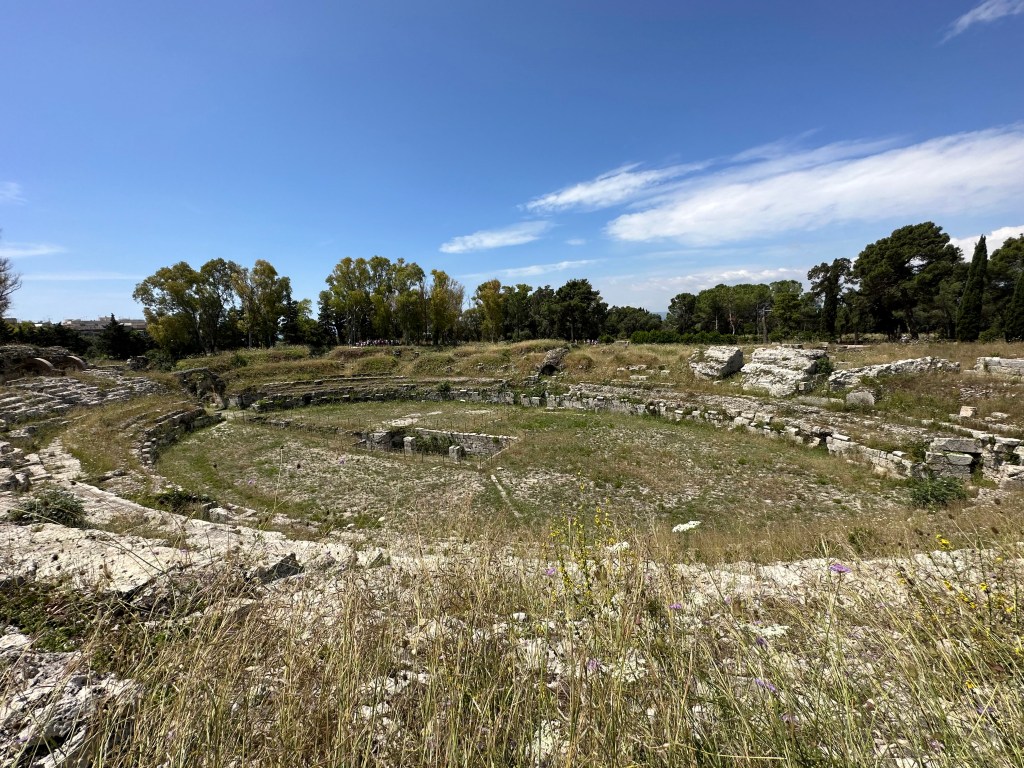
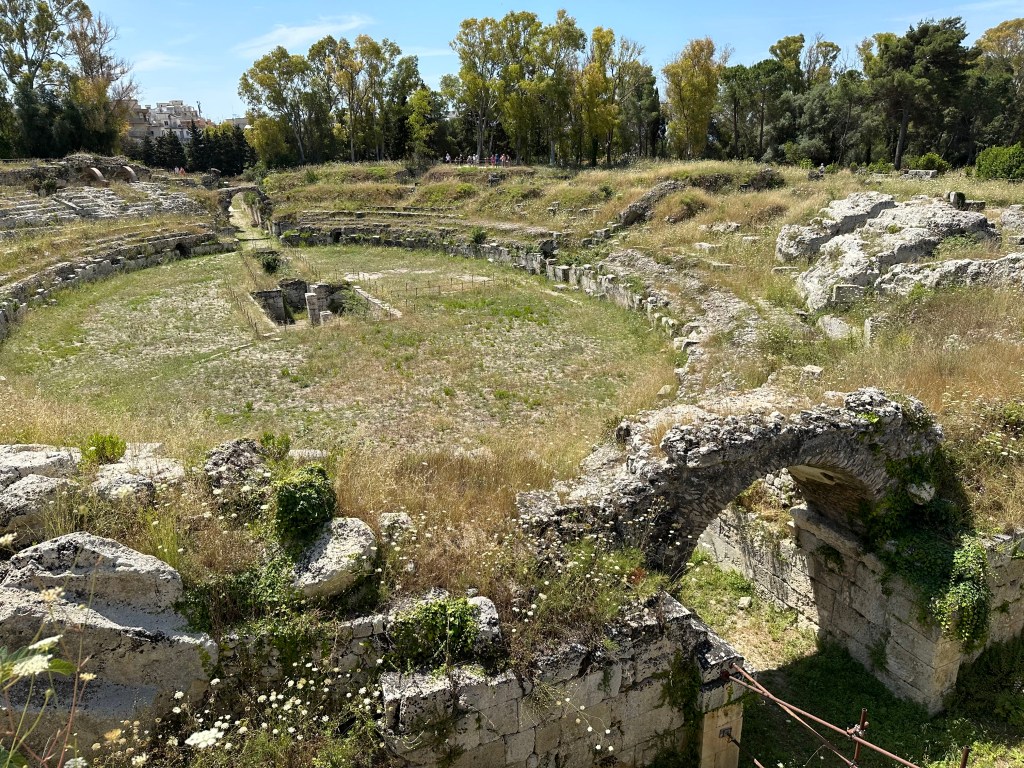
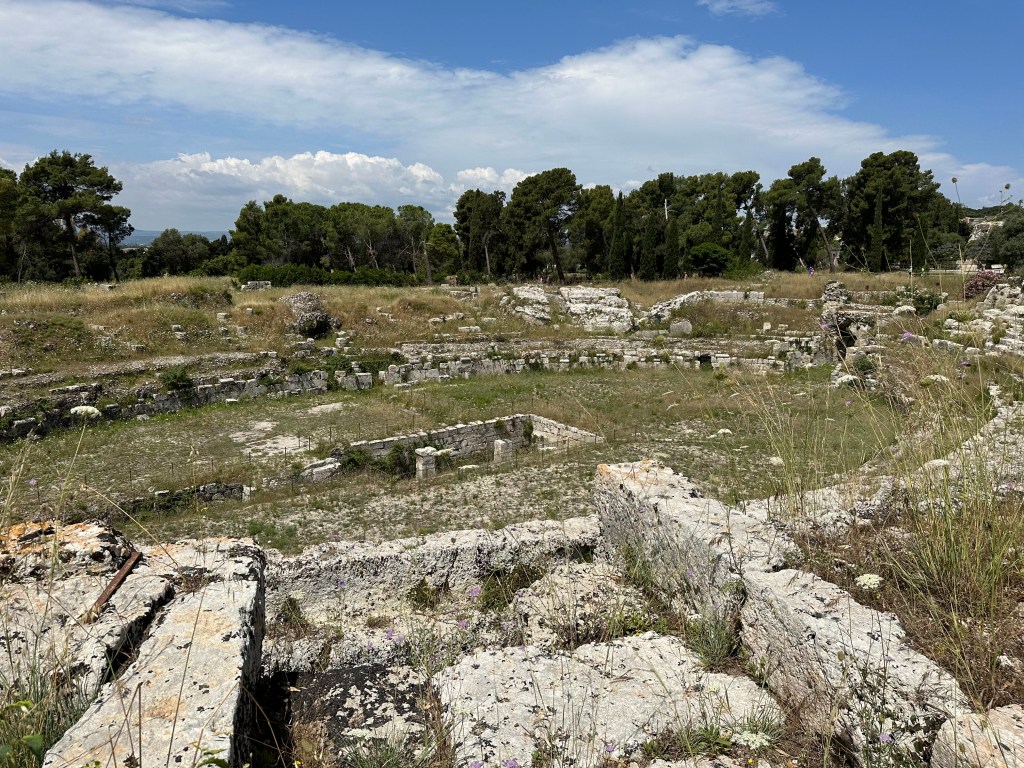
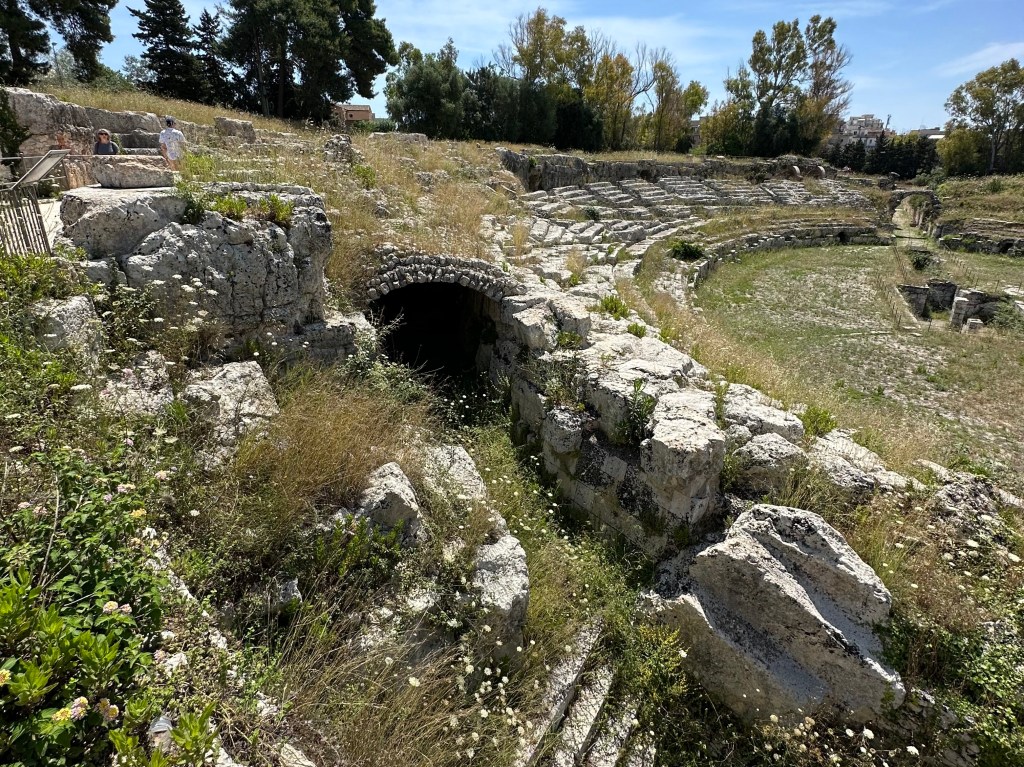
And across the archeological park, the remains of the Roman amphitheater:

The Roman Amphitheater is largely excavated into the rock, utilizing the slope of a rocky crag, with a central arena featuring a large rectangular space originally covered and connected by underground passages to house the machinery and animals used during spectacles.

In the 16th century the Spanish, indifferent to its archaeological value, quarried much of the amphitheater’s large stone blocks to build the defensive city walls of Ortigia, leaving it in the partial, overgrown ruin visible today.

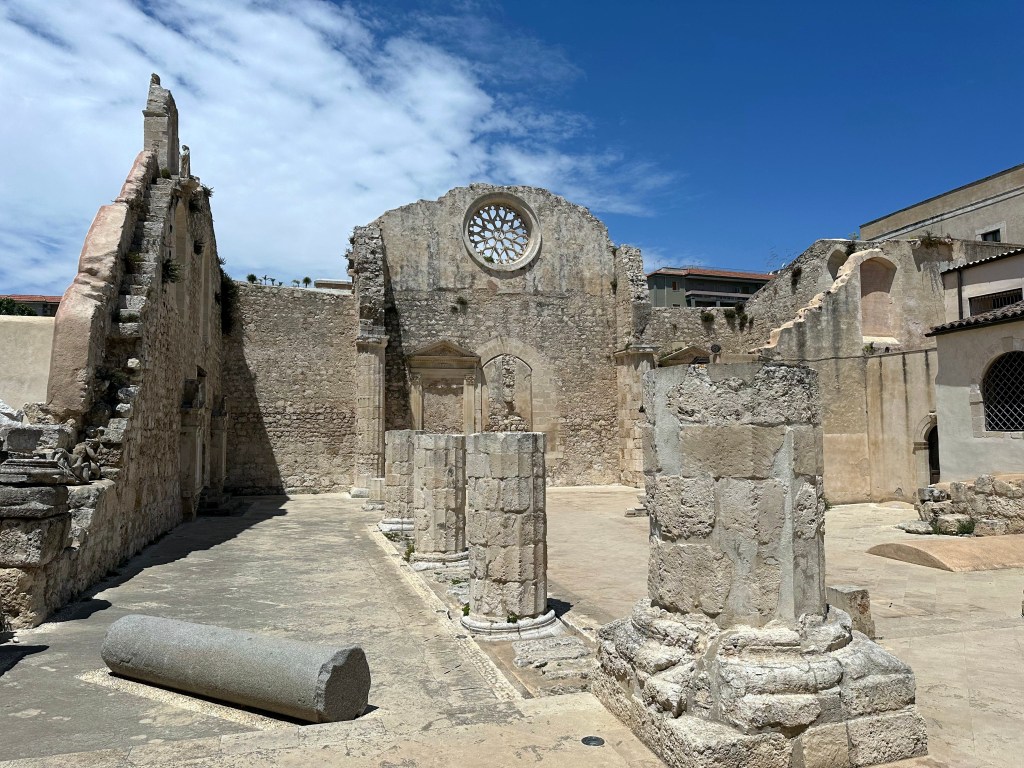
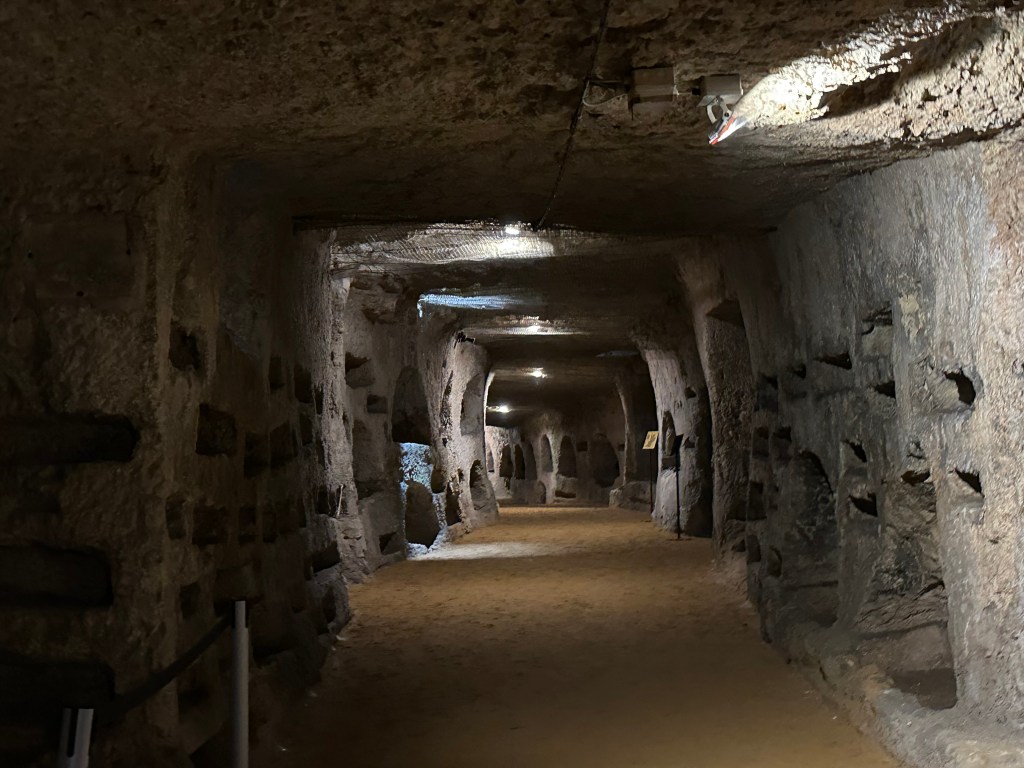
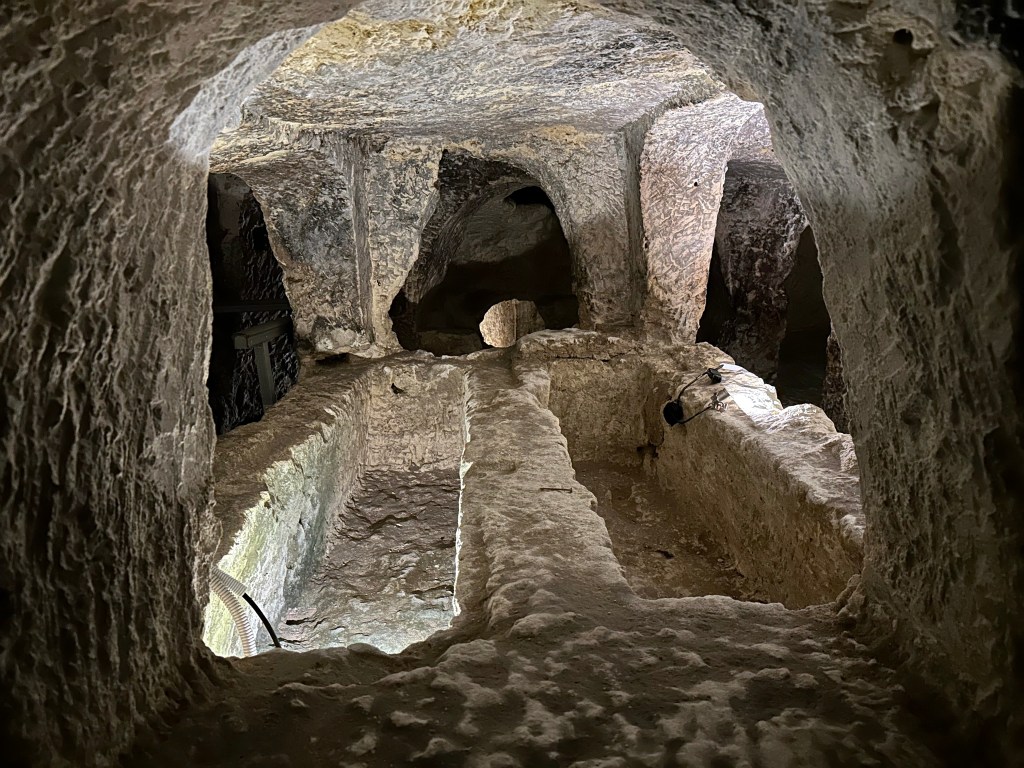
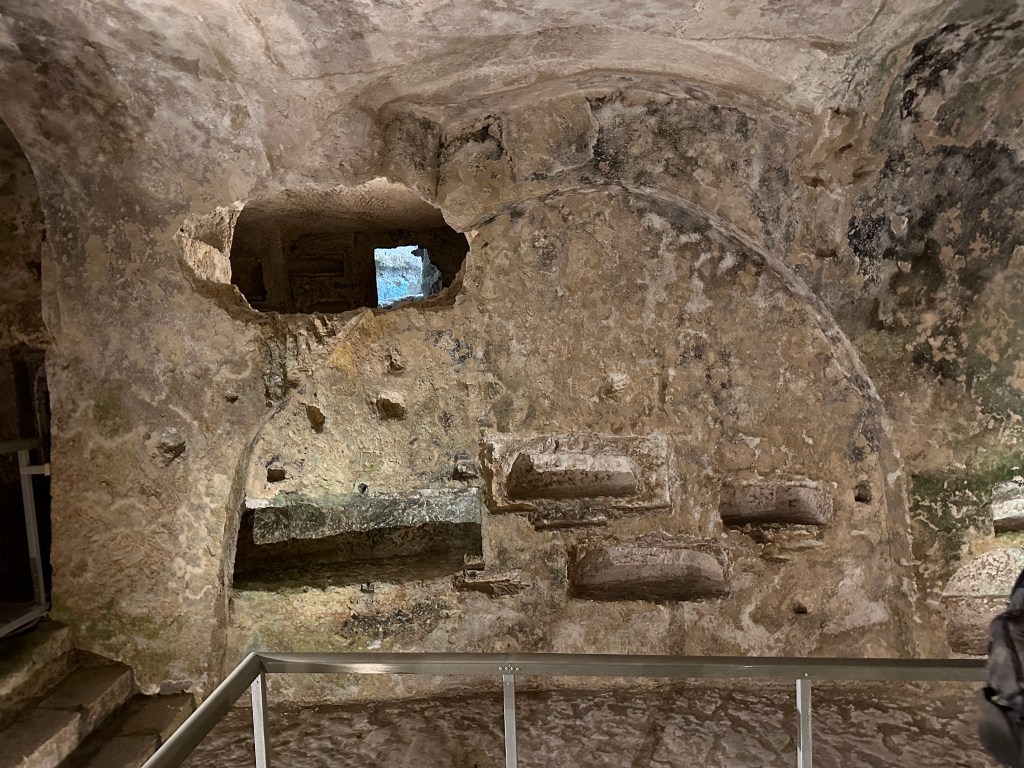
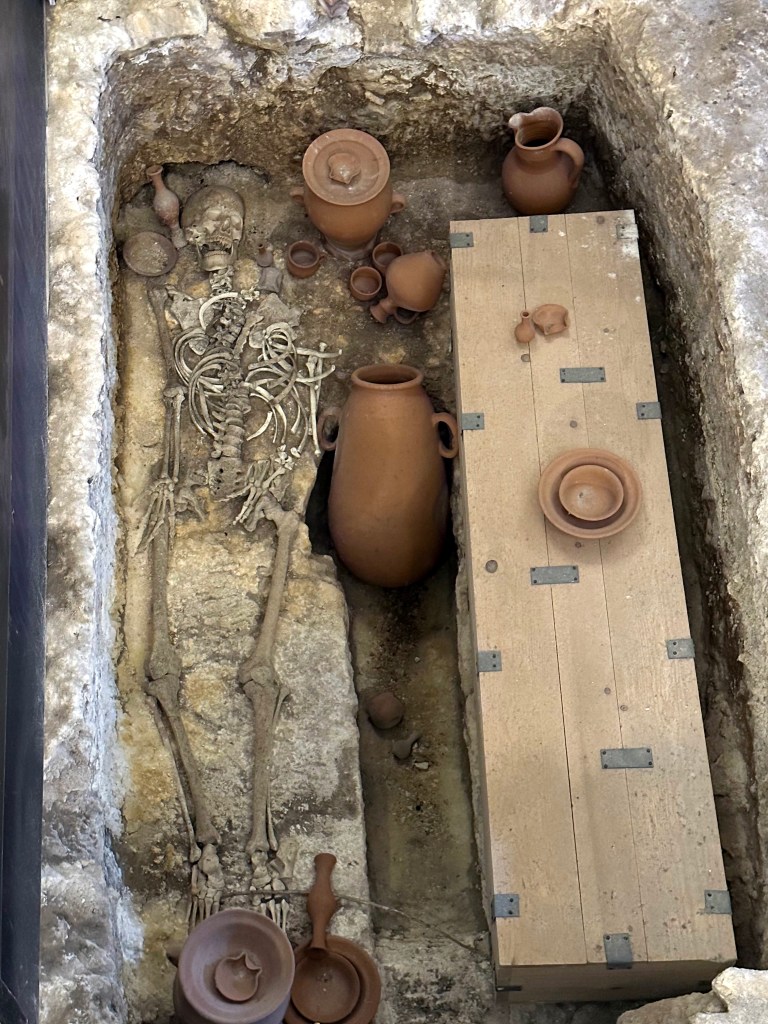
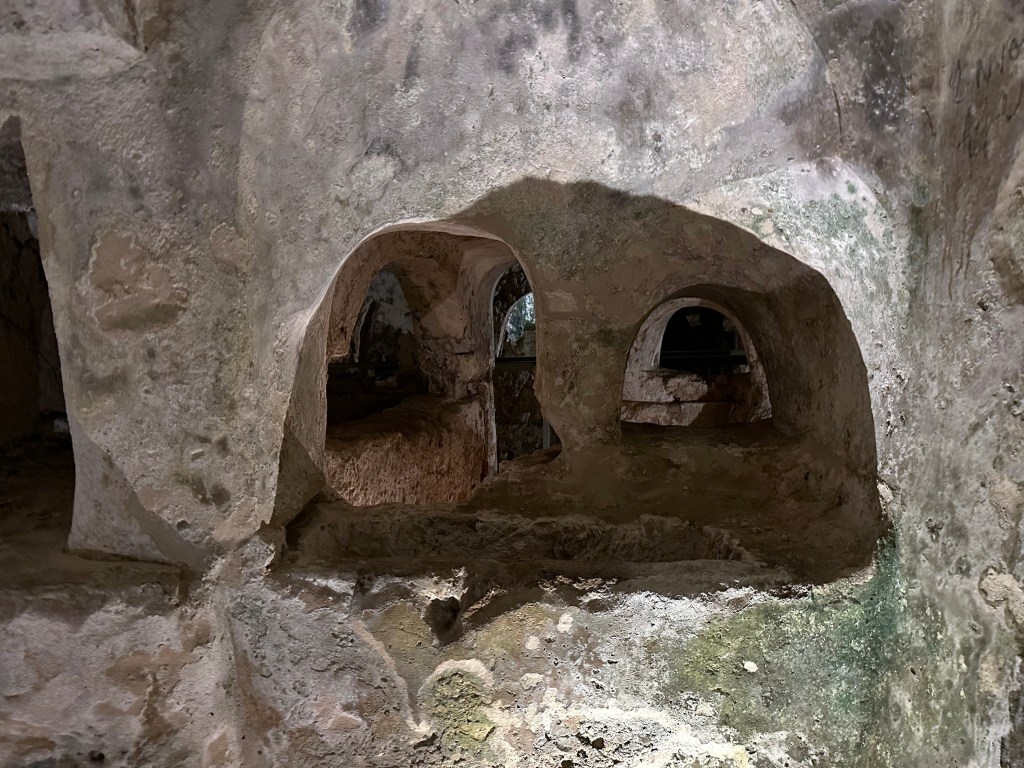
And on the way back from town? A little stop at the Catacomba di San Giovanni. The site sits beneath the ruined Basilica of San Giovanni — itself a place of extraordinary sacred history, where St. Paul is said to have preached and St. Marcian founded the first Christian community in Syracuse — and the catacombs were later used as an air-raid shelter during World War II, which is why no bones remain there today.

The Catacombs of San Giovanni were excavated for the most part between 315 and 360 AD, following the Edict of Constantine that established freedom of Christian worship, and remained in use as an early Christian cemetery until the end of the 5th century — making them, for size, the second largest catacombs in Italy after those of Rome.

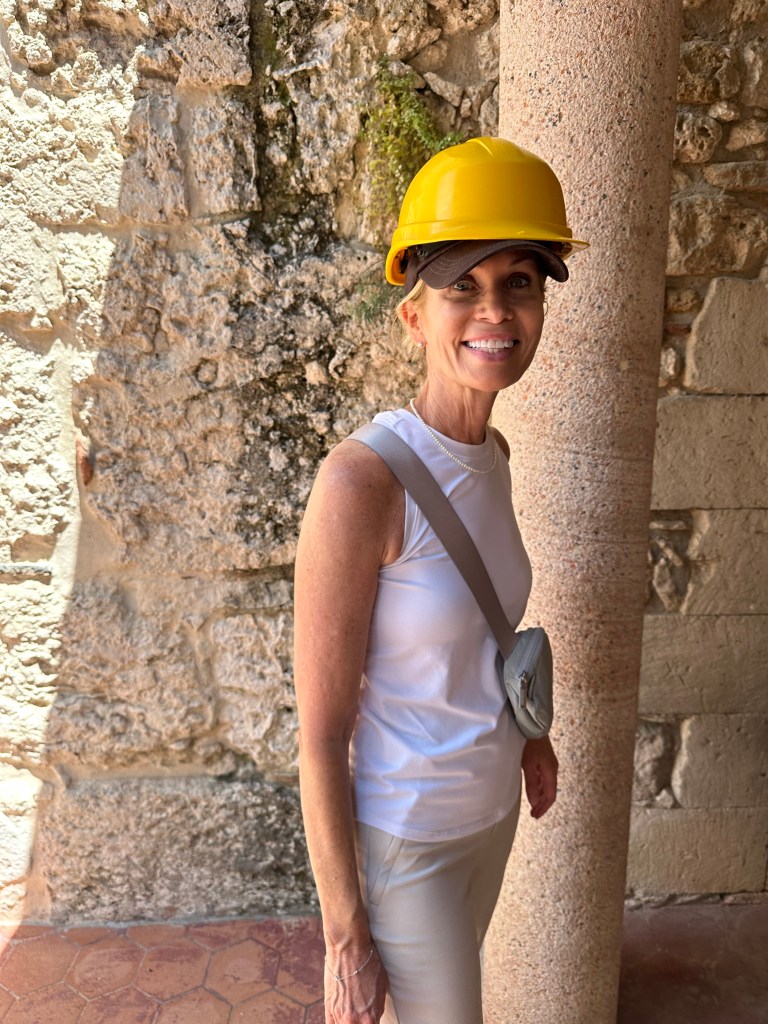
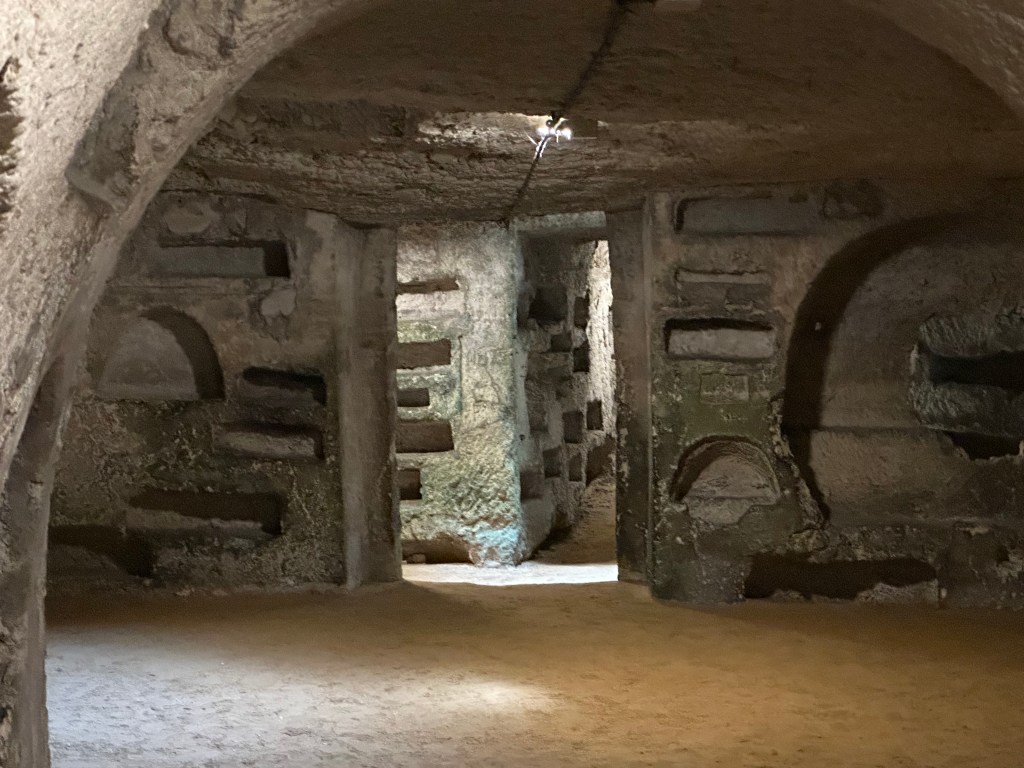
Unlike the subterranean adventure under Chiesa di San Filippo Apostolo, the catacombs here required us to don a little liability-reducing protective gear. (Also, we weren’t supposed to take pictures, just like at the monastery of creepy corpses in Palermo, but some urges cannot be resisted.)

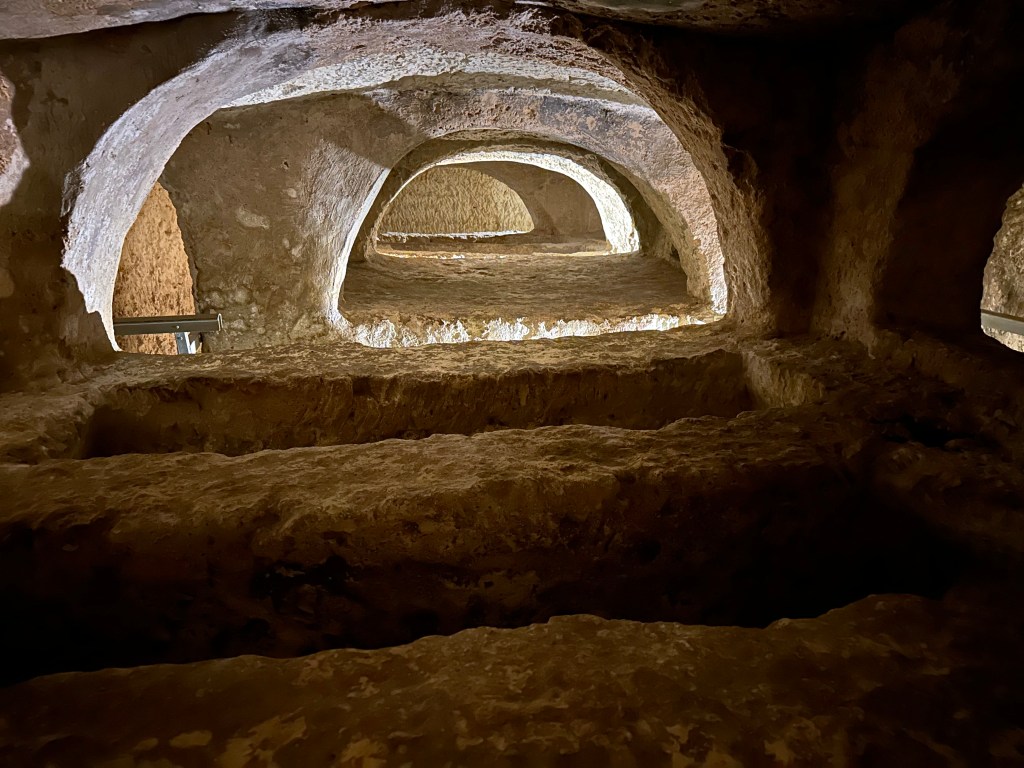
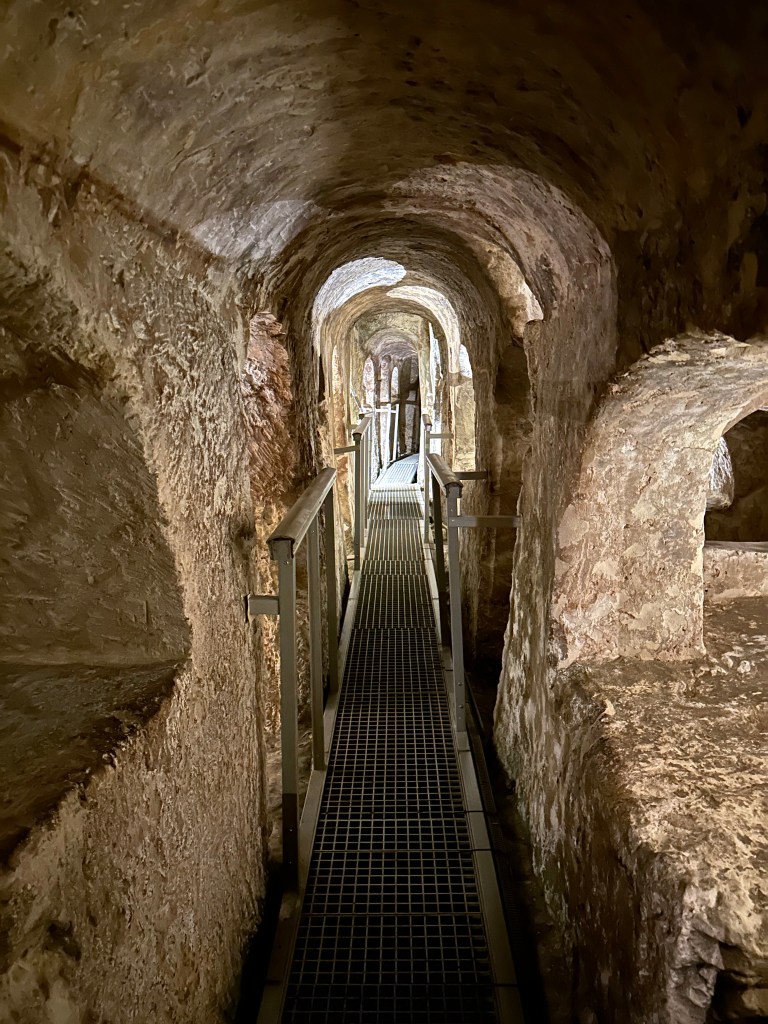
To save labor, the tunnels were initially opened along the route of a disused Greek aqueduct, traces of which are still visible on the ceiling of the main gallery, while existing cisterns along the route were converted into funeral chapels for distinguished families — a characteristically Syracusan layering of Greek infrastructure repurposed for Christian use.

The layout of the catacombs mirrors the Roman military camp, with a central gallery (the decumanus maximus) from which ten secondary corridors branch off, leading to four large circular rooms — the Rotonda di Antiochia, the Rotonda Marina, the Rotonda di Adelphia, and the Rotonda dei Sarcofagi — that were once the ancient cisterns of the Greek aqueduct.

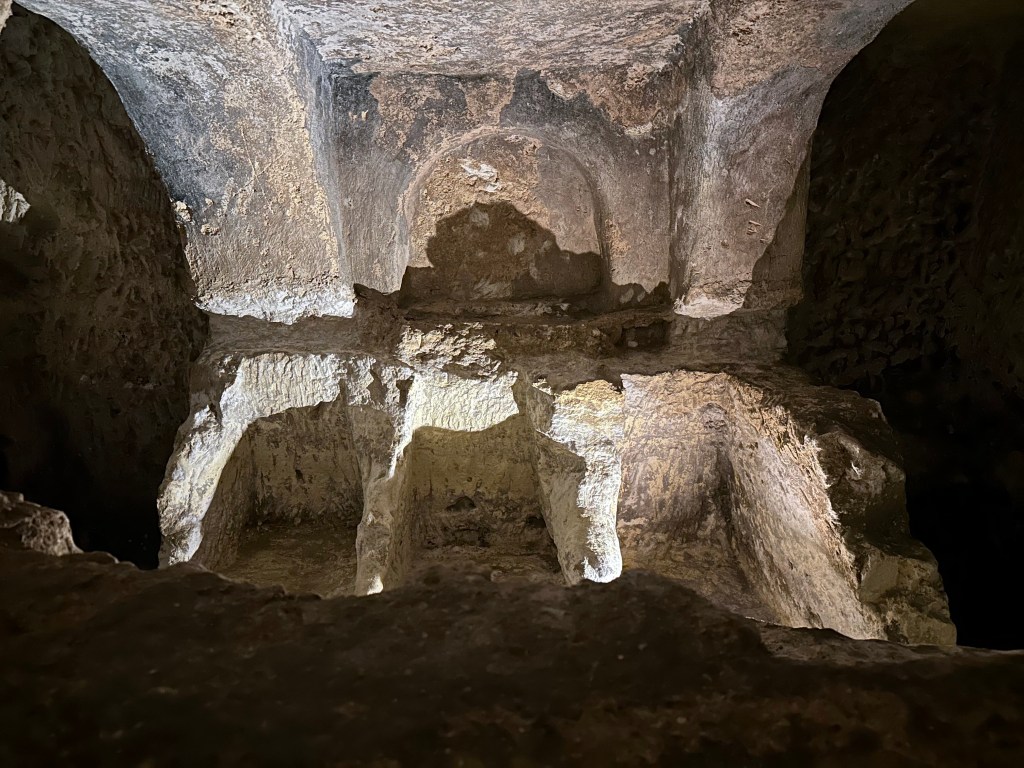
A nested set of at least 12 tombs in a niche along one wall of the catacombs; the whole labyrinth was pocked like this.

Back in town for some lunch – pretty atmospheric place.

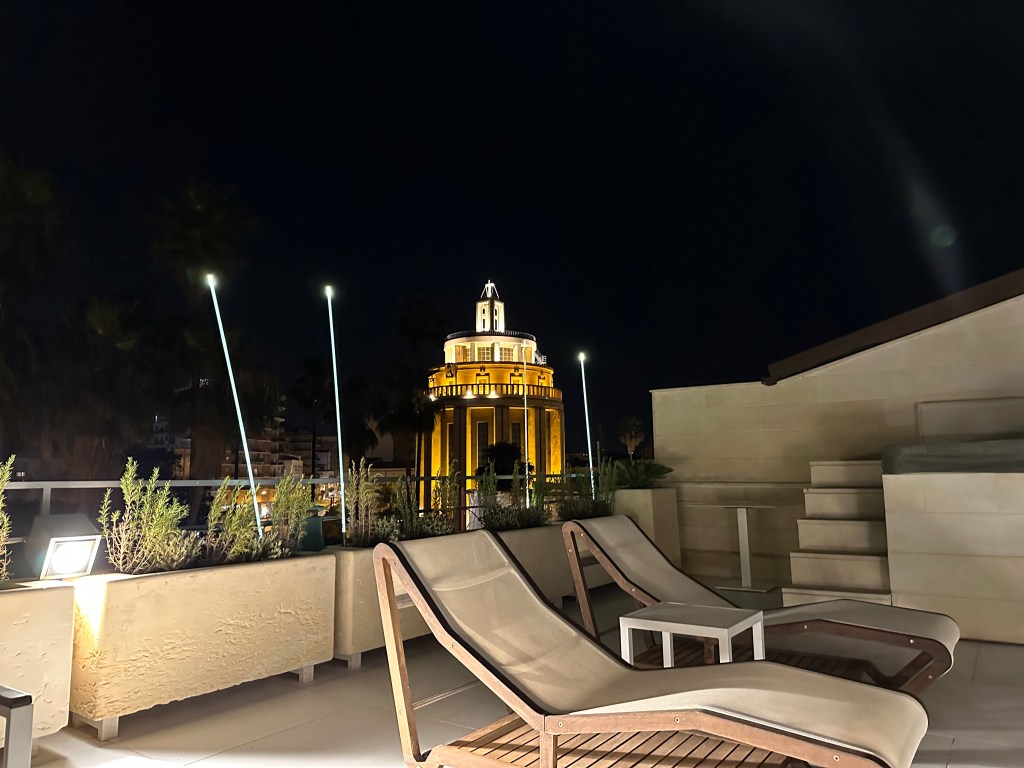
The last of our two nights here, with a few nightcaps on the hotel rooftop.

Onward to Mount Etna!

Categories: A Prolonged Foray to Europe, Sicily | Tags: , , , , , , , , , , | Leave a comment

Protected: Christmas 2022 – Baltics and Back to the Netherlands: Haarlem

This content is password-protected. To view it, please enter the password below.

Categories: Europe, Netherlands | Tags: , , , , | Enter your password to view comments.

Christmas 2022 – Baltics and Back to the Netherlands: Tallinn

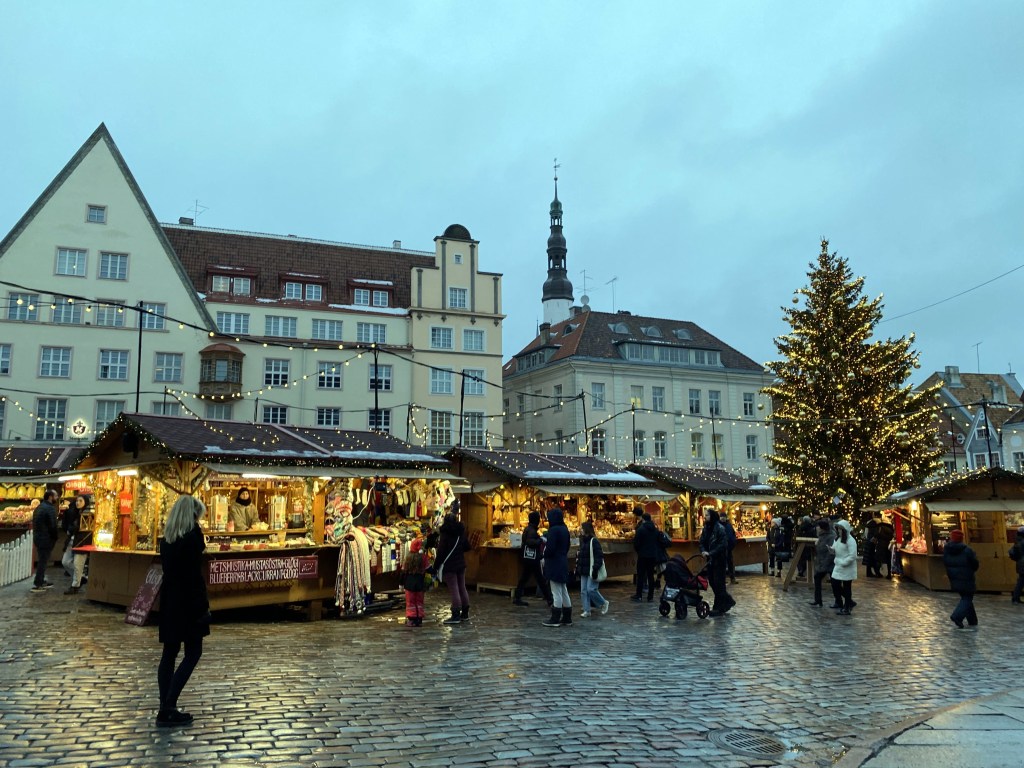
After a couple of days in Haarlem, we headed to the first of our actual Baltic destinations: Estonia and its capital city of Tallinn. We were hoping for snow, and we got some! (Initially, anyway.)

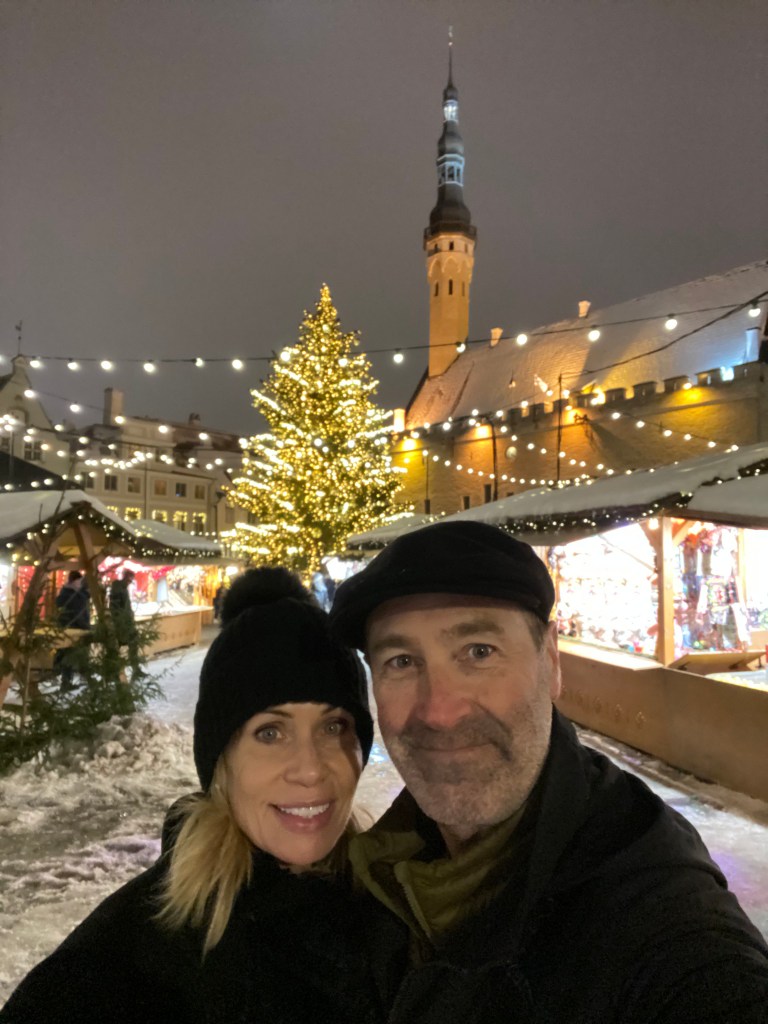
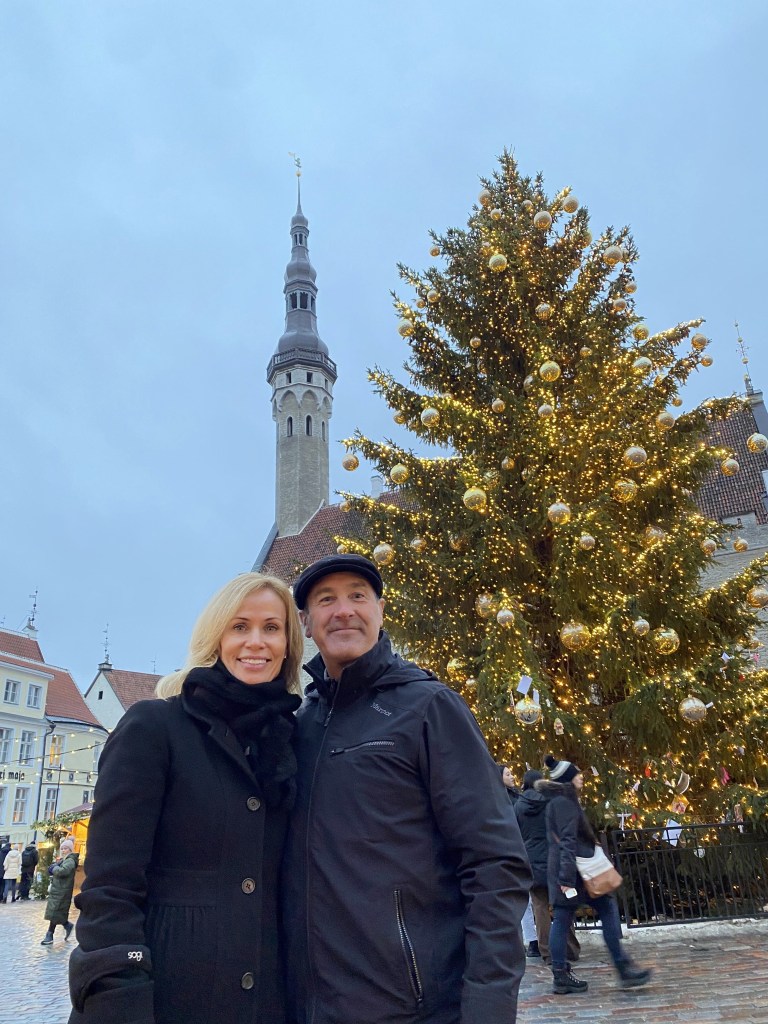
Tallinn’s main square and Christmas Market on our first evening – perfect!

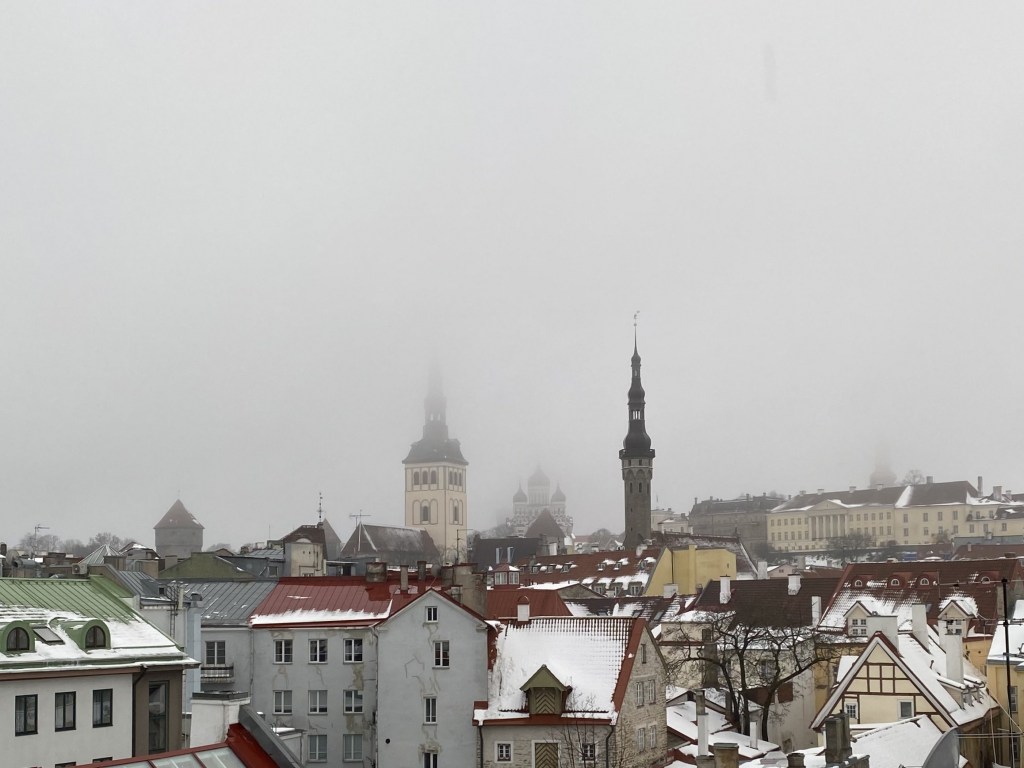
But the next day (and throughout our stay), the snow on many of the streets and squares turned a little slushy.

Definitely more of a winter, Christmas atmosphere than Alexandria, but still. . .

Tallin’s settlement dates back thousands of years but the first fortress appeared around 1050 AD, demonstrating the importance of the town to the north Estonia region.

As a trading town on the Baltic coast, the town (then known as Reval) became a member of the Hanseatic League in 1285. We previously visited the Hanseatic towns of Lübeck and Hamburg in Germany and Bergen, Norway. (Riga, Latvia, another Hanseatic town, would be our next stop on this trip. Apparently, Berlin, Cologne, and Krakow also were Hanseatic towns due to the river system, but we have decided to ignore this because they’re not on the Baltic coast.)

Snow still covered some streets – very cool medieval town.

Tallinn Old Town is one of the best-preserved medieval cities in Europe and is listed as a UNESCO World Heritage Site.

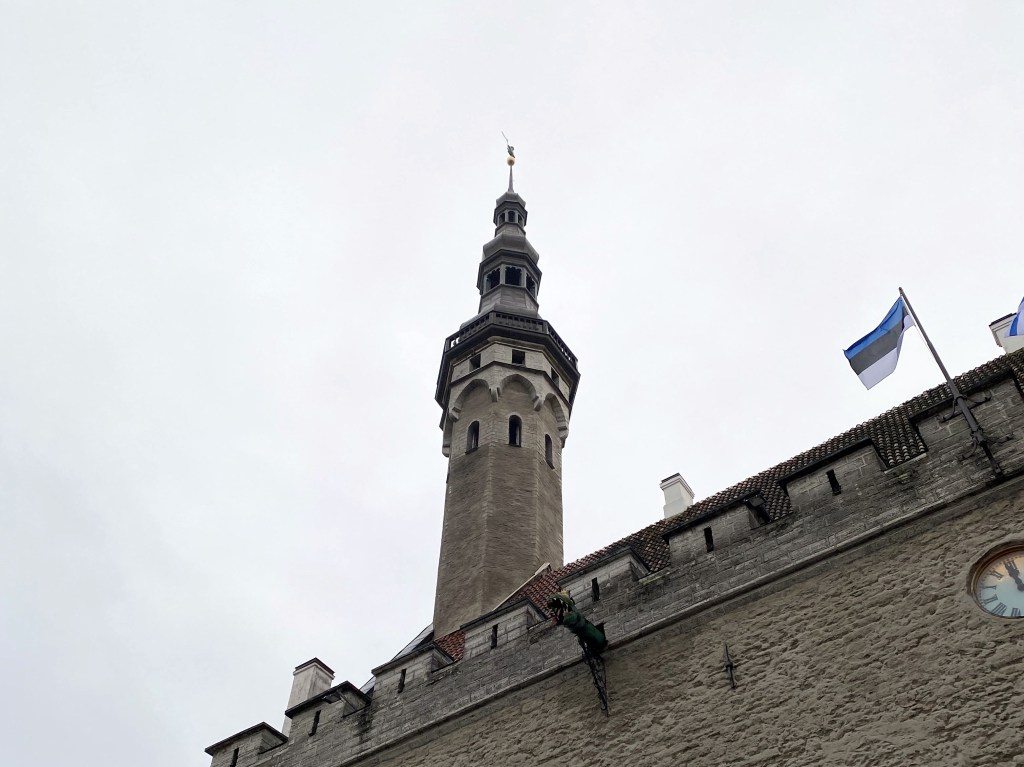
The spire of Tallinn’s Town Hall:

The town hall was first mentioned in 1322,

but the structure actually dates back to the 1200s.

It’s the oldest surviving town hall in Europe.

At the top of the spire stands Old Thomas, first placed there in 1530.

The figure memorializes a peasant who became famous for winning a crossbow competition held by the Baltic German Elite.

The tower – and Old Thomas – was damaged in 1944 during a bomb attack during the war. A new Old Thomas went up with the repaired tower in 1952, but it was weathering too much, and the Estonians put another one up there in 1996. The 1952 Old Thomas hangs out in the Tallinn City Museum. Nice codpiece.

Viru Gate – one of the original eight gates in Tallinn’s city walls.

The first wall around Tallinn was ordered to be constructed by Queen Margaret of Denmark in 1265 (Denmark controlled northern Estonia from the early 13th century until 1346, when the Danish king sold it to the Teutonic Knights).

Fully taking shape during the next three centuries, Tallinn’s city wall was one of the strongest defense systems in Northern Europe at the time.

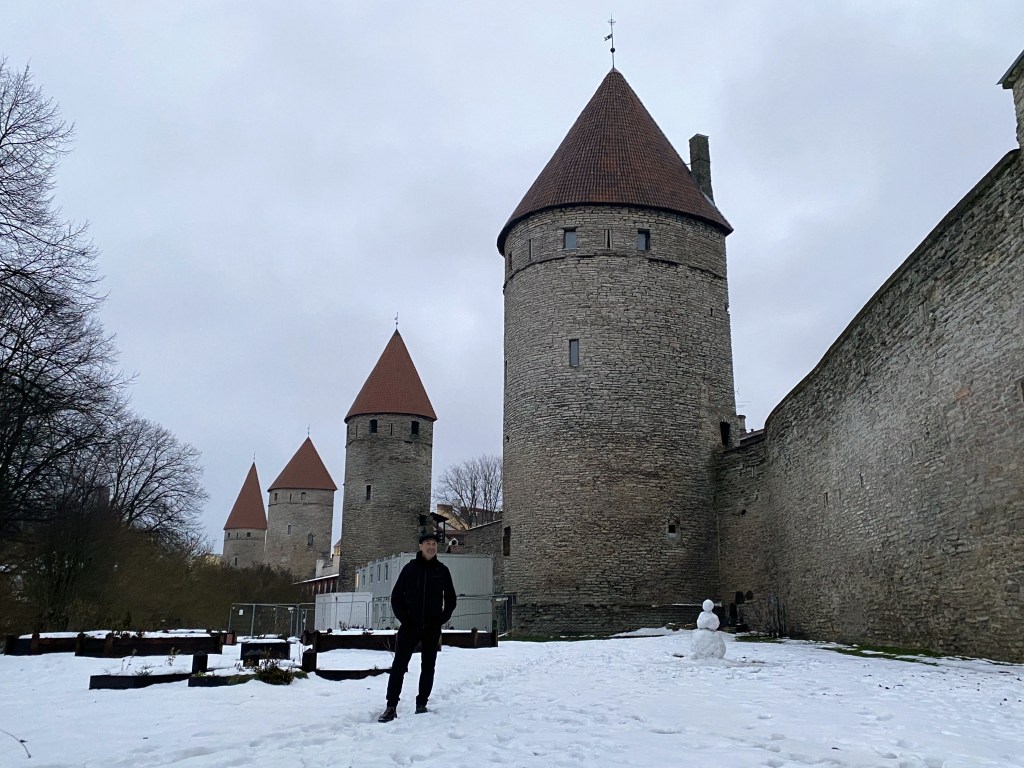
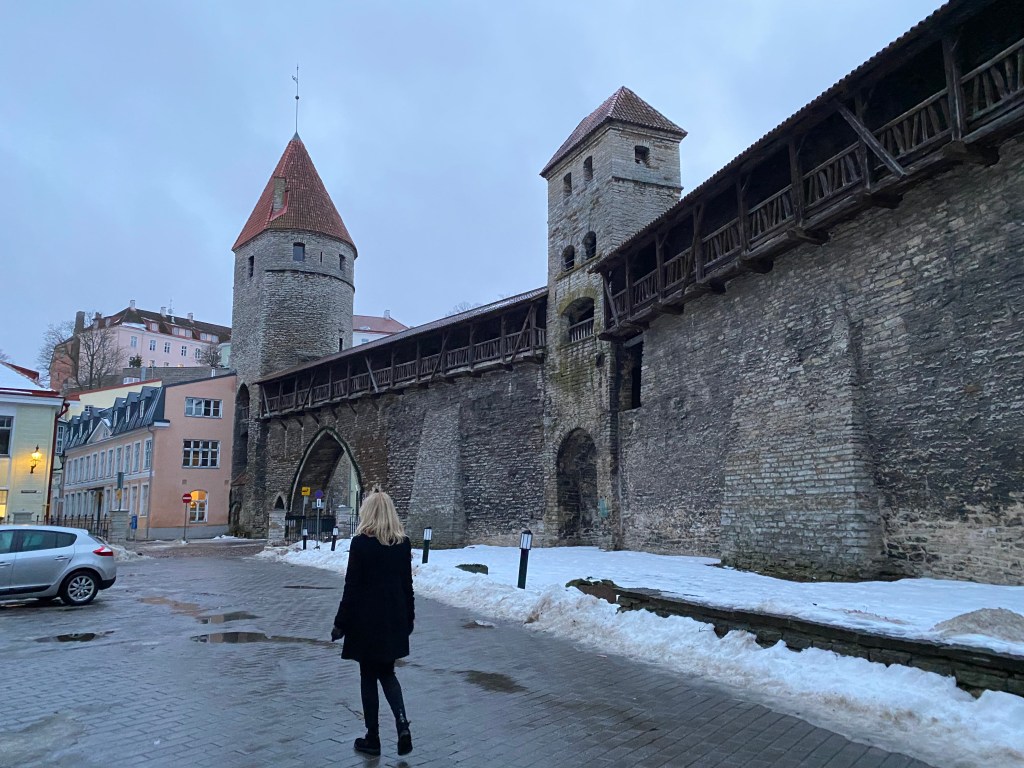
Plus, there are chunks that are still intact and walkable (that’s Tower behind Monks in the background)

Not a lot of snow, but Tallinn proved to be pretty atmospherically wintery, nonetheless:

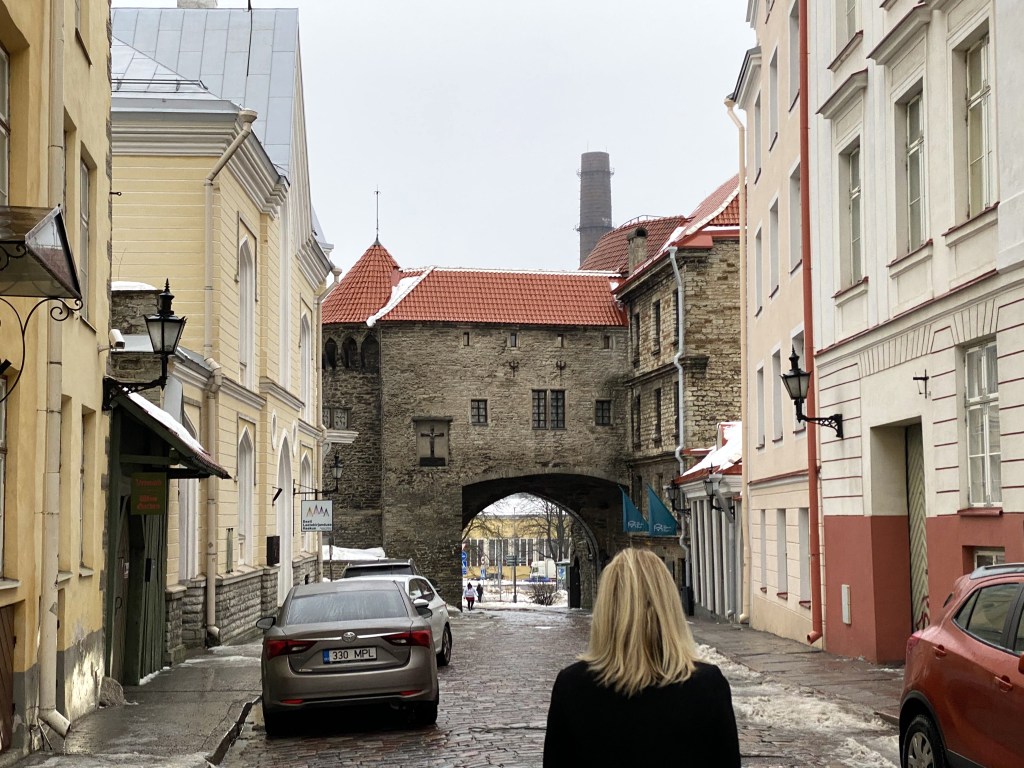
Located across town, we found Tallinn’s Great Coastal Gate, first mentioned in 1359:

The Great Coastal Gate was the most important gate when Tallinn was a Hanseatic town because it protected the main route for traffic between the port and the market square.

Above the gate stands an impressive dolomite carving bearing Tallinn’s coat of arms (from 1529):

Protecting the Great Coastal Gate? FAT MARGARET! Dating from the early 16th century, Fat Margaret not only served as a fortification against invaders of the town’s port but also a military monstrosity to impress visitors arriving by sea.

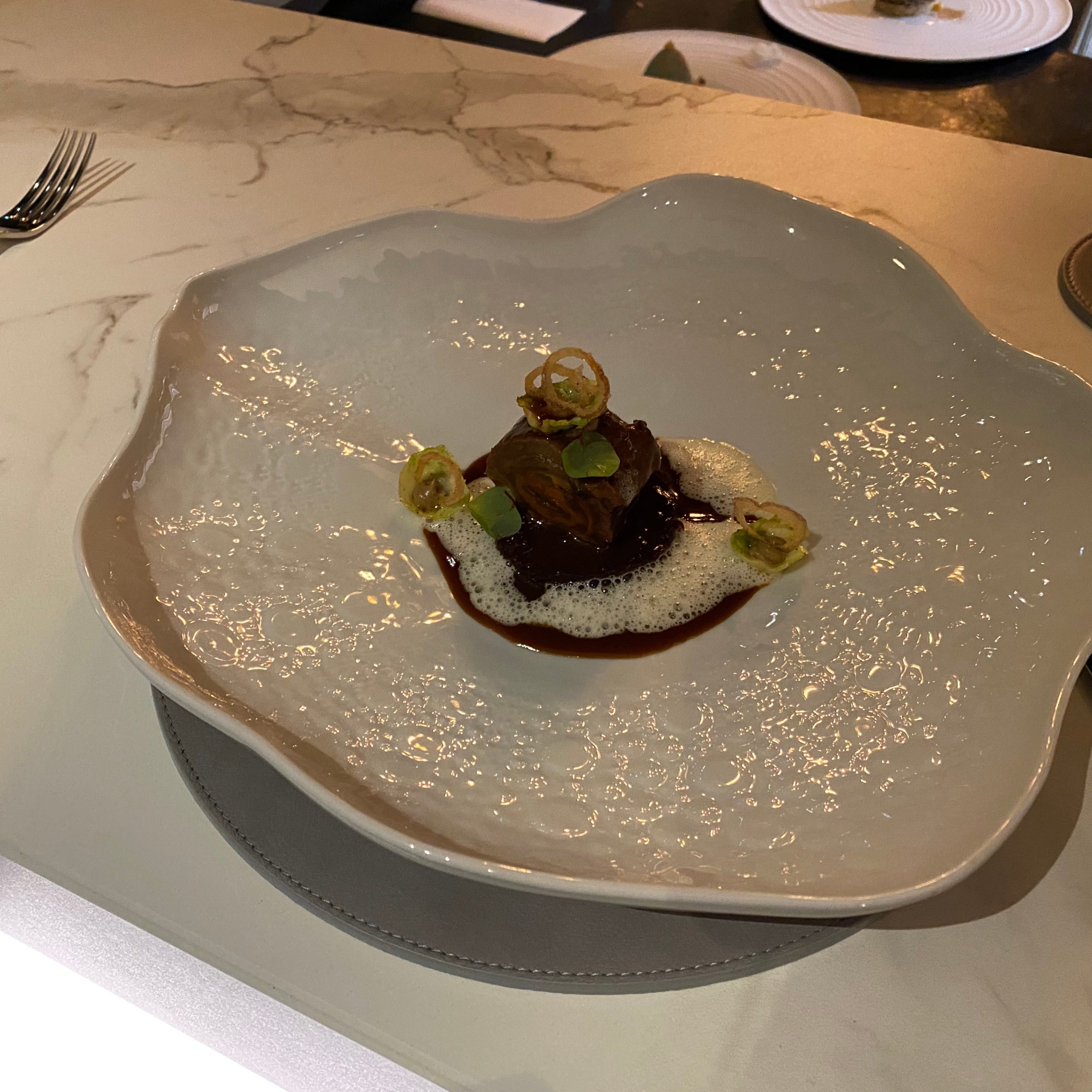
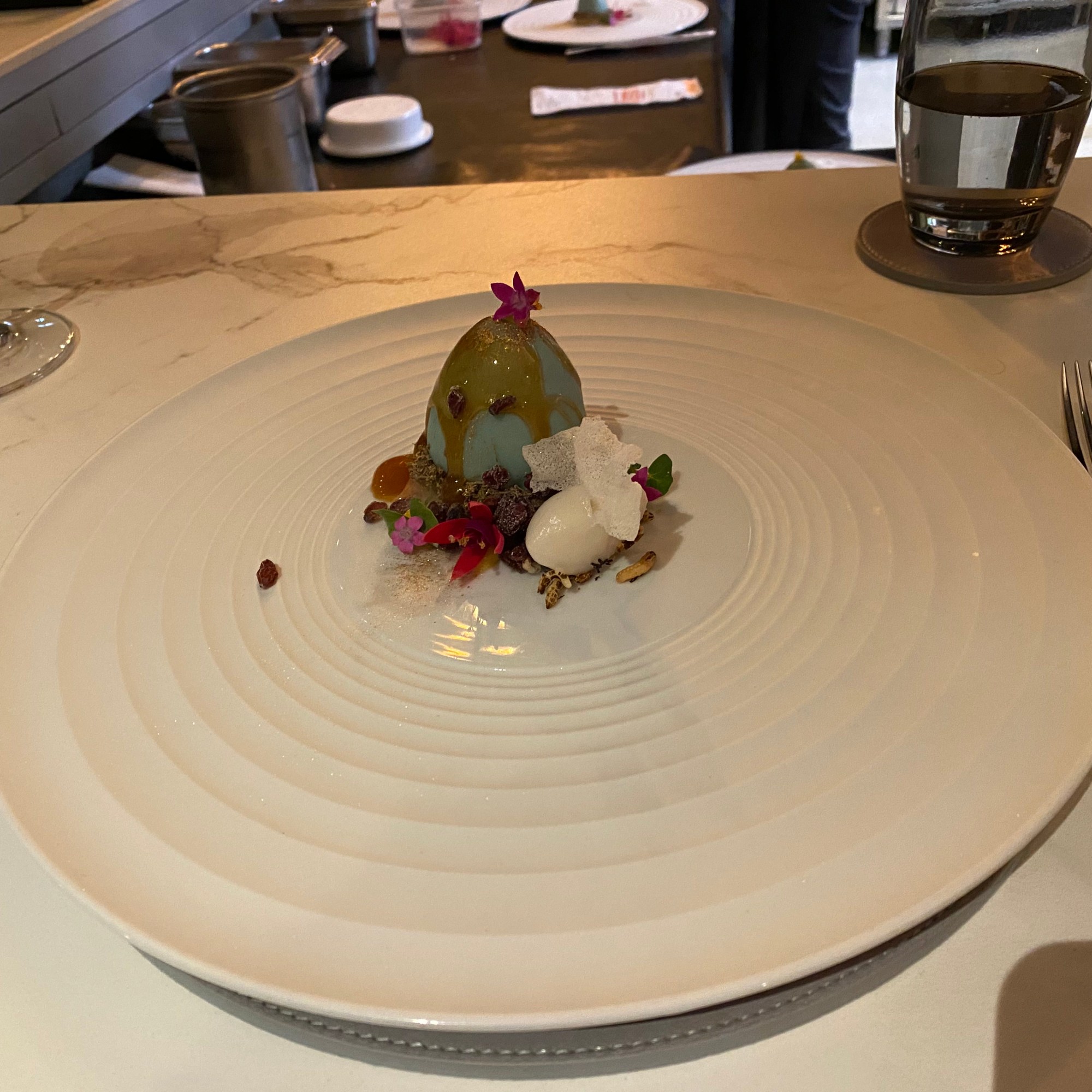
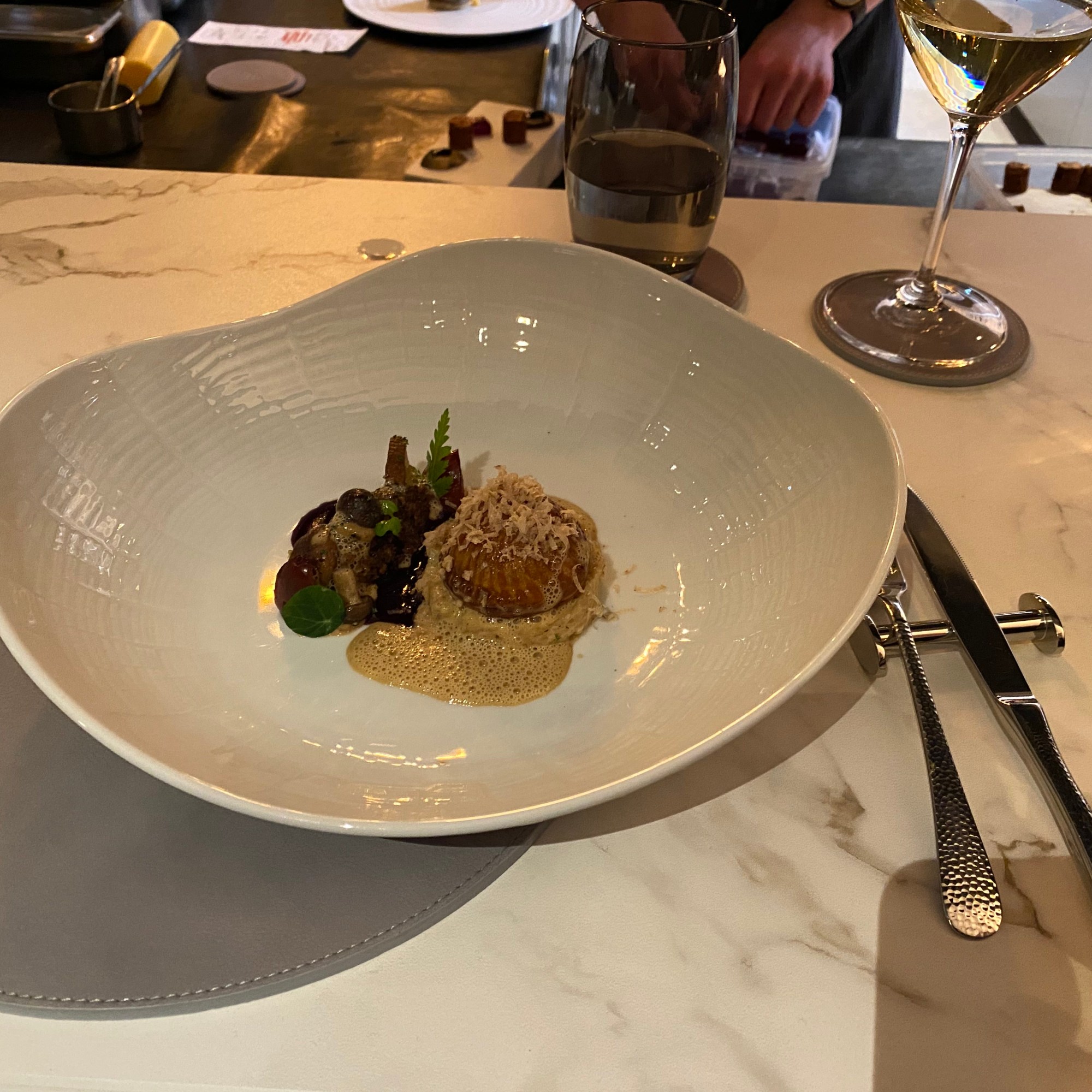
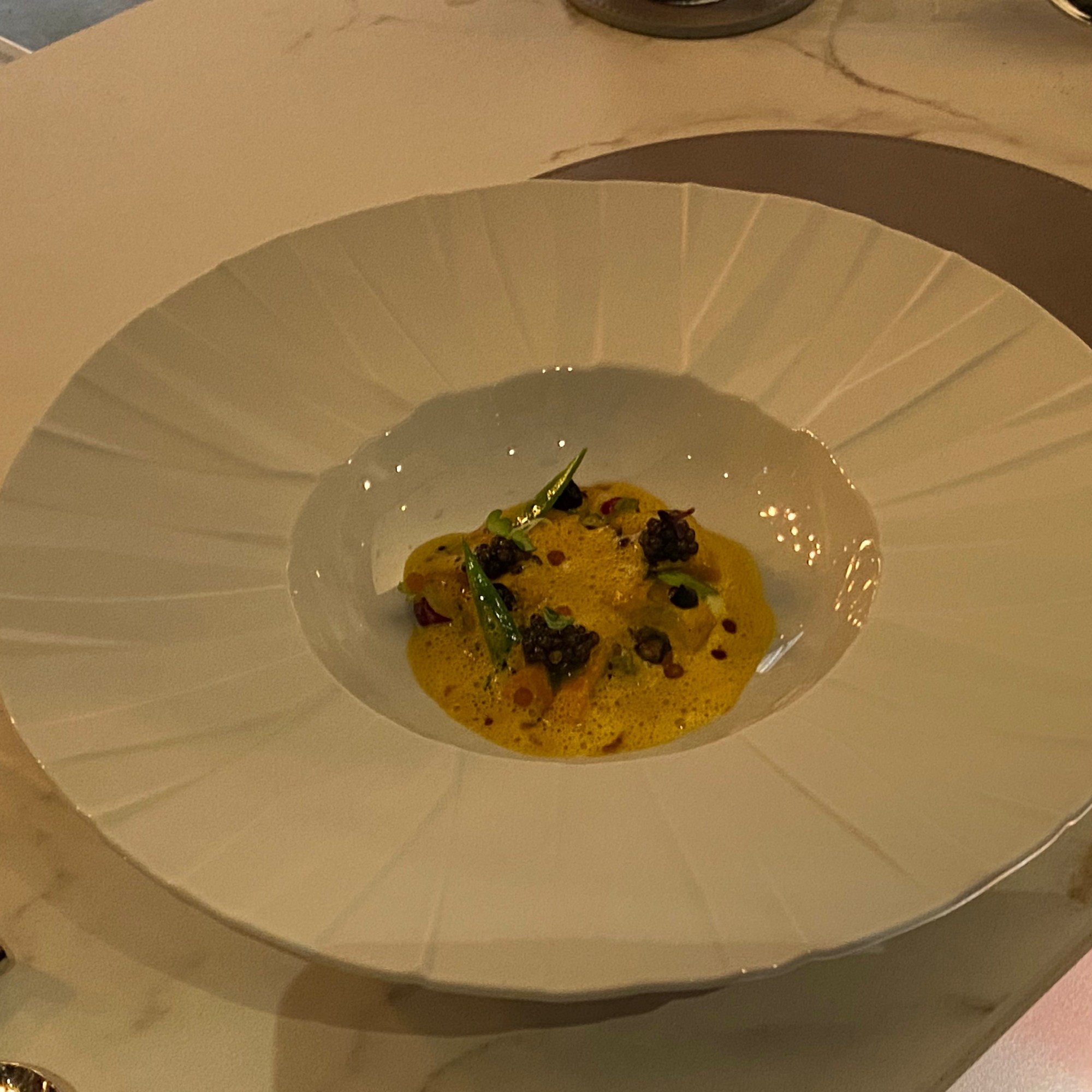
Michelin 2* dining experience at 180 Degrees:

Pretty good perch at the Chef’s Table

where we could watch all the cooking and prep work for multiple courses.

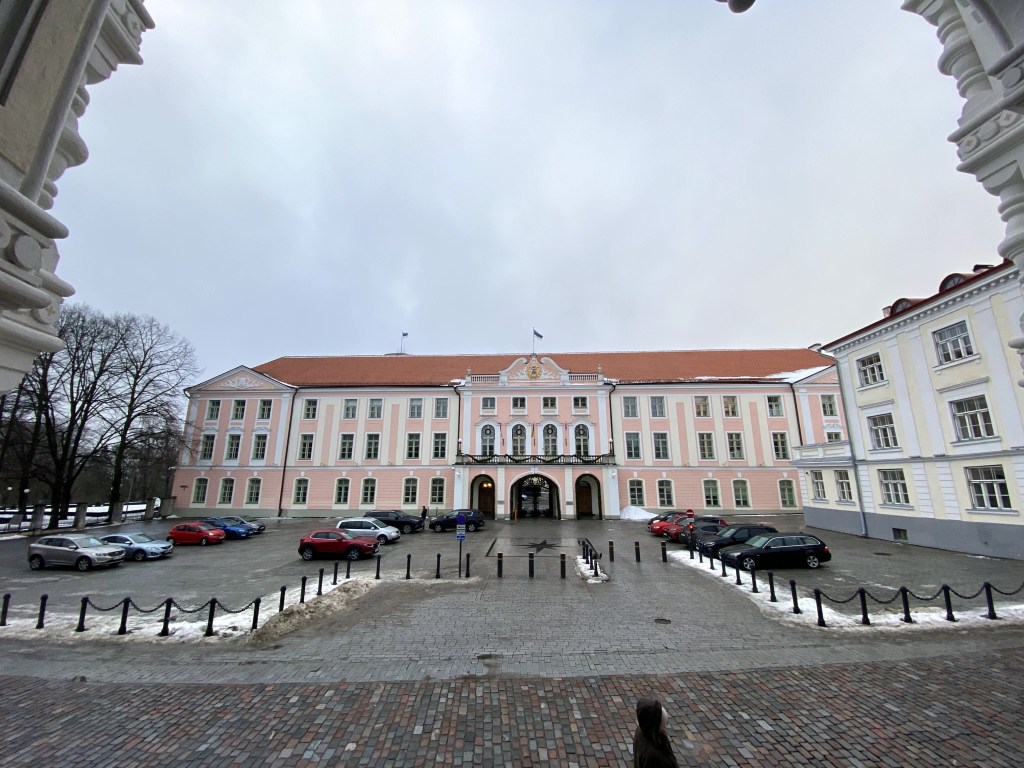
Heading up the next morning to Toompea, Tallinn’s central hill district, which is home to. . .

Estonia’s Parliament, the Riigikogu:

And also the Orthodox Alexander Nevsky Cathedral, built in the late 19th century:

Crests for local noble families along one wall:

Because the church was built when Estonia was part of the former Russian Empire, and because it represents Russian Orthodoxy, and because the Estonians are outraged by Russia’s aggression against Ukraine, there’s a movement in Tallinn to raze it and replace it with a park.

Back through the walls:

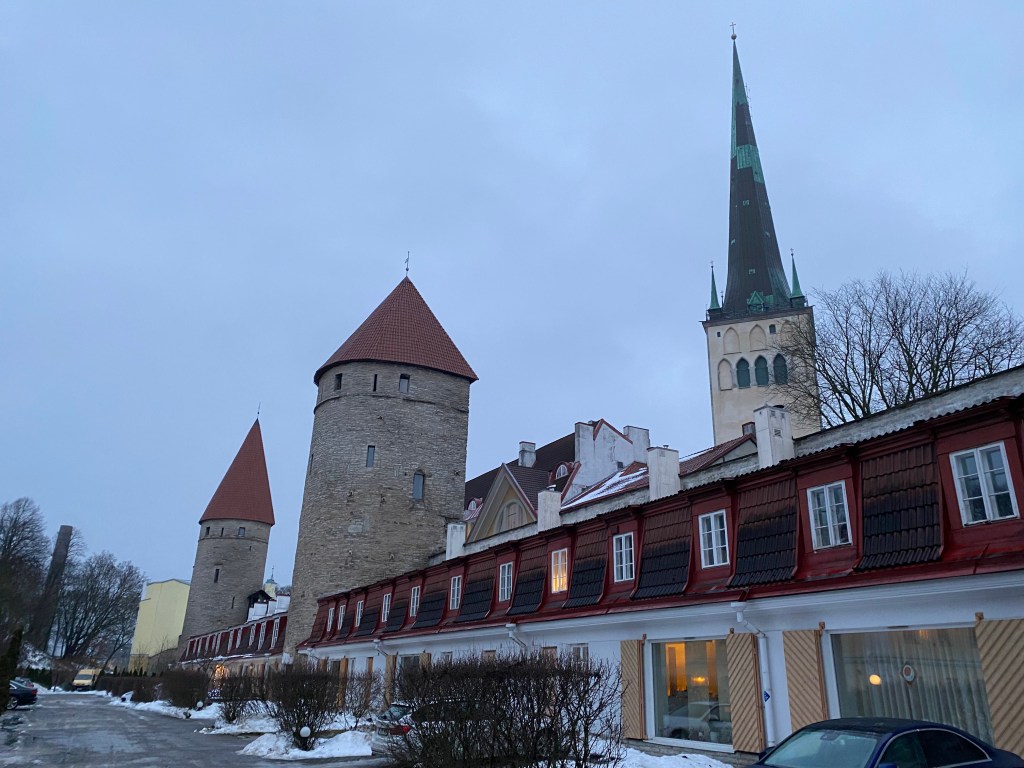
To yet another stretch of Tallinn’s extant city wall. Here, we have Kiek in de Kok (“Peek into the Kitchen”) on the left, an artillery tower so named because the garrison could see into the kitchens of the nearby houses; and Maiden’s Tower on the right.

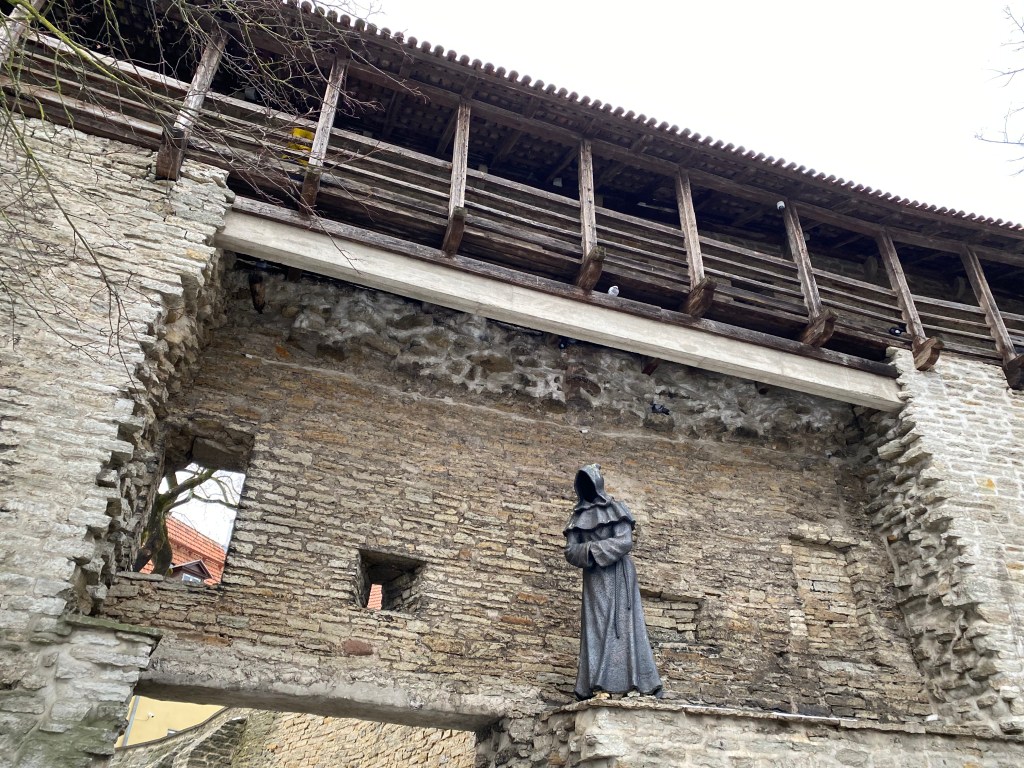
And a creepy, faceless monk statue perched on one segment of the wall. This is one of three faceless monks in this area; this one is “Observing Monk.”

More city wall-and-towers action:

Loewenschede Tower:

Enough with the tower names; here’s a buttload of towers. Definitely a cool, preserved medieval town.

Heading to dinner one night; one cannot escape the walls, man.

Rataskaevu Street, where the novels featuring Melchior, the 15th-century Tallinn apothecary / amateur sleuth are set (or at least where his apothecary is located). The first book – pretty good! The second – should have been tossed down that well.

Featured in the Apothecary Melchior novels are Tallinn’s medieval guilds. The Great Guild hall, dating from the very early 15th century is right off the main square. It was used as the headquarters of various merchant and artisan guilds until as recent as 1920.

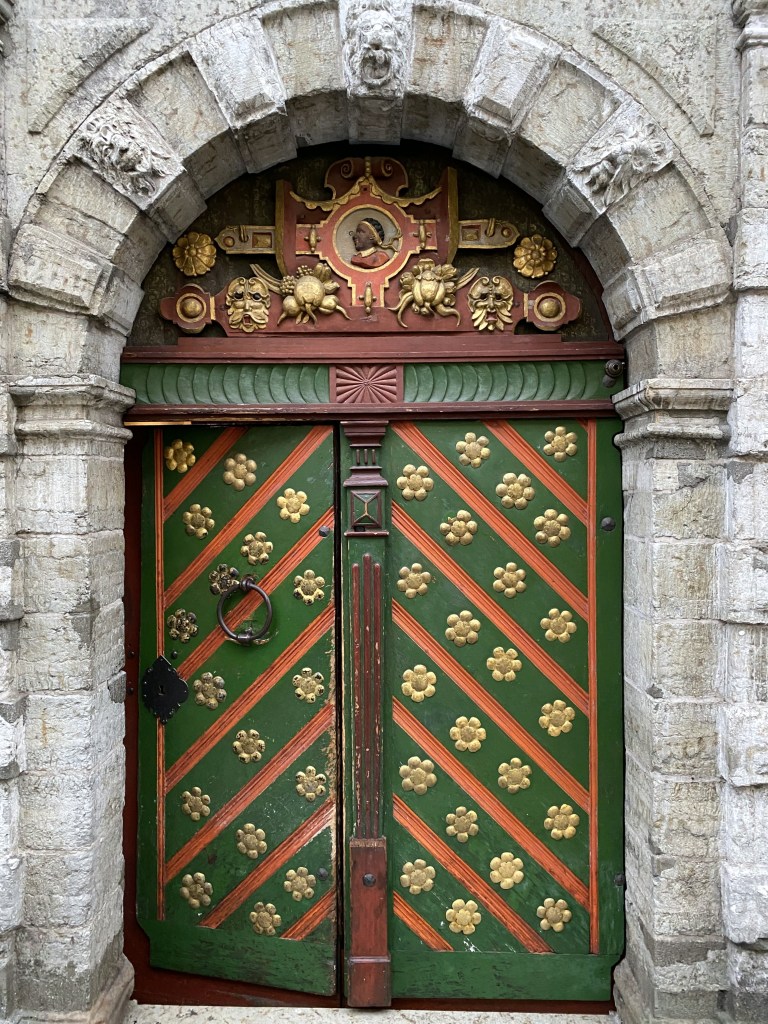
Aaand, the House of the Brotherhood of Black Heads. Also featured in the Melchior novels.

Described as a social club for single merchants and other tradesmen in the Melchior books, it “was a professional association of ship owners, merchants, and foreigners dating from the 14th century.

“The House of the Blackheads was visited by several Russian Emperors including Peter I, Paul I and Alexander I who also became honorable members the Brotherhood.

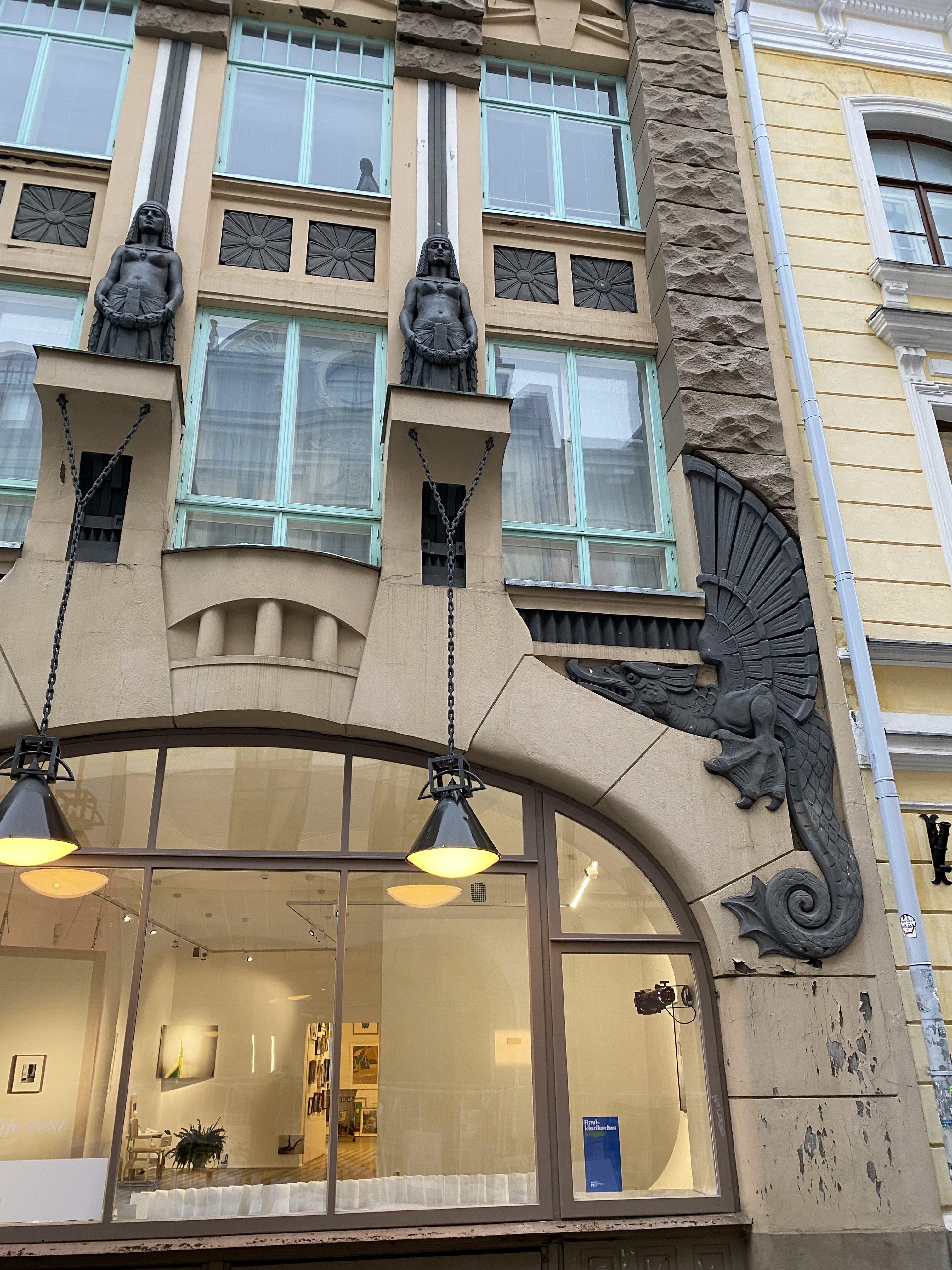
Just some Art Nouveau architecture down the street, which was pretty cool. (But NOTHING like we’d see later in Riga.)

Toompea at night.

Tallinn’s Victory Column on Freedom Square, commemorating the Estonian War of Independence at the end of WW I.

More winter scenes from Toompea’s stretch of wall.

Next stop: Riga!

Categories: Estonia, Europe | Tags: , , , | Leave a comment

Christmas 2022 – Baltics and Back to the Netherlands: Riga

From Tallinn, Estonia, we headed slightly south to the capital of Latvia: Riga.

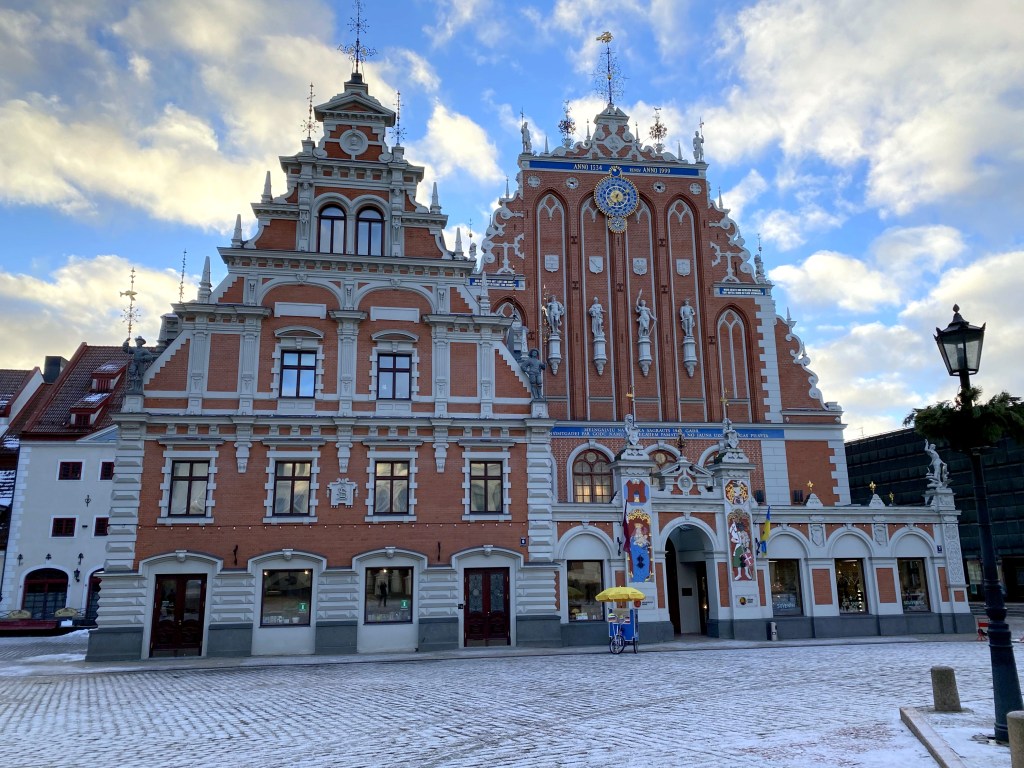
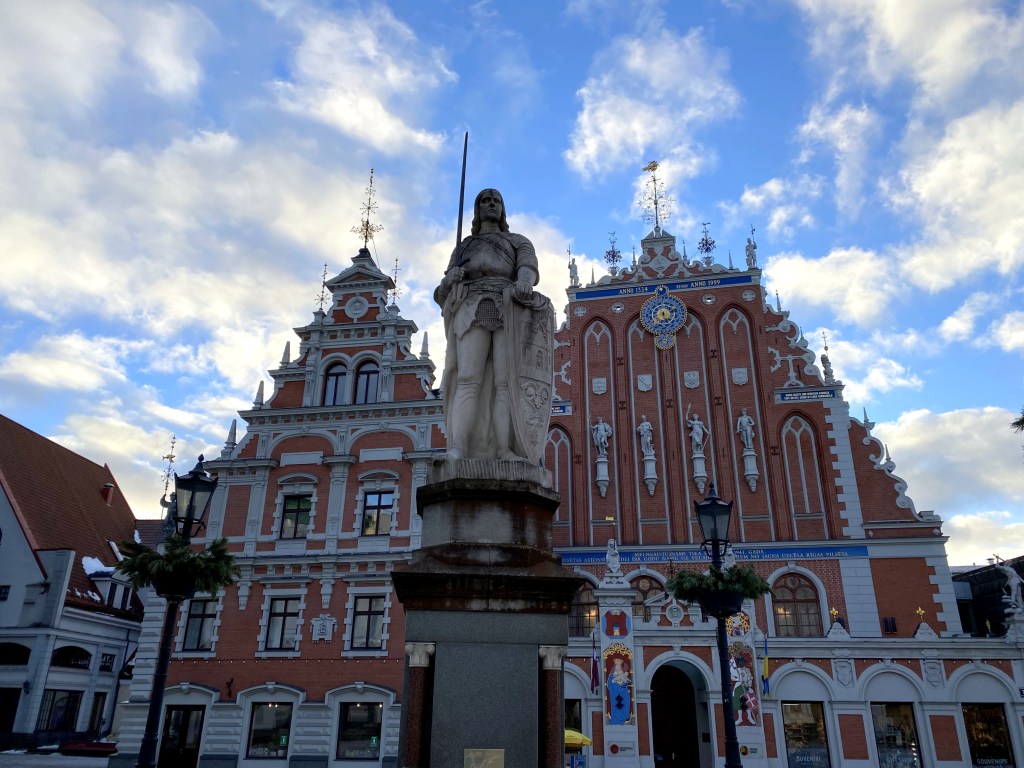
Although not a walled, medieval, historically preserved town like Tallinn, Riga nonetheless offered its own flavor of charm and architectural notability. Case in point, Riga’s own House of the Blackheads. As with Tallinn’s House of the Blackheads, Riga’s building housed the Brotherhood of Blackheads, a guild for unmarried merchants, shipowners, and foreigners in Riga.

Unlike Tallinn’s modest townhouse (albeit with a very cool door and lunette), Riga’s House of the Blackheads is huge and ornate. The original building erected in 1334 was the largest public building in Riga at the time.

Unfortunately that building, updated over the centuries, was bombed out of existence in 1941 during a battle between Germany and the Soviets. The Soviet government razed what was left in 1948, but it was rebuilt in the late 1990s based on extensive archeological studies.

Right around the corner from the Blackheads lies Riga’s capitol building. Very unassuming, we thought.

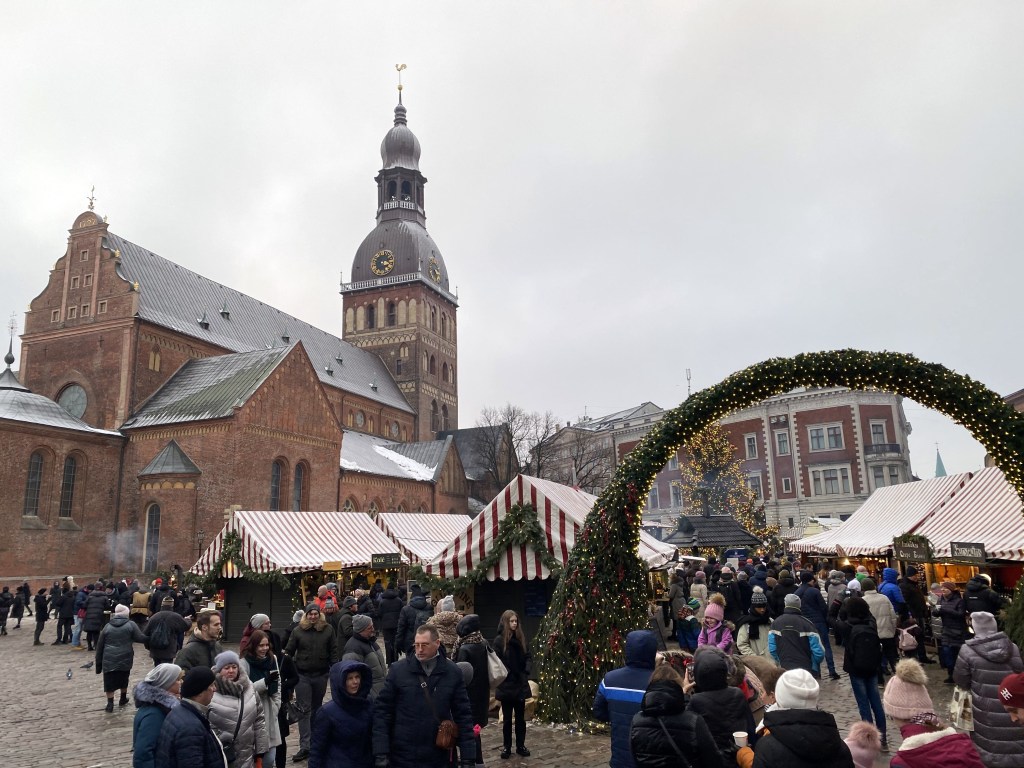
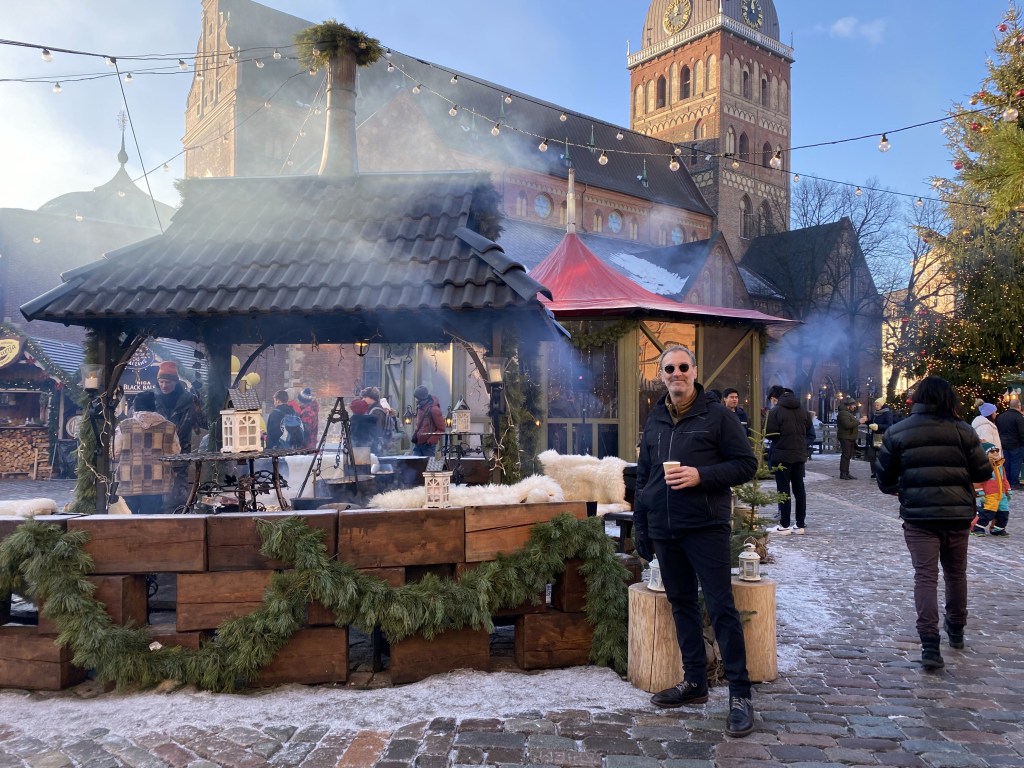
Riga’s Christmas market in the shadow of the Dome Cathedral was pretty great.

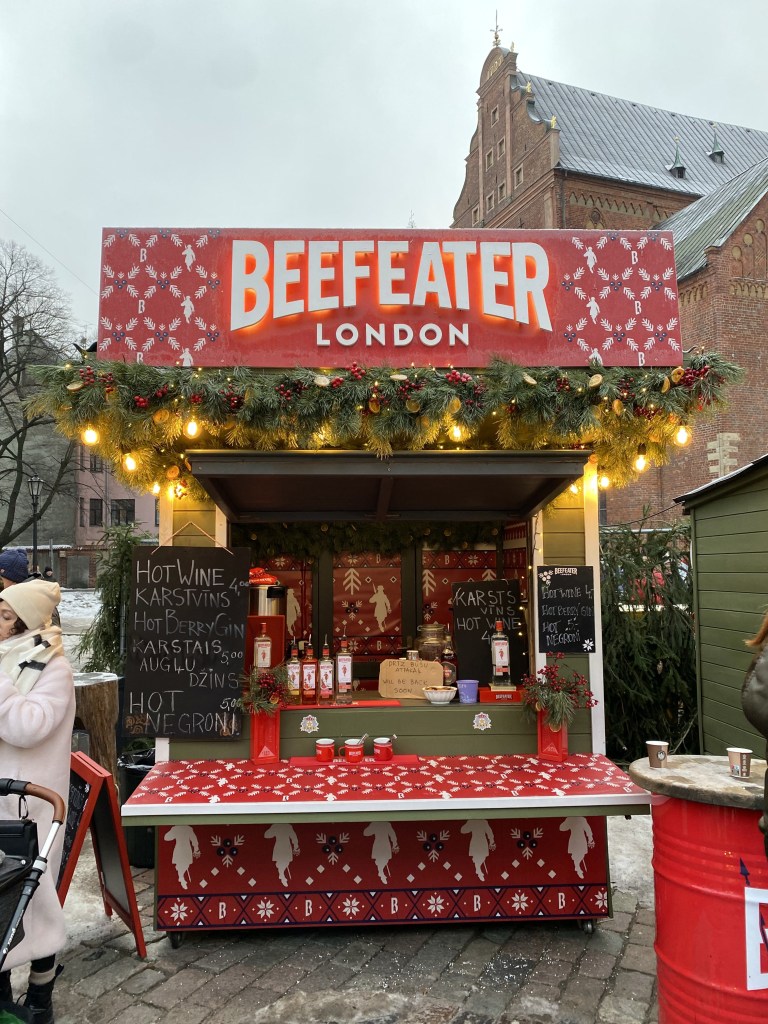
But some stalls were actually branded, which we’d never seen before, and gave areas of the Christmas market a commercial taint that we didn’t welcome:

Nonetheless, the overt booziness of the place was pretty cool – not just glühwein, but all sorts of booze, including – weirdly for both time and place – gin stalls.

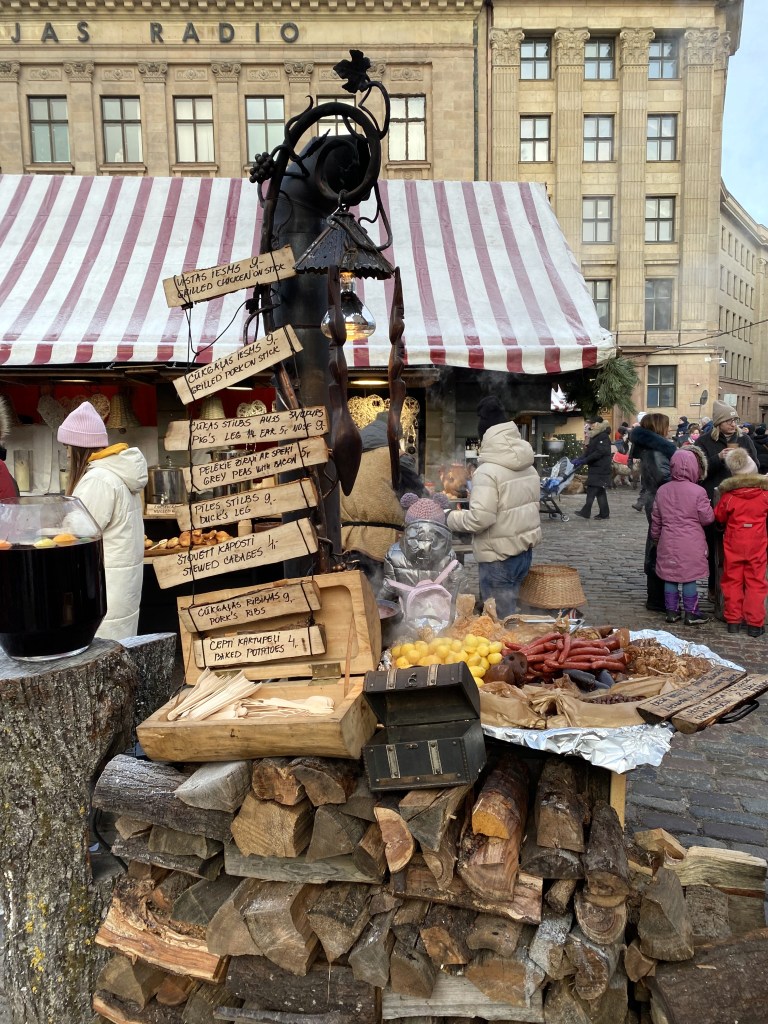
Lots of food. . .

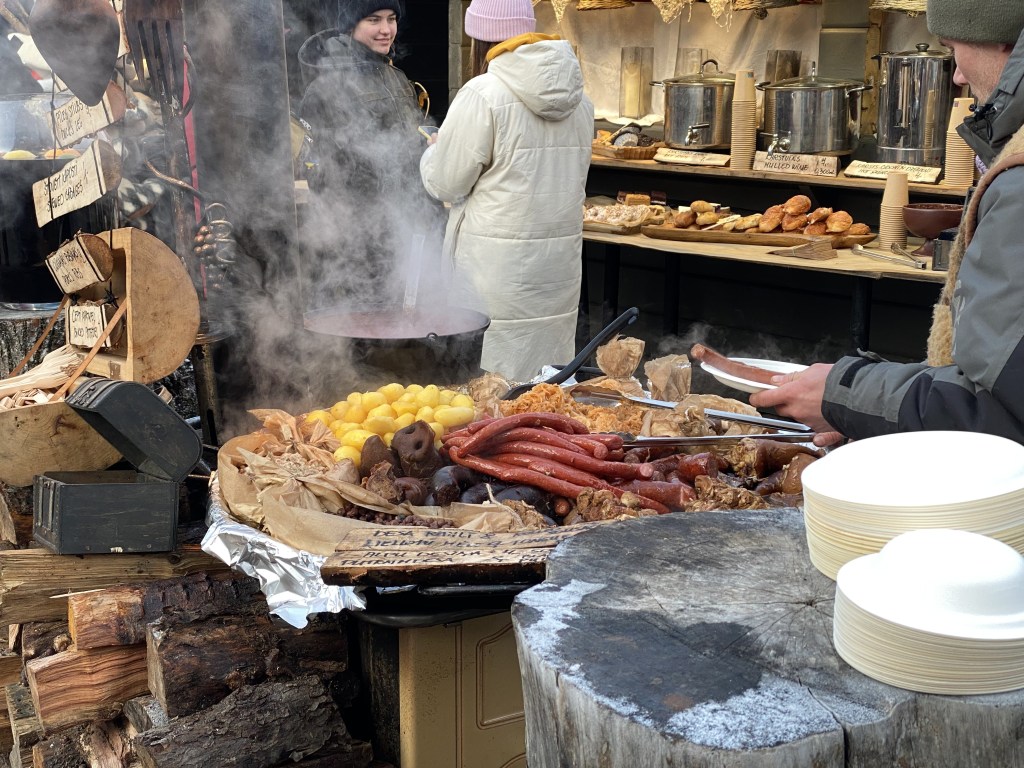
which had a distinct eastern Europe flair – check out the pig snout:

Or maybe it’s an entire pig submerged down there? Who knows.

Pigs a poppin’ in this place:

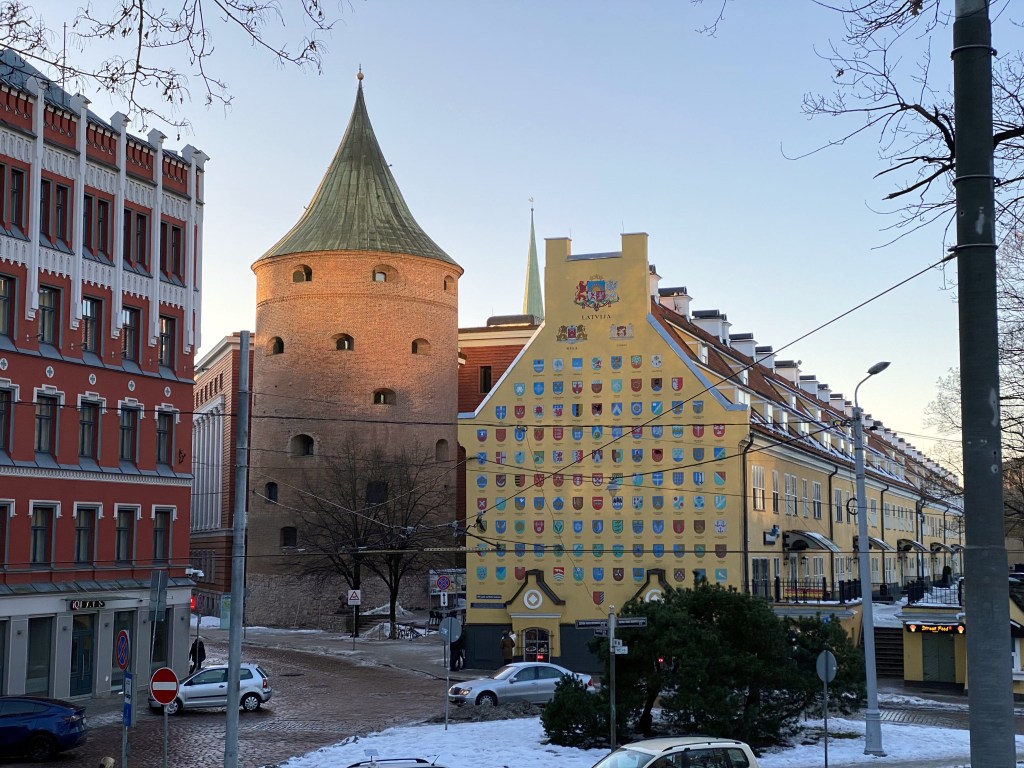
Riga’s Powder Tower, originally built in 1330 as part of the defensive wall system, that one was destroyed during an attack by the Swedes on the Polish-Lithuanian Commonwealth in 1621. (Livonia [which encompasses parts of multiple modern Baltic nations including Latvia] was a fiefdom at the time).

The current iteration dates from 1650.

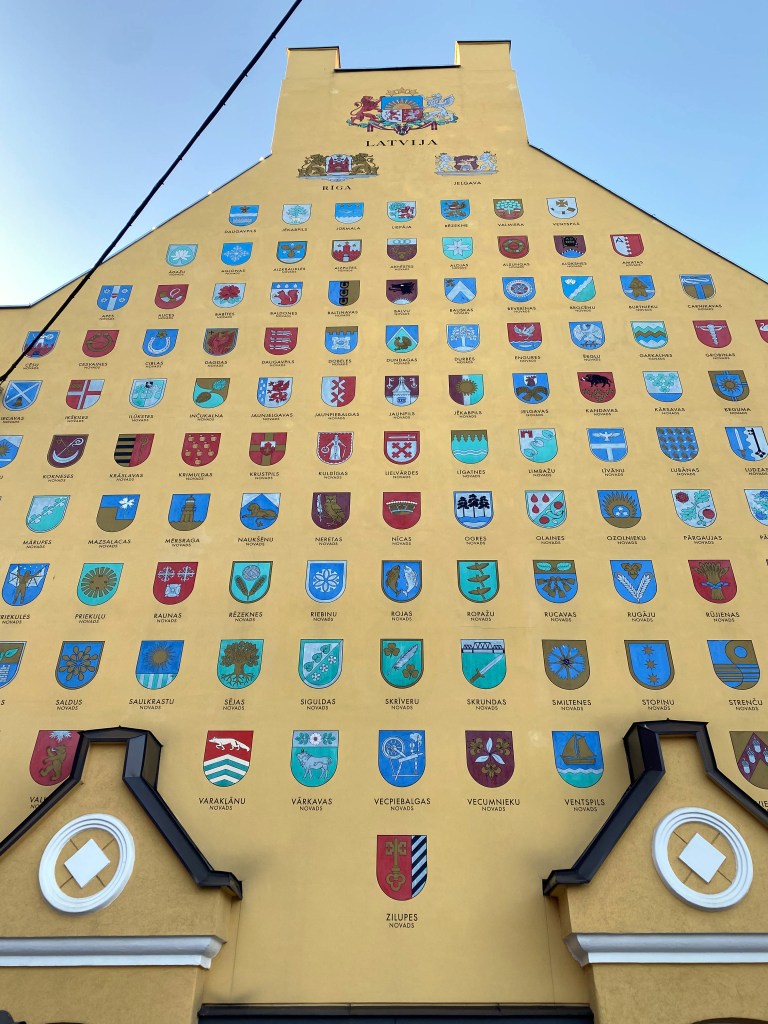
Next door lies Jacob’s Barracks, built in the 18th century to house the garrison, the structure continued to be used until 1997 by various militaries as the area’s geopolitics evolved over time. The length of the barracks are now home to bars and restaurants, but the end, with its depiction of the coats of arms of Latvian towns and municipalities, was the most intriguing to us.

Portions of the old city wall running along the barracks:

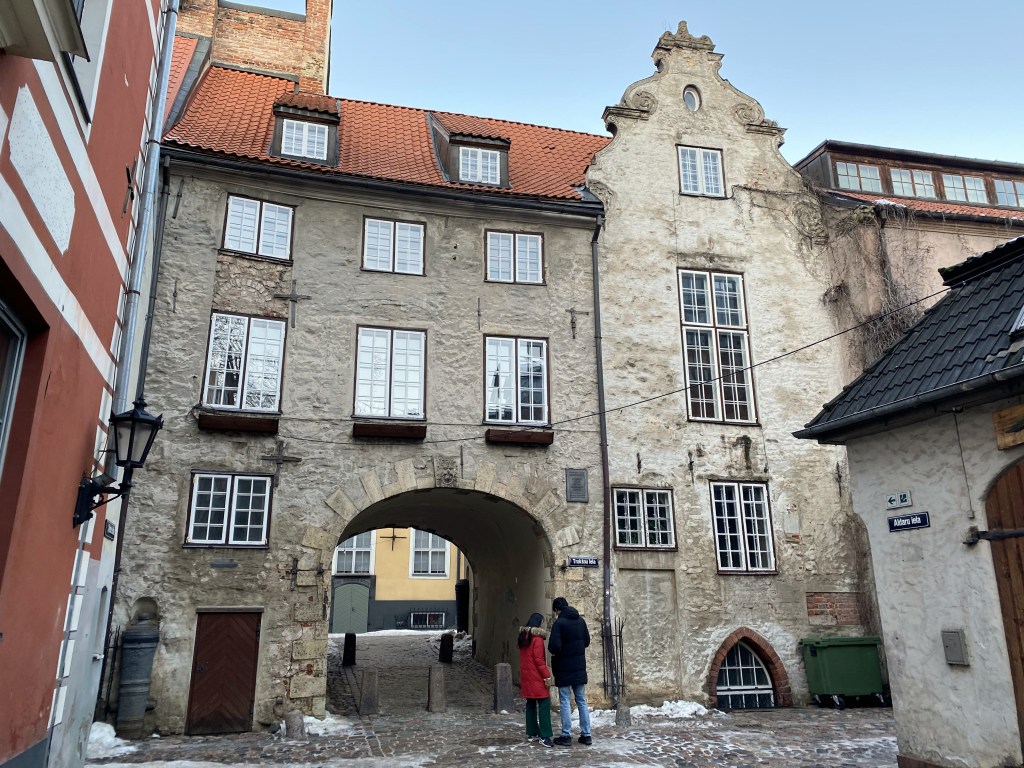
The Swedish Gate – the only portal in the medieval city walls to still exist. Beyond lies Trokšņu iela (Noisy Street) which ironically is one of the quietest and most charming street in Riga now. I’m sure we walked through here and down this apparently amazing street, but we have no visible evidence of this. ¯\_(ツ)_/¯

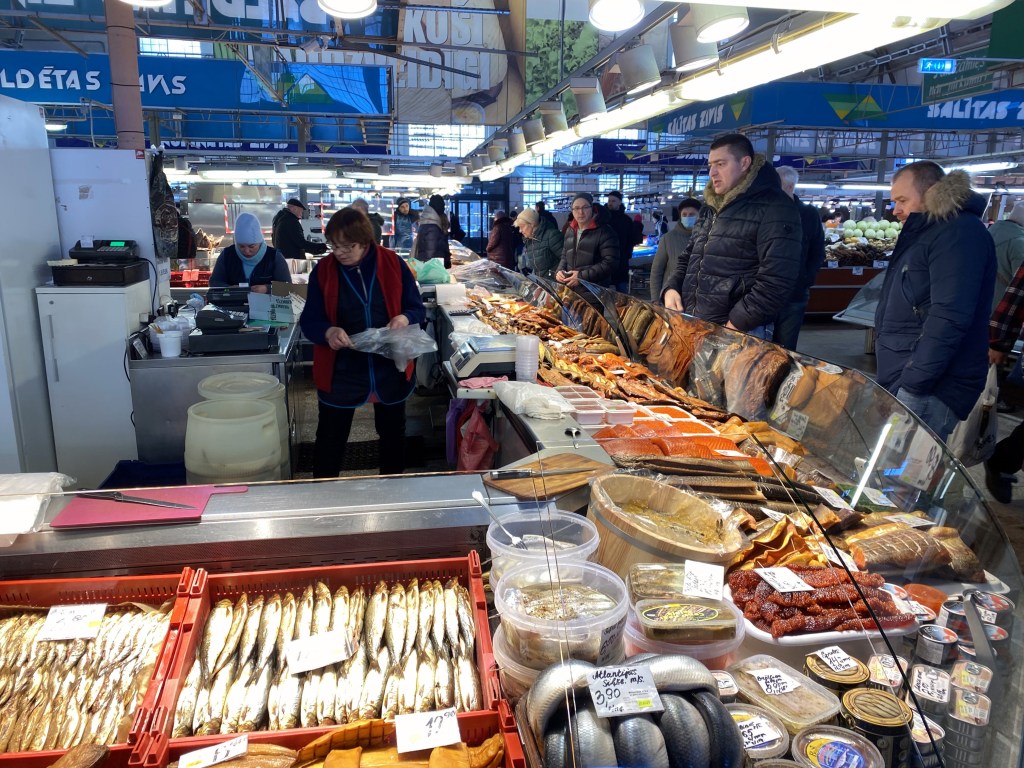
Instead, here’s some pics of Riga’s mammoth Central Market.

Absolutely any variety of food one could desire is available here.

The Riga Central Market (there’s a bird’s eye view later in the post) is composed of multiple, massive, hanger-like structures and is not only the largest shopping destinations in Latvia, but one of the largest markets in Europe.

The aforementioned bird’s eye view would come courtesy of St. Peter’s Church steeple.

Built in chunks over centuries, the first St. Peters was constructed as early as 1209; then a few decades later, in the middle of the 13th century; then the early 15th century; then at the end of the 17th century. Pretty plain brick church though, much like the Scandinavian Gothic brick churches encountered in Denmark.

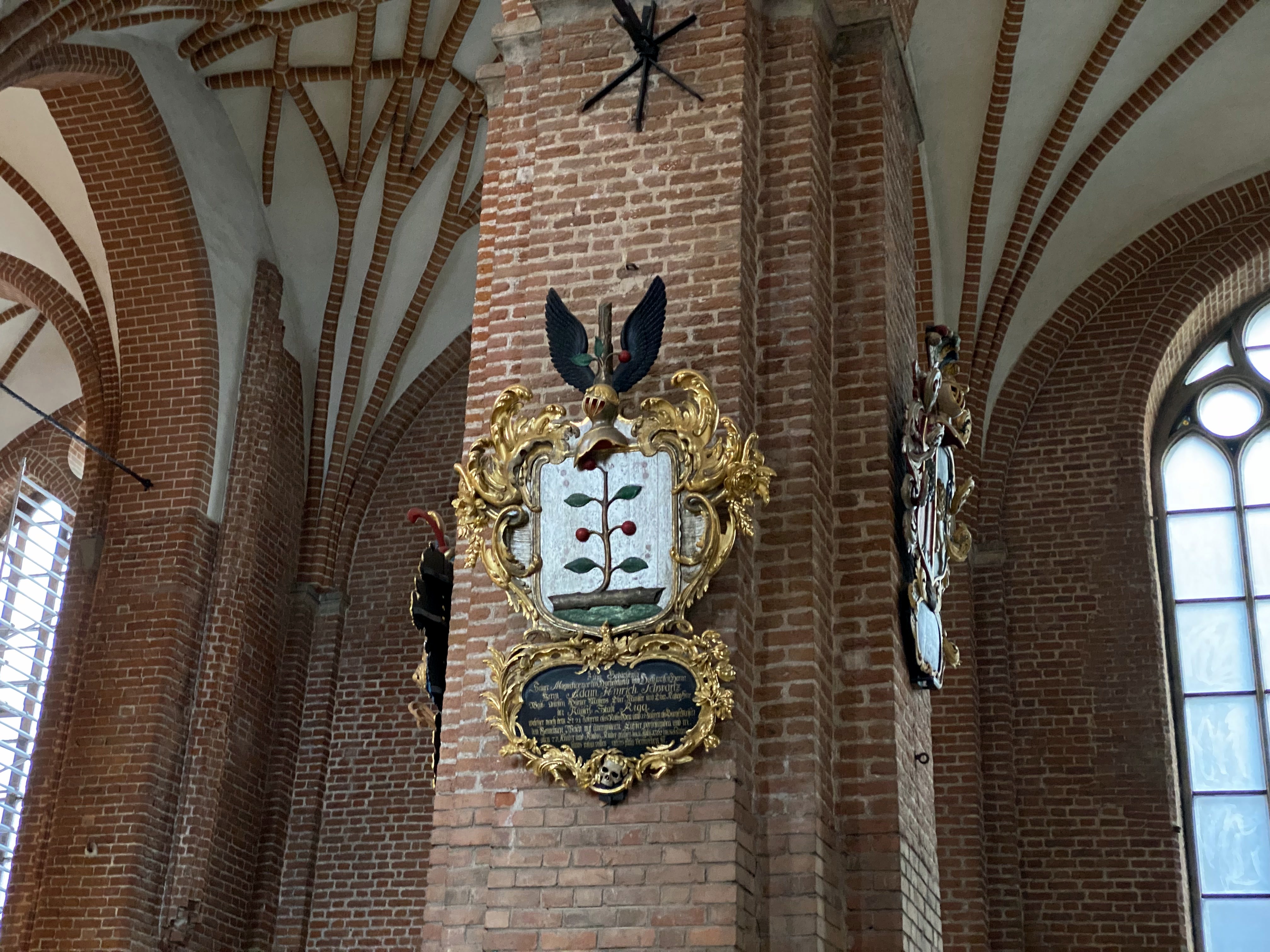
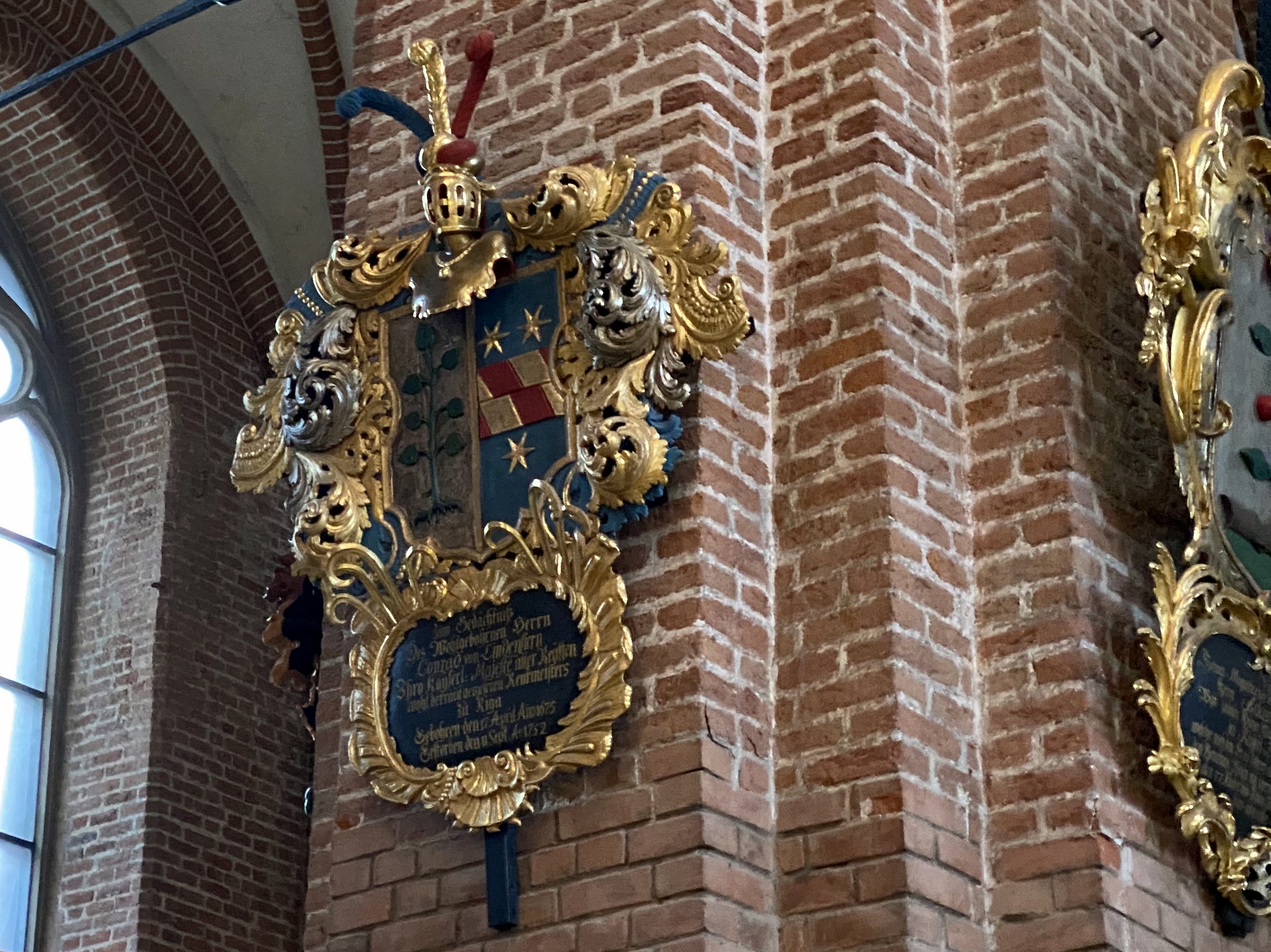
As with Tallinn’s cathedral, portions of the interior are adorned with local noble family coats of arms (one of which looks dangerously close to the esteemed crest of the Connells):

Something in the crypt we think? Dunno – pretty cool though.

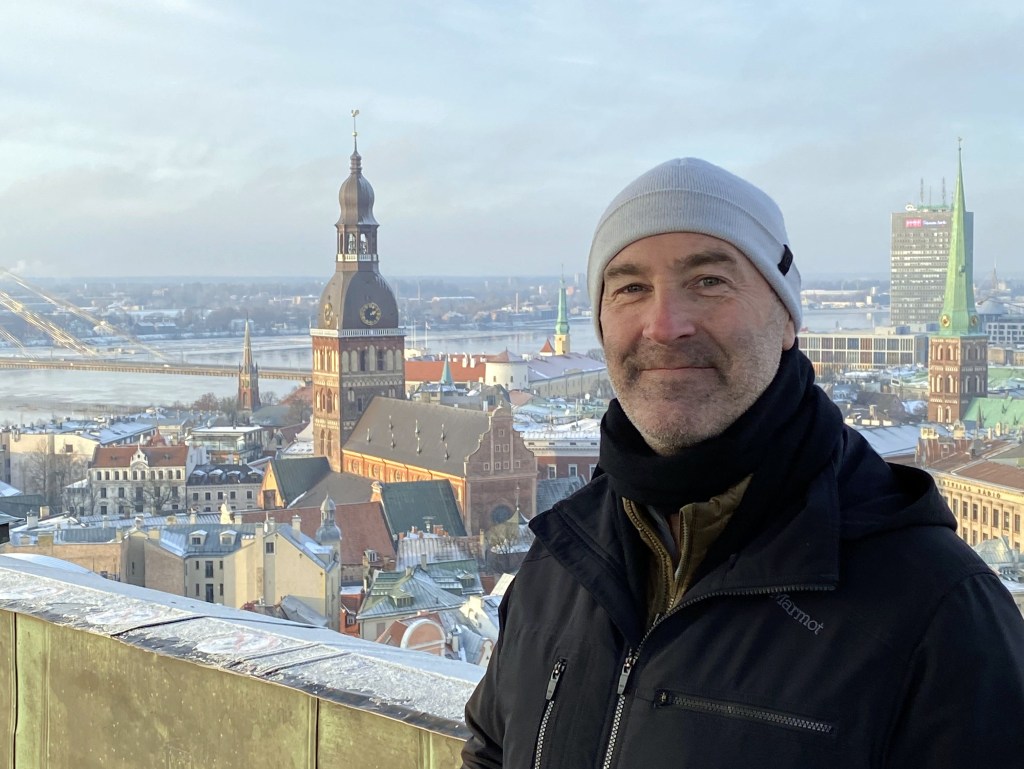
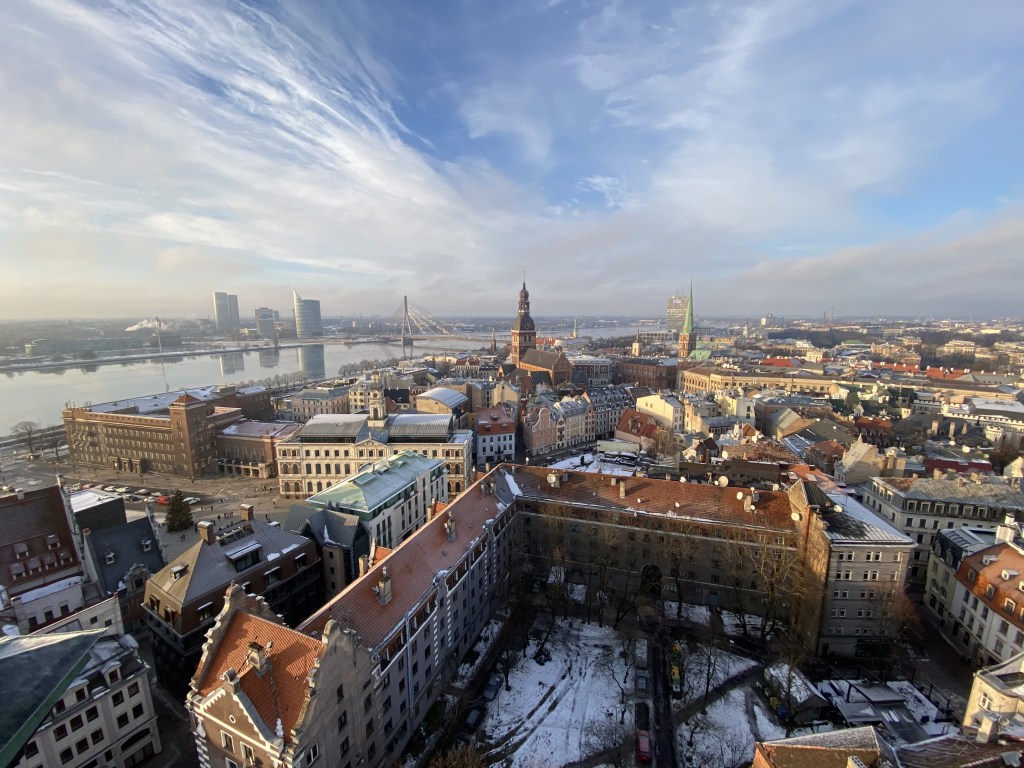
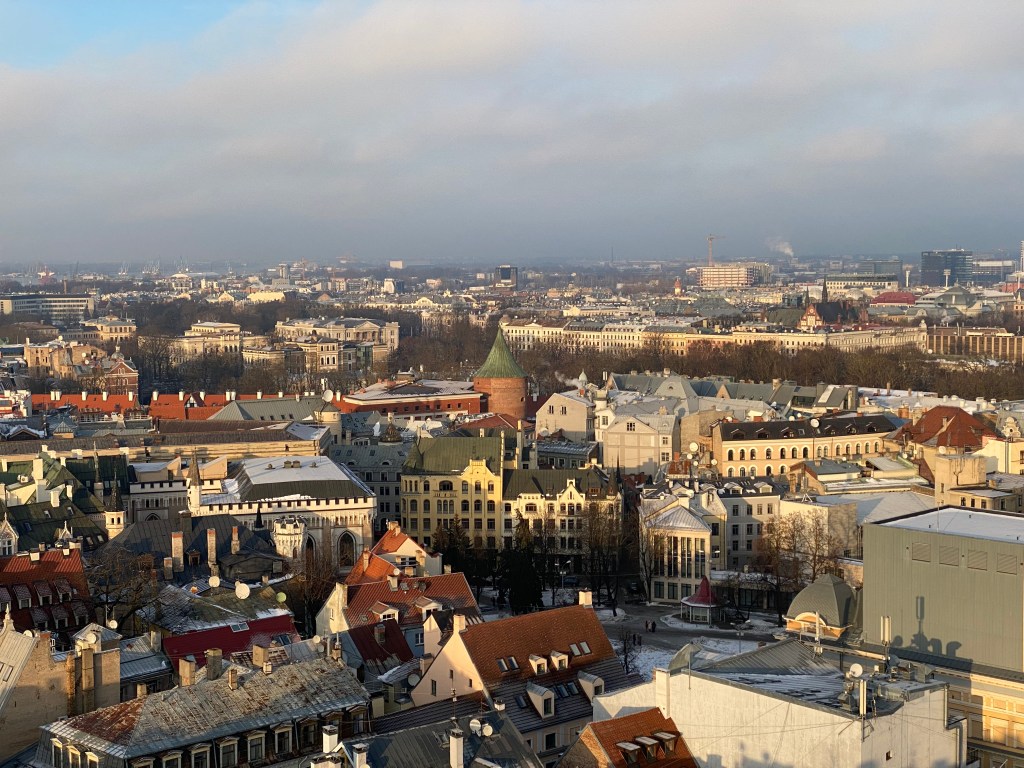
Views from St. Peter’s steeple observation deck – pretty awesome perspective on the town.

Renaissance facades in front of the Dome Cathedral:

Another, higher view of the Powder Tower:

Riga’s Central Market hangers:

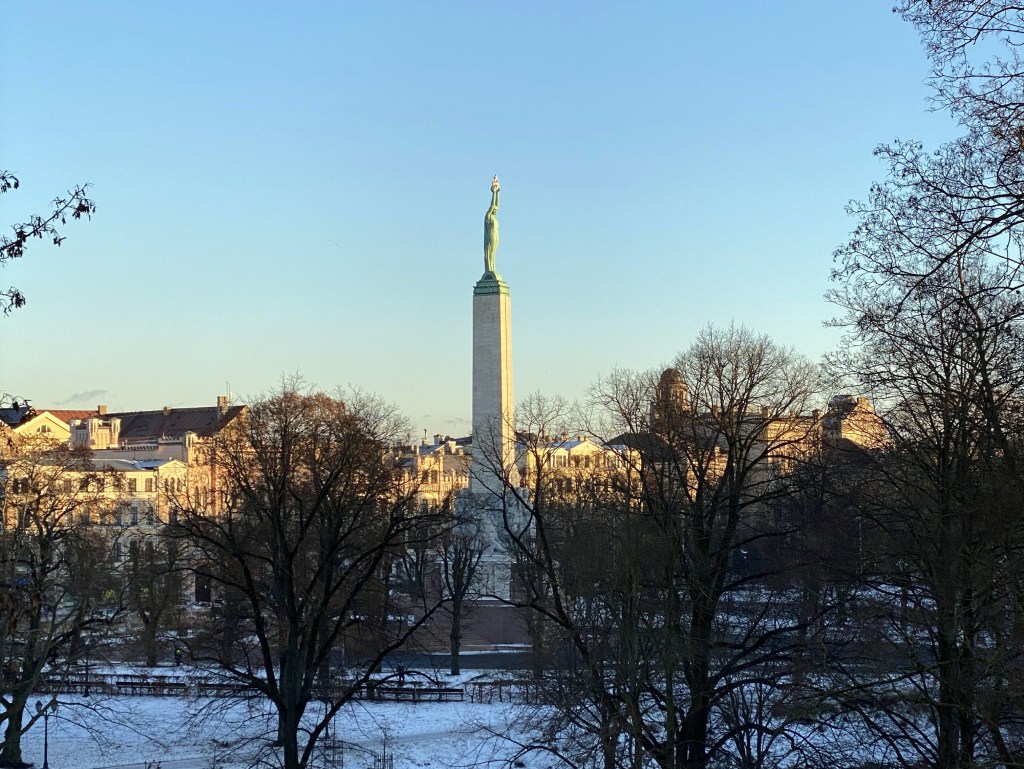
Down the street lies Riga’s Freedom Monument. A large statue of Peter the Great astride a horse once occupied this plaza, but it disappeared during WWI and the Latvians weren’t eager to replace it. Instead, the Freedom Monument was erected in its place in 1935.

Flowers are allegedly placed at the foot of the monument each day (we didn’t see any) as an act of defiance – such a gesture was punishable by deportation to Siberia during the Soviet era.

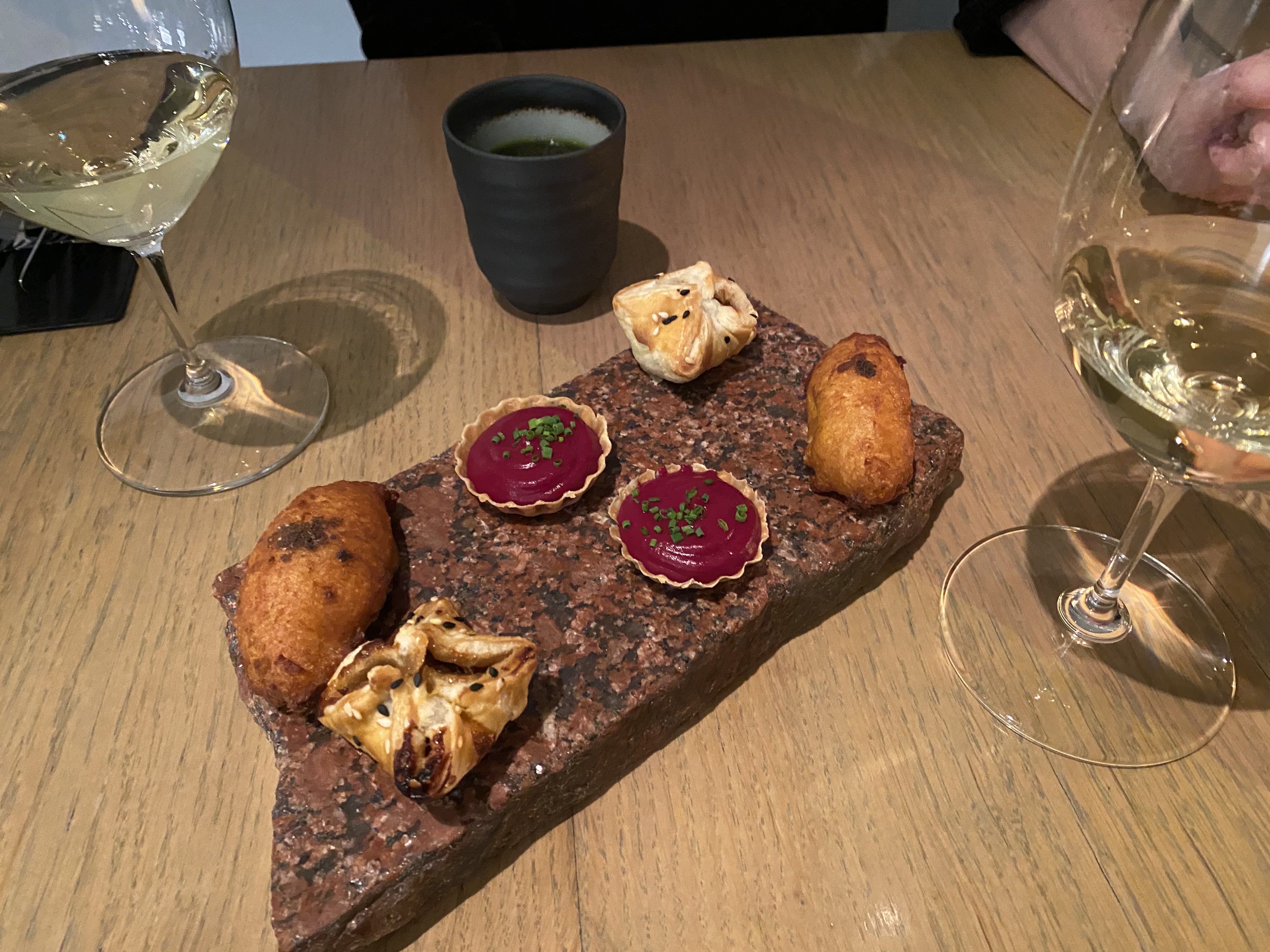
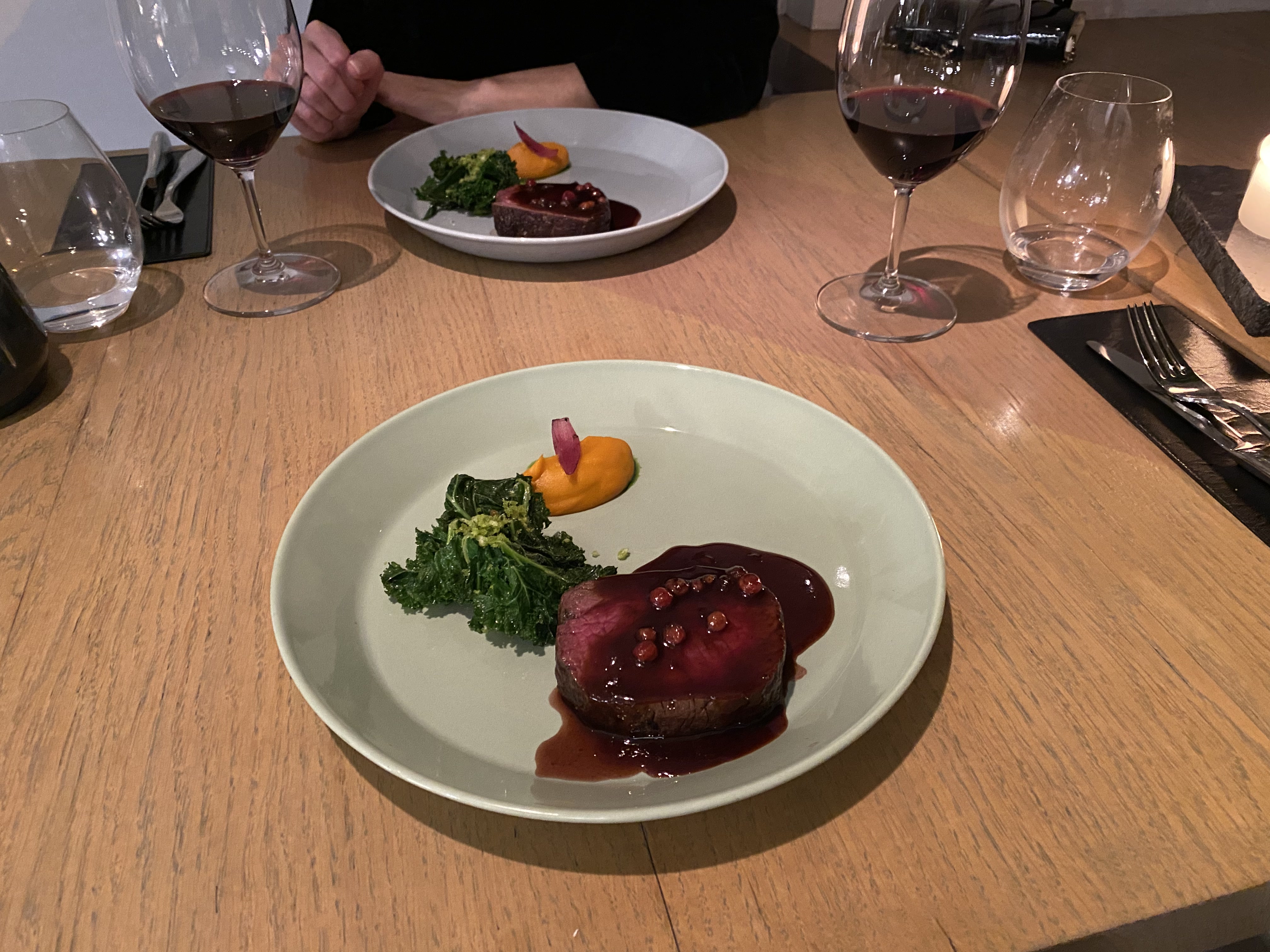
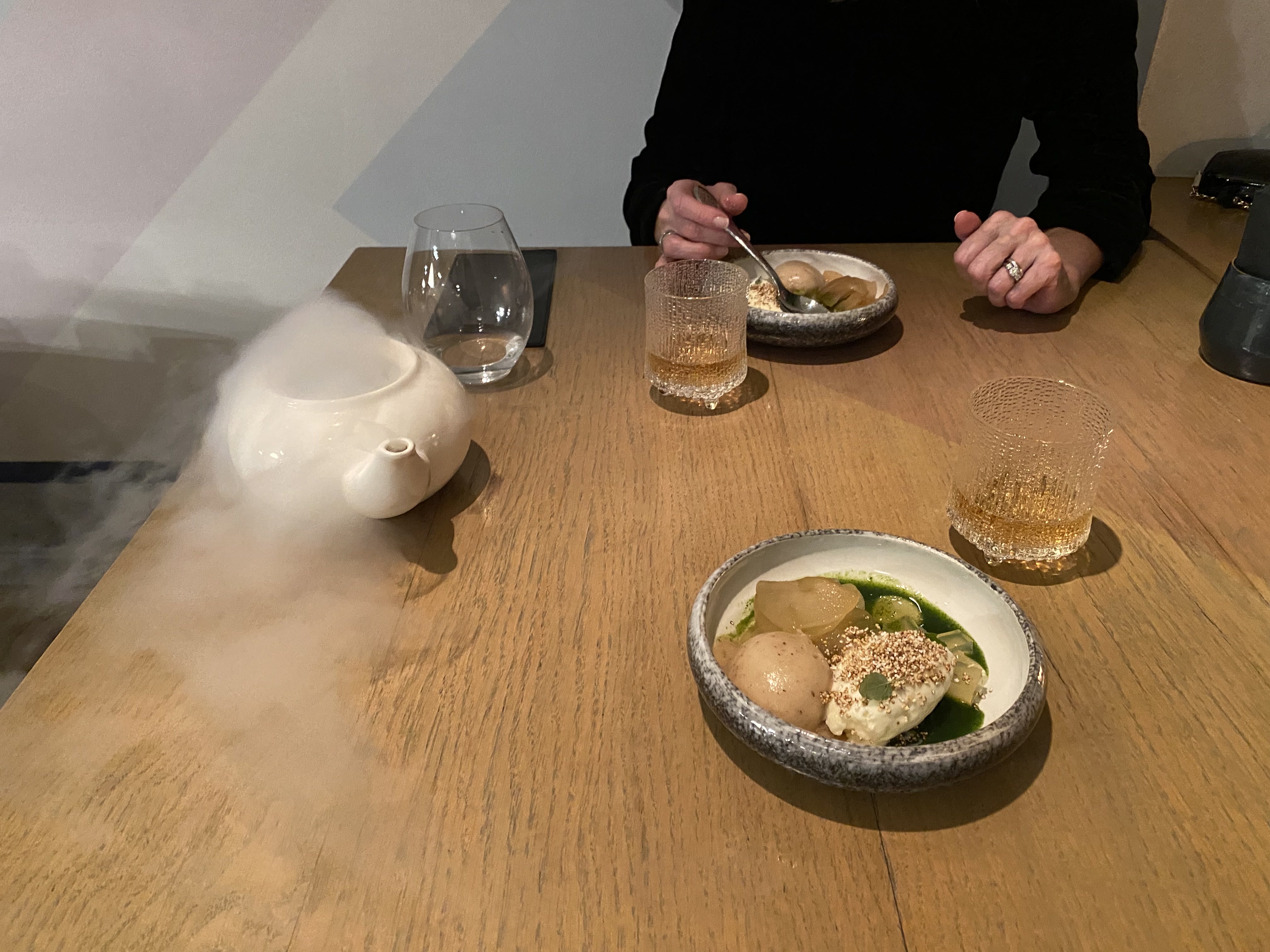
Dinner at 3 Pavāru Restorāns – definitely the dining highlight of our stay.

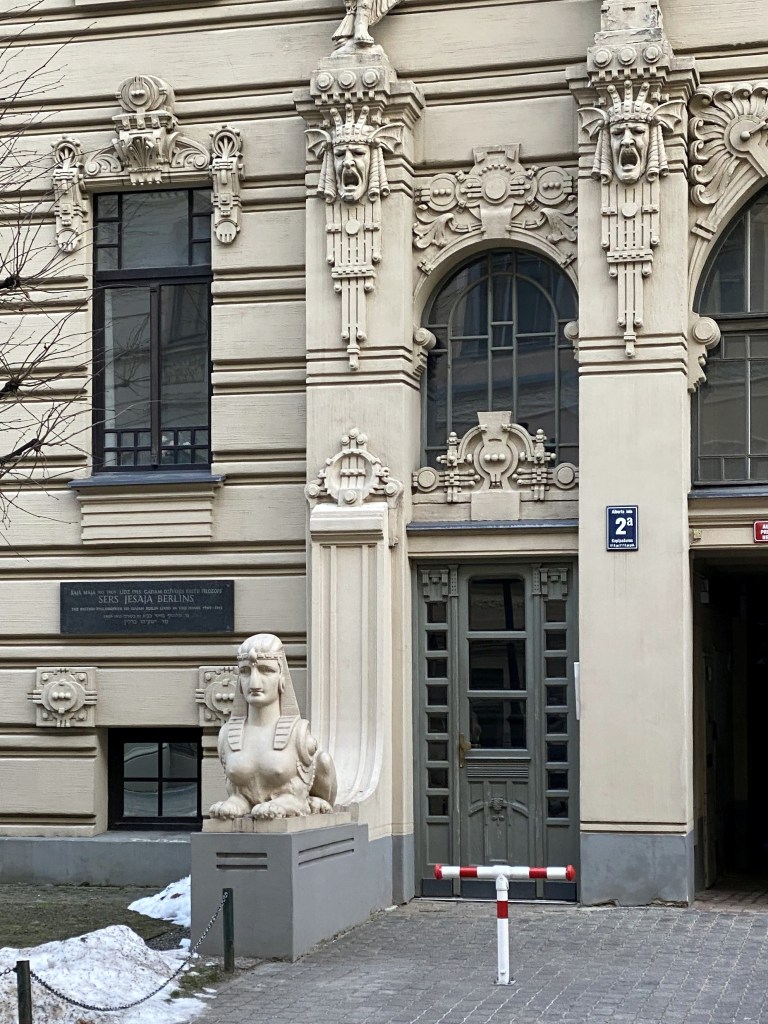
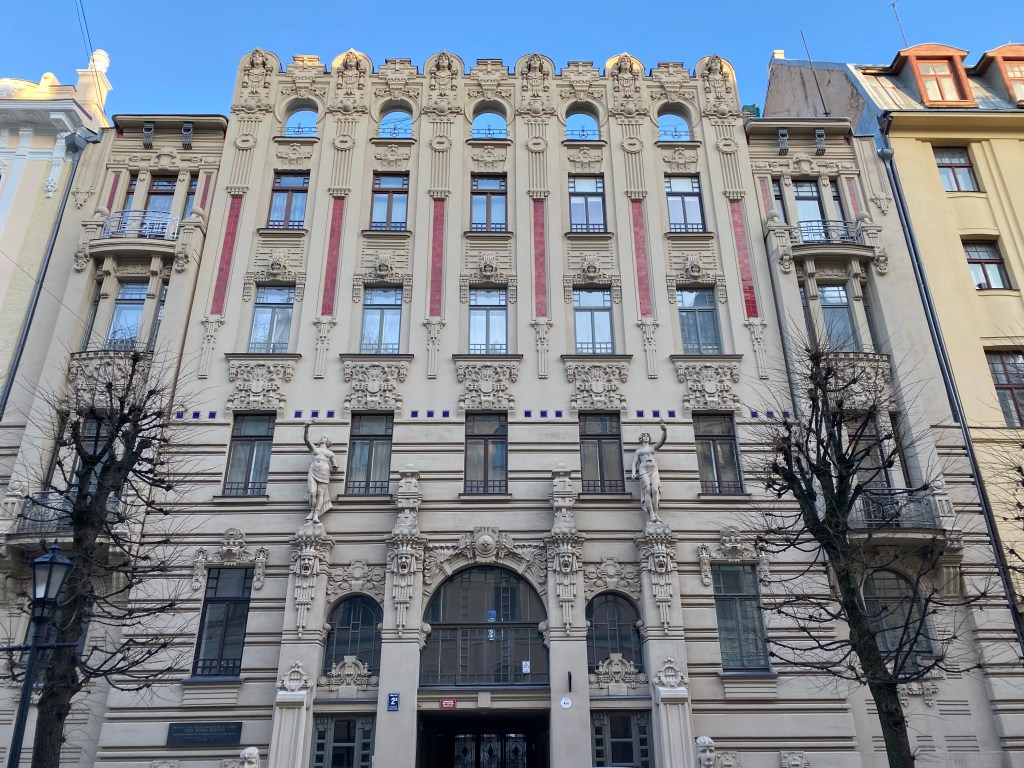
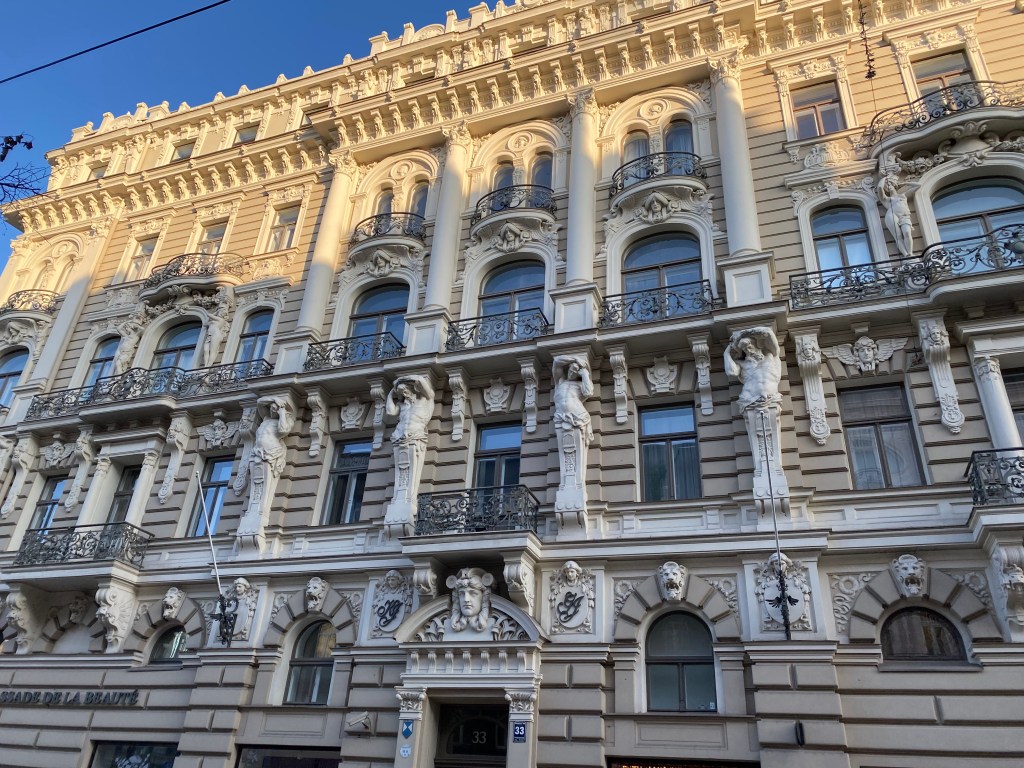
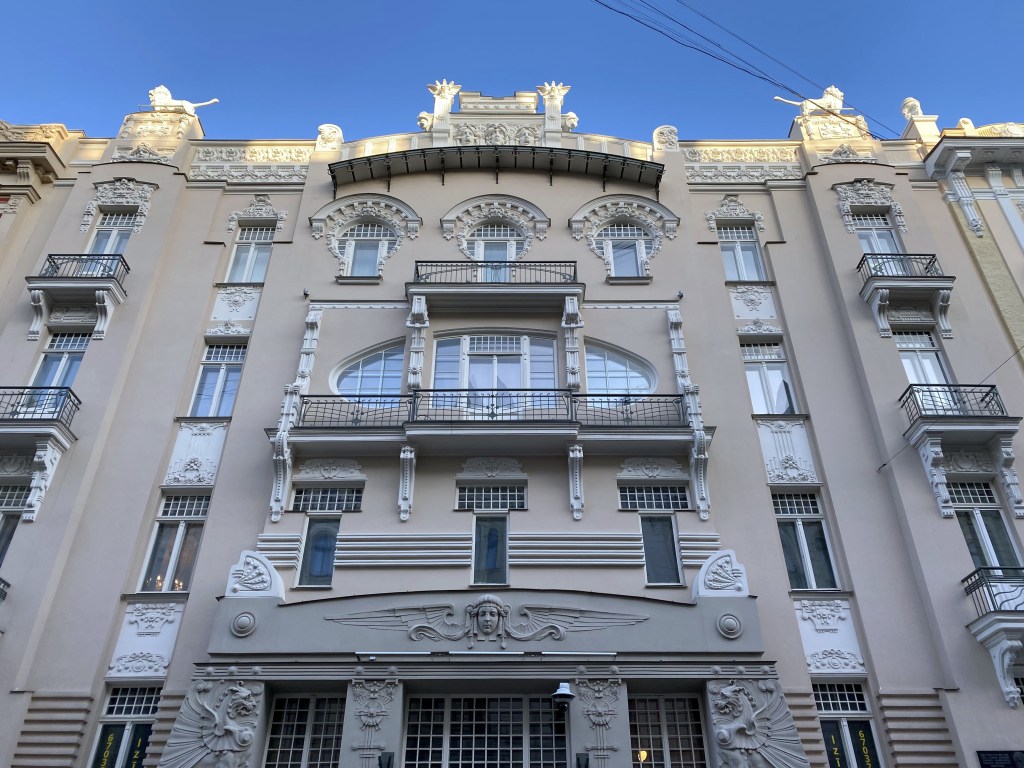
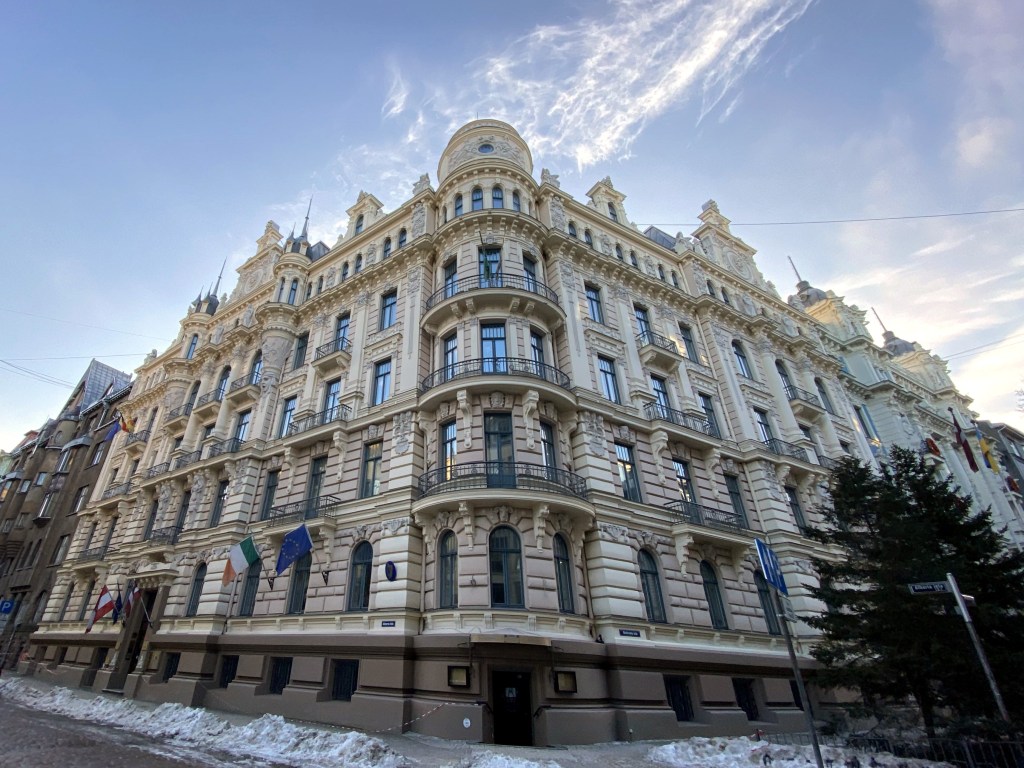
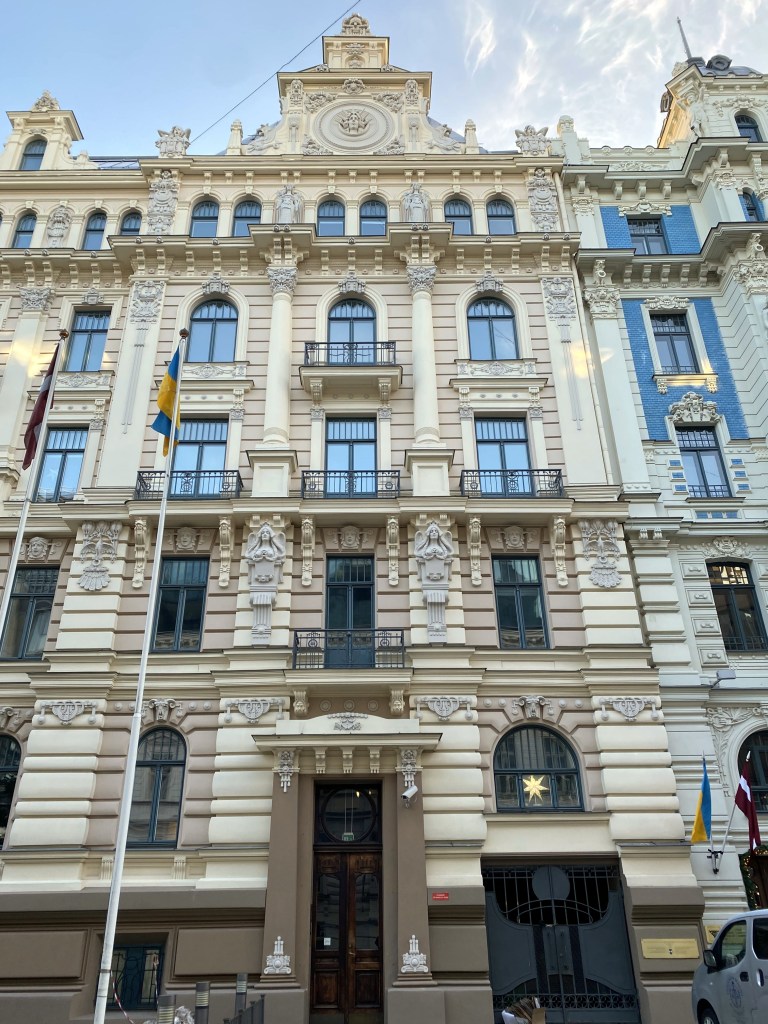
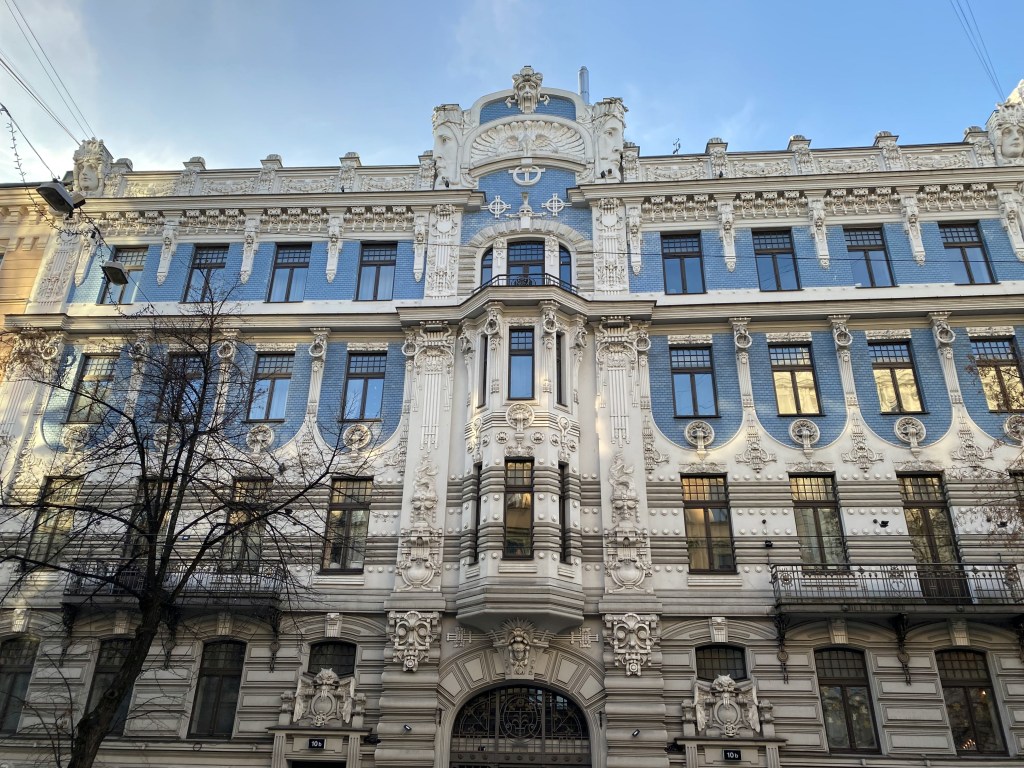
Riga’s Art Nouveau district on our Christmas Day walk. Riga’s period of peak prosperity happened to coincide with the Art Nouveau arts and architecture movement between 1890 and the outbreak of WWI. Although not at all unique to Riga, the town benefited from not being bombed into oblivion during WWII, resulting in a concentration of buildings in this style not seen anywhere else in Europe.

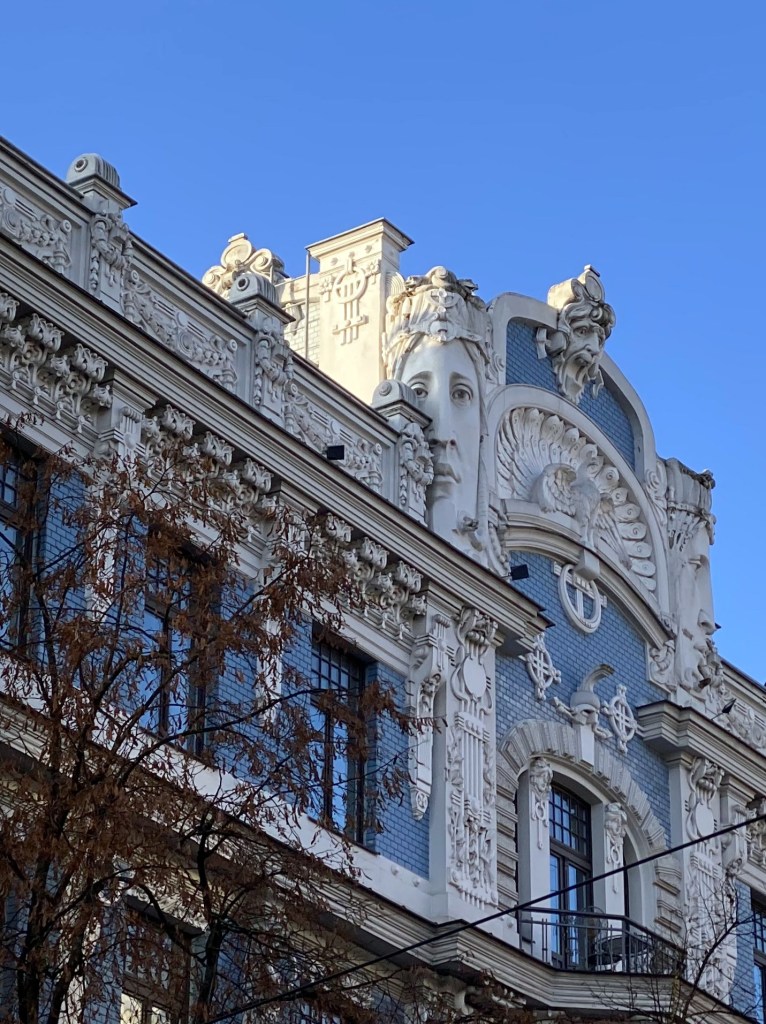
Perhaps the coolest: No. 10b, with a peacock (the symbol of art nouveau) flanked by big-ass faces.

Perfect winter weather in Riga for a Christmas visit.

On to our final stop of the trip: Amsterdam.

Categories: Europe, Latvia | Tags: , , , , , | Leave a comment

Turkey and Back to Greece: Paros Part 3 – The Final Reckoning (Or, Parikia, a Lighthouse Hike, and the Linguistically Exact Opposite of Paros)

The final post on the Turkey and Back to Greece trip (finally!). And just in the nick of time: we’re hitting the road (and the Adriatic Sea) tomorrow, and so won’t be posting any of the other backlogged trips for a while. These are all the long trips (versus week-long trips that we responsibly posted immediately after getting back from each), and include the following:

We’ll eventually post the detailed content on each of these trips here on WolfeStreetTravel.com; in the meantime, we’ll be posting pics in real time during two upcoming extended trips over the next 5 months @wolfestreettravel on Instagram, if you’re interested.

Back to our final post on Paros. . .

Although we chose not to stay in the largest town on the island (for reasons obvious here), we nonetheless headed to Parikia one day during our stay on Paros as a day trip.

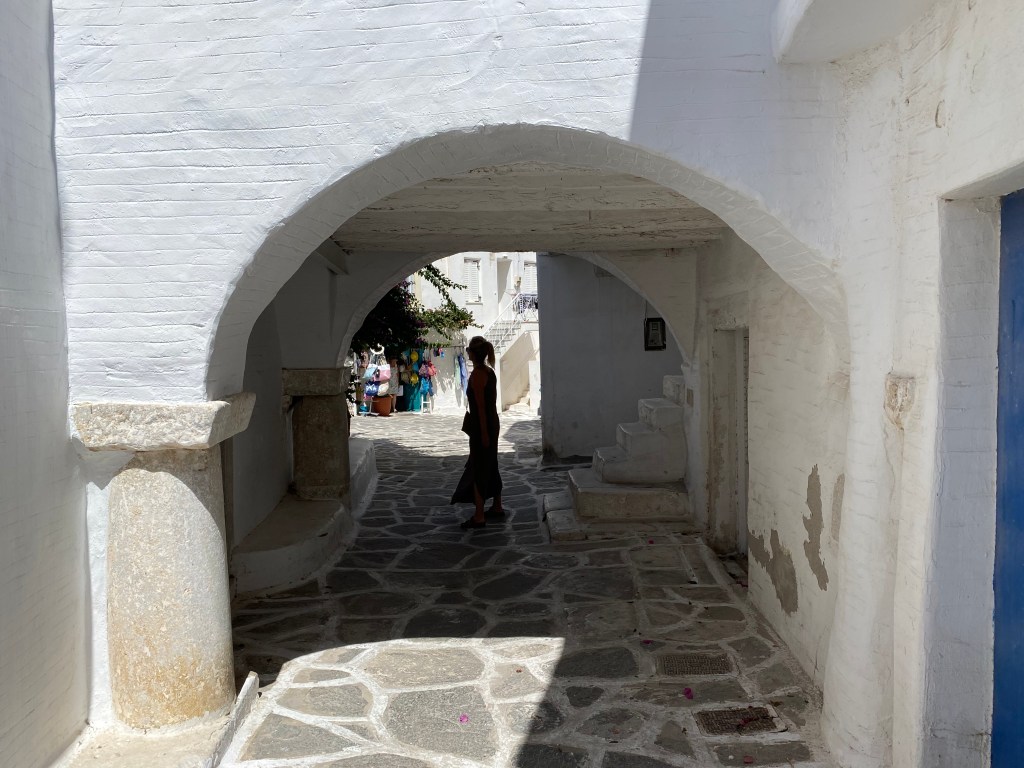
Very cool, bustling burg. With equally cool, wooden-framed bikes to boot.

The absolute most intriguing site in town has to be the Frankish Castle.

Built by the Venetians in the 1200s on the site of the town’s ancient acropolis, the “castle” (actually the remains of a tower that was part of a castle wall) was constructed Jenga-style using the vestiges of classical temples from around the island.

Little remains of the original fortification, and nearby structures incorporate what remains into their own walls.

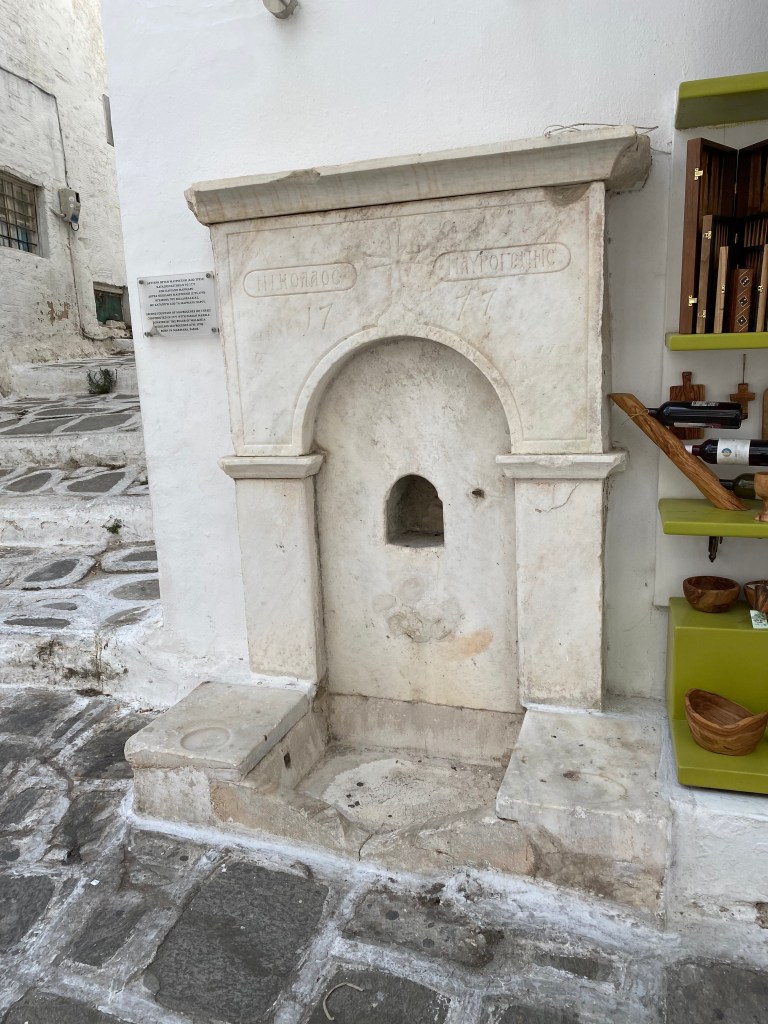
One of the three “Mavrogenus’ Fountains” found around town. ” Nicolaos Mavrogenus was one of the prodigal sons of Parikia, Paros Island main town in the Greek Cyclades. Missing his native Aegean and as Wallachia governor decided benefit his hometown providing a public drinking water supply [in 1777]: three beautiful marble fountains.” (From here.)

And another (we never came across the third):

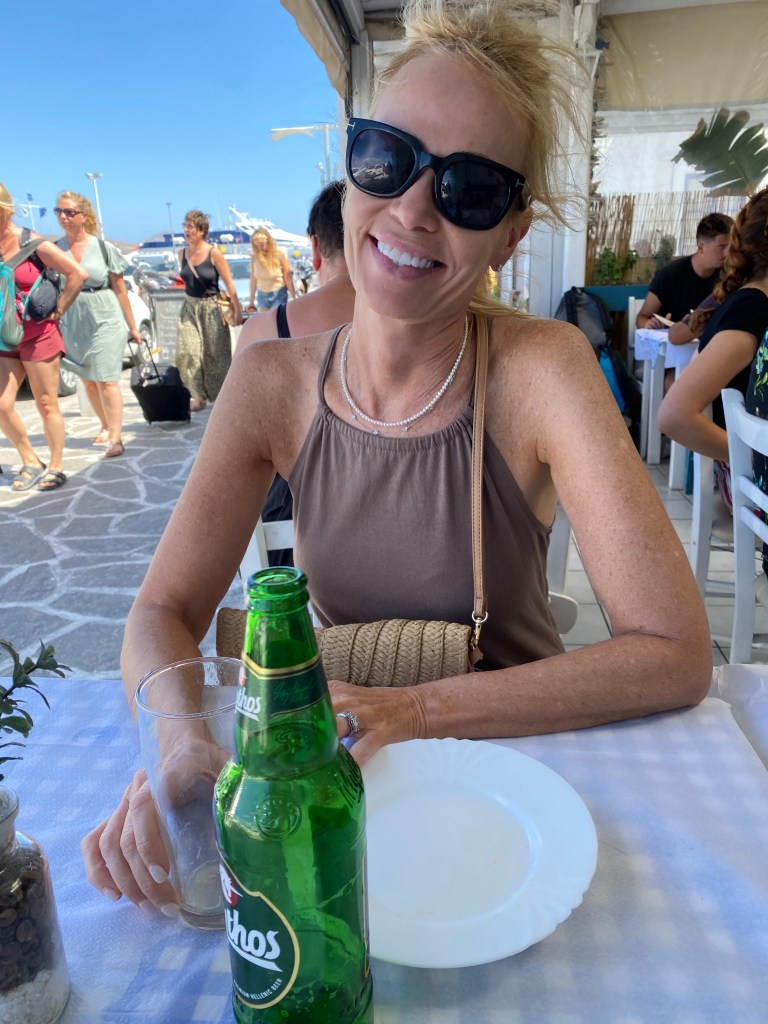
Finally getting a gyro at a local place in Parikia’s port (the empty plate would soon be filled):

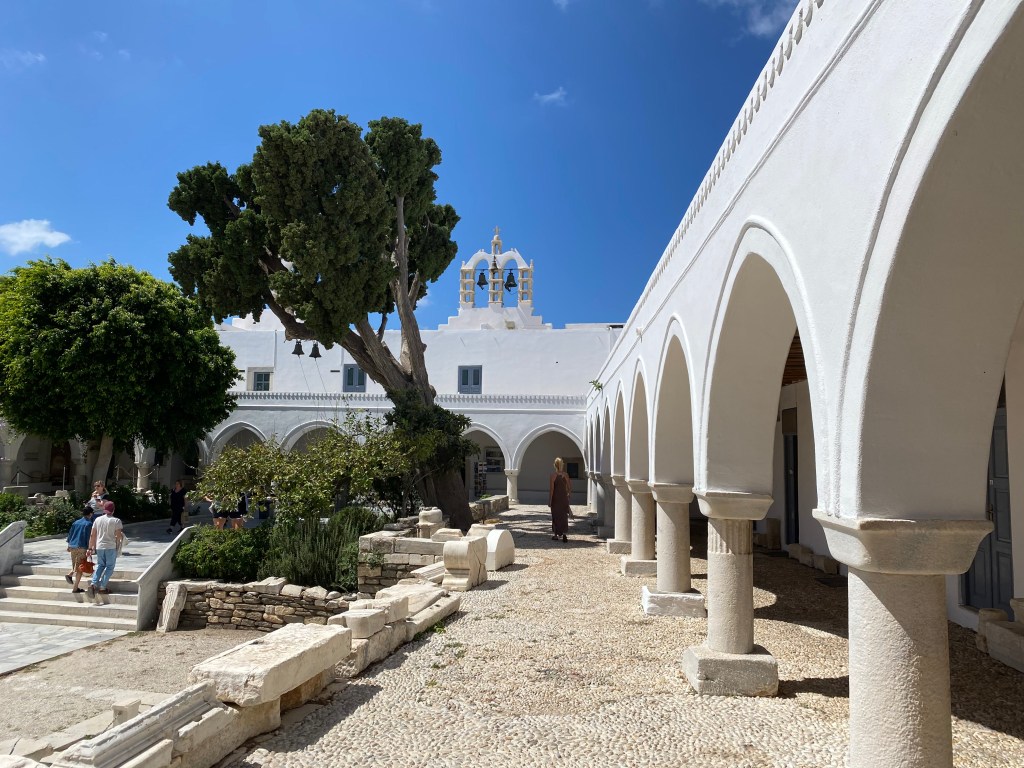
The Byzantine-era church complex of Panagia Ekatontapiliani (The Church with 100 Doors):

According to tradition, the church currently has 99 doors and a secret, 100th door will open when the church of Hagia Sofia in Constantinople become Orthodox Christian again.

The original church dates back to 326, during the reign of Roman Emperor Constantine, and purportedly was founded by his mother, Helene (whose sarcophagus we came across during the micronations road trip).

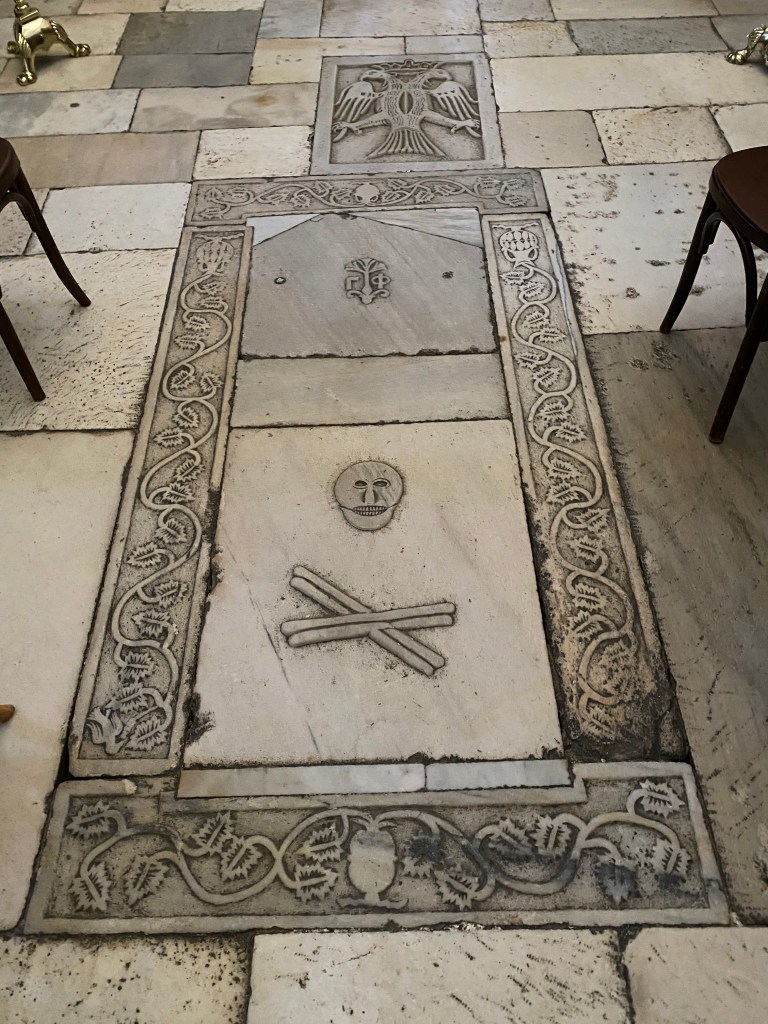
We think the church elders employed third graders to carve the church’s tombstones:

In the 6th century, Byzantine Emperor Justinian enhanced the church and added a dome.

Another view of the Frankish Castle as we head out of town.

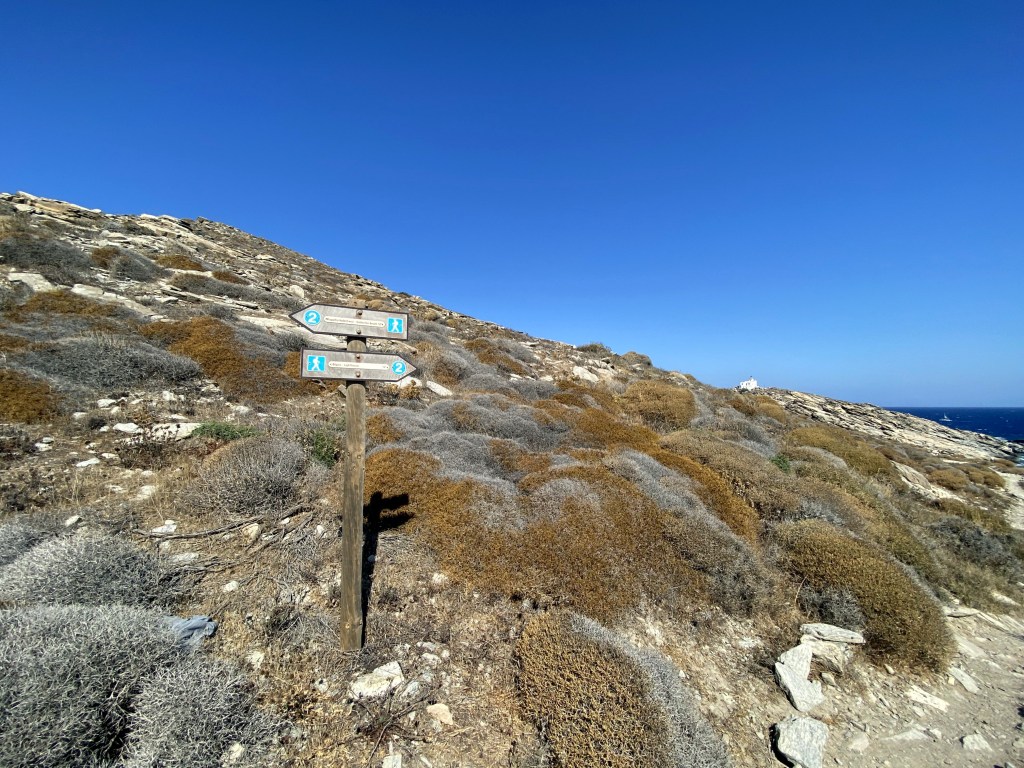
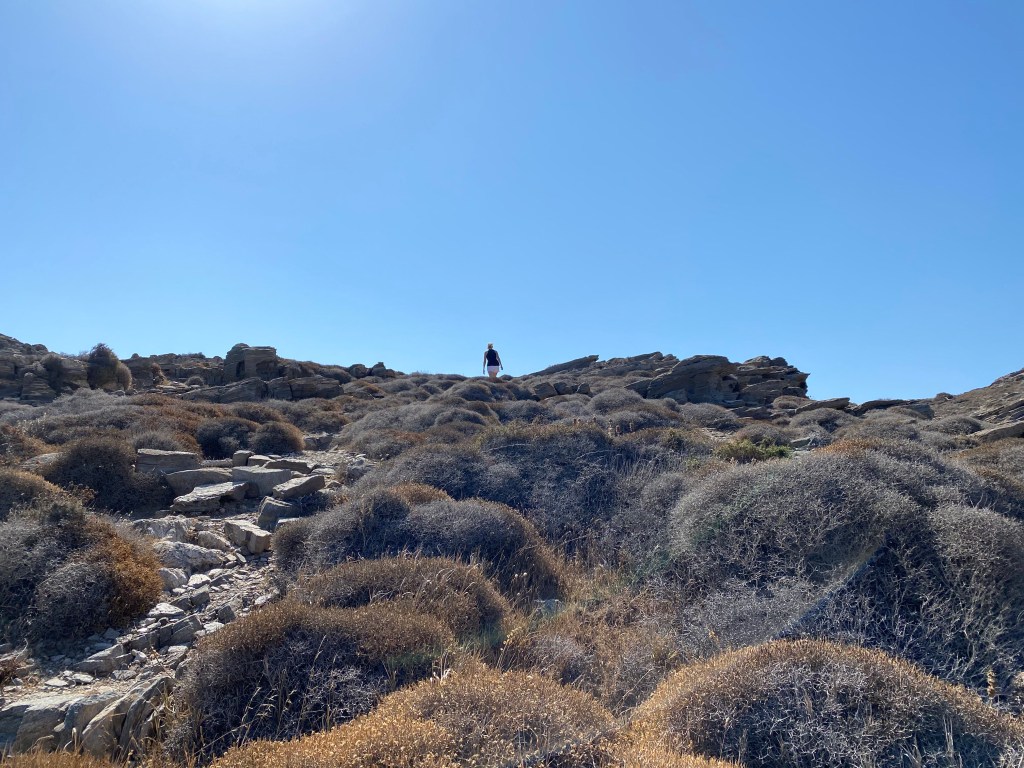
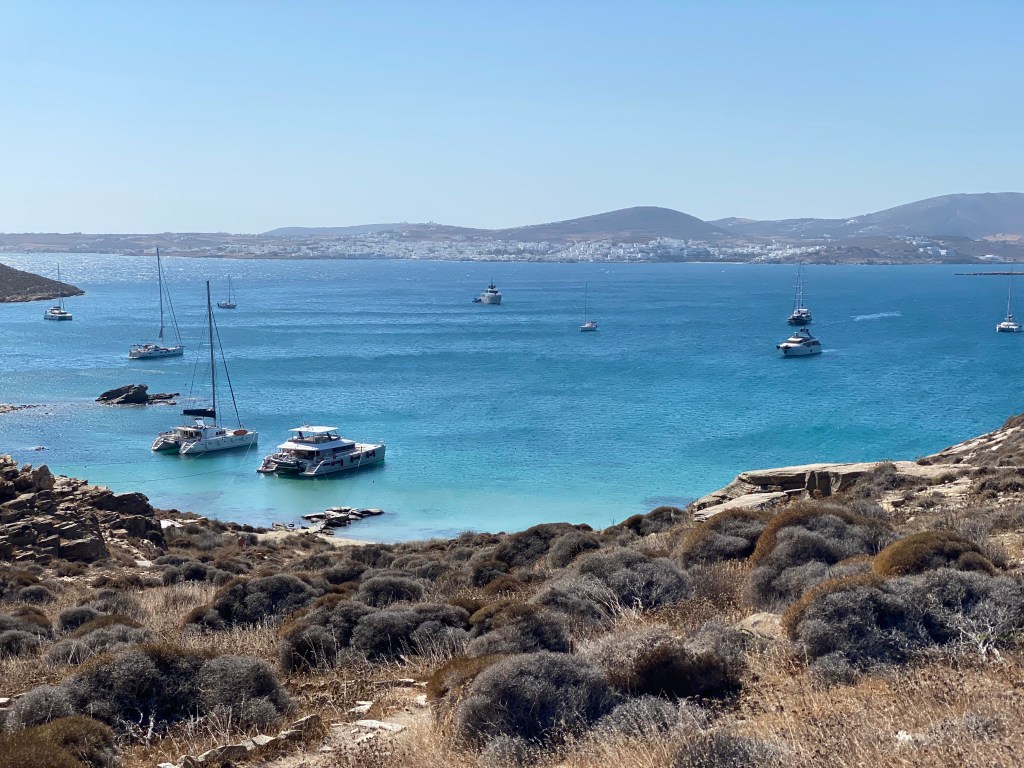
The best hike we experienced on the island took us to the Korakas Cape Lighthouse at the northwest tip of the island.

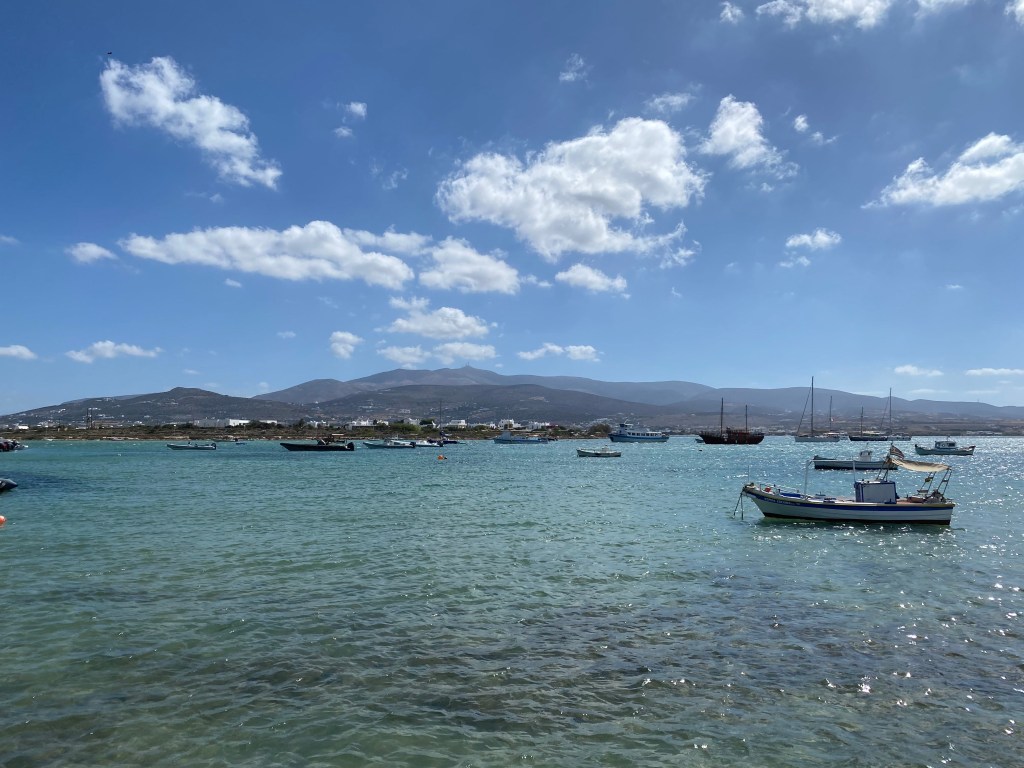
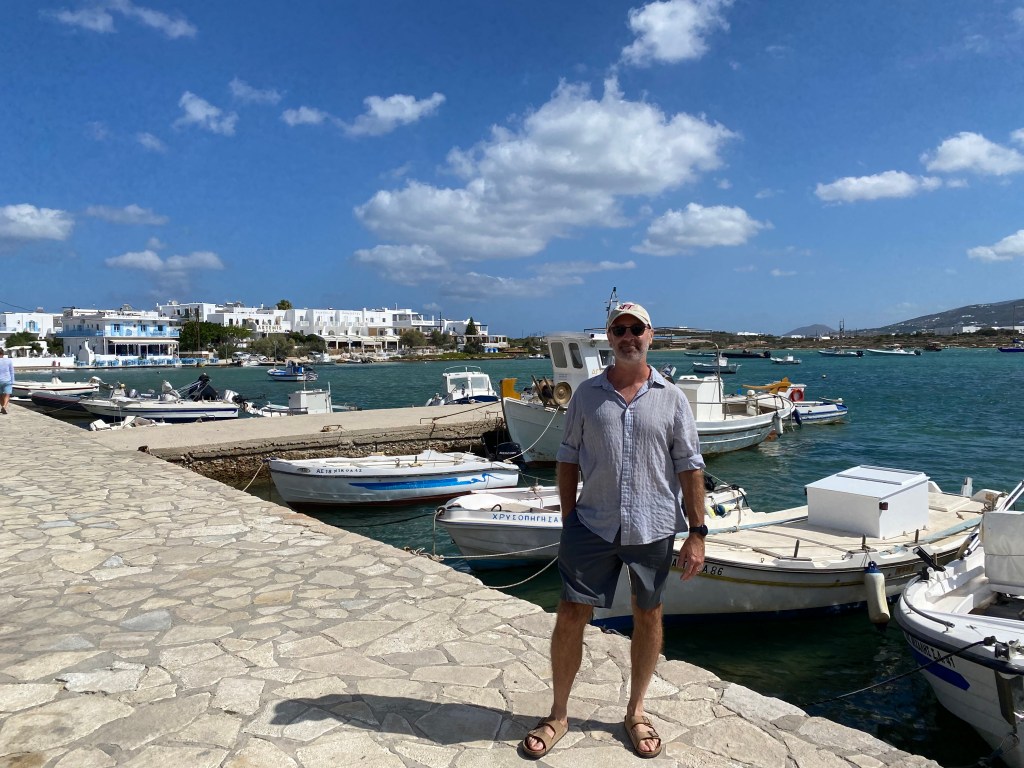
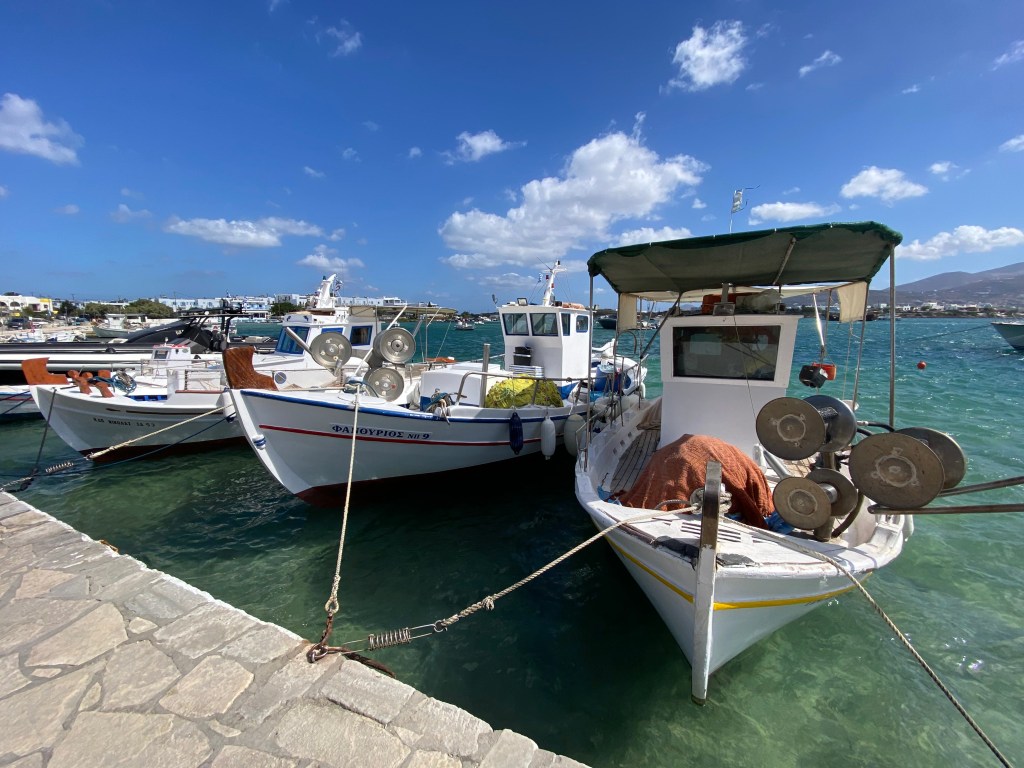
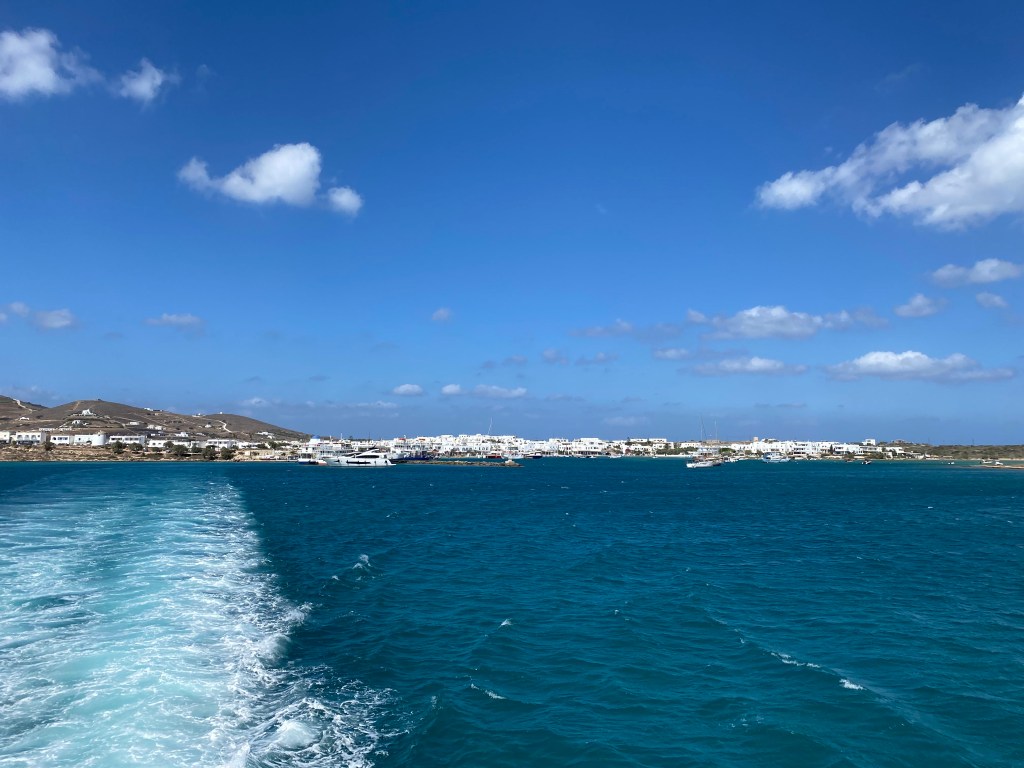
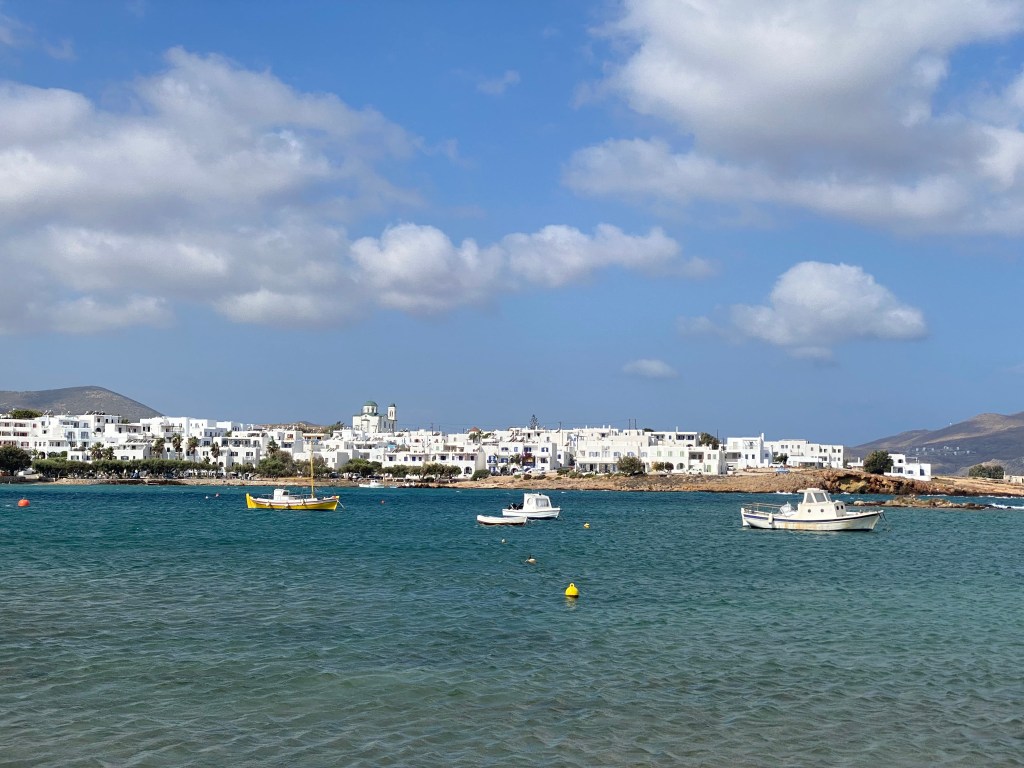
Another field trip, this time a short ferry ride to the polar opposite of the island of Paros: Antiparos (it’s just a smaller island than Paros).

With a really picturesque main town:

Bye, Antiparos.

And bye, Paros, and Cappadocia, and Istanbul. Trip posts complete!

Categories: Greece | Tags: , , , , | Leave a comment

Turkey and Back to Greece: Paros Part 1 – Naousa

This, at long last, represents the final tranche of posts for our September 2022 Turkey and Greece trip: a week on the Greek island of Paros in the Cyclades archipelago.

The Turkey and Back to Greece trip, as originally planned, was to be our first post-retirement travel excursion. The second WolfeStreetTraveler would retire in mid-August 2022 (the first had retired the previous year), and then we’d immediately spend a full month on the road – leaving in late August and returning in late September. After a week in Turkey, we’d spend 3 weeks island hopping in the Cyclades:

  • Paros for 1 week
  • Milos for 4 days
  • Folegandros for 3 days
  • Naxos for 1 week

But a perpetually problematic NOAA weather forecasting supercomputing support contract in the otherwise optimally operating Science & Engineering business run by on of the WolfeStreetTravelers had other plans. The recalcitrant actions of the most uncooperative data center and the most incompetent supercomputing vendor to ever play a role in weather forecasting would require, it turns out, another 6 months to address. So that WolfeStreetTraveler postponed retirement, canceled the Milos / Folegandros / Naxos legs of the trip (for which both the ferry fares and the hotel / AirBnB reservations were refundable, which was a relief), enjoyed the remaining first legs of the trip, then returned to work to dig in for another half year to pound on pernicious program problems.

But that’s okay – a week in Paros was unbelievably great. And we’d get to the other Cyclades islands later (in fact, they were supposed to comprise the second half of a 6-week trip planned later this year, but earthquakes in the area scared us off, so we’re hitting Mallorca and Andalusia instead, which should be pretty great, too). We’ll get back to the remaining Cyclades soon enough.

In Paros, we based ourselves in the town of Naousa at the north end of the island. Although the main city and ferry port on the island, Parika, held some appeal, our research suggested that Naousa offered more of what we were looking for; and we could always day trip to Parika (which we did).

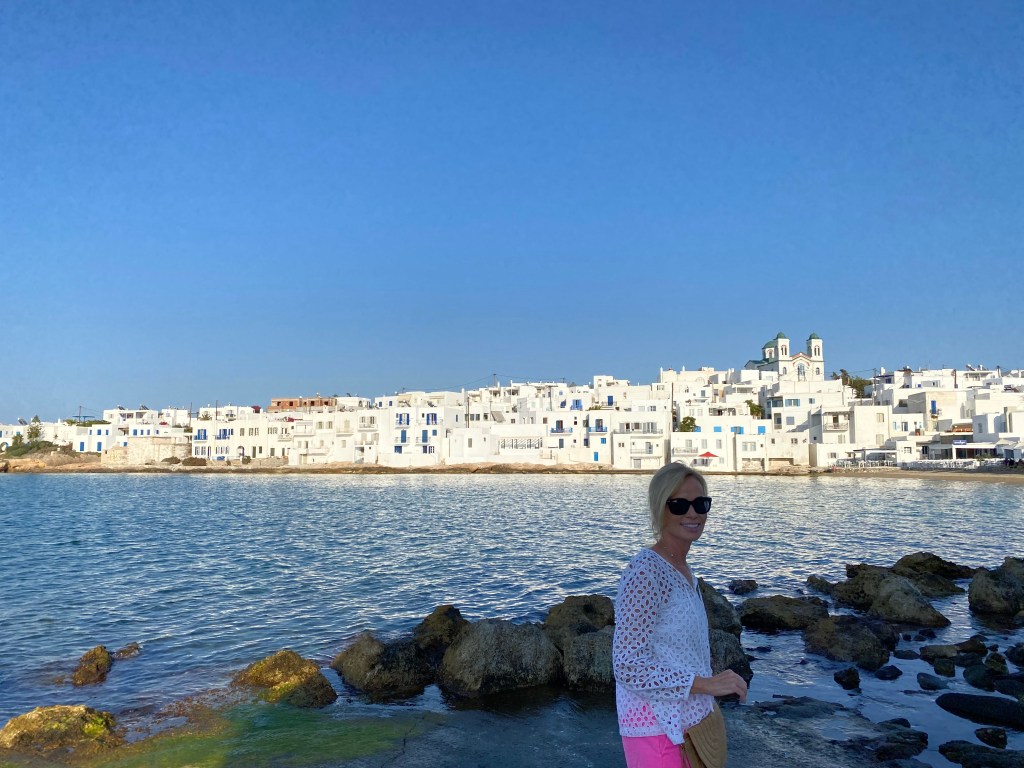
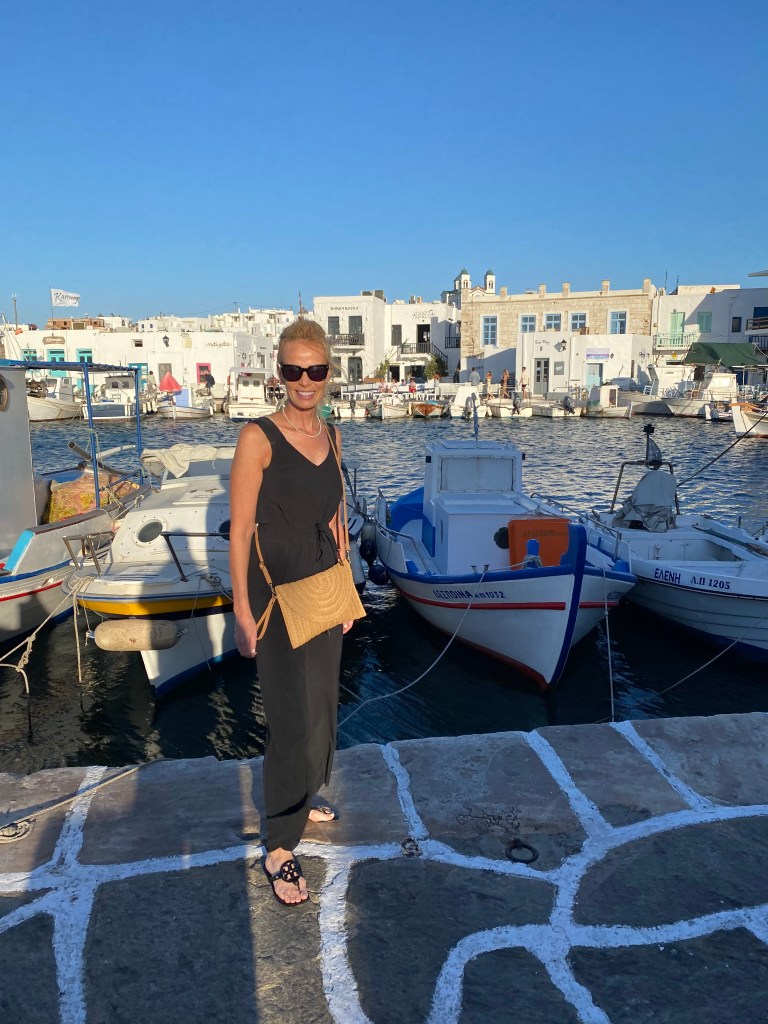
And Naousa was absolutely perfect for us:

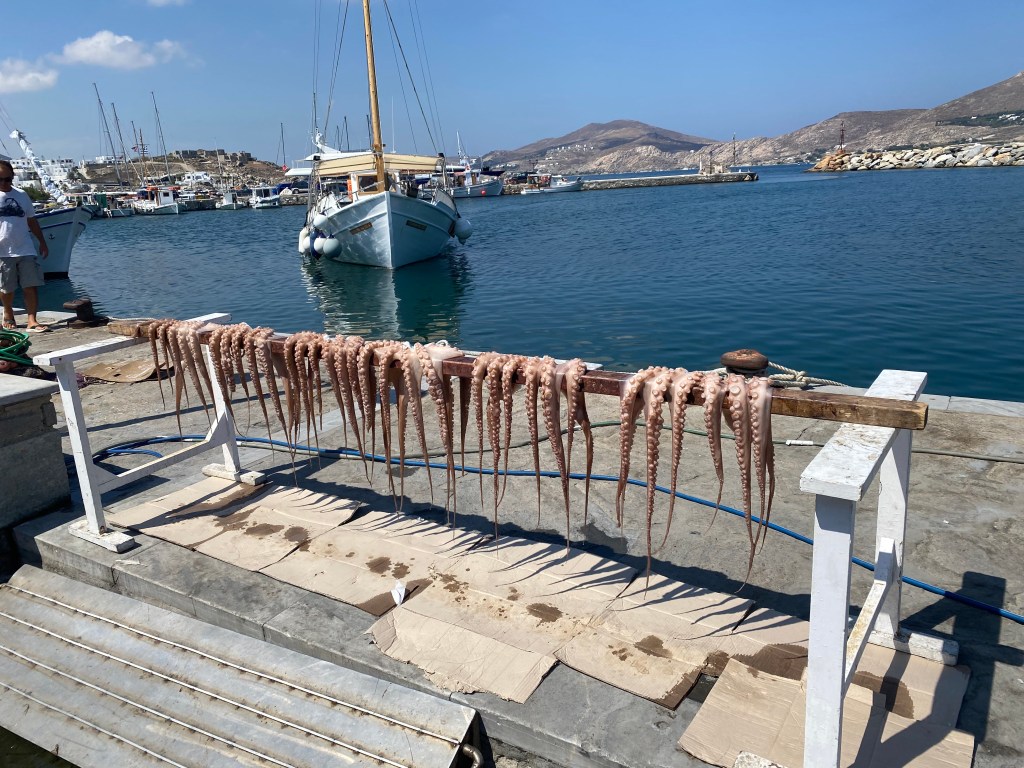
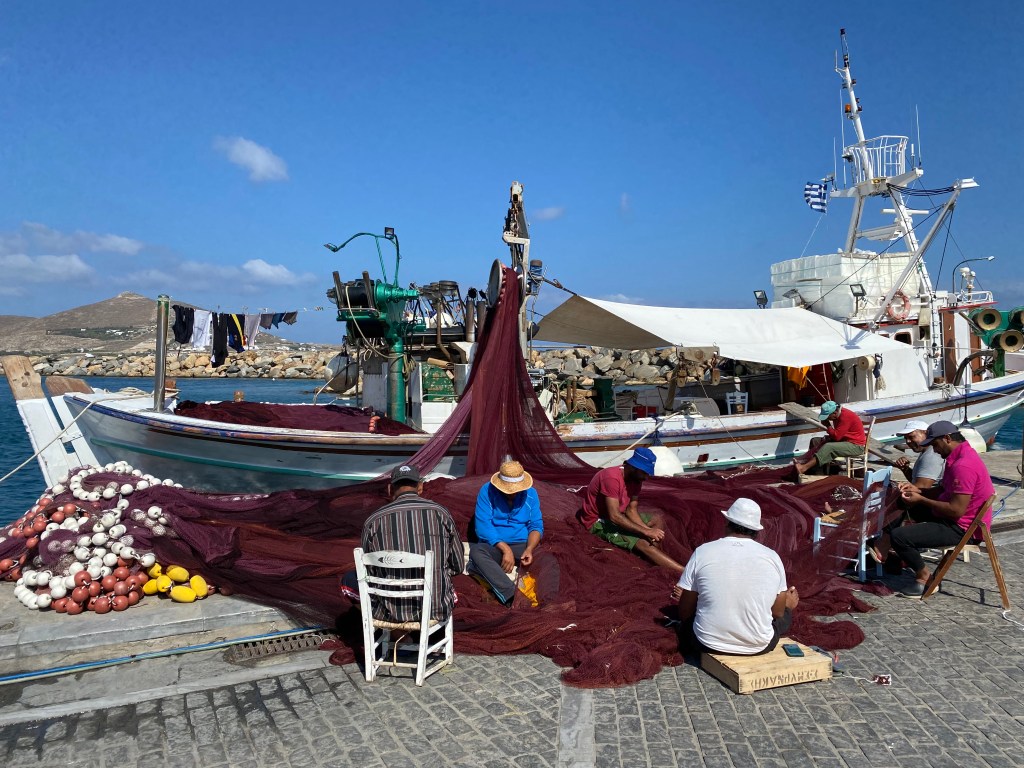
Although definitely a tourist town, Naousa still operated as a working fishing port

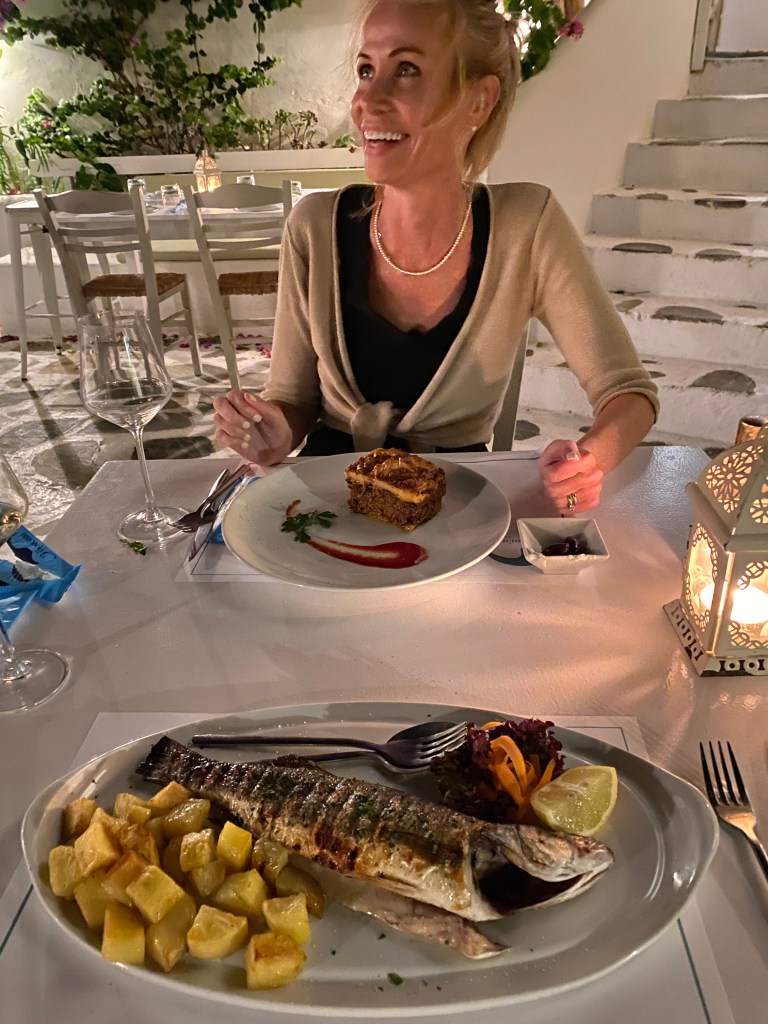
where the catch of the day would appear on your table for lunch and dinner.

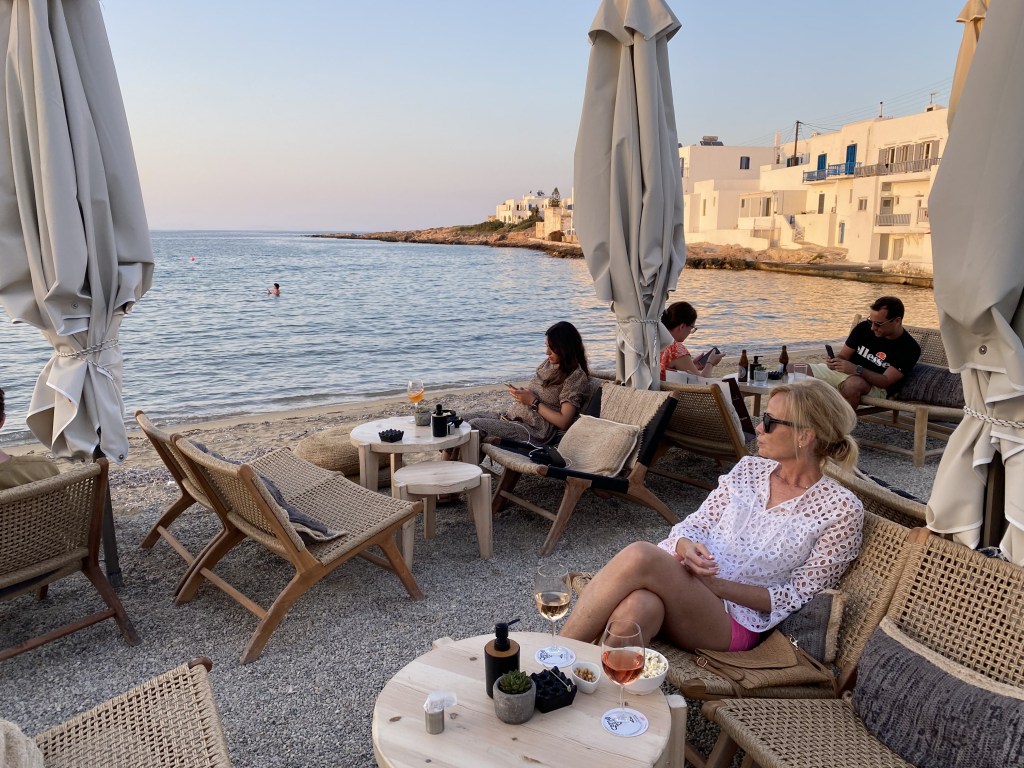
For the entire week, we’d begin each evening with sunset cocktails on the water, then wander into town to find dinner. The best of these, which we’d patronize three evenings during our stay, was called – fittingly enough – Come Back. So we did. Again and again.

And for obvious reasons.

Sunset in Naousa from the Come Back beach:

And thence, into Naousa for some seafood.

Pretty great weather – mostly – during out stay. We did have a day and a half of super windy weather that was part of the normal weather cycle in the Cyclades, but that also was strong enough that it curtailed some activities.

Fishing wasn’t one of them.

Our time on Paros also encompassed our anniversary, which was great.

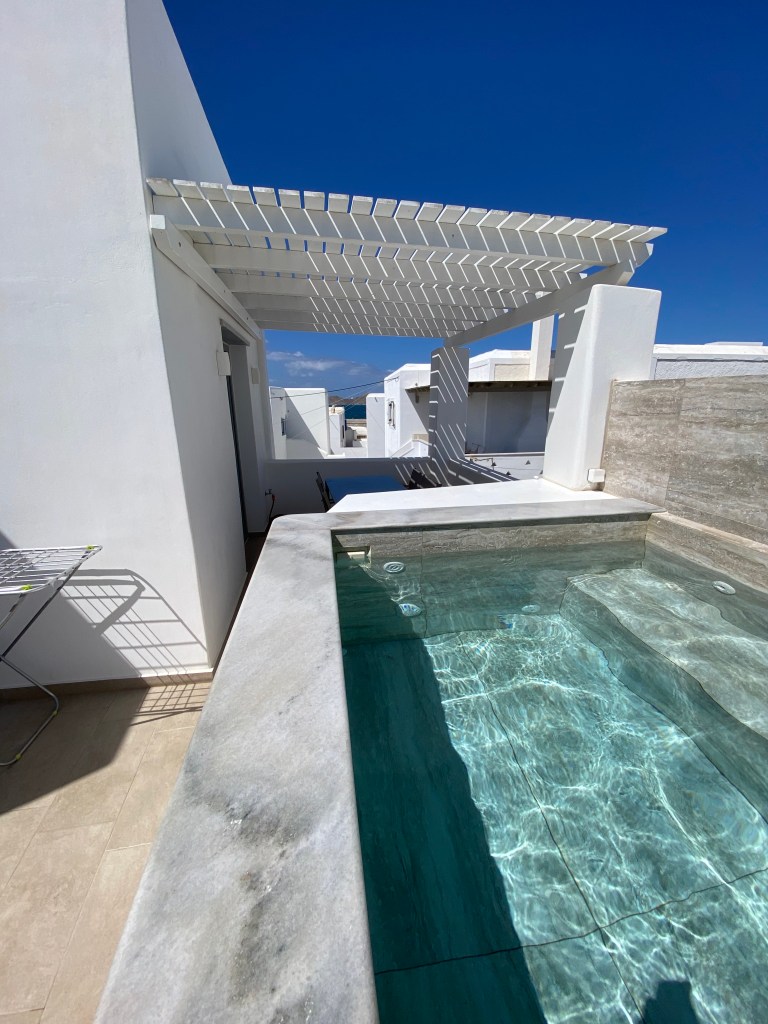
Pretty good AirBnB digs.

Another evening, another round (or three) of cocktails at Come Back.

And another sunset. Pretty good routine.

A break from fish with some moussaka.

One of the most photographed spots in Naousa, based on our Instagram feed before the trip. Colorful, yes, but empty.

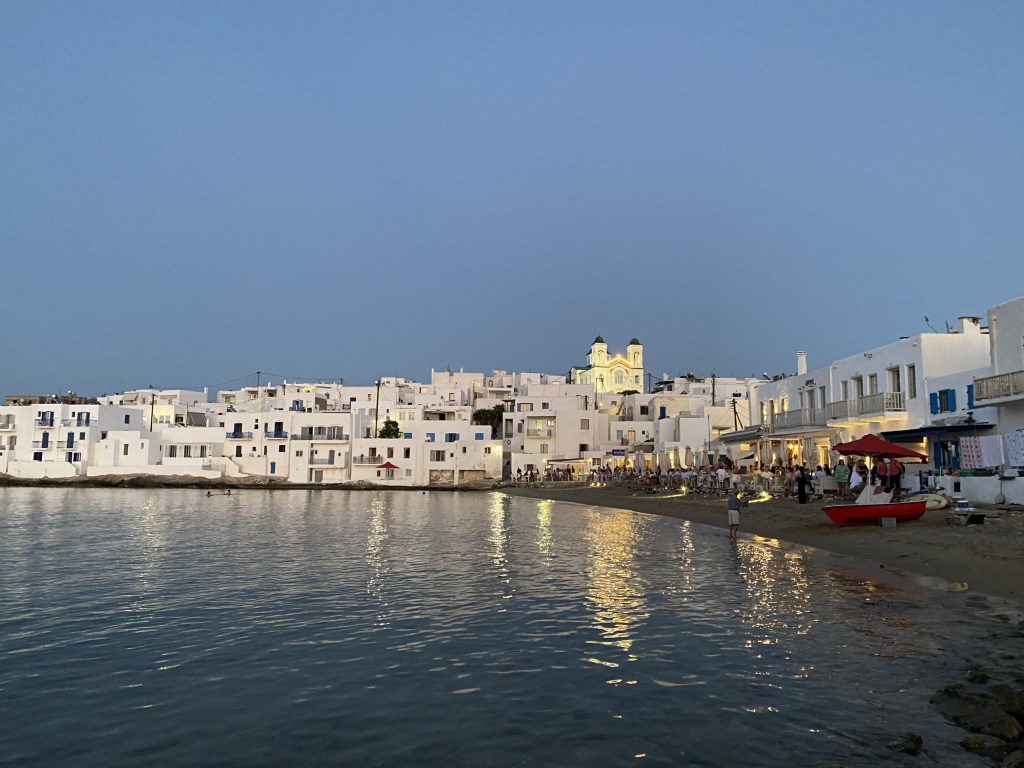
And then night falls:

Another sunset, and our second favorite cocktail spot.

Maybe they should name this place “Also Come Back Here.”

Full moon over Naousa.
Categories: Greece | Tags: , , , , , | Leave a comment

Turkey and Back to Greece: Cappadocia Part 6 (the Final One) – Göreme Cave Monastery

As you may have discerned from the flurry of recent (but paradoxically still dated) posts on a trip back in September 2022, we’re trying to get our act together and get WolfeStreetTravel.com up to date. (@wolfestreetravel on Instagram is always current, for what it’s worth, inasmuch as we post there in real time during our travels.)
With that context, this post mercifully is our last one on the Cappadocia leg of the Turkey / Greece trip, before we pivot to the trip’s second leg in Greece. (We’re trying to address the entirety of the remainder of this trip before we take off soon for another long jaunt in Europe, when where posting will once again cease for a while. Upon our return we’ll get to the other four backlogged trips (which will have grown to five by then).)
Our flight departing Cappadocia for Athens took off in the afternoon, so we spent the morning of our last day wandering through the Göreme Cave Monastery complex down the road from our base town. Founded in the 4th century on the instruction of Saint Basil of Caesarea, this complex of monasteries, nunneries, churches, and chapels existed for a thousand years. It was far and away the coolest of the troglodyte settlements we visited in Cappadocia for reasons that will immediately become apparent.

There were so many structures here to appreciate – predominantly cave churches – that it became a little overwhelming to take everything in. One delineation of cave church decoration helped us contextualize things, though: did the cave feature rudimentary symbols and patterns (representative of the iconoclastic era) or were the walls and ceiling drenched in richly illustrated frescos of saints and other religious themes that characterized the post-iconoclastic era? The former represented an era in the 8th and 9th centuries, when while the Byzantine church found religious images to be idolatrous, and the latter were created later, when the iconophiles won out in arguing that these depictions were acceptable – and even desirable – for enlightening the illiterate (similar to western European medieval church frescos and, later, stained windows).

The first church we encountered (which we forgot to identify for later review) exemplified the iconoclastic style:

Just red ochre symbols and patterns:

But that was just the beginning.

St. Barbara

The iconoclastic style also adorned the raw rock walls of this much more ornately decorated cave church.

Decorated almost entirely in red ochre geometric designs and religious symbols, every soffit, cornice, and pendentive (triangles supporting the domes) are embellished.

These mostly are manifested as triangles, checks, lightning-bolt-looking things, and Maltese crosses.

Oh – and there’s a boxing pheasant on one end of a barrel vault in St. Barbara? Or something? Definitely the most amusing yet mysterious of the images.

Below the boxing pheasant, of course, is a very post-iconoclastic images of Saint George and Saint Theodore. Not sure what to say about this juxtaposition.

Whether iconoclastic symbols or lush paintings, we found these churches to be so compelling because of the incredible age of the art and the palpable presence of everything so present with you, where you could reach out and touch a symbol that a monk applied to an arch more than a millennium ago.

Our hometown is old and, with a founding date of 1749, we pass by centuries’ old buildings and artifacts every day. Hell, our house is 100 years old. But St. Barbara dates to ~1100 (don’t ask how to reconcile how this falls after the iconoclast era), and being so casually close to religious art that old and yet so accessible elicited a pretty palpably powerful feeling of awe.

Dark Church

At the opposite end of the spectrum is the foreboding-sounding “Dark Church” (so named not for serving as the unholy site of arcane acts and an upside down cross, but because the only illumination of the church results from a small window in the church’s narthex). As a result of this paucity of sunlight, the paintings inside have been remarkably preserved.

The Dark Church definitely had the most ornate exterior. While the other churches’ exteriors were simply the rocky hillside, the Dark Church exterior featured a carved façade, including a series of keyhole niches with Greek crosses.

The entrance:

Very different interior from the iconoclastic churches!

The central dome features the very Byzantine Christ Pantocrator image and the four archangels (Gabriel, Michael, Raphael, and Azrael) occupy the four small domes surrounding it.

These paintings all date from the latter half of the 11th century.

Amazing that this work from 1100 years ago still remains, unaltered, to appreciate:

Snake Church

Although the Snake Church clearly demonstrates full illustrations representative of the post-iconoclasm period, it nonetheless also represents something of a transition in its liberal use of simple drawings and symbols, including on the outside of the cave church:

“The mural painting on the left has five figures—St. Onesimus standing in a red robe, Saints George and Theodore on horseback, and Saints Constantine and Helen holding the True Cross.

The figure nearest the door is St. Onesimus, mentioned in the New Testament letter Philemon. He was a first-century slave who escaped from his master in Colossae (near modern Pamukale/Denizli). As Onesimus was hiding in Rome, he encountered the apostle Paul and became a Christian. To restore their relationship, Paul sent Onesimus back to his master Philemon (who happened to be Paul’s friend), requesting forgiveness. According to church tradition, Onesimus was later martyred, as symbolized by the white cross that he holds.” (From here.)

Inside, along one side of the nave, can be found the reason behind the name: an image of Saint George and Saint Theodore slaying a dragon, here depicted as a snake (you can make out the scaly body on the right bottom and the tail on the left, but there’s not a lot left to make out of the head):

More of the mix of iconoclastic and post-iconoclastic imagery on the barrel-vaulted ceiling of the nave.

At the far end, a rudimentary apse with Jebus on the lunette above:

And a cool checkerboard pattern above the entrance:

St. Basil’s Chapel

“The left wall has two panel icons. The tall image on the left is St. Basil the Great, the famed bishop of Caesarea (d. 379 AD) who defended Nicene Orthodoxy and pioneered Byzantine monasticism.

The larger square image is St. Theodore on a red horse, spearing a snake. His clothing mimics Roman military attire, but has subtle Persian designs. Theodore Stratelates (“The General”) was martyred in 319 AD in Pontus (northern Turkey).” (From here.)

“The large, square icon is St. George riding a white horse. He was a Roman officer from Cappadocia who died in the early 300’s, in Nicomedia (the first capital of the Eastern Roman Empire, modern Izmit).” (From here.)

The coolest aspects of St. Basil’s though had to be the tombs. In a cave. (Cave graves, if you will.) The acrosolium (arched recess with grave) below was part of the original church design:

However, twelve more were later carved into the stone floor of the church – adults in the middle and infants on the side:

The occupants of the cave graves are unknown. This one was reminiscent of the crystal skeleton in the ATM cave in Belize.

On our way out, a familiar sight over the valley:

Cappadocia complete! From here, we hightailed it back to our place in Göreme, grabbed our luggage, and headed to the airport – and thence to the Greek Cyclades island of Paros.

Categories: Turkey | Tags: , , , , , , , , , | Leave a comment

Protected: Turkey and Back to Greece: Cappadocia Part 4 – Farm Breakfast, the Citadel of Uçhisar, and Derinkuyu Underground City

This content is password-protected. To view it, please enter the password below.

Categories: Turkey | Tags: , , , , , , | Enter your password to view comments.

Protected: Turkey and Back to Greece: Cappadocia Part 3 – Zelve Cave Settlement and Pasabag Valley

This content is password-protected. To view it, please enter the password below.

Categories: Turkey | Tags: , , , , , , | Enter your password to view comments.

Blog at WordPress.com.